window.__IS_SSR__=true
window.__INITIAL_STATE__={
"attachmentsReducer": {
"audio_0": {
"type": "attachments",
"id": "audio_0",
"imgSizes": {
"kqedFullSize": {
"file": "https://ww2.kqed.org/news/wp-content/themes/KQED-unified/img/audio_bgs/background0.jpg"
}
}
},
"audio_1": {
"type": "attachments",
"id": "audio_1",
"imgSizes": {
"kqedFullSize": {
"file": "https://ww2.kqed.org/news/wp-content/themes/KQED-unified/img/audio_bgs/background1.jpg"
}
}
},
"audio_2": {
"type": "attachments",
"id": "audio_2",
"imgSizes": {
"kqedFullSize": {
"file": "https://ww2.kqed.org/news/wp-content/themes/KQED-unified/img/audio_bgs/background2.jpg"
}
}
},
"audio_3": {
"type": "attachments",
"id": "audio_3",
"imgSizes": {
"kqedFullSize": {
"file": "https://ww2.kqed.org/news/wp-content/themes/KQED-unified/img/audio_bgs/background3.jpg"
}
}
},
"audio_4": {
"type": "attachments",
"id": "audio_4",
"imgSizes": {
"kqedFullSize": {
"file": "https://ww2.kqed.org/news/wp-content/themes/KQED-unified/img/audio_bgs/background4.jpg"
}
}
},
"placeholder": {
"type": "attachments",
"id": "placeholder",
"imgSizes": {
"thumbnail": {
"file": "https://cdn.kqed.org/wp-content/uploads/2024/12/KQED-Default-Image-816638274-2000x1333-1-160x107.jpg",
"width": 160,
"height": 107,
"mimeType": "image/jpeg"
},
"medium": {
"file": "https://cdn.kqed.org/wp-content/uploads/2024/12/KQED-Default-Image-816638274-2000x1333-1-800x533.jpg",
"width": 800,
"height": 533,
"mimeType": "image/jpeg"
},
"medium_large": {
"file": "https://cdn.kqed.org/wp-content/uploads/2024/12/KQED-Default-Image-816638274-2000x1333-1-768x512.jpg",
"width": 768,
"height": 512,
"mimeType": "image/jpeg"
},
"large": {
"file": "https://cdn.kqed.org/wp-content/uploads/2024/12/KQED-Default-Image-816638274-2000x1333-1-1020x680.jpg",
"width": 1020,
"height": 680,
"mimeType": "image/jpeg"
},
"1536x1536": {
"file": "https://cdn.kqed.org/wp-content/uploads/2024/12/KQED-Default-Image-816638274-2000x1333-1-1536x1024.jpg",
"width": 1536,
"height": 1024,
"mimeType": "image/jpeg"
},
"fd-lrg": {
"file": "https://cdn.kqed.org/wp-content/uploads/2024/12/KQED-Default-Image-816638274-2000x1333-1-1536x1024.jpg",
"width": 1536,
"height": 1024,
"mimeType": "image/jpeg"
},
"fd-med": {
"file": "https://cdn.kqed.org/wp-content/uploads/2024/12/KQED-Default-Image-816638274-2000x1333-1-1020x680.jpg",
"width": 1020,
"height": 680,
"mimeType": "image/jpeg"
},
"fd-sm": {
"file": "https://cdn.kqed.org/wp-content/uploads/2024/12/KQED-Default-Image-816638274-2000x1333-1-800x533.jpg",
"width": 800,
"height": 533,
"mimeType": "image/jpeg"
},
"post-thumbnail": {
"file": "https://cdn.kqed.org/wp-content/uploads/2024/12/KQED-Default-Image-816638274-2000x1333-1-672x372.jpg",
"width": 672,
"height": 372,
"mimeType": "image/jpeg"
},
"twentyfourteen-full-width": {
"file": "https://cdn.kqed.org/wp-content/uploads/2024/12/KQED-Default-Image-816638274-2000x1333-1-1038x576.jpg",
"width": 1038,
"height": 576,
"mimeType": "image/jpeg"
},
"xxsmall": {
"file": "https://cdn.kqed.org/wp-content/uploads/2024/12/KQED-Default-Image-816638274-2000x1333-1-160x107.jpg",
"width": 160,
"height": 107,
"mimeType": "image/jpeg"
},
"xsmall": {
"file": "https://cdn.kqed.org/wp-content/uploads/2024/12/KQED-Default-Image-816638274-2000x1333-1-672x372.jpg",
"width": 672,
"height": 372,
"mimeType": "image/jpeg"
},
"small": {
"file": "https://cdn.kqed.org/wp-content/uploads/2024/12/KQED-Default-Image-816638274-2000x1333-1-672x372.jpg",
"width": 672,
"height": 372,
"mimeType": "image/jpeg"
},
"xlarge": {
"file": "https://cdn.kqed.org/wp-content/uploads/2024/12/KQED-Default-Image-816638274-2000x1333-1-1020x680.jpg",
"width": 1020,
"height": 680,
"mimeType": "image/jpeg"
},
"full-width": {
"file": "https://cdn.kqed.org/wp-content/uploads/2024/12/KQED-Default-Image-816638274-2000x1333-1-1920x1280.jpg",
"width": 1920,
"height": 1280,
"mimeType": "image/jpeg"
},
"guest-author-32": {
"file": "https://cdn.kqed.org/wp-content/uploads/2025/01/KQED-Default-Image-816638274-1333x1333-1-160x160.jpg",
"width": 32,
"height": 32,
"mimeType": "image/jpeg"
},
"guest-author-50": {
"file": "https://cdn.kqed.org/wp-content/uploads/2025/01/KQED-Default-Image-816638274-1333x1333-1-160x160.jpg",
"width": 50,
"height": 50,
"mimeType": "image/jpeg"
},
"guest-author-64": {
"file": "https://cdn.kqed.org/wp-content/uploads/2025/01/KQED-Default-Image-816638274-1333x1333-1-160x160.jpg",
"width": 64,
"height": 64,
"mimeType": "image/jpeg"
},
"guest-author-96": {
"file": "https://cdn.kqed.org/wp-content/uploads/2025/01/KQED-Default-Image-816638274-1333x1333-1-160x160.jpg",
"width": 96,
"height": 96,
"mimeType": "image/jpeg"
},
"guest-author-128": {
"file": "https://cdn.kqed.org/wp-content/uploads/2025/01/KQED-Default-Image-816638274-1333x1333-1-160x160.jpg",
"width": 128,
"height": 128,
"mimeType": "image/jpeg"
},
"detail": {
"file": "https://cdn.kqed.org/wp-content/uploads/2025/01/KQED-Default-Image-816638274-1333x1333-1-160x160.jpg",
"width": 160,
"height": 160,
"mimeType": "image/jpeg"
},
"kqedFullSize": {
"file": "https://cdn.kqed.org/wp-content/uploads/2024/12/KQED-Default-Image-816638274-2000x1333-1.jpg",
"width": 2000,
"height": 1333
}
}
},
"news_12048692": {
"type": "attachments",
"id": "news_12048692",
"meta": {
"index": "attachments_1716263798",
"site": "news",
"id": "12048692",
"found": true
},
"title": "CMBorderPatrolSac1",
"publishDate": 1752856858,
"status": "inherit",
"parent": 12048690,
"modified": 1752856914,
"caption": "Andrea Castillo speaks to a relative after her husband, who she said was born in Sacramento, was taken into custody by masked uniformed men from the U.S. Border Patrol at the Home Depot on Florin Road near Highway 99 in south Sacramento on July 17, 2025.",
"credit": "Hector Amezcua/The Sacramento Bee via Reuters",
"altTag": null,
"description": null,
"imgSizes": {
"thumbnail": {
"file": "https://cdn.kqed.org/wp-content/uploads/sites/10/2025/07/CMBorderPatrolSac1-160x109.jpg",
"width": 160,
"height": 109,
"mimeType": "image/jpeg"
},
"1536x1536": {
"file": "https://cdn.kqed.org/wp-content/uploads/sites/10/2025/07/CMBorderPatrolSac1-1536x1045.jpg",
"width": 1536,
"height": 1045,
"mimeType": "image/jpeg"
},
"post-thumbnail": {
"file": "https://cdn.kqed.org/wp-content/uploads/sites/10/2025/07/CMBorderPatrolSac1-672x372.jpg",
"width": 672,
"height": 372,
"mimeType": "image/jpeg"
},
"twentyfourteen-full-width": {
"file": "https://cdn.kqed.org/wp-content/uploads/sites/10/2025/07/CMBorderPatrolSac1-1038x576.jpg",
"width": 1038,
"height": 576,
"mimeType": "image/jpeg"
},
"kqedFullSize": {
"file": "https://cdn.kqed.org/wp-content/uploads/sites/10/2025/07/CMBorderPatrolSac1.jpg",
"width": 2000,
"height": 1361
}
},
"isLoading": false,
"fetchFailed": false
},
"news_12048392": {
"type": "attachments",
"id": "news_12048392",
"meta": {
"index": "attachments_1716263798",
"site": "news",
"id": "12048392",
"found": true
},
"title": "Wheels Up: Avelo Airlines Takes Flight",
"publishDate": 1752703394,
"status": "inherit",
"parent": 12048388,
"modified": 1752704632,
"caption": "Avelo Airlines takes off with its first flight between Burbank and Santa Rosa at Hollywood Burbank Airport on April 28, 2021, in Burbank, California. ",
"credit": "Joe Scarnici/Getty Images for Avelo Air",
"altTag": null,
"description": null,
"imgSizes": {
"thumbnail": {
"file": "https://cdn.kqed.org/wp-content/uploads/sites/10/2025/07/AveloAirlinesGetty-160x107.jpg",
"width": 160,
"height": 107,
"mimeType": "image/jpeg"
},
"1536x1536": {
"file": "https://cdn.kqed.org/wp-content/uploads/sites/10/2025/07/AveloAirlinesGetty-1536x1025.jpg",
"width": 1536,
"height": 1025,
"mimeType": "image/jpeg"
},
"post-thumbnail": {
"file": "https://cdn.kqed.org/wp-content/uploads/sites/10/2025/07/AveloAirlinesGetty-672x372.jpg",
"width": 672,
"height": 372,
"mimeType": "image/jpeg"
},
"twentyfourteen-full-width": {
"file": "https://cdn.kqed.org/wp-content/uploads/sites/10/2025/07/AveloAirlinesGetty-1038x576.jpg",
"width": 1038,
"height": 576,
"mimeType": "image/jpeg"
},
"kqedFullSize": {
"file": "https://cdn.kqed.org/wp-content/uploads/sites/10/2025/07/AveloAirlinesGetty.jpg",
"width": 2000,
"height": 1334
}
},
"isLoading": false,
"fetchFailed": false
},
"news_12043273": {
"type": "attachments",
"id": "news_12043273",
"meta": {
"index": "attachments_1716263798",
"site": "news",
"id": "12043273",
"found": true
},
"title": "250608-ICE OUT OF THE BAY-AC-13-KQED",
"publishDate": 1749445686,
"status": "inherit",
"parent": 12042755,
"modified": 1749859323,
"caption": "San Francisco police officers face off with protesters during an anti-ICE protest on June 8, 2025.",
"credit": "Aryk Copley for KQED",
"altTag": null,
"description": null,
"imgSizes": {
"thumbnail": {
"file": "https://cdn.kqed.org/wp-content/uploads/sites/10/2025/06/250608-ICE-OUT-OF-THE-BAY-AC-13-KQED-160x107.jpg",
"width": 160,
"height": 107,
"mimeType": "image/jpeg"
},
"1536x1536": {
"file": "https://cdn.kqed.org/wp-content/uploads/sites/10/2025/06/250608-ICE-OUT-OF-THE-BAY-AC-13-KQED-1536x1024.jpg",
"width": 1536,
"height": 1024,
"mimeType": "image/jpeg"
},
"post-thumbnail": {
"file": "https://cdn.kqed.org/wp-content/uploads/sites/10/2025/06/250608-ICE-OUT-OF-THE-BAY-AC-13-KQED-672x372.jpg",
"width": 672,
"height": 372,
"mimeType": "image/jpeg"
},
"twentyfourteen-full-width": {
"file": "https://cdn.kqed.org/wp-content/uploads/sites/10/2025/06/250608-ICE-OUT-OF-THE-BAY-AC-13-KQED-1038x576.jpg",
"width": 1038,
"height": 576,
"mimeType": "image/jpeg"
},
"kqedFullSize": {
"file": "https://cdn.kqed.org/wp-content/uploads/sites/10/2025/06/250608-ICE-OUT-OF-THE-BAY-AC-13-KQED.jpg",
"width": 2000,
"height": 1333
}
},
"isLoading": false,
"fetchFailed": false
},
"news_12043003": {
"type": "attachments",
"id": "news_12043003",
"meta": {
"index": "attachments_1716263798",
"site": "news",
"id": "12043003",
"found": true
},
"title": "Trump Travel Ban",
"publishDate": 1749166128,
"status": "inherit",
"parent": 12042983,
"modified": 1749166155,
"caption": "People walk past a Haitian flag painted on the side of Chef Creole's restaurant in Miami's Little Haiti neighborhood on Thursday, June 5, 2025.",
"credit": "Rebecca Blackwell/AP Photo",
"altTag": null,
"description": null,
"imgSizes": {
"thumbnail": {
"file": "https://cdn.kqed.org/wp-content/uploads/sites/10/2025/06/TravelBanAP-160x107.jpg",
"width": 160,
"height": 107,
"mimeType": "image/jpeg"
},
"1536x1536": {
"file": "https://cdn.kqed.org/wp-content/uploads/sites/10/2025/06/TravelBanAP-1536x1024.jpg",
"width": 1536,
"height": 1024,
"mimeType": "image/jpeg"
},
"post-thumbnail": {
"file": "https://cdn.kqed.org/wp-content/uploads/sites/10/2025/06/TravelBanAP-672x372.jpg",
"width": 672,
"height": 372,
"mimeType": "image/jpeg"
},
"twentyfourteen-full-width": {
"file": "https://cdn.kqed.org/wp-content/uploads/sites/10/2025/06/TravelBanAP-1038x576.jpg",
"width": 1038,
"height": 576,
"mimeType": "image/jpeg"
},
"kqedFullSize": {
"file": "https://cdn.kqed.org/wp-content/uploads/sites/10/2025/06/TravelBanAP.jpg",
"width": 2000,
"height": 1333
}
},
"isLoading": false,
"fetchFailed": false
},
"news_11712245": {
"type": "attachments",
"id": "news_11712245",
"meta": {
"index": "attachments_1716263798",
"site": "news",
"id": "11712245",
"found": true
},
"title": "The Association of Legal Aid Attorneys along with dozens of unions, immigrant rights organizations, and community groups held a rally on December 7, 2017 at Brooklyn Borough Hall to call on the Office of Court Administration and Chief Judge Janet DiFiore to prohibit Immigration & Customs Enforcement agents from entering state courthouses, and to end coordination with ICE.",
"publishDate": 1544730613,
"status": "inherit",
"parent": 11712244,
"modified": 1748046862,
"caption": "The Association of Legal Aid Attorneys, along with dozens of unions, immigrant rights organizations and community groups, held a rally on Dec. 7, 2017, at Brooklyn Borough Hall.",
"credit": "Pacific Press/LightRocket via Getty Images",
"altTag": null,
"description": null,
"imgSizes": {
"thumbnail": {
"file": "https://cdn.kqed.org/wp-content/uploads/sites/10/2018/12/gettyimages-888870656-e9acdd0cdcb80ec5cd16b8a05023e4e5664f30fb-160x120.jpg",
"width": 160,
"height": 120,
"mimeType": "image/jpeg"
},
"medium": {
"file": "https://cdn.kqed.org/wp-content/uploads/sites/10/2018/12/gettyimages-888870656-e9acdd0cdcb80ec5cd16b8a05023e4e5664f30fb-800x600.jpg",
"width": 800,
"height": 600,
"mimeType": "image/jpeg"
},
"large": {
"file": "https://cdn.kqed.org/wp-content/uploads/sites/10/2018/12/gettyimages-888870656-e9acdd0cdcb80ec5cd16b8a05023e4e5664f30fb-1020x765.jpg",
"width": 1020,
"height": 765,
"mimeType": "image/jpeg"
},
"complete_open_graph": {
"file": "https://cdn.kqed.org/wp-content/uploads/sites/10/2018/12/gettyimages-888870656-e9acdd0cdcb80ec5cd16b8a05023e4e5664f30fb-1200x900.jpg",
"width": 1200,
"height": 900,
"mimeType": "image/jpeg"
},
"post-thumbnail": {
"file": "https://cdn.kqed.org/wp-content/uploads/sites/10/2018/12/gettyimages-888870656-e9acdd0cdcb80ec5cd16b8a05023e4e5664f30fb-672x372.jpg",
"width": 672,
"height": 372,
"mimeType": "image/jpeg"
},
"twentyfourteen-full-width": {
"file": "https://cdn.kqed.org/wp-content/uploads/sites/10/2018/12/gettyimages-888870656-e9acdd0cdcb80ec5cd16b8a05023e4e5664f30fb-1038x576.jpg",
"width": 1038,
"height": 576,
"mimeType": "image/jpeg"
},
"full-width": {
"file": "https://cdn.kqed.org/wp-content/uploads/sites/10/2018/12/gettyimages-888870656-e9acdd0cdcb80ec5cd16b8a05023e4e5664f30fb-1920x1440.jpg",
"width": 1920,
"height": 1440,
"mimeType": "image/jpeg"
},
"guest-author-32": {
"file": "https://cdn.kqed.org/wp-content/uploads/sites/10/2018/12/gettyimages-888870656-e9acdd0cdcb80ec5cd16b8a05023e4e5664f30fb-32x32.jpg",
"width": 32,
"height": 32,
"mimeType": "image/jpeg"
},
"guest-author-50": {
"file": "https://cdn.kqed.org/wp-content/uploads/sites/10/2018/12/gettyimages-888870656-e9acdd0cdcb80ec5cd16b8a05023e4e5664f30fb-50x50.jpg",
"width": 50,
"height": 50,
"mimeType": "image/jpeg"
},
"guest-author-64": {
"file": "https://cdn.kqed.org/wp-content/uploads/sites/10/2018/12/gettyimages-888870656-e9acdd0cdcb80ec5cd16b8a05023e4e5664f30fb-64x64.jpg",
"width": 64,
"height": 64,
"mimeType": "image/jpeg"
},
"guest-author-96": {
"file": "https://cdn.kqed.org/wp-content/uploads/sites/10/2018/12/gettyimages-888870656-e9acdd0cdcb80ec5cd16b8a05023e4e5664f30fb-96x96.jpg",
"width": 96,
"height": 96,
"mimeType": "image/jpeg"
},
"guest-author-128": {
"file": "https://cdn.kqed.org/wp-content/uploads/sites/10/2018/12/gettyimages-888870656-e9acdd0cdcb80ec5cd16b8a05023e4e5664f30fb-128x128.jpg",
"width": 128,
"height": 128,
"mimeType": "image/jpeg"
},
"detail": {
"file": "https://cdn.kqed.org/wp-content/uploads/sites/10/2018/12/gettyimages-888870656-e9acdd0cdcb80ec5cd16b8a05023e4e5664f30fb-150x150.jpg",
"width": 150,
"height": 150,
"mimeType": "image/jpeg"
},
"kqedFullSize": {
"file": "https://cdn.kqed.org/wp-content/uploads/sites/10/2018/12/gettyimages-888870656-e9acdd0cdcb80ec5cd16b8a05023e4e5664f30fb-e1748037342663.jpg",
"width": 2000,
"height": 1500
}
},
"isLoading": false,
"fetchFailed": false
},
"news_12039001": {
"type": "attachments",
"id": "news_12039001",
"meta": {
"index": "attachments_1716263798",
"site": "news",
"id": "12039001",
"found": true
},
"title": "20250505_YTCOMMENTARY_GC-6-KQED-2",
"publishDate": 1746573028,
"status": "inherit",
"parent": 0,
"modified": 1746573081,
"caption": "Ted Iijima, 75, stands in the Nisei exhibit at the USS Hornet Museum in Alameda on May 5, 2025.",
"credit": "Gina Castro/KQED",
"altTag": null,
"description": null,
"imgSizes": {
"medium": {
"file": "https://cdn.kqed.org/wp-content/uploads/sites/10/2025/05/20250505_YTCOMMENTARY_GC-6-KQED-2-800x533.jpg",
"width": 800,
"height": 533,
"mimeType": "image/jpeg"
},
"large": {
"file": "https://cdn.kqed.org/wp-content/uploads/sites/10/2025/05/20250505_YTCOMMENTARY_GC-6-KQED-2-1020x680.jpg",
"width": 1020,
"height": 680,
"mimeType": "image/jpeg"
},
"thumbnail": {
"file": "https://cdn.kqed.org/wp-content/uploads/sites/10/2025/05/20250505_YTCOMMENTARY_GC-6-KQED-2-160x107.jpg",
"width": 160,
"height": 107,
"mimeType": "image/jpeg"
},
"1536x1536": {
"file": "https://cdn.kqed.org/wp-content/uploads/sites/10/2025/05/20250505_YTCOMMENTARY_GC-6-KQED-2-1536x1024.jpg",
"width": 1536,
"height": 1024,
"mimeType": "image/jpeg"
},
"post-thumbnail": {
"file": "https://cdn.kqed.org/wp-content/uploads/sites/10/2025/05/20250505_YTCOMMENTARY_GC-6-KQED-2-672x372.jpg",
"width": 672,
"height": 372,
"mimeType": "image/jpeg"
},
"twentyfourteen-full-width": {
"file": "https://cdn.kqed.org/wp-content/uploads/sites/10/2025/05/20250505_YTCOMMENTARY_GC-6-KQED-2-1038x576.jpg",
"width": 1038,
"height": 576,
"mimeType": "image/jpeg"
},
"full-width": {
"file": "https://cdn.kqed.org/wp-content/uploads/sites/10/2025/05/20250505_YTCOMMENTARY_GC-6-KQED-2-1920x1280.jpg",
"width": 1920,
"height": 1280,
"mimeType": "image/jpeg"
},
"kqedFullSize": {
"file": "https://cdn.kqed.org/wp-content/uploads/sites/10/2025/05/20250505_YTCOMMENTARY_GC-6-KQED-2.jpg",
"width": 2000,
"height": 1333
}
},
"isLoading": false,
"fetchFailed": false
},
"news_11939415": {
"type": "attachments",
"id": "news_11939415",
"meta": {
"index": "attachments_1716263798",
"site": "news",
"id": "11939415",
"found": true
},
"parent": 11939412,
"imgSizes": {
"twentyfourteen-full-width": {
"file": "https://cdn.kqed.org/wp-content/uploads/sites/10/2023/01/GettyImages-1246581187-1038x576.jpg",
"width": 1038,
"mimeType": "image/jpeg",
"height": 576
},
"thumbnail": {
"file": "https://cdn.kqed.org/wp-content/uploads/sites/10/2023/01/GettyImages-1246581187-160x120.jpg",
"width": 160,
"mimeType": "image/jpeg",
"height": 120
},
"post-thumbnail": {
"file": "https://cdn.kqed.org/wp-content/uploads/sites/10/2023/01/GettyImages-1246581187-672x372.jpg",
"width": 672,
"mimeType": "image/jpeg",
"height": 372
},
"kqedFullSize": {
"file": "https://cdn.kqed.org/wp-content/uploads/sites/10/2023/01/GettyImages-1246581187-scaled.jpg",
"width": 2560,
"height": 1920
},
"2048x2048": {
"file": "https://cdn.kqed.org/wp-content/uploads/sites/10/2023/01/GettyImages-1246581187-2048x1536.jpg",
"width": 2048,
"mimeType": "image/jpeg",
"height": 1536
},
"large": {
"file": "https://cdn.kqed.org/wp-content/uploads/sites/10/2023/01/GettyImages-1246581187-1020x765.jpg",
"width": 1020,
"mimeType": "image/jpeg",
"height": 765
},
"1536x1536": {
"file": "https://cdn.kqed.org/wp-content/uploads/sites/10/2023/01/GettyImages-1246581187-1536x1152.jpg",
"width": 1536,
"mimeType": "image/jpeg",
"height": 1152
},
"full-width": {
"file": "https://cdn.kqed.org/wp-content/uploads/sites/10/2023/01/GettyImages-1246581187-1920x1440.jpg",
"width": 1920,
"mimeType": "image/jpeg",
"height": 1440
},
"medium": {
"file": "https://cdn.kqed.org/wp-content/uploads/sites/10/2023/01/GettyImages-1246581187-800x600.jpg",
"width": 800,
"mimeType": "image/jpeg",
"height": 600
}
},
"publishDate": 1674829153,
"modified": 1705699777,
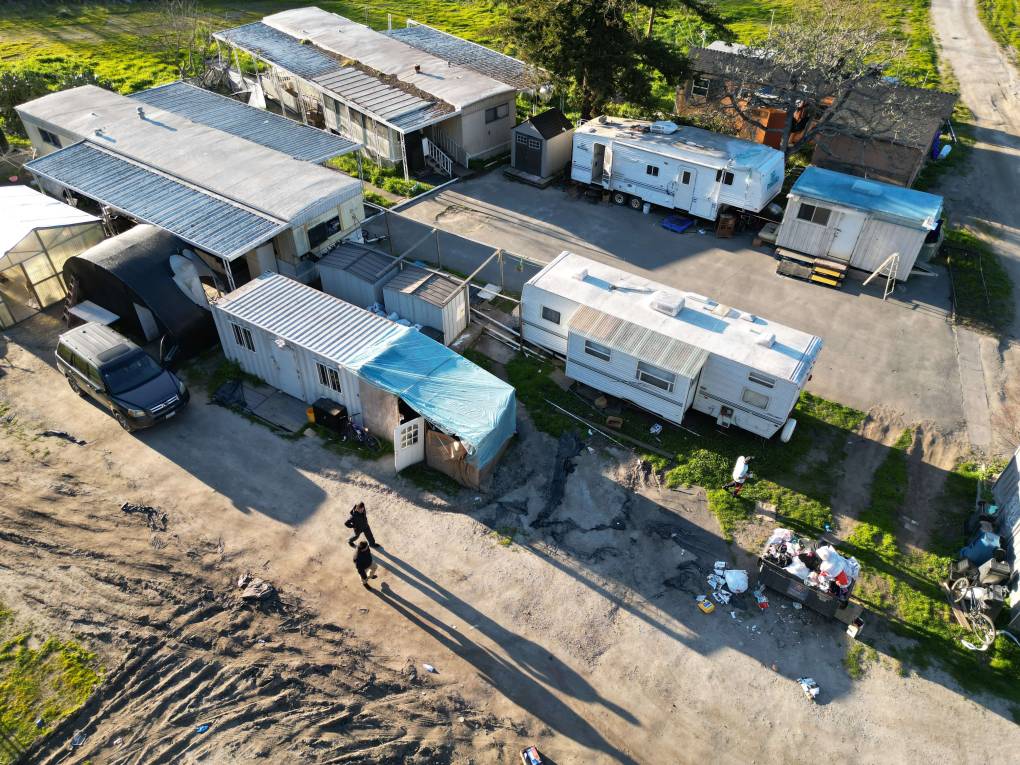
"caption": "An aerial view of some trailers that house farmworkers and their families at California Terra Garden in Half Moon Bay, as seen on Thursday, Jan. 26, 2023. The suspect in the mass killing is believed to have lived with his wife in one of the trailers. ",
"description": "Some of the housing provided to the farmworkers and their families at the mushroom farm on Thursday, Jan. 26, 2023 in Half Moon Bay, Calif. The suspect is said to live with his wife in the upper left house with blue tarp.",
"title": "CAHALFMOON",
"credit": "Paul Kuroda/Washington Post, via Getty Images",
"status": "inherit",
"altTag": "An aerial view of a number of trailers on a farm site.",
"isLoading": false,
"fetchFailed": false
},
"news_12033297": {
"type": "attachments",
"id": "news_12033297",
"meta": {
"index": "attachments_1716263798",
"site": "news",
"id": "12033297",
"found": true
},
"title": "01.16.2025-Alex-01-scaled copy",
"publishDate": 1743095764,
"status": "inherit",
"parent": 12033293,
"modified": 1743095791,
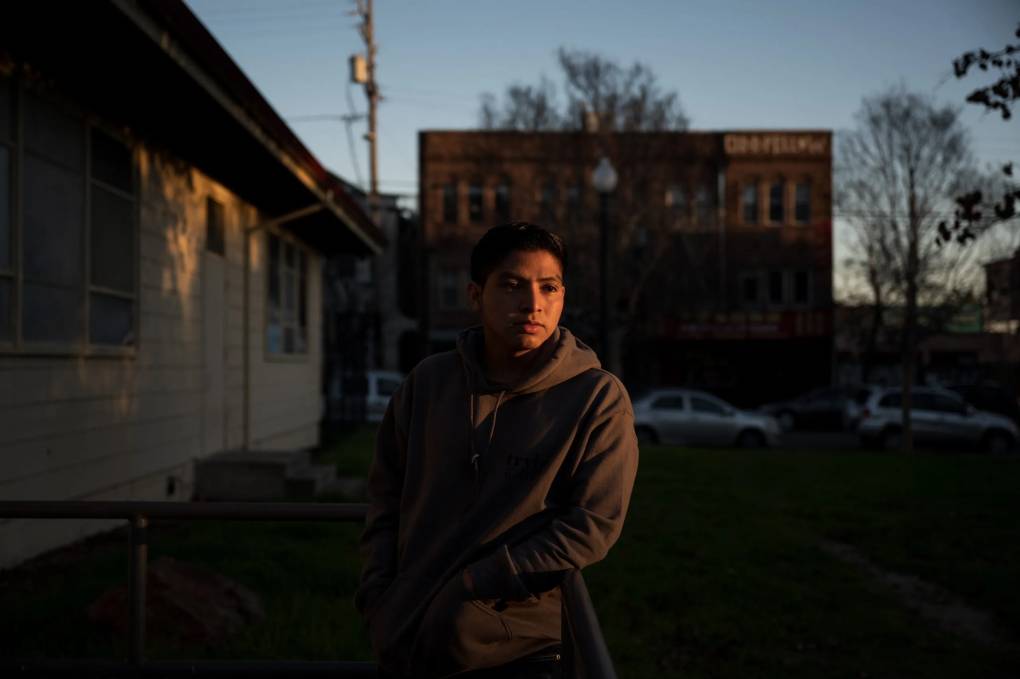
"caption": "Jorge poses for a portrait at a park in East Oakland on Thursday, Jan. 16, 2025. ",
"credit": "Hiram Alejandro Durán for El Tímpano/Catchlight/Report for America corps member",
"altTag": null,
"description": null,
"imgSizes": {
"medium": {
"file": "https://cdn.kqed.org/wp-content/uploads/sites/10/2025/03/01.16.2025-Alex-01-scaled-copy-800x532.jpg",
"width": 800,
"height": 532,
"mimeType": "image/jpeg"
},
"large": {
"file": "https://cdn.kqed.org/wp-content/uploads/sites/10/2025/03/01.16.2025-Alex-01-scaled-copy-1020x679.jpg",
"width": 1020,
"height": 679,
"mimeType": "image/jpeg"
},
"thumbnail": {
"file": "https://cdn.kqed.org/wp-content/uploads/sites/10/2025/03/01.16.2025-Alex-01-scaled-copy-160x106.jpg",
"width": 160,
"height": 106,
"mimeType": "image/jpeg"
},
"1536x1536": {
"file": "https://cdn.kqed.org/wp-content/uploads/sites/10/2025/03/01.16.2025-Alex-01-scaled-copy-1536x1022.jpg",
"width": 1536,
"height": 1022,
"mimeType": "image/jpeg"
},
"2048x2048": {
"file": "https://cdn.kqed.org/wp-content/uploads/sites/10/2025/03/01.16.2025-Alex-01-scaled-copy-2048x1362.jpg",
"width": 2048,
"height": 1362,
"mimeType": "image/jpeg"
},
"post-thumbnail": {
"file": "https://cdn.kqed.org/wp-content/uploads/sites/10/2025/03/01.16.2025-Alex-01-scaled-copy-672x372.jpg",
"width": 672,
"height": 372,
"mimeType": "image/jpeg"
},
"twentyfourteen-full-width": {
"file": "https://cdn.kqed.org/wp-content/uploads/sites/10/2025/03/01.16.2025-Alex-01-scaled-copy-1038x576.jpg",
"width": 1038,
"height": 576,
"mimeType": "image/jpeg"
},
"full-width": {
"file": "https://cdn.kqed.org/wp-content/uploads/sites/10/2025/03/01.16.2025-Alex-01-scaled-copy-1920x1277.jpg",
"width": 1920,
"height": 1277,
"mimeType": "image/jpeg"
},
"kqedFullSize": {
"file": "https://cdn.kqed.org/wp-content/uploads/sites/10/2025/03/01.16.2025-Alex-01-scaled-copy.jpg",
"width": 2560,
"height": 1703
}
},
"isLoading": false,
"fetchFailed": false
},
"news_12026446": {
"type": "attachments",
"id": "news_12026446",
"meta": {
"index": "attachments_1716263798",
"site": "news",
"id": "12026446",
"found": true
},
"title": "020625-ICE-Arrest-AP-GB-01-CM",
"publishDate": 1739212388,
"status": "inherit",
"parent": 12026443,
"modified": 1739296136,
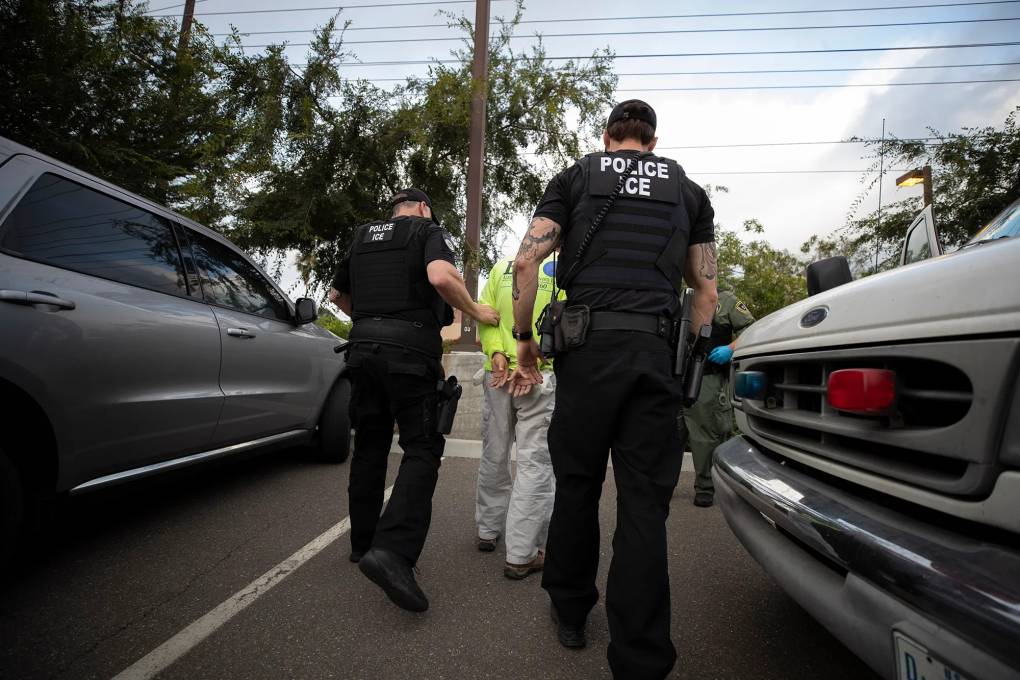
"caption": "A U.S. Immigration and Customs Enforcement (ICE) officer escorts a man in handcuffs during an operation in Escondido on July 8, 2019.",
"credit": "Gregory Bull/AP Photo",
"altTag": null,
"description": null,
"imgSizes": {
"medium": {
"file": "https://cdn.kqed.org/wp-content/uploads/sites/10/2025/02/020625-ICE-Arrest-AP-GB-01-CM-800x533.jpg",
"width": 800,
"height": 533,
"mimeType": "image/jpeg"
},
"large": {
"file": "https://cdn.kqed.org/wp-content/uploads/sites/10/2025/02/020625-ICE-Arrest-AP-GB-01-CM-1020x680.jpg",
"width": 1020,
"height": 680,
"mimeType": "image/jpeg"
},
"thumbnail": {
"file": "https://cdn.kqed.org/wp-content/uploads/sites/10/2025/02/020625-ICE-Arrest-AP-GB-01-CM-160x107.jpg",
"width": 160,
"height": 107,
"mimeType": "image/jpeg"
},
"1536x1536": {
"file": "https://cdn.kqed.org/wp-content/uploads/sites/10/2025/02/020625-ICE-Arrest-AP-GB-01-CM-1536x1024.jpg",
"width": 1536,
"height": 1024,
"mimeType": "image/jpeg"
},
"post-thumbnail": {
"file": "https://cdn.kqed.org/wp-content/uploads/sites/10/2025/02/020625-ICE-Arrest-AP-GB-01-CM-672x372.jpg",
"width": 672,
"height": 372,
"mimeType": "image/jpeg"
},
"twentyfourteen-full-width": {
"file": "https://cdn.kqed.org/wp-content/uploads/sites/10/2025/02/020625-ICE-Arrest-AP-GB-01-CM-1038x576.jpg",
"width": 1038,
"height": 576,
"mimeType": "image/jpeg"
},
"full-width": {
"file": "https://cdn.kqed.org/wp-content/uploads/sites/10/2025/02/020625-ICE-Arrest-AP-GB-01-CM-1920x1280.jpg",
"width": 1920,
"height": 1280,
"mimeType": "image/jpeg"
},
"kqedFullSize": {
"file": "https://cdn.kqed.org/wp-content/uploads/sites/10/2025/02/020625-ICE-Arrest-AP-GB-01-CM.jpg",
"width": 2000,
"height": 1333
}
},
"isLoading": false,
"fetchFailed": false
},
"news_12025468": {
"type": "attachments",
"id": "news_12025468",
"meta": {
"index": "attachments_1716263798",
"site": "news",
"id": "12025468",
"found": true
},
"title": "250203-DayWithoutAnImmigrant-04-BL",
"publishDate": 1738619150,
"status": "inherit",
"parent": 0,
"modified": 1738624102,
"caption": "Amaris, 17, (center), and Christian, 14, march during a rally for immigrants’ rights in the Fruitvale district of Oakland on Monday, Feb. 3, 2025. By Any Means Necessary, a youth-led immigrants' rights organization, organized the rally.",
"credit": "Beth LaBerge/KQED",
"altTag": null,
"description": null,
"imgSizes": {
"medium": {
"file": "https://cdn.kqed.org/wp-content/uploads/sites/10/2025/02/250203-DayWithoutAnImmigrant-04-BL-800x533.jpg",
"width": 800,
"height": 533,
"mimeType": "image/jpeg"
},
"large": {
"file": "https://cdn.kqed.org/wp-content/uploads/sites/10/2025/02/250203-DayWithoutAnImmigrant-04-BL-1020x680.jpg",
"width": 1020,
"height": 680,
"mimeType": "image/jpeg"
},
"thumbnail": {
"file": "https://cdn.kqed.org/wp-content/uploads/sites/10/2025/02/250203-DayWithoutAnImmigrant-04-BL-160x107.jpg",
"width": 160,
"height": 107,
"mimeType": "image/jpeg"
},
"1536x1536": {
"file": "https://cdn.kqed.org/wp-content/uploads/sites/10/2025/02/250203-DayWithoutAnImmigrant-04-BL-1536x1024.jpg",
"width": 1536,
"height": 1024,
"mimeType": "image/jpeg"
},
"post-thumbnail": {
"file": "https://cdn.kqed.org/wp-content/uploads/sites/10/2025/02/250203-DayWithoutAnImmigrant-04-BL-672x372.jpg",
"width": 672,
"height": 372,
"mimeType": "image/jpeg"
},
"twentyfourteen-full-width": {
"file": "https://cdn.kqed.org/wp-content/uploads/sites/10/2025/02/250203-DayWithoutAnImmigrant-04-BL-1038x576.jpg",
"width": 1038,
"height": 576,
"mimeType": "image/jpeg"
},
"full-width": {
"file": "https://cdn.kqed.org/wp-content/uploads/sites/10/2025/02/250203-DayWithoutAnImmigrant-04-BL-1920x1280.jpg",
"width": 1920,
"height": 1280,
"mimeType": "image/jpeg"
},
"kqedFullSize": {
"file": "https://cdn.kqed.org/wp-content/uploads/sites/10/2025/02/250203-DayWithoutAnImmigrant-04-BL.jpg",
"width": 2000,
"height": 1333
}
},
"isLoading": false,
"fetchFailed": false
},
"news_12023186": {
"type": "attachments",
"id": "news_12023186",
"meta": {
"index": "attachments_1716263798",
"site": "news",
"id": "12023186",
"found": true
},
"title": "MEXICO-TIJUANA-MIGRANTS-US-BORDER",
"publishDate": 1737470755,
"status": "inherit",
"parent": 12023185,
"modified": 1737470786,
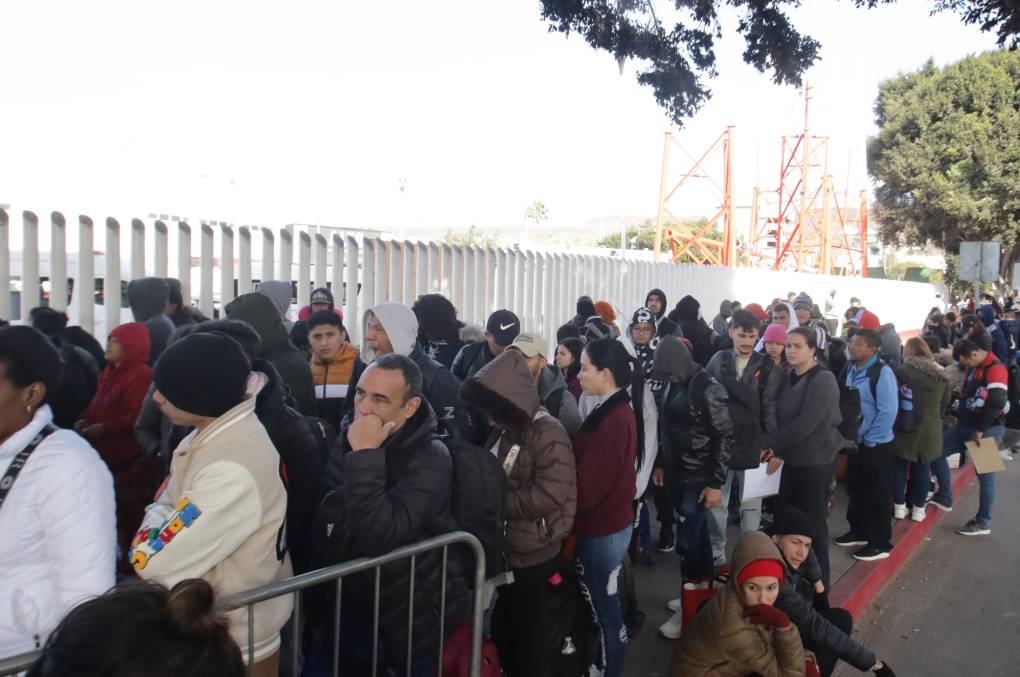
"caption": "Migrants line up at the Chaparral checkpoint in Tijuana, Mexico, Jan. 20, 2025. Minutes after President Donald Trump took office on Monday, the U.S. Customs and Border Protection CBP announced it has canceled all scheduled appointments for immigration and border processing. The CBP announced on social media that it would shut down the CBP One mobile app that allowed migrants to submit information and book appointments at eight U.S.-Mexico border ports after 11:00 p.m. Central Standard Time. ",
"credit": "Photo by Joebeth Terriquez/Xinhua via Getty Images",
"altTag": null,
"description": null,
"imgSizes": {
"medium": {
"file": "https://cdn.kqed.org/wp-content/uploads/sites/10/2025/01/GettyImages-2194475571-800x531.jpg",
"width": 800,
"height": 531,
"mimeType": "image/jpeg"
},
"large": {
"file": "https://cdn.kqed.org/wp-content/uploads/sites/10/2025/01/GettyImages-2194475571-1020x677.jpg",
"width": 1020,
"height": 677,
"mimeType": "image/jpeg"
},
"thumbnail": {
"file": "https://cdn.kqed.org/wp-content/uploads/sites/10/2025/01/GettyImages-2194475571-160x106.jpg",
"width": 160,
"height": 106,
"mimeType": "image/jpeg"
},
"1536x1536": {
"file": "https://cdn.kqed.org/wp-content/uploads/sites/10/2025/01/GettyImages-2194475571-1536x1020.jpg",
"width": 1536,
"height": 1020,
"mimeType": "image/jpeg"
},
"2048x2048": {
"file": "https://cdn.kqed.org/wp-content/uploads/sites/10/2025/01/GettyImages-2194475571-2048x1360.jpg",
"width": 2048,
"height": 1360,
"mimeType": "image/jpeg"
},
"post-thumbnail": {
"file": "https://cdn.kqed.org/wp-content/uploads/sites/10/2025/01/GettyImages-2194475571-672x372.jpg",
"width": 672,
"height": 372,
"mimeType": "image/jpeg"
},
"twentyfourteen-full-width": {
"file": "https://cdn.kqed.org/wp-content/uploads/sites/10/2025/01/GettyImages-2194475571-1038x576.jpg",
"width": 1038,
"height": 576,
"mimeType": "image/jpeg"
},
"full-width": {
"file": "https://cdn.kqed.org/wp-content/uploads/sites/10/2025/01/GettyImages-2194475571-1920x1275.jpg",
"width": 1920,
"height": 1275,
"mimeType": "image/jpeg"
},
"kqedFullSize": {
"file": "https://cdn.kqed.org/wp-content/uploads/sites/10/2025/01/GettyImages-2194475571-scaled.jpg",
"width": 2560,
"height": 1700
}
},
"isLoading": false,
"fetchFailed": false
},
"news_12016800": {
"type": "attachments",
"id": "news_12016800",
"meta": {
"index": "attachments_1716263798",
"site": "news",
"id": "12016800",
"found": true
},
"title": "immigrants-central-valley-6751c0512ec92",
"publishDate": 1733410932,
"status": "inherit",
"parent": 12016799,
"modified": 1733410970,
"caption": "Maria Pacheco, mayor of Kerman, Calif., speaks at a press conference in Fresno calling for the protection of undocumented immigrants following President-elect Donald Trump's win.",
"credit": "Esther Quintanilla/KVPR",
"altTag": null,
"description": null,
"imgSizes": {
"medium": {
"file": "https://cdn.kqed.org/wp-content/uploads/sites/10/2024/12/immigrants-central-valley-6751c0512ec92-800x600.jpg",
"width": 800,
"height": 600,
"mimeType": "image/jpeg"
},
"large": {
"file": "https://cdn.kqed.org/wp-content/uploads/sites/10/2024/12/immigrants-central-valley-6751c0512ec92-1020x765.jpg",
"width": 1020,
"height": 765,
"mimeType": "image/jpeg"
},
"thumbnail": {
"file": "https://cdn.kqed.org/wp-content/uploads/sites/10/2024/12/immigrants-central-valley-6751c0512ec92-160x120.jpg",
"width": 160,
"height": 120,
"mimeType": "image/jpeg"
},
"1536x1536": {
"file": "https://cdn.kqed.org/wp-content/uploads/sites/10/2024/12/immigrants-central-valley-6751c0512ec92-1536x1152.jpg",
"width": 1536,
"height": 1152,
"mimeType": "image/jpeg"
},
"post-thumbnail": {
"file": "https://cdn.kqed.org/wp-content/uploads/sites/10/2024/12/immigrants-central-valley-6751c0512ec92-672x372.jpg",
"width": 672,
"height": 372,
"mimeType": "image/jpeg"
},
"twentyfourteen-full-width": {
"file": "https://cdn.kqed.org/wp-content/uploads/sites/10/2024/12/immigrants-central-valley-6751c0512ec92-1038x576.jpg",
"width": 1038,
"height": 576,
"mimeType": "image/jpeg"
},
"kqedFullSize": {
"file": "https://cdn.kqed.org/wp-content/uploads/sites/10/2024/12/immigrants-central-valley-6751c0512ec92.jpg",
"width": 1760,
"height": 1320
}
},
"isLoading": false,
"fetchFailed": false
}
},
"audioPlayerReducer": {
"postId": "stream_live",
"isPaused": true,
"isPlaying": false,
"pfsActive": false,
"pledgeModalIsOpen": true,
"playerDrawerIsOpen": false,
"liveAudioPlayStartedAt": 0,
"liveAudioPlayContext": ""
},
"authorsReducer": {
"byline_news_12048690": {
"type": "authors",
"id": "byline_news_12048690",
"meta": {
"override": true
},
"slug": "byline_news_12048690",
"name": "Wendy Fry and Sergio Olmos, CalMatters",
"isLoading": false
},
"byline_news_12038879": {
"type": "authors",
"id": "byline_news_12038879",
"meta": {
"override": true
},
"slug": "byline_news_12038879",
"name": "Kayla Ling",
"isLoading": false
},
"byline_news_12033293": {
"type": "authors",
"id": "byline_news_12033293",
"meta": {
"override": true
},
"slug": "byline_news_12033293",
"name": "\u003ca href=\"https://www.eltimpano.org/author/cgaribay/\">Cassandra Garibay\u003c/a> and \u003ca href=\"https://www.eltimpano.org/author/xloeza/\">Ximena Loeza \u003c/a>, El Tímpano",
"isLoading": false
},
"byline_news_12026443": {
"type": "authors",
"id": "byline_news_12026443",
"meta": {
"override": true
},
"slug": "byline_news_12026443",
"name": "Jeanne Kuang, CalMatters",
"isLoading": false
},
"tychehendricks": {
"type": "authors",
"id": "259",
"meta": {
"index": "authors_1716337520",
"id": "259",
"found": true
},
"name": "Tyche Hendricks",
"firstName": "Tyche",
"lastName": "Hendricks",
"slug": "tychehendricks",
"email": "thendricks@kqed.org",
"display_author_email": true,
"staff_mastheads": [
"news"
],
"title": "KQED Senior Editor, Immigration",
"bio": "\u003cspan style=\"font-weight: 400;\">Tyche Hendricks is KQED’s senior editor for immigration, leading coverage of the policy and politics that affect California’s immigrant communities. Her work for KQED’s radio and online audiences is also carried on NPR and other national outlets. She has been recognized with awards from the Radio and Television News Directors Association, the Society for Professional Journalists; the Education Writers Association; the Best of the West and the National Federation of Community Broadcasters. Before joining KQED in 2010, Tyche spent more than a dozen years as a newspaper reporter, notably at the \u003c/span>\u003ci>\u003cspan style=\"font-weight: 400;\">San Francisco Chronicle\u003c/span>\u003c/i>\u003cspan style=\"font-weight: 400;\">. At different times she has covered criminal justice, government and politics and urban planning. Tyche has taught in the MFA Creative Writing program at the University of San Francisco and at UC Berkeley’s Graduate School of Journalism, where she was co-director of a national immigration symposium for professional journalists. She is the author of \u003c/span>\u003ci>\u003cspan style=\"font-weight: 400;\">The Wind Doesn't Need a Passport: Stories from the U.S.-Mexico Borderlands\u003c/span>\u003c/i>\u003cspan style=\"font-weight: 400;\"> (University of California Press). \u003c/span>",
"avatar": "https://secure.gravatar.com/avatar/b8ee458e2731c2d43df86882ce17267e?s=600&d=blank&r=g",
"twitter": "tychehendricks",
"facebook": null,
"instagram": null,
"linkedin": null,
"sites": [
{
"site": "news",
"roles": [
"editor"
]
},
{
"site": "stateofhealth",
"roles": [
"editor"
]
}
],
"headData": {
"title": "Tyche Hendricks | KQED",
"description": "KQED Senior Editor, Immigration",
"ogImgSrc": "https://secure.gravatar.com/avatar/b8ee458e2731c2d43df86882ce17267e?s=600&d=blank&r=g",
"twImgSrc": "https://secure.gravatar.com/avatar/b8ee458e2731c2d43df86882ce17267e?s=600&d=blank&r=g"
},
"isLoading": false,
"link": "/author/tychehendricks"
},
"abandlamudi": {
"type": "authors",
"id": "11672",
"meta": {
"index": "authors_1716337520",
"id": "11672",
"found": true
},
"name": "Adhiti Bandlamudi",
"firstName": "Adhiti",
"lastName": "Bandlamudi",
"slug": "abandlamudi",
"email": "abandlamudi@kqed.org",
"display_author_email": false,
"staff_mastheads": [
"news"
],
"title": "KQED Housing Reporter",
"bio": "Adhiti Bandlamudi reports for KQED's Housing desk. She focuses on how housing gets built across the Bay Area. Before joining KQED in 2020, she reported for WUNC in Durham, North Carolina, WABE in Atlanta, Georgia and Capital Public Radio in Sacramento. In 2017, she was awarded a Kroc Fellowship at NPR where she reported on everything from sprinkles to the Golden State Killer's arrest. When she's not reporting, she's baking new recipes in her kitchen or watching movies with friends and family. She's originally from Georgia and has strong opinions about Great British Bake Off.",
"avatar": "https://secure.gravatar.com/avatar/868129c8b257bb99a3500e2c86a65400?s=600&d=mm&r=g",
"twitter": "oddity_adhiti",
"facebook": null,
"instagram": null,
"linkedin": null,
"sites": [
{
"site": "arts",
"roles": [
"author"
]
},
{
"site": "news",
"roles": [
"editor"
]
},
{
"site": "liveblog",
"roles": [
"author"
]
}
],
"headData": {
"title": "Adhiti Bandlamudi | KQED",
"description": "KQED Housing Reporter",
"ogImgSrc": "https://secure.gravatar.com/avatar/868129c8b257bb99a3500e2c86a65400?s=600&d=mm&r=g",
"twImgSrc": "https://secure.gravatar.com/avatar/868129c8b257bb99a3500e2c86a65400?s=600&d=mm&r=g"
},
"isLoading": false,
"link": "/author/abandlamudi"
},
"kmizuguchi": {
"type": "authors",
"id": "11739",
"meta": {
"index": "authors_1716337520",
"id": "11739",
"found": true
},
"name": "Keith Mizuguchi",
"firstName": "Keith",
"lastName": "Mizuguchi",
"slug": "kmizuguchi",
"email": "kmizuguchi@kqed.org",
"display_author_email": false,
"staff_mastheads": [],
"title": "KQED Contributor",
"bio": null,
"avatar": "https://secure.gravatar.com/avatar/64d8a7de0723d4099b9fe4e915136103febcc20809abce228ee4415bcb237023?s=600&d=blank&r=g",
"twitter": null,
"bluesky": null,
"facebook": null,
"instagram": null,
"linkedin": null,
"sites": [
{
"site": "news",
"roles": [
"editor"
]
},
{
"site": "science",
"roles": [
"editor"
]
}
],
"headData": {
"title": "Keith Mizuguchi | KQED",
"description": "KQED Contributor",
"ogImgSrc": "https://secure.gravatar.com/avatar/64d8a7de0723d4099b9fe4e915136103febcc20809abce228ee4415bcb237023?s=600&d=blank&r=g",
"twImgSrc": "https://secure.gravatar.com/avatar/64d8a7de0723d4099b9fe4e915136103febcc20809abce228ee4415bcb237023?s=600&d=blank&r=g"
},
"isLoading": false,
"link": "/author/kmizuguchi"
},
"jlara": {
"type": "authors",
"id": "11761",
"meta": {
"index": "authors_1716337520",
"id": "11761",
"found": true
},
"name": "Juan Carlos Lara",
"firstName": "Juan Carlos",
"lastName": "Lara",
"slug": "jlara",
"email": "jlara@kqed.org",
"display_author_email": false,
"staff_mastheads": [],
"title": "KQED Contributor",
"bio": null,
"avatar": "https://secure.gravatar.com/avatar/19e2052b9b05657c5ff2af2121846e9c?s=600&d=blank&r=g",
"twitter": null,
"facebook": null,
"instagram": null,
"linkedin": null,
"sites": [
{
"site": "arts",
"roles": [
"editor"
]
},
{
"site": "news",
"roles": [
"editor"
]
},
{
"site": "forum",
"roles": [
"editor"
]
},
{
"site": "liveblog",
"roles": [
"contributor"
]
}
],
"headData": {
"title": "Juan Carlos Lara | KQED",
"description": "KQED Contributor",
"ogImgSrc": "https://secure.gravatar.com/avatar/19e2052b9b05657c5ff2af2121846e9c?s=600&d=blank&r=g",
"twImgSrc": "https://secure.gravatar.com/avatar/19e2052b9b05657c5ff2af2121846e9c?s=600&d=blank&r=g"
},
"isLoading": false,
"link": "/author/jlara"
},
"slim": {
"type": "authors",
"id": "11920",
"meta": {
"index": "authors_1716337520",
"id": "11920",
"found": true
},
"name": "Samantha Lim",
"firstName": "Samantha",
"lastName": "Lim",
"slug": "slim",
"email": "slim@KQED.org",
"display_author_email": false,
"staff_mastheads": [],
"title": "KQED Contributor",
"bio": null,
"avatar": "https://secure.gravatar.com/avatar/82e592e6c15fe1a04d385e8ad0fb0b4e?s=600&d=blank&r=g",
"twitter": null,
"facebook": null,
"instagram": null,
"linkedin": null,
"sites": [
{
"site": "news",
"roles": []
}
],
"headData": {
"title": "Samantha Lim | KQED",
"description": "KQED Contributor",
"ogImgSrc": "https://secure.gravatar.com/avatar/82e592e6c15fe1a04d385e8ad0fb0b4e?s=600&d=blank&r=g",
"twImgSrc": "https://secure.gravatar.com/avatar/82e592e6c15fe1a04d385e8ad0fb0b4e?s=600&d=blank&r=g"
},
"isLoading": false,
"link": "/author/slim"
}
},
"pagesReducer": {
"news_tag_immigrants": {
"type": "terms",
"id": "news_17708",
"meta": {
"index": "terms_1716263798",
"site": "news",
"id": "17708",
"score": 8.668587
},
"featImg": null,
"name": "immigrants",
"description": null,
"taxonomy": "tag",
"headData": {
"twImgId": null,
"twTitle": null,
"ogTitle": null,
"ogImgId": null,
"twDescription": null,
"description": null,
"title": "immigrants Archives | KQED News",
"ogDescription": null
},
"ttid": 17742,
"slug": "immigrants",
"isLoading": false,
"title": "immigrants",
"pageMeta": {
"site": "news",
"WpPageTemplate": "page-topic-editorial",
"currentPage": 5
},
"blocks": [
{
"blockName": "kqed/post-list",
"attrs": {
"layout": "cardArticle2",
"query": "posts/news?tag=immigrants",
"seeMore": false,
"paginated": true,
"page": 5
}
},
{
"blockName": "kqed/ad"
}
]
}
},
"pfsSessionReducer": {},
"postsReducer": {
"stream_live": {
"type": "live",
"id": "stream_live",
"audioUrl": "https://streams.kqed.org/kqedradio",
"title": "Live Stream",
"excerpt": "Live Stream information currently unavailable.",
"link": "/radio",
"featImg": "",
"label": {
"name": "KQED Live",
"link": "/"
}
},
"stream_kqedNewscast": {
"type": "posts",
"id": "stream_kqedNewscast",
"audioUrl": "https://www.kqed.org/.stream/anon/radio/RDnews/newscast.mp3?_=1",
"title": "KQED Newscast",
"featImg": "",
"label": {
"name": "88.5 FM",
"link": "/"
}
},
"news_12048690": {
"type": "posts",
"id": "news_12048690",
"meta": {
"index": "posts_1716263798",
"site": "news",
"id": "12048690",
"score": null,
"sort": [
1752859846000
]
},
"guestAuthors": [],
"slug": "no-sanctuary-anywhere-border-patrol-raids-strike-heart-of-california-capitol",
"title": "'No Sanctuary Anywhere': Border Patrol Raids Strike Heart of California Capitol",
"publishDate": 1752859846,
"format": "standard",
"headTitle": "‘No Sanctuary Anywhere’: Border Patrol Raids Strike Heart of California Capitol | KQED",
"labelTerm": {},
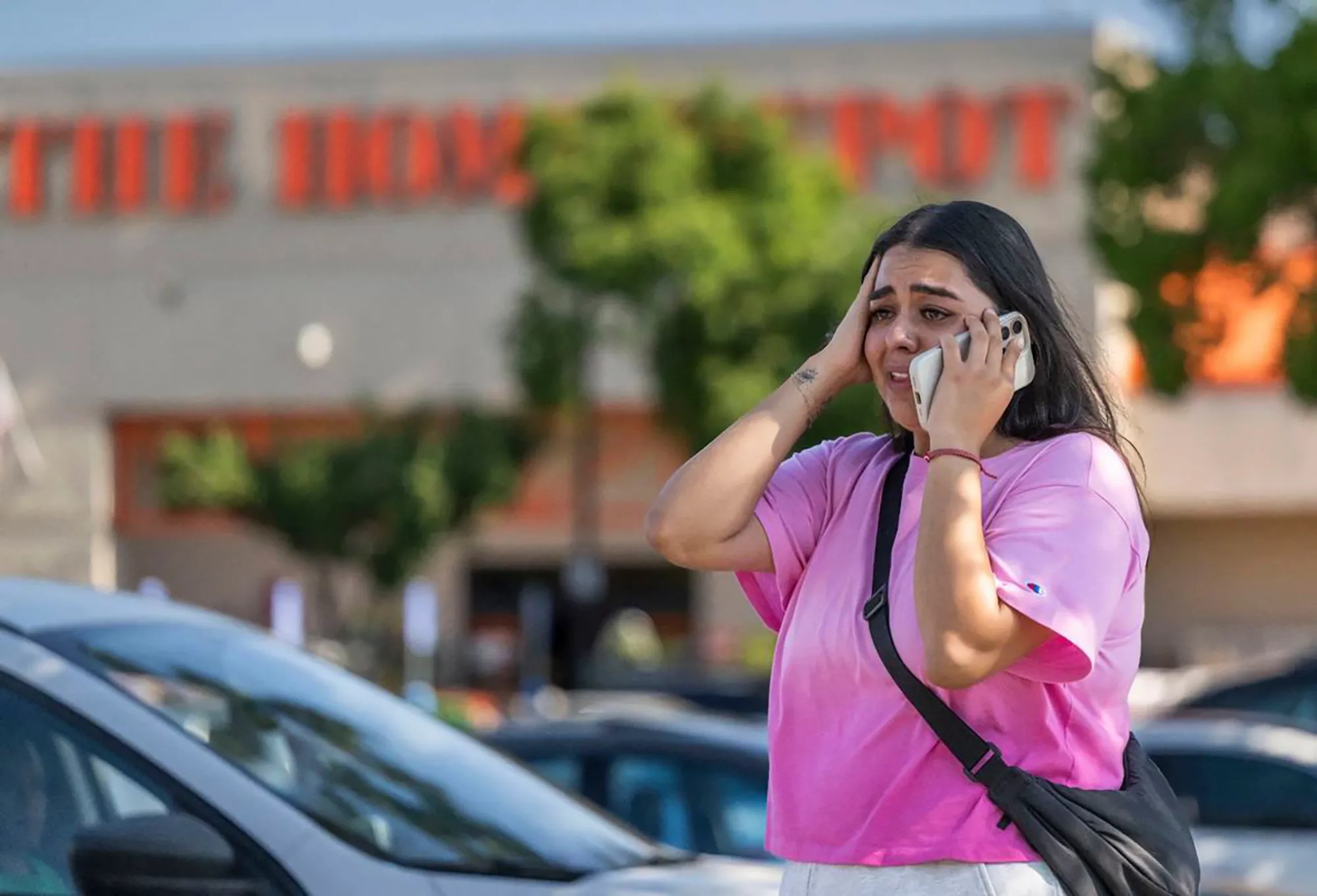
"content": "\u003cp>\u003cem>This story was originally published by \u003ca href=\"https://calmatters.org/\">CalMatters\u003c/a>. \u003ca href=\"https://calmatters.org/subscribe-to-calmatters/\">Sign up\u003c/a> for their newsletters.\u003c/em>\u003c/p>\n\u003cp>Border Patrol agents moved their operations northward Thursday to California’s capital, targeting a Home Depot in Sacramento, this time more than 500 miles away from the border.\u003c/p>\n\u003cp>On Friday, a judge in Los Angeles \u003ca href=\"https://calmatters.org/justice/2025/07/la-immigration-restraining-order/\">ordered federal immigration agents\u003c/a> to temporarily stop the “roving patrols” in which \u003ca href=\"https://calmatters.org/investigation/2025/07/patterns-in-california-immigration-raids/\">heavily armed agents\u003c/a> have aggressively detained immigrants and U.S. citizens throughout Southern California during a month-long crackdown. They targeted car washes, construction jobs, and Home Depots, arresting mostly Latino men who were longtime residents of Los Angeles.\u003c/p>\n\u003cp>It appeared agents had stopped the warrantless, aggressive sweeps through Los Angeles since the court ruling, which only applied to the state’s Central District. However, Border Patrol has been under a separate court order to stop similar warrantless raids in the state’s Eastern District — which includes Sacramento — after agents raided a Home Depot and other worksites in January.\u003c/p>\n\u003cp>[ad fullwidth]\u003c/p>\n\u003cp>The architect of both the Central Valley and Los Angeles operations, \u003ca href=\"https://calmatters.org/investigation/2025/06/los-angeles-border-patrol-chief/\">Gregory Bovino\u003c/a>, stood in front of the State Capitol Building on Thursday for \u003ca href=\"https://x.com/billmelugin_/status/1945902933813690454?s=46\">an interview with Fox News\u003c/a>.\u003c/p>\n\u003cp>“There is no sanctuary city. Sacramento is not a sanctuary city. The state of California is not a sanctuary state. There is no sanctuary anywhere,” the El Centro sector’s chief patrol agent said. “We’re here to stay. We’re not going anywhere. We’re going to affect this mission and secure the homeland.”\u003c/p>\n\u003cp>Also on Thursday, a federal appeals court denied on procedural grounds the Department of Homeland Security’s request to pause the temporary restraining order won last week by civil rights groups, who argued that the “\u003ca href=\"https://calmatters.org/justice/2025/07/la-immigration-raids-lawsuit/\">brazen, midday kidnappings\u003c/a>” violated the Constitution’s protections against unreasonable searches. The government was illegally \u003ca href=\"https://calmatters.org/investigation/2025/06/taken-la-immigration-raids/\">denying detainees access to an attorney\u003c/a>.\u003c/p>\n\u003cfigure id=\"attachment_12048135\" class=\"wp-caption aligncenter\" style=\"max-width: 2000px\">\u003cimg loading=\"lazy\" decoding=\"async\" class=\"wp-image-12048135 size-full\" src=\"https://cdn.kqed.org/wp-content/uploads/sites/10/2025/07/GettyImages-2220045842-scaled-e1752857672682.jpg\" alt=\"\" width=\"2000\" height=\"1334\">\u003cfigcaption class=\"wp-caption-text\">Federal agents guard outside of a federal building and Immigration and Customs Enforcement (ICE) detention center in downtown Los Angeles as demonstrations continue after a series of immigration raids began last Friday, on June 13, 2025, in Los Angeles, California. Tensions in the city remain high after the Trump administration called in the National Guard and the Marines against the wishes of city leaders. \u003ccite>(Spencer Platt/Getty Images)\u003c/cite>\u003c/figcaption>\u003c/figure>\n\u003cp>In the Kern County case, a federal judge issued a preliminary injunction in April \u003ca href=\"https://calmatters.org/justice/2025/04/border-patrol-injunction/\">barring agents from using racial profiling\u003c/a> in the Eastern District of California, which includes Sacramento.\u003c/p>\n\u003cp>In court paperwork, the federal government maintains that its tactics are legitimate while \u003ca href=\"https://calmatters.org/justice/2025/04/border-patrol-to-retrain-hundreds-of-california-agents-on-how-to-comply-with-the-constitution/\">vowing to retrain agents\u003c/a> on the Fourth and Fifth Amendments of the U.S. Constitution.\u003c/p>\n\u003cp>Bovino publicly said that Border Patrol went after a list of specific criminal targets, but the \u003ca href=\"https://calmatters.org/economy/2025/04/border-patrol-records-kern-county/\">agency’s own documents\u003c/a> later showed that it only had a previous record on one of the 78 people it arrested.\u003c/p>\n\u003cp>After that court ruling, Border Patrol agents moved districts and became more aggressive, fanning out, while wearing masks, across Southern California.[aside postID=news_12048509 hero='https://cdn.kqed.org/wp-content/uploads/sites/10/2025/07/Interior-Secretary-Doug-Burgum.jpg']Not only do Thursday’s activities mark a return to the Eastern District, but they went right to the heart of California’s government.\u003c/p>\n\u003cp>Gov. Gavin Newsom said the Border Patrol is trying to escape a court order, and said they should get out of California.\u003c/p>\n\u003cp>“The Border Patrol should do their jobs — at the border — instead of continuing their tirade statewide of illegal racial profiling and illegal arrests,” said Diana Crofts-Pelayo, a Newsom spokesperson.\u003c/p>\n\u003cp>Agents arrested about 10 people at the Home Depot in Sacramento on Thursday, according to Border Patrol.\u003c/p>\n\u003cp>\u003ca href=\"https://www.kcra.com/article/border-patrol-raid-home-depot-florin-road-sacramento/65440117\">In a video shared by KCRA\u003c/a>, the NBC affiliate in Sacramento, a woman identified as Andrea Castillo can be heard shouting, “Leave him alone! He’s a U.S. citizen!” as masked agents chase a man running across a parking lot. An agent wearing a mask momentarily turns and points a can of mace at the person filming the video. Another armed man, in a full-face mask and wearing a green vest labeled only “police,” could be seen joining in the chase. Castillo continues shouting, “He’s my husband.”\u003c/p>\n\u003cp>Five men surround the man, who is face-down on the blacktop, while screaming at the person filming the video to stay back. “His brother is a Marine Corps officer,” she shouts while several more armed and masked men join in on the arrest. “Stand back or you will be maced,” another agent screams at her. The woman filming asks one of the agents for his badge number, and he responds: “Google me.”\u003c/p>\n\u003cfigure id=\"attachment_12040806\" class=\"wp-caption aligncenter\" style=\"max-width: 2000px\">\u003cimg loading=\"lazy\" decoding=\"async\" class=\"size-full wp-image-12040806\" src=\"https://cdn.kqed.org/wp-content/uploads/sites/10/2025/05/250506-SACRAMENTOFILE-04-BL-KQED.jpg\" alt=\"\" width=\"2000\" height=\"1333\" srcset=\"https://cdn.kqed.org/wp-content/uploads/sites/10/2025/05/250506-SACRAMENTOFILE-04-BL-KQED.jpg 2000w, https://cdn.kqed.org/wp-content/uploads/sites/10/2025/05/250506-SACRAMENTOFILE-04-BL-KQED-800x533.jpg 800w, https://cdn.kqed.org/wp-content/uploads/sites/10/2025/05/250506-SACRAMENTOFILE-04-BL-KQED-1020x680.jpg 1020w, https://cdn.kqed.org/wp-content/uploads/sites/10/2025/05/250506-SACRAMENTOFILE-04-BL-KQED-160x107.jpg 160w, https://cdn.kqed.org/wp-content/uploads/sites/10/2025/05/250506-SACRAMENTOFILE-04-BL-KQED-1536x1024.jpg 1536w, https://cdn.kqed.org/wp-content/uploads/sites/10/2025/05/250506-SACRAMENTOFILE-04-BL-KQED-1920x1280.jpg 1920w\" sizes=\"auto, (max-width: 2000px) 100vw, 2000px\">\u003cfigcaption class=\"wp-caption-text\">The California State Capitol in Sacramento on May 6, 2025. \u003ccite>(Beth LaBerge/KQED)\u003c/cite>\u003c/figcaption>\u003c/figure>\n\u003cp>Another photo shared to social media shows the man — identified in media reports as Jose Castillo — being arrested with a badly stained face, presumably from mace, and what appears to be a bruise under his left eye. His wife told KCRA he is a U.S. citizen. The Border Patrol said he slashed one of their tires in the Home Depot parking lot.\u003c/p>\n\u003cp>The Mexican government interviewed 330 Mexican nationals who were arrested by immigration officials in Los Angeles between June 6 and July 6, finding more than half had lived in the U.S. for at least a decade. One-third had lived here for more than 20 years, and one-third had U.S.-born children, according to the Mexican Consulate of Los Angeles.\u003c/p>\n\u003cp>The vast majority of those arrested were employed in working-class labor-intensive jobs, with 16.4% working at a car wash, 13.3% in construction, 13% had a factory job, and 11.5% worked as landscapers.[aside postID=news_12048357 hero='https://cdn.kqed.org/wp-content/uploads/sites/10/2025/06/250609-SF-IMMIGRATION-PROTESTS-MD-08-KQED-3.jpg']In a motion to dismiss the Kern County lawsuit, the federal government argued agents are using a variety of factors, and not just a person’s skin color, when considering immigration stops, including the type of haircut a person has.\u003c/p>\n\u003cp>“There are a number of factors Border Patrol can consider in assessing reasonable suspicion, including the characteristic appearance of persons who live in Mexico, such as the mode of dress and haircut,” the federal government wrote in their motion to dismiss the lawsuit brought by the American Civil Liberties Union of Northern California on behalf of the United Farm Workers.\u003c/p>\n\u003cp>The government also said in the court filings that agents are considering a “totality of the circumstances, including the agent’s training and experience,” and prior surveillance of locations known to agents as places where undocumented workers congregate.\u003c/p>\n\u003cp>The Border Patrol also issued new guidelines to agents, the government said, to provide detainees with access to legal counsel before they sign “voluntary removal” orders, after being accused of using coercive tactics like brandishing their guns when someone asked to see an immigration judge.\u003c/p>\n\u003cp>\u003cem>This article was \u003ca href=\"https://calmatters.org/justice/2025/07/sacramento-border-patrol-raids/\">originally published on CalMatters\u003c/a> and was republished under the \u003ca href=\"https://creativecommons.org/licenses/by-nc-nd/4.0/\">Creative Commons Attribution-NonCommercial-NoDerivatives\u003c/a> license.\u003c/em>\u003c/p>\n\u003cp>[ad floatright]\u003c/p>\n",
"blocks": [],
"excerpt": "The Border Patrol began conducting operations in Sacramento on Thursday, as two federal court rulings have ordered them to stop warrantless raids.",
"status": "publish",
"parent": 0,
"modified": 1752858051,
"stats": {
"hasAudio": false,
"hasVideo": false,
"hasChartOrMap": false,
"iframeSrcs": [],
"hasGoogleForm": false,
"hasGallery": false,
"hasHearkenModule": false,
"hasPolis": false,
"paragraphCount": 25,
"wordCount": 1214
},
"headData": {
"title": "'No Sanctuary Anywhere': Border Patrol Raids Strike Heart of California Capitol | KQED",
"description": "The Border Patrol began conducting operations in Sacramento on Thursday, as two federal court rulings have ordered them to stop warrantless raids.",
"ogTitle": "",
"ogDescription": "",
"ogImgId": "",
"twTitle": "",
"twDescription": "",
"twImgId": "",
"schema": {
"@context": "https://schema.org",
"@type": "NewsArticle",
"headline": "'No Sanctuary Anywhere': Border Patrol Raids Strike Heart of California Capitol",
"datePublished": "2025-07-18T10:30:46-07:00",
"dateModified": "2025-07-18T10:00:51-07:00",
"image": "https://cdn.kqed.org/wp-content/uploads/2020/02/KQED-OG-Image@1x.png",
"isAccessibleForFree": "True",
"publisher": {
"@type": "NewsMediaOrganization",
"@id": "https://www.kqed.org/#organization",
"name": "KQED",
"logo": "https://cdn.kqed.org/wp-content/uploads/2020/02/KQED-OG-Image@1x.png",
"url": "https://www.kqed.org",
"sameAs": [
"https://www.facebook.com/KQED",
"https://twitter.com/KQED",
"https://www.instagram.com/kqed/",
"https://www.tiktok.com/@kqedofficial",
"https://www.linkedin.com/company/kqed",
"https://www.youtube.com/channel/UCeC0IOo7i1P_61zVUWbJ4nw"
]
}
}
},
"primaryCategory": {
"termId": 8,
"slug": "news",
"name": "News"
},
"source": "CalMatters",
"sourceUrl": "https://calmatters.org/",
"sticky": false,
"nprByline": "Wendy Fry and Sergio Olmos, CalMatters",
"templateType": "standard",
"featuredImageType": "standard",
"excludeFromSiteSearch": "Include",
"showOnAuthorArchivePages": "No",
"articleAge": "0",
"path": "/news/12048690/no-sanctuary-anywhere-border-patrol-raids-strike-heart-of-california-capitol",
"audioTrackLength": null,
"parsedContent": [
{
"type": "contentString",
"content": "\u003cdiv class=\"post-body\">\u003cp>\u003cp>\u003cem>This story was originally published by \u003ca href=\"https://calmatters.org/\">CalMatters\u003c/a>. \u003ca href=\"https://calmatters.org/subscribe-to-calmatters/\">Sign up\u003c/a> for their newsletters.\u003c/em>\u003c/p>\n\u003cp>Border Patrol agents moved their operations northward Thursday to California’s capital, targeting a Home Depot in Sacramento, this time more than 500 miles away from the border.\u003c/p>\n\u003cp>On Friday, a judge in Los Angeles \u003ca href=\"https://calmatters.org/justice/2025/07/la-immigration-restraining-order/\">ordered federal immigration agents\u003c/a> to temporarily stop the “roving patrols” in which \u003ca href=\"https://calmatters.org/investigation/2025/07/patterns-in-california-immigration-raids/\">heavily armed agents\u003c/a> have aggressively detained immigrants and U.S. citizens throughout Southern California during a month-long crackdown. They targeted car washes, construction jobs, and Home Depots, arresting mostly Latino men who were longtime residents of Los Angeles.\u003c/p>\n\u003cp>It appeared agents had stopped the warrantless, aggressive sweeps through Los Angeles since the court ruling, which only applied to the state’s Central District. However, Border Patrol has been under a separate court order to stop similar warrantless raids in the state’s Eastern District — which includes Sacramento — after agents raided a Home Depot and other worksites in January.\u003c/p>\n\u003cp>\u003c/p>\u003c/div>",
"attributes": {
"named": {},
"numeric": []
}
},
{
"type": "component",
"content": "",
"name": "ad",
"attributes": {
"named": {
"label": "fullwidth"
},
"numeric": [
"fullwidth"
]
}
},
{
"type": "contentString",
"content": "\u003cdiv class=\"post-body\">\u003cp>\u003c/p>\n\u003cp>The architect of both the Central Valley and Los Angeles operations, \u003ca href=\"https://calmatters.org/investigation/2025/06/los-angeles-border-patrol-chief/\">Gregory Bovino\u003c/a>, stood in front of the State Capitol Building on Thursday for \u003ca href=\"https://x.com/billmelugin_/status/1945902933813690454?s=46\">an interview with Fox News\u003c/a>.\u003c/p>\n\u003cp>“There is no sanctuary city. Sacramento is not a sanctuary city. The state of California is not a sanctuary state. There is no sanctuary anywhere,” the El Centro sector’s chief patrol agent said. “We’re here to stay. We’re not going anywhere. We’re going to affect this mission and secure the homeland.”\u003c/p>\n\u003cp>Also on Thursday, a federal appeals court denied on procedural grounds the Department of Homeland Security’s request to pause the temporary restraining order won last week by civil rights groups, who argued that the “\u003ca href=\"https://calmatters.org/justice/2025/07/la-immigration-raids-lawsuit/\">brazen, midday kidnappings\u003c/a>” violated the Constitution’s protections against unreasonable searches. The government was illegally \u003ca href=\"https://calmatters.org/investigation/2025/06/taken-la-immigration-raids/\">denying detainees access to an attorney\u003c/a>.\u003c/p>\n\u003cfigure id=\"attachment_12048135\" class=\"wp-caption aligncenter\" style=\"max-width: 2000px\">\u003cimg loading=\"lazy\" decoding=\"async\" class=\"wp-image-12048135 size-full\" src=\"https://cdn.kqed.org/wp-content/uploads/sites/10/2025/07/GettyImages-2220045842-scaled-e1752857672682.jpg\" alt=\"\" width=\"2000\" height=\"1334\">\u003cfigcaption class=\"wp-caption-text\">Federal agents guard outside of a federal building and Immigration and Customs Enforcement (ICE) detention center in downtown Los Angeles as demonstrations continue after a series of immigration raids began last Friday, on June 13, 2025, in Los Angeles, California. Tensions in the city remain high after the Trump administration called in the National Guard and the Marines against the wishes of city leaders. \u003ccite>(Spencer Platt/Getty Images)\u003c/cite>\u003c/figcaption>\u003c/figure>\n\u003cp>In the Kern County case, a federal judge issued a preliminary injunction in April \u003ca href=\"https://calmatters.org/justice/2025/04/border-patrol-injunction/\">barring agents from using racial profiling\u003c/a> in the Eastern District of California, which includes Sacramento.\u003c/p>\n\u003cp>In court paperwork, the federal government maintains that its tactics are legitimate while \u003ca href=\"https://calmatters.org/justice/2025/04/border-patrol-to-retrain-hundreds-of-california-agents-on-how-to-comply-with-the-constitution/\">vowing to retrain agents\u003c/a> on the Fourth and Fifth Amendments of the U.S. Constitution.\u003c/p>\n\u003cp>Bovino publicly said that Border Patrol went after a list of specific criminal targets, but the \u003ca href=\"https://calmatters.org/economy/2025/04/border-patrol-records-kern-county/\">agency’s own documents\u003c/a> later showed that it only had a previous record on one of the 78 people it arrested.\u003c/p>\n\u003cp>After that court ruling, Border Patrol agents moved districts and became more aggressive, fanning out, while wearing masks, across Southern California.\u003c/p>\u003c/div>",
"attributes": {
"named": {},
"numeric": []
}
},
{
"type": "component",
"content": "",
"name": "aside",
"attributes": {
"named": {
"postid": "news_12048509",
"hero": "https://cdn.kqed.org/wp-content/uploads/sites/10/2025/07/Interior-Secretary-Doug-Burgum.jpg",
"label": ""
},
"numeric": []
}
},
{
"type": "contentString",
"content": "\u003cdiv class=\"post-body\">\u003cp>Not only do Thursday’s activities mark a return to the Eastern District, but they went right to the heart of California’s government.\u003c/p>\n\u003cp>Gov. Gavin Newsom said the Border Patrol is trying to escape a court order, and said they should get out of California.\u003c/p>\n\u003cp>“The Border Patrol should do their jobs — at the border — instead of continuing their tirade statewide of illegal racial profiling and illegal arrests,” said Diana Crofts-Pelayo, a Newsom spokesperson.\u003c/p>\n\u003cp>Agents arrested about 10 people at the Home Depot in Sacramento on Thursday, according to Border Patrol.\u003c/p>\n\u003cp>\u003ca href=\"https://www.kcra.com/article/border-patrol-raid-home-depot-florin-road-sacramento/65440117\">In a video shared by KCRA\u003c/a>, the NBC affiliate in Sacramento, a woman identified as Andrea Castillo can be heard shouting, “Leave him alone! He’s a U.S. citizen!” as masked agents chase a man running across a parking lot. An agent wearing a mask momentarily turns and points a can of mace at the person filming the video. Another armed man, in a full-face mask and wearing a green vest labeled only “police,” could be seen joining in the chase. Castillo continues shouting, “He’s my husband.”\u003c/p>\n\u003cp>Five men surround the man, who is face-down on the blacktop, while screaming at the person filming the video to stay back. “His brother is a Marine Corps officer,” she shouts while several more armed and masked men join in on the arrest. “Stand back or you will be maced,” another agent screams at her. The woman filming asks one of the agents for his badge number, and he responds: “Google me.”\u003c/p>\n\u003cfigure id=\"attachment_12040806\" class=\"wp-caption aligncenter\" style=\"max-width: 2000px\">\u003cimg loading=\"lazy\" decoding=\"async\" class=\"size-full wp-image-12040806\" src=\"https://cdn.kqed.org/wp-content/uploads/sites/10/2025/05/250506-SACRAMENTOFILE-04-BL-KQED.jpg\" alt=\"\" width=\"2000\" height=\"1333\" srcset=\"https://cdn.kqed.org/wp-content/uploads/sites/10/2025/05/250506-SACRAMENTOFILE-04-BL-KQED.jpg 2000w, https://cdn.kqed.org/wp-content/uploads/sites/10/2025/05/250506-SACRAMENTOFILE-04-BL-KQED-800x533.jpg 800w, https://cdn.kqed.org/wp-content/uploads/sites/10/2025/05/250506-SACRAMENTOFILE-04-BL-KQED-1020x680.jpg 1020w, https://cdn.kqed.org/wp-content/uploads/sites/10/2025/05/250506-SACRAMENTOFILE-04-BL-KQED-160x107.jpg 160w, https://cdn.kqed.org/wp-content/uploads/sites/10/2025/05/250506-SACRAMENTOFILE-04-BL-KQED-1536x1024.jpg 1536w, https://cdn.kqed.org/wp-content/uploads/sites/10/2025/05/250506-SACRAMENTOFILE-04-BL-KQED-1920x1280.jpg 1920w\" sizes=\"auto, (max-width: 2000px) 100vw, 2000px\">\u003cfigcaption class=\"wp-caption-text\">The California State Capitol in Sacramento on May 6, 2025. \u003ccite>(Beth LaBerge/KQED)\u003c/cite>\u003c/figcaption>\u003c/figure>\n\u003cp>Another photo shared to social media shows the man — identified in media reports as Jose Castillo — being arrested with a badly stained face, presumably from mace, and what appears to be a bruise under his left eye. His wife told KCRA he is a U.S. citizen. The Border Patrol said he slashed one of their tires in the Home Depot parking lot.\u003c/p>\n\u003cp>The Mexican government interviewed 330 Mexican nationals who were arrested by immigration officials in Los Angeles between June 6 and July 6, finding more than half had lived in the U.S. for at least a decade. One-third had lived here for more than 20 years, and one-third had U.S.-born children, according to the Mexican Consulate of Los Angeles.\u003c/p>\n\u003cp>The vast majority of those arrested were employed in working-class labor-intensive jobs, with 16.4% working at a car wash, 13.3% in construction, 13% had a factory job, and 11.5% worked as landscapers.\u003c/p>\u003c/div>",
"attributes": {
"named": {},
"numeric": []
}
},
{
"type": "component",
"content": "",
"name": "aside",
"attributes": {
"named": {
"postid": "news_12048357",
"hero": "https://cdn.kqed.org/wp-content/uploads/sites/10/2025/06/250609-SF-IMMIGRATION-PROTESTS-MD-08-KQED-3.jpg",
"label": ""
},
"numeric": []
}
},
{
"type": "contentString",
"content": "\u003cdiv class=\"post-body\">\u003cp>In a motion to dismiss the Kern County lawsuit, the federal government argued agents are using a variety of factors, and not just a person’s skin color, when considering immigration stops, including the type of haircut a person has.\u003c/p>\n\u003cp>“There are a number of factors Border Patrol can consider in assessing reasonable suspicion, including the characteristic appearance of persons who live in Mexico, such as the mode of dress and haircut,” the federal government wrote in their motion to dismiss the lawsuit brought by the American Civil Liberties Union of Northern California on behalf of the United Farm Workers.\u003c/p>\n\u003cp>The government also said in the court filings that agents are considering a “totality of the circumstances, including the agent’s training and experience,” and prior surveillance of locations known to agents as places where undocumented workers congregate.\u003c/p>\n\u003cp>The Border Patrol also issued new guidelines to agents, the government said, to provide detainees with access to legal counsel before they sign “voluntary removal” orders, after being accused of using coercive tactics like brandishing their guns when someone asked to see an immigration judge.\u003c/p>\n\u003cp>\u003cem>This article was \u003ca href=\"https://calmatters.org/justice/2025/07/sacramento-border-patrol-raids/\">originally published on CalMatters\u003c/a> and was republished under the \u003ca href=\"https://creativecommons.org/licenses/by-nc-nd/4.0/\">Creative Commons Attribution-NonCommercial-NoDerivatives\u003c/a> license.\u003c/em>\u003c/p>\n\u003cp>\u003c/p>\u003c/div>",
"attributes": {
"named": {},
"numeric": []
}
},
{
"type": "component",
"content": "",
"name": "ad",
"attributes": {
"named": {
"label": "floatright"
},
"numeric": [
"floatright"
]
}
},
{
"type": "contentString",
"content": "\u003cdiv class=\"post-body\">\u003cp>\u003c/p>\n\u003c/div>\u003c/p>",
"attributes": {
"named": {},
"numeric": []
}
}
],
"link": "/news/12048690/no-sanctuary-anywhere-border-patrol-raids-strike-heart-of-california-capitol",
"authors": [
"byline_news_12048690"
],
"categories": [
"news_31795",
"news_1169",
"news_8",
"news_13"
],
"tags": [
"news_20595",
"news_18538",
"news_1323",
"news_20466",
"news_16",
"news_17708",
"news_20202",
"news_31420",
"news_18142",
"news_17968",
"news_95",
"news_20529",
"news_244"
],
"affiliates": [
"news_18481"
],
"featImg": "news_12048692",
"label": "source_news_12048690"
},
"news_12048388": {
"type": "posts",
"id": "news_12048388",
"meta": {
"index": "posts_1716263798",
"site": "news",
"id": "12048388",
"score": null,
"sort": [
1752703628000
]
},
"guestAuthors": [],
"slug": "heres-why-avelo-airlines-is-ending-california-and-west-coast-flights-amid-controversy",
"title": "Here’s Why Avelo Airlines Is Ending California and West Coast Flights Amid Controversy",
"publishDate": 1752703628,
"format": "standard",
"headTitle": "Here’s Why Avelo Airlines Is Ending California and West Coast Flights Amid Controversy | KQED",
"labelTerm": {
"site": "news"
},
"content": "\u003cp>A low-budget airline that made headlines earlier this year for conducting \u003ca href=\"https://www.kqed.org/news/12035318/border-patrol-arrest-claims-from-bakersfield-raid-dont-match-records\">deportation flights\u003c/a> in partnership with the Trump administration has announced it will end flights to and from California starting next month.\u003c/p>\n\u003cp>\u003ca href=\"https://www.npr.org/2025/04/30/g-s1-63572/avelo-airlines-deportation-flights-backlash\">Avelo Airlines\u003c/a> will begin reducing operations at its West Coast base at Hollywood Burbank Airport next month. The company previously shuttered its Bay Area hub at Sonoma County’s Charles M. Schulz Airport in May, citing issues with profitability.\u003c/p>\n\u003cp>“We believe the continuation service from [Hollywood Burbank Airport] in the current operating environment will not deliver adequate financial returns in a highly competitive backdrop,” said Courtney Goff, an Avelo Airlines spokesperson, in a statement. “Despite the investment of significant time, resources and efforts, our West Coast operations have not produced the results necessary to continue our presence there.”\u003c/p>\n\u003cp>[ad fullwidth]\u003c/p>\n\u003cp>\u003cstrong>Catch up fast: \u003c/strong>In April, Avelo Airlines announced that it had signed a long-term contract with the U.S. Immigration and Customs Enforcement to conduct deportation flights nationwide. The first of those flights was carried out of Mesa Gateway Airport in Arizona, sparking mass protests and calls for a boycott.\u003c/p>\n\u003cp>Grassroots organizations such as the \u003ca href=\"https://www.stopavelo.org/\">Coalition to Stop Avelo\u003c/a> arranged demonstrations at airports across the United States. Avelo Airlines is one of several air travel companies selected by the Trump administration to carry out its deportation strategy. Others include CSI Aviation and Global Crossing Airlines.\u003c/p>\n\u003cp>\u003cstrong>By the numbers: \u003c/strong>The airline plans to reduce its Burbank operations to a single aircraft starting Aug. 1. The base will fully close Dec. 2, and all aircraft will be transferred to its East Coast locations. The closures will mark the end of Avelo Airlines’ West Coast operations, with the last of its Santa Rosa flights landing in Las Vegas and Burbank.[aside postID=news_12037889 hero='https://cdn.kqed.org/wp-content/uploads/sites/10/2025/04/TravisAirForceBaseGetty-1020x602.jpg']“The aircraft in BUR are expected to support growth in our East coast bases, where we have significantly more opportunity to continue our path to sustainable cash flow generation,” Goff said.\u003c/p>\n\u003cp>Avelo Airlines has previously denied that the decision to reduce operations is connected to its Department of Homeland Security contract.\u003c/p>\n\u003cp>\u003cstrong>The context: \u003c/strong>Since January, President Donald Trump has followed through on his campaign pledge to crack down on immigrant communities and expand immigration enforcement. ICE raids have been carried out across California, and \u003ca href=\"https://www.kqed.org/news/12047018/how-legal-experts-advocates-are-responding-to-the-detention-of-asylum-seekers\">immigration agents\u003c/a> have been spotted detaining people at their immigration court hearings. Trump’s tax and spending package — the so-called “One Big Beautiful Bill” — allocates $170 billion for immigration detention and border security.\u003c/p>\n\u003cp>Immigrant advocacy groups, as well as California Attorney General Rob Bonta, have filed \u003ca href=\"https://www.kqed.org/news/12039912/california-sues-trump-over-efforts-link-federal-grants-immigration-enforcement\">lawsuits\u003c/a> against the Trump administration for its aggressive immigration raids and attempts to withhold federal dollars from states that refuse to cooperate with ICE.\u003c/p>\n\u003cp>\u003cstrong>The bottom line: \u003c/strong>Avelo Airlines is ending its operations in California and across the West Coast due to what it described as inadequate financial returns. Meanwhile, the airline continues to conduct domestic and international deportation flights as part of its contract with the Department of Homeland Security.\u003c/p>\n\u003cp>\u003c/p>\n",
"blocks": [],
"excerpt": "Avelo Airlines is ending its California and West Coast flights following backlash over its deportation flight contracts with the Department of Homeland Security, citing financial challenges and operational changes.",
"status": "publish",
"parent": 0,
"modified": 1752705538,
"stats": {
"hasAudio": false,
"hasVideo": false,
"hasChartOrMap": false,
"iframeSrcs": [],
"hasGoogleForm": false,
"hasGallery": false,
"hasHearkenModule": false,
"hasPolis": false,
"paragraphCount": 12,
"wordCount": 524
},
"headData": {
"title": "Here’s Why Avelo Airlines Is Ending California and West Coast Flights Amid Controversy | KQED",
"description": "Avelo Airlines is ending its California and West Coast flights following backlash over its deportation flight contracts with the Department of Homeland Security, citing financial challenges and operational changes.",
"ogTitle": "",
"ogDescription": "",
"ogImgId": "",
"twTitle": "",
"twDescription": "",
"twImgId": "",
"schema": {
"@context": "https://schema.org",
"@type": "NewsArticle",
"headline": "Here’s Why Avelo Airlines Is Ending California and West Coast Flights Amid Controversy",
"datePublished": "2025-07-16T15:07:08-07:00",
"dateModified": "2025-07-16T15:38:58-07:00",
"image": "https://cdn.kqed.org/wp-content/uploads/2020/02/KQED-OG-Image@1x.png",
"isAccessibleForFree": "True",
"publisher": {
"@type": "NewsMediaOrganization",
"@id": "https://www.kqed.org/#organization",
"name": "KQED",
"logo": "https://cdn.kqed.org/wp-content/uploads/2020/02/KQED-OG-Image@1x.png",
"url": "https://www.kqed.org",
"sameAs": [
"https://www.facebook.com/KQED",
"https://twitter.com/KQED",
"https://www.instagram.com/kqed/",
"https://www.tiktok.com/@kqedofficial",
"https://www.linkedin.com/company/kqed",
"https://www.youtube.com/channel/UCeC0IOo7i1P_61zVUWbJ4nw"
]
}
}
},
"primaryCategory": {
"termId": 8,
"slug": "news",
"name": "News"
},
"sticky": false,
"nprStoryId": "kqed-12048388",
"templateType": "standard",
"featuredImageType": "standard",
"excludeFromSiteSearch": "Include",
"articleAge": "0",
"path": "/news/12048388/heres-why-avelo-airlines-is-ending-california-and-west-coast-flights-amid-controversy",
"audioTrackLength": null,
"parsedContent": [
{
"type": "contentString",
"content": "\u003cdiv class=\"post-body\">\u003cp>\u003cp>A low-budget airline that made headlines earlier this year for conducting \u003ca href=\"https://www.kqed.org/news/12035318/border-patrol-arrest-claims-from-bakersfield-raid-dont-match-records\">deportation flights\u003c/a> in partnership with the Trump administration has announced it will end flights to and from California starting next month.\u003c/p>\n\u003cp>\u003ca href=\"https://www.npr.org/2025/04/30/g-s1-63572/avelo-airlines-deportation-flights-backlash\">Avelo Airlines\u003c/a> will begin reducing operations at its West Coast base at Hollywood Burbank Airport next month. The company previously shuttered its Bay Area hub at Sonoma County’s Charles M. Schulz Airport in May, citing issues with profitability.\u003c/p>\n\u003cp>“We believe the continuation service from [Hollywood Burbank Airport] in the current operating environment will not deliver adequate financial returns in a highly competitive backdrop,” said Courtney Goff, an Avelo Airlines spokesperson, in a statement. “Despite the investment of significant time, resources and efforts, our West Coast operations have not produced the results necessary to continue our presence there.”\u003c/p>\n\u003cp>\u003c/p>\u003c/div>",
"attributes": {
"named": {},
"numeric": []
}
},
{
"type": "component",
"content": "",
"name": "ad",
"attributes": {
"named": {
"label": "fullwidth"
},
"numeric": [
"fullwidth"
]
}
},
{
"type": "contentString",
"content": "\u003cdiv class=\"post-body\">\u003cp>\u003c/p>\n\u003cp>\u003cstrong>Catch up fast: \u003c/strong>In April, Avelo Airlines announced that it had signed a long-term contract with the U.S. Immigration and Customs Enforcement to conduct deportation flights nationwide. The first of those flights was carried out of Mesa Gateway Airport in Arizona, sparking mass protests and calls for a boycott.\u003c/p>\n\u003cp>Grassroots organizations such as the \u003ca href=\"https://www.stopavelo.org/\">Coalition to Stop Avelo\u003c/a> arranged demonstrations at airports across the United States. Avelo Airlines is one of several air travel companies selected by the Trump administration to carry out its deportation strategy. Others include CSI Aviation and Global Crossing Airlines.\u003c/p>\n\u003cp>\u003cstrong>By the numbers: \u003c/strong>The airline plans to reduce its Burbank operations to a single aircraft starting Aug. 1. The base will fully close Dec. 2, and all aircraft will be transferred to its East Coast locations. The closures will mark the end of Avelo Airlines’ West Coast operations, with the last of its Santa Rosa flights landing in Las Vegas and Burbank.\u003c/p>\u003c/div>",
"attributes": {
"named": {},
"numeric": []
}
},
{
"type": "component",
"content": "",
"name": "aside",
"attributes": {
"named": {
"postid": "news_12037889",
"hero": "https://cdn.kqed.org/wp-content/uploads/sites/10/2025/04/TravisAirForceBaseGetty-1020x602.jpg",
"label": ""
},
"numeric": []
}
},
{
"type": "contentString",
"content": "\u003cdiv class=\"post-body\">\u003cp>“The aircraft in BUR are expected to support growth in our East coast bases, where we have significantly more opportunity to continue our path to sustainable cash flow generation,” Goff said.\u003c/p>\n\u003cp>Avelo Airlines has previously denied that the decision to reduce operations is connected to its Department of Homeland Security contract.\u003c/p>\n\u003cp>\u003cstrong>The context: \u003c/strong>Since January, President Donald Trump has followed through on his campaign pledge to crack down on immigrant communities and expand immigration enforcement. ICE raids have been carried out across California, and \u003ca href=\"https://www.kqed.org/news/12047018/how-legal-experts-advocates-are-responding-to-the-detention-of-asylum-seekers\">immigration agents\u003c/a> have been spotted detaining people at their immigration court hearings. Trump’s tax and spending package — the so-called “One Big Beautiful Bill” — allocates $170 billion for immigration detention and border security.\u003c/p>\n\u003cp>Immigrant advocacy groups, as well as California Attorney General Rob Bonta, have filed \u003ca href=\"https://www.kqed.org/news/12039912/california-sues-trump-over-efforts-link-federal-grants-immigration-enforcement\">lawsuits\u003c/a> against the Trump administration for its aggressive immigration raids and attempts to withhold federal dollars from states that refuse to cooperate with ICE.\u003c/p>\n\u003cp>\u003cstrong>The bottom line: \u003c/strong>Avelo Airlines is ending its operations in California and across the West Coast due to what it described as inadequate financial returns. Meanwhile, the airline continues to conduct domestic and international deportation flights as part of its contract with the Department of Homeland Security.\u003c/p>\n\u003cp>\u003c/p>\n\u003c/div>\u003c/p>",
"attributes": {
"named": {},
"numeric": []
}
}
],
"link": "/news/12048388/heres-why-avelo-airlines-is-ending-california-and-west-coast-flights-amid-controversy",
"authors": [
"11920"
],
"categories": [
"news_31795",
"news_1169",
"news_8",
"news_13",
"news_1397"
],
"tags": [
"news_3716",
"news_1323",
"news_34377",
"news_17708",
"news_20202",
"news_17968",
"news_20517",
"news_22226",
"news_20529",
"news_244"
],
"featImg": "news_12048392",
"label": "news"
},
"news_12043255": {
"type": "posts",
"id": "news_12043255",
"meta": {
"index": "posts_1716263798",
"site": "news",
"id": "12043255",
"score": null,
"sort": [
1749492027000
]
},
"guestAuthors": [],
"slug": "sf-protesters-denounce-ice-raids-and-trumps-national-guard-deployment-to-la",
"title": "Over 150 Arrested in SF Protest, Dozens More Than Police First Reported",
"publishDate": 1749492027,
"format": "standard",
"headTitle": "Over 150 Arrested in SF Protest, Dozens More Than Police First Reported | KQED",
"labelTerm": {
"site": "news"
},
"content": "\u003cp>\u003cem>Updated 11:00 a.m. Monday\u003c/em>\u003c/p>\n\u003cp>A night of protest in downtown San Francisco prompted by recent immigrant arrests and the Trump administration’s \u003ca href=\"https://www.kqed.org/news/12043314/california-to-sue-trump-for-sending-national-guard-troops-into-la-after-ice-protests\">deployment of the National Guard\u003c/a> to Los Angeles ended late Sunday with over twice as many arrests as police initially reported.\u003c/p>\n\u003cp>Police officials said Monday that about 155 people, including six children, were arrested. One person was arrested on suspicion of a felony, while everyone else was cited and released, interim Police Chief Paul Yep said.\u003c/p>\n\u003cp>Earlier statements from the department had reported about 60 arrests.\u003c/p>\n\u003cp>[ad fullwidth]\u003c/p>\n\u003cp>\u003ca href=\"https://x.com/SFPD/status/1931956246275621253\" target=\"_blank\" rel=\"noopener\">Police said\u003c/a> they moved to make the arrests shortly after 9:30 p.m. when a remnant of the original group of protesters “became violent and committed crimes ranging from assault to felony vandalism.”\u003c/p>\n\u003cp>City officials said the group damaged Muni buses and broke windows of some downtown businesses, but did not immediately give details of the extent of damage. The Police Department said three officers were injured during the demonstration.\u003c/p>\n\u003cp>Mayor Daniel Lurie issued \u003ca href=\"https://x.com/DanielLurie/status/1931957300828524682\" target=\"_blank\" rel=\"noopener\">a statement\u003c/a> saying that while the city is committed to protecting the right to protest, “We will never tolerate violent and destructive behavior.”\u003c/p>\n\u003cp>Lurie plans to hold a briefing Monday morning with public safety leaders and city department heads about the protest, a spokesperson for the mayor said.\u003c/p>\n\u003cfigure id=\"attachment_12043271\" class=\"wp-caption aligncenter\" style=\"max-width: 2000px\">\u003cimg loading=\"lazy\" decoding=\"async\" class=\"wp-image-12043271 size-full\" src=\"https://cdn.kqed.org/wp-content/uploads/sites/10/2025/06/250608-ICE-OUT-OF-THE-BAY-AC-11-KQED.jpg\" alt=\"\" width=\"2000\" height=\"1333\" srcset=\"https://cdn.kqed.org/wp-content/uploads/sites/10/2025/06/250608-ICE-OUT-OF-THE-BAY-AC-11-KQED.jpg 2000w, https://cdn.kqed.org/wp-content/uploads/sites/10/2025/06/250608-ICE-OUT-OF-THE-BAY-AC-11-KQED-160x107.jpg 160w, https://cdn.kqed.org/wp-content/uploads/sites/10/2025/06/250608-ICE-OUT-OF-THE-BAY-AC-11-KQED-1536x1024.jpg 1536w\" sizes=\"auto, (max-width: 2000px) 100vw, 2000px\">\u003cfigcaption class=\"wp-caption-text\">Protestors link arms during an anti-ICE protest on June 8, 2025. \u003ccite>(Aryk Copley for KQED)\u003c/cite>\u003c/figcaption>\u003c/figure>\n\u003cp>The evening had begun peacefully as activists rallied outside the local field office for Immigration and Customs Enforcement on Sansome Street. The demonstrators called for ICE to cease the arrests of immigrants in the Bay Area and for withdrawal of National Guard troops, 2,000 of whom arrived in Los Angeles early Sunday on orders from the Trump administration.\u003c/p>\n\u003cp>Graffiti sprayed on the side of the building read “ABOLISH ICE” “ICE OUT OF CALIFORNIA” and “ICE=IOF=KKK” comparing the immigration agency to the Ku Klux Klan and the Israeli Defense Forces, which anti-Zionist protesters often refer to as the Israeli Occupation Forces.[aside postID=news_12042887]\u003c/p>\n\u003cp>Within a half hour of the start of the event, the protest grew tense, with the crowd facing off against a line of police officers that had formed on the next block, with several police vehicles positioned behind them.\u003c/p>\n\u003cp>“Whose streets? Our streets!” the crowd chanted as it moved to meet the police line.\u003c/p>\n\u003cp>On the front line, talking to police, stood 72-year-old Janet Militello.\u003c/p>\n\u003cp>“I saw all of the cops lined up with all of their trucks and I told them, ‘Move away, you’re going to incite the crowd, nobody’s even noticed you down here yet,’ and that’s exactly what happened,” Militello said. “This is a shame. The police are so afraid of something happening, and they’re going to make it happen.”\u003c/p>\n\u003cp>The two sides stood just a few feet apart and around 7:30 p.m. the police declared an unlawful assembly and ordered the crowd to disperse.\u003c/p>\n\u003cp>Many did leave at that time, but others chose to stay and lock arms, chanting “Who do you protect? Who do you serve?”\u003c/p>\n\u003cp>One person standing among the protesters’ front line shouted, “Show no fear! Show no fear!” over and over.\u003c/p>\n\u003cfigure id=\"attachment_12043274\" class=\"wp-caption aligncenter\" style=\"max-width: 2000px\">\u003cimg loading=\"lazy\" decoding=\"async\" class=\"wp-image-12043274 size-full\" src=\"https://cdn.kqed.org/wp-content/uploads/sites/10/2025/06/250608-ICE-OUT-OF-THE-BAY-AC-14-KQED.jpg\" alt=\"\" width=\"2000\" height=\"1333\" srcset=\"https://cdn.kqed.org/wp-content/uploads/sites/10/2025/06/250608-ICE-OUT-OF-THE-BAY-AC-14-KQED.jpg 2000w, https://cdn.kqed.org/wp-content/uploads/sites/10/2025/06/250608-ICE-OUT-OF-THE-BAY-AC-14-KQED-160x107.jpg 160w, https://cdn.kqed.org/wp-content/uploads/sites/10/2025/06/250608-ICE-OUT-OF-THE-BAY-AC-14-KQED-1536x1024.jpg 1536w\" sizes=\"auto, (max-width: 2000px) 100vw, 2000px\">\u003cfigcaption class=\"wp-caption-text\">San Francisco police officers scuffle with protesters during an anti-ICE protest on June 8, 2025. \u003ccite>(Aryk Copley for KQED)\u003c/cite>\u003c/figcaption>\u003c/figure>\n\u003cp>The police began advancing, in some cases shoving people backward or prodding them with batons. At least one bottle and the metal base of a barricade were hurled toward officers.\u003c/p>\n\u003cp>Protesters continued moving backward and police periodically stopped, only to advance again.\u003c/p>\n\u003cp>After being pushed back two blocks, protesters turned away from police just after 8 p.m. and moved south toward Market Street to reunite with a group that had split off earlier in the evening.\u003c/p>\n\u003cp>The crowd walked down Market toward the Ferry Building, then back up.\u003c/p>\n\u003cp>[ad fullwidth]\u003c/p>\n\u003cp>Milo Ramirez, 23, said he came out to the protest because he thinks the ICE arrests and the government’s deployment of the National Guard are clear signs of authoritarianism.\u003c/p>\n\u003cp>“It’s a power play. The people of LA are obviously not having it, and we shouldn’t let it happen either,” Ramirez said.\u003c/p>\n\u003cp>The president’s decision to deploy the National Guard marked the first time \u003ca href=\"https://www.nytimes.com/2025/06/08/us/lbj-national-guard-alabama-1965.html\" target=\"_blank\" rel=\"noopener\">since 1965\u003c/a> that a president has done so without a governor’s request.\u003c/p>\n\u003cp>Elected Democrats across the state condemned the action. They included Gov. Gavin Newsom, Sens. Alex Padilla and Adam Schiff, Rep. Sam Liccardo of San Jose and Los Angeles Mayor Karen Bass, all of whom accused the president of intentionally sowing chaos in the area.\u003c/p>\n\u003cp>In \u003ca href=\"https://www.kqed.org/news/12043221/newsom-asks-trump-to-rescind-unlawful-deployment-of-troops-in-los-angeles\" target=\"_blank\" rel=\"noopener\">a letter to Secretary of Defense Pete Hegseth\u003c/a>, the Newsom administration requested the Trump administration to rescind its National Guard order and return the guard contingent to state control.\u003c/p>\n\u003cp>“There is currently no need for the National Guard to be deployed in Los Angeles, and to do so in this unlawful manner and for such a lengthy period is a serious breach of state sovereignty that seems intentionally designed to inflame the situation,” wrote Legal Affairs Secretary David Sapp.\u003c/p>\n\u003cp>Newsom said in \u003ca href=\"https://www.msnbc.com/msnbc/watch/gov-newsom-tells-president-trump-to-stand-down-amid-l-a-protests-241152581707\" target=\"_blank\" rel=\"noopener\">a Sunday night interview\u003c/a> on MSNBC that the state will file suit against the Trump administration over the troop deployment, which the governor called “an illegal act, an immoral act, an unconstitutional act.”\u003c/p>\n\u003cfigure id=\"attachment_12043272\" class=\"wp-caption aligncenter\" style=\"max-width: 2000px\">\u003cimg loading=\"lazy\" decoding=\"async\" class=\"wp-image-12043272 size-full\" src=\"https://cdn.kqed.org/wp-content/uploads/sites/10/2025/06/250608-ICE-OUT-OF-THE-BAY-AC-12-KQED.jpg\" alt=\"\" width=\"2000\" height=\"1333\" srcset=\"https://cdn.kqed.org/wp-content/uploads/sites/10/2025/06/250608-ICE-OUT-OF-THE-BAY-AC-12-KQED.jpg 2000w, https://cdn.kqed.org/wp-content/uploads/sites/10/2025/06/250608-ICE-OUT-OF-THE-BAY-AC-12-KQED-160x107.jpg 160w, https://cdn.kqed.org/wp-content/uploads/sites/10/2025/06/250608-ICE-OUT-OF-THE-BAY-AC-12-KQED-1536x1024.jpg 1536w\" sizes=\"auto, (max-width: 2000px) 100vw, 2000px\">\u003cfigcaption class=\"wp-caption-text\">The United States Appraisers Building in San Francisco, which houses the ICE offices, is covered in graffiti following an anti-ICE protest on June 8, 2025. \u003ccite>(Aryk Copley for KQED)\u003c/cite>\u003c/figcaption>\u003c/figure>\n\u003cp>Sunday’s protest followed several immigration arrest actions across the Bay Area in recent weeks.\u003c/p>\n\u003cp>On Wednesday, the San Francisco Rapid Response Network reported that \u003ca href=\"https://www.kqed.org/news/12042887/ice-arrests-15-people-in-san-francisco-including-a-child\" target=\"_blank\" rel=\"noopener\">ICE officers arrested at least 15 people\u003c/a> at the same field office where protesters rallied Sunday.\u003c/p>\n\u003cp>Officials with the California Collaborative for Immigrant justice said those arrested – which included multiple families and children as young as 3 years old – were at the ICE office for scheduled check-ins with immigration officials.\u003c/p>\n\u003cp>By the next day, immigration officials had sent one 25-year-old mother and her two children to a Texas detention center, said Priya Patel, a supervising attorney with the collaborative.\u003c/p>\n\u003cp>\u003cem>KQED’s \u003ca href=\"https://www.kqed.org/author/kdebenedetti\">Katie DeBenedetti\u003c/a> contributed to this report.\u003c/em>\u003c/p>\n\u003cp>[ad floatright]\u003c/p>\n",
"blocks": [],
"excerpt": "Arrests came after hundreds of protesters faced off with police at local immigration field office in downtown San Francisco.",
"status": "publish",
"parent": 0,
"modified": 1749492396,
"stats": {
"hasAudio": false,
"hasVideo": false,
"hasChartOrMap": false,
"iframeSrcs": [],
"hasGoogleForm": false,
"hasGallery": false,
"hasHearkenModule": false,
"hasPolis": false,
"paragraphCount": 36,
"wordCount": 1076
},
"headData": {
"title": "Over 150 Arrested in SF Protest, Dozens More Than Police First Reported | KQED",
"description": "Arrests came after hundreds of protesters faced off with police at local immigration field office in downtown San Francisco.",
"ogTitle": "",
"ogDescription": "",
"ogImgId": "",
"twTitle": "",
"twDescription": "",
"twImgId": "",
"socialDescription": "Arrests came after hundreds of protesters faced off with police at local immigration field office in downtown San Francisco.",
"schema": {
"@context": "https://schema.org",
"@type": "NewsArticle",
"headline": "Over 150 Arrested in SF Protest, Dozens More Than Police First Reported",
"datePublished": "2025-06-09T11:00:27-07:00",
"dateModified": "2025-06-09T11:06:36-07:00",
"image": "https://cdn.kqed.org/wp-content/uploads/2020/02/KQED-OG-Image@1x.png",
"isAccessibleForFree": "True",
"publisher": {
"@type": "NewsMediaOrganization",
"@id": "https://www.kqed.org/#organization",
"name": "KQED",
"logo": "https://cdn.kqed.org/wp-content/uploads/2020/02/KQED-OG-Image@1x.png",
"url": "https://www.kqed.org",
"sameAs": [
"https://www.facebook.com/KQED",
"https://twitter.com/KQED",
"https://www.instagram.com/kqed/",
"https://www.tiktok.com/@kqedofficial",
"https://www.linkedin.com/company/kqed",
"https://www.youtube.com/channel/UCeC0IOo7i1P_61zVUWbJ4nw"
]
}
}
},
"sticky": false,
"nprStoryId": "kqed-12043255",
"templateType": "standard",
"featuredImageType": "standard",
"excludeFromSiteSearch": "Include",
"articleAge": "0",
"path": "/news/12043255/sf-protesters-denounce-ice-raids-and-trumps-national-guard-deployment-to-la",
"audioTrackLength": null,
"parsedContent": [
{
"type": "contentString",
"content": "\u003cdiv class=\"post-body\">\u003cp>\u003cp>\u003cem>Updated 11:00 a.m. Monday\u003c/em>\u003c/p>\n\u003cp>A night of protest in downtown San Francisco prompted by recent immigrant arrests and the Trump administration’s \u003ca href=\"https://www.kqed.org/news/12043314/california-to-sue-trump-for-sending-national-guard-troops-into-la-after-ice-protests\">deployment of the National Guard\u003c/a> to Los Angeles ended late Sunday with over twice as many arrests as police initially reported.\u003c/p>\n\u003cp>Police officials said Monday that about 155 people, including six children, were arrested. One person was arrested on suspicion of a felony, while everyone else was cited and released, interim Police Chief Paul Yep said.\u003c/p>\n\u003cp>Earlier statements from the department had reported about 60 arrests.\u003c/p>\n\u003cp>\u003c/p>\u003c/div>",
"attributes": {
"named": {},
"numeric": []
}
},
{
"type": "component",
"content": "",
"name": "ad",
"attributes": {
"named": {
"label": "fullwidth"
},
"numeric": [
"fullwidth"
]
}
},
{
"type": "contentString",
"content": "\u003cdiv class=\"post-body\">\u003cp>\u003c/p>\n\u003cp>\u003ca href=\"https://x.com/SFPD/status/1931956246275621253\" target=\"_blank\" rel=\"noopener\">Police said\u003c/a> they moved to make the arrests shortly after 9:30 p.m. when a remnant of the original group of protesters “became violent and committed crimes ranging from assault to felony vandalism.”\u003c/p>\n\u003cp>City officials said the group damaged Muni buses and broke windows of some downtown businesses, but did not immediately give details of the extent of damage. The Police Department said three officers were injured during the demonstration.\u003c/p>\n\u003cp>Mayor Daniel Lurie issued \u003ca href=\"https://x.com/DanielLurie/status/1931957300828524682\" target=\"_blank\" rel=\"noopener\">a statement\u003c/a> saying that while the city is committed to protecting the right to protest, “We will never tolerate violent and destructive behavior.”\u003c/p>\n\u003cp>Lurie plans to hold a briefing Monday morning with public safety leaders and city department heads about the protest, a spokesperson for the mayor said.\u003c/p>\n\u003cfigure id=\"attachment_12043271\" class=\"wp-caption aligncenter\" style=\"max-width: 2000px\">\u003cimg loading=\"lazy\" decoding=\"async\" class=\"wp-image-12043271 size-full\" src=\"https://cdn.kqed.org/wp-content/uploads/sites/10/2025/06/250608-ICE-OUT-OF-THE-BAY-AC-11-KQED.jpg\" alt=\"\" width=\"2000\" height=\"1333\" srcset=\"https://cdn.kqed.org/wp-content/uploads/sites/10/2025/06/250608-ICE-OUT-OF-THE-BAY-AC-11-KQED.jpg 2000w, https://cdn.kqed.org/wp-content/uploads/sites/10/2025/06/250608-ICE-OUT-OF-THE-BAY-AC-11-KQED-160x107.jpg 160w, https://cdn.kqed.org/wp-content/uploads/sites/10/2025/06/250608-ICE-OUT-OF-THE-BAY-AC-11-KQED-1536x1024.jpg 1536w\" sizes=\"auto, (max-width: 2000px) 100vw, 2000px\">\u003cfigcaption class=\"wp-caption-text\">Protestors link arms during an anti-ICE protest on June 8, 2025. \u003ccite>(Aryk Copley for KQED)\u003c/cite>\u003c/figcaption>\u003c/figure>\n\u003cp>The evening had begun peacefully as activists rallied outside the local field office for Immigration and Customs Enforcement on Sansome Street. The demonstrators called for ICE to cease the arrests of immigrants in the Bay Area and for withdrawal of National Guard troops, 2,000 of whom arrived in Los Angeles early Sunday on orders from the Trump administration.\u003c/p>\n\u003cp>Graffiti sprayed on the side of the building read “ABOLISH ICE” “ICE OUT OF CALIFORNIA” and “ICE=IOF=KKK” comparing the immigration agency to the Ku Klux Klan and the Israeli Defense Forces, which anti-Zionist protesters often refer to as the Israeli Occupation Forces.\u003c/p>\u003c/div>",
"attributes": {
"named": {},
"numeric": []
}
},
{
"type": "component",
"content": "",
"name": "aside",
"attributes": {
"named": {
"postid": "news_12042887",
"label": ""
},
"numeric": []
}
},
{
"type": "contentString",
"content": "\u003cdiv class=\"post-body\">\u003cp>\u003c/p>\n\u003cp>Within a half hour of the start of the event, the protest grew tense, with the crowd facing off against a line of police officers that had formed on the next block, with several police vehicles positioned behind them.\u003c/p>\n\u003cp>“Whose streets? Our streets!” the crowd chanted as it moved to meet the police line.\u003c/p>\n\u003cp>On the front line, talking to police, stood 72-year-old Janet Militello.\u003c/p>\n\u003cp>“I saw all of the cops lined up with all of their trucks and I told them, ‘Move away, you’re going to incite the crowd, nobody’s even noticed you down here yet,’ and that’s exactly what happened,” Militello said. “This is a shame. The police are so afraid of something happening, and they’re going to make it happen.”\u003c/p>\n\u003cp>The two sides stood just a few feet apart and around 7:30 p.m. the police declared an unlawful assembly and ordered the crowd to disperse.\u003c/p>\n\u003cp>Many did leave at that time, but others chose to stay and lock arms, chanting “Who do you protect? Who do you serve?”\u003c/p>\n\u003cp>One person standing among the protesters’ front line shouted, “Show no fear! Show no fear!” over and over.\u003c/p>\n\u003cfigure id=\"attachment_12043274\" class=\"wp-caption aligncenter\" style=\"max-width: 2000px\">\u003cimg loading=\"lazy\" decoding=\"async\" class=\"wp-image-12043274 size-full\" src=\"https://cdn.kqed.org/wp-content/uploads/sites/10/2025/06/250608-ICE-OUT-OF-THE-BAY-AC-14-KQED.jpg\" alt=\"\" width=\"2000\" height=\"1333\" srcset=\"https://cdn.kqed.org/wp-content/uploads/sites/10/2025/06/250608-ICE-OUT-OF-THE-BAY-AC-14-KQED.jpg 2000w, https://cdn.kqed.org/wp-content/uploads/sites/10/2025/06/250608-ICE-OUT-OF-THE-BAY-AC-14-KQED-160x107.jpg 160w, https://cdn.kqed.org/wp-content/uploads/sites/10/2025/06/250608-ICE-OUT-OF-THE-BAY-AC-14-KQED-1536x1024.jpg 1536w\" sizes=\"auto, (max-width: 2000px) 100vw, 2000px\">\u003cfigcaption class=\"wp-caption-text\">San Francisco police officers scuffle with protesters during an anti-ICE protest on June 8, 2025. \u003ccite>(Aryk Copley for KQED)\u003c/cite>\u003c/figcaption>\u003c/figure>\n\u003cp>The police began advancing, in some cases shoving people backward or prodding them with batons. At least one bottle and the metal base of a barricade were hurled toward officers.\u003c/p>\n\u003cp>Protesters continued moving backward and police periodically stopped, only to advance again.\u003c/p>\n\u003cp>After being pushed back two blocks, protesters turned away from police just after 8 p.m. and moved south toward Market Street to reunite with a group that had split off earlier in the evening.\u003c/p>\n\u003cp>The crowd walked down Market toward the Ferry Building, then back up.\u003c/p>\n\u003cp>\u003c/p>\u003c/div>",
"attributes": {
"named": {},
"numeric": []
}
},
{
"type": "component",
"content": "",
"name": "ad",
"attributes": {
"named": {
"label": "fullwidth"
},
"numeric": [
"fullwidth"
]
}
},
{
"type": "contentString",
"content": "\u003cdiv class=\"post-body\">\u003cp>\u003c/p>\n\u003cp>Milo Ramirez, 23, said he came out to the protest because he thinks the ICE arrests and the government’s deployment of the National Guard are clear signs of authoritarianism.\u003c/p>\n\u003cp>“It’s a power play. The people of LA are obviously not having it, and we shouldn’t let it happen either,” Ramirez said.\u003c/p>\n\u003cp>The president’s decision to deploy the National Guard marked the first time \u003ca href=\"https://www.nytimes.com/2025/06/08/us/lbj-national-guard-alabama-1965.html\" target=\"_blank\" rel=\"noopener\">since 1965\u003c/a> that a president has done so without a governor’s request.\u003c/p>\n\u003cp>Elected Democrats across the state condemned the action. They included Gov. Gavin Newsom, Sens. Alex Padilla and Adam Schiff, Rep. Sam Liccardo of San Jose and Los Angeles Mayor Karen Bass, all of whom accused the president of intentionally sowing chaos in the area.\u003c/p>\n\u003cp>In \u003ca href=\"https://www.kqed.org/news/12043221/newsom-asks-trump-to-rescind-unlawful-deployment-of-troops-in-los-angeles\" target=\"_blank\" rel=\"noopener\">a letter to Secretary of Defense Pete Hegseth\u003c/a>, the Newsom administration requested the Trump administration to rescind its National Guard order and return the guard contingent to state control.\u003c/p>\n\u003cp>“There is currently no need for the National Guard to be deployed in Los Angeles, and to do so in this unlawful manner and for such a lengthy period is a serious breach of state sovereignty that seems intentionally designed to inflame the situation,” wrote Legal Affairs Secretary David Sapp.\u003c/p>\n\u003cp>Newsom said in \u003ca href=\"https://www.msnbc.com/msnbc/watch/gov-newsom-tells-president-trump-to-stand-down-amid-l-a-protests-241152581707\" target=\"_blank\" rel=\"noopener\">a Sunday night interview\u003c/a> on MSNBC that the state will file suit against the Trump administration over the troop deployment, which the governor called “an illegal act, an immoral act, an unconstitutional act.”\u003c/p>\n\u003cfigure id=\"attachment_12043272\" class=\"wp-caption aligncenter\" style=\"max-width: 2000px\">\u003cimg loading=\"lazy\" decoding=\"async\" class=\"wp-image-12043272 size-full\" src=\"https://cdn.kqed.org/wp-content/uploads/sites/10/2025/06/250608-ICE-OUT-OF-THE-BAY-AC-12-KQED.jpg\" alt=\"\" width=\"2000\" height=\"1333\" srcset=\"https://cdn.kqed.org/wp-content/uploads/sites/10/2025/06/250608-ICE-OUT-OF-THE-BAY-AC-12-KQED.jpg 2000w, https://cdn.kqed.org/wp-content/uploads/sites/10/2025/06/250608-ICE-OUT-OF-THE-BAY-AC-12-KQED-160x107.jpg 160w, https://cdn.kqed.org/wp-content/uploads/sites/10/2025/06/250608-ICE-OUT-OF-THE-BAY-AC-12-KQED-1536x1024.jpg 1536w\" sizes=\"auto, (max-width: 2000px) 100vw, 2000px\">\u003cfigcaption class=\"wp-caption-text\">The United States Appraisers Building in San Francisco, which houses the ICE offices, is covered in graffiti following an anti-ICE protest on June 8, 2025. \u003ccite>(Aryk Copley for KQED)\u003c/cite>\u003c/figcaption>\u003c/figure>\n\u003cp>Sunday’s protest followed several immigration arrest actions across the Bay Area in recent weeks.\u003c/p>\n\u003cp>On Wednesday, the San Francisco Rapid Response Network reported that \u003ca href=\"https://www.kqed.org/news/12042887/ice-arrests-15-people-in-san-francisco-including-a-child\" target=\"_blank\" rel=\"noopener\">ICE officers arrested at least 15 people\u003c/a> at the same field office where protesters rallied Sunday.\u003c/p>\n\u003cp>Officials with the California Collaborative for Immigrant justice said those arrested – which included multiple families and children as young as 3 years old – were at the ICE office for scheduled check-ins with immigration officials.\u003c/p>\n\u003cp>By the next day, immigration officials had sent one 25-year-old mother and her two children to a Texas detention center, said Priya Patel, a supervising attorney with the collaborative.\u003c/p>\n\u003cp>\u003cem>KQED’s \u003ca href=\"https://www.kqed.org/author/kdebenedetti\">Katie DeBenedetti\u003c/a> contributed to this report.\u003c/em>\u003c/p>\n\u003cp>\u003c/p>\u003c/div>",
"attributes": {
"named": {},
"numeric": []
}
},
{
"type": "component",
"content": "",
"name": "ad",
"attributes": {
"named": {
"label": "floatright"
},
"numeric": [
"floatright"
]
}
},
{
"type": "contentString",
"content": "\u003cdiv class=\"post-body\">\u003cp>\u003c/p>\n\u003c/div>\u003c/p>",
"attributes": {
"named": {},
"numeric": []
}
}
],
"link": "/news/12043255/sf-protesters-denounce-ice-raids-and-trumps-national-guard-deployment-to-la",
"authors": [
"11761"
],
"categories": [
"news_8"
],
"tags": [
"news_27626",
"news_21027",
"news_17708",
"news_20202",
"news_79",
"news_745",
"news_20529"
],
"featImg": "news_12043273",
"label": "news"
},
"news_12043051": {
"type": "posts",
"id": "news_12043051",
"meta": {
"index": "posts_1716263798",
"site": "news",
"id": "12043051",
"score": null,
"sort": [
1749222212000
]
},
"guestAuthors": [],
"slug": "latest-travel-ban-blasted-by-immigrant-rights-groups",
"title": "Latest Travel Ban Blasted By Immigrant Rights Groups",
"publishDate": 1749222212,
"format": "audio",
"headTitle": "Latest Travel Ban Blasted By Immigrant Rights Groups | KQED",
"labelTerm": {},
"content": "\u003cp>\u003cb>Here are the morning’s top stories on Friday, June 6, 2025…\u003c/b>\u003c/p>\n\u003cul>\n\u003cli style=\"font-weight: 400\">\u003cspan style=\"font-weight: 400\">Immigrant-serving groups across the Bay Area \u003c/span>\u003ca href=\"https://www.kqed.org/news/12042983/bay-area-immigrant-groups-react-to-trumps-draconian-new-travel-ban\">\u003cspan style=\"font-weight: 400\">are condemning\u003c/span>\u003c/a>\u003cspan style=\"font-weight: 400\"> a Trump administration travel ban that will bar most of the citizens of nineteen countries from entering the U.S.\u003c/span>\u003c/li>\n\u003cli style=\"font-weight: 400\">\u003cspan style=\"font-weight: 400\">Immigration lawyers and advocates say \u003c/span>\u003ca href=\"https://www.kqed.org/news/12042887/ice-arrests-15-people-in-san-francisco-including-a-child\">\u003cspan style=\"font-weight: 400\">at least 15 people\u003c/span>\u003c/a>\u003cspan style=\"font-weight: 400\"> including some children were arrested outside of ICE offices in San Francisco on Wednesday.\u003c/span>\u003c/li>\n\u003cli>A Santa Barbara County Superior Court judge has approved \u003ca href=\"https://www.kcbx.org/environment-and-energy/2025-06-05/santa-barbara-county-judge-halts-restart-of-refugio-oil-spill-pipeline-until-july-hearing\">a temporary restraining order\u003c/a> blocking efforts to restart the Refugio Oil Spill pipeline.\u003c/li>\n\u003c/ul>\n\u003ch2 class=\"routes-Site-routes-Post-Title-__Title__title\">\u003ca href=\"https://www.kqed.org/news/12042983/bay-area-immigrant-groups-react-to-trumps-draconian-new-travel-ban\">\u003cstrong>Bay Area Immigrant Groups React To Trump’s ‘Draconian’ New Travel Ban\u003c/strong>\u003c/a>\u003c/h2>\n\u003cp>Immigrant-serving groups across the Bay Area condemned \u003ca href=\"https://www.kqed.org/news/12032046/as-anxiety-mounts-possible-new-trump-travel-ban-community-leaders-speak-out\">a new Trump administration travel ban\u003c/a> that — with a handful of exceptions — will bar most citizens of nineteen countries from entering the U.S.\u003c/p>\n\u003cp>The ban, announced in a proclamation by\u003ca href=\"https://www.whitehouse.gov/presidential-actions/2025/06/restricting-the-entry-of-foreign-nationals-to-protect-the-united-states-from-foreign-terrorists-and-other-national-security-and-public-safety-threats/\"> President Donald Trump\u003c/a> Wednesday night, will “fully restrict and limit the entry” of nationals from Afghanistan, Burma, Chad, Republic of the Congo, Equatorial Guinea, Eritrea, Haiti, Iran, Libya, Somalia, Sudan and Yemen. It will partially restrict entry of nationals of Burundi, Cuba, Laos, Sierra Leone, Togo, Turkmenistan and Venezuela. People who hold a U.S. green card, and immediate family members of U.S. citizens, are among those exempted.\u003c/p>\n\u003cp>Aarti Kohli, executive director of San Francisco’s Asian Law Caucus, called the ban “draconian” and said it echoed other episodes of discriminatory profiling, from the Chinese Exclusion Act of 1882 to the surveillance of Muslim Americans after the September 11, 2001, World Trade Center bombing. “For most of us, there is nothing we wouldn’t do to make sure our families are safe and together … This policy will tear families apart worldwide,” said Kohli. “This sweeping travel ban is just one tool in a broader strategy to consolidate power by scapegoating communities and manufacturing fear.”\u003c/p>\n\u003cp>The president’s proclamation revives, in altered form, a travel ban Trump imposed in his first term. And it comes as part of a broader crackdown on immigrants, including arrests at immigration courts and routine immigration check-ins, an attempt to revoke thousands of international student visas, suspension of the nation’s refugee program and a shut-down of asylum consideration at the U.S.-Mexico border.\u003c/p>\n\u003ch2 class=\"routes-Site-routes-Post-Title-__Title__title\">\u003ca href=\"https://www.kqed.org/news/12042887/ice-arrests-15-people-in-san-francisco-including-a-child\">\u003cstrong>ICE Arrests 15 People In San Francisco\u003c/strong>\u003c/a>\u003c/h2>\n\u003cp>More than a dozen people, including a 3-year-old child, were arrested at the Immigration and Customs Enforcement office in \u003ca href=\"https://www.kqed.org/news/tag/san-francisco\">San Francisco\u003c/a> on Wednesday, according to advocates and local political leaders.\u003c/p>\n\u003cp>[ad fullwidth]\u003c/p>\n\u003cp>At least 15 people were taken into custody after appearing for ICE check-in appointments, according to the \u003ca href=\"https://sfilen.org/resources/sf-rapid-response-network/\">SF Rapid Response Network\u003c/a>, a coalition of legal and immigration groups. An ICE spokesperson did not confirm the number of people detained, but said those arrested “had executable final orders of removal by an immigration judge and had not complied with that order.”\u003c/p>\n\u003cp>Priya Patel, a supervising attorney with the California Collaborative for Immigrant Justice, said multiple families were detained, including three sets of mothers and children. All of these families were held overnight at 630 Sansome, ICE’s offices in San Francisco, Patel said. By Thursday afternoon, one of those families was routed to ICE’s South Texas Family Residential Center in Dilley, Texas, Patel said. That facility was shuttered under the Biden administration due to operational costs, but has been reopened by Trump for the practice of detaining families.\u003c/p>\n\u003ch2 class=\"ArtP-headline\">\u003ca href=\"https://www.kcbx.org/environment-and-energy/2025-06-05/santa-barbara-county-judge-halts-restart-of-refugio-oil-spill-pipeline-until-july-hearing\">\u003cstrong>Santa Barbara County Judge Halts Restart Of Refugio Oil Spill Pipeline\u003c/strong>\u003c/a>\u003c/h2>\n\u003cp>A Santa Barbara County Superior Court judge has approved a temporary restraining order blocking efforts to restart the Refugio Oil Spill pipeline.\u003c/p>\n\u003cp>Earlier this year, the Environmental Defense Center sued the State Fire Marshal for approving Sable Offshore’s plans to reopen the Los Flores Pipeline System without an environmental review. This week, a judge approved the order, which prohibits any attempts to bring the pipeline system back online until a July 18 hearing. The system was shut down 10 years ago after one of its pipelines ruptured, spilling hundreds of thousands of gallons of oil into the ocean.\u003c/p>\n\u003cp>\u003c/p>\n\u003cp>At the July hearing, a court approval could keep the restraining order in place until the Environmental Defense Center’s lawsuit against the Fire Marshal is resolved– a process that could take months.\u003c/p>\n\n",
"blocks": [],
"excerpt": "With a handful of exceptions, it will bar most citizens of 19 countries from entering the U.S.",
"status": "publish",
"parent": 0,
"modified": 1749222212,
"stats": {
"hasAudio": false,
"hasVideo": false,
"hasChartOrMap": false,
"iframeSrcs": [],
"hasGoogleForm": false,
"hasGallery": false,
"hasHearkenModule": false,
"hasPolis": false,
"paragraphCount": 13,
"wordCount": 741
},
"headData": {
"title": "Latest Travel Ban Blasted By Immigrant Rights Groups | KQED",
"description": "With a handful of exceptions, it will bar most citizens of 19 countries from entering the U.S.",
"ogTitle": "",
"ogDescription": "",
"ogImgId": "",
"twTitle": "",
"twDescription": "",
"twImgId": "",
"schema": {
"@context": "https://schema.org",
"@type": "NewsArticle",
"headline": "Latest Travel Ban Blasted By Immigrant Rights Groups",
"datePublished": "2025-06-06T08:03:32-07:00",
"dateModified": "2025-06-06T08:03:32-07:00",
"image": "https://cdn.kqed.org/wp-content/uploads/2020/02/KQED-OG-Image@1x.png",
"isAccessibleForFree": "True",
"publisher": {
"@type": "NewsMediaOrganization",
"@id": "https://www.kqed.org/#organization",
"name": "KQED",
"logo": "https://cdn.kqed.org/wp-content/uploads/2020/02/KQED-OG-Image@1x.png",
"url": "https://www.kqed.org",
"sameAs": [
"https://www.facebook.com/KQED",
"https://twitter.com/KQED",
"https://www.instagram.com/kqed/",
"https://www.tiktok.com/@kqedofficial",
"https://www.linkedin.com/company/kqed",
"https://www.youtube.com/channel/UCeC0IOo7i1P_61zVUWbJ4nw"
]
}
}
},
"source": "The California Report",
"sourceUrl": "https://www.kqed.org/news/tag/tcrarchive/",
"audioUrl": "https://www.podtrac.com/pts/redirect.mp3/chrt.fm/track/G6C7C3/traffic.megaphone.fm/KQINC5575060491.mp3?updated=1749219033",
"sticky": false,
"nprStoryId": "kqed-12043051",
"templateType": "standard",
"featuredImageType": "standard",
"excludeFromSiteSearch": "Include",
"articleAge": "0",
"path": "/news/12043051/latest-travel-ban-blasted-by-immigrant-rights-groups",
"audioTrackLength": null,
"parsedContent": [
{
"type": "contentString",
"content": "\u003cdiv class=\"post-body\">\u003cp>\u003cp>\u003cb>Here are the morning’s top stories on Friday, June 6, 2025…\u003c/b>\u003c/p>\n\u003cul>\n\u003cli style=\"font-weight: 400\">\u003cspan style=\"font-weight: 400\">Immigrant-serving groups across the Bay Area \u003c/span>\u003ca href=\"https://www.kqed.org/news/12042983/bay-area-immigrant-groups-react-to-trumps-draconian-new-travel-ban\">\u003cspan style=\"font-weight: 400\">are condemning\u003c/span>\u003c/a>\u003cspan style=\"font-weight: 400\"> a Trump administration travel ban that will bar most of the citizens of nineteen countries from entering the U.S.\u003c/span>\u003c/li>\n\u003cli style=\"font-weight: 400\">\u003cspan style=\"font-weight: 400\">Immigration lawyers and advocates say \u003c/span>\u003ca href=\"https://www.kqed.org/news/12042887/ice-arrests-15-people-in-san-francisco-including-a-child\">\u003cspan style=\"font-weight: 400\">at least 15 people\u003c/span>\u003c/a>\u003cspan style=\"font-weight: 400\"> including some children were arrested outside of ICE offices in San Francisco on Wednesday.\u003c/span>\u003c/li>\n\u003cli>A Santa Barbara County Superior Court judge has approved \u003ca href=\"https://www.kcbx.org/environment-and-energy/2025-06-05/santa-barbara-county-judge-halts-restart-of-refugio-oil-spill-pipeline-until-july-hearing\">a temporary restraining order\u003c/a> blocking efforts to restart the Refugio Oil Spill pipeline.\u003c/li>\n\u003c/ul>\n\u003ch2 class=\"routes-Site-routes-Post-Title-__Title__title\">\u003ca href=\"https://www.kqed.org/news/12042983/bay-area-immigrant-groups-react-to-trumps-draconian-new-travel-ban\">\u003cstrong>Bay Area Immigrant Groups React To Trump’s ‘Draconian’ New Travel Ban\u003c/strong>\u003c/a>\u003c/h2>\n\u003cp>Immigrant-serving groups across the Bay Area condemned \u003ca href=\"https://www.kqed.org/news/12032046/as-anxiety-mounts-possible-new-trump-travel-ban-community-leaders-speak-out\">a new Trump administration travel ban\u003c/a> that — with a handful of exceptions — will bar most citizens of nineteen countries from entering the U.S.\u003c/p>\n\u003cp>The ban, announced in a proclamation by\u003ca href=\"https://www.whitehouse.gov/presidential-actions/2025/06/restricting-the-entry-of-foreign-nationals-to-protect-the-united-states-from-foreign-terrorists-and-other-national-security-and-public-safety-threats/\"> President Donald Trump\u003c/a> Wednesday night, will “fully restrict and limit the entry” of nationals from Afghanistan, Burma, Chad, Republic of the Congo, Equatorial Guinea, Eritrea, Haiti, Iran, Libya, Somalia, Sudan and Yemen. It will partially restrict entry of nationals of Burundi, Cuba, Laos, Sierra Leone, Togo, Turkmenistan and Venezuela. People who hold a U.S. green card, and immediate family members of U.S. citizens, are among those exempted.\u003c/p>\n\u003cp>Aarti Kohli, executive director of San Francisco’s Asian Law Caucus, called the ban “draconian” and said it echoed other episodes of discriminatory profiling, from the Chinese Exclusion Act of 1882 to the surveillance of Muslim Americans after the September 11, 2001, World Trade Center bombing. “For most of us, there is nothing we wouldn’t do to make sure our families are safe and together … This policy will tear families apart worldwide,” said Kohli. “This sweeping travel ban is just one tool in a broader strategy to consolidate power by scapegoating communities and manufacturing fear.”\u003c/p>\n\u003cp>The president’s proclamation revives, in altered form, a travel ban Trump imposed in his first term. And it comes as part of a broader crackdown on immigrants, including arrests at immigration courts and routine immigration check-ins, an attempt to revoke thousands of international student visas, suspension of the nation’s refugee program and a shut-down of asylum consideration at the U.S.-Mexico border.\u003c/p>\n\u003ch2 class=\"routes-Site-routes-Post-Title-__Title__title\">\u003ca href=\"https://www.kqed.org/news/12042887/ice-arrests-15-people-in-san-francisco-including-a-child\">\u003cstrong>ICE Arrests 15 People In San Francisco\u003c/strong>\u003c/a>\u003c/h2>\n\u003cp>More than a dozen people, including a 3-year-old child, were arrested at the Immigration and Customs Enforcement office in \u003ca href=\"https://www.kqed.org/news/tag/san-francisco\">San Francisco\u003c/a> on Wednesday, according to advocates and local political leaders.\u003c/p>\n\u003cp>\u003c/p>\u003c/div>",
"attributes": {
"named": {},
"numeric": []
}
},
{
"type": "component",
"content": "",
"name": "ad",
"attributes": {
"named": {
"label": "fullwidth"
},
"numeric": [
"fullwidth"
]
}
},
{
"type": "contentString",
"content": "\u003cdiv class=\"post-body\">\u003cp>\u003c/p>\n\u003cp>At least 15 people were taken into custody after appearing for ICE check-in appointments, according to the \u003ca href=\"https://sfilen.org/resources/sf-rapid-response-network/\">SF Rapid Response Network\u003c/a>, a coalition of legal and immigration groups. An ICE spokesperson did not confirm the number of people detained, but said those arrested “had executable final orders of removal by an immigration judge and had not complied with that order.”\u003c/p>\n\u003cp>Priya Patel, a supervising attorney with the California Collaborative for Immigrant Justice, said multiple families were detained, including three sets of mothers and children. All of these families were held overnight at 630 Sansome, ICE’s offices in San Francisco, Patel said. By Thursday afternoon, one of those families was routed to ICE’s South Texas Family Residential Center in Dilley, Texas, Patel said. That facility was shuttered under the Biden administration due to operational costs, but has been reopened by Trump for the practice of detaining families.\u003c/p>\n\u003ch2 class=\"ArtP-headline\">\u003ca href=\"https://www.kcbx.org/environment-and-energy/2025-06-05/santa-barbara-county-judge-halts-restart-of-refugio-oil-spill-pipeline-until-july-hearing\">\u003cstrong>Santa Barbara County Judge Halts Restart Of Refugio Oil Spill Pipeline\u003c/strong>\u003c/a>\u003c/h2>\n\u003cp>A Santa Barbara County Superior Court judge has approved a temporary restraining order blocking efforts to restart the Refugio Oil Spill pipeline.\u003c/p>\n\u003cp>Earlier this year, the Environmental Defense Center sued the State Fire Marshal for approving Sable Offshore’s plans to reopen the Los Flores Pipeline System without an environmental review. This week, a judge approved the order, which prohibits any attempts to bring the pipeline system back online until a July 18 hearing. The system was shut down 10 years ago after one of its pipelines ruptured, spilling hundreds of thousands of gallons of oil into the ocean.\u003c/p>\n\u003cp>\u003c/p>\n\u003cp>At the July hearing, a court approval could keep the restraining order in place until the Environmental Defense Center’s lawsuit against the Fire Marshal is resolved– a process that could take months.\u003c/p>\n\n\u003c/div>\u003c/p>",
"attributes": {
"named": {},
"numeric": []
}
}
],
"link": "/news/12043051/latest-travel-ban-blasted-by-immigrant-rights-groups",
"authors": [
"11739"
],
"programs": [
"news_72"
],
"categories": [
"news_33520",
"news_34018"
],
"tags": [
"news_21027",
"news_17708",
"news_35524",
"news_35523",
"news_21998",
"news_21268",
"news_20467"
],
"featImg": "news_12043003",
"label": "source_news_12043051"
},
"news_12041473": {
"type": "posts",
"id": "news_12041473",
"meta": {
"index": "posts_1716263798",
"site": "news",
"id": "12041473",
"score": null,
"sort": [
1748091621000
]
},
"guestAuthors": [],
"slug": "unprecedented-ice-officers-operating-inside-bay-area-immigration-courts-lawyers-say",
"title": "‘Unprecedented’: ICE Officers Operating Inside Bay Area Immigration Courts, Lawyers Say",
"publishDate": 1748091621,
"format": "standard",
"headTitle": "‘Unprecedented’: ICE Officers Operating Inside Bay Area Immigration Courts, Lawyers Say | KQED",
"labelTerm": {
"site": "news"
},
"content": "\u003cp>In a move Bay Area immigrant advocates say is a first, federal immigration agents are conducting enforcement operations inside \u003ca href=\"https://www.kqed.org/news/11975904/new-bay-area-immigration-court-opens-aims-to-tackle-deportation-backlog\">immigration courthouses\u003c/a>.\u003c/p>\n\u003cp>U.S. Immigration and Customs Enforcement officers showed up in the halls and waiting rooms of immigration courts in San Francisco, Concord and Sacramento this week, according to attorneys and others at the courts.\u003c/p>\n\u003cp>Advocates reported just one local arrest — of a man at the Concord court. But multiple \u003ca href=\"https://www.kpbs.org/news/border-immigration/2025/05/22/ice-agents-swarm-san-diego-immigration-court-arresting-people-after-their-hearings\">arrests have occurred in San Diego\u003c/a>, Phoenix and elsewhere.\u003c/p>\n\u003cp>“It’s outrageous and unprecedented,” said Sean McMahon, a senior attorney with the California Collaborative for Immigrant Justice. “People have the right to apply for asylum. They have the right to be heard if the government’s asserting that they’re deportable. And ICE is scaring people away from doing that.”\u003c/p>\n\u003cp>[ad fullwidth]\u003c/p>\n\u003cp>If an immigrant fails to appear for a hearing, they automatically lose their case and are ordered deported in absentia.\u003c/p>\n\u003cp>McMahon said ICE officers were at the San Francisco courthouse every day this week, questioning people entering or leaving courtrooms, and appeared at the Sacramento and Concord courts on at least one day.\u003c/p>\n\u003cp>Attorneys say they’ve observed ICE prosecutors moving to dismiss charges against immigrants who could be subject to a fast-track removal process. McMahon said they believe the prosecutors are coordinating with ICE officers in the corridors to conduct arrests as people leave the courtrooms.\u003c/p>\n\u003cp>ICE officials acknowledged the courthouse operations in a statement that read, in part: “Secretary Noem is reversing Biden’s catch and release policy that allowed millions of unvetted illegal aliens to be let loose on American streets. This Administration is once again implementing the rule of law.”\u003c/p>\n\u003cp>ICE went on to say that it considers immigrants who entered the U.S. illegally within the past two years to be subject to the fast-track deportation process — called \u003ca href=\"https://www.congress.gov/crs-product/IF11357\">expedited removal\u003c/a> — that does not require an immigration court hearing. Since expedited removal was enacted by Congress in 1996, it has been primarily applied to people at the border or who recently entered the country and are encountered within 100 miles of the border. The Trump administration has \u003ca href=\"https://www.federalregister.gov/documents/2025/01/24/2025-01720/designating-aliens-for-expedited-removal\">expanded its interpretation of the law\u003c/a> to cover people anywhere in the U.S. who can’t prove they’ve been here for at least two years.[aside postID=news_12039137 hero='https://cdn.kqed.org/wp-content/uploads/sites/10/2025/04/TravisAirForceBaseGetty2-1020x680.jpg']ICE said it will screen people it arrests under the statute for a “credible fear” of persecution in their home country, which would allow them to apply for asylum here.\u003c/p>\n\u003cp>“If no valid claim is found, aliens will be subject to a swift deportation,” the statement said.\u003c/p>\n\u003cp>President Donald Trump pledged “mass deportations” of at least a million people in the first year of his term. In an effort to carry that out, the administration has stripped away a variety of due process protections, and the Republican-controlled House of\u003c/p>\n\u003cp>Representatives just approved a \u003ca href=\"https://www.wola.org/analysis/160-billion-to-detain-and-deport-congresss-reconciliation-bill-is-a-betrayal-of-priorities-and-will-harm-the-most-vulnerable/\">massive budget increase\u003c/a> for immigration enforcement.\u003c/p>\n\u003cp>In January, the Department of Homeland Security \u003ca href=\"https://www.ice.gov/about-ice/ero/protected-areas\">revoked\u003c/a> a \u003ca href=\"https://www.dhs.gov/archive/news/2021/04/27/dhs-announces-new-guidance-limit-ice-and-cbp-civil-enforcement-actions-or-near\">Biden-era policy\u003c/a> limiting ICE enforcement in or near courthouses, as well as other “sensitive areas,” such as schools, hospitals and places of worship.\u003c/p>\n\u003cp>For ICE officers to be in the courthouses, advocates say they must receive permission from the Executive Office of Immigration Review, as the immigration court system is formally known.\u003c/p>\n\u003cp>“They’re certainly allowing it,” McMahon said. “There’s not just an awareness, but basically a tolerance of ICE’s presence at the court currently.”\u003c/p>\n\u003cp>He said that when volunteers who witnessed the arrest at the Concord immigration court on Wednesday began informing people of their legal rights, the court’s private security guards asked them to leave the facility.\u003c/p>\n\u003cp>When asked about ICE enforcement inside courthouses, EOIR spokeswoman Kathryn Mattingly declined to comment.\u003c/p>\n\u003cp>Sergio Lopez, a volunteer coordinator with the Contra Costa Immigrant Rights Alliance, was at the Concord court on Wednesday and observed the arrest. He said ICE agents in plain clothes approached him and asked for identification.\u003c/p>\n\u003cp>“They were kind of aggressive,” he said. “It is a tactic to terrify people. I’ve been receiving texts and calls from a lot of people asking questions about if it’s safe to go to the court. ‘Is it OK, or I could be arrested?’”\u003c/p>\n\u003cp>Lopez said his organization plans to deploy legal observers to monitor ICE’s actions at the Concord courthouse.\u003c/p>\n\u003cp>Advocates also called on elected officials to speak up for immigrants’ due process rights and to increase funding for legal services.\u003c/p>\n\u003cp>\u003c/p>\n",
"blocks": [],
"excerpt": "Attorneys have seen US Immigration and Customs Enforcement officers in the halls and waiting rooms of several California courthouses. Advocates reported the arrest of one man at a Concord court. ",
"status": "publish",
"parent": 0,
"modified": 1748370648,
"stats": {
"hasAudio": false,
"hasVideo": false,
"hasChartOrMap": false,
"iframeSrcs": [],
"hasGoogleForm": false,
"hasGallery": false,
"hasHearkenModule": false,
"hasPolis": false,
"paragraphCount": 23,
"wordCount": 799
},
"headData": {
"title": "‘Unprecedented’: ICE Officers Operating Inside Bay Area Immigration Courts, Lawyers Say | KQED",
"description": "Attorneys have seen US Immigration and Customs Enforcement officers in the halls and waiting rooms of several California courthouses. Advocates reported the arrest of one man at a Concord court. ",
"ogTitle": "",
"ogDescription": "",
"ogImgId": "",
"twTitle": "",
"twDescription": "",
"twImgId": "",
"schema": {
"@context": "https://schema.org",
"@type": "NewsArticle",
"headline": "‘Unprecedented’: ICE Officers Operating Inside Bay Area Immigration Courts, Lawyers Say",
"datePublished": "2025-05-24T06:00:21-07:00",
"dateModified": "2025-05-27T11:30:48-07:00",
"image": "https://cdn.kqed.org/wp-content/uploads/2020/02/KQED-OG-Image@1x.png",
"isAccessibleForFree": "True",
"publisher": {
"@type": "NewsMediaOrganization",
"@id": "https://www.kqed.org/#organization",
"name": "KQED",
"logo": "https://cdn.kqed.org/wp-content/uploads/2020/02/KQED-OG-Image@1x.png",
"url": "https://www.kqed.org",
"sameAs": [
"https://www.facebook.com/KQED",
"https://twitter.com/KQED",
"https://www.instagram.com/kqed/",
"https://www.tiktok.com/@kqedofficial",
"https://www.linkedin.com/company/kqed",
"https://www.youtube.com/channel/UCeC0IOo7i1P_61zVUWbJ4nw"
]
}
}
},
"audioUrl": "https://traffic.omny.fm/d/clips/0af137ef-751e-4b19-a055-aaef00d2d578/ffca7e9f-6831-4[…]f-aaef00f5a073/9f0e7b97-3462-4af8-ab09-b2ea0127bc5a/audio.mp3",
"sticky": false,
"nprStoryId": "kqed-12041473",
"templateType": "standard",
"featuredImageType": "standard",
"excludeFromSiteSearch": "Include",
"articleAge": "0",
"path": "/news/12041473/unprecedented-ice-officers-operating-inside-bay-area-immigration-courts-lawyers-say",
"audioTrackLength": null,
"parsedContent": [
{
"type": "contentString",
"content": "\u003cdiv class=\"post-body\">\u003cp>\u003cp>In a move Bay Area immigrant advocates say is a first, federal immigration agents are conducting enforcement operations inside \u003ca href=\"https://www.kqed.org/news/11975904/new-bay-area-immigration-court-opens-aims-to-tackle-deportation-backlog\">immigration courthouses\u003c/a>.\u003c/p>\n\u003cp>U.S. Immigration and Customs Enforcement officers showed up in the halls and waiting rooms of immigration courts in San Francisco, Concord and Sacramento this week, according to attorneys and others at the courts.\u003c/p>\n\u003cp>Advocates reported just one local arrest — of a man at the Concord court. But multiple \u003ca href=\"https://www.kpbs.org/news/border-immigration/2025/05/22/ice-agents-swarm-san-diego-immigration-court-arresting-people-after-their-hearings\">arrests have occurred in San Diego\u003c/a>, Phoenix and elsewhere.\u003c/p>\n\u003cp>“It’s outrageous and unprecedented,” said Sean McMahon, a senior attorney with the California Collaborative for Immigrant Justice. “People have the right to apply for asylum. They have the right to be heard if the government’s asserting that they’re deportable. And ICE is scaring people away from doing that.”\u003c/p>\n\u003cp>\u003c/p>\u003c/div>",
"attributes": {
"named": {},
"numeric": []
}
},
{
"type": "component",
"content": "",
"name": "ad",
"attributes": {
"named": {
"label": "fullwidth"
},
"numeric": [
"fullwidth"
]
}
},
{
"type": "contentString",
"content": "\u003cdiv class=\"post-body\">\u003cp>\u003c/p>\n\u003cp>If an immigrant fails to appear for a hearing, they automatically lose their case and are ordered deported in absentia.\u003c/p>\n\u003cp>McMahon said ICE officers were at the San Francisco courthouse every day this week, questioning people entering or leaving courtrooms, and appeared at the Sacramento and Concord courts on at least one day.\u003c/p>\n\u003cp>Attorneys say they’ve observed ICE prosecutors moving to dismiss charges against immigrants who could be subject to a fast-track removal process. McMahon said they believe the prosecutors are coordinating with ICE officers in the corridors to conduct arrests as people leave the courtrooms.\u003c/p>\n\u003cp>ICE officials acknowledged the courthouse operations in a statement that read, in part: “Secretary Noem is reversing Biden’s catch and release policy that allowed millions of unvetted illegal aliens to be let loose on American streets. This Administration is once again implementing the rule of law.”\u003c/p>\n\u003cp>ICE went on to say that it considers immigrants who entered the U.S. illegally within the past two years to be subject to the fast-track deportation process — called \u003ca href=\"https://www.congress.gov/crs-product/IF11357\">expedited removal\u003c/a> — that does not require an immigration court hearing. Since expedited removal was enacted by Congress in 1996, it has been primarily applied to people at the border or who recently entered the country and are encountered within 100 miles of the border. The Trump administration has \u003ca href=\"https://www.federalregister.gov/documents/2025/01/24/2025-01720/designating-aliens-for-expedited-removal\">expanded its interpretation of the law\u003c/a> to cover people anywhere in the U.S. who can’t prove they’ve been here for at least two years.\u003c/p>\u003c/div>",
"attributes": {
"named": {},
"numeric": []
}
},
{
"type": "component",
"content": "",
"name": "aside",
"attributes": {
"named": {
"postid": "news_12039137",
"hero": "https://cdn.kqed.org/wp-content/uploads/sites/10/2025/04/TravisAirForceBaseGetty2-1020x680.jpg",
"label": ""
},
"numeric": []
}
},
{
"type": "contentString",
"content": "\u003cdiv class=\"post-body\">\u003cp>ICE said it will screen people it arrests under the statute for a “credible fear” of persecution in their home country, which would allow them to apply for asylum here.\u003c/p>\n\u003cp>“If no valid claim is found, aliens will be subject to a swift deportation,” the statement said.\u003c/p>\n\u003cp>President Donald Trump pledged “mass deportations” of at least a million people in the first year of his term. In an effort to carry that out, the administration has stripped away a variety of due process protections, and the Republican-controlled House of\u003c/p>\n\u003cp>Representatives just approved a \u003ca href=\"https://www.wola.org/analysis/160-billion-to-detain-and-deport-congresss-reconciliation-bill-is-a-betrayal-of-priorities-and-will-harm-the-most-vulnerable/\">massive budget increase\u003c/a> for immigration enforcement.\u003c/p>\n\u003cp>In January, the Department of Homeland Security \u003ca href=\"https://www.ice.gov/about-ice/ero/protected-areas\">revoked\u003c/a> a \u003ca href=\"https://www.dhs.gov/archive/news/2021/04/27/dhs-announces-new-guidance-limit-ice-and-cbp-civil-enforcement-actions-or-near\">Biden-era policy\u003c/a> limiting ICE enforcement in or near courthouses, as well as other “sensitive areas,” such as schools, hospitals and places of worship.\u003c/p>\n\u003cp>For ICE officers to be in the courthouses, advocates say they must receive permission from the Executive Office of Immigration Review, as the immigration court system is formally known.\u003c/p>\n\u003cp>“They’re certainly allowing it,” McMahon said. “There’s not just an awareness, but basically a tolerance of ICE’s presence at the court currently.”\u003c/p>\n\u003cp>He said that when volunteers who witnessed the arrest at the Concord immigration court on Wednesday began informing people of their legal rights, the court’s private security guards asked them to leave the facility.\u003c/p>\n\u003cp>When asked about ICE enforcement inside courthouses, EOIR spokeswoman Kathryn Mattingly declined to comment.\u003c/p>\n\u003cp>Sergio Lopez, a volunteer coordinator with the Contra Costa Immigrant Rights Alliance, was at the Concord court on Wednesday and observed the arrest. He said ICE agents in plain clothes approached him and asked for identification.\u003c/p>\n\u003cp>“They were kind of aggressive,” he said. “It is a tactic to terrify people. I’ve been receiving texts and calls from a lot of people asking questions about if it’s safe to go to the court. ‘Is it OK, or I could be arrested?’”\u003c/p>\n\u003cp>Lopez said his organization plans to deploy legal observers to monitor ICE’s actions at the Concord courthouse.\u003c/p>\n\u003cp>Advocates also called on elected officials to speak up for immigrants’ due process rights and to increase funding for legal services.\u003c/p>\n\u003cp>\u003c/p>\n\u003c/div>\u003c/p>",
"attributes": {
"named": {},
"numeric": []
}
}
],
"link": "/news/12041473/unprecedented-ice-officers-operating-inside-bay-area-immigration-courts-lawyers-say",
"authors": [
"259"
],
"categories": [
"news_1169",
"news_8",
"news_13"
],
"tags": [
"news_34903",
"news_1323",
"news_20466",
"news_34377",
"news_22215",
"news_20579",
"news_17708",
"news_20202",
"news_6883",
"news_17968",
"news_20529"
],
"featImg": "news_11712245",
"label": "news"
},
"news_12038879": {
"type": "posts",
"id": "news_12038879",
"meta": {
"index": "posts_1716263798",
"site": "news",
"id": "12038879",
"score": null,
"sort": [
1747314043000
]
},
"guestAuthors": [],
"slug": "a-japanese-american-legacy-how-a-bay-area-residents-family-inspired-my-patriotism",
"title": "A Japanese American Legacy: How a Bay Area Resident’s Family Inspired My Patriotism",
"publishDate": 1747314043,
"format": "standard",
"headTitle": "A Japanese American Legacy: How a Bay Area Resident’s Family Inspired My Patriotism | KQED",
"labelTerm": {},
"content": "\u003cp>\u003cstrong>\u003cem>Editor’s note:\u003c/em>\u003c/strong>\u003cem> This story is part of \u003c/em>\u003ca href=\"https://www.kqed.org/youthtakeover\">\u003cem>KQED’s Youth Takeover\u003c/em>\u003c/a>\u003cem>. Throughout the month, we’re publishing content by high school students from all over the Bay Area.\u003c/em>\u003c/p>\n\u003cp>Ted Iijima presented me with two of the best gifts of my life in December.\u003c/p>\n\u003cp>First, a Ziploc bag of six \u003cem>hoshigaki,\u003c/em> which are candy-sweet, Japanese-style dried persimmons. Second, a rich history about how his Japanese American family has lived in — and served — the United States for generations.\u003c/p>\n\u003cp>Iijima is a third-generation Japanese American and son of Shori Iijima, a World War II veteran who served in the 442nd Regimental Combat Team, an infantry unit made up almost entirely of American-born sons of Japanese immigrants.\u003c/p>\n\u003cp>[ad fullwidth]\u003c/p>\n\u003cp>Four of Iijima’s uncles also served in the 442nd, and a fifth served in the top-secret \u003ca href=\"https://www.nationalww2museum.org/war/articles/military-intelligence-service-translators-interpreters\">Military Intelligence Service\u003c/a>. Iijima honors their service by volunteering as a docent at the USS Hornet’s 442nd Nisei Exhibit in Alameda.\u003c/p>\n\u003cp>Iijima, 75, guided me through the exhibit’s diverse artifacts. For example, the back room of the museum boasts six garlands of origami cranes folded from paper American flags. In Japanese culture, origami cranes came to symbolize peace, resilience and healing after a young survivor of the World War II atomic bombing developed leukemia and folded 1,300 paper birds before her death.\u003c/p>\n\u003cp>Sitting near the cranes for our interview, Iijima was decked out in an American battleship baseball cap and his Friends and Family of Nisei Veterans sweater vest. He spoke passionately about his family’s history with the 442nd Regimental Combat Team and the 100th Infantry Battalion that preceded it.\u003c/p>\n\u003cfigure id=\"attachment_12038997\" class=\"wp-caption aligncenter\" style=\"max-width: 2000px\">\u003cimg loading=\"lazy\" decoding=\"async\" class=\"size-full wp-image-12038997\" src=\"https://cdn.kqed.org/wp-content/uploads/sites/10/2025/05/20250505_YTCOMMENTARY_GC-34-KQED.jpg\" alt=\"\" width=\"2000\" height=\"1333\" srcset=\"https://cdn.kqed.org/wp-content/uploads/sites/10/2025/05/20250505_YTCOMMENTARY_GC-34-KQED.jpg 2000w, https://cdn.kqed.org/wp-content/uploads/sites/10/2025/05/20250505_YTCOMMENTARY_GC-34-KQED-800x533.jpg 800w, https://cdn.kqed.org/wp-content/uploads/sites/10/2025/05/20250505_YTCOMMENTARY_GC-34-KQED-1020x680.jpg 1020w, https://cdn.kqed.org/wp-content/uploads/sites/10/2025/05/20250505_YTCOMMENTARY_GC-34-KQED-160x107.jpg 160w, https://cdn.kqed.org/wp-content/uploads/sites/10/2025/05/20250505_YTCOMMENTARY_GC-34-KQED-1536x1024.jpg 1536w, https://cdn.kqed.org/wp-content/uploads/sites/10/2025/05/20250505_YTCOMMENTARY_GC-34-KQED-1920x1280.jpg 1920w\" sizes=\"auto, (max-width: 2000px) 100vw, 2000px\">\u003cfigcaption class=\"wp-caption-text\">The USS Hornet Museum in Alameda on May 5, 2025. \u003ccite>(Gina Castro/KQED)\u003c/cite>\u003c/figcaption>\u003c/figure>\n\u003cp>As he spoke and I listened, I was stunned to learn that 14,000 men became the most highly decorated military unit in U.S. history — according to the Army — in just four years.\u003c/p>\n\u003cp>The soldiers, who averaged 5-foot-3 and 125 pounds, were swift fighters and emerged victorious from battles once thought impossible.\u003c/p>\n\u003cp>Japanese American families like Iijima’s inspired me to create a documentary film that explored the unique past of the 100th and 442nd soldiers. I learned that the 100th was originally a segregated unit of second-generation Japanese American men, or \u003cem>Nisei\u003c/em>, from Hawaii.[aside postID=news_12021919 hero='https://cdn.kqed.org/wp-content/uploads/sites/10/2025/01/20250115_JapaneseAmericanActivism_GC-47-1020x680.jpg']After witnessing the success of the 100th, then-President Franklin Delano Roosevelt announced the formation of the 442nd, a larger unit of Nisei soldiers. As the Nisei fought, \u003ca href=\"https://www.kqed.org/news/12021919/bay-area-japanese-americans-draw-on-wwii-trauma-resist-deportation-threats\">over 120,000 people with Japanese ancestry were incarcerated\u003c/a>, mainly on the West Coast in remote camps with harsh climes.\u003c/p>\n\u003cp>Iijima’s Oakland-born father, as well as other Japanese Americans, were accused of spying for the Japanese Empire.\u003c/p>\n\u003cp>“The reality was all these places were terrible. They were miles from the closest town. It was below freezing in the winter. It was near 100 every day in the summertime, and there was dust everywhere,” Iijima said, describing what his parents had shared with him.\u003c/p>\n\u003cp>Many Japanese Americans felt blindsided and developed complex feelings about patriotism. Few Japanese American men initially volunteered for the 442nd Regimental Combat Team, so the U.S. military issued a loyalty questionnaire to second-generation Nisei.\u003c/p>\n\u003cp>“Are you willing to serve in the armed forces of the United States on combat duty, wherever ordered?” was question No. 27 on the survey. The subsequent question: “Will you swear unqualified allegiance to the United States of America and faithfully defend the United States from any and all attacks by foreign and domestic forces, and forswear any form of allegiance or disobedience to the Japanese Emperor, or any other foreign government, power, or organization?”\u003c/p>\n\u003cfigure id=\"attachment_12038994\" class=\"wp-caption aligncenter\" style=\"max-width: 2000px\">\u003cimg loading=\"lazy\" decoding=\"async\" class=\"size-full wp-image-12038994\" src=\"https://cdn.kqed.org/wp-content/uploads/sites/10/2025/05/20250505_YTCOMMENTARY_GC-16-KQED.jpg\" alt=\"\" width=\"2000\" height=\"1333\" srcset=\"https://cdn.kqed.org/wp-content/uploads/sites/10/2025/05/20250505_YTCOMMENTARY_GC-16-KQED.jpg 2000w, https://cdn.kqed.org/wp-content/uploads/sites/10/2025/05/20250505_YTCOMMENTARY_GC-16-KQED-800x533.jpg 800w, https://cdn.kqed.org/wp-content/uploads/sites/10/2025/05/20250505_YTCOMMENTARY_GC-16-KQED-1020x680.jpg 1020w, https://cdn.kqed.org/wp-content/uploads/sites/10/2025/05/20250505_YTCOMMENTARY_GC-16-KQED-160x107.jpg 160w, https://cdn.kqed.org/wp-content/uploads/sites/10/2025/05/20250505_YTCOMMENTARY_GC-16-KQED-1536x1024.jpg 1536w, https://cdn.kqed.org/wp-content/uploads/sites/10/2025/05/20250505_YTCOMMENTARY_GC-16-KQED-1920x1280.jpg 1920w\" sizes=\"auto, (max-width: 2000px) 100vw, 2000px\">\u003cfigcaption class=\"wp-caption-text\">Ted Iijima, 75, holds a photo of four out of the eight remaining soldiers of World War II’s 442nd Regimental Combat Team, a segregated Japanese American unit, in the Nisei exhibit at the USS Hornet Museum in Alameda on May 5, 2025. \u003ccite>(Gina Castro/KQED)\u003c/cite>\u003c/figcaption>\u003c/figure>\n\u003cp>According to Iijima, most Nisei were unaware of who the emperor of Japan even was.\u003c/p>\n\u003cp>Young men who answered “no” to questions No. 27 and 28 on the survey were dubbed the “\u003ca href=\"https://encyclopedia.densho.org/No-no_boys/\">no-no boys\u003c/a>” and sent to the Tule Lake Segregation Center, while those who answered “yes” were drafted into the military.\u003c/p>\n\u003cp>The 100th and 442nd fought with great intensity, demonstrating their loyalty and patriotism. Many, tragically, sacrificed their lives, earning the 100th the title of “The Purple Heart Battalion.”[aside postID=news_12037263 hero='https://cdn.kqed.org/wp-content/uploads/sites/10/2025/04/030_KQED_JFKHighSchoolRichmond_05182023_qed-1020x680.jpg']“Many of [the Japanese American soldiers] came back with either mental injuries or physical injuries that prevented them from living a full life. Today, we call it PTSD. Many of them [had] missing legs, arms, eyesight, ears, whatever the case may be,” Iijima told me.\u003c/p>\n\u003cp>“But that’s what it took to prove their loyalty.”\u003c/p>\n\u003cp>While working on my documentary, I interviewed several descendants of 100th Infantry Battalion and 442nd Regimental Combat Team soldiers. The Nisei soldiers’ service and sacrifice should be an inspirational story for all Americans.\u003c/p>\n\u003cp>But just days after finishing the first draft of my 10-minute film, President Donald Trump’s \u003ca href=\"https://www.kqed.org/news/12034699/racial-justice-advocates-stay-course-dei-faces-mounting-attacks\">anti-DEI executive order\u003c/a> resulted in the United States Army removing the Asian Americans & Pacific Islanders Heritage page from its website. The story of the 442nd seemed to have vanished from America’s official military history, including images and video clips that I had included in my film that were suddenly inaccessible online.\u003c/p>\n\u003cp>Thankfully, after advocacy work from Japanese American organizations and politicians from Hawaii, the page was restored a day later.\u003c/p>\n\u003cfigure id=\"attachment_12038999\" class=\"wp-caption aligncenter\" style=\"max-width: 2000px\">\u003cimg loading=\"lazy\" decoding=\"async\" class=\"wp-image-12038999 size-full\" src=\"https://cdn.kqed.org/wp-content/uploads/sites/10/2025/05/20250505_YTCOMMENTARY_GC-1-KQED-1.jpg\" alt=\"\" width=\"2000\" height=\"1333\" srcset=\"https://cdn.kqed.org/wp-content/uploads/sites/10/2025/05/20250505_YTCOMMENTARY_GC-1-KQED-1.jpg 2000w, https://cdn.kqed.org/wp-content/uploads/sites/10/2025/05/20250505_YTCOMMENTARY_GC-1-KQED-1-800x533.jpg 800w, https://cdn.kqed.org/wp-content/uploads/sites/10/2025/05/20250505_YTCOMMENTARY_GC-1-KQED-1-1020x680.jpg 1020w, https://cdn.kqed.org/wp-content/uploads/sites/10/2025/05/20250505_YTCOMMENTARY_GC-1-KQED-1-160x107.jpg 160w, https://cdn.kqed.org/wp-content/uploads/sites/10/2025/05/20250505_YTCOMMENTARY_GC-1-KQED-1-1536x1024.jpg 1536w, https://cdn.kqed.org/wp-content/uploads/sites/10/2025/05/20250505_YTCOMMENTARY_GC-1-KQED-1-1920x1280.jpg 1920w\" sizes=\"auto, (max-width: 2000px) 100vw, 2000px\">\u003cfigcaption class=\"wp-caption-text\">Ted Iijima, a docent with the Friends and Family of Nisei Veterans, walks onto the USS Hornet Museum in Alameda on May 5, 2025. \u003ccite>(Gina Castro/KQED)\u003c/cite>\u003c/figcaption>\u003c/figure>\n\u003cp>Deleting important history \u003cem>was\u003c/em> harmful — not just for Japanese Americans, but for all Americans. Not many know about the Nisei soldiers. As I worked on the documentary, I would tell people at my high school about my research, and just one person knew about the 100th or 442nd before I explained it to them.\u003c/p>\n\u003cp>It was my U.S. history teacher.\u003c/p>\n\u003cp>Because of how important diverse stories are for our nation, I am concerned about Trump’s attempt to criminalize and demonize DEI initiatives.\u003c/p>\n\u003cp>Though Trump has asserted that diversity, equity and inclusion efforts are discriminatory and problematic, I believe that my experience learning about the 442nd provides a counterexample.\u003c/p>\n\u003cp>Because of this story, I realized that being an American is more than waving a flag. As a young, third-generation American of Taiwanese descent, I sometimes feel disconnected from my American nationality. Yet, the 100th and 442nd have inspired me to demonstrate my deep love for my country by dedicating myself to tangible, serious actions that uplift my fellow citizens.\u003c/p>\n\u003cfigure id=\"attachment_12038990\" class=\"wp-caption aligncenter\" style=\"max-width: 2000px\">\u003cimg loading=\"lazy\" decoding=\"async\" class=\"size-full wp-image-12038990\" src=\"https://cdn.kqed.org/wp-content/uploads/sites/10/2025/05/20250505_YTCOMMENTARY_GC-5-KQED.jpg\" alt=\"\" width=\"2000\" height=\"1333\" srcset=\"https://cdn.kqed.org/wp-content/uploads/sites/10/2025/05/20250505_YTCOMMENTARY_GC-5-KQED.jpg 2000w, https://cdn.kqed.org/wp-content/uploads/sites/10/2025/05/20250505_YTCOMMENTARY_GC-5-KQED-800x533.jpg 800w, https://cdn.kqed.org/wp-content/uploads/sites/10/2025/05/20250505_YTCOMMENTARY_GC-5-KQED-1020x680.jpg 1020w, https://cdn.kqed.org/wp-content/uploads/sites/10/2025/05/20250505_YTCOMMENTARY_GC-5-KQED-160x107.jpg 160w, https://cdn.kqed.org/wp-content/uploads/sites/10/2025/05/20250505_YTCOMMENTARY_GC-5-KQED-1536x1024.jpg 1536w, https://cdn.kqed.org/wp-content/uploads/sites/10/2025/05/20250505_YTCOMMENTARY_GC-5-KQED-1920x1280.jpg 1920w\" sizes=\"auto, (max-width: 2000px) 100vw, 2000px\">\u003cfigcaption class=\"wp-caption-text\">Uniforms of soldiers with World War II’s 442nd Regimental Combat Team, a segregated Japanese American unit, are displayed at the Nisei exhibit inside the USS Hornet Museum in Alameda on May 5, 2025. \u003ccite>(Gina Castro/KQED)\u003c/cite>\u003c/figcaption>\u003c/figure>\n\u003cp>The most patriotic action, I have learned, is fighting for the American ideals of liberty and justice for all. For Iijima’s relatives, this fight meant physically putting themselves on the battlefields of Italy, France and Germany. Today, pursuing this task can take many forms — from volunteering and voting to self-education and social activism.\u003c/p>\n\u003cp>The men of the 100th and 442nd — and their families who stayed behind — remind me to love my country even when it doesn’t love me back, to serve when its leaders fail my loved ones and to trust that future generations may learn about today’s fight for social progress in a museum exhibit.\u003c/p>\n\u003cp>Iijima told me that his relatives dedicated themselves to defending America in spite of being stripped of their freedoms back home.\u003c/p>\n\u003cp>“You’re fighting for America, even if you don’t like what America has done to your people or to you personally,” he said. “You’re an American, and so you’re going to fight for America even if you don’t like [it]. It’s the only country that you have.”\u003c/p>\n\u003cp>[ad floatright]\u003c/p>\n",
"blocks": [],
"excerpt": "High school student Kayla Ling was inspired to create a documentary film by Japanese American families like that of Ted Iijima, a descendant of World War II veterans.\r\n",
"status": "publish",
"parent": 0,
"modified": 1750189929,
"stats": {
"hasAudio": false,
"hasVideo": false,
"hasChartOrMap": false,
"iframeSrcs": [],
"hasGoogleForm": false,
"hasGallery": false,
"hasHearkenModule": false,
"hasPolis": false,
"paragraphCount": 32,
"wordCount": 1425
},
"headData": {
"title": "A Japanese American Legacy: How a Bay Area Resident’s Family Inspired My Patriotism | KQED",
"description": "High school student Kayla Ling was inspired to create a documentary film by Japanese American families like that of Ted Iijima, a descendant of World War II veterans.\r\n",
"ogTitle": "",
"ogDescription": "",
"ogImgId": "",
"twTitle": "",
"twDescription": "",
"twImgId": "",
"schema": {
"@context": "https://schema.org",
"@type": "NewsArticle",
"headline": "A Japanese American Legacy: How a Bay Area Resident’s Family Inspired My Patriotism",
"datePublished": "2025-05-15T06:00:43-07:00",
"dateModified": "2025-06-17T12:52:09-07:00",
"image": "https://cdn.kqed.org/wp-content/uploads/2020/02/KQED-OG-Image@1x.png",
"isAccessibleForFree": "True",
"publisher": {
"@type": "NewsMediaOrganization",
"@id": "https://www.kqed.org/#organization",
"name": "KQED",
"logo": "https://cdn.kqed.org/wp-content/uploads/2020/02/KQED-OG-Image@1x.png",
"url": "https://www.kqed.org",
"sameAs": [
"https://www.facebook.com/KQED",
"https://twitter.com/KQED",
"https://www.instagram.com/kqed/",
"https://www.tiktok.com/@kqedofficial",
"https://www.linkedin.com/company/kqed",
"https://www.youtube.com/channel/UCeC0IOo7i1P_61zVUWbJ4nw"
]
}
}
},
"source": "Commentary",
"sticky": false,
"nprByline": "Kayla Ling",
"nprStoryId": "kqed-12038879",
"templateType": "standard",
"featuredImageType": "standard",
"excludeFromSiteSearch": "Include",
"showOnAuthorArchivePages": "No",
"articleAge": "0",
"path": "/news/12038879/a-japanese-american-legacy-how-a-bay-area-residents-family-inspired-my-patriotism",
"audioTrackLength": null,
"parsedContent": [
{
"type": "contentString",
"content": "\u003cdiv class=\"post-body\">\u003cp>\u003cp>\u003cstrong>\u003cem>Editor’s note:\u003c/em>\u003c/strong>\u003cem> This story is part of \u003c/em>\u003ca href=\"https://www.kqed.org/youthtakeover\">\u003cem>KQED’s Youth Takeover\u003c/em>\u003c/a>\u003cem>. Throughout the month, we’re publishing content by high school students from all over the Bay Area.\u003c/em>\u003c/p>\n\u003cp>Ted Iijima presented me with two of the best gifts of my life in December.\u003c/p>\n\u003cp>First, a Ziploc bag of six \u003cem>hoshigaki,\u003c/em> which are candy-sweet, Japanese-style dried persimmons. Second, a rich history about how his Japanese American family has lived in — and served — the United States for generations.\u003c/p>\n\u003cp>Iijima is a third-generation Japanese American and son of Shori Iijima, a World War II veteran who served in the 442nd Regimental Combat Team, an infantry unit made up almost entirely of American-born sons of Japanese immigrants.\u003c/p>\n\u003cp>\u003c/p>\u003c/div>",
"attributes": {
"named": {},
"numeric": []
}
},
{
"type": "component",
"content": "",
"name": "ad",
"attributes": {
"named": {
"label": "fullwidth"
},
"numeric": [
"fullwidth"
]
}
},
{
"type": "contentString",
"content": "\u003cdiv class=\"post-body\">\u003cp>\u003c/p>\n\u003cp>Four of Iijima’s uncles also served in the 442nd, and a fifth served in the top-secret \u003ca href=\"https://www.nationalww2museum.org/war/articles/military-intelligence-service-translators-interpreters\">Military Intelligence Service\u003c/a>. Iijima honors their service by volunteering as a docent at the USS Hornet’s 442nd Nisei Exhibit in Alameda.\u003c/p>\n\u003cp>Iijima, 75, guided me through the exhibit’s diverse artifacts. For example, the back room of the museum boasts six garlands of origami cranes folded from paper American flags. In Japanese culture, origami cranes came to symbolize peace, resilience and healing after a young survivor of the World War II atomic bombing developed leukemia and folded 1,300 paper birds before her death.\u003c/p>\n\u003cp>Sitting near the cranes for our interview, Iijima was decked out in an American battleship baseball cap and his Friends and Family of Nisei Veterans sweater vest. He spoke passionately about his family’s history with the 442nd Regimental Combat Team and the 100th Infantry Battalion that preceded it.\u003c/p>\n\u003cfigure id=\"attachment_12038997\" class=\"wp-caption aligncenter\" style=\"max-width: 2000px\">\u003cimg loading=\"lazy\" decoding=\"async\" class=\"size-full wp-image-12038997\" src=\"https://cdn.kqed.org/wp-content/uploads/sites/10/2025/05/20250505_YTCOMMENTARY_GC-34-KQED.jpg\" alt=\"\" width=\"2000\" height=\"1333\" srcset=\"https://cdn.kqed.org/wp-content/uploads/sites/10/2025/05/20250505_YTCOMMENTARY_GC-34-KQED.jpg 2000w, https://cdn.kqed.org/wp-content/uploads/sites/10/2025/05/20250505_YTCOMMENTARY_GC-34-KQED-800x533.jpg 800w, https://cdn.kqed.org/wp-content/uploads/sites/10/2025/05/20250505_YTCOMMENTARY_GC-34-KQED-1020x680.jpg 1020w, https://cdn.kqed.org/wp-content/uploads/sites/10/2025/05/20250505_YTCOMMENTARY_GC-34-KQED-160x107.jpg 160w, https://cdn.kqed.org/wp-content/uploads/sites/10/2025/05/20250505_YTCOMMENTARY_GC-34-KQED-1536x1024.jpg 1536w, https://cdn.kqed.org/wp-content/uploads/sites/10/2025/05/20250505_YTCOMMENTARY_GC-34-KQED-1920x1280.jpg 1920w\" sizes=\"auto, (max-width: 2000px) 100vw, 2000px\">\u003cfigcaption class=\"wp-caption-text\">The USS Hornet Museum in Alameda on May 5, 2025. \u003ccite>(Gina Castro/KQED)\u003c/cite>\u003c/figcaption>\u003c/figure>\n\u003cp>As he spoke and I listened, I was stunned to learn that 14,000 men became the most highly decorated military unit in U.S. history — according to the Army — in just four years.\u003c/p>\n\u003cp>The soldiers, who averaged 5-foot-3 and 125 pounds, were swift fighters and emerged victorious from battles once thought impossible.\u003c/p>\n\u003cp>Japanese American families like Iijima’s inspired me to create a documentary film that explored the unique past of the 100th and 442nd soldiers. I learned that the 100th was originally a segregated unit of second-generation Japanese American men, or \u003cem>Nisei\u003c/em>, from Hawaii.\u003c/p>\u003c/div>",
"attributes": {
"named": {},
"numeric": []
}
},
{
"type": "component",
"content": "",
"name": "aside",
"attributes": {
"named": {
"postid": "news_12021919",
"hero": "https://cdn.kqed.org/wp-content/uploads/sites/10/2025/01/20250115_JapaneseAmericanActivism_GC-47-1020x680.jpg",
"label": ""
},
"numeric": []
}
},
{
"type": "contentString",
"content": "\u003cdiv class=\"post-body\">\u003cp>After witnessing the success of the 100th, then-President Franklin Delano Roosevelt announced the formation of the 442nd, a larger unit of Nisei soldiers. As the Nisei fought, \u003ca href=\"https://www.kqed.org/news/12021919/bay-area-japanese-americans-draw-on-wwii-trauma-resist-deportation-threats\">over 120,000 people with Japanese ancestry were incarcerated\u003c/a>, mainly on the West Coast in remote camps with harsh climes.\u003c/p>\n\u003cp>Iijima’s Oakland-born father, as well as other Japanese Americans, were accused of spying for the Japanese Empire.\u003c/p>\n\u003cp>“The reality was all these places were terrible. They were miles from the closest town. It was below freezing in the winter. It was near 100 every day in the summertime, and there was dust everywhere,” Iijima said, describing what his parents had shared with him.\u003c/p>\n\u003cp>Many Japanese Americans felt blindsided and developed complex feelings about patriotism. Few Japanese American men initially volunteered for the 442nd Regimental Combat Team, so the U.S. military issued a loyalty questionnaire to second-generation Nisei.\u003c/p>\n\u003cp>“Are you willing to serve in the armed forces of the United States on combat duty, wherever ordered?” was question No. 27 on the survey. The subsequent question: “Will you swear unqualified allegiance to the United States of America and faithfully defend the United States from any and all attacks by foreign and domestic forces, and forswear any form of allegiance or disobedience to the Japanese Emperor, or any other foreign government, power, or organization?”\u003c/p>\n\u003cfigure id=\"attachment_12038994\" class=\"wp-caption aligncenter\" style=\"max-width: 2000px\">\u003cimg loading=\"lazy\" decoding=\"async\" class=\"size-full wp-image-12038994\" src=\"https://cdn.kqed.org/wp-content/uploads/sites/10/2025/05/20250505_YTCOMMENTARY_GC-16-KQED.jpg\" alt=\"\" width=\"2000\" height=\"1333\" srcset=\"https://cdn.kqed.org/wp-content/uploads/sites/10/2025/05/20250505_YTCOMMENTARY_GC-16-KQED.jpg 2000w, https://cdn.kqed.org/wp-content/uploads/sites/10/2025/05/20250505_YTCOMMENTARY_GC-16-KQED-800x533.jpg 800w, https://cdn.kqed.org/wp-content/uploads/sites/10/2025/05/20250505_YTCOMMENTARY_GC-16-KQED-1020x680.jpg 1020w, https://cdn.kqed.org/wp-content/uploads/sites/10/2025/05/20250505_YTCOMMENTARY_GC-16-KQED-160x107.jpg 160w, https://cdn.kqed.org/wp-content/uploads/sites/10/2025/05/20250505_YTCOMMENTARY_GC-16-KQED-1536x1024.jpg 1536w, https://cdn.kqed.org/wp-content/uploads/sites/10/2025/05/20250505_YTCOMMENTARY_GC-16-KQED-1920x1280.jpg 1920w\" sizes=\"auto, (max-width: 2000px) 100vw, 2000px\">\u003cfigcaption class=\"wp-caption-text\">Ted Iijima, 75, holds a photo of four out of the eight remaining soldiers of World War II’s 442nd Regimental Combat Team, a segregated Japanese American unit, in the Nisei exhibit at the USS Hornet Museum in Alameda on May 5, 2025. \u003ccite>(Gina Castro/KQED)\u003c/cite>\u003c/figcaption>\u003c/figure>\n\u003cp>According to Iijima, most Nisei were unaware of who the emperor of Japan even was.\u003c/p>\n\u003cp>Young men who answered “no” to questions No. 27 and 28 on the survey were dubbed the “\u003ca href=\"https://encyclopedia.densho.org/No-no_boys/\">no-no boys\u003c/a>” and sent to the Tule Lake Segregation Center, while those who answered “yes” were drafted into the military.\u003c/p>\n\u003cp>The 100th and 442nd fought with great intensity, demonstrating their loyalty and patriotism. Many, tragically, sacrificed their lives, earning the 100th the title of “The Purple Heart Battalion.”\u003c/p>\u003c/div>",
"attributes": {
"named": {},
"numeric": []
}
},
{
"type": "component",
"content": "",
"name": "aside",
"attributes": {
"named": {
"postid": "news_12037263",
"hero": "https://cdn.kqed.org/wp-content/uploads/sites/10/2025/04/030_KQED_JFKHighSchoolRichmond_05182023_qed-1020x680.jpg",
"label": ""
},
"numeric": []
}
},
{
"type": "contentString",
"content": "\u003cdiv class=\"post-body\">\u003cp>“Many of [the Japanese American soldiers] came back with either mental injuries or physical injuries that prevented them from living a full life. Today, we call it PTSD. Many of them [had] missing legs, arms, eyesight, ears, whatever the case may be,” Iijima told me.\u003c/p>\n\u003cp>“But that’s what it took to prove their loyalty.”\u003c/p>\n\u003cp>While working on my documentary, I interviewed several descendants of 100th Infantry Battalion and 442nd Regimental Combat Team soldiers. The Nisei soldiers’ service and sacrifice should be an inspirational story for all Americans.\u003c/p>\n\u003cp>But just days after finishing the first draft of my 10-minute film, President Donald Trump’s \u003ca href=\"https://www.kqed.org/news/12034699/racial-justice-advocates-stay-course-dei-faces-mounting-attacks\">anti-DEI executive order\u003c/a> resulted in the United States Army removing the Asian Americans & Pacific Islanders Heritage page from its website. The story of the 442nd seemed to have vanished from America’s official military history, including images and video clips that I had included in my film that were suddenly inaccessible online.\u003c/p>\n\u003cp>Thankfully, after advocacy work from Japanese American organizations and politicians from Hawaii, the page was restored a day later.\u003c/p>\n\u003cfigure id=\"attachment_12038999\" class=\"wp-caption aligncenter\" style=\"max-width: 2000px\">\u003cimg loading=\"lazy\" decoding=\"async\" class=\"wp-image-12038999 size-full\" src=\"https://cdn.kqed.org/wp-content/uploads/sites/10/2025/05/20250505_YTCOMMENTARY_GC-1-KQED-1.jpg\" alt=\"\" width=\"2000\" height=\"1333\" srcset=\"https://cdn.kqed.org/wp-content/uploads/sites/10/2025/05/20250505_YTCOMMENTARY_GC-1-KQED-1.jpg 2000w, https://cdn.kqed.org/wp-content/uploads/sites/10/2025/05/20250505_YTCOMMENTARY_GC-1-KQED-1-800x533.jpg 800w, https://cdn.kqed.org/wp-content/uploads/sites/10/2025/05/20250505_YTCOMMENTARY_GC-1-KQED-1-1020x680.jpg 1020w, https://cdn.kqed.org/wp-content/uploads/sites/10/2025/05/20250505_YTCOMMENTARY_GC-1-KQED-1-160x107.jpg 160w, https://cdn.kqed.org/wp-content/uploads/sites/10/2025/05/20250505_YTCOMMENTARY_GC-1-KQED-1-1536x1024.jpg 1536w, https://cdn.kqed.org/wp-content/uploads/sites/10/2025/05/20250505_YTCOMMENTARY_GC-1-KQED-1-1920x1280.jpg 1920w\" sizes=\"auto, (max-width: 2000px) 100vw, 2000px\">\u003cfigcaption class=\"wp-caption-text\">Ted Iijima, a docent with the Friends and Family of Nisei Veterans, walks onto the USS Hornet Museum in Alameda on May 5, 2025. \u003ccite>(Gina Castro/KQED)\u003c/cite>\u003c/figcaption>\u003c/figure>\n\u003cp>Deleting important history \u003cem>was\u003c/em> harmful — not just for Japanese Americans, but for all Americans. Not many know about the Nisei soldiers. As I worked on the documentary, I would tell people at my high school about my research, and just one person knew about the 100th or 442nd before I explained it to them.\u003c/p>\n\u003cp>It was my U.S. history teacher.\u003c/p>\n\u003cp>Because of how important diverse stories are for our nation, I am concerned about Trump’s attempt to criminalize and demonize DEI initiatives.\u003c/p>\n\u003cp>Though Trump has asserted that diversity, equity and inclusion efforts are discriminatory and problematic, I believe that my experience learning about the 442nd provides a counterexample.\u003c/p>\n\u003cp>Because of this story, I realized that being an American is more than waving a flag. As a young, third-generation American of Taiwanese descent, I sometimes feel disconnected from my American nationality. Yet, the 100th and 442nd have inspired me to demonstrate my deep love for my country by dedicating myself to tangible, serious actions that uplift my fellow citizens.\u003c/p>\n\u003cfigure id=\"attachment_12038990\" class=\"wp-caption aligncenter\" style=\"max-width: 2000px\">\u003cimg loading=\"lazy\" decoding=\"async\" class=\"size-full wp-image-12038990\" src=\"https://cdn.kqed.org/wp-content/uploads/sites/10/2025/05/20250505_YTCOMMENTARY_GC-5-KQED.jpg\" alt=\"\" width=\"2000\" height=\"1333\" srcset=\"https://cdn.kqed.org/wp-content/uploads/sites/10/2025/05/20250505_YTCOMMENTARY_GC-5-KQED.jpg 2000w, https://cdn.kqed.org/wp-content/uploads/sites/10/2025/05/20250505_YTCOMMENTARY_GC-5-KQED-800x533.jpg 800w, https://cdn.kqed.org/wp-content/uploads/sites/10/2025/05/20250505_YTCOMMENTARY_GC-5-KQED-1020x680.jpg 1020w, https://cdn.kqed.org/wp-content/uploads/sites/10/2025/05/20250505_YTCOMMENTARY_GC-5-KQED-160x107.jpg 160w, https://cdn.kqed.org/wp-content/uploads/sites/10/2025/05/20250505_YTCOMMENTARY_GC-5-KQED-1536x1024.jpg 1536w, https://cdn.kqed.org/wp-content/uploads/sites/10/2025/05/20250505_YTCOMMENTARY_GC-5-KQED-1920x1280.jpg 1920w\" sizes=\"auto, (max-width: 2000px) 100vw, 2000px\">\u003cfigcaption class=\"wp-caption-text\">Uniforms of soldiers with World War II’s 442nd Regimental Combat Team, a segregated Japanese American unit, are displayed at the Nisei exhibit inside the USS Hornet Museum in Alameda on May 5, 2025. \u003ccite>(Gina Castro/KQED)\u003c/cite>\u003c/figcaption>\u003c/figure>\n\u003cp>The most patriotic action, I have learned, is fighting for the American ideals of liberty and justice for all. For Iijima’s relatives, this fight meant physically putting themselves on the battlefields of Italy, France and Germany. Today, pursuing this task can take many forms — from volunteering and voting to self-education and social activism.\u003c/p>\n\u003cp>The men of the 100th and 442nd — and their families who stayed behind — remind me to love my country even when it doesn’t love me back, to serve when its leaders fail my loved ones and to trust that future generations may learn about today’s fight for social progress in a museum exhibit.\u003c/p>\n\u003cp>Iijima told me that his relatives dedicated themselves to defending America in spite of being stripped of their freedoms back home.\u003c/p>\n\u003cp>“You’re fighting for America, even if you don’t like what America has done to your people or to you personally,” he said. “You’re an American, and so you’re going to fight for America even if you don’t like [it]. It’s the only country that you have.”\u003c/p>\n\u003cp>\u003c/p>\u003c/div>",
"attributes": {
"named": {},
"numeric": []
}
},
{
"type": "component",
"content": "",
"name": "ad",
"attributes": {
"named": {
"label": "floatright"
},
"numeric": [
"floatright"
]
}
},
{
"type": "contentString",
"content": "\u003cdiv class=\"post-body\">\u003cp>\u003c/p>\n\u003c/div>\u003c/p>",
"attributes": {
"named": {},
"numeric": []
}
}
],
"link": "/news/12038879/a-japanese-american-legacy-how-a-bay-area-residents-family-inspired-my-patriotism",
"authors": [
"byline_news_12038879"
],
"categories": [
"news_34169",
"news_8",
"news_25641"
],
"tags": [
"news_18848",
"news_260",
"news_31116",
"news_17708",
"news_20202",
"news_17856",
"news_236",
"news_23013"
],
"featImg": "news_12039001",
"label": "source_news_12038879"
},
"news_12037511": {
"type": "posts",
"id": "news_12037511",
"meta": {
"index": "posts_1716263798",
"site": "news",
"id": "12037511",
"score": null,
"sort": [
1745534381000
]
},
"guestAuthors": [],
"slug": "2-years-after-the-half-moon-bay-shooting-new-housing-for-farmers-starts-to-take-shape",
"title": "2 Years After the Half Moon Bay Shooting, New Housing for Farmers Starts to Take Shape",
"publishDate": 1745534381,
"format": "standard",
"headTitle": "2 Years After the Half Moon Bay Shooting, New Housing for Farmers Starts to Take Shape | KQED",
"labelTerm": {
"site": "news"
},
"content": "\u003cp>It’s been two years since a mass shooting at a mushroom farm in Half Moon Bay left seven people dead and shed light on the \u003ca href=\"https://www.kqed.org/news/11996924/aging-farmworkers-in-half-moon-bay-want-a-place-to-rest-with-dignity\">harsh and crowded living conditions\u003c/a> for many farmworkers. This summer, \u003ca href=\"https://www.kqed.org/news/11982817/half-moon-bay-prepares-to-break-ground-on-farmworker-housing\">new homes\u003c/a> built nearby will become available to the farmworkers who remain there and others looking for housing.\u003c/p>\n\u003cp>By mid-June, San Mateo County officials hope to open \u003ca href=\"https://www.half-moon-bay.ca.us/879/Stone-Pine-Cove-830-Stone-Pine---Afforda\">Stone Pine Cove\u003c/a>, a collection of 47 single-family homes located a mile away from downtown Half Moon Bay and east of Highway 1. About half of those homes will be available for purchase through a \u003ca href=\"https://www.smcgov.org/ceo/news/san-mateo-county-receives-5-million-state-grant-improve-build-housing-farmworkers\">state grant program,\u003c/a> which partially subsidizes the homes for low-income farmworkers.\u003c/p>\n\u003cp>[ad fullwidth]\u003c/p>\n\u003cp>“If you look on the coastside and throughout San Mateo County, finding affordable housing is very difficult,” said Supervisor Ray Mueller, whose district includes Half Moon Bay. “It’s just a really exciting project both for what it means for our community and what it means for farmworker housing in the state.”\u003c/p>\n\u003cp>The homes are manufactured by \u003ca href=\"https://www.smcgov.org/ceo/news/new-housing-farmworkers-taking-shape-stone-pine-cove-helps-fulfill-promise\">Skyline Homes\u003c/a>, a company specializing in factory-built mobile homes based in Woodland, northwest of Sacramento. Once constructed, the homes are trucked to the site in Half Moon Bay to be installed in the new community. As of January, about two-thirds of the site’s infrastructure, including the laying out of new roads and placement of utilities underground, has been completed.\u003c/p>\n\u003cp>[aside postID=news_11982817 hero='https://cdn.kqed.org/wp-content/uploads/sites/10/2024/04/240410-HMB-Farmworkers-TH-01-KQED-1020x680.jpg']\u003c/p>\n\u003cp>The project, which should open to farmworkers by June 16, initially only included 28 homes on the site, Mueller said.\u003c/p>\n\u003cp>“After we identified the lot with the city of Half Moon Bay, we quickly did an assessment and realized it could accommodate even more homes,” he said. “We also, candidly, were able to find more funding.”\u003c/p>\n\u003cp>Officials collected $16 million in federal, state and local funding, including at least \u003ca href=\"https://www.smcgov.org/ceo/news/supervisors-approve-nearly-6-million-farm-labor-housing\">$6 million from the county’s own budget\u003c/a> to fund the project.\u003c/p>\n\u003cp>Approvals for other housing developments for farmworkers are moving their way through the city and county. Just last June, \u003ca href=\"https://www.kqed.org/news/11992290/half-moon-bay-farmworker-housing-to-go-forward-after-council-rejects-appeals\">city leaders approved a 40-unit affordable housing project\u003c/a> for very low-income senior farmworkers, despite receiving appeals from locals who sought to block the project because it could lead to more traffic and have impacts on parking.\u003c/p>\n\u003cp>\u003c/p>\n",
"blocks": [],
"excerpt": "Forty-seven homes will soon be open to farmworkers and families living and working in San Mateo County. It’s one of a handful of projects aimed at housing farmworkers living in crowded conditions. ",
"status": "publish",
"parent": 0,
"modified": 1745536543,
"stats": {
"hasAudio": false,
"hasVideo": false,
"hasChartOrMap": false,
"iframeSrcs": [],
"hasGoogleForm": false,
"hasGallery": false,
"hasHearkenModule": false,
"hasPolis": false,
"paragraphCount": 11,
"wordCount": 406
},
"headData": {
"title": "2 Years After the Half Moon Bay Shooting, New Housing for Farmers Starts to Take Shape | KQED",
"description": "Forty-seven homes will soon be open to farmworkers and families living and working in San Mateo County. It’s one of a handful of projects aimed at housing farmworkers living in crowded conditions. ",
"ogTitle": "",
"ogDescription": "",
"ogImgId": "",
"twTitle": "",
"twDescription": "",
"twImgId": "",
"schema": {
"@context": "https://schema.org",
"@type": "NewsArticle",
"headline": "2 Years After the Half Moon Bay Shooting, New Housing for Farmers Starts to Take Shape",
"datePublished": "2025-04-24T15:39:41-07:00",
"dateModified": "2025-04-24T16:15:43-07:00",
"image": "https://cdn.kqed.org/wp-content/uploads/2020/02/KQED-OG-Image@1x.png",
"isAccessibleForFree": "True",
"publisher": {
"@type": "NewsMediaOrganization",
"@id": "https://www.kqed.org/#organization",
"name": "KQED",
"logo": "https://cdn.kqed.org/wp-content/uploads/2020/02/KQED-OG-Image@1x.png",
"url": "https://www.kqed.org",
"sameAs": [
"https://www.facebook.com/KQED",
"https://twitter.com/KQED",
"https://www.instagram.com/kqed/",
"https://www.tiktok.com/@kqedofficial",
"https://www.linkedin.com/company/kqed",
"https://www.youtube.com/channel/UCeC0IOo7i1P_61zVUWbJ4nw"
]
}
}
},
"sticky": false,
"nprStoryId": "kqed-12037511",
"templateType": "standard",
"featuredImageType": "standard",
"excludeFromSiteSearch": "Include",
"articleAge": "0",
"path": "/news/12037511/2-years-after-the-half-moon-bay-shooting-new-housing-for-farmers-starts-to-take-shape",
"audioTrackLength": null,
"parsedContent": [
{
"type": "contentString",
"content": "\u003cdiv class=\"post-body\">\u003cp>\u003cp>It’s been two years since a mass shooting at a mushroom farm in Half Moon Bay left seven people dead and shed light on the \u003ca href=\"https://www.kqed.org/news/11996924/aging-farmworkers-in-half-moon-bay-want-a-place-to-rest-with-dignity\">harsh and crowded living conditions\u003c/a> for many farmworkers. This summer, \u003ca href=\"https://www.kqed.org/news/11982817/half-moon-bay-prepares-to-break-ground-on-farmworker-housing\">new homes\u003c/a> built nearby will become available to the farmworkers who remain there and others looking for housing.\u003c/p>\n\u003cp>By mid-June, San Mateo County officials hope to open \u003ca href=\"https://www.half-moon-bay.ca.us/879/Stone-Pine-Cove-830-Stone-Pine---Afforda\">Stone Pine Cove\u003c/a>, a collection of 47 single-family homes located a mile away from downtown Half Moon Bay and east of Highway 1. About half of those homes will be available for purchase through a \u003ca href=\"https://www.smcgov.org/ceo/news/san-mateo-county-receives-5-million-state-grant-improve-build-housing-farmworkers\">state grant program,\u003c/a> which partially subsidizes the homes for low-income farmworkers.\u003c/p>\n\u003cp>\u003c/p>\u003c/div>",
"attributes": {
"named": {},
"numeric": []
}
},
{
"type": "component",
"content": "",
"name": "ad",
"attributes": {
"named": {
"label": "fullwidth"
},
"numeric": [
"fullwidth"
]
}
},
{
"type": "contentString",
"content": "\u003cdiv class=\"post-body\">\u003cp>\u003c/p>\n\u003cp>“If you look on the coastside and throughout San Mateo County, finding affordable housing is very difficult,” said Supervisor Ray Mueller, whose district includes Half Moon Bay. “It’s just a really exciting project both for what it means for our community and what it means for farmworker housing in the state.”\u003c/p>\n\u003cp>The homes are manufactured by \u003ca href=\"https://www.smcgov.org/ceo/news/new-housing-farmworkers-taking-shape-stone-pine-cove-helps-fulfill-promise\">Skyline Homes\u003c/a>, a company specializing in factory-built mobile homes based in Woodland, northwest of Sacramento. Once constructed, the homes are trucked to the site in Half Moon Bay to be installed in the new community. As of January, about two-thirds of the site’s infrastructure, including the laying out of new roads and placement of utilities underground, has been completed.\u003c/p>\n\u003cp>\u003c/p>\u003c/div>",
"attributes": {
"named": {},
"numeric": []
}
},
{
"type": "component",
"content": "",
"name": "aside",
"attributes": {
"named": {
"postid": "news_11982817",
"hero": "https://cdn.kqed.org/wp-content/uploads/sites/10/2024/04/240410-HMB-Farmworkers-TH-01-KQED-1020x680.jpg",
"label": ""
},
"numeric": []
}
},
{
"type": "contentString",
"content": "\u003cdiv class=\"post-body\">\u003cp>\u003c/p>\n\u003cp>The project, which should open to farmworkers by June 16, initially only included 28 homes on the site, Mueller said.\u003c/p>\n\u003cp>“After we identified the lot with the city of Half Moon Bay, we quickly did an assessment and realized it could accommodate even more homes,” he said. “We also, candidly, were able to find more funding.”\u003c/p>\n\u003cp>Officials collected $16 million in federal, state and local funding, including at least \u003ca href=\"https://www.smcgov.org/ceo/news/supervisors-approve-nearly-6-million-farm-labor-housing\">$6 million from the county’s own budget\u003c/a> to fund the project.\u003c/p>\n\u003cp>Approvals for other housing developments for farmworkers are moving their way through the city and county. Just last June, \u003ca href=\"https://www.kqed.org/news/11992290/half-moon-bay-farmworker-housing-to-go-forward-after-council-rejects-appeals\">city leaders approved a 40-unit affordable housing project\u003c/a> for very low-income senior farmworkers, despite receiving appeals from locals who sought to block the project because it could lead to more traffic and have impacts on parking.\u003c/p>\n\u003cp>\u003c/p>\n\u003c/div>\u003c/p>",
"attributes": {
"named": {},
"numeric": []
}
}
],
"link": "/news/12037511/2-years-after-the-half-moon-bay-shooting-new-housing-for-farmers-starts-to-take-shape",
"authors": [
"11672"
],
"categories": [
"news_6266",
"news_1169",
"news_8"
],
"tags": [
"news_3921",
"news_18538",
"news_1164",
"news_32332",
"news_1775",
"news_32889",
"news_17708"
],
"featImg": "news_11939415",
"label": "news"
},
"news_12033293": {
"type": "posts",
"id": "news_12033293",
"meta": {
"index": "posts_1716263798",
"site": "news",
"id": "12033293",
"score": null,
"sort": [
1743184843000
]
},
"guestAuthors": [],
"slug": "soaring-housing-costs-make-life-even-more-challenging-for-oaklands-unaccompanied-minors",
"title": "Soaring Housing Costs Make Life Even More Challenging for Oakland’s Unaccompanied Minors",
"publishDate": 1743184843,
"format": "standard",
"headTitle": "Soaring Housing Costs Make Life Even More Challenging for Oakland’s Unaccompanied Minors | KQED",
"labelTerm": {},
"content": "\u003cp>\u003cem>\u003ca href=\"https://www.eltimpano.org/espanol/vivienda-espanol/el-aumento-del-costo-de-la-vivienda-dificulta-aun-mas-la-vida-de-los-menores-no-acompanados-de-oakland/\">Lea esta historia en español.\u003c/a>\u003c/em>\u003c/p>\n\u003cp>Jorge arrived in the United States aged 16 and roughly $9,000 in debt to those who helped him make the harrowing journey from Guatemala to California.\u003c/p>\n\u003cp>The day after he arrived in Oakland, he found a job cleaning roofs and attics and eventually working in construction.\u003c/p>\n\u003cp>“I didn’t have the opportunity to continue with school or to go to school,” Jorge said in Spanish, though his native tongue is Mam, an indigenous language spoken in Guatemala. “When I came here, finding myself with such a huge debt, with pressure on me like that, [people] asking me to pay that debt, it affected me.”\u003c/p>\n\u003cp>An increasing number of young people like Jorge are arriving in Alameda County. While the exact numbers are unclear, between October 2023 and June 2024, more than 500 unaccompanied minors were released to a sponsor (an adult who takes responsibility for the child while they await immigration proceedings) in Alameda County, \u003ca href=\"https://www.hhs.gov/programs/social-services/unaccompanied-children-released-to-sponsors-by-county-june-2024.html\">according to the latest Health and Human Services data\u003c/a>. Alameda County is second only to Los Angeles County in the number of unaccompanied minors released to sponsors statewide. \u003ca href=\"https://calmatters.org/california-divide/2024/07/unaccompanied-minors-legal-advocacy-ending/\">More than 64,000\u003c/a> unaccompanied children settled in California between January 2015 and May 2023, according to an analysis of federal data by CalMatters.\u003c/p>\n\u003cp>[ad fullwidth]\u003c/p>\n\u003cp>Unaccompanied minors’ journeys to the U.S. leave a lasting mark on their mental health, compounded by the economic demands on them when they arrive. Once here, they face a staggering cost of living fueled by the Bay Area’s housing crisis. Some, like Jorge, must also pay the debt they accumulated getting to the U.S. As the challenges build, so do the traumas, yet the need for mental health care is often lost behind basic survival.\u003c/p>\n\u003cp>“They’ve sometimes experienced layers of trauma and family separation,” explained Lisa Hoffman, the Co-Executive Director of East Bay Sanctuary Covenant (EBSC). “They are incredibly vulnerable and need many layers of support.”\u003c/p>\n\u003cp>Hoffman’s organization works with the Children’s Holistic Immigration Representation Project (CHIRP), a pilot program with the Acacia Center for Justice, a nonprofit, non-governmental organization that pairs a social worker with an immigration lawyer to provide stabilizing and trauma-informed support to unaccompanied minors immigrating into the U.S., while also helping them maneuver the immigration court system. The program is one of few that offers assistance to unaccompanied minors. According to data from CHIRP, between Sept. 1, 2022 and Dec. 31, 2023, legal representation was provided to more than 600 children with immigration cases. CHIRP also accompanied 300 youth to critical appointments including educational or medical services.\u003c/p>\n\u003cp>Governor Gavin Newsom’s proposed budget for 2025–2026 excludes funding for CHIRP, which would leave a more than $17 million gap in the program’s budget.\u003c/p>\n\u003cp>Federal funding for the Acacia Center’s legal aid program for unaccompanied minors is also in flux. On Feb. 18, the Department of Interior emailed a stop-work order to the center to immediately pause services for their Unaccompanied Children Program. The order was lifted by the Trump administration on Feb. 21 and the center issued a statement reading in part: “Children who arrive in the U.S. unaccompanied by parents or legal guardians often have survived targeted violence, abuse, persecution or trafficking. It is unconscionable to think that they should be forced to represent themselves in immigration court against a trained government attorney in an adversarial hearing before a judge, without even a child-friendly orientation or understanding of their legal options.”\u003c/p>\n\u003cp>Unaccompanied minors are a group targeted by the Trump administration’s plans to deport undocumented immigrants, according to \u003ca href=\"https://www.reuters.com/world/us/trump-administration-directs-ice-agents-find-deport-unaccompanied-migrant-2025-02-23/\">Reuters\u003c/a>, which reviewed an \u003ca href=\"https://english.elpais.com/usa/2025-02-25/trump-administration-launches-offensive-to-deport-undocumented-minors-who-entered-us-alone.html\">internal memo\u003c/a> from the administration to ICE detailing those plans.\u003c/p>\n\u003ch2>‘Kids experience trauma in different ways than adults’\u003c/h2>\n\u003cp>The immediate needs of unaccompanied minors can both subsume and multiply their mental health needs.\u003c/p>\n\u003cp>Center on Immigrant Child Welfare Director Kristina Lovato described the experience of these young migrants as the triple-trauma paradigm: the trauma of leaving your home, the trauma of the journey and the trauma of resettling in an ambiguous or even hostile environment.\u003c/p>\n\u003cp>“The mental health needs of unaccompanied minors are severely impacted upon resettlement in the U.S.,” Lovato said. “They’ve dreamed of being in the U.S. for the ability to go to college, the ability to send money back home, but once they arrive here, there’s a different reality and they realize that they have to go to work immediately.”\u003c/p>\n\u003cp>Time constraints and a need to work were significant barriers to establishing a sense of community, further affecting their mental health, Lovato said, according to a forthcoming study in which the Center on Immigrant Child Welfare interviewed 90 unaccompanied minors and young adults across California about their mental health needs.\u003c/p>\n\u003cp>“The need to work is primary and that means other things fall to the wayside, like the ability to go to school, the ability to feel like they can engage in civic life,” Lovato said, as was the case for Jorge.\u003c/p>\n\u003cp>Abigail L’Esperance is the interim co-director of the immigration unit at the East Bay Community Law Center (EBCLC), which provides legal aid for CHIRP participants. She emphasized the importance of trauma-informed practices when working with children, noting that they often have difficulty talking about their experiences because of the trauma they have endured.\u003c/p>\n\u003cp>“Kids experience trauma in different ways than adults,” L’Esperance said. “It takes them longer to build trust with their legal advocate and to also understand what’s happening during the legal process. We’ve learned we need to prioritize the mental health of the child, to avoid having the child be retraumatized during the process.”\u003c/p>\n\u003cp>Jorge came to the U.S. with his brother, following family members who had come to Oakland before them. The brothers were seeking better education and work opportunities. However, the financial support promised by a family member who had said they could help fell through almost immediately. Meanwhile, Jorge was pressured to hand over the money he owed.\u003c/p>\n\u003cp>Jorge said he skipped meals to save money any way he could to pay off his debt within six months and avoid accumulating interest. He didn’t have the time or the financial stability to attend school or socialize. He had bills to pay — rent, a cell phone, car insurance and $1,500 a month towards his debt until it was paid off. At the time, he was making about $120 a day, working five to six days weekly.\u003c/p>\n\u003cp>“I can’t forget, I was able to endure hunger to pay everything I owed,” he said. “I didn’t want people to put more pressure on me, asking me, ‘When are you going to pay me?’”\u003c/p>\n\u003cp>For Jorge, the financial stress was isolating, he said. “I was only thinking about that … I almost didn’t want to talk to other people anymore.” Had he not been able to find work, he added, the stress would have been even more daunting.\u003c/p>\n\u003cfigure id=\"attachment_12033299\" class=\"wp-caption aligncenter\" style=\"max-width: 1568px\">\u003cimg loading=\"lazy\" decoding=\"async\" class=\"size-full wp-image-12033299\" src=\"https://cdn.kqed.org/wp-content/uploads/sites/10/2025/03/01.16.2025-AlexDiptych-01-scaled-copy.jpg\" alt=\"\" width=\"1568\" height=\"1022\" srcset=\"https://cdn.kqed.org/wp-content/uploads/sites/10/2025/03/01.16.2025-AlexDiptych-01-scaled-copy.jpg 1568w, https://cdn.kqed.org/wp-content/uploads/sites/10/2025/03/01.16.2025-AlexDiptych-01-scaled-copy-800x521.jpg 800w, https://cdn.kqed.org/wp-content/uploads/sites/10/2025/03/01.16.2025-AlexDiptych-01-scaled-copy-1020x665.jpg 1020w, https://cdn.kqed.org/wp-content/uploads/sites/10/2025/03/01.16.2025-AlexDiptych-01-scaled-copy-160x104.jpg 160w, https://cdn.kqed.org/wp-content/uploads/sites/10/2025/03/01.16.2025-AlexDiptych-01-scaled-copy-1536x1001.jpg 1536w\" sizes=\"auto, (max-width: 1568px) 100vw, 1568px\">\u003cfigcaption class=\"wp-caption-text\">Left: A letter Jorge wrote in preparation for his interview with El Tímpano and to practice his written Spanish. Right: Jorge stands for a portrait at a park in East Oakland on Thursday, Jan. 16, 2025. \u003ccite>(Hiram Alejandro Durán for El Tímpano/Catchlight/Report for America corps member)\u003c/cite>\u003c/figcaption>\u003c/figure>\n\u003ch2>Housing insecurity and mental health\u003c/h2>\n\u003cp>Even after he paid off his debt, Jorge said working to afford monthly rent and other bills kept him from attending school. A \u003ca href=\"https://achealthyschools.org/wp-content/uploads/2020/04/181_Unaccompanied_Immigrant_Youth_UIY.pdf\">2019 Alameda County report, which is the most recent data (PDF)\u003c/a> on unaccompanied minors, found that they are “highly impacted by the housing crisis.”\u003c/p>\n\u003cp>Some unaccompanied minors live in stable family situations, but others contend with high rent and overcrowded housing. They face a litany of needs, from assistance navigating a byzantine legal system to basic health care like teeth cleaning. But, the report noted, “the need for stable housing seems to be paramount.”\u003c/p>\n\u003cp>During the 2023–2024 school year alone, the Oakland Unified School District (OUSD) had approximately 1,006 immigrant students — 75% of whom were unaccompanied minors — who came to the U.S. in the past three years and are considered housing insecure, according to\u003ca href=\"https://drive.google.com/drive/folders/1wHQAMEDu1GtgGMPtazPOotygX35EGqTR?usp=drive_link\"> the most recent OUSD McKinney-Vento data\u003c/a>, which tracks the number of students considered homeless.\u003c/p>\n\u003cp>OUSD Newcomer and Refugee/Asylum Services Program Manager Nate Dunstan said in a Sept. 2024 interview that almost all the students he works with are housing insecure or living in overcrowded housing. “Either they’re doubled up or they’re in substandard housing,” he said.\u003c/p>\n\u003cp>For many, the lack of basic needs, such as housing, often pushes aside the ability to address mental and emotional needs.\u003c/p>\n\u003cp>“We do see a lot of that,” La Familia Caminos Program Supervisor Elizabeth Ventura said. “We’re client-driven, so if their need is food and basic needs or medical or whatever it is … through that process, we’re planting seeds. We’re planting seeds around mental health.”\u003c/p>\n\u003cp>The Caminos Program, which is a collaboration between Alameda County Health Service’s Healthy Schools and Communities Agency and the nonprofit organization La Familia, was launched in 2013 following an uptick in unaccompanied minors arriving in the county, according to Jasmine Gonzalez, the program coordinator. The program partners with schools around Alameda County to offer training and wraparound support for unaccompanied minors, including mental health support.\u003c/p>\n\u003cp>Gonzalez and Ventura said the program has found success working within schools to build community trust, offer services and sometimes break down the stigma around seeking mental health support.\u003c/p>\n\u003cp>“Schools are a safe place for students to be at when they’re unaccompanied,” Ventura said. “So really working with administration and the school sites … providing that education around [students’] needs and their challenges, so that they can work with them and not work against them.”\u003c/p>\n\u003cp>However, language access, time constraints and navigating health systems are some of the continued barriers unaccompanied minors and recent immigrants face, especially when resources are scarce. Lisa Hoffman with EBSC said she has long dealt with a lack of resources in her work and she expects that scarcity to continue.\u003c/p>\n\u003cp>“There’s not enough lawyers, but there’s also very few mental health professionals who are trained to be able to work with this population in linguistically and culturally accessible ways,” Hoffman said. “Many people in immigrant communities, whether youth or adults, are living in a lot of fear right now, and unaccompanied minors are also absorbing a lot of this rhetoric and fear. It does create even more barriers for them to be able to access the services that they need.”\u003c/p>\n\u003cp>Despite this, Lovato said many of the immigrant youth she has spoken to have developed and relied on social networks and mutual aid in their community for emotional, mental health and basic needs support.\u003c/p>\n\u003ch2>Informal networks of care\u003c/h2>\n\u003cp>Despite the lack of readily available services, some unaccompanied youth not only survive but thrive by drawing connections to the area’s immigrant community.\u003c/p>\n\u003cp>“When they’re unable to access support because of barriers, let’s say because of their [immigration] status, these youth are so resilient,” Lovato said. “I think what’s working well is the ways in which youth find incredible, insightful ways to reach out to one another and be of support to one another, and that’s happening through mutual aid,” she said.\u003c/p>\n\u003cp>Lovato said oftentimes people rely on word-of-mouth and it is a friend or community member of unaccompanied minors and young adults that serves as a connection point to services.\u003c/p>\n\u003cfigure id=\"attachment_12033300\" class=\"wp-caption aligncenter\" style=\"max-width: 1568px\">\u003cimg loading=\"lazy\" decoding=\"async\" class=\"size-full wp-image-12033300\" src=\"https://cdn.kqed.org/wp-content/uploads/sites/10/2025/03/01.16.2025-Alex-03-scaled-copy-e1743096010246.jpg\" alt=\"\" width=\"1568\" height=\"1025\" srcset=\"https://cdn.kqed.org/wp-content/uploads/sites/10/2025/03/01.16.2025-Alex-03-scaled-copy-e1743096010246.jpg 1568w, https://cdn.kqed.org/wp-content/uploads/sites/10/2025/03/01.16.2025-Alex-03-scaled-copy-e1743096010246-800x523.jpg 800w, https://cdn.kqed.org/wp-content/uploads/sites/10/2025/03/01.16.2025-Alex-03-scaled-copy-e1743096010246-1020x667.jpg 1020w, https://cdn.kqed.org/wp-content/uploads/sites/10/2025/03/01.16.2025-Alex-03-scaled-copy-e1743096010246-160x105.jpg 160w, https://cdn.kqed.org/wp-content/uploads/sites/10/2025/03/01.16.2025-Alex-03-scaled-copy-e1743096010246-1536x1004.jpg 1536w\" sizes=\"auto, (max-width: 1568px) 100vw, 1568px\">\u003cfigcaption class=\"wp-caption-text\">Jorge at a park in East Oakland on Thursday, Jan. 16, 2025. \u003ccite>(Hiram Alejandro Durán for El Tímpano/Catchlight/Report for America corps member)\u003c/cite>\u003c/figcaption>\u003c/figure>\n\u003cp>While Jorge didn’t seek out mental health services when experiencing immense stress, he said finding a community meant finding support for goals that once felt out of reach.\u003c/p>\n\u003cp>Now 20, Jorge is a student at an alternative high school where he said he is on track to graduate in May. Jorge said a member of his church introduced him to a community-based nonprofit, where he now works two days a week and is encouraged to attend school, a dream that he had not been able to start for several years living in Oakland.\u003c/p>\n\u003cp>“I never gave up on being in school, maybe at some point I thought about it but I didn’t give up,” Jorge said. “To this day I continue studying, I continue learning new words [in English], I continue meeting more people through school. It has opened more doors for me.”\u003c/p>\n\u003cp>Attending school has not come without its challenges, however. Since he began attending school two days a week, he’s had to give up some work hours and at times has struggled to afford life in Oakland. When he is not in school or working with the nonprofit, he is still working in construction and landscaping. But, Jorge adds, he is committed to finishing school and continuing his education in college, studying either biology or architecture, he hasn’t decided yet. “Biology because I want to help my community,” he said, “and architecture I want to [study] because I have the ability to work in construction, so I want to use my skills.”\u003c/p>\n\u003cp>\u003cem>El Tímpano is part of the \u003c/em>\u003ca href=\"https://mentalhealthjournalism.org/parity-collaborative/\">\u003cem>Mental Health Parity Collaborative\u003c/em>\u003c/a>\u003cem>, a group of newsrooms that are covering stories on mental health care access and inequities in the U.S. The partners on this project include The Carter Center and newsrooms in select states across the country.\u003c/em>\u003c/p>\n\u003cp>[ad floatright]\u003c/p>\n",
"blocks": [],
"excerpt": "Amid staggering cost of living and debt, young migrants’ mental health needs take a back seat.",
"status": "publish",
"parent": 0,
"modified": 1743097196,
"stats": {
"hasAudio": false,
"hasVideo": false,
"hasChartOrMap": false,
"iframeSrcs": [],
"hasGoogleForm": false,
"hasGallery": false,
"hasHearkenModule": false,
"hasPolis": false,
"paragraphCount": 44,
"wordCount": 2380
},
"headData": {
"title": "Soaring Housing Costs Make Life Even More Challenging for Oakland’s Unaccompanied Minors | KQED",
"description": "Amid staggering cost of living and debt, young migrants’ mental health needs take a back seat.",
"ogTitle": "",
"ogDescription": "",
"ogImgId": "",
"twTitle": "",
"twDescription": "",
"twImgId": "",
"schema": {
"@context": "https://schema.org",
"@type": "NewsArticle",
"headline": "Soaring Housing Costs Make Life Even More Challenging for Oakland’s Unaccompanied Minors",
"datePublished": "2025-03-28T11:00:43-07:00",
"dateModified": "2025-03-27T10:39:56-07:00",
"image": "https://cdn.kqed.org/wp-content/uploads/2020/02/KQED-OG-Image@1x.png",
"isAccessibleForFree": "True",
"publisher": {
"@type": "NewsMediaOrganization",
"@id": "https://www.kqed.org/#organization",
"name": "KQED",
"logo": "https://cdn.kqed.org/wp-content/uploads/2020/02/KQED-OG-Image@1x.png",
"url": "https://www.kqed.org",
"sameAs": [
"https://www.facebook.com/KQED",
"https://twitter.com/KQED",
"https://www.instagram.com/kqed/",
"https://www.tiktok.com/@kqedofficial",
"https://www.linkedin.com/company/kqed",
"https://www.youtube.com/channel/UCeC0IOo7i1P_61zVUWbJ4nw"
]
}
}
},
"source": "El Tímpano",
"sourceUrl": "https://www.eltimpano.org/",
"sticky": false,
"nprByline": "\u003ca href=\"https://www.eltimpano.org/author/cgaribay/\">Cassandra Garibay\u003c/a> and \u003ca href=\"https://www.eltimpano.org/author/xloeza/\">Ximena Loeza \u003c/a>, El Tímpano",
"templateType": "standard",
"featuredImageType": "standard",
"excludeFromSiteSearch": "Include",
"showOnAuthorArchivePages": "No",
"articleAge": "0",
"path": "/news/12033293/soaring-housing-costs-make-life-even-more-challenging-for-oaklands-unaccompanied-minors",
"audioTrackLength": null,
"parsedContent": [
{
"type": "contentString",
"content": "\u003cdiv class=\"post-body\">\u003cp>\u003cp>\u003cem>\u003ca href=\"https://www.eltimpano.org/espanol/vivienda-espanol/el-aumento-del-costo-de-la-vivienda-dificulta-aun-mas-la-vida-de-los-menores-no-acompanados-de-oakland/\">Lea esta historia en español.\u003c/a>\u003c/em>\u003c/p>\n\u003cp>Jorge arrived in the United States aged 16 and roughly $9,000 in debt to those who helped him make the harrowing journey from Guatemala to California.\u003c/p>\n\u003cp>The day after he arrived in Oakland, he found a job cleaning roofs and attics and eventually working in construction.\u003c/p>\n\u003cp>“I didn’t have the opportunity to continue with school or to go to school,” Jorge said in Spanish, though his native tongue is Mam, an indigenous language spoken in Guatemala. “When I came here, finding myself with such a huge debt, with pressure on me like that, [people] asking me to pay that debt, it affected me.”\u003c/p>\n\u003cp>An increasing number of young people like Jorge are arriving in Alameda County. While the exact numbers are unclear, between October 2023 and June 2024, more than 500 unaccompanied minors were released to a sponsor (an adult who takes responsibility for the child while they await immigration proceedings) in Alameda County, \u003ca href=\"https://www.hhs.gov/programs/social-services/unaccompanied-children-released-to-sponsors-by-county-june-2024.html\">according to the latest Health and Human Services data\u003c/a>. Alameda County is second only to Los Angeles County in the number of unaccompanied minors released to sponsors statewide. \u003ca href=\"https://calmatters.org/california-divide/2024/07/unaccompanied-minors-legal-advocacy-ending/\">More than 64,000\u003c/a> unaccompanied children settled in California between January 2015 and May 2023, according to an analysis of federal data by CalMatters.\u003c/p>\n\u003cp>\u003c/p>\u003c/div>",
"attributes": {
"named": {},
"numeric": []
}
},
{
"type": "component",
"content": "",
"name": "ad",
"attributes": {
"named": {
"label": "fullwidth"
},
"numeric": [
"fullwidth"
]
}
},
{
"type": "contentString",
"content": "\u003cdiv class=\"post-body\">\u003cp>\u003c/p>\n\u003cp>Unaccompanied minors’ journeys to the U.S. leave a lasting mark on their mental health, compounded by the economic demands on them when they arrive. Once here, they face a staggering cost of living fueled by the Bay Area’s housing crisis. Some, like Jorge, must also pay the debt they accumulated getting to the U.S. As the challenges build, so do the traumas, yet the need for mental health care is often lost behind basic survival.\u003c/p>\n\u003cp>“They’ve sometimes experienced layers of trauma and family separation,” explained Lisa Hoffman, the Co-Executive Director of East Bay Sanctuary Covenant (EBSC). “They are incredibly vulnerable and need many layers of support.”\u003c/p>\n\u003cp>Hoffman’s organization works with the Children’s Holistic Immigration Representation Project (CHIRP), a pilot program with the Acacia Center for Justice, a nonprofit, non-governmental organization that pairs a social worker with an immigration lawyer to provide stabilizing and trauma-informed support to unaccompanied minors immigrating into the U.S., while also helping them maneuver the immigration court system. The program is one of few that offers assistance to unaccompanied minors. According to data from CHIRP, between Sept. 1, 2022 and Dec. 31, 2023, legal representation was provided to more than 600 children with immigration cases. CHIRP also accompanied 300 youth to critical appointments including educational or medical services.\u003c/p>\n\u003cp>Governor Gavin Newsom’s proposed budget for 2025–2026 excludes funding for CHIRP, which would leave a more than $17 million gap in the program’s budget.\u003c/p>\n\u003cp>Federal funding for the Acacia Center’s legal aid program for unaccompanied minors is also in flux. On Feb. 18, the Department of Interior emailed a stop-work order to the center to immediately pause services for their Unaccompanied Children Program. The order was lifted by the Trump administration on Feb. 21 and the center issued a statement reading in part: “Children who arrive in the U.S. unaccompanied by parents or legal guardians often have survived targeted violence, abuse, persecution or trafficking. It is unconscionable to think that they should be forced to represent themselves in immigration court against a trained government attorney in an adversarial hearing before a judge, without even a child-friendly orientation or understanding of their legal options.”\u003c/p>\n\u003cp>Unaccompanied minors are a group targeted by the Trump administration’s plans to deport undocumented immigrants, according to \u003ca href=\"https://www.reuters.com/world/us/trump-administration-directs-ice-agents-find-deport-unaccompanied-migrant-2025-02-23/\">Reuters\u003c/a>, which reviewed an \u003ca href=\"https://english.elpais.com/usa/2025-02-25/trump-administration-launches-offensive-to-deport-undocumented-minors-who-entered-us-alone.html\">internal memo\u003c/a> from the administration to ICE detailing those plans.\u003c/p>\n\u003ch2>‘Kids experience trauma in different ways than adults’\u003c/h2>\n\u003cp>The immediate needs of unaccompanied minors can both subsume and multiply their mental health needs.\u003c/p>\n\u003cp>Center on Immigrant Child Welfare Director Kristina Lovato described the experience of these young migrants as the triple-trauma paradigm: the trauma of leaving your home, the trauma of the journey and the trauma of resettling in an ambiguous or even hostile environment.\u003c/p>\n\u003cp>“The mental health needs of unaccompanied minors are severely impacted upon resettlement in the U.S.,” Lovato said. “They’ve dreamed of being in the U.S. for the ability to go to college, the ability to send money back home, but once they arrive here, there’s a different reality and they realize that they have to go to work immediately.”\u003c/p>\n\u003cp>Time constraints and a need to work were significant barriers to establishing a sense of community, further affecting their mental health, Lovato said, according to a forthcoming study in which the Center on Immigrant Child Welfare interviewed 90 unaccompanied minors and young adults across California about their mental health needs.\u003c/p>\n\u003cp>“The need to work is primary and that means other things fall to the wayside, like the ability to go to school, the ability to feel like they can engage in civic life,” Lovato said, as was the case for Jorge.\u003c/p>\n\u003cp>Abigail L’Esperance is the interim co-director of the immigration unit at the East Bay Community Law Center (EBCLC), which provides legal aid for CHIRP participants. She emphasized the importance of trauma-informed practices when working with children, noting that they often have difficulty talking about their experiences because of the trauma they have endured.\u003c/p>\n\u003cp>“Kids experience trauma in different ways than adults,” L’Esperance said. “It takes them longer to build trust with their legal advocate and to also understand what’s happening during the legal process. We’ve learned we need to prioritize the mental health of the child, to avoid having the child be retraumatized during the process.”\u003c/p>\n\u003cp>Jorge came to the U.S. with his brother, following family members who had come to Oakland before them. The brothers were seeking better education and work opportunities. However, the financial support promised by a family member who had said they could help fell through almost immediately. Meanwhile, Jorge was pressured to hand over the money he owed.\u003c/p>\n\u003cp>Jorge said he skipped meals to save money any way he could to pay off his debt within six months and avoid accumulating interest. He didn’t have the time or the financial stability to attend school or socialize. He had bills to pay — rent, a cell phone, car insurance and $1,500 a month towards his debt until it was paid off. At the time, he was making about $120 a day, working five to six days weekly.\u003c/p>\n\u003cp>“I can’t forget, I was able to endure hunger to pay everything I owed,” he said. “I didn’t want people to put more pressure on me, asking me, ‘When are you going to pay me?’”\u003c/p>\n\u003cp>For Jorge, the financial stress was isolating, he said. “I was only thinking about that … I almost didn’t want to talk to other people anymore.” Had he not been able to find work, he added, the stress would have been even more daunting.\u003c/p>\n\u003cfigure id=\"attachment_12033299\" class=\"wp-caption aligncenter\" style=\"max-width: 1568px\">\u003cimg loading=\"lazy\" decoding=\"async\" class=\"size-full wp-image-12033299\" src=\"https://cdn.kqed.org/wp-content/uploads/sites/10/2025/03/01.16.2025-AlexDiptych-01-scaled-copy.jpg\" alt=\"\" width=\"1568\" height=\"1022\" srcset=\"https://cdn.kqed.org/wp-content/uploads/sites/10/2025/03/01.16.2025-AlexDiptych-01-scaled-copy.jpg 1568w, https://cdn.kqed.org/wp-content/uploads/sites/10/2025/03/01.16.2025-AlexDiptych-01-scaled-copy-800x521.jpg 800w, https://cdn.kqed.org/wp-content/uploads/sites/10/2025/03/01.16.2025-AlexDiptych-01-scaled-copy-1020x665.jpg 1020w, https://cdn.kqed.org/wp-content/uploads/sites/10/2025/03/01.16.2025-AlexDiptych-01-scaled-copy-160x104.jpg 160w, https://cdn.kqed.org/wp-content/uploads/sites/10/2025/03/01.16.2025-AlexDiptych-01-scaled-copy-1536x1001.jpg 1536w\" sizes=\"auto, (max-width: 1568px) 100vw, 1568px\">\u003cfigcaption class=\"wp-caption-text\">Left: A letter Jorge wrote in preparation for his interview with El Tímpano and to practice his written Spanish. Right: Jorge stands for a portrait at a park in East Oakland on Thursday, Jan. 16, 2025. \u003ccite>(Hiram Alejandro Durán for El Tímpano/Catchlight/Report for America corps member)\u003c/cite>\u003c/figcaption>\u003c/figure>\n\u003ch2>Housing insecurity and mental health\u003c/h2>\n\u003cp>Even after he paid off his debt, Jorge said working to afford monthly rent and other bills kept him from attending school. A \u003ca href=\"https://achealthyschools.org/wp-content/uploads/2020/04/181_Unaccompanied_Immigrant_Youth_UIY.pdf\">2019 Alameda County report, which is the most recent data (PDF)\u003c/a> on unaccompanied minors, found that they are “highly impacted by the housing crisis.”\u003c/p>\n\u003cp>Some unaccompanied minors live in stable family situations, but others contend with high rent and overcrowded housing. They face a litany of needs, from assistance navigating a byzantine legal system to basic health care like teeth cleaning. But, the report noted, “the need for stable housing seems to be paramount.”\u003c/p>\n\u003cp>During the 2023–2024 school year alone, the Oakland Unified School District (OUSD) had approximately 1,006 immigrant students — 75% of whom were unaccompanied minors — who came to the U.S. in the past three years and are considered housing insecure, according to\u003ca href=\"https://drive.google.com/drive/folders/1wHQAMEDu1GtgGMPtazPOotygX35EGqTR?usp=drive_link\"> the most recent OUSD McKinney-Vento data\u003c/a>, which tracks the number of students considered homeless.\u003c/p>\n\u003cp>OUSD Newcomer and Refugee/Asylum Services Program Manager Nate Dunstan said in a Sept. 2024 interview that almost all the students he works with are housing insecure or living in overcrowded housing. “Either they’re doubled up or they’re in substandard housing,” he said.\u003c/p>\n\u003cp>For many, the lack of basic needs, such as housing, often pushes aside the ability to address mental and emotional needs.\u003c/p>\n\u003cp>“We do see a lot of that,” La Familia Caminos Program Supervisor Elizabeth Ventura said. “We’re client-driven, so if their need is food and basic needs or medical or whatever it is … through that process, we’re planting seeds. We’re planting seeds around mental health.”\u003c/p>\n\u003cp>The Caminos Program, which is a collaboration between Alameda County Health Service’s Healthy Schools and Communities Agency and the nonprofit organization La Familia, was launched in 2013 following an uptick in unaccompanied minors arriving in the county, according to Jasmine Gonzalez, the program coordinator. The program partners with schools around Alameda County to offer training and wraparound support for unaccompanied minors, including mental health support.\u003c/p>\n\u003cp>Gonzalez and Ventura said the program has found success working within schools to build community trust, offer services and sometimes break down the stigma around seeking mental health support.\u003c/p>\n\u003cp>“Schools are a safe place for students to be at when they’re unaccompanied,” Ventura said. “So really working with administration and the school sites … providing that education around [students’] needs and their challenges, so that they can work with them and not work against them.”\u003c/p>\n\u003cp>However, language access, time constraints and navigating health systems are some of the continued barriers unaccompanied minors and recent immigrants face, especially when resources are scarce. Lisa Hoffman with EBSC said she has long dealt with a lack of resources in her work and she expects that scarcity to continue.\u003c/p>\n\u003cp>“There’s not enough lawyers, but there’s also very few mental health professionals who are trained to be able to work with this population in linguistically and culturally accessible ways,” Hoffman said. “Many people in immigrant communities, whether youth or adults, are living in a lot of fear right now, and unaccompanied minors are also absorbing a lot of this rhetoric and fear. It does create even more barriers for them to be able to access the services that they need.”\u003c/p>\n\u003cp>Despite this, Lovato said many of the immigrant youth she has spoken to have developed and relied on social networks and mutual aid in their community for emotional, mental health and basic needs support.\u003c/p>\n\u003ch2>Informal networks of care\u003c/h2>\n\u003cp>Despite the lack of readily available services, some unaccompanied youth not only survive but thrive by drawing connections to the area’s immigrant community.\u003c/p>\n\u003cp>“When they’re unable to access support because of barriers, let’s say because of their [immigration] status, these youth are so resilient,” Lovato said. “I think what’s working well is the ways in which youth find incredible, insightful ways to reach out to one another and be of support to one another, and that’s happening through mutual aid,” she said.\u003c/p>\n\u003cp>Lovato said oftentimes people rely on word-of-mouth and it is a friend or community member of unaccompanied minors and young adults that serves as a connection point to services.\u003c/p>\n\u003cfigure id=\"attachment_12033300\" class=\"wp-caption aligncenter\" style=\"max-width: 1568px\">\u003cimg loading=\"lazy\" decoding=\"async\" class=\"size-full wp-image-12033300\" src=\"https://cdn.kqed.org/wp-content/uploads/sites/10/2025/03/01.16.2025-Alex-03-scaled-copy-e1743096010246.jpg\" alt=\"\" width=\"1568\" height=\"1025\" srcset=\"https://cdn.kqed.org/wp-content/uploads/sites/10/2025/03/01.16.2025-Alex-03-scaled-copy-e1743096010246.jpg 1568w, https://cdn.kqed.org/wp-content/uploads/sites/10/2025/03/01.16.2025-Alex-03-scaled-copy-e1743096010246-800x523.jpg 800w, https://cdn.kqed.org/wp-content/uploads/sites/10/2025/03/01.16.2025-Alex-03-scaled-copy-e1743096010246-1020x667.jpg 1020w, https://cdn.kqed.org/wp-content/uploads/sites/10/2025/03/01.16.2025-Alex-03-scaled-copy-e1743096010246-160x105.jpg 160w, https://cdn.kqed.org/wp-content/uploads/sites/10/2025/03/01.16.2025-Alex-03-scaled-copy-e1743096010246-1536x1004.jpg 1536w\" sizes=\"auto, (max-width: 1568px) 100vw, 1568px\">\u003cfigcaption class=\"wp-caption-text\">Jorge at a park in East Oakland on Thursday, Jan. 16, 2025. \u003ccite>(Hiram Alejandro Durán for El Tímpano/Catchlight/Report for America corps member)\u003c/cite>\u003c/figcaption>\u003c/figure>\n\u003cp>While Jorge didn’t seek out mental health services when experiencing immense stress, he said finding a community meant finding support for goals that once felt out of reach.\u003c/p>\n\u003cp>Now 20, Jorge is a student at an alternative high school where he said he is on track to graduate in May. Jorge said a member of his church introduced him to a community-based nonprofit, where he now works two days a week and is encouraged to attend school, a dream that he had not been able to start for several years living in Oakland.\u003c/p>\n\u003cp>“I never gave up on being in school, maybe at some point I thought about it but I didn’t give up,” Jorge said. “To this day I continue studying, I continue learning new words [in English], I continue meeting more people through school. It has opened more doors for me.”\u003c/p>\n\u003cp>Attending school has not come without its challenges, however. Since he began attending school two days a week, he’s had to give up some work hours and at times has struggled to afford life in Oakland. When he is not in school or working with the nonprofit, he is still working in construction and landscaping. But, Jorge adds, he is committed to finishing school and continuing his education in college, studying either biology or architecture, he hasn’t decided yet. “Biology because I want to help my community,” he said, “and architecture I want to [study] because I have the ability to work in construction, so I want to use my skills.”\u003c/p>\n\u003cp>\u003cem>El Tímpano is part of the \u003c/em>\u003ca href=\"https://mentalhealthjournalism.org/parity-collaborative/\">\u003cem>Mental Health Parity Collaborative\u003c/em>\u003c/a>\u003cem>, a group of newsrooms that are covering stories on mental health care access and inequities in the U.S. The partners on this project include The Carter Center and newsrooms in select states across the country.\u003c/em>\u003c/p>\n\u003cp>\u003c/p>\u003c/div>",
"attributes": {
"named": {},
"numeric": []
}
},
{
"type": "component",
"content": "",
"name": "ad",
"attributes": {
"named": {
"label": "floatright"
},
"numeric": [
"floatright"
]
}
},
{
"type": "contentString",
"content": "\u003cdiv class=\"post-body\">\u003cp>\u003c/p>\n\u003c/div>\u003c/p>",
"attributes": {
"named": {},
"numeric": []
}
}
],
"link": "/news/12033293/soaring-housing-costs-make-life-even-more-challenging-for-oaklands-unaccompanied-minors",
"authors": [
"byline_news_12033293"
],
"categories": [
"news_457",
"news_6266",
"news_1169",
"news_8"
],
"tags": [
"news_30826",
"news_18543",
"news_4020",
"news_1775",
"news_17708"
],
"featImg": "news_12033297",
"label": "source_news_12033293"
},
"news_12026443": {
"type": "posts",
"id": "news_12026443",
"meta": {
"index": "posts_1716263798",
"site": "news",
"id": "12026443",
"score": null,
"sort": [
1739221243000
]
},
"guestAuthors": [],
"slug": "trumps-shock-and-awe-immigration-orders-are-creating-fear-experts-say-thats-the-point",
"title": "Trump’s Early Moves on Immigration Are Creating Fear. California Is Pushing Back",
"publishDate": 1739221243,
"format": "standard",
"headTitle": "Trump’s Early Moves on Immigration Are Creating Fear. California Is Pushing Back | KQED",
"labelTerm": {},
"content": "\u003cp>President Donald Trump returned to office last month with a major show of force on immigration, issuing numerous orders and directives to dramatically increase enforcement.\u003c/p>\n\u003cp>They’ve sparked glee from his supporters, condemnation from his opponents, fear from immigrant communities amid nationwide raids — and also \u003ca href=\"https://www.mynspr.org/news/2025-01-31/north-state-ice-sightings-circulating-on-social-media-likely-false-claims\">plenty of false alarms\u003c/a>.\u003c/p>\n\u003cp>The flurry of new policies — some pushing long-held legal boundaries — are part of a “shock and awe” strategy meant to amplify the promises of a military-assisted mass deportation, experts said. Among the administration’s goals is for fearful immigrants to “voluntarily depart.”\u003c/p>\n\u003cp>“The big issue is this basically full-court press (from the administration) on immigration enforcement and the fear it’s generated,” said UC Davis immigration law professor Kevin Johnson. “(The fear) probably is the biggest impact of all.”\u003c/p>\n\u003cp>The uncertainty over immigrants’ futures has led communities to question whether workers should continue to show up to businesses, children to school and patients to doctors’ offices — and whether there will be economic disruptions and school funding consequences as a result.\u003c/p>\n\u003cp>[ad fullwidth]\u003c/p>\n\u003cp>Many immigrants \u003ca href=\"https://www.nytimes.com/2025/01/30/us/immigrant-communities-hiding-ice.html\">are staying home\u003c/a>. Others have little choice but to continue their routines.\u003c/p>\n\u003cp>In Kern County, an immigrant citrus picker who spoke on the condition that her name not be used because she fears deportation said, like many of her coworkers, she stayed home for a day in the wake of \u003ca href=\"https://calmatters.org/economy/2025/01/kern-county-immigration-sweep/\">a Border Patrol operation last month\u003c/a> — conducted before Trump took office — that seemed to target farmworkers.\u003c/p>\n\u003cp>But she has bills to pay, so she’s continued going to work and sending her child to daycare. Rumors of immigration authority sightings have also continued to spread, including one that prompted the contractor she works for to keep her crew in the orange grove at the end of a recent workday. The contractor didn’t release them to go home until checking that the roads were clear, she said.\u003c/p>\n\u003cp>“Everybody goes out with fear,” she said. “But one has needs. And my needs are bigger than the fear.”\u003c/p>\n\u003cp>Trump’s actions have the potential to drastically remake the immigration landscape. Here’s what’s changed so far and how California is responding.\u003c/p>\n\u003cp>\u003cstrong>Targeting birthright citizenship\u003c/strong>\u003c/p>\n\u003cp>One of Trump’s first-day executive orders sought to end the century-plus-old practice of granting citizenship to all children born on U.S. soil, even if their parents are undocumented. Courts have affirmed the 14th Amendment’s guarantee of birthright citizenship since 1898, in the case of a San Francisco man whose parents were from China.\u003c/p>\n\u003cp>Two federal judges, responding to separate lawsuits, quickly halted the order.\u003c/p>\n\u003cp>A third lawsuit, brought by 18 states, including California and the city of San Francisco, was heard in a Massachusetts federal court last Friday. Attorney General Rob Bonta’s office says the executive order would strip citizenship rights from about 24,500 children who are born in California each year.\u003c/p>\n\u003cp>\u003cstrong>Expanding ICE’s reach\u003c/strong>\u003c/p>\n\u003cp>The administration has directed the Immigration and Customs Enforcement to \u003ca href=\"https://public-inspection.federalregister.gov/2025-01720.pdf\">expand\u003c/a> use of a process called “expedited removal”: deportations that are allowed to bypass immigration courts, where a judge would normally decide the merit of allowing someone to stay in the country. In the past, immigrants without legal status and who do not make an asylum claim can be placed in this process if they’re arrested within 14 days of entering the country and within 100 miles of the border.\u003c/p>\n\u003cp>That already covered most of California. The new order expands the process to the entire country and to immigrants arrested within two years of entering.\u003c/p>\n\u003cp>“That could have a huge effect” on the number of people authorities can arrest and put in the fast-tracked deportation process far from the border, said UCLA law professor Ahilan Arulanantham.\u003c/p>\n\u003cp>Immigration courts have a longstanding backlog that, in \u003ca href=\"https://crsreports.congress.gov/product/pdf/IN/IN12492\">late 2024, rose to 3.5 million cases\u003c/a>.\u003c/p>\n\u003cp>Other Trump actions could also dramatically increase those cases:\u003c/p>\n\u003cul>\n\u003cli>He revoked a policy prohibiting agents from making arrests in “sensitive locations” such as churches, schools and hospitals;\u003c/li>\n\u003cli>And he signed the Laken Riley Act, a GOP bill that had some Democratic support, directing ICE to detain and deport immigrants who are charged — not just convicted — with certain crimes.\u003c/li>\n\u003c/ul>\n\u003cp>Experts say much of how this is carried out still depends on how much Congress is willing to allow ICE to spend. The agency, which operates on about $9 billion a year, estimates it needs $27 billion to carry out the Laken Riley Act, \u003ca href=\"https://www.npr.org/2025/01/16/nx-s1-5262921/laken-riley-act-deportation-ice\">NPR has reported\u003c/a>.\u003c/p>\n\u003cp>The reach of ICE’s recent activity is also unclear. The agency in the last week of January posted daily arrest numbers on the social media platform X, showing nationwide an average of about 800 arrests a day. That’s far higher than daily arrests during the Biden administration, which \u003ca href=\"https://www.cbsnews.com/chicago/news/tracking-administrative-arrests-ice/\">averaged about 300 in 2024\u003c/a>, according to ICE.\u003c/p>\n\u003cp>But it’s not clear how many people have been held in detention, released with immigration court cases pending, or deported: ICE spokesperson Richard Beam said those figures aren’t available, nor was a state-by-state breakdown.\u003c/p>\n\u003cp>The agency also would not provide figures of how many of those arrested have the criminal convictions the administration says it’s targeting. An NBC News report in late January \u003ca href=\"https://www.nbcnews.com/news/latino/ice-trump-deportations-numbers-rcna188937\">found for one of the days\u003c/a>, nearly half of those arrested were nonviolent offenders or had no criminal record.\u003c/p>\n\u003ch2>Cancelling legal immigration paths\u003c/h2>\n\u003cp>In addition to targeting immigrants without legal status, Trump is revoking pathways for immigrants to arrive legally, often on humanitarian grounds.\u003c/p>\n\u003cp>Trump suspended refugee admissions in one Day-One order. In other actions, he’s gone after the temporary legal statuses of immigrants whom the Biden administration allowed to enter. Trump’s administration has called those statuses another way to allow illegal immigration under the guise of government support.\u003c/p>\n\u003cp>For example, his Homeland Security department canceled the temporary status of about 300,000 Venezuelans that had allowed them protections from deportation and work permits. That status, intended to protect people from tumultuous home countries, \u003ca href=\"https://www.npr.org/2025/02/04/nx-s1-5285470/venezuelans-florida-tps-immigration-trump\">expires in April\u003c/a>, and another 250,000 protected Venezuelans’ status expires in September.\u003c/p>\n\u003cp>The administration also is preparing, \u003ca href=\"https://www.nytimes.com/2025/01/23/us/politics/trump-immigrants-deportation.html\">according to the New York Times\u003c/a>, to strip the temporary legal status of immigrants from four countries (Cuba, Nicaragua, Venezuela and Haiti) that the Biden administration had allowed to enter — and gain work permits — if they found American sponsors, as a way to curb illegal border crossings.\u003c/p>\n\u003cp>Similarly, on Day One, Trump ended a Biden-era program allowing migrants at the border to schedule appointments to be temporarily allowed into the U.S. with work permits while they wait for immigration cases to be decided.\u003c/p>\n\u003cp>Because many of those immigrants are newer arrivals, Kathleen Bush-Joseph, policy analyst at the Migration Policy Institute, said, they’re particularly likely to be put in the fast-tracked deportation process.\u003c/p>\n\u003ch2>Trying to secure local cooperation\u003c/h2>\n\u003cp>The administration is again trying to overturn local and state sanctuary laws, meaning we’re likely to see a return to the California-versus-federal showdown from the first Trump administration on how much the state can be required to help immigration agents.\u003c/p>\n\u003cp>Those fights, Arulanantham said, “really are fundamental to balance of power between the federal government and states with respect to how immigration enforcement plays out on the ground.”\u003c/p>\n\u003cp>\u003cspan style=\"font-weight: 400\">[aside label=’Related Coverage' tag='immigration']\u003c/span>\u003c/p>\n\u003cp>From the arresting immigration agents to the detention bed space to the judges considering whether to order deportations, the Trump administration doesn’t have nearly the capacity to carry out the level of crackdown he vows.\u003c/p>\n\u003cp>So, his orders seek to sign on more local police as partners in the effort. The administration is also suing Chicago and Cook County over their non-cooperation policies, accusing the cities of “thwarting” enforcement, and has threatened to prosecute local officials who fail to cooperate with immigration agents.\u003c/p>\n\u003cp>On her first day as attorney general, Pam Bondi ordered the Justice Department to once again pause grants for sanctuary cities and states. That could include California, which in 2017 passed a law barring police and sheriffs from arresting or detaining immigrants on behalf of federal agents.\u003c/p>\n\u003cp>In the previous iteration of this standoff, California won in court when the federal government tried to withhold funding. On Friday, San Francisco and Santa Clara counties renewed the fight, suing Trump over his latest threats.\u003c/p>\n\u003cp>California Attorney General Rob Bonta on Friday said he hadn’t seen any interruptions to grants yet, but “if that happens, we will sue.”\u003c/p>\n\u003cp>California conservative sheriffs are now in an odd position between a blue state and a red federal administration. Riverside County Sheriff Chad Bianco, in a video Thursday, sought to quell fears and “misinformation” among constituents that his agency was involved in immigration enforcement. Yet, in the same video, he said he hoped to assist ICE “within the confines of the sanctuary state laws” with arresting undocumented immigrants who are being held in his jails.\u003c/p>\n\u003ch2>California’s response\u003c/h2>\n\u003cp>The Legislature this week passed $50 million in a special session Gov. Gavin Newsom called to help “Trump-proof” the state — $25 million for the state Department of Justice to sue the federal administration on a variety of matters, including immigration and $25 million toward legal aid to represent immigrants in deportation proceedings.\u003c/p>\n\u003cp>Democratic lawmakers have introduced a series of bills seeking to discourage the presence of immigration authorities near or at schools.\u003c/p>\n\u003cp>Newsom has scaled back his own criticisms of the president in recent weeks as he seeks to secure federal wildfire aid.\u003c/p>\n\u003cp>Bonta has continued to push back with a series of press statements encouraging immigrants to know their rights and advising school employees they don’t have to assist immigration agents in apprehending immigrant students.\u003c/p>\n\u003cp>California notched some big wins in court opposing many policies during the last Trump administration, including halting the Muslim ban and Trump’s efforts to undo temporary legal status for immigrants who were brought to the U.S. illegally as children.\u003c/p>\n\u003cp>But Bush-Joseph noted the Supreme Court in 2023 limited the states’ powers to challenge presidential immigration policies when Texas and other red states tried to sue Biden.\u003c/p>\n\u003cp>[ad floatright]\u003c/p>\n\u003cp>“The inverse can be true under the Trump administration if blue states try to bring lawsuits,” Bush-Joseph said.\u003c/p>\n\n",
"blocks": [],
"excerpt": "A flurry of changes on immigration promises a dramatic crackdown. California pushed back in court last time but may be in a tougher position now, experts say.",
"status": "publish",
"parent": 0,
"modified": 1742510737,
"stats": {
"hasAudio": false,
"hasVideo": false,
"hasChartOrMap": false,
"iframeSrcs": [],
"hasGoogleForm": false,
"hasGallery": false,
"hasHearkenModule": false,
"hasPolis": false,
"paragraphCount": 48,
"wordCount": 1774
},
"headData": {
"title": "Trump’s Early Moves on Immigration Are Creating Fear. California Is Pushing Back | KQED",
"description": "A flurry of changes on immigration promises a dramatic crackdown. California pushed back in court last time but may be in a tougher position now, experts say.",
"ogTitle": "",
"ogDescription": "",
"ogImgId": "",
"twTitle": "",
"twDescription": "",
"twImgId": "",
"schema": {
"@context": "https://schema.org",
"@type": "NewsArticle",
"headline": "Trump’s Early Moves on Immigration Are Creating Fear. California Is Pushing Back",
"datePublished": "2025-02-10T13:00:43-08:00",
"dateModified": "2025-03-20T15:45:37-07:00",
"image": "https://cdn.kqed.org/wp-content/uploads/2020/02/KQED-OG-Image@1x.png",
"isAccessibleForFree": "True",
"publisher": {
"@type": "NewsMediaOrganization",
"@id": "https://www.kqed.org/#organization",
"name": "KQED",
"logo": "https://cdn.kqed.org/wp-content/uploads/2020/02/KQED-OG-Image@1x.png",
"url": "https://www.kqed.org",
"sameAs": [
"https://www.facebook.com/KQED",
"https://twitter.com/KQED",
"https://www.instagram.com/kqed/",
"https://www.tiktok.com/@kqedofficial",
"https://www.linkedin.com/company/kqed",
"https://www.youtube.com/channel/UCeC0IOo7i1P_61zVUWbJ4nw"
]
}
}
},
"source": "CalMatters",
"sourceUrl": "https://calmatters.org/",
"sticky": false,
"nprByline": "Jeanne Kuang, CalMatters",
"nprStoryId": "kqed-12026443",
"templateType": "standard",
"featuredImageType": "standard",
"excludeFromSiteSearch": "Include",
"showOnAuthorArchivePages": "No",
"articleAge": "0",
"path": "/news/12026443/trumps-shock-and-awe-immigration-orders-are-creating-fear-experts-say-thats-the-point",
"audioTrackLength": null,
"parsedContent": [
{
"type": "contentString",
"content": "\u003cdiv class=\"post-body\">\u003cp>\u003cp>President Donald Trump returned to office last month with a major show of force on immigration, issuing numerous orders and directives to dramatically increase enforcement.\u003c/p>\n\u003cp>They’ve sparked glee from his supporters, condemnation from his opponents, fear from immigrant communities amid nationwide raids — and also \u003ca href=\"https://www.mynspr.org/news/2025-01-31/north-state-ice-sightings-circulating-on-social-media-likely-false-claims\">plenty of false alarms\u003c/a>.\u003c/p>\n\u003cp>The flurry of new policies — some pushing long-held legal boundaries — are part of a “shock and awe” strategy meant to amplify the promises of a military-assisted mass deportation, experts said. Among the administration’s goals is for fearful immigrants to “voluntarily depart.”\u003c/p>\n\u003cp>“The big issue is this basically full-court press (from the administration) on immigration enforcement and the fear it’s generated,” said UC Davis immigration law professor Kevin Johnson. “(The fear) probably is the biggest impact of all.”\u003c/p>\n\u003cp>The uncertainty over immigrants’ futures has led communities to question whether workers should continue to show up to businesses, children to school and patients to doctors’ offices — and whether there will be economic disruptions and school funding consequences as a result.\u003c/p>\n\u003cp>\u003c/p>\u003c/div>",
"attributes": {
"named": {},
"numeric": []
}
},
{
"type": "component",
"content": "",
"name": "ad",
"attributes": {
"named": {
"label": "fullwidth"
},
"numeric": [
"fullwidth"
]
}
},
{
"type": "contentString",
"content": "\u003cdiv class=\"post-body\">\u003cp>\u003c/p>\n\u003cp>Many immigrants \u003ca href=\"https://www.nytimes.com/2025/01/30/us/immigrant-communities-hiding-ice.html\">are staying home\u003c/a>. Others have little choice but to continue their routines.\u003c/p>\n\u003cp>In Kern County, an immigrant citrus picker who spoke on the condition that her name not be used because she fears deportation said, like many of her coworkers, she stayed home for a day in the wake of \u003ca href=\"https://calmatters.org/economy/2025/01/kern-county-immigration-sweep/\">a Border Patrol operation last month\u003c/a> — conducted before Trump took office — that seemed to target farmworkers.\u003c/p>\n\u003cp>But she has bills to pay, so she’s continued going to work and sending her child to daycare. Rumors of immigration authority sightings have also continued to spread, including one that prompted the contractor she works for to keep her crew in the orange grove at the end of a recent workday. The contractor didn’t release them to go home until checking that the roads were clear, she said.\u003c/p>\n\u003cp>“Everybody goes out with fear,” she said. “But one has needs. And my needs are bigger than the fear.”\u003c/p>\n\u003cp>Trump’s actions have the potential to drastically remake the immigration landscape. Here’s what’s changed so far and how California is responding.\u003c/p>\n\u003cp>\u003cstrong>Targeting birthright citizenship\u003c/strong>\u003c/p>\n\u003cp>One of Trump’s first-day executive orders sought to end the century-plus-old practice of granting citizenship to all children born on U.S. soil, even if their parents are undocumented. Courts have affirmed the 14th Amendment’s guarantee of birthright citizenship since 1898, in the case of a San Francisco man whose parents were from China.\u003c/p>\n\u003cp>Two federal judges, responding to separate lawsuits, quickly halted the order.\u003c/p>\n\u003cp>A third lawsuit, brought by 18 states, including California and the city of San Francisco, was heard in a Massachusetts federal court last Friday. Attorney General Rob Bonta’s office says the executive order would strip citizenship rights from about 24,500 children who are born in California each year.\u003c/p>\n\u003cp>\u003cstrong>Expanding ICE’s reach\u003c/strong>\u003c/p>\n\u003cp>The administration has directed the Immigration and Customs Enforcement to \u003ca href=\"https://public-inspection.federalregister.gov/2025-01720.pdf\">expand\u003c/a> use of a process called “expedited removal”: deportations that are allowed to bypass immigration courts, where a judge would normally decide the merit of allowing someone to stay in the country. In the past, immigrants without legal status and who do not make an asylum claim can be placed in this process if they’re arrested within 14 days of entering the country and within 100 miles of the border.\u003c/p>\n\u003cp>That already covered most of California. The new order expands the process to the entire country and to immigrants arrested within two years of entering.\u003c/p>\n\u003cp>“That could have a huge effect” on the number of people authorities can arrest and put in the fast-tracked deportation process far from the border, said UCLA law professor Ahilan Arulanantham.\u003c/p>\n\u003cp>Immigration courts have a longstanding backlog that, in \u003ca href=\"https://crsreports.congress.gov/product/pdf/IN/IN12492\">late 2024, rose to 3.5 million cases\u003c/a>.\u003c/p>\n\u003cp>Other Trump actions could also dramatically increase those cases:\u003c/p>\n\u003cul>\n\u003cli>He revoked a policy prohibiting agents from making arrests in “sensitive locations” such as churches, schools and hospitals;\u003c/li>\n\u003cli>And he signed the Laken Riley Act, a GOP bill that had some Democratic support, directing ICE to detain and deport immigrants who are charged — not just convicted — with certain crimes.\u003c/li>\n\u003c/ul>\n\u003cp>Experts say much of how this is carried out still depends on how much Congress is willing to allow ICE to spend. The agency, which operates on about $9 billion a year, estimates it needs $27 billion to carry out the Laken Riley Act, \u003ca href=\"https://www.npr.org/2025/01/16/nx-s1-5262921/laken-riley-act-deportation-ice\">NPR has reported\u003c/a>.\u003c/p>\n\u003cp>The reach of ICE’s recent activity is also unclear. The agency in the last week of January posted daily arrest numbers on the social media platform X, showing nationwide an average of about 800 arrests a day. That’s far higher than daily arrests during the Biden administration, which \u003ca href=\"https://www.cbsnews.com/chicago/news/tracking-administrative-arrests-ice/\">averaged about 300 in 2024\u003c/a>, according to ICE.\u003c/p>\n\u003cp>But it’s not clear how many people have been held in detention, released with immigration court cases pending, or deported: ICE spokesperson Richard Beam said those figures aren’t available, nor was a state-by-state breakdown.\u003c/p>\n\u003cp>The agency also would not provide figures of how many of those arrested have the criminal convictions the administration says it’s targeting. An NBC News report in late January \u003ca href=\"https://www.nbcnews.com/news/latino/ice-trump-deportations-numbers-rcna188937\">found for one of the days\u003c/a>, nearly half of those arrested were nonviolent offenders or had no criminal record.\u003c/p>\n\u003ch2>Cancelling legal immigration paths\u003c/h2>\n\u003cp>In addition to targeting immigrants without legal status, Trump is revoking pathways for immigrants to arrive legally, often on humanitarian grounds.\u003c/p>\n\u003cp>Trump suspended refugee admissions in one Day-One order. In other actions, he’s gone after the temporary legal statuses of immigrants whom the Biden administration allowed to enter. Trump’s administration has called those statuses another way to allow illegal immigration under the guise of government support.\u003c/p>\n\u003cp>For example, his Homeland Security department canceled the temporary status of about 300,000 Venezuelans that had allowed them protections from deportation and work permits. That status, intended to protect people from tumultuous home countries, \u003ca href=\"https://www.npr.org/2025/02/04/nx-s1-5285470/venezuelans-florida-tps-immigration-trump\">expires in April\u003c/a>, and another 250,000 protected Venezuelans’ status expires in September.\u003c/p>\n\u003cp>The administration also is preparing, \u003ca href=\"https://www.nytimes.com/2025/01/23/us/politics/trump-immigrants-deportation.html\">according to the New York Times\u003c/a>, to strip the temporary legal status of immigrants from four countries (Cuba, Nicaragua, Venezuela and Haiti) that the Biden administration had allowed to enter — and gain work permits — if they found American sponsors, as a way to curb illegal border crossings.\u003c/p>\n\u003cp>Similarly, on Day One, Trump ended a Biden-era program allowing migrants at the border to schedule appointments to be temporarily allowed into the U.S. with work permits while they wait for immigration cases to be decided.\u003c/p>\n\u003cp>Because many of those immigrants are newer arrivals, Kathleen Bush-Joseph, policy analyst at the Migration Policy Institute, said, they’re particularly likely to be put in the fast-tracked deportation process.\u003c/p>\n\u003ch2>Trying to secure local cooperation\u003c/h2>\n\u003cp>The administration is again trying to overturn local and state sanctuary laws, meaning we’re likely to see a return to the California-versus-federal showdown from the first Trump administration on how much the state can be required to help immigration agents.\u003c/p>\n\u003cp>Those fights, Arulanantham said, “really are fundamental to balance of power between the federal government and states with respect to how immigration enforcement plays out on the ground.”\u003c/p>\n\u003cp>\u003cspan style=\"font-weight: 400\">\u003c/p>\u003c/div>",
"attributes": {
"named": {},
"numeric": []
}
},
{
"type": "component",
"content": "",
"name": "aside",
"attributes": {
"named": {
"label": "Related Coverage'",
"tag": "immigration"
},
"numeric": [
"Coverage'"
]
}
},
{
"type": "contentString",
"content": "\u003cdiv class=\"post-body\">\u003cp>\u003c/span>\u003c/p>\n\u003cp>From the arresting immigration agents to the detention bed space to the judges considering whether to order deportations, the Trump administration doesn’t have nearly the capacity to carry out the level of crackdown he vows.\u003c/p>\n\u003cp>So, his orders seek to sign on more local police as partners in the effort. The administration is also suing Chicago and Cook County over their non-cooperation policies, accusing the cities of “thwarting” enforcement, and has threatened to prosecute local officials who fail to cooperate with immigration agents.\u003c/p>\n\u003cp>On her first day as attorney general, Pam Bondi ordered the Justice Department to once again pause grants for sanctuary cities and states. That could include California, which in 2017 passed a law barring police and sheriffs from arresting or detaining immigrants on behalf of federal agents.\u003c/p>\n\u003cp>In the previous iteration of this standoff, California won in court when the federal government tried to withhold funding. On Friday, San Francisco and Santa Clara counties renewed the fight, suing Trump over his latest threats.\u003c/p>\n\u003cp>California Attorney General Rob Bonta on Friday said he hadn’t seen any interruptions to grants yet, but “if that happens, we will sue.”\u003c/p>\n\u003cp>California conservative sheriffs are now in an odd position between a blue state and a red federal administration. Riverside County Sheriff Chad Bianco, in a video Thursday, sought to quell fears and “misinformation” among constituents that his agency was involved in immigration enforcement. Yet, in the same video, he said he hoped to assist ICE “within the confines of the sanctuary state laws” with arresting undocumented immigrants who are being held in his jails.\u003c/p>\n\u003ch2>California’s response\u003c/h2>\n\u003cp>The Legislature this week passed $50 million in a special session Gov. Gavin Newsom called to help “Trump-proof” the state — $25 million for the state Department of Justice to sue the federal administration on a variety of matters, including immigration and $25 million toward legal aid to represent immigrants in deportation proceedings.\u003c/p>\n\u003cp>Democratic lawmakers have introduced a series of bills seeking to discourage the presence of immigration authorities near or at schools.\u003c/p>\n\u003cp>Newsom has scaled back his own criticisms of the president in recent weeks as he seeks to secure federal wildfire aid.\u003c/p>\n\u003cp>Bonta has continued to push back with a series of press statements encouraging immigrants to know their rights and advising school employees they don’t have to assist immigration agents in apprehending immigrant students.\u003c/p>\n\u003cp>California notched some big wins in court opposing many policies during the last Trump administration, including halting the Muslim ban and Trump’s efforts to undo temporary legal status for immigrants who were brought to the U.S. illegally as children.\u003c/p>\n\u003cp>But Bush-Joseph noted the Supreme Court in 2023 limited the states’ powers to challenge presidential immigration policies when Texas and other red states tried to sue Biden.\u003c/p>\n\u003cp>\u003c/p>\u003c/div>",
"attributes": {
"named": {},
"numeric": []
}
},
{
"type": "component",
"content": "",
"name": "ad",
"attributes": {
"named": {
"label": "floatright"
},
"numeric": [
"floatright"
]
}
},
{
"type": "contentString",
"content": "\u003cdiv class=\"post-body\">\u003cp>\u003c/p>\n\u003cp>“The inverse can be true under the Trump administration if blue states try to bring lawsuits,” Bush-Joseph said.\u003c/p>\n\n\u003c/div>\u003c/p>",
"attributes": {
"named": {},
"numeric": []
}
}
],
"link": "/news/12026443/trumps-shock-and-awe-immigration-orders-are-creating-fear-experts-say-thats-the-point",
"authors": [
"byline_news_12026443"
],
"categories": [
"news_31795",
"news_34167",
"news_1169",
"news_28250",
"news_8",
"news_13"
],
"tags": [
"news_1323",
"news_17708",
"news_20202",
"news_24303",
"news_3674",
"news_20529"
],
"affiliates": [
"news_18481"
],
"featImg": "news_12026446",
"label": "source_news_12026443"
},
"news_12025395": {
"type": "posts",
"id": "news_12025395",
"meta": {
"index": "posts_1716263798",
"site": "news",
"id": "12025395",
"score": null,
"sort": [
1738670415000
]
},
"guestAuthors": [],
"slug": "across-bay-area-day-without-immigrants-meets-trump-crackdown-protests",
"title": "Across Bay Area, ‘A Day Without Immigrants’ Meets Trump Crackdown With Protests",
"publishDate": 1738670415,
"format": "standard",
"headTitle": "Across Bay Area, ‘A Day Without Immigrants’ Meets Trump Crackdown With Protests | KQED",
"labelTerm": {
"site": "news"
},
"content": "\u003cp>Across the Bay Area, immigrant rights advocates and allies participated in a national day of action on Monday, refusing to work or attend school in solidarity amid \u003ca href=\"https://www.kqed.org/news/12024325/sf-leaders-reaffirm-sanctuary-city-status-amid-trumps-immigration-crackdown\">President Trump’s crackdown\u003c/a>.\u003c/p>\n\u003cp>Organizers also called on the public to abstain from shopping and for businesses to close their doors to mark what was called A Day Without Immigrants. Ronald Cruz, an attorney at the civil rights group By Any Means Necessary, or BAMN, said he hoped the demonstrations would show the economic benefits that immigrants and undocumented workers bring to the United States.\u003c/p>\n\u003cp>“We are going to resist Trump’s deportations and defend our friends, coworkers, families, neighbors and classmates,” Cruz told KQED.\u003c/p>\n\u003cp>[ad fullwidth]\u003c/p>\n\u003cp>At Oakland’s Fruitvale BART station, around 100 people gathered Monday morning with signs that read “Immigrants Built This Country” and “No One is Illegal” and marched through the streets. Organizers encouraged residents to intervene on behalf of immigrant or undocumented neighbors if they saw Immigration and Customs Enforcement in their communities.\u003c/p>\n\u003cp>“We want to encourage people to build community defense guards,” said Jose Lagos, a community organizer with BAMN. “There’s a high chance we can stop those deportations if we’re prepared to act collectively.”\u003c/p>\n\u003cfigure id=\"attachment_12025470\" class=\"wp-caption aligncenter\" style=\"max-width: 2000px\">\u003cimg loading=\"lazy\" decoding=\"async\" class=\"size-full wp-image-12025470\" src=\"https://cdn.kqed.org/wp-content/uploads/sites/10/2025/02/250203-DayWithoutAnImmigrant-03-BL.jpg\" alt=\"\" width=\"2000\" height=\"1333\" srcset=\"https://cdn.kqed.org/wp-content/uploads/sites/10/2025/02/250203-DayWithoutAnImmigrant-03-BL.jpg 2000w, https://cdn.kqed.org/wp-content/uploads/sites/10/2025/02/250203-DayWithoutAnImmigrant-03-BL-800x533.jpg 800w, https://cdn.kqed.org/wp-content/uploads/sites/10/2025/02/250203-DayWithoutAnImmigrant-03-BL-1020x680.jpg 1020w, https://cdn.kqed.org/wp-content/uploads/sites/10/2025/02/250203-DayWithoutAnImmigrant-03-BL-160x107.jpg 160w, https://cdn.kqed.org/wp-content/uploads/sites/10/2025/02/250203-DayWithoutAnImmigrant-03-BL-1536x1024.jpg 1536w, https://cdn.kqed.org/wp-content/uploads/sites/10/2025/02/250203-DayWithoutAnImmigrant-03-BL-1920x1280.jpg 1920w\" sizes=\"auto, (max-width: 2000px) 100vw, 2000px\">\u003cfigcaption class=\"wp-caption-text\">Jovanna Diaz (right) and her niece, Lluvia, 15, march during a rally for immigrants’ rights in the Fruitvale district of Oakland on Monday, Feb. 3, 2025. \u003ccite>(Beth LaBerge/KQED)\u003c/cite>\u003c/figcaption>\u003c/figure>\n\u003cp>The national day of action is traditionally held in May but was moved forward this year in light of the Trump administration’s threats of mass deportations. Since the start of his second term, Trump has signed several executive orders on immigration, several of which have received backlash from community organizers and officials in sanctuary cities such as San Francisco and Oakland.\u003c/p>\n\u003cp>Many Bay Area residents and leaders are concerned about what Trump’s aggressive stance could mean for undocumented people in the region. There were reports of \u003ca href=\"https://www.kqed.org/news/12024442/ice-agents-tried-to-enter-downtown-sf-office-buildings-janitors-union-says\">immigration enforcement raids in San Francisco\u003c/a> and San Jose last week, and nonprofit groups working in immigrant communities are concerned about the fear and anxiety being caused by Trump’s threats and directives.\u003c/p>\n\u003cp>“I want to use my voice to help empower those who are afraid,” said Rubi Cortes, whose parents immigrated from Mexico. “Trump is creating divisions and hatred, and that’s not a good leader.”\u003c/p>\n\u003cfigure id=\"attachment_12025466\" class=\"wp-caption aligncenter\" style=\"max-width: 2000px\">\u003cimg loading=\"lazy\" decoding=\"async\" class=\"size-full wp-image-12025466\" src=\"https://cdn.kqed.org/wp-content/uploads/sites/10/2025/02/250203-DayWithoutAnImmigrant-01-BL.jpg\" alt=\"\" width=\"2000\" height=\"1333\" srcset=\"https://cdn.kqed.org/wp-content/uploads/sites/10/2025/02/250203-DayWithoutAnImmigrant-01-BL.jpg 2000w, https://cdn.kqed.org/wp-content/uploads/sites/10/2025/02/250203-DayWithoutAnImmigrant-01-BL-800x533.jpg 800w, https://cdn.kqed.org/wp-content/uploads/sites/10/2025/02/250203-DayWithoutAnImmigrant-01-BL-1020x680.jpg 1020w, https://cdn.kqed.org/wp-content/uploads/sites/10/2025/02/250203-DayWithoutAnImmigrant-01-BL-160x107.jpg 160w, https://cdn.kqed.org/wp-content/uploads/sites/10/2025/02/250203-DayWithoutAnImmigrant-01-BL-1536x1024.jpg 1536w, https://cdn.kqed.org/wp-content/uploads/sites/10/2025/02/250203-DayWithoutAnImmigrant-01-BL-1920x1280.jpg 1920w\" sizes=\"auto, (max-width: 2000px) 100vw, 2000px\">\u003cfigcaption class=\"wp-caption-text\">Demonstrators gather at Fruitvale Plaza in Oakland on Monday, Feb. 3, 2025, to rally for immigrants’ rights. \u003ccite>(Beth LaBerge/KQED)\u003c/cite>\u003c/figcaption>\u003c/figure>\n\u003cp>BAMN attorney Cruz said policies like the \u003ca href=\"https://www.kqed.org/news/12024776/laken-riley-act-raises-alarms-from-bay-area-civil-rights-attorneys\">Laken Riley Act\u003c/a>, a law signed by Trump that directs federal immigration officers to detain undocumented persons who have been accused but not convicted of certain crimes, criminalize immigrant communities and encourage racist rhetoric.\u003c/p>\n\u003cp>He added that communities need to band together to protect their most vulnerable.\u003c/p>\n\u003cp>[aside postID=news_12024325 hero='https://cdn.kqed.org/wp-content/uploads/sites/10/2025/01/250128-SFImmigration-30-BL-1020x680.jpg']\u003c/p>\n\u003cp>Over 300 high school students from throughout Sonoma County also participated in Monday’s day of action. The county has a significant Latinx population, and several students and their families are undocumented, said Isabel Lopez, executive director of the nonprofit Raizes Collective.\u003c/p>\n\u003cp>“Their hope is for the administration of all school districts to declare their schools sanctuaries and to stand up against ICE raids,” Lopez said. “By uniting and showing the Sonoma County leadership that we do have power in numbers, they will be able to push not just for sanctuary districts and schools but to implement a sanctuary law countywide.”\u003c/p>\n\u003cp>Across California, other groups have also organized against Trump’s directives. Hundreds of students at UC Berkeley \u003ca href=\"https://www.kqed.org/news/12024593/uc-berkeley-students-march-for-undocumented-classmates-say-school-isnt-doing-enough\">marched through the university’s campus\u003c/a> last week in an act of solidarity with their undocumented classmates. In Los Angeles, thousands of people rallied in the city’s downtown area on Sunday, blocking off highways and pouring into the streets.\u003c/p>\n\u003cp>\u003cem>KQED’s \u003c/em>\u003ca href=\"https://www.kqed.org/author/vrancano\">\u003cem>Vanessa Rancaño\u003c/em>\u003c/a>\u003cem> contributed to this report. \u003c/em>\u003c/p>\n\u003cp>\u003c/p>\n",
"blocks": [],
"excerpt": "Immigrant rights advocates and allies took part in a national day of action — traditionally held in May but moved up in light of the Trump administration’s threats of mass deportations.",
"status": "publish",
"parent": 0,
"modified": 1738633120,
"stats": {
"hasAudio": false,
"hasVideo": false,
"hasChartOrMap": false,
"iframeSrcs": [],
"hasGoogleForm": false,
"hasGallery": false,
"hasHearkenModule": false,
"hasPolis": false,
"paragraphCount": 17,
"wordCount": 683
},
"headData": {
"title": "Across Bay Area, ‘A Day Without Immigrants’ Meets Trump Crackdown With Protests | KQED",
"description": "Immigrant rights advocates and allies took part in a national day of action — traditionally held in May but moved up in light of the Trump administration’s threats of mass deportations.",
"ogTitle": "",
"ogDescription": "",
"ogImgId": "",
"twTitle": "",
"twDescription": "",
"twImgId": "",
"schema": {
"@context": "https://schema.org",
"@type": "NewsArticle",
"headline": "Across Bay Area, ‘A Day Without Immigrants’ Meets Trump Crackdown With Protests",
"datePublished": "2025-02-04T04:00:15-08:00",
"dateModified": "2025-02-03T17:38:40-08:00",
"image": "https://cdn.kqed.org/wp-content/uploads/2020/02/KQED-OG-Image@1x.png",
"isAccessibleForFree": "True",
"publisher": {
"@type": "NewsMediaOrganization",
"@id": "https://www.kqed.org/#organization",
"name": "KQED",
"logo": "https://cdn.kqed.org/wp-content/uploads/2020/02/KQED-OG-Image@1x.png",
"url": "https://www.kqed.org",
"sameAs": [
"https://www.facebook.com/KQED",
"https://twitter.com/KQED",
"https://www.instagram.com/kqed/",
"https://www.tiktok.com/@kqedofficial",
"https://www.linkedin.com/company/kqed",
"https://www.youtube.com/channel/UCeC0IOo7i1P_61zVUWbJ4nw"
]
}
}
},
"sticky": false,
"excludeFromSiteSearch": "Include",
"articleAge": "0",
"path": "/news/12025395/across-bay-area-day-without-immigrants-meets-trump-crackdown-protests",
"audioTrackLength": null,
"parsedContent": [
{
"type": "contentString",
"content": "\u003cdiv class=\"post-body\">\u003cp>\u003cp>Across the Bay Area, immigrant rights advocates and allies participated in a national day of action on Monday, refusing to work or attend school in solidarity amid \u003ca href=\"https://www.kqed.org/news/12024325/sf-leaders-reaffirm-sanctuary-city-status-amid-trumps-immigration-crackdown\">President Trump’s crackdown\u003c/a>.\u003c/p>\n\u003cp>Organizers also called on the public to abstain from shopping and for businesses to close their doors to mark what was called A Day Without Immigrants. Ronald Cruz, an attorney at the civil rights group By Any Means Necessary, or BAMN, said he hoped the demonstrations would show the economic benefits that immigrants and undocumented workers bring to the United States.\u003c/p>\n\u003cp>“We are going to resist Trump’s deportations and defend our friends, coworkers, families, neighbors and classmates,” Cruz told KQED.\u003c/p>\n\u003cp>\u003c/p>\u003c/div>",
"attributes": {
"named": {},
"numeric": []
}
},
{
"type": "component",
"content": "",
"name": "ad",
"attributes": {
"named": {
"label": "fullwidth"
},
"numeric": [
"fullwidth"
]
}
},
{
"type": "contentString",
"content": "\u003cdiv class=\"post-body\">\u003cp>\u003c/p>\n\u003cp>At Oakland’s Fruitvale BART station, around 100 people gathered Monday morning with signs that read “Immigrants Built This Country” and “No One is Illegal” and marched through the streets. Organizers encouraged residents to intervene on behalf of immigrant or undocumented neighbors if they saw Immigration and Customs Enforcement in their communities.\u003c/p>\n\u003cp>“We want to encourage people to build community defense guards,” said Jose Lagos, a community organizer with BAMN. “There’s a high chance we can stop those deportations if we’re prepared to act collectively.”\u003c/p>\n\u003cfigure id=\"attachment_12025470\" class=\"wp-caption aligncenter\" style=\"max-width: 2000px\">\u003cimg loading=\"lazy\" decoding=\"async\" class=\"size-full wp-image-12025470\" src=\"https://cdn.kqed.org/wp-content/uploads/sites/10/2025/02/250203-DayWithoutAnImmigrant-03-BL.jpg\" alt=\"\" width=\"2000\" height=\"1333\" srcset=\"https://cdn.kqed.org/wp-content/uploads/sites/10/2025/02/250203-DayWithoutAnImmigrant-03-BL.jpg 2000w, https://cdn.kqed.org/wp-content/uploads/sites/10/2025/02/250203-DayWithoutAnImmigrant-03-BL-800x533.jpg 800w, https://cdn.kqed.org/wp-content/uploads/sites/10/2025/02/250203-DayWithoutAnImmigrant-03-BL-1020x680.jpg 1020w, https://cdn.kqed.org/wp-content/uploads/sites/10/2025/02/250203-DayWithoutAnImmigrant-03-BL-160x107.jpg 160w, https://cdn.kqed.org/wp-content/uploads/sites/10/2025/02/250203-DayWithoutAnImmigrant-03-BL-1536x1024.jpg 1536w, https://cdn.kqed.org/wp-content/uploads/sites/10/2025/02/250203-DayWithoutAnImmigrant-03-BL-1920x1280.jpg 1920w\" sizes=\"auto, (max-width: 2000px) 100vw, 2000px\">\u003cfigcaption class=\"wp-caption-text\">Jovanna Diaz (right) and her niece, Lluvia, 15, march during a rally for immigrants’ rights in the Fruitvale district of Oakland on Monday, Feb. 3, 2025. \u003ccite>(Beth LaBerge/KQED)\u003c/cite>\u003c/figcaption>\u003c/figure>\n\u003cp>The national day of action is traditionally held in May but was moved forward this year in light of the Trump administration’s threats of mass deportations. Since the start of his second term, Trump has signed several executive orders on immigration, several of which have received backlash from community organizers and officials in sanctuary cities such as San Francisco and Oakland.\u003c/p>\n\u003cp>Many Bay Area residents and leaders are concerned about what Trump’s aggressive stance could mean for undocumented people in the region. There were reports of \u003ca href=\"https://www.kqed.org/news/12024442/ice-agents-tried-to-enter-downtown-sf-office-buildings-janitors-union-says\">immigration enforcement raids in San Francisco\u003c/a> and San Jose last week, and nonprofit groups working in immigrant communities are concerned about the fear and anxiety being caused by Trump’s threats and directives.\u003c/p>\n\u003cp>“I want to use my voice to help empower those who are afraid,” said Rubi Cortes, whose parents immigrated from Mexico. “Trump is creating divisions and hatred, and that’s not a good leader.”\u003c/p>\n\u003cfigure id=\"attachment_12025466\" class=\"wp-caption aligncenter\" style=\"max-width: 2000px\">\u003cimg loading=\"lazy\" decoding=\"async\" class=\"size-full wp-image-12025466\" src=\"https://cdn.kqed.org/wp-content/uploads/sites/10/2025/02/250203-DayWithoutAnImmigrant-01-BL.jpg\" alt=\"\" width=\"2000\" height=\"1333\" srcset=\"https://cdn.kqed.org/wp-content/uploads/sites/10/2025/02/250203-DayWithoutAnImmigrant-01-BL.jpg 2000w, https://cdn.kqed.org/wp-content/uploads/sites/10/2025/02/250203-DayWithoutAnImmigrant-01-BL-800x533.jpg 800w, https://cdn.kqed.org/wp-content/uploads/sites/10/2025/02/250203-DayWithoutAnImmigrant-01-BL-1020x680.jpg 1020w, https://cdn.kqed.org/wp-content/uploads/sites/10/2025/02/250203-DayWithoutAnImmigrant-01-BL-160x107.jpg 160w, https://cdn.kqed.org/wp-content/uploads/sites/10/2025/02/250203-DayWithoutAnImmigrant-01-BL-1536x1024.jpg 1536w, https://cdn.kqed.org/wp-content/uploads/sites/10/2025/02/250203-DayWithoutAnImmigrant-01-BL-1920x1280.jpg 1920w\" sizes=\"auto, (max-width: 2000px) 100vw, 2000px\">\u003cfigcaption class=\"wp-caption-text\">Demonstrators gather at Fruitvale Plaza in Oakland on Monday, Feb. 3, 2025, to rally for immigrants’ rights. \u003ccite>(Beth LaBerge/KQED)\u003c/cite>\u003c/figcaption>\u003c/figure>\n\u003cp>BAMN attorney Cruz said policies like the \u003ca href=\"https://www.kqed.org/news/12024776/laken-riley-act-raises-alarms-from-bay-area-civil-rights-attorneys\">Laken Riley Act\u003c/a>, a law signed by Trump that directs federal immigration officers to detain undocumented persons who have been accused but not convicted of certain crimes, criminalize immigrant communities and encourage racist rhetoric.\u003c/p>\n\u003cp>He added that communities need to band together to protect their most vulnerable.\u003c/p>\n\u003cp>\u003c/p>\u003c/div>",
"attributes": {
"named": {},
"numeric": []
}
},
{
"type": "component",
"content": "",
"name": "aside",
"attributes": {
"named": {
"postid": "news_12024325",
"hero": "https://cdn.kqed.org/wp-content/uploads/sites/10/2025/01/250128-SFImmigration-30-BL-1020x680.jpg",
"label": ""
},
"numeric": []
}
},
{
"type": "contentString",
"content": "\u003cdiv class=\"post-body\">\u003cp>\u003c/p>\n\u003cp>Over 300 high school students from throughout Sonoma County also participated in Monday’s day of action. The county has a significant Latinx population, and several students and their families are undocumented, said Isabel Lopez, executive director of the nonprofit Raizes Collective.\u003c/p>\n\u003cp>“Their hope is for the administration of all school districts to declare their schools sanctuaries and to stand up against ICE raids,” Lopez said. “By uniting and showing the Sonoma County leadership that we do have power in numbers, they will be able to push not just for sanctuary districts and schools but to implement a sanctuary law countywide.”\u003c/p>\n\u003cp>Across California, other groups have also organized against Trump’s directives. Hundreds of students at UC Berkeley \u003ca href=\"https://www.kqed.org/news/12024593/uc-berkeley-students-march-for-undocumented-classmates-say-school-isnt-doing-enough\">marched through the university’s campus\u003c/a> last week in an act of solidarity with their undocumented classmates. In Los Angeles, thousands of people rallied in the city’s downtown area on Sunday, blocking off highways and pouring into the streets.\u003c/p>\n\u003cp>\u003cem>KQED’s \u003c/em>\u003ca href=\"https://www.kqed.org/author/vrancano\">\u003cem>Vanessa Rancaño\u003c/em>\u003c/a>\u003cem> contributed to this report. \u003c/em>\u003c/p>\n\u003cp>\u003c/p>\n\u003c/div>\u003c/p>",
"attributes": {
"named": {},
"numeric": []
}
}
],
"link": "/news/12025395/across-bay-area-day-without-immigrants-meets-trump-crackdown-protests",
"authors": [
"11920"
],
"categories": [
"news_31795",
"news_1169",
"news_34551",
"news_8"
],
"tags": [
"news_1386",
"news_18538",
"news_4750",
"news_20226",
"news_1323",
"news_27626",
"news_34377",
"news_20579",
"news_17708",
"news_20202",
"news_19904",
"news_17968",
"news_244"
],
"featImg": "news_12025468",
"label": "news"
},
"news_12023185": {
"type": "posts",
"id": "news_12023185",
"meta": {
"index": "posts_1716263798",
"site": "news",
"id": "12023185",
"score": null,
"sort": [
1737484255000
]
},
"guestAuthors": [],
"slug": "tijuana-not-prepared-for-trumps-proposed-immigration-policies",
"title": "Tijuana Not Prepared For Trump's Proposed Immigration Policies",
"publishDate": 1737484255,
"format": "audio",
"headTitle": "Tijuana Not Prepared For Trump’s Proposed Immigration Policies | KQED",
"labelTerm": {},
"content": "\u003cp>\u003cb>Here are the morning’s top stories on Tuesday, January 21, 2025…\u003c/b>\u003c/p>\n\u003cul>\n\u003cli style=\"font-weight: 400\">\u003cspan style=\"font-weight: 400\">California immigrant advocates are condemning President Donald Trump’s plans to call out the military for immigration enforcement and challenge the Constitutional \u003c/span>\u003ca href=\"https://www.npr.org/2025/01/20/g-s1-43765/trump-inauguration-birthright-citizenship\">\u003cspan style=\"font-weight: 400\">right to citizenship\u003c/span>\u003c/a>\u003cspan style=\"font-weight: 400\"> for everyone born in the U.S.\u003c/span>\u003c/li>\n\u003cli>Immediately after his inauguration on Monday, Donald Trump’s promise to crack down on immigration started to take shape. The new administration abruptly \u003ca href=\"https://www.npr.org/2025/01/20/g-s1-43855/trump-inauguration-border-asylum-app-cbpone\">shut down the CBP One app.\u003c/a> The government app allowed migrants to schedule appointments in their quest to gain asylum in the United States at legal ports of entry. Looking ahead to the possibility of mass deportations of people already in the U.S., those who run migrant shelters in the border city of Tijuana say \u003ca href=\"https://www.kpbs.org/news/border-immigration/2025/01/20/tijuana-not-prepared-for-mass-deportations-as-trump-takes-office-according-to-advocates\">they’re not prepared\u003c/a> to receive a wave of people.\u003c/li>\n\u003c/ul>\n\u003ch2>\u003ca href=\"https://apnews.com/article/trump-deportation-immigration-homan-asylum-inauguration-ac10480dc636b758ab3c435b974aeb19\">\u003cstrong>Trump Outlines Immigration Plans On First Day In Office\u003c/strong>\u003c/a>\u003c/h2>\n\u003cp>\u003cspan class=\"LinkEnhancement\">\u003ca class=\"Link AnClick-LinkEnhancement\" href=\"https://apnews.com/article/donald-trump-inauguration-swearing-capitol-b3549ebe5dae74a872502aa79def7a11\" data-gtm-enhancement-style=\"LinkEnhancementA\">President Donald Trump\u003c/a>\u003c/span> rolled out a blueprint to beef up security at the southern border in a series of executive orders that \u003cspan class=\"LinkEnhancement\">\u003ca class=\"Link AnClick-LinkEnhancement\" href=\"https://apnews.com/article/trump-immigration-cbp-one-border-app-652854b5f2a4e6ccd6ee2ccc729cbb55\" data-gtm-enhancement-style=\"LinkEnhancementA\">began taking effect\u003c/a>\u003c/span> soon after his inauguration Monday, making good on his defining political promise to crack down on immigration and marking another wild swing in White House policy on the divisive issue.\u003c/p>\n\u003cp>Some of the orders revive priorities from his first administration that his predecessor had rolled back, including \u003cspan class=\"LinkEnhancement\">\u003ca class=\"Link AnClick-LinkEnhancement\" href=\"https://apnews.com/article/mexico-immigration-government-and-politics-5c7bb29c829d7f0711b23f9beb18755d\" data-gtm-enhancement-style=\"LinkEnhancementA\">forcing asylum-seekers to wait in Mexico\u003c/a>\u003c/span> and \u003cspan class=\"LinkEnhancement\">\u003ca class=\"Link AnClick-LinkEnhancement\" href=\"https://apnews.com/article/biden-us-mexico-border-wall-immigration-texas-f99fd10257292a898618236df3613979\" data-gtm-enhancement-style=\"LinkEnhancementA\">finishing the border wall\u003c/a>\u003c/span>. Others launched sweeping new strategies, like an effort to \u003cspan class=\"LinkEnhancement\">\u003ca class=\"Link AnClick-LinkEnhancement\" href=\"https://apnews.com/article/birthright-citizenship-immigration-trump-20919d26029cf0f98ecb0dc7f90a066b\" data-gtm-enhancement-style=\"LinkEnhancementA\">end automatic citizenship\u003c/a>\u003c/span> for anyone born in America and ending use of a Biden-era app used by nearly a million migrants to enter America.\u003c/p>\n\u003cp>Migrants who had appointments to \u003cspan class=\"LinkEnhancement\">\u003ca class=\"Link AnClick-LinkEnhancement\" href=\"https://www.cbp.gov/about/mobile-apps-directory/cbpone\" data-gtm-enhancement-style=\"LinkEnhancementA\">enter the U.S. using the CBP One app\u003c/a>\u003c/span> saw them canceled minutes after Trump was sworn in, and Mexico agreed to allow people seeking U.S. asylum to remain south of the American border while awaiting their court cases.\u003c/p>\n\u003cp>“I will declare a national emergency at our southern border. All illegal entry will immediately be halted, and we will begin the process of returning millions and millions of criminal aliens back to the places in which they came,” \u003cspan class=\"LinkEnhancement\">\u003ca class=\"Link AnClick-LinkEnhancement\" href=\"https://apnews.com/live/trump-inauguration-updates\" data-gtm-enhancement-style=\"LinkEnhancementA\">Trump said in his inauguration speech\u003c/a>\u003c/span> to thunderous applause.\u003c/p>\n\u003ch2 class=\"ArticlePage-headline\">\u003ca href=\"https://www.kpbs.org/news/border-immigration/2025/01/20/tijuana-not-prepared-for-mass-deportations-as-trump-takes-office-according-to-advocates\">\u003cstrong>Tijuana Not Prepared For Mass Deportations As Trump Takes Office\u003c/strong>\u003c/a>\u003c/h2>\n\u003cp>As President Donald Trump takes office for a second time, it remains to be seen whether he’ll be able to back up his campaign rhetoric regarding mass deportations.\u003c/p>\n\u003cp>[ad fullwidth]\u003c/p>\n\u003cp>But if Trump does succeed in sending thousands of Mexican nationals to Tijuana in the near future, the city won’t be ready for it. That’s the view of Father Pat Murphy, a Catholic missionary who since 2013 has run the Casa Del Migrante shelter in Tijuana’s Buena Vista neighborhood.\u003c/p>\n\u003cp>\u003c/p>\n\u003cp>Part of the problem is lack of coordination between government officials and dozens of migrant shelters run by advocates throughout the city, Murphy said “The government has not met with the shelters,” he said. “I expect that, if they don’t help us, it’s going to be people in the streets.”.\u003c/p>\n\n",
"blocks": [],
"excerpt": "Part of the problem is lack of coordination between government officials and migrant shelters run by advocates.",
"status": "publish",
"parent": 0,
"modified": 1737484255,
"stats": {
"hasAudio": false,
"hasVideo": false,
"hasChartOrMap": false,
"iframeSrcs": [],
"hasGoogleForm": false,
"hasGallery": false,
"hasHearkenModule": false,
"hasPolis": false,
"paragraphCount": 10,
"wordCount": 526
},
"headData": {
"title": "Tijuana Not Prepared For Trump's Proposed Immigration Policies | KQED",
"description": "Part of the problem is lack of coordination between government officials and migrant shelters run by advocates.",
"ogTitle": "",
"ogDescription": "",
"ogImgId": "",
"twTitle": "",
"twDescription": "",
"twImgId": "",
"schema": {
"@context": "https://schema.org",
"@type": "NewsArticle",
"headline": "Tijuana Not Prepared For Trump's Proposed Immigration Policies",
"datePublished": "2025-01-21T10:30:55-08:00",
"dateModified": "2025-01-21T10:30:55-08:00",
"image": "https://cdn.kqed.org/wp-content/uploads/2020/02/KQED-OG-Image@1x.png",
"isAccessibleForFree": "True",
"publisher": {
"@type": "NewsMediaOrganization",
"@id": "https://www.kqed.org/#organization",
"name": "KQED",
"logo": "https://cdn.kqed.org/wp-content/uploads/2020/02/KQED-OG-Image@1x.png",
"url": "https://www.kqed.org",
"sameAs": [
"https://www.facebook.com/KQED",
"https://twitter.com/KQED",
"https://www.instagram.com/kqed/",
"https://www.tiktok.com/@kqedofficial",
"https://www.linkedin.com/company/kqed",
"https://www.youtube.com/channel/UCeC0IOo7i1P_61zVUWbJ4nw"
]
}
}
},
"source": "The California Report",
"sourceUrl": "https://www.kqed.org/news/tag/tcrarchive/",
"audioUrl": "https://www.podtrac.com/pts/redirect.mp3/chrt.fm/track/G6C7C3/traffic.megaphone.fm/KQINC7337465771.mp3?updated=1737471885",
"sticky": false,
"nprStoryId": "kqed-12023185",
"excludeFromSiteSearch": "Include",
"articleAge": "0",
"path": "/news/12023185/tijuana-not-prepared-for-trumps-proposed-immigration-policies",
"audioTrackLength": null,
"parsedContent": [
{
"type": "contentString",
"content": "\u003cdiv class=\"post-body\">\u003cp>\u003cp>\u003cb>Here are the morning’s top stories on Tuesday, January 21, 2025…\u003c/b>\u003c/p>\n\u003cul>\n\u003cli style=\"font-weight: 400\">\u003cspan style=\"font-weight: 400\">California immigrant advocates are condemning President Donald Trump’s plans to call out the military for immigration enforcement and challenge the Constitutional \u003c/span>\u003ca href=\"https://www.npr.org/2025/01/20/g-s1-43765/trump-inauguration-birthright-citizenship\">\u003cspan style=\"font-weight: 400\">right to citizenship\u003c/span>\u003c/a>\u003cspan style=\"font-weight: 400\"> for everyone born in the U.S.\u003c/span>\u003c/li>\n\u003cli>Immediately after his inauguration on Monday, Donald Trump’s promise to crack down on immigration started to take shape. The new administration abruptly \u003ca href=\"https://www.npr.org/2025/01/20/g-s1-43855/trump-inauguration-border-asylum-app-cbpone\">shut down the CBP One app.\u003c/a> The government app allowed migrants to schedule appointments in their quest to gain asylum in the United States at legal ports of entry. Looking ahead to the possibility of mass deportations of people already in the U.S., those who run migrant shelters in the border city of Tijuana say \u003ca href=\"https://www.kpbs.org/news/border-immigration/2025/01/20/tijuana-not-prepared-for-mass-deportations-as-trump-takes-office-according-to-advocates\">they’re not prepared\u003c/a> to receive a wave of people.\u003c/li>\n\u003c/ul>\n\u003ch2>\u003ca href=\"https://apnews.com/article/trump-deportation-immigration-homan-asylum-inauguration-ac10480dc636b758ab3c435b974aeb19\">\u003cstrong>Trump Outlines Immigration Plans On First Day In Office\u003c/strong>\u003c/a>\u003c/h2>\n\u003cp>\u003cspan class=\"LinkEnhancement\">\u003ca class=\"Link AnClick-LinkEnhancement\" href=\"https://apnews.com/article/donald-trump-inauguration-swearing-capitol-b3549ebe5dae74a872502aa79def7a11\" data-gtm-enhancement-style=\"LinkEnhancementA\">President Donald Trump\u003c/a>\u003c/span> rolled out a blueprint to beef up security at the southern border in a series of executive orders that \u003cspan class=\"LinkEnhancement\">\u003ca class=\"Link AnClick-LinkEnhancement\" href=\"https://apnews.com/article/trump-immigration-cbp-one-border-app-652854b5f2a4e6ccd6ee2ccc729cbb55\" data-gtm-enhancement-style=\"LinkEnhancementA\">began taking effect\u003c/a>\u003c/span> soon after his inauguration Monday, making good on his defining political promise to crack down on immigration and marking another wild swing in White House policy on the divisive issue.\u003c/p>\n\u003cp>Some of the orders revive priorities from his first administration that his predecessor had rolled back, including \u003cspan class=\"LinkEnhancement\">\u003ca class=\"Link AnClick-LinkEnhancement\" href=\"https://apnews.com/article/mexico-immigration-government-and-politics-5c7bb29c829d7f0711b23f9beb18755d\" data-gtm-enhancement-style=\"LinkEnhancementA\">forcing asylum-seekers to wait in Mexico\u003c/a>\u003c/span> and \u003cspan class=\"LinkEnhancement\">\u003ca class=\"Link AnClick-LinkEnhancement\" href=\"https://apnews.com/article/biden-us-mexico-border-wall-immigration-texas-f99fd10257292a898618236df3613979\" data-gtm-enhancement-style=\"LinkEnhancementA\">finishing the border wall\u003c/a>\u003c/span>. Others launched sweeping new strategies, like an effort to \u003cspan class=\"LinkEnhancement\">\u003ca class=\"Link AnClick-LinkEnhancement\" href=\"https://apnews.com/article/birthright-citizenship-immigration-trump-20919d26029cf0f98ecb0dc7f90a066b\" data-gtm-enhancement-style=\"LinkEnhancementA\">end automatic citizenship\u003c/a>\u003c/span> for anyone born in America and ending use of a Biden-era app used by nearly a million migrants to enter America.\u003c/p>\n\u003cp>Migrants who had appointments to \u003cspan class=\"LinkEnhancement\">\u003ca class=\"Link AnClick-LinkEnhancement\" href=\"https://www.cbp.gov/about/mobile-apps-directory/cbpone\" data-gtm-enhancement-style=\"LinkEnhancementA\">enter the U.S. using the CBP One app\u003c/a>\u003c/span> saw them canceled minutes after Trump was sworn in, and Mexico agreed to allow people seeking U.S. asylum to remain south of the American border while awaiting their court cases.\u003c/p>\n\u003cp>“I will declare a national emergency at our southern border. All illegal entry will immediately be halted, and we will begin the process of returning millions and millions of criminal aliens back to the places in which they came,” \u003cspan class=\"LinkEnhancement\">\u003ca class=\"Link AnClick-LinkEnhancement\" href=\"https://apnews.com/live/trump-inauguration-updates\" data-gtm-enhancement-style=\"LinkEnhancementA\">Trump said in his inauguration speech\u003c/a>\u003c/span> to thunderous applause.\u003c/p>\n\u003ch2 class=\"ArticlePage-headline\">\u003ca href=\"https://www.kpbs.org/news/border-immigration/2025/01/20/tijuana-not-prepared-for-mass-deportations-as-trump-takes-office-according-to-advocates\">\u003cstrong>Tijuana Not Prepared For Mass Deportations As Trump Takes Office\u003c/strong>\u003c/a>\u003c/h2>\n\u003cp>As President Donald Trump takes office for a second time, it remains to be seen whether he’ll be able to back up his campaign rhetoric regarding mass deportations.\u003c/p>\n\u003cp>\u003c/p>\u003c/div>",
"attributes": {
"named": {},
"numeric": []
}
},
{
"type": "component",
"content": "",
"name": "ad",
"attributes": {
"named": {
"label": "fullwidth"
},
"numeric": [
"fullwidth"
]
}
},
{
"type": "contentString",
"content": "\u003cdiv class=\"post-body\">\u003cp>\u003c/p>\n\u003cp>But if Trump does succeed in sending thousands of Mexican nationals to Tijuana in the near future, the city won’t be ready for it. That’s the view of Father Pat Murphy, a Catholic missionary who since 2013 has run the Casa Del Migrante shelter in Tijuana’s Buena Vista neighborhood.\u003c/p>\n\u003cp>\u003c/p>\n\u003cp>Part of the problem is lack of coordination between government officials and dozens of migrant shelters run by advocates throughout the city, Murphy said “The government has not met with the shelters,” he said. “I expect that, if they don’t help us, it’s going to be people in the streets.”.\u003c/p>\n\n\u003c/div>\u003c/p>",
"attributes": {
"named": {},
"numeric": []
}
}
],
"link": "/news/12023185/tijuana-not-prepared-for-trumps-proposed-immigration-policies",
"authors": [
"11739"
],
"programs": [
"news_72"
],
"categories": [
"news_33520",
"news_34018"
],
"tags": [
"news_17708",
"news_34896",
"news_21998",
"news_21268",
"news_18121"
],
"featImg": "news_12023186",
"label": "source_news_12023185"
},
"news_12016799": {
"type": "posts",
"id": "news_12016799",
"meta": {
"index": "posts_1716263798",
"site": "news",
"id": "12016799",
"score": null,
"sort": [
1733432523000
]
},
"guestAuthors": [],
"slug": "central-valley-immigrants-prepare-for-potential-conflict-with-trump-administration",
"title": "Central Valley Immigrants Prepare For Potential Conflict With Trump Administration",
"publishDate": 1733432523,
"format": "audio",
"headTitle": "Central Valley Immigrants Prepare For Potential Conflict With Trump Administration | KQED",
"labelTerm": {},
"content": "\u003cp>\u003cb>Here are the morning’s top stories on Thursday, December 5, 2024…\u003c/b>\u003c/p>\n\u003cul>\n\u003cli style=\"font-weight: 400\">\u003cspan style=\"font-weight: 400\">Immigrant communities worry Donald Trump will make good on promises of mass deportations now that he has been elected to a second term in the White House. That could have big consequences \u003c/span>\u003ca href=\"https://www.kvpr.org/government-politics/2024-12-01/we-are-here-to-serve-and-protect-immigrants-top-of-mind-as-trumps-new-term-approaches\">\u003cspan style=\"font-weight: 400\">for California’s agricultural communities\u003c/span>\u003c/a>\u003cspan style=\"font-weight: 400\">. The state says about half of all farmworkers are undocumented. \u003c/span>\u003c/li>\n\u003cli style=\"font-weight: 400\">\u003cspan style=\"font-weight: 400\">Two young students remain hospitalized following \u003c/span>\u003ca href=\"https://www.mynspr.org/live-updates/law-enforcement-investigate-school-shooting-in-palermo\">\u003cspan style=\"font-weight: 400\">a shooting at a school in Butte County.\u003c/span>\u003c/a>\u003cspan style=\"font-weight: 400\"> It happened Wednesday afternoon at Feather River School of Seventh-Day Adventists, which is along Highway 70 between Oroville and Palermo. \u003c/span>\u003c/li>\n\u003cli>California prisons \u003ca href=\"https://calmatters.org/justice/2024/12/california-prisons-gate-money/\">will no longer withhold money\u003c/a> they’re supposed to give people at the time of their release. The directive comes after a class-action lawsuit and order from the state legislature.\u003c/li>\n\u003c/ul>\n\u003ch2 class=\"ArtP-headline\">\u003ca href=\"https://www.mynspr.org/live-updates/law-enforcement-investigate-school-shooting-in-palermo\">\u003cstrong>Immigrants Top Of Mind As Trump’s New Term Approaches\u003c/strong>\u003c/a>\u003c/h2>\n\u003cp>At a recent rally in front of the federal courthouse in downtown Fresno, dozens were gathered \u003ca class=\"Link\" href=\"https://www.kvpr.org/local-news/2024-11-08/we-have-done-it-before-pro-immigrant-groups-gear-up-for-new-trump-administration\" target=\"_blank\" rel=\"noopener\" data-cms-ai=\"0\">\u003cu>in support of immigrants\u003c/u>\u003c/a> in the Central Valley.\u003c/p>\n\u003cp>Following the re-election of Donald Trump, pro-immigrant advocates are worried the president-elect will go through on promises \u003ca class=\"Link\" href=\"https://www.kvpr.org/government-politics/2024-11-01/in-californias-breadbasket-trumps-promise-of-mass-deportations-could-be-destructive\" target=\"_blank\" rel=\"noopener\" data-cms-ai=\"0\">\u003cu>to enact mass deportations\u003c/u>\u003c/a>. Advocacy groups are preparing for lengthy legal battles, solutions, and other ways to educate communities to ensure their safety.\u003c/p>\n\u003cp>At the rally, Kerman Mayor Maria Pacheco made a vow to the undocumented population in her city. “I stand before you with a clear and unwavering message. I am fully committed to working with and protecting our undocumented families,” Pacheco said. For nearly a year, Pacheco says she and members of the advocacy organization FUERZA have been in talks with developers just across the U.S.-Mexico border in Tijuana. Pacheco hopes to build housing there for people from Kerman who could be deported.\u003c/p>\n\u003ch2 class=\"page-title\">\u003ca href=\"https://www.capradio.org/articles/2024/12/05/a-tiny-pair-of-tennis-shoes-oroville-community-left-reeling-after-feather-river-adventist-school-shooting/\">\u003cstrong>Oroville Community Left Reeling After Feather River Adventist School Shooting\u003c/strong>\u003c/a>\u003c/h2>\n\u003cp>Two students were shot on Wednesday afternoon at a religious private school in Butte County. While law enforcement secured the scene, uninjured students at the Feather River School of Seventh-Day Adventists were taken to the Oroville Church of the Nazarene.\u003c/p>\n\u003carticle class=\"related-inline item right\">\n\u003cdiv class=\"item-text\">Outside the church, children waited with staff and sheriff’s deputies, and families discussed what had happened at the school. Pizzas, snacks, and Gatorades lined the church wall, and staff with the Sheriff’s office pulled people aside for interviews.\u003c/div>\n\u003c/article>\n\u003cp>Josh Orozco and his daughter Natalie sat together in front of the church. They said they knew one of the victims, the child of a good friend, and wanted to be there to support the community. “[I’m] just in shock, just praying for the family,” said Josh, who said a few of his children had attended the school.\u003c/p>\n\u003cp>[ad fullwidth]\u003c/p>\n\u003cp>Sylvia and Jerry Rosaasen’s grandson, 5, was one of the victims. “I don’t know anything about the situation other than little bits. We’re praying for the whole vicinity,” said Sylvia. “We don’t know motives, we have no idea. We feel sorry for him. We feel very sorry for him.”\u003c/p>\n\u003ch2 class=\"entry-title \">\u003ca href=\"https://calmatters.org/justice/2024/12/california-prisons-gate-money/\">\u003cstrong>California Shorted Prisoners On Money For Their Release. It’s Ending The Practice\u003c/strong>\u003c/a>\u003c/h2>\n\u003cp>\u003ca href=\"https://calmatters.org/tag/prisons/\">California prisons\u003c/a> are no longer withholding money they are supposed to give people at the time of their release, according to a California Department of Corrections and Rehabilitation memo obtained by CalMatters.\u003c/p>\n\u003cp>The policy change is meant to ensure that thousands of people leaving California prisons will \u003ca href=\"https://calmatters.org/justice/2024/09/prison-release-gate-money/\">receive their full $200 “gate money”\u003c/a> allowance that they are entitled to under a 51-year-old state law. The stipend is intended to help people cover basic necessities in their initial days of freedom.\u003c/p>\n\u003cp>\u003c/p>\n\u003cp>The new directive follows the filing of a class-action lawsuit and a recent legislative order mandating the department to stop withholding cash from formerly incarcerated people.\u003c/p>\n\n",
"blocks": [],
"excerpt": "Advocacy groups are preparing for lengthy legal battles and other ways to educate communities to ensure their safety.",
"status": "publish",
"parent": 0,
"modified": 1733432523,
"stats": {
"hasAudio": false,
"hasVideo": false,
"hasChartOrMap": false,
"iframeSrcs": [],
"hasGoogleForm": false,
"hasGallery": false,
"hasHearkenModule": false,
"hasPolis": false,
"paragraphCount": 12,
"wordCount": 650
},
"headData": {
"title": "Central Valley Immigrants Prepare For Potential Conflict With Trump Administration | KQED",
"description": "Advocacy groups are preparing for lengthy legal battles and other ways to educate communities to ensure their safety.",
"ogTitle": "",
"ogDescription": "",
"ogImgId": "",
"twTitle": "",
"twDescription": "",
"twImgId": "",
"schema": {
"@context": "https://schema.org",
"@type": "NewsArticle",
"headline": "Central Valley Immigrants Prepare For Potential Conflict With Trump Administration",
"datePublished": "2024-12-05T13:02:03-08:00",
"dateModified": "2024-12-05T13:02:03-08:00",
"image": "https://cdn.kqed.org/wp-content/uploads/2020/02/KQED-OG-Image@1x.png",
"isAccessibleForFree": "True",
"publisher": {
"@type": "NewsMediaOrganization",
"@id": "https://www.kqed.org/#organization",
"name": "KQED",
"logo": "https://cdn.kqed.org/wp-content/uploads/2020/02/KQED-OG-Image@1x.png",
"url": "https://www.kqed.org",
"sameAs": [
"https://www.facebook.com/KQED",
"https://twitter.com/KQED",
"https://www.instagram.com/kqed/",
"https://www.tiktok.com/@kqedofficial",
"https://www.linkedin.com/company/kqed",
"https://www.youtube.com/channel/UCeC0IOo7i1P_61zVUWbJ4nw"
]
}
}
},
"source": "The California Report",
"sourceUrl": "https://www.kqed.org/news/tag/tcrarchive/",
"audioUrl": "https://www.podtrac.com/pts/redirect.mp3/chrt.fm/track/G6C7C3/traffic.megaphone.fm/KQINC8128441707.mp3?updated=1733411613",
"sticky": false,
"nprStoryId": "kqed-12016799",
"excludeFromSiteSearch": "Include",
"articleAge": "0",
"path": "/news/12016799/central-valley-immigrants-prepare-for-potential-conflict-with-trump-administration",
"audioTrackLength": null,
"parsedContent": [
{
"type": "contentString",
"content": "\u003cdiv class=\"post-body\">\u003cp>\u003cp>\u003cb>Here are the morning’s top stories on Thursday, December 5, 2024…\u003c/b>\u003c/p>\n\u003cul>\n\u003cli style=\"font-weight: 400\">\u003cspan style=\"font-weight: 400\">Immigrant communities worry Donald Trump will make good on promises of mass deportations now that he has been elected to a second term in the White House. That could have big consequences \u003c/span>\u003ca href=\"https://www.kvpr.org/government-politics/2024-12-01/we-are-here-to-serve-and-protect-immigrants-top-of-mind-as-trumps-new-term-approaches\">\u003cspan style=\"font-weight: 400\">for California’s agricultural communities\u003c/span>\u003c/a>\u003cspan style=\"font-weight: 400\">. The state says about half of all farmworkers are undocumented. \u003c/span>\u003c/li>\n\u003cli style=\"font-weight: 400\">\u003cspan style=\"font-weight: 400\">Two young students remain hospitalized following \u003c/span>\u003ca href=\"https://www.mynspr.org/live-updates/law-enforcement-investigate-school-shooting-in-palermo\">\u003cspan style=\"font-weight: 400\">a shooting at a school in Butte County.\u003c/span>\u003c/a>\u003cspan style=\"font-weight: 400\"> It happened Wednesday afternoon at Feather River School of Seventh-Day Adventists, which is along Highway 70 between Oroville and Palermo. \u003c/span>\u003c/li>\n\u003cli>California prisons \u003ca href=\"https://calmatters.org/justice/2024/12/california-prisons-gate-money/\">will no longer withhold money\u003c/a> they’re supposed to give people at the time of their release. The directive comes after a class-action lawsuit and order from the state legislature.\u003c/li>\n\u003c/ul>\n\u003ch2 class=\"ArtP-headline\">\u003ca href=\"https://www.mynspr.org/live-updates/law-enforcement-investigate-school-shooting-in-palermo\">\u003cstrong>Immigrants Top Of Mind As Trump’s New Term Approaches\u003c/strong>\u003c/a>\u003c/h2>\n\u003cp>At a recent rally in front of the federal courthouse in downtown Fresno, dozens were gathered \u003ca class=\"Link\" href=\"https://www.kvpr.org/local-news/2024-11-08/we-have-done-it-before-pro-immigrant-groups-gear-up-for-new-trump-administration\" target=\"_blank\" rel=\"noopener\" data-cms-ai=\"0\">\u003cu>in support of immigrants\u003c/u>\u003c/a> in the Central Valley.\u003c/p>\n\u003cp>Following the re-election of Donald Trump, pro-immigrant advocates are worried the president-elect will go through on promises \u003ca class=\"Link\" href=\"https://www.kvpr.org/government-politics/2024-11-01/in-californias-breadbasket-trumps-promise-of-mass-deportations-could-be-destructive\" target=\"_blank\" rel=\"noopener\" data-cms-ai=\"0\">\u003cu>to enact mass deportations\u003c/u>\u003c/a>. Advocacy groups are preparing for lengthy legal battles, solutions, and other ways to educate communities to ensure their safety.\u003c/p>\n\u003cp>At the rally, Kerman Mayor Maria Pacheco made a vow to the undocumented population in her city. “I stand before you with a clear and unwavering message. I am fully committed to working with and protecting our undocumented families,” Pacheco said. For nearly a year, Pacheco says she and members of the advocacy organization FUERZA have been in talks with developers just across the U.S.-Mexico border in Tijuana. Pacheco hopes to build housing there for people from Kerman who could be deported.\u003c/p>\n\u003ch2 class=\"page-title\">\u003ca href=\"https://www.capradio.org/articles/2024/12/05/a-tiny-pair-of-tennis-shoes-oroville-community-left-reeling-after-feather-river-adventist-school-shooting/\">\u003cstrong>Oroville Community Left Reeling After Feather River Adventist School Shooting\u003c/strong>\u003c/a>\u003c/h2>\n\u003cp>Two students were shot on Wednesday afternoon at a religious private school in Butte County. While law enforcement secured the scene, uninjured students at the Feather River School of Seventh-Day Adventists were taken to the Oroville Church of the Nazarene.\u003c/p>\n\u003carticle class=\"related-inline item right\">\n\u003cdiv class=\"item-text\">Outside the church, children waited with staff and sheriff’s deputies, and families discussed what had happened at the school. Pizzas, snacks, and Gatorades lined the church wall, and staff with the Sheriff’s office pulled people aside for interviews.\u003c/div>\n\u003c/article>\n\u003cp>Josh Orozco and his daughter Natalie sat together in front of the church. They said they knew one of the victims, the child of a good friend, and wanted to be there to support the community. “[I’m] just in shock, just praying for the family,” said Josh, who said a few of his children had attended the school.\u003c/p>\n\u003cp>\u003c/p>\u003c/div>",
"attributes": {
"named": {},
"numeric": []
}
},
{
"type": "component",
"content": "",
"name": "ad",
"attributes": {
"named": {
"label": "fullwidth"
},
"numeric": [
"fullwidth"
]
}
},
{
"type": "contentString",
"content": "\u003cdiv class=\"post-body\">\u003cp>\u003c/p>\n\u003cp>Sylvia and Jerry Rosaasen’s grandson, 5, was one of the victims. “I don’t know anything about the situation other than little bits. We’re praying for the whole vicinity,” said Sylvia. “We don’t know motives, we have no idea. We feel sorry for him. We feel very sorry for him.”\u003c/p>\n\u003ch2 class=\"entry-title \">\u003ca href=\"https://calmatters.org/justice/2024/12/california-prisons-gate-money/\">\u003cstrong>California Shorted Prisoners On Money For Their Release. It’s Ending The Practice\u003c/strong>\u003c/a>\u003c/h2>\n\u003cp>\u003ca href=\"https://calmatters.org/tag/prisons/\">California prisons\u003c/a> are no longer withholding money they are supposed to give people at the time of their release, according to a California Department of Corrections and Rehabilitation memo obtained by CalMatters.\u003c/p>\n\u003cp>The policy change is meant to ensure that thousands of people leaving California prisons will \u003ca href=\"https://calmatters.org/justice/2024/09/prison-release-gate-money/\">receive their full $200 “gate money”\u003c/a> allowance that they are entitled to under a 51-year-old state law. The stipend is intended to help people cover basic necessities in their initial days of freedom.\u003c/p>\n\u003cp>\u003c/p>\n\u003cp>The new directive follows the filing of a class-action lawsuit and a recent legislative order mandating the department to stop withholding cash from formerly incarcerated people.\u003c/p>\n\n\u003c/div>\u003c/p>",
"attributes": {
"named": {},
"numeric": []
}
}
],
"link": "/news/12016799/central-valley-immigrants-prepare-for-potential-conflict-with-trump-administration",
"authors": [
"11739"
],
"programs": [
"news_72"
],
"categories": [
"news_33520",
"news_34018"
],
"tags": [
"news_22754",
"news_18123",
"news_17708",
"news_1471",
"news_20076",
"news_21998",
"news_21268"
],
"featImg": "news_12016800",
"label": "source_news_12016799"
}
},
"podcastsReducer": {
"isFetching": false,
"fetchFailed": false,
"hasFetched": false,
"podcasts": {}
},
"radioProgramsReducer": {
"isFetching": false,
"fetchFailed": false,
"hasFetched": false,
"radioPrograms": {}
},
"radioSearchSegmentsReducer": {},
"programsReducer": {
"all-things-considered": {
"id": "all-things-considered",
"title": "All Things Considered",
"info": "Every weekday, \u003cem>All Things Considered\u003c/em> hosts Robert Siegel, Audie Cornish, Ari Shapiro, and Kelly McEvers present the program's trademark mix of news, interviews, commentaries, reviews, and offbeat features. Michel Martin hosts on the weekends.",
"airtime": "MON-FRI 1pm-2pm, 4:30pm-6:30pm\u003cbr />SAT-SUN 5pm-6pm",
"imageSrc": "https://cdn.kqed.org/wp-content/uploads/2024/04/All-Things-Considered-Podcast-Tile-360x360-1.jpg",
"officialWebsiteLink": "https://www.npr.org/programs/all-things-considered/",
"meta": {
"site": "news",
"source": "npr"
},
"link": "/radio/program/all-things-considered"
},
"american-suburb-podcast": {
"id": "american-suburb-podcast",
"title": "American Suburb: The Podcast",
"tagline": "The flip side of gentrification, told through one town",
"info": "Gentrification is changing cities across America, forcing people from neighborhoods they have long called home. Call them the displaced. Now those priced out of the Bay Area are looking for a better life in an unlikely place. American Suburb follows this migration to one California town along the Delta, 45 miles from San Francisco. But is this once sleepy suburb ready for them?",
"imageSrc": "https://cdn.kqed.org/wp-content/uploads/2024/04/American-Suburb-Podcast-Tile-703x703-1.jpg",
"officialWebsiteLink": "/news/series/american-suburb-podcast",
"meta": {
"site": "news",
"source": "kqed",
"order": 19
},
"link": "/news/series/american-suburb-podcast/",
"subscribe": {
"npr": "https://rpb3r.app.goo.gl/RBrW",
"apple": "https://itunes.apple.com/WebObjects/MZStore.woa/wa/viewPodcast?mt=2&id=1287748328",
"tuneIn": "https://tunein.com/radio/American-Suburb-p1086805/",
"rss": "https://ww2.kqed.org/news/series/american-suburb-podcast/feed/podcast",
"google": "https://podcasts.google.com/feed/aHR0cHM6Ly9mZWVkcy5tZWdhcGhvbmUuZm0vS1FJTkMzMDExODgxNjA5"
}
},
"baycurious": {
"id": "baycurious",
"title": "Bay Curious",
"tagline": "Exploring the Bay Area, one question at a time",
"info": "KQED’s new podcast, Bay Curious, gets to the bottom of the mysteries — both profound and peculiar — that give the Bay Area its unique identity. And we’ll do it with your help! You ask the questions. You decide what Bay Curious investigates. And you join us on the journey to find the answers.",
"imageSrc": "https://cdn.kqed.org/wp-content/uploads/2024/04/Bay-Curious-Podcast-Tile-703x703-1.jpg",
"imageAlt": "KQED Bay Curious",
"officialWebsiteLink": "/news/series/baycurious",
"meta": {
"site": "news",
"source": "kqed",
"order": 3
},
"link": "/podcasts/baycurious",
"subscribe": {
"apple": "https://podcasts.apple.com/us/podcast/bay-curious/id1172473406",
"npr": "https://www.npr.org/podcasts/500557090/bay-curious",
"rss": "https://ww2.kqed.org/news/category/bay-curious-podcast/feed/podcast",
"amazon": "https://music.amazon.com/podcasts/9a90d476-aa04-455d-9a4c-0871ed6216d4/bay-curious",
"stitcher": "https://www.stitcher.com/podcast/kqed/bay-curious",
"spotify": "https://open.spotify.com/show/6O76IdmhixfijmhTZLIJ8k"
}
},
"bbc-world-service": {
"id": "bbc-world-service",
"title": "BBC World Service",
"info": "The day's top stories from BBC News compiled twice daily in the week, once at weekends.",
"airtime": "MON-FRI 9pm-10pm, TUE-FRI 1am-2am",
"imageSrc": "https://cdn.kqed.org/wp-content/uploads/2024/04/BBC-World-Service-Podcast-Tile-360x360-1.jpg",
"officialWebsiteLink": "https://www.bbc.co.uk/sounds/play/live:bbc_world_service",
"meta": {
"site": "news",
"source": "BBC World Service"
},
"link": "/radio/program/bbc-world-service",
"subscribe": {
"apple": "https://itunes.apple.com/us/podcast/global-news-podcast/id135067274?mt=2",
"tuneIn": "https://tunein.com/radio/BBC-World-Service-p455581/",
"rss": "https://podcasts.files.bbci.co.uk/p02nq0gn.rss"
}
},
"californiareport": {
"id": "californiareport",
"title": "The California Report",
"tagline": "California, day by day",
"info": "KQED’s statewide radio news program providing daily coverage of issues, trends and public policy decisions.",
"imageSrc": "https://cdn.kqed.org/wp-content/uploads/2024/04/The-California-Report-Podcast-Tile-703x703-1.jpg",
"imageAlt": "KQED The California Report",
"officialWebsiteLink": "/californiareport",
"meta": {
"site": "news",
"source": "kqed",
"order": 8
},
"link": "/californiareport",
"subscribe": {
"apple": "https://podcasts.apple.com/us/podcast/kqeds-the-california-report/id79681292",
"amazon": "https://music.amazon.com/podcasts/26099305-72af-4542-9dde-ac1807fe36d5/kqed-s-the-california-report",
"npr": "https://www.npr.org/podcasts/432285393/the-california-report",
"stitcher": "https://www.stitcher.com/podcast/kqedfm-kqeds-the-california-report-podcast-8838",
"rss": "https://ww2.kqed.org/news/tag/tcram/feed/podcast"
}
},
"californiareportmagazine": {
"id": "californiareportmagazine",
"title": "The California Report Magazine",
"tagline": "Your state, your stories",
"info": "Every week, The California Report Magazine takes you on a road trip for the ears: to visit the places and meet the people who make California unique. The in-depth storytelling podcast from the California Report.",
"airtime": "FRI 4:30pm-5pm, 6:30pm-7pm, 11pm-11:30pm",
"imageSrc": "https://cdn.kqed.org/wp-content/uploads/2024/04/The-California-Report-Magazine-Podcast-Tile-703x703-1.jpg",
"imageAlt": "KQED The California Report Magazine",
"officialWebsiteLink": "/californiareportmagazine",
"meta": {
"site": "news",
"source": "kqed",
"order": 10
},
"link": "/californiareportmagazine",
"subscribe": {
"apple": "https://podcasts.apple.com/us/podcast/the-california-report-magazine/id1314750545",
"google": "https://podcasts.google.com/feed/aHR0cHM6Ly9mZWVkcy5tZWdhcGhvbmUuZm0vS1FJTkM3NjkwNjk1OTAz",
"npr": "https://www.npr.org/podcasts/564733126/the-california-report-magazine",
"stitcher": "https://www.stitcher.com/podcast/kqed/the-california-report-magazine",
"rss": "https://ww2.kqed.org/news/tag/tcrmag/feed/podcast"
}
},
"city-arts": {
"id": "city-arts",
"title": "City Arts & Lectures",
"info": "A one-hour radio program to hear celebrated writers, artists and thinkers address contemporary ideas and values, often discussing the creative process. Please note: tapes or transcripts are not available",
"imageSrc": "https://ww2.kqed.org/radio/wp-content/uploads/sites/50/2018/05/cityartsandlecture-300x300.jpg",
"officialWebsiteLink": "https://www.cityarts.net/",
"airtime": "SUN 1pm-2pm, TUE 10pm, WED 1am",
"meta": {
"site": "news",
"source": "City Arts & Lectures"
},
"link": "https://www.cityarts.net",
"subscribe": {
"tuneIn": "https://tunein.com/radio/City-Arts-and-Lectures-p692/",
"rss": "https://www.cityarts.net/feed/"
}
},
"closealltabs": {
"id": "closealltabs",
"title": "Close All Tabs",
"tagline": "Your irreverent guide to the trends redefining our world",
"info": "Close All Tabs breaks down how digital culture shapes our world through thoughtful insights and irreverent humor.",
"imageSrc": "https://cdn.kqed.org/wp-content/uploads/2025/02/CAT_2_Tile-scaled.jpg",
"imageAlt": "KQED Close All Tabs",
"officialWebsiteLink": "/podcasts/closealltabs",
"meta": {
"site": "news",
"source": "kqed",
"order": 1
},
"link": "/podcasts/closealltabs",
"subscribe": {
"apple": "https://podcasts.apple.com/us/podcast/close-all-tabs/id214663465",
"rss": "https://feeds.megaphone.fm/KQINC6993880386",
"amazon": "https://music.amazon.com/podcasts/92d9d4ac-67a3-4eed-b10a-fb45d45b1ef2/close-all-tabs",
"spotify": "https://open.spotify.com/show/6LAJFHnGK1pYXYzv6SIol6?si=deb0cae19813417c"
}
},
"code-switch-life-kit": {
"id": "code-switch-life-kit",
"title": "Code Switch / Life Kit",
"info": "\u003cem>Code Switch\u003c/em>, which listeners will hear in the first part of the hour, has fearless and much-needed conversations about race. Hosted by journalists of color, the show tackles the subject of race head-on, exploring how it impacts every part of society — from politics and pop culture to history, sports and more.\u003cbr />\u003cbr />\u003cem>Life Kit\u003c/em>, which will be in the second part of the hour, guides you through spaces and feelings no one prepares you for — from finances to mental health, from workplace microaggressions to imposter syndrome, from relationships to parenting. The show features experts with real world experience and shares their knowledge. Because everyone needs a little help being human.\u003cbr />\u003cbr />\u003ca href=\"https://www.npr.org/podcasts/510312/codeswitch\">\u003cem>Code Switch\u003c/em> offical site and podcast\u003c/a>\u003cbr />\u003ca href=\"https://www.npr.org/lifekit\">\u003cem>Life Kit\u003c/em> offical site and podcast\u003c/a>\u003cbr />",
"airtime": "SUN 9pm-10pm",
"imageSrc": "https://cdn.kqed.org/wp-content/uploads/2024/04/Code-Switch-Life-Kit-Podcast-Tile-360x360-1.jpg",
"meta": {
"site": "radio",
"source": "npr"
},
"link": "/radio/program/code-switch-life-kit",
"subscribe": {
"apple": "https://podcasts.apple.com/podcast/1112190608?mt=2&at=11l79Y&ct=nprdirectory",
"google": "https://podcasts.google.com/feed/aHR0cHM6Ly93d3cubnByLm9yZy9yc3MvcG9kY2FzdC5waHA_aWQ9NTEwMzEy",
"spotify": "https://open.spotify.com/show/3bExJ9JQpkwNhoHvaIIuyV",
"rss": "https://feeds.npr.org/510312/podcast.xml"
}
},
"commonwealth-club": {
"id": "commonwealth-club",
"title": "Commonwealth Club of California Podcast",
"info": "The Commonwealth Club of California is the nation's oldest and largest public affairs forum. As a non-partisan forum, The Club brings to the public airwaves diverse viewpoints on important topics. The Club's weekly radio broadcast - the oldest in the U.S., dating back to 1924 - is carried across the nation on public radio stations and is now podcasting. Our website archive features audio of our recent programs, as well as selected speeches from our long and distinguished history. This podcast feed is usually updated twice a week and is always un-edited.",
"airtime": "THU 10pm, FRI 1am",
"imageSrc": "https://cdn.kqed.org/wp-content/uploads/2024/04/Commonwealth-Club-Podcast-Tile-360x360-1.jpg",
"officialWebsiteLink": "https://www.commonwealthclub.org/podcasts",
"meta": {
"site": "news",
"source": "Commonwealth Club of California"
},
"link": "/radio/program/commonwealth-club",
"subscribe": {
"apple": "https://itunes.apple.com/us/podcast/commonwealth-club-of-california-podcast/id976334034?mt=2",
"google": "https://podcasts.google.com/feed/aHR0cDovL3d3dy5jb21tb253ZWFsdGhjbHViLm9yZy9hdWRpby9wb2RjYXN0L3dlZWtseS54bWw",
"tuneIn": "https://tunein.com/radio/Commonwealth-Club-of-California-p1060/"
}
},
"forum": {
"id": "forum",
"title": "Forum",
"tagline": "The conversation starts here",
"info": "KQED’s live call-in program discussing local, state, national and international issues, as well as in-depth interviews.",
"airtime": "MON-FRI 9am-11am, 10pm-11pm",
"imageSrc": "https://cdn.kqed.org/wp-content/uploads/2024/04/Forum-Podcast-Tile-703x703-1.jpg",
"imageAlt": "KQED Forum with Mina Kim and Alexis Madrigal",
"officialWebsiteLink": "/forum",
"meta": {
"site": "news",
"source": "kqed",
"order": 9
},
"link": "/forum",
"subscribe": {
"apple": "https://podcasts.apple.com/us/podcast/kqeds-forum/id73329719",
"google": "https://podcasts.google.com/feed/aHR0cHM6Ly9mZWVkcy5tZWdhcGhvbmUuZm0vS1FJTkM5NTU3MzgxNjMz",
"npr": "https://www.npr.org/podcasts/432307980/forum",
"stitcher": "https://www.stitcher.com/podcast/kqedfm-kqeds-forum-podcast",
"rss": "https://feeds.megaphone.fm/KQINC9557381633"
}
},
"freakonomics-radio": {
"id": "freakonomics-radio",
"title": "Freakonomics Radio",
"info": "Freakonomics Radio is a one-hour award-winning podcast and public-radio project hosted by Stephen Dubner, with co-author Steve Levitt as a regular guest. It is produced in partnership with WNYC.",
"imageSrc": "https://ww2.kqed.org/news/wp-content/uploads/sites/10/2018/05/freakonomicsRadio.png",
"officialWebsiteLink": "http://freakonomics.com/",
"airtime": "SUN 1am-2am, SAT 3pm-4pm",
"meta": {
"site": "radio",
"source": "WNYC"
},
"link": "/radio/program/freakonomics-radio",
"subscribe": {
"npr": "https://rpb3r.app.goo.gl/4s8b",
"apple": "https://itunes.apple.com/us/podcast/freakonomics-radio/id354668519",
"tuneIn": "https://tunein.com/podcasts/WNYC-Podcasts/Freakonomics-Radio-p272293/",
"rss": "https://feeds.feedburner.com/freakonomicsradio"
}
},
"fresh-air": {
"id": "fresh-air",
"title": "Fresh Air",
"info": "Hosted by Terry Gross, \u003cem>Fresh Air from WHYY\u003c/em> is the Peabody Award-winning weekday magazine of contemporary arts and issues. One of public radio's most popular programs, Fresh Air features intimate conversations with today's biggest luminaries.",
"airtime": "MON-FRI 7pm-8pm",
"imageSrc": "https://cdn.kqed.org/wp-content/uploads/2024/04/Fresh-Air-Podcast-Tile-360x360-1.jpg",
"officialWebsiteLink": "https://www.npr.org/programs/fresh-air/",
"meta": {
"site": "radio",
"source": "npr"
},
"link": "/radio/program/fresh-air",
"subscribe": {
"npr": "https://rpb3r.app.goo.gl/4s8b",
"apple": "https://itunes.apple.com/WebObjects/MZStore.woa/wa/viewPodcast?s=143441&mt=2&id=214089682&at=11l79Y&ct=nprdirectory",
"tuneIn": "https://tunein.com/radio/Fresh-Air-p17/",
"rss": "https://feeds.npr.org/381444908/podcast.xml"
}
},
"here-and-now": {
"id": "here-and-now",
"title": "Here & Now",
"info": "A live production of NPR and WBUR Boston, in collaboration with stations across the country, Here & Now reflects the fluid world of news as it's happening in the middle of the day, with timely, in-depth news, interviews and conversation. Hosted by Robin Young, Jeremy Hobson and Tonya Mosley.",
"airtime": "MON-THU 11am-12pm",
"imageSrc": "https://cdn.kqed.org/wp-content/uploads/2024/04/Here-And-Now-Podcast-Tile-360x360-1.jpg",
"officialWebsiteLink": "http://www.wbur.org/hereandnow",
"meta": {
"site": "news",
"source": "npr"
},
"link": "/radio/program/here-and-now",
"subsdcribe": {
"apple": "https://itunes.apple.com/WebObjects/MZStore.woa/wa/viewPodcast?mt=2&id=426698661",
"tuneIn": "https://tunein.com/radio/Here--Now-p211/",
"rss": "https://feeds.npr.org/510051/podcast.xml"
}
},
"hidden-brain": {
"id": "hidden-brain",
"title": "Hidden Brain",
"info": "Shankar Vedantam uses science and storytelling to reveal the unconscious patterns that drive human behavior, shape our choices and direct our relationships.",
"imageSrc": "https://ww2.kqed.org/radio/wp-content/uploads/sites/50/2018/05/hiddenbrain.jpg",
"officialWebsiteLink": "https://www.npr.org/series/423302056/hidden-brain",
"airtime": "SUN 7pm-8pm",
"meta": {
"site": "news",
"source": "NPR"
},
"link": "/radio/program/hidden-brain",
"subscribe": {
"apple": "https://itunes.apple.com/us/podcast/hidden-brain/id1028908750?mt=2",
"tuneIn": "https://tunein.com/podcasts/Science-Podcasts/Hidden-Brain-p787503/",
"rss": "https://feeds.npr.org/510308/podcast.xml"
}
},
"how-i-built-this": {
"id": "how-i-built-this",
"title": "How I Built This with Guy Raz",
"info": "Guy Raz dives into the stories behind some of the world's best known companies. How I Built This weaves a narrative journey about innovators, entrepreneurs and idealists—and the movements they built.",
"imageSrc": "https://ww2.kqed.org/news/wp-content/uploads/sites/10/2018/05/howIBuiltThis.png",
"officialWebsiteLink": "https://www.npr.org/podcasts/510313/how-i-built-this",
"airtime": "SUN 7:30pm-8pm",
"meta": {
"site": "news",
"source": "npr"
},
"link": "/radio/program/how-i-built-this",
"subscribe": {
"npr": "https://rpb3r.app.goo.gl/3zxy",
"apple": "https://itunes.apple.com/us/podcast/how-i-built-this-with-guy-raz/id1150510297?mt=2",
"tuneIn": "https://tunein.com/podcasts/Arts--Culture-Podcasts/How-I-Built-This-p910896/",
"rss": "https://feeds.npr.org/510313/podcast.xml"
}
},
"hyphenacion": {
"id": "hyphenacion",
"title": "Hyphenación",
"tagline": "Where conversation and cultura meet",
"info": "What kind of no sabo word is Hyphenación? For us, it’s about living within a hyphenation. Like being a third-gen Mexican-American from the Texas border now living that Bay Area Chicano life. Like Xorje! Each week we bring together a couple of hyphenated Latinos to talk all about personal life choices: family, careers, relationships, belonging … everything is on the table. ",
"imageSrc": "https://cdn.kqed.org/wp-content/uploads/2025/03/Hyphenacion_FinalAssets_PodcastTile.png",
"imageAlt": "KQED Hyphenación",
"officialWebsiteLink": "/podcasts/hyphenacion",
"meta": {
"site": "news",
"source": "kqed",
"order": 15
},
"link": "/podcasts/hyphenacion",
"subscribe": {
"apple": "https://podcasts.apple.com/us/podcast/hyphenaci%C3%B3n/id1191591838",
"spotify": "https://open.spotify.com/show/2p3Fifq96nw9BPcmFdIq0o?si=39209f7b25774f38",
"youtube": "https://www.youtube.com/c/kqedarts",
"amazon": "https://music.amazon.com/podcasts/6c3dd23c-93fb-4aab-97ba-1725fa6315f1/hyphenaci%C3%B3n",
"rss": "https://feeds.megaphone.fm/KQINC2275451163"
}
},
"jerrybrown": {
"id": "jerrybrown",
"title": "The Political Mind of Jerry Brown",
"tagline": "Lessons from a lifetime in politics",
"info": "The Political Mind of Jerry Brown brings listeners the wisdom of the former Governor, Mayor, and presidential candidate. Scott Shafer interviewed Brown for more than 40 hours, covering the former governor's life and half-century in the political game – and Brown has some lessons he'd like to share. ",
"imageSrc": "https://cdn.kqed.org/wp-content/uploads/2024/04/The-Political-Mind-of-Jerry-Brown-Podcast-Tile-703x703-1.jpg",
"imageAlt": "KQED The Political Mind of Jerry Brown",
"officialWebsiteLink": "/podcasts/jerrybrown",
"meta": {
"site": "news",
"source": "kqed",
"order": 18
},
"link": "/podcasts/jerrybrown",
"subscribe": {
"npr": "https://www.npr.org/podcasts/790253322/the-political-mind-of-jerry-brown",
"apple": "https://itunes.apple.com/us/podcast/id1492194549",
"rss": "https://ww2.kqed.org/news/series/jerrybrown/feed/podcast/",
"tuneIn": "http://tun.in/pjGcK",
"stitcher": "https://www.stitcher.com/podcast/kqed/the-political-mind-of-jerry-brown",
"spotify": "https://open.spotify.com/show/54C1dmuyFyKMFttY6X2j6r?si=K8SgRCoISNK6ZbjpXrX5-w",
"amazon": "https://music.amazon.com/podcasts/44420f75-3b0e-4301-ab3b-16da6b09e543/the-political-mind-of-jerry-brown"
}
},
"latino-usa": {
"id": "latino-usa",
"title": "Latino USA",
"airtime": "MON 1am-2am, SUN 6pm-7pm",
"info": "Latino USA, the radio journal of news and culture, is the only national, English-language radio program produced from a Latino perspective.",
"imageSrc": "https://ww2.kqed.org/radio/wp-content/uploads/sites/50/2018/04/latinoUsa.jpg",
"officialWebsiteLink": "http://latinousa.org/",
"meta": {
"site": "news",
"source": "npr"
},
"link": "/radio/program/latino-usa",
"subscribe": {
"npr": "https://rpb3r.app.goo.gl/xtTd",
"apple": "https://itunes.apple.com/WebObjects/MZStore.woa/wa/viewPodcast?s=143441&mt=2&id=79681317&at=11l79Y&ct=nprdirectory",
"tuneIn": "https://tunein.com/radio/Latino-USA-p621/",
"rss": "https://feeds.npr.org/510016/podcast.xml"
}
},
"marketplace": {
"id": "marketplace",
"title": "Marketplace",
"info": "Our flagship program, helmed by Kai Ryssdal, examines what the day in money delivered, through stories, conversations, newsworthy numbers and more. Updated Monday through Friday at about 3:30 p.m. PT.",
"airtime": "MON-FRI 4pm-4:30pm, MON-WED 6:30pm-7pm",
"imageSrc": "https://cdn.kqed.org/wp-content/uploads/2024/04/Marketplace-Podcast-Tile-360x360-1.jpg",
"officialWebsiteLink": "https://www.marketplace.org/",
"meta": {
"site": "news",
"source": "American Public Media"
},
"link": "/radio/program/marketplace",
"subscribe": {
"apple": "https://itunes.apple.com/WebObjects/MZStore.woa/wa/viewPodcast?s=143441&mt=2&id=201853034&at=11l79Y&ct=nprdirectory",
"tuneIn": "https://tunein.com/radio/APM-Marketplace-p88/",
"rss": "https://feeds.publicradio.org/public_feeds/marketplace-pm/rss/rss"
}
},
"masters-of-scale": {
"id": "masters-of-scale",
"title": "Masters of Scale",
"info": "Masters of Scale is an original podcast in which LinkedIn co-founder and Greylock Partner Reid Hoffman sets out to describe and prove theories that explain how great entrepreneurs take their companies from zero to a gazillion in ingenious fashion.",
"airtime": "Every other Wednesday June 12 through October 16 at 8pm (repeats Thursdays at 2am)",
"imageSrc": "https://cdn.kqed.org/wp-content/uploads/2024/04/Masters-of-Scale-Podcast-Tile-360x360-1.jpg",
"officialWebsiteLink": "https://mastersofscale.com/",
"meta": {
"site": "radio",
"source": "WaitWhat"
},
"link": "/radio/program/masters-of-scale",
"subscribe": {
"apple": "http://mastersofscale.app.link/",
"rss": "https://rss.art19.com/masters-of-scale"
}
},
"mindshift": {
"id": "mindshift",
"title": "MindShift",
"tagline": "A podcast about the future of learning and how we raise our kids",
"info": "The MindShift podcast explores the innovations in education that are shaping how kids learn. Hosts Ki Sung and Katrina Schwartz introduce listeners to educators, researchers, parents and students who are developing effective ways to improve how kids learn. We cover topics like how fed-up administrators are developing surprising tactics to deal with classroom disruptions; how listening to podcasts are helping kids develop reading skills; the consequences of overparenting; and why interdisciplinary learning can engage students on all ends of the traditional achievement spectrum. This podcast is part of the MindShift education site, a division of KQED News. KQED is an NPR/PBS member station based in San Francisco. You can also visit the MindShift website for episodes and supplemental blog posts or tweet us \u003ca href=\"https://twitter.com/MindShiftKQED\">@MindShiftKQED\u003c/a> or visit us at \u003ca href=\"/mindshift\">MindShift.KQED.org\u003c/a>",
"imageSrc": "https://cdn.kqed.org/wp-content/uploads/2024/04/Mindshift-Podcast-Tile-703x703-1.jpg",
"imageAlt": "KQED MindShift: How We Will Learn",
"officialWebsiteLink": "/mindshift/",
"meta": {
"site": "news",
"source": "kqed",
"order": 12
},
"link": "/podcasts/mindshift",
"subscribe": {
"apple": "https://podcasts.apple.com/us/podcast/mindshift-podcast/id1078765985",
"google": "https://podcasts.google.com/feed/aHR0cHM6Ly9mZWVkcy5tZWdhcGhvbmUuZm0vS1FJTkM1NzY0NjAwNDI5",
"npr": "https://www.npr.org/podcasts/464615685/mind-shift-podcast",
"stitcher": "https://www.stitcher.com/podcast/kqed/stories-teachers-share",
"spotify": "https://open.spotify.com/show/0MxSpNYZKNprFLCl7eEtyx"
}
},
"morning-edition": {
"id": "morning-edition",
"title": "Morning Edition",
"info": "\u003cem>Morning Edition\u003c/em> takes listeners around the country and the world with multi-faceted stories and commentaries every weekday. Hosts Steve Inskeep, David Greene and Rachel Martin bring you the latest breaking news and features to prepare you for the day.",
"airtime": "MON-FRI 3am-9am",
"imageSrc": "https://cdn.kqed.org/wp-content/uploads/2024/04/Morning-Edition-Podcast-Tile-360x360-1.jpg",
"officialWebsiteLink": "https://www.npr.org/programs/morning-edition/",
"meta": {
"site": "news",
"source": "npr"
},
"link": "/radio/program/morning-edition"
},
"onourwatch": {
"id": "onourwatch",
"title": "On Our Watch",
"tagline": "Deeply-reported investigative journalism",
"info": "For decades, the process for how police police themselves has been inconsistent – if not opaque. In some states, like California, these proceedings were completely hidden. After a new police transparency law unsealed scores of internal affairs files, our reporters set out to examine these cases and the shadow world of police discipline. On Our Watch brings listeners into the rooms where officers are questioned and witnesses are interrogated to find out who this system is really protecting. Is it the officers, or the public they've sworn to serve?",
"imageSrc": "https://cdn.kqed.org/wp-content/uploads/2024/04/On-Our-Watch-Podcast-Tile-703x703-1.jpg",
"imageAlt": "On Our Watch from NPR and KQED",
"officialWebsiteLink": "/podcasts/onourwatch",
"meta": {
"site": "news",
"source": "kqed",
"order": 11
},
"link": "/podcasts/onourwatch",
"subscribe": {
"apple": "https://podcasts.apple.com/podcast/id1567098962",
"google": "https://podcasts.google.com/feed/aHR0cHM6Ly9mZWVkcy5ucHIub3JnLzUxMDM2MC9wb2RjYXN0LnhtbD9zYz1nb29nbGVwb2RjYXN0cw",
"npr": "https://rpb3r.app.goo.gl/onourwatch",
"spotify": "https://open.spotify.com/show/0OLWoyizopu6tY1XiuX70x",
"tuneIn": "https://tunein.com/radio/On-Our-Watch-p1436229/",
"stitcher": "https://www.stitcher.com/show/on-our-watch",
"rss": "https://feeds.npr.org/510360/podcast.xml"
}
},
"on-the-media": {
"id": "on-the-media",
"title": "On The Media",
"info": "Our weekly podcast explores how the media 'sausage' is made, casts an incisive eye on fluctuations in the marketplace of ideas, and examines threats to the freedom of information and expression in America and abroad. For one hour a week, the show tries to lift the veil from the process of \"making media,\" especially news media, because it's through that lens that we see the world and the world sees us",
"airtime": "SUN 2pm-3pm, MON 12am-1am",
"imageSrc": "https://ww2.kqed.org/radio/wp-content/uploads/sites/50/2018/04/onTheMedia.png",
"officialWebsiteLink": "https://www.wnycstudios.org/shows/otm",
"meta": {
"site": "news",
"source": "wnyc"
},
"link": "/radio/program/on-the-media",
"subscribe": {
"apple": "https://itunes.apple.com/us/podcast/on-the-media/id73330715?mt=2",
"tuneIn": "https://tunein.com/radio/On-the-Media-p69/",
"rss": "http://feeds.wnyc.org/onthemedia"
}
},
"pbs-newshour": {
"id": "pbs-newshour",
"title": "PBS NewsHour",
"info": "Analysis, background reports and updates from the PBS NewsHour putting today's news in context.",
"airtime": "MON-FRI 3pm-4pm",
"imageSrc": "https://cdn.kqed.org/wp-content/uploads/2024/04/PBS-News-Hour-Podcast-Tile-360x360-1.jpg",
"officialWebsiteLink": "https://www.pbs.org/newshour/",
"meta": {
"site": "news",
"source": "pbs"
},
"link": "/radio/program/pbs-newshour",
"subscribe": {
"apple": "https://itunes.apple.com/us/podcast/pbs-newshour-full-show/id394432287?mt=2",
"tuneIn": "https://tunein.com/radio/PBS-NewsHour---Full-Show-p425698/",
"rss": "https://www.pbs.org/newshour/feeds/rss/podcasts/show"
}
},
"perspectives": {
"id": "perspectives",
"title": "Perspectives",
"tagline": "KQED's series of daily listener commentaries since 1991",
"info": "KQED's series of daily listener commentaries since 1991.",
"imageSrc": "https://cdn.kqed.org/wp-content/uploads/2025/01/Perspectives_Tile_Final.jpg",
"imageAlt": "KQED Perspectives",
"officialWebsiteLink": "/perspectives/",
"meta": {
"site": "radio",
"source": "kqed",
"order": 14
},
"link": "/perspectives",
"subscribe": {
"apple": "https://podcasts.apple.com/us/podcast/id73801135",
"npr": "https://www.npr.org/podcasts/432309616/perspectives",
"rss": "https://ww2.kqed.org/perspectives/category/perspectives/feed/",
"google": "https://podcasts.google.com/feed/aHR0cHM6Ly93dzIua3FlZC5vcmcvcGVyc3BlY3RpdmVzL2NhdGVnb3J5L3BlcnNwZWN0aXZlcy9mZWVkLw"
}
},
"planet-money": {
"id": "planet-money",
"title": "Planet Money",
"info": "The economy explained. Imagine you could call up a friend and say, Meet me at the bar and tell me what's going on with the economy. Now imagine that's actually a fun evening.",
"airtime": "SUN 3pm-4pm",
"imageSrc": "https://ww2.kqed.org/radio/wp-content/uploads/sites/50/2018/04/planetmoney.jpg",
"officialWebsiteLink": "https://www.npr.org/sections/money/",
"meta": {
"site": "news",
"source": "npr"
},
"link": "/radio/program/planet-money",
"subscribe": {
"npr": "https://rpb3r.app.goo.gl/M4f5",
"apple": "https://itunes.apple.com/us/podcast/planet-money/id290783428?mt=2",
"tuneIn": "https://tunein.com/podcasts/Business--Economics-Podcasts/Planet-Money-p164680/",
"rss": "https://feeds.npr.org/510289/podcast.xml"
}
},
"politicalbreakdown": {
"id": "politicalbreakdown",
"title": "Political Breakdown",
"tagline": "Politics from a personal perspective",
"info": "Political Breakdown is a new series that explores the political intersection of California and the nation. Each week hosts Scott Shafer and Marisa Lagos are joined with a new special guest to unpack politics -- with personality — and offer an insider’s glimpse at how politics happens.",
"airtime": "THU 6:30pm-7pm",
"imageSrc": "https://cdn.kqed.org/wp-content/uploads/2024/04/Political-Breakdown-2024-Podcast-Tile-703x703-1.jpg",
"imageAlt": "KQED Political Breakdown",
"officialWebsiteLink": "/podcasts/politicalbreakdown",
"meta": {
"site": "radio",
"source": "kqed",
"order": 5
},
"link": "/podcasts/politicalbreakdown",
"subscribe": {
"apple": "https://podcasts.apple.com/us/podcast/political-breakdown/id1327641087",
"amazon": "https://music.amazon.com/podcasts/e0c2d153-ad36-4c8d-901d-f1da6a724824/political-breakdown",
"npr": "https://www.npr.org/podcasts/572155894/political-breakdown",
"stitcher": "https://www.stitcher.com/podcast/kqed/political-breakdown",
"spotify": "https://open.spotify.com/show/07RVyIjIdk2WDuVehvBMoN",
"rss": "https://ww2.kqed.org/news/tag/political-breakdown/feed/podcast"
}
},
"possible": {
"id": "possible",
"title": "Possible",
"info": "Possible is hosted by entrepreneur Reid Hoffman and writer Aria Finger. Together in Possible, Hoffman and Finger lead enlightening discussions about building a brighter collective future. The show features interviews with visionary guests like Trevor Noah, Sam Altman and Janette Sadik-Khan. Possible paints an optimistic portrait of the world we can create through science, policy, business, art and our shared humanity. It asks: What if everything goes right for once? How can we get there? Each episode also includes a short fiction story generated by advanced AI GPT-4, serving as a thought-provoking springboard to speculate how humanity could leverage technology for good.",
"airtime": "SUN 2pm",
"imageSrc": "https://cdn.kqed.org/wp-content/uploads/2024/04/Possible-Podcast-Tile-360x360-1.jpg",
"officialWebsiteLink": "https://www.possible.fm/",
"meta": {
"site": "news",
"source": "Possible"
},
"link": "/radio/program/possible",
"subscribe": {
"apple": "https://podcasts.apple.com/us/podcast/possible/id1677184070",
"spotify": "https://open.spotify.com/show/730YpdUSNlMyPQwNnyjp4k"
}
},
"pri-the-world": {
"id": "pri-the-world",
"title": "PRI's The World: Latest Edition",
"info": "Each weekday, host Marco Werman and his team of producers bring you the world's most interesting stories in an hour of radio that reminds us just how small our planet really is.",
"airtime": "MON-FRI 2pm-3pm",
"imageSrc": "https://cdn.kqed.org/wp-content/uploads/2024/04/The-World-Podcast-Tile-360x360-1.jpg",
"officialWebsiteLink": "https://www.pri.org/programs/the-world",
"meta": {
"site": "news",
"source": "PRI"
},
"link": "/radio/program/pri-the-world",
"subscribe": {
"apple": "https://itunes.apple.com/us/podcast/pris-the-world-latest-edition/id278196007?mt=2",
"tuneIn": "https://tunein.com/podcasts/News--Politics-Podcasts/PRIs-The-World-p24/",
"rss": "http://feeds.feedburner.com/pri/theworld"
}
},
"radiolab": {
"id": "radiolab",
"title": "Radiolab",
"info": "A two-time Peabody Award-winner, Radiolab is an investigation told through sounds and stories, and centered around one big idea. In the Radiolab world, information sounds like music and science and culture collide. Hosted by Jad Abumrad and Robert Krulwich, the show is designed for listeners who demand skepticism, but appreciate wonder. WNYC Studios is the producer of other leading podcasts including Freakonomics Radio, Death, Sex & Money, On the Media and many more.",
"airtime": "SUN 12am-1am, SAT 2pm-3pm",
"imageSrc": "https://ww2.kqed.org/radio/wp-content/uploads/sites/50/2018/04/radiolab1400.png",
"officialWebsiteLink": "https://www.wnycstudios.org/shows/radiolab/",
"meta": {
"site": "science",
"source": "WNYC"
},
"link": "/radio/program/radiolab",
"subscribe": {
"apple": "https://itunes.apple.com/us/podcast/radiolab/id152249110?mt=2",
"tuneIn": "https://tunein.com/radio/RadioLab-p68032/",
"rss": "https://feeds.wnyc.org/radiolab"
}
},
"reveal": {
"id": "reveal",
"title": "Reveal",
"info": "Created by The Center for Investigative Reporting and PRX, Reveal is public radios first one-hour weekly radio show and podcast dedicated to investigative reporting. Credible, fact based and without a partisan agenda, Reveal combines the power and artistry of driveway moment storytelling with data-rich reporting on critically important issues. The result is stories that inform and inspire, arming our listeners with information to right injustices, hold the powerful accountable and improve lives.Reveal is hosted by Al Letson and showcases the award-winning work of CIR and newsrooms large and small across the nation. In a radio and podcast market crowded with choices, Reveal focuses on important and often surprising stories that illuminate the world for our listeners.",
"airtime": "SAT 4pm-5pm",
"imageSrc": "https://ww2.kqed.org/radio/wp-content/uploads/sites/50/2018/04/reveal300px.png",
"officialWebsiteLink": "https://www.revealnews.org/episodes/",
"meta": {
"site": "news",
"source": "npr"
},
"link": "/radio/program/reveal",
"subscribe": {
"apple": "https://itunes.apple.com/us/podcast/reveal/id886009669",
"tuneIn": "https://tunein.com/radio/Reveal-p679597/",
"rss": "http://feeds.revealradio.org/revealpodcast"
}
},
"rightnowish": {
"id": "rightnowish",
"title": "Rightnowish",
"tagline": "Art is where you find it",
"info": "Rightnowish digs into life in the Bay Area right now… ish. Journalist Pendarvis Harshaw takes us to galleries painted on the sides of liquor stores in West Oakland. We'll dance in warehouses in the Bayview, make smoothies with kids in South Berkeley, and listen to classical music in a 1984 Cutlass Supreme in Richmond. Every week, Pen talks to movers and shakers about how the Bay Area shapes what they create, and how they shape the place we call home.",
"imageSrc": "https://cdn.kqed.org/wp-content/uploads/2024/04/Rightnowish-Podcast-Tile-500x500-1.jpg",
"imageAlt": "KQED Rightnowish with Pendarvis Harshaw",
"officialWebsiteLink": "/podcasts/rightnowish",
"meta": {
"site": "arts",
"source": "kqed",
"order": 16
},
"link": "/podcasts/rightnowish",
"subscribe": {
"npr": "https://www.npr.org/podcasts/721590300/rightnowish",
"rss": "https://ww2.kqed.org/arts/programs/rightnowish/feed/podcast",
"apple": "https://podcasts.apple.com/us/podcast/rightnowish/id1482187648",
"stitcher": "https://www.stitcher.com/podcast/kqed/rightnowish",
"google": "https://podcasts.google.com/feed/aHR0cHM6Ly9mZWVkcy5tZWdhcGhvbmUuZm0vS1FJTkMxMjU5MTY3NDc4",
"spotify": "https://open.spotify.com/show/7kEJuafTzTVan7B78ttz1I"
}
},
"science-friday": {
"id": "science-friday",
"title": "Science Friday",
"info": "Science Friday is a weekly science talk show, broadcast live over public radio stations nationwide. Each week, the show focuses on science topics that are in the news and tries to bring an educated, balanced discussion to bear on the scientific issues at hand. Panels of expert guests join host Ira Flatow, a veteran science journalist, to discuss science and to take questions from listeners during the call-in portion of the program.",
"airtime": "FRI 11am-1pm",
"imageSrc": "https://cdn.kqed.org/wp-content/uploads/2024/04/Science-Friday-Podcast-Tile-360x360-1.jpg",
"officialWebsiteLink": "https://www.wnycstudios.org/shows/science-friday",
"meta": {
"site": "news",
"source": "npr"
},
"link": "/radio/program/science-friday",
"subscribe": {
"apple": "https://itunes.apple.com/WebObjects/MZStore.woa/wa/viewPodcast?s=143441&mt=2&id=73329284&at=11l79Y&ct=nprdirectory",
"tuneIn": "https://tunein.com/radio/Science-Friday-p394/",
"rss": "http://feeds.wnyc.org/science-friday"
}
},
"snap-judgment": {
"id": "snap-judgment",
"title": "Snap Judgment",
"tagline": "Real stories with killer beats",
"info": "The Snap Judgment radio show and podcast mixes real stories with killer beats to produce cinematic, dramatic radio. Snap's musical brand of storytelling dares listeners to see the world through the eyes of another. This is storytelling... with a BEAT!! Snap first aired on public radio stations nationwide in July 2010. Today, Snap Judgment airs on over 450 public radio stations and is brought to the airwaves by KQED & PRX.",
"airtime": "SAT 1pm-2pm, 9pm-10pm",
"imageSrc": "https://cdn.kqed.org/wp-content/uploads/2024/05/Snap-Judgment-Podcast-Tile-703x703-1.jpg",
"imageAlt": "KQED Snap Judgment",
"officialWebsiteLink": "https://snapjudgment.org",
"meta": {
"site": "arts",
"source": "kqed",
"order": 4
},
"link": "https://snapjudgment.org",
"subscribe": {
"apple": "https://podcasts.apple.com/us/podcast/snap-judgment/id283657561",
"npr": "https://www.npr.org/podcasts/449018144/snap-judgment",
"stitcher": "https://www.pandora.com/podcast/snap-judgment/PC:241?source=stitcher-sunset",
"spotify": "https://open.spotify.com/show/3Cct7ZWmxHNAtLgBTqjC5v",
"rss": "https://snap.feed.snapjudgment.org/"
}
},
"soldout": {
"id": "soldout",
"title": "SOLD OUT: Rethinking Housing in America",
"tagline": "A new future for housing",
"info": "Sold Out: Rethinking Housing in America",
"imageSrc": "https://cdn.kqed.org/wp-content/uploads/2024/04/Sold-Out-Podcast-Tile-703x703-1.jpg",
"imageAlt": "KQED Sold Out: Rethinking Housing in America",
"officialWebsiteLink": "/podcasts/soldout",
"meta": {
"site": "news",
"source": "kqed",
"order": 13
},
"link": "/podcasts/soldout",
"subscribe": {
"npr": "https://www.npr.org/podcasts/911586047/s-o-l-d-o-u-t-a-new-future-for-housing",
"apple": "https://podcasts.apple.com/us/podcast/introducing-sold-out-rethinking-housing-in-america/id1531354937",
"rss": "https://feeds.megaphone.fm/soldout",
"spotify": "https://open.spotify.com/show/38dTBSk2ISFoPiyYNoKn1X",
"stitcher": "https://www.stitcher.com/podcast/kqed/sold-out-rethinking-housing-in-america",
"tunein": "https://tunein.com/radio/SOLD-OUT-Rethinking-Housing-in-America-p1365871/"
}
},
"spooked": {
"id": "spooked",
"title": "Spooked",
"tagline": "True-life supernatural stories",
"info": "",
"imageSrc": "https://cdn.kqed.org/wp-content/uploads/2024/10/Spooked-Podcast-Tile-703x703-1.jpg",
"imageAlt": "KQED Spooked",
"officialWebsiteLink": "https://spookedpodcast.org/",
"meta": {
"site": "news",
"source": "kqed",
"order": 7
},
"link": "https://spookedpodcast.org/",
"subscribe": {
"apple": "https://podcasts.apple.com/us/podcast/spooked/id1279361017",
"npr": "https://www.npr.org/podcasts/549547848/snap-judgment-presents-spooked",
"spotify": "https://open.spotify.com/show/76571Rfl3m7PLJQZKQIGCT",
"rss": "https://feeds.simplecast.com/TBotaapn"
}
},
"tech-nation": {
"id": "tech-nation",
"title": "Tech Nation Radio Podcast",
"info": "Tech Nation is a weekly public radio program, hosted by Dr. Moira Gunn. Founded in 1993, it has grown from a simple interview show to a multi-faceted production, featuring conversations with noted technology and science leaders, and a weekly science and technology-related commentary.",
"airtime": "FRI 10pm",
"imageSrc": "https://cdn.kqed.org/wp-content/uploads/2024/04/Tech-Nation-Radio-Podcast-Tile-360x360-1.jpg",
"officialWebsiteLink": "http://technation.podomatic.com/",
"meta": {
"site": "science",
"source": "Tech Nation Media"
},
"link": "/radio/program/tech-nation",
"subscribe": {
"rss": "https://technation.podomatic.com/rss2.xml"
}
},
"ted-radio-hour": {
"id": "ted-radio-hour",
"title": "TED Radio Hour",
"info": "The TED Radio Hour is a journey through fascinating ideas, astonishing inventions, fresh approaches to old problems, and new ways to think and create.",
"airtime": "SUN 3pm-4pm, SAT 10pm-11pm",
"imageSrc": "https://ww2.kqed.org/radio/wp-content/uploads/sites/50/2018/04/tedRadioHour.jpg",
"officialWebsiteLink": "https://www.npr.org/programs/ted-radio-hour/?showDate=2018-06-22",
"meta": {
"site": "news",
"source": "npr"
},
"link": "/radio/program/ted-radio-hour",
"subscribe": {
"npr": "https://rpb3r.app.goo.gl/8vsS",
"apple": "https://itunes.apple.com/WebObjects/MZStore.woa/wa/viewPodcast?s=143441&mt=2&id=523121474&at=11l79Y&ct=nprdirectory",
"tuneIn": "https://tunein.com/radio/TED-Radio-Hour-p418021/",
"rss": "https://feeds.npr.org/510298/podcast.xml"
}
},
"thebay": {
"id": "thebay",
"title": "The Bay",
"tagline": "Local news to keep you rooted",
"info": "Host Devin Katayama walks you through the biggest story of the day with reporters and newsmakers.",
"imageSrc": "https://cdn.kqed.org/wp-content/uploads/2024/04/The-Bay-Podcast-Tile-703x703-1.jpg",
"imageAlt": "KQED The Bay",
"officialWebsiteLink": "/podcasts/thebay",
"meta": {
"site": "radio",
"source": "kqed",
"order": 2
},
"link": "/podcasts/thebay",
"subscribe": {
"apple": "https://podcasts.apple.com/us/podcast/the-bay/id1350043452",
"amazon": "https://music.amazon.com/podcasts/d800ea4c-7a2c-42f2-b861-edaf78a5db0b/the-bay",
"npr": "https://www.npr.org/podcasts/586725995/the-bay",
"stitcher": "https://www.stitcher.com/podcast/kqed/the-bay",
"spotify": "https://open.spotify.com/show/4BIKBKIujizLHlIlBNaAqQ",
"rss": "https://feeds.megaphone.fm/KQINC8259786327"
}
},
"thelatest": {
"id": "thelatest",
"title": "The Latest",
"tagline": "Trusted local news in real time",
"info": "",
"imageSrc": "https://cdn.kqed.org/wp-content/uploads/2025/05/The-Latest-2025-Podcast-Tile-703x703-1.jpg",
"imageAlt": "KQED The Latest",
"officialWebsiteLink": "/thelatest",
"meta": {
"site": "news",
"source": "kqed",
"order": 6
},
"link": "/thelatest",
"subscribe": {
"apple": "https://podcasts.apple.com/us/podcast/the-latest-from-kqed/id1197721799",
"npr": "https://www.npr.org/podcasts/1257949365/the-latest-from-k-q-e-d",
"spotify": "https://open.spotify.com/show/5KIIXMgM9GTi5AepwOYvIZ?si=bd3053fec7244dba",
"rss": "https://feeds.megaphone.fm/KQINC9137121918"
}
},
"theleap": {
"id": "theleap",
"title": "The Leap",
"tagline": "What if you closed your eyes, and jumped?",
"info": "Stories about people making dramatic, risky changes, told by award-winning public radio reporter Judy Campbell.",
"imageSrc": "https://cdn.kqed.org/wp-content/uploads/2024/04/The-Leap-Podcast-Tile-703x703-1.jpg",
"imageAlt": "KQED The Leap",
"officialWebsiteLink": "/podcasts/theleap",
"meta": {
"site": "news",
"source": "kqed",
"order": 17
},
"link": "/podcasts/theleap",
"subscribe": {
"apple": "https://podcasts.apple.com/us/podcast/the-leap/id1046668171",
"npr": "https://www.npr.org/podcasts/447248267/the-leap",
"stitcher": "https://www.stitcher.com/podcast/kqed/the-leap",
"spotify": "https://open.spotify.com/show/3sSlVHHzU0ytLwuGs1SD1U",
"rss": "https://ww2.kqed.org/news/programs/the-leap/feed/podcast"
}
},
"the-moth-radio-hour": {
"id": "the-moth-radio-hour",
"title": "The Moth Radio Hour",
"info": "Since its launch in 1997, The Moth has presented thousands of true stories, told live and without notes, to standing-room-only crowds worldwide. Moth storytellers stand alone, under a spotlight, with only a microphone and a roomful of strangers. The storyteller and the audience embark on a high-wire act of shared experience which is both terrifying and exhilarating. Since 2008, The Moth podcast has featured many of our favorite stories told live on Moth stages around the country. For information on all of our programs and live events, visit themoth.org.",
"airtime": "SAT 8pm-9pm and SUN 11am-12pm",
"imageSrc": "https://ww2.kqed.org/radio/wp-content/uploads/sites/50/2018/04/theMoth.jpg",
"officialWebsiteLink": "https://themoth.org/",
"meta": {
"site": "arts",
"source": "prx"
},
"link": "/radio/program/the-moth-radio-hour",
"subscribe": {
"apple": "https://itunes.apple.com/us/podcast/the-moth-podcast/id275699983?mt=2",
"tuneIn": "https://tunein.com/radio/The-Moth-p273888/",
"rss": "http://feeds.themoth.org/themothpodcast"
}
},
"the-new-yorker-radio-hour": {
"id": "the-new-yorker-radio-hour",
"title": "The New Yorker Radio Hour",
"info": "The New Yorker Radio Hour is a weekly program presented by the magazine's editor, David Remnick, and produced by WNYC Studios and The New Yorker. Each episode features a diverse mix of interviews, profiles, storytelling, and an occasional burst of humor inspired by the magazine, and shaped by its writers, artists, and editors. This isn't a radio version of a magazine, but something all its own, reflecting the rich possibilities of audio storytelling and conversation. Theme music for the show was composed and performed by Merrill Garbus of tUnE-YArDs.",
"airtime": "SAT 10am-11am",
"imageSrc": "https://cdn.kqed.org/wp-content/uploads/2024/04/The-New-Yorker-Podcast-Tile-360x360-1.jpg",
"officialWebsiteLink": "https://www.wnycstudios.org/shows/tnyradiohour",
"meta": {
"site": "arts",
"source": "WNYC"
},
"link": "/radio/program/the-new-yorker-radio-hour",
"subscribe": {
"apple": "https://itunes.apple.com/us/podcast/id1050430296",
"tuneIn": "https://tunein.com/podcasts/WNYC-Podcasts/New-Yorker-Radio-Hour-p803804/",
"rss": "https://feeds.feedburner.com/newyorkerradiohour"
}
},
"the-sam-sanders-show": {
"id": "the-sam-sanders-show",
"title": "The Sam Sanders Show",
"info": "One of public radio's most dynamic voices, Sam Sanders helped launch The NPR Politics Podcast and hosted NPR's hit show It's Been A Minute. Now, the award-winning host returns with something brand new, The Sam Sanders Show. Every week, Sam Sanders and friends dig into the culture that shapes our lives: what's driving the biggest trends, how artists really think, and even the memes you can't stop scrolling past. Sam is beloved for his way of unpacking the world and bringing you up close to fresh currents and engaging conversations. The Sam Sanders Show is smart, funny and always a good time.",
"airtime": "FRI 12-1pm AND SAT 11am-12pm",
"imageSrc": "https://cdn.kqed.org/wp-content/uploads/2025/11/The-Sam-Sanders-Show-Podcast-Tile-400x400-1.jpg",
"officialWebsiteLink": "https://www.kcrw.com/shows/the-sam-sanders-show/latest",
"meta": {
"site": "arts",
"source": "KCRW"
},
"link": "https://www.kcrw.com/shows/the-sam-sanders-show/latest",
"subscribe": {
"rss": "https://feed.cdnstream1.com/zjb/feed/download/ac/28/59/ac28594c-e1d0-4231-8728-61865cdc80e8.xml"
}
},
"the-splendid-table": {
"id": "the-splendid-table",
"title": "The Splendid Table",
"info": "\u003cem>The Splendid Table\u003c/em> hosts our nation's conversations about cooking, sustainability and food culture.",
"imageSrc": "https://cdn.kqed.org/wp-content/uploads/2024/04/The-Splendid-Table-Podcast-Tile-360x360-1.jpg",
"officialWebsiteLink": "https://www.splendidtable.org/",
"airtime": "SUN 10-11 pm",
"meta": {
"site": "radio",
"source": "npr"
},
"link": "/radio/program/the-splendid-table"
},
"this-american-life": {
"id": "this-american-life",
"title": "This American Life",
"info": "This American Life is a weekly public radio show, heard by 2.2 million people on more than 500 stations. Another 2.5 million people download the weekly podcast. It is hosted by Ira Glass, produced in collaboration with Chicago Public Media, delivered to stations by PRX The Public Radio Exchange, and has won all of the major broadcasting awards.",
"airtime": "SAT 12pm-1pm, 7pm-8pm",
"imageSrc": "https://ww2.kqed.org/radio/wp-content/uploads/sites/50/2018/04/thisAmericanLife.png",
"officialWebsiteLink": "https://www.thisamericanlife.org/",
"meta": {
"site": "news",
"source": "wbez"
},
"link": "/radio/program/this-american-life",
"subscribe": {
"apple": "https://itunes.apple.com/WebObjects/MZStore.woa/wa/viewPodcast?s=143441&mt=2&id=201671138&at=11l79Y&ct=nprdirectory",
"rss": "https://www.thisamericanlife.org/podcast/rss.xml"
}
},
"tinydeskradio": {
"id": "tinydeskradio",
"title": "Tiny Desk Radio",
"info": "We're bringing the best of Tiny Desk to the airwaves, only on public radio.",
"airtime": "SUN 8pm and SAT 9pm",
"imageSrc": "https://cdn.kqed.org/wp-content/uploads/2025/04/300x300-For-Member-Station-Logo-Tiny-Desk-Radio-@2x.png",
"officialWebsiteLink": "https://www.npr.org/series/g-s1-52030/tiny-desk-radio",
"meta": {
"site": "news",
"source": "npr"
},
"link": "/radio/program/tinydeskradio",
"subscribe": {
"rss": "https://feeds.npr.org/g-s1-52030/rss.xml"
}
},
"wait-wait-dont-tell-me": {
"id": "wait-wait-dont-tell-me",
"title": "Wait Wait... Don't Tell Me!",
"info": "Peter Sagal and Bill Kurtis host the weekly NPR News quiz show alongside some of the best and brightest news and entertainment personalities.",
"airtime": "SUN 10am-11am, SAT 11am-12pm, SAT 6pm-7pm",
"imageSrc": "https://cdn.kqed.org/wp-content/uploads/2024/04/Wait-Wait-Podcast-Tile-300x300-1.jpg",
"officialWebsiteLink": "https://www.npr.org/programs/wait-wait-dont-tell-me/",
"meta": {
"site": "news",
"source": "npr"
},
"link": "/radio/program/wait-wait-dont-tell-me",
"subscribe": {
"npr": "https://rpb3r.app.goo.gl/Xogv",
"apple": "https://itunes.apple.com/WebObjects/MZStore.woa/wa/viewPodcast?s=143441&mt=2&id=121493804&at=11l79Y&ct=nprdirectory",
"tuneIn": "https://tunein.com/radio/Wait-Wait-Dont-Tell-Me-p46/",
"rss": "https://feeds.npr.org/344098539/podcast.xml"
}
},
"weekend-edition-saturday": {
"id": "weekend-edition-saturday",
"title": "Weekend Edition Saturday",
"info": "Weekend Edition Saturday wraps up the week's news and offers a mix of analysis and features on a wide range of topics, including arts, sports, entertainment, and human interest stories. The two-hour program is hosted by NPR's Peabody Award-winning Scott Simon.",
"airtime": "SAT 5am-10am",
"imageSrc": "https://cdn.kqed.org/wp-content/uploads/2024/04/Weekend-Edition-Podcast-Tile-360x360-1.jpg",
"officialWebsiteLink": "https://www.npr.org/programs/weekend-edition-saturday/",
"meta": {
"site": "news",
"source": "npr"
},
"link": "/radio/program/weekend-edition-saturday"
},
"weekend-edition-sunday": {
"id": "weekend-edition-sunday",
"title": "Weekend Edition Sunday",
"info": "Weekend Edition Sunday features interviews with newsmakers, artists, scientists, politicians, musicians, writers, theologians and historians. The program has covered news events from Nelson Mandela's 1990 release from a South African prison to the capture of Saddam Hussein.",
"airtime": "SUN 5am-10am",
"imageSrc": "https://cdn.kqed.org/wp-content/uploads/2024/04/Weekend-Edition-Podcast-Tile-360x360-1.jpg",
"officialWebsiteLink": "https://www.npr.org/programs/weekend-edition-sunday/",
"meta": {
"site": "news",
"source": "npr"
},
"link": "/radio/program/weekend-edition-sunday"
}
},
"racesReducer": {},
"racesGenElectionReducer": {},
"racesGenElection2026Reducer": {},
"radioSchedulesReducer": {},
"listsReducer": {
"posts/news?tag=immigrants": {
"isFetching": false,
"latestQuery": {
"from": 48,
"size": 12
},
"vitalsOnly": false,
"totalRequested": 12,
"isLoading": false,
"isLoadingMore": true,
"total": {
"value": 110,
"relation": "eq"
},
"items": [
"news_12048690",
"news_12048388",
"news_12043255",
"news_12043051",
"news_12041473",
"news_12038879",
"news_12037511",
"news_12033293",
"news_12026443",
"news_12025395",
"news_12023185",
"news_12016799"
],
"complete": true
}
},
"recallGuideReducer": {
"intros": {},
"policy": {},
"candidates": {}
},
"savedArticleReducer": {
"articles": [],
"status": {}
},
"newslettersReducer": {
"isFetching": false,
"fetchFailed": false,
"hasFetched": false,
"newsletters": {},
"isSubscribing": false,
"isUnsubscribing": false,
"subscribedNewsletters": {}
},
"termsReducer": {
"about": {
"name": "About",
"type": "terms",
"id": "about",
"slug": "about",
"link": "/about",
"taxonomy": "site"
},
"arts": {
"name": "Arts & Culture",
"grouping": [
"arts",
"pop",
"trulyca"
],
"description": "KQED Arts provides daily in-depth coverage of the Bay Area's music, art, film, performing arts, literature and arts news, as well as cultural commentary and criticism.",
"type": "terms",
"id": "arts",
"slug": "arts",
"link": "/arts",
"taxonomy": "site"
},
"artschool": {
"name": "Art School",
"parent": "arts",
"type": "terms",
"id": "artschool",
"slug": "artschool",
"link": "/artschool",
"taxonomy": "site"
},
"bayareabites": {
"name": "KQED food",
"grouping": [
"food",
"bayareabites",
"checkplease"
],
"parent": "food",
"type": "terms",
"id": "bayareabites",
"slug": "bayareabites",
"link": "/food",
"taxonomy": "site"
},
"bayareahiphop": {
"name": "Bay Area Hiphop",
"type": "terms",
"id": "bayareahiphop",
"slug": "bayareahiphop",
"link": "/bayareahiphop",
"taxonomy": "site"
},
"campaign21": {
"name": "Campaign 21",
"type": "terms",
"id": "campaign21",
"slug": "campaign21",
"link": "/campaign21",
"taxonomy": "site"
},
"careers": {
"name": "Careers",
"type": "terms",
"id": "careers",
"slug": "careers",
"link": "/careers",
"taxonomy": "site"
},
"checkplease": {
"name": "KQED food",
"grouping": [
"food",
"bayareabites",
"checkplease"
],
"parent": "food",
"type": "terms",
"id": "checkplease",
"slug": "checkplease",
"link": "/food",
"taxonomy": "site"
},
"education": {
"name": "Education",
"grouping": [
"education"
],
"type": "terms",
"id": "education",
"slug": "education",
"link": "/education",
"taxonomy": "site"
},
"elections": {
"name": "Elections",
"type": "terms",
"id": "elections",
"slug": "elections",
"link": "/elections",
"taxonomy": "site"
},
"events": {
"name": "Events",
"type": "terms",
"id": "events",
"slug": "events",
"link": "/events",
"taxonomy": "site"
},
"event": {
"name": "Event",
"alias": "events",
"type": "terms",
"id": "event",
"slug": "event",
"link": "/event",
"taxonomy": "site"
},
"filmschoolshorts": {
"name": "Film School Shorts",
"type": "terms",
"id": "filmschoolshorts",
"slug": "filmschoolshorts",
"link": "/filmschoolshorts",
"taxonomy": "site"
},
"food": {
"name": "KQED food",
"grouping": [
"food",
"bayareabites",
"checkplease"
],
"type": "terms",
"id": "food",
"slug": "food",
"link": "/food",
"taxonomy": "site"
},
"forum": {
"name": "Forum",
"relatedContentQuery": "posts/forum?",
"parent": "news",
"type": "terms",
"id": "forum",
"slug": "forum",
"link": "/forum",
"taxonomy": "site"
},
"futureofyou": {
"name": "Future of You",
"grouping": [
"science",
"futureofyou"
],
"parent": "science",
"type": "terms",
"id": "futureofyou",
"slug": "futureofyou",
"link": "/futureofyou",
"taxonomy": "site"
},
"jpepinheart": {
"name": "KQED food",
"relatedContentQuery": "posts/food,bayareabites,checkplease",
"parent": "food",
"type": "terms",
"id": "jpepinheart",
"slug": "jpepinheart",
"link": "/food",
"taxonomy": "site"
},
"liveblog": {
"name": "Live Blog",
"type": "terms",
"id": "liveblog",
"slug": "liveblog",
"link": "/liveblog",
"taxonomy": "site"
},
"livetv": {
"name": "Live TV",
"parent": "tv",
"type": "terms",
"id": "livetv",
"slug": "livetv",
"link": "/livetv",
"taxonomy": "site"
},
"lowdown": {
"name": "The Lowdown",
"relatedContentQuery": "posts/lowdown?",
"parent": "news",
"type": "terms",
"id": "lowdown",
"slug": "lowdown",
"link": "/lowdown",
"taxonomy": "site"
},
"mindshift": {
"name": "Mindshift",
"parent": "news",
"description": "MindShift explores the future of education by highlighting the innovative – and sometimes counterintuitive – ways educators and parents are helping all children succeed.",
"type": "terms",
"id": "mindshift",
"slug": "mindshift",
"link": "/mindshift",
"taxonomy": "site"
},
"news": {
"name": "News",
"grouping": [
"news",
"forum"
],
"type": "terms",
"id": "news",
"slug": "news",
"link": "/news",
"taxonomy": "site"
},
"newsletters": {
"name": "newsletters",
"type": "terms",
"id": "newsletters",
"slug": "newsletters",
"link": "/newsletters",
"taxonomy": "site"
},
"perspectives": {
"name": "Perspectives",
"parent": "radio",
"type": "terms",
"id": "perspectives",
"slug": "perspectives",
"link": "/perspectives",
"taxonomy": "site"
},
"podcasts": {
"name": "Podcasts",
"type": "terms",
"id": "podcasts",
"slug": "podcasts",
"link": "/podcasts",
"taxonomy": "site"
},
"pop": {
"name": "Pop",
"parent": "arts",
"type": "terms",
"id": "pop",
"slug": "pop",
"link": "/pop",
"taxonomy": "site"
},
"pressroom": {
"name": "Pressroom",
"type": "terms",
"id": "pressroom",
"slug": "pressroom",
"link": "/pressroom",
"taxonomy": "site"
},
"quest": {
"name": "Quest",
"parent": "science",
"type": "terms",
"id": "quest",
"slug": "quest",
"link": "/quest",
"taxonomy": "site"
},
"radio": {
"name": "Radio",
"grouping": [
"forum",
"perspectives"
],
"description": "Listen to KQED Public Radio – home of Forum and The California Report – on 88.5 FM in San Francisco, 89.3 FM in Sacramento, 88.3 FM in Santa Rosa and 88.1 FM in Martinez.",
"type": "terms",
"id": "radio",
"slug": "radio",
"link": "/radio",
"taxonomy": "site"
},
"root": {
"name": "KQED",
"image": "https://ww2.kqed.org/app/uploads/2020/02/KQED-OG-Image@1x.png",
"imageWidth": 1200,
"imageHeight": 630,
"headData": {
"title": "KQED | News, Radio, Podcasts, TV | Public Media for Northern California",
"description": "KQED provides public radio, television, and independent reporting on issues that matter to the Bay Area. We’re the NPR and PBS member station for Northern California."
},
"type": "terms",
"id": "root",
"slug": "root",
"link": "/root",
"taxonomy": "site"
},
"science": {
"name": "Science",
"grouping": [
"science",
"futureofyou"
],
"description": "KQED Science brings you award-winning science and environment coverage from the Bay Area and beyond.",
"type": "terms",
"id": "science",
"slug": "science",
"link": "/science",
"taxonomy": "site"
},
"stateofhealth": {
"name": "State of Health",
"parent": "science",
"type": "terms",
"id": "stateofhealth",
"slug": "stateofhealth",
"link": "/stateofhealth",
"taxonomy": "site"
},
"support": {
"name": "Support",
"type": "terms",
"id": "support",
"slug": "support",
"link": "/support",
"taxonomy": "site"
},
"thedolist": {
"name": "The Do List",
"parent": "arts",
"type": "terms",
"id": "thedolist",
"slug": "thedolist",
"link": "/thedolist",
"taxonomy": "site"
},
"trulyca": {
"name": "Truly CA",
"grouping": [
"arts",
"pop",
"trulyca"
],
"parent": "arts",
"type": "terms",
"id": "trulyca",
"slug": "trulyca",
"link": "/trulyca",
"taxonomy": "site"
},
"tv": {
"name": "TV",
"type": "terms",
"id": "tv",
"slug": "tv",
"link": "/tv",
"taxonomy": "site"
},
"voterguide": {
"name": "Voter Guide",
"parent": "elections",
"alias": "elections",
"type": "terms",
"id": "voterguide",
"slug": "voterguide",
"link": "/voterguide",
"taxonomy": "site"
},
"guiaelectoral": {
"name": "Guia Electoral",
"parent": "elections",
"alias": "elections",
"type": "terms",
"id": "guiaelectoral",
"slug": "guiaelectoral",
"link": "/guiaelectoral",
"taxonomy": "site"
},
"news_tag_immigrants": {
"isLoading": true
},
"news_17708": {
"type": "terms",
"id": "news_17708",
"meta": {
"index": "terms_1716263798",
"site": "news",
"id": "17708",
"found": true
},
"relationships": {},
"featImg": null,
"name": "immigrants",
"description": null,
"taxonomy": "tag",
"headData": {
"twImgId": null,
"twTitle": null,
"ogTitle": null,
"ogImgId": null,
"twDescription": null,
"description": null,
"title": "immigrants Archives | KQED News",
"ogDescription": null
},
"ttid": 17742,
"slug": "immigrants",
"isLoading": false,
"link": "/news/tag/immigrants"
},
"source_news_12048690": {
"type": "terms",
"id": "source_news_12048690",
"meta": {
"override": true
},
"name": "CalMatters",
"link": "https://calmatters.org/",
"isLoading": false
},
"source_news_12043051": {
"type": "terms",
"id": "source_news_12043051",
"meta": {
"override": true
},
"name": "The California Report",
"link": "https://www.kqed.org/news/tag/tcrarchive/",
"isLoading": false
},
"source_news_12038879": {
"type": "terms",
"id": "source_news_12038879",
"meta": {
"override": true
},
"name": "Commentary",
"isLoading": false
},
"source_news_12033293": {
"type": "terms",
"id": "source_news_12033293",
"meta": {
"override": true
},
"name": "El Tímpano",
"link": "https://www.eltimpano.org/",
"isLoading": false
},
"source_news_12026443": {
"type": "terms",
"id": "source_news_12026443",
"meta": {
"override": true
},
"name": "CalMatters",
"link": "https://calmatters.org/",
"isLoading": false
},
"source_news_12023185": {
"type": "terms",
"id": "source_news_12023185",
"meta": {
"override": true
},
"name": "The California Report",
"link": "https://www.kqed.org/news/tag/tcrarchive/",
"isLoading": false
},
"source_news_12016799": {
"type": "terms",
"id": "source_news_12016799",
"meta": {
"override": true
},
"name": "The California Report",
"link": "https://www.kqed.org/news/tag/tcrarchive/",
"isLoading": false
},
"news_31795": {
"type": "terms",
"id": "news_31795",
"meta": {
"index": "terms_1716263798",
"site": "news",
"id": "31795",
"found": true
},
"relationships": {},
"featImg": null,
"name": "California",
"description": null,
"taxonomy": "category",
"headData": {
"twImgId": null,
"twTitle": null,
"ogTitle": null,
"ogImgId": null,
"twDescription": null,
"description": null,
"title": "California Archives | KQED News",
"ogDescription": null
},
"ttid": 31812,
"slug": "california",
"isLoading": false,
"link": "/news/category/california"
},
"news_1169": {
"type": "terms",
"id": "news_1169",
"meta": {
"index": "terms_1716263798",
"site": "news",
"id": "1169",
"found": true
},
"relationships": {},
"featImg": null,
"name": "Immigration",
"description": null,
"taxonomy": "category",
"headData": {
"twImgId": null,
"twTitle": null,
"ogTitle": null,
"ogImgId": null,
"twDescription": null,
"description": null,
"title": "Immigration Archives | KQED News",
"ogDescription": null
},
"ttid": 1180,
"slug": "immigration",
"isLoading": false,
"link": "/news/category/immigration"
},
"news_8": {
"type": "terms",
"id": "news_8",
"meta": {
"index": "terms_1716263798",
"site": "news",
"id": "8",
"found": true
},
"relationships": {},
"featImg": null,
"name": "News",
"description": null,
"taxonomy": "category",
"headData": {
"twImgId": null,
"twTitle": null,
"ogTitle": null,
"ogImgId": null,
"twDescription": null,
"description": null,
"title": "News Archives | KQED News",
"ogDescription": null
},
"ttid": 8,
"slug": "news",
"isLoading": false,
"link": "/news/category/news"
},
"news_13": {
"type": "terms",
"id": "news_13",
"meta": {
"index": "terms_1716263798",
"site": "news",
"id": "13",
"found": true
},
"relationships": {},
"name": "Politics",
"slug": "politics",
"taxonomy": "category",
"description": null,
"featImg": null,
"headData": {
"title": "Politics | KQED News",
"description": null,
"ogTitle": null,
"ogDescription": null,
"ogImgId": null,
"twTitle": null,
"twDescription": null,
"twImgId": null
},
"ttid": 13,
"isLoading": false,
"link": "/news/category/politics"
},
"news_20595": {
"type": "terms",
"id": "news_20595",
"meta": {
"index": "terms_1716263798",
"site": "news",
"id": "20595",
"found": true
},
"relationships": {},
"featImg": null,
"name": "border patrol",
"description": null,
"taxonomy": "tag",
"headData": {
"twImgId": null,
"twTitle": null,
"ogTitle": null,
"ogImgId": null,
"twDescription": null,
"description": null,
"title": "border patrol Archives | KQED News",
"ogDescription": null
},
"ttid": 20612,
"slug": "border-patrol",
"isLoading": false,
"link": "/news/tag/border-patrol"
},
"news_18538": {
"type": "terms",
"id": "news_18538",
"meta": {
"index": "terms_1716263798",
"site": "news",
"id": "18538",
"found": true
},
"relationships": {},
"featImg": null,
"name": "California",
"description": null,
"taxonomy": "tag",
"headData": {
"twImgId": null,
"twTitle": null,
"ogTitle": null,
"ogImgId": null,
"twDescription": null,
"description": null,
"title": "California Archives | KQED News",
"ogDescription": null
},
"ttid": 31,
"slug": "california",
"isLoading": false,
"link": "/news/tag/california"
},
"news_1323": {
"type": "terms",
"id": "news_1323",
"meta": {
"index": "terms_1716263798",
"site": "news",
"id": "1323",
"found": true
},
"relationships": {},
"featImg": null,
"name": "Donald Trump",
"description": null,
"taxonomy": "tag",
"headData": {
"twImgId": null,
"twTitle": null,
"ogTitle": null,
"ogImgId": null,
"twDescription": null,
"description": null,
"title": "Donald Trump Archives | KQED News",
"ogDescription": null
},
"ttid": 1335,
"slug": "donald-trump",
"isLoading": false,
"link": "/news/tag/donald-trump"
},
"news_20466": {
"type": "terms",
"id": "news_20466",
"meta": {
"index": "terms_1716263798",
"site": "news",
"id": "20466",
"found": true
},
"relationships": {},
"featImg": null,
"name": "Executive Order",
"description": null,
"taxonomy": "tag",
"headData": {
"twImgId": null,
"twTitle": null,
"ogTitle": null,
"ogImgId": null,
"twDescription": null,
"description": null,
"title": "Executive Order Archives | KQED News",
"ogDescription": null
},
"ttid": 20483,
"slug": "executive-order",
"isLoading": false,
"link": "/news/tag/executive-order"
},
"news_16": {
"type": "terms",
"id": "news_16",
"meta": {
"index": "terms_1716263798",
"site": "news",
"id": "16",
"found": true
},
"relationships": {},
"featImg": null,
"name": "Gavin Newsom",
"description": null,
"taxonomy": "tag",
"headData": {
"twImgId": null,
"twTitle": null,
"ogTitle": null,
"ogImgId": null,
"twDescription": null,
"description": null,
"title": "Gavin Newsom Archives | KQED News",
"ogDescription": null
},
"ttid": 16,
"slug": "gavin-newsom",
"isLoading": false,
"link": "/news/tag/gavin-newsom"
},
"news_20202": {
"type": "terms",
"id": "news_20202",
"meta": {
"index": "terms_1716263798",
"site": "news",
"id": "20202",
"found": true
},
"relationships": {},
"featImg": null,
"name": "immigration",
"description": null,
"taxonomy": "tag",
"headData": {
"twImgId": null,
"twTitle": null,
"ogTitle": null,
"ogImgId": null,
"twDescription": null,
"description": null,
"title": "immigration Archives | KQED News",
"ogDescription": null
},
"ttid": 20219,
"slug": "immigration",
"isLoading": false,
"link": "/news/tag/immigration"
},
"news_31420": {
"type": "terms",
"id": "news_31420",
"meta": {
"index": "terms_1716263798",
"site": "news",
"id": "31420",
"found": true
},
"relationships": {},
"featImg": null,
"name": "latino community",
"description": null,
"taxonomy": "tag",
"headData": {
"twImgId": null,
"twTitle": null,
"ogTitle": null,
"ogImgId": null,
"twDescription": null,
"description": null,
"title": "latino community Archives | KQED News",
"ogDescription": null
},
"ttid": 31437,
"slug": "latino-community",
"isLoading": false,
"link": "/news/tag/latino-community"
},
"news_18142": {
"type": "terms",
"id": "news_18142",
"meta": {
"index": "terms_1716263798",
"site": "news",
"id": "18142",
"found": true
},
"relationships": {},
"featImg": null,
"name": "Latinos",
"description": null,
"taxonomy": "tag",
"headData": {
"twImgId": null,
"twTitle": null,
"ogTitle": null,
"ogImgId": null,
"twDescription": null,
"description": null,
"title": "Latinos Archives | KQED News",
"ogDescription": null
},
"ttid": 18176,
"slug": "latinos",
"isLoading": false,
"link": "/news/tag/latinos"
},
"news_17968": {
"type": "terms",
"id": "news_17968",
"meta": {
"index": "terms_1716263798",
"site": "news",
"id": "17968",
"found": true
},
"relationships": {},
"name": "Politics",
"slug": "politics",
"taxonomy": "tag",
"description": null,
"featImg": null,
"headData": {
"title": "Politics | KQED News",
"description": null,
"ogTitle": null,
"ogDescription": null,
"ogImgId": null,
"twTitle": null,
"twDescription": null,
"twImgId": null
},
"ttid": 18002,
"isLoading": false,
"link": "/news/tag/politics"
},
"news_95": {
"type": "terms",
"id": "news_95",
"meta": {
"index": "terms_1716263798",
"site": "news",
"id": "95",
"found": true
},
"relationships": {},
"featImg": null,
"name": "Sacramento",
"description": null,
"taxonomy": "tag",
"headData": {
"twImgId": null,
"twTitle": null,
"ogTitle": null,
"ogImgId": null,
"twDescription": null,
"description": null,
"title": "Sacramento Archives | KQED News",
"ogDescription": null
},
"ttid": 411,
"slug": "sacramento",
"isLoading": false,
"link": "/news/tag/sacramento"
},
"news_20529": {
"type": "terms",
"id": "news_20529",
"meta": {
"index": "terms_1716263798",
"site": "news",
"id": "20529",
"found": true
},
"relationships": {},
"featImg": null,
"name": "U.S. Immigration and Customs Enforcement",
"description": null,
"taxonomy": "tag",
"headData": {
"twImgId": null,
"twTitle": null,
"ogTitle": null,
"ogImgId": null,
"twDescription": null,
"description": null,
"title": "U.S. Immigration and Customs Enforcement Archives | KQED News",
"ogDescription": null
},
"ttid": 20546,
"slug": "u-s-immigration-and-customs-enforcement",
"isLoading": false,
"link": "/news/tag/u-s-immigration-and-customs-enforcement"
},
"news_244": {
"type": "terms",
"id": "news_244",
"meta": {
"index": "terms_1716263798",
"site": "news",
"id": "244",
"found": true
},
"relationships": {},
"featImg": null,
"name": "undocumented immigrants",
"description": null,
"taxonomy": "tag",
"headData": {
"twImgId": null,
"twTitle": null,
"ogTitle": null,
"ogImgId": null,
"twDescription": null,
"description": null,
"title": "undocumented immigrants Archives | KQED News",
"ogDescription": null
},
"ttid": 252,
"slug": "undocumented-immigrants",
"isLoading": false,
"link": "/news/tag/undocumented-immigrants"
},
"news_18481": {
"type": "terms",
"id": "news_18481",
"meta": {
"index": "terms_1716263798",
"site": "news",
"id": "18481",
"found": true
},
"relationships": {},
"featImg": null,
"name": "CALmatters",
"description": null,
"taxonomy": "affiliate",
"headData": {
"twImgId": null,
"twTitle": null,
"ogTitle": null,
"ogImgId": null,
"twDescription": null,
"description": null,
"title": "CALmatters Archives | KQED Arts",
"ogDescription": null
},
"ttid": 18515,
"slug": "calmatters",
"isLoading": false,
"link": "/news/affiliate/calmatters"
},
"news_33738": {
"type": "terms",
"id": "news_33738",
"meta": {
"index": "terms_1716263798",
"site": "news",
"id": "33738",
"found": true
},
"relationships": {},
"featImg": null,
"name": "California",
"description": null,
"taxonomy": "interest",
"headData": {
"twImgId": null,
"twTitle": null,
"ogTitle": null,
"ogImgId": null,
"twDescription": null,
"description": null,
"title": "California Archives | KQED News",
"ogDescription": null
},
"ttid": 33755,
"slug": "california",
"isLoading": false,
"link": "/news/interest/california"
},
"news_33748": {
"type": "terms",
"id": "news_33748",
"meta": {
"index": "terms_1716263798",
"site": "news",
"id": "33748",
"found": true
},
"relationships": {},
"featImg": null,
"name": "Immigration",
"description": null,
"taxonomy": "interest",
"headData": {
"twImgId": null,
"twTitle": null,
"ogTitle": null,
"ogImgId": null,
"twDescription": null,
"description": null,
"title": "Immigration Archives | KQED News",
"ogDescription": null
},
"ttid": 33765,
"slug": "immigration",
"isLoading": false,
"link": "/news/interest/immigration"
},
"news_33733": {
"type": "terms",
"id": "news_33733",
"meta": {
"index": "terms_1716263798",
"site": "news",
"id": "33733",
"found": true
},
"relationships": {},
"featImg": null,
"name": "News",
"description": null,
"taxonomy": "interest",
"headData": {
"twImgId": null,
"twTitle": null,
"ogTitle": null,
"ogImgId": null,
"twDescription": null,
"description": null,
"title": "News Archives | KQED News",
"ogDescription": null
},
"ttid": 33750,
"slug": "news",
"isLoading": false,
"link": "/news/interest/news"
},
"news_1397": {
"type": "terms",
"id": "news_1397",
"meta": {
"index": "terms_1716263798",
"site": "news",
"id": "1397",
"found": true
},
"relationships": {},
"featImg": null,
"name": "Transportation",
"description": null,
"taxonomy": "category",
"headData": {
"twImgId": null,
"twTitle": null,
"ogTitle": null,
"ogImgId": null,
"twDescription": null,
"description": null,
"title": "Transportation Archives | KQED News",
"ogDescription": null
},
"ttid": 1409,
"slug": "transportation",
"isLoading": false,
"link": "/news/category/transportation"
},
"news_3716": {
"type": "terms",
"id": "news_3716",
"meta": {
"index": "terms_1716263798",
"site": "news",
"id": "3716",
"found": true
},
"relationships": {},
"featImg": null,
"name": "Department of Homeland Security",
"description": null,
"taxonomy": "tag",
"headData": {
"twImgId": null,
"twTitle": null,
"ogTitle": null,
"ogImgId": null,
"twDescription": null,
"description": null,
"title": "Department of Homeland Security Archives | KQED News",
"ogDescription": null
},
"ttid": 3734,
"slug": "department-of-homeland-security",
"isLoading": false,
"link": "/news/tag/department-of-homeland-security"
},
"news_34377": {
"type": "terms",
"id": "news_34377",
"meta": {
"index": "terms_1716263798",
"site": "news",
"id": "34377",
"found": true
},
"relationships": {},
"name": "featured-politics",
"slug": "featured-politics",
"taxonomy": "tag",
"description": null,
"featImg": null,
"headData": {
"title": "featured-politics Archives | KQED News",
"description": null,
"ogTitle": null,
"ogDescription": null,
"ogImgId": null,
"twTitle": null,
"twDescription": null,
"twImgId": null
},
"ttid": 34394,
"isLoading": false,
"link": "/news/tag/featured-politics"
},
"news_20517": {
"type": "terms",
"id": "news_20517",
"meta": {
"index": "terms_1716263798",
"site": "news",
"id": "20517",
"found": true
},
"relationships": {},
"featImg": null,
"name": "transportation",
"description": null,
"taxonomy": "tag",
"headData": {
"twImgId": null,
"twTitle": null,
"ogTitle": null,
"ogImgId": null,
"twDescription": null,
"description": null,
"title": "transportation Archives | KQED News",
"ogDescription": null
},
"ttid": 20534,
"slug": "transportation",
"isLoading": false,
"link": "/news/tag/transportation"
},
"news_22226": {
"type": "terms",
"id": "news_22226",
"meta": {
"index": "terms_1716263798",
"site": "news",
"id": "22226",
"found": true
},
"relationships": {},
"featImg": null,
"name": "U.S. Department of Homeland Security",
"description": null,
"taxonomy": "tag",
"headData": {
"twImgId": null,
"twTitle": null,
"ogTitle": null,
"ogImgId": null,
"twDescription": null,
"description": null,
"title": "U.S. Department of Homeland Security Archives | KQED News",
"ogDescription": null
},
"ttid": 22243,
"slug": "u-s-department-of-homeland-security",
"isLoading": false,
"link": "/news/tag/u-s-department-of-homeland-security"
},
"news_33734": {
"type": "terms",
"id": "news_33734",
"meta": {
"index": "terms_1716263798",
"site": "news",
"id": "33734",
"found": true
},
"relationships": {},
"featImg": null,
"name": "Local Politics",
"description": null,
"taxonomy": "interest",
"headData": {
"twImgId": null,
"twTitle": null,
"ogTitle": null,
"ogImgId": null,
"twDescription": null,
"description": null,
"title": "Local Politics Archives | KQED News",
"ogDescription": null
},
"ttid": 33751,
"slug": "local-politics",
"isLoading": false,
"link": "/news/interest/local-politics"
},
"news_27626": {
"type": "terms",
"id": "news_27626",
"meta": {
"index": "terms_1716263798",
"site": "news",
"id": "27626",
"found": true
},
"relationships": {},
"featImg": null,
"name": "featured-news",
"description": null,
"taxonomy": "tag",
"headData": {
"twImgId": null,
"twTitle": null,
"ogTitle": null,
"ogImgId": null,
"twDescription": null,
"description": null,
"title": "featured-news Archives | KQED News",
"ogDescription": null
},
"ttid": 27643,
"slug": "featured-news",
"isLoading": false,
"link": "/news/tag/featured-news"
},
"news_21027": {
"type": "terms",
"id": "news_21027",
"meta": {
"index": "terms_1716263798",
"site": "news",
"id": "21027",
"found": true
},
"relationships": {},
"featImg": null,
"name": "ICE",
"description": null,
"taxonomy": "tag",
"headData": {
"twImgId": null,
"twTitle": null,
"ogTitle": null,
"ogImgId": null,
"twDescription": null,
"description": null,
"title": "ICE Archives | KQED News",
"ogDescription": null
},
"ttid": 21044,
"slug": "ice",
"isLoading": false,
"link": "/news/tag/ice"
},
"news_79": {
"type": "terms",
"id": "news_79",
"meta": {
"index": "terms_1716263798",
"site": "news",
"id": "79",
"found": true
},
"relationships": {},
"featImg": null,
"name": "National Guard",
"description": null,
"taxonomy": "tag",
"headData": {
"twImgId": null,
"twTitle": null,
"ogTitle": null,
"ogImgId": null,
"twDescription": null,
"description": null,
"title": "National Guard Archives | KQED News",
"ogDescription": null
},
"ttid": 80,
"slug": "national-guard",
"isLoading": false,
"link": "/news/tag/national-guard"
},
"news_745": {
"type": "terms",
"id": "news_745",
"meta": {
"index": "terms_1716263798",
"site": "news",
"id": "745",
"found": true
},
"relationships": {},
"featImg": null,
"name": "protests",
"description": null,
"taxonomy": "tag",
"headData": {
"twImgId": null,
"twTitle": null,
"ogTitle": null,
"ogImgId": null,
"twDescription": null,
"description": null,
"title": "protests Archives | KQED News",
"ogDescription": null
},
"ttid": 754,
"slug": "protests",
"isLoading": false,
"link": "/news/tag/protests"
},
"news_72": {
"type": "terms",
"id": "news_72",
"meta": {
"index": "terms_1716263798",
"site": "news",
"id": "72",
"found": true
},
"relationships": {},
"featImg": "https://ww2.kqed.org/app/uploads/sites/10/2014/10/TCR-2-Logo-Web-Banners-03.png",
"name": "The California Report",
"description": null,
"taxonomy": "program",
"headData": {
"twImgId": null,
"twTitle": null,
"ogTitle": null,
"ogImgId": null,
"twDescription": null,
"description": null,
"title": "The California Report Archives | KQED News",
"ogDescription": null
},
"ttid": 6969,
"slug": "the-california-report",
"isLoading": false,
"link": "/news/program/the-california-report"
},
"news_33520": {
"type": "terms",
"id": "news_33520",
"meta": {
"index": "terms_1716263798",
"site": "news",
"id": "33520",
"found": true
},
"relationships": {},
"featImg": null,
"name": "Podcast",
"description": null,
"taxonomy": "category",
"headData": {
"twImgId": null,
"twTitle": null,
"ogTitle": null,
"ogImgId": null,
"twDescription": null,
"description": null,
"title": "Podcast Archives | KQED News",
"ogDescription": null
},
"ttid": 33537,
"slug": "podcast",
"isLoading": false,
"link": "/news/category/podcast"
},
"news_34018": {
"type": "terms",
"id": "news_34018",
"meta": {
"index": "terms_1716263798",
"site": "news",
"id": "34018",
"found": true
},
"relationships": {},
"featImg": null,
"name": "tcr",
"description": null,
"taxonomy": "category",
"headData": {
"twImgId": null,
"twTitle": null,
"ogTitle": null,
"ogImgId": null,
"twDescription": null,
"description": null,
"title": "tcr Archives | KQED News",
"ogDescription": null
},
"ttid": 34035,
"slug": "tcr",
"isLoading": false,
"link": "/news/category/tcr"
},
"news_35524": {
"type": "terms",
"id": "news_35524",
"meta": {
"index": "terms_1716263798",
"site": "news",
"id": "35524",
"found": true
},
"relationships": {},
"name": "pipeline",
"slug": "pipeline",
"taxonomy": "tag",
"description": null,
"featImg": null,
"headData": {
"title": "pipeline | KQED News",
"description": null,
"ogTitle": null,
"ogDescription": null,
"ogImgId": null,
"twTitle": null,
"twDescription": null,
"twImgId": null
},
"ttid": 35541,
"isLoading": false,
"link": "/news/tag/pipeline"
},
"news_35523": {
"type": "terms",
"id": "news_35523",
"meta": {
"index": "terms_1716263798",
"site": "news",
"id": "35523",
"found": true
},
"relationships": {},
"name": "Refugio oil spill",
"slug": "refugio-oil-spill",
"taxonomy": "tag",
"description": null,
"featImg": null,
"headData": {
"title": "Refugio oil spill | KQED News",
"description": null,
"ogTitle": null,
"ogDescription": null,
"ogImgId": null,
"twTitle": null,
"twDescription": null,
"twImgId": null
},
"ttid": 35540,
"isLoading": false,
"link": "/news/tag/refugio-oil-spill"
},
"news_21998": {
"type": "terms",
"id": "news_21998",
"meta": {
"index": "terms_1716263798",
"site": "news",
"id": "21998",
"found": true
},
"relationships": {},
"featImg": null,
"name": "TCRAM",
"description": null,
"taxonomy": "tag",
"headData": {
"twImgId": null,
"twTitle": null,
"ogTitle": null,
"ogImgId": null,
"twDescription": null,
"description": null,
"title": "TCRAM Archives | KQED News",
"ogDescription": null
},
"ttid": 22015,
"slug": "tcram",
"isLoading": false,
"link": "/news/tag/tcram"
},
"news_21268": {
"type": "terms",
"id": "news_21268",
"meta": {
"index": "terms_1716263798",
"site": "news",
"id": "21268",
"found": true
},
"relationships": {},
"featImg": null,
"name": "tcrarchive",
"description": null,
"taxonomy": "tag",
"headData": {
"twImgId": null,
"twTitle": null,
"ogTitle": null,
"ogImgId": null,
"twDescription": null,
"description": null,
"title": "tcrarchive Archives | KQED News",
"ogDescription": null
},
"ttid": 21285,
"slug": "tcrarchive",
"isLoading": false,
"link": "/news/tag/tcrarchive"
},
"news_20467": {
"type": "terms",
"id": "news_20467",
"meta": {
"index": "terms_1716263798",
"site": "news",
"id": "20467",
"found": true
},
"relationships": {},
"featImg": null,
"name": "Travel Ban",
"description": null,
"taxonomy": "tag",
"headData": {
"twImgId": null,
"twTitle": null,
"ogTitle": null,
"ogImgId": null,
"twDescription": null,
"description": null,
"title": "Travel Ban Archives | KQED News",
"ogDescription": null
},
"ttid": 20484,
"slug": "travel-ban",
"isLoading": false,
"link": "/news/tag/travel-ban"
},
"news_34903": {
"type": "terms",
"id": "news_34903",
"meta": {
"index": "terms_1716263798",
"site": "news",
"id": "34903",
"found": true
},
"relationships": {},
"name": "birthright citizenship",
"slug": "birthright-citizenship",
"taxonomy": "tag",
"description": null,
"featImg": null,
"headData": {
"title": "birthright citizenship | KQED News",
"description": null,
"ogTitle": null,
"ogDescription": null,
"ogImgId": null,
"twTitle": null,
"twDescription": null,
"twImgId": null
},
"ttid": 34920,
"isLoading": false,
"link": "/news/tag/birthright-citizenship"
},
"news_22215": {
"type": "terms",
"id": "news_22215",
"meta": {
"index": "terms_1716263798",
"site": "news",
"id": "22215",
"found": true
},
"relationships": {},
"featImg": null,
"name": "immigrant detention centers",
"description": null,
"taxonomy": "tag",
"headData": {
"twImgId": null,
"twTitle": null,
"ogTitle": null,
"ogImgId": null,
"twDescription": null,
"description": null,
"title": "immigrant detention centers Archives | KQED News",
"ogDescription": null
},
"ttid": 22232,
"slug": "immigrant-detention-centers",
"isLoading": false,
"link": "/news/tag/immigrant-detention-centers"
},
"news_20579": {
"type": "terms",
"id": "news_20579",
"meta": {
"index": "terms_1716263798",
"site": "news",
"id": "20579",
"found": true
},
"relationships": {},
"featImg": null,
"name": "immigrant rights",
"description": null,
"taxonomy": "tag",
"headData": {
"twImgId": null,
"twTitle": null,
"ogTitle": null,
"ogImgId": null,
"twDescription": null,
"description": null,
"title": "immigrant rights Archives | KQED News",
"ogDescription": null
},
"ttid": 20596,
"slug": "immigrant-rights",
"isLoading": false,
"link": "/news/tag/immigrant-rights"
},
"news_6883": {
"type": "terms",
"id": "news_6883",
"meta": {
"index": "terms_1716263798",
"site": "news",
"id": "6883",
"found": true
},
"relationships": {},
"featImg": null,
"name": "immigration courts",
"description": null,
"taxonomy": "tag",
"headData": {
"twImgId": null,
"twTitle": null,
"ogTitle": null,
"ogImgId": null,
"twDescription": null,
"description": null,
"title": "immigration courts Archives | KQED News",
"ogDescription": null
},
"ttid": 6907,
"slug": "immigration-courts",
"isLoading": false,
"link": "/news/tag/immigration-courts"
},
"news_34169": {
"type": "terms",
"id": "news_34169",
"meta": {
"index": "terms_1716263798",
"site": "news",
"id": "34169",
"found": true
},
"relationships": {},
"name": "Cultural Commentary",
"slug": "cultural-commentary",
"taxonomy": "category",
"description": null,
"featImg": null,
"headData": {
"title": "Cultural Commentary Archives | KQED News",
"description": null,
"ogTitle": null,
"ogDescription": null,
"ogImgId": null,
"twTitle": null,
"twDescription": null,
"twImgId": null
},
"ttid": 34186,
"isLoading": false,
"link": "/news/category/cultural-commentary"
},
"news_25641": {
"type": "terms",
"id": "news_25641",
"meta": {
"index": "terms_1716263798",
"site": "news",
"id": "25641",
"found": true
},
"relationships": {},
"featImg": null,
"name": "Youth Takeover",
"description": null,
"taxonomy": "category",
"headData": {
"twImgId": null,
"twTitle": null,
"ogTitle": null,
"ogImgId": null,
"twDescription": null,
"description": null,
"title": "Youth Takeover Archives | KQED News",
"ogDescription": null
},
"ttid": 25658,
"slug": "youth-takeover",
"isLoading": false,
"link": "/news/category/youth-takeover"
},
"news_18848": {
"type": "terms",
"id": "news_18848",
"meta": {
"index": "terms_1716263798",
"site": "news",
"id": "18848",
"found": true
},
"relationships": {},
"featImg": null,
"name": "Alameda",
"description": null,
"taxonomy": "tag",
"headData": {
"twImgId": null,
"twTitle": null,
"ogTitle": null,
"ogImgId": null,
"twDescription": null,
"description": null,
"title": "Alameda Archives | KQED News",
"ogDescription": null
},
"ttid": 18865,
"slug": "alameda",
"isLoading": false,
"link": "/news/tag/alameda"
},
"news_260": {
"type": "terms",
"id": "news_260",
"meta": {
"index": "terms_1716263798",
"site": "news",
"id": "260",
"found": true
},
"relationships": {},
"featImg": null,
"name": "Alameda County",
"description": null,
"taxonomy": "tag",
"headData": {
"twImgId": null,
"twTitle": null,
"ogTitle": null,
"ogImgId": null,
"twDescription": null,
"description": null,
"title": "Alameda County Archives | KQED News",
"ogDescription": null
},
"ttid": 268,
"slug": "alameda-county",
"isLoading": false,
"link": "/news/tag/alameda-county"
},
"news_31116": {
"type": "terms",
"id": "news_31116",
"meta": {
"index": "terms_1716263798",
"site": "news",
"id": "31116",
"found": true
},
"relationships": {},
"featImg": null,
"name": "commentary",
"description": null,
"taxonomy": "tag",
"headData": {
"twImgId": null,
"twTitle": null,
"ogTitle": null,
"ogImgId": null,
"twDescription": null,
"description": null,
"title": "commentary Archives | KQED News",
"ogDescription": null
},
"ttid": 31133,
"slug": "commentary",
"isLoading": false,
"link": "/news/tag/commentary"
},
"news_17856": {
"type": "terms",
"id": "news_17856",
"meta": {
"index": "terms_1716263798",
"site": "news",
"id": "17856",
"found": true
},
"relationships": {},
"featImg": null,
"name": "Japanese Americans",
"description": null,
"taxonomy": "tag",
"headData": {
"twImgId": null,
"twTitle": null,
"ogTitle": null,
"ogImgId": null,
"twDescription": null,
"description": null,
"title": "Japanese Americans Archives | KQED News",
"ogDescription": null
},
"ttid": 17890,
"slug": "japanese-americans",
"isLoading": false,
"link": "/news/tag/japanese-americans"
},
"news_236": {
"type": "terms",
"id": "news_236",
"meta": {
"index": "terms_1716263798",
"site": "news",
"id": "236",
"found": true
},
"relationships": {},
"featImg": null,
"name": "World War II",
"description": null,
"taxonomy": "tag",
"headData": {
"twImgId": null,
"twTitle": null,
"ogTitle": null,
"ogImgId": null,
"twDescription": null,
"description": null,
"title": "World War II Archives | KQED News",
"ogDescription": null
},
"ttid": 244,
"slug": "world-war-ii",
"isLoading": false,
"link": "/news/tag/world-war-ii"
},
"news_23013": {
"type": "terms",
"id": "news_23013",
"meta": {
"index": "terms_1716263798",
"site": "news",
"id": "23013",
"found": true
},
"relationships": {},
"featImg": null,
"name": "Youth Takeover",
"description": null,
"taxonomy": "tag",
"headData": {
"twImgId": null,
"twTitle": null,
"ogTitle": null,
"ogImgId": null,
"twDescription": null,
"description": null,
"title": "Youth Takeover Archives | KQED News",
"ogDescription": null
},
"ttid": 23030,
"slug": "youth-takeover",
"isLoading": false,
"link": "/news/tag/youth-takeover"
},
"news_33741": {
"type": "terms",
"id": "news_33741",
"meta": {
"index": "terms_1716263798",
"site": "news",
"id": "33741",
"found": true
},
"relationships": {},
"featImg": null,
"name": "East Bay",
"description": null,
"taxonomy": "interest",
"headData": {
"twImgId": null,
"twTitle": null,
"ogTitle": null,
"ogImgId": null,
"twDescription": null,
"description": null,
"title": "East Bay Archives | KQED News",
"ogDescription": null
},
"ttid": 33758,
"slug": "east-bay",
"isLoading": false,
"link": "/news/interest/east-bay"
},
"news_6266": {
"type": "terms",
"id": "news_6266",
"meta": {
"index": "terms_1716263798",
"site": "news",
"id": "6266",
"found": true
},
"relationships": {},
"featImg": null,
"name": "Housing",
"description": null,
"taxonomy": "category",
"headData": {
"twImgId": null,
"twTitle": null,
"ogTitle": null,
"ogImgId": null,
"twDescription": null,
"description": null,
"title": "Housing Archives | KQED News",
"ogDescription": null
},
"ttid": 6290,
"slug": "housing",
"isLoading": false,
"link": "/news/category/housing"
},
"news_3921": {
"type": "terms",
"id": "news_3921",
"meta": {
"index": "terms_1716263798",
"site": "news",
"id": "3921",
"found": true
},
"relationships": {},
"featImg": null,
"name": "affordable housing",
"description": null,
"taxonomy": "tag",
"headData": {
"twImgId": null,
"twTitle": null,
"ogTitle": null,
"ogImgId": null,
"twDescription": null,
"description": null,
"title": "affordable housing Archives | KQED News",
"ogDescription": null
},
"ttid": 3940,
"slug": "affordable-housing",
"isLoading": false,
"link": "/news/tag/affordable-housing"
},
"news_1164": {
"type": "terms",
"id": "news_1164",
"meta": {
"index": "terms_1716263798",
"site": "news",
"id": "1164",
"found": true
},
"relationships": {},
"featImg": null,
"name": "Half Moon Bay",
"description": null,
"taxonomy": "tag",
"headData": {
"twImgId": null,
"twTitle": null,
"ogTitle": null,
"ogImgId": null,
"twDescription": null,
"description": null,
"title": "Half Moon Bay Archives | KQED News",
"ogDescription": null
},
"ttid": 1175,
"slug": "half-moon-bay",
"isLoading": false,
"link": "/news/tag/half-moon-bay"
},
"news_32332": {
"type": "terms",
"id": "news_32332",
"meta": {
"index": "terms_1716263798",
"site": "news",
"id": "32332",
"found": true
},
"relationships": {},
"featImg": null,
"name": "half moon bay shooting",
"description": null,
"taxonomy": "tag",
"headData": {
"twImgId": null,
"twTitle": null,
"ogTitle": null,
"ogImgId": null,
"twDescription": null,
"description": null,
"title": "half moon bay shooting Archives | KQED News",
"ogDescription": null
},
"ttid": 32349,
"slug": "half-moon-bay-shooting",
"isLoading": false,
"link": "/news/tag/half-moon-bay-shooting"
},
"news_1775": {
"type": "terms",
"id": "news_1775",
"meta": {
"index": "terms_1716263798",
"site": "news",
"id": "1775",
"found": true
},
"relationships": {},
"featImg": null,
"name": "housing",
"description": null,
"taxonomy": "tag",
"headData": {
"twImgId": null,
"twTitle": null,
"ogTitle": null,
"ogImgId": null,
"twDescription": null,
"description": null,
"title": "housing Archives | KQED News",
"ogDescription": null
},
"ttid": 1790,
"slug": "housing",
"isLoading": false,
"link": "/news/tag/housing"
},
"news_32889": {
"type": "terms",
"id": "news_32889",
"meta": {
"index": "terms_1716263798",
"site": "news",
"id": "32889",
"found": true
},
"relationships": {},
"featImg": null,
"name": "immigrant farmworkers",
"description": null,
"taxonomy": "tag",
"headData": {
"twImgId": null,
"twTitle": null,
"ogTitle": null,
"ogImgId": null,
"twDescription": null,
"description": null,
"title": "immigrant farmworkers Archives | KQED News",
"ogDescription": null
},
"ttid": 32906,
"slug": "immigrant-farmworkers",
"isLoading": false,
"link": "/news/tag/immigrant-farmworkers"
},
"news_33739": {
"type": "terms",
"id": "news_33739",
"meta": {
"index": "terms_1716263798",
"site": "news",
"id": "33739",
"found": true
},
"relationships": {},
"featImg": null,
"name": "Housing",
"description": null,
"taxonomy": "interest",
"headData": {
"twImgId": null,
"twTitle": null,
"ogTitle": null,
"ogImgId": null,
"twDescription": null,
"description": null,
"title": "Housing Archives | KQED News",
"ogDescription": null
},
"ttid": 33756,
"slug": "housing",
"isLoading": false,
"link": "/news/interest/housing"
},
"news_457": {
"type": "terms",
"id": "news_457",
"meta": {
"index": "terms_1716263798",
"site": "news",
"id": "457",
"found": true
},
"relationships": {},
"featImg": null,
"name": "Health",
"description": null,
"taxonomy": "category",
"headData": {
"twImgId": null,
"twTitle": null,
"ogTitle": null,
"ogImgId": null,
"twDescription": null,
"description": null,
"title": "Health Archives | KQED News",
"ogDescription": null
},
"ttid": 16998,
"slug": "health",
"isLoading": false,
"link": "/news/category/health"
},
"news_30826": {
"type": "terms",
"id": "news_30826",
"meta": {
"index": "terms_1716263798",
"site": "news",
"id": "30826",
"found": true
},
"relationships": {},
"featImg": null,
"name": "children's mental health",
"description": null,
"taxonomy": "tag",
"headData": {
"twImgId": null,
"twTitle": null,
"ogTitle": null,
"ogImgId": null,
"twDescription": null,
"description": null,
"title": "children's mental health Archives | KQED News",
"ogDescription": null
},
"ttid": 30843,
"slug": "childrens-mental-health",
"isLoading": false,
"link": "/news/tag/childrens-mental-health"
},
"news_18543": {
"type": "terms",
"id": "news_18543",
"meta": {
"index": "terms_1716263798",
"site": "news",
"id": "18543",
"found": true
},
"relationships": {},
"featImg": null,
"name": "Health",
"description": null,
"taxonomy": "tag",
"headData": {
"twImgId": null,
"twTitle": null,
"ogTitle": null,
"ogImgId": null,
"twDescription": null,
"description": null,
"title": "Health Archives | KQED News",
"ogDescription": null
},
"ttid": 466,
"slug": "health",
"isLoading": false,
"link": "/news/tag/health"
},
"news_4020": {
"type": "terms",
"id": "news_4020",
"meta": {
"index": "terms_1716263798",
"site": "news",
"id": "4020",
"found": true
},
"relationships": {},
"name": "Homelessness",
"slug": "homelessness",
"taxonomy": "tag",
"description": null,
"featImg": null,
"headData": {
"title": "Homelessness | KQED News",
"description": null,
"ogTitle": null,
"ogDescription": null,
"ogImgId": null,
"twTitle": null,
"twDescription": null,
"twImgId": null,
"metaRobotsNoIndex": "index"
},
"ttid": 4039,
"isLoading": false,
"link": "/news/tag/homelessness"
},
"news_33747": {
"type": "terms",
"id": "news_33747",
"meta": {
"index": "terms_1716263798",
"site": "news",
"id": "33747",
"found": true
},
"relationships": {},
"featImg": null,
"name": "Health",
"description": null,
"taxonomy": "interest",
"headData": {
"twImgId": null,
"twTitle": null,
"ogTitle": null,
"ogImgId": null,
"twDescription": null,
"description": null,
"title": "Health Archives | KQED News",
"ogDescription": null
},
"ttid": 33764,
"slug": "health",
"isLoading": false,
"link": "/news/interest/health"
},
"news_33730": {
"type": "terms",
"id": "news_33730",
"meta": {
"index": "terms_1716263798",
"site": "news",
"id": "33730",
"found": true
},
"relationships": {},
"featImg": null,
"name": "Oakland",
"description": null,
"taxonomy": "interest",
"headData": {
"twImgId": null,
"twTitle": null,
"ogTitle": null,
"ogImgId": null,
"twDescription": null,
"description": null,
"title": "Oakland Archives | KQED News",
"ogDescription": null
},
"ttid": 33747,
"slug": "oakland",
"isLoading": false,
"link": "/news/interest/oakland"
},
"news_34167": {
"type": "terms",
"id": "news_34167",
"meta": {
"index": "terms_1716263798",
"site": "news",
"id": "34167",
"found": true
},
"relationships": {},
"name": "Criminal Justice",
"slug": "criminal-justice",
"taxonomy": "category",
"description": null,
"featImg": null,
"headData": {
"title": "Criminal Justice Archives | KQED News",
"description": null,
"ogTitle": null,
"ogDescription": null,
"ogImgId": null,
"twTitle": null,
"twDescription": null,
"twImgId": null
},
"ttid": 34184,
"isLoading": false,
"link": "/news/category/criminal-justice"
},
"news_28250": {
"type": "terms",
"id": "news_28250",
"meta": {
"index": "terms_1716263798",
"site": "news",
"id": "28250",
"found": true
},
"relationships": {},
"featImg": null,
"name": "Local",
"description": null,
"taxonomy": "category",
"headData": {
"twImgId": null,
"twTitle": null,
"ogTitle": null,
"ogImgId": null,
"twDescription": null,
"description": null,
"title": "Local Archives | KQED News",
"ogDescription": null
},
"ttid": 28267,
"slug": "local",
"isLoading": false,
"link": "/news/category/local"
},
"news_24303": {
"type": "terms",
"id": "news_24303",
"meta": {
"index": "terms_1716263798",
"site": "news",
"id": "24303",
"found": true
},
"relationships": {},
"featImg": null,
"name": "immigration policy",
"description": null,
"taxonomy": "tag",
"headData": {
"twImgId": null,
"twTitle": null,
"ogTitle": null,
"ogImgId": null,
"twDescription": null,
"description": null,
"title": "immigration policy Archives | KQED News",
"ogDescription": null
},
"ttid": 24320,
"slug": "immigration-policy",
"isLoading": false,
"link": "/news/tag/immigration-policy"
},
"news_3674": {
"type": "terms",
"id": "news_3674",
"meta": {
"index": "terms_1716263798",
"site": "news",
"id": "3674",
"found": true
},
"relationships": {},
"featImg": null,
"name": "Rob Bonta",
"description": null,
"taxonomy": "tag",
"headData": {
"twImgId": null,
"twTitle": null,
"ogTitle": null,
"ogImgId": null,
"twDescription": null,
"description": null,
"title": "Rob Bonta Archives | KQED News",
"ogDescription": null
},
"ttid": 3692,
"slug": "rob-bonta",
"isLoading": false,
"link": "/news/tag/rob-bonta"
},
"news_33745": {
"type": "terms",
"id": "news_33745",
"meta": {
"index": "terms_1716263798",
"site": "news",
"id": "33745",
"found": true
},
"relationships": {},
"featImg": null,
"name": "Criminal Justice",
"description": null,
"taxonomy": "interest",
"headData": {
"twImgId": null,
"twTitle": null,
"ogTitle": null,
"ogImgId": null,
"twDescription": null,
"description": null,
"title": "Criminal Justice Archives | KQED News",
"ogDescription": null
},
"ttid": 33762,
"slug": "criminal-justice",
"isLoading": false,
"link": "/news/interest/criminal-justice"
},
"news_34551": {
"type": "terms",
"id": "news_34551",
"meta": {
"index": "terms_1716263798",
"site": "news",
"id": "34551",
"found": true
},
"relationships": {},
"name": "Labor",
"slug": "labor",
"taxonomy": "category",
"description": "We examine worker safety, workplace regulation, employment trends and union organizing.",
"featImg": null,
"headData": {
"title": "Labor | KQED News",
"description": "We examine worker safety, workplace regulation, employment trends and union organizing.",
"ogTitle": null,
"ogDescription": null,
"ogImgId": null,
"twTitle": null,
"twDescription": null,
"twImgId": null
},
"ttid": 34568,
"isLoading": false,
"link": "/news/category/labor"
},
"news_1386": {
"type": "terms",
"id": "news_1386",
"meta": {
"index": "terms_1716263798",
"site": "news",
"id": "1386",
"found": true
},
"relationships": {},
"featImg": null,
"name": "Bay Area",
"description": null,
"taxonomy": "tag",
"headData": {
"twImgId": null,
"twTitle": null,
"ogTitle": null,
"ogImgId": null,
"twDescription": null,
"description": null,
"title": "Bay Area Archives | KQED News",
"ogDescription": null
},
"ttid": 1398,
"slug": "bay-area",
"isLoading": false,
"link": "/news/tag/bay-area"
},
"news_4750": {
"type": "terms",
"id": "news_4750",
"meta": {
"index": "terms_1716263798",
"site": "news",
"id": "4750",
"found": true
},
"relationships": {},
"featImg": null,
"name": "civil rights",
"description": null,
"taxonomy": "tag",
"headData": {
"twImgId": null,
"twTitle": null,
"ogTitle": null,
"ogImgId": null,
"twDescription": null,
"description": null,
"title": "civil rights Archives | KQED News",
"ogDescription": null
},
"ttid": 4769,
"slug": "civil-rights",
"isLoading": false,
"link": "/news/tag/civil-rights"
},
"news_20226": {
"type": "terms",
"id": "news_20226",
"meta": {
"index": "terms_1716263798",
"site": "news",
"id": "20226",
"found": true
},
"relationships": {},
"featImg": null,
"name": "DACA",
"description": null,
"taxonomy": "tag",
"headData": {
"twImgId": null,
"twTitle": null,
"ogTitle": null,
"ogImgId": null,
"twDescription": null,
"description": null,
"title": "DACA Archives | KQED News",
"ogDescription": null
},
"ttid": 20243,
"slug": "daca",
"isLoading": false,
"link": "/news/tag/daca"
},
"news_19904": {
"type": "terms",
"id": "news_19904",
"meta": {
"index": "terms_1716263798",
"site": "news",
"id": "19904",
"found": true
},
"relationships": {},
"name": "Labor",
"slug": "labor",
"taxonomy": "tag",
"description": null,
"featImg": null,
"headData": {
"title": "Labor | KQED News",
"description": null,
"ogTitle": null,
"ogDescription": null,
"ogImgId": null,
"twTitle": null,
"twDescription": null,
"twImgId": null
},
"ttid": 19921,
"isLoading": false,
"link": "/news/tag/labor"
},
"news_34896": {
"type": "terms",
"id": "news_34896",
"meta": {
"index": "terms_1716263798",
"site": "news",
"id": "34896",
"found": true
},
"relationships": {},
"name": "right to citizenship",
"slug": "right-to-citizenship",
"taxonomy": "tag",
"description": null,
"featImg": null,
"headData": {
"title": "right to citizenship | KQED News",
"description": null,
"ogTitle": null,
"ogDescription": null,
"ogImgId": null,
"twTitle": null,
"twDescription": null,
"twImgId": null
},
"ttid": 34913,
"isLoading": false,
"link": "/news/tag/right-to-citizenship"
},
"news_18121": {
"type": "terms",
"id": "news_18121",
"meta": {
"index": "terms_1716263798",
"site": "news",
"id": "18121",
"found": true
},
"relationships": {},
"featImg": null,
"name": "Tijuana",
"description": null,
"taxonomy": "tag",
"headData": {
"twImgId": null,
"twTitle": null,
"ogTitle": null,
"ogImgId": null,
"twDescription": null,
"description": null,
"title": "Tijuana Archives | KQED News",
"ogDescription": null
},
"ttid": 18155,
"slug": "tijuana",
"isLoading": false,
"link": "/news/tag/tijuana"
},
"news_22754": {
"type": "terms",
"id": "news_22754",
"meta": {
"index": "terms_1716263798",
"site": "news",
"id": "22754",
"found": true
},
"relationships": {},
"featImg": null,
"name": "Butte County",
"description": null,
"taxonomy": "tag",
"headData": {
"twImgId": null,
"twTitle": null,
"ogTitle": null,
"ogImgId": null,
"twDescription": null,
"description": null,
"title": "Butte County Archives | KQED News",
"ogDescription": null
},
"ttid": 22771,
"slug": "butte-county",
"isLoading": false,
"link": "/news/tag/butte-county"
},
"news_18123": {
"type": "terms",
"id": "news_18123",
"meta": {
"index": "terms_1716263798",
"site": "news",
"id": "18123",
"found": true
},
"relationships": {},
"featImg": null,
"name": "deportation",
"description": null,
"taxonomy": "tag",
"headData": {
"twImgId": null,
"twTitle": null,
"ogTitle": null,
"ogImgId": null,
"twDescription": null,
"description": null,
"title": "deportation Archives | KQED News",
"ogDescription": null
},
"ttid": 18157,
"slug": "deportation",
"isLoading": false,
"link": "/news/tag/deportation"
},
"news_1471": {
"type": "terms",
"id": "news_1471",
"meta": {
"index": "terms_1716263798",
"site": "news",
"id": "1471",
"found": true
},
"relationships": {},
"featImg": null,
"name": "prisons",
"description": null,
"taxonomy": "tag",
"headData": {
"twImgId": null,
"twTitle": null,
"ogTitle": null,
"ogImgId": null,
"twDescription": null,
"description": null,
"title": "prisons Archives | KQED News",
"ogDescription": null
},
"ttid": 1483,
"slug": "prisons",
"isLoading": false,
"link": "/news/tag/prisons"
},
"news_20076": {
"type": "terms",
"id": "news_20076",
"meta": {
"index": "terms_1716263798",
"site": "news",
"id": "20076",
"found": true
},
"relationships": {},
"featImg": null,
"name": "school shooting",
"description": null,
"taxonomy": "tag",
"headData": {
"twImgId": null,
"twTitle": null,
"ogTitle": null,
"ogImgId": null,
"twDescription": null,
"description": null,
"title": "school shooting Archives | KQED News",
"ogDescription": null
},
"ttid": 20093,
"slug": "school-shooting",
"isLoading": false,
"link": "/news/tag/school-shooting"
}
},
"userPermissionsReducer": {
"wpLoggedIn": false
},
"eventsReducer": {},
"fssReducer": {},
"tvDailyScheduleReducer": {},
"tvWeeklyScheduleReducer": {},
"tvPrimetimeScheduleReducer": {},
"tvMonthlyScheduleReducer": {},
"userAccountReducer": {
"user": {
"email": null,
"emailStatus": "EMAIL_UNVALIDATED",
"loggedStatus": "LOGGED_OUT",
"loggingChecked": false,
"articles": [],
"firstName": null,
"lastName": null,
"phoneNumber": null,
"fetchingMembership": false,
"membershipError": false,
"memberships": [
{
"id": null,
"startDate": null,
"firstName": null,
"lastName": null,
"familyNumber": null,
"memberNumber": null,
"memberSince": null,
"expirationDate": null,
"pfsEligible": false,
"isSustaining": false,
"membershipLevel": "Prospect",
"membershipStatus": "Non Member",
"lastGiftDate": null,
"renewalDate": null,
"lastDonationAmount": null
}
]
},
"authModal": {
"isOpen": false,
"view": "LANDING_VIEW"
},
"error": null
},
"youthMediaReducer": {},
"checkPleaseReducer": {
"filterData": {
"region": {
"key": "Restaurant Region",
"filters": [
"Any Region"
]
},
"cuisine": {
"key": "Restaurant Cuisine",
"filters": [
"Any Cuisine"
]
}
},
"restaurantDataById": {},
"restaurantIdsSorted": [],
"error": null
},
"userAgentReducer": {
"userAgent": "Mozilla/5.0 AppleWebKit/537.36 (KHTML, like Gecko; compatible; ClaudeBot/1.0; +claudebot@anthropic.com)",
"isBot": true
},
"requestOutcomesReducer": {
"notFound": []
}
}