window.__IS_SSR__=true
window.__INITIAL_STATE__={
"attachmentsReducer": {
"audio_0": {
"type": "attachments",
"id": "audio_0",
"imgSizes": {
"kqedFullSize": {
"file": "https://ww2.kqed.org/news/wp-content/themes/KQED-unified/img/audio_bgs/background0.jpg"
}
}
},
"audio_1": {
"type": "attachments",
"id": "audio_1",
"imgSizes": {
"kqedFullSize": {
"file": "https://ww2.kqed.org/news/wp-content/themes/KQED-unified/img/audio_bgs/background1.jpg"
}
}
},
"audio_2": {
"type": "attachments",
"id": "audio_2",
"imgSizes": {
"kqedFullSize": {
"file": "https://ww2.kqed.org/news/wp-content/themes/KQED-unified/img/audio_bgs/background2.jpg"
}
}
},
"audio_3": {
"type": "attachments",
"id": "audio_3",
"imgSizes": {
"kqedFullSize": {
"file": "https://ww2.kqed.org/news/wp-content/themes/KQED-unified/img/audio_bgs/background3.jpg"
}
}
},
"audio_4": {
"type": "attachments",
"id": "audio_4",
"imgSizes": {
"kqedFullSize": {
"file": "https://ww2.kqed.org/news/wp-content/themes/KQED-unified/img/audio_bgs/background4.jpg"
}
}
},
"placeholder": {
"type": "attachments",
"id": "placeholder",
"imgSizes": {
"thumbnail": {
"file": "https://cdn.kqed.org/wp-content/uploads/2024/12/KQED-Default-Image-816638274-2000x1333-1-160x107.jpg",
"width": 160,
"height": 107,
"mimeType": "image/jpeg"
},
"medium": {
"file": "https://cdn.kqed.org/wp-content/uploads/2024/12/KQED-Default-Image-816638274-2000x1333-1-800x533.jpg",
"width": 800,
"height": 533,
"mimeType": "image/jpeg"
},
"medium_large": {
"file": "https://cdn.kqed.org/wp-content/uploads/2024/12/KQED-Default-Image-816638274-2000x1333-1-768x512.jpg",
"width": 768,
"height": 512,
"mimeType": "image/jpeg"
},
"large": {
"file": "https://cdn.kqed.org/wp-content/uploads/2024/12/KQED-Default-Image-816638274-2000x1333-1-1020x680.jpg",
"width": 1020,
"height": 680,
"mimeType": "image/jpeg"
},
"1536x1536": {
"file": "https://cdn.kqed.org/wp-content/uploads/2024/12/KQED-Default-Image-816638274-2000x1333-1-1536x1024.jpg",
"width": 1536,
"height": 1024,
"mimeType": "image/jpeg"
},
"fd-lrg": {
"file": "https://cdn.kqed.org/wp-content/uploads/2024/12/KQED-Default-Image-816638274-2000x1333-1-1536x1024.jpg",
"width": 1536,
"height": 1024,
"mimeType": "image/jpeg"
},
"fd-med": {
"file": "https://cdn.kqed.org/wp-content/uploads/2024/12/KQED-Default-Image-816638274-2000x1333-1-1020x680.jpg",
"width": 1020,
"height": 680,
"mimeType": "image/jpeg"
},
"fd-sm": {
"file": "https://cdn.kqed.org/wp-content/uploads/2024/12/KQED-Default-Image-816638274-2000x1333-1-800x533.jpg",
"width": 800,
"height": 533,
"mimeType": "image/jpeg"
},
"post-thumbnail": {
"file": "https://cdn.kqed.org/wp-content/uploads/2024/12/KQED-Default-Image-816638274-2000x1333-1-672x372.jpg",
"width": 672,
"height": 372,
"mimeType": "image/jpeg"
},
"twentyfourteen-full-width": {
"file": "https://cdn.kqed.org/wp-content/uploads/2024/12/KQED-Default-Image-816638274-2000x1333-1-1038x576.jpg",
"width": 1038,
"height": 576,
"mimeType": "image/jpeg"
},
"xxsmall": {
"file": "https://cdn.kqed.org/wp-content/uploads/2024/12/KQED-Default-Image-816638274-2000x1333-1-160x107.jpg",
"width": 160,
"height": 107,
"mimeType": "image/jpeg"
},
"xsmall": {
"file": "https://cdn.kqed.org/wp-content/uploads/2024/12/KQED-Default-Image-816638274-2000x1333-1-672x372.jpg",
"width": 672,
"height": 372,
"mimeType": "image/jpeg"
},
"small": {
"file": "https://cdn.kqed.org/wp-content/uploads/2024/12/KQED-Default-Image-816638274-2000x1333-1-672x372.jpg",
"width": 672,
"height": 372,
"mimeType": "image/jpeg"
},
"xlarge": {
"file": "https://cdn.kqed.org/wp-content/uploads/2024/12/KQED-Default-Image-816638274-2000x1333-1-1020x680.jpg",
"width": 1020,
"height": 680,
"mimeType": "image/jpeg"
},
"full-width": {
"file": "https://cdn.kqed.org/wp-content/uploads/2024/12/KQED-Default-Image-816638274-2000x1333-1-1920x1280.jpg",
"width": 1920,
"height": 1280,
"mimeType": "image/jpeg"
},
"guest-author-32": {
"file": "https://cdn.kqed.org/wp-content/uploads/2025/01/KQED-Default-Image-816638274-1333x1333-1-160x160.jpg",
"width": 32,
"height": 32,
"mimeType": "image/jpeg"
},
"guest-author-50": {
"file": "https://cdn.kqed.org/wp-content/uploads/2025/01/KQED-Default-Image-816638274-1333x1333-1-160x160.jpg",
"width": 50,
"height": 50,
"mimeType": "image/jpeg"
},
"guest-author-64": {
"file": "https://cdn.kqed.org/wp-content/uploads/2025/01/KQED-Default-Image-816638274-1333x1333-1-160x160.jpg",
"width": 64,
"height": 64,
"mimeType": "image/jpeg"
},
"guest-author-96": {
"file": "https://cdn.kqed.org/wp-content/uploads/2025/01/KQED-Default-Image-816638274-1333x1333-1-160x160.jpg",
"width": 96,
"height": 96,
"mimeType": "image/jpeg"
},
"guest-author-128": {
"file": "https://cdn.kqed.org/wp-content/uploads/2025/01/KQED-Default-Image-816638274-1333x1333-1-160x160.jpg",
"width": 128,
"height": 128,
"mimeType": "image/jpeg"
},
"detail": {
"file": "https://cdn.kqed.org/wp-content/uploads/2025/01/KQED-Default-Image-816638274-1333x1333-1-160x160.jpg",
"width": 160,
"height": 160,
"mimeType": "image/jpeg"
},
"kqedFullSize": {
"file": "https://cdn.kqed.org/wp-content/uploads/2024/12/KQED-Default-Image-816638274-2000x1333-1.jpg",
"width": 2000,
"height": 1333
}
}
},
"news_12051941": {
"type": "attachments",
"id": "news_12051941",
"meta": {
"index": "attachments_1716263798",
"site": "news",
"id": "12051941",
"found": true
},
"title": "250812-YICK-WO-ARCHIVAL-06-KQED",
"publishDate": 1755034610,
"status": "inherit",
"parent": 12050233,
"modified": 1756488162,
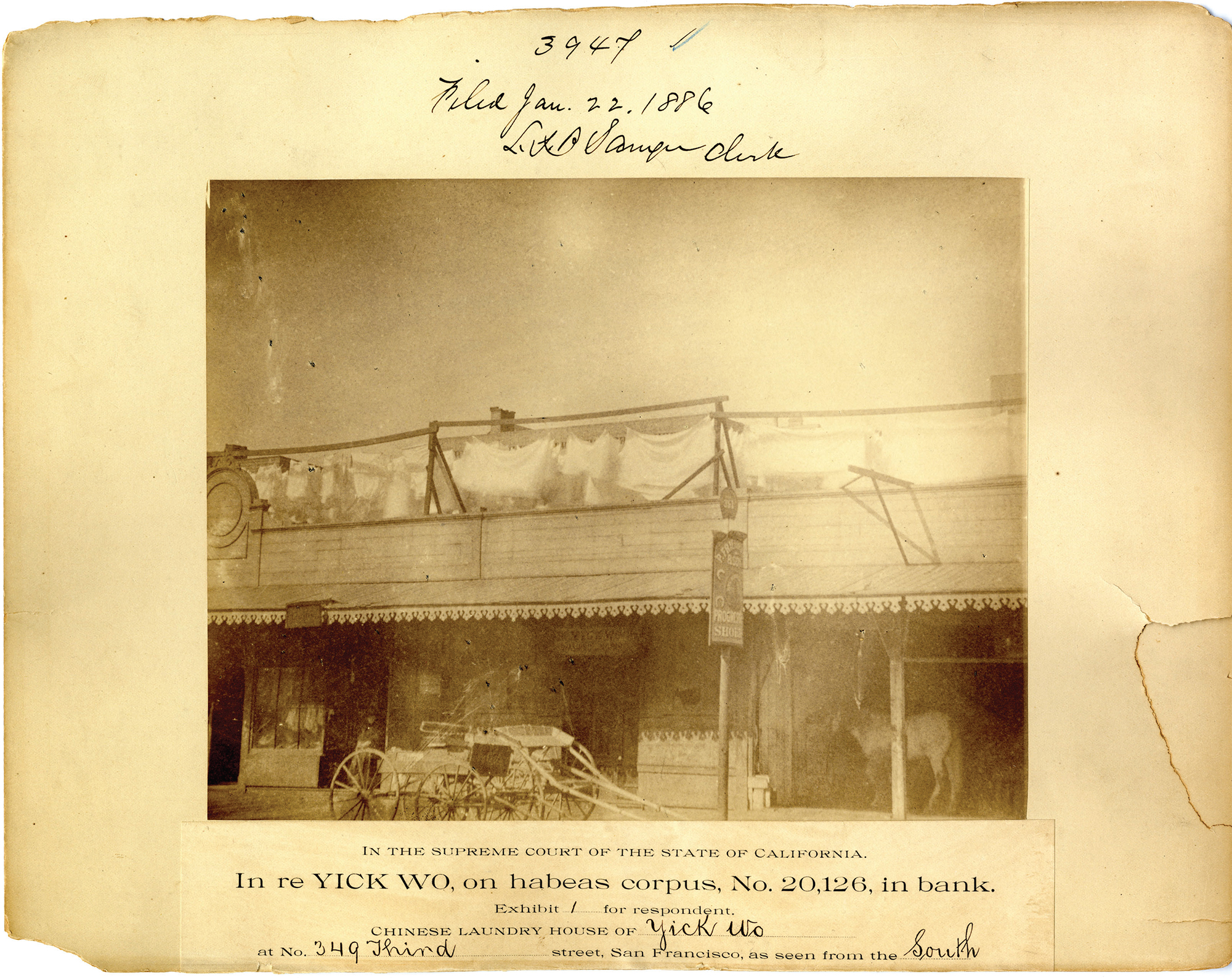
"caption": "Photograph of Yick Wo Laundry, In re Wo Lee, case file 3947 (NAID 348094304); Civil and Appellate Case Files, 1863–1911 (NAID 295935); U.S. Circuit Court, Ninth Circuit, Northern District of California, San Francisco (USCC San Francisco); RG 21, NARA San Francisco. ",
"credit": "Courtesy of the National Archives at San Francisco",
"altTag": null,
"description": null,
"imgSizes": {
"thumbnail": {
"file": "https://cdn.kqed.org/wp-content/uploads/sites/10/2025/08/250812-YICK-WO-ARCHIVAL-06-KQED-160x127.jpg",
"width": 160,
"height": 127,
"mimeType": "image/jpeg"
},
"1536x1536": {
"file": "https://cdn.kqed.org/wp-content/uploads/sites/10/2025/08/250812-YICK-WO-ARCHIVAL-06-KQED-1536x1219.jpg",
"width": 1536,
"height": 1219,
"mimeType": "image/jpeg"
},
"post-thumbnail": {
"file": "https://cdn.kqed.org/wp-content/uploads/sites/10/2025/08/250812-YICK-WO-ARCHIVAL-06-KQED-672x372.jpg",
"width": 672,
"height": 372,
"mimeType": "image/jpeg"
},
"twentyfourteen-full-width": {
"file": "https://cdn.kqed.org/wp-content/uploads/sites/10/2025/08/250812-YICK-WO-ARCHIVAL-06-KQED-1038x576.jpg",
"width": 1038,
"height": 576,
"mimeType": "image/jpeg"
},
"kqedFullSize": {
"file": "https://cdn.kqed.org/wp-content/uploads/sites/10/2025/08/250812-YICK-WO-ARCHIVAL-06-KQED.jpg",
"width": 2000,
"height": 1587
}
},
"isLoading": false,
"fetchFailed": false
},
"news_12053886": {
"type": "attachments",
"id": "news_12053886",
"meta": {
"index": "attachments_1716263798",
"site": "news",
"id": "12053886",
"found": true
},
"title": "HealthCareICECalMatters1",
"publishDate": 1756321773,
"status": "inherit",
"parent": 12053881,
"modified": 1756321808,
"caption": "Protesters gather outside Glendale Memorial Hospital where federal immigration agents wait for Milagro Solis Portillo to recover in Glendale, on July 17, 2025.\n",
"credit": "J.W. Hendricks/NurPhoto via Getty Images",
"altTag": null,
"description": null,
"imgSizes": {
"thumbnail": {
"file": "https://cdn.kqed.org/wp-content/uploads/sites/10/2025/08/HealthCareICECalMatters1-160x107.jpg",
"width": 160,
"height": 107,
"mimeType": "image/jpeg"
},
"1536x1536": {
"file": "https://cdn.kqed.org/wp-content/uploads/sites/10/2025/08/HealthCareICECalMatters1-1536x1025.jpg",
"width": 1536,
"height": 1025,
"mimeType": "image/jpeg"
},
"post-thumbnail": {
"file": "https://cdn.kqed.org/wp-content/uploads/sites/10/2025/08/HealthCareICECalMatters1-672x372.jpg",
"width": 672,
"height": 372,
"mimeType": "image/jpeg"
},
"twentyfourteen-full-width": {
"file": "https://cdn.kqed.org/wp-content/uploads/sites/10/2025/08/HealthCareICECalMatters1-1038x576.jpg",
"width": 1038,
"height": 576,
"mimeType": "image/jpeg"
},
"kqedFullSize": {
"file": "https://cdn.kqed.org/wp-content/uploads/sites/10/2025/08/HealthCareICECalMatters1.jpg",
"width": 1999,
"height": 1334
}
},
"isLoading": false,
"fetchFailed": false
},
"news_12049998": {
"type": "attachments",
"id": "news_12049998",
"meta": {
"index": "attachments_1716263798",
"site": "news",
"id": "12049998",
"found": true
},
"title": "20250725_OAKLANDDAYLABORERS_GC-3-KQED",
"publishDate": 1753721859,
"status": "inherit",
"parent": 0,
"modified": 1755298552,
"caption": "Day laborers wait for work at a Walgreens in Oakland on July 25, 2025. Fewer people have come to the stop out of fear of being deported.",
"credit": "Gina Castro for KQED",
"altTag": null,
"description": null,
"imgSizes": {
"thumbnail": {
"file": "https://cdn.kqed.org/wp-content/uploads/sites/10/2025/07/20250725_OAKLANDDAYLABORERS_GC-3-KQED-160x107.jpg",
"width": 160,
"height": 107,
"mimeType": "image/jpeg"
},
"1536x1536": {
"file": "https://cdn.kqed.org/wp-content/uploads/sites/10/2025/07/20250725_OAKLANDDAYLABORERS_GC-3-KQED-1536x1024.jpg",
"width": 1536,
"height": 1024,
"mimeType": "image/jpeg"
},
"post-thumbnail": {
"file": "https://cdn.kqed.org/wp-content/uploads/sites/10/2025/07/20250725_OAKLANDDAYLABORERS_GC-3-KQED-672x372.jpg",
"width": 672,
"height": 372,
"mimeType": "image/jpeg"
},
"twentyfourteen-full-width": {
"file": "https://cdn.kqed.org/wp-content/uploads/sites/10/2025/07/20250725_OAKLANDDAYLABORERS_GC-3-KQED-1038x576.jpg",
"width": 1038,
"height": 576,
"mimeType": "image/jpeg"
},
"kqedFullSize": {
"file": "https://cdn.kqed.org/wp-content/uploads/sites/10/2025/07/20250725_OAKLANDDAYLABORERS_GC-3-KQED.jpg",
"width": 2000,
"height": 1333
}
},
"isLoading": false,
"fetchFailed": false
},
"news_12052259": {
"type": "attachments",
"id": "news_12052259",
"meta": {
"index": "attachments_1716263798",
"site": "news",
"id": "12052259",
"found": true
},
"title": null,
"publishDate": 1755205539,
"status": "inherit",
"parent": 12052217,
"modified": 1755213544,
"caption": null,
"credit": "SDI Productions/Getty Images",
"altTag": null,
"description": null,
"imgSizes": {
"thumbnail": {
"file": "https://cdn.kqed.org/wp-content/uploads/sites/10/2025/08/ImmigrationLawyerGetty-160x90.jpg",
"width": 160,
"height": 90,
"mimeType": "image/jpeg"
},
"1536x1536": {
"file": "https://cdn.kqed.org/wp-content/uploads/sites/10/2025/08/ImmigrationLawyerGetty-1536x864.jpg",
"width": 1536,
"height": 864,
"mimeType": "image/jpeg"
},
"post-thumbnail": {
"file": "https://cdn.kqed.org/wp-content/uploads/sites/10/2025/08/ImmigrationLawyerGetty-672x372.jpg",
"width": 672,
"height": 372,
"mimeType": "image/jpeg"
},
"twentyfourteen-full-width": {
"file": "https://cdn.kqed.org/wp-content/uploads/sites/10/2025/08/ImmigrationLawyerGetty-1038x576.jpg",
"width": 1038,
"height": 576,
"mimeType": "image/jpeg"
},
"kqedFullSize": {
"file": "https://cdn.kqed.org/wp-content/uploads/sites/10/2025/08/ImmigrationLawyerGetty.jpg",
"width": 2000,
"height": 1125
}
},
"isLoading": false,
"fetchFailed": false
},
"news_12048135": {
"type": "attachments",
"id": "news_12048135",
"meta": {
"index": "attachments_1716263798",
"site": "news",
"id": "12048135",
"found": true
},
"title": "Protests Erupt In L.A. County Sparked By Federal Immigration Raids",
"publishDate": 1752605450,
"status": "inherit",
"parent": 12048121,
"modified": 1779816898,
"caption": "Federal agents guard outside of a federal building and Immigration and Customs Enforcement (ICE) detention center in downtown Los Angeles as demonstrations continue after a series of immigration raids began June 13, 2025, in Los Angeles. Tensions in the city remain high after the Trump administration called in the National Guard and the Marines against the wishes of city leaders.",
"credit": "Spencer Platt/Getty Images",
"altTag": null,
"description": null,
"imgSizes": {
"medium": {
"file": "https://cdn.kqed.org/wp-content/uploads/sites/10/2025/07/GettyImages-2220045842-2000x1334.jpg",
"width": 2000,
"height": 1334,
"mimeType": "image/jpeg"
},
"large": {
"file": "https://cdn.kqed.org/wp-content/uploads/sites/10/2025/07/GettyImages-2220045842-2000x1334.jpg",
"width": 2000,
"height": 1334,
"mimeType": "image/jpeg"
},
"thumbnail": {
"file": "https://cdn.kqed.org/wp-content/uploads/sites/10/2025/07/GettyImages-2220045842-160x107.jpg",
"width": 160,
"height": 107,
"mimeType": "image/jpeg"
},
"1536x1536": {
"file": "https://cdn.kqed.org/wp-content/uploads/sites/10/2025/07/GettyImages-2220045842-1536x1025.jpg",
"width": 1536,
"height": 1025,
"mimeType": "image/jpeg"
},
"2048x2048": {
"file": "https://cdn.kqed.org/wp-content/uploads/sites/10/2025/07/GettyImages-2220045842-2048x1366.jpg",
"width": 2048,
"height": 1366,
"mimeType": "image/jpeg"
},
"post-thumbnail": {
"file": "https://cdn.kqed.org/wp-content/uploads/sites/10/2025/07/GettyImages-2220045842-672x372.jpg",
"width": 672,
"height": 372,
"mimeType": "image/jpeg"
},
"twentyfourteen-full-width": {
"file": "https://cdn.kqed.org/wp-content/uploads/sites/10/2025/07/GettyImages-2220045842-1038x576.jpg",
"width": 1038,
"height": 576,
"mimeType": "image/jpeg"
},
"full-width": {
"file": "https://cdn.kqed.org/wp-content/uploads/sites/10/2025/07/GettyImages-2220045842-2000x1334.jpg",
"width": 2000,
"height": 1334,
"mimeType": "image/jpeg"
},
"kqedFullSize": {
"file": "https://cdn.kqed.org/wp-content/uploads/sites/10/2025/07/GettyImages-2220045842-scaled-e1752857672682.jpg",
"width": 2000,
"height": 1334
}
},
"isLoading": false,
"fetchFailed": false
},
"news_12051669": {
"type": "attachments",
"id": "news_12051669",
"meta": {
"index": "attachments_1716263798",
"site": "news",
"id": "12051669",
"found": true
},
"title": "Latino man with worker",
"publishDate": 1754875927,
"status": "inherit",
"parent": 12051668,
"modified": 1755111061,
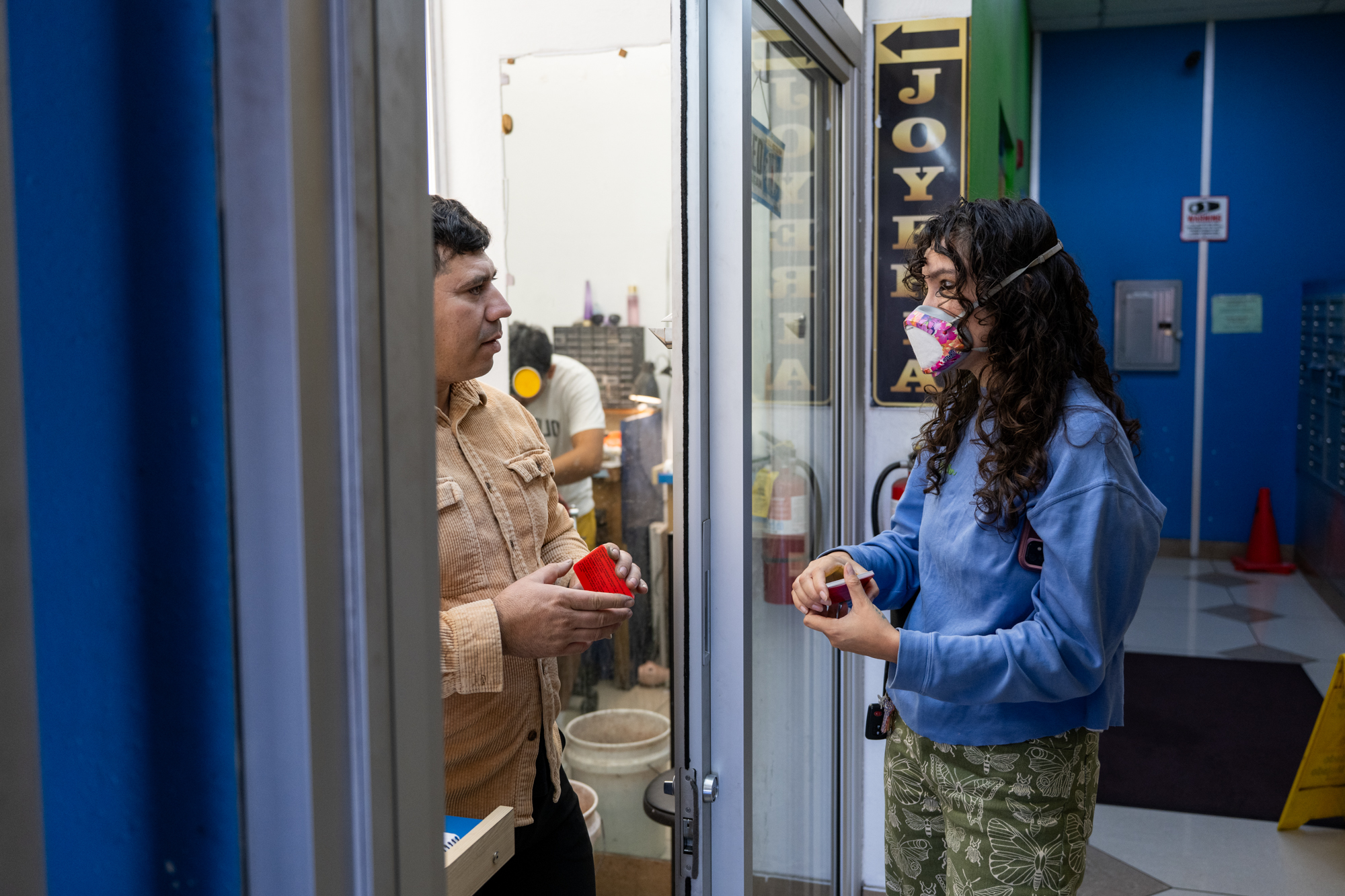
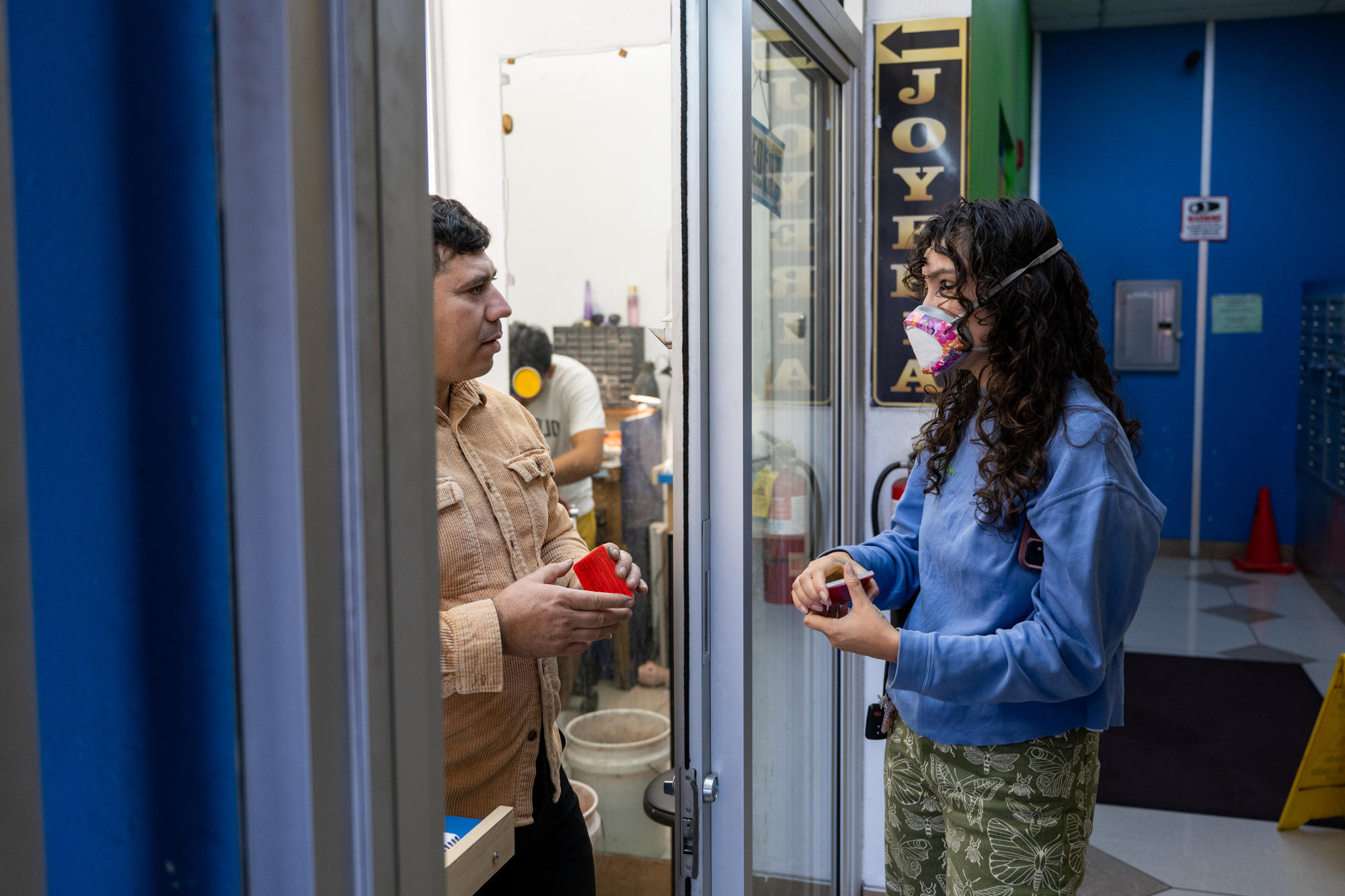
"caption": "Socorro Montaño (derecha), coordinadora de la Red de Respuesta Rápida, habla con Luis Urbino sobre cómo reportar actividades del ICE y los esfuerzos de la red para verificar avistamientos en San José, el 21 de julio de 2025. La Red de Respuesta Rápida opera una línea directa para movilizar voluntarios y apoyar a familias inmigrantes durante acciones del ICE.",
"credit": "Beth LaBerge/KQED",
"altTag": "Dos personas hablan afuera de un negocio dentro de una plaza comercial.",
"description": null,
"imgSizes": {
"thumbnail": {
"file": "https://cdn.kqed.org/wp-content/uploads/sites/10/2025/08/Latino-man-with-worker-160x107.jpg",
"width": 160,
"height": 107,
"mimeType": "image/jpeg"
},
"1536x1536": {
"file": "https://cdn.kqed.org/wp-content/uploads/sites/10/2025/08/Latino-man-with-worker-1536x1024.jpg",
"width": 1536,
"height": 1024,
"mimeType": "image/jpeg"
},
"post-thumbnail": {
"file": "https://cdn.kqed.org/wp-content/uploads/sites/10/2025/08/Latino-man-with-worker-672x372.jpg",
"width": 672,
"height": 372,
"mimeType": "image/jpeg"
},
"twentyfourteen-full-width": {
"file": "https://cdn.kqed.org/wp-content/uploads/sites/10/2025/08/Latino-man-with-worker-1038x576.jpg",
"width": 1038,
"height": 576,
"mimeType": "image/jpeg"
},
"kqedFullSize": {
"file": "https://cdn.kqed.org/wp-content/uploads/sites/10/2025/08/Latino-man-with-worker.jpg",
"width": 2000,
"height": 1333
}
},
"isLoading": false,
"fetchFailed": false
},
"news_12051123": {
"type": "attachments",
"id": "news_12051123",
"meta": {
"index": "attachments_1716263798",
"site": "news",
"id": "12051123",
"found": true
},
"title": "Covered California Enroll Here signs are seen outside the Life Long West Berkeley Family Practice on Friday, January 13, 2017 in Berkeley, Calif.",
"publishDate": 1754503023,
"status": "inherit",
"parent": 12050242,
"modified": 1781122466,
"caption": "Covered California Enroll Here signs in Berkeley on Jan. 13, 2017.",
"credit": "Lea Suzuki/The San Francisco Chronicle via Getty Images",
"altTag": null,
"description": null,
"imgSizes": {
"thumbnail": {
"file": "https://cdn.kqed.org/wp-content/uploads/sites/10/2025/08/GETTYIMAGES-1322125650-KQED-160x99.jpg",
"width": 160,
"height": 99,
"mimeType": "image/jpeg"
},
"1536x1536": {
"file": "https://cdn.kqed.org/wp-content/uploads/sites/10/2025/08/GETTYIMAGES-1322125650-KQED-1536x946.jpg",
"width": 1536,
"height": 946,
"mimeType": "image/jpeg"
},
"post-thumbnail": {
"file": "https://cdn.kqed.org/wp-content/uploads/sites/10/2025/08/GETTYIMAGES-1322125650-KQED-672x372.jpg",
"width": 672,
"height": 372,
"mimeType": "image/jpeg"
},
"twentyfourteen-full-width": {
"file": "https://cdn.kqed.org/wp-content/uploads/sites/10/2025/08/GETTYIMAGES-1322125650-KQED-1038x576.jpg",
"width": 1038,
"height": 576,
"mimeType": "image/jpeg"
},
"kqedFullSize": {
"file": "https://cdn.kqed.org/wp-content/uploads/sites/10/2025/08/GETTYIMAGES-1322125650-KQED.jpg",
"width": 2000,
"height": 1232
}
},
"isLoading": false,
"fetchFailed": false
},
"news_12049161": {
"type": "attachments",
"id": "news_12049161",
"meta": {
"index": "attachments_1716263798",
"site": "news",
"id": "12049161",
"found": true
},
"title": "250718-RIDEALONGRAPIDRESPONSE-10-BL-KQED",
"publishDate": 1753206396,
"status": "inherit",
"parent": 12049326,
"modified": 1753312110,
"caption": "Socorro Montaño (right), lead dispatcher for the Rapid Response Network, speaks with Luis Urbino about how to report ICE activity and the network’s efforts to verify sightings in San José on July 21, 2025. The Rapid Response Network operates a hotline to mobilize volunteers and support immigrant families during ICE actions.",
"credit": "Beth LaBerge/KQED",
"altTag": null,
"description": null,
"imgSizes": {
"thumbnail": {
"file": "https://cdn.kqed.org/wp-content/uploads/sites/10/2025/07/250718-RIDEALONGRAPIDRESPONSE-10-BL-KQED-160x107.jpg",
"width": 160,
"height": 107,
"mimeType": "image/jpeg"
},
"1536x1536": {
"file": "https://cdn.kqed.org/wp-content/uploads/sites/10/2025/07/250718-RIDEALONGRAPIDRESPONSE-10-BL-KQED-1536x1024.jpg",
"width": 1536,
"height": 1024,
"mimeType": "image/jpeg"
},
"post-thumbnail": {
"file": "https://cdn.kqed.org/wp-content/uploads/sites/10/2025/07/250718-RIDEALONGRAPIDRESPONSE-10-BL-KQED-672x372.jpg",
"width": 672,
"height": 372,
"mimeType": "image/jpeg"
},
"twentyfourteen-full-width": {
"file": "https://cdn.kqed.org/wp-content/uploads/sites/10/2025/07/250718-RIDEALONGRAPIDRESPONSE-10-BL-KQED-1038x576.jpg",
"width": 1038,
"height": 576,
"mimeType": "image/jpeg"
},
"kqedFullSize": {
"file": "https://cdn.kqed.org/wp-content/uploads/sites/10/2025/07/250718-RIDEALONGRAPIDRESPONSE-10-BL-KQED.jpg",
"width": 2000,
"height": 1333
}
},
"isLoading": false,
"fetchFailed": false
},
"news_12050658": {
"type": "attachments",
"id": "news_12050658",
"meta": {
"index": "attachments_1716263798",
"site": "news",
"id": "12050658",
"found": true
},
"title": "07112025-ICECOUPLEDEPORTED-ET-PU-06-KQED",
"publishDate": 1754073904,
"status": "inherit",
"parent": 0,
"modified": 1754346713,
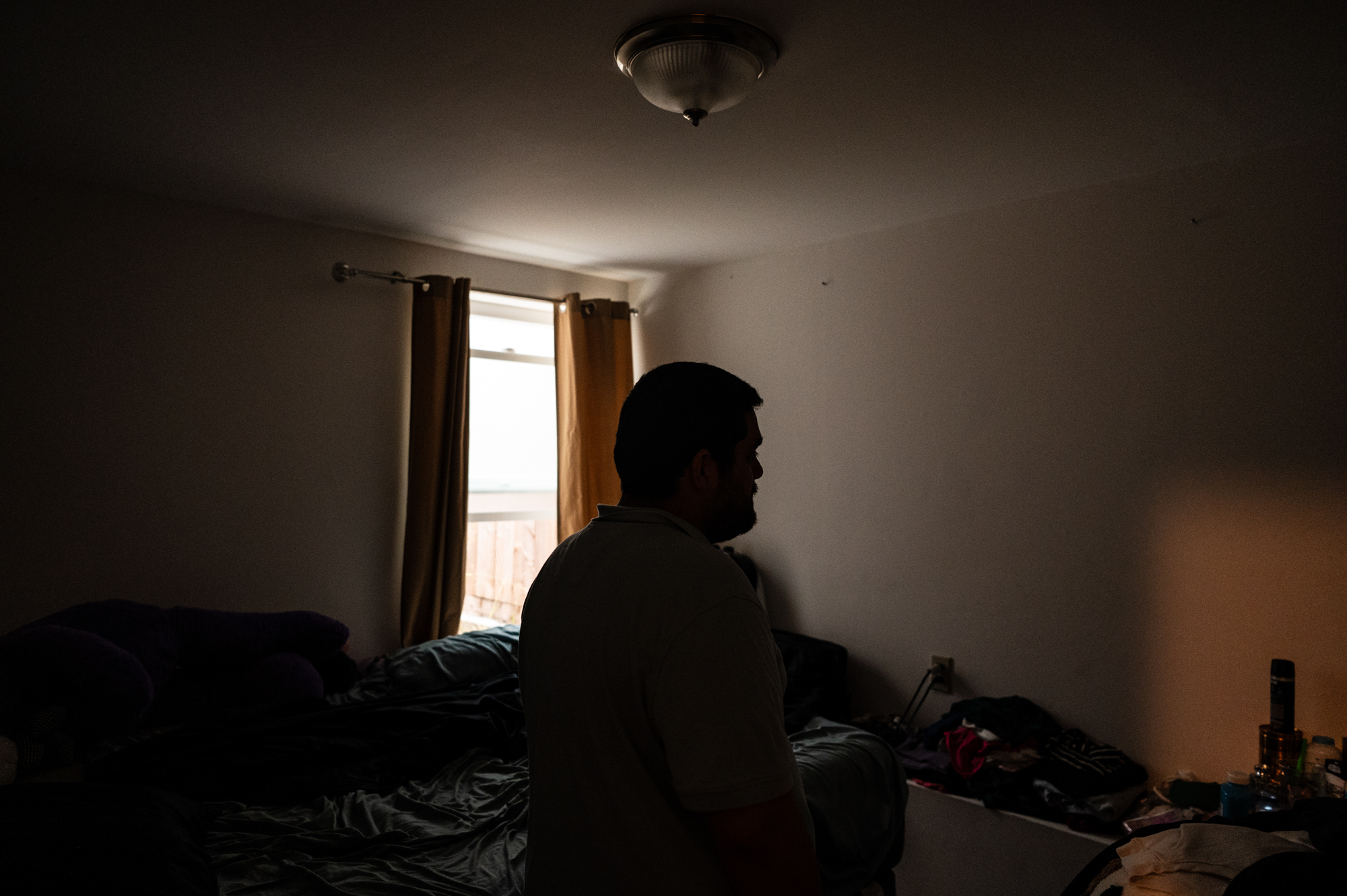
"caption": "Roberto stands in the bedroom of the apartment he shares with his wife, Sandra, whose belongings remain untouched after she was arrested and detained by immigration authorities during a check-in at ICE’s San Francisco office on July 11, 2025.",
"credit": "Pablo Unzueta for El Tecolote for CatchLight Local",
"altTag": null,
"description": null,
"imgSizes": {
"thumbnail": {
"file": "https://cdn.kqed.org/wp-content/uploads/sites/10/2025/08/07112025-ICECOUPLEDEPORTED-ET-PU-06-KQED-160x106.jpg",
"width": 160,
"height": 106,
"mimeType": "image/jpeg"
},
"1536x1536": {
"file": "https://cdn.kqed.org/wp-content/uploads/sites/10/2025/08/07112025-ICECOUPLEDEPORTED-ET-PU-06-KQED-1536x1022.jpg",
"width": 1536,
"height": 1022,
"mimeType": "image/jpeg"
},
"post-thumbnail": {
"file": "https://cdn.kqed.org/wp-content/uploads/sites/10/2025/08/07112025-ICECOUPLEDEPORTED-ET-PU-06-KQED-672x372.jpg",
"width": 672,
"height": 372,
"mimeType": "image/jpeg"
},
"twentyfourteen-full-width": {
"file": "https://cdn.kqed.org/wp-content/uploads/sites/10/2025/08/07112025-ICECOUPLEDEPORTED-ET-PU-06-KQED-1038x576.jpg",
"width": 1038,
"height": 576,
"mimeType": "image/jpeg"
},
"kqedFullSize": {
"file": "https://cdn.kqed.org/wp-content/uploads/sites/10/2025/08/07112025-ICECOUPLEDEPORTED-ET-PU-06-KQED.jpg",
"width": 2000,
"height": 1331
}
},
"isLoading": false,
"fetchFailed": false
},
"news_12011901": {
"type": "attachments",
"id": "news_12011901",
"meta": {
"index": "attachments_1716263798",
"site": "news",
"id": "12011901",
"found": true
},
"title": "Early voting process ahead of presidential election in San Francisco",
"publishDate": 1730399191,
"status": "inherit",
"parent": 12011898,
"modified": 1730490547,
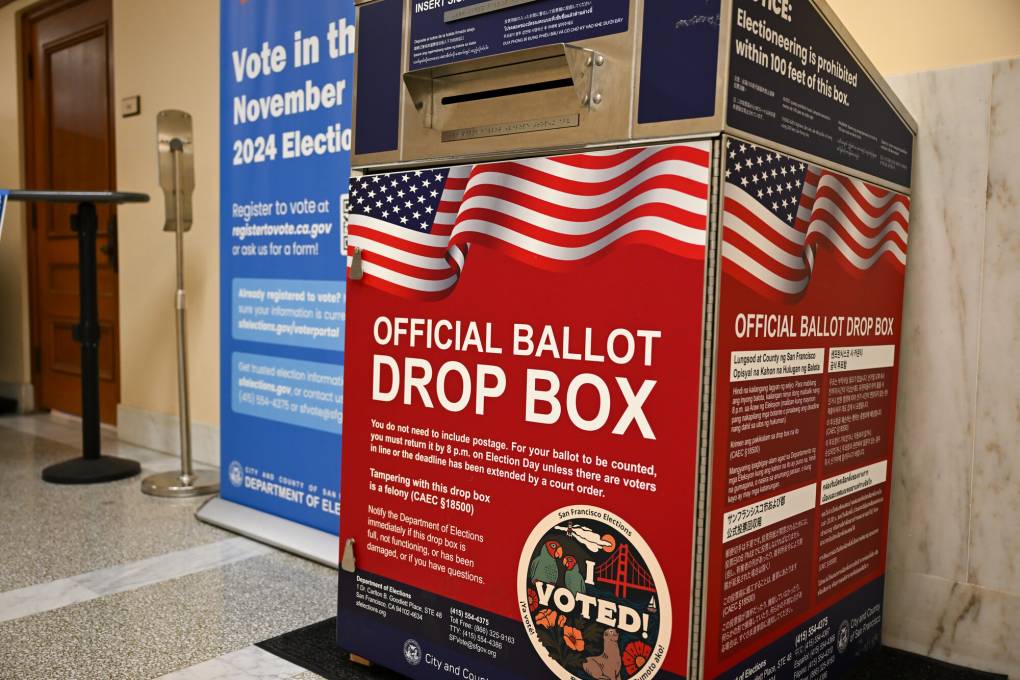
"caption": "A view of an official ballot drop box next to the Department of Elections at City Hall in San Francisco on Oct. 24, 2024. ",
"credit": "Tayfun Coskun/Anadolu via Getty Images",
"altTag": null,
"description": null,
"imgSizes": {
"medium": {
"file": "https://cdn.kqed.org/wp-content/uploads/sites/10/2025/10/GettyImages-2180061713_qed-800x533.jpg",
"width": 800,
"height": 533,
"mimeType": "image/jpeg"
},
"large": {
"file": "https://cdn.kqed.org/wp-content/uploads/sites/10/2025/10/GettyImages-2180061713_qed-1020x680.jpg",
"width": 1020,
"height": 680,
"mimeType": "image/jpeg"
},
"thumbnail": {
"file": "https://cdn.kqed.org/wp-content/uploads/sites/10/2025/10/GettyImages-2180061713_qed-160x107.jpg",
"width": 160,
"height": 107,
"mimeType": "image/jpeg"
},
"1536x1536": {
"file": "https://cdn.kqed.org/wp-content/uploads/sites/10/2025/10/GettyImages-2180061713_qed-1536x1024.jpg",
"width": 1536,
"height": 1024,
"mimeType": "image/jpeg"
},
"post-thumbnail": {
"file": "https://cdn.kqed.org/wp-content/uploads/sites/10/2025/10/GettyImages-2180061713_qed-672x372.jpg",
"width": 672,
"height": 372,
"mimeType": "image/jpeg"
},
"twentyfourteen-full-width": {
"file": "https://cdn.kqed.org/wp-content/uploads/sites/10/2025/10/GettyImages-2180061713_qed-1038x576.jpg",
"width": 1038,
"height": 576,
"mimeType": "image/jpeg"
},
"full-width": {
"file": "https://cdn.kqed.org/wp-content/uploads/sites/10/2025/10/GettyImages-2180061713_qed-1920x1280.jpg",
"width": 1920,
"height": 1280,
"mimeType": "image/jpeg"
},
"kqedFullSize": {
"file": "https://cdn.kqed.org/wp-content/uploads/sites/10/2025/10/GettyImages-2180061713_qed.jpg",
"width": 2000,
"height": 1333
}
},
"isLoading": false,
"fetchFailed": false
},
"news_12050504": {
"type": "attachments",
"id": "news_12050504",
"meta": {
"index": "attachments_1716263798",
"site": "news",
"id": "12050504",
"found": true
},
"title": "250731-DEPORTBILL-JG-2_qed",
"publishDate": 1754002327,
"status": "inherit",
"parent": 12050470,
"modified": 1754004454,
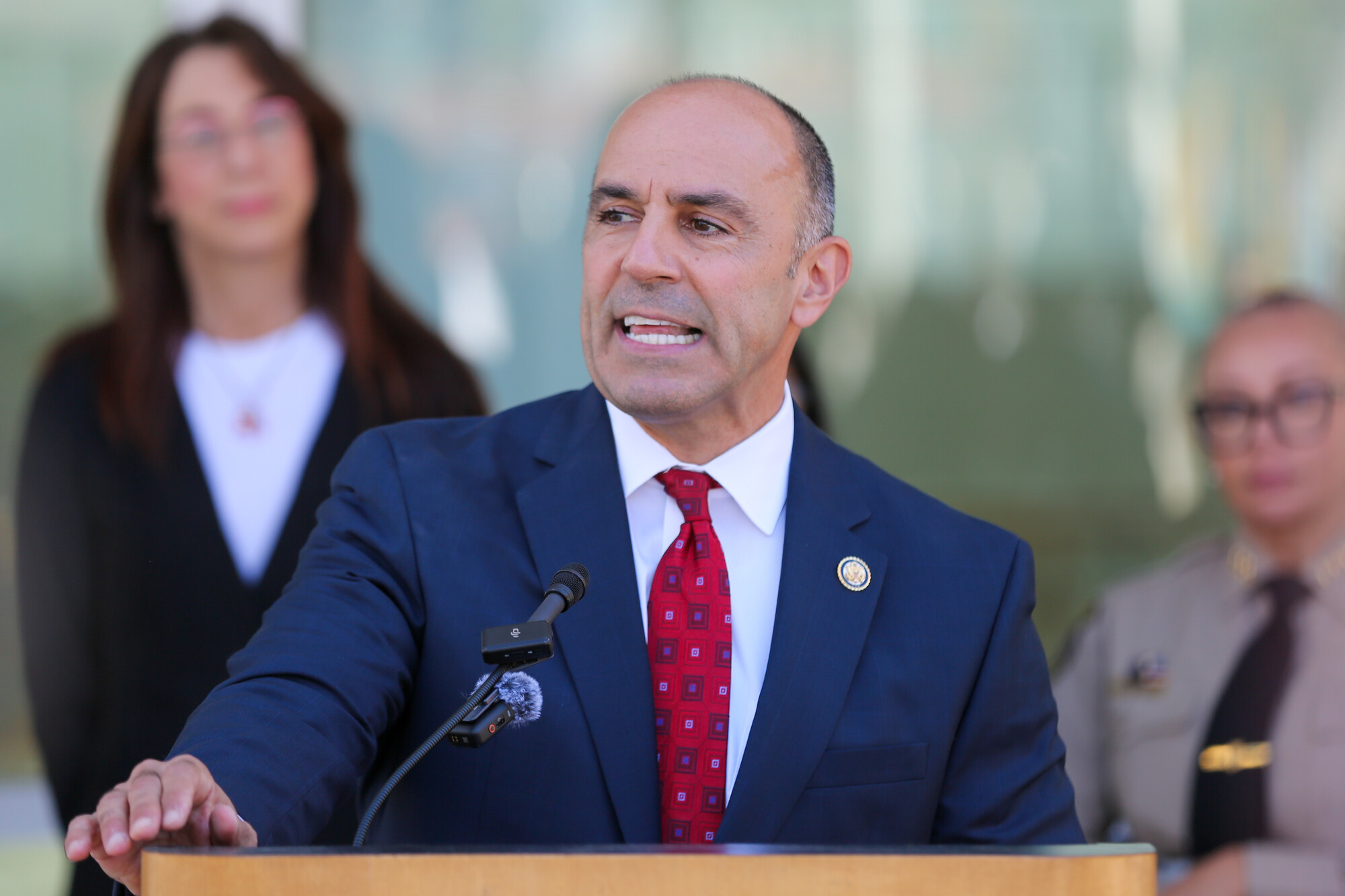
"caption": "South Bay Rep. Jimmy Panetta speaks during a press conference outside San José City Hall, announcing the reintroduction of his Immigrant Witness and Victim Protection Act on July 31, 2025.",
"credit": "Joseph Geha/KQED",
"altTag": null,
"description": null,
"imgSizes": {
"thumbnail": {
"file": "https://cdn.kqed.org/wp-content/uploads/sites/10/2025/07/250731-DEPORTBILL-JG-2_qed-160x107.jpg",
"width": 160,
"height": 107,
"mimeType": "image/jpeg"
},
"1536x1536": {
"file": "https://cdn.kqed.org/wp-content/uploads/sites/10/2025/07/250731-DEPORTBILL-JG-2_qed-1536x1024.jpg",
"width": 1536,
"height": 1024,
"mimeType": "image/jpeg"
},
"post-thumbnail": {
"file": "https://cdn.kqed.org/wp-content/uploads/sites/10/2025/07/250731-DEPORTBILL-JG-2_qed-672x372.jpg",
"width": 672,
"height": 372,
"mimeType": "image/jpeg"
},
"twentyfourteen-full-width": {
"file": "https://cdn.kqed.org/wp-content/uploads/sites/10/2025/07/250731-DEPORTBILL-JG-2_qed-1038x576.jpg",
"width": 1038,
"height": 576,
"mimeType": "image/jpeg"
},
"kqedFullSize": {
"file": "https://cdn.kqed.org/wp-content/uploads/sites/10/2025/07/250731-DEPORTBILL-JG-2_qed.jpg",
"width": 2000,
"height": 1333
}
},
"isLoading": false,
"fetchFailed": false
},
"news_12050072": {
"type": "attachments",
"id": "news_12050072",
"meta": {
"index": "attachments_1716263798",
"site": "news",
"id": "12050072",
"found": true
},
"title": "CMTrumpEducation",
"publishDate": 1753745330,
"status": "inherit",
"parent": 12050070,
"modified": 1753745361,
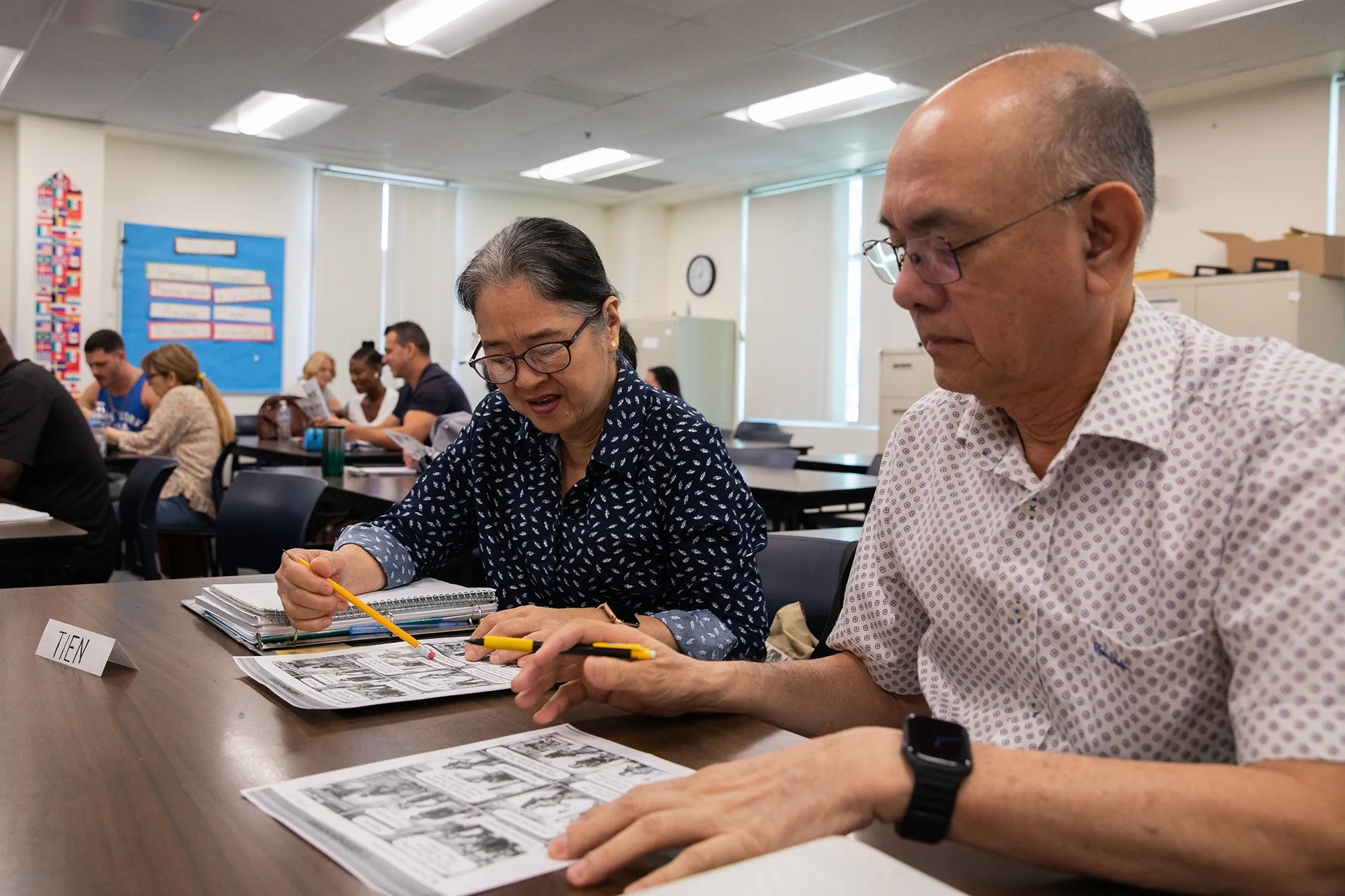
"caption": "Students work on an assignment during an English as a second language class at the San Diego Continuing Education Mid-City campus in San Diego on Oct. 6, 2023. \n",
"credit": "Adriana Heldiz/CalMatters",
"altTag": null,
"description": null,
"imgSizes": {
"thumbnail": {
"file": "https://cdn.kqed.org/wp-content/uploads/sites/10/2025/07/CMTrumpEducation-160x107.jpg",
"width": 160,
"height": 107,
"mimeType": "image/jpeg"
},
"1536x1536": {
"file": "https://cdn.kqed.org/wp-content/uploads/sites/10/2025/07/CMTrumpEducation-1536x1024.jpg",
"width": 1536,
"height": 1024,
"mimeType": "image/jpeg"
},
"post-thumbnail": {
"file": "https://cdn.kqed.org/wp-content/uploads/sites/10/2025/07/CMTrumpEducation-672x372.jpg",
"width": 672,
"height": 372,
"mimeType": "image/jpeg"
},
"twentyfourteen-full-width": {
"file": "https://cdn.kqed.org/wp-content/uploads/sites/10/2025/07/CMTrumpEducation-1038x576.jpg",
"width": 1038,
"height": 576,
"mimeType": "image/jpeg"
},
"kqedFullSize": {
"file": "https://cdn.kqed.org/wp-content/uploads/sites/10/2025/07/CMTrumpEducation.jpg",
"width": 2000,
"height": 1333
}
},
"isLoading": false,
"fetchFailed": false
}
},
"audioPlayerReducer": {
"postId": "stream_live",
"isPaused": true,
"isPlaying": false,
"pfsActive": false,
"pledgeModalIsOpen": true,
"playerDrawerIsOpen": false,
"liveAudioPlayStartedAt": 0,
"liveAudioPlayContext": ""
},
"authorsReducer": {
"byline_news_12053881": {
"type": "authors",
"id": "byline_news_12053881",
"meta": {
"override": true
},
"slug": "byline_news_12053881",
"name": "Ana B. Ibarra and Kristen Hwang, CalMatters",
"isLoading": false
},
"byline_news_12050841": {
"type": "authors",
"id": "byline_news_12050841",
"meta": {
"override": true
},
"slug": "byline_news_12050841",
"name": "Mariana Duran, El Tecolote",
"isLoading": false
},
"byline_news_12050070": {
"type": "authors",
"id": "byline_news_12050070",
"meta": {
"override": true
},
"slug": "byline_news_12050070",
"name": "Adam Echelman, CalMatters",
"isLoading": false
},
"clei": {
"type": "authors",
"id": "8617",
"meta": {
"index": "authors_1716337520",
"id": "8617",
"found": true
},
"name": "Cecilia Lei",
"firstName": "Cecilia",
"lastName": "Lei",
"slug": "clei",
"email": "clei@KQED.org",
"display_author_email": false,
"staff_mastheads": [],
"title": "KQED Contributor",
"bio": "Cecilia Lei is an on-call host and producer for KQED News and Podcasts. Previously, she was the executive producer and host of the San Francisco Chronicle's daily news podcast, 'Fifth and Mission'. Cecilia is a graduate of UC Berkeley’s Graduate School of Journalism and the former president of the Asian American Journalists Association San Francisco Bay Area chapter.",
"avatar": "https://secure.gravatar.com/avatar/40975f1f88fccf628ee537bf6ffc2af8?s=600&d=blank&r=g",
"twitter": null,
"facebook": null,
"instagram": null,
"linkedin": null,
"sites": [
{
"site": "arts",
"roles": [
"contributor"
]
},
{
"site": "news",
"roles": [
"author",
"read_private_posts"
]
},
{
"site": "about",
"roles": [
"editor"
]
}
],
"headData": {
"title": "Cecilia Lei | KQED",
"description": "KQED Contributor",
"ogImgSrc": "https://secure.gravatar.com/avatar/40975f1f88fccf628ee537bf6ffc2af8?s=600&d=blank&r=g",
"twImgSrc": "https://secure.gravatar.com/avatar/40975f1f88fccf628ee537bf6ffc2af8?s=600&d=blank&r=g"
},
"isLoading": false,
"link": "/author/clei"
},
"ccabreralomeli": {
"type": "authors",
"id": "11708",
"meta": {
"index": "authors_1716337520",
"id": "11708",
"found": true
},
"name": "Carlos Cabrera-Lomelí",
"firstName": "Carlos",
"lastName": "Cabrera-Lomelí",
"slug": "ccabreralomeli",
"email": "ccabreralomeli@KQED.org",
"display_author_email": true,
"staff_mastheads": [
"news"
],
"title": "Community Reporter",
"bio": "Carlos Cabrera-Lomelí is a community reporter with KQED's digital engagement team. He also reports and co-produces for KQED's bilingual news hub KQED en Español. He grew up in San Francisco's Mission District and has previously worked with Univision, 48 Hills and REFORMA in Mexico City.",
"avatar": "https://secure.gravatar.com/avatar/c309be9665e484f887b818c89e273ecc673004f426f36b24d00a4d813a2e0518?s=600&d=blank&r=g",
"twitter": "@LomeliCabrera",
"bluesky": null,
"facebook": null,
"instagram": null,
"linkedin": null,
"sites": [
{
"site": "arts",
"roles": [
"editor"
]
},
{
"site": "news",
"roles": [
"editor"
]
},
{
"site": "about",
"roles": [
"editor"
]
},
{
"site": "science",
"roles": [
"editor"
]
},
{
"site": "perspectives",
"roles": [
"editor"
]
},
{
"site": "elections",
"roles": [
"editor"
]
},
{
"site": "liveblog",
"roles": [
"contributor"
]
}
],
"headData": {
"title": "Carlos Cabrera-Lomelí | KQED",
"description": "Community Reporter",
"ogImgSrc": "https://secure.gravatar.com/avatar/c309be9665e484f887b818c89e273ecc673004f426f36b24d00a4d813a2e0518?s=600&d=blank&r=g",
"twImgSrc": "https://secure.gravatar.com/avatar/c309be9665e484f887b818c89e273ecc673004f426f36b24d00a4d813a2e0518?s=600&d=blank&r=g"
},
"isLoading": false,
"link": "/author/ccabreralomeli"
},
"jgeha": {
"type": "authors",
"id": "11906",
"meta": {
"index": "authors_1716337520",
"id": "11906",
"found": true
},
"name": "Joseph Geha",
"firstName": "Joseph",
"lastName": "Geha",
"slug": "jgeha",
"email": "jgeha@kqed.org",
"display_author_email": false,
"staff_mastheads": [
"news",
"science"
],
"title": "KQED Contributor",
"bio": null,
"avatar": "https://secure.gravatar.com/avatar/ea84d2b6dd93d6369d453edf19dd583f117cd1759d2d9c9c92f9de77017354fe?s=600&d=blank&r=g",
"twitter": null,
"bluesky": null,
"facebook": null,
"instagram": null,
"linkedin": null,
"sites": [
{
"site": "news",
"roles": [
"editor"
]
},
{
"site": "liveblog",
"roles": [
"author"
]
}
],
"headData": {
"title": "Joseph Geha | KQED",
"description": "KQED Contributor",
"ogImgSrc": "https://secure.gravatar.com/avatar/ea84d2b6dd93d6369d453edf19dd583f117cd1759d2d9c9c92f9de77017354fe?s=600&d=blank&r=g",
"twImgSrc": "https://secure.gravatar.com/avatar/ea84d2b6dd93d6369d453edf19dd583f117cd1759d2d9c9c92f9de77017354fe?s=600&d=blank&r=g"
},
"isLoading": false,
"link": "/author/jgeha"
},
"kdebenedetti": {
"type": "authors",
"id": "11913",
"meta": {
"index": "authors_1716337520",
"id": "11913",
"found": true
},
"name": "Katie DeBenedetti",
"firstName": "Katie",
"lastName": "DeBenedetti",
"slug": "kdebenedetti",
"email": "kdebenedetti@kqed.org",
"display_author_email": false,
"staff_mastheads": [
"news",
"science"
],
"title": "KQED Contributor",
"bio": "Katie DeBenedetti is a digital reporter covering daily news for the Express Desk. Prior to joining KQED as a culture reporting intern in January 2024, she covered education and city government for the Napa Valley Register.",
"avatar": "https://secure.gravatar.com/avatar/6e31073cb8f7e4214ab03f42771d0f45?s=600&d=blank&r=g",
"twitter": null,
"facebook": null,
"instagram": null,
"linkedin": null,
"sites": [
{
"site": "news",
"roles": [
"author"
]
},
{
"site": "science",
"roles": [
"author"
]
},
{
"site": "liveblog",
"roles": [
"author"
]
}
],
"headData": {
"title": "Katie DeBenedetti | KQED",
"description": "KQED Contributor",
"ogImgSrc": "https://secure.gravatar.com/avatar/6e31073cb8f7e4214ab03f42771d0f45?s=600&d=blank&r=g",
"twImgSrc": "https://secure.gravatar.com/avatar/6e31073cb8f7e4214ab03f42771d0f45?s=600&d=blank&r=g"
},
"isLoading": false,
"link": "/author/kdebenedetti"
},
"gzada": {
"type": "authors",
"id": "11929",
"meta": {
"index": "authors_1716337520",
"id": "11929",
"found": true
},
"name": "Gilare Zada",
"firstName": "Gilare",
"lastName": "Zada",
"slug": "gzada",
"email": "gzada@kqed.org",
"display_author_email": true,
"staff_mastheads": [
"news"
],
"title": null,
"bio": "Gilare Zada is a Kurdish-American from San Diego, CA. Storytelling, fitness, and binge reading are some of her passions outside of news reporting. Her work has appeared in Mission Local, the Peninsula Press, the San Francisco Press Club, and more. She also writes as a class correspondent for the Stanford Magazine - go Card!",
"avatar": "https://secure.gravatar.com/avatar/33a75f2b947669a488a805edec3fbf3838c1cedaedda710e983770633b4d6a75?s=600&d=blank&r=g",
"twitter": null,
"bluesky": null,
"facebook": null,
"instagram": null,
"linkedin": null,
"sites": [
{
"site": "arts",
"roles": [
"editor"
]
},
{
"site": "news",
"roles": [
"administrator"
]
},
{
"site": "science",
"roles": [
"editor"
]
}
],
"headData": {
"title": "Gilare Zada | KQED",
"description": null,
"ogImgSrc": "https://secure.gravatar.com/avatar/33a75f2b947669a488a805edec3fbf3838c1cedaedda710e983770633b4d6a75?s=600&d=blank&r=g",
"twImgSrc": "https://secure.gravatar.com/avatar/33a75f2b947669a488a805edec3fbf3838c1cedaedda710e983770633b4d6a75?s=600&d=blank&r=g"
},
"isLoading": false,
"link": "/author/gzada"
}
},
"pagesReducer": {
"news_tag_immigrants": {
"type": "terms",
"id": "news_17708",
"meta": {
"index": "terms_1716263798",
"site": "news",
"id": "17708",
"score": 8.668587
},
"featImg": null,
"name": "immigrants",
"description": null,
"taxonomy": "tag",
"headData": {
"twImgId": null,
"twTitle": null,
"ogTitle": null,
"ogImgId": null,
"twDescription": null,
"description": null,
"title": "immigrants Archives | KQED News",
"ogDescription": null
},
"ttid": 17742,
"slug": "immigrants",
"isLoading": false,
"title": "immigrants",
"pageMeta": {
"site": "news",
"WpPageTemplate": "page-topic-editorial",
"currentPage": 4
},
"blocks": [
{
"blockName": "kqed/post-list",
"attrs": {
"layout": "cardArticle2",
"query": "posts/news?tag=immigrants",
"seeMore": false,
"paginated": true,
"page": 4
}
},
{
"blockName": "kqed/ad"
}
]
}
},
"pfsSessionReducer": {},
"postsReducer": {
"stream_live": {
"type": "live",
"id": "stream_live",
"audioUrl": "https://streams.kqed.org/kqedradio",
"title": "Live Stream",
"excerpt": "Live Stream information currently unavailable.",
"link": "/radio",
"featImg": "",
"label": {
"name": "KQED Live",
"link": "/"
}
},
"stream_kqedNewscast": {
"type": "posts",
"id": "stream_kqedNewscast",
"audioUrl": "https://www.kqed.org/.stream/anon/radio/RDnews/newscast.mp3?_=1",
"title": "KQED Newscast",
"featImg": "",
"label": {
"name": "88.5 FM",
"link": "/"
}
},
"news_12050233": {
"type": "posts",
"id": "news_12050233",
"meta": {
"index": "posts_1716263798",
"site": "news",
"id": "12050233",
"score": null,
"sort": [
1756821647000
]
},
"guestAuthors": [],
"slug": "how-a-chinese-laundryman-shaped-us-civil-rights-from-san-francisco",
"title": "How a Chinese Laundryman Shaped US Civil Rights From San Francisco",
"publishDate": 1756821647,
"format": "standard",
"headTitle": "How a Chinese Laundryman Shaped US Civil Rights From San Francisco | KQED",
"labelTerm": {
"site": "news"
},
"content": "\u003cp>The evening commute rush hour was starting to take shape on a recent late afternoon in \u003ca href=\"https://www.kqed.org/news/tag/san-francisco\">San Francisco\u003c/a>’s SOMA district, at the corner of Third and Harrison streets.\u003c/p>\n\u003cp>Downtown office workers, wearing backpacks and headphones, wordlessly passed one another on their way to nearby train stations. Muni buses groaned and sighed as they pulled up to a bus stop near an unremarkable half-acre concrete parking lot.\u003c/p>\n\u003cp>“If you believe in civil rights, if you believe all Americans should have civil rights, it started right here,” said David Lei, pointing to the nearly full concrete parking lot that would soon begin emptying. He added: “And this was [the location of] the case that says noncitizens have rights as well … but we forgot. Most people have forgotten.”\u003c/p>\n\u003cp>[ad fullwidth]\u003c/p>\n\u003cp>The de facto local expert on Chinese American history believes a plaque should be installed here to commemorate Yick Wo, a Chinese-owned laundry business that operated at 349 Third St. from 1864 to 1886.\u003c/p>\n\u003cp>It became the focal point of a consequential U.S. Supreme Court case, \u003ca href=\"https://supreme.justia.com/cases/federal/us/118/356/\">\u003cem>Yick Wo v. Hopkins\u003c/em>\u003c/a>, when the laundry’s owner, a Chinese immigrant named Lee Yick, and another laundry owner, Wo Lee, resisted an unfair San Francisco laundry business permit ordinance — one emblematic of the targeted anti-Chinese hostility pervasive in the city at the time.\u003c/p>\n\u003cp>“Yick was an individual, a nobody, but the community supported him and organized,” Lei said.\u003c/p>\n\u003cfigure id=\"attachment_12050750\" class=\"wp-caption aligncenter\" style=\"max-width: 2000px\">\u003cimg loading=\"lazy\" decoding=\"async\" class=\"size-full wp-image-12050750\" src=\"https://cdn.kqed.org/wp-content/uploads/sites/10/2025/08/250729-YICKWOCIVILRIGHTS-05-KQED.jpg\" alt=\"\" width=\"2000\" height=\"1333\" srcset=\"https://cdn.kqed.org/wp-content/uploads/sites/10/2025/08/250729-YICKWOCIVILRIGHTS-05-KQED.jpg 2000w, https://cdn.kqed.org/wp-content/uploads/sites/10/2025/08/250729-YICKWOCIVILRIGHTS-05-KQED-160x107.jpg 160w, https://cdn.kqed.org/wp-content/uploads/sites/10/2025/08/250729-YICKWOCIVILRIGHTS-05-KQED-1536x1024.jpg 1536w\" sizes=\"auto, (max-width: 2000px) 100vw, 2000px\">\u003cfigcaption class=\"wp-caption-text\">David Lei stands near Third and Harrison streets in San Francisco on July 29, 2025, the former site of Yick Wo Laundry, which operated at 349 Third St. and was central to the landmark 1886 Supreme Court case on equal protection. \u003ccite>(Beth LaBerge/KQED)\u003c/cite>\u003c/figcaption>\u003c/figure>\n\u003cp>When most people consider the contributions of America’s earliest Chinese immigrants, they often think of \u003ca href=\"https://www.kqed.org/forum/201509070900/stanford-project-unearths-personal-histories-of-chinese-railroad-workers\">the Transcontinental Railroad\u003c/a>. Lei, who is not related to the author, believes that’s a profound minimization of their influence — even among Chinese Americans themselves.\u003c/p>\n\u003cp>After the Chinese Exclusion Act of 1882, Chinese immigrants filed more than 10,000 lawsuits at the local, state and federal levels to challenge discriminatory laws and systemic \u003ca href=\"https://www.kqed.org/news/10413670/draft-boomtown-history-2a\">racism\u003c/a>. Dozens of those cases reached the U.S. Supreme Court, including one brought by \u003ca href=\"https://www.kqed.org/news/12015449/a-129-year-old-san-francisco-lawsuit-could-stop-trump-from-ending-birthright-citizenship\">Wong Kim Ark\u003c/a>, a case recently spotlighted as the Trump administration continues an attempt to dismantle birthright citizenship, despite \u003ca href=\"https://www.kqed.org/news/12046217/what-the-supreme-courts-latest-ruling-means-for-birthright-citizenship\">multiple court rulings\u003c/a> to block the executive order.\u003c/p>\n\u003cp>Through the legal maneuvering of early Chinese community leaders, \u003cem>Yick Wo \u003c/em>established that \u003ca href=\"https://constitution.congress.gov/constitution/amendment-14/\">the 14th Amendment\u003c/a>’s equal protection and due process clauses apply to “all persons” — including noncitizens in the U.S. These same rights are being tested today as the Trump administration’s \u003ca href=\"https://www.kqed.org/news/12044748/mass-deportations-would-take-a-major-toll-on-california-economy-report-finds\">immigration crackdown intensifies\u003c/a>.\u003c/p>\n\u003cp>\u003cem>Yick Wo\u003c/em> is just one way early Chinese immigrants helped shape constitutional principles that remain foundational to American democracy. Community leaders and immigrant advocates like Lei say the case is more relevant today than ever, serving as a powerful rebuttal to anti-immigrant rhetoric and a reminder that constitutional protections have long applied to noncitizens.\u003c/p>\n\u003ch2>Echoes of the past in today’s immigration fight\u003c/h2>\n\u003cp>Though \u003cem>Yick Wo v. Hopkins \u003c/em>is a staple of constitutional law courses, it remains largely unknown outside the legal community. In 1984, an \u003ca href=\"https://www.kqed.org/news/12008873/san-francisco-school-closures-will-hurt-chinese-immigrant-communities-city-leaders-say\">elementary school\u003c/a> in San Francisco was named after the case, but its website offers only a cursory summary of its historical significance.\u003c/p>\n\u003cp>Legal experts herald Yick’s victory as extraordinary, given the anti-immigrant environment Chinese immigrants endured in the 19th century — attitudes that echo today.\u003c/p>\n\u003cp>Since returning to the White House, Trump has made good on his promise of a massive deportation campaign by aggressively targeting, detaining and deporting immigrants nationwide. High-profile Immigration and Customs Enforcement activity \u003ca href=\"https://www.kqed.org/news/12042836/community-outrage-continues-over-ice-raid-at-san-diego-restaurant\">in Southern California \u003c/a>captured national attention in June, as videos of militarized arrests circulated on social media and fueled \u003ca href=\"https://www.kqed.org/news/12043653/hundreds-rally-in-oakland-to-protest-ice-raids-support-immigrant-communities\">protests locally\u003c/a> and across the country.\u003c/p>\n\u003cfigure id=\"attachment_12050752\" class=\"wp-caption aligncenter\" style=\"max-width: 2000px\">\u003cimg loading=\"lazy\" decoding=\"async\" class=\"size-full wp-image-12050752\" src=\"https://cdn.kqed.org/wp-content/uploads/sites/10/2025/08/250731-YICKWOCIVILRIGHTS-02-KQED.jpg\" alt=\"\" width=\"2000\" height=\"1333\" srcset=\"https://cdn.kqed.org/wp-content/uploads/sites/10/2025/08/250731-YICKWOCIVILRIGHTS-02-KQED.jpg 2000w, https://cdn.kqed.org/wp-content/uploads/sites/10/2025/08/250731-YICKWOCIVILRIGHTS-02-KQED-160x107.jpg 160w, https://cdn.kqed.org/wp-content/uploads/sites/10/2025/08/250731-YICKWOCIVILRIGHTS-02-KQED-1536x1024.jpg 1536w\" sizes=\"auto, (max-width: 2000px) 100vw, 2000px\">\u003cfigcaption class=\"wp-caption-text\">The exhibit Challenging a White-Washed History at the Chinese Historical Society of America Museum in San Francisco on July 31, 2025. The exhibition explores the history of Chinese laundries and their role in resisting discrimination and shaping immigrant labor in the U.S. \u003ccite>(Beth LaBerge/KQED)\u003c/cite>\u003c/figcaption>\u003c/figure>\n\u003cp>The administration continues to portray undocumented immigrants as criminal invaders and threats to national security. Officials \u003ca href=\"https://www.dhs.gov/news/2025/06/30/dhs-debunks-fake-news-media-narratives-june\">claim\u003c/a> they target “the worst of the worst, including gang members, murderers, and rapists,” but most people detained by ICE have \u003ca href=\"https://www.kqed.org/news/12038087/california-sent-investigators-ice-facilities-found-more-detainees-health-care-gaps\">no criminal convictions\u003c/a>.\u003c/p>\n\u003cp>Recently, in the Bay Area, ICE arrests have occurred \u003ca href=\"https://www.kqed.org/news/12028303/ice-arrest-left-bay-area-man-hospitalized-struggling-breathe-attorney-says\">outside of homes\u003c/a> and courthouses \u003ca href=\"https://www.kqed.org/news/12044592/bay-area-lawmaker-demands-answers-after-ice-arrests-at-immigration-courts\">in Concord\u003c/a> and \u003ca href=\"https://www.kqed.org/news/12043596/protesters-swarm-sf-immigration-court-after-more-ice-arrests\">San Francisco\u003c/a>, where plainclothes agents detained asylum seekers attending routine court hearings.\u003c/p>\n\u003cp>Cecillia Wang, national legal director of the American Civil Liberties Union, began her role just before Trump’s second term. She oversees a department of about 200 attorneys and paralegals and calls this “the most consequential time in U.S. history.”\u003c/p>\n\u003cp>In late July, Republicans approved a spending bill that \u003ca href=\"https://www.kqed.org/forum/2010101910650/ices-budget-just-tripled-whats-next\">tripled ICE’s budget\u003c/a>. The removal of immigrants from the country has accelerated through a variety of tactics: The Trump administration has broadened expedited removal, selectively enforced policies in sanctuary jurisdictions, targeted certain migrant groups and fast-tracked deportations — often without full hearings.[aside postID=news_12021919 hero='https://cdn.kqed.org/wp-content/uploads/sites/10/2025/01/20250115_JapaneseAmericanActivism_GC-47-1020x680.jpg']But because of \u003cem>Yick Wo\u003c/em>, constitutional protections should apply to everyone on U.S. soil, regardless of citizenship status. That’s why immigration attorneys and advocates are especially vigilant.\u003c/p>\n\u003cp>“It’s a responsibility that I think is particularly heavy at this moment in time, with a president and administration that has so little respect for civil rights and civil liberties…and so little respect for all the fundamental pillars of U.S. democracy,” Wang said.\u003c/p>\n\u003cp>A San Francisco resident, Wang has worked for the ACLU in various roles for over two decades. The organization has filed more than 60 lawsuits challenging Trump’s second-term policies.\u003c/p>\n\u003cp>Wang, who first studied \u003cem>Yick Wo\u003c/em> as an undergraduate at UC Berkeley, feels personally connected to the case as an Asian American. She has cited it throughout her career as a civil rights lawyer.\u003c/p>\n\u003cp>“One of the lessons of \u003cem>Yick Wo \u003c/em>that I think is really resonant for me right now is that someone who seemed politically powerless, under-resourced and invisible by all accounts was able to bring his claim up through the federal court system to the Supreme Court of the United States,” Wang said.\u003c/p>\n\u003ch2>Redefining constitutional rights in the U.S.\u003c/h2>\n\u003cp>When one considers the odds stacked against Chinese laundry owners as Yick brought his claim forward, the case becomes especially remarkable.\u003c/p>\n\u003cp>Though initially welcomed during the Gold Rush, Chinese immigrants eventually became targets as their population and industrial workforce roles expanded. They took jobs as miners and railroad laborers.\u003c/p>\n\u003cp>They were also entrepreneurial. Early Chinese immigrants filled a specific need that no one else seemed eager to do: laundry service. Chinese immigrants eventually dominated the industry, which would continue for the rest of the 19th century.\u003c/p>\n\u003cfigure id=\"attachment_12051938\" class=\"wp-caption aligncenter\" style=\"max-width: 2000px\">\u003cimg loading=\"lazy\" decoding=\"async\" class=\"size-full wp-image-12051938\" src=\"https://cdn.kqed.org/wp-content/uploads/sites/10/2025/08/250812-YICK-WO-ARCHIVAL-03_KQED.jpg\" alt=\"\" width=\"2000\" height=\"1545\" srcset=\"https://cdn.kqed.org/wp-content/uploads/sites/10/2025/08/250812-YICK-WO-ARCHIVAL-03_KQED.jpg 2000w, https://cdn.kqed.org/wp-content/uploads/sites/10/2025/08/250812-YICK-WO-ARCHIVAL-03_KQED-160x124.jpg 160w, https://cdn.kqed.org/wp-content/uploads/sites/10/2025/08/250812-YICK-WO-ARCHIVAL-03_KQED-1536x1187.jpg 1536w\" sizes=\"auto, (max-width: 2000px) 100vw, 2000px\">\u003cfigcaption class=\"wp-caption-text\">\u003cspan style=\"font-weight: 400\">A Chinese laundry at 924 Howard St. in San Francisco \u003c/span>is shown in a historical photograph dated Jan. 22, 1886. \u003ccite>(Courtesy of the National Archives at San Francisco)\u003c/cite>\u003c/figcaption>\u003c/figure>\n\u003cp>By 1860, about one in 10 California residents was Chinese. Their prominence alarmed white leaders, including then-California governor Henry Huntly Haight.\u003c/p>\n\u003cp>“An additional influx of Chinese to compete with white laboring men in all industrial departments ought to be discouraged by all lawful means. For the sake of some supposed advantage of cheap labor, such influx would inflict a curse upon posterity for all time,” he said during his \u003ca href=\"https://governors.library.ca.gov/addresses/10-haight.html\">1867 inaugural address\u003c/a>.\u003c/p>\n\u003cp>Widespread violence soon followed. By the 1870s, anti-Chinese sentiment escalated across the West Coast, with Chinese immigrants subjected to \u003ca href=\"https://www.kqed.org/forum/2010101886267/california-cities-apologize-for-historical-wrongs-against-chinese-community\">mob-led destruction\u003c/a>, including mass lynchings.\u003c/p>\n\u003cp>According to \u003cem>In Search of Equality: The Chinese Struggle Against Discrimination in Nineteenth-Century America\u003c/em>, a seminal book on Chinese American history by former UC Berkeley professor Charles McClain, there were about 2,600 Chinese laundrymen in California by 1870 — half of them in San Francisco.[aside postID=news_12033789 hero='https://cdn.kqed.org/wp-content/uploads/sites/10/2025/03/250324-WongKimArk-02-BL_qed-1020x680.jpg']Chinese laundry owners faced a flurry of discriminatory city ordinances. One imposed high license fees on those without horse-drawn carriages. Another required written approval from 12 citizens and taxpayers on the block where the business was located.\u003c/p>\n\u003cp>In 1880, the city passed a notorious law requiring permits for laundries not made of brick or stone. At the time, nearly all of San Francisco’s laundries, especially those owned by Chinese immigrants, were wooden structures. Of about 200 applicants, all were denied permits, while their white counterparts were not.\u003c/p>\n\u003cp>In 1885, Yick Wo’s owner refused to stop operating and was arrested by Sheriff Peter Hopkins. Rather than serve the sentence, Lee and other laundrymen fought back with support from the Chinese Consolidated Benevolent Association, also known as the Chinese Six Companies.\u003c/p>\n\u003cp>The Six Companies — a powerful coalition of family and district associations that functioned as both mutual aid organizations and political advocates for the Chinese immigrant community — \u003ca href=\"https://www.kqed.org/news/12015449/a-129-year-old-san-francisco-lawsuit-could-stop-trump-from-ending-birthright-citizenship\">coordinated legal strategies\u003c/a>, raised sizable funds by taxing Chinese immigrants and, importantly, helped them navigate a hostile legal system.\u003c/p>\n\u003cp>“This was the GoFundMe of Chinatown from 1850,” Lei told KQED from inside CCBA’s ornately designed Stockton Street headquarters, where family association leaders and San Francisco politicians still meet.\u003c/p>\n\u003cp>Together with Tung Hing Tong, a 19th-century Chinese laundry association, substantial resources were pooled to fight San Francisco’s unfair permitting ordinance.\u003c/p>\n\u003cfigure id=\"attachment_12050748\" class=\"wp-caption aligncenter\" style=\"max-width: 2000px\">\u003cimg loading=\"lazy\" decoding=\"async\" class=\"size-full wp-image-12050748\" src=\"https://cdn.kqed.org/wp-content/uploads/sites/10/2025/08/250729-YICKWOCIVILRIGHTS-01-KQED.jpg\" alt=\"\" width=\"2000\" height=\"1333\" srcset=\"https://cdn.kqed.org/wp-content/uploads/sites/10/2025/08/250729-YICKWOCIVILRIGHTS-01-KQED.jpg 2000w, https://cdn.kqed.org/wp-content/uploads/sites/10/2025/08/250729-YICKWOCIVILRIGHTS-01-KQED-160x107.jpg 160w, https://cdn.kqed.org/wp-content/uploads/sites/10/2025/08/250729-YICKWOCIVILRIGHTS-01-KQED-1536x1024.jpg 1536w\" sizes=\"auto, (max-width: 2000px) 100vw, 2000px\">\u003cfigcaption class=\"wp-caption-text\">David Lei stands on Spofford Street in San Francisco’s Chinatown on July 29, 2025, the historical site of the Chinese Laundry Association, once located at 33 Spofford St. A longtime resident and community historian, Lei has worked to preserve Chinatown’s cultural and educational legacy. \u003ccite>(Beth LaBerge/KQED)\u003c/cite>\u003c/figcaption>\u003c/figure>\n\u003cp>“They taxed themselves, raised $20,000 — equivalent to more than half a million dollars today — and hired the best lawyer money could buy to win this case,” Lei said.\u003c/p>\n\u003cp>That lawyer was Hall McAllister, a federal judge and founder of the California Bar Association, who became one of the key members of the Six Companies’ legal team as they filed lawsuits.\u003c/p>\n\u003cp>When asked why these powerful white lawyers would go against the popular grain to argue on behalf of Chinese immigrants, Lei said Chinese immigrants often paid up to about double of what other clients would pay.\u003c/p>\n\u003cp>The strategy worked.[aside postID=news_12015449 hero='https://cdn.kqed.org/wp-content/uploads/sites/10/2024/11/20241119_BirthrightCitizenshipExplainer_GC-16_qed-1020x680.jpg']In 1886, the U.S. Supreme Court \u003ca href=\"https://supreme.justia.com/cases/federal/us/118/356/\">ruled unanimously for Yick\u003c/a>, declaring that even if a law appears to be race-neutral, “if it is applied and administered by public authority with an evil eye and an unequal hand,” then it violates the equal protection clause of the 14th Amendment.\u003c/p>\n\u003cp>Crucially, the court emphasized that its protections “extend to all persons within the territorial jurisdiction of the United States, without regard to differences of race, of color, or of nationality.”\u003c/p>\n\u003cp>The keyword here is “persons,” not “citizens.” \u003cem>Yick Wo\u003c/em> marked the first time the Supreme Court extended constitutional protections under the 14th Amendment — including due process rights — to noncitizens.\u003c/p>\n\u003cp>Wang said \u003cem>Yick Wo \u003c/em>“reverberates in almost every civil rights case that’s been brought under the Equal Protection Clause.” It laid the foundation for challenges involving interracial marriage, school desegregation, housing discrimination, voting rights, gender and disability discrimination and same-sex marriage.\u003c/p>\n\u003cp>Critically, \u003cem>Yick Wo\u003c/em> provided a legal foundation to challenge discriminatory enforcement of laws — a central feature of Jim Crow. During the civil rights era, attorneys revived their principles in landmark cases, including \u003ca href=\"https://www.archives.gov/milestone-documents/brown-v-board-of-education\">\u003cem>Brown v. Board of Education\u003c/em>\u003c/a>.\u003c/p>\n\u003cp>While \u003cem>Yick Wo \u003c/em>didn’t end anti-Chinese sentiment, it established a constitutional principle that still underpins civil rights protections for both citizens and immigrants today.\u003c/p>\n\u003ch2>Why due process is critical now\u003c/h2>\n\u003cp>In early July, a \u003ca href=\"https://www.youtube.com/watch?v=GQ_YGzfaQLM&t=1s\">viral video\u003c/a> showed ICE agents clashing with protesters during an arrest in San Francisco. One protester jumped onto an ICE van’s hood before falling as it drove off.\u003c/p>\n\u003cp>Other similarly viral videos show community members confronting ICE agents, demanding to see arrest warrants and reminding immigrants of their due process rights.\u003c/p>\n\u003cp>For longtime immigrant advocates like Lisa Knox, legal director of the California Collaborative for Immigrant Justice, ICE’s actions aren’t surprising.\u003c/p>\n\u003cfigure id=\"attachment_12050751\" class=\"wp-caption aligncenter\" style=\"max-width: 2000px\">\u003cimg loading=\"lazy\" decoding=\"async\" class=\"size-full wp-image-12050751\" src=\"https://cdn.kqed.org/wp-content/uploads/sites/10/2025/08/250729-YICKWOCIVILRIGHTS-09-KQED.jpg\" alt=\"\" width=\"2000\" height=\"1333\" srcset=\"https://cdn.kqed.org/wp-content/uploads/sites/10/2025/08/250729-YICKWOCIVILRIGHTS-09-KQED.jpg 2000w, https://cdn.kqed.org/wp-content/uploads/sites/10/2025/08/250729-YICKWOCIVILRIGHTS-09-KQED-160x107.jpg 160w, https://cdn.kqed.org/wp-content/uploads/sites/10/2025/08/250729-YICKWOCIVILRIGHTS-09-KQED-1536x1024.jpg 1536w\" sizes=\"auto, (max-width: 2000px) 100vw, 2000px\">\u003cfigcaption class=\"wp-caption-text\">A statue of Hall McAllister stands near San Francisco City Hall on July 29, 2025. As a federal judge, McAllister ruled in favor of Yick Wo in the landmark civil rights case that affirmed equal protection under the 14th Amendment for Chinese immigrants. \u003ccite>(Beth LaBerge/KQED)\u003c/cite>\u003c/figcaption>\u003c/figure>\n\u003cp>“ICE has always been a rogue agency,” she said. “Yes, we are seeing some new tactics … but I would emphasize that this isn’t a complete departure for this agency. [ICE] has a long history of these abusive tactics, of doing things that violate the law.”\u003c/p>\n\u003cp>Formed after Trump’s first election in 2016, CCIJ offers legal help to detained immigrants in Northern and Central California and plays a central coordinating role in the state’s \u003ca href=\"https://www.kqed.org/news/12049326/as-ice-operations-expand-how-are-immigrant-allies-responding\">rapid response organizing\u003c/a>, including activating attorneys and mobilizing volunteers during ICE activity. They also raise awareness of the \u003ca href=\"https://www.kqed.org/news/12043004/in-recorded-calls-reports-of-overcrowding-and-lack-of-food-at-ice-detention-centers\">inhumane living conditions\u003c/a> inside detention centers.\u003c/p>\n\u003cp>Knox said the Bay Area is well organized when it comes to defending immigrant rights. She believes that may have helped prevent mass raids and more severe rights violations in the region, compared to other parts of the country.\u003c/p>\n\u003cp>But what is striking to Knox is the mainstream attention around the constitutional rights of immigrants.[aside postID=news_12025613 hero='https://cdn.kqed.org/wp-content/uploads/sites/10/2025/03/20250130-JSeiHome-JY-1927-1020x680.jpg']“There has never been a conversation about due process in my lifetime [like this],” said Knox, who also teaches an immigration and citizenship class at UC Berkeley. “Law is influenced by politics. The fact that people are taking an interest in these decisions and wanting to defend these fundamental rights is really important and really key.”\u003c/p>\n\u003cp>Attorneys like Jordan Wells, a senior staff attorney with the Lawyers’ Committee for Civil Rights, have defended immigrants in court, including a legal permanent resident targeted for participating in a pro-Palestine rally at Columbia University. Another lawsuit challenges ICE courthouse arrests as violations of the Due Process Clause.\u003c/p>\n\u003cp>According to Wells, due process has always provided a counterbalance to any presidential administration’s attempts to test the limits of constitutional protections. He said it is especially critical now as the Trump administration has tried to block immigrants from legal counsel and coerce deportation agreements.\u003c/p>\n\u003cp>“We are seeing all manner of attempts to prevent people from communicating with counsel about their immigration status,” Wells said. “They have tried to get people to concede to their removability from the country, no matter how long they’ve been here, and just get them shipped out as quickly as possible.”\u003c/p>\n\u003cfigure id=\"attachment_12050754\" class=\"wp-caption aligncenter\" style=\"max-width: 2000px\">\u003cimg loading=\"lazy\" decoding=\"async\" class=\"size-full wp-image-12050754\" src=\"https://cdn.kqed.org/wp-content/uploads/sites/10/2025/08/250731-YICKWOCIVILRIGHTS-06-KQED.jpg\" alt=\"\" width=\"2000\" height=\"1333\" srcset=\"https://cdn.kqed.org/wp-content/uploads/sites/10/2025/08/250731-YICKWOCIVILRIGHTS-06-KQED.jpg 2000w, https://cdn.kqed.org/wp-content/uploads/sites/10/2025/08/250731-YICKWOCIVILRIGHTS-06-KQED-160x107.jpg 160w, https://cdn.kqed.org/wp-content/uploads/sites/10/2025/08/250731-YICKWOCIVILRIGHTS-06-KQED-1536x1024.jpg 1536w\" sizes=\"auto, (max-width: 2000px) 100vw, 2000px\">\u003cfigcaption class=\"wp-caption-text\">Spofford Street in San Francisco’s Chinatown neighborhood on July 31, 2025. \u003ccite>(Beth LaBerge/KQED)\u003c/cite>\u003c/figcaption>\u003c/figure>\n\u003cp>For Knox, public education is critical, as demonstrated by local grassroots efforts to form rapid response networks during Trump’s first term.\u003c/p>\n\u003cp>“That first 24-hour period is really crucial for the person to be informed of their rights and options, and to exercise them so that they’re not just deported without the chance to access the process that is their right,” Knox said. “As lawyers, a lot of the time we show up after somebody has already been placed in detention … but if people can be educated and know their rights and assert them before that happens, often they can prevent their detention or they can have more options.”\u003c/p>\n\u003cp>She emphasizes that drawing connections between communities is also a powerful way to build collective strength.\u003c/p>\n\u003cp>“If we allow the government to take away immigrants’ rights to due process, then we’re all at risk,” Knox said. “We are building and exercising our power, so that’s our focus. We say over and over: power, not panic.”\u003c/p>\n\u003cp>Knox said \u003cem>Yick Wo\u003c/em> is more than a legal decision — it’s a historical reminder.\u003c/p>\n\u003cp>“We’ve been here before, and some of these questions have come up,” she said. “Who gets to enjoy the rights of citizenship? What rights should be afforded to anyone, regardless of legal status, because they’re part of this community?”\u003c/p>\n\u003cp>Wang is grateful that early Chinese immigrants asked these questions, forcing the U.S. to follow its own constitutional laws: “The fundamental promise of the 14th Amendment was only as good as the writing until people like [Lee Yick and Wo Lee] took their fights and fleshed out those words on paper… and made it a lived reality for people.”\u003c/p>\n\u003cfigure id=\"attachment_12050749\" class=\"wp-caption aligncenter\" style=\"max-width: 2000px\">\u003cimg loading=\"lazy\" decoding=\"async\" class=\"size-full wp-image-12050749\" src=\"https://cdn.kqed.org/wp-content/uploads/sites/10/2025/08/250729-YICKWOCIVILRIGHTS-03-KQED.jpg\" alt=\"\" width=\"2000\" height=\"1333\" srcset=\"https://cdn.kqed.org/wp-content/uploads/sites/10/2025/08/250729-YICKWOCIVILRIGHTS-03-KQED.jpg 2000w, https://cdn.kqed.org/wp-content/uploads/sites/10/2025/08/250729-YICKWOCIVILRIGHTS-03-KQED-160x107.jpg 160w, https://cdn.kqed.org/wp-content/uploads/sites/10/2025/08/250729-YICKWOCIVILRIGHTS-03-KQED-1536x1024.jpg 1536w\" sizes=\"auto, (max-width: 2000px) 100vw, 2000px\">\u003cfigcaption class=\"wp-caption-text\">David Lei walks along Spofford Street in San Francisco’s Chinatown on July 29, 2025, the historical site of the Chinese Laundry Association, once located at 33 Spofford St. A longtime resident and community historian, Lei has worked to preserve Chinatown’s cultural and educational legacy. \u003ccite>(Beth LaBerge/KQED)\u003c/cite>\u003c/figcaption>\u003c/figure>\n\u003cp>Wang said it took the mobilization of an entire community to defend the Chinese laundries — with people contributing in both small and large ways — and said a similar collective effort is needed today.\u003c/p>\n\u003cp>“I have family members in my Chinese American family who probably agree more with President Trump than they agree with me on issues of immigration,” she said. “What I try to do with my community … is not only point out the history, but to really draw some intersectional lines so that [they] can understand how we must all stand or fall together.”\u003c/p>\n\u003cp>Back at the parking lot on Third and Harrison, Lei reflects on the mountain of overlooked legal battles waged by early Chinese immigrants — cases that shaped modern protections such as Miranda rights, public education access and political asylum.\u003c/p>\n\u003cp>At 75, he said, “The clock is ticking,” estimating he has about five more years left in him to keep telling these stories. He shook his head, thinking about how much more there is to share.\u003c/p>\n\u003cp>Then he chuckled.\u003c/p>\n\u003cp>“We’re branded as very quiet, that we don’t cause trouble — model citizens, model minority, all these things,” he said. “But the Chinese were very hard to manage … We have to organize. That’s what our ancestors did, and they were successful, so this is what we need to do now.”\u003c/p>\n\u003cp>[ad floatright]\u003c/p>\n",
"blocks": [],
"excerpt": "A Supreme Court case born in San Francisco’s Chinatown secured equal protection rights for noncitizens and set the foundation for future civil rights battles.",
"status": "publish",
"parent": 0,
"modified": 1757095254,
"stats": {
"hasAudio": false,
"hasVideo": false,
"hasChartOrMap": false,
"iframeSrcs": [],
"hasGoogleForm": false,
"hasGallery": false,
"hasHearkenModule": false,
"hasPolis": false,
"paragraphCount": 67,
"wordCount": 3177
},
"headData": {
"title": "How a Chinese Laundryman Shaped US Civil Rights From San Francisco | KQED",
"description": "A Supreme Court case born in San Francisco’s Chinatown secured equal protection rights for noncitizens and set the foundation for future civil rights battles.",
"ogTitle": "",
"ogDescription": "",
"ogImgId": "",
"twTitle": "",
"twDescription": "",
"twImgId": "",
"schema": {
"@context": "https://schema.org",
"@type": "NewsArticle",
"headline": "How a Chinese Laundryman Shaped US Civil Rights From San Francisco",
"datePublished": "2025-09-02T07:00:47-07:00",
"dateModified": "2025-09-05T11:00:54-07:00",
"image": "https://cdn.kqed.org/wp-content/uploads/2020/02/KQED-OG-Image@1x.png",
"isAccessibleForFree": "True",
"publisher": {
"@type": "NewsMediaOrganization",
"@id": "https://www.kqed.org/#organization",
"name": "KQED",
"logo": "https://cdn.kqed.org/wp-content/uploads/2020/02/KQED-OG-Image@1x.png",
"url": "https://www.kqed.org",
"sameAs": [
"https://www.facebook.com/KQED",
"https://twitter.com/KQED",
"https://www.instagram.com/kqed/",
"https://www.tiktok.com/@kqedofficial",
"https://www.linkedin.com/company/kqed",
"https://www.youtube.com/channel/UCeC0IOo7i1P_61zVUWbJ4nw"
]
}
}
},
"primaryCategory": {
"termId": 8,
"slug": "news",
"name": "News"
},
"audioUrl": "https://traffic.omny.fm/d/clips/0af137ef-751e-4b19-a055-aaef00d2d578/ffca7e9f-6831-41c5-bcaf-aaef00f5a073/79f89467-c36b-43eb-8f0a-b34c010ea8be/audio.mp3",
"sticky": false,
"nprStoryId": "kqed-12050233",
"templateType": "standard",
"featuredImageType": "standard",
"excludeFromSiteSearch": "Include",
"articleAge": "0",
"path": "/news/12050233/how-a-chinese-laundryman-shaped-us-civil-rights-from-san-francisco",
"audioTrackLength": null,
"parsedContent": [
{
"type": "contentString",
"content": "\u003cdiv class=\"post-body\">\u003cp>\u003cp>The evening commute rush hour was starting to take shape on a recent late afternoon in \u003ca href=\"https://www.kqed.org/news/tag/san-francisco\">San Francisco\u003c/a>’s SOMA district, at the corner of Third and Harrison streets.\u003c/p>\n\u003cp>Downtown office workers, wearing backpacks and headphones, wordlessly passed one another on their way to nearby train stations. Muni buses groaned and sighed as they pulled up to a bus stop near an unremarkable half-acre concrete parking lot.\u003c/p>\n\u003cp>“If you believe in civil rights, if you believe all Americans should have civil rights, it started right here,” said David Lei, pointing to the nearly full concrete parking lot that would soon begin emptying. He added: “And this was [the location of] the case that says noncitizens have rights as well … but we forgot. Most people have forgotten.”\u003c/p>\n\u003cp>\u003c/p>\u003c/div>",
"attributes": {
"named": {},
"numeric": []
}
},
{
"type": "component",
"content": "",
"name": "ad",
"attributes": {
"named": {
"label": "fullwidth"
},
"numeric": [
"fullwidth"
]
}
},
{
"type": "contentString",
"content": "\u003cdiv class=\"post-body\">\u003cp>\u003c/p>\n\u003cp>The de facto local expert on Chinese American history believes a plaque should be installed here to commemorate Yick Wo, a Chinese-owned laundry business that operated at 349 Third St. from 1864 to 1886.\u003c/p>\n\u003cp>It became the focal point of a consequential U.S. Supreme Court case, \u003ca href=\"https://supreme.justia.com/cases/federal/us/118/356/\">\u003cem>Yick Wo v. Hopkins\u003c/em>\u003c/a>, when the laundry’s owner, a Chinese immigrant named Lee Yick, and another laundry owner, Wo Lee, resisted an unfair San Francisco laundry business permit ordinance — one emblematic of the targeted anti-Chinese hostility pervasive in the city at the time.\u003c/p>\n\u003cp>“Yick was an individual, a nobody, but the community supported him and organized,” Lei said.\u003c/p>\n\u003cfigure id=\"attachment_12050750\" class=\"wp-caption aligncenter\" style=\"max-width: 2000px\">\u003cimg loading=\"lazy\" decoding=\"async\" class=\"size-full wp-image-12050750\" src=\"https://cdn.kqed.org/wp-content/uploads/sites/10/2025/08/250729-YICKWOCIVILRIGHTS-05-KQED.jpg\" alt=\"\" width=\"2000\" height=\"1333\" srcset=\"https://cdn.kqed.org/wp-content/uploads/sites/10/2025/08/250729-YICKWOCIVILRIGHTS-05-KQED.jpg 2000w, https://cdn.kqed.org/wp-content/uploads/sites/10/2025/08/250729-YICKWOCIVILRIGHTS-05-KQED-160x107.jpg 160w, https://cdn.kqed.org/wp-content/uploads/sites/10/2025/08/250729-YICKWOCIVILRIGHTS-05-KQED-1536x1024.jpg 1536w\" sizes=\"auto, (max-width: 2000px) 100vw, 2000px\">\u003cfigcaption class=\"wp-caption-text\">David Lei stands near Third and Harrison streets in San Francisco on July 29, 2025, the former site of Yick Wo Laundry, which operated at 349 Third St. and was central to the landmark 1886 Supreme Court case on equal protection. \u003ccite>(Beth LaBerge/KQED)\u003c/cite>\u003c/figcaption>\u003c/figure>\n\u003cp>When most people consider the contributions of America’s earliest Chinese immigrants, they often think of \u003ca href=\"https://www.kqed.org/forum/201509070900/stanford-project-unearths-personal-histories-of-chinese-railroad-workers\">the Transcontinental Railroad\u003c/a>. Lei, who is not related to the author, believes that’s a profound minimization of their influence — even among Chinese Americans themselves.\u003c/p>\n\u003cp>After the Chinese Exclusion Act of 1882, Chinese immigrants filed more than 10,000 lawsuits at the local, state and federal levels to challenge discriminatory laws and systemic \u003ca href=\"https://www.kqed.org/news/10413670/draft-boomtown-history-2a\">racism\u003c/a>. Dozens of those cases reached the U.S. Supreme Court, including one brought by \u003ca href=\"https://www.kqed.org/news/12015449/a-129-year-old-san-francisco-lawsuit-could-stop-trump-from-ending-birthright-citizenship\">Wong Kim Ark\u003c/a>, a case recently spotlighted as the Trump administration continues an attempt to dismantle birthright citizenship, despite \u003ca href=\"https://www.kqed.org/news/12046217/what-the-supreme-courts-latest-ruling-means-for-birthright-citizenship\">multiple court rulings\u003c/a> to block the executive order.\u003c/p>\n\u003cp>Through the legal maneuvering of early Chinese community leaders, \u003cem>Yick Wo \u003c/em>established that \u003ca href=\"https://constitution.congress.gov/constitution/amendment-14/\">the 14th Amendment\u003c/a>’s equal protection and due process clauses apply to “all persons” — including noncitizens in the U.S. These same rights are being tested today as the Trump administration’s \u003ca href=\"https://www.kqed.org/news/12044748/mass-deportations-would-take-a-major-toll-on-california-economy-report-finds\">immigration crackdown intensifies\u003c/a>.\u003c/p>\n\u003cp>\u003cem>Yick Wo\u003c/em> is just one way early Chinese immigrants helped shape constitutional principles that remain foundational to American democracy. Community leaders and immigrant advocates like Lei say the case is more relevant today than ever, serving as a powerful rebuttal to anti-immigrant rhetoric and a reminder that constitutional protections have long applied to noncitizens.\u003c/p>\n\u003ch2>Echoes of the past in today’s immigration fight\u003c/h2>\n\u003cp>Though \u003cem>Yick Wo v. Hopkins \u003c/em>is a staple of constitutional law courses, it remains largely unknown outside the legal community. In 1984, an \u003ca href=\"https://www.kqed.org/news/12008873/san-francisco-school-closures-will-hurt-chinese-immigrant-communities-city-leaders-say\">elementary school\u003c/a> in San Francisco was named after the case, but its website offers only a cursory summary of its historical significance.\u003c/p>\n\u003cp>Legal experts herald Yick’s victory as extraordinary, given the anti-immigrant environment Chinese immigrants endured in the 19th century — attitudes that echo today.\u003c/p>\n\u003cp>Since returning to the White House, Trump has made good on his promise of a massive deportation campaign by aggressively targeting, detaining and deporting immigrants nationwide. High-profile Immigration and Customs Enforcement activity \u003ca href=\"https://www.kqed.org/news/12042836/community-outrage-continues-over-ice-raid-at-san-diego-restaurant\">in Southern California \u003c/a>captured national attention in June, as videos of militarized arrests circulated on social media and fueled \u003ca href=\"https://www.kqed.org/news/12043653/hundreds-rally-in-oakland-to-protest-ice-raids-support-immigrant-communities\">protests locally\u003c/a> and across the country.\u003c/p>\n\u003cfigure id=\"attachment_12050752\" class=\"wp-caption aligncenter\" style=\"max-width: 2000px\">\u003cimg loading=\"lazy\" decoding=\"async\" class=\"size-full wp-image-12050752\" src=\"https://cdn.kqed.org/wp-content/uploads/sites/10/2025/08/250731-YICKWOCIVILRIGHTS-02-KQED.jpg\" alt=\"\" width=\"2000\" height=\"1333\" srcset=\"https://cdn.kqed.org/wp-content/uploads/sites/10/2025/08/250731-YICKWOCIVILRIGHTS-02-KQED.jpg 2000w, https://cdn.kqed.org/wp-content/uploads/sites/10/2025/08/250731-YICKWOCIVILRIGHTS-02-KQED-160x107.jpg 160w, https://cdn.kqed.org/wp-content/uploads/sites/10/2025/08/250731-YICKWOCIVILRIGHTS-02-KQED-1536x1024.jpg 1536w\" sizes=\"auto, (max-width: 2000px) 100vw, 2000px\">\u003cfigcaption class=\"wp-caption-text\">The exhibit Challenging a White-Washed History at the Chinese Historical Society of America Museum in San Francisco on July 31, 2025. The exhibition explores the history of Chinese laundries and their role in resisting discrimination and shaping immigrant labor in the U.S. \u003ccite>(Beth LaBerge/KQED)\u003c/cite>\u003c/figcaption>\u003c/figure>\n\u003cp>The administration continues to portray undocumented immigrants as criminal invaders and threats to national security. Officials \u003ca href=\"https://www.dhs.gov/news/2025/06/30/dhs-debunks-fake-news-media-narratives-june\">claim\u003c/a> they target “the worst of the worst, including gang members, murderers, and rapists,” but most people detained by ICE have \u003ca href=\"https://www.kqed.org/news/12038087/california-sent-investigators-ice-facilities-found-more-detainees-health-care-gaps\">no criminal convictions\u003c/a>.\u003c/p>\n\u003cp>Recently, in the Bay Area, ICE arrests have occurred \u003ca href=\"https://www.kqed.org/news/12028303/ice-arrest-left-bay-area-man-hospitalized-struggling-breathe-attorney-says\">outside of homes\u003c/a> and courthouses \u003ca href=\"https://www.kqed.org/news/12044592/bay-area-lawmaker-demands-answers-after-ice-arrests-at-immigration-courts\">in Concord\u003c/a> and \u003ca href=\"https://www.kqed.org/news/12043596/protesters-swarm-sf-immigration-court-after-more-ice-arrests\">San Francisco\u003c/a>, where plainclothes agents detained asylum seekers attending routine court hearings.\u003c/p>\n\u003cp>Cecillia Wang, national legal director of the American Civil Liberties Union, began her role just before Trump’s second term. She oversees a department of about 200 attorneys and paralegals and calls this “the most consequential time in U.S. history.”\u003c/p>\n\u003cp>In late July, Republicans approved a spending bill that \u003ca href=\"https://www.kqed.org/forum/2010101910650/ices-budget-just-tripled-whats-next\">tripled ICE’s budget\u003c/a>. The removal of immigrants from the country has accelerated through a variety of tactics: The Trump administration has broadened expedited removal, selectively enforced policies in sanctuary jurisdictions, targeted certain migrant groups and fast-tracked deportations — often without full hearings.\u003c/p>\u003c/div>",
"attributes": {
"named": {},
"numeric": []
}
},
{
"type": "component",
"content": "",
"name": "aside",
"attributes": {
"named": {
"postid": "news_12021919",
"hero": "https://cdn.kqed.org/wp-content/uploads/sites/10/2025/01/20250115_JapaneseAmericanActivism_GC-47-1020x680.jpg",
"label": ""
},
"numeric": []
}
},
{
"type": "contentString",
"content": "\u003cdiv class=\"post-body\">\u003cp>But because of \u003cem>Yick Wo\u003c/em>, constitutional protections should apply to everyone on U.S. soil, regardless of citizenship status. That’s why immigration attorneys and advocates are especially vigilant.\u003c/p>\n\u003cp>“It’s a responsibility that I think is particularly heavy at this moment in time, with a president and administration that has so little respect for civil rights and civil liberties…and so little respect for all the fundamental pillars of U.S. democracy,” Wang said.\u003c/p>\n\u003cp>A San Francisco resident, Wang has worked for the ACLU in various roles for over two decades. The organization has filed more than 60 lawsuits challenging Trump’s second-term policies.\u003c/p>\n\u003cp>Wang, who first studied \u003cem>Yick Wo\u003c/em> as an undergraduate at UC Berkeley, feels personally connected to the case as an Asian American. She has cited it throughout her career as a civil rights lawyer.\u003c/p>\n\u003cp>“One of the lessons of \u003cem>Yick Wo \u003c/em>that I think is really resonant for me right now is that someone who seemed politically powerless, under-resourced and invisible by all accounts was able to bring his claim up through the federal court system to the Supreme Court of the United States,” Wang said.\u003c/p>\n\u003ch2>Redefining constitutional rights in the U.S.\u003c/h2>\n\u003cp>When one considers the odds stacked against Chinese laundry owners as Yick brought his claim forward, the case becomes especially remarkable.\u003c/p>\n\u003cp>Though initially welcomed during the Gold Rush, Chinese immigrants eventually became targets as their population and industrial workforce roles expanded. They took jobs as miners and railroad laborers.\u003c/p>\n\u003cp>They were also entrepreneurial. Early Chinese immigrants filled a specific need that no one else seemed eager to do: laundry service. Chinese immigrants eventually dominated the industry, which would continue for the rest of the 19th century.\u003c/p>\n\u003cfigure id=\"attachment_12051938\" class=\"wp-caption aligncenter\" style=\"max-width: 2000px\">\u003cimg loading=\"lazy\" decoding=\"async\" class=\"size-full wp-image-12051938\" src=\"https://cdn.kqed.org/wp-content/uploads/sites/10/2025/08/250812-YICK-WO-ARCHIVAL-03_KQED.jpg\" alt=\"\" width=\"2000\" height=\"1545\" srcset=\"https://cdn.kqed.org/wp-content/uploads/sites/10/2025/08/250812-YICK-WO-ARCHIVAL-03_KQED.jpg 2000w, https://cdn.kqed.org/wp-content/uploads/sites/10/2025/08/250812-YICK-WO-ARCHIVAL-03_KQED-160x124.jpg 160w, https://cdn.kqed.org/wp-content/uploads/sites/10/2025/08/250812-YICK-WO-ARCHIVAL-03_KQED-1536x1187.jpg 1536w\" sizes=\"auto, (max-width: 2000px) 100vw, 2000px\">\u003cfigcaption class=\"wp-caption-text\">\u003cspan style=\"font-weight: 400\">A Chinese laundry at 924 Howard St. in San Francisco \u003c/span>is shown in a historical photograph dated Jan. 22, 1886. \u003ccite>(Courtesy of the National Archives at San Francisco)\u003c/cite>\u003c/figcaption>\u003c/figure>\n\u003cp>By 1860, about one in 10 California residents was Chinese. Their prominence alarmed white leaders, including then-California governor Henry Huntly Haight.\u003c/p>\n\u003cp>“An additional influx of Chinese to compete with white laboring men in all industrial departments ought to be discouraged by all lawful means. For the sake of some supposed advantage of cheap labor, such influx would inflict a curse upon posterity for all time,” he said during his \u003ca href=\"https://governors.library.ca.gov/addresses/10-haight.html\">1867 inaugural address\u003c/a>.\u003c/p>\n\u003cp>Widespread violence soon followed. By the 1870s, anti-Chinese sentiment escalated across the West Coast, with Chinese immigrants subjected to \u003ca href=\"https://www.kqed.org/forum/2010101886267/california-cities-apologize-for-historical-wrongs-against-chinese-community\">mob-led destruction\u003c/a>, including mass lynchings.\u003c/p>\n\u003cp>According to \u003cem>In Search of Equality: The Chinese Struggle Against Discrimination in Nineteenth-Century America\u003c/em>, a seminal book on Chinese American history by former UC Berkeley professor Charles McClain, there were about 2,600 Chinese laundrymen in California by 1870 — half of them in San Francisco.\u003c/p>\u003c/div>",
"attributes": {
"named": {},
"numeric": []
}
},
{
"type": "component",
"content": "",
"name": "aside",
"attributes": {
"named": {
"postid": "news_12033789",
"hero": "https://cdn.kqed.org/wp-content/uploads/sites/10/2025/03/250324-WongKimArk-02-BL_qed-1020x680.jpg",
"label": ""
},
"numeric": []
}
},
{
"type": "contentString",
"content": "\u003cdiv class=\"post-body\">\u003cp>Chinese laundry owners faced a flurry of discriminatory city ordinances. One imposed high license fees on those without horse-drawn carriages. Another required written approval from 12 citizens and taxpayers on the block where the business was located.\u003c/p>\n\u003cp>In 1880, the city passed a notorious law requiring permits for laundries not made of brick or stone. At the time, nearly all of San Francisco’s laundries, especially those owned by Chinese immigrants, were wooden structures. Of about 200 applicants, all were denied permits, while their white counterparts were not.\u003c/p>\n\u003cp>In 1885, Yick Wo’s owner refused to stop operating and was arrested by Sheriff Peter Hopkins. Rather than serve the sentence, Lee and other laundrymen fought back with support from the Chinese Consolidated Benevolent Association, also known as the Chinese Six Companies.\u003c/p>\n\u003cp>The Six Companies — a powerful coalition of family and district associations that functioned as both mutual aid organizations and political advocates for the Chinese immigrant community — \u003ca href=\"https://www.kqed.org/news/12015449/a-129-year-old-san-francisco-lawsuit-could-stop-trump-from-ending-birthright-citizenship\">coordinated legal strategies\u003c/a>, raised sizable funds by taxing Chinese immigrants and, importantly, helped them navigate a hostile legal system.\u003c/p>\n\u003cp>“This was the GoFundMe of Chinatown from 1850,” Lei told KQED from inside CCBA’s ornately designed Stockton Street headquarters, where family association leaders and San Francisco politicians still meet.\u003c/p>\n\u003cp>Together with Tung Hing Tong, a 19th-century Chinese laundry association, substantial resources were pooled to fight San Francisco’s unfair permitting ordinance.\u003c/p>\n\u003cfigure id=\"attachment_12050748\" class=\"wp-caption aligncenter\" style=\"max-width: 2000px\">\u003cimg loading=\"lazy\" decoding=\"async\" class=\"size-full wp-image-12050748\" src=\"https://cdn.kqed.org/wp-content/uploads/sites/10/2025/08/250729-YICKWOCIVILRIGHTS-01-KQED.jpg\" alt=\"\" width=\"2000\" height=\"1333\" srcset=\"https://cdn.kqed.org/wp-content/uploads/sites/10/2025/08/250729-YICKWOCIVILRIGHTS-01-KQED.jpg 2000w, https://cdn.kqed.org/wp-content/uploads/sites/10/2025/08/250729-YICKWOCIVILRIGHTS-01-KQED-160x107.jpg 160w, https://cdn.kqed.org/wp-content/uploads/sites/10/2025/08/250729-YICKWOCIVILRIGHTS-01-KQED-1536x1024.jpg 1536w\" sizes=\"auto, (max-width: 2000px) 100vw, 2000px\">\u003cfigcaption class=\"wp-caption-text\">David Lei stands on Spofford Street in San Francisco’s Chinatown on July 29, 2025, the historical site of the Chinese Laundry Association, once located at 33 Spofford St. A longtime resident and community historian, Lei has worked to preserve Chinatown’s cultural and educational legacy. \u003ccite>(Beth LaBerge/KQED)\u003c/cite>\u003c/figcaption>\u003c/figure>\n\u003cp>“They taxed themselves, raised $20,000 — equivalent to more than half a million dollars today — and hired the best lawyer money could buy to win this case,” Lei said.\u003c/p>\n\u003cp>That lawyer was Hall McAllister, a federal judge and founder of the California Bar Association, who became one of the key members of the Six Companies’ legal team as they filed lawsuits.\u003c/p>\n\u003cp>When asked why these powerful white lawyers would go against the popular grain to argue on behalf of Chinese immigrants, Lei said Chinese immigrants often paid up to about double of what other clients would pay.\u003c/p>\n\u003cp>The strategy worked.\u003c/p>\u003c/div>",
"attributes": {
"named": {},
"numeric": []
}
},
{
"type": "component",
"content": "",
"name": "aside",
"attributes": {
"named": {
"postid": "news_12015449",
"hero": "https://cdn.kqed.org/wp-content/uploads/sites/10/2024/11/20241119_BirthrightCitizenshipExplainer_GC-16_qed-1020x680.jpg",
"label": ""
},
"numeric": []
}
},
{
"type": "contentString",
"content": "\u003cdiv class=\"post-body\">\u003cp>In 1886, the U.S. Supreme Court \u003ca href=\"https://supreme.justia.com/cases/federal/us/118/356/\">ruled unanimously for Yick\u003c/a>, declaring that even if a law appears to be race-neutral, “if it is applied and administered by public authority with an evil eye and an unequal hand,” then it violates the equal protection clause of the 14th Amendment.\u003c/p>\n\u003cp>Crucially, the court emphasized that its protections “extend to all persons within the territorial jurisdiction of the United States, without regard to differences of race, of color, or of nationality.”\u003c/p>\n\u003cp>The keyword here is “persons,” not “citizens.” \u003cem>Yick Wo\u003c/em> marked the first time the Supreme Court extended constitutional protections under the 14th Amendment — including due process rights — to noncitizens.\u003c/p>\n\u003cp>Wang said \u003cem>Yick Wo \u003c/em>“reverberates in almost every civil rights case that’s been brought under the Equal Protection Clause.” It laid the foundation for challenges involving interracial marriage, school desegregation, housing discrimination, voting rights, gender and disability discrimination and same-sex marriage.\u003c/p>\n\u003cp>Critically, \u003cem>Yick Wo\u003c/em> provided a legal foundation to challenge discriminatory enforcement of laws — a central feature of Jim Crow. During the civil rights era, attorneys revived their principles in landmark cases, including \u003ca href=\"https://www.archives.gov/milestone-documents/brown-v-board-of-education\">\u003cem>Brown v. Board of Education\u003c/em>\u003c/a>.\u003c/p>\n\u003cp>While \u003cem>Yick Wo \u003c/em>didn’t end anti-Chinese sentiment, it established a constitutional principle that still underpins civil rights protections for both citizens and immigrants today.\u003c/p>\n\u003ch2>Why due process is critical now\u003c/h2>\n\u003cp>In early July, a \u003ca href=\"https://www.youtube.com/watch?v=GQ_YGzfaQLM&t=1s\">viral video\u003c/a> showed ICE agents clashing with protesters during an arrest in San Francisco. One protester jumped onto an ICE van’s hood before falling as it drove off.\u003c/p>\n\u003cp>Other similarly viral videos show community members confronting ICE agents, demanding to see arrest warrants and reminding immigrants of their due process rights.\u003c/p>\n\u003cp>For longtime immigrant advocates like Lisa Knox, legal director of the California Collaborative for Immigrant Justice, ICE’s actions aren’t surprising.\u003c/p>\n\u003cfigure id=\"attachment_12050751\" class=\"wp-caption aligncenter\" style=\"max-width: 2000px\">\u003cimg loading=\"lazy\" decoding=\"async\" class=\"size-full wp-image-12050751\" src=\"https://cdn.kqed.org/wp-content/uploads/sites/10/2025/08/250729-YICKWOCIVILRIGHTS-09-KQED.jpg\" alt=\"\" width=\"2000\" height=\"1333\" srcset=\"https://cdn.kqed.org/wp-content/uploads/sites/10/2025/08/250729-YICKWOCIVILRIGHTS-09-KQED.jpg 2000w, https://cdn.kqed.org/wp-content/uploads/sites/10/2025/08/250729-YICKWOCIVILRIGHTS-09-KQED-160x107.jpg 160w, https://cdn.kqed.org/wp-content/uploads/sites/10/2025/08/250729-YICKWOCIVILRIGHTS-09-KQED-1536x1024.jpg 1536w\" sizes=\"auto, (max-width: 2000px) 100vw, 2000px\">\u003cfigcaption class=\"wp-caption-text\">A statue of Hall McAllister stands near San Francisco City Hall on July 29, 2025. As a federal judge, McAllister ruled in favor of Yick Wo in the landmark civil rights case that affirmed equal protection under the 14th Amendment for Chinese immigrants. \u003ccite>(Beth LaBerge/KQED)\u003c/cite>\u003c/figcaption>\u003c/figure>\n\u003cp>“ICE has always been a rogue agency,” she said. “Yes, we are seeing some new tactics … but I would emphasize that this isn’t a complete departure for this agency. [ICE] has a long history of these abusive tactics, of doing things that violate the law.”\u003c/p>\n\u003cp>Formed after Trump’s first election in 2016, CCIJ offers legal help to detained immigrants in Northern and Central California and plays a central coordinating role in the state’s \u003ca href=\"https://www.kqed.org/news/12049326/as-ice-operations-expand-how-are-immigrant-allies-responding\">rapid response organizing\u003c/a>, including activating attorneys and mobilizing volunteers during ICE activity. They also raise awareness of the \u003ca href=\"https://www.kqed.org/news/12043004/in-recorded-calls-reports-of-overcrowding-and-lack-of-food-at-ice-detention-centers\">inhumane living conditions\u003c/a> inside detention centers.\u003c/p>\n\u003cp>Knox said the Bay Area is well organized when it comes to defending immigrant rights. She believes that may have helped prevent mass raids and more severe rights violations in the region, compared to other parts of the country.\u003c/p>\n\u003cp>But what is striking to Knox is the mainstream attention around the constitutional rights of immigrants.\u003c/p>\u003c/div>",
"attributes": {
"named": {},
"numeric": []
}
},
{
"type": "component",
"content": "",
"name": "aside",
"attributes": {
"named": {
"postid": "news_12025613",
"hero": "https://cdn.kqed.org/wp-content/uploads/sites/10/2025/03/20250130-JSeiHome-JY-1927-1020x680.jpg",
"label": ""
},
"numeric": []
}
},
{
"type": "contentString",
"content": "\u003cdiv class=\"post-body\">\u003cp>“There has never been a conversation about due process in my lifetime [like this],” said Knox, who also teaches an immigration and citizenship class at UC Berkeley. “Law is influenced by politics. The fact that people are taking an interest in these decisions and wanting to defend these fundamental rights is really important and really key.”\u003c/p>\n\u003cp>Attorneys like Jordan Wells, a senior staff attorney with the Lawyers’ Committee for Civil Rights, have defended immigrants in court, including a legal permanent resident targeted for participating in a pro-Palestine rally at Columbia University. Another lawsuit challenges ICE courthouse arrests as violations of the Due Process Clause.\u003c/p>\n\u003cp>According to Wells, due process has always provided a counterbalance to any presidential administration’s attempts to test the limits of constitutional protections. He said it is especially critical now as the Trump administration has tried to block immigrants from legal counsel and coerce deportation agreements.\u003c/p>\n\u003cp>“We are seeing all manner of attempts to prevent people from communicating with counsel about their immigration status,” Wells said. “They have tried to get people to concede to their removability from the country, no matter how long they’ve been here, and just get them shipped out as quickly as possible.”\u003c/p>\n\u003cfigure id=\"attachment_12050754\" class=\"wp-caption aligncenter\" style=\"max-width: 2000px\">\u003cimg loading=\"lazy\" decoding=\"async\" class=\"size-full wp-image-12050754\" src=\"https://cdn.kqed.org/wp-content/uploads/sites/10/2025/08/250731-YICKWOCIVILRIGHTS-06-KQED.jpg\" alt=\"\" width=\"2000\" height=\"1333\" srcset=\"https://cdn.kqed.org/wp-content/uploads/sites/10/2025/08/250731-YICKWOCIVILRIGHTS-06-KQED.jpg 2000w, https://cdn.kqed.org/wp-content/uploads/sites/10/2025/08/250731-YICKWOCIVILRIGHTS-06-KQED-160x107.jpg 160w, https://cdn.kqed.org/wp-content/uploads/sites/10/2025/08/250731-YICKWOCIVILRIGHTS-06-KQED-1536x1024.jpg 1536w\" sizes=\"auto, (max-width: 2000px) 100vw, 2000px\">\u003cfigcaption class=\"wp-caption-text\">Spofford Street in San Francisco’s Chinatown neighborhood on July 31, 2025. \u003ccite>(Beth LaBerge/KQED)\u003c/cite>\u003c/figcaption>\u003c/figure>\n\u003cp>For Knox, public education is critical, as demonstrated by local grassroots efforts to form rapid response networks during Trump’s first term.\u003c/p>\n\u003cp>“That first 24-hour period is really crucial for the person to be informed of their rights and options, and to exercise them so that they’re not just deported without the chance to access the process that is their right,” Knox said. “As lawyers, a lot of the time we show up after somebody has already been placed in detention … but if people can be educated and know their rights and assert them before that happens, often they can prevent their detention or they can have more options.”\u003c/p>\n\u003cp>She emphasizes that drawing connections between communities is also a powerful way to build collective strength.\u003c/p>\n\u003cp>“If we allow the government to take away immigrants’ rights to due process, then we’re all at risk,” Knox said. “We are building and exercising our power, so that’s our focus. We say over and over: power, not panic.”\u003c/p>\n\u003cp>Knox said \u003cem>Yick Wo\u003c/em> is more than a legal decision — it’s a historical reminder.\u003c/p>\n\u003cp>“We’ve been here before, and some of these questions have come up,” she said. “Who gets to enjoy the rights of citizenship? What rights should be afforded to anyone, regardless of legal status, because they’re part of this community?”\u003c/p>\n\u003cp>Wang is grateful that early Chinese immigrants asked these questions, forcing the U.S. to follow its own constitutional laws: “The fundamental promise of the 14th Amendment was only as good as the writing until people like [Lee Yick and Wo Lee] took their fights and fleshed out those words on paper… and made it a lived reality for people.”\u003c/p>\n\u003cfigure id=\"attachment_12050749\" class=\"wp-caption aligncenter\" style=\"max-width: 2000px\">\u003cimg loading=\"lazy\" decoding=\"async\" class=\"size-full wp-image-12050749\" src=\"https://cdn.kqed.org/wp-content/uploads/sites/10/2025/08/250729-YICKWOCIVILRIGHTS-03-KQED.jpg\" alt=\"\" width=\"2000\" height=\"1333\" srcset=\"https://cdn.kqed.org/wp-content/uploads/sites/10/2025/08/250729-YICKWOCIVILRIGHTS-03-KQED.jpg 2000w, https://cdn.kqed.org/wp-content/uploads/sites/10/2025/08/250729-YICKWOCIVILRIGHTS-03-KQED-160x107.jpg 160w, https://cdn.kqed.org/wp-content/uploads/sites/10/2025/08/250729-YICKWOCIVILRIGHTS-03-KQED-1536x1024.jpg 1536w\" sizes=\"auto, (max-width: 2000px) 100vw, 2000px\">\u003cfigcaption class=\"wp-caption-text\">David Lei walks along Spofford Street in San Francisco’s Chinatown on July 29, 2025, the historical site of the Chinese Laundry Association, once located at 33 Spofford St. A longtime resident and community historian, Lei has worked to preserve Chinatown’s cultural and educational legacy. \u003ccite>(Beth LaBerge/KQED)\u003c/cite>\u003c/figcaption>\u003c/figure>\n\u003cp>Wang said it took the mobilization of an entire community to defend the Chinese laundries — with people contributing in both small and large ways — and said a similar collective effort is needed today.\u003c/p>\n\u003cp>“I have family members in my Chinese American family who probably agree more with President Trump than they agree with me on issues of immigration,” she said. “What I try to do with my community … is not only point out the history, but to really draw some intersectional lines so that [they] can understand how we must all stand or fall together.”\u003c/p>\n\u003cp>Back at the parking lot on Third and Harrison, Lei reflects on the mountain of overlooked legal battles waged by early Chinese immigrants — cases that shaped modern protections such as Miranda rights, public education access and political asylum.\u003c/p>\n\u003cp>At 75, he said, “The clock is ticking,” estimating he has about five more years left in him to keep telling these stories. He shook his head, thinking about how much more there is to share.\u003c/p>\n\u003cp>Then he chuckled.\u003c/p>\n\u003cp>“We’re branded as very quiet, that we don’t cause trouble — model citizens, model minority, all these things,” he said. “But the Chinese were very hard to manage … We have to organize. That’s what our ancestors did, and they were successful, so this is what we need to do now.”\u003c/p>\n\u003cp>\u003c/p>\u003c/div>",
"attributes": {
"named": {},
"numeric": []
}
},
{
"type": "component",
"content": "",
"name": "ad",
"attributes": {
"named": {
"label": "floatright"
},
"numeric": [
"floatright"
]
}
},
{
"type": "contentString",
"content": "\u003cdiv class=\"post-body\">\u003cp>\u003c/p>\n\u003c/div>\u003c/p>",
"attributes": {
"named": {},
"numeric": []
}
}
],
"link": "/news/12050233/how-a-chinese-laundryman-shaped-us-civil-rights-from-san-francisco",
"authors": [
"8617"
],
"categories": [
"news_31795",
"news_1169",
"news_8",
"news_13"
],
"tags": [
"news_1386",
"news_34903",
"news_18538",
"news_23078",
"news_23152",
"news_22883",
"news_4750",
"news_1323",
"news_27626",
"news_34377",
"news_17708",
"news_20202",
"news_2672",
"news_17968",
"news_244"
],
"featImg": "news_12051941",
"label": "news"
},
"news_12053881": {
"type": "posts",
"id": "news_12053881",
"meta": {
"index": "posts_1716263798",
"site": "news",
"id": "12053881",
"score": null,
"sort": [
1756330231000
]
},
"guestAuthors": [],
"slug": "ice-activity-in-california-hospitals-leaves-health-care-workers-on-edge",
"title": "ICE Activity in California Hospitals Leaves Health Care Workers on Edge",
"publishDate": 1756330231,
"format": "standard",
"headTitle": "ICE Activity in California Hospitals Leaves Health Care Workers on Edge | KQED",
"labelTerm": {},
"content": "\u003cp>\u003c!-- Creative Commons Attribution-NonCommercial-NoDerivatives https://creativecommons.org/licenses/by-nc-nd/4.0/ -->\u003c/p>\n\u003cp>\u003cem>This story was originally published by \u003ca href=\"https://calmatters.org/\">CalMatters\u003c/a>. \u003ca href=\"https://calmatters.org/subscribe-to-calmatters/\">Sign up\u003c/a> for their newsletters.\u003c/em>\u003c/p>\n\u003cp>Federal immigration agents are more routinely showing up at California medical facilities as the Trump administration ramps up deportations.\u003c/p>\n\u003cp>They may come to the emergency room, bringing in someone who’s suffering a medical crisis while being detained. They may wait in the lobby, as agents did for two weeks\u003ca href=\"https://lapublicpress.org/2025/07/ice-agents-glendale-hospital-waiting-to-arrest-a-patient/\"> at an L.A.-area hospital \u003c/a>waiting for a woman to be discharged. Or they may even chase people inside, as federal agents did at a Southern California surgical center.\u003c/p>\n\u003cp>The sight of these agents — often armed and with covered faces — makes many wary and may keep people from seeking care.\u003c/p>\n\u003cp>[ad fullwidth]\u003c/p>\n\u003cp>Existing hospital policies guide operations when law enforcement brings in a person under arrest, hospital officials say.\u003c/p>\n\u003cp>“This is nothing new to hospitals,” said Lois Richardson, vice president and counsel at the California Hospital Association. “We get inmates, detainees, arrestees all the time, whether it’s police, sheriff, highway patrol, ICE, whatever it is.” The job for hospital workers remains to provide care, she added, and not to get involved in disputes over why a person is in custody.\u003c/p>\n\u003cfigure id=\"attachment_12031986\" class=\"wp-caption aligncenter\" style=\"max-width: 2000px\">\u003cimg loading=\"lazy\" decoding=\"async\" class=\"size-full wp-image-12031986\" src=\"https://cdn.kqed.org/wp-content/uploads/sites/10/2025/03/082420_healthcareworkers_AW_sized_04-copy.jpg\" alt=\"\" width=\"2000\" height=\"1333\" srcset=\"https://cdn.kqed.org/wp-content/uploads/sites/10/2025/03/082420_healthcareworkers_AW_sized_04-copy.jpg 2000w, https://cdn.kqed.org/wp-content/uploads/sites/10/2025/03/082420_healthcareworkers_AW_sized_04-copy-800x533.jpg 800w, https://cdn.kqed.org/wp-content/uploads/sites/10/2025/03/082420_healthcareworkers_AW_sized_04-copy-1020x680.jpg 1020w, https://cdn.kqed.org/wp-content/uploads/sites/10/2025/03/082420_healthcareworkers_AW_sized_04-copy-160x107.jpg 160w, https://cdn.kqed.org/wp-content/uploads/sites/10/2025/03/082420_healthcareworkers_AW_sized_04-copy-1536x1024.jpg 1536w, https://cdn.kqed.org/wp-content/uploads/sites/10/2025/03/082420_healthcareworkers_AW_sized_04-copy-1920x1280.jpg 1920w\" sizes=\"auto, (max-width: 2000px) 100vw, 2000px\">\u003cfigcaption class=\"wp-caption-text\">A hospital employee enters Alta Bates Summit Medical Center in Oakland on Aug. 24, 2020. \u003ccite>(Anne Wernikoff for CalMatters)\u003c/cite>\u003c/figcaption>\u003c/figure>\n\u003cp>Yet immigration attorneys, advocates and health workers have expressed concerns over the handling of some of these cases, both by immigration officers and by some administrators at medical facilities.\u003c/p>\n\u003cp>Specifically, they’re worried about the application of protocols like visitation rules, about threats to patients’ legal and privacy rights, and about risks to hospital workers themselves.\u003c/p>\n\u003cp>“We have a level of privacy that we owe to patients and their families, and that has just been completely demolished with all of the involvement of ICE coming into hospitals,” said Kate Mobeen, an ICU nurse at John Muir Medical Center in Concord. “It creates just a huge sense of fear, not only in our patient population, but in our employee population and our nurses.”\u003c/p>\n\u003ch2>\u003cstrong>Patients’ rights, policies face new tests\u003c/strong>\u003c/h2>\n\u003cp>Sometimes, when ICE has shown up at medical facilities with a detained patient, the result has been conflicting messaging about the rules.\u003c/p>\n\u003cp>On July 29, ICE agents took a man to John Muir Medical Center in Concord because he suffered an unspecified medical emergency while being detained outside the Concord immigration court, according to Ali Saidi, an attorney and the director of Stand Together Contra Costa, a local rapid response and legal services organization.\u003c/p>\n\u003cfigure id=\"attachment_12043496\" class=\"wp-caption aligncenter\" style=\"max-width: 2000px\">\u003cimg loading=\"lazy\" decoding=\"async\" class=\"size-full wp-image-12043496\" src=\"https://cdn.kqed.org/wp-content/uploads/sites/10/2025/06/250609-SF-IMMIGRATION-PROTESTS-MD-12-KQED.jpg\" alt=\"\" width=\"2000\" height=\"1334\" srcset=\"https://cdn.kqed.org/wp-content/uploads/sites/10/2025/06/250609-SF-IMMIGRATION-PROTESTS-MD-12-KQED.jpg 2000w, https://cdn.kqed.org/wp-content/uploads/sites/10/2025/06/250609-SF-IMMIGRATION-PROTESTS-MD-12-KQED-160x107.jpg 160w, https://cdn.kqed.org/wp-content/uploads/sites/10/2025/06/250609-SF-IMMIGRATION-PROTESTS-MD-12-KQED-1536x1025.jpg 1536w\" sizes=\"auto, (max-width: 2000px) 100vw, 2000px\">\u003cfigcaption class=\"wp-caption-text\">Protestors rally in the Mission District in San Francisco in opposition to the Trump Administration’s immigration policy and enforcement on June 9, 2025. \u003ccite>(Martin do Nascimento/KQED)\u003c/cite>\u003c/figcaption>\u003c/figure>\n\u003cp>When Saidi arrived at the hospital as part of the response network, he said hospital staff told him that he was not allowed to see the detained patient, but that the man’s family would be allowed. Then, when the man’s wife arrived, “The rules had somehow changed, and they said no family visit,” Saidi said.\u003c/p>\n\u003cp>In a statement shared by the Contra Costa Immigrants Rights Alliance, the detained man’s wife, who asked to be identified only by her middle name, Maria, said that when she later talked to her husband, he told her that he was so terrified that he passed out.\u003c/p>\n\u003cp>“My family and I went to the emergency room and we asked to see him and talk to him to make sure he was OK,” Maria said in the statement. “The hospital staff would not let us see him, and they would not give us any information about what was happening to him. They wouldn’t even answer my questions.”[aside postID=news_12053380 hero='https://cdn.kqed.org/wp-content/uploads/sites/10/2025/08/75ACE4D9-068E-4167-9BD3-CFF3A0BE597B-2000x1335.jpg']John Muir officials would not comment on the incident, citing privacy laws. But in an email, Ben Drew, a spokesperson for the hospital, said general policy is that “If a law enforcement agency indicates that visitation presents a safety or security concern, [the hospital] may limit or deny visitation to protect our patients, staff, and visitors.”\u003c/p>\n\u003cp>Saidi said that when the wife insisted on getting information about the man’s condition, hospital security called the police.\u003c/p>\n\u003cp>“We understand that emotions are high whenever a family member or friend is in the emergency department or hospital,” said Drew. “The hospital only involves local police in circumstances when a patient or visitor’s behavior becomes abusive, disruptive, or threatening, and cannot be resolved through our own security team.”\u003c/p>\n\u003cp>Saidi denied that the family was being disruptive, saying that conversations with hospital staff and administration were respectful and no voices were raised.\u003c/p>\n\u003cp>“The atmosphere in that emergency bay was something like I’ve never seen before in my career,” Saidi said. “There was a chilling effect. Everyone was averting their eyes. You could tell the staff felt bad.”\u003c/p>\n\u003cp>Multiple emergency department nurses told Mobeen, a local California Nurses Association leader at John Muir, that ICE officers were “very aggressive with staff” and staff were afterwards “emotionally and physically upset” by what happened, she said.\u003c/p>\n\u003cp>“It’s horrifying to not be able to tell patients’ family members how they are, what their status is,” Mobeen said.\u003c/p>\n\u003cp>Part of the issue, Mobeen added, is training. Staff were not given adequate training on how to respond to any kind of immigration enforcement action that may occur at the hospital, she said.\u003c/p>\n\u003cp>Drew, the spokesman for John Muir, countered that the hospital has given guidance on its longstanding law enforcement policy and answered multiple questions since January about what to do if ICE agents show up at their facilities.\u003c/p>\n\u003ch2>\u003cstrong>Limits for ICE access, sometimes murky\u003c/strong>\u003c/h2>\n\u003cp>Last month, immigration agents occupied the lobby of Dignity Health’s Glendale Memorial Hospital, even standing behind reception desks, \u003ca href=\"https://lapublicpress.org/2025/07/ice-agents-glendale-hospital-waiting-to-arrest-a-patient/\">as photos that circulated online showed.\u003c/a> Protestors gathered outside the hospital, hosting rallies and press conferences.\u003c/p>\n\u003cp>They were all there because agents had previously brought in \u003ca href=\"https://abc7.com/post/immigrant-rights-activists-rally-presence-ice-contractors-glendale-hospital/17038487/\">Milagro Solis-Portillo\u003c/a>, an immigrant from El Salvador, for medical care following her detention. They spent 15 days in the hospital waiting for Solis-Portillo’s discharge before transferring her to another hospital and then taking her into custody, \u003ca href=\"https://lapublicpress.org/2025/07/woman-ice-stalked-at-two-socal-hospitals-is-now-in-federal-custody/\">according to local news reports\u003c/a>.\u003c/p>\n\u003cfigure id=\"attachment_12053903\" class=\"wp-caption aligncenter\" style=\"max-width: 2000px\">\u003cimg loading=\"lazy\" decoding=\"async\" class=\"size-full wp-image-12053903\" src=\"https://cdn.kqed.org/wp-content/uploads/sites/10/2025/08/HealthCareICECalMatters2.jpg\" alt=\"\" width=\"2000\" height=\"1334\" srcset=\"https://cdn.kqed.org/wp-content/uploads/sites/10/2025/08/HealthCareICECalMatters2.jpg 2000w, https://cdn.kqed.org/wp-content/uploads/sites/10/2025/08/HealthCareICECalMatters2-160x107.jpg 160w, https://cdn.kqed.org/wp-content/uploads/sites/10/2025/08/HealthCareICECalMatters2-1536x1025.jpg 1536w\" sizes=\"auto, (max-width: 2000px) 100vw, 2000px\">\u003cfigcaption class=\"wp-caption-text\">People stand on the stairs at an entrance of Dignity Health-Glendale Memorial Hospital in Glendale, on July 17, 2025. Activists have condemned the ongoing presence of ICE agents or contractors in the hospital lobby where a woman was recovering from a medical emergency while detained. \u003ccite>(Robyn Beck/AFP via Getty Images)\u003c/cite>\u003c/figcaption>\u003c/figure>\n\u003cp>In a \u003ca href=\"https://www.dignityhealth.org/socal/locations/glendalememorial/about-us/press-center/statement-from-glendale-memorial-hospital-regarding-ice-july-7-2025\">statement\u003c/a>, officials from Dignity Memorial Hospital said they could not legally prohibit law enforcement from being in public areas.\u003c/p>\n\u003cp>That’s true, say legal experts: Waiting rooms and lobbies are considered public spaces in hospitals. But agents cannot move through hospitals without limits. Law enforcement officials are not allowed to search for people in exam rooms or other private spaces without a federal court warrant.\u003c/p>\n\u003cp>When agents bring in someone who is in their custody and needs medical care, the application of the law can be more murky.\u003c/p>\n\u003cp>According to Richardson at the hospital association, how far an agent can go into treatment areas with a detained patient may be decided on a case-by-case basis. In cases where a detained patient is struggling or resisting, that patient may need guarding, she explained.\u003c/p>\n\u003cp>And if law enforcement officers do go inside exam rooms, they may hear medical information while on guard. But that isn’t necessarily a privacy violation, according to federal rules. The HIPAA Privacy Rule, the law that sets privacy standards for medical information, \u003ca href=\"https://www.hhs.gov/hipaa/for-professionals/privacy/guidance/incidental-uses-and-disclosures/index.html\">has a provision\u003c/a> that allows for “incidental disclosures” of information as long as “reasonable safeguards” are applied.\u003c/p>\n\u003cp>“The hospital will, and the doctor will make reasonable attempts to protect the patient’s privacy.” “What is reasonable is going to depend, again, on what’s wrong with the patient, how the patient is behaving, the nature of the circumstances,” Richardson said.\u003c/p>\n\u003cp>HIPAA protects the disclosure of medical records, which include names, addresses and social security numbers along with health conditions. State law also requires health facilities to protect this information. According to \u003ca href=\"https://oag.ca.gov/sites/all/files/agweb/pdfs/immigration/healthcare-guidance.pdf\">guidance from the attorney general’s office\u003c/a>, health facilities should consider a patient’s immigration status confidential.\u003c/p>\n\u003cp>At the same time, some disclosures are required if law enforcement can prove lawful custody or show an appropriate warrant. A federal court warrant signed by a judge grants law enforcement immediate access to information or to search a particular area, while an ICE administrative warrant does not require immediate compliance.\u003c/p>\n\u003ch2>Health workers in ‘precarious’ \u003cstrong>situations \u003c/strong>\u003c/h2>\n\u003cp>Health facilities generally direct frontline workers not to engage with immigration agents, but rather to immediately contact security or management.\u003c/p>\n\u003cp>One particular incident at a Southern California surgery center stands out, in conversation with health workers.\u003c/p>\n\u003cp>On July 8, federal agents targeted three landscapers who had parked outside of the Ontario Advanced Surgical Center. They chased one of the men inside on foot, according to a felony criminal complaint filed against two health care workers in the U.S. District Court for the Central District of California.\u003c/p>\n\u003cp>In videos of the incident posted online, a \u003ca href=\"https://www.youtube.com/watch?v=9PW6Bysinn0\">masked agent wearing a vest labeled “POLICE ICE” \u003c/a>on the back holds a weeping man by the shoulder inside the center while several workers in scrubs stand by. At multiple points in the video workers ask the officer for identification; one worker says, “this is a private business.”\u003c/p>\n\u003cp>Two workers, Danielle Davila and Jose Ortega, tell the officer to leave. Davila moves between the officer and the man, saying “Get your hands off of him. You don’t even have a warrant.”[aside postID=news_12052815 hero='https://cdn.kqed.org/wp-content/uploads/sites/10/2019/01/gettyimages-91547950_slide-4d6100270cc91128d1beb27eca778a6dcd952acd-1020x680.jpg']Ortega puts an arm between Davila and the officer and says “You have no proper identification.”\u003c/p>\n\u003cp>The officer says to both workers “You touched a federal agent.” Then Davila responds, “I’m not touching you.”\u003c/p>\n\u003cp>Davila and Ortega were later charged with two felony counts of assaulting a federal officer and conspiring to prevent a federal officer from performing their duties.\u003c/p>\n\u003cp>Last week the felony charges were dismissed and both Davila and Ortega pleaded not guilty to a subsequent misdemeanor assault charge. A spokesperson for the U.S. attorney’s office declined to comment on the charges.\u003c/p>\n\u003cp>Davila’s defense attorney Oliver Cleary said his client believed she was doing the right thing by asking for credentials and a warrant.\u003c/p>\n\u003cp>“You can’t just come in where people are getting medical care and whisk them away,” Cleary said. “She didn’t know who these people were. They didn’t tell her who they were, and as far as she knew this was a patient of the clinic.”\u003c/p>\n\u003cp>Carlos Juárez, Ortega’s defense attorney, said arresting and charging health workers with crimes for asking to see a warrant and identification puts them in a “precarious” and “dangerous situation.”\u003c/p>\n\u003cp>“They did what they needed to do and what they had a right to do,” Juárez said. “What I hope is it doesn’t have a chilling effect on other health care workers.”\u003c/p>\n\u003ch2>\u003cstrong>Workers say additional training can help\u003c/strong>\u003c/h2>\n\u003cp>Around the state, health workers say they’d like to see management provide additional guidance on how to respond to such scenarios if they were to play out in their workplace. Some workers are providing training themselves.\u003c/p>\n\u003cp>Adriana Rugeles-Ortiz, a licensed vocational nurse at Kaiser Permanente Modesto Medical Center, has been leading “Know Your Rights” sessions at her hospital and in her community as part of her union, SEIU-United Healthcare Workers West. She said some of her coworkers have expressed anxiety over some of the situations they’ve seen play out in other hospitals.\u003c/p>\n\u003cp>“Because of my involvement with all the training that we have done to the workers and to the community, personally, I do feel prepared. I am not that confident that we have been able to reach the entire workforce within Kaiser to get them to the level of confidence to deal with it,” Rugeles-Ortiz said.\u003c/p>\n\u003cp>Dr. Douglas Yoshida, an emergency room physician at Stanford Health Tri-Valley in Alameda County, said additional guidance and training for workers at medical facilities could be of great value.\u003c/p>\n\u003cp>“I think as health care providers, we need to deliver good health care to these patients, just like any other patient, and we need to protect their rights,” Yoshida said. “I mean, personally, if someone comes in in ICE custody, within the limits of the law, I want to do everything I can to help [patients.]”\u003c/p>\n\u003cp>The hospital in Pleasanton that Yoshida works in is located near the county’s Santa Rita Jail; staff, he said, have been used to a law enforcement presence. But the recent incident at John Muir Medical Center, about 30 miles north, as well as the criminal charges filed against the southern California surgery center workers have set people on edge, Yoshida said.\u003c/p>\n\u003cp>“Normally, health care workers have no reason to fear law enforcement,” he added, “but we’re in uncharted territory.”\u003c/p>\n\u003cp>\u003cem>Supported by the California Health Care Foundation (CHCF), which works to ensure that people have access to the care they need, when they need it, at a price they can afford. Visit \u003ca href=\"https://www.chcf.org/\">www.chcf.org\u003c/a> to learn more.\u003c/em>\u003c/p>\n\u003cp>\u003cem>This article was \u003ca href=\"https://calmatters.org/health/2025/08/immigration-hospitals-workers-fear/\">originally published on CalMatters\u003c/a> and was republished under the \u003ca href=\"https://creativecommons.org/licenses/by-nc-nd/4.0/\">Creative Commons Attribution-NonCommercial-NoDerivatives\u003c/a> license.\u003c/em>\u003c/p>\n\u003cp>[ad floatright]\u003c/p>\n",
"blocks": [],
"excerpt": "As federal immigration agents appear more frequently at California medical facilities, workers are increasingly concerned about patients’ rights and their own.",
"status": "publish",
"parent": 0,
"modified": 1756328265,
"stats": {
"hasAudio": false,
"hasVideo": false,
"hasChartOrMap": false,
"iframeSrcs": [],
"hasGoogleForm": false,
"hasGallery": false,
"hasHearkenModule": false,
"hasPolis": false,
"paragraphCount": 56,
"wordCount": 2361
},
"headData": {
"title": "ICE Activity in California Hospitals Leaves Health Care Workers on Edge | KQED",
"description": "As federal immigration agents appear more frequently at California medical facilities, workers are increasingly concerned about patients’ rights and their own.",
"ogTitle": "",
"ogDescription": "",
"ogImgId": "",
"twTitle": "",
"twDescription": "",
"twImgId": "",
"schema": {
"@context": "https://schema.org",
"@type": "NewsArticle",
"headline": "ICE Activity in California Hospitals Leaves Health Care Workers on Edge",
"datePublished": "2025-08-27T14:30:31-07:00",
"dateModified": "2025-08-27T13:57:45-07:00",
"image": "https://cdn.kqed.org/wp-content/uploads/2020/02/KQED-OG-Image@1x.png",
"isAccessibleForFree": "True",
"publisher": {
"@type": "NewsMediaOrganization",
"@id": "https://www.kqed.org/#organization",
"name": "KQED",
"logo": "https://cdn.kqed.org/wp-content/uploads/2020/02/KQED-OG-Image@1x.png",
"url": "https://www.kqed.org",
"sameAs": [
"https://www.facebook.com/KQED",
"https://twitter.com/KQED",
"https://www.instagram.com/kqed/",
"https://www.tiktok.com/@kqedofficial",
"https://www.linkedin.com/company/kqed",
"https://www.youtube.com/channel/UCeC0IOo7i1P_61zVUWbJ4nw"
]
}
}
},
"primaryCategory": {
"termId": 8,
"slug": "news",
"name": "News"
},
"source": "CalMatters",
"sourceUrl": "https://calmatters.org/",
"sticky": false,
"nprByline": "Ana B. Ibarra and Kristen Hwang, CalMatters",
"templateType": "standard",
"featuredImageType": "standard",
"excludeFromSiteSearch": "Include",
"showOnAuthorArchivePages": "No",
"articleAge": "0",
"path": "/news/12053881/ice-activity-in-california-hospitals-leaves-health-care-workers-on-edge",
"audioTrackLength": null,
"parsedContent": [
{
"type": "contentString",
"content": "\u003cdiv class=\"post-body\">\u003cp>\u003cp>\u003c!-- Creative Commons Attribution-NonCommercial-NoDerivatives https://creativecommons.org/licenses/by-nc-nd/4.0/ -->\u003c/p>\n\u003cp>\u003cem>This story was originally published by \u003ca href=\"https://calmatters.org/\">CalMatters\u003c/a>. \u003ca href=\"https://calmatters.org/subscribe-to-calmatters/\">Sign up\u003c/a> for their newsletters.\u003c/em>\u003c/p>\n\u003cp>Federal immigration agents are more routinely showing up at California medical facilities as the Trump administration ramps up deportations.\u003c/p>\n\u003cp>They may come to the emergency room, bringing in someone who’s suffering a medical crisis while being detained. They may wait in the lobby, as agents did for two weeks\u003ca href=\"https://lapublicpress.org/2025/07/ice-agents-glendale-hospital-waiting-to-arrest-a-patient/\"> at an L.A.-area hospital \u003c/a>waiting for a woman to be discharged. Or they may even chase people inside, as federal agents did at a Southern California surgical center.\u003c/p>\n\u003cp>The sight of these agents — often armed and with covered faces — makes many wary and may keep people from seeking care.\u003c/p>\n\u003cp>\u003c/p>\u003c/div>",
"attributes": {
"named": {},
"numeric": []
}
},
{
"type": "component",
"content": "",
"name": "ad",
"attributes": {
"named": {
"label": "fullwidth"
},
"numeric": [
"fullwidth"
]
}
},
{
"type": "contentString",
"content": "\u003cdiv class=\"post-body\">\u003cp>\u003c/p>\n\u003cp>Existing hospital policies guide operations when law enforcement brings in a person under arrest, hospital officials say.\u003c/p>\n\u003cp>“This is nothing new to hospitals,” said Lois Richardson, vice president and counsel at the California Hospital Association. “We get inmates, detainees, arrestees all the time, whether it’s police, sheriff, highway patrol, ICE, whatever it is.” The job for hospital workers remains to provide care, she added, and not to get involved in disputes over why a person is in custody.\u003c/p>\n\u003cfigure id=\"attachment_12031986\" class=\"wp-caption aligncenter\" style=\"max-width: 2000px\">\u003cimg loading=\"lazy\" decoding=\"async\" class=\"size-full wp-image-12031986\" src=\"https://cdn.kqed.org/wp-content/uploads/sites/10/2025/03/082420_healthcareworkers_AW_sized_04-copy.jpg\" alt=\"\" width=\"2000\" height=\"1333\" srcset=\"https://cdn.kqed.org/wp-content/uploads/sites/10/2025/03/082420_healthcareworkers_AW_sized_04-copy.jpg 2000w, https://cdn.kqed.org/wp-content/uploads/sites/10/2025/03/082420_healthcareworkers_AW_sized_04-copy-800x533.jpg 800w, https://cdn.kqed.org/wp-content/uploads/sites/10/2025/03/082420_healthcareworkers_AW_sized_04-copy-1020x680.jpg 1020w, https://cdn.kqed.org/wp-content/uploads/sites/10/2025/03/082420_healthcareworkers_AW_sized_04-copy-160x107.jpg 160w, https://cdn.kqed.org/wp-content/uploads/sites/10/2025/03/082420_healthcareworkers_AW_sized_04-copy-1536x1024.jpg 1536w, https://cdn.kqed.org/wp-content/uploads/sites/10/2025/03/082420_healthcareworkers_AW_sized_04-copy-1920x1280.jpg 1920w\" sizes=\"auto, (max-width: 2000px) 100vw, 2000px\">\u003cfigcaption class=\"wp-caption-text\">A hospital employee enters Alta Bates Summit Medical Center in Oakland on Aug. 24, 2020. \u003ccite>(Anne Wernikoff for CalMatters)\u003c/cite>\u003c/figcaption>\u003c/figure>\n\u003cp>Yet immigration attorneys, advocates and health workers have expressed concerns over the handling of some of these cases, both by immigration officers and by some administrators at medical facilities.\u003c/p>\n\u003cp>Specifically, they’re worried about the application of protocols like visitation rules, about threats to patients’ legal and privacy rights, and about risks to hospital workers themselves.\u003c/p>\n\u003cp>“We have a level of privacy that we owe to patients and their families, and that has just been completely demolished with all of the involvement of ICE coming into hospitals,” said Kate Mobeen, an ICU nurse at John Muir Medical Center in Concord. “It creates just a huge sense of fear, not only in our patient population, but in our employee population and our nurses.”\u003c/p>\n\u003ch2>\u003cstrong>Patients’ rights, policies face new tests\u003c/strong>\u003c/h2>\n\u003cp>Sometimes, when ICE has shown up at medical facilities with a detained patient, the result has been conflicting messaging about the rules.\u003c/p>\n\u003cp>On July 29, ICE agents took a man to John Muir Medical Center in Concord because he suffered an unspecified medical emergency while being detained outside the Concord immigration court, according to Ali Saidi, an attorney and the director of Stand Together Contra Costa, a local rapid response and legal services organization.\u003c/p>\n\u003cfigure id=\"attachment_12043496\" class=\"wp-caption aligncenter\" style=\"max-width: 2000px\">\u003cimg loading=\"lazy\" decoding=\"async\" class=\"size-full wp-image-12043496\" src=\"https://cdn.kqed.org/wp-content/uploads/sites/10/2025/06/250609-SF-IMMIGRATION-PROTESTS-MD-12-KQED.jpg\" alt=\"\" width=\"2000\" height=\"1334\" srcset=\"https://cdn.kqed.org/wp-content/uploads/sites/10/2025/06/250609-SF-IMMIGRATION-PROTESTS-MD-12-KQED.jpg 2000w, https://cdn.kqed.org/wp-content/uploads/sites/10/2025/06/250609-SF-IMMIGRATION-PROTESTS-MD-12-KQED-160x107.jpg 160w, https://cdn.kqed.org/wp-content/uploads/sites/10/2025/06/250609-SF-IMMIGRATION-PROTESTS-MD-12-KQED-1536x1025.jpg 1536w\" sizes=\"auto, (max-width: 2000px) 100vw, 2000px\">\u003cfigcaption class=\"wp-caption-text\">Protestors rally in the Mission District in San Francisco in opposition to the Trump Administration’s immigration policy and enforcement on June 9, 2025. \u003ccite>(Martin do Nascimento/KQED)\u003c/cite>\u003c/figcaption>\u003c/figure>\n\u003cp>When Saidi arrived at the hospital as part of the response network, he said hospital staff told him that he was not allowed to see the detained patient, but that the man’s family would be allowed. Then, when the man’s wife arrived, “The rules had somehow changed, and they said no family visit,” Saidi said.\u003c/p>\n\u003cp>In a statement shared by the Contra Costa Immigrants Rights Alliance, the detained man’s wife, who asked to be identified only by her middle name, Maria, said that when she later talked to her husband, he told her that he was so terrified that he passed out.\u003c/p>\n\u003cp>“My family and I went to the emergency room and we asked to see him and talk to him to make sure he was OK,” Maria said in the statement. “The hospital staff would not let us see him, and they would not give us any information about what was happening to him. They wouldn’t even answer my questions.”\u003c/p>\u003c/div>",
"attributes": {
"named": {},
"numeric": []
}
},
{
"type": "component",
"content": "",
"name": "aside",
"attributes": {
"named": {
"postid": "news_12053380",
"hero": "https://cdn.kqed.org/wp-content/uploads/sites/10/2025/08/75ACE4D9-068E-4167-9BD3-CFF3A0BE597B-2000x1335.jpg",
"label": ""
},
"numeric": []
}
},
{
"type": "contentString",
"content": "\u003cdiv class=\"post-body\">\u003cp>John Muir officials would not comment on the incident, citing privacy laws. But in an email, Ben Drew, a spokesperson for the hospital, said general policy is that “If a law enforcement agency indicates that visitation presents a safety or security concern, [the hospital] may limit or deny visitation to protect our patients, staff, and visitors.”\u003c/p>\n\u003cp>Saidi said that when the wife insisted on getting information about the man’s condition, hospital security called the police.\u003c/p>\n\u003cp>“We understand that emotions are high whenever a family member or friend is in the emergency department or hospital,” said Drew. “The hospital only involves local police in circumstances when a patient or visitor’s behavior becomes abusive, disruptive, or threatening, and cannot be resolved through our own security team.”\u003c/p>\n\u003cp>Saidi denied that the family was being disruptive, saying that conversations with hospital staff and administration were respectful and no voices were raised.\u003c/p>\n\u003cp>“The atmosphere in that emergency bay was something like I’ve never seen before in my career,” Saidi said. “There was a chilling effect. Everyone was averting their eyes. You could tell the staff felt bad.”\u003c/p>\n\u003cp>Multiple emergency department nurses told Mobeen, a local California Nurses Association leader at John Muir, that ICE officers were “very aggressive with staff” and staff were afterwards “emotionally and physically upset” by what happened, she said.\u003c/p>\n\u003cp>“It’s horrifying to not be able to tell patients’ family members how they are, what their status is,” Mobeen said.\u003c/p>\n\u003cp>Part of the issue, Mobeen added, is training. Staff were not given adequate training on how to respond to any kind of immigration enforcement action that may occur at the hospital, she said.\u003c/p>\n\u003cp>Drew, the spokesman for John Muir, countered that the hospital has given guidance on its longstanding law enforcement policy and answered multiple questions since January about what to do if ICE agents show up at their facilities.\u003c/p>\n\u003ch2>\u003cstrong>Limits for ICE access, sometimes murky\u003c/strong>\u003c/h2>\n\u003cp>Last month, immigration agents occupied the lobby of Dignity Health’s Glendale Memorial Hospital, even standing behind reception desks, \u003ca href=\"https://lapublicpress.org/2025/07/ice-agents-glendale-hospital-waiting-to-arrest-a-patient/\">as photos that circulated online showed.\u003c/a> Protestors gathered outside the hospital, hosting rallies and press conferences.\u003c/p>\n\u003cp>They were all there because agents had previously brought in \u003ca href=\"https://abc7.com/post/immigrant-rights-activists-rally-presence-ice-contractors-glendale-hospital/17038487/\">Milagro Solis-Portillo\u003c/a>, an immigrant from El Salvador, for medical care following her detention. They spent 15 days in the hospital waiting for Solis-Portillo’s discharge before transferring her to another hospital and then taking her into custody, \u003ca href=\"https://lapublicpress.org/2025/07/woman-ice-stalked-at-two-socal-hospitals-is-now-in-federal-custody/\">according to local news reports\u003c/a>.\u003c/p>\n\u003cfigure id=\"attachment_12053903\" class=\"wp-caption aligncenter\" style=\"max-width: 2000px\">\u003cimg loading=\"lazy\" decoding=\"async\" class=\"size-full wp-image-12053903\" src=\"https://cdn.kqed.org/wp-content/uploads/sites/10/2025/08/HealthCareICECalMatters2.jpg\" alt=\"\" width=\"2000\" height=\"1334\" srcset=\"https://cdn.kqed.org/wp-content/uploads/sites/10/2025/08/HealthCareICECalMatters2.jpg 2000w, https://cdn.kqed.org/wp-content/uploads/sites/10/2025/08/HealthCareICECalMatters2-160x107.jpg 160w, https://cdn.kqed.org/wp-content/uploads/sites/10/2025/08/HealthCareICECalMatters2-1536x1025.jpg 1536w\" sizes=\"auto, (max-width: 2000px) 100vw, 2000px\">\u003cfigcaption class=\"wp-caption-text\">People stand on the stairs at an entrance of Dignity Health-Glendale Memorial Hospital in Glendale, on July 17, 2025. Activists have condemned the ongoing presence of ICE agents or contractors in the hospital lobby where a woman was recovering from a medical emergency while detained. \u003ccite>(Robyn Beck/AFP via Getty Images)\u003c/cite>\u003c/figcaption>\u003c/figure>\n\u003cp>In a \u003ca href=\"https://www.dignityhealth.org/socal/locations/glendalememorial/about-us/press-center/statement-from-glendale-memorial-hospital-regarding-ice-july-7-2025\">statement\u003c/a>, officials from Dignity Memorial Hospital said they could not legally prohibit law enforcement from being in public areas.\u003c/p>\n\u003cp>That’s true, say legal experts: Waiting rooms and lobbies are considered public spaces in hospitals. But agents cannot move through hospitals without limits. Law enforcement officials are not allowed to search for people in exam rooms or other private spaces without a federal court warrant.\u003c/p>\n\u003cp>When agents bring in someone who is in their custody and needs medical care, the application of the law can be more murky.\u003c/p>\n\u003cp>According to Richardson at the hospital association, how far an agent can go into treatment areas with a detained patient may be decided on a case-by-case basis. In cases where a detained patient is struggling or resisting, that patient may need guarding, she explained.\u003c/p>\n\u003cp>And if law enforcement officers do go inside exam rooms, they may hear medical information while on guard. But that isn’t necessarily a privacy violation, according to federal rules. The HIPAA Privacy Rule, the law that sets privacy standards for medical information, \u003ca href=\"https://www.hhs.gov/hipaa/for-professionals/privacy/guidance/incidental-uses-and-disclosures/index.html\">has a provision\u003c/a> that allows for “incidental disclosures” of information as long as “reasonable safeguards” are applied.\u003c/p>\n\u003cp>“The hospital will, and the doctor will make reasonable attempts to protect the patient’s privacy.” “What is reasonable is going to depend, again, on what’s wrong with the patient, how the patient is behaving, the nature of the circumstances,” Richardson said.\u003c/p>\n\u003cp>HIPAA protects the disclosure of medical records, which include names, addresses and social security numbers along with health conditions. State law also requires health facilities to protect this information. According to \u003ca href=\"https://oag.ca.gov/sites/all/files/agweb/pdfs/immigration/healthcare-guidance.pdf\">guidance from the attorney general’s office\u003c/a>, health facilities should consider a patient’s immigration status confidential.\u003c/p>\n\u003cp>At the same time, some disclosures are required if law enforcement can prove lawful custody or show an appropriate warrant. A federal court warrant signed by a judge grants law enforcement immediate access to information or to search a particular area, while an ICE administrative warrant does not require immediate compliance.\u003c/p>\n\u003ch2>Health workers in ‘precarious’ \u003cstrong>situations \u003c/strong>\u003c/h2>\n\u003cp>Health facilities generally direct frontline workers not to engage with immigration agents, but rather to immediately contact security or management.\u003c/p>\n\u003cp>One particular incident at a Southern California surgery center stands out, in conversation with health workers.\u003c/p>\n\u003cp>On July 8, federal agents targeted three landscapers who had parked outside of the Ontario Advanced Surgical Center. They chased one of the men inside on foot, according to a felony criminal complaint filed against two health care workers in the U.S. District Court for the Central District of California.\u003c/p>\n\u003cp>In videos of the incident posted online, a \u003ca href=\"https://www.youtube.com/watch?v=9PW6Bysinn0\">masked agent wearing a vest labeled “POLICE ICE” \u003c/a>on the back holds a weeping man by the shoulder inside the center while several workers in scrubs stand by. At multiple points in the video workers ask the officer for identification; one worker says, “this is a private business.”\u003c/p>\n\u003cp>Two workers, Danielle Davila and Jose Ortega, tell the officer to leave. Davila moves between the officer and the man, saying “Get your hands off of him. You don’t even have a warrant.”\u003c/p>\u003c/div>",
"attributes": {
"named": {},
"numeric": []
}
},
{
"type": "component",
"content": "",
"name": "aside",
"attributes": {
"named": {
"postid": "news_12052815",
"hero": "https://cdn.kqed.org/wp-content/uploads/sites/10/2019/01/gettyimages-91547950_slide-4d6100270cc91128d1beb27eca778a6dcd952acd-1020x680.jpg",
"label": ""
},
"numeric": []
}
},
{
"type": "contentString",
"content": "\u003cdiv class=\"post-body\">\u003cp>Ortega puts an arm between Davila and the officer and says “You have no proper identification.”\u003c/p>\n\u003cp>The officer says to both workers “You touched a federal agent.” Then Davila responds, “I’m not touching you.”\u003c/p>\n\u003cp>Davila and Ortega were later charged with two felony counts of assaulting a federal officer and conspiring to prevent a federal officer from performing their duties.\u003c/p>\n\u003cp>Last week the felony charges were dismissed and both Davila and Ortega pleaded not guilty to a subsequent misdemeanor assault charge. A spokesperson for the U.S. attorney’s office declined to comment on the charges.\u003c/p>\n\u003cp>Davila’s defense attorney Oliver Cleary said his client believed she was doing the right thing by asking for credentials and a warrant.\u003c/p>\n\u003cp>“You can’t just come in where people are getting medical care and whisk them away,” Cleary said. “She didn’t know who these people were. They didn’t tell her who they were, and as far as she knew this was a patient of the clinic.”\u003c/p>\n\u003cp>Carlos Juárez, Ortega’s defense attorney, said arresting and charging health workers with crimes for asking to see a warrant and identification puts them in a “precarious” and “dangerous situation.”\u003c/p>\n\u003cp>“They did what they needed to do and what they had a right to do,” Juárez said. “What I hope is it doesn’t have a chilling effect on other health care workers.”\u003c/p>\n\u003ch2>\u003cstrong>Workers say additional training can help\u003c/strong>\u003c/h2>\n\u003cp>Around the state, health workers say they’d like to see management provide additional guidance on how to respond to such scenarios if they were to play out in their workplace. Some workers are providing training themselves.\u003c/p>\n\u003cp>Adriana Rugeles-Ortiz, a licensed vocational nurse at Kaiser Permanente Modesto Medical Center, has been leading “Know Your Rights” sessions at her hospital and in her community as part of her union, SEIU-United Healthcare Workers West. She said some of her coworkers have expressed anxiety over some of the situations they’ve seen play out in other hospitals.\u003c/p>\n\u003cp>“Because of my involvement with all the training that we have done to the workers and to the community, personally, I do feel prepared. I am not that confident that we have been able to reach the entire workforce within Kaiser to get them to the level of confidence to deal with it,” Rugeles-Ortiz said.\u003c/p>\n\u003cp>Dr. Douglas Yoshida, an emergency room physician at Stanford Health Tri-Valley in Alameda County, said additional guidance and training for workers at medical facilities could be of great value.\u003c/p>\n\u003cp>“I think as health care providers, we need to deliver good health care to these patients, just like any other patient, and we need to protect their rights,” Yoshida said. “I mean, personally, if someone comes in in ICE custody, within the limits of the law, I want to do everything I can to help [patients.]”\u003c/p>\n\u003cp>The hospital in Pleasanton that Yoshida works in is located near the county’s Santa Rita Jail; staff, he said, have been used to a law enforcement presence. But the recent incident at John Muir Medical Center, about 30 miles north, as well as the criminal charges filed against the southern California surgery center workers have set people on edge, Yoshida said.\u003c/p>\n\u003cp>“Normally, health care workers have no reason to fear law enforcement,” he added, “but we’re in uncharted territory.”\u003c/p>\n\u003cp>\u003cem>Supported by the California Health Care Foundation (CHCF), which works to ensure that people have access to the care they need, when they need it, at a price they can afford. Visit \u003ca href=\"https://www.chcf.org/\">www.chcf.org\u003c/a> to learn more.\u003c/em>\u003c/p>\n\u003cp>\u003cem>This article was \u003ca href=\"https://calmatters.org/health/2025/08/immigration-hospitals-workers-fear/\">originally published on CalMatters\u003c/a> and was republished under the \u003ca href=\"https://creativecommons.org/licenses/by-nc-nd/4.0/\">Creative Commons Attribution-NonCommercial-NoDerivatives\u003c/a> license.\u003c/em>\u003c/p>\n\u003cp>\u003c/p>\u003c/div>",
"attributes": {
"named": {},
"numeric": []
}
},
{
"type": "component",
"content": "",
"name": "ad",
"attributes": {
"named": {
"label": "floatright"
},
"numeric": [
"floatright"
]
}
},
{
"type": "contentString",
"content": "\u003cdiv class=\"post-body\">\u003cp>\u003c/p>\n\u003c/div>\u003c/p>",
"attributes": {
"named": {},
"numeric": []
}
}
],
"link": "/news/12053881/ice-activity-in-california-hospitals-leaves-health-care-workers-on-edge",
"authors": [
"byline_news_12053881"
],
"categories": [
"news_31795",
"news_457",
"news_1169",
"news_8",
"news_13"
],
"tags": [
"news_18538",
"news_1323",
"news_18543",
"news_35118",
"news_24939",
"news_18659",
"news_35606",
"news_17708",
"news_20202",
"news_35766",
"news_17968",
"news_20529",
"news_244"
],
"affiliates": [
"news_18481"
],
"featImg": "news_12053886",
"label": "source_news_12053881"
},
"news_12052452": {
"type": "posts",
"id": "news_12052452",
"meta": {
"index": "posts_1716263798",
"site": "news",
"id": "12052452",
"score": null,
"sort": [
1755352853000
]
},
"guestAuthors": [],
"slug": "you-cant-trust-anyone-in-oakland-fear-of-ice-raids-grips-day-laborers",
"title": "‘You Can’t Trust Anyone’: In Oakland, Fear of ICE Raids Grips Day Laborers",
"publishDate": 1755352853,
"format": "standard",
"headTitle": "‘You Can’t Trust Anyone’: In Oakland, Fear of ICE Raids Grips Day Laborers | KQED",
"labelTerm": {
"site": "news"
},
"content": "\u003cp>Weekdays at the Walgreens parking lot in \u003ca href=\"https://www.kqed.org/news/tag/fruitvale\">Fruitvale\u003c/a> have grown eerily quiet.\u003c/p>\n\u003cp>On a typical morning months ago, upwards of 60 men in work boots and dark hoodies would have been gathered around light poles and pop-up food stands in the large lot, chatting and drinking coffee out of paper cups. But on a recent gloomy Friday, only about a dozen day laborers milled about, hoping to find work.\u003c/p>\n\u003cp>“I think people are starting to feel it. I’m scared,” a man in a black hooded sweatshirt, leaning against the Oakland drugstore building, said in Spanish. “It’s not like last year. Right now, I’m just scared. You can’t trust anyone anymore.”\u003c/p>\n\u003cp>[ad fullwidth]\u003c/p>\n\u003cp>He and other workers who spoke with KQED anonymously, fearing identification by immigration officials, said the number of day laborers gathering there has dwindled in recent months as the immigration raids sweeping through Southern and Central California stoke a foreboding feeling that they’ll hit the Bay Area next.\u003c/p>\n\u003cp>Since President Donald Trump took office with a campaign pledge to carry out mass deportations of undocumented immigrants, Immigration and Customs Enforcement’s daily arrest targets have swelled as its operations pick up significantly across California. And there’s little sign of a slowdown — in July, Congress granted ICE \u003ca href=\"https://www.kqed.org/forum/2010101910650/ices-budget-just-tripled-whats-next\">an additional $75 billion\u003c/a> over the next four years to hire more officers and expand detention capacity, making it the largest law enforcement agency in the country.\u003c/p>\n\u003cfigure id=\"attachment_12049999\" class=\"wp-caption aligncenter\" style=\"max-width: 2000px\">\u003cimg loading=\"lazy\" decoding=\"async\" class=\"size-full wp-image-12049999\" src=\"https://cdn.kqed.org/wp-content/uploads/sites/10/2025/07/20250725_OAKLANDDAYLABORERS_GC-4-KQED.jpg\" alt=\"\" width=\"2000\" height=\"1333\" srcset=\"https://cdn.kqed.org/wp-content/uploads/sites/10/2025/07/20250725_OAKLANDDAYLABORERS_GC-4-KQED.jpg 2000w, https://cdn.kqed.org/wp-content/uploads/sites/10/2025/07/20250725_OAKLANDDAYLABORERS_GC-4-KQED-160x107.jpg 160w, https://cdn.kqed.org/wp-content/uploads/sites/10/2025/07/20250725_OAKLANDDAYLABORERS_GC-4-KQED-1536x1024.jpg 1536w\" sizes=\"auto, (max-width: 2000px) 100vw, 2000px\">\u003cfigcaption class=\"wp-caption-text\">A day laborer waits for work at a Walgreens in Oakland on July 25, 2025. \u003ccite>(Gina Castro for KQED)\u003c/cite>\u003c/figcaption>\u003c/figure>\n\u003cp>Raids have shaken gas stations, farms and hardware stores across the state, and ICE officers have taken to arresting people outside immigration courts and local immigration offices where they’re summoned for check-ins on their asylum cases — a tactic \u003ca href=\"https://www.kqed.org/news/12041473/unprecedented-ice-officers-operating-inside-bay-area-immigration-courts-lawyers-say\">previously unheard of\u003c/a> by immigrant advocates.\u003c/p>\n\u003cp>On Tuesday, officials detained six people, including a teenager and a young adult with Down syndrome, after \u003ca href=\"https://www.kqed.org/news/12052198/teen-arrested-in-ice-raid-at-an-oakland-home-detained-out-of-state-attorney-says\">raiding a house in East Oakland\u003c/a>.[aside postID=news_12052198 hero='https://cdn.kqed.org/wp-content/uploads/sites/10/2025/07/GettyImages-2220045842-2000x1334.jpg']Outside the Walgreens in Oakland, the man in the black hoodie said he’s been watching this unfold on the news. Though he is increasingly wary of the risk it puts him in, he still comes here most days because he needs the work.\u003c/p>\n\u003cp>Now, he said, he stays more alert and regularly checks his phone for any warning of ICE activity.\u003c/p>\n\u003cp>He recounted what he’s been told to do if ICE officers appear: “They say, ‘Don’t talk, don’t say anything. If they stop you, if they detain you, you’re never going to say anything. If they take you to the immigration, never say if you have papers. You will never speak and that’s it.’”\u003c/p>\n\u003cp>The man said he knows his rights and carries a red wallet-sized card that says in both English and Spanish that he does not want to answer questions, speak with immigration officials or hand over any documentation. But he also relies on faith to keep him safe.\u003c/p>\n\u003cp>“I know that I have faith in God and I ask God and I am sure that if God tells me that it is my time, then it is my time, my destiny,” he said.\u003c/p>\n\u003ch2>‘A chilling effect’\u003c/h2>\n\u003cp>That morning, a team of outreach workers with Street Level Health Project, an Oakland nonprofit that serves undocumented immigrants and is part of Alameda County’s Rapid Response Network, also headed out of their Fruitvale office onto deserted roads.\u003c/p>\n\u003cp>The team regularly checks in with day laborers at the Walgreens store on Foothill Boulevard. While walking there, executive director Gabriela Galicia told KQED that Street Level has had fewer clients coming in over the past few weeks, and she’s seeing fewer people on the streets and in stores in the neighborhood.\u003c/p>\n\u003cfigure id=\"attachment_12050003\" class=\"wp-caption aligncenter\" style=\"max-width: 2000px\">\u003cimg loading=\"lazy\" decoding=\"async\" class=\"wp-image-12050003 size-full\" src=\"https://cdn.kqed.org/wp-content/uploads/sites/10/2025/07/20250725_OAKLANDDAYLABORERS_GC-15-KQED.jpg\" alt=\"\" width=\"2000\" height=\"1366\" srcset=\"https://cdn.kqed.org/wp-content/uploads/sites/10/2025/07/20250725_OAKLANDDAYLABORERS_GC-15-KQED.jpg 2000w, https://cdn.kqed.org/wp-content/uploads/sites/10/2025/07/20250725_OAKLANDDAYLABORERS_GC-15-KQED-160x109.jpg 160w, https://cdn.kqed.org/wp-content/uploads/sites/10/2025/07/20250725_OAKLANDDAYLABORERS_GC-15-KQED-1536x1049.jpg 1536w\" sizes=\"auto, (max-width: 2000px) 100vw, 2000px\">\u003cfigcaption class=\"wp-caption-text\">Gabriela Galicia, executive director of Street Level Health Project, poses for a photo in Oakland on July 25, 2025. \u003ccite>(Gina Castro for KQED)\u003c/cite>\u003c/figcaption>\u003c/figure>\n\u003cp>“It’s definitely apparent that there is a chilling effect,” she said.\u003c/p>\n\u003cp>Although Galicia said Street Level saw an increase in weekly clients during the first few months of the Trump administration, she believes some are now worried the office itself could be a target for immigration officers.[aside postID=news_12052249 hero='https://cdn.kqed.org/wp-content/uploads/sites/10/2025/08/250814-OAKLANDPUSHBACK-08-KQED.jpg']“We’ve received community members that have stated very upfront that they are scared to sometimes leave the house, go to work, do their normal activities in the neighborhood or take their kids to summer programming,” she said.\u003c/p>\n\u003cp>One laborer outside Walgreens told KQED he’s drastically reduced how much time he spends out of the house, leaving virtually only to work at this point.\u003c/p>\n\u003cp>“I don’t think there’s a way to protect yourself,” he said. “What you can do is avoid going out a lot, and only go out to the [day laborer] stops out of necessity.”\u003c/p>\n\u003cp>He’s also altered his work routine. On days he might have once stood around on Foothill through the afternoon, he now waits just a few hours in the morning to see if a truck rolls into the lot with a job.\u003c/p>\n\u003cp>“You only come out here for a bit because there’s no other way, and after that, you get exhausted,” he said. “Before, with more confidence, people stayed longer. You felt more free.”\u003c/p>\n\u003ch2>Struggling to find work\u003c/h2>\n\u003cp>Laborers said even as their numbers drop, work is becoming harder to find.\u003c/p>\n\u003cp>Potential employers “don’t come” any longer, one told KQED in Spanish. “Some say they are afraid. They are afraid of coming to hire people.”\u003c/p>\n\u003cp>Workers said there have been weeks when they’ve found work for only a few days. Other weeks, there’s been none at all.\u003c/p>\n\u003cfigure id=\"attachment_12050000\" class=\"wp-caption aligncenter\" style=\"max-width: 2000px\">\u003cimg loading=\"lazy\" decoding=\"async\" class=\"size-full wp-image-12050000\" src=\"https://cdn.kqed.org/wp-content/uploads/sites/10/2025/07/20250725_OAKLANDDAYLABORERS_GC-6-KQED.jpg\" alt=\"\" width=\"2000\" height=\"1333\" srcset=\"https://cdn.kqed.org/wp-content/uploads/sites/10/2025/07/20250725_OAKLANDDAYLABORERS_GC-6-KQED.jpg 2000w, https://cdn.kqed.org/wp-content/uploads/sites/10/2025/07/20250725_OAKLANDDAYLABORERS_GC-6-KQED-160x107.jpg 160w, https://cdn.kqed.org/wp-content/uploads/sites/10/2025/07/20250725_OAKLANDDAYLABORERS_GC-6-KQED-1536x1024.jpg 1536w\" sizes=\"auto, (max-width: 2000px) 100vw, 2000px\">\u003cfigcaption class=\"wp-caption-text\">Steve Robles, left, and Norma Calvo, right, both of Street Level Health Project, speak to and offer services to a day laborer waiting for work at a Walgreens in Oakland on July 25, 2025. \u003ccite>(Gina Castro for KQED)\u003c/cite>\u003c/figcaption>\u003c/figure>\n\u003cp>Multiple day laborers told KQED that they used to work for companies but were recently let go or had their hours cut short. One works for an electrical company where he’s promised 25 hours of work a week.\u003c/p>\n\u003cp>But he said he’s only been getting about five hours consistently, and he has had to supplement his income by picking up more one-off jobs.\u003c/p>\n\u003cp>“The company also went down and has less staff and is letting people go,” he said. “We don’t know the motive.”\u003c/p>\n\u003cfigure id=\"attachment_12050001\" class=\"wp-caption aligncenter\" style=\"max-width: 2000px\">\u003cimg loading=\"lazy\" decoding=\"async\" class=\"size-full wp-image-12050001\" src=\"https://cdn.kqed.org/wp-content/uploads/sites/10/2025/07/20250725_OAKLANDDAYLABORERS_GC-11-KQED.jpg\" alt=\"\" width=\"2000\" height=\"1333\" srcset=\"https://cdn.kqed.org/wp-content/uploads/sites/10/2025/07/20250725_OAKLANDDAYLABORERS_GC-11-KQED.jpg 2000w, https://cdn.kqed.org/wp-content/uploads/sites/10/2025/07/20250725_OAKLANDDAYLABORERS_GC-11-KQED-160x107.jpg 160w, https://cdn.kqed.org/wp-content/uploads/sites/10/2025/07/20250725_OAKLANDDAYLABORERS_GC-11-KQED-1536x1024.jpg 1536w\" sizes=\"auto, (max-width: 2000px) 100vw, 2000px\">\u003cfigcaption class=\"wp-caption-text\">Steve Robles holds a red card, listing people’s rights and protections if they are approached by ICE agents, in Oakland on July 25, 2025. \u003ccite>(Gina Castro for KQED)\u003c/cite>\u003c/figcaption>\u003c/figure>\n\u003cp>\u003ca href=\"https://www.congress.gov/bill/99th-congress/senate-bill/1200\">Federal immigration law\u003c/a> bars employers from hiring people who are not authorized to work in the U.S. Historically, the government has rarely targeted companies or people who do hire these workers, but it’s possible that they could face prosecution, fines and even jail time.\u003c/p>\n\u003cp>Although some employees at Street Level believe the labor downturn could be a regular summer slump, the nonprofit’s employment advocate, Steve Robles Ramirez, doesn’t anticipate work picking back up in the fall. If it does, he said, Street Level will be focused on trying to help protect immigrant laborers from the new reality they face under the Trump administration.\u003c/p>\n\u003cp>“We’ve heard from a lot of day laborers that they fear that a lot of bosses now can freely be comfortable with their bigotry and their racism,” he told KQED. “I think this has become normalized, unfortunately. The people who are employing our day laborers already have that power over them, which could just lead to a lot of exploitation.\u003c/p>\n\u003cp>“While this isn’t new … I think it’s been amplified to another level, to where it’s a real crisis,” he said.\u003c/p>\n\u003cp>\u003cem>KQED’s \u003c/em>\u003ca href=\"https://www.kqed.org/author/gcastro\">\u003cem>Gina Castro\u003c/em>\u003c/a>\u003cem> contributed to this report. \u003c/em>\u003c/p>\n\u003cp>[ad floatright]\u003c/p>\n",
"blocks": [],
"excerpt": "At one popular day laborer spot in Fruitvale, far fewer men are looking for work amid the Trump administration’s immigration crackdown. Those who remain are on edge.",
"status": "publish",
"parent": 0,
"modified": 1755364110,
"stats": {
"hasAudio": false,
"hasVideo": false,
"hasChartOrMap": false,
"iframeSrcs": [],
"hasGoogleForm": false,
"hasGallery": false,
"hasHearkenModule": false,
"hasPolis": false,
"paragraphCount": 32,
"wordCount": 1414
},
"headData": {
"title": "‘You Can’t Trust Anyone’: In Oakland, Fear of ICE Raids Grips Day Laborers | KQED",
"description": "At one popular day laborer spot in Fruitvale, far fewer men are looking for work amid the Trump administration’s immigration crackdown. Those who remain are on edge.",
"ogTitle": "",
"ogDescription": "",
"ogImgId": "",
"twTitle": "",
"twDescription": "",
"twImgId": "",
"schema": {
"@context": "https://schema.org",
"@type": "NewsArticle",
"headline": "‘You Can’t Trust Anyone’: In Oakland, Fear of ICE Raids Grips Day Laborers",
"datePublished": "2025-08-16T07:00:53-07:00",
"dateModified": "2025-08-16T10:08:30-07:00",
"image": "https://cdn.kqed.org/wp-content/uploads/2020/02/KQED-OG-Image@1x.png",
"isAccessibleForFree": "True",
"publisher": {
"@type": "NewsMediaOrganization",
"@id": "https://www.kqed.org/#organization",
"name": "KQED",
"logo": "https://cdn.kqed.org/wp-content/uploads/2020/02/KQED-OG-Image@1x.png",
"url": "https://www.kqed.org",
"sameAs": [
"https://www.facebook.com/KQED",
"https://twitter.com/KQED",
"https://www.instagram.com/kqed/",
"https://www.tiktok.com/@kqedofficial",
"https://www.linkedin.com/company/kqed",
"https://www.youtube.com/channel/UCeC0IOo7i1P_61zVUWbJ4nw"
]
}
}
},
"primaryCategory": {
"termId": 8,
"slug": "news",
"name": "News"
},
"sticky": false,
"nprStoryId": "kqed-12052452",
"templateType": "standard",
"featuredImageType": "standard",
"excludeFromSiteSearch": "Include",
"articleAge": "0",
"path": "/news/12052452/you-cant-trust-anyone-in-oakland-fear-of-ice-raids-grips-day-laborers",
"audioTrackLength": null,
"parsedContent": [
{
"type": "contentString",
"content": "\u003cdiv class=\"post-body\">\u003cp>\u003cp>Weekdays at the Walgreens parking lot in \u003ca href=\"https://www.kqed.org/news/tag/fruitvale\">Fruitvale\u003c/a> have grown eerily quiet.\u003c/p>\n\u003cp>On a typical morning months ago, upwards of 60 men in work boots and dark hoodies would have been gathered around light poles and pop-up food stands in the large lot, chatting and drinking coffee out of paper cups. But on a recent gloomy Friday, only about a dozen day laborers milled about, hoping to find work.\u003c/p>\n\u003cp>“I think people are starting to feel it. I’m scared,” a man in a black hooded sweatshirt, leaning against the Oakland drugstore building, said in Spanish. “It’s not like last year. Right now, I’m just scared. You can’t trust anyone anymore.”\u003c/p>\n\u003cp>\u003c/p>\u003c/div>",
"attributes": {
"named": {},
"numeric": []
}
},
{
"type": "component",
"content": "",
"name": "ad",
"attributes": {
"named": {
"label": "fullwidth"
},
"numeric": [
"fullwidth"
]
}
},
{
"type": "contentString",
"content": "\u003cdiv class=\"post-body\">\u003cp>\u003c/p>\n\u003cp>He and other workers who spoke with KQED anonymously, fearing identification by immigration officials, said the number of day laborers gathering there has dwindled in recent months as the immigration raids sweeping through Southern and Central California stoke a foreboding feeling that they’ll hit the Bay Area next.\u003c/p>\n\u003cp>Since President Donald Trump took office with a campaign pledge to carry out mass deportations of undocumented immigrants, Immigration and Customs Enforcement’s daily arrest targets have swelled as its operations pick up significantly across California. And there’s little sign of a slowdown — in July, Congress granted ICE \u003ca href=\"https://www.kqed.org/forum/2010101910650/ices-budget-just-tripled-whats-next\">an additional $75 billion\u003c/a> over the next four years to hire more officers and expand detention capacity, making it the largest law enforcement agency in the country.\u003c/p>\n\u003cfigure id=\"attachment_12049999\" class=\"wp-caption aligncenter\" style=\"max-width: 2000px\">\u003cimg loading=\"lazy\" decoding=\"async\" class=\"size-full wp-image-12049999\" src=\"https://cdn.kqed.org/wp-content/uploads/sites/10/2025/07/20250725_OAKLANDDAYLABORERS_GC-4-KQED.jpg\" alt=\"\" width=\"2000\" height=\"1333\" srcset=\"https://cdn.kqed.org/wp-content/uploads/sites/10/2025/07/20250725_OAKLANDDAYLABORERS_GC-4-KQED.jpg 2000w, https://cdn.kqed.org/wp-content/uploads/sites/10/2025/07/20250725_OAKLANDDAYLABORERS_GC-4-KQED-160x107.jpg 160w, https://cdn.kqed.org/wp-content/uploads/sites/10/2025/07/20250725_OAKLANDDAYLABORERS_GC-4-KQED-1536x1024.jpg 1536w\" sizes=\"auto, (max-width: 2000px) 100vw, 2000px\">\u003cfigcaption class=\"wp-caption-text\">A day laborer waits for work at a Walgreens in Oakland on July 25, 2025. \u003ccite>(Gina Castro for KQED)\u003c/cite>\u003c/figcaption>\u003c/figure>\n\u003cp>Raids have shaken gas stations, farms and hardware stores across the state, and ICE officers have taken to arresting people outside immigration courts and local immigration offices where they’re summoned for check-ins on their asylum cases — a tactic \u003ca href=\"https://www.kqed.org/news/12041473/unprecedented-ice-officers-operating-inside-bay-area-immigration-courts-lawyers-say\">previously unheard of\u003c/a> by immigrant advocates.\u003c/p>\n\u003cp>On Tuesday, officials detained six people, including a teenager and a young adult with Down syndrome, after \u003ca href=\"https://www.kqed.org/news/12052198/teen-arrested-in-ice-raid-at-an-oakland-home-detained-out-of-state-attorney-says\">raiding a house in East Oakland\u003c/a>.\u003c/p>\u003c/div>",
"attributes": {
"named": {},
"numeric": []
}
},
{
"type": "component",
"content": "",
"name": "aside",
"attributes": {
"named": {
"postid": "news_12052198",
"hero": "https://cdn.kqed.org/wp-content/uploads/sites/10/2025/07/GettyImages-2220045842-2000x1334.jpg",
"label": ""
},
"numeric": []
}
},
{
"type": "contentString",
"content": "\u003cdiv class=\"post-body\">\u003cp>Outside the Walgreens in Oakland, the man in the black hoodie said he’s been watching this unfold on the news. Though he is increasingly wary of the risk it puts him in, he still comes here most days because he needs the work.\u003c/p>\n\u003cp>Now, he said, he stays more alert and regularly checks his phone for any warning of ICE activity.\u003c/p>\n\u003cp>He recounted what he’s been told to do if ICE officers appear: “They say, ‘Don’t talk, don’t say anything. If they stop you, if they detain you, you’re never going to say anything. If they take you to the immigration, never say if you have papers. You will never speak and that’s it.’”\u003c/p>\n\u003cp>The man said he knows his rights and carries a red wallet-sized card that says in both English and Spanish that he does not want to answer questions, speak with immigration officials or hand over any documentation. But he also relies on faith to keep him safe.\u003c/p>\n\u003cp>“I know that I have faith in God and I ask God and I am sure that if God tells me that it is my time, then it is my time, my destiny,” he said.\u003c/p>\n\u003ch2>‘A chilling effect’\u003c/h2>\n\u003cp>That morning, a team of outreach workers with Street Level Health Project, an Oakland nonprofit that serves undocumented immigrants and is part of Alameda County’s Rapid Response Network, also headed out of their Fruitvale office onto deserted roads.\u003c/p>\n\u003cp>The team regularly checks in with day laborers at the Walgreens store on Foothill Boulevard. While walking there, executive director Gabriela Galicia told KQED that Street Level has had fewer clients coming in over the past few weeks, and she’s seeing fewer people on the streets and in stores in the neighborhood.\u003c/p>\n\u003cfigure id=\"attachment_12050003\" class=\"wp-caption aligncenter\" style=\"max-width: 2000px\">\u003cimg loading=\"lazy\" decoding=\"async\" class=\"wp-image-12050003 size-full\" src=\"https://cdn.kqed.org/wp-content/uploads/sites/10/2025/07/20250725_OAKLANDDAYLABORERS_GC-15-KQED.jpg\" alt=\"\" width=\"2000\" height=\"1366\" srcset=\"https://cdn.kqed.org/wp-content/uploads/sites/10/2025/07/20250725_OAKLANDDAYLABORERS_GC-15-KQED.jpg 2000w, https://cdn.kqed.org/wp-content/uploads/sites/10/2025/07/20250725_OAKLANDDAYLABORERS_GC-15-KQED-160x109.jpg 160w, https://cdn.kqed.org/wp-content/uploads/sites/10/2025/07/20250725_OAKLANDDAYLABORERS_GC-15-KQED-1536x1049.jpg 1536w\" sizes=\"auto, (max-width: 2000px) 100vw, 2000px\">\u003cfigcaption class=\"wp-caption-text\">Gabriela Galicia, executive director of Street Level Health Project, poses for a photo in Oakland on July 25, 2025. \u003ccite>(Gina Castro for KQED)\u003c/cite>\u003c/figcaption>\u003c/figure>\n\u003cp>“It’s definitely apparent that there is a chilling effect,” she said.\u003c/p>\n\u003cp>Although Galicia said Street Level saw an increase in weekly clients during the first few months of the Trump administration, she believes some are now worried the office itself could be a target for immigration officers.\u003c/p>\u003c/div>",
"attributes": {
"named": {},
"numeric": []
}
},
{
"type": "component",
"content": "",
"name": "aside",
"attributes": {
"named": {
"postid": "news_12052249",
"hero": "https://cdn.kqed.org/wp-content/uploads/sites/10/2025/08/250814-OAKLANDPUSHBACK-08-KQED.jpg",
"label": ""
},
"numeric": []
}
},
{
"type": "contentString",
"content": "\u003cdiv class=\"post-body\">\u003cp>“We’ve received community members that have stated very upfront that they are scared to sometimes leave the house, go to work, do their normal activities in the neighborhood or take their kids to summer programming,” she said.\u003c/p>\n\u003cp>One laborer outside Walgreens told KQED he’s drastically reduced how much time he spends out of the house, leaving virtually only to work at this point.\u003c/p>\n\u003cp>“I don’t think there’s a way to protect yourself,” he said. “What you can do is avoid going out a lot, and only go out to the [day laborer] stops out of necessity.”\u003c/p>\n\u003cp>He’s also altered his work routine. On days he might have once stood around on Foothill through the afternoon, he now waits just a few hours in the morning to see if a truck rolls into the lot with a job.\u003c/p>\n\u003cp>“You only come out here for a bit because there’s no other way, and after that, you get exhausted,” he said. “Before, with more confidence, people stayed longer. You felt more free.”\u003c/p>\n\u003ch2>Struggling to find work\u003c/h2>\n\u003cp>Laborers said even as their numbers drop, work is becoming harder to find.\u003c/p>\n\u003cp>Potential employers “don’t come” any longer, one told KQED in Spanish. “Some say they are afraid. They are afraid of coming to hire people.”\u003c/p>\n\u003cp>Workers said there have been weeks when they’ve found work for only a few days. Other weeks, there’s been none at all.\u003c/p>\n\u003cfigure id=\"attachment_12050000\" class=\"wp-caption aligncenter\" style=\"max-width: 2000px\">\u003cimg loading=\"lazy\" decoding=\"async\" class=\"size-full wp-image-12050000\" src=\"https://cdn.kqed.org/wp-content/uploads/sites/10/2025/07/20250725_OAKLANDDAYLABORERS_GC-6-KQED.jpg\" alt=\"\" width=\"2000\" height=\"1333\" srcset=\"https://cdn.kqed.org/wp-content/uploads/sites/10/2025/07/20250725_OAKLANDDAYLABORERS_GC-6-KQED.jpg 2000w, https://cdn.kqed.org/wp-content/uploads/sites/10/2025/07/20250725_OAKLANDDAYLABORERS_GC-6-KQED-160x107.jpg 160w, https://cdn.kqed.org/wp-content/uploads/sites/10/2025/07/20250725_OAKLANDDAYLABORERS_GC-6-KQED-1536x1024.jpg 1536w\" sizes=\"auto, (max-width: 2000px) 100vw, 2000px\">\u003cfigcaption class=\"wp-caption-text\">Steve Robles, left, and Norma Calvo, right, both of Street Level Health Project, speak to and offer services to a day laborer waiting for work at a Walgreens in Oakland on July 25, 2025. \u003ccite>(Gina Castro for KQED)\u003c/cite>\u003c/figcaption>\u003c/figure>\n\u003cp>Multiple day laborers told KQED that they used to work for companies but were recently let go or had their hours cut short. One works for an electrical company where he’s promised 25 hours of work a week.\u003c/p>\n\u003cp>But he said he’s only been getting about five hours consistently, and he has had to supplement his income by picking up more one-off jobs.\u003c/p>\n\u003cp>“The company also went down and has less staff and is letting people go,” he said. “We don’t know the motive.”\u003c/p>\n\u003cfigure id=\"attachment_12050001\" class=\"wp-caption aligncenter\" style=\"max-width: 2000px\">\u003cimg loading=\"lazy\" decoding=\"async\" class=\"size-full wp-image-12050001\" src=\"https://cdn.kqed.org/wp-content/uploads/sites/10/2025/07/20250725_OAKLANDDAYLABORERS_GC-11-KQED.jpg\" alt=\"\" width=\"2000\" height=\"1333\" srcset=\"https://cdn.kqed.org/wp-content/uploads/sites/10/2025/07/20250725_OAKLANDDAYLABORERS_GC-11-KQED.jpg 2000w, https://cdn.kqed.org/wp-content/uploads/sites/10/2025/07/20250725_OAKLANDDAYLABORERS_GC-11-KQED-160x107.jpg 160w, https://cdn.kqed.org/wp-content/uploads/sites/10/2025/07/20250725_OAKLANDDAYLABORERS_GC-11-KQED-1536x1024.jpg 1536w\" sizes=\"auto, (max-width: 2000px) 100vw, 2000px\">\u003cfigcaption class=\"wp-caption-text\">Steve Robles holds a red card, listing people’s rights and protections if they are approached by ICE agents, in Oakland on July 25, 2025. \u003ccite>(Gina Castro for KQED)\u003c/cite>\u003c/figcaption>\u003c/figure>\n\u003cp>\u003ca href=\"https://www.congress.gov/bill/99th-congress/senate-bill/1200\">Federal immigration law\u003c/a> bars employers from hiring people who are not authorized to work in the U.S. Historically, the government has rarely targeted companies or people who do hire these workers, but it’s possible that they could face prosecution, fines and even jail time.\u003c/p>\n\u003cp>Although some employees at Street Level believe the labor downturn could be a regular summer slump, the nonprofit’s employment advocate, Steve Robles Ramirez, doesn’t anticipate work picking back up in the fall. If it does, he said, Street Level will be focused on trying to help protect immigrant laborers from the new reality they face under the Trump administration.\u003c/p>\n\u003cp>“We’ve heard from a lot of day laborers that they fear that a lot of bosses now can freely be comfortable with their bigotry and their racism,” he told KQED. “I think this has become normalized, unfortunately. The people who are employing our day laborers already have that power over them, which could just lead to a lot of exploitation.\u003c/p>\n\u003cp>“While this isn’t new … I think it’s been amplified to another level, to where it’s a real crisis,” he said.\u003c/p>\n\u003cp>\u003cem>KQED’s \u003c/em>\u003ca href=\"https://www.kqed.org/author/gcastro\">\u003cem>Gina Castro\u003c/em>\u003c/a>\u003cem> contributed to this report. \u003c/em>\u003c/p>\n\u003cp>\u003c/p>\u003c/div>",
"attributes": {
"named": {},
"numeric": []
}
},
{
"type": "component",
"content": "",
"name": "ad",
"attributes": {
"named": {
"label": "floatright"
},
"numeric": [
"floatright"
]
}
},
{
"type": "contentString",
"content": "\u003cdiv class=\"post-body\">\u003cp>\u003c/p>\n\u003c/div>\u003c/p>",
"attributes": {
"named": {},
"numeric": []
}
}
],
"link": "/news/12052452/you-cant-trust-anyone-in-oakland-fear-of-ice-raids-grips-day-laborers",
"authors": [
"11913"
],
"categories": [
"news_31795",
"news_1169",
"news_34551",
"news_28250",
"news_8",
"news_13"
],
"tags": [
"news_1386",
"news_18538",
"news_35134",
"news_1323",
"news_18352",
"news_27626",
"news_34377",
"news_85",
"news_17708",
"news_20202",
"news_19904",
"news_34054",
"news_17968",
"news_244",
"news_32380",
"news_2211"
],
"featImg": "news_12049998",
"label": "news"
},
"news_12052217": {
"type": "posts",
"id": "news_12052217",
"meta": {
"index": "posts_1716263798",
"site": "news",
"id": "12052217",
"score": null,
"sort": [
1755255616000
]
},
"guestAuthors": [],
"slug": "immigration-lawyers-bay-area-common-scams-notario-fraud",
"title": "Looking for an Immigration Lawyer? Don’t Fall for These Scams",
"publishDate": 1755255616,
"format": "standard",
"headTitle": "Looking for an Immigration Lawyer? Don’t Fall for These Scams | KQED",
"labelTerm": {
"site": "news"
},
"content": "\u003cp>\u003cem>\u003ca href=\"https://www.kqed.org/news/12052932/busca-abogado-inmigracion-cuidado-estafas\">\u003cstrong>Leer en español\u003c/strong>\u003c/a>\u003c/em>\u003c/p>\n\u003cp>It’s been 24 years since a woman now residing in \u003ca href=\"https://www.kqed.org/news/tag/san-francisco\">San Francisco\u003c/a> last saw her eldest children in Guatemala.\u003c/p>\n\u003cp>“I’ve given everything trying to find a way to visit my children there,” said the woman, who works cleaning houses. She now has a young son here in California, and because she is undocumented, she risks being unable to reenter the U.S. if she ever travels back to Guatemala. (KQED is not using the woman’s name because she fears being detained or deported if publicly identified due to her immigration status.)\u003c/p>\n\u003cp>“All this time here, I’ve never found a way to figure out my situation,” she said. “When you’re trying to see the people you love once more, you’re willing to do anything.”\u003c/p>\n\u003cp>[ad fullwidth]\u003c/p>\n\u003cp>And unfortunately, her desperation made her a target for fraud, she said.\u003c/p>\n\u003ch2>‘Fear and uncertainty’\u003c/h2>\n\u003cp>While scrolling Facebook in 2023, she saw a post from a man claiming to be a successful immigration lawyer — with experience handling complicated cases like hers. After she messaged him, “he promised that he could make me a permanent resident within three months,” she said.\u003c/p>\n\u003cp>In exchange, she sent over her personal documents and $500 via money order. But when she tried contacting the California law firm where the man claimed to work, this office told her he wasn’t employed there.[aside postID=news_12013522 hero='https://cdn.kqed.org/wp-content/uploads/sites/10/2024/11/GettyImages-1171173643-1020x765.jpg']\u003c/p>\n\u003cp>When a family friend suggested that they ask the man for his law license. “That’s when he got very defensive, and just kept asking why I would want that,” she said. “After that call, he blocked me.”\u003c/p>\n\u003cp>That’s when she realized: “He pretended to be a lawyer and he scammed me.”\u003c/p>\n\u003cp>This woman’s experience is not unique. Every year, \u003ca href=\"https://www.kvpr.org/government-politics/2021-05-27/fresno-city-council-approves-measure-targeting-immigration-fraud\">immigrant families across California\u003c/a> fall prey to individuals claiming to be immigration lawyers, and President Donald Trump’s \u003ca href=\"https://www.npr.org/2025/07/03/nx-s1-5454891/sharpest-growth-in-ice-detention-population-people-with-no-criminal-convictions\">aggressive deportation policy\u003c/a> has made many in the undocumented community desperate to find any type of legal help.\u003c/p>\n\u003cp>State officials are now asking people to be on high alert for potential fraud amid this tense environment.\u003c/p>\n\u003cfigure id=\"attachment_11959336\" class=\"wp-caption aligncenter\" style=\"max-width: 2000px\">\u003cimg loading=\"lazy\" decoding=\"async\" class=\"size-full wp-image-11959336\" src=\"https://cdn.kqed.org/wp-content/uploads/sites/10/2023/08/230828-ROB-BONTA-AP-MJS-KQED.jpg\" alt=\"A man wearing a navy blue suit, white shirt and blue foulard tie speaks into a microphone.\" width=\"2000\" height=\"1333\" srcset=\"https://cdn.kqed.org/wp-content/uploads/sites/10/2023/08/230828-ROB-BONTA-AP-MJS-KQED.jpg 2000w, https://cdn.kqed.org/wp-content/uploads/sites/10/2023/08/230828-ROB-BONTA-AP-MJS-KQED-800x533.jpg 800w, https://cdn.kqed.org/wp-content/uploads/sites/10/2023/08/230828-ROB-BONTA-AP-MJS-KQED-1020x680.jpg 1020w, https://cdn.kqed.org/wp-content/uploads/sites/10/2023/08/230828-ROB-BONTA-AP-MJS-KQED-160x107.jpg 160w, https://cdn.kqed.org/wp-content/uploads/sites/10/2023/08/230828-ROB-BONTA-AP-MJS-KQED-1536x1024.jpg 1536w, https://cdn.kqed.org/wp-content/uploads/sites/10/2023/08/230828-ROB-BONTA-AP-MJS-KQED-1920x1280.jpg 1920w\" sizes=\"auto, (max-width: 2000px) 100vw, 2000px\">\u003cfigcaption class=\"wp-caption-text\">California Attorney General Rob Bonta fields questions during a press conference on Monday, Aug. 28, 2023, in Los Angeles. \u003ccite>(Marcio Jose Sanchez/AP Photo)\u003c/cite>\u003c/figcaption>\u003c/figure>\n\u003cp>“Families across the country are experiencing fear and uncertainty as a result of President Trump’s inhumane immigration agenda — and scammers are paying attention,” Attorney General Rob Bonta said in a statement \u003ca href=\"https://oag.ca.gov/news/press-releases/attorney-general-bonta-issues-consumer-alert-notario-fraud-obtaining-immigration\">released on July 27\u003c/a>.\u003c/p>\n\u003cp>Keep reading for what to know about immigration fraud and how to spot a potential scam.\u003c/p>\n\u003ch2>The types of immigration fraud to watch for\u003c/h2>\n\u003cp>When seeking legal help for an immigration case, fraud can happen in different ways and can be perpetrated by different kinds of people:\u003c/p>\n\u003cp>\u003cstrong>Notario fraud\u003c/strong>\u003c/p>\n\u003cp>\u003cem>When a U.S.-based notary public insists to prospective clients that they are qualified to give legal advice, despite this being untrue. \u003c/em>\u003c/p>\n\u003cp>In many Latin American countries — including Mexico, Colombia and Argentina — notaries, or notario públicos, are trained as lawyers. This means that in these countries, they can prepare important legal documents like wills and contracts.\u003c/p>\n\u003cp>Victims incorrectly believe that this is also true in the U.S. legal system, even though notaries and lawyers are two completely different professions in the U.S. \u003ca href=\"#Jumpstraighttomoreinformationaboutnotariofraud\">Jump straight to more information about notario fraud.\u003c/a>\u003c/p>\n\u003cp>\u003cstrong>Invalid legal license\u003c/strong>\u003c/p>\n\u003cp>\u003cem>When someone who previously worked as a lawyer in their country of origin claims they can offer legal services in the United States.\u003c/em>[aside postID=news_12052198 hero='https://cdn.kqed.org/wp-content/uploads/sites/10/2025/07/GettyImages-2220045842-2000x1334.jpg']In most legal proceedings, the lawyer who represents you must be licensed in the state where you are, but for immigration law, your lawyer \u003ca href=\"https://www.uscis.gov/sites/default/files/document/outreach-engagements/USCIS_Institute_of_Museum_and_Library_Services_Webinar-The_Unauthorized_Practice_of_Immigration_Law.pdf\">\u003cem>can \u003c/em>be licensed in any U.S. state or territory\u003c/a>. However, \u003ca href=\"#theymustbecertifiedtopracticelawintheUSnotanothercountry\">they must be certified to practice law in the U.S., not another country.\u003c/a>\u003c/p>\n\u003cp>\u003cstrong>Identity fraud\u003c/strong>\u003c/p>\n\u003cp>\u003cem>When an individual claims to be a licensed attorney when they have no professional legal background whatsoever, or impersonates the identity of a real-life lawyer.\u003c/em>\u003c/p>\n\u003cp>“Immigration services is not something that just anyone can do,” said Hugo Meza, Santa Clara County deputy district attorney. For years, Santa Clara County officials have worked \u003ca href=\"https://sheriff.santaclaracounty.gov/news/press-releases/immigration-fraud-investigation\">to identify and stop individuals\u003c/a> falsely claiming to be immigration attorneys.\u003c/p>\n\u003cp>“These bad actors will sometimes take all the money and never render any services,” he said. But what could be even \u003cem>worse\u003c/em>, said Meza, is when a fraudster actually does provide a legal service, “and then they provide it in a wrong way.”\u003c/p>\n\u003cp>This, Meza said, “can really ruin someone’s chances in a complex legal process.”\u003c/p>\n\u003ch2>Who can actually offer legal services for an immigration case?\u003c/h2>\n\u003cp>In the U.S., only an attorney licensed by a state bar can represent someone in court, that is, someone accredited by the professional association that sets quality standards for legal services in your state.\u003c/p>\n\u003cp>However, immigration law is federal, and any person licensed in any U.S. state or territory can practice it. This means you can be represented by a lawyer licensed in a state different from where you live.\u003c/p>\n\u003cp>“Attorneys can handle all aspects of a case; they can represent someone before an immigration office and even give legal advice,” Meza said. “But in order to have that authority, you must overcome a lot of layers of scrutiny.”\u003c/p>\n\u003cp>For someone to work as an attorney in California, they must:[aside postID=news_12047018 hero='https://cdn.kqed.org/wp-content/uploads/sites/10/2025/07/IMG_1067-2000x1500.jpg']\u003c/p>\n\u003cul>\n\u003cli>Graduate from law school (a law degree is different from an undergraduate degree) or successfully complete an apprenticeship with the \u003ca href=\"http://calbar.ca.gov/Admissions/Requirements/Education/Legal-Education/Law-Office-or-Judges-Chamber\">Law Office Study Program\u003c/a>;\u003c/li>\n\u003cli>Pass the \u003ca href=\"https://www.calbar.ca.gov/Admissions/Examinations/California-Bar-Examination\">state Bar Examination\u003c/a>, the test all attorneys must pass if they want to practice law in California; and\u003c/li>\n\u003cli>Maintain their certification and stay in good standing with the state Bar Association, which investigates cases of attorney misconduct.\u003c/li>\n\u003c/ul>\n\u003cp>When looking for an immigration attorney, you may also see ads for “immigration consultants.” These are professionals who can translate important documents, help you complete certain applications or provide general background information on the American immigration system.\u003c/p>\n\u003cp>“But not anyone can decide to be an immigration consultant,” Meza said, and these people have to conform to certain regulations, too. California requires that \u003ca href=\"https://www.sos.ca.gov/business-programs/special-filings/immigration-consultant-checklist\">every person offering services as an immigration consultant\u003c/a> must:\u003c/p>\n\u003cul>\n\u003cli>Pass a background check with state officials;\u003c/li>\n\u003cli>Be registered with the Secretary of State’s office; and\u003c/li>\n\u003cli>\u003ca href=\"https://www.sos.ca.gov/business-programs/special-filings/immigration-consultant-qualifications\">Secure a $100,000 bond from an insurer or surety company\u003c/a> to establish trust with clients.\u003c/li>\n\u003c/ul>\n\u003cfigure id=\"attachment_11949809\" class=\"wp-caption alignnone\" style=\"max-width: 2560px\">\u003cimg loading=\"lazy\" decoding=\"async\" class=\"wp-image-11949809 size-full\" src=\"https://cdn.kqed.org/wp-content/uploads/sites/10/2023/05/GettyImages-867421140-scaled.jpg\" alt=\"Young businesswoman looks at a computer screen thoughtfully.\" width=\"2560\" height=\"1707\" srcset=\"https://cdn.kqed.org/wp-content/uploads/sites/10/2023/05/GettyImages-867421140-scaled.jpg 2560w, https://cdn.kqed.org/wp-content/uploads/sites/10/2023/05/GettyImages-867421140-800x533.jpg 800w, https://cdn.kqed.org/wp-content/uploads/sites/10/2023/05/GettyImages-867421140-1020x680.jpg 1020w, https://cdn.kqed.org/wp-content/uploads/sites/10/2023/05/GettyImages-867421140-160x107.jpg 160w, https://cdn.kqed.org/wp-content/uploads/sites/10/2023/05/GettyImages-867421140-1536x1024.jpg 1536w, https://cdn.kqed.org/wp-content/uploads/sites/10/2023/05/GettyImages-867421140-2048x1365.jpg 2048w, https://cdn.kqed.org/wp-content/uploads/sites/10/2023/05/GettyImages-867421140-1920x1280.jpg 1920w\" sizes=\"auto, (max-width: 2560px) 100vw, 2560px\">\u003cfigcaption class=\"wp-caption-text\">What should you know about choosing a trustworthy immigration lawyer? \u003ccite>(Luis Alvarez/Getty Images)\u003c/cite>\u003c/figcaption>\u003c/figure>\n\u003ch2>\u003ca id=\"Jumpstraighttomoreinformationaboutnotariofraud\">\u003c/a>Why can’t a notary help me in my immigration case?\u003c/h2>\n\u003cp>“Notaries here typically don’t have any special qualification to do any kind of immigration law,” said Ronald Lee, San Francisco deputy city attorney. But some notary publics incorrectly promote themselves to suggest they offer immigration services, he said. “By saying that they are notarios, they are causing confusion for a lot of people in terms of their actual qualifications.”\u003c/p>\n\u003cp>In the U.S., the role of notaries is to “notarize” important documents, like a contract or copies of personal documents, like a passport.\u003c/p>\n\u003cp>This means they confirm that the person presenting the document is who they say they are, and if the document involved is a contract, that the parties signing it are willingly entering into this agreement.\u003c/p>\n\u003cp>“In no way, shape or form do they have the same responsibilities as a lawyer,” Meza said.\u003c/p>\n\u003ch2>What are some red flags to spot a potential immigration scam?\u003c/h2>\n\u003cp>When someone has worked for years and had to pass through multiple levels of accreditation, they should be willing to talk about this, Meza said. “If you ask people about their background in this field and they don’t want to talk about it?” he said. ”That’s a red flag.”\u003c/p>\n\u003cp>The most important question you can ask to confirm that this person is actually licensed to practice law is: “What is your attorney bar number?”\u003c/p>\n\u003cp>Why: Licensed attorneys must have received a number specific to them from the state bar. \u003ca href=\"https://apps.calbar.ca.gov/attorney/LicenseeSearch/QuickSearch\">You can then look this number up online in the State Bar of California’s attorney search tool\u003c/a> to make sure who you’re speaking to is telling the truth about who they are.[aside postID=news_12050993 hero='https://cdn.kqed.org/wp-content/uploads/sites/10/2025/07/250718-RIDEALONGRAPIDRESPONSE-10-BL-KQED.jpg']If this attorney shares that they are licensed in another state, they can still represent you — but it’s a good idea to nonetheless look them up in their home state’s bar. Most states have \u003ca href=\"https://www.americanbar.org/groups/legal_services/flh-home/flh-bar-directories-and-lawyer-finders/\">an attorney search tool available online\u003c/a>. Experts recommend you confirm an attorney’s bar number \u003cem>before \u003c/em>making any payments — or sharing your personal documents with them.\u003c/p>\n\u003cp>Some questions you can also ask to make sure that this person can provide you with the legal services you are looking for:\u003c/p>\n\u003cul>\n\u003cli>“Have you worked on cases similar to mine?”\u003c/li>\n\u003cli>“Are you a member of any professional groups or organizations related to immigration law?”\u003c/li>\n\u003cli>“Where can I find more information about you online?”\u003c/li>\n\u003c/ul>\n\u003cp>Other red flags to watch for when it comes to verifying your immigration lawyer:\u003c/p>\n\u003cp>\u003cstrong>Blank documents:\u003c/strong> If you are asked to sign a blank form and told that everything else will be taken care of, be wary. A blank document can later be altered, and you may find yourself in a contract you did not actually agree to. “Always ask for copies of everything. Get everything explained to you,” Meza said.\u003c/p>\n\u003cp>\u003cstrong>Cash only:\u003c/strong> Stay alert if you are told that only cash payments are accepted. “Fraudsters want to do stuff under the table. They don’t want a lot of paper trail,” Meza said.\u003c/p>\n\u003cp>\u003cstrong>Costs keep increasing:\u003c/strong> “They’re always saying that a hiccup came up and they’re asking for more and more money,” Meza said. “That’s a big red flag.” Before you sign anything, make sure you and your attorney have clearly established how much you will pay for their services.\u003c/p>\n\u003cp>\u003cstrong>Overly optimistic promises:\u003c/strong> Immigration law is extremely complicated, and many immigration benefits can take many months, if not years. Be wary of people promising you very quick, positive results.\u003c/p>\n\u003cp>“In the legal field, you never know what might come out in a trial or how a judge might decide a case,” Meza said. “If anyone’s promising you a specific permit or immigration status, that’s also someone who I would probably turn away [from] and look for someone else.”\u003c/p>\n\u003cfigure id=\"attachment_11756647\" class=\"wp-caption alignnone\" style=\"max-width: 1920px\">\u003cimg loading=\"lazy\" decoding=\"async\" class=\"wp-image-11756647 size-full\" src=\"https://cdn.kqed.org/wp-content/uploads/sites/10/2019/06/iStock-1155523595-e1561227391685.jpg\" alt=\"Judge Gavel hammer wood\" width=\"1920\" height=\"1280\">\u003cfigcaption class=\"wp-caption-text\">What should you know about choosing a trustworthy immigration lawyer? \u003ccite>(iStock)\u003c/cite>\u003c/figcaption>\u003c/figure>\n\u003ch2>\u003ca id=\"theymustbecertifiedtopracticelawintheUSnotanothercountry\">\u003c/a>Can someone who is only licensed to practice law in another country help me?\u003c/h2>\n\u003cp>San José immigrant organizers recently told KQED they’re aware of individuals offering immigration legal services when they are only certified to practice law in their home country, but not in the U.S.\u003c/p>\n\u003cp>According to \u003ca href=\"https://www.uscis.gov/scams-fraud-and-misconduct/avoid-scams/find-legal-services#:~:text=An%20attorney%20who%20is:,Recognized%20Organizations%20and%20Accredited%20Representatives.\">U.S. Citizenship and Immigration Services\u003c/a>, any attorney who offers legal representation \u003cem>must \u003c/em>be eligible to practice law in a U.S. state or territory or the District of Columbia. They must also be in compliance with the professional standards set by their state’s bar.\u003c/p>\n\u003cp>If someone claims to be an attorney in another country but they are not licensed anywhere within the U.S., they cannot offer you legal services as a lawyer in the U.S.\u003c/p>\n\u003cp>If they are a lawyer but licensed in another state — Texas, for example — they \u003cem>can\u003c/em> offer immigration legal services to someone living in California. This is because \u003ca href=\"https://www.uscis.gov/sites/default/files/document/outreach-engagements/USCIS_Institute_of_Museum_and_Library_Services_Webinar-The_Unauthorized_Practice_of_Immigration_Law.pdf\">immigration law is federal\u003c/a>, and a person licensed in any U.S. state or territory can practice it.\u003c/p>\n\u003cp>If you connect with an immigration attorney in another state, experts still recommend that you verify that they have a valid license.\u003c/p>\n\u003cp>[ad floatright]\u003c/p>\n",
"blocks": [],
"excerpt": "What to know about the different types of immigration fraud — plus how to spot a potential scam.",
"status": "publish",
"parent": 0,
"modified": 1755897132,
"stats": {
"hasAudio": false,
"hasVideo": false,
"hasChartOrMap": false,
"iframeSrcs": [],
"hasGoogleForm": false,
"hasGallery": false,
"hasHearkenModule": false,
"hasPolis": false,
"paragraphCount": 52,
"wordCount": 2091
},
"headData": {
"title": "Looking for an Immigration Lawyer? Don’t Fall for These Scams | KQED",
"description": "What to know about the different types of immigration fraud — plus how to spot a potential scam.",
"ogTitle": "",
"ogDescription": "",
"ogImgId": "",
"twTitle": "",
"twDescription": "",
"twImgId": "",
"translatedArticles": [
{
"path": "/news/12052217/immigration-lawyers-bay-area-common-scams-notario-fraud",
"lang": "en"
},
{
"path": "/news/12052932/busca-abogado-inmigracion-cuidado-estafas",
"lang": "es"
}
],
"schema": {
"@context": "https://schema.org",
"@type": "NewsArticle",
"headline": "Looking for an Immigration Lawyer? Don’t Fall for These Scams",
"datePublished": "2025-08-15T04:00:16-07:00",
"dateModified": "2025-08-22T14:12:12-07:00",
"image": "https://cdn.kqed.org/wp-content/uploads/2020/02/KQED-OG-Image@1x.png",
"isAccessibleForFree": "True",
"publisher": {
"@type": "NewsMediaOrganization",
"@id": "https://www.kqed.org/#organization",
"name": "KQED",
"logo": "https://cdn.kqed.org/wp-content/uploads/2020/02/KQED-OG-Image@1x.png",
"url": "https://www.kqed.org",
"sameAs": [
"https://www.facebook.com/KQED",
"https://twitter.com/KQED",
"https://www.instagram.com/kqed/",
"https://www.tiktok.com/@kqedofficial",
"https://www.linkedin.com/company/kqed",
"https://www.youtube.com/channel/UCeC0IOo7i1P_61zVUWbJ4nw"
]
}
}
},
"primaryCategory": {
"termId": 8,
"slug": "news",
"name": "News"
},
"sticky": false,
"nprStoryId": "kqed-12052217",
"templateType": "standard",
"featuredImageType": "standard",
"excludeFromSiteSearch": "Include",
"articleAge": "0",
"path": "/news/12052217/immigration-lawyers-bay-area-common-scams-notario-fraud",
"audioTrackLength": null,
"parsedContent": [
{
"type": "contentString",
"content": "\u003cdiv class=\"post-body\">\u003cp>\u003cp>\u003cem>\u003ca href=\"https://www.kqed.org/news/12052932/busca-abogado-inmigracion-cuidado-estafas\">\u003cstrong>Leer en español\u003c/strong>\u003c/a>\u003c/em>\u003c/p>\n\u003cp>It’s been 24 years since a woman now residing in \u003ca href=\"https://www.kqed.org/news/tag/san-francisco\">San Francisco\u003c/a> last saw her eldest children in Guatemala.\u003c/p>\n\u003cp>“I’ve given everything trying to find a way to visit my children there,” said the woman, who works cleaning houses. She now has a young son here in California, and because she is undocumented, she risks being unable to reenter the U.S. if she ever travels back to Guatemala. (KQED is not using the woman’s name because she fears being detained or deported if publicly identified due to her immigration status.)\u003c/p>\n\u003cp>“All this time here, I’ve never found a way to figure out my situation,” she said. “When you’re trying to see the people you love once more, you’re willing to do anything.”\u003c/p>\n\u003cp>\u003c/p>\u003c/div>",
"attributes": {
"named": {},
"numeric": []
}
},
{
"type": "component",
"content": "",
"name": "ad",
"attributes": {
"named": {
"label": "fullwidth"
},
"numeric": [
"fullwidth"
]
}
},
{
"type": "contentString",
"content": "\u003cdiv class=\"post-body\">\u003cp>\u003c/p>\n\u003cp>And unfortunately, her desperation made her a target for fraud, she said.\u003c/p>\n\u003ch2>‘Fear and uncertainty’\u003c/h2>\n\u003cp>While scrolling Facebook in 2023, she saw a post from a man claiming to be a successful immigration lawyer — with experience handling complicated cases like hers. After she messaged him, “he promised that he could make me a permanent resident within three months,” she said.\u003c/p>\n\u003cp>In exchange, she sent over her personal documents and $500 via money order. But when she tried contacting the California law firm where the man claimed to work, this office told her he wasn’t employed there.\u003c/p>\u003c/div>",
"attributes": {
"named": {},
"numeric": []
}
},
{
"type": "component",
"content": "",
"name": "aside",
"attributes": {
"named": {
"postid": "news_12013522",
"hero": "https://cdn.kqed.org/wp-content/uploads/sites/10/2024/11/GettyImages-1171173643-1020x765.jpg",
"label": ""
},
"numeric": []
}
},
{
"type": "contentString",
"content": "\u003cdiv class=\"post-body\">\u003cp>\u003c/p>\n\u003cp>When a family friend suggested that they ask the man for his law license. “That’s when he got very defensive, and just kept asking why I would want that,” she said. “After that call, he blocked me.”\u003c/p>\n\u003cp>That’s when she realized: “He pretended to be a lawyer and he scammed me.”\u003c/p>\n\u003cp>This woman’s experience is not unique. Every year, \u003ca href=\"https://www.kvpr.org/government-politics/2021-05-27/fresno-city-council-approves-measure-targeting-immigration-fraud\">immigrant families across California\u003c/a> fall prey to individuals claiming to be immigration lawyers, and President Donald Trump’s \u003ca href=\"https://www.npr.org/2025/07/03/nx-s1-5454891/sharpest-growth-in-ice-detention-population-people-with-no-criminal-convictions\">aggressive deportation policy\u003c/a> has made many in the undocumented community desperate to find any type of legal help.\u003c/p>\n\u003cp>State officials are now asking people to be on high alert for potential fraud amid this tense environment.\u003c/p>\n\u003cfigure id=\"attachment_11959336\" class=\"wp-caption aligncenter\" style=\"max-width: 2000px\">\u003cimg loading=\"lazy\" decoding=\"async\" class=\"size-full wp-image-11959336\" src=\"https://cdn.kqed.org/wp-content/uploads/sites/10/2023/08/230828-ROB-BONTA-AP-MJS-KQED.jpg\" alt=\"A man wearing a navy blue suit, white shirt and blue foulard tie speaks into a microphone.\" width=\"2000\" height=\"1333\" srcset=\"https://cdn.kqed.org/wp-content/uploads/sites/10/2023/08/230828-ROB-BONTA-AP-MJS-KQED.jpg 2000w, https://cdn.kqed.org/wp-content/uploads/sites/10/2023/08/230828-ROB-BONTA-AP-MJS-KQED-800x533.jpg 800w, https://cdn.kqed.org/wp-content/uploads/sites/10/2023/08/230828-ROB-BONTA-AP-MJS-KQED-1020x680.jpg 1020w, https://cdn.kqed.org/wp-content/uploads/sites/10/2023/08/230828-ROB-BONTA-AP-MJS-KQED-160x107.jpg 160w, https://cdn.kqed.org/wp-content/uploads/sites/10/2023/08/230828-ROB-BONTA-AP-MJS-KQED-1536x1024.jpg 1536w, https://cdn.kqed.org/wp-content/uploads/sites/10/2023/08/230828-ROB-BONTA-AP-MJS-KQED-1920x1280.jpg 1920w\" sizes=\"auto, (max-width: 2000px) 100vw, 2000px\">\u003cfigcaption class=\"wp-caption-text\">California Attorney General Rob Bonta fields questions during a press conference on Monday, Aug. 28, 2023, in Los Angeles. \u003ccite>(Marcio Jose Sanchez/AP Photo)\u003c/cite>\u003c/figcaption>\u003c/figure>\n\u003cp>“Families across the country are experiencing fear and uncertainty as a result of President Trump’s inhumane immigration agenda — and scammers are paying attention,” Attorney General Rob Bonta said in a statement \u003ca href=\"https://oag.ca.gov/news/press-releases/attorney-general-bonta-issues-consumer-alert-notario-fraud-obtaining-immigration\">released on July 27\u003c/a>.\u003c/p>\n\u003cp>Keep reading for what to know about immigration fraud and how to spot a potential scam.\u003c/p>\n\u003ch2>The types of immigration fraud to watch for\u003c/h2>\n\u003cp>When seeking legal help for an immigration case, fraud can happen in different ways and can be perpetrated by different kinds of people:\u003c/p>\n\u003cp>\u003cstrong>Notario fraud\u003c/strong>\u003c/p>\n\u003cp>\u003cem>When a U.S.-based notary public insists to prospective clients that they are qualified to give legal advice, despite this being untrue. \u003c/em>\u003c/p>\n\u003cp>In many Latin American countries — including Mexico, Colombia and Argentina — notaries, or notario públicos, are trained as lawyers. This means that in these countries, they can prepare important legal documents like wills and contracts.\u003c/p>\n\u003cp>Victims incorrectly believe that this is also true in the U.S. legal system, even though notaries and lawyers are two completely different professions in the U.S. \u003ca href=\"#Jumpstraighttomoreinformationaboutnotariofraud\">Jump straight to more information about notario fraud.\u003c/a>\u003c/p>\n\u003cp>\u003cstrong>Invalid legal license\u003c/strong>\u003c/p>\n\u003cp>\u003cem>When someone who previously worked as a lawyer in their country of origin claims they can offer legal services in the United States.\u003c/em>\u003c/p>\u003c/div>",
"attributes": {
"named": {},
"numeric": []
}
},
{
"type": "component",
"content": "",
"name": "aside",
"attributes": {
"named": {
"postid": "news_12052198",
"hero": "https://cdn.kqed.org/wp-content/uploads/sites/10/2025/07/GettyImages-2220045842-2000x1334.jpg",
"label": ""
},
"numeric": []
}
},
{
"type": "contentString",
"content": "\u003cdiv class=\"post-body\">\u003cp>In most legal proceedings, the lawyer who represents you must be licensed in the state where you are, but for immigration law, your lawyer \u003ca href=\"https://www.uscis.gov/sites/default/files/document/outreach-engagements/USCIS_Institute_of_Museum_and_Library_Services_Webinar-The_Unauthorized_Practice_of_Immigration_Law.pdf\">\u003cem>can \u003c/em>be licensed in any U.S. state or territory\u003c/a>. However, \u003ca href=\"#theymustbecertifiedtopracticelawintheUSnotanothercountry\">they must be certified to practice law in the U.S., not another country.\u003c/a>\u003c/p>\n\u003cp>\u003cstrong>Identity fraud\u003c/strong>\u003c/p>\n\u003cp>\u003cem>When an individual claims to be a licensed attorney when they have no professional legal background whatsoever, or impersonates the identity of a real-life lawyer.\u003c/em>\u003c/p>\n\u003cp>“Immigration services is not something that just anyone can do,” said Hugo Meza, Santa Clara County deputy district attorney. For years, Santa Clara County officials have worked \u003ca href=\"https://sheriff.santaclaracounty.gov/news/press-releases/immigration-fraud-investigation\">to identify and stop individuals\u003c/a> falsely claiming to be immigration attorneys.\u003c/p>\n\u003cp>“These bad actors will sometimes take all the money and never render any services,” he said. But what could be even \u003cem>worse\u003c/em>, said Meza, is when a fraudster actually does provide a legal service, “and then they provide it in a wrong way.”\u003c/p>\n\u003cp>This, Meza said, “can really ruin someone’s chances in a complex legal process.”\u003c/p>\n\u003ch2>Who can actually offer legal services for an immigration case?\u003c/h2>\n\u003cp>In the U.S., only an attorney licensed by a state bar can represent someone in court, that is, someone accredited by the professional association that sets quality standards for legal services in your state.\u003c/p>\n\u003cp>However, immigration law is federal, and any person licensed in any U.S. state or territory can practice it. This means you can be represented by a lawyer licensed in a state different from where you live.\u003c/p>\n\u003cp>“Attorneys can handle all aspects of a case; they can represent someone before an immigration office and even give legal advice,” Meza said. “But in order to have that authority, you must overcome a lot of layers of scrutiny.”\u003c/p>\n\u003cp>For someone to work as an attorney in California, they must:\u003c/p>\u003c/div>",
"attributes": {
"named": {},
"numeric": []
}
},
{
"type": "component",
"content": "",
"name": "aside",
"attributes": {
"named": {
"postid": "news_12047018",
"hero": "https://cdn.kqed.org/wp-content/uploads/sites/10/2025/07/IMG_1067-2000x1500.jpg",
"label": ""
},
"numeric": []
}
},
{
"type": "contentString",
"content": "\u003cdiv class=\"post-body\">\u003cp>\u003c/p>\n\u003cul>\n\u003cli>Graduate from law school (a law degree is different from an undergraduate degree) or successfully complete an apprenticeship with the \u003ca href=\"http://calbar.ca.gov/Admissions/Requirements/Education/Legal-Education/Law-Office-or-Judges-Chamber\">Law Office Study Program\u003c/a>;\u003c/li>\n\u003cli>Pass the \u003ca href=\"https://www.calbar.ca.gov/Admissions/Examinations/California-Bar-Examination\">state Bar Examination\u003c/a>, the test all attorneys must pass if they want to practice law in California; and\u003c/li>\n\u003cli>Maintain their certification and stay in good standing with the state Bar Association, which investigates cases of attorney misconduct.\u003c/li>\n\u003c/ul>\n\u003cp>When looking for an immigration attorney, you may also see ads for “immigration consultants.” These are professionals who can translate important documents, help you complete certain applications or provide general background information on the American immigration system.\u003c/p>\n\u003cp>“But not anyone can decide to be an immigration consultant,” Meza said, and these people have to conform to certain regulations, too. California requires that \u003ca href=\"https://www.sos.ca.gov/business-programs/special-filings/immigration-consultant-checklist\">every person offering services as an immigration consultant\u003c/a> must:\u003c/p>\n\u003cul>\n\u003cli>Pass a background check with state officials;\u003c/li>\n\u003cli>Be registered with the Secretary of State’s office; and\u003c/li>\n\u003cli>\u003ca href=\"https://www.sos.ca.gov/business-programs/special-filings/immigration-consultant-qualifications\">Secure a $100,000 bond from an insurer or surety company\u003c/a> to establish trust with clients.\u003c/li>\n\u003c/ul>\n\u003cfigure id=\"attachment_11949809\" class=\"wp-caption alignnone\" style=\"max-width: 2560px\">\u003cimg loading=\"lazy\" decoding=\"async\" class=\"wp-image-11949809 size-full\" src=\"https://cdn.kqed.org/wp-content/uploads/sites/10/2023/05/GettyImages-867421140-scaled.jpg\" alt=\"Young businesswoman looks at a computer screen thoughtfully.\" width=\"2560\" height=\"1707\" srcset=\"https://cdn.kqed.org/wp-content/uploads/sites/10/2023/05/GettyImages-867421140-scaled.jpg 2560w, https://cdn.kqed.org/wp-content/uploads/sites/10/2023/05/GettyImages-867421140-800x533.jpg 800w, https://cdn.kqed.org/wp-content/uploads/sites/10/2023/05/GettyImages-867421140-1020x680.jpg 1020w, https://cdn.kqed.org/wp-content/uploads/sites/10/2023/05/GettyImages-867421140-160x107.jpg 160w, https://cdn.kqed.org/wp-content/uploads/sites/10/2023/05/GettyImages-867421140-1536x1024.jpg 1536w, https://cdn.kqed.org/wp-content/uploads/sites/10/2023/05/GettyImages-867421140-2048x1365.jpg 2048w, https://cdn.kqed.org/wp-content/uploads/sites/10/2023/05/GettyImages-867421140-1920x1280.jpg 1920w\" sizes=\"auto, (max-width: 2560px) 100vw, 2560px\">\u003cfigcaption class=\"wp-caption-text\">What should you know about choosing a trustworthy immigration lawyer? \u003ccite>(Luis Alvarez/Getty Images)\u003c/cite>\u003c/figcaption>\u003c/figure>\n\u003ch2>\u003ca id=\"Jumpstraighttomoreinformationaboutnotariofraud\">\u003c/a>Why can’t a notary help me in my immigration case?\u003c/h2>\n\u003cp>“Notaries here typically don’t have any special qualification to do any kind of immigration law,” said Ronald Lee, San Francisco deputy city attorney. But some notary publics incorrectly promote themselves to suggest they offer immigration services, he said. “By saying that they are notarios, they are causing confusion for a lot of people in terms of their actual qualifications.”\u003c/p>\n\u003cp>In the U.S., the role of notaries is to “notarize” important documents, like a contract or copies of personal documents, like a passport.\u003c/p>\n\u003cp>This means they confirm that the person presenting the document is who they say they are, and if the document involved is a contract, that the parties signing it are willingly entering into this agreement.\u003c/p>\n\u003cp>“In no way, shape or form do they have the same responsibilities as a lawyer,” Meza said.\u003c/p>\n\u003ch2>What are some red flags to spot a potential immigration scam?\u003c/h2>\n\u003cp>When someone has worked for years and had to pass through multiple levels of accreditation, they should be willing to talk about this, Meza said. “If you ask people about their background in this field and they don’t want to talk about it?” he said. ”That’s a red flag.”\u003c/p>\n\u003cp>The most important question you can ask to confirm that this person is actually licensed to practice law is: “What is your attorney bar number?”\u003c/p>\n\u003cp>Why: Licensed attorneys must have received a number specific to them from the state bar. \u003ca href=\"https://apps.calbar.ca.gov/attorney/LicenseeSearch/QuickSearch\">You can then look this number up online in the State Bar of California’s attorney search tool\u003c/a> to make sure who you’re speaking to is telling the truth about who they are.\u003c/p>\u003c/div>",
"attributes": {
"named": {},
"numeric": []
}
},
{
"type": "component",
"content": "",
"name": "aside",
"attributes": {
"named": {
"postid": "news_12050993",
"hero": "https://cdn.kqed.org/wp-content/uploads/sites/10/2025/07/250718-RIDEALONGRAPIDRESPONSE-10-BL-KQED.jpg",
"label": ""
},
"numeric": []
}
},
{
"type": "contentString",
"content": "\u003cdiv class=\"post-body\">\u003cp>If this attorney shares that they are licensed in another state, they can still represent you — but it’s a good idea to nonetheless look them up in their home state’s bar. Most states have \u003ca href=\"https://www.americanbar.org/groups/legal_services/flh-home/flh-bar-directories-and-lawyer-finders/\">an attorney search tool available online\u003c/a>. Experts recommend you confirm an attorney’s bar number \u003cem>before \u003c/em>making any payments — or sharing your personal documents with them.\u003c/p>\n\u003cp>Some questions you can also ask to make sure that this person can provide you with the legal services you are looking for:\u003c/p>\n\u003cul>\n\u003cli>“Have you worked on cases similar to mine?”\u003c/li>\n\u003cli>“Are you a member of any professional groups or organizations related to immigration law?”\u003c/li>\n\u003cli>“Where can I find more information about you online?”\u003c/li>\n\u003c/ul>\n\u003cp>Other red flags to watch for when it comes to verifying your immigration lawyer:\u003c/p>\n\u003cp>\u003cstrong>Blank documents:\u003c/strong> If you are asked to sign a blank form and told that everything else will be taken care of, be wary. A blank document can later be altered, and you may find yourself in a contract you did not actually agree to. “Always ask for copies of everything. Get everything explained to you,” Meza said.\u003c/p>\n\u003cp>\u003cstrong>Cash only:\u003c/strong> Stay alert if you are told that only cash payments are accepted. “Fraudsters want to do stuff under the table. They don’t want a lot of paper trail,” Meza said.\u003c/p>\n\u003cp>\u003cstrong>Costs keep increasing:\u003c/strong> “They’re always saying that a hiccup came up and they’re asking for more and more money,” Meza said. “That’s a big red flag.” Before you sign anything, make sure you and your attorney have clearly established how much you will pay for their services.\u003c/p>\n\u003cp>\u003cstrong>Overly optimistic promises:\u003c/strong> Immigration law is extremely complicated, and many immigration benefits can take many months, if not years. Be wary of people promising you very quick, positive results.\u003c/p>\n\u003cp>“In the legal field, you never know what might come out in a trial or how a judge might decide a case,” Meza said. “If anyone’s promising you a specific permit or immigration status, that’s also someone who I would probably turn away [from] and look for someone else.”\u003c/p>\n\u003cfigure id=\"attachment_11756647\" class=\"wp-caption alignnone\" style=\"max-width: 1920px\">\u003cimg loading=\"lazy\" decoding=\"async\" class=\"wp-image-11756647 size-full\" src=\"https://cdn.kqed.org/wp-content/uploads/sites/10/2019/06/iStock-1155523595-e1561227391685.jpg\" alt=\"Judge Gavel hammer wood\" width=\"1920\" height=\"1280\">\u003cfigcaption class=\"wp-caption-text\">What should you know about choosing a trustworthy immigration lawyer? \u003ccite>(iStock)\u003c/cite>\u003c/figcaption>\u003c/figure>\n\u003ch2>\u003ca id=\"theymustbecertifiedtopracticelawintheUSnotanothercountry\">\u003c/a>Can someone who is only licensed to practice law in another country help me?\u003c/h2>\n\u003cp>San José immigrant organizers recently told KQED they’re aware of individuals offering immigration legal services when they are only certified to practice law in their home country, but not in the U.S.\u003c/p>\n\u003cp>According to \u003ca href=\"https://www.uscis.gov/scams-fraud-and-misconduct/avoid-scams/find-legal-services#:~:text=An%20attorney%20who%20is:,Recognized%20Organizations%20and%20Accredited%20Representatives.\">U.S. Citizenship and Immigration Services\u003c/a>, any attorney who offers legal representation \u003cem>must \u003c/em>be eligible to practice law in a U.S. state or territory or the District of Columbia. They must also be in compliance with the professional standards set by their state’s bar.\u003c/p>\n\u003cp>If someone claims to be an attorney in another country but they are not licensed anywhere within the U.S., they cannot offer you legal services as a lawyer in the U.S.\u003c/p>\n\u003cp>If they are a lawyer but licensed in another state — Texas, for example — they \u003cem>can\u003c/em> offer immigration legal services to someone living in California. This is because \u003ca href=\"https://www.uscis.gov/sites/default/files/document/outreach-engagements/USCIS_Institute_of_Museum_and_Library_Services_Webinar-The_Unauthorized_Practice_of_Immigration_Law.pdf\">immigration law is federal\u003c/a>, and a person licensed in any U.S. state or territory can practice it.\u003c/p>\n\u003cp>If you connect with an immigration attorney in another state, experts still recommend that you verify that they have a valid license.\u003c/p>\n\u003cp>\u003c/p>\u003c/div>",
"attributes": {
"named": {},
"numeric": []
}
},
{
"type": "component",
"content": "",
"name": "ad",
"attributes": {
"named": {
"label": "floatright"
},
"numeric": [
"floatright"
]
}
},
{
"type": "contentString",
"content": "\u003cdiv class=\"post-body\">\u003cp>\u003c/p>\n\u003c/div>\u003c/p>",
"attributes": {
"named": {},
"numeric": []
}
}
],
"link": "/news/12052217/immigration-lawyers-bay-area-common-scams-notario-fraud",
"authors": [
"11708"
],
"categories": [
"news_31795",
"news_34168",
"news_1169",
"news_28250",
"news_8",
"news_13"
],
"tags": [
"news_32707",
"news_18538",
"news_4750",
"news_1323",
"news_27626",
"news_35606",
"news_20579",
"news_17708",
"news_20202",
"news_35278",
"news_17968",
"news_4308",
"news_20529",
"news_244"
],
"featImg": "news_12052259",
"label": "news"
},
"news_12052198": {
"type": "posts",
"id": "news_12052198",
"meta": {
"index": "posts_1716263798",
"site": "news",
"id": "12052198",
"score": null,
"sort": [
1755200388000
]
},
"guestAuthors": [],
"slug": "teen-arrested-in-ice-raid-at-an-oakland-home-detained-out-of-state-attorney-says",
"title": "Teen Arrested in ICE Raid at an Oakland Home Detained Out of State, Attorney Says",
"publishDate": 1755200388,
"format": "standard",
"headTitle": "Teen Arrested in ICE Raid at an Oakland Home Detained Out of State, Attorney Says | KQED",
"labelTerm": {
"site": "news"
},
"content": "\u003cp>\u003cem>Updated 1:40 p.m. Thursday\u003c/em>\u003c/p>\n\u003cp>A teenager and a 21-year-old with a developmental disability arrested by immigration officials in \u003ca href=\"https://www.kqed.org/news/tag/oakland\">Oakland\u003c/a> this week have been sent to detention centers outside of the state, according to an \u003ca href=\"https://www.kqed.org/news/tag/alameda-county\">Alameda County\u003c/a> immigration nonprofit.\u003c/p>\n\u003cp>The two young people, who are now being held in New York and Washington, were among six detained after Immigration and Customs Enforcement agents raided an East Oakland home on Tuesday, according to Abby Sullivan Engen, the immigration director at Centro Legal de La Raza in Oakland.\u003c/p>\n\u003cp>“We understand that an individual or a group of people was being investigated in some way, but … all of these other people got swept up by ICE. They, in their discretion, decided to arrest not only law-abiding adults, [but] a 17-year-old child and an adult with Down syndrome,” she said.\u003c/p>\n\u003cp>[ad fullwidth]\u003c/p>\n\u003cp>On Thursday morning, Centro Legal learned that the minor had been transferred to New York, where he is presumably being held at a youth detention center operated by the Department of Health and Human Services. The 21-year-old with Down syndrome was taken to a detention center in Tacoma, Washington. At least some of the other adults were also transferred to Washington, though Engen said Centro Legal does not know all of their statuses.\u003c/p>\n\u003cp>The six people, some of whom advocates believe are related, were detained at their home near 79th Street and Hillside Road in East Oakland.\u003c/p>\n\u003cp>Shortly after the raid, the county’s rapid response hotline received a call from a detained individual’s family member.\u003c/p>\n\u003cp>While Engen said she hadn’t seen any proof of a warrant to search the house, she said that in most instances where ICE detains people at private residences, it happens when someone inside allows ICE access. Although people have the right not to open their doors, it often feels like they cannot in the moment, she said.\u003c/p>\n\u003cp>After the arrests, all of the individuals were first taken to ICE’s field office in San Francisco.\u003c/p>\n\u003cp>At a press conference Thursday, Nikolas De Bremaeker, one of Centro Legal’s attorneys who has been in communication with the detained individuals, said the minor, a 17-year-old boy, was forced to remain in a cement-floored holding cell for hours with just a piece of plastic to use as a blanket.\u003c/p>\n\u003cp>“He was terrified. He was in tears,” De Bremaeker said. “When I had to explain that his family members had been transferred, he burrowed down in tears, just feeling left behind.”\u003c/p>\n\u003cp>In the evening, he was taken to sleep at a hotel before being returned to custody at the office on Wednesday morning. While it is illegal under federal law for ICE to detain a minor for more than 24 hours in facilities that don’t meet specific standards in most cases, Engen said a hotel stay does not constitute release.\u003c/p>\n\u003cp>“He wasn’t released to a hotel where he had freedom of movement,” she said. “He was brought to a hotel where he was then being guarded by ICE overnight.”[aside postID=news_12051954 hero='https://cdn.kqed.org/wp-content/uploads/sites/10/2025/08/NationalGuardTrumpAP.jpg']Engen added that the others were forced to stay in the immigration office overnight, which isn’t set up to house people. ICE’s policy says detainees should not be kept in holding facilities for more than 12 hours, “absent exceptional circumstances.”\u003c/p>\n\u003cp>“We’ve heard reports of people being held there overnight, sleeping on the floor with no mattress, no blankets, inadequate food, inadequate water,” she said. “We haven’t been able to get detailed reports of the conditions of these specific people, [but] with many others in similar circumstances, we’ve gotten confirmation that they’re held in very inhumane conditions.”\u003c/p>\n\u003cp>One of Centro Legal’s attorneys, Nikolas De Bremaeker, has been advocating for the minor and the young adult with Down syndrome to be released, but was given very little contact with the detainees before their transfers out of state on Thursday, Engen told KQED.\u003c/p>\n\u003cp>“They operate in the shadows. They do everything possible to prevent attorneys from having access to their clients,” she said, adding that the young people have also been prohibited from communicating with their families. “Other than very, very minimal contact last night, [both] have been prohibited from having any contact with family members, which is blatantly illegal given their inability to — the minor being underage and the adult being disabled — to consent to things, sign documents themselves.”\u003c/p>\n\u003cp>ICE did not respond to KQED’s request for comment by the time of publication.\u003c/p>\n\u003cp>Engen said the incident should be a reminder that people have the right to decline ICE officials’ entrance to their homes and can revoke permission at any time.\u003c/p>\n\u003cp>“This wasn’t an instance of ICE roaming the streets or roaming a neighborhood looking for people; it’s just an example to highlight the importance of knowing what your rights are,” she said. “Once they are allowed into your home, [ICE] can pick up anybody they see, and that appears to be exactly what happened here.”\u003c/p>\n\u003cp>KQED’s \u003ca href=\"https://www.kqed.org/author/ahall\">Alex Hall \u003c/a>contributed to this report.\u003c/p>\n\u003cp>\u003c/p>\n",
"blocks": [],
"excerpt": "ICE officers raided an East Oakland home on Tuesday, detaining six people — including a minor and an adult with Down syndrome. ",
"status": "publish",
"parent": 0,
"modified": 1755279552,
"stats": {
"hasAudio": false,
"hasVideo": false,
"hasChartOrMap": false,
"iframeSrcs": [],
"hasGoogleForm": false,
"hasGallery": false,
"hasHearkenModule": false,
"hasPolis": false,
"paragraphCount": 22,
"wordCount": 909
},
"headData": {
"title": "Teen Arrested in ICE Raid at an Oakland Home Detained Out of State, Attorney Says | KQED",
"description": "ICE officers raided an East Oakland home on Tuesday, detaining six people — including a minor and an adult with Down syndrome. ",
"ogTitle": "",
"ogDescription": "",
"ogImgId": "",
"twTitle": "",
"twDescription": "",
"twImgId": "",
"schema": {
"@context": "https://schema.org",
"@type": "NewsArticle",
"headline": "Teen Arrested in ICE Raid at an Oakland Home Detained Out of State, Attorney Says",
"datePublished": "2025-08-14T12:39:48-07:00",
"dateModified": "2025-08-15T10:39:12-07:00",
"image": "https://cdn.kqed.org/wp-content/uploads/2020/02/KQED-OG-Image@1x.png",
"isAccessibleForFree": "True",
"publisher": {
"@type": "NewsMediaOrganization",
"@id": "https://www.kqed.org/#organization",
"name": "KQED",
"logo": "https://cdn.kqed.org/wp-content/uploads/2020/02/KQED-OG-Image@1x.png",
"url": "https://www.kqed.org",
"sameAs": [
"https://www.facebook.com/KQED",
"https://twitter.com/KQED",
"https://www.instagram.com/kqed/",
"https://www.tiktok.com/@kqedofficial",
"https://www.linkedin.com/company/kqed",
"https://www.youtube.com/channel/UCeC0IOo7i1P_61zVUWbJ4nw"
]
}
}
},
"primaryCategory": {
"termId": 8,
"slug": "news",
"name": "News"
},
"sticky": false,
"nprStoryId": "kqed-12052198",
"templateType": "standard",
"featuredImageType": "standard",
"excludeFromSiteSearch": "Include",
"articleAge": "0",
"path": "/news/12052198/teen-arrested-in-ice-raid-at-an-oakland-home-detained-out-of-state-attorney-says",
"audioTrackLength": null,
"parsedContent": [
{
"type": "contentString",
"content": "\u003cdiv class=\"post-body\">\u003cp>\u003cp>\u003cem>Updated 1:40 p.m. Thursday\u003c/em>\u003c/p>\n\u003cp>A teenager and a 21-year-old with a developmental disability arrested by immigration officials in \u003ca href=\"https://www.kqed.org/news/tag/oakland\">Oakland\u003c/a> this week have been sent to detention centers outside of the state, according to an \u003ca href=\"https://www.kqed.org/news/tag/alameda-county\">Alameda County\u003c/a> immigration nonprofit.\u003c/p>\n\u003cp>The two young people, who are now being held in New York and Washington, were among six detained after Immigration and Customs Enforcement agents raided an East Oakland home on Tuesday, according to Abby Sullivan Engen, the immigration director at Centro Legal de La Raza in Oakland.\u003c/p>\n\u003cp>“We understand that an individual or a group of people was being investigated in some way, but … all of these other people got swept up by ICE. They, in their discretion, decided to arrest not only law-abiding adults, [but] a 17-year-old child and an adult with Down syndrome,” she said.\u003c/p>\n\u003cp>\u003c/p>\u003c/div>",
"attributes": {
"named": {},
"numeric": []
}
},
{
"type": "component",
"content": "",
"name": "ad",
"attributes": {
"named": {
"label": "fullwidth"
},
"numeric": [
"fullwidth"
]
}
},
{
"type": "contentString",
"content": "\u003cdiv class=\"post-body\">\u003cp>\u003c/p>\n\u003cp>On Thursday morning, Centro Legal learned that the minor had been transferred to New York, where he is presumably being held at a youth detention center operated by the Department of Health and Human Services. The 21-year-old with Down syndrome was taken to a detention center in Tacoma, Washington. At least some of the other adults were also transferred to Washington, though Engen said Centro Legal does not know all of their statuses.\u003c/p>\n\u003cp>The six people, some of whom advocates believe are related, were detained at their home near 79th Street and Hillside Road in East Oakland.\u003c/p>\n\u003cp>Shortly after the raid, the county’s rapid response hotline received a call from a detained individual’s family member.\u003c/p>\n\u003cp>While Engen said she hadn’t seen any proof of a warrant to search the house, she said that in most instances where ICE detains people at private residences, it happens when someone inside allows ICE access. Although people have the right not to open their doors, it often feels like they cannot in the moment, she said.\u003c/p>\n\u003cp>After the arrests, all of the individuals were first taken to ICE’s field office in San Francisco.\u003c/p>\n\u003cp>At a press conference Thursday, Nikolas De Bremaeker, one of Centro Legal’s attorneys who has been in communication with the detained individuals, said the minor, a 17-year-old boy, was forced to remain in a cement-floored holding cell for hours with just a piece of plastic to use as a blanket.\u003c/p>\n\u003cp>“He was terrified. He was in tears,” De Bremaeker said. “When I had to explain that his family members had been transferred, he burrowed down in tears, just feeling left behind.”\u003c/p>\n\u003cp>In the evening, he was taken to sleep at a hotel before being returned to custody at the office on Wednesday morning. While it is illegal under federal law for ICE to detain a minor for more than 24 hours in facilities that don’t meet specific standards in most cases, Engen said a hotel stay does not constitute release.\u003c/p>\n\u003cp>“He wasn’t released to a hotel where he had freedom of movement,” she said. “He was brought to a hotel where he was then being guarded by ICE overnight.”\u003c/p>\u003c/div>",
"attributes": {
"named": {},
"numeric": []
}
},
{
"type": "component",
"content": "",
"name": "aside",
"attributes": {
"named": {
"postid": "news_12051954",
"hero": "https://cdn.kqed.org/wp-content/uploads/sites/10/2025/08/NationalGuardTrumpAP.jpg",
"label": ""
},
"numeric": []
}
},
{
"type": "contentString",
"content": "\u003cdiv class=\"post-body\">\u003cp>Engen added that the others were forced to stay in the immigration office overnight, which isn’t set up to house people. ICE’s policy says detainees should not be kept in holding facilities for more than 12 hours, “absent exceptional circumstances.”\u003c/p>\n\u003cp>“We’ve heard reports of people being held there overnight, sleeping on the floor with no mattress, no blankets, inadequate food, inadequate water,” she said. “We haven’t been able to get detailed reports of the conditions of these specific people, [but] with many others in similar circumstances, we’ve gotten confirmation that they’re held in very inhumane conditions.”\u003c/p>\n\u003cp>One of Centro Legal’s attorneys, Nikolas De Bremaeker, has been advocating for the minor and the young adult with Down syndrome to be released, but was given very little contact with the detainees before their transfers out of state on Thursday, Engen told KQED.\u003c/p>\n\u003cp>“They operate in the shadows. They do everything possible to prevent attorneys from having access to their clients,” she said, adding that the young people have also been prohibited from communicating with their families. “Other than very, very minimal contact last night, [both] have been prohibited from having any contact with family members, which is blatantly illegal given their inability to — the minor being underage and the adult being disabled — to consent to things, sign documents themselves.”\u003c/p>\n\u003cp>ICE did not respond to KQED’s request for comment by the time of publication.\u003c/p>\n\u003cp>Engen said the incident should be a reminder that people have the right to decline ICE officials’ entrance to their homes and can revoke permission at any time.\u003c/p>\n\u003cp>“This wasn’t an instance of ICE roaming the streets or roaming a neighborhood looking for people; it’s just an example to highlight the importance of knowing what your rights are,” she said. “Once they are allowed into your home, [ICE] can pick up anybody they see, and that appears to be exactly what happened here.”\u003c/p>\n\u003cp>KQED’s \u003ca href=\"https://www.kqed.org/author/ahall\">Alex Hall \u003c/a>contributed to this report.\u003c/p>\n\u003cp>\u003c/p>\n\u003c/div>\u003c/p>",
"attributes": {
"named": {},
"numeric": []
}
}
],
"link": "/news/12052198/teen-arrested-in-ice-raid-at-an-oakland-home-detained-out-of-state-attorney-says",
"authors": [
"11913"
],
"categories": [
"news_31795",
"news_1169",
"news_28250",
"news_8",
"news_13"
],
"tags": [
"news_22185",
"news_18538",
"news_4750",
"news_1323",
"news_18352",
"news_27626",
"news_16",
"news_35606",
"news_17708",
"news_20202",
"news_34054",
"news_22456",
"news_6501",
"news_20529",
"news_244"
],
"featImg": "news_12048135",
"label": "news"
},
"news_12051668": {
"type": "posts",
"id": "news_12051668",
"meta": {
"index": "posts_1716263798",
"site": "news",
"id": "12051668",
"score": null,
"sort": [
1755111601000
]
},
"guestAuthors": [],
"slug": "la-red-de-respuesta-rapida-en-el-condado-de-santa-clara",
"title": "La red de respuesta rápida en San José, creada para responder al temor a ICE",
"publishDate": 1755111601,
"format": "standard",
"headTitle": "La red de respuesta rápida en San José, creada para responder al temor a ICE | KQED",
"labelTerm": {},
"content": "\u003cp>\u003ca href=\"https://www.kqed.org/news/12050993/a-day-in-the-life-of-san-joses-rapid-response-network-built-to-resist-ice-fear\">\u003cem>Read in English\u003c/em>\u003c/a>\u003c/p>\n\u003cp>Lo que hace poco fue uno de los centros comerciales más concurridos \u003ca href=\"https://www.kqed.org/news/tag/san-jose\">de San José\u003c/a> es ahora un lugar mucho más tranquilo. En la Placita Tropicana, situada en la esquina de las calles Story y King, los vestidos de quinceañera siguen brillando, las pupusas siguen chisporroteando y el pan dulce se hornea cada mañana.\u003c/p>\n\u003cp>“Pero ahora la gente tiene demasiado miedo de salir”, afirma Elizabeth Ramírez, quien trabaja en Joyería Cruz, una boutique y tienda de ropa. “A veces se corre la voz que en la Tropicana está migración y la gente se desaparece, se queda totalmente solo y las ventas bajan”.\u003c/p>\n\u003cp>Y cuando los clientes vienen, dice, a menudo tienen miedo de que haya agentes de Inmigración y Aduanas (ICE, por sus siglas en inglés) cerca. “Cuando veo esa mirada en sus caras, les doy estas tarjetas”, dice, mostrando dos juegos de tarjetas: uno rojo y otro amarillo.\u003c/p>\n\u003cp>\u003ca href=\"https://www.ilrc.org/red-cards-tarjetas-rojas\">La tarjeta roja\u003c/a>, proporcionada por el Centro de Recursos Legales para Inmigrantes, enumera los derechos que alguien tiene si se topa con agentes federales de inmigración. Pero es la tarjeta amarilla la que tiene un mensaje mucho más directo: “Protege nuestra comunidad. Si ves a la migra, ¡repórtala!”.\u003c/p>\n\u003cp>Las tarjetas amarillas son de \u003ca href=\"https://linktr.ee/rrninscc\">la Red de Respuesta Rápida en el Condado de Santa Clara\u003c/a>, una coalición de 11 organizaciones comunitarias y cientos de voluntarios que trabajan las 24 horas del día para verificar posibles avistamientos de ICE. Muchos voluntarios son inmigrantes o hijos de inmigrantes, todos impulsados por la convicción de que las familias inmigrantes tienen un hogar en San José y South Bay, sin importar su estatus migratorio.\u003c/p>\n\u003cfigure id=\"attachment_12051670\" class=\"wp-caption aligncenter\" style=\"max-width: 1536px\">\u003cimg loading=\"lazy\" decoding=\"async\" class=\"wp-image-12051670 size-full\" src=\"https://cdn.kqed.org/wp-content/uploads/sites/10/2025/08/hand-with-yellow-card.jpg\" alt=\"\" width=\"1536\" height=\"1024\" srcset=\"https://cdn.kqed.org/wp-content/uploads/sites/10/2025/08/hand-with-yellow-card.jpg 1536w, https://cdn.kqed.org/wp-content/uploads/sites/10/2025/08/hand-with-yellow-card-160x107.jpg 160w\" sizes=\"auto, (max-width: 1536px) 100vw, 1536px\">\u003cfigcaption class=\"wp-caption-text\">Socorro Montaño, coordinadora de la Red de Respuesta Rápida, habla con un dueño de negocio sobre cómo reportar actividades de ICE y los esfuerzos de la red para verificar avistamientos en San José, el 21 de julio de 2025. \u003ccite>(Beth LaBerge/KQED)\u003c/cite>\u003c/figcaption>\u003c/figure>\n\u003cp>El objetivo: difundir información fiable sobre las actividades de ICE lo más rápido posible. La línea directa de la red conecta a quien llame con voluntarios capacitados que pueden confirmar o desmentir rumores sobre operativos de inmigración. Si ICE está presente, la red alerta rápidamente a miles de miembros de la comunidad a través de las redes sociales y chats grupales.\u003c/p>\n\u003cp>La red ahora está redoblando sus esfuerzos, tomando en cuenta que el gobierno del presidente Donald Trump ha aumentado el presupuesto de ICE \u003ca href=\"https://www.cbsnews.com/news/ice-funding-big-beautiful-bill-trump-deportations/\">en 75 mil millones de dólares\u003c/a>. Cuando no están atendiendo la línea directa, los voluntarios enseñan a vecinos cómo identificar correctamente a los agentes de ICE, e incluso cómo prepararse para una posible separación familiar. Aunque el Área de la Bahía no ha visto redadas de inmigración a \u003ca href=\"https://www.kqed.org/news/12046457/much-of-las-community-of-immigrants-is-hiding-leaving-a-hole-in-the-fabric-of-the-city\">la misma escala a las que se vieron en Los Ángeles\u003c/a> a principios de este verano, los voluntarios no quieren que su comunidad sea tomada por sorpresa.\u003c/p>\n\u003cp>“Cuando la respuesta rápida envía alertas, no está pidiendo permiso al Gobierno”, afirma Socorro Montaño, codirectora de \u003ca href=\"https://www.lunalatinosunidos.org/\">Latinos Unidos por una Nueva América\u003c/a> (LUNA), un grupo con sede en San José que forma parte de \u003ca href=\"https://www.kqed.org/news/12049326/as-ice-operations-expand-how-are-immigrant-allies-responding\">la Red de Respuesta Rápida en el Condado de Santa Clara\u003c/a>. “En cuestión de minutos, la red está teniendo un impacto tangible en la vida de las personas … Es el poder del pueblo sin tener que ceder poder en la esfera política”.\u003c/p>\n\u003cp>Un viernes reciente, Montaño visitó a Ramírez en su tienda para asegurarse de que tuviera suficientes tarjetas. La red, dice Montaño, es tan fuerte como la comunidad que la impulsa. “Todos los que tienen nuestro número guardado, todos los que alguna vez nos han llamado o han compartido el número con un ser querido, forman parte de la red”.\u003c/p>\n\u003cp>“Para mí, todo esto sí sirve”, dice Ramírez. Cuando oye un rumor en WhatsApp sobre que ICE se está moviendo por San José, lo primero que ella hace es consultar la red de respuesta rápida. En cuestión de minutos, comparte con sus seres queridos la información verificada por los voluntarios. “Cada quien toma lo que necesita. Para mí, ha sido un apoyo bien grande”.\u003c/p>\n\u003cp>Cuando no están gestionando las líneas telefónicas, Montaño y otros voluntarios visitan negocios por todo el sur de la Bahía para repartir tarjetas e informar a los residentes. Su siguiente parada: una joyería y relojería situada a pocos metros, llena del zumbido y el chirrido de las máquinas de pulir.\u003c/p>\n\u003cp>“Yo soy Socorro. Mucho gusto”, se presenta Montaño. “Lo que más me importa hoy es hablarle sobre la red de respuesta rápida”.\u003c/p>\n\u003cp>Luis Urbina, el propietario de la tienda, había visto las tarjetas rojas antes, pero no sabía nada de la red. “Se paraliza uno con toda esta situación”, dice. “En verdad no sabía qué pasaría si me detuvieran. Ahora, ya lo sé.”.\u003c/p>\n\u003ch2>\u003cstrong>¿Quién contesta el teléfono?\u003c/strong>\u003c/h2>\n\u003cp>Mientras Montaño y otros difunden el mensaje, otros integrantes de la red esperan a que lleguen las llamadas. A menudo es difícil cubrir la línea directa.\u003c/p>\n\u003cp>“Cuando contestas una llamada, puedes oír lo angustiada que está la gente”, dice Carmen Torres, organizadora de Services, Immigrant Rights and Education Network (SIREN), otro grupo de la coalición. Sólo este año, la línea directa ha recibido miles de llamadas. Algunas son falsas alarmas: la gente confunde a los agentes de policía de San José con agentes de ICE.\u003c/p>\n\u003cfigure id=\"attachment_12051671\" class=\"wp-caption aligncenter\" style=\"max-width: 1536px\">\u003cimg loading=\"lazy\" decoding=\"async\" class=\"size-full wp-image-12051671\" src=\"https://cdn.kqed.org/wp-content/uploads/sites/10/2025/08/Socorro-with-two-ladies-in-the-store.jpg\" alt=\"\" width=\"1536\" height=\"1024\" srcset=\"https://cdn.kqed.org/wp-content/uploads/sites/10/2025/08/Socorro-with-two-ladies-in-the-store.jpg 1536w, https://cdn.kqed.org/wp-content/uploads/sites/10/2025/08/Socorro-with-two-ladies-in-the-store-160x107.jpg 160w\" sizes=\"auto, (max-width: 1536px) 100vw, 1536px\">\u003cfigcaption class=\"wp-caption-text\">Socorro Montaño (izquierda), una de las coordinadoras de la Red de Respuesta Rápida, habla con otros integrantes de la red en San José, el 21 de julio de 2025. La Red de Respuesta Rápida opera una línea directa para movilizar voluntarios y apoyar a familias inmigrantes durante acciones de ICE. \u003ccite>(Beth LaBerge/KQED)\u003c/cite>\u003c/figcaption>\u003c/figure>\n\u003cp>Pero a veces, las personas que llaman se sienten abrumadas por el miedo a que ICE separe a su familia. “La gente nos dice que ha estado llamando a todas partes para encontrar un abogado, pero nadie acepta nuevos casos”, dice Torres. “¿Qué más les podemos decir?”\u003c/p>\n\u003cp>“Como dicen en inglés, ‘I go to the wall’. Es un muro y no puedes hacer nada en ese momento”, agrega.\u003c/p>\n\u003cp>La demanda por servicios legales en el Área de la Bahía es tan grande en este momento que la red sólo puede movilizar abogados en situaciones urgentes. Tomando en cuenta esta limitación, SIREN también ayuda a las familias a hacer planes en caso de que un padre o tutor sea detenido.\u003c/p>\n\u003cp>“A veces, la gente se asusta solo con oír la palabra ‘planificar’, porque significa pensar que nos puede pasar lo peor”, dice María Aceves, que, junto con su marido, Eliseo, lleva más de 20 años como voluntaria en SIREN y otras iniciativas a favor de los inmigrantes. “Pero yo les digo que lo mejor que podemos hacer es estar preparados e investigar cómo prepararnos y defendernos, en lugar de quedarnos en casa con miedo”.\u003cbr>\n[ad fullwidth]\u003cbr>\nEl miedo a la deportación no sólo afecta a los negocios de San José. En las comunidades de \u003ca href=\"https://www.cnn.com/2025/07/04/us/los-angeles-ghost-towns\">inmigrantes de California\u003c/a> y del \u003ca href=\"https://www.axios.com/local/charlotte/2025/07/10/ice-immigration-business-north-carolina\">resto del país\u003c/a>, cada vez hay menos gente \u003ca href=\"https://www.univision.com/local/sacramento-kuvs/politica-sacramento/menos-ventas-mas-miedo-temor-a-los-operativos-migratorios-aleja-a-los-clientes-de-los-comercios-video\">comprando\u003c/a>, \u003ca href=\"https://www.npr.org/2025/06/11/nx-s1-5428350/immigration-crackdowns-pose-problems-to-businesses-reliant-on-those-in-u-s-illegally\">trabajando\u003c/a> o incluso \u003ca href=\"https://siepr.stanford.edu/news/student-absences-increased-under-threat-deportation-efforts-study-finds\">llevando a sus hijos a la escuela\u003c/a>. Los distritos escolares en la región del Valle Central, que han visto un aumento de las medidas de control de la inmigración, registraron un aumento medio del 22 % en ausiencias estudiantiles a principios de este año.\u003c/p>\n\u003cp>“Sabemos que [Trump] no nos va durar toda la vida. Nomás son cuatro años, pero en esos cuatro años nos pueden destruir”, dice Aceves. Como inmigrante, comprende el miedo que sienten otros miembros de su comunidad, pero insiste en que hay que afrontarlo directamente.\u003c/p>\n\u003cp>“Me dice mi hija a veces, ‘Mamá, ya no deberías de ir de voluntario'”, dice. “Pero le digo que tengo ya su edad haciendo esto. Me gusta … Ustedes ya saben lo que tienen que hacer en caso de que algo pase. Yo voy con Dios por delante de mí”.\u003c/p>\n\u003cp>Torres dice que le da gusto dar a las personas información precisa sobre operativos de inmigración para que puedan continuar con sus vidas. El lema de la red, después de todo, es “Poder, no pánico”.\u003c/p>\n\u003cp>“No sabemos lo que está pensando Trump. No sabemos lo que está pensando la migra. Pero sí sabemos cuáles derechos tenemos”, ella sostiene. “Vamos a la comunidad, les damos la información de cómo defenderse y luego venimos acá a contestar los teléfonos. Es un círculo para nosotros”.\u003c/p>\n\u003ch2>\u003cstrong>Un original de San José\u003c/strong>\u003c/h2>\n\u003cp>El sol de verano se eleva sobre Alum Rock, y el calor llena las calles de este vecindario que por décadas ha sido poblado por familias mexicanas. Montaño, acompañada de dos activistas de la organización Amigos de Guadalupe, va de negocio en negocio para hablar sobre la red de respuesta rápida.\u003c/p>\n\u003cp>Algunos vendedores las reconocen y muestran con orgullo las tarjetas rojas y amarillas que han colocado cerca de sus puertas. Otros las reciben por primera vez.\u003c/p>\n\u003cfigure id=\"attachment_12051672\" class=\"wp-caption aligncenter\" style=\"max-width: 1536px\">\u003cimg loading=\"lazy\" decoding=\"async\" class=\"size-full wp-image-12051672\" src=\"https://cdn.kqed.org/wp-content/uploads/sites/10/2025/08/business-owner-behind-display.jpg\" alt=\"\" width=\"1536\" height=\"1024\" srcset=\"https://cdn.kqed.org/wp-content/uploads/sites/10/2025/08/business-owner-behind-display.jpg 1536w, https://cdn.kqed.org/wp-content/uploads/sites/10/2025/08/business-owner-behind-display-160x107.jpg 160w\" sizes=\"auto, (max-width: 1536px) 100vw, 1536px\">\u003cfigcaption class=\"wp-caption-text\">María Moreno (centro), residente de San José por más de 40 años y dueña de una tienda de dulces, conversa con Socorro Montaño, coordinadora de la Red de Respuesta Rápida, sobre cómo reportar actividades del ICE en San José, el 21 de julio de 2025. \u003ccite>(Beth LaBerge/KQED)\u003c/cite>\u003c/figcaption>\u003c/figure>\n\u003cp>“Siempre hay que tener la tarjetita”, dice María Moreno, residente en San José desde hace más de 40 años y propietaria de una tienda de dulces en Alum Rock. “Se las voy a dar a mis clientes. Ya no hay que tener miedo cuando estemos en la calle”.\u003c/p>\n\u003cp>Muchas de las tiendas de Alum Rock pertenecen a familias mexicanas y chicanas desde hace generaciones. Pero también hay restaurantes \u003ca href=\"https://www.kqed.org/sanjosefood\">vietnamitas, sudasiáticos y colombianos\u003c/a>, lo que refleja en gran medida cómo la cultura y la economía de San José dependen de la mano de obra inmigrante. Más del 40 por ciento de la población de la ciudad \u003ca href=\"https://data.census.gov/profile/San_Jose_CCD,_Santa_Clara_County,_California?g=060XX00US0608592830\">es extranjera\u003c/a>, un porcentaje superior al de San Francisco y Nueva York.\u003c/p>\n\u003cp>Para Montaño, proteger a los inmigrantes de la ciudad de la deportación es parte de lo que significa ser de San José. Nacida y criada en la ciudad, una parte de su familia emigró recientemente de Nicaragua, mientras que la otra lleva tres generaciones viviendo en el condado de Santa Clara.\u003c/p>\n\u003cp>“Soy una chica de la Bahía”, dice. “Casi dondequiera que esté, nuestra comunidad es tan profunda y sólida que sé que puedo encontrar gente de confianza”.[aside label='Más en español' tag='kqed-en-espanol']Tras las elecciones de 2016, un pequeño grupo de voluntarios formó la red de respuesta rápida en el condado de Santa Clara. A medida que se unieron más grupos, el alcance de la red se amplió: tanto la \u003ca href=\"https://www.sanjoseca.gov/your-government/departments-offices/office-of-the-city-manager/racial-equity/immigrant-affairs/rapid-response-hotline\">ciudad de San José\u003c/a> como \u003ca href=\"https://www.santaclaracounty.gov/one-county-one-future\">funcionarios del condado\u003c/a> la incluyen ahora como recurso. Se están \u003ca href=\"https://www.ccijustice.org/carrn\">formando redes similares en todo el país\u003c/a>, inspiradas en la creencia de que las comunidades de inmigrantes pueden, con sus propia capacidad y recursos, responder al gobierno federal.\u003c/p>\n\u003cp>Ahora, Montaño y otros buscan garantizar que este trabajo pueda mantenerse durante los próximos cuatro años.\u003c/p>\n\u003cp>“Hace unas semanas, me hicieron una pregunta durante una reunión: ‘Si pudieras vivir en cualquier parte del mundo, ¿dónde vivirías?'”, cuenta Montaño. “Yo respondí, ‘San José, California’. Este es mi hogar. Y este es el hogar que estoy construyendo”.\u003c/p>\n\u003chr>\n\u003cp>\u003cem>Este artículo fue traducido por la periodista \u003ca href=\"https://www.kqed.org/author/mpena/\">María Peña\u003c/a> y esa traducción fue editada por el periodista \u003ca href=\"https://www.kqed.org/author/ccabreralomeli\">Carlos Cabrera-Lomelí\u003c/a>.\u003c/em>\u003c/p>\n\u003cp>[ad fullwidth]\u003c/p>\n\u003cp>[ad floatright]\u003c/p>\n",
"blocks": [],
"excerpt": "En una de las ciudades más grandes de California, cientos de voluntarios operan una red telefónica para proveer información fiable sobre los operativos de ICE y contener el miedo que provocan las redadas.",
"status": "publish",
"parent": 0,
"modified": 1755111825,
"stats": {
"hasAudio": false,
"hasVideo": false,
"hasChartOrMap": false,
"iframeSrcs": [],
"hasGoogleForm": false,
"hasGallery": false,
"hasHearkenModule": false,
"hasPolis": false,
"paragraphCount": 35,
"wordCount": 2308
},
"headData": {
"title": "La red de respuesta rápida en San José, creada para responder al temor a ICE | KQED",
"description": "En una de las ciudades más grandes de California, cientos de voluntarios operan una red telefónica para proveer información fiable sobre los operativos de ICE y contener el miedo que provocan las redadas.",
"ogTitle": "",
"ogDescription": "",
"ogImgId": "",
"twTitle": "",
"twDescription": "",
"twImgId": "",
"translatedArticles": [
{
"path": "/news/12050993/a-day-in-the-life-of-san-joses-rapid-response-network-built-to-resist-ice-fear",
"lang": "en"
},
{
"path": "/news/12051668/la-red-de-respuesta-rapida-en-el-condado-de-santa-clara",
"lang": "es"
}
],
"schema": {
"@context": "https://schema.org",
"@type": "NewsArticle",
"headline": "La red de respuesta rápida en San José, creada para responder al temor a ICE",
"datePublished": "2025-08-13T12:00:01-07:00",
"dateModified": "2025-08-13T12:03:45-07:00",
"image": "https://cdn.kqed.org/wp-content/uploads/2020/02/KQED-OG-Image@1x.png",
"isAccessibleForFree": "True",
"publisher": {
"@type": "NewsMediaOrganization",
"@id": "https://www.kqed.org/#organization",
"name": "KQED",
"logo": "https://cdn.kqed.org/wp-content/uploads/2020/02/KQED-OG-Image@1x.png",
"url": "https://www.kqed.org",
"sameAs": [
"https://www.facebook.com/KQED",
"https://twitter.com/KQED",
"https://www.instagram.com/kqed/",
"https://www.tiktok.com/@kqedofficial",
"https://www.linkedin.com/company/kqed",
"https://www.youtube.com/channel/UCeC0IOo7i1P_61zVUWbJ4nw"
]
}
}
},
"primaryCategory": {
"termId": 28523,
"slug": "kqed-en-espanol",
"name": "KQED en Español"
},
"source": "KQED en Español",
"sourceUrl": "https://www.kqed.org/kqedenespanol",
"sticky": false,
"nprStoryId": "kqed-12051668",
"templateType": "standard",
"featuredImageType": "standard",
"excludeFromSiteSearch": "Include",
"articleAge": "0",
"path": "/news/12051668/la-red-de-respuesta-rapida-en-el-condado-de-santa-clara",
"audioTrackLength": null,
"parsedContent": [
{
"type": "contentString",
"content": "\u003cdiv class=\"post-body\">\u003cp>\u003cp>\u003ca href=\"https://www.kqed.org/news/12050993/a-day-in-the-life-of-san-joses-rapid-response-network-built-to-resist-ice-fear\">\u003cem>Read in English\u003c/em>\u003c/a>\u003c/p>\n\u003cp>Lo que hace poco fue uno de los centros comerciales más concurridos \u003ca href=\"https://www.kqed.org/news/tag/san-jose\">de San José\u003c/a> es ahora un lugar mucho más tranquilo. En la Placita Tropicana, situada en la esquina de las calles Story y King, los vestidos de quinceañera siguen brillando, las pupusas siguen chisporroteando y el pan dulce se hornea cada mañana.\u003c/p>\n\u003cp>“Pero ahora la gente tiene demasiado miedo de salir”, afirma Elizabeth Ramírez, quien trabaja en Joyería Cruz, una boutique y tienda de ropa. “A veces se corre la voz que en la Tropicana está migración y la gente se desaparece, se queda totalmente solo y las ventas bajan”.\u003c/p>\n\u003cp>Y cuando los clientes vienen, dice, a menudo tienen miedo de que haya agentes de Inmigración y Aduanas (ICE, por sus siglas en inglés) cerca. “Cuando veo esa mirada en sus caras, les doy estas tarjetas”, dice, mostrando dos juegos de tarjetas: uno rojo y otro amarillo.\u003c/p>\n\u003cp>\u003ca href=\"https://www.ilrc.org/red-cards-tarjetas-rojas\">La tarjeta roja\u003c/a>, proporcionada por el Centro de Recursos Legales para Inmigrantes, enumera los derechos que alguien tiene si se topa con agentes federales de inmigración. Pero es la tarjeta amarilla la que tiene un mensaje mucho más directo: “Protege nuestra comunidad. Si ves a la migra, ¡repórtala!”.\u003c/p>\n\u003cp>Las tarjetas amarillas son de \u003ca href=\"https://linktr.ee/rrninscc\">la Red de Respuesta Rápida en el Condado de Santa Clara\u003c/a>, una coalición de 11 organizaciones comunitarias y cientos de voluntarios que trabajan las 24 horas del día para verificar posibles avistamientos de ICE. Muchos voluntarios son inmigrantes o hijos de inmigrantes, todos impulsados por la convicción de que las familias inmigrantes tienen un hogar en San José y South Bay, sin importar su estatus migratorio.\u003c/p>\n\u003cfigure id=\"attachment_12051670\" class=\"wp-caption aligncenter\" style=\"max-width: 1536px\">\u003cimg loading=\"lazy\" decoding=\"async\" class=\"wp-image-12051670 size-full\" src=\"https://cdn.kqed.org/wp-content/uploads/sites/10/2025/08/hand-with-yellow-card.jpg\" alt=\"\" width=\"1536\" height=\"1024\" srcset=\"https://cdn.kqed.org/wp-content/uploads/sites/10/2025/08/hand-with-yellow-card.jpg 1536w, https://cdn.kqed.org/wp-content/uploads/sites/10/2025/08/hand-with-yellow-card-160x107.jpg 160w\" sizes=\"auto, (max-width: 1536px) 100vw, 1536px\">\u003cfigcaption class=\"wp-caption-text\">Socorro Montaño, coordinadora de la Red de Respuesta Rápida, habla con un dueño de negocio sobre cómo reportar actividades de ICE y los esfuerzos de la red para verificar avistamientos en San José, el 21 de julio de 2025. \u003ccite>(Beth LaBerge/KQED)\u003c/cite>\u003c/figcaption>\u003c/figure>\n\u003cp>El objetivo: difundir información fiable sobre las actividades de ICE lo más rápido posible. La línea directa de la red conecta a quien llame con voluntarios capacitados que pueden confirmar o desmentir rumores sobre operativos de inmigración. Si ICE está presente, la red alerta rápidamente a miles de miembros de la comunidad a través de las redes sociales y chats grupales.\u003c/p>\n\u003cp>La red ahora está redoblando sus esfuerzos, tomando en cuenta que el gobierno del presidente Donald Trump ha aumentado el presupuesto de ICE \u003ca href=\"https://www.cbsnews.com/news/ice-funding-big-beautiful-bill-trump-deportations/\">en 75 mil millones de dólares\u003c/a>. Cuando no están atendiendo la línea directa, los voluntarios enseñan a vecinos cómo identificar correctamente a los agentes de ICE, e incluso cómo prepararse para una posible separación familiar. Aunque el Área de la Bahía no ha visto redadas de inmigración a \u003ca href=\"https://www.kqed.org/news/12046457/much-of-las-community-of-immigrants-is-hiding-leaving-a-hole-in-the-fabric-of-the-city\">la misma escala a las que se vieron en Los Ángeles\u003c/a> a principios de este verano, los voluntarios no quieren que su comunidad sea tomada por sorpresa.\u003c/p>\n\u003cp>“Cuando la respuesta rápida envía alertas, no está pidiendo permiso al Gobierno”, afirma Socorro Montaño, codirectora de \u003ca href=\"https://www.lunalatinosunidos.org/\">Latinos Unidos por una Nueva América\u003c/a> (LUNA), un grupo con sede en San José que forma parte de \u003ca href=\"https://www.kqed.org/news/12049326/as-ice-operations-expand-how-are-immigrant-allies-responding\">la Red de Respuesta Rápida en el Condado de Santa Clara\u003c/a>. “En cuestión de minutos, la red está teniendo un impacto tangible en la vida de las personas … Es el poder del pueblo sin tener que ceder poder en la esfera política”.\u003c/p>\n\u003cp>Un viernes reciente, Montaño visitó a Ramírez en su tienda para asegurarse de que tuviera suficientes tarjetas. La red, dice Montaño, es tan fuerte como la comunidad que la impulsa. “Todos los que tienen nuestro número guardado, todos los que alguna vez nos han llamado o han compartido el número con un ser querido, forman parte de la red”.\u003c/p>\n\u003cp>“Para mí, todo esto sí sirve”, dice Ramírez. Cuando oye un rumor en WhatsApp sobre que ICE se está moviendo por San José, lo primero que ella hace es consultar la red de respuesta rápida. En cuestión de minutos, comparte con sus seres queridos la información verificada por los voluntarios. “Cada quien toma lo que necesita. Para mí, ha sido un apoyo bien grande”.\u003c/p>\n\u003cp>Cuando no están gestionando las líneas telefónicas, Montaño y otros voluntarios visitan negocios por todo el sur de la Bahía para repartir tarjetas e informar a los residentes. Su siguiente parada: una joyería y relojería situada a pocos metros, llena del zumbido y el chirrido de las máquinas de pulir.\u003c/p>\n\u003cp>“Yo soy Socorro. Mucho gusto”, se presenta Montaño. “Lo que más me importa hoy es hablarle sobre la red de respuesta rápida”.\u003c/p>\n\u003cp>Luis Urbina, el propietario de la tienda, había visto las tarjetas rojas antes, pero no sabía nada de la red. “Se paraliza uno con toda esta situación”, dice. “En verdad no sabía qué pasaría si me detuvieran. Ahora, ya lo sé.”.\u003c/p>\n\u003ch2>\u003cstrong>¿Quién contesta el teléfono?\u003c/strong>\u003c/h2>\n\u003cp>Mientras Montaño y otros difunden el mensaje, otros integrantes de la red esperan a que lleguen las llamadas. A menudo es difícil cubrir la línea directa.\u003c/p>\n\u003cp>“Cuando contestas una llamada, puedes oír lo angustiada que está la gente”, dice Carmen Torres, organizadora de Services, Immigrant Rights and Education Network (SIREN), otro grupo de la coalición. Sólo este año, la línea directa ha recibido miles de llamadas. Algunas son falsas alarmas: la gente confunde a los agentes de policía de San José con agentes de ICE.\u003c/p>\n\u003cfigure id=\"attachment_12051671\" class=\"wp-caption aligncenter\" style=\"max-width: 1536px\">\u003cimg loading=\"lazy\" decoding=\"async\" class=\"size-full wp-image-12051671\" src=\"https://cdn.kqed.org/wp-content/uploads/sites/10/2025/08/Socorro-with-two-ladies-in-the-store.jpg\" alt=\"\" width=\"1536\" height=\"1024\" srcset=\"https://cdn.kqed.org/wp-content/uploads/sites/10/2025/08/Socorro-with-two-ladies-in-the-store.jpg 1536w, https://cdn.kqed.org/wp-content/uploads/sites/10/2025/08/Socorro-with-two-ladies-in-the-store-160x107.jpg 160w\" sizes=\"auto, (max-width: 1536px) 100vw, 1536px\">\u003cfigcaption class=\"wp-caption-text\">Socorro Montaño (izquierda), una de las coordinadoras de la Red de Respuesta Rápida, habla con otros integrantes de la red en San José, el 21 de julio de 2025. La Red de Respuesta Rápida opera una línea directa para movilizar voluntarios y apoyar a familias inmigrantes durante acciones de ICE. \u003ccite>(Beth LaBerge/KQED)\u003c/cite>\u003c/figcaption>\u003c/figure>\n\u003cp>Pero a veces, las personas que llaman se sienten abrumadas por el miedo a que ICE separe a su familia. “La gente nos dice que ha estado llamando a todas partes para encontrar un abogado, pero nadie acepta nuevos casos”, dice Torres. “¿Qué más les podemos decir?”\u003c/p>\n\u003cp>“Como dicen en inglés, ‘I go to the wall’. Es un muro y no puedes hacer nada en ese momento”, agrega.\u003c/p>\n\u003cp>La demanda por servicios legales en el Área de la Bahía es tan grande en este momento que la red sólo puede movilizar abogados en situaciones urgentes. Tomando en cuenta esta limitación, SIREN también ayuda a las familias a hacer planes en caso de que un padre o tutor sea detenido.\u003c/p>\n\u003cp>“A veces, la gente se asusta solo con oír la palabra ‘planificar’, porque significa pensar que nos puede pasar lo peor”, dice María Aceves, que, junto con su marido, Eliseo, lleva más de 20 años como voluntaria en SIREN y otras iniciativas a favor de los inmigrantes. “Pero yo les digo que lo mejor que podemos hacer es estar preparados e investigar cómo prepararnos y defendernos, en lugar de quedarnos en casa con miedo”.\u003cbr>\n\u003c/p>\u003c/div>",
"attributes": {
"named": {},
"numeric": []
}
},
{
"type": "component",
"content": "",
"name": "ad",
"attributes": {
"named": {
"label": "fullwidth"
},
"numeric": [
"fullwidth"
]
}
},
{
"type": "contentString",
"content": "\u003cdiv class=\"post-body\">\u003cp>\u003cbr>\nEl miedo a la deportación no sólo afecta a los negocios de San José. En las comunidades de \u003ca href=\"https://www.cnn.com/2025/07/04/us/los-angeles-ghost-towns\">inmigrantes de California\u003c/a> y del \u003ca href=\"https://www.axios.com/local/charlotte/2025/07/10/ice-immigration-business-north-carolina\">resto del país\u003c/a>, cada vez hay menos gente \u003ca href=\"https://www.univision.com/local/sacramento-kuvs/politica-sacramento/menos-ventas-mas-miedo-temor-a-los-operativos-migratorios-aleja-a-los-clientes-de-los-comercios-video\">comprando\u003c/a>, \u003ca href=\"https://www.npr.org/2025/06/11/nx-s1-5428350/immigration-crackdowns-pose-problems-to-businesses-reliant-on-those-in-u-s-illegally\">trabajando\u003c/a> o incluso \u003ca href=\"https://siepr.stanford.edu/news/student-absences-increased-under-threat-deportation-efforts-study-finds\">llevando a sus hijos a la escuela\u003c/a>. Los distritos escolares en la región del Valle Central, que han visto un aumento de las medidas de control de la inmigración, registraron un aumento medio del 22 % en ausiencias estudiantiles a principios de este año.\u003c/p>\n\u003cp>“Sabemos que [Trump] no nos va durar toda la vida. Nomás son cuatro años, pero en esos cuatro años nos pueden destruir”, dice Aceves. Como inmigrante, comprende el miedo que sienten otros miembros de su comunidad, pero insiste en que hay que afrontarlo directamente.\u003c/p>\n\u003cp>“Me dice mi hija a veces, ‘Mamá, ya no deberías de ir de voluntario'”, dice. “Pero le digo que tengo ya su edad haciendo esto. Me gusta … Ustedes ya saben lo que tienen que hacer en caso de que algo pase. Yo voy con Dios por delante de mí”.\u003c/p>\n\u003cp>Torres dice que le da gusto dar a las personas información precisa sobre operativos de inmigración para que puedan continuar con sus vidas. El lema de la red, después de todo, es “Poder, no pánico”.\u003c/p>\n\u003cp>“No sabemos lo que está pensando Trump. No sabemos lo que está pensando la migra. Pero sí sabemos cuáles derechos tenemos”, ella sostiene. “Vamos a la comunidad, les damos la información de cómo defenderse y luego venimos acá a contestar los teléfonos. Es un círculo para nosotros”.\u003c/p>\n\u003ch2>\u003cstrong>Un original de San José\u003c/strong>\u003c/h2>\n\u003cp>El sol de verano se eleva sobre Alum Rock, y el calor llena las calles de este vecindario que por décadas ha sido poblado por familias mexicanas. Montaño, acompañada de dos activistas de la organización Amigos de Guadalupe, va de negocio en negocio para hablar sobre la red de respuesta rápida.\u003c/p>\n\u003cp>Algunos vendedores las reconocen y muestran con orgullo las tarjetas rojas y amarillas que han colocado cerca de sus puertas. Otros las reciben por primera vez.\u003c/p>\n\u003cfigure id=\"attachment_12051672\" class=\"wp-caption aligncenter\" style=\"max-width: 1536px\">\u003cimg loading=\"lazy\" decoding=\"async\" class=\"size-full wp-image-12051672\" src=\"https://cdn.kqed.org/wp-content/uploads/sites/10/2025/08/business-owner-behind-display.jpg\" alt=\"\" width=\"1536\" height=\"1024\" srcset=\"https://cdn.kqed.org/wp-content/uploads/sites/10/2025/08/business-owner-behind-display.jpg 1536w, https://cdn.kqed.org/wp-content/uploads/sites/10/2025/08/business-owner-behind-display-160x107.jpg 160w\" sizes=\"auto, (max-width: 1536px) 100vw, 1536px\">\u003cfigcaption class=\"wp-caption-text\">María Moreno (centro), residente de San José por más de 40 años y dueña de una tienda de dulces, conversa con Socorro Montaño, coordinadora de la Red de Respuesta Rápida, sobre cómo reportar actividades del ICE en San José, el 21 de julio de 2025. \u003ccite>(Beth LaBerge/KQED)\u003c/cite>\u003c/figcaption>\u003c/figure>\n\u003cp>“Siempre hay que tener la tarjetita”, dice María Moreno, residente en San José desde hace más de 40 años y propietaria de una tienda de dulces en Alum Rock. “Se las voy a dar a mis clientes. Ya no hay que tener miedo cuando estemos en la calle”.\u003c/p>\n\u003cp>Muchas de las tiendas de Alum Rock pertenecen a familias mexicanas y chicanas desde hace generaciones. Pero también hay restaurantes \u003ca href=\"https://www.kqed.org/sanjosefood\">vietnamitas, sudasiáticos y colombianos\u003c/a>, lo que refleja en gran medida cómo la cultura y la economía de San José dependen de la mano de obra inmigrante. Más del 40 por ciento de la población de la ciudad \u003ca href=\"https://data.census.gov/profile/San_Jose_CCD,_Santa_Clara_County,_California?g=060XX00US0608592830\">es extranjera\u003c/a>, un porcentaje superior al de San Francisco y Nueva York.\u003c/p>\n\u003cp>Para Montaño, proteger a los inmigrantes de la ciudad de la deportación es parte de lo que significa ser de San José. Nacida y criada en la ciudad, una parte de su familia emigró recientemente de Nicaragua, mientras que la otra lleva tres generaciones viviendo en el condado de Santa Clara.\u003c/p>\n\u003cp>“Soy una chica de la Bahía”, dice. “Casi dondequiera que esté, nuestra comunidad es tan profunda y sólida que sé que puedo encontrar gente de confianza”.\u003c/p>\u003c/div>",
"attributes": {
"named": {},
"numeric": []
}
},
{
"type": "component",
"content": "",
"name": "aside",
"attributes": {
"named": {
"label": "Más en español ",
"tag": "kqed-en-espanol"
},
"numeric": []
}
},
{
"type": "contentString",
"content": "\u003cdiv class=\"post-body\">\u003cp>Tras las elecciones de 2016, un pequeño grupo de voluntarios formó la red de respuesta rápida en el condado de Santa Clara. A medida que se unieron más grupos, el alcance de la red se amplió: tanto la \u003ca href=\"https://www.sanjoseca.gov/your-government/departments-offices/office-of-the-city-manager/racial-equity/immigrant-affairs/rapid-response-hotline\">ciudad de San José\u003c/a> como \u003ca href=\"https://www.santaclaracounty.gov/one-county-one-future\">funcionarios del condado\u003c/a> la incluyen ahora como recurso. Se están \u003ca href=\"https://www.ccijustice.org/carrn\">formando redes similares en todo el país\u003c/a>, inspiradas en la creencia de que las comunidades de inmigrantes pueden, con sus propia capacidad y recursos, responder al gobierno federal.\u003c/p>\n\u003cp>Ahora, Montaño y otros buscan garantizar que este trabajo pueda mantenerse durante los próximos cuatro años.\u003c/p>\n\u003cp>“Hace unas semanas, me hicieron una pregunta durante una reunión: ‘Si pudieras vivir en cualquier parte del mundo, ¿dónde vivirías?'”, cuenta Montaño. “Yo respondí, ‘San José, California’. Este es mi hogar. Y este es el hogar que estoy construyendo”.\u003c/p>\n\u003chr>\n\u003cp>\u003cem>Este artículo fue traducido por la periodista \u003ca href=\"https://www.kqed.org/author/mpena/\">María Peña\u003c/a> y esa traducción fue editada por el periodista \u003ca href=\"https://www.kqed.org/author/ccabreralomeli\">Carlos Cabrera-Lomelí\u003c/a>.\u003c/em>\u003c/p>\n\u003cp>\u003c/p>\u003c/div>",
"attributes": {
"named": {},
"numeric": []
}
},
{
"type": "component",
"content": "",
"name": "ad",
"attributes": {
"named": {
"label": "fullwidth"
},
"numeric": [
"fullwidth"
]
}
},
{
"type": "contentString",
"content": "\u003cdiv class=\"post-body\">\u003cp>\u003c/p>\n\u003cp>\u003c/p>\u003c/div>",
"attributes": {
"named": {},
"numeric": []
}
},
{
"type": "component",
"content": "",
"name": "ad",
"attributes": {
"named": {
"label": "floatright"
},
"numeric": [
"floatright"
]
}
},
{
"type": "contentString",
"content": "\u003cdiv class=\"post-body\">\u003cp>\u003c/p>\n\u003c/div>\u003c/p>",
"attributes": {
"named": {},
"numeric": []
}
}
],
"link": "/news/12051668/la-red-de-respuesta-rapida-en-el-condado-de-santa-clara",
"authors": [
"11708"
],
"series": [
"news_28487"
],
"categories": [
"news_31795",
"news_1169",
"news_28523",
"news_8",
"news_13"
],
"tags": [
"news_18538",
"news_28586",
"news_35606",
"news_17708",
"news_20202",
"news_27775",
"news_28444",
"news_18541",
"news_20529",
"news_244"
],
"featImg": "news_12051669",
"label": "source_news_12051668"
},
"news_12051104": {
"type": "posts",
"id": "news_12051104",
"meta": {
"index": "posts_1716263798",
"site": "news",
"id": "12051104",
"score": null,
"sort": [
1754564447000
]
},
"guestAuthors": [],
"slug": "covered-california-is-dropping-daca-recipients-whats-available-now",
"title": "Covered California Is Dropping DACA Recipients. What's Available Now?",
"publishDate": 1754564447,
"format": "standard",
"headTitle": "Covered California Is Dropping DACA Recipients. What’s Available Now? | KQED",
"labelTerm": {
"site": "news"
},
"content": "\u003cp>\u003ca href=\"https://www.kqed.org/news/12052590/fin-de-covered-california-para-beneficiarios-de-daca\">\u003cem>Leer en español\u003c/em>\u003c/a>\u003c/p>\n\u003cp>On Aug. 31, Covered California, the state’s health insurance marketplace, will stop offering coverage to residents who are part of the \u003ca href=\"https://www.kqed.org/news/tag/daca\">Deferred Action for Childhood Arrivals\u003c/a> program.\u003c/p>\n\u003cp>This means DACA recipients who currently have health insurance through Covered California, approximately 2,300 people statewide, will lose their existing coverage by the end of the month.\u003c/p>\n\u003cp>State officials \u003ca href=\"https://www.coveredca.com/newsroom/news-releases/2025/07/31/covered-california-offers-information-and-resources-for-daca-recipients-no-longer-eligible-for-affordable-care-act-coverage/\">are complying with new rules\u003c/a> from President Donald Trump’s administration, which \u003ca href=\"https://www.cms.gov/newsroom/fact-sheets/2025-marketplace-integrity-and-affordability-final-rule\">block DACA recipients\u003c/a> from seeking insurance in state marketplaces created by the Affordable Care Act and also disqualify them from federal funds to help pay for their health plans.\u003c/p>\n\u003cp>[ad fullwidth]\u003c/p>\n\u003cp>“We were at the start of a journey to expand coverage to our DACA recipients and were incredibly excited to do that,” said Jessica Altman, executive director of Covered California. “Unfortunately, we’re gonna have to move backwards.”\u003c/p>\n\u003cp>If you’re on DACA or you know someone who is, keep reading for what to know about these upcoming changes to Covered California.\u003c/p>\n\u003ch2>Which DACA recipients are affected by these new rules?\u003c/h2>\n\u003cp>More than 164,000 DACA recipients \u003ca href=\"https://www.uscis.gov/sites/default/files/document/data/Active_DACA_Recipients_March_FY23_qtr2.pdf\">live in California\u003c/a>. Many of them have health insurance through their jobs, their family or through Medi-Cal (the state’s Medicaid program).\u003c/p>\n\u003cp>If this is your situation, these changes at the federal level will \u003cem>not \u003c/em>impact your coverage.\u003c/p>\n\u003cfigure id=\"attachment_12040806\" class=\"wp-caption aligncenter\" style=\"max-width: 2000px\">\u003cimg loading=\"lazy\" decoding=\"async\" class=\"size-full wp-image-12040806\" src=\"https://cdn.kqed.org/wp-content/uploads/sites/10/2025/05/250506-SACRAMENTOFILE-04-BL-KQED.jpg\" alt=\"\" width=\"2000\" height=\"1333\" srcset=\"https://cdn.kqed.org/wp-content/uploads/sites/10/2025/05/250506-SACRAMENTOFILE-04-BL-KQED.jpg 2000w, https://cdn.kqed.org/wp-content/uploads/sites/10/2025/05/250506-SACRAMENTOFILE-04-BL-KQED-800x533.jpg 800w, https://cdn.kqed.org/wp-content/uploads/sites/10/2025/05/250506-SACRAMENTOFILE-04-BL-KQED-1020x680.jpg 1020w, https://cdn.kqed.org/wp-content/uploads/sites/10/2025/05/250506-SACRAMENTOFILE-04-BL-KQED-160x107.jpg 160w, https://cdn.kqed.org/wp-content/uploads/sites/10/2025/05/250506-SACRAMENTOFILE-04-BL-KQED-1536x1024.jpg 1536w, https://cdn.kqed.org/wp-content/uploads/sites/10/2025/05/250506-SACRAMENTOFILE-04-BL-KQED-1920x1280.jpg 1920w\" sizes=\"auto, (max-width: 2000px) 100vw, 2000px\">\u003cfigcaption class=\"wp-caption-text\">The California State Capitol in Sacramento on May 6, 2025. \u003ccite>(Beth LaBerge/KQED)\u003c/cite>\u003c/figcaption>\u003c/figure>\n\u003cp>If you bought your plan by visiting the Covered California website or calling the agency’s number or signed up with the help of a community organization, you’ll receive a letter, email or call in the coming days from a Covered California representative about your coverage ending.\u003c/p>\n\u003cp>If you have health insurance but don’t remember how you found your plan, you can double-check by logging into \u003ca href=\"https://www.coveredca.com/\">Covered California’s website\u003c/a> or calling directly at 800-300-1506.\u003c/p>\n\u003cp>“The vast majority of DACA recipients in California are not going to see changes in their coverage,” Altman said. “You can always call Covered California and double-check if you want to be sure.”\u003c/p>\n\u003ch2>If I’m about to lose my Covered California health care because I’m on DACA, what can I do?\u003c/h2>\n\u003cp>The best thing you can do right now is educate yourself on how your access to health care will change, Altman said. After Aug. 31, DACA recipients who lose their Covered California plans can still get health care through other methods:\u003c/p>\n\u003cp>\u003cstrong>An employer\u003c/strong>\u003c/p>\n\u003cp>If you currently work for an employer that offers health care benefits or you know you will in the future, ask your boss or human resources department about what you need to join a plan.\u003c/p>\n\u003cp>\u003cstrong>A family member\u003c/strong>\u003c/p>\n\u003cp>If their job covers your spouse or parents, check in with them about possibly joining their plan as a dependent. Some companies even allow domestic partners to be added, but this varies by employer.[aside postID=news_12050993 hero='https://cdn.kqed.org/wp-content/uploads/sites/10/2025/07/250718-RIDEALONGRAPIDRESPONSE-10-BL-KQED.jpg']\u003c/p>\n\u003cp>\u003cstrong>Medi-Cal (aka Medicaid in California)\u003c/strong>\u003c/p>\n\u003cp>More than 1.6 million low-income undocumented Californians are currently covered by an extension of Medi-Cal that is solely funded by the state, not the federal government. After Aug. 31, DACA recipients will have to contact \u003ca href=\"https://www.dhcs.ca.gov/services/medi-cal/Pages/CountyOffices.aspx\">their county’s Medi-Cal office\u003c/a> directly to apply for coverage. (\u003ca href=\"https://www.dhcs.ca.gov/services/medi-cal/Pages/DoYouQualifyForMedi-Cal.aspx\">Check the income-based eligibility limits for Medi-Cal\u003c/a>.)\u003c/p>\n\u003cp>Keep in mind, however, that time is running out for this option: state officials plan to \u003ca href=\"https://www.kqed.org/news/12047647/trumps-health-law-spurs-big-medi-cal-changes-what-californians-need-to-know\">freeze new Medi-Cal enrollment\u003c/a> for undocumented immigrants who are 19 and older at the start of 2026.\u003c/p>\n\u003cp>\u003cstrong>Your county\u003c/strong>\u003c/p>\n\u003cp>A few Bay Area counties have programs that help cover the costs of specific health services for uninsured people, which don’t exclude DACA recipients, including:\u003c/p>\n\u003cul>\n\u003cli>\u003ca href=\"https://healthysanfrancisco.org/visitors/are-you-eligible/\">Healthy San Francisco\u003c/a>, which covers primary and specialty care for city residents who don’t qualify for Medi-Cal or Covered California, regardless of immigration status\u003c/li>\n\u003cli>Contra Costa County’s \u003ca href=\"https://www.cchealth.org/health-insurance/get-insured/basic-health-care\">Basic Health Care\u003c/a> program for people making less than 300% of the federal poverty level who can’t join Medi-Cal\u003c/li>\n\u003c/ul>\n\u003cp>Other counties, like Santa Clara, \u003ca href=\"https://health.santaclaracounty.gov/get-help-finding-healthcare-coverage\">have their own health systems\u003c/a> and offer financial aid for certain treatments, depending on your income.\u003c/p>\n\u003cp>\u003cstrong>Individual health plans\u003c/strong>\u003c/p>\n\u003cp>While DACA recipients can no longer look for new health care plans on the Covered California website after Aug. 25, you can still go to the websites of individual insurance companies and buy a plan. But without the subsidies from Covered California, you would have to pay for the full cost of premiums and deductibles.\u003c/p>\n\u003cp>\u003cstrong>Community clinics\u003c/strong>\u003c/p>\n\u003cp>If you end up uninsured for some time after Aug. 31, remember that there are multiple community clinics in California that offer basic care for free or at a sliding scale. The services provided by these clinics, however, are limited and cannot match the range covered by an HMO or PPO plan.\u003c/p>\n\u003cp>In the Bay Area, some community clinics serving uninsured residents are:\u003c/p>\n\u003cfigure id=\"attachment_12051124\" class=\"wp-caption aligncenter\" style=\"max-width: 1999px\">\u003cimg loading=\"lazy\" decoding=\"async\" class=\"size-full wp-image-12051124\" src=\"https://cdn.kqed.org/wp-content/uploads/sites/10/2025/08/479421059_qed-1.jpg\" alt=\"\" width=\"1999\" height=\"1333\" srcset=\"https://cdn.kqed.org/wp-content/uploads/sites/10/2025/08/479421059_qed-1.jpg 1999w, https://cdn.kqed.org/wp-content/uploads/sites/10/2025/08/479421059_qed-1-160x107.jpg 160w, https://cdn.kqed.org/wp-content/uploads/sites/10/2025/08/479421059_qed-1-1536x1024.jpg 1536w\" sizes=\"auto, (max-width: 1999px) 100vw, 1999px\">\u003cfigcaption class=\"wp-caption-text\">The Covered California website is displayed during a health care enrollment fair at the office of SEIU-United Healthcare Workers West on March 18, 2014, in San Francisco, California. \u003ccite>(Justin Sullivan/Getty Images)\u003c/cite>\u003c/figcaption>\u003c/figure>\n\u003cp>\u003cstrong>San Francisco Free Clinic:\u003c/strong> Offers primary care to uninsured people. To make an appointment, call 415-750-9894 from 10 a.m. to 4:30 p.m., Monday through Friday. \u003cem>Located at 4900 California St., in San Francisco.\u003c/em>\u003c/p>\n\u003cp>\u003cstrong>RotaCare Bay Area Clinics:\u003c/strong> A network of volunteers travel around the Bay Area staffing clinics that serve uninsured residents a few times each month. \u003cem>Locations served include Daly City, Half Moon Bay, Pittsburg, San José, San Pablo and San Rafael.\u003c/em>\u003c/p>\n\u003cp>\u003cstrong>Ashland Free Medical Clinic:\u003c/strong> Offers remote and in-person primary care, optometry and mental health services on Saturdays. Call 510-407-2362 ahead of time to check eligibility. \u003cem>Located at 6539 Ashland Ave., in San Lorenzo.\u003c/em>\u003c/p>\n\u003cp>\u003cstrong>Jewish Community Free Clinic:\u003c/strong> Offers primary care, testing, acupuncture and therapy services. Fill out \u003ca href=\"https://www.jewishfreeclinic.org/contact-us-and-directions\">an online form to request an appointment\u003c/a>, which can also happen virtually. \u003cem>Located at 50 Montgomery Drive, in Santa Rosa.\u003c/em>\u003c/p>\n\u003ch2>Keep communicating with your doctors\u003c/h2>\n\u003cp>As you decide what you’ll do after Aug. 31, keep your primary care doctor, along with any specialists you see, in the loop about your situation. If you end up changing your healthcare provider, let your doctor know ahead of time so they can advise you on how you can access your medical information once you make the switch.\u003c/p>\n\u003cp>If you are receiving treatment for a chronic health condition, make a plan with your physician on how to continue receiving the care you need after Aug. 31.\u003c/p>\n\u003cp>If you go to therapy with your old health plan and will be uninsured after Aug. 31, you can ask your therapist to refer you to sliding-scale therapy services or check out \u003ca href=\"https://www.kqed.org/arts/13881725/where-to-find-affordable-culturally-competent-therapy-in-bay-area-and-beyond\">KQED’s guide on how to find affordable therapy in the Bay Area\u003c/a>.\u003c/p>\n\u003cp>[ad floatright]\u003c/p>\n",
"blocks": [],
"excerpt": "Starting Aug. 31, DACA recipients will no longer be able to find health care plans through Covered California. There are some limited options available.",
"status": "publish",
"parent": 0,
"modified": 1755630552,
"stats": {
"hasAudio": false,
"hasVideo": false,
"hasChartOrMap": false,
"iframeSrcs": [],
"hasGoogleForm": false,
"hasGallery": false,
"hasHearkenModule": false,
"hasPolis": false,
"paragraphCount": 36,
"wordCount": 1175
},
"headData": {
"title": "Covered California Is Dropping DACA Recipients. What's Available Now? | KQED",
"description": "Starting Aug. 31, DACA recipients will no longer be able to find health care plans through Covered California. There are some limited options available.",
"ogTitle": "",
"ogDescription": "",
"ogImgId": "",
"twTitle": "",
"twDescription": "",
"twImgId": "",
"translatedArticles": [
{
"path": "/news/12051104/covered-california-is-dropping-daca-recipients-whats-available-now",
"lang": "en"
},
{
"path": "/news/12052590/fin-de-covered-california-para-beneficiarios-de-daca",
"lang": "es"
}
],
"schema": {
"@context": "https://schema.org",
"@type": "NewsArticle",
"headline": "Covered California Is Dropping DACA Recipients. What's Available Now?",
"datePublished": "2025-08-07T04:00:47-07:00",
"dateModified": "2025-08-19T12:09:12-07:00",
"image": "https://cdn.kqed.org/wp-content/uploads/2020/02/KQED-OG-Image@1x.png",
"isAccessibleForFree": "True",
"publisher": {
"@type": "NewsMediaOrganization",
"@id": "https://www.kqed.org/#organization",
"name": "KQED",
"logo": "https://cdn.kqed.org/wp-content/uploads/2020/02/KQED-OG-Image@1x.png",
"url": "https://www.kqed.org",
"sameAs": [
"https://www.facebook.com/KQED",
"https://twitter.com/KQED",
"https://www.instagram.com/kqed/",
"https://www.tiktok.com/@kqedofficial",
"https://www.linkedin.com/company/kqed",
"https://www.youtube.com/channel/UCeC0IOo7i1P_61zVUWbJ4nw"
]
}
}
},
"primaryCategory": {
"termId": 8,
"slug": "news",
"name": "News"
},
"sticky": false,
"nprStoryId": "kqed-12051104",
"templateType": "standard",
"featuredImageType": "standard",
"excludeFromSiteSearch": "Include",
"articleAge": "0",
"path": "/news/12051104/covered-california-is-dropping-daca-recipients-whats-available-now",
"audioTrackLength": null,
"parsedContent": [
{
"type": "contentString",
"content": "\u003cdiv class=\"post-body\">\u003cp>\u003cp>\u003ca href=\"https://www.kqed.org/news/12052590/fin-de-covered-california-para-beneficiarios-de-daca\">\u003cem>Leer en español\u003c/em>\u003c/a>\u003c/p>\n\u003cp>On Aug. 31, Covered California, the state’s health insurance marketplace, will stop offering coverage to residents who are part of the \u003ca href=\"https://www.kqed.org/news/tag/daca\">Deferred Action for Childhood Arrivals\u003c/a> program.\u003c/p>\n\u003cp>This means DACA recipients who currently have health insurance through Covered California, approximately 2,300 people statewide, will lose their existing coverage by the end of the month.\u003c/p>\n\u003cp>State officials \u003ca href=\"https://www.coveredca.com/newsroom/news-releases/2025/07/31/covered-california-offers-information-and-resources-for-daca-recipients-no-longer-eligible-for-affordable-care-act-coverage/\">are complying with new rules\u003c/a> from President Donald Trump’s administration, which \u003ca href=\"https://www.cms.gov/newsroom/fact-sheets/2025-marketplace-integrity-and-affordability-final-rule\">block DACA recipients\u003c/a> from seeking insurance in state marketplaces created by the Affordable Care Act and also disqualify them from federal funds to help pay for their health plans.\u003c/p>\n\u003cp>\u003c/p>\u003c/div>",
"attributes": {
"named": {},
"numeric": []
}
},
{
"type": "component",
"content": "",
"name": "ad",
"attributes": {
"named": {
"label": "fullwidth"
},
"numeric": [
"fullwidth"
]
}
},
{
"type": "contentString",
"content": "\u003cdiv class=\"post-body\">\u003cp>\u003c/p>\n\u003cp>“We were at the start of a journey to expand coverage to our DACA recipients and were incredibly excited to do that,” said Jessica Altman, executive director of Covered California. “Unfortunately, we’re gonna have to move backwards.”\u003c/p>\n\u003cp>If you’re on DACA or you know someone who is, keep reading for what to know about these upcoming changes to Covered California.\u003c/p>\n\u003ch2>Which DACA recipients are affected by these new rules?\u003c/h2>\n\u003cp>More than 164,000 DACA recipients \u003ca href=\"https://www.uscis.gov/sites/default/files/document/data/Active_DACA_Recipients_March_FY23_qtr2.pdf\">live in California\u003c/a>. Many of them have health insurance through their jobs, their family or through Medi-Cal (the state’s Medicaid program).\u003c/p>\n\u003cp>If this is your situation, these changes at the federal level will \u003cem>not \u003c/em>impact your coverage.\u003c/p>\n\u003cfigure id=\"attachment_12040806\" class=\"wp-caption aligncenter\" style=\"max-width: 2000px\">\u003cimg loading=\"lazy\" decoding=\"async\" class=\"size-full wp-image-12040806\" src=\"https://cdn.kqed.org/wp-content/uploads/sites/10/2025/05/250506-SACRAMENTOFILE-04-BL-KQED.jpg\" alt=\"\" width=\"2000\" height=\"1333\" srcset=\"https://cdn.kqed.org/wp-content/uploads/sites/10/2025/05/250506-SACRAMENTOFILE-04-BL-KQED.jpg 2000w, https://cdn.kqed.org/wp-content/uploads/sites/10/2025/05/250506-SACRAMENTOFILE-04-BL-KQED-800x533.jpg 800w, https://cdn.kqed.org/wp-content/uploads/sites/10/2025/05/250506-SACRAMENTOFILE-04-BL-KQED-1020x680.jpg 1020w, https://cdn.kqed.org/wp-content/uploads/sites/10/2025/05/250506-SACRAMENTOFILE-04-BL-KQED-160x107.jpg 160w, https://cdn.kqed.org/wp-content/uploads/sites/10/2025/05/250506-SACRAMENTOFILE-04-BL-KQED-1536x1024.jpg 1536w, https://cdn.kqed.org/wp-content/uploads/sites/10/2025/05/250506-SACRAMENTOFILE-04-BL-KQED-1920x1280.jpg 1920w\" sizes=\"auto, (max-width: 2000px) 100vw, 2000px\">\u003cfigcaption class=\"wp-caption-text\">The California State Capitol in Sacramento on May 6, 2025. \u003ccite>(Beth LaBerge/KQED)\u003c/cite>\u003c/figcaption>\u003c/figure>\n\u003cp>If you bought your plan by visiting the Covered California website or calling the agency’s number or signed up with the help of a community organization, you’ll receive a letter, email or call in the coming days from a Covered California representative about your coverage ending.\u003c/p>\n\u003cp>If you have health insurance but don’t remember how you found your plan, you can double-check by logging into \u003ca href=\"https://www.coveredca.com/\">Covered California’s website\u003c/a> or calling directly at 800-300-1506.\u003c/p>\n\u003cp>“The vast majority of DACA recipients in California are not going to see changes in their coverage,” Altman said. “You can always call Covered California and double-check if you want to be sure.”\u003c/p>\n\u003ch2>If I’m about to lose my Covered California health care because I’m on DACA, what can I do?\u003c/h2>\n\u003cp>The best thing you can do right now is educate yourself on how your access to health care will change, Altman said. After Aug. 31, DACA recipients who lose their Covered California plans can still get health care through other methods:\u003c/p>\n\u003cp>\u003cstrong>An employer\u003c/strong>\u003c/p>\n\u003cp>If you currently work for an employer that offers health care benefits or you know you will in the future, ask your boss or human resources department about what you need to join a plan.\u003c/p>\n\u003cp>\u003cstrong>A family member\u003c/strong>\u003c/p>\n\u003cp>If their job covers your spouse or parents, check in with them about possibly joining their plan as a dependent. Some companies even allow domestic partners to be added, but this varies by employer.\u003c/p>\u003c/div>",
"attributes": {
"named": {},
"numeric": []
}
},
{
"type": "component",
"content": "",
"name": "aside",
"attributes": {
"named": {
"postid": "news_12050993",
"hero": "https://cdn.kqed.org/wp-content/uploads/sites/10/2025/07/250718-RIDEALONGRAPIDRESPONSE-10-BL-KQED.jpg",
"label": ""
},
"numeric": []
}
},
{
"type": "contentString",
"content": "\u003cdiv class=\"post-body\">\u003cp>\u003c/p>\n\u003cp>\u003cstrong>Medi-Cal (aka Medicaid in California)\u003c/strong>\u003c/p>\n\u003cp>More than 1.6 million low-income undocumented Californians are currently covered by an extension of Medi-Cal that is solely funded by the state, not the federal government. After Aug. 31, DACA recipients will have to contact \u003ca href=\"https://www.dhcs.ca.gov/services/medi-cal/Pages/CountyOffices.aspx\">their county’s Medi-Cal office\u003c/a> directly to apply for coverage. (\u003ca href=\"https://www.dhcs.ca.gov/services/medi-cal/Pages/DoYouQualifyForMedi-Cal.aspx\">Check the income-based eligibility limits for Medi-Cal\u003c/a>.)\u003c/p>\n\u003cp>Keep in mind, however, that time is running out for this option: state officials plan to \u003ca href=\"https://www.kqed.org/news/12047647/trumps-health-law-spurs-big-medi-cal-changes-what-californians-need-to-know\">freeze new Medi-Cal enrollment\u003c/a> for undocumented immigrants who are 19 and older at the start of 2026.\u003c/p>\n\u003cp>\u003cstrong>Your county\u003c/strong>\u003c/p>\n\u003cp>A few Bay Area counties have programs that help cover the costs of specific health services for uninsured people, which don’t exclude DACA recipients, including:\u003c/p>\n\u003cul>\n\u003cli>\u003ca href=\"https://healthysanfrancisco.org/visitors/are-you-eligible/\">Healthy San Francisco\u003c/a>, which covers primary and specialty care for city residents who don’t qualify for Medi-Cal or Covered California, regardless of immigration status\u003c/li>\n\u003cli>Contra Costa County’s \u003ca href=\"https://www.cchealth.org/health-insurance/get-insured/basic-health-care\">Basic Health Care\u003c/a> program for people making less than 300% of the federal poverty level who can’t join Medi-Cal\u003c/li>\n\u003c/ul>\n\u003cp>Other counties, like Santa Clara, \u003ca href=\"https://health.santaclaracounty.gov/get-help-finding-healthcare-coverage\">have their own health systems\u003c/a> and offer financial aid for certain treatments, depending on your income.\u003c/p>\n\u003cp>\u003cstrong>Individual health plans\u003c/strong>\u003c/p>\n\u003cp>While DACA recipients can no longer look for new health care plans on the Covered California website after Aug. 25, you can still go to the websites of individual insurance companies and buy a plan. But without the subsidies from Covered California, you would have to pay for the full cost of premiums and deductibles.\u003c/p>\n\u003cp>\u003cstrong>Community clinics\u003c/strong>\u003c/p>\n\u003cp>If you end up uninsured for some time after Aug. 31, remember that there are multiple community clinics in California that offer basic care for free or at a sliding scale. The services provided by these clinics, however, are limited and cannot match the range covered by an HMO or PPO plan.\u003c/p>\n\u003cp>In the Bay Area, some community clinics serving uninsured residents are:\u003c/p>\n\u003cfigure id=\"attachment_12051124\" class=\"wp-caption aligncenter\" style=\"max-width: 1999px\">\u003cimg loading=\"lazy\" decoding=\"async\" class=\"size-full wp-image-12051124\" src=\"https://cdn.kqed.org/wp-content/uploads/sites/10/2025/08/479421059_qed-1.jpg\" alt=\"\" width=\"1999\" height=\"1333\" srcset=\"https://cdn.kqed.org/wp-content/uploads/sites/10/2025/08/479421059_qed-1.jpg 1999w, https://cdn.kqed.org/wp-content/uploads/sites/10/2025/08/479421059_qed-1-160x107.jpg 160w, https://cdn.kqed.org/wp-content/uploads/sites/10/2025/08/479421059_qed-1-1536x1024.jpg 1536w\" sizes=\"auto, (max-width: 1999px) 100vw, 1999px\">\u003cfigcaption class=\"wp-caption-text\">The Covered California website is displayed during a health care enrollment fair at the office of SEIU-United Healthcare Workers West on March 18, 2014, in San Francisco, California. \u003ccite>(Justin Sullivan/Getty Images)\u003c/cite>\u003c/figcaption>\u003c/figure>\n\u003cp>\u003cstrong>San Francisco Free Clinic:\u003c/strong> Offers primary care to uninsured people. To make an appointment, call 415-750-9894 from 10 a.m. to 4:30 p.m., Monday through Friday. \u003cem>Located at 4900 California St., in San Francisco.\u003c/em>\u003c/p>\n\u003cp>\u003cstrong>RotaCare Bay Area Clinics:\u003c/strong> A network of volunteers travel around the Bay Area staffing clinics that serve uninsured residents a few times each month. \u003cem>Locations served include Daly City, Half Moon Bay, Pittsburg, San José, San Pablo and San Rafael.\u003c/em>\u003c/p>\n\u003cp>\u003cstrong>Ashland Free Medical Clinic:\u003c/strong> Offers remote and in-person primary care, optometry and mental health services on Saturdays. Call 510-407-2362 ahead of time to check eligibility. \u003cem>Located at 6539 Ashland Ave., in San Lorenzo.\u003c/em>\u003c/p>\n\u003cp>\u003cstrong>Jewish Community Free Clinic:\u003c/strong> Offers primary care, testing, acupuncture and therapy services. Fill out \u003ca href=\"https://www.jewishfreeclinic.org/contact-us-and-directions\">an online form to request an appointment\u003c/a>, which can also happen virtually. \u003cem>Located at 50 Montgomery Drive, in Santa Rosa.\u003c/em>\u003c/p>\n\u003ch2>Keep communicating with your doctors\u003c/h2>\n\u003cp>As you decide what you’ll do after Aug. 31, keep your primary care doctor, along with any specialists you see, in the loop about your situation. If you end up changing your healthcare provider, let your doctor know ahead of time so they can advise you on how you can access your medical information once you make the switch.\u003c/p>\n\u003cp>If you are receiving treatment for a chronic health condition, make a plan with your physician on how to continue receiving the care you need after Aug. 31.\u003c/p>\n\u003cp>If you go to therapy with your old health plan and will be uninsured after Aug. 31, you can ask your therapist to refer you to sliding-scale therapy services or check out \u003ca href=\"https://www.kqed.org/arts/13881725/where-to-find-affordable-culturally-competent-therapy-in-bay-area-and-beyond\">KQED’s guide on how to find affordable therapy in the Bay Area\u003c/a>.\u003c/p>\n\u003cp>\u003c/p>\u003c/div>",
"attributes": {
"named": {},
"numeric": []
}
},
{
"type": "component",
"content": "",
"name": "ad",
"attributes": {
"named": {
"label": "floatright"
},
"numeric": [
"floatright"
]
}
},
{
"type": "contentString",
"content": "\u003cdiv class=\"post-body\">\u003cp>\u003c/p>\n\u003c/div>\u003c/p>",
"attributes": {
"named": {},
"numeric": []
}
}
],
"link": "/news/12051104/covered-california-is-dropping-daca-recipients-whats-available-now",
"authors": [
"11708"
],
"categories": [
"news_31795",
"news_34168",
"news_457",
"news_1169",
"news_8",
"news_13"
],
"tags": [
"news_32707",
"news_18538",
"news_5164",
"news_20226",
"news_1323",
"news_27626",
"news_34377",
"news_35118",
"news_35606",
"news_17708",
"news_20202",
"news_2605",
"news_20666",
"news_26763",
"news_17968"
],
"featImg": "news_12051123",
"label": "news"
},
"news_12050993": {
"type": "posts",
"id": "news_12050993",
"meta": {
"index": "posts_1716263798",
"site": "news",
"id": "12050993",
"score": null,
"sort": [
1754490649000
]
},
"guestAuthors": [],
"slug": "a-day-in-the-life-of-san-joses-rapid-response-network-built-to-resist-ice-fear",
"title": "A Day in the Life of San José’s Rapid Response Network, Built to Resist ICE Fear",
"publishDate": 1754490649,
"format": "standard",
"headTitle": "A Day in the Life of San José’s Rapid Response Network, Built to Resist ICE Fear | KQED",
"labelTerm": {
"site": "news"
},
"content": "\u003cp>\u003ca href=\"https://www.kqed.org/news/12051668/la-red-de-respuesta-rapida-en-el-condado-de-santa-clara\">\u003cem>Leer en español\u003c/em>\u003c/a>\u003c/p>\n\u003cp>What once was one of the busiest shopping plazas \u003ca href=\"https://www.kqed.org/news/tag/san-jose\">in San José\u003c/a> is now a much quieter place. At Placita Tropicana — located on the corner of Story and King roads — quinceañera dresses still sparkle, pupusas still sizzle and pan dulce is baked fresh every morning.\u003c/p>\n\u003cp>“But people are too afraid to come out now,” said Elizabeth Ramírez, who works at Joyería Cruz, a boutique and clothing store. “Once there’s a rumor out on social media that immigration agents are at Tropicana, everyone disappears and sales go down.”\u003c/p>\n\u003cp>And when customers do come in, she said, they’re often scared that Immigration and Customs Enforcement may be nearby. “When I see that look on their face, I give them these cards,” she said, holding up two sets of cards: one red and the other yellow.\u003c/p>\n\u003cp>[ad fullwidth]\u003c/p>\n\u003cp>The \u003ca href=\"https://www.ilrc.org/red-cards-tarjetas-rojas\">red card\u003c/a>, provided by the Immigrant Legal Resource Center, lists in both English and Spanish the rights of individuals during encounters with federal immigration agents. But it’s the yellow card that has a much more direct message: “Protect our community. Report ICE activity!”\u003c/p>\n\u003cp>The yellow cards are from the \u003ca href=\"https://linktr.ee/rrninscc\">Rapid Response Network in Santa Clara County\u003c/a>, a coalition of 11 organizations and hundreds of volunteers who work around the clock to verify possible ICE sightings. Many volunteers are immigrants or children of immigrants, all driven by the belief that immigrant families have a home in San José and the South Bay, regardless of their immigration status.\u003c/p>\n\u003cfigure id=\"attachment_12049160\" class=\"wp-caption aligncenter\" style=\"max-width: 2000px\">\u003cimg loading=\"lazy\" decoding=\"async\" class=\"size-full wp-image-12049160\" src=\"https://cdn.kqed.org/wp-content/uploads/sites/10/2025/07/250718-RIDEALONGRAPIDRESPONSE-08-BL-KQED.jpg\" alt=\"\" width=\"2000\" height=\"1333\" srcset=\"https://cdn.kqed.org/wp-content/uploads/sites/10/2025/07/250718-RIDEALONGRAPIDRESPONSE-08-BL-KQED.jpg 2000w, https://cdn.kqed.org/wp-content/uploads/sites/10/2025/07/250718-RIDEALONGRAPIDRESPONSE-08-BL-KQED-160x107.jpg 160w, https://cdn.kqed.org/wp-content/uploads/sites/10/2025/07/250718-RIDEALONGRAPIDRESPONSE-08-BL-KQED-1536x1024.jpg 1536w\" sizes=\"auto, (max-width: 2000px) 100vw, 2000px\">\u003cfigcaption class=\"wp-caption-text\">Socorro Montaño, lead dispatcher for the Rapid Response Network, speaks with a business owner about how to report ICE activity and the network’s efforts to verify sightings in San José on July 21, 2025. \u003ccite>(Beth LaBerge/KQED)\u003c/cite>\u003c/figcaption>\u003c/figure>\n\u003cp>The goal: spread the word about ICE activity as quickly as possible. The network’s hotline connects callers to responders who can confirm or refute rumors of immigration enforcement. If ICE \u003cem>is\u003c/em> present, the network swiftly alerts thousands of community members through social media and group chats.\u003c/p>\n\u003cp>As ICE plans to further expand its operations nationwide — with an \u003ca href=\"https://www.cbsnews.com/news/ice-funding-big-beautiful-bill-trump-deportations/\">additional $75 billion in funding\u003c/a> from President Donald Trump’s One Big Beautiful Bill — the network is doubling down on its efforts. When not staffing the hotline, volunteers are training neighbors on how to correctly spot ICE, what immigration agents can and cannot do and even how to prepare for a potential family separation. While the Bay Area has not seen immigration raids \u003ca href=\"https://www.kqed.org/news/12046457/much-of-las-community-of-immigrants-is-hiding-leaving-a-hole-in-the-fabric-of-the-city\">at the same scale as Los Angeles\u003c/a> earlier this summer, volunteers do not want their community to be caught off guard.\u003c/p>\n\u003cp>“When the rapid response sends alerts, they’re not asking the government for permission,” said Socorro Montaño, codirector of \u003ca href=\"https://www.lunalatinosunidos.org/\">Latinos United for a New America\u003c/a>, a San José-based group in the \u003ca href=\"https://www.kqed.org/news/12049326/as-ice-operations-expand-how-are-immigrant-allies-responding\">Santa Clara County Rapid Response Network\u003c/a>. “In minutes, the network is having a tangible impact on people’s lives … This is people power without having to concede power in the political sphere.”[aside postID=news_12049326 hero='https://cdn.kqed.org/wp-content/uploads/sites/10/2025/07/250715-ImmigrationCourtProtests-07-BL_qed.jpg']On a recent Friday morning, Montaño visited Ramírez at her shop to ensure she had enough cards. The network, Montaño said, is only as strong as the community that powers it. “Everybody who has our number saved, everybody who’s ever called us or shared the number with a loved one — they are part of the network.”\u003c/p>\n\u003cp>“All of this works,” said Ramírez. When she hears a rumor on WhatsApp about ICE moving through San José, she said the first thing she does is check in with the rapid response network. Within minutes, she shares verified updates from volunteers with her loved ones. “You take what you need from this. And for me, it has been an incredible support.”\u003c/p>\n\u003cp>When they’re not managing the phone lines, Montaño and other volunteers visit local South Bay businesses to hand out cards and educate residents. Their next stop: a jewelry and watch repair shop next door, filled with the high-pitched whirring and humming of polishing machines.\u003c/p>\n\u003cp>“Yo soy Socorro,” Montaño introduced themselves. “Lo que más me importa hoy es hablarle sobre la red de respuesta rápida.” (“What’s most important for me today is to talk to you about the rapid response network.”)\u003c/p>\n\u003cp>Luis Urbina, the shop’s owner, had seen the red cards before but didn’t know about the network.\u003c/p>\n\u003cp>“This whole situation almost paralyzes you,” he said, “Honestly, I wouldn’t know what to do if I were stopped by immigration. But now I do.”\u003c/p>\n\u003ch2>Who picks up the phone\u003c/h2>\n\u003cp>While Montaño and others spread the word, coalition members stand by for calls to come in. Staffing the hotline is often difficult.\u003c/p>\n\u003cp>“When you pick up a call, you can hear how anxious people are,” said Carmen Torres, an organizer with \u003ca href=\"https://www.sirenimmigrantrights.org/\">Services, Immigrant Rights and Education Network\u003c/a>, another group in the coalition. This year alone, the hotline has received \u003ca href=\"https://www.kqed.org/news/12045336/growing-south-bay-ice-fears-lead-to-surge-in-immigrant-hotline-calls\">thousands of calls\u003c/a>. Some are false alarms — people mistaking San José police officers for ICE agents.\u003c/p>\n\u003cfigure id=\"attachment_12049166\" class=\"wp-caption aligncenter\" style=\"max-width: 2000px\">\u003cimg loading=\"lazy\" decoding=\"async\" class=\"size-full wp-image-12049166\" src=\"https://cdn.kqed.org/wp-content/uploads/sites/10/2025/07/250718-RIDEALONGRAPIDRESPONSE-24-BL-KQED.jpg\" alt=\"\" width=\"2000\" height=\"1333\" srcset=\"https://cdn.kqed.org/wp-content/uploads/sites/10/2025/07/250718-RIDEALONGRAPIDRESPONSE-24-BL-KQED.jpg 2000w, https://cdn.kqed.org/wp-content/uploads/sites/10/2025/07/250718-RIDEALONGRAPIDRESPONSE-24-BL-KQED-160x107.jpg 160w, https://cdn.kqed.org/wp-content/uploads/sites/10/2025/07/250718-RIDEALONGRAPIDRESPONSE-24-BL-KQED-1536x1024.jpg 1536w\" sizes=\"auto, (max-width: 2000px) 100vw, 2000px\">\u003cfigcaption class=\"wp-caption-text\">Socorro Montaño (left), lead dispatcher for the Rapid Response Network, speaks with Cruz (middle) and Monse Roa in San José on July 21, 2025. The Rapid Response Network operates a hotline to mobilize volunteers and support immigrant families during ICE actions. \u003ccite>(Beth LaBerge/KQED)\u003c/cite>\u003c/figcaption>\u003c/figure>\n\u003cp>But sometimes, callers are overwhelmed by the fear that ICE will separate their family. “People tell us that they’ve been calling everywhere trying to find a lawyer, but no one is taking new cases,” Torres said. “But what more can I say to them then? I think that’s when I feel like the expression, ‘I go to the wall.’”\u003c/p>\n\u003cp>The demand for immigration lawyers is so great right now in the Bay Area that the network can only mobilize attorneys in urgent situations. Acknowledging the limitation, SIREN also helps families make plans in case a parent or guardian is detained.\u003c/p>\n\u003cp>“Sometimes people get scared with just hearing that word — plan — because it means thinking that the worst could happen to us,” said María Aceves, who, along with her husband, Eliseo, has volunteered with SIREN and other immigration justice efforts for more than 20 years. “But I tell them that the best thing we can do is to be prepared and research how to prepare and defend yourself instead of staying in your house in fear.”[aside postID=news_12045336 hero='https://cdn.kqed.org/wp-content/uploads/sites/10/2025/06/250614-NO-KINGS-SAN-JOSE-AC-09-KQED.jpg']The fear of deportation is not just affecting San José businesses. In immigrant communities \u003ca href=\"https://www.cnn.com/2025/07/04/us/los-angeles-ghost-towns\">across California\u003c/a> and the \u003ca href=\"https://www.axios.com/local/charlotte/2025/07/10/ice-immigration-business-north-carolina\">rest of the country\u003c/a>, fewer people are \u003ca href=\"https://www.univision.com/local/sacramento-kuvs/politica-sacramento/menos-ventas-mas-miedo-temor-a-los-operativos-migratorios-aleja-a-los-clientes-de-los-comercios-video\">shopping\u003c/a>, \u003ca href=\"https://www.npr.org/2025/06/11/nx-s1-5428350/immigration-crackdowns-pose-problems-to-businesses-reliant-on-those-in-u-s-illegally\">working\u003c/a> or even \u003ca href=\"https://siepr.stanford.edu/news/student-absences-increased-under-threat-deportation-efforts-study-finds\">taking their children to school\u003c/a>. Central Valley school districts facing increased immigration enforcement saw an average 22% rise in student absences earlier this year.\u003c/p>\n\u003cp>“We know that [Trump] will only be in power for four years, but in those four years, they could destroy us,” said Aceves. As an immigrant, she understands the fear others in her community feel but insists that it needs to be faced directly.\u003c/p>\n\u003cp>“My daughter sometimes tells me to stop coming out to volunteer,” she said. “But I tell her that I’ve done this work for longer than she’s been alive, and I like it … You know what to do in case something happens. I will let God guide me.”\u003c/p>\n\u003cp>Torres said it feels good to give people accurate information about immigration enforcement so they can continue with their lives. The network’s motto, after all, is “Power, not panic.”\u003c/p>\n\u003cp>“We don’t know what Trump’s thinking. We don’t know what immigration enforcement is thinking. But we do know what rights we have,” she said. “When we go out to the community, give out information and then come back and pick up the phones, it’s all connected.”\u003c/p>\n\u003ch2>A San José original\u003c/h2>\n\u003cp>As the summer sun rises higher over Alum Rock, a historic Mexican American district, the streets warm. Montaño — joined by two organizers from \u003ca href=\"https://www.amigoscenter.com/rapid-respon\">Amigos de Guadalupe\u003c/a> — make their way from business to business to talk about the network.\u003c/p>\n\u003cp>Some vendors recognized them and showed off their supply of red and yellow cards placed near their front doors. Others received their decks for the first time.\u003c/p>\n\u003cfigure id=\"attachment_12049167\" class=\"wp-caption aligncenter\" style=\"max-width: 2000px\">\u003cimg loading=\"lazy\" decoding=\"async\" class=\"wp-image-12049167 size-full\" src=\"https://cdn.kqed.org/wp-content/uploads/sites/10/2025/07/250718-RIDEALONGRAPIDRESPONSE-27-BL-KQED.jpg\" alt=\"\" width=\"2000\" height=\"1333\" srcset=\"https://cdn.kqed.org/wp-content/uploads/sites/10/2025/07/250718-RIDEALONGRAPIDRESPONSE-27-BL-KQED.jpg 2000w, https://cdn.kqed.org/wp-content/uploads/sites/10/2025/07/250718-RIDEALONGRAPIDRESPONSE-27-BL-KQED-160x107.jpg 160w, https://cdn.kqed.org/wp-content/uploads/sites/10/2025/07/250718-RIDEALONGRAPIDRESPONSE-27-BL-KQED-1536x1024.jpg 1536w\" sizes=\"auto, (max-width: 2000px) 100vw, 2000px\">\u003cfigcaption class=\"wp-caption-text\">Maria Moreno (center), a San José resident for over 40 years and owner of a candy store, speaks to Socorro Montaño, lead dispatcher for the Rapid Response Network, about how to report ICE activity in San José on July 21, 2025. \u003ccite>(Beth LaBerge/KQED)\u003c/cite>\u003c/figcaption>\u003c/figure>\n\u003cp>“We all need to have these cards ready,” said María Moreno, a San José resident for over 40 years and owner of a candy store in Alum Rock. “I want to share these with my customers. We need to feel confident walking down the street again.”\u003c/p>\n\u003cp>Many of the shops in Alum Rock have been owned by Mexican and Mexican American families for generations. But you will also find \u003ca href=\"https://www.kqed.org/sanjosefood\">Vietnamese, South Asian and Colombian restaurants\u003c/a> — a reflection of how much of San José’s culture and economy depends on immigrant labor. More than 40% of the city’s population \u003ca href=\"https://data.census.gov/profile/San_Jose_CCD,_Santa_Clara_County,_California?g=060XX00US0608592830\">is foreign-born\u003c/a>, a percentage higher than both San Francisco and New York City.\u003c/p>\n\u003cp>For Montaño, protecting the city’s immigrants from deportation is part of what it means to be from San José. Born and raised in the city, one side of their family recently migrated from Nicaragua — while the other has lived in Santa Clara County for three generations.\u003c/p>\n\u003cp>“I’m a Bay Area kid,” they said. “Almost wherever I am, our community runs so deep and thick that I know I can find trusted people.”\u003c/p>\n\u003cp>After the 2016 election, a handful of volunteers formed the rapid response network in Santa Clara County. As more groups joined, the network’s reach expanded: both \u003ca href=\"https://www.sanjoseca.gov/your-government/departments-offices/office-of-the-city-manager/racial-equity/immigrant-affairs/rapid-response-hotline\">the city of San José\u003c/a> and \u003ca href=\"https://www.santaclaracounty.gov/one-county-one-future\">the county\u003c/a> now list it as a resource. Similar networks are \u003ca href=\"https://www.ccijustice.org/carrn\">forming across the country\u003c/a>, inspired by the belief that immigrant communities have the capacity to respond to the federal government.\u003c/p>\n\u003cp>Now, Montaño and others are focused on ensuring this work can be sustained for the next four years.\u003c/p>\n\u003cp>“A few weeks ago, I was asked an icebreaker question: ‘If you could live anywhere in the world, where would you live?’” Montaño said. “I answered ‘San José, California.’ This is my home. And this is the home that I’m building.”\u003c/p>\n\u003cp>[ad floatright]\u003c/p>\n",
"blocks": [],
"excerpt": "In San José, a rapid response network of volunteers and immigrant-led groups is fighting fear of ICE raids by distributing know-your-rights cards, staffing hotlines, and empowering local businesses to protect their communities.",
"status": "publish",
"parent": 0,
"modified": 1759505647,
"stats": {
"hasAudio": false,
"hasVideo": false,
"hasChartOrMap": false,
"iframeSrcs": [],
"hasGoogleForm": false,
"hasGallery": false,
"hasHearkenModule": false,
"hasPolis": false,
"paragraphCount": 34,
"wordCount": 1909
},
"headData": {
"title": "A Day in the Life of San José’s Rapid Response Network, Built to Resist ICE Fear | KQED",
"description": "In San José, a rapid response network of volunteers and immigrant-led groups is fighting fear of ICE raids by distributing know-your-rights cards, staffing hotlines, and empowering local businesses to protect their communities.",
"ogTitle": "",
"ogDescription": "",
"ogImgId": "",
"twTitle": "",
"twDescription": "",
"twImgId": "",
"translatedArticles": [
{
"path": "/news/12050993/a-day-in-the-life-of-san-joses-rapid-response-network-built-to-resist-ice-fear",
"lang": "en"
},
{
"path": "/news/12051668/la-red-de-respuesta-rapida-en-el-condado-de-santa-clara",
"lang": "es"
}
],
"schema": {
"@context": "https://schema.org",
"@type": "NewsArticle",
"headline": "A Day in the Life of San José’s Rapid Response Network, Built to Resist ICE Fear",
"datePublished": "2025-08-06T07:30:49-07:00",
"dateModified": "2025-10-03T08:34:07-07:00",
"image": "https://cdn.kqed.org/wp-content/uploads/2020/02/KQED-OG-Image@1x.png",
"isAccessibleForFree": "True",
"publisher": {
"@type": "NewsMediaOrganization",
"@id": "https://www.kqed.org/#organization",
"name": "KQED",
"logo": "https://cdn.kqed.org/wp-content/uploads/2020/02/KQED-OG-Image@1x.png",
"url": "https://www.kqed.org",
"sameAs": [
"https://www.facebook.com/KQED",
"https://twitter.com/KQED",
"https://www.instagram.com/kqed/",
"https://www.tiktok.com/@kqedofficial",
"https://www.linkedin.com/company/kqed",
"https://www.youtube.com/channel/UCeC0IOo7i1P_61zVUWbJ4nw"
]
}
}
},
"primaryCategory": {
"termId": 8,
"slug": "news",
"name": "News"
},
"audioUrl": "https://traffic.omny.fm/d/clips/0af137ef-751e-4b19-a055-aaef00d2d578/ffca7e9f-6831-41c5-bcaf-aaef00f5a073/5452cddd-51a7-44e1-8899-b35b010bf135/audio.mp3",
"sticky": false,
"nprStoryId": "kqed-12050993",
"templateType": "standard",
"featuredImageType": "standard",
"excludeFromSiteSearch": "Include",
"articleAge": "0",
"path": "/news/12050993/a-day-in-the-life-of-san-joses-rapid-response-network-built-to-resist-ice-fear",
"audioTrackLength": null,
"parsedContent": [
{
"type": "contentString",
"content": "\u003cdiv class=\"post-body\">\u003cp>\u003cp>\u003ca href=\"https://www.kqed.org/news/12051668/la-red-de-respuesta-rapida-en-el-condado-de-santa-clara\">\u003cem>Leer en español\u003c/em>\u003c/a>\u003c/p>\n\u003cp>What once was one of the busiest shopping plazas \u003ca href=\"https://www.kqed.org/news/tag/san-jose\">in San José\u003c/a> is now a much quieter place. At Placita Tropicana — located on the corner of Story and King roads — quinceañera dresses still sparkle, pupusas still sizzle and pan dulce is baked fresh every morning.\u003c/p>\n\u003cp>“But people are too afraid to come out now,” said Elizabeth Ramírez, who works at Joyería Cruz, a boutique and clothing store. “Once there’s a rumor out on social media that immigration agents are at Tropicana, everyone disappears and sales go down.”\u003c/p>\n\u003cp>And when customers do come in, she said, they’re often scared that Immigration and Customs Enforcement may be nearby. “When I see that look on their face, I give them these cards,” she said, holding up two sets of cards: one red and the other yellow.\u003c/p>\n\u003cp>\u003c/p>\u003c/div>",
"attributes": {
"named": {},
"numeric": []
}
},
{
"type": "component",
"content": "",
"name": "ad",
"attributes": {
"named": {
"label": "fullwidth"
},
"numeric": [
"fullwidth"
]
}
},
{
"type": "contentString",
"content": "\u003cdiv class=\"post-body\">\u003cp>\u003c/p>\n\u003cp>The \u003ca href=\"https://www.ilrc.org/red-cards-tarjetas-rojas\">red card\u003c/a>, provided by the Immigrant Legal Resource Center, lists in both English and Spanish the rights of individuals during encounters with federal immigration agents. But it’s the yellow card that has a much more direct message: “Protect our community. Report ICE activity!”\u003c/p>\n\u003cp>The yellow cards are from the \u003ca href=\"https://linktr.ee/rrninscc\">Rapid Response Network in Santa Clara County\u003c/a>, a coalition of 11 organizations and hundreds of volunteers who work around the clock to verify possible ICE sightings. Many volunteers are immigrants or children of immigrants, all driven by the belief that immigrant families have a home in San José and the South Bay, regardless of their immigration status.\u003c/p>\n\u003cfigure id=\"attachment_12049160\" class=\"wp-caption aligncenter\" style=\"max-width: 2000px\">\u003cimg loading=\"lazy\" decoding=\"async\" class=\"size-full wp-image-12049160\" src=\"https://cdn.kqed.org/wp-content/uploads/sites/10/2025/07/250718-RIDEALONGRAPIDRESPONSE-08-BL-KQED.jpg\" alt=\"\" width=\"2000\" height=\"1333\" srcset=\"https://cdn.kqed.org/wp-content/uploads/sites/10/2025/07/250718-RIDEALONGRAPIDRESPONSE-08-BL-KQED.jpg 2000w, https://cdn.kqed.org/wp-content/uploads/sites/10/2025/07/250718-RIDEALONGRAPIDRESPONSE-08-BL-KQED-160x107.jpg 160w, https://cdn.kqed.org/wp-content/uploads/sites/10/2025/07/250718-RIDEALONGRAPIDRESPONSE-08-BL-KQED-1536x1024.jpg 1536w\" sizes=\"auto, (max-width: 2000px) 100vw, 2000px\">\u003cfigcaption class=\"wp-caption-text\">Socorro Montaño, lead dispatcher for the Rapid Response Network, speaks with a business owner about how to report ICE activity and the network’s efforts to verify sightings in San José on July 21, 2025. \u003ccite>(Beth LaBerge/KQED)\u003c/cite>\u003c/figcaption>\u003c/figure>\n\u003cp>The goal: spread the word about ICE activity as quickly as possible. The network’s hotline connects callers to responders who can confirm or refute rumors of immigration enforcement. If ICE \u003cem>is\u003c/em> present, the network swiftly alerts thousands of community members through social media and group chats.\u003c/p>\n\u003cp>As ICE plans to further expand its operations nationwide — with an \u003ca href=\"https://www.cbsnews.com/news/ice-funding-big-beautiful-bill-trump-deportations/\">additional $75 billion in funding\u003c/a> from President Donald Trump’s One Big Beautiful Bill — the network is doubling down on its efforts. When not staffing the hotline, volunteers are training neighbors on how to correctly spot ICE, what immigration agents can and cannot do and even how to prepare for a potential family separation. While the Bay Area has not seen immigration raids \u003ca href=\"https://www.kqed.org/news/12046457/much-of-las-community-of-immigrants-is-hiding-leaving-a-hole-in-the-fabric-of-the-city\">at the same scale as Los Angeles\u003c/a> earlier this summer, volunteers do not want their community to be caught off guard.\u003c/p>\n\u003cp>“When the rapid response sends alerts, they’re not asking the government for permission,” said Socorro Montaño, codirector of \u003ca href=\"https://www.lunalatinosunidos.org/\">Latinos United for a New America\u003c/a>, a San José-based group in the \u003ca href=\"https://www.kqed.org/news/12049326/as-ice-operations-expand-how-are-immigrant-allies-responding\">Santa Clara County Rapid Response Network\u003c/a>. “In minutes, the network is having a tangible impact on people’s lives … This is people power without having to concede power in the political sphere.”\u003c/p>\u003c/div>",
"attributes": {
"named": {},
"numeric": []
}
},
{
"type": "component",
"content": "",
"name": "aside",
"attributes": {
"named": {
"postid": "news_12049326",
"hero": "https://cdn.kqed.org/wp-content/uploads/sites/10/2025/07/250715-ImmigrationCourtProtests-07-BL_qed.jpg",
"label": ""
},
"numeric": []
}
},
{
"type": "contentString",
"content": "\u003cdiv class=\"post-body\">\u003cp>On a recent Friday morning, Montaño visited Ramírez at her shop to ensure she had enough cards. The network, Montaño said, is only as strong as the community that powers it. “Everybody who has our number saved, everybody who’s ever called us or shared the number with a loved one — they are part of the network.”\u003c/p>\n\u003cp>“All of this works,” said Ramírez. When she hears a rumor on WhatsApp about ICE moving through San José, she said the first thing she does is check in with the rapid response network. Within minutes, she shares verified updates from volunteers with her loved ones. “You take what you need from this. And for me, it has been an incredible support.”\u003c/p>\n\u003cp>When they’re not managing the phone lines, Montaño and other volunteers visit local South Bay businesses to hand out cards and educate residents. Their next stop: a jewelry and watch repair shop next door, filled with the high-pitched whirring and humming of polishing machines.\u003c/p>\n\u003cp>“Yo soy Socorro,” Montaño introduced themselves. “Lo que más me importa hoy es hablarle sobre la red de respuesta rápida.” (“What’s most important for me today is to talk to you about the rapid response network.”)\u003c/p>\n\u003cp>Luis Urbina, the shop’s owner, had seen the red cards before but didn’t know about the network.\u003c/p>\n\u003cp>“This whole situation almost paralyzes you,” he said, “Honestly, I wouldn’t know what to do if I were stopped by immigration. But now I do.”\u003c/p>\n\u003ch2>Who picks up the phone\u003c/h2>\n\u003cp>While Montaño and others spread the word, coalition members stand by for calls to come in. Staffing the hotline is often difficult.\u003c/p>\n\u003cp>“When you pick up a call, you can hear how anxious people are,” said Carmen Torres, an organizer with \u003ca href=\"https://www.sirenimmigrantrights.org/\">Services, Immigrant Rights and Education Network\u003c/a>, another group in the coalition. This year alone, the hotline has received \u003ca href=\"https://www.kqed.org/news/12045336/growing-south-bay-ice-fears-lead-to-surge-in-immigrant-hotline-calls\">thousands of calls\u003c/a>. Some are false alarms — people mistaking San José police officers for ICE agents.\u003c/p>\n\u003cfigure id=\"attachment_12049166\" class=\"wp-caption aligncenter\" style=\"max-width: 2000px\">\u003cimg loading=\"lazy\" decoding=\"async\" class=\"size-full wp-image-12049166\" src=\"https://cdn.kqed.org/wp-content/uploads/sites/10/2025/07/250718-RIDEALONGRAPIDRESPONSE-24-BL-KQED.jpg\" alt=\"\" width=\"2000\" height=\"1333\" srcset=\"https://cdn.kqed.org/wp-content/uploads/sites/10/2025/07/250718-RIDEALONGRAPIDRESPONSE-24-BL-KQED.jpg 2000w, https://cdn.kqed.org/wp-content/uploads/sites/10/2025/07/250718-RIDEALONGRAPIDRESPONSE-24-BL-KQED-160x107.jpg 160w, https://cdn.kqed.org/wp-content/uploads/sites/10/2025/07/250718-RIDEALONGRAPIDRESPONSE-24-BL-KQED-1536x1024.jpg 1536w\" sizes=\"auto, (max-width: 2000px) 100vw, 2000px\">\u003cfigcaption class=\"wp-caption-text\">Socorro Montaño (left), lead dispatcher for the Rapid Response Network, speaks with Cruz (middle) and Monse Roa in San José on July 21, 2025. The Rapid Response Network operates a hotline to mobilize volunteers and support immigrant families during ICE actions. \u003ccite>(Beth LaBerge/KQED)\u003c/cite>\u003c/figcaption>\u003c/figure>\n\u003cp>But sometimes, callers are overwhelmed by the fear that ICE will separate their family. “People tell us that they’ve been calling everywhere trying to find a lawyer, but no one is taking new cases,” Torres said. “But what more can I say to them then? I think that’s when I feel like the expression, ‘I go to the wall.’”\u003c/p>\n\u003cp>The demand for immigration lawyers is so great right now in the Bay Area that the network can only mobilize attorneys in urgent situations. Acknowledging the limitation, SIREN also helps families make plans in case a parent or guardian is detained.\u003c/p>\n\u003cp>“Sometimes people get scared with just hearing that word — plan — because it means thinking that the worst could happen to us,” said María Aceves, who, along with her husband, Eliseo, has volunteered with SIREN and other immigration justice efforts for more than 20 years. “But I tell them that the best thing we can do is to be prepared and research how to prepare and defend yourself instead of staying in your house in fear.”\u003c/p>\u003c/div>",
"attributes": {
"named": {},
"numeric": []
}
},
{
"type": "component",
"content": "",
"name": "aside",
"attributes": {
"named": {
"postid": "news_12045336",
"hero": "https://cdn.kqed.org/wp-content/uploads/sites/10/2025/06/250614-NO-KINGS-SAN-JOSE-AC-09-KQED.jpg",
"label": ""
},
"numeric": []
}
},
{
"type": "contentString",
"content": "\u003cdiv class=\"post-body\">\u003cp>The fear of deportation is not just affecting San José businesses. In immigrant communities \u003ca href=\"https://www.cnn.com/2025/07/04/us/los-angeles-ghost-towns\">across California\u003c/a> and the \u003ca href=\"https://www.axios.com/local/charlotte/2025/07/10/ice-immigration-business-north-carolina\">rest of the country\u003c/a>, fewer people are \u003ca href=\"https://www.univision.com/local/sacramento-kuvs/politica-sacramento/menos-ventas-mas-miedo-temor-a-los-operativos-migratorios-aleja-a-los-clientes-de-los-comercios-video\">shopping\u003c/a>, \u003ca href=\"https://www.npr.org/2025/06/11/nx-s1-5428350/immigration-crackdowns-pose-problems-to-businesses-reliant-on-those-in-u-s-illegally\">working\u003c/a> or even \u003ca href=\"https://siepr.stanford.edu/news/student-absences-increased-under-threat-deportation-efforts-study-finds\">taking their children to school\u003c/a>. Central Valley school districts facing increased immigration enforcement saw an average 22% rise in student absences earlier this year.\u003c/p>\n\u003cp>“We know that [Trump] will only be in power for four years, but in those four years, they could destroy us,” said Aceves. As an immigrant, she understands the fear others in her community feel but insists that it needs to be faced directly.\u003c/p>\n\u003cp>“My daughter sometimes tells me to stop coming out to volunteer,” she said. “But I tell her that I’ve done this work for longer than she’s been alive, and I like it … You know what to do in case something happens. I will let God guide me.”\u003c/p>\n\u003cp>Torres said it feels good to give people accurate information about immigration enforcement so they can continue with their lives. The network’s motto, after all, is “Power, not panic.”\u003c/p>\n\u003cp>“We don’t know what Trump’s thinking. We don’t know what immigration enforcement is thinking. But we do know what rights we have,” she said. “When we go out to the community, give out information and then come back and pick up the phones, it’s all connected.”\u003c/p>\n\u003ch2>A San José original\u003c/h2>\n\u003cp>As the summer sun rises higher over Alum Rock, a historic Mexican American district, the streets warm. Montaño — joined by two organizers from \u003ca href=\"https://www.amigoscenter.com/rapid-respon\">Amigos de Guadalupe\u003c/a> — make their way from business to business to talk about the network.\u003c/p>\n\u003cp>Some vendors recognized them and showed off their supply of red and yellow cards placed near their front doors. Others received their decks for the first time.\u003c/p>\n\u003cfigure id=\"attachment_12049167\" class=\"wp-caption aligncenter\" style=\"max-width: 2000px\">\u003cimg loading=\"lazy\" decoding=\"async\" class=\"wp-image-12049167 size-full\" src=\"https://cdn.kqed.org/wp-content/uploads/sites/10/2025/07/250718-RIDEALONGRAPIDRESPONSE-27-BL-KQED.jpg\" alt=\"\" width=\"2000\" height=\"1333\" srcset=\"https://cdn.kqed.org/wp-content/uploads/sites/10/2025/07/250718-RIDEALONGRAPIDRESPONSE-27-BL-KQED.jpg 2000w, https://cdn.kqed.org/wp-content/uploads/sites/10/2025/07/250718-RIDEALONGRAPIDRESPONSE-27-BL-KQED-160x107.jpg 160w, https://cdn.kqed.org/wp-content/uploads/sites/10/2025/07/250718-RIDEALONGRAPIDRESPONSE-27-BL-KQED-1536x1024.jpg 1536w\" sizes=\"auto, (max-width: 2000px) 100vw, 2000px\">\u003cfigcaption class=\"wp-caption-text\">Maria Moreno (center), a San José resident for over 40 years and owner of a candy store, speaks to Socorro Montaño, lead dispatcher for the Rapid Response Network, about how to report ICE activity in San José on July 21, 2025. \u003ccite>(Beth LaBerge/KQED)\u003c/cite>\u003c/figcaption>\u003c/figure>\n\u003cp>“We all need to have these cards ready,” said María Moreno, a San José resident for over 40 years and owner of a candy store in Alum Rock. “I want to share these with my customers. We need to feel confident walking down the street again.”\u003c/p>\n\u003cp>Many of the shops in Alum Rock have been owned by Mexican and Mexican American families for generations. But you will also find \u003ca href=\"https://www.kqed.org/sanjosefood\">Vietnamese, South Asian and Colombian restaurants\u003c/a> — a reflection of how much of San José’s culture and economy depends on immigrant labor. More than 40% of the city’s population \u003ca href=\"https://data.census.gov/profile/San_Jose_CCD,_Santa_Clara_County,_California?g=060XX00US0608592830\">is foreign-born\u003c/a>, a percentage higher than both San Francisco and New York City.\u003c/p>\n\u003cp>For Montaño, protecting the city’s immigrants from deportation is part of what it means to be from San José. Born and raised in the city, one side of their family recently migrated from Nicaragua — while the other has lived in Santa Clara County for three generations.\u003c/p>\n\u003cp>“I’m a Bay Area kid,” they said. “Almost wherever I am, our community runs so deep and thick that I know I can find trusted people.”\u003c/p>\n\u003cp>After the 2016 election, a handful of volunteers formed the rapid response network in Santa Clara County. As more groups joined, the network’s reach expanded: both \u003ca href=\"https://www.sanjoseca.gov/your-government/departments-offices/office-of-the-city-manager/racial-equity/immigrant-affairs/rapid-response-hotline\">the city of San José\u003c/a> and \u003ca href=\"https://www.santaclaracounty.gov/one-county-one-future\">the county\u003c/a> now list it as a resource. Similar networks are \u003ca href=\"https://www.ccijustice.org/carrn\">forming across the country\u003c/a>, inspired by the belief that immigrant communities have the capacity to respond to the federal government.\u003c/p>\n\u003cp>Now, Montaño and others are focused on ensuring this work can be sustained for the next four years.\u003c/p>\n\u003cp>“A few weeks ago, I was asked an icebreaker question: ‘If you could live anywhere in the world, where would you live?’” Montaño said. “I answered ‘San José, California.’ This is my home. And this is the home that I’m building.”\u003c/p>\n\u003cp>\u003c/p>\u003c/div>",
"attributes": {
"named": {},
"numeric": []
}
},
{
"type": "component",
"content": "",
"name": "ad",
"attributes": {
"named": {
"label": "floatright"
},
"numeric": [
"floatright"
]
}
},
{
"type": "contentString",
"content": "\u003cdiv class=\"post-body\">\u003cp>\u003c/p>\n\u003c/div>\u003c/p>",
"attributes": {
"named": {},
"numeric": []
}
}
],
"link": "/news/12050993/a-day-in-the-life-of-san-joses-rapid-response-network-built-to-resist-ice-fear",
"authors": [
"11708"
],
"categories": [
"news_31795",
"news_1169",
"news_8",
"news_13"
],
"tags": [
"news_32707",
"news_18538",
"news_18123",
"news_1323",
"news_34377",
"news_35606",
"news_17708",
"news_20202",
"news_17968",
"news_18541",
"news_21285",
"news_20529",
"news_244"
],
"featImg": "news_12049161",
"label": "news"
},
"news_12050841": {
"type": "posts",
"id": "news_12050841",
"meta": {
"index": "posts_1716263798",
"site": "news",
"id": "12050841",
"score": null,
"sort": [
1754402401000
]
},
"guestAuthors": [],
"slug": "shes-my-home-an-sf-couples-life-unraveled-after-an-ice-check-in",
"title": "‘She’s My Home’: An SF Couple’s Life Unraveled After an ICE Check-In",
"publishDate": 1754402401,
"format": "standard",
"headTitle": "‘She’s My Home’: An SF Couple’s Life Unraveled After an ICE Check-In | KQED",
"labelTerm": {},
"content": "\u003cp>He hadn’t moved anything in the house. Their bed was still unmade — it had been like that for days, he said, since the last night they slept in it. Her shoes, tossed near the front door. On the small dining table were further scattered bits of her presence: the leaves of her morning mate, a stack of her unopened letters.\u003c/p>\n\u003cp>In the kitchen, their dishes still sat untouched in the sink. He said he couldn’t bring himself to wash the ones they had used to eat breakfast before they left the house that last morning.\u003c/p>\n\u003cp>“We didn’t know this was the last time she was going to come back,” he told \u003cem>El Tecolote\u003c/em>.\u003c/p>\n\u003cp>[ad fullwidth]\u003c/p>\n\u003cp>For the past weeks, Roberto has been sleeping on a friend’s couch, too distraught to spend the night alone in his house.\u003c/p>\n\u003cp>This July, Roberto’s wife Sandra was arrested by Immigration and Customs Enforcement during a routine check-in appointment at the agency’s San Francisco field office. Since then, she has been held in a detention center, waiting for updates on her pending asylum case.\u003c/p>\n\u003cp>For years, ICE has allowed many immigrants with pending cases, like Sandra, to remain in their communities and work while they go through immigration proceedings. As an alternative to detention, those individuals must comply with several ICE supervision guidelines, including attending regular check-in appointments at ICE’s field offices.\u003c/p>\n\u003cfigure id=\"attachment_12050656\" class=\"wp-caption aligncenter\" style=\"max-width: 2000px\">\u003cimg loading=\"lazy\" decoding=\"async\" class=\"size-full wp-image-12050656\" src=\"https://cdn.kqed.org/wp-content/uploads/sites/10/2025/08/07112025-ICECOUPLEDEPORTED-ET-PU-02-KQED.jpg\" alt=\"\" width=\"2000\" height=\"1331\" srcset=\"https://cdn.kqed.org/wp-content/uploads/sites/10/2025/08/07112025-ICECOUPLEDEPORTED-ET-PU-02-KQED.jpg 2000w, https://cdn.kqed.org/wp-content/uploads/sites/10/2025/08/07112025-ICECOUPLEDEPORTED-ET-PU-02-KQED-160x106.jpg 160w, https://cdn.kqed.org/wp-content/uploads/sites/10/2025/08/07112025-ICECOUPLEDEPORTED-ET-PU-02-KQED-1536x1022.jpg 1536w\" sizes=\"auto, (max-width: 2000px) 100vw, 2000px\">\u003cfigcaption class=\"wp-caption-text\">Sandra’s closet remains full in the home she shares with her husband, Roberto, after she was detained during a check-in with immigration authorities in San Francisco, California, on July 11, 2025. \u003ccite>(Pablo Unzueta for El Tecolote for CatchLight Local)\u003c/cite>\u003c/figcaption>\u003c/figure>\n\u003cp>But since the Trump administration raised ICE’s daily arrest quotas in late May, arrests at routine check-ins have \u003ca href=\"https://eltecolote.org/content/en/sf-ice-detentions-checkin-court-arrests/\">surged\u003c/a>, sparking protests in San Francisco and beyond. Immigration advocates warn that the trend, coupled with \u003ca href=\"https://www.nytimes.com/2025/06/28/us/immigrant-detention-conditions.html\">harsh detention conditions\u003c/a>, could pressure some asylum seekers to abandon viable claims.\u003c/p>\n\u003cp>Legal aid groups say dozens have been detained in recent weeks, with an estimated\u003ca href=\"https://missionlocal.org/2025/07/qa-meet-the-attorney-at-the-center-of-s-f-s-response-to-ice/\"> five to 15 arrests\u003c/a> daily at ICE’s San Francisco office, though shifting policies make the agency’s actions hard to predict.\u003c/p>\n\u003cp>Roberto said that the day Sandra was detained, ICE agents told him she could wait for updates on her case from inside a detention center, just as she had while living with him. Yet her process has already been ongoing for years. Sandra is still waiting for her first court date, according to ICE and immigration court records. With the backlog mounting, there is no telling when her case might move forward.[aside postID=news_12049817 hero='https://cdn.kqed.org/wp-content/uploads/sites/10/2023/08/230817-PETALUMA-VINEYARD-FARMWORKERS-AP-ER-KQED-1020x680.jpg']“For them, it’s very normal. But the result is a home destroyed,” Roberto said. “I’m really depressed. I haven’t eaten in days. I’m not hungry, I don’t want to eat anything.”\u003c/p>\n\u003cp>“She’s my family,” he added. “She’s my home.”\u003c/p>\n\u003cp style=\"text-align: center;\">…\u003c/p>\n\u003cp>Roberto met Sandra on Facebook in 2017, when they were still living on different continents. He was in San Francisco, working as a social worker and awaiting a decision on his own immigration case, when her profile popped up under the platform’s “People you might know” tab. Curious, he sent her a friendship request, and they began chatting, quickly discovering they had a world of commonalities.\u003c/p>\n\u003cp>She lived in the same small town that his parents had grown up in and that he had visited in his childhood. Her house was just three blocks away from his grandmother’s. She had spent 10 years living in the South American country where Roberto had been born and raised. Though they’d unknowingly walked the same streets, they had never crossed paths.\u003c/p>\n\u003cp>They dated online for a few months, but after a while, the relationship fizzled out. Still, they stayed in touch: liking each other’s pictures and celebrating each other’s birthdays. In 2021, Roberto asked a friend traveling to Sandra’s town to buy and bring her candies. Their relationship rekindled.\u003c/p>\n\u003cfigure id=\"attachment_12050659\" class=\"wp-caption aligncenter\" style=\"max-width: 2000px\">\u003cimg loading=\"lazy\" decoding=\"async\" class=\"size-full wp-image-12050659\" src=\"https://cdn.kqed.org/wp-content/uploads/sites/10/2025/08/07112025-ICECOUPLEDEPORTED-ET-PU-08-KQED.jpg\" alt=\"\" width=\"2000\" height=\"1331\" srcset=\"https://cdn.kqed.org/wp-content/uploads/sites/10/2025/08/07112025-ICECOUPLEDEPORTED-ET-PU-08-KQED.jpg 2000w, https://cdn.kqed.org/wp-content/uploads/sites/10/2025/08/07112025-ICECOUPLEDEPORTED-ET-PU-08-KQED-160x106.jpg 160w, https://cdn.kqed.org/wp-content/uploads/sites/10/2025/08/07112025-ICECOUPLEDEPORTED-ET-PU-08-KQED-1536x1022.jpg 1536w\" sizes=\"auto, (max-width: 2000px) 100vw, 2000px\">\u003cfigcaption class=\"wp-caption-text\">Roberto shows a photograph on his phone of a heart shape made with his and Sandra’s hands. Sandra was arrested and detained by immigration authorities during a check-in at the U.S. Immigration and Customs Enforcement office in San Francisco on July 11, 2025. \u003ccite>(Pablo Unzueta for El Tecolote for CatchLight Local)\u003c/cite>\u003c/figcaption>\u003c/figure>\n\u003cp>A year later, Sandra embarked on a months-long journey to meet him. She took several planes, crossed Central America on foot with some relatives, and got lost for 10 days in the Darien Gap, a dangerous stretch of rainforest between Colombia and Panama known as a major route for migrants. “She almost died,” Roberto said.\u003c/p>\n\u003cp>When she eventually made it out of the jungle, she reunited with the relatives she had been walking with. Together, they made their way to the U.S.-Mexico border, where she turned herself in to border officials.\u003c/p>\n\u003cp>After two months in detention, she was released to her uncle’s house in another U.S. state, and Roberto flew to see her for the first time.\u003c/p>\n\u003cp>“It was a magical moment,” he said. “I had been waiting for a long time to meet her.”\u003c/p>\n\u003cp>Over the next three years, the couple started building a life together in San Francisco as they waited for updates on their immigration cases. Sandra started taking English classes at City College. They traveled across the U.S., visiting landmarks and meeting each other’s families. They slowly covered their fridge with magnets of the places they visited: New York City, Las Vegas, and Arizona. They put up souvenirs that their new friends had brought them from their trips around the world. Early this year, they celebrated their wedding.[aside postID=news_12047506 hero='https://cdn.kqed.org/wp-content/uploads/sites/10/2025/07/250609-SEIUProtests-07-BL_qed.jpg']“We’re not just married,” Roberto said. “We go to the gym together, we’re together throughout the day and through the night. And we don’t get bored of each other.”\u003c/p>\n\u003cp>Sandra, he said, is someone “everyone loves.” She buys clothes to donate to homeless shelters. She cooks for her friends and Roberto’s coworkers, and always returns from her trips with gifts for them. She calls her parents regularly and is very close to his family.\u003c/p>\n\u003cp>This summer, Roberto said, “Many things started happening at once.” After almost a decade of waiting, Roberto secured legal status. In late June, they took a trip so Sandra could reunite with her two brothers. Soon after, he received a promotion at work. The couple was elated.\u003c/p>\n\u003cp>They were already planning their next trip to Washington D.C., and once Sandra obtained legal status, to visit the rest of the world, starting with Denmark and the Dominican Republic.\u003c/p>\n\u003cp>“We were looking to start a family,” he said.\u003c/p>\n\u003cp>But the morning after they learned of Roberto’s promotion, their lives took a turn when ICE arrested Sandra.\u003c/p>\n\u003cp style=\"text-align: center;\">…\u003c/p>\n\u003cp>Roberto can’t stop lamenting that day. That morning, as they waited for her appointment, she was “more affectionate than normal,” taking a selfie with Roberto and giving him small kisses.\u003c/p>\n\u003cp>She asked him to give her a hug, he said, and he told her she was being dramatic.\u003c/p>\n\u003cfigure id=\"attachment_12050657\" class=\"wp-caption aligncenter\" style=\"max-width: 2000px\">\u003cimg loading=\"lazy\" decoding=\"async\" class=\"size-full wp-image-12050657\" src=\"https://cdn.kqed.org/wp-content/uploads/sites/10/2025/08/07112025-ICECOUPLEDEPORTED-ET-PU-04-KQED.jpg\" alt=\"\" width=\"2000\" height=\"1331\" srcset=\"https://cdn.kqed.org/wp-content/uploads/sites/10/2025/08/07112025-ICECOUPLEDEPORTED-ET-PU-04-KQED.jpg 2000w, https://cdn.kqed.org/wp-content/uploads/sites/10/2025/08/07112025-ICECOUPLEDEPORTED-ET-PU-04-KQED-160x106.jpg 160w, https://cdn.kqed.org/wp-content/uploads/sites/10/2025/08/07112025-ICECOUPLEDEPORTED-ET-PU-04-KQED-1536x1022.jpg 1536w\" sizes=\"auto, (max-width: 2000px) 100vw, 2000px\">\u003cfigcaption class=\"wp-caption-text\">Sandra’s teddy bear remains untouched on the couple’s bed after she was arrested and detained by immigration authorities during a check-in at ICE’s San Francisco office on July 11, 2025. \u003ccite>(Pablo Unzueta for El Tecolote for CatchLight Local)\u003c/cite>\u003c/figcaption>\u003c/figure>\n\u003cp>As 9 a.m. approached, Roberto told Sandra he had to leave for work. She didn’t want to be left alone and asked him to call in sick. But he was scheduled to start in 30 minutes, and decided to go in for the first part of the work day.\u003c/p>\n\u003cp>“My love,” he said he told her, “I’ll come back.”\u003c/p>\n\u003cp>But by the time he was clocking in, his phone rang. The call, he said, came from an unidentified number. When he picked up, he heard Sandra’s voice. She had been arrested, she told him, and would soon be moved to a detention center. Roberto rushed out of work and began calling legal aid groups. It was already too late.\u003c/p>\n\u003cp>“It’s like she could feel like something was going to happen,” Roberto said. “And I was so stupid … I think that if I had been with her, maybe they wouldn’t have taken her. I don’t know.”\u003c/p>\n\u003cp>ICE transferred Sandra to a detention center where she remains, according to \u003ca href=\"https://locator.ice.gov/odls/\">the agency’s detainee locator\u003c/a>. And Roberto was left outside, facing new beginnings, but separated from the person he most wanted to share them with.\u003c/p>\n\u003cfigure id=\"attachment_12050660\" class=\"wp-caption aligncenter\" style=\"max-width: 2000px\">\u003cimg loading=\"lazy\" decoding=\"async\" class=\"size-full wp-image-12050660\" src=\"https://cdn.kqed.org/wp-content/uploads/sites/10/2025/08/07112025-ICECOUPLEDEPORTED-ET-PU-12-KQED.jpg\" alt=\"\" width=\"2000\" height=\"1331\" srcset=\"https://cdn.kqed.org/wp-content/uploads/sites/10/2025/08/07112025-ICECOUPLEDEPORTED-ET-PU-12-KQED.jpg 2000w, https://cdn.kqed.org/wp-content/uploads/sites/10/2025/08/07112025-ICECOUPLEDEPORTED-ET-PU-12-KQED-160x106.jpg 160w, https://cdn.kqed.org/wp-content/uploads/sites/10/2025/08/07112025-ICECOUPLEDEPORTED-ET-PU-12-KQED-1536x1022.jpg 1536w\" sizes=\"auto, (max-width: 2000px) 100vw, 2000px\">\u003cfigcaption class=\"wp-caption-text\">Roberto stands in the kitchen of the apartment he shares with his wife, Sandra. The space remains untouched after Sandra was arrested and detained by immigration authorities during a check-in at the U.S. Immigration and Customs Enforcement office in San Francisco on July 11, 2025. \u003ccite>(Pablo Unzueta for El Tecolote for CatchLight Local)\u003c/cite>\u003c/figcaption>\u003c/figure>\n\u003cp>“How can I stay focused?” he said. “I’ve gone to church a lot to beg God. I’ve gone to the beach because that’s where you feel the presence. And I’ve cried. I’ve cried so much. I won’t be at peace until we’re together again.”\u003c/p>\n\u003cp>Now, Roberto and Sandra call every day. He sends her money so she can rent a tablet from the facility and pay for video calls with him and her lawyer. Roberto said agents at the facility told Sandra that her case would take time to be resolved, making her feel hopeless.\u003c/p>\n\u003cp>“She doesn’t want to be there for a long time,” Roberto said.\u003c/p>\n\u003cp>Despite urging Sandra not to sign any documents, Roberto said lawyers and nonprofits haven’t given them much hope either.[aside postID=news_12050470 hero='https://cdn.kqed.org/wp-content/uploads/sites/10/2025/07/250731-DEPORTBILL-JG-2_qed.jpg']Some told him Sandra might be deported to her home country. Others said that she might be able to get out of detention, but that it will take time. Some said it might be easier for her to decide to leave on her own, and for Roberto to bring her back, a path that could take years. One supposed attorney claimed he could get Sandra out in a year for $25,000 up front — an offer many nonprofits warn immigrants to be wary of. Roberto walked out. Sandra’s attorney, meanwhile, continues to fight for her pending asylum application, which allows her to remain in the U.S.\u003c/p>\n\u003cp>ICE has also made it harder for many detained immigrants to be released, said Alex Mensing of the California Collaborative for Immigrant Justice (CCIJ). A new July policy made millions \u003ca href=\"https://abcnews.go.com/US/millions-undocumented-immigrants-longer-eligible-bond-hearings-ice/story?id=123761973\">ineligible for bond hearings\u003c/a>, and release decisions now often rely on ICE’s discretion, making outcomes “arbitrary and very political.” The current landscape could further complicate Roberto and Sandra’s desire to reunite.\u003c/p>\n\u003cp>“All I want is to have her with me,” Roberto said. “That’s all I want. I want my wife to be with me again, but it doesn’t seem like it will be possible.”\u003c/p>\n\u003cp>Roberto has considered visiting the detention center so he can see Sandra in person, but lawyers and family have warned him not to, fearing that, without citizenship, he might be at risk of detention as well.\u003c/p>\n\u003cp>Inside his house, he said, it’s impossible not to remember her. On a cabinet near the kitchen table are three framed photographs: the two of them bundled up in Lake Tahoe, Roberto kissing Sandra’s cheek at the edge of the Grand Canyon, and a portrait of Sandra’s parents, smiling. Her favorite snacks are still stocked in the drawers. Her makeup is still in the bathroom. Her gym bag sits by the door.\u003c/p>\n\u003cp>Roberto said he can’t bring himself to touch anything Sandra left behind.\u003c/p>\n\u003cp>“She’s my best friend,” he said. “And I don’t know when I’m going to be with her again. I don’t know why they’re doing this.”\u003c/p>\n\u003cp>\u003cstrong>Editor’s note:\u003c/strong> \u003ca href=\"https://eltecolote.org/content/en/ice-check-in-sf-separated/\">\u003cem>El Tecolote originally published this article\u003c/em>\u003c/a>\u003cem>. The couple’s names and countries of origin have been changed or withheld at their request, due to fear of retaliation. Key details were verified via ICE and immigration court records, documentation reviewed during a home visit and confirmation from legal advocates.\u003c/em>\u003c/p>\n\u003cp>[ad floatright]\u003c/p>\n",
"blocks": [],
"excerpt": "He fell in love with an asylum seeker. After building a life together in San Francisco, a routine Immigration and Customs Enforcement check-in tore them apart again.\r\n",
"status": "publish",
"parent": 0,
"modified": 1754412298,
"stats": {
"hasAudio": false,
"hasVideo": false,
"hasChartOrMap": false,
"iframeSrcs": [],
"hasGoogleForm": false,
"hasGallery": false,
"hasHearkenModule": false,
"hasPolis": false,
"paragraphCount": 43,
"wordCount": 2213
},
"headData": {
"title": "‘She’s My Home’: An SF Couple’s Life Unraveled After an ICE Check-In | KQED",
"description": "He fell in love with an asylum seeker. After building a life together in San Francisco, a routine Immigration and Customs Enforcement check-in tore them apart again.\r\n",
"ogTitle": "",
"ogDescription": "",
"ogImgId": "",
"twTitle": "",
"twDescription": "",
"twImgId": "",
"schema": {
"@context": "https://schema.org",
"@type": "NewsArticle",
"headline": "‘She’s My Home’: An SF Couple’s Life Unraveled After an ICE Check-In",
"datePublished": "2025-08-05T07:00:01-07:00",
"dateModified": "2025-08-05T09:44:58-07:00",
"image": "https://cdn.kqed.org/wp-content/uploads/2020/02/KQED-OG-Image@1x.png",
"isAccessibleForFree": "True",
"publisher": {
"@type": "NewsMediaOrganization",
"@id": "https://www.kqed.org/#organization",
"name": "KQED",
"logo": "https://cdn.kqed.org/wp-content/uploads/2020/02/KQED-OG-Image@1x.png",
"url": "https://www.kqed.org",
"sameAs": [
"https://www.facebook.com/KQED",
"https://twitter.com/KQED",
"https://www.instagram.com/kqed/",
"https://www.tiktok.com/@kqedofficial",
"https://www.linkedin.com/company/kqed",
"https://www.youtube.com/channel/UCeC0IOo7i1P_61zVUWbJ4nw"
]
}
}
},
"primaryCategory": {
"termId": 8,
"slug": "news",
"name": "News"
},
"source": "El Tecolote",
"sourceUrl": "https://eltecolote.org/content/en/",
"sticky": false,
"nprByline": "Mariana Duran, El Tecolote",
"nprStoryId": "kqed-12050841",
"templateType": "standard",
"featuredImageType": "standard",
"excludeFromSiteSearch": "Include",
"showOnAuthorArchivePages": "No",
"articleAge": "0",
"path": "/news/12050841/shes-my-home-an-sf-couples-life-unraveled-after-an-ice-check-in",
"audioTrackLength": null,
"parsedContent": [
{
"type": "contentString",
"content": "\u003cdiv class=\"post-body\">\u003cp>\u003cp>He hadn’t moved anything in the house. Their bed was still unmade — it had been like that for days, he said, since the last night they slept in it. Her shoes, tossed near the front door. On the small dining table were further scattered bits of her presence: the leaves of her morning mate, a stack of her unopened letters.\u003c/p>\n\u003cp>In the kitchen, their dishes still sat untouched in the sink. He said he couldn’t bring himself to wash the ones they had used to eat breakfast before they left the house that last morning.\u003c/p>\n\u003cp>“We didn’t know this was the last time she was going to come back,” he told \u003cem>El Tecolote\u003c/em>.\u003c/p>\n\u003cp>\u003c/p>\u003c/div>",
"attributes": {
"named": {},
"numeric": []
}
},
{
"type": "component",
"content": "",
"name": "ad",
"attributes": {
"named": {
"label": "fullwidth"
},
"numeric": [
"fullwidth"
]
}
},
{
"type": "contentString",
"content": "\u003cdiv class=\"post-body\">\u003cp>\u003c/p>\n\u003cp>For the past weeks, Roberto has been sleeping on a friend’s couch, too distraught to spend the night alone in his house.\u003c/p>\n\u003cp>This July, Roberto’s wife Sandra was arrested by Immigration and Customs Enforcement during a routine check-in appointment at the agency’s San Francisco field office. Since then, she has been held in a detention center, waiting for updates on her pending asylum case.\u003c/p>\n\u003cp>For years, ICE has allowed many immigrants with pending cases, like Sandra, to remain in their communities and work while they go through immigration proceedings. As an alternative to detention, those individuals must comply with several ICE supervision guidelines, including attending regular check-in appointments at ICE’s field offices.\u003c/p>\n\u003cfigure id=\"attachment_12050656\" class=\"wp-caption aligncenter\" style=\"max-width: 2000px\">\u003cimg loading=\"lazy\" decoding=\"async\" class=\"size-full wp-image-12050656\" src=\"https://cdn.kqed.org/wp-content/uploads/sites/10/2025/08/07112025-ICECOUPLEDEPORTED-ET-PU-02-KQED.jpg\" alt=\"\" width=\"2000\" height=\"1331\" srcset=\"https://cdn.kqed.org/wp-content/uploads/sites/10/2025/08/07112025-ICECOUPLEDEPORTED-ET-PU-02-KQED.jpg 2000w, https://cdn.kqed.org/wp-content/uploads/sites/10/2025/08/07112025-ICECOUPLEDEPORTED-ET-PU-02-KQED-160x106.jpg 160w, https://cdn.kqed.org/wp-content/uploads/sites/10/2025/08/07112025-ICECOUPLEDEPORTED-ET-PU-02-KQED-1536x1022.jpg 1536w\" sizes=\"auto, (max-width: 2000px) 100vw, 2000px\">\u003cfigcaption class=\"wp-caption-text\">Sandra’s closet remains full in the home she shares with her husband, Roberto, after she was detained during a check-in with immigration authorities in San Francisco, California, on July 11, 2025. \u003ccite>(Pablo Unzueta for El Tecolote for CatchLight Local)\u003c/cite>\u003c/figcaption>\u003c/figure>\n\u003cp>But since the Trump administration raised ICE’s daily arrest quotas in late May, arrests at routine check-ins have \u003ca href=\"https://eltecolote.org/content/en/sf-ice-detentions-checkin-court-arrests/\">surged\u003c/a>, sparking protests in San Francisco and beyond. Immigration advocates warn that the trend, coupled with \u003ca href=\"https://www.nytimes.com/2025/06/28/us/immigrant-detention-conditions.html\">harsh detention conditions\u003c/a>, could pressure some asylum seekers to abandon viable claims.\u003c/p>\n\u003cp>Legal aid groups say dozens have been detained in recent weeks, with an estimated\u003ca href=\"https://missionlocal.org/2025/07/qa-meet-the-attorney-at-the-center-of-s-f-s-response-to-ice/\"> five to 15 arrests\u003c/a> daily at ICE’s San Francisco office, though shifting policies make the agency’s actions hard to predict.\u003c/p>\n\u003cp>Roberto said that the day Sandra was detained, ICE agents told him she could wait for updates on her case from inside a detention center, just as she had while living with him. Yet her process has already been ongoing for years. Sandra is still waiting for her first court date, according to ICE and immigration court records. With the backlog mounting, there is no telling when her case might move forward.\u003c/p>\u003c/div>",
"attributes": {
"named": {},
"numeric": []
}
},
{
"type": "component",
"content": "",
"name": "aside",
"attributes": {
"named": {
"postid": "news_12049817",
"hero": "https://cdn.kqed.org/wp-content/uploads/sites/10/2023/08/230817-PETALUMA-VINEYARD-FARMWORKERS-AP-ER-KQED-1020x680.jpg",
"label": ""
},
"numeric": []
}
},
{
"type": "contentString",
"content": "\u003cdiv class=\"post-body\">\u003cp>“For them, it’s very normal. But the result is a home destroyed,” Roberto said. “I’m really depressed. I haven’t eaten in days. I’m not hungry, I don’t want to eat anything.”\u003c/p>\n\u003cp>“She’s my family,” he added. “She’s my home.”\u003c/p>\n\u003cp style=\"text-align: center;\">…\u003c/p>\n\u003cp>Roberto met Sandra on Facebook in 2017, when they were still living on different continents. He was in San Francisco, working as a social worker and awaiting a decision on his own immigration case, when her profile popped up under the platform’s “People you might know” tab. Curious, he sent her a friendship request, and they began chatting, quickly discovering they had a world of commonalities.\u003c/p>\n\u003cp>She lived in the same small town that his parents had grown up in and that he had visited in his childhood. Her house was just three blocks away from his grandmother’s. She had spent 10 years living in the South American country where Roberto had been born and raised. Though they’d unknowingly walked the same streets, they had never crossed paths.\u003c/p>\n\u003cp>They dated online for a few months, but after a while, the relationship fizzled out. Still, they stayed in touch: liking each other’s pictures and celebrating each other’s birthdays. In 2021, Roberto asked a friend traveling to Sandra’s town to buy and bring her candies. Their relationship rekindled.\u003c/p>\n\u003cfigure id=\"attachment_12050659\" class=\"wp-caption aligncenter\" style=\"max-width: 2000px\">\u003cimg loading=\"lazy\" decoding=\"async\" class=\"size-full wp-image-12050659\" src=\"https://cdn.kqed.org/wp-content/uploads/sites/10/2025/08/07112025-ICECOUPLEDEPORTED-ET-PU-08-KQED.jpg\" alt=\"\" width=\"2000\" height=\"1331\" srcset=\"https://cdn.kqed.org/wp-content/uploads/sites/10/2025/08/07112025-ICECOUPLEDEPORTED-ET-PU-08-KQED.jpg 2000w, https://cdn.kqed.org/wp-content/uploads/sites/10/2025/08/07112025-ICECOUPLEDEPORTED-ET-PU-08-KQED-160x106.jpg 160w, https://cdn.kqed.org/wp-content/uploads/sites/10/2025/08/07112025-ICECOUPLEDEPORTED-ET-PU-08-KQED-1536x1022.jpg 1536w\" sizes=\"auto, (max-width: 2000px) 100vw, 2000px\">\u003cfigcaption class=\"wp-caption-text\">Roberto shows a photograph on his phone of a heart shape made with his and Sandra’s hands. Sandra was arrested and detained by immigration authorities during a check-in at the U.S. Immigration and Customs Enforcement office in San Francisco on July 11, 2025. \u003ccite>(Pablo Unzueta for El Tecolote for CatchLight Local)\u003c/cite>\u003c/figcaption>\u003c/figure>\n\u003cp>A year later, Sandra embarked on a months-long journey to meet him. She took several planes, crossed Central America on foot with some relatives, and got lost for 10 days in the Darien Gap, a dangerous stretch of rainforest between Colombia and Panama known as a major route for migrants. “She almost died,” Roberto said.\u003c/p>\n\u003cp>When she eventually made it out of the jungle, she reunited with the relatives she had been walking with. Together, they made their way to the U.S.-Mexico border, where she turned herself in to border officials.\u003c/p>\n\u003cp>After two months in detention, she was released to her uncle’s house in another U.S. state, and Roberto flew to see her for the first time.\u003c/p>\n\u003cp>“It was a magical moment,” he said. “I had been waiting for a long time to meet her.”\u003c/p>\n\u003cp>Over the next three years, the couple started building a life together in San Francisco as they waited for updates on their immigration cases. Sandra started taking English classes at City College. They traveled across the U.S., visiting landmarks and meeting each other’s families. They slowly covered their fridge with magnets of the places they visited: New York City, Las Vegas, and Arizona. They put up souvenirs that their new friends had brought them from their trips around the world. Early this year, they celebrated their wedding.\u003c/p>\u003c/div>",
"attributes": {
"named": {},
"numeric": []
}
},
{
"type": "component",
"content": "",
"name": "aside",
"attributes": {
"named": {
"postid": "news_12047506",
"hero": "https://cdn.kqed.org/wp-content/uploads/sites/10/2025/07/250609-SEIUProtests-07-BL_qed.jpg",
"label": ""
},
"numeric": []
}
},
{
"type": "contentString",
"content": "\u003cdiv class=\"post-body\">\u003cp>“We’re not just married,” Roberto said. “We go to the gym together, we’re together throughout the day and through the night. And we don’t get bored of each other.”\u003c/p>\n\u003cp>Sandra, he said, is someone “everyone loves.” She buys clothes to donate to homeless shelters. She cooks for her friends and Roberto’s coworkers, and always returns from her trips with gifts for them. She calls her parents regularly and is very close to his family.\u003c/p>\n\u003cp>This summer, Roberto said, “Many things started happening at once.” After almost a decade of waiting, Roberto secured legal status. In late June, they took a trip so Sandra could reunite with her two brothers. Soon after, he received a promotion at work. The couple was elated.\u003c/p>\n\u003cp>They were already planning their next trip to Washington D.C., and once Sandra obtained legal status, to visit the rest of the world, starting with Denmark and the Dominican Republic.\u003c/p>\n\u003cp>“We were looking to start a family,” he said.\u003c/p>\n\u003cp>But the morning after they learned of Roberto’s promotion, their lives took a turn when ICE arrested Sandra.\u003c/p>\n\u003cp style=\"text-align: center;\">…\u003c/p>\n\u003cp>Roberto can’t stop lamenting that day. That morning, as they waited for her appointment, she was “more affectionate than normal,” taking a selfie with Roberto and giving him small kisses.\u003c/p>\n\u003cp>She asked him to give her a hug, he said, and he told her she was being dramatic.\u003c/p>\n\u003cfigure id=\"attachment_12050657\" class=\"wp-caption aligncenter\" style=\"max-width: 2000px\">\u003cimg loading=\"lazy\" decoding=\"async\" class=\"size-full wp-image-12050657\" src=\"https://cdn.kqed.org/wp-content/uploads/sites/10/2025/08/07112025-ICECOUPLEDEPORTED-ET-PU-04-KQED.jpg\" alt=\"\" width=\"2000\" height=\"1331\" srcset=\"https://cdn.kqed.org/wp-content/uploads/sites/10/2025/08/07112025-ICECOUPLEDEPORTED-ET-PU-04-KQED.jpg 2000w, https://cdn.kqed.org/wp-content/uploads/sites/10/2025/08/07112025-ICECOUPLEDEPORTED-ET-PU-04-KQED-160x106.jpg 160w, https://cdn.kqed.org/wp-content/uploads/sites/10/2025/08/07112025-ICECOUPLEDEPORTED-ET-PU-04-KQED-1536x1022.jpg 1536w\" sizes=\"auto, (max-width: 2000px) 100vw, 2000px\">\u003cfigcaption class=\"wp-caption-text\">Sandra’s teddy bear remains untouched on the couple’s bed after she was arrested and detained by immigration authorities during a check-in at ICE’s San Francisco office on July 11, 2025. \u003ccite>(Pablo Unzueta for El Tecolote for CatchLight Local)\u003c/cite>\u003c/figcaption>\u003c/figure>\n\u003cp>As 9 a.m. approached, Roberto told Sandra he had to leave for work. She didn’t want to be left alone and asked him to call in sick. But he was scheduled to start in 30 minutes, and decided to go in for the first part of the work day.\u003c/p>\n\u003cp>“My love,” he said he told her, “I’ll come back.”\u003c/p>\n\u003cp>But by the time he was clocking in, his phone rang. The call, he said, came from an unidentified number. When he picked up, he heard Sandra’s voice. She had been arrested, she told him, and would soon be moved to a detention center. Roberto rushed out of work and began calling legal aid groups. It was already too late.\u003c/p>\n\u003cp>“It’s like she could feel like something was going to happen,” Roberto said. “And I was so stupid … I think that if I had been with her, maybe they wouldn’t have taken her. I don’t know.”\u003c/p>\n\u003cp>ICE transferred Sandra to a detention center where she remains, according to \u003ca href=\"https://locator.ice.gov/odls/\">the agency’s detainee locator\u003c/a>. And Roberto was left outside, facing new beginnings, but separated from the person he most wanted to share them with.\u003c/p>\n\u003cfigure id=\"attachment_12050660\" class=\"wp-caption aligncenter\" style=\"max-width: 2000px\">\u003cimg loading=\"lazy\" decoding=\"async\" class=\"size-full wp-image-12050660\" src=\"https://cdn.kqed.org/wp-content/uploads/sites/10/2025/08/07112025-ICECOUPLEDEPORTED-ET-PU-12-KQED.jpg\" alt=\"\" width=\"2000\" height=\"1331\" srcset=\"https://cdn.kqed.org/wp-content/uploads/sites/10/2025/08/07112025-ICECOUPLEDEPORTED-ET-PU-12-KQED.jpg 2000w, https://cdn.kqed.org/wp-content/uploads/sites/10/2025/08/07112025-ICECOUPLEDEPORTED-ET-PU-12-KQED-160x106.jpg 160w, https://cdn.kqed.org/wp-content/uploads/sites/10/2025/08/07112025-ICECOUPLEDEPORTED-ET-PU-12-KQED-1536x1022.jpg 1536w\" sizes=\"auto, (max-width: 2000px) 100vw, 2000px\">\u003cfigcaption class=\"wp-caption-text\">Roberto stands in the kitchen of the apartment he shares with his wife, Sandra. The space remains untouched after Sandra was arrested and detained by immigration authorities during a check-in at the U.S. Immigration and Customs Enforcement office in San Francisco on July 11, 2025. \u003ccite>(Pablo Unzueta for El Tecolote for CatchLight Local)\u003c/cite>\u003c/figcaption>\u003c/figure>\n\u003cp>“How can I stay focused?” he said. “I’ve gone to church a lot to beg God. I’ve gone to the beach because that’s where you feel the presence. And I’ve cried. I’ve cried so much. I won’t be at peace until we’re together again.”\u003c/p>\n\u003cp>Now, Roberto and Sandra call every day. He sends her money so she can rent a tablet from the facility and pay for video calls with him and her lawyer. Roberto said agents at the facility told Sandra that her case would take time to be resolved, making her feel hopeless.\u003c/p>\n\u003cp>“She doesn’t want to be there for a long time,” Roberto said.\u003c/p>\n\u003cp>Despite urging Sandra not to sign any documents, Roberto said lawyers and nonprofits haven’t given them much hope either.\u003c/p>\u003c/div>",
"attributes": {
"named": {},
"numeric": []
}
},
{
"type": "component",
"content": "",
"name": "aside",
"attributes": {
"named": {
"postid": "news_12050470",
"hero": "https://cdn.kqed.org/wp-content/uploads/sites/10/2025/07/250731-DEPORTBILL-JG-2_qed.jpg",
"label": ""
},
"numeric": []
}
},
{
"type": "contentString",
"content": "\u003cdiv class=\"post-body\">\u003cp>Some told him Sandra might be deported to her home country. Others said that she might be able to get out of detention, but that it will take time. Some said it might be easier for her to decide to leave on her own, and for Roberto to bring her back, a path that could take years. One supposed attorney claimed he could get Sandra out in a year for $25,000 up front — an offer many nonprofits warn immigrants to be wary of. Roberto walked out. Sandra’s attorney, meanwhile, continues to fight for her pending asylum application, which allows her to remain in the U.S.\u003c/p>\n\u003cp>ICE has also made it harder for many detained immigrants to be released, said Alex Mensing of the California Collaborative for Immigrant Justice (CCIJ). A new July policy made millions \u003ca href=\"https://abcnews.go.com/US/millions-undocumented-immigrants-longer-eligible-bond-hearings-ice/story?id=123761973\">ineligible for bond hearings\u003c/a>, and release decisions now often rely on ICE’s discretion, making outcomes “arbitrary and very political.” The current landscape could further complicate Roberto and Sandra’s desire to reunite.\u003c/p>\n\u003cp>“All I want is to have her with me,” Roberto said. “That’s all I want. I want my wife to be with me again, but it doesn’t seem like it will be possible.”\u003c/p>\n\u003cp>Roberto has considered visiting the detention center so he can see Sandra in person, but lawyers and family have warned him not to, fearing that, without citizenship, he might be at risk of detention as well.\u003c/p>\n\u003cp>Inside his house, he said, it’s impossible not to remember her. On a cabinet near the kitchen table are three framed photographs: the two of them bundled up in Lake Tahoe, Roberto kissing Sandra’s cheek at the edge of the Grand Canyon, and a portrait of Sandra’s parents, smiling. Her favorite snacks are still stocked in the drawers. Her makeup is still in the bathroom. Her gym bag sits by the door.\u003c/p>\n\u003cp>Roberto said he can’t bring himself to touch anything Sandra left behind.\u003c/p>\n\u003cp>“She’s my best friend,” he said. “And I don’t know when I’m going to be with her again. I don’t know why they’re doing this.”\u003c/p>\n\u003cp>\u003cstrong>Editor’s note:\u003c/strong> \u003ca href=\"https://eltecolote.org/content/en/ice-check-in-sf-separated/\">\u003cem>El Tecolote originally published this article\u003c/em>\u003c/a>\u003cem>. The couple’s names and countries of origin have been changed or withheld at their request, due to fear of retaliation. Key details were verified via ICE and immigration court records, documentation reviewed during a home visit and confirmation from legal advocates.\u003c/em>\u003c/p>\n\u003cp>\u003c/p>\u003c/div>",
"attributes": {
"named": {},
"numeric": []
}
},
{
"type": "component",
"content": "",
"name": "ad",
"attributes": {
"named": {
"label": "floatright"
},
"numeric": [
"floatright"
]
}
},
{
"type": "contentString",
"content": "\u003cdiv class=\"post-body\">\u003cp>\u003c/p>\n\u003c/div>\u003c/p>",
"attributes": {
"named": {},
"numeric": []
}
}
],
"link": "/news/12050841/shes-my-home-an-sf-couples-life-unraveled-after-an-ice-check-in",
"authors": [
"byline_news_12050841"
],
"categories": [
"news_31795",
"news_1169",
"news_28250",
"news_8",
"news_13"
],
"tags": [
"news_23087",
"news_26233",
"news_23653",
"news_1386",
"news_18538",
"news_1323",
"news_20466",
"news_27626",
"news_35606",
"news_17708",
"news_20202",
"news_35278",
"news_17968",
"news_38",
"news_20529",
"news_244"
],
"affiliates": [
"news_28184"
],
"featImg": "news_12050658",
"label": "source_news_12050841"
},
"news_12050403": {
"type": "posts",
"id": "news_12050403",
"meta": {
"index": "posts_1716263798",
"site": "news",
"id": "12050403",
"score": null,
"sort": [
1754004923000
]
},
"guestAuthors": [],
"slug": "sf-officials-push-back-as-doj-seeks-data-on-voters-removed-over-citizenship-rules",
"title": "SF Officials Push Back as DOJ Seeks Data on Voters Removed Over Citizenship Rules",
"publishDate": 1754004923,
"format": "standard",
"headTitle": "SF Officials Push Back as DOJ Seeks Data on Voters Removed Over Citizenship Rules | KQED",
"labelTerm": {
"site": "news"
},
"content": "\u003cp>The U.S. Department of Justice is demanding that \u003ca href=\"https://www.kqed.org/news/tag/san-francisco\">San Francisco\u003c/a> election officials share private information about voters whose registration was cancelled for failing to meet citizenship requirements.\u003c/p>\n\u003cp>That’s according to letters exchanged between the city and the federal department, as well as reports from election officials.\u003c/p>\n\u003cp>The DOJ’s \u003ca href=\"https://drive.google.com/file/d/1ROHHzMDHKMPn4sokEjA3V_0SE-YgnA6k/view?usp=sharing\">letter\u003c/a>, dated July 9, requested from the Department of Elections five years’ worth of records related to registered voters who were found ineligible due to citizenship status.\u003c/p>\n\u003cp>[ad fullwidth]\u003c/p>\n\u003cp>Maureen Riordan, a senior official and the letter’s author, also requested a range of personal information about those voters, including driver’s license numbers, Social Security numbers and dates of birth.\u003c/p>\n\u003cp>The move is the latest in a series of actions by the DOJ targeting major California cities over voter data. Last month, the department \u003ca href=\"https://www.justice.gov/opa/pr/justice-department-files-suit-against-orange-county-california-registrar-voters-refusing\">sued \u003c/a>Orange County’s Registrar of Voters for refusing to disclose the requested information.\u003c/p>\n\u003cfigure id=\"attachment_11680891\" class=\"wp-caption aligncenter\" style=\"max-width: 2000px\">\u003cimg loading=\"lazy\" decoding=\"async\" class=\"size-full wp-image-11680891\" src=\"https://cdn.kqed.org/wp-content/uploads/sites/10/2018/07/john-arntz-e1754004589666.jpg\" alt=\"John Arntz, director of San Francisco's elections department.\" width=\"2000\" height=\"1500\">\u003cfigcaption class=\"wp-caption-text\">John Arntz, director of San Francisco’s elections department. \u003ccite>(Chloe Veltman/KQED)\u003c/cite>\u003c/figcaption>\u003c/figure>\n\u003cp>San Francisco’s Director of Elections, John Arntz, \u003ca href=\"https://drive.google.com/file/d/1NnTgAb13j-5Y4lhEIyVFBQ-0qS1c1K4j/view?usp=sharing\">responded \u003c/a>to Riordan on July 23, saying he would review the request but asked the department to clarify “whether records produced will be kept confidential within the Department of Justice.”\u003c/p>\n\u003cp>Arntz, who didn’t respond to KQED’s requests for comment, raised questions about confidentiality that echo broader concerns over fears the Trump administration could use voter data to ramp up aggressive immigration enforcement.\u003c/p>\n\u003cp>David Becker, executive director of the Center for Election Innovation and Research, said the federal government has no legal standing in the case.\u003c/p>\n\u003cp>“The DOJ has absolutely no authority under any federal law to compel a state to look for non-civilians on their list, to dictate to states that state policy,” Becker said.[aside postID=news_12034004 hero='https://cdn.kqed.org/wp-content/uploads/sites/10/2025/01/250122-OaklandImmigrants-13-BL-1020x680.jpg']Riordan cited the Help America Vote Act in her letter to Arntz, but the act requires local officials to work with their state, not federal, counterparts.\u003c/p>\n\u003cp>Becker also noted a pattern in the counties that the DOJ seems to be most aggressively targeting: San Francisco County, Orange County, San Diego County and Los Angeles County — all Democrat strongholds.\u003c/p>\n\u003cp>“Probably four of the counties with the largest number of Democratic Party voters as opposed to Republican Party voters were targeted,” Becker said. “With little justification.”\u003c/p>\n\u003cp>While Becker believes the DOJ’s case lacks merit, UC Berkeley Law School’s Emily Zhang was more measured in her assessment.\u003c/p>\n\u003cp>“If we have some independent state authority not to disclose this information, are those rules superseded, or being preempted, by some federal law?” Zhang asked.\u003c/p>\n\u003cp>Contrary to claims by the Trump administration, noncitizen voting is “extremely rare,” according to Zhang.\u003c/p>\n\u003cp>“That’s the kind of fraud that they’re saying is happening,” Zhang said. “Now that they are in power, there is a pressure to kind of prove that claim, to demonstrate that this is actually a problem.”\u003c/p>\n\u003cp>\u003c/p>\n",
"blocks": [],
"excerpt": "The Department of Justice is pressuring San Francisco and other major California cities to release personal data on canceled voter registrations, raising legal and privacy questions.",
"status": "publish",
"parent": 0,
"modified": 1754008484,
"stats": {
"hasAudio": false,
"hasVideo": false,
"hasChartOrMap": false,
"iframeSrcs": [],
"hasGoogleForm": false,
"hasGallery": false,
"hasHearkenModule": false,
"hasPolis": false,
"paragraphCount": 17,
"wordCount": 524
},
"headData": {
"title": "SF Officials Push Back as DOJ Seeks Data on Voters Removed Over Citizenship Rules | KQED",
"description": "The Department of Justice is pressuring San Francisco and other major California cities to release personal data on canceled voter registrations, raising legal and privacy questions.",
"ogTitle": "",
"ogDescription": "",
"ogImgId": "",
"twTitle": "",
"twDescription": "",
"twImgId": "",
"schema": {
"@context": "https://schema.org",
"@type": "NewsArticle",
"headline": "SF Officials Push Back as DOJ Seeks Data on Voters Removed Over Citizenship Rules",
"datePublished": "2025-07-31T16:35:23-07:00",
"dateModified": "2025-07-31T17:34:44-07:00",
"image": "https://cdn.kqed.org/wp-content/uploads/2020/02/KQED-OG-Image@1x.png",
"isAccessibleForFree": "True",
"publisher": {
"@type": "NewsMediaOrganization",
"@id": "https://www.kqed.org/#organization",
"name": "KQED",
"logo": "https://cdn.kqed.org/wp-content/uploads/2020/02/KQED-OG-Image@1x.png",
"url": "https://www.kqed.org",
"sameAs": [
"https://www.facebook.com/KQED",
"https://twitter.com/KQED",
"https://www.instagram.com/kqed/",
"https://www.tiktok.com/@kqedofficial",
"https://www.linkedin.com/company/kqed",
"https://www.youtube.com/channel/UCeC0IOo7i1P_61zVUWbJ4nw"
]
}
}
},
"primaryCategory": {
"termId": 8,
"slug": "news",
"name": "News"
},
"sticky": false,
"nprStoryId": "kqed-12050403",
"templateType": "standard",
"featuredImageType": "standard",
"excludeFromSiteSearch": "Include",
"articleAge": "0",
"path": "/news/12050403/sf-officials-push-back-as-doj-seeks-data-on-voters-removed-over-citizenship-rules",
"audioTrackLength": null,
"parsedContent": [
{
"type": "contentString",
"content": "\u003cdiv class=\"post-body\">\u003cp>\u003cp>The U.S. Department of Justice is demanding that \u003ca href=\"https://www.kqed.org/news/tag/san-francisco\">San Francisco\u003c/a> election officials share private information about voters whose registration was cancelled for failing to meet citizenship requirements.\u003c/p>\n\u003cp>That’s according to letters exchanged between the city and the federal department, as well as reports from election officials.\u003c/p>\n\u003cp>The DOJ’s \u003ca href=\"https://drive.google.com/file/d/1ROHHzMDHKMPn4sokEjA3V_0SE-YgnA6k/view?usp=sharing\">letter\u003c/a>, dated July 9, requested from the Department of Elections five years’ worth of records related to registered voters who were found ineligible due to citizenship status.\u003c/p>\n\u003cp>\u003c/p>\u003c/div>",
"attributes": {
"named": {},
"numeric": []
}
},
{
"type": "component",
"content": "",
"name": "ad",
"attributes": {
"named": {
"label": "fullwidth"
},
"numeric": [
"fullwidth"
]
}
},
{
"type": "contentString",
"content": "\u003cdiv class=\"post-body\">\u003cp>\u003c/p>\n\u003cp>Maureen Riordan, a senior official and the letter’s author, also requested a range of personal information about those voters, including driver’s license numbers, Social Security numbers and dates of birth.\u003c/p>\n\u003cp>The move is the latest in a series of actions by the DOJ targeting major California cities over voter data. Last month, the department \u003ca href=\"https://www.justice.gov/opa/pr/justice-department-files-suit-against-orange-county-california-registrar-voters-refusing\">sued \u003c/a>Orange County’s Registrar of Voters for refusing to disclose the requested information.\u003c/p>\n\u003cfigure id=\"attachment_11680891\" class=\"wp-caption aligncenter\" style=\"max-width: 2000px\">\u003cimg loading=\"lazy\" decoding=\"async\" class=\"size-full wp-image-11680891\" src=\"https://cdn.kqed.org/wp-content/uploads/sites/10/2018/07/john-arntz-e1754004589666.jpg\" alt=\"John Arntz, director of San Francisco's elections department.\" width=\"2000\" height=\"1500\">\u003cfigcaption class=\"wp-caption-text\">John Arntz, director of San Francisco’s elections department. \u003ccite>(Chloe Veltman/KQED)\u003c/cite>\u003c/figcaption>\u003c/figure>\n\u003cp>San Francisco’s Director of Elections, John Arntz, \u003ca href=\"https://drive.google.com/file/d/1NnTgAb13j-5Y4lhEIyVFBQ-0qS1c1K4j/view?usp=sharing\">responded \u003c/a>to Riordan on July 23, saying he would review the request but asked the department to clarify “whether records produced will be kept confidential within the Department of Justice.”\u003c/p>\n\u003cp>Arntz, who didn’t respond to KQED’s requests for comment, raised questions about confidentiality that echo broader concerns over fears the Trump administration could use voter data to ramp up aggressive immigration enforcement.\u003c/p>\n\u003cp>David Becker, executive director of the Center for Election Innovation and Research, said the federal government has no legal standing in the case.\u003c/p>\n\u003cp>“The DOJ has absolutely no authority under any federal law to compel a state to look for non-civilians on their list, to dictate to states that state policy,” Becker said.\u003c/p>\u003c/div>",
"attributes": {
"named": {},
"numeric": []
}
},
{
"type": "component",
"content": "",
"name": "aside",
"attributes": {
"named": {
"postid": "news_12034004",
"hero": "https://cdn.kqed.org/wp-content/uploads/sites/10/2025/01/250122-OaklandImmigrants-13-BL-1020x680.jpg",
"label": ""
},
"numeric": []
}
},
{
"type": "contentString",
"content": "\u003cdiv class=\"post-body\">\u003cp>Riordan cited the Help America Vote Act in her letter to Arntz, but the act requires local officials to work with their state, not federal, counterparts.\u003c/p>\n\u003cp>Becker also noted a pattern in the counties that the DOJ seems to be most aggressively targeting: San Francisco County, Orange County, San Diego County and Los Angeles County — all Democrat strongholds.\u003c/p>\n\u003cp>“Probably four of the counties with the largest number of Democratic Party voters as opposed to Republican Party voters were targeted,” Becker said. “With little justification.”\u003c/p>\n\u003cp>While Becker believes the DOJ’s case lacks merit, UC Berkeley Law School’s Emily Zhang was more measured in her assessment.\u003c/p>\n\u003cp>“If we have some independent state authority not to disclose this information, are those rules superseded, or being preempted, by some federal law?” Zhang asked.\u003c/p>\n\u003cp>Contrary to claims by the Trump administration, noncitizen voting is “extremely rare,” according to Zhang.\u003c/p>\n\u003cp>“That’s the kind of fraud that they’re saying is happening,” Zhang said. “Now that they are in power, there is a pressure to kind of prove that claim, to demonstrate that this is actually a problem.”\u003c/p>\n\u003cp>\u003c/p>\n\u003c/div>\u003c/p>",
"attributes": {
"named": {},
"numeric": []
}
}
],
"link": "/news/12050403/sf-officials-push-back-as-doj-seeks-data-on-voters-removed-over-citizenship-rules",
"authors": [
"11929"
],
"categories": [
"news_28250",
"news_8",
"news_13"
],
"tags": [
"news_1386",
"news_3014",
"news_4016",
"news_1323",
"news_23394",
"news_34377",
"news_17708",
"news_20202",
"news_17968",
"news_38",
"news_244"
],
"featImg": "news_12011901",
"label": "news"
},
"news_12050470": {
"type": "posts",
"id": "news_12050470",
"meta": {
"index": "posts_1716263798",
"site": "news",
"id": "12050470",
"score": null,
"sort": [
1754002502000
]
},
"guestAuthors": [],
"slug": "south-bay-leaders-back-bill-to-protect-immigrant-crime-victims-from-deportation",
"title": "South Bay Leaders Back Bill to Protect Immigrant Crime Victims From Deportation",
"publishDate": 1754002502,
"format": "standard",
"headTitle": "South Bay Leaders Back Bill to Protect Immigrant Crime Victims From Deportation | KQED",
"labelTerm": {
"site": "news"
},
"content": "\u003cp>\u003ca href=\"https://www.kqed.org/news/tag/south-bay\">South Bay leaders\u003c/a> are hoping to boost safety in their communities by beefing up deportation \u003ca href=\"https://www.kqed.org/immigration\">protections for immigrants\u003c/a> who are victims of or witnesses to crimes.\u003c/p>\n\u003cp>Democratic Rep. Jimmy Panetta, who represents portions of San José, Santa Cruz and southern coastal communities, announced Thursday that he is taking another crack at getting his Immigrant Witness and Victim Protection Act passed into law.\u003c/p>\n\u003cp>“It’s a very straightforward, simple, common-sensical fix that’s needed now more than ever,” Panetta said during a press conference on Thursday outside San José City Hall, flanked by a cohort of local elected officials and law enforcement brass.\u003c/p>\n\u003cp>[ad fullwidth]\u003c/p>\n\u003cp>It’s unclear, however, if the bill will be able to find enough bipartisan support with a Republican controlled Congress and under the watch of the Trump administration, some officials said.\u003c/p>\n\u003cp>Panetta said his bill would remove “arbitrary” caps on U visas, a special visa that can be granted to undocumented immigrants who are victims of crime, abuse, or human trafficking and who cooperate with law enforcement or government agencies.\u003c/p>\n\u003cp>Critically, it would also prevent people applying for the U visas, and a similar T visa, from being detained or deported while their application is pending. It would also set timelines, allowing applicants to gain work permits while waiting for their case to be decided.\u003c/p>\n\u003cfigure id=\"attachment_12024741\" class=\"wp-caption aligncenter\" style=\"max-width: 1600px\">\u003cimg loading=\"lazy\" decoding=\"async\" class=\"size-full wp-image-12024741\" src=\"https://cdn.kqed.org/wp-content/uploads/sites/10/2025/01/20250129_UCBerkeleyRally_GC-4.jpg\" alt=\"\" width=\"1600\" height=\"2000\" srcset=\"https://cdn.kqed.org/wp-content/uploads/sites/10/2025/01/20250129_UCBerkeleyRally_GC-4.jpg 1600w, https://cdn.kqed.org/wp-content/uploads/sites/10/2025/01/20250129_UCBerkeleyRally_GC-4-800x1000.jpg 800w, https://cdn.kqed.org/wp-content/uploads/sites/10/2025/01/20250129_UCBerkeleyRally_GC-4-1020x1275.jpg 1020w, https://cdn.kqed.org/wp-content/uploads/sites/10/2025/01/20250129_UCBerkeleyRally_GC-4-160x200.jpg 160w, https://cdn.kqed.org/wp-content/uploads/sites/10/2025/01/20250129_UCBerkeleyRally_GC-4-1229x1536.jpg 1229w\" sizes=\"auto, (max-width: 1600px) 100vw, 1600px\">\u003cfigcaption class=\"wp-caption-text\">Nichole Espinoza, a junior at the University of California, Berkeley, holds a protest sign in response to the mass deportations ordered by the Trump administration, at Sproul Plaza on the UC Berkeley campus on Wednesday, Jan. 29, 2025. \u003ccite>(Gina Castro/KQED)\u003c/cite>\u003c/figcaption>\u003c/figure>\n\u003cp>“At a time when there is great distrust in government, the Immigrant Witness and Victim Protection Act allows witnesses and victims to trust our criminal justice system, to come out of the shadows and to come forward,” Panetta said.\u003c/p>\n\u003cp>U visas are currently capped at 10,000 annually nationwide, and apply to people who have “suffered mental or physical abuse,” including many forms of domestic violence and sexual assault or rape, according to U.S. Citizenship and Immigration Services. T visas, which apply to people who faced a “severe form of trafficking,” such as sex or labor trafficking, are capped at 5,000.\u003c/p>\n\u003cp>In fiscal year 2018, there were over 117,000 pending applications for U visas, and a three-year waitlist. By 2025, the waiting period increased to five years\u003cstrong>,\u003c/strong> according to Panetta’s office.[aside postID=news_12049817 hero='https://cdn.kqed.org/wp-content/uploads/sites/10/2023/08/230817-PETALUMA-VINEYARD-FARMWORKERS-AP-ER-KQED-1020x680.jpg']The annual cap on T visas has not been reached since its creation in 2000, his office said.\u003c/p>\n\u003cp>Panetta said the Trump administration has cast a wide net in its enforcement of immigration laws, led by White House Deputy Chief of Staff Stephen Miller.\u003c/p>\n\u003cp>“Basically a shotgun approach to rounding up anybody and everybody who is undocumented or even documented and has a misdemeanor or an arrest or has no record at all,” Panetta said.\u003c/p>\n\u003cp>In the Bay Area, residents and advocates have \u003ca href=\"https://www.kqed.org/news/12043139/san-jose-immigrant-advocates-protest-sweeping-ice-arrests\">protested those actions\u003c/a>, including waves of arrests made by Immigration and Customs Enforcement agents at U.S. CIS offices and immigration courts in San Francisco, San José and across the country.\u003c/p>\n\u003cp>San José Mayor Matt Mahan said the actions and the rhetoric from the administration have had an “unacceptable chilling effect” in the city, where more than 40% of the population is immigrants.\u003c/p>\n\u003cp>“I’ve heard first-hand from residents who are now too afraid to leave their homes, too afraid to go to work … too afraid to engage with law enforcement,” Mahan said.\u003c/p>\n\u003cp>“When any of our neighbors live in fear that reporting a crime might put their life in this country at risk, it makes everyone less safe. Our police officers lose the ability to build cases. Our prosecutors lose key witnesses. And our communities are left all the more vulnerable to violent crime.”\u003c/p>\n\u003cfigure id=\"attachment_12050503\" class=\"wp-caption aligncenter\" style=\"max-width: 2000px\">\u003cimg loading=\"lazy\" decoding=\"async\" class=\"size-full wp-image-12050503\" src=\"https://cdn.kqed.org/wp-content/uploads/sites/10/2025/07/250731-DEPORTBILL-JG-3_qed.jpg\" alt=\"\" width=\"2000\" height=\"1333\" srcset=\"https://cdn.kqed.org/wp-content/uploads/sites/10/2025/07/250731-DEPORTBILL-JG-3_qed.jpg 2000w, https://cdn.kqed.org/wp-content/uploads/sites/10/2025/07/250731-DEPORTBILL-JG-3_qed-160x107.jpg 160w, https://cdn.kqed.org/wp-content/uploads/sites/10/2025/07/250731-DEPORTBILL-JG-3_qed-1536x1024.jpg 1536w\" sizes=\"auto, (max-width: 2000px) 100vw, 2000px\">\u003cfigcaption class=\"wp-caption-text\">San José Mayor Matt Mahan speaks about the need for deportation protections for immigrants who have been victims or witnesses of crimes, during a press conference outside City Hall on July 31, 2025. \u003ccite>(Joseph Geha/KQED)\u003c/cite>\u003c/figcaption>\u003c/figure>\n\u003cp>The rate of abuse against immigrant women is \u003ca href=\"https://now.org/wp-content/uploads/2017/06/Learn-More-IPV-and-Immigrant-Womenpdf.pdf\">roughly 49%\u003c/a> — nearly three times the national average — according to the National Organization for Women. Those same victims are much less likely to report the crimes due to fear of deportation.\u003c/p>\n\u003cp>Santa Clara County Assistant District Attorney Terry Harman said that nearly half of all U visa applicants locally are women who have been victims of sexual assault and domestic violence, and that the county has seen a 50% increase in applications over the last five years.\u003c/p>\n\u003cp>“We care about people being held accountable for committing crimes against others. We care about making sure that dangerous people don’t hurt anyone else,” Harman said. “The fact that victims are undocumented does not decriminalize the rape, the murder, the robbery or the scam.”\u003c/p>\n\u003cp>Panetta said he is optimistic about the bill’s ability to find support in the House and Senate, despite the fact that he has introduced the legislation four previous times since 2017, only to see it stall out in committee reviews.\u003c/p>\n\u003cp>“I have seen members on both sides of the aisle who actually want to do something, who understand how beneficial it is to have people who are willing to come here, work here, contribute here, abide by the law and to live that American dream,” Panetta told KQED.\u003c/p>\n\u003cp>He blamed President Trump for using immigration policy as a “political tool” in a nation of immigrants.\u003c/p>\n\u003cp>He said whether on its own, or as part of a broader immigration bill, he hopes to see the changes in his bill enacted into law.\u003c/p>\n\u003cp>“It’s obviously going to take leadership. We’ve got to continue to stand firm, continue to call out ICE for what they’re doing, how they’re acting, and push back on them,” Panetta said. “But at the same time, we can’t just do that. We’ve got to put forward these meaningful reforms to show where we can go in the future.”\u003c/p>\n\u003cp>\u003c/p>\n",
"blocks": [],
"excerpt": "Jimmy Panetta, D-South San José, is pushing a bill to prevent immigrants who are victims of crimes, and who cooperate with law enforcement, from being deported while awaiting visas. ",
"status": "publish",
"parent": 0,
"modified": 1754004704,
"stats": {
"hasAudio": false,
"hasVideo": false,
"hasChartOrMap": false,
"iframeSrcs": [],
"hasGoogleForm": false,
"hasGallery": false,
"hasHearkenModule": false,
"hasPolis": false,
"paragraphCount": 25,
"wordCount": 1064
},
"headData": {
"title": "South Bay Leaders Back Bill to Protect Immigrant Crime Victims From Deportation | KQED",
"description": "Jimmy Panetta, D-South San José, is pushing a bill to prevent immigrants who are victims of crimes, and who cooperate with law enforcement, from being deported while awaiting visas. ",
"ogTitle": "",
"ogDescription": "",
"ogImgId": "",
"twTitle": "",
"twDescription": "",
"twImgId": "",
"schema": {
"@context": "https://schema.org",
"@type": "NewsArticle",
"headline": "South Bay Leaders Back Bill to Protect Immigrant Crime Victims From Deportation",
"datePublished": "2025-07-31T15:55:02-07:00",
"dateModified": "2025-07-31T16:31:44-07:00",
"image": "https://cdn.kqed.org/wp-content/uploads/2020/02/KQED-OG-Image@1x.png",
"isAccessibleForFree": "True",
"publisher": {
"@type": "NewsMediaOrganization",
"@id": "https://www.kqed.org/#organization",
"name": "KQED",
"logo": "https://cdn.kqed.org/wp-content/uploads/2020/02/KQED-OG-Image@1x.png",
"url": "https://www.kqed.org",
"sameAs": [
"https://www.facebook.com/KQED",
"https://twitter.com/KQED",
"https://www.instagram.com/kqed/",
"https://www.tiktok.com/@kqedofficial",
"https://www.linkedin.com/company/kqed",
"https://www.youtube.com/channel/UCeC0IOo7i1P_61zVUWbJ4nw"
]
}
}
},
"primaryCategory": {
"termId": 8,
"slug": "news",
"name": "News"
},
"sticky": false,
"nprStoryId": "kqed-12050470",
"templateType": "standard",
"featuredImageType": "standard",
"excludeFromSiteSearch": "Include",
"articleAge": "0",
"path": "/news/12050470/south-bay-leaders-back-bill-to-protect-immigrant-crime-victims-from-deportation",
"audioTrackLength": null,
"parsedContent": [
{
"type": "contentString",
"content": "\u003cdiv class=\"post-body\">\u003cp>\u003cp>\u003ca href=\"https://www.kqed.org/news/tag/south-bay\">South Bay leaders\u003c/a> are hoping to boost safety in their communities by beefing up deportation \u003ca href=\"https://www.kqed.org/immigration\">protections for immigrants\u003c/a> who are victims of or witnesses to crimes.\u003c/p>\n\u003cp>Democratic Rep. Jimmy Panetta, who represents portions of San José, Santa Cruz and southern coastal communities, announced Thursday that he is taking another crack at getting his Immigrant Witness and Victim Protection Act passed into law.\u003c/p>\n\u003cp>“It’s a very straightforward, simple, common-sensical fix that’s needed now more than ever,” Panetta said during a press conference on Thursday outside San José City Hall, flanked by a cohort of local elected officials and law enforcement brass.\u003c/p>\n\u003cp>\u003c/p>\u003c/div>",
"attributes": {
"named": {},
"numeric": []
}
},
{
"type": "component",
"content": "",
"name": "ad",
"attributes": {
"named": {
"label": "fullwidth"
},
"numeric": [
"fullwidth"
]
}
},
{
"type": "contentString",
"content": "\u003cdiv class=\"post-body\">\u003cp>\u003c/p>\n\u003cp>It’s unclear, however, if the bill will be able to find enough bipartisan support with a Republican controlled Congress and under the watch of the Trump administration, some officials said.\u003c/p>\n\u003cp>Panetta said his bill would remove “arbitrary” caps on U visas, a special visa that can be granted to undocumented immigrants who are victims of crime, abuse, or human trafficking and who cooperate with law enforcement or government agencies.\u003c/p>\n\u003cp>Critically, it would also prevent people applying for the U visas, and a similar T visa, from being detained or deported while their application is pending. It would also set timelines, allowing applicants to gain work permits while waiting for their case to be decided.\u003c/p>\n\u003cfigure id=\"attachment_12024741\" class=\"wp-caption aligncenter\" style=\"max-width: 1600px\">\u003cimg loading=\"lazy\" decoding=\"async\" class=\"size-full wp-image-12024741\" src=\"https://cdn.kqed.org/wp-content/uploads/sites/10/2025/01/20250129_UCBerkeleyRally_GC-4.jpg\" alt=\"\" width=\"1600\" height=\"2000\" srcset=\"https://cdn.kqed.org/wp-content/uploads/sites/10/2025/01/20250129_UCBerkeleyRally_GC-4.jpg 1600w, https://cdn.kqed.org/wp-content/uploads/sites/10/2025/01/20250129_UCBerkeleyRally_GC-4-800x1000.jpg 800w, https://cdn.kqed.org/wp-content/uploads/sites/10/2025/01/20250129_UCBerkeleyRally_GC-4-1020x1275.jpg 1020w, https://cdn.kqed.org/wp-content/uploads/sites/10/2025/01/20250129_UCBerkeleyRally_GC-4-160x200.jpg 160w, https://cdn.kqed.org/wp-content/uploads/sites/10/2025/01/20250129_UCBerkeleyRally_GC-4-1229x1536.jpg 1229w\" sizes=\"auto, (max-width: 1600px) 100vw, 1600px\">\u003cfigcaption class=\"wp-caption-text\">Nichole Espinoza, a junior at the University of California, Berkeley, holds a protest sign in response to the mass deportations ordered by the Trump administration, at Sproul Plaza on the UC Berkeley campus on Wednesday, Jan. 29, 2025. \u003ccite>(Gina Castro/KQED)\u003c/cite>\u003c/figcaption>\u003c/figure>\n\u003cp>“At a time when there is great distrust in government, the Immigrant Witness and Victim Protection Act allows witnesses and victims to trust our criminal justice system, to come out of the shadows and to come forward,” Panetta said.\u003c/p>\n\u003cp>U visas are currently capped at 10,000 annually nationwide, and apply to people who have “suffered mental or physical abuse,” including many forms of domestic violence and sexual assault or rape, according to U.S. Citizenship and Immigration Services. T visas, which apply to people who faced a “severe form of trafficking,” such as sex or labor trafficking, are capped at 5,000.\u003c/p>\n\u003cp>In fiscal year 2018, there were over 117,000 pending applications for U visas, and a three-year waitlist. By 2025, the waiting period increased to five years\u003cstrong>,\u003c/strong> according to Panetta’s office.\u003c/p>\u003c/div>",
"attributes": {
"named": {},
"numeric": []
}
},
{
"type": "component",
"content": "",
"name": "aside",
"attributes": {
"named": {
"postid": "news_12049817",
"hero": "https://cdn.kqed.org/wp-content/uploads/sites/10/2023/08/230817-PETALUMA-VINEYARD-FARMWORKERS-AP-ER-KQED-1020x680.jpg",
"label": ""
},
"numeric": []
}
},
{
"type": "contentString",
"content": "\u003cdiv class=\"post-body\">\u003cp>The annual cap on T visas has not been reached since its creation in 2000, his office said.\u003c/p>\n\u003cp>Panetta said the Trump administration has cast a wide net in its enforcement of immigration laws, led by White House Deputy Chief of Staff Stephen Miller.\u003c/p>\n\u003cp>“Basically a shotgun approach to rounding up anybody and everybody who is undocumented or even documented and has a misdemeanor or an arrest or has no record at all,” Panetta said.\u003c/p>\n\u003cp>In the Bay Area, residents and advocates have \u003ca href=\"https://www.kqed.org/news/12043139/san-jose-immigrant-advocates-protest-sweeping-ice-arrests\">protested those actions\u003c/a>, including waves of arrests made by Immigration and Customs Enforcement agents at U.S. CIS offices and immigration courts in San Francisco, San José and across the country.\u003c/p>\n\u003cp>San José Mayor Matt Mahan said the actions and the rhetoric from the administration have had an “unacceptable chilling effect” in the city, where more than 40% of the population is immigrants.\u003c/p>\n\u003cp>“I’ve heard first-hand from residents who are now too afraid to leave their homes, too afraid to go to work … too afraid to engage with law enforcement,” Mahan said.\u003c/p>\n\u003cp>“When any of our neighbors live in fear that reporting a crime might put their life in this country at risk, it makes everyone less safe. Our police officers lose the ability to build cases. Our prosecutors lose key witnesses. And our communities are left all the more vulnerable to violent crime.”\u003c/p>\n\u003cfigure id=\"attachment_12050503\" class=\"wp-caption aligncenter\" style=\"max-width: 2000px\">\u003cimg loading=\"lazy\" decoding=\"async\" class=\"size-full wp-image-12050503\" src=\"https://cdn.kqed.org/wp-content/uploads/sites/10/2025/07/250731-DEPORTBILL-JG-3_qed.jpg\" alt=\"\" width=\"2000\" height=\"1333\" srcset=\"https://cdn.kqed.org/wp-content/uploads/sites/10/2025/07/250731-DEPORTBILL-JG-3_qed.jpg 2000w, https://cdn.kqed.org/wp-content/uploads/sites/10/2025/07/250731-DEPORTBILL-JG-3_qed-160x107.jpg 160w, https://cdn.kqed.org/wp-content/uploads/sites/10/2025/07/250731-DEPORTBILL-JG-3_qed-1536x1024.jpg 1536w\" sizes=\"auto, (max-width: 2000px) 100vw, 2000px\">\u003cfigcaption class=\"wp-caption-text\">San José Mayor Matt Mahan speaks about the need for deportation protections for immigrants who have been victims or witnesses of crimes, during a press conference outside City Hall on July 31, 2025. \u003ccite>(Joseph Geha/KQED)\u003c/cite>\u003c/figcaption>\u003c/figure>\n\u003cp>The rate of abuse against immigrant women is \u003ca href=\"https://now.org/wp-content/uploads/2017/06/Learn-More-IPV-and-Immigrant-Womenpdf.pdf\">roughly 49%\u003c/a> — nearly three times the national average — according to the National Organization for Women. Those same victims are much less likely to report the crimes due to fear of deportation.\u003c/p>\n\u003cp>Santa Clara County Assistant District Attorney Terry Harman said that nearly half of all U visa applicants locally are women who have been victims of sexual assault and domestic violence, and that the county has seen a 50% increase in applications over the last five years.\u003c/p>\n\u003cp>“We care about people being held accountable for committing crimes against others. We care about making sure that dangerous people don’t hurt anyone else,” Harman said. “The fact that victims are undocumented does not decriminalize the rape, the murder, the robbery or the scam.”\u003c/p>\n\u003cp>Panetta said he is optimistic about the bill’s ability to find support in the House and Senate, despite the fact that he has introduced the legislation four previous times since 2017, only to see it stall out in committee reviews.\u003c/p>\n\u003cp>“I have seen members on both sides of the aisle who actually want to do something, who understand how beneficial it is to have people who are willing to come here, work here, contribute here, abide by the law and to live that American dream,” Panetta told KQED.\u003c/p>\n\u003cp>He blamed President Trump for using immigration policy as a “political tool” in a nation of immigrants.\u003c/p>\n\u003cp>He said whether on its own, or as part of a broader immigration bill, he hopes to see the changes in his bill enacted into law.\u003c/p>\n\u003cp>“It’s obviously going to take leadership. We’ve got to continue to stand firm, continue to call out ICE for what they’re doing, how they’re acting, and push back on them,” Panetta said. “But at the same time, we can’t just do that. We’ve got to put forward these meaningful reforms to show where we can go in the future.”\u003c/p>\n\u003cp>\u003c/p>\n\u003c/div>\u003c/p>",
"attributes": {
"named": {},
"numeric": []
}
}
],
"link": "/news/12050470/south-bay-leaders-back-bill-to-protect-immigrant-crime-victims-from-deportation",
"authors": [
"11906"
],
"categories": [
"news_1169",
"news_28250",
"news_8"
],
"tags": [
"news_17725",
"news_18123",
"news_27626",
"news_17708",
"news_20202",
"news_18541",
"news_21285",
"news_244",
"news_35248"
],
"featImg": "news_12050504",
"label": "news"
},
"news_12050070": {
"type": "posts",
"id": "news_12050070",
"meta": {
"index": "posts_1716263798",
"site": "news",
"id": "12050070",
"score": null,
"sort": [
1753786806000
]
},
"guestAuthors": [],
"slug": "why-a-new-trump-policy-could-expel-thousands-of-adult-students-from-classes",
"title": "Why a New Trump Policy Could Expel Thousands of Adult Students From Classes",
"publishDate": 1753786806,
"format": "standard",
"headTitle": "Why a New Trump Policy Could Expel Thousands of Adult Students From Classes | KQED",
"labelTerm": {},
"content": "\u003cp>\u003c!-- Creative Commons Attribution-NonCommercial-NoDerivatives https://creativecommons.org/licenses/by-nc-nd/4.0/ -->\u003c/p>\n\u003cp>\u003cem>This story was originally published by \u003ca href=\"https://calmatters.org/\">CalMatters\u003c/a>. \u003ca href=\"https://calmatters.org/subscribe-to-calmatters/\">Sign up\u003c/a> for their newsletters.\u003c/em>\u003c/p>\n\u003cp>As President \u003ca href=\"https://www.kqed.org/news/tag/donald-trump\">Donald Trump\u003c/a> ramps up immigration enforcement, targeting immigrants at workplaces and street corners across California, his administration is turning its attention to adult students.\u003c/p>\n\u003cp>In a \u003ca href=\"https://www.federalregister.gov/documents/2025/07/11/2025-12925/clarification-of-federal-public-benefits-under-the-personal-responsibility-and-work-opportunity\">memo\u003c/a> earlier this month, the U.S. Department of Education said adult students without legal status must be banned from federally funded career technical education classes, English-language programs and high school equivalency courses.\u003c/p>\n\u003cp>Adult schools offer these courses to anyone over 18 years old, including immigrants, and many school leaders say the new policy could lead to enrollment declines. California’s K-12 districts may also need to adapt since they use federal funding to offer numerous career technical education classes that teach skills such as welding and farming.\u003c/p>\n\u003cp>[ad fullwidth]\u003c/p>\n\u003cp>The new policy poses administrative challenges for these schools, which don’t require students to prove their legal status. Many students, including U.S. citizens, lack the proper verification documents.\u003c/p>\n\u003cp>“It’s going to perpetuate this atmosphere of fear,” said Randy Tillery, the director of economic mobility for the nonprofit WestEd, which helps collect data on behalf of the state.\u003c/p>\n\u003cp>Last week, California Attorney General Rob Bonta said the state is \u003ca href=\"https://oag.ca.gov/news/press-releases/attorney-general-bonta-sues-trump-administration-over-cruel-directive-unlawfully?print=true\">suing over the new policy\u003c/a>.\u003c/p>\n\u003cfigure id=\"attachment_12032361\" class=\"wp-caption aligncenter\" style=\"max-width: 1568px\">\u003cimg loading=\"lazy\" decoding=\"async\" class=\"size-full wp-image-12032361\" src=\"https://cdn.kqed.org/wp-content/uploads/sites/10/2025/03/020425-Rob-Bonta-Presser-FG-CM-04-copy.jpg\" alt=\"\" width=\"1568\" height=\"1045\" srcset=\"https://cdn.kqed.org/wp-content/uploads/sites/10/2025/03/020425-Rob-Bonta-Presser-FG-CM-04-copy.jpg 1568w, https://cdn.kqed.org/wp-content/uploads/sites/10/2025/03/020425-Rob-Bonta-Presser-FG-CM-04-copy-800x533.jpg 800w, https://cdn.kqed.org/wp-content/uploads/sites/10/2025/03/020425-Rob-Bonta-Presser-FG-CM-04-copy-1020x680.jpg 1020w, https://cdn.kqed.org/wp-content/uploads/sites/10/2025/03/020425-Rob-Bonta-Presser-FG-CM-04-copy-160x107.jpg 160w, https://cdn.kqed.org/wp-content/uploads/sites/10/2025/03/020425-Rob-Bonta-Presser-FG-CM-04-copy-1536x1024.jpg 1536w\" sizes=\"auto, (max-width: 1568px) 100vw, 1568px\">\u003cfigcaption class=\"wp-caption-text\">California Attorney General Rob Bonta addresses the media during a press conference at the California Department of Justice in Sacramento on Feb. 4, 2025. \u003ccite>(Fred Greaves/CalMatters)\u003c/cite>\u003c/figcaption>\u003c/figure>\n\u003cp>The U.S. Education Department refused to comment on the new policy. In a \u003ca href=\"https://www.ed.gov/about/news/press-release/us-department-of-education-ends-taxpayer-subsidization-of-postsecondary-education-illegal-aliens\">press release\u003c/a>, the department said it will enforce it starting Aug. 9.\u003c/p>\n\u003cp>Adult schools ask students to voluntarily share their Social Security numbers, which are only available for those with a legal right to work in the U.S. Of the more than 500,000 adult learners taking classes in California, about 10% voluntarily share their numbers with their schools, Tillery said.\u003c/p>\n\u003cp>Schools across the state say that they are waiting for more guidance from state and federal agencies before barring students from any classes.\u003c/p>\n\u003ch2>‘What if you don’t return?’\u003c/h2>\n\u003cp>V., a student at Huntington Beach Adult School, has been taking a beginner-level English-language class for the past two years, in person, Monday through Thursday, for two and a half hours a day. V. agreed to be interviewed on the condition that CalMatters not identify her because she doesn’t have legal status and fears deportation.\u003c/p>\n\u003cp>Her three children, who are U.S. citizens, couldn’t stand the idea of their mom going to school this summer as the threat of \u003ca href=\"https://calmatters.org/justice/2025/07/la-immigration-raids-lawsuit/\">immigration raids loomed\u003c/a>. “When I grabbed my backpack to go to school, my kids said, ‘Don’t go, Mom. What if you don’t return?’” she told CalMatters in Spanish, her voice shaky, on the verge of tears.\u003c/p>\n\u003cp>Last month, she sent a note to her teacher, saying that, because of “uncontrollable anxiety,” she needed to take the class online. “I was, I am and I continue to be terrified to leave (my house),” she said later.[aside postID=news_12049389 hero='https://cdn.kqed.org/wp-content/uploads/sites/10/2025/07/250723-WEST-CO-CO-ICE-MD-02-KQED.jpg']Normally, her class has about 40 students, but this summer, it’s down to 24, according to her teacher. The class is livestreamed, and an increasing number of students are opting to take the course online, the teacher said. CalMatters is withholding the teacher’s name to ensure V.’s anonymity.\u003c/p>\n\u003cp>It was harder to focus while taking online classes, V. said — her kids often interrupted the livestream or something on the computer distracted her. After about two weeks of online school, V. returned to class in person, despite her kids’ fears.\u003c/p>\n\u003cp>Steve Curiel, the principal, said the school is allowing students without legal status to attend, at least for now, until the education department provides more guidance about its new policy.\u003c/p>\n\u003cp>For a month now, adult schools have been managing uncertainty over federal policy and funding. Federal funding for adult schools typically comes through on a yearly basis, with the fiscal year beginning July 1, and it provides as much as 30% of a school’s budget. The education department \u003ca href=\"https://calmatters.org/education/k-12-education/2025/07/education-funding-california/\">withheld the money\u003c/a> for a month, leading California Attorney General Rob Bonta to \u003ca href=\"https://calmatters.org/politics/2025/01/california-trump-lawsuits/\">sue\u003c/a> Education Secretary Linda McMahon. On Friday, the department said it would begin \u003ca href=\"https://calmatters.org/education/2025/07/education-department-3/\">releasing the money this week\u003c/a>, but the lawsuit is still ongoing, according to Elissa Perez, a spokesperson for Bonta’s office.\u003c/p>\n\u003cp>“We’re feeling optimistic, but we’re still holding our breath a little bit because we want to see the actual release of the funds,” said Curiel. He was about to begin making cuts on Friday to contracts at Huntington Adult School, but said he will now hold off.\u003c/p>\n\u003cp>Many states rely entirely on the federal government to fund English-language learning and high school equivalency programs for adults, whereas California has a financial cushion: The state provides over $650 million each year specifically for adult education, representing the bulk of funding for California’s adult schools.\u003c/p>\n\u003ch2>Turning teens away from classes\u003c/h2>\n\u003cp>The education department’s new policy on adults without legal status could also affect high school students. Although much of the federal funding in question supports adults taking English classes and high school equivalency courses, career technical education is part of a separate pot of money, known as Perkins funds, and includes hundreds of high schools across the state. The education department memo says that funding for those programs should be restricted to students who are legal residents or citizens.\u003c/p>\n\u003cp>An estimated \u003ca href=\"https://www.migrationpolicy.org/data/unauthorized-immigrant-population/state/CA\">150,000 children\u003c/a> between the ages of 3 and 17 live in California but lack legal status, according to the Migration Policy Institute. The vast majority are enrolled in school.\u003c/p>\n\u003cfigure id=\"attachment_12026832\" class=\"wp-caption aligncenter\" style=\"max-width: 2000px\">\u003cimg loading=\"lazy\" decoding=\"async\" class=\"size-full wp-image-12026832\" src=\"https://cdn.kqed.org/wp-content/uploads/sites/10/2025/02/GettyImages-2197914000-scaled-e1740613370625.jpg\" alt=\"\" width=\"2000\" height=\"1334\">\u003cfigcaption class=\"wp-caption-text\">A protester waves the national flags of Mexico during a demonstration for immigrants’ rights outside of Los Angeles City Hall on Feb. 5, 2025. \u003ccite>(Qian Weizhong/VCG via Getty Images)\u003c/cite>\u003c/figcaption>\u003c/figure>\n\u003cp>The U.S. Supreme Court case Plyer v. Doe requires K-12 school districts to provide all students, regardless of their legal status, with “a basic public education,” but in the memo, the U.S. education department said that career technical classes are no longer considered part of a “basic” education. The memo also says that children without legal status are now prohibited from taking college-level courses in high school.\u003c/p>\n\u003cp>To implement the education department’s new policy, public K-12 schools would need to tell certain students that they can’t take specific classes because of their legal status. It would create “an enormous problem for schools,” said Tillery, since schools don’t ask students about their legal status. Public schools would need to gather data about who is a legal resident and who isn’t, he said, which could deter some students from attending school at all.\u003c/p>\n\u003cp>The U.S. Education Department did not respond to CalMatters’ questions asking how schools should respond or what enforcement might look like. The Los Angeles Unified School District said it was “awaiting further guidance” from the state’s education department, which also declined to comment.\u003c/p>\n\u003cp>For V., the English classes are about her family more than anything, she said repeatedly. Her daughter is about to be 11 years old and prefers to speak English over Spanish, though she has a speech impediment and struggles to communicate in either language. V. said she wants to be able to speak more English with her daughter, hoping it might help, despite the risks of going to class.\u003c/p>\n\u003cp>“We’re not living our own lives,” said V. “We’re living for our children.”\u003c/p>\n\u003cp>\u003cem>This article was \u003ca href=\"https://calmatters.org/education/higher-education/2025/07/adult-school-california/\">originally published on CalMatters\u003c/a> and was republished under the \u003ca href=\"https://creativecommons.org/licenses/by-nc-nd/4.0/\">Creative Commons Attribution-NonCommercial-NoDerivatives\u003c/a> license.\u003c/em>\u003c/p>\n\u003cp>[ad floatright]\u003c/p>\n",
"blocks": [],
"excerpt": "The U.S. Department of Education says adult students without legal status are now banned from certain courses. Teens at public K-12 districts could see changes too.",
"status": "publish",
"parent": 0,
"modified": 1753746193,
"stats": {
"hasAudio": false,
"hasVideo": false,
"hasChartOrMap": false,
"iframeSrcs": [],
"hasGoogleForm": false,
"hasGallery": false,
"hasHearkenModule": false,
"hasPolis": false,
"paragraphCount": 29,
"wordCount": 1339
},
"headData": {
"title": "Why a New Trump Policy Could Expel Thousands of Adult Students From Classes | KQED",
"description": "The U.S. Department of Education says adult students without legal status are now banned from certain courses. Teens at public K-12 districts could see changes too.",
"ogTitle": "",
"ogDescription": "",
"ogImgId": "",
"twTitle": "",
"twDescription": "",
"twImgId": "",
"schema": {
"@context": "https://schema.org",
"@type": "NewsArticle",
"headline": "Why a New Trump Policy Could Expel Thousands of Adult Students From Classes",
"datePublished": "2025-07-29T04:00:06-07:00",
"dateModified": "2025-07-28T16:43:13-07:00",
"image": "https://cdn.kqed.org/wp-content/uploads/2020/02/KQED-OG-Image@1x.png",
"isAccessibleForFree": "True",
"publisher": {
"@type": "NewsMediaOrganization",
"@id": "https://www.kqed.org/#organization",
"name": "KQED",
"logo": "https://cdn.kqed.org/wp-content/uploads/2020/02/KQED-OG-Image@1x.png",
"url": "https://www.kqed.org",
"sameAs": [
"https://www.facebook.com/KQED",
"https://twitter.com/KQED",
"https://www.instagram.com/kqed/",
"https://www.tiktok.com/@kqedofficial",
"https://www.linkedin.com/company/kqed",
"https://www.youtube.com/channel/UCeC0IOo7i1P_61zVUWbJ4nw"
]
}
}
},
"primaryCategory": {
"termId": 8,
"slug": "news",
"name": "News"
},
"source": "CalMatters",
"sourceUrl": "https://calmatters.org/",
"sticky": false,
"nprByline": "Adam Echelman, CalMatters",
"templateType": "standard",
"featuredImageType": "standard",
"excludeFromSiteSearch": "Include",
"showOnAuthorArchivePages": "No",
"articleAge": "0",
"path": "/news/12050070/why-a-new-trump-policy-could-expel-thousands-of-adult-students-from-classes",
"audioTrackLength": null,
"parsedContent": [
{
"type": "contentString",
"content": "\u003cdiv class=\"post-body\">\u003cp>\u003cp>\u003c!-- Creative Commons Attribution-NonCommercial-NoDerivatives https://creativecommons.org/licenses/by-nc-nd/4.0/ -->\u003c/p>\n\u003cp>\u003cem>This story was originally published by \u003ca href=\"https://calmatters.org/\">CalMatters\u003c/a>. \u003ca href=\"https://calmatters.org/subscribe-to-calmatters/\">Sign up\u003c/a> for their newsletters.\u003c/em>\u003c/p>\n\u003cp>As President \u003ca href=\"https://www.kqed.org/news/tag/donald-trump\">Donald Trump\u003c/a> ramps up immigration enforcement, targeting immigrants at workplaces and street corners across California, his administration is turning its attention to adult students.\u003c/p>\n\u003cp>In a \u003ca href=\"https://www.federalregister.gov/documents/2025/07/11/2025-12925/clarification-of-federal-public-benefits-under-the-personal-responsibility-and-work-opportunity\">memo\u003c/a> earlier this month, the U.S. Department of Education said adult students without legal status must be banned from federally funded career technical education classes, English-language programs and high school equivalency courses.\u003c/p>\n\u003cp>Adult schools offer these courses to anyone over 18 years old, including immigrants, and many school leaders say the new policy could lead to enrollment declines. California’s K-12 districts may also need to adapt since they use federal funding to offer numerous career technical education classes that teach skills such as welding and farming.\u003c/p>\n\u003cp>\u003c/p>\u003c/div>",
"attributes": {
"named": {},
"numeric": []
}
},
{
"type": "component",
"content": "",
"name": "ad",
"attributes": {
"named": {
"label": "fullwidth"
},
"numeric": [
"fullwidth"
]
}
},
{
"type": "contentString",
"content": "\u003cdiv class=\"post-body\">\u003cp>\u003c/p>\n\u003cp>The new policy poses administrative challenges for these schools, which don’t require students to prove their legal status. Many students, including U.S. citizens, lack the proper verification documents.\u003c/p>\n\u003cp>“It’s going to perpetuate this atmosphere of fear,” said Randy Tillery, the director of economic mobility for the nonprofit WestEd, which helps collect data on behalf of the state.\u003c/p>\n\u003cp>Last week, California Attorney General Rob Bonta said the state is \u003ca href=\"https://oag.ca.gov/news/press-releases/attorney-general-bonta-sues-trump-administration-over-cruel-directive-unlawfully?print=true\">suing over the new policy\u003c/a>.\u003c/p>\n\u003cfigure id=\"attachment_12032361\" class=\"wp-caption aligncenter\" style=\"max-width: 1568px\">\u003cimg loading=\"lazy\" decoding=\"async\" class=\"size-full wp-image-12032361\" src=\"https://cdn.kqed.org/wp-content/uploads/sites/10/2025/03/020425-Rob-Bonta-Presser-FG-CM-04-copy.jpg\" alt=\"\" width=\"1568\" height=\"1045\" srcset=\"https://cdn.kqed.org/wp-content/uploads/sites/10/2025/03/020425-Rob-Bonta-Presser-FG-CM-04-copy.jpg 1568w, https://cdn.kqed.org/wp-content/uploads/sites/10/2025/03/020425-Rob-Bonta-Presser-FG-CM-04-copy-800x533.jpg 800w, https://cdn.kqed.org/wp-content/uploads/sites/10/2025/03/020425-Rob-Bonta-Presser-FG-CM-04-copy-1020x680.jpg 1020w, https://cdn.kqed.org/wp-content/uploads/sites/10/2025/03/020425-Rob-Bonta-Presser-FG-CM-04-copy-160x107.jpg 160w, https://cdn.kqed.org/wp-content/uploads/sites/10/2025/03/020425-Rob-Bonta-Presser-FG-CM-04-copy-1536x1024.jpg 1536w\" sizes=\"auto, (max-width: 1568px) 100vw, 1568px\">\u003cfigcaption class=\"wp-caption-text\">California Attorney General Rob Bonta addresses the media during a press conference at the California Department of Justice in Sacramento on Feb. 4, 2025. \u003ccite>(Fred Greaves/CalMatters)\u003c/cite>\u003c/figcaption>\u003c/figure>\n\u003cp>The U.S. Education Department refused to comment on the new policy. In a \u003ca href=\"https://www.ed.gov/about/news/press-release/us-department-of-education-ends-taxpayer-subsidization-of-postsecondary-education-illegal-aliens\">press release\u003c/a>, the department said it will enforce it starting Aug. 9.\u003c/p>\n\u003cp>Adult schools ask students to voluntarily share their Social Security numbers, which are only available for those with a legal right to work in the U.S. Of the more than 500,000 adult learners taking classes in California, about 10% voluntarily share their numbers with their schools, Tillery said.\u003c/p>\n\u003cp>Schools across the state say that they are waiting for more guidance from state and federal agencies before barring students from any classes.\u003c/p>\n\u003ch2>‘What if you don’t return?’\u003c/h2>\n\u003cp>V., a student at Huntington Beach Adult School, has been taking a beginner-level English-language class for the past two years, in person, Monday through Thursday, for two and a half hours a day. V. agreed to be interviewed on the condition that CalMatters not identify her because she doesn’t have legal status and fears deportation.\u003c/p>\n\u003cp>Her three children, who are U.S. citizens, couldn’t stand the idea of their mom going to school this summer as the threat of \u003ca href=\"https://calmatters.org/justice/2025/07/la-immigration-raids-lawsuit/\">immigration raids loomed\u003c/a>. “When I grabbed my backpack to go to school, my kids said, ‘Don’t go, Mom. What if you don’t return?’” she told CalMatters in Spanish, her voice shaky, on the verge of tears.\u003c/p>\n\u003cp>Last month, she sent a note to her teacher, saying that, because of “uncontrollable anxiety,” she needed to take the class online. “I was, I am and I continue to be terrified to leave (my house),” she said later.\u003c/p>\u003c/div>",
"attributes": {
"named": {},
"numeric": []
}
},
{
"type": "component",
"content": "",
"name": "aside",
"attributes": {
"named": {
"postid": "news_12049389",
"hero": "https://cdn.kqed.org/wp-content/uploads/sites/10/2025/07/250723-WEST-CO-CO-ICE-MD-02-KQED.jpg",
"label": ""
},
"numeric": []
}
},
{
"type": "contentString",
"content": "\u003cdiv class=\"post-body\">\u003cp>Normally, her class has about 40 students, but this summer, it’s down to 24, according to her teacher. The class is livestreamed, and an increasing number of students are opting to take the course online, the teacher said. CalMatters is withholding the teacher’s name to ensure V.’s anonymity.\u003c/p>\n\u003cp>It was harder to focus while taking online classes, V. said — her kids often interrupted the livestream or something on the computer distracted her. After about two weeks of online school, V. returned to class in person, despite her kids’ fears.\u003c/p>\n\u003cp>Steve Curiel, the principal, said the school is allowing students without legal status to attend, at least for now, until the education department provides more guidance about its new policy.\u003c/p>\n\u003cp>For a month now, adult schools have been managing uncertainty over federal policy and funding. Federal funding for adult schools typically comes through on a yearly basis, with the fiscal year beginning July 1, and it provides as much as 30% of a school’s budget. The education department \u003ca href=\"https://calmatters.org/education/k-12-education/2025/07/education-funding-california/\">withheld the money\u003c/a> for a month, leading California Attorney General Rob Bonta to \u003ca href=\"https://calmatters.org/politics/2025/01/california-trump-lawsuits/\">sue\u003c/a> Education Secretary Linda McMahon. On Friday, the department said it would begin \u003ca href=\"https://calmatters.org/education/2025/07/education-department-3/\">releasing the money this week\u003c/a>, but the lawsuit is still ongoing, according to Elissa Perez, a spokesperson for Bonta’s office.\u003c/p>\n\u003cp>“We’re feeling optimistic, but we’re still holding our breath a little bit because we want to see the actual release of the funds,” said Curiel. He was about to begin making cuts on Friday to contracts at Huntington Adult School, but said he will now hold off.\u003c/p>\n\u003cp>Many states rely entirely on the federal government to fund English-language learning and high school equivalency programs for adults, whereas California has a financial cushion: The state provides over $650 million each year specifically for adult education, representing the bulk of funding for California’s adult schools.\u003c/p>\n\u003ch2>Turning teens away from classes\u003c/h2>\n\u003cp>The education department’s new policy on adults without legal status could also affect high school students. Although much of the federal funding in question supports adults taking English classes and high school equivalency courses, career technical education is part of a separate pot of money, known as Perkins funds, and includes hundreds of high schools across the state. The education department memo says that funding for those programs should be restricted to students who are legal residents or citizens.\u003c/p>\n\u003cp>An estimated \u003ca href=\"https://www.migrationpolicy.org/data/unauthorized-immigrant-population/state/CA\">150,000 children\u003c/a> between the ages of 3 and 17 live in California but lack legal status, according to the Migration Policy Institute. The vast majority are enrolled in school.\u003c/p>\n\u003cfigure id=\"attachment_12026832\" class=\"wp-caption aligncenter\" style=\"max-width: 2000px\">\u003cimg loading=\"lazy\" decoding=\"async\" class=\"size-full wp-image-12026832\" src=\"https://cdn.kqed.org/wp-content/uploads/sites/10/2025/02/GettyImages-2197914000-scaled-e1740613370625.jpg\" alt=\"\" width=\"2000\" height=\"1334\">\u003cfigcaption class=\"wp-caption-text\">A protester waves the national flags of Mexico during a demonstration for immigrants’ rights outside of Los Angeles City Hall on Feb. 5, 2025. \u003ccite>(Qian Weizhong/VCG via Getty Images)\u003c/cite>\u003c/figcaption>\u003c/figure>\n\u003cp>The U.S. Supreme Court case Plyer v. Doe requires K-12 school districts to provide all students, regardless of their legal status, with “a basic public education,” but in the memo, the U.S. education department said that career technical classes are no longer considered part of a “basic” education. The memo also says that children without legal status are now prohibited from taking college-level courses in high school.\u003c/p>\n\u003cp>To implement the education department’s new policy, public K-12 schools would need to tell certain students that they can’t take specific classes because of their legal status. It would create “an enormous problem for schools,” said Tillery, since schools don’t ask students about their legal status. Public schools would need to gather data about who is a legal resident and who isn’t, he said, which could deter some students from attending school at all.\u003c/p>\n\u003cp>The U.S. Education Department did not respond to CalMatters’ questions asking how schools should respond or what enforcement might look like. The Los Angeles Unified School District said it was “awaiting further guidance” from the state’s education department, which also declined to comment.\u003c/p>\n\u003cp>For V., the English classes are about her family more than anything, she said repeatedly. Her daughter is about to be 11 years old and prefers to speak English over Spanish, though she has a speech impediment and struggles to communicate in either language. V. said she wants to be able to speak more English with her daughter, hoping it might help, despite the risks of going to class.\u003c/p>\n\u003cp>“We’re not living our own lives,” said V. “We’re living for our children.”\u003c/p>\n\u003cp>\u003cem>This article was \u003ca href=\"https://calmatters.org/education/higher-education/2025/07/adult-school-california/\">originally published on CalMatters\u003c/a> and was republished under the \u003ca href=\"https://creativecommons.org/licenses/by-nc-nd/4.0/\">Creative Commons Attribution-NonCommercial-NoDerivatives\u003c/a> license.\u003c/em>\u003c/p>\n\u003cp>\u003c/p>\u003c/div>",
"attributes": {
"named": {},
"numeric": []
}
},
{
"type": "component",
"content": "",
"name": "ad",
"attributes": {
"named": {
"label": "floatright"
},
"numeric": [
"floatright"
]
}
},
{
"type": "contentString",
"content": "\u003cdiv class=\"post-body\">\u003cp>\u003c/p>\n\u003c/div>\u003c/p>",
"attributes": {
"named": {},
"numeric": []
}
}
],
"link": "/news/12050070/why-a-new-trump-policy-could-expel-thousands-of-adult-students-from-classes",
"authors": [
"byline_news_12050070"
],
"categories": [
"news_31795",
"news_18540",
"news_8",
"news_13"
],
"tags": [
"news_18538",
"news_1323",
"news_20013",
"news_27924",
"news_17708",
"news_17968"
],
"affiliates": [
"news_18481"
],
"featImg": "news_12050072",
"label": "source_news_12050070"
}
},
"podcastsReducer": {
"isFetching": false,
"fetchFailed": false,
"hasFetched": false,
"podcasts": {}
},
"radioProgramsReducer": {
"isFetching": false,
"fetchFailed": false,
"hasFetched": false,
"radioPrograms": {}
},
"radioSearchSegmentsReducer": {},
"programsReducer": {
"all-things-considered": {
"id": "all-things-considered",
"title": "All Things Considered",
"info": "Every weekday, \u003cem>All Things Considered\u003c/em> hosts Robert Siegel, Audie Cornish, Ari Shapiro, and Kelly McEvers present the program's trademark mix of news, interviews, commentaries, reviews, and offbeat features. Michel Martin hosts on the weekends.",
"airtime": "MON-FRI 1pm-2pm, 4:30pm-6:30pm\u003cbr />SAT-SUN 5pm-6pm",
"imageSrc": "https://cdn.kqed.org/wp-content/uploads/2024/04/All-Things-Considered-Podcast-Tile-360x360-1.jpg",
"officialWebsiteLink": "https://www.npr.org/programs/all-things-considered/",
"meta": {
"site": "news",
"source": "npr"
},
"link": "/radio/program/all-things-considered"
},
"american-suburb-podcast": {
"id": "american-suburb-podcast",
"title": "American Suburb: The Podcast",
"tagline": "The flip side of gentrification, told through one town",
"info": "Gentrification is changing cities across America, forcing people from neighborhoods they have long called home. Call them the displaced. Now those priced out of the Bay Area are looking for a better life in an unlikely place. American Suburb follows this migration to one California town along the Delta, 45 miles from San Francisco. But is this once sleepy suburb ready for them?",
"imageSrc": "https://cdn.kqed.org/wp-content/uploads/2024/04/American-Suburb-Podcast-Tile-703x703-1.jpg",
"officialWebsiteLink": "/news/series/american-suburb-podcast",
"meta": {
"site": "news",
"source": "kqed",
"order": 19
},
"link": "/news/series/american-suburb-podcast/",
"subscribe": {
"npr": "https://rpb3r.app.goo.gl/RBrW",
"apple": "https://itunes.apple.com/WebObjects/MZStore.woa/wa/viewPodcast?mt=2&id=1287748328",
"tuneIn": "https://tunein.com/radio/American-Suburb-p1086805/",
"rss": "https://ww2.kqed.org/news/series/american-suburb-podcast/feed/podcast",
"google": "https://podcasts.google.com/feed/aHR0cHM6Ly9mZWVkcy5tZWdhcGhvbmUuZm0vS1FJTkMzMDExODgxNjA5"
}
},
"baycurious": {
"id": "baycurious",
"title": "Bay Curious",
"tagline": "Exploring the Bay Area, one question at a time",
"info": "KQED’s new podcast, Bay Curious, gets to the bottom of the mysteries — both profound and peculiar — that give the Bay Area its unique identity. And we’ll do it with your help! You ask the questions. You decide what Bay Curious investigates. And you join us on the journey to find the answers.",
"imageSrc": "https://cdn.kqed.org/wp-content/uploads/2024/04/Bay-Curious-Podcast-Tile-703x703-1.jpg",
"imageAlt": "KQED Bay Curious",
"officialWebsiteLink": "/news/series/baycurious",
"meta": {
"site": "news",
"source": "kqed",
"order": 3
},
"link": "/podcasts/baycurious",
"subscribe": {
"apple": "https://podcasts.apple.com/us/podcast/bay-curious/id1172473406",
"npr": "https://www.npr.org/podcasts/500557090/bay-curious",
"rss": "https://ww2.kqed.org/news/category/bay-curious-podcast/feed/podcast",
"amazon": "https://music.amazon.com/podcasts/9a90d476-aa04-455d-9a4c-0871ed6216d4/bay-curious",
"stitcher": "https://www.stitcher.com/podcast/kqed/bay-curious",
"spotify": "https://open.spotify.com/show/6O76IdmhixfijmhTZLIJ8k"
}
},
"bbc-world-service": {
"id": "bbc-world-service",
"title": "BBC World Service",
"info": "The day's top stories from BBC News compiled twice daily in the week, once at weekends.",
"airtime": "MON-FRI 9pm-10pm, TUE-FRI 1am-2am",
"imageSrc": "https://cdn.kqed.org/wp-content/uploads/2024/04/BBC-World-Service-Podcast-Tile-360x360-1.jpg",
"officialWebsiteLink": "https://www.bbc.co.uk/sounds/play/live:bbc_world_service",
"meta": {
"site": "news",
"source": "BBC World Service"
},
"link": "/radio/program/bbc-world-service",
"subscribe": {
"apple": "https://itunes.apple.com/us/podcast/global-news-podcast/id135067274?mt=2",
"tuneIn": "https://tunein.com/radio/BBC-World-Service-p455581/",
"rss": "https://podcasts.files.bbci.co.uk/p02nq0gn.rss"
}
},
"californiareport": {
"id": "californiareport",
"title": "The California Report",
"tagline": "California, day by day",
"info": "KQED’s statewide radio news program providing daily coverage of issues, trends and public policy decisions.",
"imageSrc": "https://cdn.kqed.org/wp-content/uploads/2024/04/The-California-Report-Podcast-Tile-703x703-1.jpg",
"imageAlt": "KQED The California Report",
"officialWebsiteLink": "/californiareport",
"meta": {
"site": "news",
"source": "kqed",
"order": 8
},
"link": "/californiareport",
"subscribe": {
"apple": "https://podcasts.apple.com/us/podcast/kqeds-the-california-report/id79681292",
"amazon": "https://music.amazon.com/podcasts/26099305-72af-4542-9dde-ac1807fe36d5/kqed-s-the-california-report",
"npr": "https://www.npr.org/podcasts/432285393/the-california-report",
"stitcher": "https://www.stitcher.com/podcast/kqedfm-kqeds-the-california-report-podcast-8838",
"rss": "https://ww2.kqed.org/news/tag/tcram/feed/podcast"
}
},
"californiareportmagazine": {
"id": "californiareportmagazine",
"title": "The California Report Magazine",
"tagline": "Your state, your stories",
"info": "Every week, The California Report Magazine takes you on a road trip for the ears: to visit the places and meet the people who make California unique. The in-depth storytelling podcast from the California Report.",
"airtime": "FRI 4:30pm-5pm, 6:30pm-7pm, 11pm-11:30pm",
"imageSrc": "https://cdn.kqed.org/wp-content/uploads/2024/04/The-California-Report-Magazine-Podcast-Tile-703x703-1.jpg",
"imageAlt": "KQED The California Report Magazine",
"officialWebsiteLink": "/californiareportmagazine",
"meta": {
"site": "news",
"source": "kqed",
"order": 10
},
"link": "/californiareportmagazine",
"subscribe": {
"apple": "https://podcasts.apple.com/us/podcast/the-california-report-magazine/id1314750545",
"google": "https://podcasts.google.com/feed/aHR0cHM6Ly9mZWVkcy5tZWdhcGhvbmUuZm0vS1FJTkM3NjkwNjk1OTAz",
"npr": "https://www.npr.org/podcasts/564733126/the-california-report-magazine",
"stitcher": "https://www.stitcher.com/podcast/kqed/the-california-report-magazine",
"rss": "https://ww2.kqed.org/news/tag/tcrmag/feed/podcast"
}
},
"city-arts": {
"id": "city-arts",
"title": "City Arts & Lectures",
"info": "A one-hour radio program to hear celebrated writers, artists and thinkers address contemporary ideas and values, often discussing the creative process. Please note: tapes or transcripts are not available",
"imageSrc": "https://ww2.kqed.org/radio/wp-content/uploads/sites/50/2018/05/cityartsandlecture-300x300.jpg",
"officialWebsiteLink": "https://www.cityarts.net/",
"airtime": "SUN 1pm-2pm, TUE 10pm, WED 1am",
"meta": {
"site": "news",
"source": "City Arts & Lectures"
},
"link": "https://www.cityarts.net",
"subscribe": {
"tuneIn": "https://tunein.com/radio/City-Arts-and-Lectures-p692/",
"rss": "https://www.cityarts.net/feed/"
}
},
"closealltabs": {
"id": "closealltabs",
"title": "Close All Tabs",
"tagline": "Your irreverent guide to the trends redefining our world",
"info": "Close All Tabs breaks down how digital culture shapes our world through thoughtful insights and irreverent humor.",
"imageSrc": "https://cdn.kqed.org/wp-content/uploads/2025/02/CAT_2_Tile-scaled.jpg",
"imageAlt": "KQED Close All Tabs",
"officialWebsiteLink": "/podcasts/closealltabs",
"meta": {
"site": "news",
"source": "kqed",
"order": 1
},
"link": "/podcasts/closealltabs",
"subscribe": {
"apple": "https://podcasts.apple.com/us/podcast/close-all-tabs/id214663465",
"rss": "https://feeds.megaphone.fm/KQINC6993880386",
"amazon": "https://music.amazon.com/podcasts/92d9d4ac-67a3-4eed-b10a-fb45d45b1ef2/close-all-tabs",
"spotify": "https://open.spotify.com/show/6LAJFHnGK1pYXYzv6SIol6?si=deb0cae19813417c"
}
},
"code-switch-life-kit": {
"id": "code-switch-life-kit",
"title": "Code Switch / Life Kit",
"info": "\u003cem>Code Switch\u003c/em>, which listeners will hear in the first part of the hour, has fearless and much-needed conversations about race. Hosted by journalists of color, the show tackles the subject of race head-on, exploring how it impacts every part of society — from politics and pop culture to history, sports and more.\u003cbr />\u003cbr />\u003cem>Life Kit\u003c/em>, which will be in the second part of the hour, guides you through spaces and feelings no one prepares you for — from finances to mental health, from workplace microaggressions to imposter syndrome, from relationships to parenting. The show features experts with real world experience and shares their knowledge. Because everyone needs a little help being human.\u003cbr />\u003cbr />\u003ca href=\"https://www.npr.org/podcasts/510312/codeswitch\">\u003cem>Code Switch\u003c/em> offical site and podcast\u003c/a>\u003cbr />\u003ca href=\"https://www.npr.org/lifekit\">\u003cem>Life Kit\u003c/em> offical site and podcast\u003c/a>\u003cbr />",
"airtime": "SUN 9pm-10pm",
"imageSrc": "https://cdn.kqed.org/wp-content/uploads/2024/04/Code-Switch-Life-Kit-Podcast-Tile-360x360-1.jpg",
"meta": {
"site": "radio",
"source": "npr"
},
"link": "/radio/program/code-switch-life-kit",
"subscribe": {
"apple": "https://podcasts.apple.com/podcast/1112190608?mt=2&at=11l79Y&ct=nprdirectory",
"google": "https://podcasts.google.com/feed/aHR0cHM6Ly93d3cubnByLm9yZy9yc3MvcG9kY2FzdC5waHA_aWQ9NTEwMzEy",
"spotify": "https://open.spotify.com/show/3bExJ9JQpkwNhoHvaIIuyV",
"rss": "https://feeds.npr.org/510312/podcast.xml"
}
},
"commonwealth-club": {
"id": "commonwealth-club",
"title": "Commonwealth Club of California Podcast",
"info": "The Commonwealth Club of California is the nation's oldest and largest public affairs forum. As a non-partisan forum, The Club brings to the public airwaves diverse viewpoints on important topics. The Club's weekly radio broadcast - the oldest in the U.S., dating back to 1924 - is carried across the nation on public radio stations and is now podcasting. Our website archive features audio of our recent programs, as well as selected speeches from our long and distinguished history. This podcast feed is usually updated twice a week and is always un-edited.",
"airtime": "THU 10pm, FRI 1am",
"imageSrc": "https://cdn.kqed.org/wp-content/uploads/2024/04/Commonwealth-Club-Podcast-Tile-360x360-1.jpg",
"officialWebsiteLink": "https://www.commonwealthclub.org/podcasts",
"meta": {
"site": "news",
"source": "Commonwealth Club of California"
},
"link": "/radio/program/commonwealth-club",
"subscribe": {
"apple": "https://itunes.apple.com/us/podcast/commonwealth-club-of-california-podcast/id976334034?mt=2",
"google": "https://podcasts.google.com/feed/aHR0cDovL3d3dy5jb21tb253ZWFsdGhjbHViLm9yZy9hdWRpby9wb2RjYXN0L3dlZWtseS54bWw",
"tuneIn": "https://tunein.com/radio/Commonwealth-Club-of-California-p1060/"
}
},
"forum": {
"id": "forum",
"title": "Forum",
"tagline": "The conversation starts here",
"info": "KQED’s live call-in program discussing local, state, national and international issues, as well as in-depth interviews.",
"airtime": "MON-FRI 9am-11am, 10pm-11pm",
"imageSrc": "https://cdn.kqed.org/wp-content/uploads/2024/04/Forum-Podcast-Tile-703x703-1.jpg",
"imageAlt": "KQED Forum with Mina Kim and Alexis Madrigal",
"officialWebsiteLink": "/forum",
"meta": {
"site": "news",
"source": "kqed",
"order": 9
},
"link": "/forum",
"subscribe": {
"apple": "https://podcasts.apple.com/us/podcast/kqeds-forum/id73329719",
"google": "https://podcasts.google.com/feed/aHR0cHM6Ly9mZWVkcy5tZWdhcGhvbmUuZm0vS1FJTkM5NTU3MzgxNjMz",
"npr": "https://www.npr.org/podcasts/432307980/forum",
"stitcher": "https://www.stitcher.com/podcast/kqedfm-kqeds-forum-podcast",
"rss": "https://feeds.megaphone.fm/KQINC9557381633"
}
},
"freakonomics-radio": {
"id": "freakonomics-radio",
"title": "Freakonomics Radio",
"info": "Freakonomics Radio is a one-hour award-winning podcast and public-radio project hosted by Stephen Dubner, with co-author Steve Levitt as a regular guest. It is produced in partnership with WNYC.",
"imageSrc": "https://ww2.kqed.org/news/wp-content/uploads/sites/10/2018/05/freakonomicsRadio.png",
"officialWebsiteLink": "http://freakonomics.com/",
"airtime": "SUN 1am-2am, SAT 3pm-4pm",
"meta": {
"site": "radio",
"source": "WNYC"
},
"link": "/radio/program/freakonomics-radio",
"subscribe": {
"npr": "https://rpb3r.app.goo.gl/4s8b",
"apple": "https://itunes.apple.com/us/podcast/freakonomics-radio/id354668519",
"tuneIn": "https://tunein.com/podcasts/WNYC-Podcasts/Freakonomics-Radio-p272293/",
"rss": "https://feeds.feedburner.com/freakonomicsradio"
}
},
"fresh-air": {
"id": "fresh-air",
"title": "Fresh Air",
"info": "Hosted by Terry Gross, \u003cem>Fresh Air from WHYY\u003c/em> is the Peabody Award-winning weekday magazine of contemporary arts and issues. One of public radio's most popular programs, Fresh Air features intimate conversations with today's biggest luminaries.",
"airtime": "MON-FRI 7pm-8pm",
"imageSrc": "https://cdn.kqed.org/wp-content/uploads/2024/04/Fresh-Air-Podcast-Tile-360x360-1.jpg",
"officialWebsiteLink": "https://www.npr.org/programs/fresh-air/",
"meta": {
"site": "radio",
"source": "npr"
},
"link": "/radio/program/fresh-air",
"subscribe": {
"npr": "https://rpb3r.app.goo.gl/4s8b",
"apple": "https://itunes.apple.com/WebObjects/MZStore.woa/wa/viewPodcast?s=143441&mt=2&id=214089682&at=11l79Y&ct=nprdirectory",
"tuneIn": "https://tunein.com/radio/Fresh-Air-p17/",
"rss": "https://feeds.npr.org/381444908/podcast.xml"
}
},
"here-and-now": {
"id": "here-and-now",
"title": "Here & Now",
"info": "A live production of NPR and WBUR Boston, in collaboration with stations across the country, Here & Now reflects the fluid world of news as it's happening in the middle of the day, with timely, in-depth news, interviews and conversation. Hosted by Robin Young, Jeremy Hobson and Tonya Mosley.",
"airtime": "MON-THU 11am-12pm",
"imageSrc": "https://cdn.kqed.org/wp-content/uploads/2024/04/Here-And-Now-Podcast-Tile-360x360-1.jpg",
"officialWebsiteLink": "http://www.wbur.org/hereandnow",
"meta": {
"site": "news",
"source": "npr"
},
"link": "/radio/program/here-and-now",
"subsdcribe": {
"apple": "https://itunes.apple.com/WebObjects/MZStore.woa/wa/viewPodcast?mt=2&id=426698661",
"tuneIn": "https://tunein.com/radio/Here--Now-p211/",
"rss": "https://feeds.npr.org/510051/podcast.xml"
}
},
"hidden-brain": {
"id": "hidden-brain",
"title": "Hidden Brain",
"info": "Shankar Vedantam uses science and storytelling to reveal the unconscious patterns that drive human behavior, shape our choices and direct our relationships.",
"imageSrc": "https://ww2.kqed.org/radio/wp-content/uploads/sites/50/2018/05/hiddenbrain.jpg",
"officialWebsiteLink": "https://www.npr.org/series/423302056/hidden-brain",
"airtime": "SUN 7pm-8pm",
"meta": {
"site": "news",
"source": "NPR"
},
"link": "/radio/program/hidden-brain",
"subscribe": {
"apple": "https://itunes.apple.com/us/podcast/hidden-brain/id1028908750?mt=2",
"tuneIn": "https://tunein.com/podcasts/Science-Podcasts/Hidden-Brain-p787503/",
"rss": "https://feeds.npr.org/510308/podcast.xml"
}
},
"how-i-built-this": {
"id": "how-i-built-this",
"title": "How I Built This with Guy Raz",
"info": "Guy Raz dives into the stories behind some of the world's best known companies. How I Built This weaves a narrative journey about innovators, entrepreneurs and idealists—and the movements they built.",
"imageSrc": "https://ww2.kqed.org/news/wp-content/uploads/sites/10/2018/05/howIBuiltThis.png",
"officialWebsiteLink": "https://www.npr.org/podcasts/510313/how-i-built-this",
"airtime": "SUN 7:30pm-8pm",
"meta": {
"site": "news",
"source": "npr"
},
"link": "/radio/program/how-i-built-this",
"subscribe": {
"npr": "https://rpb3r.app.goo.gl/3zxy",
"apple": "https://itunes.apple.com/us/podcast/how-i-built-this-with-guy-raz/id1150510297?mt=2",
"tuneIn": "https://tunein.com/podcasts/Arts--Culture-Podcasts/How-I-Built-This-p910896/",
"rss": "https://feeds.npr.org/510313/podcast.xml"
}
},
"hyphenacion": {
"id": "hyphenacion",
"title": "Hyphenación",
"tagline": "Where conversation and cultura meet",
"info": "What kind of no sabo word is Hyphenación? For us, it’s about living within a hyphenation. Like being a third-gen Mexican-American from the Texas border now living that Bay Area Chicano life. Like Xorje! Each week we bring together a couple of hyphenated Latinos to talk all about personal life choices: family, careers, relationships, belonging … everything is on the table. ",
"imageSrc": "https://cdn.kqed.org/wp-content/uploads/2025/03/Hyphenacion_FinalAssets_PodcastTile.png",
"imageAlt": "KQED Hyphenación",
"officialWebsiteLink": "/podcasts/hyphenacion",
"meta": {
"site": "news",
"source": "kqed",
"order": 15
},
"link": "/podcasts/hyphenacion",
"subscribe": {
"apple": "https://podcasts.apple.com/us/podcast/hyphenaci%C3%B3n/id1191591838",
"spotify": "https://open.spotify.com/show/2p3Fifq96nw9BPcmFdIq0o?si=39209f7b25774f38",
"youtube": "https://www.youtube.com/c/kqedarts",
"amazon": "https://music.amazon.com/podcasts/6c3dd23c-93fb-4aab-97ba-1725fa6315f1/hyphenaci%C3%B3n",
"rss": "https://feeds.megaphone.fm/KQINC2275451163"
}
},
"jerrybrown": {
"id": "jerrybrown",
"title": "The Political Mind of Jerry Brown",
"tagline": "Lessons from a lifetime in politics",
"info": "The Political Mind of Jerry Brown brings listeners the wisdom of the former Governor, Mayor, and presidential candidate. Scott Shafer interviewed Brown for more than 40 hours, covering the former governor's life and half-century in the political game – and Brown has some lessons he'd like to share. ",
"imageSrc": "https://cdn.kqed.org/wp-content/uploads/2024/04/The-Political-Mind-of-Jerry-Brown-Podcast-Tile-703x703-1.jpg",
"imageAlt": "KQED The Political Mind of Jerry Brown",
"officialWebsiteLink": "/podcasts/jerrybrown",
"meta": {
"site": "news",
"source": "kqed",
"order": 18
},
"link": "/podcasts/jerrybrown",
"subscribe": {
"npr": "https://www.npr.org/podcasts/790253322/the-political-mind-of-jerry-brown",
"apple": "https://itunes.apple.com/us/podcast/id1492194549",
"rss": "https://ww2.kqed.org/news/series/jerrybrown/feed/podcast/",
"tuneIn": "http://tun.in/pjGcK",
"stitcher": "https://www.stitcher.com/podcast/kqed/the-political-mind-of-jerry-brown",
"spotify": "https://open.spotify.com/show/54C1dmuyFyKMFttY6X2j6r?si=K8SgRCoISNK6ZbjpXrX5-w",
"amazon": "https://music.amazon.com/podcasts/44420f75-3b0e-4301-ab3b-16da6b09e543/the-political-mind-of-jerry-brown"
}
},
"latino-usa": {
"id": "latino-usa",
"title": "Latino USA",
"airtime": "MON 1am-2am, SUN 6pm-7pm",
"info": "Latino USA, the radio journal of news and culture, is the only national, English-language radio program produced from a Latino perspective.",
"imageSrc": "https://ww2.kqed.org/radio/wp-content/uploads/sites/50/2018/04/latinoUsa.jpg",
"officialWebsiteLink": "http://latinousa.org/",
"meta": {
"site": "news",
"source": "npr"
},
"link": "/radio/program/latino-usa",
"subscribe": {
"npr": "https://rpb3r.app.goo.gl/xtTd",
"apple": "https://itunes.apple.com/WebObjects/MZStore.woa/wa/viewPodcast?s=143441&mt=2&id=79681317&at=11l79Y&ct=nprdirectory",
"tuneIn": "https://tunein.com/radio/Latino-USA-p621/",
"rss": "https://feeds.npr.org/510016/podcast.xml"
}
},
"marketplace": {
"id": "marketplace",
"title": "Marketplace",
"info": "Our flagship program, helmed by Kai Ryssdal, examines what the day in money delivered, through stories, conversations, newsworthy numbers and more. Updated Monday through Friday at about 3:30 p.m. PT.",
"airtime": "MON-FRI 4pm-4:30pm, MON-WED 6:30pm-7pm",
"imageSrc": "https://cdn.kqed.org/wp-content/uploads/2024/04/Marketplace-Podcast-Tile-360x360-1.jpg",
"officialWebsiteLink": "https://www.marketplace.org/",
"meta": {
"site": "news",
"source": "American Public Media"
},
"link": "/radio/program/marketplace",
"subscribe": {
"apple": "https://itunes.apple.com/WebObjects/MZStore.woa/wa/viewPodcast?s=143441&mt=2&id=201853034&at=11l79Y&ct=nprdirectory",
"tuneIn": "https://tunein.com/radio/APM-Marketplace-p88/",
"rss": "https://feeds.publicradio.org/public_feeds/marketplace-pm/rss/rss"
}
},
"masters-of-scale": {
"id": "masters-of-scale",
"title": "Masters of Scale",
"info": "Masters of Scale is an original podcast in which LinkedIn co-founder and Greylock Partner Reid Hoffman sets out to describe and prove theories that explain how great entrepreneurs take their companies from zero to a gazillion in ingenious fashion.",
"airtime": "Every other Wednesday June 12 through October 16 at 8pm (repeats Thursdays at 2am)",
"imageSrc": "https://cdn.kqed.org/wp-content/uploads/2024/04/Masters-of-Scale-Podcast-Tile-360x360-1.jpg",
"officialWebsiteLink": "https://mastersofscale.com/",
"meta": {
"site": "radio",
"source": "WaitWhat"
},
"link": "/radio/program/masters-of-scale",
"subscribe": {
"apple": "http://mastersofscale.app.link/",
"rss": "https://rss.art19.com/masters-of-scale"
}
},
"mindshift": {
"id": "mindshift",
"title": "MindShift",
"tagline": "A podcast about the future of learning and how we raise our kids",
"info": "The MindShift podcast explores the innovations in education that are shaping how kids learn. Hosts Ki Sung and Katrina Schwartz introduce listeners to educators, researchers, parents and students who are developing effective ways to improve how kids learn. We cover topics like how fed-up administrators are developing surprising tactics to deal with classroom disruptions; how listening to podcasts are helping kids develop reading skills; the consequences of overparenting; and why interdisciplinary learning can engage students on all ends of the traditional achievement spectrum. This podcast is part of the MindShift education site, a division of KQED News. KQED is an NPR/PBS member station based in San Francisco. You can also visit the MindShift website for episodes and supplemental blog posts or tweet us \u003ca href=\"https://twitter.com/MindShiftKQED\">@MindShiftKQED\u003c/a> or visit us at \u003ca href=\"/mindshift\">MindShift.KQED.org\u003c/a>",
"imageSrc": "https://cdn.kqed.org/wp-content/uploads/2024/04/Mindshift-Podcast-Tile-703x703-1.jpg",
"imageAlt": "KQED MindShift: How We Will Learn",
"officialWebsiteLink": "/mindshift/",
"meta": {
"site": "news",
"source": "kqed",
"order": 12
},
"link": "/podcasts/mindshift",
"subscribe": {
"apple": "https://podcasts.apple.com/us/podcast/mindshift-podcast/id1078765985",
"google": "https://podcasts.google.com/feed/aHR0cHM6Ly9mZWVkcy5tZWdhcGhvbmUuZm0vS1FJTkM1NzY0NjAwNDI5",
"npr": "https://www.npr.org/podcasts/464615685/mind-shift-podcast",
"stitcher": "https://www.stitcher.com/podcast/kqed/stories-teachers-share",
"spotify": "https://open.spotify.com/show/0MxSpNYZKNprFLCl7eEtyx"
}
},
"morning-edition": {
"id": "morning-edition",
"title": "Morning Edition",
"info": "\u003cem>Morning Edition\u003c/em> takes listeners around the country and the world with multi-faceted stories and commentaries every weekday. Hosts Steve Inskeep, David Greene and Rachel Martin bring you the latest breaking news and features to prepare you for the day.",
"airtime": "MON-FRI 3am-9am",
"imageSrc": "https://cdn.kqed.org/wp-content/uploads/2024/04/Morning-Edition-Podcast-Tile-360x360-1.jpg",
"officialWebsiteLink": "https://www.npr.org/programs/morning-edition/",
"meta": {
"site": "news",
"source": "npr"
},
"link": "/radio/program/morning-edition"
},
"onourwatch": {
"id": "onourwatch",
"title": "On Our Watch",
"tagline": "Deeply-reported investigative journalism",
"info": "For decades, the process for how police police themselves has been inconsistent – if not opaque. In some states, like California, these proceedings were completely hidden. After a new police transparency law unsealed scores of internal affairs files, our reporters set out to examine these cases and the shadow world of police discipline. On Our Watch brings listeners into the rooms where officers are questioned and witnesses are interrogated to find out who this system is really protecting. Is it the officers, or the public they've sworn to serve?",
"imageSrc": "https://cdn.kqed.org/wp-content/uploads/2024/04/On-Our-Watch-Podcast-Tile-703x703-1.jpg",
"imageAlt": "On Our Watch from NPR and KQED",
"officialWebsiteLink": "/podcasts/onourwatch",
"meta": {
"site": "news",
"source": "kqed",
"order": 11
},
"link": "/podcasts/onourwatch",
"subscribe": {
"apple": "https://podcasts.apple.com/podcast/id1567098962",
"google": "https://podcasts.google.com/feed/aHR0cHM6Ly9mZWVkcy5ucHIub3JnLzUxMDM2MC9wb2RjYXN0LnhtbD9zYz1nb29nbGVwb2RjYXN0cw",
"npr": "https://rpb3r.app.goo.gl/onourwatch",
"spotify": "https://open.spotify.com/show/0OLWoyizopu6tY1XiuX70x",
"tuneIn": "https://tunein.com/radio/On-Our-Watch-p1436229/",
"stitcher": "https://www.stitcher.com/show/on-our-watch",
"rss": "https://feeds.npr.org/510360/podcast.xml"
}
},
"on-the-media": {
"id": "on-the-media",
"title": "On The Media",
"info": "Our weekly podcast explores how the media 'sausage' is made, casts an incisive eye on fluctuations in the marketplace of ideas, and examines threats to the freedom of information and expression in America and abroad. For one hour a week, the show tries to lift the veil from the process of \"making media,\" especially news media, because it's through that lens that we see the world and the world sees us",
"airtime": "SUN 2pm-3pm, MON 12am-1am",
"imageSrc": "https://ww2.kqed.org/radio/wp-content/uploads/sites/50/2018/04/onTheMedia.png",
"officialWebsiteLink": "https://www.wnycstudios.org/shows/otm",
"meta": {
"site": "news",
"source": "wnyc"
},
"link": "/radio/program/on-the-media",
"subscribe": {
"apple": "https://itunes.apple.com/us/podcast/on-the-media/id73330715?mt=2",
"tuneIn": "https://tunein.com/radio/On-the-Media-p69/",
"rss": "http://feeds.wnyc.org/onthemedia"
}
},
"pbs-newshour": {
"id": "pbs-newshour",
"title": "PBS NewsHour",
"info": "Analysis, background reports and updates from the PBS NewsHour putting today's news in context.",
"airtime": "MON-FRI 3pm-4pm",
"imageSrc": "https://cdn.kqed.org/wp-content/uploads/2024/04/PBS-News-Hour-Podcast-Tile-360x360-1.jpg",
"officialWebsiteLink": "https://www.pbs.org/newshour/",
"meta": {
"site": "news",
"source": "pbs"
},
"link": "/radio/program/pbs-newshour",
"subscribe": {
"apple": "https://itunes.apple.com/us/podcast/pbs-newshour-full-show/id394432287?mt=2",
"tuneIn": "https://tunein.com/radio/PBS-NewsHour---Full-Show-p425698/",
"rss": "https://www.pbs.org/newshour/feeds/rss/podcasts/show"
}
},
"perspectives": {
"id": "perspectives",
"title": "Perspectives",
"tagline": "KQED's series of daily listener commentaries since 1991",
"info": "KQED's series of daily listener commentaries since 1991.",
"imageSrc": "https://cdn.kqed.org/wp-content/uploads/2025/01/Perspectives_Tile_Final.jpg",
"imageAlt": "KQED Perspectives",
"officialWebsiteLink": "/perspectives/",
"meta": {
"site": "radio",
"source": "kqed",
"order": 14
},
"link": "/perspectives",
"subscribe": {
"apple": "https://podcasts.apple.com/us/podcast/id73801135",
"npr": "https://www.npr.org/podcasts/432309616/perspectives",
"rss": "https://ww2.kqed.org/perspectives/category/perspectives/feed/",
"google": "https://podcasts.google.com/feed/aHR0cHM6Ly93dzIua3FlZC5vcmcvcGVyc3BlY3RpdmVzL2NhdGVnb3J5L3BlcnNwZWN0aXZlcy9mZWVkLw"
}
},
"planet-money": {
"id": "planet-money",
"title": "Planet Money",
"info": "The economy explained. Imagine you could call up a friend and say, Meet me at the bar and tell me what's going on with the economy. Now imagine that's actually a fun evening.",
"airtime": "SUN 3pm-4pm",
"imageSrc": "https://ww2.kqed.org/radio/wp-content/uploads/sites/50/2018/04/planetmoney.jpg",
"officialWebsiteLink": "https://www.npr.org/sections/money/",
"meta": {
"site": "news",
"source": "npr"
},
"link": "/radio/program/planet-money",
"subscribe": {
"npr": "https://rpb3r.app.goo.gl/M4f5",
"apple": "https://itunes.apple.com/us/podcast/planet-money/id290783428?mt=2",
"tuneIn": "https://tunein.com/podcasts/Business--Economics-Podcasts/Planet-Money-p164680/",
"rss": "https://feeds.npr.org/510289/podcast.xml"
}
},
"politicalbreakdown": {
"id": "politicalbreakdown",
"title": "Political Breakdown",
"tagline": "Politics from a personal perspective",
"info": "Political Breakdown is a new series that explores the political intersection of California and the nation. Each week hosts Scott Shafer and Marisa Lagos are joined with a new special guest to unpack politics -- with personality — and offer an insider’s glimpse at how politics happens.",
"airtime": "THU 6:30pm-7pm",
"imageSrc": "https://cdn.kqed.org/wp-content/uploads/2024/04/Political-Breakdown-2024-Podcast-Tile-703x703-1.jpg",
"imageAlt": "KQED Political Breakdown",
"officialWebsiteLink": "/podcasts/politicalbreakdown",
"meta": {
"site": "radio",
"source": "kqed",
"order": 5
},
"link": "/podcasts/politicalbreakdown",
"subscribe": {
"apple": "https://podcasts.apple.com/us/podcast/political-breakdown/id1327641087",
"amazon": "https://music.amazon.com/podcasts/e0c2d153-ad36-4c8d-901d-f1da6a724824/political-breakdown",
"npr": "https://www.npr.org/podcasts/572155894/political-breakdown",
"stitcher": "https://www.stitcher.com/podcast/kqed/political-breakdown",
"spotify": "https://open.spotify.com/show/07RVyIjIdk2WDuVehvBMoN",
"rss": "https://ww2.kqed.org/news/tag/political-breakdown/feed/podcast"
}
},
"possible": {
"id": "possible",
"title": "Possible",
"info": "Possible is hosted by entrepreneur Reid Hoffman and writer Aria Finger. Together in Possible, Hoffman and Finger lead enlightening discussions about building a brighter collective future. The show features interviews with visionary guests like Trevor Noah, Sam Altman and Janette Sadik-Khan. Possible paints an optimistic portrait of the world we can create through science, policy, business, art and our shared humanity. It asks: What if everything goes right for once? How can we get there? Each episode also includes a short fiction story generated by advanced AI GPT-4, serving as a thought-provoking springboard to speculate how humanity could leverage technology for good.",
"airtime": "SUN 2pm",
"imageSrc": "https://cdn.kqed.org/wp-content/uploads/2024/04/Possible-Podcast-Tile-360x360-1.jpg",
"officialWebsiteLink": "https://www.possible.fm/",
"meta": {
"site": "news",
"source": "Possible"
},
"link": "/radio/program/possible",
"subscribe": {
"apple": "https://podcasts.apple.com/us/podcast/possible/id1677184070",
"spotify": "https://open.spotify.com/show/730YpdUSNlMyPQwNnyjp4k"
}
},
"pri-the-world": {
"id": "pri-the-world",
"title": "PRI's The World: Latest Edition",
"info": "Each weekday, host Marco Werman and his team of producers bring you the world's most interesting stories in an hour of radio that reminds us just how small our planet really is.",
"airtime": "MON-FRI 2pm-3pm",
"imageSrc": "https://cdn.kqed.org/wp-content/uploads/2024/04/The-World-Podcast-Tile-360x360-1.jpg",
"officialWebsiteLink": "https://www.pri.org/programs/the-world",
"meta": {
"site": "news",
"source": "PRI"
},
"link": "/radio/program/pri-the-world",
"subscribe": {
"apple": "https://itunes.apple.com/us/podcast/pris-the-world-latest-edition/id278196007?mt=2",
"tuneIn": "https://tunein.com/podcasts/News--Politics-Podcasts/PRIs-The-World-p24/",
"rss": "http://feeds.feedburner.com/pri/theworld"
}
},
"radiolab": {
"id": "radiolab",
"title": "Radiolab",
"info": "A two-time Peabody Award-winner, Radiolab is an investigation told through sounds and stories, and centered around one big idea. In the Radiolab world, information sounds like music and science and culture collide. Hosted by Jad Abumrad and Robert Krulwich, the show is designed for listeners who demand skepticism, but appreciate wonder. WNYC Studios is the producer of other leading podcasts including Freakonomics Radio, Death, Sex & Money, On the Media and many more.",
"airtime": "SUN 12am-1am, SAT 2pm-3pm",
"imageSrc": "https://ww2.kqed.org/radio/wp-content/uploads/sites/50/2018/04/radiolab1400.png",
"officialWebsiteLink": "https://www.wnycstudios.org/shows/radiolab/",
"meta": {
"site": "science",
"source": "WNYC"
},
"link": "/radio/program/radiolab",
"subscribe": {
"apple": "https://itunes.apple.com/us/podcast/radiolab/id152249110?mt=2",
"tuneIn": "https://tunein.com/radio/RadioLab-p68032/",
"rss": "https://feeds.wnyc.org/radiolab"
}
},
"reveal": {
"id": "reveal",
"title": "Reveal",
"info": "Created by The Center for Investigative Reporting and PRX, Reveal is public radios first one-hour weekly radio show and podcast dedicated to investigative reporting. Credible, fact based and without a partisan agenda, Reveal combines the power and artistry of driveway moment storytelling with data-rich reporting on critically important issues. The result is stories that inform and inspire, arming our listeners with information to right injustices, hold the powerful accountable and improve lives.Reveal is hosted by Al Letson and showcases the award-winning work of CIR and newsrooms large and small across the nation. In a radio and podcast market crowded with choices, Reveal focuses on important and often surprising stories that illuminate the world for our listeners.",
"airtime": "SAT 4pm-5pm",
"imageSrc": "https://ww2.kqed.org/radio/wp-content/uploads/sites/50/2018/04/reveal300px.png",
"officialWebsiteLink": "https://www.revealnews.org/episodes/",
"meta": {
"site": "news",
"source": "npr"
},
"link": "/radio/program/reveal",
"subscribe": {
"apple": "https://itunes.apple.com/us/podcast/reveal/id886009669",
"tuneIn": "https://tunein.com/radio/Reveal-p679597/",
"rss": "http://feeds.revealradio.org/revealpodcast"
}
},
"rightnowish": {
"id": "rightnowish",
"title": "Rightnowish",
"tagline": "Art is where you find it",
"info": "Rightnowish digs into life in the Bay Area right now… ish. Journalist Pendarvis Harshaw takes us to galleries painted on the sides of liquor stores in West Oakland. We'll dance in warehouses in the Bayview, make smoothies with kids in South Berkeley, and listen to classical music in a 1984 Cutlass Supreme in Richmond. Every week, Pen talks to movers and shakers about how the Bay Area shapes what they create, and how they shape the place we call home.",
"imageSrc": "https://cdn.kqed.org/wp-content/uploads/2024/04/Rightnowish-Podcast-Tile-500x500-1.jpg",
"imageAlt": "KQED Rightnowish with Pendarvis Harshaw",
"officialWebsiteLink": "/podcasts/rightnowish",
"meta": {
"site": "arts",
"source": "kqed",
"order": 16
},
"link": "/podcasts/rightnowish",
"subscribe": {
"npr": "https://www.npr.org/podcasts/721590300/rightnowish",
"rss": "https://ww2.kqed.org/arts/programs/rightnowish/feed/podcast",
"apple": "https://podcasts.apple.com/us/podcast/rightnowish/id1482187648",
"stitcher": "https://www.stitcher.com/podcast/kqed/rightnowish",
"google": "https://podcasts.google.com/feed/aHR0cHM6Ly9mZWVkcy5tZWdhcGhvbmUuZm0vS1FJTkMxMjU5MTY3NDc4",
"spotify": "https://open.spotify.com/show/7kEJuafTzTVan7B78ttz1I"
}
},
"science-friday": {
"id": "science-friday",
"title": "Science Friday",
"info": "Science Friday is a weekly science talk show, broadcast live over public radio stations nationwide. Each week, the show focuses on science topics that are in the news and tries to bring an educated, balanced discussion to bear on the scientific issues at hand. Panels of expert guests join host Ira Flatow, a veteran science journalist, to discuss science and to take questions from listeners during the call-in portion of the program.",
"airtime": "FRI 11am-1pm",
"imageSrc": "https://cdn.kqed.org/wp-content/uploads/2024/04/Science-Friday-Podcast-Tile-360x360-1.jpg",
"officialWebsiteLink": "https://www.wnycstudios.org/shows/science-friday",
"meta": {
"site": "news",
"source": "npr"
},
"link": "/radio/program/science-friday",
"subscribe": {
"apple": "https://itunes.apple.com/WebObjects/MZStore.woa/wa/viewPodcast?s=143441&mt=2&id=73329284&at=11l79Y&ct=nprdirectory",
"tuneIn": "https://tunein.com/radio/Science-Friday-p394/",
"rss": "http://feeds.wnyc.org/science-friday"
}
},
"snap-judgment": {
"id": "snap-judgment",
"title": "Snap Judgment",
"tagline": "Real stories with killer beats",
"info": "The Snap Judgment radio show and podcast mixes real stories with killer beats to produce cinematic, dramatic radio. Snap's musical brand of storytelling dares listeners to see the world through the eyes of another. This is storytelling... with a BEAT!! Snap first aired on public radio stations nationwide in July 2010. Today, Snap Judgment airs on over 450 public radio stations and is brought to the airwaves by KQED & PRX.",
"airtime": "SAT 1pm-2pm, 9pm-10pm",
"imageSrc": "https://cdn.kqed.org/wp-content/uploads/2024/05/Snap-Judgment-Podcast-Tile-703x703-1.jpg",
"imageAlt": "KQED Snap Judgment",
"officialWebsiteLink": "https://snapjudgment.org",
"meta": {
"site": "arts",
"source": "kqed",
"order": 4
},
"link": "https://snapjudgment.org",
"subscribe": {
"apple": "https://podcasts.apple.com/us/podcast/snap-judgment/id283657561",
"npr": "https://www.npr.org/podcasts/449018144/snap-judgment",
"stitcher": "https://www.pandora.com/podcast/snap-judgment/PC:241?source=stitcher-sunset",
"spotify": "https://open.spotify.com/show/3Cct7ZWmxHNAtLgBTqjC5v",
"rss": "https://snap.feed.snapjudgment.org/"
}
},
"soldout": {
"id": "soldout",
"title": "SOLD OUT: Rethinking Housing in America",
"tagline": "A new future for housing",
"info": "Sold Out: Rethinking Housing in America",
"imageSrc": "https://cdn.kqed.org/wp-content/uploads/2024/04/Sold-Out-Podcast-Tile-703x703-1.jpg",
"imageAlt": "KQED Sold Out: Rethinking Housing in America",
"officialWebsiteLink": "/podcasts/soldout",
"meta": {
"site": "news",
"source": "kqed",
"order": 13
},
"link": "/podcasts/soldout",
"subscribe": {
"npr": "https://www.npr.org/podcasts/911586047/s-o-l-d-o-u-t-a-new-future-for-housing",
"apple": "https://podcasts.apple.com/us/podcast/introducing-sold-out-rethinking-housing-in-america/id1531354937",
"rss": "https://feeds.megaphone.fm/soldout",
"spotify": "https://open.spotify.com/show/38dTBSk2ISFoPiyYNoKn1X",
"stitcher": "https://www.stitcher.com/podcast/kqed/sold-out-rethinking-housing-in-america",
"tunein": "https://tunein.com/radio/SOLD-OUT-Rethinking-Housing-in-America-p1365871/"
}
},
"spooked": {
"id": "spooked",
"title": "Spooked",
"tagline": "True-life supernatural stories",
"info": "",
"imageSrc": "https://cdn.kqed.org/wp-content/uploads/2024/10/Spooked-Podcast-Tile-703x703-1.jpg",
"imageAlt": "KQED Spooked",
"officialWebsiteLink": "https://spookedpodcast.org/",
"meta": {
"site": "news",
"source": "kqed",
"order": 7
},
"link": "https://spookedpodcast.org/",
"subscribe": {
"apple": "https://podcasts.apple.com/us/podcast/spooked/id1279361017",
"npr": "https://www.npr.org/podcasts/549547848/snap-judgment-presents-spooked",
"spotify": "https://open.spotify.com/show/76571Rfl3m7PLJQZKQIGCT",
"rss": "https://feeds.simplecast.com/TBotaapn"
}
},
"tech-nation": {
"id": "tech-nation",
"title": "Tech Nation Radio Podcast",
"info": "Tech Nation is a weekly public radio program, hosted by Dr. Moira Gunn. Founded in 1993, it has grown from a simple interview show to a multi-faceted production, featuring conversations with noted technology and science leaders, and a weekly science and technology-related commentary.",
"airtime": "FRI 10pm",
"imageSrc": "https://cdn.kqed.org/wp-content/uploads/2024/04/Tech-Nation-Radio-Podcast-Tile-360x360-1.jpg",
"officialWebsiteLink": "http://technation.podomatic.com/",
"meta": {
"site": "science",
"source": "Tech Nation Media"
},
"link": "/radio/program/tech-nation",
"subscribe": {
"rss": "https://technation.podomatic.com/rss2.xml"
}
},
"ted-radio-hour": {
"id": "ted-radio-hour",
"title": "TED Radio Hour",
"info": "The TED Radio Hour is a journey through fascinating ideas, astonishing inventions, fresh approaches to old problems, and new ways to think and create.",
"airtime": "SUN 3pm-4pm, SAT 10pm-11pm",
"imageSrc": "https://ww2.kqed.org/radio/wp-content/uploads/sites/50/2018/04/tedRadioHour.jpg",
"officialWebsiteLink": "https://www.npr.org/programs/ted-radio-hour/?showDate=2018-06-22",
"meta": {
"site": "news",
"source": "npr"
},
"link": "/radio/program/ted-radio-hour",
"subscribe": {
"npr": "https://rpb3r.app.goo.gl/8vsS",
"apple": "https://itunes.apple.com/WebObjects/MZStore.woa/wa/viewPodcast?s=143441&mt=2&id=523121474&at=11l79Y&ct=nprdirectory",
"tuneIn": "https://tunein.com/radio/TED-Radio-Hour-p418021/",
"rss": "https://feeds.npr.org/510298/podcast.xml"
}
},
"thebay": {
"id": "thebay",
"title": "The Bay",
"tagline": "Local news to keep you rooted",
"info": "Host Devin Katayama walks you through the biggest story of the day with reporters and newsmakers.",
"imageSrc": "https://cdn.kqed.org/wp-content/uploads/2024/04/The-Bay-Podcast-Tile-703x703-1.jpg",
"imageAlt": "KQED The Bay",
"officialWebsiteLink": "/podcasts/thebay",
"meta": {
"site": "radio",
"source": "kqed",
"order": 2
},
"link": "/podcasts/thebay",
"subscribe": {
"apple": "https://podcasts.apple.com/us/podcast/the-bay/id1350043452",
"amazon": "https://music.amazon.com/podcasts/d800ea4c-7a2c-42f2-b861-edaf78a5db0b/the-bay",
"npr": "https://www.npr.org/podcasts/586725995/the-bay",
"stitcher": "https://www.stitcher.com/podcast/kqed/the-bay",
"spotify": "https://open.spotify.com/show/4BIKBKIujizLHlIlBNaAqQ",
"rss": "https://feeds.megaphone.fm/KQINC8259786327"
}
},
"thelatest": {
"id": "thelatest",
"title": "The Latest",
"tagline": "Trusted local news in real time",
"info": "",
"imageSrc": "https://cdn.kqed.org/wp-content/uploads/2025/05/The-Latest-2025-Podcast-Tile-703x703-1.jpg",
"imageAlt": "KQED The Latest",
"officialWebsiteLink": "/thelatest",
"meta": {
"site": "news",
"source": "kqed",
"order": 6
},
"link": "/thelatest",
"subscribe": {
"apple": "https://podcasts.apple.com/us/podcast/the-latest-from-kqed/id1197721799",
"npr": "https://www.npr.org/podcasts/1257949365/the-latest-from-k-q-e-d",
"spotify": "https://open.spotify.com/show/5KIIXMgM9GTi5AepwOYvIZ?si=bd3053fec7244dba",
"rss": "https://feeds.megaphone.fm/KQINC9137121918"
}
},
"theleap": {
"id": "theleap",
"title": "The Leap",
"tagline": "What if you closed your eyes, and jumped?",
"info": "Stories about people making dramatic, risky changes, told by award-winning public radio reporter Judy Campbell.",
"imageSrc": "https://cdn.kqed.org/wp-content/uploads/2024/04/The-Leap-Podcast-Tile-703x703-1.jpg",
"imageAlt": "KQED The Leap",
"officialWebsiteLink": "/podcasts/theleap",
"meta": {
"site": "news",
"source": "kqed",
"order": 17
},
"link": "/podcasts/theleap",
"subscribe": {
"apple": "https://podcasts.apple.com/us/podcast/the-leap/id1046668171",
"npr": "https://www.npr.org/podcasts/447248267/the-leap",
"stitcher": "https://www.stitcher.com/podcast/kqed/the-leap",
"spotify": "https://open.spotify.com/show/3sSlVHHzU0ytLwuGs1SD1U",
"rss": "https://ww2.kqed.org/news/programs/the-leap/feed/podcast"
}
},
"the-moth-radio-hour": {
"id": "the-moth-radio-hour",
"title": "The Moth Radio Hour",
"info": "Since its launch in 1997, The Moth has presented thousands of true stories, told live and without notes, to standing-room-only crowds worldwide. Moth storytellers stand alone, under a spotlight, with only a microphone and a roomful of strangers. The storyteller and the audience embark on a high-wire act of shared experience which is both terrifying and exhilarating. Since 2008, The Moth podcast has featured many of our favorite stories told live on Moth stages around the country. For information on all of our programs and live events, visit themoth.org.",
"airtime": "SAT 8pm-9pm and SUN 11am-12pm",
"imageSrc": "https://ww2.kqed.org/radio/wp-content/uploads/sites/50/2018/04/theMoth.jpg",
"officialWebsiteLink": "https://themoth.org/",
"meta": {
"site": "arts",
"source": "prx"
},
"link": "/radio/program/the-moth-radio-hour",
"subscribe": {
"apple": "https://itunes.apple.com/us/podcast/the-moth-podcast/id275699983?mt=2",
"tuneIn": "https://tunein.com/radio/The-Moth-p273888/",
"rss": "http://feeds.themoth.org/themothpodcast"
}
},
"the-new-yorker-radio-hour": {
"id": "the-new-yorker-radio-hour",
"title": "The New Yorker Radio Hour",
"info": "The New Yorker Radio Hour is a weekly program presented by the magazine's editor, David Remnick, and produced by WNYC Studios and The New Yorker. Each episode features a diverse mix of interviews, profiles, storytelling, and an occasional burst of humor inspired by the magazine, and shaped by its writers, artists, and editors. This isn't a radio version of a magazine, but something all its own, reflecting the rich possibilities of audio storytelling and conversation. Theme music for the show was composed and performed by Merrill Garbus of tUnE-YArDs.",
"airtime": "SAT 10am-11am",
"imageSrc": "https://cdn.kqed.org/wp-content/uploads/2024/04/The-New-Yorker-Podcast-Tile-360x360-1.jpg",
"officialWebsiteLink": "https://www.wnycstudios.org/shows/tnyradiohour",
"meta": {
"site": "arts",
"source": "WNYC"
},
"link": "/radio/program/the-new-yorker-radio-hour",
"subscribe": {
"apple": "https://itunes.apple.com/us/podcast/id1050430296",
"tuneIn": "https://tunein.com/podcasts/WNYC-Podcasts/New-Yorker-Radio-Hour-p803804/",
"rss": "https://feeds.feedburner.com/newyorkerradiohour"
}
},
"the-sam-sanders-show": {
"id": "the-sam-sanders-show",
"title": "The Sam Sanders Show",
"info": "One of public radio's most dynamic voices, Sam Sanders helped launch The NPR Politics Podcast and hosted NPR's hit show It's Been A Minute. Now, the award-winning host returns with something brand new, The Sam Sanders Show. Every week, Sam Sanders and friends dig into the culture that shapes our lives: what's driving the biggest trends, how artists really think, and even the memes you can't stop scrolling past. Sam is beloved for his way of unpacking the world and bringing you up close to fresh currents and engaging conversations. The Sam Sanders Show is smart, funny and always a good time.",
"airtime": "FRI 12-1pm AND SAT 11am-12pm",
"imageSrc": "https://cdn.kqed.org/wp-content/uploads/2025/11/The-Sam-Sanders-Show-Podcast-Tile-400x400-1.jpg",
"officialWebsiteLink": "https://www.kcrw.com/shows/the-sam-sanders-show/latest",
"meta": {
"site": "arts",
"source": "KCRW"
},
"link": "https://www.kcrw.com/shows/the-sam-sanders-show/latest",
"subscribe": {
"rss": "https://feed.cdnstream1.com/zjb/feed/download/ac/28/59/ac28594c-e1d0-4231-8728-61865cdc80e8.xml"
}
},
"the-splendid-table": {
"id": "the-splendid-table",
"title": "The Splendid Table",
"info": "\u003cem>The Splendid Table\u003c/em> hosts our nation's conversations about cooking, sustainability and food culture.",
"imageSrc": "https://cdn.kqed.org/wp-content/uploads/2024/04/The-Splendid-Table-Podcast-Tile-360x360-1.jpg",
"officialWebsiteLink": "https://www.splendidtable.org/",
"airtime": "SUN 10-11 pm",
"meta": {
"site": "radio",
"source": "npr"
},
"link": "/radio/program/the-splendid-table"
},
"this-american-life": {
"id": "this-american-life",
"title": "This American Life",
"info": "This American Life is a weekly public radio show, heard by 2.2 million people on more than 500 stations. Another 2.5 million people download the weekly podcast. It is hosted by Ira Glass, produced in collaboration with Chicago Public Media, delivered to stations by PRX The Public Radio Exchange, and has won all of the major broadcasting awards.",
"airtime": "SAT 12pm-1pm, 7pm-8pm",
"imageSrc": "https://ww2.kqed.org/radio/wp-content/uploads/sites/50/2018/04/thisAmericanLife.png",
"officialWebsiteLink": "https://www.thisamericanlife.org/",
"meta": {
"site": "news",
"source": "wbez"
},
"link": "/radio/program/this-american-life",
"subscribe": {
"apple": "https://itunes.apple.com/WebObjects/MZStore.woa/wa/viewPodcast?s=143441&mt=2&id=201671138&at=11l79Y&ct=nprdirectory",
"rss": "https://www.thisamericanlife.org/podcast/rss.xml"
}
},
"tinydeskradio": {
"id": "tinydeskradio",
"title": "Tiny Desk Radio",
"info": "We're bringing the best of Tiny Desk to the airwaves, only on public radio.",
"airtime": "SUN 8pm and SAT 9pm",
"imageSrc": "https://cdn.kqed.org/wp-content/uploads/2025/04/300x300-For-Member-Station-Logo-Tiny-Desk-Radio-@2x.png",
"officialWebsiteLink": "https://www.npr.org/series/g-s1-52030/tiny-desk-radio",
"meta": {
"site": "news",
"source": "npr"
},
"link": "/radio/program/tinydeskradio",
"subscribe": {
"rss": "https://feeds.npr.org/g-s1-52030/rss.xml"
}
},
"wait-wait-dont-tell-me": {
"id": "wait-wait-dont-tell-me",
"title": "Wait Wait... Don't Tell Me!",
"info": "Peter Sagal and Bill Kurtis host the weekly NPR News quiz show alongside some of the best and brightest news and entertainment personalities.",
"airtime": "SUN 10am-11am, SAT 11am-12pm, SAT 6pm-7pm",
"imageSrc": "https://cdn.kqed.org/wp-content/uploads/2024/04/Wait-Wait-Podcast-Tile-300x300-1.jpg",
"officialWebsiteLink": "https://www.npr.org/programs/wait-wait-dont-tell-me/",
"meta": {
"site": "news",
"source": "npr"
},
"link": "/radio/program/wait-wait-dont-tell-me",
"subscribe": {
"npr": "https://rpb3r.app.goo.gl/Xogv",
"apple": "https://itunes.apple.com/WebObjects/MZStore.woa/wa/viewPodcast?s=143441&mt=2&id=121493804&at=11l79Y&ct=nprdirectory",
"tuneIn": "https://tunein.com/radio/Wait-Wait-Dont-Tell-Me-p46/",
"rss": "https://feeds.npr.org/344098539/podcast.xml"
}
},
"weekend-edition-saturday": {
"id": "weekend-edition-saturday",
"title": "Weekend Edition Saturday",
"info": "Weekend Edition Saturday wraps up the week's news and offers a mix of analysis and features on a wide range of topics, including arts, sports, entertainment, and human interest stories. The two-hour program is hosted by NPR's Peabody Award-winning Scott Simon.",
"airtime": "SAT 5am-10am",
"imageSrc": "https://cdn.kqed.org/wp-content/uploads/2024/04/Weekend-Edition-Podcast-Tile-360x360-1.jpg",
"officialWebsiteLink": "https://www.npr.org/programs/weekend-edition-saturday/",
"meta": {
"site": "news",
"source": "npr"
},
"link": "/radio/program/weekend-edition-saturday"
},
"weekend-edition-sunday": {
"id": "weekend-edition-sunday",
"title": "Weekend Edition Sunday",
"info": "Weekend Edition Sunday features interviews with newsmakers, artists, scientists, politicians, musicians, writers, theologians and historians. The program has covered news events from Nelson Mandela's 1990 release from a South African prison to the capture of Saddam Hussein.",
"airtime": "SUN 5am-10am",
"imageSrc": "https://cdn.kqed.org/wp-content/uploads/2024/04/Weekend-Edition-Podcast-Tile-360x360-1.jpg",
"officialWebsiteLink": "https://www.npr.org/programs/weekend-edition-sunday/",
"meta": {
"site": "news",
"source": "npr"
},
"link": "/radio/program/weekend-edition-sunday"
}
},
"racesReducer": {},
"racesGenElectionReducer": {},
"racesGenElection2026Reducer": {},
"radioSchedulesReducer": {},
"listsReducer": {
"posts/news?tag=immigrants": {
"isFetching": false,
"latestQuery": {
"from": 36,
"size": 12
},
"vitalsOnly": false,
"totalRequested": 12,
"isLoading": false,
"isLoadingMore": true,
"total": {
"value": 110,
"relation": "eq"
},
"items": [
"news_12050233",
"news_12053881",
"news_12052452",
"news_12052217",
"news_12052198",
"news_12051668",
"news_12051104",
"news_12050993",
"news_12050841",
"news_12050403",
"news_12050470",
"news_12050070"
],
"complete": true
}
},
"recallGuideReducer": {
"intros": {},
"policy": {},
"candidates": {}
},
"savedArticleReducer": {
"articles": [],
"status": {}
},
"newslettersReducer": {
"isFetching": false,
"fetchFailed": false,
"hasFetched": false,
"newsletters": {},
"isSubscribing": false,
"isUnsubscribing": false,
"subscribedNewsletters": {}
},
"termsReducer": {
"about": {
"name": "About",
"type": "terms",
"id": "about",
"slug": "about",
"link": "/about",
"taxonomy": "site"
},
"arts": {
"name": "Arts & Culture",
"grouping": [
"arts",
"pop",
"trulyca"
],
"description": "KQED Arts provides daily in-depth coverage of the Bay Area's music, art, film, performing arts, literature and arts news, as well as cultural commentary and criticism.",
"type": "terms",
"id": "arts",
"slug": "arts",
"link": "/arts",
"taxonomy": "site"
},
"artschool": {
"name": "Art School",
"parent": "arts",
"type": "terms",
"id": "artschool",
"slug": "artschool",
"link": "/artschool",
"taxonomy": "site"
},
"bayareabites": {
"name": "KQED food",
"grouping": [
"food",
"bayareabites",
"checkplease"
],
"parent": "food",
"type": "terms",
"id": "bayareabites",
"slug": "bayareabites",
"link": "/food",
"taxonomy": "site"
},
"bayareahiphop": {
"name": "Bay Area Hiphop",
"type": "terms",
"id": "bayareahiphop",
"slug": "bayareahiphop",
"link": "/bayareahiphop",
"taxonomy": "site"
},
"campaign21": {
"name": "Campaign 21",
"type": "terms",
"id": "campaign21",
"slug": "campaign21",
"link": "/campaign21",
"taxonomy": "site"
},
"careers": {
"name": "Careers",
"type": "terms",
"id": "careers",
"slug": "careers",
"link": "/careers",
"taxonomy": "site"
},
"checkplease": {
"name": "KQED food",
"grouping": [
"food",
"bayareabites",
"checkplease"
],
"parent": "food",
"type": "terms",
"id": "checkplease",
"slug": "checkplease",
"link": "/food",
"taxonomy": "site"
},
"education": {
"name": "Education",
"grouping": [
"education"
],
"type": "terms",
"id": "education",
"slug": "education",
"link": "/education",
"taxonomy": "site"
},
"elections": {
"name": "Elections",
"type": "terms",
"id": "elections",
"slug": "elections",
"link": "/elections",
"taxonomy": "site"
},
"events": {
"name": "Events",
"type": "terms",
"id": "events",
"slug": "events",
"link": "/events",
"taxonomy": "site"
},
"event": {
"name": "Event",
"alias": "events",
"type": "terms",
"id": "event",
"slug": "event",
"link": "/event",
"taxonomy": "site"
},
"filmschoolshorts": {
"name": "Film School Shorts",
"type": "terms",
"id": "filmschoolshorts",
"slug": "filmschoolshorts",
"link": "/filmschoolshorts",
"taxonomy": "site"
},
"food": {
"name": "KQED food",
"grouping": [
"food",
"bayareabites",
"checkplease"
],
"type": "terms",
"id": "food",
"slug": "food",
"link": "/food",
"taxonomy": "site"
},
"forum": {
"name": "Forum",
"relatedContentQuery": "posts/forum?",
"parent": "news",
"type": "terms",
"id": "forum",
"slug": "forum",
"link": "/forum",
"taxonomy": "site"
},
"futureofyou": {
"name": "Future of You",
"grouping": [
"science",
"futureofyou"
],
"parent": "science",
"type": "terms",
"id": "futureofyou",
"slug": "futureofyou",
"link": "/futureofyou",
"taxonomy": "site"
},
"jpepinheart": {
"name": "KQED food",
"relatedContentQuery": "posts/food,bayareabites,checkplease",
"parent": "food",
"type": "terms",
"id": "jpepinheart",
"slug": "jpepinheart",
"link": "/food",
"taxonomy": "site"
},
"liveblog": {
"name": "Live Blog",
"type": "terms",
"id": "liveblog",
"slug": "liveblog",
"link": "/liveblog",
"taxonomy": "site"
},
"livetv": {
"name": "Live TV",
"parent": "tv",
"type": "terms",
"id": "livetv",
"slug": "livetv",
"link": "/livetv",
"taxonomy": "site"
},
"lowdown": {
"name": "The Lowdown",
"relatedContentQuery": "posts/lowdown?",
"parent": "news",
"type": "terms",
"id": "lowdown",
"slug": "lowdown",
"link": "/lowdown",
"taxonomy": "site"
},
"mindshift": {
"name": "Mindshift",
"parent": "news",
"description": "MindShift explores the future of education by highlighting the innovative – and sometimes counterintuitive – ways educators and parents are helping all children succeed.",
"type": "terms",
"id": "mindshift",
"slug": "mindshift",
"link": "/mindshift",
"taxonomy": "site"
},
"news": {
"name": "News",
"grouping": [
"news",
"forum"
],
"type": "terms",
"id": "news",
"slug": "news",
"link": "/news",
"taxonomy": "site"
},
"newsletters": {
"name": "newsletters",
"type": "terms",
"id": "newsletters",
"slug": "newsletters",
"link": "/newsletters",
"taxonomy": "site"
},
"perspectives": {
"name": "Perspectives",
"parent": "radio",
"type": "terms",
"id": "perspectives",
"slug": "perspectives",
"link": "/perspectives",
"taxonomy": "site"
},
"podcasts": {
"name": "Podcasts",
"type": "terms",
"id": "podcasts",
"slug": "podcasts",
"link": "/podcasts",
"taxonomy": "site"
},
"pop": {
"name": "Pop",
"parent": "arts",
"type": "terms",
"id": "pop",
"slug": "pop",
"link": "/pop",
"taxonomy": "site"
},
"pressroom": {
"name": "Pressroom",
"type": "terms",
"id": "pressroom",
"slug": "pressroom",
"link": "/pressroom",
"taxonomy": "site"
},
"quest": {
"name": "Quest",
"parent": "science",
"type": "terms",
"id": "quest",
"slug": "quest",
"link": "/quest",
"taxonomy": "site"
},
"radio": {
"name": "Radio",
"grouping": [
"forum",
"perspectives"
],
"description": "Listen to KQED Public Radio – home of Forum and The California Report – on 88.5 FM in San Francisco, 89.3 FM in Sacramento, 88.3 FM in Santa Rosa and 88.1 FM in Martinez.",
"type": "terms",
"id": "radio",
"slug": "radio",
"link": "/radio",
"taxonomy": "site"
},
"root": {
"name": "KQED",
"image": "https://ww2.kqed.org/app/uploads/2020/02/KQED-OG-Image@1x.png",
"imageWidth": 1200,
"imageHeight": 630,
"headData": {
"title": "KQED | News, Radio, Podcasts, TV | Public Media for Northern California",
"description": "KQED provides public radio, television, and independent reporting on issues that matter to the Bay Area. We’re the NPR and PBS member station for Northern California."
},
"type": "terms",
"id": "root",
"slug": "root",
"link": "/root",
"taxonomy": "site"
},
"science": {
"name": "Science",
"grouping": [
"science",
"futureofyou"
],
"description": "KQED Science brings you award-winning science and environment coverage from the Bay Area and beyond.",
"type": "terms",
"id": "science",
"slug": "science",
"link": "/science",
"taxonomy": "site"
},
"stateofhealth": {
"name": "State of Health",
"parent": "science",
"type": "terms",
"id": "stateofhealth",
"slug": "stateofhealth",
"link": "/stateofhealth",
"taxonomy": "site"
},
"support": {
"name": "Support",
"type": "terms",
"id": "support",
"slug": "support",
"link": "/support",
"taxonomy": "site"
},
"thedolist": {
"name": "The Do List",
"parent": "arts",
"type": "terms",
"id": "thedolist",
"slug": "thedolist",
"link": "/thedolist",
"taxonomy": "site"
},
"trulyca": {
"name": "Truly CA",
"grouping": [
"arts",
"pop",
"trulyca"
],
"parent": "arts",
"type": "terms",
"id": "trulyca",
"slug": "trulyca",
"link": "/trulyca",
"taxonomy": "site"
},
"tv": {
"name": "TV",
"type": "terms",
"id": "tv",
"slug": "tv",
"link": "/tv",
"taxonomy": "site"
},
"voterguide": {
"name": "Voter Guide",
"parent": "elections",
"alias": "elections",
"type": "terms",
"id": "voterguide",
"slug": "voterguide",
"link": "/voterguide",
"taxonomy": "site"
},
"guiaelectoral": {
"name": "Guia Electoral",
"parent": "elections",
"alias": "elections",
"type": "terms",
"id": "guiaelectoral",
"slug": "guiaelectoral",
"link": "/guiaelectoral",
"taxonomy": "site"
},
"news_tag_immigrants": {
"isLoading": true
},
"news_17708": {
"type": "terms",
"id": "news_17708",
"meta": {
"index": "terms_1716263798",
"site": "news",
"id": "17708",
"found": true
},
"relationships": {},
"featImg": null,
"name": "immigrants",
"description": null,
"taxonomy": "tag",
"headData": {
"twImgId": null,
"twTitle": null,
"ogTitle": null,
"ogImgId": null,
"twDescription": null,
"description": null,
"title": "immigrants Archives | KQED News",
"ogDescription": null
},
"ttid": 17742,
"slug": "immigrants",
"isLoading": false,
"link": "/news/tag/immigrants"
},
"source_news_12053881": {
"type": "terms",
"id": "source_news_12053881",
"meta": {
"override": true
},
"name": "CalMatters",
"link": "https://calmatters.org/",
"isLoading": false
},
"source_news_12051668": {
"type": "terms",
"id": "source_news_12051668",
"meta": {
"override": true
},
"name": "KQED en Español",
"link": "https://www.kqed.org/kqedenespanol",
"isLoading": false
},
"source_news_12050841": {
"type": "terms",
"id": "source_news_12050841",
"meta": {
"override": true
},
"name": "El Tecolote",
"link": "https://eltecolote.org/content/en/",
"isLoading": false
},
"source_news_12050070": {
"type": "terms",
"id": "source_news_12050070",
"meta": {
"override": true
},
"name": "CalMatters",
"link": "https://calmatters.org/",
"isLoading": false
},
"news_31795": {
"type": "terms",
"id": "news_31795",
"meta": {
"index": "terms_1716263798",
"site": "news",
"id": "31795",
"found": true
},
"relationships": {},
"featImg": null,
"name": "California",
"description": null,
"taxonomy": "category",
"headData": {
"twImgId": null,
"twTitle": null,
"ogTitle": null,
"ogImgId": null,
"twDescription": null,
"description": null,
"title": "California Archives | KQED News",
"ogDescription": null
},
"ttid": 31812,
"slug": "california",
"isLoading": false,
"link": "/news/category/california"
},
"news_1169": {
"type": "terms",
"id": "news_1169",
"meta": {
"index": "terms_1716263798",
"site": "news",
"id": "1169",
"found": true
},
"relationships": {},
"featImg": null,
"name": "Immigration",
"description": null,
"taxonomy": "category",
"headData": {
"twImgId": null,
"twTitle": null,
"ogTitle": null,
"ogImgId": null,
"twDescription": null,
"description": null,
"title": "Immigration Archives | KQED News",
"ogDescription": null
},
"ttid": 1180,
"slug": "immigration",
"isLoading": false,
"link": "/news/category/immigration"
},
"news_8": {
"type": "terms",
"id": "news_8",
"meta": {
"index": "terms_1716263798",
"site": "news",
"id": "8",
"found": true
},
"relationships": {},
"featImg": null,
"name": "News",
"description": null,
"taxonomy": "category",
"headData": {
"twImgId": null,
"twTitle": null,
"ogTitle": null,
"ogImgId": null,
"twDescription": null,
"description": null,
"title": "News Archives | KQED News",
"ogDescription": null
},
"ttid": 8,
"slug": "news",
"isLoading": false,
"link": "/news/category/news"
},
"news_13": {
"type": "terms",
"id": "news_13",
"meta": {
"index": "terms_1716263798",
"site": "news",
"id": "13",
"found": true
},
"relationships": {},
"name": "Politics",
"slug": "politics",
"taxonomy": "category",
"description": null,
"featImg": null,
"headData": {
"title": "Politics | KQED News",
"description": null,
"ogTitle": null,
"ogDescription": null,
"ogImgId": null,
"twTitle": null,
"twDescription": null,
"twImgId": null
},
"ttid": 13,
"isLoading": false,
"link": "/news/category/politics"
},
"news_1386": {
"type": "terms",
"id": "news_1386",
"meta": {
"index": "terms_1716263798",
"site": "news",
"id": "1386",
"found": true
},
"relationships": {},
"featImg": null,
"name": "Bay Area",
"description": null,
"taxonomy": "tag",
"headData": {
"twImgId": null,
"twTitle": null,
"ogTitle": null,
"ogImgId": null,
"twDescription": null,
"description": null,
"title": "Bay Area Archives | KQED News",
"ogDescription": null
},
"ttid": 1398,
"slug": "bay-area",
"isLoading": false,
"link": "/news/tag/bay-area"
},
"news_34903": {
"type": "terms",
"id": "news_34903",
"meta": {
"index": "terms_1716263798",
"site": "news",
"id": "34903",
"found": true
},
"relationships": {},
"name": "birthright citizenship",
"slug": "birthright-citizenship",
"taxonomy": "tag",
"description": null,
"featImg": null,
"headData": {
"title": "birthright citizenship | KQED News",
"description": null,
"ogTitle": null,
"ogDescription": null,
"ogImgId": null,
"twTitle": null,
"twDescription": null,
"twImgId": null
},
"ttid": 34920,
"isLoading": false,
"link": "/news/tag/birthright-citizenship"
},
"news_18538": {
"type": "terms",
"id": "news_18538",
"meta": {
"index": "terms_1716263798",
"site": "news",
"id": "18538",
"found": true
},
"relationships": {},
"featImg": null,
"name": "California",
"description": null,
"taxonomy": "tag",
"headData": {
"twImgId": null,
"twTitle": null,
"ogTitle": null,
"ogImgId": null,
"twDescription": null,
"description": null,
"title": "California Archives | KQED News",
"ogDescription": null
},
"ttid": 31,
"slug": "california",
"isLoading": false,
"link": "/news/tag/california"
},
"news_23078": {
"type": "terms",
"id": "news_23078",
"meta": {
"index": "terms_1716263798",
"site": "news",
"id": "23078",
"found": true
},
"relationships": {},
"featImg": null,
"name": "Chinese Americans",
"description": null,
"taxonomy": "tag",
"headData": {
"twImgId": null,
"twTitle": null,
"ogTitle": null,
"ogImgId": null,
"twDescription": null,
"description": null,
"title": "Chinese Americans Archives | KQED News",
"ogDescription": null
},
"ttid": 23095,
"slug": "chinese-americans",
"isLoading": false,
"link": "/news/tag/chinese-americans"
},
"news_23152": {
"type": "terms",
"id": "news_23152",
"meta": {
"index": "terms_1716263798",
"site": "news",
"id": "23152",
"found": true
},
"relationships": {},
"featImg": null,
"name": "Chinese immigrants",
"description": null,
"taxonomy": "tag",
"headData": {
"twImgId": null,
"twTitle": null,
"ogTitle": null,
"ogImgId": null,
"twDescription": null,
"description": null,
"title": "Chinese immigrants Archives | KQED News",
"ogDescription": null
},
"ttid": 23169,
"slug": "chinese-immigrants",
"isLoading": false,
"link": "/news/tag/chinese-immigrants"
},
"news_22883": {
"type": "terms",
"id": "news_22883",
"meta": {
"index": "terms_1716263798",
"site": "news",
"id": "22883",
"found": true
},
"relationships": {},
"featImg": null,
"name": "citizenship",
"description": null,
"taxonomy": "tag",
"headData": {
"twImgId": null,
"twTitle": null,
"ogTitle": null,
"ogImgId": null,
"twDescription": null,
"description": null,
"title": "citizenship Archives | KQED News",
"ogDescription": null
},
"ttid": 22900,
"slug": "citizenship",
"isLoading": false,
"link": "/news/tag/citizenship"
},
"news_4750": {
"type": "terms",
"id": "news_4750",
"meta": {
"index": "terms_1716263798",
"site": "news",
"id": "4750",
"found": true
},
"relationships": {},
"featImg": null,
"name": "civil rights",
"description": null,
"taxonomy": "tag",
"headData": {
"twImgId": null,
"twTitle": null,
"ogTitle": null,
"ogImgId": null,
"twDescription": null,
"description": null,
"title": "civil rights Archives | KQED News",
"ogDescription": null
},
"ttid": 4769,
"slug": "civil-rights",
"isLoading": false,
"link": "/news/tag/civil-rights"
},
"news_1323": {
"type": "terms",
"id": "news_1323",
"meta": {
"index": "terms_1716263798",
"site": "news",
"id": "1323",
"found": true
},
"relationships": {},
"featImg": null,
"name": "Donald Trump",
"description": null,
"taxonomy": "tag",
"headData": {
"twImgId": null,
"twTitle": null,
"ogTitle": null,
"ogImgId": null,
"twDescription": null,
"description": null,
"title": "Donald Trump Archives | KQED News",
"ogDescription": null
},
"ttid": 1335,
"slug": "donald-trump",
"isLoading": false,
"link": "/news/tag/donald-trump"
},
"news_27626": {
"type": "terms",
"id": "news_27626",
"meta": {
"index": "terms_1716263798",
"site": "news",
"id": "27626",
"found": true
},
"relationships": {},
"featImg": null,
"name": "featured-news",
"description": null,
"taxonomy": "tag",
"headData": {
"twImgId": null,
"twTitle": null,
"ogTitle": null,
"ogImgId": null,
"twDescription": null,
"description": null,
"title": "featured-news Archives | KQED News",
"ogDescription": null
},
"ttid": 27643,
"slug": "featured-news",
"isLoading": false,
"link": "/news/tag/featured-news"
},
"news_34377": {
"type": "terms",
"id": "news_34377",
"meta": {
"index": "terms_1716263798",
"site": "news",
"id": "34377",
"found": true
},
"relationships": {},
"name": "featured-politics",
"slug": "featured-politics",
"taxonomy": "tag",
"description": null,
"featImg": null,
"headData": {
"title": "featured-politics Archives | KQED News",
"description": null,
"ogTitle": null,
"ogDescription": null,
"ogImgId": null,
"twTitle": null,
"twDescription": null,
"twImgId": null
},
"ttid": 34394,
"isLoading": false,
"link": "/news/tag/featured-politics"
},
"news_20202": {
"type": "terms",
"id": "news_20202",
"meta": {
"index": "terms_1716263798",
"site": "news",
"id": "20202",
"found": true
},
"relationships": {},
"featImg": null,
"name": "immigration",
"description": null,
"taxonomy": "tag",
"headData": {
"twImgId": null,
"twTitle": null,
"ogTitle": null,
"ogImgId": null,
"twDescription": null,
"description": null,
"title": "immigration Archives | KQED News",
"ogDescription": null
},
"ttid": 20219,
"slug": "immigration",
"isLoading": false,
"link": "/news/tag/immigration"
},
"news_2672": {
"type": "terms",
"id": "news_2672",
"meta": {
"index": "terms_1716263798",
"site": "news",
"id": "2672",
"found": true
},
"relationships": {},
"featImg": null,
"name": "Photography",
"description": "Witness the Bay Area through captivating images and compelling narratives. Explore the latest visually-driven storytelling by KQED and immerse yourself in the heart of our community.",
"taxonomy": "tag",
"headData": {
"twImgId": null,
"twTitle": null,
"ogTitle": null,
"ogImgId": null,
"twDescription": null,
"description": "Witness the Bay Area through captivating images and compelling narratives. Explore the latest visually-driven storytelling by KQED and immerse yourself in the heart of our community.",
"title": "Photography Archives | KQED News",
"ogDescription": null
},
"ttid": 2689,
"slug": "photography",
"isLoading": false,
"link": "/news/tag/photography"
},
"news_17968": {
"type": "terms",
"id": "news_17968",
"meta": {
"index": "terms_1716263798",
"site": "news",
"id": "17968",
"found": true
},
"relationships": {},
"name": "Politics",
"slug": "politics",
"taxonomy": "tag",
"description": null,
"featImg": null,
"headData": {
"title": "Politics | KQED News",
"description": null,
"ogTitle": null,
"ogDescription": null,
"ogImgId": null,
"twTitle": null,
"twDescription": null,
"twImgId": null
},
"ttid": 18002,
"isLoading": false,
"link": "/news/tag/politics"
},
"news_244": {
"type": "terms",
"id": "news_244",
"meta": {
"index": "terms_1716263798",
"site": "news",
"id": "244",
"found": true
},
"relationships": {},
"featImg": null,
"name": "undocumented immigrants",
"description": null,
"taxonomy": "tag",
"headData": {
"twImgId": null,
"twTitle": null,
"ogTitle": null,
"ogImgId": null,
"twDescription": null,
"description": null,
"title": "undocumented immigrants Archives | KQED News",
"ogDescription": null
},
"ttid": 252,
"slug": "undocumented-immigrants",
"isLoading": false,
"link": "/news/tag/undocumented-immigrants"
},
"news_33748": {
"type": "terms",
"id": "news_33748",
"meta": {
"index": "terms_1716263798",
"site": "news",
"id": "33748",
"found": true
},
"relationships": {},
"featImg": null,
"name": "Immigration",
"description": null,
"taxonomy": "interest",
"headData": {
"twImgId": null,
"twTitle": null,
"ogTitle": null,
"ogImgId": null,
"twDescription": null,
"description": null,
"title": "Immigration Archives | KQED News",
"ogDescription": null
},
"ttid": 33765,
"slug": "immigration",
"isLoading": false,
"link": "/news/interest/immigration"
},
"news_33733": {
"type": "terms",
"id": "news_33733",
"meta": {
"index": "terms_1716263798",
"site": "news",
"id": "33733",
"found": true
},
"relationships": {},
"featImg": null,
"name": "News",
"description": null,
"taxonomy": "interest",
"headData": {
"twImgId": null,
"twTitle": null,
"ogTitle": null,
"ogImgId": null,
"twDescription": null,
"description": null,
"title": "News Archives | KQED News",
"ogDescription": null
},
"ttid": 33750,
"slug": "news",
"isLoading": false,
"link": "/news/interest/news"
},
"news_33729": {
"type": "terms",
"id": "news_33729",
"meta": {
"index": "terms_1716263798",
"site": "news",
"id": "33729",
"found": true
},
"relationships": {},
"featImg": null,
"name": "San Francisco",
"description": null,
"taxonomy": "interest",
"headData": {
"twImgId": null,
"twTitle": null,
"ogTitle": null,
"ogImgId": null,
"twDescription": null,
"description": null,
"title": "San Francisco Archives | KQED News",
"ogDescription": null
},
"ttid": 33746,
"slug": "san-francisco",
"isLoading": false,
"link": "/news/interest/san-francisco"
},
"news_457": {
"type": "terms",
"id": "news_457",
"meta": {
"index": "terms_1716263798",
"site": "news",
"id": "457",
"found": true
},
"relationships": {},
"featImg": null,
"name": "Health",
"description": null,
"taxonomy": "category",
"headData": {
"twImgId": null,
"twTitle": null,
"ogTitle": null,
"ogImgId": null,
"twDescription": null,
"description": null,
"title": "Health Archives | KQED News",
"ogDescription": null
},
"ttid": 16998,
"slug": "health",
"isLoading": false,
"link": "/news/category/health"
},
"news_18543": {
"type": "terms",
"id": "news_18543",
"meta": {
"index": "terms_1716263798",
"site": "news",
"id": "18543",
"found": true
},
"relationships": {},
"featImg": null,
"name": "Health",
"description": null,
"taxonomy": "tag",
"headData": {
"twImgId": null,
"twTitle": null,
"ogTitle": null,
"ogImgId": null,
"twDescription": null,
"description": null,
"title": "Health Archives | KQED News",
"ogDescription": null
},
"ttid": 466,
"slug": "health",
"isLoading": false,
"link": "/news/tag/health"
},
"news_35118": {
"type": "terms",
"id": "news_35118",
"meta": {
"index": "terms_1716263798",
"site": "news",
"id": "35118",
"found": true
},
"relationships": {},
"name": "health care",
"slug": "health-care",
"taxonomy": "tag",
"description": null,
"featImg": null,
"headData": {
"title": "health care | KQED News",
"description": null,
"ogTitle": null,
"ogDescription": null,
"ogImgId": null,
"twTitle": null,
"twDescription": null,
"twImgId": null
},
"ttid": 35135,
"isLoading": false,
"link": "/news/tag/health-care"
},
"news_24939": {
"type": "terms",
"id": "news_24939",
"meta": {
"index": "terms_1716263798",
"site": "news",
"id": "24939",
"found": true
},
"relationships": {},
"featImg": null,
"name": "health care workers",
"description": null,
"taxonomy": "tag",
"headData": {
"twImgId": null,
"twTitle": null,
"ogTitle": null,
"ogImgId": null,
"twDescription": null,
"description": null,
"title": "health care workers Archives | KQED News",
"ogDescription": null
},
"ttid": 24956,
"slug": "health-care-workers",
"isLoading": false,
"link": "/news/tag/health-care-workers"
},
"news_18659": {
"type": "terms",
"id": "news_18659",
"meta": {
"index": "terms_1716263798",
"site": "news",
"id": "18659",
"found": true
},
"relationships": {},
"featImg": null,
"name": "hospitals",
"description": null,
"taxonomy": "tag",
"headData": {
"twImgId": null,
"twTitle": null,
"ogTitle": null,
"ogImgId": null,
"twDescription": null,
"description": null,
"title": "hospitals Archives | KQED News",
"ogDescription": null
},
"ttid": 18676,
"slug": "hospitals",
"isLoading": false,
"link": "/news/tag/hospitals"
},
"news_35606": {
"type": "terms",
"id": "news_35606",
"meta": {
"index": "terms_1716263798",
"site": "news",
"id": "35606",
"found": true
},
"relationships": {},
"name": "ICE raids",
"slug": "ice-raids",
"taxonomy": "tag",
"description": null,
"featImg": null,
"headData": {
"title": "ICE raids | KQED News",
"description": null,
"ogTitle": null,
"ogDescription": null,
"ogImgId": null,
"twTitle": null,
"twDescription": null,
"twImgId": null
},
"ttid": 35623,
"isLoading": false,
"link": "/news/tag/ice-raids"
},
"news_35766": {
"type": "terms",
"id": "news_35766",
"meta": {
"index": "terms_1716263798",
"site": "news",
"id": "35766",
"found": true
},
"relationships": {},
"name": "immigration arrest",
"slug": "immigration-arrest",
"taxonomy": "tag",
"description": null,
"featImg": null,
"headData": {
"title": "immigration arrest | KQED News",
"description": null,
"ogTitle": null,
"ogDescription": null,
"ogImgId": null,
"twTitle": null,
"twDescription": null,
"twImgId": null
},
"ttid": 35783,
"isLoading": false,
"link": "/news/tag/immigration-arrest"
},
"news_20529": {
"type": "terms",
"id": "news_20529",
"meta": {
"index": "terms_1716263798",
"site": "news",
"id": "20529",
"found": true
},
"relationships": {},
"featImg": null,
"name": "U.S. Immigration and Customs Enforcement",
"description": null,
"taxonomy": "tag",
"headData": {
"twImgId": null,
"twTitle": null,
"ogTitle": null,
"ogImgId": null,
"twDescription": null,
"description": null,
"title": "U.S. Immigration and Customs Enforcement Archives | KQED News",
"ogDescription": null
},
"ttid": 20546,
"slug": "u-s-immigration-and-customs-enforcement",
"isLoading": false,
"link": "/news/tag/u-s-immigration-and-customs-enforcement"
},
"news_18481": {
"type": "terms",
"id": "news_18481",
"meta": {
"index": "terms_1716263798",
"site": "news",
"id": "18481",
"found": true
},
"relationships": {},
"featImg": null,
"name": "CALmatters",
"description": null,
"taxonomy": "affiliate",
"headData": {
"twImgId": null,
"twTitle": null,
"ogTitle": null,
"ogImgId": null,
"twDescription": null,
"description": null,
"title": "CALmatters Archives | KQED Arts",
"ogDescription": null
},
"ttid": 18515,
"slug": "calmatters",
"isLoading": false,
"link": "/news/affiliate/calmatters"
},
"news_33747": {
"type": "terms",
"id": "news_33747",
"meta": {
"index": "terms_1716263798",
"site": "news",
"id": "33747",
"found": true
},
"relationships": {},
"featImg": null,
"name": "Health",
"description": null,
"taxonomy": "interest",
"headData": {
"twImgId": null,
"twTitle": null,
"ogTitle": null,
"ogImgId": null,
"twDescription": null,
"description": null,
"title": "Health Archives | KQED News",
"ogDescription": null
},
"ttid": 33764,
"slug": "health",
"isLoading": false,
"link": "/news/interest/health"
},
"news_34551": {
"type": "terms",
"id": "news_34551",
"meta": {
"index": "terms_1716263798",
"site": "news",
"id": "34551",
"found": true
},
"relationships": {},
"name": "Labor",
"slug": "labor",
"taxonomy": "category",
"description": "We examine worker safety, workplace regulation, employment trends and union organizing.",
"featImg": null,
"headData": {
"title": "Labor | KQED News",
"description": "We examine worker safety, workplace regulation, employment trends and union organizing.",
"ogTitle": null,
"ogDescription": null,
"ogImgId": null,
"twTitle": null,
"twDescription": null,
"twImgId": null
},
"ttid": 34568,
"isLoading": false,
"link": "/news/category/labor"
},
"news_28250": {
"type": "terms",
"id": "news_28250",
"meta": {
"index": "terms_1716263798",
"site": "news",
"id": "28250",
"found": true
},
"relationships": {},
"featImg": null,
"name": "Local",
"description": null,
"taxonomy": "category",
"headData": {
"twImgId": null,
"twTitle": null,
"ogTitle": null,
"ogImgId": null,
"twDescription": null,
"description": null,
"title": "Local Archives | KQED News",
"ogDescription": null
},
"ttid": 28267,
"slug": "local",
"isLoading": false,
"link": "/news/category/local"
},
"news_35134": {
"type": "terms",
"id": "news_35134",
"meta": {
"index": "terms_1716263798",
"site": "news",
"id": "35134",
"found": true
},
"relationships": {},
"name": "day laborers",
"slug": "day-laborers",
"taxonomy": "tag",
"description": null,
"featImg": null,
"headData": {
"title": "day laborers | KQED News",
"description": null,
"ogTitle": null,
"ogDescription": null,
"ogImgId": null,
"twTitle": null,
"twDescription": null,
"twImgId": null
},
"ttid": 35151,
"isLoading": false,
"link": "/news/tag/day-laborers"
},
"news_18352": {
"type": "terms",
"id": "news_18352",
"meta": {
"index": "terms_1716263798",
"site": "news",
"id": "18352",
"found": true
},
"relationships": {},
"featImg": null,
"name": "East Bay",
"description": null,
"taxonomy": "tag",
"headData": {
"twImgId": null,
"twTitle": null,
"ogTitle": null,
"ogImgId": null,
"twDescription": null,
"description": null,
"title": "East Bay Archives | KQED News",
"ogDescription": null
},
"ttid": 18386,
"slug": "east-bay",
"isLoading": false,
"link": "/news/tag/east-bay"
},
"news_85": {
"type": "terms",
"id": "news_85",
"meta": {
"index": "terms_1716263798",
"site": "news",
"id": "85",
"found": true
},
"relationships": {},
"featImg": null,
"name": "Fruitvale",
"description": null,
"taxonomy": "tag",
"headData": {
"twImgId": null,
"twTitle": null,
"ogTitle": null,
"ogImgId": null,
"twDescription": null,
"description": null,
"title": "Fruitvale Archives | KQED News",
"ogDescription": null
},
"ttid": 87,
"slug": "fruitvale",
"isLoading": false,
"link": "/news/tag/fruitvale"
},
"news_19904": {
"type": "terms",
"id": "news_19904",
"meta": {
"index": "terms_1716263798",
"site": "news",
"id": "19904",
"found": true
},
"relationships": {},
"name": "Labor",
"slug": "labor",
"taxonomy": "tag",
"description": null,
"featImg": null,
"headData": {
"title": "Labor | KQED News",
"description": null,
"ogTitle": null,
"ogDescription": null,
"ogImgId": null,
"twTitle": null,
"twDescription": null,
"twImgId": null
},
"ttid": 19921,
"isLoading": false,
"link": "/news/tag/labor"
},
"news_34054": {
"type": "terms",
"id": "news_34054",
"meta": {
"index": "terms_1716263798",
"site": "news",
"id": "34054",
"found": true
},
"relationships": {},
"featImg": null,
"name": "oakland",
"description": null,
"taxonomy": "tag",
"headData": {
"twImgId": null,
"twTitle": null,
"ogTitle": null,
"ogImgId": null,
"twDescription": null,
"description": null,
"title": "oakland Archives | KQED News",
"ogDescription": null
},
"ttid": 34071,
"slug": "oakland",
"isLoading": false,
"link": "/news/tag/oakland"
},
"news_32380": {
"type": "terms",
"id": "news_32380",
"meta": {
"index": "terms_1716263798",
"site": "news",
"id": "32380",
"found": true
},
"relationships": {},
"featImg": null,
"name": "undocumented workers",
"description": null,
"taxonomy": "tag",
"headData": {
"twImgId": null,
"twTitle": null,
"ogTitle": null,
"ogImgId": null,
"twDescription": null,
"description": null,
"title": "undocumented workers Archives | KQED News",
"ogDescription": null
},
"ttid": 32397,
"slug": "undocumented-workers",
"isLoading": false,
"link": "/news/tag/undocumented-workers"
},
"news_2211": {
"type": "terms",
"id": "news_2211",
"meta": {
"index": "terms_1716263798",
"site": "news",
"id": "2211",
"found": true
},
"relationships": {},
"featImg": null,
"name": "Walgreens",
"description": null,
"taxonomy": "tag",
"headData": {
"twImgId": null,
"twTitle": null,
"ogTitle": null,
"ogImgId": null,
"twDescription": null,
"description": null,
"title": "Walgreens Archives | KQED News",
"ogDescription": null
},
"ttid": 2226,
"slug": "walgreens",
"isLoading": false,
"link": "/news/tag/walgreens"
},
"news_33730": {
"type": "terms",
"id": "news_33730",
"meta": {
"index": "terms_1716263798",
"site": "news",
"id": "33730",
"found": true
},
"relationships": {},
"featImg": null,
"name": "Oakland",
"description": null,
"taxonomy": "interest",
"headData": {
"twImgId": null,
"twTitle": null,
"ogTitle": null,
"ogImgId": null,
"twDescription": null,
"description": null,
"title": "Oakland Archives | KQED News",
"ogDescription": null
},
"ttid": 33747,
"slug": "oakland",
"isLoading": false,
"link": "/news/interest/oakland"
},
"news_34168": {
"type": "terms",
"id": "news_34168",
"meta": {
"index": "terms_1716263798",
"site": "news",
"id": "34168",
"found": true
},
"relationships": {},
"name": "Guides and Explainers",
"slug": "guides-and-explainers",
"taxonomy": "category",
"description": null,
"featImg": null,
"headData": {
"title": "Guides and Explainers Archives | KQED News",
"description": null,
"ogTitle": null,
"ogDescription": null,
"ogImgId": null,
"twTitle": null,
"twDescription": null,
"twImgId": null
},
"ttid": 34185,
"isLoading": false,
"link": "/news/category/guides-and-explainers"
},
"news_32707": {
"type": "terms",
"id": "news_32707",
"meta": {
"index": "terms_1716263798",
"site": "news",
"id": "32707",
"found": true
},
"relationships": {},
"featImg": null,
"name": "audience-news",
"description": null,
"taxonomy": "tag",
"headData": {
"twImgId": null,
"twTitle": null,
"ogTitle": null,
"ogImgId": null,
"twDescription": null,
"description": null,
"title": "audience-news Archives | KQED News",
"ogDescription": null
},
"ttid": 32724,
"slug": "audience-news",
"isLoading": false,
"link": "/news/tag/audience-news"
},
"news_20579": {
"type": "terms",
"id": "news_20579",
"meta": {
"index": "terms_1716263798",
"site": "news",
"id": "20579",
"found": true
},
"relationships": {},
"featImg": null,
"name": "immigrant rights",
"description": null,
"taxonomy": "tag",
"headData": {
"twImgId": null,
"twTitle": null,
"ogTitle": null,
"ogImgId": null,
"twDescription": null,
"description": null,
"title": "immigrant rights Archives | KQED News",
"ogDescription": null
},
"ttid": 20596,
"slug": "immigrant-rights",
"isLoading": false,
"link": "/news/tag/immigrant-rights"
},
"news_35278": {
"type": "terms",
"id": "news_35278",
"meta": {
"index": "terms_1716263798",
"site": "news",
"id": "35278",
"found": true
},
"relationships": {},
"name": "Immigration Raids",
"slug": "immigration-raids",
"taxonomy": "tag",
"description": null,
"featImg": null,
"headData": {
"title": "Immigration Raids | KQED News",
"description": null,
"ogTitle": null,
"ogDescription": null,
"ogImgId": null,
"twTitle": null,
"twDescription": null,
"twImgId": null
},
"ttid": 35295,
"isLoading": false,
"link": "/news/tag/immigration-raids"
},
"news_4308": {
"type": "terms",
"id": "news_4308",
"meta": {
"index": "terms_1716263798",
"site": "news",
"id": "4308",
"found": true
},
"relationships": {},
"featImg": null,
"name": "scam",
"description": null,
"taxonomy": "tag",
"headData": {
"twImgId": null,
"twTitle": null,
"ogTitle": null,
"ogImgId": null,
"twDescription": null,
"description": null,
"title": "scam Archives | KQED News",
"ogDescription": null
},
"ttid": 4327,
"slug": "scam",
"isLoading": false,
"link": "/news/tag/scam"
},
"news_33738": {
"type": "terms",
"id": "news_33738",
"meta": {
"index": "terms_1716263798",
"site": "news",
"id": "33738",
"found": true
},
"relationships": {},
"featImg": null,
"name": "California",
"description": null,
"taxonomy": "interest",
"headData": {
"twImgId": null,
"twTitle": null,
"ogTitle": null,
"ogImgId": null,
"twDescription": null,
"description": null,
"title": "California Archives | KQED News",
"ogDescription": null
},
"ttid": 33755,
"slug": "california",
"isLoading": false,
"link": "/news/interest/california"
},
"news_22185": {
"type": "terms",
"id": "news_22185",
"meta": {
"index": "terms_1716263798",
"site": "news",
"id": "22185",
"found": true
},
"relationships": {},
"featImg": null,
"name": "Barbara Lee",
"description": null,
"taxonomy": "tag",
"headData": {
"twImgId": null,
"twTitle": null,
"ogTitle": null,
"ogImgId": null,
"twDescription": null,
"description": null,
"title": "Barbara Lee Archives | KQED News",
"ogDescription": null
},
"ttid": 22202,
"slug": "barbara-lee",
"isLoading": false,
"link": "/news/tag/barbara-lee"
},
"news_16": {
"type": "terms",
"id": "news_16",
"meta": {
"index": "terms_1716263798",
"site": "news",
"id": "16",
"found": true
},
"relationships": {},
"featImg": null,
"name": "Gavin Newsom",
"description": null,
"taxonomy": "tag",
"headData": {
"twImgId": null,
"twTitle": null,
"ogTitle": null,
"ogImgId": null,
"twDescription": null,
"description": null,
"title": "Gavin Newsom Archives | KQED News",
"ogDescription": null
},
"ttid": 16,
"slug": "gavin-newsom",
"isLoading": false,
"link": "/news/tag/gavin-newsom"
},
"news_22456": {
"type": "terms",
"id": "news_22456",
"meta": {
"index": "terms_1716263798",
"site": "news",
"id": "22456",
"found": true
},
"relationships": {},
"featImg": null,
"name": "public safety",
"description": null,
"taxonomy": "tag",
"headData": {
"twImgId": null,
"twTitle": null,
"ogTitle": null,
"ogImgId": null,
"twDescription": null,
"description": null,
"title": "public safety Archives | KQED News",
"ogDescription": null
},
"ttid": 22473,
"slug": "public-safety",
"isLoading": false,
"link": "/news/tag/public-safety"
},
"news_6501": {
"type": "terms",
"id": "news_6501",
"meta": {
"index": "terms_1716263798",
"site": "news",
"id": "6501",
"found": true
},
"relationships": {},
"featImg": null,
"name": "racial profiling",
"description": null,
"taxonomy": "tag",
"headData": {
"twImgId": null,
"twTitle": null,
"ogTitle": null,
"ogImgId": null,
"twDescription": null,
"description": null,
"title": "racial profiling Archives | KQED News",
"ogDescription": null
},
"ttid": 6525,
"slug": "racial-profiling",
"isLoading": false,
"link": "/news/tag/racial-profiling"
},
"news_28487": {
"type": "terms",
"id": "news_28487",
"meta": {
"index": "terms_1716263798",
"site": "news",
"id": "28487",
"found": true
},
"relationships": {},
"featImg": null,
"name": "KQED en Espanol",
"description": null,
"taxonomy": "series",
"headData": {
"twImgId": null,
"twTitle": null,
"ogTitle": null,
"ogImgId": null,
"twDescription": null,
"description": null,
"title": "KQED en Espanol Archives | KQED News",
"ogDescription": null
},
"ttid": 28504,
"slug": "kqed-en-espanol",
"isLoading": false,
"link": "/news/series/kqed-en-espanol"
},
"news_28523": {
"type": "terms",
"id": "news_28523",
"meta": {
"index": "terms_1716263798",
"site": "news",
"id": "28523",
"found": true
},
"relationships": {},
"featImg": null,
"name": "KQED en Español",
"description": null,
"taxonomy": "category",
"headData": {
"twImgId": null,
"twTitle": null,
"ogTitle": null,
"ogImgId": null,
"twDescription": null,
"description": null,
"title": "KQED en Español Archives | KQED News",
"ogDescription": null
},
"ttid": 28540,
"slug": "kqed-en-espanol",
"isLoading": false,
"link": "/news/category/kqed-en-espanol"
},
"news_28586": {
"type": "terms",
"id": "news_28586",
"meta": {
"index": "terms_1716263798",
"site": "news",
"id": "28586",
"found": true
},
"relationships": {},
"featImg": null,
"name": "en español",
"description": null,
"taxonomy": "tag",
"headData": {
"twImgId": null,
"twTitle": null,
"ogTitle": null,
"ogImgId": null,
"twDescription": null,
"description": null,
"title": "en español Archives | KQED News",
"ogDescription": null
},
"ttid": 28603,
"slug": "en-espanol",
"isLoading": false,
"link": "/news/tag/en-espanol"
},
"news_27775": {
"type": "terms",
"id": "news_27775",
"meta": {
"index": "terms_1716263798",
"site": "news",
"id": "27775",
"found": true
},
"relationships": {},
"featImg": null,
"name": "kqed en español",
"description": null,
"taxonomy": "tag",
"headData": {
"twImgId": null,
"twTitle": null,
"ogTitle": null,
"ogImgId": null,
"twDescription": null,
"description": null,
"title": "kqed en español Archives | KQED News",
"ogDescription": null
},
"ttid": 27792,
"slug": "kqed-en-espanol",
"isLoading": false,
"link": "/news/tag/kqed-en-espanol"
},
"news_28444": {
"type": "terms",
"id": "news_28444",
"meta": {
"index": "terms_1716263798",
"site": "news",
"id": "28444",
"found": true
},
"relationships": {},
"featImg": null,
"name": "kqedenespanol",
"description": null,
"taxonomy": "tag",
"headData": {
"twImgId": null,
"twTitle": null,
"ogTitle": null,
"ogImgId": null,
"twDescription": null,
"description": null,
"title": "kqedenespanol Archives | KQED News",
"ogDescription": null
},
"ttid": 28461,
"slug": "kqedenespanol",
"isLoading": false,
"link": "/news/tag/kqedenespanol"
},
"news_18541": {
"type": "terms",
"id": "news_18541",
"meta": {
"index": "terms_1716263798",
"site": "news",
"id": "18541",
"found": true
},
"relationships": {},
"featImg": null,
"name": "San Jose",
"description": null,
"taxonomy": "tag",
"headData": {
"twImgId": null,
"twTitle": null,
"ogTitle": null,
"ogImgId": null,
"twDescription": null,
"description": null,
"title": "San Jose Archives | KQED News",
"ogDescription": null
},
"ttid": 91,
"slug": "san-jose",
"isLoading": false,
"link": "/news/tag/san-jose"
},
"news_33734": {
"type": "terms",
"id": "news_33734",
"meta": {
"index": "terms_1716263798",
"site": "news",
"id": "33734",
"found": true
},
"relationships": {},
"featImg": null,
"name": "Local Politics",
"description": null,
"taxonomy": "interest",
"headData": {
"twImgId": null,
"twTitle": null,
"ogTitle": null,
"ogImgId": null,
"twDescription": null,
"description": null,
"title": "Local Politics Archives | KQED News",
"ogDescription": null
},
"ttid": 33751,
"slug": "local-politics",
"isLoading": false,
"link": "/news/interest/local-politics"
},
"news_33731": {
"type": "terms",
"id": "news_33731",
"meta": {
"index": "terms_1716263798",
"site": "news",
"id": "33731",
"found": true
},
"relationships": {},
"featImg": null,
"name": "South Bay",
"description": null,
"taxonomy": "interest",
"headData": {
"twImgId": null,
"twTitle": null,
"ogTitle": null,
"ogImgId": null,
"twDescription": null,
"description": null,
"title": "South Bay Archives | KQED News",
"ogDescription": null
},
"ttid": 33748,
"slug": "south-bay",
"isLoading": false,
"link": "/news/interest/south-bay"
},
"news_5164": {
"type": "terms",
"id": "news_5164",
"meta": {
"index": "terms_1716263798",
"site": "news",
"id": "5164",
"found": true
},
"relationships": {},
"featImg": null,
"name": "Covered California",
"description": null,
"taxonomy": "tag",
"headData": {
"twImgId": null,
"twTitle": null,
"ogTitle": null,
"ogImgId": null,
"twDescription": null,
"description": null,
"title": "Covered California Archives | KQED News",
"ogDescription": null
},
"ttid": 5185,
"slug": "covered-california",
"isLoading": false,
"link": "/news/tag/covered-california"
},
"news_20226": {
"type": "terms",
"id": "news_20226",
"meta": {
"index": "terms_1716263798",
"site": "news",
"id": "20226",
"found": true
},
"relationships": {},
"featImg": null,
"name": "DACA",
"description": null,
"taxonomy": "tag",
"headData": {
"twImgId": null,
"twTitle": null,
"ogTitle": null,
"ogImgId": null,
"twDescription": null,
"description": null,
"title": "DACA Archives | KQED News",
"ogDescription": null
},
"ttid": 20243,
"slug": "daca",
"isLoading": false,
"link": "/news/tag/daca"
},
"news_2605": {
"type": "terms",
"id": "news_2605",
"meta": {
"index": "terms_1716263798",
"site": "news",
"id": "2605",
"found": true
},
"relationships": {},
"featImg": null,
"name": "Medi-Cal",
"description": null,
"taxonomy": "tag",
"headData": {
"twImgId": null,
"twTitle": null,
"ogTitle": null,
"ogImgId": null,
"twDescription": null,
"description": null,
"title": "Medi-Cal Archives | KQED News",
"ogDescription": null
},
"ttid": 2621,
"slug": "medi-cal",
"isLoading": false,
"link": "/news/tag/medi-cal"
},
"news_20666": {
"type": "terms",
"id": "news_20666",
"meta": {
"index": "terms_1716263798",
"site": "news",
"id": "20666",
"found": true
},
"relationships": {},
"featImg": null,
"name": "Medicaid",
"description": null,
"taxonomy": "tag",
"headData": {
"twImgId": null,
"twTitle": null,
"ogTitle": null,
"ogImgId": null,
"twDescription": null,
"description": null,
"title": "Medicaid Archives | KQED News",
"ogDescription": null
},
"ttid": 20683,
"slug": "medicaid",
"isLoading": false,
"link": "/news/tag/medicaid"
},
"news_26763": {
"type": "terms",
"id": "news_26763",
"meta": {
"index": "terms_1716263798",
"site": "news",
"id": "26763",
"found": true
},
"relationships": {},
"featImg": null,
"name": "Medicare",
"description": null,
"taxonomy": "tag",
"headData": {
"twImgId": null,
"twTitle": null,
"ogTitle": null,
"ogImgId": null,
"twDescription": null,
"description": null,
"title": "Medicare Archives | KQED News",
"ogDescription": null
},
"ttid": 26780,
"slug": "medicare",
"isLoading": false,
"link": "/news/tag/medicare"
},
"news_18123": {
"type": "terms",
"id": "news_18123",
"meta": {
"index": "terms_1716263798",
"site": "news",
"id": "18123",
"found": true
},
"relationships": {},
"featImg": null,
"name": "deportation",
"description": null,
"taxonomy": "tag",
"headData": {
"twImgId": null,
"twTitle": null,
"ogTitle": null,
"ogImgId": null,
"twDescription": null,
"description": null,
"title": "deportation Archives | KQED News",
"ogDescription": null
},
"ttid": 18157,
"slug": "deportation",
"isLoading": false,
"link": "/news/tag/deportation"
},
"news_21285": {
"type": "terms",
"id": "news_21285",
"meta": {
"index": "terms_1716263798",
"site": "news",
"id": "21285",
"found": true
},
"relationships": {},
"featImg": null,
"name": "South Bay",
"description": null,
"taxonomy": "tag",
"headData": {
"twImgId": null,
"twTitle": null,
"ogTitle": null,
"ogImgId": null,
"twDescription": null,
"description": null,
"title": "South Bay Archives | KQED News",
"ogDescription": null
},
"ttid": 21302,
"slug": "south-bay",
"isLoading": false,
"link": "/news/tag/south-bay"
},
"news_23087": {
"type": "terms",
"id": "news_23087",
"meta": {
"index": "terms_1716263798",
"site": "news",
"id": "23087",
"found": true
},
"relationships": {},
"featImg": null,
"name": "Asylum",
"description": null,
"taxonomy": "tag",
"headData": {
"twImgId": null,
"twTitle": null,
"ogTitle": null,
"ogImgId": null,
"twDescription": null,
"description": null,
"title": "Asylum Archives | KQED News",
"ogDescription": null
},
"ttid": 23104,
"slug": "asylum",
"isLoading": false,
"link": "/news/tag/asylum"
},
"news_26233": {
"type": "terms",
"id": "news_26233",
"meta": {
"index": "terms_1716263798",
"site": "news",
"id": "26233",
"found": true
},
"relationships": {},
"featImg": null,
"name": "asylum seeker",
"description": null,
"taxonomy": "tag",
"headData": {
"twImgId": null,
"twTitle": null,
"ogTitle": null,
"ogImgId": null,
"twDescription": null,
"description": null,
"title": "asylum seeker Archives | KQED News",
"ogDescription": null
},
"ttid": 26250,
"slug": "asylum-seeker",
"isLoading": false,
"link": "/news/tag/asylum-seeker"
},
"news_23653": {
"type": "terms",
"id": "news_23653",
"meta": {
"index": "terms_1716263798",
"site": "news",
"id": "23653",
"found": true
},
"relationships": {},
"featImg": null,
"name": "Asylum-seekers",
"description": null,
"taxonomy": "tag",
"headData": {
"twImgId": null,
"twTitle": null,
"ogTitle": null,
"ogImgId": null,
"twDescription": null,
"description": null,
"title": "Asylum-seekers Archives | KQED News",
"ogDescription": null
},
"ttid": 23670,
"slug": "asylum-seekers",
"isLoading": false,
"link": "/news/tag/asylum-seekers"
},
"news_20466": {
"type": "terms",
"id": "news_20466",
"meta": {
"index": "terms_1716263798",
"site": "news",
"id": "20466",
"found": true
},
"relationships": {},
"featImg": null,
"name": "Executive Order",
"description": null,
"taxonomy": "tag",
"headData": {
"twImgId": null,
"twTitle": null,
"ogTitle": null,
"ogImgId": null,
"twDescription": null,
"description": null,
"title": "Executive Order Archives | KQED News",
"ogDescription": null
},
"ttid": 20483,
"slug": "executive-order",
"isLoading": false,
"link": "/news/tag/executive-order"
},
"news_38": {
"type": "terms",
"id": "news_38",
"meta": {
"index": "terms_1716263798",
"site": "news",
"id": "38",
"found": true
},
"relationships": {},
"featImg": null,
"name": "San Francisco",
"description": null,
"taxonomy": "tag",
"headData": {
"twImgId": null,
"twTitle": null,
"ogTitle": null,
"ogImgId": null,
"twDescription": null,
"description": null,
"title": "San Francisco Archives | KQED News",
"ogDescription": null
},
"ttid": 58,
"slug": "san-francisco",
"isLoading": false,
"link": "/news/tag/san-francisco"
},
"news_28184": {
"type": "terms",
"id": "news_28184",
"meta": {
"index": "terms_1716263798",
"site": "news",
"id": "28184",
"found": true
},
"relationships": {},
"featImg": null,
"name": "El Tecolote",
"description": null,
"taxonomy": "affiliate",
"headData": {
"twImgId": null,
"twTitle": null,
"ogTitle": null,
"ogImgId": null,
"twDescription": null,
"description": null,
"title": "El Tecolote Archives | KQED Arts",
"ogDescription": null
},
"ttid": 28201,
"slug": "el-tecolote",
"isLoading": false,
"link": "/news/affiliate/el-tecolote"
},
"news_3014": {
"type": "terms",
"id": "news_3014",
"meta": {
"index": "terms_1716263798",
"site": "news",
"id": "3014",
"found": true
},
"relationships": {},
"featImg": null,
"name": "California Department of Justice",
"description": null,
"taxonomy": "tag",
"headData": {
"twImgId": null,
"twTitle": null,
"ogTitle": null,
"ogImgId": null,
"twDescription": null,
"description": null,
"title": "California Department of Justice Archives | KQED News",
"ogDescription": null
},
"ttid": 3032,
"slug": "california-department-of-justice",
"isLoading": false,
"link": "/news/tag/california-department-of-justice"
},
"news_4016": {
"type": "terms",
"id": "news_4016",
"meta": {
"index": "terms_1716263798",
"site": "news",
"id": "4016",
"found": true
},
"relationships": {},
"featImg": null,
"name": "Department of Justice",
"description": null,
"taxonomy": "tag",
"headData": {
"twImgId": null,
"twTitle": null,
"ogTitle": null,
"ogImgId": null,
"twDescription": null,
"description": null,
"title": "Department of Justice Archives | KQED News",
"ogDescription": null
},
"ttid": 4035,
"slug": "department-of-justice",
"isLoading": false,
"link": "/news/tag/department-of-justice"
},
"news_23394": {
"type": "terms",
"id": "news_23394",
"meta": {
"index": "terms_1716263798",
"site": "news",
"id": "23394",
"found": true
},
"relationships": {},
"featImg": null,
"name": "elections",
"description": null,
"taxonomy": "tag",
"headData": {
"twImgId": null,
"twTitle": null,
"ogTitle": null,
"ogImgId": null,
"twDescription": null,
"description": null,
"title": "elections Archives | KQED News",
"ogDescription": null
},
"ttid": 23411,
"slug": "elections",
"isLoading": false,
"link": "/news/tag/elections"
},
"news_17725": {
"type": "terms",
"id": "news_17725",
"meta": {
"index": "terms_1716263798",
"site": "news",
"id": "17725",
"found": true
},
"relationships": {},
"featImg": null,
"name": "criminal justice",
"description": null,
"taxonomy": "tag",
"headData": {
"twImgId": null,
"twTitle": null,
"ogTitle": null,
"ogImgId": null,
"twDescription": null,
"description": null,
"title": "criminal justice Archives | KQED News",
"ogDescription": null
},
"ttid": 17759,
"slug": "criminal-justice",
"isLoading": false,
"link": "/news/tag/criminal-justice"
},
"news_35248": {
"type": "terms",
"id": "news_35248",
"meta": {
"index": "terms_1716263798",
"site": "news",
"id": "35248",
"found": true
},
"relationships": {},
"name": "visa",
"slug": "visa",
"taxonomy": "tag",
"description": null,
"featImg": null,
"headData": {
"title": "visa | KQED News",
"description": null,
"ogTitle": null,
"ogDescription": null,
"ogImgId": null,
"twTitle": null,
"twDescription": null,
"twImgId": null
},
"ttid": 35265,
"isLoading": false,
"link": "/news/tag/visa"
},
"news_18540": {
"type": "terms",
"id": "news_18540",
"meta": {
"index": "terms_1716263798",
"site": "news",
"id": "18540",
"found": true
},
"relationships": {},
"featImg": null,
"name": "Education",
"description": null,
"taxonomy": "category",
"headData": {
"twImgId": null,
"twTitle": null,
"ogTitle": null,
"ogImgId": null,
"twDescription": null,
"description": null,
"title": "Education Archives | KQED News",
"ogDescription": null
},
"ttid": 2595,
"slug": "education",
"isLoading": false,
"link": "/news/category/education"
},
"news_20013": {
"type": "terms",
"id": "news_20013",
"meta": {
"index": "terms_1716263798",
"site": "news",
"id": "20013",
"found": true
},
"relationships": {},
"featImg": null,
"name": "education",
"description": null,
"taxonomy": "tag",
"headData": {
"twImgId": null,
"twTitle": null,
"ogTitle": null,
"ogImgId": null,
"twDescription": null,
"description": null,
"title": "education Archives | KQED News",
"ogDescription": null
},
"ttid": 20030,
"slug": "education",
"isLoading": false,
"link": "/news/tag/education"
},
"news_27924": {
"type": "terms",
"id": "news_27924",
"meta": {
"index": "terms_1716263798",
"site": "news",
"id": "27924",
"found": true
},
"relationships": {},
"featImg": null,
"name": "immigrant students",
"description": null,
"taxonomy": "tag",
"headData": {
"twImgId": null,
"twTitle": null,
"ogTitle": null,
"ogImgId": null,
"twDescription": null,
"description": null,
"title": "immigrant students Archives | KQED News",
"ogDescription": null
},
"ttid": 27941,
"slug": "immigrant-students",
"isLoading": false,
"link": "/news/tag/immigrant-students"
},
"news_33746": {
"type": "terms",
"id": "news_33746",
"meta": {
"index": "terms_1716263798",
"site": "news",
"id": "33746",
"found": true
},
"relationships": {},
"featImg": null,
"name": "Education",
"description": null,
"taxonomy": "interest",
"headData": {
"twImgId": null,
"twTitle": null,
"ogTitle": null,
"ogImgId": null,
"twDescription": null,
"description": null,
"title": "Education Archives | KQED News",
"ogDescription": null
},
"ttid": 33763,
"slug": "education",
"isLoading": false,
"link": "/news/interest/education"
}
},
"userPermissionsReducer": {
"wpLoggedIn": false
},
"eventsReducer": {},
"fssReducer": {},
"tvDailyScheduleReducer": {},
"tvWeeklyScheduleReducer": {},
"tvPrimetimeScheduleReducer": {},
"tvMonthlyScheduleReducer": {},
"userAccountReducer": {
"user": {
"email": null,
"emailStatus": "EMAIL_UNVALIDATED",
"loggedStatus": "LOGGED_OUT",
"loggingChecked": false,
"articles": [],
"firstName": null,
"lastName": null,
"phoneNumber": null,
"fetchingMembership": false,
"membershipError": false,
"memberships": [
{
"id": null,
"startDate": null,
"firstName": null,
"lastName": null,
"familyNumber": null,
"memberNumber": null,
"memberSince": null,
"expirationDate": null,
"pfsEligible": false,
"isSustaining": false,
"membershipLevel": "Prospect",
"membershipStatus": "Non Member",
"lastGiftDate": null,
"renewalDate": null,
"lastDonationAmount": null
}
]
},
"authModal": {
"isOpen": false,
"view": "LANDING_VIEW"
},
"error": null
},
"youthMediaReducer": {},
"checkPleaseReducer": {
"filterData": {
"region": {
"key": "Restaurant Region",
"filters": [
"Any Region"
]
},
"cuisine": {
"key": "Restaurant Cuisine",
"filters": [
"Any Cuisine"
]
}
},
"restaurantDataById": {},
"restaurantIdsSorted": [],
"error": null
},
"userAgentReducer": {
"userAgent": "Mozilla/5.0 AppleWebKit/537.36 (KHTML, like Gecko; compatible; ClaudeBot/1.0; +claudebot@anthropic.com)",
"isBot": true
},
"requestOutcomesReducer": {
"notFound": []
}
}