window.__IS_SSR__=true
window.__INITIAL_STATE__={
"attachmentsReducer": {
"audio_0": {
"type": "attachments",
"id": "audio_0",
"imgSizes": {
"kqedFullSize": {
"file": "https://ww2.kqed.org/news/wp-content/themes/KQED-unified/img/audio_bgs/background0.jpg"
}
}
},
"audio_1": {
"type": "attachments",
"id": "audio_1",
"imgSizes": {
"kqedFullSize": {
"file": "https://ww2.kqed.org/news/wp-content/themes/KQED-unified/img/audio_bgs/background1.jpg"
}
}
},
"audio_2": {
"type": "attachments",
"id": "audio_2",
"imgSizes": {
"kqedFullSize": {
"file": "https://ww2.kqed.org/news/wp-content/themes/KQED-unified/img/audio_bgs/background2.jpg"
}
}
},
"audio_3": {
"type": "attachments",
"id": "audio_3",
"imgSizes": {
"kqedFullSize": {
"file": "https://ww2.kqed.org/news/wp-content/themes/KQED-unified/img/audio_bgs/background3.jpg"
}
}
},
"audio_4": {
"type": "attachments",
"id": "audio_4",
"imgSizes": {
"kqedFullSize": {
"file": "https://ww2.kqed.org/news/wp-content/themes/KQED-unified/img/audio_bgs/background4.jpg"
}
}
},
"placeholder": {
"type": "attachments",
"id": "placeholder",
"imgSizes": {
"thumbnail": {
"file": "https://cdn.kqed.org/wp-content/uploads/2024/12/KQED-Default-Image-816638274-2000x1333-1-160x107.jpg",
"width": 160,
"height": 107,
"mimeType": "image/jpeg"
},
"medium": {
"file": "https://cdn.kqed.org/wp-content/uploads/2024/12/KQED-Default-Image-816638274-2000x1333-1-800x533.jpg",
"width": 800,
"height": 533,
"mimeType": "image/jpeg"
},
"medium_large": {
"file": "https://cdn.kqed.org/wp-content/uploads/2024/12/KQED-Default-Image-816638274-2000x1333-1-768x512.jpg",
"width": 768,
"height": 512,
"mimeType": "image/jpeg"
},
"large": {
"file": "https://cdn.kqed.org/wp-content/uploads/2024/12/KQED-Default-Image-816638274-2000x1333-1-1020x680.jpg",
"width": 1020,
"height": 680,
"mimeType": "image/jpeg"
},
"1536x1536": {
"file": "https://cdn.kqed.org/wp-content/uploads/2024/12/KQED-Default-Image-816638274-2000x1333-1-1536x1024.jpg",
"width": 1536,
"height": 1024,
"mimeType": "image/jpeg"
},
"fd-lrg": {
"file": "https://cdn.kqed.org/wp-content/uploads/2024/12/KQED-Default-Image-816638274-2000x1333-1-1536x1024.jpg",
"width": 1536,
"height": 1024,
"mimeType": "image/jpeg"
},
"fd-med": {
"file": "https://cdn.kqed.org/wp-content/uploads/2024/12/KQED-Default-Image-816638274-2000x1333-1-1020x680.jpg",
"width": 1020,
"height": 680,
"mimeType": "image/jpeg"
},
"fd-sm": {
"file": "https://cdn.kqed.org/wp-content/uploads/2024/12/KQED-Default-Image-816638274-2000x1333-1-800x533.jpg",
"width": 800,
"height": 533,
"mimeType": "image/jpeg"
},
"post-thumbnail": {
"file": "https://cdn.kqed.org/wp-content/uploads/2024/12/KQED-Default-Image-816638274-2000x1333-1-672x372.jpg",
"width": 672,
"height": 372,
"mimeType": "image/jpeg"
},
"twentyfourteen-full-width": {
"file": "https://cdn.kqed.org/wp-content/uploads/2024/12/KQED-Default-Image-816638274-2000x1333-1-1038x576.jpg",
"width": 1038,
"height": 576,
"mimeType": "image/jpeg"
},
"xxsmall": {
"file": "https://cdn.kqed.org/wp-content/uploads/2024/12/KQED-Default-Image-816638274-2000x1333-1-160x107.jpg",
"width": 160,
"height": 107,
"mimeType": "image/jpeg"
},
"xsmall": {
"file": "https://cdn.kqed.org/wp-content/uploads/2024/12/KQED-Default-Image-816638274-2000x1333-1-672x372.jpg",
"width": 672,
"height": 372,
"mimeType": "image/jpeg"
},
"small": {
"file": "https://cdn.kqed.org/wp-content/uploads/2024/12/KQED-Default-Image-816638274-2000x1333-1-672x372.jpg",
"width": 672,
"height": 372,
"mimeType": "image/jpeg"
},
"xlarge": {
"file": "https://cdn.kqed.org/wp-content/uploads/2024/12/KQED-Default-Image-816638274-2000x1333-1-1020x680.jpg",
"width": 1020,
"height": 680,
"mimeType": "image/jpeg"
},
"full-width": {
"file": "https://cdn.kqed.org/wp-content/uploads/2024/12/KQED-Default-Image-816638274-2000x1333-1-1920x1280.jpg",
"width": 1920,
"height": 1280,
"mimeType": "image/jpeg"
},
"guest-author-32": {
"file": "https://cdn.kqed.org/wp-content/uploads/2025/01/KQED-Default-Image-816638274-1333x1333-1-160x160.jpg",
"width": 32,
"height": 32,
"mimeType": "image/jpeg"
},
"guest-author-50": {
"file": "https://cdn.kqed.org/wp-content/uploads/2025/01/KQED-Default-Image-816638274-1333x1333-1-160x160.jpg",
"width": 50,
"height": 50,
"mimeType": "image/jpeg"
},
"guest-author-64": {
"file": "https://cdn.kqed.org/wp-content/uploads/2025/01/KQED-Default-Image-816638274-1333x1333-1-160x160.jpg",
"width": 64,
"height": 64,
"mimeType": "image/jpeg"
},
"guest-author-96": {
"file": "https://cdn.kqed.org/wp-content/uploads/2025/01/KQED-Default-Image-816638274-1333x1333-1-160x160.jpg",
"width": 96,
"height": 96,
"mimeType": "image/jpeg"
},
"guest-author-128": {
"file": "https://cdn.kqed.org/wp-content/uploads/2025/01/KQED-Default-Image-816638274-1333x1333-1-160x160.jpg",
"width": 128,
"height": 128,
"mimeType": "image/jpeg"
},
"detail": {
"file": "https://cdn.kqed.org/wp-content/uploads/2025/01/KQED-Default-Image-816638274-1333x1333-1-160x160.jpg",
"width": 160,
"height": 160,
"mimeType": "image/jpeg"
},
"kqedFullSize": {
"file": "https://cdn.kqed.org/wp-content/uploads/2024/12/KQED-Default-Image-816638274-2000x1333-1.jpg",
"width": 2000,
"height": 1333
}
}
},
"news_11788263": {
"type": "attachments",
"id": "news_11788263",
"meta": {
"index": "attachments_1716263798",
"site": "news",
"id": "11788263",
"found": true
},
"parent": 11788192,
"imgSizes": {
"apple_news_ca_square_4_0": {
"file": "https://ww2.kqed.org/app/uploads/sites/10/2019/11/GettyImages-1157813021-470x470.jpg",
"width": 470,
"mimeType": "image/jpeg",
"height": 470
},
"twentyfourteen-full-width": {
"file": "https://ww2.kqed.org/app/uploads/sites/10/2019/11/GettyImages-1157813021-1024x576.jpg",
"width": 1024,
"mimeType": "image/jpeg",
"height": 576
},
"thumbnail": {
"file": "https://ww2.kqed.org/app/uploads/sites/10/2019/11/GettyImages-1157813021-160x114.jpg",
"width": 160,
"mimeType": "image/jpeg",
"height": 114
},
"post-thumbnail": {
"file": "https://ww2.kqed.org/app/uploads/sites/10/2019/11/GettyImages-1157813021-672x372.jpg",
"width": 672,
"mimeType": "image/jpeg",
"height": 372
},
"kqedFullSize": {
"file": "https://ww2.kqed.org/app/uploads/sites/10/2019/11/GettyImages-1157813021.jpg",
"width": 1024,
"height": 732
},
"apple_news_ca_landscape_4_7": {
"file": "https://ww2.kqed.org/app/uploads/sites/10/2019/11/GettyImages-1157813021-632x474.jpg",
"width": 632,
"mimeType": "image/jpeg",
"height": 474
},
"large": {
"file": "https://ww2.kqed.org/app/uploads/sites/10/2019/11/GettyImages-1157813021-1020x729.jpg",
"width": 1020,
"mimeType": "image/jpeg",
"height": 729
},
"apple_news_ca_landscape_4_0": {
"file": "https://ww2.kqed.org/app/uploads/sites/10/2019/11/GettyImages-1157813021-536x402.jpg",
"width": 536,
"mimeType": "image/jpeg",
"height": 402
},
"medium": {
"file": "https://ww2.kqed.org/app/uploads/sites/10/2019/11/GettyImages-1157813021-800x572.jpg",
"width": 800,
"mimeType": "image/jpeg",
"height": 572
},
"apple_news_ca_portrait_4_0": {
"file": "https://ww2.kqed.org/app/uploads/sites/10/2019/11/GettyImages-1157813021-354x472.jpg",
"width": 354,
"mimeType": "image/jpeg",
"height": 472
},
"apple_news_ca_portrait_9_7": {
"file": "https://ww2.kqed.org/app/uploads/sites/10/2019/11/GettyImages-1157813021-840x732.jpg",
"width": 840,
"mimeType": "image/jpeg",
"height": 732
},
"apple_news_ca_portrait_4_7": {
"file": "https://ww2.kqed.org/app/uploads/sites/10/2019/11/GettyImages-1157813021-414x552.jpg",
"width": 414,
"mimeType": "image/jpeg",
"height": 552
},
"apple_news_ca_portrait_5_5": {
"file": "https://ww2.kqed.org/app/uploads/sites/10/2019/11/GettyImages-1157813021-687x732.jpg",
"width": 687,
"mimeType": "image/jpeg",
"height": 732
},
"apple_news_ca_square_4_7": {
"file": "https://ww2.kqed.org/app/uploads/sites/10/2019/11/GettyImages-1157813021-550x550.jpg",
"width": 550,
"mimeType": "image/jpeg",
"height": 550
},
"apple_news_ca_square_5_5": {
"file": "https://ww2.kqed.org/app/uploads/sites/10/2019/11/GettyImages-1157813021-912x732.jpg",
"width": 912,
"mimeType": "image/jpeg",
"height": 732
}
},
"publishDate": 1574466921,
"modified": 1574467835,
"caption": "Senior adviser Stephen Miller looks on as President Donald Trump speaks to the media in the Oval Office of the White House.",
"description": "Senior adviser Stephen Miller looks on as President Donald Trump speaks to the media in the Oval Office of the White House.",
"title": "US-POLITICS-TRUMP",
"credit": "BRENDAN SMIALOWSKI/AFP via Getty Images",
"status": "inherit",
"isLoading": false,
"fetchFailed": false
},
"news_11781959": {
"type": "attachments",
"id": "news_11781959",
"meta": {
"index": "attachments_1716263798",
"site": "news",
"id": "11781959",
"found": true
},
"parent": 11781717,
"imgSizes": {
"apple_news_ca_landscape_5_5": {
"file": "https://ww2.kqed.org/app/uploads/sites/10/2019/10/Alleged-victim-hands-2-1044x783.jpg",
"width": 1044,
"mimeType": "image/jpeg",
"height": 783
},
"apple_news_ca_square_4_0": {
"file": "https://ww2.kqed.org/app/uploads/sites/10/2019/10/Alleged-victim-hands-2-470x470.jpg",
"width": 470,
"mimeType": "image/jpeg",
"height": 470
},
"twentyfourteen-full-width": {
"file": "https://ww2.kqed.org/app/uploads/sites/10/2019/10/Alleged-victim-hands-2-1038x576.jpg",
"width": 1038,
"mimeType": "image/jpeg",
"height": 576
},
"thumbnail": {
"file": "https://ww2.kqed.org/app/uploads/sites/10/2019/10/Alleged-victim-hands-2-160x95.jpg",
"width": 160,
"mimeType": "image/jpeg",
"height": 95
},
"post-thumbnail": {
"file": "https://ww2.kqed.org/app/uploads/sites/10/2019/10/Alleged-victim-hands-2-672x372.jpg",
"width": 672,
"mimeType": "image/jpeg",
"height": 372
},
"kqedFullSize": {
"file": "https://ww2.kqed.org/app/uploads/sites/10/2019/10/Alleged-victim-hands-2.jpg",
"width": 1746,
"height": 1034
},
"apple_news_ca_landscape_4_7": {
"file": "https://ww2.kqed.org/app/uploads/sites/10/2019/10/Alleged-victim-hands-2-632x474.jpg",
"width": 632,
"mimeType": "image/jpeg",
"height": 474
},
"large": {
"file": "https://ww2.kqed.org/app/uploads/sites/10/2019/10/Alleged-victim-hands-2-1020x604.jpg",
"width": 1020,
"mimeType": "image/jpeg",
"height": 604
},
"complete_open_graph": {
"file": "https://ww2.kqed.org/app/uploads/sites/10/2019/10/Alleged-victim-hands-2-1200x711.jpg",
"width": 1200,
"mimeType": "image/jpeg",
"height": 711
},
"apple_news_ca_landscape_4_0": {
"file": "https://ww2.kqed.org/app/uploads/sites/10/2019/10/Alleged-victim-hands-2-536x402.jpg",
"width": 536,
"mimeType": "image/jpeg",
"height": 402
},
"apple_news_ca_portrait_12_9": {
"file": "https://ww2.kqed.org/app/uploads/sites/10/2019/10/Alleged-victim-hands-2-1122x1034.jpg",
"width": 1122,
"mimeType": "image/jpeg",
"height": 1034
},
"medium": {
"file": "https://ww2.kqed.org/app/uploads/sites/10/2019/10/Alleged-victim-hands-2-800x474.jpg",
"width": 800,
"mimeType": "image/jpeg",
"height": 474
},
"apple_news_ca_portrait_4_0": {
"file": "https://ww2.kqed.org/app/uploads/sites/10/2019/10/Alleged-victim-hands-2-354x472.jpg",
"width": 354,
"mimeType": "image/jpeg",
"height": 472
},
"apple_news_ca_portrait_9_7": {
"file": "https://ww2.kqed.org/app/uploads/sites/10/2019/10/Alleged-victim-hands-2-840x1034.jpg",
"width": 840,
"mimeType": "image/jpeg",
"height": 1034
},
"apple_news_ca_square_9_7": {
"file": "https://ww2.kqed.org/app/uploads/sites/10/2019/10/Alleged-victim-hands-2-1104x1034.jpg",
"width": 1104,
"mimeType": "image/jpeg",
"height": 1034
},
"apple_news_ca_portrait_4_7": {
"file": "https://ww2.kqed.org/app/uploads/sites/10/2019/10/Alleged-victim-hands-2-414x552.jpg",
"width": 414,
"mimeType": "image/jpeg",
"height": 552
},
"apple_news_ca_square_12_9": {
"file": "https://ww2.kqed.org/app/uploads/sites/10/2019/10/Alleged-victim-hands-2-1472x1034.jpg",
"width": 1472,
"mimeType": "image/jpeg",
"height": 1034
},
"apple_news_ca_portrait_5_5": {
"file": "https://ww2.kqed.org/app/uploads/sites/10/2019/10/Alleged-victim-hands-2-687x916.jpg",
"width": 687,
"mimeType": "image/jpeg",
"height": 916
},
"apple_news_ca_square_4_7": {
"file": "https://ww2.kqed.org/app/uploads/sites/10/2019/10/Alleged-victim-hands-2-550x550.jpg",
"width": 550,
"mimeType": "image/jpeg",
"height": 550
},
"apple_news_ca_landscape_9_7": {
"file": "https://ww2.kqed.org/app/uploads/sites/10/2019/10/Alleged-victim-hands-2-1376x1032.jpg",
"width": 1376,
"mimeType": "image/jpeg",
"height": 1032
},
"apple_news_ca_square_5_5": {
"file": "https://ww2.kqed.org/app/uploads/sites/10/2019/10/Alleged-victim-hands-2-912x912.jpg",
"width": 912,
"mimeType": "image/jpeg",
"height": 912
}
},
"publishDate": 1571800631,
"modified": 1571862389,
"caption": "One of the alleged victims in the Castañeda case holds a rosary after talking with a KQED reporter at his home in Fresno. Nine former parishioners - eight men and one woman - have accused the priest of sexual abuse.",
"description": "One of the alleged victims in the Castañeda case holds a rosary after talking with a KQED reporter at his home in Fresno, California. Nine former parishioners - eight men and one woman - have accused the priest of sexual abuse.",
"title": "Alleged victim hands 2",
"credit": "Alexandra Hall/KQED",
"status": "inherit",
"isLoading": false,
"fetchFailed": false
},
"news_11768402": {
"type": "attachments",
"id": "news_11768402",
"meta": {
"index": "attachments_1716263798",
"site": "news",
"id": "11768402",
"found": true
},
"parent": 11768398,
"imgSizes": {
"apple_news_ca_landscape_5_5": {
"file": "https://ww2.kqed.org/app/uploads/sites/10/2019/08/08192019_Adelanto_ICE_immigrants_disabled-immigrants_medical-care_lawsuit-qut-1044x783.jpg",
"width": 1044,
"mimeType": "image/jpeg",
"height": 783
},
"apple_news_ca_square_4_0": {
"file": "https://ww2.kqed.org/app/uploads/sites/10/2019/08/08192019_Adelanto_ICE_immigrants_disabled-immigrants_medical-care_lawsuit-qut-470x470.jpg",
"width": 470,
"mimeType": "image/jpeg",
"height": 470
},
"twentyfourteen-full-width": {
"file": "https://ww2.kqed.org/app/uploads/sites/10/2019/08/08192019_Adelanto_ICE_immigrants_disabled-immigrants_medical-care_lawsuit-qut-1038x576.jpg",
"width": 1038,
"mimeType": "image/jpeg",
"height": 576
},
"thumbnail": {
"file": "https://ww2.kqed.org/app/uploads/sites/10/2019/08/08192019_Adelanto_ICE_immigrants_disabled-immigrants_medical-care_lawsuit-qut-160x107.jpg",
"width": 160,
"mimeType": "image/jpeg",
"height": 107
},
"post-thumbnail": {
"file": "https://ww2.kqed.org/app/uploads/sites/10/2019/08/08192019_Adelanto_ICE_immigrants_disabled-immigrants_medical-care_lawsuit-qut-672x372.jpg",
"width": 672,
"mimeType": "image/jpeg",
"height": 372
},
"kqedFullSize": {
"file": "https://ww2.kqed.org/app/uploads/sites/10/2019/08/08192019_Adelanto_ICE_immigrants_disabled-immigrants_medical-care_lawsuit-qut.jpg",
"width": 1920,
"height": 1280
},
"apple_news_ca_landscape_4_7": {
"file": "https://ww2.kqed.org/app/uploads/sites/10/2019/08/08192019_Adelanto_ICE_immigrants_disabled-immigrants_medical-care_lawsuit-qut-632x474.jpg",
"width": 632,
"mimeType": "image/jpeg",
"height": 474
},
"large": {
"file": "https://ww2.kqed.org/app/uploads/sites/10/2019/08/08192019_Adelanto_ICE_immigrants_disabled-immigrants_medical-care_lawsuit-qut-1020x680.jpg",
"width": 1020,
"mimeType": "image/jpeg",
"height": 680
},
"complete_open_graph": {
"file": "https://ww2.kqed.org/app/uploads/sites/10/2019/08/08192019_Adelanto_ICE_immigrants_disabled-immigrants_medical-care_lawsuit-qut-1200x800.jpg",
"width": 1200,
"mimeType": "image/jpeg",
"height": 800
},
"apple_news_ca_landscape_4_0": {
"file": "https://ww2.kqed.org/app/uploads/sites/10/2019/08/08192019_Adelanto_ICE_immigrants_disabled-immigrants_medical-care_lawsuit-qut-536x402.jpg",
"width": 536,
"mimeType": "image/jpeg",
"height": 402
},
"apple_news_ca_portrait_12_9": {
"file": "https://ww2.kqed.org/app/uploads/sites/10/2019/08/08192019_Adelanto_ICE_immigrants_disabled-immigrants_medical-care_lawsuit-qut-1122x1280.jpg",
"width": 1122,
"mimeType": "image/jpeg",
"height": 1280
},
"medium": {
"file": "https://ww2.kqed.org/app/uploads/sites/10/2019/08/08192019_Adelanto_ICE_immigrants_disabled-immigrants_medical-care_lawsuit-qut-800x533.jpg",
"width": 800,
"mimeType": "image/jpeg",
"height": 533
},
"apple_news_ca_portrait_4_0": {
"file": "https://ww2.kqed.org/app/uploads/sites/10/2019/08/08192019_Adelanto_ICE_immigrants_disabled-immigrants_medical-care_lawsuit-qut-354x472.jpg",
"width": 354,
"mimeType": "image/jpeg",
"height": 472
},
"apple_news_ca_portrait_9_7": {
"file": "https://ww2.kqed.org/app/uploads/sites/10/2019/08/08192019_Adelanto_ICE_immigrants_disabled-immigrants_medical-care_lawsuit-qut-840x1120.jpg",
"width": 840,
"mimeType": "image/jpeg",
"height": 1120
},
"apple_news_ca_landscape_12_9": {
"file": "https://ww2.kqed.org/app/uploads/sites/10/2019/08/08192019_Adelanto_ICE_immigrants_disabled-immigrants_medical-care_lawsuit-qut-1832x1280.jpg",
"width": 1832,
"mimeType": "image/jpeg",
"height": 1280
},
"apple_news_ca_square_9_7": {
"file": "https://ww2.kqed.org/app/uploads/sites/10/2019/08/08192019_Adelanto_ICE_immigrants_disabled-immigrants_medical-care_lawsuit-qut-1104x1104.jpg",
"width": 1104,
"mimeType": "image/jpeg",
"height": 1104
},
"apple_news_ca_portrait_4_7": {
"file": "https://ww2.kqed.org/app/uploads/sites/10/2019/08/08192019_Adelanto_ICE_immigrants_disabled-immigrants_medical-care_lawsuit-qut-414x552.jpg",
"width": 414,
"mimeType": "image/jpeg",
"height": 552
},
"apple_news_ca_square_12_9": {
"file": "https://ww2.kqed.org/app/uploads/sites/10/2019/08/08192019_Adelanto_ICE_immigrants_disabled-immigrants_medical-care_lawsuit-qut-1472x1280.jpg",
"width": 1472,
"mimeType": "image/jpeg",
"height": 1280
},
"apple_news_ca_portrait_5_5": {
"file": "https://ww2.kqed.org/app/uploads/sites/10/2019/08/08192019_Adelanto_ICE_immigrants_disabled-immigrants_medical-care_lawsuit-qut-687x916.jpg",
"width": 687,
"mimeType": "image/jpeg",
"height": 916
},
"full-width": {
"file": "https://ww2.kqed.org/app/uploads/sites/10/2019/08/08192019_Adelanto_ICE_immigrants_disabled-immigrants_medical-care_lawsuit-qut-1920x1280.jpg",
"width": 1920,
"mimeType": "image/jpeg",
"height": 1280
},
"apple_news_ca_square_4_7": {
"file": "https://ww2.kqed.org/app/uploads/sites/10/2019/08/08192019_Adelanto_ICE_immigrants_disabled-immigrants_medical-care_lawsuit-qut-550x550.jpg",
"width": 550,
"mimeType": "image/jpeg",
"height": 550
},
"apple_news_ca_landscape_9_7": {
"file": "https://ww2.kqed.org/app/uploads/sites/10/2019/08/08192019_Adelanto_ICE_immigrants_disabled-immigrants_medical-care_lawsuit-qut-1376x1032.jpg",
"width": 1376,
"mimeType": "image/jpeg",
"height": 1032
},
"apple_news_ca_square_5_5": {
"file": "https://ww2.kqed.org/app/uploads/sites/10/2019/08/08192019_Adelanto_ICE_immigrants_disabled-immigrants_medical-care_lawsuit-qut-912x912.jpg",
"width": 912,
"mimeType": "image/jpeg",
"height": 912
}
},
"publishDate": 1566240509,
"modified": 1566240585,
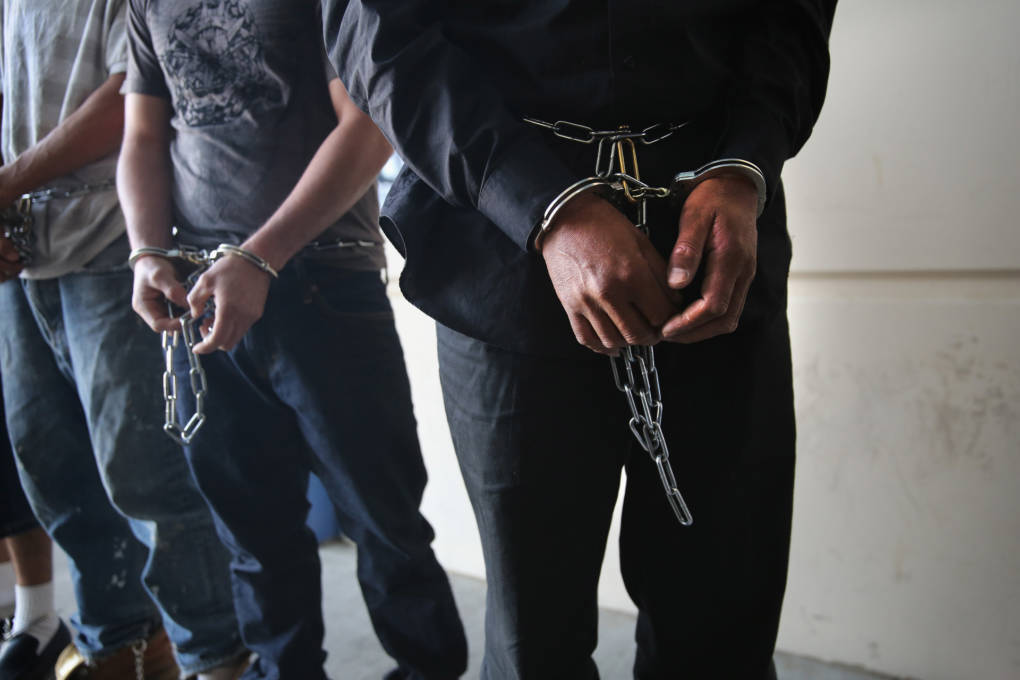
"caption": "Immigrants prepare to be unshackled and set free from the Adelanto Detention Facility on November 15, 2013, in Adelanto. ",
"description": "Immigrants prepare to be unshackled and set free from the Adelanto Detention Facility on November 15, 2013, in Adelanto. ",
"title": "08192019_Adelanto_ICE_immigrants_disabled immigrants_medical care_lawsuit-qut",
"credit": "John Moore/Getty Images",
"status": "inherit",
"isLoading": false,
"fetchFailed": false
},
"news_11767673": {
"type": "attachments",
"id": "news_11767673",
"meta": {
"index": "attachments_1716263798",
"site": "news",
"id": "11767673",
"found": true
},
"parent": 11767669,
"imgSizes": {
"apple_news_ca_landscape_5_5": {
"file": "https://ww2.kqed.org/app/uploads/sites/10/2019/08/RS32979_IMG_2084-qut-1044x783.jpg",
"width": 1044,
"mimeType": "image/jpeg",
"height": 783
},
"apple_news_ca_square_4_0": {
"file": "https://ww2.kqed.org/app/uploads/sites/10/2019/08/RS32979_IMG_2084-qut-470x470.jpg",
"width": 470,
"mimeType": "image/jpeg",
"height": 470
},
"twentyfourteen-full-width": {
"file": "https://ww2.kqed.org/app/uploads/sites/10/2019/08/RS32979_IMG_2084-qut-1038x576.jpg",
"width": 1038,
"mimeType": "image/jpeg",
"height": 576
},
"thumbnail": {
"file": "https://ww2.kqed.org/app/uploads/sites/10/2019/08/RS32979_IMG_2084-qut-160x120.jpg",
"width": 160,
"mimeType": "image/jpeg",
"height": 120
},
"post-thumbnail": {
"file": "https://ww2.kqed.org/app/uploads/sites/10/2019/08/RS32979_IMG_2084-qut-672x372.jpg",
"width": 672,
"mimeType": "image/jpeg",
"height": 372
},
"kqedFullSize": {
"file": "https://ww2.kqed.org/app/uploads/sites/10/2019/08/RS32979_IMG_2084-qut.jpg",
"width": 1920,
"height": 1440
},
"apple_news_ca_landscape_4_7": {
"file": "https://ww2.kqed.org/app/uploads/sites/10/2019/08/RS32979_IMG_2084-qut-632x474.jpg",
"width": 632,
"mimeType": "image/jpeg",
"height": 474
},
"large": {
"file": "https://ww2.kqed.org/app/uploads/sites/10/2019/08/RS32979_IMG_2084-qut-1020x765.jpg",
"width": 1020,
"mimeType": "image/jpeg",
"height": 765
},
"complete_open_graph": {
"file": "https://ww2.kqed.org/app/uploads/sites/10/2019/08/RS32979_IMG_2084-qut-1200x900.jpg",
"width": 1200,
"mimeType": "image/jpeg",
"height": 900
},
"apple_news_ca_landscape_4_0": {
"file": "https://ww2.kqed.org/app/uploads/sites/10/2019/08/RS32979_IMG_2084-qut-536x402.jpg",
"width": 536,
"mimeType": "image/jpeg",
"height": 402
},
"apple_news_ca_portrait_12_9": {
"file": "https://ww2.kqed.org/app/uploads/sites/10/2019/08/RS32979_IMG_2084-qut-1122x1440.jpg",
"width": 1122,
"mimeType": "image/jpeg",
"height": 1440
},
"medium": {
"file": "https://ww2.kqed.org/app/uploads/sites/10/2019/08/RS32979_IMG_2084-qut-800x600.jpg",
"width": 800,
"mimeType": "image/jpeg",
"height": 600
},
"apple_news_ca_portrait_4_0": {
"file": "https://ww2.kqed.org/app/uploads/sites/10/2019/08/RS32979_IMG_2084-qut-354x472.jpg",
"width": 354,
"mimeType": "image/jpeg",
"height": 472
},
"apple_news_ca_portrait_9_7": {
"file": "https://ww2.kqed.org/app/uploads/sites/10/2019/08/RS32979_IMG_2084-qut-840x1120.jpg",
"width": 840,
"mimeType": "image/jpeg",
"height": 1120
},
"apple_news_ca_landscape_12_9": {
"file": "https://ww2.kqed.org/app/uploads/sites/10/2019/08/RS32979_IMG_2084-qut-1832x1374.jpg",
"width": 1832,
"mimeType": "image/jpeg",
"height": 1374
},
"apple_news_ca_square_9_7": {
"file": "https://ww2.kqed.org/app/uploads/sites/10/2019/08/RS32979_IMG_2084-qut-1104x1104.jpg",
"width": 1104,
"mimeType": "image/jpeg",
"height": 1104
},
"apple_news_ca_portrait_4_7": {
"file": "https://ww2.kqed.org/app/uploads/sites/10/2019/08/RS32979_IMG_2084-qut-414x552.jpg",
"width": 414,
"mimeType": "image/jpeg",
"height": 552
},
"apple_news_ca_square_12_9": {
"file": "https://ww2.kqed.org/app/uploads/sites/10/2019/08/RS32979_IMG_2084-qut-1472x1440.jpg",
"width": 1472,
"mimeType": "image/jpeg",
"height": 1440
},
"apple_news_ca_portrait_5_5": {
"file": "https://ww2.kqed.org/app/uploads/sites/10/2019/08/RS32979_IMG_2084-qut-687x916.jpg",
"width": 687,
"mimeType": "image/jpeg",
"height": 916
},
"full-width": {
"file": "https://ww2.kqed.org/app/uploads/sites/10/2019/08/RS32979_IMG_2084-qut-1920x1440.jpg",
"width": 1920,
"mimeType": "image/jpeg",
"height": 1440
},
"apple_news_ca_square_4_7": {
"file": "https://ww2.kqed.org/app/uploads/sites/10/2019/08/RS32979_IMG_2084-qut-550x550.jpg",
"width": 550,
"mimeType": "image/jpeg",
"height": 550
},
"apple_news_ca_landscape_9_7": {
"file": "https://ww2.kqed.org/app/uploads/sites/10/2019/08/RS32979_IMG_2084-qut-1376x1032.jpg",
"width": 1376,
"mimeType": "image/jpeg",
"height": 1032
},
"apple_news_ca_square_5_5": {
"file": "https://ww2.kqed.org/app/uploads/sites/10/2019/08/RS32979_IMG_2084-qut-912x912.jpg",
"width": 912,
"mimeType": "image/jpeg",
"height": 912
}
},
"publishDate": 1565827555,
"modified": 1565827580,
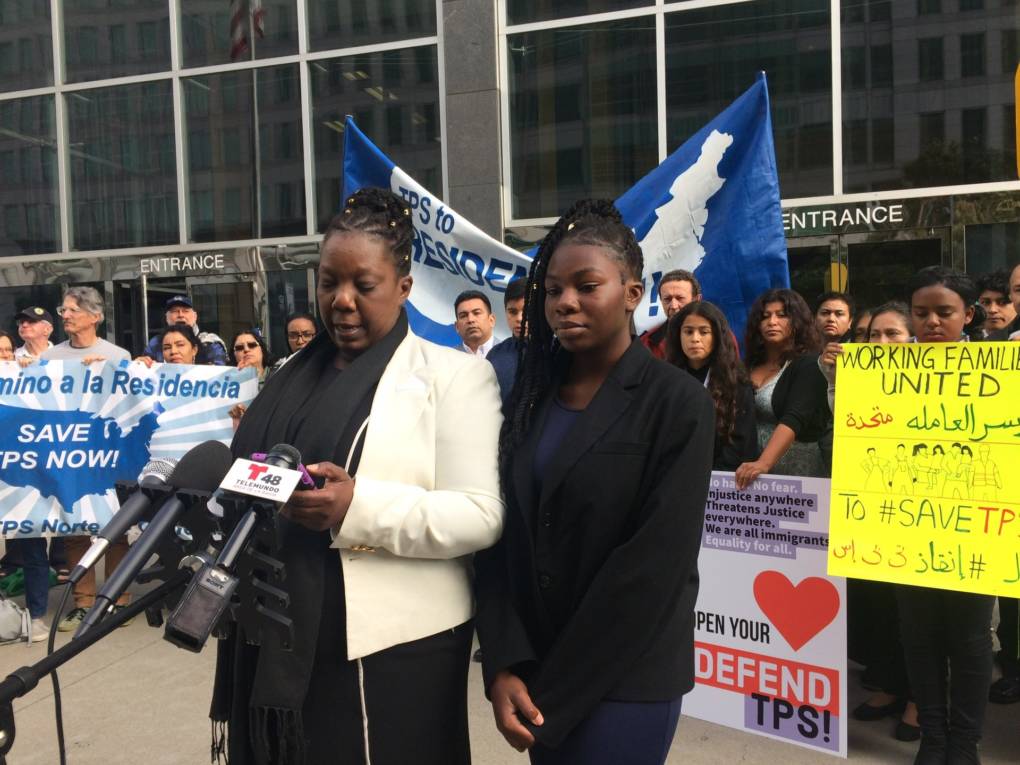
"caption": "Plaintiffs Wilma Destin, a TPS holder from Haiti, and daughter Hneida Cenemat, 15, speak before a court hearing in San Francisco on September 26, 2018.",
"description": null,
"title": "RS32979_IMG_2084-qut",
"credit": "Farida Jhabvala Romero/KQED",
"status": "inherit",
"isLoading": false,
"fetchFailed": false
},
"news_11765337": {
"type": "attachments",
"id": "news_11765337",
"meta": {
"index": "attachments_1716263798",
"site": "news",
"id": "11765337",
"found": true
},
"parent": 11765314,
"imgSizes": {
"apple_news_ca_landscape_5_5": {
"file": "https://ww2.kqed.org/app/uploads/sites/10/2019/08/Featured-close-the-camps-1044x783.jpg",
"width": 1044,
"mimeType": "image/jpeg",
"height": 783
},
"apple_news_ca_square_4_0": {
"file": "https://ww2.kqed.org/app/uploads/sites/10/2019/08/Featured-close-the-camps-470x470.jpg",
"width": 470,
"mimeType": "image/jpeg",
"height": 470
},
"twentyfourteen-full-width": {
"file": "https://ww2.kqed.org/app/uploads/sites/10/2019/08/Featured-close-the-camps-1038x576.jpg",
"width": 1038,
"mimeType": "image/jpeg",
"height": 576
},
"thumbnail": {
"file": "https://ww2.kqed.org/app/uploads/sites/10/2019/08/Featured-close-the-camps-160x81.jpg",
"width": 160,
"mimeType": "image/jpeg",
"height": 81
},
"post-thumbnail": {
"file": "https://ww2.kqed.org/app/uploads/sites/10/2019/08/Featured-close-the-camps-672x372.jpg",
"width": 672,
"mimeType": "image/jpeg",
"height": 372
},
"kqedFullSize": {
"file": "https://ww2.kqed.org/app/uploads/sites/10/2019/08/Featured-close-the-camps.jpg",
"width": 2048,
"height": 1032
},
"apple_news_ca_landscape_4_7": {
"file": "https://ww2.kqed.org/app/uploads/sites/10/2019/08/Featured-close-the-camps-632x474.jpg",
"width": 632,
"mimeType": "image/jpeg",
"height": 474
},
"large": {
"file": "https://ww2.kqed.org/app/uploads/sites/10/2019/08/Featured-close-the-camps-1020x514.jpg",
"width": 1020,
"mimeType": "image/jpeg",
"height": 514
},
"complete_open_graph": {
"file": "https://ww2.kqed.org/app/uploads/sites/10/2019/08/Featured-close-the-camps-1200x605.jpg",
"width": 1200,
"mimeType": "image/jpeg",
"height": 605
},
"apple_news_ca_landscape_4_0": {
"file": "https://ww2.kqed.org/app/uploads/sites/10/2019/08/Featured-close-the-camps-536x402.jpg",
"width": 536,
"mimeType": "image/jpeg",
"height": 402
},
"apple_news_ca_portrait_12_9": {
"file": "https://ww2.kqed.org/app/uploads/sites/10/2019/08/Featured-close-the-camps-1122x1496.jpg",
"width": 1122,
"mimeType": "image/jpeg",
"height": 1496
},
"medium": {
"file": "https://ww2.kqed.org/app/uploads/sites/10/2019/08/Featured-close-the-camps-800x403.jpg",
"width": 800,
"mimeType": "image/jpeg",
"height": 403
},
"apple_news_ca_portrait_4_0": {
"file": "https://ww2.kqed.org/app/uploads/sites/10/2019/08/Featured-close-the-camps-354x472.jpg",
"width": 354,
"mimeType": "image/jpeg",
"height": 472
},
"apple_news_ca_portrait_9_7": {
"file": "https://ww2.kqed.org/app/uploads/sites/10/2019/08/Featured-close-the-camps-840x1120.jpg",
"width": 840,
"mimeType": "image/jpeg",
"height": 1120
},
"apple_news_ca_landscape_12_9": {
"file": "https://ww2.kqed.org/app/uploads/sites/10/2019/08/Featured-close-the-camps-1832x1374.jpg",
"width": 1832,
"mimeType": "image/jpeg",
"height": 1374
},
"apple_news_ca_square_9_7": {
"file": "https://ww2.kqed.org/app/uploads/sites/10/2019/08/Featured-close-the-camps-1104x1104.jpg",
"width": 1104,
"mimeType": "image/jpeg",
"height": 1104
},
"apple_news_ca_portrait_4_7": {
"file": "https://ww2.kqed.org/app/uploads/sites/10/2019/08/Featured-close-the-camps-414x552.jpg",
"width": 414,
"mimeType": "image/jpeg",
"height": 552
},
"apple_news_ca_square_12_9": {
"file": "https://ww2.kqed.org/app/uploads/sites/10/2019/08/Featured-close-the-camps-1472x1472.jpg",
"width": 1472,
"mimeType": "image/jpeg",
"height": 1472
},
"apple_news_ca_portrait_5_5": {
"file": "https://ww2.kqed.org/app/uploads/sites/10/2019/08/Featured-close-the-camps-687x916.jpg",
"width": 687,
"mimeType": "image/jpeg",
"height": 916
},
"full-width": {
"file": "https://ww2.kqed.org/app/uploads/sites/10/2019/08/Featured-close-the-camps-1920x968.jpg",
"width": 1920,
"mimeType": "image/jpeg",
"height": 968
},
"apple_news_ca_square_4_7": {
"file": "https://ww2.kqed.org/app/uploads/sites/10/2019/08/Featured-close-the-camps-550x550.jpg",
"width": 550,
"mimeType": "image/jpeg",
"height": 550
},
"apple_news_ca_landscape_9_7": {
"file": "https://ww2.kqed.org/app/uploads/sites/10/2019/08/Featured-close-the-camps-1376x1032.jpg",
"width": 1376,
"mimeType": "image/jpeg",
"height": 1032
},
"apple_news_ca_square_5_5": {
"file": "https://ww2.kqed.org/app/uploads/sites/10/2019/08/Featured-close-the-camps-912x912.jpg",
"width": 912,
"mimeType": "image/jpeg",
"height": 912
}
},
"publishDate": 1564786674,
"modified": 1564788741,
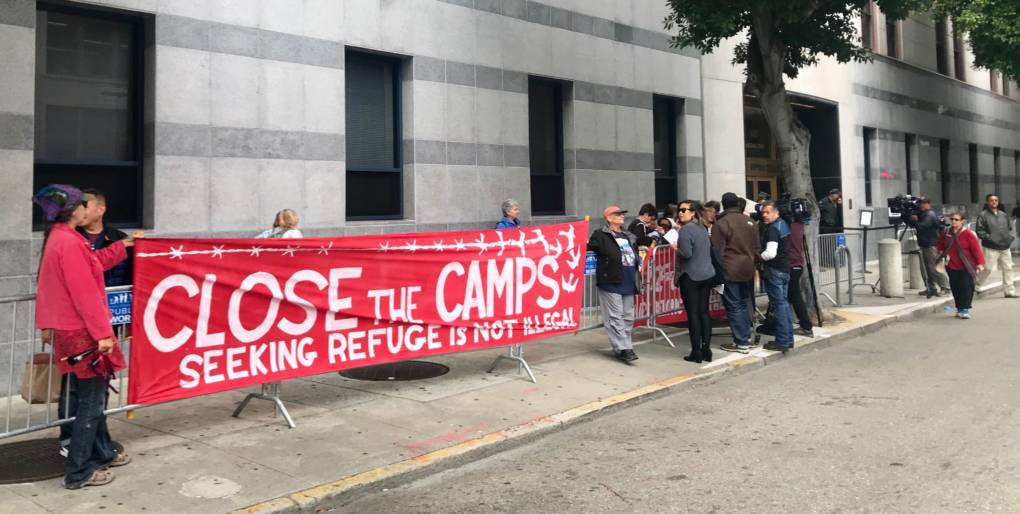
"caption": "Protestors outside ICE headquarters.",
"description": "Protestors outside ICE headquarters.",
"title": "Featured close the camps",
"credit": "Kate Wolffe/KQED",
"status": "inherit",
"isLoading": false,
"fetchFailed": false
},
"news_11752941": {
"type": "attachments",
"id": "news_11752941",
"meta": {
"index": "attachments_1716263798",
"site": "news",
"id": "11752941",
"found": true
},
"parent": 11752787,
"imgSizes": {
"apple_news_ca_landscape_5_5": {
"file": "https://ww2.kqed.org/app/uploads/sites/10/2019/06/RS37547_IMG_4864-qut-1044x783.jpg",
"width": 1044,
"mimeType": "image/jpeg",
"height": 783
},
"apple_news_ca_square_4_0": {
"file": "https://ww2.kqed.org/app/uploads/sites/10/2019/06/RS37547_IMG_4864-qut-470x470.jpg",
"width": 470,
"mimeType": "image/jpeg",
"height": 470
},
"twentyfourteen-full-width": {
"file": "https://ww2.kqed.org/app/uploads/sites/10/2019/06/RS37547_IMG_4864-qut-1038x576.jpg",
"width": 1038,
"mimeType": "image/jpeg",
"height": 576
},
"thumbnail": {
"file": "https://ww2.kqed.org/app/uploads/sites/10/2019/06/RS37547_IMG_4864-qut-160x107.jpg",
"width": 160,
"mimeType": "image/jpeg",
"height": 107
},
"post-thumbnail": {
"file": "https://ww2.kqed.org/app/uploads/sites/10/2019/06/RS37547_IMG_4864-qut-672x372.jpg",
"width": 672,
"mimeType": "image/jpeg",
"height": 372
},
"kqedFullSize": {
"file": "https://ww2.kqed.org/app/uploads/sites/10/2019/06/RS37547_IMG_4864-qut.jpg",
"width": 1920,
"height": 1280
},
"apple_news_ca_landscape_4_7": {
"file": "https://ww2.kqed.org/app/uploads/sites/10/2019/06/RS37547_IMG_4864-qut-632x474.jpg",
"width": 632,
"mimeType": "image/jpeg",
"height": 474
},
"large": {
"file": "https://ww2.kqed.org/app/uploads/sites/10/2019/06/RS37547_IMG_4864-qut-1020x680.jpg",
"width": 1020,
"mimeType": "image/jpeg",
"height": 680
},
"complete_open_graph": {
"file": "https://ww2.kqed.org/app/uploads/sites/10/2019/06/RS37547_IMG_4864-qut-1200x800.jpg",
"width": 1200,
"mimeType": "image/jpeg",
"height": 800
},
"apple_news_ca_landscape_4_0": {
"file": "https://ww2.kqed.org/app/uploads/sites/10/2019/06/RS37547_IMG_4864-qut-536x402.jpg",
"width": 536,
"mimeType": "image/jpeg",
"height": 402
},
"apple_news_ca_portrait_12_9": {
"file": "https://ww2.kqed.org/app/uploads/sites/10/2019/06/RS37547_IMG_4864-qut-1122x1280.jpg",
"width": 1122,
"mimeType": "image/jpeg",
"height": 1280
},
"medium": {
"file": "https://ww2.kqed.org/app/uploads/sites/10/2019/06/RS37547_IMG_4864-qut-800x533.jpg",
"width": 800,
"mimeType": "image/jpeg",
"height": 533
},
"apple_news_ca_portrait_4_0": {
"file": "https://ww2.kqed.org/app/uploads/sites/10/2019/06/RS37547_IMG_4864-qut-354x472.jpg",
"width": 354,
"mimeType": "image/jpeg",
"height": 472
},
"apple_news_ca_portrait_9_7": {
"file": "https://ww2.kqed.org/app/uploads/sites/10/2019/06/RS37547_IMG_4864-qut-840x1120.jpg",
"width": 840,
"mimeType": "image/jpeg",
"height": 1120
},
"apple_news_ca_landscape_12_9": {
"file": "https://ww2.kqed.org/app/uploads/sites/10/2019/06/RS37547_IMG_4864-qut-1832x1280.jpg",
"width": 1832,
"mimeType": "image/jpeg",
"height": 1280
},
"apple_news_ca_square_9_7": {
"file": "https://ww2.kqed.org/app/uploads/sites/10/2019/06/RS37547_IMG_4864-qut-1104x1104.jpg",
"width": 1104,
"mimeType": "image/jpeg",
"height": 1104
},
"apple_news_ca_portrait_4_7": {
"file": "https://ww2.kqed.org/app/uploads/sites/10/2019/06/RS37547_IMG_4864-qut-414x552.jpg",
"width": 414,
"mimeType": "image/jpeg",
"height": 552
},
"apple_news_ca_square_12_9": {
"file": "https://ww2.kqed.org/app/uploads/sites/10/2019/06/RS37547_IMG_4864-qut-1472x1280.jpg",
"width": 1472,
"mimeType": "image/jpeg",
"height": 1280
},
"apple_news_ca_portrait_5_5": {
"file": "https://ww2.kqed.org/app/uploads/sites/10/2019/06/RS37547_IMG_4864-qut-687x916.jpg",
"width": 687,
"mimeType": "image/jpeg",
"height": 916
},
"full-width": {
"file": "https://ww2.kqed.org/app/uploads/sites/10/2019/06/RS37547_IMG_4864-qut-1920x1280.jpg",
"width": 1920,
"mimeType": "image/jpeg",
"height": 1280
},
"apple_news_ca_square_4_7": {
"file": "https://ww2.kqed.org/app/uploads/sites/10/2019/06/RS37547_IMG_4864-qut-550x550.jpg",
"width": 550,
"mimeType": "image/jpeg",
"height": 550
},
"apple_news_ca_landscape_9_7": {
"file": "https://ww2.kqed.org/app/uploads/sites/10/2019/06/RS37547_IMG_4864-qut-1376x1032.jpg",
"width": 1376,
"mimeType": "image/jpeg",
"height": 1032
},
"apple_news_ca_square_5_5": {
"file": "https://ww2.kqed.org/app/uploads/sites/10/2019/06/RS37547_IMG_4864-qut-912x912.jpg",
"width": 912,
"mimeType": "image/jpeg",
"height": 912
}
},
"publishDate": 1559863988,
"modified": 1559955331,
"caption": "45,000 cars pass through the San Ysidro Port of Entry's vehicle inspection lanes every day on their way from Mexico to the U.S., according to U.S. Customs and Border Protection.",
"description": null,
"title": "RS37547_IMG_4864-qut",
"credit": "Alex Hall/KQED",
"status": "inherit",
"isLoading": false,
"fetchFailed": false
},
"news_11751149": {
"type": "attachments",
"id": "news_11751149",
"meta": {
"index": "attachments_1716263798",
"site": "news",
"id": "11751149",
"found": true
},
"parent": 11751144,
"imgSizes": {
"apple_news_ca_landscape_5_5": {
"file": "https://ww2.kqed.org/app/uploads/sites/10/2019/05/GettyImages-492475080-1044x783.jpg",
"width": 1044,
"mimeType": "image/jpeg",
"height": 783
},
"apple_news_ca_square_4_0": {
"file": "https://ww2.kqed.org/app/uploads/sites/10/2019/05/GettyImages-492475080-470x470.jpg",
"width": 470,
"mimeType": "image/jpeg",
"height": 470
},
"twentyfourteen-full-width": {
"file": "https://ww2.kqed.org/app/uploads/sites/10/2019/05/GettyImages-492475080-1038x576.jpg",
"width": 1038,
"mimeType": "image/jpeg",
"height": 576
},
"thumbnail": {
"file": "https://ww2.kqed.org/app/uploads/sites/10/2019/05/GettyImages-492475080-160x106.jpg",
"width": 160,
"mimeType": "image/jpeg",
"height": 106
},
"post-thumbnail": {
"file": "https://ww2.kqed.org/app/uploads/sites/10/2019/05/GettyImages-492475080-672x372.jpg",
"width": 672,
"mimeType": "image/jpeg",
"height": 372
},
"kqedFullSize": {
"file": "https://ww2.kqed.org/app/uploads/sites/10/2019/05/GettyImages-492475080.jpg",
"width": 2048,
"height": 1360
},
"apple_news_ca_landscape_4_7": {
"file": "https://ww2.kqed.org/app/uploads/sites/10/2019/05/GettyImages-492475080-632x474.jpg",
"width": 632,
"mimeType": "image/jpeg",
"height": 474
},
"large": {
"file": "https://ww2.kqed.org/app/uploads/sites/10/2019/05/GettyImages-492475080-1020x677.jpg",
"width": 1020,
"mimeType": "image/jpeg",
"height": 677
},
"complete_open_graph": {
"file": "https://ww2.kqed.org/app/uploads/sites/10/2019/05/GettyImages-492475080-1200x797.jpg",
"width": 1200,
"mimeType": "image/jpeg",
"height": 797
},
"apple_news_ca_landscape_4_0": {
"file": "https://ww2.kqed.org/app/uploads/sites/10/2019/05/GettyImages-492475080-536x402.jpg",
"width": 536,
"mimeType": "image/jpeg",
"height": 402
},
"apple_news_ca_portrait_12_9": {
"file": "https://ww2.kqed.org/app/uploads/sites/10/2019/05/GettyImages-492475080-1122x1496.jpg",
"width": 1122,
"mimeType": "image/jpeg",
"height": 1496
},
"medium": {
"file": "https://ww2.kqed.org/app/uploads/sites/10/2019/05/GettyImages-492475080-800x531.jpg",
"width": 800,
"mimeType": "image/jpeg",
"height": 531
},
"apple_news_ca_portrait_4_0": {
"file": "https://ww2.kqed.org/app/uploads/sites/10/2019/05/GettyImages-492475080-354x472.jpg",
"width": 354,
"mimeType": "image/jpeg",
"height": 472
},
"apple_news_ca_portrait_9_7": {
"file": "https://ww2.kqed.org/app/uploads/sites/10/2019/05/GettyImages-492475080-840x1120.jpg",
"width": 840,
"mimeType": "image/jpeg",
"height": 1120
},
"apple_news_ca_landscape_12_9": {
"file": "https://ww2.kqed.org/app/uploads/sites/10/2019/05/GettyImages-492475080-1832x1374.jpg",
"width": 1832,
"mimeType": "image/jpeg",
"height": 1374
},
"apple_news_ca_square_9_7": {
"file": "https://ww2.kqed.org/app/uploads/sites/10/2019/05/GettyImages-492475080-1104x1104.jpg",
"width": 1104,
"mimeType": "image/jpeg",
"height": 1104
},
"apple_news_ca_portrait_4_7": {
"file": "https://ww2.kqed.org/app/uploads/sites/10/2019/05/GettyImages-492475080-414x552.jpg",
"width": 414,
"mimeType": "image/jpeg",
"height": 552
},
"apple_news_ca_square_12_9": {
"file": "https://ww2.kqed.org/app/uploads/sites/10/2019/05/GettyImages-492475080-1472x1472.jpg",
"width": 1472,
"mimeType": "image/jpeg",
"height": 1472
},
"apple_news_ca_portrait_5_5": {
"file": "https://ww2.kqed.org/app/uploads/sites/10/2019/05/GettyImages-492475080-687x916.jpg",
"width": 687,
"mimeType": "image/jpeg",
"height": 916
},
"full-width": {
"file": "https://ww2.kqed.org/app/uploads/sites/10/2019/05/GettyImages-492475080-1920x1275.jpg",
"width": 1920,
"mimeType": "image/jpeg",
"height": 1275
},
"apple_news_ca_square_4_7": {
"file": "https://ww2.kqed.org/app/uploads/sites/10/2019/05/GettyImages-492475080-550x550.jpg",
"width": 550,
"mimeType": "image/jpeg",
"height": 550
},
"apple_news_ca_landscape_9_7": {
"file": "https://ww2.kqed.org/app/uploads/sites/10/2019/05/GettyImages-492475080-1376x1032.jpg",
"width": 1376,
"mimeType": "image/jpeg",
"height": 1032
},
"apple_news_ca_square_5_5": {
"file": "https://ww2.kqed.org/app/uploads/sites/10/2019/05/GettyImages-492475080-912x912.jpg",
"width": 912,
"mimeType": "image/jpeg",
"height": 912
}
},
"publishDate": 1559248941,
"modified": 1559256993,
"caption": "The stage before a Democratic presidential primary debate in 2016.",
"description": "The stage before a Democratic Presidential primary debate in 2016.",
"title": "Democratic Presidential Candidates Hold First Debate In Las Vegas",
"credit": "Alex Wong/Getty Images",
"status": "inherit",
"isLoading": false,
"fetchFailed": false
},
"news_11747984": {
"type": "attachments",
"id": "news_11747984",
"meta": {
"index": "attachments_1716263798",
"site": "news",
"id": "11747984",
"found": true
},
"parent": 11747977,
"imgSizes": {
"apple_news_ca_landscape_5_5": {
"file": "https://ww2.kqed.org/app/uploads/sites/10/2019/05/05172019_us-mexico-border-immigrants-donald-trump-border-wall-migrants-qut-1044x783.jpg",
"width": 1044,
"mimeType": "image/jpeg",
"height": 783
},
"apple_news_ca_square_4_0": {
"file": "https://ww2.kqed.org/app/uploads/sites/10/2019/05/05172019_us-mexico-border-immigrants-donald-trump-border-wall-migrants-qut-470x470.jpg",
"width": 470,
"mimeType": "image/jpeg",
"height": 470
},
"twentyfourteen-full-width": {
"file": "https://ww2.kqed.org/app/uploads/sites/10/2019/05/05172019_us-mexico-border-immigrants-donald-trump-border-wall-migrants-qut-1038x576.jpg",
"width": 1038,
"mimeType": "image/jpeg",
"height": 576
},
"thumbnail": {
"file": "https://ww2.kqed.org/app/uploads/sites/10/2019/05/05172019_us-mexico-border-immigrants-donald-trump-border-wall-migrants-qut-160x109.jpg",
"width": 160,
"mimeType": "image/jpeg",
"height": 109
},
"post-thumbnail": {
"file": "https://ww2.kqed.org/app/uploads/sites/10/2019/05/05172019_us-mexico-border-immigrants-donald-trump-border-wall-migrants-qut-672x372.jpg",
"width": 672,
"mimeType": "image/jpeg",
"height": 372
},
"kqedFullSize": {
"file": "https://ww2.kqed.org/app/uploads/sites/10/2019/05/05172019_us-mexico-border-immigrants-donald-trump-border-wall-migrants-qut.jpg",
"width": 1920,
"height": 1307
},
"apple_news_ca_landscape_4_7": {
"file": "https://ww2.kqed.org/app/uploads/sites/10/2019/05/05172019_us-mexico-border-immigrants-donald-trump-border-wall-migrants-qut-632x474.jpg",
"width": 632,
"mimeType": "image/jpeg",
"height": 474
},
"large": {
"file": "https://ww2.kqed.org/app/uploads/sites/10/2019/05/05172019_us-mexico-border-immigrants-donald-trump-border-wall-migrants-qut-1020x694.jpg",
"width": 1020,
"mimeType": "image/jpeg",
"height": 694
},
"complete_open_graph": {
"file": "https://ww2.kqed.org/app/uploads/sites/10/2019/05/05172019_us-mexico-border-immigrants-donald-trump-border-wall-migrants-qut-1200x817.jpg",
"width": 1200,
"mimeType": "image/jpeg",
"height": 817
},
"apple_news_ca_landscape_4_0": {
"file": "https://ww2.kqed.org/app/uploads/sites/10/2019/05/05172019_us-mexico-border-immigrants-donald-trump-border-wall-migrants-qut-536x402.jpg",
"width": 536,
"mimeType": "image/jpeg",
"height": 402
},
"apple_news_ca_portrait_12_9": {
"file": "https://ww2.kqed.org/app/uploads/sites/10/2019/05/05172019_us-mexico-border-immigrants-donald-trump-border-wall-migrants-qut-1122x1307.jpg",
"width": 1122,
"mimeType": "image/jpeg",
"height": 1307
},
"medium": {
"file": "https://ww2.kqed.org/app/uploads/sites/10/2019/05/05172019_us-mexico-border-immigrants-donald-trump-border-wall-migrants-qut-800x545.jpg",
"width": 800,
"mimeType": "image/jpeg",
"height": 545
},
"apple_news_ca_portrait_4_0": {
"file": "https://ww2.kqed.org/app/uploads/sites/10/2019/05/05172019_us-mexico-border-immigrants-donald-trump-border-wall-migrants-qut-354x472.jpg",
"width": 354,
"mimeType": "image/jpeg",
"height": 472
},
"apple_news_ca_portrait_9_7": {
"file": "https://ww2.kqed.org/app/uploads/sites/10/2019/05/05172019_us-mexico-border-immigrants-donald-trump-border-wall-migrants-qut-840x1120.jpg",
"width": 840,
"mimeType": "image/jpeg",
"height": 1120
},
"apple_news_ca_landscape_12_9": {
"file": "https://ww2.kqed.org/app/uploads/sites/10/2019/05/05172019_us-mexico-border-immigrants-donald-trump-border-wall-migrants-qut-1832x1307.jpg",
"width": 1832,
"mimeType": "image/jpeg",
"height": 1307
},
"apple_news_ca_square_9_7": {
"file": "https://ww2.kqed.org/app/uploads/sites/10/2019/05/05172019_us-mexico-border-immigrants-donald-trump-border-wall-migrants-qut-1104x1104.jpg",
"width": 1104,
"mimeType": "image/jpeg",
"height": 1104
},
"apple_news_ca_portrait_4_7": {
"file": "https://ww2.kqed.org/app/uploads/sites/10/2019/05/05172019_us-mexico-border-immigrants-donald-trump-border-wall-migrants-qut-414x552.jpg",
"width": 414,
"mimeType": "image/jpeg",
"height": 552
},
"apple_news_ca_square_12_9": {
"file": "https://ww2.kqed.org/app/uploads/sites/10/2019/05/05172019_us-mexico-border-immigrants-donald-trump-border-wall-migrants-qut-1472x1307.jpg",
"width": 1472,
"mimeType": "image/jpeg",
"height": 1307
},
"apple_news_ca_portrait_5_5": {
"file": "https://ww2.kqed.org/app/uploads/sites/10/2019/05/05172019_us-mexico-border-immigrants-donald-trump-border-wall-migrants-qut-687x916.jpg",
"width": 687,
"mimeType": "image/jpeg",
"height": 916
},
"full-width": {
"file": "https://ww2.kqed.org/app/uploads/sites/10/2019/05/05172019_us-mexico-border-immigrants-donald-trump-border-wall-migrants-qut-1920x1307.jpg",
"width": 1920,
"mimeType": "image/jpeg",
"height": 1307
},
"apple_news_ca_square_4_7": {
"file": "https://ww2.kqed.org/app/uploads/sites/10/2019/05/05172019_us-mexico-border-immigrants-donald-trump-border-wall-migrants-qut-550x550.jpg",
"width": 550,
"mimeType": "image/jpeg",
"height": 550
},
"apple_news_ca_landscape_9_7": {
"file": "https://ww2.kqed.org/app/uploads/sites/10/2019/05/05172019_us-mexico-border-immigrants-donald-trump-border-wall-migrants-qut-1376x1032.jpg",
"width": 1376,
"mimeType": "image/jpeg",
"height": 1032
},
"apple_news_ca_square_5_5": {
"file": "https://ww2.kqed.org/app/uploads/sites/10/2019/05/05172019_us-mexico-border-immigrants-donald-trump-border-wall-migrants-qut-912x912.jpg",
"width": 912,
"mimeType": "image/jpeg",
"height": 912
}
},
"publishDate": 1558123758,
"modified": 1558139731,
"caption": "Aerial view of the U.S.-Mexico border fence in Playas de Tijuana, Mexico, on May 3, 2019. ",
"description": "Aerial view of the U.S.-Mexico border fence in Playas de Tijuana, Mexico, on May 3, 2019. ",
"title": "MEXICO-US-IMMIGRATION-BORDER",
"credit": "GUILLERMO ARIAS/AFP/Getty Images",
"status": "inherit",
"isLoading": false,
"fetchFailed": false
},
"news_11738228": {
"type": "attachments",
"id": "news_11738228",
"meta": {
"index": "attachments_1716263798",
"site": "news",
"id": "11738228",
"found": true
},
"parent": 11738199,
"imgSizes": {
"post-thumbnail": {
"file": "https://ww2.kqed.org/app/uploads/sites/10/2019/04/RS32034_IMG_1545-2-672x372.jpg",
"width": 672,
"mimeType": "image/jpeg",
"height": 372
},
"kqedFullSize": {
"file": "https://ww2.kqed.org/app/uploads/sites/10/2019/04/RS32034_IMG_1545-2-e1554500811482.jpg",
"width": 1920,
"height": 1280
},
"guest-author-50": {
"file": "https://ww2.kqed.org/app/uploads/sites/10/2019/04/RS32034_IMG_1545-2-50x50.jpg",
"width": 50,
"mimeType": "image/jpeg",
"height": 50
},
"guest-author-96": {
"file": "https://ww2.kqed.org/app/uploads/sites/10/2019/04/RS32034_IMG_1545-2-96x96.jpg",
"width": 96,
"mimeType": "image/jpeg",
"height": 96
},
"apple_news_ca_portrait_12_9": {
"file": "https://ww2.kqed.org/app/uploads/sites/10/2019/04/RS32034_IMG_1545-2-1122x1496.jpg",
"width": 1122,
"mimeType": "image/jpeg",
"height": 1496
},
"medium": {
"file": "https://ww2.kqed.org/app/uploads/sites/10/2019/04/RS32034_IMG_1545-2-800x533.jpg",
"width": 800,
"mimeType": "image/jpeg",
"height": 533
},
"guest-author-32": {
"file": "https://ww2.kqed.org/app/uploads/sites/10/2019/04/RS32034_IMG_1545-2-32x32.jpg",
"width": 32,
"mimeType": "image/jpeg",
"height": 32
},
"apple_news_ca_portrait_9_7": {
"file": "https://ww2.kqed.org/app/uploads/sites/10/2019/04/RS32034_IMG_1545-2-840x1120.jpg",
"width": 840,
"mimeType": "image/jpeg",
"height": 1120
},
"apple_news_ca_square_9_7": {
"file": "https://ww2.kqed.org/app/uploads/sites/10/2019/04/RS32034_IMG_1545-2-1104x1104.jpg",
"width": 1104,
"mimeType": "image/jpeg",
"height": 1104
},
"apple_news_ca_portrait_4_7": {
"file": "https://ww2.kqed.org/app/uploads/sites/10/2019/04/RS32034_IMG_1545-2-414x552.jpg",
"width": 414,
"mimeType": "image/jpeg",
"height": 552
},
"apple_news_ca_square_12_9": {
"file": "https://ww2.kqed.org/app/uploads/sites/10/2019/04/RS32034_IMG_1545-2-1472x1472.jpg",
"width": 1472,
"mimeType": "image/jpeg",
"height": 1472
},
"apple_news_ca_portrait_5_5": {
"file": "https://ww2.kqed.org/app/uploads/sites/10/2019/04/RS32034_IMG_1545-2-687x916.jpg",
"width": 687,
"mimeType": "image/jpeg",
"height": 916
},
"apple_news_ca_square_4_7": {
"file": "https://ww2.kqed.org/app/uploads/sites/10/2019/04/RS32034_IMG_1545-2-550x550.jpg",
"width": 550,
"mimeType": "image/jpeg",
"height": 550
},
"apple_news_ca_square_5_5": {
"file": "https://ww2.kqed.org/app/uploads/sites/10/2019/04/RS32034_IMG_1545-2-912x912.jpg",
"width": 912,
"mimeType": "image/jpeg",
"height": 912
},
"apple_news_ca_landscape_5_5": {
"file": "https://ww2.kqed.org/app/uploads/sites/10/2019/04/RS32034_IMG_1545-2-1044x783.jpg",
"width": 1044,
"mimeType": "image/jpeg",
"height": 783
},
"apple_news_ca_square_4_0": {
"file": "https://ww2.kqed.org/app/uploads/sites/10/2019/04/RS32034_IMG_1545-2-470x470.jpg",
"width": 470,
"mimeType": "image/jpeg",
"height": 470
},
"twentyfourteen-full-width": {
"file": "https://ww2.kqed.org/app/uploads/sites/10/2019/04/RS32034_IMG_1545-2-1038x576.jpg",
"width": 1038,
"mimeType": "image/jpeg",
"height": 576
},
"thumbnail": {
"file": "https://ww2.kqed.org/app/uploads/sites/10/2019/04/RS32034_IMG_1545-2-160x107.jpg",
"width": 160,
"mimeType": "image/jpeg",
"height": 107
},
"apple_news_ca_landscape_4_7": {
"file": "https://ww2.kqed.org/app/uploads/sites/10/2019/04/RS32034_IMG_1545-2-632x474.jpg",
"width": 632,
"mimeType": "image/jpeg",
"height": 474
},
"large": {
"file": "https://ww2.kqed.org/app/uploads/sites/10/2019/04/RS32034_IMG_1545-2-1020x680.jpg",
"width": 1020,
"mimeType": "image/jpeg",
"height": 680
},
"complete_open_graph": {
"file": "https://ww2.kqed.org/app/uploads/sites/10/2019/04/RS32034_IMG_1545-2-1200x800.jpg",
"width": 1200,
"mimeType": "image/jpeg",
"height": 800
},
"apple_news_ca_landscape_4_0": {
"file": "https://ww2.kqed.org/app/uploads/sites/10/2019/04/RS32034_IMG_1545-2-536x402.jpg",
"width": 536,
"mimeType": "image/jpeg",
"height": 402
},
"guest-author-64": {
"file": "https://ww2.kqed.org/app/uploads/sites/10/2019/04/RS32034_IMG_1545-2-64x64.jpg",
"width": 64,
"mimeType": "image/jpeg",
"height": 64
},
"apple_news_ca_portrait_4_0": {
"file": "https://ww2.kqed.org/app/uploads/sites/10/2019/04/RS32034_IMG_1545-2-354x472.jpg",
"width": 354,
"mimeType": "image/jpeg",
"height": 472
},
"apple_news_ca_landscape_12_9": {
"file": "https://ww2.kqed.org/app/uploads/sites/10/2019/04/RS32034_IMG_1545-2-1832x1374.jpg",
"width": 1832,
"mimeType": "image/jpeg",
"height": 1374
},
"full-width": {
"file": "https://ww2.kqed.org/app/uploads/sites/10/2019/04/RS32034_IMG_1545-2-1920x1280.jpg",
"width": 1920,
"mimeType": "image/jpeg",
"height": 1280
},
"guest-author-128": {
"file": "https://ww2.kqed.org/app/uploads/sites/10/2019/04/RS32034_IMG_1545-2-128x128.jpg",
"width": 128,
"mimeType": "image/jpeg",
"height": 128
},
"apple_news_ca_landscape_9_7": {
"file": "https://ww2.kqed.org/app/uploads/sites/10/2019/04/RS32034_IMG_1545-2-1376x1032.jpg",
"width": 1376,
"mimeType": "image/jpeg",
"height": 1032
}
},
"publishDate": 1554500751,
"modified": 1558033484,
"caption": "A U.S. Border Patrol agent patrols the Goat Canyon area near Calexico along the U.S.-Mexico border.",
"description": "A U.S. Border Patrol agent patrols the Goat Canyon area near Calexico along the U.S.-Mexico border.",
"title": "RS32034_IMG_1545",
"credit": "Ariana Drehsler/KQED",
"status": "inherit",
"isLoading": false,
"fetchFailed": false
},
"news_11746833": {
"type": "attachments",
"id": "news_11746833",
"meta": {
"index": "attachments_1716263798",
"site": "news",
"id": "11746833",
"found": true
},
"parent": 11746698,
"imgSizes": {
"apple_news_ca_landscape_5_5": {
"file": "https://ww2.kqed.org/app/uploads/sites/10/2019/05/IMG_8935-1044x783.jpg",
"width": 1044,
"mimeType": "image/jpeg",
"height": 783
},
"apple_news_ca_square_4_0": {
"file": "https://ww2.kqed.org/app/uploads/sites/10/2019/05/IMG_8935-470x470.jpg",
"width": 470,
"mimeType": "image/jpeg",
"height": 470
},
"twentyfourteen-full-width": {
"file": "https://ww2.kqed.org/app/uploads/sites/10/2019/05/IMG_8935-1038x576.jpg",
"width": 1038,
"mimeType": "image/jpeg",
"height": 576
},
"thumbnail": {
"file": "https://ww2.kqed.org/app/uploads/sites/10/2019/05/IMG_8935-160x120.jpg",
"width": 160,
"mimeType": "image/jpeg",
"height": 120
},
"post-thumbnail": {
"file": "https://ww2.kqed.org/app/uploads/sites/10/2019/05/IMG_8935-672x372.jpg",
"width": 672,
"mimeType": "image/jpeg",
"height": 372
},
"kqedFullSize": {
"file": "https://ww2.kqed.org/app/uploads/sites/10/2019/05/IMG_8935-e1557865800116.jpg",
"width": 1920,
"height": 1440
},
"apple_news_ca_landscape_4_7": {
"file": "https://ww2.kqed.org/app/uploads/sites/10/2019/05/IMG_8935-632x474.jpg",
"width": 632,
"mimeType": "image/jpeg",
"height": 474
},
"large": {
"file": "https://ww2.kqed.org/app/uploads/sites/10/2019/05/IMG_8935-1020x765.jpg",
"width": 1020,
"mimeType": "image/jpeg",
"height": 765
},
"complete_open_graph": {
"file": "https://ww2.kqed.org/app/uploads/sites/10/2019/05/IMG_8935-1200x900.jpg",
"width": 1200,
"mimeType": "image/jpeg",
"height": 900
},
"apple_news_ca_landscape_4_0": {
"file": "https://ww2.kqed.org/app/uploads/sites/10/2019/05/IMG_8935-536x402.jpg",
"width": 536,
"mimeType": "image/jpeg",
"height": 402
},
"apple_news_ca_portrait_12_9": {
"file": "https://ww2.kqed.org/app/uploads/sites/10/2019/05/IMG_8935-1122x1496.jpg",
"width": 1122,
"mimeType": "image/jpeg",
"height": 1496
},
"medium": {
"file": "https://ww2.kqed.org/app/uploads/sites/10/2019/05/IMG_8935-800x600.jpg",
"width": 800,
"mimeType": "image/jpeg",
"height": 600
},
"apple_news_ca_portrait_4_0": {
"file": "https://ww2.kqed.org/app/uploads/sites/10/2019/05/IMG_8935-354x472.jpg",
"width": 354,
"mimeType": "image/jpeg",
"height": 472
},
"apple_news_ca_portrait_9_7": {
"file": "https://ww2.kqed.org/app/uploads/sites/10/2019/05/IMG_8935-840x1120.jpg",
"width": 840,
"mimeType": "image/jpeg",
"height": 1120
},
"apple_news_ca_landscape_12_9": {
"file": "https://ww2.kqed.org/app/uploads/sites/10/2019/05/IMG_8935-1832x1374.jpg",
"width": 1832,
"mimeType": "image/jpeg",
"height": 1374
},
"apple_news_ca_square_9_7": {
"file": "https://ww2.kqed.org/app/uploads/sites/10/2019/05/IMG_8935-1104x1104.jpg",
"width": 1104,
"mimeType": "image/jpeg",
"height": 1104
},
"apple_news_ca_portrait_4_7": {
"file": "https://ww2.kqed.org/app/uploads/sites/10/2019/05/IMG_8935-414x552.jpg",
"width": 414,
"mimeType": "image/jpeg",
"height": 552
},
"apple_news_ca_square_12_9": {
"file": "https://ww2.kqed.org/app/uploads/sites/10/2019/05/IMG_8935-1472x1472.jpg",
"width": 1472,
"mimeType": "image/jpeg",
"height": 1472
},
"apple_news_ca_portrait_5_5": {
"file": "https://ww2.kqed.org/app/uploads/sites/10/2019/05/IMG_8935-687x916.jpg",
"width": 687,
"mimeType": "image/jpeg",
"height": 916
},
"full-width": {
"file": "https://ww2.kqed.org/app/uploads/sites/10/2019/05/IMG_8935-1920x1440.jpg",
"width": 1920,
"mimeType": "image/jpeg",
"height": 1440
},
"apple_news_ca_square_4_7": {
"file": "https://ww2.kqed.org/app/uploads/sites/10/2019/05/IMG_8935-550x550.jpg",
"width": 550,
"mimeType": "image/jpeg",
"height": 550
},
"apple_news_ca_landscape_9_7": {
"file": "https://ww2.kqed.org/app/uploads/sites/10/2019/05/IMG_8935-1376x1032.jpg",
"width": 1376,
"mimeType": "image/jpeg",
"height": 1032
},
"apple_news_ca_square_5_5": {
"file": "https://ww2.kqed.org/app/uploads/sites/10/2019/05/IMG_8935-912x912.jpg",
"width": 912,
"mimeType": "image/jpeg",
"height": 912
}
},
"publishDate": 1557782149,
"modified": 1576883532,
"caption": "The South Texas Family Residential Center, the largest immigrant family detention facility in the U.S., can hold 2,400 mothers and children.",
"description": "The South Texas Family Residential Center, the largest immigrant family detention facility in the U.S., can hold up to 2,400 people.",
"title": "ICE family detention",
"credit": "Julie Small/KQED",
"status": "inherit",
"isLoading": false,
"fetchFailed": false
},
"news_11738082": {
"type": "attachments",
"id": "news_11738082",
"meta": {
"index": "attachments_1716263798",
"site": "news",
"id": "11738082",
"found": true
},
"parent": 11738062,
"imgSizes": {
"post-thumbnail": {
"file": "https://ww2.kqed.org/app/uploads/sites/10/2019/04/RS36414_IMG_7972-qut-e1554430642930-672x372.jpg",
"width": 672,
"mimeType": "image/jpeg",
"height": 372
},
"kqedFullSize": {
"file": "https://ww2.kqed.org/app/uploads/sites/10/2019/04/RS36414_IMG_7972-qut-e1554430642930.jpg",
"width": 1920,
"height": 1440
},
"guest-author-50": {
"file": "https://ww2.kqed.org/app/uploads/sites/10/2019/04/RS36414_IMG_7972-qut-e1554430642930-50x50.jpg",
"width": 50,
"mimeType": "image/jpeg",
"height": 50
},
"guest-author-96": {
"file": "https://ww2.kqed.org/app/uploads/sites/10/2019/04/RS36414_IMG_7972-qut-e1554430642930-96x96.jpg",
"width": 96,
"mimeType": "image/jpeg",
"height": 96
},
"apple_news_ca_portrait_12_9": {
"file": "https://ww2.kqed.org/app/uploads/sites/10/2019/04/RS36414_IMG_7972-qut-e1554430642930-1122x1440.jpg",
"width": 1122,
"mimeType": "image/jpeg",
"height": 1440
},
"medium": {
"file": "https://ww2.kqed.org/app/uploads/sites/10/2019/04/RS36414_IMG_7972-qut-e1554430642930-800x600.jpg",
"width": 800,
"mimeType": "image/jpeg",
"height": 600
},
"guest-author-32": {
"file": "https://ww2.kqed.org/app/uploads/sites/10/2019/04/RS36414_IMG_7972-qut-e1554430642930-32x32.jpg",
"width": 32,
"mimeType": "image/jpeg",
"height": 32
},
"apple_news_ca_portrait_9_7": {
"file": "https://ww2.kqed.org/app/uploads/sites/10/2019/04/RS36414_IMG_7972-qut-e1554430642930-840x1120.jpg",
"width": 840,
"mimeType": "image/jpeg",
"height": 1120
},
"apple_news_ca_square_9_7": {
"file": "https://ww2.kqed.org/app/uploads/sites/10/2019/04/RS36414_IMG_7972-qut-e1554430642930-1104x1104.jpg",
"width": 1104,
"mimeType": "image/jpeg",
"height": 1104
},
"apple_news_ca_portrait_4_7": {
"file": "https://ww2.kqed.org/app/uploads/sites/10/2019/04/RS36414_IMG_7972-qut-e1554430642930-414x552.jpg",
"width": 414,
"mimeType": "image/jpeg",
"height": 552
},
"apple_news_ca_square_12_9": {
"file": "https://ww2.kqed.org/app/uploads/sites/10/2019/04/RS36414_IMG_7972-qut-e1554430642930-1472x1440.jpg",
"width": 1472,
"mimeType": "image/jpeg",
"height": 1440
},
"apple_news_ca_portrait_5_5": {
"file": "https://ww2.kqed.org/app/uploads/sites/10/2019/04/RS36414_IMG_7972-qut-e1554430642930-687x916.jpg",
"width": 687,
"mimeType": "image/jpeg",
"height": 916
},
"apple_news_ca_square_4_7": {
"file": "https://ww2.kqed.org/app/uploads/sites/10/2019/04/RS36414_IMG_7972-qut-e1554430642930-550x550.jpg",
"width": 550,
"mimeType": "image/jpeg",
"height": 550
},
"apple_news_ca_square_5_5": {
"file": "https://ww2.kqed.org/app/uploads/sites/10/2019/04/RS36414_IMG_7972-qut-e1554430642930-912x912.jpg",
"width": 912,
"mimeType": "image/jpeg",
"height": 912
},
"apple_news_ca_landscape_5_5": {
"file": "https://ww2.kqed.org/app/uploads/sites/10/2019/04/RS36414_IMG_7972-qut-e1554430642930-1044x783.jpg",
"width": 1044,
"mimeType": "image/jpeg",
"height": 783
},
"apple_news_ca_square_4_0": {
"file": "https://ww2.kqed.org/app/uploads/sites/10/2019/04/RS36414_IMG_7972-qut-e1554430642930-470x470.jpg",
"width": 470,
"mimeType": "image/jpeg",
"height": 470
},
"twentyfourteen-full-width": {
"file": "https://ww2.kqed.org/app/uploads/sites/10/2019/04/RS36414_IMG_7972-qut-e1554430642930-1038x576.jpg",
"width": 1038,
"mimeType": "image/jpeg",
"height": 576
},
"thumbnail": {
"file": "https://ww2.kqed.org/app/uploads/sites/10/2019/04/RS36414_IMG_7972-qut-e1554430642930-160x120.jpg",
"width": 160,
"mimeType": "image/jpeg",
"height": 120
},
"apple_news_ca_landscape_4_7": {
"file": "https://ww2.kqed.org/app/uploads/sites/10/2019/04/RS36414_IMG_7972-qut-e1554430642930-632x474.jpg",
"width": 632,
"mimeType": "image/jpeg",
"height": 474
},
"large": {
"file": "https://ww2.kqed.org/app/uploads/sites/10/2019/04/RS36414_IMG_7972-qut-e1554430642930-1020x765.jpg",
"width": 1020,
"mimeType": "image/jpeg",
"height": 765
},
"complete_open_graph": {
"file": "https://ww2.kqed.org/app/uploads/sites/10/2019/04/RS36414_IMG_7972-qut-e1554430642930-1200x900.jpg",
"width": 1200,
"mimeType": "image/jpeg",
"height": 900
},
"apple_news_ca_landscape_4_0": {
"file": "https://ww2.kqed.org/app/uploads/sites/10/2019/04/RS36414_IMG_7972-qut-e1554430642930-536x402.jpg",
"width": 536,
"mimeType": "image/jpeg",
"height": 402
},
"guest-author-64": {
"file": "https://ww2.kqed.org/app/uploads/sites/10/2019/04/RS36414_IMG_7972-qut-e1554430642930-64x64.jpg",
"width": 64,
"mimeType": "image/jpeg",
"height": 64
},
"apple_news_ca_portrait_4_0": {
"file": "https://ww2.kqed.org/app/uploads/sites/10/2019/04/RS36414_IMG_7972-qut-e1554430642930-354x472.jpg",
"width": 354,
"mimeType": "image/jpeg",
"height": 472
},
"apple_news_ca_landscape_12_9": {
"file": "https://ww2.kqed.org/app/uploads/sites/10/2019/04/RS36414_IMG_7972-qut-e1554430642930-1832x1374.jpg",
"width": 1832,
"mimeType": "image/jpeg",
"height": 1374
},
"full-width": {
"file": "https://ww2.kqed.org/app/uploads/sites/10/2019/04/RS36414_IMG_7972-qut-e1554430642930-1920x1440.jpg",
"width": 1920,
"mimeType": "image/jpeg",
"height": 1440
},
"guest-author-128": {
"file": "https://ww2.kqed.org/app/uploads/sites/10/2019/04/RS36414_IMG_7972-qut-e1554430642930-128x128.jpg",
"width": 128,
"mimeType": "image/jpeg",
"height": 128
},
"apple_news_ca_landscape_9_7": {
"file": "https://ww2.kqed.org/app/uploads/sites/10/2019/04/RS36414_IMG_7972-qut-e1554430642930-1376x1032.jpg",
"width": 1376,
"mimeType": "image/jpeg",
"height": 1032
}
},
"publishDate": 1554430606,
"modified": 1554508214,
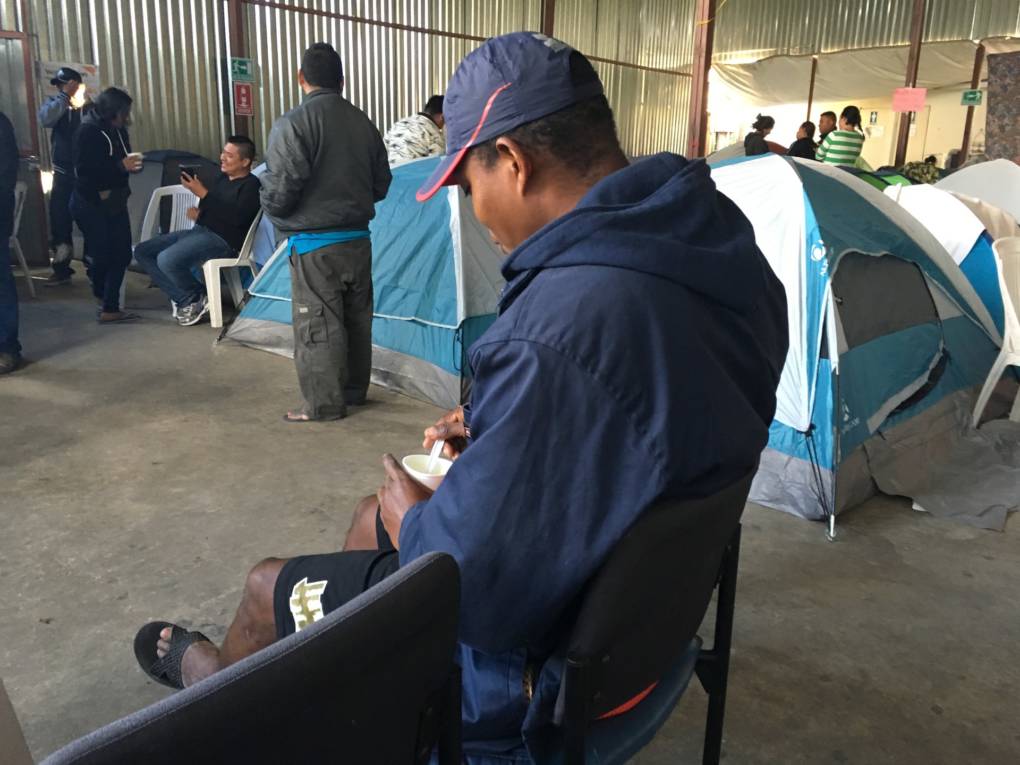
"caption": "Honduran asylum-seeker Saul Arzú eats a cup of soup at the Juventud 2000 migrant shelter in Tijuana on March 8, 2019. U.S. border officials told him he must wait in Mexico for his immigration court date in San Diego.",
"description": null,
"title": "RS36414_IMG_7972-qut",
"credit": "Tyche Hendricks/KQED",
"status": "inherit",
"isLoading": false,
"fetchFailed": false
},
"news_11717098": {
"type": "attachments",
"id": "news_11717098",
"meta": {
"index": "attachments_1716263798",
"site": "news",
"id": "11717098",
"found": true
},
"parent": 11717093,
"imgSizes": {
"twentyfourteen-full-width": {
"file": "https://ww2.kqed.org/app/uploads/sites/10/2019/01/RS34051_chaparral-FINAL-01-1038x576.jpg",
"width": 1038,
"mimeType": "image/jpeg",
"height": 576
},
"thumbnail": {
"file": "https://ww2.kqed.org/app/uploads/sites/10/2019/01/RS34051_chaparral-FINAL-01-160x106.jpg",
"width": 160,
"mimeType": "image/jpeg",
"height": 106
},
"post-thumbnail": {
"file": "https://ww2.kqed.org/app/uploads/sites/10/2019/01/RS34051_chaparral-FINAL-01-672x372.jpg",
"width": 672,
"mimeType": "image/jpeg",
"height": 372
},
"kqedFullSize": {
"file": "https://ww2.kqed.org/app/uploads/sites/10/2019/01/RS34051_chaparral-FINAL-01.jpg",
"width": 1800,
"height": 1198
},
"large": {
"file": "https://ww2.kqed.org/app/uploads/sites/10/2019/01/RS34051_chaparral-FINAL-01-1020x679.jpg",
"width": 1020,
"mimeType": "image/jpeg",
"height": 679
},
"complete_open_graph": {
"file": "https://ww2.kqed.org/app/uploads/sites/10/2019/01/RS34051_chaparral-FINAL-01-1200x799.jpg",
"width": 1200,
"mimeType": "image/jpeg",
"height": 799
},
"guest-author-50": {
"file": "https://ww2.kqed.org/app/uploads/sites/10/2019/01/RS34051_chaparral-FINAL-01-50x50.jpg",
"width": 50,
"mimeType": "image/jpeg",
"height": 50
},
"guest-author-96": {
"file": "https://ww2.kqed.org/app/uploads/sites/10/2019/01/RS34051_chaparral-FINAL-01-96x96.jpg",
"width": 96,
"mimeType": "image/jpeg",
"height": 96
},
"medium": {
"file": "https://ww2.kqed.org/app/uploads/sites/10/2019/01/RS34051_chaparral-FINAL-01-800x532.jpg",
"width": 800,
"mimeType": "image/jpeg",
"height": 532
},
"guest-author-64": {
"file": "https://ww2.kqed.org/app/uploads/sites/10/2019/01/RS34051_chaparral-FINAL-01-64x64.jpg",
"width": 64,
"mimeType": "image/jpeg",
"height": 64
},
"guest-author-32": {
"file": "https://ww2.kqed.org/app/uploads/sites/10/2019/01/RS34051_chaparral-FINAL-01-32x32.jpg",
"width": 32,
"mimeType": "image/jpeg",
"height": 32
},
"detail": {
"file": "https://ww2.kqed.org/app/uploads/sites/10/2019/01/RS34051_chaparral-FINAL-01-150x150.jpg",
"width": 150,
"mimeType": "image/jpeg",
"height": 150
},
"guest-author-128": {
"file": "https://ww2.kqed.org/app/uploads/sites/10/2019/01/RS34051_chaparral-FINAL-01-128x128.jpg",
"width": 128,
"mimeType": "image/jpeg",
"height": 128
}
},
"publishDate": 1547070232,
"modified": 1547167270,
"caption": "People listen as a volunteer calls out the names on a waiting list for asylum-seekers waiting to see U.S. authorities on Nov. 21, 2018. The list is being kept by asylum-seekers themselves to maintain order for those waiting and for those who have just arrived at the port of entry.",
"description": "People listen as a volunteer calls out the names on a waiting list for asylum-seekers waiting to see U.S. authorities on Nov. 21, 2018. The list is being kept by asylum-seekers themselves to maintain order for those waiting and for those who have just arrived at the port of entry.",
"title": "RS34051_chaparral FINAL 01",
"credit": "David Maung/KQED",
"status": "inherit",
"isLoading": false,
"fetchFailed": false
}
},
"audioPlayerReducer": {
"postId": "stream_live",
"isPaused": true,
"isPlaying": false,
"pfsActive": false,
"pledgeModalIsOpen": true,
"playerDrawerIsOpen": false,
"liveAudioPlayStartedAt": 0,
"liveAudioPlayContext": ""
},
"authorsReducer": {
"byline_news_11768398": {
"type": "authors",
"id": "byline_news_11768398",
"meta": {
"override": true
},
"slug": "byline_news_11768398",
"name": "Amy Taxin \u003cbr> The Associated Press",
"isLoading": false
},
"byline_news_11751144": {
"type": "authors",
"id": "byline_news_11751144",
"meta": {
"override": true
},
"slug": "byline_news_11751144",
"name": "Will Weissert\u003cbr>Associated Press",
"isLoading": false
},
"byline_news_11747977": {
"type": "authors",
"id": "byline_news_11747977",
"meta": {
"override": true
},
"slug": "byline_news_11747977",
"name": "\u003cstrong>Associated Press\u003c/strong>",
"isLoading": false
},
"byline_news_11747705": {
"type": "authors",
"id": "byline_news_11747705",
"meta": {
"override": true
},
"slug": "byline_news_11747705",
"name": "Tamara Keith",
"isLoading": false
},
"byline_news_11717093": {
"type": "authors",
"id": "byline_news_11717093",
"meta": {
"override": true
},
"slug": "byline_news_11717093",
"name": "Max Rivlin-Nadler",
"isLoading": false
},
"petejonshuler": {
"type": "authors",
"id": "248",
"meta": {
"index": "authors_1716337520",
"id": "248",
"found": true
},
"name": "Peter Jon Shuler",
"firstName": "Peter",
"lastName": "Jon Shuler",
"slug": "petejonshuler",
"email": "pshuler@kqed.org",
"display_author_email": false,
"staff_mastheads": [
"news"
],
"title": "KQED Contributor",
"bio": null,
"avatar": "https://secure.gravatar.com/avatar/4bcbeaf7cf49fec98284db283a33a47b?s=600&d=blank&r=g",
"twitter": null,
"facebook": null,
"instagram": null,
"linkedin": null,
"sites": [
{
"site": "news",
"roles": [
"contributor"
]
}
],
"headData": {
"title": "Peter Jon Shuler | KQED",
"description": "KQED Contributor",
"ogImgSrc": "https://secure.gravatar.com/avatar/4bcbeaf7cf49fec98284db283a33a47b?s=600&d=blank&r=g",
"twImgSrc": "https://secure.gravatar.com/avatar/4bcbeaf7cf49fec98284db283a33a47b?s=600&d=blank&r=g"
},
"isLoading": false,
"link": "/author/petejonshuler"
},
"tychehendricks": {
"type": "authors",
"id": "259",
"meta": {
"index": "authors_1716337520",
"id": "259",
"found": true
},
"name": "Tyche Hendricks",
"firstName": "Tyche",
"lastName": "Hendricks",
"slug": "tychehendricks",
"email": "thendricks@kqed.org",
"display_author_email": true,
"staff_mastheads": [
"news"
],
"title": "KQED Senior Editor, Immigration",
"bio": "\u003cspan style=\"font-weight: 400;\">Tyche Hendricks is KQED’s senior editor for immigration, leading coverage of the policy and politics that affect California’s immigrant communities. Her work for KQED’s radio and online audiences is also carried on NPR and other national outlets. She has been recognized with awards from the Radio and Television News Directors Association, the Society for Professional Journalists; the Education Writers Association; the Best of the West and the National Federation of Community Broadcasters. Before joining KQED in 2010, Tyche spent more than a dozen years as a newspaper reporter, notably at the \u003c/span>\u003ci>\u003cspan style=\"font-weight: 400;\">San Francisco Chronicle\u003c/span>\u003c/i>\u003cspan style=\"font-weight: 400;\">. At different times she has covered criminal justice, government and politics and urban planning. Tyche has taught in the MFA Creative Writing program at the University of San Francisco and at UC Berkeley’s Graduate School of Journalism, where she was co-director of a national immigration symposium for professional journalists. She is the author of \u003c/span>\u003ci>\u003cspan style=\"font-weight: 400;\">The Wind Doesn't Need a Passport: Stories from the U.S.-Mexico Borderlands\u003c/span>\u003c/i>\u003cspan style=\"font-weight: 400;\"> (University of California Press). \u003c/span>",
"avatar": "https://secure.gravatar.com/avatar/b8ee458e2731c2d43df86882ce17267e?s=600&d=blank&r=g",
"twitter": "tychehendricks",
"facebook": null,
"instagram": null,
"linkedin": null,
"sites": [
{
"site": "news",
"roles": [
"editor"
]
},
{
"site": "stateofhealth",
"roles": [
"editor"
]
}
],
"headData": {
"title": "Tyche Hendricks | KQED",
"description": "KQED Senior Editor, Immigration",
"ogImgSrc": "https://secure.gravatar.com/avatar/b8ee458e2731c2d43df86882ce17267e?s=600&d=blank&r=g",
"twImgSrc": "https://secure.gravatar.com/avatar/b8ee458e2731c2d43df86882ce17267e?s=600&d=blank&r=g"
},
"isLoading": false,
"link": "/author/tychehendricks"
},
"kdomara": {
"type": "authors",
"id": "1459",
"meta": {
"index": "authors_1716337520",
"id": "1459",
"found": true
},
"name": "Kelly O'Mara",
"firstName": "Kelly",
"lastName": "O'Mara",
"slug": "kdomara",
"email": "komara@kqed.org",
"display_author_email": false,
"staff_mastheads": [
"news"
],
"title": "KQED Contributor",
"bio": "Kelly O'Mara is a writer and reporter in the San Francisco Bay Area. She writes about food, health, sports, travel, business and California news. Her work has appeared on KQED, online for Outside Magazine, epsnW, VICE and in Competitor Magazine, among others. Follow Kelly on Twitter \u003ca href=\"https://twitter.com/kellydomara\">@kellydomara\u003c/a>.",
"avatar": "https://secure.gravatar.com/avatar/768fec7412028b72f13bdd0f5f9d8186?s=600&d=blank&r=g",
"twitter": null,
"facebook": null,
"instagram": null,
"linkedin": null,
"sites": [
{
"site": "arts",
"roles": []
},
{
"site": "news",
"roles": []
},
{
"site": "bayareabites",
"roles": []
},
{
"site": "stateofhealth",
"roles": []
},
{
"site": "science",
"roles": []
},
{
"site": "checkplease",
"roles": [
"editor"
]
},
{
"site": "food",
"roles": []
},
{
"site": "forum",
"roles": [
"editor"
]
},
{
"site": "liveblog",
"roles": [
"editor"
]
}
],
"headData": {
"title": "Kelly O'Mara | KQED",
"description": "KQED Contributor",
"ogImgSrc": "https://secure.gravatar.com/avatar/768fec7412028b72f13bdd0f5f9d8186?s=600&d=blank&r=g",
"twImgSrc": "https://secure.gravatar.com/avatar/768fec7412028b72f13bdd0f5f9d8186?s=600&d=blank&r=g"
},
"isLoading": false,
"link": "/author/kdomara"
},
"jsmall": {
"type": "authors",
"id": "6625",
"meta": {
"index": "authors_1716337520",
"id": "6625",
"found": true
},
"name": "Julie Small",
"firstName": "Julie",
"lastName": "Small",
"slug": "jsmall",
"email": "jsmall@kqed.org",
"display_author_email": true,
"staff_mastheads": [
"news"
],
"title": "KQED Contributor",
"bio": "Julie Small reports on criminal justice and immigration.\r\n\r\nShe was part of a team at KQED awarded a regional 2019 Edward R. Murrow award for continuing coverage of the Trump Administration's family separation policy.\r\n\r\nThe Society for Professional Journalists recognized Julie's 2018 \u003ca href=\"https://www.kqed.org/news/11636262/the-officer-tased-him-31-times-the-sheriff-called-his-death-an-accident\">reporting\u003c/a> on the San Joaquin County Sheriff's \u003ca href=\"https://www.kqed.org/news/11634689/autopsy-doctors-sheriff-overrode-death-findings-to-protect-law-enforcement\">interference\u003c/a> in death investigations with an Excellence in Journalism Award for Ongoing Coverage.\r\n\r\nJulie's\u003ca href=\"https://www.kqed.org/news/11039666/two-mentally-ill-inmates-died-one-month-in-santa-clara\"> reporting\u003c/a> with Lisa Pickoff-White on the treatment of mentally ill offenders in California jails earned a 2017 regional Edward R. Murrow Award for news reporting and an investigative reporting award from the SPJ of Northern California.\r\n\r\nBefore joining KQED, Julie covered government and politics in Sacramento for Southern California Public Radio (SCPR). Her 2010 \u003ca href=\"https://www.scpr.org/specials/prisonmedical/\">series\u003c/a> on lapses in California’s prison medical care also won a regional Edward R. Murrow Award for investigative reporting and a Golden Mic Award from the RTNDA of Southern California.\r\n\r\nJulie began her career in journalism in 2000 as the deputy foreign editor for public radio's \u003cem>Marketplace, \u003c/em>while earning her master's degree in journalism from USC’s Annenberg School of Communication.",
"avatar": "https://secure.gravatar.com/avatar/4baedf201468df97be97c2a9dd7585d0?s=600&d=blank&r=g",
"twitter": "@SmallRadio2",
"facebook": null,
"instagram": null,
"linkedin": null,
"sites": [
{
"site": "news",
"roles": [
"editor"
]
},
{
"site": "stateofhealth",
"roles": [
"author"
]
},
{
"site": "science",
"roles": [
"author"
]
}
],
"headData": {
"title": "Julie Small | KQED",
"description": "KQED Contributor",
"ogImgSrc": "https://secure.gravatar.com/avatar/4baedf201468df97be97c2a9dd7585d0?s=600&d=blank&r=g",
"twImgSrc": "https://secure.gravatar.com/avatar/4baedf201468df97be97c2a9dd7585d0?s=600&d=blank&r=g"
},
"isLoading": false,
"link": "/author/jsmall"
},
"fjhabvala": {
"type": "authors",
"id": "8659",
"meta": {
"index": "authors_1716337520",
"id": "8659",
"found": true
},
"name": "Farida Jhabvala Romero",
"firstName": "Farida",
"lastName": "Jhabvala Romero",
"slug": "fjhabvala",
"email": "fjhabvala@kqed.org",
"display_author_email": true,
"staff_mastheads": [
"news"
],
"title": "KQED Contributor",
"bio": "Farida Jhabvala Romero is a Labor Correspondent for KQED. She previously covered immigration. Farida was \u003ca href=\"https://www.ccnma.org/2022-most-influential-latina-journalists\">named\u003c/a> one of the 10 Most Influential Latina Journalists in California in 2022 by the California Chicano News Media Association. Her work has won awards from the Society of Professional Journalists (Northern California), as well as a national and regional Edward M. Murrow Award for the collaborative reporting projects “Dangerous Air” and “Graying California.” Before joining KQED, Farida worked as a producer at Radio Bilingüe, a national public radio network. Farida earned her master’s degree in journalism from Stanford University.",
"avatar": "https://secure.gravatar.com/avatar/f9f022d4e2609741874222a1e9d41f48fea74011aa7c615eef91d9a50c944ebe?s=600&d=blank&r=g",
"twitter": "FaridaJhabvala",
"bluesky": null,
"facebook": null,
"instagram": null,
"linkedin": "https://www.linkedin.com/in/faridajhabvala/",
"sites": [
{
"site": "news",
"roles": [
"editor"
]
},
{
"site": "stateofhealth",
"roles": [
"author"
]
},
{
"site": "liveblog",
"roles": [
"author"
]
}
],
"headData": {
"title": "Farida Jhabvala Romero | KQED",
"description": "KQED Contributor",
"ogImgSrc": "https://secure.gravatar.com/avatar/f9f022d4e2609741874222a1e9d41f48fea74011aa7c615eef91d9a50c944ebe?s=600&d=blank&r=g",
"twImgSrc": "https://secure.gravatar.com/avatar/f9f022d4e2609741874222a1e9d41f48fea74011aa7c615eef91d9a50c944ebe?s=600&d=blank&r=g"
},
"isLoading": false,
"link": "/author/fjhabvala"
},
"ahall": {
"type": "authors",
"id": "11490",
"meta": {
"index": "authors_1716337520",
"id": "11490",
"found": true
},
"name": "Alex Hall",
"firstName": "Alex",
"lastName": "Hall",
"slug": "ahall",
"email": "ahall@kqed.org",
"display_author_email": false,
"staff_mastheads": [
"news"
],
"title": "KQED Enterprise & Accountability Reporter",
"bio": "Alex Hall is KQED's Enterprise and Accountability Reporter. She previously covered the Central Valley for five years from KQED's bureau in Fresno. Before joining KQED, Alex was an investigative reporting fellow at Wisconsin Public Radio and the Wisconsin Center for Investigative Journalism. She has also worked as a bilingual producer for NPR's investigative unit and freelance video producer for Reuters TV on the Latin America desk. She got her start in journalism in South America, where she worked as a radio producer and Spanish-English translator for CNN Chile. Her documentary and investigation into the series of deadly COVID-19 outbreaks at Foster Farms won a national Edward R. Murrow award and was named an Investigative Reporters & Editors award finalist. Alex's reporting for Reveal on the Wisconsin dairy industry's reliance on undocumented immigrant labor was made into a film, Los Lecheros, which won a regional Edward R. Murrow award for best news documentary.",
"avatar": "https://secure.gravatar.com/avatar/defcbeb88b0bf591ff9af41f22644051?s=600&d=blank&r=g",
"twitter": "@chalexhall",
"facebook": null,
"instagram": null,
"linkedin": null,
"sites": [
{
"site": "news",
"roles": [
"editor"
]
},
{
"site": "liveblog",
"roles": [
"author"
]
}
],
"headData": {
"title": "Alex Hall | KQED",
"description": "KQED Enterprise & Accountability Reporter",
"ogImgSrc": "https://secure.gravatar.com/avatar/defcbeb88b0bf591ff9af41f22644051?s=600&d=blank&r=g",
"twImgSrc": "https://secure.gravatar.com/avatar/defcbeb88b0bf591ff9af41f22644051?s=600&d=blank&r=g"
},
"isLoading": false,
"link": "/author/ahall"
},
"katewolffe": {
"type": "authors",
"id": "11523",
"meta": {
"index": "authors_1716337520",
"id": "11523",
"found": true
},
"name": "Kate Wolffe",
"firstName": "Kate",
"lastName": "Wolffe",
"slug": "katewolffe",
"email": "kwolffe@kqed.org",
"display_author_email": true,
"staff_mastheads": [
"news"
],
"title": "KQED Reporter + Weekend Host",
"bio": "Kate Wolffe reports on local Bay Area happenings for KQED, and hosts the news on weekend afternoons. She joined KQED in 2018 as an intern on the Forum team, before moving to cover topics ranging from politics to criminal justice to homelessness. A Bay Area native and UC Berkeley graduate, Kate loves to discover new corners of the region.",
"avatar": "https://secure.gravatar.com/avatar/22455f14db824a03ee252f73052fe939?s=600&d=blank&r=g",
"twitter": "katewolffe",
"facebook": null,
"instagram": null,
"linkedin": null,
"sites": [
{
"site": "arts",
"roles": [
"editor"
]
},
{
"site": "news",
"roles": [
"author",
"edit_others_posts"
]
},
{
"site": "forum",
"roles": [
"editor"
]
}
],
"headData": {
"title": "Kate Wolffe | KQED",
"description": "KQED Reporter + Weekend Host",
"ogImgSrc": "https://secure.gravatar.com/avatar/22455f14db824a03ee252f73052fe939?s=600&d=blank&r=g",
"twImgSrc": "https://secure.gravatar.com/avatar/22455f14db824a03ee252f73052fe939?s=600&d=blank&r=g"
},
"isLoading": false,
"link": "/author/katewolffe"
}
},
"pagesReducer": {
"news_tag_immigrants": {
"type": "terms",
"id": "news_17708",
"meta": {
"index": "terms_1716263798",
"site": "news",
"id": "17708",
"score": 8.668587
},
"featImg": null,
"name": "immigrants",
"description": null,
"taxonomy": "tag",
"headData": {
"twImgId": null,
"twTitle": null,
"ogTitle": null,
"ogImgId": null,
"twDescription": null,
"description": null,
"title": "immigrants Archives | KQED News",
"ogDescription": null
},
"ttid": 17742,
"slug": "immigrants",
"isLoading": false,
"title": "immigrants",
"pageMeta": {
"site": "news",
"WpPageTemplate": "page-topic-editorial",
"currentPage": 8
},
"blocks": [
{
"blockName": "kqed/post-list",
"attrs": {
"layout": "cardArticle2",
"query": "posts/news?tag=immigrants",
"seeMore": false,
"paginated": true,
"page": 8
}
},
{
"blockName": "kqed/ad"
}
]
}
},
"pfsSessionReducer": {},
"postsReducer": {
"stream_live": {
"type": "live",
"id": "stream_live",
"audioUrl": "https://streams.kqed.org/kqedradio",
"title": "Live Stream",
"excerpt": "Live Stream information currently unavailable.",
"link": "/radio",
"featImg": "",
"label": {
"name": "KQED Live",
"link": "/"
}
},
"stream_kqedNewscast": {
"type": "posts",
"id": "stream_kqedNewscast",
"audioUrl": "https://www.kqed.org/.stream/anon/radio/RDnews/newscast.mp3?_=1",
"title": "KQED Newscast",
"featImg": "",
"label": {
"name": "88.5 FM",
"link": "/"
}
},
"news_11788192": {
"type": "posts",
"id": "news_11788192",
"meta": {
"index": "posts_1716263798",
"site": "news",
"id": "11788192",
"score": null,
"sort": [
1574471065000
]
},
"guestAuthors": [],
"slug": "south-bay-community-leaders-call-for-trump-advisers-resignation-after-emails-promoting-white-nationalism",
"title": "South Bay Community Leaders Call for Trump Adviser's Resignation After Emails Promoting White Nationalism",
"publishDate": 1574471065,
"format": "standard",
"headTitle": "South Bay Community Leaders Call for Trump Adviser’s Resignation After Emails Promoting White Nationalism | KQED",
"labelTerm": {
"site": "news"
},
"content": "\u003cp>A group of South Bay religious and community leaders are calling for the resignation of White House adviser Stephen Miller after the Southern Poverty Law Center this week exposed emails he sent to Breitbart pushing white supremacist ideas.\u003c/p>\n\u003cp>“Stephen Miller represents an existential threat to who we are as a Valley,” said Father John Pedigo at a press conference held Friday at the Amigos de Guadalupe Center for Justice and Empowerment in San Jose.\u003c/p>\n\u003cp>[aside link1=\"https://www.npr.org/2017/08/12/542811416/-that-s-stephen-white-house-adviser-s-controversial-style-dates-back-to-his-yout,White House Adviser's Controversial Style Dates Back To His Youth\" link2=\"https://video.kqed.org/video/hateful-words-1573761343/,Alleged Stephen Miller Emails Reference White Nationalism\"]Pedigo, the advocacy and community engagement director for Catholic Charities of Santa Clara County, said Silicon Valley is made up of people from all walks of lives and faiths. “We are a valley of immigrants. We are a valley of people from all over the world that work together,” he said.\u003c/p>\n\u003cp>“Stephen Miller, by giving preference according to race and white supremacy ideology, he creates all sorts of moral problems for us.”\u003c/p>\n\u003cp>The resignation demand comes after \u003ca href=\"https://www.splcenter.org/stephen-miller-breitbart-emails\" target=\"_blank\" rel=\"noopener noreferrer\">emails released by the Southern Poverty Law Center\u003c/a> earlier this week showed Miller exercised influence over the far-right website Breitbart, often pushing for harder anti-immigrant messaging and suggesting material from widely debunked white nationalist sources.\u003c/p>\n\u003cp>[ad fullwidth]\u003c/p>\n\u003cp>According to the Southern Poverty Law Center, over 900 private emails were reviewed and the vast majority concerned issues of race or immigration.\u003c/p>\n\u003cp>According to their review, Miller pushes source material to Breitbart that includes “a ‘white genocide’-themed novel, xenophobic conspiracy theories and eugenics-era immigration laws that Adolf Hitler lauded in Mein Kampf.”\u003c/p>\n\u003cp>“Hatewatch was unable to find any examples of Miller writing sympathetically or even in neutral tones about any person who is nonwhite or foreign-born,” \u003ca href=\"https://www.splcenter.org/hatewatch/2019/11/12/stephen-millers-affinity-white-nationalism-revealed-leaked-emails\" target=\"_blank\" rel=\"noopener noreferrer\">wrote the Southern Poverty Law Center in their analysis\u003c/a>.\u003c/p>\n\u003cfigure id=\"attachment_11788275\" class=\"wp-caption aligncenter\" style=\"max-width: 800px\">\u003cimg loading=\"lazy\" decoding=\"async\" class=\"size-medium wp-image-11788275\" src=\"https://ww2.kqed.org/app/uploads/sites/10/2019/11/SJ-Leaders-800x610.jpg\" alt=\"South Bay religious and community leaders join in an interfaith prayer at the Amigos de Guadalupe Center for Justice and Empowerment in San Jose.\" width=\"800\" height=\"610\" srcset=\"https://cdn.kqed.org/wp-content/uploads/sites/10/2019/11/SJ-Leaders-800x610.jpg 800w, https://cdn.kqed.org/wp-content/uploads/sites/10/2019/11/SJ-Leaders-160x122.jpg 160w, https://cdn.kqed.org/wp-content/uploads/sites/10/2019/11/SJ-Leaders-1020x778.jpg 1020w, https://cdn.kqed.org/wp-content/uploads/sites/10/2019/11/SJ-Leaders-1200x915.jpg 1200w, https://cdn.kqed.org/wp-content/uploads/sites/10/2019/11/SJ-Leaders.jpg 1920w\" sizes=\"(max-width: 800px) 100vw, 800px\">\u003cfigcaption class=\"wp-caption-text\">South Bay religious and community leaders join in an interfaith prayer at the Amigos de Guadalupe Center for Justice and Empowerment in San Jose. \u003ccite>(Peter Jon Shuler/KQED)\u003c/cite>\u003c/figcaption>\u003c/figure>\n\u003cp>Although the emails are from 2015 and 2016, Miller went on to become a senior adviser to President Trump and is often considered the architect of many of the administration’s immigration policies.\u003c/p>\n\u003cp>It was those policies — from the travel ban to the separation of children from their parents at the border — that the community leaders in the South Bay specifically called out.\u003c/p>\n\u003cp>[aside postID='news_11756535']“I’m a professor at San Jose State University and I’m here because my students, who are incredibly diverse, are nervous,” said Scott Myers-Lipton.\u003c/p>\n\u003cp>“They’re scared of this time that we live in and particularly of white supremacy. And we have a man that is in charge of immigration policy in this country that has been shown now to be dabbling, to be thinking about, to be promoting, to be encouraging white supremacist ideology. And my students deserve better than that.”\u003c/p>\n\u003cp>After various community leaders spoke, they then joined in an interfaith prayer and call-and-response before singing “We Shall Overcome.”\u003c/p>\n\u003cp>\u003c/p>\n\u003cp>The White House did not respond to requests for comment but has previously dismissed the Southern Poverty Law Center’s report as a left-wing smear campaign.\u003c/p>\n\n",
"blocks": [],
"excerpt": "Religious leaders in San Jose on Friday spoke out against White House adviser Stephen Miller after the Southern Poverty Law Center exposed emails he sent to Breitbart pushing white supremacist ideas.",
"status": "publish",
"parent": 0,
"modified": 1721111360,
"stats": {
"hasAudio": false,
"hasVideo": false,
"hasChartOrMap": false,
"iframeSrcs": [],
"hasGoogleForm": false,
"hasGallery": false,
"hasHearkenModule": false,
"hasPolis": false,
"paragraphCount": 16,
"wordCount": 581
},
"headData": {
"title": "South Bay Community Leaders Call for Trump Adviser's Resignation After Emails Promoting White Nationalism | KQED",
"description": "Religious leaders in San Jose on Friday spoke out against White House adviser Stephen Miller after the Southern Poverty Law Center exposed emails he sent to Breitbart pushing white supremacist ideas.",
"ogTitle": "",
"ogDescription": "",
"ogImgId": "",
"twTitle": "",
"twDescription": "",
"twImgId": "",
"schema": {
"@context": "https://schema.org",
"@type": "NewsArticle",
"headline": "South Bay Community Leaders Call for Trump Adviser's Resignation After Emails Promoting White Nationalism",
"datePublished": "2019-11-22T17:04:25-08:00",
"dateModified": "2024-07-15T23:29:20-07:00",
"image": "https://cdn.kqed.org/wp-content/uploads/2020/02/KQED-OG-Image@1x.png",
"isAccessibleForFree": "True",
"publisher": {
"@type": "NewsMediaOrganization",
"@id": "https://www.kqed.org/#organization",
"name": "KQED",
"logo": "https://cdn.kqed.org/wp-content/uploads/2020/02/KQED-OG-Image@1x.png",
"url": "https://www.kqed.org",
"sameAs": [
"https://www.facebook.com/KQED",
"https://twitter.com/KQED",
"https://www.instagram.com/kqed/",
"https://www.tiktok.com/@kqedofficial",
"https://www.linkedin.com/company/kqed",
"https://www.youtube.com/channel/UCeC0IOo7i1P_61zVUWbJ4nw"
]
}
}
},
"sticky": false,
"path": "/news/11788192/south-bay-community-leaders-call-for-trump-advisers-resignation-after-emails-promoting-white-nationalism",
"audioTrackLength": null,
"parsedContent": [
{
"type": "contentString",
"content": "\u003cdiv class=\"post-body\">\u003cp>\u003cp>A group of South Bay religious and community leaders are calling for the resignation of White House adviser Stephen Miller after the Southern Poverty Law Center this week exposed emails he sent to Breitbart pushing white supremacist ideas.\u003c/p>\n\u003cp>“Stephen Miller represents an existential threat to who we are as a Valley,” said Father John Pedigo at a press conference held Friday at the Amigos de Guadalupe Center for Justice and Empowerment in San Jose.\u003c/p>\n\u003cp>\u003c/p>\u003c/div>",
"attributes": {
"named": {},
"numeric": []
}
},
{
"type": "component",
"content": "",
"name": "aside",
"attributes": {
"named": {
"link1": "https://www.npr.org/2017/08/12/542811416/-that-s-stephen-white-house-adviser-s-controversial-style-dates-back-to-his-yout,White House Adviser's Controversial Style Dates Back To His Youth",
"link2": "https://video.kqed.org/video/hateful-words-1573761343/,Alleged Stephen Miller Emails Reference White Nationalism",
"label": ""
},
"numeric": []
}
},
{
"type": "contentString",
"content": "\u003cdiv class=\"post-body\">\u003cp>Pedigo, the advocacy and community engagement director for Catholic Charities of Santa Clara County, said Silicon Valley is made up of people from all walks of lives and faiths. “We are a valley of immigrants. We are a valley of people from all over the world that work together,” he said.\u003c/p>\n\u003cp>“Stephen Miller, by giving preference according to race and white supremacy ideology, he creates all sorts of moral problems for us.”\u003c/p>\n\u003cp>The resignation demand comes after \u003ca href=\"https://www.splcenter.org/stephen-miller-breitbart-emails\" target=\"_blank\" rel=\"noopener noreferrer\">emails released by the Southern Poverty Law Center\u003c/a> earlier this week showed Miller exercised influence over the far-right website Breitbart, often pushing for harder anti-immigrant messaging and suggesting material from widely debunked white nationalist sources.\u003c/p>\n\u003cp>\u003c/p>\u003c/div>",
"attributes": {
"named": {},
"numeric": []
}
},
{
"type": "component",
"content": "",
"name": "ad",
"attributes": {
"named": {
"label": "fullwidth"
},
"numeric": [
"fullwidth"
]
}
},
{
"type": "contentString",
"content": "\u003cdiv class=\"post-body\">\u003cp>\u003c/p>\n\u003cp>According to the Southern Poverty Law Center, over 900 private emails were reviewed and the vast majority concerned issues of race or immigration.\u003c/p>\n\u003cp>According to their review, Miller pushes source material to Breitbart that includes “a ‘white genocide’-themed novel, xenophobic conspiracy theories and eugenics-era immigration laws that Adolf Hitler lauded in Mein Kampf.”\u003c/p>\n\u003cp>“Hatewatch was unable to find any examples of Miller writing sympathetically or even in neutral tones about any person who is nonwhite or foreign-born,” \u003ca href=\"https://www.splcenter.org/hatewatch/2019/11/12/stephen-millers-affinity-white-nationalism-revealed-leaked-emails\" target=\"_blank\" rel=\"noopener noreferrer\">wrote the Southern Poverty Law Center in their analysis\u003c/a>.\u003c/p>\n\u003cfigure id=\"attachment_11788275\" class=\"wp-caption aligncenter\" style=\"max-width: 800px\">\u003cimg loading=\"lazy\" decoding=\"async\" class=\"size-medium wp-image-11788275\" src=\"https://ww2.kqed.org/app/uploads/sites/10/2019/11/SJ-Leaders-800x610.jpg\" alt=\"South Bay religious and community leaders join in an interfaith prayer at the Amigos de Guadalupe Center for Justice and Empowerment in San Jose.\" width=\"800\" height=\"610\" srcset=\"https://cdn.kqed.org/wp-content/uploads/sites/10/2019/11/SJ-Leaders-800x610.jpg 800w, https://cdn.kqed.org/wp-content/uploads/sites/10/2019/11/SJ-Leaders-160x122.jpg 160w, https://cdn.kqed.org/wp-content/uploads/sites/10/2019/11/SJ-Leaders-1020x778.jpg 1020w, https://cdn.kqed.org/wp-content/uploads/sites/10/2019/11/SJ-Leaders-1200x915.jpg 1200w, https://cdn.kqed.org/wp-content/uploads/sites/10/2019/11/SJ-Leaders.jpg 1920w\" sizes=\"(max-width: 800px) 100vw, 800px\">\u003cfigcaption class=\"wp-caption-text\">South Bay religious and community leaders join in an interfaith prayer at the Amigos de Guadalupe Center for Justice and Empowerment in San Jose. \u003ccite>(Peter Jon Shuler/KQED)\u003c/cite>\u003c/figcaption>\u003c/figure>\n\u003cp>Although the emails are from 2015 and 2016, Miller went on to become a senior adviser to President Trump and is often considered the architect of many of the administration’s immigration policies.\u003c/p>\n\u003cp>It was those policies — from the travel ban to the separation of children from their parents at the border — that the community leaders in the South Bay specifically called out.\u003c/p>\n\u003cp>\u003c/p>\u003c/div>",
"attributes": {
"named": {},
"numeric": []
}
},
{
"type": "component",
"content": "",
"name": "aside",
"attributes": {
"named": {
"postid": "news_11756535",
"label": ""
},
"numeric": []
}
},
{
"type": "contentString",
"content": "\u003cdiv class=\"post-body\">\u003cp>“I’m a professor at San Jose State University and I’m here because my students, who are incredibly diverse, are nervous,” said Scott Myers-Lipton.\u003c/p>\n\u003cp>“They’re scared of this time that we live in and particularly of white supremacy. And we have a man that is in charge of immigration policy in this country that has been shown now to be dabbling, to be thinking about, to be promoting, to be encouraging white supremacist ideology. And my students deserve better than that.”\u003c/p>\n\u003cp>After various community leaders spoke, they then joined in an interfaith prayer and call-and-response before singing “We Shall Overcome.”\u003c/p>\n\u003cp>\u003c/p>\n\u003cp>The White House did not respond to requests for comment but has previously dismissed the Southern Poverty Law Center’s report as a left-wing smear campaign.\u003c/p>\n\n\u003c/div>\u003c/p>",
"attributes": {
"named": {},
"numeric": []
}
}
],
"link": "/news/11788192/south-bay-community-leaders-call-for-trump-advisers-resignation-after-emails-promoting-white-nationalism",
"authors": [
"1459",
"248"
],
"categories": [
"news_1169",
"news_8",
"news_13"
],
"tags": [
"news_17725",
"news_1323",
"news_19542",
"news_17708",
"news_20202",
"news_17968",
"news_18541",
"news_21025"
],
"featImg": "news_11788263",
"label": "news"
},
"news_11781717": {
"type": "posts",
"id": "news_11781717",
"meta": {
"index": "posts_1716263798",
"site": "news",
"id": "11781717",
"score": null,
"sort": [
1571862188000
]
},
"parent": 0,
"labelTerm": {
"site": "news",
"term": 72
},
"blocks": [],
"publishDate": 1571862188,
"format": "standard",
"disqusTitle": "Fresno Priest Accused of Sexual Abuse of Immigrant Parishioners to Stand Trial",
"title": "Fresno Priest Accused of Sexual Abuse of Immigrant Parishioners to Stand Trial",
"headTitle": "The California Report | KQED News",
"content": "\u003cp>A former Anglican priest accused of sexually abusing some of his adult immigrant parishioners in Fresno, under the guise of a supposed spiritual healing ritual, will stand trial, a judge ruled Wednesday.\u003c/p>\n\u003cp>Jesús Antonio Castañeda Serna walked out of the courtroom flanked by his supporters, who hugged him in the hallway as he left. Fresno County Superior Court Judge Jane A. Cardoza ruled the case will go to trial on all charges. Castañeda has been charged with 22 counts of battery, sexual battery, attempted sexual battery and attempt to dissuade a witness from prosecuting.\u003c/p>\n\u003cp>[pullquote size='medium' align='right' citation='A man who accused Jesús Antonio Castañeda Serna of sexual abuse']'You start confusing God and a human being and you have trouble making the distinction between what’s good and what’s bad.'[/pullquote]Cardoza’s ruling came after nine days of testimony by nine alleged victims, most of them adult men who said the priest massaged their genitals under the pretext of a “prayer” or “healing” ritual.\u003c/p>\n\u003cp>\"The court finds that the witnesses were authentic and credible,\" said Cardoza. \"Indeed, I was taken by the tone of their testimony, being humbled, quite baffled by the defendant's actions and ultimately disillusioned by him.\"\u003c/p>\n\u003cp>Castañeda, through his attorney, has maintained his innocence. Defense attorney Ralph Torres said the alleged sexual abuse never happened and he thought they would prevail at trial.\u003c/p>\n\u003cp>[ad fullwidth]\u003c/p>\n\u003cp>\"This type of healing massage happens all over Latin America, Mexico and in the United States. Nothing unusual about that,\" he said after Cardoza's ruling.\u003c/p>\n\u003cp>The alleged victims described visiting Castañeda’s office to receive healing for physical ailments and personal issues such as drug or alcohol abuse, separation from a spouse, or the death of a child. Most said they were referred by other congregants who claimed the priest possessed spiritual gifts and the ability to heal.\u003c/p>\n\u003cp>According to the eight men and one woman who testified, Castañeda told them that they had been cursed by previous wives or girlfriends, or were possessed by a demon and needed spiritual healing. (The witnesses were named in court, but KQED is not disclosing their identities because they are alleged victims of sexual abuse.)\u003c/p>\n\u003cp>The witnesses said Castañeda instructed them to strip down to their underwear, lay on a bench or massage table, and receive “healing” or “prayer” massages that they described as very painful. One man reported he had visible bruises for days after the massages. Prosecutor Kelly Smith presented photos showing the man’s neck with red marks, which the witness said a family member took after one of the prayer massages.\u003c/p>\n\u003cp>The massages often ended in the priest touching parishioners’ genitals, the witnesses testified. In some cases, they described a grazing that could have been accidental. In others, they said, Castañeda grabbed their penis or testicles through their underwear or attempted to masturbate them. Sometimes the priest claimed to have removed a black or yellow substance from their penis, the men said. The woman said Castañeda touched her breasts while making the sign of the cross on her chest.\u003c/p>\n\u003cfigure id=\"attachment_11782043\" class=\"wp-caption alignnone\" style=\"max-width: 800px\">\u003cimg class=\"size-medium wp-image-11782043\" src=\"https://ww2.kqed.org/news/wp-content/uploads/sites/10/2019/10/10232019_Castaneda3_crop-qut-800x581.jpg\" alt=\"Jesús Antonio Castañeda Serna preaches to parishioners of his new church, Iglesia del Espíritu Santo, or Holy Spirit Church. Castañeda has been charged with 22 counts of battery, sexual battery, attempted sexual battery and attempt to prevent a witness/victim from prosecuting.\" width=\"800\" height=\"581\" srcset=\"https://ww2.kqed.org/app/uploads/sites/10/2019/10/10232019_Castaneda3_crop-qut-800x581.jpg 800w, https://ww2.kqed.org/app/uploads/sites/10/2019/10/10232019_Castaneda3_crop-qut-160x116.jpg 160w, https://ww2.kqed.org/app/uploads/sites/10/2019/10/10232019_Castaneda3_crop-qut-1020x741.jpg 1020w, https://ww2.kqed.org/app/uploads/sites/10/2019/10/10232019_Castaneda3_crop-qut-1200x871.jpg 1200w, https://ww2.kqed.org/app/uploads/sites/10/2019/10/10232019_Castaneda3_crop-qut.jpg 1920w\" sizes=\"(max-width: 800px) 100vw, 800px\">\u003cfigcaption class=\"wp-caption-text\">Jesús Antonio Castañeda Serna preaches to parishioners of his new church, Iglesia del Espíritu Santo, or Holy Spirit Church. Castañeda has been charged with 22 counts of battery, sexual battery, attempted sexual battery and attempt to prevent a witness/victim from prosecuting. \u003ccite>(Alexandra Hall/KQED)\u003c/cite>\u003c/figcaption>\u003c/figure>\n\u003cp>The alleged victims described leaving the meetings shocked, ashamed and confused. Some said the events forever altered their trust in priests. The witnesses said the meetings took place at different times in recent years: The first accounts of the abuse date back to 2014 and the most recent to 2017.\u003c/p>\n\u003cp>[pullquote size='medium' align='right' citation='Bruce Taylor, U.S.-based archbishop of the World Communion of Christian Celtic Convergence Churches']'This is not some banana republic. This is the United States of America. We have due process. And everyone is presumed innocent until proven guilty.'[/pullquote]One man alleged Castañeda told him the priest needed to see his semen to determine how he should be treated. Another man said Castañeda yanked on his penis so abruptly that he heard a popping noise and urinated blood for two to three days.\u003c/p>\n\u003cp>Another witness said one prayer massage ended with Castañeda masturbating him and telling him that he was in love with him. The man, who was a parishioner and church volunteer, said the experience led him to attempt suicide.\u003c/p>\n\u003cp>“You start confusing God and a human being and you have trouble making the distinction between what’s good and what’s bad,” the man testified in Spanish through an interpreter. “And you realize that what’s happening to you isn’t right.”\u003c/p>\n\u003cp>When defense attorney Torres asked the same man whether he reported the alleged sexual touching to the priest's superiors at the church, the witness replied: “This isn’t something you can just talk about. Because there’s going to be some people who believe you, there’s going to be some people who do not believe you, and I couldn’t talk about it at the time.”\u003c/p>\n\u003cfigure id=\"attachment_11782022\" class=\"wp-caption alignnone\" style=\"max-width: 800px\">\u003cimg class=\"size-medium wp-image-11782022\" src=\"https://ww2.kqed.org/news/wp-content/uploads/sites/10/2019/10/RS39697_Shaw-office-qut-800x533.jpg\" alt=\"\" width=\"800\" height=\"533\" srcset=\"https://ww2.kqed.org/app/uploads/sites/10/2019/10/RS39697_Shaw-office-qut-800x533.jpg 800w, https://ww2.kqed.org/app/uploads/sites/10/2019/10/RS39697_Shaw-office-qut-160x107.jpg 160w, https://ww2.kqed.org/app/uploads/sites/10/2019/10/RS39697_Shaw-office-qut-1020x680.jpg 1020w, https://ww2.kqed.org/app/uploads/sites/10/2019/10/RS39697_Shaw-office-qut-1200x800.jpg 1200w, https://ww2.kqed.org/app/uploads/sites/10/2019/10/RS39697_Shaw-office-qut.jpg 1920w\" sizes=\"(max-width: 800px) 100vw, 800px\">\u003cfigcaption class=\"wp-caption-text\">The offices of Our Lady of Guadalupe Parish in Fresno, where witnesses testified in court that some of the healing massages took place. \u003ccite>(Alexandra Hall)\u003c/cite>\u003c/figcaption>\u003c/figure>\n\u003cp>Another witness testified that following an incident in which he said Castañeda attempted to masturbate him, he saw the priest at church. The witness said Castañeda patted him on the back and warned, “You better not tell anyone. You know the consequences.” The witness said he took the comment to be a threat that the priest could report his parents to immigration officials if he spoke up.\u003c/p>\n\u003cp>The witnesses faced Castañeda in court, along with his many supporters, all churchgoers who followed the priest after he was removed from the Anglican Diocese of San Joaquin because of the allegations, to his new congregation — Iglesia del Espíritu Santo, or Holy Spirit Church in Fresno.\u003c/p>\n\u003cp>At different points during the testimony, the priest’s supporters scoffed and chuckled, or glared at witnesses when they exited the courtroom. Others talked under their breath, and smirked or laughed in response to the witness testimony.\u003c/p>\n\u003cp>In an interview at Castañeda's new church before the preliminary hearing began, a supporter of the priest said: \"What they have said is not believable.\"\u003c/p>\n\u003cp>\"If the father asked me to touch myself ... as an adult I would say, you know what father, this isn't normal,\" said Carolina Perea. \"You can't do this, I won't do it. Because we're not talking about kids here. These are adults.\"\u003c/p>\n\u003cp>At one point, Judge Cardoza stopped the hearing to chide members of the audience who were making audible noises, telling them they could not interrupt the proceedings. “I can hear you,” she said.\u003c/p>\n\u003cp>[pullquote size='medium' align='right' citation='Bishop Eric Menees of the Anglican Diocese of San Joaquin']'I essentially let him know that the allegations had been made. I did not say who the allegations were from. And his immediate response was to say ‘Yes, I learned this healing ministry in India.''[/pullquote]Defense attorney Torres questioned the alleged victims, asking them if they had applied for U visa, a visa for victims of crimes who cooperate with law enforcement in investigating or prosecuting a criminal case. Defenders of the priest have argued Castañeda's alleged victims are making accusations in an attempt to obtain legal status in the United States. The immigration status of the witnesses isn't clear, but one man said he got help applying for a U visa. Others said they didn’t know about the visa or had not applied.\u003c/p>\n\u003cp>Castañeda led Latino parishioners in Fresno for nearly a decade before allegations surfaced that he had sexually abused parishioners. At the time, Castañeda was pastor of Our Lady of Guadalupe, a Spanish-language congregation of the Anglican Diocese of San Joaquin.\u003c/p>\n\u003cp>In 2017, Bishop Eric Menees of the Anglican Diocese of San Joaquin said three men reported to him that Castañeda had a healing ministry where he told parishioners if he anointed their genitals, he could heal them of their sexual sins. The bishop, who said he considered the allegations to be credible, confronted Castañeda.\u003c/p>\n\u003cp>“I essentially let him know that the allegations had been made. I did not say who the allegations were from. And his immediate response was to say ‘Yes, I learned this healing ministry in India,’ ” Menees said.\u003c/p>\n\u003cp>“And I just said, ‘No you didn’t. ... that’s just a lie. It certainly wasn’t a Christian healing ministry,' \" Menees told KQED at his office in Fresno.\u003c/p>\n\u003cp>Bishop Menees contacted Fresno police in October 2017 and removed Castañeda from his post at the Anglican church the next month. Fresno police began investigating the priest and arrested Castañeda in February 2019.\u003c/p>\n\u003cp>To date, nine alleged victims have joined the criminal case. Over 40 people told church officials that they or a family member or friend were abused, Menees said.\u003c/p>\n\u003cfigure id=\"attachment_11781960\" class=\"wp-caption alignnone\" style=\"max-width: 800px\">\u003cimg class=\"wp-image-11781960 size-medium\" src=\"https://ww2.kqed.org/news/wp-content/uploads/sites/10/2019/10/Cowiche-800x533.jpg\" alt=\"\" width=\"800\" height=\"533\" srcset=\"https://ww2.kqed.org/app/uploads/sites/10/2019/10/Cowiche-800x533.jpg 800w, https://ww2.kqed.org/app/uploads/sites/10/2019/10/Cowiche-160x107.jpg 160w, https://ww2.kqed.org/app/uploads/sites/10/2019/10/Cowiche-1020x680.jpg 1020w, https://ww2.kqed.org/app/uploads/sites/10/2019/10/Cowiche-1200x800.jpg 1200w, https://ww2.kqed.org/app/uploads/sites/10/2019/10/Cowiche.jpg 1920w\" sizes=\"(max-width: 800px) 100vw, 800px\">\u003cfigcaption class=\"wp-caption-text\">St. Juan Diego Parish in Cowiche, Washington. Castañeda was the pastor of the church in 2005, when an unidentified man has alleged the priest touched him inappropriately. \u003ccite>(Alexandra Hall/KQED)\u003c/cite>\u003c/figcaption>\u003c/figure>\n\u003ch3>An Earlier Allegation\u003c/h3>\n\u003cp>[pullquote size='medium' align='right' citation='Carolina Perea, a supporter of Jesús Antonio Castañeda Serna']'If the father asked me to touch myself ... as an adult I would say, you know what father, this isn't normal. You can't do this, I won't do it. Because we're not talking about kids here. These are adults.'[/pullquote]The allegations in Fresno are not the first to have been lodged against the priest.\u003c/p>\n\u003cp>From 1997-2005, Castañeda was a priest with the Catholic Diocese of Yakima in Washington. In December 2005, he was suspended from the ministry due to allegations he violated the seal of confession, Yakima Diocese Chancellor Msgr. Robert Siler told KQED.\u003c/p>\n\u003cp>At Castañeda’s request, Siler said, he was laicized in December 2007.\u003c/p>\n\u003cp>Records show that in 2009, the Yakima Diocese notified the Anglican Diocese in Fresno that the priest had allegedly touched the genitals of a young adult man under his care several years earlier.\u003c/p>\n\u003cp>When asked whether the Anglican Diocese of San Joaquin, or the bishop at the time, notified parishioners of Our Lady of Guadalupe of the Yakima allegation, Bishop Menees said Tuesday that, due to the pending criminal and civil proceedings, counsel had advised him not to make any additional comment.\u003c/p>\n\u003cp>Menees became the bishop in 2011. The previous head of the diocese, Bishop John-David Schofield, said in a September 2009 letter to the Yakima Diocese that “it appears to me Fr. Antonio has been wrongly accused.”\u003c/p>\n\u003cp>[aside tag='sexual-assault' label='Related Coverage']Court documents show the man, who said he made the allegation in 2005, was interviewed by a Fresno police detective but did not want to come forward as a victim. In an in-person interview with KQED, the man said he hoped and prayed there would be justice for the alleged victims in Fresno.\u003c/p>\n\u003cp>“It is quite similar, what happened to me, what they are describing,” the man said.\u003c/p>\n\u003cp>“It’s a tragedy … that he was able to abuse his power in ministry for 10 years,” Msgr. Siler said. “How do we stop that? I don’t know. I can’t imagine the Diocese of Yakima having the resources to follow him around with a sign, for example, saying, ‘Don’t go near this man.’ ”\u003c/p>\n\u003cp>Since his removal from the Anglican church, Castañeda has been re-ordained by the \u003ca href=\"http://www.celticconvergencechurch.org/\">World Communion of Christian Celtic Convergence Churches\u003c/a>, headquartered in the United Kingdom. The U.S.-based archbishop of the church, Bruce Taylor, said he believes Castañeda is innocent.\u003c/p>\n\u003cp>“This is not some banana republic. This is the United States of America,” Taylor said. “We have due process. And everyone is presumed innocent until proven guilty.”\u003c/p>\n\u003cp>When asked about the allegations stemming from Castañeda’s time in Yakima, Taylor said he was unaware of them. Defense attorney Torres said the Yakima allegation has no relevance to the Fresno case.\u003c/p>\n\u003cp>[ad floatright]\u003c/p>\n\u003cp>If convicted, Castañeda faces up to 23½ years in prison.\u003c/p>\n\n",
"disqusIdentifier": "11781717 https://ww2.kqed.org/news/?p=11781717",
"disqusUrl": "https://ww2.kqed.org/news/2019/10/23/fresno-priest-accused-of-sexual-abuse-of-immigrant-parishioners-to-stand-trial/",
"stats": {
"hasVideo": false,
"hasChartOrMap": false,
"hasAudio": false,
"hasPolis": false,
"wordCount": 2168,
"hasGoogleForm": false,
"hasGallery": false,
"hasHearkenModule": false,
"iframeSrcs": [],
"paragraphCount": 43
},
"modified": 1593122746,
"excerpt": "A former Anglican priest is accused of sexually abusing some of his adult immigrant parishioners in Fresno, under the guise of a supposed spiritual healing ritual.",
"headData": {
"twImgId": "",
"twTitle": "",
"ogTitle": "",
"ogImgId": "",
"twDescription": "",
"description": "A former Anglican priest is accused of sexually abusing some of his adult immigrant parishioners in Fresno, under the guise of a supposed spiritual healing ritual.",
"title": "Fresno Priest Accused of Sexual Abuse of Immigrant Parishioners to Stand Trial | KQED",
"ogDescription": "",
"schema": {
"@context": "https://schema.org",
"@type": "NewsArticle",
"headline": "Fresno Priest Accused of Sexual Abuse of Immigrant Parishioners to Stand Trial",
"datePublished": "2019-10-23T13:23:08-07:00",
"dateModified": "2020-06-25T15:05:46-07:00",
"image": "https://cdn.kqed.org/wp-content/uploads/2020/02/KQED-OG-Image@1x.png",
"isAccessibleForFree": "True",
"publisher": {
"@type": "NewsMediaOrganization",
"@id": "https://www.kqed.org/#organization",
"name": "KQED",
"logo": "https://cdn.kqed.org/wp-content/uploads/2020/02/KQED-OG-Image@1x.png",
"url": "https://www.kqed.org",
"sameAs": [
"https://www.facebook.com/KQED",
"https://twitter.com/KQED",
"https://www.instagram.com/kqed/",
"https://www.tiktok.com/@kqedofficial",
"https://www.linkedin.com/company/kqed",
"https://www.youtube.com/channel/UCeC0IOo7i1P_61zVUWbJ4nw"
]
}
}
},
"guestAuthors": [],
"slug": "fresno-priest-accused-of-sexual-abuse-of-immigrant-parishioners-to-stand-trial",
"status": "publish",
"path": "/news/11781717/fresno-priest-accused-of-sexual-abuse-of-immigrant-parishioners-to-stand-trial",
"audioTrackLength": null,
"parsedContent": [
{
"type": "contentString",
"content": "\u003cdiv class=\"post-body\">\u003cp>\u003cp>A former Anglican priest accused of sexually abusing some of his adult immigrant parishioners in Fresno, under the guise of a supposed spiritual healing ritual, will stand trial, a judge ruled Wednesday.\u003c/p>\n\u003cp>Jesús Antonio Castañeda Serna walked out of the courtroom flanked by his supporters, who hugged him in the hallway as he left. Fresno County Superior Court Judge Jane A. Cardoza ruled the case will go to trial on all charges. Castañeda has been charged with 22 counts of battery, sexual battery, attempted sexual battery and attempt to dissuade a witness from prosecuting.\u003c/p>\n\u003cp>\u003c/p>\u003c/div>",
"attributes": {
"named": {},
"numeric": []
}
},
{
"type": "component",
"content": "'You start confusing God and a human being and you have trouble making the distinction between what’s good and what’s bad.'",
"name": "pullquote",
"attributes": {
"named": {
"size": "medium",
"align": "right",
"citation": "A man who accused Jesús Antonio Castañeda Serna of sexual abuse",
"label": ""
},
"numeric": []
}
},
{
"type": "contentString",
"content": "\u003cdiv class=\"post-body\">\u003cp>Cardoza’s ruling came after nine days of testimony by nine alleged victims, most of them adult men who said the priest massaged their genitals under the pretext of a “prayer” or “healing” ritual.\u003c/p>\n\u003cp>\"The court finds that the witnesses were authentic and credible,\" said Cardoza. \"Indeed, I was taken by the tone of their testimony, being humbled, quite baffled by the defendant's actions and ultimately disillusioned by him.\"\u003c/p>\n\u003cp>Castañeda, through his attorney, has maintained his innocence. Defense attorney Ralph Torres said the alleged sexual abuse never happened and he thought they would prevail at trial.\u003c/p>\n\u003cp>\u003c/p>\u003c/div>",
"attributes": {
"named": {},
"numeric": []
}
},
{
"type": "component",
"content": "",
"name": "ad",
"attributes": {
"named": {
"label": "fullwidth"
},
"numeric": [
"fullwidth"
]
}
},
{
"type": "contentString",
"content": "\u003cdiv class=\"post-body\">\u003cp>\u003c/p>\n\u003cp>\"This type of healing massage happens all over Latin America, Mexico and in the United States. Nothing unusual about that,\" he said after Cardoza's ruling.\u003c/p>\n\u003cp>The alleged victims described visiting Castañeda’s office to receive healing for physical ailments and personal issues such as drug or alcohol abuse, separation from a spouse, or the death of a child. Most said they were referred by other congregants who claimed the priest possessed spiritual gifts and the ability to heal.\u003c/p>\n\u003cp>According to the eight men and one woman who testified, Castañeda told them that they had been cursed by previous wives or girlfriends, or were possessed by a demon and needed spiritual healing. (The witnesses were named in court, but KQED is not disclosing their identities because they are alleged victims of sexual abuse.)\u003c/p>\n\u003cp>The witnesses said Castañeda instructed them to strip down to their underwear, lay on a bench or massage table, and receive “healing” or “prayer” massages that they described as very painful. One man reported he had visible bruises for days after the massages. Prosecutor Kelly Smith presented photos showing the man’s neck with red marks, which the witness said a family member took after one of the prayer massages.\u003c/p>\n\u003cp>The massages often ended in the priest touching parishioners’ genitals, the witnesses testified. In some cases, they described a grazing that could have been accidental. In others, they said, Castañeda grabbed their penis or testicles through their underwear or attempted to masturbate them. Sometimes the priest claimed to have removed a black or yellow substance from their penis, the men said. The woman said Castañeda touched her breasts while making the sign of the cross on her chest.\u003c/p>\n\u003cfigure id=\"attachment_11782043\" class=\"wp-caption alignnone\" style=\"max-width: 800px\">\u003cimg class=\"size-medium wp-image-11782043\" src=\"https://ww2.kqed.org/news/wp-content/uploads/sites/10/2019/10/10232019_Castaneda3_crop-qut-800x581.jpg\" alt=\"Jesús Antonio Castañeda Serna preaches to parishioners of his new church, Iglesia del Espíritu Santo, or Holy Spirit Church. Castañeda has been charged with 22 counts of battery, sexual battery, attempted sexual battery and attempt to prevent a witness/victim from prosecuting.\" width=\"800\" height=\"581\" srcset=\"https://ww2.kqed.org/app/uploads/sites/10/2019/10/10232019_Castaneda3_crop-qut-800x581.jpg 800w, https://ww2.kqed.org/app/uploads/sites/10/2019/10/10232019_Castaneda3_crop-qut-160x116.jpg 160w, https://ww2.kqed.org/app/uploads/sites/10/2019/10/10232019_Castaneda3_crop-qut-1020x741.jpg 1020w, https://ww2.kqed.org/app/uploads/sites/10/2019/10/10232019_Castaneda3_crop-qut-1200x871.jpg 1200w, https://ww2.kqed.org/app/uploads/sites/10/2019/10/10232019_Castaneda3_crop-qut.jpg 1920w\" sizes=\"(max-width: 800px) 100vw, 800px\">\u003cfigcaption class=\"wp-caption-text\">Jesús Antonio Castañeda Serna preaches to parishioners of his new church, Iglesia del Espíritu Santo, or Holy Spirit Church. Castañeda has been charged with 22 counts of battery, sexual battery, attempted sexual battery and attempt to prevent a witness/victim from prosecuting. \u003ccite>(Alexandra Hall/KQED)\u003c/cite>\u003c/figcaption>\u003c/figure>\n\u003cp>The alleged victims described leaving the meetings shocked, ashamed and confused. Some said the events forever altered their trust in priests. The witnesses said the meetings took place at different times in recent years: The first accounts of the abuse date back to 2014 and the most recent to 2017.\u003c/p>\n\u003cp>\u003c/p>\u003c/div>",
"attributes": {
"named": {},
"numeric": []
}
},
{
"type": "component",
"content": "'This is not some banana republic. This is the United States of America. We have due process. And everyone is presumed innocent until proven guilty.'",
"name": "pullquote",
"attributes": {
"named": {
"size": "medium",
"align": "right",
"citation": "Bruce Taylor, U.S.-based archbishop of the World Communion of Christian Celtic Convergence Churches",
"label": ""
},
"numeric": []
}
},
{
"type": "contentString",
"content": "\u003cdiv class=\"post-body\">\u003cp>One man alleged Castañeda told him the priest needed to see his semen to determine how he should be treated. Another man said Castañeda yanked on his penis so abruptly that he heard a popping noise and urinated blood for two to three days.\u003c/p>\n\u003cp>Another witness said one prayer massage ended with Castañeda masturbating him and telling him that he was in love with him. The man, who was a parishioner and church volunteer, said the experience led him to attempt suicide.\u003c/p>\n\u003cp>“You start confusing God and a human being and you have trouble making the distinction between what’s good and what’s bad,” the man testified in Spanish through an interpreter. “And you realize that what’s happening to you isn’t right.”\u003c/p>\n\u003cp>When defense attorney Torres asked the same man whether he reported the alleged sexual touching to the priest's superiors at the church, the witness replied: “This isn’t something you can just talk about. Because there’s going to be some people who believe you, there’s going to be some people who do not believe you, and I couldn’t talk about it at the time.”\u003c/p>\n\u003cfigure id=\"attachment_11782022\" class=\"wp-caption alignnone\" style=\"max-width: 800px\">\u003cimg class=\"size-medium wp-image-11782022\" src=\"https://ww2.kqed.org/news/wp-content/uploads/sites/10/2019/10/RS39697_Shaw-office-qut-800x533.jpg\" alt=\"\" width=\"800\" height=\"533\" srcset=\"https://ww2.kqed.org/app/uploads/sites/10/2019/10/RS39697_Shaw-office-qut-800x533.jpg 800w, https://ww2.kqed.org/app/uploads/sites/10/2019/10/RS39697_Shaw-office-qut-160x107.jpg 160w, https://ww2.kqed.org/app/uploads/sites/10/2019/10/RS39697_Shaw-office-qut-1020x680.jpg 1020w, https://ww2.kqed.org/app/uploads/sites/10/2019/10/RS39697_Shaw-office-qut-1200x800.jpg 1200w, https://ww2.kqed.org/app/uploads/sites/10/2019/10/RS39697_Shaw-office-qut.jpg 1920w\" sizes=\"(max-width: 800px) 100vw, 800px\">\u003cfigcaption class=\"wp-caption-text\">The offices of Our Lady of Guadalupe Parish in Fresno, where witnesses testified in court that some of the healing massages took place. \u003ccite>(Alexandra Hall)\u003c/cite>\u003c/figcaption>\u003c/figure>\n\u003cp>Another witness testified that following an incident in which he said Castañeda attempted to masturbate him, he saw the priest at church. The witness said Castañeda patted him on the back and warned, “You better not tell anyone. You know the consequences.” The witness said he took the comment to be a threat that the priest could report his parents to immigration officials if he spoke up.\u003c/p>\n\u003cp>The witnesses faced Castañeda in court, along with his many supporters, all churchgoers who followed the priest after he was removed from the Anglican Diocese of San Joaquin because of the allegations, to his new congregation — Iglesia del Espíritu Santo, or Holy Spirit Church in Fresno.\u003c/p>\n\u003cp>At different points during the testimony, the priest’s supporters scoffed and chuckled, or glared at witnesses when they exited the courtroom. Others talked under their breath, and smirked or laughed in response to the witness testimony.\u003c/p>\n\u003cp>In an interview at Castañeda's new church before the preliminary hearing began, a supporter of the priest said: \"What they have said is not believable.\"\u003c/p>\n\u003cp>\"If the father asked me to touch myself ... as an adult I would say, you know what father, this isn't normal,\" said Carolina Perea. \"You can't do this, I won't do it. Because we're not talking about kids here. These are adults.\"\u003c/p>\n\u003cp>At one point, Judge Cardoza stopped the hearing to chide members of the audience who were making audible noises, telling them they could not interrupt the proceedings. “I can hear you,” she said.\u003c/p>\n\u003cp>\u003c/p>\u003c/div>",
"attributes": {
"named": {},
"numeric": []
}
},
{
"type": "component",
"content": "'I essentially let him know that the allegations had been made. I did not say who the allegations were from. And his immediate response was to say ‘Yes, I learned this healing ministry in India.''",
"name": "pullquote",
"attributes": {
"named": {
"size": "medium",
"align": "right",
"citation": "Bishop Eric Menees of the Anglican Diocese of San Joaquin",
"label": ""
},
"numeric": []
}
},
{
"type": "contentString",
"content": "\u003cdiv class=\"post-body\">\u003cp>Defense attorney Torres questioned the alleged victims, asking them if they had applied for U visa, a visa for victims of crimes who cooperate with law enforcement in investigating or prosecuting a criminal case. Defenders of the priest have argued Castañeda's alleged victims are making accusations in an attempt to obtain legal status in the United States. The immigration status of the witnesses isn't clear, but one man said he got help applying for a U visa. Others said they didn’t know about the visa or had not applied.\u003c/p>\n\u003cp>Castañeda led Latino parishioners in Fresno for nearly a decade before allegations surfaced that he had sexually abused parishioners. At the time, Castañeda was pastor of Our Lady of Guadalupe, a Spanish-language congregation of the Anglican Diocese of San Joaquin.\u003c/p>\n\u003cp>In 2017, Bishop Eric Menees of the Anglican Diocese of San Joaquin said three men reported to him that Castañeda had a healing ministry where he told parishioners if he anointed their genitals, he could heal them of their sexual sins. The bishop, who said he considered the allegations to be credible, confronted Castañeda.\u003c/p>\n\u003cp>“I essentially let him know that the allegations had been made. I did not say who the allegations were from. And his immediate response was to say ‘Yes, I learned this healing ministry in India,’ ” Menees said.\u003c/p>\n\u003cp>“And I just said, ‘No you didn’t. ... that’s just a lie. It certainly wasn’t a Christian healing ministry,' \" Menees told KQED at his office in Fresno.\u003c/p>\n\u003cp>Bishop Menees contacted Fresno police in October 2017 and removed Castañeda from his post at the Anglican church the next month. Fresno police began investigating the priest and arrested Castañeda in February 2019.\u003c/p>\n\u003cp>To date, nine alleged victims have joined the criminal case. Over 40 people told church officials that they or a family member or friend were abused, Menees said.\u003c/p>\n\u003cfigure id=\"attachment_11781960\" class=\"wp-caption alignnone\" style=\"max-width: 800px\">\u003cimg class=\"wp-image-11781960 size-medium\" src=\"https://ww2.kqed.org/news/wp-content/uploads/sites/10/2019/10/Cowiche-800x533.jpg\" alt=\"\" width=\"800\" height=\"533\" srcset=\"https://ww2.kqed.org/app/uploads/sites/10/2019/10/Cowiche-800x533.jpg 800w, https://ww2.kqed.org/app/uploads/sites/10/2019/10/Cowiche-160x107.jpg 160w, https://ww2.kqed.org/app/uploads/sites/10/2019/10/Cowiche-1020x680.jpg 1020w, https://ww2.kqed.org/app/uploads/sites/10/2019/10/Cowiche-1200x800.jpg 1200w, https://ww2.kqed.org/app/uploads/sites/10/2019/10/Cowiche.jpg 1920w\" sizes=\"(max-width: 800px) 100vw, 800px\">\u003cfigcaption class=\"wp-caption-text\">St. Juan Diego Parish in Cowiche, Washington. Castañeda was the pastor of the church in 2005, when an unidentified man has alleged the priest touched him inappropriately. \u003ccite>(Alexandra Hall/KQED)\u003c/cite>\u003c/figcaption>\u003c/figure>\n\u003ch3>An Earlier Allegation\u003c/h3>\n\u003cp>\u003c/p>\u003c/div>",
"attributes": {
"named": {},
"numeric": []
}
},
{
"type": "component",
"content": "'If the father asked me to touch myself ... as an adult I would say, you know what father, this isn't normal. You can't do this, I won't do it. Because we're not talking about kids here. These are adults.'",
"name": "pullquote",
"attributes": {
"named": {
"size": "medium",
"align": "right",
"citation": "Carolina Perea, a supporter of Jesús Antonio Castañeda Serna",
"label": ""
},
"numeric": []
}
},
{
"type": "contentString",
"content": "\u003cdiv class=\"post-body\">\u003cp>The allegations in Fresno are not the first to have been lodged against the priest.\u003c/p>\n\u003cp>From 1997-2005, Castañeda was a priest with the Catholic Diocese of Yakima in Washington. In December 2005, he was suspended from the ministry due to allegations he violated the seal of confession, Yakima Diocese Chancellor Msgr. Robert Siler told KQED.\u003c/p>\n\u003cp>At Castañeda’s request, Siler said, he was laicized in December 2007.\u003c/p>\n\u003cp>Records show that in 2009, the Yakima Diocese notified the Anglican Diocese in Fresno that the priest had allegedly touched the genitals of a young adult man under his care several years earlier.\u003c/p>\n\u003cp>When asked whether the Anglican Diocese of San Joaquin, or the bishop at the time, notified parishioners of Our Lady of Guadalupe of the Yakima allegation, Bishop Menees said Tuesday that, due to the pending criminal and civil proceedings, counsel had advised him not to make any additional comment.\u003c/p>\n\u003cp>Menees became the bishop in 2011. The previous head of the diocese, Bishop John-David Schofield, said in a September 2009 letter to the Yakima Diocese that “it appears to me Fr. Antonio has been wrongly accused.”\u003c/p>\n\u003cp>\u003c/p>\u003c/div>",
"attributes": {
"named": {},
"numeric": []
}
},
{
"type": "component",
"content": "",
"name": "aside",
"attributes": {
"named": {
"tag": "sexual-assault",
"label": "Related Coverage "
},
"numeric": []
}
},
{
"type": "contentString",
"content": "\u003cdiv class=\"post-body\">\u003cp>Court documents show the man, who said he made the allegation in 2005, was interviewed by a Fresno police detective but did not want to come forward as a victim. In an in-person interview with KQED, the man said he hoped and prayed there would be justice for the alleged victims in Fresno.\u003c/p>\n\u003cp>“It is quite similar, what happened to me, what they are describing,” the man said.\u003c/p>\n\u003cp>“It’s a tragedy … that he was able to abuse his power in ministry for 10 years,” Msgr. Siler said. “How do we stop that? I don’t know. I can’t imagine the Diocese of Yakima having the resources to follow him around with a sign, for example, saying, ‘Don’t go near this man.’ ”\u003c/p>\n\u003cp>Since his removal from the Anglican church, Castañeda has been re-ordained by the \u003ca href=\"http://www.celticconvergencechurch.org/\">World Communion of Christian Celtic Convergence Churches\u003c/a>, headquartered in the United Kingdom. The U.S.-based archbishop of the church, Bruce Taylor, said he believes Castañeda is innocent.\u003c/p>\n\u003cp>“This is not some banana republic. This is the United States of America,” Taylor said. “We have due process. And everyone is presumed innocent until proven guilty.”\u003c/p>\n\u003cp>When asked about the allegations stemming from Castañeda’s time in Yakima, Taylor said he was unaware of them. Defense attorney Torres said the Yakima allegation has no relevance to the Fresno case.\u003c/p>\n\u003cp>\u003c/p>\u003c/div>",
"attributes": {
"named": {},
"numeric": []
}
},
{
"type": "component",
"content": "",
"name": "ad",
"attributes": {
"named": {
"label": "floatright"
},
"numeric": [
"floatright"
]
}
},
{
"type": "contentString",
"content": "\u003cdiv class=\"post-body\">\u003cp>\u003c/p>\n\u003cp>If convicted, Castañeda faces up to 23½ years in prison.\u003c/p>\n\n\u003c/div>\u003c/p>",
"attributes": {
"named": {},
"numeric": []
}
}
],
"link": "/news/11781717/fresno-priest-accused-of-sexual-abuse-of-immigrant-parishioners-to-stand-trial",
"authors": [
"11490"
],
"programs": [
"news_72"
],
"categories": [
"news_1169",
"news_6188",
"news_8"
],
"tags": [
"news_25609",
"news_37",
"news_17708",
"news_2700",
"news_24079"
],
"featImg": "news_11781959",
"label": "news_72"
},
"news_11768398": {
"type": "posts",
"id": "news_11768398",
"meta": {
"index": "posts_1716263798",
"site": "news",
"id": "11768398",
"score": null,
"sort": [
1566242889000
]
},
"guestAuthors": [],
"slug": "we-just-want-him-to-be-safe-detained-immigrants-sue-ice-over-medical-care",
"title": "'We Just Want Him to Be Safe': Detained Immigrants Sue ICE Over Medical Care",
"publishDate": 1566242889,
"format": "standard",
"headTitle": "‘We Just Want Him to Be Safe’: Detained Immigrants Sue ICE Over Medical Care | KQED",
"labelTerm": {
"term": 72,
"site": "news"
},
"content": "\u003cp>Immigrants held in U.S. detention facilities sued Immigration and Customs Enforcement (ICE) on Monday, decrying what they called shoddy medical care and a failure by authorities to provide accommodations for disabled people.\u003c/p>\n\u003cp>[pullquote]ICE said comprehensive medical care is provided to all detainees including dental and 24-hour emergency care.[/pullquote]In the \u003ca href=\"https://protect-us.mimecast.com/s/hFcdCxklQwf139JoigWum5?domain=icm-tracking.meltwater.com\" target=\"_blank\" rel=\"noopener\">suit\u003c/a> filed by disability and civil rights advocates in U.S. District Court, immigrants said they’re placed in isolation as punishment and denied recommended medical treatment and surgery. Some said they’ve been denied wheelchairs, and a deaf detainee who communicates in American Sign Language said he has not been provided an interpreter.\u003c/p>\n\u003cp>The problems harm disabled immigrants and threaten anyone in one of ICE’s more than 50,000 detention beds who winds up getting sick or isolated from other detainees, said Monica Porter, staff attorney at Disability Rights Advocates, one of the organizations that filed the suit.\u003c/p>\n\u003cp>“ICE cannot simply contract with third parties to operate its detention centers and then wash its hands of the deplorable, unlawful conditions in those detention centers,” said Tim Fox, co-executive director of the Civil Rights Education and Enforcement Center.\u003c/p>\n\u003cp>[pullquote size='small' align='right' citation='Patricia Delgadillo said of her son, Luis Manuel Delgadillo, a detainee at Adelanto']‘My husband and I suffer with him, and we just want him to be safe.’[/pullquote]ICE, which largely contracts with private companies and law enforcement agencies for detention space, declined to comment about the lawsuit.\u003c/p>\n\u003cp>An agency official said comprehensive medical care is provided to all detainees including dental and 24-hour emergency care, and studies have shown about 1% of detainees are held in segregated housing at a given time.\u003c/p>\n\u003cp>[ad fullwidth]\u003c/p>\n\u003cp>The lawsuit, filed on behalf of nonprofits and 15 immigrants from countries including Sudan and Mexico, seeks to represent immigrant detainees across the country. The suit cites problems at eight facilities including a privately-run center in Adelanto, California, and Teller County Jail in Colorado.The Department of Homeland, which is also being sued, didn’t immediately respond to a request for comment.\u003c/p>\n\u003cp>Advocates said they want to see changes in medical treatment and policies for the immigrants, who are fighting deportation, and the release of immigrants under alternative programs.\u003c/p>\n\u003cp>The number of immigrants in detention has grown in recent years. There are currently about 55,500 immigrants in detention on any given day, according to ICE. That’s a 20% increase from June 2018.\u003c/p>\n\u003cp>[aside tag='adelanto' label='Related Coverage']\u003c/p>\n\u003cp>One of the plaintiffs, Faour Abdullah Fraihat, has been detained in Adelanto for more than two years and lost vision in his left eye. While an off-site doctor recommended surgery in April, immigration authorities didn’t provide it and he was told last month his vision couldn’t be restored, according to the lawsuit.\u003c/p>\n\u003cp>Fraihat, 57, who has back and knee pain, said he was given a wheelchair but it was taken away after a month. For more than a year, he relied on officers to bring him food, the suit said.\u003c/p>\n\u003cp>He said he fears returning to Jordan because he was threatened after converting to Christianity.\u003c/p>\n\u003cp>Another detainee at the facility about 60 miles northeast of Los Angeles said he was placed in segregation for a week after filing a grievance against an officer, the suit said.\u003c/p>\n\u003cp>Luis Manuel Delgadillo, a 29-year-old who has lived most of his life in the United States, was on medication for schizophrenia and bipolar disorder but his treatment shifted after he was detained in May. Since then, his mental health has suffered, prompting him to miss two court dates, according to the lawsuit.\u003c/p>\n\u003cp>“Like any parents, my husband and I suffer with him, and we just want him to be safe,” his mother, Patricia Delgadillo, said in a statement.\u003cbr>\n\u003cem>\u003cbr>\nKQED’s Farida Jhabvala Romero contributed to this report.\u003c/em>\u003c/p>\n\u003cp>\u003c/p>\n",
"blocks": [],
"excerpt": "In the lawsuit, immigrants said they're placed in isolation as punishment and denied recommended medical treatment and surgery.",
"status": "publish",
"parent": 0,
"modified": 1738715884,
"stats": {
"hasAudio": false,
"hasVideo": false,
"hasChartOrMap": false,
"iframeSrcs": [],
"hasGoogleForm": false,
"hasGallery": false,
"hasHearkenModule": false,
"hasPolis": false,
"paragraphCount": 18,
"wordCount": 660
},
"headData": {
"title": "'We Just Want Him to Be Safe': Detained Immigrants Sue ICE Over Medical Care | KQED",
"description": "In the lawsuit, immigrants said they're placed in isolation as punishment and denied recommended medical treatment and surgery.",
"ogTitle": "",
"ogDescription": "",
"ogImgId": "",
"twTitle": "",
"twDescription": "",
"twImgId": "",
"schema": {
"@context": "https://schema.org",
"@type": "NewsArticle",
"headline": "'We Just Want Him to Be Safe': Detained Immigrants Sue ICE Over Medical Care",
"datePublished": "2019-08-19T12:28:09-07:00",
"dateModified": "2025-02-04T16:38:04-08:00",
"image": "https://cdn.kqed.org/wp-content/uploads/2020/02/KQED-OG-Image@1x.png",
"isAccessibleForFree": "True",
"publisher": {
"@type": "NewsMediaOrganization",
"@id": "https://www.kqed.org/#organization",
"name": "KQED",
"logo": "https://cdn.kqed.org/wp-content/uploads/2020/02/KQED-OG-Image@1x.png",
"url": "https://www.kqed.org",
"sameAs": [
"https://www.facebook.com/KQED",
"https://twitter.com/KQED",
"https://www.instagram.com/kqed/",
"https://www.tiktok.com/@kqedofficial",
"https://www.linkedin.com/company/kqed",
"https://www.youtube.com/channel/UCeC0IOo7i1P_61zVUWbJ4nw"
]
}
}
},
"audioUrl": "https://www.kqed.org/.stream/anon/radio/tcr/2019/08/288328RomeroSuingICE.mp3",
"sticky": false,
"nprByline": "Amy Taxin \u003cbr> The Associated Press",
"audioTrackLength": 94,
"path": "/news/11768398/we-just-want-him-to-be-safe-detained-immigrants-sue-ice-over-medical-care",
"audioDuration": 94000,
"parsedContent": [
{
"type": "contentString",
"content": "\u003cdiv class=\"post-body\">\u003cp>\u003cp>Immigrants held in U.S. detention facilities sued Immigration and Customs Enforcement (ICE) on Monday, decrying what they called shoddy medical care and a failure by authorities to provide accommodations for disabled people.\u003c/p>\n\u003cp>\u003c/p>\u003c/div>",
"attributes": {
"named": {},
"numeric": []
}
},
{
"type": "component",
"content": "ICE said comprehensive medical care is provided to all detainees including dental and 24-hour emergency care.",
"name": "pullquote",
"attributes": {
"named": {
"label": ""
},
"numeric": []
}
},
{
"type": "contentString",
"content": "\u003cdiv class=\"post-body\">\u003cp>In the \u003ca href=\"https://protect-us.mimecast.com/s/hFcdCxklQwf139JoigWum5?domain=icm-tracking.meltwater.com\" target=\"_blank\" rel=\"noopener\">suit\u003c/a> filed by disability and civil rights advocates in U.S. District Court, immigrants said they’re placed in isolation as punishment and denied recommended medical treatment and surgery. Some said they’ve been denied wheelchairs, and a deaf detainee who communicates in American Sign Language said he has not been provided an interpreter.\u003c/p>\n\u003cp>The problems harm disabled immigrants and threaten anyone in one of ICE’s more than 50,000 detention beds who winds up getting sick or isolated from other detainees, said Monica Porter, staff attorney at Disability Rights Advocates, one of the organizations that filed the suit.\u003c/p>\n\u003cp>“ICE cannot simply contract with third parties to operate its detention centers and then wash its hands of the deplorable, unlawful conditions in those detention centers,” said Tim Fox, co-executive director of the Civil Rights Education and Enforcement Center.\u003c/p>\n\u003cp>\u003c/p>\u003c/div>",
"attributes": {
"named": {},
"numeric": []
}
},
{
"type": "component",
"content": "‘My husband and I suffer with him, and we just want him to be safe.’",
"name": "pullquote",
"attributes": {
"named": {
"size": "small",
"align": "right",
"citation": "Patricia Delgadillo said of her son, Luis Manuel Delgadillo, a detainee at Adelanto",
"label": ""
},
"numeric": []
}
},
{
"type": "contentString",
"content": "\u003cdiv class=\"post-body\">\u003cp>ICE, which largely contracts with private companies and law enforcement agencies for detention space, declined to comment about the lawsuit.\u003c/p>\n\u003cp>An agency official said comprehensive medical care is provided to all detainees including dental and 24-hour emergency care, and studies have shown about 1% of detainees are held in segregated housing at a given time.\u003c/p>\n\u003cp>\u003c/p>\u003c/div>",
"attributes": {
"named": {},
"numeric": []
}
},
{
"type": "component",
"content": "",
"name": "ad",
"attributes": {
"named": {
"label": "fullwidth"
},
"numeric": [
"fullwidth"
]
}
},
{
"type": "contentString",
"content": "\u003cdiv class=\"post-body\">\u003cp>\u003c/p>\n\u003cp>The lawsuit, filed on behalf of nonprofits and 15 immigrants from countries including Sudan and Mexico, seeks to represent immigrant detainees across the country. The suit cites problems at eight facilities including a privately-run center in Adelanto, California, and Teller County Jail in Colorado.The Department of Homeland, which is also being sued, didn’t immediately respond to a request for comment.\u003c/p>\n\u003cp>Advocates said they want to see changes in medical treatment and policies for the immigrants, who are fighting deportation, and the release of immigrants under alternative programs.\u003c/p>\n\u003cp>The number of immigrants in detention has grown in recent years. There are currently about 55,500 immigrants in detention on any given day, according to ICE. That’s a 20% increase from June 2018.\u003c/p>\n\u003cp>\u003c/p>\u003c/div>",
"attributes": {
"named": {},
"numeric": []
}
},
{
"type": "component",
"content": "",
"name": "aside",
"attributes": {
"named": {
"tag": "adelanto",
"label": "Related Coverage "
},
"numeric": []
}
},
{
"type": "contentString",
"content": "\u003cdiv class=\"post-body\">\u003cp>\u003c/p>\n\u003cp>One of the plaintiffs, Faour Abdullah Fraihat, has been detained in Adelanto for more than two years and lost vision in his left eye. While an off-site doctor recommended surgery in April, immigration authorities didn’t provide it and he was told last month his vision couldn’t be restored, according to the lawsuit.\u003c/p>\n\u003cp>Fraihat, 57, who has back and knee pain, said he was given a wheelchair but it was taken away after a month. For more than a year, he relied on officers to bring him food, the suit said.\u003c/p>\n\u003cp>He said he fears returning to Jordan because he was threatened after converting to Christianity.\u003c/p>\n\u003cp>Another detainee at the facility about 60 miles northeast of Los Angeles said he was placed in segregation for a week after filing a grievance against an officer, the suit said.\u003c/p>\n\u003cp>Luis Manuel Delgadillo, a 29-year-old who has lived most of his life in the United States, was on medication for schizophrenia and bipolar disorder but his treatment shifted after he was detained in May. Since then, his mental health has suffered, prompting him to miss two court dates, according to the lawsuit.\u003c/p>\n\u003cp>“Like any parents, my husband and I suffer with him, and we just want him to be safe,” his mother, Patricia Delgadillo, said in a statement.\u003cbr>\n\u003cem>\u003cbr>\nKQED’s Farida Jhabvala Romero contributed to this report.\u003c/em>\u003c/p>\n\u003cp>\u003c/p>\n\u003c/div>\u003c/p>",
"attributes": {
"named": {},
"numeric": []
}
}
],
"link": "/news/11768398/we-just-want-him-to-be-safe-detained-immigrants-sue-ice-over-medical-care",
"authors": [
"byline_news_11768398"
],
"programs": [
"news_72"
],
"categories": [
"news_457",
"news_1169",
"news_6188",
"news_8",
"news_33520",
"news_13"
],
"tags": [
"news_20901",
"news_1323",
"news_21027",
"news_17708",
"news_20202",
"news_23978",
"news_17041",
"news_20529"
],
"featImg": "news_11768402",
"label": "news_72"
},
"news_11767669": {
"type": "posts",
"id": "news_11767669",
"meta": {
"index": "posts_1716263798",
"site": "news",
"id": "11767669",
"score": null,
"sort": [
1565829286000
]
},
"parent": 0,
"labelTerm": {
"site": "news",
"term": 72
},
"blocks": [],
"publishDate": 1565829286,
"format": "standard",
"disqusTitle": "Will U.S. Keep Humanitarian Protections for Many Immigrants? Federal Judges to Decide",
"title": "Will U.S. Keep Humanitarian Protections for Many Immigrants? Federal Judges to Decide",
"headTitle": "The California Report | KQED News",
"content": "\u003cp>A three-judge appeals panel is weighing a lower federal court's order that preserves — for now — temporary protections allowing hundreds of thousands of immigrants to live and work in the U.S.\u003c/p>\n\u003cp>During a hearing Wednesday in Pasadena, the 9th U.S. Circuit Court of Appeals panel seemed skeptical of U.S. District Judge Edward Chen's order last fall that blocked the Trump administration from ending Temporary Protected Status for more than 400,000 immigrants nationwide, including 75,000 in California.\u003c/p>\n\u003cp>The Department of Homeland Security announced last year that it was ending TPS for nationals of El Salvador, Haiti, Nicaragua and Sudan. In the spring, it added two more countries to the list: Honduras and Nepal. Judge Chen issued an injunction last October that has kept the protections in place while the courts consider the issue.\u003c/p>\n\u003cp>Congress created the TPS program in 1990 to provide humanitarian relief to immigrants already in the U.S. who could not return safely to home countries struck by wars or natural disasters, such as earthquakes. The secretary of the Department of Homeland Security must periodically review a country’s TPS designation to decide whether to extend the status.\u003c/p>\n\u003cp>The Trump administration defends getting rid of the protections, saying they’re no longer warranted for most TPS holders because the original conditions that led to the designations no longer exist.\u003c/p>\n\u003cp>[ad fullwidth]\u003c/p>\n\u003cp>But plaintiffs say the DHS broke practice with previous administrations that had extended TPS, and its terminations of the program were unlawful and motivated by President Trump’s hostility against non-white immigrants.\u003c/p>\n\u003cp>During the hearing, ACLU attorney Ahilan Arulanantham cited a vulgar slur by Trump disparaging African nations as “shithole countries” as part of the evidence of the racial animus that allegedly influenced TPS terminations.\u003c/p>\n\u003cp>[aside tag='immigration' label='Related Coverage']But Judge Ryan Nelson questioned whether such statements were enough to support the plaintiff’s arguments.\u003c/p>\n\u003cp>“There's this assumption that the president has animus,” said Nelson, a Trump appointee. “But if you go read the president's statements, none of them except for one have anything to do with the TPS statute that we're reviewing.”\u003c/p>\n\u003cp>U.S. Department of Justice attorney Gerard Sinzdak argued the government had the authority to issue the program terminations, despite any statements by Trump — before or after he took the oath of office.\u003c/p>\n\u003cp>“It’s inappropriate to draw the kind of inferences that plaintiffs are asking you to draw here… and then draw the inference that the (DHS) secretary was motivated by those views,” he said. “There is no cause for that.”\u003c/p>\n\u003cp>If the 9th circuit ends the lower court’s temporary injunction, plaintiffs would likely appeal to the U.S. Supreme Court. Once a final ruling is made, TPS holders from the six affected countries could ultimately face deportation after a four-month grace period, said Sinzdak.\u003c/p>\n\u003cp>\u003c/p>\n\u003cp>It’s unclear when the appeals panel will rule.\u003c/p>\n\n",
"disqusIdentifier": "11767669 https://ww2.kqed.org/news/?p=11767669",
"disqusUrl": "https://ww2.kqed.org/news/2019/08/14/will-u-s-keep-humanitarian-protections-for-many-immigrants-federal-judges-to-decide/",
"stats": {
"hasVideo": false,
"hasChartOrMap": false,
"hasAudio": false,
"hasPolis": false,
"wordCount": 507,
"hasGoogleForm": false,
"hasGallery": false,
"hasHearkenModule": false,
"iframeSrcs": [],
"paragraphCount": 15
},
"modified": 1565897256,
"excerpt": "A federal appeals panel is considering whether to keep a lower court's order preserving protections that allow more than 400,000 immigrants to live and work in the U.S.",
"headData": {
"twImgId": "",
"twTitle": "",
"ogTitle": "",
"ogImgId": "",
"twDescription": "",
"description": "A federal appeals panel is considering whether to keep a lower court's order preserving protections that allow more than 400,000 immigrants to live and work in the U.S.",
"title": "Will U.S. Keep Humanitarian Protections for Many Immigrants? Federal Judges to Decide | KQED",
"ogDescription": "",
"schema": {
"@context": "https://schema.org",
"@type": "NewsArticle",
"headline": "Will U.S. Keep Humanitarian Protections for Many Immigrants? Federal Judges to Decide",
"datePublished": "2019-08-14T17:34:46-07:00",
"dateModified": "2019-08-15T12:27:36-07:00",
"image": "https://cdn.kqed.org/wp-content/uploads/2020/02/KQED-OG-Image@1x.png",
"isAccessibleForFree": "True",
"publisher": {
"@type": "NewsMediaOrganization",
"@id": "https://www.kqed.org/#organization",
"name": "KQED",
"logo": "https://cdn.kqed.org/wp-content/uploads/2020/02/KQED-OG-Image@1x.png",
"url": "https://www.kqed.org",
"sameAs": [
"https://www.facebook.com/KQED",
"https://twitter.com/KQED",
"https://www.instagram.com/kqed/",
"https://www.tiktok.com/@kqedofficial",
"https://www.linkedin.com/company/kqed",
"https://www.youtube.com/channel/UCeC0IOo7i1P_61zVUWbJ4nw"
]
}
}
},
"guestAuthors": [],
"slug": "will-u-s-keep-humanitarian-protections-for-many-immigrants-federal-judges-to-decide",
"status": "publish",
"audioUrl": "https://www.kqed.org/.stream/anon/radio/tcr/2019/08/284318RomeroTrumpImmigration.mp3",
"audioTrackLength": 105,
"path": "/news/11767669/will-u-s-keep-humanitarian-protections-for-many-immigrants-federal-judges-to-decide",
"audioDuration": 105000,
"parsedContent": [
{
"type": "contentString",
"content": "\u003cdiv class=\"post-body\">\u003cp>\u003cp>A three-judge appeals panel is weighing a lower federal court's order that preserves — for now — temporary protections allowing hundreds of thousands of immigrants to live and work in the U.S.\u003c/p>\n\u003cp>During a hearing Wednesday in Pasadena, the 9th U.S. Circuit Court of Appeals panel seemed skeptical of U.S. District Judge Edward Chen's order last fall that blocked the Trump administration from ending Temporary Protected Status for more than 400,000 immigrants nationwide, including 75,000 in California.\u003c/p>\n\u003cp>The Department of Homeland Security announced last year that it was ending TPS for nationals of El Salvador, Haiti, Nicaragua and Sudan. In the spring, it added two more countries to the list: Honduras and Nepal. Judge Chen issued an injunction last October that has kept the protections in place while the courts consider the issue.\u003c/p>\n\u003cp>Congress created the TPS program in 1990 to provide humanitarian relief to immigrants already in the U.S. who could not return safely to home countries struck by wars or natural disasters, such as earthquakes. The secretary of the Department of Homeland Security must periodically review a country’s TPS designation to decide whether to extend the status.\u003c/p>\n\u003cp>The Trump administration defends getting rid of the protections, saying they’re no longer warranted for most TPS holders because the original conditions that led to the designations no longer exist.\u003c/p>\n\u003cp>\u003c/p>\u003c/div>",
"attributes": {
"named": {},
"numeric": []
}
},
{
"type": "component",
"content": "",
"name": "ad",
"attributes": {
"named": {
"label": "fullwidth"
},
"numeric": [
"fullwidth"
]
}
},
{
"type": "contentString",
"content": "\u003cdiv class=\"post-body\">\u003cp>\u003c/p>\n\u003cp>But plaintiffs say the DHS broke practice with previous administrations that had extended TPS, and its terminations of the program were unlawful and motivated by President Trump’s hostility against non-white immigrants.\u003c/p>\n\u003cp>During the hearing, ACLU attorney Ahilan Arulanantham cited a vulgar slur by Trump disparaging African nations as “shithole countries” as part of the evidence of the racial animus that allegedly influenced TPS terminations.\u003c/p>\n\u003cp>\u003c/p>\u003c/div>",
"attributes": {
"named": {},
"numeric": []
}
},
{
"type": "component",
"content": "",
"name": "aside",
"attributes": {
"named": {
"tag": "immigration",
"label": "Related Coverage "
},
"numeric": []
}
},
{
"type": "contentString",
"content": "\u003cdiv class=\"post-body\">\u003cp>But Judge Ryan Nelson questioned whether such statements were enough to support the plaintiff’s arguments.\u003c/p>\n\u003cp>“There's this assumption that the president has animus,” said Nelson, a Trump appointee. “But if you go read the president's statements, none of them except for one have anything to do with the TPS statute that we're reviewing.”\u003c/p>\n\u003cp>U.S. Department of Justice attorney Gerard Sinzdak argued the government had the authority to issue the program terminations, despite any statements by Trump — before or after he took the oath of office.\u003c/p>\n\u003cp>“It’s inappropriate to draw the kind of inferences that plaintiffs are asking you to draw here… and then draw the inference that the (DHS) secretary was motivated by those views,” he said. “There is no cause for that.”\u003c/p>\n\u003cp>If the 9th circuit ends the lower court’s temporary injunction, plaintiffs would likely appeal to the U.S. Supreme Court. Once a final ruling is made, TPS holders from the six affected countries could ultimately face deportation after a four-month grace period, said Sinzdak.\u003c/p>\n\u003cp>\u003c/p>\n\u003cp>It’s unclear when the appeals panel will rule.\u003c/p>\n\n\u003c/div>\u003c/p>",
"attributes": {
"named": {},
"numeric": []
}
}
],
"link": "/news/11767669/will-u-s-keep-humanitarian-protections-for-many-immigrants-federal-judges-to-decide",
"authors": [
"8659"
],
"programs": [
"news_72"
],
"categories": [
"news_1169",
"news_8",
"news_13"
],
"tags": [
"news_17708",
"news_20202",
"news_22335"
],
"featImg": "news_11767673",
"label": "news_72"
},
"news_11765314": {
"type": "posts",
"id": "news_11765314",
"meta": {
"index": "posts_1716263798",
"site": "news",
"id": "11765314",
"score": null,
"sort": [
1564840801000
]
},
"guestAuthors": [],
"slug": "month-of-daily-demonstrations-begins-outside-san-francisco-ice-headquarters",
"title": "Month of Daily Demonstrations Begins Outside San Francisco ICE Headquarters",
"publishDate": 1564840801,
"format": "standard",
"headTitle": "Month of Daily Demonstrations Begins Outside San Francisco ICE Headquarters | KQED",
"labelTerm": {
"site": "news"
},
"content": "\u003cp>In recent weeks, protests against Immigration and Customs Enforcement (ICE) have been cropping up all over the Bay Area.\u003c/p>\n\u003cp>Activists rallied \u003ca href=\"https://www.kqed.org/news/11761560/on-prime-day-activists-in-san-francisco-demand-amazon-cut-ties-with-ice\" target=\"_blank\" rel=\"noopener\">outside Amazon’s office\u003c/a> and in front of Sen. Dianne Feinstein’s office, but the newest effort is concentrated: 30 days of consistent protest all in one place, the ICE headquarters at 630 Sansome St. in San Francisco. These protests also have another constant: They’ll be waving a long red banner emblazoned with “Close the Camps: Seeking Refuge is Not Illegal.”\u003c/p>\n\u003cp>[pullquote size='medium' align='right' citation='Penny Rosenwasser, protest organizer']‘Caging children, keeping them from having access to basic necessities, from their families, is unacceptable.’[/pullquote]\u003c/p>\n\u003cp>The organizers, called Month of Momentum, plan on sending a new set of advocates each day from many different sectors—such as lawyers, teachers and health care workers. They’ll gather almost every day from noon to 1 p.m. for the rest of August.\u003c/p>\n\u003cp>On Thursday, the activists assembled for their first official action to protest the detention of migrant children at camps along the border. The building they gathered in front of is innocuous, blending in with the other high-rise offices in the area. You’d miss it, but for the chanting and banners.\u003c/p>\n\u003cfigure id=\"attachment_11765342\" class=\"wp-caption aligncenter\" style=\"max-width: 800px\">\u003cimg loading=\"lazy\" decoding=\"async\" class=\"size-medium wp-image-11765342\" src=\"https://ww2.kqed.org/news/wp-content/uploads/sites/10/2019/08/Signs-on-Side-of-the-Road-800x600.jpg\" alt=\"Protestors display signs showing photos of children who died in detention centers to motorists along Sansome Street during the Aug. 1 protests.\" width=\"800\" height=\"600\" srcset=\"https://cdn.kqed.org/wp-content/uploads/sites/10/2019/08/Signs-on-Side-of-the-Road-800x600.jpg 800w, https://cdn.kqed.org/wp-content/uploads/sites/10/2019/08/Signs-on-Side-of-the-Road-160x120.jpg 160w, https://cdn.kqed.org/wp-content/uploads/sites/10/2019/08/Signs-on-Side-of-the-Road-1020x765.jpg 1020w, https://cdn.kqed.org/wp-content/uploads/sites/10/2019/08/Signs-on-Side-of-the-Road-1200x900.jpg 1200w, https://cdn.kqed.org/wp-content/uploads/sites/10/2019/08/Signs-on-Side-of-the-Road-1920x1440.jpg 1920w, https://cdn.kqed.org/wp-content/uploads/sites/10/2019/08/Signs-on-Side-of-the-Road-1832x1374.jpg 1832w, https://cdn.kqed.org/wp-content/uploads/sites/10/2019/08/Signs-on-Side-of-the-Road-1376x1032.jpg 1376w, https://cdn.kqed.org/wp-content/uploads/sites/10/2019/08/Signs-on-Side-of-the-Road-1044x783.jpg 1044w, https://cdn.kqed.org/wp-content/uploads/sites/10/2019/08/Signs-on-Side-of-the-Road-632x474.jpg 632w, https://cdn.kqed.org/wp-content/uploads/sites/10/2019/08/Signs-on-Side-of-the-Road-536x402.jpg 536w, https://cdn.kqed.org/wp-content/uploads/sites/10/2019/08/Signs-on-Side-of-the-Road.jpg 2048w\" sizes=\"auto, (max-width: 800px) 100vw, 800px\">\u003cfigcaption class=\"wp-caption-text\">Protesters display signs showing photos of children who died in detention centers. \u003ccite>(Kate Wolffe/KQED)\u003c/cite>\u003c/figcaption>\u003c/figure>\n\u003cp>Sixteen people were arrested the night before and cited for illegal camping in front of the building. But there was no trace of that the next day.\u003c/p>\n\u003cp>At the beginning of the protest, lead organizer Penny Rosenwasser summed up the group’s goals. “Caging children, keeping them from having access to basic necessities, from their families, is unacceptable,” she said. “We need to close the camps and pressure Pelosi, Kamala Harris, Dianne Feinstein to defund ICE.”\u003c/p>\n\u003cp>[pullquote size='medium' align='right' citation='Penny Rosenwasser, protest organizer']‘Folks said, “Oh, apartheid will never end, the Berlin Wall will never end.” But you have to believe it can happen and have that vision and organize people!’[/pullquote]\u003c/p>\n\u003cp>For Rosenwasser, the action is about addressing her helplessness: “I call it ‘activism as therapy.’ ”\u003c/p>\n\u003cp>She thinks this is why so many different groups have signed up to be part of the monthlong action. Those listed on the roster include people not normally represented at immigration protests: witches, librarians, a medical cannabis action committee.\u003c/p>\n\u003cp>“Folks said, ‘Oh, apartheid will never end, the Berlin Wall will never end,’ ” she said. “But you have to believe it can happen and have that vision and organize people!”\u003c/p>\n\u003cp>On Friday, a different group, Bay Area Women in Black, took over leading the protests.\u003c/p>\n\u003cfigure id=\"attachment_11765336\" class=\"wp-caption aligncenter\" style=\"max-width: 800px\">\u003cimg loading=\"lazy\" decoding=\"async\" class=\"size-medium wp-image-11765336\" src=\"https://ww2.kqed.org/news/wp-content/uploads/sites/10/2019/08/Chizu-Omori-800x600.jpg\" alt=\"Japanese internment camp survivor Chizu Omori speaks on the parallels between the internment of Japanese Americans during World War Two and the detention of migrants today during the August 1, 2019 protests outside of the ICE building in San Francisco.\" width=\"800\" height=\"600\" srcset=\"https://cdn.kqed.org/wp-content/uploads/sites/10/2019/08/Chizu-Omori-800x600.jpg 800w, https://cdn.kqed.org/wp-content/uploads/sites/10/2019/08/Chizu-Omori-160x120.jpg 160w, https://cdn.kqed.org/wp-content/uploads/sites/10/2019/08/Chizu-Omori-1020x765.jpg 1020w, https://cdn.kqed.org/wp-content/uploads/sites/10/2019/08/Chizu-Omori-1200x900.jpg 1200w, https://cdn.kqed.org/wp-content/uploads/sites/10/2019/08/Chizu-Omori-1920x1440.jpg 1920w, https://cdn.kqed.org/wp-content/uploads/sites/10/2019/08/Chizu-Omori-1832x1374.jpg 1832w, https://cdn.kqed.org/wp-content/uploads/sites/10/2019/08/Chizu-Omori-1376x1032.jpg 1376w, https://cdn.kqed.org/wp-content/uploads/sites/10/2019/08/Chizu-Omori-1044x783.jpg 1044w, https://cdn.kqed.org/wp-content/uploads/sites/10/2019/08/Chizu-Omori-632x474.jpg 632w, https://cdn.kqed.org/wp-content/uploads/sites/10/2019/08/Chizu-Omori-536x402.jpg 536w, https://cdn.kqed.org/wp-content/uploads/sites/10/2019/08/Chizu-Omori.jpg 2048w\" sizes=\"auto, (max-width: 800px) 100vw, 800px\">\u003cfigcaption class=\"wp-caption-text\">Japanese internment camp survivor Chizu Omori speaks on the parallels between the internment of Japanese Americans during World War II and the detention of migrants today. \u003ccite>(Kate Wolffe/KQED)\u003c/cite>\u003c/figcaption>\u003c/figure>\n\u003cp>Robb Godshaw, an adjunct professor at San Francisco State University, decided to come out and join them after hearing about it through friends. He’s now planning on coming every weekday in August.\u003c/p>\n\u003cp>“The presence of racist and unsanitary concentration camps is deeply disturbing to me,” he said, noting some members of his family was persecuted during the Holocaust.\u003c/p>\n\u003cp>Godshaw brought three co-workers to join him as a way to channel frustrated energy.\u003c/p>\n\u003cp>“There are so many atrocities brewing, so much outrage on a daily basis, that it kind of fosters this sense of helplessness where people feel extremely disempowered,” he said.\u003c/p>\n\u003cp>[aside tag='u-s-immigration-and-customs-enforcement' label='More coverage on ICE']\u003c/p>\n\u003cp>While the Month of Momentum will carry on through August, protests against current immigration policies and practice have been cropping around the city.\u003c/p>\n\u003cp>On Tuesday, a group called Abolish ICE also assembled outside the ICE building. They spent one night at the location and planned to spend a second, but the San Francisco Police Department broke up the group around 2 a.m.\u003c/p>\n\u003cp>According to the Abolish ICE organizers, officers were unnecessarily violent.\u003c/p>\n\u003cp>The SFPD declined to comment, saying they don’t comment on police tactics for safety reasons. Officer Adam Lobsinger said one person was booked into county jail and is still there.\u003c/p>\n\u003cp>That action followed a protest in July in front of Feinstein’s office on Post Street. There, protesters were criticizing Feinstein and other local lawmakers for voting for \u003ca href=\"https://www.kqed.org/news/11758640/close-the-camps-protesters-in-s-f-call-for-end-to-detention-of-migrant-children-families\" target=\"_blank\" rel=\"noopener\">a $4.6 billion emergency border funding bill. \u003c/a>\u003c/p>\n\u003cp>“In response to recent protests, ICE has taken additional security measures to ensure employee safety and the security of all offices,” said Paul Prince, a spokesman for Homeland Security, in a statement. “ICE operations across the country have and will continue to proceed as normal despite these events.”\u003c/p>\n\u003cp>[ad fullwidth]\u003c/p>\n\u003cp>\u003c/p>\n",
"blocks": [],
"excerpt": "Organizers plan on sending a new set of advocates each day, including lawyers, teachers and health care workers. Protests against national immigration policy have been cropping up all around the city.",
"status": "publish",
"parent": 0,
"modified": 1738715890,
"stats": {
"hasAudio": false,
"hasVideo": false,
"hasChartOrMap": false,
"iframeSrcs": [],
"hasGoogleForm": false,
"hasGallery": false,
"hasHearkenModule": false,
"hasPolis": false,
"paragraphCount": 25,
"wordCount": 812
},
"headData": {
"title": "Month of Daily Demonstrations Begins Outside San Francisco ICE Headquarters | KQED",
"description": "Organizers plan on sending a new set of advocates each day, including lawyers, teachers and health care workers. Protests against national immigration policy have been cropping up all around the city.",
"ogTitle": "",
"ogDescription": "",
"ogImgId": "",
"twTitle": "",
"twDescription": "",
"twImgId": "",
"schema": {
"@context": "https://schema.org",
"@type": "NewsArticle",
"headline": "Month of Daily Demonstrations Begins Outside San Francisco ICE Headquarters",
"datePublished": "2019-08-03T07:00:01-07:00",
"dateModified": "2025-02-04T16:38:10-08:00",
"image": "https://cdn.kqed.org/wp-content/uploads/2020/02/KQED-OG-Image@1x.png",
"isAccessibleForFree": "True",
"publisher": {
"@type": "NewsMediaOrganization",
"@id": "https://www.kqed.org/#organization",
"name": "KQED",
"logo": "https://cdn.kqed.org/wp-content/uploads/2020/02/KQED-OG-Image@1x.png",
"url": "https://www.kqed.org",
"sameAs": [
"https://www.facebook.com/KQED",
"https://twitter.com/KQED",
"https://www.instagram.com/kqed/",
"https://www.tiktok.com/@kqedofficial",
"https://www.linkedin.com/company/kqed",
"https://www.youtube.com/channel/UCeC0IOo7i1P_61zVUWbJ4nw"
]
}
}
},
"sticky": false,
"path": "/news/11765314/month-of-daily-demonstrations-begins-outside-san-francisco-ice-headquarters",
"audioTrackLength": null,
"parsedContent": [
{
"type": "contentString",
"content": "\u003cdiv class=\"post-body\">\u003cp>\u003cp>In recent weeks, protests against Immigration and Customs Enforcement (ICE) have been cropping up all over the Bay Area.\u003c/p>\n\u003cp>Activists rallied \u003ca href=\"https://www.kqed.org/news/11761560/on-prime-day-activists-in-san-francisco-demand-amazon-cut-ties-with-ice\" target=\"_blank\" rel=\"noopener\">outside Amazon’s office\u003c/a> and in front of Sen. Dianne Feinstein’s office, but the newest effort is concentrated: 30 days of consistent protest all in one place, the ICE headquarters at 630 Sansome St. in San Francisco. These protests also have another constant: They’ll be waving a long red banner emblazoned with “Close the Camps: Seeking Refuge is Not Illegal.”\u003c/p>\n\u003cp>\u003c/p>\u003c/div>",
"attributes": {
"named": {},
"numeric": []
}
},
{
"type": "component",
"content": "‘Caging children, keeping them from having access to basic necessities, from their families, is unacceptable.’",
"name": "pullquote",
"attributes": {
"named": {
"size": "medium",
"align": "right",
"citation": "Penny Rosenwasser, protest organizer",
"label": ""
},
"numeric": []
}
},
{
"type": "contentString",
"content": "\u003cdiv class=\"post-body\">\u003cp>\u003c/p>\n\u003cp>The organizers, called Month of Momentum, plan on sending a new set of advocates each day from many different sectors—such as lawyers, teachers and health care workers. They’ll gather almost every day from noon to 1 p.m. for the rest of August.\u003c/p>\n\u003cp>On Thursday, the activists assembled for their first official action to protest the detention of migrant children at camps along the border. The building they gathered in front of is innocuous, blending in with the other high-rise offices in the area. You’d miss it, but for the chanting and banners.\u003c/p>\n\u003cfigure id=\"attachment_11765342\" class=\"wp-caption aligncenter\" style=\"max-width: 800px\">\u003cimg loading=\"lazy\" decoding=\"async\" class=\"size-medium wp-image-11765342\" src=\"https://ww2.kqed.org/news/wp-content/uploads/sites/10/2019/08/Signs-on-Side-of-the-Road-800x600.jpg\" alt=\"Protestors display signs showing photos of children who died in detention centers to motorists along Sansome Street during the Aug. 1 protests.\" width=\"800\" height=\"600\" srcset=\"https://cdn.kqed.org/wp-content/uploads/sites/10/2019/08/Signs-on-Side-of-the-Road-800x600.jpg 800w, https://cdn.kqed.org/wp-content/uploads/sites/10/2019/08/Signs-on-Side-of-the-Road-160x120.jpg 160w, https://cdn.kqed.org/wp-content/uploads/sites/10/2019/08/Signs-on-Side-of-the-Road-1020x765.jpg 1020w, https://cdn.kqed.org/wp-content/uploads/sites/10/2019/08/Signs-on-Side-of-the-Road-1200x900.jpg 1200w, https://cdn.kqed.org/wp-content/uploads/sites/10/2019/08/Signs-on-Side-of-the-Road-1920x1440.jpg 1920w, https://cdn.kqed.org/wp-content/uploads/sites/10/2019/08/Signs-on-Side-of-the-Road-1832x1374.jpg 1832w, https://cdn.kqed.org/wp-content/uploads/sites/10/2019/08/Signs-on-Side-of-the-Road-1376x1032.jpg 1376w, https://cdn.kqed.org/wp-content/uploads/sites/10/2019/08/Signs-on-Side-of-the-Road-1044x783.jpg 1044w, https://cdn.kqed.org/wp-content/uploads/sites/10/2019/08/Signs-on-Side-of-the-Road-632x474.jpg 632w, https://cdn.kqed.org/wp-content/uploads/sites/10/2019/08/Signs-on-Side-of-the-Road-536x402.jpg 536w, https://cdn.kqed.org/wp-content/uploads/sites/10/2019/08/Signs-on-Side-of-the-Road.jpg 2048w\" sizes=\"auto, (max-width: 800px) 100vw, 800px\">\u003cfigcaption class=\"wp-caption-text\">Protesters display signs showing photos of children who died in detention centers. \u003ccite>(Kate Wolffe/KQED)\u003c/cite>\u003c/figcaption>\u003c/figure>\n\u003cp>Sixteen people were arrested the night before and cited for illegal camping in front of the building. But there was no trace of that the next day.\u003c/p>\n\u003cp>At the beginning of the protest, lead organizer Penny Rosenwasser summed up the group’s goals. “Caging children, keeping them from having access to basic necessities, from their families, is unacceptable,” she said. “We need to close the camps and pressure Pelosi, Kamala Harris, Dianne Feinstein to defund ICE.”\u003c/p>\n\u003cp>\u003c/p>\u003c/div>",
"attributes": {
"named": {},
"numeric": []
}
},
{
"type": "component",
"content": "‘Folks said, “Oh, apartheid will never end, the Berlin Wall will never end.” But you have to believe it can happen and have that vision and organize people!’",
"name": "pullquote",
"attributes": {
"named": {
"size": "medium",
"align": "right",
"citation": "Penny Rosenwasser, protest organizer",
"label": ""
},
"numeric": []
}
},
{
"type": "contentString",
"content": "\u003cdiv class=\"post-body\">\u003cp>\u003c/p>\n\u003cp>For Rosenwasser, the action is about addressing her helplessness: “I call it ‘activism as therapy.’ ”\u003c/p>\n\u003cp>She thinks this is why so many different groups have signed up to be part of the monthlong action. Those listed on the roster include people not normally represented at immigration protests: witches, librarians, a medical cannabis action committee.\u003c/p>\n\u003cp>“Folks said, ‘Oh, apartheid will never end, the Berlin Wall will never end,’ ” she said. “But you have to believe it can happen and have that vision and organize people!”\u003c/p>\n\u003cp>On Friday, a different group, Bay Area Women in Black, took over leading the protests.\u003c/p>\n\u003cfigure id=\"attachment_11765336\" class=\"wp-caption aligncenter\" style=\"max-width: 800px\">\u003cimg loading=\"lazy\" decoding=\"async\" class=\"size-medium wp-image-11765336\" src=\"https://ww2.kqed.org/news/wp-content/uploads/sites/10/2019/08/Chizu-Omori-800x600.jpg\" alt=\"Japanese internment camp survivor Chizu Omori speaks on the parallels between the internment of Japanese Americans during World War Two and the detention of migrants today during the August 1, 2019 protests outside of the ICE building in San Francisco.\" width=\"800\" height=\"600\" srcset=\"https://cdn.kqed.org/wp-content/uploads/sites/10/2019/08/Chizu-Omori-800x600.jpg 800w, https://cdn.kqed.org/wp-content/uploads/sites/10/2019/08/Chizu-Omori-160x120.jpg 160w, https://cdn.kqed.org/wp-content/uploads/sites/10/2019/08/Chizu-Omori-1020x765.jpg 1020w, https://cdn.kqed.org/wp-content/uploads/sites/10/2019/08/Chizu-Omori-1200x900.jpg 1200w, https://cdn.kqed.org/wp-content/uploads/sites/10/2019/08/Chizu-Omori-1920x1440.jpg 1920w, https://cdn.kqed.org/wp-content/uploads/sites/10/2019/08/Chizu-Omori-1832x1374.jpg 1832w, https://cdn.kqed.org/wp-content/uploads/sites/10/2019/08/Chizu-Omori-1376x1032.jpg 1376w, https://cdn.kqed.org/wp-content/uploads/sites/10/2019/08/Chizu-Omori-1044x783.jpg 1044w, https://cdn.kqed.org/wp-content/uploads/sites/10/2019/08/Chizu-Omori-632x474.jpg 632w, https://cdn.kqed.org/wp-content/uploads/sites/10/2019/08/Chizu-Omori-536x402.jpg 536w, https://cdn.kqed.org/wp-content/uploads/sites/10/2019/08/Chizu-Omori.jpg 2048w\" sizes=\"auto, (max-width: 800px) 100vw, 800px\">\u003cfigcaption class=\"wp-caption-text\">Japanese internment camp survivor Chizu Omori speaks on the parallels between the internment of Japanese Americans during World War II and the detention of migrants today. \u003ccite>(Kate Wolffe/KQED)\u003c/cite>\u003c/figcaption>\u003c/figure>\n\u003cp>Robb Godshaw, an adjunct professor at San Francisco State University, decided to come out and join them after hearing about it through friends. He’s now planning on coming every weekday in August.\u003c/p>\n\u003cp>“The presence of racist and unsanitary concentration camps is deeply disturbing to me,” he said, noting some members of his family was persecuted during the Holocaust.\u003c/p>\n\u003cp>Godshaw brought three co-workers to join him as a way to channel frustrated energy.\u003c/p>\n\u003cp>“There are so many atrocities brewing, so much outrage on a daily basis, that it kind of fosters this sense of helplessness where people feel extremely disempowered,” he said.\u003c/p>\n\u003cp>\u003c/p>\u003c/div>",
"attributes": {
"named": {},
"numeric": []
}
},
{
"type": "component",
"content": "",
"name": "aside",
"attributes": {
"named": {
"tag": "u-s-immigration-and-customs-enforcement",
"label": "More coverage on ICE "
},
"numeric": []
}
},
{
"type": "contentString",
"content": "\u003cdiv class=\"post-body\">\u003cp>\u003c/p>\n\u003cp>While the Month of Momentum will carry on through August, protests against current immigration policies and practice have been cropping around the city.\u003c/p>\n\u003cp>On Tuesday, a group called Abolish ICE also assembled outside the ICE building. They spent one night at the location and planned to spend a second, but the San Francisco Police Department broke up the group around 2 a.m.\u003c/p>\n\u003cp>According to the Abolish ICE organizers, officers were unnecessarily violent.\u003c/p>\n\u003cp>The SFPD declined to comment, saying they don’t comment on police tactics for safety reasons. Officer Adam Lobsinger said one person was booked into county jail and is still there.\u003c/p>\n\u003cp>That action followed a protest in July in front of Feinstein’s office on Post Street. There, protesters were criticizing Feinstein and other local lawmakers for voting for \u003ca href=\"https://www.kqed.org/news/11758640/close-the-camps-protesters-in-s-f-call-for-end-to-detention-of-migrant-children-families\" target=\"_blank\" rel=\"noopener\">a $4.6 billion emergency border funding bill. \u003c/a>\u003c/p>\n\u003cp>“In response to recent protests, ICE has taken additional security measures to ensure employee safety and the security of all offices,” said Paul Prince, a spokesman for Homeland Security, in a statement. “ICE operations across the country have and will continue to proceed as normal despite these events.”\u003c/p>\n\u003cp>\u003c/p>\u003c/div>",
"attributes": {
"named": {},
"numeric": []
}
},
{
"type": "component",
"content": "",
"name": "ad",
"attributes": {
"named": {
"label": "fullwidth"
},
"numeric": [
"fullwidth"
]
}
},
{
"type": "contentString",
"content": "\u003cdiv class=\"post-body\">\u003cp>\u003c/p>\n\u003cp>\u003c/p>\n\u003c/div>\u003c/p>",
"attributes": {
"named": {},
"numeric": []
}
}
],
"link": "/news/11765314/month-of-daily-demonstrations-begins-outside-san-francisco-ice-headquarters",
"authors": [
"11523"
],
"categories": [
"news_1169",
"news_6188",
"news_8",
"news_13"
],
"tags": [
"news_20458",
"news_274",
"news_21027",
"news_6904",
"news_17708"
],
"featImg": "news_11765337",
"label": "news"
},
"news_11752787": {
"type": "posts",
"id": "news_11752787",
"meta": {
"index": "posts_1716263798",
"site": "news",
"id": "11752787",
"score": null,
"sort": [
1560193201000
]
},
"guestAuthors": [],
"slug": "seeking-asylum-at-the-california-border-in-the-basement-cells-at-san-ysidro-port-of-entry",
"title": "Seeking Asylum at the California Border: In the Basement Cells at San Ysidro Port of Entry",
"publishDate": 1560193201,
"format": "audio",
"headTitle": "Seeking Asylum at the California Border: In the Basement Cells at San Ysidro Port of Entry | KQED",
"labelTerm": {
"term": 72,
"site": "news"
},
"content": "\u003cp>On a recent Friday at the San Ysidro Port of Entry, the modern, well-lit pedestrian crossing bustled with travelers on their way from Tijuana into San Diego. As they waited in line for a border officer to inspect their passports or other documents, another line began forming in a separate part of the building. This one was for asylum-seekers.\u003c/p>\n\u003cp>[pullquote size='small' align='right' citation='Kevin, asylum-seeker from Honduras']‘It’s like you lose hope. Maybe asylum isn’t real. Sometimes I wonder.’[/pullquote]In this room, hidden from the routine flow of traffic, men, women and small children from Africa, the Caribbean and Central America stood in silence — single file, with their hands behind their backs. They waited for an officer to take them down several flights of stairs to the port basement, where they would be placed in a holding cell while U.S. Customs and Border Protection (CBP) decided where they would go next.\u003c/p>\n\u003cp>In late May, KQED got a rare glimpse inside CBP’s Admissibility Enforcement Unit, the basement of the San Ysidro Port of Entry where asylum-seekers attempting to enter the U.S. legally from Tijuana are initially processed. Under \u003ca href=\"https://www.cbp.gov/sites/default/files/assets/documents/2017-Sep/CBP%20TEDS%20Policy%20Oct2015.pdf\">CBP standards\u003c/a>, people should generally not be held in such facilities for more than 72 hours, but the time limit is often exceeded. Migrants told KQED they were recently detained there for weeks.\u003c/p>\n\u003cp>Asylum-seeking migrants often travel for weeks or even months to get to the U.S.-Mexico border. But officials say they are overwhelmed and can process only a limited number of requests each day, so the migrants put their names on an informal list and then wait in Tijuana — sometimes for months — until it’s their turn to return to the port of entry and ask for asylum. As large numbers of asylum-seekers arrive here, the basement has become ground zero for what the agency describes as a \u003ca href=\"https://www.judiciary.senate.gov/imo/media/doc/Owen-Provost-Padilla%20Joint%20Testimony.pdf\">crisis\u003c/a>.\u003c/p>\n\u003cp>Four asylum-seekers recently detained here told KQED that border officers denied them food, delayed medical treatment, used physical force against them or other detainees and pressured them to sign paperwork that would trigger their return to Mexico. While KQED was not able to independently verify the accounts from asylum-seekers, several individuals repeated the same observations in separate interviews.\u003c/p>\n\u003cp>A CBP spokeswoman denied those allegations, calling them unsubstantiated, and said the agency “treats those in its custody with dignity and respect and provides multiple avenues to report any misconduct.” She said the agency investigates all formal complaints.\u003c/p>\n\u003cp>\u003cstrong>The San Ysidro Port of Entry\u003c/strong>\u003c/p>\n\u003cp>Every day, 34,000 people walk north through the San Ysidro Port of Entry’s pedestrian crossings, and 45,000 cars move through its vehicle inspection lines, according to CBP. With 19% of all traffic coming into the United States here, San Ysidro is the busiest land border crossing in the Western Hemisphere.\u003c/p>\n\u003cp>https://www.youtube.com/watch?v=qx01gsmr8RI&feature=youtu.be\u003c/p>\n\u003cp>The port’s underground facility looks like a jail, but cleaner. White cinder block walls enclose hallways with surveillance cameras. The floor is gray linoleum with drains. Migrants first undergo a medical screening. People with contagious illnesses, transgender migrants and other vulnerable detainees must be isolated, according to CBP.\u003c/p>\n\u003cp>[pullquote]‘A CBP spokeswoman denied allegations made by four asylum-seekers who spoke to KQED, calling them unsubstantiated.’[/pullquote]After the initial intake process, migrants pass through a chain-link gate and stand at a counter to answer questions from officers sitting behind computers. Mothers and children sit together beneath a large American flag hanging in a waiting room. Meanwhile, migrants shuffle back and forth from holding cells to the cafeteria or showers, walking in single file with their hands behind their backs.\u003c/p>\n\u003cp>The cells are the size of a small bedroom. Inside, migrants sit on metal benches or use the toilet — shielded only by a waist-high divider. Detainees hold aluminum blankets and thin, rolled-up sleeping mats.\u003c/p>\n\u003cp>All of the people who spoke to KQED are Central Americans who underwent an initial screening and were sent back to Tijuana to await their hearings in U.S. immigration court under the government’s recent Migrant Protection Protocols, or “Return to Mexico” policy.\u003c/p>\n\u003cp>Below are accounts of detention inside the San Ysidro Port of Entry from four asylum-seekers. KQED has agreed to identify them by partially naming them— generally using their first names— because they all have ongoing asylum cases.\u003c/p>\n\u003cfigure id=\"attachment_11752913\" class=\"wp-caption alignnone\" style=\"max-width: 800px\">\u003cimg loading=\"lazy\" decoding=\"async\" class=\"size-medium wp-image-11752913\" src=\"https://ww2.kqed.org/news/wp-content/uploads/sites/10/2019/06/10-800x533.jpg\" alt=\"\" width=\"800\" height=\"533\" srcset=\"https://cdn.kqed.org/wp-content/uploads/sites/10/2019/06/10-800x533.jpg 800w, https://cdn.kqed.org/wp-content/uploads/sites/10/2019/06/10-160x107.jpg 160w, https://cdn.kqed.org/wp-content/uploads/sites/10/2019/06/10-1020x680.jpg 1020w, https://cdn.kqed.org/wp-content/uploads/sites/10/2019/06/10-1200x800.jpg 1200w, https://cdn.kqed.org/wp-content/uploads/sites/10/2019/06/10-1920x1280.jpg 1920w, https://cdn.kqed.org/wp-content/uploads/sites/10/2019/06/10.jpg 2048w\" sizes=\"(max-width: 800px) 100vw, 800px\">\u003cfigcaption class=\"wp-caption-text\">Carmen Lovo looks out from a rooftop in Tijuana, Mexico, on May 23, 2019. Lovo said she lost her baby while being detained at the San Ysidro Port of Entry. (Ariana Drehsler/KQED)\u003c/figcaption>\u003c/figure>\n\u003cp>\u003cstrong>Carmen Lovo: Miscarriage in a Cell\u003c/strong>\u003c/p>\n\u003cp>Carmen Lovo, 34, from El Salvador (not her full name), said she was detained twice. She said she found out she was pregnant while she was held for three days in March the first time and suffered a miscarriage. She believes delayed access to medical attention played a role in the loss of her child.\u003c/p>\n\u003cp>[pullquote size='small' align='right' citation='Carmen Lovo, asylum-seeker from El Salvador']“The officials told me, ‘You have to sign.’ “[/pullquote]Lovo said she told officers she was experiencing pain and asked to see a doctor, but she waited four hours to be assessed. An ambulance arrived around midnight, another five hours later, she said.\u003c/p>\n\u003cp>Lovo said she received no documentation of the hospital visit. She said she returned from the hospital to the port of entry with blood-stained pants, and was released in Tijuana the next day. Lovo said she planned to file a complaint but decided not to because she no longer had proof of the incident.\u003c/p>\n\u003cp>Two women told KQED they were detained in the same holding cell as Lovo and witnessed what she described.\u003c/p>\n\u003cp>Lovo also said CBP officers pressured asylum-seekers to sign documents when they refused to do so because they feared returning to Mexico.\u003c/p>\n\u003cp>“Even when you don’t want to sign, they make you sign,” Lovo said. “The officials told me, ‘You have to sign. Why are you crying?’ ‘Because I don’t want to return to Tijuana, because I’m scared.’\u003c/p>\n\u003cp>“They said, ‘If you don’t want to be here anymore …’ ” she added. “In the moment, you feel desperate because it’s hard to be locked up.”\u003c/p>\n\u003cp>CBP’s director of field operations in San Diego, Pete Flores, said officers never have asylum-seekers refuse to sign paperwork required for processing under the Migrant Protection Protocols, and if they did, an officer would simply note it.\u003c/p>\n\u003cfigure id=\"attachment_11752903\" class=\"wp-caption alignnone\" style=\"max-width: 800px\">\u003cimg loading=\"lazy\" decoding=\"async\" class=\"size-medium wp-image-11752903\" src=\"https://ww2.kqed.org/news/wp-content/uploads/sites/10/2019/06/43-800x533.jpg\" alt=\"\" width=\"800\" height=\"533\" srcset=\"https://cdn.kqed.org/wp-content/uploads/sites/10/2019/06/43-800x533.jpg 800w, https://cdn.kqed.org/wp-content/uploads/sites/10/2019/06/43-160x107.jpg 160w, https://cdn.kqed.org/wp-content/uploads/sites/10/2019/06/43-1020x680.jpg 1020w, https://cdn.kqed.org/wp-content/uploads/sites/10/2019/06/43-1200x800.jpg 1200w, https://cdn.kqed.org/wp-content/uploads/sites/10/2019/06/43-1920x1280.jpg 1920w, https://cdn.kqed.org/wp-content/uploads/sites/10/2019/06/43.jpg 2048w\" sizes=\"(max-width: 800px) 100vw, 800px\">\u003cfigcaption class=\"wp-caption-text\">Kevin inside a shelter in Tijuana, Mexico, on May 23, 2019. (Ariana Drehsler/KQED)\u003c/figcaption>\u003c/figure>\n\u003cp>\u003cstrong>Kevin: ‘Maybe Asylum Isn’t Real’\u003c/strong>\u003c/p>\n\u003cp>Kevin, 20, from Honduras, said he got sick while in detention at the port of entry for 20 days. The first time, he thought he had the flu. Another time, it was a bad stomach ache and constipation.\u003c/p>\n\u003cp>At one point, a man in his cell started throwing up blood, he said, so Kevin and other migrants knocked on the door to summon help. After a while, an officer responded and administered an EKG, he said. Later, a second man began vomiting blood in a frightening episode, said Kevin.\u003c/p>\n\u003cp>Again, the detainees called for help, he said, and a different CBP agent came to the cell.\u003c/p>\n\u003cp>Kevin said she told the detainees she didn’t understand what they were saying. “She told me ‘No speak Spanish,’ ” Kevin said, but he added that he had heard her speak Spanish previously, and thought she wanted to avoid having to deal with a problem.\u003c/p>\n\u003cp>Another time, he says an immigration judge told him he would have an interview, but that he never did, and was simply sent back to Mexico.\u003c/p>\n\u003cp>“It’s weird, right? That they say one thing, and then it doesn’t happen. It’s like you lose hope. Maybe asylum isn’t real. Sometimes I wonder,” Kevin said.\u003c/p>\n\u003cfigure id=\"attachment_11752916\" class=\"wp-caption alignnone\" style=\"max-width: 800px\">\u003cimg loading=\"lazy\" decoding=\"async\" class=\"size-medium wp-image-11752916\" src=\"https://ww2.kqed.org/news/wp-content/uploads/sites/10/2019/06/45-800x533.jpg\" alt=\"\" width=\"800\" height=\"533\" srcset=\"https://cdn.kqed.org/wp-content/uploads/sites/10/2019/06/45-800x533.jpg 800w, https://cdn.kqed.org/wp-content/uploads/sites/10/2019/06/45-160x107.jpg 160w, https://cdn.kqed.org/wp-content/uploads/sites/10/2019/06/45-1020x680.jpg 1020w, https://cdn.kqed.org/wp-content/uploads/sites/10/2019/06/45-1200x800.jpg 1200w, https://cdn.kqed.org/wp-content/uploads/sites/10/2019/06/45-1920x1280.jpg 1920w, https://cdn.kqed.org/wp-content/uploads/sites/10/2019/06/45.jpg 2048w\" sizes=\"(max-width: 800px) 100vw, 800px\">\u003cfigcaption class=\"wp-caption-text\">Adela stands in a stairwell above a coffee shop in Tijuana, Mexico, on May 23, 2019. (Ariana Drehsler/KQED)\u003c/figcaption>\u003c/figure>\n\u003cp>\u003cstrong>Adela: ‘You Sign or We Deport’\u003c/strong>\u003c/p>\n\u003cp>Adela, 32, said she lived alone in Honduras with her two children before coming to the port of entry. She said her kids got sick when they were detained.\u003c/p>\n\u003cp>The most recent time they were detained, she said her son became ill from the cold temperatures in the holding cell, which prevented him from sleeping. She said she and her 7-year-old daughter were held in a cell with many other women and children.\u003c/p>\n\u003cp>[pullquote size='small' align='right' citation='Adela, asylum-seeker from Honduras']‘You had to walk on the benches because the people couldn’t fit in there.’[/pullquote]Adela said she could not sleep because there were so many people packed into the cell that there was only space to sleep sitting up on a bench. A woman who she estimated to be six to eight months pregnant slept beneath her on the floor, she said.\u003c/p>\n\u003cp>“We couldn’t lay down or even stand up,” Adela said. “You had to walk on the benches because the people couldn’t fit in there. I couldn’t sleep because everything is made of metal. It’s freezing.”\u003c/p>\n\u003cp>She also claimed that, during the first time she was detained, an officer pressured her into signing a form required for sending migrants back to await their asylum hearings in Mexico. Initially, a male officer who interviewed her noted that she refused to sign the document. Early the next morning, she said, a different officer retrieved her.\u003c/p>\n\u003cp>“She said ‘Sign.’ And I didn’t want to so she took me to a room. It was like an office. I’m not sure, but there was no one (else) there,” Adela said. “She yelled at me to sign. I cried. I didn’t want to sign. She said ‘Sign! I don’t have all day to be with here with you.’\u003c/p>\n\u003cp>“She talked to me really loudly. ‘You sign or we deport you to your country,’ she said. So I grabbed the pen and I signed,” she added.\u003c/p>\n\u003cfigure id=\"attachment_11752907\" class=\"wp-caption alignnone\" style=\"max-width: 800px\">\u003cimg loading=\"lazy\" decoding=\"async\" class=\"size-medium wp-image-11752907\" src=\"https://ww2.kqed.org/news/wp-content/uploads/sites/10/2019/06/16-800x533.jpg\" alt=\"\" width=\"800\" height=\"533\" srcset=\"https://cdn.kqed.org/wp-content/uploads/sites/10/2019/06/16-800x533.jpg 800w, https://cdn.kqed.org/wp-content/uploads/sites/10/2019/06/16-160x107.jpg 160w, https://cdn.kqed.org/wp-content/uploads/sites/10/2019/06/16-1020x680.jpg 1020w, https://cdn.kqed.org/wp-content/uploads/sites/10/2019/06/16-1200x800.jpg 1200w, https://cdn.kqed.org/wp-content/uploads/sites/10/2019/06/16-1920x1280.jpg 1920w, https://cdn.kqed.org/wp-content/uploads/sites/10/2019/06/16.jpg 2048w\" sizes=\"(max-width: 800px) 100vw, 800px\">\u003cfigcaption class=\"wp-caption-text\">Gerson, who now works in a barbershop in Tijuana, Mexico, said he was detained at the San Ysidro Port of Entry for 13 days. (Ariana Drehsler/KQED)\u003c/figcaption>\u003c/figure>\n\u003cp>\u003cstrong>Gerson: Laughter and Song Among the Asylum-Seekers\u003c/strong>\u003c/p>\n\u003cp>Gerson, a 22-year-old from Honduras, said he was detained at the port of entry for 13 days following a hearing in immigration court. He is now working as a barber in Tijuana while he awaits his next hearing.\u003c/p>\n\u003cp>Gerson described being locked in a cell with migrants from all over the world, sometimes as many as 30 people. To pass the time, they would recall stories about their lives and tell jokes. Even if a punchline was lost to the language barrier, the other detainees would still laugh, he said, and sometimes, they would sing, too.\u003c/p>\n\u003cp>“One time I was singing and (an officer) told me to shut up and so we did,” Gerson said. “A little while later, we started to sing again and all of a sudden the officer grabbed my arm and twisted it and pushed me up against a wall. He said, ‘What did I tell you? I told you to shut up.’ I couldn’t say anything. I just kept quiet.”\u003c/p>\n\u003cp>\u003cstrong>CBP’s Challenges\u003c/strong>\u003c/p>\n\u003cp>From 2008 to 2018, the total number of asylum applications \u003ca href=\"https://www.justice.gov/eoir/page/file/1163606/download\" target=\"_blank\" rel=\"noopener\">almost quadrupled\u003c/a>.\u003c/p>\n\u003cp>[aside tag='border' label='More Border Coverage']San Ysidro’s Port Director Sidney Aki said that while CBP officers typically process unaccompanied migrant children in one day and families within three days, officers can’t always move detainees out of the facility as quickly as needed.\u003c/p>\n\u003cp>“In the past, what we have normally taken into custody were single individuals,” Aki said. “Now there’s this new era with regards to family units now being a good majority of what we take in.”\u003c/p>\n\u003cp>In a statement, a spokeswoman for CBP said the agency strives to process individuals as expeditiously as possible, and that most individuals are in custody for 72 hours or less.\u003c/p>\n\u003cp>“There are exceptions when a given individual may remain in CBP custody for a longer period of time for one of any number of reasons, such as the need to maintain family unity; availability of appropriate detention space in another facility; translation requirements, and more,” the spokeswoman said.\u003c/p>\n\u003cp>CBP also holds families and unaccompanied children for more time when Immigration and Customs Enforcement, which transports migrants to detention facilities, does not have enough space for them, according to CBP spokesman Ralph DeSio.\u003c/p>\n\u003cp>“If there are no openings with ICE, you can’t move them on,” DeSio said.\u003c/p>\n\u003cp>Most recently, from October 2018 to May 2019, the number of migrants deemed “inadmissible” at ports of entry along the southern border increased from 9,769 to 11,391 people, according to \u003ca href=\"https://www.cbp.gov/newsroom/stats/sw-border-migration\">CBP data\u003c/a>. (The term “inadmissible” includes people seeking “humanitarian protection under our laws,” according to the CBP website.)\u003c/p>\n\u003cp>While CBP tries to make San Ysidro’s holding cells as hospitable as possible, the purpose of the facility is to secure people, Aki said, adding that the agency only takes in a specific number of asylum-seekers for processing each day so that conditions and care are not compromised.\u003c/p>\n\u003cp>“If we overload individuals into our custody, there is a somewhat decrease in care provided to individuals,” Aki said. “Individuals may not get the proper checks and medical care, may not get fed in a timely manner … all those things happen when you’re overcrowded.”\u003c/p>\n\u003cp>[ad fullwidth]\u003c/p>\n\u003cp>[ad floatright]\u003c/p>\n",
"blocks": [],
"excerpt": "Migrants tell KQED what it was like trying to enter the U.S. as an asylum-seeker. In recent years, the number of asylum-seekers at the port of entry has gone up. U.S. Customs and Border Protection says it can’t keep taking them in.",
"status": "publish",
"parent": 0,
"modified": 1721121612,
"stats": {
"hasAudio": false,
"hasVideo": true,
"hasChartOrMap": false,
"iframeSrcs": [],
"hasGoogleForm": false,
"hasGallery": false,
"hasHearkenModule": false,
"hasPolis": false,
"paragraphCount": 54,
"wordCount": 2382
},
"headData": {
"title": "Seeking Asylum at the California Border: In the Basement Cells at San Ysidro Port of Entry | KQED",
"description": "Migrants tell KQED what it was like trying to enter the U.S. as an asylum-seeker. In recent years, the number of asylum-seekers at the port of entry has gone up. U.S. Customs and Border Protection says it can’t keep taking them in.",
"ogTitle": "",
"ogDescription": "",
"ogImgId": "",
"twTitle": "",
"twDescription": "",
"twImgId": "",
"schema": {
"@context": "https://schema.org",
"@type": "NewsArticle",
"headline": "Seeking Asylum at the California Border: In the Basement Cells at San Ysidro Port of Entry",
"datePublished": "2019-06-10T12:00:01-07:00",
"dateModified": "2024-07-16T02:20:12-07:00",
"image": "https://cdn.kqed.org/wp-content/uploads/2020/02/KQED-OG-Image@1x.png",
"isAccessibleForFree": "True",
"publisher": {
"@type": "NewsMediaOrganization",
"@id": "https://www.kqed.org/#organization",
"name": "KQED",
"logo": "https://cdn.kqed.org/wp-content/uploads/2020/02/KQED-OG-Image@1x.png",
"url": "https://www.kqed.org",
"sameAs": [
"https://www.facebook.com/KQED",
"https://twitter.com/KQED",
"https://www.instagram.com/kqed/",
"https://www.tiktok.com/@kqedofficial",
"https://www.linkedin.com/company/kqed",
"https://www.youtube.com/channel/UCeC0IOo7i1P_61zVUWbJ4nw"
]
}
}
},
"sticky": false,
"audioTrackLength": 245,
"path": "/news/11752787/seeking-asylum-at-the-california-border-in-the-basement-cells-at-san-ysidro-port-of-entry",
"audioUrl": "https://www.kqed.org/.stream/anon/radio/tcr/2019/06/HallCBPTCR190613.mp3",
"audioDuration": 245000,
"parsedContent": [
{
"type": "contentString",
"content": "\u003cdiv class=\"post-body\">\u003cp>\u003cp>On a recent Friday at the San Ysidro Port of Entry, the modern, well-lit pedestrian crossing bustled with travelers on their way from Tijuana into San Diego. As they waited in line for a border officer to inspect their passports or other documents, another line began forming in a separate part of the building. This one was for asylum-seekers.\u003c/p>\n\u003cp>\u003c/p>\u003c/div>",
"attributes": {
"named": {},
"numeric": []
}
},
{
"type": "component",
"content": "‘It’s like you lose hope. Maybe asylum isn’t real. Sometimes I wonder.’",
"name": "pullquote",
"attributes": {
"named": {
"size": "small",
"align": "right",
"citation": "Kevin, asylum-seeker from Honduras",
"label": ""
},
"numeric": []
}
},
{
"type": "contentString",
"content": "\u003cdiv class=\"post-body\">\u003cp>In this room, hidden from the routine flow of traffic, men, women and small children from Africa, the Caribbean and Central America stood in silence — single file, with their hands behind their backs. They waited for an officer to take them down several flights of stairs to the port basement, where they would be placed in a holding cell while U.S. Customs and Border Protection (CBP) decided where they would go next.\u003c/p>\n\u003cp>In late May, KQED got a rare glimpse inside CBP’s Admissibility Enforcement Unit, the basement of the San Ysidro Port of Entry where asylum-seekers attempting to enter the U.S. legally from Tijuana are initially processed. Under \u003ca href=\"https://www.cbp.gov/sites/default/files/assets/documents/2017-Sep/CBP%20TEDS%20Policy%20Oct2015.pdf\">CBP standards\u003c/a>, people should generally not be held in such facilities for more than 72 hours, but the time limit is often exceeded. Migrants told KQED they were recently detained there for weeks.\u003c/p>\n\u003cp>Asylum-seeking migrants often travel for weeks or even months to get to the U.S.-Mexico border. But officials say they are overwhelmed and can process only a limited number of requests each day, so the migrants put their names on an informal list and then wait in Tijuana — sometimes for months — until it’s their turn to return to the port of entry and ask for asylum. As large numbers of asylum-seekers arrive here, the basement has become ground zero for what the agency describes as a \u003ca href=\"https://www.judiciary.senate.gov/imo/media/doc/Owen-Provost-Padilla%20Joint%20Testimony.pdf\">crisis\u003c/a>.\u003c/p>\n\u003cp>Four asylum-seekers recently detained here told KQED that border officers denied them food, delayed medical treatment, used physical force against them or other detainees and pressured them to sign paperwork that would trigger their return to Mexico. While KQED was not able to independently verify the accounts from asylum-seekers, several individuals repeated the same observations in separate interviews.\u003c/p>\n\u003cp>A CBP spokeswoman denied those allegations, calling them unsubstantiated, and said the agency “treats those in its custody with dignity and respect and provides multiple avenues to report any misconduct.” She said the agency investigates all formal complaints.\u003c/p>\n\u003cp>\u003cstrong>The San Ysidro Port of Entry\u003c/strong>\u003c/p>\n\u003cp>Every day, 34,000 people walk north through the San Ysidro Port of Entry’s pedestrian crossings, and 45,000 cars move through its vehicle inspection lines, according to CBP. With 19% of all traffic coming into the United States here, San Ysidro is the busiest land border crossing in the Western Hemisphere.\u003c/p>\u003c/p>\u003cp>\u003cspan class='utils-parseShortcode-shortcodes-__youtubeShortcode__embedYoutube'>\n \u003cspan class='utils-parseShortcode-shortcodes-__youtubeShortcode__embedYoutubeInside'>\n \u003ciframe\n loading='lazy'\n class='utils-parseShortcode-shortcodes-__youtubeShortcode__youtubePlayer'\n type='text/html'\n src='//www.youtube.com/embed/qx01gsmr8RI'\n title='//www.youtube.com/embed/qx01gsmr8RI'\n allowfullscreen='true'\n style='border:0;'>\u003c/iframe>\n \u003c/span>\n \u003c/span>\u003c/p>\u003cp>\u003cp>The port’s underground facility looks like a jail, but cleaner. White cinder block walls enclose hallways with surveillance cameras. The floor is gray linoleum with drains. Migrants first undergo a medical screening. People with contagious illnesses, transgender migrants and other vulnerable detainees must be isolated, according to CBP.\u003c/p>\n\u003cp>\u003c/p>\u003c/div>",
"attributes": {
"named": {},
"numeric": []
}
},
{
"type": "component",
"content": "‘A CBP spokeswoman denied allegations made by four asylum-seekers who spoke to KQED, calling them unsubstantiated.’",
"name": "pullquote",
"attributes": {
"named": {
"label": ""
},
"numeric": []
}
},
{
"type": "contentString",
"content": "\u003cdiv class=\"post-body\">\u003cp>After the initial intake process, migrants pass through a chain-link gate and stand at a counter to answer questions from officers sitting behind computers. Mothers and children sit together beneath a large American flag hanging in a waiting room. Meanwhile, migrants shuffle back and forth from holding cells to the cafeteria or showers, walking in single file with their hands behind their backs.\u003c/p>\n\u003cp>The cells are the size of a small bedroom. Inside, migrants sit on metal benches or use the toilet — shielded only by a waist-high divider. Detainees hold aluminum blankets and thin, rolled-up sleeping mats.\u003c/p>\n\u003cp>All of the people who spoke to KQED are Central Americans who underwent an initial screening and were sent back to Tijuana to await their hearings in U.S. immigration court under the government’s recent Migrant Protection Protocols, or “Return to Mexico” policy.\u003c/p>\n\u003cp>Below are accounts of detention inside the San Ysidro Port of Entry from four asylum-seekers. KQED has agreed to identify them by partially naming them— generally using their first names— because they all have ongoing asylum cases.\u003c/p>\n\u003cfigure id=\"attachment_11752913\" class=\"wp-caption alignnone\" style=\"max-width: 800px\">\u003cimg loading=\"lazy\" decoding=\"async\" class=\"size-medium wp-image-11752913\" src=\"https://ww2.kqed.org/news/wp-content/uploads/sites/10/2019/06/10-800x533.jpg\" alt=\"\" width=\"800\" height=\"533\" srcset=\"https://cdn.kqed.org/wp-content/uploads/sites/10/2019/06/10-800x533.jpg 800w, https://cdn.kqed.org/wp-content/uploads/sites/10/2019/06/10-160x107.jpg 160w, https://cdn.kqed.org/wp-content/uploads/sites/10/2019/06/10-1020x680.jpg 1020w, https://cdn.kqed.org/wp-content/uploads/sites/10/2019/06/10-1200x800.jpg 1200w, https://cdn.kqed.org/wp-content/uploads/sites/10/2019/06/10-1920x1280.jpg 1920w, https://cdn.kqed.org/wp-content/uploads/sites/10/2019/06/10.jpg 2048w\" sizes=\"(max-width: 800px) 100vw, 800px\">\u003cfigcaption class=\"wp-caption-text\">Carmen Lovo looks out from a rooftop in Tijuana, Mexico, on May 23, 2019. Lovo said she lost her baby while being detained at the San Ysidro Port of Entry. (Ariana Drehsler/KQED)\u003c/figcaption>\u003c/figure>\n\u003cp>\u003cstrong>Carmen Lovo: Miscarriage in a Cell\u003c/strong>\u003c/p>\n\u003cp>Carmen Lovo, 34, from El Salvador (not her full name), said she was detained twice. She said she found out she was pregnant while she was held for three days in March the first time and suffered a miscarriage. She believes delayed access to medical attention played a role in the loss of her child.\u003c/p>\n\u003cp>\u003c/p>\u003c/div>",
"attributes": {
"named": {},
"numeric": []
}
},
{
"type": "component",
"content": "“The officials told me, ‘You have to sign.’ “",
"name": "pullquote",
"attributes": {
"named": {
"size": "small",
"align": "right",
"citation": "Carmen Lovo, asylum-seeker from El Salvador",
"label": ""
},
"numeric": []
}
},
{
"type": "contentString",
"content": "\u003cdiv class=\"post-body\">\u003cp>Lovo said she told officers she was experiencing pain and asked to see a doctor, but she waited four hours to be assessed. An ambulance arrived around midnight, another five hours later, she said.\u003c/p>\n\u003cp>Lovo said she received no documentation of the hospital visit. She said she returned from the hospital to the port of entry with blood-stained pants, and was released in Tijuana the next day. Lovo said she planned to file a complaint but decided not to because she no longer had proof of the incident.\u003c/p>\n\u003cp>Two women told KQED they were detained in the same holding cell as Lovo and witnessed what she described.\u003c/p>\n\u003cp>Lovo also said CBP officers pressured asylum-seekers to sign documents when they refused to do so because they feared returning to Mexico.\u003c/p>\n\u003cp>“Even when you don’t want to sign, they make you sign,” Lovo said. “The officials told me, ‘You have to sign. Why are you crying?’ ‘Because I don’t want to return to Tijuana, because I’m scared.’\u003c/p>\n\u003cp>“They said, ‘If you don’t want to be here anymore …’ ” she added. “In the moment, you feel desperate because it’s hard to be locked up.”\u003c/p>\n\u003cp>CBP’s director of field operations in San Diego, Pete Flores, said officers never have asylum-seekers refuse to sign paperwork required for processing under the Migrant Protection Protocols, and if they did, an officer would simply note it.\u003c/p>\n\u003cfigure id=\"attachment_11752903\" class=\"wp-caption alignnone\" style=\"max-width: 800px\">\u003cimg loading=\"lazy\" decoding=\"async\" class=\"size-medium wp-image-11752903\" src=\"https://ww2.kqed.org/news/wp-content/uploads/sites/10/2019/06/43-800x533.jpg\" alt=\"\" width=\"800\" height=\"533\" srcset=\"https://cdn.kqed.org/wp-content/uploads/sites/10/2019/06/43-800x533.jpg 800w, https://cdn.kqed.org/wp-content/uploads/sites/10/2019/06/43-160x107.jpg 160w, https://cdn.kqed.org/wp-content/uploads/sites/10/2019/06/43-1020x680.jpg 1020w, https://cdn.kqed.org/wp-content/uploads/sites/10/2019/06/43-1200x800.jpg 1200w, https://cdn.kqed.org/wp-content/uploads/sites/10/2019/06/43-1920x1280.jpg 1920w, https://cdn.kqed.org/wp-content/uploads/sites/10/2019/06/43.jpg 2048w\" sizes=\"(max-width: 800px) 100vw, 800px\">\u003cfigcaption class=\"wp-caption-text\">Kevin inside a shelter in Tijuana, Mexico, on May 23, 2019. (Ariana Drehsler/KQED)\u003c/figcaption>\u003c/figure>\n\u003cp>\u003cstrong>Kevin: ‘Maybe Asylum Isn’t Real’\u003c/strong>\u003c/p>\n\u003cp>Kevin, 20, from Honduras, said he got sick while in detention at the port of entry for 20 days. The first time, he thought he had the flu. Another time, it was a bad stomach ache and constipation.\u003c/p>\n\u003cp>At one point, a man in his cell started throwing up blood, he said, so Kevin and other migrants knocked on the door to summon help. After a while, an officer responded and administered an EKG, he said. Later, a second man began vomiting blood in a frightening episode, said Kevin.\u003c/p>\n\u003cp>Again, the detainees called for help, he said, and a different CBP agent came to the cell.\u003c/p>\n\u003cp>Kevin said she told the detainees she didn’t understand what they were saying. “She told me ‘No speak Spanish,’ ” Kevin said, but he added that he had heard her speak Spanish previously, and thought she wanted to avoid having to deal with a problem.\u003c/p>\n\u003cp>Another time, he says an immigration judge told him he would have an interview, but that he never did, and was simply sent back to Mexico.\u003c/p>\n\u003cp>“It’s weird, right? That they say one thing, and then it doesn’t happen. It’s like you lose hope. Maybe asylum isn’t real. Sometimes I wonder,” Kevin said.\u003c/p>\n\u003cfigure id=\"attachment_11752916\" class=\"wp-caption alignnone\" style=\"max-width: 800px\">\u003cimg loading=\"lazy\" decoding=\"async\" class=\"size-medium wp-image-11752916\" src=\"https://ww2.kqed.org/news/wp-content/uploads/sites/10/2019/06/45-800x533.jpg\" alt=\"\" width=\"800\" height=\"533\" srcset=\"https://cdn.kqed.org/wp-content/uploads/sites/10/2019/06/45-800x533.jpg 800w, https://cdn.kqed.org/wp-content/uploads/sites/10/2019/06/45-160x107.jpg 160w, https://cdn.kqed.org/wp-content/uploads/sites/10/2019/06/45-1020x680.jpg 1020w, https://cdn.kqed.org/wp-content/uploads/sites/10/2019/06/45-1200x800.jpg 1200w, https://cdn.kqed.org/wp-content/uploads/sites/10/2019/06/45-1920x1280.jpg 1920w, https://cdn.kqed.org/wp-content/uploads/sites/10/2019/06/45.jpg 2048w\" sizes=\"(max-width: 800px) 100vw, 800px\">\u003cfigcaption class=\"wp-caption-text\">Adela stands in a stairwell above a coffee shop in Tijuana, Mexico, on May 23, 2019. (Ariana Drehsler/KQED)\u003c/figcaption>\u003c/figure>\n\u003cp>\u003cstrong>Adela: ‘You Sign or We Deport’\u003c/strong>\u003c/p>\n\u003cp>Adela, 32, said she lived alone in Honduras with her two children before coming to the port of entry. She said her kids got sick when they were detained.\u003c/p>\n\u003cp>The most recent time they were detained, she said her son became ill from the cold temperatures in the holding cell, which prevented him from sleeping. She said she and her 7-year-old daughter were held in a cell with many other women and children.\u003c/p>\n\u003cp>\u003c/p>\u003c/div>",
"attributes": {
"named": {},
"numeric": []
}
},
{
"type": "component",
"content": "‘You had to walk on the benches because the people couldn’t fit in there.’",
"name": "pullquote",
"attributes": {
"named": {
"size": "small",
"align": "right",
"citation": "Adela, asylum-seeker from Honduras",
"label": ""
},
"numeric": []
}
},
{
"type": "contentString",
"content": "\u003cdiv class=\"post-body\">\u003cp>Adela said she could not sleep because there were so many people packed into the cell that there was only space to sleep sitting up on a bench. A woman who she estimated to be six to eight months pregnant slept beneath her on the floor, she said.\u003c/p>\n\u003cp>“We couldn’t lay down or even stand up,” Adela said. “You had to walk on the benches because the people couldn’t fit in there. I couldn’t sleep because everything is made of metal. It’s freezing.”\u003c/p>\n\u003cp>She also claimed that, during the first time she was detained, an officer pressured her into signing a form required for sending migrants back to await their asylum hearings in Mexico. Initially, a male officer who interviewed her noted that she refused to sign the document. Early the next morning, she said, a different officer retrieved her.\u003c/p>\n\u003cp>“She said ‘Sign.’ And I didn’t want to so she took me to a room. It was like an office. I’m not sure, but there was no one (else) there,” Adela said. “She yelled at me to sign. I cried. I didn’t want to sign. She said ‘Sign! I don’t have all day to be with here with you.’\u003c/p>\n\u003cp>“She talked to me really loudly. ‘You sign or we deport you to your country,’ she said. So I grabbed the pen and I signed,” she added.\u003c/p>\n\u003cfigure id=\"attachment_11752907\" class=\"wp-caption alignnone\" style=\"max-width: 800px\">\u003cimg loading=\"lazy\" decoding=\"async\" class=\"size-medium wp-image-11752907\" src=\"https://ww2.kqed.org/news/wp-content/uploads/sites/10/2019/06/16-800x533.jpg\" alt=\"\" width=\"800\" height=\"533\" srcset=\"https://cdn.kqed.org/wp-content/uploads/sites/10/2019/06/16-800x533.jpg 800w, https://cdn.kqed.org/wp-content/uploads/sites/10/2019/06/16-160x107.jpg 160w, https://cdn.kqed.org/wp-content/uploads/sites/10/2019/06/16-1020x680.jpg 1020w, https://cdn.kqed.org/wp-content/uploads/sites/10/2019/06/16-1200x800.jpg 1200w, https://cdn.kqed.org/wp-content/uploads/sites/10/2019/06/16-1920x1280.jpg 1920w, https://cdn.kqed.org/wp-content/uploads/sites/10/2019/06/16.jpg 2048w\" sizes=\"(max-width: 800px) 100vw, 800px\">\u003cfigcaption class=\"wp-caption-text\">Gerson, who now works in a barbershop in Tijuana, Mexico, said he was detained at the San Ysidro Port of Entry for 13 days. (Ariana Drehsler/KQED)\u003c/figcaption>\u003c/figure>\n\u003cp>\u003cstrong>Gerson: Laughter and Song Among the Asylum-Seekers\u003c/strong>\u003c/p>\n\u003cp>Gerson, a 22-year-old from Honduras, said he was detained at the port of entry for 13 days following a hearing in immigration court. He is now working as a barber in Tijuana while he awaits his next hearing.\u003c/p>\n\u003cp>Gerson described being locked in a cell with migrants from all over the world, sometimes as many as 30 people. To pass the time, they would recall stories about their lives and tell jokes. Even if a punchline was lost to the language barrier, the other detainees would still laugh, he said, and sometimes, they would sing, too.\u003c/p>\n\u003cp>“One time I was singing and (an officer) told me to shut up and so we did,” Gerson said. “A little while later, we started to sing again and all of a sudden the officer grabbed my arm and twisted it and pushed me up against a wall. He said, ‘What did I tell you? I told you to shut up.’ I couldn’t say anything. I just kept quiet.”\u003c/p>\n\u003cp>\u003cstrong>CBP’s Challenges\u003c/strong>\u003c/p>\n\u003cp>From 2008 to 2018, the total number of asylum applications \u003ca href=\"https://www.justice.gov/eoir/page/file/1163606/download\" target=\"_blank\" rel=\"noopener\">almost quadrupled\u003c/a>.\u003c/p>\n\u003cp>\u003c/p>\u003c/div>",
"attributes": {
"named": {},
"numeric": []
}
},
{
"type": "component",
"content": "",
"name": "aside",
"attributes": {
"named": {
"tag": "border",
"label": "More Border Coverage "
},
"numeric": []
}
},
{
"type": "contentString",
"content": "\u003cdiv class=\"post-body\">\u003cp>San Ysidro’s Port Director Sidney Aki said that while CBP officers typically process unaccompanied migrant children in one day and families within three days, officers can’t always move detainees out of the facility as quickly as needed.\u003c/p>\n\u003cp>“In the past, what we have normally taken into custody were single individuals,” Aki said. “Now there’s this new era with regards to family units now being a good majority of what we take in.”\u003c/p>\n\u003cp>In a statement, a spokeswoman for CBP said the agency strives to process individuals as expeditiously as possible, and that most individuals are in custody for 72 hours or less.\u003c/p>\n\u003cp>“There are exceptions when a given individual may remain in CBP custody for a longer period of time for one of any number of reasons, such as the need to maintain family unity; availability of appropriate detention space in another facility; translation requirements, and more,” the spokeswoman said.\u003c/p>\n\u003cp>CBP also holds families and unaccompanied children for more time when Immigration and Customs Enforcement, which transports migrants to detention facilities, does not have enough space for them, according to CBP spokesman Ralph DeSio.\u003c/p>\n\u003cp>“If there are no openings with ICE, you can’t move them on,” DeSio said.\u003c/p>\n\u003cp>Most recently, from October 2018 to May 2019, the number of migrants deemed “inadmissible” at ports of entry along the southern border increased from 9,769 to 11,391 people, according to \u003ca href=\"https://www.cbp.gov/newsroom/stats/sw-border-migration\">CBP data\u003c/a>. (The term “inadmissible” includes people seeking “humanitarian protection under our laws,” according to the CBP website.)\u003c/p>\n\u003cp>While CBP tries to make San Ysidro’s holding cells as hospitable as possible, the purpose of the facility is to secure people, Aki said, adding that the agency only takes in a specific number of asylum-seekers for processing each day so that conditions and care are not compromised.\u003c/p>\n\u003cp>“If we overload individuals into our custody, there is a somewhat decrease in care provided to individuals,” Aki said. “Individuals may not get the proper checks and medical care, may not get fed in a timely manner … all those things happen when you’re overcrowded.”\u003c/p>\n\u003cp>\u003c/p>\u003c/div>",
"attributes": {
"named": {},
"numeric": []
}
},
{
"type": "component",
"content": "",
"name": "ad",
"attributes": {
"named": {
"label": "fullwidth"
},
"numeric": [
"fullwidth"
]
}
},
{
"type": "contentString",
"content": "\u003cdiv class=\"post-body\">\u003cp>\u003c/p>\n\u003cp>\u003c/p>\u003c/div>",
"attributes": {
"named": {},
"numeric": []
}
},
{
"type": "component",
"content": "",
"name": "ad",
"attributes": {
"named": {
"label": "floatright"
},
"numeric": [
"floatright"
]
}
},
{
"type": "contentString",
"content": "\u003cdiv class=\"post-body\">\u003cp>\u003c/p>\n\u003c/div>\u003c/p>",
"attributes": {
"named": {},
"numeric": []
}
}
],
"link": "/news/11752787/seeking-asylum-at-the-california-border-in-the-basement-cells-at-san-ysidro-port-of-entry",
"authors": [
"11490"
],
"programs": [
"news_72"
],
"categories": [
"news_1169",
"news_6188",
"news_8",
"news_13"
],
"tags": [
"news_23087",
"news_23653",
"news_19542",
"news_17708",
"news_20202",
"news_23978",
"news_4486",
"news_17041",
"news_23796",
"news_21038",
"news_244"
],
"featImg": "news_11752941",
"label": "news_72"
},
"news_11751144": {
"type": "posts",
"id": "news_11751144",
"meta": {
"index": "posts_1716263798",
"site": "news",
"id": "11751144",
"score": null,
"sort": [
1559258234000
]
},
"parent": 0,
"labelTerm": {},
"blocks": [],
"publishDate": 1559258234,
"format": "standard",
"disqusTitle": "Democrats' 2020 Policy Blitz Largely Lacking on Immigration",
"title": "Democrats' 2020 Policy Blitz Largely Lacking on Immigration",
"headTitle": "The California Report | KQED News",
"content": "\u003cp>Democratic presidential contenders are in a feverish battle to one-up each other with ever-more-ambitious plans to beat back \u003ca href=\"https://www.apnews.com/a78d942b37584f518994d8a51a8a9fb1\">global warming\u003c/a>, curb \u003ca href=\"https://www.apnews.com/77278d6da0864f30a6277113cc4ae885\">gun violence\u003c/a>, offer \u003ca href=\"https://www.apnews.com/ec36c409be344f23854ae4497ad87ee5\">universal health care coverage\u003c/a>, slash \u003ca href=\"https://www.apnews.com/22d33168a8104bf3b94f25a3ce2d8550\">student debt\u003c/a> and preserve \u003ca href=\"https://www.apnews.com/fff58e457af94ef4b2656579d94f7ffa\">abortion rights\u003c/a>. Largely left out of the policy parade: immigration.\u003c/p>\n\u003cp>[aside postID=\"news_11749974,news_11738831,news_11748722\" label=\"California & Immigration\"]The \u003ca href=\"https://apnews.com/1ba6733225424f0e834ab65af23de0a0\">field of 24 candidates\u003c/a> is united in condemning President Trump's support for hard-line immigration tactics, particularly his push to wall off as much of the U.S. border with Mexico as possible, roll back asylum rights for refugees and since-suspended efforts to separate immigrant children from their parents. But only two contenders — ex-Obama Housing Secretary Julián Castro and former Rep. Beto O'Rourke — have released detailed written policies addressing the future of the immigration system.\u003c/p>\n\u003cp>The dearth of formal policy plans signals the challenge that immigration could pose for Democrats. White House hopefuls can easily rally their party's base with broad, passionate attacks on what they see as Trump's failures, but it's riskier to grapple with the complexity of the immigration system. Trump, meanwhile, has tapped into fervor around immigration to energize his own supporters and has worked to seize on it as an issue of strength — territory Democrats risk ceding to him ahead of 2020 if they don't find a way to go deeper.\u003c/p>\n\u003cp>\"For the most part, the Democrats aren't even trying to make the case to a centrist voter of what a reasonable immigration plan would look like,\" said Ali Noorani, executive director of the Washington-based National Immigration Forum, which works with faith leaders and law enforcement to promote the value of immigration. Undecided voters \"know that Trump's simplistic approach to this isn't working,\" Noorani said, \"but they've got nowhere else to go.\"\u003c/p>\n\u003cp>The issue isn't likely to recede as the presidential campaign intensifies. Much of the Democratic field is heading this weekend to San Francisco for the state party convention. Meanwhile, the U.S. Border Patrol has said it plans to \u003ca href=\"https://www.kqed.org/news/11748722/san-diego-asks-for-federal-aid-as-border-patrol-flies-in-hundreds-of-migrants-from-texas\" target=\"_blank\" rel=\"noopener noreferrer\">fly hundreds of immigrant families out of Texas\u003c/a> as it struggles to process the large numbers of Central American families that are reaching the U.S. border and asking for asylum.\u003c/p>\n\u003cp>[ad fullwidth]\u003c/p>\n\u003cp>Castro \u003ca href=\"https://www.apnews.com/d33b9d373d0a4566821b72f886e8bc1a\">called in April\u003c/a> for ending criminalization of illegal border crossings entirely. O'Rourke didn't go that far in a \u003ca href=\"https://www.apnews.com/5ab0766ec669479d8b32ac0097fa120a\">plan he unveiled Wednesday\u003c/a>, instead pledging to use an executive order to mandate that only people with criminal records be detained for crossing into the U.S. illegally. O'Rourke also promised to send thousands of immigration attorneys to the border to help immigrants with asylum cases while wiping out \u003ca href=\"https://www.kqed.org/news/11748525/more-than-1700-children-may-have-been-separated-from-parents-federal-government-says\" target=\"_blank\" rel=\"noopener noreferrer\">Trump policies separating immigrant families\u003c/a> and banning travel to the U.S. from several mostly Muslim countries.\u003c/p>\n\u003cp>Other 2020 hopefuls have mostly focused on criticizing Trump rather than offering deeply articulated alternatives. Former Vice President Joe Biden, the early Democratic front-runner, has called Trump administration immigration policies an example of the president's \"demonization\" of entire groups of people, but he hasn't made the topic a top issue.\u003c/p>\n\u003cp>[aside postID=\"news_11750337\"]Sen. Kirsten Gillibrand has laid out a case for \"comprehensive immigration reform\" on her campaign website while Sens. Amy Klobuchar, Cory Booker and Kamala Harris have all previously voted for or sponsored plans to loosen immigration rules.\u003c/p>\n\u003cp>Then there's Sen. Elizabeth Warren. She has issued a steady stream of sweeping plans on such issues as forgiving nearly all student debt and offering free tuition at public universities, but she hasn't released a written immigration proposal. Spokesman Chris Hayden noted Wednesday that Warren has previously praised Castro's plan and said the senator supports an immigration overhaul that creates a pathway to citizenship for immigrants in the country illegally, including those who came to the U.S. as children.\u003c/p>\n\u003cp>The Trump administration has proposed its own overhaul that would bolster border security while creating a \"merit-based\" immigration system prioritizing people with in-demand job skills rather than relatives of people already in the U.S. But that was largely seen as symbolic, and the president has repeatedly returned to his calls for extending the U.S.-Mexico border wall and imposing stricter immigration policies to excite supporters.\u003c/p>\n\u003cp>[aside link1=\"https://www.npr.org/2019/01/31/689980506/which-democrats-are-running-in-2020-and-which-still-might,Who's Running For President? The 2020 Democrats\"]Feelings on the issue, meanwhile, are far from settled. About 54% of national voters said they disapproved of Trump's handling of immigration policies, compared to 45% who approved, according to AP VoteCast, a survey of the 2018 national electorate.\u003c/p>\n\u003cp>Tyler Moran, who was a senior policy adviser to former Senate Democratic leader Harry Reid of Nevada, said that the primary campaign is still in an early phase and that candidates shouldn't feel pressured to rush out policy positions on such a complicated issue.\u003c/p>\n\u003cp>\u003c/p>\n\u003cp>\"They have all said that they reject Trump's approach and his vision of America and that we can do better,\" Moran said. \"Not everybody has packaged it together yet, but I think it's coming, and I think every single one of them is prepared to answer the question of what they see as the plan on immigration.\"\u003c/p>\n\n",
"disqusIdentifier": "11751144 https://ww2.kqed.org/news/?p=11751144",
"disqusUrl": "https://ww2.kqed.org/news/2019/05/30/democrats-2020-policy-blitz-largely-lacking-on-immigration/",
"stats": {
"hasVideo": false,
"hasChartOrMap": false,
"hasAudio": false,
"hasPolis": false,
"wordCount": 899,
"hasGoogleForm": false,
"hasGallery": false,
"hasHearkenModule": false,
"iframeSrcs": [],
"paragraphCount": 15
},
"modified": 1580429145,
"excerpt": "Much of the Democratic field of presidential candidates is headed to the California state party convention in San Francisco this weekend — where immigration policies are expected to be a hot topic.",
"headData": {
"twImgId": "",
"twTitle": "",
"ogTitle": "",
"ogImgId": "",
"twDescription": "",
"description": "Much of the Democratic field of presidential candidates is headed to the California state party convention in San Francisco this weekend — where immigration policies are expected to be a hot topic.",
"title": "Democrats' 2020 Policy Blitz Largely Lacking on Immigration | KQED",
"ogDescription": "",
"schema": {
"@context": "https://schema.org",
"@type": "NewsArticle",
"headline": "Democrats' 2020 Policy Blitz Largely Lacking on Immigration",
"datePublished": "2019-05-30T16:17:14-07:00",
"dateModified": "2020-01-30T16:05:45-08:00",
"image": "https://cdn.kqed.org/wp-content/uploads/2020/02/KQED-OG-Image@1x.png",
"isAccessibleForFree": "True",
"publisher": {
"@type": "NewsMediaOrganization",
"@id": "https://www.kqed.org/#organization",
"name": "KQED",
"logo": "https://cdn.kqed.org/wp-content/uploads/2020/02/KQED-OG-Image@1x.png",
"url": "https://www.kqed.org",
"sameAs": [
"https://www.facebook.com/KQED",
"https://twitter.com/KQED",
"https://www.instagram.com/kqed/",
"https://www.tiktok.com/@kqedofficial",
"https://www.linkedin.com/company/kqed",
"https://www.youtube.com/channel/UCeC0IOo7i1P_61zVUWbJ4nw"
]
}
}
},
"guestAuthors": [],
"slug": "democrats-2020-policy-blitz-largely-lacking-on-immigration",
"status": "publish",
"nprByline": "Will Weissert\u003cbr>Associated Press",
"source": "Associated Press",
"path": "/news/11751144/democrats-2020-policy-blitz-largely-lacking-on-immigration",
"audioTrackLength": null,
"parsedContent": [
{
"type": "contentString",
"content": "\u003cdiv class=\"post-body\">\u003cp>\u003cp>Democratic presidential contenders are in a feverish battle to one-up each other with ever-more-ambitious plans to beat back \u003ca href=\"https://www.apnews.com/a78d942b37584f518994d8a51a8a9fb1\">global warming\u003c/a>, curb \u003ca href=\"https://www.apnews.com/77278d6da0864f30a6277113cc4ae885\">gun violence\u003c/a>, offer \u003ca href=\"https://www.apnews.com/ec36c409be344f23854ae4497ad87ee5\">universal health care coverage\u003c/a>, slash \u003ca href=\"https://www.apnews.com/22d33168a8104bf3b94f25a3ce2d8550\">student debt\u003c/a> and preserve \u003ca href=\"https://www.apnews.com/fff58e457af94ef4b2656579d94f7ffa\">abortion rights\u003c/a>. Largely left out of the policy parade: immigration.\u003c/p>\n\u003cp>\u003c/p>\u003c/div>",
"attributes": {
"named": {},
"numeric": []
}
},
{
"type": "component",
"content": "",
"name": "aside",
"attributes": {
"named": {
"postid": "news_11749974,news_11738831,news_11748722",
"label": "California & Immigration "
},
"numeric": []
}
},
{
"type": "contentString",
"content": "\u003cdiv class=\"post-body\">\u003cp>The \u003ca href=\"https://apnews.com/1ba6733225424f0e834ab65af23de0a0\">field of 24 candidates\u003c/a> is united in condemning President Trump's support for hard-line immigration tactics, particularly his push to wall off as much of the U.S. border with Mexico as possible, roll back asylum rights for refugees and since-suspended efforts to separate immigrant children from their parents. But only two contenders — ex-Obama Housing Secretary Julián Castro and former Rep. Beto O'Rourke — have released detailed written policies addressing the future of the immigration system.\u003c/p>\n\u003cp>The dearth of formal policy plans signals the challenge that immigration could pose for Democrats. White House hopefuls can easily rally their party's base with broad, passionate attacks on what they see as Trump's failures, but it's riskier to grapple with the complexity of the immigration system. Trump, meanwhile, has tapped into fervor around immigration to energize his own supporters and has worked to seize on it as an issue of strength — territory Democrats risk ceding to him ahead of 2020 if they don't find a way to go deeper.\u003c/p>\n\u003cp>\"For the most part, the Democrats aren't even trying to make the case to a centrist voter of what a reasonable immigration plan would look like,\" said Ali Noorani, executive director of the Washington-based National Immigration Forum, which works with faith leaders and law enforcement to promote the value of immigration. Undecided voters \"know that Trump's simplistic approach to this isn't working,\" Noorani said, \"but they've got nowhere else to go.\"\u003c/p>\n\u003cp>The issue isn't likely to recede as the presidential campaign intensifies. Much of the Democratic field is heading this weekend to San Francisco for the state party convention. Meanwhile, the U.S. Border Patrol has said it plans to \u003ca href=\"https://www.kqed.org/news/11748722/san-diego-asks-for-federal-aid-as-border-patrol-flies-in-hundreds-of-migrants-from-texas\" target=\"_blank\" rel=\"noopener noreferrer\">fly hundreds of immigrant families out of Texas\u003c/a> as it struggles to process the large numbers of Central American families that are reaching the U.S. border and asking for asylum.\u003c/p>\n\u003cp>\u003c/p>\u003c/div>",
"attributes": {
"named": {},
"numeric": []
}
},
{
"type": "component",
"content": "",
"name": "ad",
"attributes": {
"named": {
"label": "fullwidth"
},
"numeric": [
"fullwidth"
]
}
},
{
"type": "contentString",
"content": "\u003cdiv class=\"post-body\">\u003cp>\u003c/p>\n\u003cp>Castro \u003ca href=\"https://www.apnews.com/d33b9d373d0a4566821b72f886e8bc1a\">called in April\u003c/a> for ending criminalization of illegal border crossings entirely. O'Rourke didn't go that far in a \u003ca href=\"https://www.apnews.com/5ab0766ec669479d8b32ac0097fa120a\">plan he unveiled Wednesday\u003c/a>, instead pledging to use an executive order to mandate that only people with criminal records be detained for crossing into the U.S. illegally. O'Rourke also promised to send thousands of immigration attorneys to the border to help immigrants with asylum cases while wiping out \u003ca href=\"https://www.kqed.org/news/11748525/more-than-1700-children-may-have-been-separated-from-parents-federal-government-says\" target=\"_blank\" rel=\"noopener noreferrer\">Trump policies separating immigrant families\u003c/a> and banning travel to the U.S. from several mostly Muslim countries.\u003c/p>\n\u003cp>Other 2020 hopefuls have mostly focused on criticizing Trump rather than offering deeply articulated alternatives. Former Vice President Joe Biden, the early Democratic front-runner, has called Trump administration immigration policies an example of the president's \"demonization\" of entire groups of people, but he hasn't made the topic a top issue.\u003c/p>\n\u003cp>\u003c/p>\u003c/div>",
"attributes": {
"named": {},
"numeric": []
}
},
{
"type": "component",
"content": "",
"name": "aside",
"attributes": {
"named": {
"postid": "news_11750337",
"label": ""
},
"numeric": []
}
},
{
"type": "contentString",
"content": "\u003cdiv class=\"post-body\">\u003cp>Sen. Kirsten Gillibrand has laid out a case for \"comprehensive immigration reform\" on her campaign website while Sens. Amy Klobuchar, Cory Booker and Kamala Harris have all previously voted for or sponsored plans to loosen immigration rules.\u003c/p>\n\u003cp>Then there's Sen. Elizabeth Warren. She has issued a steady stream of sweeping plans on such issues as forgiving nearly all student debt and offering free tuition at public universities, but she hasn't released a written immigration proposal. Spokesman Chris Hayden noted Wednesday that Warren has previously praised Castro's plan and said the senator supports an immigration overhaul that creates a pathway to citizenship for immigrants in the country illegally, including those who came to the U.S. as children.\u003c/p>\n\u003cp>The Trump administration has proposed its own overhaul that would bolster border security while creating a \"merit-based\" immigration system prioritizing people with in-demand job skills rather than relatives of people already in the U.S. But that was largely seen as symbolic, and the president has repeatedly returned to his calls for extending the U.S.-Mexico border wall and imposing stricter immigration policies to excite supporters.\u003c/p>\n\u003cp>\u003c/p>\u003c/div>",
"attributes": {
"named": {},
"numeric": []
}
},
{
"type": "component",
"content": "",
"name": "aside",
"attributes": {
"named": {
"link1": "https://www.npr.org/2019/01/31/689980506/which-democrats-are-running-in-2020-and-which-still-might,Who's Running For President? The 2020 Democrats",
"label": ""
},
"numeric": []
}
},
{
"type": "contentString",
"content": "\u003cdiv class=\"post-body\">\u003cp>Feelings on the issue, meanwhile, are far from settled. About 54% of national voters said they disapproved of Trump's handling of immigration policies, compared to 45% who approved, according to AP VoteCast, a survey of the 2018 national electorate.\u003c/p>\n\u003cp>Tyler Moran, who was a senior policy adviser to former Senate Democratic leader Harry Reid of Nevada, said that the primary campaign is still in an early phase and that candidates shouldn't feel pressured to rush out policy positions on such a complicated issue.\u003c/p>\n\u003cp>\u003c/p>\n\u003cp>\"They have all said that they reject Trump's approach and his vision of America and that we can do better,\" Moran said. \"Not everybody has packaged it together yet, but I think it's coming, and I think every single one of them is prepared to answer the question of what they see as the plan on immigration.\"\u003c/p>\n\n\u003c/div>\u003c/p>",
"attributes": {
"named": {},
"numeric": []
}
}
],
"link": "/news/11751144/democrats-2020-policy-blitz-largely-lacking-on-immigration",
"authors": [
"byline_news_11751144"
],
"programs": [
"news_72"
],
"categories": [
"news_1169",
"news_8",
"news_13"
],
"tags": [
"news_24973",
"news_20446",
"news_1323",
"news_27370",
"news_24972",
"news_17708",
"news_20202",
"news_61"
],
"featImg": "news_11751149",
"label": "source_news_11751144"
},
"news_11747977": {
"type": "posts",
"id": "news_11747977",
"meta": {
"index": "posts_1716263798",
"site": "news",
"id": "11747977",
"score": null,
"sort": [
1558124677000
]
},
"parent": 0,
"labelTerm": {
"site": "news",
"term": 72
},
"blocks": [],
"publishDate": 1558124677,
"format": "standard",
"disqusTitle": "Can Trump Use Emergency Declaration to Build Border Wall? Courts Weigh In",
"title": "Can Trump Use Emergency Declaration to Build Border Wall? Courts Weigh In",
"headTitle": "The California Report | KQED News",
"content": "\u003cp>President Donald Trump is moving fast to spend billions of dollars to build a wall on the Mexican border with money secured under his declaration of a national emergency, but he first must get past the courts.\u003c/p>\n\u003cp>On Friday, a federal judge in Oakland considered arguments in two cases that seek to block the White House from spending Defense and Treasury Department money for wall construction. California and 19 other states brought one lawsuit; the Sierra Club and Southern Border Communities Coalition, represented by the American Civil Liberties Union, filed the other.\u003c/p>\n\u003cp>On Thursday, a federal judge in the nation's capital will consider a bid by the U.S. House of Representatives to prevent Trump from spending any Defense Department money for a border wall.\u003c/p>\n\u003cp>At stake is billions of dollars that would allow Trump to make major progress on a signature campaign promise heading into his campaign for a second term.\u003c/p>\n\u003cp>[pullquote]'The courtroom showdowns come amid a flurry of activity to accelerate wall construction.'[/pullquote]The president's adversaries say the emergency declaration was an illegal attempt to ignore Congress, which authorized far less wall spending than Trump wanted. Trump grudgingly accepted congressional approval of $1.375 billion to end a 35-day government shutdown on Feb. 15 but immediately declared an emergency. The White House says it has identified up to $8.1 billion that it could spend.\u003c/p>\n\u003cp>[ad fullwidth]\u003c/p>\n\u003cp>Trump's actions \"amount to a usurpation of Congress' legislative powers in violation of bedrock separation of powers principles embedded in the Constitution,\" the state attorneys general wrote.\u003c/p>\n\u003cp>\"Our clients are already experiencing irreparable harm. Border communities don't have a choice to sit around while the government holds this over their heads. They need an order stopping it now,\" said ACLU attorney Dror Ladin.\u003c/p>\n\u003cp>The administration argues that the president is protecting national security interests as unprecedented numbers of Central American asylum-seeking families arrive at the U.S. border with Mexico.\u003c/p>\n\u003cp>\"The increasing surge of migrants, the highest in over a decade, has placed a tremendous strain on the limited resources of the Department of Homeland Security and exacerbated the risks to border security, public safety, and the safety of the migrants themselves,\" the Justice Department said in a court filing.\u003c/p>\n\u003cp>[pullquote size='small' align='right' citation='ACLU attorney Dror Ladin']'Border communities don't have a choice to sit around while the government holds this over their heads.'[/pullquote]The courtroom showdowns come amid a flurry of activity to accelerate wall construction. Kenneth Rapuano, an assistant secretary of defense, said in a court filing last month that work on the highest-priority, Pentagon-funded projects — in Yuma, Arizona, and in New Mexico — could begin as soon as May 25.\u003c/p>\n\u003cp>The Defense Department transferred $1 billion to border wall coffers in March and another $1.5 billion last week. Patrick Shanahan, the acting defense secretary, may decide as soon as Wednesday whether to transfer an additional $3.6 billion.\u003c/p>\n\u003cp>Last month, the Army Corps of Engineers awarded a $789 million contract to SLSCO Ltd. of Galveston, Texas, to replace 46 miles of barrier in New Mexico, paid for by Pentagon funds.\u003c/p>\n\u003cp>[aside tag='border-wall' label='More Coverage of the Border']On Wednesday, Barnard Construction Co. of Bozeman, Montana, won a $141.8 million contract to replace 5 miles in Yuma and 15 miles in the Border Patrol's El Centro, California, sector. Southwest Valley Constructors of Albuquerque, New Mexico, won a $646 million contract to replace 63 miles in the Border Patrol's Tucson, Arizona, sector. All of those projects are funded by the Defense Department, with construction expected to begin in as little as 45 days.\u003c/p>\n\u003cp>Also this week, the Department of Homeland Security waived environmental impact and other reviews to replace wall in California and Arizona under a law that gives the secretary sweeping powers to spec construction.\u003c/p>\n\u003cp>The environmental waivers cover a 15-mile replacement in El Centro that is funded by the Homeland Security Department's 2018 appropriations and was awarded in a contract to SLSCO last year. The administration said construction could begin on that project as early as Saturday.\u003c/p>\n\u003cp>Apart from California, states participating in the legal challenge are Colorado, Connecticut, Delaware, Hawaii, Illinois, Maine, Maryland, Massachusetts, Michigan, Minnesota, Nevada, New Jersey, New Mexico, New York, Oregon, Rhode Island, Vermont, Virginia and Wisconsin.\u003c/p>\n\u003cp>\u003c/p>\n\u003cp>\u003cem>KQED News' Lily Jamali contributed to this report.\u003c/em>\u003c/p>\n\n",
"disqusIdentifier": "11747977 https://ww2.kqed.org/news/?p=11747977",
"disqusUrl": "https://ww2.kqed.org/news/2019/05/17/can-trump-use-emergency-declaration-to-build-border-wall-courts-weigh-in/",
"stats": {
"hasVideo": false,
"hasChartOrMap": false,
"hasAudio": false,
"hasPolis": false,
"wordCount": 736,
"hasGoogleForm": false,
"hasGallery": false,
"hasHearkenModule": false,
"iframeSrcs": [],
"paragraphCount": 19
},
"modified": 1558139735,
"excerpt": "The courtroom showdowns come amid a flurry of activity to accelerate wall construction. Work on the highest-priority, Pentagon-funded projects — in Arizona, New Mexico — could begin as soon as May 25.",
"headData": {
"twImgId": "",
"twTitle": "",
"ogTitle": "",
"ogImgId": "",
"twDescription": "",
"description": "The courtroom showdowns come amid a flurry of activity to accelerate wall construction. Work on the highest-priority, Pentagon-funded projects — in Arizona, New Mexico — could begin as soon as May 25.",
"title": "Can Trump Use Emergency Declaration to Build Border Wall? Courts Weigh In | KQED",
"ogDescription": "",
"schema": {
"@context": "https://schema.org",
"@type": "NewsArticle",
"headline": "Can Trump Use Emergency Declaration to Build Border Wall? Courts Weigh In",
"datePublished": "2019-05-17T13:24:37-07:00",
"dateModified": "2019-05-17T17:35:35-07:00",
"image": "https://cdn.kqed.org/wp-content/uploads/2020/02/KQED-OG-Image@1x.png",
"isAccessibleForFree": "True",
"publisher": {
"@type": "NewsMediaOrganization",
"@id": "https://www.kqed.org/#organization",
"name": "KQED",
"logo": "https://cdn.kqed.org/wp-content/uploads/2020/02/KQED-OG-Image@1x.png",
"url": "https://www.kqed.org",
"sameAs": [
"https://www.facebook.com/KQED",
"https://twitter.com/KQED",
"https://www.instagram.com/kqed/",
"https://www.tiktok.com/@kqedofficial",
"https://www.linkedin.com/company/kqed",
"https://www.youtube.com/channel/UCeC0IOo7i1P_61zVUWbJ4nw"
]
}
}
},
"guestAuthors": [],
"slug": "can-trump-use-emergency-declaration-to-build-border-wall-courts-weigh-in",
"status": "publish",
"nprByline": "\u003cstrong>Associated Press\u003c/strong>",
"path": "/news/11747977/can-trump-use-emergency-declaration-to-build-border-wall-courts-weigh-in",
"audioTrackLength": null,
"parsedContent": [
{
"type": "contentString",
"content": "\u003cdiv class=\"post-body\">\u003cp>\u003cp>President Donald Trump is moving fast to spend billions of dollars to build a wall on the Mexican border with money secured under his declaration of a national emergency, but he first must get past the courts.\u003c/p>\n\u003cp>On Friday, a federal judge in Oakland considered arguments in two cases that seek to block the White House from spending Defense and Treasury Department money for wall construction. California and 19 other states brought one lawsuit; the Sierra Club and Southern Border Communities Coalition, represented by the American Civil Liberties Union, filed the other.\u003c/p>\n\u003cp>On Thursday, a federal judge in the nation's capital will consider a bid by the U.S. House of Representatives to prevent Trump from spending any Defense Department money for a border wall.\u003c/p>\n\u003cp>At stake is billions of dollars that would allow Trump to make major progress on a signature campaign promise heading into his campaign for a second term.\u003c/p>\n\u003cp>\u003c/p>\u003c/div>",
"attributes": {
"named": {},
"numeric": []
}
},
{
"type": "component",
"content": "'The courtroom showdowns come amid a flurry of activity to accelerate wall construction.'",
"name": "pullquote",
"attributes": {
"named": {
"label": ""
},
"numeric": []
}
},
{
"type": "contentString",
"content": "\u003cdiv class=\"post-body\">\u003cp>The president's adversaries say the emergency declaration was an illegal attempt to ignore Congress, which authorized far less wall spending than Trump wanted. Trump grudgingly accepted congressional approval of $1.375 billion to end a 35-day government shutdown on Feb. 15 but immediately declared an emergency. The White House says it has identified up to $8.1 billion that it could spend.\u003c/p>\n\u003cp>\u003c/p>\u003c/div>",
"attributes": {
"named": {},
"numeric": []
}
},
{
"type": "component",
"content": "",
"name": "ad",
"attributes": {
"named": {
"label": "fullwidth"
},
"numeric": [
"fullwidth"
]
}
},
{
"type": "contentString",
"content": "\u003cdiv class=\"post-body\">\u003cp>\u003c/p>\n\u003cp>Trump's actions \"amount to a usurpation of Congress' legislative powers in violation of bedrock separation of powers principles embedded in the Constitution,\" the state attorneys general wrote.\u003c/p>\n\u003cp>\"Our clients are already experiencing irreparable harm. Border communities don't have a choice to sit around while the government holds this over their heads. They need an order stopping it now,\" said ACLU attorney Dror Ladin.\u003c/p>\n\u003cp>The administration argues that the president is protecting national security interests as unprecedented numbers of Central American asylum-seeking families arrive at the U.S. border with Mexico.\u003c/p>\n\u003cp>\"The increasing surge of migrants, the highest in over a decade, has placed a tremendous strain on the limited resources of the Department of Homeland Security and exacerbated the risks to border security, public safety, and the safety of the migrants themselves,\" the Justice Department said in a court filing.\u003c/p>\n\u003cp>\u003c/p>\u003c/div>",
"attributes": {
"named": {},
"numeric": []
}
},
{
"type": "component",
"content": "'Border communities don't have a choice to sit around while the government holds this over their heads.'",
"name": "pullquote",
"attributes": {
"named": {
"size": "small",
"align": "right",
"citation": "ACLU attorney Dror Ladin",
"label": ""
},
"numeric": []
}
},
{
"type": "contentString",
"content": "\u003cdiv class=\"post-body\">\u003cp>The courtroom showdowns come amid a flurry of activity to accelerate wall construction. Kenneth Rapuano, an assistant secretary of defense, said in a court filing last month that work on the highest-priority, Pentagon-funded projects — in Yuma, Arizona, and in New Mexico — could begin as soon as May 25.\u003c/p>\n\u003cp>The Defense Department transferred $1 billion to border wall coffers in March and another $1.5 billion last week. Patrick Shanahan, the acting defense secretary, may decide as soon as Wednesday whether to transfer an additional $3.6 billion.\u003c/p>\n\u003cp>Last month, the Army Corps of Engineers awarded a $789 million contract to SLSCO Ltd. of Galveston, Texas, to replace 46 miles of barrier in New Mexico, paid for by Pentagon funds.\u003c/p>\n\u003cp>\u003c/p>\u003c/div>",
"attributes": {
"named": {},
"numeric": []
}
},
{
"type": "component",
"content": "",
"name": "aside",
"attributes": {
"named": {
"tag": "border-wall",
"label": "More Coverage of the Border "
},
"numeric": []
}
},
{
"type": "contentString",
"content": "\u003cdiv class=\"post-body\">\u003cp>On Wednesday, Barnard Construction Co. of Bozeman, Montana, won a $141.8 million contract to replace 5 miles in Yuma and 15 miles in the Border Patrol's El Centro, California, sector. Southwest Valley Constructors of Albuquerque, New Mexico, won a $646 million contract to replace 63 miles in the Border Patrol's Tucson, Arizona, sector. All of those projects are funded by the Defense Department, with construction expected to begin in as little as 45 days.\u003c/p>\n\u003cp>Also this week, the Department of Homeland Security waived environmental impact and other reviews to replace wall in California and Arizona under a law that gives the secretary sweeping powers to spec construction.\u003c/p>\n\u003cp>The environmental waivers cover a 15-mile replacement in El Centro that is funded by the Homeland Security Department's 2018 appropriations and was awarded in a contract to SLSCO last year. The administration said construction could begin on that project as early as Saturday.\u003c/p>\n\u003cp>Apart from California, states participating in the legal challenge are Colorado, Connecticut, Delaware, Hawaii, Illinois, Maine, Maryland, Massachusetts, Michigan, Minnesota, Nevada, New Jersey, New Mexico, New York, Oregon, Rhode Island, Vermont, Virginia and Wisconsin.\u003c/p>\n\u003cp>\u003c/p>\n\u003cp>\u003cem>KQED News' Lily Jamali contributed to this report.\u003c/em>\u003c/p>\n\n\u003c/div>\u003c/p>",
"attributes": {
"named": {},
"numeric": []
}
}
],
"link": "/news/11747977/can-trump-use-emergency-declaration-to-build-border-wall-courts-weigh-in",
"authors": [
"byline_news_11747977"
],
"programs": [
"news_72"
],
"categories": [
"news_1169",
"news_6188",
"news_8",
"news_13"
],
"tags": [
"news_20446",
"news_1323",
"news_17708",
"news_20202",
"news_23978",
"news_21038"
],
"featImg": "news_11747984",
"label": "news_72"
},
"news_11747705": {
"type": "posts",
"id": "news_11747705",
"meta": {
"index": "posts_1716263798",
"site": "news",
"id": "11747705",
"score": null,
"sort": [
1558032779000
]
},
"parent": 0,
"labelTerm": {},
"blocks": [],
"publishDate": 1558032779,
"format": "standard",
"disqusTitle": "Trump Announces Plan Prioritizing Merit-Based Immigration Over Family Ties, Asylum-Seekers",
"title": "Trump Announces Plan Prioritizing Merit-Based Immigration Over Family Ties, Asylum-Seekers",
"headTitle": "The California Report | KQED News",
"content": "\u003cp>\u003cem>Updated at 1 p.m., Thursday, May 16\u003c/em>\u003c/p>\n\u003cp>President Trump announced an immigration proposal on Thursday that would dramatically reshape the legal immigration system in the United States, prioritizing merit-based immigration over family ties and asylum-seekers.\u003c/p>\n\u003cp>The plan \"puts jobs, wages and safety of American workers first,\" Trump said in the White House Rose Garden. \"We must implement an immigration system that will allow our citizens to prosper for generations to come.\" \u003c/p>\n\u003cp>The plan does not address the pressing challenge of what to do about the estimated 11 million people currently in the country illegally, one of the core issues that has animated Trump's presidency.\u003c/p>\n\u003cp>The speech was notably softer in tone for a president who has often used harsh language when describing immigrants.\u003c/p>\n\u003cp>[ad fullwidth]\u003c/p>\n\u003cp>Trump's son-in-law and senior adviser, Jared Kushner, has been quietly working on the plan for months and briefed Republican senators on the details Tuesday. A senior administration official, who spoke to reporters Wednesday on the condition that his name not be used, said the proposal was a \"good faith effort\" intended to unify Republicans and start a discussion.\u003c/p>\n\u003cp>\"Right now, this is the Trump plan and we're hoping this will become the Republican plan,\" the official said.\u003c/p>\n\u003cp>https://www.youtube.com/watch?v=XMbmQMrANic\u003c/p>\n\u003cp>The plan, as described by the administration official, would prioritize merit-based immigration, limiting the number of people who could get green cards by seeking asylum or based on family ties. But it would keep immigration levels static, neither increasing or decreasing the number of people allowed to legally enter the U.S. each year. Here are the elements of the proposal as described to reporters:\u003c/p>\n\u003cul>\n\u003cli>\u003cstrong>Securing the border:\u003c/strong> Finishing the border wall\u003c/li>\n\u003cli>\u003cstrong>Protecting American wages: \u003c/strong>Stemming the flow of low-wage labor\u003c/li>\n\u003cli>\u003cstrong>Attract and retain the best and brightest immigrants\u003c/strong>\u003c/li>\n\u003cli>\u003cstrong>Prioritize nuclear families: \u003c/strong>It would limit family members who can come to the country to children and spouses\u003c/li>\n\u003cli>\u003cstrong>Import labor for critical industries\u003c/strong>\u003c/li>\n\u003cli>\u003cstrong>Preserve humanitarian values:\u003c/strong> Keep asylum system, but limit it\u003c/li>\n\u003c/ul>\n\u003cp>Democrats criticized the plan, which House Speaker Nancy Pelosi said was “dead on arrival.”\u003c/p>\n\u003cp>“I want to say something about the word that they use, merit,\" Pelosi said. \"It is really a condescending word. Are they saying family is without merit? Are they saying most of the people that ever came to the United States in the history of our country are without merit because they don’t have an engineering degree? Certainly we want to attract the best to our country and that includes many people from many parts of society.”\u003c/p>\n\u003cp>The announcement comes as the Trump administration is struggling to deal with a dramatic increase in asylum-seekers trying to enter the U.S. along the southern border, creating what many are now calling a humanitarian crisis.\u003c/p>\n\u003cp>Earlier this year, \u003ca href=\"https://www.npr.org/2019/02/15/695253043/trump-declares-national-emergency-to-help-fund-southern-border-wall\">President Trump declared a national emergency\u003c/a> to go against the wishes of Congress and shift funds to build the border wall he promised during his presidential campaign. White House aides see this as an ideal moment to try again to reshape the immigration system and enhance border security, something that requires congressional buy-in.\u003c/p>\n\u003cp>[aside tag='immigration' label='More KQED immigration coverage']Democrats are unlikely to support any immigration proposal that doesn't also address the young people who came to the U.S. as children and are now here illegally, known as Dreamers. Trump moved to eliminate the Obama-era program to give them work permits and protection from deportation, and the program is now in limbo pending court action.\u003c/p>\n\u003cp>The last time Trump and his White House proposed an immigration overhaul, it included a path to citizenship for Dreamers. While potentially more detailed, this proposal is less comprehensive than previous offers by Trump and his administration.\u003c/p>\n\u003cp>Asked about this omission, White House press secretary Sarah Sanders said Thursday: \"Because it's a serious program, it's not included. Every single time that we have put forward or anyone else has put forward any type of immigration plan and it's included DACA, it's failed. It's a divisive thing. Certainly something to discuss and look at and address, but this plan is focused on fixing a different part of the immigration system.\"\u003c/p>\n\u003cp>DACA has registered strong bipartisan support among voters: \u003ca href=\"https://news.gallup.com/poll/235775/americans-oppose-border-walls-favor-dealing-daca.aspx\">A 2018 Gallup poll\u003c/a> found that 83% of Americans backed giving citizenship to DACA recipients.\u003c/p>\n\u003cp>The Coalition for Humane Immigrant Rights (CHIRLA) said Trump's plan was \"more-of-the-same\" — one that cuts family visas, guts the asylum system and funds a failed border wall — and left out those in the country on conditional status, such as Dreamers.\u003c/p>\n\u003cp>\"This immoral immigration plan helps only those in the lap of privilege and leaves families in the cold,\" Angelica Salas, CHIRLA's executive director, said in a statement. \"Most importantly, we need to affirm, in no uncertain terms, that migration is not a matter of deserving — that it is a human right, not a conferred privilege. Everyone has the right to seek safety and a better life for themselves and their family, and we should aim for a fair process that lets them do that.\"\u003c/p>\n\u003cp>https://twitter.com/RepBarbaraLee/status/1129100915854794752\u003c/p>\n\u003cp>Senate Judiciary Chairman Lindsey Graham, R-S.C., a close ally to Trump, said the proposal was purposely narrow by not addressing those in the country already.\u003c/p>\n\u003cp>\"I don't think it's designed to get Democratic support as much as it is to unify the Republican party around border security,\" said Graham, who characterized it more as a \"negotiating position\" than a legislative proposals. \"This is what we want on border security, this is what we want on merit-based immigration, and then we'll have to sit down and find common ground on the 11 million.\"\u003c/p>\n\u003cp>Graham was involved in the last major bipartisan effort to overhaul immigration in 2013. It passed the Senate but failed in the House. Trump's proposal has zero chance of becoming law without bipartisan support. At the moment, it isn't clear whether it has Republican buy-in, much less Democrats.\u003c/p>\n\u003cp>And the proposal is likely to run into trouble from the right, too, because it doesn't restrict legal immigration.\u003c/p>\n\u003cp>\"This bill will only get worse. As a starting point, it's not acceptable,\" said Mark Krikorian, executive director of the Center for Immigration Studies.\u003c/p>\n\u003cp>Krikorian wants to see the level of legal immigration reduced and is concerned that the Trump proposal doesn't even start by calling for a cut in immigration.\u003c/p>\n\u003cp>[aside tag='border' label='More KQED coverage of the U.S.-Mexico border']\"I don't think any of them really understands how important it is to his voters that there be some acknowledgement that numbers need to come down,\" said Krikorian. \"Is it an actual legislative vehicle or is it a campaign statement? And if it is real legislation why would they start with what is already a compromise position? The art of the deal says you start with an aggressive position. Why wouldn't this have cuts to legal immigration?\"\u003c/p>\n\u003cp>While insisting that this was a serious proposal, the White House official also suggested that the Democrats running for president should be asked about the plan — which isn't in the form of legislation and has no lawmakers signed on as sponsors.\u003c/p>\n\u003cp>Speaking in Trumpian hyperbole, the administration official boasted, \"This will probably be one of the most detailed immigration proposals that has ever been put out,\" before adding the caveat that he was talking about language to be released at some future date and not what Trump will unveil in the Rose Garden.\u003c/p>\n\u003cp>[ad floatright]\u003c/p>\n\u003cp>\u003cem>KQED News' Ted Goldberg, Miranda Leitsinger and Farida Jhabvala Romero contributed to this report.\u003c/em>\u003c/p>\n\n",
"disqusIdentifier": "11747705 https://ww2.kqed.org/news/?p=11747705",
"disqusUrl": "https://ww2.kqed.org/news/2019/05/16/watch-trump-to-announce-plan-prioritizing-merit-based-immigration-over-family-ties-asylum-seekers/",
"stats": {
"hasVideo": true,
"hasChartOrMap": false,
"hasAudio": false,
"hasPolis": false,
"wordCount": 1300,
"hasGoogleForm": false,
"hasGallery": false,
"hasHearkenModule": false,
"iframeSrcs": [],
"paragraphCount": 30
},
"modified": 1558134449,
"excerpt": "President Trump's proposal would keep legal immigration levels the same but dramatically change who would be let in. It does not address the estimated 11 million people in the U.S. illegally.",
"headData": {
"twImgId": "",
"twTitle": "",
"ogTitle": "",
"ogImgId": "",
"twDescription": "",
"description": "President Trump's proposal would keep legal immigration levels the same but dramatically change who would be let in. It does not address the estimated 11 million people in the U.S. illegally.",
"title": "Trump Announces Plan Prioritizing Merit-Based Immigration Over Family Ties, Asylum-Seekers | KQED",
"ogDescription": "",
"schema": {
"@context": "https://schema.org",
"@type": "NewsArticle",
"headline": "Trump Announces Plan Prioritizing Merit-Based Immigration Over Family Ties, Asylum-Seekers",
"datePublished": "2019-05-16T11:52:59-07:00",
"dateModified": "2019-05-17T16:07:29-07:00",
"image": "https://cdn.kqed.org/wp-content/uploads/2020/02/KQED-OG-Image@1x.png",
"isAccessibleForFree": "True",
"publisher": {
"@type": "NewsMediaOrganization",
"@id": "https://www.kqed.org/#organization",
"name": "KQED",
"logo": "https://cdn.kqed.org/wp-content/uploads/2020/02/KQED-OG-Image@1x.png",
"url": "https://www.kqed.org",
"sameAs": [
"https://www.facebook.com/KQED",
"https://twitter.com/KQED",
"https://www.instagram.com/kqed/",
"https://www.tiktok.com/@kqedofficial",
"https://www.linkedin.com/company/kqed",
"https://www.youtube.com/channel/UCeC0IOo7i1P_61zVUWbJ4nw"
]
}
}
},
"guestAuthors": [],
"slug": "watch-trump-to-announce-plan-prioritizing-merit-based-immigration-over-family-ties-asylum-seekers",
"status": "publish",
"nprApiLink": "http://api.npr.org/query?id=723677591&apiKey=MDAxOTAwOTE4MDEyMTkxMDAzNjczZDljZA004",
"nprStoryDate": "Thu, 16 May 2019 05:00:00 -0400",
"nprLastModifiedDate": "Thu, 16 May 2019 14:24:38 -0400",
"nprHtmlLink": "https://www.npr.org/2019/05/16/723677591/trumps-new-immigration-plan-doesn-t-address-undocumented-immigrants?ft=nprml&f=723677591",
"nprAudio": "https://ondemand.npr.org/anon.npr-mp3/npr/me/2019/05/20190516_me_trumps_new_immigration_plan_doesnt_address_undocumented_immigrants.mp3?orgId=1&topicId=1014&d=248&p=3&story=723677591&ft=nprml&f=723677591",
"nprImageAgency": "AFP/Getty Images",
"source": "NPR",
"nprAudioM3u": "http://api.npr.org/m3u/1723878824-b2bf61.m3u?orgId=1&topicId=1014&d=248&p=3&story=723677591&ft=nprml&f=723677591",
"nprStoryId": "723677591",
"sourceUrl": "https://www.npr.org",
"nprByline": "Tamara Keith",
"audioTrackLength": 248,
"nprImageCredit": "Jim Watson",
"nprRetrievedStory": "1",
"nprPubDate": "Thu, 16 May 2019 14:24:00 -0400",
"path": "/news/11747705/watch-trump-to-announce-plan-prioritizing-merit-based-immigration-over-family-ties-asylum-seekers",
"audioUrl": "https://ondemand.npr.org/anon.npr-mp3/npr/me/2019/05/20190516_me_trumps_new_immigration_plan_doesnt_address_undocumented_immigrants.mp3?orgId=1&topicId=1014&d=248&p=3&story=723677591&ft=nprml&f=723677591",
"parsedContent": [
{
"type": "contentString",
"content": "\u003cdiv class=\"post-body\">\u003cp>\u003cp>\u003cem>Updated at 1 p.m., Thursday, May 16\u003c/em>\u003c/p>\n\u003cp>President Trump announced an immigration proposal on Thursday that would dramatically reshape the legal immigration system in the United States, prioritizing merit-based immigration over family ties and asylum-seekers.\u003c/p>\n\u003cp>The plan \"puts jobs, wages and safety of American workers first,\" Trump said in the White House Rose Garden. \"We must implement an immigration system that will allow our citizens to prosper for generations to come.\" \u003c/p>\n\u003cp>The plan does not address the pressing challenge of what to do about the estimated 11 million people currently in the country illegally, one of the core issues that has animated Trump's presidency.\u003c/p>\n\u003cp>The speech was notably softer in tone for a president who has often used harsh language when describing immigrants.\u003c/p>\n\u003cp>\u003c/p>\u003c/div>",
"attributes": {
"named": {},
"numeric": []
}
},
{
"type": "component",
"content": "",
"name": "ad",
"attributes": {
"named": {
"label": "fullwidth"
},
"numeric": [
"fullwidth"
]
}
},
{
"type": "contentString",
"content": "\u003cdiv class=\"post-body\">\u003cp>\u003c/p>\n\u003cp>Trump's son-in-law and senior adviser, Jared Kushner, has been quietly working on the plan for months and briefed Republican senators on the details Tuesday. A senior administration official, who spoke to reporters Wednesday on the condition that his name not be used, said the proposal was a \"good faith effort\" intended to unify Republicans and start a discussion.\u003c/p>\n\u003cp>\"Right now, this is the Trump plan and we're hoping this will become the Republican plan,\" the official said.\u003c/p>\u003c/p>\u003cp>\u003cspan class='utils-parseShortcode-shortcodes-__youtubeShortcode__embedYoutube'>\n \u003cspan class='utils-parseShortcode-shortcodes-__youtubeShortcode__embedYoutubeInside'>\n \u003ciframe\n loading='lazy'\n class='utils-parseShortcode-shortcodes-__youtubeShortcode__youtubePlayer'\n type='text/html'\n src='//www.youtube.com/embed/XMbmQMrANic'\n title='//www.youtube.com/embed/XMbmQMrANic'\n allowfullscreen='true'\n style='border:0;'>\u003c/iframe>\n \u003c/span>\n \u003c/span>\u003c/p>\u003cp>\u003cp>The plan, as described by the administration official, would prioritize merit-based immigration, limiting the number of people who could get green cards by seeking asylum or based on family ties. But it would keep immigration levels static, neither increasing or decreasing the number of people allowed to legally enter the U.S. each year. Here are the elements of the proposal as described to reporters:\u003c/p>\n\u003cul>\n\u003cli>\u003cstrong>Securing the border:\u003c/strong> Finishing the border wall\u003c/li>\n\u003cli>\u003cstrong>Protecting American wages: \u003c/strong>Stemming the flow of low-wage labor\u003c/li>\n\u003cli>\u003cstrong>Attract and retain the best and brightest immigrants\u003c/strong>\u003c/li>\n\u003cli>\u003cstrong>Prioritize nuclear families: \u003c/strong>It would limit family members who can come to the country to children and spouses\u003c/li>\n\u003cli>\u003cstrong>Import labor for critical industries\u003c/strong>\u003c/li>\n\u003cli>\u003cstrong>Preserve humanitarian values:\u003c/strong> Keep asylum system, but limit it\u003c/li>\n\u003c/ul>\n\u003cp>Democrats criticized the plan, which House Speaker Nancy Pelosi said was “dead on arrival.”\u003c/p>\n\u003cp>“I want to say something about the word that they use, merit,\" Pelosi said. \"It is really a condescending word. Are they saying family is without merit? Are they saying most of the people that ever came to the United States in the history of our country are without merit because they don’t have an engineering degree? Certainly we want to attract the best to our country and that includes many people from many parts of society.”\u003c/p>\n\u003cp>The announcement comes as the Trump administration is struggling to deal with a dramatic increase in asylum-seekers trying to enter the U.S. along the southern border, creating what many are now calling a humanitarian crisis.\u003c/p>\n\u003cp>Earlier this year, \u003ca href=\"https://www.npr.org/2019/02/15/695253043/trump-declares-national-emergency-to-help-fund-southern-border-wall\">President Trump declared a national emergency\u003c/a> to go against the wishes of Congress and shift funds to build the border wall he promised during his presidential campaign. White House aides see this as an ideal moment to try again to reshape the immigration system and enhance border security, something that requires congressional buy-in.\u003c/p>\n\u003cp>\u003c/p>\u003c/div>",
"attributes": {
"named": {},
"numeric": []
}
},
{
"type": "component",
"content": "",
"name": "aside",
"attributes": {
"named": {
"tag": "immigration",
"label": "More KQED immigration coverage "
},
"numeric": []
}
},
{
"type": "contentString",
"content": "\u003cdiv class=\"post-body\">\u003cp>Democrats are unlikely to support any immigration proposal that doesn't also address the young people who came to the U.S. as children and are now here illegally, known as Dreamers. Trump moved to eliminate the Obama-era program to give them work permits and protection from deportation, and the program is now in limbo pending court action.\u003c/p>\n\u003cp>The last time Trump and his White House proposed an immigration overhaul, it included a path to citizenship for Dreamers. While potentially more detailed, this proposal is less comprehensive than previous offers by Trump and his administration.\u003c/p>\n\u003cp>Asked about this omission, White House press secretary Sarah Sanders said Thursday: \"Because it's a serious program, it's not included. Every single time that we have put forward or anyone else has put forward any type of immigration plan and it's included DACA, it's failed. It's a divisive thing. Certainly something to discuss and look at and address, but this plan is focused on fixing a different part of the immigration system.\"\u003c/p>\n\u003cp>DACA has registered strong bipartisan support among voters: \u003ca href=\"https://news.gallup.com/poll/235775/americans-oppose-border-walls-favor-dealing-daca.aspx\">A 2018 Gallup poll\u003c/a> found that 83% of Americans backed giving citizenship to DACA recipients.\u003c/p>\n\u003cp>The Coalition for Humane Immigrant Rights (CHIRLA) said Trump's plan was \"more-of-the-same\" — one that cuts family visas, guts the asylum system and funds a failed border wall — and left out those in the country on conditional status, such as Dreamers.\u003c/p>\n\u003cp>\"This immoral immigration plan helps only those in the lap of privilege and leaves families in the cold,\" Angelica Salas, CHIRLA's executive director, said in a statement. \"Most importantly, we need to affirm, in no uncertain terms, that migration is not a matter of deserving — that it is a human right, not a conferred privilege. Everyone has the right to seek safety and a better life for themselves and their family, and we should aim for a fair process that lets them do that.\"\u003c/p>\u003c/p>\u003c/div>",
"attributes": {
"named": {},
"numeric": []
}
},
{
"type": "component",
"content": "",
"name": "singleTwitterStatus",
"attributes": {
"named": {
"id": "1129100915854794752"
},
"numeric": []
}
},
{
"type": "contentString",
"content": "\u003cdiv class=\"post-body\">\u003cp>\n\u003cp>Senate Judiciary Chairman Lindsey Graham, R-S.C., a close ally to Trump, said the proposal was purposely narrow by not addressing those in the country already.\u003c/p>\n\u003cp>\"I don't think it's designed to get Democratic support as much as it is to unify the Republican party around border security,\" said Graham, who characterized it more as a \"negotiating position\" than a legislative proposals. \"This is what we want on border security, this is what we want on merit-based immigration, and then we'll have to sit down and find common ground on the 11 million.\"\u003c/p>\n\u003cp>Graham was involved in the last major bipartisan effort to overhaul immigration in 2013. It passed the Senate but failed in the House. Trump's proposal has zero chance of becoming law without bipartisan support. At the moment, it isn't clear whether it has Republican buy-in, much less Democrats.\u003c/p>\n\u003cp>And the proposal is likely to run into trouble from the right, too, because it doesn't restrict legal immigration.\u003c/p>\n\u003cp>\"This bill will only get worse. As a starting point, it's not acceptable,\" said Mark Krikorian, executive director of the Center for Immigration Studies.\u003c/p>\n\u003cp>Krikorian wants to see the level of legal immigration reduced and is concerned that the Trump proposal doesn't even start by calling for a cut in immigration.\u003c/p>\n\u003cp>\u003c/p>\u003c/div>",
"attributes": {
"named": {},
"numeric": []
}
},
{
"type": "component",
"content": "",
"name": "aside",
"attributes": {
"named": {
"tag": "border",
"label": "More KQED coverage of the U.S.-Mexico border "
},
"numeric": []
}
},
{
"type": "contentString",
"content": "\u003cdiv class=\"post-body\">\u003cp>\"I don't think any of them really understands how important it is to his voters that there be some acknowledgement that numbers need to come down,\" said Krikorian. \"Is it an actual legislative vehicle or is it a campaign statement? And if it is real legislation why would they start with what is already a compromise position? The art of the deal says you start with an aggressive position. Why wouldn't this have cuts to legal immigration?\"\u003c/p>\n\u003cp>While insisting that this was a serious proposal, the White House official also suggested that the Democrats running for president should be asked about the plan — which isn't in the form of legislation and has no lawmakers signed on as sponsors.\u003c/p>\n\u003cp>Speaking in Trumpian hyperbole, the administration official boasted, \"This will probably be one of the most detailed immigration proposals that has ever been put out,\" before adding the caveat that he was talking about language to be released at some future date and not what Trump will unveil in the Rose Garden.\u003c/p>\n\u003cp>\u003c/p>\u003c/div>",
"attributes": {
"named": {},
"numeric": []
}
},
{
"type": "component",
"content": "",
"name": "ad",
"attributes": {
"named": {
"label": "floatright"
},
"numeric": [
"floatright"
]
}
},
{
"type": "contentString",
"content": "\u003cdiv class=\"post-body\">\u003cp>\u003c/p>\n\u003cp>\u003cem>KQED News' Ted Goldberg, Miranda Leitsinger and Farida Jhabvala Romero contributed to this report.\u003c/em>\u003c/p>\n\n\u003c/div>\u003c/p>",
"attributes": {
"named": {},
"numeric": []
}
}
],
"link": "/news/11747705/watch-trump-to-announce-plan-prioritizing-merit-based-immigration-over-family-ties-asylum-seekers",
"authors": [
"byline_news_11747705"
],
"programs": [
"news_72"
],
"categories": [
"news_1169",
"news_8",
"news_13"
],
"tags": [
"news_1323",
"news_19542",
"news_17708",
"news_20202",
"news_17041",
"news_21038"
],
"featImg": "news_11738228",
"label": "source_news_11747705"
},
"news_11746698": {
"type": "posts",
"id": "news_11746698",
"meta": {
"index": "posts_1716263798",
"site": "news",
"id": "11746698",
"score": null,
"sort": [
1557927034000
]
},
"guestAuthors": [],
"slug": "trumps-push-to-detain-more-migrant-families-is-risky-and-inhumane-advocates-warn",
"title": "Trump's Push to Detain More Migrant Families Is Risky and Inhumane, Advocates Warn",
"publishDate": 1557927034,
"format": "audio",
"headTitle": "Trump’s Push to Detain More Migrant Families Is Risky and Inhumane, Advocates Warn | KQED",
"labelTerm": {
"term": 72,
"site": "news"
},
"content": "\u003cp>[dropcap]A[/dropcap]s the number of families seeking asylum at the U.S.-Mexico border \u003ca href=\"https://www.cbp.gov/newsroom/stats/sw-border-migration\" target=\"_blank\" rel=\"noopener\">grows\u003c/a>, the Trump administration is contemplating the detention of more parents with their children while they wait to go before an immigration judge.\u003c/p>\n\u003cp>A new \u003ca href=\"https://www.justice.gov/eoir/file/1154747/download\" target=\"_blank\" rel=\"noopener\">directive\u003c/a> by U.S. Attorney General William Barr that takes effect in July requires U.S. Immigration and Customs Enforcement to detain all asylum-seekers for the months, or even years, it takes to decide their cases.\u003c/p>\n\u003cp>It’s not clear how the change in policy will be applied to families, whose children are protected from lengthy detention under a decades-old legal agreement.\u003c/p>\n\u003cp>Most of the families currently arriving from Central America are being released into the U.S. and given a notice to appear at an immigration court. A small minority — 627 mothers and children — are being detained together, according to an official with ICE; nearly all of them are being held at the South Texas Family Residential Center.\u003c/p>\n\u003cp>\u003cstrong>Most Migrant Families Detained in Rural Texas\u003c/strong>\u003c/p>\n\u003cp>The facility next to the rural city of Dilley can hold up to 2,400 mothers and their children and is the largest family detention center in the country, but it has come under scrutiny as inspectors and detained families report instances of inadequate care.\u003c/p>\n\u003cp>ICE refused KQED’s request to tour the facility to speak with staff and detainees.\u003c/p>\n\u003cfigure id=\"attachment_11746829\" class=\"wp-caption alignleft\" style=\"max-width: 309px\">\u003cimg loading=\"lazy\" decoding=\"async\" class=\"wp-image-11746829 \" src=\"https://ww2.kqed.org/news/wp-content/uploads/sites/10/2019/05/IMG_8923-800x600.jpg\" alt=\"Dilley detention center can hold up to 2,400 moms and kids and is the largest in the US\" width=\"309\" height=\"231\" srcset=\"https://cdn.kqed.org/wp-content/uploads/sites/10/2019/05/IMG_8923-800x600.jpg 800w, https://cdn.kqed.org/wp-content/uploads/sites/10/2019/05/IMG_8923-160x120.jpg 160w, https://cdn.kqed.org/wp-content/uploads/sites/10/2019/05/IMG_8923-1020x765.jpg 1020w, https://cdn.kqed.org/wp-content/uploads/sites/10/2019/05/IMG_8923-1200x900.jpg 1200w, https://cdn.kqed.org/wp-content/uploads/sites/10/2019/05/IMG_8923-1920x1440.jpg 1920w, https://cdn.kqed.org/wp-content/uploads/sites/10/2019/05/IMG_8923-1832x1374.jpg 1832w, https://cdn.kqed.org/wp-content/uploads/sites/10/2019/05/IMG_8923-1376x1032.jpg 1376w, https://cdn.kqed.org/wp-content/uploads/sites/10/2019/05/IMG_8923-1044x783.jpg 1044w, https://cdn.kqed.org/wp-content/uploads/sites/10/2019/05/IMG_8923-632x474.jpg 632w, https://cdn.kqed.org/wp-content/uploads/sites/10/2019/05/IMG_8923-536x402.jpg 536w, https://cdn.kqed.org/wp-content/uploads/sites/10/2019/05/IMG_8923.jpg 2048w\" sizes=\"auto, (max-width: 309px) 100vw, 309px\">\u003cfigcaption class=\"wp-caption-text\">Flood lights at the South Texas Family Residential Center for asylum-seeking mothers with children. \u003ccite>(Julie Small/KQED)\u003c/cite>\u003c/figcaption>\u003c/figure>\n\u003cp>From the outside, all that’s visible from the highway turnoff are the tops of large tents and numerous light poles.\u003c/p>\n\u003cp>Katy Murdza, an advocacy coordinator with the \u003ca href=\"https://www.immigrationjustice.us/about/our-mission\" target=\"_blank\" rel=\"noopener\">Dilley Pro Bono Project\u003c/a>, who helps families detained at Dilley, said the detention center’s floodlights are so bright, there’s a glow a mile away from it at night. Some of the mothers she has spoken with have complained that the lights, which are never turned off, make it hard to sleep.\u003c/p>\n\u003cp>The nonprofit Dilley Pro Bono Project helps families prepare for the first hurdle in the asylum process: convincing U.S. authorities they will be persecuted or tortured if they return to their home countries.\u003c/p>\n\u003cp>[pullquote size='small' align='right' citation='Katy Murdza, advocacy coordinator with the Dilley Pro Bono Project']‘ICE can choose whether or not to detain someone. And that’s why we are advocating for the end to family detention. It’s not something that’s required.’[/pullquote]\u003c/p>\n\u003cp>Every time legal advocates enter the detention center, they undergo a rigorous security check, Murdza said. Similar to an airport inspection, they have to take off belts and remove all of their belongings from their bags to show to staff.\u003c/p>\n\u003cp>“There’s a lot of things you can’t bring in,” Murdza said. “You can’t bring in makeup, hand sanitizer — anything that ICE considers contraband.”\u003c/p>\n\u003cp>To speed things up, Murdza and many of her colleagues cart their belongings in plastic, see-through backpacks.\u003c/p>\n\u003cp>Once inside, attorneys and legal advocates can only access meeting rooms inside a trailer, or a courtroom where mothers and children present their cases to a judge via video conferencing.\u003c/p>\n\u003cp>Murdza said one of the challenges when helping families is managing the needs of kids. Because they’re often too sick to go to day care, or too traumatized to be separated from their moms, children tag along to legal consultations.\u003c/p>\n\u003cp>“We’ve had kids throwing up in the meeting with the mom,” Murdza said. “Moms are deciding between going and waiting for hours at the clinic or meeting with their lawyer.”\u003c/p>\n\u003cp>\u003cstrong>Caring for Children in Detention\u003c/strong>\u003c/p>\n\u003cp>Part of Murdza’s day is spent filing email complaints to ICE on behalf of clients she said aren’t receiving the care they need, like mothers with pregnancy complications or children losing weight quickly.\u003c/p>\n\u003cp>[pullquote size='small' align='right' citation='Dr. Scott Allen']‘The government had great difficulty in keeping children safe and meeting their own standards.’[/pullquote]\u003c/p>\n\u003cp>In an April 23 email, ICE said the allegations were being made by “non-clinicians with very limited access and knowledge to the full range of services and care provided” and that migrants at Dilley who require a higher level of care “are referred to the local hospital network.”\u003c/p>\n\u003cp>But two doctors who investigated the care at Dilley in 2017 found it inadequate, especially for children.\u003c/p>\n\u003cp>“The government had great difficulty in keeping children safe and meeting their own standards,” said Dr. Scott Allen in a phone interview earlier this year.\u003c/p>\n\u003cp>Allen, who was contracted by the Department of Homeland Security’s \u003ca href=\"https://www.dhs.gov/data-complaints-received\" target=\"_blank\" rel=\"noopener\">Office of Civil Rights and Civil Liberties\u003c/a> in 2014 to investigate the quality of medical care in family detention, found many problems.\u003c/p>\n\u003cp>Allen and a child and adolescent psychiatrist, Dr. Pamela McPherson, visited all of the family detention facilities in the country over a three-year period to interview staff, detainees and review medical records.\u003c/p>\n\u003cp>In addition to Dilley, they toured the Karnes County Residential Center in Karnes, Texas, the Berks Family Residential Center in Berks, Pennsylvania, and a now-defunct detention facility in Artesia, New Mexico.\u003c/p>\n\u003cp>[aside tag='immigrant-detention-centers' label='More Coverage of Immigrant Detention Centers']\u003c/p>\n\u003cp>The doctors found problems with recruiting and retaining qualified pediatricians and mental health care providers, and a lack of access to emergency and specialty care, given the remote locations of most of the detention centers.\u003c/p>\n\u003cp>“That has been continuous across facilities and continued until our last investigation,” Allen said.\u003c/p>\n\u003cp>He said that dedicated medical and custody staff were not at fault.\u003c/p>\n\u003cp>“We found a lot of good people in these facilities, both from the contracting agencies and the government agencies, Homeland Security, who are working really hard trying to keep these children safe,” Allen said. “The problem is they are not being given adequate resources.”\u003c/p>\n\u003cp>Last June, after The Trump administration proposed to increase the number of beds for family detention from 3,400 to 15,000, Allen and McPherson sent a\u003ca href=\"https://www.whistleblower.org/press-release/dhswhistleblowersraisenewconcernstocongress/\" target=\"_blank\" rel=\"noopener\"> letter\u003c/a> to Congress cautioning against the move.\u003c/p>\n\u003cp>“Our concern is that if you rapidly expand, the logistical challenges are multiplied and the number of children placed at risk is also increased,” Allen said.\u003c/p>\n\u003cp>The doctors, who are represented by lawyers at the \u003ca href=\"https://www.whistleblower.org/\" target=\"_blank\" rel=\"noopener\">Government Accountability Project\u003c/a>, raised additional concerns this spring.\u003c/p>\n\u003cp>Both Allen and McPherson still work for Homeland Security as subject matter experts, but neither has been asked to investigate family detention since 2017. The doctors asked Congress to investigate whether Homeland Security has conducted any additional investigations of conditions in family detention.\u003c/p>\n\u003cp>\u003cstrong>Legal Limits to Family Detention\u003c/strong>\u003c/p>\n\u003cp>However, any expansion of family detention may be curtailed by a long-standing legal agreement. The 1997 \u003ca href=\"https://www.humanrightsfirst.org/resource/flores-settlement-and-family-incarceration-brief-history-and-next-steps\" target=\"_blank\" rel=\"noopener\">Flores settlement\u003c/a> set national standards for the humane treatment of migrant children in American custody.\u003c/p>\n\u003cp>“The settlement says you can detain children,” said Professor Bill Hing with the University of San Francisco School of Law. “But if you detain children, you’ve got to meet certain requirements.”\u003c/p>\n\u003cp>[ad fullwidth]\u003c/p>\n\u003cp>Hing has served as a monitor for the Flores lawsuit, visiting government facilities holding kids, including the South Texas Family Residential Center. He said the judge overseeing the settlement has made it clear that the facility in Dilley can only be used to hold children with their parents temporarily.\u003c/p>\n\u003cfigure id=\"attachment_11746826\" class=\"wp-caption alignleft\" style=\"max-width: 332px\">\u003cimg loading=\"lazy\" decoding=\"async\" class=\"wp-image-11746826 \" src=\"https://ww2.kqed.org/news/wp-content/uploads/sites/10/2019/05/IMG_8866-800x600.jpg\" alt=\"Dilley Pro Bono Project provides legal help to migrant families in detention in south Texas\" width=\"332\" height=\"249\" srcset=\"https://cdn.kqed.org/wp-content/uploads/sites/10/2019/05/IMG_8866-800x600.jpg 800w, https://cdn.kqed.org/wp-content/uploads/sites/10/2019/05/IMG_8866-160x120.jpg 160w, https://cdn.kqed.org/wp-content/uploads/sites/10/2019/05/IMG_8866-1020x765.jpg 1020w, https://cdn.kqed.org/wp-content/uploads/sites/10/2019/05/IMG_8866-1200x900.jpg 1200w, https://cdn.kqed.org/wp-content/uploads/sites/10/2019/05/IMG_8866-1920x1440.jpg 1920w, https://cdn.kqed.org/wp-content/uploads/sites/10/2019/05/IMG_8866-1832x1374.jpg 1832w, https://cdn.kqed.org/wp-content/uploads/sites/10/2019/05/IMG_8866-1376x1032.jpg 1376w, https://cdn.kqed.org/wp-content/uploads/sites/10/2019/05/IMG_8866-1044x783.jpg 1044w, https://cdn.kqed.org/wp-content/uploads/sites/10/2019/05/IMG_8866-632x474.jpg 632w, https://cdn.kqed.org/wp-content/uploads/sites/10/2019/05/IMG_8866-536x402.jpg 536w, https://cdn.kqed.org/wp-content/uploads/sites/10/2019/05/IMG_8866.jpg 2048w\" sizes=\"auto, (max-width: 332px) 100vw, 332px\">\u003cfigcaption class=\"wp-caption-text\">Katy Murdza shows Dilley Pro Bono Project’s banner to end detention of asylum-seeking families. \u003ccite>(Julie Small/KQED)\u003c/cite>\u003c/figcaption>\u003c/figure>\n\u003cp>The Trump administration has challenged that limit in the Central District Court of California, arguing that the protections for migrant minors should only apply to children who aren’t with a parent.\u003c/p>\n\u003cp>Hing said that reasoning misses the mark.\u003c/p>\n\u003cp>“Even if you’ve got your mom with you, you’re still a child,” he said.\u003c/p>\n\u003cp>Hing visited the family detention center in Dilley about a year ago. He said it looked like a campus, with clean classrooms, a library and places to exercise. But then he saw a group of mothers in an orientation meeting, with young, but lethargic children on their laps, many of them sick.\u003c/p>\n\u003cp>“They just didn’t have any energy, it was so sad,” Hing said. “That’s when you do say to yourself, ‘Really, in the United States we have this, where we’re detaining mothers and children?’ ”\u003c/p>\n\u003cp>[aside tag='immigration' label='More Immigration Coverage']\u003c/p>\n\u003cp>Back in Dilley, Murdza said no families have to be locked up.\u003c/p>\n\u003cp>“ICE can choose whether or not to detain someone,” she said. “And that’s why we are advocating for the end to family detention. It’s not something that’s required.”\u003c/p>\n\u003cp>The April 16 directive from Attorney General Barr, however, appears to require the detention of all families seeking asylum at least for the 20 days currently allowed under the Flores settlement during an influx of migrant families.\u003c/p>\n\u003cp>ICE has repeatedly described family detention as a “humane” way for families to stay together while their asylum case is resolved.\u003c/p>\n\u003cp>\u003cem>This story was reported in collaboration with Public Radio International’s \u003ca href=\"https://www.pri.org/programs/the-world\" target=\"_blank\" rel=\"noopener\">The World\u003c/a>.\u003c/em>\u003c/p>\n\u003cp>[ad floatright]\u003c/p>\n",
"blocks": [],
"excerpt": "A new federal directive, that takes effect in July, requires immigration officials to detain all asylum seekers for the months — or even years — it takes to decide their cases.",
"status": "publish",
"parent": 0,
"modified": 1738715961,
"stats": {
"hasAudio": false,
"hasVideo": false,
"hasChartOrMap": false,
"iframeSrcs": [],
"hasGoogleForm": false,
"hasGallery": false,
"hasHearkenModule": false,
"hasPolis": false,
"paragraphCount": 52,
"wordCount": 1568
},
"headData": {
"title": "Trump's Push to Detain More Migrant Families Is Risky and Inhumane, Advocates Warn | KQED",
"description": "A new federal directive, that takes effect in July, requires immigration officials to detain all asylum seekers for the months — or even years — it takes to decide their cases.",
"ogTitle": "",
"ogDescription": "",
"ogImgId": "",
"twTitle": "",
"twDescription": "",
"twImgId": "",
"schema": {
"@context": "https://schema.org",
"@type": "NewsArticle",
"headline": "Trump's Push to Detain More Migrant Families Is Risky and Inhumane, Advocates Warn",
"datePublished": "2019-05-15T06:30:34-07:00",
"dateModified": "2025-02-04T16:39:21-08:00",
"image": "https://cdn.kqed.org/wp-content/uploads/2020/02/KQED-OG-Image@1x.png",
"isAccessibleForFree": "True",
"publisher": {
"@type": "NewsMediaOrganization",
"@id": "https://www.kqed.org/#organization",
"name": "KQED",
"logo": "https://cdn.kqed.org/wp-content/uploads/2020/02/KQED-OG-Image@1x.png",
"url": "https://www.kqed.org",
"sameAs": [
"https://www.facebook.com/KQED",
"https://twitter.com/KQED",
"https://www.instagram.com/kqed/",
"https://www.tiktok.com/@kqedofficial",
"https://www.linkedin.com/company/kqed",
"https://www.youtube.com/channel/UCeC0IOo7i1P_61zVUWbJ4nw"
]
}
}
},
"audioUrl": "https://www.kqed.org/.stream/anon/radio/RDnews/2019/05/SmallFamilyDetention.mp3",
"sticky": false,
"audioTrackLength": 423,
"path": "/news/11746698/trumps-push-to-detain-more-migrant-families-is-risky-and-inhumane-advocates-warn",
"audioDuration": 423000,
"parsedContent": [
{
"type": "contentString",
"content": "\u003cdiv class=\"post-body\">\u003cp>\u003cp>\u003c/p>\u003cp>\u003cspan class=\"utils-parseShortcode-shortcodes-__dropcapShortcode__dropcap\">A\u003c/span>\u003c/p>\u003cp>s the number of families seeking asylum at the U.S.-Mexico border \u003ca href=\"https://www.cbp.gov/newsroom/stats/sw-border-migration\" target=\"_blank\" rel=\"noopener\">grows\u003c/a>, the Trump administration is contemplating the detention of more parents with their children while they wait to go before an immigration judge.\u003c/p>\n\u003cp>A new \u003ca href=\"https://www.justice.gov/eoir/file/1154747/download\" target=\"_blank\" rel=\"noopener\">directive\u003c/a> by U.S. Attorney General William Barr that takes effect in July requires U.S. Immigration and Customs Enforcement to detain all asylum-seekers for the months, or even years, it takes to decide their cases.\u003c/p>\n\u003cp>It’s not clear how the change in policy will be applied to families, whose children are protected from lengthy detention under a decades-old legal agreement.\u003c/p>\n\u003cp>Most of the families currently arriving from Central America are being released into the U.S. and given a notice to appear at an immigration court. A small minority — 627 mothers and children — are being detained together, according to an official with ICE; nearly all of them are being held at the South Texas Family Residential Center.\u003c/p>\n\u003cp>\u003cstrong>Most Migrant Families Detained in Rural Texas\u003c/strong>\u003c/p>\n\u003cp>The facility next to the rural city of Dilley can hold up to 2,400 mothers and their children and is the largest family detention center in the country, but it has come under scrutiny as inspectors and detained families report instances of inadequate care.\u003c/p>\n\u003cp>ICE refused KQED’s request to tour the facility to speak with staff and detainees.\u003c/p>\n\u003cfigure id=\"attachment_11746829\" class=\"wp-caption alignleft\" style=\"max-width: 309px\">\u003cimg loading=\"lazy\" decoding=\"async\" class=\"wp-image-11746829 \" src=\"https://ww2.kqed.org/news/wp-content/uploads/sites/10/2019/05/IMG_8923-800x600.jpg\" alt=\"Dilley detention center can hold up to 2,400 moms and kids and is the largest in the US\" width=\"309\" height=\"231\" srcset=\"https://cdn.kqed.org/wp-content/uploads/sites/10/2019/05/IMG_8923-800x600.jpg 800w, https://cdn.kqed.org/wp-content/uploads/sites/10/2019/05/IMG_8923-160x120.jpg 160w, https://cdn.kqed.org/wp-content/uploads/sites/10/2019/05/IMG_8923-1020x765.jpg 1020w, https://cdn.kqed.org/wp-content/uploads/sites/10/2019/05/IMG_8923-1200x900.jpg 1200w, https://cdn.kqed.org/wp-content/uploads/sites/10/2019/05/IMG_8923-1920x1440.jpg 1920w, https://cdn.kqed.org/wp-content/uploads/sites/10/2019/05/IMG_8923-1832x1374.jpg 1832w, https://cdn.kqed.org/wp-content/uploads/sites/10/2019/05/IMG_8923-1376x1032.jpg 1376w, https://cdn.kqed.org/wp-content/uploads/sites/10/2019/05/IMG_8923-1044x783.jpg 1044w, https://cdn.kqed.org/wp-content/uploads/sites/10/2019/05/IMG_8923-632x474.jpg 632w, https://cdn.kqed.org/wp-content/uploads/sites/10/2019/05/IMG_8923-536x402.jpg 536w, https://cdn.kqed.org/wp-content/uploads/sites/10/2019/05/IMG_8923.jpg 2048w\" sizes=\"auto, (max-width: 309px) 100vw, 309px\">\u003cfigcaption class=\"wp-caption-text\">Flood lights at the South Texas Family Residential Center for asylum-seeking mothers with children. \u003ccite>(Julie Small/KQED)\u003c/cite>\u003c/figcaption>\u003c/figure>\n\u003cp>From the outside, all that’s visible from the highway turnoff are the tops of large tents and numerous light poles.\u003c/p>\n\u003cp>Katy Murdza, an advocacy coordinator with the \u003ca href=\"https://www.immigrationjustice.us/about/our-mission\" target=\"_blank\" rel=\"noopener\">Dilley Pro Bono Project\u003c/a>, who helps families detained at Dilley, said the detention center’s floodlights are so bright, there’s a glow a mile away from it at night. Some of the mothers she has spoken with have complained that the lights, which are never turned off, make it hard to sleep.\u003c/p>\n\u003cp>The nonprofit Dilley Pro Bono Project helps families prepare for the first hurdle in the asylum process: convincing U.S. authorities they will be persecuted or tortured if they return to their home countries.\u003c/p>\n\u003cp>\u003c/p>\u003c/div>",
"attributes": {
"named": {},
"numeric": []
}
},
{
"type": "component",
"content": "‘ICE can choose whether or not to detain someone. And that’s why we are advocating for the end to family detention. It’s not something that’s required.’",
"name": "pullquote",
"attributes": {
"named": {
"size": "small",
"align": "right",
"citation": "Katy Murdza, advocacy coordinator with the Dilley Pro Bono Project",
"label": ""
},
"numeric": []
}
},
{
"type": "contentString",
"content": "\u003cdiv class=\"post-body\">\u003cp>\u003c/p>\n\u003cp>Every time legal advocates enter the detention center, they undergo a rigorous security check, Murdza said. Similar to an airport inspection, they have to take off belts and remove all of their belongings from their bags to show to staff.\u003c/p>\n\u003cp>“There’s a lot of things you can’t bring in,” Murdza said. “You can’t bring in makeup, hand sanitizer — anything that ICE considers contraband.”\u003c/p>\n\u003cp>To speed things up, Murdza and many of her colleagues cart their belongings in plastic, see-through backpacks.\u003c/p>\n\u003cp>Once inside, attorneys and legal advocates can only access meeting rooms inside a trailer, or a courtroom where mothers and children present their cases to a judge via video conferencing.\u003c/p>\n\u003cp>Murdza said one of the challenges when helping families is managing the needs of kids. Because they’re often too sick to go to day care, or too traumatized to be separated from their moms, children tag along to legal consultations.\u003c/p>\n\u003cp>“We’ve had kids throwing up in the meeting with the mom,” Murdza said. “Moms are deciding between going and waiting for hours at the clinic or meeting with their lawyer.”\u003c/p>\n\u003cp>\u003cstrong>Caring for Children in Detention\u003c/strong>\u003c/p>\n\u003cp>Part of Murdza’s day is spent filing email complaints to ICE on behalf of clients she said aren’t receiving the care they need, like mothers with pregnancy complications or children losing weight quickly.\u003c/p>\n\u003cp>\u003c/p>\u003c/div>",
"attributes": {
"named": {},
"numeric": []
}
},
{
"type": "component",
"content": "‘The government had great difficulty in keeping children safe and meeting their own standards.’",
"name": "pullquote",
"attributes": {
"named": {
"size": "small",
"align": "right",
"citation": "Dr. Scott Allen",
"label": ""
},
"numeric": []
}
},
{
"type": "contentString",
"content": "\u003cdiv class=\"post-body\">\u003cp>\u003c/p>\n\u003cp>In an April 23 email, ICE said the allegations were being made by “non-clinicians with very limited access and knowledge to the full range of services and care provided” and that migrants at Dilley who require a higher level of care “are referred to the local hospital network.”\u003c/p>\n\u003cp>But two doctors who investigated the care at Dilley in 2017 found it inadequate, especially for children.\u003c/p>\n\u003cp>“The government had great difficulty in keeping children safe and meeting their own standards,” said Dr. Scott Allen in a phone interview earlier this year.\u003c/p>\n\u003cp>Allen, who was contracted by the Department of Homeland Security’s \u003ca href=\"https://www.dhs.gov/data-complaints-received\" target=\"_blank\" rel=\"noopener\">Office of Civil Rights and Civil Liberties\u003c/a> in 2014 to investigate the quality of medical care in family detention, found many problems.\u003c/p>\n\u003cp>Allen and a child and adolescent psychiatrist, Dr. Pamela McPherson, visited all of the family detention facilities in the country over a three-year period to interview staff, detainees and review medical records.\u003c/p>\n\u003cp>In addition to Dilley, they toured the Karnes County Residential Center in Karnes, Texas, the Berks Family Residential Center in Berks, Pennsylvania, and a now-defunct detention facility in Artesia, New Mexico.\u003c/p>\n\u003cp>\u003c/p>\u003c/div>",
"attributes": {
"named": {},
"numeric": []
}
},
{
"type": "component",
"content": "",
"name": "aside",
"attributes": {
"named": {
"tag": "immigrant-detention-centers",
"label": "More Coverage of Immigrant Detention Centers "
},
"numeric": []
}
},
{
"type": "contentString",
"content": "\u003cdiv class=\"post-body\">\u003cp>\u003c/p>\n\u003cp>The doctors found problems with recruiting and retaining qualified pediatricians and mental health care providers, and a lack of access to emergency and specialty care, given the remote locations of most of the detention centers.\u003c/p>\n\u003cp>“That has been continuous across facilities and continued until our last investigation,” Allen said.\u003c/p>\n\u003cp>He said that dedicated medical and custody staff were not at fault.\u003c/p>\n\u003cp>“We found a lot of good people in these facilities, both from the contracting agencies and the government agencies, Homeland Security, who are working really hard trying to keep these children safe,” Allen said. “The problem is they are not being given adequate resources.”\u003c/p>\n\u003cp>Last June, after The Trump administration proposed to increase the number of beds for family detention from 3,400 to 15,000, Allen and McPherson sent a\u003ca href=\"https://www.whistleblower.org/press-release/dhswhistleblowersraisenewconcernstocongress/\" target=\"_blank\" rel=\"noopener\"> letter\u003c/a> to Congress cautioning against the move.\u003c/p>\n\u003cp>“Our concern is that if you rapidly expand, the logistical challenges are multiplied and the number of children placed at risk is also increased,” Allen said.\u003c/p>\n\u003cp>The doctors, who are represented by lawyers at the \u003ca href=\"https://www.whistleblower.org/\" target=\"_blank\" rel=\"noopener\">Government Accountability Project\u003c/a>, raised additional concerns this spring.\u003c/p>\n\u003cp>Both Allen and McPherson still work for Homeland Security as subject matter experts, but neither has been asked to investigate family detention since 2017. The doctors asked Congress to investigate whether Homeland Security has conducted any additional investigations of conditions in family detention.\u003c/p>\n\u003cp>\u003cstrong>Legal Limits to Family Detention\u003c/strong>\u003c/p>\n\u003cp>However, any expansion of family detention may be curtailed by a long-standing legal agreement. The 1997 \u003ca href=\"https://www.humanrightsfirst.org/resource/flores-settlement-and-family-incarceration-brief-history-and-next-steps\" target=\"_blank\" rel=\"noopener\">Flores settlement\u003c/a> set national standards for the humane treatment of migrant children in American custody.\u003c/p>\n\u003cp>“The settlement says you can detain children,” said Professor Bill Hing with the University of San Francisco School of Law. “But if you detain children, you’ve got to meet certain requirements.”\u003c/p>\n\u003cp>\u003c/p>\u003c/div>",
"attributes": {
"named": {},
"numeric": []
}
},
{
"type": "component",
"content": "",
"name": "ad",
"attributes": {
"named": {
"label": "fullwidth"
},
"numeric": [
"fullwidth"
]
}
},
{
"type": "contentString",
"content": "\u003cdiv class=\"post-body\">\u003cp>\u003c/p>\n\u003cp>Hing has served as a monitor for the Flores lawsuit, visiting government facilities holding kids, including the South Texas Family Residential Center. He said the judge overseeing the settlement has made it clear that the facility in Dilley can only be used to hold children with their parents temporarily.\u003c/p>\n\u003cfigure id=\"attachment_11746826\" class=\"wp-caption alignleft\" style=\"max-width: 332px\">\u003cimg loading=\"lazy\" decoding=\"async\" class=\"wp-image-11746826 \" src=\"https://ww2.kqed.org/news/wp-content/uploads/sites/10/2019/05/IMG_8866-800x600.jpg\" alt=\"Dilley Pro Bono Project provides legal help to migrant families in detention in south Texas\" width=\"332\" height=\"249\" srcset=\"https://cdn.kqed.org/wp-content/uploads/sites/10/2019/05/IMG_8866-800x600.jpg 800w, https://cdn.kqed.org/wp-content/uploads/sites/10/2019/05/IMG_8866-160x120.jpg 160w, https://cdn.kqed.org/wp-content/uploads/sites/10/2019/05/IMG_8866-1020x765.jpg 1020w, https://cdn.kqed.org/wp-content/uploads/sites/10/2019/05/IMG_8866-1200x900.jpg 1200w, https://cdn.kqed.org/wp-content/uploads/sites/10/2019/05/IMG_8866-1920x1440.jpg 1920w, https://cdn.kqed.org/wp-content/uploads/sites/10/2019/05/IMG_8866-1832x1374.jpg 1832w, https://cdn.kqed.org/wp-content/uploads/sites/10/2019/05/IMG_8866-1376x1032.jpg 1376w, https://cdn.kqed.org/wp-content/uploads/sites/10/2019/05/IMG_8866-1044x783.jpg 1044w, https://cdn.kqed.org/wp-content/uploads/sites/10/2019/05/IMG_8866-632x474.jpg 632w, https://cdn.kqed.org/wp-content/uploads/sites/10/2019/05/IMG_8866-536x402.jpg 536w, https://cdn.kqed.org/wp-content/uploads/sites/10/2019/05/IMG_8866.jpg 2048w\" sizes=\"auto, (max-width: 332px) 100vw, 332px\">\u003cfigcaption class=\"wp-caption-text\">Katy Murdza shows Dilley Pro Bono Project’s banner to end detention of asylum-seeking families. \u003ccite>(Julie Small/KQED)\u003c/cite>\u003c/figcaption>\u003c/figure>\n\u003cp>The Trump administration has challenged that limit in the Central District Court of California, arguing that the protections for migrant minors should only apply to children who aren’t with a parent.\u003c/p>\n\u003cp>Hing said that reasoning misses the mark.\u003c/p>\n\u003cp>“Even if you’ve got your mom with you, you’re still a child,” he said.\u003c/p>\n\u003cp>Hing visited the family detention center in Dilley about a year ago. He said it looked like a campus, with clean classrooms, a library and places to exercise. But then he saw a group of mothers in an orientation meeting, with young, but lethargic children on their laps, many of them sick.\u003c/p>\n\u003cp>“They just didn’t have any energy, it was so sad,” Hing said. “That’s when you do say to yourself, ‘Really, in the United States we have this, where we’re detaining mothers and children?’ ”\u003c/p>\n\u003cp>\u003c/p>\u003c/div>",
"attributes": {
"named": {},
"numeric": []
}
},
{
"type": "component",
"content": "",
"name": "aside",
"attributes": {
"named": {
"tag": "immigration",
"label": "More Immigration Coverage "
},
"numeric": []
}
},
{
"type": "contentString",
"content": "\u003cdiv class=\"post-body\">\u003cp>\u003c/p>\n\u003cp>Back in Dilley, Murdza said no families have to be locked up.\u003c/p>\n\u003cp>“ICE can choose whether or not to detain someone,” she said. “And that’s why we are advocating for the end to family detention. It’s not something that’s required.”\u003c/p>\n\u003cp>The April 16 directive from Attorney General Barr, however, appears to require the detention of all families seeking asylum at least for the 20 days currently allowed under the Flores settlement during an influx of migrant families.\u003c/p>\n\u003cp>ICE has repeatedly described family detention as a “humane” way for families to stay together while their asylum case is resolved.\u003c/p>\n\u003cp>\u003cem>This story was reported in collaboration with Public Radio International’s \u003ca href=\"https://www.pri.org/programs/the-world\" target=\"_blank\" rel=\"noopener\">The World\u003c/a>.\u003c/em>\u003c/p>\n\u003cp>\u003c/p>\u003c/div>",
"attributes": {
"named": {},
"numeric": []
}
},
{
"type": "component",
"content": "",
"name": "ad",
"attributes": {
"named": {
"label": "floatright"
},
"numeric": [
"floatright"
]
}
},
{
"type": "contentString",
"content": "\u003cdiv class=\"post-body\">\u003cp>\u003c/p>\n\u003c/div>\u003c/p>",
"attributes": {
"named": {},
"numeric": []
}
}
],
"link": "/news/11746698/trumps-push-to-detain-more-migrant-families-is-risky-and-inhumane-advocates-warn",
"authors": [
"6625"
],
"programs": [
"news_72"
],
"categories": [
"news_1169",
"news_6188",
"news_8",
"news_33520",
"news_13"
],
"tags": [
"news_24082",
"news_23573",
"news_19542",
"news_21027",
"news_22215",
"news_17708",
"news_20202",
"news_17041",
"news_21038"
],
"featImg": "news_11746833",
"label": "news_72"
},
"news_11738062": {
"type": "posts",
"id": "news_11738062",
"meta": {
"index": "posts_1716263798",
"site": "news",
"id": "11738062",
"score": null,
"sort": [
1554491966000
]
},
"parent": 0,
"labelTerm": {
"site": "news",
"term": 72
},
"blocks": [],
"publishDate": 1554491966,
"format": "standard",
"disqusTitle": "Honduran Asylum-Seeker Sees Links Between U.S. Policy and His 'Ungovernable' Homeland",
"title": "Honduran Asylum-Seeker Sees Links Between U.S. Policy and His 'Ungovernable' Homeland",
"headTitle": "The California Report | KQED News",
"content": "\u003cp>Saúl Arzú picked his way through a double row of tents inside Juventud 2000, a makeshift migrant shelter in a gritty neighborhood of Tijuana, not far from the international border fence. He was looking for a quiet place to talk, but the din of dozens of migrant parents and children bounced off the corrugated steel roof and rang through the converted warehouse.\u003c/p>\n\u003cp>Arzú, 31, has been living at the shelter for nearly three months, after arriving in this border city in late January. He hopes to win asylum in the United States. He said he left his home on the Atlantic coast of Honduras last October, when he was threatened.\u003c/p>\n\u003cp>At a time when President Trump has declared \u003ca href=\"https://www.usatoday.com/story/news/politics/2019/04/04/us-aid-central-america-what-does-and-why-trump-cut/3340142002/\" target=\"_blank\" rel=\"noopener\">a halt to U.S. aid\u003c/a> for the three countries of Central America’s Northern Triangle — El Salvador, Guatemala and Honduras — and California Gov. \u003ca href=\"https://www.latimes.com/politics/la-pol-ca-gavin-newsom-el-salvador-20190328-story.html\" target=\"_blank\" rel=\"noopener\">Gavin Newsom\u003c/a> is traveling to El Salvador to learn about the root causes of migration, Arzú said the reasons he felt he had to leave Honduras are connected with U.S. policies.\u003c/p>\n\u003cp>Arzú said he left home in the city of La Ceiba after gang members threatened his life. It’s a familiar story among people who have fled the homicide-plagued countries of the Northern Triangle. But Arzú said the widespread violence in Honduras ties directly back to a \u003ca href=\"https://www.theguardian.com/world/2017/dec/07/crisis-of-honduras-democracy-has-roots-in-us-tacit-support-for-2009-coup\" target=\"_blank\" rel=\"noopener\">2009 military coup\u003c/a> that had the tacit support of the U.S. government.\u003c/p>\n\u003cp>“This caravan is like karma, because they destabilized Honduras and people had to leave,” said Arzú. “It’s an ungovernable country. You can’t report crime to the police because the police will pass your information to the criminals and the criminals will find you. Organized crime and the police are good friends.”\u003c/p>\n\u003cfigure id=\"attachment_11738087\" class=\"wp-caption aligncenter\" style=\"max-width: 800px\">\u003cimg class=\"wp-image-11738087 size-medium\" src=\"https://ww2.kqed.org/news/wp-content/uploads/sites/10/2019/04/RS36415_IMG_7937-qut-800x1067.jpg\" alt=\"\" width=\"800\" height=\"1067\" srcset=\"https://ww2.kqed.org/app/uploads/sites/10/2019/04/RS36415_IMG_7937-qut-800x1067.jpg 800w, https://ww2.kqed.org/app/uploads/sites/10/2019/04/RS36415_IMG_7937-qut-160x213.jpg 160w, https://ww2.kqed.org/app/uploads/sites/10/2019/04/RS36415_IMG_7937-qut-1020x1360.jpg 1020w, https://ww2.kqed.org/app/uploads/sites/10/2019/04/RS36415_IMG_7937-qut-900x1200.jpg 900w, https://ww2.kqed.org/app/uploads/sites/10/2019/04/RS36415_IMG_7937-qut-1920x2560.jpg 1920w, https://ww2.kqed.org/app/uploads/sites/10/2019/04/RS36415_IMG_7937-qut-1122x1496.jpg 1122w, https://ww2.kqed.org/app/uploads/sites/10/2019/04/RS36415_IMG_7937-qut-840x1120.jpg 840w, https://ww2.kqed.org/app/uploads/sites/10/2019/04/RS36415_IMG_7937-qut-687x916.jpg 687w, https://ww2.kqed.org/app/uploads/sites/10/2019/04/RS36415_IMG_7937-qut-414x552.jpg 414w, https://ww2.kqed.org/app/uploads/sites/10/2019/04/RS36415_IMG_7937-qut-354x472.jpg 354w, https://ww2.kqed.org/app/uploads/sites/10/2019/04/RS36415_IMG_7937-qut.jpg 1536w\" sizes=\"(max-width: 800px) 100vw, 800px\">\u003cfigcaption class=\"wp-caption-text\">Honduran asylum-seeker Saul Arzú makes his way through the tents at the Juventud 2000 migrant shelter in Tijuana on March 8, 2019. \u003ccite>(Tyche Hendricks/KQED)\u003c/cite>\u003c/figcaption>\u003c/figure>\n\u003cp>\u003cstrong>Roots of the Crisis\u003c/strong>\u003c/p>\n\u003cp>[ad fullwidth]\u003c/p>\n\u003cp>That’s a view \u003ca href=\"https://www.nytimes.com/2012/01/27/opinion/in-honduras-a-mess-helped-by-the-us.html\" target=\"_blank\" rel=\"noopener\">shared by some scholars\u003c/a>, who say the coup opened the way for greater lawlessness and the repression of dissent, including the assassination of opposition leaders and an internationally recognized environmentalist.\u003c/p>\n\u003cp>[pullquote size='small' align='right' citation='Saúl Arzú, who is seeking asylum in the U.S.']'This caravan is like karma, because they destabilized Honduras and people had to leave. It’s an ungovernable country.'[/pullquote]\u003c/p>\n\u003cp>Dysfunction and corruption are rampant. Last fall, the brother of President Juan Orlando Hernández, himself a former congressman, was \u003ca href=\"https://www.dea.gov/press-releases/2018/11/26/dea-announces-arrest-former-honduran-congressman-and-brother-current\">arrested in Miami\u003c/a> on charges of running a major cocaine trafficking ring. And when researchers from the Wilson Center in Washington, D.C., visited La Ceiba, Arzú’s hometown, in 2017, they found that the municipal \u003ca href=\"https://www.wilsoncenter.org/sites/default/files/report_honduras_olson_final.pdf\">government had totally collapsed\u003c/a>, there was no electricity and employees had not been paid in eight months.\u003c/p>\n\u003cp>The \u003ca href=\"https://www.state.gov/p/wha/rt/strat/\">U.S. aid programs\u003c/a> that Trump is cutting, nearly $500 million worth, were initiated by Presidents George W. Bush and Barack Obama. They have been aimed at deterring drug trafficking and migration by \u003ca href=\"https://www.wola.org/monitoring-assistance-central-america/\">strengthening the economies, governance and security\u003c/a> of Honduras, El Salvador and Guatemala. Most of the funds are \u003ca href=\"https://www.nytimes.com/2019/04/01/world/americas/trump-central-america-aid.html\">channeled through non-governmental organizations.\u003c/a>\u003c/p>\n\u003cp>Trump made the move voicing frustration at continuing unauthorized migration, but analysts at the Migration Policy Institute and elsewhere say the long-term solution to Central American migration is to \u003ca href=\"https://www.migrationpolicy.org/news/policy-solutions-address-crisis-border-exist-require-will-staying-power\">stabilize the countries\u003c/a> people are leaving.\u003c/p>\n\u003cp>\u003cstrong>A Lack of Justice and Opportunity\u003c/strong>\u003c/p>\n\u003cfigure id=\"attachment_11738088\" class=\"wp-caption aligncenter\" style=\"max-width: 800px\">\u003cimg class=\"size-medium wp-image-11738088\" src=\"https://ww2.kqed.org/news/wp-content/uploads/sites/10/2019/04/RS36416_IMG_7934-qut-800x600.jpg\" alt=\"\" width=\"800\" height=\"600\" srcset=\"https://ww2.kqed.org/app/uploads/sites/10/2019/04/RS36416_IMG_7934-qut-800x600.jpg 800w, https://ww2.kqed.org/app/uploads/sites/10/2019/04/RS36416_IMG_7934-qut-160x120.jpg 160w, https://ww2.kqed.org/app/uploads/sites/10/2019/04/RS36416_IMG_7934-qut-1020x765.jpg 1020w, https://ww2.kqed.org/app/uploads/sites/10/2019/04/RS36416_IMG_7934-qut-1200x900.jpg 1200w, https://ww2.kqed.org/app/uploads/sites/10/2019/04/RS36416_IMG_7934-qut.jpg 1920w, https://ww2.kqed.org/app/uploads/sites/10/2019/04/RS36416_IMG_7934-qut-1832x1374.jpg 1832w, https://ww2.kqed.org/app/uploads/sites/10/2019/04/RS36416_IMG_7934-qut-1376x1032.jpg 1376w, https://ww2.kqed.org/app/uploads/sites/10/2019/04/RS36416_IMG_7934-qut-1044x783.jpg 1044w, https://ww2.kqed.org/app/uploads/sites/10/2019/04/RS36416_IMG_7934-qut-632x474.jpg 632w, https://ww2.kqed.org/app/uploads/sites/10/2019/04/RS36416_IMG_7934-qut-536x402.jpg 536w\" sizes=\"(max-width: 800px) 100vw, 800px\">\u003cfigcaption class=\"wp-caption-text\">Honduran asylum-seeker Saul Arzú plays with a baseball at the Juventud 2000 migrant shelter in Tijuana on March 8, 2019. He said the lawlessness in Honduras that forced him to flee began with a 2009 military coup that had the tacit support of the U.S. \u003ccite>(Tyche Hendricks/KQED)\u003c/cite>\u003c/figcaption>\u003c/figure>\n\u003cp>Arzú said he worked as a fisherman. As he watched the political situation unravel, he dreamed of attending university to study political science. But he said he couldn’t afford the tuition and didn’t have the right political connections because he believes the government is corrupt.\u003c/p>\n\u003cp>Then last year Arzú said he was approached by members of the Mara Salvatrucha, or MS-13 gang, who urged him to drive them across town.\u003c/p>\n\u003cp>[aside postID='news_11703189' label='Daughter of Slain Environmentalist Connects Migrant Caravan to Honduran Government's Failures']\u003c/p>\n\u003cp>“I said I couldn’t do it,” he recounted. “Because if you work for them once, they won’t let you quit.”\u003c/p>\n\u003cp>He said the gang members followed him, but he got away. When he crossed paths with them a few days later, they threatened him, and Arzú said he knew he had to leave.\u003c/p>\n\u003cp>“It’s not a question of, ‘Oh, I hear the United States is beautiful.’ No,” he said, choking back emotion. “To leave the country where you’ve lived your whole life? It hits hard. You don’t want to cry. You don’t want to go. But you want to survive.”\u003c/p>\n\u003cp>As he spoke, Arzú idly tossed a baseball from hand to hand. He looked around the spare but tidy shelter that is his temporary home. In a small kitchen, three women in hairnets shredded cabbage and carrots for the evening meal. Next to the rows of tents, kids and their parents lined up at a table for a children’s shoe giveaway, where they could try on donated sneakers.\u003c/p>\n\u003cfigure id=\"attachment_11738089\" class=\"wp-caption aligncenter\" style=\"max-width: 800px\">\u003cimg class=\"size-medium wp-image-11738089\" src=\"https://ww2.kqed.org/news/wp-content/uploads/sites/10/2019/04/RS36418_IMG_7917-qut-800x602.jpg\" alt=\"\" width=\"800\" height=\"602\" srcset=\"https://ww2.kqed.org/app/uploads/sites/10/2019/04/RS36418_IMG_7917-qut-800x602.jpg 800w, https://ww2.kqed.org/app/uploads/sites/10/2019/04/RS36418_IMG_7917-qut-160x120.jpg 160w, https://ww2.kqed.org/app/uploads/sites/10/2019/04/RS36418_IMG_7917-qut-1020x767.jpg 1020w, https://ww2.kqed.org/app/uploads/sites/10/2019/04/RS36418_IMG_7917-qut-1200x903.jpg 1200w, https://ww2.kqed.org/app/uploads/sites/10/2019/04/RS36418_IMG_7917-qut.jpg 1920w, https://ww2.kqed.org/app/uploads/sites/10/2019/04/RS36418_IMG_7917-qut-536x402.jpg 536w\" sizes=\"(max-width: 800px) 100vw, 800px\">\u003cfigcaption class=\"wp-caption-text\">Parents and children look through donated shoes at the Juventud 2000 migrant shelter in Tijuana on March 8, 2019. Migrants from Central America are waiting at the shelter to apply for asylum in the United States. \u003ccite>(Tyche Hendricks/KQED)\u003c/cite>\u003c/figcaption>\u003c/figure>\n\u003cp>He has so far spent five months in Mexico, working his way north, but he said he doesn’t feel safe here either, having been robbed more than once. In the U.S., he said, the justice system seems more intact than in Mexico or Honduras.\u003c/p>\n\u003cp>“You can be killed anywhere,” said Arzú. “But if you’re killed in the United States, at least they would investigate. In Honduras? No. You’d just be a statistic.”\u003c/p>\n\u003cp>\u003cstrong>Waiting in Mexico\u003c/strong>\u003c/p>\n\u003cp>In February, after a month’s wait, Arzú got his turn at the U.S. port of entry to ask for asylum. He said Customs and Border Protection officials kept him locked in a crowded underground cell with the air conditioning blasting for four days. He said Cell No. 31 had three metal bunks but contained 15 people.\u003c/p>\n\u003cp>“They were the worst four days of my life,” said Arzú. “They treated me like a dog.”\u003c/p>\n\u003cp>[aside tag='migrant-caravan' label='KQED immigration coverage']\u003c/p>\n\u003cp>After an interview with a Customs and Border Protection agent, Arzú was returned to Tijuana to await his immigration court date in San Diego because of the Trump administration’s new Migrant Protection Protocols, commonly known as the “remain in Mexico” policy, for asylum-seekers.\u003c/p>\n\u003cp>Arzú said he keeps telephoning the U.S. legal aid groups on a list provided by border officials, but he hasn’t found anyone to help him with his case. More than 80 percent of asylum-seekers without legal representation lose their cases, while more than half of those with a lawyer win asylum, \u003ca href=\"https://trac.syr.edu/phptools/immigration/asylum/\">according to data analysis\u003c/a> by the Transactional Records Access Clearinghouse at Syracuse University.\u003c/p>\n\u003cp>Friday morning, Arzú will return to the border crossing and officials will drive him to the federal immigration courthouse in San Diego, where he’ll try to make his case to a judge.\u003c/p>\n\u003cp>[ad floatright]\u003c/p>\n\u003cp>\u003cem>This reporting was supported by the International Women’s Media Foundation as part of its \u003ca href=\"https://www.iwmf.org/programs/adelante/\">Adelante Latin America Reporting Initiative\u003c/a>.\u003c/em>\u003c/p>\n\n",
"disqusIdentifier": "11738062 https://ww2.kqed.org/news/?p=11738062",
"disqusUrl": "https://ww2.kqed.org/news/2019/04/05/honduran-asylum-seeker-sees-links-between-u-s-policy-and-his-ungovernable-homeland/",
"stats": {
"hasVideo": false,
"hasChartOrMap": false,
"hasAudio": false,
"hasPolis": false,
"wordCount": 1322,
"hasGoogleForm": false,
"hasGallery": false,
"hasHearkenModule": false,
"iframeSrcs": [],
"paragraphCount": 31
},
"modified": 1554508463,
"excerpt": "As President Trump moves to cut off aid to Central America and Gov. Newsom makes a trip to strengthen ties, migrant from Honduras says 'the caravan is like karma.'\r\n",
"headData": {
"twImgId": "",
"twTitle": "",
"ogTitle": "",
"ogImgId": "",
"twDescription": "",
"description": "As President Trump moves to cut off aid to Central America and Gov. Newsom makes a trip to strengthen ties, migrant from Honduras says 'the caravan is like karma.'\r\n",
"title": "Honduran Asylum-Seeker Sees Links Between U.S. Policy and His 'Ungovernable' Homeland | KQED",
"ogDescription": "",
"schema": {
"@context": "https://schema.org",
"@type": "NewsArticle",
"headline": "Honduran Asylum-Seeker Sees Links Between U.S. Policy and His 'Ungovernable' Homeland",
"datePublished": "2019-04-05T12:19:26-07:00",
"dateModified": "2019-04-05T16:54:23-07:00",
"image": "https://cdn.kqed.org/wp-content/uploads/2020/02/KQED-OG-Image@1x.png",
"isAccessibleForFree": "True",
"publisher": {
"@type": "NewsMediaOrganization",
"@id": "https://www.kqed.org/#organization",
"name": "KQED",
"logo": "https://cdn.kqed.org/wp-content/uploads/2020/02/KQED-OG-Image@1x.png",
"url": "https://www.kqed.org",
"sameAs": [
"https://www.facebook.com/KQED",
"https://twitter.com/KQED",
"https://www.instagram.com/kqed/",
"https://www.tiktok.com/@kqedofficial",
"https://www.linkedin.com/company/kqed",
"https://www.youtube.com/channel/UCeC0IOo7i1P_61zVUWbJ4nw"
]
}
}
},
"guestAuthors": [],
"slug": "honduran-asylum-seeker-sees-links-between-u-s-policy-and-his-ungovernable-homeland",
"status": "publish",
"audioUrl": "https://www.kqed.org/.stream/anon/radio/tcr/2019/04/HendricksHonduranAsylumSeeker.mp3",
"audioTrackLength": 163,
"path": "/news/11738062/honduran-asylum-seeker-sees-links-between-u-s-policy-and-his-ungovernable-homeland",
"audioDuration": 161000,
"parsedContent": [
{
"type": "contentString",
"content": "\u003cdiv class=\"post-body\">\u003cp>\u003cp>Saúl Arzú picked his way through a double row of tents inside Juventud 2000, a makeshift migrant shelter in a gritty neighborhood of Tijuana, not far from the international border fence. He was looking for a quiet place to talk, but the din of dozens of migrant parents and children bounced off the corrugated steel roof and rang through the converted warehouse.\u003c/p>\n\u003cp>Arzú, 31, has been living at the shelter for nearly three months, after arriving in this border city in late January. He hopes to win asylum in the United States. He said he left his home on the Atlantic coast of Honduras last October, when he was threatened.\u003c/p>\n\u003cp>At a time when President Trump has declared \u003ca href=\"https://www.usatoday.com/story/news/politics/2019/04/04/us-aid-central-america-what-does-and-why-trump-cut/3340142002/\" target=\"_blank\" rel=\"noopener\">a halt to U.S. aid\u003c/a> for the three countries of Central America’s Northern Triangle — El Salvador, Guatemala and Honduras — and California Gov. \u003ca href=\"https://www.latimes.com/politics/la-pol-ca-gavin-newsom-el-salvador-20190328-story.html\" target=\"_blank\" rel=\"noopener\">Gavin Newsom\u003c/a> is traveling to El Salvador to learn about the root causes of migration, Arzú said the reasons he felt he had to leave Honduras are connected with U.S. policies.\u003c/p>\n\u003cp>Arzú said he left home in the city of La Ceiba after gang members threatened his life. It’s a familiar story among people who have fled the homicide-plagued countries of the Northern Triangle. But Arzú said the widespread violence in Honduras ties directly back to a \u003ca href=\"https://www.theguardian.com/world/2017/dec/07/crisis-of-honduras-democracy-has-roots-in-us-tacit-support-for-2009-coup\" target=\"_blank\" rel=\"noopener\">2009 military coup\u003c/a> that had the tacit support of the U.S. government.\u003c/p>\n\u003cp>“This caravan is like karma, because they destabilized Honduras and people had to leave,” said Arzú. “It’s an ungovernable country. You can’t report crime to the police because the police will pass your information to the criminals and the criminals will find you. Organized crime and the police are good friends.”\u003c/p>\n\u003cfigure id=\"attachment_11738087\" class=\"wp-caption aligncenter\" style=\"max-width: 800px\">\u003cimg class=\"wp-image-11738087 size-medium\" src=\"https://ww2.kqed.org/news/wp-content/uploads/sites/10/2019/04/RS36415_IMG_7937-qut-800x1067.jpg\" alt=\"\" width=\"800\" height=\"1067\" srcset=\"https://ww2.kqed.org/app/uploads/sites/10/2019/04/RS36415_IMG_7937-qut-800x1067.jpg 800w, https://ww2.kqed.org/app/uploads/sites/10/2019/04/RS36415_IMG_7937-qut-160x213.jpg 160w, https://ww2.kqed.org/app/uploads/sites/10/2019/04/RS36415_IMG_7937-qut-1020x1360.jpg 1020w, https://ww2.kqed.org/app/uploads/sites/10/2019/04/RS36415_IMG_7937-qut-900x1200.jpg 900w, https://ww2.kqed.org/app/uploads/sites/10/2019/04/RS36415_IMG_7937-qut-1920x2560.jpg 1920w, https://ww2.kqed.org/app/uploads/sites/10/2019/04/RS36415_IMG_7937-qut-1122x1496.jpg 1122w, https://ww2.kqed.org/app/uploads/sites/10/2019/04/RS36415_IMG_7937-qut-840x1120.jpg 840w, https://ww2.kqed.org/app/uploads/sites/10/2019/04/RS36415_IMG_7937-qut-687x916.jpg 687w, https://ww2.kqed.org/app/uploads/sites/10/2019/04/RS36415_IMG_7937-qut-414x552.jpg 414w, https://ww2.kqed.org/app/uploads/sites/10/2019/04/RS36415_IMG_7937-qut-354x472.jpg 354w, https://ww2.kqed.org/app/uploads/sites/10/2019/04/RS36415_IMG_7937-qut.jpg 1536w\" sizes=\"(max-width: 800px) 100vw, 800px\">\u003cfigcaption class=\"wp-caption-text\">Honduran asylum-seeker Saul Arzú makes his way through the tents at the Juventud 2000 migrant shelter in Tijuana on March 8, 2019. \u003ccite>(Tyche Hendricks/KQED)\u003c/cite>\u003c/figcaption>\u003c/figure>\n\u003cp>\u003cstrong>Roots of the Crisis\u003c/strong>\u003c/p>\n\u003cp>\u003c/p>\u003c/div>",
"attributes": {
"named": {},
"numeric": []
}
},
{
"type": "component",
"content": "",
"name": "ad",
"attributes": {
"named": {
"label": "fullwidth"
},
"numeric": [
"fullwidth"
]
}
},
{
"type": "contentString",
"content": "\u003cdiv class=\"post-body\">\u003cp>\u003c/p>\n\u003cp>That’s a view \u003ca href=\"https://www.nytimes.com/2012/01/27/opinion/in-honduras-a-mess-helped-by-the-us.html\" target=\"_blank\" rel=\"noopener\">shared by some scholars\u003c/a>, who say the coup opened the way for greater lawlessness and the repression of dissent, including the assassination of opposition leaders and an internationally recognized environmentalist.\u003c/p>\n\u003cp>\u003c/p>\u003c/div>",
"attributes": {
"named": {},
"numeric": []
}
},
{
"type": "component",
"content": "'This caravan is like karma, because they destabilized Honduras and people had to leave. It’s an ungovernable country.'",
"name": "pullquote",
"attributes": {
"named": {
"size": "small",
"align": "right",
"citation": "Saúl Arzú, who is seeking asylum in the U.S.",
"label": ""
},
"numeric": []
}
},
{
"type": "contentString",
"content": "\u003cdiv class=\"post-body\">\u003cp>\u003c/p>\n\u003cp>Dysfunction and corruption are rampant. Last fall, the brother of President Juan Orlando Hernández, himself a former congressman, was \u003ca href=\"https://www.dea.gov/press-releases/2018/11/26/dea-announces-arrest-former-honduran-congressman-and-brother-current\">arrested in Miami\u003c/a> on charges of running a major cocaine trafficking ring. And when researchers from the Wilson Center in Washington, D.C., visited La Ceiba, Arzú’s hometown, in 2017, they found that the municipal \u003ca href=\"https://www.wilsoncenter.org/sites/default/files/report_honduras_olson_final.pdf\">government had totally collapsed\u003c/a>, there was no electricity and employees had not been paid in eight months.\u003c/p>\n\u003cp>The \u003ca href=\"https://www.state.gov/p/wha/rt/strat/\">U.S. aid programs\u003c/a> that Trump is cutting, nearly $500 million worth, were initiated by Presidents George W. Bush and Barack Obama. They have been aimed at deterring drug trafficking and migration by \u003ca href=\"https://www.wola.org/monitoring-assistance-central-america/\">strengthening the economies, governance and security\u003c/a> of Honduras, El Salvador and Guatemala. Most of the funds are \u003ca href=\"https://www.nytimes.com/2019/04/01/world/americas/trump-central-america-aid.html\">channeled through non-governmental organizations.\u003c/a>\u003c/p>\n\u003cp>Trump made the move voicing frustration at continuing unauthorized migration, but analysts at the Migration Policy Institute and elsewhere say the long-term solution to Central American migration is to \u003ca href=\"https://www.migrationpolicy.org/news/policy-solutions-address-crisis-border-exist-require-will-staying-power\">stabilize the countries\u003c/a> people are leaving.\u003c/p>\n\u003cp>\u003cstrong>A Lack of Justice and Opportunity\u003c/strong>\u003c/p>\n\u003cfigure id=\"attachment_11738088\" class=\"wp-caption aligncenter\" style=\"max-width: 800px\">\u003cimg class=\"size-medium wp-image-11738088\" src=\"https://ww2.kqed.org/news/wp-content/uploads/sites/10/2019/04/RS36416_IMG_7934-qut-800x600.jpg\" alt=\"\" width=\"800\" height=\"600\" srcset=\"https://ww2.kqed.org/app/uploads/sites/10/2019/04/RS36416_IMG_7934-qut-800x600.jpg 800w, https://ww2.kqed.org/app/uploads/sites/10/2019/04/RS36416_IMG_7934-qut-160x120.jpg 160w, https://ww2.kqed.org/app/uploads/sites/10/2019/04/RS36416_IMG_7934-qut-1020x765.jpg 1020w, https://ww2.kqed.org/app/uploads/sites/10/2019/04/RS36416_IMG_7934-qut-1200x900.jpg 1200w, https://ww2.kqed.org/app/uploads/sites/10/2019/04/RS36416_IMG_7934-qut.jpg 1920w, https://ww2.kqed.org/app/uploads/sites/10/2019/04/RS36416_IMG_7934-qut-1832x1374.jpg 1832w, https://ww2.kqed.org/app/uploads/sites/10/2019/04/RS36416_IMG_7934-qut-1376x1032.jpg 1376w, https://ww2.kqed.org/app/uploads/sites/10/2019/04/RS36416_IMG_7934-qut-1044x783.jpg 1044w, https://ww2.kqed.org/app/uploads/sites/10/2019/04/RS36416_IMG_7934-qut-632x474.jpg 632w, https://ww2.kqed.org/app/uploads/sites/10/2019/04/RS36416_IMG_7934-qut-536x402.jpg 536w\" sizes=\"(max-width: 800px) 100vw, 800px\">\u003cfigcaption class=\"wp-caption-text\">Honduran asylum-seeker Saul Arzú plays with a baseball at the Juventud 2000 migrant shelter in Tijuana on March 8, 2019. He said the lawlessness in Honduras that forced him to flee began with a 2009 military coup that had the tacit support of the U.S. \u003ccite>(Tyche Hendricks/KQED)\u003c/cite>\u003c/figcaption>\u003c/figure>\n\u003cp>Arzú said he worked as a fisherman. As he watched the political situation unravel, he dreamed of attending university to study political science. But he said he couldn’t afford the tuition and didn’t have the right political connections because he believes the government is corrupt.\u003c/p>\n\u003cp>Then last year Arzú said he was approached by members of the Mara Salvatrucha, or MS-13 gang, who urged him to drive them across town.\u003c/p>\n\u003cp>\u003c/p>\u003c/div>",
"attributes": {
"named": {},
"numeric": []
}
},
{
"type": "component",
"content": "",
"name": "aside",
"attributes": {
"named": {
"postid": "news_11703189",
"label": "label='Daughter of Slain Environmentalist Connects Migrant Caravan to Honduran Government's Failures'"
},
"numeric": [
"label='Daughter",
"of",
"Slain",
"Environmentalist",
"Connects",
"Migrant",
"Caravan",
"to",
"Honduran",
"Government's",
"Failures'"
]
}
},
{
"type": "contentString",
"content": "\u003cdiv class=\"post-body\">\u003cp>\u003c/p>\n\u003cp>“I said I couldn’t do it,” he recounted. “Because if you work for them once, they won’t let you quit.”\u003c/p>\n\u003cp>He said the gang members followed him, but he got away. When he crossed paths with them a few days later, they threatened him, and Arzú said he knew he had to leave.\u003c/p>\n\u003cp>“It’s not a question of, ‘Oh, I hear the United States is beautiful.’ No,” he said, choking back emotion. “To leave the country where you’ve lived your whole life? It hits hard. You don’t want to cry. You don’t want to go. But you want to survive.”\u003c/p>\n\u003cp>As he spoke, Arzú idly tossed a baseball from hand to hand. He looked around the spare but tidy shelter that is his temporary home. In a small kitchen, three women in hairnets shredded cabbage and carrots for the evening meal. Next to the rows of tents, kids and their parents lined up at a table for a children’s shoe giveaway, where they could try on donated sneakers.\u003c/p>\n\u003cfigure id=\"attachment_11738089\" class=\"wp-caption aligncenter\" style=\"max-width: 800px\">\u003cimg class=\"size-medium wp-image-11738089\" src=\"https://ww2.kqed.org/news/wp-content/uploads/sites/10/2019/04/RS36418_IMG_7917-qut-800x602.jpg\" alt=\"\" width=\"800\" height=\"602\" srcset=\"https://ww2.kqed.org/app/uploads/sites/10/2019/04/RS36418_IMG_7917-qut-800x602.jpg 800w, https://ww2.kqed.org/app/uploads/sites/10/2019/04/RS36418_IMG_7917-qut-160x120.jpg 160w, https://ww2.kqed.org/app/uploads/sites/10/2019/04/RS36418_IMG_7917-qut-1020x767.jpg 1020w, https://ww2.kqed.org/app/uploads/sites/10/2019/04/RS36418_IMG_7917-qut-1200x903.jpg 1200w, https://ww2.kqed.org/app/uploads/sites/10/2019/04/RS36418_IMG_7917-qut.jpg 1920w, https://ww2.kqed.org/app/uploads/sites/10/2019/04/RS36418_IMG_7917-qut-536x402.jpg 536w\" sizes=\"(max-width: 800px) 100vw, 800px\">\u003cfigcaption class=\"wp-caption-text\">Parents and children look through donated shoes at the Juventud 2000 migrant shelter in Tijuana on March 8, 2019. Migrants from Central America are waiting at the shelter to apply for asylum in the United States. \u003ccite>(Tyche Hendricks/KQED)\u003c/cite>\u003c/figcaption>\u003c/figure>\n\u003cp>He has so far spent five months in Mexico, working his way north, but he said he doesn’t feel safe here either, having been robbed more than once. In the U.S., he said, the justice system seems more intact than in Mexico or Honduras.\u003c/p>\n\u003cp>“You can be killed anywhere,” said Arzú. “But if you’re killed in the United States, at least they would investigate. In Honduras? No. You’d just be a statistic.”\u003c/p>\n\u003cp>\u003cstrong>Waiting in Mexico\u003c/strong>\u003c/p>\n\u003cp>In February, after a month’s wait, Arzú got his turn at the U.S. port of entry to ask for asylum. He said Customs and Border Protection officials kept him locked in a crowded underground cell with the air conditioning blasting for four days. He said Cell No. 31 had three metal bunks but contained 15 people.\u003c/p>\n\u003cp>“They were the worst four days of my life,” said Arzú. “They treated me like a dog.”\u003c/p>\n\u003cp>\u003c/p>\u003c/div>",
"attributes": {
"named": {},
"numeric": []
}
},
{
"type": "component",
"content": "",
"name": "aside",
"attributes": {
"named": {
"tag": "migrant-caravan",
"label": "KQED immigration coverage "
},
"numeric": []
}
},
{
"type": "contentString",
"content": "\u003cdiv class=\"post-body\">\u003cp>\u003c/p>\n\u003cp>After an interview with a Customs and Border Protection agent, Arzú was returned to Tijuana to await his immigration court date in San Diego because of the Trump administration’s new Migrant Protection Protocols, commonly known as the “remain in Mexico” policy, for asylum-seekers.\u003c/p>\n\u003cp>Arzú said he keeps telephoning the U.S. legal aid groups on a list provided by border officials, but he hasn’t found anyone to help him with his case. More than 80 percent of asylum-seekers without legal representation lose their cases, while more than half of those with a lawyer win asylum, \u003ca href=\"https://trac.syr.edu/phptools/immigration/asylum/\">according to data analysis\u003c/a> by the Transactional Records Access Clearinghouse at Syracuse University.\u003c/p>\n\u003cp>Friday morning, Arzú will return to the border crossing and officials will drive him to the federal immigration courthouse in San Diego, where he’ll try to make his case to a judge.\u003c/p>\n\u003cp>\u003c/p>\u003c/div>",
"attributes": {
"named": {},
"numeric": []
}
},
{
"type": "component",
"content": "",
"name": "ad",
"attributes": {
"named": {
"label": "floatright"
},
"numeric": [
"floatright"
]
}
},
{
"type": "contentString",
"content": "\u003cdiv class=\"post-body\">\u003cp>\u003c/p>\n\u003cp>\u003cem>This reporting was supported by the International Women’s Media Foundation as part of its \u003ca href=\"https://www.iwmf.org/programs/adelante/\">Adelante Latin America Reporting Initiative\u003c/a>.\u003c/em>\u003c/p>\n\n\u003c/div>\u003c/p>",
"attributes": {
"named": {},
"numeric": []
}
}
],
"link": "/news/11738062/honduran-asylum-seeker-sees-links-between-u-s-policy-and-his-ungovernable-homeland",
"authors": [
"259"
],
"programs": [
"news_72"
],
"categories": [
"news_1169",
"news_6188",
"news_8",
"news_13"
],
"tags": [
"news_23653",
"news_23602",
"news_20575",
"news_21200",
"news_1323",
"news_22527",
"news_17708",
"news_23138",
"news_23978",
"news_18121"
],
"featImg": "news_11738082",
"label": "news_72"
},
"news_11717093": {
"type": "posts",
"id": "news_11717093",
"meta": {
"index": "posts_1716263798",
"site": "news",
"id": "11717093",
"score": null,
"sort": [
1547164894000
]
},
"parent": 0,
"labelTerm": {
"site": "news",
"term": 72
},
"blocks": [],
"publishDate": 1547164894,
"format": "audio",
"disqusTitle": "Fewer Asylum-Seekers Checking Waitlist Status at U.S.-Mexico Border in Tijuana",
"title": "Fewer Asylum-Seekers Checking Waitlist Status at U.S.-Mexico Border in Tijuana",
"headTitle": "The California Report | KQED News",
"content": "\u003cp>Since late November, asylum-seeking migrants have been \u003ca href=\"https://www.kqed.org/news/11707927/long-waits-in-tijuana-for-migrants-seeking-u-s-refuge\">gathering regularly\u003c/a> in the early hours near the El Chaparral Plaza at the San Ysidro Port of Entry in Tijuana, hoping to hear their names read from a very, very long list.\u003c/p>\n\u003cp>The list, which still has nearly 4,000 names on it and is maintained by the asylum-seekers themselves, determines who may line up to legally enter the United States on a given day to apply for asylum.\u003c/p>\n\u003cp>Recently, the number of migrants turning up when their names are called has been thinning.\u003c/p>\n\u003cp>Many of the migrants are from the so-called migrant caravan of Central Americans, which arrived at the U.S.-Mexico border at the end of November. Some have been \u003ca href=\"https://www.kqed.org/news/11708380/with-thousands-of-migrants-reaching-border-the-waiting-list-for-asylum-grows\">waiting for weeks, even months,\u003c/a> for their names to be called.\u003c/p>\n\u003cp>Volunteers working to help asylum-seekers — many of whom are fleeing gang and domestic violence in their home countries — cited \u003ca href=\"https://www.kqed.org/news/11710164/caravan-migrants-settle-into-new-shelter-in-tijuana\">shelter shutdowns\u003c/a> and simply the \u003ca href=\"https://www.kqed.org/news/11708668/migrants-cope-with-close-quarters-squalid-conditions-at-border\">challenging state\u003c/a> the migrants were forced to wait in, as some of the reasons why migrants were not showing up in greater numbers.\u003c/p>\n\u003cp>Adelita Simone, who volunteers with the asylum-seekers, talked about the impact of shelter closures.\u003c/p>\n\u003cp>“They just shut down Benito Juarez, one of the shelters here close by, where people were staying,” she said. “They had to move people to different shelters. [Migrants] don’t know how to get here. They have to pay for transportation to get here.”\u003c/p>\n\u003cp>[ad fullwidth]\u003c/p>\n\u003cp>Simone has been helping coordinate travel for migrants between a large shelter on the east side of Tijuana and the San Ysidro Port of Entry.\u003c/p>\n\u003cp>If someone's number is called and they are not present, Simone and other volunteers have tried to locate that person so they can enter the next day.\u003c/p>\n\u003cp>“Sometimes they’ve gone as high as 400 names, and that was two days ago, in order for 40 people to pass,” said Rebecca Brogdon, a retired nurse from Santa Cruz volunteering to help asylum-seekers keep their place in line.\u003c/p>\n\u003cp>On Jan. 8, for example, 30 people who were not present previously were allowed to cross the U.S. border. A total of 60 people were allowed to enter the United States that day.\u003c/p>\n\u003cp>The list is read until all available slots being offered by the U.S. government that day are filled. Overall, the number of asylum-seekers processed each day has gone down since the fall.\u003c/p>\n\u003caside class=\"alignright\">\n\u003ch3>\u003ca href=\"https://www.kqed.org/news/11714240/new-policy-adds-to-complexity-for-migrants-in-mexico-seeking-u-s-asylum\">New Policy Adds to Complexity for Migrants in Mexico Seeking U.S. Asylum\u003c/a>\u003c/h3>\n\u003cfigure>\u003ca href=\"https://www.kqed.org/news/11714240/new-policy-adds-to-complexity-for-migrants-in-mexico-seeking-u-s-asylum\">\u003cimg src=\"https://ww2.kqed.org/news/wp-content/uploads/sites/10/2018/12/RS34155_Nolvia-Romero-FINAL-01-qut-1180x785.jpg\" alt=\"\">\u003c/a>\u003c/figure>\n\u003c/aside>\n\u003cp>Limiting the number of people who can enter each day was enacted under a policy dubbed “metering.” The slowdown in processing has forced asylum-seekers to study options other than waiting around for weeks and months to be processed in Tijuana.\u003c/p>\n\u003cp>“We know people who have taken all different types of migration strategies,” said Jillian White, another volunteer. “Some people who have truly found it uncomfortable here had to make very difficult decisions about going back to countries where they don’t feel safe.”\u003c/p>\n\u003cp>White also said there are people who aren't able to wait around to be called from the list, and “do whatever they can to access their legal right to ask for asylum.”\u003c/p>\n\u003cp>Families apprehended crossing the U.S. between ports of entry have risen every month since the Trump administration began its metering policy.\u003c/p>\n\u003cp>With almost 4,000 numbers still on the list, there are still enough people showing up every day to fill the slots that the U.S. government has made available, even as the crowd waiting in the plaza has begun to thin out.\u003c/p>\n\u003cp>“This week feels emptier than even last week, which feels a little emptier than a week before,” said White.\u003c/p>\n\u003cp>Due to the ongoing partial government shutdown, U.S. Customs and Border Protection did not respond to a request for comment.\u003c/p>\n\u003cp>\u003c/p>\n",
"disqusIdentifier": "11717093 https://ww2.kqed.org/news/?p=11717093",
"disqusUrl": "https://ww2.kqed.org/news/2019/01/10/fewer-asylum-seekers-checking-waitlist-status-at-u-s-mexico-border-in-tijuana/",
"stats": {
"hasVideo": false,
"hasChartOrMap": false,
"hasAudio": false,
"hasPolis": false,
"wordCount": 662,
"hasGoogleForm": false,
"hasGallery": false,
"hasHearkenModule": false,
"iframeSrcs": [],
"paragraphCount": 21
},
"modified": 1547167276,
"excerpt": "Trump administration’s policy of limiting number of migrants who may enter U.S. each day to apply for asylum has led many to explore other options instead of waiting weeks or months for their names to be called.",
"headData": {
"twImgId": "",
"twTitle": "",
"ogTitle": "",
"ogImgId": "",
"twDescription": "",
"description": "Trump administration’s policy of limiting number of migrants who may enter U.S. each day to apply for asylum has led many to explore other options instead of waiting weeks or months for their names to be called.",
"title": "Fewer Asylum-Seekers Checking Waitlist Status at U.S.-Mexico Border in Tijuana | KQED",
"ogDescription": "",
"schema": {
"@context": "https://schema.org",
"@type": "NewsArticle",
"headline": "Fewer Asylum-Seekers Checking Waitlist Status at U.S.-Mexico Border in Tijuana",
"datePublished": "2019-01-10T16:01:34-08:00",
"dateModified": "2019-01-10T16:41:16-08:00",
"image": "https://cdn.kqed.org/wp-content/uploads/2020/02/KQED-OG-Image@1x.png",
"isAccessibleForFree": "True",
"publisher": {
"@type": "NewsMediaOrganization",
"@id": "https://www.kqed.org/#organization",
"name": "KQED",
"logo": "https://cdn.kqed.org/wp-content/uploads/2020/02/KQED-OG-Image@1x.png",
"url": "https://www.kqed.org",
"sameAs": [
"https://www.facebook.com/KQED",
"https://twitter.com/KQED",
"https://www.instagram.com/kqed/",
"https://www.tiktok.com/@kqedofficial",
"https://www.linkedin.com/company/kqed",
"https://www.youtube.com/channel/UCeC0IOo7i1P_61zVUWbJ4nw"
]
}
}
},
"guestAuthors": [],
"slug": "fewer-asylum-seekers-checking-waitlist-status-at-u-s-mexico-border-in-tijuana",
"status": "publish",
"audioUrl": "https://www.kqed.org/.stream/anon/radio/tcr/2019/01/AsylumNoShowRivlinNadlertcram190109.mp3",
"nprByline": "Max Rivlin-Nadler",
"audioTrackLength": 149,
"path": "/news/11717093/fewer-asylum-seekers-checking-waitlist-status-at-u-s-mexico-border-in-tijuana",
"audioDuration": 151000,
"parsedContent": [
{
"type": "contentString",
"content": "\u003cdiv class=\"post-body\">\u003cp>\u003cp>Since late November, asylum-seeking migrants have been \u003ca href=\"https://www.kqed.org/news/11707927/long-waits-in-tijuana-for-migrants-seeking-u-s-refuge\">gathering regularly\u003c/a> in the early hours near the El Chaparral Plaza at the San Ysidro Port of Entry in Tijuana, hoping to hear their names read from a very, very long list.\u003c/p>\n\u003cp>The list, which still has nearly 4,000 names on it and is maintained by the asylum-seekers themselves, determines who may line up to legally enter the United States on a given day to apply for asylum.\u003c/p>\n\u003cp>Recently, the number of migrants turning up when their names are called has been thinning.\u003c/p>\n\u003cp>Many of the migrants are from the so-called migrant caravan of Central Americans, which arrived at the U.S.-Mexico border at the end of November. Some have been \u003ca href=\"https://www.kqed.org/news/11708380/with-thousands-of-migrants-reaching-border-the-waiting-list-for-asylum-grows\">waiting for weeks, even months,\u003c/a> for their names to be called.\u003c/p>\n\u003cp>Volunteers working to help asylum-seekers — many of whom are fleeing gang and domestic violence in their home countries — cited \u003ca href=\"https://www.kqed.org/news/11710164/caravan-migrants-settle-into-new-shelter-in-tijuana\">shelter shutdowns\u003c/a> and simply the \u003ca href=\"https://www.kqed.org/news/11708668/migrants-cope-with-close-quarters-squalid-conditions-at-border\">challenging state\u003c/a> the migrants were forced to wait in, as some of the reasons why migrants were not showing up in greater numbers.\u003c/p>\n\u003cp>Adelita Simone, who volunteers with the asylum-seekers, talked about the impact of shelter closures.\u003c/p>\n\u003cp>“They just shut down Benito Juarez, one of the shelters here close by, where people were staying,” she said. “They had to move people to different shelters. [Migrants] don’t know how to get here. They have to pay for transportation to get here.”\u003c/p>\n\u003cp>\u003c/p>\u003c/div>",
"attributes": {
"named": {},
"numeric": []
}
},
{
"type": "component",
"content": "",
"name": "ad",
"attributes": {
"named": {
"label": "fullwidth"
},
"numeric": [
"fullwidth"
]
}
},
{
"type": "contentString",
"content": "\u003cdiv class=\"post-body\">\u003cp>\u003c/p>\n\u003cp>Simone has been helping coordinate travel for migrants between a large shelter on the east side of Tijuana and the San Ysidro Port of Entry.\u003c/p>\n\u003cp>If someone's number is called and they are not present, Simone and other volunteers have tried to locate that person so they can enter the next day.\u003c/p>\n\u003cp>“Sometimes they’ve gone as high as 400 names, and that was two days ago, in order for 40 people to pass,” said Rebecca Brogdon, a retired nurse from Santa Cruz volunteering to help asylum-seekers keep their place in line.\u003c/p>\n\u003cp>On Jan. 8, for example, 30 people who were not present previously were allowed to cross the U.S. border. A total of 60 people were allowed to enter the United States that day.\u003c/p>\n\u003cp>The list is read until all available slots being offered by the U.S. government that day are filled. Overall, the number of asylum-seekers processed each day has gone down since the fall.\u003c/p>\n\u003caside class=\"alignright\">\n\u003ch3>\u003ca href=\"https://www.kqed.org/news/11714240/new-policy-adds-to-complexity-for-migrants-in-mexico-seeking-u-s-asylum\">New Policy Adds to Complexity for Migrants in Mexico Seeking U.S. Asylum\u003c/a>\u003c/h3>\n\u003cfigure>\u003ca href=\"https://www.kqed.org/news/11714240/new-policy-adds-to-complexity-for-migrants-in-mexico-seeking-u-s-asylum\">\u003cimg src=\"https://ww2.kqed.org/news/wp-content/uploads/sites/10/2018/12/RS34155_Nolvia-Romero-FINAL-01-qut-1180x785.jpg\" alt=\"\">\u003c/a>\u003c/figure>\n\u003c/aside>\n\u003cp>Limiting the number of people who can enter each day was enacted under a policy dubbed “metering.” The slowdown in processing has forced asylum-seekers to study options other than waiting around for weeks and months to be processed in Tijuana.\u003c/p>\n\u003cp>“We know people who have taken all different types of migration strategies,” said Jillian White, another volunteer. “Some people who have truly found it uncomfortable here had to make very difficult decisions about going back to countries where they don’t feel safe.”\u003c/p>\n\u003cp>White also said there are people who aren't able to wait around to be called from the list, and “do whatever they can to access their legal right to ask for asylum.”\u003c/p>\n\u003cp>Families apprehended crossing the U.S. between ports of entry have risen every month since the Trump administration began its metering policy.\u003c/p>\n\u003cp>With almost 4,000 numbers still on the list, there are still enough people showing up every day to fill the slots that the U.S. government has made available, even as the crowd waiting in the plaza has begun to thin out.\u003c/p>\n\u003cp>“This week feels emptier than even last week, which feels a little emptier than a week before,” said White.\u003c/p>\n\u003cp>Due to the ongoing partial government shutdown, U.S. Customs and Border Protection did not respond to a request for comment.\u003c/p>\n\u003cp>\u003c/p>\n\u003c/div>\u003c/p>",
"attributes": {
"named": {},
"numeric": []
}
}
],
"link": "/news/11717093/fewer-asylum-seekers-checking-waitlist-status-at-u-s-mexico-border-in-tijuana",
"authors": [
"byline_news_11717093"
],
"programs": [
"news_72"
],
"categories": [
"news_1169",
"news_8",
"news_13"
],
"tags": [
"news_23087",
"news_23653",
"news_1323",
"news_17708",
"news_23138",
"news_4486",
"news_18121"
],
"featImg": "news_11717098",
"label": "news_72"
}
},
"podcastsReducer": {
"isFetching": false,
"fetchFailed": false,
"hasFetched": false,
"podcasts": {}
},
"radioProgramsReducer": {
"isFetching": false,
"fetchFailed": false,
"hasFetched": false,
"radioPrograms": {}
},
"radioSearchSegmentsReducer": {},
"programsReducer": {
"all-things-considered": {
"id": "all-things-considered",
"title": "All Things Considered",
"info": "Every weekday, \u003cem>All Things Considered\u003c/em> hosts Robert Siegel, Audie Cornish, Ari Shapiro, and Kelly McEvers present the program's trademark mix of news, interviews, commentaries, reviews, and offbeat features. Michel Martin hosts on the weekends.",
"airtime": "MON-FRI 1pm-2pm, 4:30pm-6:30pm\u003cbr />SAT-SUN 5pm-6pm",
"imageSrc": "https://cdn.kqed.org/wp-content/uploads/2024/04/All-Things-Considered-Podcast-Tile-360x360-1.jpg",
"officialWebsiteLink": "https://www.npr.org/programs/all-things-considered/",
"meta": {
"site": "news",
"source": "npr"
},
"link": "/radio/program/all-things-considered"
},
"american-suburb-podcast": {
"id": "american-suburb-podcast",
"title": "American Suburb: The Podcast",
"tagline": "The flip side of gentrification, told through one town",
"info": "Gentrification is changing cities across America, forcing people from neighborhoods they have long called home. Call them the displaced. Now those priced out of the Bay Area are looking for a better life in an unlikely place. American Suburb follows this migration to one California town along the Delta, 45 miles from San Francisco. But is this once sleepy suburb ready for them?",
"imageSrc": "https://cdn.kqed.org/wp-content/uploads/2024/04/American-Suburb-Podcast-Tile-703x703-1.jpg",
"officialWebsiteLink": "/news/series/american-suburb-podcast",
"meta": {
"site": "news",
"source": "kqed",
"order": 19
},
"link": "/news/series/american-suburb-podcast/",
"subscribe": {
"npr": "https://rpb3r.app.goo.gl/RBrW",
"apple": "https://itunes.apple.com/WebObjects/MZStore.woa/wa/viewPodcast?mt=2&id=1287748328",
"tuneIn": "https://tunein.com/radio/American-Suburb-p1086805/",
"rss": "https://ww2.kqed.org/news/series/american-suburb-podcast/feed/podcast",
"google": "https://podcasts.google.com/feed/aHR0cHM6Ly9mZWVkcy5tZWdhcGhvbmUuZm0vS1FJTkMzMDExODgxNjA5"
}
},
"baycurious": {
"id": "baycurious",
"title": "Bay Curious",
"tagline": "Exploring the Bay Area, one question at a time",
"info": "KQED’s new podcast, Bay Curious, gets to the bottom of the mysteries — both profound and peculiar — that give the Bay Area its unique identity. And we’ll do it with your help! You ask the questions. You decide what Bay Curious investigates. And you join us on the journey to find the answers.",
"imageSrc": "https://cdn.kqed.org/wp-content/uploads/2024/04/Bay-Curious-Podcast-Tile-703x703-1.jpg",
"imageAlt": "KQED Bay Curious",
"officialWebsiteLink": "/news/series/baycurious",
"meta": {
"site": "news",
"source": "kqed",
"order": 3
},
"link": "/podcasts/baycurious",
"subscribe": {
"apple": "https://podcasts.apple.com/us/podcast/bay-curious/id1172473406",
"npr": "https://www.npr.org/podcasts/500557090/bay-curious",
"rss": "https://ww2.kqed.org/news/category/bay-curious-podcast/feed/podcast",
"amazon": "https://music.amazon.com/podcasts/9a90d476-aa04-455d-9a4c-0871ed6216d4/bay-curious",
"stitcher": "https://www.stitcher.com/podcast/kqed/bay-curious",
"spotify": "https://open.spotify.com/show/6O76IdmhixfijmhTZLIJ8k"
}
},
"bbc-world-service": {
"id": "bbc-world-service",
"title": "BBC World Service",
"info": "The day's top stories from BBC News compiled twice daily in the week, once at weekends.",
"airtime": "MON-FRI 9pm-10pm, TUE-FRI 1am-2am",
"imageSrc": "https://cdn.kqed.org/wp-content/uploads/2024/04/BBC-World-Service-Podcast-Tile-360x360-1.jpg",
"officialWebsiteLink": "https://www.bbc.co.uk/sounds/play/live:bbc_world_service",
"meta": {
"site": "news",
"source": "BBC World Service"
},
"link": "/radio/program/bbc-world-service",
"subscribe": {
"apple": "https://itunes.apple.com/us/podcast/global-news-podcast/id135067274?mt=2",
"tuneIn": "https://tunein.com/radio/BBC-World-Service-p455581/",
"rss": "https://podcasts.files.bbci.co.uk/p02nq0gn.rss"
}
},
"californiareport": {
"id": "californiareport",
"title": "The California Report",
"tagline": "California, day by day",
"info": "KQED’s statewide radio news program providing daily coverage of issues, trends and public policy decisions.",
"imageSrc": "https://cdn.kqed.org/wp-content/uploads/2024/04/The-California-Report-Podcast-Tile-703x703-1.jpg",
"imageAlt": "KQED The California Report",
"officialWebsiteLink": "/californiareport",
"meta": {
"site": "news",
"source": "kqed",
"order": 8
},
"link": "/californiareport",
"subscribe": {
"apple": "https://podcasts.apple.com/us/podcast/kqeds-the-california-report/id79681292",
"amazon": "https://music.amazon.com/podcasts/26099305-72af-4542-9dde-ac1807fe36d5/kqed-s-the-california-report",
"npr": "https://www.npr.org/podcasts/432285393/the-california-report",
"stitcher": "https://www.stitcher.com/podcast/kqedfm-kqeds-the-california-report-podcast-8838",
"rss": "https://ww2.kqed.org/news/tag/tcram/feed/podcast"
}
},
"californiareportmagazine": {
"id": "californiareportmagazine",
"title": "The California Report Magazine",
"tagline": "Your state, your stories",
"info": "Every week, The California Report Magazine takes you on a road trip for the ears: to visit the places and meet the people who make California unique. The in-depth storytelling podcast from the California Report.",
"airtime": "FRI 4:30pm-5pm, 6:30pm-7pm, 11pm-11:30pm",
"imageSrc": "https://cdn.kqed.org/wp-content/uploads/2024/04/The-California-Report-Magazine-Podcast-Tile-703x703-1.jpg",
"imageAlt": "KQED The California Report Magazine",
"officialWebsiteLink": "/californiareportmagazine",
"meta": {
"site": "news",
"source": "kqed",
"order": 10
},
"link": "/californiareportmagazine",
"subscribe": {
"apple": "https://podcasts.apple.com/us/podcast/the-california-report-magazine/id1314750545",
"google": "https://podcasts.google.com/feed/aHR0cHM6Ly9mZWVkcy5tZWdhcGhvbmUuZm0vS1FJTkM3NjkwNjk1OTAz",
"npr": "https://www.npr.org/podcasts/564733126/the-california-report-magazine",
"stitcher": "https://www.stitcher.com/podcast/kqed/the-california-report-magazine",
"rss": "https://ww2.kqed.org/news/tag/tcrmag/feed/podcast"
}
},
"city-arts": {
"id": "city-arts",
"title": "City Arts & Lectures",
"info": "A one-hour radio program to hear celebrated writers, artists and thinkers address contemporary ideas and values, often discussing the creative process. Please note: tapes or transcripts are not available",
"imageSrc": "https://ww2.kqed.org/radio/wp-content/uploads/sites/50/2018/05/cityartsandlecture-300x300.jpg",
"officialWebsiteLink": "https://www.cityarts.net/",
"airtime": "SUN 1pm-2pm, TUE 10pm, WED 1am",
"meta": {
"site": "news",
"source": "City Arts & Lectures"
},
"link": "https://www.cityarts.net",
"subscribe": {
"tuneIn": "https://tunein.com/radio/City-Arts-and-Lectures-p692/",
"rss": "https://www.cityarts.net/feed/"
}
},
"closealltabs": {
"id": "closealltabs",
"title": "Close All Tabs",
"tagline": "Your irreverent guide to the trends redefining our world",
"info": "Close All Tabs breaks down how digital culture shapes our world through thoughtful insights and irreverent humor.",
"imageSrc": "https://cdn.kqed.org/wp-content/uploads/2025/02/CAT_2_Tile-scaled.jpg",
"imageAlt": "KQED Close All Tabs",
"officialWebsiteLink": "/podcasts/closealltabs",
"meta": {
"site": "news",
"source": "kqed",
"order": 1
},
"link": "/podcasts/closealltabs",
"subscribe": {
"apple": "https://podcasts.apple.com/us/podcast/close-all-tabs/id214663465",
"rss": "https://feeds.megaphone.fm/KQINC6993880386",
"amazon": "https://music.amazon.com/podcasts/92d9d4ac-67a3-4eed-b10a-fb45d45b1ef2/close-all-tabs",
"spotify": "https://open.spotify.com/show/6LAJFHnGK1pYXYzv6SIol6?si=deb0cae19813417c"
}
},
"code-switch-life-kit": {
"id": "code-switch-life-kit",
"title": "Code Switch / Life Kit",
"info": "\u003cem>Code Switch\u003c/em>, which listeners will hear in the first part of the hour, has fearless and much-needed conversations about race. Hosted by journalists of color, the show tackles the subject of race head-on, exploring how it impacts every part of society — from politics and pop culture to history, sports and more.\u003cbr />\u003cbr />\u003cem>Life Kit\u003c/em>, which will be in the second part of the hour, guides you through spaces and feelings no one prepares you for — from finances to mental health, from workplace microaggressions to imposter syndrome, from relationships to parenting. The show features experts with real world experience and shares their knowledge. Because everyone needs a little help being human.\u003cbr />\u003cbr />\u003ca href=\"https://www.npr.org/podcasts/510312/codeswitch\">\u003cem>Code Switch\u003c/em> offical site and podcast\u003c/a>\u003cbr />\u003ca href=\"https://www.npr.org/lifekit\">\u003cem>Life Kit\u003c/em> offical site and podcast\u003c/a>\u003cbr />",
"airtime": "SUN 9pm-10pm",
"imageSrc": "https://cdn.kqed.org/wp-content/uploads/2024/04/Code-Switch-Life-Kit-Podcast-Tile-360x360-1.jpg",
"meta": {
"site": "radio",
"source": "npr"
},
"link": "/radio/program/code-switch-life-kit",
"subscribe": {
"apple": "https://podcasts.apple.com/podcast/1112190608?mt=2&at=11l79Y&ct=nprdirectory",
"google": "https://podcasts.google.com/feed/aHR0cHM6Ly93d3cubnByLm9yZy9yc3MvcG9kY2FzdC5waHA_aWQ9NTEwMzEy",
"spotify": "https://open.spotify.com/show/3bExJ9JQpkwNhoHvaIIuyV",
"rss": "https://feeds.npr.org/510312/podcast.xml"
}
},
"commonwealth-club": {
"id": "commonwealth-club",
"title": "Commonwealth Club of California Podcast",
"info": "The Commonwealth Club of California is the nation's oldest and largest public affairs forum. As a non-partisan forum, The Club brings to the public airwaves diverse viewpoints on important topics. The Club's weekly radio broadcast - the oldest in the U.S., dating back to 1924 - is carried across the nation on public radio stations and is now podcasting. Our website archive features audio of our recent programs, as well as selected speeches from our long and distinguished history. This podcast feed is usually updated twice a week and is always un-edited.",
"airtime": "THU 10pm, FRI 1am",
"imageSrc": "https://cdn.kqed.org/wp-content/uploads/2024/04/Commonwealth-Club-Podcast-Tile-360x360-1.jpg",
"officialWebsiteLink": "https://www.commonwealthclub.org/podcasts",
"meta": {
"site": "news",
"source": "Commonwealth Club of California"
},
"link": "/radio/program/commonwealth-club",
"subscribe": {
"apple": "https://itunes.apple.com/us/podcast/commonwealth-club-of-california-podcast/id976334034?mt=2",
"google": "https://podcasts.google.com/feed/aHR0cDovL3d3dy5jb21tb253ZWFsdGhjbHViLm9yZy9hdWRpby9wb2RjYXN0L3dlZWtseS54bWw",
"tuneIn": "https://tunein.com/radio/Commonwealth-Club-of-California-p1060/"
}
},
"forum": {
"id": "forum",
"title": "Forum",
"tagline": "The conversation starts here",
"info": "KQED’s live call-in program discussing local, state, national and international issues, as well as in-depth interviews.",
"airtime": "MON-FRI 9am-11am, 10pm-11pm",
"imageSrc": "https://cdn.kqed.org/wp-content/uploads/2024/04/Forum-Podcast-Tile-703x703-1.jpg",
"imageAlt": "KQED Forum with Mina Kim and Alexis Madrigal",
"officialWebsiteLink": "/forum",
"meta": {
"site": "news",
"source": "kqed",
"order": 9
},
"link": "/forum",
"subscribe": {
"apple": "https://podcasts.apple.com/us/podcast/kqeds-forum/id73329719",
"google": "https://podcasts.google.com/feed/aHR0cHM6Ly9mZWVkcy5tZWdhcGhvbmUuZm0vS1FJTkM5NTU3MzgxNjMz",
"npr": "https://www.npr.org/podcasts/432307980/forum",
"stitcher": "https://www.stitcher.com/podcast/kqedfm-kqeds-forum-podcast",
"rss": "https://feeds.megaphone.fm/KQINC9557381633"
}
},
"freakonomics-radio": {
"id": "freakonomics-radio",
"title": "Freakonomics Radio",
"info": "Freakonomics Radio is a one-hour award-winning podcast and public-radio project hosted by Stephen Dubner, with co-author Steve Levitt as a regular guest. It is produced in partnership with WNYC.",
"imageSrc": "https://ww2.kqed.org/news/wp-content/uploads/sites/10/2018/05/freakonomicsRadio.png",
"officialWebsiteLink": "http://freakonomics.com/",
"airtime": "SUN 1am-2am, SAT 3pm-4pm",
"meta": {
"site": "radio",
"source": "WNYC"
},
"link": "/radio/program/freakonomics-radio",
"subscribe": {
"npr": "https://rpb3r.app.goo.gl/4s8b",
"apple": "https://itunes.apple.com/us/podcast/freakonomics-radio/id354668519",
"tuneIn": "https://tunein.com/podcasts/WNYC-Podcasts/Freakonomics-Radio-p272293/",
"rss": "https://feeds.feedburner.com/freakonomicsradio"
}
},
"fresh-air": {
"id": "fresh-air",
"title": "Fresh Air",
"info": "Hosted by Terry Gross, \u003cem>Fresh Air from WHYY\u003c/em> is the Peabody Award-winning weekday magazine of contemporary arts and issues. One of public radio's most popular programs, Fresh Air features intimate conversations with today's biggest luminaries.",
"airtime": "MON-FRI 7pm-8pm",
"imageSrc": "https://cdn.kqed.org/wp-content/uploads/2024/04/Fresh-Air-Podcast-Tile-360x360-1.jpg",
"officialWebsiteLink": "https://www.npr.org/programs/fresh-air/",
"meta": {
"site": "radio",
"source": "npr"
},
"link": "/radio/program/fresh-air",
"subscribe": {
"npr": "https://rpb3r.app.goo.gl/4s8b",
"apple": "https://itunes.apple.com/WebObjects/MZStore.woa/wa/viewPodcast?s=143441&mt=2&id=214089682&at=11l79Y&ct=nprdirectory",
"tuneIn": "https://tunein.com/radio/Fresh-Air-p17/",
"rss": "https://feeds.npr.org/381444908/podcast.xml"
}
},
"here-and-now": {
"id": "here-and-now",
"title": "Here & Now",
"info": "A live production of NPR and WBUR Boston, in collaboration with stations across the country, Here & Now reflects the fluid world of news as it's happening in the middle of the day, with timely, in-depth news, interviews and conversation. Hosted by Robin Young, Jeremy Hobson and Tonya Mosley.",
"airtime": "MON-THU 11am-12pm",
"imageSrc": "https://cdn.kqed.org/wp-content/uploads/2024/04/Here-And-Now-Podcast-Tile-360x360-1.jpg",
"officialWebsiteLink": "http://www.wbur.org/hereandnow",
"meta": {
"site": "news",
"source": "npr"
},
"link": "/radio/program/here-and-now",
"subsdcribe": {
"apple": "https://itunes.apple.com/WebObjects/MZStore.woa/wa/viewPodcast?mt=2&id=426698661",
"tuneIn": "https://tunein.com/radio/Here--Now-p211/",
"rss": "https://feeds.npr.org/510051/podcast.xml"
}
},
"hidden-brain": {
"id": "hidden-brain",
"title": "Hidden Brain",
"info": "Shankar Vedantam uses science and storytelling to reveal the unconscious patterns that drive human behavior, shape our choices and direct our relationships.",
"imageSrc": "https://ww2.kqed.org/radio/wp-content/uploads/sites/50/2018/05/hiddenbrain.jpg",
"officialWebsiteLink": "https://www.npr.org/series/423302056/hidden-brain",
"airtime": "SUN 7pm-8pm",
"meta": {
"site": "news",
"source": "NPR"
},
"link": "/radio/program/hidden-brain",
"subscribe": {
"apple": "https://itunes.apple.com/us/podcast/hidden-brain/id1028908750?mt=2",
"tuneIn": "https://tunein.com/podcasts/Science-Podcasts/Hidden-Brain-p787503/",
"rss": "https://feeds.npr.org/510308/podcast.xml"
}
},
"how-i-built-this": {
"id": "how-i-built-this",
"title": "How I Built This with Guy Raz",
"info": "Guy Raz dives into the stories behind some of the world's best known companies. How I Built This weaves a narrative journey about innovators, entrepreneurs and idealists—and the movements they built.",
"imageSrc": "https://ww2.kqed.org/news/wp-content/uploads/sites/10/2018/05/howIBuiltThis.png",
"officialWebsiteLink": "https://www.npr.org/podcasts/510313/how-i-built-this",
"airtime": "SUN 7:30pm-8pm",
"meta": {
"site": "news",
"source": "npr"
},
"link": "/radio/program/how-i-built-this",
"subscribe": {
"npr": "https://rpb3r.app.goo.gl/3zxy",
"apple": "https://itunes.apple.com/us/podcast/how-i-built-this-with-guy-raz/id1150510297?mt=2",
"tuneIn": "https://tunein.com/podcasts/Arts--Culture-Podcasts/How-I-Built-This-p910896/",
"rss": "https://feeds.npr.org/510313/podcast.xml"
}
},
"hyphenacion": {
"id": "hyphenacion",
"title": "Hyphenación",
"tagline": "Where conversation and cultura meet",
"info": "What kind of no sabo word is Hyphenación? For us, it’s about living within a hyphenation. Like being a third-gen Mexican-American from the Texas border now living that Bay Area Chicano life. Like Xorje! Each week we bring together a couple of hyphenated Latinos to talk all about personal life choices: family, careers, relationships, belonging … everything is on the table. ",
"imageSrc": "https://cdn.kqed.org/wp-content/uploads/2025/03/Hyphenacion_FinalAssets_PodcastTile.png",
"imageAlt": "KQED Hyphenación",
"officialWebsiteLink": "/podcasts/hyphenacion",
"meta": {
"site": "news",
"source": "kqed",
"order": 15
},
"link": "/podcasts/hyphenacion",
"subscribe": {
"apple": "https://podcasts.apple.com/us/podcast/hyphenaci%C3%B3n/id1191591838",
"spotify": "https://open.spotify.com/show/2p3Fifq96nw9BPcmFdIq0o?si=39209f7b25774f38",
"youtube": "https://www.youtube.com/c/kqedarts",
"amazon": "https://music.amazon.com/podcasts/6c3dd23c-93fb-4aab-97ba-1725fa6315f1/hyphenaci%C3%B3n",
"rss": "https://feeds.megaphone.fm/KQINC2275451163"
}
},
"jerrybrown": {
"id": "jerrybrown",
"title": "The Political Mind of Jerry Brown",
"tagline": "Lessons from a lifetime in politics",
"info": "The Political Mind of Jerry Brown brings listeners the wisdom of the former Governor, Mayor, and presidential candidate. Scott Shafer interviewed Brown for more than 40 hours, covering the former governor's life and half-century in the political game – and Brown has some lessons he'd like to share. ",
"imageSrc": "https://cdn.kqed.org/wp-content/uploads/2024/04/The-Political-Mind-of-Jerry-Brown-Podcast-Tile-703x703-1.jpg",
"imageAlt": "KQED The Political Mind of Jerry Brown",
"officialWebsiteLink": "/podcasts/jerrybrown",
"meta": {
"site": "news",
"source": "kqed",
"order": 18
},
"link": "/podcasts/jerrybrown",
"subscribe": {
"npr": "https://www.npr.org/podcasts/790253322/the-political-mind-of-jerry-brown",
"apple": "https://itunes.apple.com/us/podcast/id1492194549",
"rss": "https://ww2.kqed.org/news/series/jerrybrown/feed/podcast/",
"tuneIn": "http://tun.in/pjGcK",
"stitcher": "https://www.stitcher.com/podcast/kqed/the-political-mind-of-jerry-brown",
"spotify": "https://open.spotify.com/show/54C1dmuyFyKMFttY6X2j6r?si=K8SgRCoISNK6ZbjpXrX5-w",
"amazon": "https://music.amazon.com/podcasts/44420f75-3b0e-4301-ab3b-16da6b09e543/the-political-mind-of-jerry-brown"
}
},
"latino-usa": {
"id": "latino-usa",
"title": "Latino USA",
"airtime": "MON 1am-2am, SUN 6pm-7pm",
"info": "Latino USA, the radio journal of news and culture, is the only national, English-language radio program produced from a Latino perspective.",
"imageSrc": "https://ww2.kqed.org/radio/wp-content/uploads/sites/50/2018/04/latinoUsa.jpg",
"officialWebsiteLink": "http://latinousa.org/",
"meta": {
"site": "news",
"source": "npr"
},
"link": "/radio/program/latino-usa",
"subscribe": {
"npr": "https://rpb3r.app.goo.gl/xtTd",
"apple": "https://itunes.apple.com/WebObjects/MZStore.woa/wa/viewPodcast?s=143441&mt=2&id=79681317&at=11l79Y&ct=nprdirectory",
"tuneIn": "https://tunein.com/radio/Latino-USA-p621/",
"rss": "https://feeds.npr.org/510016/podcast.xml"
}
},
"marketplace": {
"id": "marketplace",
"title": "Marketplace",
"info": "Our flagship program, helmed by Kai Ryssdal, examines what the day in money delivered, through stories, conversations, newsworthy numbers and more. Updated Monday through Friday at about 3:30 p.m. PT.",
"airtime": "MON-FRI 4pm-4:30pm, MON-WED 6:30pm-7pm",
"imageSrc": "https://cdn.kqed.org/wp-content/uploads/2024/04/Marketplace-Podcast-Tile-360x360-1.jpg",
"officialWebsiteLink": "https://www.marketplace.org/",
"meta": {
"site": "news",
"source": "American Public Media"
},
"link": "/radio/program/marketplace",
"subscribe": {
"apple": "https://itunes.apple.com/WebObjects/MZStore.woa/wa/viewPodcast?s=143441&mt=2&id=201853034&at=11l79Y&ct=nprdirectory",
"tuneIn": "https://tunein.com/radio/APM-Marketplace-p88/",
"rss": "https://feeds.publicradio.org/public_feeds/marketplace-pm/rss/rss"
}
},
"masters-of-scale": {
"id": "masters-of-scale",
"title": "Masters of Scale",
"info": "Masters of Scale is an original podcast in which LinkedIn co-founder and Greylock Partner Reid Hoffman sets out to describe and prove theories that explain how great entrepreneurs take their companies from zero to a gazillion in ingenious fashion.",
"airtime": "Every other Wednesday June 12 through October 16 at 8pm (repeats Thursdays at 2am)",
"imageSrc": "https://cdn.kqed.org/wp-content/uploads/2024/04/Masters-of-Scale-Podcast-Tile-360x360-1.jpg",
"officialWebsiteLink": "https://mastersofscale.com/",
"meta": {
"site": "radio",
"source": "WaitWhat"
},
"link": "/radio/program/masters-of-scale",
"subscribe": {
"apple": "http://mastersofscale.app.link/",
"rss": "https://rss.art19.com/masters-of-scale"
}
},
"mindshift": {
"id": "mindshift",
"title": "MindShift",
"tagline": "A podcast about the future of learning and how we raise our kids",
"info": "The MindShift podcast explores the innovations in education that are shaping how kids learn. Hosts Ki Sung and Katrina Schwartz introduce listeners to educators, researchers, parents and students who are developing effective ways to improve how kids learn. We cover topics like how fed-up administrators are developing surprising tactics to deal with classroom disruptions; how listening to podcasts are helping kids develop reading skills; the consequences of overparenting; and why interdisciplinary learning can engage students on all ends of the traditional achievement spectrum. This podcast is part of the MindShift education site, a division of KQED News. KQED is an NPR/PBS member station based in San Francisco. You can also visit the MindShift website for episodes and supplemental blog posts or tweet us \u003ca href=\"https://twitter.com/MindShiftKQED\">@MindShiftKQED\u003c/a> or visit us at \u003ca href=\"/mindshift\">MindShift.KQED.org\u003c/a>",
"imageSrc": "https://cdn.kqed.org/wp-content/uploads/2024/04/Mindshift-Podcast-Tile-703x703-1.jpg",
"imageAlt": "KQED MindShift: How We Will Learn",
"officialWebsiteLink": "/mindshift/",
"meta": {
"site": "news",
"source": "kqed",
"order": 12
},
"link": "/podcasts/mindshift",
"subscribe": {
"apple": "https://podcasts.apple.com/us/podcast/mindshift-podcast/id1078765985",
"google": "https://podcasts.google.com/feed/aHR0cHM6Ly9mZWVkcy5tZWdhcGhvbmUuZm0vS1FJTkM1NzY0NjAwNDI5",
"npr": "https://www.npr.org/podcasts/464615685/mind-shift-podcast",
"stitcher": "https://www.stitcher.com/podcast/kqed/stories-teachers-share",
"spotify": "https://open.spotify.com/show/0MxSpNYZKNprFLCl7eEtyx"
}
},
"morning-edition": {
"id": "morning-edition",
"title": "Morning Edition",
"info": "\u003cem>Morning Edition\u003c/em> takes listeners around the country and the world with multi-faceted stories and commentaries every weekday. Hosts Steve Inskeep, David Greene and Rachel Martin bring you the latest breaking news and features to prepare you for the day.",
"airtime": "MON-FRI 3am-9am",
"imageSrc": "https://cdn.kqed.org/wp-content/uploads/2024/04/Morning-Edition-Podcast-Tile-360x360-1.jpg",
"officialWebsiteLink": "https://www.npr.org/programs/morning-edition/",
"meta": {
"site": "news",
"source": "npr"
},
"link": "/radio/program/morning-edition"
},
"onourwatch": {
"id": "onourwatch",
"title": "On Our Watch",
"tagline": "Deeply-reported investigative journalism",
"info": "For decades, the process for how police police themselves has been inconsistent – if not opaque. In some states, like California, these proceedings were completely hidden. After a new police transparency law unsealed scores of internal affairs files, our reporters set out to examine these cases and the shadow world of police discipline. On Our Watch brings listeners into the rooms where officers are questioned and witnesses are interrogated to find out who this system is really protecting. Is it the officers, or the public they've sworn to serve?",
"imageSrc": "https://cdn.kqed.org/wp-content/uploads/2024/04/On-Our-Watch-Podcast-Tile-703x703-1.jpg",
"imageAlt": "On Our Watch from NPR and KQED",
"officialWebsiteLink": "/podcasts/onourwatch",
"meta": {
"site": "news",
"source": "kqed",
"order": 11
},
"link": "/podcasts/onourwatch",
"subscribe": {
"apple": "https://podcasts.apple.com/podcast/id1567098962",
"google": "https://podcasts.google.com/feed/aHR0cHM6Ly9mZWVkcy5ucHIub3JnLzUxMDM2MC9wb2RjYXN0LnhtbD9zYz1nb29nbGVwb2RjYXN0cw",
"npr": "https://rpb3r.app.goo.gl/onourwatch",
"spotify": "https://open.spotify.com/show/0OLWoyizopu6tY1XiuX70x",
"tuneIn": "https://tunein.com/radio/On-Our-Watch-p1436229/",
"stitcher": "https://www.stitcher.com/show/on-our-watch",
"rss": "https://feeds.npr.org/510360/podcast.xml"
}
},
"on-the-media": {
"id": "on-the-media",
"title": "On The Media",
"info": "Our weekly podcast explores how the media 'sausage' is made, casts an incisive eye on fluctuations in the marketplace of ideas, and examines threats to the freedom of information and expression in America and abroad. For one hour a week, the show tries to lift the veil from the process of \"making media,\" especially news media, because it's through that lens that we see the world and the world sees us",
"airtime": "SUN 2pm-3pm, MON 12am-1am",
"imageSrc": "https://ww2.kqed.org/radio/wp-content/uploads/sites/50/2018/04/onTheMedia.png",
"officialWebsiteLink": "https://www.wnycstudios.org/shows/otm",
"meta": {
"site": "news",
"source": "wnyc"
},
"link": "/radio/program/on-the-media",
"subscribe": {
"apple": "https://itunes.apple.com/us/podcast/on-the-media/id73330715?mt=2",
"tuneIn": "https://tunein.com/radio/On-the-Media-p69/",
"rss": "http://feeds.wnyc.org/onthemedia"
}
},
"pbs-newshour": {
"id": "pbs-newshour",
"title": "PBS NewsHour",
"info": "Analysis, background reports and updates from the PBS NewsHour putting today's news in context.",
"airtime": "MON-FRI 3pm-4pm",
"imageSrc": "https://cdn.kqed.org/wp-content/uploads/2024/04/PBS-News-Hour-Podcast-Tile-360x360-1.jpg",
"officialWebsiteLink": "https://www.pbs.org/newshour/",
"meta": {
"site": "news",
"source": "pbs"
},
"link": "/radio/program/pbs-newshour",
"subscribe": {
"apple": "https://itunes.apple.com/us/podcast/pbs-newshour-full-show/id394432287?mt=2",
"tuneIn": "https://tunein.com/radio/PBS-NewsHour---Full-Show-p425698/",
"rss": "https://www.pbs.org/newshour/feeds/rss/podcasts/show"
}
},
"perspectives": {
"id": "perspectives",
"title": "Perspectives",
"tagline": "KQED's series of daily listener commentaries since 1991",
"info": "KQED's series of daily listener commentaries since 1991.",
"imageSrc": "https://cdn.kqed.org/wp-content/uploads/2025/01/Perspectives_Tile_Final.jpg",
"imageAlt": "KQED Perspectives",
"officialWebsiteLink": "/perspectives/",
"meta": {
"site": "radio",
"source": "kqed",
"order": 14
},
"link": "/perspectives",
"subscribe": {
"apple": "https://podcasts.apple.com/us/podcast/id73801135",
"npr": "https://www.npr.org/podcasts/432309616/perspectives",
"rss": "https://ww2.kqed.org/perspectives/category/perspectives/feed/",
"google": "https://podcasts.google.com/feed/aHR0cHM6Ly93dzIua3FlZC5vcmcvcGVyc3BlY3RpdmVzL2NhdGVnb3J5L3BlcnNwZWN0aXZlcy9mZWVkLw"
}
},
"planet-money": {
"id": "planet-money",
"title": "Planet Money",
"info": "The economy explained. Imagine you could call up a friend and say, Meet me at the bar and tell me what's going on with the economy. Now imagine that's actually a fun evening.",
"airtime": "SUN 3pm-4pm",
"imageSrc": "https://ww2.kqed.org/radio/wp-content/uploads/sites/50/2018/04/planetmoney.jpg",
"officialWebsiteLink": "https://www.npr.org/sections/money/",
"meta": {
"site": "news",
"source": "npr"
},
"link": "/radio/program/planet-money",
"subscribe": {
"npr": "https://rpb3r.app.goo.gl/M4f5",
"apple": "https://itunes.apple.com/us/podcast/planet-money/id290783428?mt=2",
"tuneIn": "https://tunein.com/podcasts/Business--Economics-Podcasts/Planet-Money-p164680/",
"rss": "https://feeds.npr.org/510289/podcast.xml"
}
},
"politicalbreakdown": {
"id": "politicalbreakdown",
"title": "Political Breakdown",
"tagline": "Politics from a personal perspective",
"info": "Political Breakdown is a new series that explores the political intersection of California and the nation. Each week hosts Scott Shafer and Marisa Lagos are joined with a new special guest to unpack politics -- with personality — and offer an insider’s glimpse at how politics happens.",
"airtime": "THU 6:30pm-7pm",
"imageSrc": "https://cdn.kqed.org/wp-content/uploads/2024/04/Political-Breakdown-2024-Podcast-Tile-703x703-1.jpg",
"imageAlt": "KQED Political Breakdown",
"officialWebsiteLink": "/podcasts/politicalbreakdown",
"meta": {
"site": "radio",
"source": "kqed",
"order": 5
},
"link": "/podcasts/politicalbreakdown",
"subscribe": {
"apple": "https://podcasts.apple.com/us/podcast/political-breakdown/id1327641087",
"amazon": "https://music.amazon.com/podcasts/e0c2d153-ad36-4c8d-901d-f1da6a724824/political-breakdown",
"npr": "https://www.npr.org/podcasts/572155894/political-breakdown",
"stitcher": "https://www.stitcher.com/podcast/kqed/political-breakdown",
"spotify": "https://open.spotify.com/show/07RVyIjIdk2WDuVehvBMoN",
"rss": "https://ww2.kqed.org/news/tag/political-breakdown/feed/podcast"
}
},
"possible": {
"id": "possible",
"title": "Possible",
"info": "Possible is hosted by entrepreneur Reid Hoffman and writer Aria Finger. Together in Possible, Hoffman and Finger lead enlightening discussions about building a brighter collective future. The show features interviews with visionary guests like Trevor Noah, Sam Altman and Janette Sadik-Khan. Possible paints an optimistic portrait of the world we can create through science, policy, business, art and our shared humanity. It asks: What if everything goes right for once? How can we get there? Each episode also includes a short fiction story generated by advanced AI GPT-4, serving as a thought-provoking springboard to speculate how humanity could leverage technology for good.",
"airtime": "SUN 2pm",
"imageSrc": "https://cdn.kqed.org/wp-content/uploads/2024/04/Possible-Podcast-Tile-360x360-1.jpg",
"officialWebsiteLink": "https://www.possible.fm/",
"meta": {
"site": "news",
"source": "Possible"
},
"link": "/radio/program/possible",
"subscribe": {
"apple": "https://podcasts.apple.com/us/podcast/possible/id1677184070",
"spotify": "https://open.spotify.com/show/730YpdUSNlMyPQwNnyjp4k"
}
},
"pri-the-world": {
"id": "pri-the-world",
"title": "PRI's The World: Latest Edition",
"info": "Each weekday, host Marco Werman and his team of producers bring you the world's most interesting stories in an hour of radio that reminds us just how small our planet really is.",
"airtime": "MON-FRI 2pm-3pm",
"imageSrc": "https://cdn.kqed.org/wp-content/uploads/2024/04/The-World-Podcast-Tile-360x360-1.jpg",
"officialWebsiteLink": "https://www.pri.org/programs/the-world",
"meta": {
"site": "news",
"source": "PRI"
},
"link": "/radio/program/pri-the-world",
"subscribe": {
"apple": "https://itunes.apple.com/us/podcast/pris-the-world-latest-edition/id278196007?mt=2",
"tuneIn": "https://tunein.com/podcasts/News--Politics-Podcasts/PRIs-The-World-p24/",
"rss": "http://feeds.feedburner.com/pri/theworld"
}
},
"radiolab": {
"id": "radiolab",
"title": "Radiolab",
"info": "A two-time Peabody Award-winner, Radiolab is an investigation told through sounds and stories, and centered around one big idea. In the Radiolab world, information sounds like music and science and culture collide. Hosted by Jad Abumrad and Robert Krulwich, the show is designed for listeners who demand skepticism, but appreciate wonder. WNYC Studios is the producer of other leading podcasts including Freakonomics Radio, Death, Sex & Money, On the Media and many more.",
"airtime": "SUN 12am-1am, SAT 2pm-3pm",
"imageSrc": "https://ww2.kqed.org/radio/wp-content/uploads/sites/50/2018/04/radiolab1400.png",
"officialWebsiteLink": "https://www.wnycstudios.org/shows/radiolab/",
"meta": {
"site": "science",
"source": "WNYC"
},
"link": "/radio/program/radiolab",
"subscribe": {
"apple": "https://itunes.apple.com/us/podcast/radiolab/id152249110?mt=2",
"tuneIn": "https://tunein.com/radio/RadioLab-p68032/",
"rss": "https://feeds.wnyc.org/radiolab"
}
},
"reveal": {
"id": "reveal",
"title": "Reveal",
"info": "Created by The Center for Investigative Reporting and PRX, Reveal is public radios first one-hour weekly radio show and podcast dedicated to investigative reporting. Credible, fact based and without a partisan agenda, Reveal combines the power and artistry of driveway moment storytelling with data-rich reporting on critically important issues. The result is stories that inform and inspire, arming our listeners with information to right injustices, hold the powerful accountable and improve lives.Reveal is hosted by Al Letson and showcases the award-winning work of CIR and newsrooms large and small across the nation. In a radio and podcast market crowded with choices, Reveal focuses on important and often surprising stories that illuminate the world for our listeners.",
"airtime": "SAT 4pm-5pm",
"imageSrc": "https://ww2.kqed.org/radio/wp-content/uploads/sites/50/2018/04/reveal300px.png",
"officialWebsiteLink": "https://www.revealnews.org/episodes/",
"meta": {
"site": "news",
"source": "npr"
},
"link": "/radio/program/reveal",
"subscribe": {
"apple": "https://itunes.apple.com/us/podcast/reveal/id886009669",
"tuneIn": "https://tunein.com/radio/Reveal-p679597/",
"rss": "http://feeds.revealradio.org/revealpodcast"
}
},
"rightnowish": {
"id": "rightnowish",
"title": "Rightnowish",
"tagline": "Art is where you find it",
"info": "Rightnowish digs into life in the Bay Area right now… ish. Journalist Pendarvis Harshaw takes us to galleries painted on the sides of liquor stores in West Oakland. We'll dance in warehouses in the Bayview, make smoothies with kids in South Berkeley, and listen to classical music in a 1984 Cutlass Supreme in Richmond. Every week, Pen talks to movers and shakers about how the Bay Area shapes what they create, and how they shape the place we call home.",
"imageSrc": "https://cdn.kqed.org/wp-content/uploads/2024/04/Rightnowish-Podcast-Tile-500x500-1.jpg",
"imageAlt": "KQED Rightnowish with Pendarvis Harshaw",
"officialWebsiteLink": "/podcasts/rightnowish",
"meta": {
"site": "arts",
"source": "kqed",
"order": 16
},
"link": "/podcasts/rightnowish",
"subscribe": {
"npr": "https://www.npr.org/podcasts/721590300/rightnowish",
"rss": "https://ww2.kqed.org/arts/programs/rightnowish/feed/podcast",
"apple": "https://podcasts.apple.com/us/podcast/rightnowish/id1482187648",
"stitcher": "https://www.stitcher.com/podcast/kqed/rightnowish",
"google": "https://podcasts.google.com/feed/aHR0cHM6Ly9mZWVkcy5tZWdhcGhvbmUuZm0vS1FJTkMxMjU5MTY3NDc4",
"spotify": "https://open.spotify.com/show/7kEJuafTzTVan7B78ttz1I"
}
},
"science-friday": {
"id": "science-friday",
"title": "Science Friday",
"info": "Science Friday is a weekly science talk show, broadcast live over public radio stations nationwide. Each week, the show focuses on science topics that are in the news and tries to bring an educated, balanced discussion to bear on the scientific issues at hand. Panels of expert guests join host Ira Flatow, a veteran science journalist, to discuss science and to take questions from listeners during the call-in portion of the program.",
"airtime": "FRI 11am-1pm",
"imageSrc": "https://cdn.kqed.org/wp-content/uploads/2024/04/Science-Friday-Podcast-Tile-360x360-1.jpg",
"officialWebsiteLink": "https://www.wnycstudios.org/shows/science-friday",
"meta": {
"site": "news",
"source": "npr"
},
"link": "/radio/program/science-friday",
"subscribe": {
"apple": "https://itunes.apple.com/WebObjects/MZStore.woa/wa/viewPodcast?s=143441&mt=2&id=73329284&at=11l79Y&ct=nprdirectory",
"tuneIn": "https://tunein.com/radio/Science-Friday-p394/",
"rss": "http://feeds.wnyc.org/science-friday"
}
},
"snap-judgment": {
"id": "snap-judgment",
"title": "Snap Judgment",
"tagline": "Real stories with killer beats",
"info": "The Snap Judgment radio show and podcast mixes real stories with killer beats to produce cinematic, dramatic radio. Snap's musical brand of storytelling dares listeners to see the world through the eyes of another. This is storytelling... with a BEAT!! Snap first aired on public radio stations nationwide in July 2010. Today, Snap Judgment airs on over 450 public radio stations and is brought to the airwaves by KQED & PRX.",
"airtime": "SAT 1pm-2pm, 9pm-10pm",
"imageSrc": "https://cdn.kqed.org/wp-content/uploads/2024/05/Snap-Judgment-Podcast-Tile-703x703-1.jpg",
"imageAlt": "KQED Snap Judgment",
"officialWebsiteLink": "https://snapjudgment.org",
"meta": {
"site": "arts",
"source": "kqed",
"order": 4
},
"link": "https://snapjudgment.org",
"subscribe": {
"apple": "https://podcasts.apple.com/us/podcast/snap-judgment/id283657561",
"npr": "https://www.npr.org/podcasts/449018144/snap-judgment",
"stitcher": "https://www.pandora.com/podcast/snap-judgment/PC:241?source=stitcher-sunset",
"spotify": "https://open.spotify.com/show/3Cct7ZWmxHNAtLgBTqjC5v",
"rss": "https://snap.feed.snapjudgment.org/"
}
},
"soldout": {
"id": "soldout",
"title": "SOLD OUT: Rethinking Housing in America",
"tagline": "A new future for housing",
"info": "Sold Out: Rethinking Housing in America",
"imageSrc": "https://cdn.kqed.org/wp-content/uploads/2024/04/Sold-Out-Podcast-Tile-703x703-1.jpg",
"imageAlt": "KQED Sold Out: Rethinking Housing in America",
"officialWebsiteLink": "/podcasts/soldout",
"meta": {
"site": "news",
"source": "kqed",
"order": 13
},
"link": "/podcasts/soldout",
"subscribe": {
"npr": "https://www.npr.org/podcasts/911586047/s-o-l-d-o-u-t-a-new-future-for-housing",
"apple": "https://podcasts.apple.com/us/podcast/introducing-sold-out-rethinking-housing-in-america/id1531354937",
"rss": "https://feeds.megaphone.fm/soldout",
"spotify": "https://open.spotify.com/show/38dTBSk2ISFoPiyYNoKn1X",
"stitcher": "https://www.stitcher.com/podcast/kqed/sold-out-rethinking-housing-in-america",
"tunein": "https://tunein.com/radio/SOLD-OUT-Rethinking-Housing-in-America-p1365871/"
}
},
"spooked": {
"id": "spooked",
"title": "Spooked",
"tagline": "True-life supernatural stories",
"info": "",
"imageSrc": "https://cdn.kqed.org/wp-content/uploads/2024/10/Spooked-Podcast-Tile-703x703-1.jpg",
"imageAlt": "KQED Spooked",
"officialWebsiteLink": "https://spookedpodcast.org/",
"meta": {
"site": "news",
"source": "kqed",
"order": 7
},
"link": "https://spookedpodcast.org/",
"subscribe": {
"apple": "https://podcasts.apple.com/us/podcast/spooked/id1279361017",
"npr": "https://www.npr.org/podcasts/549547848/snap-judgment-presents-spooked",
"spotify": "https://open.spotify.com/show/76571Rfl3m7PLJQZKQIGCT",
"rss": "https://feeds.simplecast.com/TBotaapn"
}
},
"tech-nation": {
"id": "tech-nation",
"title": "Tech Nation Radio Podcast",
"info": "Tech Nation is a weekly public radio program, hosted by Dr. Moira Gunn. Founded in 1993, it has grown from a simple interview show to a multi-faceted production, featuring conversations with noted technology and science leaders, and a weekly science and technology-related commentary.",
"airtime": "FRI 10pm",
"imageSrc": "https://cdn.kqed.org/wp-content/uploads/2024/04/Tech-Nation-Radio-Podcast-Tile-360x360-1.jpg",
"officialWebsiteLink": "http://technation.podomatic.com/",
"meta": {
"site": "science",
"source": "Tech Nation Media"
},
"link": "/radio/program/tech-nation",
"subscribe": {
"rss": "https://technation.podomatic.com/rss2.xml"
}
},
"ted-radio-hour": {
"id": "ted-radio-hour",
"title": "TED Radio Hour",
"info": "The TED Radio Hour is a journey through fascinating ideas, astonishing inventions, fresh approaches to old problems, and new ways to think and create.",
"airtime": "SUN 3pm-4pm, SAT 10pm-11pm",
"imageSrc": "https://ww2.kqed.org/radio/wp-content/uploads/sites/50/2018/04/tedRadioHour.jpg",
"officialWebsiteLink": "https://www.npr.org/programs/ted-radio-hour/?showDate=2018-06-22",
"meta": {
"site": "news",
"source": "npr"
},
"link": "/radio/program/ted-radio-hour",
"subscribe": {
"npr": "https://rpb3r.app.goo.gl/8vsS",
"apple": "https://itunes.apple.com/WebObjects/MZStore.woa/wa/viewPodcast?s=143441&mt=2&id=523121474&at=11l79Y&ct=nprdirectory",
"tuneIn": "https://tunein.com/radio/TED-Radio-Hour-p418021/",
"rss": "https://feeds.npr.org/510298/podcast.xml"
}
},
"thebay": {
"id": "thebay",
"title": "The Bay",
"tagline": "Local news to keep you rooted",
"info": "Host Devin Katayama walks you through the biggest story of the day with reporters and newsmakers.",
"imageSrc": "https://cdn.kqed.org/wp-content/uploads/2024/04/The-Bay-Podcast-Tile-703x703-1.jpg",
"imageAlt": "KQED The Bay",
"officialWebsiteLink": "/podcasts/thebay",
"meta": {
"site": "radio",
"source": "kqed",
"order": 2
},
"link": "/podcasts/thebay",
"subscribe": {
"apple": "https://podcasts.apple.com/us/podcast/the-bay/id1350043452",
"amazon": "https://music.amazon.com/podcasts/d800ea4c-7a2c-42f2-b861-edaf78a5db0b/the-bay",
"npr": "https://www.npr.org/podcasts/586725995/the-bay",
"stitcher": "https://www.stitcher.com/podcast/kqed/the-bay",
"spotify": "https://open.spotify.com/show/4BIKBKIujizLHlIlBNaAqQ",
"rss": "https://feeds.megaphone.fm/KQINC8259786327"
}
},
"thelatest": {
"id": "thelatest",
"title": "The Latest",
"tagline": "Trusted local news in real time",
"info": "",
"imageSrc": "https://cdn.kqed.org/wp-content/uploads/2025/05/The-Latest-2025-Podcast-Tile-703x703-1.jpg",
"imageAlt": "KQED The Latest",
"officialWebsiteLink": "/thelatest",
"meta": {
"site": "news",
"source": "kqed",
"order": 6
},
"link": "/thelatest",
"subscribe": {
"apple": "https://podcasts.apple.com/us/podcast/the-latest-from-kqed/id1197721799",
"npr": "https://www.npr.org/podcasts/1257949365/the-latest-from-k-q-e-d",
"spotify": "https://open.spotify.com/show/5KIIXMgM9GTi5AepwOYvIZ?si=bd3053fec7244dba",
"rss": "https://feeds.megaphone.fm/KQINC9137121918"
}
},
"theleap": {
"id": "theleap",
"title": "The Leap",
"tagline": "What if you closed your eyes, and jumped?",
"info": "Stories about people making dramatic, risky changes, told by award-winning public radio reporter Judy Campbell.",
"imageSrc": "https://cdn.kqed.org/wp-content/uploads/2024/04/The-Leap-Podcast-Tile-703x703-1.jpg",
"imageAlt": "KQED The Leap",
"officialWebsiteLink": "/podcasts/theleap",
"meta": {
"site": "news",
"source": "kqed",
"order": 17
},
"link": "/podcasts/theleap",
"subscribe": {
"apple": "https://podcasts.apple.com/us/podcast/the-leap/id1046668171",
"npr": "https://www.npr.org/podcasts/447248267/the-leap",
"stitcher": "https://www.stitcher.com/podcast/kqed/the-leap",
"spotify": "https://open.spotify.com/show/3sSlVHHzU0ytLwuGs1SD1U",
"rss": "https://ww2.kqed.org/news/programs/the-leap/feed/podcast"
}
},
"the-moth-radio-hour": {
"id": "the-moth-radio-hour",
"title": "The Moth Radio Hour",
"info": "Since its launch in 1997, The Moth has presented thousands of true stories, told live and without notes, to standing-room-only crowds worldwide. Moth storytellers stand alone, under a spotlight, with only a microphone and a roomful of strangers. The storyteller and the audience embark on a high-wire act of shared experience which is both terrifying and exhilarating. Since 2008, The Moth podcast has featured many of our favorite stories told live on Moth stages around the country. For information on all of our programs and live events, visit themoth.org.",
"airtime": "SAT 8pm-9pm and SUN 11am-12pm",
"imageSrc": "https://ww2.kqed.org/radio/wp-content/uploads/sites/50/2018/04/theMoth.jpg",
"officialWebsiteLink": "https://themoth.org/",
"meta": {
"site": "arts",
"source": "prx"
},
"link": "/radio/program/the-moth-radio-hour",
"subscribe": {
"apple": "https://itunes.apple.com/us/podcast/the-moth-podcast/id275699983?mt=2",
"tuneIn": "https://tunein.com/radio/The-Moth-p273888/",
"rss": "http://feeds.themoth.org/themothpodcast"
}
},
"the-new-yorker-radio-hour": {
"id": "the-new-yorker-radio-hour",
"title": "The New Yorker Radio Hour",
"info": "The New Yorker Radio Hour is a weekly program presented by the magazine's editor, David Remnick, and produced by WNYC Studios and The New Yorker. Each episode features a diverse mix of interviews, profiles, storytelling, and an occasional burst of humor inspired by the magazine, and shaped by its writers, artists, and editors. This isn't a radio version of a magazine, but something all its own, reflecting the rich possibilities of audio storytelling and conversation. Theme music for the show was composed and performed by Merrill Garbus of tUnE-YArDs.",
"airtime": "SAT 10am-11am",
"imageSrc": "https://cdn.kqed.org/wp-content/uploads/2024/04/The-New-Yorker-Podcast-Tile-360x360-1.jpg",
"officialWebsiteLink": "https://www.wnycstudios.org/shows/tnyradiohour",
"meta": {
"site": "arts",
"source": "WNYC"
},
"link": "/radio/program/the-new-yorker-radio-hour",
"subscribe": {
"apple": "https://itunes.apple.com/us/podcast/id1050430296",
"tuneIn": "https://tunein.com/podcasts/WNYC-Podcasts/New-Yorker-Radio-Hour-p803804/",
"rss": "https://feeds.feedburner.com/newyorkerradiohour"
}
},
"the-sam-sanders-show": {
"id": "the-sam-sanders-show",
"title": "The Sam Sanders Show",
"info": "One of public radio's most dynamic voices, Sam Sanders helped launch The NPR Politics Podcast and hosted NPR's hit show It's Been A Minute. Now, the award-winning host returns with something brand new, The Sam Sanders Show. Every week, Sam Sanders and friends dig into the culture that shapes our lives: what's driving the biggest trends, how artists really think, and even the memes you can't stop scrolling past. Sam is beloved for his way of unpacking the world and bringing you up close to fresh currents and engaging conversations. The Sam Sanders Show is smart, funny and always a good time.",
"airtime": "FRI 12-1pm AND SAT 11am-12pm",
"imageSrc": "https://cdn.kqed.org/wp-content/uploads/2025/11/The-Sam-Sanders-Show-Podcast-Tile-400x400-1.jpg",
"officialWebsiteLink": "https://www.kcrw.com/shows/the-sam-sanders-show/latest",
"meta": {
"site": "arts",
"source": "KCRW"
},
"link": "https://www.kcrw.com/shows/the-sam-sanders-show/latest",
"subscribe": {
"rss": "https://feed.cdnstream1.com/zjb/feed/download/ac/28/59/ac28594c-e1d0-4231-8728-61865cdc80e8.xml"
}
},
"the-splendid-table": {
"id": "the-splendid-table",
"title": "The Splendid Table",
"info": "\u003cem>The Splendid Table\u003c/em> hosts our nation's conversations about cooking, sustainability and food culture.",
"imageSrc": "https://cdn.kqed.org/wp-content/uploads/2024/04/The-Splendid-Table-Podcast-Tile-360x360-1.jpg",
"officialWebsiteLink": "https://www.splendidtable.org/",
"airtime": "SUN 10-11 pm",
"meta": {
"site": "radio",
"source": "npr"
},
"link": "/radio/program/the-splendid-table"
},
"this-american-life": {
"id": "this-american-life",
"title": "This American Life",
"info": "This American Life is a weekly public radio show, heard by 2.2 million people on more than 500 stations. Another 2.5 million people download the weekly podcast. It is hosted by Ira Glass, produced in collaboration with Chicago Public Media, delivered to stations by PRX The Public Radio Exchange, and has won all of the major broadcasting awards.",
"airtime": "SAT 12pm-1pm, 7pm-8pm",
"imageSrc": "https://ww2.kqed.org/radio/wp-content/uploads/sites/50/2018/04/thisAmericanLife.png",
"officialWebsiteLink": "https://www.thisamericanlife.org/",
"meta": {
"site": "news",
"source": "wbez"
},
"link": "/radio/program/this-american-life",
"subscribe": {
"apple": "https://itunes.apple.com/WebObjects/MZStore.woa/wa/viewPodcast?s=143441&mt=2&id=201671138&at=11l79Y&ct=nprdirectory",
"rss": "https://www.thisamericanlife.org/podcast/rss.xml"
}
},
"tinydeskradio": {
"id": "tinydeskradio",
"title": "Tiny Desk Radio",
"info": "We're bringing the best of Tiny Desk to the airwaves, only on public radio.",
"airtime": "SUN 8pm and SAT 9pm",
"imageSrc": "https://cdn.kqed.org/wp-content/uploads/2025/04/300x300-For-Member-Station-Logo-Tiny-Desk-Radio-@2x.png",
"officialWebsiteLink": "https://www.npr.org/series/g-s1-52030/tiny-desk-radio",
"meta": {
"site": "news",
"source": "npr"
},
"link": "/radio/program/tinydeskradio",
"subscribe": {
"rss": "https://feeds.npr.org/g-s1-52030/rss.xml"
}
},
"wait-wait-dont-tell-me": {
"id": "wait-wait-dont-tell-me",
"title": "Wait Wait... Don't Tell Me!",
"info": "Peter Sagal and Bill Kurtis host the weekly NPR News quiz show alongside some of the best and brightest news and entertainment personalities.",
"airtime": "SUN 10am-11am, SAT 11am-12pm, SAT 6pm-7pm",
"imageSrc": "https://cdn.kqed.org/wp-content/uploads/2024/04/Wait-Wait-Podcast-Tile-300x300-1.jpg",
"officialWebsiteLink": "https://www.npr.org/programs/wait-wait-dont-tell-me/",
"meta": {
"site": "news",
"source": "npr"
},
"link": "/radio/program/wait-wait-dont-tell-me",
"subscribe": {
"npr": "https://rpb3r.app.goo.gl/Xogv",
"apple": "https://itunes.apple.com/WebObjects/MZStore.woa/wa/viewPodcast?s=143441&mt=2&id=121493804&at=11l79Y&ct=nprdirectory",
"tuneIn": "https://tunein.com/radio/Wait-Wait-Dont-Tell-Me-p46/",
"rss": "https://feeds.npr.org/344098539/podcast.xml"
}
},
"weekend-edition-saturday": {
"id": "weekend-edition-saturday",
"title": "Weekend Edition Saturday",
"info": "Weekend Edition Saturday wraps up the week's news and offers a mix of analysis and features on a wide range of topics, including arts, sports, entertainment, and human interest stories. The two-hour program is hosted by NPR's Peabody Award-winning Scott Simon.",
"airtime": "SAT 5am-10am",
"imageSrc": "https://cdn.kqed.org/wp-content/uploads/2024/04/Weekend-Edition-Podcast-Tile-360x360-1.jpg",
"officialWebsiteLink": "https://www.npr.org/programs/weekend-edition-saturday/",
"meta": {
"site": "news",
"source": "npr"
},
"link": "/radio/program/weekend-edition-saturday"
},
"weekend-edition-sunday": {
"id": "weekend-edition-sunday",
"title": "Weekend Edition Sunday",
"info": "Weekend Edition Sunday features interviews with newsmakers, artists, scientists, politicians, musicians, writers, theologians and historians. The program has covered news events from Nelson Mandela's 1990 release from a South African prison to the capture of Saddam Hussein.",
"airtime": "SUN 5am-10am",
"imageSrc": "https://cdn.kqed.org/wp-content/uploads/2024/04/Weekend-Edition-Podcast-Tile-360x360-1.jpg",
"officialWebsiteLink": "https://www.npr.org/programs/weekend-edition-sunday/",
"meta": {
"site": "news",
"source": "npr"
},
"link": "/radio/program/weekend-edition-sunday"
}
},
"racesReducer": {},
"racesGenElectionReducer": {},
"racesGenElection2026Reducer": {},
"radioSchedulesReducer": {},
"listsReducer": {
"posts/news?tag=immigrants": {
"isFetching": false,
"latestQuery": {
"from": 84,
"size": 12
},
"vitalsOnly": false,
"totalRequested": 12,
"isLoading": false,
"isLoadingMore": true,
"total": {
"value": 110,
"relation": "eq"
},
"items": [
"news_11788192",
"news_11781717",
"news_11768398",
"news_11767669",
"news_11765314",
"news_11752787",
"news_11751144",
"news_11747977",
"news_11747705",
"news_11746698",
"news_11738062",
"news_11717093"
],
"complete": true
}
},
"recallGuideReducer": {
"intros": {},
"policy": {},
"candidates": {}
},
"savedArticleReducer": {
"articles": [],
"status": {}
},
"newslettersReducer": {
"isFetching": false,
"fetchFailed": false,
"hasFetched": false,
"newsletters": {},
"isSubscribing": false,
"isUnsubscribing": false,
"subscribedNewsletters": {}
},
"termsReducer": {
"about": {
"name": "About",
"type": "terms",
"id": "about",
"slug": "about",
"link": "/about",
"taxonomy": "site"
},
"arts": {
"name": "Arts & Culture",
"grouping": [
"arts",
"pop",
"trulyca"
],
"description": "KQED Arts provides daily in-depth coverage of the Bay Area's music, art, film, performing arts, literature and arts news, as well as cultural commentary and criticism.",
"type": "terms",
"id": "arts",
"slug": "arts",
"link": "/arts",
"taxonomy": "site"
},
"artschool": {
"name": "Art School",
"parent": "arts",
"type": "terms",
"id": "artschool",
"slug": "artschool",
"link": "/artschool",
"taxonomy": "site"
},
"bayareabites": {
"name": "KQED food",
"grouping": [
"food",
"bayareabites",
"checkplease"
],
"parent": "food",
"type": "terms",
"id": "bayareabites",
"slug": "bayareabites",
"link": "/food",
"taxonomy": "site"
},
"bayareahiphop": {
"name": "Bay Area Hiphop",
"type": "terms",
"id": "bayareahiphop",
"slug": "bayareahiphop",
"link": "/bayareahiphop",
"taxonomy": "site"
},
"campaign21": {
"name": "Campaign 21",
"type": "terms",
"id": "campaign21",
"slug": "campaign21",
"link": "/campaign21",
"taxonomy": "site"
},
"careers": {
"name": "Careers",
"type": "terms",
"id": "careers",
"slug": "careers",
"link": "/careers",
"taxonomy": "site"
},
"checkplease": {
"name": "KQED food",
"grouping": [
"food",
"bayareabites",
"checkplease"
],
"parent": "food",
"type": "terms",
"id": "checkplease",
"slug": "checkplease",
"link": "/food",
"taxonomy": "site"
},
"education": {
"name": "Education",
"grouping": [
"education"
],
"type": "terms",
"id": "education",
"slug": "education",
"link": "/education",
"taxonomy": "site"
},
"elections": {
"name": "Elections",
"type": "terms",
"id": "elections",
"slug": "elections",
"link": "/elections",
"taxonomy": "site"
},
"events": {
"name": "Events",
"type": "terms",
"id": "events",
"slug": "events",
"link": "/events",
"taxonomy": "site"
},
"event": {
"name": "Event",
"alias": "events",
"type": "terms",
"id": "event",
"slug": "event",
"link": "/event",
"taxonomy": "site"
},
"filmschoolshorts": {
"name": "Film School Shorts",
"type": "terms",
"id": "filmschoolshorts",
"slug": "filmschoolshorts",
"link": "/filmschoolshorts",
"taxonomy": "site"
},
"food": {
"name": "KQED food",
"grouping": [
"food",
"bayareabites",
"checkplease"
],
"type": "terms",
"id": "food",
"slug": "food",
"link": "/food",
"taxonomy": "site"
},
"forum": {
"name": "Forum",
"relatedContentQuery": "posts/forum?",
"parent": "news",
"type": "terms",
"id": "forum",
"slug": "forum",
"link": "/forum",
"taxonomy": "site"
},
"futureofyou": {
"name": "Future of You",
"grouping": [
"science",
"futureofyou"
],
"parent": "science",
"type": "terms",
"id": "futureofyou",
"slug": "futureofyou",
"link": "/futureofyou",
"taxonomy": "site"
},
"jpepinheart": {
"name": "KQED food",
"relatedContentQuery": "posts/food,bayareabites,checkplease",
"parent": "food",
"type": "terms",
"id": "jpepinheart",
"slug": "jpepinheart",
"link": "/food",
"taxonomy": "site"
},
"liveblog": {
"name": "Live Blog",
"type": "terms",
"id": "liveblog",
"slug": "liveblog",
"link": "/liveblog",
"taxonomy": "site"
},
"livetv": {
"name": "Live TV",
"parent": "tv",
"type": "terms",
"id": "livetv",
"slug": "livetv",
"link": "/livetv",
"taxonomy": "site"
},
"lowdown": {
"name": "The Lowdown",
"relatedContentQuery": "posts/lowdown?",
"parent": "news",
"type": "terms",
"id": "lowdown",
"slug": "lowdown",
"link": "/lowdown",
"taxonomy": "site"
},
"mindshift": {
"name": "Mindshift",
"parent": "news",
"description": "MindShift explores the future of education by highlighting the innovative – and sometimes counterintuitive – ways educators and parents are helping all children succeed.",
"type": "terms",
"id": "mindshift",
"slug": "mindshift",
"link": "/mindshift",
"taxonomy": "site"
},
"news": {
"name": "News",
"grouping": [
"news",
"forum"
],
"type": "terms",
"id": "news",
"slug": "news",
"link": "/news",
"taxonomy": "site"
},
"newsletters": {
"name": "newsletters",
"type": "terms",
"id": "newsletters",
"slug": "newsletters",
"link": "/newsletters",
"taxonomy": "site"
},
"perspectives": {
"name": "Perspectives",
"parent": "radio",
"type": "terms",
"id": "perspectives",
"slug": "perspectives",
"link": "/perspectives",
"taxonomy": "site"
},
"podcasts": {
"name": "Podcasts",
"type": "terms",
"id": "podcasts",
"slug": "podcasts",
"link": "/podcasts",
"taxonomy": "site"
},
"pop": {
"name": "Pop",
"parent": "arts",
"type": "terms",
"id": "pop",
"slug": "pop",
"link": "/pop",
"taxonomy": "site"
},
"pressroom": {
"name": "Pressroom",
"type": "terms",
"id": "pressroom",
"slug": "pressroom",
"link": "/pressroom",
"taxonomy": "site"
},
"quest": {
"name": "Quest",
"parent": "science",
"type": "terms",
"id": "quest",
"slug": "quest",
"link": "/quest",
"taxonomy": "site"
},
"radio": {
"name": "Radio",
"grouping": [
"forum",
"perspectives"
],
"description": "Listen to KQED Public Radio – home of Forum and The California Report – on 88.5 FM in San Francisco, 89.3 FM in Sacramento, 88.3 FM in Santa Rosa and 88.1 FM in Martinez.",
"type": "terms",
"id": "radio",
"slug": "radio",
"link": "/radio",
"taxonomy": "site"
},
"root": {
"name": "KQED",
"image": "https://ww2.kqed.org/app/uploads/2020/02/KQED-OG-Image@1x.png",
"imageWidth": 1200,
"imageHeight": 630,
"headData": {
"title": "KQED | News, Radio, Podcasts, TV | Public Media for Northern California",
"description": "KQED provides public radio, television, and independent reporting on issues that matter to the Bay Area. We’re the NPR and PBS member station for Northern California."
},
"type": "terms",
"id": "root",
"slug": "root",
"link": "/root",
"taxonomy": "site"
},
"science": {
"name": "Science",
"grouping": [
"science",
"futureofyou"
],
"description": "KQED Science brings you award-winning science and environment coverage from the Bay Area and beyond.",
"type": "terms",
"id": "science",
"slug": "science",
"link": "/science",
"taxonomy": "site"
},
"stateofhealth": {
"name": "State of Health",
"parent": "science",
"type": "terms",
"id": "stateofhealth",
"slug": "stateofhealth",
"link": "/stateofhealth",
"taxonomy": "site"
},
"support": {
"name": "Support",
"type": "terms",
"id": "support",
"slug": "support",
"link": "/support",
"taxonomy": "site"
},
"thedolist": {
"name": "The Do List",
"parent": "arts",
"type": "terms",
"id": "thedolist",
"slug": "thedolist",
"link": "/thedolist",
"taxonomy": "site"
},
"trulyca": {
"name": "Truly CA",
"grouping": [
"arts",
"pop",
"trulyca"
],
"parent": "arts",
"type": "terms",
"id": "trulyca",
"slug": "trulyca",
"link": "/trulyca",
"taxonomy": "site"
},
"tv": {
"name": "TV",
"type": "terms",
"id": "tv",
"slug": "tv",
"link": "/tv",
"taxonomy": "site"
},
"voterguide": {
"name": "Voter Guide",
"parent": "elections",
"alias": "elections",
"type": "terms",
"id": "voterguide",
"slug": "voterguide",
"link": "/voterguide",
"taxonomy": "site"
},
"guiaelectoral": {
"name": "Guia Electoral",
"parent": "elections",
"alias": "elections",
"type": "terms",
"id": "guiaelectoral",
"slug": "guiaelectoral",
"link": "/guiaelectoral",
"taxonomy": "site"
},
"news_tag_immigrants": {
"isLoading": true
},
"news_17708": {
"type": "terms",
"id": "news_17708",
"meta": {
"index": "terms_1716263798",
"site": "news",
"id": "17708",
"found": true
},
"relationships": {},
"featImg": null,
"name": "immigrants",
"description": null,
"taxonomy": "tag",
"headData": {
"twImgId": null,
"twTitle": null,
"ogTitle": null,
"ogImgId": null,
"twDescription": null,
"description": null,
"title": "immigrants Archives | KQED News",
"ogDescription": null
},
"ttid": 17742,
"slug": "immigrants",
"isLoading": false,
"link": "/news/tag/immigrants"
},
"source_news_11751144": {
"type": "terms",
"id": "source_news_11751144",
"meta": {
"override": true
},
"name": "Associated Press",
"isLoading": false
},
"source_news_11747705": {
"type": "terms",
"id": "source_news_11747705",
"meta": {
"override": true
},
"name": "NPR",
"link": "https://www.npr.org",
"isLoading": false
},
"news_1169": {
"type": "terms",
"id": "news_1169",
"meta": {
"index": "terms_1716263798",
"site": "news",
"id": "1169",
"found": true
},
"relationships": {},
"featImg": null,
"name": "Immigration",
"description": null,
"taxonomy": "category",
"headData": {
"twImgId": null,
"twTitle": null,
"ogTitle": null,
"ogImgId": null,
"twDescription": null,
"description": null,
"title": "Immigration Archives | KQED News",
"ogDescription": null
},
"ttid": 1180,
"slug": "immigration",
"isLoading": false,
"link": "/news/category/immigration"
},
"news_8": {
"type": "terms",
"id": "news_8",
"meta": {
"index": "terms_1716263798",
"site": "news",
"id": "8",
"found": true
},
"relationships": {},
"featImg": null,
"name": "News",
"description": null,
"taxonomy": "category",
"headData": {
"twImgId": null,
"twTitle": null,
"ogTitle": null,
"ogImgId": null,
"twDescription": null,
"description": null,
"title": "News Archives | KQED News",
"ogDescription": null
},
"ttid": 8,
"slug": "news",
"isLoading": false,
"link": "/news/category/news"
},
"news_13": {
"type": "terms",
"id": "news_13",
"meta": {
"index": "terms_1716263798",
"site": "news",
"id": "13",
"found": true
},
"relationships": {},
"name": "Politics",
"slug": "politics",
"taxonomy": "category",
"description": null,
"featImg": null,
"headData": {
"title": "Politics | KQED News",
"description": null,
"ogTitle": null,
"ogDescription": null,
"ogImgId": null,
"twTitle": null,
"twDescription": null,
"twImgId": null
},
"ttid": 13,
"isLoading": false,
"link": "/news/category/politics"
},
"news_17725": {
"type": "terms",
"id": "news_17725",
"meta": {
"index": "terms_1716263798",
"site": "news",
"id": "17725",
"found": true
},
"relationships": {},
"featImg": null,
"name": "criminal justice",
"description": null,
"taxonomy": "tag",
"headData": {
"twImgId": null,
"twTitle": null,
"ogTitle": null,
"ogImgId": null,
"twDescription": null,
"description": null,
"title": "criminal justice Archives | KQED News",
"ogDescription": null
},
"ttid": 17759,
"slug": "criminal-justice",
"isLoading": false,
"link": "/news/tag/criminal-justice"
},
"news_1323": {
"type": "terms",
"id": "news_1323",
"meta": {
"index": "terms_1716263798",
"site": "news",
"id": "1323",
"found": true
},
"relationships": {},
"featImg": null,
"name": "Donald Trump",
"description": null,
"taxonomy": "tag",
"headData": {
"twImgId": null,
"twTitle": null,
"ogTitle": null,
"ogImgId": null,
"twDescription": null,
"description": null,
"title": "Donald Trump Archives | KQED News",
"ogDescription": null
},
"ttid": 1335,
"slug": "donald-trump",
"isLoading": false,
"link": "/news/tag/donald-trump"
},
"news_19542": {
"type": "terms",
"id": "news_19542",
"meta": {
"index": "terms_1716263798",
"site": "news",
"id": "19542",
"found": true
},
"relationships": {},
"featImg": null,
"name": "featured",
"description": null,
"taxonomy": "tag",
"headData": {
"twImgId": null,
"twTitle": null,
"ogTitle": null,
"ogImgId": null,
"twDescription": null,
"description": null,
"title": "featured Archives | KQED News",
"ogDescription": null
},
"ttid": 19559,
"slug": "featured",
"isLoading": false,
"link": "/news/tag/featured"
},
"news_20202": {
"type": "terms",
"id": "news_20202",
"meta": {
"index": "terms_1716263798",
"site": "news",
"id": "20202",
"found": true
},
"relationships": {},
"featImg": null,
"name": "immigration",
"description": null,
"taxonomy": "tag",
"headData": {
"twImgId": null,
"twTitle": null,
"ogTitle": null,
"ogImgId": null,
"twDescription": null,
"description": null,
"title": "immigration Archives | KQED News",
"ogDescription": null
},
"ttid": 20219,
"slug": "immigration",
"isLoading": false,
"link": "/news/tag/immigration"
},
"news_17968": {
"type": "terms",
"id": "news_17968",
"meta": {
"index": "terms_1716263798",
"site": "news",
"id": "17968",
"found": true
},
"relationships": {},
"name": "Politics",
"slug": "politics",
"taxonomy": "tag",
"description": null,
"featImg": null,
"headData": {
"title": "Politics | KQED News",
"description": null,
"ogTitle": null,
"ogDescription": null,
"ogImgId": null,
"twTitle": null,
"twDescription": null,
"twImgId": null
},
"ttid": 18002,
"isLoading": false,
"link": "/news/tag/politics"
},
"news_18541": {
"type": "terms",
"id": "news_18541",
"meta": {
"index": "terms_1716263798",
"site": "news",
"id": "18541",
"found": true
},
"relationships": {},
"featImg": null,
"name": "San Jose",
"description": null,
"taxonomy": "tag",
"headData": {
"twImgId": null,
"twTitle": null,
"ogTitle": null,
"ogImgId": null,
"twDescription": null,
"description": null,
"title": "San Jose Archives | KQED News",
"ogDescription": null
},
"ttid": 91,
"slug": "san-jose",
"isLoading": false,
"link": "/news/tag/san-jose"
},
"news_21025": {
"type": "terms",
"id": "news_21025",
"meta": {
"index": "terms_1716263798",
"site": "news",
"id": "21025",
"found": true
},
"relationships": {},
"featImg": null,
"name": "white supremacy",
"description": null,
"taxonomy": "tag",
"headData": {
"twImgId": null,
"twTitle": null,
"ogTitle": null,
"ogImgId": null,
"twDescription": null,
"description": null,
"title": "white supremacy Archives | KQED News",
"ogDescription": null
},
"ttid": 21042,
"slug": "white-supremacy",
"isLoading": false,
"link": "/news/tag/white-supremacy"
},
"news_72": {
"type": "terms",
"id": "news_72",
"meta": {
"index": "terms_1716263798",
"site": "news",
"id": "72",
"found": true
},
"relationships": {},
"featImg": "https://ww2.kqed.org/app/uploads/sites/10/2014/10/TCR-2-Logo-Web-Banners-03.png",
"name": "The California Report",
"description": null,
"taxonomy": "program",
"headData": {
"twImgId": null,
"twTitle": null,
"ogTitle": null,
"ogImgId": null,
"twDescription": null,
"description": null,
"title": "The California Report Archives | KQED News",
"ogDescription": null
},
"ttid": 6969,
"slug": "the-california-report",
"isLoading": false,
"link": "/news/program/the-california-report"
},
"news_6188": {
"type": "terms",
"id": "news_6188",
"meta": {
"index": "terms_1716263798",
"site": "news",
"id": "6188",
"found": true
},
"relationships": {},
"featImg": null,
"name": "Law and Justice",
"description": null,
"taxonomy": "category",
"headData": {
"twImgId": null,
"twTitle": null,
"ogTitle": null,
"ogImgId": null,
"twDescription": null,
"description": null,
"title": "Law and Justice Archives | KQED News",
"ogDescription": null
},
"ttid": 6212,
"slug": "law-and-justice",
"isLoading": false,
"link": "/news/category/law-and-justice"
},
"news_25609": {
"type": "terms",
"id": "news_25609",
"meta": {
"index": "terms_1716263798",
"site": "news",
"id": "25609",
"found": true
},
"relationships": {},
"featImg": null,
"name": "Catholic Church sexual abuse",
"description": null,
"taxonomy": "tag",
"headData": {
"twImgId": null,
"twTitle": null,
"ogTitle": null,
"ogImgId": null,
"twDescription": null,
"description": null,
"title": "Catholic Church sexual abuse Archives | KQED News",
"ogDescription": null
},
"ttid": 25626,
"slug": "catholic-church-sexual-abuse",
"isLoading": false,
"link": "/news/tag/catholic-church-sexual-abuse"
},
"news_37": {
"type": "terms",
"id": "news_37",
"meta": {
"index": "terms_1716263798",
"site": "news",
"id": "37",
"found": true
},
"relationships": {},
"featImg": null,
"name": "Fresno",
"description": null,
"taxonomy": "tag",
"headData": {
"twImgId": null,
"twTitle": null,
"ogTitle": null,
"ogImgId": null,
"twDescription": null,
"description": null,
"title": "Fresno Archives | KQED News",
"ogDescription": null
},
"ttid": 37,
"slug": "fresno",
"isLoading": false,
"link": "/news/tag/fresno"
},
"news_2700": {
"type": "terms",
"id": "news_2700",
"meta": {
"index": "terms_1716263798",
"site": "news",
"id": "2700",
"found": true
},
"relationships": {},
"featImg": null,
"name": "sexual abuse",
"description": null,
"taxonomy": "tag",
"headData": {
"twImgId": null,
"twTitle": null,
"ogTitle": null,
"ogImgId": null,
"twDescription": null,
"description": null,
"title": "sexual abuse Archives | KQED News",
"ogDescription": null
},
"ttid": 2718,
"slug": "sexual-abuse",
"isLoading": false,
"link": "/news/tag/sexual-abuse"
},
"news_24079": {
"type": "terms",
"id": "news_24079",
"meta": {
"index": "terms_1716263798",
"site": "news",
"id": "24079",
"found": true
},
"relationships": {},
"featImg": null,
"name": "sexual abuse by priests",
"description": null,
"taxonomy": "tag",
"headData": {
"twImgId": null,
"twTitle": null,
"ogTitle": null,
"ogImgId": null,
"twDescription": null,
"description": null,
"title": "sexual abuse by priests Archives | KQED News",
"ogDescription": null
},
"ttid": 24096,
"slug": "sexual-abuse-by-priests",
"isLoading": false,
"link": "/news/tag/sexual-abuse-by-priests"
},
"news_457": {
"type": "terms",
"id": "news_457",
"meta": {
"index": "terms_1716263798",
"site": "news",
"id": "457",
"found": true
},
"relationships": {},
"featImg": null,
"name": "Health",
"description": null,
"taxonomy": "category",
"headData": {
"twImgId": null,
"twTitle": null,
"ogTitle": null,
"ogImgId": null,
"twDescription": null,
"description": null,
"title": "Health Archives | KQED News",
"ogDescription": null
},
"ttid": 16998,
"slug": "health",
"isLoading": false,
"link": "/news/category/health"
},
"news_33520": {
"type": "terms",
"id": "news_33520",
"meta": {
"index": "terms_1716263798",
"site": "news",
"id": "33520",
"found": true
},
"relationships": {},
"featImg": null,
"name": "Podcast",
"description": null,
"taxonomy": "category",
"headData": {
"twImgId": null,
"twTitle": null,
"ogTitle": null,
"ogImgId": null,
"twDescription": null,
"description": null,
"title": "Podcast Archives | KQED News",
"ogDescription": null
},
"ttid": 33537,
"slug": "podcast",
"isLoading": false,
"link": "/news/category/podcast"
},
"news_20901": {
"type": "terms",
"id": "news_20901",
"meta": {
"index": "terms_1716263798",
"site": "news",
"id": "20901",
"found": true
},
"relationships": {},
"name": "Adelanto",
"slug": "adelanto",
"taxonomy": "tag",
"description": null,
"featImg": null,
"headData": {
"title": "Adelanto | KQED News",
"description": null,
"ogTitle": null,
"ogDescription": null,
"ogImgId": null,
"twTitle": null,
"twDescription": null,
"twImgId": null,
"metaRobotsNoIndex": "noindex"
},
"ttid": 20918,
"isLoading": false,
"link": "/news/tag/adelanto"
},
"news_21027": {
"type": "terms",
"id": "news_21027",
"meta": {
"index": "terms_1716263798",
"site": "news",
"id": "21027",
"found": true
},
"relationships": {},
"featImg": null,
"name": "ICE",
"description": null,
"taxonomy": "tag",
"headData": {
"twImgId": null,
"twTitle": null,
"ogTitle": null,
"ogImgId": null,
"twDescription": null,
"description": null,
"title": "ICE Archives | KQED News",
"ogDescription": null
},
"ttid": 21044,
"slug": "ice",
"isLoading": false,
"link": "/news/tag/ice"
},
"news_23978": {
"type": "terms",
"id": "news_23978",
"meta": {
"index": "terms_1716263798",
"site": "news",
"id": "23978",
"found": true
},
"relationships": {},
"featImg": null,
"name": "migrants",
"description": null,
"taxonomy": "tag",
"headData": {
"twImgId": null,
"twTitle": null,
"ogTitle": null,
"ogImgId": null,
"twDescription": null,
"description": null,
"title": "migrants Archives | KQED News",
"ogDescription": null
},
"ttid": 23995,
"slug": "migrants",
"isLoading": false,
"link": "/news/tag/migrants"
},
"news_17041": {
"type": "terms",
"id": "news_17041",
"meta": {
"index": "terms_1716263798",
"site": "news",
"id": "17041",
"found": true
},
"relationships": {},
"featImg": null,
"name": "the-california-report-featured",
"description": null,
"taxonomy": "tag",
"headData": {
"twImgId": null,
"twTitle": null,
"ogTitle": null,
"ogImgId": null,
"twDescription": null,
"description": null,
"title": "the-california-report-featured Archives | KQED News",
"ogDescription": null
},
"ttid": 17067,
"slug": "the-california-report-featured",
"isLoading": false,
"link": "/news/tag/the-california-report-featured"
},
"news_20529": {
"type": "terms",
"id": "news_20529",
"meta": {
"index": "terms_1716263798",
"site": "news",
"id": "20529",
"found": true
},
"relationships": {},
"featImg": null,
"name": "U.S. Immigration and Customs Enforcement",
"description": null,
"taxonomy": "tag",
"headData": {
"twImgId": null,
"twTitle": null,
"ogTitle": null,
"ogImgId": null,
"twDescription": null,
"description": null,
"title": "U.S. Immigration and Customs Enforcement Archives | KQED News",
"ogDescription": null
},
"ttid": 20546,
"slug": "u-s-immigration-and-customs-enforcement",
"isLoading": false,
"link": "/news/tag/u-s-immigration-and-customs-enforcement"
},
"news_22335": {
"type": "terms",
"id": "news_22335",
"meta": {
"index": "terms_1716263798",
"site": "news",
"id": "22335",
"found": true
},
"relationships": {},
"featImg": null,
"name": "Temporary Protected Status",
"description": null,
"taxonomy": "tag",
"headData": {
"twImgId": null,
"twTitle": null,
"ogTitle": null,
"ogImgId": null,
"twDescription": null,
"description": null,
"title": "Temporary Protected Status Archives | KQED News",
"ogDescription": null
},
"ttid": 22352,
"slug": "temporary-protected-status",
"isLoading": false,
"link": "/news/tag/temporary-protected-status"
},
"news_20458": {
"type": "terms",
"id": "news_20458",
"meta": {
"index": "terms_1716263798",
"site": "news",
"id": "20458",
"found": true
},
"relationships": {},
"featImg": null,
"name": "border",
"description": null,
"taxonomy": "tag",
"headData": {
"twImgId": null,
"twTitle": null,
"ogTitle": null,
"ogImgId": null,
"twDescription": null,
"description": null,
"title": "border Archives | KQED News",
"ogDescription": null
},
"ttid": 20475,
"slug": "border",
"isLoading": false,
"link": "/news/tag/border"
},
"news_274": {
"type": "terms",
"id": "news_274",
"meta": {
"index": "terms_1716263798",
"site": "news",
"id": "274",
"found": true
},
"relationships": {},
"featImg": null,
"name": "Dianne Feinstein",
"description": null,
"taxonomy": "tag",
"headData": {
"twImgId": null,
"twTitle": null,
"ogTitle": null,
"ogImgId": null,
"twDescription": null,
"description": null,
"title": "Dianne Feinstein Archives | KQED News",
"ogDescription": null
},
"ttid": 282,
"slug": "dianne-feinstein",
"isLoading": false,
"link": "/news/tag/dianne-feinstein"
},
"news_6904": {
"type": "terms",
"id": "news_6904",
"meta": {
"index": "terms_1716263798",
"site": "news",
"id": "6904",
"found": true
},
"relationships": {},
"featImg": null,
"name": "immigrant children",
"description": null,
"taxonomy": "tag",
"headData": {
"twImgId": null,
"twTitle": null,
"ogTitle": null,
"ogImgId": null,
"twDescription": null,
"description": null,
"title": "immigrant children Archives | KQED News",
"ogDescription": null
},
"ttid": 6928,
"slug": "immigrant-children",
"isLoading": false,
"link": "/news/tag/immigrant-children"
},
"news_23087": {
"type": "terms",
"id": "news_23087",
"meta": {
"index": "terms_1716263798",
"site": "news",
"id": "23087",
"found": true
},
"relationships": {},
"featImg": null,
"name": "Asylum",
"description": null,
"taxonomy": "tag",
"headData": {
"twImgId": null,
"twTitle": null,
"ogTitle": null,
"ogImgId": null,
"twDescription": null,
"description": null,
"title": "Asylum Archives | KQED News",
"ogDescription": null
},
"ttid": 23104,
"slug": "asylum",
"isLoading": false,
"link": "/news/tag/asylum"
},
"news_23653": {
"type": "terms",
"id": "news_23653",
"meta": {
"index": "terms_1716263798",
"site": "news",
"id": "23653",
"found": true
},
"relationships": {},
"featImg": null,
"name": "Asylum-seekers",
"description": null,
"taxonomy": "tag",
"headData": {
"twImgId": null,
"twTitle": null,
"ogTitle": null,
"ogImgId": null,
"twDescription": null,
"description": null,
"title": "Asylum-seekers Archives | KQED News",
"ogDescription": null
},
"ttid": 23670,
"slug": "asylum-seekers",
"isLoading": false,
"link": "/news/tag/asylum-seekers"
},
"news_4486": {
"type": "terms",
"id": "news_4486",
"meta": {
"index": "terms_1716263798",
"site": "news",
"id": "4486",
"found": true
},
"relationships": {},
"featImg": null,
"name": "San Diego",
"description": null,
"taxonomy": "tag",
"headData": {
"twImgId": null,
"twTitle": null,
"ogTitle": null,
"ogImgId": null,
"twDescription": null,
"description": null,
"title": "San Diego Archives | KQED News",
"ogDescription": null
},
"ttid": 4505,
"slug": "san-diego",
"isLoading": false,
"link": "/news/tag/san-diego"
},
"news_23796": {
"type": "terms",
"id": "news_23796",
"meta": {
"index": "terms_1716263798",
"site": "news",
"id": "23796",
"found": true
},
"relationships": {},
"featImg": null,
"name": "U.S. Border Patrol",
"description": null,
"taxonomy": "tag",
"headData": {
"twImgId": null,
"twTitle": null,
"ogTitle": null,
"ogImgId": null,
"twDescription": null,
"description": null,
"title": "U.S. Border Patrol Archives | KQED News",
"ogDescription": null
},
"ttid": 23813,
"slug": "u-s-border-patrol",
"isLoading": false,
"link": "/news/tag/u-s-border-patrol"
},
"news_21038": {
"type": "terms",
"id": "news_21038",
"meta": {
"index": "terms_1716263798",
"site": "news",
"id": "21038",
"found": true
},
"relationships": {},
"featImg": null,
"name": "U.S. Mexico border",
"description": null,
"taxonomy": "tag",
"headData": {
"twImgId": null,
"twTitle": null,
"ogTitle": null,
"ogImgId": null,
"twDescription": null,
"description": null,
"title": "U.S. Mexico border Archives | KQED News",
"ogDescription": null
},
"ttid": 21055,
"slug": "u-s-mexico-border",
"isLoading": false,
"link": "/news/tag/u-s-mexico-border"
},
"news_244": {
"type": "terms",
"id": "news_244",
"meta": {
"index": "terms_1716263798",
"site": "news",
"id": "244",
"found": true
},
"relationships": {},
"featImg": null,
"name": "undocumented immigrants",
"description": null,
"taxonomy": "tag",
"headData": {
"twImgId": null,
"twTitle": null,
"ogTitle": null,
"ogImgId": null,
"twDescription": null,
"description": null,
"title": "undocumented immigrants Archives | KQED News",
"ogDescription": null
},
"ttid": 252,
"slug": "undocumented-immigrants",
"isLoading": false,
"link": "/news/tag/undocumented-immigrants"
},
"news_24973": {
"type": "terms",
"id": "news_24973",
"meta": {
"index": "terms_1716263798",
"site": "news",
"id": "24973",
"found": true
},
"relationships": {},
"featImg": null,
"name": "Beto O'Rourke",
"description": null,
"taxonomy": "tag",
"headData": {
"twImgId": null,
"twTitle": null,
"ogTitle": null,
"ogImgId": null,
"twDescription": null,
"description": null,
"title": "Beto O'Rourke Archives | KQED News",
"ogDescription": null
},
"ttid": 24990,
"slug": "beto-orourke",
"isLoading": false,
"link": "/news/tag/beto-orourke"
},
"news_20446": {
"type": "terms",
"id": "news_20446",
"meta": {
"index": "terms_1716263798",
"site": "news",
"id": "20446",
"found": true
},
"relationships": {},
"featImg": null,
"name": "Border Wall",
"description": null,
"taxonomy": "tag",
"headData": {
"twImgId": null,
"twTitle": null,
"ogTitle": null,
"ogImgId": null,
"twDescription": null,
"description": null,
"title": "Border Wall Archives | KQED News",
"ogDescription": null
},
"ttid": 20463,
"slug": "border-wall",
"isLoading": false,
"link": "/news/tag/border-wall"
},
"news_27370": {
"type": "terms",
"id": "news_27370",
"meta": {
"index": "terms_1716263798",
"site": "news",
"id": "27370",
"found": true
},
"relationships": {},
"name": "Election2020",
"slug": "election2020",
"taxonomy": "tag",
"description": null,
"featImg": null,
"headData": {
"title": "Election2020 | KQED News",
"description": null,
"ogTitle": null,
"ogDescription": null,
"ogImgId": null,
"twTitle": null,
"twDescription": null,
"twImgId": null
},
"ttid": 27387,
"isLoading": false,
"link": "/news/tag/election2020"
},
"news_24972": {
"type": "terms",
"id": "news_24972",
"meta": {
"index": "terms_1716263798",
"site": "news",
"id": "24972",
"found": true
},
"relationships": {},
"featImg": null,
"name": "Elizabeth Warren",
"description": null,
"taxonomy": "tag",
"headData": {
"twImgId": null,
"twTitle": null,
"ogTitle": null,
"ogImgId": null,
"twDescription": null,
"description": null,
"title": "Elizabeth Warren Archives | KQED News",
"ogDescription": null
},
"ttid": 24989,
"slug": "elizabeth-warren",
"isLoading": false,
"link": "/news/tag/elizabeth-warren"
},
"news_61": {
"type": "terms",
"id": "news_61",
"meta": {
"index": "terms_1716263798",
"site": "news",
"id": "61",
"found": true
},
"relationships": {},
"name": "Kamala Harris",
"slug": "kamala-harris",
"taxonomy": "tag",
"description": "Browse all our stories on Vice President Kamala Harris, including archive coverage of her accomplishments — and controversies — during her time in Bay Area and California politics before 2020.\r\n\r\nThe Oakland-born, Berkeley-raised Harris was San Francisco district attorney from 2004–10, California attorney general from 2011–17 and United States senator for California from 2017–21. In 2020, she became the first woman, the first Black woman and the first South Asian woman to be elected to vice president.",
"featImg": null,
"headData": {
"title": "Kamala Harris Archives | KQED News",
"description": "Browse all our stories on Vice President Kamala Harris, including archive coverage of her accomplishments — and controversies — during her time in Bay Area and California politics before 2020. The Oakland-born, Berkeley-raised Harris was San Francisco district attorney from 2004–10, California attorney general from 2011–17 and United States senator for California from 2017–21. In 2020, she became the first woman, the first Black woman and the first South Asian woman to be elected to vice president.",
"ogTitle": null,
"ogDescription": null,
"ogImgId": null,
"twTitle": null,
"twDescription": null,
"twImgId": null
},
"ttid": 62,
"isLoading": false,
"link": "/news/tag/kamala-harris"
},
"news_24082": {
"type": "terms",
"id": "news_24082",
"meta": {
"index": "terms_1716263798",
"site": "news",
"id": "24082",
"found": true
},
"relationships": {},
"featImg": null,
"name": "child migrants",
"description": null,
"taxonomy": "tag",
"headData": {
"twImgId": null,
"twTitle": null,
"ogTitle": null,
"ogImgId": null,
"twDescription": null,
"description": null,
"title": "child migrants Archives | KQED News",
"ogDescription": null
},
"ttid": 24099,
"slug": "child-migrants",
"isLoading": false,
"link": "/news/tag/child-migrants"
},
"news_23573": {
"type": "terms",
"id": "news_23573",
"meta": {
"index": "terms_1716263798",
"site": "news",
"id": "23573",
"found": true
},
"relationships": {},
"featImg": null,
"name": "family detention",
"description": null,
"taxonomy": "tag",
"headData": {
"twImgId": null,
"twTitle": null,
"ogTitle": null,
"ogImgId": null,
"twDescription": null,
"description": null,
"title": "family detention Archives | KQED News",
"ogDescription": null
},
"ttid": 23590,
"slug": "family-detention",
"isLoading": false,
"link": "/news/tag/family-detention"
},
"news_22215": {
"type": "terms",
"id": "news_22215",
"meta": {
"index": "terms_1716263798",
"site": "news",
"id": "22215",
"found": true
},
"relationships": {},
"featImg": null,
"name": "immigrant detention centers",
"description": null,
"taxonomy": "tag",
"headData": {
"twImgId": null,
"twTitle": null,
"ogTitle": null,
"ogImgId": null,
"twDescription": null,
"description": null,
"title": "immigrant detention centers Archives | KQED News",
"ogDescription": null
},
"ttid": 22232,
"slug": "immigrant-detention-centers",
"isLoading": false,
"link": "/news/tag/immigrant-detention-centers"
},
"news_23602": {
"type": "terms",
"id": "news_23602",
"meta": {
"index": "terms_1716263798",
"site": "news",
"id": "23602",
"found": true
},
"relationships": {},
"featImg": null,
"name": "border crossing",
"description": null,
"taxonomy": "tag",
"headData": {
"twImgId": null,
"twTitle": null,
"ogTitle": null,
"ogImgId": null,
"twDescription": null,
"description": null,
"title": "border crossing Archives | KQED News",
"ogDescription": null
},
"ttid": 23619,
"slug": "border-crossing",
"isLoading": false,
"link": "/news/tag/border-crossing"
},
"news_20575": {
"type": "terms",
"id": "news_20575",
"meta": {
"index": "terms_1716263798",
"site": "news",
"id": "20575",
"found": true
},
"relationships": {},
"featImg": null,
"name": "Central America",
"description": null,
"taxonomy": "tag",
"headData": {
"twImgId": null,
"twTitle": null,
"ogTitle": null,
"ogImgId": null,
"twDescription": null,
"description": null,
"title": "Central America Archives | KQED News",
"ogDescription": null
},
"ttid": 20592,
"slug": "central-america",
"isLoading": false,
"link": "/news/tag/central-america"
},
"news_21200": {
"type": "terms",
"id": "news_21200",
"meta": {
"index": "terms_1716263798",
"site": "news",
"id": "21200",
"found": true
},
"relationships": {},
"featImg": null,
"name": "Customs and Border Protection",
"description": null,
"taxonomy": "tag",
"headData": {
"twImgId": null,
"twTitle": null,
"ogTitle": null,
"ogImgId": null,
"twDescription": null,
"description": null,
"title": "Customs and Border Protection Archives | KQED News",
"ogDescription": null
},
"ttid": 21217,
"slug": "customs-and-border-protection",
"isLoading": false,
"link": "/news/tag/customs-and-border-protection"
},
"news_22527": {
"type": "terms",
"id": "news_22527",
"meta": {
"index": "terms_1716263798",
"site": "news",
"id": "22527",
"found": true
},
"relationships": {},
"featImg": null,
"name": "Honduras",
"description": null,
"taxonomy": "tag",
"headData": {
"twImgId": null,
"twTitle": null,
"ogTitle": null,
"ogImgId": null,
"twDescription": null,
"description": null,
"title": "Honduras Archives | KQED News",
"ogDescription": null
},
"ttid": 22544,
"slug": "honduras",
"isLoading": false,
"link": "/news/tag/honduras"
},
"news_23138": {
"type": "terms",
"id": "news_23138",
"meta": {
"index": "terms_1716263798",
"site": "news",
"id": "23138",
"found": true
},
"relationships": {},
"featImg": null,
"name": "migrant caravan",
"description": null,
"taxonomy": "tag",
"headData": {
"twImgId": null,
"twTitle": null,
"ogTitle": null,
"ogImgId": null,
"twDescription": null,
"description": null,
"title": "migrant caravan Archives | KQED News",
"ogDescription": null
},
"ttid": 23155,
"slug": "migrant-caravan",
"isLoading": false,
"link": "/news/tag/migrant-caravan"
},
"news_18121": {
"type": "terms",
"id": "news_18121",
"meta": {
"index": "terms_1716263798",
"site": "news",
"id": "18121",
"found": true
},
"relationships": {},
"featImg": null,
"name": "Tijuana",
"description": null,
"taxonomy": "tag",
"headData": {
"twImgId": null,
"twTitle": null,
"ogTitle": null,
"ogImgId": null,
"twDescription": null,
"description": null,
"title": "Tijuana Archives | KQED News",
"ogDescription": null
},
"ttid": 18155,
"slug": "tijuana",
"isLoading": false,
"link": "/news/tag/tijuana"
}
},
"userPermissionsReducer": {
"wpLoggedIn": false
},
"eventsReducer": {},
"fssReducer": {},
"tvDailyScheduleReducer": {},
"tvWeeklyScheduleReducer": {},
"tvPrimetimeScheduleReducer": {},
"tvMonthlyScheduleReducer": {},
"userAccountReducer": {
"user": {
"email": null,
"emailStatus": "EMAIL_UNVALIDATED",
"loggedStatus": "LOGGED_OUT",
"loggingChecked": false,
"articles": [],
"firstName": null,
"lastName": null,
"phoneNumber": null,
"fetchingMembership": false,
"membershipError": false,
"memberships": [
{
"id": null,
"startDate": null,
"firstName": null,
"lastName": null,
"familyNumber": null,
"memberNumber": null,
"memberSince": null,
"expirationDate": null,
"pfsEligible": false,
"isSustaining": false,
"membershipLevel": "Prospect",
"membershipStatus": "Non Member",
"lastGiftDate": null,
"renewalDate": null,
"lastDonationAmount": null
}
]
},
"authModal": {
"isOpen": false,
"view": "LANDING_VIEW"
},
"error": null
},
"youthMediaReducer": {},
"checkPleaseReducer": {
"filterData": {
"region": {
"key": "Restaurant Region",
"filters": [
"Any Region"
]
},
"cuisine": {
"key": "Restaurant Cuisine",
"filters": [
"Any Cuisine"
]
}
},
"restaurantDataById": {},
"restaurantIdsSorted": [],
"error": null
},
"userAgentReducer": {
"userAgent": "Mozilla/5.0 AppleWebKit/537.36 (KHTML, like Gecko; compatible; ClaudeBot/1.0; +claudebot@anthropic.com)",
"isBot": true
},
"requestOutcomesReducer": {
"notFound": []
}
}