window.__IS_SSR__=true
window.__INITIAL_STATE__={
"attachmentsReducer": {
"audio_0": {
"type": "attachments",
"id": "audio_0",
"imgSizes": {
"kqedFullSize": {
"file": "https://ww2.kqed.org/news/wp-content/themes/KQED-unified/img/audio_bgs/background0.jpg"
}
}
},
"audio_1": {
"type": "attachments",
"id": "audio_1",
"imgSizes": {
"kqedFullSize": {
"file": "https://ww2.kqed.org/news/wp-content/themes/KQED-unified/img/audio_bgs/background1.jpg"
}
}
},
"audio_2": {
"type": "attachments",
"id": "audio_2",
"imgSizes": {
"kqedFullSize": {
"file": "https://ww2.kqed.org/news/wp-content/themes/KQED-unified/img/audio_bgs/background2.jpg"
}
}
},
"audio_3": {
"type": "attachments",
"id": "audio_3",
"imgSizes": {
"kqedFullSize": {
"file": "https://ww2.kqed.org/news/wp-content/themes/KQED-unified/img/audio_bgs/background3.jpg"
}
}
},
"audio_4": {
"type": "attachments",
"id": "audio_4",
"imgSizes": {
"kqedFullSize": {
"file": "https://ww2.kqed.org/news/wp-content/themes/KQED-unified/img/audio_bgs/background4.jpg"
}
}
},
"placeholder": {
"type": "attachments",
"id": "placeholder",
"imgSizes": {
"thumbnail": {
"file": "https://cdn.kqed.org/wp-content/uploads/2024/12/KQED-Default-Image-816638274-2000x1333-1-160x107.jpg",
"width": 160,
"height": 107,
"mimeType": "image/jpeg"
},
"medium": {
"file": "https://cdn.kqed.org/wp-content/uploads/2024/12/KQED-Default-Image-816638274-2000x1333-1-800x533.jpg",
"width": 800,
"height": 533,
"mimeType": "image/jpeg"
},
"medium_large": {
"file": "https://cdn.kqed.org/wp-content/uploads/2024/12/KQED-Default-Image-816638274-2000x1333-1-768x512.jpg",
"width": 768,
"height": 512,
"mimeType": "image/jpeg"
},
"large": {
"file": "https://cdn.kqed.org/wp-content/uploads/2024/12/KQED-Default-Image-816638274-2000x1333-1-1020x680.jpg",
"width": 1020,
"height": 680,
"mimeType": "image/jpeg"
},
"1536x1536": {
"file": "https://cdn.kqed.org/wp-content/uploads/2024/12/KQED-Default-Image-816638274-2000x1333-1-1536x1024.jpg",
"width": 1536,
"height": 1024,
"mimeType": "image/jpeg"
},
"fd-lrg": {
"file": "https://cdn.kqed.org/wp-content/uploads/2024/12/KQED-Default-Image-816638274-2000x1333-1-1536x1024.jpg",
"width": 1536,
"height": 1024,
"mimeType": "image/jpeg"
},
"fd-med": {
"file": "https://cdn.kqed.org/wp-content/uploads/2024/12/KQED-Default-Image-816638274-2000x1333-1-1020x680.jpg",
"width": 1020,
"height": 680,
"mimeType": "image/jpeg"
},
"fd-sm": {
"file": "https://cdn.kqed.org/wp-content/uploads/2024/12/KQED-Default-Image-816638274-2000x1333-1-800x533.jpg",
"width": 800,
"height": 533,
"mimeType": "image/jpeg"
},
"post-thumbnail": {
"file": "https://cdn.kqed.org/wp-content/uploads/2024/12/KQED-Default-Image-816638274-2000x1333-1-672x372.jpg",
"width": 672,
"height": 372,
"mimeType": "image/jpeg"
},
"twentyfourteen-full-width": {
"file": "https://cdn.kqed.org/wp-content/uploads/2024/12/KQED-Default-Image-816638274-2000x1333-1-1038x576.jpg",
"width": 1038,
"height": 576,
"mimeType": "image/jpeg"
},
"xxsmall": {
"file": "https://cdn.kqed.org/wp-content/uploads/2024/12/KQED-Default-Image-816638274-2000x1333-1-160x107.jpg",
"width": 160,
"height": 107,
"mimeType": "image/jpeg"
},
"xsmall": {
"file": "https://cdn.kqed.org/wp-content/uploads/2024/12/KQED-Default-Image-816638274-2000x1333-1-672x372.jpg",
"width": 672,
"height": 372,
"mimeType": "image/jpeg"
},
"small": {
"file": "https://cdn.kqed.org/wp-content/uploads/2024/12/KQED-Default-Image-816638274-2000x1333-1-672x372.jpg",
"width": 672,
"height": 372,
"mimeType": "image/jpeg"
},
"xlarge": {
"file": "https://cdn.kqed.org/wp-content/uploads/2024/12/KQED-Default-Image-816638274-2000x1333-1-1020x680.jpg",
"width": 1020,
"height": 680,
"mimeType": "image/jpeg"
},
"full-width": {
"file": "https://cdn.kqed.org/wp-content/uploads/2024/12/KQED-Default-Image-816638274-2000x1333-1-1920x1280.jpg",
"width": 1920,
"height": 1280,
"mimeType": "image/jpeg"
},
"guest-author-32": {
"file": "https://cdn.kqed.org/wp-content/uploads/2025/01/KQED-Default-Image-816638274-1333x1333-1-160x160.jpg",
"width": 32,
"height": 32,
"mimeType": "image/jpeg"
},
"guest-author-50": {
"file": "https://cdn.kqed.org/wp-content/uploads/2025/01/KQED-Default-Image-816638274-1333x1333-1-160x160.jpg",
"width": 50,
"height": 50,
"mimeType": "image/jpeg"
},
"guest-author-64": {
"file": "https://cdn.kqed.org/wp-content/uploads/2025/01/KQED-Default-Image-816638274-1333x1333-1-160x160.jpg",
"width": 64,
"height": 64,
"mimeType": "image/jpeg"
},
"guest-author-96": {
"file": "https://cdn.kqed.org/wp-content/uploads/2025/01/KQED-Default-Image-816638274-1333x1333-1-160x160.jpg",
"width": 96,
"height": 96,
"mimeType": "image/jpeg"
},
"guest-author-128": {
"file": "https://cdn.kqed.org/wp-content/uploads/2025/01/KQED-Default-Image-816638274-1333x1333-1-160x160.jpg",
"width": 128,
"height": 128,
"mimeType": "image/jpeg"
},
"detail": {
"file": "https://cdn.kqed.org/wp-content/uploads/2025/01/KQED-Default-Image-816638274-1333x1333-1-160x160.jpg",
"width": 160,
"height": 160,
"mimeType": "image/jpeg"
},
"kqedFullSize": {
"file": "https://cdn.kqed.org/wp-content/uploads/2024/12/KQED-Default-Image-816638274-2000x1333-1.jpg",
"width": 2000,
"height": 1333
}
}
},
"news_11809312": {
"type": "attachments",
"id": "news_11809312",
"meta": {
"index": "attachments_1716263798",
"site": "news",
"id": "11809312",
"found": true
},
"parent": 11809289,
"imgSizes": {
"apple_news_ca_landscape_5_5": {
"file": "https://ww2.kqed.org/app/uploads/sites/10/2020/03/deathsentence_032720_final-1044x783.png",
"width": 1044,
"mimeType": "image/png",
"height": 783
},
"apple_news_ca_square_4_0": {
"file": "https://ww2.kqed.org/app/uploads/sites/10/2020/03/deathsentence_032720_final-470x470.png",
"width": 470,
"mimeType": "image/png",
"height": 470
},
"twentyfourteen-full-width": {
"file": "https://ww2.kqed.org/app/uploads/sites/10/2020/03/deathsentence_032720_final-1038x576.png",
"width": 1038,
"mimeType": "image/png",
"height": 576
},
"thumbnail": {
"file": "https://ww2.kqed.org/app/uploads/sites/10/2020/03/deathsentence_032720_final-160x110.png",
"width": 160,
"mimeType": "image/png",
"height": 110
},
"post-thumbnail": {
"file": "https://ww2.kqed.org/app/uploads/sites/10/2020/03/deathsentence_032720_final-672x372.png",
"width": 672,
"mimeType": "image/png",
"height": 372
},
"kqedFullSize": {
"file": "https://ww2.kqed.org/app/uploads/sites/10/2020/03/deathsentence_032720_final.png",
"width": 1920,
"height": 1315
},
"apple_news_ca_landscape_4_7": {
"file": "https://ww2.kqed.org/app/uploads/sites/10/2020/03/deathsentence_032720_final-632x474.png",
"width": 632,
"mimeType": "image/png",
"height": 474
},
"large": {
"file": "https://ww2.kqed.org/app/uploads/sites/10/2020/03/deathsentence_032720_final-1020x699.png",
"width": 1020,
"mimeType": "image/png",
"height": 699
},
"apple_news_ca_landscape_4_0": {
"file": "https://ww2.kqed.org/app/uploads/sites/10/2020/03/deathsentence_032720_final-536x402.png",
"width": 536,
"mimeType": "image/png",
"height": 402
},
"apple_news_ca_portrait_12_9": {
"file": "https://ww2.kqed.org/app/uploads/sites/10/2020/03/deathsentence_032720_final-1122x1315.png",
"width": 1122,
"mimeType": "image/png",
"height": 1315
},
"medium": {
"file": "https://ww2.kqed.org/app/uploads/sites/10/2020/03/deathsentence_032720_final-800x548.png",
"width": 800,
"mimeType": "image/png",
"height": 548
},
"apple_news_ca_portrait_4_0": {
"file": "https://ww2.kqed.org/app/uploads/sites/10/2020/03/deathsentence_032720_final-354x472.png",
"width": 354,
"mimeType": "image/png",
"height": 472
},
"apple_news_ca_portrait_9_7": {
"file": "https://ww2.kqed.org/app/uploads/sites/10/2020/03/deathsentence_032720_final-840x1120.png",
"width": 840,
"mimeType": "image/png",
"height": 1120
},
"apple_news_ca_landscape_12_9": {
"file": "https://ww2.kqed.org/app/uploads/sites/10/2020/03/deathsentence_032720_final-1832x1315.png",
"width": 1832,
"mimeType": "image/png",
"height": 1315
},
"apple_news_ca_square_9_7": {
"file": "https://ww2.kqed.org/app/uploads/sites/10/2020/03/deathsentence_032720_final-1104x1104.png",
"width": 1104,
"mimeType": "image/png",
"height": 1104
},
"apple_news_ca_portrait_4_7": {
"file": "https://ww2.kqed.org/app/uploads/sites/10/2020/03/deathsentence_032720_final-414x552.png",
"width": 414,
"mimeType": "image/png",
"height": 552
},
"apple_news_ca_square_12_9": {
"file": "https://ww2.kqed.org/app/uploads/sites/10/2020/03/deathsentence_032720_final-1472x1315.png",
"width": 1472,
"mimeType": "image/png",
"height": 1315
},
"apple_news_ca_portrait_5_5": {
"file": "https://ww2.kqed.org/app/uploads/sites/10/2020/03/deathsentence_032720_final-687x916.png",
"width": 687,
"mimeType": "image/png",
"height": 916
},
"full-width": {
"file": "https://ww2.kqed.org/app/uploads/sites/10/2020/03/deathsentence_032720_final-1920x1315.png",
"width": 1920,
"mimeType": "image/png",
"height": 1315
},
"apple_news_ca_square_4_7": {
"file": "https://ww2.kqed.org/app/uploads/sites/10/2020/03/deathsentence_032720_final-550x550.png",
"width": 550,
"mimeType": "image/png",
"height": 550
},
"apple_news_ca_landscape_9_7": {
"file": "https://ww2.kqed.org/app/uploads/sites/10/2020/03/deathsentence_032720_final-1376x1032.png",
"width": 1376,
"mimeType": "image/png",
"height": 1032
},
"apple_news_ca_square_5_5": {
"file": "https://ww2.kqed.org/app/uploads/sites/10/2020/03/deathsentence_032720_final-912x912.png",
"width": 912,
"mimeType": "image/png",
"height": 912
}
},
"publishDate": 1585350576,
"modified": 1585350686,
"caption": null,
"description": null,
"title": "deathsentence_032720_final",
"credit": null,
"status": "inherit",
"isLoading": false,
"fetchFailed": false
},
"news_11805615": {
"type": "attachments",
"id": "news_11805615",
"meta": {
"index": "attachments_1716263798",
"site": "news",
"id": "11805615",
"found": true
},
"title": "RS14516_475371681-qut",
"publishDate": 1583521455,
"status": "inherit",
"parent": 11805573,
"modified": 1773167109,
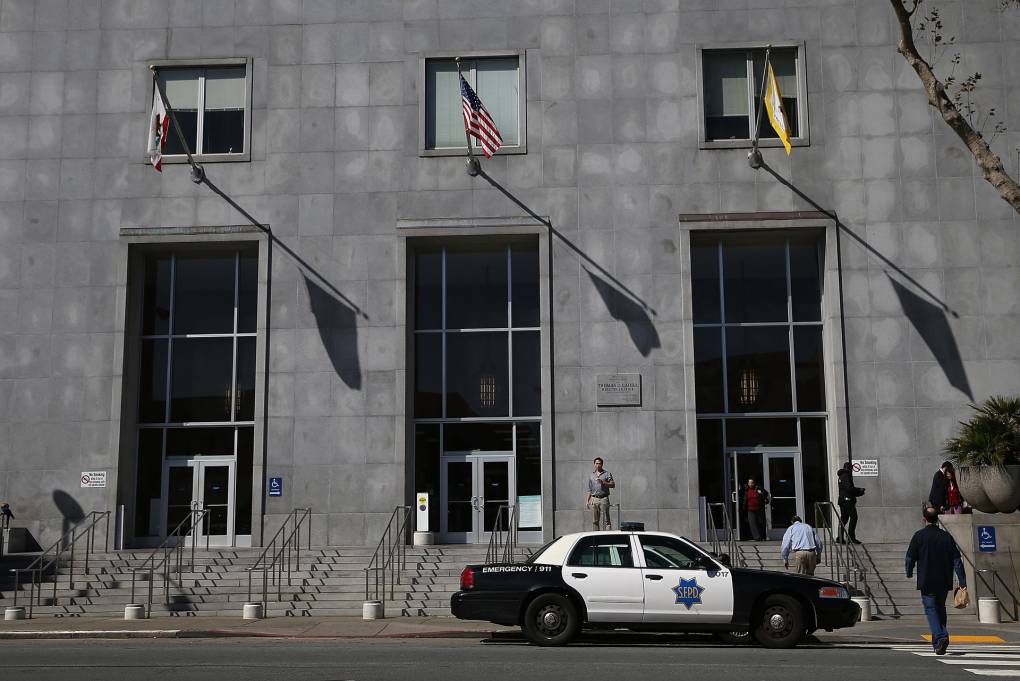
"caption": "The San Francisco resident was on his way to a court hearing at the San Francisco Hall of Justice when Immigration and Customs Enforcement agents arrested him — the first such arrest in the city, according to the public defender’s office.",
"credit": "Justin Sullivan/Getty Images",
"altTag": null,
"description": "The San Francisco resident was on his way to a court hearing at the San Francisco Hall of Justice when he was arrested by Immigration and Customs Enforcement agents — the first such arrest in the city, according to the public defender’s office.",
"imgSizes": {
"thumbnail": {
"file": "https://cdn.kqed.org/wp-content/uploads/sites/10/2020/03/RS14516_475371681-qut-160x107.jpg",
"width": 160,
"height": 107,
"mimeType": "image/jpeg"
},
"medium": {
"file": "https://cdn.kqed.org/wp-content/uploads/sites/10/2020/03/RS14516_475371681-qut-800x534.jpg",
"width": 800,
"height": 534,
"mimeType": "image/jpeg"
},
"large": {
"file": "https://cdn.kqed.org/wp-content/uploads/sites/10/2020/03/RS14516_475371681-qut-1020x681.jpg",
"width": 1020,
"height": 681,
"mimeType": "image/jpeg"
},
"post-thumbnail": {
"file": "https://cdn.kqed.org/wp-content/uploads/sites/10/2020/03/RS14516_475371681-qut-672x372.jpg",
"width": 672,
"height": 372,
"mimeType": "image/jpeg"
},
"twentyfourteen-full-width": {
"file": "https://cdn.kqed.org/wp-content/uploads/sites/10/2020/03/RS14516_475371681-qut-1038x576.jpg",
"width": 1038,
"height": 576,
"mimeType": "image/jpeg"
},
"full-width": {
"file": "https://cdn.kqed.org/wp-content/uploads/sites/10/2020/03/RS14516_475371681-qut-1920x1281.jpg",
"width": 1920,
"height": 1281,
"mimeType": "image/jpeg"
},
"apple_news_ca_landscape_12_9": {
"file": "https://cdn.kqed.org/wp-content/uploads/sites/10/2020/03/RS14516_475371681-qut-1832x1281.jpg",
"width": 1832,
"height": 1281,
"mimeType": "image/jpeg"
},
"apple_news_ca_landscape_9_7": {
"file": "https://cdn.kqed.org/wp-content/uploads/sites/10/2020/03/RS14516_475371681-qut-1376x1032.jpg",
"width": 1376,
"height": 1032,
"mimeType": "image/jpeg"
},
"apple_news_ca_landscape_5_5": {
"file": "https://cdn.kqed.org/wp-content/uploads/sites/10/2020/03/RS14516_475371681-qut-1044x783.jpg",
"width": 1044,
"height": 783,
"mimeType": "image/jpeg"
},
"apple_news_ca_landscape_4_7": {
"file": "https://cdn.kqed.org/wp-content/uploads/sites/10/2020/03/RS14516_475371681-qut-632x474.jpg",
"width": 632,
"height": 474,
"mimeType": "image/jpeg"
},
"apple_news_ca_landscape_4_0": {
"file": "https://cdn.kqed.org/wp-content/uploads/sites/10/2020/03/RS14516_475371681-qut-536x402.jpg",
"width": 536,
"height": 402,
"mimeType": "image/jpeg"
},
"apple_news_ca_portrait_12_9": {
"file": "https://cdn.kqed.org/wp-content/uploads/sites/10/2020/03/RS14516_475371681-qut-1122x1281.jpg",
"width": 1122,
"height": 1281,
"mimeType": "image/jpeg"
},
"apple_news_ca_portrait_9_7": {
"file": "https://cdn.kqed.org/wp-content/uploads/sites/10/2020/03/RS14516_475371681-qut-840x1120.jpg",
"width": 840,
"height": 1120,
"mimeType": "image/jpeg"
},
"apple_news_ca_portrait_5_5": {
"file": "https://cdn.kqed.org/wp-content/uploads/sites/10/2020/03/RS14516_475371681-qut-687x916.jpg",
"width": 687,
"height": 916,
"mimeType": "image/jpeg"
},
"apple_news_ca_portrait_4_7": {
"file": "https://cdn.kqed.org/wp-content/uploads/sites/10/2020/03/RS14516_475371681-qut-414x552.jpg",
"width": 414,
"height": 552,
"mimeType": "image/jpeg"
},
"apple_news_ca_portrait_4_0": {
"file": "https://cdn.kqed.org/wp-content/uploads/sites/10/2020/03/RS14516_475371681-qut-354x472.jpg",
"width": 354,
"height": 472,
"mimeType": "image/jpeg"
},
"apple_news_ca_square_12_9": {
"file": "https://cdn.kqed.org/wp-content/uploads/sites/10/2020/03/RS14516_475371681-qut-1472x1281.jpg",
"width": 1472,
"height": 1281,
"mimeType": "image/jpeg"
},
"apple_news_ca_square_9_7": {
"file": "https://cdn.kqed.org/wp-content/uploads/sites/10/2020/03/RS14516_475371681-qut-1104x1104.jpg",
"width": 1104,
"height": 1104,
"mimeType": "image/jpeg"
},
"apple_news_ca_square_5_5": {
"file": "https://cdn.kqed.org/wp-content/uploads/sites/10/2020/03/RS14516_475371681-qut-912x912.jpg",
"width": 912,
"height": 912,
"mimeType": "image/jpeg"
},
"apple_news_ca_square_4_7": {
"file": "https://cdn.kqed.org/wp-content/uploads/sites/10/2020/03/RS14516_475371681-qut-550x550.jpg",
"width": 550,
"height": 550,
"mimeType": "image/jpeg"
},
"apple_news_ca_square_4_0": {
"file": "https://cdn.kqed.org/wp-content/uploads/sites/10/2020/03/RS14516_475371681-qut-470x470.jpg",
"width": 470,
"height": 470,
"mimeType": "image/jpeg"
},
"kqedFullSize": {
"file": "https://cdn.kqed.org/wp-content/uploads/sites/10/2020/03/RS14516_475371681-qut.jpg",
"width": 1920,
"height": 1281
}
},
"isLoading": false,
"fetchFailed": false
},
"news_11801748": {
"type": "attachments",
"id": "news_11801748",
"meta": {
"index": "attachments_1716263798",
"site": "news",
"id": "11801748",
"found": true
},
"parent": 11801732,
"imgSizes": {
"apple_news_ca_landscape_5_5": {
"file": "https://ww2.kqed.org/app/uploads/sites/10/2020/02/02142020_immigration_chaparral-FINAL-08-qut-1044x783.jpg",
"width": 1044,
"mimeType": "image/jpeg",
"height": 783
},
"apple_news_ca_square_4_0": {
"file": "https://ww2.kqed.org/app/uploads/sites/10/2020/02/02142020_immigration_chaparral-FINAL-08-qut-470x470.jpg",
"width": 470,
"mimeType": "image/jpeg",
"height": 470
},
"twentyfourteen-full-width": {
"file": "https://ww2.kqed.org/app/uploads/sites/10/2020/02/02142020_immigration_chaparral-FINAL-08-qut-1038x576.jpg",
"width": 1038,
"mimeType": "image/jpeg",
"height": 576
},
"thumbnail": {
"file": "https://ww2.kqed.org/app/uploads/sites/10/2020/02/02142020_immigration_chaparral-FINAL-08-qut-160x106.jpg",
"width": 160,
"mimeType": "image/jpeg",
"height": 106
},
"post-thumbnail": {
"file": "https://ww2.kqed.org/app/uploads/sites/10/2020/02/02142020_immigration_chaparral-FINAL-08-qut-672x372.jpg",
"width": 672,
"mimeType": "image/jpeg",
"height": 372
},
"kqedFullSize": {
"file": "https://ww2.kqed.org/app/uploads/sites/10/2020/02/02142020_immigration_chaparral-FINAL-08-qut.jpg",
"width": 1800,
"height": 1196
},
"apple_news_ca_landscape_4_7": {
"file": "https://ww2.kqed.org/app/uploads/sites/10/2020/02/02142020_immigration_chaparral-FINAL-08-qut-632x474.jpg",
"width": 632,
"mimeType": "image/jpeg",
"height": 474
},
"large": {
"file": "https://ww2.kqed.org/app/uploads/sites/10/2020/02/02142020_immigration_chaparral-FINAL-08-qut-1020x678.jpg",
"width": 1020,
"mimeType": "image/jpeg",
"height": 678
},
"apple_news_ca_landscape_4_0": {
"file": "https://ww2.kqed.org/app/uploads/sites/10/2020/02/02142020_immigration_chaparral-FINAL-08-qut-536x402.jpg",
"width": 536,
"mimeType": "image/jpeg",
"height": 402
},
"apple_news_ca_portrait_12_9": {
"file": "https://ww2.kqed.org/app/uploads/sites/10/2020/02/02142020_immigration_chaparral-FINAL-08-qut-1122x1196.jpg",
"width": 1122,
"mimeType": "image/jpeg",
"height": 1196
},
"medium": {
"file": "https://ww2.kqed.org/app/uploads/sites/10/2020/02/02142020_immigration_chaparral-FINAL-08-qut-800x532.jpg",
"width": 800,
"mimeType": "image/jpeg",
"height": 532
},
"apple_news_ca_portrait_4_0": {
"file": "https://ww2.kqed.org/app/uploads/sites/10/2020/02/02142020_immigration_chaparral-FINAL-08-qut-354x472.jpg",
"width": 354,
"mimeType": "image/jpeg",
"height": 472
},
"apple_news_ca_portrait_9_7": {
"file": "https://ww2.kqed.org/app/uploads/sites/10/2020/02/02142020_immigration_chaparral-FINAL-08-qut-840x1120.jpg",
"width": 840,
"mimeType": "image/jpeg",
"height": 1120
},
"apple_news_ca_square_9_7": {
"file": "https://ww2.kqed.org/app/uploads/sites/10/2020/02/02142020_immigration_chaparral-FINAL-08-qut-1104x1104.jpg",
"width": 1104,
"mimeType": "image/jpeg",
"height": 1104
},
"apple_news_ca_portrait_4_7": {
"file": "https://ww2.kqed.org/app/uploads/sites/10/2020/02/02142020_immigration_chaparral-FINAL-08-qut-414x552.jpg",
"width": 414,
"mimeType": "image/jpeg",
"height": 552
},
"apple_news_ca_square_12_9": {
"file": "https://ww2.kqed.org/app/uploads/sites/10/2020/02/02142020_immigration_chaparral-FINAL-08-qut-1472x1196.jpg",
"width": 1472,
"mimeType": "image/jpeg",
"height": 1196
},
"apple_news_ca_portrait_5_5": {
"file": "https://ww2.kqed.org/app/uploads/sites/10/2020/02/02142020_immigration_chaparral-FINAL-08-qut-687x916.jpg",
"width": 687,
"mimeType": "image/jpeg",
"height": 916
},
"apple_news_ca_square_4_7": {
"file": "https://ww2.kqed.org/app/uploads/sites/10/2020/02/02142020_immigration_chaparral-FINAL-08-qut-550x550.jpg",
"width": 550,
"mimeType": "image/jpeg",
"height": 550
},
"apple_news_ca_landscape_9_7": {
"file": "https://ww2.kqed.org/app/uploads/sites/10/2020/02/02142020_immigration_chaparral-FINAL-08-qut-1376x1032.jpg",
"width": 1376,
"mimeType": "image/jpeg",
"height": 1032
},
"apple_news_ca_square_5_5": {
"file": "https://ww2.kqed.org/app/uploads/sites/10/2020/02/02142020_immigration_chaparral-FINAL-08-qut-912x912.jpg",
"width": 912,
"mimeType": "image/jpeg",
"height": 912
}
},
"publishDate": 1581715470,
"modified": 1581715570,
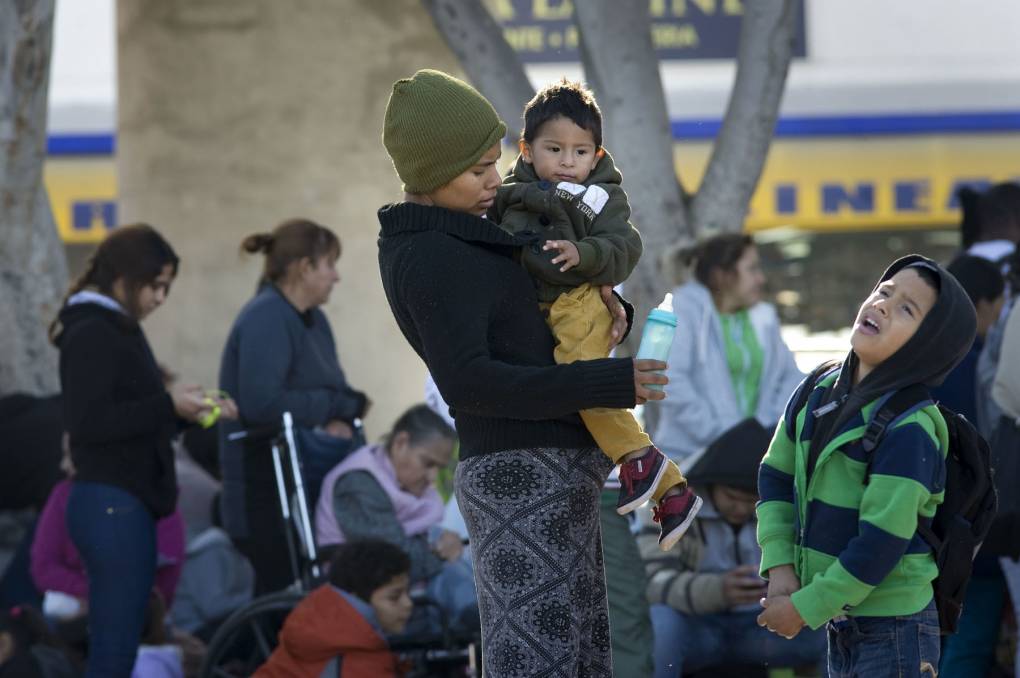
"caption": "A woman holds a child as they wait to hear their position on a list of people waiting at the U.S.-Mexico border to seek asylum in the U.S. on Nov. 21, 2018, in Tijuana, Mexico.",
"description": "A woman holds a child as they wait to hear their position on a list of people waiting at the U.S.-Mexico border to seek asylum in the U.S. on Nov. 21, 2018, in Tijuana, Mexico.",
"title": "02142020_immigration_chaparral FINAL 08-qut",
"credit": "David Maung for KQED",
"status": "inherit",
"isLoading": false,
"fetchFailed": false
},
"news_11802006": {
"type": "attachments",
"id": "news_11802006",
"meta": {
"index": "attachments_1716263798",
"site": "news",
"id": "11802006",
"found": true
},
"parent": 11801962,
"imgSizes": {
"apple_news_ca_landscape_5_5": {
"file": "https://ww2.kqed.org/app/uploads/sites/10/2020/02/RS37554_IMG_3401-qut-1044x783.jpg",
"width": 1044,
"mimeType": "image/jpeg",
"height": 783
},
"apple_news_ca_square_4_0": {
"file": "https://ww2.kqed.org/app/uploads/sites/10/2020/02/RS37554_IMG_3401-qut-470x470.jpg",
"width": 470,
"mimeType": "image/jpeg",
"height": 470
},
"twentyfourteen-full-width": {
"file": "https://ww2.kqed.org/app/uploads/sites/10/2020/02/RS37554_IMG_3401-qut-1038x576.jpg",
"width": 1038,
"mimeType": "image/jpeg",
"height": 576
},
"thumbnail": {
"file": "https://ww2.kqed.org/app/uploads/sites/10/2020/02/RS37554_IMG_3401-qut-160x107.jpg",
"width": 160,
"mimeType": "image/jpeg",
"height": 107
},
"post-thumbnail": {
"file": "https://ww2.kqed.org/app/uploads/sites/10/2020/02/RS37554_IMG_3401-qut-672x372.jpg",
"width": 672,
"mimeType": "image/jpeg",
"height": 372
},
"kqedFullSize": {
"file": "https://ww2.kqed.org/app/uploads/sites/10/2020/02/RS37554_IMG_3401-qut.jpg",
"width": 1920,
"height": 1280
},
"apple_news_ca_landscape_4_7": {
"file": "https://ww2.kqed.org/app/uploads/sites/10/2020/02/RS37554_IMG_3401-qut-632x474.jpg",
"width": 632,
"mimeType": "image/jpeg",
"height": 474
},
"large": {
"file": "https://ww2.kqed.org/app/uploads/sites/10/2020/02/RS37554_IMG_3401-qut-1020x680.jpg",
"width": 1020,
"mimeType": "image/jpeg",
"height": 680
},
"apple_news_ca_landscape_4_0": {
"file": "https://ww2.kqed.org/app/uploads/sites/10/2020/02/RS37554_IMG_3401-qut-536x402.jpg",
"width": 536,
"mimeType": "image/jpeg",
"height": 402
},
"apple_news_ca_portrait_12_9": {
"file": "https://ww2.kqed.org/app/uploads/sites/10/2020/02/RS37554_IMG_3401-qut-1122x1280.jpg",
"width": 1122,
"mimeType": "image/jpeg",
"height": 1280
},
"medium": {
"file": "https://ww2.kqed.org/app/uploads/sites/10/2020/02/RS37554_IMG_3401-qut-800x533.jpg",
"width": 800,
"mimeType": "image/jpeg",
"height": 533
},
"apple_news_ca_portrait_4_0": {
"file": "https://ww2.kqed.org/app/uploads/sites/10/2020/02/RS37554_IMG_3401-qut-354x472.jpg",
"width": 354,
"mimeType": "image/jpeg",
"height": 472
},
"apple_news_ca_portrait_9_7": {
"file": "https://ww2.kqed.org/app/uploads/sites/10/2020/02/RS37554_IMG_3401-qut-840x1120.jpg",
"width": 840,
"mimeType": "image/jpeg",
"height": 1120
},
"apple_news_ca_landscape_12_9": {
"file": "https://ww2.kqed.org/app/uploads/sites/10/2020/02/RS37554_IMG_3401-qut-1832x1280.jpg",
"width": 1832,
"mimeType": "image/jpeg",
"height": 1280
},
"apple_news_ca_square_9_7": {
"file": "https://ww2.kqed.org/app/uploads/sites/10/2020/02/RS37554_IMG_3401-qut-1104x1104.jpg",
"width": 1104,
"mimeType": "image/jpeg",
"height": 1104
},
"apple_news_ca_portrait_4_7": {
"file": "https://ww2.kqed.org/app/uploads/sites/10/2020/02/RS37554_IMG_3401-qut-414x552.jpg",
"width": 414,
"mimeType": "image/jpeg",
"height": 552
},
"apple_news_ca_square_12_9": {
"file": "https://ww2.kqed.org/app/uploads/sites/10/2020/02/RS37554_IMG_3401-qut-1472x1280.jpg",
"width": 1472,
"mimeType": "image/jpeg",
"height": 1280
},
"apple_news_ca_portrait_5_5": {
"file": "https://ww2.kqed.org/app/uploads/sites/10/2020/02/RS37554_IMG_3401-qut-687x916.jpg",
"width": 687,
"mimeType": "image/jpeg",
"height": 916
},
"full-width": {
"file": "https://ww2.kqed.org/app/uploads/sites/10/2020/02/RS37554_IMG_3401-qut-1920x1280.jpg",
"width": 1920,
"mimeType": "image/jpeg",
"height": 1280
},
"apple_news_ca_square_4_7": {
"file": "https://ww2.kqed.org/app/uploads/sites/10/2020/02/RS37554_IMG_3401-qut-550x550.jpg",
"width": 550,
"mimeType": "image/jpeg",
"height": 550
},
"apple_news_ca_landscape_9_7": {
"file": "https://ww2.kqed.org/app/uploads/sites/10/2020/02/RS37554_IMG_3401-qut-1376x1032.jpg",
"width": 1376,
"mimeType": "image/jpeg",
"height": 1032
},
"apple_news_ca_square_5_5": {
"file": "https://ww2.kqed.org/app/uploads/sites/10/2020/02/RS37554_IMG_3401-qut-912x912.jpg",
"width": 912,
"mimeType": "image/jpeg",
"height": 912
}
},
"publishDate": 1581896259,
"modified": 1581896456,
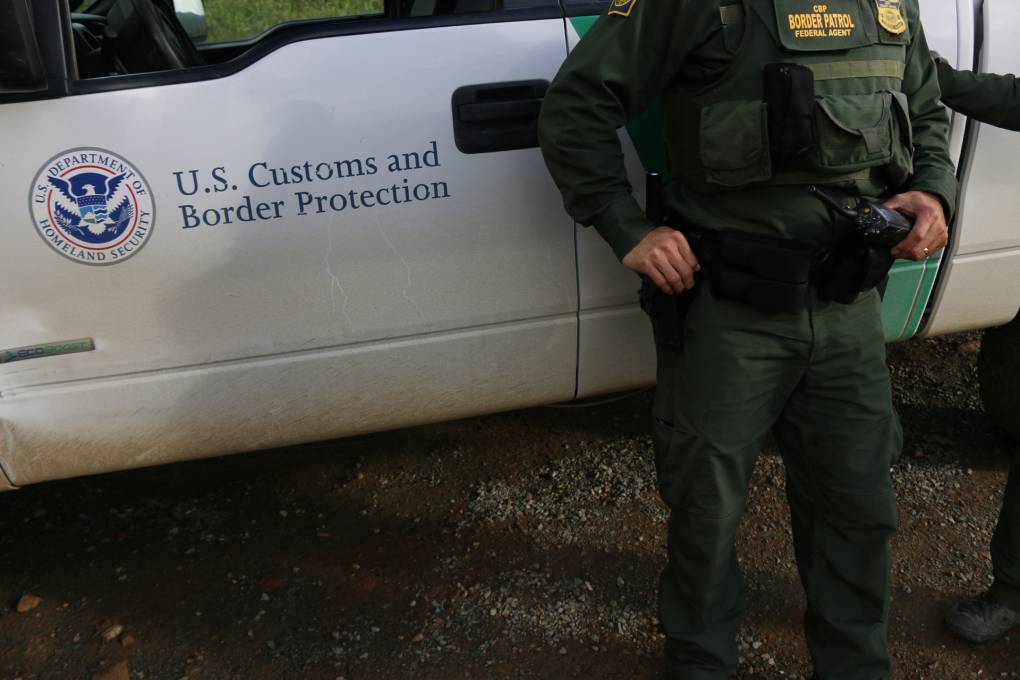
"caption": "Officers with Customs and Border Protection patrol the area that separates San Diego from Tijuana, Mexico.",
"description": "Officers with Customs and Border Protection patrol the border fence that separates San Diego from Tijuana, Mexico.",
"title": "RS37554_IMG_3401-qut",
"credit": "Alex Hall/KQED",
"status": "inherit",
"isLoading": false,
"fetchFailed": false
},
"news_11800541": {
"type": "attachments",
"id": "news_11800541",
"meta": {
"index": "attachments_1716263798",
"site": "news",
"id": "11800541",
"found": true
},
"parent": 11800519,
"imgSizes": {
"apple_news_ca_landscape_5_5": {
"file": "https://ww2.kqed.org/app/uploads/sites/10/2020/02/notprison_020620_final_MF-1044x783.png",
"width": 1044,
"mimeType": "image/png",
"height": 783
},
"apple_news_ca_square_4_0": {
"file": "https://ww2.kqed.org/app/uploads/sites/10/2020/02/notprison_020620_final_MF-470x470.png",
"width": 470,
"mimeType": "image/png",
"height": 470
},
"twentyfourteen-full-width": {
"file": "https://ww2.kqed.org/app/uploads/sites/10/2020/02/notprison_020620_final_MF-1038x576.png",
"width": 1038,
"mimeType": "image/png",
"height": 576
},
"thumbnail": {
"file": "https://ww2.kqed.org/app/uploads/sites/10/2020/02/notprison_020620_final_MF-160x108.png",
"width": 160,
"mimeType": "image/png",
"height": 108
},
"post-thumbnail": {
"file": "https://ww2.kqed.org/app/uploads/sites/10/2020/02/notprison_020620_final_MF-672x372.png",
"width": 672,
"mimeType": "image/png",
"height": 372
},
"kqedFullSize": {
"file": "https://ww2.kqed.org/app/uploads/sites/10/2020/02/notprison_020620_final_MF.png",
"width": 1920,
"height": 1297
},
"apple_news_ca_landscape_4_7": {
"file": "https://ww2.kqed.org/app/uploads/sites/10/2020/02/notprison_020620_final_MF-632x474.png",
"width": 632,
"mimeType": "image/png",
"height": 474
},
"large": {
"file": "https://ww2.kqed.org/app/uploads/sites/10/2020/02/notprison_020620_final_MF-1020x689.png",
"width": 1020,
"mimeType": "image/png",
"height": 689
},
"apple_news_ca_landscape_4_0": {
"file": "https://ww2.kqed.org/app/uploads/sites/10/2020/02/notprison_020620_final_MF-536x402.png",
"width": 536,
"mimeType": "image/png",
"height": 402
},
"apple_news_ca_portrait_12_9": {
"file": "https://ww2.kqed.org/app/uploads/sites/10/2020/02/notprison_020620_final_MF-1122x1297.png",
"width": 1122,
"mimeType": "image/png",
"height": 1297
},
"medium": {
"file": "https://ww2.kqed.org/app/uploads/sites/10/2020/02/notprison_020620_final_MF-800x540.png",
"width": 800,
"mimeType": "image/png",
"height": 540
},
"apple_news_ca_portrait_4_0": {
"file": "https://ww2.kqed.org/app/uploads/sites/10/2020/02/notprison_020620_final_MF-354x472.png",
"width": 354,
"mimeType": "image/png",
"height": 472
},
"apple_news_ca_portrait_9_7": {
"file": "https://ww2.kqed.org/app/uploads/sites/10/2020/02/notprison_020620_final_MF-840x1120.png",
"width": 840,
"mimeType": "image/png",
"height": 1120
},
"apple_news_ca_landscape_12_9": {
"file": "https://ww2.kqed.org/app/uploads/sites/10/2020/02/notprison_020620_final_MF-1832x1297.png",
"width": 1832,
"mimeType": "image/png",
"height": 1297
},
"apple_news_ca_square_9_7": {
"file": "https://ww2.kqed.org/app/uploads/sites/10/2020/02/notprison_020620_final_MF-1104x1104.png",
"width": 1104,
"mimeType": "image/png",
"height": 1104
},
"apple_news_ca_portrait_4_7": {
"file": "https://ww2.kqed.org/app/uploads/sites/10/2020/02/notprison_020620_final_MF-414x552.png",
"width": 414,
"mimeType": "image/png",
"height": 552
},
"apple_news_ca_square_12_9": {
"file": "https://ww2.kqed.org/app/uploads/sites/10/2020/02/notprison_020620_final_MF-1472x1297.png",
"width": 1472,
"mimeType": "image/png",
"height": 1297
},
"apple_news_ca_portrait_5_5": {
"file": "https://ww2.kqed.org/app/uploads/sites/10/2020/02/notprison_020620_final_MF-687x916.png",
"width": 687,
"mimeType": "image/png",
"height": 916
},
"full-width": {
"file": "https://ww2.kqed.org/app/uploads/sites/10/2020/02/notprison_020620_final_MF-1920x1297.png",
"width": 1920,
"mimeType": "image/png",
"height": 1297
},
"apple_news_ca_square_4_7": {
"file": "https://ww2.kqed.org/app/uploads/sites/10/2020/02/notprison_020620_final_MF-550x550.png",
"width": 550,
"mimeType": "image/png",
"height": 550
},
"apple_news_ca_landscape_9_7": {
"file": "https://ww2.kqed.org/app/uploads/sites/10/2020/02/notprison_020620_final_MF-1376x1032.png",
"width": 1376,
"mimeType": "image/png",
"height": 1032
},
"apple_news_ca_square_5_5": {
"file": "https://ww2.kqed.org/app/uploads/sites/10/2020/02/notprison_020620_final_MF-912x912.png",
"width": 912,
"mimeType": "image/png",
"height": 912
}
},
"publishDate": 1581027798,
"modified": 1581027831,
"caption": null,
"description": null,
"title": "notprison_020620_final_MF",
"credit": null,
"status": "inherit",
"isLoading": false,
"fetchFailed": false
},
"news_11800395": {
"type": "attachments",
"id": "news_11800395",
"meta": {
"index": "attachments_1716263798",
"site": "news",
"id": "11800395",
"found": true
},
"parent": 11800394,
"imgSizes": {
"apple_news_ca_landscape_5_5": {
"file": "https://ww2.kqed.org/app/uploads/sites/10/2020/02/alex-burgos-mejia_007_custom-de2dd91d2e7f30909b357cbecb33d6df780d81e5-1044x783.jpg",
"width": 1044,
"mimeType": "image/jpeg",
"height": 783
},
"apple_news_ca_square_4_0": {
"file": "https://ww2.kqed.org/app/uploads/sites/10/2020/02/alex-burgos-mejia_007_custom-de2dd91d2e7f30909b357cbecb33d6df780d81e5-470x470.jpg",
"width": 470,
"mimeType": "image/jpeg",
"height": 470
},
"twentyfourteen-full-width": {
"file": "https://ww2.kqed.org/app/uploads/sites/10/2020/02/alex-burgos-mejia_007_custom-de2dd91d2e7f30909b357cbecb33d6df780d81e5-1038x576.jpg",
"width": 1038,
"mimeType": "image/jpeg",
"height": 576
},
"thumbnail": {
"file": "https://ww2.kqed.org/app/uploads/sites/10/2020/02/alex-burgos-mejia_007_custom-de2dd91d2e7f30909b357cbecb33d6df780d81e5-160x110.jpg",
"width": 160,
"mimeType": "image/jpeg",
"height": 110
},
"post-thumbnail": {
"file": "https://ww2.kqed.org/app/uploads/sites/10/2020/02/alex-burgos-mejia_007_custom-de2dd91d2e7f30909b357cbecb33d6df780d81e5-672x372.jpg",
"width": 672,
"mimeType": "image/jpeg",
"height": 372
},
"kqedFullSize": {
"file": "https://ww2.kqed.org/app/uploads/sites/10/2020/02/alex-burgos-mejia_007_custom-de2dd91d2e7f30909b357cbecb33d6df780d81e5-e1581015882231.jpg",
"width": 1920,
"height": 1317
},
"apple_news_ca_landscape_4_7": {
"file": "https://ww2.kqed.org/app/uploads/sites/10/2020/02/alex-burgos-mejia_007_custom-de2dd91d2e7f30909b357cbecb33d6df780d81e5-632x474.jpg",
"width": 632,
"mimeType": "image/jpeg",
"height": 474
},
"large": {
"file": "https://ww2.kqed.org/app/uploads/sites/10/2020/02/alex-burgos-mejia_007_custom-de2dd91d2e7f30909b357cbecb33d6df780d81e5-1020x699.jpg",
"width": 1020,
"mimeType": "image/jpeg",
"height": 699
},
"apple_news_ca_landscape_4_0": {
"file": "https://ww2.kqed.org/app/uploads/sites/10/2020/02/alex-burgos-mejia_007_custom-de2dd91d2e7f30909b357cbecb33d6df780d81e5-536x402.jpg",
"width": 536,
"mimeType": "image/jpeg",
"height": 402
},
"apple_news_ca_portrait_12_9": {
"file": "https://ww2.kqed.org/app/uploads/sites/10/2020/02/alex-burgos-mejia_007_custom-de2dd91d2e7f30909b357cbecb33d6df780d81e5-1122x1496.jpg",
"width": 1122,
"mimeType": "image/jpeg",
"height": 1496
},
"medium": {
"file": "https://ww2.kqed.org/app/uploads/sites/10/2020/02/alex-burgos-mejia_007_custom-de2dd91d2e7f30909b357cbecb33d6df780d81e5-800x549.jpg",
"width": 800,
"mimeType": "image/jpeg",
"height": 549
},
"apple_news_ca_portrait_4_0": {
"file": "https://ww2.kqed.org/app/uploads/sites/10/2020/02/alex-burgos-mejia_007_custom-de2dd91d2e7f30909b357cbecb33d6df780d81e5-354x472.jpg",
"width": 354,
"mimeType": "image/jpeg",
"height": 472
},
"apple_news_ca_portrait_9_7": {
"file": "https://ww2.kqed.org/app/uploads/sites/10/2020/02/alex-burgos-mejia_007_custom-de2dd91d2e7f30909b357cbecb33d6df780d81e5-840x1120.jpg",
"width": 840,
"mimeType": "image/jpeg",
"height": 1120
},
"apple_news_ca_landscape_12_9": {
"file": "https://ww2.kqed.org/app/uploads/sites/10/2020/02/alex-burgos-mejia_007_custom-de2dd91d2e7f30909b357cbecb33d6df780d81e5-1832x1374.jpg",
"width": 1832,
"mimeType": "image/jpeg",
"height": 1374
},
"apple_news_ca_square_9_7": {
"file": "https://ww2.kqed.org/app/uploads/sites/10/2020/02/alex-burgos-mejia_007_custom-de2dd91d2e7f30909b357cbecb33d6df780d81e5-1104x1104.jpg",
"width": 1104,
"mimeType": "image/jpeg",
"height": 1104
},
"apple_news_ca_portrait_4_7": {
"file": "https://ww2.kqed.org/app/uploads/sites/10/2020/02/alex-burgos-mejia_007_custom-de2dd91d2e7f30909b357cbecb33d6df780d81e5-414x552.jpg",
"width": 414,
"mimeType": "image/jpeg",
"height": 552
},
"apple_news_ca_square_12_9": {
"file": "https://ww2.kqed.org/app/uploads/sites/10/2020/02/alex-burgos-mejia_007_custom-de2dd91d2e7f30909b357cbecb33d6df780d81e5-1472x1472.jpg",
"width": 1472,
"mimeType": "image/jpeg",
"height": 1472
},
"apple_news_ca_portrait_5_5": {
"file": "https://ww2.kqed.org/app/uploads/sites/10/2020/02/alex-burgos-mejia_007_custom-de2dd91d2e7f30909b357cbecb33d6df780d81e5-687x916.jpg",
"width": 687,
"mimeType": "image/jpeg",
"height": 916
},
"full-width": {
"file": "https://ww2.kqed.org/app/uploads/sites/10/2020/02/alex-burgos-mejia_007_custom-de2dd91d2e7f30909b357cbecb33d6df780d81e5-1920x1317.jpg",
"width": 1920,
"mimeType": "image/jpeg",
"height": 1317
},
"apple_news_ca_square_4_7": {
"file": "https://ww2.kqed.org/app/uploads/sites/10/2020/02/alex-burgos-mejia_007_custom-de2dd91d2e7f30909b357cbecb33d6df780d81e5-550x550.jpg",
"width": 550,
"mimeType": "image/jpeg",
"height": 550
},
"apple_news_ca_landscape_9_7": {
"file": "https://ww2.kqed.org/app/uploads/sites/10/2020/02/alex-burgos-mejia_007_custom-de2dd91d2e7f30909b357cbecb33d6df780d81e5-1376x1032.jpg",
"width": 1376,
"mimeType": "image/jpeg",
"height": 1032
},
"apple_news_ca_square_5_5": {
"file": "https://ww2.kqed.org/app/uploads/sites/10/2020/02/alex-burgos-mejia_007_custom-de2dd91d2e7f30909b357cbecb33d6df780d81e5-912x912.jpg",
"width": 912,
"mimeType": "image/jpeg",
"height": 912
}
},
"publishDate": 1581012129,
"modified": 1581016156,
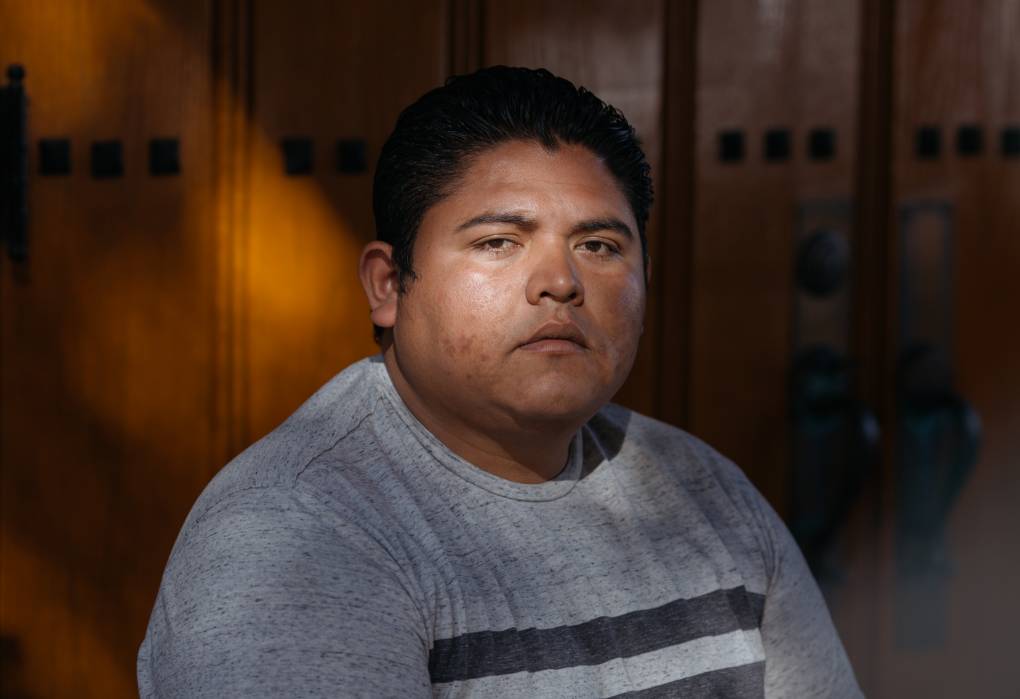
"caption": "Alexander Antonio Burgos Mejia was detained at the Adelanto ICE Processing Center in 2017, when he went on a hunger strike to protest conditions at the facility. He said he and the other detainees suffered burns and other injuries, after GEO Group staff used pepper spray. \"I will never forget seeing the faces of my friends, seeing them crying,\" he said.",
"description": "Alexander Antonio Burgos Mejia was detained at the Adelanto ICE Processing Center in 2017, when he went on a hunger strike to protest conditions at the facility. He said he and the other detainees suffered burns and other injuries, after GEO Group staff used pepper spray. \"I will never forget seeing the faces of my friends, seeing them crying,\" he said.",
"title": "Alexander Antonio Burgos Mejia was detained at the Adelanto ICE Processing Center in 2017, when he went on a hunger strike to protest conditions at the facility. He said he and the other detainees suffered burns and other injuries, after GEO Group staff used pepper spray. \"I will never forget seeing the faces of my friends, seeing them crying,\" he said.",
"credit": "Jessica Pons/NPR",
"status": "inherit",
"isLoading": false,
"fetchFailed": false
},
"news_11800335": {
"type": "attachments",
"id": "news_11800335",
"meta": {
"index": "attachments_1716263798",
"site": "news",
"id": "11800335",
"found": true
},
"parent": 11800255,
"imgSizes": {
"apple_news_ca_landscape_5_5": {
"file": "https://ww2.kqed.org/app/uploads/sites/10/2020/02/RS41144_SOK_2_edit-qut-1044x783.jpg",
"width": 1044,
"mimeType": "image/jpeg",
"height": 783
},
"apple_news_ca_square_4_0": {
"file": "https://ww2.kqed.org/app/uploads/sites/10/2020/02/RS41144_SOK_2_edit-qut-470x470.jpg",
"width": 470,
"mimeType": "image/jpeg",
"height": 470
},
"twentyfourteen-full-width": {
"file": "https://ww2.kqed.org/app/uploads/sites/10/2020/02/RS41144_SOK_2_edit-qut-1038x576.jpg",
"width": 1038,
"mimeType": "image/jpeg",
"height": 576
},
"thumbnail": {
"file": "https://ww2.kqed.org/app/uploads/sites/10/2020/02/RS41144_SOK_2_edit-qut-160x90.jpg",
"width": 160,
"mimeType": "image/jpeg",
"height": 90
},
"post-thumbnail": {
"file": "https://ww2.kqed.org/app/uploads/sites/10/2020/02/RS41144_SOK_2_edit-qut-672x372.jpg",
"width": 672,
"mimeType": "image/jpeg",
"height": 372
},
"kqedFullSize": {
"file": "https://ww2.kqed.org/app/uploads/sites/10/2020/02/RS41144_SOK_2_edit-qut.jpg",
"width": 1920,
"height": 1080
},
"apple_news_ca_landscape_4_7": {
"file": "https://ww2.kqed.org/app/uploads/sites/10/2020/02/RS41144_SOK_2_edit-qut-632x474.jpg",
"width": 632,
"mimeType": "image/jpeg",
"height": 474
},
"large": {
"file": "https://ww2.kqed.org/app/uploads/sites/10/2020/02/RS41144_SOK_2_edit-qut-1020x574.jpg",
"width": 1020,
"mimeType": "image/jpeg",
"height": 574
},
"apple_news_ca_landscape_4_0": {
"file": "https://ww2.kqed.org/app/uploads/sites/10/2020/02/RS41144_SOK_2_edit-qut-536x402.jpg",
"width": 536,
"mimeType": "image/jpeg",
"height": 402
},
"apple_news_ca_portrait_12_9": {
"file": "https://ww2.kqed.org/app/uploads/sites/10/2020/02/RS41144_SOK_2_edit-qut-1122x1080.jpg",
"width": 1122,
"mimeType": "image/jpeg",
"height": 1080
},
"medium": {
"file": "https://ww2.kqed.org/app/uploads/sites/10/2020/02/RS41144_SOK_2_edit-qut-800x450.jpg",
"width": 800,
"mimeType": "image/jpeg",
"height": 450
},
"apple_news_ca_portrait_4_0": {
"file": "https://ww2.kqed.org/app/uploads/sites/10/2020/02/RS41144_SOK_2_edit-qut-354x472.jpg",
"width": 354,
"mimeType": "image/jpeg",
"height": 472
},
"apple_news_ca_portrait_9_7": {
"file": "https://ww2.kqed.org/app/uploads/sites/10/2020/02/RS41144_SOK_2_edit-qut-840x1080.jpg",
"width": 840,
"mimeType": "image/jpeg",
"height": 1080
},
"apple_news_ca_landscape_12_9": {
"file": "https://ww2.kqed.org/app/uploads/sites/10/2020/02/RS41144_SOK_2_edit-qut-1832x1080.jpg",
"width": 1832,
"mimeType": "image/jpeg",
"height": 1080
},
"apple_news_ca_square_9_7": {
"file": "https://ww2.kqed.org/app/uploads/sites/10/2020/02/RS41144_SOK_2_edit-qut-1104x1080.jpg",
"width": 1104,
"mimeType": "image/jpeg",
"height": 1080
},
"apple_news_ca_portrait_4_7": {
"file": "https://ww2.kqed.org/app/uploads/sites/10/2020/02/RS41144_SOK_2_edit-qut-414x552.jpg",
"width": 414,
"mimeType": "image/jpeg",
"height": 552
},
"apple_news_ca_square_12_9": {
"file": "https://ww2.kqed.org/app/uploads/sites/10/2020/02/RS41144_SOK_2_edit-qut-1472x1080.jpg",
"width": 1472,
"mimeType": "image/jpeg",
"height": 1080
},
"apple_news_ca_portrait_5_5": {
"file": "https://ww2.kqed.org/app/uploads/sites/10/2020/02/RS41144_SOK_2_edit-qut-687x916.jpg",
"width": 687,
"mimeType": "image/jpeg",
"height": 916
},
"full-width": {
"file": "https://ww2.kqed.org/app/uploads/sites/10/2020/02/RS41144_SOK_2_edit-qut-1920x1080.jpg",
"width": 1920,
"mimeType": "image/jpeg",
"height": 1080
},
"apple_news_ca_square_4_7": {
"file": "https://ww2.kqed.org/app/uploads/sites/10/2020/02/RS41144_SOK_2_edit-qut-550x550.jpg",
"width": 550,
"mimeType": "image/jpeg",
"height": 550
},
"apple_news_ca_landscape_9_7": {
"file": "https://ww2.kqed.org/app/uploads/sites/10/2020/02/RS41144_SOK_2_edit-qut-1376x1032.jpg",
"width": 1376,
"mimeType": "image/jpeg",
"height": 1032
},
"apple_news_ca_square_5_5": {
"file": "https://ww2.kqed.org/app/uploads/sites/10/2020/02/RS41144_SOK_2_edit-qut-912x912.jpg",
"width": 912,
"mimeType": "image/jpeg",
"height": 912
}
},
"publishDate": 1580954547,
"modified": 1580954615,
"caption": "Upon reuniting with 17-year-old son Kobe (right), Sok Loeun (center) said, “He got tall. ... He still hugs and kisses his dad. He's still my baby.” Loeun's mother is on the left.",
"description": "Upon reuniting with 17-year-old son Kobe (right), Sok Loeun (center) said, “He got tall. ... He still hugs and kisses his dad. He's still my baby.” Loeun's mother is on the left.",
"title": "Sok-Loeun-mom-son",
"credit": "Stephanie Tangkilisan",
"status": "inherit",
"isLoading": false,
"fetchFailed": false
},
"news_11799596": {
"type": "attachments",
"id": "news_11799596",
"meta": {
"index": "attachments_1716263798",
"site": "news",
"id": "11799596",
"found": true
},
"parent": 11799339,
"imgSizes": {
"apple_news_ca_landscape_5_5": {
"file": "https://ww2.kqed.org/app/uploads/sites/10/2020/02/1920_RS41066_1920_RS41065__M6A2293IG-qut-1044x783.jpg",
"width": 1044,
"mimeType": "image/jpeg",
"height": 783
},
"apple_news_ca_square_4_0": {
"file": "https://ww2.kqed.org/app/uploads/sites/10/2020/02/1920_RS41066_1920_RS41065__M6A2293IG-qut-470x470.jpg",
"width": 470,
"mimeType": "image/jpeg",
"height": 470
},
"twentyfourteen-full-width": {
"file": "https://ww2.kqed.org/app/uploads/sites/10/2020/02/1920_RS41066_1920_RS41065__M6A2293IG-qut-1038x576.jpg",
"width": 1038,
"mimeType": "image/jpeg",
"height": 576
},
"thumbnail": {
"file": "https://ww2.kqed.org/app/uploads/sites/10/2020/02/1920_RS41066_1920_RS41065__M6A2293IG-qut-160x90.jpg",
"width": 160,
"mimeType": "image/jpeg",
"height": 90
},
"post-thumbnail": {
"file": "https://ww2.kqed.org/app/uploads/sites/10/2020/02/1920_RS41066_1920_RS41065__M6A2293IG-qut-672x372.jpg",
"width": 672,
"mimeType": "image/jpeg",
"height": 372
},
"kqedFullSize": {
"file": "https://ww2.kqed.org/app/uploads/sites/10/2020/02/1920_RS41066_1920_RS41065__M6A2293IG-qut.jpg",
"width": 1920,
"height": 1080
},
"apple_news_ca_landscape_4_7": {
"file": "https://ww2.kqed.org/app/uploads/sites/10/2020/02/1920_RS41066_1920_RS41065__M6A2293IG-qut-632x474.jpg",
"width": 632,
"mimeType": "image/jpeg",
"height": 474
},
"large": {
"file": "https://ww2.kqed.org/app/uploads/sites/10/2020/02/1920_RS41066_1920_RS41065__M6A2293IG-qut-1020x574.jpg",
"width": 1020,
"mimeType": "image/jpeg",
"height": 574
},
"apple_news_ca_landscape_4_0": {
"file": "https://ww2.kqed.org/app/uploads/sites/10/2020/02/1920_RS41066_1920_RS41065__M6A2293IG-qut-536x402.jpg",
"width": 536,
"mimeType": "image/jpeg",
"height": 402
},
"apple_news_ca_portrait_12_9": {
"file": "https://ww2.kqed.org/app/uploads/sites/10/2020/02/1920_RS41066_1920_RS41065__M6A2293IG-qut-1122x1080.jpg",
"width": 1122,
"mimeType": "image/jpeg",
"height": 1080
},
"medium": {
"file": "https://ww2.kqed.org/app/uploads/sites/10/2020/02/1920_RS41066_1920_RS41065__M6A2293IG-qut-800x450.jpg",
"width": 800,
"mimeType": "image/jpeg",
"height": 450
},
"apple_news_ca_portrait_4_0": {
"file": "https://ww2.kqed.org/app/uploads/sites/10/2020/02/1920_RS41066_1920_RS41065__M6A2293IG-qut-354x472.jpg",
"width": 354,
"mimeType": "image/jpeg",
"height": 472
},
"apple_news_ca_portrait_9_7": {
"file": "https://ww2.kqed.org/app/uploads/sites/10/2020/02/1920_RS41066_1920_RS41065__M6A2293IG-qut-840x1080.jpg",
"width": 840,
"mimeType": "image/jpeg",
"height": 1080
},
"apple_news_ca_landscape_12_9": {
"file": "https://ww2.kqed.org/app/uploads/sites/10/2020/02/1920_RS41066_1920_RS41065__M6A2293IG-qut-1832x1080.jpg",
"width": 1832,
"mimeType": "image/jpeg",
"height": 1080
},
"apple_news_ca_square_9_7": {
"file": "https://ww2.kqed.org/app/uploads/sites/10/2020/02/1920_RS41066_1920_RS41065__M6A2293IG-qut-1104x1080.jpg",
"width": 1104,
"mimeType": "image/jpeg",
"height": 1080
},
"apple_news_ca_portrait_4_7": {
"file": "https://ww2.kqed.org/app/uploads/sites/10/2020/02/1920_RS41066_1920_RS41065__M6A2293IG-qut-414x552.jpg",
"width": 414,
"mimeType": "image/jpeg",
"height": 552
},
"apple_news_ca_square_12_9": {
"file": "https://ww2.kqed.org/app/uploads/sites/10/2020/02/1920_RS41066_1920_RS41065__M6A2293IG-qut-1472x1080.jpg",
"width": 1472,
"mimeType": "image/jpeg",
"height": 1080
},
"apple_news_ca_portrait_5_5": {
"file": "https://ww2.kqed.org/app/uploads/sites/10/2020/02/1920_RS41066_1920_RS41065__M6A2293IG-qut-687x916.jpg",
"width": 687,
"mimeType": "image/jpeg",
"height": 916
},
"full-width": {
"file": "https://ww2.kqed.org/app/uploads/sites/10/2020/02/1920_RS41066_1920_RS41065__M6A2293IG-qut-1920x1080.jpg",
"width": 1920,
"mimeType": "image/jpeg",
"height": 1080
},
"apple_news_ca_square_4_7": {
"file": "https://ww2.kqed.org/app/uploads/sites/10/2020/02/1920_RS41066_1920_RS41065__M6A2293IG-qut-550x550.jpg",
"width": 550,
"mimeType": "image/jpeg",
"height": 550
},
"apple_news_ca_landscape_9_7": {
"file": "https://ww2.kqed.org/app/uploads/sites/10/2020/02/1920_RS41066_1920_RS41065__M6A2293IG-qut-1376x1032.jpg",
"width": 1376,
"mimeType": "image/jpeg",
"height": 1032
},
"apple_news_ca_square_5_5": {
"file": "https://ww2.kqed.org/app/uploads/sites/10/2020/02/1920_RS41066_1920_RS41065__M6A2293IG-qut-912x912.jpg",
"width": 912,
"mimeType": "image/jpeg",
"height": 912
}
},
"publishDate": 1580590176,
"modified": 1580590877,
"caption": "An immigration judge plans to rule on Ixchop's request (he is not pictured) to be released on bond by Wednesday. From L to R, Ixchop's wife Alexa, his son Jacob, his sister Cecilia and his lawyer, Deputy Public Defender Jennifer Friedman.",
"description": "An immigration judge plans to rule on Ixchop's request to be released on bond by Wednesday. From L to R, Ixchop's wife Alexa, his son Jacob, his sister Cecilia and his lawyer, Deputy Public Defender Jennifer Friedman.",
"title": "1920_RS41066_1920_RS41065__M6A2293IG-qut",
"credit": "A.J. Ruiz/KQED",
"status": "inherit",
"isLoading": false,
"fetchFailed": false
},
"news_11798867": {
"type": "attachments",
"id": "news_11798867",
"meta": {
"index": "attachments_1716263798",
"site": "news",
"id": "11798867",
"found": true
},
"parent": 11797878,
"imgSizes": {
"apple_news_ca_landscape_5_5": {
"file": "https://ww2.kqed.org/app/uploads/sites/10/2020/01/GettyImages-973077552-1044x783.jpg",
"width": 1044,
"mimeType": "image/jpeg",
"height": 783
},
"apple_news_ca_square_4_0": {
"file": "https://ww2.kqed.org/app/uploads/sites/10/2020/01/GettyImages-973077552-470x470.jpg",
"width": 470,
"mimeType": "image/jpeg",
"height": 470
},
"twentyfourteen-full-width": {
"file": "https://ww2.kqed.org/app/uploads/sites/10/2020/01/GettyImages-973077552-1038x576.jpg",
"width": 1038,
"mimeType": "image/jpeg",
"height": 576
},
"thumbnail": {
"file": "https://ww2.kqed.org/app/uploads/sites/10/2020/01/GettyImages-973077552-160x110.jpg",
"width": 160,
"mimeType": "image/jpeg",
"height": 110
},
"post-thumbnail": {
"file": "https://ww2.kqed.org/app/uploads/sites/10/2020/01/GettyImages-973077552-672x372.jpg",
"width": 672,
"mimeType": "image/jpeg",
"height": 372
},
"kqedFullSize": {
"file": "https://ww2.kqed.org/app/uploads/sites/10/2020/01/GettyImages-973077552.jpg",
"width": 1920,
"height": 1315
},
"apple_news_ca_landscape_4_7": {
"file": "https://ww2.kqed.org/app/uploads/sites/10/2020/01/GettyImages-973077552-632x474.jpg",
"width": 632,
"mimeType": "image/jpeg",
"height": 474
},
"large": {
"file": "https://ww2.kqed.org/app/uploads/sites/10/2020/01/GettyImages-973077552-1020x699.jpg",
"width": 1020,
"mimeType": "image/jpeg",
"height": 699
},
"apple_news_ca_landscape_4_0": {
"file": "https://ww2.kqed.org/app/uploads/sites/10/2020/01/GettyImages-973077552-536x402.jpg",
"width": 536,
"mimeType": "image/jpeg",
"height": 402
},
"apple_news_ca_portrait_12_9": {
"file": "https://ww2.kqed.org/app/uploads/sites/10/2020/01/GettyImages-973077552-1122x1315.jpg",
"width": 1122,
"mimeType": "image/jpeg",
"height": 1315
},
"medium": {
"file": "https://ww2.kqed.org/app/uploads/sites/10/2020/01/GettyImages-973077552-800x548.jpg",
"width": 800,
"mimeType": "image/jpeg",
"height": 548
},
"apple_news_ca_portrait_4_0": {
"file": "https://ww2.kqed.org/app/uploads/sites/10/2020/01/GettyImages-973077552-354x472.jpg",
"width": 354,
"mimeType": "image/jpeg",
"height": 472
},
"apple_news_ca_portrait_9_7": {
"file": "https://ww2.kqed.org/app/uploads/sites/10/2020/01/GettyImages-973077552-840x1120.jpg",
"width": 840,
"mimeType": "image/jpeg",
"height": 1120
},
"apple_news_ca_landscape_12_9": {
"file": "https://ww2.kqed.org/app/uploads/sites/10/2020/01/GettyImages-973077552-1832x1315.jpg",
"width": 1832,
"mimeType": "image/jpeg",
"height": 1315
},
"apple_news_ca_square_9_7": {
"file": "https://ww2.kqed.org/app/uploads/sites/10/2020/01/GettyImages-973077552-1104x1104.jpg",
"width": 1104,
"mimeType": "image/jpeg",
"height": 1104
},
"apple_news_ca_portrait_4_7": {
"file": "https://ww2.kqed.org/app/uploads/sites/10/2020/01/GettyImages-973077552-414x552.jpg",
"width": 414,
"mimeType": "image/jpeg",
"height": 552
},
"apple_news_ca_square_12_9": {
"file": "https://ww2.kqed.org/app/uploads/sites/10/2020/01/GettyImages-973077552-1472x1315.jpg",
"width": 1472,
"mimeType": "image/jpeg",
"height": 1315
},
"apple_news_ca_portrait_5_5": {
"file": "https://ww2.kqed.org/app/uploads/sites/10/2020/01/GettyImages-973077552-687x916.jpg",
"width": 687,
"mimeType": "image/jpeg",
"height": 916
},
"full-width": {
"file": "https://ww2.kqed.org/app/uploads/sites/10/2020/01/GettyImages-973077552-1920x1315.jpg",
"width": 1920,
"mimeType": "image/jpeg",
"height": 1315
},
"apple_news_ca_square_4_7": {
"file": "https://ww2.kqed.org/app/uploads/sites/10/2020/01/GettyImages-973077552-550x550.jpg",
"width": 550,
"mimeType": "image/jpeg",
"height": 550
},
"apple_news_ca_landscape_9_7": {
"file": "https://ww2.kqed.org/app/uploads/sites/10/2020/01/GettyImages-973077552-1376x1032.jpg",
"width": 1376,
"mimeType": "image/jpeg",
"height": 1032
},
"apple_news_ca_square_5_5": {
"file": "https://ww2.kqed.org/app/uploads/sites/10/2020/01/GettyImages-973077552-912x912.jpg",
"width": 912,
"mimeType": "image/jpeg",
"height": 912
}
},
"publishDate": 1580342501,
"modified": 1580425058,
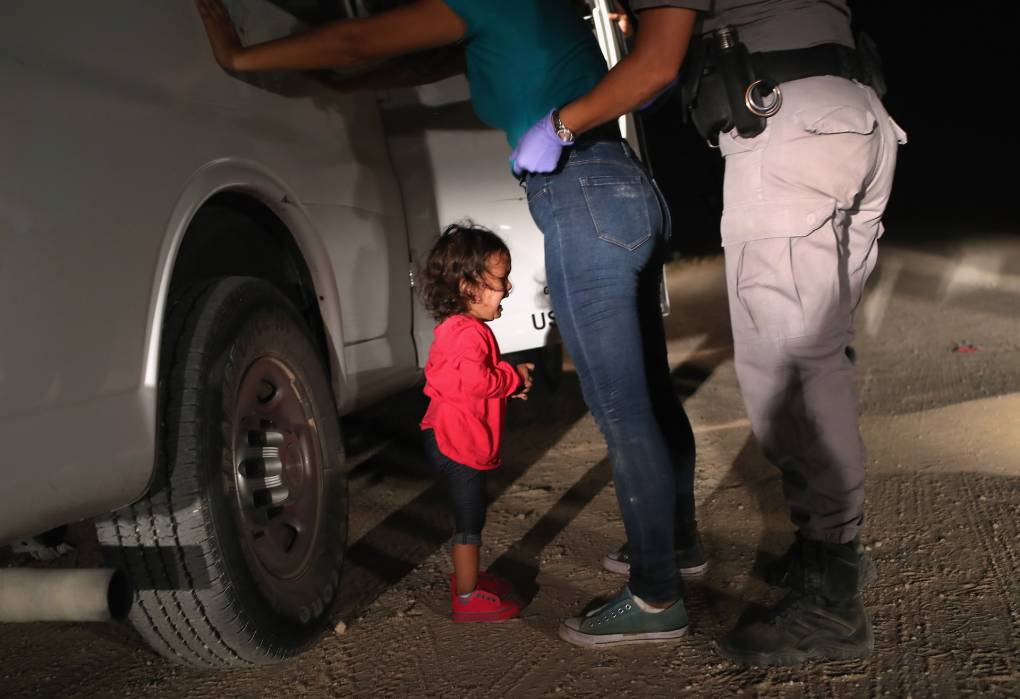
"caption": "A 2-year-old Honduran asylum-seeker cries as her mother is searched and detained near the U.S.-Mexico border on June 12, 2018, in McAllen, Texas. The asylum-seekers had rafted across the Rio Grande from Mexico and were detained by U.S. Border Patrol agents before being sent to a processing center for possible separation.",
"description": null,
"title": "Border Patrol Agents Detain Migrants Near US-Mexico Border",
"credit": "John Moore/Getty Images",
"status": "inherit",
"isLoading": false,
"fetchFailed": false
},
"news_11796521": {
"type": "attachments",
"id": "news_11796521",
"meta": {
"index": "attachments_1716263798",
"site": "news",
"id": "11796521",
"found": true
},
"parent": 11796517,
"imgSizes": {
"apple_news_ca_landscape_5_5": {
"file": "https://ww2.kqed.org/app/uploads/sites/10/2020/01/incompetent_011620_final-1044x783.jpg",
"width": 1044,
"mimeType": "image/jpeg",
"height": 783
},
"apple_news_ca_square_4_0": {
"file": "https://ww2.kqed.org/app/uploads/sites/10/2020/01/incompetent_011620_final-470x470.jpg",
"width": 470,
"mimeType": "image/jpeg",
"height": 470
},
"twentyfourteen-full-width": {
"file": "https://ww2.kqed.org/app/uploads/sites/10/2020/01/incompetent_011620_final-1038x576.jpg",
"width": 1038,
"mimeType": "image/jpeg",
"height": 576
},
"thumbnail": {
"file": "https://ww2.kqed.org/app/uploads/sites/10/2020/01/incompetent_011620_final-160x110.jpg",
"width": 160,
"mimeType": "image/jpeg",
"height": 110
},
"post-thumbnail": {
"file": "https://ww2.kqed.org/app/uploads/sites/10/2020/01/incompetent_011620_final-672x372.jpg",
"width": 672,
"mimeType": "image/jpeg",
"height": 372
},
"kqedFullSize": {
"file": "https://ww2.kqed.org/app/uploads/sites/10/2020/01/incompetent_011620_final.jpg",
"width": 1920,
"height": 1314
},
"apple_news_ca_landscape_4_7": {
"file": "https://ww2.kqed.org/app/uploads/sites/10/2020/01/incompetent_011620_final-632x474.jpg",
"width": 632,
"mimeType": "image/jpeg",
"height": 474
},
"large": {
"file": "https://ww2.kqed.org/app/uploads/sites/10/2020/01/incompetent_011620_final-1020x698.jpg",
"width": 1020,
"mimeType": "image/jpeg",
"height": 698
},
"apple_news_ca_landscape_4_0": {
"file": "https://ww2.kqed.org/app/uploads/sites/10/2020/01/incompetent_011620_final-536x402.jpg",
"width": 536,
"mimeType": "image/jpeg",
"height": 402
},
"apple_news_ca_portrait_12_9": {
"file": "https://ww2.kqed.org/app/uploads/sites/10/2020/01/incompetent_011620_final-1122x1314.jpg",
"width": 1122,
"mimeType": "image/jpeg",
"height": 1314
},
"medium": {
"file": "https://ww2.kqed.org/app/uploads/sites/10/2020/01/incompetent_011620_final-800x548.jpg",
"width": 800,
"mimeType": "image/jpeg",
"height": 548
},
"apple_news_ca_portrait_4_0": {
"file": "https://ww2.kqed.org/app/uploads/sites/10/2020/01/incompetent_011620_final-354x472.jpg",
"width": 354,
"mimeType": "image/jpeg",
"height": 472
},
"apple_news_ca_portrait_9_7": {
"file": "https://ww2.kqed.org/app/uploads/sites/10/2020/01/incompetent_011620_final-840x1120.jpg",
"width": 840,
"mimeType": "image/jpeg",
"height": 1120
},
"apple_news_ca_landscape_12_9": {
"file": "https://ww2.kqed.org/app/uploads/sites/10/2020/01/incompetent_011620_final-1832x1314.jpg",
"width": 1832,
"mimeType": "image/jpeg",
"height": 1314
},
"apple_news_ca_square_9_7": {
"file": "https://ww2.kqed.org/app/uploads/sites/10/2020/01/incompetent_011620_final-1104x1104.jpg",
"width": 1104,
"mimeType": "image/jpeg",
"height": 1104
},
"apple_news_ca_portrait_4_7": {
"file": "https://ww2.kqed.org/app/uploads/sites/10/2020/01/incompetent_011620_final-414x552.jpg",
"width": 414,
"mimeType": "image/jpeg",
"height": 552
},
"apple_news_ca_square_12_9": {
"file": "https://ww2.kqed.org/app/uploads/sites/10/2020/01/incompetent_011620_final-1472x1314.jpg",
"width": 1472,
"mimeType": "image/jpeg",
"height": 1314
},
"apple_news_ca_portrait_5_5": {
"file": "https://ww2.kqed.org/app/uploads/sites/10/2020/01/incompetent_011620_final-687x916.jpg",
"width": 687,
"mimeType": "image/jpeg",
"height": 916
},
"full-width": {
"file": "https://ww2.kqed.org/app/uploads/sites/10/2020/01/incompetent_011620_final-1920x1314.jpg",
"width": 1920,
"mimeType": "image/jpeg",
"height": 1314
},
"apple_news_ca_square_4_7": {
"file": "https://ww2.kqed.org/app/uploads/sites/10/2020/01/incompetent_011620_final-550x550.jpg",
"width": 550,
"mimeType": "image/jpeg",
"height": 550
},
"apple_news_ca_landscape_9_7": {
"file": "https://ww2.kqed.org/app/uploads/sites/10/2020/01/incompetent_011620_final-1376x1032.jpg",
"width": 1376,
"mimeType": "image/jpeg",
"height": 1032
},
"apple_news_ca_square_5_5": {
"file": "https://ww2.kqed.org/app/uploads/sites/10/2020/01/incompetent_011620_final-912x912.jpg",
"width": 912,
"mimeType": "image/jpeg",
"height": 912
}
},
"publishDate": 1579220306,
"modified": 1579220340,
"caption": null,
"description": null,
"title": "incompetent_011620_final",
"credit": null,
"status": "inherit",
"isLoading": false,
"fetchFailed": false
},
"news_11796239": {
"type": "attachments",
"id": "news_11796239",
"meta": {
"index": "attachments_1716263798",
"site": "news",
"id": "11796239",
"found": true
},
"parent": 11796238,
"imgSizes": {
"apple_news_ca_landscape_5_5": {
"file": "https://ww2.kqed.org/app/uploads/sites/10/2020/01/ap_19243610882993_wide-6f61c725415bd8bfdb12b1369e909c5a79087e7c-1044x783.jpg",
"width": 1044,
"mimeType": "image/jpeg",
"height": 783
},
"apple_news_ca_square_4_0": {
"file": "https://ww2.kqed.org/app/uploads/sites/10/2020/01/ap_19243610882993_wide-6f61c725415bd8bfdb12b1369e909c5a79087e7c-470x470.jpg",
"width": 470,
"mimeType": "image/jpeg",
"height": 470
},
"twentyfourteen-full-width": {
"file": "https://ww2.kqed.org/app/uploads/sites/10/2020/01/ap_19243610882993_wide-6f61c725415bd8bfdb12b1369e909c5a79087e7c-1038x576.jpg",
"width": 1038,
"mimeType": "image/jpeg",
"height": 576
},
"thumbnail": {
"file": "https://ww2.kqed.org/app/uploads/sites/10/2020/01/ap_19243610882993_wide-6f61c725415bd8bfdb12b1369e909c5a79087e7c-160x90.jpg",
"width": 160,
"mimeType": "image/jpeg",
"height": 90
},
"post-thumbnail": {
"file": "https://ww2.kqed.org/app/uploads/sites/10/2020/01/ap_19243610882993_wide-6f61c725415bd8bfdb12b1369e909c5a79087e7c-672x372.jpg",
"width": 672,
"mimeType": "image/jpeg",
"height": 372
},
"kqedFullSize": {
"file": "https://ww2.kqed.org/app/uploads/sites/10/2020/01/ap_19243610882993_wide-6f61c725415bd8bfdb12b1369e909c5a79087e7c-e1579129489373.jpg",
"width": 1920,
"height": 1080
},
"apple_news_ca_landscape_4_7": {
"file": "https://ww2.kqed.org/app/uploads/sites/10/2020/01/ap_19243610882993_wide-6f61c725415bd8bfdb12b1369e909c5a79087e7c-632x474.jpg",
"width": 632,
"mimeType": "image/jpeg",
"height": 474
},
"large": {
"file": "https://ww2.kqed.org/app/uploads/sites/10/2020/01/ap_19243610882993_wide-6f61c725415bd8bfdb12b1369e909c5a79087e7c-1020x574.jpg",
"width": 1020,
"mimeType": "image/jpeg",
"height": 574
},
"complete_open_graph": {
"file": "https://ww2.kqed.org/app/uploads/sites/10/2020/01/ap_19243610882993_wide-6f61c725415bd8bfdb12b1369e909c5a79087e7c-1200x675.jpg",
"width": 1200,
"mimeType": "image/jpeg",
"height": 675
},
"apple_news_ca_landscape_4_0": {
"file": "https://ww2.kqed.org/app/uploads/sites/10/2020/01/ap_19243610882993_wide-6f61c725415bd8bfdb12b1369e909c5a79087e7c-536x402.jpg",
"width": 536,
"mimeType": "image/jpeg",
"height": 402
},
"apple_news_ca_portrait_12_9": {
"file": "https://ww2.kqed.org/app/uploads/sites/10/2020/01/ap_19243610882993_wide-6f61c725415bd8bfdb12b1369e909c5a79087e7c-1122x1496.jpg",
"width": 1122,
"mimeType": "image/jpeg",
"height": 1496
},
"medium": {
"file": "https://ww2.kqed.org/app/uploads/sites/10/2020/01/ap_19243610882993_wide-6f61c725415bd8bfdb12b1369e909c5a79087e7c-800x450.jpg",
"width": 800,
"mimeType": "image/jpeg",
"height": 450
},
"apple_news_ca_portrait_4_0": {
"file": "https://ww2.kqed.org/app/uploads/sites/10/2020/01/ap_19243610882993_wide-6f61c725415bd8bfdb12b1369e909c5a79087e7c-354x472.jpg",
"width": 354,
"mimeType": "image/jpeg",
"height": 472
},
"apple_news_ca_portrait_9_7": {
"file": "https://ww2.kqed.org/app/uploads/sites/10/2020/01/ap_19243610882993_wide-6f61c725415bd8bfdb12b1369e909c5a79087e7c-840x1120.jpg",
"width": 840,
"mimeType": "image/jpeg",
"height": 1120
},
"apple_news_ca_landscape_12_9": {
"file": "https://ww2.kqed.org/app/uploads/sites/10/2020/01/ap_19243610882993_wide-6f61c725415bd8bfdb12b1369e909c5a79087e7c-1832x1374.jpg",
"width": 1832,
"mimeType": "image/jpeg",
"height": 1374
},
"apple_news_ca_square_9_7": {
"file": "https://ww2.kqed.org/app/uploads/sites/10/2020/01/ap_19243610882993_wide-6f61c725415bd8bfdb12b1369e909c5a79087e7c-1104x1104.jpg",
"width": 1104,
"mimeType": "image/jpeg",
"height": 1104
},
"apple_news_ca_portrait_4_7": {
"file": "https://ww2.kqed.org/app/uploads/sites/10/2020/01/ap_19243610882993_wide-6f61c725415bd8bfdb12b1369e909c5a79087e7c-414x552.jpg",
"width": 414,
"mimeType": "image/jpeg",
"height": 552
},
"apple_news_ca_square_12_9": {
"file": "https://ww2.kqed.org/app/uploads/sites/10/2020/01/ap_19243610882993_wide-6f61c725415bd8bfdb12b1369e909c5a79087e7c-1472x1472.jpg",
"width": 1472,
"mimeType": "image/jpeg",
"height": 1472
},
"apple_news_ca_portrait_5_5": {
"file": "https://ww2.kqed.org/app/uploads/sites/10/2020/01/ap_19243610882993_wide-6f61c725415bd8bfdb12b1369e909c5a79087e7c-687x916.jpg",
"width": 687,
"mimeType": "image/jpeg",
"height": 916
},
"full-width": {
"file": "https://ww2.kqed.org/app/uploads/sites/10/2020/01/ap_19243610882993_wide-6f61c725415bd8bfdb12b1369e909c5a79087e7c-1920x1080.jpg",
"width": 1920,
"mimeType": "image/jpeg",
"height": 1080
},
"apple_news_ca_square_4_7": {
"file": "https://ww2.kqed.org/app/uploads/sites/10/2020/01/ap_19243610882993_wide-6f61c725415bd8bfdb12b1369e909c5a79087e7c-550x550.jpg",
"width": 550,
"mimeType": "image/jpeg",
"height": 550
},
"apple_news_ca_landscape_9_7": {
"file": "https://ww2.kqed.org/app/uploads/sites/10/2020/01/ap_19243610882993_wide-6f61c725415bd8bfdb12b1369e909c5a79087e7c-1376x1032.jpg",
"width": 1376,
"mimeType": "image/jpeg",
"height": 1032
},
"apple_news_ca_square_5_5": {
"file": "https://ww2.kqed.org/app/uploads/sites/10/2020/01/ap_19243610882993_wide-6f61c725415bd8bfdb12b1369e909c5a79087e7c-912x912.jpg",
"width": 912,
"mimeType": "image/jpeg",
"height": 912
}
},
"publishDate": 1579129212,
"modified": 1579129480,
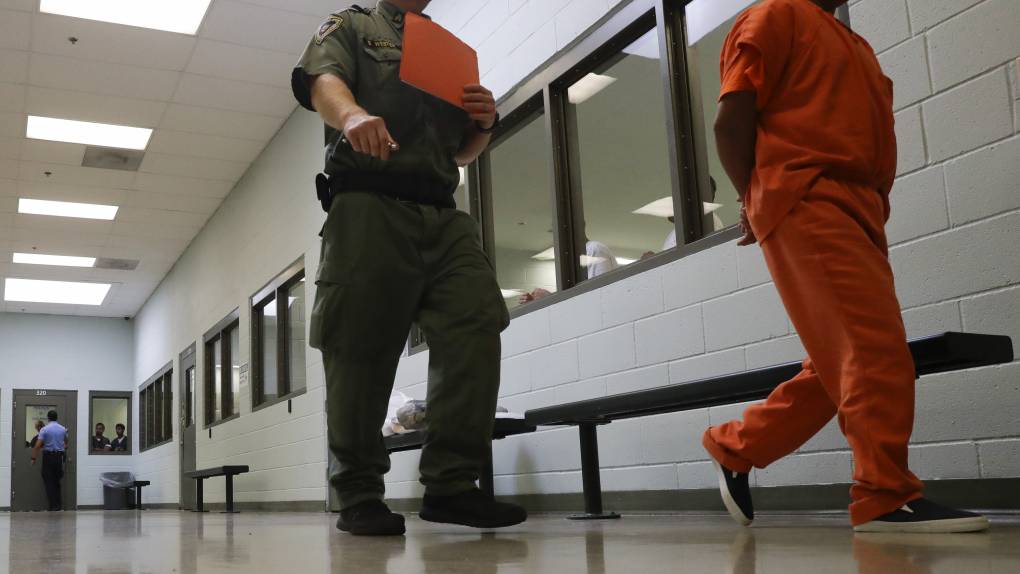
"caption": "A guard walks with a detainee in the intake area at the Adelanto ICE Processing Center in 2019. A previously confidential report obtained by NPR found \"negligent\" medical care and other problems at the facility.",
"description": "A guard walks with a detainee in the intake area at the Adelanto ICE Processing Center in 2019. A previously confidential report obtained by NPR found \"negligent\" medical care and other problems at the facility.",
"title": "A guard walks with a detainee in the intake area at the Adelanto ICE Processing Center in 2019. A previously confidential report obtained by NPR found \"negligent\" medical care and other problems at the facility.",
"credit": "Chris Carlson/AP",
"status": "inherit",
"isLoading": false,
"fetchFailed": false
},
"news_11793981": {
"type": "attachments",
"id": "news_11793981",
"meta": {
"index": "attachments_1716263798",
"site": "news",
"id": "11793981",
"found": true
},
"parent": 11793952,
"imgSizes": {
"apple_news_ca_landscape_5_5": {
"file": "https://ww2.kqed.org/app/uploads/sites/10/2020/01/RS26115_S-wing-hallway-01-11-17-qut-1044x783.jpg",
"width": 1044,
"mimeType": "image/jpeg",
"height": 783
},
"apple_news_ca_square_4_0": {
"file": "https://ww2.kqed.org/app/uploads/sites/10/2020/01/RS26115_S-wing-hallway-01-11-17-qut-470x470.jpg",
"width": 470,
"mimeType": "image/jpeg",
"height": 470
},
"twentyfourteen-full-width": {
"file": "https://ww2.kqed.org/app/uploads/sites/10/2020/01/RS26115_S-wing-hallway-01-11-17-qut-1038x576.jpg",
"width": 1038,
"mimeType": "image/jpeg",
"height": 576
},
"thumbnail": {
"file": "https://ww2.kqed.org/app/uploads/sites/10/2020/01/RS26115_S-wing-hallway-01-11-17-qut-160x90.jpg",
"width": 160,
"mimeType": "image/jpeg",
"height": 90
},
"post-thumbnail": {
"file": "https://ww2.kqed.org/app/uploads/sites/10/2020/01/RS26115_S-wing-hallway-01-11-17-qut-672x372.jpg",
"width": 672,
"mimeType": "image/jpeg",
"height": 372
},
"kqedFullSize": {
"file": "https://ww2.kqed.org/app/uploads/sites/10/2020/01/RS26115_S-wing-hallway-01-11-17-qut.jpg",
"width": 1920,
"height": 1080
},
"apple_news_ca_landscape_4_7": {
"file": "https://ww2.kqed.org/app/uploads/sites/10/2020/01/RS26115_S-wing-hallway-01-11-17-qut-632x474.jpg",
"width": 632,
"mimeType": "image/jpeg",
"height": 474
},
"large": {
"file": "https://ww2.kqed.org/app/uploads/sites/10/2020/01/RS26115_S-wing-hallway-01-11-17-qut-1020x574.jpg",
"width": 1020,
"mimeType": "image/jpeg",
"height": 574
},
"complete_open_graph": {
"file": "https://ww2.kqed.org/app/uploads/sites/10/2020/01/RS26115_S-wing-hallway-01-11-17-qut-1200x675.jpg",
"width": 1200,
"mimeType": "image/jpeg",
"height": 675
},
"apple_news_ca_landscape_4_0": {
"file": "https://ww2.kqed.org/app/uploads/sites/10/2020/01/RS26115_S-wing-hallway-01-11-17-qut-536x402.jpg",
"width": 536,
"mimeType": "image/jpeg",
"height": 402
},
"apple_news_ca_portrait_12_9": {
"file": "https://ww2.kqed.org/app/uploads/sites/10/2020/01/RS26115_S-wing-hallway-01-11-17-qut-1122x1080.jpg",
"width": 1122,
"mimeType": "image/jpeg",
"height": 1080
},
"medium": {
"file": "https://ww2.kqed.org/app/uploads/sites/10/2020/01/RS26115_S-wing-hallway-01-11-17-qut-800x450.jpg",
"width": 800,
"mimeType": "image/jpeg",
"height": 450
},
"apple_news_ca_portrait_4_0": {
"file": "https://ww2.kqed.org/app/uploads/sites/10/2020/01/RS26115_S-wing-hallway-01-11-17-qut-354x472.jpg",
"width": 354,
"mimeType": "image/jpeg",
"height": 472
},
"apple_news_ca_portrait_9_7": {
"file": "https://ww2.kqed.org/app/uploads/sites/10/2020/01/RS26115_S-wing-hallway-01-11-17-qut-840x1080.jpg",
"width": 840,
"mimeType": "image/jpeg",
"height": 1080
},
"apple_news_ca_landscape_12_9": {
"file": "https://ww2.kqed.org/app/uploads/sites/10/2020/01/RS26115_S-wing-hallway-01-11-17-qut-1832x1080.jpg",
"width": 1832,
"mimeType": "image/jpeg",
"height": 1080
},
"apple_news_ca_square_9_7": {
"file": "https://ww2.kqed.org/app/uploads/sites/10/2020/01/RS26115_S-wing-hallway-01-11-17-qut-1104x1080.jpg",
"width": 1104,
"mimeType": "image/jpeg",
"height": 1080
},
"apple_news_ca_portrait_4_7": {
"file": "https://ww2.kqed.org/app/uploads/sites/10/2020/01/RS26115_S-wing-hallway-01-11-17-qut-414x552.jpg",
"width": 414,
"mimeType": "image/jpeg",
"height": 552
},
"apple_news_ca_square_12_9": {
"file": "https://ww2.kqed.org/app/uploads/sites/10/2020/01/RS26115_S-wing-hallway-01-11-17-qut-1472x1080.jpg",
"width": 1472,
"mimeType": "image/jpeg",
"height": 1080
},
"apple_news_ca_portrait_5_5": {
"file": "https://ww2.kqed.org/app/uploads/sites/10/2020/01/RS26115_S-wing-hallway-01-11-17-qut-687x916.jpg",
"width": 687,
"mimeType": "image/jpeg",
"height": 916
},
"full-width": {
"file": "https://ww2.kqed.org/app/uploads/sites/10/2020/01/RS26115_S-wing-hallway-01-11-17-qut-1920x1080.jpg",
"width": 1920,
"mimeType": "image/jpeg",
"height": 1080
},
"apple_news_ca_square_4_7": {
"file": "https://ww2.kqed.org/app/uploads/sites/10/2020/01/RS26115_S-wing-hallway-01-11-17-qut-550x550.jpg",
"width": 550,
"mimeType": "image/jpeg",
"height": 550
},
"apple_news_ca_landscape_9_7": {
"file": "https://ww2.kqed.org/app/uploads/sites/10/2020/01/RS26115_S-wing-hallway-01-11-17-qut-1376x1032.jpg",
"width": 1376,
"mimeType": "image/jpeg",
"height": 1032
},
"apple_news_ca_square_5_5": {
"file": "https://ww2.kqed.org/app/uploads/sites/10/2020/01/RS26115_S-wing-hallway-01-11-17-qut-912x912.jpg",
"width": 912,
"mimeType": "image/jpeg",
"height": 912
}
},
"publishDate": 1578159828,
"modified": 1578160589,
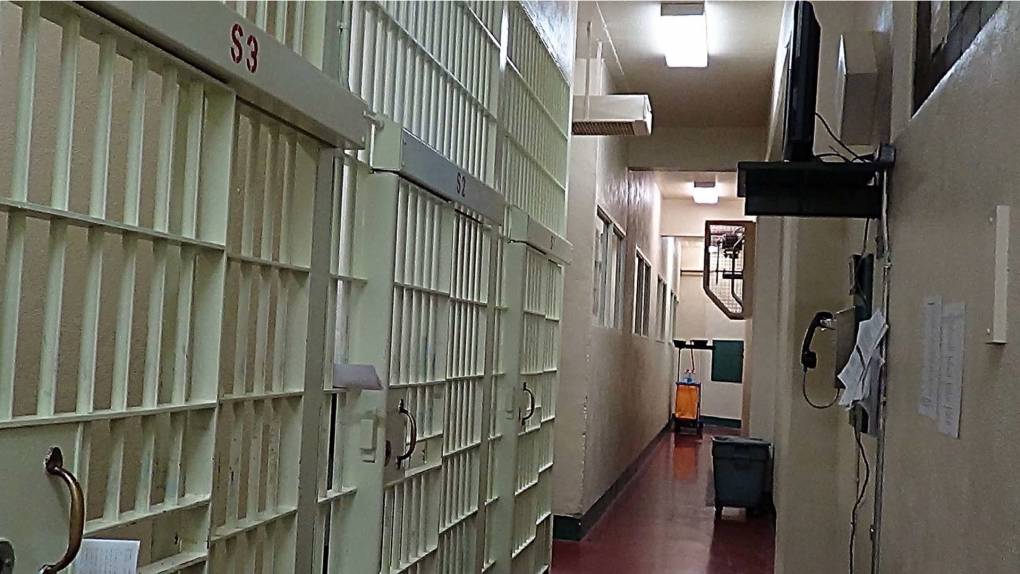
"caption": "For months, Lexis Avilez has been held in the Yuba County Detention Facility while her lawyers worked to get her a bond hearing. Then, on Christmas day, she was transferred to a facility in Texas.",
"description": "For months, Lexis Avilez has been held in the Yuba County Detention Facility while her lawyers worked to get her a bond hearing. Then, on Christmas day, she was transferred to a facility in Texas.",
"title": "RS26115_S-wing-hallway-01-11-17-qut",
"credit": "Courtesy Rosen Bien Galvan & Grunfeld LLP",
"status": "inherit",
"isLoading": false,
"fetchFailed": false
}
},
"audioPlayerReducer": {
"postId": "stream_live",
"isPaused": true,
"isPlaying": false,
"pfsActive": false,
"pledgeModalIsOpen": true,
"playerDrawerIsOpen": false,
"liveAudioPlayStartedAt": 0,
"liveAudioPlayContext": ""
},
"authorsReducer": {
"byline_news_11800394": {
"type": "authors",
"id": "byline_news_11800394",
"meta": {
"override": true
},
"slug": "byline_news_11800394",
"name": "\u003ca href=\"https://www.npr.org/people/349305392/tom-dreisbach\"> Tom Dreisbach \u003ca />",
"isLoading": false
},
"byline_news_11796238": {
"type": "authors",
"id": "byline_news_11796238",
"meta": {
"override": true
},
"slug": "byline_news_11796238",
"name": "Tom Dreisbach\u003cbr>NPR",
"isLoading": false
},
"tychehendricks": {
"type": "authors",
"id": "259",
"meta": {
"index": "authors_1716337520",
"id": "259",
"found": true
},
"name": "Tyche Hendricks",
"firstName": "Tyche",
"lastName": "Hendricks",
"slug": "tychehendricks",
"email": "thendricks@kqed.org",
"display_author_email": true,
"staff_mastheads": [
"news"
],
"title": "KQED Senior Editor, Immigration",
"bio": "\u003cspan style=\"font-weight: 400;\">Tyche Hendricks is KQED’s senior editor for immigration, leading coverage of the policy and politics that affect California’s immigrant communities. Her work for KQED’s radio and online audiences is also carried on NPR and other national outlets. She has been recognized with awards from the Radio and Television News Directors Association, the Society for Professional Journalists; the Education Writers Association; the Best of the West and the National Federation of Community Broadcasters. Before joining KQED in 2010, Tyche spent more than a dozen years as a newspaper reporter, notably at the \u003c/span>\u003ci>\u003cspan style=\"font-weight: 400;\">San Francisco Chronicle\u003c/span>\u003c/i>\u003cspan style=\"font-weight: 400;\">. At different times she has covered criminal justice, government and politics and urban planning. Tyche has taught in the MFA Creative Writing program at the University of San Francisco and at UC Berkeley’s Graduate School of Journalism, where she was co-director of a national immigration symposium for professional journalists. She is the author of \u003c/span>\u003ci>\u003cspan style=\"font-weight: 400;\">The Wind Doesn't Need a Passport: Stories from the U.S.-Mexico Borderlands\u003c/span>\u003c/i>\u003cspan style=\"font-weight: 400;\"> (University of California Press). \u003c/span>",
"avatar": "https://secure.gravatar.com/avatar/b8ee458e2731c2d43df86882ce17267e?s=600&d=blank&r=g",
"twitter": "tychehendricks",
"facebook": null,
"instagram": null,
"linkedin": null,
"sites": [
{
"site": "news",
"roles": [
"editor"
]
},
{
"site": "stateofhealth",
"roles": [
"editor"
]
}
],
"headData": {
"title": "Tyche Hendricks | KQED",
"description": "KQED Senior Editor, Immigration",
"ogImgSrc": "https://secure.gravatar.com/avatar/b8ee458e2731c2d43df86882ce17267e?s=600&d=blank&r=g",
"twImgSrc": "https://secure.gravatar.com/avatar/b8ee458e2731c2d43df86882ce17267e?s=600&d=blank&r=g"
},
"isLoading": false,
"link": "/author/tychehendricks"
},
"markfiore": {
"type": "authors",
"id": "3236",
"meta": {
"index": "authors_1716337520",
"id": "3236",
"found": true
},
"name": "Mark Fiore",
"firstName": "Mark",
"lastName": "Fiore",
"slug": "markfiore",
"email": "mark@markfiore.com",
"display_author_email": false,
"staff_mastheads": [
"news"
],
"title": "KQED News Cartoonist",
"bio": "\u003ca href=\"http://www.MarkFiore.com\">MarkFiore.com\u003c/a> | \u003ca href=\"https://twitter.com/markfiore\">Follow on Twitter\u003c/a> | \u003ca href=\"https://www.facebook.com/pages/Mark-Fiore-Animated-Political-Cartoons/94451707396?ref=bookmarks\">Facebook\u003c/a> | \u003ca href=\"mailto:mark@markfiore.com\">email\u003c/a>\r\n\r\nPulitzer Prize-winner, Mark Fiore, who the Wall Street Journal has called “the undisputed guru of the form,” creates animated political cartoons in San Francisco, where his work has been featured regularly on the San Francisco Chronicle’s web site, SFGate.com. His work has appeared on Newsweek.com, Slate.com, CBSNews.com, MotherJones.com, DailyKos.com and NPR’s web site. Fiore’s political animation has appeared on CNN, Frontline, Bill Moyers Journal, Salon.com and cable and broadcast outlets across the globe.\r\n\r\nBeginning his professional life by drawing traditional political cartoons for newspapers, Fiore’s work appeared in publications ranging from the Washington Post to the Los Angeles Times. In the late 1990s, he began to experiment with animating political cartoons and, after a short stint at the San Jose Mercury News as their staff cartoonist, Fiore devoted all his energies to animation.\r\nGrowing up in California, Fiore also spent a good portion of his life in the backwoods of Idaho. It was this combination that shaped him politically. Mark majored in political science at Colorado College, where, in a perfect send-off for a cartoonist, he received his diploma in 1991 as commencement speaker Dick Cheney smiled approvingly.\r\nMark Fiore was awarded the Pulitzer Prize for political cartooning in 2010, a Robert F. Kennedy Journalism Award in 2004 and has twice received an Online Journalism Award for commentary from the Online News Association (2002, 2008). Fiore has received two awards for his work in new media from the National Cartoonists Society (2001, 2002), and in 2006 received The James Madison Freedom of Information Award from The Society of Professional Journalists.",
"avatar": "https://secure.gravatar.com/avatar/fc4e2a612b15b67bad0c6f0e1db4ca9b?s=600&d=blank&r=g",
"twitter": "MarkFiore",
"facebook": null,
"instagram": "https://www.instagram.com/markfiore/?hl=en",
"linkedin": null,
"sites": [
{
"site": "arts",
"roles": [
"contributor"
]
},
{
"site": "news",
"roles": [
"editor"
]
},
{
"site": "futureofyou",
"roles": [
"editor"
]
},
{
"site": "science",
"roles": [
"editor"
]
}
],
"headData": {
"title": "Mark Fiore | KQED",
"description": "KQED News Cartoonist",
"ogImgSrc": "https://secure.gravatar.com/avatar/fc4e2a612b15b67bad0c6f0e1db4ca9b?s=600&d=blank&r=g",
"twImgSrc": "https://secure.gravatar.com/avatar/fc4e2a612b15b67bad0c6f0e1db4ca9b?s=600&d=blank&r=g"
},
"isLoading": false,
"link": "/author/markfiore"
},
"tcamhi": {
"type": "authors",
"id": "3251",
"meta": {
"index": "authors_1716337520",
"id": "3251",
"found": true
},
"name": "Tiffany Camhi",
"firstName": "Tiffany",
"lastName": "Camhi",
"slug": "tcamhi",
"email": "tiffanycamhi@gmail.com",
"display_author_email": false,
"staff_mastheads": [],
"title": "KQED Contributor",
"bio": null,
"avatar": "https://secure.gravatar.com/avatar/f8204ce351139205d3b3dc1581016a5e30d7d8b38cb2c139348c151ec14b792e?s=600&d=blank&r=g",
"twitter": null,
"bluesky": null,
"facebook": null,
"instagram": null,
"linkedin": null,
"sites": [
{
"site": "arts",
"roles": [
"subscriber"
]
},
{
"site": "news",
"roles": [
"subscriber"
]
}
],
"headData": {
"title": "Tiffany Camhi | KQED",
"description": "KQED Contributor",
"ogImgSrc": "https://secure.gravatar.com/avatar/f8204ce351139205d3b3dc1581016a5e30d7d8b38cb2c139348c151ec14b792e?s=600&d=blank&r=g",
"twImgSrc": "https://secure.gravatar.com/avatar/f8204ce351139205d3b3dc1581016a5e30d7d8b38cb2c139348c151ec14b792e?s=600&d=blank&r=g"
},
"isLoading": false,
"link": "/author/tcamhi"
},
"clei": {
"type": "authors",
"id": "8617",
"meta": {
"index": "authors_1716337520",
"id": "8617",
"found": true
},
"name": "Cecilia Lei",
"firstName": "Cecilia",
"lastName": "Lei",
"slug": "clei",
"email": "clei@KQED.org",
"display_author_email": false,
"staff_mastheads": [],
"title": "KQED Contributor",
"bio": "Cecilia Lei is an on-call host and producer for KQED News and Podcasts. Previously, she was the executive producer and host of the San Francisco Chronicle's daily news podcast, 'Fifth and Mission'. Cecilia is a graduate of UC Berkeley’s Graduate School of Journalism and the former president of the Asian American Journalists Association San Francisco Bay Area chapter.",
"avatar": "https://secure.gravatar.com/avatar/40975f1f88fccf628ee537bf6ffc2af8?s=600&d=blank&r=g",
"twitter": null,
"facebook": null,
"instagram": null,
"linkedin": null,
"sites": [
{
"site": "arts",
"roles": [
"contributor"
]
},
{
"site": "news",
"roles": [
"author",
"read_private_posts"
]
},
{
"site": "about",
"roles": [
"editor"
]
}
],
"headData": {
"title": "Cecilia Lei | KQED",
"description": "KQED Contributor",
"ogImgSrc": "https://secure.gravatar.com/avatar/40975f1f88fccf628ee537bf6ffc2af8?s=600&d=blank&r=g",
"twImgSrc": "https://secure.gravatar.com/avatar/40975f1f88fccf628ee537bf6ffc2af8?s=600&d=blank&r=g"
},
"isLoading": false,
"link": "/author/clei"
},
"fjhabvala": {
"type": "authors",
"id": "8659",
"meta": {
"index": "authors_1716337520",
"id": "8659",
"found": true
},
"name": "Farida Jhabvala Romero",
"firstName": "Farida",
"lastName": "Jhabvala Romero",
"slug": "fjhabvala",
"email": "fjhabvala@kqed.org",
"display_author_email": true,
"staff_mastheads": [
"news"
],
"title": "KQED Contributor",
"bio": "Farida Jhabvala Romero is a Labor Correspondent for KQED. She previously covered immigration. Farida was \u003ca href=\"https://www.ccnma.org/2022-most-influential-latina-journalists\">named\u003c/a> one of the 10 Most Influential Latina Journalists in California in 2022 by the California Chicano News Media Association. Her work has won awards from the Society of Professional Journalists (Northern California), as well as a national and regional Edward M. Murrow Award for the collaborative reporting projects “Dangerous Air” and “Graying California.” Before joining KQED, Farida worked as a producer at Radio Bilingüe, a national public radio network. Farida earned her master’s degree in journalism from Stanford University.",
"avatar": "https://secure.gravatar.com/avatar/f9f022d4e2609741874222a1e9d41f48fea74011aa7c615eef91d9a50c944ebe?s=600&d=blank&r=g",
"twitter": "FaridaJhabvala",
"bluesky": null,
"facebook": null,
"instagram": null,
"linkedin": "https://www.linkedin.com/in/faridajhabvala/",
"sites": [
{
"site": "news",
"roles": [
"editor"
]
},
{
"site": "stateofhealth",
"roles": [
"author"
]
},
{
"site": "liveblog",
"roles": [
"author"
]
}
],
"headData": {
"title": "Farida Jhabvala Romero | KQED",
"description": "KQED Contributor",
"ogImgSrc": "https://secure.gravatar.com/avatar/f9f022d4e2609741874222a1e9d41f48fea74011aa7c615eef91d9a50c944ebe?s=600&d=blank&r=g",
"twImgSrc": "https://secure.gravatar.com/avatar/f9f022d4e2609741874222a1e9d41f48fea74011aa7c615eef91d9a50c944ebe?s=600&d=blank&r=g"
},
"isLoading": false,
"link": "/author/fjhabvala"
},
"mwiley": {
"type": "authors",
"id": "11526",
"meta": {
"index": "authors_1716337520",
"id": "11526",
"found": true
},
"name": "Michelle Wiley",
"firstName": "Michelle",
"lastName": "Wiley",
"slug": "mwiley",
"email": "mwiley@KQED.org",
"display_author_email": true,
"staff_mastheads": [],
"title": null,
"bio": "Michelle Wiley was the senior editor of weekends.",
"avatar": "https://secure.gravatar.com/avatar/3b897d82a09e8587e8e73fa69fbcc635?s=600&d=blank&r=g",
"twitter": "michelleewiley",
"facebook": null,
"instagram": null,
"linkedin": null,
"sites": [
{
"site": "",
"roles": [
"editor"
]
},
{
"site": "arts",
"roles": [
"editor"
]
},
{
"site": "news",
"roles": [
"subscriber"
]
},
{
"site": "lowdown",
"roles": [
"editor"
]
},
{
"site": "science",
"roles": [
"editor"
]
},
{
"site": "podcasts",
"roles": [
"editor"
]
}
],
"headData": {
"title": "Michelle Wiley | KQED",
"description": null,
"ogImgSrc": "https://secure.gravatar.com/avatar/3b897d82a09e8587e8e73fa69fbcc635?s=600&d=blank&r=g",
"twImgSrc": "https://secure.gravatar.com/avatar/3b897d82a09e8587e8e73fa69fbcc635?s=600&d=blank&r=g"
},
"isLoading": false,
"link": "/author/mwiley"
}
},
"pagesReducer": {
"news_tag_ice": {
"type": "terms",
"id": "news_21027",
"meta": {
"index": "terms_1716263798",
"site": "news",
"id": "21027",
"score": 8.937602
},
"featImg": null,
"name": "ICE",
"description": null,
"taxonomy": "tag",
"headData": {
"twImgId": null,
"twTitle": null,
"ogTitle": null,
"ogImgId": null,
"twDescription": null,
"description": null,
"title": "ICE Archives | KQED News",
"ogDescription": null
},
"ttid": 21044,
"slug": "ice",
"isLoading": false,
"title": "ICE",
"pageMeta": {
"site": "news",
"WpPageTemplate": "page-topic-editorial",
"currentPage": 11
},
"blocks": [
{
"blockName": "kqed/post-list",
"attrs": {
"layout": "cardArticle2",
"query": "posts/news?tag=ice",
"seeMore": false,
"paginated": true,
"page": 11
}
},
{
"blockName": "kqed/ad"
}
]
}
},
"pfsSessionReducer": {},
"postsReducer": {
"stream_live": {
"type": "live",
"id": "stream_live",
"audioUrl": "https://streams.kqed.org/kqedradio",
"title": "Live Stream",
"excerpt": "Live Stream information currently unavailable.",
"link": "/radio",
"featImg": "",
"label": {
"name": "KQED Live",
"link": "/"
}
},
"stream_kqedNewscast": {
"type": "posts",
"id": "stream_kqedNewscast",
"audioUrl": "https://www.kqed.org/.stream/anon/radio/RDnews/newscast.mp3?_=1",
"title": "KQED Newscast",
"featImg": "",
"label": {
"name": "88.5 FM",
"link": "/"
}
},
"news_11809289": {
"type": "posts",
"id": "news_11809289",
"meta": {
"index": "posts_1716263798",
"site": "news",
"id": "11809289",
"score": null,
"sort": [
1585351454000
]
},
"guestAuthors": [],
"slug": "ice-detention-centers-ripe-for-coronavirus-outbreak",
"title": "ICE Detention Centers Ripe for Coronavirus Outbreak",
"publishDate": 1585351454,
"format": "standard",
"headTitle": "ICE Detention Centers Ripe for Coronavirus Outbreak | KQED",
"labelTerm": {
"term": 18515,
"site": "news"
},
"content": "\u003cp>While most people and businesses are practicing social distancing, ICE \u003ca href=\"https://www.desertsun.com/story/news/health/2020/03/27/coronavirus-calls-ice-protect-immigrant-detainees-grow-louder/2914194001/\">continues to house immigrants in crowded detention centers\u003c/a>.\u003c/p>\n\u003cp>San Francisco District Attorney Chesa Boudin wants Gov. Gavin Newsom to \u003ca href=\"http://bit.ly/fioreicecoronavirus\">shut down federal immigration detention facilities\u003c/a> in California over concerns that coronavirus will spread rapidly among the detainees.\u003c/p>\n\u003cp>Remember, the vast majority of these detainees have no criminal convictions and would have been released while awaiting their court date were it not for the Trump administration’s hard-line immigration policies.\u003c/p>\n\u003cp>Now Trump’s zero tolerance policies that led to children being ripped from the arms of their parents may also lead to deaths of non-violent immigrant detainees.\u003c/p>\n\u003cp>[ad fullwidth]\u003c/p>\n\u003cp>\u003c/p>\n",
"blocks": [],
"excerpt": "While most people and businesses are practicing social distancing, ICE continues to house immigrants in crowded detention centers.",
"status": "publish",
"parent": 0,
"modified": 1738715834,
"stats": {
"hasAudio": false,
"hasVideo": false,
"hasChartOrMap": false,
"iframeSrcs": [],
"hasGoogleForm": false,
"hasGallery": false,
"hasHearkenModule": false,
"hasPolis": false,
"paragraphCount": 6,
"wordCount": 112
},
"headData": {
"title": "ICE Detention Centers Ripe for Coronavirus Outbreak | KQED",
"description": "While most people and businesses are practicing social distancing, ICE continues to house immigrants in crowded detention centers.",
"ogTitle": "",
"ogDescription": "",
"ogImgId": "",
"twTitle": "",
"twDescription": "",
"twImgId": "",
"schema": {
"@context": "https://schema.org",
"@type": "NewsArticle",
"headline": "ICE Detention Centers Ripe for Coronavirus Outbreak",
"datePublished": "2020-03-27T16:24:14-07:00",
"dateModified": "2025-02-04T16:37:14-08:00",
"image": "https://cdn.kqed.org/wp-content/uploads/2020/02/KQED-OG-Image@1x.png",
"isAccessibleForFree": "True",
"publisher": {
"@type": "NewsMediaOrganization",
"@id": "https://www.kqed.org/#organization",
"name": "KQED",
"logo": "https://cdn.kqed.org/wp-content/uploads/2020/02/KQED-OG-Image@1x.png",
"url": "https://www.kqed.org",
"sameAs": [
"https://www.facebook.com/KQED",
"https://twitter.com/KQED",
"https://www.instagram.com/kqed/",
"https://www.tiktok.com/@kqedofficial",
"https://www.linkedin.com/company/kqed",
"https://www.youtube.com/channel/UCeC0IOo7i1P_61zVUWbJ4nw"
]
}
}
},
"sticky": false,
"path": "/news/11809289/ice-detention-centers-ripe-for-coronavirus-outbreak",
"audioTrackLength": null,
"parsedContent": [
{
"type": "contentString",
"content": "\u003cdiv class=\"post-body\">\u003cp>\u003cp>While most people and businesses are practicing social distancing, ICE \u003ca href=\"https://www.desertsun.com/story/news/health/2020/03/27/coronavirus-calls-ice-protect-immigrant-detainees-grow-louder/2914194001/\">continues to house immigrants in crowded detention centers\u003c/a>.\u003c/p>\n\u003cp>San Francisco District Attorney Chesa Boudin wants Gov. Gavin Newsom to \u003ca href=\"http://bit.ly/fioreicecoronavirus\">shut down federal immigration detention facilities\u003c/a> in California over concerns that coronavirus will spread rapidly among the detainees.\u003c/p>\n\u003cp>Remember, the vast majority of these detainees have no criminal convictions and would have been released while awaiting their court date were it not for the Trump administration’s hard-line immigration policies.\u003c/p>\n\u003cp>Now Trump’s zero tolerance policies that led to children being ripped from the arms of their parents may also lead to deaths of non-violent immigrant detainees.\u003c/p>\n\u003cp>\u003c/p>\u003c/div>",
"attributes": {
"named": {},
"numeric": []
}
},
{
"type": "component",
"content": "",
"name": "ad",
"attributes": {
"named": {
"label": "fullwidth"
},
"numeric": [
"fullwidth"
]
}
},
{
"type": "contentString",
"content": "\u003cdiv class=\"post-body\">\u003cp>\u003c/p>\n\u003cp>\u003c/p>\n\u003c/div>\u003c/p>",
"attributes": {
"named": {},
"numeric": []
}
}
],
"link": "/news/11809289/ice-detention-centers-ripe-for-coronavirus-outbreak",
"authors": [
"3236"
],
"series": [
"news_18515"
],
"categories": [
"news_457",
"news_1169",
"news_6188",
"news_13"
],
"tags": [
"news_24162",
"news_27350",
"news_27504",
"news_16",
"news_21027",
"news_20949",
"news_20529"
],
"featImg": "news_11809312",
"label": "news_18515"
},
"news_11805573": {
"type": "posts",
"id": "news_11805573",
"meta": {
"index": "posts_1716263798",
"site": "news",
"id": "11805573",
"score": null,
"sort": [
1583524377000
]
},
"parent": 0,
"labelTerm": {
"site": "news",
"term": 72
},
"blocks": [],
"publishDate": 1583524377,
"format": "standard",
"disqusTitle": "SF Officials Slam ICE for Arresting Man Outside Courthouse",
"title": "SF Officials Slam ICE for Arresting Man Outside Courthouse",
"headTitle": "The California Report | KQED News",
"content": "\u003cp>An undocumented man was detained by federal immigration authorities this week in front of the San Francisco Hall of Justice, where the criminal courts are located. The arrest was strongly condemned by the city’s public defender and district attorney, who say courthouses should be off limits to immigration enforcement.\u003c/p>\n\u003cp>The San Francisco resident was on his way to a court hearing at 850 Bryant St. when he was arrested by U.S. Immigration and Customs Enforcement agents — the first such arrest in the city, said the Public Defender’s Office.\u003c/p>\n\u003cp>“This undermines community trust and public safety,” said San Francisco Public Defender Mano Raju. “It does deter people from coming to court.”\u003c/p>\n\u003cp>Last month, ICE agents also \u003ca href=\"https://www.sfchronicle.com/crime/article/ICE-arrests-3-at-Sonoma-County-courthouse-local-15067595.php\">detained two men\u003c/a> at the Sonoma County Superior Court. [aside tag=\"immigration\" label=\"related coverage\"]\u003c/p>\n\u003cp>The courthouse arrests come as the Trump administration has renewed efforts to counter sanctuary jurisdictions, arguing they interfere with federal immigration enforcement.\u003c/p>\n\u003cp>This week, President Trump said the federal government will begin \u003ca href=\"https://thehill.com/homenews/administration/486078-trump-government-will-start-withholding-funds-from-sanctuary-cities\">withholding grants\u003c/a> from sanctuary cities and states, after an appeals court in Manhattan ruled they have the authority to do so. U.S. Attorney General William Barr \u003ca href=\"https://www.justice.gov/opa/speech/attorney-general-william-p-barr-delivers-remarks-national-sheriffs-association-winter\">said\u003c/a> last month that public areas of courthouses must be accessible to federal law enforcement officers.\u003c/p>\n\u003cp>A California law that took effect this year, \u003ca href=\"https://leginfo.legislature.ca.gov/faces/billTextClient.xhtml?bill_id=201920200AB668\">Assembly Bill 668\u003c/a>, which prohibits civil arrests in courthouses without a judicial warrant, which the agents did not have.\u003c/p>\n\u003cp>“California law explicitly forbids a civil enforcement agency like ICE from making a civil arrest without warrant outside of a courthouse,” Raju said.\u003c/p>\n\u003cp>But the Trump administration argues that immigration agents have the authority to make courthouse arrests without judicial warrants. While ICE generally avoids immigration enforcement at “\u003ca href=\"https://www.ice.gov/ero/enforcement/sensitive-loc\">sensitive locations\u003c/a>” such as schools, churches and hospitals, it does not treat courthouses that way.\u003c/p>\n\u003cp>The undocumented Mexican national who was detained in San Francisco on Tuesday had three felony convictions for second-degree burglary from 2016, 2017 and 2019, according to ICE. The agency identified him as 43-year-old Alberto Uc Ponce.\u003c/p>\n\u003cp>The agency said it arrested him near the courthouse because local law enforcement had refused to turn him over to ICE several times. The agency said local jurisdictions that don’t cooperate with ICE are likely to see an increase of arrests in the community, as agents are less able to detain immigrants at jails.\u003c/p>\n\u003cp>David Jennings, field office director for ICE in San Francisco, blamed sanctuary policies.\u003c/p>\n\u003cp>“Criminals like this individual are released to reoffend again and again,” said Jennings in a statement. “A simple phone call to ICE to arrange the secure transfer of such individuals would serve the hard-working residents of the city far more than a misguided sanctuary policy that, as proven here and numerous times in the past, goes to great lengths to protect criminals under the guise of protecting the citizenry.” [ad fullwidth]\u003c/p>\n\u003cp>California’s sanctuary law, \u003ca href=\"https://leginfo.legislature.ca.gov/faces/billNavClient.xhtml?bill_id=201720180SB54\">Senate Bill 54\u003c/a>, prohibits local police, sheriffs and jail officials from handing over immigrants to ICE, unless they have been convicted of serious felonies or other crimes, including burglary.\u003c/p>\n\u003cp>The man’s attorney at the Public Defender’s Office, Emilou MacLean, declined to comment on her client’s criminal history, or whether he was protected by SB 54.\u003c/p>\n\u003cp>“This is a question of the illegitimacy and the illegality of courthouse arrests — where ICE is essentially stationing itself at the courthouse and ambushing someone who shows up for a court hearing,” said MacLean in an email. [pullquote size='medium' align='right' citation='Attorney Emilou MacLean']'This is a question of the illegitimacy and the illegality of courthouse arrests — where ICE is essentially stationing itself at the courthouse and ambushing someone who shows up for a court hearing'[/pullquote]\u003c/p>\n\u003cp>San Francisco District Attorney Chesa Boudin also called for ICE to stop making arrests at courthouses.\u003c/p>\n\u003cp>“ICE actions in or near our courthouses deters people from accessing our justice system, making us all less safe,” Boudin said.\u003c/p>\n\u003cp>But Jennings, the ICE field office director, said federal immigration agents are not bound by California's law against courthouse arrests.\u003c/p>\n\u003cp>“California Assembly Bill 668 cannot and will not govern the conduct of federal officers acting pursuant to duly-enacted laws passed by Congress that provide the authority to make administrative arrests of removable aliens inside the United States,” he said.\u003c/p>\n\u003cp>Assemblywoman Lorena Gonzalez, D-San Diego, who authored AB 668, said President Trump’s “aggressive immigration policies are making all of our communities less safe.”\u003c/p>\n\u003cp>“When people don’t feel safe showing up to court to act as a witness, pay a fine or file papers — the system is broken,” she said.\u003c/p>\n\u003cp>\u003c/p>\n",
"disqusIdentifier": "11805573 https://ww2.kqed.org/news/?p=11805573",
"disqusUrl": "https://ww2.kqed.org/news/2020/03/06/sf-officials-slam-ice-for-arresting-man-outside-courthouse/",
"stats": {
"hasVideo": false,
"hasChartOrMap": false,
"hasAudio": false,
"hasPolis": false,
"wordCount": 803,
"hasGoogleForm": false,
"hasGallery": false,
"hasHearkenModule": false,
"iframeSrcs": [],
"paragraphCount": 23
},
"modified": 1583540809,
"excerpt": "The San Francisco resident was on his way to a court hearing at 850 Bryant St. when he was arrested by Immigration and Customs Enforcement agents, the first such arrest in the city, said the public defender’s office.",
"headData": {
"twImgId": "",
"twTitle": "",
"ogTitle": "",
"ogImgId": "",
"twDescription": "",
"description": "The San Francisco resident was on his way to a court hearing at 850 Bryant St. when he was arrested by Immigration and Customs Enforcement agents, the first such arrest in the city, said the public defender’s office.",
"title": "SF Officials Slam ICE for Arresting Man Outside Courthouse | KQED",
"ogDescription": "",
"schema": {
"@context": "https://schema.org",
"@type": "NewsArticle",
"headline": "SF Officials Slam ICE for Arresting Man Outside Courthouse",
"datePublished": "2020-03-06T11:52:57-08:00",
"dateModified": "2020-03-06T16:26:49-08:00",
"image": "https://cdn.kqed.org/wp-content/uploads/2020/02/KQED-OG-Image@1x.png",
"isAccessibleForFree": "True",
"publisher": {
"@type": "NewsMediaOrganization",
"@id": "https://www.kqed.org/#organization",
"name": "KQED",
"logo": "https://cdn.kqed.org/wp-content/uploads/2020/02/KQED-OG-Image@1x.png",
"url": "https://www.kqed.org",
"sameAs": [
"https://www.facebook.com/KQED",
"https://twitter.com/KQED",
"https://www.instagram.com/kqed/",
"https://www.tiktok.com/@kqedofficial",
"https://www.linkedin.com/company/kqed",
"https://www.youtube.com/channel/UCeC0IOo7i1P_61zVUWbJ4nw"
]
}
}
},
"guestAuthors": [],
"slug": "sf-officials-slam-ice-for-arresting-man-outside-courthouse",
"status": "publish",
"path": "/news/11805573/sf-officials-slam-ice-for-arresting-man-outside-courthouse",
"audioTrackLength": null,
"parsedContent": [
{
"type": "contentString",
"content": "\u003cdiv class=\"post-body\">\u003cp>\u003cp>An undocumented man was detained by federal immigration authorities this week in front of the San Francisco Hall of Justice, where the criminal courts are located. The arrest was strongly condemned by the city’s public defender and district attorney, who say courthouses should be off limits to immigration enforcement.\u003c/p>\n\u003cp>The San Francisco resident was on his way to a court hearing at 850 Bryant St. when he was arrested by U.S. Immigration and Customs Enforcement agents — the first such arrest in the city, said the Public Defender’s Office.\u003c/p>\n\u003cp>“This undermines community trust and public safety,” said San Francisco Public Defender Mano Raju. “It does deter people from coming to court.”\u003c/p>\n\u003cp>Last month, ICE agents also \u003ca href=\"https://www.sfchronicle.com/crime/article/ICE-arrests-3-at-Sonoma-County-courthouse-local-15067595.php\">detained two men\u003c/a> at the Sonoma County Superior Court. \u003c/p>\u003c/div>",
"attributes": {
"named": {},
"numeric": []
}
},
{
"type": "component",
"content": "",
"name": "aside",
"attributes": {
"named": {
"tag": "immigration",
"label": "related coverage "
},
"numeric": []
}
},
{
"type": "contentString",
"content": "\u003cdiv class=\"post-body\">\u003cp>\u003c/p>\n\u003cp>The courthouse arrests come as the Trump administration has renewed efforts to counter sanctuary jurisdictions, arguing they interfere with federal immigration enforcement.\u003c/p>\n\u003cp>This week, President Trump said the federal government will begin \u003ca href=\"https://thehill.com/homenews/administration/486078-trump-government-will-start-withholding-funds-from-sanctuary-cities\">withholding grants\u003c/a> from sanctuary cities and states, after an appeals court in Manhattan ruled they have the authority to do so. U.S. Attorney General William Barr \u003ca href=\"https://www.justice.gov/opa/speech/attorney-general-william-p-barr-delivers-remarks-national-sheriffs-association-winter\">said\u003c/a> last month that public areas of courthouses must be accessible to federal law enforcement officers.\u003c/p>\n\u003cp>A California law that took effect this year, \u003ca href=\"https://leginfo.legislature.ca.gov/faces/billTextClient.xhtml?bill_id=201920200AB668\">Assembly Bill 668\u003c/a>, which prohibits civil arrests in courthouses without a judicial warrant, which the agents did not have.\u003c/p>\n\u003cp>“California law explicitly forbids a civil enforcement agency like ICE from making a civil arrest without warrant outside of a courthouse,” Raju said.\u003c/p>\n\u003cp>But the Trump administration argues that immigration agents have the authority to make courthouse arrests without judicial warrants. While ICE generally avoids immigration enforcement at “\u003ca href=\"https://www.ice.gov/ero/enforcement/sensitive-loc\">sensitive locations\u003c/a>” such as schools, churches and hospitals, it does not treat courthouses that way.\u003c/p>\n\u003cp>The undocumented Mexican national who was detained in San Francisco on Tuesday had three felony convictions for second-degree burglary from 2016, 2017 and 2019, according to ICE. The agency identified him as 43-year-old Alberto Uc Ponce.\u003c/p>\n\u003cp>The agency said it arrested him near the courthouse because local law enforcement had refused to turn him over to ICE several times. The agency said local jurisdictions that don’t cooperate with ICE are likely to see an increase of arrests in the community, as agents are less able to detain immigrants at jails.\u003c/p>\n\u003cp>David Jennings, field office director for ICE in San Francisco, blamed sanctuary policies.\u003c/p>\n\u003cp>“Criminals like this individual are released to reoffend again and again,” said Jennings in a statement. “A simple phone call to ICE to arrange the secure transfer of such individuals would serve the hard-working residents of the city far more than a misguided sanctuary policy that, as proven here and numerous times in the past, goes to great lengths to protect criminals under the guise of protecting the citizenry.” \u003c/p>\u003c/div>",
"attributes": {
"named": {},
"numeric": []
}
},
{
"type": "component",
"content": "",
"name": "ad",
"attributes": {
"named": {
"label": "fullwidth"
},
"numeric": [
"fullwidth"
]
}
},
{
"type": "contentString",
"content": "\u003cdiv class=\"post-body\">\u003cp>\u003c/p>\n\u003cp>California’s sanctuary law, \u003ca href=\"https://leginfo.legislature.ca.gov/faces/billNavClient.xhtml?bill_id=201720180SB54\">Senate Bill 54\u003c/a>, prohibits local police, sheriffs and jail officials from handing over immigrants to ICE, unless they have been convicted of serious felonies or other crimes, including burglary.\u003c/p>\n\u003cp>The man’s attorney at the Public Defender’s Office, Emilou MacLean, declined to comment on her client’s criminal history, or whether he was protected by SB 54.\u003c/p>\n\u003cp>“This is a question of the illegitimacy and the illegality of courthouse arrests — where ICE is essentially stationing itself at the courthouse and ambushing someone who shows up for a court hearing,” said MacLean in an email. \u003c/p>\u003c/div>",
"attributes": {
"named": {},
"numeric": []
}
},
{
"type": "component",
"content": "'This is a question of the illegitimacy and the illegality of courthouse arrests — where ICE is essentially stationing itself at the courthouse and ambushing someone who shows up for a court hearing'",
"name": "pullquote",
"attributes": {
"named": {
"size": "medium",
"align": "right",
"citation": "Attorney Emilou MacLean",
"label": ""
},
"numeric": []
}
},
{
"type": "contentString",
"content": "\u003cdiv class=\"post-body\">\u003cp>\u003c/p>\n\u003cp>San Francisco District Attorney Chesa Boudin also called for ICE to stop making arrests at courthouses.\u003c/p>\n\u003cp>“ICE actions in or near our courthouses deters people from accessing our justice system, making us all less safe,” Boudin said.\u003c/p>\n\u003cp>But Jennings, the ICE field office director, said federal immigration agents are not bound by California's law against courthouse arrests.\u003c/p>\n\u003cp>“California Assembly Bill 668 cannot and will not govern the conduct of federal officers acting pursuant to duly-enacted laws passed by Congress that provide the authority to make administrative arrests of removable aliens inside the United States,” he said.\u003c/p>\n\u003cp>Assemblywoman Lorena Gonzalez, D-San Diego, who authored AB 668, said President Trump’s “aggressive immigration policies are making all of our communities less safe.”\u003c/p>\n\u003cp>“When people don’t feel safe showing up to court to act as a witness, pay a fine or file papers — the system is broken,” she said.\u003c/p>\n\u003cp>\u003c/p>\n\u003c/div>\u003c/p>",
"attributes": {
"named": {},
"numeric": []
}
}
],
"link": "/news/11805573/sf-officials-slam-ice-for-arresting-man-outside-courthouse",
"authors": [
"8659"
],
"programs": [
"news_6944",
"news_72"
],
"categories": [
"news_1169",
"news_6188",
"news_8"
],
"tags": [
"news_24162",
"news_21027",
"news_20202",
"news_38",
"news_959",
"news_18775"
],
"featImg": "news_11805615",
"label": "news_72"
},
"news_11801732": {
"type": "posts",
"id": "news_11801732",
"meta": {
"index": "posts_1716263798",
"site": "news",
"id": "11801732",
"score": null,
"sort": [
1582045282000
]
},
"guestAuthors": [],
"slug": "trumps-changes-to-immigration-could-take-years-to-undo-experts-say",
"title": "Trump's Changes to Immigration Could Take Years to Undo — Even With a New President",
"publishDate": 1582045282,
"format": "standard",
"headTitle": "Trump’s Changes to Immigration Could Take Years to Undo — Even With a New President | KQED",
"labelTerm": {
"term": 72,
"site": "news"
},
"content": "\u003cp>As the 2020 presidential contest ramps up, President Trump is doubling down on restricting immigration to the U.S. — a key campaign pledge he made during his first run for the White House and one that he is hoping will earn him a second term. For many voters, immigration could be a defining issue in November — whether they support or oppose his policies.\u003c/p>\n\u003cp>In his first week in office in January 2017, Trump issued a series of directives to dramatically increase border enforcement, expand detention and deportation of immigrants and halt refugee resettlement. The president often speaks of immigrants as “dangerous” and a threat to Americans, using words like “criminals” and calling a migrant caravan an “invasion.”\u003c/p>\n\u003cp>Now, three years on, the transformation of federal immigration policy has been far-reaching, touching legal immigrants and asylum-seekers as well as immigrants in the country without authorization.\u003c/p>\n\u003cp>Trump’s antagonists, including California political leaders, have filed \u003ca href=\"https://www.forbes.com/sites/stuartanderson/2019/11/05/all-the-presidents-immigration-lawsuits/#68e55c6a7d8e\" target=\"_blank\" rel=\"noopener noreferrer\">scores of lawsuits\u003c/a> blocking many of the administration’s immigration moves — at least temporarily. But judges have \u003ca href=\"https://www.npr.org/2019/09/11/759981451/supreme-court-allows-government-to-curtail-asylum-requests-during-legal-fight\" target=\"_blank\" rel=\"noopener noreferrer\">allowed\u003c/a> other policies to take effect, even as legal challenges work their way through federal courts.\u003c/p>\n\u003cfigure id=\"attachment_11801948\" class=\"wp-caption alignnone\" style=\"max-width: 800px\">\u003cimg loading=\"lazy\" decoding=\"async\" class=\"wp-image-11801948 size-medium\" src=\"https://ww2.kqed.org/app/uploads/sites/10/2020/02/02142020_ICE-qut-800x533.jpg\" alt=\"\" width=\"800\" height=\"533\" srcset=\"https://cdn.kqed.org/wp-content/uploads/sites/10/2020/02/02142020_ICE-qut-800x533.jpg 800w, https://cdn.kqed.org/wp-content/uploads/sites/10/2020/02/02142020_ICE-qut-160x107.jpg 160w, https://cdn.kqed.org/wp-content/uploads/sites/10/2020/02/02142020_ICE-qut-1020x680.jpg 1020w, https://cdn.kqed.org/wp-content/uploads/sites/10/2020/02/02142020_ICE-qut.jpg 1920w\" sizes=\"auto, (max-width: 800px) 100vw, 800px\">\u003cfigcaption class=\"wp-caption-text\">U.S. Immigration and Customs Enforcement provided this handout of an ICE enforcement operation it said was targeting immigration fugitives and re-entrants, among others, on Feb. 9, 2017, in Atlanta, Georgia. (Photo by Bryan Cox/U.S. Immigration and Customs Enforcement via Getty Images)\u003c/figcaption>\u003c/figure>\n\u003cp>Trump’s harsh rhetoric and restrictive policies present a stark contrast with the Democratic field of presidential candidates. But analysts say the scope of the changes made by the Trump administration is so broad that the effects are likely to endure for years, even if the president is not reelected.\u003c/p>\n\u003cp>[ad fullwidth]\u003c/p>\n\u003cp>The administration’s enforcement push comes at a time when illegal immigration at the U.S.-Mexico border is \u003ca href=\"https://www.cbp.gov/sites/default/files/assets/documents/2020-Jan/U.S.%20Border%20Patrol%20Total%20Apprehensions%20%28FY%201925%20-%20FY%202019%29.pdf\" target=\"_blank\" rel=\"noopener noreferrer\">far lower\u003c/a> than it was 20 years ago. And most undocumented immigrants have lived in the U.S. for a decade or more.\u003c/p>\n\u003cp>Meanwhile, just 577,000 immigrants were granted lawful permanent residence last year, far fewer than any time in the past two decades, when the U.S. issued roughly 1 million \u003ca href=\"https://www.dhs.gov/immigration-statistics/yearbook/2018/table1\" target=\"_blank\" rel=\"noopener noreferrer\">green cards\u003c/a> annually.\u003c/p>\n\u003ch2>‘One of the Major Eras of Xenophobia?’\u003c/h2>\n\u003cp>Some immigration scholars say this presidency is more hostile to immigrants than any in modern history, while advocates who favor tougher immigration policies applaud Trump’s approach.\u003c/p>\n\u003cp>UC Davis School of Law Dean Kevin R. Johnson contrasted the current era with the 1950s, when more than 1 million Mexicans were rounded up in a mass deportation campaign.\u003c/p>\n\u003cp>“Even when he put in place Operation Wetback, President Eisenhower didn’t talk about immigrants the way this president does,” Johnson said. “The talk about race, and the fear created in immigrant communities, are what differentiates this president.”\u003c/p>\n\u003cp>[pullquote size='medium' align='right' citation='Jessica Vaughan, the Center for Immigration Studies']‘Almost every part of our immigration system has been touched.’[/pullquote]“In a historical sense, it represents one of the major eras of xenophobia,” said University of San Francisco law professor Bill Ong Hing, comparing this period to the 1920s.\u003c/p>\n\u003cp>Jessica Vaughan, director of policy studies at the Center for Immigration Studies, said that while Trump’s language is “coarse,” she gives him high marks for clamping down “to de-incentivize people streaming up to the border, thinking they’d be released into the interior.”\u003c/p>\n\u003cp>“Almost every part of our immigration system has been touched,” added Vaughn, whose center favors reducing immigration.\u003c/p>\n\u003cp>Meanwhile, \u003ca href=\"https://news.gallup.com/poll/1660/immigration.aspx\" target=\"_blank\" rel=\"noopener noreferrer\">public\u003c/a> \u003ca href=\"https://www.pewresearch.org/fact-tank/2019/11/12/americans-immigration-policy-priorities-divisions-between-and-within-the-two-parties/\" target=\"_blank\" rel=\"noopener noreferrer\">opinion\u003c/a> polls show that most Americans \u003ca href=\"https://www.pewresearch.org/fact-tank/2019/11/12/americans-immigration-policy-priorities-divisions-between-and-within-the-two-parties/\" target=\"_blank\" rel=\"noopener noreferrer\">support\u003c/a> border security as well as a path to citizenship for undocumented immigrants, and they favor taking in refugees of war and violence.\u003c/p>\n\u003cfigure id=\"attachment_11757637\" class=\"wp-caption alignnone\" style=\"max-width: 800px\">\u003cimg loading=\"lazy\" decoding=\"async\" class=\"size-medium wp-image-11757637\" src=\"https://ww2.kqed.org/app/uploads/sites/10/2019/06/ap_19126782050207_wide-926c85f779a71eddf5da6a166e583dd036c4cd76-800x450.jpg\" alt='Cuban migrants cross a bridge in Mexico to be processed as asylum-seekers in the U.S. The labor union representing asylum officers claims the policy formally known as the Migrant Protection Protocols is a \"widespread violation\" of international and domestic la' width=\"800\" height=\"450\">\u003cfigcaption class=\"wp-caption-text\">Cuban migrants cross a bridge in Mexico to be processed as asylum-seekers in the U.S. \u003ccite>(Christian Torres/AP )\u003c/cite>\u003c/figcaption>\u003c/figure>\n\u003ch2>Little Tweaks, Huge Policy Implications\u003c/h2>\n\u003cp>So far, immigration changes under Trump have not been enshrined in new laws.\u003c/p>\n\u003cp>Instead, he has used his executive authority, like other presidents before him, to accomplish his goals.\u003c/p>\n\u003cp>[aside postID=news_11801856 label='the lasting impact of trump' hero=\"https://cdn.kqed.org/wp-content/uploads/sites/10/2020/02/02142020_immigration_girl-qut-1020x642.jpg\"]\u003c/p>\n\u003cp>“Little tweaks have huge policy implications,” said Sarah Pierce, an immigration policy analyst at the nonpartisan Migration Policy Institute in Washington, D.C. “So any future administration that’s more friendly to immigration is going to require decades to reverse this.”\u003c/p>\n\u003cp>Here’s a look at what those changes add up to:\u003c/p>\n\u003cp>\u003cstrong>— Trying to build a border wall\u003c/strong>\u003c/p>\n\u003cp>President Trump’s pledge to build a wall on the Mexican border galvanized enthusiasm among his supporters, but it has proven difficult — and costly.\u003c/p>\n\u003cp>Congress approved much less money than Trump requested — $1.3 billion in the 2020 spending bill, rather than $8.6 billion. Despite legal challenges, conservative court majorities have recently \u003ca href=\"https://www.npr.org/2020/01/09/794969121/appeals-court-allows-trump-to-divert-3-6-billion-in-military-funds-for-border-wa\" target=\"_blank\" rel=\"noopener noreferrer\">allowed construction\u003c/a> to move ahead.\u003c/p>\n\u003cp>As of January, the government had built one mile of new barrier and 100 miles of replacement or secondary fencing — at a cost of almost $20 million per mile, \u003ca href=\"https://www.npr.org/2020/01/17/797410228/at-11-billion-and-counting-trumps-border-wall-would-be-the-worlds-most-expensive\" target=\"_blank\" rel=\"noopener noreferrer\">NPR reported\u003c/a>.\u003c/p>\n\u003cp>\u003cstrong>— Restricting access to asylum\u003c/strong>\u003c/p>\n\u003cp>The administration may not have gotten far with a physical wall, but it has succeeded in erecting a virtual wall of regulations, blocking tens of thousands of migrants from being considered for asylum at the U.S.-Mexico border.\u003c/p>\n\u003cp>For example: Over the past year, border officials sent about 60,000 non-Mexicans back to Mexico to wait while their asylum cases are decided in U.S. immigration courts. It’s next to impossible for migrants in the so-called Remain in Mexico program to find U.S. immigration lawyers, and fewer than 200 have won their cases.\u003c/p>\n\u003cp>And last year, a \u003ca href=\"https://www.federalregister.gov/documents/2019/07/16/2019-15246/asylum-eligibility-and-procedural-modifications\" target=\"_blank\" rel=\"noopener noreferrer\">new rule\u003c/a> shut out all asylum-seekers who crossed a “third country” en route to the U.S. but didn’t ask for protection there.\u003c/p>\n\u003cp>Federal courts have \u003ca href=\"https://www.npr.org/2019/09/11/759981451/supreme-court-allows-government-to-curtail-asylum-requests-during-legal-fight\" target=\"_blank\" rel=\"noopener noreferrer\">allowed both policies\u003c/a> to take effect while lower courts hear legal challenges.\u003c/p>\n\u003cp>\u003cstrong>— Separating families and zero tolerance\u003c/strong>\u003c/p>\n\u003cp>Removing migrant children from their parents at the U.S.-Mexico border was one of the Trump administration’s most controversial steps — and prompted a broad, bipartisan backlash.\u003c/p>\n\u003cp>The separations began after then-Attorney General Jeff Sessions announced a “zero tolerance” policy aimed at criminally prosecuting all adults — including parents — who cross the border illegally.\u003c/p>\n\u003cp>In 2018, a federal judge in San Diego halted the separations and ordered the reunification of families. More than 18 months later, perhaps as many as 2,000 of the more than 5,500 separated children still have not been reunited with their parents.\u003c/p>\n\u003cfigure id=\"attachment_11798878\" class=\"wp-caption alignnone\" style=\"max-width: 800px\">\u003cimg loading=\"lazy\" decoding=\"async\" class=\"size-medium wp-image-11798878\" src=\"https://ww2.kqed.org/app/uploads/sites/10/2020/01/GettyImages-986359448-800x533.jpg\" alt=\"\" width=\"800\" height=\"533\" srcset=\"https://cdn.kqed.org/wp-content/uploads/sites/10/2020/01/GettyImages-986359448-800x533.jpg 800w, https://cdn.kqed.org/wp-content/uploads/sites/10/2020/01/GettyImages-986359448-160x107.jpg 160w, https://cdn.kqed.org/wp-content/uploads/sites/10/2020/01/GettyImages-986359448-1020x679.jpg 1020w, https://cdn.kqed.org/wp-content/uploads/sites/10/2020/01/GettyImages-986359448.jpg 1920w\" sizes=\"auto, (max-width: 800px) 100vw, 800px\">\u003cfigcaption class=\"wp-caption-text\">People demonstrate in Washington, DC, on June 28, 2018, demanding an end to the separation of migrant children from their parents. (Photo credit should read NICHOLAS KAMM/AFP via Getty Images)\u003c/figcaption>\u003c/figure>\n\u003cp>\u003cstrong>— Pushing to end DACA \u003c/strong>\u003c/p>\n\u003cp>Since 2012, Deferred Action for Childhood Arrivals has granted temporary protection from deportation — and permission to work — to \u003ca href=\"https://www.uscis.gov/tools/reports-studies/immigration-forms-data\" target=\"_blank\" rel=\"noopener noreferrer\">more than 800,000\u003c/a> young undocumented immigrants brought to the U.S. as children.\u003c/p>\n\u003cp>In 2017, the Trump administration moved to end DACA, calling it an \u003ca href=\"https://www.justice.gov/opa/speech/attorney-general-sessions-delivers-remarks-daca\" target=\"_blank\" rel=\"noopener noreferrer\">overreach\u003c/a> of President Barack Obama’s executive power. The University of California and others sued, and federal judges have kept the program in place while the case is appealed. The U.S. Supreme Court is \u003ca href=\"https://www.kqed.org/news/11785839/u-s-supreme-court-takes-on-daca-and-the-fate-of-nearly-200000-california-dreamers\" target=\"_blank\" rel=\"noopener noreferrer\">expected\u003c/a> to rule this spring.\u003c/p>\n\u003cp>There are currently about 650,000 DACA recipients and nearly 200,000 of them live in California.\u003c/p>\n\u003cp>\u003cstrong>— Broadening immigration enforcement\u003c/strong>\u003c/p>\n\u003cp>With an \u003ca href=\"https://www.whitehouse.gov/presidential-actions/executive-order-enhancing-public-safety-interior-united-states/\" target=\"_blank\" rel=\"noopener noreferrer\">executive order\u003c/a> in his first days in office, Trump wiped away Obama’s deportation priorities, which had focused on violent criminals and recent border crossers. Instead, Trump made just about any “removable alien” a priority.\u003c/p>\n\u003cp>As a result, the share of immigrants arrested by U.S. Immigration and Customs Enforcement who had no criminal record grew — from 14% in 2016 to 36% last year, according to Pierce of the Migration Policy Institute.\u003c/p>\n\u003cp>\u003cstrong>— Restricting legal immigration \u003c/strong>\u003c/p>\n\u003cp>In January, the U.S. Supreme Court ruled that the administration may expand the so-called “public charge” rule, even as that’s being challenged in court. The rule is a sweeping effort to restrict lower-income immigrants from becoming permanent U.S. residents.\u003c/p>\n\u003cp>The government has long denied green cards to people who used substantial cash assistance from the government. Now the rule applies to immigrants who have used, or might use, many more non-cash benefits, including food stamps and MediCal — even for short periods. San Francisco and Santa Clara counties filed the first challenge to the rule, saying it could hurt the U.S. citizen children of immigrants.\u003c/p>\n\u003cp>\u003cstrong>— Refugee and humanitarian restrictions\u003c/strong>\u003c/p>\n\u003cp>President Trump has \u003ca href=\"https://www.migrationpolicy.org/programs/data-hub/charts/us-annual-refugee-resettlement-ceilings-and-number-refugees-admitted-united\" target=\"_blank\" rel=\"noopener noreferrer\">slashed\u003c/a> the number of refugees the U.S. will admit annually — from 85,000 when he was elected, to a historic low of 18,000 for 2020.\u003c/p>\n\u003cp>[pullquote size='medium' align='right' citation='Sarah Pierce, Migration Policy Institute']‘Little tweaks have huge policy implications. So any future administration that’s more friendly to immigration is going to require decades to reverse this.’[/pullquote]The administration has also tried to terminate Temporary Protected Status for citizens of six countries allowed to stay in the U.S. following war or natural disaster. Roughly \u003ca href=\"https://www.everycrsreport.com/files/20190329_RS20844_40bba737bf5e4440ac7bebb19757db87fe994fa4.pdf\" target=\"_blank\" rel=\"noopener noreferrer\">400,000 TPS holders\u003c/a> could face deportation.\u003c/p>\n\u003cp>A federal judge in San Francisco has \u003ca href=\"https://www.kqed.org/news/11783511/trump-administration-extends-protections-for-many-salvadorans-living-in-u-s\" target=\"_blank\" rel=\"noopener noreferrer\">temporarily blocked\u003c/a> the administration from ending TPS for people from El Salvador, Haiti, Nicaragua, Sudan, Honduras and Nepal. The 9th U.S. Circuit Court of Appeals is deciding whether to allow that injunction to stand.\u003c/p>\n\u003cp>\u003cstrong>— Aiming to expand detention of children\u003c/strong>\u003c/p>\n\u003cp>Children in immigration custody are protected by the \u003ca href=\"https://www.aila.org/infonet/flores-v-reno-settlement-agreement\" target=\"_blank\" rel=\"noopener noreferrer\">Flores settlement agreement\u003c/a>. It says children should be released to an adult sponsor — but if they remain in custody, it must be in a licensed child care facility, not a jail-like setting.\u003c/p>\n\u003cp>In 2015, a federal judge in Los Angeles ruled that kids must be released promptly from ICE family detention centers, generally within 20 days. Last year, the Trump administration published \u003ca href=\"https://www.kqed.org/news/11769437/whats-in-new-trump-immigration-rule-overriding-flores-agreement-3-key-changes\" target=\"_blank\" rel=\"noopener noreferrer\">federal rules aimed\u003c/a> at replacing Flores and permitting long-term family detention, which the L.A. judge blocked.\u003c/p>\n\u003cp>Meanwhile, six migrant children \u003ca href=\"https://www.propublica.org/article/six-children-died-in-border-patrol-care-democrats-in-congress-want-to-know-why\" target=\"_blank\" rel=\"noopener noreferrer\">died\u003c/a> of illness in federal custody between September 2018 and May 2019.\u003c/p>\n\u003cp>\u003cstrong>— Tightening pressure on immigration courts\u003c/strong>\u003c/p>\n\u003cp>The Justice Department, which oversees immigration courts, has tried to speed up deportations by setting a quota requiring judges to complete 700 cases a year.\u003c/p>\n\u003cp>Then-Attorney General Sessions also stripped authority from immigration judges, barring them from dismissing or suspending low-priority cases. Sessions also ordered judges to reopen more than 300,000 cases that had been administratively closed. That’s on top of a historic backlog of more than 1 million cases.\u003c/p>\n\u003cp>Immigration judges say their limited discretion and the pressure to close cases faster is creating an “\u003ca href=\"https://thehill.com/changing-america/well-being/mental-health/480165-immigration-judges-are-retiring-and-quitting-early\" target=\"_blank\" rel=\"noopener noreferrer\">unbearable\u003c/a>” work environment and threatening due process for immigrants.\u003c/p>\n\u003cfigure id=\"attachment_11796924\" class=\"wp-caption alignnone\" style=\"max-width: 800px\">\u003cimg loading=\"lazy\" decoding=\"async\" class=\"size-medium wp-image-11796924\" src=\"https://ww2.kqed.org/app/uploads/sites/10/2020/01/01172020_asylum-seeker_mexico-qut-800x532.jpg\" alt=\"A woman waits to hear her place on a list of people waiting in Tijuana, Mexico, on Nov. 18, 2018, to seek asylum in the U.S.\" width=\"800\" height=\"532\" srcset=\"https://cdn.kqed.org/wp-content/uploads/sites/10/2020/01/01172020_asylum-seeker_mexico-qut-800x532.jpg 800w, https://cdn.kqed.org/wp-content/uploads/sites/10/2020/01/01172020_asylum-seeker_mexico-qut-160x106.jpg 160w, https://cdn.kqed.org/wp-content/uploads/sites/10/2020/01/01172020_asylum-seeker_mexico-qut-1020x679.jpg 1020w, https://cdn.kqed.org/wp-content/uploads/sites/10/2020/01/01172020_asylum-seeker_mexico-qut.jpg 1800w\" sizes=\"auto, (max-width: 800px) 100vw, 800px\">\u003cfigcaption class=\"wp-caption-text\">A woman waits to hear her place on a list of people waiting in Tijuana, Mexico, on Nov. 18, 2018, to seek asylum in the U.S. \u003ccite>(David Maung/KQED)\u003c/cite>\u003c/figcaption>\u003c/figure>\n\u003cp>\u003cstrong>Political Implications\u003c/strong>\u003c/p>\n\u003cp>How lasting President Trump’s immigration restrictions prove will largely depend on the 2020 election, and who wins not just the presidency but also control of Congress.\u003c/p>\n\u003cp>In his State of the Union speech in early February, Trump emphasized his push to build a border wall, his opposition to sanctuary cities and his agreements that turn back asylum-seekers at the border.\u003c/p>\n\u003cp>It’s a strategy that Jessica Vaughan, with the conservative Center for Immigration Studies, believes will be popular.\u003c/p>\n\u003cp>“People are insistent that the laws be enforced. That’s a strength for him going into this election and he knows it,” she said. “We’re going to see him keep doing things he thinks are going to play well with voters.”\u003c/p>\n\u003cp>[aside postID=news_11797878,news_11796825,news_11785839]But others believe Trump’s tough-on-immigrants approach could backfire this year, even though it worked for him in 2016.\u003c/p>\n\u003cp>Matt Barreto, a professor of political science at UCLA and co-founder of the Latino Decisions polling firm, said \u003ca href=\"http://publications.unidosus.org/bitstream/handle/123456789/1996/TheStateoftheLatinoVote.pdf?sequence=1&isAllowed=y\" target=\"_blank\" rel=\"noopener noreferrer\">polls show Latino\u003c/a> and immigrant voters are angry over the president’s racially polarizing language, family separations and the deaths of migrant children in federal custody.\u003c/p>\n\u003cp>“No one’s in favor of putting kids in cages and giving them space blankets,” Barreto said. “It’s a hard thing to sell.”\u003c/p>\n\u003cp>Robust Latino turnout in 2018 helped flip at least a dozen congressional seats from Republican to Democrat, according to Barreto’s research, and it could play a big role in this year’s general election.\u003c/p>\n\u003cp>“I think on Super Tuesday we’ll get a really big clue,” he said. “We’ll have [primaries in] Texas and California both. If the turnout is really robust we’ll see that people are amped up and ready to participate.”\u003c/p>\n\u003cp>If Trump is reelected, Vaughan and others expect him to put forward a major immigration bill crafted by presidential adviser and son-in-law Jared Kushner. The proposal codifies many restrictive enforcement measures and favors high-skilled immigrants over family-based immigration.\u003c/p>\n\u003cp>For advocates and politicians, immigration is intensely polarizing, said Theresa Cardinal Brown, director of immigration policy at the centrist Bipartisan Policy Center in Washington, D.C.\u003c/p>\n\u003cp>“Immigration is now ranking up amongst those insoluble, intractable issues like abortion and gun control,” she said. “There’s no middle ground that people will admit to … And that’s highly problematic for an issue like immigration that has to be legislated.”\u003c/p>\n\u003cp>But she believes that public opinion is more nuanced.\u003c/p>\n\u003cp>[ad floatright]\u003c/p>\n\u003cp>“People believe in a middle ground,” she said. “They say, ‘Sure we can secure our borders, but we can also have compassion for immigrants. Sure we can tighten our legal immigration system, but that doesn’t mean we have to break up families.’ ”\u003c/p>\n\n",
"blocks": [],
"excerpt": "The transformation of federal immigration policy has been far-reaching — so broad that the effects are likely to endure for years, even if the president is not reelected, experts say.",
"status": "publish",
"parent": 0,
"modified": 1738715836,
"stats": {
"hasAudio": false,
"hasVideo": false,
"hasChartOrMap": false,
"iframeSrcs": [],
"hasGoogleForm": false,
"hasGallery": false,
"hasHearkenModule": false,
"hasPolis": false,
"paragraphCount": 71,
"wordCount": 2386
},
"headData": {
"title": "Trump's Changes to Immigration Could Take Years to Undo — Even With a New President | KQED",
"description": "The transformation of federal immigration policy has been far-reaching — so broad that the effects are likely to endure for years, even if the president is not reelected, experts say.",
"ogTitle": "",
"ogDescription": "",
"ogImgId": "",
"twTitle": "",
"twDescription": "",
"twImgId": "",
"schema": {
"@context": "https://schema.org",
"@type": "NewsArticle",
"headline": "Trump's Changes to Immigration Could Take Years to Undo — Even With a New President",
"datePublished": "2020-02-18T09:01:22-08:00",
"dateModified": "2025-02-04T16:37:16-08:00",
"image": "https://cdn.kqed.org/wp-content/uploads/2020/02/KQED-OG-Image@1x.png",
"isAccessibleForFree": "True",
"publisher": {
"@type": "NewsMediaOrganization",
"@id": "https://www.kqed.org/#organization",
"name": "KQED",
"logo": "https://cdn.kqed.org/wp-content/uploads/2020/02/KQED-OG-Image@1x.png",
"url": "https://www.kqed.org",
"sameAs": [
"https://www.facebook.com/KQED",
"https://twitter.com/KQED",
"https://www.instagram.com/kqed/",
"https://www.tiktok.com/@kqedofficial",
"https://www.linkedin.com/company/kqed",
"https://www.youtube.com/channel/UCeC0IOo7i1P_61zVUWbJ4nw"
]
}
}
},
"sticky": false,
"path": "/news/11801732/trumps-changes-to-immigration-could-take-years-to-undo-experts-say",
"audioTrackLength": null,
"parsedContent": [
{
"type": "contentString",
"content": "\u003cdiv class=\"post-body\">\u003cp>\u003cp>As the 2020 presidential contest ramps up, President Trump is doubling down on restricting immigration to the U.S. — a key campaign pledge he made during his first run for the White House and one that he is hoping will earn him a second term. For many voters, immigration could be a defining issue in November — whether they support or oppose his policies.\u003c/p>\n\u003cp>In his first week in office in January 2017, Trump issued a series of directives to dramatically increase border enforcement, expand detention and deportation of immigrants and halt refugee resettlement. The president often speaks of immigrants as “dangerous” and a threat to Americans, using words like “criminals” and calling a migrant caravan an “invasion.”\u003c/p>\n\u003cp>Now, three years on, the transformation of federal immigration policy has been far-reaching, touching legal immigrants and asylum-seekers as well as immigrants in the country without authorization.\u003c/p>\n\u003cp>Trump’s antagonists, including California political leaders, have filed \u003ca href=\"https://www.forbes.com/sites/stuartanderson/2019/11/05/all-the-presidents-immigration-lawsuits/#68e55c6a7d8e\" target=\"_blank\" rel=\"noopener noreferrer\">scores of lawsuits\u003c/a> blocking many of the administration’s immigration moves — at least temporarily. But judges have \u003ca href=\"https://www.npr.org/2019/09/11/759981451/supreme-court-allows-government-to-curtail-asylum-requests-during-legal-fight\" target=\"_blank\" rel=\"noopener noreferrer\">allowed\u003c/a> other policies to take effect, even as legal challenges work their way through federal courts.\u003c/p>\n\u003cfigure id=\"attachment_11801948\" class=\"wp-caption alignnone\" style=\"max-width: 800px\">\u003cimg loading=\"lazy\" decoding=\"async\" class=\"wp-image-11801948 size-medium\" src=\"https://ww2.kqed.org/app/uploads/sites/10/2020/02/02142020_ICE-qut-800x533.jpg\" alt=\"\" width=\"800\" height=\"533\" srcset=\"https://cdn.kqed.org/wp-content/uploads/sites/10/2020/02/02142020_ICE-qut-800x533.jpg 800w, https://cdn.kqed.org/wp-content/uploads/sites/10/2020/02/02142020_ICE-qut-160x107.jpg 160w, https://cdn.kqed.org/wp-content/uploads/sites/10/2020/02/02142020_ICE-qut-1020x680.jpg 1020w, https://cdn.kqed.org/wp-content/uploads/sites/10/2020/02/02142020_ICE-qut.jpg 1920w\" sizes=\"auto, (max-width: 800px) 100vw, 800px\">\u003cfigcaption class=\"wp-caption-text\">U.S. Immigration and Customs Enforcement provided this handout of an ICE enforcement operation it said was targeting immigration fugitives and re-entrants, among others, on Feb. 9, 2017, in Atlanta, Georgia. (Photo by Bryan Cox/U.S. Immigration and Customs Enforcement via Getty Images)\u003c/figcaption>\u003c/figure>\n\u003cp>Trump’s harsh rhetoric and restrictive policies present a stark contrast with the Democratic field of presidential candidates. But analysts say the scope of the changes made by the Trump administration is so broad that the effects are likely to endure for years, even if the president is not reelected.\u003c/p>\n\u003cp>\u003c/p>\u003c/div>",
"attributes": {
"named": {},
"numeric": []
}
},
{
"type": "component",
"content": "",
"name": "ad",
"attributes": {
"named": {
"label": "fullwidth"
},
"numeric": [
"fullwidth"
]
}
},
{
"type": "contentString",
"content": "\u003cdiv class=\"post-body\">\u003cp>\u003c/p>\n\u003cp>The administration’s enforcement push comes at a time when illegal immigration at the U.S.-Mexico border is \u003ca href=\"https://www.cbp.gov/sites/default/files/assets/documents/2020-Jan/U.S.%20Border%20Patrol%20Total%20Apprehensions%20%28FY%201925%20-%20FY%202019%29.pdf\" target=\"_blank\" rel=\"noopener noreferrer\">far lower\u003c/a> than it was 20 years ago. And most undocumented immigrants have lived in the U.S. for a decade or more.\u003c/p>\n\u003cp>Meanwhile, just 577,000 immigrants were granted lawful permanent residence last year, far fewer than any time in the past two decades, when the U.S. issued roughly 1 million \u003ca href=\"https://www.dhs.gov/immigration-statistics/yearbook/2018/table1\" target=\"_blank\" rel=\"noopener noreferrer\">green cards\u003c/a> annually.\u003c/p>\n\u003ch2>‘One of the Major Eras of Xenophobia?’\u003c/h2>\n\u003cp>Some immigration scholars say this presidency is more hostile to immigrants than any in modern history, while advocates who favor tougher immigration policies applaud Trump’s approach.\u003c/p>\n\u003cp>UC Davis School of Law Dean Kevin R. Johnson contrasted the current era with the 1950s, when more than 1 million Mexicans were rounded up in a mass deportation campaign.\u003c/p>\n\u003cp>“Even when he put in place Operation Wetback, President Eisenhower didn’t talk about immigrants the way this president does,” Johnson said. “The talk about race, and the fear created in immigrant communities, are what differentiates this president.”\u003c/p>\n\u003cp>\u003c/p>\u003c/div>",
"attributes": {
"named": {},
"numeric": []
}
},
{
"type": "component",
"content": "‘Almost every part of our immigration system has been touched.’",
"name": "pullquote",
"attributes": {
"named": {
"size": "medium",
"align": "right",
"citation": "Jessica Vaughan, the Center for Immigration Studies",
"label": ""
},
"numeric": []
}
},
{
"type": "contentString",
"content": "\u003cdiv class=\"post-body\">\u003cp>“In a historical sense, it represents one of the major eras of xenophobia,” said University of San Francisco law professor Bill Ong Hing, comparing this period to the 1920s.\u003c/p>\n\u003cp>Jessica Vaughan, director of policy studies at the Center for Immigration Studies, said that while Trump’s language is “coarse,” she gives him high marks for clamping down “to de-incentivize people streaming up to the border, thinking they’d be released into the interior.”\u003c/p>\n\u003cp>“Almost every part of our immigration system has been touched,” added Vaughn, whose center favors reducing immigration.\u003c/p>\n\u003cp>Meanwhile, \u003ca href=\"https://news.gallup.com/poll/1660/immigration.aspx\" target=\"_blank\" rel=\"noopener noreferrer\">public\u003c/a> \u003ca href=\"https://www.pewresearch.org/fact-tank/2019/11/12/americans-immigration-policy-priorities-divisions-between-and-within-the-two-parties/\" target=\"_blank\" rel=\"noopener noreferrer\">opinion\u003c/a> polls show that most Americans \u003ca href=\"https://www.pewresearch.org/fact-tank/2019/11/12/americans-immigration-policy-priorities-divisions-between-and-within-the-two-parties/\" target=\"_blank\" rel=\"noopener noreferrer\">support\u003c/a> border security as well as a path to citizenship for undocumented immigrants, and they favor taking in refugees of war and violence.\u003c/p>\n\u003cfigure id=\"attachment_11757637\" class=\"wp-caption alignnone\" style=\"max-width: 800px\">\u003cimg loading=\"lazy\" decoding=\"async\" class=\"size-medium wp-image-11757637\" src=\"https://ww2.kqed.org/app/uploads/sites/10/2019/06/ap_19126782050207_wide-926c85f779a71eddf5da6a166e583dd036c4cd76-800x450.jpg\" alt='Cuban migrants cross a bridge in Mexico to be processed as asylum-seekers in the U.S. The labor union representing asylum officers claims the policy formally known as the Migrant Protection Protocols is a \"widespread violation\" of international and domestic la' width=\"800\" height=\"450\">\u003cfigcaption class=\"wp-caption-text\">Cuban migrants cross a bridge in Mexico to be processed as asylum-seekers in the U.S. \u003ccite>(Christian Torres/AP )\u003c/cite>\u003c/figcaption>\u003c/figure>\n\u003ch2>Little Tweaks, Huge Policy Implications\u003c/h2>\n\u003cp>So far, immigration changes under Trump have not been enshrined in new laws.\u003c/p>\n\u003cp>Instead, he has used his executive authority, like other presidents before him, to accomplish his goals.\u003c/p>\n\u003cp>\u003c/p>\u003c/div>",
"attributes": {
"named": {},
"numeric": []
}
},
{
"type": "component",
"content": "",
"name": "aside",
"attributes": {
"named": {
"postid": "news_11801856",
"label": "the lasting impact of trump ",
"hero": "https://cdn.kqed.org/wp-content/uploads/sites/10/2020/02/02142020_immigration_girl-qut-1020x642.jpg"
},
"numeric": []
}
},
{
"type": "contentString",
"content": "\u003cdiv class=\"post-body\">\u003cp>\u003c/p>\n\u003cp>“Little tweaks have huge policy implications,” said Sarah Pierce, an immigration policy analyst at the nonpartisan Migration Policy Institute in Washington, D.C. “So any future administration that’s more friendly to immigration is going to require decades to reverse this.”\u003c/p>\n\u003cp>Here’s a look at what those changes add up to:\u003c/p>\n\u003cp>\u003cstrong>— Trying to build a border wall\u003c/strong>\u003c/p>\n\u003cp>President Trump’s pledge to build a wall on the Mexican border galvanized enthusiasm among his supporters, but it has proven difficult — and costly.\u003c/p>\n\u003cp>Congress approved much less money than Trump requested — $1.3 billion in the 2020 spending bill, rather than $8.6 billion. Despite legal challenges, conservative court majorities have recently \u003ca href=\"https://www.npr.org/2020/01/09/794969121/appeals-court-allows-trump-to-divert-3-6-billion-in-military-funds-for-border-wa\" target=\"_blank\" rel=\"noopener noreferrer\">allowed construction\u003c/a> to move ahead.\u003c/p>\n\u003cp>As of January, the government had built one mile of new barrier and 100 miles of replacement or secondary fencing — at a cost of almost $20 million per mile, \u003ca href=\"https://www.npr.org/2020/01/17/797410228/at-11-billion-and-counting-trumps-border-wall-would-be-the-worlds-most-expensive\" target=\"_blank\" rel=\"noopener noreferrer\">NPR reported\u003c/a>.\u003c/p>\n\u003cp>\u003cstrong>— Restricting access to asylum\u003c/strong>\u003c/p>\n\u003cp>The administration may not have gotten far with a physical wall, but it has succeeded in erecting a virtual wall of regulations, blocking tens of thousands of migrants from being considered for asylum at the U.S.-Mexico border.\u003c/p>\n\u003cp>For example: Over the past year, border officials sent about 60,000 non-Mexicans back to Mexico to wait while their asylum cases are decided in U.S. immigration courts. It’s next to impossible for migrants in the so-called Remain in Mexico program to find U.S. immigration lawyers, and fewer than 200 have won their cases.\u003c/p>\n\u003cp>And last year, a \u003ca href=\"https://www.federalregister.gov/documents/2019/07/16/2019-15246/asylum-eligibility-and-procedural-modifications\" target=\"_blank\" rel=\"noopener noreferrer\">new rule\u003c/a> shut out all asylum-seekers who crossed a “third country” en route to the U.S. but didn’t ask for protection there.\u003c/p>\n\u003cp>Federal courts have \u003ca href=\"https://www.npr.org/2019/09/11/759981451/supreme-court-allows-government-to-curtail-asylum-requests-during-legal-fight\" target=\"_blank\" rel=\"noopener noreferrer\">allowed both policies\u003c/a> to take effect while lower courts hear legal challenges.\u003c/p>\n\u003cp>\u003cstrong>— Separating families and zero tolerance\u003c/strong>\u003c/p>\n\u003cp>Removing migrant children from their parents at the U.S.-Mexico border was one of the Trump administration’s most controversial steps — and prompted a broad, bipartisan backlash.\u003c/p>\n\u003cp>The separations began after then-Attorney General Jeff Sessions announced a “zero tolerance” policy aimed at criminally prosecuting all adults — including parents — who cross the border illegally.\u003c/p>\n\u003cp>In 2018, a federal judge in San Diego halted the separations and ordered the reunification of families. More than 18 months later, perhaps as many as 2,000 of the more than 5,500 separated children still have not been reunited with their parents.\u003c/p>\n\u003cfigure id=\"attachment_11798878\" class=\"wp-caption alignnone\" style=\"max-width: 800px\">\u003cimg loading=\"lazy\" decoding=\"async\" class=\"size-medium wp-image-11798878\" src=\"https://ww2.kqed.org/app/uploads/sites/10/2020/01/GettyImages-986359448-800x533.jpg\" alt=\"\" width=\"800\" height=\"533\" srcset=\"https://cdn.kqed.org/wp-content/uploads/sites/10/2020/01/GettyImages-986359448-800x533.jpg 800w, https://cdn.kqed.org/wp-content/uploads/sites/10/2020/01/GettyImages-986359448-160x107.jpg 160w, https://cdn.kqed.org/wp-content/uploads/sites/10/2020/01/GettyImages-986359448-1020x679.jpg 1020w, https://cdn.kqed.org/wp-content/uploads/sites/10/2020/01/GettyImages-986359448.jpg 1920w\" sizes=\"auto, (max-width: 800px) 100vw, 800px\">\u003cfigcaption class=\"wp-caption-text\">People demonstrate in Washington, DC, on June 28, 2018, demanding an end to the separation of migrant children from their parents. (Photo credit should read NICHOLAS KAMM/AFP via Getty Images)\u003c/figcaption>\u003c/figure>\n\u003cp>\u003cstrong>— Pushing to end DACA \u003c/strong>\u003c/p>\n\u003cp>Since 2012, Deferred Action for Childhood Arrivals has granted temporary protection from deportation — and permission to work — to \u003ca href=\"https://www.uscis.gov/tools/reports-studies/immigration-forms-data\" target=\"_blank\" rel=\"noopener noreferrer\">more than 800,000\u003c/a> young undocumented immigrants brought to the U.S. as children.\u003c/p>\n\u003cp>In 2017, the Trump administration moved to end DACA, calling it an \u003ca href=\"https://www.justice.gov/opa/speech/attorney-general-sessions-delivers-remarks-daca\" target=\"_blank\" rel=\"noopener noreferrer\">overreach\u003c/a> of President Barack Obama’s executive power. The University of California and others sued, and federal judges have kept the program in place while the case is appealed. The U.S. Supreme Court is \u003ca href=\"https://www.kqed.org/news/11785839/u-s-supreme-court-takes-on-daca-and-the-fate-of-nearly-200000-california-dreamers\" target=\"_blank\" rel=\"noopener noreferrer\">expected\u003c/a> to rule this spring.\u003c/p>\n\u003cp>There are currently about 650,000 DACA recipients and nearly 200,000 of them live in California.\u003c/p>\n\u003cp>\u003cstrong>— Broadening immigration enforcement\u003c/strong>\u003c/p>\n\u003cp>With an \u003ca href=\"https://www.whitehouse.gov/presidential-actions/executive-order-enhancing-public-safety-interior-united-states/\" target=\"_blank\" rel=\"noopener noreferrer\">executive order\u003c/a> in his first days in office, Trump wiped away Obama’s deportation priorities, which had focused on violent criminals and recent border crossers. Instead, Trump made just about any “removable alien” a priority.\u003c/p>\n\u003cp>As a result, the share of immigrants arrested by U.S. Immigration and Customs Enforcement who had no criminal record grew — from 14% in 2016 to 36% last year, according to Pierce of the Migration Policy Institute.\u003c/p>\n\u003cp>\u003cstrong>— Restricting legal immigration \u003c/strong>\u003c/p>\n\u003cp>In January, the U.S. Supreme Court ruled that the administration may expand the so-called “public charge” rule, even as that’s being challenged in court. The rule is a sweeping effort to restrict lower-income immigrants from becoming permanent U.S. residents.\u003c/p>\n\u003cp>The government has long denied green cards to people who used substantial cash assistance from the government. Now the rule applies to immigrants who have used, or might use, many more non-cash benefits, including food stamps and MediCal — even for short periods. San Francisco and Santa Clara counties filed the first challenge to the rule, saying it could hurt the U.S. citizen children of immigrants.\u003c/p>\n\u003cp>\u003cstrong>— Refugee and humanitarian restrictions\u003c/strong>\u003c/p>\n\u003cp>President Trump has \u003ca href=\"https://www.migrationpolicy.org/programs/data-hub/charts/us-annual-refugee-resettlement-ceilings-and-number-refugees-admitted-united\" target=\"_blank\" rel=\"noopener noreferrer\">slashed\u003c/a> the number of refugees the U.S. will admit annually — from 85,000 when he was elected, to a historic low of 18,000 for 2020.\u003c/p>\n\u003cp>\u003c/p>\u003c/div>",
"attributes": {
"named": {},
"numeric": []
}
},
{
"type": "component",
"content": "‘Little tweaks have huge policy implications. So any future administration that’s more friendly to immigration is going to require decades to reverse this.’",
"name": "pullquote",
"attributes": {
"named": {
"size": "medium",
"align": "right",
"citation": "Sarah Pierce, Migration Policy Institute",
"label": ""
},
"numeric": []
}
},
{
"type": "contentString",
"content": "\u003cdiv class=\"post-body\">\u003cp>The administration has also tried to terminate Temporary Protected Status for citizens of six countries allowed to stay in the U.S. following war or natural disaster. Roughly \u003ca href=\"https://www.everycrsreport.com/files/20190329_RS20844_40bba737bf5e4440ac7bebb19757db87fe994fa4.pdf\" target=\"_blank\" rel=\"noopener noreferrer\">400,000 TPS holders\u003c/a> could face deportation.\u003c/p>\n\u003cp>A federal judge in San Francisco has \u003ca href=\"https://www.kqed.org/news/11783511/trump-administration-extends-protections-for-many-salvadorans-living-in-u-s\" target=\"_blank\" rel=\"noopener noreferrer\">temporarily blocked\u003c/a> the administration from ending TPS for people from El Salvador, Haiti, Nicaragua, Sudan, Honduras and Nepal. The 9th U.S. Circuit Court of Appeals is deciding whether to allow that injunction to stand.\u003c/p>\n\u003cp>\u003cstrong>— Aiming to expand detention of children\u003c/strong>\u003c/p>\n\u003cp>Children in immigration custody are protected by the \u003ca href=\"https://www.aila.org/infonet/flores-v-reno-settlement-agreement\" target=\"_blank\" rel=\"noopener noreferrer\">Flores settlement agreement\u003c/a>. It says children should be released to an adult sponsor — but if they remain in custody, it must be in a licensed child care facility, not a jail-like setting.\u003c/p>\n\u003cp>In 2015, a federal judge in Los Angeles ruled that kids must be released promptly from ICE family detention centers, generally within 20 days. Last year, the Trump administration published \u003ca href=\"https://www.kqed.org/news/11769437/whats-in-new-trump-immigration-rule-overriding-flores-agreement-3-key-changes\" target=\"_blank\" rel=\"noopener noreferrer\">federal rules aimed\u003c/a> at replacing Flores and permitting long-term family detention, which the L.A. judge blocked.\u003c/p>\n\u003cp>Meanwhile, six migrant children \u003ca href=\"https://www.propublica.org/article/six-children-died-in-border-patrol-care-democrats-in-congress-want-to-know-why\" target=\"_blank\" rel=\"noopener noreferrer\">died\u003c/a> of illness in federal custody between September 2018 and May 2019.\u003c/p>\n\u003cp>\u003cstrong>— Tightening pressure on immigration courts\u003c/strong>\u003c/p>\n\u003cp>The Justice Department, which oversees immigration courts, has tried to speed up deportations by setting a quota requiring judges to complete 700 cases a year.\u003c/p>\n\u003cp>Then-Attorney General Sessions also stripped authority from immigration judges, barring them from dismissing or suspending low-priority cases. Sessions also ordered judges to reopen more than 300,000 cases that had been administratively closed. That’s on top of a historic backlog of more than 1 million cases.\u003c/p>\n\u003cp>Immigration judges say their limited discretion and the pressure to close cases faster is creating an “\u003ca href=\"https://thehill.com/changing-america/well-being/mental-health/480165-immigration-judges-are-retiring-and-quitting-early\" target=\"_blank\" rel=\"noopener noreferrer\">unbearable\u003c/a>” work environment and threatening due process for immigrants.\u003c/p>\n\u003cfigure id=\"attachment_11796924\" class=\"wp-caption alignnone\" style=\"max-width: 800px\">\u003cimg loading=\"lazy\" decoding=\"async\" class=\"size-medium wp-image-11796924\" src=\"https://ww2.kqed.org/app/uploads/sites/10/2020/01/01172020_asylum-seeker_mexico-qut-800x532.jpg\" alt=\"A woman waits to hear her place on a list of people waiting in Tijuana, Mexico, on Nov. 18, 2018, to seek asylum in the U.S.\" width=\"800\" height=\"532\" srcset=\"https://cdn.kqed.org/wp-content/uploads/sites/10/2020/01/01172020_asylum-seeker_mexico-qut-800x532.jpg 800w, https://cdn.kqed.org/wp-content/uploads/sites/10/2020/01/01172020_asylum-seeker_mexico-qut-160x106.jpg 160w, https://cdn.kqed.org/wp-content/uploads/sites/10/2020/01/01172020_asylum-seeker_mexico-qut-1020x679.jpg 1020w, https://cdn.kqed.org/wp-content/uploads/sites/10/2020/01/01172020_asylum-seeker_mexico-qut.jpg 1800w\" sizes=\"auto, (max-width: 800px) 100vw, 800px\">\u003cfigcaption class=\"wp-caption-text\">A woman waits to hear her place on a list of people waiting in Tijuana, Mexico, on Nov. 18, 2018, to seek asylum in the U.S. \u003ccite>(David Maung/KQED)\u003c/cite>\u003c/figcaption>\u003c/figure>\n\u003cp>\u003cstrong>Political Implications\u003c/strong>\u003c/p>\n\u003cp>How lasting President Trump’s immigration restrictions prove will largely depend on the 2020 election, and who wins not just the presidency but also control of Congress.\u003c/p>\n\u003cp>In his State of the Union speech in early February, Trump emphasized his push to build a border wall, his opposition to sanctuary cities and his agreements that turn back asylum-seekers at the border.\u003c/p>\n\u003cp>It’s a strategy that Jessica Vaughan, with the conservative Center for Immigration Studies, believes will be popular.\u003c/p>\n\u003cp>“People are insistent that the laws be enforced. That’s a strength for him going into this election and he knows it,” she said. “We’re going to see him keep doing things he thinks are going to play well with voters.”\u003c/p>\n\u003cp>\u003c/p>\u003c/div>",
"attributes": {
"named": {},
"numeric": []
}
},
{
"type": "component",
"content": "",
"name": "aside",
"attributes": {
"named": {
"postid": "news_11797878,news_11796825,news_11785839",
"label": ""
},
"numeric": []
}
},
{
"type": "contentString",
"content": "\u003cdiv class=\"post-body\">\u003cp>But others believe Trump’s tough-on-immigrants approach could backfire this year, even though it worked for him in 2016.\u003c/p>\n\u003cp>Matt Barreto, a professor of political science at UCLA and co-founder of the Latino Decisions polling firm, said \u003ca href=\"http://publications.unidosus.org/bitstream/handle/123456789/1996/TheStateoftheLatinoVote.pdf?sequence=1&isAllowed=y\" target=\"_blank\" rel=\"noopener noreferrer\">polls show Latino\u003c/a> and immigrant voters are angry over the president’s racially polarizing language, family separations and the deaths of migrant children in federal custody.\u003c/p>\n\u003cp>“No one’s in favor of putting kids in cages and giving them space blankets,” Barreto said. “It’s a hard thing to sell.”\u003c/p>\n\u003cp>Robust Latino turnout in 2018 helped flip at least a dozen congressional seats from Republican to Democrat, according to Barreto’s research, and it could play a big role in this year’s general election.\u003c/p>\n\u003cp>“I think on Super Tuesday we’ll get a really big clue,” he said. “We’ll have [primaries in] Texas and California both. If the turnout is really robust we’ll see that people are amped up and ready to participate.”\u003c/p>\n\u003cp>If Trump is reelected, Vaughan and others expect him to put forward a major immigration bill crafted by presidential adviser and son-in-law Jared Kushner. The proposal codifies many restrictive enforcement measures and favors high-skilled immigrants over family-based immigration.\u003c/p>\n\u003cp>For advocates and politicians, immigration is intensely polarizing, said Theresa Cardinal Brown, director of immigration policy at the centrist Bipartisan Policy Center in Washington, D.C.\u003c/p>\n\u003cp>“Immigration is now ranking up amongst those insoluble, intractable issues like abortion and gun control,” she said. “There’s no middle ground that people will admit to … And that’s highly problematic for an issue like immigration that has to be legislated.”\u003c/p>\n\u003cp>But she believes that public opinion is more nuanced.\u003c/p>\n\u003cp>\u003c/p>\u003c/div>",
"attributes": {
"named": {},
"numeric": []
}
},
{
"type": "component",
"content": "",
"name": "ad",
"attributes": {
"named": {
"label": "floatright"
},
"numeric": [
"floatright"
]
}
},
{
"type": "contentString",
"content": "\u003cdiv class=\"post-body\">\u003cp>\u003c/p>\n\u003cp>“People believe in a middle ground,” she said. “They say, ‘Sure we can secure our borders, but we can also have compassion for immigrants. Sure we can tighten our legal immigration system, but that doesn’t mean we have to break up families.’ ”\u003c/p>\n\n\u003c/div>\u003c/p>",
"attributes": {
"named": {},
"numeric": []
}
}
],
"link": "/news/11801732/trumps-changes-to-immigration-could-take-years-to-undo-experts-say",
"authors": [
"259"
],
"programs": [
"news_72"
],
"categories": [
"news_1169",
"news_6188",
"news_8",
"news_33520",
"news_13"
],
"tags": [
"news_23653",
"news_335",
"news_20226",
"news_1323",
"news_20415",
"news_23456",
"news_19542",
"news_21027",
"news_17708",
"news_20202",
"news_20377",
"news_17968",
"news_26537"
],
"featImg": "news_11801748",
"label": "news_72"
},
"news_11801962": {
"type": "posts",
"id": "news_11801962",
"meta": {
"index": "posts_1716263798",
"site": "news",
"id": "11801962",
"score": null,
"sort": [
1581898767000
]
},
"parent": 0,
"labelTerm": {
"site": "news"
},
"blocks": [],
"publishDate": 1581898767,
"format": "standard",
"disqusTitle": "Immigration Advocates Call Sending Border Patrol Agents to Sanctuary Cities a Scare Tactic",
"title": "Immigration Advocates Call Sending Border Patrol Agents to Sanctuary Cities a Scare Tactic",
"headTitle": "KQED News",
"content": "\u003cp>The Trump administration is planning to send border patrol agents to large sanctuary cities across the United States, like San Francisco, to assist with immigration enforcement.\u003c/p>\n\u003cp>But some immigration experts think this move is just a scare tactic.\u003c/p>\n\u003cp>Officials with the Department of Homeland Security confirmed that border patrol agents would be deployed to assist Immigration and Customs Enforcement, saying \"ICE does not have sufficient resources to effectively manage the sustained increase in non-detained cases which is exacerbated by the rise of sanctuary jurisdictions.\"\u003c/p>\n\u003cp>But University of San Francisco law professor Bill Ong Hing disagrees with the idea that there aren't enough federal immigration officials to adequately enforce the area. [aside tag=\"immigration\" label=\"related coverage\"]\u003c/p>\n\u003cp>\"It is likely true that there are fewer, per-capita, arrests in places like San Francisco and Santa Clara County than there are, per-capita, in other cities that are non-sanctuary cities,\" Hing said. \"But it's not because of lack of personnel. It's because the local police are not calling ICE up.\"\u003c/p>\n\u003cp>Others are questioning the logic behind the decision.\u003c/p>\n\u003cp>\"Reallocating CBP [Customs and Border Protection] agents for interior enforcement seems to suggest that the claimed crisis at the border cannot be the existential threat the administration has claimed it to be,\" said Pratheepan Gulasekaram, a law professor at Santa Clara University. \"Apparently elite CBP units can be spared for other activities.\"\u003c/p>\n\u003cp>San Francisco's \u003ca href=\"https://sfgov.org/oceia/sanctuary-city-ordinance-0\" target=\"_blank\" rel=\"noopener noreferrer\">sanctuary ordinance\u003c/a>, passed in 1989, generally prevents city employees from using funds or resources to assist with federal immigration enforcement, unless required by state law. In 2013, the city passed the \"Due Process For All\" ordinance, which \"limits when City law enforcement officers may give ICE advance notice of a person’s release from local jail\" and prevents them from assisting with \u003ca href=\"https://www.ice.gov/detainers\" target=\"_blank\" rel=\"noopener noreferrer\">ICE detainers\u003c/a>.\u003c/p>\n\u003cp>In 2017, then-Gov. Jerry Brown \u003ca href=\"https://www.kqed.org/news/11621200/governor-jerry-brown-signs-sanctuary-state-bill-setting-up-standoff-with-trump-adminstration\" target=\"_blank\" rel=\"noopener noreferrer\">signed similar legislation\u003c/a> into law, making California a so-called \"sanctuary state.\"\u003c/p>\n\u003cp>The Trump administration has been critical of these laws, arguing that they make the country less safe. In 2018, the federal government filed a legal challenge \u003ca href=\"https://www.kqed.org/news/11654234/a-g-sessions-to-make-major-announcement-on-sanctuary-policies-in-sacramento\" target=\"_blank\" rel=\"noopener noreferrer\">against the policy\u003c/a>. And just a few weeks ago, President Trump highlighted sanctuary cities and states during his State of the Union address, calling it an \"outrageous law\" with \"catastrophic results.\"\u003c/p>\n\u003cp>In a statement, San Francisco Mayor London Breed said the deployment of CBP agents is \"designed to create widespread fear and distrust and will deeply harm our entire community.\"\u003c/p>\n\u003cp>Immigrants rights organizations have also \u003ca href=\"https://www.pangealegal.org/news-and-updates/2020/2/14/press-release-california-immigrant-rights-advocates-condemn-militarized-escalation-against-sanctuary-cities\" target=\"_blank\" rel=\"noopener noreferrer\">criticized the action\u003c/a>, calling it \"a calculated maneuver to promote fear and intimidate cities and states that are upholding our values of common humanity and equal justice for everyone, including immigrants.\"\u003c/p>\n\u003cp>Border patrol agents have additional authority within 100 miles of the U.S. border, which includes the cities of \u003ca href=\"https://www.aclu.org/other/constitution-100-mile-border-zone\" target=\"_blank\" rel=\"noopener noreferrer\">San Francisco and Los Angeles\u003c/a>, that allows them to set up vehicle immigration checkpoints. However, agents cannot search a vehicle without a warrant or \"probable cause,\" meaning a\u003ca href=\"https://www.law.cornell.edu/wex/probable_cause\" target=\"_blank\" rel=\"noopener noreferrer\"> reasonable suspicion\u003c/a> that a crime has occurred.\u003c/p>\n\u003cp>Federal officials would not confirm where exactly CBP agents would be sent, or how many.\u003c/p>\n\u003cp>[ad fullwidth]\u003c/p>\n\u003cp>\u003c/p>\n",
"disqusIdentifier": "11801962 https://ww2.kqed.org/news/?p=11801962",
"disqusUrl": "https://ww2.kqed.org/news/2020/02/16/immigration-advocates-call-sending-border-patrol-agents-to-sanctuary-cities-a-scare-tactic/",
"stats": {
"hasVideo": false,
"hasChartOrMap": false,
"hasAudio": false,
"hasPolis": false,
"wordCount": 512,
"hasGoogleForm": false,
"hasGallery": false,
"hasHearkenModule": false,
"iframeSrcs": [],
"paragraphCount": 16
},
"modified": 1584742800,
"excerpt": "The Trump Administration is planning to send border patrol agents to large sanctuary cities across the United States. ",
"headData": {
"twImgId": "",
"twTitle": "",
"ogTitle": "",
"ogImgId": "",
"twDescription": "",
"description": "The Trump Administration is planning to send border patrol agents to large sanctuary cities across the United States. ",
"title": "Immigration Advocates Call Sending Border Patrol Agents to Sanctuary Cities a Scare Tactic | KQED",
"ogDescription": "",
"schema": {
"@context": "https://schema.org",
"@type": "NewsArticle",
"headline": "Immigration Advocates Call Sending Border Patrol Agents to Sanctuary Cities a Scare Tactic",
"datePublished": "2020-02-16T16:19:27-08:00",
"dateModified": "2020-03-20T15:20:00-07:00",
"image": "https://cdn.kqed.org/wp-content/uploads/2020/02/KQED-OG-Image@1x.png",
"isAccessibleForFree": "True",
"publisher": {
"@type": "NewsMediaOrganization",
"@id": "https://www.kqed.org/#organization",
"name": "KQED",
"logo": "https://cdn.kqed.org/wp-content/uploads/2020/02/KQED-OG-Image@1x.png",
"url": "https://www.kqed.org",
"sameAs": [
"https://www.facebook.com/KQED",
"https://twitter.com/KQED",
"https://www.instagram.com/kqed/",
"https://www.tiktok.com/@kqedofficial",
"https://www.linkedin.com/company/kqed",
"https://www.youtube.com/channel/UCeC0IOo7i1P_61zVUWbJ4nw"
]
}
}
},
"guestAuthors": [],
"slug": "immigration-advocates-call-sending-border-patrol-agents-to-sanctuary-cities-a-scare-tactic",
"status": "publish",
"path": "/news/11801962/immigration-advocates-call-sending-border-patrol-agents-to-sanctuary-cities-a-scare-tactic",
"audioTrackLength": null,
"parsedContent": [
{
"type": "contentString",
"content": "\u003cdiv class=\"post-body\">\u003cp>\u003cp>The Trump administration is planning to send border patrol agents to large sanctuary cities across the United States, like San Francisco, to assist with immigration enforcement.\u003c/p>\n\u003cp>But some immigration experts think this move is just a scare tactic.\u003c/p>\n\u003cp>Officials with the Department of Homeland Security confirmed that border patrol agents would be deployed to assist Immigration and Customs Enforcement, saying \"ICE does not have sufficient resources to effectively manage the sustained increase in non-detained cases which is exacerbated by the rise of sanctuary jurisdictions.\"\u003c/p>\n\u003cp>But University of San Francisco law professor Bill Ong Hing disagrees with the idea that there aren't enough federal immigration officials to adequately enforce the area. \u003c/p>\u003c/div>",
"attributes": {
"named": {},
"numeric": []
}
},
{
"type": "component",
"content": "",
"name": "aside",
"attributes": {
"named": {
"tag": "immigration",
"label": "related coverage "
},
"numeric": []
}
},
{
"type": "contentString",
"content": "\u003cdiv class=\"post-body\">\u003cp>\u003c/p>\n\u003cp>\"It is likely true that there are fewer, per-capita, arrests in places like San Francisco and Santa Clara County than there are, per-capita, in other cities that are non-sanctuary cities,\" Hing said. \"But it's not because of lack of personnel. It's because the local police are not calling ICE up.\"\u003c/p>\n\u003cp>Others are questioning the logic behind the decision.\u003c/p>\n\u003cp>\"Reallocating CBP [Customs and Border Protection] agents for interior enforcement seems to suggest that the claimed crisis at the border cannot be the existential threat the administration has claimed it to be,\" said Pratheepan Gulasekaram, a law professor at Santa Clara University. \"Apparently elite CBP units can be spared for other activities.\"\u003c/p>\n\u003cp>San Francisco's \u003ca href=\"https://sfgov.org/oceia/sanctuary-city-ordinance-0\" target=\"_blank\" rel=\"noopener noreferrer\">sanctuary ordinance\u003c/a>, passed in 1989, generally prevents city employees from using funds or resources to assist with federal immigration enforcement, unless required by state law. In 2013, the city passed the \"Due Process For All\" ordinance, which \"limits when City law enforcement officers may give ICE advance notice of a person’s release from local jail\" and prevents them from assisting with \u003ca href=\"https://www.ice.gov/detainers\" target=\"_blank\" rel=\"noopener noreferrer\">ICE detainers\u003c/a>.\u003c/p>\n\u003cp>In 2017, then-Gov. Jerry Brown \u003ca href=\"https://www.kqed.org/news/11621200/governor-jerry-brown-signs-sanctuary-state-bill-setting-up-standoff-with-trump-adminstration\" target=\"_blank\" rel=\"noopener noreferrer\">signed similar legislation\u003c/a> into law, making California a so-called \"sanctuary state.\"\u003c/p>\n\u003cp>The Trump administration has been critical of these laws, arguing that they make the country less safe. In 2018, the federal government filed a legal challenge \u003ca href=\"https://www.kqed.org/news/11654234/a-g-sessions-to-make-major-announcement-on-sanctuary-policies-in-sacramento\" target=\"_blank\" rel=\"noopener noreferrer\">against the policy\u003c/a>. And just a few weeks ago, President Trump highlighted sanctuary cities and states during his State of the Union address, calling it an \"outrageous law\" with \"catastrophic results.\"\u003c/p>\n\u003cp>In a statement, San Francisco Mayor London Breed said the deployment of CBP agents is \"designed to create widespread fear and distrust and will deeply harm our entire community.\"\u003c/p>\n\u003cp>Immigrants rights organizations have also \u003ca href=\"https://www.pangealegal.org/news-and-updates/2020/2/14/press-release-california-immigrant-rights-advocates-condemn-militarized-escalation-against-sanctuary-cities\" target=\"_blank\" rel=\"noopener noreferrer\">criticized the action\u003c/a>, calling it \"a calculated maneuver to promote fear and intimidate cities and states that are upholding our values of common humanity and equal justice for everyone, including immigrants.\"\u003c/p>\n\u003cp>Border patrol agents have additional authority within 100 miles of the U.S. border, which includes the cities of \u003ca href=\"https://www.aclu.org/other/constitution-100-mile-border-zone\" target=\"_blank\" rel=\"noopener noreferrer\">San Francisco and Los Angeles\u003c/a>, that allows them to set up vehicle immigration checkpoints. However, agents cannot search a vehicle without a warrant or \"probable cause,\" meaning a\u003ca href=\"https://www.law.cornell.edu/wex/probable_cause\" target=\"_blank\" rel=\"noopener noreferrer\"> reasonable suspicion\u003c/a> that a crime has occurred.\u003c/p>\n\u003cp>Federal officials would not confirm where exactly CBP agents would be sent, or how many.\u003c/p>\n\u003cp>\u003c/p>\u003c/div>",
"attributes": {
"named": {},
"numeric": []
}
},
{
"type": "component",
"content": "",
"name": "ad",
"attributes": {
"named": {
"label": "fullwidth"
},
"numeric": [
"fullwidth"
]
}
},
{
"type": "contentString",
"content": "\u003cdiv class=\"post-body\">\u003cp>\u003c/p>\n\u003cp>\u003c/p>\n\u003c/div>\u003c/p>",
"attributes": {
"named": {},
"numeric": []
}
}
],
"link": "/news/11801962/immigration-advocates-call-sending-border-patrol-agents-to-sanctuary-cities-a-scare-tactic",
"authors": [
"11526",
"3251"
],
"categories": [
"news_1169",
"news_6188",
"news_8",
"news_13"
],
"tags": [
"news_24736",
"news_21027",
"news_20202",
"news_17968",
"news_18775"
],
"featImg": "news_11802006",
"label": "news"
},
"news_11800519": {
"type": "posts",
"id": "news_11800519",
"meta": {
"index": "posts_1716263798",
"site": "news",
"id": "11800519",
"score": null,
"sort": [
1581028789000
]
},
"parent": 0,
"labelTerm": {
"site": "news",
"term": 18515
},
"blocks": [],
"publishDate": 1581028789,
"format": "standard",
"disqusTitle": "Fleeing Violence, Getting Pepper Sprayed",
"title": "Fleeing Violence, Getting Pepper Sprayed",
"headTitle": "Mark Fiore: Drawn to the Bay | KQED News",
"content": "\u003cp>\"Detention is NOT prison\" and \"try not to take things personally,\" are just \u003ca href=\"https://www.documentcloud.org/documents/6609612-Adelanto-Detainee-Handbook.html#document/p36/a543360\" target=\"_blank\" rel=\"noopener noreferrer\">two of the pointers\u003c/a> the for-profit prison company GEO Group gives to newly locked-up migrant detainees.\u003c/p>\n\u003cp>In the latest disturbing account to come out of the company's troubled Adelanto facility, \u003ca href=\"http://bit.ly/fioreadelantopepperspray\" target=\"_blank\" rel=\"noopener noreferrer\">surveillance video\u003c/a> shows detainees (who were initiating a hunger strike to protest conditions in the facility) sitting calmly at a table and then getting pepper sprayed and roughed up.\u003c/p>\n\u003cp>We sure have come a long, long way from \u003ca href=\"https://www.nps.gov/stli/learn/historyculture/colossus.htm\" target=\"_blank\" rel=\"noopener noreferrer\">Emma Lazarus' United States\u003c/a>.\u003c/p>\n\u003cp>[ad fullwidth]\u003c/p>\n\u003cp>\u003c/p>\n",
"disqusIdentifier": "11800519 https://ww2.kqed.org/news/?p=11800519",
"disqusUrl": "https://ww2.kqed.org/news/2020/02/06/fleeing-violence-getting-pepper-sprayed/",
"stats": {
"hasVideo": false,
"hasChartOrMap": false,
"hasAudio": false,
"hasPolis": false,
"wordCount": 90,
"hasGoogleForm": false,
"hasGallery": false,
"hasHearkenModule": false,
"iframeSrcs": [],
"paragraphCount": 5
},
"modified": 1581030482,
"excerpt": "'Detention is NOT prison' and 'try not to take things personally' are two pointers the for-profit prison company GEO Group gives to migrant detainees.",
"headData": {
"twImgId": "",
"twTitle": "",
"ogTitle": "",
"ogImgId": "",
"twDescription": "",
"description": "'Detention is NOT prison' and 'try not to take things personally' are two pointers the for-profit prison company GEO Group gives to migrant detainees.",
"title": "Fleeing Violence, Getting Pepper Sprayed | KQED",
"ogDescription": "",
"schema": {
"@context": "https://schema.org",
"@type": "NewsArticle",
"headline": "Fleeing Violence, Getting Pepper Sprayed",
"datePublished": "2020-02-06T14:39:49-08:00",
"dateModified": "2020-02-06T15:08:02-08:00",
"image": "https://cdn.kqed.org/wp-content/uploads/2020/02/KQED-OG-Image@1x.png",
"isAccessibleForFree": "True",
"publisher": {
"@type": "NewsMediaOrganization",
"@id": "https://www.kqed.org/#organization",
"name": "KQED",
"logo": "https://cdn.kqed.org/wp-content/uploads/2020/02/KQED-OG-Image@1x.png",
"url": "https://www.kqed.org",
"sameAs": [
"https://www.facebook.com/KQED",
"https://twitter.com/KQED",
"https://www.instagram.com/kqed/",
"https://www.tiktok.com/@kqedofficial",
"https://www.linkedin.com/company/kqed",
"https://www.youtube.com/channel/UCeC0IOo7i1P_61zVUWbJ4nw"
]
}
}
},
"guestAuthors": [],
"slug": "fleeing-violence-getting-pepper-sprayed",
"status": "publish",
"path": "/news/11800519/fleeing-violence-getting-pepper-sprayed",
"audioTrackLength": null,
"parsedContent": [
{
"type": "contentString",
"content": "\u003cdiv class=\"post-body\">\u003cp>\u003cp>\"Detention is NOT prison\" and \"try not to take things personally,\" are just \u003ca href=\"https://www.documentcloud.org/documents/6609612-Adelanto-Detainee-Handbook.html#document/p36/a543360\" target=\"_blank\" rel=\"noopener noreferrer\">two of the pointers\u003c/a> the for-profit prison company GEO Group gives to newly locked-up migrant detainees.\u003c/p>\n\u003cp>In the latest disturbing account to come out of the company's troubled Adelanto facility, \u003ca href=\"http://bit.ly/fioreadelantopepperspray\" target=\"_blank\" rel=\"noopener noreferrer\">surveillance video\u003c/a> shows detainees (who were initiating a hunger strike to protest conditions in the facility) sitting calmly at a table and then getting pepper sprayed and roughed up.\u003c/p>\n\u003cp>We sure have come a long, long way from \u003ca href=\"https://www.nps.gov/stli/learn/historyculture/colossus.htm\" target=\"_blank\" rel=\"noopener noreferrer\">Emma Lazarus' United States\u003c/a>.\u003c/p>\n\u003cp>\u003c/p>\u003c/div>",
"attributes": {
"named": {},
"numeric": []
}
},
{
"type": "component",
"content": "",
"name": "ad",
"attributes": {
"named": {
"label": "fullwidth"
},
"numeric": [
"fullwidth"
]
}
},
{
"type": "contentString",
"content": "\u003cdiv class=\"post-body\">\u003cp>\u003c/p>\n\u003cp>\u003c/p>\n\u003c/div>\u003c/p>",
"attributes": {
"named": {},
"numeric": []
}
}
],
"link": "/news/11800519/fleeing-violence-getting-pepper-sprayed",
"authors": [
"3236"
],
"series": [
"news_18515"
],
"categories": [
"news_1169",
"news_6188",
"news_8",
"news_13"
],
"tags": [
"news_20901",
"news_26724",
"news_24238",
"news_21027",
"news_20949",
"news_23138",
"news_2728",
"news_20529"
],
"featImg": "news_11800541",
"label": "news_18515"
},
"news_11800394": {
"type": "posts",
"id": "news_11800394",
"meta": {
"index": "posts_1716263798",
"site": "news",
"id": "11800394",
"score": null,
"sort": [
1581022066000
]
},
"guestAuthors": [],
"slug": "npr-exclusive-video-shows-controversial-use-of-force-inside-adelanto-ice-detention-center",
"title": "NPR Exclusive: Video Shows Controversial Use of Force Inside Adelanto ICE Detention Center",
"publishDate": 1581022066,
"format": "standard",
"headTitle": "NPR Exclusive: Video Shows Controversial Use of Force Inside Adelanto ICE Detention Center | KQED",
"labelTerm": {},
"content": "\u003cp>In the early morning of June 12, 2017, a group of eight Central American migrants decided to go on a hunger strike to protest conditions at the immigration detention center where they were being held in Adelanto, California.\u003c/p>\n\u003cp>When detainees arrive at the facility, they’re given a handbook that states \u003ca href=\"https://www.documentcloud.org/documents/6609612-Adelanto-Detainee-Handbook.html#document/p36/a543360\" target=\"_blank\" rel=\"noopener noreferrer\">explicitly\u003c/a>, “Detention is NOT prison.” Immigration detention is where the government holds people while deciding whether to deport them, and most detainees have \u003ca href=\"https://trac.syr.edu/immigration/reports/583/\" target=\"_blank\" rel=\"noopener noreferrer\">no criminal record\u003c/a>. But this group said the conditions felt like those of a penitentiary.\u003c/p>\n\u003cp>\u003c!-- iframe plugin v.4.3 wordpress.org/plugins/iframe/ -->\u003cbr>\n\u003ciframe loading=\"lazy\" width=\"600\" height=\"338\" src=\"https://www.npr.org/templates/event/embeddedVideo.php?storyId=802939294&mediaId=803118930\" frameborder=\"0\" scrolling=\"yes\" class=\"iframe-class\">\u003c/iframe>\u003c/p>\n\u003cp>\u003ca href=\"https://jwp.io/s/nOiY1Pd6\">\u003cem>Don’t see this video? Click here.\u003c/em>\u003c/a>\u003c/p>\n\u003cp>Among their \u003ca href=\"https://www.documentcloud.org/documents/6584013-Rivera-Martinez-v-GEO-Group-125-1.html#document/p128/a545987\" target=\"_blank\" rel=\"noopener noreferrer\">complaints\u003c/a>:\u003c/p>\n\u003cp>The guards were discriminating against them, they lacked access to clean water, the bonds for their immigration cases were too expensive and they were receiving information only in English.\u003c/p>\n\u003cp>When detention officers ordered them to return to their beds for a routine population “count,” the eight men refused to move from tables in the facility’s day room until they could speak to a supervisor or an official with U.S. Immigration and Customs Enforcement (ICE).\u003c/p>\n\u003cp>Surveillance footage obtained by NPR shows what happened next.\u003c/p>\n\u003cp>Detention officers spent several minutes speaking to the detainees, telling them to return to their bunks. They waived a canister of pepper spray in front of them, then attempted to physically move the detainees.\u003c/p>\n\u003cp>[pullquote size=\"medium\" align=\"right\" citation=\"Isaac Antonio Lopez Castillo, one of the detainees who sued two detention officers at the Adelanto facility\"]‘I couldn’t take it. I was even throwing up from the pepper gas.’[/pullquote]\u003c/p>\n\u003cp>The video shows the detainees trying to remain seated with their arms linked. But detention officers would later claim they were inciting a “rebellion” and “assaulting” staff.\u003c/p>\n\u003cp>Detention officers then sprayed pepper spray at the men at least three times and forcibly removed them from the tables.\u003c/p>\n\u003cp>As they visibly recoiled from the spray, some of the detainees were pushed into walls, pulled to the ground or dragged on the floor by guards.\u003c/p>\n\u003cp>Afterward, though not seen on camera, five of the detainees were placed in hot showers. Hot water, however, can worsen the painful burning effect from pepper spray, something an internal oversight office at the Department of Homeland Security \u003ca href=\"https://www.documentcloud.org/documents/6278922-HQ-Part2-Copy.html#document/p15/a541908\" target=\"_blank\" rel=\"noopener noreferrer\">noted\u003c/a> in a review of the incident.\u003c/p>\n\u003cp>“I couldn’t take it,” Isaac Antonio Lopez Castillo, one of the detainees, \u003ca href=\"https://www.documentcloud.org/documents/6584113-Rivera-Martinez-v-GEO-Group-111-3.html#document/p208/a547304\" target=\"_blank\" rel=\"noopener noreferrer\">later testified\u003c/a> in a deposition. “I was even throwing up from the pepper gas.”\u003c/p>\n\u003cp>All eight detainees were then sent to “segregation” — ICE’s term for solitary confinement — for 10 days for “engaging in or inciting a group demonstration.”\u003c/p>\n\u003cp>NPR obtained footage of the incident from a federal courthouse in Riverside where the men sued the two detention officers who used pepper spray, as well as the for-profit company that runs the facility, Florida-based GEO Group. Their lawsuit contended that the guards used excessive force and violated their civil rights and that GEO was negligent in its training. In late January, the two sides \u003ca href=\"https://www.courtlistener.com/recap/gov.uscourts.cacd.712028/gov.uscourts.cacd.712028.205.0.pdf\" target=\"_blank\" rel=\"noopener noreferrer\">notified\u003c/a> the court that they had agreed to settle the case “for a confidential amount.”\u003c/p>\n\u003cp>The announcement of the settlement ends 20 months of legal proceedings that — through the release of documents, depositions and video from ICE’s processing center in Adelanto — have opened a window into a facility that has come under intense scrutiny from federal inspectors and immigration advocates alike.\u003c/p>\n\u003cp>As \u003ca href=\"https://www.npr.org/2020/01/15/794660949/despite-findings-of-negligent-care-ice-to-expand-troubled-calif-detention-center\" target=\"_blank\" rel=\"noopener noreferrer\">NPR reported\u003c/a> in January, a previously confidential government inspection found that the facility was failing to meet many of the government’s own standards for solitary confinement, mental health treatment and medical care. The report also found that staff at Adelanto had \u003ca href=\"https://www.documentcloud.org/documents/6278922-HQ-Part2-Copy.html#document/p10/a541902\" target=\"_blank\" rel=\"noopener noreferrer\">retaliated\u003c/a> against detainees.\u003c/p>\n\u003cp>Immigration attorneys and advocates say the conditions at Adelanto are emblematic of problems throughout an immigration detention system that has come to increasingly rely on firms like GEO to help enforce the Trump administration’s hard-line immigration policy.\u003c/p>\n\u003cp>The acting director of ICE, Matthew Albence, \u003ca href=\"https://archive.org/details/FOXNEWSW_20190726_100000_FOX__Friends/start/3960/end/4020\" target=\"_blank\" rel=\"noopener noreferrer\">said\u003c/a> in 2019 that the Adelanto facility is “representative of all our detention centers.” But he disagreed with the criticisms of immigration detention facilities, saying, “They’re safe. They’re humane. They’re secure.”\u003c/p>\n\u003cp>Overall, more than\u003ca href=\"https://www.ice.gov/detention-management\" target=\"_blank\" rel=\"noopener noreferrer\"> 40,000 people\u003c/a> are in immigration detention nationwide. Adelanto can house roughly 2,000 detainees and is set to expand under a new contract.\u003c/p>\n\u003cp>[ad fullwidth]\u003c/p>\n\u003ch3>\u003cstrong>‘Rebellion’ or Protest? \u003c/strong>\u003c/h3>\n\u003cp>In their depositions, guards at Adelanto described a hostile situation that threatened to spin out of control because of the detainees’ refusal to return to their bunks.\u003c/p>\n\u003cp>“It looked like — like a rebellion,” \u003ca href=\"https://www.documentcloud.org/documents/6584014-Rivera-Martinez-v-GEO-Group-125-2.html#document/p124/a3\" target=\"_blank\" rel=\"noopener noreferrer\">said\u003c/a> Sgt. Giovanni Campos, one of the defendants. Commotion from the hunger strikers, he said, was leading other detainees to yell and cause a bigger disturbance.\u003c/p>\n\u003cp>[pullquote size=\"medium\" align=\"right\" citation=\"a spokesperson for GEO Group, which runs the for-profit detention center in Adelanto\"]‘Independent reviews of the incident conducted and commissioned by the federal government found that our employees acted in accordance with established protocols and procedures.’[/pullquote]\u003c/p>\n\u003cp>Lt. Jane Diaz, another defendant, also referred to the incident as a “rebellion” and said her fellow officers were elbowed by the detainees as the guards tried to move them.\u003c/p>\n\u003cp>“They were assaulting our staff,” she \u003ca href=\"https://www.documentcloud.org/documents/6584015-Rivera-Martinez-v-GEO-Group-125-3.html#document/p54/a546142\" target=\"_blank\" rel=\"noopener noreferrer\">said\u003c/a>.\u003c/p>\n\u003cp>In that environment, the guards said, their use of pepper spray was appropriate.\u003c/p>\n\u003cp>“If they refuse to go to count, if they refuse verbal commands, and they’re disrupting our dorm. … This is why they got sprayed,” Diaz \u003ca href=\"https://www.documentcloud.org/documents/6584015-Rivera-Martinez-v-GEO-Group-125-3.html#document/p38/a546084\">said\u003c/a> during a May 2019 deposition.\u003c/p>\n\u003cp>In a statement to NPR, a GEO spokesperson wrote, “GEO strongly rejects the allegations outlined in the lawsuit, which is part of a coordinated effort to undermine immigration policies that our company plays no role in setting.”\u003c/p>\n\u003cp>Lawyers for GEO have also argued that the use of hot water to remove the pepper spray was appropriate.\u003c/p>\n\u003cp>“Water, which is the method used at the Facility for decontamination purposes, does reactivate the tingling sensation caused by the OC spray,” they argued in one \u003ca href=\"https://www.documentcloud.org/documents/6584121-Rivera-Martinez-v-GEO-Group-111.html#document/p17/a549014\" target=\"_blank\" rel=\"noopener noreferrer\">legal filing\u003c/a>, “however, it is necessary to remove the spray.”\u003c/p>\n\u003cp>The GEO spokesperson also stated, “Independent reviews of the incident conducted and commissioned by the federal government found that our employees acted in accordance with established protocols and procedures.”\u003c/p>\n\u003cp>A spokesperson for ICE declined to comment, but an inspector from the Department of Homeland Security who reviewed the incident \u003ca href=\"https://www.documentcloud.org/documents/6278922-HQ-Part2-Copy.html#document/p15/a545922\" target=\"_blank\" rel=\"noopener noreferrer\">concluded \u003c/a>that the use of pepper spray “was appropriate given the circumstances.” However, the inspector faulted Adelanto for failing to provide cold water when it came time to clean the spray off the detainees, writing that “warm water will exacerbate the burning effect of the OC pepper spray.”\u003c/p>\n\u003ch3>\u003cstrong>‘We Wanted to be Heard’\u003c/strong>\u003c/h3>\n\u003cp>Attorneys for the detainees say that facility staff caused the disturbance by escalating the situation and using more force than necessary.\u003c/p>\n\u003cp>“Our clients fled violence and persecution in their home countries, believing they would find safety and security in the United States,” said attorney Rachel Steinback in a statement. “Instead, they were subjected to inhumane treatment at Adelanto — and were violently punished for daring to complain.”\u003c/p>\n\u003cp>The detainees’ attorneys cited GEO’s own \u003ca href=\"https://www.documentcloud.org/documents/6584013-Rivera-Martinez-v-GEO-Group-125-1.html#document/p11/a546074\" target=\"_blank\" rel=\"noopener noreferrer\">use-of-force policy\u003c/a>, which considers pepper spray a “major use of force.” According to the \u003ca href=\"https://www.documentcloud.org/documents/6584013-Rivera-Martinez-v-GEO-Group-125-1.html#document/p20/a546076\">policy\u003c/a>, officers can only use “major” force when, “Imminent and immediate danger to employees, inmates, or other persons exist.”\u003c/p>\n\u003cp>The detainees said they were clear with GEO staff that they were starting a “peaceful” hunger strike to get facility supervisors to discuss their complaints.\u003c/p>\n\u003cp>“We just wanted to speak and we wanted to be heard,” \u003ca href=\"https://www.documentcloud.org/documents/6584015-Rivera-Martinez-v-GEO-Group-125-3.html#document/p287/a546159\" target=\"_blank\" rel=\"noopener noreferrer\">said\u003c/a> one of the strikers, Julio Cesar Barahona Cornejo. “At no time did I raise my hands to try to hit them or anything.”\u003c/p>\n\u003cp>Their actions, they said, were met with hostility, then physical force, then pepper spray.\u003c/p>\n\u003cp>According to the \u003ca href=\"https://www.documentcloud.org/documents/6679945-Rivera-Martinez-v-GEO-Group-95-Second-Amended.html#document/p6/a546697\" target=\"_blank\" rel=\"noopener noreferrer\">lawsuit\u003c/a>, one of the detainees broke his nose and had his tooth knocked out after he was pushed into a wall. GEO’s attorneys say it is “\u003ca href=\"https://www.documentcloud.org/documents/6745532-Rivera-Martinez-v-GEO-Group-132-3.html#document/p39/a547774\" target=\"_blank\" rel=\"noopener noreferrer\">uncertain\u003c/a>” whether the detainee’s nose was broken during the incident, because he didn’t report it to a doctor that day.\u003c/p>\n\u003cp>“What they did to us, you don’t even do that to an animal,” \u003ca href=\"https://www.documentcloud.org/documents/6584016-Rivera-Martinez-v-GEO-Group-125-4.html#document/p9/a546169\" target=\"_blank\" rel=\"noopener noreferrer\">said\u003c/a> another detainee, Josue Vladimir Cortez Diaz.\u003c/p>\n\u003cp>The records in the case also raise questions about Lt. Jane Diaz’s record at the facility, including an investigation into a separate pepper spray incident from 2019.\u003c/p>\n\u003cp>A \u003ca href=\"https://www.documentcloud.org/documents/6671213-Rivera-Martinez-v-GEO-Group-151-1.html#document/p2/a546331\" target=\"_blank\" rel=\"noopener noreferrer\">declaration\u003c/a> filed by Diaz’s own legal defense mentions “an April 2019 complaint/investigation related to Diaz’s attempt to use chemical agents on a detainee in violation of GEO policy.” According to the legal filing, “GEO personnel found that Diaz obstructed the investigation by not providing complete information to the investigator.” The incident “ultimately led to her termination from GEO,” according to the filing.\u003c/p>\n\u003cp>Susan Coleman, an attorney representing Diaz, Campos and GEO, stated in an email to NPR, “We can’t comment on personnel actions.”\u003c/p>\n\u003ch3>\u003cstrong>Treatment at Adelanto \u003c/strong>\u003c/h3>\n\u003cp>Advocates for immigrants say the allegations from the 2017 incident fit a broader pattern of detainee mistreatment at Adelanto.\u003c/p>\n\u003cp>Under the Freedom of Information Act, NPR has obtained and examined hundreds of grievances filed by detainees at the facility. Several of those complaints allege threats, mistreatment and verbal abuse by Adelanto staff.\u003c/p>\n\u003cp>[aside tag=\"adelanto\" label=\"More on Adelanto\"]\u003c/p>\n\u003cp>In February 2018, a female detention officer said, “I won’t hesitate to drop all this [sic] dumb bitches off their bunks,” according to a \u003ca href=\"https://www.documentcloud.org/documents/6745408-Adelanto-Grievance-18-0061E.html\" target=\"_blank\" rel=\"noopener noreferrer\">detainee’s complaint\u003c/a>.\u003c/p>\n\u003cp>“How am I safe if she comes angry again?” the detainee wrote.\u003c/p>\n\u003cp>Another detainee \u003ca href=\"https://www.documentcloud.org/documents/6745406-Adelanto-Grievance-18-0030W.html\" target=\"_blank\" rel=\"noopener noreferrer\">complained\u003c/a> that when his family was visiting, a detention officer “mocked me and my family’s English.” When the detainee’s wife spoke to the officer about the comment, the detention officer responded, “Welcome to jail.”\u003c/p>\n\u003cp>And a series of \u003ca href=\"https://www.documentcloud.org/documents/6745407-Adelanto-Grievance-18-0049W-18-0053W.html\" target=\"_blank\" rel=\"noopener noreferrer\">complaints\u003c/a> refer to a guard “harassing” people and saying, “I don’t like Mexicans.”\u003c/p>\n\u003cp>In each of these three cases, according to \u003ca href=\"https://www.documentcloud.org/documents/6745459-Pages-From-Adelanto-Grievance-Log.html\" target=\"_blank\" rel=\"noopener noreferrer\">the records\u003c/a>, GEO found that the complaints were substantiated. But there is no additional information about how the company or ICE addressed these issues.\u003c/p>\n\u003cp>In a statement, GEO said, “Our company took corrective action, including disciplinary action against employees, where appropriate,” but it did not provide specifics on these cases.\u003c/p>\n\u003cp>ICE declined to comment.\u003c/p>\n\u003ch3>\u003cstrong>“They Treated Me Worse Than Trash”\u003c/strong>\u003c/h3>\n\u003cp>Steinback, from the detainees’ legal team, said she hopes the settlement in this case “emboldens others who are being abused and mistreated to come forward and to expose the horrors that are happening in these private immigration detention centers.”\u003c/p>\n\u003cp>[pullquote size=\"medium\" align=\"right\" citation=\"Isaac Antonio Lopez Castillo\"]‘Not even in my country was I treated as bad as they treated me in the United States.’[/pullquote]\u003c/p>\n\u003cp>Regardless of the outcome, the immigration status for several of the detainees remains in flux. One of them has obtained asylum in the U.S., two had their asylum requests rejected and the five others are still awaiting final decisions.\u003c/p>\n\u003cp>Isaac Antonio Lopez Castillo did not receive asylum. He ended up in Tijuana, Mexico, after the incident, where he found work at a hotel.\u003c/p>\n\u003cp>In his deposition, Lopez Castillo said he had sought asylum in the U.S. to escape violence from gangs and police in El Salvador. But after his experience in immigration detention, he said he changed his mind about America.\u003c/p>\n\u003cp>“Not even in my country was I treated as bad as they treated me in the United States,” \u003ca href=\"https://www.documentcloud.org/documents/6584015-Rivera-Martinez-v-GEO-Group-125-3.html#document/p277/a546158\" target=\"_blank\" rel=\"noopener noreferrer\">said\u003c/a> Lopez Castillo.\u003c/p>\n\u003cp>“They treated me worse than trash when all I was trying to do was start a life.”\u003c/p>\n\u003cp>\u003ca href=\"https://youtu.be/Pe-rFNoF74s\" target=\"_blank\" rel=\"noopener noreferrer\">\u003cem>You can see the full video of the incident here.\u003c/em>\u003c/a>\u003c/p>\n\u003cdiv class=\"fullattribution\">\u003cem>Copyright 2020 NPR. To see more, visit \u003ca href=\"https://www.npr.org\" target=\"_blank\" rel=\"noopener noreferrer\">NPR.org\u003c/a>.\u003cimg decoding=\"async\" src=\"https://www.google-analytics.com/__utm.gif?utmac=UA-5828686-4&utmdt=Exclusive%3A+Video+Shows+Controversial+Use+Of+Force+Inside+An+ICE+Detention+Center+&utme=8(APIKey)9(MDAxOTAwOTE4MDEyMTkxMDAzNjczZDljZA004)\">\u003c/em>\u003c/div>\n\u003cp>[ad floatright]\u003c/p>\n",
"blocks": [],
"excerpt": "Footage from the privately run immigration detention center shows eight men linking arms in a hunger strike. Officers responded with pepper spray, saying the men were inciting \"rebellion.\"",
"status": "publish",
"parent": 0,
"modified": 1738715843,
"stats": {
"hasAudio": false,
"hasVideo": false,
"hasChartOrMap": true,
"iframeSrcs": [
"https://www.npr.org/templates/event/embeddedVideo.php"
],
"hasGoogleForm": false,
"hasGallery": false,
"hasHearkenModule": false,
"hasPolis": false,
"paragraphCount": 65,
"wordCount": 2059
},
"headData": {
"title": "NPR Exclusive: Video Shows Controversial Use of Force Inside Adelanto ICE Detention Center | KQED",
"description": "Footage from the privately run immigration detention center shows eight men linking arms in a hunger strike. Officers responded with pepper spray, saying the men were inciting "rebellion."",
"ogTitle": "",
"ogDescription": "",
"ogImgId": "",
"twTitle": "",
"twDescription": "",
"twImgId": "",
"schema": {
"@context": "https://schema.org",
"@type": "NewsArticle",
"headline": "NPR Exclusive: Video Shows Controversial Use of Force Inside Adelanto ICE Detention Center",
"datePublished": "2020-02-06T12:47:46-08:00",
"dateModified": "2025-02-04T16:37:23-08:00",
"image": "https://cdn.kqed.org/wp-content/uploads/2020/02/KQED-OG-Image@1x.png",
"isAccessibleForFree": "True",
"publisher": {
"@type": "NewsMediaOrganization",
"@id": "https://www.kqed.org/#organization",
"name": "KQED",
"logo": "https://cdn.kqed.org/wp-content/uploads/2020/02/KQED-OG-Image@1x.png",
"url": "https://www.kqed.org",
"sameAs": [
"https://www.facebook.com/KQED",
"https://twitter.com/KQED",
"https://www.instagram.com/kqed/",
"https://www.tiktok.com/@kqedofficial",
"https://www.linkedin.com/company/kqed",
"https://www.youtube.com/channel/UCeC0IOo7i1P_61zVUWbJ4nw"
]
}
}
},
"videoEmbed": "https://jwp.io/s/nOiY1Pd6",
"source": "NPR",
"sourceUrl": "npr.org",
"sticky": false,
"nprByline": "\u003ca href=\"https://www.npr.org/people/349305392/tom-dreisbach\"> Tom Dreisbach \u003ca />",
"nprImageAgency": "Jessica Pons for NPR",
"nprStoryId": "802939294",
"nprApiLink": "http://api.npr.org/query?id=802939294&apiKey=MDAxOTAwOTE4MDEyMTkxMDAzNjczZDljZA004",
"nprHtmlLink": "https://www.npr.org/2020/02/06/802939294/exclusive-video-shows-controversial-use-of-force-inside-an-ice-detention-center?ft=nprml&f=802939294",
"nprRetrievedStory": "1",
"nprPubDate": "Thu, 06 Feb 2020 08:59:00 -0500",
"nprStoryDate": "Thu, 06 Feb 2020 07:45:11 -0500",
"nprLastModifiedDate": "Thu, 06 Feb 2020 08:59:43 -0500",
"path": "/news/11800394/npr-exclusive-video-shows-controversial-use-of-force-inside-adelanto-ice-detention-center",
"audioTrackLength": null,
"parsedContent": [
{
"type": "contentString",
"content": "\u003cdiv class=\"post-body\">\u003cp>\u003cp>In the early morning of June 12, 2017, a group of eight Central American migrants decided to go on a hunger strike to protest conditions at the immigration detention center where they were being held in Adelanto, California.\u003c/p>\n\u003cp>When detainees arrive at the facility, they’re given a handbook that states \u003ca href=\"https://www.documentcloud.org/documents/6609612-Adelanto-Detainee-Handbook.html#document/p36/a543360\" target=\"_blank\" rel=\"noopener noreferrer\">explicitly\u003c/a>, “Detention is NOT prison.” Immigration detention is where the government holds people while deciding whether to deport them, and most detainees have \u003ca href=\"https://trac.syr.edu/immigration/reports/583/\" target=\"_blank\" rel=\"noopener noreferrer\">no criminal record\u003c/a>. But this group said the conditions felt like those of a penitentiary.\u003c/p>\n\u003cp>\u003c!-- iframe plugin v.4.3 wordpress.org/plugins/iframe/ -->\u003cbr>\n\u003ciframe loading=\"lazy\" width=\"600\" height=\"338\" src=\"https://www.npr.org/templates/event/embeddedVideo.php?storyId=802939294&mediaId=803118930\" frameborder=\"0\" scrolling=\"yes\" class=\"iframe-class\">\u003c/iframe>\u003c/p>\n\u003cp>\u003ca href=\"https://jwp.io/s/nOiY1Pd6\">\u003cem>Don’t see this video? Click here.\u003c/em>\u003c/a>\u003c/p>\n\u003cp>Among their \u003ca href=\"https://www.documentcloud.org/documents/6584013-Rivera-Martinez-v-GEO-Group-125-1.html#document/p128/a545987\" target=\"_blank\" rel=\"noopener noreferrer\">complaints\u003c/a>:\u003c/p>\n\u003cp>The guards were discriminating against them, they lacked access to clean water, the bonds for their immigration cases were too expensive and they were receiving information only in English.\u003c/p>\n\u003cp>When detention officers ordered them to return to their beds for a routine population “count,” the eight men refused to move from tables in the facility’s day room until they could speak to a supervisor or an official with U.S. Immigration and Customs Enforcement (ICE).\u003c/p>\n\u003cp>Surveillance footage obtained by NPR shows what happened next.\u003c/p>\n\u003cp>Detention officers spent several minutes speaking to the detainees, telling them to return to their bunks. They waived a canister of pepper spray in front of them, then attempted to physically move the detainees.\u003c/p>\n\u003cp>\u003c/p>\u003c/div>",
"attributes": {
"named": {},
"numeric": []
}
},
{
"type": "component",
"content": "‘I couldn’t take it. I was even throwing up from the pepper gas.’",
"name": "pullquote",
"attributes": {
"named": {
"size": "medium",
"align": "right",
"citation": "Isaac Antonio Lopez Castillo, one of the detainees who sued two detention officers at the Adelanto facility",
"label": ""
},
"numeric": []
}
},
{
"type": "contentString",
"content": "\u003cdiv class=\"post-body\">\u003cp>\u003c/p>\n\u003cp>The video shows the detainees trying to remain seated with their arms linked. But detention officers would later claim they were inciting a “rebellion” and “assaulting” staff.\u003c/p>\n\u003cp>Detention officers then sprayed pepper spray at the men at least three times and forcibly removed them from the tables.\u003c/p>\n\u003cp>As they visibly recoiled from the spray, some of the detainees were pushed into walls, pulled to the ground or dragged on the floor by guards.\u003c/p>\n\u003cp>Afterward, though not seen on camera, five of the detainees were placed in hot showers. Hot water, however, can worsen the painful burning effect from pepper spray, something an internal oversight office at the Department of Homeland Security \u003ca href=\"https://www.documentcloud.org/documents/6278922-HQ-Part2-Copy.html#document/p15/a541908\" target=\"_blank\" rel=\"noopener noreferrer\">noted\u003c/a> in a review of the incident.\u003c/p>\n\u003cp>“I couldn’t take it,” Isaac Antonio Lopez Castillo, one of the detainees, \u003ca href=\"https://www.documentcloud.org/documents/6584113-Rivera-Martinez-v-GEO-Group-111-3.html#document/p208/a547304\" target=\"_blank\" rel=\"noopener noreferrer\">later testified\u003c/a> in a deposition. “I was even throwing up from the pepper gas.”\u003c/p>\n\u003cp>All eight detainees were then sent to “segregation” — ICE’s term for solitary confinement — for 10 days for “engaging in or inciting a group demonstration.”\u003c/p>\n\u003cp>NPR obtained footage of the incident from a federal courthouse in Riverside where the men sued the two detention officers who used pepper spray, as well as the for-profit company that runs the facility, Florida-based GEO Group. Their lawsuit contended that the guards used excessive force and violated their civil rights and that GEO was negligent in its training. In late January, the two sides \u003ca href=\"https://www.courtlistener.com/recap/gov.uscourts.cacd.712028/gov.uscourts.cacd.712028.205.0.pdf\" target=\"_blank\" rel=\"noopener noreferrer\">notified\u003c/a> the court that they had agreed to settle the case “for a confidential amount.”\u003c/p>\n\u003cp>The announcement of the settlement ends 20 months of legal proceedings that — through the release of documents, depositions and video from ICE’s processing center in Adelanto — have opened a window into a facility that has come under intense scrutiny from federal inspectors and immigration advocates alike.\u003c/p>\n\u003cp>As \u003ca href=\"https://www.npr.org/2020/01/15/794660949/despite-findings-of-negligent-care-ice-to-expand-troubled-calif-detention-center\" target=\"_blank\" rel=\"noopener noreferrer\">NPR reported\u003c/a> in January, a previously confidential government inspection found that the facility was failing to meet many of the government’s own standards for solitary confinement, mental health treatment and medical care. The report also found that staff at Adelanto had \u003ca href=\"https://www.documentcloud.org/documents/6278922-HQ-Part2-Copy.html#document/p10/a541902\" target=\"_blank\" rel=\"noopener noreferrer\">retaliated\u003c/a> against detainees.\u003c/p>\n\u003cp>Immigration attorneys and advocates say the conditions at Adelanto are emblematic of problems throughout an immigration detention system that has come to increasingly rely on firms like GEO to help enforce the Trump administration’s hard-line immigration policy.\u003c/p>\n\u003cp>The acting director of ICE, Matthew Albence, \u003ca href=\"https://archive.org/details/FOXNEWSW_20190726_100000_FOX__Friends/start/3960/end/4020\" target=\"_blank\" rel=\"noopener noreferrer\">said\u003c/a> in 2019 that the Adelanto facility is “representative of all our detention centers.” But he disagreed with the criticisms of immigration detention facilities, saying, “They’re safe. They’re humane. They’re secure.”\u003c/p>\n\u003cp>Overall, more than\u003ca href=\"https://www.ice.gov/detention-management\" target=\"_blank\" rel=\"noopener noreferrer\"> 40,000 people\u003c/a> are in immigration detention nationwide. Adelanto can house roughly 2,000 detainees and is set to expand under a new contract.\u003c/p>\n\u003cp>\u003c/p>\u003c/div>",
"attributes": {
"named": {},
"numeric": []
}
},
{
"type": "component",
"content": "",
"name": "ad",
"attributes": {
"named": {
"label": "fullwidth"
},
"numeric": [
"fullwidth"
]
}
},
{
"type": "contentString",
"content": "\u003cdiv class=\"post-body\">\u003cp>\u003c/p>\n\u003ch3>\u003cstrong>‘Rebellion’ or Protest? \u003c/strong>\u003c/h3>\n\u003cp>In their depositions, guards at Adelanto described a hostile situation that threatened to spin out of control because of the detainees’ refusal to return to their bunks.\u003c/p>\n\u003cp>“It looked like — like a rebellion,” \u003ca href=\"https://www.documentcloud.org/documents/6584014-Rivera-Martinez-v-GEO-Group-125-2.html#document/p124/a3\" target=\"_blank\" rel=\"noopener noreferrer\">said\u003c/a> Sgt. Giovanni Campos, one of the defendants. Commotion from the hunger strikers, he said, was leading other detainees to yell and cause a bigger disturbance.\u003c/p>\n\u003cp>\u003c/p>\u003c/div>",
"attributes": {
"named": {},
"numeric": []
}
},
{
"type": "component",
"content": "‘Independent reviews of the incident conducted and commissioned by the federal government found that our employees acted in accordance with established protocols and procedures.’",
"name": "pullquote",
"attributes": {
"named": {
"size": "medium",
"align": "right",
"citation": "a spokesperson for GEO Group, which runs the for-profit detention center in Adelanto",
"label": ""
},
"numeric": []
}
},
{
"type": "contentString",
"content": "\u003cdiv class=\"post-body\">\u003cp>\u003c/p>\n\u003cp>Lt. Jane Diaz, another defendant, also referred to the incident as a “rebellion” and said her fellow officers were elbowed by the detainees as the guards tried to move them.\u003c/p>\n\u003cp>“They were assaulting our staff,” she \u003ca href=\"https://www.documentcloud.org/documents/6584015-Rivera-Martinez-v-GEO-Group-125-3.html#document/p54/a546142\" target=\"_blank\" rel=\"noopener noreferrer\">said\u003c/a>.\u003c/p>\n\u003cp>In that environment, the guards said, their use of pepper spray was appropriate.\u003c/p>\n\u003cp>“If they refuse to go to count, if they refuse verbal commands, and they’re disrupting our dorm. … This is why they got sprayed,” Diaz \u003ca href=\"https://www.documentcloud.org/documents/6584015-Rivera-Martinez-v-GEO-Group-125-3.html#document/p38/a546084\">said\u003c/a> during a May 2019 deposition.\u003c/p>\n\u003cp>In a statement to NPR, a GEO spokesperson wrote, “GEO strongly rejects the allegations outlined in the lawsuit, which is part of a coordinated effort to undermine immigration policies that our company plays no role in setting.”\u003c/p>\n\u003cp>Lawyers for GEO have also argued that the use of hot water to remove the pepper spray was appropriate.\u003c/p>\n\u003cp>“Water, which is the method used at the Facility for decontamination purposes, does reactivate the tingling sensation caused by the OC spray,” they argued in one \u003ca href=\"https://www.documentcloud.org/documents/6584121-Rivera-Martinez-v-GEO-Group-111.html#document/p17/a549014\" target=\"_blank\" rel=\"noopener noreferrer\">legal filing\u003c/a>, “however, it is necessary to remove the spray.”\u003c/p>\n\u003cp>The GEO spokesperson also stated, “Independent reviews of the incident conducted and commissioned by the federal government found that our employees acted in accordance with established protocols and procedures.”\u003c/p>\n\u003cp>A spokesperson for ICE declined to comment, but an inspector from the Department of Homeland Security who reviewed the incident \u003ca href=\"https://www.documentcloud.org/documents/6278922-HQ-Part2-Copy.html#document/p15/a545922\" target=\"_blank\" rel=\"noopener noreferrer\">concluded \u003c/a>that the use of pepper spray “was appropriate given the circumstances.” However, the inspector faulted Adelanto for failing to provide cold water when it came time to clean the spray off the detainees, writing that “warm water will exacerbate the burning effect of the OC pepper spray.”\u003c/p>\n\u003ch3>\u003cstrong>‘We Wanted to be Heard’\u003c/strong>\u003c/h3>\n\u003cp>Attorneys for the detainees say that facility staff caused the disturbance by escalating the situation and using more force than necessary.\u003c/p>\n\u003cp>“Our clients fled violence and persecution in their home countries, believing they would find safety and security in the United States,” said attorney Rachel Steinback in a statement. “Instead, they were subjected to inhumane treatment at Adelanto — and were violently punished for daring to complain.”\u003c/p>\n\u003cp>The detainees’ attorneys cited GEO’s own \u003ca href=\"https://www.documentcloud.org/documents/6584013-Rivera-Martinez-v-GEO-Group-125-1.html#document/p11/a546074\" target=\"_blank\" rel=\"noopener noreferrer\">use-of-force policy\u003c/a>, which considers pepper spray a “major use of force.” According to the \u003ca href=\"https://www.documentcloud.org/documents/6584013-Rivera-Martinez-v-GEO-Group-125-1.html#document/p20/a546076\">policy\u003c/a>, officers can only use “major” force when, “Imminent and immediate danger to employees, inmates, or other persons exist.”\u003c/p>\n\u003cp>The detainees said they were clear with GEO staff that they were starting a “peaceful” hunger strike to get facility supervisors to discuss their complaints.\u003c/p>\n\u003cp>“We just wanted to speak and we wanted to be heard,” \u003ca href=\"https://www.documentcloud.org/documents/6584015-Rivera-Martinez-v-GEO-Group-125-3.html#document/p287/a546159\" target=\"_blank\" rel=\"noopener noreferrer\">said\u003c/a> one of the strikers, Julio Cesar Barahona Cornejo. “At no time did I raise my hands to try to hit them or anything.”\u003c/p>\n\u003cp>Their actions, they said, were met with hostility, then physical force, then pepper spray.\u003c/p>\n\u003cp>According to the \u003ca href=\"https://www.documentcloud.org/documents/6679945-Rivera-Martinez-v-GEO-Group-95-Second-Amended.html#document/p6/a546697\" target=\"_blank\" rel=\"noopener noreferrer\">lawsuit\u003c/a>, one of the detainees broke his nose and had his tooth knocked out after he was pushed into a wall. GEO’s attorneys say it is “\u003ca href=\"https://www.documentcloud.org/documents/6745532-Rivera-Martinez-v-GEO-Group-132-3.html#document/p39/a547774\" target=\"_blank\" rel=\"noopener noreferrer\">uncertain\u003c/a>” whether the detainee’s nose was broken during the incident, because he didn’t report it to a doctor that day.\u003c/p>\n\u003cp>“What they did to us, you don’t even do that to an animal,” \u003ca href=\"https://www.documentcloud.org/documents/6584016-Rivera-Martinez-v-GEO-Group-125-4.html#document/p9/a546169\" target=\"_blank\" rel=\"noopener noreferrer\">said\u003c/a> another detainee, Josue Vladimir Cortez Diaz.\u003c/p>\n\u003cp>The records in the case also raise questions about Lt. Jane Diaz’s record at the facility, including an investigation into a separate pepper spray incident from 2019.\u003c/p>\n\u003cp>A \u003ca href=\"https://www.documentcloud.org/documents/6671213-Rivera-Martinez-v-GEO-Group-151-1.html#document/p2/a546331\" target=\"_blank\" rel=\"noopener noreferrer\">declaration\u003c/a> filed by Diaz’s own legal defense mentions “an April 2019 complaint/investigation related to Diaz’s attempt to use chemical agents on a detainee in violation of GEO policy.” According to the legal filing, “GEO personnel found that Diaz obstructed the investigation by not providing complete information to the investigator.” The incident “ultimately led to her termination from GEO,” according to the filing.\u003c/p>\n\u003cp>Susan Coleman, an attorney representing Diaz, Campos and GEO, stated in an email to NPR, “We can’t comment on personnel actions.”\u003c/p>\n\u003ch3>\u003cstrong>Treatment at Adelanto \u003c/strong>\u003c/h3>\n\u003cp>Advocates for immigrants say the allegations from the 2017 incident fit a broader pattern of detainee mistreatment at Adelanto.\u003c/p>\n\u003cp>Under the Freedom of Information Act, NPR has obtained and examined hundreds of grievances filed by detainees at the facility. Several of those complaints allege threats, mistreatment and verbal abuse by Adelanto staff.\u003c/p>\n\u003cp>\u003c/p>\u003c/div>",
"attributes": {
"named": {},
"numeric": []
}
},
{
"type": "component",
"content": "",
"name": "aside",
"attributes": {
"named": {
"tag": "adelanto",
"label": "More on Adelanto "
},
"numeric": []
}
},
{
"type": "contentString",
"content": "\u003cdiv class=\"post-body\">\u003cp>\u003c/p>\n\u003cp>In February 2018, a female detention officer said, “I won’t hesitate to drop all this [sic] dumb bitches off their bunks,” according to a \u003ca href=\"https://www.documentcloud.org/documents/6745408-Adelanto-Grievance-18-0061E.html\" target=\"_blank\" rel=\"noopener noreferrer\">detainee’s complaint\u003c/a>.\u003c/p>\n\u003cp>“How am I safe if she comes angry again?” the detainee wrote.\u003c/p>\n\u003cp>Another detainee \u003ca href=\"https://www.documentcloud.org/documents/6745406-Adelanto-Grievance-18-0030W.html\" target=\"_blank\" rel=\"noopener noreferrer\">complained\u003c/a> that when his family was visiting, a detention officer “mocked me and my family’s English.” When the detainee’s wife spoke to the officer about the comment, the detention officer responded, “Welcome to jail.”\u003c/p>\n\u003cp>And a series of \u003ca href=\"https://www.documentcloud.org/documents/6745407-Adelanto-Grievance-18-0049W-18-0053W.html\" target=\"_blank\" rel=\"noopener noreferrer\">complaints\u003c/a> refer to a guard “harassing” people and saying, “I don’t like Mexicans.”\u003c/p>\n\u003cp>In each of these three cases, according to \u003ca href=\"https://www.documentcloud.org/documents/6745459-Pages-From-Adelanto-Grievance-Log.html\" target=\"_blank\" rel=\"noopener noreferrer\">the records\u003c/a>, GEO found that the complaints were substantiated. But there is no additional information about how the company or ICE addressed these issues.\u003c/p>\n\u003cp>In a statement, GEO said, “Our company took corrective action, including disciplinary action against employees, where appropriate,” but it did not provide specifics on these cases.\u003c/p>\n\u003cp>ICE declined to comment.\u003c/p>\n\u003ch3>\u003cstrong>“They Treated Me Worse Than Trash”\u003c/strong>\u003c/h3>\n\u003cp>Steinback, from the detainees’ legal team, said she hopes the settlement in this case “emboldens others who are being abused and mistreated to come forward and to expose the horrors that are happening in these private immigration detention centers.”\u003c/p>\n\u003cp>\u003c/p>\u003c/div>",
"attributes": {
"named": {},
"numeric": []
}
},
{
"type": "component",
"content": "‘Not even in my country was I treated as bad as they treated me in the United States.’",
"name": "pullquote",
"attributes": {
"named": {
"size": "medium",
"align": "right",
"citation": "Isaac Antonio Lopez Castillo",
"label": ""
},
"numeric": []
}
},
{
"type": "contentString",
"content": "\u003cdiv class=\"post-body\">\u003cp>\u003c/p>\n\u003cp>Regardless of the outcome, the immigration status for several of the detainees remains in flux. One of them has obtained asylum in the U.S., two had their asylum requests rejected and the five others are still awaiting final decisions.\u003c/p>\n\u003cp>Isaac Antonio Lopez Castillo did not receive asylum. He ended up in Tijuana, Mexico, after the incident, where he found work at a hotel.\u003c/p>\n\u003cp>In his deposition, Lopez Castillo said he had sought asylum in the U.S. to escape violence from gangs and police in El Salvador. But after his experience in immigration detention, he said he changed his mind about America.\u003c/p>\n\u003cp>“Not even in my country was I treated as bad as they treated me in the United States,” \u003ca href=\"https://www.documentcloud.org/documents/6584015-Rivera-Martinez-v-GEO-Group-125-3.html#document/p277/a546158\" target=\"_blank\" rel=\"noopener noreferrer\">said\u003c/a> Lopez Castillo.\u003c/p>\n\u003cp>“They treated me worse than trash when all I was trying to do was start a life.”\u003c/p>\n\u003cp>\u003ca href=\"https://youtu.be/Pe-rFNoF74s\" target=\"_blank\" rel=\"noopener noreferrer\">\u003cem>You can see the full video of the incident here.\u003c/em>\u003c/a>\u003c/p>\n\u003cdiv class=\"fullattribution\">\u003cem>Copyright 2020 NPR. To see more, visit \u003ca href=\"https://www.npr.org\" target=\"_blank\" rel=\"noopener noreferrer\">NPR.org\u003c/a>.\u003cimg decoding=\"async\" src=\"https://www.google-analytics.com/__utm.gif?utmac=UA-5828686-4&utmdt=Exclusive%3A+Video+Shows+Controversial+Use+Of+Force+Inside+An+ICE+Detention+Center+&utme=8(APIKey)9(MDAxOTAwOTE4MDEyMTkxMDAzNjczZDljZA004)\">\u003c/em>\u003c/div>\n\u003cp>\u003c/p>\u003c/div>",
"attributes": {
"named": {},
"numeric": []
}
},
{
"type": "component",
"content": "",
"name": "ad",
"attributes": {
"named": {
"label": "floatright"
},
"numeric": [
"floatright"
]
}
},
{
"type": "contentString",
"content": "\u003cdiv class=\"post-body\">\u003cp>\u003c/p>\n\u003c/div>\u003c/p>",
"attributes": {
"named": {},
"numeric": []
}
}
],
"link": "/news/11800394/npr-exclusive-video-shows-controversial-use-of-force-inside-adelanto-ice-detention-center",
"authors": [
"byline_news_11800394"
],
"programs": [
"news_72"
],
"categories": [
"news_1169",
"news_6188",
"news_8",
"news_33520"
],
"tags": [
"news_20901",
"news_26287",
"news_3716",
"news_27240",
"news_24238",
"news_21027",
"news_23978",
"news_25418"
],
"affiliates": [
"news_253"
],
"featImg": "news_11800395",
"label": "source_news_11800394"
},
"news_11800255": {
"type": "posts",
"id": "news_11800255",
"meta": {
"index": "posts_1716263798",
"site": "news",
"id": "11800255",
"score": null,
"sort": [
1580997606000
]
},
"parent": 0,
"labelTerm": {
"site": "news"
},
"blocks": [],
"publishDate": 1580997606,
"format": "standard",
"disqusTitle": "Wrongly Targeted For Deportation, Cambodian American Returns to the US",
"title": "Wrongly Targeted For Deportation, Cambodian American Returns to the US",
"headTitle": "KQED News",
"content": "\u003cp>After landing in San Francisco International Airport from Cambodia last Wednesday evening, Sok Khoeun Loeun greeted a cheering crowd of family and friends with hugs and high fives, but he was scanning the crowd for his mother. When he reached her, he dropped to his knees, placed his head at her feet and bowed again and again with his hands clasped and fingertips raised to his forehead. Moments later, he did the same to his tearful father.\u003c/p>\n\u003cp>“I had to show that I respect and love them,” Loeun said, recalling last week’s emotional reunion. “They went there to support me after everything. They still showed up. It meant a lot and in our culture, that's the way to pay back our respect.”\u003c/p>\n\u003cfigure id=\"attachment_11800318\" class=\"wp-caption alignnone\" style=\"max-width: 800px\">\u003cimg src=\"https://ww2.kqed.org/app/uploads/sites/10/2020/02/RS41136_SOK_4_edit-qut-800x450.jpg\" class=\"size-medium wp-image-11800318\" width=\"800\" height=\"450\" alt=\"As a sign of respect and reverence in Cambodian culture, Sok Loeun kneeled at his father’s feet after arriving back in the U.S. for the first time in five years.\" srcset=\"https://ww2.kqed.org/app/uploads/sites/10/2020/02/RS41136_SOK_4_edit-qut-800x450.jpg 800w, https://ww2.kqed.org/app/uploads/sites/10/2020/02/RS41136_SOK_4_edit-qut-160x90.jpg 160w, https://ww2.kqed.org/app/uploads/sites/10/2020/02/RS41136_SOK_4_edit-qut-1020x574.jpg 1020w, https://ww2.kqed.org/app/uploads/sites/10/2020/02/RS41136_SOK_4_edit-qut.jpg 1920w\" sizes=\"(max-width: 800px) 100vw, 800px\">\u003cfigcaption class=\"wp-caption-text\">As a sign of respect and reverence in Cambodian culture, Sok Loeun kneeled at his father’s feet after arriving back in the U.S. for the first time in five years. \u003ccite>(Cecilia Lei/KQED)\u003c/cite>\u003c/figcaption>\u003c/figure>\n\u003cp>Loeun spoke to KQED by phone from Bakersfield, where he attended a cousin’s birthday a few days later. He was making the rounds to visit with family members he hadn’t seen in nearly five years.\u003c/p>\n\u003cp>Until a few months ago, Loeun had been resigned to never stepping foot again in America, where his parents, three sons and six brothers and sisters all live.\u003c/p>\n\u003cp>Loeun, 35, had lived in Fresno since he was a baby, after his family was admitted to the U.S. as refugees. But in 2015, he voluntarily left for Cambodia after learning that the Department of Homeland Security had placed him in deportation proceedings because of a 2012 marijuana possession conviction. He said the prospect of spending months or years in U.S. Immigration and Customs Enforcement detention seemed far worse at the time.\u003c/p>\n\u003cfigure id=\"attachment_11800321\" class=\"wp-caption alignnone\" style=\"max-width: 800px\">\u003cimg src=\"https://ww2.kqed.org/app/uploads/sites/10/2020/02/RS41139_SOK_10_edit-qut-800x599.jpg\" class=\"size-medium wp-image-11800321\" width=\"800\" height=\"599\" alt=\"Sok Loeun (left) with his three sons during the last weekend before he boarded his flight to Cambodia five years ago.\" srcset=\"https://ww2.kqed.org/app/uploads/sites/10/2020/02/RS41139_SOK_10_edit-qut-800x599.jpg 800w, https://ww2.kqed.org/app/uploads/sites/10/2020/02/RS41139_SOK_10_edit-qut-160x120.jpg 160w, https://ww2.kqed.org/app/uploads/sites/10/2020/02/RS41139_SOK_10_edit-qut-1020x764.jpg 1020w, https://ww2.kqed.org/app/uploads/sites/10/2020/02/RS41139_SOK_10_edit-qut.jpg 1920w, https://ww2.kqed.org/app/uploads/sites/10/2020/02/RS41139_SOK_10_edit-qut-1832x1374.jpg 1832w, https://ww2.kqed.org/app/uploads/sites/10/2020/02/RS41139_SOK_10_edit-qut-1376x1032.jpg 1376w, https://ww2.kqed.org/app/uploads/sites/10/2020/02/RS41139_SOK_10_edit-qut-1044x783.jpg 1044w, https://ww2.kqed.org/app/uploads/sites/10/2020/02/RS41139_SOK_10_edit-qut-632x474.jpg 632w, https://ww2.kqed.org/app/uploads/sites/10/2020/02/RS41139_SOK_10_edit-qut-536x402.jpg 536w\" sizes=\"(max-width: 800px) 100vw, 800px\">\u003cfigcaption class=\"wp-caption-text\">Sok Loeun (left) with his three sons during the last weekend before he boarded his flight to Cambodia five years ago. \u003ccite>(Courtesy of Sok Khoeun Loeun)\u003c/cite>\u003c/figcaption>\u003c/figure>\n\u003cp>This past November, Loeun learned it was a choice he should not have had to make. After attending a legal clinic in Phnom Penh held by advocacy organizations, including San Francisco’s Asian Law Caucus and the Oakland-based Asian Prisoner Support Committee, he discovered a shocking revelation: He was a U.S. citizen, and the government had no right to deport him.\u003c/p>\n\u003cp>[ad fullwidth]\u003c/p>\n\u003cp>His return home transformed the international arrivals lobby of the airport into a joyous celebration where over 50 community members anticipated his arrival. It felt like a typical Cambodian family gathering, where foil trays of egg rolls and pink boxes of donuts were passed around and people sang and danced to Cambodian ballads blaring from a portable speaker.\u003c/p>\n\u003cfigure id=\"attachment_11800320\" class=\"wp-caption alignnone\" style=\"max-width: 800px\">\u003cimg src=\"https://ww2.kqed.org/app/uploads/sites/10/2020/02/RS41138_SOK_6_edit-qut-800x482.jpg\" class=\"size-medium wp-image-11800320\" width=\"800\" height=\"482\" alt=\"Advocates hope that Sok Loeun’s return is the start of reuniting other Cambodian families separated by deportation.\" srcset=\"https://ww2.kqed.org/app/uploads/sites/10/2020/02/RS41138_SOK_6_edit-qut-800x482.jpg 800w, https://ww2.kqed.org/app/uploads/sites/10/2020/02/RS41138_SOK_6_edit-qut-160x96.jpg 160w, https://ww2.kqed.org/app/uploads/sites/10/2020/02/RS41138_SOK_6_edit-qut-1020x614.jpg 1020w, https://ww2.kqed.org/app/uploads/sites/10/2020/02/RS41138_SOK_6_edit-qut.jpg 1920w\" sizes=\"(max-width: 800px) 100vw, 800px\">\u003cfigcaption class=\"wp-caption-text\">Advocates hope that Sok Loeun’s return is the start of reuniting other Cambodian families separated by deportation. \u003ccite>(Cecilia Lei/KQED)\u003c/cite>\u003c/figcaption>\u003c/figure>\n\u003cp>“The fact that Sok is here is really exceptional but it needs to be normal. Cambodian families need the opportunity to come together, be together and heal together,” Loeun’s attorney, Anoop Prasad, told the crowd of supporters. According to Prasad, Loeun is the third Cambodian ever to return to the U.S. after facing deportation.\u003c/p>\n\u003cp>Confronted with an increase in ICE raids and deportations of Southeast Asians, Prasad and other advocates are stepping up their legal advocacy in an effort to reunite Cambodian deportees, like Loeun, with their families. Under the Trump administration, deportation numbers have been the highest in a decade: \u003ca href=\"https://www.ice.gov/doclib/about/offices/ero/pdf/eroFY2018Report.pdf\">Removals to Cambodia\u003c/a> nearly tripled in 2018 and in January of this year alone, ICE deported an \u003ca href=\"https://www.nbcnews.com/news/asian-america/ice-deported-25-cambodian-immigrants-most-whom-arrived-u-s-n1117906\">estimated 25 Cambodian immigrants\u003c/a> — more than 30% of the total number of Cambodians \u003ca href=\"https://www.ice.gov/sites/default/files/documents/Document/2019/eroReportFY2019.pdf\">deported in 2019\u003c/a>.\u003c/p>\n\u003cp>Community organizers say these deportations fracture Cambodian families, many of whom still suffer from their experiences under Cambodia’s genocidal Khmer Rouge regime, which they fled in the 1970s. Advocates hope to bring more people like Loeun home by similarly identifying bureaucratic errors made in Cambodian immigration cases.\u003c/p>\n\u003cp>When asked about Loeun’s case, a spokesperson from U.S. Customs and Border Protection declined to comment on any pending cases as a matter of policy, and said that doing so “should not be construed as agreement or stipulation with any of the allegations.”\u003c/p>\n\u003cp>Because a majority of the Cambodians deported are legal residents with old felony convictions, many families struggle to understand the complexities of how the immigration and criminal justice systems overlap. That’s where lawyers like Prasad come in.\u003c/p>\n\u003cp>“It honestly took only two minutes of talking to him to realize that he had American citizenship,” said Prasad, a staff attorney with the Asian Law Caucus who first met Loeun at the legal clinic in Phnom Penh. He says the error of targeting Loeun for deportation was “clear cut.” But Loeun, like many Cambodian deportees, lacked legal guidance at the time, so it was hardly surprising that no one challenged the government's mistake, said Prasad.\u003c/p>\n\u003cp>When asked about whether American citizens have been placed into deportation proceedings or detention, ICE spokeswoman Mary G. Houtmann said in a statement that the agency only arrests individuals with “probable cause of alienage and removability from the United States.”\u003c/p>\n\u003cp>Houtmann added that the agency investigates immigration status by reviewing electronic and paper records collected by federal, state, local and international agencies, as well as conducting personal interviews. “When the agency receives evidence suggesting that information in its systems is inaccurate, steps are taken to ensure the accuracy of such information,” Houtmann said in the statement.\u003c/p>\n\u003cp>Houtmann said ICE last updated its policies and procedures for citizenship claims in November 2015.\u003c/p>\n\u003cp>Prasad said, however, that in some cases ICE had wrongly designated a person’s criminal conviction as a deportable offense. “Either some of [the cases] were straight up invalid, or the law wasn’t followed correctly,” Prasad said. Other immigrants, he said, didn’t get legal advice about the immigration consequences of having a conviction on their record at the time they were fighting a criminal charge.\u003c/p>\n\u003cfigure id=\"attachment_11800316\" class=\"wp-caption alignnone\" style=\"max-width: 800px\">\u003cimg src=\"https://ww2.kqed.org/app/uploads/sites/10/2020/02/RS41134_SOK_1-qut-800x545.jpg\" class=\"size-medium wp-image-11800316\" width=\"800\" height=\"545\" alt=\"Anoop Prasad, staff attorney with the Asian Law Caucus, says he’s working with other people in Cambodia who potentially have citizenship claims to return to the U.S.\" srcset=\"https://ww2.kqed.org/app/uploads/sites/10/2020/02/RS41134_SOK_1-qut-800x545.jpg 800w, https://ww2.kqed.org/app/uploads/sites/10/2020/02/RS41134_SOK_1-qut-160x109.jpg 160w, https://ww2.kqed.org/app/uploads/sites/10/2020/02/RS41134_SOK_1-qut-1020x694.jpg 1020w, https://ww2.kqed.org/app/uploads/sites/10/2020/02/RS41134_SOK_1-qut.jpg 1920w\" sizes=\"(max-width: 800px) 100vw, 800px\">\u003cfigcaption class=\"wp-caption-text\">Anoop Prasad, staff attorney with the Asian Law Caucus, says he’s working with other people in Cambodia who potentially have citizenship claims to return to the U.S. \u003ccite>( Milan Chang/Asian Law Caucus)\u003c/cite>\u003c/figcaption>\u003c/figure>\n\u003cp>In response to questions about whether criminal convictions could be wrongly classified as deportable, Houtmann said the agency does not make the determination if a person is removable. “That decision rests with immigration courts, which fall under the Department of Justice,” she wrote in a statement. “ICE officers carry out the removal decisions made by the federal immigration judges.”\u003c/p>\n\u003ch2>A Family's Resilience Through Genocide and Deportation\u003c/h2>\n\u003cp>Prasad first visited Cambodia in 2016 to provide legal clinics for deportees. He was part of a delegation that hoped to halt deportations by advocating for an amendment to a repatriation agreement between Cambodia and the U.S. After deportations increased under President Trump, the advocates shifted their tactics and began appealing for \u003ca href=\"https://www.kqed.org/news/11747026/gov-newsom-pardons-two-former-cambodian-refugees-facing-deportation\">governor pardons\u003c/a>. Both Gov. Gavin Newsom and his predecessor, Jerry Brown, have issued pardons of Southeast Asian immigrants facing deportation.\u003c/p>\n\u003cp>This past fall, Prasad returned to Cambodia and met Loeun and other deportees. Prasad estimates that there are potential legal problems with the deportation orders of nearly a quarter of the people he met there.\u003c/p>\n\u003cp>Though each case is different, Prasad said many Cambodian refugees who are forced to leave the U.S. share a similar childhood narrative as Loeun’s.\u003c/p>\n\u003cp>Loeun’s parents survived the Khmer Rouge genocide, which killed over two million Cambodians in the late 1970s. They fled to a refugee camp in Thailand, where Loeun, the eldest of seven siblings, was born in 1984. The family arrived in the U.S. as refugees the following year, and eventually resettled in Fresno. When Loeun was 12, his mother became a naturalized citizen. \u003ca href=\"https://travel.state.gov/content/travel/en/legal/travel-legal-considerations/us-citizenship/Child-Citizenship-2000-Sections-320-322-INA.html\">Under the Child Citizen Act of 2000\u003c/a>, Loeun automatically became a citizen, too, though no one in the family knew it then.\u003c/p>\n\u003cp>Like many Cambodian refugees, Loeun’s family lived in a poor neighborhood with high crime, gangs and bullying. “We were the only Cambodian family in our neighborhood,” Loeun said. “Everybody picked on us, called us ‘ching chang chong,’ and they’d break into our house all the time.”\u003c/p>\n\u003cp>Many Cambodian refugee youths became involved in gangs for a sense of belonging and protection — and those who committed crimes faced an increasingly unforgiving criminal justice system, as immigration and sentencing laws were toughened in the 1990s. In particular, the 1996 acts, \u003ca href=\"https://www.congress.gov/bill/104th-congress/senate-bill/735\">Antiterrorism and Effective Death Penalty Act\u003c/a> (AEDPA) and the \u003ca href=\"https://www.congress.gov/104/crpt/hrpt828/CRPT-104hrpt828.pdf\">Illegal Immigration Reform and Immigrant Responsibility Act\u003c/a> (IIRIRA), greatly expanded the list of offenses considered deportable.\u003c/p>\n\u003cp>“Immigration judges were struggling to interpret all these new laws and, in general, they were interpreting them in the harshest way possible,” said Prasad. “It took years for the federal court to strike down these decisions.”\u003c/p>\n\u003cp>[aside tag=\"deportation\" label=\"related coverage\"]\u003c/p>\n\u003cp>Though he had served his sentence years before, Loeun again felt the consequences of his drug conviction in 2015, when he was stopped by CBP agents on his return from a family trip to Cambodia. They seized his green card and informed him that he’d likely soon be picked up by ICE. After discussing the predicament with his family, Loeun decided to leave for Cambodia, hoping that he’d be able to work and financially support his boys from abroad. He left the children in the care of their mother and his own parents. His youngest son was just around 5 months old.\u003c/p>\n\u003cp>Loeun’s younger sister, Sokhum Lisa Loeun says her family had no resources to help them understand the nuances of immigration law. “No one advocated for him,” she said, her voice cracking. “I’m angry because someone should have told him, ‘Don’t go. You have a chance.’ ”\u003c/p>\n\u003cp>While she’s relieved to have her brother finally home, she said it hurts to realize that his five-year absence should never have happened.\u003c/p>\n\u003cp>The Loeun siblings often refer to each other by their birth order and some of them even have tattoos of their numbers in the sibling sequence. Loeun has a No. 1 on his wrist. As the first born, Loeun took a leadership role in the family, helping his parents run their doughnut shop, guiding his nieces and nephews and making key decisions for the family.\u003c/p>\n\u003cp>In his absence, Lisa, the eldest daughter, took on the role of “number one.” “We tried to raise the kids as best as we can but I know that without their dad being here, without them having a father role model, they had it hard,” she said.\u003c/p>\n\u003cp>Loeun’s eldest son Kobe, who turns 18 this month and is graduating from high school this spring, says his dad’s absence heightened his anxieties and affected his academic life.\u003c/p>\n\u003cp>“I would really be sad because not having my dad around put a lot of stress on me and I wasn’t really doing too good in school,” he said. “I would just be thinking about my dad and I was always scared something would happen.”\u003c/p>\n\u003cp>In Cambodia, Loeun also struggled. He said his darkest moments in Cambodia –– moments that included suicidal thoughts — were magnified when he could only watch his family holiday gatherings via Facebook Live. Many deportees there struggle with depression, as well as poor access to medical care and difficulty finding work, advocates say.\u003c/p>\n\u003cp>“The [deportee] community in Cambodia as a whole is struggling. I don't think anyone there who's been deported is OK,” Prasad said. “The solution needs to be a recognition that something has gone terribly wrong here for everyone, not just for the people with U.S. citizenship claims.”\u003c/p>\n\u003cfigure id=\"attachment_11800319\" class=\"wp-caption alignnone\" style=\"max-width: 800px\">\u003cimg src=\"https://ww2.kqed.org/app/uploads/sites/10/2020/02/RS41137_SOK_5_edit-qut-800x450.jpg\" class=\"size-medium wp-image-11800319\" width=\"800\" height=\"450\" alt=\"Many of Sok Loeun’s family members drove from Fresno to welcome him home at San Francisco International Airport.\" srcset=\"https://ww2.kqed.org/app/uploads/sites/10/2020/02/RS41137_SOK_5_edit-qut-800x450.jpg 800w, https://ww2.kqed.org/app/uploads/sites/10/2020/02/RS41137_SOK_5_edit-qut-160x90.jpg 160w, https://ww2.kqed.org/app/uploads/sites/10/2020/02/RS41137_SOK_5_edit-qut-1020x574.jpg 1020w, https://ww2.kqed.org/app/uploads/sites/10/2020/02/RS41137_SOK_5_edit-qut.jpg 1920w\" sizes=\"(max-width: 800px) 100vw, 800px\">\u003cfigcaption class=\"wp-caption-text\">Many of Sok Loeun’s family members drove from Fresno to welcome him home at San Francisco International Airport. \u003ccite>(Milan Chang/Asian Law Caucus)\u003c/cite>\u003c/figcaption>\u003c/figure>\n\u003cp>Though Loeun feels relieved to be back in the U.S., the return is bittersweet. During his years in Cambodia, he started a new family. Returning to his family in the U.S. meant leaving behind his wife and his beloved 3-year-old daughter.\u003c/p>\n\u003cp>“My biggest hope is to bring my daughter here as fast as I can, for her to get here and grow up and know this side of the family,” Loeun said.\u003c/p>\n\u003cp>For now, Loeun looks forward to helping his parents with their business, reconnecting with all of his family members and, most importantly, attending Kobe’s high school graduation — an event he thought he would have to watch streamed on his cellphone in Cambodia.\u003c/p>\n\u003cp>[ad floatright]\u003c/p>\n\u003cp>“I just want to be the best father I can be,” Loeun said. “That's my mindset. ... I've always wished for that since I got [to Cambodia], to say, ‘If you guys need anything, I’m just a drive away.’ That’s all I want to be, just a drive away from my family.”\u003c/p>\n\n",
"disqusIdentifier": "11800255 https://ww2.kqed.org/news/?p=11800255",
"disqusUrl": "https://ww2.kqed.org/news/2020/02/06/mistakenly-targeted-for-deportation-u-s-citizen-reunites-with-family-five-years-later/",
"stats": {
"hasVideo": false,
"hasChartOrMap": false,
"hasAudio": false,
"hasPolis": false,
"wordCount": 2230,
"hasGoogleForm": false,
"hasGallery": false,
"hasHearkenModule": false,
"iframeSrcs": [],
"paragraphCount": 41
},
"modified": 1590628897,
"excerpt": "Cambodian immigrant Sok Loeun automatically became a U.S. citizen at age 12 when his mother was naturalized, but he didn’t realize it. Apparently, neither did immigration authorities.",
"headData": {
"twImgId": "",
"twTitle": "",
"ogTitle": "",
"ogImgId": "",
"twDescription": "",
"description": "Cambodian immigrant Sok Loeun automatically became a U.S. citizen at age 12 when his mother was naturalized, but he didn’t realize it. Apparently, neither did immigration authorities.",
"title": "Wrongly Targeted For Deportation, Cambodian American Returns to the US | KQED",
"ogDescription": "",
"schema": {
"@context": "https://schema.org",
"@type": "NewsArticle",
"headline": "Wrongly Targeted For Deportation, Cambodian American Returns to the US",
"datePublished": "2020-02-06T06:00:06-08:00",
"dateModified": "2020-05-27T18:21:37-07:00",
"image": "https://cdn.kqed.org/wp-content/uploads/2020/02/KQED-OG-Image@1x.png",
"isAccessibleForFree": "True",
"publisher": {
"@type": "NewsMediaOrganization",
"@id": "https://www.kqed.org/#organization",
"name": "KQED",
"logo": "https://cdn.kqed.org/wp-content/uploads/2020/02/KQED-OG-Image@1x.png",
"url": "https://www.kqed.org",
"sameAs": [
"https://www.facebook.com/KQED",
"https://twitter.com/KQED",
"https://www.instagram.com/kqed/",
"https://www.tiktok.com/@kqedofficial",
"https://www.linkedin.com/company/kqed",
"https://www.youtube.com/channel/UCeC0IOo7i1P_61zVUWbJ4nw"
]
}
}
},
"guestAuthors": [],
"slug": "mistakenly-targeted-for-deportation-u-s-citizen-reunites-with-family-five-years-later",
"status": "publish",
"path": "/news/11800255/mistakenly-targeted-for-deportation-u-s-citizen-reunites-with-family-five-years-later",
"audioTrackLength": null,
"parsedContent": [
{
"type": "contentString",
"content": "\u003cdiv class=\"post-body\">\u003cp>\u003cp>After landing in San Francisco International Airport from Cambodia last Wednesday evening, Sok Khoeun Loeun greeted a cheering crowd of family and friends with hugs and high fives, but he was scanning the crowd for his mother. When he reached her, he dropped to his knees, placed his head at her feet and bowed again and again with his hands clasped and fingertips raised to his forehead. Moments later, he did the same to his tearful father.\u003c/p>\n\u003cp>“I had to show that I respect and love them,” Loeun said, recalling last week’s emotional reunion. “They went there to support me after everything. They still showed up. It meant a lot and in our culture, that's the way to pay back our respect.”\u003c/p>\n\u003cfigure id=\"attachment_11800318\" class=\"wp-caption alignnone\" style=\"max-width: 800px\">\u003cimg src=\"https://ww2.kqed.org/app/uploads/sites/10/2020/02/RS41136_SOK_4_edit-qut-800x450.jpg\" class=\"size-medium wp-image-11800318\" width=\"800\" height=\"450\" alt=\"As a sign of respect and reverence in Cambodian culture, Sok Loeun kneeled at his father’s feet after arriving back in the U.S. for the first time in five years.\" srcset=\"https://ww2.kqed.org/app/uploads/sites/10/2020/02/RS41136_SOK_4_edit-qut-800x450.jpg 800w, https://ww2.kqed.org/app/uploads/sites/10/2020/02/RS41136_SOK_4_edit-qut-160x90.jpg 160w, https://ww2.kqed.org/app/uploads/sites/10/2020/02/RS41136_SOK_4_edit-qut-1020x574.jpg 1020w, https://ww2.kqed.org/app/uploads/sites/10/2020/02/RS41136_SOK_4_edit-qut.jpg 1920w\" sizes=\"(max-width: 800px) 100vw, 800px\">\u003cfigcaption class=\"wp-caption-text\">As a sign of respect and reverence in Cambodian culture, Sok Loeun kneeled at his father’s feet after arriving back in the U.S. for the first time in five years. \u003ccite>(Cecilia Lei/KQED)\u003c/cite>\u003c/figcaption>\u003c/figure>\n\u003cp>Loeun spoke to KQED by phone from Bakersfield, where he attended a cousin’s birthday a few days later. He was making the rounds to visit with family members he hadn’t seen in nearly five years.\u003c/p>\n\u003cp>Until a few months ago, Loeun had been resigned to never stepping foot again in America, where his parents, three sons and six brothers and sisters all live.\u003c/p>\n\u003cp>Loeun, 35, had lived in Fresno since he was a baby, after his family was admitted to the U.S. as refugees. But in 2015, he voluntarily left for Cambodia after learning that the Department of Homeland Security had placed him in deportation proceedings because of a 2012 marijuana possession conviction. He said the prospect of spending months or years in U.S. Immigration and Customs Enforcement detention seemed far worse at the time.\u003c/p>\n\u003cfigure id=\"attachment_11800321\" class=\"wp-caption alignnone\" style=\"max-width: 800px\">\u003cimg src=\"https://ww2.kqed.org/app/uploads/sites/10/2020/02/RS41139_SOK_10_edit-qut-800x599.jpg\" class=\"size-medium wp-image-11800321\" width=\"800\" height=\"599\" alt=\"Sok Loeun (left) with his three sons during the last weekend before he boarded his flight to Cambodia five years ago.\" srcset=\"https://ww2.kqed.org/app/uploads/sites/10/2020/02/RS41139_SOK_10_edit-qut-800x599.jpg 800w, https://ww2.kqed.org/app/uploads/sites/10/2020/02/RS41139_SOK_10_edit-qut-160x120.jpg 160w, https://ww2.kqed.org/app/uploads/sites/10/2020/02/RS41139_SOK_10_edit-qut-1020x764.jpg 1020w, https://ww2.kqed.org/app/uploads/sites/10/2020/02/RS41139_SOK_10_edit-qut.jpg 1920w, https://ww2.kqed.org/app/uploads/sites/10/2020/02/RS41139_SOK_10_edit-qut-1832x1374.jpg 1832w, https://ww2.kqed.org/app/uploads/sites/10/2020/02/RS41139_SOK_10_edit-qut-1376x1032.jpg 1376w, https://ww2.kqed.org/app/uploads/sites/10/2020/02/RS41139_SOK_10_edit-qut-1044x783.jpg 1044w, https://ww2.kqed.org/app/uploads/sites/10/2020/02/RS41139_SOK_10_edit-qut-632x474.jpg 632w, https://ww2.kqed.org/app/uploads/sites/10/2020/02/RS41139_SOK_10_edit-qut-536x402.jpg 536w\" sizes=\"(max-width: 800px) 100vw, 800px\">\u003cfigcaption class=\"wp-caption-text\">Sok Loeun (left) with his three sons during the last weekend before he boarded his flight to Cambodia five years ago. \u003ccite>(Courtesy of Sok Khoeun Loeun)\u003c/cite>\u003c/figcaption>\u003c/figure>\n\u003cp>This past November, Loeun learned it was a choice he should not have had to make. After attending a legal clinic in Phnom Penh held by advocacy organizations, including San Francisco’s Asian Law Caucus and the Oakland-based Asian Prisoner Support Committee, he discovered a shocking revelation: He was a U.S. citizen, and the government had no right to deport him.\u003c/p>\n\u003cp>\u003c/p>\u003c/div>",
"attributes": {
"named": {},
"numeric": []
}
},
{
"type": "component",
"content": "",
"name": "ad",
"attributes": {
"named": {
"label": "fullwidth"
},
"numeric": [
"fullwidth"
]
}
},
{
"type": "contentString",
"content": "\u003cdiv class=\"post-body\">\u003cp>\u003c/p>\n\u003cp>His return home transformed the international arrivals lobby of the airport into a joyous celebration where over 50 community members anticipated his arrival. It felt like a typical Cambodian family gathering, where foil trays of egg rolls and pink boxes of donuts were passed around and people sang and danced to Cambodian ballads blaring from a portable speaker.\u003c/p>\n\u003cfigure id=\"attachment_11800320\" class=\"wp-caption alignnone\" style=\"max-width: 800px\">\u003cimg src=\"https://ww2.kqed.org/app/uploads/sites/10/2020/02/RS41138_SOK_6_edit-qut-800x482.jpg\" class=\"size-medium wp-image-11800320\" width=\"800\" height=\"482\" alt=\"Advocates hope that Sok Loeun’s return is the start of reuniting other Cambodian families separated by deportation.\" srcset=\"https://ww2.kqed.org/app/uploads/sites/10/2020/02/RS41138_SOK_6_edit-qut-800x482.jpg 800w, https://ww2.kqed.org/app/uploads/sites/10/2020/02/RS41138_SOK_6_edit-qut-160x96.jpg 160w, https://ww2.kqed.org/app/uploads/sites/10/2020/02/RS41138_SOK_6_edit-qut-1020x614.jpg 1020w, https://ww2.kqed.org/app/uploads/sites/10/2020/02/RS41138_SOK_6_edit-qut.jpg 1920w\" sizes=\"(max-width: 800px) 100vw, 800px\">\u003cfigcaption class=\"wp-caption-text\">Advocates hope that Sok Loeun’s return is the start of reuniting other Cambodian families separated by deportation. \u003ccite>(Cecilia Lei/KQED)\u003c/cite>\u003c/figcaption>\u003c/figure>\n\u003cp>“The fact that Sok is here is really exceptional but it needs to be normal. Cambodian families need the opportunity to come together, be together and heal together,” Loeun’s attorney, Anoop Prasad, told the crowd of supporters. According to Prasad, Loeun is the third Cambodian ever to return to the U.S. after facing deportation.\u003c/p>\n\u003cp>Confronted with an increase in ICE raids and deportations of Southeast Asians, Prasad and other advocates are stepping up their legal advocacy in an effort to reunite Cambodian deportees, like Loeun, with their families. Under the Trump administration, deportation numbers have been the highest in a decade: \u003ca href=\"https://www.ice.gov/doclib/about/offices/ero/pdf/eroFY2018Report.pdf\">Removals to Cambodia\u003c/a> nearly tripled in 2018 and in January of this year alone, ICE deported an \u003ca href=\"https://www.nbcnews.com/news/asian-america/ice-deported-25-cambodian-immigrants-most-whom-arrived-u-s-n1117906\">estimated 25 Cambodian immigrants\u003c/a> — more than 30% of the total number of Cambodians \u003ca href=\"https://www.ice.gov/sites/default/files/documents/Document/2019/eroReportFY2019.pdf\">deported in 2019\u003c/a>.\u003c/p>\n\u003cp>Community organizers say these deportations fracture Cambodian families, many of whom still suffer from their experiences under Cambodia’s genocidal Khmer Rouge regime, which they fled in the 1970s. Advocates hope to bring more people like Loeun home by similarly identifying bureaucratic errors made in Cambodian immigration cases.\u003c/p>\n\u003cp>When asked about Loeun’s case, a spokesperson from U.S. Customs and Border Protection declined to comment on any pending cases as a matter of policy, and said that doing so “should not be construed as agreement or stipulation with any of the allegations.”\u003c/p>\n\u003cp>Because a majority of the Cambodians deported are legal residents with old felony convictions, many families struggle to understand the complexities of how the immigration and criminal justice systems overlap. That’s where lawyers like Prasad come in.\u003c/p>\n\u003cp>“It honestly took only two minutes of talking to him to realize that he had American citizenship,” said Prasad, a staff attorney with the Asian Law Caucus who first met Loeun at the legal clinic in Phnom Penh. He says the error of targeting Loeun for deportation was “clear cut.” But Loeun, like many Cambodian deportees, lacked legal guidance at the time, so it was hardly surprising that no one challenged the government's mistake, said Prasad.\u003c/p>\n\u003cp>When asked about whether American citizens have been placed into deportation proceedings or detention, ICE spokeswoman Mary G. Houtmann said in a statement that the agency only arrests individuals with “probable cause of alienage and removability from the United States.”\u003c/p>\n\u003cp>Houtmann added that the agency investigates immigration status by reviewing electronic and paper records collected by federal, state, local and international agencies, as well as conducting personal interviews. “When the agency receives evidence suggesting that information in its systems is inaccurate, steps are taken to ensure the accuracy of such information,” Houtmann said in the statement.\u003c/p>\n\u003cp>Houtmann said ICE last updated its policies and procedures for citizenship claims in November 2015.\u003c/p>\n\u003cp>Prasad said, however, that in some cases ICE had wrongly designated a person’s criminal conviction as a deportable offense. “Either some of [the cases] were straight up invalid, or the law wasn’t followed correctly,” Prasad said. Other immigrants, he said, didn’t get legal advice about the immigration consequences of having a conviction on their record at the time they were fighting a criminal charge.\u003c/p>\n\u003cfigure id=\"attachment_11800316\" class=\"wp-caption alignnone\" style=\"max-width: 800px\">\u003cimg src=\"https://ww2.kqed.org/app/uploads/sites/10/2020/02/RS41134_SOK_1-qut-800x545.jpg\" class=\"size-medium wp-image-11800316\" width=\"800\" height=\"545\" alt=\"Anoop Prasad, staff attorney with the Asian Law Caucus, says he’s working with other people in Cambodia who potentially have citizenship claims to return to the U.S.\" srcset=\"https://ww2.kqed.org/app/uploads/sites/10/2020/02/RS41134_SOK_1-qut-800x545.jpg 800w, https://ww2.kqed.org/app/uploads/sites/10/2020/02/RS41134_SOK_1-qut-160x109.jpg 160w, https://ww2.kqed.org/app/uploads/sites/10/2020/02/RS41134_SOK_1-qut-1020x694.jpg 1020w, https://ww2.kqed.org/app/uploads/sites/10/2020/02/RS41134_SOK_1-qut.jpg 1920w\" sizes=\"(max-width: 800px) 100vw, 800px\">\u003cfigcaption class=\"wp-caption-text\">Anoop Prasad, staff attorney with the Asian Law Caucus, says he’s working with other people in Cambodia who potentially have citizenship claims to return to the U.S. \u003ccite>( Milan Chang/Asian Law Caucus)\u003c/cite>\u003c/figcaption>\u003c/figure>\n\u003cp>In response to questions about whether criminal convictions could be wrongly classified as deportable, Houtmann said the agency does not make the determination if a person is removable. “That decision rests with immigration courts, which fall under the Department of Justice,” she wrote in a statement. “ICE officers carry out the removal decisions made by the federal immigration judges.”\u003c/p>\n\u003ch2>A Family's Resilience Through Genocide and Deportation\u003c/h2>\n\u003cp>Prasad first visited Cambodia in 2016 to provide legal clinics for deportees. He was part of a delegation that hoped to halt deportations by advocating for an amendment to a repatriation agreement between Cambodia and the U.S. After deportations increased under President Trump, the advocates shifted their tactics and began appealing for \u003ca href=\"https://www.kqed.org/news/11747026/gov-newsom-pardons-two-former-cambodian-refugees-facing-deportation\">governor pardons\u003c/a>. Both Gov. Gavin Newsom and his predecessor, Jerry Brown, have issued pardons of Southeast Asian immigrants facing deportation.\u003c/p>\n\u003cp>This past fall, Prasad returned to Cambodia and met Loeun and other deportees. Prasad estimates that there are potential legal problems with the deportation orders of nearly a quarter of the people he met there.\u003c/p>\n\u003cp>Though each case is different, Prasad said many Cambodian refugees who are forced to leave the U.S. share a similar childhood narrative as Loeun’s.\u003c/p>\n\u003cp>Loeun’s parents survived the Khmer Rouge genocide, which killed over two million Cambodians in the late 1970s. They fled to a refugee camp in Thailand, where Loeun, the eldest of seven siblings, was born in 1984. The family arrived in the U.S. as refugees the following year, and eventually resettled in Fresno. When Loeun was 12, his mother became a naturalized citizen. \u003ca href=\"https://travel.state.gov/content/travel/en/legal/travel-legal-considerations/us-citizenship/Child-Citizenship-2000-Sections-320-322-INA.html\">Under the Child Citizen Act of 2000\u003c/a>, Loeun automatically became a citizen, too, though no one in the family knew it then.\u003c/p>\n\u003cp>Like many Cambodian refugees, Loeun’s family lived in a poor neighborhood with high crime, gangs and bullying. “We were the only Cambodian family in our neighborhood,” Loeun said. “Everybody picked on us, called us ‘ching chang chong,’ and they’d break into our house all the time.”\u003c/p>\n\u003cp>Many Cambodian refugee youths became involved in gangs for a sense of belonging and protection — and those who committed crimes faced an increasingly unforgiving criminal justice system, as immigration and sentencing laws were toughened in the 1990s. In particular, the 1996 acts, \u003ca href=\"https://www.congress.gov/bill/104th-congress/senate-bill/735\">Antiterrorism and Effective Death Penalty Act\u003c/a> (AEDPA) and the \u003ca href=\"https://www.congress.gov/104/crpt/hrpt828/CRPT-104hrpt828.pdf\">Illegal Immigration Reform and Immigrant Responsibility Act\u003c/a> (IIRIRA), greatly expanded the list of offenses considered deportable.\u003c/p>\n\u003cp>“Immigration judges were struggling to interpret all these new laws and, in general, they were interpreting them in the harshest way possible,” said Prasad. “It took years for the federal court to strike down these decisions.”\u003c/p>\n\u003cp>\u003c/p>\u003c/div>",
"attributes": {
"named": {},
"numeric": []
}
},
{
"type": "component",
"content": "",
"name": "aside",
"attributes": {
"named": {
"tag": "deportation",
"label": "related coverage "
},
"numeric": []
}
},
{
"type": "contentString",
"content": "\u003cdiv class=\"post-body\">\u003cp>\u003c/p>\n\u003cp>Though he had served his sentence years before, Loeun again felt the consequences of his drug conviction in 2015, when he was stopped by CBP agents on his return from a family trip to Cambodia. They seized his green card and informed him that he’d likely soon be picked up by ICE. After discussing the predicament with his family, Loeun decided to leave for Cambodia, hoping that he’d be able to work and financially support his boys from abroad. He left the children in the care of their mother and his own parents. His youngest son was just around 5 months old.\u003c/p>\n\u003cp>Loeun’s younger sister, Sokhum Lisa Loeun says her family had no resources to help them understand the nuances of immigration law. “No one advocated for him,” she said, her voice cracking. “I’m angry because someone should have told him, ‘Don’t go. You have a chance.’ ”\u003c/p>\n\u003cp>While she’s relieved to have her brother finally home, she said it hurts to realize that his five-year absence should never have happened.\u003c/p>\n\u003cp>The Loeun siblings often refer to each other by their birth order and some of them even have tattoos of their numbers in the sibling sequence. Loeun has a No. 1 on his wrist. As the first born, Loeun took a leadership role in the family, helping his parents run their doughnut shop, guiding his nieces and nephews and making key decisions for the family.\u003c/p>\n\u003cp>In his absence, Lisa, the eldest daughter, took on the role of “number one.” “We tried to raise the kids as best as we can but I know that without their dad being here, without them having a father role model, they had it hard,” she said.\u003c/p>\n\u003cp>Loeun’s eldest son Kobe, who turns 18 this month and is graduating from high school this spring, says his dad’s absence heightened his anxieties and affected his academic life.\u003c/p>\n\u003cp>“I would really be sad because not having my dad around put a lot of stress on me and I wasn’t really doing too good in school,” he said. “I would just be thinking about my dad and I was always scared something would happen.”\u003c/p>\n\u003cp>In Cambodia, Loeun also struggled. He said his darkest moments in Cambodia –– moments that included suicidal thoughts — were magnified when he could only watch his family holiday gatherings via Facebook Live. Many deportees there struggle with depression, as well as poor access to medical care and difficulty finding work, advocates say.\u003c/p>\n\u003cp>“The [deportee] community in Cambodia as a whole is struggling. I don't think anyone there who's been deported is OK,” Prasad said. “The solution needs to be a recognition that something has gone terribly wrong here for everyone, not just for the people with U.S. citizenship claims.”\u003c/p>\n\u003cfigure id=\"attachment_11800319\" class=\"wp-caption alignnone\" style=\"max-width: 800px\">\u003cimg src=\"https://ww2.kqed.org/app/uploads/sites/10/2020/02/RS41137_SOK_5_edit-qut-800x450.jpg\" class=\"size-medium wp-image-11800319\" width=\"800\" height=\"450\" alt=\"Many of Sok Loeun’s family members drove from Fresno to welcome him home at San Francisco International Airport.\" srcset=\"https://ww2.kqed.org/app/uploads/sites/10/2020/02/RS41137_SOK_5_edit-qut-800x450.jpg 800w, https://ww2.kqed.org/app/uploads/sites/10/2020/02/RS41137_SOK_5_edit-qut-160x90.jpg 160w, https://ww2.kqed.org/app/uploads/sites/10/2020/02/RS41137_SOK_5_edit-qut-1020x574.jpg 1020w, https://ww2.kqed.org/app/uploads/sites/10/2020/02/RS41137_SOK_5_edit-qut.jpg 1920w\" sizes=\"(max-width: 800px) 100vw, 800px\">\u003cfigcaption class=\"wp-caption-text\">Many of Sok Loeun’s family members drove from Fresno to welcome him home at San Francisco International Airport. \u003ccite>(Milan Chang/Asian Law Caucus)\u003c/cite>\u003c/figcaption>\u003c/figure>\n\u003cp>Though Loeun feels relieved to be back in the U.S., the return is bittersweet. During his years in Cambodia, he started a new family. Returning to his family in the U.S. meant leaving behind his wife and his beloved 3-year-old daughter.\u003c/p>\n\u003cp>“My biggest hope is to bring my daughter here as fast as I can, for her to get here and grow up and know this side of the family,” Loeun said.\u003c/p>\n\u003cp>For now, Loeun looks forward to helping his parents with their business, reconnecting with all of his family members and, most importantly, attending Kobe’s high school graduation — an event he thought he would have to watch streamed on his cellphone in Cambodia.\u003c/p>\n\u003cp>\u003c/p>\u003c/div>",
"attributes": {
"named": {},
"numeric": []
}
},
{
"type": "component",
"content": "",
"name": "ad",
"attributes": {
"named": {
"label": "floatright"
},
"numeric": [
"floatright"
]
}
},
{
"type": "contentString",
"content": "\u003cdiv class=\"post-body\">\u003cp>\u003c/p>\n\u003cp>“I just want to be the best father I can be,” Loeun said. “That's my mindset. ... I've always wished for that since I got [to Cambodia], to say, ‘If you guys need anything, I’m just a drive away.’ That’s all I want to be, just a drive away from my family.”\u003c/p>\n\n\u003c/div>\u003c/p>",
"attributes": {
"named": {},
"numeric": []
}
}
],
"link": "/news/11800255/mistakenly-targeted-for-deportation-u-s-citizen-reunites-with-family-five-years-later",
"authors": [
"8617"
],
"categories": [
"news_1169",
"news_6188",
"news_8",
"news_13"
],
"tags": [
"news_18123",
"news_21027",
"news_20202"
],
"featImg": "news_11800335",
"label": "news"
},
"news_11799339": {
"type": "posts",
"id": "news_11799339",
"meta": {
"index": "posts_1716263798",
"site": "news",
"id": "11799339",
"score": null,
"sort": [
1580590308000
]
},
"parent": 0,
"labelTerm": {
"site": "news"
},
"blocks": [],
"publishDate": 1580590308,
"format": "standard",
"disqusTitle": "Immigration Judge to Rule on ICE Detainee's Future",
"title": "Immigration Judge to Rule on ICE Detainee's Future",
"headTitle": "KQED News",
"content": "\u003cp>An immigration judge is considering whether to release a San Francisco man from Immigration and Customs Enforcement (ICE) detention after a federal court ruled that his previous bond hearing violated his constitutional rights.\u003c/p>\n\u003cp>Mario Ixchop Perez, 38, was detained by ICE in 2018 after racking up several convictions for alcohol-related offenses.\u003c/p>\n\u003cp>According to a federal lawyer, between 2009 and 2015, Ixchop was pulled over five times for driving under the influence of alcohol.\u003c/p>\n\u003cp>But his lawyer with the San Francisco Public Defender's office argues that, since his last arrest in 2015, he's completed \"extensive alcohol rehabilitation\" and has been sober since then.\u003c/p>\n\u003cp>Ixchop was originally being detained by ICE at the West County Detention Facility in Richmond. After Contra Costa County ended its contract to house ICE detainees, he was transferred to a private prison facility in Aurora, Colorado.\u003c/p>\n\u003cp>Ixchop and his lawyers requested he be released on bond in 2018, so he could remain with his family while waiting for a separate court decision on whether or not he should be deported.\u003c/p>\n\u003cp>\"He made a change for the better and he overcame his addiction, and then immigration detained him,\" said Deputy Public Defender Jennifer Friedman, who represents Ixchop. \"And for the next two years after that, he continued to build upon that solid foundation of sobriety and rehabilitation while he was detained.\"\u003c/p>\n\u003cp>An immigration judge rejected the request, saying that Ixchop had not met his alleged burden of proving he's not dangerous.\u003c/p>\n\u003cp>[ad fullwidth]\u003c/p>\n\u003cp>But on Jan. 23, U.S. District Judge Edward J. Davila overturned that ruling, agreeing that the federal government had violated Ixchop's right to due process by placing the burden of proof on him to disprove that he was dangerous.\u003c/p>\n\u003cp>The judge then granted him another bond hearing.\u003c/p>\n\u003cp>\"Immigration judges routinely place the burden on the detained non-citizen to prove that they're not a danger and that they're not a flight risk, and essentially holding these often unrepresented non-citizens to the impossible task of proving a negative,\" said Deputy Public Defender Friedman. \"What this judge held was a misinterpretation of federal law and that the constitution and due process require that — even at an initial bond hearing — the government bear the burden of establishing that the continued detention of a non-citizen is necessary.\"\u003c/p>\n\u003cp>Ixchop has lived in San Francisco since he was 16-years-old, and attended Mission High School. He's married to a U.S. citizen and has three young children, ages 5, 4, and 2-years-old.\u003c/p>\n\u003cp>\"I want to be released to be with my wife and my three children to support them. I think the judge’s decision is fair. After two years of being detained by ICE, all I’m asking for is another chance,\" said Ixchop in a statement.\u003c/p>\n\u003cp>At his second bond hearing on Friday, government lawyers argued that Ixchop shouldn’t be released because his drinking makes him a danger to the community.\u003c/p>\n\u003cp>But Ixchop's youngest sister, who attended the hearing, said her brother should be given a second chance.\u003c/p>\n\u003cp>\"I know that [he made] mistakes and, I think, they should give him a chance. For him to be with his family, provide for his family,\" Cecilia Ixchop said.\u003c/p>\n\u003cp>An immigration judge is due to rule on his case on Wednesday.\u003c/p>\n\u003cp>\u003c/p>\n",
"disqusIdentifier": "11799339 https://ww2.kqed.org/news/?p=11799339",
"disqusUrl": "https://ww2.kqed.org/news/2020/02/01/immigration-judge-to-rule-on-ice-detainees-future/",
"stats": {
"hasVideo": false,
"hasChartOrMap": false,
"hasAudio": false,
"hasPolis": false,
"wordCount": 562,
"hasGoogleForm": false,
"hasGallery": false,
"hasHearkenModule": false,
"iframeSrcs": [],
"paragraphCount": 19
},
"modified": 1580756984,
"excerpt": "A San Francisco resident detained by ICE could be released Wednesday, after a federal court ruled his previous bond hearing violated his constitutional rights.",
"headData": {
"twImgId": "",
"twTitle": "",
"ogTitle": "",
"ogImgId": "",
"twDescription": "",
"description": "A San Francisco resident detained by ICE could be released Wednesday, after a federal court ruled his previous bond hearing violated his constitutional rights.",
"title": "Immigration Judge to Rule on ICE Detainee's Future | KQED",
"ogDescription": "",
"schema": {
"@context": "https://schema.org",
"@type": "NewsArticle",
"headline": "Immigration Judge to Rule on ICE Detainee's Future",
"datePublished": "2020-02-01T12:51:48-08:00",
"dateModified": "2020-02-03T11:09:44-08:00",
"image": "https://cdn.kqed.org/wp-content/uploads/2020/02/KQED-OG-Image@1x.png",
"isAccessibleForFree": "True",
"publisher": {
"@type": "NewsMediaOrganization",
"@id": "https://www.kqed.org/#organization",
"name": "KQED",
"logo": "https://cdn.kqed.org/wp-content/uploads/2020/02/KQED-OG-Image@1x.png",
"url": "https://www.kqed.org",
"sameAs": [
"https://www.facebook.com/KQED",
"https://twitter.com/KQED",
"https://www.instagram.com/kqed/",
"https://www.tiktok.com/@kqedofficial",
"https://www.linkedin.com/company/kqed",
"https://www.youtube.com/channel/UCeC0IOo7i1P_61zVUWbJ4nw"
]
}
}
},
"guestAuthors": [],
"slug": "immigration-judge-to-rule-on-ice-detainees-future",
"status": "publish",
"path": "/news/11799339/immigration-judge-to-rule-on-ice-detainees-future",
"audioTrackLength": null,
"parsedContent": [
{
"type": "contentString",
"content": "\u003cdiv class=\"post-body\">\u003cp>\u003cp>An immigration judge is considering whether to release a San Francisco man from Immigration and Customs Enforcement (ICE) detention after a federal court ruled that his previous bond hearing violated his constitutional rights.\u003c/p>\n\u003cp>Mario Ixchop Perez, 38, was detained by ICE in 2018 after racking up several convictions for alcohol-related offenses.\u003c/p>\n\u003cp>According to a federal lawyer, between 2009 and 2015, Ixchop was pulled over five times for driving under the influence of alcohol.\u003c/p>\n\u003cp>But his lawyer with the San Francisco Public Defender's office argues that, since his last arrest in 2015, he's completed \"extensive alcohol rehabilitation\" and has been sober since then.\u003c/p>\n\u003cp>Ixchop was originally being detained by ICE at the West County Detention Facility in Richmond. After Contra Costa County ended its contract to house ICE detainees, he was transferred to a private prison facility in Aurora, Colorado.\u003c/p>\n\u003cp>Ixchop and his lawyers requested he be released on bond in 2018, so he could remain with his family while waiting for a separate court decision on whether or not he should be deported.\u003c/p>\n\u003cp>\"He made a change for the better and he overcame his addiction, and then immigration detained him,\" said Deputy Public Defender Jennifer Friedman, who represents Ixchop. \"And for the next two years after that, he continued to build upon that solid foundation of sobriety and rehabilitation while he was detained.\"\u003c/p>\n\u003cp>An immigration judge rejected the request, saying that Ixchop had not met his alleged burden of proving he's not dangerous.\u003c/p>\n\u003cp>\u003c/p>\u003c/div>",
"attributes": {
"named": {},
"numeric": []
}
},
{
"type": "component",
"content": "",
"name": "ad",
"attributes": {
"named": {
"label": "fullwidth"
},
"numeric": [
"fullwidth"
]
}
},
{
"type": "contentString",
"content": "\u003cdiv class=\"post-body\">\u003cp>\u003c/p>\n\u003cp>But on Jan. 23, U.S. District Judge Edward J. Davila overturned that ruling, agreeing that the federal government had violated Ixchop's right to due process by placing the burden of proof on him to disprove that he was dangerous.\u003c/p>\n\u003cp>The judge then granted him another bond hearing.\u003c/p>\n\u003cp>\"Immigration judges routinely place the burden on the detained non-citizen to prove that they're not a danger and that they're not a flight risk, and essentially holding these often unrepresented non-citizens to the impossible task of proving a negative,\" said Deputy Public Defender Friedman. \"What this judge held was a misinterpretation of federal law and that the constitution and due process require that — even at an initial bond hearing — the government bear the burden of establishing that the continued detention of a non-citizen is necessary.\"\u003c/p>\n\u003cp>Ixchop has lived in San Francisco since he was 16-years-old, and attended Mission High School. He's married to a U.S. citizen and has three young children, ages 5, 4, and 2-years-old.\u003c/p>\n\u003cp>\"I want to be released to be with my wife and my three children to support them. I think the judge’s decision is fair. After two years of being detained by ICE, all I’m asking for is another chance,\" said Ixchop in a statement.\u003c/p>\n\u003cp>At his second bond hearing on Friday, government lawyers argued that Ixchop shouldn’t be released because his drinking makes him a danger to the community.\u003c/p>\n\u003cp>But Ixchop's youngest sister, who attended the hearing, said her brother should be given a second chance.\u003c/p>\n\u003cp>\"I know that [he made] mistakes and, I think, they should give him a chance. For him to be with his family, provide for his family,\" Cecilia Ixchop said.\u003c/p>\n\u003cp>An immigration judge is due to rule on his case on Wednesday.\u003c/p>\n\u003cp>\u003c/p>\n\u003c/div>\u003c/p>",
"attributes": {
"named": {},
"numeric": []
}
}
],
"link": "/news/11799339/immigration-judge-to-rule-on-ice-detainees-future",
"authors": [
"11526"
],
"categories": [
"news_1169",
"news_6188",
"news_8",
"news_13"
],
"tags": [
"news_21027",
"news_20202",
"news_38"
],
"featImg": "news_11799596",
"label": "news"
},
"news_11797878": {
"type": "posts",
"id": "news_11797878",
"meta": {
"index": "posts_1716263798",
"site": "news",
"id": "11797878",
"score": null,
"sort": [
1580392857000
]
},
"guestAuthors": [],
"slug": "zero-tolerance-an-ongoing-history-of-family-separations-at-the-u-s-mexico-border",
"title": "Zero Tolerance: An Ongoing History of Family Separations at the US-Mexico Border",
"publishDate": 1580392857,
"format": "standard",
"headTitle": "Zero Tolerance: An Ongoing History of Family Separations at the US-Mexico Border | KQED",
"labelTerm": {
"term": 72,
"site": "news"
},
"content": "\u003cp>Immigration enforcement has been one of President Trump’s central issues. Immediately after taking office three years ago, his administration announced a series of policies designed to limit both legal and illegal immigration, and restrict access to asylum in the United States. Among the most controversial is the practice of migrant family separation, in which border agents have forcibly taken thousands of children away from their parents at the U.S.-Mexico border, ostensibly to facilitate the prosecution of adults for crossing the border without authorization.\u003c/p>\n\u003cp>[pullquote size='medium' align='right' citation=\"2018 statement from U.N. human rights experts\"]‘We are deeply concerned at the long-term impact and trauma, including irreparable harm that these forcible separations will have on the children.’[/pullquote]\u003c/p>\n\u003cp>The practice was widely condemned by human rights activists and community leaders in the U.S. and abroad. “Detention of children is punitive, severely hampers their development, and in some cases may amount to torture,” \u003ca href=\"https://www.ohchr.org/EN/NewsEvents/Pages/DisplayNews.aspx?NewsID=23245&LangID=E\" target=\"_blank\" rel=\"noopener noreferrer\">United Nations human rights experts\u003c/a> said in a 2018 statement. “We are deeply concerned at the long-term impact and trauma, including irreparable harm that these forcible separations will have on the children.”\u003c/p>\n\u003cp>In June 2018, a federal judge in San Diego ordered a stop to the practice and mandated that the government reunite the separated families.\u003c/p>\n\u003cp>Since then, under the judge’s orders, federal officials have been working to identify all of the separated parents and children. And the advocates who sued to halt the family separations have used that information to locate parents, many of whom were deported to Central America, and to make arrangements to reconnect them with their children.\u003c/p>\n\u003cp>The family separation story is now seldom in the headlines, but many children still have not been reunited with their parents, and new families continue to be separated at the border, albeit in smaller numbers. A recent inspector general’s \u003ca href=\"https://www.oig.dhs.gov/sites/default/files/assets/2019-11/OIG-20-06-Nov19.pdf\">report\u003c/a> from the U.S. Department of Health and Human Services (HHS), the agency responsible for unaccompanied migrant children, suggests that it may be impossible to ever know the complete number of families who have been affected.\u003c/p>\n\u003cp>As the president enters his fourth year in office, KQED looks back at some key moments in the saga of this contentious government initiative and the many legal challenges to stop it.\u003c/p>\n\u003ch3>April 11, 2017: The First Enforcement Memo\u003c/h3>\n\u003cfigure id=\"attachment_11798889\" class=\"wp-caption alignnone\" style=\"max-width: 1024px\">\u003ca href=\"https://ww2.kqed.org/app/uploads/sites/10/2020/01/GettyImages-1126810041.jpg\">\u003cimg loading=\"lazy\" decoding=\"async\" class=\"size-full wp-image-11798889\" src=\"https://ww2.kqed.org/app/uploads/sites/10/2020/01/GettyImages-1126810041.jpg\" alt=\"\" width=\"1024\" height=\"683\" srcset=\"https://cdn.kqed.org/wp-content/uploads/sites/10/2020/01/GettyImages-1126810041.jpg 1024w, https://cdn.kqed.org/wp-content/uploads/sites/10/2020/01/GettyImages-1126810041-160x107.jpg 160w, https://cdn.kqed.org/wp-content/uploads/sites/10/2020/01/GettyImages-1126810041-800x534.jpg 800w, https://cdn.kqed.org/wp-content/uploads/sites/10/2020/01/GettyImages-1126810041-1020x680.jpg 1020w\" sizes=\"auto, (max-width: 1024px) 100vw, 1024px\">\u003c/a>\u003cfigcaption class=\"wp-caption-text\">A U.S. Border Patrol agent speaks with Central American migrants at the U.S.-Mexico border fence on Feb. 1, 2019, in El Paso, Texas. The migrants were taken into custody, seeking political asylum in the United States. \u003ccite>(John Moore/Getty Images)\u003c/cite>\u003c/figcaption>\u003c/figure>\n\u003cp>When Trump took office in 2017, the rate of illegal immigration into the U.S. was at one of its lowest points in the past three decades. However, the number of families with children arriving at the U.S. —Mexico border in search of asylum was rapidly increasing — particularly Central Americans fleeing violent conditions back home.\u003c/p>\n\u003cp>In an effort to halt the flow of those families, then-Attorney General Jeff Sessions in April 2017 issued a \u003ca href=\"https://www.justice.gov/opa/press-release/file/956841/download\">memorandum\u003c/a> asking federal prosecutors to prioritize the prosecution of certain immigration offenses, including “improper entry by an alien” to the United States.\u003c/p>\n\u003cp>A \u003ca href=\"https://www.gao.gov/reports/GAO-19-163/#TOC_Letter_Findings\" target=\"_blank\" rel=\"noopener noreferrer\">federal report\u003c/a> later identified that memo, along with a separate enforcement initiative, as the directive that led the U.S. Department of Homeland Security to separate an increasing number of children from their parents along the El Paso, Texas, section of the border starting in July.\u003c/p>\n\u003cp>Some government officials \u003ca href=\"https://www.nbcnews.com/storyline/immigration-border-crisis/trump-admin-ran-pilot-program-separating-migrant-families-2017-n887616\">have characterized\u003c/a> what happened in \u003ca href=\"https://oig.hhs.gov/oei/reports/oei-BL-18-00511.pdf\">El Paso\u003c/a> as a kind of “pilot program” for the vast increase in family separations that would soon follow.\u003c/p>\n\u003ch3>Feb. 26, 2018: The Family Separation Lawsuit\u003c/h3>\n\u003cfigure id=\"attachment_11798862\" class=\"wp-caption alignnone\" style=\"max-width: 1160px\">\u003ca href=\"https://ww2.kqed.org/app/uploads/sites/10/2020/01/aclu-1.jpg\">\u003cimg loading=\"lazy\" decoding=\"async\" class=\"wp-image-11798862 size-full\" src=\"https://ww2.kqed.org/app/uploads/sites/10/2020/01/aclu-1.jpg\" alt=\"\" width=\"1160\" height=\"864\" srcset=\"https://cdn.kqed.org/wp-content/uploads/sites/10/2020/01/aclu-1.jpg 1160w, https://cdn.kqed.org/wp-content/uploads/sites/10/2020/01/aclu-1-160x119.jpg 160w, https://cdn.kqed.org/wp-content/uploads/sites/10/2020/01/aclu-1-800x596.jpg 800w, https://cdn.kqed.org/wp-content/uploads/sites/10/2020/01/aclu-1-1020x760.jpg 1020w\" sizes=\"auto, (max-width: 1160px) 100vw, 1160px\">\u003c/a>\u003cfigcaption class=\"wp-caption-text\">Ms. L., a Congolese mother escaping persecution in her homeland, was separated from her daughter after trying to seek refuge in the United States. \u003ccite>(Hope Hall/Courtesy of ACLU)\u003c/cite>\u003c/figcaption>\u003c/figure>\n\u003cp>The American Civil Liberties Union filed a lawsuit against the federal government — \u003cem>\u003ca href=\"https://www.aclu.org/legal-document/ms-l-v-ice-complaint\" target=\"_blank\" rel=\"noopener noreferrer\">Ms. L. v. ICE\u003c/a> —\u003c/em> on behalf of a Congolese mother who said she and her daughter had fled their home, “fearing certain death,” and were separated at the San Ysidro Port of Entry in San Diego. One month later, Ms. L.’s case became a class-action lawsuit representing all parents whose children were taken away from them at the border.\u003c/p>\n\u003ch3>April 6, 2018: ‘Zero Tolerance’ Policy\u003c/h3>\n\u003cfigure id=\"attachment_11798864\" class=\"wp-caption alignnone\" style=\"max-width: 1024px\">\u003ca href=\"https://ww2.kqed.org/app/uploads/sites/10/2020/01/GettyImages-955742134-1.jpg\">\u003cimg loading=\"lazy\" decoding=\"async\" class=\"size-full wp-image-11798864\" src=\"https://ww2.kqed.org/app/uploads/sites/10/2020/01/GettyImages-955742134-1.jpg\" alt=\"\" width=\"1024\" height=\"683\" srcset=\"https://cdn.kqed.org/wp-content/uploads/sites/10/2020/01/GettyImages-955742134-1.jpg 1024w, https://cdn.kqed.org/wp-content/uploads/sites/10/2020/01/GettyImages-955742134-1-160x107.jpg 160w, https://cdn.kqed.org/wp-content/uploads/sites/10/2020/01/GettyImages-955742134-1-800x534.jpg 800w, https://cdn.kqed.org/wp-content/uploads/sites/10/2020/01/GettyImages-955742134-1-1020x680.jpg 1020w\" sizes=\"auto, (max-width: 1024px) 100vw, 1024px\">\u003c/a>\u003cfigcaption class=\"wp-caption-text\">Then-Attorney General Jeff Sessions addresses the media during a press conference at Border Field State Park on May 7, 2018 in San Ysidro, California. Sessions was on a visit to the border along with ICE Deputy Director Thomas D. Homan to discuss the immigration enforcement actions of the Trump administration. \u003ccite>(Sandy Huffaker/Getty Images)\u003c/cite>\u003c/figcaption>\u003c/figure>\n\u003cp>Attorney General Sessions released another \u003ca href=\"https://www.justice.gov/opa/press-release/file/1049751/download\" target=\"_blank\" rel=\"noopener noreferrer\">memo \u003c/a>establishing the Trump administration’s so-called “zero tolerance” policy, with the goal of criminally prosecuting all adults entering the country without authorization.\u003c/p>\n\u003cp>“If you’re smuggling a child, then we’re going to prosecute you, and that child will be separated from you, probably,” Sessions said at a May 2018 \u003ca href=\"https://www.youtube.com/watch?v=o0OvFlS9rQ0\">law enforcement conference\u003c/a> in Arizona. “If you don’t want your child to be separated, then don’t bring them across the border illegally.”[pullquote size='medium' align='right' citation=\"Then-U.S. Attorney General Jeff Sessions in May 2018\"]‘If you’re smuggling a child, then we’re going to prosecute you, and that child will be separated from you, probably’[/pullquote]\u003c/p>\n\u003cp>That hard-line policy gave immigration enforcement officials the green light to place thousands of undocumented parents in federal jails. And because minors aren’t allowed to be jailed with adults, their children were treated as “unaccompanied minors.” Children and infants were turned over to the Office of Refugee Resettlement, part of the HHS, which housed most of them in shelters or with foster families.\u003c/p>\n\u003cp>The outcry against the policy was swift. Lawmakers, \u003ca href=\"https://www.kqed.org/news/11680446/faith-leaders-weigh-how-to-address-immigration-with-their-congregations\" target=\"_blank\" rel=\"noopener noreferrer\">religious leaders\u003c/a> and medical professionals condemned it, while \u003ca href=\"https://www.kqed.org/news/11678957/from-texas-to-california-older-women-take-to-streets-to-protest-u-s-immigration-policies\" target=\"_blank\" rel=\"noopener noreferrer\">citizen activists\u003c/a> took to the \u003ca href=\"https://www.kqed.org/news/11678414/photos-bay-area-cities-join-nationwide-families-belong-together-marches\" target=\"_blank\" rel=\"noopener noreferrer\">streets\u003c/a> in protest. And at least 10 states, including California, \u003ca href=\"https://www.kqed.org/news/11676317/california-nine-other-states-say-theyll-sue-trump-over-family-separations\" target=\"_blank\" rel=\"noopener noreferrer\">threatened legal action\u003c/a>.\u003c/p>\n\u003cp>In May 2018, the American Academy of Pediatrics \u003ca href=\"https://www.aap.org/en-us/about-the-aap/aap-press-room/Pages/StatementOpposingSeparationofChildrenandParents.aspx\" target=\"_blank\" rel=\"noopener noreferrer\">issued a statement\u003c/a> forcefully opposing the practice. “Separating children from their parents contradicts everything we stand for as pediatricians — protecting and promoting children’s health,” wrote Colleen Kraft, the academy’s president at the time. “In fact, highly stressful experiences, like family separation, can cause irreparable harm, disrupting a child’s brain architecture and affecting his or her short- and long-term health.”\u003c/p>\n\u003ch3>June 20, 2018: Trump’s Executive Order\u003c/h3>\n\u003cfigure id=\"attachment_11798877\" class=\"wp-caption alignnone\" style=\"max-width: 1920px\">\u003ca href=\"https://ww2.kqed.org/app/uploads/sites/10/2020/01/GettyImages-982247184-1.jpg\">\u003cimg loading=\"lazy\" decoding=\"async\" class=\"size-full wp-image-11798877\" src=\"https://ww2.kqed.org/app/uploads/sites/10/2020/01/GettyImages-982247184-1.jpg\" alt=\"\" width=\"1920\" height=\"1280\" srcset=\"https://cdn.kqed.org/wp-content/uploads/sites/10/2020/01/GettyImages-982247184-1.jpg 1920w, https://cdn.kqed.org/wp-content/uploads/sites/10/2020/01/GettyImages-982247184-1-160x107.jpg 160w, https://cdn.kqed.org/wp-content/uploads/sites/10/2020/01/GettyImages-982247184-1-800x533.jpg 800w, https://cdn.kqed.org/wp-content/uploads/sites/10/2020/01/GettyImages-982247184-1-1020x680.jpg 1020w\" sizes=\"auto, (max-width: 1920px) 100vw, 1920px\">\u003c/a>\u003cfigcaption class=\"wp-caption-text\">Protesters rally near a federal building in San Diego on June 23, 2018, demanding the reunification of thousands of children who were separated from their immigrant parents by border officials under the Trump administration’s controversial zero tolerance policy. \u003ccite>(David McNew/AFP via Getty Images)\u003c/cite>\u003c/figcaption>\u003c/figure>\n\u003cp>In response to the overwhelming backlash, President Trump \u003ca href=\"https://www.whitehouse.gov/presidential-actions/affording-congress-opportunity-address-family-separation/\">signed an executive order\u003c/a> on June 20, 2018, affirming that the government planned to continue prosecuting people for “improper entry,” but added that, “It is also the policy of this Administration to maintain family unity, including by detaining alien families together where appropriate and consistent with law and available resources. It is unfortunate that Congress’s failure to act and court orders have put the Administration in the position of separating alien families to effectively enforce the law.”\u003c/p>\n\u003ch3>June 26, 2018: Judge Orders Stop to Separations\u003c/h3>\n\u003cfigure id=\"attachment_11798871\" class=\"wp-caption alignnone\" style=\"max-width: 1920px\">\u003ca href=\"https://ww2.kqed.org/app/uploads/sites/10/2020/01/GettyImages-975078458.jpg\">\u003cimg loading=\"lazy\" decoding=\"async\" class=\"size-full wp-image-11798871\" src=\"https://ww2.kqed.org/app/uploads/sites/10/2020/01/GettyImages-975078458.jpg\" alt=\"\" width=\"1920\" height=\"1280\" srcset=\"https://cdn.kqed.org/wp-content/uploads/sites/10/2020/01/GettyImages-975078458.jpg 1920w, https://cdn.kqed.org/wp-content/uploads/sites/10/2020/01/GettyImages-975078458-160x107.jpg 160w, https://cdn.kqed.org/wp-content/uploads/sites/10/2020/01/GettyImages-975078458-800x533.jpg 800w, https://cdn.kqed.org/wp-content/uploads/sites/10/2020/01/GettyImages-975078458-1020x680.jpg 1020w\" sizes=\"auto, (max-width: 1920px) 100vw, 1920px\">\u003c/a>\u003cfigcaption class=\"wp-caption-text\">A boy and father from Honduras are taken into custody by U.S. Border Patrol agents near the U.S.-Mexico Border near Mission, Texas, on June 12, 2018. \u003ccite>(John Moore/Getty Images)\u003c/cite>\u003c/figcaption>\u003c/figure>\n\u003cp>Less than a week later, U.S. District Court Judge Dana Sabraw, based in San Diego and presiding over the \u003cem>Ms. L. v. ICE\u003c/em> case, ordered the government to stop the separations and swiftly reunify families.\u003c/p>\n\u003cp>[aside postID=\"news_11677196\" label=\"Filomena's Story\"]“The facts set forth before the Court portray reactive governance — responses to address a chaotic circumstance of the Government’s own making,” Sabraw wrote in his decision.\u003c/p>\n\u003cp>Under Sabraw’s supervision, federal officials began working to identify all the separated children in government custody at the time of the judge’s order. It took months, but eventually they tallied 2,815 children.\u003c/p>\n\u003cp>\u003ca href=\"https://ww2.kqed.org/app/uploads/sites/10/2020/01/copy-copy-family-separations-e1580370383776.png\">\u003cimg loading=\"lazy\" decoding=\"async\" class=\"alignnone size-full wp-image-11798996\" src=\"https://ww2.kqed.org/app/uploads/sites/10/2020/01/copy-copy-family-separations-e1580370383776.png\" alt=\"\" width=\"800\" height=\"420\" srcset=\"https://cdn.kqed.org/wp-content/uploads/sites/10/2020/01/copy-copy-family-separations-e1580370383776.png 800w, https://cdn.kqed.org/wp-content/uploads/sites/10/2020/01/copy-copy-family-separations-e1580370383776-160x84.png 160w\" sizes=\"auto, (max-width: 800px) 100vw, 800px\">\u003c/a>\u003c/p>\n\u003cp>With the judge’s blessing, the ACLU formed a committee to track down the parents and find out how they wanted to proceed. Hundreds of parents had given up their asylum claims with the promise of having their children returned, only to be deported without them. Some of these parents decided their kids should stay in the U.S. with a relative to continue seeking asylum on their own. Others asked for their children to be returned to them in their home country. And a smaller number sought permission to return to the U.S. and resume their own petitions for protection.\u003c/p>\n\u003ch3>March 8, 2019: Judge Orders Search for More Separated Families\u003c/h3>\n\u003cfigure id=\"attachment_11798988\" class=\"wp-caption alignnone\" style=\"max-width: 1024px\">\u003ca href=\"https://ww2.kqed.org/app/uploads/sites/10/2020/01/GettyImages-1153241615.jpg\">\u003cimg loading=\"lazy\" decoding=\"async\" class=\"size-full wp-image-11798988\" src=\"https://ww2.kqed.org/app/uploads/sites/10/2020/01/GettyImages-1153241615.jpg\" alt=\"\" width=\"1024\" height=\"668\" srcset=\"https://cdn.kqed.org/wp-content/uploads/sites/10/2020/01/GettyImages-1153241615.jpg 1024w, https://cdn.kqed.org/wp-content/uploads/sites/10/2020/01/GettyImages-1153241615-160x104.jpg 160w, https://cdn.kqed.org/wp-content/uploads/sites/10/2020/01/GettyImages-1153241615-800x522.jpg 800w, https://cdn.kqed.org/wp-content/uploads/sites/10/2020/01/GettyImages-1153241615-1020x665.jpg 1020w\" sizes=\"auto, (max-width: 1024px) 100vw, 1024px\">\u003c/a>\u003cfigcaption class=\"wp-caption-text\">A young child is processed by border patrol agents after crossing into the United States from Mexico on June 02, 2019, in Sunland Park, New Mexico. \u003ccite>(Joe Raedle/Getty Images)\u003c/cite>\u003c/figcaption>\u003c/figure>\n\u003cp>In early 2019, the inspector general for HHS released a \u003ca href=\"https://oig.hhs.gov/oei/reports/oei-BL-18-00511.pdf\" target=\"_blank\" rel=\"noopener noreferrer\">review\u003c/a> of the agency’s internal data on separated children. The report found that staff members had identified many more children who had been taken from their parents but were no longer in the agency’s custody and so were not covered by “the accounting required by the court.” The report concluded that thousands of additional families had potentially been separated without an order to reunite them.\u003c/p>\n\u003cp>[pullquote size='medium' align='right' citation=\"U.S. District Court Judge Dana Sabraw\"]‘They were not reunited with their children despite the absence of any finding they were unfit parents or presented a danger to their children.’[/pullquote]\u003c/p>\n\u003cp>As a result, Sabraw \u003ca href=\"https://www.kqed.org/news/11731845/judge-immigration-must-identify-thousands-more-migrant-kids-separated-from-parents\" target=\"_blank\" rel=\"noopener noreferrer\">in March 2019 expanded the class\u003c/a> of parents covered by the \u003cem>Ms. L.\u003c/em> lawsuit to include those who were separated between July 1, 2017 — when separations reportedly began in El Paso — and June 25, 2018, the day before his original injunction.\u003c/p>\n\u003cp>“Like the current class members, they too were separated from their children,” Sabraw wrote in the decision. “They were not reunited with their children despite the absence of any finding they were unfit parents or presented a danger to their children.”\u003c/p>\n\u003cp>This group of families was particularly difficult to identify because the children were no longer in the custody of the Refugee Resettlement Office, and Homeland Security officials had not told the agency that those children had been taken from their parents.\u003c/p>\n\u003cp>After months of investigating, government officials delivered their findings to the court on Oct. 25, 2019 — 1,556 additional children had been separated.\u003c/p>\n\u003cp>\u003ca href=\"https://ww2.kqed.org/app/uploads/sites/10/2020/01/copy-family-separations-e1580370503471.png\">\u003cimg loading=\"lazy\" decoding=\"async\" class=\"alignnone size-full wp-image-11798997\" src=\"https://ww2.kqed.org/app/uploads/sites/10/2020/01/copy-family-separations-e1580370503471.png\" alt=\"\" width=\"800\" height=\"470\" srcset=\"https://cdn.kqed.org/wp-content/uploads/sites/10/2020/01/copy-family-separations-e1580370503471.png 800w, https://cdn.kqed.org/wp-content/uploads/sites/10/2020/01/copy-family-separations-e1580370503471-160x94.png 160w\" sizes=\"auto, (max-width: 800px) 100vw, 800px\">\u003c/a>\u003c/p>\n\u003cp>The ACLU’s steering committee set out to locate those parents and has since \u003ca href=\"https://www.kqed.org/news/11785409/new-search-begins-for-deported-parents-of-separated-migrant-children\" target=\"_blank\" rel=\"noopener noreferrer\">engaged community groups in Central America\u003c/a> to assist. Some participants in the effort have described spending 12 hours walking around remote villages in search of a single parent. The effort is still being conducted.\u003c/p>\n\u003ch3>July 30, 2019: ACLU Condemns Ongoing Separations\u003c/h3>\n\u003cfigure id=\"attachment_11798875\" class=\"wp-caption alignnone\" style=\"max-width: 1920px\">\u003ca href=\"https://ww2.kqed.org/app/uploads/sites/10/2020/01/GettyImages-980530210.jpg\">\u003cimg loading=\"lazy\" decoding=\"async\" class=\"size-full wp-image-11798875\" src=\"https://ww2.kqed.org/app/uploads/sites/10/2020/01/GettyImages-980530210.jpg\" alt=\"\" width=\"1920\" height=\"1280\" srcset=\"https://cdn.kqed.org/wp-content/uploads/sites/10/2020/01/GettyImages-980530210.jpg 1920w, https://cdn.kqed.org/wp-content/uploads/sites/10/2020/01/GettyImages-980530210-160x107.jpg 160w, https://cdn.kqed.org/wp-content/uploads/sites/10/2020/01/GettyImages-980530210-800x533.jpg 800w, https://cdn.kqed.org/wp-content/uploads/sites/10/2020/01/GettyImages-980530210-1020x680.jpg 1020w\" sizes=\"auto, (max-width: 1920px) 100vw, 1920px\">\u003c/a>\u003cfigcaption class=\"wp-caption-text\">A Honduran child plays at the Catholic Charities Humanitarian Respite Center in McAllen, Texas, on June 21, 2018, after recently crossing the U.S.-Mexico border with his father. \u003ccite>(Spencer Platt/Getty Images)\u003c/cite>\u003c/figcaption>\u003c/figure>\n\u003cp>In Sabraw’s original injunction barring the separation of families at the border, he included an exemption for cases where authorities had deemed the parent unfit or a danger to the child.[pullquote size='medium' align='right' citation=\"ACLU lawyer Lee Gelernt\"]‘It is beyond shocking that the Trump administration continues to take babies from their parents. The administration cannot simply ignore the nationwide injunction over minor infractions.’[/pullquote]\u003c/p>\n\u003cp>Homeland Security officials have said they only rarely take such a step and only for the safety of children. But ACLU lawyers said the government had reported hundreds of ongoing separations after Sabraw halted the practice, including for minor criminal infractions, like petty theft or traffic violations.\u003c/p>\n\u003cp>In July, the ACLU asked the judge to \u003ca href=\"https://www.courtlistener.com/recap/gov.uscourts.casd.564097/gov.uscourts.casd.564097.439.0_3.pdf\" target=\"_blank\" rel=\"noopener noreferrer\">clarify the standard\u003c/a> for when the government is allowed to separate families in order “to ensure that children are not taken away from their parents absent an objective reason to believe that the parent is unfit or a danger to their child.”\u003c/p>\n\u003cp>According to the ACLU, government numbers show that, as of Dec. 21, 2019, 1,142 children had been separated due to this exception, bringing the total of all separated families to at least 5,513, with the government reporting a handful of additional separations each month.\u003c/p>\n\u003cp>“It is beyond shocking that the Trump administration continues to take babies from their parents,” ACLU lawyer Lee Gelernt said. “The administration cannot simply ignore the nationwide injunction over minor infractions.”\u003c/p>\n\u003cp>\u003ca href=\"https://ww2.kqed.org/app/uploads/sites/10/2020/01/family-separations-2-e1580371295398.png\">\u003cimg loading=\"lazy\" decoding=\"async\" class=\"alignnone size-full wp-image-11799002\" src=\"https://ww2.kqed.org/app/uploads/sites/10/2020/01/family-separations-2-e1580371295398.png\" alt=\"\" width=\"800\" height=\"470\" srcset=\"https://cdn.kqed.org/wp-content/uploads/sites/10/2020/01/family-separations-2-e1580371295398.png 800w, https://cdn.kqed.org/wp-content/uploads/sites/10/2020/01/family-separations-2-e1580371295398-160x94.png 160w\" sizes=\"auto, (max-width: 800px) 100vw, 800px\">\u003c/a>\u003c/p>\n\u003ch3>\u003cstrong>Jan. 13, 2020: Judge Approves Most Ongoing Family Separations\u003c/strong>\u003c/h3>\n\u003cfigure id=\"attachment_11798873\" class=\"wp-caption alignnone\" style=\"max-width: 1920px\">\u003ca href=\"https://ww2.kqed.org/app/uploads/sites/10/2020/01/GettyImages-977061392.jpg\">\u003cimg loading=\"lazy\" decoding=\"async\" class=\"size-full wp-image-11798873\" src=\"https://ww2.kqed.org/app/uploads/sites/10/2020/01/GettyImages-977061392.jpg\" alt=\"\" width=\"1920\" height=\"1280\" srcset=\"https://cdn.kqed.org/wp-content/uploads/sites/10/2020/01/GettyImages-977061392.jpg 1920w, https://cdn.kqed.org/wp-content/uploads/sites/10/2020/01/GettyImages-977061392-160x107.jpg 160w, https://cdn.kqed.org/wp-content/uploads/sites/10/2020/01/GettyImages-977061392-800x533.jpg 800w, https://cdn.kqed.org/wp-content/uploads/sites/10/2020/01/GettyImages-977061392-1020x680.jpg 1020w\" sizes=\"auto, (max-width: 1920px) 100vw, 1920px\">\u003c/a>\u003cfigcaption class=\"wp-caption-text\">A Honduran mother holds her 2-year-old daughter while being detained by U.S. Border Patrol agents in McAllen, Texas, near the U.S.-Mexico border. \u003ccite>(John Moore/Getty Images)\u003c/cite>\u003c/figcaption>\u003c/figure>\n\u003cp>In January, Sabraw responded to the ACLU’s request for clarification as to when family separations at the border are acceptable.\u003c/p>\n\u003cp>In the \u003ca href=\"https://ecf.casd.uscourts.gov/doc1/037115434524\" target=\"_blank\" rel=\"noopener noreferrer\">ruling\u003c/a>, he largely sided with the federal government, writing that child welfare standards are not the only consideration (as the ACLU had argued) — national security concerns are also a factor. “In this context, the government interests go well beyond just the fitness and danger that a parent may present to his or her own child,” Sabraw wrote. “Rather, the government interests extend to securing the Nation’s borders and enforcing the Nation’s criminal and immigration laws.”\u003c/p>\n\u003cp>[aside postID=\"news_11711704\" label=\"Yvette's Story\"]He added that the government is entitled to separate children from their parents “based on any criminal history, not just criminal history that bears on a parent’s fitness or danger.”\u003c/p>\n\u003cp>Sabraw also asserted that the court should not “engage in prospective oversight” of family separation decisions, because the executive branch of government has the right to control security at the border. He also pointed out that separations at the border have declined dramatically.\u003c/p>\n\u003ch3>\u003cstrong>Looking Ahead\u003c/strong>\u003c/h3>\n\u003cfigure id=\"attachment_11798987\" class=\"wp-caption alignnone\" style=\"max-width: 1024px\">\u003ca href=\"https://ww2.kqed.org/app/uploads/sites/10/2020/01/GettyImages-1004299906.jpg\">\u003cimg loading=\"lazy\" decoding=\"async\" class=\"size-full wp-image-11798987\" src=\"https://ww2.kqed.org/app/uploads/sites/10/2020/01/GettyImages-1004299906.jpg\" alt=\"\" width=\"1024\" height=\"691\" srcset=\"https://cdn.kqed.org/wp-content/uploads/sites/10/2020/01/GettyImages-1004299906.jpg 1024w, https://cdn.kqed.org/wp-content/uploads/sites/10/2020/01/GettyImages-1004299906-160x108.jpg 160w, https://cdn.kqed.org/wp-content/uploads/sites/10/2020/01/GettyImages-1004299906-800x540.jpg 800w, https://cdn.kqed.org/wp-content/uploads/sites/10/2020/01/GettyImages-1004299906-1020x688.jpg 1020w\" sizes=\"auto, (max-width: 1024px) 100vw, 1024px\">\u003c/a>\u003cfigcaption class=\"wp-caption-text\">Seven-year-old Andy is reunited with his mother, Arely, at Baltimore-Washington International Airport on July 23, 2018. Originally from El Salvador, the mother and son were separated upon entering the United States on June 13. Arely was detained at the Port Isabel Detention Center in Texas while Andy was detained in New York. \u003ccite>(Win McNamee/Getty Images)\u003c/cite>\u003c/figcaption>\u003c/figure>\n\u003cp>In late 2019, HHS’ inspector general issued a \u003ca href=\"https://www.oig.dhs.gov/sites/default/files/assets/2019-11/OIG-20-06-Nov19.pdf\" target=\"_blank\" rel=\"noopener noreferrer\">new report\u003c/a> about family separations that was made public in January. It stated that when the government began its zero tolerance policy of prosecuting all adult border crossers, including parents, Homeland Security officials lacked the technology to keep track of the thousands of parents and children they separated.\u003c/p>\n\u003cp>As of January 2020, hundreds — and possibly thousands — of families are still not reunited.\u003c/p>\n\u003cp>Out of the first group of 2,815 children identified, 18 separated children are still in the custody of the Office of Refugee Resettlement — more than a year and a half after Sabraw ordered them returned to their parents.\u003c/p>\n\u003cp>[pullquote size='medium' align='right' citation=\"U.S. District Court Judge Dana Sabraw\"]‘The unfortunate reality will be that we will never be able to accurately identify the number of children’[/pullquote]\u003c/p>\n\u003cp>And the the 1,556 additional families who the government determined had been separated under the zero tolerance policy as far back as July 2017, are still in the early stages. The ACLU’s steering committee has so far made contact with just 364 of those parents — by phone or by tracking them down in person on the ground in Central America. But advocates say those parents are so traumatized from losing their children that it’s hard to build enough trust to begin reuniting them.\u003c/p>\n\u003cp>“It can be a real struggle to ensure that the families believe that there can still be a path forward where reunification is even an option,” said Nan Schivone, legal director for the advocacy group Justice in Motion, and a member of the steering committee. “Our defenders are reporting that many deported parents are stuck in an emotional limbo, and it’s kind of hard for them to even process that they’ve been contacted and found.”\u003c/p>\n\u003cp>Then there are the 1,142 or more children taken from their parents after the judge halted family separations. So far, neither the government nor the ACLU has estimated how many of them have been returned to their parents.\u003c/p>\n\u003cp>In a recent legal filing, government officials expressed confidence that they’ve identified “substantially all the possible children” separated at the border. But during a December settlement conference, Sabraw voiced concern. “The unfortunate reality,” he said, “will be that we will never be able to accurately identify the number of children.”\u003cbr>\n[ad fullwidth]\u003c/p>\n\u003cp>[ad floatright]\u003c/p>\n",
"blocks": [],
"excerpt": "In 2017, the Trump administration introduced its 'zero tolerance' policy to separate migrant parents seeking asylum from their children, part of an effort to deter the number of immigrants trying to enter the United States. ",
"status": "publish",
"parent": 0,
"modified": 1738715849,
"stats": {
"hasAudio": false,
"hasVideo": false,
"hasChartOrMap": false,
"iframeSrcs": [],
"hasGoogleForm": false,
"hasGallery": false,
"hasHearkenModule": false,
"hasPolis": false,
"paragraphCount": 50,
"wordCount": 2885
},
"headData": {
"title": "Zero Tolerance: An Ongoing History of Family Separations at the US-Mexico Border | KQED",
"description": "In 2017, the Trump administration introduced its 'zero tolerance' policy to separate migrant parents seeking asylum from their children, part of an effort to deter the number of immigrants trying to enter the United States. ",
"ogTitle": "",
"ogDescription": "",
"ogImgId": "",
"twTitle": "",
"twDescription": "",
"twImgId": "",
"schema": {
"@context": "https://schema.org",
"@type": "NewsArticle",
"headline": "Zero Tolerance: An Ongoing History of Family Separations at the US-Mexico Border",
"datePublished": "2020-01-30T06:00:57-08:00",
"dateModified": "2025-02-04T16:37:29-08:00",
"image": "https://cdn.kqed.org/wp-content/uploads/2020/02/KQED-OG-Image@1x.png",
"isAccessibleForFree": "True",
"publisher": {
"@type": "NewsMediaOrganization",
"@id": "https://www.kqed.org/#organization",
"name": "KQED",
"logo": "https://cdn.kqed.org/wp-content/uploads/2020/02/KQED-OG-Image@1x.png",
"url": "https://www.kqed.org",
"sameAs": [
"https://www.facebook.com/KQED",
"https://twitter.com/KQED",
"https://www.instagram.com/kqed/",
"https://www.tiktok.com/@kqedofficial",
"https://www.linkedin.com/company/kqed",
"https://www.youtube.com/channel/UCeC0IOo7i1P_61zVUWbJ4nw"
]
}
}
},
"sticky": false,
"path": "/news/11797878/zero-tolerance-an-ongoing-history-of-family-separations-at-the-u-s-mexico-border",
"audioTrackLength": null,
"parsedContent": [
{
"type": "contentString",
"content": "\u003cdiv class=\"post-body\">\u003cp>\u003cp>Immigration enforcement has been one of President Trump’s central issues. Immediately after taking office three years ago, his administration announced a series of policies designed to limit both legal and illegal immigration, and restrict access to asylum in the United States. Among the most controversial is the practice of migrant family separation, in which border agents have forcibly taken thousands of children away from their parents at the U.S.-Mexico border, ostensibly to facilitate the prosecution of adults for crossing the border without authorization.\u003c/p>\n\u003cp>\u003c/p>\u003c/div>",
"attributes": {
"named": {},
"numeric": []
}
},
{
"type": "component",
"content": "‘We are deeply concerned at the long-term impact and trauma, including irreparable harm that these forcible separations will have on the children.’",
"name": "pullquote",
"attributes": {
"named": {
"size": "medium",
"align": "right",
"citation": "2018 statement from U.N. human rights experts",
"label": ""
},
"numeric": []
}
},
{
"type": "contentString",
"content": "\u003cdiv class=\"post-body\">\u003cp>\u003c/p>\n\u003cp>The practice was widely condemned by human rights activists and community leaders in the U.S. and abroad. “Detention of children is punitive, severely hampers their development, and in some cases may amount to torture,” \u003ca href=\"https://www.ohchr.org/EN/NewsEvents/Pages/DisplayNews.aspx?NewsID=23245&LangID=E\" target=\"_blank\" rel=\"noopener noreferrer\">United Nations human rights experts\u003c/a> said in a 2018 statement. “We are deeply concerned at the long-term impact and trauma, including irreparable harm that these forcible separations will have on the children.”\u003c/p>\n\u003cp>In June 2018, a federal judge in San Diego ordered a stop to the practice and mandated that the government reunite the separated families.\u003c/p>\n\u003cp>Since then, under the judge’s orders, federal officials have been working to identify all of the separated parents and children. And the advocates who sued to halt the family separations have used that information to locate parents, many of whom were deported to Central America, and to make arrangements to reconnect them with their children.\u003c/p>\n\u003cp>The family separation story is now seldom in the headlines, but many children still have not been reunited with their parents, and new families continue to be separated at the border, albeit in smaller numbers. A recent inspector general’s \u003ca href=\"https://www.oig.dhs.gov/sites/default/files/assets/2019-11/OIG-20-06-Nov19.pdf\">report\u003c/a> from the U.S. Department of Health and Human Services (HHS), the agency responsible for unaccompanied migrant children, suggests that it may be impossible to ever know the complete number of families who have been affected.\u003c/p>\n\u003cp>As the president enters his fourth year in office, KQED looks back at some key moments in the saga of this contentious government initiative and the many legal challenges to stop it.\u003c/p>\n\u003ch3>April 11, 2017: The First Enforcement Memo\u003c/h3>\n\u003cfigure id=\"attachment_11798889\" class=\"wp-caption alignnone\" style=\"max-width: 1024px\">\u003ca href=\"https://ww2.kqed.org/app/uploads/sites/10/2020/01/GettyImages-1126810041.jpg\">\u003cimg loading=\"lazy\" decoding=\"async\" class=\"size-full wp-image-11798889\" src=\"https://ww2.kqed.org/app/uploads/sites/10/2020/01/GettyImages-1126810041.jpg\" alt=\"\" width=\"1024\" height=\"683\" srcset=\"https://cdn.kqed.org/wp-content/uploads/sites/10/2020/01/GettyImages-1126810041.jpg 1024w, https://cdn.kqed.org/wp-content/uploads/sites/10/2020/01/GettyImages-1126810041-160x107.jpg 160w, https://cdn.kqed.org/wp-content/uploads/sites/10/2020/01/GettyImages-1126810041-800x534.jpg 800w, https://cdn.kqed.org/wp-content/uploads/sites/10/2020/01/GettyImages-1126810041-1020x680.jpg 1020w\" sizes=\"auto, (max-width: 1024px) 100vw, 1024px\">\u003c/a>\u003cfigcaption class=\"wp-caption-text\">A U.S. Border Patrol agent speaks with Central American migrants at the U.S.-Mexico border fence on Feb. 1, 2019, in El Paso, Texas. The migrants were taken into custody, seeking political asylum in the United States. \u003ccite>(John Moore/Getty Images)\u003c/cite>\u003c/figcaption>\u003c/figure>\n\u003cp>When Trump took office in 2017, the rate of illegal immigration into the U.S. was at one of its lowest points in the past three decades. However, the number of families with children arriving at the U.S. —Mexico border in search of asylum was rapidly increasing — particularly Central Americans fleeing violent conditions back home.\u003c/p>\n\u003cp>In an effort to halt the flow of those families, then-Attorney General Jeff Sessions in April 2017 issued a \u003ca href=\"https://www.justice.gov/opa/press-release/file/956841/download\">memorandum\u003c/a> asking federal prosecutors to prioritize the prosecution of certain immigration offenses, including “improper entry by an alien” to the United States.\u003c/p>\n\u003cp>A \u003ca href=\"https://www.gao.gov/reports/GAO-19-163/#TOC_Letter_Findings\" target=\"_blank\" rel=\"noopener noreferrer\">federal report\u003c/a> later identified that memo, along with a separate enforcement initiative, as the directive that led the U.S. Department of Homeland Security to separate an increasing number of children from their parents along the El Paso, Texas, section of the border starting in July.\u003c/p>\n\u003cp>Some government officials \u003ca href=\"https://www.nbcnews.com/storyline/immigration-border-crisis/trump-admin-ran-pilot-program-separating-migrant-families-2017-n887616\">have characterized\u003c/a> what happened in \u003ca href=\"https://oig.hhs.gov/oei/reports/oei-BL-18-00511.pdf\">El Paso\u003c/a> as a kind of “pilot program” for the vast increase in family separations that would soon follow.\u003c/p>\n\u003ch3>Feb. 26, 2018: The Family Separation Lawsuit\u003c/h3>\n\u003cfigure id=\"attachment_11798862\" class=\"wp-caption alignnone\" style=\"max-width: 1160px\">\u003ca href=\"https://ww2.kqed.org/app/uploads/sites/10/2020/01/aclu-1.jpg\">\u003cimg loading=\"lazy\" decoding=\"async\" class=\"wp-image-11798862 size-full\" src=\"https://ww2.kqed.org/app/uploads/sites/10/2020/01/aclu-1.jpg\" alt=\"\" width=\"1160\" height=\"864\" srcset=\"https://cdn.kqed.org/wp-content/uploads/sites/10/2020/01/aclu-1.jpg 1160w, https://cdn.kqed.org/wp-content/uploads/sites/10/2020/01/aclu-1-160x119.jpg 160w, https://cdn.kqed.org/wp-content/uploads/sites/10/2020/01/aclu-1-800x596.jpg 800w, https://cdn.kqed.org/wp-content/uploads/sites/10/2020/01/aclu-1-1020x760.jpg 1020w\" sizes=\"auto, (max-width: 1160px) 100vw, 1160px\">\u003c/a>\u003cfigcaption class=\"wp-caption-text\">Ms. L., a Congolese mother escaping persecution in her homeland, was separated from her daughter after trying to seek refuge in the United States. \u003ccite>(Hope Hall/Courtesy of ACLU)\u003c/cite>\u003c/figcaption>\u003c/figure>\n\u003cp>The American Civil Liberties Union filed a lawsuit against the federal government — \u003cem>\u003ca href=\"https://www.aclu.org/legal-document/ms-l-v-ice-complaint\" target=\"_blank\" rel=\"noopener noreferrer\">Ms. L. v. ICE\u003c/a> —\u003c/em> on behalf of a Congolese mother who said she and her daughter had fled their home, “fearing certain death,” and were separated at the San Ysidro Port of Entry in San Diego. One month later, Ms. L.’s case became a class-action lawsuit representing all parents whose children were taken away from them at the border.\u003c/p>\n\u003ch3>April 6, 2018: ‘Zero Tolerance’ Policy\u003c/h3>\n\u003cfigure id=\"attachment_11798864\" class=\"wp-caption alignnone\" style=\"max-width: 1024px\">\u003ca href=\"https://ww2.kqed.org/app/uploads/sites/10/2020/01/GettyImages-955742134-1.jpg\">\u003cimg loading=\"lazy\" decoding=\"async\" class=\"size-full wp-image-11798864\" src=\"https://ww2.kqed.org/app/uploads/sites/10/2020/01/GettyImages-955742134-1.jpg\" alt=\"\" width=\"1024\" height=\"683\" srcset=\"https://cdn.kqed.org/wp-content/uploads/sites/10/2020/01/GettyImages-955742134-1.jpg 1024w, https://cdn.kqed.org/wp-content/uploads/sites/10/2020/01/GettyImages-955742134-1-160x107.jpg 160w, https://cdn.kqed.org/wp-content/uploads/sites/10/2020/01/GettyImages-955742134-1-800x534.jpg 800w, https://cdn.kqed.org/wp-content/uploads/sites/10/2020/01/GettyImages-955742134-1-1020x680.jpg 1020w\" sizes=\"auto, (max-width: 1024px) 100vw, 1024px\">\u003c/a>\u003cfigcaption class=\"wp-caption-text\">Then-Attorney General Jeff Sessions addresses the media during a press conference at Border Field State Park on May 7, 2018 in San Ysidro, California. Sessions was on a visit to the border along with ICE Deputy Director Thomas D. Homan to discuss the immigration enforcement actions of the Trump administration. \u003ccite>(Sandy Huffaker/Getty Images)\u003c/cite>\u003c/figcaption>\u003c/figure>\n\u003cp>Attorney General Sessions released another \u003ca href=\"https://www.justice.gov/opa/press-release/file/1049751/download\" target=\"_blank\" rel=\"noopener noreferrer\">memo \u003c/a>establishing the Trump administration’s so-called “zero tolerance” policy, with the goal of criminally prosecuting all adults entering the country without authorization.\u003c/p>\n\u003cp>“If you’re smuggling a child, then we’re going to prosecute you, and that child will be separated from you, probably,” Sessions said at a May 2018 \u003ca href=\"https://www.youtube.com/watch?v=o0OvFlS9rQ0\">law enforcement conference\u003c/a> in Arizona. “If you don’t want your child to be separated, then don’t bring them across the border illegally.”\u003c/p>\u003c/div>",
"attributes": {
"named": {},
"numeric": []
}
},
{
"type": "component",
"content": "‘If you’re smuggling a child, then we’re going to prosecute you, and that child will be separated from you, probably’",
"name": "pullquote",
"attributes": {
"named": {
"size": "medium",
"align": "right",
"citation": "Then-U.S. Attorney General Jeff Sessions in May 2018",
"label": ""
},
"numeric": []
}
},
{
"type": "contentString",
"content": "\u003cdiv class=\"post-body\">\u003cp>\u003c/p>\n\u003cp>That hard-line policy gave immigration enforcement officials the green light to place thousands of undocumented parents in federal jails. And because minors aren’t allowed to be jailed with adults, their children were treated as “unaccompanied minors.” Children and infants were turned over to the Office of Refugee Resettlement, part of the HHS, which housed most of them in shelters or with foster families.\u003c/p>\n\u003cp>The outcry against the policy was swift. Lawmakers, \u003ca href=\"https://www.kqed.org/news/11680446/faith-leaders-weigh-how-to-address-immigration-with-their-congregations\" target=\"_blank\" rel=\"noopener noreferrer\">religious leaders\u003c/a> and medical professionals condemned it, while \u003ca href=\"https://www.kqed.org/news/11678957/from-texas-to-california-older-women-take-to-streets-to-protest-u-s-immigration-policies\" target=\"_blank\" rel=\"noopener noreferrer\">citizen activists\u003c/a> took to the \u003ca href=\"https://www.kqed.org/news/11678414/photos-bay-area-cities-join-nationwide-families-belong-together-marches\" target=\"_blank\" rel=\"noopener noreferrer\">streets\u003c/a> in protest. And at least 10 states, including California, \u003ca href=\"https://www.kqed.org/news/11676317/california-nine-other-states-say-theyll-sue-trump-over-family-separations\" target=\"_blank\" rel=\"noopener noreferrer\">threatened legal action\u003c/a>.\u003c/p>\n\u003cp>In May 2018, the American Academy of Pediatrics \u003ca href=\"https://www.aap.org/en-us/about-the-aap/aap-press-room/Pages/StatementOpposingSeparationofChildrenandParents.aspx\" target=\"_blank\" rel=\"noopener noreferrer\">issued a statement\u003c/a> forcefully opposing the practice. “Separating children from their parents contradicts everything we stand for as pediatricians — protecting and promoting children’s health,” wrote Colleen Kraft, the academy’s president at the time. “In fact, highly stressful experiences, like family separation, can cause irreparable harm, disrupting a child’s brain architecture and affecting his or her short- and long-term health.”\u003c/p>\n\u003ch3>June 20, 2018: Trump’s Executive Order\u003c/h3>\n\u003cfigure id=\"attachment_11798877\" class=\"wp-caption alignnone\" style=\"max-width: 1920px\">\u003ca href=\"https://ww2.kqed.org/app/uploads/sites/10/2020/01/GettyImages-982247184-1.jpg\">\u003cimg loading=\"lazy\" decoding=\"async\" class=\"size-full wp-image-11798877\" src=\"https://ww2.kqed.org/app/uploads/sites/10/2020/01/GettyImages-982247184-1.jpg\" alt=\"\" width=\"1920\" height=\"1280\" srcset=\"https://cdn.kqed.org/wp-content/uploads/sites/10/2020/01/GettyImages-982247184-1.jpg 1920w, https://cdn.kqed.org/wp-content/uploads/sites/10/2020/01/GettyImages-982247184-1-160x107.jpg 160w, https://cdn.kqed.org/wp-content/uploads/sites/10/2020/01/GettyImages-982247184-1-800x533.jpg 800w, https://cdn.kqed.org/wp-content/uploads/sites/10/2020/01/GettyImages-982247184-1-1020x680.jpg 1020w\" sizes=\"auto, (max-width: 1920px) 100vw, 1920px\">\u003c/a>\u003cfigcaption class=\"wp-caption-text\">Protesters rally near a federal building in San Diego on June 23, 2018, demanding the reunification of thousands of children who were separated from their immigrant parents by border officials under the Trump administration’s controversial zero tolerance policy. \u003ccite>(David McNew/AFP via Getty Images)\u003c/cite>\u003c/figcaption>\u003c/figure>\n\u003cp>In response to the overwhelming backlash, President Trump \u003ca href=\"https://www.whitehouse.gov/presidential-actions/affording-congress-opportunity-address-family-separation/\">signed an executive order\u003c/a> on June 20, 2018, affirming that the government planned to continue prosecuting people for “improper entry,” but added that, “It is also the policy of this Administration to maintain family unity, including by detaining alien families together where appropriate and consistent with law and available resources. It is unfortunate that Congress’s failure to act and court orders have put the Administration in the position of separating alien families to effectively enforce the law.”\u003c/p>\n\u003ch3>June 26, 2018: Judge Orders Stop to Separations\u003c/h3>\n\u003cfigure id=\"attachment_11798871\" class=\"wp-caption alignnone\" style=\"max-width: 1920px\">\u003ca href=\"https://ww2.kqed.org/app/uploads/sites/10/2020/01/GettyImages-975078458.jpg\">\u003cimg loading=\"lazy\" decoding=\"async\" class=\"size-full wp-image-11798871\" src=\"https://ww2.kqed.org/app/uploads/sites/10/2020/01/GettyImages-975078458.jpg\" alt=\"\" width=\"1920\" height=\"1280\" srcset=\"https://cdn.kqed.org/wp-content/uploads/sites/10/2020/01/GettyImages-975078458.jpg 1920w, https://cdn.kqed.org/wp-content/uploads/sites/10/2020/01/GettyImages-975078458-160x107.jpg 160w, https://cdn.kqed.org/wp-content/uploads/sites/10/2020/01/GettyImages-975078458-800x533.jpg 800w, https://cdn.kqed.org/wp-content/uploads/sites/10/2020/01/GettyImages-975078458-1020x680.jpg 1020w\" sizes=\"auto, (max-width: 1920px) 100vw, 1920px\">\u003c/a>\u003cfigcaption class=\"wp-caption-text\">A boy and father from Honduras are taken into custody by U.S. Border Patrol agents near the U.S.-Mexico Border near Mission, Texas, on June 12, 2018. \u003ccite>(John Moore/Getty Images)\u003c/cite>\u003c/figcaption>\u003c/figure>\n\u003cp>Less than a week later, U.S. District Court Judge Dana Sabraw, based in San Diego and presiding over the \u003cem>Ms. L. v. ICE\u003c/em> case, ordered the government to stop the separations and swiftly reunify families.\u003c/p>\n\u003cp>\u003c/p>\u003c/div>",
"attributes": {
"named": {},
"numeric": []
}
},
{
"type": "component",
"content": "",
"name": "aside",
"attributes": {
"named": {
"postid": "news_11677196",
"label": "Filomena's Story "
},
"numeric": []
}
},
{
"type": "contentString",
"content": "\u003cdiv class=\"post-body\">\u003cp>“The facts set forth before the Court portray reactive governance — responses to address a chaotic circumstance of the Government’s own making,” Sabraw wrote in his decision.\u003c/p>\n\u003cp>Under Sabraw’s supervision, federal officials began working to identify all the separated children in government custody at the time of the judge’s order. It took months, but eventually they tallied 2,815 children.\u003c/p>\n\u003cp>\u003ca href=\"https://ww2.kqed.org/app/uploads/sites/10/2020/01/copy-copy-family-separations-e1580370383776.png\">\u003cimg loading=\"lazy\" decoding=\"async\" class=\"alignnone size-full wp-image-11798996\" src=\"https://ww2.kqed.org/app/uploads/sites/10/2020/01/copy-copy-family-separations-e1580370383776.png\" alt=\"\" width=\"800\" height=\"420\" srcset=\"https://cdn.kqed.org/wp-content/uploads/sites/10/2020/01/copy-copy-family-separations-e1580370383776.png 800w, https://cdn.kqed.org/wp-content/uploads/sites/10/2020/01/copy-copy-family-separations-e1580370383776-160x84.png 160w\" sizes=\"auto, (max-width: 800px) 100vw, 800px\">\u003c/a>\u003c/p>\n\u003cp>With the judge’s blessing, the ACLU formed a committee to track down the parents and find out how they wanted to proceed. Hundreds of parents had given up their asylum claims with the promise of having their children returned, only to be deported without them. Some of these parents decided their kids should stay in the U.S. with a relative to continue seeking asylum on their own. Others asked for their children to be returned to them in their home country. And a smaller number sought permission to return to the U.S. and resume their own petitions for protection.\u003c/p>\n\u003ch3>March 8, 2019: Judge Orders Search for More Separated Families\u003c/h3>\n\u003cfigure id=\"attachment_11798988\" class=\"wp-caption alignnone\" style=\"max-width: 1024px\">\u003ca href=\"https://ww2.kqed.org/app/uploads/sites/10/2020/01/GettyImages-1153241615.jpg\">\u003cimg loading=\"lazy\" decoding=\"async\" class=\"size-full wp-image-11798988\" src=\"https://ww2.kqed.org/app/uploads/sites/10/2020/01/GettyImages-1153241615.jpg\" alt=\"\" width=\"1024\" height=\"668\" srcset=\"https://cdn.kqed.org/wp-content/uploads/sites/10/2020/01/GettyImages-1153241615.jpg 1024w, https://cdn.kqed.org/wp-content/uploads/sites/10/2020/01/GettyImages-1153241615-160x104.jpg 160w, https://cdn.kqed.org/wp-content/uploads/sites/10/2020/01/GettyImages-1153241615-800x522.jpg 800w, https://cdn.kqed.org/wp-content/uploads/sites/10/2020/01/GettyImages-1153241615-1020x665.jpg 1020w\" sizes=\"auto, (max-width: 1024px) 100vw, 1024px\">\u003c/a>\u003cfigcaption class=\"wp-caption-text\">A young child is processed by border patrol agents after crossing into the United States from Mexico on June 02, 2019, in Sunland Park, New Mexico. \u003ccite>(Joe Raedle/Getty Images)\u003c/cite>\u003c/figcaption>\u003c/figure>\n\u003cp>In early 2019, the inspector general for HHS released a \u003ca href=\"https://oig.hhs.gov/oei/reports/oei-BL-18-00511.pdf\" target=\"_blank\" rel=\"noopener noreferrer\">review\u003c/a> of the agency’s internal data on separated children. The report found that staff members had identified many more children who had been taken from their parents but were no longer in the agency’s custody and so were not covered by “the accounting required by the court.” The report concluded that thousands of additional families had potentially been separated without an order to reunite them.\u003c/p>\n\u003cp>\u003c/p>\u003c/div>",
"attributes": {
"named": {},
"numeric": []
}
},
{
"type": "component",
"content": "‘They were not reunited with their children despite the absence of any finding they were unfit parents or presented a danger to their children.’",
"name": "pullquote",
"attributes": {
"named": {
"size": "medium",
"align": "right",
"citation": "U.S. District Court Judge Dana Sabraw",
"label": ""
},
"numeric": []
}
},
{
"type": "contentString",
"content": "\u003cdiv class=\"post-body\">\u003cp>\u003c/p>\n\u003cp>As a result, Sabraw \u003ca href=\"https://www.kqed.org/news/11731845/judge-immigration-must-identify-thousands-more-migrant-kids-separated-from-parents\" target=\"_blank\" rel=\"noopener noreferrer\">in March 2019 expanded the class\u003c/a> of parents covered by the \u003cem>Ms. L.\u003c/em> lawsuit to include those who were separated between July 1, 2017 — when separations reportedly began in El Paso — and June 25, 2018, the day before his original injunction.\u003c/p>\n\u003cp>“Like the current class members, they too were separated from their children,” Sabraw wrote in the decision. “They were not reunited with their children despite the absence of any finding they were unfit parents or presented a danger to their children.”\u003c/p>\n\u003cp>This group of families was particularly difficult to identify because the children were no longer in the custody of the Refugee Resettlement Office, and Homeland Security officials had not told the agency that those children had been taken from their parents.\u003c/p>\n\u003cp>After months of investigating, government officials delivered their findings to the court on Oct. 25, 2019 — 1,556 additional children had been separated.\u003c/p>\n\u003cp>\u003ca href=\"https://ww2.kqed.org/app/uploads/sites/10/2020/01/copy-family-separations-e1580370503471.png\">\u003cimg loading=\"lazy\" decoding=\"async\" class=\"alignnone size-full wp-image-11798997\" src=\"https://ww2.kqed.org/app/uploads/sites/10/2020/01/copy-family-separations-e1580370503471.png\" alt=\"\" width=\"800\" height=\"470\" srcset=\"https://cdn.kqed.org/wp-content/uploads/sites/10/2020/01/copy-family-separations-e1580370503471.png 800w, https://cdn.kqed.org/wp-content/uploads/sites/10/2020/01/copy-family-separations-e1580370503471-160x94.png 160w\" sizes=\"auto, (max-width: 800px) 100vw, 800px\">\u003c/a>\u003c/p>\n\u003cp>The ACLU’s steering committee set out to locate those parents and has since \u003ca href=\"https://www.kqed.org/news/11785409/new-search-begins-for-deported-parents-of-separated-migrant-children\" target=\"_blank\" rel=\"noopener noreferrer\">engaged community groups in Central America\u003c/a> to assist. Some participants in the effort have described spending 12 hours walking around remote villages in search of a single parent. The effort is still being conducted.\u003c/p>\n\u003ch3>July 30, 2019: ACLU Condemns Ongoing Separations\u003c/h3>\n\u003cfigure id=\"attachment_11798875\" class=\"wp-caption alignnone\" style=\"max-width: 1920px\">\u003ca href=\"https://ww2.kqed.org/app/uploads/sites/10/2020/01/GettyImages-980530210.jpg\">\u003cimg loading=\"lazy\" decoding=\"async\" class=\"size-full wp-image-11798875\" src=\"https://ww2.kqed.org/app/uploads/sites/10/2020/01/GettyImages-980530210.jpg\" alt=\"\" width=\"1920\" height=\"1280\" srcset=\"https://cdn.kqed.org/wp-content/uploads/sites/10/2020/01/GettyImages-980530210.jpg 1920w, https://cdn.kqed.org/wp-content/uploads/sites/10/2020/01/GettyImages-980530210-160x107.jpg 160w, https://cdn.kqed.org/wp-content/uploads/sites/10/2020/01/GettyImages-980530210-800x533.jpg 800w, https://cdn.kqed.org/wp-content/uploads/sites/10/2020/01/GettyImages-980530210-1020x680.jpg 1020w\" sizes=\"auto, (max-width: 1920px) 100vw, 1920px\">\u003c/a>\u003cfigcaption class=\"wp-caption-text\">A Honduran child plays at the Catholic Charities Humanitarian Respite Center in McAllen, Texas, on June 21, 2018, after recently crossing the U.S.-Mexico border with his father. \u003ccite>(Spencer Platt/Getty Images)\u003c/cite>\u003c/figcaption>\u003c/figure>\n\u003cp>In Sabraw’s original injunction barring the separation of families at the border, he included an exemption for cases where authorities had deemed the parent unfit or a danger to the child.\u003c/p>\u003c/div>",
"attributes": {
"named": {},
"numeric": []
}
},
{
"type": "component",
"content": "‘It is beyond shocking that the Trump administration continues to take babies from their parents. The administration cannot simply ignore the nationwide injunction over minor infractions.’",
"name": "pullquote",
"attributes": {
"named": {
"size": "medium",
"align": "right",
"citation": "ACLU lawyer Lee Gelernt",
"label": ""
},
"numeric": []
}
},
{
"type": "contentString",
"content": "\u003cdiv class=\"post-body\">\u003cp>\u003c/p>\n\u003cp>Homeland Security officials have said they only rarely take such a step and only for the safety of children. But ACLU lawyers said the government had reported hundreds of ongoing separations after Sabraw halted the practice, including for minor criminal infractions, like petty theft or traffic violations.\u003c/p>\n\u003cp>In July, the ACLU asked the judge to \u003ca href=\"https://www.courtlistener.com/recap/gov.uscourts.casd.564097/gov.uscourts.casd.564097.439.0_3.pdf\" target=\"_blank\" rel=\"noopener noreferrer\">clarify the standard\u003c/a> for when the government is allowed to separate families in order “to ensure that children are not taken away from their parents absent an objective reason to believe that the parent is unfit or a danger to their child.”\u003c/p>\n\u003cp>According to the ACLU, government numbers show that, as of Dec. 21, 2019, 1,142 children had been separated due to this exception, bringing the total of all separated families to at least 5,513, with the government reporting a handful of additional separations each month.\u003c/p>\n\u003cp>“It is beyond shocking that the Trump administration continues to take babies from their parents,” ACLU lawyer Lee Gelernt said. “The administration cannot simply ignore the nationwide injunction over minor infractions.”\u003c/p>\n\u003cp>\u003ca href=\"https://ww2.kqed.org/app/uploads/sites/10/2020/01/family-separations-2-e1580371295398.png\">\u003cimg loading=\"lazy\" decoding=\"async\" class=\"alignnone size-full wp-image-11799002\" src=\"https://ww2.kqed.org/app/uploads/sites/10/2020/01/family-separations-2-e1580371295398.png\" alt=\"\" width=\"800\" height=\"470\" srcset=\"https://cdn.kqed.org/wp-content/uploads/sites/10/2020/01/family-separations-2-e1580371295398.png 800w, https://cdn.kqed.org/wp-content/uploads/sites/10/2020/01/family-separations-2-e1580371295398-160x94.png 160w\" sizes=\"auto, (max-width: 800px) 100vw, 800px\">\u003c/a>\u003c/p>\n\u003ch3>\u003cstrong>Jan. 13, 2020: Judge Approves Most Ongoing Family Separations\u003c/strong>\u003c/h3>\n\u003cfigure id=\"attachment_11798873\" class=\"wp-caption alignnone\" style=\"max-width: 1920px\">\u003ca href=\"https://ww2.kqed.org/app/uploads/sites/10/2020/01/GettyImages-977061392.jpg\">\u003cimg loading=\"lazy\" decoding=\"async\" class=\"size-full wp-image-11798873\" src=\"https://ww2.kqed.org/app/uploads/sites/10/2020/01/GettyImages-977061392.jpg\" alt=\"\" width=\"1920\" height=\"1280\" srcset=\"https://cdn.kqed.org/wp-content/uploads/sites/10/2020/01/GettyImages-977061392.jpg 1920w, https://cdn.kqed.org/wp-content/uploads/sites/10/2020/01/GettyImages-977061392-160x107.jpg 160w, https://cdn.kqed.org/wp-content/uploads/sites/10/2020/01/GettyImages-977061392-800x533.jpg 800w, https://cdn.kqed.org/wp-content/uploads/sites/10/2020/01/GettyImages-977061392-1020x680.jpg 1020w\" sizes=\"auto, (max-width: 1920px) 100vw, 1920px\">\u003c/a>\u003cfigcaption class=\"wp-caption-text\">A Honduran mother holds her 2-year-old daughter while being detained by U.S. Border Patrol agents in McAllen, Texas, near the U.S.-Mexico border. \u003ccite>(John Moore/Getty Images)\u003c/cite>\u003c/figcaption>\u003c/figure>\n\u003cp>In January, Sabraw responded to the ACLU’s request for clarification as to when family separations at the border are acceptable.\u003c/p>\n\u003cp>In the \u003ca href=\"https://ecf.casd.uscourts.gov/doc1/037115434524\" target=\"_blank\" rel=\"noopener noreferrer\">ruling\u003c/a>, he largely sided with the federal government, writing that child welfare standards are not the only consideration (as the ACLU had argued) — national security concerns are also a factor. “In this context, the government interests go well beyond just the fitness and danger that a parent may present to his or her own child,” Sabraw wrote. “Rather, the government interests extend to securing the Nation’s borders and enforcing the Nation’s criminal and immigration laws.”\u003c/p>\n\u003cp>\u003c/p>\u003c/div>",
"attributes": {
"named": {},
"numeric": []
}
},
{
"type": "component",
"content": "",
"name": "aside",
"attributes": {
"named": {
"postid": "news_11711704",
"label": "Yvette's Story "
},
"numeric": []
}
},
{
"type": "contentString",
"content": "\u003cdiv class=\"post-body\">\u003cp>He added that the government is entitled to separate children from their parents “based on any criminal history, not just criminal history that bears on a parent’s fitness or danger.”\u003c/p>\n\u003cp>Sabraw also asserted that the court should not “engage in prospective oversight” of family separation decisions, because the executive branch of government has the right to control security at the border. He also pointed out that separations at the border have declined dramatically.\u003c/p>\n\u003ch3>\u003cstrong>Looking Ahead\u003c/strong>\u003c/h3>\n\u003cfigure id=\"attachment_11798987\" class=\"wp-caption alignnone\" style=\"max-width: 1024px\">\u003ca href=\"https://ww2.kqed.org/app/uploads/sites/10/2020/01/GettyImages-1004299906.jpg\">\u003cimg loading=\"lazy\" decoding=\"async\" class=\"size-full wp-image-11798987\" src=\"https://ww2.kqed.org/app/uploads/sites/10/2020/01/GettyImages-1004299906.jpg\" alt=\"\" width=\"1024\" height=\"691\" srcset=\"https://cdn.kqed.org/wp-content/uploads/sites/10/2020/01/GettyImages-1004299906.jpg 1024w, https://cdn.kqed.org/wp-content/uploads/sites/10/2020/01/GettyImages-1004299906-160x108.jpg 160w, https://cdn.kqed.org/wp-content/uploads/sites/10/2020/01/GettyImages-1004299906-800x540.jpg 800w, https://cdn.kqed.org/wp-content/uploads/sites/10/2020/01/GettyImages-1004299906-1020x688.jpg 1020w\" sizes=\"auto, (max-width: 1024px) 100vw, 1024px\">\u003c/a>\u003cfigcaption class=\"wp-caption-text\">Seven-year-old Andy is reunited with his mother, Arely, at Baltimore-Washington International Airport on July 23, 2018. Originally from El Salvador, the mother and son were separated upon entering the United States on June 13. Arely was detained at the Port Isabel Detention Center in Texas while Andy was detained in New York. \u003ccite>(Win McNamee/Getty Images)\u003c/cite>\u003c/figcaption>\u003c/figure>\n\u003cp>In late 2019, HHS’ inspector general issued a \u003ca href=\"https://www.oig.dhs.gov/sites/default/files/assets/2019-11/OIG-20-06-Nov19.pdf\" target=\"_blank\" rel=\"noopener noreferrer\">new report\u003c/a> about family separations that was made public in January. It stated that when the government began its zero tolerance policy of prosecuting all adult border crossers, including parents, Homeland Security officials lacked the technology to keep track of the thousands of parents and children they separated.\u003c/p>\n\u003cp>As of January 2020, hundreds — and possibly thousands — of families are still not reunited.\u003c/p>\n\u003cp>Out of the first group of 2,815 children identified, 18 separated children are still in the custody of the Office of Refugee Resettlement — more than a year and a half after Sabraw ordered them returned to their parents.\u003c/p>\n\u003cp>\u003c/p>\u003c/div>",
"attributes": {
"named": {},
"numeric": []
}
},
{
"type": "component",
"content": "‘The unfortunate reality will be that we will never be able to accurately identify the number of children’",
"name": "pullquote",
"attributes": {
"named": {
"size": "medium",
"align": "right",
"citation": "U.S. District Court Judge Dana Sabraw",
"label": ""
},
"numeric": []
}
},
{
"type": "contentString",
"content": "\u003cdiv class=\"post-body\">\u003cp>\u003c/p>\n\u003cp>And the the 1,556 additional families who the government determined had been separated under the zero tolerance policy as far back as July 2017, are still in the early stages. The ACLU’s steering committee has so far made contact with just 364 of those parents — by phone or by tracking them down in person on the ground in Central America. But advocates say those parents are so traumatized from losing their children that it’s hard to build enough trust to begin reuniting them.\u003c/p>\n\u003cp>“It can be a real struggle to ensure that the families believe that there can still be a path forward where reunification is even an option,” said Nan Schivone, legal director for the advocacy group Justice in Motion, and a member of the steering committee. “Our defenders are reporting that many deported parents are stuck in an emotional limbo, and it’s kind of hard for them to even process that they’ve been contacted and found.”\u003c/p>\n\u003cp>Then there are the 1,142 or more children taken from their parents after the judge halted family separations. So far, neither the government nor the ACLU has estimated how many of them have been returned to their parents.\u003c/p>\n\u003cp>In a recent legal filing, government officials expressed confidence that they’ve identified “substantially all the possible children” separated at the border. But during a December settlement conference, Sabraw voiced concern. “The unfortunate reality,” he said, “will be that we will never be able to accurately identify the number of children.”\u003cbr>\n\u003c/p>\u003c/div>",
"attributes": {
"named": {},
"numeric": []
}
},
{
"type": "component",
"content": "",
"name": "ad",
"attributes": {
"named": {
"label": "fullwidth"
},
"numeric": [
"fullwidth"
]
}
},
{
"type": "contentString",
"content": "\u003cdiv class=\"post-body\">\u003cp>\u003c/p>\n\u003cp>\u003c/p>\u003c/div>",
"attributes": {
"named": {},
"numeric": []
}
},
{
"type": "component",
"content": "",
"name": "ad",
"attributes": {
"named": {
"label": "floatright"
},
"numeric": [
"floatright"
]
}
},
{
"type": "contentString",
"content": "\u003cdiv class=\"post-body\">\u003cp>\u003c/p>\n\u003c/div>\u003c/p>",
"attributes": {
"named": {},
"numeric": []
}
}
],
"link": "/news/11797878/zero-tolerance-an-ongoing-history-of-family-separations-at-the-u-s-mexico-border",
"authors": [
"11526",
"259"
],
"programs": [
"news_72"
],
"categories": [
"news_1169",
"news_6188",
"news_8",
"news_33520"
],
"tags": [
"news_350",
"news_1323",
"news_23456",
"news_21027",
"news_20202",
"news_20377",
"news_17041",
"news_21038",
"news_23457"
],
"featImg": "news_11798867",
"label": "news_72"
},
"news_11796517": {
"type": "posts",
"id": "news_11796517",
"meta": {
"index": "posts_1716263798",
"site": "news",
"id": "11796517",
"score": null,
"sort": [
1579220777000
]
},
"parent": 0,
"labelTerm": {
"site": "news",
"term": 18515
},
"blocks": [],
"publishDate": 1579220777,
"format": "standard",
"disqusTitle": "GEO Group Fails Up",
"title": "GEO Group Fails Up",
"headTitle": "Mark Fiore: Drawn to the Bay | KQED News",
"content": "\u003cp>Even though a Department of Homeland Security watchdog found numerous problems at GEO Group's Adelanto facility in California, U.S. Immigration and Customs Enforcement recently signed a \u003ca href=\"http://bit.ly/fioregeoadelanto\" target=\"_blank\" rel=\"noopener noreferrer\">new 15-year contract\u003c/a> with the for-profit prison company.\u003c/p>\n\u003cp>Not only did ICE lock in a new 15-year contract with GEO Group, the troubled Adelanto immigration facility will expand by 700 detention beds.\u003c/p>\n\u003cp>GEO reportedly made over $1 billion over the past year in federal contracts.\u003c/p>\n\u003cp>Talk about failing up ...\u003c/p>\n\u003cp>[ad fullwidth]\u003c/p>\n\u003cp>\u003c/p>\n",
"disqusIdentifier": "11796517 https://ww2.kqed.org/news/?p=11796517",
"disqusUrl": "https://ww2.kqed.org/news/2020/01/16/geo-group-fails-up/",
"stats": {
"hasVideo": false,
"hasChartOrMap": false,
"hasAudio": false,
"hasPolis": false,
"wordCount": 82,
"hasGoogleForm": false,
"hasGallery": false,
"hasHearkenModule": false,
"iframeSrcs": [],
"paragraphCount": 6
},
"modified": 1579223404,
"excerpt": "Even though a DHS watchdog found numerous problems at GEO Group's Adelanto facility, ICE recently signed a new 15-year contract with the for-profit prison company. ",
"headData": {
"twImgId": "",
"twTitle": "",
"ogTitle": "",
"ogImgId": "",
"twDescription": "",
"description": "Even though a DHS watchdog found numerous problems at GEO Group's Adelanto facility, ICE recently signed a new 15-year contract with the for-profit prison company. ",
"title": "GEO Group Fails Up | KQED",
"ogDescription": "",
"schema": {
"@context": "https://schema.org",
"@type": "NewsArticle",
"headline": "GEO Group Fails Up",
"datePublished": "2020-01-16T16:26:17-08:00",
"dateModified": "2020-01-16T17:10:04-08:00",
"image": "https://cdn.kqed.org/wp-content/uploads/2020/02/KQED-OG-Image@1x.png",
"isAccessibleForFree": "True",
"publisher": {
"@type": "NewsMediaOrganization",
"@id": "https://www.kqed.org/#organization",
"name": "KQED",
"logo": "https://cdn.kqed.org/wp-content/uploads/2020/02/KQED-OG-Image@1x.png",
"url": "https://www.kqed.org",
"sameAs": [
"https://www.facebook.com/KQED",
"https://twitter.com/KQED",
"https://www.instagram.com/kqed/",
"https://www.tiktok.com/@kqedofficial",
"https://www.linkedin.com/company/kqed",
"https://www.youtube.com/channel/UCeC0IOo7i1P_61zVUWbJ4nw"
]
}
}
},
"guestAuthors": [],
"slug": "geo-group-fails-up",
"status": "publish",
"path": "/news/11796517/geo-group-fails-up",
"audioTrackLength": null,
"parsedContent": [
{
"type": "contentString",
"content": "\u003cdiv class=\"post-body\">\u003cp>\u003cp>Even though a Department of Homeland Security watchdog found numerous problems at GEO Group's Adelanto facility in California, U.S. Immigration and Customs Enforcement recently signed a \u003ca href=\"http://bit.ly/fioregeoadelanto\" target=\"_blank\" rel=\"noopener noreferrer\">new 15-year contract\u003c/a> with the for-profit prison company.\u003c/p>\n\u003cp>Not only did ICE lock in a new 15-year contract with GEO Group, the troubled Adelanto immigration facility will expand by 700 detention beds.\u003c/p>\n\u003cp>GEO reportedly made over $1 billion over the past year in federal contracts.\u003c/p>\n\u003cp>Talk about failing up ...\u003c/p>\n\u003cp>\u003c/p>\u003c/div>",
"attributes": {
"named": {},
"numeric": []
}
},
{
"type": "component",
"content": "",
"name": "ad",
"attributes": {
"named": {
"label": "fullwidth"
},
"numeric": [
"fullwidth"
]
}
},
{
"type": "contentString",
"content": "\u003cdiv class=\"post-body\">\u003cp>\u003c/p>\n\u003cp>\u003c/p>\n\u003c/div>\u003c/p>",
"attributes": {
"named": {},
"numeric": []
}
}
],
"link": "/news/11796517/geo-group-fails-up",
"authors": [
"3236"
],
"series": [
"news_18515"
],
"categories": [
"news_1169",
"news_6188",
"news_8",
"news_13"
],
"tags": [
"news_26724",
"news_24238",
"news_21027",
"news_20949",
"news_2728",
"news_20529"
],
"featImg": "news_11796521",
"label": "news_18515"
},
"news_11796238": {
"type": "posts",
"id": "news_11796238",
"meta": {
"index": "posts_1716263798",
"site": "news",
"id": "11796238",
"score": null,
"sort": [
1579132348000
]
},
"parent": 0,
"labelTerm": {},
"blocks": [],
"publishDate": 1579132348,
"format": "standard",
"disqusTitle": "Despite Findings of 'Negligent' Care, ICE to Expand Troubled California Detention Center",
"title": "Despite Findings of 'Negligent' Care, ICE to Expand Troubled California Detention Center",
"headTitle": "The California Report | KQED News",
"content": "\u003cp>When a government expert in mental health visited one of the largest immigration detention centers in the U.S. in 2017, she knew the conditions that detainees there sometimes face. A past inspection had found that staff often failed to obtain adequate mental health histories, leading to faulty diagnoses and, in some cases, treatment plans that were incorrect.\u003c/p>\n\u003cp>[pullquote size='medium' align='right' citation=\"Report from Department of Homeland Security's Office for Civil Rights and Civil Liberties\"]'Detainees suffer retaliation, verbal harassment and [are] treated with disrespect.'[/pullquote]\u003c/p>\n\u003cp>Upon arrival at the U.S. Immigration and Customs Enforcement processing center in Adelanto, California, a similar pattern emerged. One detainee she observed had a diagnosis of schizophrenia. When she asked an officer about him, she was told that the man \"floods his cell, bangs his head.\"\u003c/p>\n\u003cp>She searched the man's medical chart for records from his recent stay at an inpatient psychiatric unit, but they appeared to be missing. He had been placed in what the government refers to as \"segregation,\" a term known more commonly as solitary confinement.\u003c/p>\n\u003cp>Inside, the expert found, he was suffering from \"active auditory hallucinations.\" Moreover, they appeared to worsening.\u003c/p>\n\u003cp>[ad fullwidth]\u003c/p>\n\u003cp>\"I hate to be alone,\" he told the expert.\u003c/p>\n\u003cp>The detainee's case is detailed in a \u003ca href=\"https://www.documentcloud.org/documents/6278922-HQ-Part2-Copy.html\" target=\"_blank\" rel=\"noopener noreferrer\">previously confidential report\u003c/a> on the Adelanto facility obtained by NPR. Despite the report's findings — and repeated, \u003ca href=\"https://www.npr.org/2018/10/02/653802676/dhs-watchdog-trump-administration-wasnt-ready-for-family-separation\" target=\"_blank\" rel=\"noopener noreferrer\">scathing criticism\u003c/a> of the facility from the federal government's own internal watchdogs — ICE decided at the end of 2019 to \u003ca href=\"https://www.businesswire.com/news/home/20191223005099/en/\" target=\"_blank\" rel=\"noopener noreferrer\">renew \u003c/a>and expand a contract to keep the Adelanto facility open.\u003c/p>\n\u003cp>The report dates to late 2017, but attorneys and advocates say the problems identified in the report have persisted. ICE declined to respond to specific findings in the report.\u003c/p>\n\u003cp>Like many other detention centers, the Adelanto facility is operated by a for-profit company — in this case, \u003ca href=\"https://www.geogroup.com/FacilityDetail/FacilityID/24\" target=\"_blank\" rel=\"noopener noreferrer\">the GEO Group\u003c/a>. The U.S. government is GEO's single biggest customer, and the company has made nearly $1 billion in federal contracts over the past 12 months, according to \u003ca href=\"https://www.usaspending.gov/#/recipient/b5424b33-e5dd-0b6e-cce2-fc25f764206d-P\" target=\"_blank\" rel=\"noopener noreferrer\">government data\u003c/a>.\u003c/p>\n\u003cp>The company's business has been threatened by a new California law that \u003ca href=\"https://leginfo.legislature.ca.gov/faces/billTextClient.xhtml?bill_id=201920200AB32\" target=\"_blank\" rel=\"noopener noreferrer\">largely bans\u003c/a> for-profit companies from operating prisons and immigration detention facilities in the state. Findings of inadequate care and treatment of detainees at the Adelanto facility and others were a driving force behind that law.\u003c/p>\n\u003cp>But by signing the new 15-year contract before the law could take effect, GEO and the Trump administration effectively circumvented the state of California until 2034. (GEO has also \u003ca href=\"https://www.documentcloud.org/documents/6594495-GEO-Goup-v-Newsom.html\" target=\"_blank\" rel=\"noopener noreferrer\">sued \u003c/a>the state in federal court, arguing that the California law is unconstitutional.)\u003c/p>\n\u003cp>Advocates and attorneys for immigrants say the new contract — which also \u003ca href=\"https://www.documentcloud.org/documents/6594495-GEO-Goup-v-Newsom.html#document/p18/a541728\" target=\"_blank\" rel=\"noopener noreferrer\">expands \u003c/a>the Adelanto facility by more than 700 detention beds — demonstrates how ICE \u003ca href=\"https://www.npr.org/2019/02/01/690690056/ice-failed-to-hold-detention-center-contractors-accountable-report-finds\" target=\"_blank\" rel=\"noopener noreferrer\">fails to hold contractors accountable \u003c/a>for major problems in immigration detention centers.\u003c/p>\n\u003cp>Their concerns are echoed in the report obtained by NPR from the Department of Homeland Security's \u003ca href=\"https://www.dhs.gov/office-civil-rights-and-civil-liberties\" target=\"_blank\" rel=\"noopener noreferrer\">Office for Civil Rights and Civil Liberties\u003c/a>, an internal oversight office.\u003c/p>\n\u003cp>Among the report's findings:\u003c/p>\n\u003cul>\n\u003cli>The facility failed to meet ICE's own standards for using solitary confinement. One detainee, for instance, cumulatively spent nearly 2 1/2 years in solitary.\u003c/li>\n\u003c/ul>\n\u003cul>\n\u003cli>Staff used pepper spray on immigrants held in detention but did not follow best practices when it came time to remove the spray from detainees — in some cases their efforts intensified the painful \"burning effect.\"\u003c/li>\n\u003c/ul>\n\u003cul>\n\u003cli>It was \"more likely than not\" that problems with medical care \"contributed to medical injuries, including bone deformities and detainee deaths.\"\u003c/li>\n\u003c/ul>\n\u003cul>\n\u003cli>And government experts were so alarmed that they recommended \"immediately\" transferring \"at-risk\" detainees to another facility to protect their health and safety.\u003c/li>\n\u003c/ul>\n\u003cp>The expert DHS inspectors found that, in several cases, ICE and GEO had been either unwilling or unable to fix problems despite repeated warnings over the years.\u003c/p>\n\u003cp>The report's findings provide a window into the types of challenges presented by the Trump administration's push to detain more immigrants who are awaiting asylum hearings or deportation proceedings. Under the president's hard-line immigration policies, the number of immigrants in detention has grown to all-time highs, with private companies like GEO playing a central role in that system. While defenders say the crackdown is needed to help stem what they call a crisis on the southern border, immigration advocates say the growing reliance on detention has stretched an already troubled system to the breaking point.\u003c/p>\n\u003ch3>'These Reports Never See the Light of Day'\u003c/h3>\n\u003cp>NPR has sought records regarding the facility for more than a year and obtained this report under the Freedom of Information Act. Sources familiar with the Office for Civil Rights and Civil Liberties say such reports almost always remain confidential.\u003c/p>\n\u003cp>\"Normally, these reports never see the light of day,\" says \u003ca href=\"https://www.pogo.org/about/people/nick-schwellenbach/\" target=\"_blank\" rel=\"noopener noreferrer\">Nick Schwellenbach\u003c/a>, a senior investigator with the nonprofit watchdog group Project on Government Oversight, or POGO.\u003c/p>\n\u003cp>In September 2019, POGO \u003ca href=\"https://www.pogo.org/investigation/2019/09/confidential-report-warned-ice-of-inhumane-use-of-solitary-confinement/\" target=\"_blank\" rel=\"noopener noreferrer\">released a version\u003c/a> of the report after filing a public records lawsuit. But the government had more heavily redacted critical findings and recommendations.\u003c/p>\n\u003cp>\"It's kind of confounding why they withheld some of this information [from us],\" says Schwellenbach.\u003c/p>\n\u003cp>A representative for GEO said the company would \"defer to ICE\" on any response to the report.\u003c/p>\n\u003cp>Lori K. Haley, a spokesperson for ICE, also declined to comment on specific findings in the report.\u003c/p>\n\u003cp>In an email, Haley wrote, \"The safety, rights and health of detainees in ICE's care are of paramount concern.\"\u003c/p>\n\u003cp>But, she noted, the agency \"either did not concur or only partially concurred with roughly half their recommendations.\"\u003c/p>\n\u003cp>Haley declined to say which recommendations ICE agreed with and why, or what actions the agency took in response.\u003c/p>\n\u003cp>Lawyers, who regularly visit the facility and represent detainees there, say they have seen little evidence that ICE or GEO has followed through on the recommendations.\u003c/p>\n\u003cp>\"I don't have reason to believe that many of these reports are being taken as seriously as they should by the facility or by ICE,\" says Pilar Gonzalez of the nonprofit Disability Rights California, which advocates for detainees at the facility.\u003c/p>\n\u003cp>Liz Jordan, an attorney with the Civil Rights Education and Enforcement Center, says the issues identified in the report have persisted.\u003c/p>\n\u003cp>\"ICE does not demand any sort of accountability from the contractors or force any changes or improvements,\" says Jordan, who is representing current and former Adelanto detainees in a \u003ca href=\"https://creeclaw.org/fraihat-v-immigration-and-customs-enforcement/\" target=\"_blank\" rel=\"noopener noreferrer\">lawsuit\u003c/a>.\u003c/p>\n\u003cp>\"Instead, they get rewarded to keep on keeping on.\"\u003c/p>\n\u003ch3>'No Correction Was Made'\u003c/h3>\n\u003cp>The Adelanto ICE Processing Center holds nearly 2,000 adult detainees, most of whom have \u003ca href=\"https://trac.syr.edu/immigration/reports/583/\" target=\"_blank\" rel=\"noopener noreferrer\">no criminal record\u003c/a>.\u003c/p>\n\u003cp>Unlike prison, immigration detention is \u003ca href=\"https://www.documentcloud.org/documents/6609612-Adelanto-Detainee-Handbook.html#document/p36/a543360\" target=\"_blank\" rel=\"noopener noreferrer\">not meant as punishment\u003c/a>. The government holds people in detention while deciding their immigration status.\u003c/p>\n\u003cp>In November 2017, the authors of the report — three DHS experts in health care, corrections and mental health — traveled to Adelanto, California, to inspect the ICE detention facility after a series of complaints. The names of the experts are redacted in the report.\u003c/p>\n\u003cp>All three experts found major problems, but the most serious findings in the documents obtained by NPR come from the report on health care.\u003c/p>\n\u003cp>\"Overall, the medical care at the Adelanto facility is inadequate\" and does not meet federal standards, the report found, citing \"incompetent clinical medical leadership.\"\u003c/p>\n\u003cp>[aside label=\"related coverage\" tag=\"adelanto\"]The Office for Civil Rights and Civil Liberties had previously visited the facility in 2015 under the Obama administration and detailed \"negligent\" medical care at that time. But rather than seeing improvements in 2017, the experts found that medical care had gotten worse.\u003c/p>\n\u003cp>\"No correction was made,\" the report states, noting that the number of complaints around detainee medical care had actually increased.\u003c/p>\n\u003cp>The medical expert cites multiple examples of poor medical care, including long delays in appointments for broken bones and a failure to provide needed antibiotics and other medications.\u003c/p>\n\u003cp>In at least one case, a detainee's death was \"likely related\" to failures by the facility's medical staff.\u003c/p>\n\u003cp>As a result, the expert recommended a drastic measure:\u003c/p>\n\u003cp>\"At-risk detainees must be immediately removed from the facility (transferred to another facility with a well-functioning medical program).\"\u003c/p>\n\u003cp>Given the problems at the facility, the expert defined \"at-risk\" as any detainee with a chronic medical problem like diabetes, as well as any detainee over 55 years old.\u003c/p>\n\u003cp>Attorneys for detainees told NPR that there's no indication that ICE or GEO actually followed this recommendation.\u003c/p>\n\u003cp>ICE declined to say whether it made changes to its medical staff in the wake of the report or transferred detainees.\u003c/p>\n\u003ch3>Allegations of 'Verbal Harassment' and 'Retaliation'\u003c/h3>\n\u003cp>The allegations against the Adelanto facility went beyond medical care.\u003c/p>\n\u003cp>\"Detainees suffer retaliation, verbal harassment and [are] treated with disrespect,\" the report found. Leadership \"must hold facility staff accountable for substantiated abusive and disrespectful treatment of the detainees,\" the report went on, noting that this problem had not been addressed after previous inspections.\u003c/p>\n\u003cp>In another instance, detainees alleged even harsher measures.\u003c/p>\n\u003cp>In June 2017, a group of asylum-seekers from Central America went on hunger strike to protest conditions at the facility. When the group locked arms and refused to move, staff used pepper spray and physically removed them.\u003c/p>\n\u003cp>The corrections expert found that the use of pepper spray was \"appropriate given the circumstances.\" But the expert saw a significant problem with the staff's subsequent actions.\u003c/p>\n\u003cp>\u003ca href=\"https://www.mace.com/blogs/pepper-spray-tips/how-to-get-pepper-spray-out-of-your-eyes\" target=\"_blank\" rel=\"noopener noreferrer\">Cold water\u003c/a> is recommended to safely decontaminate pepper spray. But, the corrections expert found, \"The facility does not have any access to cold water. The facility only provides a mix of cold and hot water through a shower head.\" The expert warned that \"warm water will exacerbate the burning effect of the OC pepper spray.\"\u003c/p>\n\u003cp>When the group of hunger strikers was placed in showers, they described \"writhing\" in pain as the water reactivated the spray. One detainee, Marvin Josue Grande Rodriguez, \u003ca href=\"https://www.documentcloud.org/documents/6584113-Rivera-Martinez-v-GEO-Group-111-3.html#document/p315/a543317\">said\u003c/a> that he fainted in the shower, because \"the gas and the heat of the water ... It was far too much for me.\"\u003c/p>\n\u003cp>The report says the use of a hot shower was a \"significant issue\" and concluded that the facility \"must provide access to a cold-water shower\" in the future.\u003c/p>\n\u003cp>In response to a lawsuit filed by the group of hunger strikers, lawyers for GEO \u003ca href=\"https://www.documentcloud.org/documents/6584122-Rivera-Martinez-v-GEO-Group-111-1.html#document/p32/a541096\">said \u003c/a>that water \"does reactivate the tingling sensation\" from pepper spray but that it was \"necessary to remove the spray\" and was not intended to cause pain.\u003c/p>\n\u003cp>Because ICE and GEO declined to answer specific questions, it's unclear if they followed the recommendation on cold-water showers.\u003c/p>\n\u003cp>Attorneys for detainees told NPR that they were unsure whether any changes had been made.\u003c/p>\n\u003cp>But it is clear that the facility staff continue to use pepper spray. ICE statistics show that pepper spray has been used more than 25 times since the 2017 inspection.\u003c/p>\n\u003ch3>An 'Inhumane' Use of Solitary Confinement\u003c/h3>\n\u003cp>Additionally, the government's experts found that the Adelanto facility was failing to meet federal standards for solitary confinement — known in ICE's bureaucratic language as \"segregation.\"\u003c/p>\n\u003cp>Overall, the report found that GEO Group staff had \"no current strategy\" when it came to long-term use of solitary confinement and that people were suffering as a result.\u003c/p>\n\u003cp>In one case, inspectors found, a detainee was held in a \"Special Management Unit,\" or SMU, for 426 days.\u003c/p>\n\u003cp>\"No detainee should be held in the SMU for this amount of time,\" the report states. \"Isolation alone can create physical safety concerns and can result in mental decompensation.\"\u003c/p>\n\u003cp>The expert inspectors were especially critical of the use of solitary confinement for immigrants with serious mental disorders. They found that about a third of the detainees held in solitary had a \"serious mental illness.\"\u003c/p>\n\u003cp>Over the course of multiple stays, one detainee logged 904 days — or nearly 2 1/2 years — in solitary confinement, which the report calls \"shockingly high.\"\u003c/p>\n\u003cp>The experts found that some detainees with serious mental illness were put in solitary confinement simply because it was the only available space where they could be closely watched. The report called that practice \"\u003ca href=\"https://www.documentcloud.org/documents/6278922-HQ-Part2-Copy.html#document/p32/a542928\" target=\"_blank\" rel=\"noopener noreferrer\">inhumane\u003c/a>.\"\u003c/p>\n\u003cp>\"If strategies are not developed,\" the report warned, \"the mental health and other long-term detainee cases will continue to decompensate, and the population of the SMU will continue to grow.\"\u003c/p>\n\u003cp>In response to NPR, an ICE spokesperson wrote that the agency \"is compliant\" with agency standards on the use of solitary confinement, citing a \u003ca href=\"https://www.ice.gov/doclib/detention-reform/pdf/segregation_directive.pdf\" target=\"_blank\" rel=\"noopener noreferrer\">directive \u003c/a>from 2013.\u003c/p>\n\u003cp>But again, critics of ICE say that is not true.\u003c/p>\n\u003cp>\"You have these experts ... essentially screaming from the rooftops, 'You need to fix this problem!' \" says Schwellenbach of POGO, which has also \u003ca href=\"https://www.pogo.org/investigation/2019/08/isolated-ice-confines-some-detainees-with-mental-illness-in-solitary-for-months/\" target=\"_blank\" rel=\"noopener noreferrer\">investigated \u003c/a>the use of solitary confinement in ICE detention. \"There's solutions that they're actually putting forward, but they're being ignored.\"\u003c/p>\n\u003ch3>Ongoing Oversight of Immigration Detention\u003c/h3>\n\u003cp>The state of California has repeatedly clashed with the Trump administration over immigration policy.\u003c/p>\n\u003cp>The office of California Sen. Kamala Harris, a former Democratic presidential candidate and former state attorney general, reviewed the documents obtained by NPR.\u003c/p>\n\u003cp>\"It is unconscionable to subject detained persons to inhumane conditions,\" Harris's office said in a statement, \"including issues arising from insufficient medical care as well as prolonged isolation and detention at immigrant detention facilities.\"\u003c/p>\n\u003cp>Criticism of conditions at the Adelanto ICE Processing Center by Harris and others was one factor that led to the recent California \u003ca href=\"https://www.reuters.com/article/us-california-prisons/california-bans-private-prisons-and-immigration-detention-centers-idUSKBN1WQ2Q9\" target=\"_blank\" rel=\"noopener noreferrer\">law\u003c/a>, largely banning the use of private contractors in prison and immigration detention.\u003c/p>\n\u003cp>\"State laws aimed at obstructing federal law enforcement are inappropriate and harmful,\" ICE's Haley wrote to NPR. \"Policy makers who strive to make it more difficult to remove dangerous criminal aliens and aim to stop the cooperation of local officials and business partners, harm the very communities whose welfare they have sworn to protect.\"\u003c/p>\n\u003cp>In their lawsuit against the state, GEO argues that the law is a \"transparent attempt by the State to shut down the Federal Government's detention efforts within California's borders\" and \"a direct assault on the supremacy of federal law.\"\u003c/p>\n\u003cp>East Bay Democratic Assemblyman Rob Bonta, who championed the law, \u003ca href=\"https://twitter.com/RobBontaCA/status/1212030778525138945\" target=\"_blank\" rel=\"noopener noreferrer\">tweeted \u003c/a>that the lawsuit was, \"Exactly what you'd expect fr[om] a collapsing industry in its final death throes.\"\u003c/p>\n\u003cp>[ad floatright]\u003c/p>\n\u003cp>\u003cem>Read the full internal report \u003ca href=\"https://www.documentcloud.org/documents/6278922-HQ-Part2-Copy.html\" target=\"_blank\" rel=\"noopener noreferrer\">here\u003c/a>.\u003c/em>\u003c/p>\n\u003cdiv class=\"fullattribution\">Copyright 2020 NPR. To see more, visit https://www.npr.org.\u003cimg src=\"https://www.google-analytics.com/__utm.gif?utmac=UA-5828686-4&utmdt=Despite+Findings+Of+%27Negligent%27+Care%2C+ICE+To+Expand+Troubled+Calif.+Detention+Center&utme=8(APIKey)9(MDAxOTAwOTE4MDEyMTkxMDAzNjczZDljZA004)\">\u003c/div>\n\n",
"disqusIdentifier": "11796238 https://ww2.kqed.org/news/?p=11796238",
"disqusUrl": "https://ww2.kqed.org/news/2020/01/15/despite-findings-of-negligent-care-ice-to-expand-troubled-california-detention-center/",
"stats": {
"hasVideo": false,
"hasChartOrMap": false,
"hasAudio": false,
"hasPolis": false,
"wordCount": 2384,
"hasGoogleForm": false,
"hasGallery": false,
"hasHearkenModule": false,
"iframeSrcs": [],
"paragraphCount": 77
},
"modified": 1579133972,
"excerpt": "A previously confidential report obtained by NPR found major failings at the Adelanto ICE Processing Center, one of the nation's largest immigration detention centers.",
"headData": {
"twImgId": "",
"twTitle": "",
"ogTitle": "",
"ogImgId": "",
"twDescription": "",
"description": "A previously confidential report obtained by NPR found major failings at the Adelanto ICE Processing Center, one of the nation's largest immigration detention centers.",
"title": "Despite Findings of 'Negligent' Care, ICE to Expand Troubled California Detention Center | KQED",
"ogDescription": "",
"schema": {
"@context": "https://schema.org",
"@type": "NewsArticle",
"headline": "Despite Findings of 'Negligent' Care, ICE to Expand Troubled California Detention Center",
"datePublished": "2020-01-15T15:52:28-08:00",
"dateModified": "2020-01-15T16:19:32-08:00",
"image": "https://cdn.kqed.org/wp-content/uploads/2020/02/KQED-OG-Image@1x.png",
"isAccessibleForFree": "True",
"publisher": {
"@type": "NewsMediaOrganization",
"@id": "https://www.kqed.org/#organization",
"name": "KQED",
"logo": "https://cdn.kqed.org/wp-content/uploads/2020/02/KQED-OG-Image@1x.png",
"url": "https://www.kqed.org",
"sameAs": [
"https://www.facebook.com/KQED",
"https://twitter.com/KQED",
"https://www.instagram.com/kqed/",
"https://www.tiktok.com/@kqedofficial",
"https://www.linkedin.com/company/kqed",
"https://www.youtube.com/channel/UCeC0IOo7i1P_61zVUWbJ4nw"
]
}
}
},
"guestAuthors": [],
"slug": "despite-findings-of-negligent-care-ice-to-expand-troubled-california-detention-center",
"status": "publish",
"nprApiLink": "http://api.npr.org/query?id=794660949&apiKey=MDAxOTAwOTE4MDEyMTkxMDAzNjczZDljZA004",
"nprStoryDate": "Wed, 15 Jan 2020 16:10:00 -0500",
"nprLastModifiedDate": "Wed, 15 Jan 2020 17:59:11 -0500",
"nprHtmlLink": "https://www.npr.org/2020/01/15/794660949/despite-findings-of-negligent-care-ice-to-expand-troubled-calif-detention-center?ft=nprml&f=794660949",
"nprAudio": "https://ondemand.npr.org/anon.npr-mp3/npr/atc/2020/01/20200115_atc_despite_findings_of_negligent_care_trump_admin_to_expand_troubled_ice_facility_.mp3?orgId=1&topicId=1003&d=255&p=2&story=794660949&ft=nprml&f=794660949",
"nprImageAgency": "AP",
"source": "NPR",
"nprAudioM3u": "http://api.npr.org/m3u/1796774888-ec17ac.m3u?orgId=1&topicId=1003&d=255&p=2&story=794660949&ft=nprml&f=794660949",
"nprStoryId": "794660949",
"sourceUrl": "https://www.npr.org",
"nprByline": "Tom Dreisbach\u003cbr>NPR",
"audioTrackLength": 255,
"nprImageCredit": "Chris Carlson",
"nprRetrievedStory": "1",
"nprPubDate": "Wed, 15 Jan 2020 17:59:00 -0500",
"path": "/news/11796238/despite-findings-of-negligent-care-ice-to-expand-troubled-california-detention-center",
"audioUrl": "https://ondemand.npr.org/anon.npr-mp3/npr/atc/2020/01/20200115_atc_despite_findings_of_negligent_care_trump_admin_to_expand_troubled_ice_facility_.mp3?orgId=1&topicId=1003&d=255&p=2&story=794660949&ft=nprml&f=794660949",
"parsedContent": [
{
"type": "contentString",
"content": "\u003cdiv class=\"post-body\">\u003cp>\u003cp>When a government expert in mental health visited one of the largest immigration detention centers in the U.S. in 2017, she knew the conditions that detainees there sometimes face. A past inspection had found that staff often failed to obtain adequate mental health histories, leading to faulty diagnoses and, in some cases, treatment plans that were incorrect.\u003c/p>\n\u003cp>\u003c/p>\u003c/div>",
"attributes": {
"named": {},
"numeric": []
}
},
{
"type": "component",
"content": "'Detainees suffer retaliation, verbal harassment and [are] treated with disrespect.'",
"name": "pullquote",
"attributes": {
"named": {
"size": "medium",
"align": "right",
"citation": "Report from Department of Homeland Security's Office for Civil Rights and Civil Liberties",
"label": ""
},
"numeric": []
}
},
{
"type": "contentString",
"content": "\u003cdiv class=\"post-body\">\u003cp>\u003c/p>\n\u003cp>Upon arrival at the U.S. Immigration and Customs Enforcement processing center in Adelanto, California, a similar pattern emerged. One detainee she observed had a diagnosis of schizophrenia. When she asked an officer about him, she was told that the man \"floods his cell, bangs his head.\"\u003c/p>\n\u003cp>She searched the man's medical chart for records from his recent stay at an inpatient psychiatric unit, but they appeared to be missing. He had been placed in what the government refers to as \"segregation,\" a term known more commonly as solitary confinement.\u003c/p>\n\u003cp>Inside, the expert found, he was suffering from \"active auditory hallucinations.\" Moreover, they appeared to worsening.\u003c/p>\n\u003cp>\u003c/p>\u003c/div>",
"attributes": {
"named": {},
"numeric": []
}
},
{
"type": "component",
"content": "",
"name": "ad",
"attributes": {
"named": {
"label": "fullwidth"
},
"numeric": [
"fullwidth"
]
}
},
{
"type": "contentString",
"content": "\u003cdiv class=\"post-body\">\u003cp>\u003c/p>\n\u003cp>\"I hate to be alone,\" he told the expert.\u003c/p>\n\u003cp>The detainee's case is detailed in a \u003ca href=\"https://www.documentcloud.org/documents/6278922-HQ-Part2-Copy.html\" target=\"_blank\" rel=\"noopener noreferrer\">previously confidential report\u003c/a> on the Adelanto facility obtained by NPR. Despite the report's findings — and repeated, \u003ca href=\"https://www.npr.org/2018/10/02/653802676/dhs-watchdog-trump-administration-wasnt-ready-for-family-separation\" target=\"_blank\" rel=\"noopener noreferrer\">scathing criticism\u003c/a> of the facility from the federal government's own internal watchdogs — ICE decided at the end of 2019 to \u003ca href=\"https://www.businesswire.com/news/home/20191223005099/en/\" target=\"_blank\" rel=\"noopener noreferrer\">renew \u003c/a>and expand a contract to keep the Adelanto facility open.\u003c/p>\n\u003cp>The report dates to late 2017, but attorneys and advocates say the problems identified in the report have persisted. ICE declined to respond to specific findings in the report.\u003c/p>\n\u003cp>Like many other detention centers, the Adelanto facility is operated by a for-profit company — in this case, \u003ca href=\"https://www.geogroup.com/FacilityDetail/FacilityID/24\" target=\"_blank\" rel=\"noopener noreferrer\">the GEO Group\u003c/a>. The U.S. government is GEO's single biggest customer, and the company has made nearly $1 billion in federal contracts over the past 12 months, according to \u003ca href=\"https://www.usaspending.gov/#/recipient/b5424b33-e5dd-0b6e-cce2-fc25f764206d-P\" target=\"_blank\" rel=\"noopener noreferrer\">government data\u003c/a>.\u003c/p>\n\u003cp>The company's business has been threatened by a new California law that \u003ca href=\"https://leginfo.legislature.ca.gov/faces/billTextClient.xhtml?bill_id=201920200AB32\" target=\"_blank\" rel=\"noopener noreferrer\">largely bans\u003c/a> for-profit companies from operating prisons and immigration detention facilities in the state. Findings of inadequate care and treatment of detainees at the Adelanto facility and others were a driving force behind that law.\u003c/p>\n\u003cp>But by signing the new 15-year contract before the law could take effect, GEO and the Trump administration effectively circumvented the state of California until 2034. (GEO has also \u003ca href=\"https://www.documentcloud.org/documents/6594495-GEO-Goup-v-Newsom.html\" target=\"_blank\" rel=\"noopener noreferrer\">sued \u003c/a>the state in federal court, arguing that the California law is unconstitutional.)\u003c/p>\n\u003cp>Advocates and attorneys for immigrants say the new contract — which also \u003ca href=\"https://www.documentcloud.org/documents/6594495-GEO-Goup-v-Newsom.html#document/p18/a541728\" target=\"_blank\" rel=\"noopener noreferrer\">expands \u003c/a>the Adelanto facility by more than 700 detention beds — demonstrates how ICE \u003ca href=\"https://www.npr.org/2019/02/01/690690056/ice-failed-to-hold-detention-center-contractors-accountable-report-finds\" target=\"_blank\" rel=\"noopener noreferrer\">fails to hold contractors accountable \u003c/a>for major problems in immigration detention centers.\u003c/p>\n\u003cp>Their concerns are echoed in the report obtained by NPR from the Department of Homeland Security's \u003ca href=\"https://www.dhs.gov/office-civil-rights-and-civil-liberties\" target=\"_blank\" rel=\"noopener noreferrer\">Office for Civil Rights and Civil Liberties\u003c/a>, an internal oversight office.\u003c/p>\n\u003cp>Among the report's findings:\u003c/p>\n\u003cul>\n\u003cli>The facility failed to meet ICE's own standards for using solitary confinement. One detainee, for instance, cumulatively spent nearly 2 1/2 years in solitary.\u003c/li>\n\u003c/ul>\n\u003cul>\n\u003cli>Staff used pepper spray on immigrants held in detention but did not follow best practices when it came time to remove the spray from detainees — in some cases their efforts intensified the painful \"burning effect.\"\u003c/li>\n\u003c/ul>\n\u003cul>\n\u003cli>It was \"more likely than not\" that problems with medical care \"contributed to medical injuries, including bone deformities and detainee deaths.\"\u003c/li>\n\u003c/ul>\n\u003cul>\n\u003cli>And government experts were so alarmed that they recommended \"immediately\" transferring \"at-risk\" detainees to another facility to protect their health and safety.\u003c/li>\n\u003c/ul>\n\u003cp>The expert DHS inspectors found that, in several cases, ICE and GEO had been either unwilling or unable to fix problems despite repeated warnings over the years.\u003c/p>\n\u003cp>The report's findings provide a window into the types of challenges presented by the Trump administration's push to detain more immigrants who are awaiting asylum hearings or deportation proceedings. Under the president's hard-line immigration policies, the number of immigrants in detention has grown to all-time highs, with private companies like GEO playing a central role in that system. While defenders say the crackdown is needed to help stem what they call a crisis on the southern border, immigration advocates say the growing reliance on detention has stretched an already troubled system to the breaking point.\u003c/p>\n\u003ch3>'These Reports Never See the Light of Day'\u003c/h3>\n\u003cp>NPR has sought records regarding the facility for more than a year and obtained this report under the Freedom of Information Act. Sources familiar with the Office for Civil Rights and Civil Liberties say such reports almost always remain confidential.\u003c/p>\n\u003cp>\"Normally, these reports never see the light of day,\" says \u003ca href=\"https://www.pogo.org/about/people/nick-schwellenbach/\" target=\"_blank\" rel=\"noopener noreferrer\">Nick Schwellenbach\u003c/a>, a senior investigator with the nonprofit watchdog group Project on Government Oversight, or POGO.\u003c/p>\n\u003cp>In September 2019, POGO \u003ca href=\"https://www.pogo.org/investigation/2019/09/confidential-report-warned-ice-of-inhumane-use-of-solitary-confinement/\" target=\"_blank\" rel=\"noopener noreferrer\">released a version\u003c/a> of the report after filing a public records lawsuit. But the government had more heavily redacted critical findings and recommendations.\u003c/p>\n\u003cp>\"It's kind of confounding why they withheld some of this information [from us],\" says Schwellenbach.\u003c/p>\n\u003cp>A representative for GEO said the company would \"defer to ICE\" on any response to the report.\u003c/p>\n\u003cp>Lori K. Haley, a spokesperson for ICE, also declined to comment on specific findings in the report.\u003c/p>\n\u003cp>In an email, Haley wrote, \"The safety, rights and health of detainees in ICE's care are of paramount concern.\"\u003c/p>\n\u003cp>But, she noted, the agency \"either did not concur or only partially concurred with roughly half their recommendations.\"\u003c/p>\n\u003cp>Haley declined to say which recommendations ICE agreed with and why, or what actions the agency took in response.\u003c/p>\n\u003cp>Lawyers, who regularly visit the facility and represent detainees there, say they have seen little evidence that ICE or GEO has followed through on the recommendations.\u003c/p>\n\u003cp>\"I don't have reason to believe that many of these reports are being taken as seriously as they should by the facility or by ICE,\" says Pilar Gonzalez of the nonprofit Disability Rights California, which advocates for detainees at the facility.\u003c/p>\n\u003cp>Liz Jordan, an attorney with the Civil Rights Education and Enforcement Center, says the issues identified in the report have persisted.\u003c/p>\n\u003cp>\"ICE does not demand any sort of accountability from the contractors or force any changes or improvements,\" says Jordan, who is representing current and former Adelanto detainees in a \u003ca href=\"https://creeclaw.org/fraihat-v-immigration-and-customs-enforcement/\" target=\"_blank\" rel=\"noopener noreferrer\">lawsuit\u003c/a>.\u003c/p>\n\u003cp>\"Instead, they get rewarded to keep on keeping on.\"\u003c/p>\n\u003ch3>'No Correction Was Made'\u003c/h3>\n\u003cp>The Adelanto ICE Processing Center holds nearly 2,000 adult detainees, most of whom have \u003ca href=\"https://trac.syr.edu/immigration/reports/583/\" target=\"_blank\" rel=\"noopener noreferrer\">no criminal record\u003c/a>.\u003c/p>\n\u003cp>Unlike prison, immigration detention is \u003ca href=\"https://www.documentcloud.org/documents/6609612-Adelanto-Detainee-Handbook.html#document/p36/a543360\" target=\"_blank\" rel=\"noopener noreferrer\">not meant as punishment\u003c/a>. The government holds people in detention while deciding their immigration status.\u003c/p>\n\u003cp>In November 2017, the authors of the report — three DHS experts in health care, corrections and mental health — traveled to Adelanto, California, to inspect the ICE detention facility after a series of complaints. The names of the experts are redacted in the report.\u003c/p>\n\u003cp>All three experts found major problems, but the most serious findings in the documents obtained by NPR come from the report on health care.\u003c/p>\n\u003cp>\"Overall, the medical care at the Adelanto facility is inadequate\" and does not meet federal standards, the report found, citing \"incompetent clinical medical leadership.\"\u003c/p>\n\u003cp>\u003c/p>\u003c/div>",
"attributes": {
"named": {},
"numeric": []
}
},
{
"type": "component",
"content": "",
"name": "aside",
"attributes": {
"named": {
"label": "related coverage ",
"tag": "adelanto"
},
"numeric": []
}
},
{
"type": "contentString",
"content": "\u003cdiv class=\"post-body\">\u003cp>The Office for Civil Rights and Civil Liberties had previously visited the facility in 2015 under the Obama administration and detailed \"negligent\" medical care at that time. But rather than seeing improvements in 2017, the experts found that medical care had gotten worse.\u003c/p>\n\u003cp>\"No correction was made,\" the report states, noting that the number of complaints around detainee medical care had actually increased.\u003c/p>\n\u003cp>The medical expert cites multiple examples of poor medical care, including long delays in appointments for broken bones and a failure to provide needed antibiotics and other medications.\u003c/p>\n\u003cp>In at least one case, a detainee's death was \"likely related\" to failures by the facility's medical staff.\u003c/p>\n\u003cp>As a result, the expert recommended a drastic measure:\u003c/p>\n\u003cp>\"At-risk detainees must be immediately removed from the facility (transferred to another facility with a well-functioning medical program).\"\u003c/p>\n\u003cp>Given the problems at the facility, the expert defined \"at-risk\" as any detainee with a chronic medical problem like diabetes, as well as any detainee over 55 years old.\u003c/p>\n\u003cp>Attorneys for detainees told NPR that there's no indication that ICE or GEO actually followed this recommendation.\u003c/p>\n\u003cp>ICE declined to say whether it made changes to its medical staff in the wake of the report or transferred detainees.\u003c/p>\n\u003ch3>Allegations of 'Verbal Harassment' and 'Retaliation'\u003c/h3>\n\u003cp>The allegations against the Adelanto facility went beyond medical care.\u003c/p>\n\u003cp>\"Detainees suffer retaliation, verbal harassment and [are] treated with disrespect,\" the report found. Leadership \"must hold facility staff accountable for substantiated abusive and disrespectful treatment of the detainees,\" the report went on, noting that this problem had not been addressed after previous inspections.\u003c/p>\n\u003cp>In another instance, detainees alleged even harsher measures.\u003c/p>\n\u003cp>In June 2017, a group of asylum-seekers from Central America went on hunger strike to protest conditions at the facility. When the group locked arms and refused to move, staff used pepper spray and physically removed them.\u003c/p>\n\u003cp>The corrections expert found that the use of pepper spray was \"appropriate given the circumstances.\" But the expert saw a significant problem with the staff's subsequent actions.\u003c/p>\n\u003cp>\u003ca href=\"https://www.mace.com/blogs/pepper-spray-tips/how-to-get-pepper-spray-out-of-your-eyes\" target=\"_blank\" rel=\"noopener noreferrer\">Cold water\u003c/a> is recommended to safely decontaminate pepper spray. But, the corrections expert found, \"The facility does not have any access to cold water. The facility only provides a mix of cold and hot water through a shower head.\" The expert warned that \"warm water will exacerbate the burning effect of the OC pepper spray.\"\u003c/p>\n\u003cp>When the group of hunger strikers was placed in showers, they described \"writhing\" in pain as the water reactivated the spray. One detainee, Marvin Josue Grande Rodriguez, \u003ca href=\"https://www.documentcloud.org/documents/6584113-Rivera-Martinez-v-GEO-Group-111-3.html#document/p315/a543317\">said\u003c/a> that he fainted in the shower, because \"the gas and the heat of the water ... It was far too much for me.\"\u003c/p>\n\u003cp>The report says the use of a hot shower was a \"significant issue\" and concluded that the facility \"must provide access to a cold-water shower\" in the future.\u003c/p>\n\u003cp>In response to a lawsuit filed by the group of hunger strikers, lawyers for GEO \u003ca href=\"https://www.documentcloud.org/documents/6584122-Rivera-Martinez-v-GEO-Group-111-1.html#document/p32/a541096\">said \u003c/a>that water \"does reactivate the tingling sensation\" from pepper spray but that it was \"necessary to remove the spray\" and was not intended to cause pain.\u003c/p>\n\u003cp>Because ICE and GEO declined to answer specific questions, it's unclear if they followed the recommendation on cold-water showers.\u003c/p>\n\u003cp>Attorneys for detainees told NPR that they were unsure whether any changes had been made.\u003c/p>\n\u003cp>But it is clear that the facility staff continue to use pepper spray. ICE statistics show that pepper spray has been used more than 25 times since the 2017 inspection.\u003c/p>\n\u003ch3>An 'Inhumane' Use of Solitary Confinement\u003c/h3>\n\u003cp>Additionally, the government's experts found that the Adelanto facility was failing to meet federal standards for solitary confinement — known in ICE's bureaucratic language as \"segregation.\"\u003c/p>\n\u003cp>Overall, the report found that GEO Group staff had \"no current strategy\" when it came to long-term use of solitary confinement and that people were suffering as a result.\u003c/p>\n\u003cp>In one case, inspectors found, a detainee was held in a \"Special Management Unit,\" or SMU, for 426 days.\u003c/p>\n\u003cp>\"No detainee should be held in the SMU for this amount of time,\" the report states. \"Isolation alone can create physical safety concerns and can result in mental decompensation.\"\u003c/p>\n\u003cp>The expert inspectors were especially critical of the use of solitary confinement for immigrants with serious mental disorders. They found that about a third of the detainees held in solitary had a \"serious mental illness.\"\u003c/p>\n\u003cp>Over the course of multiple stays, one detainee logged 904 days — or nearly 2 1/2 years — in solitary confinement, which the report calls \"shockingly high.\"\u003c/p>\n\u003cp>The experts found that some detainees with serious mental illness were put in solitary confinement simply because it was the only available space where they could be closely watched. The report called that practice \"\u003ca href=\"https://www.documentcloud.org/documents/6278922-HQ-Part2-Copy.html#document/p32/a542928\" target=\"_blank\" rel=\"noopener noreferrer\">inhumane\u003c/a>.\"\u003c/p>\n\u003cp>\"If strategies are not developed,\" the report warned, \"the mental health and other long-term detainee cases will continue to decompensate, and the population of the SMU will continue to grow.\"\u003c/p>\n\u003cp>In response to NPR, an ICE spokesperson wrote that the agency \"is compliant\" with agency standards on the use of solitary confinement, citing a \u003ca href=\"https://www.ice.gov/doclib/detention-reform/pdf/segregation_directive.pdf\" target=\"_blank\" rel=\"noopener noreferrer\">directive \u003c/a>from 2013.\u003c/p>\n\u003cp>But again, critics of ICE say that is not true.\u003c/p>\n\u003cp>\"You have these experts ... essentially screaming from the rooftops, 'You need to fix this problem!' \" says Schwellenbach of POGO, which has also \u003ca href=\"https://www.pogo.org/investigation/2019/08/isolated-ice-confines-some-detainees-with-mental-illness-in-solitary-for-months/\" target=\"_blank\" rel=\"noopener noreferrer\">investigated \u003c/a>the use of solitary confinement in ICE detention. \"There's solutions that they're actually putting forward, but they're being ignored.\"\u003c/p>\n\u003ch3>Ongoing Oversight of Immigration Detention\u003c/h3>\n\u003cp>The state of California has repeatedly clashed with the Trump administration over immigration policy.\u003c/p>\n\u003cp>The office of California Sen. Kamala Harris, a former Democratic presidential candidate and former state attorney general, reviewed the documents obtained by NPR.\u003c/p>\n\u003cp>\"It is unconscionable to subject detained persons to inhumane conditions,\" Harris's office said in a statement, \"including issues arising from insufficient medical care as well as prolonged isolation and detention at immigrant detention facilities.\"\u003c/p>\n\u003cp>Criticism of conditions at the Adelanto ICE Processing Center by Harris and others was one factor that led to the recent California \u003ca href=\"https://www.reuters.com/article/us-california-prisons/california-bans-private-prisons-and-immigration-detention-centers-idUSKBN1WQ2Q9\" target=\"_blank\" rel=\"noopener noreferrer\">law\u003c/a>, largely banning the use of private contractors in prison and immigration detention.\u003c/p>\n\u003cp>\"State laws aimed at obstructing federal law enforcement are inappropriate and harmful,\" ICE's Haley wrote to NPR. \"Policy makers who strive to make it more difficult to remove dangerous criminal aliens and aim to stop the cooperation of local officials and business partners, harm the very communities whose welfare they have sworn to protect.\"\u003c/p>\n\u003cp>In their lawsuit against the state, GEO argues that the law is a \"transparent attempt by the State to shut down the Federal Government's detention efforts within California's borders\" and \"a direct assault on the supremacy of federal law.\"\u003c/p>\n\u003cp>East Bay Democratic Assemblyman Rob Bonta, who championed the law, \u003ca href=\"https://twitter.com/RobBontaCA/status/1212030778525138945\" target=\"_blank\" rel=\"noopener noreferrer\">tweeted \u003c/a>that the lawsuit was, \"Exactly what you'd expect fr[om] a collapsing industry in its final death throes.\"\u003c/p>\n\u003cp>\u003c/p>\u003c/div>",
"attributes": {
"named": {},
"numeric": []
}
},
{
"type": "component",
"content": "",
"name": "ad",
"attributes": {
"named": {
"label": "floatright"
},
"numeric": [
"floatright"
]
}
},
{
"type": "contentString",
"content": "\u003cdiv class=\"post-body\">\u003cp>\u003c/p>\n\u003cp>\u003cem>Read the full internal report \u003ca href=\"https://www.documentcloud.org/documents/6278922-HQ-Part2-Copy.html\" target=\"_blank\" rel=\"noopener noreferrer\">here\u003c/a>.\u003c/em>\u003c/p>\n\u003cdiv class=\"fullattribution\">Copyright 2020 NPR. To see more, visit https://www.npr.org.\u003cimg src=\"https://www.google-analytics.com/__utm.gif?utmac=UA-5828686-4&utmdt=Despite+Findings+Of+%27Negligent%27+Care%2C+ICE+To+Expand+Troubled+Calif.+Detention+Center&utme=8(APIKey)9(MDAxOTAwOTE4MDEyMTkxMDAzNjczZDljZA004)\">\u003c/div>\n\n\u003c/div>\u003c/p>",
"attributes": {
"named": {},
"numeric": []
}
}
],
"link": "/news/11796238/despite-findings-of-negligent-care-ice-to-expand-troubled-california-detention-center",
"authors": [
"byline_news_11796238"
],
"programs": [
"news_72"
],
"categories": [
"news_1169",
"news_6188",
"news_8",
"news_13"
],
"tags": [
"news_20901",
"news_24238",
"news_21027",
"news_20202",
"news_20584",
"news_20529"
],
"affiliates": [
"news_253"
],
"featImg": "news_11796239",
"label": "source_news_11796238"
},
"news_11793952": {
"type": "posts",
"id": "news_11793952",
"meta": {
"index": "posts_1716263798",
"site": "news",
"id": "11793952",
"score": null,
"sort": [
1578167139000
]
},
"guestAuthors": [],
"slug": "sf-public-defenders-office-takes-on-ice-over-transfer-of-client-to-texas",
"title": "SF Public Defender's Office Takes on ICE Over Transfer of Client to Texas",
"publishDate": 1578167139,
"format": "standard",
"headTitle": "SF Public Defender’s Office Takes on ICE Over Transfer of Client to Texas | KQED",
"labelTerm": {
"site": "news"
},
"content": "\u003cp>The San Francisco Public Defender’s Office is requesting an immediate hearing to have a transgender woman, who was transferred out of California on Christmas Day, released or returned to the state.\u003c/p>\n\u003cp>The public defender’s office \u003ca href=\"https://sfpublicdefender.org/news/2020/01/sf-public-defenders-file-restraining-order-against-ice-for-christmas-night-transfer-of-transgender-detainee-to-texas-isolation/\" target=\"_blank\" rel=\"noopener noreferrer\">filed a motion\u003c/a> on Friday for a temporary restraining order against Immigration and Customs Enforcement (ICE) and the Yuba County Sheriff’s Office on behalf of their client, 41-year old Lexis Avilez.\u003c/p>\n\u003cp>[aside tag='immigration' label='Related Coverage']\u003c/p>\n\u003cp>Defendants have until noon on Jan. 7 to respond.\u003c/p>\n\u003cp>For nearly 14 months, Avilez has been held at the Yuba County Detention Center while lawyers worked on getting her a bond hearing, according to court documents filed on Friday.\u003c/p>\n\u003cp>According to the public defender’s office, on Christmas 2019, officials at Yuba led Avilez to believe she was being released.\u003c/p>\n\u003cp>“She was extremely happy,” said Deputy Public Defender Hector Vega, who represents Avilez. “She called it a ‘Christmas miracle’ and called her family to tell them she was going to be released and be home soon.”\u003c/p>\n\u003cp>But Vega said later that night, after she was transferred to the ICE processing facility in Sacramento, officials told her she was, instead, being transferred to the Prairieland Detention Center in Alvarado, Texas, nearly 2,000 miles away from her family and legal counsel.\u003c/p>\n\u003cp>“I received no notice of the transfer until it happened,” said Vega.\u003c/p>\n\u003cp>Once Vega finally got in touch with ICE officials, they explained that they moved Avilez to the Texas facility because it was better suited to her needs.[pullquote size='medium' align='right' citation='Lexis Avilez']‘I think this has been so cruel to me. ICE and the other officers know how difficult the last 14 months have been for me and yet have had no compassion for the way they detain me and move me around like I mean nothing.’[/pullquote]\u003c/p>\n\u003cp>But Vega’s concerned that’s not the case.\u003c/p>\n\u003cp>“Now that she’s in the new detention center, I’ve been in talks with the new medical staff who have also not provided the hormonal treatment, and have given me no assurances that Ms. Avilez will receive the medication she needs,” said Vega.\u003c/p>\n\u003cp>The public defender’s office also stated in a press release that Avilez is being detained in “segregated confinement, forced to wear male clothes, and denied the ability to call her lawyer at no cost.”\u003c/p>\n\u003cp>“I think this has been so cruel to me,” said Avilez in a statement. “ICE and the other officers know how difficult the last 14 months have been for me and yet have had no compassion for the way they detain me and move me around like I mean nothing.”\u003c/p>\n\u003cp>Avilez has lived in California for the past 40 years after being brought to the United States as a baby. After struggling with her identity for years, she began to identify as female after being taken into ICE custody in 2018. Federal officials are seeking to deport her due to a past felony assault charge.\u003c/p>\n\u003cp>In June 2019, during her time at Yuba, Avilez was diagnosed with gender dysphoria. At that time, Avilez’s lawyers began communication with ICE and Yuba officials regarding her healthcare, but she still did not receive necessary medication while there.\u003c/p>\n\u003cp>ICE officials said they had no comment regarding the case. The Yuba County Sheriff’s Office did not immediately respond to a request for comment.\u003c/p>\n\u003cp>[ad fullwidth]\u003c/p>\n\u003cp>\u003c/p>\n",
"blocks": [],
"excerpt": "On Christmas Day, a transgender woman in ICE custody was transferred from California to Texas, nearly 2,000 away from her family and legal counsel. ",
"status": "publish",
"parent": 0,
"modified": 1721121565,
"stats": {
"hasAudio": false,
"hasVideo": false,
"hasChartOrMap": false,
"iframeSrcs": [],
"hasGoogleForm": false,
"hasGallery": false,
"hasHearkenModule": false,
"hasPolis": false,
"paragraphCount": 19,
"wordCount": 598
},
"headData": {
"title": "SF Public Defender's Office Takes on ICE Over Transfer of Client to Texas | KQED",
"description": "On Christmas Day, a transgender woman in ICE custody was transferred from California to Texas, nearly 2,000 away from her family and legal counsel. ",
"ogTitle": "",
"ogDescription": "",
"ogImgId": "",
"twTitle": "",
"twDescription": "",
"twImgId": "",
"schema": {
"@context": "https://schema.org",
"@type": "NewsArticle",
"headline": "SF Public Defender's Office Takes on ICE Over Transfer of Client to Texas",
"datePublished": "2020-01-04T11:45:39-08:00",
"dateModified": "2024-07-16T02:19:25-07:00",
"image": "https://cdn.kqed.org/wp-content/uploads/2020/02/KQED-OG-Image@1x.png",
"isAccessibleForFree": "True",
"publisher": {
"@type": "NewsMediaOrganization",
"@id": "https://www.kqed.org/#organization",
"name": "KQED",
"logo": "https://cdn.kqed.org/wp-content/uploads/2020/02/KQED-OG-Image@1x.png",
"url": "https://www.kqed.org",
"sameAs": [
"https://www.facebook.com/KQED",
"https://twitter.com/KQED",
"https://www.instagram.com/kqed/",
"https://www.tiktok.com/@kqedofficial",
"https://www.linkedin.com/company/kqed",
"https://www.youtube.com/channel/UCeC0IOo7i1P_61zVUWbJ4nw"
]
}
}
},
"sticky": false,
"path": "/news/11793952/sf-public-defenders-office-takes-on-ice-over-transfer-of-client-to-texas",
"audioTrackLength": null,
"parsedContent": [
{
"type": "contentString",
"content": "\u003cdiv class=\"post-body\">\u003cp>\u003cp>The San Francisco Public Defender’s Office is requesting an immediate hearing to have a transgender woman, who was transferred out of California on Christmas Day, released or returned to the state.\u003c/p>\n\u003cp>The public defender’s office \u003ca href=\"https://sfpublicdefender.org/news/2020/01/sf-public-defenders-file-restraining-order-against-ice-for-christmas-night-transfer-of-transgender-detainee-to-texas-isolation/\" target=\"_blank\" rel=\"noopener noreferrer\">filed a motion\u003c/a> on Friday for a temporary restraining order against Immigration and Customs Enforcement (ICE) and the Yuba County Sheriff’s Office on behalf of their client, 41-year old Lexis Avilez.\u003c/p>\n\u003cp>\u003c/p>\u003c/div>",
"attributes": {
"named": {},
"numeric": []
}
},
{
"type": "component",
"content": "",
"name": "aside",
"attributes": {
"named": {
"tag": "immigration",
"label": "Related Coverage "
},
"numeric": []
}
},
{
"type": "contentString",
"content": "\u003cdiv class=\"post-body\">\u003cp>\u003c/p>\n\u003cp>Defendants have until noon on Jan. 7 to respond.\u003c/p>\n\u003cp>For nearly 14 months, Avilez has been held at the Yuba County Detention Center while lawyers worked on getting her a bond hearing, according to court documents filed on Friday.\u003c/p>\n\u003cp>According to the public defender’s office, on Christmas 2019, officials at Yuba led Avilez to believe she was being released.\u003c/p>\n\u003cp>“She was extremely happy,” said Deputy Public Defender Hector Vega, who represents Avilez. “She called it a ‘Christmas miracle’ and called her family to tell them she was going to be released and be home soon.”\u003c/p>\n\u003cp>But Vega said later that night, after she was transferred to the ICE processing facility in Sacramento, officials told her she was, instead, being transferred to the Prairieland Detention Center in Alvarado, Texas, nearly 2,000 miles away from her family and legal counsel.\u003c/p>\n\u003cp>“I received no notice of the transfer until it happened,” said Vega.\u003c/p>\n\u003cp>Once Vega finally got in touch with ICE officials, they explained that they moved Avilez to the Texas facility because it was better suited to her needs.\u003c/p>\u003c/div>",
"attributes": {
"named": {},
"numeric": []
}
},
{
"type": "component",
"content": "‘I think this has been so cruel to me. ICE and the other officers know how difficult the last 14 months have been for me and yet have had no compassion for the way they detain me and move me around like I mean nothing.’",
"name": "pullquote",
"attributes": {
"named": {
"size": "medium",
"align": "right",
"citation": "Lexis Avilez",
"label": ""
},
"numeric": []
}
},
{
"type": "contentString",
"content": "\u003cdiv class=\"post-body\">\u003cp>\u003c/p>\n\u003cp>But Vega’s concerned that’s not the case.\u003c/p>\n\u003cp>“Now that she’s in the new detention center, I’ve been in talks with the new medical staff who have also not provided the hormonal treatment, and have given me no assurances that Ms. Avilez will receive the medication she needs,” said Vega.\u003c/p>\n\u003cp>The public defender’s office also stated in a press release that Avilez is being detained in “segregated confinement, forced to wear male clothes, and denied the ability to call her lawyer at no cost.”\u003c/p>\n\u003cp>“I think this has been so cruel to me,” said Avilez in a statement. “ICE and the other officers know how difficult the last 14 months have been for me and yet have had no compassion for the way they detain me and move me around like I mean nothing.”\u003c/p>\n\u003cp>Avilez has lived in California for the past 40 years after being brought to the United States as a baby. After struggling with her identity for years, she began to identify as female after being taken into ICE custody in 2018. Federal officials are seeking to deport her due to a past felony assault charge.\u003c/p>\n\u003cp>In June 2019, during her time at Yuba, Avilez was diagnosed with gender dysphoria. At that time, Avilez’s lawyers began communication with ICE and Yuba officials regarding her healthcare, but she still did not receive necessary medication while there.\u003c/p>\n\u003cp>ICE officials said they had no comment regarding the case. The Yuba County Sheriff’s Office did not immediately respond to a request for comment.\u003c/p>\n\u003cp>\u003c/p>\u003c/div>",
"attributes": {
"named": {},
"numeric": []
}
},
{
"type": "component",
"content": "",
"name": "ad",
"attributes": {
"named": {
"label": "fullwidth"
},
"numeric": [
"fullwidth"
]
}
},
{
"type": "contentString",
"content": "\u003cdiv class=\"post-body\">\u003cp>\u003c/p>\n\u003cp>\u003c/p>\n\u003c/div>\u003c/p>",
"attributes": {
"named": {},
"numeric": []
}
}
],
"link": "/news/11793952/sf-public-defenders-office-takes-on-ice-over-transfer-of-client-to-texas",
"authors": [
"11526"
],
"categories": [
"news_1169",
"news_6188",
"news_8"
],
"tags": [
"news_18123",
"news_21027",
"news_20202",
"news_959",
"news_25891",
"news_25025"
],
"featImg": "news_11793981",
"label": "news"
}
},
"podcastsReducer": {
"isFetching": false,
"fetchFailed": false,
"hasFetched": false,
"podcasts": {}
},
"radioProgramsReducer": {
"isFetching": false,
"fetchFailed": false,
"hasFetched": false,
"radioPrograms": {}
},
"radioSearchSegmentsReducer": {},
"programsReducer": {
"all-things-considered": {
"id": "all-things-considered",
"title": "All Things Considered",
"info": "Every weekday, \u003cem>All Things Considered\u003c/em> hosts Robert Siegel, Audie Cornish, Ari Shapiro, and Kelly McEvers present the program's trademark mix of news, interviews, commentaries, reviews, and offbeat features. Michel Martin hosts on the weekends.",
"airtime": "MON-FRI 1pm-2pm, 4:30pm-6:30pm\u003cbr />SAT-SUN 5pm-6pm",
"imageSrc": "https://cdn.kqed.org/wp-content/uploads/2024/04/All-Things-Considered-Podcast-Tile-360x360-1.jpg",
"officialWebsiteLink": "https://www.npr.org/programs/all-things-considered/",
"meta": {
"site": "news",
"source": "npr"
},
"link": "/radio/program/all-things-considered"
},
"american-suburb-podcast": {
"id": "american-suburb-podcast",
"title": "American Suburb: The Podcast",
"tagline": "The flip side of gentrification, told through one town",
"info": "Gentrification is changing cities across America, forcing people from neighborhoods they have long called home. Call them the displaced. Now those priced out of the Bay Area are looking for a better life in an unlikely place. American Suburb follows this migration to one California town along the Delta, 45 miles from San Francisco. But is this once sleepy suburb ready for them?",
"imageSrc": "https://cdn.kqed.org/wp-content/uploads/2024/04/American-Suburb-Podcast-Tile-703x703-1.jpg",
"officialWebsiteLink": "/news/series/american-suburb-podcast",
"meta": {
"site": "news",
"source": "kqed",
"order": 19
},
"link": "/news/series/american-suburb-podcast/",
"subscribe": {
"npr": "https://rpb3r.app.goo.gl/RBrW",
"apple": "https://itunes.apple.com/WebObjects/MZStore.woa/wa/viewPodcast?mt=2&id=1287748328",
"tuneIn": "https://tunein.com/radio/American-Suburb-p1086805/",
"rss": "https://ww2.kqed.org/news/series/american-suburb-podcast/feed/podcast",
"google": "https://podcasts.google.com/feed/aHR0cHM6Ly9mZWVkcy5tZWdhcGhvbmUuZm0vS1FJTkMzMDExODgxNjA5"
}
},
"baycurious": {
"id": "baycurious",
"title": "Bay Curious",
"tagline": "Exploring the Bay Area, one question at a time",
"info": "KQED’s new podcast, Bay Curious, gets to the bottom of the mysteries — both profound and peculiar — that give the Bay Area its unique identity. And we’ll do it with your help! You ask the questions. You decide what Bay Curious investigates. And you join us on the journey to find the answers.",
"imageSrc": "https://cdn.kqed.org/wp-content/uploads/2024/04/Bay-Curious-Podcast-Tile-703x703-1.jpg",
"imageAlt": "KQED Bay Curious",
"officialWebsiteLink": "/news/series/baycurious",
"meta": {
"site": "news",
"source": "kqed",
"order": 3
},
"link": "/podcasts/baycurious",
"subscribe": {
"apple": "https://podcasts.apple.com/us/podcast/bay-curious/id1172473406",
"npr": "https://www.npr.org/podcasts/500557090/bay-curious",
"rss": "https://ww2.kqed.org/news/category/bay-curious-podcast/feed/podcast",
"amazon": "https://music.amazon.com/podcasts/9a90d476-aa04-455d-9a4c-0871ed6216d4/bay-curious",
"stitcher": "https://www.stitcher.com/podcast/kqed/bay-curious",
"spotify": "https://open.spotify.com/show/6O76IdmhixfijmhTZLIJ8k"
}
},
"bbc-world-service": {
"id": "bbc-world-service",
"title": "BBC World Service",
"info": "The day's top stories from BBC News compiled twice daily in the week, once at weekends.",
"airtime": "MON-FRI 9pm-10pm, TUE-FRI 1am-2am",
"imageSrc": "https://cdn.kqed.org/wp-content/uploads/2024/04/BBC-World-Service-Podcast-Tile-360x360-1.jpg",
"officialWebsiteLink": "https://www.bbc.co.uk/sounds/play/live:bbc_world_service",
"meta": {
"site": "news",
"source": "BBC World Service"
},
"link": "/radio/program/bbc-world-service",
"subscribe": {
"apple": "https://itunes.apple.com/us/podcast/global-news-podcast/id135067274?mt=2",
"tuneIn": "https://tunein.com/radio/BBC-World-Service-p455581/",
"rss": "https://podcasts.files.bbci.co.uk/p02nq0gn.rss"
}
},
"californiareport": {
"id": "californiareport",
"title": "The California Report",
"tagline": "California, day by day",
"info": "KQED’s statewide radio news program providing daily coverage of issues, trends and public policy decisions.",
"imageSrc": "https://cdn.kqed.org/wp-content/uploads/2024/04/The-California-Report-Podcast-Tile-703x703-1.jpg",
"imageAlt": "KQED The California Report",
"officialWebsiteLink": "/californiareport",
"meta": {
"site": "news",
"source": "kqed",
"order": 8
},
"link": "/californiareport",
"subscribe": {
"apple": "https://podcasts.apple.com/us/podcast/kqeds-the-california-report/id79681292",
"amazon": "https://music.amazon.com/podcasts/26099305-72af-4542-9dde-ac1807fe36d5/kqed-s-the-california-report",
"npr": "https://www.npr.org/podcasts/432285393/the-california-report",
"stitcher": "https://www.stitcher.com/podcast/kqedfm-kqeds-the-california-report-podcast-8838",
"rss": "https://ww2.kqed.org/news/tag/tcram/feed/podcast"
}
},
"californiareportmagazine": {
"id": "californiareportmagazine",
"title": "The California Report Magazine",
"tagline": "Your state, your stories",
"info": "Every week, The California Report Magazine takes you on a road trip for the ears: to visit the places and meet the people who make California unique. The in-depth storytelling podcast from the California Report.",
"airtime": "FRI 4:30pm-5pm, 6:30pm-7pm, 11pm-11:30pm",
"imageSrc": "https://cdn.kqed.org/wp-content/uploads/2024/04/The-California-Report-Magazine-Podcast-Tile-703x703-1.jpg",
"imageAlt": "KQED The California Report Magazine",
"officialWebsiteLink": "/californiareportmagazine",
"meta": {
"site": "news",
"source": "kqed",
"order": 10
},
"link": "/californiareportmagazine",
"subscribe": {
"apple": "https://podcasts.apple.com/us/podcast/the-california-report-magazine/id1314750545",
"google": "https://podcasts.google.com/feed/aHR0cHM6Ly9mZWVkcy5tZWdhcGhvbmUuZm0vS1FJTkM3NjkwNjk1OTAz",
"npr": "https://www.npr.org/podcasts/564733126/the-california-report-magazine",
"stitcher": "https://www.stitcher.com/podcast/kqed/the-california-report-magazine",
"rss": "https://ww2.kqed.org/news/tag/tcrmag/feed/podcast"
}
},
"city-arts": {
"id": "city-arts",
"title": "City Arts & Lectures",
"info": "A one-hour radio program to hear celebrated writers, artists and thinkers address contemporary ideas and values, often discussing the creative process. Please note: tapes or transcripts are not available",
"imageSrc": "https://ww2.kqed.org/radio/wp-content/uploads/sites/50/2018/05/cityartsandlecture-300x300.jpg",
"officialWebsiteLink": "https://www.cityarts.net/",
"airtime": "SUN 1pm-2pm, TUE 10pm, WED 1am",
"meta": {
"site": "news",
"source": "City Arts & Lectures"
},
"link": "https://www.cityarts.net",
"subscribe": {
"tuneIn": "https://tunein.com/radio/City-Arts-and-Lectures-p692/",
"rss": "https://www.cityarts.net/feed/"
}
},
"closealltabs": {
"id": "closealltabs",
"title": "Close All Tabs",
"tagline": "Your irreverent guide to the trends redefining our world",
"info": "Close All Tabs breaks down how digital culture shapes our world through thoughtful insights and irreverent humor.",
"imageSrc": "https://cdn.kqed.org/wp-content/uploads/2025/02/CAT_2_Tile-scaled.jpg",
"imageAlt": "KQED Close All Tabs",
"officialWebsiteLink": "/podcasts/closealltabs",
"meta": {
"site": "news",
"source": "kqed",
"order": 1
},
"link": "/podcasts/closealltabs",
"subscribe": {
"apple": "https://podcasts.apple.com/us/podcast/close-all-tabs/id214663465",
"rss": "https://feeds.megaphone.fm/KQINC6993880386",
"amazon": "https://music.amazon.com/podcasts/92d9d4ac-67a3-4eed-b10a-fb45d45b1ef2/close-all-tabs",
"spotify": "https://open.spotify.com/show/6LAJFHnGK1pYXYzv6SIol6?si=deb0cae19813417c"
}
},
"code-switch-life-kit": {
"id": "code-switch-life-kit",
"title": "Code Switch / Life Kit",
"info": "\u003cem>Code Switch\u003c/em>, which listeners will hear in the first part of the hour, has fearless and much-needed conversations about race. Hosted by journalists of color, the show tackles the subject of race head-on, exploring how it impacts every part of society — from politics and pop culture to history, sports and more.\u003cbr />\u003cbr />\u003cem>Life Kit\u003c/em>, which will be in the second part of the hour, guides you through spaces and feelings no one prepares you for — from finances to mental health, from workplace microaggressions to imposter syndrome, from relationships to parenting. The show features experts with real world experience and shares their knowledge. Because everyone needs a little help being human.\u003cbr />\u003cbr />\u003ca href=\"https://www.npr.org/podcasts/510312/codeswitch\">\u003cem>Code Switch\u003c/em> offical site and podcast\u003c/a>\u003cbr />\u003ca href=\"https://www.npr.org/lifekit\">\u003cem>Life Kit\u003c/em> offical site and podcast\u003c/a>\u003cbr />",
"airtime": "SUN 9pm-10pm",
"imageSrc": "https://cdn.kqed.org/wp-content/uploads/2024/04/Code-Switch-Life-Kit-Podcast-Tile-360x360-1.jpg",
"meta": {
"site": "radio",
"source": "npr"
},
"link": "/radio/program/code-switch-life-kit",
"subscribe": {
"apple": "https://podcasts.apple.com/podcast/1112190608?mt=2&at=11l79Y&ct=nprdirectory",
"google": "https://podcasts.google.com/feed/aHR0cHM6Ly93d3cubnByLm9yZy9yc3MvcG9kY2FzdC5waHA_aWQ9NTEwMzEy",
"spotify": "https://open.spotify.com/show/3bExJ9JQpkwNhoHvaIIuyV",
"rss": "https://feeds.npr.org/510312/podcast.xml"
}
},
"commonwealth-club": {
"id": "commonwealth-club",
"title": "Commonwealth Club of California Podcast",
"info": "The Commonwealth Club of California is the nation's oldest and largest public affairs forum. As a non-partisan forum, The Club brings to the public airwaves diverse viewpoints on important topics. The Club's weekly radio broadcast - the oldest in the U.S., dating back to 1924 - is carried across the nation on public radio stations and is now podcasting. Our website archive features audio of our recent programs, as well as selected speeches from our long and distinguished history. This podcast feed is usually updated twice a week and is always un-edited.",
"airtime": "THU 10pm, FRI 1am",
"imageSrc": "https://cdn.kqed.org/wp-content/uploads/2024/04/Commonwealth-Club-Podcast-Tile-360x360-1.jpg",
"officialWebsiteLink": "https://www.commonwealthclub.org/podcasts",
"meta": {
"site": "news",
"source": "Commonwealth Club of California"
},
"link": "/radio/program/commonwealth-club",
"subscribe": {
"apple": "https://itunes.apple.com/us/podcast/commonwealth-club-of-california-podcast/id976334034?mt=2",
"google": "https://podcasts.google.com/feed/aHR0cDovL3d3dy5jb21tb253ZWFsdGhjbHViLm9yZy9hdWRpby9wb2RjYXN0L3dlZWtseS54bWw",
"tuneIn": "https://tunein.com/radio/Commonwealth-Club-of-California-p1060/"
}
},
"forum": {
"id": "forum",
"title": "Forum",
"tagline": "The conversation starts here",
"info": "KQED’s live call-in program discussing local, state, national and international issues, as well as in-depth interviews.",
"airtime": "MON-FRI 9am-11am, 10pm-11pm",
"imageSrc": "https://cdn.kqed.org/wp-content/uploads/2024/04/Forum-Podcast-Tile-703x703-1.jpg",
"imageAlt": "KQED Forum with Mina Kim and Alexis Madrigal",
"officialWebsiteLink": "/forum",
"meta": {
"site": "news",
"source": "kqed",
"order": 9
},
"link": "/forum",
"subscribe": {
"apple": "https://podcasts.apple.com/us/podcast/kqeds-forum/id73329719",
"google": "https://podcasts.google.com/feed/aHR0cHM6Ly9mZWVkcy5tZWdhcGhvbmUuZm0vS1FJTkM5NTU3MzgxNjMz",
"npr": "https://www.npr.org/podcasts/432307980/forum",
"stitcher": "https://www.stitcher.com/podcast/kqedfm-kqeds-forum-podcast",
"rss": "https://feeds.megaphone.fm/KQINC9557381633"
}
},
"freakonomics-radio": {
"id": "freakonomics-radio",
"title": "Freakonomics Radio",
"info": "Freakonomics Radio is a one-hour award-winning podcast and public-radio project hosted by Stephen Dubner, with co-author Steve Levitt as a regular guest. It is produced in partnership with WNYC.",
"imageSrc": "https://ww2.kqed.org/news/wp-content/uploads/sites/10/2018/05/freakonomicsRadio.png",
"officialWebsiteLink": "http://freakonomics.com/",
"airtime": "SUN 1am-2am, SAT 3pm-4pm",
"meta": {
"site": "radio",
"source": "WNYC"
},
"link": "/radio/program/freakonomics-radio",
"subscribe": {
"npr": "https://rpb3r.app.goo.gl/4s8b",
"apple": "https://itunes.apple.com/us/podcast/freakonomics-radio/id354668519",
"tuneIn": "https://tunein.com/podcasts/WNYC-Podcasts/Freakonomics-Radio-p272293/",
"rss": "https://feeds.feedburner.com/freakonomicsradio"
}
},
"fresh-air": {
"id": "fresh-air",
"title": "Fresh Air",
"info": "Hosted by Terry Gross, \u003cem>Fresh Air from WHYY\u003c/em> is the Peabody Award-winning weekday magazine of contemporary arts and issues. One of public radio's most popular programs, Fresh Air features intimate conversations with today's biggest luminaries.",
"airtime": "MON-FRI 7pm-8pm",
"imageSrc": "https://cdn.kqed.org/wp-content/uploads/2024/04/Fresh-Air-Podcast-Tile-360x360-1.jpg",
"officialWebsiteLink": "https://www.npr.org/programs/fresh-air/",
"meta": {
"site": "radio",
"source": "npr"
},
"link": "/radio/program/fresh-air",
"subscribe": {
"npr": "https://rpb3r.app.goo.gl/4s8b",
"apple": "https://itunes.apple.com/WebObjects/MZStore.woa/wa/viewPodcast?s=143441&mt=2&id=214089682&at=11l79Y&ct=nprdirectory",
"tuneIn": "https://tunein.com/radio/Fresh-Air-p17/",
"rss": "https://feeds.npr.org/381444908/podcast.xml"
}
},
"here-and-now": {
"id": "here-and-now",
"title": "Here & Now",
"info": "A live production of NPR and WBUR Boston, in collaboration with stations across the country, Here & Now reflects the fluid world of news as it's happening in the middle of the day, with timely, in-depth news, interviews and conversation. Hosted by Robin Young, Jeremy Hobson and Tonya Mosley.",
"airtime": "MON-THU 11am-12pm",
"imageSrc": "https://cdn.kqed.org/wp-content/uploads/2024/04/Here-And-Now-Podcast-Tile-360x360-1.jpg",
"officialWebsiteLink": "http://www.wbur.org/hereandnow",
"meta": {
"site": "news",
"source": "npr"
},
"link": "/radio/program/here-and-now",
"subsdcribe": {
"apple": "https://itunes.apple.com/WebObjects/MZStore.woa/wa/viewPodcast?mt=2&id=426698661",
"tuneIn": "https://tunein.com/radio/Here--Now-p211/",
"rss": "https://feeds.npr.org/510051/podcast.xml"
}
},
"hidden-brain": {
"id": "hidden-brain",
"title": "Hidden Brain",
"info": "Shankar Vedantam uses science and storytelling to reveal the unconscious patterns that drive human behavior, shape our choices and direct our relationships.",
"imageSrc": "https://ww2.kqed.org/radio/wp-content/uploads/sites/50/2018/05/hiddenbrain.jpg",
"officialWebsiteLink": "https://www.npr.org/series/423302056/hidden-brain",
"airtime": "SUN 7pm-8pm",
"meta": {
"site": "news",
"source": "NPR"
},
"link": "/radio/program/hidden-brain",
"subscribe": {
"apple": "https://itunes.apple.com/us/podcast/hidden-brain/id1028908750?mt=2",
"tuneIn": "https://tunein.com/podcasts/Science-Podcasts/Hidden-Brain-p787503/",
"rss": "https://feeds.npr.org/510308/podcast.xml"
}
},
"how-i-built-this": {
"id": "how-i-built-this",
"title": "How I Built This with Guy Raz",
"info": "Guy Raz dives into the stories behind some of the world's best known companies. How I Built This weaves a narrative journey about innovators, entrepreneurs and idealists—and the movements they built.",
"imageSrc": "https://ww2.kqed.org/news/wp-content/uploads/sites/10/2018/05/howIBuiltThis.png",
"officialWebsiteLink": "https://www.npr.org/podcasts/510313/how-i-built-this",
"airtime": "SUN 7:30pm-8pm",
"meta": {
"site": "news",
"source": "npr"
},
"link": "/radio/program/how-i-built-this",
"subscribe": {
"npr": "https://rpb3r.app.goo.gl/3zxy",
"apple": "https://itunes.apple.com/us/podcast/how-i-built-this-with-guy-raz/id1150510297?mt=2",
"tuneIn": "https://tunein.com/podcasts/Arts--Culture-Podcasts/How-I-Built-This-p910896/",
"rss": "https://feeds.npr.org/510313/podcast.xml"
}
},
"hyphenacion": {
"id": "hyphenacion",
"title": "Hyphenación",
"tagline": "Where conversation and cultura meet",
"info": "What kind of no sabo word is Hyphenación? For us, it’s about living within a hyphenation. Like being a third-gen Mexican-American from the Texas border now living that Bay Area Chicano life. Like Xorje! Each week we bring together a couple of hyphenated Latinos to talk all about personal life choices: family, careers, relationships, belonging … everything is on the table. ",
"imageSrc": "https://cdn.kqed.org/wp-content/uploads/2025/03/Hyphenacion_FinalAssets_PodcastTile.png",
"imageAlt": "KQED Hyphenación",
"officialWebsiteLink": "/podcasts/hyphenacion",
"meta": {
"site": "news",
"source": "kqed",
"order": 15
},
"link": "/podcasts/hyphenacion",
"subscribe": {
"apple": "https://podcasts.apple.com/us/podcast/hyphenaci%C3%B3n/id1191591838",
"spotify": "https://open.spotify.com/show/2p3Fifq96nw9BPcmFdIq0o?si=39209f7b25774f38",
"youtube": "https://www.youtube.com/c/kqedarts",
"amazon": "https://music.amazon.com/podcasts/6c3dd23c-93fb-4aab-97ba-1725fa6315f1/hyphenaci%C3%B3n",
"rss": "https://feeds.megaphone.fm/KQINC2275451163"
}
},
"jerrybrown": {
"id": "jerrybrown",
"title": "The Political Mind of Jerry Brown",
"tagline": "Lessons from a lifetime in politics",
"info": "The Political Mind of Jerry Brown brings listeners the wisdom of the former Governor, Mayor, and presidential candidate. Scott Shafer interviewed Brown for more than 40 hours, covering the former governor's life and half-century in the political game – and Brown has some lessons he'd like to share. ",
"imageSrc": "https://cdn.kqed.org/wp-content/uploads/2024/04/The-Political-Mind-of-Jerry-Brown-Podcast-Tile-703x703-1.jpg",
"imageAlt": "KQED The Political Mind of Jerry Brown",
"officialWebsiteLink": "/podcasts/jerrybrown",
"meta": {
"site": "news",
"source": "kqed",
"order": 18
},
"link": "/podcasts/jerrybrown",
"subscribe": {
"npr": "https://www.npr.org/podcasts/790253322/the-political-mind-of-jerry-brown",
"apple": "https://itunes.apple.com/us/podcast/id1492194549",
"rss": "https://ww2.kqed.org/news/series/jerrybrown/feed/podcast/",
"tuneIn": "http://tun.in/pjGcK",
"stitcher": "https://www.stitcher.com/podcast/kqed/the-political-mind-of-jerry-brown",
"spotify": "https://open.spotify.com/show/54C1dmuyFyKMFttY6X2j6r?si=K8SgRCoISNK6ZbjpXrX5-w",
"amazon": "https://music.amazon.com/podcasts/44420f75-3b0e-4301-ab3b-16da6b09e543/the-political-mind-of-jerry-brown"
}
},
"latino-usa": {
"id": "latino-usa",
"title": "Latino USA",
"airtime": "MON 1am-2am, SUN 6pm-7pm",
"info": "Latino USA, the radio journal of news and culture, is the only national, English-language radio program produced from a Latino perspective.",
"imageSrc": "https://ww2.kqed.org/radio/wp-content/uploads/sites/50/2018/04/latinoUsa.jpg",
"officialWebsiteLink": "http://latinousa.org/",
"meta": {
"site": "news",
"source": "npr"
},
"link": "/radio/program/latino-usa",
"subscribe": {
"npr": "https://rpb3r.app.goo.gl/xtTd",
"apple": "https://itunes.apple.com/WebObjects/MZStore.woa/wa/viewPodcast?s=143441&mt=2&id=79681317&at=11l79Y&ct=nprdirectory",
"tuneIn": "https://tunein.com/radio/Latino-USA-p621/",
"rss": "https://feeds.npr.org/510016/podcast.xml"
}
},
"marketplace": {
"id": "marketplace",
"title": "Marketplace",
"info": "Our flagship program, helmed by Kai Ryssdal, examines what the day in money delivered, through stories, conversations, newsworthy numbers and more. Updated Monday through Friday at about 3:30 p.m. PT.",
"airtime": "MON-FRI 4pm-4:30pm, MON-WED 6:30pm-7pm",
"imageSrc": "https://cdn.kqed.org/wp-content/uploads/2024/04/Marketplace-Podcast-Tile-360x360-1.jpg",
"officialWebsiteLink": "https://www.marketplace.org/",
"meta": {
"site": "news",
"source": "American Public Media"
},
"link": "/radio/program/marketplace",
"subscribe": {
"apple": "https://itunes.apple.com/WebObjects/MZStore.woa/wa/viewPodcast?s=143441&mt=2&id=201853034&at=11l79Y&ct=nprdirectory",
"tuneIn": "https://tunein.com/radio/APM-Marketplace-p88/",
"rss": "https://feeds.publicradio.org/public_feeds/marketplace-pm/rss/rss"
}
},
"masters-of-scale": {
"id": "masters-of-scale",
"title": "Masters of Scale",
"info": "Masters of Scale is an original podcast in which LinkedIn co-founder and Greylock Partner Reid Hoffman sets out to describe and prove theories that explain how great entrepreneurs take their companies from zero to a gazillion in ingenious fashion.",
"airtime": "Every other Wednesday June 12 through October 16 at 8pm (repeats Thursdays at 2am)",
"imageSrc": "https://cdn.kqed.org/wp-content/uploads/2024/04/Masters-of-Scale-Podcast-Tile-360x360-1.jpg",
"officialWebsiteLink": "https://mastersofscale.com/",
"meta": {
"site": "radio",
"source": "WaitWhat"
},
"link": "/radio/program/masters-of-scale",
"subscribe": {
"apple": "http://mastersofscale.app.link/",
"rss": "https://rss.art19.com/masters-of-scale"
}
},
"mindshift": {
"id": "mindshift",
"title": "MindShift",
"tagline": "A podcast about the future of learning and how we raise our kids",
"info": "The MindShift podcast explores the innovations in education that are shaping how kids learn. Hosts Ki Sung and Katrina Schwartz introduce listeners to educators, researchers, parents and students who are developing effective ways to improve how kids learn. We cover topics like how fed-up administrators are developing surprising tactics to deal with classroom disruptions; how listening to podcasts are helping kids develop reading skills; the consequences of overparenting; and why interdisciplinary learning can engage students on all ends of the traditional achievement spectrum. This podcast is part of the MindShift education site, a division of KQED News. KQED is an NPR/PBS member station based in San Francisco. You can also visit the MindShift website for episodes and supplemental blog posts or tweet us \u003ca href=\"https://twitter.com/MindShiftKQED\">@MindShiftKQED\u003c/a> or visit us at \u003ca href=\"/mindshift\">MindShift.KQED.org\u003c/a>",
"imageSrc": "https://cdn.kqed.org/wp-content/uploads/2024/04/Mindshift-Podcast-Tile-703x703-1.jpg",
"imageAlt": "KQED MindShift: How We Will Learn",
"officialWebsiteLink": "/mindshift/",
"meta": {
"site": "news",
"source": "kqed",
"order": 12
},
"link": "/podcasts/mindshift",
"subscribe": {
"apple": "https://podcasts.apple.com/us/podcast/mindshift-podcast/id1078765985",
"google": "https://podcasts.google.com/feed/aHR0cHM6Ly9mZWVkcy5tZWdhcGhvbmUuZm0vS1FJTkM1NzY0NjAwNDI5",
"npr": "https://www.npr.org/podcasts/464615685/mind-shift-podcast",
"stitcher": "https://www.stitcher.com/podcast/kqed/stories-teachers-share",
"spotify": "https://open.spotify.com/show/0MxSpNYZKNprFLCl7eEtyx"
}
},
"morning-edition": {
"id": "morning-edition",
"title": "Morning Edition",
"info": "\u003cem>Morning Edition\u003c/em> takes listeners around the country and the world with multi-faceted stories and commentaries every weekday. Hosts Steve Inskeep, David Greene and Rachel Martin bring you the latest breaking news and features to prepare you for the day.",
"airtime": "MON-FRI 3am-9am",
"imageSrc": "https://cdn.kqed.org/wp-content/uploads/2024/04/Morning-Edition-Podcast-Tile-360x360-1.jpg",
"officialWebsiteLink": "https://www.npr.org/programs/morning-edition/",
"meta": {
"site": "news",
"source": "npr"
},
"link": "/radio/program/morning-edition"
},
"onourwatch": {
"id": "onourwatch",
"title": "On Our Watch",
"tagline": "Deeply-reported investigative journalism",
"info": "For decades, the process for how police police themselves has been inconsistent – if not opaque. In some states, like California, these proceedings were completely hidden. After a new police transparency law unsealed scores of internal affairs files, our reporters set out to examine these cases and the shadow world of police discipline. On Our Watch brings listeners into the rooms where officers are questioned and witnesses are interrogated to find out who this system is really protecting. Is it the officers, or the public they've sworn to serve?",
"imageSrc": "https://cdn.kqed.org/wp-content/uploads/2024/04/On-Our-Watch-Podcast-Tile-703x703-1.jpg",
"imageAlt": "On Our Watch from NPR and KQED",
"officialWebsiteLink": "/podcasts/onourwatch",
"meta": {
"site": "news",
"source": "kqed",
"order": 11
},
"link": "/podcasts/onourwatch",
"subscribe": {
"apple": "https://podcasts.apple.com/podcast/id1567098962",
"google": "https://podcasts.google.com/feed/aHR0cHM6Ly9mZWVkcy5ucHIub3JnLzUxMDM2MC9wb2RjYXN0LnhtbD9zYz1nb29nbGVwb2RjYXN0cw",
"npr": "https://rpb3r.app.goo.gl/onourwatch",
"spotify": "https://open.spotify.com/show/0OLWoyizopu6tY1XiuX70x",
"tuneIn": "https://tunein.com/radio/On-Our-Watch-p1436229/",
"stitcher": "https://www.stitcher.com/show/on-our-watch",
"rss": "https://feeds.npr.org/510360/podcast.xml"
}
},
"on-the-media": {
"id": "on-the-media",
"title": "On The Media",
"info": "Our weekly podcast explores how the media 'sausage' is made, casts an incisive eye on fluctuations in the marketplace of ideas, and examines threats to the freedom of information and expression in America and abroad. For one hour a week, the show tries to lift the veil from the process of \"making media,\" especially news media, because it's through that lens that we see the world and the world sees us",
"airtime": "SUN 2pm-3pm, MON 12am-1am",
"imageSrc": "https://ww2.kqed.org/radio/wp-content/uploads/sites/50/2018/04/onTheMedia.png",
"officialWebsiteLink": "https://www.wnycstudios.org/shows/otm",
"meta": {
"site": "news",
"source": "wnyc"
},
"link": "/radio/program/on-the-media",
"subscribe": {
"apple": "https://itunes.apple.com/us/podcast/on-the-media/id73330715?mt=2",
"tuneIn": "https://tunein.com/radio/On-the-Media-p69/",
"rss": "http://feeds.wnyc.org/onthemedia"
}
},
"pbs-newshour": {
"id": "pbs-newshour",
"title": "PBS NewsHour",
"info": "Analysis, background reports and updates from the PBS NewsHour putting today's news in context.",
"airtime": "MON-FRI 3pm-4pm",
"imageSrc": "https://cdn.kqed.org/wp-content/uploads/2024/04/PBS-News-Hour-Podcast-Tile-360x360-1.jpg",
"officialWebsiteLink": "https://www.pbs.org/newshour/",
"meta": {
"site": "news",
"source": "pbs"
},
"link": "/radio/program/pbs-newshour",
"subscribe": {
"apple": "https://itunes.apple.com/us/podcast/pbs-newshour-full-show/id394432287?mt=2",
"tuneIn": "https://tunein.com/radio/PBS-NewsHour---Full-Show-p425698/",
"rss": "https://www.pbs.org/newshour/feeds/rss/podcasts/show"
}
},
"perspectives": {
"id": "perspectives",
"title": "Perspectives",
"tagline": "KQED's series of daily listener commentaries since 1991",
"info": "KQED's series of daily listener commentaries since 1991.",
"imageSrc": "https://cdn.kqed.org/wp-content/uploads/2025/01/Perspectives_Tile_Final.jpg",
"imageAlt": "KQED Perspectives",
"officialWebsiteLink": "/perspectives/",
"meta": {
"site": "radio",
"source": "kqed",
"order": 14
},
"link": "/perspectives",
"subscribe": {
"apple": "https://podcasts.apple.com/us/podcast/id73801135",
"npr": "https://www.npr.org/podcasts/432309616/perspectives",
"rss": "https://ww2.kqed.org/perspectives/category/perspectives/feed/",
"google": "https://podcasts.google.com/feed/aHR0cHM6Ly93dzIua3FlZC5vcmcvcGVyc3BlY3RpdmVzL2NhdGVnb3J5L3BlcnNwZWN0aXZlcy9mZWVkLw"
}
},
"planet-money": {
"id": "planet-money",
"title": "Planet Money",
"info": "The economy explained. Imagine you could call up a friend and say, Meet me at the bar and tell me what's going on with the economy. Now imagine that's actually a fun evening.",
"airtime": "SUN 3pm-4pm",
"imageSrc": "https://ww2.kqed.org/radio/wp-content/uploads/sites/50/2018/04/planetmoney.jpg",
"officialWebsiteLink": "https://www.npr.org/sections/money/",
"meta": {
"site": "news",
"source": "npr"
},
"link": "/radio/program/planet-money",
"subscribe": {
"npr": "https://rpb3r.app.goo.gl/M4f5",
"apple": "https://itunes.apple.com/us/podcast/planet-money/id290783428?mt=2",
"tuneIn": "https://tunein.com/podcasts/Business--Economics-Podcasts/Planet-Money-p164680/",
"rss": "https://feeds.npr.org/510289/podcast.xml"
}
},
"politicalbreakdown": {
"id": "politicalbreakdown",
"title": "Political Breakdown",
"tagline": "Politics from a personal perspective",
"info": "Political Breakdown is a new series that explores the political intersection of California and the nation. Each week hosts Scott Shafer and Marisa Lagos are joined with a new special guest to unpack politics -- with personality — and offer an insider’s glimpse at how politics happens.",
"airtime": "THU 6:30pm-7pm",
"imageSrc": "https://cdn.kqed.org/wp-content/uploads/2024/04/Political-Breakdown-2024-Podcast-Tile-703x703-1.jpg",
"imageAlt": "KQED Political Breakdown",
"officialWebsiteLink": "/podcasts/politicalbreakdown",
"meta": {
"site": "radio",
"source": "kqed",
"order": 5
},
"link": "/podcasts/politicalbreakdown",
"subscribe": {
"apple": "https://podcasts.apple.com/us/podcast/political-breakdown/id1327641087",
"amazon": "https://music.amazon.com/podcasts/e0c2d153-ad36-4c8d-901d-f1da6a724824/political-breakdown",
"npr": "https://www.npr.org/podcasts/572155894/political-breakdown",
"stitcher": "https://www.stitcher.com/podcast/kqed/political-breakdown",
"spotify": "https://open.spotify.com/show/07RVyIjIdk2WDuVehvBMoN",
"rss": "https://ww2.kqed.org/news/tag/political-breakdown/feed/podcast"
}
},
"possible": {
"id": "possible",
"title": "Possible",
"info": "Possible is hosted by entrepreneur Reid Hoffman and writer Aria Finger. Together in Possible, Hoffman and Finger lead enlightening discussions about building a brighter collective future. The show features interviews with visionary guests like Trevor Noah, Sam Altman and Janette Sadik-Khan. Possible paints an optimistic portrait of the world we can create through science, policy, business, art and our shared humanity. It asks: What if everything goes right for once? How can we get there? Each episode also includes a short fiction story generated by advanced AI GPT-4, serving as a thought-provoking springboard to speculate how humanity could leverage technology for good.",
"airtime": "SUN 2pm",
"imageSrc": "https://cdn.kqed.org/wp-content/uploads/2024/04/Possible-Podcast-Tile-360x360-1.jpg",
"officialWebsiteLink": "https://www.possible.fm/",
"meta": {
"site": "news",
"source": "Possible"
},
"link": "/radio/program/possible",
"subscribe": {
"apple": "https://podcasts.apple.com/us/podcast/possible/id1677184070",
"spotify": "https://open.spotify.com/show/730YpdUSNlMyPQwNnyjp4k"
}
},
"pri-the-world": {
"id": "pri-the-world",
"title": "PRI's The World: Latest Edition",
"info": "Each weekday, host Marco Werman and his team of producers bring you the world's most interesting stories in an hour of radio that reminds us just how small our planet really is.",
"airtime": "MON-FRI 2pm-3pm",
"imageSrc": "https://cdn.kqed.org/wp-content/uploads/2024/04/The-World-Podcast-Tile-360x360-1.jpg",
"officialWebsiteLink": "https://www.pri.org/programs/the-world",
"meta": {
"site": "news",
"source": "PRI"
},
"link": "/radio/program/pri-the-world",
"subscribe": {
"apple": "https://itunes.apple.com/us/podcast/pris-the-world-latest-edition/id278196007?mt=2",
"tuneIn": "https://tunein.com/podcasts/News--Politics-Podcasts/PRIs-The-World-p24/",
"rss": "http://feeds.feedburner.com/pri/theworld"
}
},
"radiolab": {
"id": "radiolab",
"title": "Radiolab",
"info": "A two-time Peabody Award-winner, Radiolab is an investigation told through sounds and stories, and centered around one big idea. In the Radiolab world, information sounds like music and science and culture collide. Hosted by Jad Abumrad and Robert Krulwich, the show is designed for listeners who demand skepticism, but appreciate wonder. WNYC Studios is the producer of other leading podcasts including Freakonomics Radio, Death, Sex & Money, On the Media and many more.",
"airtime": "SUN 12am-1am, SAT 2pm-3pm",
"imageSrc": "https://ww2.kqed.org/radio/wp-content/uploads/sites/50/2018/04/radiolab1400.png",
"officialWebsiteLink": "https://www.wnycstudios.org/shows/radiolab/",
"meta": {
"site": "science",
"source": "WNYC"
},
"link": "/radio/program/radiolab",
"subscribe": {
"apple": "https://itunes.apple.com/us/podcast/radiolab/id152249110?mt=2",
"tuneIn": "https://tunein.com/radio/RadioLab-p68032/",
"rss": "https://feeds.wnyc.org/radiolab"
}
},
"reveal": {
"id": "reveal",
"title": "Reveal",
"info": "Created by The Center for Investigative Reporting and PRX, Reveal is public radios first one-hour weekly radio show and podcast dedicated to investigative reporting. Credible, fact based and without a partisan agenda, Reveal combines the power and artistry of driveway moment storytelling with data-rich reporting on critically important issues. The result is stories that inform and inspire, arming our listeners with information to right injustices, hold the powerful accountable and improve lives.Reveal is hosted by Al Letson and showcases the award-winning work of CIR and newsrooms large and small across the nation. In a radio and podcast market crowded with choices, Reveal focuses on important and often surprising stories that illuminate the world for our listeners.",
"airtime": "SAT 4pm-5pm",
"imageSrc": "https://ww2.kqed.org/radio/wp-content/uploads/sites/50/2018/04/reveal300px.png",
"officialWebsiteLink": "https://www.revealnews.org/episodes/",
"meta": {
"site": "news",
"source": "npr"
},
"link": "/radio/program/reveal",
"subscribe": {
"apple": "https://itunes.apple.com/us/podcast/reveal/id886009669",
"tuneIn": "https://tunein.com/radio/Reveal-p679597/",
"rss": "http://feeds.revealradio.org/revealpodcast"
}
},
"rightnowish": {
"id": "rightnowish",
"title": "Rightnowish",
"tagline": "Art is where you find it",
"info": "Rightnowish digs into life in the Bay Area right now… ish. Journalist Pendarvis Harshaw takes us to galleries painted on the sides of liquor stores in West Oakland. We'll dance in warehouses in the Bayview, make smoothies with kids in South Berkeley, and listen to classical music in a 1984 Cutlass Supreme in Richmond. Every week, Pen talks to movers and shakers about how the Bay Area shapes what they create, and how they shape the place we call home.",
"imageSrc": "https://cdn.kqed.org/wp-content/uploads/2024/04/Rightnowish-Podcast-Tile-500x500-1.jpg",
"imageAlt": "KQED Rightnowish with Pendarvis Harshaw",
"officialWebsiteLink": "/podcasts/rightnowish",
"meta": {
"site": "arts",
"source": "kqed",
"order": 16
},
"link": "/podcasts/rightnowish",
"subscribe": {
"npr": "https://www.npr.org/podcasts/721590300/rightnowish",
"rss": "https://ww2.kqed.org/arts/programs/rightnowish/feed/podcast",
"apple": "https://podcasts.apple.com/us/podcast/rightnowish/id1482187648",
"stitcher": "https://www.stitcher.com/podcast/kqed/rightnowish",
"google": "https://podcasts.google.com/feed/aHR0cHM6Ly9mZWVkcy5tZWdhcGhvbmUuZm0vS1FJTkMxMjU5MTY3NDc4",
"spotify": "https://open.spotify.com/show/7kEJuafTzTVan7B78ttz1I"
}
},
"science-friday": {
"id": "science-friday",
"title": "Science Friday",
"info": "Science Friday is a weekly science talk show, broadcast live over public radio stations nationwide. Each week, the show focuses on science topics that are in the news and tries to bring an educated, balanced discussion to bear on the scientific issues at hand. Panels of expert guests join host Ira Flatow, a veteran science journalist, to discuss science and to take questions from listeners during the call-in portion of the program.",
"airtime": "FRI 11am-1pm",
"imageSrc": "https://cdn.kqed.org/wp-content/uploads/2024/04/Science-Friday-Podcast-Tile-360x360-1.jpg",
"officialWebsiteLink": "https://www.wnycstudios.org/shows/science-friday",
"meta": {
"site": "news",
"source": "npr"
},
"link": "/radio/program/science-friday",
"subscribe": {
"apple": "https://itunes.apple.com/WebObjects/MZStore.woa/wa/viewPodcast?s=143441&mt=2&id=73329284&at=11l79Y&ct=nprdirectory",
"tuneIn": "https://tunein.com/radio/Science-Friday-p394/",
"rss": "http://feeds.wnyc.org/science-friday"
}
},
"snap-judgment": {
"id": "snap-judgment",
"title": "Snap Judgment",
"tagline": "Real stories with killer beats",
"info": "The Snap Judgment radio show and podcast mixes real stories with killer beats to produce cinematic, dramatic radio. Snap's musical brand of storytelling dares listeners to see the world through the eyes of another. This is storytelling... with a BEAT!! Snap first aired on public radio stations nationwide in July 2010. Today, Snap Judgment airs on over 450 public radio stations and is brought to the airwaves by KQED & PRX.",
"airtime": "SAT 1pm-2pm, 9pm-10pm",
"imageSrc": "https://cdn.kqed.org/wp-content/uploads/2024/05/Snap-Judgment-Podcast-Tile-703x703-1.jpg",
"imageAlt": "KQED Snap Judgment",
"officialWebsiteLink": "https://snapjudgment.org",
"meta": {
"site": "arts",
"source": "kqed",
"order": 4
},
"link": "https://snapjudgment.org",
"subscribe": {
"apple": "https://podcasts.apple.com/us/podcast/snap-judgment/id283657561",
"npr": "https://www.npr.org/podcasts/449018144/snap-judgment",
"stitcher": "https://www.pandora.com/podcast/snap-judgment/PC:241?source=stitcher-sunset",
"spotify": "https://open.spotify.com/show/3Cct7ZWmxHNAtLgBTqjC5v",
"rss": "https://snap.feed.snapjudgment.org/"
}
},
"soldout": {
"id": "soldout",
"title": "SOLD OUT: Rethinking Housing in America",
"tagline": "A new future for housing",
"info": "Sold Out: Rethinking Housing in America",
"imageSrc": "https://cdn.kqed.org/wp-content/uploads/2024/04/Sold-Out-Podcast-Tile-703x703-1.jpg",
"imageAlt": "KQED Sold Out: Rethinking Housing in America",
"officialWebsiteLink": "/podcasts/soldout",
"meta": {
"site": "news",
"source": "kqed",
"order": 13
},
"link": "/podcasts/soldout",
"subscribe": {
"npr": "https://www.npr.org/podcasts/911586047/s-o-l-d-o-u-t-a-new-future-for-housing",
"apple": "https://podcasts.apple.com/us/podcast/introducing-sold-out-rethinking-housing-in-america/id1531354937",
"rss": "https://feeds.megaphone.fm/soldout",
"spotify": "https://open.spotify.com/show/38dTBSk2ISFoPiyYNoKn1X",
"stitcher": "https://www.stitcher.com/podcast/kqed/sold-out-rethinking-housing-in-america",
"tunein": "https://tunein.com/radio/SOLD-OUT-Rethinking-Housing-in-America-p1365871/"
}
},
"spooked": {
"id": "spooked",
"title": "Spooked",
"tagline": "True-life supernatural stories",
"info": "",
"imageSrc": "https://cdn.kqed.org/wp-content/uploads/2024/10/Spooked-Podcast-Tile-703x703-1.jpg",
"imageAlt": "KQED Spooked",
"officialWebsiteLink": "https://spookedpodcast.org/",
"meta": {
"site": "news",
"source": "kqed",
"order": 7
},
"link": "https://spookedpodcast.org/",
"subscribe": {
"apple": "https://podcasts.apple.com/us/podcast/spooked/id1279361017",
"npr": "https://www.npr.org/podcasts/549547848/snap-judgment-presents-spooked",
"spotify": "https://open.spotify.com/show/76571Rfl3m7PLJQZKQIGCT",
"rss": "https://feeds.simplecast.com/TBotaapn"
}
},
"tech-nation": {
"id": "tech-nation",
"title": "Tech Nation Radio Podcast",
"info": "Tech Nation is a weekly public radio program, hosted by Dr. Moira Gunn. Founded in 1993, it has grown from a simple interview show to a multi-faceted production, featuring conversations with noted technology and science leaders, and a weekly science and technology-related commentary.",
"airtime": "FRI 10pm",
"imageSrc": "https://cdn.kqed.org/wp-content/uploads/2024/04/Tech-Nation-Radio-Podcast-Tile-360x360-1.jpg",
"officialWebsiteLink": "http://technation.podomatic.com/",
"meta": {
"site": "science",
"source": "Tech Nation Media"
},
"link": "/radio/program/tech-nation",
"subscribe": {
"rss": "https://technation.podomatic.com/rss2.xml"
}
},
"ted-radio-hour": {
"id": "ted-radio-hour",
"title": "TED Radio Hour",
"info": "The TED Radio Hour is a journey through fascinating ideas, astonishing inventions, fresh approaches to old problems, and new ways to think and create.",
"airtime": "SUN 3pm-4pm, SAT 10pm-11pm",
"imageSrc": "https://ww2.kqed.org/radio/wp-content/uploads/sites/50/2018/04/tedRadioHour.jpg",
"officialWebsiteLink": "https://www.npr.org/programs/ted-radio-hour/?showDate=2018-06-22",
"meta": {
"site": "news",
"source": "npr"
},
"link": "/radio/program/ted-radio-hour",
"subscribe": {
"npr": "https://rpb3r.app.goo.gl/8vsS",
"apple": "https://itunes.apple.com/WebObjects/MZStore.woa/wa/viewPodcast?s=143441&mt=2&id=523121474&at=11l79Y&ct=nprdirectory",
"tuneIn": "https://tunein.com/radio/TED-Radio-Hour-p418021/",
"rss": "https://feeds.npr.org/510298/podcast.xml"
}
},
"thebay": {
"id": "thebay",
"title": "The Bay",
"tagline": "Local news to keep you rooted",
"info": "Host Devin Katayama walks you through the biggest story of the day with reporters and newsmakers.",
"imageSrc": "https://cdn.kqed.org/wp-content/uploads/2024/04/The-Bay-Podcast-Tile-703x703-1.jpg",
"imageAlt": "KQED The Bay",
"officialWebsiteLink": "/podcasts/thebay",
"meta": {
"site": "radio",
"source": "kqed",
"order": 2
},
"link": "/podcasts/thebay",
"subscribe": {
"apple": "https://podcasts.apple.com/us/podcast/the-bay/id1350043452",
"amazon": "https://music.amazon.com/podcasts/d800ea4c-7a2c-42f2-b861-edaf78a5db0b/the-bay",
"npr": "https://www.npr.org/podcasts/586725995/the-bay",
"stitcher": "https://www.stitcher.com/podcast/kqed/the-bay",
"spotify": "https://open.spotify.com/show/4BIKBKIujizLHlIlBNaAqQ",
"rss": "https://feeds.megaphone.fm/KQINC8259786327"
}
},
"thelatest": {
"id": "thelatest",
"title": "The Latest",
"tagline": "Trusted local news in real time",
"info": "",
"imageSrc": "https://cdn.kqed.org/wp-content/uploads/2025/05/The-Latest-2025-Podcast-Tile-703x703-1.jpg",
"imageAlt": "KQED The Latest",
"officialWebsiteLink": "/thelatest",
"meta": {
"site": "news",
"source": "kqed",
"order": 6
},
"link": "/thelatest",
"subscribe": {
"apple": "https://podcasts.apple.com/us/podcast/the-latest-from-kqed/id1197721799",
"npr": "https://www.npr.org/podcasts/1257949365/the-latest-from-k-q-e-d",
"spotify": "https://open.spotify.com/show/5KIIXMgM9GTi5AepwOYvIZ?si=bd3053fec7244dba",
"rss": "https://feeds.megaphone.fm/KQINC9137121918"
}
},
"theleap": {
"id": "theleap",
"title": "The Leap",
"tagline": "What if you closed your eyes, and jumped?",
"info": "Stories about people making dramatic, risky changes, told by award-winning public radio reporter Judy Campbell.",
"imageSrc": "https://cdn.kqed.org/wp-content/uploads/2024/04/The-Leap-Podcast-Tile-703x703-1.jpg",
"imageAlt": "KQED The Leap",
"officialWebsiteLink": "/podcasts/theleap",
"meta": {
"site": "news",
"source": "kqed",
"order": 17
},
"link": "/podcasts/theleap",
"subscribe": {
"apple": "https://podcasts.apple.com/us/podcast/the-leap/id1046668171",
"npr": "https://www.npr.org/podcasts/447248267/the-leap",
"stitcher": "https://www.stitcher.com/podcast/kqed/the-leap",
"spotify": "https://open.spotify.com/show/3sSlVHHzU0ytLwuGs1SD1U",
"rss": "https://ww2.kqed.org/news/programs/the-leap/feed/podcast"
}
},
"the-moth-radio-hour": {
"id": "the-moth-radio-hour",
"title": "The Moth Radio Hour",
"info": "Since its launch in 1997, The Moth has presented thousands of true stories, told live and without notes, to standing-room-only crowds worldwide. Moth storytellers stand alone, under a spotlight, with only a microphone and a roomful of strangers. The storyteller and the audience embark on a high-wire act of shared experience which is both terrifying and exhilarating. Since 2008, The Moth podcast has featured many of our favorite stories told live on Moth stages around the country. For information on all of our programs and live events, visit themoth.org.",
"airtime": "SAT 8pm-9pm and SUN 11am-12pm",
"imageSrc": "https://ww2.kqed.org/radio/wp-content/uploads/sites/50/2018/04/theMoth.jpg",
"officialWebsiteLink": "https://themoth.org/",
"meta": {
"site": "arts",
"source": "prx"
},
"link": "/radio/program/the-moth-radio-hour",
"subscribe": {
"apple": "https://itunes.apple.com/us/podcast/the-moth-podcast/id275699983?mt=2",
"tuneIn": "https://tunein.com/radio/The-Moth-p273888/",
"rss": "http://feeds.themoth.org/themothpodcast"
}
},
"the-new-yorker-radio-hour": {
"id": "the-new-yorker-radio-hour",
"title": "The New Yorker Radio Hour",
"info": "The New Yorker Radio Hour is a weekly program presented by the magazine's editor, David Remnick, and produced by WNYC Studios and The New Yorker. Each episode features a diverse mix of interviews, profiles, storytelling, and an occasional burst of humor inspired by the magazine, and shaped by its writers, artists, and editors. This isn't a radio version of a magazine, but something all its own, reflecting the rich possibilities of audio storytelling and conversation. Theme music for the show was composed and performed by Merrill Garbus of tUnE-YArDs.",
"airtime": "SAT 10am-11am",
"imageSrc": "https://cdn.kqed.org/wp-content/uploads/2024/04/The-New-Yorker-Podcast-Tile-360x360-1.jpg",
"officialWebsiteLink": "https://www.wnycstudios.org/shows/tnyradiohour",
"meta": {
"site": "arts",
"source": "WNYC"
},
"link": "/radio/program/the-new-yorker-radio-hour",
"subscribe": {
"apple": "https://itunes.apple.com/us/podcast/id1050430296",
"tuneIn": "https://tunein.com/podcasts/WNYC-Podcasts/New-Yorker-Radio-Hour-p803804/",
"rss": "https://feeds.feedburner.com/newyorkerradiohour"
}
},
"the-sam-sanders-show": {
"id": "the-sam-sanders-show",
"title": "The Sam Sanders Show",
"info": "One of public radio's most dynamic voices, Sam Sanders helped launch The NPR Politics Podcast and hosted NPR's hit show It's Been A Minute. Now, the award-winning host returns with something brand new, The Sam Sanders Show. Every week, Sam Sanders and friends dig into the culture that shapes our lives: what's driving the biggest trends, how artists really think, and even the memes you can't stop scrolling past. Sam is beloved for his way of unpacking the world and bringing you up close to fresh currents and engaging conversations. The Sam Sanders Show is smart, funny and always a good time.",
"airtime": "FRI 12-1pm AND SAT 11am-12pm",
"imageSrc": "https://cdn.kqed.org/wp-content/uploads/2025/11/The-Sam-Sanders-Show-Podcast-Tile-400x400-1.jpg",
"officialWebsiteLink": "https://www.kcrw.com/shows/the-sam-sanders-show/latest",
"meta": {
"site": "arts",
"source": "KCRW"
},
"link": "https://www.kcrw.com/shows/the-sam-sanders-show/latest",
"subscribe": {
"rss": "https://feed.cdnstream1.com/zjb/feed/download/ac/28/59/ac28594c-e1d0-4231-8728-61865cdc80e8.xml"
}
},
"the-splendid-table": {
"id": "the-splendid-table",
"title": "The Splendid Table",
"info": "\u003cem>The Splendid Table\u003c/em> hosts our nation's conversations about cooking, sustainability and food culture.",
"imageSrc": "https://cdn.kqed.org/wp-content/uploads/2024/04/The-Splendid-Table-Podcast-Tile-360x360-1.jpg",
"officialWebsiteLink": "https://www.splendidtable.org/",
"airtime": "SUN 10-11 pm",
"meta": {
"site": "radio",
"source": "npr"
},
"link": "/radio/program/the-splendid-table"
},
"this-american-life": {
"id": "this-american-life",
"title": "This American Life",
"info": "This American Life is a weekly public radio show, heard by 2.2 million people on more than 500 stations. Another 2.5 million people download the weekly podcast. It is hosted by Ira Glass, produced in collaboration with Chicago Public Media, delivered to stations by PRX The Public Radio Exchange, and has won all of the major broadcasting awards.",
"airtime": "SAT 12pm-1pm, 7pm-8pm",
"imageSrc": "https://ww2.kqed.org/radio/wp-content/uploads/sites/50/2018/04/thisAmericanLife.png",
"officialWebsiteLink": "https://www.thisamericanlife.org/",
"meta": {
"site": "news",
"source": "wbez"
},
"link": "/radio/program/this-american-life",
"subscribe": {
"apple": "https://itunes.apple.com/WebObjects/MZStore.woa/wa/viewPodcast?s=143441&mt=2&id=201671138&at=11l79Y&ct=nprdirectory",
"rss": "https://www.thisamericanlife.org/podcast/rss.xml"
}
},
"tinydeskradio": {
"id": "tinydeskradio",
"title": "Tiny Desk Radio",
"info": "We're bringing the best of Tiny Desk to the airwaves, only on public radio.",
"airtime": "SUN 8pm and SAT 9pm",
"imageSrc": "https://cdn.kqed.org/wp-content/uploads/2025/04/300x300-For-Member-Station-Logo-Tiny-Desk-Radio-@2x.png",
"officialWebsiteLink": "https://www.npr.org/series/g-s1-52030/tiny-desk-radio",
"meta": {
"site": "news",
"source": "npr"
},
"link": "/radio/program/tinydeskradio",
"subscribe": {
"rss": "https://feeds.npr.org/g-s1-52030/rss.xml"
}
},
"wait-wait-dont-tell-me": {
"id": "wait-wait-dont-tell-me",
"title": "Wait Wait... Don't Tell Me!",
"info": "Peter Sagal and Bill Kurtis host the weekly NPR News quiz show alongside some of the best and brightest news and entertainment personalities.",
"airtime": "SUN 10am-11am, SAT 11am-12pm, SAT 6pm-7pm",
"imageSrc": "https://cdn.kqed.org/wp-content/uploads/2024/04/Wait-Wait-Podcast-Tile-300x300-1.jpg",
"officialWebsiteLink": "https://www.npr.org/programs/wait-wait-dont-tell-me/",
"meta": {
"site": "news",
"source": "npr"
},
"link": "/radio/program/wait-wait-dont-tell-me",
"subscribe": {
"npr": "https://rpb3r.app.goo.gl/Xogv",
"apple": "https://itunes.apple.com/WebObjects/MZStore.woa/wa/viewPodcast?s=143441&mt=2&id=121493804&at=11l79Y&ct=nprdirectory",
"tuneIn": "https://tunein.com/radio/Wait-Wait-Dont-Tell-Me-p46/",
"rss": "https://feeds.npr.org/344098539/podcast.xml"
}
},
"weekend-edition-saturday": {
"id": "weekend-edition-saturday",
"title": "Weekend Edition Saturday",
"info": "Weekend Edition Saturday wraps up the week's news and offers a mix of analysis and features on a wide range of topics, including arts, sports, entertainment, and human interest stories. The two-hour program is hosted by NPR's Peabody Award-winning Scott Simon.",
"airtime": "SAT 5am-10am",
"imageSrc": "https://cdn.kqed.org/wp-content/uploads/2024/04/Weekend-Edition-Podcast-Tile-360x360-1.jpg",
"officialWebsiteLink": "https://www.npr.org/programs/weekend-edition-saturday/",
"meta": {
"site": "news",
"source": "npr"
},
"link": "/radio/program/weekend-edition-saturday"
},
"weekend-edition-sunday": {
"id": "weekend-edition-sunday",
"title": "Weekend Edition Sunday",
"info": "Weekend Edition Sunday features interviews with newsmakers, artists, scientists, politicians, musicians, writers, theologians and historians. The program has covered news events from Nelson Mandela's 1990 release from a South African prison to the capture of Saddam Hussein.",
"airtime": "SUN 5am-10am",
"imageSrc": "https://cdn.kqed.org/wp-content/uploads/2024/04/Weekend-Edition-Podcast-Tile-360x360-1.jpg",
"officialWebsiteLink": "https://www.npr.org/programs/weekend-edition-sunday/",
"meta": {
"site": "news",
"source": "npr"
},
"link": "/radio/program/weekend-edition-sunday"
}
},
"racesReducer": {},
"racesGenElectionReducer": {},
"racesGenElection2026Reducer": {},
"radioSchedulesReducer": {},
"listsReducer": {
"posts/news?tag=ice": {
"isFetching": false,
"latestQuery": {
"from": 120,
"size": 12
},
"vitalsOnly": false,
"totalRequested": 12,
"isLoading": false,
"isLoadingMore": true,
"total": {
"value": 232,
"relation": "eq"
},
"items": [
"news_11809289",
"news_11805573",
"news_11801732",
"news_11801962",
"news_11800519",
"news_11800394",
"news_11800255",
"news_11799339",
"news_11797878",
"news_11796517",
"news_11796238",
"news_11793952"
],
"complete": true
}
},
"recallGuideReducer": {
"intros": {},
"policy": {},
"candidates": {}
},
"savedArticleReducer": {
"articles": [],
"status": {}
},
"newslettersReducer": {
"isFetching": false,
"fetchFailed": false,
"hasFetched": false,
"newsletters": {},
"isSubscribing": false,
"isUnsubscribing": false,
"subscribedNewsletters": {}
},
"termsReducer": {
"about": {
"name": "About",
"type": "terms",
"id": "about",
"slug": "about",
"link": "/about",
"taxonomy": "site"
},
"arts": {
"name": "Arts & Culture",
"grouping": [
"arts",
"pop",
"trulyca"
],
"description": "KQED Arts provides daily in-depth coverage of the Bay Area's music, art, film, performing arts, literature and arts news, as well as cultural commentary and criticism.",
"type": "terms",
"id": "arts",
"slug": "arts",
"link": "/arts",
"taxonomy": "site"
},
"artschool": {
"name": "Art School",
"parent": "arts",
"type": "terms",
"id": "artschool",
"slug": "artschool",
"link": "/artschool",
"taxonomy": "site"
},
"bayareabites": {
"name": "KQED food",
"grouping": [
"food",
"bayareabites",
"checkplease"
],
"parent": "food",
"type": "terms",
"id": "bayareabites",
"slug": "bayareabites",
"link": "/food",
"taxonomy": "site"
},
"bayareahiphop": {
"name": "Bay Area Hiphop",
"type": "terms",
"id": "bayareahiphop",
"slug": "bayareahiphop",
"link": "/bayareahiphop",
"taxonomy": "site"
},
"campaign21": {
"name": "Campaign 21",
"type": "terms",
"id": "campaign21",
"slug": "campaign21",
"link": "/campaign21",
"taxonomy": "site"
},
"careers": {
"name": "Careers",
"type": "terms",
"id": "careers",
"slug": "careers",
"link": "/careers",
"taxonomy": "site"
},
"checkplease": {
"name": "KQED food",
"grouping": [
"food",
"bayareabites",
"checkplease"
],
"parent": "food",
"type": "terms",
"id": "checkplease",
"slug": "checkplease",
"link": "/food",
"taxonomy": "site"
},
"education": {
"name": "Education",
"grouping": [
"education"
],
"type": "terms",
"id": "education",
"slug": "education",
"link": "/education",
"taxonomy": "site"
},
"elections": {
"name": "Elections",
"type": "terms",
"id": "elections",
"slug": "elections",
"link": "/elections",
"taxonomy": "site"
},
"events": {
"name": "Events",
"type": "terms",
"id": "events",
"slug": "events",
"link": "/events",
"taxonomy": "site"
},
"event": {
"name": "Event",
"alias": "events",
"type": "terms",
"id": "event",
"slug": "event",
"link": "/event",
"taxonomy": "site"
},
"filmschoolshorts": {
"name": "Film School Shorts",
"type": "terms",
"id": "filmschoolshorts",
"slug": "filmschoolshorts",
"link": "/filmschoolshorts",
"taxonomy": "site"
},
"food": {
"name": "KQED food",
"grouping": [
"food",
"bayareabites",
"checkplease"
],
"type": "terms",
"id": "food",
"slug": "food",
"link": "/food",
"taxonomy": "site"
},
"forum": {
"name": "Forum",
"relatedContentQuery": "posts/forum?",
"parent": "news",
"type": "terms",
"id": "forum",
"slug": "forum",
"link": "/forum",
"taxonomy": "site"
},
"futureofyou": {
"name": "Future of You",
"grouping": [
"science",
"futureofyou"
],
"parent": "science",
"type": "terms",
"id": "futureofyou",
"slug": "futureofyou",
"link": "/futureofyou",
"taxonomy": "site"
},
"jpepinheart": {
"name": "KQED food",
"relatedContentQuery": "posts/food,bayareabites,checkplease",
"parent": "food",
"type": "terms",
"id": "jpepinheart",
"slug": "jpepinheart",
"link": "/food",
"taxonomy": "site"
},
"liveblog": {
"name": "Live Blog",
"type": "terms",
"id": "liveblog",
"slug": "liveblog",
"link": "/liveblog",
"taxonomy": "site"
},
"livetv": {
"name": "Live TV",
"parent": "tv",
"type": "terms",
"id": "livetv",
"slug": "livetv",
"link": "/livetv",
"taxonomy": "site"
},
"lowdown": {
"name": "The Lowdown",
"relatedContentQuery": "posts/lowdown?",
"parent": "news",
"type": "terms",
"id": "lowdown",
"slug": "lowdown",
"link": "/lowdown",
"taxonomy": "site"
},
"mindshift": {
"name": "Mindshift",
"parent": "news",
"description": "MindShift explores the future of education by highlighting the innovative – and sometimes counterintuitive – ways educators and parents are helping all children succeed.",
"type": "terms",
"id": "mindshift",
"slug": "mindshift",
"link": "/mindshift",
"taxonomy": "site"
},
"news": {
"name": "News",
"grouping": [
"news",
"forum"
],
"type": "terms",
"id": "news",
"slug": "news",
"link": "/news",
"taxonomy": "site"
},
"newsletters": {
"name": "newsletters",
"type": "terms",
"id": "newsletters",
"slug": "newsletters",
"link": "/newsletters",
"taxonomy": "site"
},
"perspectives": {
"name": "Perspectives",
"parent": "radio",
"type": "terms",
"id": "perspectives",
"slug": "perspectives",
"link": "/perspectives",
"taxonomy": "site"
},
"podcasts": {
"name": "Podcasts",
"type": "terms",
"id": "podcasts",
"slug": "podcasts",
"link": "/podcasts",
"taxonomy": "site"
},
"pop": {
"name": "Pop",
"parent": "arts",
"type": "terms",
"id": "pop",
"slug": "pop",
"link": "/pop",
"taxonomy": "site"
},
"pressroom": {
"name": "Pressroom",
"type": "terms",
"id": "pressroom",
"slug": "pressroom",
"link": "/pressroom",
"taxonomy": "site"
},
"quest": {
"name": "Quest",
"parent": "science",
"type": "terms",
"id": "quest",
"slug": "quest",
"link": "/quest",
"taxonomy": "site"
},
"radio": {
"name": "Radio",
"grouping": [
"forum",
"perspectives"
],
"description": "Listen to KQED Public Radio – home of Forum and The California Report – on 88.5 FM in San Francisco, 89.3 FM in Sacramento, 88.3 FM in Santa Rosa and 88.1 FM in Martinez.",
"type": "terms",
"id": "radio",
"slug": "radio",
"link": "/radio",
"taxonomy": "site"
},
"root": {
"name": "KQED",
"image": "https://ww2.kqed.org/app/uploads/2020/02/KQED-OG-Image@1x.png",
"imageWidth": 1200,
"imageHeight": 630,
"headData": {
"title": "KQED | News, Radio, Podcasts, TV | Public Media for Northern California",
"description": "KQED provides public radio, television, and independent reporting on issues that matter to the Bay Area. We’re the NPR and PBS member station for Northern California."
},
"type": "terms",
"id": "root",
"slug": "root",
"link": "/root",
"taxonomy": "site"
},
"science": {
"name": "Science",
"grouping": [
"science",
"futureofyou"
],
"description": "KQED Science brings you award-winning science and environment coverage from the Bay Area and beyond.",
"type": "terms",
"id": "science",
"slug": "science",
"link": "/science",
"taxonomy": "site"
},
"stateofhealth": {
"name": "State of Health",
"parent": "science",
"type": "terms",
"id": "stateofhealth",
"slug": "stateofhealth",
"link": "/stateofhealth",
"taxonomy": "site"
},
"support": {
"name": "Support",
"type": "terms",
"id": "support",
"slug": "support",
"link": "/support",
"taxonomy": "site"
},
"thedolist": {
"name": "The Do List",
"parent": "arts",
"type": "terms",
"id": "thedolist",
"slug": "thedolist",
"link": "/thedolist",
"taxonomy": "site"
},
"trulyca": {
"name": "Truly CA",
"grouping": [
"arts",
"pop",
"trulyca"
],
"parent": "arts",
"type": "terms",
"id": "trulyca",
"slug": "trulyca",
"link": "/trulyca",
"taxonomy": "site"
},
"tv": {
"name": "TV",
"type": "terms",
"id": "tv",
"slug": "tv",
"link": "/tv",
"taxonomy": "site"
},
"voterguide": {
"name": "Voter Guide",
"parent": "elections",
"alias": "elections",
"type": "terms",
"id": "voterguide",
"slug": "voterguide",
"link": "/voterguide",
"taxonomy": "site"
},
"guiaelectoral": {
"name": "Guia Electoral",
"parent": "elections",
"alias": "elections",
"type": "terms",
"id": "guiaelectoral",
"slug": "guiaelectoral",
"link": "/guiaelectoral",
"taxonomy": "site"
},
"news_tag_ice": {
"isLoading": true
},
"news_21027": {
"type": "terms",
"id": "news_21027",
"meta": {
"index": "terms_1716263798",
"site": "news",
"id": "21027",
"found": true
},
"relationships": {},
"featImg": null,
"name": "ICE",
"description": null,
"taxonomy": "tag",
"headData": {
"twImgId": null,
"twTitle": null,
"ogTitle": null,
"ogImgId": null,
"twDescription": null,
"description": null,
"title": "ICE Archives | KQED News",
"ogDescription": null
},
"ttid": 21044,
"slug": "ice",
"isLoading": false,
"link": "/news/tag/ice"
},
"source_news_11800394": {
"type": "terms",
"id": "source_news_11800394",
"meta": {
"override": true
},
"name": "NPR",
"link": "npr.org",
"isLoading": false
},
"source_news_11796238": {
"type": "terms",
"id": "source_news_11796238",
"meta": {
"override": true
},
"name": "NPR",
"link": "https://www.npr.org",
"isLoading": false
},
"news_18515": {
"type": "terms",
"id": "news_18515",
"meta": {
"index": "terms_1716263798",
"site": "news",
"id": "18515",
"found": true
},
"relationships": {},
"featImg": "https://ww2.kqed.org/app/uploads/sites/10/2015/09/DrawnBayHeader.jpg",
"name": "Mark Fiore: Drawn to the Bay",
"description": "\"Mark Fiore: Drawn to the Bay\" is a look at the Bay Area through the eyes of a longtime local cartoonist. Sometimes current, sometimes quirky, always interesting and engaging, you can find Drawn to the Bay here and on KQED’s Facebook, Twitter and Instagram feeds Monday through Friday. Mark Fiore is a Pulitzer Prize-winning political animator and cartoonist who hatched in California before the Intertubes were even invented.\r\n",
"taxonomy": "series",
"headData": {
"twImgId": null,
"twTitle": null,
"ogTitle": null,
"ogImgId": null,
"twDescription": null,
"description": "\"Mark Fiore: Drawn to the Bay\" is a look at the Bay Area through the eyes of a longtime local cartoonist. Sometimes current, sometimes quirky, always interesting and engaging, you can find Drawn to the Bay here and on KQED’s Facebook, Twitter and Instagram feeds Monday through Friday. Mark Fiore is a Pulitzer Prize-winning political animator and cartoonist who hatched in California before the Intertubes were even invented.",
"title": "Mark Fiore: Drawn to the Bay Archives | KQED News",
"ogDescription": null
},
"ttid": 18549,
"slug": "mark-fiore-drawn-to-the-bay",
"isLoading": false,
"link": "/news/series/mark-fiore-drawn-to-the-bay"
},
"news_457": {
"type": "terms",
"id": "news_457",
"meta": {
"index": "terms_1716263798",
"site": "news",
"id": "457",
"found": true
},
"relationships": {},
"featImg": null,
"name": "Health",
"description": null,
"taxonomy": "category",
"headData": {
"twImgId": null,
"twTitle": null,
"ogTitle": null,
"ogImgId": null,
"twDescription": null,
"description": null,
"title": "Health Archives | KQED News",
"ogDescription": null
},
"ttid": 16998,
"slug": "health",
"isLoading": false,
"link": "/news/category/health"
},
"news_1169": {
"type": "terms",
"id": "news_1169",
"meta": {
"index": "terms_1716263798",
"site": "news",
"id": "1169",
"found": true
},
"relationships": {},
"featImg": null,
"name": "Immigration",
"description": null,
"taxonomy": "category",
"headData": {
"twImgId": null,
"twTitle": null,
"ogTitle": null,
"ogImgId": null,
"twDescription": null,
"description": null,
"title": "Immigration Archives | KQED News",
"ogDescription": null
},
"ttid": 1180,
"slug": "immigration",
"isLoading": false,
"link": "/news/category/immigration"
},
"news_6188": {
"type": "terms",
"id": "news_6188",
"meta": {
"index": "terms_1716263798",
"site": "news",
"id": "6188",
"found": true
},
"relationships": {},
"featImg": null,
"name": "Law and Justice",
"description": null,
"taxonomy": "category",
"headData": {
"twImgId": null,
"twTitle": null,
"ogTitle": null,
"ogImgId": null,
"twDescription": null,
"description": null,
"title": "Law and Justice Archives | KQED News",
"ogDescription": null
},
"ttid": 6212,
"slug": "law-and-justice",
"isLoading": false,
"link": "/news/category/law-and-justice"
},
"news_13": {
"type": "terms",
"id": "news_13",
"meta": {
"index": "terms_1716263798",
"site": "news",
"id": "13",
"found": true
},
"relationships": {},
"name": "Politics",
"slug": "politics",
"taxonomy": "category",
"description": null,
"featImg": null,
"headData": {
"title": "Politics | KQED News",
"description": null,
"ogTitle": null,
"ogDescription": null,
"ogImgId": null,
"twTitle": null,
"twDescription": null,
"twImgId": null
},
"ttid": 13,
"isLoading": false,
"link": "/news/category/politics"
},
"news_24162": {
"type": "terms",
"id": "news_24162",
"meta": {
"index": "terms_1716263798",
"site": "news",
"id": "24162",
"found": true
},
"relationships": {},
"featImg": null,
"name": "Chesa Boudin",
"description": null,
"taxonomy": "tag",
"headData": {
"twImgId": null,
"twTitle": null,
"ogTitle": null,
"ogImgId": null,
"twDescription": null,
"description": null,
"title": "Chesa Boudin Archives | KQED News",
"ogDescription": null
},
"ttid": 24179,
"slug": "chesa-boudin",
"isLoading": false,
"link": "/news/tag/chesa-boudin"
},
"news_27350": {
"type": "terms",
"id": "news_27350",
"meta": {
"index": "terms_1716263798",
"site": "news",
"id": "27350",
"found": true
},
"relationships": {},
"featImg": null,
"name": "coronavirus",
"description": null,
"taxonomy": "tag",
"headData": {
"twImgId": null,
"twTitle": null,
"ogTitle": null,
"ogImgId": null,
"twDescription": null,
"description": null,
"title": "coronavirus Archives | KQED News",
"ogDescription": null
},
"ttid": 27367,
"slug": "coronavirus",
"isLoading": false,
"link": "/news/tag/coronavirus"
},
"news_27504": {
"type": "terms",
"id": "news_27504",
"meta": {
"index": "terms_1716263798",
"site": "news",
"id": "27504",
"found": true
},
"relationships": {},
"featImg": null,
"name": "covid-19",
"description": null,
"taxonomy": "tag",
"headData": {
"twImgId": null,
"twTitle": null,
"ogTitle": null,
"ogImgId": null,
"twDescription": null,
"description": null,
"title": "covid-19 Archives | KQED News",
"ogDescription": null
},
"ttid": 27521,
"slug": "covid-19",
"isLoading": false,
"link": "/news/tag/covid-19"
},
"news_16": {
"type": "terms",
"id": "news_16",
"meta": {
"index": "terms_1716263798",
"site": "news",
"id": "16",
"found": true
},
"relationships": {},
"featImg": null,
"name": "Gavin Newsom",
"description": null,
"taxonomy": "tag",
"headData": {
"twImgId": null,
"twTitle": null,
"ogTitle": null,
"ogImgId": null,
"twDescription": null,
"description": null,
"title": "Gavin Newsom Archives | KQED News",
"ogDescription": null
},
"ttid": 16,
"slug": "gavin-newsom",
"isLoading": false,
"link": "/news/tag/gavin-newsom"
},
"news_20949": {
"type": "terms",
"id": "news_20949",
"meta": {
"index": "terms_1716263798",
"site": "news",
"id": "20949",
"found": true
},
"relationships": {},
"featImg": null,
"name": "mark-fiore-drawn-to-the-bay-featured",
"description": null,
"taxonomy": "tag",
"headData": {
"twImgId": null,
"twTitle": null,
"ogTitle": null,
"ogImgId": null,
"twDescription": null,
"description": null,
"title": "mark-fiore-drawn-to-the-bay-featured Archives | KQED News",
"ogDescription": null
},
"ttid": 20966,
"slug": "mark-fiore-drawn-to-the-bay-featured",
"isLoading": false,
"link": "/news/tag/mark-fiore-drawn-to-the-bay-featured"
},
"news_20529": {
"type": "terms",
"id": "news_20529",
"meta": {
"index": "terms_1716263798",
"site": "news",
"id": "20529",
"found": true
},
"relationships": {},
"featImg": null,
"name": "U.S. Immigration and Customs Enforcement",
"description": null,
"taxonomy": "tag",
"headData": {
"twImgId": null,
"twTitle": null,
"ogTitle": null,
"ogImgId": null,
"twDescription": null,
"description": null,
"title": "U.S. Immigration and Customs Enforcement Archives | KQED News",
"ogDescription": null
},
"ttid": 20546,
"slug": "u-s-immigration-and-customs-enforcement",
"isLoading": false,
"link": "/news/tag/u-s-immigration-and-customs-enforcement"
},
"news_6944": {
"type": "terms",
"id": "news_6944",
"meta": {
"index": "terms_1716263798",
"site": "news",
"id": "6944",
"found": true
},
"relationships": {},
"featImg": "https://ww2.kqed.org/app/uploads/sites/10/2014/10/News-Fix-Logo-Web-Banners-04.png",
"name": "News Fix",
"description": null,
"taxonomy": "program",
"headData": {
"twImgId": null,
"twTitle": null,
"ogTitle": null,
"ogImgId": null,
"twDescription": null,
"description": "The News Fix is a daily news podcast from KQED that breaks down the latest headlines and provides in-depth analysis of the stories that matter to the Bay Area.",
"title": "News Fix - Daily Dose of Bay Area News | KQED",
"ogDescription": null
},
"ttid": 6968,
"slug": "news-fix",
"isLoading": false,
"link": "/news/program/news-fix"
},
"news_72": {
"type": "terms",
"id": "news_72",
"meta": {
"index": "terms_1716263798",
"site": "news",
"id": "72",
"found": true
},
"relationships": {},
"featImg": "https://ww2.kqed.org/app/uploads/sites/10/2014/10/TCR-2-Logo-Web-Banners-03.png",
"name": "The California Report",
"description": null,
"taxonomy": "program",
"headData": {
"twImgId": null,
"twTitle": null,
"ogTitle": null,
"ogImgId": null,
"twDescription": null,
"description": null,
"title": "The California Report Archives | KQED News",
"ogDescription": null
},
"ttid": 6969,
"slug": "the-california-report",
"isLoading": false,
"link": "/news/program/the-california-report"
},
"news_8": {
"type": "terms",
"id": "news_8",
"meta": {
"index": "terms_1716263798",
"site": "news",
"id": "8",
"found": true
},
"relationships": {},
"featImg": null,
"name": "News",
"description": null,
"taxonomy": "category",
"headData": {
"twImgId": null,
"twTitle": null,
"ogTitle": null,
"ogImgId": null,
"twDescription": null,
"description": null,
"title": "News Archives | KQED News",
"ogDescription": null
},
"ttid": 8,
"slug": "news",
"isLoading": false,
"link": "/news/category/news"
},
"news_20202": {
"type": "terms",
"id": "news_20202",
"meta": {
"index": "terms_1716263798",
"site": "news",
"id": "20202",
"found": true
},
"relationships": {},
"featImg": null,
"name": "immigration",
"description": null,
"taxonomy": "tag",
"headData": {
"twImgId": null,
"twTitle": null,
"ogTitle": null,
"ogImgId": null,
"twDescription": null,
"description": null,
"title": "immigration Archives | KQED News",
"ogDescription": null
},
"ttid": 20219,
"slug": "immigration",
"isLoading": false,
"link": "/news/tag/immigration"
},
"news_38": {
"type": "terms",
"id": "news_38",
"meta": {
"index": "terms_1716263798",
"site": "news",
"id": "38",
"found": true
},
"relationships": {},
"featImg": null,
"name": "San Francisco",
"description": null,
"taxonomy": "tag",
"headData": {
"twImgId": null,
"twTitle": null,
"ogTitle": null,
"ogImgId": null,
"twDescription": null,
"description": null,
"title": "San Francisco Archives | KQED News",
"ogDescription": null
},
"ttid": 58,
"slug": "san-francisco",
"isLoading": false,
"link": "/news/tag/san-francisco"
},
"news_959": {
"type": "terms",
"id": "news_959",
"meta": {
"index": "terms_1716263798",
"site": "news",
"id": "959",
"found": true
},
"relationships": {},
"featImg": null,
"name": "San Francisco Public Defender",
"description": null,
"taxonomy": "tag",
"headData": {
"twImgId": null,
"twTitle": null,
"ogTitle": null,
"ogImgId": null,
"twDescription": null,
"description": null,
"title": "San Francisco Public Defender Archives | KQED News",
"ogDescription": null
},
"ttid": 969,
"slug": "san-francisco-public-defender",
"isLoading": false,
"link": "/news/tag/san-francisco-public-defender"
},
"news_18775": {
"type": "terms",
"id": "news_18775",
"meta": {
"index": "terms_1716263798",
"site": "news",
"id": "18775",
"found": true
},
"relationships": {},
"featImg": null,
"name": "sanctuary city",
"description": null,
"taxonomy": "tag",
"headData": {
"twImgId": null,
"twTitle": null,
"ogTitle": null,
"ogImgId": null,
"twDescription": null,
"description": null,
"title": "sanctuary city Archives | KQED News",
"ogDescription": null
},
"ttid": 18792,
"slug": "sanctuary-city",
"isLoading": false,
"link": "/news/tag/sanctuary-city"
},
"news_33520": {
"type": "terms",
"id": "news_33520",
"meta": {
"index": "terms_1716263798",
"site": "news",
"id": "33520",
"found": true
},
"relationships": {},
"featImg": null,
"name": "Podcast",
"description": null,
"taxonomy": "category",
"headData": {
"twImgId": null,
"twTitle": null,
"ogTitle": null,
"ogImgId": null,
"twDescription": null,
"description": null,
"title": "Podcast Archives | KQED News",
"ogDescription": null
},
"ttid": 33537,
"slug": "podcast",
"isLoading": false,
"link": "/news/category/podcast"
},
"news_23653": {
"type": "terms",
"id": "news_23653",
"meta": {
"index": "terms_1716263798",
"site": "news",
"id": "23653",
"found": true
},
"relationships": {},
"featImg": null,
"name": "Asylum-seekers",
"description": null,
"taxonomy": "tag",
"headData": {
"twImgId": null,
"twTitle": null,
"ogTitle": null,
"ogImgId": null,
"twDescription": null,
"description": null,
"title": "Asylum-seekers Archives | KQED News",
"ogDescription": null
},
"ttid": 23670,
"slug": "asylum-seekers",
"isLoading": false,
"link": "/news/tag/asylum-seekers"
},
"news_335": {
"type": "terms",
"id": "news_335",
"meta": {
"index": "terms_1716263798",
"site": "news",
"id": "335",
"found": true
},
"relationships": {},
"featImg": null,
"name": "Barack Obama",
"description": null,
"taxonomy": "tag",
"headData": {
"twImgId": null,
"twTitle": null,
"ogTitle": null,
"ogImgId": null,
"twDescription": null,
"description": null,
"title": "Barack Obama Archives | KQED News",
"ogDescription": null
},
"ttid": 343,
"slug": "barack-obama",
"isLoading": false,
"link": "/news/tag/barack-obama"
},
"news_20226": {
"type": "terms",
"id": "news_20226",
"meta": {
"index": "terms_1716263798",
"site": "news",
"id": "20226",
"found": true
},
"relationships": {},
"featImg": null,
"name": "DACA",
"description": null,
"taxonomy": "tag",
"headData": {
"twImgId": null,
"twTitle": null,
"ogTitle": null,
"ogImgId": null,
"twDescription": null,
"description": null,
"title": "DACA Archives | KQED News",
"ogDescription": null
},
"ttid": 20243,
"slug": "daca",
"isLoading": false,
"link": "/news/tag/daca"
},
"news_1323": {
"type": "terms",
"id": "news_1323",
"meta": {
"index": "terms_1716263798",
"site": "news",
"id": "1323",
"found": true
},
"relationships": {},
"featImg": null,
"name": "Donald Trump",
"description": null,
"taxonomy": "tag",
"headData": {
"twImgId": null,
"twTitle": null,
"ogTitle": null,
"ogImgId": null,
"twDescription": null,
"description": null,
"title": "Donald Trump Archives | KQED News",
"ogDescription": null
},
"ttid": 1335,
"slug": "donald-trump",
"isLoading": false,
"link": "/news/tag/donald-trump"
},
"news_20415": {
"type": "terms",
"id": "news_20415",
"meta": {
"index": "terms_1716263798",
"site": "news",
"id": "20415",
"found": true
},
"relationships": {},
"featImg": null,
"name": "dreamers",
"description": null,
"taxonomy": "tag",
"headData": {
"twImgId": null,
"twTitle": null,
"ogTitle": null,
"ogImgId": null,
"twDescription": null,
"description": null,
"title": "dreamers Archives | KQED News",
"ogDescription": null
},
"ttid": 20432,
"slug": "dreamers",
"isLoading": false,
"link": "/news/tag/dreamers"
},
"news_23456": {
"type": "terms",
"id": "news_23456",
"meta": {
"index": "terms_1716263798",
"site": "news",
"id": "23456",
"found": true
},
"relationships": {},
"featImg": null,
"name": "family separation",
"description": null,
"taxonomy": "tag",
"headData": {
"twImgId": null,
"twTitle": null,
"ogTitle": null,
"ogImgId": null,
"twDescription": null,
"description": null,
"title": "family separation Archives | KQED News",
"ogDescription": null
},
"ttid": 23473,
"slug": "family-separation",
"isLoading": false,
"link": "/news/tag/family-separation"
},
"news_19542": {
"type": "terms",
"id": "news_19542",
"meta": {
"index": "terms_1716263798",
"site": "news",
"id": "19542",
"found": true
},
"relationships": {},
"featImg": null,
"name": "featured",
"description": null,
"taxonomy": "tag",
"headData": {
"twImgId": null,
"twTitle": null,
"ogTitle": null,
"ogImgId": null,
"twDescription": null,
"description": null,
"title": "featured Archives | KQED News",
"ogDescription": null
},
"ttid": 19559,
"slug": "featured",
"isLoading": false,
"link": "/news/tag/featured"
},
"news_17708": {
"type": "terms",
"id": "news_17708",
"meta": {
"index": "terms_1716263798",
"site": "news",
"id": "17708",
"found": true
},
"relationships": {},
"featImg": null,
"name": "immigrants",
"description": null,
"taxonomy": "tag",
"headData": {
"twImgId": null,
"twTitle": null,
"ogTitle": null,
"ogImgId": null,
"twDescription": null,
"description": null,
"title": "immigrants Archives | KQED News",
"ogDescription": null
},
"ttid": 17742,
"slug": "immigrants",
"isLoading": false,
"link": "/news/tag/immigrants"
},
"news_20377": {
"type": "terms",
"id": "news_20377",
"meta": {
"index": "terms_1716263798",
"site": "news",
"id": "20377",
"found": true
},
"relationships": {},
"featImg": null,
"name": "jeff sessions",
"description": null,
"taxonomy": "tag",
"headData": {
"twImgId": null,
"twTitle": null,
"ogTitle": null,
"ogImgId": null,
"twDescription": null,
"description": null,
"title": "jeff sessions Archives | KQED News",
"ogDescription": null
},
"ttid": 20394,
"slug": "jeff-sessions",
"isLoading": false,
"link": "/news/tag/jeff-sessions"
},
"news_17968": {
"type": "terms",
"id": "news_17968",
"meta": {
"index": "terms_1716263798",
"site": "news",
"id": "17968",
"found": true
},
"relationships": {},
"name": "Politics",
"slug": "politics",
"taxonomy": "tag",
"description": null,
"featImg": null,
"headData": {
"title": "Politics | KQED News",
"description": null,
"ogTitle": null,
"ogDescription": null,
"ogImgId": null,
"twTitle": null,
"twDescription": null,
"twImgId": null
},
"ttid": 18002,
"isLoading": false,
"link": "/news/tag/politics"
},
"news_26537": {
"type": "terms",
"id": "news_26537",
"meta": {
"index": "terms_1716263798",
"site": "news",
"id": "26537",
"found": true
},
"relationships": {},
"featImg": null,
"name": "USCIS",
"description": null,
"taxonomy": "tag",
"headData": {
"twImgId": null,
"twTitle": null,
"ogTitle": null,
"ogImgId": null,
"twDescription": null,
"description": null,
"title": "USCIS Archives | KQED News",
"ogDescription": null
},
"ttid": 26554,
"slug": "uscis",
"isLoading": false,
"link": "/news/tag/uscis"
},
"news_24736": {
"type": "terms",
"id": "news_24736",
"meta": {
"index": "terms_1716263798",
"site": "news",
"id": "24736",
"found": true
},
"relationships": {},
"featImg": null,
"name": "CBP",
"description": null,
"taxonomy": "tag",
"headData": {
"twImgId": null,
"twTitle": null,
"ogTitle": null,
"ogImgId": null,
"twDescription": null,
"description": null,
"title": "CBP Archives | KQED News",
"ogDescription": null
},
"ttid": 24753,
"slug": "cbp",
"isLoading": false,
"link": "/news/tag/cbp"
},
"news_20901": {
"type": "terms",
"id": "news_20901",
"meta": {
"index": "terms_1716263798",
"site": "news",
"id": "20901",
"found": true
},
"relationships": {},
"name": "Adelanto",
"slug": "adelanto",
"taxonomy": "tag",
"description": null,
"featImg": null,
"headData": {
"title": "Adelanto | KQED News",
"description": null,
"ogTitle": null,
"ogDescription": null,
"ogImgId": null,
"twTitle": null,
"twDescription": null,
"twImgId": null,
"metaRobotsNoIndex": "noindex"
},
"ttid": 20918,
"isLoading": false,
"link": "/news/tag/adelanto"
},
"news_26724": {
"type": "terms",
"id": "news_26724",
"meta": {
"index": "terms_1716263798",
"site": "news",
"id": "26724",
"found": true
},
"relationships": {},
"featImg": null,
"name": "for-profit prisons",
"description": null,
"taxonomy": "tag",
"headData": {
"twImgId": null,
"twTitle": null,
"ogTitle": null,
"ogImgId": null,
"twDescription": null,
"description": null,
"title": "for-profit prisons Archives | KQED News",
"ogDescription": null
},
"ttid": 26741,
"slug": "for-profit-prisons",
"isLoading": false,
"link": "/news/tag/for-profit-prisons"
},
"news_24238": {
"type": "terms",
"id": "news_24238",
"meta": {
"index": "terms_1716263798",
"site": "news",
"id": "24238",
"found": true
},
"relationships": {},
"featImg": null,
"name": "GEO Group",
"description": null,
"taxonomy": "tag",
"headData": {
"twImgId": null,
"twTitle": null,
"ogTitle": null,
"ogImgId": null,
"twDescription": null,
"description": null,
"title": "GEO Group Archives | KQED News",
"ogDescription": null
},
"ttid": 24255,
"slug": "geo-group",
"isLoading": false,
"link": "/news/tag/geo-group"
},
"news_23138": {
"type": "terms",
"id": "news_23138",
"meta": {
"index": "terms_1716263798",
"site": "news",
"id": "23138",
"found": true
},
"relationships": {},
"featImg": null,
"name": "migrant caravan",
"description": null,
"taxonomy": "tag",
"headData": {
"twImgId": null,
"twTitle": null,
"ogTitle": null,
"ogImgId": null,
"twDescription": null,
"description": null,
"title": "migrant caravan Archives | KQED News",
"ogDescription": null
},
"ttid": 23155,
"slug": "migrant-caravan",
"isLoading": false,
"link": "/news/tag/migrant-caravan"
},
"news_2728": {
"type": "terms",
"id": "news_2728",
"meta": {
"index": "terms_1716263798",
"site": "news",
"id": "2728",
"found": true
},
"relationships": {},
"featImg": null,
"name": "private prisons",
"description": null,
"taxonomy": "tag",
"headData": {
"twImgId": null,
"twTitle": null,
"ogTitle": null,
"ogImgId": null,
"twDescription": null,
"description": null,
"title": "private prisons Archives | KQED News",
"ogDescription": null
},
"ttid": 2746,
"slug": "private-prisons",
"isLoading": false,
"link": "/news/tag/private-prisons"
},
"news_26287": {
"type": "terms",
"id": "news_26287",
"meta": {
"index": "terms_1716263798",
"site": "news",
"id": "26287",
"found": true
},
"relationships": {},
"featImg": null,
"name": "Central American migrants",
"description": null,
"taxonomy": "tag",
"headData": {
"twImgId": null,
"twTitle": null,
"ogTitle": null,
"ogImgId": null,
"twDescription": null,
"description": null,
"title": "Central American migrants Archives | KQED News",
"ogDescription": null
},
"ttid": 26304,
"slug": "central-american-migrants",
"isLoading": false,
"link": "/news/tag/central-american-migrants"
},
"news_3716": {
"type": "terms",
"id": "news_3716",
"meta": {
"index": "terms_1716263798",
"site": "news",
"id": "3716",
"found": true
},
"relationships": {},
"featImg": null,
"name": "Department of Homeland Security",
"description": null,
"taxonomy": "tag",
"headData": {
"twImgId": null,
"twTitle": null,
"ogTitle": null,
"ogImgId": null,
"twDescription": null,
"description": null,
"title": "Department of Homeland Security Archives | KQED News",
"ogDescription": null
},
"ttid": 3734,
"slug": "department-of-homeland-security",
"isLoading": false,
"link": "/news/tag/department-of-homeland-security"
},
"news_27240": {
"type": "terms",
"id": "news_27240",
"meta": {
"index": "terms_1716263798",
"site": "news",
"id": "27240",
"found": true
},
"relationships": {},
"featImg": null,
"name": "detention centers",
"description": null,
"taxonomy": "tag",
"headData": {
"twImgId": null,
"twTitle": null,
"ogTitle": null,
"ogImgId": null,
"twDescription": null,
"description": null,
"title": "detention centers Archives | KQED News",
"ogDescription": null
},
"ttid": 27257,
"slug": "detention-centers",
"isLoading": false,
"link": "/news/tag/detention-centers"
},
"news_23978": {
"type": "terms",
"id": "news_23978",
"meta": {
"index": "terms_1716263798",
"site": "news",
"id": "23978",
"found": true
},
"relationships": {},
"featImg": null,
"name": "migrants",
"description": null,
"taxonomy": "tag",
"headData": {
"twImgId": null,
"twTitle": null,
"ogTitle": null,
"ogImgId": null,
"twDescription": null,
"description": null,
"title": "migrants Archives | KQED News",
"ogDescription": null
},
"ttid": 23995,
"slug": "migrants",
"isLoading": false,
"link": "/news/tag/migrants"
},
"news_25418": {
"type": "terms",
"id": "news_25418",
"meta": {
"index": "terms_1716263798",
"site": "news",
"id": "25418",
"found": true
},
"relationships": {},
"featImg": null,
"name": "Use of Force",
"description": null,
"taxonomy": "tag",
"headData": {
"twImgId": null,
"twTitle": null,
"ogTitle": null,
"ogImgId": null,
"twDescription": null,
"description": null,
"title": "Use of Force Archives | KQED News",
"ogDescription": null
},
"ttid": 25435,
"slug": "use-of-force",
"isLoading": false,
"link": "/news/tag/use-of-force"
},
"news_253": {
"type": "terms",
"id": "news_253",
"meta": {
"index": "terms_1716263798",
"site": "news",
"id": "253",
"found": true
},
"relationships": {},
"featImg": null,
"name": "NPR",
"description": null,
"taxonomy": "affiliate",
"headData": {
"twImgId": null,
"twTitle": null,
"ogTitle": null,
"ogImgId": null,
"twDescription": null,
"description": "KQED is the NPR station for the Bay Area, providing award-winning news, programming, and community engagement.",
"title": "NPR Archives - Get the Latest News and Reports from California | KQED",
"ogDescription": null
},
"ttid": 7083,
"slug": "npr",
"isLoading": false,
"link": "/news/affiliate/npr"
},
"news_18123": {
"type": "terms",
"id": "news_18123",
"meta": {
"index": "terms_1716263798",
"site": "news",
"id": "18123",
"found": true
},
"relationships": {},
"featImg": null,
"name": "deportation",
"description": null,
"taxonomy": "tag",
"headData": {
"twImgId": null,
"twTitle": null,
"ogTitle": null,
"ogImgId": null,
"twDescription": null,
"description": null,
"title": "deportation Archives | KQED News",
"ogDescription": null
},
"ttid": 18157,
"slug": "deportation",
"isLoading": false,
"link": "/news/tag/deportation"
},
"news_350": {
"type": "terms",
"id": "news_350",
"meta": {
"index": "terms_1716263798",
"site": "news",
"id": "350",
"found": true
},
"relationships": {},
"featImg": null,
"name": "ACLU",
"description": null,
"taxonomy": "tag",
"headData": {
"twImgId": null,
"twTitle": null,
"ogTitle": null,
"ogImgId": null,
"twDescription": null,
"description": null,
"title": "ACLU Archives | KQED News",
"ogDescription": null
},
"ttid": 358,
"slug": "aclu",
"isLoading": false,
"link": "/news/tag/aclu"
},
"news_17041": {
"type": "terms",
"id": "news_17041",
"meta": {
"index": "terms_1716263798",
"site": "news",
"id": "17041",
"found": true
},
"relationships": {},
"featImg": null,
"name": "the-california-report-featured",
"description": null,
"taxonomy": "tag",
"headData": {
"twImgId": null,
"twTitle": null,
"ogTitle": null,
"ogImgId": null,
"twDescription": null,
"description": null,
"title": "the-california-report-featured Archives | KQED News",
"ogDescription": null
},
"ttid": 17067,
"slug": "the-california-report-featured",
"isLoading": false,
"link": "/news/tag/the-california-report-featured"
},
"news_21038": {
"type": "terms",
"id": "news_21038",
"meta": {
"index": "terms_1716263798",
"site": "news",
"id": "21038",
"found": true
},
"relationships": {},
"featImg": null,
"name": "U.S. Mexico border",
"description": null,
"taxonomy": "tag",
"headData": {
"twImgId": null,
"twTitle": null,
"ogTitle": null,
"ogImgId": null,
"twDescription": null,
"description": null,
"title": "U.S. Mexico border Archives | KQED News",
"ogDescription": null
},
"ttid": 21055,
"slug": "u-s-mexico-border",
"isLoading": false,
"link": "/news/tag/u-s-mexico-border"
},
"news_23457": {
"type": "terms",
"id": "news_23457",
"meta": {
"index": "terms_1716263798",
"site": "news",
"id": "23457",
"found": true
},
"relationships": {},
"featImg": null,
"name": "zero tolerance",
"description": null,
"taxonomy": "tag",
"headData": {
"twImgId": null,
"twTitle": null,
"ogTitle": null,
"ogImgId": null,
"twDescription": null,
"description": null,
"title": "zero tolerance Archives | KQED News",
"ogDescription": null
},
"ttid": 23474,
"slug": "zero-tolerance",
"isLoading": false,
"link": "/news/tag/zero-tolerance"
},
"news_20584": {
"type": "terms",
"id": "news_20584",
"meta": {
"index": "terms_1716263798",
"site": "news",
"id": "20584",
"found": true
},
"relationships": {},
"featImg": null,
"name": "immigration detention",
"description": null,
"taxonomy": "tag",
"headData": {
"twImgId": null,
"twTitle": null,
"ogTitle": null,
"ogImgId": null,
"twDescription": null,
"description": null,
"title": "immigration detention Archives | KQED News",
"ogDescription": null
},
"ttid": 20601,
"slug": "immigration-detention",
"isLoading": false,
"link": "/news/tag/immigration-detention"
},
"news_25891": {
"type": "terms",
"id": "news_25891",
"meta": {
"index": "terms_1716263798",
"site": "news",
"id": "25891",
"found": true
},
"relationships": {},
"name": "San Francisco Public Defender’s Office",
"slug": "san-francisco-public-defenders-office",
"taxonomy": "tag",
"description": null,
"featImg": null,
"headData": {
"title": "San Francisco Public Defender’s Office | KQED News",
"description": null,
"ogTitle": null,
"ogDescription": null,
"ogImgId": null,
"twTitle": null,
"twDescription": null,
"twImgId": null,
"metaRobotsNoIndex": "noindex"
},
"ttid": 25908,
"isLoading": false,
"link": "/news/tag/san-francisco-public-defenders-office"
},
"news_25025": {
"type": "terms",
"id": "news_25025",
"meta": {
"index": "terms_1716263798",
"site": "news",
"id": "25025",
"found": true
},
"relationships": {},
"featImg": null,
"name": "Yuba County Jail",
"description": null,
"taxonomy": "tag",
"headData": {
"twImgId": null,
"twTitle": null,
"ogTitle": null,
"ogImgId": null,
"twDescription": null,
"description": null,
"title": "Yuba County Jail Archives | KQED News",
"ogDescription": null
},
"ttid": 25042,
"slug": "yuba-county-jail",
"isLoading": false,
"link": "/news/tag/yuba-county-jail"
}
},
"userPermissionsReducer": {
"wpLoggedIn": false
},
"eventsReducer": {},
"fssReducer": {},
"tvDailyScheduleReducer": {},
"tvWeeklyScheduleReducer": {},
"tvPrimetimeScheduleReducer": {},
"tvMonthlyScheduleReducer": {},
"userAccountReducer": {
"user": {
"email": null,
"emailStatus": "EMAIL_UNVALIDATED",
"loggedStatus": "LOGGED_OUT",
"loggingChecked": false,
"articles": [],
"firstName": null,
"lastName": null,
"phoneNumber": null,
"fetchingMembership": false,
"membershipError": false,
"memberships": [
{
"id": null,
"startDate": null,
"firstName": null,
"lastName": null,
"familyNumber": null,
"memberNumber": null,
"memberSince": null,
"expirationDate": null,
"pfsEligible": false,
"isSustaining": false,
"membershipLevel": "Prospect",
"membershipStatus": "Non Member",
"lastGiftDate": null,
"renewalDate": null,
"lastDonationAmount": null
}
]
},
"authModal": {
"isOpen": false,
"view": "LANDING_VIEW"
},
"error": null
},
"youthMediaReducer": {},
"checkPleaseReducer": {
"filterData": {
"region": {
"key": "Restaurant Region",
"filters": [
"Any Region"
]
},
"cuisine": {
"key": "Restaurant Cuisine",
"filters": [
"Any Cuisine"
]
}
},
"restaurantDataById": {},
"restaurantIdsSorted": [],
"error": null
},
"userAgentReducer": {
"userAgent": "Mozilla/5.0 AppleWebKit/537.36 (KHTML, like Gecko; compatible; ClaudeBot/1.0; +claudebot@anthropic.com)",
"isBot": true
},
"requestOutcomesReducer": {
"notFound": []
}
}