window.__IS_SSR__=true
window.__INITIAL_STATE__={
"attachmentsReducer": {
"audio_0": {
"type": "attachments",
"id": "audio_0",
"imgSizes": {
"kqedFullSize": {
"file": "https://ww2.kqed.org/news/wp-content/themes/KQED-unified/img/audio_bgs/background0.jpg"
}
}
},
"audio_1": {
"type": "attachments",
"id": "audio_1",
"imgSizes": {
"kqedFullSize": {
"file": "https://ww2.kqed.org/news/wp-content/themes/KQED-unified/img/audio_bgs/background1.jpg"
}
}
},
"audio_2": {
"type": "attachments",
"id": "audio_2",
"imgSizes": {
"kqedFullSize": {
"file": "https://ww2.kqed.org/news/wp-content/themes/KQED-unified/img/audio_bgs/background2.jpg"
}
}
},
"audio_3": {
"type": "attachments",
"id": "audio_3",
"imgSizes": {
"kqedFullSize": {
"file": "https://ww2.kqed.org/news/wp-content/themes/KQED-unified/img/audio_bgs/background3.jpg"
}
}
},
"audio_4": {
"type": "attachments",
"id": "audio_4",
"imgSizes": {
"kqedFullSize": {
"file": "https://ww2.kqed.org/news/wp-content/themes/KQED-unified/img/audio_bgs/background4.jpg"
}
}
},
"placeholder": {
"type": "attachments",
"id": "placeholder",
"imgSizes": {
"thumbnail": {
"file": "https://cdn.kqed.org/wp-content/uploads/2024/12/KQED-Default-Image-816638274-2000x1333-1-160x107.jpg",
"width": 160,
"height": 107,
"mimeType": "image/jpeg"
},
"medium": {
"file": "https://cdn.kqed.org/wp-content/uploads/2024/12/KQED-Default-Image-816638274-2000x1333-1-800x533.jpg",
"width": 800,
"height": 533,
"mimeType": "image/jpeg"
},
"medium_large": {
"file": "https://cdn.kqed.org/wp-content/uploads/2024/12/KQED-Default-Image-816638274-2000x1333-1-768x512.jpg",
"width": 768,
"height": 512,
"mimeType": "image/jpeg"
},
"large": {
"file": "https://cdn.kqed.org/wp-content/uploads/2024/12/KQED-Default-Image-816638274-2000x1333-1-1020x680.jpg",
"width": 1020,
"height": 680,
"mimeType": "image/jpeg"
},
"1536x1536": {
"file": "https://cdn.kqed.org/wp-content/uploads/2024/12/KQED-Default-Image-816638274-2000x1333-1-1536x1024.jpg",
"width": 1536,
"height": 1024,
"mimeType": "image/jpeg"
},
"fd-lrg": {
"file": "https://cdn.kqed.org/wp-content/uploads/2024/12/KQED-Default-Image-816638274-2000x1333-1-1536x1024.jpg",
"width": 1536,
"height": 1024,
"mimeType": "image/jpeg"
},
"fd-med": {
"file": "https://cdn.kqed.org/wp-content/uploads/2024/12/KQED-Default-Image-816638274-2000x1333-1-1020x680.jpg",
"width": 1020,
"height": 680,
"mimeType": "image/jpeg"
},
"fd-sm": {
"file": "https://cdn.kqed.org/wp-content/uploads/2024/12/KQED-Default-Image-816638274-2000x1333-1-800x533.jpg",
"width": 800,
"height": 533,
"mimeType": "image/jpeg"
},
"post-thumbnail": {
"file": "https://cdn.kqed.org/wp-content/uploads/2024/12/KQED-Default-Image-816638274-2000x1333-1-672x372.jpg",
"width": 672,
"height": 372,
"mimeType": "image/jpeg"
},
"twentyfourteen-full-width": {
"file": "https://cdn.kqed.org/wp-content/uploads/2024/12/KQED-Default-Image-816638274-2000x1333-1-1038x576.jpg",
"width": 1038,
"height": 576,
"mimeType": "image/jpeg"
},
"xxsmall": {
"file": "https://cdn.kqed.org/wp-content/uploads/2024/12/KQED-Default-Image-816638274-2000x1333-1-160x107.jpg",
"width": 160,
"height": 107,
"mimeType": "image/jpeg"
},
"xsmall": {
"file": "https://cdn.kqed.org/wp-content/uploads/2024/12/KQED-Default-Image-816638274-2000x1333-1-672x372.jpg",
"width": 672,
"height": 372,
"mimeType": "image/jpeg"
},
"small": {
"file": "https://cdn.kqed.org/wp-content/uploads/2024/12/KQED-Default-Image-816638274-2000x1333-1-672x372.jpg",
"width": 672,
"height": 372,
"mimeType": "image/jpeg"
},
"xlarge": {
"file": "https://cdn.kqed.org/wp-content/uploads/2024/12/KQED-Default-Image-816638274-2000x1333-1-1020x680.jpg",
"width": 1020,
"height": 680,
"mimeType": "image/jpeg"
},
"full-width": {
"file": "https://cdn.kqed.org/wp-content/uploads/2024/12/KQED-Default-Image-816638274-2000x1333-1-1920x1280.jpg",
"width": 1920,
"height": 1280,
"mimeType": "image/jpeg"
},
"guest-author-32": {
"file": "https://cdn.kqed.org/wp-content/uploads/2025/01/KQED-Default-Image-816638274-1333x1333-1-160x160.jpg",
"width": 32,
"height": 32,
"mimeType": "image/jpeg"
},
"guest-author-50": {
"file": "https://cdn.kqed.org/wp-content/uploads/2025/01/KQED-Default-Image-816638274-1333x1333-1-160x160.jpg",
"width": 50,
"height": 50,
"mimeType": "image/jpeg"
},
"guest-author-64": {
"file": "https://cdn.kqed.org/wp-content/uploads/2025/01/KQED-Default-Image-816638274-1333x1333-1-160x160.jpg",
"width": 64,
"height": 64,
"mimeType": "image/jpeg"
},
"guest-author-96": {
"file": "https://cdn.kqed.org/wp-content/uploads/2025/01/KQED-Default-Image-816638274-1333x1333-1-160x160.jpg",
"width": 96,
"height": 96,
"mimeType": "image/jpeg"
},
"guest-author-128": {
"file": "https://cdn.kqed.org/wp-content/uploads/2025/01/KQED-Default-Image-816638274-1333x1333-1-160x160.jpg",
"width": 128,
"height": 128,
"mimeType": "image/jpeg"
},
"detail": {
"file": "https://cdn.kqed.org/wp-content/uploads/2025/01/KQED-Default-Image-816638274-1333x1333-1-160x160.jpg",
"width": 160,
"height": 160,
"mimeType": "image/jpeg"
},
"kqedFullSize": {
"file": "https://cdn.kqed.org/wp-content/uploads/2024/12/KQED-Default-Image-816638274-2000x1333-1.jpg",
"width": 2000,
"height": 1333
}
}
},
"news_11764745": {
"type": "attachments",
"id": "news_11764745",
"meta": {
"index": "attachments_1716263798",
"site": "news",
"id": "11764745",
"found": true
},
"parent": 11764545,
"imgSizes": {
"apple_news_ca_landscape_5_5": {
"file": "https://ww2.kqed.org/app/uploads/sites/10/2019/07/RS38288_IMG_20190501_193918-qut-1044x783.jpg",
"width": 1044,
"mimeType": "image/jpeg",
"height": 783
},
"apple_news_ca_square_4_0": {
"file": "https://ww2.kqed.org/app/uploads/sites/10/2019/07/RS38288_IMG_20190501_193918-qut-470x470.jpg",
"width": 470,
"mimeType": "image/jpeg",
"height": 470
},
"twentyfourteen-full-width": {
"file": "https://ww2.kqed.org/app/uploads/sites/10/2019/07/RS38288_IMG_20190501_193918-qut-1038x576.jpg",
"width": 1038,
"mimeType": "image/jpeg",
"height": 576
},
"thumbnail": {
"file": "https://ww2.kqed.org/app/uploads/sites/10/2019/07/RS38288_IMG_20190501_193918-qut-160x104.jpg",
"width": 160,
"mimeType": "image/jpeg",
"height": 104
},
"post-thumbnail": {
"file": "https://ww2.kqed.org/app/uploads/sites/10/2019/07/RS38288_IMG_20190501_193918-qut-672x372.jpg",
"width": 672,
"mimeType": "image/jpeg",
"height": 372
},
"kqedFullSize": {
"file": "https://ww2.kqed.org/app/uploads/sites/10/2019/07/RS38288_IMG_20190501_193918-qut.jpg",
"width": 1920,
"height": 1244
},
"apple_news_ca_landscape_4_7": {
"file": "https://ww2.kqed.org/app/uploads/sites/10/2019/07/RS38288_IMG_20190501_193918-qut-632x474.jpg",
"width": 632,
"mimeType": "image/jpeg",
"height": 474
},
"large": {
"file": "https://ww2.kqed.org/app/uploads/sites/10/2019/07/RS38288_IMG_20190501_193918-qut-1020x661.jpg",
"width": 1020,
"mimeType": "image/jpeg",
"height": 661
},
"complete_open_graph": {
"file": "https://ww2.kqed.org/app/uploads/sites/10/2019/07/RS38288_IMG_20190501_193918-qut-1200x778.jpg",
"width": 1200,
"mimeType": "image/jpeg",
"height": 778
},
"apple_news_ca_landscape_4_0": {
"file": "https://ww2.kqed.org/app/uploads/sites/10/2019/07/RS38288_IMG_20190501_193918-qut-536x402.jpg",
"width": 536,
"mimeType": "image/jpeg",
"height": 402
},
"apple_news_ca_portrait_12_9": {
"file": "https://ww2.kqed.org/app/uploads/sites/10/2019/07/RS38288_IMG_20190501_193918-qut-1122x1244.jpg",
"width": 1122,
"mimeType": "image/jpeg",
"height": 1244
},
"medium": {
"file": "https://ww2.kqed.org/app/uploads/sites/10/2019/07/RS38288_IMG_20190501_193918-qut-800x518.jpg",
"width": 800,
"mimeType": "image/jpeg",
"height": 518
},
"apple_news_ca_portrait_4_0": {
"file": "https://ww2.kqed.org/app/uploads/sites/10/2019/07/RS38288_IMG_20190501_193918-qut-354x472.jpg",
"width": 354,
"mimeType": "image/jpeg",
"height": 472
},
"apple_news_ca_portrait_9_7": {
"file": "https://ww2.kqed.org/app/uploads/sites/10/2019/07/RS38288_IMG_20190501_193918-qut-840x1120.jpg",
"width": 840,
"mimeType": "image/jpeg",
"height": 1120
},
"apple_news_ca_landscape_12_9": {
"file": "https://ww2.kqed.org/app/uploads/sites/10/2019/07/RS38288_IMG_20190501_193918-qut-1832x1244.jpg",
"width": 1832,
"mimeType": "image/jpeg",
"height": 1244
},
"apple_news_ca_square_9_7": {
"file": "https://ww2.kqed.org/app/uploads/sites/10/2019/07/RS38288_IMG_20190501_193918-qut-1104x1104.jpg",
"width": 1104,
"mimeType": "image/jpeg",
"height": 1104
},
"apple_news_ca_portrait_4_7": {
"file": "https://ww2.kqed.org/app/uploads/sites/10/2019/07/RS38288_IMG_20190501_193918-qut-414x552.jpg",
"width": 414,
"mimeType": "image/jpeg",
"height": 552
},
"apple_news_ca_square_12_9": {
"file": "https://ww2.kqed.org/app/uploads/sites/10/2019/07/RS38288_IMG_20190501_193918-qut-1472x1244.jpg",
"width": 1472,
"mimeType": "image/jpeg",
"height": 1244
},
"apple_news_ca_portrait_5_5": {
"file": "https://ww2.kqed.org/app/uploads/sites/10/2019/07/RS38288_IMG_20190501_193918-qut-687x916.jpg",
"width": 687,
"mimeType": "image/jpeg",
"height": 916
},
"full-width": {
"file": "https://ww2.kqed.org/app/uploads/sites/10/2019/07/RS38288_IMG_20190501_193918-qut-1920x1244.jpg",
"width": 1920,
"mimeType": "image/jpeg",
"height": 1244
},
"apple_news_ca_square_4_7": {
"file": "https://ww2.kqed.org/app/uploads/sites/10/2019/07/RS38288_IMG_20190501_193918-qut-550x550.jpg",
"width": 550,
"mimeType": "image/jpeg",
"height": 550
},
"apple_news_ca_landscape_9_7": {
"file": "https://ww2.kqed.org/app/uploads/sites/10/2019/07/RS38288_IMG_20190501_193918-qut-1376x1032.jpg",
"width": 1376,
"mimeType": "image/jpeg",
"height": 1032
},
"apple_news_ca_square_5_5": {
"file": "https://ww2.kqed.org/app/uploads/sites/10/2019/07/RS38288_IMG_20190501_193918-qut-912x912.jpg",
"width": 912,
"mimeType": "image/jpeg",
"height": 912
}
},
"publishDate": 1564612477,
"modified": 1564612515,
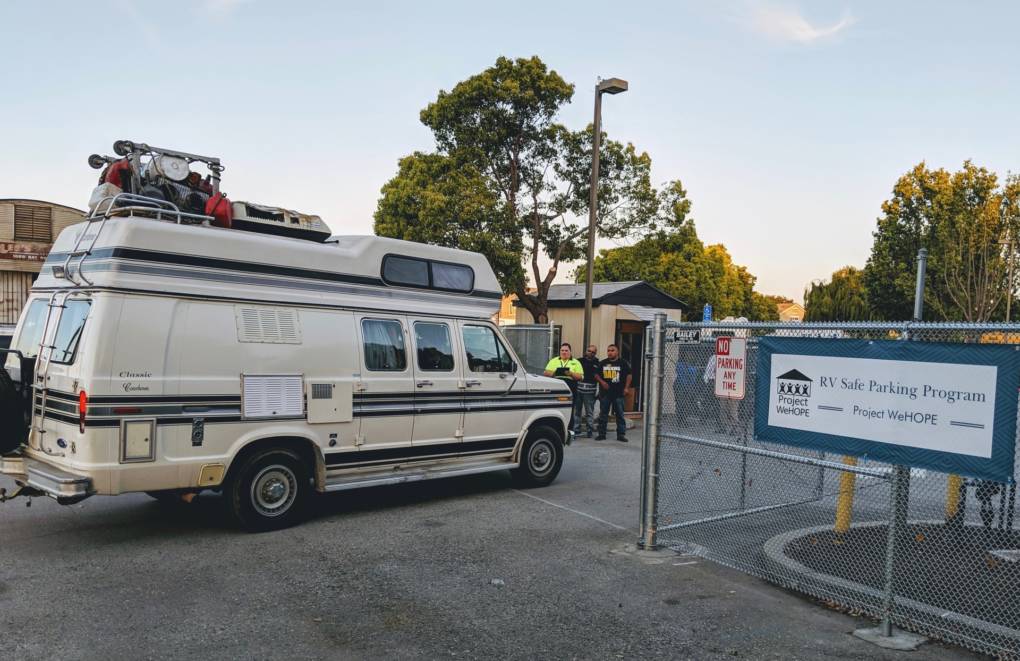
"caption": "Randolph Allen Parker pulls his 89’ Ford Econoline camper van into the safe parking lot run by Project We Hope for the city of East Palo Alto.",
"description": "Randolph Allen Parker pulls his 89’ Ford Econoline camper van into the safe parking lot run by Project We Hope for the city of East Palo Alto.",
"title": "RS38288_IMG_20190501_193918-qut",
"credit": "Courtesy of Project We Hope",
"status": "inherit",
"isLoading": false,
"fetchFailed": false
},
"news_11764867": {
"type": "attachments",
"id": "news_11764867",
"meta": {
"index": "attachments_1716263798",
"site": "news",
"id": "11764867",
"found": true
},
"parent": 11764846,
"imgSizes": {
"apple_news_ca_landscape_5_5": {
"file": "https://ww2.kqed.org/app/uploads/sites/10/2019/08/RS14834_iStock_000047219414_Large-qut-1044x783.jpg",
"width": 1044,
"mimeType": "image/jpeg",
"height": 783
},
"apple_news_ca_square_4_0": {
"file": "https://ww2.kqed.org/app/uploads/sites/10/2019/08/RS14834_iStock_000047219414_Large-qut-470x470.jpg",
"width": 470,
"mimeType": "image/jpeg",
"height": 470
},
"twentyfourteen-full-width": {
"file": "https://ww2.kqed.org/app/uploads/sites/10/2019/08/RS14834_iStock_000047219414_Large-qut-1038x576.jpg",
"width": 1038,
"mimeType": "image/jpeg",
"height": 576
},
"thumbnail": {
"file": "https://ww2.kqed.org/app/uploads/sites/10/2019/08/RS14834_iStock_000047219414_Large-qut-160x107.jpg",
"width": 160,
"mimeType": "image/jpeg",
"height": 107
},
"post-thumbnail": {
"file": "https://ww2.kqed.org/app/uploads/sites/10/2019/08/RS14834_iStock_000047219414_Large-qut-672x372.jpg",
"width": 672,
"mimeType": "image/jpeg",
"height": 372
},
"kqedFullSize": {
"file": "https://ww2.kqed.org/app/uploads/sites/10/2019/08/RS14834_iStock_000047219414_Large-qut.jpg",
"width": 1920,
"height": 1280
},
"apple_news_ca_landscape_4_7": {
"file": "https://ww2.kqed.org/app/uploads/sites/10/2019/08/RS14834_iStock_000047219414_Large-qut-632x474.jpg",
"width": 632,
"mimeType": "image/jpeg",
"height": 474
},
"large": {
"file": "https://ww2.kqed.org/app/uploads/sites/10/2019/08/RS14834_iStock_000047219414_Large-qut-1020x680.jpg",
"width": 1020,
"mimeType": "image/jpeg",
"height": 680
},
"complete_open_graph": {
"file": "https://ww2.kqed.org/app/uploads/sites/10/2019/08/RS14834_iStock_000047219414_Large-qut-1200x800.jpg",
"width": 1200,
"mimeType": "image/jpeg",
"height": 800
},
"apple_news_ca_landscape_4_0": {
"file": "https://ww2.kqed.org/app/uploads/sites/10/2019/08/RS14834_iStock_000047219414_Large-qut-536x402.jpg",
"width": 536,
"mimeType": "image/jpeg",
"height": 402
},
"apple_news_ca_portrait_12_9": {
"file": "https://ww2.kqed.org/app/uploads/sites/10/2019/08/RS14834_iStock_000047219414_Large-qut-1122x1280.jpg",
"width": 1122,
"mimeType": "image/jpeg",
"height": 1280
},
"medium": {
"file": "https://ww2.kqed.org/app/uploads/sites/10/2019/08/RS14834_iStock_000047219414_Large-qut-800x533.jpg",
"width": 800,
"mimeType": "image/jpeg",
"height": 533
},
"apple_news_ca_portrait_4_0": {
"file": "https://ww2.kqed.org/app/uploads/sites/10/2019/08/RS14834_iStock_000047219414_Large-qut-354x472.jpg",
"width": 354,
"mimeType": "image/jpeg",
"height": 472
},
"apple_news_ca_portrait_9_7": {
"file": "https://ww2.kqed.org/app/uploads/sites/10/2019/08/RS14834_iStock_000047219414_Large-qut-840x1120.jpg",
"width": 840,
"mimeType": "image/jpeg",
"height": 1120
},
"apple_news_ca_landscape_12_9": {
"file": "https://ww2.kqed.org/app/uploads/sites/10/2019/08/RS14834_iStock_000047219414_Large-qut-1832x1280.jpg",
"width": 1832,
"mimeType": "image/jpeg",
"height": 1280
},
"apple_news_ca_square_9_7": {
"file": "https://ww2.kqed.org/app/uploads/sites/10/2019/08/RS14834_iStock_000047219414_Large-qut-1104x1104.jpg",
"width": 1104,
"mimeType": "image/jpeg",
"height": 1104
},
"apple_news_ca_portrait_4_7": {
"file": "https://ww2.kqed.org/app/uploads/sites/10/2019/08/RS14834_iStock_000047219414_Large-qut-414x552.jpg",
"width": 414,
"mimeType": "image/jpeg",
"height": 552
},
"apple_news_ca_square_12_9": {
"file": "https://ww2.kqed.org/app/uploads/sites/10/2019/08/RS14834_iStock_000047219414_Large-qut-1472x1280.jpg",
"width": 1472,
"mimeType": "image/jpeg",
"height": 1280
},
"apple_news_ca_portrait_5_5": {
"file": "https://ww2.kqed.org/app/uploads/sites/10/2019/08/RS14834_iStock_000047219414_Large-qut-687x916.jpg",
"width": 687,
"mimeType": "image/jpeg",
"height": 916
},
"full-width": {
"file": "https://ww2.kqed.org/app/uploads/sites/10/2019/08/RS14834_iStock_000047219414_Large-qut-1920x1280.jpg",
"width": 1920,
"mimeType": "image/jpeg",
"height": 1280
},
"apple_news_ca_square_4_7": {
"file": "https://ww2.kqed.org/app/uploads/sites/10/2019/08/RS14834_iStock_000047219414_Large-qut-550x550.jpg",
"width": 550,
"mimeType": "image/jpeg",
"height": 550
},
"apple_news_ca_landscape_9_7": {
"file": "https://ww2.kqed.org/app/uploads/sites/10/2019/08/RS14834_iStock_000047219414_Large-qut-1376x1032.jpg",
"width": 1376,
"mimeType": "image/jpeg",
"height": 1032
},
"apple_news_ca_square_5_5": {
"file": "https://ww2.kqed.org/app/uploads/sites/10/2019/08/RS14834_iStock_000047219414_Large-qut-912x912.jpg",
"width": 912,
"mimeType": "image/jpeg",
"height": 912
}
},
"publishDate": 1564644124,
"modified": 1564700487,
"caption": "A new report from UC Berkeley found that most private sector employees in California are not prepared for retirement.",
"description": null,
"title": "RS14834_iStock_000047219414_Large-qut",
"credit": "Getty Images",
"status": "inherit",
"isLoading": false,
"fetchFailed": false
},
"news_11761798": {
"type": "attachments",
"id": "news_11761798",
"meta": {
"index": "attachments_1716263798",
"site": "news",
"id": "11761798",
"found": true
},
"parent": 11761759,
"imgSizes": {
"apple_news_ca_landscape_5_5": {
"file": "https://ww2.kqed.org/app/uploads/sites/10/2019/07/07162019_balboa-park_safe-parking_RV-parking_homeless_San-Francisco-qut-1044x783.jpg",
"width": 1044,
"mimeType": "image/jpeg",
"height": 783
},
"apple_news_ca_square_4_0": {
"file": "https://ww2.kqed.org/app/uploads/sites/10/2019/07/07162019_balboa-park_safe-parking_RV-parking_homeless_San-Francisco-qut-470x470.jpg",
"width": 470,
"mimeType": "image/jpeg",
"height": 470
},
"twentyfourteen-full-width": {
"file": "https://ww2.kqed.org/app/uploads/sites/10/2019/07/07162019_balboa-park_safe-parking_RV-parking_homeless_San-Francisco-qut-1038x576.jpg",
"width": 1038,
"mimeType": "image/jpeg",
"height": 576
},
"thumbnail": {
"file": "https://ww2.kqed.org/app/uploads/sites/10/2019/07/07162019_balboa-park_safe-parking_RV-parking_homeless_San-Francisco-qut-160x120.jpg",
"width": 160,
"mimeType": "image/jpeg",
"height": 120
},
"post-thumbnail": {
"file": "https://ww2.kqed.org/app/uploads/sites/10/2019/07/07162019_balboa-park_safe-parking_RV-parking_homeless_San-Francisco-qut-672x372.jpg",
"width": 672,
"mimeType": "image/jpeg",
"height": 372
},
"kqedFullSize": {
"file": "https://ww2.kqed.org/app/uploads/sites/10/2019/07/07162019_balboa-park_safe-parking_RV-parking_homeless_San-Francisco-qut.jpg",
"width": 1920,
"height": 1440
},
"apple_news_ca_landscape_4_7": {
"file": "https://ww2.kqed.org/app/uploads/sites/10/2019/07/07162019_balboa-park_safe-parking_RV-parking_homeless_San-Francisco-qut-632x474.jpg",
"width": 632,
"mimeType": "image/jpeg",
"height": 474
},
"large": {
"file": "https://ww2.kqed.org/app/uploads/sites/10/2019/07/07162019_balboa-park_safe-parking_RV-parking_homeless_San-Francisco-qut-1020x765.jpg",
"width": 1020,
"mimeType": "image/jpeg",
"height": 765
},
"complete_open_graph": {
"file": "https://ww2.kqed.org/app/uploads/sites/10/2019/07/07162019_balboa-park_safe-parking_RV-parking_homeless_San-Francisco-qut-1200x900.jpg",
"width": 1200,
"mimeType": "image/jpeg",
"height": 900
},
"apple_news_ca_landscape_4_0": {
"file": "https://ww2.kqed.org/app/uploads/sites/10/2019/07/07162019_balboa-park_safe-parking_RV-parking_homeless_San-Francisco-qut-536x402.jpg",
"width": 536,
"mimeType": "image/jpeg",
"height": 402
},
"apple_news_ca_portrait_12_9": {
"file": "https://ww2.kqed.org/app/uploads/sites/10/2019/07/07162019_balboa-park_safe-parking_RV-parking_homeless_San-Francisco-qut-1122x1440.jpg",
"width": 1122,
"mimeType": "image/jpeg",
"height": 1440
},
"medium": {
"file": "https://ww2.kqed.org/app/uploads/sites/10/2019/07/07162019_balboa-park_safe-parking_RV-parking_homeless_San-Francisco-qut-800x600.jpg",
"width": 800,
"mimeType": "image/jpeg",
"height": 600
},
"apple_news_ca_portrait_4_0": {
"file": "https://ww2.kqed.org/app/uploads/sites/10/2019/07/07162019_balboa-park_safe-parking_RV-parking_homeless_San-Francisco-qut-354x472.jpg",
"width": 354,
"mimeType": "image/jpeg",
"height": 472
},
"apple_news_ca_portrait_9_7": {
"file": "https://ww2.kqed.org/app/uploads/sites/10/2019/07/07162019_balboa-park_safe-parking_RV-parking_homeless_San-Francisco-qut-840x1120.jpg",
"width": 840,
"mimeType": "image/jpeg",
"height": 1120
},
"apple_news_ca_landscape_12_9": {
"file": "https://ww2.kqed.org/app/uploads/sites/10/2019/07/07162019_balboa-park_safe-parking_RV-parking_homeless_San-Francisco-qut-1832x1374.jpg",
"width": 1832,
"mimeType": "image/jpeg",
"height": 1374
},
"apple_news_ca_square_9_7": {
"file": "https://ww2.kqed.org/app/uploads/sites/10/2019/07/07162019_balboa-park_safe-parking_RV-parking_homeless_San-Francisco-qut-1104x1104.jpg",
"width": 1104,
"mimeType": "image/jpeg",
"height": 1104
},
"apple_news_ca_portrait_4_7": {
"file": "https://ww2.kqed.org/app/uploads/sites/10/2019/07/07162019_balboa-park_safe-parking_RV-parking_homeless_San-Francisco-qut-414x552.jpg",
"width": 414,
"mimeType": "image/jpeg",
"height": 552
},
"apple_news_ca_square_12_9": {
"file": "https://ww2.kqed.org/app/uploads/sites/10/2019/07/07162019_balboa-park_safe-parking_RV-parking_homeless_San-Francisco-qut-1472x1440.jpg",
"width": 1472,
"mimeType": "image/jpeg",
"height": 1440
},
"apple_news_ca_portrait_5_5": {
"file": "https://ww2.kqed.org/app/uploads/sites/10/2019/07/07162019_balboa-park_safe-parking_RV-parking_homeless_San-Francisco-qut-687x916.jpg",
"width": 687,
"mimeType": "image/jpeg",
"height": 916
},
"full-width": {
"file": "https://ww2.kqed.org/app/uploads/sites/10/2019/07/07162019_balboa-park_safe-parking_RV-parking_homeless_San-Francisco-qut-1920x1440.jpg",
"width": 1920,
"mimeType": "image/jpeg",
"height": 1440
},
"apple_news_ca_square_4_7": {
"file": "https://ww2.kqed.org/app/uploads/sites/10/2019/07/07162019_balboa-park_safe-parking_RV-parking_homeless_San-Francisco-qut-550x550.jpg",
"width": 550,
"mimeType": "image/jpeg",
"height": 550
},
"apple_news_ca_landscape_9_7": {
"file": "https://ww2.kqed.org/app/uploads/sites/10/2019/07/07162019_balboa-park_safe-parking_RV-parking_homeless_San-Francisco-qut-1376x1032.jpg",
"width": 1376,
"mimeType": "image/jpeg",
"height": 1032
},
"apple_news_ca_square_5_5": {
"file": "https://ww2.kqed.org/app/uploads/sites/10/2019/07/07162019_balboa-park_safe-parking_RV-parking_homeless_San-Francisco-qut-912x912.jpg",
"width": 912,
"mimeType": "image/jpeg",
"height": 912
}
},
"publishDate": 1563320953,
"modified": 1563324754,
"caption": "Two city supervisors proposed a plan to create a safe parking lot near the Balboa Park BART Station in San Francisco, where people living in their vehicles could park legally and access services. It would be the city's first safe parking lot.",
"description": "Two city supervisors proposed a plan to create a safe parking lot near the Balboa Park BART in San Francisco where people living in their vehicles can park legally and access services. It would be the city's first safe parking lot. July 16, 2019.",
"title": "07162019_balboa park_safe parking_RV parking_homeless_San Francisco-qut",
"credit": "Kate Wolffe/KQED",
"status": "inherit",
"isLoading": false,
"fetchFailed": false
},
"news_11760043": {
"type": "attachments",
"id": "news_11760043",
"meta": {
"index": "attachments_1716263798",
"site": "news",
"id": "11760043",
"found": true
},
"parent": 11759895,
"imgSizes": {
"apple_news_ca_landscape_5_5": {
"file": "https://ww2.kqed.org/app/uploads/sites/10/2019/07/07092019_HUD-Ben-Carson-Housing-Immigrants-Los-Angeles-California-qut-1044x783.jpg",
"width": 1044,
"mimeType": "image/jpeg",
"height": 783
},
"apple_news_ca_square_4_0": {
"file": "https://ww2.kqed.org/app/uploads/sites/10/2019/07/07092019_HUD-Ben-Carson-Housing-Immigrants-Los-Angeles-California-qut-470x470.jpg",
"width": 470,
"mimeType": "image/jpeg",
"height": 470
},
"twentyfourteen-full-width": {
"file": "https://ww2.kqed.org/app/uploads/sites/10/2019/07/07092019_HUD-Ben-Carson-Housing-Immigrants-Los-Angeles-California-qut-1038x576.jpg",
"width": 1038,
"mimeType": "image/jpeg",
"height": 576
},
"thumbnail": {
"file": "https://ww2.kqed.org/app/uploads/sites/10/2019/07/07092019_HUD-Ben-Carson-Housing-Immigrants-Los-Angeles-California-qut-160x106.jpg",
"width": 160,
"mimeType": "image/jpeg",
"height": 106
},
"post-thumbnail": {
"file": "https://ww2.kqed.org/app/uploads/sites/10/2019/07/07092019_HUD-Ben-Carson-Housing-Immigrants-Los-Angeles-California-qut-672x372.jpg",
"width": 672,
"mimeType": "image/jpeg",
"height": 372
},
"kqedFullSize": {
"file": "https://ww2.kqed.org/app/uploads/sites/10/2019/07/07092019_HUD-Ben-Carson-Housing-Immigrants-Los-Angeles-California-qut.jpg",
"width": 1920,
"height": 1275
},
"apple_news_ca_landscape_4_7": {
"file": "https://ww2.kqed.org/app/uploads/sites/10/2019/07/07092019_HUD-Ben-Carson-Housing-Immigrants-Los-Angeles-California-qut-632x474.jpg",
"width": 632,
"mimeType": "image/jpeg",
"height": 474
},
"large": {
"file": "https://ww2.kqed.org/app/uploads/sites/10/2019/07/07092019_HUD-Ben-Carson-Housing-Immigrants-Los-Angeles-California-qut-1020x677.jpg",
"width": 1020,
"mimeType": "image/jpeg",
"height": 677
},
"complete_open_graph": {
"file": "https://ww2.kqed.org/app/uploads/sites/10/2019/07/07092019_HUD-Ben-Carson-Housing-Immigrants-Los-Angeles-California-qut-1200x797.jpg",
"width": 1200,
"mimeType": "image/jpeg",
"height": 797
},
"apple_news_ca_landscape_4_0": {
"file": "https://ww2.kqed.org/app/uploads/sites/10/2019/07/07092019_HUD-Ben-Carson-Housing-Immigrants-Los-Angeles-California-qut-536x402.jpg",
"width": 536,
"mimeType": "image/jpeg",
"height": 402
},
"apple_news_ca_portrait_12_9": {
"file": "https://ww2.kqed.org/app/uploads/sites/10/2019/07/07092019_HUD-Ben-Carson-Housing-Immigrants-Los-Angeles-California-qut-1122x1275.jpg",
"width": 1122,
"mimeType": "image/jpeg",
"height": 1275
},
"medium": {
"file": "https://ww2.kqed.org/app/uploads/sites/10/2019/07/07092019_HUD-Ben-Carson-Housing-Immigrants-Los-Angeles-California-qut-800x531.jpg",
"width": 800,
"mimeType": "image/jpeg",
"height": 531
},
"apple_news_ca_portrait_4_0": {
"file": "https://ww2.kqed.org/app/uploads/sites/10/2019/07/07092019_HUD-Ben-Carson-Housing-Immigrants-Los-Angeles-California-qut-354x472.jpg",
"width": 354,
"mimeType": "image/jpeg",
"height": 472
},
"apple_news_ca_portrait_9_7": {
"file": "https://ww2.kqed.org/app/uploads/sites/10/2019/07/07092019_HUD-Ben-Carson-Housing-Immigrants-Los-Angeles-California-qut-840x1120.jpg",
"width": 840,
"mimeType": "image/jpeg",
"height": 1120
},
"apple_news_ca_landscape_12_9": {
"file": "https://ww2.kqed.org/app/uploads/sites/10/2019/07/07092019_HUD-Ben-Carson-Housing-Immigrants-Los-Angeles-California-qut-1832x1275.jpg",
"width": 1832,
"mimeType": "image/jpeg",
"height": 1275
},
"apple_news_ca_square_9_7": {
"file": "https://ww2.kqed.org/app/uploads/sites/10/2019/07/07092019_HUD-Ben-Carson-Housing-Immigrants-Los-Angeles-California-qut-1104x1104.jpg",
"width": 1104,
"mimeType": "image/jpeg",
"height": 1104
},
"apple_news_ca_portrait_4_7": {
"file": "https://ww2.kqed.org/app/uploads/sites/10/2019/07/07092019_HUD-Ben-Carson-Housing-Immigrants-Los-Angeles-California-qut-414x552.jpg",
"width": 414,
"mimeType": "image/jpeg",
"height": 552
},
"apple_news_ca_square_12_9": {
"file": "https://ww2.kqed.org/app/uploads/sites/10/2019/07/07092019_HUD-Ben-Carson-Housing-Immigrants-Los-Angeles-California-qut-1472x1275.jpg",
"width": 1472,
"mimeType": "image/jpeg",
"height": 1275
},
"apple_news_ca_portrait_5_5": {
"file": "https://ww2.kqed.org/app/uploads/sites/10/2019/07/07092019_HUD-Ben-Carson-Housing-Immigrants-Los-Angeles-California-qut-687x916.jpg",
"width": 687,
"mimeType": "image/jpeg",
"height": 916
},
"full-width": {
"file": "https://ww2.kqed.org/app/uploads/sites/10/2019/07/07092019_HUD-Ben-Carson-Housing-Immigrants-Los-Angeles-California-qut-1920x1275.jpg",
"width": 1920,
"mimeType": "image/jpeg",
"height": 1275
},
"apple_news_ca_square_4_7": {
"file": "https://ww2.kqed.org/app/uploads/sites/10/2019/07/07092019_HUD-Ben-Carson-Housing-Immigrants-Los-Angeles-California-qut-550x550.jpg",
"width": 550,
"mimeType": "image/jpeg",
"height": 550
},
"apple_news_ca_landscape_9_7": {
"file": "https://ww2.kqed.org/app/uploads/sites/10/2019/07/07092019_HUD-Ben-Carson-Housing-Immigrants-Los-Angeles-California-qut-1376x1032.jpg",
"width": 1376,
"mimeType": "image/jpeg",
"height": 1032
},
"apple_news_ca_square_5_5": {
"file": "https://ww2.kqed.org/app/uploads/sites/10/2019/07/07092019_HUD-Ben-Carson-Housing-Immigrants-Los-Angeles-California-qut-912x912.jpg",
"width": 912,
"mimeType": "image/jpeg",
"height": 912
}
},
"publishDate": 1562712443,
"modified": 1562713936,
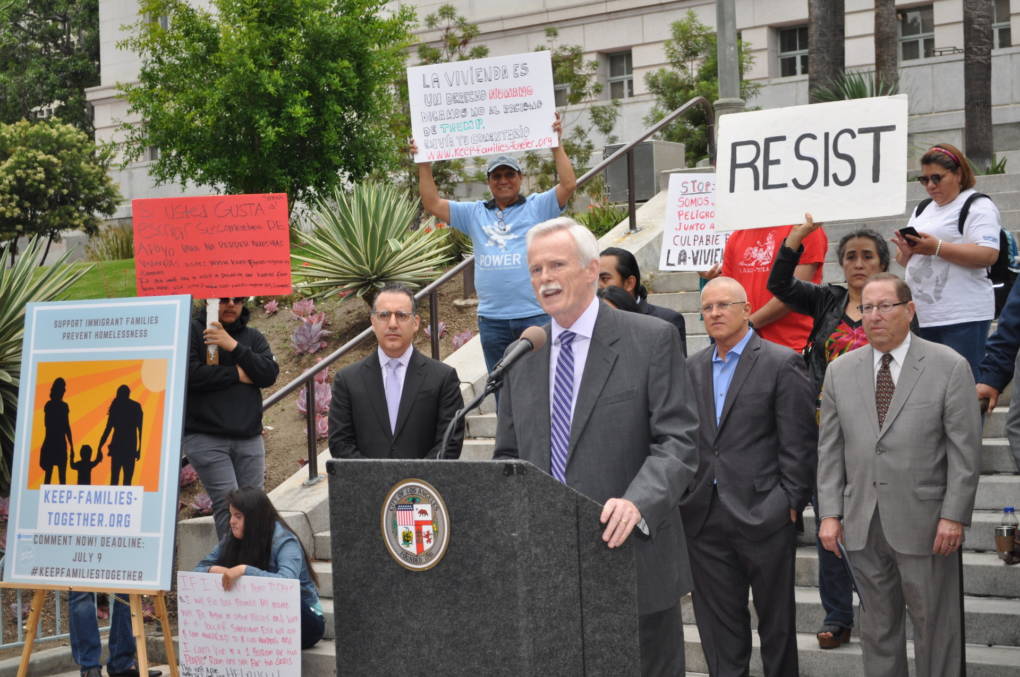
"caption": "Doug Guthrie, president and CEO of the Housing Authority of the City of Los Angeles, speaks on June 28, 2019, against a proposed rule that would deny federally subsidized housing to thousands of people, many of them U.S. citizen children.",
"description": "Doug Guthrie, president and CEO of the Housing Authority of the City of Los Angeles speaks on June 26, 2019 at city hall against a proposed rule that would deny federally subsidized housing to thousands of people, many of them U.S. citizen children.",
"title": "07092019_HUD Ben Carson Housing Immigrants Los Angeles California-qut",
"credit": "Housing Authority of the City of Los Angeles",
"status": "inherit",
"isLoading": false,
"fetchFailed": false
},
"news_11755619": {
"type": "attachments",
"id": "news_11755619",
"meta": {
"index": "attachments_1716263798",
"site": "news",
"id": "11755619",
"found": true
},
"parent": 11755545,
"imgSizes": {
"apple_news_ca_landscape_5_5": {
"file": "https://ww2.kqed.org/app/uploads/sites/10/2019/06/RS11530_465950115-1044x783.jpg",
"width": 1044,
"mimeType": "image/jpeg",
"height": 783
},
"apple_news_ca_square_4_0": {
"file": "https://ww2.kqed.org/app/uploads/sites/10/2019/06/RS11530_465950115-470x470.jpg",
"width": 470,
"mimeType": "image/jpeg",
"height": 470
},
"twentyfourteen-full-width": {
"file": "https://ww2.kqed.org/app/uploads/sites/10/2019/06/RS11530_465950115-1038x576.jpg",
"width": 1038,
"mimeType": "image/jpeg",
"height": 576
},
"thumbnail": {
"file": "https://ww2.kqed.org/app/uploads/sites/10/2019/06/RS11530_465950115-160x107.jpg",
"width": 160,
"mimeType": "image/jpeg",
"height": 107
},
"post-thumbnail": {
"file": "https://ww2.kqed.org/app/uploads/sites/10/2019/06/RS11530_465950115-672x372.jpg",
"width": 672,
"mimeType": "image/jpeg",
"height": 372
},
"kqedFullSize": {
"file": "https://ww2.kqed.org/app/uploads/sites/10/2019/06/RS11530_465950115.jpg",
"width": 2048,
"height": 1366
},
"apple_news_ca_landscape_4_7": {
"file": "https://ww2.kqed.org/app/uploads/sites/10/2019/06/RS11530_465950115-632x474.jpg",
"width": 632,
"mimeType": "image/jpeg",
"height": 474
},
"large": {
"file": "https://ww2.kqed.org/app/uploads/sites/10/2019/06/RS11530_465950115-1020x680.jpg",
"width": 1020,
"mimeType": "image/jpeg",
"height": 680
},
"complete_open_graph": {
"file": "https://ww2.kqed.org/app/uploads/sites/10/2019/06/RS11530_465950115-1200x800.jpg",
"width": 1200,
"mimeType": "image/jpeg",
"height": 800
},
"apple_news_ca_landscape_4_0": {
"file": "https://ww2.kqed.org/app/uploads/sites/10/2019/06/RS11530_465950115-536x402.jpg",
"width": 536,
"mimeType": "image/jpeg",
"height": 402
},
"apple_news_ca_portrait_12_9": {
"file": "https://ww2.kqed.org/app/uploads/sites/10/2019/06/RS11530_465950115-1122x1496.jpg",
"width": 1122,
"mimeType": "image/jpeg",
"height": 1496
},
"medium": {
"file": "https://ww2.kqed.org/app/uploads/sites/10/2019/06/RS11530_465950115-800x534.jpg",
"width": 800,
"mimeType": "image/jpeg",
"height": 534
},
"apple_news_ca_portrait_4_0": {
"file": "https://ww2.kqed.org/app/uploads/sites/10/2019/06/RS11530_465950115-354x472.jpg",
"width": 354,
"mimeType": "image/jpeg",
"height": 472
},
"apple_news_ca_portrait_9_7": {
"file": "https://ww2.kqed.org/app/uploads/sites/10/2019/06/RS11530_465950115-840x1120.jpg",
"width": 840,
"mimeType": "image/jpeg",
"height": 1120
},
"apple_news_ca_landscape_12_9": {
"file": "https://ww2.kqed.org/app/uploads/sites/10/2019/06/RS11530_465950115-1832x1374.jpg",
"width": 1832,
"mimeType": "image/jpeg",
"height": 1374
},
"apple_news_ca_square_9_7": {
"file": "https://ww2.kqed.org/app/uploads/sites/10/2019/06/RS11530_465950115-1104x1104.jpg",
"width": 1104,
"mimeType": "image/jpeg",
"height": 1104
},
"apple_news_ca_portrait_4_7": {
"file": "https://ww2.kqed.org/app/uploads/sites/10/2019/06/RS11530_465950115-414x552.jpg",
"width": 414,
"mimeType": "image/jpeg",
"height": 552
},
"apple_news_ca_square_12_9": {
"file": "https://ww2.kqed.org/app/uploads/sites/10/2019/06/RS11530_465950115-1472x1472.jpg",
"width": 1472,
"mimeType": "image/jpeg",
"height": 1472
},
"apple_news_ca_portrait_5_5": {
"file": "https://ww2.kqed.org/app/uploads/sites/10/2019/06/RS11530_465950115-687x916.jpg",
"width": 687,
"mimeType": "image/jpeg",
"height": 916
},
"full-width": {
"file": "https://ww2.kqed.org/app/uploads/sites/10/2019/06/RS11530_465950115-1920x1281.jpg",
"width": 1920,
"mimeType": "image/jpeg",
"height": 1281
},
"apple_news_ca_square_4_7": {
"file": "https://ww2.kqed.org/app/uploads/sites/10/2019/06/RS11530_465950115-550x550.jpg",
"width": 550,
"mimeType": "image/jpeg",
"height": 550
},
"apple_news_ca_landscape_9_7": {
"file": "https://ww2.kqed.org/app/uploads/sites/10/2019/06/RS11530_465950115-1376x1032.jpg",
"width": 1376,
"mimeType": "image/jpeg",
"height": 1032
},
"apple_news_ca_square_5_5": {
"file": "https://ww2.kqed.org/app/uploads/sites/10/2019/06/RS11530_465950115-912x912.jpg",
"width": 912,
"mimeType": "image/jpeg",
"height": 912
}
},
"publishDate": 1560902063,
"modified": 1560987210,
"caption": "Google announced a $1 billion commitment to help address the housing crisis in the San Francisco Bay Area. ",
"description": "Google announced a $1 billion commitment to help address the housing crisis in the San Francisco Bay Area. ",
"title": "Google Reports Quarterly Earnings",
"credit": "Justin Sullivan/Getty Images",
"status": "inherit",
"isLoading": false,
"fetchFailed": false
},
"news_11752819": {
"type": "attachments",
"id": "news_11752819",
"meta": {
"index": "attachments_1716263798",
"site": "news",
"id": "11752819",
"found": true
},
"parent": 11752804,
"imgSizes": {
"apple_news_ca_square_4_0": {
"file": "https://ww2.kqed.org/app/uploads/sites/10/2019/06/06062019_Clairemont-Lutheran-Church-San-Diego-YIGBY-affordable-housing-qut-470x450.jpg",
"width": 470,
"mimeType": "image/jpeg",
"height": 450
},
"thumbnail": {
"file": "https://ww2.kqed.org/app/uploads/sites/10/2019/06/06062019_Clairemont-Lutheran-Church-San-Diego-YIGBY-affordable-housing-qut-160x90.jpg",
"width": 160,
"mimeType": "image/jpeg",
"height": 90
},
"post-thumbnail": {
"file": "https://ww2.kqed.org/app/uploads/sites/10/2019/06/06062019_Clairemont-Lutheran-Church-San-Diego-YIGBY-affordable-housing-qut-672x372.jpg",
"width": 672,
"mimeType": "image/jpeg",
"height": 372
},
"kqedFullSize": {
"file": "https://ww2.kqed.org/app/uploads/sites/10/2019/06/06062019_Clairemont-Lutheran-Church-San-Diego-YIGBY-affordable-housing-qut.jpg",
"width": 800,
"height": 450
},
"apple_news_ca_landscape_4_7": {
"file": "https://ww2.kqed.org/app/uploads/sites/10/2019/06/06062019_Clairemont-Lutheran-Church-San-Diego-YIGBY-affordable-housing-qut-632x450.jpg",
"width": 632,
"mimeType": "image/jpeg",
"height": 450
},
"apple_news_ca_portrait_4_7": {
"file": "https://ww2.kqed.org/app/uploads/sites/10/2019/06/06062019_Clairemont-Lutheran-Church-San-Diego-YIGBY-affordable-housing-qut-414x450.jpg",
"width": 414,
"mimeType": "image/jpeg",
"height": 450
},
"apple_news_ca_portrait_5_5": {
"file": "https://ww2.kqed.org/app/uploads/sites/10/2019/06/06062019_Clairemont-Lutheran-Church-San-Diego-YIGBY-affordable-housing-qut-687x450.jpg",
"width": 687,
"mimeType": "image/jpeg",
"height": 450
},
"apple_news_ca_square_4_7": {
"file": "https://ww2.kqed.org/app/uploads/sites/10/2019/06/06062019_Clairemont-Lutheran-Church-San-Diego-YIGBY-affordable-housing-qut-550x450.jpg",
"width": 550,
"mimeType": "image/jpeg",
"height": 450
},
"apple_news_ca_landscape_4_0": {
"file": "https://ww2.kqed.org/app/uploads/sites/10/2019/06/06062019_Clairemont-Lutheran-Church-San-Diego-YIGBY-affordable-housing-qut-536x402.jpg",
"width": 536,
"mimeType": "image/jpeg",
"height": 402
},
"medium": {
"file": "https://ww2.kqed.org/app/uploads/sites/10/2019/06/06062019_Clairemont-Lutheran-Church-San-Diego-YIGBY-affordable-housing-qut-800x450.jpg",
"width": 800,
"mimeType": "image/jpeg",
"height": 450
},
"apple_news_ca_portrait_4_0": {
"file": "https://ww2.kqed.org/app/uploads/sites/10/2019/06/06062019_Clairemont-Lutheran-Church-San-Diego-YIGBY-affordable-housing-qut-354x450.jpg",
"width": 354,
"mimeType": "image/jpeg",
"height": 450
}
},
"publishDate": 1559853009,
"modified": 1559853115,
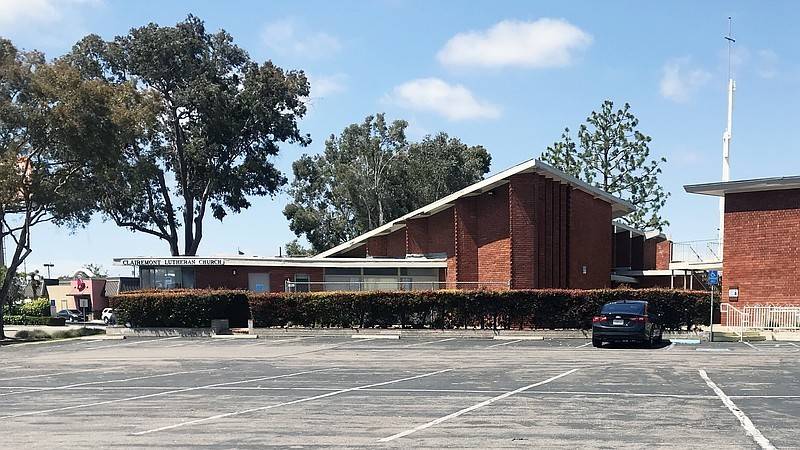
"caption": "The parking lot of Clairemont Lutheran Church, where religious leaders and housing advocates hope to build apartments, on May 28, 2019.",
"description": "The parking lot of Clairemont Lutheran Church, where religious leaders and housing advocates hope to build apartments, on May 28, 2019.",
"title": "06062019_Clairemont Lutheran Church San Diego YIGBY affordable housing-qut",
"credit": "Andrew Bowen/KPBS",
"status": "inherit",
"isLoading": false,
"fetchFailed": false
},
"news_11752737": {
"type": "attachments",
"id": "news_11752737",
"meta": {
"index": "attachments_1716263798",
"site": "news",
"id": "11752737",
"found": true
},
"parent": 11752622,
"imgSizes": {
"apple_news_ca_landscape_5_5": {
"file": "https://ww2.kqed.org/app/uploads/sites/10/2019/06/GettyImages-948234536-1044x783.jpg",
"width": 1044,
"mimeType": "image/jpeg",
"height": 783
},
"apple_news_ca_square_4_0": {
"file": "https://ww2.kqed.org/app/uploads/sites/10/2019/06/GettyImages-948234536-470x470.jpg",
"width": 470,
"mimeType": "image/jpeg",
"height": 470
},
"twentyfourteen-full-width": {
"file": "https://ww2.kqed.org/app/uploads/sites/10/2019/06/GettyImages-948234536-1038x576.jpg",
"width": 1038,
"mimeType": "image/jpeg",
"height": 576
},
"thumbnail": {
"file": "https://ww2.kqed.org/app/uploads/sites/10/2019/06/GettyImages-948234536-160x108.jpg",
"width": 160,
"mimeType": "image/jpeg",
"height": 108
},
"post-thumbnail": {
"file": "https://ww2.kqed.org/app/uploads/sites/10/2019/06/GettyImages-948234536-672x372.jpg",
"width": 672,
"mimeType": "image/jpeg",
"height": 372
},
"kqedFullSize": {
"file": "https://ww2.kqed.org/app/uploads/sites/10/2019/06/GettyImages-948234536-e1559844462433.jpg",
"width": 1920,
"height": 1297
},
"apple_news_ca_landscape_4_7": {
"file": "https://ww2.kqed.org/app/uploads/sites/10/2019/06/GettyImages-948234536-632x474.jpg",
"width": 632,
"mimeType": "image/jpeg",
"height": 474
},
"large": {
"file": "https://ww2.kqed.org/app/uploads/sites/10/2019/06/GettyImages-948234536-1020x689.jpg",
"width": 1020,
"mimeType": "image/jpeg",
"height": 689
},
"complete_open_graph": {
"file": "https://ww2.kqed.org/app/uploads/sites/10/2019/06/GettyImages-948234536-1200x810.jpg",
"width": 1200,
"mimeType": "image/jpeg",
"height": 810
},
"apple_news_ca_landscape_4_0": {
"file": "https://ww2.kqed.org/app/uploads/sites/10/2019/06/GettyImages-948234536-536x402.jpg",
"width": 536,
"mimeType": "image/jpeg",
"height": 402
},
"apple_news_ca_portrait_12_9": {
"file": "https://ww2.kqed.org/app/uploads/sites/10/2019/06/GettyImages-948234536-1122x1496.jpg",
"width": 1122,
"mimeType": "image/jpeg",
"height": 1496
},
"medium": {
"file": "https://ww2.kqed.org/app/uploads/sites/10/2019/06/GettyImages-948234536-800x540.jpg",
"width": 800,
"mimeType": "image/jpeg",
"height": 540
},
"apple_news_ca_portrait_4_0": {
"file": "https://ww2.kqed.org/app/uploads/sites/10/2019/06/GettyImages-948234536-354x472.jpg",
"width": 354,
"mimeType": "image/jpeg",
"height": 472
},
"apple_news_ca_portrait_9_7": {
"file": "https://ww2.kqed.org/app/uploads/sites/10/2019/06/GettyImages-948234536-840x1120.jpg",
"width": 840,
"mimeType": "image/jpeg",
"height": 1120
},
"apple_news_ca_landscape_12_9": {
"file": "https://ww2.kqed.org/app/uploads/sites/10/2019/06/GettyImages-948234536-1832x1374.jpg",
"width": 1832,
"mimeType": "image/jpeg",
"height": 1374
},
"apple_news_ca_square_9_7": {
"file": "https://ww2.kqed.org/app/uploads/sites/10/2019/06/GettyImages-948234536-1104x1104.jpg",
"width": 1104,
"mimeType": "image/jpeg",
"height": 1104
},
"apple_news_ca_portrait_4_7": {
"file": "https://ww2.kqed.org/app/uploads/sites/10/2019/06/GettyImages-948234536-414x552.jpg",
"width": 414,
"mimeType": "image/jpeg",
"height": 552
},
"apple_news_ca_square_12_9": {
"file": "https://ww2.kqed.org/app/uploads/sites/10/2019/06/GettyImages-948234536-1472x1472.jpg",
"width": 1472,
"mimeType": "image/jpeg",
"height": 1472
},
"apple_news_ca_portrait_5_5": {
"file": "https://ww2.kqed.org/app/uploads/sites/10/2019/06/GettyImages-948234536-687x916.jpg",
"width": 687,
"mimeType": "image/jpeg",
"height": 916
},
"full-width": {
"file": "https://ww2.kqed.org/app/uploads/sites/10/2019/06/GettyImages-948234536-1920x1297.jpg",
"width": 1920,
"mimeType": "image/jpeg",
"height": 1297
},
"apple_news_ca_square_4_7": {
"file": "https://ww2.kqed.org/app/uploads/sites/10/2019/06/GettyImages-948234536-550x550.jpg",
"width": 550,
"mimeType": "image/jpeg",
"height": 550
},
"apple_news_ca_landscape_9_7": {
"file": "https://ww2.kqed.org/app/uploads/sites/10/2019/06/GettyImages-948234536-1376x1032.jpg",
"width": 1376,
"mimeType": "image/jpeg",
"height": 1032
},
"apple_news_ca_square_5_5": {
"file": "https://ww2.kqed.org/app/uploads/sites/10/2019/06/GettyImages-948234536-912x912.jpg",
"width": 912,
"mimeType": "image/jpeg",
"height": 912
}
},
"publishDate": 1559844394,
"modified": 1559855337,
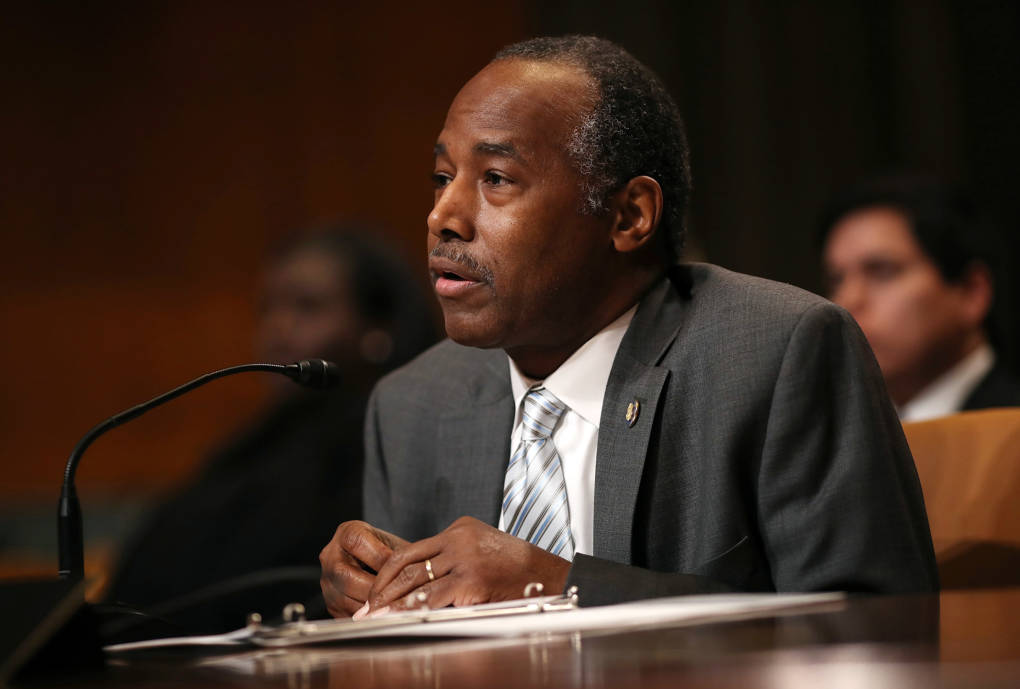
"caption": "HUD Secretary Ben Carson testifies before the Transportation, Housing and Urban Development, and Related Agencies Subcommittee on Capitol Hill April 18, 2018 in Washington, DC.",
"description": "HUD Secretary Ben Carson testifies before the Transportation, Housing and Urban Development, and Related Agencies Subcommittee on Capitol Hill April 18, 2018 in Washington, DC.",
"title": "Housing And Urban Development Secretary Ben Carson Testifies To Senate Committee On Department's Budget",
"credit": "Win McNamee/Getty Images",
"status": "inherit",
"isLoading": false,
"fetchFailed": false
},
"news_11750020": {
"type": "attachments",
"id": "news_11750020",
"meta": {
"index": "attachments_1716263798",
"site": "news",
"id": "11750020",
"found": true
},
"parent": 11750009,
"imgSizes": {
"apple_news_ca_landscape_5_5": {
"file": "https://ww2.kqed.org/app/uploads/sites/10/2019/05/california-lawmakers-Justin-Sullivan-1180x664-1044x664.jpg",
"width": 1044,
"mimeType": "image/jpeg",
"height": 664
},
"apple_news_ca_square_4_0": {
"file": "https://ww2.kqed.org/app/uploads/sites/10/2019/05/california-lawmakers-Justin-Sullivan-1180x664-470x470.jpg",
"width": 470,
"mimeType": "image/jpeg",
"height": 470
},
"twentyfourteen-full-width": {
"file": "https://ww2.kqed.org/app/uploads/sites/10/2019/05/california-lawmakers-Justin-Sullivan-1180x664-1038x576.jpg",
"width": 1038,
"mimeType": "image/jpeg",
"height": 576
},
"thumbnail": {
"file": "https://ww2.kqed.org/app/uploads/sites/10/2019/05/california-lawmakers-Justin-Sullivan-1180x664-160x90.jpg",
"width": 160,
"mimeType": "image/jpeg",
"height": 90
},
"post-thumbnail": {
"file": "https://ww2.kqed.org/app/uploads/sites/10/2019/05/california-lawmakers-Justin-Sullivan-1180x664-672x372.jpg",
"width": 672,
"mimeType": "image/jpeg",
"height": 372
},
"kqedFullSize": {
"file": "https://ww2.kqed.org/app/uploads/sites/10/2019/05/california-lawmakers-Justin-Sullivan-1180x664.jpg",
"width": 1180,
"height": 664
},
"apple_news_ca_landscape_4_7": {
"file": "https://ww2.kqed.org/app/uploads/sites/10/2019/05/california-lawmakers-Justin-Sullivan-1180x664-632x474.jpg",
"width": 632,
"mimeType": "image/jpeg",
"height": 474
},
"large": {
"file": "https://ww2.kqed.org/app/uploads/sites/10/2019/05/california-lawmakers-Justin-Sullivan-1180x664-1020x574.jpg",
"width": 1020,
"mimeType": "image/jpeg",
"height": 574
},
"apple_news_ca_landscape_4_0": {
"file": "https://ww2.kqed.org/app/uploads/sites/10/2019/05/california-lawmakers-Justin-Sullivan-1180x664-536x402.jpg",
"width": 536,
"mimeType": "image/jpeg",
"height": 402
},
"apple_news_ca_portrait_12_9": {
"file": "https://ww2.kqed.org/app/uploads/sites/10/2019/05/california-lawmakers-Justin-Sullivan-1180x664-1122x664.jpg",
"width": 1122,
"mimeType": "image/jpeg",
"height": 664
},
"medium": {
"file": "https://ww2.kqed.org/app/uploads/sites/10/2019/05/california-lawmakers-Justin-Sullivan-1180x664-800x450.jpg",
"width": 800,
"mimeType": "image/jpeg",
"height": 450
},
"apple_news_ca_portrait_4_0": {
"file": "https://ww2.kqed.org/app/uploads/sites/10/2019/05/california-lawmakers-Justin-Sullivan-1180x664-354x472.jpg",
"width": 354,
"mimeType": "image/jpeg",
"height": 472
},
"apple_news_ca_portrait_9_7": {
"file": "https://ww2.kqed.org/app/uploads/sites/10/2019/05/california-lawmakers-Justin-Sullivan-1180x664-840x664.jpg",
"width": 840,
"mimeType": "image/jpeg",
"height": 664
},
"apple_news_ca_square_9_7": {
"file": "https://ww2.kqed.org/app/uploads/sites/10/2019/05/california-lawmakers-Justin-Sullivan-1180x664-1104x664.jpg",
"width": 1104,
"mimeType": "image/jpeg",
"height": 664
},
"apple_news_ca_portrait_4_7": {
"file": "https://ww2.kqed.org/app/uploads/sites/10/2019/05/california-lawmakers-Justin-Sullivan-1180x664-414x552.jpg",
"width": 414,
"mimeType": "image/jpeg",
"height": 552
},
"apple_news_ca_portrait_5_5": {
"file": "https://ww2.kqed.org/app/uploads/sites/10/2019/05/california-lawmakers-Justin-Sullivan-1180x664-687x664.jpg",
"width": 687,
"mimeType": "image/jpeg",
"height": 664
},
"apple_news_ca_square_4_7": {
"file": "https://ww2.kqed.org/app/uploads/sites/10/2019/05/california-lawmakers-Justin-Sullivan-1180x664-550x550.jpg",
"width": 550,
"mimeType": "image/jpeg",
"height": 550
},
"apple_news_ca_square_5_5": {
"file": "https://ww2.kqed.org/app/uploads/sites/10/2019/05/california-lawmakers-Justin-Sullivan-1180x664-912x664.jpg",
"width": 912,
"mimeType": "image/jpeg",
"height": 664
}
},
"publishDate": 1558894961,
"modified": 1568661775,
"caption": "The California State Capitol ",
"description": null,
"title": "california-lawmakers-Justin-Sullivan-1180x664",
"credit": "Justin Sullivan/Getty Images",
"status": "inherit",
"isLoading": false,
"fetchFailed": false
},
"news_11750922": {
"type": "attachments",
"id": "news_11750922",
"meta": {
"index": "attachments_1716263798",
"site": "news",
"id": "11750922",
"found": true
},
"parent": 11749728,
"imgSizes": {
"apple_news_ca_landscape_5_5": {
"file": "https://ww2.kqed.org/app/uploads/sites/10/2019/05/RedliningRevised-1044x783.jpg",
"width": 1044,
"mimeType": "image/jpeg",
"height": 783
},
"apple_news_ca_square_4_0": {
"file": "https://ww2.kqed.org/app/uploads/sites/10/2019/05/RedliningRevised-470x470.jpg",
"width": 470,
"mimeType": "image/jpeg",
"height": 470
},
"twentyfourteen-full-width": {
"file": "https://ww2.kqed.org/app/uploads/sites/10/2019/05/RedliningRevised-1038x576.jpg",
"width": 1038,
"mimeType": "image/jpeg",
"height": 576
},
"thumbnail": {
"file": "https://ww2.kqed.org/app/uploads/sites/10/2019/05/RedliningRevised-160x120.jpg",
"width": 160,
"mimeType": "image/jpeg",
"height": 120
},
"post-thumbnail": {
"file": "https://ww2.kqed.org/app/uploads/sites/10/2019/05/RedliningRevised-672x372.jpg",
"width": 672,
"mimeType": "image/jpeg",
"height": 372
},
"kqedFullSize": {
"file": "https://ww2.kqed.org/app/uploads/sites/10/2019/05/RedliningRevised.jpg",
"width": 1920,
"height": 1435
},
"apple_news_ca_landscape_4_7": {
"file": "https://ww2.kqed.org/app/uploads/sites/10/2019/05/RedliningRevised-632x474.jpg",
"width": 632,
"mimeType": "image/jpeg",
"height": 474
},
"large": {
"file": "https://ww2.kqed.org/app/uploads/sites/10/2019/05/RedliningRevised-1020x762.jpg",
"width": 1020,
"mimeType": "image/jpeg",
"height": 762
},
"complete_open_graph": {
"file": "https://ww2.kqed.org/app/uploads/sites/10/2019/05/RedliningRevised-1200x897.jpg",
"width": 1200,
"mimeType": "image/jpeg",
"height": 897
},
"apple_news_ca_landscape_4_0": {
"file": "https://ww2.kqed.org/app/uploads/sites/10/2019/05/RedliningRevised-536x402.jpg",
"width": 536,
"mimeType": "image/jpeg",
"height": 402
},
"apple_news_ca_portrait_12_9": {
"file": "https://ww2.kqed.org/app/uploads/sites/10/2019/05/RedliningRevised-1122x1435.jpg",
"width": 1122,
"mimeType": "image/jpeg",
"height": 1435
},
"medium": {
"file": "https://ww2.kqed.org/app/uploads/sites/10/2019/05/RedliningRevised-800x598.jpg",
"width": 800,
"mimeType": "image/jpeg",
"height": 598
},
"apple_news_ca_portrait_4_0": {
"file": "https://ww2.kqed.org/app/uploads/sites/10/2019/05/RedliningRevised-354x472.jpg",
"width": 354,
"mimeType": "image/jpeg",
"height": 472
},
"apple_news_ca_portrait_9_7": {
"file": "https://ww2.kqed.org/app/uploads/sites/10/2019/05/RedliningRevised-840x1120.jpg",
"width": 840,
"mimeType": "image/jpeg",
"height": 1120
},
"apple_news_ca_landscape_12_9": {
"file": "https://ww2.kqed.org/app/uploads/sites/10/2019/05/RedliningRevised-1832x1374.jpg",
"width": 1832,
"mimeType": "image/jpeg",
"height": 1374
},
"apple_news_ca_square_9_7": {
"file": "https://ww2.kqed.org/app/uploads/sites/10/2019/05/RedliningRevised-1104x1104.jpg",
"width": 1104,
"mimeType": "image/jpeg",
"height": 1104
},
"apple_news_ca_portrait_4_7": {
"file": "https://ww2.kqed.org/app/uploads/sites/10/2019/05/RedliningRevised-414x552.jpg",
"width": 414,
"mimeType": "image/jpeg",
"height": 552
},
"apple_news_ca_square_12_9": {
"file": "https://ww2.kqed.org/app/uploads/sites/10/2019/05/RedliningRevised-1472x1435.jpg",
"width": 1472,
"mimeType": "image/jpeg",
"height": 1435
},
"apple_news_ca_portrait_5_5": {
"file": "https://ww2.kqed.org/app/uploads/sites/10/2019/05/RedliningRevised-687x916.jpg",
"width": 687,
"mimeType": "image/jpeg",
"height": 916
},
"full-width": {
"file": "https://ww2.kqed.org/app/uploads/sites/10/2019/05/RedliningRevised-1920x1435.jpg",
"width": 1920,
"mimeType": "image/jpeg",
"height": 1435
},
"apple_news_ca_square_4_7": {
"file": "https://ww2.kqed.org/app/uploads/sites/10/2019/05/RedliningRevised-550x550.jpg",
"width": 550,
"mimeType": "image/jpeg",
"height": 550
},
"apple_news_ca_landscape_9_7": {
"file": "https://ww2.kqed.org/app/uploads/sites/10/2019/05/RedliningRevised-1376x1032.jpg",
"width": 1376,
"mimeType": "image/jpeg",
"height": 1032
},
"apple_news_ca_square_5_5": {
"file": "https://ww2.kqed.org/app/uploads/sites/10/2019/05/RedliningRevised-912x912.jpg",
"width": 912,
"mimeType": "image/jpeg",
"height": 912
}
},
"publishDate": 1559163529,
"modified": 1559163529,
"caption": null,
"description": null,
"title": "RedliningRevised",
"credit": null,
"status": "inherit",
"isLoading": false,
"fetchFailed": false
},
"news_11749460": {
"type": "attachments",
"id": "news_11749460",
"meta": {
"index": "attachments_1716263798",
"site": "news",
"id": "11749460",
"found": true
},
"parent": 11749299,
"imgSizes": {
"apple_news_ca_landscape_5_5": {
"file": "https://ww2.kqed.org/app/uploads/sites/10/2019/05/OaklandBerkeleyHOLCmap-MED-1-1044x783.jpg",
"width": 1044,
"mimeType": "image/jpeg",
"height": 783
},
"apple_news_ca_square_4_0": {
"file": "https://ww2.kqed.org/app/uploads/sites/10/2019/05/OaklandBerkeleyHOLCmap-MED-1-470x470.jpg",
"width": 470,
"mimeType": "image/jpeg",
"height": 470
},
"twentyfourteen-full-width": {
"file": "https://ww2.kqed.org/app/uploads/sites/10/2019/05/OaklandBerkeleyHOLCmap-MED-1-1038x576.jpg",
"width": 1038,
"mimeType": "image/jpeg",
"height": 576
},
"thumbnail": {
"file": "https://ww2.kqed.org/app/uploads/sites/10/2019/05/OaklandBerkeleyHOLCmap-MED-1-160x118.jpg",
"width": 160,
"mimeType": "image/jpeg",
"height": 118
},
"post-thumbnail": {
"file": "https://ww2.kqed.org/app/uploads/sites/10/2019/05/OaklandBerkeleyHOLCmap-MED-1-672x372.jpg",
"width": 672,
"mimeType": "image/jpeg",
"height": 372
},
"kqedFullSize": {
"file": "https://ww2.kqed.org/app/uploads/sites/10/2019/05/OaklandBerkeleyHOLCmap-MED-1.jpg",
"width": 1920,
"height": 1417
},
"apple_news_ca_landscape_4_7": {
"file": "https://ww2.kqed.org/app/uploads/sites/10/2019/05/OaklandBerkeleyHOLCmap-MED-1-632x474.jpg",
"width": 632,
"mimeType": "image/jpeg",
"height": 474
},
"large": {
"file": "https://ww2.kqed.org/app/uploads/sites/10/2019/05/OaklandBerkeleyHOLCmap-MED-1-1020x753.jpg",
"width": 1020,
"mimeType": "image/jpeg",
"height": 753
},
"complete_open_graph": {
"file": "https://ww2.kqed.org/app/uploads/sites/10/2019/05/OaklandBerkeleyHOLCmap-MED-1-1200x886.jpg",
"width": 1200,
"mimeType": "image/jpeg",
"height": 886
},
"apple_news_ca_landscape_4_0": {
"file": "https://ww2.kqed.org/app/uploads/sites/10/2019/05/OaklandBerkeleyHOLCmap-MED-1-536x402.jpg",
"width": 536,
"mimeType": "image/jpeg",
"height": 402
},
"apple_news_ca_portrait_12_9": {
"file": "https://ww2.kqed.org/app/uploads/sites/10/2019/05/OaklandBerkeleyHOLCmap-MED-1-1122x1417.jpg",
"width": 1122,
"mimeType": "image/jpeg",
"height": 1417
},
"medium": {
"file": "https://ww2.kqed.org/app/uploads/sites/10/2019/05/OaklandBerkeleyHOLCmap-MED-1-800x590.jpg",
"width": 800,
"mimeType": "image/jpeg",
"height": 590
},
"apple_news_ca_portrait_4_0": {
"file": "https://ww2.kqed.org/app/uploads/sites/10/2019/05/OaklandBerkeleyHOLCmap-MED-1-354x472.jpg",
"width": 354,
"mimeType": "image/jpeg",
"height": 472
},
"apple_news_ca_portrait_9_7": {
"file": "https://ww2.kqed.org/app/uploads/sites/10/2019/05/OaklandBerkeleyHOLCmap-MED-1-840x1120.jpg",
"width": 840,
"mimeType": "image/jpeg",
"height": 1120
},
"apple_news_ca_landscape_12_9": {
"file": "https://ww2.kqed.org/app/uploads/sites/10/2019/05/OaklandBerkeleyHOLCmap-MED-1-1832x1374.jpg",
"width": 1832,
"mimeType": "image/jpeg",
"height": 1374
},
"apple_news_ca_square_9_7": {
"file": "https://ww2.kqed.org/app/uploads/sites/10/2019/05/OaklandBerkeleyHOLCmap-MED-1-1104x1104.jpg",
"width": 1104,
"mimeType": "image/jpeg",
"height": 1104
},
"apple_news_ca_portrait_4_7": {
"file": "https://ww2.kqed.org/app/uploads/sites/10/2019/05/OaklandBerkeleyHOLCmap-MED-1-414x552.jpg",
"width": 414,
"mimeType": "image/jpeg",
"height": 552
},
"apple_news_ca_square_12_9": {
"file": "https://ww2.kqed.org/app/uploads/sites/10/2019/05/OaklandBerkeleyHOLCmap-MED-1-1472x1417.jpg",
"width": 1472,
"mimeType": "image/jpeg",
"height": 1417
},
"apple_news_ca_portrait_5_5": {
"file": "https://ww2.kqed.org/app/uploads/sites/10/2019/05/OaklandBerkeleyHOLCmap-MED-1-687x916.jpg",
"width": 687,
"mimeType": "image/jpeg",
"height": 916
},
"full-width": {
"file": "https://ww2.kqed.org/app/uploads/sites/10/2019/05/OaklandBerkeleyHOLCmap-MED-1-1920x1417.jpg",
"width": 1920,
"mimeType": "image/jpeg",
"height": 1417
},
"apple_news_ca_square_4_7": {
"file": "https://ww2.kqed.org/app/uploads/sites/10/2019/05/OaklandBerkeleyHOLCmap-MED-1-550x550.jpg",
"width": 550,
"mimeType": "image/jpeg",
"height": 550
},
"apple_news_ca_landscape_9_7": {
"file": "https://ww2.kqed.org/app/uploads/sites/10/2019/05/OaklandBerkeleyHOLCmap-MED-1-1376x1032.jpg",
"width": 1376,
"mimeType": "image/jpeg",
"height": 1032
},
"apple_news_ca_square_5_5": {
"file": "https://ww2.kqed.org/app/uploads/sites/10/2019/05/OaklandBerkeleyHOLCmap-MED-1-912x912.jpg",
"width": 912,
"mimeType": "image/jpeg",
"height": 912
}
},
"publishDate": 1558644162,
"modified": 1558647474,
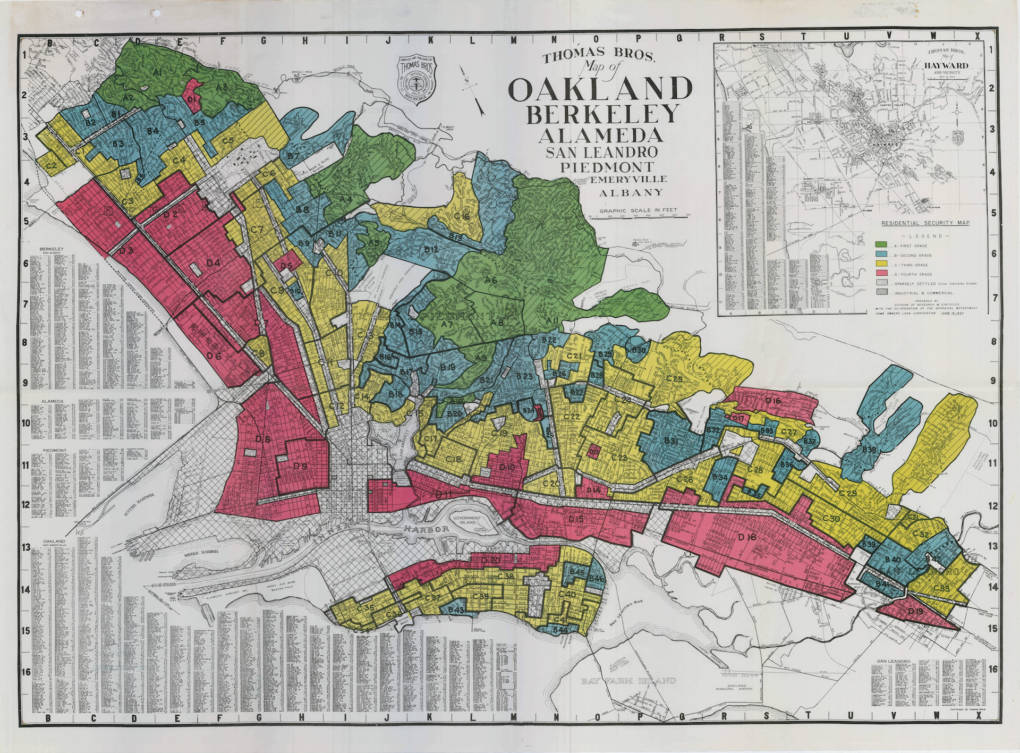
"caption": "Home Owners' Loan Corp. (HOLC) ratings of Oakland, Berkeley and Alameda neighborhoods, with green indicating “best,” blue indicating “still desirable,” yellow indicating “definitely declining” and red indicating “hazardous.”",
"description": null,
"title": "OaklandBerkeleyHOLCmap-MED",
"credit": "Courtesy of the \u003ca hef=\"https://dsl.richmond.edu/panorama/redlining/#loc=4/36.71/-96.93&opacity=0.8\">University of Richmond Mapping Inequality project\u003c/a>",
"status": "inherit",
"isLoading": false,
"fetchFailed": false
},
"news_11678220": {
"type": "attachments",
"id": "news_11678220",
"meta": {
"index": "attachments_1716263798",
"site": "news",
"id": "11678220",
"found": true
},
"parent": 11678178,
"imgSizes": {
"small": {
"file": "https://ww2.kqed.org/app/uploads/sites/10/2018/06/RS23880_20170126_CC_county_homeless_count_215-520x347.jpg",
"width": 520,
"mimeType": "image/jpeg",
"height": 347
},
"twentyfourteen-full-width": {
"file": "https://ww2.kqed.org/app/uploads/sites/10/2018/06/RS23880_20170126_CC_county_homeless_count_215-1038x576.jpg",
"width": 1038,
"mimeType": "image/jpeg",
"height": 576
},
"thumbnail": {
"file": "https://ww2.kqed.org/app/uploads/sites/10/2018/06/RS23880_20170126_CC_county_homeless_count_215-160x107.jpg",
"width": 160,
"mimeType": "image/jpeg",
"height": 107
},
"fd-sm": {
"file": "https://ww2.kqed.org/app/uploads/sites/10/2018/06/RS23880_20170126_CC_county_homeless_count_215-960x640.jpg",
"width": 960,
"mimeType": "image/jpeg",
"height": 640
},
"post-thumbnail": {
"file": "https://ww2.kqed.org/app/uploads/sites/10/2018/06/RS23880_20170126_CC_county_homeless_count_215-672x372.jpg",
"width": 672,
"mimeType": "image/jpeg",
"height": 372
},
"xsmall": {
"file": "https://ww2.kqed.org/app/uploads/sites/10/2018/06/RS23880_20170126_CC_county_homeless_count_215-375x250.jpg",
"width": 375,
"mimeType": "image/jpeg",
"height": 250
},
"kqedFullSize": {
"file": "https://ww2.kqed.org/app/uploads/sites/10/2018/06/RS23880_20170126_CC_county_homeless_count_215-e1530300027897.jpg",
"width": 1920,
"height": 1280
},
"large": {
"file": "https://ww2.kqed.org/app/uploads/sites/10/2018/06/RS23880_20170126_CC_county_homeless_count_215-1020x680.jpg",
"width": 1020,
"mimeType": "image/jpeg",
"height": 680
},
"xlarge": {
"file": "https://ww2.kqed.org/app/uploads/sites/10/2018/06/RS23880_20170126_CC_county_homeless_count_215-1180x787.jpg",
"width": 1180,
"mimeType": "image/jpeg",
"height": 787
},
"complete_open_graph": {
"file": "https://ww2.kqed.org/app/uploads/sites/10/2018/06/RS23880_20170126_CC_county_homeless_count_215-1200x800.jpg",
"width": 1200,
"mimeType": "image/jpeg",
"height": 800
},
"guest-author-50": {
"file": "https://ww2.kqed.org/app/uploads/sites/10/2018/06/RS23880_20170126_CC_county_homeless_count_215-50x50.jpg",
"width": 50,
"mimeType": "image/jpeg",
"height": 50
},
"guest-author-96": {
"file": "https://ww2.kqed.org/app/uploads/sites/10/2018/06/RS23880_20170126_CC_county_homeless_count_215-96x96.jpg",
"width": 96,
"mimeType": "image/jpeg",
"height": 96
},
"medium": {
"file": "https://ww2.kqed.org/app/uploads/sites/10/2018/06/RS23880_20170126_CC_county_homeless_count_215-800x533.jpg",
"width": 800,
"mimeType": "image/jpeg",
"height": 533
},
"guest-author-64": {
"file": "https://ww2.kqed.org/app/uploads/sites/10/2018/06/RS23880_20170126_CC_county_homeless_count_215-64x64.jpg",
"width": 64,
"mimeType": "image/jpeg",
"height": 64
},
"guest-author-32": {
"file": "https://ww2.kqed.org/app/uploads/sites/10/2018/06/RS23880_20170126_CC_county_homeless_count_215-32x32.jpg",
"width": 32,
"mimeType": "image/jpeg",
"height": 32
},
"fd-lrg": {
"file": "https://ww2.kqed.org/app/uploads/sites/10/2018/06/RS23880_20170126_CC_county_homeless_count_215-1920x1280.jpg",
"width": 1920,
"mimeType": "image/jpeg",
"height": 1280
},
"fd-med": {
"file": "https://ww2.kqed.org/app/uploads/sites/10/2018/06/RS23880_20170126_CC_county_homeless_count_215-1180x787.jpg",
"width": 1180,
"mimeType": "image/jpeg",
"height": 787
},
"full-width": {
"file": "https://ww2.kqed.org/app/uploads/sites/10/2018/06/RS23880_20170126_CC_county_homeless_count_215-1920x1280.jpg",
"width": 1920,
"mimeType": "image/jpeg",
"height": 1280
},
"detail": {
"file": "https://ww2.kqed.org/app/uploads/sites/10/2018/06/RS23880_20170126_CC_county_homeless_count_215-150x150.jpg",
"width": 150,
"mimeType": "image/jpeg",
"height": 150
},
"guest-author-128": {
"file": "https://ww2.kqed.org/app/uploads/sites/10/2018/06/RS23880_20170126_CC_county_homeless_count_215-128x128.jpg",
"width": 128,
"mimeType": "image/jpeg",
"height": 128
},
"xxsmall": {
"file": "https://ww2.kqed.org/app/uploads/sites/10/2018/06/RS23880_20170126_CC_county_homeless_count_215-240x160.jpg",
"width": 240,
"mimeType": "image/jpeg",
"height": 160
}
},
"publishDate": 1530299968,
"modified": 1558463202,
"caption": "A homeless encampment near an overpass in Contra Costa County, on Jan. 26, 2017.",
"description": "The homeless camp of Jarrett Keesling and Kelli Lengele, whom are among the hundreds of homeless the Contra Costa Health Services (CCHS) interacted with as it conducts its annual count of homeless county residents Thursday, Jan. 26, 2017.",
"title": "KQED, homeless count, contra costa county, concord",
"credit": "Eric Kayne/KQED",
"status": "inherit",
"isLoading": false,
"fetchFailed": false
},
"news_11748106": {
"type": "attachments",
"id": "news_11748106",
"meta": {
"index": "attachments_1716263798",
"site": "news",
"id": "11748106",
"found": true
},
"parent": 11748088,
"imgSizes": {
"apple_news_ca_landscape_5_5": {
"file": "https://ww2.kqed.org/app/uploads/sites/10/2019/05/IMG_1743-e1467396983840-1044x783.jpg",
"width": 1044,
"mimeType": "image/jpeg",
"height": 783
},
"apple_news_ca_square_4_0": {
"file": "https://ww2.kqed.org/app/uploads/sites/10/2019/05/IMG_1743-e1467396983840-470x470.jpg",
"width": 470,
"mimeType": "image/jpeg",
"height": 470
},
"twentyfourteen-full-width": {
"file": "https://ww2.kqed.org/app/uploads/sites/10/2019/05/IMG_1743-e1467396983840-1038x576.jpg",
"width": 1038,
"mimeType": "image/jpeg",
"height": 576
},
"thumbnail": {
"file": "https://ww2.kqed.org/app/uploads/sites/10/2019/05/IMG_1743-e1467396983840-160x105.jpg",
"width": 160,
"mimeType": "image/jpeg",
"height": 105
},
"post-thumbnail": {
"file": "https://ww2.kqed.org/app/uploads/sites/10/2019/05/IMG_1743-e1467396983840-672x372.jpg",
"width": 672,
"mimeType": "image/jpeg",
"height": 372
},
"kqedFullSize": {
"file": "https://ww2.kqed.org/app/uploads/sites/10/2019/05/IMG_1743-e1558131654962.jpg",
"width": 1920,
"height": 1263
},
"apple_news_ca_landscape_4_7": {
"file": "https://ww2.kqed.org/app/uploads/sites/10/2019/05/IMG_1743-e1467396983840-632x474.jpg",
"width": 632,
"mimeType": "image/jpeg",
"height": 474
},
"large": {
"file": "https://ww2.kqed.org/app/uploads/sites/10/2019/05/IMG_1743-e1467396983840-1020x671.jpg",
"width": 1020,
"mimeType": "image/jpeg",
"height": 671
},
"complete_open_graph": {
"file": "https://ww2.kqed.org/app/uploads/sites/10/2019/05/IMG_1743-e1467396983840-1200x789.jpg",
"width": 1200,
"mimeType": "image/jpeg",
"height": 789
},
"apple_news_ca_landscape_4_0": {
"file": "https://ww2.kqed.org/app/uploads/sites/10/2019/05/IMG_1743-e1467396983840-536x402.jpg",
"width": 536,
"mimeType": "image/jpeg",
"height": 402
},
"apple_news_ca_portrait_12_9": {
"file": "https://ww2.kqed.org/app/uploads/sites/10/2019/05/IMG_1743-e1467396983840-1122x1496.jpg",
"width": 1122,
"mimeType": "image/jpeg",
"height": 1496
},
"medium": {
"file": "https://ww2.kqed.org/app/uploads/sites/10/2019/05/IMG_1743-e1467396983840-800x526.jpg",
"width": 800,
"mimeType": "image/jpeg",
"height": 526
},
"apple_news_ca_portrait_4_0": {
"file": "https://ww2.kqed.org/app/uploads/sites/10/2019/05/IMG_1743-e1467396983840-354x472.jpg",
"width": 354,
"mimeType": "image/jpeg",
"height": 472
},
"apple_news_ca_portrait_9_7": {
"file": "https://ww2.kqed.org/app/uploads/sites/10/2019/05/IMG_1743-e1467396983840-840x1120.jpg",
"width": 840,
"mimeType": "image/jpeg",
"height": 1120
},
"apple_news_ca_landscape_12_9": {
"file": "https://ww2.kqed.org/app/uploads/sites/10/2019/05/IMG_1743-e1467396983840-1832x1374.jpg",
"width": 1832,
"mimeType": "image/jpeg",
"height": 1374
},
"apple_news_ca_square_9_7": {
"file": "https://ww2.kqed.org/app/uploads/sites/10/2019/05/IMG_1743-e1467396983840-1104x1104.jpg",
"width": 1104,
"mimeType": "image/jpeg",
"height": 1104
},
"apple_news_ca_portrait_4_7": {
"file": "https://ww2.kqed.org/app/uploads/sites/10/2019/05/IMG_1743-e1467396983840-414x552.jpg",
"width": 414,
"mimeType": "image/jpeg",
"height": 552
},
"apple_news_ca_square_12_9": {
"file": "https://ww2.kqed.org/app/uploads/sites/10/2019/05/IMG_1743-e1467396983840-1472x1472.jpg",
"width": 1472,
"mimeType": "image/jpeg",
"height": 1472
},
"apple_news_ca_portrait_5_5": {
"file": "https://ww2.kqed.org/app/uploads/sites/10/2019/05/IMG_1743-e1467396983840-687x916.jpg",
"width": 687,
"mimeType": "image/jpeg",
"height": 916
},
"full-width": {
"file": "https://ww2.kqed.org/app/uploads/sites/10/2019/05/IMG_1743-e1467396983840-1920x1263.jpg",
"width": 1920,
"mimeType": "image/jpeg",
"height": 1263
},
"apple_news_ca_square_4_7": {
"file": "https://ww2.kqed.org/app/uploads/sites/10/2019/05/IMG_1743-e1467396983840-550x550.jpg",
"width": 550,
"mimeType": "image/jpeg",
"height": 550
},
"apple_news_ca_landscape_9_7": {
"file": "https://ww2.kqed.org/app/uploads/sites/10/2019/05/IMG_1743-e1467396983840-1376x1032.jpg",
"width": 1376,
"mimeType": "image/jpeg",
"height": 1032
},
"apple_news_ca_square_5_5": {
"file": "https://ww2.kqed.org/app/uploads/sites/10/2019/05/IMG_1743-e1467396983840-912x912.jpg",
"width": 912,
"mimeType": "image/jpeg",
"height": 912
}
},
"publishDate": 1558131620,
"modified": 1558131850,
"caption": "A small homeless encampment in San Francisco's Mission District.",
"description": null,
"title": "IMG_1743-e1467396983840",
"credit": "Matthew Green/KQED",
"status": "inherit",
"isLoading": false,
"fetchFailed": false
}
},
"audioPlayerReducer": {
"postId": "stream_live",
"isPaused": true,
"isPlaying": false,
"pfsActive": false,
"pledgeModalIsOpen": true,
"playerDrawerIsOpen": false,
"liveAudioPlayStartedAt": 0,
"liveAudioPlayContext": ""
},
"authorsReducer": {
"byline_news_11752804": {
"type": "authors",
"id": "byline_news_11752804",
"meta": {
"override": true
},
"slug": "byline_news_11752804",
"name": "\u003cstrong>Andrew Bowen\u003c/strong>",
"isLoading": false
},
"byline_news_11750009": {
"type": "authors",
"id": "byline_news_11750009",
"meta": {
"override": true
},
"slug": "byline_news_11750009",
"name": "Andrew Oxford \u003cbr> Associated Press",
"isLoading": false
},
"rachael-myrow": {
"type": "authors",
"id": "251",
"meta": {
"index": "authors_1716337520",
"id": "251",
"found": true
},
"name": "Rachael Myrow",
"firstName": "Rachael",
"lastName": "Myrow",
"slug": "rachael-myrow",
"email": "rmyrow@kqed.org",
"display_author_email": true,
"staff_mastheads": [
"news"
],
"title": "Senior Editor of KQED's Silicon Valley News Desk",
"bio": "• I write and edit stories about how Silicon Valley power and policies shape everyday life in California. I’m also passionate about making Bay Area history and culture more accessible to a broad public. • I’ve been a journalist for most of my life, starting in high school with The Franklin Press in Los Angeles, where I grew up. While earning my first degree in English at UC Berkeley, I got my start in public radio at KALX-FM. After completing a second degree in journalism at Cal, I landed my first professional job at Marketplace, then moved on to KPCC (now LAist), and then KQED, where I hosted The California Report for more than seven years. • My reporting has appeared on NPR, The World, WBUR’s \u003ci>Here & Now\u003c/i>, and the BBC. I also guest host for KQED’s \u003ci>Forum\u003c/i>, as well as the Commonwealth Club in San Francisco. • I speak periodically on media, democracy and technology issues, and do voiceover work for documentaries and educational video projects. • Outside of the studio, you'll find me hiking Bay Area trails and whipping up Insta-ready meals in my kitchen. • I do not accept gifts, money, or favors from anyone connected to my reporting, I don't pay people for information, and I do not support or donate to political causes. • I strive to treat the people I report on with fairness, honesty, and respect. I also recognize there are often multiple sides to a story and work to verify information through multiple sources and documentation. If I get something wrong, I correct it.",
"avatar": "https://secure.gravatar.com/avatar/3ed8a3c5f26025e4a805ba634cda8cd764906b97438a6d9ce216b044e340da4e?s=600&d=blank&r=g",
"twitter": "rachaelmyrow",
"bluesky": null,
"facebook": null,
"instagram": null,
"linkedin": "https://www.linkedin.com/in/rachaelmyrow/",
"sites": [
{
"site": "arts",
"roles": [
"administrator"
]
},
{
"site": "news",
"roles": [
"edit_others_posts",
"editor"
]
},
{
"site": "futureofyou",
"roles": [
"editor"
]
},
{
"site": "bayareabites",
"roles": [
"editor"
]
},
{
"site": "stateofhealth",
"roles": [
"editor"
]
},
{
"site": "science",
"roles": [
"editor"
]
},
{
"site": "food",
"roles": [
"editor"
]
},
{
"site": "forum",
"roles": [
"editor"
]
},
{
"site": "liveblog",
"roles": [
"author"
]
}
],
"headData": {
"title": "Rachael Myrow | KQED",
"description": "Senior Editor of KQED's Silicon Valley News Desk",
"ogImgSrc": "https://secure.gravatar.com/avatar/3ed8a3c5f26025e4a805ba634cda8cd764906b97438a6d9ce216b044e340da4e?s=600&d=blank&r=g",
"twImgSrc": "https://secure.gravatar.com/avatar/3ed8a3c5f26025e4a805ba634cda8cd764906b97438a6d9ce216b044e340da4e?s=600&d=blank&r=g"
},
"isLoading": false,
"link": "/author/rachael-myrow"
},
"matthewgreen": {
"type": "authors",
"id": "1263",
"meta": {
"index": "authors_1716337520",
"id": "1263",
"found": true
},
"name": "Matthew Green",
"firstName": "Matthew",
"lastName": "Green",
"slug": "matthewgreen",
"email": "mgreen@kqed.org",
"display_author_email": false,
"staff_mastheads": [],
"title": "KQED Editor/Reporter",
"bio": "Matthew Green is a digital media producer for KQED News. He previously produced \u003ca href=\"http://www.kqed.org/lowdown\">The Lowdown\u003c/a>, KQED’s multimedia news education blog. Matthew's written for numerous Bay Area publications, including the Oakland Tribune and San Francisco Chronicle. He also taught journalism classes at Fremont High School in East Oakland.\r\n\r\nEmail: mgreen@kqed.org; Twitter: @MGreenKQED",
"avatar": "https://secure.gravatar.com/avatar/3bf498d1267ca02c8494f33d8cfc575e?s=600&d=blank&r=g",
"twitter": "MGreenKQED",
"facebook": null,
"instagram": null,
"linkedin": null,
"sites": [
{
"site": "news",
"roles": []
},
{
"site": "lowdown",
"roles": []
},
{
"site": "science",
"roles": []
},
{
"site": "education",
"roles": []
},
{
"site": "quest",
"roles": []
},
{
"site": "liveblog",
"roles": []
}
],
"headData": {
"title": "Matthew Green | KQED",
"description": "KQED Editor/Reporter",
"ogImgSrc": "https://secure.gravatar.com/avatar/3bf498d1267ca02c8494f33d8cfc575e?s=600&d=blank&r=g",
"twImgSrc": "https://secure.gravatar.com/avatar/3bf498d1267ca02c8494f33d8cfc575e?s=600&d=blank&r=g"
},
"isLoading": false,
"link": "/author/matthewgreen"
},
"markfiore": {
"type": "authors",
"id": "3236",
"meta": {
"index": "authors_1716337520",
"id": "3236",
"found": true
},
"name": "Mark Fiore",
"firstName": "Mark",
"lastName": "Fiore",
"slug": "markfiore",
"email": "mark@markfiore.com",
"display_author_email": false,
"staff_mastheads": [
"news"
],
"title": "KQED News Cartoonist",
"bio": "\u003ca href=\"http://www.MarkFiore.com\">MarkFiore.com\u003c/a> | \u003ca href=\"https://twitter.com/markfiore\">Follow on Twitter\u003c/a> | \u003ca href=\"https://www.facebook.com/pages/Mark-Fiore-Animated-Political-Cartoons/94451707396?ref=bookmarks\">Facebook\u003c/a> | \u003ca href=\"mailto:mark@markfiore.com\">email\u003c/a>\r\n\r\nPulitzer Prize-winner, Mark Fiore, who the Wall Street Journal has called “the undisputed guru of the form,” creates animated political cartoons in San Francisco, where his work has been featured regularly on the San Francisco Chronicle’s web site, SFGate.com. His work has appeared on Newsweek.com, Slate.com, CBSNews.com, MotherJones.com, DailyKos.com and NPR’s web site. Fiore’s political animation has appeared on CNN, Frontline, Bill Moyers Journal, Salon.com and cable and broadcast outlets across the globe.\r\n\r\nBeginning his professional life by drawing traditional political cartoons for newspapers, Fiore’s work appeared in publications ranging from the Washington Post to the Los Angeles Times. In the late 1990s, he began to experiment with animating political cartoons and, after a short stint at the San Jose Mercury News as their staff cartoonist, Fiore devoted all his energies to animation.\r\nGrowing up in California, Fiore also spent a good portion of his life in the backwoods of Idaho. It was this combination that shaped him politically. Mark majored in political science at Colorado College, where, in a perfect send-off for a cartoonist, he received his diploma in 1991 as commencement speaker Dick Cheney smiled approvingly.\r\nMark Fiore was awarded the Pulitzer Prize for political cartooning in 2010, a Robert F. Kennedy Journalism Award in 2004 and has twice received an Online Journalism Award for commentary from the Online News Association (2002, 2008). Fiore has received two awards for his work in new media from the National Cartoonists Society (2001, 2002), and in 2006 received The James Madison Freedom of Information Award from The Society of Professional Journalists.",
"avatar": "https://secure.gravatar.com/avatar/fc4e2a612b15b67bad0c6f0e1db4ca9b?s=600&d=blank&r=g",
"twitter": "MarkFiore",
"facebook": null,
"instagram": "https://www.instagram.com/markfiore/?hl=en",
"linkedin": null,
"sites": [
{
"site": "arts",
"roles": [
"contributor"
]
},
{
"site": "news",
"roles": [
"editor"
]
},
{
"site": "futureofyou",
"roles": [
"editor"
]
},
{
"site": "science",
"roles": [
"editor"
]
}
],
"headData": {
"title": "Mark Fiore | KQED",
"description": "KQED News Cartoonist",
"ogImgSrc": "https://secure.gravatar.com/avatar/fc4e2a612b15b67bad0c6f0e1db4ca9b?s=600&d=blank&r=g",
"twImgSrc": "https://secure.gravatar.com/avatar/fc4e2a612b15b67bad0c6f0e1db4ca9b?s=600&d=blank&r=g"
},
"isLoading": false,
"link": "/author/markfiore"
},
"lklivans": {
"type": "authors",
"id": "8648",
"meta": {
"index": "authors_1716337520",
"id": "8648",
"found": true
},
"name": "Laura Klivans",
"firstName": "Laura",
"lastName": "Klivans",
"slug": "lklivans",
"email": "lklivans@kqed.org",
"display_author_email": true,
"staff_mastheads": [
"news",
"science"
],
"title": "Reporter",
"bio": "Laura Klivans is an award-winning science reporter for KQED News, where she covers climate change with an eye on both groundbreaking progress and gaps in action. She is the former host of KQED's blockbuster video series about tiny, amazing animals, \u003cem>Deep Look\u003c/em>. Her work reaches national audiences through NPR, \u003cem>Here & Now, \u003c/em>PRI, and other major outlets. \r\n\r\nLaura’s won five Northern California Area Emmy Awards for Deep Look and First Place in the Greater Bay Area Journalism Awards for a podcast exploring how one Oakland neighborhood teamed up to reduce planet-heating pollution.\r\n\r\nBeyond her reporting, she hosts and moderates events. In the past, she taught audio storytelling at the UC Berkeley Graduate School of Journalism, led international education programs, worked with immigrants and refugees along the Thai-Burmese border, taught high schoolers sex ed, and was an actress. \r\n\r\nShe's a former UC Berkeley Human Rights Fellow, USC Center for Health Journalism's California Fellow and Coro Fellow in Public Affairs. Laura has a master’s in journalism from UC Berkeley, a master’s in education from Harvard, and an undergraduate degree from Northwestern University.\r\n\r\nShe loves trying to riddle the meaning out of vanity license plates.",
"avatar": "https://secure.gravatar.com/avatar/2d2ecd1550a494cc10ad4a503406965585902124739e775a9b3817eebf1d88be?s=600&d=blank&r=g",
"twitter": "lauraklivans",
"bluesky": null,
"facebook": null,
"instagram": null,
"linkedin": null,
"sites": [
{
"site": "news",
"roles": [
"editor"
]
},
{
"site": "stateofhealth",
"roles": [
"contributor",
"editor"
]
},
{
"site": "science",
"roles": [
"editor"
]
},
{
"site": "forum",
"roles": [
"editor"
]
}
],
"headData": {
"title": "Laura Klivans | KQED",
"description": "Reporter",
"ogImgSrc": "https://secure.gravatar.com/avatar/2d2ecd1550a494cc10ad4a503406965585902124739e775a9b3817eebf1d88be?s=600&d=blank&r=g",
"twImgSrc": "https://secure.gravatar.com/avatar/2d2ecd1550a494cc10ad4a503406965585902124739e775a9b3817eebf1d88be?s=600&d=blank&r=g"
},
"isLoading": false,
"link": "/author/lklivans"
},
"fjhabvala": {
"type": "authors",
"id": "8659",
"meta": {
"index": "authors_1716337520",
"id": "8659",
"found": true
},
"name": "Farida Jhabvala Romero",
"firstName": "Farida",
"lastName": "Jhabvala Romero",
"slug": "fjhabvala",
"email": "fjhabvala@kqed.org",
"display_author_email": true,
"staff_mastheads": [
"news"
],
"title": "KQED Contributor",
"bio": "Farida Jhabvala Romero is a Labor Correspondent for KQED. She previously covered immigration. Farida was \u003ca href=\"https://www.ccnma.org/2022-most-influential-latina-journalists\">named\u003c/a> one of the 10 Most Influential Latina Journalists in California in 2022 by the California Chicano News Media Association. Her work has won awards from the Society of Professional Journalists (Northern California), as well as a national and regional Edward M. Murrow Award for the collaborative reporting projects “Dangerous Air” and “Graying California.” Before joining KQED, Farida worked as a producer at Radio Bilingüe, a national public radio network. Farida earned her master’s degree in journalism from Stanford University.",
"avatar": "https://secure.gravatar.com/avatar/f9f022d4e2609741874222a1e9d41f48fea74011aa7c615eef91d9a50c944ebe?s=600&d=blank&r=g",
"twitter": "FaridaJhabvala",
"bluesky": null,
"facebook": null,
"instagram": null,
"linkedin": "https://www.linkedin.com/in/faridajhabvala/",
"sites": [
{
"site": "news",
"roles": [
"editor"
]
},
{
"site": "stateofhealth",
"roles": [
"author"
]
},
{
"site": "liveblog",
"roles": [
"author"
]
}
],
"headData": {
"title": "Farida Jhabvala Romero | KQED",
"description": "KQED Contributor",
"ogImgSrc": "https://secure.gravatar.com/avatar/f9f022d4e2609741874222a1e9d41f48fea74011aa7c615eef91d9a50c944ebe?s=600&d=blank&r=g",
"twImgSrc": "https://secure.gravatar.com/avatar/f9f022d4e2609741874222a1e9d41f48fea74011aa7c615eef91d9a50c944ebe?s=600&d=blank&r=g"
},
"isLoading": false,
"link": "/author/fjhabvala"
},
"katewolffe": {
"type": "authors",
"id": "11523",
"meta": {
"index": "authors_1716337520",
"id": "11523",
"found": true
},
"name": "Kate Wolffe",
"firstName": "Kate",
"lastName": "Wolffe",
"slug": "katewolffe",
"email": "kwolffe@kqed.org",
"display_author_email": true,
"staff_mastheads": [
"news"
],
"title": "KQED Reporter + Weekend Host",
"bio": "Kate Wolffe reports on local Bay Area happenings for KQED, and hosts the news on weekend afternoons. She joined KQED in 2018 as an intern on the Forum team, before moving to cover topics ranging from politics to criminal justice to homelessness. A Bay Area native and UC Berkeley graduate, Kate loves to discover new corners of the region.",
"avatar": "https://secure.gravatar.com/avatar/22455f14db824a03ee252f73052fe939?s=600&d=blank&r=g",
"twitter": "katewolffe",
"facebook": null,
"instagram": null,
"linkedin": null,
"sites": [
{
"site": "arts",
"roles": [
"editor"
]
},
{
"site": "news",
"roles": [
"author",
"edit_others_posts"
]
},
{
"site": "forum",
"roles": [
"editor"
]
}
],
"headData": {
"title": "Kate Wolffe | KQED",
"description": "KQED Reporter + Weekend Host",
"ogImgSrc": "https://secure.gravatar.com/avatar/22455f14db824a03ee252f73052fe939?s=600&d=blank&r=g",
"twImgSrc": "https://secure.gravatar.com/avatar/22455f14db824a03ee252f73052fe939?s=600&d=blank&r=g"
},
"isLoading": false,
"link": "/author/katewolffe"
},
"mwiley": {
"type": "authors",
"id": "11526",
"meta": {
"index": "authors_1716337520",
"id": "11526",
"found": true
},
"name": "Michelle Wiley",
"firstName": "Michelle",
"lastName": "Wiley",
"slug": "mwiley",
"email": "mwiley@KQED.org",
"display_author_email": true,
"staff_mastheads": [],
"title": null,
"bio": "Michelle Wiley was the senior editor of weekends.",
"avatar": "https://secure.gravatar.com/avatar/3b897d82a09e8587e8e73fa69fbcc635?s=600&d=blank&r=g",
"twitter": "michelleewiley",
"facebook": null,
"instagram": null,
"linkedin": null,
"sites": [
{
"site": "",
"roles": [
"editor"
]
},
{
"site": "arts",
"roles": [
"editor"
]
},
{
"site": "news",
"roles": [
"subscriber"
]
},
{
"site": "lowdown",
"roles": [
"editor"
]
},
{
"site": "science",
"roles": [
"editor"
]
},
{
"site": "podcasts",
"roles": [
"editor"
]
}
],
"headData": {
"title": "Michelle Wiley | KQED",
"description": null,
"ogImgSrc": "https://secure.gravatar.com/avatar/3b897d82a09e8587e8e73fa69fbcc635?s=600&d=blank&r=g",
"twImgSrc": "https://secure.gravatar.com/avatar/3b897d82a09e8587e8e73fa69fbcc635?s=600&d=blank&r=g"
},
"isLoading": false,
"link": "/author/mwiley"
},
"mmedina": {
"type": "authors",
"id": "11528",
"meta": {
"index": "authors_1716337520",
"id": "11528",
"found": true
},
"name": "Marisol Medina-Cadena",
"firstName": "Marisol",
"lastName": "Medina-Cadena",
"slug": "mmedina",
"email": "mmedina@KQED.org",
"display_author_email": true,
"staff_mastheads": [],
"title": "Producer, Rightnowish Podcast",
"bio": "Marisol Medina-Cadena is a radio reporter and podcast producer. Before working at KQED, she produced for PBS member station, KCET, in Los Angeles. In 2017, Marisol won an Emmy Award for her work on the televised documentary, \u003cem>City Rising\u003c/em>, examining California's affordable housing crisis and the historical roots of gentrification.",
"avatar": "https://secure.gravatar.com/avatar/6c3db46a1cabb5e1fe9a365b5f4e681e?s=600&d=blank&r=g",
"twitter": "marisolreports",
"facebook": null,
"instagram": null,
"linkedin": null,
"sites": [
{
"site": "arts",
"roles": []
},
{
"site": "news",
"roles": [
"edit_others_posts"
]
}
],
"headData": {
"title": "Marisol Medina-Cadena | KQED",
"description": "Producer, Rightnowish Podcast",
"ogImgSrc": "https://secure.gravatar.com/avatar/6c3db46a1cabb5e1fe9a365b5f4e681e?s=600&d=blank&r=g",
"twImgSrc": "https://secure.gravatar.com/avatar/6c3db46a1cabb5e1fe9a365b5f4e681e?s=600&d=blank&r=g"
},
"isLoading": false,
"link": "/author/mmedina"
}
},
"pagesReducer": {
"news_tag_housing": {
"type": "terms",
"id": "news_1775",
"meta": {
"index": "terms_1716263798",
"site": "news",
"id": "1775",
"score": 7.0362196
},
"featImg": null,
"name": "housing",
"description": null,
"taxonomy": "tag",
"headData": {
"twImgId": null,
"twTitle": null,
"ogTitle": null,
"ogImgId": null,
"twDescription": null,
"description": null,
"title": "housing Archives | KQED News",
"ogDescription": null
},
"ttid": 1790,
"slug": "housing",
"isLoading": false,
"title": "housing",
"pageMeta": {
"site": "news",
"WpPageTemplate": "page-topic-editorial",
"currentPage": 68
},
"blocks": [
{
"blockName": "kqed/post-list",
"attrs": {
"layout": "cardArticle2",
"query": "posts/news?tag=housing",
"seeMore": false,
"paginated": true,
"page": 68
}
},
{
"blockName": "kqed/ad"
}
]
}
},
"pfsSessionReducer": {},
"postsReducer": {
"stream_live": {
"type": "live",
"id": "stream_live",
"audioUrl": "https://streams.kqed.org/kqedradio",
"title": "Live Stream",
"excerpt": "Live Stream information currently unavailable.",
"link": "/radio",
"featImg": "",
"label": {
"name": "KQED Live",
"link": "/"
}
},
"stream_kqedNewscast": {
"type": "posts",
"id": "stream_kqedNewscast",
"audioUrl": "https://www.kqed.org/.stream/anon/radio/RDnews/newscast.mp3?_=1",
"title": "KQED Newscast",
"featImg": "",
"label": {
"name": "88.5 FM",
"link": "/"
}
},
"news_11764545": {
"type": "posts",
"id": "news_11764545",
"meta": {
"index": "posts_1716263798",
"site": "news",
"id": "11764545",
"score": null,
"sort": [
1564752704000
]
},
"guestAuthors": [],
"slug": "will-the-rest-of-california-follow-east-palo-alto-with-safe-parking-for-residents-living-in-their-rvs",
"title": "Will the Rest of California Follow East Palo Alto with 'Safe Parking' for Residents Living in Their RVs?",
"publishDate": 1564752704,
"format": "audio",
"headTitle": "Will the Rest of California Follow East Palo Alto with ‘Safe Parking’ for Residents Living in Their RVs? | KQED",
"labelTerm": {
"term": 72,
"site": "news"
},
"content": "\u003cp>As the housing crisis wears on, a proposed state bill attempts to help the growing number of people forced to live in their cars. But some cities aren’t waiting; they’re doing it themselves.\u003c/p>\n\u003cp>\u003ca href=\"https://leginfo.legislature.ca.gov/faces/billTextClient.xhtml?bill_id=201920200AB891\" target=\"_blank\" rel=\"noopener\">AB 891,\u003c/a> by Assemblywoman \u003ca href=\"https://a62.asmdc.org\" target=\"_blank\" rel=\"noopener\">Autumn Burke\u003c/a>, D-El Segundo, would require any city or county with more than 330,000 people establish “safe parking” for those living in their vehicles by June 1, 2022. It’s a concept that’s met with success, albeit on a small scale, around the state already — like in East Palo Alto.\u003c/p>\n\u003cp>[aside tag='homelessness' label='More on Homelessness']\u003c/p>\n\u003cp>On a recent Saturday night, a local Christian group called the Sovereign Band provided live entertainment for about 50 special dinner guests, all of them clients of the nonprofit organization \u003ca href=\"https://projectwehope.org\" target=\"_blank\" rel=\"noopener\">Project We Hope\u003c/a>. We Hope runs several programs for East Palo Alto, including, as of May 1, its safe parking pilot program.\u003c/p>\n\u003cp>“Currently, we have 16 RVs, most of them families. Families first, seniors next, disabled, veterans and then everybody else,” said We Hope’s Associate Director Alicia Garcia.\u003c/p>\n\u003cp>Thanks to soaring rents, the RV population on local streets has grown to an estimated 50 vehicles. So why is Project We Hope only hosting 16 of them?\u003c/p>\n\u003cp>For one thing, safe parking is not cheap. East Palo Alto is a modest city, especially compared to its phenomenally wealthy neighbors, like Palo Alto and Menlo Park. But East Palo Alto is picking up the $300,00 annual tab for this pilot program and providing the property it sits on.\u003c/p>\n\u003cp>Garcia argues A) there will never be a 100% adoption rate on the part of RV dwellers for any safe parking program, and B) transition to permanent housing is built into the safe parking concept, so new spots should open up on a regular basis.\u003c/p>\n\u003cfigure id=\"attachment_11764751\" class=\"wp-caption aligncenter\" style=\"max-width: 1920px\">\u003cimg loading=\"lazy\" decoding=\"async\" class=\"size-full wp-image-11764751\" src=\"https://ww2.kqed.org/news/wp-content/uploads/sites/10/2019/07/RS38289_Photo-Jun-15-6-18-42-PM-qut.jpg\" alt=\"Project We Hope runs a number of official services for the homeless residents of East Palo Alto, including a homeless shelter, a mobile shower and laundry service, and safe parking. The non-profit also hosts occasional dinners for clients, featuring free food and entertainment.\" width=\"1920\" height=\"1193\" srcset=\"https://cdn.kqed.org/wp-content/uploads/sites/10/2019/07/RS38289_Photo-Jun-15-6-18-42-PM-qut.jpg 1920w, https://cdn.kqed.org/wp-content/uploads/sites/10/2019/07/RS38289_Photo-Jun-15-6-18-42-PM-qut-160x99.jpg 160w, https://cdn.kqed.org/wp-content/uploads/sites/10/2019/07/RS38289_Photo-Jun-15-6-18-42-PM-qut-800x497.jpg 800w, https://cdn.kqed.org/wp-content/uploads/sites/10/2019/07/RS38289_Photo-Jun-15-6-18-42-PM-qut-1020x634.jpg 1020w, https://cdn.kqed.org/wp-content/uploads/sites/10/2019/07/RS38289_Photo-Jun-15-6-18-42-PM-qut-1200x746.jpg 1200w\" sizes=\"auto, (max-width: 1920px) 100vw, 1920px\">\u003cfigcaption class=\"wp-caption-text\">Project We Hope runs a number of official services for the homeless residents of East Palo Alto, including a shelter, a mobile shower and laundry service, and the safe parking. The non-profit also hosts occasional dinners for clients, featuring free food and entertainment. \u003ccite>(Rachael Myrow/KQED)\u003c/cite>\u003c/figcaption>\u003c/figure>\n\u003cp>As with most safe parking programs in California, case managers in East Palo Alto help program participants get a stationary roof over their heads. “We’ve already gotten two families into housing. And we’ve gotten several other families on housing lists, because that’s part of the secret, the secret sauce, right? Is to get people on as many housing lists as possible,” said Garcia.\u003c/p>\n\u003cp>People commonly ask whether the RV dwellers are local and, if so, whether they’re willing to relocate to cheaper parts of the world. Garcia explains that those who sign up for safe parking agree to aim for housing outside of their vehicles, but typically their jobs are nearby and their children, if they have them, attend local schools. Senior citizens may not be constrained in the same way, but they often feel compelled to stay close to their social support networks.\u003c/p>\n\u003cp>[ad fullwidth]\u003c/p>\n\u003cp>Randolph Allen Parker, 74, was one of the first to sign up for the We Hope safe parking program. He takes great pride in his ’89 Ford Econoline. “Custom classic! That thing has a sit-down toilet in it, a shower that you get in, two closets for clothes and a microwave oven, built in from the factory.”\u003c/p>\n\u003cp>Pride aside, Parker said life on the streets is dangerous for him and his camper van. It’s been hit twice when he was parked. He’s happy for the help getting a real roof over his head, as well as the other services that are standard for safe parking programs in California, like free security, restrooms and showers.\u003c/p>\n\u003cp>“We Hope is like a warm light in dark and stormy times. I got nothing but praise for them and what they’re doing,” he said.\u003c/p>\n\u003cfigure id=\"attachment_11764760\" class=\"wp-caption aligncenter\" style=\"max-width: 1920px\">\u003cimg loading=\"lazy\" decoding=\"async\" class=\"size-full wp-image-11764760\" src=\"https://ww2.kqed.org/news/wp-content/uploads/sites/10/2019/07/RS38291_Photo-Jun-15-7-10-15-PM-qut.jpg\" alt=\"Like many cities that run safe parking programs in California, East Palo Alto also has an RV parking ban in place, in this case, overnight for vehicles not on the waiting list for safe parking. \" width=\"1920\" height=\"1341\" srcset=\"https://cdn.kqed.org/wp-content/uploads/sites/10/2019/07/RS38291_Photo-Jun-15-7-10-15-PM-qut.jpg 1920w, https://cdn.kqed.org/wp-content/uploads/sites/10/2019/07/RS38291_Photo-Jun-15-7-10-15-PM-qut-160x112.jpg 160w, https://cdn.kqed.org/wp-content/uploads/sites/10/2019/07/RS38291_Photo-Jun-15-7-10-15-PM-qut-800x559.jpg 800w, https://cdn.kqed.org/wp-content/uploads/sites/10/2019/07/RS38291_Photo-Jun-15-7-10-15-PM-qut-1020x712.jpg 1020w, https://cdn.kqed.org/wp-content/uploads/sites/10/2019/07/RS38291_Photo-Jun-15-7-10-15-PM-qut-1200x838.jpg 1200w\" sizes=\"auto, (max-width: 1920px) 100vw, 1920px\">\u003cfigcaption class=\"wp-caption-text\">Like many cities that run safe parking programs in California, East Palo Alto also has an RV parking ban in place. In this case, it’s overnight for vehicles not on the waiting list for safe parking. \u003ccite>(Rachael Myrow/KQED)\u003c/cite>\u003c/figcaption>\u003c/figure>\n\u003cp>According to this year’s San Mateo County one-day homeless count and survey, of the 1,512 people experiencing homelessness on Jan. 30, 901 were found living on streets, in cars and in RVs, as opposed to in emergency shelters and transitional housing programs.\u003c/p>\n\u003cp>Project We Hope’s safe parking program is taking in people fleeing much wealthier cities nearby, like Menlo Park and Mountain View. Take Judith Ortiz, who lived in Mountain View for 18 years before her landlord doubled the rent. “I was paying $1,300 for two bedrooms, and it was going to be $2,200 after remodel,” she said.\u003c/p>\n\u003cp>Ortiz plowed into her savings, bought an old RV, fixed it up and then started looking for places to park. She had a cousin in East Palo Alto, but upon arrival, came up against a neighbor who didn’t want her parked outside his house. “She called the cop the first night that I arrived with the RV. I just got here. I just got here, like 20 minutes ago!”\u003c/p>\n\u003cp>Like many cities that run safe parking programs in California, East Palo Alto doesn’t currently provide parking during the day—only from 7:30 p.m. to 7 a.m. That means Ortiz has to park her RV on city streets during the day. But she said the exhausting and expensive hassle is worth it, in exchange for the help getting housing. “Every sacrifice comes with something good in the future, so that’s what we hope,” she said.\u003c/p>\n\u003cp>For Ortiz, that something good is the stability of a regular apartment for her and for her sister and two-year-old nephew, both of whom Ortiz is also supporting.\u003c/p>\n\u003cp>There are safe parking lot programs in San Jose, Oakland, San Diego, L.A. and, the granddaddy of them all, Santa Barbara, the first to set up safe parking in 2004. That program has provided the model others have copied, typically run by local nonprofit groups and faith-based partners.\u003c/p>\n\u003cp>While many cities are in the process of developing similar programs, all eyes are on Sacramento to see if that proposed safe parking mandate gets to the Governor’s desk and requires it of all cities.\u003c/p>\n\u003cp>It’s unusual for a small city like East Palo Alto to commit to being part of the solution to the housing crisis. But, Garcia said, “It’s going to take local solutions. It’s going to take county solutions, regional solutions. Because it’s a big problem.”\u003c/p>\n\u003cp>[ad floatright]\u003c/p>\n",
"blocks": [],
"excerpt": "As other Bay Area cities have dragged their feet studying safe parking programs, East Palo Alto rolled out its own in May.",
"status": "publish",
"parent": 0,
"modified": 1740612092,
"stats": {
"hasAudio": false,
"hasVideo": false,
"hasChartOrMap": false,
"iframeSrcs": [],
"hasGoogleForm": false,
"hasGallery": false,
"hasHearkenModule": false,
"hasPolis": false,
"paragraphCount": 23,
"wordCount": 1153
},
"headData": {
"title": "Will the Rest of California Follow East Palo Alto with 'Safe Parking' for Residents Living in Their RVs? | KQED",
"description": "As other Bay Area cities have dragged their feet studying safe parking programs, East Palo Alto rolled out its own in May.",
"ogTitle": "",
"ogDescription": "",
"ogImgId": "",
"twTitle": "",
"twDescription": "",
"twImgId": "",
"schema": {
"@context": "https://schema.org",
"@type": "NewsArticle",
"headline": "Will the Rest of California Follow East Palo Alto with 'Safe Parking' for Residents Living in Their RVs?",
"datePublished": "2019-08-02T06:31:44-07:00",
"dateModified": "2025-02-26T15:21:32-08:00",
"image": "https://cdn.kqed.org/wp-content/uploads/2020/02/KQED-OG-Image@1x.png",
"isAccessibleForFree": "True",
"publisher": {
"@type": "NewsMediaOrganization",
"@id": "https://www.kqed.org/#organization",
"name": "KQED",
"logo": "https://cdn.kqed.org/wp-content/uploads/2020/02/KQED-OG-Image@1x.png",
"url": "https://www.kqed.org",
"sameAs": [
"https://www.facebook.com/KQED",
"https://twitter.com/KQED",
"https://www.instagram.com/kqed/",
"https://www.tiktok.com/@kqedofficial",
"https://www.linkedin.com/company/kqed",
"https://www.youtube.com/channel/UCeC0IOo7i1P_61zVUWbJ4nw"
]
}
}
},
"audioUrl": "https://www.kqed.org/.stream/anon/radio/tcr/2019/08/MyrowSafeParking.mp3",
"sticky": false,
"audioTrackLength": 186,
"path": "/news/11764545/will-the-rest-of-california-follow-east-palo-alto-with-safe-parking-for-residents-living-in-their-rvs",
"parsedContent": [
{
"type": "contentString",
"content": "\u003cdiv class=\"post-body\">\u003cp>\u003cp>As the housing crisis wears on, a proposed state bill attempts to help the growing number of people forced to live in their cars. But some cities aren’t waiting; they’re doing it themselves.\u003c/p>\n\u003cp>\u003ca href=\"https://leginfo.legislature.ca.gov/faces/billTextClient.xhtml?bill_id=201920200AB891\" target=\"_blank\" rel=\"noopener\">AB 891,\u003c/a> by Assemblywoman \u003ca href=\"https://a62.asmdc.org\" target=\"_blank\" rel=\"noopener\">Autumn Burke\u003c/a>, D-El Segundo, would require any city or county with more than 330,000 people establish “safe parking” for those living in their vehicles by June 1, 2022. It’s a concept that’s met with success, albeit on a small scale, around the state already — like in East Palo Alto.\u003c/p>\n\u003cp>\u003c/p>\u003c/div>",
"attributes": {
"named": {},
"numeric": []
}
},
{
"type": "component",
"content": "",
"name": "aside",
"attributes": {
"named": {
"tag": "homelessness",
"label": "More on Homelessness "
},
"numeric": []
}
},
{
"type": "contentString",
"content": "\u003cdiv class=\"post-body\">\u003cp>\u003c/p>\n\u003cp>On a recent Saturday night, a local Christian group called the Sovereign Band provided live entertainment for about 50 special dinner guests, all of them clients of the nonprofit organization \u003ca href=\"https://projectwehope.org\" target=\"_blank\" rel=\"noopener\">Project We Hope\u003c/a>. We Hope runs several programs for East Palo Alto, including, as of May 1, its safe parking pilot program.\u003c/p>\n\u003cp>“Currently, we have 16 RVs, most of them families. Families first, seniors next, disabled, veterans and then everybody else,” said We Hope’s Associate Director Alicia Garcia.\u003c/p>\n\u003cp>Thanks to soaring rents, the RV population on local streets has grown to an estimated 50 vehicles. So why is Project We Hope only hosting 16 of them?\u003c/p>\n\u003cp>For one thing, safe parking is not cheap. East Palo Alto is a modest city, especially compared to its phenomenally wealthy neighbors, like Palo Alto and Menlo Park. But East Palo Alto is picking up the $300,00 annual tab for this pilot program and providing the property it sits on.\u003c/p>\n\u003cp>Garcia argues A) there will never be a 100% adoption rate on the part of RV dwellers for any safe parking program, and B) transition to permanent housing is built into the safe parking concept, so new spots should open up on a regular basis.\u003c/p>\n\u003cfigure id=\"attachment_11764751\" class=\"wp-caption aligncenter\" style=\"max-width: 1920px\">\u003cimg loading=\"lazy\" decoding=\"async\" class=\"size-full wp-image-11764751\" src=\"https://ww2.kqed.org/news/wp-content/uploads/sites/10/2019/07/RS38289_Photo-Jun-15-6-18-42-PM-qut.jpg\" alt=\"Project We Hope runs a number of official services for the homeless residents of East Palo Alto, including a homeless shelter, a mobile shower and laundry service, and safe parking. The non-profit also hosts occasional dinners for clients, featuring free food and entertainment.\" width=\"1920\" height=\"1193\" srcset=\"https://cdn.kqed.org/wp-content/uploads/sites/10/2019/07/RS38289_Photo-Jun-15-6-18-42-PM-qut.jpg 1920w, https://cdn.kqed.org/wp-content/uploads/sites/10/2019/07/RS38289_Photo-Jun-15-6-18-42-PM-qut-160x99.jpg 160w, https://cdn.kqed.org/wp-content/uploads/sites/10/2019/07/RS38289_Photo-Jun-15-6-18-42-PM-qut-800x497.jpg 800w, https://cdn.kqed.org/wp-content/uploads/sites/10/2019/07/RS38289_Photo-Jun-15-6-18-42-PM-qut-1020x634.jpg 1020w, https://cdn.kqed.org/wp-content/uploads/sites/10/2019/07/RS38289_Photo-Jun-15-6-18-42-PM-qut-1200x746.jpg 1200w\" sizes=\"auto, (max-width: 1920px) 100vw, 1920px\">\u003cfigcaption class=\"wp-caption-text\">Project We Hope runs a number of official services for the homeless residents of East Palo Alto, including a shelter, a mobile shower and laundry service, and the safe parking. The non-profit also hosts occasional dinners for clients, featuring free food and entertainment. \u003ccite>(Rachael Myrow/KQED)\u003c/cite>\u003c/figcaption>\u003c/figure>\n\u003cp>As with most safe parking programs in California, case managers in East Palo Alto help program participants get a stationary roof over their heads. “We’ve already gotten two families into housing. And we’ve gotten several other families on housing lists, because that’s part of the secret, the secret sauce, right? Is to get people on as many housing lists as possible,” said Garcia.\u003c/p>\n\u003cp>People commonly ask whether the RV dwellers are local and, if so, whether they’re willing to relocate to cheaper parts of the world. Garcia explains that those who sign up for safe parking agree to aim for housing outside of their vehicles, but typically their jobs are nearby and their children, if they have them, attend local schools. Senior citizens may not be constrained in the same way, but they often feel compelled to stay close to their social support networks.\u003c/p>\n\u003cp>\u003c/p>\u003c/div>",
"attributes": {
"named": {},
"numeric": []
}
},
{
"type": "component",
"content": "",
"name": "ad",
"attributes": {
"named": {
"label": "fullwidth"
},
"numeric": [
"fullwidth"
]
}
},
{
"type": "contentString",
"content": "\u003cdiv class=\"post-body\">\u003cp>\u003c/p>\n\u003cp>Randolph Allen Parker, 74, was one of the first to sign up for the We Hope safe parking program. He takes great pride in his ’89 Ford Econoline. “Custom classic! That thing has a sit-down toilet in it, a shower that you get in, two closets for clothes and a microwave oven, built in from the factory.”\u003c/p>\n\u003cp>Pride aside, Parker said life on the streets is dangerous for him and his camper van. It’s been hit twice when he was parked. He’s happy for the help getting a real roof over his head, as well as the other services that are standard for safe parking programs in California, like free security, restrooms and showers.\u003c/p>\n\u003cp>“We Hope is like a warm light in dark and stormy times. I got nothing but praise for them and what they’re doing,” he said.\u003c/p>\n\u003cfigure id=\"attachment_11764760\" class=\"wp-caption aligncenter\" style=\"max-width: 1920px\">\u003cimg loading=\"lazy\" decoding=\"async\" class=\"size-full wp-image-11764760\" src=\"https://ww2.kqed.org/news/wp-content/uploads/sites/10/2019/07/RS38291_Photo-Jun-15-7-10-15-PM-qut.jpg\" alt=\"Like many cities that run safe parking programs in California, East Palo Alto also has an RV parking ban in place, in this case, overnight for vehicles not on the waiting list for safe parking. \" width=\"1920\" height=\"1341\" srcset=\"https://cdn.kqed.org/wp-content/uploads/sites/10/2019/07/RS38291_Photo-Jun-15-7-10-15-PM-qut.jpg 1920w, https://cdn.kqed.org/wp-content/uploads/sites/10/2019/07/RS38291_Photo-Jun-15-7-10-15-PM-qut-160x112.jpg 160w, https://cdn.kqed.org/wp-content/uploads/sites/10/2019/07/RS38291_Photo-Jun-15-7-10-15-PM-qut-800x559.jpg 800w, https://cdn.kqed.org/wp-content/uploads/sites/10/2019/07/RS38291_Photo-Jun-15-7-10-15-PM-qut-1020x712.jpg 1020w, https://cdn.kqed.org/wp-content/uploads/sites/10/2019/07/RS38291_Photo-Jun-15-7-10-15-PM-qut-1200x838.jpg 1200w\" sizes=\"auto, (max-width: 1920px) 100vw, 1920px\">\u003cfigcaption class=\"wp-caption-text\">Like many cities that run safe parking programs in California, East Palo Alto also has an RV parking ban in place. In this case, it’s overnight for vehicles not on the waiting list for safe parking. \u003ccite>(Rachael Myrow/KQED)\u003c/cite>\u003c/figcaption>\u003c/figure>\n\u003cp>According to this year’s San Mateo County one-day homeless count and survey, of the 1,512 people experiencing homelessness on Jan. 30, 901 were found living on streets, in cars and in RVs, as opposed to in emergency shelters and transitional housing programs.\u003c/p>\n\u003cp>Project We Hope’s safe parking program is taking in people fleeing much wealthier cities nearby, like Menlo Park and Mountain View. Take Judith Ortiz, who lived in Mountain View for 18 years before her landlord doubled the rent. “I was paying $1,300 for two bedrooms, and it was going to be $2,200 after remodel,” she said.\u003c/p>\n\u003cp>Ortiz plowed into her savings, bought an old RV, fixed it up and then started looking for places to park. She had a cousin in East Palo Alto, but upon arrival, came up against a neighbor who didn’t want her parked outside his house. “She called the cop the first night that I arrived with the RV. I just got here. I just got here, like 20 minutes ago!”\u003c/p>\n\u003cp>Like many cities that run safe parking programs in California, East Palo Alto doesn’t currently provide parking during the day—only from 7:30 p.m. to 7 a.m. That means Ortiz has to park her RV on city streets during the day. But she said the exhausting and expensive hassle is worth it, in exchange for the help getting housing. “Every sacrifice comes with something good in the future, so that’s what we hope,” she said.\u003c/p>\n\u003cp>For Ortiz, that something good is the stability of a regular apartment for her and for her sister and two-year-old nephew, both of whom Ortiz is also supporting.\u003c/p>\n\u003cp>There are safe parking lot programs in San Jose, Oakland, San Diego, L.A. and, the granddaddy of them all, Santa Barbara, the first to set up safe parking in 2004. That program has provided the model others have copied, typically run by local nonprofit groups and faith-based partners.\u003c/p>\n\u003cp>While many cities are in the process of developing similar programs, all eyes are on Sacramento to see if that proposed safe parking mandate gets to the Governor’s desk and requires it of all cities.\u003c/p>\n\u003cp>It’s unusual for a small city like East Palo Alto to commit to being part of the solution to the housing crisis. But, Garcia said, “It’s going to take local solutions. It’s going to take county solutions, regional solutions. Because it’s a big problem.”\u003c/p>\n\u003cp>\u003c/p>\u003c/div>",
"attributes": {
"named": {},
"numeric": []
}
},
{
"type": "component",
"content": "",
"name": "ad",
"attributes": {
"named": {
"label": "floatright"
},
"numeric": [
"floatright"
]
}
},
{
"type": "contentString",
"content": "\u003cdiv class=\"post-body\">\u003cp>\u003c/p>\n\u003c/div>\u003c/p>",
"attributes": {
"named": {},
"numeric": []
}
}
],
"link": "/news/11764545/will-the-rest-of-california-follow-east-palo-alto-with-safe-parking-for-residents-living-in-their-rvs",
"authors": [
"251"
],
"programs": [
"news_72"
],
"categories": [
"news_1758",
"news_457",
"news_6266",
"news_8",
"news_33520",
"news_1397"
],
"tags": [
"news_24805",
"news_4612",
"news_19542",
"news_4020",
"news_1775",
"news_21358",
"news_2011"
],
"featImg": "news_11764745",
"label": "news_72"
},
"news_11764846": {
"type": "posts",
"id": "news_11764846",
"meta": {
"index": "posts_1716263798",
"site": "news",
"id": "11764846",
"score": null,
"sort": [
1564687848000
]
},
"guestAuthors": [],
"slug": "half-of-private-sector-californians-have-no-retirement-funds-according-to-report",
"title": "Half of Private Sector Californians Have No Retirement Funds, Report Says",
"publishDate": 1564687848,
"format": "standard",
"headTitle": "Half of Private Sector Californians Have No Retirement Funds, Report Says | KQED",
"labelTerm": {
"term": 72,
"site": "news"
},
"content": "\u003cp>A new \u003ca href=\"http://laborcenter.berkeley.edu/pdf/2019/Retirement-in-California.pdf\" target=\"_blank\" rel=\"noopener\">report\u003c/a> from the UC Berkeley Labor Center finds that California workers are even less prepared for retirement than previously thought.\u003c/p>\n\u003cp>According to the report, 61% of California private sector workers don’t have access to an employer-sponsored retirement plan — meaning they would have to fund their retirement entirely on their own. And nearly half have no retirement assets at all, either through an employer or from their own individual accounts.\u003c/p>\n\u003cp>The report, which analyzed data from the U.S. Census Bureau’s Current Population Survey and its 2014 Survey on Income and Program Participation, found these numbers are particularly bad for Latino workers, who are “twice as likely as white workers not to own a retirement savings account or participate in a pension.”\u003c/p>\n\u003cfigure id=\"attachment_11764866\" class=\"wp-caption aligncenter\" style=\"max-width: 800px\">\u003cimg loading=\"lazy\" decoding=\"async\" class=\"size-medium wp-image-11764866\" src=\"https://ww2.kqed.org/news/wp-content/uploads/sites/10/2019/08/Screen-Shot-2019-08-01-at-12.08.25-AM-800x547.png\" alt=\"A majority of California private-sector workers do not have access to a retirement plan.\" width=\"800\" height=\"547\" srcset=\"https://cdn.kqed.org/wp-content/uploads/sites/10/2019/08/Screen-Shot-2019-08-01-at-12.08.25-AM-800x547.png 800w, https://cdn.kqed.org/wp-content/uploads/sites/10/2019/08/Screen-Shot-2019-08-01-at-12.08.25-AM-160x109.png 160w, https://cdn.kqed.org/wp-content/uploads/sites/10/2019/08/Screen-Shot-2019-08-01-at-12.08.25-AM-1020x698.png 1020w, https://cdn.kqed.org/wp-content/uploads/sites/10/2019/08/Screen-Shot-2019-08-01-at-12.08.25-AM-1200x821.png 1200w, https://cdn.kqed.org/wp-content/uploads/sites/10/2019/08/Screen-Shot-2019-08-01-at-12.08.25-AM.png 1640w\" sizes=\"auto, (max-width: 800px) 100vw, 800px\">\u003cfigcaption class=\"wp-caption-text\">A majority of California private sector workers do not have access to a retirement plan. \u003ccite>(Courtesy of the U.C. Berkeley Labor Center)\u003c/cite>\u003c/figcaption>\u003c/figure>\n\u003cp>“We’ve known for a while now that California is much worse off than even the national average,” said Nari Rhee, director of the Retirement Security Program at UC Berkeley and author of the report. “But even knowing that, it was pretty shocking to discover that half of California private sector workers basically have no retirement assets to their name. Whether it’s from a former employer or their own individual pension accounts. They just have nothing.”\u003c/p>\n\u003cp>Retirement funds — according to the report — have traditionally relied on a “three-legged stool” approach: Social Security, employer-funded pension programs and private savings.\u003c/p>\n\u003cp>But with Social Security funds unlikely to cover the bills, and as more companies move over to \u003cem>employee\u003c/em>-funded 401(k) plans in lieu of pensions, many people are forced to rely more on their private savings.\u003c/p>\n\u003cp>However, the report points out that while families do accumulate assets over time, like home equity, their personal net worth is generally not enough to cover the level of income needed after retirement.\u003c/p>\n\u003cp>For some, especially low-income Californians, contributing to any kind of retirement program — employer-provided or not — can be difficult financially.\u003c/p>\n\u003cp>“We also have to recognize that stagnating and low wages in the state and nationally does make it difficult for people to save for retirement — plus the high housing costs in California,” said Ken Jacobs, chair of the UC Berkeley Labor Center. “So while it’s important that individuals save, we also as a society need to take steps to make it possible for them to do so.”\u003c/p>\n\u003cp>And even when workers have employer-provided retirement plans and are able to contribute to them, it can be difficult to determine how to do so.\u003c/p>\n\u003cp>“For instance, if you have a completely voluntary plan where you have to go to your employer or to the plan carrier and say, ‘I want to set up an account,’ for low-wage workers, more than half never get around to taking that step,” said Rhee. “The investment menus are very confusing and intimidating, so there are a series of behavioral obstacles.”\u003c/p>\n\u003cp>To help address these obstacles, California has started its own retirement program. On July 1, it rolled out \u003ca href=\"https://www.treasurer.ca.gov/scib/\" target=\"_blank\" rel=\"noopener\">CalSavers\u003c/a>. Any employer with at least five employees who doesn’t already offer a retirement plan is required to either start one or provide employees with access to CalSavers. Workers would then be automatically enrolled.\u003c/p>\n\u003cp>And it’s not a moment too soon. As California’s population continues to age, there has been a marked \u003ca href=\"https://www.sfchronicle.com/bayarea/article/Aging-onto-the-street-Nearly-half-of-older-13668900.php\" target=\"_blank\" rel=\"noopener\">increase in the population\u003c/a> of \u003ca href=\"https://www.sfchronicle.com/bayarea/article/Aging-onto-the-street-Nearly-half-of-older-13668900.php\" target=\"_blank\" rel=\"noopener\">homeless seniors \u003c/a>with no safety net.\u003c/p>\n\u003cp>“We know we have challenging demographics of aging in California. So, we’re not only going to see more seniors — that population is going to roughly double over the next 15 years — but we’re also going to see a more traditionally vulnerable senior population in terms of demographics,” said Rhee. “So, more senior women, more seniors of color. And what we’re adding to that picture is that each wave of retirees is going to be retiring with less resources than the last.”\u003c/p>\n\u003cp>[ad fullwidth]\u003c/p>\n\u003cp>\u003c/p>\n",
"blocks": [],
"excerpt": "A UC Berkeley analysis finds that many California workers have no retirement assets and are not prepared. Now the state is stepping in with a program of its own. ",
"status": "publish",
"parent": 0,
"modified": 1740182333,
"stats": {
"hasAudio": false,
"hasVideo": false,
"hasChartOrMap": false,
"iframeSrcs": [],
"hasGoogleForm": false,
"hasGallery": false,
"hasHearkenModule": false,
"hasPolis": false,
"paragraphCount": 16,
"wordCount": 719
},
"headData": {
"title": "Half of Private Sector Californians Have No Retirement Funds, Report Says | KQED",
"description": "A UC Berkeley analysis finds that many California workers have no retirement assets and are not prepared. Now the state is stepping in with a program of its own. ",
"ogTitle": "",
"ogDescription": "",
"ogImgId": "",
"twTitle": "",
"twDescription": "",
"twImgId": "",
"schema": {
"@context": "https://schema.org",
"@type": "NewsArticle",
"headline": "Half of Private Sector Californians Have No Retirement Funds, Report Says",
"datePublished": "2019-08-01T12:30:48-07:00",
"dateModified": "2025-02-21T15:58:53-08:00",
"image": "https://cdn.kqed.org/wp-content/uploads/2020/02/KQED-OG-Image@1x.png",
"isAccessibleForFree": "True",
"publisher": {
"@type": "NewsMediaOrganization",
"@id": "https://www.kqed.org/#organization",
"name": "KQED",
"logo": "https://cdn.kqed.org/wp-content/uploads/2020/02/KQED-OG-Image@1x.png",
"url": "https://www.kqed.org",
"sameAs": [
"https://www.facebook.com/KQED",
"https://twitter.com/KQED",
"https://www.instagram.com/kqed/",
"https://www.tiktok.com/@kqedofficial",
"https://www.linkedin.com/company/kqed",
"https://www.youtube.com/channel/UCeC0IOo7i1P_61zVUWbJ4nw"
]
}
}
},
"audioUrl": "https://www.kqed.org/.stream/anon/radio/tcr/2019/08/228468RetirementPlan.mp3",
"sticky": false,
"audioTrackLength": 77,
"path": "/news/11764846/half-of-private-sector-californians-have-no-retirement-funds-according-to-report",
"parsedContent": [
{
"type": "contentString",
"content": "\u003cdiv class=\"post-body\">\u003cp>\u003cp>A new \u003ca href=\"http://laborcenter.berkeley.edu/pdf/2019/Retirement-in-California.pdf\" target=\"_blank\" rel=\"noopener\">report\u003c/a> from the UC Berkeley Labor Center finds that California workers are even less prepared for retirement than previously thought.\u003c/p>\n\u003cp>According to the report, 61% of California private sector workers don’t have access to an employer-sponsored retirement plan — meaning they would have to fund their retirement entirely on their own. And nearly half have no retirement assets at all, either through an employer or from their own individual accounts.\u003c/p>\n\u003cp>The report, which analyzed data from the U.S. Census Bureau’s Current Population Survey and its 2014 Survey on Income and Program Participation, found these numbers are particularly bad for Latino workers, who are “twice as likely as white workers not to own a retirement savings account or participate in a pension.”\u003c/p>\n\u003cfigure id=\"attachment_11764866\" class=\"wp-caption aligncenter\" style=\"max-width: 800px\">\u003cimg loading=\"lazy\" decoding=\"async\" class=\"size-medium wp-image-11764866\" src=\"https://ww2.kqed.org/news/wp-content/uploads/sites/10/2019/08/Screen-Shot-2019-08-01-at-12.08.25-AM-800x547.png\" alt=\"A majority of California private-sector workers do not have access to a retirement plan.\" width=\"800\" height=\"547\" srcset=\"https://cdn.kqed.org/wp-content/uploads/sites/10/2019/08/Screen-Shot-2019-08-01-at-12.08.25-AM-800x547.png 800w, https://cdn.kqed.org/wp-content/uploads/sites/10/2019/08/Screen-Shot-2019-08-01-at-12.08.25-AM-160x109.png 160w, https://cdn.kqed.org/wp-content/uploads/sites/10/2019/08/Screen-Shot-2019-08-01-at-12.08.25-AM-1020x698.png 1020w, https://cdn.kqed.org/wp-content/uploads/sites/10/2019/08/Screen-Shot-2019-08-01-at-12.08.25-AM-1200x821.png 1200w, https://cdn.kqed.org/wp-content/uploads/sites/10/2019/08/Screen-Shot-2019-08-01-at-12.08.25-AM.png 1640w\" sizes=\"auto, (max-width: 800px) 100vw, 800px\">\u003cfigcaption class=\"wp-caption-text\">A majority of California private sector workers do not have access to a retirement plan. \u003ccite>(Courtesy of the U.C. Berkeley Labor Center)\u003c/cite>\u003c/figcaption>\u003c/figure>\n\u003cp>“We’ve known for a while now that California is much worse off than even the national average,” said Nari Rhee, director of the Retirement Security Program at UC Berkeley and author of the report. “But even knowing that, it was pretty shocking to discover that half of California private sector workers basically have no retirement assets to their name. Whether it’s from a former employer or their own individual pension accounts. They just have nothing.”\u003c/p>\n\u003cp>Retirement funds — according to the report — have traditionally relied on a “three-legged stool” approach: Social Security, employer-funded pension programs and private savings.\u003c/p>\n\u003cp>But with Social Security funds unlikely to cover the bills, and as more companies move over to \u003cem>employee\u003c/em>-funded 401(k) plans in lieu of pensions, many people are forced to rely more on their private savings.\u003c/p>\n\u003cp>However, the report points out that while families do accumulate assets over time, like home equity, their personal net worth is generally not enough to cover the level of income needed after retirement.\u003c/p>\n\u003cp>For some, especially low-income Californians, contributing to any kind of retirement program — employer-provided or not — can be difficult financially.\u003c/p>\n\u003cp>“We also have to recognize that stagnating and low wages in the state and nationally does make it difficult for people to save for retirement — plus the high housing costs in California,” said Ken Jacobs, chair of the UC Berkeley Labor Center. “So while it’s important that individuals save, we also as a society need to take steps to make it possible for them to do so.”\u003c/p>\n\u003cp>And even when workers have employer-provided retirement plans and are able to contribute to them, it can be difficult to determine how to do so.\u003c/p>\n\u003cp>“For instance, if you have a completely voluntary plan where you have to go to your employer or to the plan carrier and say, ‘I want to set up an account,’ for low-wage workers, more than half never get around to taking that step,” said Rhee. “The investment menus are very confusing and intimidating, so there are a series of behavioral obstacles.”\u003c/p>\n\u003cp>To help address these obstacles, California has started its own retirement program. On July 1, it rolled out \u003ca href=\"https://www.treasurer.ca.gov/scib/\" target=\"_blank\" rel=\"noopener\">CalSavers\u003c/a>. Any employer with at least five employees who doesn’t already offer a retirement plan is required to either start one or provide employees with access to CalSavers. Workers would then be automatically enrolled.\u003c/p>\n\u003cp>And it’s not a moment too soon. As California’s population continues to age, there has been a marked \u003ca href=\"https://www.sfchronicle.com/bayarea/article/Aging-onto-the-street-Nearly-half-of-older-13668900.php\" target=\"_blank\" rel=\"noopener\">increase in the population\u003c/a> of \u003ca href=\"https://www.sfchronicle.com/bayarea/article/Aging-onto-the-street-Nearly-half-of-older-13668900.php\" target=\"_blank\" rel=\"noopener\">homeless seniors \u003c/a>with no safety net.\u003c/p>\n\u003cp>“We know we have challenging demographics of aging in California. So, we’re not only going to see more seniors — that population is going to roughly double over the next 15 years — but we’re also going to see a more traditionally vulnerable senior population in terms of demographics,” said Rhee. “So, more senior women, more seniors of color. And what we’re adding to that picture is that each wave of retirees is going to be retiring with less resources than the last.”\u003c/p>\n\u003cp>\u003c/p>\u003c/div>",
"attributes": {
"named": {},
"numeric": []
}
},
{
"type": "component",
"content": "",
"name": "ad",
"attributes": {
"named": {
"label": "fullwidth"
},
"numeric": [
"fullwidth"
]
}
},
{
"type": "contentString",
"content": "\u003cdiv class=\"post-body\">\u003cp>\u003c/p>\n\u003cp>\u003c/p>\n\u003c/div>\u003c/p>",
"attributes": {
"named": {},
"numeric": []
}
}
],
"link": "/news/11764846/half-of-private-sector-californians-have-no-retirement-funds-according-to-report",
"authors": [
"11526"
],
"programs": [
"news_72"
],
"categories": [
"news_1758",
"news_6266",
"news_8",
"news_33520"
],
"tags": [
"news_2814",
"news_18545",
"news_1775",
"news_19904",
"news_3735"
],
"featImg": "news_11764867",
"label": "news_72"
},
"news_11761759": {
"type": "posts",
"id": "news_11761759",
"meta": {
"index": "posts_1716263798",
"site": "news",
"id": "11761759",
"score": null,
"sort": [
1563325570000
]
},
"guestAuthors": [],
"slug": "s-f-proposes-first-safe-parking-lot-for-homeless-living-in-vehicles",
"title": "S.F. Proposes First Safe Parking Lot for Homeless Living in Vehicles",
"publishDate": 1563325570,
"format": "standard",
"headTitle": "S.F. Proposes First Safe Parking Lot for Homeless Living in Vehicles | KQED",
"labelTerm": {
"term": 72,
"site": "news"
},
"content": "\u003cp>In the midst of a heated debate over a homeless navigation center on the Embarcadero, San Francisco leaders are moving forward with a plan to create a safe parking lot where people living in their vehicles can park legally and access services.\u003c/p>\n\u003cp>\u003cspan style=\"font-weight: 400;\">[pullquote size='small' align='right' citation='David Hooper, president of the New Mission Terrace Improvement Association']‘I am supportive of the concept, but I have questions.’[/pullquote] \u003c/span>Supervisors Vallie Brown and Ahsha Safaí on Monday announced that a spot opposite the Balboa Park BART Station, at Geneva and San Jose avenues, could work as a site for their proposal. The space has the capacity for 30 vehicles, bathrooms and a resource center. It would also have 24-hour security.\u003c/p>\n\u003cp>Currently, it is illegal to sleep overnight in your car in San Francisco. The city prohibits people from inhabiting cars from 10 p.m. to 6 a.m.. and offenders can face a $1,000 fine or six months in jail.\u003c/p>\n\u003cp>Safaí, who represents the district, said the yearlong pilot program would aim to help people move out of their cars and into long-term housing. He said people would need to be referred by the Homeless Outreach Team to get a spot.\u003c/p>\n\u003cp>“We can screen residents. We can see people who are living in their cars and divert them to a safe place for a temporary period of time, and then transition them to a more stable housing situation,” he said.\u003c/p>\n\u003cp>[ad fullwidth]\u003c/p>\n\u003cp>The city’s homeless point-in-time count, conducted in May of this year, found that 35% of unsheltered homeless people lived in vehicles, compared to 28% in 2017 and 13% in 2015.\u003c/p>\n\u003cp>“Although the City has significantly reduced large, long-term tent encampments, the 2019 Point-in-Time Count shows an increase in the number of people sleeping unsheltered, with two-thirds of this growth attributable to people sleeping in vehicles,” the report said.\u003c/p>\n\u003cfigure id=\"attachment_11761812\" class=\"wp-caption alignnone\" style=\"max-width: 800px\">\u003cimg loading=\"lazy\" decoding=\"async\" class=\"size-medium wp-image-11761812\" src=\"https://ww2.kqed.org/news/wp-content/uploads/sites/10/2019/07/07162019_balboa-park_safe-parking_RV-parking_homeless_San-Francisco_RV-qut-800x600.jpg\" alt=\"An RV is parked in Balboa Park up the street from San Francisco's first proposed safe parking lot where people living in their vehicles will be able to park legally and access services. A sign on the RV warns its occupant that they need to move the vehicle. July 16, 2019.\" width=\"800\" height=\"600\" srcset=\"https://cdn.kqed.org/wp-content/uploads/sites/10/2019/07/07162019_balboa-park_safe-parking_RV-parking_homeless_San-Francisco_RV-qut-800x600.jpg 800w, https://cdn.kqed.org/wp-content/uploads/sites/10/2019/07/07162019_balboa-park_safe-parking_RV-parking_homeless_San-Francisco_RV-qut-160x120.jpg 160w, https://cdn.kqed.org/wp-content/uploads/sites/10/2019/07/07162019_balboa-park_safe-parking_RV-parking_homeless_San-Francisco_RV-qut-1020x765.jpg 1020w, https://cdn.kqed.org/wp-content/uploads/sites/10/2019/07/07162019_balboa-park_safe-parking_RV-parking_homeless_San-Francisco_RV-qut-1200x900.jpg 1200w, https://cdn.kqed.org/wp-content/uploads/sites/10/2019/07/07162019_balboa-park_safe-parking_RV-parking_homeless_San-Francisco_RV-qut.jpg 1920w, https://cdn.kqed.org/wp-content/uploads/sites/10/2019/07/07162019_balboa-park_safe-parking_RV-parking_homeless_San-Francisco_RV-qut-1832x1374.jpg 1832w, https://cdn.kqed.org/wp-content/uploads/sites/10/2019/07/07162019_balboa-park_safe-parking_RV-parking_homeless_San-Francisco_RV-qut-1376x1032.jpg 1376w, https://cdn.kqed.org/wp-content/uploads/sites/10/2019/07/07162019_balboa-park_safe-parking_RV-parking_homeless_San-Francisco_RV-qut-1044x783.jpg 1044w, https://cdn.kqed.org/wp-content/uploads/sites/10/2019/07/07162019_balboa-park_safe-parking_RV-parking_homeless_San-Francisco_RV-qut-632x474.jpg 632w, https://cdn.kqed.org/wp-content/uploads/sites/10/2019/07/07162019_balboa-park_safe-parking_RV-parking_homeless_San-Francisco_RV-qut-536x402.jpg 536w\" sizes=\"auto, (max-width: 800px) 100vw, 800px\">\u003cfigcaption class=\"wp-caption-text\">An RV is parked in Balboa Park up the street from San Francisco’s first proposed safe parking lot, where people living in their vehicles would be able to park legally and access services. A sign on the RV warns its occupant that they need to move the vehicle. July 16, 2019. \u003ccite>(Kate Wolffe/KQED)\u003c/cite>\u003c/figcaption>\u003c/figure>\n\u003cp>To fund the project, Mayor London Breed allocated $1 million for it, and the supervisors contributed $200,000, too. It will cost the city an estimated $500,000 to get the site ready for use by year’s end, and monthly operating fees will run up to $50,000, Jeff Kositsky, director of the Department of Homelessness and Supportive Housing, told the \u003ca href=\"https://www.sfchronicle.com/politics/article/SF-proposes-first-safe-parking-lot-for-homeless-14096895.php\" target=\"_blank\" rel=\"noopener\">San Francisco Chronicle\u003c/a>.\u003c/p>\n\u003cp>\u003cspan style=\"font-weight: 400;\">[aside tag='homelessness' label='Coverage of Homelessness in the Bay Area']\u003c/span>The parking lot would be a key first step to addressing the worsening homeless problem, said Kelley Cutler, human rights organizer for the Coalition on Homelessness.\u003c/p>\n\u003cp>For people experiencing homelessness, their “first need is a place where they can park and not have to worry about being targeted by police, or harassed when they’re just trying to rest,” she added.\u003c/p>\n\u003cp>Communities around the state are experimenting with safe parking lots, \u003ca href=\"https://www.citylab.com/equity/2019/02/homeless-safe-parking-lots-sleeping-in-cars-city-programs/581128/\" target=\"_blank\" rel=\"noopener\">City Lab\u003c/a> reported in February.\u003c/p>\n\u003cp>The plan comes as a bitter dispute has unfolded over the past few months between the city and residents living near the proposed site of a 200-bed facility — the Embarcadero SAFE Navigation Center — that would provide a range of round-the-clock supportive housing and rehabilitative services to the homeless. Opponents \u003ca href=\"https://www.kqed.org/news/11757452/opponents-of-s-f-navigation-center-to-sue-city-over-controversial-development\" target=\"_blank\" rel=\"noopener\">have sued\u003c/a> the city over the project and have asked a judge for a temporary restraining order to halt construction until the case has been resolved.\u003c/p>\n\u003cfigure id=\"attachment_11761822\" class=\"wp-caption alignnone\" style=\"max-width: 800px\">\u003cimg loading=\"lazy\" decoding=\"async\" class=\"size-medium wp-image-11761822\" src=\"https://ww2.kqed.org/news/wp-content/uploads/sites/10/2019/07/07162019_Balboa-Park_safe-parking_RV-parking_homeless_San-Francisco_sign-qut-800x600.jpg\" alt=\"A sign posted on the inside of a parking lot near the Balboa Park BART in San Francisco. Two city supervisors have proposed using this site for a safe parking lot where people living in their vehicles can park legally and access services. It would be the city's first safe parking lot. July 16, 2019.\" width=\"800\" height=\"600\" srcset=\"https://cdn.kqed.org/wp-content/uploads/sites/10/2019/07/07162019_Balboa-Park_safe-parking_RV-parking_homeless_San-Francisco_sign-qut-800x600.jpg 800w, https://cdn.kqed.org/wp-content/uploads/sites/10/2019/07/07162019_Balboa-Park_safe-parking_RV-parking_homeless_San-Francisco_sign-qut-160x120.jpg 160w, https://cdn.kqed.org/wp-content/uploads/sites/10/2019/07/07162019_Balboa-Park_safe-parking_RV-parking_homeless_San-Francisco_sign-qut-1020x765.jpg 1020w, https://cdn.kqed.org/wp-content/uploads/sites/10/2019/07/07162019_Balboa-Park_safe-parking_RV-parking_homeless_San-Francisco_sign-qut-1200x900.jpg 1200w, https://cdn.kqed.org/wp-content/uploads/sites/10/2019/07/07162019_Balboa-Park_safe-parking_RV-parking_homeless_San-Francisco_sign-qut.jpg 1920w, https://cdn.kqed.org/wp-content/uploads/sites/10/2019/07/07162019_Balboa-Park_safe-parking_RV-parking_homeless_San-Francisco_sign-qut-1832x1374.jpg 1832w, https://cdn.kqed.org/wp-content/uploads/sites/10/2019/07/07162019_Balboa-Park_safe-parking_RV-parking_homeless_San-Francisco_sign-qut-1376x1032.jpg 1376w, https://cdn.kqed.org/wp-content/uploads/sites/10/2019/07/07162019_Balboa-Park_safe-parking_RV-parking_homeless_San-Francisco_sign-qut-1044x783.jpg 1044w, https://cdn.kqed.org/wp-content/uploads/sites/10/2019/07/07162019_Balboa-Park_safe-parking_RV-parking_homeless_San-Francisco_sign-qut-632x474.jpg 632w, https://cdn.kqed.org/wp-content/uploads/sites/10/2019/07/07162019_Balboa-Park_safe-parking_RV-parking_homeless_San-Francisco_sign-qut-536x402.jpg 536w\" sizes=\"auto, (max-width: 800px) 100vw, 800px\">\u003cfigcaption class=\"wp-caption-text\">A sign posted on the inside of a parking lot near the Balboa Park BART Station in San Francisco. Two city supervisors have proposed using the site for a safe parking lot where people living in their vehicles can park legally and access services. It would be the city’s first safe parking lot. \u003ccite>(Kate Wolffe/KQED)\u003c/cite>\u003c/figcaption>\u003c/figure>\n\u003cp>Safai said people in the Balboa Park neighborhood have been willing, even eager, to work with the city on the parking lot plan.\u003c/p>\n\u003cp>\u003cspan style=\"font-weight: 400;\">[pullquote size='small' align='right' citation='City Supervisor Ahsha Safaí, who represents the district']‘We can see people who are living in their cars and divert them to a safe place for a temporary period of time, and then transition them to a more stable housing situation.’[/pullquote]\u003c/span>But residents still have questions about how the plan would be implemented, said David Hooper, president of the New Mission Terrace Improvement Association.\u003c/p>\n\u003cp>“I am supportive of the concept, but I have questions. And I would say I would have conditions,” he said, referencing security concerns.\u003c/p>\n\u003cp>Sydney Waters, who has lived in the neighborhood for about five years, said she regularly sees RVs on the street by her house and thinks the lot is a good solution.\u003c/p>\n\u003cp>“Many of my friends are struggling to find housing so … that would be really helpful,” she said.\u003c/p>\n\u003cp>\u003c/p>\n\u003cp>Public comment for the plan will be heard on Saturday, July 20, at Balboa Park High School.\u003c/p>\n\n",
"blocks": [],
"excerpt": "The city’s homeless point-in-time count, conducted in May, found that 35% of unsheltered homeless people lived in vehicles, compared to 13% in 2015.",
"status": "publish",
"parent": 0,
"modified": 1740517446,
"stats": {
"hasAudio": false,
"hasVideo": false,
"hasChartOrMap": false,
"iframeSrcs": [],
"hasGoogleForm": false,
"hasGallery": false,
"hasHearkenModule": false,
"hasPolis": false,
"paragraphCount": 20,
"wordCount": 876
},
"headData": {
"title": "S.F. Proposes First Safe Parking Lot for Homeless Living in Vehicles | KQED",
"description": "The city’s homeless point-in-time count, conducted in May, found that 35% of unsheltered homeless people lived in vehicles, compared to 13% in 2015.",
"ogTitle": "",
"ogDescription": "",
"ogImgId": "",
"twTitle": "",
"twDescription": "",
"twImgId": "",
"schema": {
"@context": "https://schema.org",
"@type": "NewsArticle",
"headline": "S.F. Proposes First Safe Parking Lot for Homeless Living in Vehicles",
"datePublished": "2019-07-16T18:06:10-07:00",
"dateModified": "2025-02-25T13:04:06-08:00",
"image": "https://cdn.kqed.org/wp-content/uploads/2020/02/KQED-OG-Image@1x.png",
"isAccessibleForFree": "True",
"publisher": {
"@type": "NewsMediaOrganization",
"@id": "https://www.kqed.org/#organization",
"name": "KQED",
"logo": "https://cdn.kqed.org/wp-content/uploads/2020/02/KQED-OG-Image@1x.png",
"url": "https://www.kqed.org",
"sameAs": [
"https://www.facebook.com/KQED",
"https://twitter.com/KQED",
"https://www.instagram.com/kqed/",
"https://www.tiktok.com/@kqedofficial",
"https://www.linkedin.com/company/kqed",
"https://www.youtube.com/channel/UCeC0IOo7i1P_61zVUWbJ4nw"
]
}
}
},
"sticky": false,
"path": "/news/11761759/s-f-proposes-first-safe-parking-lot-for-homeless-living-in-vehicles",
"audioTrackLength": null,
"parsedContent": [
{
"type": "contentString",
"content": "\u003cdiv class=\"post-body\">\u003cp>\u003cp>In the midst of a heated debate over a homeless navigation center on the Embarcadero, San Francisco leaders are moving forward with a plan to create a safe parking lot where people living in their vehicles can park legally and access services.\u003c/p>\n\u003cp>\u003cspan style=\"font-weight: 400;\">\u003c/p>\u003c/div>",
"attributes": {
"named": {},
"numeric": []
}
},
{
"type": "component",
"content": "‘I am supportive of the concept, but I have questions.’",
"name": "pullquote",
"attributes": {
"named": {
"size": "small",
"align": "right",
"citation": "David Hooper, president of the New Mission Terrace Improvement Association",
"label": ""
},
"numeric": []
}
},
{
"type": "contentString",
"content": "\u003cdiv class=\"post-body\">\u003cp> \u003c/span>Supervisors Vallie Brown and Ahsha Safaí on Monday announced that a spot opposite the Balboa Park BART Station, at Geneva and San Jose avenues, could work as a site for their proposal. The space has the capacity for 30 vehicles, bathrooms and a resource center. It would also have 24-hour security.\u003c/p>\n\u003cp>Currently, it is illegal to sleep overnight in your car in San Francisco. The city prohibits people from inhabiting cars from 10 p.m. to 6 a.m.. and offenders can face a $1,000 fine or six months in jail.\u003c/p>\n\u003cp>Safaí, who represents the district, said the yearlong pilot program would aim to help people move out of their cars and into long-term housing. He said people would need to be referred by the Homeless Outreach Team to get a spot.\u003c/p>\n\u003cp>“We can screen residents. We can see people who are living in their cars and divert them to a safe place for a temporary period of time, and then transition them to a more stable housing situation,” he said.\u003c/p>\n\u003cp>\u003c/p>\u003c/div>",
"attributes": {
"named": {},
"numeric": []
}
},
{
"type": "component",
"content": "",
"name": "ad",
"attributes": {
"named": {
"label": "fullwidth"
},
"numeric": [
"fullwidth"
]
}
},
{
"type": "contentString",
"content": "\u003cdiv class=\"post-body\">\u003cp>\u003c/p>\n\u003cp>The city’s homeless point-in-time count, conducted in May of this year, found that 35% of unsheltered homeless people lived in vehicles, compared to 28% in 2017 and 13% in 2015.\u003c/p>\n\u003cp>“Although the City has significantly reduced large, long-term tent encampments, the 2019 Point-in-Time Count shows an increase in the number of people sleeping unsheltered, with two-thirds of this growth attributable to people sleeping in vehicles,” the report said.\u003c/p>\n\u003cfigure id=\"attachment_11761812\" class=\"wp-caption alignnone\" style=\"max-width: 800px\">\u003cimg loading=\"lazy\" decoding=\"async\" class=\"size-medium wp-image-11761812\" src=\"https://ww2.kqed.org/news/wp-content/uploads/sites/10/2019/07/07162019_balboa-park_safe-parking_RV-parking_homeless_San-Francisco_RV-qut-800x600.jpg\" alt=\"An RV is parked in Balboa Park up the street from San Francisco's first proposed safe parking lot where people living in their vehicles will be able to park legally and access services. A sign on the RV warns its occupant that they need to move the vehicle. July 16, 2019.\" width=\"800\" height=\"600\" srcset=\"https://cdn.kqed.org/wp-content/uploads/sites/10/2019/07/07162019_balboa-park_safe-parking_RV-parking_homeless_San-Francisco_RV-qut-800x600.jpg 800w, https://cdn.kqed.org/wp-content/uploads/sites/10/2019/07/07162019_balboa-park_safe-parking_RV-parking_homeless_San-Francisco_RV-qut-160x120.jpg 160w, https://cdn.kqed.org/wp-content/uploads/sites/10/2019/07/07162019_balboa-park_safe-parking_RV-parking_homeless_San-Francisco_RV-qut-1020x765.jpg 1020w, https://cdn.kqed.org/wp-content/uploads/sites/10/2019/07/07162019_balboa-park_safe-parking_RV-parking_homeless_San-Francisco_RV-qut-1200x900.jpg 1200w, https://cdn.kqed.org/wp-content/uploads/sites/10/2019/07/07162019_balboa-park_safe-parking_RV-parking_homeless_San-Francisco_RV-qut.jpg 1920w, https://cdn.kqed.org/wp-content/uploads/sites/10/2019/07/07162019_balboa-park_safe-parking_RV-parking_homeless_San-Francisco_RV-qut-1832x1374.jpg 1832w, https://cdn.kqed.org/wp-content/uploads/sites/10/2019/07/07162019_balboa-park_safe-parking_RV-parking_homeless_San-Francisco_RV-qut-1376x1032.jpg 1376w, https://cdn.kqed.org/wp-content/uploads/sites/10/2019/07/07162019_balboa-park_safe-parking_RV-parking_homeless_San-Francisco_RV-qut-1044x783.jpg 1044w, https://cdn.kqed.org/wp-content/uploads/sites/10/2019/07/07162019_balboa-park_safe-parking_RV-parking_homeless_San-Francisco_RV-qut-632x474.jpg 632w, https://cdn.kqed.org/wp-content/uploads/sites/10/2019/07/07162019_balboa-park_safe-parking_RV-parking_homeless_San-Francisco_RV-qut-536x402.jpg 536w\" sizes=\"auto, (max-width: 800px) 100vw, 800px\">\u003cfigcaption class=\"wp-caption-text\">An RV is parked in Balboa Park up the street from San Francisco’s first proposed safe parking lot, where people living in their vehicles would be able to park legally and access services. A sign on the RV warns its occupant that they need to move the vehicle. July 16, 2019. \u003ccite>(Kate Wolffe/KQED)\u003c/cite>\u003c/figcaption>\u003c/figure>\n\u003cp>To fund the project, Mayor London Breed allocated $1 million for it, and the supervisors contributed $200,000, too. It will cost the city an estimated $500,000 to get the site ready for use by year’s end, and monthly operating fees will run up to $50,000, Jeff Kositsky, director of the Department of Homelessness and Supportive Housing, told the \u003ca href=\"https://www.sfchronicle.com/politics/article/SF-proposes-first-safe-parking-lot-for-homeless-14096895.php\" target=\"_blank\" rel=\"noopener\">San Francisco Chronicle\u003c/a>.\u003c/p>\n\u003cp>\u003cspan style=\"font-weight: 400;\">\u003c/p>\u003c/div>",
"attributes": {
"named": {},
"numeric": []
}
},
{
"type": "component",
"content": "",
"name": "aside",
"attributes": {
"named": {
"tag": "homelessness",
"label": "Coverage of Homelessness in the Bay Area "
},
"numeric": []
}
},
{
"type": "contentString",
"content": "\u003cdiv class=\"post-body\">\u003cp>\u003c/span>The parking lot would be a key first step to addressing the worsening homeless problem, said Kelley Cutler, human rights organizer for the Coalition on Homelessness.\u003c/p>\n\u003cp>For people experiencing homelessness, their “first need is a place where they can park and not have to worry about being targeted by police, or harassed when they’re just trying to rest,” she added.\u003c/p>\n\u003cp>Communities around the state are experimenting with safe parking lots, \u003ca href=\"https://www.citylab.com/equity/2019/02/homeless-safe-parking-lots-sleeping-in-cars-city-programs/581128/\" target=\"_blank\" rel=\"noopener\">City Lab\u003c/a> reported in February.\u003c/p>\n\u003cp>The plan comes as a bitter dispute has unfolded over the past few months between the city and residents living near the proposed site of a 200-bed facility — the Embarcadero SAFE Navigation Center — that would provide a range of round-the-clock supportive housing and rehabilitative services to the homeless. Opponents \u003ca href=\"https://www.kqed.org/news/11757452/opponents-of-s-f-navigation-center-to-sue-city-over-controversial-development\" target=\"_blank\" rel=\"noopener\">have sued\u003c/a> the city over the project and have asked a judge for a temporary restraining order to halt construction until the case has been resolved.\u003c/p>\n\u003cfigure id=\"attachment_11761822\" class=\"wp-caption alignnone\" style=\"max-width: 800px\">\u003cimg loading=\"lazy\" decoding=\"async\" class=\"size-medium wp-image-11761822\" src=\"https://ww2.kqed.org/news/wp-content/uploads/sites/10/2019/07/07162019_Balboa-Park_safe-parking_RV-parking_homeless_San-Francisco_sign-qut-800x600.jpg\" alt=\"A sign posted on the inside of a parking lot near the Balboa Park BART in San Francisco. Two city supervisors have proposed using this site for a safe parking lot where people living in their vehicles can park legally and access services. It would be the city's first safe parking lot. July 16, 2019.\" width=\"800\" height=\"600\" srcset=\"https://cdn.kqed.org/wp-content/uploads/sites/10/2019/07/07162019_Balboa-Park_safe-parking_RV-parking_homeless_San-Francisco_sign-qut-800x600.jpg 800w, https://cdn.kqed.org/wp-content/uploads/sites/10/2019/07/07162019_Balboa-Park_safe-parking_RV-parking_homeless_San-Francisco_sign-qut-160x120.jpg 160w, https://cdn.kqed.org/wp-content/uploads/sites/10/2019/07/07162019_Balboa-Park_safe-parking_RV-parking_homeless_San-Francisco_sign-qut-1020x765.jpg 1020w, https://cdn.kqed.org/wp-content/uploads/sites/10/2019/07/07162019_Balboa-Park_safe-parking_RV-parking_homeless_San-Francisco_sign-qut-1200x900.jpg 1200w, https://cdn.kqed.org/wp-content/uploads/sites/10/2019/07/07162019_Balboa-Park_safe-parking_RV-parking_homeless_San-Francisco_sign-qut.jpg 1920w, https://cdn.kqed.org/wp-content/uploads/sites/10/2019/07/07162019_Balboa-Park_safe-parking_RV-parking_homeless_San-Francisco_sign-qut-1832x1374.jpg 1832w, https://cdn.kqed.org/wp-content/uploads/sites/10/2019/07/07162019_Balboa-Park_safe-parking_RV-parking_homeless_San-Francisco_sign-qut-1376x1032.jpg 1376w, https://cdn.kqed.org/wp-content/uploads/sites/10/2019/07/07162019_Balboa-Park_safe-parking_RV-parking_homeless_San-Francisco_sign-qut-1044x783.jpg 1044w, https://cdn.kqed.org/wp-content/uploads/sites/10/2019/07/07162019_Balboa-Park_safe-parking_RV-parking_homeless_San-Francisco_sign-qut-632x474.jpg 632w, https://cdn.kqed.org/wp-content/uploads/sites/10/2019/07/07162019_Balboa-Park_safe-parking_RV-parking_homeless_San-Francisco_sign-qut-536x402.jpg 536w\" sizes=\"auto, (max-width: 800px) 100vw, 800px\">\u003cfigcaption class=\"wp-caption-text\">A sign posted on the inside of a parking lot near the Balboa Park BART Station in San Francisco. Two city supervisors have proposed using the site for a safe parking lot where people living in their vehicles can park legally and access services. It would be the city’s first safe parking lot. \u003ccite>(Kate Wolffe/KQED)\u003c/cite>\u003c/figcaption>\u003c/figure>\n\u003cp>Safai said people in the Balboa Park neighborhood have been willing, even eager, to work with the city on the parking lot plan.\u003c/p>\n\u003cp>\u003cspan style=\"font-weight: 400;\">\u003c/p>\u003c/div>",
"attributes": {
"named": {},
"numeric": []
}
},
{
"type": "component",
"content": "‘We can see people who are living in their cars and divert them to a safe place for a temporary period of time, and then transition them to a more stable housing situation.’",
"name": "pullquote",
"attributes": {
"named": {
"size": "small",
"align": "right",
"citation": "City Supervisor Ahsha Safaí, who represents the district",
"label": ""
},
"numeric": []
}
},
{
"type": "contentString",
"content": "\u003cdiv class=\"post-body\">\u003cp>\u003c/span>But residents still have questions about how the plan would be implemented, said David Hooper, president of the New Mission Terrace Improvement Association.\u003c/p>\n\u003cp>“I am supportive of the concept, but I have questions. And I would say I would have conditions,” he said, referencing security concerns.\u003c/p>\n\u003cp>Sydney Waters, who has lived in the neighborhood for about five years, said she regularly sees RVs on the street by her house and thinks the lot is a good solution.\u003c/p>\n\u003cp>“Many of my friends are struggling to find housing so … that would be really helpful,” she said.\u003c/p>\n\u003cp>\u003c/p>\n\u003cp>Public comment for the plan will be heard on Saturday, July 20, at Balboa Park High School.\u003c/p>\n\n\u003c/div>\u003c/p>",
"attributes": {
"named": {},
"numeric": []
}
}
],
"link": "/news/11761759/s-f-proposes-first-safe-parking-lot-for-homeless-living-in-vehicles",
"authors": [
"11523"
],
"programs": [
"news_72"
],
"categories": [
"news_6266",
"news_8",
"news_33520",
"news_13"
],
"tags": [
"news_4020",
"news_1775",
"news_21358",
"news_38"
],
"featImg": "news_11761798",
"label": "news_72"
},
"news_11759895": {
"type": "posts",
"id": "news_11759895",
"meta": {
"index": "posts_1716263798",
"site": "news",
"id": "11759895",
"score": null,
"sort": [
1562718445000
]
},
"guestAuthors": [],
"slug": "thousands-of-families-could-lose-housing-in-california-under-trump-proposal",
"title": "Thousands of Families Could Lose Housing in California Under Trump Proposal",
"publishDate": 1562718445,
"format": "audio",
"headTitle": "Thousands of Families Could Lose Housing in California Under Trump Proposal | KQED",
"labelTerm": {
"term": 72,
"site": "news"
},
"content": "\u003cp>A federal plan to deny public housing and rental aid programs to households that include an ineligible immigrant could leave thousands of families homeless in California.\u003c/p>\n\u003cp>Nationwide, 70% of people who would be impacted by the \u003ca href=\"http://programs%20to%20entire%20households%20that%20include%20an%20ineligible%20immigrant\" target=\"_blank\" rel=\"noopener\">proposed rule change\u003c/a> are U.S. citizens or lawful residents — often children with parents who are undocumented immigrants, according to an\u003ca href=\"https://nlihc.org/sites/default/files/2019-05/Noncitizen-RIA-Final-April-15-2019.pdf\" target=\"_blank\" rel=\"noopener\"> analysis \u003c/a>by the U.S. Department of Housing and Urban Development (HUD). A period of public comment on the change ends Tuesday night.\u003c/p>\n\u003cp>[pullquote size='small' align='right' citation='HUD Secretary Ben Carson']‘There is an affordable housing crisis in this country, and we need to make certain our scarce public resources help those who are legally entitled to it.’[/pullquote]\u003c/p>\n\u003cp>Overall, the agency estimates that 25,000 families could lose their housing across the country; the largest share of those — 37% , or 9,250— live in California.\u003c/p>\n\u003cp>In Los Angeles, that translates into 11,500 people who could be left without a home — the most of any city in the country, local housing authorities say.\u003c/p>\n\u003cp>[ad fullwidth]\u003c/p>\n\u003cp>“Many of these eligible family members are minors, who due to the circumstances of the families they are born into, are now at risk of becoming homeless,” Doug Guthrie, president and CEO of the Housing Authority of the City of Los Angeles, wrote in a letter to HUD in July. It is “inconceivable” that HUD would add to Los Angeles’ homeless population, estimated to be about 58,000 people, Guthrie added.\u003c/p>\n\u003cp>Currently, such “mixed-status” families get less federal housing aid because they include people who are ineligible to receive funding. Immigrants who can’t get HUD financial aid include undocumented people, as well as those with student visas and other time-limited permits, such as Deferred Action for Childhood Arrivals or Dreamers.\u003c/p>\n\u003cp>[pullquote size='small' align='right' citation='Doug Guthrie, head of the Housing Authority of the City of Los Angeles']‘Many of these eligible family members are minors, who due to the circumstances of the families they are born into, are now at risk of becoming homeless.’[/pullquote]Under the proposed changes, a household would not receive assistance unless every member residing in the unit is of eligible immigration status, which would force mixed-status families to live apart or to forgo the benefits. The plan would also require local housing authorities administering aid to check the immigration status of all recipients under age 62.\u003c/p>\n\u003cp>By law, HUD provides financial aid only to U.S. citizens, green card holders and other legal residents, such as refugees and asylum-seekers.\u003c/p>\n\u003cp>The agency said the proposed rule is meant to bring HUD into “greater alignment” with the law, and ensure that U.S. citizens and lawful residents are first in line for the benefits, which have waitlists of more than two years on average.\u003c/p>\n\u003cp>“There is an affordable housing crisis in this country, and we need to make certain our scarce public resources help those who are legally entitled to it,” said HUD Secretary Ben Carson in a statement. “Given the overwhelming demand for our programs, fairness requires that we devote ourselves to legal residents who have been waiting, some for many years, for access to affordable housing.”\u003c/p>\n\u003cp>In Los Angeles, the cost of evicting so many public housing residents, when taking into account the process to release units and lost rental revenue while changes are implemented, could reach up to $49 million, according to Housing Authority CEO Guthrie.\u003c/p>\n\u003cp>In May, the L.A. City Council approved a resolution officially opposing the proposal. And in June, Mayor Eric Garcetti wrote to Carson urging him to withdraw the proposal.\u003c/p>\n\u003cp>[aside postID=news_11758708,news_11752622]“Its sole purpose isn’t about smart immigration policy, public safety or fiscal responsibility,” said Garcetti. “Its goal is to spark fear in immigrant households, and its effects would target U.S.-born children and their families.”\u003c/p>\n\u003cp>Housing advocates worry the policy change would lead eligible immigrant households to drop benefits out of fear or confusion. Local governments, they say, would have to shoulder the steep costs of additional homelessness in areas with tight housing markets. HUD’s analysis puts that figure at $20,000 to $50,000 per each person who is displaced and ends up homeless.\u003c/p>\n\u003cp>“If suddenly there are literally thousands of families who need to live in a shelter or they need emergency housing assistance, where’s that going to come from? You know the shelters are full,” said Karlo Ng, an attorney with the National Housing Law Project in San Francisco.\u003c/p>\n\u003cp>\u003c/p>\n\u003cp>Of the public housing residents and Section 8 program beneficiaries affected by the proposed rule change, 95% are people of color and half are children, according to a \u003ca href=\"https://www.cbpp.org/research/housing/demographic-data-highlight-potential-harm-of-new-trump-proposal-to-restrict-housing\" target=\"_blank\" rel=\"noopener\">report\u003c/a> released earlier in July by the Center on Budget and Policy Priorities.\u003c/p>\n\n",
"blocks": [],
"excerpt": "Nationwide, 70% of people impacted by the rule change are U.S. citizens or lawful residents. The largest share of those who could be evicted — 37% — live in California.",
"status": "publish",
"parent": 0,
"modified": 1725923098,
"stats": {
"hasAudio": false,
"hasVideo": false,
"hasChartOrMap": false,
"iframeSrcs": [],
"hasGoogleForm": false,
"hasGallery": false,
"hasHearkenModule": false,
"hasPolis": false,
"paragraphCount": 19,
"wordCount": 834
},
"headData": {
"title": "Thousands of Families Could Lose Housing in California Under Trump Proposal | KQED",
"description": "Nationwide, 70% of people impacted by the rule change are U.S. citizens or lawful residents. The largest share of those who could be evicted — 37% — live in California.",
"ogTitle": "",
"ogDescription": "",
"ogImgId": "",
"twTitle": "",
"twDescription": "",
"twImgId": "",
"schema": {
"@context": "https://schema.org",
"@type": "NewsArticle",
"headline": "Thousands of Families Could Lose Housing in California Under Trump Proposal",
"datePublished": "2019-07-09T17:27:25-07:00",
"dateModified": "2024-09-09T16:04:58-07:00",
"image": "https://cdn.kqed.org/wp-content/uploads/2020/02/KQED-OG-Image@1x.png",
"isAccessibleForFree": "True",
"publisher": {
"@type": "NewsMediaOrganization",
"@id": "https://www.kqed.org/#organization",
"name": "KQED",
"logo": "https://cdn.kqed.org/wp-content/uploads/2020/02/KQED-OG-Image@1x.png",
"url": "https://www.kqed.org",
"sameAs": [
"https://www.facebook.com/KQED",
"https://twitter.com/KQED",
"https://www.instagram.com/kqed/",
"https://www.tiktok.com/@kqedofficial",
"https://www.linkedin.com/company/kqed",
"https://www.youtube.com/channel/UCeC0IOo7i1P_61zVUWbJ4nw"
]
}
}
},
"audioUrl": "https://www.kqed.org/.stream/anon/radio/tcr/2019/07/RomeroFederalhousing.mp3",
"sticky": false,
"audioTrackLength": 113,
"path": "/news/11759895/thousands-of-families-could-lose-housing-in-california-under-trump-proposal",
"parsedContent": [
{
"type": "contentString",
"content": "\u003cdiv class=\"post-body\">\u003cp>\u003cp>A federal plan to deny public housing and rental aid programs to households that include an ineligible immigrant could leave thousands of families homeless in California.\u003c/p>\n\u003cp>Nationwide, 70% of people who would be impacted by the \u003ca href=\"http://programs%20to%20entire%20households%20that%20include%20an%20ineligible%20immigrant\" target=\"_blank\" rel=\"noopener\">proposed rule change\u003c/a> are U.S. citizens or lawful residents — often children with parents who are undocumented immigrants, according to an\u003ca href=\"https://nlihc.org/sites/default/files/2019-05/Noncitizen-RIA-Final-April-15-2019.pdf\" target=\"_blank\" rel=\"noopener\"> analysis \u003c/a>by the U.S. Department of Housing and Urban Development (HUD). A period of public comment on the change ends Tuesday night.\u003c/p>\n\u003cp>\u003c/p>\u003c/div>",
"attributes": {
"named": {},
"numeric": []
}
},
{
"type": "component",
"content": "‘There is an affordable housing crisis in this country, and we need to make certain our scarce public resources help those who are legally entitled to it.’",
"name": "pullquote",
"attributes": {
"named": {
"size": "small",
"align": "right",
"citation": "HUD Secretary Ben Carson",
"label": ""
},
"numeric": []
}
},
{
"type": "contentString",
"content": "\u003cdiv class=\"post-body\">\u003cp>\u003c/p>\n\u003cp>Overall, the agency estimates that 25,000 families could lose their housing across the country; the largest share of those — 37% , or 9,250— live in California.\u003c/p>\n\u003cp>In Los Angeles, that translates into 11,500 people who could be left without a home — the most of any city in the country, local housing authorities say.\u003c/p>\n\u003cp>\u003c/p>\u003c/div>",
"attributes": {
"named": {},
"numeric": []
}
},
{
"type": "component",
"content": "",
"name": "ad",
"attributes": {
"named": {
"label": "fullwidth"
},
"numeric": [
"fullwidth"
]
}
},
{
"type": "contentString",
"content": "\u003cdiv class=\"post-body\">\u003cp>\u003c/p>\n\u003cp>“Many of these eligible family members are minors, who due to the circumstances of the families they are born into, are now at risk of becoming homeless,” Doug Guthrie, president and CEO of the Housing Authority of the City of Los Angeles, wrote in a letter to HUD in July. It is “inconceivable” that HUD would add to Los Angeles’ homeless population, estimated to be about 58,000 people, Guthrie added.\u003c/p>\n\u003cp>Currently, such “mixed-status” families get less federal housing aid because they include people who are ineligible to receive funding. Immigrants who can’t get HUD financial aid include undocumented people, as well as those with student visas and other time-limited permits, such as Deferred Action for Childhood Arrivals or Dreamers.\u003c/p>\n\u003cp>\u003c/p>\u003c/div>",
"attributes": {
"named": {},
"numeric": []
}
},
{
"type": "component",
"content": "‘Many of these eligible family members are minors, who due to the circumstances of the families they are born into, are now at risk of becoming homeless.’",
"name": "pullquote",
"attributes": {
"named": {
"size": "small",
"align": "right",
"citation": "Doug Guthrie, head of the Housing Authority of the City of Los Angeles",
"label": ""
},
"numeric": []
}
},
{
"type": "contentString",
"content": "\u003cdiv class=\"post-body\">\u003cp>Under the proposed changes, a household would not receive assistance unless every member residing in the unit is of eligible immigration status, which would force mixed-status families to live apart or to forgo the benefits. The plan would also require local housing authorities administering aid to check the immigration status of all recipients under age 62.\u003c/p>\n\u003cp>By law, HUD provides financial aid only to U.S. citizens, green card holders and other legal residents, such as refugees and asylum-seekers.\u003c/p>\n\u003cp>The agency said the proposed rule is meant to bring HUD into “greater alignment” with the law, and ensure that U.S. citizens and lawful residents are first in line for the benefits, which have waitlists of more than two years on average.\u003c/p>\n\u003cp>“There is an affordable housing crisis in this country, and we need to make certain our scarce public resources help those who are legally entitled to it,” said HUD Secretary Ben Carson in a statement. “Given the overwhelming demand for our programs, fairness requires that we devote ourselves to legal residents who have been waiting, some for many years, for access to affordable housing.”\u003c/p>\n\u003cp>In Los Angeles, the cost of evicting so many public housing residents, when taking into account the process to release units and lost rental revenue while changes are implemented, could reach up to $49 million, according to Housing Authority CEO Guthrie.\u003c/p>\n\u003cp>In May, the L.A. City Council approved a resolution officially opposing the proposal. And in June, Mayor Eric Garcetti wrote to Carson urging him to withdraw the proposal.\u003c/p>\n\u003cp>\u003c/p>\u003c/div>",
"attributes": {
"named": {},
"numeric": []
}
},
{
"type": "component",
"content": "",
"name": "aside",
"attributes": {
"named": {
"postid": "news_11758708,news_11752622",
"label": ""
},
"numeric": []
}
},
{
"type": "contentString",
"content": "\u003cdiv class=\"post-body\">\u003cp>“Its sole purpose isn’t about smart immigration policy, public safety or fiscal responsibility,” said Garcetti. “Its goal is to spark fear in immigrant households, and its effects would target U.S.-born children and their families.”\u003c/p>\n\u003cp>Housing advocates worry the policy change would lead eligible immigrant households to drop benefits out of fear or confusion. Local governments, they say, would have to shoulder the steep costs of additional homelessness in areas with tight housing markets. HUD’s analysis puts that figure at $20,000 to $50,000 per each person who is displaced and ends up homeless.\u003c/p>\n\u003cp>“If suddenly there are literally thousands of families who need to live in a shelter or they need emergency housing assistance, where’s that going to come from? You know the shelters are full,” said Karlo Ng, an attorney with the National Housing Law Project in San Francisco.\u003c/p>\n\u003cp>\u003c/p>\n\u003cp>Of the public housing residents and Section 8 program beneficiaries affected by the proposed rule change, 95% are people of color and half are children, according to a \u003ca href=\"https://www.cbpp.org/research/housing/demographic-data-highlight-potential-harm-of-new-trump-proposal-to-restrict-housing\" target=\"_blank\" rel=\"noopener\">report\u003c/a> released earlier in July by the Center on Budget and Policy Priorities.\u003c/p>\n\n\u003c/div>\u003c/p>",
"attributes": {
"named": {},
"numeric": []
}
}
],
"link": "/news/11759895/thousands-of-families-could-lose-housing-in-california-under-trump-proposal",
"authors": [
"8659"
],
"programs": [
"news_72"
],
"categories": [
"news_6266",
"news_1169",
"news_6188",
"news_8",
"news_13"
],
"tags": [
"news_3921",
"news_20453",
"news_1775",
"news_829",
"news_4",
"news_5813",
"news_23943"
],
"featImg": "news_11760043",
"label": "news_72"
},
"news_11755545": {
"type": "posts",
"id": "news_11755545",
"meta": {
"index": "posts_1716263798",
"site": "news",
"id": "11755545",
"score": null,
"sort": [
1560911500000
]
},
"guestAuthors": [],
"slug": "google-pledges-1-billion-to-help-fight-bay-area-housing-crisis-it-helped-create",
"title": "Google Pledges $1 Billion to Help Fight Bay Area Housing Crisis It Helped Create",
"publishDate": 1560911500,
"format": "standard",
"headTitle": "Google Pledges $1 Billion to Help Fight Bay Area Housing Crisis It Helped Create | KQED",
"labelTerm": {
"site": "news"
},
"content": "\u003cp>Google on Tuesday pledged to spend $1 billion for housing in the San Francisco Bay Area.\u003c/p>\n\u003cp>Unprecedented in size and scope, \u003ca href=\"https://blog.google/inside-google/company-announcements/1-billion-investment-bay-area-housing/\" target=\"_blank\" rel=\"noopener\">the proposal\u003c/a> to create 20,000 new homes is being greeted with wary enthusiasm, as it comes amid a regional housing crisis instigated in part by big technology companies like Google.\u003c/p>\n\u003cp>The tech giant said it will repurpose a minimum of $750 million of its own land over the next 10 years to support the development of at least 15,000 new homes “at all income levels,” including options for middle- and low-income families. That entails rezoning some its ample land holdings from office or commercial space to residential use.\u003c/p>\n\u003cp>The company said it will also create a $250 million fund to provide developers with incentives to build 5,000 affordable housing units throughout the region, and dole out $50 million in grants to help address homelessness and displacement.\u003c/p>\n\u003cp>“Across the region, one issue stands out as particularly urgent and complex: housing,” Google CEO Sundar Pichai said in \u003ca href=\"https://blog.google/inside-google/company-announcements/1-billion-investment-bay-area-housing/\" target=\"_blank\" rel=\"noopener\">a blog post announcing the plan\u003c/a>. “The lack of new supply, combined with the rising cost of living, has resulted in a severe shortage of affordable housing options for long-time middle and low-income residents.”\u003c/p>\n\u003cp>While saying that Google had already invested in “developing housing that meets the needs of these communities,” Pichai acknowledged, “there’s more to do.”\u003c/p>\n\u003cp>[pullquote size='small' align='right' citation='Sundar Pichai, Google CEO']‘As Google grows throughout the Bay Area … we’ve invested in developing housing that meets the needs of these communities. But there’s more to do.’[/pullquote]\u003c/p>\n\u003cp>Some local leaders said the proposal was a sign of Google’s commitment to supporting a region it has so deeply influenced.\u003c/p>\n\u003cp>“This is the antidote to Amazon,” said San Jose Mayor Sam Liccardo, referring to the blowback the Seattle tech giant experienced when it conducted a search last year for its new headquarters, hoping to find a city willing to offer major concessions in exchange for hosting it.\u003c/p>\n\u003cp>Google, Liccardo said, is going in the other direction.\u003c/p>\n\u003cp>“This is a company saying, ‘We get it. There are real impacts from our growth on the affordable housing supply in your cities and we need to do more to help,’ ” he said.\u003c/p>\n\u003cp>Liccardo is also supporting a \u003ca href=\"https://www.kqed.org/forum/2010101860444/google-eyes-san-jose-for-campus-for-20000-employees\" target=\"_blank\" rel=\"noopener\">new Google campus \u003c/a>slated for development in downtown San Jose that would relocate roughly 20,000 employees working around Santa Clara County. According to the company, some 50 percent of those people already live in San Jose. A \u003ca href=\"https://www.kqed.org/news/11754319/without-affordability-safeguards-googles-san-jose-campus-could-trigger-235-million-in-yearly-rent-hikes-report-finds\" target=\"_blank\" rel=\"noopener\">report released last week\u003c/a> by a local labor group found that the project would lead to major rent spikes throughout the city in the absence of strong affordability safeguards.\u003c/p>\n\u003cp>Google wouldn’t comment on the plan beyond what it described in Pichai’s brief blog post.\u003c/p>\n\u003cp>Silicon Valley has the most expensive monthly median housing costs in the nation, according to \u003ca href=\"https://jointventure.org\" target=\"_blank\" rel=\"noopener\">Joint Venture Silicon Valley\u003c/a>: $2,341 in the San Jose‐Sunnyvale‐Santa Clara metro region in 2017, compared to $1,567 in California and $1,048 nationwide.\u003c/p>\n\u003cp>[pullquote size='small' align='right' citation='Sandy Perry, Affordable Housing Network of Santa Clara County']‘Google is suggesting that this donation will compensate for its growth throughout the entire Bay Area. We do not believe it is large enough to do that.’[/pullquote]\u003c/p>\n\u003cp>“We are seeing an increase in the people that are living in RVs or other temporary shelters,” said Rachel Massaro, director of research for Joint Venture, which publishes regular economic surveys of the Bay Area. “There are people that are living with other families. And we’ve also seen an increase in mega-commuters that are commuting into the region more than three hours daily just to work here and then living elsewhere.”\u003c/p>\n\u003cp>The group also reported that affordable housing units represented only a small share of recently approved units in Silicon Valley. While there were more than 8,000 new Silicon Valley housing units permitted in 2018, it found that only 489 of them were affordable to those earning less than 50% of the local median income. (Disclosure: KQED’s president sits on Joint Venture’s board.)\u003c/p>\n\u003cp>[aside tag='affordable-housing' label='More Coverage of the Housing Crisis']Even groups that have long criticized the tech industry for the impact it has had on affordability in Silicon Valley welcomed Google’s pledge — albeit with reservations.\u003c/p>\n\u003cp>“The proposed 20,000 housing units is actually close to what we and other organizations were asking for to offset the impact of Google’s proposed expansion in San Jose,” said Sandy Perry, president of the \u003ca href=\"https://ahnscc.wordpress.com\" target=\"_blank\" rel=\"noopener\">Affordable Housing Network of Santa Clara County\u003c/a>. “Google is suggesting that this donation will compensate for its growth throughout the entire Bay Area. We do not believe it is large enough to do that.”\u003c/p>\n\u003cp>Alex Shoor, co-founder of \u003ca href=\"https://www.catalyzesv.org\" target=\"_blank\" rel=\"noopener\">Catalyze SV\u003c/a>, a nonprofit that advocates for community engagement in development, said every large employer in the region should realize by now that the housing crisis is creating vast inequality.\u003c/p>\n\u003cp>“I hope more tech companies will say that, regardless of bottom line, this is a solution that requires solving, and that the resources can be marshaled and the political will can be built to get there,” he said.\u003c/p>\n\u003cp>[ad fullwidth]\u003c/p>\n\u003cp>\u003c/p>\n",
"blocks": [],
"excerpt": "Google's announcement was being greeted with wary enthusiasm — coming in the midst of a regional housing crisis caused in large part by Big Tech.",
"status": "publish",
"parent": 0,
"modified": 1729028840,
"stats": {
"hasAudio": false,
"hasVideo": false,
"hasChartOrMap": false,
"iframeSrcs": [],
"hasGoogleForm": false,
"hasGallery": false,
"hasHearkenModule": false,
"hasPolis": false,
"paragraphCount": 23,
"wordCount": 924
},
"headData": {
"title": "Google Pledges $1 Billion to Help Fight Bay Area Housing Crisis It Helped Create | KQED",
"description": "Google's announcement was being greeted with wary enthusiasm — coming in the midst of a regional housing crisis caused in large part by Big Tech.",
"ogTitle": "",
"ogDescription": "",
"ogImgId": "",
"twTitle": "",
"twDescription": "",
"twImgId": "",
"schema": {
"@context": "https://schema.org",
"@type": "NewsArticle",
"headline": "Google Pledges $1 Billion to Help Fight Bay Area Housing Crisis It Helped Create",
"datePublished": "2019-06-18T19:31:40-07:00",
"dateModified": "2024-10-15T14:47:20-07:00",
"image": "https://cdn.kqed.org/wp-content/uploads/2020/02/KQED-OG-Image@1x.png",
"isAccessibleForFree": "True",
"publisher": {
"@type": "NewsMediaOrganization",
"@id": "https://www.kqed.org/#organization",
"name": "KQED",
"logo": "https://cdn.kqed.org/wp-content/uploads/2020/02/KQED-OG-Image@1x.png",
"url": "https://www.kqed.org",
"sameAs": [
"https://www.facebook.com/KQED",
"https://twitter.com/KQED",
"https://www.instagram.com/kqed/",
"https://www.tiktok.com/@kqedofficial",
"https://www.linkedin.com/company/kqed",
"https://www.youtube.com/channel/UCeC0IOo7i1P_61zVUWbJ4nw"
]
}
}
},
"audioUrl": "https://www.kqed.org/.stream/anon/radio/RDnews/2019/06/MyrowGoogle.mp3",
"sticky": false,
"audioTrackLength": 64,
"path": "/news/11755545/google-pledges-1-billion-to-help-fight-bay-area-housing-crisis-it-helped-create",
"parsedContent": [
{
"type": "contentString",
"content": "\u003cdiv class=\"post-body\">\u003cp>\u003cp>Google on Tuesday pledged to spend $1 billion for housing in the San Francisco Bay Area.\u003c/p>\n\u003cp>Unprecedented in size and scope, \u003ca href=\"https://blog.google/inside-google/company-announcements/1-billion-investment-bay-area-housing/\" target=\"_blank\" rel=\"noopener\">the proposal\u003c/a> to create 20,000 new homes is being greeted with wary enthusiasm, as it comes amid a regional housing crisis instigated in part by big technology companies like Google.\u003c/p>\n\u003cp>The tech giant said it will repurpose a minimum of $750 million of its own land over the next 10 years to support the development of at least 15,000 new homes “at all income levels,” including options for middle- and low-income families. That entails rezoning some its ample land holdings from office or commercial space to residential use.\u003c/p>\n\u003cp>The company said it will also create a $250 million fund to provide developers with incentives to build 5,000 affordable housing units throughout the region, and dole out $50 million in grants to help address homelessness and displacement.\u003c/p>\n\u003cp>“Across the region, one issue stands out as particularly urgent and complex: housing,” Google CEO Sundar Pichai said in \u003ca href=\"https://blog.google/inside-google/company-announcements/1-billion-investment-bay-area-housing/\" target=\"_blank\" rel=\"noopener\">a blog post announcing the plan\u003c/a>. “The lack of new supply, combined with the rising cost of living, has resulted in a severe shortage of affordable housing options for long-time middle and low-income residents.”\u003c/p>\n\u003cp>While saying that Google had already invested in “developing housing that meets the needs of these communities,” Pichai acknowledged, “there’s more to do.”\u003c/p>\n\u003cp>\u003c/p>\u003c/div>",
"attributes": {
"named": {},
"numeric": []
}
},
{
"type": "component",
"content": "‘As Google grows throughout the Bay Area … we’ve invested in developing housing that meets the needs of these communities. But there’s more to do.’",
"name": "pullquote",
"attributes": {
"named": {
"size": "small",
"align": "right",
"citation": "Sundar Pichai, Google CEO",
"label": ""
},
"numeric": []
}
},
{
"type": "contentString",
"content": "\u003cdiv class=\"post-body\">\u003cp>\u003c/p>\n\u003cp>Some local leaders said the proposal was a sign of Google’s commitment to supporting a region it has so deeply influenced.\u003c/p>\n\u003cp>“This is the antidote to Amazon,” said San Jose Mayor Sam Liccardo, referring to the blowback the Seattle tech giant experienced when it conducted a search last year for its new headquarters, hoping to find a city willing to offer major concessions in exchange for hosting it.\u003c/p>\n\u003cp>Google, Liccardo said, is going in the other direction.\u003c/p>\n\u003cp>“This is a company saying, ‘We get it. There are real impacts from our growth on the affordable housing supply in your cities and we need to do more to help,’ ” he said.\u003c/p>\n\u003cp>Liccardo is also supporting a \u003ca href=\"https://www.kqed.org/forum/2010101860444/google-eyes-san-jose-for-campus-for-20000-employees\" target=\"_blank\" rel=\"noopener\">new Google campus \u003c/a>slated for development in downtown San Jose that would relocate roughly 20,000 employees working around Santa Clara County. According to the company, some 50 percent of those people already live in San Jose. A \u003ca href=\"https://www.kqed.org/news/11754319/without-affordability-safeguards-googles-san-jose-campus-could-trigger-235-million-in-yearly-rent-hikes-report-finds\" target=\"_blank\" rel=\"noopener\">report released last week\u003c/a> by a local labor group found that the project would lead to major rent spikes throughout the city in the absence of strong affordability safeguards.\u003c/p>\n\u003cp>Google wouldn’t comment on the plan beyond what it described in Pichai’s brief blog post.\u003c/p>\n\u003cp>Silicon Valley has the most expensive monthly median housing costs in the nation, according to \u003ca href=\"https://jointventure.org\" target=\"_blank\" rel=\"noopener\">Joint Venture Silicon Valley\u003c/a>: $2,341 in the San Jose‐Sunnyvale‐Santa Clara metro region in 2017, compared to $1,567 in California and $1,048 nationwide.\u003c/p>\n\u003cp>\u003c/p>\u003c/div>",
"attributes": {
"named": {},
"numeric": []
}
},
{
"type": "component",
"content": "‘Google is suggesting that this donation will compensate for its growth throughout the entire Bay Area. We do not believe it is large enough to do that.’",
"name": "pullquote",
"attributes": {
"named": {
"size": "small",
"align": "right",
"citation": "Sandy Perry, Affordable Housing Network of Santa Clara County",
"label": ""
},
"numeric": []
}
},
{
"type": "contentString",
"content": "\u003cdiv class=\"post-body\">\u003cp>\u003c/p>\n\u003cp>“We are seeing an increase in the people that are living in RVs or other temporary shelters,” said Rachel Massaro, director of research for Joint Venture, which publishes regular economic surveys of the Bay Area. “There are people that are living with other families. And we’ve also seen an increase in mega-commuters that are commuting into the region more than three hours daily just to work here and then living elsewhere.”\u003c/p>\n\u003cp>The group also reported that affordable housing units represented only a small share of recently approved units in Silicon Valley. While there were more than 8,000 new Silicon Valley housing units permitted in 2018, it found that only 489 of them were affordable to those earning less than 50% of the local median income. (Disclosure: KQED’s president sits on Joint Venture’s board.)\u003c/p>\n\u003cp>\u003c/p>\u003c/div>",
"attributes": {
"named": {},
"numeric": []
}
},
{
"type": "component",
"content": "",
"name": "aside",
"attributes": {
"named": {
"tag": "affordable-housing",
"label": "More Coverage of the Housing Crisis "
},
"numeric": []
}
},
{
"type": "contentString",
"content": "\u003cdiv class=\"post-body\">\u003cp>Even groups that have long criticized the tech industry for the impact it has had on affordability in Silicon Valley welcomed Google’s pledge — albeit with reservations.\u003c/p>\n\u003cp>“The proposed 20,000 housing units is actually close to what we and other organizations were asking for to offset the impact of Google’s proposed expansion in San Jose,” said Sandy Perry, president of the \u003ca href=\"https://ahnscc.wordpress.com\" target=\"_blank\" rel=\"noopener\">Affordable Housing Network of Santa Clara County\u003c/a>. “Google is suggesting that this donation will compensate for its growth throughout the entire Bay Area. We do not believe it is large enough to do that.”\u003c/p>\n\u003cp>Alex Shoor, co-founder of \u003ca href=\"https://www.catalyzesv.org\" target=\"_blank\" rel=\"noopener\">Catalyze SV\u003c/a>, a nonprofit that advocates for community engagement in development, said every large employer in the region should realize by now that the housing crisis is creating vast inequality.\u003c/p>\n\u003cp>“I hope more tech companies will say that, regardless of bottom line, this is a solution that requires solving, and that the resources can be marshaled and the political will can be built to get there,” he said.\u003c/p>\n\u003cp>\u003c/p>\u003c/div>",
"attributes": {
"named": {},
"numeric": []
}
},
{
"type": "component",
"content": "",
"name": "ad",
"attributes": {
"named": {
"label": "fullwidth"
},
"numeric": [
"fullwidth"
]
}
},
{
"type": "contentString",
"content": "\u003cdiv class=\"post-body\">\u003cp>\u003c/p>\n\u003cp>\u003c/p>\n\u003c/div>\u003c/p>",
"attributes": {
"named": {},
"numeric": []
}
}
],
"link": "/news/11755545/google-pledges-1-billion-to-help-fight-bay-area-housing-crisis-it-helped-create",
"authors": [
"251"
],
"categories": [
"news_1758",
"news_6266",
"news_8",
"news_248"
],
"tags": [
"news_24805",
"news_1702",
"news_249",
"news_93",
"news_1775",
"news_21358",
"news_3952",
"news_638",
"news_2011",
"news_18541",
"news_1631"
],
"featImg": "news_11755619",
"label": "news"
},
"news_11752804": {
"type": "posts",
"id": "news_11752804",
"meta": {
"index": "posts_1716263798",
"site": "news",
"id": "11752804",
"score": null,
"sort": [
1559854131000
]
},
"guestAuthors": [],
"slug": "yes-in-gods-backyard-or-yigby-group-aims-to-build-affordable-housing-on-religious-land",
"title": "‘Yes in God’s Backyard,’ or YIGBY: Group Aims to Build Affordable Housing on Religious Land",
"publishDate": 1559854131,
"format": "standard",
"headTitle": "‘Yes in God’s Backyard,’ or YIGBY: Group Aims to Build Affordable Housing on Religious Land | KQED",
"labelTerm": {},
"content": "\u003cp>Several years ago, the congregation of Clairemont Lutheran Church had an idea: The planned redevelopment of their fellowship hall was slowly moving through San Diego’s approval process. Perhaps they could speed things up if they agreed to include affordable housing.\u003c/p>\n\u003cp>The idea was somewhat unconventional, but the church was hearing city leaders talk more and more about the need for affordable housing and felt they could help.\u003c/p>\n\u003cp>\u003cspan style=\"font-weight: 400;\">[pullquote size='medium' align='right' citation=' Tom Theisen, helping to put together the YIGBY initiative']‘I cannot tell you how many faith communities have come to me and said, ‘What can we do to address homelessness?”[/pullquote]\u003c/span>The redeveloped fellowship hall is now nearing final approval, but the housing is still in the idea phase. Yet church leaders and a small group of advocates are persevering in hopes that the housing can serve as a proof of concept project to be replicated by other faith communities across the county.\u003c/p>\n\u003cp>They are branding their initiative “Yes in God’s Backyard,” or YIGBY — a play on the YIMBY, or “yes in my backyard,” movement.\u003c/p>\n\u003cp>Houses of worship are in a good position to help alleviate the affordable housing shortage, said Jon Doolittle, senior pastor at Clairemont Lutheran Church.\u003c/p>\n\u003cp>[ad fullwidth]\u003c/p>\n\u003cp>“They have the property, they have the ability to provide the space and the place for these kinds of structures to be built,” he said. “Jesus told us to clothe the naked, to provide shelter for the homeless. So here we are doing that in a real tangible way, making sure that our resources are put to good use as part of the ministry for the good of the world.”\u003c/p>\n\u003cp>https://youtu.be/Bnu7eRv4Ubg\u003c/p>\n\u003cp>The plans to build housing on the church’s property have hit several roadblocks, including the city’s parking regulations. The church envisions putting between 16 and 21 apartments on top of its parking lot, which typically sits mostly empty except for a few hours on Sundays.\u003c/p>\n\u003cp>But city code includes a formula dictating how many parking spaces a church needs based on square inches of pew space. City officials told Doolittle even without the loss of parking created by the new homes, the church had a parking deficit and would have to conduct a study to quantify its parking use.\u003c/p>\n\u003cp>For a month, congregants counted all the vacant parking spaces in the church lot and the surrounding neighborhood four times a day. Doolittle said their study determined they had a parking surplus but that city officials still were not satisfied.\u003c/p>\n\u003cp>“It’s been one frustrating meeting after another,” Doolittle said.\u003c/p>\n\u003cp>A few months ago, Clairemont Lutheran Church got help from Tom Theisen and Monica Ball, two housing advocates who had already been putting together a YIGBY initiative. Theisen is a retired attorney and former chair of the \u003ca href=\"https://www.rtfhsd.org/\" target=\"_blank\" rel=\"noopener\">Regional Task Force on the Homeless San Diego\u003c/a>, and Ball is a real estate agent and board member of \u003ca href=\"https://www.upliftsandiego.org/\" target=\"_blank\" rel=\"noopener\">UPLIFT San Diego\u003c/a>, a faith-based nonprofit.\u003c/p>\n\u003cfigure id=\"attachment_11752823\" class=\"wp-caption aligncenter\" style=\"max-width: 600px\">\u003cimg loading=\"lazy\" decoding=\"async\" class=\"size-full wp-image-11752823\" src=\"https://ww2.kqed.org/news/wp-content/uploads/sites/10/2019/06/06062019_Clairemont-Lutheran-Church-San-Diego-YIGBY-affordable-housing-pastor.jpg\" alt=\"\" width=\"600\" height=\"450\" srcset=\"https://cdn.kqed.org/wp-content/uploads/sites/10/2019/06/06062019_Clairemont-Lutheran-Church-San-Diego-YIGBY-affordable-housing-pastor.jpg 600w, https://cdn.kqed.org/wp-content/uploads/sites/10/2019/06/06062019_Clairemont-Lutheran-Church-San-Diego-YIGBY-affordable-housing-pastor-160x120.jpg 160w, https://cdn.kqed.org/wp-content/uploads/sites/10/2019/06/06062019_Clairemont-Lutheran-Church-San-Diego-YIGBY-affordable-housing-pastor-536x402.jpg 536w\" sizes=\"(max-width: 600px) 100vw, 600px\">\u003cfigcaption class=\"wp-caption-text\">Pastor Jon Doolittle stands in the sanctuary of Clairemont Lutheran Church in San Diego on May 28, 2019. \u003ccite>(Andrew Bowen/KPBS)\u003c/cite>\u003c/figcaption>\u003c/figure>\n\u003cp>Theisen said the genesis for YIGBY came from San Diego County Tax Collector Dan McAllister, who had compiled a list of more than 1,100 properties zoned for religious use. Together, they represent more than 2,000 acres of land across the county, much of it also zoned for housing.\u003c/p>\n\u003cp>“I cannot tell you how many faith communities have come to me and said, ‘What can we do to address homelessness?’ ” said Theisen. “And I have a real hard time telling them to go out, hand out blankets or peanut butter and jelly sandwiches or that type of stuff. They’re looking for a way to be relevant and to do something that really makes a difference, and building housing really makes a difference.”\u003c/p>\n\u003cp>\u003cspan style=\"font-weight: 400;\">[pullquote size='medium' align='right' citation='Jon Doolittle, senior pastor, Clairemont Lutheran Church']‘Jesus told us to clothe the naked, to provide shelter for the homeless. So here we are doing that in a real tangible way.’[/pullquote]\u003c/span>To save time and money on construction, the YIGBY team is suggesting faith communities consider modular homes made of recycled shipping containers rather than traditional wood frame housing. And they are exploring private financing models to avoid the difficult and lengthy process of applying for government tax credits.\u003c/p>\n\u003cp>Faith communities could be the perfect test drivers of less conventional construction models that traditional affordable housing developers have been wary of, Ball said.\u003c/p>\n\u003cp>“Should construction delays occur for whatever reason, that could potentially compromise their entire finance structure for the project,” she said. “So that’s too big a risk for the traditional affordable housing developers really to take.”\u003c/p>\n\u003cp>In April, Ball and Theisen presented their YIGBY proposal to the Community Planners Committee, which represents San Diego’s neighborhood planning groups. Wally Wulfeck, of the committee, said the presentation was well received and members were interested in the initiative’s progress.\u003c/p>\n\u003cp>Then last week, Ball and Theisen met with San Diego city staffers to discuss how the city can speed up approval of housing on religious properties. Planning Department director Mike Hansen said in an email that the city welcomes the support of faith leaders in addressing the housing crisis.\u003c/p>\n\u003cp>\u003cspan style=\"font-weight: 400;\">[aside tag='affordable-housing' label='Related Coverage']\u003c/span>“This is a promising concept and the city is in discussions with the YIGBY team as well as other affordable housing stakeholders about how the city can make the process easier, faster and less expensive,” he said.\u003c/p>\n\u003cp>Doolittle hesitated to predict when the housing might be complete, given the number of roadblocks the church has already hit. But he said he is not expecting serious resistance from neighbors, in part because of the small scale of their housing plans and the church’s decades-long relationship with the community.\u003c/p>\n\u003cp>[ad floatright]\u003c/p>\n\u003cp>“It’s our calling, it’s our responsibility to be neighbors to those who are around us and to be neighborly to those who need a hand up,” Doolittle said. “As God always says yes to God’s people, we too need to say yes to those who are in need.”\u003c/p>\n\n",
"blocks": [],
"excerpt": "Church leaders and advocates hope the housing project can serve as a proof of concept to be replicated by other faith communities.",
"status": "publish",
"parent": 0,
"modified": 1721117920,
"stats": {
"hasAudio": false,
"hasVideo": false,
"hasChartOrMap": false,
"iframeSrcs": [],
"hasGoogleForm": false,
"hasGallery": false,
"hasHearkenModule": false,
"hasPolis": false,
"paragraphCount": 23,
"wordCount": 1070
},
"headData": {
"title": "‘Yes in God’s Backyard,’ or YIGBY: Group Aims to Build Affordable Housing on Religious Land | KQED",
"description": "Church leaders and advocates hope the housing project can serve as a proof of concept to be replicated by other faith communities.",
"ogTitle": "",
"ogDescription": "",
"ogImgId": "",
"twTitle": "",
"twDescription": "",
"twImgId": "",
"schema": {
"@context": "https://schema.org",
"@type": "NewsArticle",
"headline": "‘Yes in God’s Backyard,’ or YIGBY: Group Aims to Build Affordable Housing on Religious Land",
"datePublished": "2019-06-06T13:48:51-07:00",
"dateModified": "2024-07-16T01:18:40-07:00",
"image": "https://cdn.kqed.org/wp-content/uploads/2020/02/KQED-OG-Image@1x.png",
"isAccessibleForFree": "True",
"publisher": {
"@type": "NewsMediaOrganization",
"@id": "https://www.kqed.org/#organization",
"name": "KQED",
"logo": "https://cdn.kqed.org/wp-content/uploads/2020/02/KQED-OG-Image@1x.png",
"url": "https://www.kqed.org",
"sameAs": [
"https://www.facebook.com/KQED",
"https://twitter.com/KQED",
"https://www.instagram.com/kqed/",
"https://www.tiktok.com/@kqedofficial",
"https://www.linkedin.com/company/kqed",
"https://www.youtube.com/channel/UCeC0IOo7i1P_61zVUWbJ4nw"
]
}
}
},
"source": "KPBS",
"sourceUrl": "https://www.kpbs.org/",
"sticky": false,
"nprByline": "\u003cstrong>Andrew Bowen\u003c/strong>",
"path": "/news/11752804/yes-in-gods-backyard-or-yigby-group-aims-to-build-affordable-housing-on-religious-land",
"audioTrackLength": null,
"parsedContent": [
{
"type": "contentString",
"content": "\u003cdiv class=\"post-body\">\u003cp>\u003cp>Several years ago, the congregation of Clairemont Lutheran Church had an idea: The planned redevelopment of their fellowship hall was slowly moving through San Diego’s approval process. Perhaps they could speed things up if they agreed to include affordable housing.\u003c/p>\n\u003cp>The idea was somewhat unconventional, but the church was hearing city leaders talk more and more about the need for affordable housing and felt they could help.\u003c/p>\n\u003cp>\u003cspan style=\"font-weight: 400;\">\u003c/p>\u003c/div>",
"attributes": {
"named": {},
"numeric": []
}
},
{
"type": "component",
"content": "‘I cannot tell you how many faith communities have come to me and said, ‘What can we do to address homelessness?”",
"name": "pullquote",
"attributes": {
"named": {
"size": "medium",
"align": "right",
"citation": " Tom Theisen, helping to put together the YIGBY initiative",
"label": ""
},
"numeric": []
}
},
{
"type": "contentString",
"content": "\u003cdiv class=\"post-body\">\u003cp>\u003c/span>The redeveloped fellowship hall is now nearing final approval, but the housing is still in the idea phase. Yet church leaders and a small group of advocates are persevering in hopes that the housing can serve as a proof of concept project to be replicated by other faith communities across the county.\u003c/p>\n\u003cp>They are branding their initiative “Yes in God’s Backyard,” or YIGBY — a play on the YIMBY, or “yes in my backyard,” movement.\u003c/p>\n\u003cp>Houses of worship are in a good position to help alleviate the affordable housing shortage, said Jon Doolittle, senior pastor at Clairemont Lutheran Church.\u003c/p>\n\u003cp>\u003c/p>\u003c/div>",
"attributes": {
"named": {},
"numeric": []
}
},
{
"type": "component",
"content": "",
"name": "ad",
"attributes": {
"named": {
"label": "fullwidth"
},
"numeric": [
"fullwidth"
]
}
},
{
"type": "contentString",
"content": "\u003cdiv class=\"post-body\">\u003cp>\u003c/p>\n\u003cp>“They have the property, they have the ability to provide the space and the place for these kinds of structures to be built,” he said. “Jesus told us to clothe the naked, to provide shelter for the homeless. So here we are doing that in a real tangible way, making sure that our resources are put to good use as part of the ministry for the good of the world.”\u003c/p>\u003c/p>\u003cp>\u003cspan class='utils-parseShortcode-shortcodes-__youtubeShortcode__embedYoutube'>\n \u003cspan class='utils-parseShortcode-shortcodes-__youtubeShortcode__embedYoutubeInside'>\n \u003ciframe\n loading='lazy'\n class='utils-parseShortcode-shortcodes-__youtubeShortcode__youtubePlayer'\n type='text/html'\n src='//www.youtube.com/embed/Bnu7eRv4Ubg'\n title='//www.youtube.com/embed/Bnu7eRv4Ubg'\n allowfullscreen='true'\n style='border:0;'>\u003c/iframe>\n \u003c/span>\n \u003c/span>\u003c/p>\u003cp>\u003cp>The plans to build housing on the church’s property have hit several roadblocks, including the city’s parking regulations. The church envisions putting between 16 and 21 apartments on top of its parking lot, which typically sits mostly empty except for a few hours on Sundays.\u003c/p>\n\u003cp>But city code includes a formula dictating how many parking spaces a church needs based on square inches of pew space. City officials told Doolittle even without the loss of parking created by the new homes, the church had a parking deficit and would have to conduct a study to quantify its parking use.\u003c/p>\n\u003cp>For a month, congregants counted all the vacant parking spaces in the church lot and the surrounding neighborhood four times a day. Doolittle said their study determined they had a parking surplus but that city officials still were not satisfied.\u003c/p>\n\u003cp>“It’s been one frustrating meeting after another,” Doolittle said.\u003c/p>\n\u003cp>A few months ago, Clairemont Lutheran Church got help from Tom Theisen and Monica Ball, two housing advocates who had already been putting together a YIGBY initiative. Theisen is a retired attorney and former chair of the \u003ca href=\"https://www.rtfhsd.org/\" target=\"_blank\" rel=\"noopener\">Regional Task Force on the Homeless San Diego\u003c/a>, and Ball is a real estate agent and board member of \u003ca href=\"https://www.upliftsandiego.org/\" target=\"_blank\" rel=\"noopener\">UPLIFT San Diego\u003c/a>, a faith-based nonprofit.\u003c/p>\n\u003cfigure id=\"attachment_11752823\" class=\"wp-caption aligncenter\" style=\"max-width: 600px\">\u003cimg loading=\"lazy\" decoding=\"async\" class=\"size-full wp-image-11752823\" src=\"https://ww2.kqed.org/news/wp-content/uploads/sites/10/2019/06/06062019_Clairemont-Lutheran-Church-San-Diego-YIGBY-affordable-housing-pastor.jpg\" alt=\"\" width=\"600\" height=\"450\" srcset=\"https://cdn.kqed.org/wp-content/uploads/sites/10/2019/06/06062019_Clairemont-Lutheran-Church-San-Diego-YIGBY-affordable-housing-pastor.jpg 600w, https://cdn.kqed.org/wp-content/uploads/sites/10/2019/06/06062019_Clairemont-Lutheran-Church-San-Diego-YIGBY-affordable-housing-pastor-160x120.jpg 160w, https://cdn.kqed.org/wp-content/uploads/sites/10/2019/06/06062019_Clairemont-Lutheran-Church-San-Diego-YIGBY-affordable-housing-pastor-536x402.jpg 536w\" sizes=\"(max-width: 600px) 100vw, 600px\">\u003cfigcaption class=\"wp-caption-text\">Pastor Jon Doolittle stands in the sanctuary of Clairemont Lutheran Church in San Diego on May 28, 2019. \u003ccite>(Andrew Bowen/KPBS)\u003c/cite>\u003c/figcaption>\u003c/figure>\n\u003cp>Theisen said the genesis for YIGBY came from San Diego County Tax Collector Dan McAllister, who had compiled a list of more than 1,100 properties zoned for religious use. Together, they represent more than 2,000 acres of land across the county, much of it also zoned for housing.\u003c/p>\n\u003cp>“I cannot tell you how many faith communities have come to me and said, ‘What can we do to address homelessness?’ ” said Theisen. “And I have a real hard time telling them to go out, hand out blankets or peanut butter and jelly sandwiches or that type of stuff. They’re looking for a way to be relevant and to do something that really makes a difference, and building housing really makes a difference.”\u003c/p>\n\u003cp>\u003cspan style=\"font-weight: 400;\">\u003c/p>\u003c/div>",
"attributes": {
"named": {},
"numeric": []
}
},
{
"type": "component",
"content": "‘Jesus told us to clothe the naked, to provide shelter for the homeless. So here we are doing that in a real tangible way.’",
"name": "pullquote",
"attributes": {
"named": {
"size": "medium",
"align": "right",
"citation": "Jon Doolittle, senior pastor, Clairemont Lutheran Church",
"label": ""
},
"numeric": []
}
},
{
"type": "contentString",
"content": "\u003cdiv class=\"post-body\">\u003cp>\u003c/span>To save time and money on construction, the YIGBY team is suggesting faith communities consider modular homes made of recycled shipping containers rather than traditional wood frame housing. And they are exploring private financing models to avoid the difficult and lengthy process of applying for government tax credits.\u003c/p>\n\u003cp>Faith communities could be the perfect test drivers of less conventional construction models that traditional affordable housing developers have been wary of, Ball said.\u003c/p>\n\u003cp>“Should construction delays occur for whatever reason, that could potentially compromise their entire finance structure for the project,” she said. “So that’s too big a risk for the traditional affordable housing developers really to take.”\u003c/p>\n\u003cp>In April, Ball and Theisen presented their YIGBY proposal to the Community Planners Committee, which represents San Diego’s neighborhood planning groups. Wally Wulfeck, of the committee, said the presentation was well received and members were interested in the initiative’s progress.\u003c/p>\n\u003cp>Then last week, Ball and Theisen met with San Diego city staffers to discuss how the city can speed up approval of housing on religious properties. Planning Department director Mike Hansen said in an email that the city welcomes the support of faith leaders in addressing the housing crisis.\u003c/p>\n\u003cp>\u003cspan style=\"font-weight: 400;\">\u003c/p>\u003c/div>",
"attributes": {
"named": {},
"numeric": []
}
},
{
"type": "component",
"content": "",
"name": "aside",
"attributes": {
"named": {
"tag": "affordable-housing",
"label": "Related Coverage "
},
"numeric": []
}
},
{
"type": "contentString",
"content": "\u003cdiv class=\"post-body\">\u003cp>\u003c/span>“This is a promising concept and the city is in discussions with the YIGBY team as well as other affordable housing stakeholders about how the city can make the process easier, faster and less expensive,” he said.\u003c/p>\n\u003cp>Doolittle hesitated to predict when the housing might be complete, given the number of roadblocks the church has already hit. But he said he is not expecting serious resistance from neighbors, in part because of the small scale of their housing plans and the church’s decades-long relationship with the community.\u003c/p>\n\u003cp>\u003c/p>\u003c/div>",
"attributes": {
"named": {},
"numeric": []
}
},
{
"type": "component",
"content": "",
"name": "ad",
"attributes": {
"named": {
"label": "floatright"
},
"numeric": [
"floatright"
]
}
},
{
"type": "contentString",
"content": "\u003cdiv class=\"post-body\">\u003cp>\u003c/p>\n\u003cp>“It’s our calling, it’s our responsibility to be neighbors to those who are around us and to be neighborly to those who need a hand up,” Doolittle said. “As God always says yes to God’s people, we too need to say yes to those who are in need.”\u003c/p>\n\n\u003c/div>\u003c/p>",
"attributes": {
"named": {},
"numeric": []
}
}
],
"link": "/news/11752804/yes-in-gods-backyard-or-yigby-group-aims-to-build-affordable-housing-on-religious-land",
"authors": [
"byline_news_11752804"
],
"programs": [
"news_72"
],
"categories": [
"news_6266",
"news_8"
],
"tags": [
"news_3921",
"news_4020",
"news_1775",
"news_4486"
],
"featImg": "news_11752819",
"label": "source_news_11752804"
},
"news_11752622": {
"type": "posts",
"id": "news_11752622",
"meta": {
"index": "posts_1716263798",
"site": "news",
"id": "11752622",
"score": null,
"sort": [
1559845983000
]
},
"guestAuthors": [],
"slug": "bay-area-housing-agencies-condemn-fed-proposal-to-deny-aid-to-households-with-undocumented-residents",
"title": "Local Housing Agencies Rail Against Fed Plan to Deny Aid to Households With Undocumented Residents",
"publishDate": 1559845983,
"format": "standard",
"headTitle": "Local Housing Agencies Rail Against Fed Plan to Deny Aid to Households With Undocumented Residents | KQED",
"labelTerm": {
"site": "news"
},
"content": "\u003cp>\u003ci>This article includes \u003ca href=\"https://www.npr.org/2019/05/10/722173775/proposed-rule-could-evict-55-000-children-from-subsidized-housing\" target=\"_blank\" rel=\"noopener\">previous reporting\u003c/a> by NPR’s Pam Fessler.\u003c/i>\u003c/p>\n\u003cp>Local housing agencies are pushing back against a proposed Trump administration rule that could prevent tens of thousands of households with undocumented family members from receiving housing assistance.\u003c/p>\n\u003cp>[aside label=\"Related Coverage\" tag=\"public-housing\"]\u003c/p>\n\u003cp>While existing law already prohibits undocumented immigrants from receiving federal housing aid, the new rule targets some 25,000 families of “mixed” status, in which at least one member of the household is undocumented. These families, who currently pay higher rents on account of this status, would lose all of their housing aid, including public housing assistance and rental vouchers.\u003c/p>\n\u003cp>“If [there’s] a family that’s currently receiving a subsidy and they have to suddenly go without that subsidy, chances are that family is not going to be able to pay rent and they’re going to end up on the street,” said Katherine Harasz, executive director of Santa Clara County Housing Authority. “And that’s the last thing we need, is more homeless people on the street, of any immigration status.”\u003c/p>\n\u003cp>The proposed rule change is one of several the Trump administration has made that targets immigrants and restricts public assistance.\u003c/p>\n\u003cp>Department of Housing and Urban Development Secretary Ben Carson framed the proposed changes as a way to help low-income Americans who are in dire need of housing assistance and who are stuck on long waitlists.\u003c/p>\n\u003cp>“Our nation faces affordable housing challenges and hundreds of thousands of citizens are waiting for many years on waitlists to get housing assistance,” he tweeted in April.\u003c/p>\n\u003cp>“We need to make certain our scarce public resources help those who are legally entitled to it,” he added in a separate statement.\u003c/p>\n\u003cp>Officials in HUD’s San Francisco regional office declined to comment.\u003c/p>\n\u003cp>https://twitter.com/secretarycarson/status/1126947107154345991?s=21\u003c/p>\n\u003cp>But Harasz said the new rule would do virtually nothing to shorten housing waitlists, while causing a huge amount of distress for mixed-status households.\u003c/p>\n\u003cp>Of the approximately 15,800 households in Santa Clara County that her agency serves, fewer than 125 are considered mixed status, she said.\u003c/p>\n\u003cp>“This rule kind of supports a perception that’s really not grounded in reality, and that is that undocumented immigrants are being served or somehow on the federal welfare system, and it’s simply not true,” she said. Her primary concern, she added, is that many legal residents in need of housing may completely avoid the program out of fear that they would be separated from their undocumented relatives.\u003c/p>\n\u003cp>Eric Johnson, executive director of the Oakland Housing Authority, echoed these concerns.\u003c/p>\n\u003cp>“Why you’d want to break up families or create a level of homelessness in a state that’s already so incredibly impacted by our unsheltered neighbors is something that baffles me,” he said. “And in terms of our view of it, it’s just being mean. There’s no real financial gain … It’s not gonna have a single impact on our waitlist or access to affordable housing in the state of California. It’s only going to have negative concrete consequences.”\u003c/p>\n\u003cp>An \u003ca href=\"https://www.regulations.gov/document?D=HUD-2019-0044-0002\" target=\"_blank\" rel=\"noopener\">impact analysis\u003c/a> by HUD, which would enforce the rule, acknowledges that the change could have a significant impact. It said that nationwide roughly 108,000 people — both legal and undocumented — would be affected. Of those, more than 70% are citizens or legal residents, including more than 55,000 children.\u003c/p>\n\u003cp>“HUD expects that fear of the family being separated would lead to prompt evacuation by most mixed households,” the analysis said, noting that the rule would also likely push some families to split up in order to maintain their eligibility.\u003c/p>\n\u003cp>The agency also estimates that it would need to spend more than $3 million on eviction costs “for those households that required more rigorous enforcement of the regulation.”\u003c/p>\n\u003cp>Housing advocates doubt that families currently waiting for housing aid would benefit. And HUD’s own analysis seems to back that up. It notes that mixed-status families generally receive lower subsidies and would likely be replaced with families who need higher subsidies, meaning that fewer families overall would receive aid.\u003c/p>\n\u003cp>The analysis also predicts that the rule could lead to a reduction in housing assistance overall, and could, in some cases, increase homelessness. “Temporary homelessness could arise for a household, if they are unable to find alternative housing, for example in tight housing markets,” it said.\u003c/p>\n\u003cp>The agency’s report suggests alternative rule changes that could ease the impact on targeted families. One proposal would exempt mixed-status families who currently receive aid and only apply the rule going forward. Another would apply the rule only to households in which the leaseholder is undocumented.\u003c/p>\n\u003cp>“It actually costs, in many ways, the taxpayers more to do this than if the one undocumented person was staying in the unit and we were prorating out the federal assistance,” OHA’s Eric Johnson said. “So it makes no financial sense.”\u003c/p>\n\u003cp>The administration is accepting public comment on the proposed rule until July 9.\u003c/p>\n\u003cp>[ad fullwidth]\u003c/p>\n\u003cp>\u003c/p>\n",
"blocks": [],
"excerpt": "The proposed rule targets some 25,000 families of \"mixed\" status nationwide, in which at least one member of the household is undocumented, including more than 55,000 children. ",
"status": "publish",
"parent": 0,
"modified": 1721121601,
"stats": {
"hasAudio": false,
"hasVideo": false,
"hasChartOrMap": false,
"iframeSrcs": [],
"hasGoogleForm": false,
"hasGallery": false,
"hasHearkenModule": false,
"hasPolis": false,
"paragraphCount": 25,
"wordCount": 886
},
"headData": {
"title": "Local Housing Agencies Rail Against Fed Plan to Deny Aid to Households With Undocumented Residents | KQED",
"description": "The proposed rule targets some 25,000 families of "mixed" status nationwide, in which at least one member of the household is undocumented, including more than 55,000 children. ",
"ogTitle": "",
"ogDescription": "",
"ogImgId": "",
"twTitle": "",
"twDescription": "",
"twImgId": "",
"schema": {
"@context": "https://schema.org",
"@type": "NewsArticle",
"headline": "Local Housing Agencies Rail Against Fed Plan to Deny Aid to Households With Undocumented Residents",
"datePublished": "2019-06-06T11:33:03-07:00",
"dateModified": "2024-07-16T02:20:01-07:00",
"image": "https://cdn.kqed.org/wp-content/uploads/2020/02/KQED-OG-Image@1x.png",
"isAccessibleForFree": "True",
"publisher": {
"@type": "NewsMediaOrganization",
"@id": "https://www.kqed.org/#organization",
"name": "KQED",
"logo": "https://cdn.kqed.org/wp-content/uploads/2020/02/KQED-OG-Image@1x.png",
"url": "https://www.kqed.org",
"sameAs": [
"https://www.facebook.com/KQED",
"https://twitter.com/KQED",
"https://www.instagram.com/kqed/",
"https://www.tiktok.com/@kqedofficial",
"https://www.linkedin.com/company/kqed",
"https://www.youtube.com/channel/UCeC0IOo7i1P_61zVUWbJ4nw"
]
}
}
},
"audioUrl": "https://www.kqed.org/.stream/anon/radio/RDnews/2019/06/HUDImmigrants.mp3",
"sticky": false,
"audioTrackLength": 56,
"path": "/news/11752622/bay-area-housing-agencies-condemn-fed-proposal-to-deny-aid-to-households-with-undocumented-residents",
"audioDuration": 56000,
"parsedContent": [
{
"type": "contentString",
"content": "\u003cdiv class=\"post-body\">\u003cp>\u003cp>\u003ci>This article includes \u003ca href=\"https://www.npr.org/2019/05/10/722173775/proposed-rule-could-evict-55-000-children-from-subsidized-housing\" target=\"_blank\" rel=\"noopener\">previous reporting\u003c/a> by NPR’s Pam Fessler.\u003c/i>\u003c/p>\n\u003cp>Local housing agencies are pushing back against a proposed Trump administration rule that could prevent tens of thousands of households with undocumented family members from receiving housing assistance.\u003c/p>\n\u003cp>\u003c/p>\u003c/div>",
"attributes": {
"named": {},
"numeric": []
}
},
{
"type": "component",
"content": "",
"name": "aside",
"attributes": {
"named": {
"label": "Related Coverage ",
"tag": "public-housing"
},
"numeric": []
}
},
{
"type": "contentString",
"content": "\u003cdiv class=\"post-body\">\u003cp>\u003c/p>\n\u003cp>While existing law already prohibits undocumented immigrants from receiving federal housing aid, the new rule targets some 25,000 families of “mixed” status, in which at least one member of the household is undocumented. These families, who currently pay higher rents on account of this status, would lose all of their housing aid, including public housing assistance and rental vouchers.\u003c/p>\n\u003cp>“If [there’s] a family that’s currently receiving a subsidy and they have to suddenly go without that subsidy, chances are that family is not going to be able to pay rent and they’re going to end up on the street,” said Katherine Harasz, executive director of Santa Clara County Housing Authority. “And that’s the last thing we need, is more homeless people on the street, of any immigration status.”\u003c/p>\n\u003cp>The proposed rule change is one of several the Trump administration has made that targets immigrants and restricts public assistance.\u003c/p>\n\u003cp>Department of Housing and Urban Development Secretary Ben Carson framed the proposed changes as a way to help low-income Americans who are in dire need of housing assistance and who are stuck on long waitlists.\u003c/p>\n\u003cp>“Our nation faces affordable housing challenges and hundreds of thousands of citizens are waiting for many years on waitlists to get housing assistance,” he tweeted in April.\u003c/p>\n\u003cp>“We need to make certain our scarce public resources help those who are legally entitled to it,” he added in a separate statement.\u003c/p>\n\u003cp>Officials in HUD’s San Francisco regional office declined to comment.\u003c/p>\u003c/p>\u003c/div>",
"attributes": {
"named": {},
"numeric": []
}
},
{
"type": "component",
"content": "",
"name": "singleTwitterStatus",
"attributes": {
"named": {
"id": "1126947107154345991"
},
"numeric": []
}
},
{
"type": "contentString",
"content": "\u003cdiv class=\"post-body\">\u003cp>\n\u003cp>But Harasz said the new rule would do virtually nothing to shorten housing waitlists, while causing a huge amount of distress for mixed-status households.\u003c/p>\n\u003cp>Of the approximately 15,800 households in Santa Clara County that her agency serves, fewer than 125 are considered mixed status, she said.\u003c/p>\n\u003cp>“This rule kind of supports a perception that’s really not grounded in reality, and that is that undocumented immigrants are being served or somehow on the federal welfare system, and it’s simply not true,” she said. Her primary concern, she added, is that many legal residents in need of housing may completely avoid the program out of fear that they would be separated from their undocumented relatives.\u003c/p>\n\u003cp>Eric Johnson, executive director of the Oakland Housing Authority, echoed these concerns.\u003c/p>\n\u003cp>“Why you’d want to break up families or create a level of homelessness in a state that’s already so incredibly impacted by our unsheltered neighbors is something that baffles me,” he said. “And in terms of our view of it, it’s just being mean. There’s no real financial gain … It’s not gonna have a single impact on our waitlist or access to affordable housing in the state of California. It’s only going to have negative concrete consequences.”\u003c/p>\n\u003cp>An \u003ca href=\"https://www.regulations.gov/document?D=HUD-2019-0044-0002\" target=\"_blank\" rel=\"noopener\">impact analysis\u003c/a> by HUD, which would enforce the rule, acknowledges that the change could have a significant impact. It said that nationwide roughly 108,000 people — both legal and undocumented — would be affected. Of those, more than 70% are citizens or legal residents, including more than 55,000 children.\u003c/p>\n\u003cp>“HUD expects that fear of the family being separated would lead to prompt evacuation by most mixed households,” the analysis said, noting that the rule would also likely push some families to split up in order to maintain their eligibility.\u003c/p>\n\u003cp>The agency also estimates that it would need to spend more than $3 million on eviction costs “for those households that required more rigorous enforcement of the regulation.”\u003c/p>\n\u003cp>Housing advocates doubt that families currently waiting for housing aid would benefit. And HUD’s own analysis seems to back that up. It notes that mixed-status families generally receive lower subsidies and would likely be replaced with families who need higher subsidies, meaning that fewer families overall would receive aid.\u003c/p>\n\u003cp>The analysis also predicts that the rule could lead to a reduction in housing assistance overall, and could, in some cases, increase homelessness. “Temporary homelessness could arise for a household, if they are unable to find alternative housing, for example in tight housing markets,” it said.\u003c/p>\n\u003cp>The agency’s report suggests alternative rule changes that could ease the impact on targeted families. One proposal would exempt mixed-status families who currently receive aid and only apply the rule going forward. Another would apply the rule only to households in which the leaseholder is undocumented.\u003c/p>\n\u003cp>“It actually costs, in many ways, the taxpayers more to do this than if the one undocumented person was staying in the unit and we were prorating out the federal assistance,” OHA’s Eric Johnson said. “So it makes no financial sense.”\u003c/p>\n\u003cp>The administration is accepting public comment on the proposed rule until July 9.\u003c/p>\n\u003cp>\u003c/p>\u003c/div>",
"attributes": {
"named": {},
"numeric": []
}
},
{
"type": "component",
"content": "",
"name": "ad",
"attributes": {
"named": {
"label": "fullwidth"
},
"numeric": [
"fullwidth"
]
}
},
{
"type": "contentString",
"content": "\u003cdiv class=\"post-body\">\u003cp>\u003c/p>\n\u003cp>\u003c/p>\n\u003c/div>\u003c/p>",
"attributes": {
"named": {},
"numeric": []
}
}
],
"link": "/news/11752622/bay-area-housing-agencies-condemn-fed-proposal-to-deny-aid-to-households-with-undocumented-residents",
"authors": [
"11528"
],
"categories": [
"news_6266",
"news_1169",
"news_8"
],
"tags": [
"news_20453",
"news_1775",
"news_5813",
"news_244",
"news_23943"
],
"featImg": "news_11752737",
"label": "news"
},
"news_11750009": {
"type": "posts",
"id": "news_11750009",
"meta": {
"index": "posts_1716263798",
"site": "news",
"id": "11750009",
"score": null,
"sort": [
1558904466000
]
},
"guestAuthors": [],
"slug": "state-legislators-could-pass-or-kill-these-bills-by-friday",
"title": "State Legislators Will Pass or Kill These Bills This Week",
"publishDate": 1558904466,
"format": "audio",
"headTitle": "State Legislators Will Pass or Kill These Bills This Week | KQED",
"labelTerm": {},
"content": "\u003cp>The California Legislature faces key decisions this week, including trying to reign in police use of force, prevent rent spikes, and alter labor laws affecting workers in the gig economy.\u003c/p>\n\u003cp>Friday is the deadline for the Assembly and Senate to pass or reject bills that originated in each chamber. If they survive, they will be considered by the opposing chamber before lawmakers adjourn in September.\u003c/p>\n\u003cp>Some of the measures facing key votes:\u003c/p>\n\u003ch3>Gig Economy\u003c/h3>\n\u003cfigure id=\"attachment_11750036\" class=\"wp-caption aligncenter\" style=\"max-width: 800px\">\u003cimg loading=\"lazy\" decoding=\"async\" class=\"wp-image-11750036 size-medium\" src=\"https://ww2.kqed.org/news/wp-content/uploads/sites/10/2019/05/RS16556_IMG_0695-qut-800x453.jpg\" alt=\"\" width=\"800\" height=\"453\" srcset=\"https://cdn.kqed.org/wp-content/uploads/sites/10/2019/05/RS16556_IMG_0695-qut-800x453.jpg 800w, https://cdn.kqed.org/wp-content/uploads/sites/10/2019/05/RS16556_IMG_0695-qut-160x91.jpg 160w, https://cdn.kqed.org/wp-content/uploads/sites/10/2019/05/RS16556_IMG_0695-qut-1020x577.jpg 1020w, https://cdn.kqed.org/wp-content/uploads/sites/10/2019/05/RS16556_IMG_0695-qut-1200x679.jpg 1200w, https://cdn.kqed.org/wp-content/uploads/sites/10/2019/05/RS16556_IMG_0695-qut.jpg 1920w\" sizes=\"(max-width: 800px) 100vw, 800px\">\u003cfigcaption class=\"wp-caption-text\">Uber and Lyft But drivers complain that they are not getting their fair share of the money, with many citing pay cuts and what they say are unlivable wages. \u003ccite>(Ericka Cruz Guevarra/KQED)\u003c/cite>\u003c/figcaption>\u003c/figure>\n\u003cp>Companies like Uber and Lyft helped create the so-called gig economy. Legislation pending in the Assembly could set a clearer standard for who, exactly, is an independent contractor with a “gig” and who has the rights of a full-fledged employee.\u003c/p>\n\u003cp>Backed by labor unions, the bill, \u003ca href=\"https://leginfo.legislature.ca.gov/faces/billTextClient.xhtml?bill_id=201920200AB5\" target=\"_blank\" rel=\"noopener\">AB 5\u003c/a>, could expand rights and benefits to workers now labeled independent contractors, in turn upending some industries.\u003c/p>\n\u003cp>It comes amid a state Supreme Court ruling and a wave of protests that are pressing policy makers to look at the fine print of workers’ rights as the nature of work changes.\u003c/p>\n\u003cp>The details, though, are bound to be subject to plenty more political wrangling this session.\u003c/p>\n\u003cp> \u003c/p>\n\u003ch3>Housing\u003c/h3>\n\u003cdiv class=\"mceTemp\">\u003c/div>\n\u003cfigure id=\"attachment_11750051\" class=\"wp-caption aligncenter\" style=\"max-width: 800px\">\u003cimg loading=\"lazy\" decoding=\"async\" class=\"size-medium wp-image-11750051\" src=\"https://ww2.kqed.org/news/wp-content/uploads/sites/10/2019/05/RS7291_88900824-800x522.jpg\" alt=\"\" width=\"800\" height=\"522\">\u003cfigcaption class=\"wp-caption-text\">A sign advertising an apartment for rent hangs from a fire escape in front of an apartment building July 8, 2009 in San Francisco, California. As the economy continues to falter, vacancy rates for U.S. apartments have spiked to a twenty two year high of 7.5 percent, just short of the record high of 7.8 percent set in 1986. \u003ccite>(Justin Sullivan/Getty Images)\u003c/cite>\u003c/figcaption>\u003c/figure>\n\u003cp>Legislators have said repeatedly the state is in the midst of a housing crisis.\u003c/p>\n\u003cp>But the biggest housing bill of the session, which would have overridden local zoning rules in some areas to allow for the construction of more homes, appears to be dead for the year but could be considered next year.\u003c/p>\n\u003cp>The Assembly has voted to reduce some of the red tape around building accessory dwelling units, or granny flats and casitas.\u003c/p>\n\u003cp>Two other measures are awaiting Assembly votes this week: \u003ca href=\"https://leginfo.legislature.ca.gov/faces/billTextClient.xhtml?bill_id=201920200AB1482\" target=\"_blank\" rel=\"noopener\">AB 1482\u003c/a> would cap the size of rent increases for some tenants, while \u003ca href=\"https://leginfo.legislature.ca.gov/faces/billTextClient.xhtml?bill_id=201920200AB1481\" target=\"_blank\" rel=\"noopener\">AB 1481\u003c/a> would require landlords to provide a reason for evicting tenants.\u003c/p>\n\u003cp> \u003c/p>\n\u003ch3>Shootings by Police\u003c/h3>\n\u003cdiv class=\"mceTemp\">\u003c/div>\n\u003cfigure id=\"attachment_11750049\" class=\"wp-caption aligncenter\" style=\"max-width: 800px\">\u003cimg loading=\"lazy\" decoding=\"async\" class=\"size-medium wp-image-11750049\" src=\"https://ww2.kqed.org/news/wp-content/uploads/sites/10/2019/05/RS13664_IMG_8124-800x533.jpg\" alt=\"\" width=\"800\" height=\"533\">\u003cfigcaption class=\"wp-caption-text\">A poster seen at a march during the Millions March against police brutality in downtown Oakland in 2014. \u003ccite>(Mark Andrew Boyer/KQED)\u003c/cite>\u003c/figcaption>\u003c/figure>\n\u003cp>Police would be \u003ca href=\"https://www.kqed.org/news/11749681/law-enforcement-advocates-agree-on-new-rules-for-police-deadly-force\" target=\"_blank\" rel=\"noopener\">empowered\u003c/a> to use lethal force only if it’s necessary to prevent death or serious harm to themselves or others under a pending Assembly bill.\u003c/p>\n\u003cp>That’s a change from the current standard that lets officers kill if they reasonably fear they are in danger.\u003c/p>\n\u003cp>The bill, \u003ca href=\"https://leginfo.legislature.ca.gov/faces/billNavClient.xhtml?bill_id=201920200AB392\" target=\"_blank\" rel=\"noopener\">AB 392\u003c/a>, once was vehemently opposed by police. But it is now supported by key law enforcement groups after it was amended last week.\u003c/p>\n\u003cp>The organizations are also backing another bill, \u003ca href=\"https://leginfo.legislature.ca.gov/faces/billNavClient.xhtml?bill_id=201920200SB230\" target=\"_blank\" rel=\"noopener\">SB 230\u003c/a>, which requires that every officer be trained in ways to avoid using deadly force.\u003c/p>\n\u003cp>The police groups say the two bills “will go further than any other state legislation to minimize the use of force in our communities.”\u003c/p>\n\u003cp> \u003c/p>\n\u003ch3>Privacy\u003c/h3>\n\u003cdiv class=\"mceTemp\">\u003c/div>\n\u003cfigure id=\"attachment_11750052\" class=\"wp-caption aligncenter\" style=\"max-width: 800px\">\u003cimg loading=\"lazy\" decoding=\"async\" class=\"size-medium wp-image-11750052\" src=\"https://ww2.kqed.org/news/wp-content/uploads/sites/10/2019/05/RS8886_facebook-whatsapp-1-800x532.jpg\" alt=\"\" width=\"800\" height=\"532\">\u003cfigcaption class=\"wp-caption-text\">Big data collectors like Google and Facebook record not only what you do on their sites, but also elsewhere on the Internet through tracking devices like browser cookies. \u003ccite>(AFP Photo / Gabriel Bouys)\u003c/cite>\u003c/figcaption>\u003c/figure>\n\u003cp>The state adopted a sweeping \u003ca href=\"https://www.kqed.org/news/11730244/how-possible-changes-to-californias-data-privacy-laws-could-change-the-game-for-tech-companies-and-individuals\" target=\"_blank\" rel=\"noopener\">privacy\u003c/a> bill last year. Now, lawmakers and lobbyists are ironing out the details.\u003c/p>\n\u003cp>The Senate has already stalled a bill that was a priority for privacy advocates, which would have allowed consumers to take companies to court for a range of violations of the state’s new law.\u003c/p>\n\u003cp>Several bills are awaiting a vote in the Assembly that would create exemptions to the privacy law, such as AB 846 for customer loyalty programs and — more broadly — for security purposes, such as in \u003ca href=\"https://leginfo.legislature.ca.gov/faces/billTextClient.xhtml?bill_id=201920200AB1416\" target=\"_blank\" rel=\"noopener\">AB 1416\u003c/a>.\u003c/p>\n\u003cp>As Alexa and Echo devices pop up in more homes, another measure, \u003ca href=\"https://leginfo.legislature.ca.gov/faces/billTextClient.xhtml?bill_id=201920200AB1395\" target=\"_blank\" rel=\"noopener\">AB 1395\u003c/a>, would put limits on how companies can use data collected through smart speakers.\u003c/p>\n\u003cp> \u003c/p>\n\u003ch3>Surprise Medical Billings\u003c/h3>\n\u003cfigure id=\"attachment_11750042\" class=\"wp-caption aligncenter\" style=\"max-width: 800px\">\u003cimg loading=\"lazy\" decoding=\"async\" class=\"size-medium wp-image-11750042\" src=\"https://ww2.kqed.org/news/wp-content/uploads/sites/10/2019/05/RS33061_GettyImages-83205846-qut-800x533.jpg\" alt=\"\" width=\"800\" height=\"533\" srcset=\"https://cdn.kqed.org/wp-content/uploads/sites/10/2019/05/RS33061_GettyImages-83205846-qut-800x533.jpg 800w, https://cdn.kqed.org/wp-content/uploads/sites/10/2019/05/RS33061_GettyImages-83205846-qut-160x107.jpg 160w, https://cdn.kqed.org/wp-content/uploads/sites/10/2019/05/RS33061_GettyImages-83205846-qut-1020x680.jpg 1020w, https://cdn.kqed.org/wp-content/uploads/sites/10/2019/05/RS33061_GettyImages-83205846-qut-1200x800.jpg 1200w, https://cdn.kqed.org/wp-content/uploads/sites/10/2019/05/RS33061_GettyImages-83205846-qut.jpg 1920w\" sizes=\"(max-width: 800px) 100vw, 800px\">\u003cfigcaption class=\"wp-caption-text\">AB1611 would ban hospitals from charging out-of-network prices to people who have health insurance. \u003ccite>(David McNew/Getty Images)\u003c/cite>\u003c/figcaption>\u003c/figure>\n\u003cp>What you pay for health care varies by your insurance carrier, giving people incentives to only seek treatment at hospitals that are “in-network.”\u003c/p>\n\u003cp>The result can be some surprisingly high bills for people unaware a hospital is outside of their network. \u003ca href=\"https://leginfo.legislature.ca.gov/faces/billNavClient.xhtml?bill_id=201920200AB1611\" target=\"_blank\" rel=\"noopener\">AB 1611\u003c/a> seeks to change this situation.\u003c/p>\n\u003cp>It would ban hospitals from charging out-of-network prices to people who have health insurance.\u003c/p>\n\u003cp>The California Hospital Association opposes the plan, arguing hospitals and health insurance companies should have the freedom to negotiate their own rates.\u003c/p>\n\u003cp> \u003c/p>\n\u003ch3>Health Insurance Rates\u003c/h3>\n\u003cfigure id=\"attachment_11750043\" class=\"wp-caption aligncenter\" style=\"max-width: 800px\">\u003cimg loading=\"lazy\" decoding=\"async\" class=\"size-medium wp-image-11750043\" src=\"https://ww2.kqed.org/news/wp-content/uploads/sites/10/2019/05/RS7730_450630139-800x533.jpg\" alt=\"\" width=\"800\" height=\"533\">\u003cfigcaption class=\"wp-caption-text\">AB 731. would require some large-group insurance plans to be regulated similar to small-group plans. \u003ccite>(David McNew/Getty Images)\u003c/cite>\u003c/figcaption>\u003c/figure>\n\u003cp>Premiums for small businesses and people who buy health insurance on the individual market are regulated by the state. But premiums for people who get insurance in some larger groups through their employers are not. That could change under \u003ca href=\"https://leginfo.legislature.ca.gov/faces/billNavClient.xhtml?bill_id=201920200AB731\" target=\"_blank\" rel=\"noopener\">AB 731\u003c/a>.\u003c/p>\n\u003cp>It would require some large-group insurance plans to be regulated similar to small-group plans. Supporters say the bill would protect more people from exorbitant premium increases.\u003c/p>\n\u003cp>America’s Health Insurance Plans and the California Association of Health Plans say the bill would drive up premiums and encourage employers to move to self-insurance, which is not regulated by the state.\u003c/p>\n\u003cp>[ad fullwidth]\u003c/p>\n\u003cp>\u003c/p>\n",
"blocks": [],
"excerpt": "Measures on gig economy, housing, police brutality, data privacy, pre-Trump federal rules, medical bills and health insurance rates are at stake this week. ",
"status": "publish",
"parent": 0,
"modified": 1725923102,
"stats": {
"hasAudio": false,
"hasVideo": false,
"hasChartOrMap": false,
"iframeSrcs": [],
"hasGoogleForm": false,
"hasGallery": false,
"hasHearkenModule": false,
"hasPolis": false,
"paragraphCount": 29,
"wordCount": 948
},
"headData": {
"title": "State Legislators Will Pass or Kill These Bills This Week | KQED",
"description": "Measures on gig economy, housing, police brutality, data privacy, pre-Trump federal rules, medical bills and health insurance rates are at stake this week. ",
"ogTitle": "",
"ogDescription": "",
"ogImgId": "",
"twTitle": "",
"twDescription": "",
"twImgId": "",
"schema": {
"@context": "https://schema.org",
"@type": "NewsArticle",
"headline": "State Legislators Will Pass or Kill These Bills This Week",
"datePublished": "2019-05-26T14:01:06-07:00",
"dateModified": "2024-09-09T16:05:02-07:00",
"image": "https://cdn.kqed.org/wp-content/uploads/2020/02/KQED-OG-Image@1x.png",
"isAccessibleForFree": "True",
"publisher": {
"@type": "NewsMediaOrganization",
"@id": "https://www.kqed.org/#organization",
"name": "KQED",
"logo": "https://cdn.kqed.org/wp-content/uploads/2020/02/KQED-OG-Image@1x.png",
"url": "https://www.kqed.org",
"sameAs": [
"https://www.facebook.com/KQED",
"https://twitter.com/KQED",
"https://www.instagram.com/kqed/",
"https://www.tiktok.com/@kqedofficial",
"https://www.linkedin.com/company/kqed",
"https://www.youtube.com/channel/UCeC0IOo7i1P_61zVUWbJ4nw"
]
}
}
},
"source": "Associated Press",
"audioUrl": "https://www.kqed.org/.stream/anon/radio/RDnews/2019/05/OrrBills2way.mp3",
"sticky": false,
"nprByline": "Andrew Oxford \u003cbr> Associated Press",
"audioTrackLength": 239,
"path": "/news/11750009/state-legislators-could-pass-or-kill-these-bills-by-friday",
"parsedContent": [
{
"type": "contentString",
"content": "\u003cdiv class=\"post-body\">\u003cp>\u003cp>The California Legislature faces key decisions this week, including trying to reign in police use of force, prevent rent spikes, and alter labor laws affecting workers in the gig economy.\u003c/p>\n\u003cp>Friday is the deadline for the Assembly and Senate to pass or reject bills that originated in each chamber. If they survive, they will be considered by the opposing chamber before lawmakers adjourn in September.\u003c/p>\n\u003cp>Some of the measures facing key votes:\u003c/p>\n\u003ch3>Gig Economy\u003c/h3>\n\u003cfigure id=\"attachment_11750036\" class=\"wp-caption aligncenter\" style=\"max-width: 800px\">\u003cimg loading=\"lazy\" decoding=\"async\" class=\"wp-image-11750036 size-medium\" src=\"https://ww2.kqed.org/news/wp-content/uploads/sites/10/2019/05/RS16556_IMG_0695-qut-800x453.jpg\" alt=\"\" width=\"800\" height=\"453\" srcset=\"https://cdn.kqed.org/wp-content/uploads/sites/10/2019/05/RS16556_IMG_0695-qut-800x453.jpg 800w, https://cdn.kqed.org/wp-content/uploads/sites/10/2019/05/RS16556_IMG_0695-qut-160x91.jpg 160w, https://cdn.kqed.org/wp-content/uploads/sites/10/2019/05/RS16556_IMG_0695-qut-1020x577.jpg 1020w, https://cdn.kqed.org/wp-content/uploads/sites/10/2019/05/RS16556_IMG_0695-qut-1200x679.jpg 1200w, https://cdn.kqed.org/wp-content/uploads/sites/10/2019/05/RS16556_IMG_0695-qut.jpg 1920w\" sizes=\"(max-width: 800px) 100vw, 800px\">\u003cfigcaption class=\"wp-caption-text\">Uber and Lyft But drivers complain that they are not getting their fair share of the money, with many citing pay cuts and what they say are unlivable wages. \u003ccite>(Ericka Cruz Guevarra/KQED)\u003c/cite>\u003c/figcaption>\u003c/figure>\n\u003cp>Companies like Uber and Lyft helped create the so-called gig economy. Legislation pending in the Assembly could set a clearer standard for who, exactly, is an independent contractor with a “gig” and who has the rights of a full-fledged employee.\u003c/p>\n\u003cp>Backed by labor unions, the bill, \u003ca href=\"https://leginfo.legislature.ca.gov/faces/billTextClient.xhtml?bill_id=201920200AB5\" target=\"_blank\" rel=\"noopener\">AB 5\u003c/a>, could expand rights and benefits to workers now labeled independent contractors, in turn upending some industries.\u003c/p>\n\u003cp>It comes amid a state Supreme Court ruling and a wave of protests that are pressing policy makers to look at the fine print of workers’ rights as the nature of work changes.\u003c/p>\n\u003cp>The details, though, are bound to be subject to plenty more political wrangling this session.\u003c/p>\n\u003cp> \u003c/p>\n\u003ch3>Housing\u003c/h3>\n\u003cdiv class=\"mceTemp\">\u003c/div>\n\u003cfigure id=\"attachment_11750051\" class=\"wp-caption aligncenter\" style=\"max-width: 800px\">\u003cimg loading=\"lazy\" decoding=\"async\" class=\"size-medium wp-image-11750051\" src=\"https://ww2.kqed.org/news/wp-content/uploads/sites/10/2019/05/RS7291_88900824-800x522.jpg\" alt=\"\" width=\"800\" height=\"522\">\u003cfigcaption class=\"wp-caption-text\">A sign advertising an apartment for rent hangs from a fire escape in front of an apartment building July 8, 2009 in San Francisco, California. As the economy continues to falter, vacancy rates for U.S. apartments have spiked to a twenty two year high of 7.5 percent, just short of the record high of 7.8 percent set in 1986. \u003ccite>(Justin Sullivan/Getty Images)\u003c/cite>\u003c/figcaption>\u003c/figure>\n\u003cp>Legislators have said repeatedly the state is in the midst of a housing crisis.\u003c/p>\n\u003cp>But the biggest housing bill of the session, which would have overridden local zoning rules in some areas to allow for the construction of more homes, appears to be dead for the year but could be considered next year.\u003c/p>\n\u003cp>The Assembly has voted to reduce some of the red tape around building accessory dwelling units, or granny flats and casitas.\u003c/p>\n\u003cp>Two other measures are awaiting Assembly votes this week: \u003ca href=\"https://leginfo.legislature.ca.gov/faces/billTextClient.xhtml?bill_id=201920200AB1482\" target=\"_blank\" rel=\"noopener\">AB 1482\u003c/a> would cap the size of rent increases for some tenants, while \u003ca href=\"https://leginfo.legislature.ca.gov/faces/billTextClient.xhtml?bill_id=201920200AB1481\" target=\"_blank\" rel=\"noopener\">AB 1481\u003c/a> would require landlords to provide a reason for evicting tenants.\u003c/p>\n\u003cp> \u003c/p>\n\u003ch3>Shootings by Police\u003c/h3>\n\u003cdiv class=\"mceTemp\">\u003c/div>\n\u003cfigure id=\"attachment_11750049\" class=\"wp-caption aligncenter\" style=\"max-width: 800px\">\u003cimg loading=\"lazy\" decoding=\"async\" class=\"size-medium wp-image-11750049\" src=\"https://ww2.kqed.org/news/wp-content/uploads/sites/10/2019/05/RS13664_IMG_8124-800x533.jpg\" alt=\"\" width=\"800\" height=\"533\">\u003cfigcaption class=\"wp-caption-text\">A poster seen at a march during the Millions March against police brutality in downtown Oakland in 2014. \u003ccite>(Mark Andrew Boyer/KQED)\u003c/cite>\u003c/figcaption>\u003c/figure>\n\u003cp>Police would be \u003ca href=\"https://www.kqed.org/news/11749681/law-enforcement-advocates-agree-on-new-rules-for-police-deadly-force\" target=\"_blank\" rel=\"noopener\">empowered\u003c/a> to use lethal force only if it’s necessary to prevent death or serious harm to themselves or others under a pending Assembly bill.\u003c/p>\n\u003cp>That’s a change from the current standard that lets officers kill if they reasonably fear they are in danger.\u003c/p>\n\u003cp>The bill, \u003ca href=\"https://leginfo.legislature.ca.gov/faces/billNavClient.xhtml?bill_id=201920200AB392\" target=\"_blank\" rel=\"noopener\">AB 392\u003c/a>, once was vehemently opposed by police. But it is now supported by key law enforcement groups after it was amended last week.\u003c/p>\n\u003cp>The organizations are also backing another bill, \u003ca href=\"https://leginfo.legislature.ca.gov/faces/billNavClient.xhtml?bill_id=201920200SB230\" target=\"_blank\" rel=\"noopener\">SB 230\u003c/a>, which requires that every officer be trained in ways to avoid using deadly force.\u003c/p>\n\u003cp>The police groups say the two bills “will go further than any other state legislation to minimize the use of force in our communities.”\u003c/p>\n\u003cp> \u003c/p>\n\u003ch3>Privacy\u003c/h3>\n\u003cdiv class=\"mceTemp\">\u003c/div>\n\u003cfigure id=\"attachment_11750052\" class=\"wp-caption aligncenter\" style=\"max-width: 800px\">\u003cimg loading=\"lazy\" decoding=\"async\" class=\"size-medium wp-image-11750052\" src=\"https://ww2.kqed.org/news/wp-content/uploads/sites/10/2019/05/RS8886_facebook-whatsapp-1-800x532.jpg\" alt=\"\" width=\"800\" height=\"532\">\u003cfigcaption class=\"wp-caption-text\">Big data collectors like Google and Facebook record not only what you do on their sites, but also elsewhere on the Internet through tracking devices like browser cookies. \u003ccite>(AFP Photo / Gabriel Bouys)\u003c/cite>\u003c/figcaption>\u003c/figure>\n\u003cp>The state adopted a sweeping \u003ca href=\"https://www.kqed.org/news/11730244/how-possible-changes-to-californias-data-privacy-laws-could-change-the-game-for-tech-companies-and-individuals\" target=\"_blank\" rel=\"noopener\">privacy\u003c/a> bill last year. Now, lawmakers and lobbyists are ironing out the details.\u003c/p>\n\u003cp>The Senate has already stalled a bill that was a priority for privacy advocates, which would have allowed consumers to take companies to court for a range of violations of the state’s new law.\u003c/p>\n\u003cp>Several bills are awaiting a vote in the Assembly that would create exemptions to the privacy law, such as AB 846 for customer loyalty programs and — more broadly — for security purposes, such as in \u003ca href=\"https://leginfo.legislature.ca.gov/faces/billTextClient.xhtml?bill_id=201920200AB1416\" target=\"_blank\" rel=\"noopener\">AB 1416\u003c/a>.\u003c/p>\n\u003cp>As Alexa and Echo devices pop up in more homes, another measure, \u003ca href=\"https://leginfo.legislature.ca.gov/faces/billTextClient.xhtml?bill_id=201920200AB1395\" target=\"_blank\" rel=\"noopener\">AB 1395\u003c/a>, would put limits on how companies can use data collected through smart speakers.\u003c/p>\n\u003cp> \u003c/p>\n\u003ch3>Surprise Medical Billings\u003c/h3>\n\u003cfigure id=\"attachment_11750042\" class=\"wp-caption aligncenter\" style=\"max-width: 800px\">\u003cimg loading=\"lazy\" decoding=\"async\" class=\"size-medium wp-image-11750042\" src=\"https://ww2.kqed.org/news/wp-content/uploads/sites/10/2019/05/RS33061_GettyImages-83205846-qut-800x533.jpg\" alt=\"\" width=\"800\" height=\"533\" srcset=\"https://cdn.kqed.org/wp-content/uploads/sites/10/2019/05/RS33061_GettyImages-83205846-qut-800x533.jpg 800w, https://cdn.kqed.org/wp-content/uploads/sites/10/2019/05/RS33061_GettyImages-83205846-qut-160x107.jpg 160w, https://cdn.kqed.org/wp-content/uploads/sites/10/2019/05/RS33061_GettyImages-83205846-qut-1020x680.jpg 1020w, https://cdn.kqed.org/wp-content/uploads/sites/10/2019/05/RS33061_GettyImages-83205846-qut-1200x800.jpg 1200w, https://cdn.kqed.org/wp-content/uploads/sites/10/2019/05/RS33061_GettyImages-83205846-qut.jpg 1920w\" sizes=\"(max-width: 800px) 100vw, 800px\">\u003cfigcaption class=\"wp-caption-text\">AB1611 would ban hospitals from charging out-of-network prices to people who have health insurance. \u003ccite>(David McNew/Getty Images)\u003c/cite>\u003c/figcaption>\u003c/figure>\n\u003cp>What you pay for health care varies by your insurance carrier, giving people incentives to only seek treatment at hospitals that are “in-network.”\u003c/p>\n\u003cp>The result can be some surprisingly high bills for people unaware a hospital is outside of their network. \u003ca href=\"https://leginfo.legislature.ca.gov/faces/billNavClient.xhtml?bill_id=201920200AB1611\" target=\"_blank\" rel=\"noopener\">AB 1611\u003c/a> seeks to change this situation.\u003c/p>\n\u003cp>It would ban hospitals from charging out-of-network prices to people who have health insurance.\u003c/p>\n\u003cp>The California Hospital Association opposes the plan, arguing hospitals and health insurance companies should have the freedom to negotiate their own rates.\u003c/p>\n\u003cp> \u003c/p>\n\u003ch3>Health Insurance Rates\u003c/h3>\n\u003cfigure id=\"attachment_11750043\" class=\"wp-caption aligncenter\" style=\"max-width: 800px\">\u003cimg loading=\"lazy\" decoding=\"async\" class=\"size-medium wp-image-11750043\" src=\"https://ww2.kqed.org/news/wp-content/uploads/sites/10/2019/05/RS7730_450630139-800x533.jpg\" alt=\"\" width=\"800\" height=\"533\">\u003cfigcaption class=\"wp-caption-text\">AB 731. would require some large-group insurance plans to be regulated similar to small-group plans. \u003ccite>(David McNew/Getty Images)\u003c/cite>\u003c/figcaption>\u003c/figure>\n\u003cp>Premiums for small businesses and people who buy health insurance on the individual market are regulated by the state. But premiums for people who get insurance in some larger groups through their employers are not. That could change under \u003ca href=\"https://leginfo.legislature.ca.gov/faces/billNavClient.xhtml?bill_id=201920200AB731\" target=\"_blank\" rel=\"noopener\">AB 731\u003c/a>.\u003c/p>\n\u003cp>It would require some large-group insurance plans to be regulated similar to small-group plans. Supporters say the bill would protect more people from exorbitant premium increases.\u003c/p>\n\u003cp>America’s Health Insurance Plans and the California Association of Health Plans say the bill would drive up premiums and encourage employers to move to self-insurance, which is not regulated by the state.\u003c/p>\n\u003cp>\u003c/p>\u003c/div>",
"attributes": {
"named": {},
"numeric": []
}
},
{
"type": "component",
"content": "",
"name": "ad",
"attributes": {
"named": {
"label": "fullwidth"
},
"numeric": [
"fullwidth"
]
}
},
{
"type": "contentString",
"content": "\u003cdiv class=\"post-body\">\u003cp>\u003c/p>\n\u003cp>\u003c/p>\n\u003c/div>\u003c/p>",
"attributes": {
"named": {},
"numeric": []
}
}
],
"link": "/news/11750009/state-legislators-could-pass-or-kill-these-bills-by-friday",
"authors": [
"byline_news_11750009"
],
"categories": [
"news_6266",
"news_8"
],
"tags": [
"news_2704",
"news_22844",
"news_1775",
"news_22850"
],
"featImg": "news_11750020",
"label": "source_news_11750009"
},
"news_11749728": {
"type": "posts",
"id": "news_11749728",
"meta": {
"index": "posts_1716263798",
"site": "news",
"id": "11749728",
"score": null,
"sort": [
1558726144000
]
},
"guestAuthors": [],
"slug": "impact-of-racist-housing-policies-still-being-felt",
"title": "Impact of Racist Housing Policies Still Being Felt",
"publishDate": 1558726144,
"format": "standard",
"headTitle": "Impact of Racist Housing Policies Still Being Felt | KQED",
"labelTerm": {
"term": 18515,
"site": "news"
},
"content": "\u003cp>Old racist redlining policies \u003ca href=\"http://bit.ly/fioreredlining\" target=\"_blank\" rel=\"noopener\">may still be impacting the health\u003c/a> of people in many Bay Area communities, according to a new study.\u003c/p>\n\u003cp>The study, by researchers from UC Berkeley and UCSF, found a very close correlation between Home Owners’ Loan Corp. redlining maps and current air and health data.\u003c/p>\n\u003cp>This looks to me like yet another example of our nation’s racist past sticking around far too long in the present.\u003c/p>\n\u003cp>[ad fullwidth]\u003c/p>\u003cp>\u003c/p>\n",
"blocks": [],
"excerpt": "Old racist redlining policies may still be impacting the health of people in many Bay Area communities, according to a new study. ",
"status": "publish",
"parent": 0,
"modified": 1721121290,
"stats": {
"hasAudio": false,
"hasVideo": false,
"hasChartOrMap": false,
"iframeSrcs": [],
"hasGoogleForm": false,
"hasGallery": false,
"hasHearkenModule": false,
"hasPolis": false,
"paragraphCount": 5,
"wordCount": 75
},
"headData": {
"title": "Impact of Racist Housing Policies Still Being Felt | KQED",
"description": "Old racist redlining policies may still be impacting the health of people in many Bay Area communities, according to a new study. ",
"ogTitle": "",
"ogDescription": "",
"ogImgId": "",
"twTitle": "",
"twDescription": "",
"twImgId": "",
"schema": {
"@context": "https://schema.org",
"@type": "NewsArticle",
"headline": "Impact of Racist Housing Policies Still Being Felt",
"datePublished": "2019-05-24T12:29:04-07:00",
"dateModified": "2024-07-16T02:14:50-07:00",
"image": "https://cdn.kqed.org/wp-content/uploads/2020/02/KQED-OG-Image@1x.png",
"isAccessibleForFree": "True",
"publisher": {
"@type": "NewsMediaOrganization",
"@id": "https://www.kqed.org/#organization",
"name": "KQED",
"logo": "https://cdn.kqed.org/wp-content/uploads/2020/02/KQED-OG-Image@1x.png",
"url": "https://www.kqed.org",
"sameAs": [
"https://www.facebook.com/KQED",
"https://twitter.com/KQED",
"https://www.instagram.com/kqed/",
"https://www.tiktok.com/@kqedofficial",
"https://www.linkedin.com/company/kqed",
"https://www.youtube.com/channel/UCeC0IOo7i1P_61zVUWbJ4nw"
]
}
}
},
"sticky": false,
"path": "/news/11749728/impact-of-racist-housing-policies-still-being-felt",
"audioTrackLength": null,
"parsedContent": [
{
"type": "contentString",
"content": "\u003cdiv class=\"post-body\">\u003cp>\u003cp>Old racist redlining policies \u003ca href=\"http://bit.ly/fioreredlining\" target=\"_blank\" rel=\"noopener\">may still be impacting the health\u003c/a> of people in many Bay Area communities, according to a new study.\u003c/p>\n\u003cp>The study, by researchers from UC Berkeley and UCSF, found a very close correlation between Home Owners’ Loan Corp. redlining maps and current air and health data.\u003c/p>\n\u003cp>This looks to me like yet another example of our nation’s racist past sticking around far too long in the present.\u003c/p>\n\u003cp>\u003c/p>\u003c/div>",
"attributes": {
"named": {},
"numeric": []
}
},
{
"type": "component",
"content": "",
"name": "ad",
"attributes": {
"named": {
"label": "fullwidth"
},
"numeric": [
"fullwidth"
]
}
},
{
"type": "contentString",
"content": "\u003cdiv class=\"post-body\">\u003cp>\u003c/p>\u003cp>\u003c/p>\n\u003c/div>\u003c/p>",
"attributes": {
"named": {},
"numeric": []
}
}
],
"link": "/news/11749728/impact-of-racist-housing-policies-still-being-felt",
"authors": [
"3236"
],
"series": [
"news_18515"
],
"categories": [
"news_1758",
"news_19906",
"news_457",
"news_6266",
"news_6188",
"news_13"
],
"tags": [
"news_1775",
"news_25329",
"news_20949",
"news_19216",
"news_21028"
],
"featImg": "news_11750922",
"label": "news_18515"
},
"news_11749299": {
"type": "posts",
"id": "news_11749299",
"meta": {
"index": "posts_1716263798",
"site": "news",
"id": "11749299",
"score": null,
"sort": [
1558648138000
]
},
"guestAuthors": [],
"slug": "asthma-rates-higher-in-californias-historically-redlined-communities-new-study-finds",
"title": "Asthma Rates Higher in California's Historically Redlined Communities, New Study Finds",
"publishDate": 1558648138,
"format": "standard",
"headTitle": "Asthma Rates Higher in California’s Historically Redlined Communities, New Study Finds | KQED",
"labelTerm": {
"term": 72,
"site": "news"
},
"content": "\u003cp>A Great Depression federal home-loan policy that ranked the desirability of neighborhoods based on their racial makeup may still be affecting the health of the residents who live there today, \u003ca href=\"https://eurekalert.org/pub_releases/2019-05/uoc--hrc052019.php\" target=\"_blank\" rel=\"noopener\">a new study\u003c/a> suggests.\u003c/p>\n\u003cp>[aside label=\"Related stories\" tag=\"asthma\"]\u003c/p>\n\u003cp>Researchers at UC Berkeley and UCSF examined health statistics in eight California cities that were heavily impacted by redlining — a tactic used by government officials to justify discriminatory mortgage-lending policies in predominantly minority neighborhoods. The study found that current residents of those neighborhoods are more than twice as likely as their peers to visit emergency rooms for asthma.\u003c/p>\n\u003cp>“What it suggests is that real estate policy that was enacted over 80 years ago, enforced in part on the basis of race, both shaped our neighborhoods and may still be impacting respiratory health outcomes today,” said Anthony Nardone, a medical student in the UC Berkeley-UCSF Joint Medical Program, who led the analysis. “It’s the first study, to our knowledge, that actually assesses the relationship between historic residential redlining and current health outcomes.”\u003c/p>\n\u003cp>Nardone used \u003ca href=\"https://dsl.richmond.edu/panorama/redlining/#loc=3/38.07/-97.29&opacity=0.8&text=about\" target=\"_blank\" rel=\"noopener\">historic redlining maps\u003c/a> to identify census tracts in San Francisco, San Jose, Oakland, Sacramento, Stockton, Fresno, Los Angeles and San Diego that government officials had once identified as “high risk” (red) and “low risk” (green) neighborhoods in terms of loan security. He then compared current air quality and health outcome data from each of those tracts, using the \u003ca href=\"https://oehha.ca.gov/calenviroscreen/report/calenviroscreen-30\" target=\"_blank\" rel=\"noopener\">CalEnviroScreen 3.0\u003c/a> database, and found that current residents in the redlined communities — those considered “high risk” — visited the emergency room for asthma-related complaints 2.4 times more often than those in nearby “low risk” neighborhoods.\u003c/p>\n\u003cfigure id=\"attachment_11749449\" class=\"wp-caption alignnone\" style=\"max-width: 1200px\">\u003ca href=\"https://ww2.kqed.org/news/wp-content/uploads/sites/10/2019/05/CensusTractGradesAndAsthma.jpg\">\u003cimg loading=\"lazy\" decoding=\"async\" class=\"wp-image-11749449 size-full\" src=\"https://ww2.kqed.org/news/wp-content/uploads/sites/10/2019/05/CensusTractGradesAndAsthma.jpg\" alt=\"\" width=\"1200\" height=\"600\" srcset=\"https://cdn.kqed.org/wp-content/uploads/sites/10/2019/05/CensusTractGradesAndAsthma.jpg 1200w, https://cdn.kqed.org/wp-content/uploads/sites/10/2019/05/CensusTractGradesAndAsthma-160x80.jpg 160w, https://cdn.kqed.org/wp-content/uploads/sites/10/2019/05/CensusTractGradesAndAsthma-800x400.jpg 800w, https://cdn.kqed.org/wp-content/uploads/sites/10/2019/05/CensusTractGradesAndAsthma-1020x510.jpg 1020w\" sizes=\"(max-width: 1200px) 100vw, 1200px\">\u003c/a>\u003cfigcaption class=\"wp-caption-text\">The map on the right shows census tracts in the cities of San Francisco and Oakland categorized according to their Home Owners’ Loan Corp. rating, with green indicating ‘best,’ blue indicating ‘still desirable,’ yellow indicating ‘definitely declining,’ and red indicating ‘hazardous.’ The map on the right shows the rate of asthma-related emergency room visits per 10,000 residents for those same census tracts. \u003ccite>(Anthony Nardone/UC Berkeley)\u003c/cite>\u003c/figcaption>\u003c/figure>\n\u003cp>That asthma-health disparity is driven in part by excessive exposure to ambient air pollution, said Nardone, noting that historically redlined neighborhoods often have significantly higher levels of diesel particulate matter in the air. But that’s not the only factor at play, he added, citing generational poverty and elevated levels of “psychosocial stress” caused by everything from living in environments with higher crime rates to a lack of access to decent, affordable health care.\u003c/p>\n\u003cp>Redlining started as official government policy during the Great Depression. The Home Owners’ Loan Corp. (HOLC), established by Congress in 1933 as part of President Franklin Roosevelt’s New Deal, was intended to help stem the urban foreclosure crisis sweeping the country. The government-sponsored agency refinanced more than a million homes, issuing low-interest, long-term loans to scores of new homeowners across the nation and spurring a dramatic increase in home ownership in the following decades.\u003c/p>\n\u003cp>But only for some.\u003c/p>\n\u003cp>To identify neighborhoods deemed safe investments, HOLC gathered reams of local data to draw up “residential safety maps” in some 240 cities across the country. Neighborhoods were classified into one of four categories based on “favorable” and “detrimental” influences, including “threat of infiltration of foreign-born, negro, or lower grade population.”\u003c/p>\n\u003cp>These designations were for decades used to deny home loans and other forms of investment to these communities, stunting generational wealth and furthering racial segregation.\u003c/p>\n\u003cp>“Though these discriminatory lending practices are now illegal, and gentrification has affected the demographics of some redlined neighborhoods, they remain largely low income and have a higher proportion of black and Hispanic populations than non-redlined communities,” Nardone said.\u003c/p>\n\u003cp>\u003ca href=\"https://ww2.kqed.org/news/wp-content/uploads/sites/10/2019/05/palette-400x273.png\">\u003cimg loading=\"lazy\" decoding=\"async\" class=\"alignright wp-image-11749441\" src=\"https://ww2.kqed.org/news/wp-content/uploads/sites/10/2019/05/palette-400x273.png\" alt=\"\" width=\"278\" height=\"190\" srcset=\"https://cdn.kqed.org/wp-content/uploads/sites/10/2019/05/palette-400x273.png 400w, https://cdn.kqed.org/wp-content/uploads/sites/10/2019/05/palette-400x273-160x109.png 160w\" sizes=\"(max-width: 278px) 100vw, 278px\">\u003c/a>\u003c/p>\n\u003cp>Private banks quickly adopted the government’s identification system, commonly denying home loans to residents in neighborhoods considered risky. The color coding of maps became a verb: to redline a community was to mark it as undesirable and not worthy of investment.\u003c/p>\n\u003cp>Although officially prohibited by the \u003ca href=\"http://portal.hud.gov/hudportal/HUD?src=/program_offices/fair_housing_equal_opp/progdesc/title8\" target=\"_blank\" rel=\"noopener\">Fair Housing Act\u003c/a> of 1968, the practice of neighborhood delineation based on race and class had a lasting impact, depriving certain neighborhoods of essential resources.\u003c/p>\n\u003cp>“Our study shows that, even though a policy gets eliminated or is recognized to be a poor choice, its effect can have impacts even many decades later,” said Neeta Thakur, an assistant professor of medicine at UCSF and Nardone’s adviser. “We need to use that information to help us inform our current policies and thinking about what potential ramifications are down the road.”\u003c/p>\n\u003cp>More subtle forms of redlining continue, however, as evidenced by recent discriminatory loan practice \u003ca href=\"http://portal.hud.gov/hudportal/HUD?src=/press/press_releases_media_advisories/2015/HUDNo_15-064b\" target=\"_blank\" rel=\"noopener\">settlements\u003c/a> and issues of \u003ca href=\"http://www.ncbi.nlm.nih.gov/pubmed/22777683\" target=\"_blank\" rel=\"noopener\">“retail redlining,”\u003c/a> in which businesses avoid setting up shop in neighborhoods deemed undesirable.\u003c/p>\n\u003cp>Below are some of the original HOLC maps and recreated interactive versions, which use data collected by the \u003ca href=\"http://salt.umd.edu/T-RACES/demo/demo.html\" target=\"_blank\" rel=\"noopener\">University of Maryland’s T-Races project\u003c/a> (click on individual tracts to read original assessments for each neighborhood).\u003c/p>\n\u003cp>\u003ca href=\"https://ww2.kqed.org/news/wp-content/uploads/sites/10/2019/05/OaklandBerkeleyHOLCmap-MED-1.jpg\">\u003cimg loading=\"lazy\" decoding=\"async\" class=\"size-full wp-image-11749460\" src=\"https://ww2.kqed.org/news/wp-content/uploads/sites/10/2019/05/OaklandBerkeleyHOLCmap-MED-1.jpg\" alt=\"\" width=\"1920\" height=\"1417\" srcset=\"https://cdn.kqed.org/wp-content/uploads/sites/10/2019/05/OaklandBerkeleyHOLCmap-MED-1.jpg 1920w, https://cdn.kqed.org/wp-content/uploads/sites/10/2019/05/OaklandBerkeleyHOLCmap-MED-1-160x118.jpg 160w, https://cdn.kqed.org/wp-content/uploads/sites/10/2019/05/OaklandBerkeleyHOLCmap-MED-1-800x590.jpg 800w, https://cdn.kqed.org/wp-content/uploads/sites/10/2019/05/OaklandBerkeleyHOLCmap-MED-1-1020x753.jpg 1020w, https://cdn.kqed.org/wp-content/uploads/sites/10/2019/05/OaklandBerkeleyHOLCmap-MED-1-1200x886.jpg 1200w\" sizes=\"(max-width: 1920px) 100vw, 1920px\">\u003c/a>\u003c/p>\n\u003cp>\u003c!-- iframe plugin v.4.3 wordpress.org/plugins/iframe/ -->\u003cbr>\n\u003ciframe loading=\"lazy\" src=\"https://www.google.com/maps/d/embed?mid=zUghhWyBYBW4.knkdNhx04PDQ\" width=\"800\" height=\"600\" scrolling=\"yes\" class=\"iframe-class\" frameborder=\"0\">\u003c/iframe>\u003c/p>\n\u003cp> \u003c/p>\n\u003cp>\u003ca href=\"http://ww2.kqed.org/lowdown/wp-content/uploads/sites/26/2015/07/SF.jpg\">\u003cimg loading=\"lazy\" decoding=\"async\" class=\"alignnone size-full wp-image-18880\" src=\"http://ww2.kqed.org/lowdown/wp-content/uploads/sites/26/2015/07/SF.jpg\" alt=\"SF\" width=\"800\" height=\"572\">\u003c/a>\u003c/p>\n\u003cp>\u003c!-- iframe plugin v.4.3 wordpress.org/plugins/iframe/ -->\u003cbr>\n\u003ciframe loading=\"lazy\" src=\"https://www.google.com/maps/d/embed?mid=zUghhWyBYBW4.kt6v-_88BBJo\" width=\"800\" height=\"600\" scrolling=\"yes\" class=\"iframe-class\" frameborder=\"0\">\u003c/iframe>\u003c/p>\n\u003cp> \u003c/p>\n\u003cp>\u003ca href=\"https://ww2.kqed.org/news/wp-content/uploads/sites/10/2019/05/SJ.png\">\u003cimg loading=\"lazy\" decoding=\"async\" class=\"alignnone wp-image-11749459 size-full\" src=\"https://ww2.kqed.org/news/wp-content/uploads/sites/10/2019/05/SJ.png\" alt=\"\" width=\"624\" height=\"562\" srcset=\"https://cdn.kqed.org/wp-content/uploads/sites/10/2019/05/SJ.png 624w, https://cdn.kqed.org/wp-content/uploads/sites/10/2019/05/SJ-160x144.png 160w\" sizes=\"(max-width: 624px) 100vw, 624px\">\u003c/a>\u003c/p>\n\u003cp>\u003c!-- iframe plugin v.4.3 wordpress.org/plugins/iframe/ -->\u003cbr>\n\u003ciframe loading=\"lazy\" src=\"https://www.google.com/maps/d/embed?mid=zUghhWyBYBW4.kiGRF4iVhw8g\" width=\"800\" height=\"600\" scrolling=\"yes\" class=\"iframe-class\" frameborder=\"0\">\u003c/iframe>\u003c/p>\n\u003cp> \u003c/p>\n\u003cp>\u003ca href=\"https://ww2.kqed.org/news/wp-content/uploads/sites/10/2019/05/LosAngelesHOLC-lg.jpg\">\u003cimg loading=\"lazy\" decoding=\"async\" class=\"alignnone size-full wp-image-11749457\" src=\"https://ww2.kqed.org/news/wp-content/uploads/sites/10/2019/05/LosAngelesHOLC-lg.jpg\" alt=\"\" width=\"2048\" height=\"1452\" srcset=\"https://cdn.kqed.org/wp-content/uploads/sites/10/2019/05/LosAngelesHOLC-lg.jpg 2048w, https://cdn.kqed.org/wp-content/uploads/sites/10/2019/05/LosAngelesHOLC-lg-160x113.jpg 160w, https://cdn.kqed.org/wp-content/uploads/sites/10/2019/05/LosAngelesHOLC-lg-800x567.jpg 800w, https://cdn.kqed.org/wp-content/uploads/sites/10/2019/05/LosAngelesHOLC-lg-1020x723.jpg 1020w, https://cdn.kqed.org/wp-content/uploads/sites/10/2019/05/LosAngelesHOLC-lg-1200x851.jpg 1200w, https://cdn.kqed.org/wp-content/uploads/sites/10/2019/05/LosAngelesHOLC-lg-1920x1361.jpg 1920w\" sizes=\"(max-width: 2048px) 100vw, 2048px\">\u003c/a>\u003c/p>\n\u003cp>\u003c!-- iframe plugin v.4.3 wordpress.org/plugins/iframe/ -->\u003cbr>\n\u003ciframe loading=\"lazy\" src=\"https://www.google.com/maps/d/u/0/embed?mid=1KNpLBhcXW5E12d3eAEB6xbKGLUc\" width=\"800\" height=\"600\" scrolling=\"yes\" class=\"iframe-class\" frameborder=\"0\">\u003c/iframe>\u003c/p>\n\u003cp>\u003c!-- iframe plugin v.4.3 wordpress.org/plugins/iframe/ -->\u003cbr>\n\u003ciframe loading=\"lazy\" src=\"https://www.google.com/maps/d/embed?mid=zUghhWyBYBW4.knWPOJ6VvdDo\" width=\"800\" height=\"600\" scrolling=\"yes\" class=\"iframe-class\" frameborder=\"0\">\u003c/iframe>\u003c/p>\n\u003cp>\u003c!-- iframe plugin v.4.3 wordpress.org/plugins/iframe/ -->\u003cbr>\n\u003ciframe loading=\"lazy\" src=\"https://www.google.com/maps/d/embed?mid=zUghhWyBYBW4.kdTG-ML2eOFU\" width=\"800\" height=\"600\" scrolling=\"yes\" class=\"iframe-class\" frameborder=\"0\">\u003c/iframe>\u003c/p>\n\u003cp>\u003c!-- iframe plugin v.4.3 wordpress.org/plugins/iframe/ -->\u003cbr>\n\u003ciframe loading=\"lazy\" src=\"https://www.google.com/maps/d/embed?mid=zUghhWyBYBW4.kwu99aJGMq3g\" width=\"800\" height=\"600\" scrolling=\"yes\" class=\"iframe-class\" frameborder=\"0\">\u003c/iframe>\u003c/p>\n\u003cp>[ad fullwidth]\u003c/p>\n\u003cp>\u003c/p>\n",
"blocks": [],
"excerpt": "Racist housing policies crafted 80 years ago are likely still influencing health outcomes today.",
"status": "publish",
"parent": 0,
"modified": 1721121310,
"stats": {
"hasAudio": false,
"hasVideo": false,
"hasChartOrMap": true,
"iframeSrcs": [
"https://www.google.com/maps/d/embed",
"https://www.google.com/maps/d/u/0/embed"
],
"hasGoogleForm": false,
"hasGallery": false,
"hasHearkenModule": false,
"hasPolis": false,
"paragraphCount": 30,
"wordCount": 876
},
"headData": {
"title": "Asthma Rates Higher in California's Historically Redlined Communities, New Study Finds | KQED",
"description": "Racist housing policies crafted 80 years ago are likely still influencing health outcomes today.",
"ogTitle": "",
"ogDescription": "",
"ogImgId": "",
"twTitle": "",
"twDescription": "",
"twImgId": "",
"schema": {
"@context": "https://schema.org",
"@type": "NewsArticle",
"headline": "Asthma Rates Higher in California's Historically Redlined Communities, New Study Finds",
"datePublished": "2019-05-23T14:48:58-07:00",
"dateModified": "2024-07-16T02:15:10-07:00",
"image": "https://cdn.kqed.org/wp-content/uploads/2020/02/KQED-OG-Image@1x.png",
"isAccessibleForFree": "True",
"publisher": {
"@type": "NewsMediaOrganization",
"@id": "https://www.kqed.org/#organization",
"name": "KQED",
"logo": "https://cdn.kqed.org/wp-content/uploads/2020/02/KQED-OG-Image@1x.png",
"url": "https://www.kqed.org",
"sameAs": [
"https://www.facebook.com/KQED",
"https://twitter.com/KQED",
"https://www.instagram.com/kqed/",
"https://www.tiktok.com/@kqedofficial",
"https://www.linkedin.com/company/kqed",
"https://www.youtube.com/channel/UCeC0IOo7i1P_61zVUWbJ4nw"
]
}
}
},
"audioUrl": "https://www.kqed.org/.stream/anon/radio/tcr/2019/05/RedliningKlivansTCRRAM.mp3",
"sticky": false,
"audioTrackLength": 100,
"path": "/news/11749299/asthma-rates-higher-in-californias-historically-redlined-communities-new-study-finds",
"parsedContent": [
{
"type": "contentString",
"content": "\u003cdiv class=\"post-body\">\u003cp>\u003cp>A Great Depression federal home-loan policy that ranked the desirability of neighborhoods based on their racial makeup may still be affecting the health of the residents who live there today, \u003ca href=\"https://eurekalert.org/pub_releases/2019-05/uoc--hrc052019.php\" target=\"_blank\" rel=\"noopener\">a new study\u003c/a> suggests.\u003c/p>\n\u003cp>\u003c/p>\u003c/div>",
"attributes": {
"named": {},
"numeric": []
}
},
{
"type": "component",
"content": "",
"name": "aside",
"attributes": {
"named": {
"label": "Related stories ",
"tag": "asthma"
},
"numeric": []
}
},
{
"type": "contentString",
"content": "\u003cdiv class=\"post-body\">\u003cp>\u003c/p>\n\u003cp>Researchers at UC Berkeley and UCSF examined health statistics in eight California cities that were heavily impacted by redlining — a tactic used by government officials to justify discriminatory mortgage-lending policies in predominantly minority neighborhoods. The study found that current residents of those neighborhoods are more than twice as likely as their peers to visit emergency rooms for asthma.\u003c/p>\n\u003cp>“What it suggests is that real estate policy that was enacted over 80 years ago, enforced in part on the basis of race, both shaped our neighborhoods and may still be impacting respiratory health outcomes today,” said Anthony Nardone, a medical student in the UC Berkeley-UCSF Joint Medical Program, who led the analysis. “It’s the first study, to our knowledge, that actually assesses the relationship between historic residential redlining and current health outcomes.”\u003c/p>\n\u003cp>Nardone used \u003ca href=\"https://dsl.richmond.edu/panorama/redlining/#loc=3/38.07/-97.29&opacity=0.8&text=about\" target=\"_blank\" rel=\"noopener\">historic redlining maps\u003c/a> to identify census tracts in San Francisco, San Jose, Oakland, Sacramento, Stockton, Fresno, Los Angeles and San Diego that government officials had once identified as “high risk” (red) and “low risk” (green) neighborhoods in terms of loan security. He then compared current air quality and health outcome data from each of those tracts, using the \u003ca href=\"https://oehha.ca.gov/calenviroscreen/report/calenviroscreen-30\" target=\"_blank\" rel=\"noopener\">CalEnviroScreen 3.0\u003c/a> database, and found that current residents in the redlined communities — those considered “high risk” — visited the emergency room for asthma-related complaints 2.4 times more often than those in nearby “low risk” neighborhoods.\u003c/p>\n\u003cfigure id=\"attachment_11749449\" class=\"wp-caption alignnone\" style=\"max-width: 1200px\">\u003ca href=\"https://ww2.kqed.org/news/wp-content/uploads/sites/10/2019/05/CensusTractGradesAndAsthma.jpg\">\u003cimg loading=\"lazy\" decoding=\"async\" class=\"wp-image-11749449 size-full\" src=\"https://ww2.kqed.org/news/wp-content/uploads/sites/10/2019/05/CensusTractGradesAndAsthma.jpg\" alt=\"\" width=\"1200\" height=\"600\" srcset=\"https://cdn.kqed.org/wp-content/uploads/sites/10/2019/05/CensusTractGradesAndAsthma.jpg 1200w, https://cdn.kqed.org/wp-content/uploads/sites/10/2019/05/CensusTractGradesAndAsthma-160x80.jpg 160w, https://cdn.kqed.org/wp-content/uploads/sites/10/2019/05/CensusTractGradesAndAsthma-800x400.jpg 800w, https://cdn.kqed.org/wp-content/uploads/sites/10/2019/05/CensusTractGradesAndAsthma-1020x510.jpg 1020w\" sizes=\"(max-width: 1200px) 100vw, 1200px\">\u003c/a>\u003cfigcaption class=\"wp-caption-text\">The map on the right shows census tracts in the cities of San Francisco and Oakland categorized according to their Home Owners’ Loan Corp. rating, with green indicating ‘best,’ blue indicating ‘still desirable,’ yellow indicating ‘definitely declining,’ and red indicating ‘hazardous.’ The map on the right shows the rate of asthma-related emergency room visits per 10,000 residents for those same census tracts. \u003ccite>(Anthony Nardone/UC Berkeley)\u003c/cite>\u003c/figcaption>\u003c/figure>\n\u003cp>That asthma-health disparity is driven in part by excessive exposure to ambient air pollution, said Nardone, noting that historically redlined neighborhoods often have significantly higher levels of diesel particulate matter in the air. But that’s not the only factor at play, he added, citing generational poverty and elevated levels of “psychosocial stress” caused by everything from living in environments with higher crime rates to a lack of access to decent, affordable health care.\u003c/p>\n\u003cp>Redlining started as official government policy during the Great Depression. The Home Owners’ Loan Corp. (HOLC), established by Congress in 1933 as part of President Franklin Roosevelt’s New Deal, was intended to help stem the urban foreclosure crisis sweeping the country. The government-sponsored agency refinanced more than a million homes, issuing low-interest, long-term loans to scores of new homeowners across the nation and spurring a dramatic increase in home ownership in the following decades.\u003c/p>\n\u003cp>But only for some.\u003c/p>\n\u003cp>To identify neighborhoods deemed safe investments, HOLC gathered reams of local data to draw up “residential safety maps” in some 240 cities across the country. Neighborhoods were classified into one of four categories based on “favorable” and “detrimental” influences, including “threat of infiltration of foreign-born, negro, or lower grade population.”\u003c/p>\n\u003cp>These designations were for decades used to deny home loans and other forms of investment to these communities, stunting generational wealth and furthering racial segregation.\u003c/p>\n\u003cp>“Though these discriminatory lending practices are now illegal, and gentrification has affected the demographics of some redlined neighborhoods, they remain largely low income and have a higher proportion of black and Hispanic populations than non-redlined communities,” Nardone said.\u003c/p>\n\u003cp>\u003ca href=\"https://ww2.kqed.org/news/wp-content/uploads/sites/10/2019/05/palette-400x273.png\">\u003cimg loading=\"lazy\" decoding=\"async\" class=\"alignright wp-image-11749441\" src=\"https://ww2.kqed.org/news/wp-content/uploads/sites/10/2019/05/palette-400x273.png\" alt=\"\" width=\"278\" height=\"190\" srcset=\"https://cdn.kqed.org/wp-content/uploads/sites/10/2019/05/palette-400x273.png 400w, https://cdn.kqed.org/wp-content/uploads/sites/10/2019/05/palette-400x273-160x109.png 160w\" sizes=\"(max-width: 278px) 100vw, 278px\">\u003c/a>\u003c/p>\n\u003cp>Private banks quickly adopted the government’s identification system, commonly denying home loans to residents in neighborhoods considered risky. The color coding of maps became a verb: to redline a community was to mark it as undesirable and not worthy of investment.\u003c/p>\n\u003cp>Although officially prohibited by the \u003ca href=\"http://portal.hud.gov/hudportal/HUD?src=/program_offices/fair_housing_equal_opp/progdesc/title8\" target=\"_blank\" rel=\"noopener\">Fair Housing Act\u003c/a> of 1968, the practice of neighborhood delineation based on race and class had a lasting impact, depriving certain neighborhoods of essential resources.\u003c/p>\n\u003cp>“Our study shows that, even though a policy gets eliminated or is recognized to be a poor choice, its effect can have impacts even many decades later,” said Neeta Thakur, an assistant professor of medicine at UCSF and Nardone’s adviser. “We need to use that information to help us inform our current policies and thinking about what potential ramifications are down the road.”\u003c/p>\n\u003cp>More subtle forms of redlining continue, however, as evidenced by recent discriminatory loan practice \u003ca href=\"http://portal.hud.gov/hudportal/HUD?src=/press/press_releases_media_advisories/2015/HUDNo_15-064b\" target=\"_blank\" rel=\"noopener\">settlements\u003c/a> and issues of \u003ca href=\"http://www.ncbi.nlm.nih.gov/pubmed/22777683\" target=\"_blank\" rel=\"noopener\">“retail redlining,”\u003c/a> in which businesses avoid setting up shop in neighborhoods deemed undesirable.\u003c/p>\n\u003cp>Below are some of the original HOLC maps and recreated interactive versions, which use data collected by the \u003ca href=\"http://salt.umd.edu/T-RACES/demo/demo.html\" target=\"_blank\" rel=\"noopener\">University of Maryland’s T-Races project\u003c/a> (click on individual tracts to read original assessments for each neighborhood).\u003c/p>\n\u003cp>\u003ca href=\"https://ww2.kqed.org/news/wp-content/uploads/sites/10/2019/05/OaklandBerkeleyHOLCmap-MED-1.jpg\">\u003cimg loading=\"lazy\" decoding=\"async\" class=\"size-full wp-image-11749460\" src=\"https://ww2.kqed.org/news/wp-content/uploads/sites/10/2019/05/OaklandBerkeleyHOLCmap-MED-1.jpg\" alt=\"\" width=\"1920\" height=\"1417\" srcset=\"https://cdn.kqed.org/wp-content/uploads/sites/10/2019/05/OaklandBerkeleyHOLCmap-MED-1.jpg 1920w, https://cdn.kqed.org/wp-content/uploads/sites/10/2019/05/OaklandBerkeleyHOLCmap-MED-1-160x118.jpg 160w, https://cdn.kqed.org/wp-content/uploads/sites/10/2019/05/OaklandBerkeleyHOLCmap-MED-1-800x590.jpg 800w, https://cdn.kqed.org/wp-content/uploads/sites/10/2019/05/OaklandBerkeleyHOLCmap-MED-1-1020x753.jpg 1020w, https://cdn.kqed.org/wp-content/uploads/sites/10/2019/05/OaklandBerkeleyHOLCmap-MED-1-1200x886.jpg 1200w\" sizes=\"(max-width: 1920px) 100vw, 1920px\">\u003c/a>\u003c/p>\n\u003cp>\u003c!-- iframe plugin v.4.3 wordpress.org/plugins/iframe/ -->\u003cbr>\n\u003ciframe loading=\"lazy\" src=\"https://www.google.com/maps/d/embed?mid=zUghhWyBYBW4.knkdNhx04PDQ\" width=\"800\" height=\"600\" scrolling=\"yes\" class=\"iframe-class\" frameborder=\"0\">\u003c/iframe>\u003c/p>\n\u003cp> \u003c/p>\n\u003cp>\u003ca href=\"http://ww2.kqed.org/lowdown/wp-content/uploads/sites/26/2015/07/SF.jpg\">\u003cimg loading=\"lazy\" decoding=\"async\" class=\"alignnone size-full wp-image-18880\" src=\"http://ww2.kqed.org/lowdown/wp-content/uploads/sites/26/2015/07/SF.jpg\" alt=\"SF\" width=\"800\" height=\"572\">\u003c/a>\u003c/p>\n\u003cp>\u003c!-- iframe plugin v.4.3 wordpress.org/plugins/iframe/ -->\u003cbr>\n\u003ciframe loading=\"lazy\" src=\"https://www.google.com/maps/d/embed?mid=zUghhWyBYBW4.kt6v-_88BBJo\" width=\"800\" height=\"600\" scrolling=\"yes\" class=\"iframe-class\" frameborder=\"0\">\u003c/iframe>\u003c/p>\n\u003cp> \u003c/p>\n\u003cp>\u003ca href=\"https://ww2.kqed.org/news/wp-content/uploads/sites/10/2019/05/SJ.png\">\u003cimg loading=\"lazy\" decoding=\"async\" class=\"alignnone wp-image-11749459 size-full\" src=\"https://ww2.kqed.org/news/wp-content/uploads/sites/10/2019/05/SJ.png\" alt=\"\" width=\"624\" height=\"562\" srcset=\"https://cdn.kqed.org/wp-content/uploads/sites/10/2019/05/SJ.png 624w, https://cdn.kqed.org/wp-content/uploads/sites/10/2019/05/SJ-160x144.png 160w\" sizes=\"(max-width: 624px) 100vw, 624px\">\u003c/a>\u003c/p>\n\u003cp>\u003c!-- iframe plugin v.4.3 wordpress.org/plugins/iframe/ -->\u003cbr>\n\u003ciframe loading=\"lazy\" src=\"https://www.google.com/maps/d/embed?mid=zUghhWyBYBW4.kiGRF4iVhw8g\" width=\"800\" height=\"600\" scrolling=\"yes\" class=\"iframe-class\" frameborder=\"0\">\u003c/iframe>\u003c/p>\n\u003cp> \u003c/p>\n\u003cp>\u003ca href=\"https://ww2.kqed.org/news/wp-content/uploads/sites/10/2019/05/LosAngelesHOLC-lg.jpg\">\u003cimg loading=\"lazy\" decoding=\"async\" class=\"alignnone size-full wp-image-11749457\" src=\"https://ww2.kqed.org/news/wp-content/uploads/sites/10/2019/05/LosAngelesHOLC-lg.jpg\" alt=\"\" width=\"2048\" height=\"1452\" srcset=\"https://cdn.kqed.org/wp-content/uploads/sites/10/2019/05/LosAngelesHOLC-lg.jpg 2048w, https://cdn.kqed.org/wp-content/uploads/sites/10/2019/05/LosAngelesHOLC-lg-160x113.jpg 160w, https://cdn.kqed.org/wp-content/uploads/sites/10/2019/05/LosAngelesHOLC-lg-800x567.jpg 800w, https://cdn.kqed.org/wp-content/uploads/sites/10/2019/05/LosAngelesHOLC-lg-1020x723.jpg 1020w, https://cdn.kqed.org/wp-content/uploads/sites/10/2019/05/LosAngelesHOLC-lg-1200x851.jpg 1200w, https://cdn.kqed.org/wp-content/uploads/sites/10/2019/05/LosAngelesHOLC-lg-1920x1361.jpg 1920w\" sizes=\"(max-width: 2048px) 100vw, 2048px\">\u003c/a>\u003c/p>\n\u003cp>\u003c!-- iframe plugin v.4.3 wordpress.org/plugins/iframe/ -->\u003cbr>\n\u003ciframe loading=\"lazy\" src=\"https://www.google.com/maps/d/u/0/embed?mid=1KNpLBhcXW5E12d3eAEB6xbKGLUc\" width=\"800\" height=\"600\" scrolling=\"yes\" class=\"iframe-class\" frameborder=\"0\">\u003c/iframe>\u003c/p>\n\u003cp>\u003c!-- iframe plugin v.4.3 wordpress.org/plugins/iframe/ -->\u003cbr>\n\u003ciframe loading=\"lazy\" src=\"https://www.google.com/maps/d/embed?mid=zUghhWyBYBW4.knWPOJ6VvdDo\" width=\"800\" height=\"600\" scrolling=\"yes\" class=\"iframe-class\" frameborder=\"0\">\u003c/iframe>\u003c/p>\n\u003cp>\u003c!-- iframe plugin v.4.3 wordpress.org/plugins/iframe/ -->\u003cbr>\n\u003ciframe loading=\"lazy\" src=\"https://www.google.com/maps/d/embed?mid=zUghhWyBYBW4.kdTG-ML2eOFU\" width=\"800\" height=\"600\" scrolling=\"yes\" class=\"iframe-class\" frameborder=\"0\">\u003c/iframe>\u003c/p>\n\u003cp>\u003c!-- iframe plugin v.4.3 wordpress.org/plugins/iframe/ -->\u003cbr>\n\u003ciframe loading=\"lazy\" src=\"https://www.google.com/maps/d/embed?mid=zUghhWyBYBW4.kwu99aJGMq3g\" width=\"800\" height=\"600\" scrolling=\"yes\" class=\"iframe-class\" frameborder=\"0\">\u003c/iframe>\u003c/p>\n\u003cp>\u003c/p>\u003c/div>",
"attributes": {
"named": {},
"numeric": []
}
},
{
"type": "component",
"content": "",
"name": "ad",
"attributes": {
"named": {
"label": "fullwidth"
},
"numeric": [
"fullwidth"
]
}
},
{
"type": "contentString",
"content": "\u003cdiv class=\"post-body\">\u003cp>\u003c/p>\n\u003cp>\u003c/p>\n\u003c/div>\u003c/p>",
"attributes": {
"named": {},
"numeric": []
}
}
],
"link": "/news/11749299/asthma-rates-higher-in-californias-historically-redlined-communities-new-study-finds",
"authors": [
"8648",
"1263"
],
"programs": [
"news_72"
],
"categories": [
"news_1758",
"news_457",
"news_6266",
"news_8"
],
"tags": [
"news_18145",
"news_19542",
"news_1775",
"news_21028",
"news_17041"
],
"featImg": "news_11749460",
"label": "news_72"
},
"news_11748762": {
"type": "posts",
"id": "news_11748762",
"meta": {
"index": "posts_1716263798",
"site": "news",
"id": "11748762",
"score": null,
"sort": [
1558560197000
]
},
"guestAuthors": [],
"slug": "homelessness-in-contra-costa-jumped-more-than-40-since-2017",
"title": "Homelessness in Contra Costa Jumps More Than 40% Since 2017",
"publishDate": 1558560197,
"format": "audio",
"headTitle": "Homelessness in Contra Costa Jumps More Than 40% Since 2017 | KQED",
"labelTerm": {
"site": "news"
},
"content": "\u003cp>Contra Costa County’s homeless population increased by a whopping 43% over the last two years.\u003c/p>\n\u003cp>[aside label=\"more homelessness coverage\" tag=\"homelessness\"]\u003c/p>\n\u003cp>That’s according to the \u003ca href=\"https://cchealth.org/h3/coc/pdf/PIT-report-2019.pdf\" target=\"_blank\" rel=\"noopener\">preliminary results\u003c/a> of a January Point-in-Time homeless count, a federally mandated biennial tally conducted during a single night. Survey volunteers dispatched across the county identified nearly 2,300 homeless people, an increase of almost 700 since the last official count in January 2017. \u003ca href=\"https://cchealth.org/h3/coc/pdf/PIT-report-2017.pdf\" target=\"_blank\" rel=\"noopener\">In that count\u003c/a>, the total homeless population had decreased by more 400 since the previous count in 2015.\u003c/p>\n\u003cp>This year’s findings are consistent with those in several nearby counties, including Alameda and Santa Clara, which also reported significant increases in homelessness, a bleak indication of the Bay Area’s housing affordability and displacement crisis.\u003c/p>\n\u003cp>“What our communities really need is housing,” said Jaime Jenett, a planning manager with Contra Costa Health Services, noting that across California, rents have skyrocketed while wages for many lower-income residents have largely stagnated.\u003c/p>\n\u003cp>“They need affordable housing that is really targeted to low- and very low-income folks,” she said. “A lot of the quote-unquote affordable housing is just completely out of reach for the people that we’re working with.”\u003c/p>\n\u003cp>\u003c!-- iframe plugin v.4.3 wordpress.org/plugins/iframe/ -->\u003cbr>\n\u003ciframe loading=\"lazy\" src=\"https://e.infogram.com/c02bd2e0-6021-47a9-80df-6027dfd629e3?src=embed\" title=\"Homeless Count\" width=\"700\" height=\"666\" scrolling=\"no\" frameborder=\"0\" style=\"border:none;\" allowfullscreen=\"allowfullscreen\" class=\"iframe-class\">\u003c/iframe>\u003c/p>\n\u003cp>Despite the striking rate of increase, the size of Contra Costa’s homeless population is still a fraction of that in neighboring Alameda County, where roughly 8,000 homeless people were counted in January.\u003c/p>\n\u003cp>Jenett also noted that unlike most other counties, Contra Costa independently conducts off-year homeless counts. The county found that the homeless population spiked between 2017 and 2018, but decreased considerably last year — an indication, she said, of more concerted prevention efforts.\u003c/p>\n\u003cp>“In our community, we’ve really done a lot of work in the last year to increase capacity,” Jenett said, pointing to an increase in housing navigation services, a new county housing security fund and additional specialized homeless outreach teams.\u003c/p>\n\u003cp>Nonetheless, the findings are still sobering. The data show a relatively equal distribution of homeless people throughout the county, 70% of whom are in “unsheltered” conditions, which include cars and RVs without hookups. While most homeless are between 18 and 54 years old, there is a disturbing uptick in the number of older adults without homes, Jenett said.\u003c/p>\n\u003cp>Meanwhile, the county’s shelter system only has the capacity to accommodate less than a third of all unsheltered single adults, the report found. Jenett said her department is scrambling to open new shelters and facilities to meet the immediate need, but the effort has proved surprisingly costly and been subject to community approval hurdles.\u003c/p>\n\u003cp>\u003c!-- iframe plugin v.4.3 wordpress.org/plugins/iframe/ -->\u003cbr>\n\u003ciframe loading=\"lazy\" src=\"https://e.infogram.com/2355246a-869e-4554-937e-77519666ca15?src=embed\" title=\"Sheltered/Unsheltered\" width=\"700\" height=\"618\" scrolling=\"no\" frameborder=\"0\" style=\"border:none;\" allowfullscreen=\"allowfullscreen\" class=\"iframe-class\">\u003c/iframe>\u003c/p>\n\u003cp>Ultimately, Jenett said, it is permanent housing options, not just shelters, that are needed to address the problem.\u003c/p>\n\u003cp>While Contra Costa County is starting to put more resources into addressing housing needs, she said, it still hasn’t committed nearly as much funding as some other Bay Area counties to efforts like supportive housing programs, which combine housing and rehabilitation services for some of the most vulnerable homeless populations.\u003c/p>\n\u003cp>“I think there could be more that’s happening,” Jenett said.\u003c/p>\n\u003cp>The county plans to release the final results of the survey, including more detailed geographic and demographic information, in June.\u003c/p>\n\u003cp>[ad fullwidth]\u003c/p>\n\u003cp>\u003c/p>\n",
"blocks": [],
"excerpt": "About 2,300 homeless people were counted across the county, an increase of nearly 700 since 2017. ",
"status": "publish",
"parent": 0,
"modified": 1721121243,
"stats": {
"hasAudio": false,
"hasVideo": false,
"hasChartOrMap": true,
"iframeSrcs": [
"https://e.infogram.com/c02bd2e0-6021-47a9-80df-6027dfd629e3",
"https://e.infogram.com/2355246a-869e-4554-937e-77519666ca15"
],
"hasGoogleForm": false,
"hasGallery": false,
"hasHearkenModule": false,
"hasPolis": false,
"paragraphCount": 19,
"wordCount": 557
},
"headData": {
"title": "Homelessness in Contra Costa Jumps More Than 40% Since 2017 | KQED",
"description": "About 2,300 homeless people were counted across the county, an increase of nearly 700 since 2017. ",
"ogTitle": "",
"ogDescription": "",
"ogImgId": "",
"twTitle": "",
"twDescription": "",
"twImgId": "",
"schema": {
"@context": "https://schema.org",
"@type": "NewsArticle",
"headline": "Homelessness in Contra Costa Jumps More Than 40% Since 2017",
"datePublished": "2019-05-22T14:23:17-07:00",
"dateModified": "2024-07-16T02:14:03-07:00",
"image": "https://cdn.kqed.org/wp-content/uploads/2020/02/KQED-OG-Image@1x.png",
"isAccessibleForFree": "True",
"publisher": {
"@type": "NewsMediaOrganization",
"@id": "https://www.kqed.org/#organization",
"name": "KQED",
"logo": "https://cdn.kqed.org/wp-content/uploads/2020/02/KQED-OG-Image@1x.png",
"url": "https://www.kqed.org",
"sameAs": [
"https://www.facebook.com/KQED",
"https://twitter.com/KQED",
"https://www.instagram.com/kqed/",
"https://www.tiktok.com/@kqedofficial",
"https://www.linkedin.com/company/kqed",
"https://www.youtube.com/channel/UCeC0IOo7i1P_61zVUWbJ4nw"
]
}
}
},
"audioUrl": "https://ww2.kqed.org/news/wp-content/uploads/sites/10/2019/05/cchomeless-online-audio-converter.com_.mp3",
"sticky": false,
"audioTrackLength": 63,
"path": "/news/11748762/homelessness-in-contra-costa-jumped-more-than-40-since-2017",
"parsedContent": [
{
"type": "contentString",
"content": "\u003cdiv class=\"post-body\">\u003cp>\u003cp>Contra Costa County’s homeless population increased by a whopping 43% over the last two years.\u003c/p>\n\u003cp>\u003c/p>\u003c/div>",
"attributes": {
"named": {},
"numeric": []
}
},
{
"type": "component",
"content": "",
"name": "aside",
"attributes": {
"named": {
"label": "more homelessness coverage ",
"tag": "homelessness"
},
"numeric": []
}
},
{
"type": "contentString",
"content": "\u003cdiv class=\"post-body\">\u003cp>\u003c/p>\n\u003cp>That’s according to the \u003ca href=\"https://cchealth.org/h3/coc/pdf/PIT-report-2019.pdf\" target=\"_blank\" rel=\"noopener\">preliminary results\u003c/a> of a January Point-in-Time homeless count, a federally mandated biennial tally conducted during a single night. Survey volunteers dispatched across the county identified nearly 2,300 homeless people, an increase of almost 700 since the last official count in January 2017. \u003ca href=\"https://cchealth.org/h3/coc/pdf/PIT-report-2017.pdf\" target=\"_blank\" rel=\"noopener\">In that count\u003c/a>, the total homeless population had decreased by more 400 since the previous count in 2015.\u003c/p>\n\u003cp>This year’s findings are consistent with those in several nearby counties, including Alameda and Santa Clara, which also reported significant increases in homelessness, a bleak indication of the Bay Area’s housing affordability and displacement crisis.\u003c/p>\n\u003cp>“What our communities really need is housing,” said Jaime Jenett, a planning manager with Contra Costa Health Services, noting that across California, rents have skyrocketed while wages for many lower-income residents have largely stagnated.\u003c/p>\n\u003cp>“They need affordable housing that is really targeted to low- and very low-income folks,” she said. “A lot of the quote-unquote affordable housing is just completely out of reach for the people that we’re working with.”\u003c/p>\n\u003cp>\u003c!-- iframe plugin v.4.3 wordpress.org/plugins/iframe/ -->\u003cbr>\n\u003ciframe loading=\"lazy\" src=\"https://e.infogram.com/c02bd2e0-6021-47a9-80df-6027dfd629e3?src=embed\" title=\"Homeless Count\" width=\"700\" height=\"666\" scrolling=\"no\" frameborder=\"0\" style=\"border:none;\" allowfullscreen=\"allowfullscreen\" class=\"iframe-class\">\u003c/iframe>\u003c/p>\n\u003cp>Despite the striking rate of increase, the size of Contra Costa’s homeless population is still a fraction of that in neighboring Alameda County, where roughly 8,000 homeless people were counted in January.\u003c/p>\n\u003cp>Jenett also noted that unlike most other counties, Contra Costa independently conducts off-year homeless counts. The county found that the homeless population spiked between 2017 and 2018, but decreased considerably last year — an indication, she said, of more concerted prevention efforts.\u003c/p>\n\u003cp>“In our community, we’ve really done a lot of work in the last year to increase capacity,” Jenett said, pointing to an increase in housing navigation services, a new county housing security fund and additional specialized homeless outreach teams.\u003c/p>\n\u003cp>Nonetheless, the findings are still sobering. The data show a relatively equal distribution of homeless people throughout the county, 70% of whom are in “unsheltered” conditions, which include cars and RVs without hookups. While most homeless are between 18 and 54 years old, there is a disturbing uptick in the number of older adults without homes, Jenett said.\u003c/p>\n\u003cp>Meanwhile, the county’s shelter system only has the capacity to accommodate less than a third of all unsheltered single adults, the report found. Jenett said her department is scrambling to open new shelters and facilities to meet the immediate need, but the effort has proved surprisingly costly and been subject to community approval hurdles.\u003c/p>\n\u003cp>\u003c!-- iframe plugin v.4.3 wordpress.org/plugins/iframe/ -->\u003cbr>\n\u003ciframe loading=\"lazy\" src=\"https://e.infogram.com/2355246a-869e-4554-937e-77519666ca15?src=embed\" title=\"Sheltered/Unsheltered\" width=\"700\" height=\"618\" scrolling=\"no\" frameborder=\"0\" style=\"border:none;\" allowfullscreen=\"allowfullscreen\" class=\"iframe-class\">\u003c/iframe>\u003c/p>\n\u003cp>Ultimately, Jenett said, it is permanent housing options, not just shelters, that are needed to address the problem.\u003c/p>\n\u003cp>While Contra Costa County is starting to put more resources into addressing housing needs, she said, it still hasn’t committed nearly as much funding as some other Bay Area counties to efforts like supportive housing programs, which combine housing and rehabilitation services for some of the most vulnerable homeless populations.\u003c/p>\n\u003cp>“I think there could be more that’s happening,” Jenett said.\u003c/p>\n\u003cp>The county plans to release the final results of the survey, including more detailed geographic and demographic information, in June.\u003c/p>\n\u003cp>\u003c/p>\u003c/div>",
"attributes": {
"named": {},
"numeric": []
}
},
{
"type": "component",
"content": "",
"name": "ad",
"attributes": {
"named": {
"label": "fullwidth"
},
"numeric": [
"fullwidth"
]
}
},
{
"type": "contentString",
"content": "\u003cdiv class=\"post-body\">\u003cp>\u003c/p>\n\u003cp>\u003c/p>\n\u003c/div>\u003c/p>",
"attributes": {
"named": {},
"numeric": []
}
}
],
"link": "/news/11748762/homelessness-in-contra-costa-jumped-more-than-40-since-2017",
"authors": [
"1263"
],
"categories": [
"news_6266",
"news_8"
],
"tags": [
"news_1467",
"news_19542",
"news_4020",
"news_1775"
],
"featImg": "news_11678220",
"label": "news"
},
"news_11748088": {
"type": "posts",
"id": "news_11748088",
"meta": {
"index": "posts_1716263798",
"site": "news",
"id": "11748088",
"score": null,
"sort": [
1558188030000
]
},
"guestAuthors": [],
"slug": "new-numbers-show-homeless-spike-in-alameda-santa-clara-and-san-francisco-counties",
"title": "Major Homeless Spikes Reported in San Francisco, Alameda and Santa Clara Counties",
"publishDate": 1558188030,
"format": "audio",
"headTitle": "Major Homeless Spikes Reported in San Francisco, Alameda and Santa Clara Counties | KQED",
"labelTerm": {},
"content": "\u003cp>The homeless populations in Alameda, San Francisco and Santa Clara counties grew considerably over the past two years, according to initial results from January’s point-in-time counts, released Thursday.\u003c/p>\n\u003cp>[aside label=\"Related Stories\" tag=\"homelessness\"]\u003c/p>\n\u003cp>Alameda County \u003ca href=\"http://everyonehome.org/wp-content/uploads/2019/05/FAQ-2019-EveryOne-Counts-County-Numbers-Release.pdf\" target=\"_blank\" rel=\"noopener\">reported\u003c/a> the biggest increase — of 43% — since its last tally in 2017, with a total of 8,022 sheltered and unsheltered homeless people counted during a single day. That marks a jump of nearly 2,400 people in just two years.\u003c/p>\n\u003cp>In Santa Clara County, the home of Silicon Valley and one of the wealthiest regions in the country, \u003ca href=\"https://www.sccgov.org/sites/opa/newsroom/Documents/2019%20Homeless%20Census%20News%20Release.pdf?mc_cid=ef91b59164&mc_eid=a80b3fa145\" target=\"_blank\" rel=\"noopener\">homelessness grew by 31%\u003c/a> since the 2017 count. The survey found more than 9,700 homeless people countywide, the largest unhoused population in the Bay Area. Of those, nearly 6,200 were located in San Jose, an increase of more than 1,800 in that city in two years.\u003c/p>\n\u003cp>In San Francisco, which has spent more than $300 million annually on a broad range of homeless prevention services, \u003ca href=\"https://sfmayor.org/article/mayor-breed-announces-new-homelessness-prevention-funding-city-releases-initial-homelessness\" target=\"_blank\" rel=\"noopener\">the increase\u003c/a> was less dramatic, but striking nonetheless. The county reported a 17% uptick since its last single-night count, putting the homeless population at just over 8,000. That’s the highest it’s been since 2004, when then-Mayor Gavin Newsom launched an aggressive supportive housing effort to curb chronic homelessness.\u003c/p>\n\u003cp>\u003c!-- iframe plugin v.4.3 wordpress.org/plugins/iframe/ -->\u003cbr>\n\u003ciframe loading=\"lazy\" src=\"https://e.infogram.com/c02bd2e0-6021-47a9-80df-6027dfd629e3?src=embed\" title=\"Homeless Count\" width=\"700\" height=\"560\" scrolling=\"no\" frameborder=\"0\" style=\"border:none;\" allowfullscreen=\"allowfullscreen\" class=\"iframe-class\">\u003c/iframe>\u003c/p>\n\u003cp>On a more hopeful note, San Francisco and Santa Clara counties both reported dips in their veteran and youth homeless populations, although the decrease in youth homelessness was due, in part, to a change in survey methodology.\u003c/p>\n\u003cp>Although an imperfect measure, point-in-time homeless counts are \u003ca href=\"https://www.hudexchange.info/programs/hdx/guides/pit-hic/#general-pit-guides-and-tools\" target=\"_blank\" rel=\"noopener\">mandated\u003c/a> every two years by the U.S. Department of Housing and Urban Development, and the results have strong influence on local spending and policy decisions. In most counties, an army of volunteers are dispatched over the course of a single day or night (two days in Santa Clara) to tally every homeless person they see. Most Bay Area counties will release final reports with more detailed results, including demographic information, later this summer.\u003c/p>\n\u003cp>\u003c!-- iframe plugin v.4.3 wordpress.org/plugins/iframe/ -->\u003cbr>\n\u003ciframe loading=\"lazy\" src=\"https://e.infogram.com/2355246a-869e-4554-937e-77519666ca15?src=embed\" title=\"Sheltered/Unsheltered\" width=\"700\" height=\"520\" scrolling=\"no\" frameborder=\"0\" style=\"border:none;\" allowfullscreen=\"allowfullscreen\" class=\"iframe-class\">\u003c/iframe>\u003c/p>\n\u003cp>Officials in the three counties said they were disappointed, though not surprised, with the latest findings, a grim reminder of the region’s severe shortage of affordable housing options.\u003c/p>\n\u003cp>“Obviously, we’re deeply saddened by these numbers. And we know we need to do better,” said Abigail Stewart-Kahn, an official for San Francisco’s Department of Homelessness and Supportive Housing. “We also know that, to put context around this, this is a regional crisis. … Mayor Breed is wisely proposing an increased investment in prevention and diversion, because for every one person that we exit from homelessness in San Francisco, three people are becoming newly homeless.”\u003c/p>\n\u003cp>Santa Clara County officials noted a similarly challenging ratio of people entering and exiting homelessness.\u003c/p>\n\u003cp>“We have the resources to help people — even at that ratio — with health issues, drug and alcohol issues,” said county Supervisor David Cortese. “What we don’t have is enough shelter.”\u003c/p>\n\u003cp>Cortese said he had just attended a ribbon cutting for a new low-income housing development in Sunnyvale, one that received 3,500 applications for just 66 units.\u003c/p>\n\u003cp>“So that’s really what we’re looking at out here,” he said. “As fast as we’re producing housing, we’re still behind by about a 50-to-1 ratio. That’s a gap that needs to close.”\u003c/p>\n\u003cp>Officials in Alameda County also placed the blame squarely on the high rate of displacement and a deep shortage of affordable housing.\u003c/p>\n\u003cp>“Unfortunately, it wasn’t a surprise,” said Doug Biggs, executive director of the Alameda Point Collaborative, a supportive-housing program. “For every two people becoming homeless, we only have the resources to be able to house one of them.”\u003c/p>\n\u003cp>A board member of EveryOne Home, the agency that conducted the county’s point-in-time survey, Biggs said the county spends roughly $100 million annually on supportive housing and other homeless prevention services, but noted that it needs to spend closer to three times that amount to get people off the street permanently and prevent more people from becoming homeless in the first place.\u003c/p>\n\u003cp>“I’m fearful people are going to look at the numbers [by] themselves and feel numb to it,” Biggs said. “You really need to look beyond the numbers and look at the people those numbers represent. It’s deplorable that we have 8,000 community members living out there.”\u003c/p>\n\u003cp>\u003cem>Hope McKenney contributed to this report.\u003c/em>\u003c/p>\n\u003cp>[ad fullwidth]\u003c/p>\n\u003cp>\u003c/p>\n",
"blocks": [],
"excerpt": "The homeless population increased considerably in all three counties, with Alameda County reporting the most significant uptick.",
"status": "publish",
"parent": 0,
"modified": 1740518074,
"stats": {
"hasAudio": false,
"hasVideo": false,
"hasChartOrMap": true,
"iframeSrcs": [
"https://e.infogram.com/c02bd2e0-6021-47a9-80df-6027dfd629e3",
"https://e.infogram.com/2355246a-869e-4554-937e-77519666ca15"
],
"hasGoogleForm": false,
"hasGallery": false,
"hasHearkenModule": false,
"hasPolis": false,
"paragraphCount": 22,
"wordCount": 785
},
"headData": {
"title": "Major Homeless Spikes Reported in San Francisco, Alameda and Santa Clara Counties | KQED",
"description": "The homeless population increased considerably in all three counties, with Alameda County reporting the most significant uptick.",
"ogTitle": "",
"ogDescription": "",
"ogImgId": "",
"twTitle": "",
"twDescription": "",
"twImgId": "",
"schema": {
"@context": "https://schema.org",
"@type": "NewsArticle",
"headline": "Major Homeless Spikes Reported in San Francisco, Alameda and Santa Clara Counties",
"datePublished": "2019-05-18T07:00:30-07:00",
"dateModified": "2025-02-25T13:14:34-08:00",
"image": "https://cdn.kqed.org/wp-content/uploads/2020/02/KQED-OG-Image@1x.png",
"isAccessibleForFree": "True",
"publisher": {
"@type": "NewsMediaOrganization",
"@id": "https://www.kqed.org/#organization",
"name": "KQED",
"logo": "https://cdn.kqed.org/wp-content/uploads/2020/02/KQED-OG-Image@1x.png",
"url": "https://www.kqed.org",
"sameAs": [
"https://www.facebook.com/KQED",
"https://twitter.com/KQED",
"https://www.instagram.com/kqed/",
"https://www.tiktok.com/@kqedofficial",
"https://www.linkedin.com/company/kqed",
"https://www.youtube.com/channel/UCeC0IOo7i1P_61zVUWbJ4nw"
]
}
}
},
"source": "News",
"sourceUrl": "https://www.kqed.org/news/",
"audioUrl": "https://www.kqed.org/.stream/anon/radio/RDnews/2019/05/GreenHomelessCount.mp3",
"sticky": false,
"nprStoryId": "kqed-11748088",
"audioTrackLength": 53,
"excludeFromSiteSearch": "Include",
"articleAge": "0",
"path": "/news/11748088/new-numbers-show-homeless-spike-in-alameda-santa-clara-and-san-francisco-counties",
"parsedContent": [
{
"type": "contentString",
"content": "\u003cdiv class=\"post-body\">\u003cp>\u003cp>The homeless populations in Alameda, San Francisco and Santa Clara counties grew considerably over the past two years, according to initial results from January’s point-in-time counts, released Thursday.\u003c/p>\n\u003cp>\u003c/p>\u003c/div>",
"attributes": {
"named": {},
"numeric": []
}
},
{
"type": "component",
"content": "",
"name": "aside",
"attributes": {
"named": {
"label": "Related Stories ",
"tag": "homelessness"
},
"numeric": []
}
},
{
"type": "contentString",
"content": "\u003cdiv class=\"post-body\">\u003cp>\u003c/p>\n\u003cp>Alameda County \u003ca href=\"http://everyonehome.org/wp-content/uploads/2019/05/FAQ-2019-EveryOne-Counts-County-Numbers-Release.pdf\" target=\"_blank\" rel=\"noopener\">reported\u003c/a> the biggest increase — of 43% — since its last tally in 2017, with a total of 8,022 sheltered and unsheltered homeless people counted during a single day. That marks a jump of nearly 2,400 people in just two years.\u003c/p>\n\u003cp>In Santa Clara County, the home of Silicon Valley and one of the wealthiest regions in the country, \u003ca href=\"https://www.sccgov.org/sites/opa/newsroom/Documents/2019%20Homeless%20Census%20News%20Release.pdf?mc_cid=ef91b59164&mc_eid=a80b3fa145\" target=\"_blank\" rel=\"noopener\">homelessness grew by 31%\u003c/a> since the 2017 count. The survey found more than 9,700 homeless people countywide, the largest unhoused population in the Bay Area. Of those, nearly 6,200 were located in San Jose, an increase of more than 1,800 in that city in two years.\u003c/p>\n\u003cp>In San Francisco, which has spent more than $300 million annually on a broad range of homeless prevention services, \u003ca href=\"https://sfmayor.org/article/mayor-breed-announces-new-homelessness-prevention-funding-city-releases-initial-homelessness\" target=\"_blank\" rel=\"noopener\">the increase\u003c/a> was less dramatic, but striking nonetheless. The county reported a 17% uptick since its last single-night count, putting the homeless population at just over 8,000. That’s the highest it’s been since 2004, when then-Mayor Gavin Newsom launched an aggressive supportive housing effort to curb chronic homelessness.\u003c/p>\n\u003cp>\u003c!-- iframe plugin v.4.3 wordpress.org/plugins/iframe/ -->\u003cbr>\n\u003ciframe loading=\"lazy\" src=\"https://e.infogram.com/c02bd2e0-6021-47a9-80df-6027dfd629e3?src=embed\" title=\"Homeless Count\" width=\"700\" height=\"560\" scrolling=\"no\" frameborder=\"0\" style=\"border:none;\" allowfullscreen=\"allowfullscreen\" class=\"iframe-class\">\u003c/iframe>\u003c/p>\n\u003cp>On a more hopeful note, San Francisco and Santa Clara counties both reported dips in their veteran and youth homeless populations, although the decrease in youth homelessness was due, in part, to a change in survey methodology.\u003c/p>\n\u003cp>Although an imperfect measure, point-in-time homeless counts are \u003ca href=\"https://www.hudexchange.info/programs/hdx/guides/pit-hic/#general-pit-guides-and-tools\" target=\"_blank\" rel=\"noopener\">mandated\u003c/a> every two years by the U.S. Department of Housing and Urban Development, and the results have strong influence on local spending and policy decisions. In most counties, an army of volunteers are dispatched over the course of a single day or night (two days in Santa Clara) to tally every homeless person they see. Most Bay Area counties will release final reports with more detailed results, including demographic information, later this summer.\u003c/p>\n\u003cp>\u003c!-- iframe plugin v.4.3 wordpress.org/plugins/iframe/ -->\u003cbr>\n\u003ciframe loading=\"lazy\" src=\"https://e.infogram.com/2355246a-869e-4554-937e-77519666ca15?src=embed\" title=\"Sheltered/Unsheltered\" width=\"700\" height=\"520\" scrolling=\"no\" frameborder=\"0\" style=\"border:none;\" allowfullscreen=\"allowfullscreen\" class=\"iframe-class\">\u003c/iframe>\u003c/p>\n\u003cp>Officials in the three counties said they were disappointed, though not surprised, with the latest findings, a grim reminder of the region’s severe shortage of affordable housing options.\u003c/p>\n\u003cp>“Obviously, we’re deeply saddened by these numbers. And we know we need to do better,” said Abigail Stewart-Kahn, an official for San Francisco’s Department of Homelessness and Supportive Housing. “We also know that, to put context around this, this is a regional crisis. … Mayor Breed is wisely proposing an increased investment in prevention and diversion, because for every one person that we exit from homelessness in San Francisco, three people are becoming newly homeless.”\u003c/p>\n\u003cp>Santa Clara County officials noted a similarly challenging ratio of people entering and exiting homelessness.\u003c/p>\n\u003cp>“We have the resources to help people — even at that ratio — with health issues, drug and alcohol issues,” said county Supervisor David Cortese. “What we don’t have is enough shelter.”\u003c/p>\n\u003cp>Cortese said he had just attended a ribbon cutting for a new low-income housing development in Sunnyvale, one that received 3,500 applications for just 66 units.\u003c/p>\n\u003cp>“So that’s really what we’re looking at out here,” he said. “As fast as we’re producing housing, we’re still behind by about a 50-to-1 ratio. That’s a gap that needs to close.”\u003c/p>\n\u003cp>Officials in Alameda County also placed the blame squarely on the high rate of displacement and a deep shortage of affordable housing.\u003c/p>\n\u003cp>“Unfortunately, it wasn’t a surprise,” said Doug Biggs, executive director of the Alameda Point Collaborative, a supportive-housing program. “For every two people becoming homeless, we only have the resources to be able to house one of them.”\u003c/p>\n\u003cp>A board member of EveryOne Home, the agency that conducted the county’s point-in-time survey, Biggs said the county spends roughly $100 million annually on supportive housing and other homeless prevention services, but noted that it needs to spend closer to three times that amount to get people off the street permanently and prevent more people from becoming homeless in the first place.\u003c/p>\n\u003cp>“I’m fearful people are going to look at the numbers [by] themselves and feel numb to it,” Biggs said. “You really need to look beyond the numbers and look at the people those numbers represent. It’s deplorable that we have 8,000 community members living out there.”\u003c/p>\n\u003cp>\u003cem>Hope McKenney contributed to this report.\u003c/em>\u003c/p>\n\u003cp>\u003c/p>\u003c/div>",
"attributes": {
"named": {},
"numeric": []
}
},
{
"type": "component",
"content": "",
"name": "ad",
"attributes": {
"named": {
"label": "fullwidth"
},
"numeric": [
"fullwidth"
]
}
},
{
"type": "contentString",
"content": "\u003cdiv class=\"post-body\">\u003cp>\u003c/p>\n\u003cp>\u003c/p>\n\u003c/div>\u003c/p>",
"attributes": {
"named": {},
"numeric": []
}
}
],
"link": "/news/11748088/new-numbers-show-homeless-spike-in-alameda-santa-clara-and-san-francisco-counties",
"authors": [
"1263"
],
"programs": [
"news_72"
],
"categories": [
"news_6266",
"news_8",
"news_33520"
],
"tags": [
"news_4020",
"news_1775"
],
"featImg": "news_11748106",
"label": "source_news_11748088"
}
},
"podcastsReducer": {
"isFetching": false,
"fetchFailed": false,
"hasFetched": false,
"podcasts": {}
},
"radioProgramsReducer": {
"isFetching": false,
"fetchFailed": false,
"hasFetched": false,
"radioPrograms": {}
},
"radioSearchSegmentsReducer": {},
"programsReducer": {
"all-things-considered": {
"id": "all-things-considered",
"title": "All Things Considered",
"info": "Every weekday, \u003cem>All Things Considered\u003c/em> hosts Robert Siegel, Audie Cornish, Ari Shapiro, and Kelly McEvers present the program's trademark mix of news, interviews, commentaries, reviews, and offbeat features. Michel Martin hosts on the weekends.",
"airtime": "MON-FRI 1pm-2pm, 4:30pm-6:30pm\u003cbr />SAT-SUN 5pm-6pm",
"imageSrc": "https://cdn.kqed.org/wp-content/uploads/2024/04/All-Things-Considered-Podcast-Tile-360x360-1.jpg",
"officialWebsiteLink": "https://www.npr.org/programs/all-things-considered/",
"meta": {
"site": "news",
"source": "npr"
},
"link": "/radio/program/all-things-considered"
},
"american-suburb-podcast": {
"id": "american-suburb-podcast",
"title": "American Suburb: The Podcast",
"tagline": "The flip side of gentrification, told through one town",
"info": "Gentrification is changing cities across America, forcing people from neighborhoods they have long called home. Call them the displaced. Now those priced out of the Bay Area are looking for a better life in an unlikely place. American Suburb follows this migration to one California town along the Delta, 45 miles from San Francisco. But is this once sleepy suburb ready for them?",
"imageSrc": "https://cdn.kqed.org/wp-content/uploads/2024/04/American-Suburb-Podcast-Tile-703x703-1.jpg",
"officialWebsiteLink": "/news/series/american-suburb-podcast",
"meta": {
"site": "news",
"source": "kqed",
"order": 19
},
"link": "/news/series/american-suburb-podcast/",
"subscribe": {
"npr": "https://rpb3r.app.goo.gl/RBrW",
"apple": "https://itunes.apple.com/WebObjects/MZStore.woa/wa/viewPodcast?mt=2&id=1287748328",
"tuneIn": "https://tunein.com/radio/American-Suburb-p1086805/",
"rss": "https://ww2.kqed.org/news/series/american-suburb-podcast/feed/podcast",
"google": "https://podcasts.google.com/feed/aHR0cHM6Ly9mZWVkcy5tZWdhcGhvbmUuZm0vS1FJTkMzMDExODgxNjA5"
}
},
"baycurious": {
"id": "baycurious",
"title": "Bay Curious",
"tagline": "Exploring the Bay Area, one question at a time",
"info": "KQED’s new podcast, Bay Curious, gets to the bottom of the mysteries — both profound and peculiar — that give the Bay Area its unique identity. And we’ll do it with your help! You ask the questions. You decide what Bay Curious investigates. And you join us on the journey to find the answers.",
"imageSrc": "https://cdn.kqed.org/wp-content/uploads/2024/04/Bay-Curious-Podcast-Tile-703x703-1.jpg",
"imageAlt": "KQED Bay Curious",
"officialWebsiteLink": "/news/series/baycurious",
"meta": {
"site": "news",
"source": "kqed",
"order": 3
},
"link": "/podcasts/baycurious",
"subscribe": {
"apple": "https://podcasts.apple.com/us/podcast/bay-curious/id1172473406",
"npr": "https://www.npr.org/podcasts/500557090/bay-curious",
"rss": "https://ww2.kqed.org/news/category/bay-curious-podcast/feed/podcast",
"amazon": "https://music.amazon.com/podcasts/9a90d476-aa04-455d-9a4c-0871ed6216d4/bay-curious",
"stitcher": "https://www.stitcher.com/podcast/kqed/bay-curious",
"spotify": "https://open.spotify.com/show/6O76IdmhixfijmhTZLIJ8k"
}
},
"bbc-world-service": {
"id": "bbc-world-service",
"title": "BBC World Service",
"info": "The day's top stories from BBC News compiled twice daily in the week, once at weekends.",
"airtime": "MON-FRI 9pm-10pm, TUE-FRI 1am-2am",
"imageSrc": "https://cdn.kqed.org/wp-content/uploads/2024/04/BBC-World-Service-Podcast-Tile-360x360-1.jpg",
"officialWebsiteLink": "https://www.bbc.co.uk/sounds/play/live:bbc_world_service",
"meta": {
"site": "news",
"source": "BBC World Service"
},
"link": "/radio/program/bbc-world-service",
"subscribe": {
"apple": "https://itunes.apple.com/us/podcast/global-news-podcast/id135067274?mt=2",
"tuneIn": "https://tunein.com/radio/BBC-World-Service-p455581/",
"rss": "https://podcasts.files.bbci.co.uk/p02nq0gn.rss"
}
},
"californiareport": {
"id": "californiareport",
"title": "The California Report",
"tagline": "California, day by day",
"info": "KQED’s statewide radio news program providing daily coverage of issues, trends and public policy decisions.",
"imageSrc": "https://cdn.kqed.org/wp-content/uploads/2024/04/The-California-Report-Podcast-Tile-703x703-1.jpg",
"imageAlt": "KQED The California Report",
"officialWebsiteLink": "/californiareport",
"meta": {
"site": "news",
"source": "kqed",
"order": 8
},
"link": "/californiareport",
"subscribe": {
"apple": "https://podcasts.apple.com/us/podcast/kqeds-the-california-report/id79681292",
"amazon": "https://music.amazon.com/podcasts/26099305-72af-4542-9dde-ac1807fe36d5/kqed-s-the-california-report",
"npr": "https://www.npr.org/podcasts/432285393/the-california-report",
"stitcher": "https://www.stitcher.com/podcast/kqedfm-kqeds-the-california-report-podcast-8838",
"rss": "https://ww2.kqed.org/news/tag/tcram/feed/podcast"
}
},
"californiareportmagazine": {
"id": "californiareportmagazine",
"title": "The California Report Magazine",
"tagline": "Your state, your stories",
"info": "Every week, The California Report Magazine takes you on a road trip for the ears: to visit the places and meet the people who make California unique. The in-depth storytelling podcast from the California Report.",
"airtime": "FRI 4:30pm-5pm, 6:30pm-7pm, 11pm-11:30pm",
"imageSrc": "https://cdn.kqed.org/wp-content/uploads/2024/04/The-California-Report-Magazine-Podcast-Tile-703x703-1.jpg",
"imageAlt": "KQED The California Report Magazine",
"officialWebsiteLink": "/californiareportmagazine",
"meta": {
"site": "news",
"source": "kqed",
"order": 10
},
"link": "/californiareportmagazine",
"subscribe": {
"apple": "https://podcasts.apple.com/us/podcast/the-california-report-magazine/id1314750545",
"google": "https://podcasts.google.com/feed/aHR0cHM6Ly9mZWVkcy5tZWdhcGhvbmUuZm0vS1FJTkM3NjkwNjk1OTAz",
"npr": "https://www.npr.org/podcasts/564733126/the-california-report-magazine",
"stitcher": "https://www.stitcher.com/podcast/kqed/the-california-report-magazine",
"rss": "https://ww2.kqed.org/news/tag/tcrmag/feed/podcast"
}
},
"city-arts": {
"id": "city-arts",
"title": "City Arts & Lectures",
"info": "A one-hour radio program to hear celebrated writers, artists and thinkers address contemporary ideas and values, often discussing the creative process. Please note: tapes or transcripts are not available",
"imageSrc": "https://ww2.kqed.org/radio/wp-content/uploads/sites/50/2018/05/cityartsandlecture-300x300.jpg",
"officialWebsiteLink": "https://www.cityarts.net/",
"airtime": "SUN 1pm-2pm, TUE 10pm, WED 1am",
"meta": {
"site": "news",
"source": "City Arts & Lectures"
},
"link": "https://www.cityarts.net",
"subscribe": {
"tuneIn": "https://tunein.com/radio/City-Arts-and-Lectures-p692/",
"rss": "https://www.cityarts.net/feed/"
}
},
"closealltabs": {
"id": "closealltabs",
"title": "Close All Tabs",
"tagline": "Your irreverent guide to the trends redefining our world",
"info": "Close All Tabs breaks down how digital culture shapes our world through thoughtful insights and irreverent humor.",
"imageSrc": "https://cdn.kqed.org/wp-content/uploads/2025/02/CAT_2_Tile-scaled.jpg",
"imageAlt": "KQED Close All Tabs",
"officialWebsiteLink": "/podcasts/closealltabs",
"meta": {
"site": "news",
"source": "kqed",
"order": 1
},
"link": "/podcasts/closealltabs",
"subscribe": {
"apple": "https://podcasts.apple.com/us/podcast/close-all-tabs/id214663465",
"rss": "https://feeds.megaphone.fm/KQINC6993880386",
"amazon": "https://music.amazon.com/podcasts/92d9d4ac-67a3-4eed-b10a-fb45d45b1ef2/close-all-tabs",
"spotify": "https://open.spotify.com/show/6LAJFHnGK1pYXYzv6SIol6?si=deb0cae19813417c"
}
},
"code-switch-life-kit": {
"id": "code-switch-life-kit",
"title": "Code Switch / Life Kit",
"info": "\u003cem>Code Switch\u003c/em>, which listeners will hear in the first part of the hour, has fearless and much-needed conversations about race. Hosted by journalists of color, the show tackles the subject of race head-on, exploring how it impacts every part of society — from politics and pop culture to history, sports and more.\u003cbr />\u003cbr />\u003cem>Life Kit\u003c/em>, which will be in the second part of the hour, guides you through spaces and feelings no one prepares you for — from finances to mental health, from workplace microaggressions to imposter syndrome, from relationships to parenting. The show features experts with real world experience and shares their knowledge. Because everyone needs a little help being human.\u003cbr />\u003cbr />\u003ca href=\"https://www.npr.org/podcasts/510312/codeswitch\">\u003cem>Code Switch\u003c/em> offical site and podcast\u003c/a>\u003cbr />\u003ca href=\"https://www.npr.org/lifekit\">\u003cem>Life Kit\u003c/em> offical site and podcast\u003c/a>\u003cbr />",
"airtime": "SUN 9pm-10pm",
"imageSrc": "https://cdn.kqed.org/wp-content/uploads/2024/04/Code-Switch-Life-Kit-Podcast-Tile-360x360-1.jpg",
"meta": {
"site": "radio",
"source": "npr"
},
"link": "/radio/program/code-switch-life-kit",
"subscribe": {
"apple": "https://podcasts.apple.com/podcast/1112190608?mt=2&at=11l79Y&ct=nprdirectory",
"google": "https://podcasts.google.com/feed/aHR0cHM6Ly93d3cubnByLm9yZy9yc3MvcG9kY2FzdC5waHA_aWQ9NTEwMzEy",
"spotify": "https://open.spotify.com/show/3bExJ9JQpkwNhoHvaIIuyV",
"rss": "https://feeds.npr.org/510312/podcast.xml"
}
},
"commonwealth-club": {
"id": "commonwealth-club",
"title": "Commonwealth Club of California Podcast",
"info": "The Commonwealth Club of California is the nation's oldest and largest public affairs forum. As a non-partisan forum, The Club brings to the public airwaves diverse viewpoints on important topics. The Club's weekly radio broadcast - the oldest in the U.S., dating back to 1924 - is carried across the nation on public radio stations and is now podcasting. Our website archive features audio of our recent programs, as well as selected speeches from our long and distinguished history. This podcast feed is usually updated twice a week and is always un-edited.",
"airtime": "THU 10pm, FRI 1am",
"imageSrc": "https://cdn.kqed.org/wp-content/uploads/2024/04/Commonwealth-Club-Podcast-Tile-360x360-1.jpg",
"officialWebsiteLink": "https://www.commonwealthclub.org/podcasts",
"meta": {
"site": "news",
"source": "Commonwealth Club of California"
},
"link": "/radio/program/commonwealth-club",
"subscribe": {
"apple": "https://itunes.apple.com/us/podcast/commonwealth-club-of-california-podcast/id976334034?mt=2",
"google": "https://podcasts.google.com/feed/aHR0cDovL3d3dy5jb21tb253ZWFsdGhjbHViLm9yZy9hdWRpby9wb2RjYXN0L3dlZWtseS54bWw",
"tuneIn": "https://tunein.com/radio/Commonwealth-Club-of-California-p1060/"
}
},
"forum": {
"id": "forum",
"title": "Forum",
"tagline": "The conversation starts here",
"info": "KQED’s live call-in program discussing local, state, national and international issues, as well as in-depth interviews.",
"airtime": "MON-FRI 9am-11am, 10pm-11pm",
"imageSrc": "https://cdn.kqed.org/wp-content/uploads/2024/04/Forum-Podcast-Tile-703x703-1.jpg",
"imageAlt": "KQED Forum with Mina Kim and Alexis Madrigal",
"officialWebsiteLink": "/forum",
"meta": {
"site": "news",
"source": "kqed",
"order": 9
},
"link": "/forum",
"subscribe": {
"apple": "https://podcasts.apple.com/us/podcast/kqeds-forum/id73329719",
"google": "https://podcasts.google.com/feed/aHR0cHM6Ly9mZWVkcy5tZWdhcGhvbmUuZm0vS1FJTkM5NTU3MzgxNjMz",
"npr": "https://www.npr.org/podcasts/432307980/forum",
"stitcher": "https://www.stitcher.com/podcast/kqedfm-kqeds-forum-podcast",
"rss": "https://feeds.megaphone.fm/KQINC9557381633"
}
},
"freakonomics-radio": {
"id": "freakonomics-radio",
"title": "Freakonomics Radio",
"info": "Freakonomics Radio is a one-hour award-winning podcast and public-radio project hosted by Stephen Dubner, with co-author Steve Levitt as a regular guest. It is produced in partnership with WNYC.",
"imageSrc": "https://ww2.kqed.org/news/wp-content/uploads/sites/10/2018/05/freakonomicsRadio.png",
"officialWebsiteLink": "http://freakonomics.com/",
"airtime": "SUN 1am-2am, SAT 3pm-4pm",
"meta": {
"site": "radio",
"source": "WNYC"
},
"link": "/radio/program/freakonomics-radio",
"subscribe": {
"npr": "https://rpb3r.app.goo.gl/4s8b",
"apple": "https://itunes.apple.com/us/podcast/freakonomics-radio/id354668519",
"tuneIn": "https://tunein.com/podcasts/WNYC-Podcasts/Freakonomics-Radio-p272293/",
"rss": "https://feeds.feedburner.com/freakonomicsradio"
}
},
"fresh-air": {
"id": "fresh-air",
"title": "Fresh Air",
"info": "Hosted by Terry Gross, \u003cem>Fresh Air from WHYY\u003c/em> is the Peabody Award-winning weekday magazine of contemporary arts and issues. One of public radio's most popular programs, Fresh Air features intimate conversations with today's biggest luminaries.",
"airtime": "MON-FRI 7pm-8pm",
"imageSrc": "https://cdn.kqed.org/wp-content/uploads/2024/04/Fresh-Air-Podcast-Tile-360x360-1.jpg",
"officialWebsiteLink": "https://www.npr.org/programs/fresh-air/",
"meta": {
"site": "radio",
"source": "npr"
},
"link": "/radio/program/fresh-air",
"subscribe": {
"npr": "https://rpb3r.app.goo.gl/4s8b",
"apple": "https://itunes.apple.com/WebObjects/MZStore.woa/wa/viewPodcast?s=143441&mt=2&id=214089682&at=11l79Y&ct=nprdirectory",
"tuneIn": "https://tunein.com/radio/Fresh-Air-p17/",
"rss": "https://feeds.npr.org/381444908/podcast.xml"
}
},
"here-and-now": {
"id": "here-and-now",
"title": "Here & Now",
"info": "A live production of NPR and WBUR Boston, in collaboration with stations across the country, Here & Now reflects the fluid world of news as it's happening in the middle of the day, with timely, in-depth news, interviews and conversation. Hosted by Robin Young, Jeremy Hobson and Tonya Mosley.",
"airtime": "MON-THU 11am-12pm",
"imageSrc": "https://cdn.kqed.org/wp-content/uploads/2024/04/Here-And-Now-Podcast-Tile-360x360-1.jpg",
"officialWebsiteLink": "http://www.wbur.org/hereandnow",
"meta": {
"site": "news",
"source": "npr"
},
"link": "/radio/program/here-and-now",
"subsdcribe": {
"apple": "https://itunes.apple.com/WebObjects/MZStore.woa/wa/viewPodcast?mt=2&id=426698661",
"tuneIn": "https://tunein.com/radio/Here--Now-p211/",
"rss": "https://feeds.npr.org/510051/podcast.xml"
}
},
"hidden-brain": {
"id": "hidden-brain",
"title": "Hidden Brain",
"info": "Shankar Vedantam uses science and storytelling to reveal the unconscious patterns that drive human behavior, shape our choices and direct our relationships.",
"imageSrc": "https://ww2.kqed.org/radio/wp-content/uploads/sites/50/2018/05/hiddenbrain.jpg",
"officialWebsiteLink": "https://www.npr.org/series/423302056/hidden-brain",
"airtime": "SUN 7pm-8pm",
"meta": {
"site": "news",
"source": "NPR"
},
"link": "/radio/program/hidden-brain",
"subscribe": {
"apple": "https://itunes.apple.com/us/podcast/hidden-brain/id1028908750?mt=2",
"tuneIn": "https://tunein.com/podcasts/Science-Podcasts/Hidden-Brain-p787503/",
"rss": "https://feeds.npr.org/510308/podcast.xml"
}
},
"how-i-built-this": {
"id": "how-i-built-this",
"title": "How I Built This with Guy Raz",
"info": "Guy Raz dives into the stories behind some of the world's best known companies. How I Built This weaves a narrative journey about innovators, entrepreneurs and idealists—and the movements they built.",
"imageSrc": "https://ww2.kqed.org/news/wp-content/uploads/sites/10/2018/05/howIBuiltThis.png",
"officialWebsiteLink": "https://www.npr.org/podcasts/510313/how-i-built-this",
"airtime": "SUN 7:30pm-8pm",
"meta": {
"site": "news",
"source": "npr"
},
"link": "/radio/program/how-i-built-this",
"subscribe": {
"npr": "https://rpb3r.app.goo.gl/3zxy",
"apple": "https://itunes.apple.com/us/podcast/how-i-built-this-with-guy-raz/id1150510297?mt=2",
"tuneIn": "https://tunein.com/podcasts/Arts--Culture-Podcasts/How-I-Built-This-p910896/",
"rss": "https://feeds.npr.org/510313/podcast.xml"
}
},
"hyphenacion": {
"id": "hyphenacion",
"title": "Hyphenación",
"tagline": "Where conversation and cultura meet",
"info": "What kind of no sabo word is Hyphenación? For us, it’s about living within a hyphenation. Like being a third-gen Mexican-American from the Texas border now living that Bay Area Chicano life. Like Xorje! Each week we bring together a couple of hyphenated Latinos to talk all about personal life choices: family, careers, relationships, belonging … everything is on the table. ",
"imageSrc": "https://cdn.kqed.org/wp-content/uploads/2025/03/Hyphenacion_FinalAssets_PodcastTile.png",
"imageAlt": "KQED Hyphenación",
"officialWebsiteLink": "/podcasts/hyphenacion",
"meta": {
"site": "news",
"source": "kqed",
"order": 15
},
"link": "/podcasts/hyphenacion",
"subscribe": {
"apple": "https://podcasts.apple.com/us/podcast/hyphenaci%C3%B3n/id1191591838",
"spotify": "https://open.spotify.com/show/2p3Fifq96nw9BPcmFdIq0o?si=39209f7b25774f38",
"youtube": "https://www.youtube.com/c/kqedarts",
"amazon": "https://music.amazon.com/podcasts/6c3dd23c-93fb-4aab-97ba-1725fa6315f1/hyphenaci%C3%B3n",
"rss": "https://feeds.megaphone.fm/KQINC2275451163"
}
},
"jerrybrown": {
"id": "jerrybrown",
"title": "The Political Mind of Jerry Brown",
"tagline": "Lessons from a lifetime in politics",
"info": "The Political Mind of Jerry Brown brings listeners the wisdom of the former Governor, Mayor, and presidential candidate. Scott Shafer interviewed Brown for more than 40 hours, covering the former governor's life and half-century in the political game – and Brown has some lessons he'd like to share. ",
"imageSrc": "https://cdn.kqed.org/wp-content/uploads/2024/04/The-Political-Mind-of-Jerry-Brown-Podcast-Tile-703x703-1.jpg",
"imageAlt": "KQED The Political Mind of Jerry Brown",
"officialWebsiteLink": "/podcasts/jerrybrown",
"meta": {
"site": "news",
"source": "kqed",
"order": 18
},
"link": "/podcasts/jerrybrown",
"subscribe": {
"npr": "https://www.npr.org/podcasts/790253322/the-political-mind-of-jerry-brown",
"apple": "https://itunes.apple.com/us/podcast/id1492194549",
"rss": "https://ww2.kqed.org/news/series/jerrybrown/feed/podcast/",
"tuneIn": "http://tun.in/pjGcK",
"stitcher": "https://www.stitcher.com/podcast/kqed/the-political-mind-of-jerry-brown",
"spotify": "https://open.spotify.com/show/54C1dmuyFyKMFttY6X2j6r?si=K8SgRCoISNK6ZbjpXrX5-w",
"amazon": "https://music.amazon.com/podcasts/44420f75-3b0e-4301-ab3b-16da6b09e543/the-political-mind-of-jerry-brown"
}
},
"latino-usa": {
"id": "latino-usa",
"title": "Latino USA",
"airtime": "MON 1am-2am, SUN 6pm-7pm",
"info": "Latino USA, the radio journal of news and culture, is the only national, English-language radio program produced from a Latino perspective.",
"imageSrc": "https://ww2.kqed.org/radio/wp-content/uploads/sites/50/2018/04/latinoUsa.jpg",
"officialWebsiteLink": "http://latinousa.org/",
"meta": {
"site": "news",
"source": "npr"
},
"link": "/radio/program/latino-usa",
"subscribe": {
"npr": "https://rpb3r.app.goo.gl/xtTd",
"apple": "https://itunes.apple.com/WebObjects/MZStore.woa/wa/viewPodcast?s=143441&mt=2&id=79681317&at=11l79Y&ct=nprdirectory",
"tuneIn": "https://tunein.com/radio/Latino-USA-p621/",
"rss": "https://feeds.npr.org/510016/podcast.xml"
}
},
"marketplace": {
"id": "marketplace",
"title": "Marketplace",
"info": "Our flagship program, helmed by Kai Ryssdal, examines what the day in money delivered, through stories, conversations, newsworthy numbers and more. Updated Monday through Friday at about 3:30 p.m. PT.",
"airtime": "MON-FRI 4pm-4:30pm, MON-WED 6:30pm-7pm",
"imageSrc": "https://cdn.kqed.org/wp-content/uploads/2024/04/Marketplace-Podcast-Tile-360x360-1.jpg",
"officialWebsiteLink": "https://www.marketplace.org/",
"meta": {
"site": "news",
"source": "American Public Media"
},
"link": "/radio/program/marketplace",
"subscribe": {
"apple": "https://itunes.apple.com/WebObjects/MZStore.woa/wa/viewPodcast?s=143441&mt=2&id=201853034&at=11l79Y&ct=nprdirectory",
"tuneIn": "https://tunein.com/radio/APM-Marketplace-p88/",
"rss": "https://feeds.publicradio.org/public_feeds/marketplace-pm/rss/rss"
}
},
"masters-of-scale": {
"id": "masters-of-scale",
"title": "Masters of Scale",
"info": "Masters of Scale is an original podcast in which LinkedIn co-founder and Greylock Partner Reid Hoffman sets out to describe and prove theories that explain how great entrepreneurs take their companies from zero to a gazillion in ingenious fashion.",
"airtime": "Every other Wednesday June 12 through October 16 at 8pm (repeats Thursdays at 2am)",
"imageSrc": "https://cdn.kqed.org/wp-content/uploads/2024/04/Masters-of-Scale-Podcast-Tile-360x360-1.jpg",
"officialWebsiteLink": "https://mastersofscale.com/",
"meta": {
"site": "radio",
"source": "WaitWhat"
},
"link": "/radio/program/masters-of-scale",
"subscribe": {
"apple": "http://mastersofscale.app.link/",
"rss": "https://rss.art19.com/masters-of-scale"
}
},
"mindshift": {
"id": "mindshift",
"title": "MindShift",
"tagline": "A podcast about the future of learning and how we raise our kids",
"info": "The MindShift podcast explores the innovations in education that are shaping how kids learn. Hosts Ki Sung and Katrina Schwartz introduce listeners to educators, researchers, parents and students who are developing effective ways to improve how kids learn. We cover topics like how fed-up administrators are developing surprising tactics to deal with classroom disruptions; how listening to podcasts are helping kids develop reading skills; the consequences of overparenting; and why interdisciplinary learning can engage students on all ends of the traditional achievement spectrum. This podcast is part of the MindShift education site, a division of KQED News. KQED is an NPR/PBS member station based in San Francisco. You can also visit the MindShift website for episodes and supplemental blog posts or tweet us \u003ca href=\"https://twitter.com/MindShiftKQED\">@MindShiftKQED\u003c/a> or visit us at \u003ca href=\"/mindshift\">MindShift.KQED.org\u003c/a>",
"imageSrc": "https://cdn.kqed.org/wp-content/uploads/2024/04/Mindshift-Podcast-Tile-703x703-1.jpg",
"imageAlt": "KQED MindShift: How We Will Learn",
"officialWebsiteLink": "/mindshift/",
"meta": {
"site": "news",
"source": "kqed",
"order": 12
},
"link": "/podcasts/mindshift",
"subscribe": {
"apple": "https://podcasts.apple.com/us/podcast/mindshift-podcast/id1078765985",
"google": "https://podcasts.google.com/feed/aHR0cHM6Ly9mZWVkcy5tZWdhcGhvbmUuZm0vS1FJTkM1NzY0NjAwNDI5",
"npr": "https://www.npr.org/podcasts/464615685/mind-shift-podcast",
"stitcher": "https://www.stitcher.com/podcast/kqed/stories-teachers-share",
"spotify": "https://open.spotify.com/show/0MxSpNYZKNprFLCl7eEtyx"
}
},
"morning-edition": {
"id": "morning-edition",
"title": "Morning Edition",
"info": "\u003cem>Morning Edition\u003c/em> takes listeners around the country and the world with multi-faceted stories and commentaries every weekday. Hosts Steve Inskeep, David Greene and Rachel Martin bring you the latest breaking news and features to prepare you for the day.",
"airtime": "MON-FRI 3am-9am",
"imageSrc": "https://cdn.kqed.org/wp-content/uploads/2024/04/Morning-Edition-Podcast-Tile-360x360-1.jpg",
"officialWebsiteLink": "https://www.npr.org/programs/morning-edition/",
"meta": {
"site": "news",
"source": "npr"
},
"link": "/radio/program/morning-edition"
},
"onourwatch": {
"id": "onourwatch",
"title": "On Our Watch",
"tagline": "Deeply-reported investigative journalism",
"info": "For decades, the process for how police police themselves has been inconsistent – if not opaque. In some states, like California, these proceedings were completely hidden. After a new police transparency law unsealed scores of internal affairs files, our reporters set out to examine these cases and the shadow world of police discipline. On Our Watch brings listeners into the rooms where officers are questioned and witnesses are interrogated to find out who this system is really protecting. Is it the officers, or the public they've sworn to serve?",
"imageSrc": "https://cdn.kqed.org/wp-content/uploads/2024/04/On-Our-Watch-Podcast-Tile-703x703-1.jpg",
"imageAlt": "On Our Watch from NPR and KQED",
"officialWebsiteLink": "/podcasts/onourwatch",
"meta": {
"site": "news",
"source": "kqed",
"order": 11
},
"link": "/podcasts/onourwatch",
"subscribe": {
"apple": "https://podcasts.apple.com/podcast/id1567098962",
"google": "https://podcasts.google.com/feed/aHR0cHM6Ly9mZWVkcy5ucHIub3JnLzUxMDM2MC9wb2RjYXN0LnhtbD9zYz1nb29nbGVwb2RjYXN0cw",
"npr": "https://rpb3r.app.goo.gl/onourwatch",
"spotify": "https://open.spotify.com/show/0OLWoyizopu6tY1XiuX70x",
"tuneIn": "https://tunein.com/radio/On-Our-Watch-p1436229/",
"stitcher": "https://www.stitcher.com/show/on-our-watch",
"rss": "https://feeds.npr.org/510360/podcast.xml"
}
},
"on-the-media": {
"id": "on-the-media",
"title": "On The Media",
"info": "Our weekly podcast explores how the media 'sausage' is made, casts an incisive eye on fluctuations in the marketplace of ideas, and examines threats to the freedom of information and expression in America and abroad. For one hour a week, the show tries to lift the veil from the process of \"making media,\" especially news media, because it's through that lens that we see the world and the world sees us",
"airtime": "SUN 2pm-3pm, MON 12am-1am",
"imageSrc": "https://ww2.kqed.org/radio/wp-content/uploads/sites/50/2018/04/onTheMedia.png",
"officialWebsiteLink": "https://www.wnycstudios.org/shows/otm",
"meta": {
"site": "news",
"source": "wnyc"
},
"link": "/radio/program/on-the-media",
"subscribe": {
"apple": "https://itunes.apple.com/us/podcast/on-the-media/id73330715?mt=2",
"tuneIn": "https://tunein.com/radio/On-the-Media-p69/",
"rss": "http://feeds.wnyc.org/onthemedia"
}
},
"pbs-newshour": {
"id": "pbs-newshour",
"title": "PBS NewsHour",
"info": "Analysis, background reports and updates from the PBS NewsHour putting today's news in context.",
"airtime": "MON-FRI 3pm-4pm",
"imageSrc": "https://cdn.kqed.org/wp-content/uploads/2024/04/PBS-News-Hour-Podcast-Tile-360x360-1.jpg",
"officialWebsiteLink": "https://www.pbs.org/newshour/",
"meta": {
"site": "news",
"source": "pbs"
},
"link": "/radio/program/pbs-newshour",
"subscribe": {
"apple": "https://itunes.apple.com/us/podcast/pbs-newshour-full-show/id394432287?mt=2",
"tuneIn": "https://tunein.com/radio/PBS-NewsHour---Full-Show-p425698/",
"rss": "https://www.pbs.org/newshour/feeds/rss/podcasts/show"
}
},
"perspectives": {
"id": "perspectives",
"title": "Perspectives",
"tagline": "KQED's series of daily listener commentaries since 1991",
"info": "KQED's series of daily listener commentaries since 1991.",
"imageSrc": "https://cdn.kqed.org/wp-content/uploads/2025/01/Perspectives_Tile_Final.jpg",
"imageAlt": "KQED Perspectives",
"officialWebsiteLink": "/perspectives/",
"meta": {
"site": "radio",
"source": "kqed",
"order": 14
},
"link": "/perspectives",
"subscribe": {
"apple": "https://podcasts.apple.com/us/podcast/id73801135",
"npr": "https://www.npr.org/podcasts/432309616/perspectives",
"rss": "https://ww2.kqed.org/perspectives/category/perspectives/feed/",
"google": "https://podcasts.google.com/feed/aHR0cHM6Ly93dzIua3FlZC5vcmcvcGVyc3BlY3RpdmVzL2NhdGVnb3J5L3BlcnNwZWN0aXZlcy9mZWVkLw"
}
},
"planet-money": {
"id": "planet-money",
"title": "Planet Money",
"info": "The economy explained. Imagine you could call up a friend and say, Meet me at the bar and tell me what's going on with the economy. Now imagine that's actually a fun evening.",
"airtime": "SUN 3pm-4pm",
"imageSrc": "https://ww2.kqed.org/radio/wp-content/uploads/sites/50/2018/04/planetmoney.jpg",
"officialWebsiteLink": "https://www.npr.org/sections/money/",
"meta": {
"site": "news",
"source": "npr"
},
"link": "/radio/program/planet-money",
"subscribe": {
"npr": "https://rpb3r.app.goo.gl/M4f5",
"apple": "https://itunes.apple.com/us/podcast/planet-money/id290783428?mt=2",
"tuneIn": "https://tunein.com/podcasts/Business--Economics-Podcasts/Planet-Money-p164680/",
"rss": "https://feeds.npr.org/510289/podcast.xml"
}
},
"politicalbreakdown": {
"id": "politicalbreakdown",
"title": "Political Breakdown",
"tagline": "Politics from a personal perspective",
"info": "Political Breakdown is a new series that explores the political intersection of California and the nation. Each week hosts Scott Shafer and Marisa Lagos are joined with a new special guest to unpack politics -- with personality — and offer an insider’s glimpse at how politics happens.",
"airtime": "THU 6:30pm-7pm",
"imageSrc": "https://cdn.kqed.org/wp-content/uploads/2024/04/Political-Breakdown-2024-Podcast-Tile-703x703-1.jpg",
"imageAlt": "KQED Political Breakdown",
"officialWebsiteLink": "/podcasts/politicalbreakdown",
"meta": {
"site": "radio",
"source": "kqed",
"order": 5
},
"link": "/podcasts/politicalbreakdown",
"subscribe": {
"apple": "https://podcasts.apple.com/us/podcast/political-breakdown/id1327641087",
"amazon": "https://music.amazon.com/podcasts/e0c2d153-ad36-4c8d-901d-f1da6a724824/political-breakdown",
"npr": "https://www.npr.org/podcasts/572155894/political-breakdown",
"stitcher": "https://www.stitcher.com/podcast/kqed/political-breakdown",
"spotify": "https://open.spotify.com/show/07RVyIjIdk2WDuVehvBMoN",
"rss": "https://ww2.kqed.org/news/tag/political-breakdown/feed/podcast"
}
},
"possible": {
"id": "possible",
"title": "Possible",
"info": "Possible is hosted by entrepreneur Reid Hoffman and writer Aria Finger. Together in Possible, Hoffman and Finger lead enlightening discussions about building a brighter collective future. The show features interviews with visionary guests like Trevor Noah, Sam Altman and Janette Sadik-Khan. Possible paints an optimistic portrait of the world we can create through science, policy, business, art and our shared humanity. It asks: What if everything goes right for once? How can we get there? Each episode also includes a short fiction story generated by advanced AI GPT-4, serving as a thought-provoking springboard to speculate how humanity could leverage technology for good.",
"airtime": "SUN 2pm",
"imageSrc": "https://cdn.kqed.org/wp-content/uploads/2024/04/Possible-Podcast-Tile-360x360-1.jpg",
"officialWebsiteLink": "https://www.possible.fm/",
"meta": {
"site": "news",
"source": "Possible"
},
"link": "/radio/program/possible",
"subscribe": {
"apple": "https://podcasts.apple.com/us/podcast/possible/id1677184070",
"spotify": "https://open.spotify.com/show/730YpdUSNlMyPQwNnyjp4k"
}
},
"pri-the-world": {
"id": "pri-the-world",
"title": "PRI's The World: Latest Edition",
"info": "Each weekday, host Marco Werman and his team of producers bring you the world's most interesting stories in an hour of radio that reminds us just how small our planet really is.",
"airtime": "MON-FRI 2pm-3pm",
"imageSrc": "https://cdn.kqed.org/wp-content/uploads/2024/04/The-World-Podcast-Tile-360x360-1.jpg",
"officialWebsiteLink": "https://www.pri.org/programs/the-world",
"meta": {
"site": "news",
"source": "PRI"
},
"link": "/radio/program/pri-the-world",
"subscribe": {
"apple": "https://itunes.apple.com/us/podcast/pris-the-world-latest-edition/id278196007?mt=2",
"tuneIn": "https://tunein.com/podcasts/News--Politics-Podcasts/PRIs-The-World-p24/",
"rss": "http://feeds.feedburner.com/pri/theworld"
}
},
"radiolab": {
"id": "radiolab",
"title": "Radiolab",
"info": "A two-time Peabody Award-winner, Radiolab is an investigation told through sounds and stories, and centered around one big idea. In the Radiolab world, information sounds like music and science and culture collide. Hosted by Jad Abumrad and Robert Krulwich, the show is designed for listeners who demand skepticism, but appreciate wonder. WNYC Studios is the producer of other leading podcasts including Freakonomics Radio, Death, Sex & Money, On the Media and many more.",
"airtime": "SUN 12am-1am, SAT 2pm-3pm",
"imageSrc": "https://ww2.kqed.org/radio/wp-content/uploads/sites/50/2018/04/radiolab1400.png",
"officialWebsiteLink": "https://www.wnycstudios.org/shows/radiolab/",
"meta": {
"site": "science",
"source": "WNYC"
},
"link": "/radio/program/radiolab",
"subscribe": {
"apple": "https://itunes.apple.com/us/podcast/radiolab/id152249110?mt=2",
"tuneIn": "https://tunein.com/radio/RadioLab-p68032/",
"rss": "https://feeds.wnyc.org/radiolab"
}
},
"reveal": {
"id": "reveal",
"title": "Reveal",
"info": "Created by The Center for Investigative Reporting and PRX, Reveal is public radios first one-hour weekly radio show and podcast dedicated to investigative reporting. Credible, fact based and without a partisan agenda, Reveal combines the power and artistry of driveway moment storytelling with data-rich reporting on critically important issues. The result is stories that inform and inspire, arming our listeners with information to right injustices, hold the powerful accountable and improve lives.Reveal is hosted by Al Letson and showcases the award-winning work of CIR and newsrooms large and small across the nation. In a radio and podcast market crowded with choices, Reveal focuses on important and often surprising stories that illuminate the world for our listeners.",
"airtime": "SAT 4pm-5pm",
"imageSrc": "https://ww2.kqed.org/radio/wp-content/uploads/sites/50/2018/04/reveal300px.png",
"officialWebsiteLink": "https://www.revealnews.org/episodes/",
"meta": {
"site": "news",
"source": "npr"
},
"link": "/radio/program/reveal",
"subscribe": {
"apple": "https://itunes.apple.com/us/podcast/reveal/id886009669",
"tuneIn": "https://tunein.com/radio/Reveal-p679597/",
"rss": "http://feeds.revealradio.org/revealpodcast"
}
},
"rightnowish": {
"id": "rightnowish",
"title": "Rightnowish",
"tagline": "Art is where you find it",
"info": "Rightnowish digs into life in the Bay Area right now… ish. Journalist Pendarvis Harshaw takes us to galleries painted on the sides of liquor stores in West Oakland. We'll dance in warehouses in the Bayview, make smoothies with kids in South Berkeley, and listen to classical music in a 1984 Cutlass Supreme in Richmond. Every week, Pen talks to movers and shakers about how the Bay Area shapes what they create, and how they shape the place we call home.",
"imageSrc": "https://cdn.kqed.org/wp-content/uploads/2024/04/Rightnowish-Podcast-Tile-500x500-1.jpg",
"imageAlt": "KQED Rightnowish with Pendarvis Harshaw",
"officialWebsiteLink": "/podcasts/rightnowish",
"meta": {
"site": "arts",
"source": "kqed",
"order": 16
},
"link": "/podcasts/rightnowish",
"subscribe": {
"npr": "https://www.npr.org/podcasts/721590300/rightnowish",
"rss": "https://ww2.kqed.org/arts/programs/rightnowish/feed/podcast",
"apple": "https://podcasts.apple.com/us/podcast/rightnowish/id1482187648",
"stitcher": "https://www.stitcher.com/podcast/kqed/rightnowish",
"google": "https://podcasts.google.com/feed/aHR0cHM6Ly9mZWVkcy5tZWdhcGhvbmUuZm0vS1FJTkMxMjU5MTY3NDc4",
"spotify": "https://open.spotify.com/show/7kEJuafTzTVan7B78ttz1I"
}
},
"science-friday": {
"id": "science-friday",
"title": "Science Friday",
"info": "Science Friday is a weekly science talk show, broadcast live over public radio stations nationwide. Each week, the show focuses on science topics that are in the news and tries to bring an educated, balanced discussion to bear on the scientific issues at hand. Panels of expert guests join host Ira Flatow, a veteran science journalist, to discuss science and to take questions from listeners during the call-in portion of the program.",
"airtime": "FRI 11am-1pm",
"imageSrc": "https://cdn.kqed.org/wp-content/uploads/2024/04/Science-Friday-Podcast-Tile-360x360-1.jpg",
"officialWebsiteLink": "https://www.wnycstudios.org/shows/science-friday",
"meta": {
"site": "news",
"source": "npr"
},
"link": "/radio/program/science-friday",
"subscribe": {
"apple": "https://itunes.apple.com/WebObjects/MZStore.woa/wa/viewPodcast?s=143441&mt=2&id=73329284&at=11l79Y&ct=nprdirectory",
"tuneIn": "https://tunein.com/radio/Science-Friday-p394/",
"rss": "http://feeds.wnyc.org/science-friday"
}
},
"snap-judgment": {
"id": "snap-judgment",
"title": "Snap Judgment",
"tagline": "Real stories with killer beats",
"info": "The Snap Judgment radio show and podcast mixes real stories with killer beats to produce cinematic, dramatic radio. Snap's musical brand of storytelling dares listeners to see the world through the eyes of another. This is storytelling... with a BEAT!! Snap first aired on public radio stations nationwide in July 2010. Today, Snap Judgment airs on over 450 public radio stations and is brought to the airwaves by KQED & PRX.",
"airtime": "SAT 1pm-2pm, 9pm-10pm",
"imageSrc": "https://cdn.kqed.org/wp-content/uploads/2024/05/Snap-Judgment-Podcast-Tile-703x703-1.jpg",
"imageAlt": "KQED Snap Judgment",
"officialWebsiteLink": "https://snapjudgment.org",
"meta": {
"site": "arts",
"source": "kqed",
"order": 4
},
"link": "https://snapjudgment.org",
"subscribe": {
"apple": "https://podcasts.apple.com/us/podcast/snap-judgment/id283657561",
"npr": "https://www.npr.org/podcasts/449018144/snap-judgment",
"stitcher": "https://www.pandora.com/podcast/snap-judgment/PC:241?source=stitcher-sunset",
"spotify": "https://open.spotify.com/show/3Cct7ZWmxHNAtLgBTqjC5v",
"rss": "https://snap.feed.snapjudgment.org/"
}
},
"soldout": {
"id": "soldout",
"title": "SOLD OUT: Rethinking Housing in America",
"tagline": "A new future for housing",
"info": "Sold Out: Rethinking Housing in America",
"imageSrc": "https://cdn.kqed.org/wp-content/uploads/2024/04/Sold-Out-Podcast-Tile-703x703-1.jpg",
"imageAlt": "KQED Sold Out: Rethinking Housing in America",
"officialWebsiteLink": "/podcasts/soldout",
"meta": {
"site": "news",
"source": "kqed",
"order": 13
},
"link": "/podcasts/soldout",
"subscribe": {
"npr": "https://www.npr.org/podcasts/911586047/s-o-l-d-o-u-t-a-new-future-for-housing",
"apple": "https://podcasts.apple.com/us/podcast/introducing-sold-out-rethinking-housing-in-america/id1531354937",
"rss": "https://feeds.megaphone.fm/soldout",
"spotify": "https://open.spotify.com/show/38dTBSk2ISFoPiyYNoKn1X",
"stitcher": "https://www.stitcher.com/podcast/kqed/sold-out-rethinking-housing-in-america",
"tunein": "https://tunein.com/radio/SOLD-OUT-Rethinking-Housing-in-America-p1365871/"
}
},
"spooked": {
"id": "spooked",
"title": "Spooked",
"tagline": "True-life supernatural stories",
"info": "",
"imageSrc": "https://cdn.kqed.org/wp-content/uploads/2024/10/Spooked-Podcast-Tile-703x703-1.jpg",
"imageAlt": "KQED Spooked",
"officialWebsiteLink": "https://spookedpodcast.org/",
"meta": {
"site": "news",
"source": "kqed",
"order": 7
},
"link": "https://spookedpodcast.org/",
"subscribe": {
"apple": "https://podcasts.apple.com/us/podcast/spooked/id1279361017",
"npr": "https://www.npr.org/podcasts/549547848/snap-judgment-presents-spooked",
"spotify": "https://open.spotify.com/show/76571Rfl3m7PLJQZKQIGCT",
"rss": "https://feeds.simplecast.com/TBotaapn"
}
},
"tech-nation": {
"id": "tech-nation",
"title": "Tech Nation Radio Podcast",
"info": "Tech Nation is a weekly public radio program, hosted by Dr. Moira Gunn. Founded in 1993, it has grown from a simple interview show to a multi-faceted production, featuring conversations with noted technology and science leaders, and a weekly science and technology-related commentary.",
"airtime": "FRI 10pm",
"imageSrc": "https://cdn.kqed.org/wp-content/uploads/2024/04/Tech-Nation-Radio-Podcast-Tile-360x360-1.jpg",
"officialWebsiteLink": "http://technation.podomatic.com/",
"meta": {
"site": "science",
"source": "Tech Nation Media"
},
"link": "/radio/program/tech-nation",
"subscribe": {
"rss": "https://technation.podomatic.com/rss2.xml"
}
},
"ted-radio-hour": {
"id": "ted-radio-hour",
"title": "TED Radio Hour",
"info": "The TED Radio Hour is a journey through fascinating ideas, astonishing inventions, fresh approaches to old problems, and new ways to think and create.",
"airtime": "SUN 3pm-4pm, SAT 10pm-11pm",
"imageSrc": "https://ww2.kqed.org/radio/wp-content/uploads/sites/50/2018/04/tedRadioHour.jpg",
"officialWebsiteLink": "https://www.npr.org/programs/ted-radio-hour/?showDate=2018-06-22",
"meta": {
"site": "news",
"source": "npr"
},
"link": "/radio/program/ted-radio-hour",
"subscribe": {
"npr": "https://rpb3r.app.goo.gl/8vsS",
"apple": "https://itunes.apple.com/WebObjects/MZStore.woa/wa/viewPodcast?s=143441&mt=2&id=523121474&at=11l79Y&ct=nprdirectory",
"tuneIn": "https://tunein.com/radio/TED-Radio-Hour-p418021/",
"rss": "https://feeds.npr.org/510298/podcast.xml"
}
},
"thebay": {
"id": "thebay",
"title": "The Bay",
"tagline": "Local news to keep you rooted",
"info": "Host Devin Katayama walks you through the biggest story of the day with reporters and newsmakers.",
"imageSrc": "https://cdn.kqed.org/wp-content/uploads/2024/04/The-Bay-Podcast-Tile-703x703-1.jpg",
"imageAlt": "KQED The Bay",
"officialWebsiteLink": "/podcasts/thebay",
"meta": {
"site": "radio",
"source": "kqed",
"order": 2
},
"link": "/podcasts/thebay",
"subscribe": {
"apple": "https://podcasts.apple.com/us/podcast/the-bay/id1350043452",
"amazon": "https://music.amazon.com/podcasts/d800ea4c-7a2c-42f2-b861-edaf78a5db0b/the-bay",
"npr": "https://www.npr.org/podcasts/586725995/the-bay",
"stitcher": "https://www.stitcher.com/podcast/kqed/the-bay",
"spotify": "https://open.spotify.com/show/4BIKBKIujizLHlIlBNaAqQ",
"rss": "https://feeds.megaphone.fm/KQINC8259786327"
}
},
"thelatest": {
"id": "thelatest",
"title": "The Latest",
"tagline": "Trusted local news in real time",
"info": "",
"imageSrc": "https://cdn.kqed.org/wp-content/uploads/2025/05/The-Latest-2025-Podcast-Tile-703x703-1.jpg",
"imageAlt": "KQED The Latest",
"officialWebsiteLink": "/thelatest",
"meta": {
"site": "news",
"source": "kqed",
"order": 6
},
"link": "/thelatest",
"subscribe": {
"apple": "https://podcasts.apple.com/us/podcast/the-latest-from-kqed/id1197721799",
"npr": "https://www.npr.org/podcasts/1257949365/the-latest-from-k-q-e-d",
"spotify": "https://open.spotify.com/show/5KIIXMgM9GTi5AepwOYvIZ?si=bd3053fec7244dba",
"rss": "https://feeds.megaphone.fm/KQINC9137121918"
}
},
"theleap": {
"id": "theleap",
"title": "The Leap",
"tagline": "What if you closed your eyes, and jumped?",
"info": "Stories about people making dramatic, risky changes, told by award-winning public radio reporter Judy Campbell.",
"imageSrc": "https://cdn.kqed.org/wp-content/uploads/2024/04/The-Leap-Podcast-Tile-703x703-1.jpg",
"imageAlt": "KQED The Leap",
"officialWebsiteLink": "/podcasts/theleap",
"meta": {
"site": "news",
"source": "kqed",
"order": 17
},
"link": "/podcasts/theleap",
"subscribe": {
"apple": "https://podcasts.apple.com/us/podcast/the-leap/id1046668171",
"npr": "https://www.npr.org/podcasts/447248267/the-leap",
"stitcher": "https://www.stitcher.com/podcast/kqed/the-leap",
"spotify": "https://open.spotify.com/show/3sSlVHHzU0ytLwuGs1SD1U",
"rss": "https://ww2.kqed.org/news/programs/the-leap/feed/podcast"
}
},
"the-moth-radio-hour": {
"id": "the-moth-radio-hour",
"title": "The Moth Radio Hour",
"info": "Since its launch in 1997, The Moth has presented thousands of true stories, told live and without notes, to standing-room-only crowds worldwide. Moth storytellers stand alone, under a spotlight, with only a microphone and a roomful of strangers. The storyteller and the audience embark on a high-wire act of shared experience which is both terrifying and exhilarating. Since 2008, The Moth podcast has featured many of our favorite stories told live on Moth stages around the country. For information on all of our programs and live events, visit themoth.org.",
"airtime": "SAT 8pm-9pm and SUN 11am-12pm",
"imageSrc": "https://ww2.kqed.org/radio/wp-content/uploads/sites/50/2018/04/theMoth.jpg",
"officialWebsiteLink": "https://themoth.org/",
"meta": {
"site": "arts",
"source": "prx"
},
"link": "/radio/program/the-moth-radio-hour",
"subscribe": {
"apple": "https://itunes.apple.com/us/podcast/the-moth-podcast/id275699983?mt=2",
"tuneIn": "https://tunein.com/radio/The-Moth-p273888/",
"rss": "http://feeds.themoth.org/themothpodcast"
}
},
"the-new-yorker-radio-hour": {
"id": "the-new-yorker-radio-hour",
"title": "The New Yorker Radio Hour",
"info": "The New Yorker Radio Hour is a weekly program presented by the magazine's editor, David Remnick, and produced by WNYC Studios and The New Yorker. Each episode features a diverse mix of interviews, profiles, storytelling, and an occasional burst of humor inspired by the magazine, and shaped by its writers, artists, and editors. This isn't a radio version of a magazine, but something all its own, reflecting the rich possibilities of audio storytelling and conversation. Theme music for the show was composed and performed by Merrill Garbus of tUnE-YArDs.",
"airtime": "SAT 10am-11am",
"imageSrc": "https://cdn.kqed.org/wp-content/uploads/2024/04/The-New-Yorker-Podcast-Tile-360x360-1.jpg",
"officialWebsiteLink": "https://www.wnycstudios.org/shows/tnyradiohour",
"meta": {
"site": "arts",
"source": "WNYC"
},
"link": "/radio/program/the-new-yorker-radio-hour",
"subscribe": {
"apple": "https://itunes.apple.com/us/podcast/id1050430296",
"tuneIn": "https://tunein.com/podcasts/WNYC-Podcasts/New-Yorker-Radio-Hour-p803804/",
"rss": "https://feeds.feedburner.com/newyorkerradiohour"
}
},
"the-sam-sanders-show": {
"id": "the-sam-sanders-show",
"title": "The Sam Sanders Show",
"info": "One of public radio's most dynamic voices, Sam Sanders helped launch The NPR Politics Podcast and hosted NPR's hit show It's Been A Minute. Now, the award-winning host returns with something brand new, The Sam Sanders Show. Every week, Sam Sanders and friends dig into the culture that shapes our lives: what's driving the biggest trends, how artists really think, and even the memes you can't stop scrolling past. Sam is beloved for his way of unpacking the world and bringing you up close to fresh currents and engaging conversations. The Sam Sanders Show is smart, funny and always a good time.",
"airtime": "FRI 12-1pm AND SAT 11am-12pm",
"imageSrc": "https://cdn.kqed.org/wp-content/uploads/2025/11/The-Sam-Sanders-Show-Podcast-Tile-400x400-1.jpg",
"officialWebsiteLink": "https://www.kcrw.com/shows/the-sam-sanders-show/latest",
"meta": {
"site": "arts",
"source": "KCRW"
},
"link": "https://www.kcrw.com/shows/the-sam-sanders-show/latest",
"subscribe": {
"rss": "https://feed.cdnstream1.com/zjb/feed/download/ac/28/59/ac28594c-e1d0-4231-8728-61865cdc80e8.xml"
}
},
"the-splendid-table": {
"id": "the-splendid-table",
"title": "The Splendid Table",
"info": "\u003cem>The Splendid Table\u003c/em> hosts our nation's conversations about cooking, sustainability and food culture.",
"imageSrc": "https://cdn.kqed.org/wp-content/uploads/2024/04/The-Splendid-Table-Podcast-Tile-360x360-1.jpg",
"officialWebsiteLink": "https://www.splendidtable.org/",
"airtime": "SUN 10-11 pm",
"meta": {
"site": "radio",
"source": "npr"
},
"link": "/radio/program/the-splendid-table"
},
"this-american-life": {
"id": "this-american-life",
"title": "This American Life",
"info": "This American Life is a weekly public radio show, heard by 2.2 million people on more than 500 stations. Another 2.5 million people download the weekly podcast. It is hosted by Ira Glass, produced in collaboration with Chicago Public Media, delivered to stations by PRX The Public Radio Exchange, and has won all of the major broadcasting awards.",
"airtime": "SAT 12pm-1pm, 7pm-8pm",
"imageSrc": "https://ww2.kqed.org/radio/wp-content/uploads/sites/50/2018/04/thisAmericanLife.png",
"officialWebsiteLink": "https://www.thisamericanlife.org/",
"meta": {
"site": "news",
"source": "wbez"
},
"link": "/radio/program/this-american-life",
"subscribe": {
"apple": "https://itunes.apple.com/WebObjects/MZStore.woa/wa/viewPodcast?s=143441&mt=2&id=201671138&at=11l79Y&ct=nprdirectory",
"rss": "https://www.thisamericanlife.org/podcast/rss.xml"
}
},
"tinydeskradio": {
"id": "tinydeskradio",
"title": "Tiny Desk Radio",
"info": "We're bringing the best of Tiny Desk to the airwaves, only on public radio.",
"airtime": "SUN 8pm and SAT 9pm",
"imageSrc": "https://cdn.kqed.org/wp-content/uploads/2025/04/300x300-For-Member-Station-Logo-Tiny-Desk-Radio-@2x.png",
"officialWebsiteLink": "https://www.npr.org/series/g-s1-52030/tiny-desk-radio",
"meta": {
"site": "news",
"source": "npr"
},
"link": "/radio/program/tinydeskradio",
"subscribe": {
"rss": "https://feeds.npr.org/g-s1-52030/rss.xml"
}
},
"wait-wait-dont-tell-me": {
"id": "wait-wait-dont-tell-me",
"title": "Wait Wait... Don't Tell Me!",
"info": "Peter Sagal and Bill Kurtis host the weekly NPR News quiz show alongside some of the best and brightest news and entertainment personalities.",
"airtime": "SUN 10am-11am, SAT 11am-12pm, SAT 6pm-7pm",
"imageSrc": "https://cdn.kqed.org/wp-content/uploads/2024/04/Wait-Wait-Podcast-Tile-300x300-1.jpg",
"officialWebsiteLink": "https://www.npr.org/programs/wait-wait-dont-tell-me/",
"meta": {
"site": "news",
"source": "npr"
},
"link": "/radio/program/wait-wait-dont-tell-me",
"subscribe": {
"npr": "https://rpb3r.app.goo.gl/Xogv",
"apple": "https://itunes.apple.com/WebObjects/MZStore.woa/wa/viewPodcast?s=143441&mt=2&id=121493804&at=11l79Y&ct=nprdirectory",
"tuneIn": "https://tunein.com/radio/Wait-Wait-Dont-Tell-Me-p46/",
"rss": "https://feeds.npr.org/344098539/podcast.xml"
}
},
"weekend-edition-saturday": {
"id": "weekend-edition-saturday",
"title": "Weekend Edition Saturday",
"info": "Weekend Edition Saturday wraps up the week's news and offers a mix of analysis and features on a wide range of topics, including arts, sports, entertainment, and human interest stories. The two-hour program is hosted by NPR's Peabody Award-winning Scott Simon.",
"airtime": "SAT 5am-10am",
"imageSrc": "https://cdn.kqed.org/wp-content/uploads/2024/04/Weekend-Edition-Podcast-Tile-360x360-1.jpg",
"officialWebsiteLink": "https://www.npr.org/programs/weekend-edition-saturday/",
"meta": {
"site": "news",
"source": "npr"
},
"link": "/radio/program/weekend-edition-saturday"
},
"weekend-edition-sunday": {
"id": "weekend-edition-sunday",
"title": "Weekend Edition Sunday",
"info": "Weekend Edition Sunday features interviews with newsmakers, artists, scientists, politicians, musicians, writers, theologians and historians. The program has covered news events from Nelson Mandela's 1990 release from a South African prison to the capture of Saddam Hussein.",
"airtime": "SUN 5am-10am",
"imageSrc": "https://cdn.kqed.org/wp-content/uploads/2024/04/Weekend-Edition-Podcast-Tile-360x360-1.jpg",
"officialWebsiteLink": "https://www.npr.org/programs/weekend-edition-sunday/",
"meta": {
"site": "news",
"source": "npr"
},
"link": "/radio/program/weekend-edition-sunday"
}
},
"racesReducer": {},
"racesGenElectionReducer": {},
"racesGenElection2026Reducer": {},
"radioSchedulesReducer": {},
"listsReducer": {
"posts/news?tag=housing": {
"isFetching": false,
"latestQuery": {
"from": 804,
"size": 12
},
"vitalsOnly": false,
"totalRequested": 12,
"isLoading": false,
"isLoadingMore": true,
"total": {
"value": 907,
"relation": "eq"
},
"items": [
"news_11764545",
"news_11764846",
"news_11761759",
"news_11759895",
"news_11755545",
"news_11752804",
"news_11752622",
"news_11750009",
"news_11749728",
"news_11749299",
"news_11748762",
"news_11748088"
],
"complete": true
}
},
"recallGuideReducer": {
"intros": {},
"policy": {},
"candidates": {}
},
"savedArticleReducer": {
"articles": [],
"status": {}
},
"newslettersReducer": {
"isFetching": false,
"fetchFailed": false,
"hasFetched": false,
"newsletters": {},
"isSubscribing": false,
"isUnsubscribing": false,
"subscribedNewsletters": {}
},
"termsReducer": {
"about": {
"name": "About",
"type": "terms",
"id": "about",
"slug": "about",
"link": "/about",
"taxonomy": "site"
},
"arts": {
"name": "Arts & Culture",
"grouping": [
"arts",
"pop",
"trulyca"
],
"description": "KQED Arts provides daily in-depth coverage of the Bay Area's music, art, film, performing arts, literature and arts news, as well as cultural commentary and criticism.",
"type": "terms",
"id": "arts",
"slug": "arts",
"link": "/arts",
"taxonomy": "site"
},
"artschool": {
"name": "Art School",
"parent": "arts",
"type": "terms",
"id": "artschool",
"slug": "artschool",
"link": "/artschool",
"taxonomy": "site"
},
"bayareabites": {
"name": "KQED food",
"grouping": [
"food",
"bayareabites",
"checkplease"
],
"parent": "food",
"type": "terms",
"id": "bayareabites",
"slug": "bayareabites",
"link": "/food",
"taxonomy": "site"
},
"bayareahiphop": {
"name": "Bay Area Hiphop",
"type": "terms",
"id": "bayareahiphop",
"slug": "bayareahiphop",
"link": "/bayareahiphop",
"taxonomy": "site"
},
"campaign21": {
"name": "Campaign 21",
"type": "terms",
"id": "campaign21",
"slug": "campaign21",
"link": "/campaign21",
"taxonomy": "site"
},
"careers": {
"name": "Careers",
"type": "terms",
"id": "careers",
"slug": "careers",
"link": "/careers",
"taxonomy": "site"
},
"checkplease": {
"name": "KQED food",
"grouping": [
"food",
"bayareabites",
"checkplease"
],
"parent": "food",
"type": "terms",
"id": "checkplease",
"slug": "checkplease",
"link": "/food",
"taxonomy": "site"
},
"education": {
"name": "Education",
"grouping": [
"education"
],
"type": "terms",
"id": "education",
"slug": "education",
"link": "/education",
"taxonomy": "site"
},
"elections": {
"name": "Elections",
"type": "terms",
"id": "elections",
"slug": "elections",
"link": "/elections",
"taxonomy": "site"
},
"events": {
"name": "Events",
"type": "terms",
"id": "events",
"slug": "events",
"link": "/events",
"taxonomy": "site"
},
"event": {
"name": "Event",
"alias": "events",
"type": "terms",
"id": "event",
"slug": "event",
"link": "/event",
"taxonomy": "site"
},
"filmschoolshorts": {
"name": "Film School Shorts",
"type": "terms",
"id": "filmschoolshorts",
"slug": "filmschoolshorts",
"link": "/filmschoolshorts",
"taxonomy": "site"
},
"food": {
"name": "KQED food",
"grouping": [
"food",
"bayareabites",
"checkplease"
],
"type": "terms",
"id": "food",
"slug": "food",
"link": "/food",
"taxonomy": "site"
},
"forum": {
"name": "Forum",
"relatedContentQuery": "posts/forum?",
"parent": "news",
"type": "terms",
"id": "forum",
"slug": "forum",
"link": "/forum",
"taxonomy": "site"
},
"futureofyou": {
"name": "Future of You",
"grouping": [
"science",
"futureofyou"
],
"parent": "science",
"type": "terms",
"id": "futureofyou",
"slug": "futureofyou",
"link": "/futureofyou",
"taxonomy": "site"
},
"jpepinheart": {
"name": "KQED food",
"relatedContentQuery": "posts/food,bayareabites,checkplease",
"parent": "food",
"type": "terms",
"id": "jpepinheart",
"slug": "jpepinheart",
"link": "/food",
"taxonomy": "site"
},
"liveblog": {
"name": "Live Blog",
"type": "terms",
"id": "liveblog",
"slug": "liveblog",
"link": "/liveblog",
"taxonomy": "site"
},
"livetv": {
"name": "Live TV",
"parent": "tv",
"type": "terms",
"id": "livetv",
"slug": "livetv",
"link": "/livetv",
"taxonomy": "site"
},
"lowdown": {
"name": "The Lowdown",
"relatedContentQuery": "posts/lowdown?",
"parent": "news",
"type": "terms",
"id": "lowdown",
"slug": "lowdown",
"link": "/lowdown",
"taxonomy": "site"
},
"mindshift": {
"name": "Mindshift",
"parent": "news",
"description": "MindShift explores the future of education by highlighting the innovative – and sometimes counterintuitive – ways educators and parents are helping all children succeed.",
"type": "terms",
"id": "mindshift",
"slug": "mindshift",
"link": "/mindshift",
"taxonomy": "site"
},
"news": {
"name": "News",
"grouping": [
"news",
"forum"
],
"type": "terms",
"id": "news",
"slug": "news",
"link": "/news",
"taxonomy": "site"
},
"newsletters": {
"name": "newsletters",
"type": "terms",
"id": "newsletters",
"slug": "newsletters",
"link": "/newsletters",
"taxonomy": "site"
},
"perspectives": {
"name": "Perspectives",
"parent": "radio",
"type": "terms",
"id": "perspectives",
"slug": "perspectives",
"link": "/perspectives",
"taxonomy": "site"
},
"podcasts": {
"name": "Podcasts",
"type": "terms",
"id": "podcasts",
"slug": "podcasts",
"link": "/podcasts",
"taxonomy": "site"
},
"pop": {
"name": "Pop",
"parent": "arts",
"type": "terms",
"id": "pop",
"slug": "pop",
"link": "/pop",
"taxonomy": "site"
},
"pressroom": {
"name": "Pressroom",
"type": "terms",
"id": "pressroom",
"slug": "pressroom",
"link": "/pressroom",
"taxonomy": "site"
},
"quest": {
"name": "Quest",
"parent": "science",
"type": "terms",
"id": "quest",
"slug": "quest",
"link": "/quest",
"taxonomy": "site"
},
"radio": {
"name": "Radio",
"grouping": [
"forum",
"perspectives"
],
"description": "Listen to KQED Public Radio – home of Forum and The California Report – on 88.5 FM in San Francisco, 89.3 FM in Sacramento, 88.3 FM in Santa Rosa and 88.1 FM in Martinez.",
"type": "terms",
"id": "radio",
"slug": "radio",
"link": "/radio",
"taxonomy": "site"
},
"root": {
"name": "KQED",
"image": "https://ww2.kqed.org/app/uploads/2020/02/KQED-OG-Image@1x.png",
"imageWidth": 1200,
"imageHeight": 630,
"headData": {
"title": "KQED | News, Radio, Podcasts, TV | Public Media for Northern California",
"description": "KQED provides public radio, television, and independent reporting on issues that matter to the Bay Area. We’re the NPR and PBS member station for Northern California."
},
"type": "terms",
"id": "root",
"slug": "root",
"link": "/root",
"taxonomy": "site"
},
"science": {
"name": "Science",
"grouping": [
"science",
"futureofyou"
],
"description": "KQED Science brings you award-winning science and environment coverage from the Bay Area and beyond.",
"type": "terms",
"id": "science",
"slug": "science",
"link": "/science",
"taxonomy": "site"
},
"stateofhealth": {
"name": "State of Health",
"parent": "science",
"type": "terms",
"id": "stateofhealth",
"slug": "stateofhealth",
"link": "/stateofhealth",
"taxonomy": "site"
},
"support": {
"name": "Support",
"type": "terms",
"id": "support",
"slug": "support",
"link": "/support",
"taxonomy": "site"
},
"thedolist": {
"name": "The Do List",
"parent": "arts",
"type": "terms",
"id": "thedolist",
"slug": "thedolist",
"link": "/thedolist",
"taxonomy": "site"
},
"trulyca": {
"name": "Truly CA",
"grouping": [
"arts",
"pop",
"trulyca"
],
"parent": "arts",
"type": "terms",
"id": "trulyca",
"slug": "trulyca",
"link": "/trulyca",
"taxonomy": "site"
},
"tv": {
"name": "TV",
"type": "terms",
"id": "tv",
"slug": "tv",
"link": "/tv",
"taxonomy": "site"
},
"voterguide": {
"name": "Voter Guide",
"parent": "elections",
"alias": "elections",
"type": "terms",
"id": "voterguide",
"slug": "voterguide",
"link": "/voterguide",
"taxonomy": "site"
},
"guiaelectoral": {
"name": "Guia Electoral",
"parent": "elections",
"alias": "elections",
"type": "terms",
"id": "guiaelectoral",
"slug": "guiaelectoral",
"link": "/guiaelectoral",
"taxonomy": "site"
},
"news_tag_housing": {
"isLoading": true
},
"news_1775": {
"type": "terms",
"id": "news_1775",
"meta": {
"index": "terms_1716263798",
"site": "news",
"id": "1775",
"found": true
},
"relationships": {},
"featImg": null,
"name": "housing",
"description": null,
"taxonomy": "tag",
"headData": {
"twImgId": null,
"twTitle": null,
"ogTitle": null,
"ogImgId": null,
"twDescription": null,
"description": null,
"title": "housing Archives | KQED News",
"ogDescription": null
},
"ttid": 1790,
"slug": "housing",
"isLoading": false,
"link": "/news/tag/housing"
},
"source_news_11752804": {
"type": "terms",
"id": "source_news_11752804",
"meta": {
"override": true
},
"name": "KPBS",
"link": "https://www.kpbs.org/",
"isLoading": false
},
"source_news_11750009": {
"type": "terms",
"id": "source_news_11750009",
"meta": {
"override": true
},
"name": "Associated Press",
"isLoading": false
},
"source_news_11748088": {
"type": "terms",
"id": "source_news_11748088",
"meta": {
"override": true
},
"name": "News",
"link": "https://www.kqed.org/news/",
"isLoading": false
},
"news_72": {
"type": "terms",
"id": "news_72",
"meta": {
"index": "terms_1716263798",
"site": "news",
"id": "72",
"found": true
},
"relationships": {},
"featImg": "https://ww2.kqed.org/app/uploads/sites/10/2014/10/TCR-2-Logo-Web-Banners-03.png",
"name": "The California Report",
"description": null,
"taxonomy": "program",
"headData": {
"twImgId": null,
"twTitle": null,
"ogTitle": null,
"ogImgId": null,
"twDescription": null,
"description": null,
"title": "The California Report Archives | KQED News",
"ogDescription": null
},
"ttid": 6969,
"slug": "the-california-report",
"isLoading": false,
"link": "/news/program/the-california-report"
},
"news_1758": {
"type": "terms",
"id": "news_1758",
"meta": {
"index": "terms_1716263798",
"site": "news",
"id": "1758",
"found": true
},
"relationships": {},
"featImg": null,
"name": "Economy",
"description": null,
"taxonomy": "category",
"headData": {
"twImgId": null,
"twTitle": null,
"ogTitle": null,
"ogImgId": null,
"twDescription": null,
"description": "Full coverage of the economy",
"title": "Economy Archives | KQED News",
"ogDescription": null
},
"ttid": 2648,
"slug": "economy",
"isLoading": false,
"link": "/news/category/economy"
},
"news_457": {
"type": "terms",
"id": "news_457",
"meta": {
"index": "terms_1716263798",
"site": "news",
"id": "457",
"found": true
},
"relationships": {},
"featImg": null,
"name": "Health",
"description": null,
"taxonomy": "category",
"headData": {
"twImgId": null,
"twTitle": null,
"ogTitle": null,
"ogImgId": null,
"twDescription": null,
"description": null,
"title": "Health Archives | KQED News",
"ogDescription": null
},
"ttid": 16998,
"slug": "health",
"isLoading": false,
"link": "/news/category/health"
},
"news_6266": {
"type": "terms",
"id": "news_6266",
"meta": {
"index": "terms_1716263798",
"site": "news",
"id": "6266",
"found": true
},
"relationships": {},
"featImg": null,
"name": "Housing",
"description": null,
"taxonomy": "category",
"headData": {
"twImgId": null,
"twTitle": null,
"ogTitle": null,
"ogImgId": null,
"twDescription": null,
"description": null,
"title": "Housing Archives | KQED News",
"ogDescription": null
},
"ttid": 6290,
"slug": "housing",
"isLoading": false,
"link": "/news/category/housing"
},
"news_8": {
"type": "terms",
"id": "news_8",
"meta": {
"index": "terms_1716263798",
"site": "news",
"id": "8",
"found": true
},
"relationships": {},
"featImg": null,
"name": "News",
"description": null,
"taxonomy": "category",
"headData": {
"twImgId": null,
"twTitle": null,
"ogTitle": null,
"ogImgId": null,
"twDescription": null,
"description": null,
"title": "News Archives | KQED News",
"ogDescription": null
},
"ttid": 8,
"slug": "news",
"isLoading": false,
"link": "/news/category/news"
},
"news_33520": {
"type": "terms",
"id": "news_33520",
"meta": {
"index": "terms_1716263798",
"site": "news",
"id": "33520",
"found": true
},
"relationships": {},
"featImg": null,
"name": "Podcast",
"description": null,
"taxonomy": "category",
"headData": {
"twImgId": null,
"twTitle": null,
"ogTitle": null,
"ogImgId": null,
"twDescription": null,
"description": null,
"title": "Podcast Archives | KQED News",
"ogDescription": null
},
"ttid": 33537,
"slug": "podcast",
"isLoading": false,
"link": "/news/category/podcast"
},
"news_1397": {
"type": "terms",
"id": "news_1397",
"meta": {
"index": "terms_1716263798",
"site": "news",
"id": "1397",
"found": true
},
"relationships": {},
"featImg": null,
"name": "Transportation",
"description": null,
"taxonomy": "category",
"headData": {
"twImgId": null,
"twTitle": null,
"ogTitle": null,
"ogImgId": null,
"twDescription": null,
"description": null,
"title": "Transportation Archives | KQED News",
"ogDescription": null
},
"ttid": 1409,
"slug": "transportation",
"isLoading": false,
"link": "/news/category/transportation"
},
"news_24805": {
"type": "terms",
"id": "news_24805",
"meta": {
"index": "terms_1716263798",
"site": "news",
"id": "24805",
"found": true
},
"relationships": {},
"featImg": null,
"name": "affordable housing crisis",
"description": null,
"taxonomy": "tag",
"headData": {
"twImgId": null,
"twTitle": null,
"ogTitle": null,
"ogImgId": null,
"twDescription": null,
"description": null,
"title": "affordable housing crisis Archives | KQED News",
"ogDescription": null
},
"ttid": 24822,
"slug": "affordable-housing-crisis",
"isLoading": false,
"link": "/news/tag/affordable-housing-crisis"
},
"news_4612": {
"type": "terms",
"id": "news_4612",
"meta": {
"index": "terms_1716263798",
"site": "news",
"id": "4612",
"found": true
},
"relationships": {},
"featImg": null,
"name": "East Palo Alto",
"description": null,
"taxonomy": "tag",
"headData": {
"twImgId": null,
"twTitle": null,
"ogTitle": null,
"ogImgId": null,
"twDescription": null,
"description": null,
"title": "East Palo Alto Archives | KQED News",
"ogDescription": null
},
"ttid": 4631,
"slug": "east-palo-alto",
"isLoading": false,
"link": "/news/tag/east-palo-alto"
},
"news_19542": {
"type": "terms",
"id": "news_19542",
"meta": {
"index": "terms_1716263798",
"site": "news",
"id": "19542",
"found": true
},
"relationships": {},
"featImg": null,
"name": "featured",
"description": null,
"taxonomy": "tag",
"headData": {
"twImgId": null,
"twTitle": null,
"ogTitle": null,
"ogImgId": null,
"twDescription": null,
"description": null,
"title": "featured Archives | KQED News",
"ogDescription": null
},
"ttid": 19559,
"slug": "featured",
"isLoading": false,
"link": "/news/tag/featured"
},
"news_4020": {
"type": "terms",
"id": "news_4020",
"meta": {
"index": "terms_1716263798",
"site": "news",
"id": "4020",
"found": true
},
"relationships": {},
"name": "Homelessness",
"slug": "homelessness",
"taxonomy": "tag",
"description": null,
"featImg": null,
"headData": {
"title": "Homelessness | KQED News",
"description": null,
"ogTitle": null,
"ogDescription": null,
"ogImgId": null,
"twTitle": null,
"twDescription": null,
"twImgId": null,
"metaRobotsNoIndex": "index"
},
"ttid": 4039,
"isLoading": false,
"link": "/news/tag/homelessness"
},
"news_21358": {
"type": "terms",
"id": "news_21358",
"meta": {
"index": "terms_1716263798",
"site": "news",
"id": "21358",
"found": true
},
"relationships": {},
"featImg": null,
"name": "housing crisis",
"description": null,
"taxonomy": "tag",
"headData": {
"twImgId": null,
"twTitle": null,
"ogTitle": null,
"ogImgId": null,
"twDescription": null,
"description": null,
"title": "housing crisis Archives | KQED News",
"ogDescription": null
},
"ttid": 21375,
"slug": "housing-crisis",
"isLoading": false,
"link": "/news/tag/housing-crisis"
},
"news_2011": {
"type": "terms",
"id": "news_2011",
"meta": {
"index": "terms_1716263798",
"site": "news",
"id": "2011",
"found": true
},
"relationships": {},
"featImg": null,
"name": "Rachael Myrow",
"description": null,
"taxonomy": "tag",
"headData": {
"twImgId": null,
"twTitle": null,
"ogTitle": null,
"ogImgId": null,
"twDescription": null,
"description": null,
"title": "Rachael Myrow Archives | KQED News",
"ogDescription": null
},
"ttid": 2026,
"slug": "rachael-myrow-2",
"isLoading": false,
"link": "/news/tag/rachael-myrow-2"
},
"news_2814": {
"type": "terms",
"id": "news_2814",
"meta": {
"index": "terms_1716263798",
"site": "news",
"id": "2814",
"found": true
},
"relationships": {},
"name": "aging",
"slug": "aging",
"taxonomy": "tag",
"description": null,
"featImg": null,
"headData": {
"title": "aging | KQED News",
"description": null,
"ogTitle": null,
"ogDescription": null,
"ogImgId": null,
"twTitle": null,
"twDescription": null,
"twImgId": null,
"metaRobotsNoIndex": "noindex"
},
"ttid": 2832,
"isLoading": false,
"link": "/news/tag/aging"
},
"news_18545": {
"type": "terms",
"id": "news_18545",
"meta": {
"index": "terms_1716263798",
"site": "news",
"id": "18545",
"found": true
},
"relationships": {},
"featImg": null,
"name": "Economy",
"description": null,
"taxonomy": "tag",
"headData": {
"twImgId": null,
"twTitle": null,
"ogTitle": null,
"ogImgId": null,
"twDescription": null,
"description": null,
"title": "Economy Archives | KQED News",
"ogDescription": null
},
"ttid": 1771,
"slug": "economy",
"isLoading": false,
"link": "/news/tag/economy"
},
"news_19904": {
"type": "terms",
"id": "news_19904",
"meta": {
"index": "terms_1716263798",
"site": "news",
"id": "19904",
"found": true
},
"relationships": {},
"name": "Labor",
"slug": "labor",
"taxonomy": "tag",
"description": null,
"featImg": null,
"headData": {
"title": "Labor | KQED News",
"description": null,
"ogTitle": null,
"ogDescription": null,
"ogImgId": null,
"twTitle": null,
"twDescription": null,
"twImgId": null
},
"ttid": 19921,
"isLoading": false,
"link": "/news/tag/labor"
},
"news_3735": {
"type": "terms",
"id": "news_3735",
"meta": {
"index": "terms_1716263798",
"site": "news",
"id": "3735",
"found": true
},
"relationships": {},
"featImg": null,
"name": "retirement",
"description": null,
"taxonomy": "tag",
"headData": {
"twImgId": null,
"twTitle": null,
"ogTitle": null,
"ogImgId": null,
"twDescription": null,
"description": null,
"title": "retirement Archives | KQED News",
"ogDescription": null
},
"ttid": 3753,
"slug": "retirement",
"isLoading": false,
"link": "/news/tag/retirement"
},
"news_13": {
"type": "terms",
"id": "news_13",
"meta": {
"index": "terms_1716263798",
"site": "news",
"id": "13",
"found": true
},
"relationships": {},
"name": "Politics",
"slug": "politics",
"taxonomy": "category",
"description": null,
"featImg": null,
"headData": {
"title": "Politics | KQED News",
"description": null,
"ogTitle": null,
"ogDescription": null,
"ogImgId": null,
"twTitle": null,
"twDescription": null,
"twImgId": null
},
"ttid": 13,
"isLoading": false,
"link": "/news/category/politics"
},
"news_38": {
"type": "terms",
"id": "news_38",
"meta": {
"index": "terms_1716263798",
"site": "news",
"id": "38",
"found": true
},
"relationships": {},
"featImg": null,
"name": "San Francisco",
"description": null,
"taxonomy": "tag",
"headData": {
"twImgId": null,
"twTitle": null,
"ogTitle": null,
"ogImgId": null,
"twDescription": null,
"description": null,
"title": "San Francisco Archives | KQED News",
"ogDescription": null
},
"ttid": 58,
"slug": "san-francisco",
"isLoading": false,
"link": "/news/tag/san-francisco"
},
"news_1169": {
"type": "terms",
"id": "news_1169",
"meta": {
"index": "terms_1716263798",
"site": "news",
"id": "1169",
"found": true
},
"relationships": {},
"featImg": null,
"name": "Immigration",
"description": null,
"taxonomy": "category",
"headData": {
"twImgId": null,
"twTitle": null,
"ogTitle": null,
"ogImgId": null,
"twDescription": null,
"description": null,
"title": "Immigration Archives | KQED News",
"ogDescription": null
},
"ttid": 1180,
"slug": "immigration",
"isLoading": false,
"link": "/news/category/immigration"
},
"news_6188": {
"type": "terms",
"id": "news_6188",
"meta": {
"index": "terms_1716263798",
"site": "news",
"id": "6188",
"found": true
},
"relationships": {},
"featImg": null,
"name": "Law and Justice",
"description": null,
"taxonomy": "category",
"headData": {
"twImgId": null,
"twTitle": null,
"ogTitle": null,
"ogImgId": null,
"twDescription": null,
"description": null,
"title": "Law and Justice Archives | KQED News",
"ogDescription": null
},
"ttid": 6212,
"slug": "law-and-justice",
"isLoading": false,
"link": "/news/category/law-and-justice"
},
"news_3921": {
"type": "terms",
"id": "news_3921",
"meta": {
"index": "terms_1716263798",
"site": "news",
"id": "3921",
"found": true
},
"relationships": {},
"featImg": null,
"name": "affordable housing",
"description": null,
"taxonomy": "tag",
"headData": {
"twImgId": null,
"twTitle": null,
"ogTitle": null,
"ogImgId": null,
"twDescription": null,
"description": null,
"title": "affordable housing Archives | KQED News",
"ogDescription": null
},
"ttid": 3940,
"slug": "affordable-housing",
"isLoading": false,
"link": "/news/tag/affordable-housing"
},
"news_20453": {
"type": "terms",
"id": "news_20453",
"meta": {
"index": "terms_1716263798",
"site": "news",
"id": "20453",
"found": true
},
"relationships": {},
"featImg": null,
"name": "Ben Carson",
"description": null,
"taxonomy": "tag",
"headData": {
"twImgId": null,
"twTitle": null,
"ogTitle": null,
"ogImgId": null,
"twDescription": null,
"description": null,
"title": "Ben Carson Archives | KQED News",
"ogDescription": null
},
"ttid": 20470,
"slug": "ben-carson",
"isLoading": false,
"link": "/news/tag/ben-carson"
},
"news_829": {
"type": "terms",
"id": "news_829",
"meta": {
"index": "terms_1716263798",
"site": "news",
"id": "829",
"found": true
},
"relationships": {},
"featImg": null,
"name": "hud",
"description": null,
"taxonomy": "tag",
"headData": {
"twImgId": null,
"twTitle": null,
"ogTitle": null,
"ogImgId": null,
"twDescription": null,
"description": null,
"title": "hud Archives | KQED News",
"ogDescription": null
},
"ttid": 839,
"slug": "hud",
"isLoading": false,
"link": "/news/tag/hud"
},
"news_4": {
"type": "terms",
"id": "news_4",
"meta": {
"index": "terms_1716263798",
"site": "news",
"id": "4",
"found": true
},
"relationships": {},
"featImg": null,
"name": "los angeles",
"description": null,
"taxonomy": "tag",
"headData": {
"twImgId": null,
"twTitle": null,
"ogTitle": null,
"ogImgId": null,
"twDescription": null,
"description": null,
"title": "los angeles Archives | KQED News",
"ogDescription": null
},
"ttid": 4,
"slug": "los-angeles",
"isLoading": false,
"link": "/news/tag/los-angeles"
},
"news_5813": {
"type": "terms",
"id": "news_5813",
"meta": {
"index": "terms_1716263798",
"site": "news",
"id": "5813",
"found": true
},
"relationships": {},
"featImg": null,
"name": "Public Housing",
"description": null,
"taxonomy": "tag",
"headData": {
"twImgId": null,
"twTitle": null,
"ogTitle": null,
"ogImgId": null,
"twDescription": null,
"description": null,
"title": "Public Housing Archives | KQED News",
"ogDescription": null
},
"ttid": 5837,
"slug": "public-housing",
"isLoading": false,
"link": "/news/tag/public-housing"
},
"news_23943": {
"type": "terms",
"id": "news_23943",
"meta": {
"index": "terms_1716263798",
"site": "news",
"id": "23943",
"found": true
},
"relationships": {},
"featImg": null,
"name": "US Department of Housing and Urban Development",
"description": null,
"taxonomy": "tag",
"headData": {
"twImgId": null,
"twTitle": null,
"ogTitle": null,
"ogImgId": null,
"twDescription": null,
"description": null,
"title": "US Department of Housing and Urban Development Archives | KQED News",
"ogDescription": null
},
"ttid": 23960,
"slug": "us-department-of-housing-and-urban-development",
"isLoading": false,
"link": "/news/tag/us-department-of-housing-and-urban-development"
},
"news_248": {
"type": "terms",
"id": "news_248",
"meta": {
"index": "terms_1716263798",
"site": "news",
"id": "248",
"found": true
},
"relationships": {},
"featImg": null,
"name": "Technology",
"description": null,
"taxonomy": "category",
"headData": {
"twImgId": null,
"twTitle": null,
"ogTitle": null,
"ogImgId": null,
"twDescription": null,
"description": null,
"title": "Technology Archives | KQED News",
"ogDescription": null
},
"ttid": 256,
"slug": "technology",
"isLoading": false,
"link": "/news/category/technology"
},
"news_1702": {
"type": "terms",
"id": "news_1702",
"meta": {
"index": "terms_1716263798",
"site": "news",
"id": "1702",
"found": true
},
"relationships": {},
"featImg": null,
"name": "Cisco",
"description": null,
"taxonomy": "tag",
"headData": {
"twImgId": null,
"twTitle": null,
"ogTitle": null,
"ogImgId": null,
"twDescription": null,
"description": null,
"title": "Cisco Archives | KQED News",
"ogDescription": null
},
"ttid": 1714,
"slug": "cisco",
"isLoading": false,
"link": "/news/tag/cisco"
},
"news_249": {
"type": "terms",
"id": "news_249",
"meta": {
"index": "terms_1716263798",
"site": "news",
"id": "249",
"found": true
},
"relationships": {},
"featImg": null,
"name": "Facebook",
"description": null,
"taxonomy": "tag",
"headData": {
"twImgId": null,
"twTitle": null,
"ogTitle": null,
"ogImgId": null,
"twDescription": null,
"description": null,
"title": "Facebook Archives | KQED News",
"ogDescription": null
},
"ttid": 257,
"slug": "facebook",
"isLoading": false,
"link": "/news/tag/facebook"
},
"news_93": {
"type": "terms",
"id": "news_93",
"meta": {
"index": "terms_1716263798",
"site": "news",
"id": "93",
"found": true
},
"relationships": {},
"featImg": null,
"name": "Google",
"description": null,
"taxonomy": "tag",
"headData": {
"twImgId": null,
"twTitle": null,
"ogTitle": null,
"ogImgId": null,
"twDescription": null,
"description": null,
"title": "Google Archives | KQED News",
"ogDescription": null
},
"ttid": 96,
"slug": "google",
"isLoading": false,
"link": "/news/tag/google"
},
"news_3952": {
"type": "terms",
"id": "news_3952",
"meta": {
"index": "terms_1716263798",
"site": "news",
"id": "3952",
"found": true
},
"relationships": {},
"featImg": null,
"name": "Microsoft",
"description": null,
"taxonomy": "tag",
"headData": {
"twImgId": null,
"twTitle": null,
"ogTitle": null,
"ogImgId": null,
"twDescription": null,
"description": null,
"title": "Microsoft Archives | KQED News",
"ogDescription": null
},
"ttid": 3971,
"slug": "microsoft",
"isLoading": false,
"link": "/news/tag/microsoft"
},
"news_638": {
"type": "terms",
"id": "news_638",
"meta": {
"index": "terms_1716263798",
"site": "news",
"id": "638",
"found": true
},
"relationships": {},
"featImg": null,
"name": "Mountain View",
"description": null,
"taxonomy": "tag",
"headData": {
"twImgId": null,
"twTitle": null,
"ogTitle": null,
"ogImgId": null,
"twDescription": null,
"description": null,
"title": "Mountain View Archives | KQED News",
"ogDescription": null
},
"ttid": 647,
"slug": "mountain-view",
"isLoading": false,
"link": "/news/tag/mountain-view"
},
"news_18541": {
"type": "terms",
"id": "news_18541",
"meta": {
"index": "terms_1716263798",
"site": "news",
"id": "18541",
"found": true
},
"relationships": {},
"featImg": null,
"name": "San Jose",
"description": null,
"taxonomy": "tag",
"headData": {
"twImgId": null,
"twTitle": null,
"ogTitle": null,
"ogImgId": null,
"twDescription": null,
"description": null,
"title": "San Jose Archives | KQED News",
"ogDescription": null
},
"ttid": 91,
"slug": "san-jose",
"isLoading": false,
"link": "/news/tag/san-jose"
},
"news_1631": {
"type": "terms",
"id": "news_1631",
"meta": {
"index": "terms_1716263798",
"site": "news",
"id": "1631",
"found": true
},
"relationships": {},
"name": "Technology",
"slug": "technology",
"taxonomy": "tag",
"description": null,
"featImg": null,
"headData": {
"title": "Technology | KQED News",
"description": null,
"ogTitle": null,
"ogDescription": null,
"ogImgId": null,
"twTitle": null,
"twDescription": null,
"twImgId": null
},
"ttid": 1643,
"isLoading": false,
"link": "/news/tag/technology"
},
"news_4486": {
"type": "terms",
"id": "news_4486",
"meta": {
"index": "terms_1716263798",
"site": "news",
"id": "4486",
"found": true
},
"relationships": {},
"featImg": null,
"name": "San Diego",
"description": null,
"taxonomy": "tag",
"headData": {
"twImgId": null,
"twTitle": null,
"ogTitle": null,
"ogImgId": null,
"twDescription": null,
"description": null,
"title": "San Diego Archives | KQED News",
"ogDescription": null
},
"ttid": 4505,
"slug": "san-diego",
"isLoading": false,
"link": "/news/tag/san-diego"
},
"news_244": {
"type": "terms",
"id": "news_244",
"meta": {
"index": "terms_1716263798",
"site": "news",
"id": "244",
"found": true
},
"relationships": {},
"featImg": null,
"name": "undocumented immigrants",
"description": null,
"taxonomy": "tag",
"headData": {
"twImgId": null,
"twTitle": null,
"ogTitle": null,
"ogImgId": null,
"twDescription": null,
"description": null,
"title": "undocumented immigrants Archives | KQED News",
"ogDescription": null
},
"ttid": 252,
"slug": "undocumented-immigrants",
"isLoading": false,
"link": "/news/tag/undocumented-immigrants"
},
"news_2704": {
"type": "terms",
"id": "news_2704",
"meta": {
"index": "terms_1716263798",
"site": "news",
"id": "2704",
"found": true
},
"relationships": {},
"featImg": null,
"name": "California Legislature",
"description": null,
"taxonomy": "tag",
"headData": {
"twImgId": null,
"twTitle": null,
"ogTitle": null,
"ogImgId": null,
"twDescription": null,
"description": null,
"title": "California Legislature Archives | KQED News",
"ogDescription": null
},
"ttid": 2722,
"slug": "california-legislature",
"isLoading": false,
"link": "/news/tag/california-legislature"
},
"news_22844": {
"type": "terms",
"id": "news_22844",
"meta": {
"index": "terms_1716263798",
"site": "news",
"id": "22844",
"found": true
},
"relationships": {},
"featImg": null,
"name": "Data Privacy",
"description": null,
"taxonomy": "tag",
"headData": {
"twImgId": null,
"twTitle": null,
"ogTitle": null,
"ogImgId": null,
"twDescription": null,
"description": null,
"title": "Data Privacy Archives | KQED News",
"ogDescription": null
},
"ttid": 22861,
"slug": "data-privacy",
"isLoading": false,
"link": "/news/tag/data-privacy"
},
"news_22850": {
"type": "terms",
"id": "news_22850",
"meta": {
"index": "terms_1716263798",
"site": "news",
"id": "22850",
"found": true
},
"relationships": {},
"featImg": null,
"name": "Police shooting",
"description": null,
"taxonomy": "tag",
"headData": {
"twImgId": null,
"twTitle": null,
"ogTitle": null,
"ogImgId": null,
"twDescription": null,
"description": null,
"title": "Police shooting Archives | KQED News",
"ogDescription": null
},
"ttid": 22867,
"slug": "police-shooting",
"isLoading": false,
"link": "/news/tag/police-shooting"
},
"news_18515": {
"type": "terms",
"id": "news_18515",
"meta": {
"index": "terms_1716263798",
"site": "news",
"id": "18515",
"found": true
},
"relationships": {},
"featImg": "https://ww2.kqed.org/app/uploads/sites/10/2015/09/DrawnBayHeader.jpg",
"name": "Mark Fiore: Drawn to the Bay",
"description": "\"Mark Fiore: Drawn to the Bay\" is a look at the Bay Area through the eyes of a longtime local cartoonist. Sometimes current, sometimes quirky, always interesting and engaging, you can find Drawn to the Bay here and on KQED’s Facebook, Twitter and Instagram feeds Monday through Friday. Mark Fiore is a Pulitzer Prize-winning political animator and cartoonist who hatched in California before the Intertubes were even invented.\r\n",
"taxonomy": "series",
"headData": {
"twImgId": null,
"twTitle": null,
"ogTitle": null,
"ogImgId": null,
"twDescription": null,
"description": "\"Mark Fiore: Drawn to the Bay\" is a look at the Bay Area through the eyes of a longtime local cartoonist. Sometimes current, sometimes quirky, always interesting and engaging, you can find Drawn to the Bay here and on KQED’s Facebook, Twitter and Instagram feeds Monday through Friday. Mark Fiore is a Pulitzer Prize-winning political animator and cartoonist who hatched in California before the Intertubes were even invented.",
"title": "Mark Fiore: Drawn to the Bay Archives | KQED News",
"ogDescription": null
},
"ttid": 18549,
"slug": "mark-fiore-drawn-to-the-bay",
"isLoading": false,
"link": "/news/series/mark-fiore-drawn-to-the-bay"
},
"news_19906": {
"type": "terms",
"id": "news_19906",
"meta": {
"index": "terms_1716263798",
"site": "news",
"id": "19906",
"found": true
},
"relationships": {},
"featImg": null,
"name": "Environment",
"description": null,
"taxonomy": "category",
"headData": {
"twImgId": null,
"twTitle": null,
"ogTitle": null,
"ogImgId": null,
"twDescription": null,
"description": null,
"title": "Environment Archives | KQED News",
"ogDescription": null
},
"ttid": 19923,
"slug": "environment",
"isLoading": false,
"link": "/news/category/environment"
},
"news_25329": {
"type": "terms",
"id": "news_25329",
"meta": {
"index": "terms_1716263798",
"site": "news",
"id": "25329",
"found": true
},
"relationships": {},
"featImg": null,
"name": "housing discrimination",
"description": null,
"taxonomy": "tag",
"headData": {
"twImgId": null,
"twTitle": null,
"ogTitle": null,
"ogImgId": null,
"twDescription": null,
"description": null,
"title": "housing discrimination Archives | KQED News",
"ogDescription": null
},
"ttid": 25346,
"slug": "housing-discrimination",
"isLoading": false,
"link": "/news/tag/housing-discrimination"
},
"news_20949": {
"type": "terms",
"id": "news_20949",
"meta": {
"index": "terms_1716263798",
"site": "news",
"id": "20949",
"found": true
},
"relationships": {},
"featImg": null,
"name": "mark-fiore-drawn-to-the-bay-featured",
"description": null,
"taxonomy": "tag",
"headData": {
"twImgId": null,
"twTitle": null,
"ogTitle": null,
"ogImgId": null,
"twDescription": null,
"description": null,
"title": "mark-fiore-drawn-to-the-bay-featured Archives | KQED News",
"ogDescription": null
},
"ttid": 20966,
"slug": "mark-fiore-drawn-to-the-bay-featured",
"isLoading": false,
"link": "/news/tag/mark-fiore-drawn-to-the-bay-featured"
},
"news_19216": {
"type": "terms",
"id": "news_19216",
"meta": {
"index": "terms_1716263798",
"site": "news",
"id": "19216",
"found": true
},
"relationships": {},
"featImg": null,
"name": "racism",
"description": null,
"taxonomy": "tag",
"headData": {
"twImgId": null,
"twTitle": null,
"ogTitle": null,
"ogImgId": null,
"twDescription": null,
"description": null,
"title": "racism Archives | KQED News",
"ogDescription": null
},
"ttid": 19233,
"slug": "racism",
"isLoading": false,
"link": "/news/tag/racism"
},
"news_21028": {
"type": "terms",
"id": "news_21028",
"meta": {
"index": "terms_1716263798",
"site": "news",
"id": "21028",
"found": true
},
"relationships": {},
"featImg": null,
"name": "redlining",
"description": null,
"taxonomy": "tag",
"headData": {
"twImgId": null,
"twTitle": null,
"ogTitle": null,
"ogImgId": null,
"twDescription": null,
"description": null,
"title": "redlining Archives | KQED News",
"ogDescription": null
},
"ttid": 21045,
"slug": "redlining",
"isLoading": false,
"link": "/news/tag/redlining"
},
"news_18145": {
"type": "terms",
"id": "news_18145",
"meta": {
"index": "terms_1716263798",
"site": "news",
"id": "18145",
"found": true
},
"relationships": {},
"featImg": null,
"name": "asthma",
"description": null,
"taxonomy": "tag",
"headData": {
"twImgId": null,
"twTitle": null,
"ogTitle": null,
"ogImgId": null,
"twDescription": null,
"description": null,
"title": "asthma Archives | KQED News",
"ogDescription": null
},
"ttid": 18179,
"slug": "asthma",
"isLoading": false,
"link": "/news/tag/asthma"
},
"news_17041": {
"type": "terms",
"id": "news_17041",
"meta": {
"index": "terms_1716263798",
"site": "news",
"id": "17041",
"found": true
},
"relationships": {},
"featImg": null,
"name": "the-california-report-featured",
"description": null,
"taxonomy": "tag",
"headData": {
"twImgId": null,
"twTitle": null,
"ogTitle": null,
"ogImgId": null,
"twDescription": null,
"description": null,
"title": "the-california-report-featured Archives | KQED News",
"ogDescription": null
},
"ttid": 17067,
"slug": "the-california-report-featured",
"isLoading": false,
"link": "/news/tag/the-california-report-featured"
},
"news_1467": {
"type": "terms",
"id": "news_1467",
"meta": {
"index": "terms_1716263798",
"site": "news",
"id": "1467",
"found": true
},
"relationships": {},
"featImg": null,
"name": "Contra Costa County",
"description": null,
"taxonomy": "tag",
"headData": {
"twImgId": null,
"twTitle": null,
"ogTitle": null,
"ogImgId": null,
"twDescription": null,
"description": null,
"title": "Contra Costa County Archives | KQED News",
"ogDescription": null
},
"ttid": 1479,
"slug": "contra-costa-county",
"isLoading": false,
"link": "/news/tag/contra-costa-county"
}
},
"userPermissionsReducer": {
"wpLoggedIn": false
},
"eventsReducer": {},
"fssReducer": {},
"tvDailyScheduleReducer": {},
"tvWeeklyScheduleReducer": {},
"tvPrimetimeScheduleReducer": {},
"tvMonthlyScheduleReducer": {},
"userAccountReducer": {
"user": {
"email": null,
"emailStatus": "EMAIL_UNVALIDATED",
"loggedStatus": "LOGGED_OUT",
"loggingChecked": false,
"articles": [],
"firstName": null,
"lastName": null,
"phoneNumber": null,
"fetchingMembership": false,
"membershipError": false,
"memberships": [
{
"id": null,
"startDate": null,
"firstName": null,
"lastName": null,
"familyNumber": null,
"memberNumber": null,
"memberSince": null,
"expirationDate": null,
"pfsEligible": false,
"isSustaining": false,
"membershipLevel": "Prospect",
"membershipStatus": "Non Member",
"lastGiftDate": null,
"renewalDate": null,
"lastDonationAmount": null
}
]
},
"authModal": {
"isOpen": false,
"view": "LANDING_VIEW"
},
"error": null
},
"youthMediaReducer": {},
"checkPleaseReducer": {
"filterData": {
"region": {
"key": "Restaurant Region",
"filters": [
"Any Region"
]
},
"cuisine": {
"key": "Restaurant Cuisine",
"filters": [
"Any Cuisine"
]
}
},
"restaurantDataById": {},
"restaurantIdsSorted": [],
"error": null
},
"userAgentReducer": {
"userAgent": "Mozilla/5.0 AppleWebKit/537.36 (KHTML, like Gecko; compatible; ClaudeBot/1.0; +claudebot@anthropic.com)",
"isBot": true
},
"requestOutcomesReducer": {
"notFound": []
}
}