window.__IS_SSR__=true
window.__INITIAL_STATE__={
"attachmentsReducer": {
"audio_0": {
"type": "attachments",
"id": "audio_0",
"imgSizes": {
"kqedFullSize": {
"file": "https://ww2.kqed.org/news/wp-content/themes/KQED-unified/img/audio_bgs/background0.jpg"
}
}
},
"audio_1": {
"type": "attachments",
"id": "audio_1",
"imgSizes": {
"kqedFullSize": {
"file": "https://ww2.kqed.org/news/wp-content/themes/KQED-unified/img/audio_bgs/background1.jpg"
}
}
},
"audio_2": {
"type": "attachments",
"id": "audio_2",
"imgSizes": {
"kqedFullSize": {
"file": "https://ww2.kqed.org/news/wp-content/themes/KQED-unified/img/audio_bgs/background2.jpg"
}
}
},
"audio_3": {
"type": "attachments",
"id": "audio_3",
"imgSizes": {
"kqedFullSize": {
"file": "https://ww2.kqed.org/news/wp-content/themes/KQED-unified/img/audio_bgs/background3.jpg"
}
}
},
"audio_4": {
"type": "attachments",
"id": "audio_4",
"imgSizes": {
"kqedFullSize": {
"file": "https://ww2.kqed.org/news/wp-content/themes/KQED-unified/img/audio_bgs/background4.jpg"
}
}
},
"placeholder": {
"type": "attachments",
"id": "placeholder",
"imgSizes": {
"thumbnail": {
"file": "https://cdn.kqed.org/wp-content/uploads/2024/12/KQED-Default-Image-816638274-2000x1333-1-160x107.jpg",
"width": 160,
"height": 107,
"mimeType": "image/jpeg"
},
"medium": {
"file": "https://cdn.kqed.org/wp-content/uploads/2024/12/KQED-Default-Image-816638274-2000x1333-1-800x533.jpg",
"width": 800,
"height": 533,
"mimeType": "image/jpeg"
},
"medium_large": {
"file": "https://cdn.kqed.org/wp-content/uploads/2024/12/KQED-Default-Image-816638274-2000x1333-1-768x512.jpg",
"width": 768,
"height": 512,
"mimeType": "image/jpeg"
},
"large": {
"file": "https://cdn.kqed.org/wp-content/uploads/2024/12/KQED-Default-Image-816638274-2000x1333-1-1020x680.jpg",
"width": 1020,
"height": 680,
"mimeType": "image/jpeg"
},
"1536x1536": {
"file": "https://cdn.kqed.org/wp-content/uploads/2024/12/KQED-Default-Image-816638274-2000x1333-1-1536x1024.jpg",
"width": 1536,
"height": 1024,
"mimeType": "image/jpeg"
},
"fd-lrg": {
"file": "https://cdn.kqed.org/wp-content/uploads/2024/12/KQED-Default-Image-816638274-2000x1333-1-1536x1024.jpg",
"width": 1536,
"height": 1024,
"mimeType": "image/jpeg"
},
"fd-med": {
"file": "https://cdn.kqed.org/wp-content/uploads/2024/12/KQED-Default-Image-816638274-2000x1333-1-1020x680.jpg",
"width": 1020,
"height": 680,
"mimeType": "image/jpeg"
},
"fd-sm": {
"file": "https://cdn.kqed.org/wp-content/uploads/2024/12/KQED-Default-Image-816638274-2000x1333-1-800x533.jpg",
"width": 800,
"height": 533,
"mimeType": "image/jpeg"
},
"post-thumbnail": {
"file": "https://cdn.kqed.org/wp-content/uploads/2024/12/KQED-Default-Image-816638274-2000x1333-1-672x372.jpg",
"width": 672,
"height": 372,
"mimeType": "image/jpeg"
},
"twentyfourteen-full-width": {
"file": "https://cdn.kqed.org/wp-content/uploads/2024/12/KQED-Default-Image-816638274-2000x1333-1-1038x576.jpg",
"width": 1038,
"height": 576,
"mimeType": "image/jpeg"
},
"xxsmall": {
"file": "https://cdn.kqed.org/wp-content/uploads/2024/12/KQED-Default-Image-816638274-2000x1333-1-160x107.jpg",
"width": 160,
"height": 107,
"mimeType": "image/jpeg"
},
"xsmall": {
"file": "https://cdn.kqed.org/wp-content/uploads/2024/12/KQED-Default-Image-816638274-2000x1333-1-672x372.jpg",
"width": 672,
"height": 372,
"mimeType": "image/jpeg"
},
"small": {
"file": "https://cdn.kqed.org/wp-content/uploads/2024/12/KQED-Default-Image-816638274-2000x1333-1-672x372.jpg",
"width": 672,
"height": 372,
"mimeType": "image/jpeg"
},
"xlarge": {
"file": "https://cdn.kqed.org/wp-content/uploads/2024/12/KQED-Default-Image-816638274-2000x1333-1-1020x680.jpg",
"width": 1020,
"height": 680,
"mimeType": "image/jpeg"
},
"full-width": {
"file": "https://cdn.kqed.org/wp-content/uploads/2024/12/KQED-Default-Image-816638274-2000x1333-1-1920x1280.jpg",
"width": 1920,
"height": 1280,
"mimeType": "image/jpeg"
},
"guest-author-32": {
"file": "https://cdn.kqed.org/wp-content/uploads/2025/01/KQED-Default-Image-816638274-1333x1333-1-160x160.jpg",
"width": 32,
"height": 32,
"mimeType": "image/jpeg"
},
"guest-author-50": {
"file": "https://cdn.kqed.org/wp-content/uploads/2025/01/KQED-Default-Image-816638274-1333x1333-1-160x160.jpg",
"width": 50,
"height": 50,
"mimeType": "image/jpeg"
},
"guest-author-64": {
"file": "https://cdn.kqed.org/wp-content/uploads/2025/01/KQED-Default-Image-816638274-1333x1333-1-160x160.jpg",
"width": 64,
"height": 64,
"mimeType": "image/jpeg"
},
"guest-author-96": {
"file": "https://cdn.kqed.org/wp-content/uploads/2025/01/KQED-Default-Image-816638274-1333x1333-1-160x160.jpg",
"width": 96,
"height": 96,
"mimeType": "image/jpeg"
},
"guest-author-128": {
"file": "https://cdn.kqed.org/wp-content/uploads/2025/01/KQED-Default-Image-816638274-1333x1333-1-160x160.jpg",
"width": 128,
"height": 128,
"mimeType": "image/jpeg"
},
"detail": {
"file": "https://cdn.kqed.org/wp-content/uploads/2025/01/KQED-Default-Image-816638274-1333x1333-1-160x160.jpg",
"width": 160,
"height": 160,
"mimeType": "image/jpeg"
},
"kqedFullSize": {
"file": "https://cdn.kqed.org/wp-content/uploads/2024/12/KQED-Default-Image-816638274-2000x1333-1.jpg",
"width": 2000,
"height": 1333
}
}
},
"news_11838473": {
"type": "attachments",
"id": "news_11838473",
"meta": {
"index": "attachments_1716263798",
"site": "news",
"id": "11838473",
"found": true
},
"parent": 11838323,
"imgSizes": {
"apple_news_ca_landscape_5_5": {
"file": "https://ww2.kqed.org/app/uploads/sites/10/2020/09/RS44965_IMG_6145-qut-e1600382038634-1044x783.jpg",
"width": 1044,
"mimeType": "image/jpeg",
"height": 783
},
"apple_news_ca_square_4_0": {
"file": "https://ww2.kqed.org/app/uploads/sites/10/2020/09/RS44965_IMG_6145-qut-e1600382038634-470x470.jpg",
"width": 470,
"mimeType": "image/jpeg",
"height": 470
},
"twentyfourteen-full-width": {
"file": "https://ww2.kqed.org/app/uploads/sites/10/2020/09/RS44965_IMG_6145-qut-e1600382038634-1038x576.jpg",
"width": 1038,
"mimeType": "image/jpeg",
"height": 576
},
"thumbnail": {
"file": "https://ww2.kqed.org/app/uploads/sites/10/2020/09/RS44965_IMG_6145-qut-e1600382038634-160x120.jpg",
"width": 160,
"mimeType": "image/jpeg",
"height": 120
},
"post-thumbnail": {
"file": "https://ww2.kqed.org/app/uploads/sites/10/2020/09/RS44965_IMG_6145-qut-e1600382038634-672x372.jpg",
"width": 672,
"mimeType": "image/jpeg",
"height": 372
},
"kqedFullSize": {
"file": "https://ww2.kqed.org/app/uploads/sites/10/2020/09/RS44965_IMG_6145-qut-e1600382038634.jpg",
"width": 1920,
"height": 1440
},
"apple_news_ca_landscape_4_7": {
"file": "https://ww2.kqed.org/app/uploads/sites/10/2020/09/RS44965_IMG_6145-qut-e1600382038634-632x474.jpg",
"width": 632,
"mimeType": "image/jpeg",
"height": 474
},
"large": {
"file": "https://ww2.kqed.org/app/uploads/sites/10/2020/09/RS44965_IMG_6145-qut-e1600382038634-1020x765.jpg",
"width": 1020,
"mimeType": "image/jpeg",
"height": 765
},
"apple_news_ca_landscape_4_0": {
"file": "https://ww2.kqed.org/app/uploads/sites/10/2020/09/RS44965_IMG_6145-qut-e1600382038634-536x402.jpg",
"width": 536,
"mimeType": "image/jpeg",
"height": 402
},
"apple_news_ca_portrait_12_9": {
"file": "https://ww2.kqed.org/app/uploads/sites/10/2020/09/RS44965_IMG_6145-qut-e1600382038634-1122x1440.jpg",
"width": 1122,
"mimeType": "image/jpeg",
"height": 1440
},
"medium": {
"file": "https://ww2.kqed.org/app/uploads/sites/10/2020/09/RS44965_IMG_6145-qut-e1600382038634-800x600.jpg",
"width": 800,
"mimeType": "image/jpeg",
"height": 600
},
"apple_news_ca_portrait_4_0": {
"file": "https://ww2.kqed.org/app/uploads/sites/10/2020/09/RS44965_IMG_6145-qut-e1600382038634-354x472.jpg",
"width": 354,
"mimeType": "image/jpeg",
"height": 472
},
"apple_news_ca_portrait_9_7": {
"file": "https://ww2.kqed.org/app/uploads/sites/10/2020/09/RS44965_IMG_6145-qut-e1600382038634-840x1120.jpg",
"width": 840,
"mimeType": "image/jpeg",
"height": 1120
},
"apple_news_ca_landscape_12_9": {
"file": "https://ww2.kqed.org/app/uploads/sites/10/2020/09/RS44965_IMG_6145-qut-e1600382038634-1832x1374.jpg",
"width": 1832,
"mimeType": "image/jpeg",
"height": 1374
},
"apple_news_ca_square_9_7": {
"file": "https://ww2.kqed.org/app/uploads/sites/10/2020/09/RS44965_IMG_6145-qut-e1600382038634-1104x1104.jpg",
"width": 1104,
"mimeType": "image/jpeg",
"height": 1104
},
"1536x1536": {
"file": "https://ww2.kqed.org/app/uploads/sites/10/2020/09/RS44965_IMG_6145-qut-e1600382038634-1536x1152.jpg",
"width": 1536,
"mimeType": "image/jpeg",
"height": 1152
},
"apple_news_ca_portrait_4_7": {
"file": "https://ww2.kqed.org/app/uploads/sites/10/2020/09/RS44965_IMG_6145-qut-e1600382038634-414x552.jpg",
"width": 414,
"mimeType": "image/jpeg",
"height": 552
},
"apple_news_ca_square_12_9": {
"file": "https://ww2.kqed.org/app/uploads/sites/10/2020/09/RS44965_IMG_6145-qut-e1600382038634-1472x1440.jpg",
"width": 1472,
"mimeType": "image/jpeg",
"height": 1440
},
"apple_news_ca_portrait_5_5": {
"file": "https://ww2.kqed.org/app/uploads/sites/10/2020/09/RS44965_IMG_6145-qut-e1600382038634-687x916.jpg",
"width": 687,
"mimeType": "image/jpeg",
"height": 916
},
"apple_news_ca_square_4_7": {
"file": "https://ww2.kqed.org/app/uploads/sites/10/2020/09/RS44965_IMG_6145-qut-e1600382038634-550x550.jpg",
"width": 550,
"mimeType": "image/jpeg",
"height": 550
},
"apple_news_ca_landscape_9_7": {
"file": "https://ww2.kqed.org/app/uploads/sites/10/2020/09/RS44965_IMG_6145-qut-e1600382038634-1376x1032.jpg",
"width": 1376,
"mimeType": "image/jpeg",
"height": 1032
},
"apple_news_ca_square_5_5": {
"file": "https://ww2.kqed.org/app/uploads/sites/10/2020/09/RS44965_IMG_6145-qut-e1600382038634-912x912.jpg",
"width": 912,
"mimeType": "image/jpeg",
"height": 912
}
},
"publishDate": 1600382002,
"modified": 1600795223,
"caption": "Sonja Summerville Trotter looks out the window in her new studio apartment in downtown Oakland on July 29, 2020. Summerville Trotter was able to secure one of more than 11,600 hotel rooms through California's Project Roomkey, a program to help some homeless residents safely shelter in place during the pandemic. Alameda County officials were later able to move her into permanent housing.",
"description": "Sonja Summerville Trotter looks out the window in her new studio apartment in downtown Oakland on Wednesday, July 29, 2020. Summerville Trotter was able to secure one of more than 11,600 hotel rooms through California's Project Roomkey, which provides temporary housing to some homeless residents, allowing them to safely shelter in place during the pandemic. Alameda County officials were later able to move her into permanent housing.",
"title": "RS44965_IMG_6145-qut",
"credit": "Molly Solomon/KQED",
"status": "inherit",
"isLoading": false,
"fetchFailed": false
},
"news_11816697": {
"type": "attachments",
"id": "news_11816697",
"meta": {
"index": "attachments_1716263798",
"site": "news",
"id": "11816697",
"found": true
},
"parent": 11816648,
"imgSizes": {
"apple_news_ca_landscape_5_5": {
"file": "https://ww2.kqed.org/app/uploads/sites/10/2020/05/RS43039_009_KQED_SanFrancisco_TentEncampments_05052020-qut-1044x783.jpg",
"width": 1044,
"mimeType": "image/jpeg",
"height": 783
},
"apple_news_ca_square_4_0": {
"file": "https://ww2.kqed.org/app/uploads/sites/10/2020/05/RS43039_009_KQED_SanFrancisco_TentEncampments_05052020-qut-470x470.jpg",
"width": 470,
"mimeType": "image/jpeg",
"height": 470
},
"twentyfourteen-full-width": {
"file": "https://ww2.kqed.org/app/uploads/sites/10/2020/05/RS43039_009_KQED_SanFrancisco_TentEncampments_05052020-qut-1038x576.jpg",
"width": 1038,
"mimeType": "image/jpeg",
"height": 576
},
"thumbnail": {
"file": "https://ww2.kqed.org/app/uploads/sites/10/2020/05/RS43039_009_KQED_SanFrancisco_TentEncampments_05052020-qut-160x107.jpg",
"width": 160,
"mimeType": "image/jpeg",
"height": 107
},
"post-thumbnail": {
"file": "https://ww2.kqed.org/app/uploads/sites/10/2020/05/RS43039_009_KQED_SanFrancisco_TentEncampments_05052020-qut-672x372.jpg",
"width": 672,
"mimeType": "image/jpeg",
"height": 372
},
"kqedFullSize": {
"file": "https://ww2.kqed.org/app/uploads/sites/10/2020/05/RS43039_009_KQED_SanFrancisco_TentEncampments_05052020-qut.jpg",
"width": 1920,
"height": 1280
},
"apple_news_ca_landscape_4_7": {
"file": "https://ww2.kqed.org/app/uploads/sites/10/2020/05/RS43039_009_KQED_SanFrancisco_TentEncampments_05052020-qut-632x474.jpg",
"width": 632,
"mimeType": "image/jpeg",
"height": 474
},
"large": {
"file": "https://ww2.kqed.org/app/uploads/sites/10/2020/05/RS43039_009_KQED_SanFrancisco_TentEncampments_05052020-qut-1020x680.jpg",
"width": 1020,
"mimeType": "image/jpeg",
"height": 680
},
"apple_news_ca_landscape_4_0": {
"file": "https://ww2.kqed.org/app/uploads/sites/10/2020/05/RS43039_009_KQED_SanFrancisco_TentEncampments_05052020-qut-536x402.jpg",
"width": 536,
"mimeType": "image/jpeg",
"height": 402
},
"apple_news_ca_portrait_12_9": {
"file": "https://ww2.kqed.org/app/uploads/sites/10/2020/05/RS43039_009_KQED_SanFrancisco_TentEncampments_05052020-qut-1122x1280.jpg",
"width": 1122,
"mimeType": "image/jpeg",
"height": 1280
},
"medium": {
"file": "https://ww2.kqed.org/app/uploads/sites/10/2020/05/RS43039_009_KQED_SanFrancisco_TentEncampments_05052020-qut-800x533.jpg",
"width": 800,
"mimeType": "image/jpeg",
"height": 533
},
"apple_news_ca_portrait_4_0": {
"file": "https://ww2.kqed.org/app/uploads/sites/10/2020/05/RS43039_009_KQED_SanFrancisco_TentEncampments_05052020-qut-354x472.jpg",
"width": 354,
"mimeType": "image/jpeg",
"height": 472
},
"apple_news_ca_portrait_9_7": {
"file": "https://ww2.kqed.org/app/uploads/sites/10/2020/05/RS43039_009_KQED_SanFrancisco_TentEncampments_05052020-qut-840x1120.jpg",
"width": 840,
"mimeType": "image/jpeg",
"height": 1120
},
"apple_news_ca_landscape_12_9": {
"file": "https://ww2.kqed.org/app/uploads/sites/10/2020/05/RS43039_009_KQED_SanFrancisco_TentEncampments_05052020-qut-1832x1280.jpg",
"width": 1832,
"mimeType": "image/jpeg",
"height": 1280
},
"apple_news_ca_square_9_7": {
"file": "https://ww2.kqed.org/app/uploads/sites/10/2020/05/RS43039_009_KQED_SanFrancisco_TentEncampments_05052020-qut-1104x1104.jpg",
"width": 1104,
"mimeType": "image/jpeg",
"height": 1104
},
"apple_news_ca_portrait_4_7": {
"file": "https://ww2.kqed.org/app/uploads/sites/10/2020/05/RS43039_009_KQED_SanFrancisco_TentEncampments_05052020-qut-414x552.jpg",
"width": 414,
"mimeType": "image/jpeg",
"height": 552
},
"apple_news_ca_square_12_9": {
"file": "https://ww2.kqed.org/app/uploads/sites/10/2020/05/RS43039_009_KQED_SanFrancisco_TentEncampments_05052020-qut-1472x1280.jpg",
"width": 1472,
"mimeType": "image/jpeg",
"height": 1280
},
"apple_news_ca_portrait_5_5": {
"file": "https://ww2.kqed.org/app/uploads/sites/10/2020/05/RS43039_009_KQED_SanFrancisco_TentEncampments_05052020-qut-687x916.jpg",
"width": 687,
"mimeType": "image/jpeg",
"height": 916
},
"full-width": {
"file": "https://ww2.kqed.org/app/uploads/sites/10/2020/05/RS43039_009_KQED_SanFrancisco_TentEncampments_05052020-qut-1920x1280.jpg",
"width": 1920,
"mimeType": "image/jpeg",
"height": 1280
},
"apple_news_ca_square_4_7": {
"file": "https://ww2.kqed.org/app/uploads/sites/10/2020/05/RS43039_009_KQED_SanFrancisco_TentEncampments_05052020-qut-550x550.jpg",
"width": 550,
"mimeType": "image/jpeg",
"height": 550
},
"apple_news_ca_landscape_9_7": {
"file": "https://ww2.kqed.org/app/uploads/sites/10/2020/05/RS43039_009_KQED_SanFrancisco_TentEncampments_05052020-qut-1376x1032.jpg",
"width": 1376,
"mimeType": "image/jpeg",
"height": 1032
},
"apple_news_ca_square_5_5": {
"file": "https://ww2.kqed.org/app/uploads/sites/10/2020/05/RS43039_009_KQED_SanFrancisco_TentEncampments_05052020-qut-912x912.jpg",
"width": 912,
"mimeType": "image/jpeg",
"height": 912
}
},
"publishDate": 1588812883,
"modified": 1599883097,
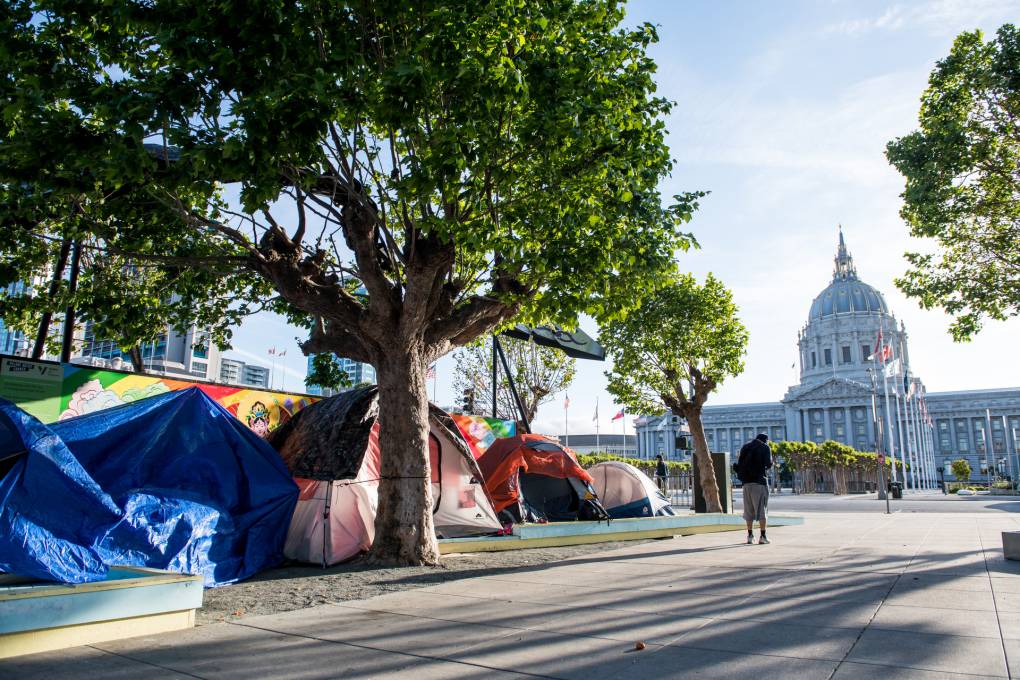
"caption": "Tents line a gravel sidewalk off Fulton Street near City Hall on May 5, 2020.",
"description": "Tents line a gravel sidewalk off Fulton Street near City Hall on May 5, 2020. On Wednesday, city staffers started drawing out socially distant spaces with chalk on the street for the tents to stay.",
"title": "Tents line Fulton Street near City Hall on April 5, 2020.",
"credit": "Beth LaBerge/KQED",
"status": "inherit",
"isLoading": false,
"fetchFailed": false
},
"news_11816694": {
"type": "attachments",
"id": "news_11816694",
"meta": {
"index": "attachments_1716263798",
"site": "news",
"id": "11816694",
"found": true
},
"parent": 11816648,
"imgSizes": {
"apple_news_ca_landscape_5_5": {
"file": "https://ww2.kqed.org/app/uploads/sites/10/2020/05/RS43034_007_KQED_SanFrancisco_TentEncampments_05052020-qut-1-1044x783.jpg",
"width": 1044,
"mimeType": "image/jpeg",
"height": 783
},
"apple_news_ca_square_4_0": {
"file": "https://ww2.kqed.org/app/uploads/sites/10/2020/05/RS43034_007_KQED_SanFrancisco_TentEncampments_05052020-qut-1-470x470.jpg",
"width": 470,
"mimeType": "image/jpeg",
"height": 470
},
"twentyfourteen-full-width": {
"file": "https://ww2.kqed.org/app/uploads/sites/10/2020/05/RS43034_007_KQED_SanFrancisco_TentEncampments_05052020-qut-1-1038x576.jpg",
"width": 1038,
"mimeType": "image/jpeg",
"height": 576
},
"thumbnail": {
"file": "https://ww2.kqed.org/app/uploads/sites/10/2020/05/RS43034_007_KQED_SanFrancisco_TentEncampments_05052020-qut-1-160x107.jpg",
"width": 160,
"mimeType": "image/jpeg",
"height": 107
},
"post-thumbnail": {
"file": "https://ww2.kqed.org/app/uploads/sites/10/2020/05/RS43034_007_KQED_SanFrancisco_TentEncampments_05052020-qut-1-672x372.jpg",
"width": 672,
"mimeType": "image/jpeg",
"height": 372
},
"kqedFullSize": {
"file": "https://ww2.kqed.org/app/uploads/sites/10/2020/05/RS43034_007_KQED_SanFrancisco_TentEncampments_05052020-qut-1.jpg",
"width": 1920,
"height": 1280
},
"apple_news_ca_landscape_4_7": {
"file": "https://ww2.kqed.org/app/uploads/sites/10/2020/05/RS43034_007_KQED_SanFrancisco_TentEncampments_05052020-qut-1-632x474.jpg",
"width": 632,
"mimeType": "image/jpeg",
"height": 474
},
"large": {
"file": "https://ww2.kqed.org/app/uploads/sites/10/2020/05/RS43034_007_KQED_SanFrancisco_TentEncampments_05052020-qut-1-1020x680.jpg",
"width": 1020,
"mimeType": "image/jpeg",
"height": 680
},
"apple_news_ca_landscape_4_0": {
"file": "https://ww2.kqed.org/app/uploads/sites/10/2020/05/RS43034_007_KQED_SanFrancisco_TentEncampments_05052020-qut-1-536x402.jpg",
"width": 536,
"mimeType": "image/jpeg",
"height": 402
},
"apple_news_ca_portrait_12_9": {
"file": "https://ww2.kqed.org/app/uploads/sites/10/2020/05/RS43034_007_KQED_SanFrancisco_TentEncampments_05052020-qut-1-1122x1280.jpg",
"width": 1122,
"mimeType": "image/jpeg",
"height": 1280
},
"medium": {
"file": "https://ww2.kqed.org/app/uploads/sites/10/2020/05/RS43034_007_KQED_SanFrancisco_TentEncampments_05052020-qut-1-800x533.jpg",
"width": 800,
"mimeType": "image/jpeg",
"height": 533
},
"apple_news_ca_portrait_4_0": {
"file": "https://ww2.kqed.org/app/uploads/sites/10/2020/05/RS43034_007_KQED_SanFrancisco_TentEncampments_05052020-qut-1-354x472.jpg",
"width": 354,
"mimeType": "image/jpeg",
"height": 472
},
"apple_news_ca_portrait_9_7": {
"file": "https://ww2.kqed.org/app/uploads/sites/10/2020/05/RS43034_007_KQED_SanFrancisco_TentEncampments_05052020-qut-1-840x1120.jpg",
"width": 840,
"mimeType": "image/jpeg",
"height": 1120
},
"apple_news_ca_landscape_12_9": {
"file": "https://ww2.kqed.org/app/uploads/sites/10/2020/05/RS43034_007_KQED_SanFrancisco_TentEncampments_05052020-qut-1-1832x1280.jpg",
"width": 1832,
"mimeType": "image/jpeg",
"height": 1280
},
"apple_news_ca_square_9_7": {
"file": "https://ww2.kqed.org/app/uploads/sites/10/2020/05/RS43034_007_KQED_SanFrancisco_TentEncampments_05052020-qut-1-1104x1104.jpg",
"width": 1104,
"mimeType": "image/jpeg",
"height": 1104
},
"apple_news_ca_portrait_4_7": {
"file": "https://ww2.kqed.org/app/uploads/sites/10/2020/05/RS43034_007_KQED_SanFrancisco_TentEncampments_05052020-qut-1-414x552.jpg",
"width": 414,
"mimeType": "image/jpeg",
"height": 552
},
"apple_news_ca_square_12_9": {
"file": "https://ww2.kqed.org/app/uploads/sites/10/2020/05/RS43034_007_KQED_SanFrancisco_TentEncampments_05052020-qut-1-1472x1280.jpg",
"width": 1472,
"mimeType": "image/jpeg",
"height": 1280
},
"apple_news_ca_portrait_5_5": {
"file": "https://ww2.kqed.org/app/uploads/sites/10/2020/05/RS43034_007_KQED_SanFrancisco_TentEncampments_05052020-qut-1-687x916.jpg",
"width": 687,
"mimeType": "image/jpeg",
"height": 916
},
"full-width": {
"file": "https://ww2.kqed.org/app/uploads/sites/10/2020/05/RS43034_007_KQED_SanFrancisco_TentEncampments_05052020-qut-1-1920x1280.jpg",
"width": 1920,
"mimeType": "image/jpeg",
"height": 1280
},
"apple_news_ca_square_4_7": {
"file": "https://ww2.kqed.org/app/uploads/sites/10/2020/05/RS43034_007_KQED_SanFrancisco_TentEncampments_05052020-qut-1-550x550.jpg",
"width": 550,
"mimeType": "image/jpeg",
"height": 550
},
"apple_news_ca_landscape_9_7": {
"file": "https://ww2.kqed.org/app/uploads/sites/10/2020/05/RS43034_007_KQED_SanFrancisco_TentEncampments_05052020-qut-1-1376x1032.jpg",
"width": 1376,
"mimeType": "image/jpeg",
"height": 1032
},
"apple_news_ca_square_5_5": {
"file": "https://ww2.kqed.org/app/uploads/sites/10/2020/05/RS43034_007_KQED_SanFrancisco_TentEncampments_05052020-qut-1-912x912.jpg",
"width": 912,
"mimeType": "image/jpeg",
"height": 912
}
},
"publishDate": 1588812228,
"modified": 1588812294,
"caption": "Tents are spaced for social distancing at Bay View Park K.C. Jones Playground on May 5, 2020.",
"description": "Tents are spaced for social distancing at Bay View Park K.C. Jones Playground on May 5, 2020.",
"title": "RS43034_007_KQED_SanFrancisco_TentEncampments_05052020-qut (1)",
"credit": "Beth LaBerge/KQED",
"status": "inherit",
"isLoading": false,
"fetchFailed": false
},
"news_11832951": {
"type": "attachments",
"id": "news_11832951",
"meta": {
"index": "attachments_1716263798",
"site": "news",
"id": "11832951",
"found": true
},
"parent": 11832947,
"imgSizes": {
"apple_news_ca_landscape_5_5": {
"file": "https://ww2.kqed.org/app/uploads/sites/10/2020/08/RS44328_021_KQED_SanFrancisco_HousingBlackMural_08102020-qut-1044x783.jpg",
"width": 1044,
"mimeType": "image/jpeg",
"height": 783
},
"apple_news_ca_square_4_0": {
"file": "https://ww2.kqed.org/app/uploads/sites/10/2020/08/RS44328_021_KQED_SanFrancisco_HousingBlackMural_08102020-qut-470x470.jpg",
"width": 470,
"mimeType": "image/jpeg",
"height": 470
},
"twentyfourteen-full-width": {
"file": "https://ww2.kqed.org/app/uploads/sites/10/2020/08/RS44328_021_KQED_SanFrancisco_HousingBlackMural_08102020-qut-1038x576.jpg",
"width": 1038,
"mimeType": "image/jpeg",
"height": 576
},
"thumbnail": {
"file": "https://ww2.kqed.org/app/uploads/sites/10/2020/08/RS44328_021_KQED_SanFrancisco_HousingBlackMural_08102020-qut-160x107.jpg",
"width": 160,
"mimeType": "image/jpeg",
"height": 107
},
"post-thumbnail": {
"file": "https://ww2.kqed.org/app/uploads/sites/10/2020/08/RS44328_021_KQED_SanFrancisco_HousingBlackMural_08102020-qut-672x372.jpg",
"width": 672,
"mimeType": "image/jpeg",
"height": 372
},
"kqedFullSize": {
"file": "https://ww2.kqed.org/app/uploads/sites/10/2020/08/RS44328_021_KQED_SanFrancisco_HousingBlackMural_08102020-qut.jpg",
"width": 1920,
"height": 1280
},
"apple_news_ca_landscape_4_7": {
"file": "https://ww2.kqed.org/app/uploads/sites/10/2020/08/RS44328_021_KQED_SanFrancisco_HousingBlackMural_08102020-qut-632x474.jpg",
"width": 632,
"mimeType": "image/jpeg",
"height": 474
},
"large": {
"file": "https://ww2.kqed.org/app/uploads/sites/10/2020/08/RS44328_021_KQED_SanFrancisco_HousingBlackMural_08102020-qut-1020x680.jpg",
"width": 1020,
"mimeType": "image/jpeg",
"height": 680
},
"apple_news_ca_landscape_4_0": {
"file": "https://ww2.kqed.org/app/uploads/sites/10/2020/08/RS44328_021_KQED_SanFrancisco_HousingBlackMural_08102020-qut-536x402.jpg",
"width": 536,
"mimeType": "image/jpeg",
"height": 402
},
"apple_news_ca_portrait_12_9": {
"file": "https://ww2.kqed.org/app/uploads/sites/10/2020/08/RS44328_021_KQED_SanFrancisco_HousingBlackMural_08102020-qut-1122x1280.jpg",
"width": 1122,
"mimeType": "image/jpeg",
"height": 1280
},
"medium": {
"file": "https://ww2.kqed.org/app/uploads/sites/10/2020/08/RS44328_021_KQED_SanFrancisco_HousingBlackMural_08102020-qut-800x533.jpg",
"width": 800,
"mimeType": "image/jpeg",
"height": 533
},
"apple_news_ca_portrait_4_0": {
"file": "https://ww2.kqed.org/app/uploads/sites/10/2020/08/RS44328_021_KQED_SanFrancisco_HousingBlackMural_08102020-qut-354x472.jpg",
"width": 354,
"mimeType": "image/jpeg",
"height": 472
},
"apple_news_ca_portrait_9_7": {
"file": "https://ww2.kqed.org/app/uploads/sites/10/2020/08/RS44328_021_KQED_SanFrancisco_HousingBlackMural_08102020-qut-840x1120.jpg",
"width": 840,
"mimeType": "image/jpeg",
"height": 1120
},
"apple_news_ca_landscape_12_9": {
"file": "https://ww2.kqed.org/app/uploads/sites/10/2020/08/RS44328_021_KQED_SanFrancisco_HousingBlackMural_08102020-qut-1832x1280.jpg",
"width": 1832,
"mimeType": "image/jpeg",
"height": 1280
},
"apple_news_ca_square_9_7": {
"file": "https://ww2.kqed.org/app/uploads/sites/10/2020/08/RS44328_021_KQED_SanFrancisco_HousingBlackMural_08102020-qut-1104x1104.jpg",
"width": 1104,
"mimeType": "image/jpeg",
"height": 1104
},
"1536x1536": {
"file": "https://ww2.kqed.org/app/uploads/sites/10/2020/08/RS44328_021_KQED_SanFrancisco_HousingBlackMural_08102020-qut-1536x1024.jpg",
"width": 1536,
"mimeType": "image/jpeg",
"height": 1024
},
"apple_news_ca_portrait_4_7": {
"file": "https://ww2.kqed.org/app/uploads/sites/10/2020/08/RS44328_021_KQED_SanFrancisco_HousingBlackMural_08102020-qut-414x552.jpg",
"width": 414,
"mimeType": "image/jpeg",
"height": 552
},
"apple_news_ca_square_12_9": {
"file": "https://ww2.kqed.org/app/uploads/sites/10/2020/08/RS44328_021_KQED_SanFrancisco_HousingBlackMural_08102020-qut-1472x1280.jpg",
"width": 1472,
"mimeType": "image/jpeg",
"height": 1280
},
"apple_news_ca_portrait_5_5": {
"file": "https://ww2.kqed.org/app/uploads/sites/10/2020/08/RS44328_021_KQED_SanFrancisco_HousingBlackMural_08102020-qut-687x916.jpg",
"width": 687,
"mimeType": "image/jpeg",
"height": 916
},
"apple_news_ca_square_4_7": {
"file": "https://ww2.kqed.org/app/uploads/sites/10/2020/08/RS44328_021_KQED_SanFrancisco_HousingBlackMural_08102020-qut-550x550.jpg",
"width": 550,
"mimeType": "image/jpeg",
"height": 550
},
"apple_news_ca_landscape_9_7": {
"file": "https://ww2.kqed.org/app/uploads/sites/10/2020/08/RS44328_021_KQED_SanFrancisco_HousingBlackMural_08102020-qut-1376x1032.jpg",
"width": 1376,
"mimeType": "image/jpeg",
"height": 1032
},
"apple_news_ca_square_5_5": {
"file": "https://ww2.kqed.org/app/uploads/sites/10/2020/08/RS44328_021_KQED_SanFrancisco_HousingBlackMural_08102020-qut-912x912.jpg",
"width": 912,
"mimeType": "image/jpeg",
"height": 912
}
},
"publishDate": 1597171909,
"modified": 1597195111,
"caption": "Artist Malik Seneferu holds up his fist during the installation of a mural on Golden Gate Avenue in the Tenderloin that says \"Housing Black\" on Aug. 10, 2020. The mural aims to bring awareness to the disproportionate amount of Black residents in San Francisco experiencing homelessness or displacement due to a lack of affordable housing.",
"description": null,
"title": "RS44328_021_KQED_SanFrancisco_HousingBlackMural_08102020-qut",
"credit": "Beth LaBerge/KQED",
"status": "inherit",
"isLoading": false,
"fetchFailed": false
},
"news_11830648": {
"type": "attachments",
"id": "news_11830648",
"meta": {
"index": "attachments_1716263798",
"site": "news",
"id": "11830648",
"found": true
},
"parent": 11830636,
"imgSizes": {
"apple_news_ca_landscape_5_5": {
"file": "https://ww2.kqed.org/app/uploads/sites/10/2020/07/RS44076_005_KQED_SanFrancisco_RVsMercedBlvd_07272020-qut-1044x783.jpg",
"width": 1044,
"mimeType": "image/jpeg",
"height": 783
},
"apple_news_ca_square_4_0": {
"file": "https://ww2.kqed.org/app/uploads/sites/10/2020/07/RS44076_005_KQED_SanFrancisco_RVsMercedBlvd_07272020-qut-470x470.jpg",
"width": 470,
"mimeType": "image/jpeg",
"height": 470
},
"twentyfourteen-full-width": {
"file": "https://ww2.kqed.org/app/uploads/sites/10/2020/07/RS44076_005_KQED_SanFrancisco_RVsMercedBlvd_07272020-qut-1038x576.jpg",
"width": 1038,
"mimeType": "image/jpeg",
"height": 576
},
"thumbnail": {
"file": "https://ww2.kqed.org/app/uploads/sites/10/2020/07/RS44076_005_KQED_SanFrancisco_RVsMercedBlvd_07272020-qut-160x107.jpg",
"width": 160,
"mimeType": "image/jpeg",
"height": 107
},
"post-thumbnail": {
"file": "https://ww2.kqed.org/app/uploads/sites/10/2020/07/RS44076_005_KQED_SanFrancisco_RVsMercedBlvd_07272020-qut-672x372.jpg",
"width": 672,
"mimeType": "image/jpeg",
"height": 372
},
"kqedFullSize": {
"file": "https://ww2.kqed.org/app/uploads/sites/10/2020/07/RS44076_005_KQED_SanFrancisco_RVsMercedBlvd_07272020-qut.jpg",
"width": 1920,
"height": 1280
},
"apple_news_ca_landscape_4_7": {
"file": "https://ww2.kqed.org/app/uploads/sites/10/2020/07/RS44076_005_KQED_SanFrancisco_RVsMercedBlvd_07272020-qut-632x474.jpg",
"width": 632,
"mimeType": "image/jpeg",
"height": 474
},
"large": {
"file": "https://ww2.kqed.org/app/uploads/sites/10/2020/07/RS44076_005_KQED_SanFrancisco_RVsMercedBlvd_07272020-qut-1020x680.jpg",
"width": 1020,
"mimeType": "image/jpeg",
"height": 680
},
"apple_news_ca_landscape_4_0": {
"file": "https://ww2.kqed.org/app/uploads/sites/10/2020/07/RS44076_005_KQED_SanFrancisco_RVsMercedBlvd_07272020-qut-536x402.jpg",
"width": 536,
"mimeType": "image/jpeg",
"height": 402
},
"apple_news_ca_portrait_12_9": {
"file": "https://ww2.kqed.org/app/uploads/sites/10/2020/07/RS44076_005_KQED_SanFrancisco_RVsMercedBlvd_07272020-qut-1122x1280.jpg",
"width": 1122,
"mimeType": "image/jpeg",
"height": 1280
},
"medium": {
"file": "https://ww2.kqed.org/app/uploads/sites/10/2020/07/RS44076_005_KQED_SanFrancisco_RVsMercedBlvd_07272020-qut-800x533.jpg",
"width": 800,
"mimeType": "image/jpeg",
"height": 533
},
"apple_news_ca_portrait_4_0": {
"file": "https://ww2.kqed.org/app/uploads/sites/10/2020/07/RS44076_005_KQED_SanFrancisco_RVsMercedBlvd_07272020-qut-354x472.jpg",
"width": 354,
"mimeType": "image/jpeg",
"height": 472
},
"apple_news_ca_portrait_9_7": {
"file": "https://ww2.kqed.org/app/uploads/sites/10/2020/07/RS44076_005_KQED_SanFrancisco_RVsMercedBlvd_07272020-qut-840x1120.jpg",
"width": 840,
"mimeType": "image/jpeg",
"height": 1120
},
"apple_news_ca_landscape_12_9": {
"file": "https://ww2.kqed.org/app/uploads/sites/10/2020/07/RS44076_005_KQED_SanFrancisco_RVsMercedBlvd_07272020-qut-1832x1280.jpg",
"width": 1832,
"mimeType": "image/jpeg",
"height": 1280
},
"apple_news_ca_square_9_7": {
"file": "https://ww2.kqed.org/app/uploads/sites/10/2020/07/RS44076_005_KQED_SanFrancisco_RVsMercedBlvd_07272020-qut-1104x1104.jpg",
"width": 1104,
"mimeType": "image/jpeg",
"height": 1104
},
"1536x1536": {
"file": "https://ww2.kqed.org/app/uploads/sites/10/2020/07/RS44076_005_KQED_SanFrancisco_RVsMercedBlvd_07272020-qut-1536x1024.jpg",
"width": 1536,
"mimeType": "image/jpeg",
"height": 1024
},
"apple_news_ca_portrait_4_7": {
"file": "https://ww2.kqed.org/app/uploads/sites/10/2020/07/RS44076_005_KQED_SanFrancisco_RVsMercedBlvd_07272020-qut-414x552.jpg",
"width": 414,
"mimeType": "image/jpeg",
"height": 552
},
"apple_news_ca_square_12_9": {
"file": "https://ww2.kqed.org/app/uploads/sites/10/2020/07/RS44076_005_KQED_SanFrancisco_RVsMercedBlvd_07272020-qut-1472x1280.jpg",
"width": 1472,
"mimeType": "image/jpeg",
"height": 1280
},
"apple_news_ca_portrait_5_5": {
"file": "https://ww2.kqed.org/app/uploads/sites/10/2020/07/RS44076_005_KQED_SanFrancisco_RVsMercedBlvd_07272020-qut-687x916.jpg",
"width": 687,
"mimeType": "image/jpeg",
"height": 916
},
"apple_news_ca_square_4_7": {
"file": "https://ww2.kqed.org/app/uploads/sites/10/2020/07/RS44076_005_KQED_SanFrancisco_RVsMercedBlvd_07272020-qut-550x550.jpg",
"width": 550,
"mimeType": "image/jpeg",
"height": 550
},
"apple_news_ca_landscape_9_7": {
"file": "https://ww2.kqed.org/app/uploads/sites/10/2020/07/RS44076_005_KQED_SanFrancisco_RVsMercedBlvd_07272020-qut-1376x1032.jpg",
"width": 1376,
"mimeType": "image/jpeg",
"height": 1032
},
"apple_news_ca_square_5_5": {
"file": "https://ww2.kqed.org/app/uploads/sites/10/2020/07/RS44076_005_KQED_SanFrancisco_RVsMercedBlvd_07272020-qut-912x912.jpg",
"width": 912,
"mimeType": "image/jpeg",
"height": 912
}
},
"publishDate": 1595884327,
"modified": 1595904363,
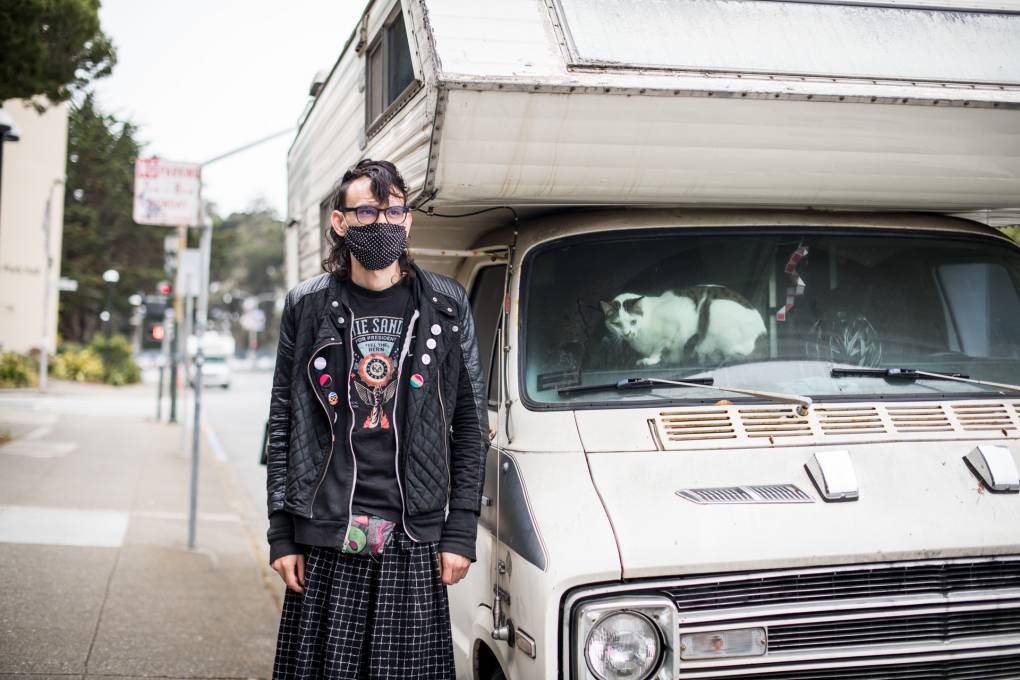
"caption": "Mana Dream outside an RV parked on Lake Merced Boulevard in San Francisco on July 27, 2020. Dream's cat Kuma sits in the window.",
"description": "Mana Dream outside an RV parked on Lake Merced Boulevard in San Francisco on July 27, 2020. Dream's cat Kuma sits in the window.",
"title": "RS44076_005_KQED_SanFrancisco_RVsMercedBlvd_07272020-qut",
"credit": "Beth LaBerge/KQED",
"status": "inherit",
"isLoading": false,
"fetchFailed": false
},
"news_11819874": {
"type": "attachments",
"id": "news_11819874",
"meta": {
"index": "attachments_1716263798",
"site": "news",
"id": "11819874",
"found": true
},
"parent": 11819593,
"imgSizes": {
"apple_news_ca_landscape_5_5": {
"file": "https://ww2.kqed.org/app/uploads/sites/10/2020/05/RS20978_capitol-building-qut-1044x783.jpg",
"width": 1044,
"mimeType": "image/jpeg",
"height": 783
},
"apple_news_ca_square_4_0": {
"file": "https://ww2.kqed.org/app/uploads/sites/10/2020/05/RS20978_capitol-building-qut-470x470.jpg",
"width": 470,
"mimeType": "image/jpeg",
"height": 470
},
"twentyfourteen-full-width": {
"file": "https://ww2.kqed.org/app/uploads/sites/10/2020/05/RS20978_capitol-building-qut-1038x576.jpg",
"width": 1038,
"mimeType": "image/jpeg",
"height": 576
},
"thumbnail": {
"file": "https://ww2.kqed.org/app/uploads/sites/10/2020/05/RS20978_capitol-building-qut-160x120.jpg",
"width": 160,
"mimeType": "image/jpeg",
"height": 120
},
"post-thumbnail": {
"file": "https://ww2.kqed.org/app/uploads/sites/10/2020/05/RS20978_capitol-building-qut-672x372.jpg",
"width": 672,
"mimeType": "image/jpeg",
"height": 372
},
"kqedFullSize": {
"file": "https://ww2.kqed.org/app/uploads/sites/10/2020/05/RS20978_capitol-building-qut.jpg",
"width": 1280,
"height": 960
},
"apple_news_ca_landscape_4_7": {
"file": "https://ww2.kqed.org/app/uploads/sites/10/2020/05/RS20978_capitol-building-qut-632x474.jpg",
"width": 632,
"mimeType": "image/jpeg",
"height": 474
},
"large": {
"file": "https://ww2.kqed.org/app/uploads/sites/10/2020/05/RS20978_capitol-building-qut-1020x765.jpg",
"width": 1020,
"mimeType": "image/jpeg",
"height": 765
},
"apple_news_ca_landscape_4_0": {
"file": "https://ww2.kqed.org/app/uploads/sites/10/2020/05/RS20978_capitol-building-qut-536x402.jpg",
"width": 536,
"mimeType": "image/jpeg",
"height": 402
},
"apple_news_ca_portrait_12_9": {
"file": "https://ww2.kqed.org/app/uploads/sites/10/2020/05/RS20978_capitol-building-qut-1122x960.jpg",
"width": 1122,
"mimeType": "image/jpeg",
"height": 960
},
"medium": {
"file": "https://ww2.kqed.org/app/uploads/sites/10/2020/05/RS20978_capitol-building-qut-800x600.jpg",
"width": 800,
"mimeType": "image/jpeg",
"height": 600
},
"apple_news_ca_portrait_4_0": {
"file": "https://ww2.kqed.org/app/uploads/sites/10/2020/05/RS20978_capitol-building-qut-354x472.jpg",
"width": 354,
"mimeType": "image/jpeg",
"height": 472
},
"apple_news_ca_portrait_9_7": {
"file": "https://ww2.kqed.org/app/uploads/sites/10/2020/05/RS20978_capitol-building-qut-840x960.jpg",
"width": 840,
"mimeType": "image/jpeg",
"height": 960
},
"apple_news_ca_square_9_7": {
"file": "https://ww2.kqed.org/app/uploads/sites/10/2020/05/RS20978_capitol-building-qut-1104x960.jpg",
"width": 1104,
"mimeType": "image/jpeg",
"height": 960
},
"apple_news_ca_portrait_4_7": {
"file": "https://ww2.kqed.org/app/uploads/sites/10/2020/05/RS20978_capitol-building-qut-414x552.jpg",
"width": 414,
"mimeType": "image/jpeg",
"height": 552
},
"apple_news_ca_portrait_5_5": {
"file": "https://ww2.kqed.org/app/uploads/sites/10/2020/05/RS20978_capitol-building-qut-687x916.jpg",
"width": 687,
"mimeType": "image/jpeg",
"height": 916
},
"apple_news_ca_square_4_7": {
"file": "https://ww2.kqed.org/app/uploads/sites/10/2020/05/RS20978_capitol-building-qut-550x550.jpg",
"width": 550,
"mimeType": "image/jpeg",
"height": 550
},
"apple_news_ca_square_5_5": {
"file": "https://ww2.kqed.org/app/uploads/sites/10/2020/05/RS20978_capitol-building-qut-912x912.jpg",
"width": 912,
"mimeType": "image/jpeg",
"height": 912
}
},
"publishDate": 1590075447,
"modified": 1625059821,
"caption": null,
"description": "Sacramento Capitol",
"title": "RS20978_capitol building-qut",
"credit": "Vanessa Rancaño/KQED",
"status": "inherit",
"altTag": "The Capitol building in Sacramento.",
"isLoading": false,
"fetchFailed": false
},
"news_11825788": {
"type": "attachments",
"id": "news_11825788",
"meta": {
"index": "attachments_1716263798",
"site": "news",
"id": "11825788",
"found": true
},
"parent": 11825653,
"imgSizes": {
"apple_news_ca_landscape_5_5": {
"file": "https://ww2.kqed.org/app/uploads/sites/10/2020/06/Alan-Tolbert-Project-Roomkey-1044x783.jpg",
"width": 1044,
"mimeType": "image/jpeg",
"height": 783
},
"apple_news_ca_square_4_0": {
"file": "https://ww2.kqed.org/app/uploads/sites/10/2020/06/Alan-Tolbert-Project-Roomkey-470x470.jpg",
"width": 470,
"mimeType": "image/jpeg",
"height": 470
},
"twentyfourteen-full-width": {
"file": "https://ww2.kqed.org/app/uploads/sites/10/2020/06/Alan-Tolbert-Project-Roomkey-1038x576.jpg",
"width": 1038,
"mimeType": "image/jpeg",
"height": 576
},
"thumbnail": {
"file": "https://ww2.kqed.org/app/uploads/sites/10/2020/06/Alan-Tolbert-Project-Roomkey-160x120.jpg",
"width": 160,
"mimeType": "image/jpeg",
"height": 120
},
"post-thumbnail": {
"file": "https://ww2.kqed.org/app/uploads/sites/10/2020/06/Alan-Tolbert-Project-Roomkey-672x372.jpg",
"width": 672,
"mimeType": "image/jpeg",
"height": 372
},
"kqedFullSize": {
"file": "https://ww2.kqed.org/app/uploads/sites/10/2020/06/Alan-Tolbert-Project-Roomkey.jpg",
"width": 1920,
"height": 1440
},
"apple_news_ca_landscape_4_7": {
"file": "https://ww2.kqed.org/app/uploads/sites/10/2020/06/Alan-Tolbert-Project-Roomkey-632x474.jpg",
"width": 632,
"mimeType": "image/jpeg",
"height": 474
},
"large": {
"file": "https://ww2.kqed.org/app/uploads/sites/10/2020/06/Alan-Tolbert-Project-Roomkey-1020x765.jpg",
"width": 1020,
"mimeType": "image/jpeg",
"height": 765
},
"apple_news_ca_landscape_4_0": {
"file": "https://ww2.kqed.org/app/uploads/sites/10/2020/06/Alan-Tolbert-Project-Roomkey-536x402.jpg",
"width": 536,
"mimeType": "image/jpeg",
"height": 402
},
"apple_news_ca_portrait_12_9": {
"file": "https://ww2.kqed.org/app/uploads/sites/10/2020/06/Alan-Tolbert-Project-Roomkey-1122x1440.jpg",
"width": 1122,
"mimeType": "image/jpeg",
"height": 1440
},
"medium": {
"file": "https://ww2.kqed.org/app/uploads/sites/10/2020/06/Alan-Tolbert-Project-Roomkey-800x600.jpg",
"width": 800,
"mimeType": "image/jpeg",
"height": 600
},
"apple_news_ca_portrait_4_0": {
"file": "https://ww2.kqed.org/app/uploads/sites/10/2020/06/Alan-Tolbert-Project-Roomkey-354x472.jpg",
"width": 354,
"mimeType": "image/jpeg",
"height": 472
},
"apple_news_ca_portrait_9_7": {
"file": "https://ww2.kqed.org/app/uploads/sites/10/2020/06/Alan-Tolbert-Project-Roomkey-840x1120.jpg",
"width": 840,
"mimeType": "image/jpeg",
"height": 1120
},
"apple_news_ca_landscape_12_9": {
"file": "https://ww2.kqed.org/app/uploads/sites/10/2020/06/Alan-Tolbert-Project-Roomkey-1832x1374.jpg",
"width": 1832,
"mimeType": "image/jpeg",
"height": 1374
},
"apple_news_ca_square_9_7": {
"file": "https://ww2.kqed.org/app/uploads/sites/10/2020/06/Alan-Tolbert-Project-Roomkey-1104x1104.jpg",
"width": 1104,
"mimeType": "image/jpeg",
"height": 1104
},
"1536x1536": {
"file": "https://ww2.kqed.org/app/uploads/sites/10/2020/06/Alan-Tolbert-Project-Roomkey-1536x1152.jpg",
"width": 1536,
"mimeType": "image/jpeg",
"height": 1152
},
"apple_news_ca_portrait_4_7": {
"file": "https://ww2.kqed.org/app/uploads/sites/10/2020/06/Alan-Tolbert-Project-Roomkey-414x552.jpg",
"width": 414,
"mimeType": "image/jpeg",
"height": 552
},
"apple_news_ca_square_12_9": {
"file": "https://ww2.kqed.org/app/uploads/sites/10/2020/06/Alan-Tolbert-Project-Roomkey-1472x1440.jpg",
"width": 1472,
"mimeType": "image/jpeg",
"height": 1440
},
"apple_news_ca_portrait_5_5": {
"file": "https://ww2.kqed.org/app/uploads/sites/10/2020/06/Alan-Tolbert-Project-Roomkey-687x916.jpg",
"width": 687,
"mimeType": "image/jpeg",
"height": 916
},
"apple_news_ca_square_4_7": {
"file": "https://ww2.kqed.org/app/uploads/sites/10/2020/06/Alan-Tolbert-Project-Roomkey-550x550.jpg",
"width": 550,
"mimeType": "image/jpeg",
"height": 550
},
"apple_news_ca_landscape_9_7": {
"file": "https://ww2.kqed.org/app/uploads/sites/10/2020/06/Alan-Tolbert-Project-Roomkey-1376x1032.jpg",
"width": 1376,
"mimeType": "image/jpeg",
"height": 1032
},
"apple_news_ca_square_5_5": {
"file": "https://ww2.kqed.org/app/uploads/sites/10/2020/06/Alan-Tolbert-Project-Roomkey-912x912.jpg",
"width": 912,
"mimeType": "image/jpeg",
"height": 912
}
},
"publishDate": 1592938037,
"modified": 1592938083,
"caption": "Alan Tolbert and his dog, Coco, inside their room at Hotel Whitcomb.",
"description": "Alan Tolbert and his dog, Coco, inside their room at Hotel Whitcomb.",
"title": "Alan-Tolbert-Project-Roomkey",
"credit": "Courtesy Alan Tolbert",
"status": "inherit",
"isLoading": false,
"fetchFailed": false
},
"news_11788525": {
"type": "attachments",
"id": "news_11788525",
"meta": {
"index": "attachments_1716263798",
"site": "news",
"id": "11788525",
"found": true
},
"parent": 11788237,
"imgSizes": {
"apple_news_ca_square_4_0": {
"file": "https://ww2.kqed.org/app/uploads/sites/10/2019/11/moms4housing-470x470.jpg",
"width": 470,
"mimeType": "image/jpeg",
"height": 470
},
"twentyfourteen-full-width": {
"file": "https://ww2.kqed.org/app/uploads/sites/10/2019/11/moms4housing-1037x576.jpg",
"width": 1037,
"mimeType": "image/jpeg",
"height": 576
},
"thumbnail": {
"file": "https://ww2.kqed.org/app/uploads/sites/10/2019/11/moms4housing-160x107.jpg",
"width": 160,
"mimeType": "image/jpeg",
"height": 107
},
"post-thumbnail": {
"file": "https://ww2.kqed.org/app/uploads/sites/10/2019/11/moms4housing-672x372.jpg",
"width": 672,
"mimeType": "image/jpeg",
"height": 372
},
"kqedFullSize": {
"file": "https://ww2.kqed.org/app/uploads/sites/10/2019/11/moms4housing.jpg",
"width": 1037,
"height": 692
},
"apple_news_ca_landscape_4_7": {
"file": "https://ww2.kqed.org/app/uploads/sites/10/2019/11/moms4housing-632x474.jpg",
"width": 632,
"mimeType": "image/jpeg",
"height": 474
},
"large": {
"file": "https://ww2.kqed.org/app/uploads/sites/10/2019/11/moms4housing-1020x681.jpg",
"width": 1020,
"mimeType": "image/jpeg",
"height": 681
},
"apple_news_ca_landscape_4_0": {
"file": "https://ww2.kqed.org/app/uploads/sites/10/2019/11/moms4housing-536x402.jpg",
"width": 536,
"mimeType": "image/jpeg",
"height": 402
},
"medium": {
"file": "https://ww2.kqed.org/app/uploads/sites/10/2019/11/moms4housing-800x534.jpg",
"width": 800,
"mimeType": "image/jpeg",
"height": 534
},
"apple_news_ca_portrait_4_0": {
"file": "https://ww2.kqed.org/app/uploads/sites/10/2019/11/moms4housing-354x472.jpg",
"width": 354,
"mimeType": "image/jpeg",
"height": 472
},
"apple_news_ca_portrait_9_7": {
"file": "https://ww2.kqed.org/app/uploads/sites/10/2019/11/moms4housing-840x692.jpg",
"width": 840,
"mimeType": "image/jpeg",
"height": 692
},
"apple_news_ca_portrait_4_7": {
"file": "https://ww2.kqed.org/app/uploads/sites/10/2019/11/moms4housing-414x552.jpg",
"width": 414,
"mimeType": "image/jpeg",
"height": 552
},
"apple_news_ca_portrait_5_5": {
"file": "https://ww2.kqed.org/app/uploads/sites/10/2019/11/moms4housing-687x692.jpg",
"width": 687,
"mimeType": "image/jpeg",
"height": 692
},
"apple_news_ca_square_4_7": {
"file": "https://ww2.kqed.org/app/uploads/sites/10/2019/11/moms4housing-550x550.jpg",
"width": 550,
"mimeType": "image/jpeg",
"height": 550
},
"apple_news_ca_square_5_5": {
"file": "https://ww2.kqed.org/app/uploads/sites/10/2019/11/moms4housing-912x692.jpg",
"width": 912,
"mimeType": "image/jpeg",
"height": 692
}
},
"publishDate": 1574716317,
"modified": 1592866294,
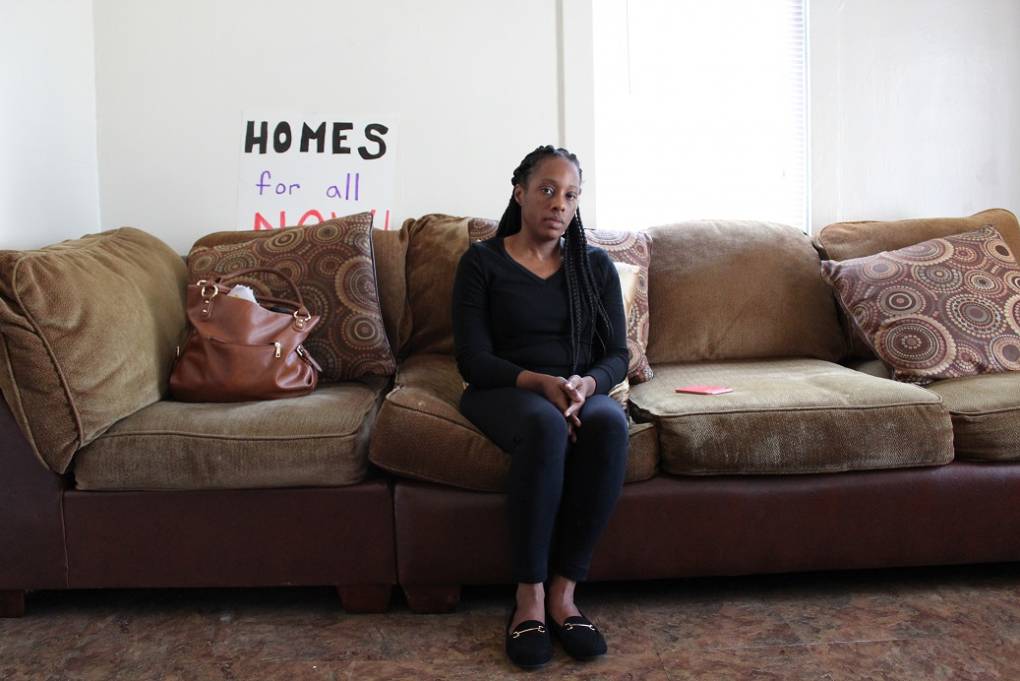
"caption": "Dominique Walker, a member of Moms 4 Housing, sits in a West Oakland home that's been vacant for two years. Walker and other homeless mothers have been occupying the home since November 2019. ",
"description": "Dominique Walker, a member of the group Moms 4 Housing, sits in a West Oakland home that's been vacant for two years. Walker and other homeless mothers have been occupying the home since November.",
"title": "moms4housing",
"credit": "Ericka Cruz Guevarra/KQED",
"status": "inherit",
"isLoading": false,
"fetchFailed": false
},
"news_11821075": {
"type": "attachments",
"id": "news_11821075",
"meta": {
"index": "attachments_1716263798",
"site": "news",
"id": "11821075",
"found": true
},
"parent": 0,
"imgSizes": {
"apple_news_ca_landscape_5_5": {
"file": "https://ww2.kqed.org/app/uploads/sites/10/2020/05/Operation-HomeBase-Oakland-RV-quarantine-1044x783.jpg",
"width": 1044,
"mimeType": "image/jpeg",
"height": 783
},
"apple_news_ca_square_4_0": {
"file": "https://ww2.kqed.org/app/uploads/sites/10/2020/05/Operation-HomeBase-Oakland-RV-quarantine-470x470.jpg",
"width": 470,
"mimeType": "image/jpeg",
"height": 470
},
"twentyfourteen-full-width": {
"file": "https://ww2.kqed.org/app/uploads/sites/10/2020/05/Operation-HomeBase-Oakland-RV-quarantine-1038x576.jpg",
"width": 1038,
"mimeType": "image/jpeg",
"height": 576
},
"thumbnail": {
"file": "https://ww2.kqed.org/app/uploads/sites/10/2020/05/Operation-HomeBase-Oakland-RV-quarantine-160x106.jpg",
"width": 160,
"mimeType": "image/jpeg",
"height": 106
},
"post-thumbnail": {
"file": "https://ww2.kqed.org/app/uploads/sites/10/2020/05/Operation-HomeBase-Oakland-RV-quarantine-672x372.jpg",
"width": 672,
"mimeType": "image/jpeg",
"height": 372
},
"kqedFullSize": {
"file": "https://ww2.kqed.org/app/uploads/sites/10/2020/05/Operation-HomeBase-Oakland-RV-quarantine.jpg",
"width": 1920,
"height": 1276
},
"apple_news_ca_landscape_4_7": {
"file": "https://ww2.kqed.org/app/uploads/sites/10/2020/05/Operation-HomeBase-Oakland-RV-quarantine-632x474.jpg",
"width": 632,
"mimeType": "image/jpeg",
"height": 474
},
"large": {
"file": "https://ww2.kqed.org/app/uploads/sites/10/2020/05/Operation-HomeBase-Oakland-RV-quarantine-1020x678.jpg",
"width": 1020,
"mimeType": "image/jpeg",
"height": 678
},
"apple_news_ca_landscape_4_0": {
"file": "https://ww2.kqed.org/app/uploads/sites/10/2020/05/Operation-HomeBase-Oakland-RV-quarantine-536x402.jpg",
"width": 536,
"mimeType": "image/jpeg",
"height": 402
},
"apple_news_ca_portrait_12_9": {
"file": "https://ww2.kqed.org/app/uploads/sites/10/2020/05/Operation-HomeBase-Oakland-RV-quarantine-1122x1276.jpg",
"width": 1122,
"mimeType": "image/jpeg",
"height": 1276
},
"medium": {
"file": "https://ww2.kqed.org/app/uploads/sites/10/2020/05/Operation-HomeBase-Oakland-RV-quarantine-800x532.jpg",
"width": 800,
"mimeType": "image/jpeg",
"height": 532
},
"apple_news_ca_portrait_4_0": {
"file": "https://ww2.kqed.org/app/uploads/sites/10/2020/05/Operation-HomeBase-Oakland-RV-quarantine-354x472.jpg",
"width": 354,
"mimeType": "image/jpeg",
"height": 472
},
"apple_news_ca_portrait_9_7": {
"file": "https://ww2.kqed.org/app/uploads/sites/10/2020/05/Operation-HomeBase-Oakland-RV-quarantine-840x1120.jpg",
"width": 840,
"mimeType": "image/jpeg",
"height": 1120
},
"apple_news_ca_landscape_12_9": {
"file": "https://ww2.kqed.org/app/uploads/sites/10/2020/05/Operation-HomeBase-Oakland-RV-quarantine-1832x1276.jpg",
"width": 1832,
"mimeType": "image/jpeg",
"height": 1276
},
"apple_news_ca_square_9_7": {
"file": "https://ww2.kqed.org/app/uploads/sites/10/2020/05/Operation-HomeBase-Oakland-RV-quarantine-1104x1104.jpg",
"width": 1104,
"mimeType": "image/jpeg",
"height": 1104
},
"apple_news_ca_portrait_4_7": {
"file": "https://ww2.kqed.org/app/uploads/sites/10/2020/05/Operation-HomeBase-Oakland-RV-quarantine-414x552.jpg",
"width": 414,
"mimeType": "image/jpeg",
"height": 552
},
"apple_news_ca_square_12_9": {
"file": "https://ww2.kqed.org/app/uploads/sites/10/2020/05/Operation-HomeBase-Oakland-RV-quarantine-1472x1276.jpg",
"width": 1472,
"mimeType": "image/jpeg",
"height": 1276
},
"apple_news_ca_portrait_5_5": {
"file": "https://ww2.kqed.org/app/uploads/sites/10/2020/05/Operation-HomeBase-Oakland-RV-quarantine-687x916.jpg",
"width": 687,
"mimeType": "image/jpeg",
"height": 916
},
"full-width": {
"file": "https://ww2.kqed.org/app/uploads/sites/10/2020/05/Operation-HomeBase-Oakland-RV-quarantine-1920x1276.jpg",
"width": 1920,
"mimeType": "image/jpeg",
"height": 1276
},
"apple_news_ca_square_4_7": {
"file": "https://ww2.kqed.org/app/uploads/sites/10/2020/05/Operation-HomeBase-Oakland-RV-quarantine-550x550.jpg",
"width": 550,
"mimeType": "image/jpeg",
"height": 550
},
"apple_news_ca_landscape_9_7": {
"file": "https://ww2.kqed.org/app/uploads/sites/10/2020/05/Operation-HomeBase-Oakland-RV-quarantine-1376x1032.jpg",
"width": 1376,
"mimeType": "image/jpeg",
"height": 1032
},
"apple_news_ca_square_5_5": {
"file": "https://ww2.kqed.org/app/uploads/sites/10/2020/05/Operation-HomeBase-Oakland-RV-quarantine-912x912.jpg",
"width": 912,
"mimeType": "image/jpeg",
"height": 912
}
},
"publishDate": 1590606699,
"modified": 1590686906,
"caption": "On May 5, city officials officially opened Operation HomeBase, an RV site with 91 trailers in Oakland, to safely quarantine people over the age of 65 or who have medical conditions that make them vulnerable to the coronavirus. Residents have been complaining about the lack of power during the day, trouble with the water systems and lack of hand rails that make the tight quarters difficult for the elderly residents to navigate.",
"description": "On May 5, city officials officially opened Operation HomeBase, an RV site with 91 trailers in Oakland, to safely quarantine people over the age of 65 or who have medical conditions that make them vulnerable to the coronavirus. Residents have been complaining about the lack of power during the day, trouble with the water systems, and lack of hand rails that make the tight quarters difficult for the elderly residents to navigate.",
"title": "Operation-HomeBase-Oakland-RV-quarantine",
"credit": "Courtesy City of Oakland",
"status": "inherit",
"isLoading": false,
"fetchFailed": false
},
"news_11821000": {
"type": "attachments",
"id": "news_11821000",
"meta": {
"index": "attachments_1716263798",
"site": "news",
"id": "11821000",
"found": true
},
"parent": 11820967,
"imgSizes": {
"apple_news_ca_landscape_5_5": {
"file": "https://ww2.kqed.org/app/uploads/sites/10/2020/05/RS43047_019_KQED_SanFrancisco_TentEncampments_05052020-qut-1044x783.jpg",
"width": 1044,
"mimeType": "image/jpeg",
"height": 783
},
"apple_news_ca_square_4_0": {
"file": "https://ww2.kqed.org/app/uploads/sites/10/2020/05/RS43047_019_KQED_SanFrancisco_TentEncampments_05052020-qut-470x470.jpg",
"width": 470,
"mimeType": "image/jpeg",
"height": 470
},
"twentyfourteen-full-width": {
"file": "https://ww2.kqed.org/app/uploads/sites/10/2020/05/RS43047_019_KQED_SanFrancisco_TentEncampments_05052020-qut-1038x576.jpg",
"width": 1038,
"mimeType": "image/jpeg",
"height": 576
},
"thumbnail": {
"file": "https://ww2.kqed.org/app/uploads/sites/10/2020/05/RS43047_019_KQED_SanFrancisco_TentEncampments_05052020-qut-160x107.jpg",
"width": 160,
"mimeType": "image/jpeg",
"height": 107
},
"post-thumbnail": {
"file": "https://ww2.kqed.org/app/uploads/sites/10/2020/05/RS43047_019_KQED_SanFrancisco_TentEncampments_05052020-qut-672x372.jpg",
"width": 672,
"mimeType": "image/jpeg",
"height": 372
},
"kqedFullSize": {
"file": "https://ww2.kqed.org/app/uploads/sites/10/2020/05/RS43047_019_KQED_SanFrancisco_TentEncampments_05052020-qut.jpg",
"width": 1920,
"height": 1280
},
"apple_news_ca_landscape_4_7": {
"file": "https://ww2.kqed.org/app/uploads/sites/10/2020/05/RS43047_019_KQED_SanFrancisco_TentEncampments_05052020-qut-632x474.jpg",
"width": 632,
"mimeType": "image/jpeg",
"height": 474
},
"large": {
"file": "https://ww2.kqed.org/app/uploads/sites/10/2020/05/RS43047_019_KQED_SanFrancisco_TentEncampments_05052020-qut-1020x680.jpg",
"width": 1020,
"mimeType": "image/jpeg",
"height": 680
},
"apple_news_ca_landscape_4_0": {
"file": "https://ww2.kqed.org/app/uploads/sites/10/2020/05/RS43047_019_KQED_SanFrancisco_TentEncampments_05052020-qut-536x402.jpg",
"width": 536,
"mimeType": "image/jpeg",
"height": 402
},
"apple_news_ca_portrait_12_9": {
"file": "https://ww2.kqed.org/app/uploads/sites/10/2020/05/RS43047_019_KQED_SanFrancisco_TentEncampments_05052020-qut-1122x1280.jpg",
"width": 1122,
"mimeType": "image/jpeg",
"height": 1280
},
"medium": {
"file": "https://ww2.kqed.org/app/uploads/sites/10/2020/05/RS43047_019_KQED_SanFrancisco_TentEncampments_05052020-qut-800x533.jpg",
"width": 800,
"mimeType": "image/jpeg",
"height": 533
},
"apple_news_ca_portrait_4_0": {
"file": "https://ww2.kqed.org/app/uploads/sites/10/2020/05/RS43047_019_KQED_SanFrancisco_TentEncampments_05052020-qut-354x472.jpg",
"width": 354,
"mimeType": "image/jpeg",
"height": 472
},
"apple_news_ca_portrait_9_7": {
"file": "https://ww2.kqed.org/app/uploads/sites/10/2020/05/RS43047_019_KQED_SanFrancisco_TentEncampments_05052020-qut-840x1120.jpg",
"width": 840,
"mimeType": "image/jpeg",
"height": 1120
},
"apple_news_ca_landscape_12_9": {
"file": "https://ww2.kqed.org/app/uploads/sites/10/2020/05/RS43047_019_KQED_SanFrancisco_TentEncampments_05052020-qut-1832x1280.jpg",
"width": 1832,
"mimeType": "image/jpeg",
"height": 1280
},
"apple_news_ca_square_9_7": {
"file": "https://ww2.kqed.org/app/uploads/sites/10/2020/05/RS43047_019_KQED_SanFrancisco_TentEncampments_05052020-qut-1104x1104.jpg",
"width": 1104,
"mimeType": "image/jpeg",
"height": 1104
},
"apple_news_ca_portrait_4_7": {
"file": "https://ww2.kqed.org/app/uploads/sites/10/2020/05/RS43047_019_KQED_SanFrancisco_TentEncampments_05052020-qut-414x552.jpg",
"width": 414,
"mimeType": "image/jpeg",
"height": 552
},
"apple_news_ca_square_12_9": {
"file": "https://ww2.kqed.org/app/uploads/sites/10/2020/05/RS43047_019_KQED_SanFrancisco_TentEncampments_05052020-qut-1472x1280.jpg",
"width": 1472,
"mimeType": "image/jpeg",
"height": 1280
},
"apple_news_ca_portrait_5_5": {
"file": "https://ww2.kqed.org/app/uploads/sites/10/2020/05/RS43047_019_KQED_SanFrancisco_TentEncampments_05052020-qut-687x916.jpg",
"width": 687,
"mimeType": "image/jpeg",
"height": 916
},
"full-width": {
"file": "https://ww2.kqed.org/app/uploads/sites/10/2020/05/RS43047_019_KQED_SanFrancisco_TentEncampments_05052020-qut-1920x1280.jpg",
"width": 1920,
"mimeType": "image/jpeg",
"height": 1280
},
"apple_news_ca_square_4_7": {
"file": "https://ww2.kqed.org/app/uploads/sites/10/2020/05/RS43047_019_KQED_SanFrancisco_TentEncampments_05052020-qut-550x550.jpg",
"width": 550,
"mimeType": "image/jpeg",
"height": 550
},
"apple_news_ca_landscape_9_7": {
"file": "https://ww2.kqed.org/app/uploads/sites/10/2020/05/RS43047_019_KQED_SanFrancisco_TentEncampments_05052020-qut-1376x1032.jpg",
"width": 1376,
"mimeType": "image/jpeg",
"height": 1032
},
"apple_news_ca_square_5_5": {
"file": "https://ww2.kqed.org/app/uploads/sites/10/2020/05/RS43047_019_KQED_SanFrancisco_TentEncampments_05052020-qut-912x912.jpg",
"width": 912,
"mimeType": "image/jpeg",
"height": 912
}
},
"publishDate": 1590599796,
"modified": 1612404163,
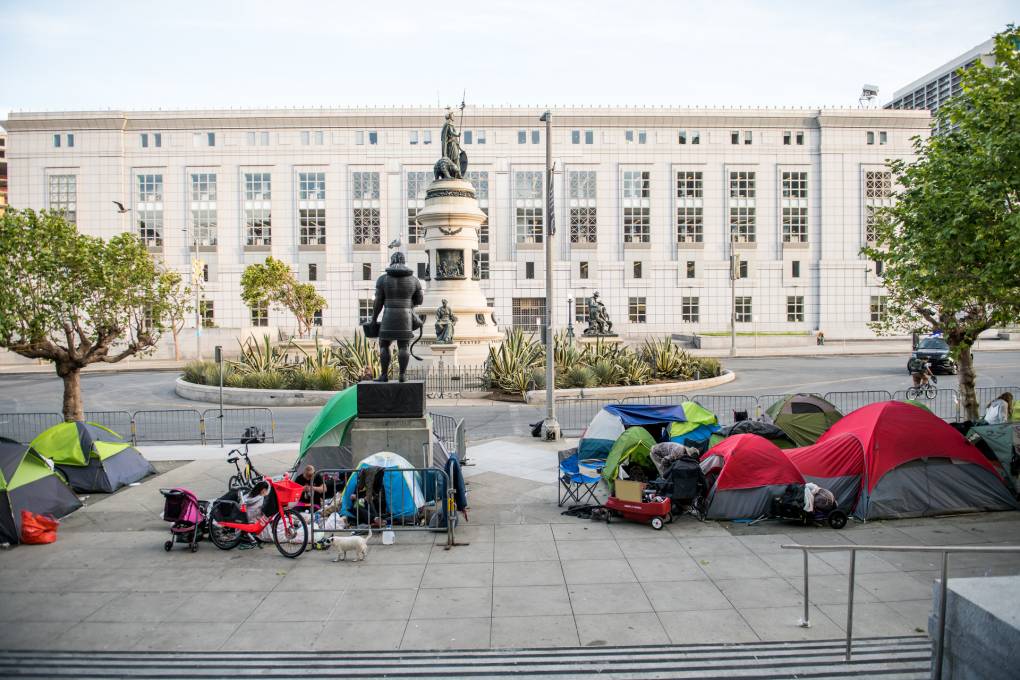
"caption": "Tents line Fulton Street near City Hall on May 5, 2020.",
"description": "Tents line Fulton Street near City Hall on May 5, 2020.",
"title": "Tents line Fulton Street near City Hall on May 5, 2020.",
"credit": "Beth LaBerge/KQED",
"status": "inherit",
"altTag": null,
"isLoading": false,
"fetchFailed": false
},
"news_11820451": {
"type": "attachments",
"id": "news_11820451",
"meta": {
"index": "attachments_1716263798",
"site": "news",
"id": "11820451",
"found": true
},
"parent": 11820442,
"imgSizes": {
"apple_news_ca_landscape_5_5": {
"file": "https://ww2.kqed.org/app/uploads/sites/10/2020/05/200522-37MLK-Palms-Motel-Takeover_08_WEB-1044x783.jpg",
"width": 1044,
"mimeType": "image/jpeg",
"height": 783
},
"apple_news_ca_square_4_0": {
"file": "https://ww2.kqed.org/app/uploads/sites/10/2020/05/200522-37MLK-Palms-Motel-Takeover_08_WEB-470x470.jpg",
"width": 470,
"mimeType": "image/jpeg",
"height": 470
},
"twentyfourteen-full-width": {
"file": "https://ww2.kqed.org/app/uploads/sites/10/2020/05/200522-37MLK-Palms-Motel-Takeover_08_WEB-1038x576.jpg",
"width": 1038,
"mimeType": "image/jpeg",
"height": 576
},
"thumbnail": {
"file": "https://ww2.kqed.org/app/uploads/sites/10/2020/05/200522-37MLK-Palms-Motel-Takeover_08_WEB-160x107.jpg",
"width": 160,
"mimeType": "image/jpeg",
"height": 107
},
"post-thumbnail": {
"file": "https://ww2.kqed.org/app/uploads/sites/10/2020/05/200522-37MLK-Palms-Motel-Takeover_08_WEB-672x372.jpg",
"width": 672,
"mimeType": "image/jpeg",
"height": 372
},
"kqedFullSize": {
"file": "https://ww2.kqed.org/app/uploads/sites/10/2020/05/200522-37MLK-Palms-Motel-Takeover_08_WEB-e1590250556209.jpg",
"width": 1920,
"height": 1280
},
"apple_news_ca_landscape_4_7": {
"file": "https://ww2.kqed.org/app/uploads/sites/10/2020/05/200522-37MLK-Palms-Motel-Takeover_08_WEB-632x474.jpg",
"width": 632,
"mimeType": "image/jpeg",
"height": 474
},
"large": {
"file": "https://ww2.kqed.org/app/uploads/sites/10/2020/05/200522-37MLK-Palms-Motel-Takeover_08_WEB-1020x680.jpg",
"width": 1020,
"mimeType": "image/jpeg",
"height": 680
},
"apple_news_ca_landscape_4_0": {
"file": "https://ww2.kqed.org/app/uploads/sites/10/2020/05/200522-37MLK-Palms-Motel-Takeover_08_WEB-536x402.jpg",
"width": 536,
"mimeType": "image/jpeg",
"height": 402
},
"apple_news_ca_portrait_12_9": {
"file": "https://ww2.kqed.org/app/uploads/sites/10/2020/05/200522-37MLK-Palms-Motel-Takeover_08_WEB-1122x1496.jpg",
"width": 1122,
"mimeType": "image/jpeg",
"height": 1496
},
"medium": {
"file": "https://ww2.kqed.org/app/uploads/sites/10/2020/05/200522-37MLK-Palms-Motel-Takeover_08_WEB-800x533.jpg",
"width": 800,
"mimeType": "image/jpeg",
"height": 533
},
"apple_news_ca_portrait_4_0": {
"file": "https://ww2.kqed.org/app/uploads/sites/10/2020/05/200522-37MLK-Palms-Motel-Takeover_08_WEB-354x472.jpg",
"width": 354,
"mimeType": "image/jpeg",
"height": 472
},
"apple_news_ca_portrait_9_7": {
"file": "https://ww2.kqed.org/app/uploads/sites/10/2020/05/200522-37MLK-Palms-Motel-Takeover_08_WEB-840x1120.jpg",
"width": 840,
"mimeType": "image/jpeg",
"height": 1120
},
"apple_news_ca_landscape_12_9": {
"file": "https://ww2.kqed.org/app/uploads/sites/10/2020/05/200522-37MLK-Palms-Motel-Takeover_08_WEB-1832x1374.jpg",
"width": 1832,
"mimeType": "image/jpeg",
"height": 1374
},
"apple_news_ca_square_9_7": {
"file": "https://ww2.kqed.org/app/uploads/sites/10/2020/05/200522-37MLK-Palms-Motel-Takeover_08_WEB-1104x1104.jpg",
"width": 1104,
"mimeType": "image/jpeg",
"height": 1104
},
"apple_news_ca_portrait_4_7": {
"file": "https://ww2.kqed.org/app/uploads/sites/10/2020/05/200522-37MLK-Palms-Motel-Takeover_08_WEB-414x552.jpg",
"width": 414,
"mimeType": "image/jpeg",
"height": 552
},
"apple_news_ca_square_12_9": {
"file": "https://ww2.kqed.org/app/uploads/sites/10/2020/05/200522-37MLK-Palms-Motel-Takeover_08_WEB-1472x1472.jpg",
"width": 1472,
"mimeType": "image/jpeg",
"height": 1472
},
"apple_news_ca_portrait_5_5": {
"file": "https://ww2.kqed.org/app/uploads/sites/10/2020/05/200522-37MLK-Palms-Motel-Takeover_08_WEB-687x916.jpg",
"width": 687,
"mimeType": "image/jpeg",
"height": 916
},
"full-width": {
"file": "https://ww2.kqed.org/app/uploads/sites/10/2020/05/200522-37MLK-Palms-Motel-Takeover_08_WEB-1920x1280.jpg",
"width": 1920,
"mimeType": "image/jpeg",
"height": 1280
},
"apple_news_ca_square_4_7": {
"file": "https://ww2.kqed.org/app/uploads/sites/10/2020/05/200522-37MLK-Palms-Motel-Takeover_08_WEB-550x550.jpg",
"width": 550,
"mimeType": "image/jpeg",
"height": 550
},
"apple_news_ca_landscape_9_7": {
"file": "https://ww2.kqed.org/app/uploads/sites/10/2020/05/200522-37MLK-Palms-Motel-Takeover_08_WEB-1376x1032.jpg",
"width": 1376,
"mimeType": "image/jpeg",
"height": 1032
},
"apple_news_ca_square_5_5": {
"file": "https://ww2.kqed.org/app/uploads/sites/10/2020/05/200522-37MLK-Palms-Motel-Takeover_08_WEB-912x912.jpg",
"width": 912,
"mimeType": "image/jpeg",
"height": 912
}
},
"publishDate": 1590245614,
"modified": 1590250546,
"caption": "Activist Stefani Echeverría-Fenn chained herself to a window in one of the rooms at the motel to call attention to the need for more hotel rooms for people experiencing homelessness during the coronavirus pandemic. ",
"description": null,
"title": "200522 37MLK Palms Motel Takeover_08_WEB",
"credit": "Erin Baldassari/KQED",
"status": "inherit",
"isLoading": false,
"fetchFailed": false
},
"news_11818490": {
"type": "attachments",
"id": "news_11818490",
"meta": {
"index": "attachments_1716263798",
"site": "news",
"id": "11818490",
"found": true
},
"parent": 11818462,
"imgSizes": {
"apple_news_ca_landscape_5_5": {
"file": "https://ww2.kqed.org/app/uploads/sites/10/2020/05/RS43187_005_KQED_SanFrancisco_SafeSleepingVillage_05142020-qut-1044x783.jpg",
"width": 1044,
"mimeType": "image/jpeg",
"height": 783
},
"apple_news_ca_square_4_0": {
"file": "https://ww2.kqed.org/app/uploads/sites/10/2020/05/RS43187_005_KQED_SanFrancisco_SafeSleepingVillage_05142020-qut-470x470.jpg",
"width": 470,
"mimeType": "image/jpeg",
"height": 470
},
"twentyfourteen-full-width": {
"file": "https://ww2.kqed.org/app/uploads/sites/10/2020/05/RS43187_005_KQED_SanFrancisco_SafeSleepingVillage_05142020-qut-1038x576.jpg",
"width": 1038,
"mimeType": "image/jpeg",
"height": 576
},
"thumbnail": {
"file": "https://ww2.kqed.org/app/uploads/sites/10/2020/05/RS43187_005_KQED_SanFrancisco_SafeSleepingVillage_05142020-qut-160x107.jpg",
"width": 160,
"mimeType": "image/jpeg",
"height": 107
},
"post-thumbnail": {
"file": "https://ww2.kqed.org/app/uploads/sites/10/2020/05/RS43187_005_KQED_SanFrancisco_SafeSleepingVillage_05142020-qut-672x372.jpg",
"width": 672,
"mimeType": "image/jpeg",
"height": 372
},
"kqedFullSize": {
"file": "https://ww2.kqed.org/app/uploads/sites/10/2020/05/RS43187_005_KQED_SanFrancisco_SafeSleepingVillage_05142020-qut.jpg",
"width": 1920,
"height": 1280
},
"apple_news_ca_landscape_4_7": {
"file": "https://ww2.kqed.org/app/uploads/sites/10/2020/05/RS43187_005_KQED_SanFrancisco_SafeSleepingVillage_05142020-qut-632x474.jpg",
"width": 632,
"mimeType": "image/jpeg",
"height": 474
},
"large": {
"file": "https://ww2.kqed.org/app/uploads/sites/10/2020/05/RS43187_005_KQED_SanFrancisco_SafeSleepingVillage_05142020-qut-1020x680.jpg",
"width": 1020,
"mimeType": "image/jpeg",
"height": 680
},
"apple_news_ca_landscape_4_0": {
"file": "https://ww2.kqed.org/app/uploads/sites/10/2020/05/RS43187_005_KQED_SanFrancisco_SafeSleepingVillage_05142020-qut-536x402.jpg",
"width": 536,
"mimeType": "image/jpeg",
"height": 402
},
"apple_news_ca_portrait_12_9": {
"file": "https://ww2.kqed.org/app/uploads/sites/10/2020/05/RS43187_005_KQED_SanFrancisco_SafeSleepingVillage_05142020-qut-1122x1280.jpg",
"width": 1122,
"mimeType": "image/jpeg",
"height": 1280
},
"medium": {
"file": "https://ww2.kqed.org/app/uploads/sites/10/2020/05/RS43187_005_KQED_SanFrancisco_SafeSleepingVillage_05142020-qut-800x533.jpg",
"width": 800,
"mimeType": "image/jpeg",
"height": 533
},
"apple_news_ca_portrait_4_0": {
"file": "https://ww2.kqed.org/app/uploads/sites/10/2020/05/RS43187_005_KQED_SanFrancisco_SafeSleepingVillage_05142020-qut-354x472.jpg",
"width": 354,
"mimeType": "image/jpeg",
"height": 472
},
"apple_news_ca_portrait_9_7": {
"file": "https://ww2.kqed.org/app/uploads/sites/10/2020/05/RS43187_005_KQED_SanFrancisco_SafeSleepingVillage_05142020-qut-840x1120.jpg",
"width": 840,
"mimeType": "image/jpeg",
"height": 1120
},
"apple_news_ca_landscape_12_9": {
"file": "https://ww2.kqed.org/app/uploads/sites/10/2020/05/RS43187_005_KQED_SanFrancisco_SafeSleepingVillage_05142020-qut-1832x1280.jpg",
"width": 1832,
"mimeType": "image/jpeg",
"height": 1280
},
"apple_news_ca_square_9_7": {
"file": "https://ww2.kqed.org/app/uploads/sites/10/2020/05/RS43187_005_KQED_SanFrancisco_SafeSleepingVillage_05142020-qut-1104x1104.jpg",
"width": 1104,
"mimeType": "image/jpeg",
"height": 1104
},
"apple_news_ca_portrait_4_7": {
"file": "https://ww2.kqed.org/app/uploads/sites/10/2020/05/RS43187_005_KQED_SanFrancisco_SafeSleepingVillage_05142020-qut-414x552.jpg",
"width": 414,
"mimeType": "image/jpeg",
"height": 552
},
"apple_news_ca_square_12_9": {
"file": "https://ww2.kqed.org/app/uploads/sites/10/2020/05/RS43187_005_KQED_SanFrancisco_SafeSleepingVillage_05142020-qut-1472x1280.jpg",
"width": 1472,
"mimeType": "image/jpeg",
"height": 1280
},
"apple_news_ca_portrait_5_5": {
"file": "https://ww2.kqed.org/app/uploads/sites/10/2020/05/RS43187_005_KQED_SanFrancisco_SafeSleepingVillage_05142020-qut-687x916.jpg",
"width": 687,
"mimeType": "image/jpeg",
"height": 916
},
"full-width": {
"file": "https://ww2.kqed.org/app/uploads/sites/10/2020/05/RS43187_005_KQED_SanFrancisco_SafeSleepingVillage_05142020-qut-1920x1280.jpg",
"width": 1920,
"mimeType": "image/jpeg",
"height": 1280
},
"apple_news_ca_square_4_7": {
"file": "https://ww2.kqed.org/app/uploads/sites/10/2020/05/RS43187_005_KQED_SanFrancisco_SafeSleepingVillage_05142020-qut-550x550.jpg",
"width": 550,
"mimeType": "image/jpeg",
"height": 550
},
"apple_news_ca_landscape_9_7": {
"file": "https://ww2.kqed.org/app/uploads/sites/10/2020/05/RS43187_005_KQED_SanFrancisco_SafeSleepingVillage_05142020-qut-1376x1032.jpg",
"width": 1376,
"mimeType": "image/jpeg",
"height": 1032
},
"apple_news_ca_square_5_5": {
"file": "https://ww2.kqed.org/app/uploads/sites/10/2020/05/RS43187_005_KQED_SanFrancisco_SafeSleepingVillage_05142020-qut-912x912.jpg",
"width": 912,
"mimeType": "image/jpeg",
"height": 912
}
},
"publishDate": 1589503556,
"modified": 1589586822,
"caption": "San Francisco’s first city-sanctioned safe sleeping site, known as the Safe Sleeping Village, on Fulton Street between Larkin and Hyde street in the Civic Center on April 14, 2020.",
"description": "San Francisco’s first city-sanctioned safe sleeping site, known as the Safe Sleeping Village, on Fulton Street between Larkin and Hyde Street in the Civic Center on April 14, 2020.",
"title": "RS43187_005_KQED_SanFrancisco_SafeSleepingVillage_05142020-qut",
"credit": "Beth LaBerge/KQED",
"status": "inherit",
"isLoading": false,
"fetchFailed": false
}
},
"audioPlayerReducer": {
"postId": "stream_live",
"isPaused": true,
"isPlaying": false,
"pfsActive": false,
"pledgeModalIsOpen": true,
"playerDrawerIsOpen": false,
"liveAudioPlayStartedAt": 0,
"liveAudioPlayContext": ""
},
"authorsReducer": {
"byline_news_11825550": {
"type": "authors",
"id": "byline_news_11825550",
"meta": {
"override": true
},
"slug": "byline_news_11825550",
"name": "Matt Levin \u003cbr />CalMatters\u003cbr>",
"isLoading": false
},
"jsmall": {
"type": "authors",
"id": "6625",
"meta": {
"index": "authors_1716337520",
"id": "6625",
"found": true
},
"name": "Julie Small",
"firstName": "Julie",
"lastName": "Small",
"slug": "jsmall",
"email": "jsmall@kqed.org",
"display_author_email": true,
"staff_mastheads": [
"news"
],
"title": "KQED Contributor",
"bio": "Julie Small reports on criminal justice and immigration.\r\n\r\nShe was part of a team at KQED awarded a regional 2019 Edward R. Murrow award for continuing coverage of the Trump Administration's family separation policy.\r\n\r\nThe Society for Professional Journalists recognized Julie's 2018 \u003ca href=\"https://www.kqed.org/news/11636262/the-officer-tased-him-31-times-the-sheriff-called-his-death-an-accident\">reporting\u003c/a> on the San Joaquin County Sheriff's \u003ca href=\"https://www.kqed.org/news/11634689/autopsy-doctors-sheriff-overrode-death-findings-to-protect-law-enforcement\">interference\u003c/a> in death investigations with an Excellence in Journalism Award for Ongoing Coverage.\r\n\r\nJulie's\u003ca href=\"https://www.kqed.org/news/11039666/two-mentally-ill-inmates-died-one-month-in-santa-clara\"> reporting\u003c/a> with Lisa Pickoff-White on the treatment of mentally ill offenders in California jails earned a 2017 regional Edward R. Murrow Award for news reporting and an investigative reporting award from the SPJ of Northern California.\r\n\r\nBefore joining KQED, Julie covered government and politics in Sacramento for Southern California Public Radio (SCPR). Her 2010 \u003ca href=\"https://www.scpr.org/specials/prisonmedical/\">series\u003c/a> on lapses in California’s prison medical care also won a regional Edward R. Murrow Award for investigative reporting and a Golden Mic Award from the RTNDA of Southern California.\r\n\r\nJulie began her career in journalism in 2000 as the deputy foreign editor for public radio's \u003cem>Marketplace, \u003c/em>while earning her master's degree in journalism from USC’s Annenberg School of Communication.",
"avatar": "https://secure.gravatar.com/avatar/4baedf201468df97be97c2a9dd7585d0?s=600&d=blank&r=g",
"twitter": "@SmallRadio2",
"facebook": null,
"instagram": null,
"linkedin": null,
"sites": [
{
"site": "news",
"roles": [
"editor"
]
},
{
"site": "stateofhealth",
"roles": [
"author"
]
},
{
"site": "science",
"roles": [
"author"
]
}
],
"headData": {
"title": "Julie Small | KQED",
"description": "KQED Contributor",
"ogImgSrc": "https://secure.gravatar.com/avatar/4baedf201468df97be97c2a9dd7585d0?s=600&d=blank&r=g",
"twImgSrc": "https://secure.gravatar.com/avatar/4baedf201468df97be97c2a9dd7585d0?s=600&d=blank&r=g"
},
"isLoading": false,
"link": "/author/jsmall"
},
"agarces": {
"type": "authors",
"id": "11367",
"meta": {
"index": "authors_1716337520",
"id": "11367",
"found": true
},
"name": "Audrey Garces",
"firstName": "Audrey",
"lastName": "Garces",
"slug": "agarces",
"email": "agarces@kqed.org",
"display_author_email": false,
"staff_mastheads": [
"news"
],
"title": "Digital Producer",
"bio": "Audrey is a former digital producer at KQED News. Previously, she was a KQED Raul Ramirez Diversity Fund intern where she developed stories that focused on highlighting diverse voices in journalism. Prior to her work at KQED, she worked as a news intern at the San Francisco Examiner. Audrey graduated from San Francisco State University with a B.A. in journalism and a minor in political science.",
"avatar": "https://secure.gravatar.com/avatar/5211bc2e6a809b9956da169e35ce63d5?s=600&d=blank&r=g",
"twitter": "audgar",
"facebook": null,
"instagram": null,
"linkedin": null,
"sites": [
{
"site": "arts",
"roles": []
},
{
"site": "news",
"roles": [
"subscriber"
]
},
{
"site": "science",
"roles": [
"editor"
]
},
{
"site": "forum",
"roles": [
"editor"
]
},
{
"site": "perspectives",
"roles": [
"administrator"
]
}
],
"headData": {
"title": "Audrey Garces | KQED",
"description": "Digital Producer",
"ogImgSrc": "https://secure.gravatar.com/avatar/5211bc2e6a809b9956da169e35ce63d5?s=600&d=blank&r=g",
"twImgSrc": "https://secure.gravatar.com/avatar/5211bc2e6a809b9956da169e35ce63d5?s=600&d=blank&r=g"
},
"isLoading": false,
"link": "/author/agarces"
},
"msolomon": {
"type": "authors",
"id": "11651",
"meta": {
"index": "authors_1716337520",
"id": "11651",
"found": true
},
"name": "Molly Solomon",
"firstName": "Molly",
"lastName": "Solomon",
"slug": "msolomon",
"email": "msolomon@KQED.org",
"display_author_email": false,
"staff_mastheads": [
"news"
],
"title": "Senior Editor",
"bio": "Molly Solomon is the senior editor of KQED's California Politics and Government Desk. Previously, she was the station's editor-at-large, with a focus on editing early childhood education, politics, and criminal justice. Before that, she managed and edited statewide election coverage for The California Newsroom, a collaboration of local public radio stations, CalMatters and NPR. Molly joined KQED in 2019 to launch the station’s housing affordability desk, where she reported on homelessness, evictions and is the co-host of KQED’s housing podcast, SOLD OUT: Rethinking Housing in America. Before that, she was the Southwest Washington Bureau Chief for Oregon Public Broadcasting and a reporter at Hawaii Public Radio. Her stories have aired on NPR’s \u003cem>Morning Edition\u003c/em>, \u003cem>All Things Considered\u003c/em>, \u003cem>Here & Now\u003c/em>, \u003cem>Science Friday\u003c/em> and \u003cem>Marketplace\u003c/em>. Molly's award-winning reporting has been honored by the Best of the West, Edward R. Murrow awards, Society of Professional Journalists, National Headliner Awards, and the Asian American Journalists Association. Born and raised in Berkeley, Molly is a big fan of burritos and her scruffy terrier, Ollie.",
"avatar": "https://secure.gravatar.com/avatar/9ad9794616923d81c9a79897161545bd?s=600&d=blank&r=g",
"twitter": "solomonout",
"facebook": null,
"instagram": null,
"linkedin": null,
"sites": [
{
"site": "news",
"roles": [
"editor"
]
},
{
"site": "science",
"roles": [
"editor"
]
}
],
"headData": {
"title": "Molly Solomon | KQED",
"description": "Senior Editor",
"ogImgSrc": "https://secure.gravatar.com/avatar/9ad9794616923d81c9a79897161545bd?s=600&d=blank&r=g",
"twImgSrc": "https://secure.gravatar.com/avatar/9ad9794616923d81c9a79897161545bd?s=600&d=blank&r=g"
},
"isLoading": false,
"link": "/author/msolomon"
},
"ebaldassari": {
"type": "authors",
"id": "11652",
"meta": {
"index": "authors_1716337520",
"id": "11652",
"found": true
},
"name": "Erin Baldassari",
"firstName": "Erin",
"lastName": "Baldassari",
"slug": "ebaldassari",
"email": "ebaldassari@KQED.org",
"display_author_email": true,
"staff_mastheads": [
"news"
],
"title": "Staff Writer",
"bio": "Erin Baldassari covers housing for KQED. She's a former print journalist and most recently worked as the transportation reporter for the \u003cem>Mercury News\u003c/em> and \u003cem>East Bay Times. \u003c/em>There, she focused on how the Bay Area’s housing shortage has changed the way people move around the region. She also served on the \u003cem>East Bay Times\u003c/em>’ 2017 Pulitzer Prize-winning team for coverage of the Ghost Ship Fire in Oakland. Prior to that, Erin worked as a breaking news and general assignment reporter for a variety of outlets in the Bay Area and the greater Boston area. A Tufts University alumna, Erin grew up in the foothills of the Sierra Nevada mountains and in Sonoma County. She is a life-long KQED listener.",
"avatar": "https://secure.gravatar.com/avatar/660ce35d088ca54ad606d7e941abc652?s=600&d=mm&r=g",
"twitter": "e_baldi",
"facebook": null,
"instagram": null,
"linkedin": null,
"sites": [
{
"site": "news",
"roles": [
"edit_others_posts",
"editor"
]
},
{
"site": "science",
"roles": [
"editor"
]
},
{
"site": "liveblog",
"roles": [
"editor"
]
}
],
"headData": {
"title": "Erin Baldassari | KQED",
"description": "Staff Writer",
"ogImgSrc": "https://secure.gravatar.com/avatar/660ce35d088ca54ad606d7e941abc652?s=600&d=mm&r=g",
"twImgSrc": "https://secure.gravatar.com/avatar/660ce35d088ca54ad606d7e941abc652?s=600&d=mm&r=g"
},
"isLoading": false,
"link": "/author/ebaldassari"
},
"blaberge": {
"type": "authors",
"id": "11667",
"meta": {
"index": "authors_1716337520",
"id": "11667",
"found": true
},
"name": "Beth LaBerge",
"firstName": "Beth",
"lastName": "LaBerge",
"slug": "blaberge",
"email": "blaberge@KQED.org",
"display_author_email": true,
"staff_mastheads": [
"news"
],
"title": "Photographer, News",
"bio": "Beth LaBerge is a visual journalist for \u003ca href=\"https://www.kqed.org/news\">KQED News\u003c/a>.",
"avatar": "https://secure.gravatar.com/avatar/15e224cd55918d1876693b8280954875?s=600&d=blank&r=g",
"twitter": null,
"facebook": null,
"instagram": "https://www.instagram.com/bethlaberge/",
"linkedin": null,
"sites": [
{
"site": "arts",
"roles": [
"editor"
]
},
{
"site": "news",
"roles": [
"editor"
]
},
{
"site": "science",
"roles": [
"editor",
"contributor",
"author"
]
},
{
"site": "liveblog",
"roles": [
"editor"
]
}
],
"headData": {
"title": "Beth LaBerge | KQED",
"description": "Photographer, News",
"ogImgSrc": "https://secure.gravatar.com/avatar/15e224cd55918d1876693b8280954875?s=600&d=blank&r=g",
"twImgSrc": "https://secure.gravatar.com/avatar/15e224cd55918d1876693b8280954875?s=600&d=blank&r=g"
},
"isLoading": false,
"link": "/author/blaberge"
},
"jrodriguez": {
"type": "authors",
"id": "11690",
"meta": {
"index": "authors_1716337520",
"id": "11690",
"found": true
},
"name": "Joe Fitzgerald Rodriguez",
"firstName": "Joe",
"lastName": "Fitzgerald Rodriguez",
"slug": "jrodriguez",
"email": "jrodriguez@kqed.org",
"display_author_email": true,
"staff_mastheads": [
"news"
],
"title": "Reporter and Producer",
"bio": "Joe Fitzgerald Rodriguez is a reporter and digital producer for KQED covering politics. Joe most recently wrote for the \u003cem>San Francisco Examiner\u003c/em> as a political columnist covering The City. He was raised in San Francisco and has spent his reporting career in his beloved, foggy, city by the bay. Joe was 12-years-old when he conducted his first interview in journalism, grilling former San Francisco Mayor Willie Brown for the Marina Middle School newspaper, \u003cem>The Penguin Press, \u003c/em>and he continues to report on the San Francisco Bay Area to this day.",
"avatar": "https://secure.gravatar.com/avatar/2247beb0564c1e9c62228d5649d2edac?s=600&d=blank&r=g",
"twitter": "FitztheReporter",
"facebook": null,
"instagram": "https://www.instagram.com/fitzthereporter/",
"linkedin": null,
"sites": [
{
"site": "",
"roles": [
"editor"
]
},
{
"site": "arts",
"roles": [
"editor"
]
},
{
"site": "news",
"roles": [
"editor"
]
},
{
"site": "science",
"roles": [
"editor"
]
},
{
"site": "elections",
"roles": [
"editor"
]
},
{
"site": "liveblog",
"roles": [
"editor"
]
}
],
"headData": {
"title": "Joe Fitzgerald Rodriguez | KQED",
"description": "Reporter and Producer",
"ogImgSrc": "https://secure.gravatar.com/avatar/2247beb0564c1e9c62228d5649d2edac?s=600&d=blank&r=g",
"twImgSrc": "https://secure.gravatar.com/avatar/2247beb0564c1e9c62228d5649d2edac?s=600&d=blank&r=g"
},
"isLoading": false,
"link": "/author/jrodriguez"
}
},
"pagesReducer": {
"news_tag_homelessness": {
"type": "terms",
"id": "news_4020",
"meta": {
"index": "terms_1716263798",
"site": "news",
"id": "4020",
"score": 8.5546055
},
"name": "Homelessness",
"slug": "homelessness",
"taxonomy": "tag",
"description": null,
"featImg": null,
"headData": {
"title": "Homelessness | KQED News",
"description": null,
"ogTitle": null,
"ogDescription": null,
"ogImgId": null,
"twTitle": null,
"twDescription": null,
"twImgId": null,
"metaRobotsNoIndex": "index"
},
"ttid": 4039,
"isLoading": false,
"title": "Homelessness",
"pageMeta": {
"site": "news",
"WpPageTemplate": "page-topic-editorial",
"currentPage": 31
},
"blocks": [
{
"blockName": "kqed/post-list",
"attrs": {
"layout": "cardArticle2",
"query": "posts/news?tag=homelessness",
"seeMore": false,
"paginated": true,
"page": 31
}
},
{
"blockName": "kqed/ad"
}
]
}
},
"pfsSessionReducer": {},
"postsReducer": {
"stream_live": {
"type": "live",
"id": "stream_live",
"audioUrl": "https://streams.kqed.org/kqedradio",
"title": "Live Stream",
"excerpt": "Live Stream information currently unavailable.",
"link": "/radio",
"featImg": "",
"label": {
"name": "KQED Live",
"link": "/"
}
},
"stream_kqedNewscast": {
"type": "posts",
"id": "stream_kqedNewscast",
"audioUrl": "https://www.kqed.org/.stream/anon/radio/RDnews/newscast.mp3?_=1",
"title": "KQED Newscast",
"featImg": "",
"label": {
"name": "88.5 FM",
"link": "/"
}
},
"news_11838323": {
"type": "posts",
"id": "news_11838323",
"meta": {
"index": "posts_1716263798",
"site": "news",
"id": "11838323",
"score": null,
"sort": [
1600671935000
]
},
"guestAuthors": [],
"slug": "heres-how-california-is-turning-hotels-into-housing-for-formerly-homeless-people",
"title": "Here's How California Is Turning Hotels Into Housing for Formerly Homeless People",
"publishDate": 1600671935,
"format": "audio",
"headTitle": "Here’s How California Is Turning Hotels Into Housing for Formerly Homeless People | KQED",
"labelTerm": {},
"content": "\u003cp>A motel, a mountain lodge and a village of tiny homes are just some of the buildings that will soon become permanent homes to hundreds of formerly homeless people across California.\u003c/p>\n\u003cp>The projects are among 10 sites the state selected on Sept. 16 for its first round of funding, totaling $79.5 million. Officials in two of the counties receiving funds say the projects will functionally end homelessness in their jurisdictions. In another, it will be the county’s first homeless shelter.\u003c/p>\n\u003cp>All of the housing is part of \u003ca href=\"https://www.cdss.ca.gov/inforesources/cdss-programs/housing-programs/project-roomkey\">Project Homekey\u003c/a>, which draws from $600 million in mostly federal CARES Act funds to help California cities and counties convert hotels, motels, apartments and other buildings into permanent housing for formerly homeless people.\u003c/p>\n\u003cp>KQED’s new podcast \u003ca href=\"https://www.kqed.org/podcasts/soldout\">SOLD OUT: Rethinking Housing in America\u003c/a> explains how this program, especially during the COVID-19 pandemic, can be like giving someone a prescription for better health. Listen to the first episode, “Hotel Corona,” to hear how.\u003c/p>\n\u003ch5 id=\"embed-code\" class=\"inconsolata\">\n\u003c!-- iframe plugin v.4.3 wordpress.org/plugins/iframe/ -->\u003cbr>\n\u003ciframe loading=\"lazy\" frameborder=\"0\" height=\"200\" scrolling=\"no\" src=\"https://playlist.megaphone.fm?e=KQINC9791597532&light=true\" width=\"100%\" class=\"iframe-class\">\u003c/iframe>\u003cbr>\n\u003c/h5>\n\u003cp>Read a \u003ca href=\"https://bit.ly/3iRVEIG\">transcript\u003c/a> of the episode.\u003c/p>\n\u003cp>[ad fullwidth]\u003c/p>\n\u003cp>Project Homekey is the \u003ca href=\"https://www.kqed.org/news/11825653/california-found-hotels-for-10000-homeless-residents-what-next\" target=\"_blank\" rel=\"noopener noreferrer\">second phase\u003c/a> in California’s effort to house homeless people since the start of the pandemic.\u003c/p>\n\u003cp>The first phase, known as Project Roomkey, is an ongoing effort to temporarily house homeless people who are particularly vulnerable to COVID-19. Since it began, over 22,000 people, or roughly 15% of the state’s more than \u003ca href=\"https://files.hudexchange.info/resources/documents/2019-AHAR-Part-1.pdf\" target=\"_blank\" rel=\"noopener noreferrer\">151,000 homeless residents, \u003c/a>have stayed in hotel rooms.\u003c/p>\n\u003cp>Here’s how it has all happened:\u003c/p>\n\u003cul>\n\u003cli>\u003cstrong>March 25:\u003c/strong> Alameda County officials open a hotel for homeless people in Oakland to safely shelter during the pandemic, \u003ca href=\"https://www.kqed.org/news/11810570/alameda-county-mobilizes-to-get-at-risk-homeless-residents-into-hotels\" target=\"_blank\" rel=\"noopener noreferrer\">the first\u003c/a> site in what will soon become an official, statewide program.\u003c/li>\n\u003cli>\u003cstrong>April 3:\u003c/strong> Two weeks after California Gov. Gavin Newsom issued \u003ca href=\"https://www.gov.ca.gov/2020/03/19/governor-gavin-newsom-issues-stay-at-home-order/\">stay-at-home orders\u003c/a> to slow the spread of the coronavirus, he formally announces \u003ca href=\"https://www.gov.ca.gov/2020/04/03/at-newly-converted-motel-governor-newsom-launches-project-roomkey-a-first-in-the-nation-initiative-to-secure-hotel-motel-rooms-to-protect-homeless-individuals-from-covid-19/\" target=\"_blank\" rel=\"noopener noreferrer\">Project Roomkey. \u003c/a>The program sets a goal of securing 15,000 hotel rooms statewide for people experiencing homelessness. \u003ca href=\"https://public.tableau.com/views/COVID-19HomelessImpactDashboard/HomelessImpact?:embed=y&:showVizHome=no\" target=\"_blank\" rel=\"noopener noreferrer\">As of Sept. 16\u003c/a>, cities and counties across the state had leased more than 16,500 rooms, of which, a little over 11,600 were occupied.\u003c/li>\n\u003cli>\u003cstrong>April 10:\u003c/strong> San Francisco Mayor London Breed announces that more than 70 people at the Multi-Service Center South, the city’s largest homeless shelter, have \u003ca href=\"https://missionlocal.org/2020/04/outbreak-at-sfs-largest-homeless-shelter-as-70-test-positive-for-covid-19/\" target=\"_blank\" rel=\"noopener noreferrer\">tested positive for COVID-19\u003c/a>. The number soon grows to more than 100 residents and staff, prompting the city to transition more people from homeless shelters into hotel rooms. Advocacy organizations begin calling on the state to get more people into hotel rooms. Several groups eventually launch the \u003ca href=\"https://novacancyca.org/\" target=\"_blank\" rel=\"noopener noreferrer\">No Vacancy California\u003c/a> campaign to demand the state expand the program to the more than 151,000 homeless residents living here.\u003c/li>\n\u003cli>\u003cstrong>July 16:\u003c/strong> Project Roomkey becomes \u003ca href=\"https://www.gov.ca.gov/2020/07/16/governor-newsom-announces-600-million-in-homekey-funds-now-immediately-available-for-local-governments-to-purchase-housing-for-homeless-californians/\" target=\"_blank\" rel=\"noopener noreferrer\">Project Homekey\u003c/a>, a $600 million program that uses funding from the CARES Act for cities and counties to convert hotels into permanent affordable housing for formerly homeless people.\u003c/li>\n\u003cli>\u003cstrong>Sept. 16:\u003c/strong> The state awards the first \u003ca href=\"https://www.bcsh.ca.gov/homekey/first_awards_fact_sheet.pdf\" target=\"_blank\" rel=\"noopener noreferrer\">$79.5 million for 10 sites\u003c/a> in seven cities and counties, including Lake Elsinore, South Lake Tahoe, El Centro, Contra Costa County, San Jose, Kern County and Mendocino County.\u003c/li>\n\u003c/ul>\n\u003cp>\u003c/p>\n\u003cp>\u003cstrong>\u003cem>For more in-depth reporting on the housing crisis, check out our new podcast, SOLD OUT: Rethinking Housing in America. Subscribe on \u003ca href=\"https://podcasts.apple.com/us/podcast/sold-out-rethinking-housing-in-america/id1531354937?itsct=podcast_box&itscg=30200\">Apple Podcasts\u003c/a>, \u003ca href=\"https://open.spotify.com/show/38dTBSk2ISFoPiyYNoKn1X\">Spotify\u003c/a>, \u003ca href=\"https://www.npr.org/podcasts/911586047/s-o-l-d-o-u-t-rethinking-housing-in-america#:~:text=SOLD%20OUT%3A%20Rethinking%20Housing%20in%20America%20%3A%20NPR&text=SOLD%20OUT%3A%20Rethinking%20Housing%20in%20America%20A%20podcast%20that%20examines,solutions%20to%20high%20housing%20costs.\">NPR One\u003c/a>, \u003ca href=\"http://tun.in/pj2qf\">TuneIn\u003c/a> or on your favorite podcast listening app.\u003c/em>\u003c/strong>\u003c/p>\n\n",
"blocks": [],
"excerpt": "When the pandemic hit, California did something it's never done before: provide shelter to thousands of homeless people, fast. And now, some of those temporary homes are becoming permanent. ",
"status": "publish",
"parent": 0,
"modified": 1740517220,
"stats": {
"hasAudio": true,
"hasVideo": false,
"hasChartOrMap": false,
"iframeSrcs": [],
"hasGoogleForm": false,
"hasGallery": false,
"hasHearkenModule": false,
"hasPolis": false,
"paragraphCount": 11,
"wordCount": 552
},
"headData": {
"title": "Here's How California Is Turning Hotels Into Housing for Formerly Homeless People | KQED",
"description": "When the pandemic hit, California did something it's never done before: provide shelter to thousands of homeless people, fast. And now, some of those temporary homes are becoming permanent. ",
"ogTitle": "",
"ogDescription": "",
"ogImgId": "",
"twTitle": "",
"twDescription": "",
"twImgId": "",
"schema": {
"@context": "https://schema.org",
"@type": "NewsArticle",
"headline": "Here's How California Is Turning Hotels Into Housing for Formerly Homeless People",
"datePublished": "2020-09-21T00:05:35-07:00",
"dateModified": "2025-02-25T13:00:20-08:00",
"image": "https://cdn.kqed.org/wp-content/uploads/2020/02/KQED-OG-Image@1x.png",
"isAccessibleForFree": "True",
"publisher": {
"@type": "NewsMediaOrganization",
"@id": "https://www.kqed.org/#organization",
"name": "KQED",
"logo": "https://cdn.kqed.org/wp-content/uploads/2020/02/KQED-OG-Image@1x.png",
"url": "https://www.kqed.org",
"sameAs": [
"https://www.facebook.com/KQED",
"https://twitter.com/KQED",
"https://www.instagram.com/kqed/",
"https://www.tiktok.com/@kqedofficial",
"https://www.linkedin.com/company/kqed",
"https://www.youtube.com/channel/UCeC0IOo7i1P_61zVUWbJ4nw"
]
}
}
},
"source": "SOLD OUT",
"sourceUrl": "https://www.kqed.org/podcasts/soldout",
"audioUrl": "https://www.podtrac.com/pts/redirect.mp3/traffic.megaphone.fm/KQINC9791597532.mp3",
"sticky": false,
"path": "/news/11838323/heres-how-california-is-turning-hotels-into-housing-for-formerly-homeless-people",
"audioTrackLength": null,
"parsedContent": [
{
"type": "contentString",
"content": "\u003cdiv class=\"post-body\">\u003cp>\u003cp>A motel, a mountain lodge and a village of tiny homes are just some of the buildings that will soon become permanent homes to hundreds of formerly homeless people across California.\u003c/p>\n\u003cp>The projects are among 10 sites the state selected on Sept. 16 for its first round of funding, totaling $79.5 million. Officials in two of the counties receiving funds say the projects will functionally end homelessness in their jurisdictions. In another, it will be the county’s first homeless shelter.\u003c/p>\n\u003cp>All of the housing is part of \u003ca href=\"https://www.cdss.ca.gov/inforesources/cdss-programs/housing-programs/project-roomkey\">Project Homekey\u003c/a>, which draws from $600 million in mostly federal CARES Act funds to help California cities and counties convert hotels, motels, apartments and other buildings into permanent housing for formerly homeless people.\u003c/p>\n\u003cp>KQED’s new podcast \u003ca href=\"https://www.kqed.org/podcasts/soldout\">SOLD OUT: Rethinking Housing in America\u003c/a> explains how this program, especially during the COVID-19 pandemic, can be like giving someone a prescription for better health. Listen to the first episode, “Hotel Corona,” to hear how.\u003c/p>\n\u003ch5 id=\"embed-code\" class=\"inconsolata\">\n\u003c!-- iframe plugin v.4.3 wordpress.org/plugins/iframe/ -->\u003cbr>\n\u003ciframe loading=\"lazy\" frameborder=\"0\" height=\"200\" scrolling=\"no\" src=\"https://playlist.megaphone.fm?e=KQINC9791597532&light=true\" width=\"100%\" class=\"iframe-class\">\u003c/iframe>\u003cbr>\n\u003c/h5>\n\u003cp>Read a \u003ca href=\"https://bit.ly/3iRVEIG\">transcript\u003c/a> of the episode.\u003c/p>\n\u003cp>\u003c/p>\u003c/div>",
"attributes": {
"named": {},
"numeric": []
}
},
{
"type": "component",
"content": "",
"name": "ad",
"attributes": {
"named": {
"label": "fullwidth"
},
"numeric": [
"fullwidth"
]
}
},
{
"type": "contentString",
"content": "\u003cdiv class=\"post-body\">\u003cp>\u003c/p>\n\u003cp>Project Homekey is the \u003ca href=\"https://www.kqed.org/news/11825653/california-found-hotels-for-10000-homeless-residents-what-next\" target=\"_blank\" rel=\"noopener noreferrer\">second phase\u003c/a> in California’s effort to house homeless people since the start of the pandemic.\u003c/p>\n\u003cp>The first phase, known as Project Roomkey, is an ongoing effort to temporarily house homeless people who are particularly vulnerable to COVID-19. Since it began, over 22,000 people, or roughly 15% of the state’s more than \u003ca href=\"https://files.hudexchange.info/resources/documents/2019-AHAR-Part-1.pdf\" target=\"_blank\" rel=\"noopener noreferrer\">151,000 homeless residents, \u003c/a>have stayed in hotel rooms.\u003c/p>\n\u003cp>Here’s how it has all happened:\u003c/p>\n\u003cul>\n\u003cli>\u003cstrong>March 25:\u003c/strong> Alameda County officials open a hotel for homeless people in Oakland to safely shelter during the pandemic, \u003ca href=\"https://www.kqed.org/news/11810570/alameda-county-mobilizes-to-get-at-risk-homeless-residents-into-hotels\" target=\"_blank\" rel=\"noopener noreferrer\">the first\u003c/a> site in what will soon become an official, statewide program.\u003c/li>\n\u003cli>\u003cstrong>April 3:\u003c/strong> Two weeks after California Gov. Gavin Newsom issued \u003ca href=\"https://www.gov.ca.gov/2020/03/19/governor-gavin-newsom-issues-stay-at-home-order/\">stay-at-home orders\u003c/a> to slow the spread of the coronavirus, he formally announces \u003ca href=\"https://www.gov.ca.gov/2020/04/03/at-newly-converted-motel-governor-newsom-launches-project-roomkey-a-first-in-the-nation-initiative-to-secure-hotel-motel-rooms-to-protect-homeless-individuals-from-covid-19/\" target=\"_blank\" rel=\"noopener noreferrer\">Project Roomkey. \u003c/a>The program sets a goal of securing 15,000 hotel rooms statewide for people experiencing homelessness. \u003ca href=\"https://public.tableau.com/views/COVID-19HomelessImpactDashboard/HomelessImpact?:embed=y&:showVizHome=no\" target=\"_blank\" rel=\"noopener noreferrer\">As of Sept. 16\u003c/a>, cities and counties across the state had leased more than 16,500 rooms, of which, a little over 11,600 were occupied.\u003c/li>\n\u003cli>\u003cstrong>April 10:\u003c/strong> San Francisco Mayor London Breed announces that more than 70 people at the Multi-Service Center South, the city’s largest homeless shelter, have \u003ca href=\"https://missionlocal.org/2020/04/outbreak-at-sfs-largest-homeless-shelter-as-70-test-positive-for-covid-19/\" target=\"_blank\" rel=\"noopener noreferrer\">tested positive for COVID-19\u003c/a>. The number soon grows to more than 100 residents and staff, prompting the city to transition more people from homeless shelters into hotel rooms. Advocacy organizations begin calling on the state to get more people into hotel rooms. Several groups eventually launch the \u003ca href=\"https://novacancyca.org/\" target=\"_blank\" rel=\"noopener noreferrer\">No Vacancy California\u003c/a> campaign to demand the state expand the program to the more than 151,000 homeless residents living here.\u003c/li>\n\u003cli>\u003cstrong>July 16:\u003c/strong> Project Roomkey becomes \u003ca href=\"https://www.gov.ca.gov/2020/07/16/governor-newsom-announces-600-million-in-homekey-funds-now-immediately-available-for-local-governments-to-purchase-housing-for-homeless-californians/\" target=\"_blank\" rel=\"noopener noreferrer\">Project Homekey\u003c/a>, a $600 million program that uses funding from the CARES Act for cities and counties to convert hotels into permanent affordable housing for formerly homeless people.\u003c/li>\n\u003cli>\u003cstrong>Sept. 16:\u003c/strong> The state awards the first \u003ca href=\"https://www.bcsh.ca.gov/homekey/first_awards_fact_sheet.pdf\" target=\"_blank\" rel=\"noopener noreferrer\">$79.5 million for 10 sites\u003c/a> in seven cities and counties, including Lake Elsinore, South Lake Tahoe, El Centro, Contra Costa County, San Jose, Kern County and Mendocino County.\u003c/li>\n\u003c/ul>\n\u003cp>\u003c/p>\n\u003cp>\u003cstrong>\u003cem>For more in-depth reporting on the housing crisis, check out our new podcast, SOLD OUT: Rethinking Housing in America. Subscribe on \u003ca href=\"https://podcasts.apple.com/us/podcast/sold-out-rethinking-housing-in-america/id1531354937?itsct=podcast_box&itscg=30200\">Apple Podcasts\u003c/a>, \u003ca href=\"https://open.spotify.com/show/38dTBSk2ISFoPiyYNoKn1X\">Spotify\u003c/a>, \u003ca href=\"https://www.npr.org/podcasts/911586047/s-o-l-d-o-u-t-rethinking-housing-in-america#:~:text=SOLD%20OUT%3A%20Rethinking%20Housing%20in%20America%20%3A%20NPR&text=SOLD%20OUT%3A%20Rethinking%20Housing%20in%20America%20A%20podcast%20that%20examines,solutions%20to%20high%20housing%20costs.\">NPR One\u003c/a>, \u003ca href=\"http://tun.in/pj2qf\">TuneIn\u003c/a> or on your favorite podcast listening app.\u003c/em>\u003c/strong>\u003c/p>\n\n\u003c/div>\u003c/p>",
"attributes": {
"named": {},
"numeric": []
}
}
],
"link": "/news/11838323/heres-how-california-is-turning-hotels-into-housing-for-formerly-homeless-people",
"authors": [
"11652",
"11651"
],
"programs": [
"news_33522"
],
"categories": [
"news_6266",
"news_8",
"news_33520"
],
"tags": [
"news_24805",
"news_20472",
"news_4020",
"news_1775",
"news_28541"
],
"featImg": "news_11838473",
"label": "source_news_11838323"
},
"news_11837613": {
"type": "posts",
"id": "news_11837613",
"meta": {
"index": "posts_1716263798",
"site": "news",
"id": "11837613",
"score": null,
"sort": [
1599938441000
]
},
"guestAuthors": [],
"slug": "proposition-c-court-win-delivers-nearly-500-million-for-san-franciscos-homeless-but-how-will-it-be-spent",
"title": "Proposition C Court Win Delivers Nearly $500 Million for San Francisco's Homeless. But How Will it Be Spent?",
"publishDate": 1599938441,
"format": "standard",
"headTitle": "Proposition C Court Win Delivers Nearly $500 Million for San Francisco’s Homeless. But How Will it Be Spent? | KQED",
"labelTerm": {
"site": "news"
},
"content": "\u003cp>San Francisco has $492 million burning a hole in its pocket, and it’s about to spend it all on helping the homeless.\u003c/p>\n\u003cp>That’s the amount the city has collected so far in tax dollars from Proposition C, which San Francisco voters approved in 2018. Authored by the San Francisco Coalition on Homelessness, the measure raised taxes on businesses in the city making more than $50 million annually in gross receipts to provide additional funding for homeless services, particularly mental health needs.\u003c/p>\n\u003cp>Any number of homeless programs may be funded by these dollars, including a new mental health crisis team to respond to non-violent altercations involving unhoused populations, replacing what has traditionally been a law enforcement response.\u003c/p>\n\u003cp>Programs that offer rental assistance for people on the brink of homelessness, RV sites for those sleeping in vehicles and outdoor “safe sleeping sites” for occupants of tent encampments may also receive much-needed funding.\u003c/p>\n\u003cp>But although Proposition C passed nearly two years ago, San Francisco hasn’t been able to spend a dime of the money collected until just this week.\u003c/p>\n\u003cp>[aside label=\"related coverage\" tag=\"homelessness\"]That’s because of a legal challenge mounted in April 2019 that halted spending, forcing city officials to sock away the cash, while waiting, purse strings in hand, for a court decision to come down.\u003c/p>\n\u003cp>The legal morass evaporated Wednesday when the California Supreme Court declined to take an appeal from the Howard Jarvis Taxpayers Association, which had sued, unsuccessfully, to block the measure, arguing that San Francisco needed a two-thirds majority to pass the tax.\u003c/p>\n\u003cp>San Francisco is now free to spend that $492 million in taxes already collected from the measure, and is expected to continue collecting, on average, about $300 million annually from it.\u003c/p>\n\u003cp>So where will the city spend their millions? And who will ultimately make that decision?\u003c/p>\n\u003cp>The answer is both simple and complicated: The measure states that the funding must be used for certain objectives, like mental health assistance and shelter beds, but determining \u003cem>which\u003c/em> specific services should receive funding under those broad umbrellas is a wholly different matter, one that three distinct entities will have to wrestle over: San Francisco Mayor London Breed, the Board of Supervisors, and a Proposition C oversight committee, whose first meeting is scheduled for Sept. 16.\u003c/p>\n\u003ch3>\u003cstrong>Paying the Piper\u003c/strong>\u003c/h3>\n\u003cp>The first big spend for Proposition C won’t be to buy new shelter beds or fund new homelessness programs — instead, it will be to \u003cem>pay back \u003c/em>the city, which has been spending its own money on those things.\u003c/p>\n\u003cp>Roughly $196 million will repay San Francisco’s general fund, and other funds, for affordable housing costs spent as part of the mayor’s \u003ca href=\"https://sfmayor.org/article/mayor-london-breed-announces-plan-fund-homelessness-recovery-plan-prioritizing-housing#:~:text=Through%20the%20Homelessness%20Recovery%20Plan,placements%20in%20Permanent%20Supportive%20Housing.\">Homeless Recovery Plan\u003c/a>, which proposes 1,000 new permanent supportive housing units as part of this year’s budget and 500 more units next year.\u003c/p>\n\u003cp>https://twitter.com/TheCoalitionSF/status/1304197721650126850\u003c/p>\n\u003ch3>\u003cstrong>Big-Budget Plan\u003c/strong>\u003c/h3>\n\u003cp>Breed’s proposed spending plan for the remainder of the Proposition C funds will go before the Board of Supervisors for discussion this week, with votes for final approval anticipated in late September. Breed must sign the budget by Oct. 1.\u003c/p>\n\u003cp>Breed’s proposal includes funding for the following categories:\u003c/p>\n\u003cul>\n\u003cli>\u003cstrong>Homelessness prevention\u003c/strong> \u003cstrong>($59 million\u003c/strong>): While the specifics of this spending have yet to be determined, usually this category of spending includes short- and medium-term rental assistance for people who are housed but could soon become homeless. This category also includes \u003ca href=\"https://sfpublicpress.org/most-homeless-families-helped-by-city-rent-programs-move-out-of-s-f/\">the city’s Rapid Rehousing program\u003c/a>, which provides housing to people who have recently been evicted.\u003c/li>\n\u003cli>\u003cstrong>Shelter and hygiene ($39.4 million): \u003c/strong>Funding for “\u003ca href=\"https://www.sfexaminer.com/the-city/safe-parking-site-for-homelesss-who-live-in-their-vehicles-proposed-near-balboa-park-bart/\">vehicle triage centers\u003c/a>” — essentially parking sites for homeless people living in RV’s and cars, with wraparound social services; “safe sleeping sites,” which are outdoor tent encampments with city-provided social services; and new emergency shelters.\u003c/li>\n\u003cli>\u003cstrong>Mental health ($98.4 million): \u003c/strong>Funding for the newly formed Street Crisis Response Team pilot program — with teams responding to 311 and 911 calls instead of police; the city’s Behavioral Health Access Center; new beds for those with mental health needs and additional funding for the \u003ca href=\"https://sfmayor.org/article/mental-health-sf-legislation-approved-unanimously-board-supervisors\">Mental Health SF\u003c/a> program.\u003c/li>\n\u003c/ul>\n\u003cp>“This will allow us to move forward quickly to implement units for people on the streets,” said Jeff Cretan, the mayor’s spokesperson. “It’s really about providing more housing and shelter, and mental health support for those who badly need it. This court decision really frees up the money to implement the programs more quickly.”\u003c/p>\n\u003cp>https://twitter.com/SF_Interfaith/status/1293256387468963840\u003c/p>\n\u003ch3>\u003cstrong>Homelessness Meets COVID-19\u003c/strong>\u003c/h3>\n\u003cp>Although Breed and the Board of Supervisors have largely hammered out plans for the Proposition C funding, the oversight committee mandated by the measure hasn’t even met yet.\u003c/p>\n\u003cp>And that’s a problem, says Jennifer Friedenbach, executive director of the San Francisco Coalition on Homelessness, the measure’s author. She’s also an appointee to the oversight committee, which has four seats nominated by the Board of Supervisors, four seats nominated by the mayor and one seat nominated by the city controller.\u003c/p>\n\u003cp>“Basically, what (Breed’s) got in there, she’s paying back expenditures that already happened that had no community oversight,” Friedenbach said. “It’s a total setup. Because it creates a hole in the budget if you don’t use that funding.”\u003c/p>\n\u003cp>[ad fullwidth]\u003c/p>\n\u003cp>Friedenbach argues that some of the programs Breed wants to fund with Proposition C money already have other dedicated funding sources, ones that homeless advocates have fought hard for. That includes rental subsidies, which were a “budget battle we found the revenue for, got the funding for,” Friedenbach said.\u003c/p>\n\u003cp>The mayor’s office pushed back on those claims, and said the budget process was public, with open negotiations between the mayor’s office and the Board of Supervisors allowing plenty of time for input.\u003c/p>\n\u003cp>And while much of the money from the measure has already been earmarked, Friedenbach argues that the realities of COVID-19 have re-shifted priorities for homeless providers. Additional funding, she says, is now urgently needed to create additional safe sleeping sites, buying hotel rooms and increasing rental assistance to keep more tenants at risk of eviction from losing their houses.\u003c/p>\n\u003cp>https://twitter.com/KQEDnews/status/1258821215583473664\u003c/p>\n\u003cp>“There’s a good chunk of people who might need help during this pandemic and become homeless otherwise,” she said.\u003c/p>\n\u003cp>Friedenbach says the mayor and homeless advocates are still very much at odds on how much of Proposition C funding should be spent, and she hopes the two sides can reach some kind of agreement when the oversight committee convenes next week.\u003c/p>\n\u003cp>“The initiative passed, and she needs to respect that it’s a people’s initiative with people’s oversight,” she said.\u003c/p>\n\u003cp>[ad floatright]\u003c/p>\n",
"blocks": [],
"excerpt": "Although San Francisco is now free to spend $492 million in taxes it has already collected from the measure to help fund shelter and mental health programs for the homeless, it's still unclear how the funding will be spent.",
"status": "publish",
"parent": 0,
"modified": 1722986911,
"stats": {
"hasAudio": false,
"hasVideo": false,
"hasChartOrMap": false,
"iframeSrcs": [],
"hasGoogleForm": false,
"hasGallery": false,
"hasHearkenModule": false,
"hasPolis": false,
"paragraphCount": 26,
"wordCount": 1170
},
"headData": {
"title": "Proposition C Court Win Delivers Nearly $500 Million for San Francisco's Homeless. But How Will it Be Spent? | KQED",
"description": "Although San Francisco is now free to spend $492 million in taxes it has already collected from the measure to help fund shelter and mental health programs for the homeless, it's still unclear how the funding will be spent.",
"ogTitle": "",
"ogDescription": "",
"ogImgId": "",
"twTitle": "",
"twDescription": "",
"twImgId": "",
"schema": {
"@context": "https://schema.org",
"@type": "NewsArticle",
"headline": "Proposition C Court Win Delivers Nearly $500 Million for San Francisco's Homeless. But How Will it Be Spent?",
"datePublished": "2020-09-12T12:20:41-07:00",
"dateModified": "2024-08-06T16:28:31-07:00",
"image": "https://cdn.kqed.org/wp-content/uploads/2020/02/KQED-OG-Image@1x.png",
"isAccessibleForFree": "True",
"publisher": {
"@type": "NewsMediaOrganization",
"@id": "https://www.kqed.org/#organization",
"name": "KQED",
"logo": "https://cdn.kqed.org/wp-content/uploads/2020/02/KQED-OG-Image@1x.png",
"url": "https://www.kqed.org",
"sameAs": [
"https://www.facebook.com/KQED",
"https://twitter.com/KQED",
"https://www.instagram.com/kqed/",
"https://www.tiktok.com/@kqedofficial",
"https://www.linkedin.com/company/kqed",
"https://www.youtube.com/channel/UCeC0IOo7i1P_61zVUWbJ4nw"
]
}
}
},
"sticky": false,
"path": "/news/11837613/proposition-c-court-win-delivers-nearly-500-million-for-san-franciscos-homeless-but-how-will-it-be-spent",
"audioTrackLength": null,
"parsedContent": [
{
"type": "contentString",
"content": "\u003cdiv class=\"post-body\">\u003cp>\u003cp>San Francisco has $492 million burning a hole in its pocket, and it’s about to spend it all on helping the homeless.\u003c/p>\n\u003cp>That’s the amount the city has collected so far in tax dollars from Proposition C, which San Francisco voters approved in 2018. Authored by the San Francisco Coalition on Homelessness, the measure raised taxes on businesses in the city making more than $50 million annually in gross receipts to provide additional funding for homeless services, particularly mental health needs.\u003c/p>\n\u003cp>Any number of homeless programs may be funded by these dollars, including a new mental health crisis team to respond to non-violent altercations involving unhoused populations, replacing what has traditionally been a law enforcement response.\u003c/p>\n\u003cp>Programs that offer rental assistance for people on the brink of homelessness, RV sites for those sleeping in vehicles and outdoor “safe sleeping sites” for occupants of tent encampments may also receive much-needed funding.\u003c/p>\n\u003cp>But although Proposition C passed nearly two years ago, San Francisco hasn’t been able to spend a dime of the money collected until just this week.\u003c/p>\n\u003cp>\u003c/p>\u003c/div>",
"attributes": {
"named": {},
"numeric": []
}
},
{
"type": "component",
"content": "",
"name": "aside",
"attributes": {
"named": {
"label": "related coverage ",
"tag": "homelessness"
},
"numeric": []
}
},
{
"type": "contentString",
"content": "\u003cdiv class=\"post-body\">\u003cp>That’s because of a legal challenge mounted in April 2019 that halted spending, forcing city officials to sock away the cash, while waiting, purse strings in hand, for a court decision to come down.\u003c/p>\n\u003cp>The legal morass evaporated Wednesday when the California Supreme Court declined to take an appeal from the Howard Jarvis Taxpayers Association, which had sued, unsuccessfully, to block the measure, arguing that San Francisco needed a two-thirds majority to pass the tax.\u003c/p>\n\u003cp>San Francisco is now free to spend that $492 million in taxes already collected from the measure, and is expected to continue collecting, on average, about $300 million annually from it.\u003c/p>\n\u003cp>So where will the city spend their millions? And who will ultimately make that decision?\u003c/p>\n\u003cp>The answer is both simple and complicated: The measure states that the funding must be used for certain objectives, like mental health assistance and shelter beds, but determining \u003cem>which\u003c/em> specific services should receive funding under those broad umbrellas is a wholly different matter, one that three distinct entities will have to wrestle over: San Francisco Mayor London Breed, the Board of Supervisors, and a Proposition C oversight committee, whose first meeting is scheduled for Sept. 16.\u003c/p>\n\u003ch3>\u003cstrong>Paying the Piper\u003c/strong>\u003c/h3>\n\u003cp>The first big spend for Proposition C won’t be to buy new shelter beds or fund new homelessness programs — instead, it will be to \u003cem>pay back \u003c/em>the city, which has been spending its own money on those things.\u003c/p>\n\u003cp>Roughly $196 million will repay San Francisco’s general fund, and other funds, for affordable housing costs spent as part of the mayor’s \u003ca href=\"https://sfmayor.org/article/mayor-london-breed-announces-plan-fund-homelessness-recovery-plan-prioritizing-housing#:~:text=Through%20the%20Homelessness%20Recovery%20Plan,placements%20in%20Permanent%20Supportive%20Housing.\">Homeless Recovery Plan\u003c/a>, which proposes 1,000 new permanent supportive housing units as part of this year’s budget and 500 more units next year.\u003c/p>\u003c/p>\u003c/div>",
"attributes": {
"named": {},
"numeric": []
}
},
{
"type": "component",
"content": "",
"name": "singleTwitterStatus",
"attributes": {
"named": {
"id": "1304197721650126850"
},
"numeric": []
}
},
{
"type": "contentString",
"content": "\u003cdiv class=\"post-body\">\u003cp>\n\u003ch3>\u003cstrong>Big-Budget Plan\u003c/strong>\u003c/h3>\n\u003cp>Breed’s proposed spending plan for the remainder of the Proposition C funds will go before the Board of Supervisors for discussion this week, with votes for final approval anticipated in late September. Breed must sign the budget by Oct. 1.\u003c/p>\n\u003cp>Breed’s proposal includes funding for the following categories:\u003c/p>\n\u003cul>\n\u003cli>\u003cstrong>Homelessness prevention\u003c/strong> \u003cstrong>($59 million\u003c/strong>): While the specifics of this spending have yet to be determined, usually this category of spending includes short- and medium-term rental assistance for people who are housed but could soon become homeless. This category also includes \u003ca href=\"https://sfpublicpress.org/most-homeless-families-helped-by-city-rent-programs-move-out-of-s-f/\">the city’s Rapid Rehousing program\u003c/a>, which provides housing to people who have recently been evicted.\u003c/li>\n\u003cli>\u003cstrong>Shelter and hygiene ($39.4 million): \u003c/strong>Funding for “\u003ca href=\"https://www.sfexaminer.com/the-city/safe-parking-site-for-homelesss-who-live-in-their-vehicles-proposed-near-balboa-park-bart/\">vehicle triage centers\u003c/a>” — essentially parking sites for homeless people living in RV’s and cars, with wraparound social services; “safe sleeping sites,” which are outdoor tent encampments with city-provided social services; and new emergency shelters.\u003c/li>\n\u003cli>\u003cstrong>Mental health ($98.4 million): \u003c/strong>Funding for the newly formed Street Crisis Response Team pilot program — with teams responding to 311 and 911 calls instead of police; the city’s Behavioral Health Access Center; new beds for those with mental health needs and additional funding for the \u003ca href=\"https://sfmayor.org/article/mental-health-sf-legislation-approved-unanimously-board-supervisors\">Mental Health SF\u003c/a> program.\u003c/li>\n\u003c/ul>\n\u003cp>“This will allow us to move forward quickly to implement units for people on the streets,” said Jeff Cretan, the mayor’s spokesperson. “It’s really about providing more housing and shelter, and mental health support for those who badly need it. This court decision really frees up the money to implement the programs more quickly.”\u003c/p>\u003c/p>\u003c/div>",
"attributes": {
"named": {},
"numeric": []
}
},
{
"type": "component",
"content": "",
"name": "singleTwitterStatus",
"attributes": {
"named": {
"id": "1293256387468963840"
},
"numeric": []
}
},
{
"type": "contentString",
"content": "\u003cdiv class=\"post-body\">\u003cp>\n\u003ch3>\u003cstrong>Homelessness Meets COVID-19\u003c/strong>\u003c/h3>\n\u003cp>Although Breed and the Board of Supervisors have largely hammered out plans for the Proposition C funding, the oversight committee mandated by the measure hasn’t even met yet.\u003c/p>\n\u003cp>And that’s a problem, says Jennifer Friedenbach, executive director of the San Francisco Coalition on Homelessness, the measure’s author. She’s also an appointee to the oversight committee, which has four seats nominated by the Board of Supervisors, four seats nominated by the mayor and one seat nominated by the city controller.\u003c/p>\n\u003cp>“Basically, what (Breed’s) got in there, she’s paying back expenditures that already happened that had no community oversight,” Friedenbach said. “It’s a total setup. Because it creates a hole in the budget if you don’t use that funding.”\u003c/p>\n\u003cp>\u003c/p>\u003c/div>",
"attributes": {
"named": {},
"numeric": []
}
},
{
"type": "component",
"content": "",
"name": "ad",
"attributes": {
"named": {
"label": "fullwidth"
},
"numeric": [
"fullwidth"
]
}
},
{
"type": "contentString",
"content": "\u003cdiv class=\"post-body\">\u003cp>\u003c/p>\n\u003cp>Friedenbach argues that some of the programs Breed wants to fund with Proposition C money already have other dedicated funding sources, ones that homeless advocates have fought hard for. That includes rental subsidies, which were a “budget battle we found the revenue for, got the funding for,” Friedenbach said.\u003c/p>\n\u003cp>The mayor’s office pushed back on those claims, and said the budget process was public, with open negotiations between the mayor’s office and the Board of Supervisors allowing plenty of time for input.\u003c/p>\n\u003cp>And while much of the money from the measure has already been earmarked, Friedenbach argues that the realities of COVID-19 have re-shifted priorities for homeless providers. Additional funding, she says, is now urgently needed to create additional safe sleeping sites, buying hotel rooms and increasing rental assistance to keep more tenants at risk of eviction from losing their houses.\u003c/p>\u003c/p>\u003c/div>",
"attributes": {
"named": {},
"numeric": []
}
},
{
"type": "component",
"content": "",
"name": "singleTwitterStatus",
"attributes": {
"named": {
"id": "1258821215583473664"
},
"numeric": []
}
},
{
"type": "contentString",
"content": "\u003cdiv class=\"post-body\">\u003cp>\n\u003cp>“There’s a good chunk of people who might need help during this pandemic and become homeless otherwise,” she said.\u003c/p>\n\u003cp>Friedenbach says the mayor and homeless advocates are still very much at odds on how much of Proposition C funding should be spent, and she hopes the two sides can reach some kind of agreement when the oversight committee convenes next week.\u003c/p>\n\u003cp>“The initiative passed, and she needs to respect that it’s a people’s initiative with people’s oversight,” she said.\u003c/p>\n\u003cp>\u003c/p>\u003c/div>",
"attributes": {
"named": {},
"numeric": []
}
},
{
"type": "component",
"content": "",
"name": "ad",
"attributes": {
"named": {
"label": "floatright"
},
"numeric": [
"floatright"
]
}
},
{
"type": "contentString",
"content": "\u003cdiv class=\"post-body\">\u003cp>\u003c/p>\n\u003c/div>\u003c/p>",
"attributes": {
"named": {},
"numeric": []
}
}
],
"link": "/news/11837613/proposition-c-court-win-delivers-nearly-500-million-for-san-franciscos-homeless-but-how-will-it-be-spent",
"authors": [
"11690"
],
"categories": [
"news_6266",
"news_8"
],
"tags": [
"news_4020",
"news_1775",
"news_6931",
"news_20164"
],
"featImg": "news_11816697",
"label": "news"
},
"news_11836515": {
"type": "posts",
"id": "news_11836515",
"meta": {
"index": "posts_1716263798",
"site": "news",
"id": "11836515",
"score": null,
"sort": [
1599231636000
]
},
"guestAuthors": [],
"slug": "the-system-is-a-revolving-door-says-homeless-study",
"title": "The System Is a ‘Revolving Door’ Says Homeless Study",
"publishDate": 1599231636,
"format": "standard",
"headTitle": "The System Is a ‘Revolving Door’ Says Homeless Study | KQED",
"labelTerm": {},
"content": "\u003cp>Unhoused people in San Francisco say the city’s system for helping them creates a “revolving door,” shuffling homeless people into shelters and right back out again.\u003c/p>\n\u003cp>The entire homeless system needs to change, they say. Throw it out. Reinvent it.\u003c/p>\n\u003cp>Make something new that centers the needs of those suffering addiction, those who are undocumented, transgender people and other key demographics in San Francisco’s population of unhoused people.\u003c/p>\n\u003cp>Take police out of the homelessness response entirely, replace overcrowded shelters with service-oriented tent encampments and provide rental subsidies to tenants on the verge of eviction.\u003c/p>\n\u003cp>Those are the top-level findings of \u003ca href=\"https://drive.google.com/file/d/1thWoIG4PXe36QoInR-QiOwEKi4RIccer/view?usp=sharing\" target=\"_blank\" rel=\"noopener noreferrer\">“Stop the Revolving Door,” a study conducted of homeless people, by homeless people\u003c/a>, who were trained by academics from universities across the Bay Area, including UC Berkeley, Santa Clara University and San Francisco State University. The report was organized by the San Francisco Coalition on Homelessness.\u003c/p>\n\u003cp>[ad fullwidth]\u003c/p>\n\u003cp>The report comes as San Francisco’s homeless response system, long-overstretched, could be on the precipice of a major cash infusion. A legal battle over a tax to fund homeless services may be resolved in the next two years, which could free up roughly $300 million in tax revenue to help those on the streets. [pullquote size=\"small\" align=\"right\" citation=\"Dilara Yarbrough, assistant professor at San Francisco State University\"]‘The crucial transformation our research and report is pointing to is we need to shift from this churning in and out of large congregate shelters to preventing homelessness in the first place.’[/pullquote]\u003c/p>\n\u003cp>Tracey Mixon is one of the peer researchers. She was unhoused when she began working on the survey, she said at a Thursday press briefing. That helped her better connect to the people she was surveying.\u003c/p>\n\u003cp>“When a person knows I’ve been in this struggle, and I’m going through this struggle right along with you, you can always find common ground,” Mixon said. “Some of the stories I heard are touching me now.”\u003c/p>\n\u003cp>Roughly 580 people living on the streets, in shelters and other precarious places were surveyed in a study conducted between June 3 and Aug. 30 this year.\u003c/p>\n\u003cp>“If all these recommendations were put together as a whole, we’d see an incredibly transformative effect on the system,” said Jennifer Friedenbach, executive director of the San Francisco Coalition on Homelessness. “We probably wouldn’t get to zero homelessness, but we’d get to a point where homelessness is much more brief and rare. ”\u003c/p>\n\u003cp>San Francisco’s Department of Homelessness and Supportive Housing did not immediately respond for comment.\u003c/p>\n\u003ch3>Stop Homelessness Before It Happens\u003c/h3>\n\u003cp>While much of the report concentrates on flipping the script in San Francisco’s homeless efforts, a series of questions also focused on prevention.\u003c/p>\n\u003cp>How did people fall into homelessness? For most of those surveyed, it was a job loss or reduced income that led to an eviction.\u003c/p>\n\u003cp>A quarter of respondents had only become homeless in the past year, and 9% had become homeless only within three months prior to the survey.\u003c/p>\n\u003cp>Of those who lost housing, 43% said it was because they were unable to pay rent. And of those who could not pay rent, 37% said it was due to a job loss, with 36% saying they were still working, but their income was too low. [aside tag=\"housing\" label=\"More Related Coverage\"]\u003c/p>\n\u003cp>“The crucial transformation our research and report is pointing to is we need to shift from this churning in and out of large congregate shelters to preventing homelessness in the first place,” said Dilara Yarbrough, an assistant professor from San Francisco State University who worked as a researcher on the effort.\u003c/p>\n\u003cp>When, in a multiple-choice question, surveyors asked what would’ve kept people housed, people overwhelmingly said rental assistance could have helped while they stabilized their income. Four in five study participants said they would have needed rental assistance for one year or less to stay housed.\u003c/p>\n\u003cp>Some of those who lived on the street were evicted from some form of housing meant to help the poor or homeless. About 6% lived in public housing, 10% in a below-market-rate unit and 13% in city-supportive housing.\u003c/p>\n\u003ch3>Proposition C’s New Investment\u003c/h3>\n\u003cp>Proposition C, \u003ca href=\"https://www.kqed.org/news/11702831/voters-show-heavy-support-for-new-bay-area-business-taxes-including-s-f-measure-c\" target=\"_blank\" rel=\"noopener noreferrer\">a gross receipts tax measure on wealthy San Francisco businesses\u003c/a>, passed in 2018 and was expected to infuse $300 million into the city’s coffers, marked for homeless services. But a lawsuit by the Howard Jarvis Tax Association and the California Association of Realtors tied that funding up in court.\u003c/p>\n\u003cp>The Coalition on Homelessness said their report is in anticipation of a decision to allow, or not, the appeal of the case by the Supreme Court, at which point the funds may become available.\u003c/p>\n\u003cp>Improvements to shelters are needed, the report’s authors concluded, because 81% of those they surveyed had used, or tried to access, shelters in the past. The survey’s authors said this shows the shelter wasn’t a pathway to housing in the first place, returning those survey respondents largely to the street.\u003c/p>\n\u003cp>Some new investments recommended by the report include:\u003c/p>\n\u003cul>\n\u003cli>Expanding permanent supportive housing\u003c/li>\n\u003cli>Providing new kinds of shelter, including “wet” shelters where alcohol is permitted, and safe consumption spaces for drug users trying to ditch their habits\u003c/li>\n\u003cli>Providing separate “clean and sober” shelters for those who are successful in recovery\u003c/li>\n\u003cli>Increasing the maintenance budget of shelters\u003c/li>\n\u003cli>Increasing the number of drop-in shelters, which have decreased by 50% in the last 15 years\u003c/li>\n\u003cli>Increasing individualized intensive-care management for drug users in recovery\u003c/li>\n\u003cli>Providing trauma-informed care that acknowledges people’s experiences with childhood sexual and physical traumas that exacerbate homelessness\u003c/li>\n\u003cli>Expanding the availability of voluntary mental health services instead of only offering such help when people are in crisis\u003c/li>\n\u003cli>Creating more neighborhood-based services instead of concentrating services only in the downtown/Tenderloin/South of Market areas\u003c/li>\n\u003c/ul>\n\u003cp>Perhaps one positive nod to San Francisco’s current efforts were favorable views of organized outdoor tent encampments, called “Safe Sleep Sites,” \u003ca href=\"https://www.kqed.org/news/11816648/sf-used-to-trash-homeless-tents-now-the-city-will-sanction-these-safe-sleeping-sites\" target=\"_blank\" rel=\"noopener noreferrer\">which the city piloted in the wake of the COVID-19 pandemic in a few locations\u003c/a>, including the Haight-Ashbury.\u003c/p>\n\u003cp>Roughly 44% of those staying in shelters said they preferred an organized, outdoor camp. Friedenbach, executive director of the San Francisco Coalition on Homelessness, said, “I think it doesn’t speak well of our shelters. People really value their privacy.”\u003c/p>\n\u003cp>Chris Herring, a Harvard fellow who worked as a researcher on the project, said the favorable feeling toward tent encampments stood out to him, too.\u003c/p>\n\u003cp>“This is not people wanting to stay outside on the streets. This is in an organized setting, with some sort of security and amenities such as showers, bathrooms,” he said. “I think with the opening of some ‘safe sleep sites’ there was a real opportunity there. I’d think we should learn to expand that.”\u003c/p>\n\u003cp>Herring also said the high level of people researchers talked to who were now on the streets, but had actually been in shelters previously, “goes against this thing we hear often of people ‘resisting services.’ ”\u003c/p>\n\u003cp>[ad floatright]\u003c/p>\n\u003cp>Service resistance, he said, is a myth.\u003c/p>\n\n",
"blocks": [],
"excerpt": "The city’s current practices shuffle homeless people into shelters and right back out again, says a study conducted by formerly homeless people. Some say the entire system needs to change.",
"status": "publish",
"parent": 0,
"modified": 1721126319,
"stats": {
"hasAudio": false,
"hasVideo": false,
"hasChartOrMap": false,
"iframeSrcs": [],
"hasGoogleForm": false,
"hasGallery": false,
"hasHearkenModule": false,
"hasPolis": false,
"paragraphCount": 30,
"wordCount": 1239
},
"headData": {
"title": "The System Is a ‘Revolving Door’ Says Homeless Study | KQED",
"description": "The city’s current practices shuffle homeless people into shelters and right back out again, says a study conducted by formerly homeless people. Some say the entire system needs to change.",
"ogTitle": "",
"ogDescription": "",
"ogImgId": "",
"twTitle": "",
"twDescription": "",
"twImgId": "",
"schema": {
"@context": "https://schema.org",
"@type": "NewsArticle",
"headline": "The System Is a ‘Revolving Door’ Says Homeless Study",
"datePublished": "2020-09-04T08:00:36-07:00",
"dateModified": "2024-07-16T03:38:39-07:00",
"image": "https://cdn.kqed.org/wp-content/uploads/2020/02/KQED-OG-Image@1x.png",
"isAccessibleForFree": "True",
"publisher": {
"@type": "NewsMediaOrganization",
"@id": "https://www.kqed.org/#organization",
"name": "KQED",
"logo": "https://cdn.kqed.org/wp-content/uploads/2020/02/KQED-OG-Image@1x.png",
"url": "https://www.kqed.org",
"sameAs": [
"https://www.facebook.com/KQED",
"https://twitter.com/KQED",
"https://www.instagram.com/kqed/",
"https://www.tiktok.com/@kqedofficial",
"https://www.linkedin.com/company/kqed",
"https://www.youtube.com/channel/UCeC0IOo7i1P_61zVUWbJ4nw"
]
}
}
},
"source": "News",
"sourceUrl": "http://kqed.org/",
"sticky": false,
"path": "/news/11836515/the-system-is-a-revolving-door-says-homeless-study",
"audioTrackLength": null,
"parsedContent": [
{
"type": "contentString",
"content": "\u003cdiv class=\"post-body\">\u003cp>\u003cp>Unhoused people in San Francisco say the city’s system for helping them creates a “revolving door,” shuffling homeless people into shelters and right back out again.\u003c/p>\n\u003cp>The entire homeless system needs to change, they say. Throw it out. Reinvent it.\u003c/p>\n\u003cp>Make something new that centers the needs of those suffering addiction, those who are undocumented, transgender people and other key demographics in San Francisco’s population of unhoused people.\u003c/p>\n\u003cp>Take police out of the homelessness response entirely, replace overcrowded shelters with service-oriented tent encampments and provide rental subsidies to tenants on the verge of eviction.\u003c/p>\n\u003cp>Those are the top-level findings of \u003ca href=\"https://drive.google.com/file/d/1thWoIG4PXe36QoInR-QiOwEKi4RIccer/view?usp=sharing\" target=\"_blank\" rel=\"noopener noreferrer\">“Stop the Revolving Door,” a study conducted of homeless people, by homeless people\u003c/a>, who were trained by academics from universities across the Bay Area, including UC Berkeley, Santa Clara University and San Francisco State University. The report was organized by the San Francisco Coalition on Homelessness.\u003c/p>\n\u003cp>\u003c/p>\u003c/div>",
"attributes": {
"named": {},
"numeric": []
}
},
{
"type": "component",
"content": "",
"name": "ad",
"attributes": {
"named": {
"label": "fullwidth"
},
"numeric": [
"fullwidth"
]
}
},
{
"type": "contentString",
"content": "\u003cdiv class=\"post-body\">\u003cp>\u003c/p>\n\u003cp>The report comes as San Francisco’s homeless response system, long-overstretched, could be on the precipice of a major cash infusion. A legal battle over a tax to fund homeless services may be resolved in the next two years, which could free up roughly $300 million in tax revenue to help those on the streets. \u003c/p>\u003c/div>",
"attributes": {
"named": {},
"numeric": []
}
},
{
"type": "component",
"content": "‘The crucial transformation our research and report is pointing to is we need to shift from this churning in and out of large congregate shelters to preventing homelessness in the first place.’",
"name": "pullquote",
"attributes": {
"named": {
"size": "small",
"align": "right",
"citation": "Dilara Yarbrough, assistant professor at San Francisco State University",
"label": ""
},
"numeric": []
}
},
{
"type": "contentString",
"content": "\u003cdiv class=\"post-body\">\u003cp>\u003c/p>\n\u003cp>Tracey Mixon is one of the peer researchers. She was unhoused when she began working on the survey, she said at a Thursday press briefing. That helped her better connect to the people she was surveying.\u003c/p>\n\u003cp>“When a person knows I’ve been in this struggle, and I’m going through this struggle right along with you, you can always find common ground,” Mixon said. “Some of the stories I heard are touching me now.”\u003c/p>\n\u003cp>Roughly 580 people living on the streets, in shelters and other precarious places were surveyed in a study conducted between June 3 and Aug. 30 this year.\u003c/p>\n\u003cp>“If all these recommendations were put together as a whole, we’d see an incredibly transformative effect on the system,” said Jennifer Friedenbach, executive director of the San Francisco Coalition on Homelessness. “We probably wouldn’t get to zero homelessness, but we’d get to a point where homelessness is much more brief and rare. ”\u003c/p>\n\u003cp>San Francisco’s Department of Homelessness and Supportive Housing did not immediately respond for comment.\u003c/p>\n\u003ch3>Stop Homelessness Before It Happens\u003c/h3>\n\u003cp>While much of the report concentrates on flipping the script in San Francisco’s homeless efforts, a series of questions also focused on prevention.\u003c/p>\n\u003cp>How did people fall into homelessness? For most of those surveyed, it was a job loss or reduced income that led to an eviction.\u003c/p>\n\u003cp>A quarter of respondents had only become homeless in the past year, and 9% had become homeless only within three months prior to the survey.\u003c/p>\n\u003cp>Of those who lost housing, 43% said it was because they were unable to pay rent. And of those who could not pay rent, 37% said it was due to a job loss, with 36% saying they were still working, but their income was too low. \u003c/p>\u003c/div>",
"attributes": {
"named": {},
"numeric": []
}
},
{
"type": "component",
"content": "",
"name": "aside",
"attributes": {
"named": {
"tag": "housing",
"label": "More Related Coverage "
},
"numeric": []
}
},
{
"type": "contentString",
"content": "\u003cdiv class=\"post-body\">\u003cp>\u003c/p>\n\u003cp>“The crucial transformation our research and report is pointing to is we need to shift from this churning in and out of large congregate shelters to preventing homelessness in the first place,” said Dilara Yarbrough, an assistant professor from San Francisco State University who worked as a researcher on the effort.\u003c/p>\n\u003cp>When, in a multiple-choice question, surveyors asked what would’ve kept people housed, people overwhelmingly said rental assistance could have helped while they stabilized their income. Four in five study participants said they would have needed rental assistance for one year or less to stay housed.\u003c/p>\n\u003cp>Some of those who lived on the street were evicted from some form of housing meant to help the poor or homeless. About 6% lived in public housing, 10% in a below-market-rate unit and 13% in city-supportive housing.\u003c/p>\n\u003ch3>Proposition C’s New Investment\u003c/h3>\n\u003cp>Proposition C, \u003ca href=\"https://www.kqed.org/news/11702831/voters-show-heavy-support-for-new-bay-area-business-taxes-including-s-f-measure-c\" target=\"_blank\" rel=\"noopener noreferrer\">a gross receipts tax measure on wealthy San Francisco businesses\u003c/a>, passed in 2018 and was expected to infuse $300 million into the city’s coffers, marked for homeless services. But a lawsuit by the Howard Jarvis Tax Association and the California Association of Realtors tied that funding up in court.\u003c/p>\n\u003cp>The Coalition on Homelessness said their report is in anticipation of a decision to allow, or not, the appeal of the case by the Supreme Court, at which point the funds may become available.\u003c/p>\n\u003cp>Improvements to shelters are needed, the report’s authors concluded, because 81% of those they surveyed had used, or tried to access, shelters in the past. The survey’s authors said this shows the shelter wasn’t a pathway to housing in the first place, returning those survey respondents largely to the street.\u003c/p>\n\u003cp>Some new investments recommended by the report include:\u003c/p>\n\u003cul>\n\u003cli>Expanding permanent supportive housing\u003c/li>\n\u003cli>Providing new kinds of shelter, including “wet” shelters where alcohol is permitted, and safe consumption spaces for drug users trying to ditch their habits\u003c/li>\n\u003cli>Providing separate “clean and sober” shelters for those who are successful in recovery\u003c/li>\n\u003cli>Increasing the maintenance budget of shelters\u003c/li>\n\u003cli>Increasing the number of drop-in shelters, which have decreased by 50% in the last 15 years\u003c/li>\n\u003cli>Increasing individualized intensive-care management for drug users in recovery\u003c/li>\n\u003cli>Providing trauma-informed care that acknowledges people’s experiences with childhood sexual and physical traumas that exacerbate homelessness\u003c/li>\n\u003cli>Expanding the availability of voluntary mental health services instead of only offering such help when people are in crisis\u003c/li>\n\u003cli>Creating more neighborhood-based services instead of concentrating services only in the downtown/Tenderloin/South of Market areas\u003c/li>\n\u003c/ul>\n\u003cp>Perhaps one positive nod to San Francisco’s current efforts were favorable views of organized outdoor tent encampments, called “Safe Sleep Sites,” \u003ca href=\"https://www.kqed.org/news/11816648/sf-used-to-trash-homeless-tents-now-the-city-will-sanction-these-safe-sleeping-sites\" target=\"_blank\" rel=\"noopener noreferrer\">which the city piloted in the wake of the COVID-19 pandemic in a few locations\u003c/a>, including the Haight-Ashbury.\u003c/p>\n\u003cp>Roughly 44% of those staying in shelters said they preferred an organized, outdoor camp. Friedenbach, executive director of the San Francisco Coalition on Homelessness, said, “I think it doesn’t speak well of our shelters. People really value their privacy.”\u003c/p>\n\u003cp>Chris Herring, a Harvard fellow who worked as a researcher on the project, said the favorable feeling toward tent encampments stood out to him, too.\u003c/p>\n\u003cp>“This is not people wanting to stay outside on the streets. This is in an organized setting, with some sort of security and amenities such as showers, bathrooms,” he said. “I think with the opening of some ‘safe sleep sites’ there was a real opportunity there. I’d think we should learn to expand that.”\u003c/p>\n\u003cp>Herring also said the high level of people researchers talked to who were now on the streets, but had actually been in shelters previously, “goes against this thing we hear often of people ‘resisting services.’ ”\u003c/p>\n\u003cp>\u003c/p>\u003c/div>",
"attributes": {
"named": {},
"numeric": []
}
},
{
"type": "component",
"content": "",
"name": "ad",
"attributes": {
"named": {
"label": "floatright"
},
"numeric": [
"floatright"
]
}
},
{
"type": "contentString",
"content": "\u003cdiv class=\"post-body\">\u003cp>\u003c/p>\n\u003cp>Service resistance, he said, is a myth.\u003c/p>\n\n\u003c/div>\u003c/p>",
"attributes": {
"named": {},
"numeric": []
}
}
],
"link": "/news/11836515/the-system-is-a-revolving-door-says-homeless-study",
"authors": [
"11690"
],
"categories": [
"news_6266",
"news_8"
],
"tags": [
"news_3921",
"news_4020",
"news_1775",
"news_21358",
"news_38"
],
"featImg": "news_11816694",
"label": "source_news_11836515"
},
"news_11832947": {
"type": "posts",
"id": "news_11832947",
"meta": {
"index": "posts_1716263798",
"site": "news",
"id": "11832947",
"score": null,
"sort": [
1597192436000
]
},
"parent": 0,
"labelTerm": {
"site": "news"
},
"blocks": [],
"publishDate": 1597192436,
"format": "standard",
"disqusTitle": "'Housing Black': Tenderloin Mural Spotlights Black San Francisco's Housing Crisis",
"title": "'Housing Black': Tenderloin Mural Spotlights Black San Francisco's Housing Crisis",
"headTitle": "KQED News",
"content": "\u003cp>Black leaders, housing advocates and community members in San Francisco painted “Housing Black\" in giant yellow lettering across a Tenderloin neighborhood block on Monday to raise awareness about the need for long-term investments in housing for the city's Black residents.\u003c/p>\n\u003cp>According to the \u003ca href=\"https://hsh.sfgov.org/wp-content/uploads/2020/01/2019HIRDReport_SanFrancisco_FinalDraft-1.pdf\">2019 San Francisco Homeless Count and Survey\u003c/a>, Black residents make up 37% of those who are experiencing homelessness, but comprise only 6% of the city's overall population. Del Seymour, co-chair of the Local Homeless Coordinating Board at City Hall and director of \u003ca href=\"https://www.codetenderloin.org\">Code Tenderloin\u003c/a>, said that disproportion is even greater in the Tenderloin.\u003c/p>\n\u003cp>\"You all need to know the Tenderloin is a Black community. Walk down Turk and Taylor. Walk down Market Street. Walk down Ellis. Peep inside St. Anthony's. This is a Black community and we need to be housed,\" said Seymour, speaking at the mural painting.\u003c/p>\n\u003cfigure id=\"attachment_11832953\" class=\"wp-caption alignnone\" style=\"max-width: 800px\">\u003cimg class=\"size-medium wp-image-11832953\" src=\"https://ww2.kqed.org/app/uploads/sites/10/2020/08/RS44332_025_KQED_SanFrancisco_HousingBlackMural_08102020-qut-800x533.jpg\" alt=\"\" width=\"800\" height=\"533\" srcset=\"https://ww2.kqed.org/app/uploads/sites/10/2020/08/RS44332_025_KQED_SanFrancisco_HousingBlackMural_08102020-qut-800x533.jpg 800w, https://ww2.kqed.org/app/uploads/sites/10/2020/08/RS44332_025_KQED_SanFrancisco_HousingBlackMural_08102020-qut-1020x679.jpg 1020w, https://ww2.kqed.org/app/uploads/sites/10/2020/08/RS44332_025_KQED_SanFrancisco_HousingBlackMural_08102020-qut-160x107.jpg 160w, https://ww2.kqed.org/app/uploads/sites/10/2020/08/RS44332_025_KQED_SanFrancisco_HousingBlackMural_08102020-qut-1536x1022.jpg 1536w, https://ww2.kqed.org/app/uploads/sites/10/2020/08/RS44332_025_KQED_SanFrancisco_HousingBlackMural_08102020-qut.jpg 1920w\" sizes=\"(max-width: 800px) 100vw, 800px\">\u003cfigcaption class=\"wp-caption-text\">Del Seymour poses for a portrait during a mural installation on Golden Gate Avenue in the Tenderloin on Aug. 10, 2020. \u003ccite>(Beth LaBerge/KQED)\u003c/cite>\u003c/figcaption>\u003c/figure>\n\u003cp>Due to lack of affordable housing and climbing eviction rates, \u003ca href=\"https://www.kqed.org/news/11829316/the-hidden-toll-of-californias-black-exodus\">Black renters have been disproportionately forced out\u003c/a> of cities across California — including a decline of 43% of the population of San Francisco's Black residents since 1990.\u003c/p>\n\u003cp>“Let’s recognize the large number of unhoused Black people navigating and residing in the Tenderloin, and let’s hurry up and house these people with dignity,\" Seymour said. \"This housing crisis is very rampant for Black people all throughout San Francisco and all across America. We got Black families living in tents, cars and shelters.\"\u003c/p>\n\u003cfigure id=\"attachment_11832950\" class=\"wp-caption alignnone\" style=\"max-width: 800px\">\u003cimg class=\"size-medium wp-image-11832950\" src=\"https://ww2.kqed.org/app/uploads/sites/10/2020/08/RS44331_024_KQED_SanFrancisco_HousingBlackMural_08102020-qut-800x533.jpg\" alt=\"\" width=\"800\" height=\"533\" srcset=\"https://ww2.kqed.org/app/uploads/sites/10/2020/08/RS44331_024_KQED_SanFrancisco_HousingBlackMural_08102020-qut-800x533.jpg 800w, https://ww2.kqed.org/app/uploads/sites/10/2020/08/RS44331_024_KQED_SanFrancisco_HousingBlackMural_08102020-qut-1020x679.jpg 1020w, https://ww2.kqed.org/app/uploads/sites/10/2020/08/RS44331_024_KQED_SanFrancisco_HousingBlackMural_08102020-qut-160x107.jpg 160w, https://ww2.kqed.org/app/uploads/sites/10/2020/08/RS44331_024_KQED_SanFrancisco_HousingBlackMural_08102020-qut-1536x1022.jpg 1536w, https://ww2.kqed.org/app/uploads/sites/10/2020/08/RS44331_024_KQED_SanFrancisco_HousingBlackMural_08102020-qut.jpg 1920w\" sizes=\"(max-width: 800px) 100vw, 800px\">\u003cfigcaption class=\"wp-caption-text\">Paint rollers lay on a mural on Golden Gate Avenue in the Tenderloin. \u003ccite>(Beth LaBerge/KQED)\u003c/cite>\u003c/figcaption>\u003c/figure>\n\u003cfigure id=\"attachment_11832952\" class=\"wp-caption alignnone\" style=\"max-width: 800px\">\u003cimg class=\"size-medium wp-image-11832952\" src=\"https://ww2.kqed.org/app/uploads/sites/10/2020/08/RS44323_016_KQED_SanFrancisco_HousingBlackMural_08102020-qut-800x533.jpg\" alt=\"\" width=\"800\" height=\"533\" srcset=\"https://ww2.kqed.org/app/uploads/sites/10/2020/08/RS44323_016_KQED_SanFrancisco_HousingBlackMural_08102020-qut-800x533.jpg 800w, https://ww2.kqed.org/app/uploads/sites/10/2020/08/RS44323_016_KQED_SanFrancisco_HousingBlackMural_08102020-qut-1020x679.jpg 1020w, https://ww2.kqed.org/app/uploads/sites/10/2020/08/RS44323_016_KQED_SanFrancisco_HousingBlackMural_08102020-qut-160x107.jpg 160w, https://ww2.kqed.org/app/uploads/sites/10/2020/08/RS44323_016_KQED_SanFrancisco_HousingBlackMural_08102020-qut-1536x1022.jpg 1536w, https://ww2.kqed.org/app/uploads/sites/10/2020/08/RS44323_016_KQED_SanFrancisco_HousingBlackMural_08102020-qut.jpg 1920w\" sizes=\"(max-width: 800px) 100vw, 800px\">\u003cfigcaption class=\"wp-caption-text\">A team of volunteers help artist Malik Seneferu to paint yellow block letters that spell 'Housing Black.' \u003ccite>(Beth LaBerge/KQED)\u003c/cite>\u003c/figcaption>\u003c/figure>\n\u003cp>Artist Malik Seneferu worked with a team of community members to create the mural outside of St. Anthony's Foundation during its lunch service. The mural is 250 feet long and 30 feet wide, covering the 100 block of Golden Gate Avenue.\u003c/p>\n\u003cp>Seneferu — who experienced homelessness as a child living in the Tenderloin — has created several murals in a similar style around the Bay Area during the summer. “This communal discourse is a great way to have our voices heard,” he said.\u003c/p>\n\u003cfigure id=\"attachment_11832995\" class=\"wp-caption alignnone\" style=\"max-width: 800px\">\u003cimg class=\"size-medium wp-image-11832995\" src=\"https://ww2.kqed.org/app/uploads/sites/10/2020/08/RS44322_015_KQED_SanFrancisco_HousingBlackMural_08102020-qut-800x533.jpg\" alt=\"\" width=\"800\" height=\"533\" srcset=\"https://ww2.kqed.org/app/uploads/sites/10/2020/08/RS44322_015_KQED_SanFrancisco_HousingBlackMural_08102020-qut-800x533.jpg 800w, https://ww2.kqed.org/app/uploads/sites/10/2020/08/RS44322_015_KQED_SanFrancisco_HousingBlackMural_08102020-qut-1020x680.jpg 1020w, https://ww2.kqed.org/app/uploads/sites/10/2020/08/RS44322_015_KQED_SanFrancisco_HousingBlackMural_08102020-qut-160x107.jpg 160w, https://ww2.kqed.org/app/uploads/sites/10/2020/08/RS44322_015_KQED_SanFrancisco_HousingBlackMural_08102020-qut-1536x1024.jpg 1536w, https://ww2.kqed.org/app/uploads/sites/10/2020/08/RS44322_015_KQED_SanFrancisco_HousingBlackMural_08102020-qut.jpg 1920w\" sizes=\"(max-width: 800px) 100vw, 800px\">\u003cfigcaption class=\"wp-caption-text\">Artist Malik Seneferu speaks during the mural installation on Golden Gate Avenue in the Tenderloin on Aug. 10, 2020. \u003ccite>(Beth LaBerge/KQED)\u003c/cite>\u003c/figcaption>\u003c/figure>\n\u003cfigure id=\"attachment_11832963\" class=\"wp-caption alignnone\" style=\"max-width: 800px\">\u003cimg class=\"size-medium wp-image-11832963\" src=\"https://ww2.kqed.org/app/uploads/sites/10/2020/08/RS44326_019_KQED_SanFrancisco_HousingBlackMural_08102020-qut-800x533.jpg\" alt=\"\" width=\"800\" height=\"533\" srcset=\"https://ww2.kqed.org/app/uploads/sites/10/2020/08/RS44326_019_KQED_SanFrancisco_HousingBlackMural_08102020-qut-800x533.jpg 800w, https://ww2.kqed.org/app/uploads/sites/10/2020/08/RS44326_019_KQED_SanFrancisco_HousingBlackMural_08102020-qut-1020x679.jpg 1020w, https://ww2.kqed.org/app/uploads/sites/10/2020/08/RS44326_019_KQED_SanFrancisco_HousingBlackMural_08102020-qut-160x107.jpg 160w, https://ww2.kqed.org/app/uploads/sites/10/2020/08/RS44326_019_KQED_SanFrancisco_HousingBlackMural_08102020-qut-1536x1022.jpg 1536w, https://ww2.kqed.org/app/uploads/sites/10/2020/08/RS44326_019_KQED_SanFrancisco_HousingBlackMural_08102020-qut.jpg 1920w\" sizes=\"(max-width: 800px) 100vw, 800px\">\u003cfigcaption class=\"wp-caption-text\">Artist Malik Seneferu works with a team of volunteers to paint a mural in the Tenderloin. \u003ccite>(Beth LaBerge/KQED)\u003c/cite>\u003c/figcaption>\u003c/figure>\n\u003cfigure id=\"attachment_11832948\" class=\"wp-caption alignnone\" style=\"max-width: 800px\">\u003cimg class=\"size-medium wp-image-11832948\" src=\"https://ww2.kqed.org/app/uploads/sites/10/2020/08/RS44329_022_KQED_SanFrancisco_HousingBlackMural_08102020-qut-800x533.jpg\" alt=\"\" width=\"800\" height=\"533\" srcset=\"https://ww2.kqed.org/app/uploads/sites/10/2020/08/RS44329_022_KQED_SanFrancisco_HousingBlackMural_08102020-qut-800x533.jpg 800w, https://ww2.kqed.org/app/uploads/sites/10/2020/08/RS44329_022_KQED_SanFrancisco_HousingBlackMural_08102020-qut-1020x679.jpg 1020w, https://ww2.kqed.org/app/uploads/sites/10/2020/08/RS44329_022_KQED_SanFrancisco_HousingBlackMural_08102020-qut-160x107.jpg 160w, https://ww2.kqed.org/app/uploads/sites/10/2020/08/RS44329_022_KQED_SanFrancisco_HousingBlackMural_08102020-qut-1536x1022.jpg 1536w, https://ww2.kqed.org/app/uploads/sites/10/2020/08/RS44329_022_KQED_SanFrancisco_HousingBlackMural_08102020-qut.jpg 1920w\" sizes=\"(max-width: 800px) 100vw, 800px\">\u003cfigcaption class=\"wp-caption-text\">The 'Housing Black' mural spans an entire block of Golden Gate Avenue. \u003ccite>(Beth LaBerge/KQED)\u003c/cite>\u003c/figcaption>\u003c/figure>\n\u003cp>On Tuesday, District 6 Supervisor Matt Haney and District 10 Supervisor Shamann Walton plan to propose a resolution to the Board of Supervisors that acknowledges housing inequities for Black residents in the city, declaring anti-Black racism as a human rights and public health crisis. The proposal aims to dismantle institutionalized anti-Black racism by working alongside and centering the Black community.\u003c/p>\n\u003cp>\"You cannot have a society that values Black people if you leave them out on our streets and our sidewalks,\" Haney said at the mural installation.\u003c/p>\n\u003cp>\"And if you walk around this neighborhood, what you'll see is a society that has taken a wrong turn, that has left out far too many of our brothers and sisters and siblings on the street without a place to shelter during a pandemic.\"\u003c/p>\n\u003cp>[ad fullwidth]\u003c/p>\n\u003cp>\u003cem>KQED's Tara Siler contributed to this report.\u003c/em>\u003c/p>\n\u003cp>\u003c/p>\n",
"disqusIdentifier": "11832947 https://ww2.kqed.org/news/?p=11832947",
"disqusUrl": "https://ww2.kqed.org/news/2020/08/11/housing-black-tenderloin-mural-spotlights-black-san-franciscos-housing-crisis/",
"stats": {
"hasVideo": false,
"hasChartOrMap": false,
"hasAudio": false,
"hasPolis": false,
"wordCount": 591,
"hasGoogleForm": false,
"hasGallery": false,
"hasHearkenModule": false,
"iframeSrcs": [],
"paragraphCount": 13
},
"modified": 1597195134,
"excerpt": "Black leaders, housing advocates and community members painted 'HOUSING BLACK' across a Tenderloin block to stress the need to invest in housing for the city's Black residents.",
"headData": {
"twImgId": "",
"twTitle": "",
"ogTitle": "",
"ogImgId": "",
"twDescription": "",
"description": "Black leaders, housing advocates and community members painted 'HOUSING BLACK' across a Tenderloin block to stress the need to invest in housing for the city's Black residents.",
"title": "'Housing Black': Tenderloin Mural Spotlights Black San Francisco's Housing Crisis | KQED",
"ogDescription": "",
"schema": {
"@context": "https://schema.org",
"@type": "NewsArticle",
"headline": "'Housing Black': Tenderloin Mural Spotlights Black San Francisco's Housing Crisis",
"datePublished": "2020-08-11T17:33:56-07:00",
"dateModified": "2020-08-11T18:18:54-07:00",
"image": "https://cdn.kqed.org/wp-content/uploads/2020/02/KQED-OG-Image@1x.png",
"isAccessibleForFree": "True",
"publisher": {
"@type": "NewsMediaOrganization",
"@id": "https://www.kqed.org/#organization",
"name": "KQED",
"logo": "https://cdn.kqed.org/wp-content/uploads/2020/02/KQED-OG-Image@1x.png",
"url": "https://www.kqed.org",
"sameAs": [
"https://www.facebook.com/KQED",
"https://twitter.com/KQED",
"https://www.instagram.com/kqed/",
"https://www.tiktok.com/@kqedofficial",
"https://www.linkedin.com/company/kqed",
"https://www.youtube.com/channel/UCeC0IOo7i1P_61zVUWbJ4nw"
]
}
}
},
"guestAuthors": [],
"slug": "housing-black-tenderloin-mural-spotlights-black-san-franciscos-housing-crisis",
"status": "publish",
"path": "/news/11832947/housing-black-tenderloin-mural-spotlights-black-san-franciscos-housing-crisis",
"audioTrackLength": null,
"parsedContent": [
{
"type": "contentString",
"content": "\u003cdiv class=\"post-body\">\u003cp>\u003cp>Black leaders, housing advocates and community members in San Francisco painted “Housing Black\" in giant yellow lettering across a Tenderloin neighborhood block on Monday to raise awareness about the need for long-term investments in housing for the city's Black residents.\u003c/p>\n\u003cp>According to the \u003ca href=\"https://hsh.sfgov.org/wp-content/uploads/2020/01/2019HIRDReport_SanFrancisco_FinalDraft-1.pdf\">2019 San Francisco Homeless Count and Survey\u003c/a>, Black residents make up 37% of those who are experiencing homelessness, but comprise only 6% of the city's overall population. Del Seymour, co-chair of the Local Homeless Coordinating Board at City Hall and director of \u003ca href=\"https://www.codetenderloin.org\">Code Tenderloin\u003c/a>, said that disproportion is even greater in the Tenderloin.\u003c/p>\n\u003cp>\"You all need to know the Tenderloin is a Black community. Walk down Turk and Taylor. Walk down Market Street. Walk down Ellis. Peep inside St. Anthony's. This is a Black community and we need to be housed,\" said Seymour, speaking at the mural painting.\u003c/p>\n\u003cfigure id=\"attachment_11832953\" class=\"wp-caption alignnone\" style=\"max-width: 800px\">\u003cimg class=\"size-medium wp-image-11832953\" src=\"https://ww2.kqed.org/app/uploads/sites/10/2020/08/RS44332_025_KQED_SanFrancisco_HousingBlackMural_08102020-qut-800x533.jpg\" alt=\"\" width=\"800\" height=\"533\" srcset=\"https://ww2.kqed.org/app/uploads/sites/10/2020/08/RS44332_025_KQED_SanFrancisco_HousingBlackMural_08102020-qut-800x533.jpg 800w, https://ww2.kqed.org/app/uploads/sites/10/2020/08/RS44332_025_KQED_SanFrancisco_HousingBlackMural_08102020-qut-1020x679.jpg 1020w, https://ww2.kqed.org/app/uploads/sites/10/2020/08/RS44332_025_KQED_SanFrancisco_HousingBlackMural_08102020-qut-160x107.jpg 160w, https://ww2.kqed.org/app/uploads/sites/10/2020/08/RS44332_025_KQED_SanFrancisco_HousingBlackMural_08102020-qut-1536x1022.jpg 1536w, https://ww2.kqed.org/app/uploads/sites/10/2020/08/RS44332_025_KQED_SanFrancisco_HousingBlackMural_08102020-qut.jpg 1920w\" sizes=\"(max-width: 800px) 100vw, 800px\">\u003cfigcaption class=\"wp-caption-text\">Del Seymour poses for a portrait during a mural installation on Golden Gate Avenue in the Tenderloin on Aug. 10, 2020. \u003ccite>(Beth LaBerge/KQED)\u003c/cite>\u003c/figcaption>\u003c/figure>\n\u003cp>Due to lack of affordable housing and climbing eviction rates, \u003ca href=\"https://www.kqed.org/news/11829316/the-hidden-toll-of-californias-black-exodus\">Black renters have been disproportionately forced out\u003c/a> of cities across California — including a decline of 43% of the population of San Francisco's Black residents since 1990.\u003c/p>\n\u003cp>“Let’s recognize the large number of unhoused Black people navigating and residing in the Tenderloin, and let’s hurry up and house these people with dignity,\" Seymour said. \"This housing crisis is very rampant for Black people all throughout San Francisco and all across America. We got Black families living in tents, cars and shelters.\"\u003c/p>\n\u003cfigure id=\"attachment_11832950\" class=\"wp-caption alignnone\" style=\"max-width: 800px\">\u003cimg class=\"size-medium wp-image-11832950\" src=\"https://ww2.kqed.org/app/uploads/sites/10/2020/08/RS44331_024_KQED_SanFrancisco_HousingBlackMural_08102020-qut-800x533.jpg\" alt=\"\" width=\"800\" height=\"533\" srcset=\"https://ww2.kqed.org/app/uploads/sites/10/2020/08/RS44331_024_KQED_SanFrancisco_HousingBlackMural_08102020-qut-800x533.jpg 800w, https://ww2.kqed.org/app/uploads/sites/10/2020/08/RS44331_024_KQED_SanFrancisco_HousingBlackMural_08102020-qut-1020x679.jpg 1020w, https://ww2.kqed.org/app/uploads/sites/10/2020/08/RS44331_024_KQED_SanFrancisco_HousingBlackMural_08102020-qut-160x107.jpg 160w, https://ww2.kqed.org/app/uploads/sites/10/2020/08/RS44331_024_KQED_SanFrancisco_HousingBlackMural_08102020-qut-1536x1022.jpg 1536w, https://ww2.kqed.org/app/uploads/sites/10/2020/08/RS44331_024_KQED_SanFrancisco_HousingBlackMural_08102020-qut.jpg 1920w\" sizes=\"(max-width: 800px) 100vw, 800px\">\u003cfigcaption class=\"wp-caption-text\">Paint rollers lay on a mural on Golden Gate Avenue in the Tenderloin. \u003ccite>(Beth LaBerge/KQED)\u003c/cite>\u003c/figcaption>\u003c/figure>\n\u003cfigure id=\"attachment_11832952\" class=\"wp-caption alignnone\" style=\"max-width: 800px\">\u003cimg class=\"size-medium wp-image-11832952\" src=\"https://ww2.kqed.org/app/uploads/sites/10/2020/08/RS44323_016_KQED_SanFrancisco_HousingBlackMural_08102020-qut-800x533.jpg\" alt=\"\" width=\"800\" height=\"533\" srcset=\"https://ww2.kqed.org/app/uploads/sites/10/2020/08/RS44323_016_KQED_SanFrancisco_HousingBlackMural_08102020-qut-800x533.jpg 800w, https://ww2.kqed.org/app/uploads/sites/10/2020/08/RS44323_016_KQED_SanFrancisco_HousingBlackMural_08102020-qut-1020x679.jpg 1020w, https://ww2.kqed.org/app/uploads/sites/10/2020/08/RS44323_016_KQED_SanFrancisco_HousingBlackMural_08102020-qut-160x107.jpg 160w, https://ww2.kqed.org/app/uploads/sites/10/2020/08/RS44323_016_KQED_SanFrancisco_HousingBlackMural_08102020-qut-1536x1022.jpg 1536w, https://ww2.kqed.org/app/uploads/sites/10/2020/08/RS44323_016_KQED_SanFrancisco_HousingBlackMural_08102020-qut.jpg 1920w\" sizes=\"(max-width: 800px) 100vw, 800px\">\u003cfigcaption class=\"wp-caption-text\">A team of volunteers help artist Malik Seneferu to paint yellow block letters that spell 'Housing Black.' \u003ccite>(Beth LaBerge/KQED)\u003c/cite>\u003c/figcaption>\u003c/figure>\n\u003cp>Artist Malik Seneferu worked with a team of community members to create the mural outside of St. Anthony's Foundation during its lunch service. The mural is 250 feet long and 30 feet wide, covering the 100 block of Golden Gate Avenue.\u003c/p>\n\u003cp>Seneferu — who experienced homelessness as a child living in the Tenderloin — has created several murals in a similar style around the Bay Area during the summer. “This communal discourse is a great way to have our voices heard,” he said.\u003c/p>\n\u003cfigure id=\"attachment_11832995\" class=\"wp-caption alignnone\" style=\"max-width: 800px\">\u003cimg class=\"size-medium wp-image-11832995\" src=\"https://ww2.kqed.org/app/uploads/sites/10/2020/08/RS44322_015_KQED_SanFrancisco_HousingBlackMural_08102020-qut-800x533.jpg\" alt=\"\" width=\"800\" height=\"533\" srcset=\"https://ww2.kqed.org/app/uploads/sites/10/2020/08/RS44322_015_KQED_SanFrancisco_HousingBlackMural_08102020-qut-800x533.jpg 800w, https://ww2.kqed.org/app/uploads/sites/10/2020/08/RS44322_015_KQED_SanFrancisco_HousingBlackMural_08102020-qut-1020x680.jpg 1020w, https://ww2.kqed.org/app/uploads/sites/10/2020/08/RS44322_015_KQED_SanFrancisco_HousingBlackMural_08102020-qut-160x107.jpg 160w, https://ww2.kqed.org/app/uploads/sites/10/2020/08/RS44322_015_KQED_SanFrancisco_HousingBlackMural_08102020-qut-1536x1024.jpg 1536w, https://ww2.kqed.org/app/uploads/sites/10/2020/08/RS44322_015_KQED_SanFrancisco_HousingBlackMural_08102020-qut.jpg 1920w\" sizes=\"(max-width: 800px) 100vw, 800px\">\u003cfigcaption class=\"wp-caption-text\">Artist Malik Seneferu speaks during the mural installation on Golden Gate Avenue in the Tenderloin on Aug. 10, 2020. \u003ccite>(Beth LaBerge/KQED)\u003c/cite>\u003c/figcaption>\u003c/figure>\n\u003cfigure id=\"attachment_11832963\" class=\"wp-caption alignnone\" style=\"max-width: 800px\">\u003cimg class=\"size-medium wp-image-11832963\" src=\"https://ww2.kqed.org/app/uploads/sites/10/2020/08/RS44326_019_KQED_SanFrancisco_HousingBlackMural_08102020-qut-800x533.jpg\" alt=\"\" width=\"800\" height=\"533\" srcset=\"https://ww2.kqed.org/app/uploads/sites/10/2020/08/RS44326_019_KQED_SanFrancisco_HousingBlackMural_08102020-qut-800x533.jpg 800w, https://ww2.kqed.org/app/uploads/sites/10/2020/08/RS44326_019_KQED_SanFrancisco_HousingBlackMural_08102020-qut-1020x679.jpg 1020w, https://ww2.kqed.org/app/uploads/sites/10/2020/08/RS44326_019_KQED_SanFrancisco_HousingBlackMural_08102020-qut-160x107.jpg 160w, https://ww2.kqed.org/app/uploads/sites/10/2020/08/RS44326_019_KQED_SanFrancisco_HousingBlackMural_08102020-qut-1536x1022.jpg 1536w, https://ww2.kqed.org/app/uploads/sites/10/2020/08/RS44326_019_KQED_SanFrancisco_HousingBlackMural_08102020-qut.jpg 1920w\" sizes=\"(max-width: 800px) 100vw, 800px\">\u003cfigcaption class=\"wp-caption-text\">Artist Malik Seneferu works with a team of volunteers to paint a mural in the Tenderloin. \u003ccite>(Beth LaBerge/KQED)\u003c/cite>\u003c/figcaption>\u003c/figure>\n\u003cfigure id=\"attachment_11832948\" class=\"wp-caption alignnone\" style=\"max-width: 800px\">\u003cimg class=\"size-medium wp-image-11832948\" src=\"https://ww2.kqed.org/app/uploads/sites/10/2020/08/RS44329_022_KQED_SanFrancisco_HousingBlackMural_08102020-qut-800x533.jpg\" alt=\"\" width=\"800\" height=\"533\" srcset=\"https://ww2.kqed.org/app/uploads/sites/10/2020/08/RS44329_022_KQED_SanFrancisco_HousingBlackMural_08102020-qut-800x533.jpg 800w, https://ww2.kqed.org/app/uploads/sites/10/2020/08/RS44329_022_KQED_SanFrancisco_HousingBlackMural_08102020-qut-1020x679.jpg 1020w, https://ww2.kqed.org/app/uploads/sites/10/2020/08/RS44329_022_KQED_SanFrancisco_HousingBlackMural_08102020-qut-160x107.jpg 160w, https://ww2.kqed.org/app/uploads/sites/10/2020/08/RS44329_022_KQED_SanFrancisco_HousingBlackMural_08102020-qut-1536x1022.jpg 1536w, https://ww2.kqed.org/app/uploads/sites/10/2020/08/RS44329_022_KQED_SanFrancisco_HousingBlackMural_08102020-qut.jpg 1920w\" sizes=\"(max-width: 800px) 100vw, 800px\">\u003cfigcaption class=\"wp-caption-text\">The 'Housing Black' mural spans an entire block of Golden Gate Avenue. \u003ccite>(Beth LaBerge/KQED)\u003c/cite>\u003c/figcaption>\u003c/figure>\n\u003cp>On Tuesday, District 6 Supervisor Matt Haney and District 10 Supervisor Shamann Walton plan to propose a resolution to the Board of Supervisors that acknowledges housing inequities for Black residents in the city, declaring anti-Black racism as a human rights and public health crisis. The proposal aims to dismantle institutionalized anti-Black racism by working alongside and centering the Black community.\u003c/p>\n\u003cp>\"You cannot have a society that values Black people if you leave them out on our streets and our sidewalks,\" Haney said at the mural installation.\u003c/p>\n\u003cp>\"And if you walk around this neighborhood, what you'll see is a society that has taken a wrong turn, that has left out far too many of our brothers and sisters and siblings on the street without a place to shelter during a pandemic.\"\u003c/p>\n\u003cp>\u003c/p>\u003c/div>",
"attributes": {
"named": {},
"numeric": []
}
},
{
"type": "component",
"content": "",
"name": "ad",
"attributes": {
"named": {
"label": "fullwidth"
},
"numeric": [
"fullwidth"
]
}
},
{
"type": "contentString",
"content": "\u003cdiv class=\"post-body\">\u003cp>\u003c/p>\n\u003cp>\u003cem>KQED's Tara Siler contributed to this report.\u003c/em>\u003c/p>\n\u003cp>\u003c/p>\n\u003c/div>\u003c/p>",
"attributes": {
"named": {},
"numeric": []
}
}
],
"link": "/news/11832947/housing-black-tenderloin-mural-spotlights-black-san-franciscos-housing-crisis",
"authors": [
"11367",
"11667"
],
"categories": [
"news_223",
"news_6266",
"news_8"
],
"tags": [
"news_3921",
"news_4020",
"news_1775",
"news_1247",
"news_3181"
],
"featImg": "news_11832951",
"label": "news"
},
"news_11830636": {
"type": "posts",
"id": "news_11830636",
"meta": {
"index": "posts_1716263798",
"site": "news",
"id": "11830636",
"score": null,
"sort": [
1595899542000
]
},
"guestAuthors": [],
"slug": "parking-restrictions-for-golf-championship-displace-sf-residents-in-rvs-near-lake-merced",
"title": "RV Residents Near SF's Lake Merced Displaced Ahead of Pro Golf Event",
"publishDate": 1595899542,
"format": "standard",
"headTitle": "RV Residents Near SF’s Lake Merced Displaced Ahead of Pro Golf Event | KQED",
"labelTerm": {
"site": "news"
},
"content": "\u003cp>From Tiger Woods to Brooks Koepka, world-class golfers by the cartload have begun rolling into San Francisco in advance of next week’s PGA Championship at TPC Harding Park, at the foot of Lake Merced.\u003c/p>\n\u003cp>But to make room for their caddies and camera crews, San Francisco officials this weekend issued new parking restrictions to disperse more than 50 recreational vehicles, home to dozens of people.\u003c/p>\n\u003cp>“It probably was to keep the rich and famous golfers that are coming out here from being able to view such things as people living in RVs,” said Michael, a man living in one of those vehicles, who asked that his last name not be used.\u003c/p>\n\u003cp>This is the first time the championship, which runs Aug. 3-9, has come to San Francisco, according to \u003ca href=\"https://tpc.com/hardingpark/pga-championship/\">the event’s website\u003c/a>, which touts it as the “strongest and deepest international lineup of any major championship.”\u003c/p>\n\u003cp>PGA Championship Director Barry Deach did not return a request for comment.\u003c/p>\n\u003cfigure id=\"attachment_11830650\" class=\"wp-caption alignnone\" style=\"max-width: 800px\">\u003cimg loading=\"lazy\" decoding=\"async\" class=\"size-medium wp-image-11830650\" src=\"https://ww2.kqed.org/app/uploads/sites/10/2020/07/RS44081_010_KQED_SanFrancisco_RVsMercedBlvd_07272020-qut-800x533.jpg\" alt=\"\" width=\"800\" height=\"533\" srcset=\"https://cdn.kqed.org/wp-content/uploads/sites/10/2020/07/RS44081_010_KQED_SanFrancisco_RVsMercedBlvd_07272020-qut-800x533.jpg 800w, https://cdn.kqed.org/wp-content/uploads/sites/10/2020/07/RS44081_010_KQED_SanFrancisco_RVsMercedBlvd_07272020-qut-1020x680.jpg 1020w, https://cdn.kqed.org/wp-content/uploads/sites/10/2020/07/RS44081_010_KQED_SanFrancisco_RVsMercedBlvd_07272020-qut-160x107.jpg 160w, https://cdn.kqed.org/wp-content/uploads/sites/10/2020/07/RS44081_010_KQED_SanFrancisco_RVsMercedBlvd_07272020-qut-1536x1024.jpg 1536w, https://cdn.kqed.org/wp-content/uploads/sites/10/2020/07/RS44081_010_KQED_SanFrancisco_RVsMercedBlvd_07272020-qut.jpg 1920w\" sizes=\"auto, (max-width: 800px) 100vw, 800px\">\u003cfigcaption class=\"wp-caption-text\">Michael sweeps the sidewalk where his RV is parked on Lake Merced Boulevard in San Francisco on July 27, 2020. \u003ccite>(Beth LaBerge/KQED)\u003c/cite>\u003c/figcaption>\u003c/figure>\n\u003cp>The spate of “no stopping” signs suddenly posted along Lake Merced Boulevard near Winston Street caught many RV residents off guard.\u003c/p>\n\u003cp>“It’s been quiet all this time and then suddenly, no notice, no nothing — just the signs. Move again, just like usual,” said Jean Pierre Kale, 61, a longtime RV resident.\u003c/p>\n\u003cp>Originally from Paris, but a San Franciscan for more than three decades, Kale has lived in an RV since he and his wife split up years ago. He’s familiar with the usual shuffle: Park in any San Francisco neighborhood, and neighbors will eventually complain and have you kicked out.\u003c/p>\n\u003cp>[pullquote align=\"right\" size=\"medium\" citation=\"RV resident Jean Pierre Kale\"]‘It’s been quiet all this time and then suddenly, no notice, no nothing — just the signs. Move again, just like usual.[/pullquote]\u003c/p>\n\u003cp>From the Bayview to the Excelsior, Kale has long been shuffled around the city in a real-world game of whack-a-mole.\u003c/p>\n\u003cp>That’s what makes this latest displacement particularly sting, RV residents here say. Lake Merced was a last refuge far away from neighbors who complain and from dangerous areas where vehicles are often vandalized or broken into at night.\u003c/p>\n\u003cp>“I’ve had people chase me down,” said Mana Dream, 31, a software engineer and video game designer, who lives in an RV along Lake Merced Boulevard.\u003c/p>\n\u003cp>Dream, who is transgender and nonbinary, said they are unable to afford rent elsewhere in the city, noting that as an RV resident, interactions with police can be particularly fraught.\u003c/p>\n\u003cp>“It’s scary to interact with the cops because I just can’t afford to have problems with them. I really need them to just let me be,” Dream said.\u003c/p>\n\u003cp>San Francisco has more than 46 miles of oversize vehicle restrictions, often added street by street, corridor by corridor, as residents complain of homeless people parking near them.\u003c/p>\n\u003cfigure id=\"attachment_11830651\" class=\"wp-caption alignnone\" style=\"max-width: 800px\">\u003cimg loading=\"lazy\" decoding=\"async\" class=\"wp-image-11830651 size-medium\" src=\"https://ww2.kqed.org/app/uploads/sites/10/2020/07/RS44084_013_KQED_SanFrancisco_RVsMercedBlvd_07272020-qut-800x533.jpg\" alt=\"\" width=\"800\" height=\"533\" srcset=\"https://cdn.kqed.org/wp-content/uploads/sites/10/2020/07/RS44084_013_KQED_SanFrancisco_RVsMercedBlvd_07272020-qut-800x533.jpg 800w, https://cdn.kqed.org/wp-content/uploads/sites/10/2020/07/RS44084_013_KQED_SanFrancisco_RVsMercedBlvd_07272020-qut-1020x680.jpg 1020w, https://cdn.kqed.org/wp-content/uploads/sites/10/2020/07/RS44084_013_KQED_SanFrancisco_RVsMercedBlvd_07272020-qut-160x107.jpg 160w, https://cdn.kqed.org/wp-content/uploads/sites/10/2020/07/RS44084_013_KQED_SanFrancisco_RVsMercedBlvd_07272020-qut-1536x1024.jpg 1536w, https://cdn.kqed.org/wp-content/uploads/sites/10/2020/07/RS44084_013_KQED_SanFrancisco_RVsMercedBlvd_07272020-qut.jpg 1920w\" sizes=\"auto, (max-width: 800px) 100vw, 800px\">\u003cfigcaption class=\"wp-caption-text\">A recently posted ‘no parking’ sign on Lake Merced Boulevard on July 27, 2020 that was later removed. \u003ccite>(Beth LaBerge/KQED)\u003c/cite>\u003c/figcaption>\u003c/figure>\n\u003cp>The city has struggled to offer broader solutions, although after some complained about the piecemeal approach, officials launched a pilot “Vehicle Triage Center” earlier this year. It allows 30 vehicles with people living in them to park safely on San Jose Avenue, with on-site services offered.\u003c/p>\n\u003cp>[aside label=\"related coverage\" tag=\"homelessness\"]On Monday, two days after vehicles began leaving the area, the San Francisco Recreation and Park Department offered a plan to help RV dwellers move to an Ocean Beach parking lot.\u003c/p>\n\u003cp>The offer to relocate the RVs was also announced one day after Supervisor Norman Yee, who represents the area, called the department personally to “inquire” about the plan.\u003c/p>\n\u003cp>“San Francisco is hosting a major golf tournament under COVID-19 restrictions. The event’s operations team requires access to the west side of Lake Merced Boulevard,” SF Recreation and Park Department spokeswoman Tamara Barak Aparton said in a statement. “To minimize inconvenience to those who park RVs in the area, we have granted the RV owners temporary overnight parking permits in the Ocean Beach parking lot from July 27 to August 11.”\u003c/p>\n\u003cp>Aparton added that Homeless Outreach Team members would be on-site to “facilitate the process.”\u003c/p>\n\u003cp>But RV dwellers told KQED that no city staff — including the HOT team — had offered them relocation information over the weekend, prompting many to drive off in search of their own solutions.\u003c/p>\n\u003cp>Meanwhile, no stopping signs on one side of Lake Merced Boulevard that had just been posted Saturday had already been torn down by Public Works staff by Monday morning. It was not immediately clear why the signs were initially posted, only to be removed so quickly. And in the absence of the restrictions, some RV owners had already started returning to the street.\u003c/p>\n\u003cfigure id=\"attachment_11830727\" class=\"wp-caption alignnone\" style=\"max-width: 1920px\">\u003ca href=\"https://ww2.kqed.org/app/uploads/sites/10/2020/07/RS44072_001_KQED_SanFrancisco_RVsMercedBlvd_07272020-qut.jpg\">\u003cimg loading=\"lazy\" decoding=\"async\" class=\"size-full wp-image-11830727\" src=\"https://ww2.kqed.org/app/uploads/sites/10/2020/07/RS44072_001_KQED_SanFrancisco_RVsMercedBlvd_07272020-qut.jpg\" alt=\"\" width=\"1920\" height=\"1280\" srcset=\"https://cdn.kqed.org/wp-content/uploads/sites/10/2020/07/RS44072_001_KQED_SanFrancisco_RVsMercedBlvd_07272020-qut.jpg 1920w, https://cdn.kqed.org/wp-content/uploads/sites/10/2020/07/RS44072_001_KQED_SanFrancisco_RVsMercedBlvd_07272020-qut-800x533.jpg 800w, https://cdn.kqed.org/wp-content/uploads/sites/10/2020/07/RS44072_001_KQED_SanFrancisco_RVsMercedBlvd_07272020-qut-1020x680.jpg 1020w, https://cdn.kqed.org/wp-content/uploads/sites/10/2020/07/RS44072_001_KQED_SanFrancisco_RVsMercedBlvd_07272020-qut-160x107.jpg 160w, https://cdn.kqed.org/wp-content/uploads/sites/10/2020/07/RS44072_001_KQED_SanFrancisco_RVsMercedBlvd_07272020-qut-1536x1024.jpg 1536w\" sizes=\"auto, (max-width: 1920px) 100vw, 1920px\">\u003c/a>\u003cfigcaption class=\"wp-caption-text\">An RV drives away from Lake Merced Boulevard past the TPC Harding Park golf course in San Francisco on July 27, 2020. \u003ccite>(Beth LaBerge/KQED)\u003c/cite>\u003c/figcaption>\u003c/figure>\n\u003cp>Several sources told KQED that no one directly involved with relocating RV dwellers, from members of HOT to city staff, had any clue about this specific relocation plan. Yee’s office wasn’t even aware of the displacement until KQED called Saturday to ask about it.\u003c/p>\n\u003cp>[ad fullwidth]\u003c/p>\n\u003cp>After leaving the area, some RV owners drove to nearby Winston Street, which they feared would provoke conflict with neighbors.\u003c/p>\n\u003cp>“My experience has been that property owners have more rights than people who don’t own property,” Dream, the RV resident, said. “I can’t be there — even if it’s legal.”\u003c/p>\n\u003cp>\u003c/p>\n",
"blocks": [],
"excerpt": "In advance of next week's PGA Championship at Harding Park, at the foot of Lake Merced, San Francisco officials this weekend issued new parking restrictions, forcing more than 50 recreational vehicles, where where dozens of people live, to move elsewhere. \r\n",
"status": "publish",
"parent": 0,
"modified": 1740517223,
"stats": {
"hasAudio": false,
"hasVideo": false,
"hasChartOrMap": false,
"iframeSrcs": [],
"hasGoogleForm": false,
"hasGallery": false,
"hasHearkenModule": false,
"hasPolis": false,
"paragraphCount": 27,
"wordCount": 991
},
"headData": {
"title": "RV Residents Near SF's Lake Merced Displaced Ahead of Pro Golf Event | KQED",
"description": "In advance of next week's PGA Championship at Harding Park, at the foot of Lake Merced, San Francisco officials this weekend issued new parking restrictions, forcing more than 50 recreational vehicles, where where dozens of people live, to move elsewhere. \r\n",
"ogTitle": "",
"ogDescription": "",
"ogImgId": "",
"twTitle": "",
"twDescription": "",
"twImgId": "",
"schema": {
"@context": "https://schema.org",
"@type": "NewsArticle",
"headline": "RV Residents Near SF's Lake Merced Displaced Ahead of Pro Golf Event",
"datePublished": "2020-07-27T18:25:42-07:00",
"dateModified": "2025-02-25T13:00:23-08:00",
"image": "https://cdn.kqed.org/wp-content/uploads/2020/02/KQED-OG-Image@1x.png",
"isAccessibleForFree": "True",
"publisher": {
"@type": "NewsMediaOrganization",
"@id": "https://www.kqed.org/#organization",
"name": "KQED",
"logo": "https://cdn.kqed.org/wp-content/uploads/2020/02/KQED-OG-Image@1x.png",
"url": "https://www.kqed.org",
"sameAs": [
"https://www.facebook.com/KQED",
"https://twitter.com/KQED",
"https://www.instagram.com/kqed/",
"https://www.tiktok.com/@kqedofficial",
"https://www.linkedin.com/company/kqed",
"https://www.youtube.com/channel/UCeC0IOo7i1P_61zVUWbJ4nw"
]
}
}
},
"sticky": false,
"path": "/news/11830636/parking-restrictions-for-golf-championship-displace-sf-residents-in-rvs-near-lake-merced",
"audioTrackLength": null,
"parsedContent": [
{
"type": "contentString",
"content": "\u003cdiv class=\"post-body\">\u003cp>\u003cp>From Tiger Woods to Brooks Koepka, world-class golfers by the cartload have begun rolling into San Francisco in advance of next week’s PGA Championship at TPC Harding Park, at the foot of Lake Merced.\u003c/p>\n\u003cp>But to make room for their caddies and camera crews, San Francisco officials this weekend issued new parking restrictions to disperse more than 50 recreational vehicles, home to dozens of people.\u003c/p>\n\u003cp>“It probably was to keep the rich and famous golfers that are coming out here from being able to view such things as people living in RVs,” said Michael, a man living in one of those vehicles, who asked that his last name not be used.\u003c/p>\n\u003cp>This is the first time the championship, which runs Aug. 3-9, has come to San Francisco, according to \u003ca href=\"https://tpc.com/hardingpark/pga-championship/\">the event’s website\u003c/a>, which touts it as the “strongest and deepest international lineup of any major championship.”\u003c/p>\n\u003cp>PGA Championship Director Barry Deach did not return a request for comment.\u003c/p>\n\u003cfigure id=\"attachment_11830650\" class=\"wp-caption alignnone\" style=\"max-width: 800px\">\u003cimg loading=\"lazy\" decoding=\"async\" class=\"size-medium wp-image-11830650\" src=\"https://ww2.kqed.org/app/uploads/sites/10/2020/07/RS44081_010_KQED_SanFrancisco_RVsMercedBlvd_07272020-qut-800x533.jpg\" alt=\"\" width=\"800\" height=\"533\" srcset=\"https://cdn.kqed.org/wp-content/uploads/sites/10/2020/07/RS44081_010_KQED_SanFrancisco_RVsMercedBlvd_07272020-qut-800x533.jpg 800w, https://cdn.kqed.org/wp-content/uploads/sites/10/2020/07/RS44081_010_KQED_SanFrancisco_RVsMercedBlvd_07272020-qut-1020x680.jpg 1020w, https://cdn.kqed.org/wp-content/uploads/sites/10/2020/07/RS44081_010_KQED_SanFrancisco_RVsMercedBlvd_07272020-qut-160x107.jpg 160w, https://cdn.kqed.org/wp-content/uploads/sites/10/2020/07/RS44081_010_KQED_SanFrancisco_RVsMercedBlvd_07272020-qut-1536x1024.jpg 1536w, https://cdn.kqed.org/wp-content/uploads/sites/10/2020/07/RS44081_010_KQED_SanFrancisco_RVsMercedBlvd_07272020-qut.jpg 1920w\" sizes=\"auto, (max-width: 800px) 100vw, 800px\">\u003cfigcaption class=\"wp-caption-text\">Michael sweeps the sidewalk where his RV is parked on Lake Merced Boulevard in San Francisco on July 27, 2020. \u003ccite>(Beth LaBerge/KQED)\u003c/cite>\u003c/figcaption>\u003c/figure>\n\u003cp>The spate of “no stopping” signs suddenly posted along Lake Merced Boulevard near Winston Street caught many RV residents off guard.\u003c/p>\n\u003cp>“It’s been quiet all this time and then suddenly, no notice, no nothing — just the signs. Move again, just like usual,” said Jean Pierre Kale, 61, a longtime RV resident.\u003c/p>\n\u003cp>Originally from Paris, but a San Franciscan for more than three decades, Kale has lived in an RV since he and his wife split up years ago. He’s familiar with the usual shuffle: Park in any San Francisco neighborhood, and neighbors will eventually complain and have you kicked out.\u003c/p>\n\u003cp>\u003c/p>\u003c/div>",
"attributes": {
"named": {},
"numeric": []
}
},
{
"type": "component",
"content": "‘It’s been quiet all this time and then suddenly, no notice, no nothing — just the signs. Move again, just like usual.",
"name": "pullquote",
"attributes": {
"named": {
"align": "right",
"size": "medium",
"citation": "RV resident Jean Pierre Kale",
"label": ""
},
"numeric": []
}
},
{
"type": "contentString",
"content": "\u003cdiv class=\"post-body\">\u003cp>\u003c/p>\n\u003cp>From the Bayview to the Excelsior, Kale has long been shuffled around the city in a real-world game of whack-a-mole.\u003c/p>\n\u003cp>That’s what makes this latest displacement particularly sting, RV residents here say. Lake Merced was a last refuge far away from neighbors who complain and from dangerous areas where vehicles are often vandalized or broken into at night.\u003c/p>\n\u003cp>“I’ve had people chase me down,” said Mana Dream, 31, a software engineer and video game designer, who lives in an RV along Lake Merced Boulevard.\u003c/p>\n\u003cp>Dream, who is transgender and nonbinary, said they are unable to afford rent elsewhere in the city, noting that as an RV resident, interactions with police can be particularly fraught.\u003c/p>\n\u003cp>“It’s scary to interact with the cops because I just can’t afford to have problems with them. I really need them to just let me be,” Dream said.\u003c/p>\n\u003cp>San Francisco has more than 46 miles of oversize vehicle restrictions, often added street by street, corridor by corridor, as residents complain of homeless people parking near them.\u003c/p>\n\u003cfigure id=\"attachment_11830651\" class=\"wp-caption alignnone\" style=\"max-width: 800px\">\u003cimg loading=\"lazy\" decoding=\"async\" class=\"wp-image-11830651 size-medium\" src=\"https://ww2.kqed.org/app/uploads/sites/10/2020/07/RS44084_013_KQED_SanFrancisco_RVsMercedBlvd_07272020-qut-800x533.jpg\" alt=\"\" width=\"800\" height=\"533\" srcset=\"https://cdn.kqed.org/wp-content/uploads/sites/10/2020/07/RS44084_013_KQED_SanFrancisco_RVsMercedBlvd_07272020-qut-800x533.jpg 800w, https://cdn.kqed.org/wp-content/uploads/sites/10/2020/07/RS44084_013_KQED_SanFrancisco_RVsMercedBlvd_07272020-qut-1020x680.jpg 1020w, https://cdn.kqed.org/wp-content/uploads/sites/10/2020/07/RS44084_013_KQED_SanFrancisco_RVsMercedBlvd_07272020-qut-160x107.jpg 160w, https://cdn.kqed.org/wp-content/uploads/sites/10/2020/07/RS44084_013_KQED_SanFrancisco_RVsMercedBlvd_07272020-qut-1536x1024.jpg 1536w, https://cdn.kqed.org/wp-content/uploads/sites/10/2020/07/RS44084_013_KQED_SanFrancisco_RVsMercedBlvd_07272020-qut.jpg 1920w\" sizes=\"auto, (max-width: 800px) 100vw, 800px\">\u003cfigcaption class=\"wp-caption-text\">A recently posted ‘no parking’ sign on Lake Merced Boulevard on July 27, 2020 that was later removed. \u003ccite>(Beth LaBerge/KQED)\u003c/cite>\u003c/figcaption>\u003c/figure>\n\u003cp>The city has struggled to offer broader solutions, although after some complained about the piecemeal approach, officials launched a pilot “Vehicle Triage Center” earlier this year. It allows 30 vehicles with people living in them to park safely on San Jose Avenue, with on-site services offered.\u003c/p>\n\u003cp>\u003c/p>\u003c/div>",
"attributes": {
"named": {},
"numeric": []
}
},
{
"type": "component",
"content": "",
"name": "aside",
"attributes": {
"named": {
"label": "related coverage ",
"tag": "homelessness"
},
"numeric": []
}
},
{
"type": "contentString",
"content": "\u003cdiv class=\"post-body\">\u003cp>On Monday, two days after vehicles began leaving the area, the San Francisco Recreation and Park Department offered a plan to help RV dwellers move to an Ocean Beach parking lot.\u003c/p>\n\u003cp>The offer to relocate the RVs was also announced one day after Supervisor Norman Yee, who represents the area, called the department personally to “inquire” about the plan.\u003c/p>\n\u003cp>“San Francisco is hosting a major golf tournament under COVID-19 restrictions. The event’s operations team requires access to the west side of Lake Merced Boulevard,” SF Recreation and Park Department spokeswoman Tamara Barak Aparton said in a statement. “To minimize inconvenience to those who park RVs in the area, we have granted the RV owners temporary overnight parking permits in the Ocean Beach parking lot from July 27 to August 11.”\u003c/p>\n\u003cp>Aparton added that Homeless Outreach Team members would be on-site to “facilitate the process.”\u003c/p>\n\u003cp>But RV dwellers told KQED that no city staff — including the HOT team — had offered them relocation information over the weekend, prompting many to drive off in search of their own solutions.\u003c/p>\n\u003cp>Meanwhile, no stopping signs on one side of Lake Merced Boulevard that had just been posted Saturday had already been torn down by Public Works staff by Monday morning. It was not immediately clear why the signs were initially posted, only to be removed so quickly. And in the absence of the restrictions, some RV owners had already started returning to the street.\u003c/p>\n\u003cfigure id=\"attachment_11830727\" class=\"wp-caption alignnone\" style=\"max-width: 1920px\">\u003ca href=\"https://ww2.kqed.org/app/uploads/sites/10/2020/07/RS44072_001_KQED_SanFrancisco_RVsMercedBlvd_07272020-qut.jpg\">\u003cimg loading=\"lazy\" decoding=\"async\" class=\"size-full wp-image-11830727\" src=\"https://ww2.kqed.org/app/uploads/sites/10/2020/07/RS44072_001_KQED_SanFrancisco_RVsMercedBlvd_07272020-qut.jpg\" alt=\"\" width=\"1920\" height=\"1280\" srcset=\"https://cdn.kqed.org/wp-content/uploads/sites/10/2020/07/RS44072_001_KQED_SanFrancisco_RVsMercedBlvd_07272020-qut.jpg 1920w, https://cdn.kqed.org/wp-content/uploads/sites/10/2020/07/RS44072_001_KQED_SanFrancisco_RVsMercedBlvd_07272020-qut-800x533.jpg 800w, https://cdn.kqed.org/wp-content/uploads/sites/10/2020/07/RS44072_001_KQED_SanFrancisco_RVsMercedBlvd_07272020-qut-1020x680.jpg 1020w, https://cdn.kqed.org/wp-content/uploads/sites/10/2020/07/RS44072_001_KQED_SanFrancisco_RVsMercedBlvd_07272020-qut-160x107.jpg 160w, https://cdn.kqed.org/wp-content/uploads/sites/10/2020/07/RS44072_001_KQED_SanFrancisco_RVsMercedBlvd_07272020-qut-1536x1024.jpg 1536w\" sizes=\"auto, (max-width: 1920px) 100vw, 1920px\">\u003c/a>\u003cfigcaption class=\"wp-caption-text\">An RV drives away from Lake Merced Boulevard past the TPC Harding Park golf course in San Francisco on July 27, 2020. \u003ccite>(Beth LaBerge/KQED)\u003c/cite>\u003c/figcaption>\u003c/figure>\n\u003cp>Several sources told KQED that no one directly involved with relocating RV dwellers, from members of HOT to city staff, had any clue about this specific relocation plan. Yee’s office wasn’t even aware of the displacement until KQED called Saturday to ask about it.\u003c/p>\n\u003cp>\u003c/p>\u003c/div>",
"attributes": {
"named": {},
"numeric": []
}
},
{
"type": "component",
"content": "",
"name": "ad",
"attributes": {
"named": {
"label": "fullwidth"
},
"numeric": [
"fullwidth"
]
}
},
{
"type": "contentString",
"content": "\u003cdiv class=\"post-body\">\u003cp>\u003c/p>\n\u003cp>After leaving the area, some RV owners drove to nearby Winston Street, which they feared would provoke conflict with neighbors.\u003c/p>\n\u003cp>“My experience has been that property owners have more rights than people who don’t own property,” Dream, the RV resident, said. “I can’t be there — even if it’s legal.”\u003c/p>\n\u003cp>\u003c/p>\n\u003c/div>\u003c/p>",
"attributes": {
"named": {},
"numeric": []
}
}
],
"link": "/news/11830636/parking-restrictions-for-golf-championship-displace-sf-residents-in-rvs-near-lake-merced",
"authors": [
"11690"
],
"categories": [
"news_6266",
"news_8"
],
"tags": [
"news_3921",
"news_27626",
"news_4020",
"news_1775",
"news_28313",
"news_34078"
],
"featImg": "news_11830648",
"label": "news"
},
"news_11826718": {
"type": "posts",
"id": "news_11826718",
"meta": {
"index": "posts_1716263798",
"site": "news",
"id": "11826718",
"score": null,
"sort": [
1593522020000
]
},
"guestAuthors": [],
"slug": "housing-homelessness-were-california-lawmakers-top-priorities-before-pandemic-where-do-they-stand-now",
"title": "Housing, Homelessness Were California Lawmakers' Top Priorities Before Pandemic. Where Do They Stand Now?",
"publishDate": 1593522020,
"format": "standard",
"headTitle": "Housing, Homelessness Were California Lawmakers’ Top Priorities Before Pandemic. Where Do They Stand Now? | KQED",
"labelTerm": {
"site": "news"
},
"content": "\u003cp>2020 was supposed to be the year of bold action and big changes for housing and homelessness in California.\u003c/p>\n\u003cp>Gov. Gavin Newsom began the year with a tour of homeless and mental health services providers around the state, ending in Oakland, where \u003ca href=\"https://www.kqed.org/news/11796428/newsom-to-unveil-travel-trailers-for-homeless-in-oakland\" target=\"_blank\" rel=\"noopener noreferrer\">he declared\u003c/a> homelessness “the issue of our time.”\u003c/p>\n\u003cp>With \u003ca href=\"https://www.usich.gov/homelessness-statistics/ca/#:~:text=California%20Homelessness%20Statistics,and%20Urban%20Development%20(HUD).\" target=\"_blank\" rel=\"noopener noreferrer\">more than 151,000 people\u003c/a> living in tents, RVs, cars and shelters across the state, the governor announced a one-time allocation of \u003ca href=\"https://www.kqed.org/news/11802334/gov-newsom-focuses-singularly-on-homelessness-in-state-of-the-state\" target=\"_blank\" rel=\"noopener noreferrer\">$750 million\u003c/a> aimed at reducing homelessness — something his predecessor, Gov. Jerry Brown, had been loath to do.\u003c/p>\n\u003cp>“It was really a sea change from the previous governor and from the Legislature,” said Chris Martin, policy director for Housing California, a Sacramento-based affordable housing nonprofit.\u003c/p>\n\u003cp>Around the same time, advocates on all sides of the housing debate watched closely as one controversial bill to promote housing production — SB 50 — \u003ca href=\"https://www.kqed.org/news/11798945/__trashed-4\" target=\"_blank\" rel=\"noopener noreferrer\">drew its last breath\u003c/a> following two tense days of voting.\u003c/p>\n\u003cfigure id=\"attachment_11613002\" class=\"wp-caption aligncenter\" style=\"max-width: 1920px\">\u003ca href=\"https://ww2.kqed.org/app/uploads/sites/10/2017/08/RS25468_20170515_StateCapitol_Sen_ScottWeiner_credit_BertJohnson-2-qut.jpg\">\u003cimg loading=\"lazy\" decoding=\"async\" class=\"wp-image-11613002 size-full\" src=\"https://ww2.kqed.org/app/uploads/sites/10/2017/08/RS25468_20170515_StateCapitol_Sen_ScottWeiner_credit_BertJohnson-2-qut.jpg\" alt=\"\" width=\"1920\" height=\"1280\" srcset=\"https://cdn.kqed.org/wp-content/uploads/sites/10/2017/08/RS25468_20170515_StateCapitol_Sen_ScottWeiner_credit_BertJohnson-2-qut.jpg 1920w, https://cdn.kqed.org/wp-content/uploads/sites/10/2017/08/RS25468_20170515_StateCapitol_Sen_ScottWeiner_credit_BertJohnson-2-qut-160x107.jpg 160w, https://cdn.kqed.org/wp-content/uploads/sites/10/2017/08/RS25468_20170515_StateCapitol_Sen_ScottWeiner_credit_BertJohnson-2-qut-800x533.jpg 800w, https://cdn.kqed.org/wp-content/uploads/sites/10/2017/08/RS25468_20170515_StateCapitol_Sen_ScottWeiner_credit_BertJohnson-2-qut-1020x680.jpg 1020w, https://cdn.kqed.org/wp-content/uploads/sites/10/2017/08/RS25468_20170515_StateCapitol_Sen_ScottWeiner_credit_BertJohnson-2-qut-1180x787.jpg 1180w, https://cdn.kqed.org/wp-content/uploads/sites/10/2017/08/RS25468_20170515_StateCapitol_Sen_ScottWeiner_credit_BertJohnson-2-qut-960x640.jpg 960w, https://cdn.kqed.org/wp-content/uploads/sites/10/2017/08/RS25468_20170515_StateCapitol_Sen_ScottWeiner_credit_BertJohnson-2-qut-240x160.jpg 240w, https://cdn.kqed.org/wp-content/uploads/sites/10/2017/08/RS25468_20170515_StateCapitol_Sen_ScottWeiner_credit_BertJohnson-2-qut-375x250.jpg 375w, https://cdn.kqed.org/wp-content/uploads/sites/10/2017/08/RS25468_20170515_StateCapitol_Sen_ScottWeiner_credit_BertJohnson-2-qut-520x347.jpg 520w\" sizes=\"(max-width: 1920px) 100vw, 1920px\">\u003c/a>\u003cfigcaption class=\"wp-caption-text\">Sen. Scott Wiener, D-San Francisco), the author of SB 50. \u003ccite>(Bert Johnson/KQED)\u003c/cite>\u003c/figcaption>\u003c/figure>\n\u003cp>Authored by state Sen. Scott Wiener, D-San Francisco, the bill would have allowed for taller apartment buildings near transit hubs and in job-rich areas, and fourplexes in neighborhoods where only single-family homes are currently permitted.\u003c/p>\n\u003cp>Following the bill’s defeat, Senate Pro Tem Toni Atkins, D-San Diego, vowed to pass an “historic housing production bill.”\u003c/p>\n\u003cp>Then came the coronavirus.\u003c/p>\n\u003cp>California’s economy suddenly shut down. As attention turned to easing the worst impacts of an expected economic crisis, hopes for dramatically advancing housing construction and reducing homelessness grew dim.\u003c/p>\n\u003cp>[pullquote align=\"right\" size=\"medium\" citation=\"state Sen. Scott Wiener\"]‘It’s not a grand slam. But it’s a solid double.’[/pullquote]\u003c/p>\n\u003cp>But advocates involved in housing work across the state say all was not lost in the truncated legislative session, which is now in heading into summer recess. The Legislature still has some three dozen housing bills — albeit not as ambitious as some lawmakers initially hoped — that have been approved by their house of origin and are now moving on to the next chamber.\u003c/p>\n\u003cp>“It’s not a grand slam,” Wiener said in a phone call last week. “But it’s a solid double.”\u003c/p>\n\u003ch3>Housing Production\u003c/h3>\n\u003cp>While no single bill in this legislative session is as sweeping or controversial as SB 50, \u003ca href=\"https://sd39.senate.ca.gov/news/20200520-senate-leaders-detail-housing-production-legislation-intended-increase-supply-aid\" target=\"_blank\" rel=\"noopener noreferrer\">several\u003c/a> attempt to \u003ca href=\"https://a17.asmdc.org/press-releases/assembly-leaders-push-increased-housing-production\" target=\"_blank\" rel=\"noopener noreferrer\">boost housing\u003c/a> production through some like-minded proposals.\u003c/p>\n\u003cp>The state Senate and Assembly, for instance, are each considering a proposal to eliminate single-family zoning in the state, by allowing either two duplexes (SB 1120) or a single fourplex (AB 3040) on parcels where only one house is currently allowed.\u003c/p>\n\u003cfigure id=\"attachment_11823916\" class=\"wp-caption aligncenter\" style=\"max-width: 1920px\">\u003ca href=\"https://ww2.kqed.org/app/uploads/sites/10/2020/06/RS41398_005_KQED_Housing_MountainView_02192020_3321-qut.jpg\">\u003cimg loading=\"lazy\" decoding=\"async\" class=\"wp-image-11823916 size-full\" src=\"https://ww2.kqed.org/app/uploads/sites/10/2020/06/RS41398_005_KQED_Housing_MountainView_02192020_3321-qut.jpg\" alt=\"Houses in Mountain View, pictured on Feb. 19, 2020.\" width=\"1920\" height=\"1280\" srcset=\"https://cdn.kqed.org/wp-content/uploads/sites/10/2020/06/RS41398_005_KQED_Housing_MountainView_02192020_3321-qut.jpg 1920w, https://cdn.kqed.org/wp-content/uploads/sites/10/2020/06/RS41398_005_KQED_Housing_MountainView_02192020_3321-qut-160x107.jpg 160w, https://cdn.kqed.org/wp-content/uploads/sites/10/2020/06/RS41398_005_KQED_Housing_MountainView_02192020_3321-qut-800x533.jpg 800w, https://cdn.kqed.org/wp-content/uploads/sites/10/2020/06/RS41398_005_KQED_Housing_MountainView_02192020_3321-qut-1020x680.jpg 1020w\" sizes=\"(max-width: 1920px) 100vw, 1920px\">\u003c/a>\u003cfigcaption class=\"wp-caption-text\">A house for sale in Mountain View, on Feb. 19, 2020. \u003ccite>(Beth LaBerge/KQED)\u003c/cite>\u003c/figcaption>\u003c/figure>\n\u003cp>Another bill, SB 902, would give cities the option to circumvent state environmental reviews for construction of apartment buildings with up to 10 units that are near transit or in job-rich areas. It’s not the four- to five-story apartment buildings Weiner had hoped for in SB 50, he said, but it’s a start.\u003c/p>\n\u003cp>“It will be a solid step forward in addressing the crisis,” he said. “More work will remain.”\u003c/p>\n\u003cp>Assemblyman Richard Bloom’s AB 1279, a revision of SB 50, targets wealthy enclaves typically averse to providing low-income housing. Unlike SB 50, which proposed taller buildings near transit, Bloom’s bill would put those four- and five-story buildings in “high-opportunity areas,” which the state’s Department of Housing and Community Development would have to specifically define by 2022.\u003c/p>\n\u003cp>[aside label=\"more housing coverage\" tag=\"housing\"]The idea is to focus new housing construction in neighborhoods with better access to jobs, schools, air quality and other factors that lead to better health and that low-income renters and homeowners have long been excluded from. Developers who take advantage of the bill would have to offer the homes or rentals at affordable prices, construct some affordable housing on site or pay a fee to fund affordable housing construction elsewhere.\u003c/p>\n\u003cp>“AB 1279 removes barriers to equitable and inclusive development,” said Frank Martinez, policy director with the Southern California Association of Nonprofit Housing. “Stopping some of the income and racial segregation in housing would be a big move.”\u003c/p>\n\u003cp>There are also two bills under consideration that would allow developers to turn vacant offices, dying malls and big box stores into housing. The Assembly’s version, AB 3107, requires 20% of the new housing in those commercial areas to be affordable. The Senate’s version, SB 1385, requires affordable housing only in specific circumstances.\u003c/p>\n\u003cp>Two other bills in the Senate and Assembly would expand the state’s “density bonus” law, which allows developers to build taller buildings in exchange for providing affordable housing. The Senate’s version, SB 1085, focuses on “missing middle” housing that is more affordable to middle-income earners. The proposal allows developers to build taller buildings in exchange for rental housing that is at least 30% less expensive than the median rent. The Assembly’s version, AB 2345, focuses more on boosting low-income housing.\u003c/p>\n\u003cfigure id=\"attachment_11718377\" class=\"wp-caption aligncenter\" style=\"max-width: 1920px\">\u003ca href=\"https://ww2.kqed.org/app/uploads/sites/10/2019/01/GettyImages-973691890-e1547589744990.jpg\">\u003cimg loading=\"lazy\" decoding=\"async\" class=\"wp-image-11718377 size-full\" src=\"https://ww2.kqed.org/app/uploads/sites/10/2019/01/GettyImages-973691890-e1547589744990.jpg\" alt=\"\" width=\"1920\" height=\"1280\" srcset=\"https://cdn.kqed.org/wp-content/uploads/sites/10/2019/01/GettyImages-973691890-e1547589744990.jpg 1920w, https://cdn.kqed.org/wp-content/uploads/sites/10/2019/01/GettyImages-973691890-e1547589744990-160x107.jpg 160w, https://cdn.kqed.org/wp-content/uploads/sites/10/2019/01/GettyImages-973691890-e1547589744990-800x533.jpg 800w, https://cdn.kqed.org/wp-content/uploads/sites/10/2019/01/GettyImages-973691890-e1547589744990-1020x680.jpg 1020w, https://cdn.kqed.org/wp-content/uploads/sites/10/2019/01/GettyImages-973691890-e1547589744990-1200x800.jpg 1200w\" sizes=\"(max-width: 1920px) 100vw, 1920px\">\u003c/a>\u003cfigcaption class=\"wp-caption-text\">A view of homes and apartments on June 13, 2018 in San Francisco, California. According to a new survey by the National Low Income Housing Coalition, renters in San Francisco need an income of $60 per hour to afford a two bedroom apartment in the city. San Francisco is followed by San Jose at $48 per hour and Oakland at $45 per hour. \u003ccite>(Justin Sullivan/Getty Images)\u003c/cite>\u003c/figcaption>\u003c/figure>\n\u003cp>And, finally, Weiner has also proposed a bill that would allow 100% affordable housing developments on parking lots owned by religious or educational institutions. SB 899 could open up around 38,000 acres of land statewide — an area roughly the size of Stockton — according to a \u003ca href=\"http://ternercenter.berkeley.edu/uploads/Mapping_the_Potential_and_Identifying_the_Barriers_to_Faith-Based_Housing_Development_May_2020.pdf\" target=\"_blank\" rel=\"noopener noreferrer\">recent study\u003c/a> by the Terner Center for Housing Innovation at UC Berkeley.\u003c/p>\n\u003cp>“It’s something we consider quite significant in terms of opening up other opportunities to affordable housing,” said Pedro Galvao, policy director for the Non-Profit Housing Association of Northern California.\u003c/p>\n\u003cp>These housing production bills, though, have rankled members of Livable California — a citizens group that champions local control and was one of SB 50’s chief opponents.\u003c/p>\n\u003cp>“It’s pretty much a divide and conquer approach,” said Livable California board member Keith Gurnee. “It’s not as much on steroids as SB 50 was, but no one is really looking at how they interact with each other.”\u003c/p>\n\u003ch3>COVID-19 Relief for Renters and Landlords\u003c/h3>\n\u003cp>Responding to the crisis at hand, several lawmakers have proposed bills to ensure that tenants and homeowners who lost some or all of their wages as a result of the pandemic don’t also lose their homes.\u003c/p>\n\u003cp>Assemblyman David Chiu’s AB 1436, if passed, would prevent landlords from evicting tenants during the current state of emergency, as well as 90 days after, if they’ve missed rent payments because of lost wages due to the pandemic. Tenants would then be allowed to pay back missed rent over 15 months.\u003c/p>\n\u003cp>A separate proposal by Assemblyman Phil Ting, AB 828, would freeze evictions and foreclosures during the state of emergency and for 15 days after. It would require tenants to pay 10% of back rent each month, beginning one month after the emergency order lifts.\u003c/p>\n\u003cfigure id=\"attachment_11775409\" class=\"wp-caption aligncenter\" style=\"max-width: 1920px\">\u003ca href=\"https://ww2.kqed.org/app/uploads/sites/10/2019/09/RS25187_GettyImages-88900792-qut.jpg\">\u003cimg loading=\"lazy\" decoding=\"async\" class=\"size-full wp-image-11775409\" src=\"https://ww2.kqed.org/app/uploads/sites/10/2019/09/RS25187_GettyImages-88900792-qut.jpg\" alt=\"\" width=\"1920\" height=\"1217\" srcset=\"https://cdn.kqed.org/wp-content/uploads/sites/10/2019/09/RS25187_GettyImages-88900792-qut.jpg 1920w, https://cdn.kqed.org/wp-content/uploads/sites/10/2019/09/RS25187_GettyImages-88900792-qut-160x101.jpg 160w, https://cdn.kqed.org/wp-content/uploads/sites/10/2019/09/RS25187_GettyImages-88900792-qut-800x507.jpg 800w, https://cdn.kqed.org/wp-content/uploads/sites/10/2019/09/RS25187_GettyImages-88900792-qut-1020x647.jpg 1020w, https://cdn.kqed.org/wp-content/uploads/sites/10/2019/09/RS25187_GettyImages-88900792-qut-1200x761.jpg 1200w\" sizes=\"(max-width: 1920px) 100vw, 1920px\">\u003c/a>\u003cfigcaption class=\"wp-caption-text\">The Bay Area’s rental market is notoriously expensive — not to mention competitive. \u003ccite>(Justin Sullivan/Getty Images)\u003c/cite>\u003c/figcaption>\u003c/figure>\n\u003cp>“This is the thing we see as the highest priority right now,” said Anya Lawler of the nonprofit Western Center on Law and Poverty. “We want to give tenants security that income lost during the pandemic will not be the basis for an eviction; but that needs to be coupled with money to make sure landlords don’t lose their property, either.”\u003c/p>\n\u003cp>One bill, Atkins’ SB 1410, would provide \u003ca href=\"https://sd39.senate.ca.gov/news/20200512-senate-leaders-unveil-proposed-state-budget-approach-proposal-aid-california%E2%80%99s\" target=\"_blank\" rel=\"noopener noreferrer\">tax credits to landlords\u003c/a> equal to the value of missed rental payments. The landlords could get cash now if they sell their tax credits to investors, or use them in later years. Tenants would then be on the hook for paying the state back for the missed rent over the course of the next ten years. Very low-income tenants unable to pay could have their loans forgiven.\u003c/p>\n\u003ch3>Homelessness\u003c/h3>\n\u003cp>Without bills to protect tenants from eviction, homeless advocates fear the state will see a surge in homelessness, which had been growing, and was on the minds of lawmakers, even before the pandemic.\u003c/p>\n\u003cp>Two bills in the Assembly establish ambitious goals for addressing homelessness: AB 2405 by Assemblywoman Autumn Burke, D-Marina del Rey, would make housing a human right for families and children by 2026. And AB 3269 by Chiu and Assemblyman Miguel Santiago, D-Los Angeles, would require cities and counties to create plans to reduce homelessness in their communities by 90% by 2028, based on 2019 rates.\u003c/p>\n\u003cp>Similarly, AB 1845 by Assemblymembers Chiu and Luz Rivas would create a new state “Office to End Homelessness,” along with a new position the governor’s office to coordinate state agencies that fund homeless housing and services.\u003c/p>\n\u003cp>[ad fullwidth]\u003c/p>\n\u003cp>But the biggest question has always been where to get the money to pay for these new state mandates and programs, especially during the current economic fallout.\u003c/p>\n\u003cp>Although the $750 million Newsom proposed at the beginning of the year is no more, the governor did steer $600 million from the federal CARES ACT to acquire and rehab hotels, motels and other buildings for permanent supportive housing for the formerly homeless —\u003ca href=\"https://www.kqed.org/news/11825653/california-found-hotels-for-10000-homeless-residents-what-next\" target=\"_blank\" rel=\"noopener noreferrer\"> dubbed Project Roomkey\u003c/a>.\u003c/p>\n\u003cfigure id=\"attachment_11820447\" class=\"wp-caption aligncenter\" style=\"max-width: 3861px\">\u003ca href=\"https://ww2.kqed.org/app/uploads/sites/10/2020/05/200522-37MLK-Palms-Motel-Takeover_04_WEB.jpg\">\u003cimg loading=\"lazy\" decoding=\"async\" class=\"size-full wp-image-11820447\" src=\"https://ww2.kqed.org/app/uploads/sites/10/2020/05/200522-37MLK-Palms-Motel-Takeover_04_WEB.jpg\" alt=\"\" width=\"3861\" height=\"2574\" srcset=\"https://cdn.kqed.org/wp-content/uploads/sites/10/2020/05/200522-37MLK-Palms-Motel-Takeover_04_WEB.jpg 3861w, https://cdn.kqed.org/wp-content/uploads/sites/10/2020/05/200522-37MLK-Palms-Motel-Takeover_04_WEB-160x107.jpg 160w, https://cdn.kqed.org/wp-content/uploads/sites/10/2020/05/200522-37MLK-Palms-Motel-Takeover_04_WEB-800x533.jpg 800w, https://cdn.kqed.org/wp-content/uploads/sites/10/2020/05/200522-37MLK-Palms-Motel-Takeover_04_WEB-1020x680.jpg 1020w, https://cdn.kqed.org/wp-content/uploads/sites/10/2020/05/200522-37MLK-Palms-Motel-Takeover_04_WEB-1920x1280.jpg 1920w\" sizes=\"(max-width: 3861px) 100vw, 3861px\">\u003c/a>\u003cfigcaption class=\"wp-caption-text\">Romelita Bautista, a homeless resident of Oakland, joined in a demonstration outside the Palms Motel in Oakland on Friday, May 22, 2020. Activist Stefani Echeverría-Fenn chained herself to a window in one of the rooms at the motel to call attention to the need for more hotel rooms during the pandemic. \u003ccite>(Erin Baldassari/KQED)\u003c/cite>\u003c/figcaption>\u003c/figure>\n\u003cp>Another proposal in the Assembly, AB 3300, by Assemblyman Miguel Santiago and a number of other co-signers would build off this year’s funding for homelessness programs and commit an additional $2 billion annually. But that’s only if the Legislature approves that amount in next year’s budget, which could be a tall order depending on how the economy is faring.\u003c/p>\n\u003cp>Part of it may hinge on whether the federal government passes another stimulus bill. But even if that doesn’t happen, there’s talk of proposing new taxes — a 1% tax on millionaires, for example — to help pay for housing and shelters for people experiencing homelessness and for services related to that housing.\u003c/p>\n\u003cp>Even if no new money is found next year, the bill could still have an impact by reforming the state’s labyrinthine funding process for homeless services, said Chris Martin from Housing California. Agencies typically must apply separately to one of 30 programs split between six different state agencies, each with its own application process and funding timelines. AB 3300 would streamline that process by creating one application and allowing applicants to receive ongoing funding, so they don’t have to apply for the same money year after year.\u003c/p>\n\u003cp>“It would be quite significant,” said Pedro Galvao of the Nonprofit Housing Association of Northern California, “and could be really impactful, if adopted.”\u003c/p>\n\u003cp>[ad floatright]\u003c/p>\n",
"blocks": [],
"excerpt": "A roundup of some three dozen bills on the state legislative docket, including proposals to end single-family neighborhoods as we know them, put apartments in church parking lots and make housing a human right for children and families. ",
"status": "publish",
"parent": 0,
"modified": 1721109413,
"stats": {
"hasAudio": false,
"hasVideo": false,
"hasChartOrMap": false,
"iframeSrcs": [],
"hasGoogleForm": false,
"hasGallery": false,
"hasHearkenModule": false,
"hasPolis": false,
"paragraphCount": 41,
"wordCount": 1953
},
"headData": {
"title": "Housing, Homelessness Were California Lawmakers' Top Priorities Before Pandemic. Where Do They Stand Now? | KQED",
"description": "A roundup of some three dozen bills on the state legislative docket, including proposals to end single-family neighborhoods as we know them, put apartments in church parking lots and make housing a human right for children and families. ",
"ogTitle": "",
"ogDescription": "",
"ogImgId": "",
"twTitle": "",
"twDescription": "",
"twImgId": "",
"schema": {
"@context": "https://schema.org",
"@type": "NewsArticle",
"headline": "Housing, Homelessness Were California Lawmakers' Top Priorities Before Pandemic. Where Do They Stand Now?",
"datePublished": "2020-06-30T06:00:20-07:00",
"dateModified": "2024-07-15T22:56:53-07:00",
"image": "https://cdn.kqed.org/wp-content/uploads/2020/02/KQED-OG-Image@1x.png",
"isAccessibleForFree": "True",
"publisher": {
"@type": "NewsMediaOrganization",
"@id": "https://www.kqed.org/#organization",
"name": "KQED",
"logo": "https://cdn.kqed.org/wp-content/uploads/2020/02/KQED-OG-Image@1x.png",
"url": "https://www.kqed.org",
"sameAs": [
"https://www.facebook.com/KQED",
"https://twitter.com/KQED",
"https://www.instagram.com/kqed/",
"https://www.tiktok.com/@kqedofficial",
"https://www.linkedin.com/company/kqed",
"https://www.youtube.com/channel/UCeC0IOo7i1P_61zVUWbJ4nw"
]
}
}
},
"sticky": false,
"path": "/news/11826718/housing-homelessness-were-california-lawmakers-top-priorities-before-pandemic-where-do-they-stand-now",
"audioTrackLength": null,
"parsedContent": [
{
"type": "contentString",
"content": "\u003cdiv class=\"post-body\">\u003cp>\u003cp>2020 was supposed to be the year of bold action and big changes for housing and homelessness in California.\u003c/p>\n\u003cp>Gov. Gavin Newsom began the year with a tour of homeless and mental health services providers around the state, ending in Oakland, where \u003ca href=\"https://www.kqed.org/news/11796428/newsom-to-unveil-travel-trailers-for-homeless-in-oakland\" target=\"_blank\" rel=\"noopener noreferrer\">he declared\u003c/a> homelessness “the issue of our time.”\u003c/p>\n\u003cp>With \u003ca href=\"https://www.usich.gov/homelessness-statistics/ca/#:~:text=California%20Homelessness%20Statistics,and%20Urban%20Development%20(HUD).\" target=\"_blank\" rel=\"noopener noreferrer\">more than 151,000 people\u003c/a> living in tents, RVs, cars and shelters across the state, the governor announced a one-time allocation of \u003ca href=\"https://www.kqed.org/news/11802334/gov-newsom-focuses-singularly-on-homelessness-in-state-of-the-state\" target=\"_blank\" rel=\"noopener noreferrer\">$750 million\u003c/a> aimed at reducing homelessness — something his predecessor, Gov. Jerry Brown, had been loath to do.\u003c/p>\n\u003cp>“It was really a sea change from the previous governor and from the Legislature,” said Chris Martin, policy director for Housing California, a Sacramento-based affordable housing nonprofit.\u003c/p>\n\u003cp>Around the same time, advocates on all sides of the housing debate watched closely as one controversial bill to promote housing production — SB 50 — \u003ca href=\"https://www.kqed.org/news/11798945/__trashed-4\" target=\"_blank\" rel=\"noopener noreferrer\">drew its last breath\u003c/a> following two tense days of voting.\u003c/p>\n\u003cfigure id=\"attachment_11613002\" class=\"wp-caption aligncenter\" style=\"max-width: 1920px\">\u003ca href=\"https://ww2.kqed.org/app/uploads/sites/10/2017/08/RS25468_20170515_StateCapitol_Sen_ScottWeiner_credit_BertJohnson-2-qut.jpg\">\u003cimg loading=\"lazy\" decoding=\"async\" class=\"wp-image-11613002 size-full\" src=\"https://ww2.kqed.org/app/uploads/sites/10/2017/08/RS25468_20170515_StateCapitol_Sen_ScottWeiner_credit_BertJohnson-2-qut.jpg\" alt=\"\" width=\"1920\" height=\"1280\" srcset=\"https://cdn.kqed.org/wp-content/uploads/sites/10/2017/08/RS25468_20170515_StateCapitol_Sen_ScottWeiner_credit_BertJohnson-2-qut.jpg 1920w, https://cdn.kqed.org/wp-content/uploads/sites/10/2017/08/RS25468_20170515_StateCapitol_Sen_ScottWeiner_credit_BertJohnson-2-qut-160x107.jpg 160w, https://cdn.kqed.org/wp-content/uploads/sites/10/2017/08/RS25468_20170515_StateCapitol_Sen_ScottWeiner_credit_BertJohnson-2-qut-800x533.jpg 800w, https://cdn.kqed.org/wp-content/uploads/sites/10/2017/08/RS25468_20170515_StateCapitol_Sen_ScottWeiner_credit_BertJohnson-2-qut-1020x680.jpg 1020w, https://cdn.kqed.org/wp-content/uploads/sites/10/2017/08/RS25468_20170515_StateCapitol_Sen_ScottWeiner_credit_BertJohnson-2-qut-1180x787.jpg 1180w, https://cdn.kqed.org/wp-content/uploads/sites/10/2017/08/RS25468_20170515_StateCapitol_Sen_ScottWeiner_credit_BertJohnson-2-qut-960x640.jpg 960w, https://cdn.kqed.org/wp-content/uploads/sites/10/2017/08/RS25468_20170515_StateCapitol_Sen_ScottWeiner_credit_BertJohnson-2-qut-240x160.jpg 240w, https://cdn.kqed.org/wp-content/uploads/sites/10/2017/08/RS25468_20170515_StateCapitol_Sen_ScottWeiner_credit_BertJohnson-2-qut-375x250.jpg 375w, https://cdn.kqed.org/wp-content/uploads/sites/10/2017/08/RS25468_20170515_StateCapitol_Sen_ScottWeiner_credit_BertJohnson-2-qut-520x347.jpg 520w\" sizes=\"(max-width: 1920px) 100vw, 1920px\">\u003c/a>\u003cfigcaption class=\"wp-caption-text\">Sen. Scott Wiener, D-San Francisco), the author of SB 50. \u003ccite>(Bert Johnson/KQED)\u003c/cite>\u003c/figcaption>\u003c/figure>\n\u003cp>Authored by state Sen. Scott Wiener, D-San Francisco, the bill would have allowed for taller apartment buildings near transit hubs and in job-rich areas, and fourplexes in neighborhoods where only single-family homes are currently permitted.\u003c/p>\n\u003cp>Following the bill’s defeat, Senate Pro Tem Toni Atkins, D-San Diego, vowed to pass an “historic housing production bill.”\u003c/p>\n\u003cp>Then came the coronavirus.\u003c/p>\n\u003cp>California’s economy suddenly shut down. As attention turned to easing the worst impacts of an expected economic crisis, hopes for dramatically advancing housing construction and reducing homelessness grew dim.\u003c/p>\n\u003cp>\u003c/p>\u003c/div>",
"attributes": {
"named": {},
"numeric": []
}
},
{
"type": "component",
"content": "‘It’s not a grand slam. But it’s a solid double.’",
"name": "pullquote",
"attributes": {
"named": {
"align": "right",
"size": "medium",
"citation": "state Sen. Scott Wiener",
"label": ""
},
"numeric": []
}
},
{
"type": "contentString",
"content": "\u003cdiv class=\"post-body\">\u003cp>\u003c/p>\n\u003cp>But advocates involved in housing work across the state say all was not lost in the truncated legislative session, which is now in heading into summer recess. The Legislature still has some three dozen housing bills — albeit not as ambitious as some lawmakers initially hoped — that have been approved by their house of origin and are now moving on to the next chamber.\u003c/p>\n\u003cp>“It’s not a grand slam,” Wiener said in a phone call last week. “But it’s a solid double.”\u003c/p>\n\u003ch3>Housing Production\u003c/h3>\n\u003cp>While no single bill in this legislative session is as sweeping or controversial as SB 50, \u003ca href=\"https://sd39.senate.ca.gov/news/20200520-senate-leaders-detail-housing-production-legislation-intended-increase-supply-aid\" target=\"_blank\" rel=\"noopener noreferrer\">several\u003c/a> attempt to \u003ca href=\"https://a17.asmdc.org/press-releases/assembly-leaders-push-increased-housing-production\" target=\"_blank\" rel=\"noopener noreferrer\">boost housing\u003c/a> production through some like-minded proposals.\u003c/p>\n\u003cp>The state Senate and Assembly, for instance, are each considering a proposal to eliminate single-family zoning in the state, by allowing either two duplexes (SB 1120) or a single fourplex (AB 3040) on parcels where only one house is currently allowed.\u003c/p>\n\u003cfigure id=\"attachment_11823916\" class=\"wp-caption aligncenter\" style=\"max-width: 1920px\">\u003ca href=\"https://ww2.kqed.org/app/uploads/sites/10/2020/06/RS41398_005_KQED_Housing_MountainView_02192020_3321-qut.jpg\">\u003cimg loading=\"lazy\" decoding=\"async\" class=\"wp-image-11823916 size-full\" src=\"https://ww2.kqed.org/app/uploads/sites/10/2020/06/RS41398_005_KQED_Housing_MountainView_02192020_3321-qut.jpg\" alt=\"Houses in Mountain View, pictured on Feb. 19, 2020.\" width=\"1920\" height=\"1280\" srcset=\"https://cdn.kqed.org/wp-content/uploads/sites/10/2020/06/RS41398_005_KQED_Housing_MountainView_02192020_3321-qut.jpg 1920w, https://cdn.kqed.org/wp-content/uploads/sites/10/2020/06/RS41398_005_KQED_Housing_MountainView_02192020_3321-qut-160x107.jpg 160w, https://cdn.kqed.org/wp-content/uploads/sites/10/2020/06/RS41398_005_KQED_Housing_MountainView_02192020_3321-qut-800x533.jpg 800w, https://cdn.kqed.org/wp-content/uploads/sites/10/2020/06/RS41398_005_KQED_Housing_MountainView_02192020_3321-qut-1020x680.jpg 1020w\" sizes=\"(max-width: 1920px) 100vw, 1920px\">\u003c/a>\u003cfigcaption class=\"wp-caption-text\">A house for sale in Mountain View, on Feb. 19, 2020. \u003ccite>(Beth LaBerge/KQED)\u003c/cite>\u003c/figcaption>\u003c/figure>\n\u003cp>Another bill, SB 902, would give cities the option to circumvent state environmental reviews for construction of apartment buildings with up to 10 units that are near transit or in job-rich areas. It’s not the four- to five-story apartment buildings Weiner had hoped for in SB 50, he said, but it’s a start.\u003c/p>\n\u003cp>“It will be a solid step forward in addressing the crisis,” he said. “More work will remain.”\u003c/p>\n\u003cp>Assemblyman Richard Bloom’s AB 1279, a revision of SB 50, targets wealthy enclaves typically averse to providing low-income housing. Unlike SB 50, which proposed taller buildings near transit, Bloom’s bill would put those four- and five-story buildings in “high-opportunity areas,” which the state’s Department of Housing and Community Development would have to specifically define by 2022.\u003c/p>\n\u003cp>\u003c/p>\u003c/div>",
"attributes": {
"named": {},
"numeric": []
}
},
{
"type": "component",
"content": "",
"name": "aside",
"attributes": {
"named": {
"label": "more housing coverage ",
"tag": "housing"
},
"numeric": []
}
},
{
"type": "contentString",
"content": "\u003cdiv class=\"post-body\">\u003cp>The idea is to focus new housing construction in neighborhoods with better access to jobs, schools, air quality and other factors that lead to better health and that low-income renters and homeowners have long been excluded from. Developers who take advantage of the bill would have to offer the homes or rentals at affordable prices, construct some affordable housing on site or pay a fee to fund affordable housing construction elsewhere.\u003c/p>\n\u003cp>“AB 1279 removes barriers to equitable and inclusive development,” said Frank Martinez, policy director with the Southern California Association of Nonprofit Housing. “Stopping some of the income and racial segregation in housing would be a big move.”\u003c/p>\n\u003cp>There are also two bills under consideration that would allow developers to turn vacant offices, dying malls and big box stores into housing. The Assembly’s version, AB 3107, requires 20% of the new housing in those commercial areas to be affordable. The Senate’s version, SB 1385, requires affordable housing only in specific circumstances.\u003c/p>\n\u003cp>Two other bills in the Senate and Assembly would expand the state’s “density bonus” law, which allows developers to build taller buildings in exchange for providing affordable housing. The Senate’s version, SB 1085, focuses on “missing middle” housing that is more affordable to middle-income earners. The proposal allows developers to build taller buildings in exchange for rental housing that is at least 30% less expensive than the median rent. The Assembly’s version, AB 2345, focuses more on boosting low-income housing.\u003c/p>\n\u003cfigure id=\"attachment_11718377\" class=\"wp-caption aligncenter\" style=\"max-width: 1920px\">\u003ca href=\"https://ww2.kqed.org/app/uploads/sites/10/2019/01/GettyImages-973691890-e1547589744990.jpg\">\u003cimg loading=\"lazy\" decoding=\"async\" class=\"wp-image-11718377 size-full\" src=\"https://ww2.kqed.org/app/uploads/sites/10/2019/01/GettyImages-973691890-e1547589744990.jpg\" alt=\"\" width=\"1920\" height=\"1280\" srcset=\"https://cdn.kqed.org/wp-content/uploads/sites/10/2019/01/GettyImages-973691890-e1547589744990.jpg 1920w, https://cdn.kqed.org/wp-content/uploads/sites/10/2019/01/GettyImages-973691890-e1547589744990-160x107.jpg 160w, https://cdn.kqed.org/wp-content/uploads/sites/10/2019/01/GettyImages-973691890-e1547589744990-800x533.jpg 800w, https://cdn.kqed.org/wp-content/uploads/sites/10/2019/01/GettyImages-973691890-e1547589744990-1020x680.jpg 1020w, https://cdn.kqed.org/wp-content/uploads/sites/10/2019/01/GettyImages-973691890-e1547589744990-1200x800.jpg 1200w\" sizes=\"(max-width: 1920px) 100vw, 1920px\">\u003c/a>\u003cfigcaption class=\"wp-caption-text\">A view of homes and apartments on June 13, 2018 in San Francisco, California. According to a new survey by the National Low Income Housing Coalition, renters in San Francisco need an income of $60 per hour to afford a two bedroom apartment in the city. San Francisco is followed by San Jose at $48 per hour and Oakland at $45 per hour. \u003ccite>(Justin Sullivan/Getty Images)\u003c/cite>\u003c/figcaption>\u003c/figure>\n\u003cp>And, finally, Weiner has also proposed a bill that would allow 100% affordable housing developments on parking lots owned by religious or educational institutions. SB 899 could open up around 38,000 acres of land statewide — an area roughly the size of Stockton — according to a \u003ca href=\"http://ternercenter.berkeley.edu/uploads/Mapping_the_Potential_and_Identifying_the_Barriers_to_Faith-Based_Housing_Development_May_2020.pdf\" target=\"_blank\" rel=\"noopener noreferrer\">recent study\u003c/a> by the Terner Center for Housing Innovation at UC Berkeley.\u003c/p>\n\u003cp>“It’s something we consider quite significant in terms of opening up other opportunities to affordable housing,” said Pedro Galvao, policy director for the Non-Profit Housing Association of Northern California.\u003c/p>\n\u003cp>These housing production bills, though, have rankled members of Livable California — a citizens group that champions local control and was one of SB 50’s chief opponents.\u003c/p>\n\u003cp>“It’s pretty much a divide and conquer approach,” said Livable California board member Keith Gurnee. “It’s not as much on steroids as SB 50 was, but no one is really looking at how they interact with each other.”\u003c/p>\n\u003ch3>COVID-19 Relief for Renters and Landlords\u003c/h3>\n\u003cp>Responding to the crisis at hand, several lawmakers have proposed bills to ensure that tenants and homeowners who lost some or all of their wages as a result of the pandemic don’t also lose their homes.\u003c/p>\n\u003cp>Assemblyman David Chiu’s AB 1436, if passed, would prevent landlords from evicting tenants during the current state of emergency, as well as 90 days after, if they’ve missed rent payments because of lost wages due to the pandemic. Tenants would then be allowed to pay back missed rent over 15 months.\u003c/p>\n\u003cp>A separate proposal by Assemblyman Phil Ting, AB 828, would freeze evictions and foreclosures during the state of emergency and for 15 days after. It would require tenants to pay 10% of back rent each month, beginning one month after the emergency order lifts.\u003c/p>\n\u003cfigure id=\"attachment_11775409\" class=\"wp-caption aligncenter\" style=\"max-width: 1920px\">\u003ca href=\"https://ww2.kqed.org/app/uploads/sites/10/2019/09/RS25187_GettyImages-88900792-qut.jpg\">\u003cimg loading=\"lazy\" decoding=\"async\" class=\"size-full wp-image-11775409\" src=\"https://ww2.kqed.org/app/uploads/sites/10/2019/09/RS25187_GettyImages-88900792-qut.jpg\" alt=\"\" width=\"1920\" height=\"1217\" srcset=\"https://cdn.kqed.org/wp-content/uploads/sites/10/2019/09/RS25187_GettyImages-88900792-qut.jpg 1920w, https://cdn.kqed.org/wp-content/uploads/sites/10/2019/09/RS25187_GettyImages-88900792-qut-160x101.jpg 160w, https://cdn.kqed.org/wp-content/uploads/sites/10/2019/09/RS25187_GettyImages-88900792-qut-800x507.jpg 800w, https://cdn.kqed.org/wp-content/uploads/sites/10/2019/09/RS25187_GettyImages-88900792-qut-1020x647.jpg 1020w, https://cdn.kqed.org/wp-content/uploads/sites/10/2019/09/RS25187_GettyImages-88900792-qut-1200x761.jpg 1200w\" sizes=\"(max-width: 1920px) 100vw, 1920px\">\u003c/a>\u003cfigcaption class=\"wp-caption-text\">The Bay Area’s rental market is notoriously expensive — not to mention competitive. \u003ccite>(Justin Sullivan/Getty Images)\u003c/cite>\u003c/figcaption>\u003c/figure>\n\u003cp>“This is the thing we see as the highest priority right now,” said Anya Lawler of the nonprofit Western Center on Law and Poverty. “We want to give tenants security that income lost during the pandemic will not be the basis for an eviction; but that needs to be coupled with money to make sure landlords don’t lose their property, either.”\u003c/p>\n\u003cp>One bill, Atkins’ SB 1410, would provide \u003ca href=\"https://sd39.senate.ca.gov/news/20200512-senate-leaders-unveil-proposed-state-budget-approach-proposal-aid-california%E2%80%99s\" target=\"_blank\" rel=\"noopener noreferrer\">tax credits to landlords\u003c/a> equal to the value of missed rental payments. The landlords could get cash now if they sell their tax credits to investors, or use them in later years. Tenants would then be on the hook for paying the state back for the missed rent over the course of the next ten years. Very low-income tenants unable to pay could have their loans forgiven.\u003c/p>\n\u003ch3>Homelessness\u003c/h3>\n\u003cp>Without bills to protect tenants from eviction, homeless advocates fear the state will see a surge in homelessness, which had been growing, and was on the minds of lawmakers, even before the pandemic.\u003c/p>\n\u003cp>Two bills in the Assembly establish ambitious goals for addressing homelessness: AB 2405 by Assemblywoman Autumn Burke, D-Marina del Rey, would make housing a human right for families and children by 2026. And AB 3269 by Chiu and Assemblyman Miguel Santiago, D-Los Angeles, would require cities and counties to create plans to reduce homelessness in their communities by 90% by 2028, based on 2019 rates.\u003c/p>\n\u003cp>Similarly, AB 1845 by Assemblymembers Chiu and Luz Rivas would create a new state “Office to End Homelessness,” along with a new position the governor’s office to coordinate state agencies that fund homeless housing and services.\u003c/p>\n\u003cp>\u003c/p>\u003c/div>",
"attributes": {
"named": {},
"numeric": []
}
},
{
"type": "component",
"content": "",
"name": "ad",
"attributes": {
"named": {
"label": "fullwidth"
},
"numeric": [
"fullwidth"
]
}
},
{
"type": "contentString",
"content": "\u003cdiv class=\"post-body\">\u003cp>\u003c/p>\n\u003cp>But the biggest question has always been where to get the money to pay for these new state mandates and programs, especially during the current economic fallout.\u003c/p>\n\u003cp>Although the $750 million Newsom proposed at the beginning of the year is no more, the governor did steer $600 million from the federal CARES ACT to acquire and rehab hotels, motels and other buildings for permanent supportive housing for the formerly homeless —\u003ca href=\"https://www.kqed.org/news/11825653/california-found-hotels-for-10000-homeless-residents-what-next\" target=\"_blank\" rel=\"noopener noreferrer\"> dubbed Project Roomkey\u003c/a>.\u003c/p>\n\u003cfigure id=\"attachment_11820447\" class=\"wp-caption aligncenter\" style=\"max-width: 3861px\">\u003ca href=\"https://ww2.kqed.org/app/uploads/sites/10/2020/05/200522-37MLK-Palms-Motel-Takeover_04_WEB.jpg\">\u003cimg loading=\"lazy\" decoding=\"async\" class=\"size-full wp-image-11820447\" src=\"https://ww2.kqed.org/app/uploads/sites/10/2020/05/200522-37MLK-Palms-Motel-Takeover_04_WEB.jpg\" alt=\"\" width=\"3861\" height=\"2574\" srcset=\"https://cdn.kqed.org/wp-content/uploads/sites/10/2020/05/200522-37MLK-Palms-Motel-Takeover_04_WEB.jpg 3861w, https://cdn.kqed.org/wp-content/uploads/sites/10/2020/05/200522-37MLK-Palms-Motel-Takeover_04_WEB-160x107.jpg 160w, https://cdn.kqed.org/wp-content/uploads/sites/10/2020/05/200522-37MLK-Palms-Motel-Takeover_04_WEB-800x533.jpg 800w, https://cdn.kqed.org/wp-content/uploads/sites/10/2020/05/200522-37MLK-Palms-Motel-Takeover_04_WEB-1020x680.jpg 1020w, https://cdn.kqed.org/wp-content/uploads/sites/10/2020/05/200522-37MLK-Palms-Motel-Takeover_04_WEB-1920x1280.jpg 1920w\" sizes=\"(max-width: 3861px) 100vw, 3861px\">\u003c/a>\u003cfigcaption class=\"wp-caption-text\">Romelita Bautista, a homeless resident of Oakland, joined in a demonstration outside the Palms Motel in Oakland on Friday, May 22, 2020. Activist Stefani Echeverría-Fenn chained herself to a window in one of the rooms at the motel to call attention to the need for more hotel rooms during the pandemic. \u003ccite>(Erin Baldassari/KQED)\u003c/cite>\u003c/figcaption>\u003c/figure>\n\u003cp>Another proposal in the Assembly, AB 3300, by Assemblyman Miguel Santiago and a number of other co-signers would build off this year’s funding for homelessness programs and commit an additional $2 billion annually. But that’s only if the Legislature approves that amount in next year’s budget, which could be a tall order depending on how the economy is faring.\u003c/p>\n\u003cp>Part of it may hinge on whether the federal government passes another stimulus bill. But even if that doesn’t happen, there’s talk of proposing new taxes — a 1% tax on millionaires, for example — to help pay for housing and shelters for people experiencing homelessness and for services related to that housing.\u003c/p>\n\u003cp>Even if no new money is found next year, the bill could still have an impact by reforming the state’s labyrinthine funding process for homeless services, said Chris Martin from Housing California. Agencies typically must apply separately to one of 30 programs split between six different state agencies, each with its own application process and funding timelines. AB 3300 would streamline that process by creating one application and allowing applicants to receive ongoing funding, so they don’t have to apply for the same money year after year.\u003c/p>\n\u003cp>“It would be quite significant,” said Pedro Galvao of the Nonprofit Housing Association of Northern California, “and could be really impactful, if adopted.”\u003c/p>\n\u003cp>\u003c/p>\u003c/div>",
"attributes": {
"named": {},
"numeric": []
}
},
{
"type": "component",
"content": "",
"name": "ad",
"attributes": {
"named": {
"label": "floatright"
},
"numeric": [
"floatright"
]
}
},
{
"type": "contentString",
"content": "\u003cdiv class=\"post-body\">\u003cp>\u003c/p>\n\u003c/div>\u003c/p>",
"attributes": {
"named": {},
"numeric": []
}
}
],
"link": "/news/11826718/housing-homelessness-were-california-lawmakers-top-priorities-before-pandemic-where-do-they-stand-now",
"authors": [
"11652"
],
"categories": [
"news_6266",
"news_8",
"news_13"
],
"tags": [
"news_3921",
"news_2704",
"news_167",
"news_27626",
"news_16",
"news_4020",
"news_1775",
"news_25160",
"news_1217"
],
"featImg": "news_11819874",
"label": "news"
},
"news_11825653": {
"type": "posts",
"id": "news_11825653",
"meta": {
"index": "posts_1716263798",
"site": "news",
"id": "11825653",
"score": null,
"sort": [
1592942190000
]
},
"guestAuthors": [],
"slug": "california-found-hotels-for-10000-homeless-residents-what-next",
"title": "California Found Hotels for 10,000 Homeless Residents. What Next?",
"publishDate": 1592942190,
"format": "audio",
"headTitle": "California Found Hotels for 10,000 Homeless Residents. What Next? | KQED",
"labelTerm": {},
"content": "\u003cp>When Alan Tolbert first walked into San Francisco’s Hotel Whitcomb in April, he couldn’t help but smile. For the first time in two years, he had a room to call his own.\u003c/p>\n\u003cp>“It’s just great being here,” said Tolbert, who shares his room with his pitbull terrier, Coco. “I love it.”\u003c/p>\n\u003cp>Tolbert is one of more than 10,000 homeless seniors and people with medical conditions who were able to move into hotel rooms in California through a state-led effort to isolate and quarantine people during the coronavirus pandemic.\u003c/p>\n\u003cp>Gov. Gavin Newsom introduced the program, dubbed \u003ca href=\"https://www.kqed.org/news/11818462/newsoms-budget-puts-new-focus-on-buying-hotels-to-house-homeless\">Project Roomkey\u003c/a>, in April as a temporary solution to reduce the potential spread of COVID-19 among people living in emergency shelters and outdoor tent communities. As of Friday, the state had filled 10,644 hotel rooms, and leased a total of 15,837.\u003c/p>\n\u003cp>[pullquote size=\"medium\" align=\"right\" citation=\"Alan Tolbert, unhoused resident moved into an SF hotel due to COVID-19\"]‘They’re not going to put us on the street… That defeats the purpose. They’re going to have to do something, right?’[/pullquote]\u003c/p>\n\u003cp>Now, Newsom says he wants to turn that temporary solution into a permanent one by helping counties buy hotels and motels across the state. Advocates for people experiencing homelessness say it’s a rare opportunity to put a meaningful dent in the state’s housing shortage by providing housing for around 10% of the state’s more than 150,000 homeless residents.\u003c/p>\n\u003cp>It’s also a unique chance to avoid some of the complex funding and permitting schemes that often stymie such projects, said Amanda Wehrman, deputy director of HomeBase, a public policy nonprofit focused on addressing homelessness. That’s not to say the project hasn’t been without \u003ca href=\"https://www.whittierdailynews.com/city-officials-oppose-plan-to-house-homeless-in-norwalk-motel-county-vows-to-sue\" target=\"_blank\" rel=\"noopener noreferrer\">neighborhood opposition\u003c/a> in a few cities.\u003c/p>\n\u003cp>“Right now is a moment where we can take some meaningful steps to address the needs around homelessness,” Wehrman said. “The next thing that needs to happen is to make sure we can address our public health crisis and address homelessness through these opportunities.”\u003c/p>\n\u003cp>[ad fullwidth]\u003c/p>\n\u003cp>In the Bay Area’s nine counties, officials have leased a total of 5,169 rooms, with individuals and families living in 3,339 of them, according to the state’s Department of Social Services. And so far, FEMA has agreed to provide a 75% reimbursement to counties for the rooms through June 30, unless the federal agency agrees to \u003ca href=\"https://www.cdss.ca.gov/Portals/9/FEMA/202006-CA_NCS-all-others-TE%20Response_6012020.pdf\" target=\"_blank\" rel=\"noopener noreferrer\">an extension\u003c/a>.\u003c/p>\n\u003cp>Newsom’s May budget proposal included $600 million in federal funds from the CARES Act to help counties purchase the hotels — but it’s unclear where the money will come from to operate the hotels and provide services for the people who live there after FEMA’s subsidies end.\u003c/p>\n\u003ch3>Devil in the Details\u003c/h3>\n\u003cp>Contra Costa County spends roughly $2.5 million a month to house 550 people in five hotels. That includes the cost of the rooms, plus food, staffing and supportive services, said Jaime Jenett, a spokesperson for the county office of Health, Housing and Homeless Services. The leases will end in August unless extended, she said.\u003c/p>\n\u003cp>“There’s the initial outlay of purchasing a hotel, and then there is the ongoing costs of actually running programs,” Jenett said. “And a lot of what the future looks like depends on funding.”\u003c/p>\n\u003cp>Kerry Abbott, director of Alameda County’s Office of Homeless Care and Coordination, says it’s likely costs will fall when the facilities become permanent and social distancing protocols are lifted.\u003c/p>\n\u003cp>Alameda County estimates the cost of providing housing with supportive services to formerly homeless people on an ongoing basis to about $60 per night, per household, compared to $100 during the pandemic.\u003c/p>\n\u003cp>That’s because there are higher transportation, medical and cleaning costs associated with providing housing during a public health emergency, she said.\u003c/p>\n\u003cp>For hotel guests who have tested positive for COVID-19 or are awaiting test results, Abbott said, transportation is “much more expensive because we can only move one or two people at a time to allow for distancing.”\u003c/p>\n\u003cfigure id=\"attachment_11825792\" class=\"wp-caption aligncenter\" style=\"max-width: 1920px\">\u003cimg loading=\"lazy\" decoding=\"async\" class=\"size-full wp-image-11825792\" src=\"https://ww2.kqed.org/app/uploads/sites/10/2020/06/AlCo-Hotel-PPE.jpg\" alt=\"Alameda County public health staff take part in a training on how to use personal protective equipment while working with guests at the Radisson Hotel in Oakland in late March.\" width=\"1920\" height=\"1208\" srcset=\"https://cdn.kqed.org/wp-content/uploads/sites/10/2020/06/AlCo-Hotel-PPE.jpg 1920w, https://cdn.kqed.org/wp-content/uploads/sites/10/2020/06/AlCo-Hotel-PPE-800x503.jpg 800w, https://cdn.kqed.org/wp-content/uploads/sites/10/2020/06/AlCo-Hotel-PPE-1020x642.jpg 1020w, https://cdn.kqed.org/wp-content/uploads/sites/10/2020/06/AlCo-Hotel-PPE-160x101.jpg 160w, https://cdn.kqed.org/wp-content/uploads/sites/10/2020/06/AlCo-Hotel-PPE-1536x966.jpg 1536w\" sizes=\"auto, (max-width: 1920px) 100vw, 1920px\">\u003cfigcaption class=\"wp-caption-text\">Alameda County public health staff take part in a training on how to use personal protective equipment while working with guests at the Radisson Hotel in Oakland in late March. \u003ccite>(Courtesy Alameda County Health Care Services Agency)\u003c/cite>\u003c/figcaption>\u003c/figure>\n\u003cp>But whether Alameda County purchases the actual hotels where guests are staying right now remains to be seen. Not all of the hotels have a suitable layout for long-term use, Abbott said, especially for an older population with mobility impairments.\u003c/p>\n\u003cp>And others are “further along in their lifetime and need significant rehabilitation,” she said.\u003c/p>\n\u003cp>That’s true of several of the hotels being leased throughout the Bay Area. At the Hotel Whitcomb, Alan Tolbert said it can take several hours for shower water to drain due to a persistent clog.\u003c/p>\n\u003cp>“It’s unsanitary,” he said. “I’ve been asking staff for weeks to solve this problem.”\u003c/p>\n\u003cp>[aside label='Related Coverage' tag='homelessness']The difficulty in retrofitting hotels for long-term use is why officials in Alameda County are eyeing other sites for permanent housing. The Alameda County Board of Supervisors \u003ca href=\"http://www.acgov.org/board/bos_calendar/documents/DocsAgendaReg_06_09_20/HEALTH%20CARE%20SERVICES/Regular%20Calendar/HCSA_GSA_296977.pdf\" target=\"_blank\" rel=\"noopener noreferrer\">earlier this month\u003c/a> approved a $23.3 million purchase of three buildings, including \u003ca href=\"https://www.berkeleyside.com/2020/06/11/oaklands-old-lake-merritt-lodge-will-become-a-covid-19-homeless-shelter\" target=\"_blank\" rel=\"noopener noreferrer\">two near Oakland’s Lake Merritt\u003c/a>.\u003c/p>\n\u003cp>But at the same time, Abbott said Alameda County is working with the state to rapidly place at least 400 families and individuals staying at the hotels into existing subsidized, affordable apartments.\u003c/p>\n\u003cp>“[We’re] trying to really get people into housing now, because obviously that’s an even better situation than Project Roomkey,” she said, “but also to keep the non-congregate hotel shelters available as long as COVID continues to be so prevalent in the community.”\u003c/p>\n\u003ch3>No Going Back\u003c/h3>\n\u003cp>Anita de Asis Miralle, the founder and director of The Village, a community-based homeless services provider in Oakland, said her organization has a similar exit strategy. The Village has housed about 40 families and individuals in hotel rooms as an alternative to the county and the state-led Project Roomkey. It’s been able to pay for the rooms with nearly $100,000 in philanthropic donations.\u003c/p>\n\u003cp>Her group is working on finding places to move people as they exit hotel rooms, anything from apartments or rooms to rent, tiny homes or working RVs. But, she says, finding those affordable options has been a real challenge.\u003c/p>\n\u003cp>“What is very clear to us is that having people in a stable environment for any amount of time and then releasing them back into the streets is going to cause so much trauma and mental hardship,” de Asis Miralle said. “We’re not going to allow that to happen to our folks.”\u003c/p>\n\u003cfigure id=\"attachment_11825657\" class=\"wp-caption aligncenter\" style=\"max-width: 1920px\">\u003cimg loading=\"lazy\" decoding=\"async\" class=\"size-full wp-image-11825657\" src=\"https://ww2.kqed.org/app/uploads/sites/10/2020/06/AlCo-Hotels_WEB-e1592937750672.jpg\" alt=\"This Comfort Inn in Oakland was one of the first hotels to become part of Project Roomkey.\" width=\"1920\" height=\"1576\">\u003cfigcaption class=\"wp-caption-text\">This Comfort Inn in Oakland was one of the first hotels to become part of Project Roomkey. \u003ccite>(Courtesy Alameda County Health Care Services Agency)\u003c/cite>\u003c/figcaption>\u003c/figure>\n\u003cp>For Alan Tolbert, the opportunity to have a room in a San Francisco hotel has been transformative. The 48-year-old has congestive heart failure but saw his health improve soon after moving in, he said.\u003c/p>\n\u003cp>“It’s a big difference,” Tolbert said. “The feeling of privacy, I can sleep better. My stress levels are down. It’s really calmed me.”\u003c/p>\n\u003cp>Tolbert said there were times he would feel shortness of breath just walking through the city, because of his medical condition and the chaos of living in a shelter.\u003c/p>\n\u003cp>“I feel better now, healthier,” he said.\u003c/p>\n\u003cp>With the future of his hotel room still unknown, Tolbert said he can’t imagine going back to a congregate shelter now, with the threat of the coronavirus still looming.\u003c/p>\n\u003cp>“They’re not going to put us on the street,” he said. “That defeats the purpose.”\u003c/p>\n\u003cp>Tolbert wondered, “They’re going to have to do something, right?”\u003c/p>\n\u003cp>[ad floatright]\u003c/p>\n",
"blocks": [],
"excerpt": "The state quarantined thousands of unhoused people vulnerable to COVID-19 in hotels. As California moves toward reopening, health officials are scrambling to find permanent housing.",
"status": "publish",
"parent": 0,
"modified": 1740517230,
"stats": {
"hasAudio": false,
"hasVideo": false,
"hasChartOrMap": false,
"iframeSrcs": [],
"hasGoogleForm": false,
"hasGallery": false,
"hasHearkenModule": false,
"hasPolis": false,
"paragraphCount": 35,
"wordCount": 1368
},
"headData": {
"title": "California Found Hotels for 10,000 Homeless Residents. What Next? | KQED",
"description": "The state quarantined thousands of unhoused people vulnerable to COVID-19 in hotels. Now, health officials are scrambling to find permanent housing.",
"ogTitle": "",
"ogDescription": "",
"ogImgId": "",
"twTitle": "",
"twDescription": "",
"twImgId": "",
"socialDescription": "The state quarantined thousands of unhoused people vulnerable to COVID-19 in hotels. Now, health officials are scrambling to find permanent housing.",
"schema": {
"@context": "https://schema.org",
"@type": "NewsArticle",
"headline": "California Found Hotels for 10,000 Homeless Residents. What Next?",
"datePublished": "2020-06-23T12:56:30-07:00",
"dateModified": "2025-02-25T13:00:30-08:00",
"image": "https://cdn.kqed.org/wp-content/uploads/2020/02/KQED-OG-Image@1x.png",
"isAccessibleForFree": "True",
"publisher": {
"@type": "NewsMediaOrganization",
"@id": "https://www.kqed.org/#organization",
"name": "KQED",
"logo": "https://cdn.kqed.org/wp-content/uploads/2020/02/KQED-OG-Image@1x.png",
"url": "https://www.kqed.org",
"sameAs": [
"https://www.facebook.com/KQED",
"https://twitter.com/KQED",
"https://www.instagram.com/kqed/",
"https://www.tiktok.com/@kqedofficial",
"https://www.linkedin.com/company/kqed",
"https://www.youtube.com/channel/UCeC0IOo7i1P_61zVUWbJ4nw"
]
}
}
},
"source": "Coronavirus",
"sourceUrl": "https://www.kqed.org/coronavirus",
"audioUrl": "https://traffic.omny.fm/d/clips/0af137ef-751e-4b19-a055-aaef00d2d578/ffca7e9f-6831-41c5-bcaf-aaef00f5a073/cf104c8f-ddf8-4759-8208-abe5012e634c/audio.mp3",
"sticky": false,
"path": "/news/11825653/california-found-hotels-for-10000-homeless-residents-what-next",
"audioDuration": 232000,
"audioTrackLength": null,
"parsedContent": [
{
"type": "contentString",
"content": "\u003cdiv class=\"post-body\">\u003cp>\u003cp>When Alan Tolbert first walked into San Francisco’s Hotel Whitcomb in April, he couldn’t help but smile. For the first time in two years, he had a room to call his own.\u003c/p>\n\u003cp>“It’s just great being here,” said Tolbert, who shares his room with his pitbull terrier, Coco. “I love it.”\u003c/p>\n\u003cp>Tolbert is one of more than 10,000 homeless seniors and people with medical conditions who were able to move into hotel rooms in California through a state-led effort to isolate and quarantine people during the coronavirus pandemic.\u003c/p>\n\u003cp>Gov. Gavin Newsom introduced the program, dubbed \u003ca href=\"https://www.kqed.org/news/11818462/newsoms-budget-puts-new-focus-on-buying-hotels-to-house-homeless\">Project Roomkey\u003c/a>, in April as a temporary solution to reduce the potential spread of COVID-19 among people living in emergency shelters and outdoor tent communities. As of Friday, the state had filled 10,644 hotel rooms, and leased a total of 15,837.\u003c/p>\n\u003cp>\u003c/p>\u003c/div>",
"attributes": {
"named": {},
"numeric": []
}
},
{
"type": "component",
"content": "‘They’re not going to put us on the street… That defeats the purpose. They’re going to have to do something, right?’",
"name": "pullquote",
"attributes": {
"named": {
"size": "medium",
"align": "right",
"citation": "Alan Tolbert, unhoused resident moved into an SF hotel due to COVID-19",
"label": ""
},
"numeric": []
}
},
{
"type": "contentString",
"content": "\u003cdiv class=\"post-body\">\u003cp>\u003c/p>\n\u003cp>Now, Newsom says he wants to turn that temporary solution into a permanent one by helping counties buy hotels and motels across the state. Advocates for people experiencing homelessness say it’s a rare opportunity to put a meaningful dent in the state’s housing shortage by providing housing for around 10% of the state’s more than 150,000 homeless residents.\u003c/p>\n\u003cp>It’s also a unique chance to avoid some of the complex funding and permitting schemes that often stymie such projects, said Amanda Wehrman, deputy director of HomeBase, a public policy nonprofit focused on addressing homelessness. That’s not to say the project hasn’t been without \u003ca href=\"https://www.whittierdailynews.com/city-officials-oppose-plan-to-house-homeless-in-norwalk-motel-county-vows-to-sue\" target=\"_blank\" rel=\"noopener noreferrer\">neighborhood opposition\u003c/a> in a few cities.\u003c/p>\n\u003cp>“Right now is a moment where we can take some meaningful steps to address the needs around homelessness,” Wehrman said. “The next thing that needs to happen is to make sure we can address our public health crisis and address homelessness through these opportunities.”\u003c/p>\n\u003cp>\u003c/p>\u003c/div>",
"attributes": {
"named": {},
"numeric": []
}
},
{
"type": "component",
"content": "",
"name": "ad",
"attributes": {
"named": {
"label": "fullwidth"
},
"numeric": [
"fullwidth"
]
}
},
{
"type": "contentString",
"content": "\u003cdiv class=\"post-body\">\u003cp>\u003c/p>\n\u003cp>In the Bay Area’s nine counties, officials have leased a total of 5,169 rooms, with individuals and families living in 3,339 of them, according to the state’s Department of Social Services. And so far, FEMA has agreed to provide a 75% reimbursement to counties for the rooms through June 30, unless the federal agency agrees to \u003ca href=\"https://www.cdss.ca.gov/Portals/9/FEMA/202006-CA_NCS-all-others-TE%20Response_6012020.pdf\" target=\"_blank\" rel=\"noopener noreferrer\">an extension\u003c/a>.\u003c/p>\n\u003cp>Newsom’s May budget proposal included $600 million in federal funds from the CARES Act to help counties purchase the hotels — but it’s unclear where the money will come from to operate the hotels and provide services for the people who live there after FEMA’s subsidies end.\u003c/p>\n\u003ch3>Devil in the Details\u003c/h3>\n\u003cp>Contra Costa County spends roughly $2.5 million a month to house 550 people in five hotels. That includes the cost of the rooms, plus food, staffing and supportive services, said Jaime Jenett, a spokesperson for the county office of Health, Housing and Homeless Services. The leases will end in August unless extended, she said.\u003c/p>\n\u003cp>“There’s the initial outlay of purchasing a hotel, and then there is the ongoing costs of actually running programs,” Jenett said. “And a lot of what the future looks like depends on funding.”\u003c/p>\n\u003cp>Kerry Abbott, director of Alameda County’s Office of Homeless Care and Coordination, says it’s likely costs will fall when the facilities become permanent and social distancing protocols are lifted.\u003c/p>\n\u003cp>Alameda County estimates the cost of providing housing with supportive services to formerly homeless people on an ongoing basis to about $60 per night, per household, compared to $100 during the pandemic.\u003c/p>\n\u003cp>That’s because there are higher transportation, medical and cleaning costs associated with providing housing during a public health emergency, she said.\u003c/p>\n\u003cp>For hotel guests who have tested positive for COVID-19 or are awaiting test results, Abbott said, transportation is “much more expensive because we can only move one or two people at a time to allow for distancing.”\u003c/p>\n\u003cfigure id=\"attachment_11825792\" class=\"wp-caption aligncenter\" style=\"max-width: 1920px\">\u003cimg loading=\"lazy\" decoding=\"async\" class=\"size-full wp-image-11825792\" src=\"https://ww2.kqed.org/app/uploads/sites/10/2020/06/AlCo-Hotel-PPE.jpg\" alt=\"Alameda County public health staff take part in a training on how to use personal protective equipment while working with guests at the Radisson Hotel in Oakland in late March.\" width=\"1920\" height=\"1208\" srcset=\"https://cdn.kqed.org/wp-content/uploads/sites/10/2020/06/AlCo-Hotel-PPE.jpg 1920w, https://cdn.kqed.org/wp-content/uploads/sites/10/2020/06/AlCo-Hotel-PPE-800x503.jpg 800w, https://cdn.kqed.org/wp-content/uploads/sites/10/2020/06/AlCo-Hotel-PPE-1020x642.jpg 1020w, https://cdn.kqed.org/wp-content/uploads/sites/10/2020/06/AlCo-Hotel-PPE-160x101.jpg 160w, https://cdn.kqed.org/wp-content/uploads/sites/10/2020/06/AlCo-Hotel-PPE-1536x966.jpg 1536w\" sizes=\"auto, (max-width: 1920px) 100vw, 1920px\">\u003cfigcaption class=\"wp-caption-text\">Alameda County public health staff take part in a training on how to use personal protective equipment while working with guests at the Radisson Hotel in Oakland in late March. \u003ccite>(Courtesy Alameda County Health Care Services Agency)\u003c/cite>\u003c/figcaption>\u003c/figure>\n\u003cp>But whether Alameda County purchases the actual hotels where guests are staying right now remains to be seen. Not all of the hotels have a suitable layout for long-term use, Abbott said, especially for an older population with mobility impairments.\u003c/p>\n\u003cp>And others are “further along in their lifetime and need significant rehabilitation,” she said.\u003c/p>\n\u003cp>That’s true of several of the hotels being leased throughout the Bay Area. At the Hotel Whitcomb, Alan Tolbert said it can take several hours for shower water to drain due to a persistent clog.\u003c/p>\n\u003cp>“It’s unsanitary,” he said. “I’ve been asking staff for weeks to solve this problem.”\u003c/p>\n\u003cp>\u003c/p>\u003c/div>",
"attributes": {
"named": {},
"numeric": []
}
},
{
"type": "component",
"content": "",
"name": "aside",
"attributes": {
"named": {
"label": "Related Coverage ",
"tag": "homelessness"
},
"numeric": []
}
},
{
"type": "contentString",
"content": "\u003cdiv class=\"post-body\">\u003cp>The difficulty in retrofitting hotels for long-term use is why officials in Alameda County are eyeing other sites for permanent housing. The Alameda County Board of Supervisors \u003ca href=\"http://www.acgov.org/board/bos_calendar/documents/DocsAgendaReg_06_09_20/HEALTH%20CARE%20SERVICES/Regular%20Calendar/HCSA_GSA_296977.pdf\" target=\"_blank\" rel=\"noopener noreferrer\">earlier this month\u003c/a> approved a $23.3 million purchase of three buildings, including \u003ca href=\"https://www.berkeleyside.com/2020/06/11/oaklands-old-lake-merritt-lodge-will-become-a-covid-19-homeless-shelter\" target=\"_blank\" rel=\"noopener noreferrer\">two near Oakland’s Lake Merritt\u003c/a>.\u003c/p>\n\u003cp>But at the same time, Abbott said Alameda County is working with the state to rapidly place at least 400 families and individuals staying at the hotels into existing subsidized, affordable apartments.\u003c/p>\n\u003cp>“[We’re] trying to really get people into housing now, because obviously that’s an even better situation than Project Roomkey,” she said, “but also to keep the non-congregate hotel shelters available as long as COVID continues to be so prevalent in the community.”\u003c/p>\n\u003ch3>No Going Back\u003c/h3>\n\u003cp>Anita de Asis Miralle, the founder and director of The Village, a community-based homeless services provider in Oakland, said her organization has a similar exit strategy. The Village has housed about 40 families and individuals in hotel rooms as an alternative to the county and the state-led Project Roomkey. It’s been able to pay for the rooms with nearly $100,000 in philanthropic donations.\u003c/p>\n\u003cp>Her group is working on finding places to move people as they exit hotel rooms, anything from apartments or rooms to rent, tiny homes or working RVs. But, she says, finding those affordable options has been a real challenge.\u003c/p>\n\u003cp>“What is very clear to us is that having people in a stable environment for any amount of time and then releasing them back into the streets is going to cause so much trauma and mental hardship,” de Asis Miralle said. “We’re not going to allow that to happen to our folks.”\u003c/p>\n\u003cfigure id=\"attachment_11825657\" class=\"wp-caption aligncenter\" style=\"max-width: 1920px\">\u003cimg loading=\"lazy\" decoding=\"async\" class=\"size-full wp-image-11825657\" src=\"https://ww2.kqed.org/app/uploads/sites/10/2020/06/AlCo-Hotels_WEB-e1592937750672.jpg\" alt=\"This Comfort Inn in Oakland was one of the first hotels to become part of Project Roomkey.\" width=\"1920\" height=\"1576\">\u003cfigcaption class=\"wp-caption-text\">This Comfort Inn in Oakland was one of the first hotels to become part of Project Roomkey. \u003ccite>(Courtesy Alameda County Health Care Services Agency)\u003c/cite>\u003c/figcaption>\u003c/figure>\n\u003cp>For Alan Tolbert, the opportunity to have a room in a San Francisco hotel has been transformative. The 48-year-old has congestive heart failure but saw his health improve soon after moving in, he said.\u003c/p>\n\u003cp>“It’s a big difference,” Tolbert said. “The feeling of privacy, I can sleep better. My stress levels are down. It’s really calmed me.”\u003c/p>\n\u003cp>Tolbert said there were times he would feel shortness of breath just walking through the city, because of his medical condition and the chaos of living in a shelter.\u003c/p>\n\u003cp>“I feel better now, healthier,” he said.\u003c/p>\n\u003cp>With the future of his hotel room still unknown, Tolbert said he can’t imagine going back to a congregate shelter now, with the threat of the coronavirus still looming.\u003c/p>\n\u003cp>“They’re not going to put us on the street,” he said. “That defeats the purpose.”\u003c/p>\n\u003cp>Tolbert wondered, “They’re going to have to do something, right?”\u003c/p>\n\u003cp>\u003c/p>\u003c/div>",
"attributes": {
"named": {},
"numeric": []
}
},
{
"type": "component",
"content": "",
"name": "ad",
"attributes": {
"named": {
"label": "floatright"
},
"numeric": [
"floatright"
]
}
},
{
"type": "contentString",
"content": "\u003cdiv class=\"post-body\">\u003cp>\u003c/p>\n\u003c/div>\u003c/p>",
"attributes": {
"named": {},
"numeric": []
}
}
],
"link": "/news/11825653/california-found-hotels-for-10000-homeless-residents-what-next",
"authors": [
"11652",
"11651"
],
"categories": [
"news_1758",
"news_457",
"news_6266",
"news_8"
],
"tags": [
"news_3921",
"news_18538",
"news_27350",
"news_27504",
"news_27626",
"news_16",
"news_4020",
"news_6114"
],
"featImg": "news_11825788",
"label": "source_news_11825653"
},
"news_11825550": {
"type": "posts",
"id": "news_11825550",
"meta": {
"index": "posts_1716263798",
"site": "news",
"id": "11825550",
"score": null,
"sort": [
1592701912000
]
},
"guestAuthors": [],
"slug": "black-californians-housing-crisis-by-the-numbers",
"title": "Black Californians’ Housing Crisis, by the Numbers",
"publishDate": 1592701912,
"format": "standard",
"headTitle": "Black Californians’ Housing Crisis, by the Numbers | KQED",
"labelTerm": {},
"content": "\u003cp>California’s housing crisis is nothing new for many Black Californians. Systemic racism in public policy and the private housing market has long made finding a safe, stable and affordable home in the Golden State a more difficult prospect for its roughly 2.2 million Black residents than for white people.\u003c/p>\n\u003cp>The legacy of New Deal-era \u003ca href=\"https://www.urbandisplacement.org/redlining\">redlining\u003c/a> — which deemed Black neighborhoods undesirable for federally-backed mortgages — is demonstrably visible not only where Black Californians live now, but where gentrification and displacement pressures across the state are most acute.\u003c/p>\n\u003cp>\u003ca href=\"https://www.latimes.com/politics/la-pol-ca-affordable-housing-constitution-20190203-story.html\">Article 34\u003c/a>, a still unrepealed clause in the state Constitution that requires local referendums before lower-income housing can be built in a California city, kept subsidized housing disproportionately utilized by Black and brown residents out of affluent, predominantly white communities for decades.\u003c/p>\n\u003cp>And while state leaders champion the strides the state has made toward diversity and equality relative to other parts of the country, evidence of overt racial bias in California’s housing market persists, including in its progressive coastal bastions. A home in a Black-majority part of the Bay Area is worth about \u003ca href=\"https://www.brookings.edu/research/devaluation-of-assets-in-black-neighborhoods/\">$164,000 less\u003c/a> than an equivalent home — same size, same quality of school system, same access to parks and other neighborhood amenities — in a neighborhood with very few Black people.\u003c/p>\n\u003cp>“When they say real estate is about location, location, location — it’s actually about race,” said Mary M. Lee, former deputy director for the equity-focused research and advocacy group PolicyLink and veteran advocate for fair housing policies in Los Angeles.\u003c/p>\n\u003cp>[ad fullwidth]\u003c/p>\n\u003cp>“It isn’t the South, it’s not Cleveland, but historically (Los Angeles) has been segregated,” said Lee. “And California — I like to say people live next to each other, not with each other.”\u003c/p>\n\u003cp>Over the past decade, the astronomical rise in California’s rent and home prices have added a new dimension to the housing crisis experienced by generations of Black Californians. Here’s what that looks like.\u003c/p>\n\u003cp>\u003cstrong>Over-represented in homeless counts\u003c/strong>\u003c/p>\n\u003cp>Overall, California has a relatively small Black population compared to other states. While non-Hispanic Black residents comprise more than 10% of highly-populated places like New York and Texas, they make up only about 5.5% of Californians, a proportion similar to the Black populations of Kansas or Wisconsin.[pullquote size=\"medium\" align=\"right\" citation=\"Mary M. Lee, deputy director, PolicyLink\"]‘The public sector, public systems are killing Black people everyday in broad daylight when they don’t house them.’[/pullquote]\u003c/p>\n\u003cp>But of the more than \u003ca href=\"https://calmatters.org/explainers/californias-homelessness-crisis-explained/\">150,000 Californians\u003c/a> who experience homelessness on any given night, nearly 30% are Black people. Several Bay Area regions, including San Francisco and Marin County, have some of the highest rates of Black homelessness in the country. No major California ethnic group is as over-represented in the state’s homeless count as Black people.\u003c/p>\n\u003cp>\u003cimg loading=\"lazy\" decoding=\"async\" class=\"alignnone size-medium wp-image-11825555\" src=\"https://ww2.kqed.org/app/uploads/sites/10/2020/06/CalMattersChart1-800x628.jpg\" alt=\"\" width=\"800\" height=\"628\" srcset=\"https://cdn.kqed.org/wp-content/uploads/sites/10/2020/06/CalMattersChart1-800x628.jpg 800w, https://cdn.kqed.org/wp-content/uploads/sites/10/2020/06/CalMattersChart1-160x126.jpg 160w, https://cdn.kqed.org/wp-content/uploads/sites/10/2020/06/CalMattersChart1.jpg 989w\" sizes=\"(max-width: 800px) 100vw, 800px\">\u003cbr>\nWhile the overrepresentation of Black people among the unhoused is a national trend, homeless Black Californians are more likely to be sleeping outside than unhoused Black residents of other states.\u003c/p>\n\u003cp>“The public sector, public systems are killing Black people everyday in broad daylight when they don’t house them,” said Lee.\u003c/p>\n\u003cp>A constellation of factors contribute to high rates of Black homelessness in California beyond the high cost of living: higher rates of poverty, lack of employment opportunities and systemic disparities in California’s mental health and criminal justice systems.[aside tag=\"housing, homelessness\" label=\"More housing coverage\"]\u003c/p>\n\u003cp>But racial disparities are also prevalent in efforts to keep Black Californians off the streets once they’ve been rehoused. \u003ca href=\"https://www.lahsa.org/news?article=514-groundbreaking-report-on-black-people-and-homelessness-released\">An analysis\u003c/a> of Black homelessness in Los Angeles County found that while Black people were rehoused at the same rates as other ethnic groups, they were more likely to return to homelessness than any other demographic.\u003c/p>\n\u003cp>\u003cstrong>Housing cost burden falls on Black Californians\u003c/strong>\u003c/p>\n\u003cp>California is an extremely expensive state. More than 40% of its households fit the federal definition of “housing cost-burdened,” with rent or mortgage payments eating up more than 30% of residents’ income.\u003c/p>\n\u003cp>On average, Black Californians see a larger chunk of their paychecks going to housing costs than any of the state’s other major demographic groups. Nearly 50% of Black Californians lived in households that were cost-burdened in 2018; nearly a quarter paid more than 50% of their income towards housing costs.\u003c/p>\n\u003cp>\u003cimg loading=\"lazy\" decoding=\"async\" class=\"alignnone size-medium wp-image-11825556\" src=\"https://ww2.kqed.org/app/uploads/sites/10/2020/06/CalMattersChart2-800x630.jpg\" alt=\"\" width=\"800\" height=\"630\" srcset=\"https://cdn.kqed.org/wp-content/uploads/sites/10/2020/06/CalMattersChart2-800x630.jpg 800w, https://cdn.kqed.org/wp-content/uploads/sites/10/2020/06/CalMattersChart2-160x126.jpg 160w, https://cdn.kqed.org/wp-content/uploads/sites/10/2020/06/CalMattersChart2.jpg 987w\" sizes=\"(max-width: 800px) 100vw, 800px\">\u003cbr>\n\u003cstrong>Black households pushed to suburbs\u003c/strong>\u003c/p>\n\u003cp>When comparing how far apart Black, white and other ethnic groups live from one another, California cities are typically less segregated than their counterparts in the Northeast or Midwest. Most parts of the state have also seen improving rates of residential integration over the past half-century, mirroring a national trend.\u003c/p>\n\u003cp>But part of the decline in California racial segregation is driven by gentrification and displacement pressures upon Black communities in urban cores.\u003c/p>\n\u003cp>It’s not just more affluent, younger, white Californians moving into recently redeveloped downtowns that are paradoxically driving down segregation rates. Rapid accelerations in housing costs over the past few decades have driven many Black renters out of larger coastal cities and into older, formerly predominantly white suburbs. While the Black populations of parts of major cities like Los Angeles and Oakland have declined, far-flung suburbs like Palmdale in Southern California and \u003ca href=\"https://www.urbandisplacement.org/past-projects\">Antioch in the Bay Area\u003c/a> have seen rising numbers of Black families.\u003c/p>\n\u003cp>“African Americans and to a lesser extent Latinos are moving to suburban areas at the fastest clip we’ve observed since the civil rights era,” said Michael Stoll, professor of public policy at the UCLA Luskin School of Public Affairs.\u003c/p>\n\u003cp>\u003cimg loading=\"lazy\" decoding=\"async\" class=\"alignnone size-medium wp-image-11825557\" src=\"https://ww2.kqed.org/app/uploads/sites/10/2020/06/CalMattersChart3-800x365.jpg\" alt=\"\" width=\"800\" height=\"365\" srcset=\"https://cdn.kqed.org/wp-content/uploads/sites/10/2020/06/CalMattersChart3-800x365.jpg 800w, https://cdn.kqed.org/wp-content/uploads/sites/10/2020/06/CalMattersChart3-160x73.jpg 160w, https://cdn.kqed.org/wp-content/uploads/sites/10/2020/06/CalMattersChart3.jpg 992w\" sizes=\"(max-width: 800px) 100vw, 800px\">\u003cbr>\nWhile more diverse now than they were in the mid-20th century, these suburbs are not the high-opportunity enclaves associated with high-quality school systems and upward economic mobility. And Stoll stresses that continued patterns of segregation, gentrification and displacement have practical impacts for how white, Black and other ethnic groups view one another.\u003c/p>\n\u003cp>“There are consequences to segregation,” said Stoll. “There are questions around social cohesion, and that can’t be any more important than what we’re observing in the current debates we’re having around racial and social justice. It’s hard to become a socially cohesive place if people are living in different neighborhoods and not being able to communicate and work together around common interests.”\u003c/p>\n\u003cp>\u003cstrong>Wealth gap starker than income gap\u003c/strong>\u003c/p>\n\u003cp>Income gaps aside, disparities in wealth are even starker — and more consequential.\u003c/p>\n\u003cp>“Wealth gives a cushion if something unexpected happens. If your car breaks down or something happens to your house, you don’t dip into your income, you dip into your savings” said Esi Hutchful, policy analyst at the California Budget and Policy Center. “It’s your wealth that allows you to invest in yourself, in your business, in the next generation.”\u003c/p>\n\u003cp>Reliable wealth data is unfortunately severely lacking at the state level. But results from one financial survey of households in the Los Angeles metro area illustrates just how dramatic the wealth gap is for Black households.\u003c/p>\n\u003cp>\u003cimg loading=\"lazy\" decoding=\"async\" class=\"alignnone size-medium wp-image-11825558\" src=\"https://ww2.kqed.org/app/uploads/sites/10/2020/06/CalMattersChart4-800x610.jpg\" alt=\"\" width=\"800\" height=\"610\" srcset=\"https://cdn.kqed.org/wp-content/uploads/sites/10/2020/06/CalMattersChart4-800x610.jpg 800w, https://cdn.kqed.org/wp-content/uploads/sites/10/2020/06/CalMattersChart4-160x122.jpg 160w, https://cdn.kqed.org/wp-content/uploads/sites/10/2020/06/CalMattersChart4.jpg 1002w\" sizes=\"(max-width: 800px) 100vw, 800px\">\u003cbr>\nThe key to wealth accumulation for most U.S. households is owning a home. That’s especially true in California, where skyrocketing home values have transformed homes in formerly middle-class neighborhoods into million-dollar nest eggs.\u003c/p>\n\u003cp>Those wealth gains have largely been accrued by non-Black homeowners. While more than 60% of white California households and 58% of Asian California households are homeowners, only 33% of Black households own the home they live in.\u003c/p>\n\u003cp>As predatory lenders disproportionately targeted Black would-be homeowners across the country, the late 2000’s foreclosure crisis decimated Black homeownership nationally. While homeownership rates have somewhat rebounded for other demographic groups, Black homeownership has flatlined (although \u003ca href=\"http://zillow.mediaroom.com/2020-02-18-Encouraging-Signs-For-Black-Homeownership-Rate-as-it-Rebounds-From-Historic-Lows\">very recent data\u003c/a> suggest some gains).\u003c/p>\n\u003cp>\u003cstrong>Lost equity in Black homes\u003c/strong>\u003c/p>\n\u003cp>You can also see signs of systemic racism in the home values for Black households that do own homes\u003c/p>\n\u003cp>Homes in majority Black neighborhoods across the country are \u003ca href=\"https://www.brookings.edu/research/devaluation-of-assets-in-black-neighborhoods/\">undervalued\u003c/a> compared to equivalent homes in neighborhoods with few Black residents, controlling for factors like the quality of the local school district and access to neighborhood amenities like parks.\u003c/p>\n\u003cp>The San Francisco Bay Area has the largest equity gap of any major metro area in the country between comparable homes in comparable Black and non-Black neighborhoods: On average, homes in Black-majority neighborhoods are devalued by about $164,000. In the Los Angeles area, homes in Black-majority neighborhoods are devalued by about $70,000.\u003c/p>\n\u003cp>“You have appraisals, you have lending practices, you have real estate agent behavior,” said Andre Perry, researcher at the Brookings Institute. “We clearly see that there is discrimination baked in the practices that come out in the research.”\u003c/p>\n\u003cp>How the pandemic could exacerbate the housing crisis\u003cbr>\nThe economic fallout from the novel coronavirus pandemic has added a new, pressing dimension to Black Californians’ housing crisis.\u003c/p>\n\u003cp>With Black households already disproportionately more likely to have high rent burdens, tenants’ rights groups fear a wave of evictions from missed rent payments could be coming as expanded unemployment benefits are scheduled to expire next month. In a Census survey conducted at the beginning of June, less than half of Black California renters who responded to the question expressed high confidence they would be able to make next month’s rent.\u003c/p>\n\u003cp>\u003cimg loading=\"lazy\" decoding=\"async\" class=\"alignnone size-medium wp-image-11825559\" src=\"https://ww2.kqed.org/app/uploads/sites/10/2020/06/CalMattersChart5-800x599.jpg\" alt=\"\" width=\"800\" height=\"599\" srcset=\"https://cdn.kqed.org/wp-content/uploads/sites/10/2020/06/CalMattersChart5-800x599.jpg 800w, https://cdn.kqed.org/wp-content/uploads/sites/10/2020/06/CalMattersChart5-160x120.jpg 160w, https://cdn.kqed.org/wp-content/uploads/sites/10/2020/06/CalMattersChart5-632x474.jpg 632w, https://cdn.kqed.org/wp-content/uploads/sites/10/2020/06/CalMattersChart5-536x402.jpg 536w, https://cdn.kqed.org/wp-content/uploads/sites/10/2020/06/CalMattersChart5.jpg 1004w\" sizes=\"(max-width: 800px) 100vw, 800px\">\u003cbr>\nLee says the pandemic has laid bare the racial divides the state has long struggled to close.\u003c/p>\n\u003cp>“These systems aren’t broken, this is how they were designed to work,” she said. “We’re catching up to the reality and understanding of how horrible that really is.”\u003c/p>\n\u003cp>[ad floatright]\u003c/p>\n\u003cp>\u003cem>\u003ca href=\"https://calmatters.org/\">CalMatters.org\u003c/a> is a nonprofit, nonpartisan media venture explaining California policies and politics.\u003c/em>\u003c/p>\n\n",
"blocks": [],
"excerpt": "The legacy of New Deal-era redlining — which deemed Black neighborhoods undesirable for federally-backed mortgages — is demonstrably visible not only where Black Californians live now, but where gentrification and displacement pressures across the state are most acute.",
"status": "publish",
"parent": 0,
"modified": 1721125406,
"stats": {
"hasAudio": false,
"hasVideo": false,
"hasChartOrMap": false,
"iframeSrcs": [],
"hasGoogleForm": false,
"hasGallery": false,
"hasHearkenModule": false,
"hasPolis": false,
"paragraphCount": 43,
"wordCount": 1661
},
"headData": {
"title": "Black Californians’ Housing Crisis, by the Numbers | KQED",
"description": "The legacy of New Deal-era redlining — which deemed Black neighborhoods undesirable for federally-backed mortgages — is demonstrably visible not only where Black Californians live now, but where gentrification and displacement pressures across the state are most acute.",
"ogTitle": "",
"ogDescription": "",
"ogImgId": "",
"twTitle": "",
"twDescription": "",
"twImgId": "",
"schema": {
"@context": "https://schema.org",
"@type": "NewsArticle",
"headline": "Black Californians’ Housing Crisis, by the Numbers",
"datePublished": "2020-06-20T18:11:52-07:00",
"dateModified": "2024-07-16T03:23:26-07:00",
"image": "https://cdn.kqed.org/wp-content/uploads/2020/02/KQED-OG-Image@1x.png",
"isAccessibleForFree": "True",
"publisher": {
"@type": "NewsMediaOrganization",
"@id": "https://www.kqed.org/#organization",
"name": "KQED",
"logo": "https://cdn.kqed.org/wp-content/uploads/2020/02/KQED-OG-Image@1x.png",
"url": "https://www.kqed.org",
"sameAs": [
"https://www.facebook.com/KQED",
"https://twitter.com/KQED",
"https://www.instagram.com/kqed/",
"https://www.tiktok.com/@kqedofficial",
"https://www.linkedin.com/company/kqed",
"https://www.youtube.com/channel/UCeC0IOo7i1P_61zVUWbJ4nw"
]
}
}
},
"source": "CalMatters",
"sourceUrl": "http://www.calmatters.org/",
"sticky": false,
"nprByline": "Matt Levin \u003cbr />CalMatters\u003cbr>",
"path": "/news/11825550/black-californians-housing-crisis-by-the-numbers",
"audioTrackLength": null,
"parsedContent": [
{
"type": "contentString",
"content": "\u003cdiv class=\"post-body\">\u003cp>\u003cp>California’s housing crisis is nothing new for many Black Californians. Systemic racism in public policy and the private housing market has long made finding a safe, stable and affordable home in the Golden State a more difficult prospect for its roughly 2.2 million Black residents than for white people.\u003c/p>\n\u003cp>The legacy of New Deal-era \u003ca href=\"https://www.urbandisplacement.org/redlining\">redlining\u003c/a> — which deemed Black neighborhoods undesirable for federally-backed mortgages — is demonstrably visible not only where Black Californians live now, but where gentrification and displacement pressures across the state are most acute.\u003c/p>\n\u003cp>\u003ca href=\"https://www.latimes.com/politics/la-pol-ca-affordable-housing-constitution-20190203-story.html\">Article 34\u003c/a>, a still unrepealed clause in the state Constitution that requires local referendums before lower-income housing can be built in a California city, kept subsidized housing disproportionately utilized by Black and brown residents out of affluent, predominantly white communities for decades.\u003c/p>\n\u003cp>And while state leaders champion the strides the state has made toward diversity and equality relative to other parts of the country, evidence of overt racial bias in California’s housing market persists, including in its progressive coastal bastions. A home in a Black-majority part of the Bay Area is worth about \u003ca href=\"https://www.brookings.edu/research/devaluation-of-assets-in-black-neighborhoods/\">$164,000 less\u003c/a> than an equivalent home — same size, same quality of school system, same access to parks and other neighborhood amenities — in a neighborhood with very few Black people.\u003c/p>\n\u003cp>“When they say real estate is about location, location, location — it’s actually about race,” said Mary M. Lee, former deputy director for the equity-focused research and advocacy group PolicyLink and veteran advocate for fair housing policies in Los Angeles.\u003c/p>\n\u003cp>\u003c/p>\u003c/div>",
"attributes": {
"named": {},
"numeric": []
}
},
{
"type": "component",
"content": "",
"name": "ad",
"attributes": {
"named": {
"label": "fullwidth"
},
"numeric": [
"fullwidth"
]
}
},
{
"type": "contentString",
"content": "\u003cdiv class=\"post-body\">\u003cp>\u003c/p>\n\u003cp>“It isn’t the South, it’s not Cleveland, but historically (Los Angeles) has been segregated,” said Lee. “And California — I like to say people live next to each other, not with each other.”\u003c/p>\n\u003cp>Over the past decade, the astronomical rise in California’s rent and home prices have added a new dimension to the housing crisis experienced by generations of Black Californians. Here’s what that looks like.\u003c/p>\n\u003cp>\u003cstrong>Over-represented in homeless counts\u003c/strong>\u003c/p>\n\u003cp>Overall, California has a relatively small Black population compared to other states. While non-Hispanic Black residents comprise more than 10% of highly-populated places like New York and Texas, they make up only about 5.5% of Californians, a proportion similar to the Black populations of Kansas or Wisconsin.\u003c/p>\u003c/div>",
"attributes": {
"named": {},
"numeric": []
}
},
{
"type": "component",
"content": "‘The public sector, public systems are killing Black people everyday in broad daylight when they don’t house them.’",
"name": "pullquote",
"attributes": {
"named": {
"size": "medium",
"align": "right",
"citation": "Mary M. Lee, deputy director, PolicyLink",
"label": ""
},
"numeric": []
}
},
{
"type": "contentString",
"content": "\u003cdiv class=\"post-body\">\u003cp>\u003c/p>\n\u003cp>But of the more than \u003ca href=\"https://calmatters.org/explainers/californias-homelessness-crisis-explained/\">150,000 Californians\u003c/a> who experience homelessness on any given night, nearly 30% are Black people. Several Bay Area regions, including San Francisco and Marin County, have some of the highest rates of Black homelessness in the country. No major California ethnic group is as over-represented in the state’s homeless count as Black people.\u003c/p>\n\u003cp>\u003cimg loading=\"lazy\" decoding=\"async\" class=\"alignnone size-medium wp-image-11825555\" src=\"https://ww2.kqed.org/app/uploads/sites/10/2020/06/CalMattersChart1-800x628.jpg\" alt=\"\" width=\"800\" height=\"628\" srcset=\"https://cdn.kqed.org/wp-content/uploads/sites/10/2020/06/CalMattersChart1-800x628.jpg 800w, https://cdn.kqed.org/wp-content/uploads/sites/10/2020/06/CalMattersChart1-160x126.jpg 160w, https://cdn.kqed.org/wp-content/uploads/sites/10/2020/06/CalMattersChart1.jpg 989w\" sizes=\"(max-width: 800px) 100vw, 800px\">\u003cbr>\nWhile the overrepresentation of Black people among the unhoused is a national trend, homeless Black Californians are more likely to be sleeping outside than unhoused Black residents of other states.\u003c/p>\n\u003cp>“The public sector, public systems are killing Black people everyday in broad daylight when they don’t house them,” said Lee.\u003c/p>\n\u003cp>A constellation of factors contribute to high rates of Black homelessness in California beyond the high cost of living: higher rates of poverty, lack of employment opportunities and systemic disparities in California’s mental health and criminal justice systems.\u003c/p>\u003c/div>",
"attributes": {
"named": {},
"numeric": []
}
},
{
"type": "component",
"content": "",
"name": "aside",
"attributes": {
"named": {
"tag": "housing, homelessness",
"label": "More housing coverage "
},
"numeric": []
}
},
{
"type": "contentString",
"content": "\u003cdiv class=\"post-body\">\u003cp>\u003c/p>\n\u003cp>But racial disparities are also prevalent in efforts to keep Black Californians off the streets once they’ve been rehoused. \u003ca href=\"https://www.lahsa.org/news?article=514-groundbreaking-report-on-black-people-and-homelessness-released\">An analysis\u003c/a> of Black homelessness in Los Angeles County found that while Black people were rehoused at the same rates as other ethnic groups, they were more likely to return to homelessness than any other demographic.\u003c/p>\n\u003cp>\u003cstrong>Housing cost burden falls on Black Californians\u003c/strong>\u003c/p>\n\u003cp>California is an extremely expensive state. More than 40% of its households fit the federal definition of “housing cost-burdened,” with rent or mortgage payments eating up more than 30% of residents’ income.\u003c/p>\n\u003cp>On average, Black Californians see a larger chunk of their paychecks going to housing costs than any of the state’s other major demographic groups. Nearly 50% of Black Californians lived in households that were cost-burdened in 2018; nearly a quarter paid more than 50% of their income towards housing costs.\u003c/p>\n\u003cp>\u003cimg loading=\"lazy\" decoding=\"async\" class=\"alignnone size-medium wp-image-11825556\" src=\"https://ww2.kqed.org/app/uploads/sites/10/2020/06/CalMattersChart2-800x630.jpg\" alt=\"\" width=\"800\" height=\"630\" srcset=\"https://cdn.kqed.org/wp-content/uploads/sites/10/2020/06/CalMattersChart2-800x630.jpg 800w, https://cdn.kqed.org/wp-content/uploads/sites/10/2020/06/CalMattersChart2-160x126.jpg 160w, https://cdn.kqed.org/wp-content/uploads/sites/10/2020/06/CalMattersChart2.jpg 987w\" sizes=\"(max-width: 800px) 100vw, 800px\">\u003cbr>\n\u003cstrong>Black households pushed to suburbs\u003c/strong>\u003c/p>\n\u003cp>When comparing how far apart Black, white and other ethnic groups live from one another, California cities are typically less segregated than their counterparts in the Northeast or Midwest. Most parts of the state have also seen improving rates of residential integration over the past half-century, mirroring a national trend.\u003c/p>\n\u003cp>But part of the decline in California racial segregation is driven by gentrification and displacement pressures upon Black communities in urban cores.\u003c/p>\n\u003cp>It’s not just more affluent, younger, white Californians moving into recently redeveloped downtowns that are paradoxically driving down segregation rates. Rapid accelerations in housing costs over the past few decades have driven many Black renters out of larger coastal cities and into older, formerly predominantly white suburbs. While the Black populations of parts of major cities like Los Angeles and Oakland have declined, far-flung suburbs like Palmdale in Southern California and \u003ca href=\"https://www.urbandisplacement.org/past-projects\">Antioch in the Bay Area\u003c/a> have seen rising numbers of Black families.\u003c/p>\n\u003cp>“African Americans and to a lesser extent Latinos are moving to suburban areas at the fastest clip we’ve observed since the civil rights era,” said Michael Stoll, professor of public policy at the UCLA Luskin School of Public Affairs.\u003c/p>\n\u003cp>\u003cimg loading=\"lazy\" decoding=\"async\" class=\"alignnone size-medium wp-image-11825557\" src=\"https://ww2.kqed.org/app/uploads/sites/10/2020/06/CalMattersChart3-800x365.jpg\" alt=\"\" width=\"800\" height=\"365\" srcset=\"https://cdn.kqed.org/wp-content/uploads/sites/10/2020/06/CalMattersChart3-800x365.jpg 800w, https://cdn.kqed.org/wp-content/uploads/sites/10/2020/06/CalMattersChart3-160x73.jpg 160w, https://cdn.kqed.org/wp-content/uploads/sites/10/2020/06/CalMattersChart3.jpg 992w\" sizes=\"(max-width: 800px) 100vw, 800px\">\u003cbr>\nWhile more diverse now than they were in the mid-20th century, these suburbs are not the high-opportunity enclaves associated with high-quality school systems and upward economic mobility. And Stoll stresses that continued patterns of segregation, gentrification and displacement have practical impacts for how white, Black and other ethnic groups view one another.\u003c/p>\n\u003cp>“There are consequences to segregation,” said Stoll. “There are questions around social cohesion, and that can’t be any more important than what we’re observing in the current debates we’re having around racial and social justice. It’s hard to become a socially cohesive place if people are living in different neighborhoods and not being able to communicate and work together around common interests.”\u003c/p>\n\u003cp>\u003cstrong>Wealth gap starker than income gap\u003c/strong>\u003c/p>\n\u003cp>Income gaps aside, disparities in wealth are even starker — and more consequential.\u003c/p>\n\u003cp>“Wealth gives a cushion if something unexpected happens. If your car breaks down or something happens to your house, you don’t dip into your income, you dip into your savings” said Esi Hutchful, policy analyst at the California Budget and Policy Center. “It’s your wealth that allows you to invest in yourself, in your business, in the next generation.”\u003c/p>\n\u003cp>Reliable wealth data is unfortunately severely lacking at the state level. But results from one financial survey of households in the Los Angeles metro area illustrates just how dramatic the wealth gap is for Black households.\u003c/p>\n\u003cp>\u003cimg loading=\"lazy\" decoding=\"async\" class=\"alignnone size-medium wp-image-11825558\" src=\"https://ww2.kqed.org/app/uploads/sites/10/2020/06/CalMattersChart4-800x610.jpg\" alt=\"\" width=\"800\" height=\"610\" srcset=\"https://cdn.kqed.org/wp-content/uploads/sites/10/2020/06/CalMattersChart4-800x610.jpg 800w, https://cdn.kqed.org/wp-content/uploads/sites/10/2020/06/CalMattersChart4-160x122.jpg 160w, https://cdn.kqed.org/wp-content/uploads/sites/10/2020/06/CalMattersChart4.jpg 1002w\" sizes=\"(max-width: 800px) 100vw, 800px\">\u003cbr>\nThe key to wealth accumulation for most U.S. households is owning a home. That’s especially true in California, where skyrocketing home values have transformed homes in formerly middle-class neighborhoods into million-dollar nest eggs.\u003c/p>\n\u003cp>Those wealth gains have largely been accrued by non-Black homeowners. While more than 60% of white California households and 58% of Asian California households are homeowners, only 33% of Black households own the home they live in.\u003c/p>\n\u003cp>As predatory lenders disproportionately targeted Black would-be homeowners across the country, the late 2000’s foreclosure crisis decimated Black homeownership nationally. While homeownership rates have somewhat rebounded for other demographic groups, Black homeownership has flatlined (although \u003ca href=\"http://zillow.mediaroom.com/2020-02-18-Encouraging-Signs-For-Black-Homeownership-Rate-as-it-Rebounds-From-Historic-Lows\">very recent data\u003c/a> suggest some gains).\u003c/p>\n\u003cp>\u003cstrong>Lost equity in Black homes\u003c/strong>\u003c/p>\n\u003cp>You can also see signs of systemic racism in the home values for Black households that do own homes\u003c/p>\n\u003cp>Homes in majority Black neighborhoods across the country are \u003ca href=\"https://www.brookings.edu/research/devaluation-of-assets-in-black-neighborhoods/\">undervalued\u003c/a> compared to equivalent homes in neighborhoods with few Black residents, controlling for factors like the quality of the local school district and access to neighborhood amenities like parks.\u003c/p>\n\u003cp>The San Francisco Bay Area has the largest equity gap of any major metro area in the country between comparable homes in comparable Black and non-Black neighborhoods: On average, homes in Black-majority neighborhoods are devalued by about $164,000. In the Los Angeles area, homes in Black-majority neighborhoods are devalued by about $70,000.\u003c/p>\n\u003cp>“You have appraisals, you have lending practices, you have real estate agent behavior,” said Andre Perry, researcher at the Brookings Institute. “We clearly see that there is discrimination baked in the practices that come out in the research.”\u003c/p>\n\u003cp>How the pandemic could exacerbate the housing crisis\u003cbr>\nThe economic fallout from the novel coronavirus pandemic has added a new, pressing dimension to Black Californians’ housing crisis.\u003c/p>\n\u003cp>With Black households already disproportionately more likely to have high rent burdens, tenants’ rights groups fear a wave of evictions from missed rent payments could be coming as expanded unemployment benefits are scheduled to expire next month. In a Census survey conducted at the beginning of June, less than half of Black California renters who responded to the question expressed high confidence they would be able to make next month’s rent.\u003c/p>\n\u003cp>\u003cimg loading=\"lazy\" decoding=\"async\" class=\"alignnone size-medium wp-image-11825559\" src=\"https://ww2.kqed.org/app/uploads/sites/10/2020/06/CalMattersChart5-800x599.jpg\" alt=\"\" width=\"800\" height=\"599\" srcset=\"https://cdn.kqed.org/wp-content/uploads/sites/10/2020/06/CalMattersChart5-800x599.jpg 800w, https://cdn.kqed.org/wp-content/uploads/sites/10/2020/06/CalMattersChart5-160x120.jpg 160w, https://cdn.kqed.org/wp-content/uploads/sites/10/2020/06/CalMattersChart5-632x474.jpg 632w, https://cdn.kqed.org/wp-content/uploads/sites/10/2020/06/CalMattersChart5-536x402.jpg 536w, https://cdn.kqed.org/wp-content/uploads/sites/10/2020/06/CalMattersChart5.jpg 1004w\" sizes=\"(max-width: 800px) 100vw, 800px\">\u003cbr>\nLee says the pandemic has laid bare the racial divides the state has long struggled to close.\u003c/p>\n\u003cp>“These systems aren’t broken, this is how they were designed to work,” she said. “We’re catching up to the reality and understanding of how horrible that really is.”\u003c/p>\n\u003cp>\u003c/p>\u003c/div>",
"attributes": {
"named": {},
"numeric": []
}
},
{
"type": "component",
"content": "",
"name": "ad",
"attributes": {
"named": {
"label": "floatright"
},
"numeric": [
"floatright"
]
}
},
{
"type": "contentString",
"content": "\u003cdiv class=\"post-body\">\u003cp>\u003c/p>\n\u003cp>\u003cem>\u003ca href=\"https://calmatters.org/\">CalMatters.org\u003c/a> is a nonprofit, nonpartisan media venture explaining California policies and politics.\u003c/em>\u003c/p>\n\n\u003c/div>\u003c/p>",
"attributes": {
"named": {},
"numeric": []
}
}
],
"link": "/news/11825550/black-californians-housing-crisis-by-the-numbers",
"authors": [
"byline_news_11825550"
],
"categories": [
"news_6266",
"news_8"
],
"tags": [
"news_19971",
"news_22772",
"news_22973",
"news_4020",
"news_1775",
"news_4611",
"news_21028"
],
"affiliates": [
"news_18481"
],
"featImg": "news_11788525",
"label": "source_news_11825550"
},
"news_11821007": {
"type": "posts",
"id": "news_11821007",
"meta": {
"index": "posts_1716263798",
"site": "news",
"id": "11821007",
"score": null,
"sort": [
1590626249000
]
},
"guestAuthors": [],
"slug": "residents-at-oakland-safe-quarantine-rv-site-complain-of-power-water-and-safety-issues",
"title": "Residents at Oakland 'Safe Quarantine' RV Site Complain of Power, Water and Safety Issues",
"publishDate": 1590626249,
"format": "standard",
"headTitle": "Residents at Oakland ‘Safe Quarantine’ RV Site Complain of Power, Water and Safety Issues | KQED",
"labelTerm": {
"site": "news"
},
"content": "\u003cp>\u003cem>This report contains a clarification. \u003c/em>\u003c/p>\n\u003cp>Less than a month after homeless residents began moving into 91 RVs in Oakland, residents are complaining about electricity that cuts out during the daytime, problems with water leaks and a lack of hand railings on steep steps.\u003c/p>\n\u003cp>The trailers are part of Operation HomeBase, a safe quarantine site on Hegenberger Road near Oakland International Airport, which city officials established for people over the age of 65 or who have health conditions that make them especially vulnerable to the coronavirus.\u003c/p>\n\u003cp>City officials said they expected some growing pains and are working to correct the problems.\u003c/p>\n\u003cp>“In setting up a brand new facility from scratch so quickly, we expected adjustments,” said Karen Boyd, a city spokesperson. “And [we] are working with residents and maintenance crews to address them.”\u003c/p>\n\u003cp>Oakland resident Delbra Taylor, 68, moved in with her ex-husband on May 11, about a week after the city officially opened the site. It’s been one struggle after the other, she said.\u003c/p>\n\u003cp>When she moved in, she had to buy her own sheets, pillows and towels because there were none there, she said, using her own precious Social Security income on the items.\u003c/p>\n\u003cp>The RV she was in lacked hot water, so they were moved to another one. The RV she is in now has a leak, so Taylor has been forced to use towels to soak up water that streams from the bathroom sink whenever it’s in use.\u003c/p>\n\u003cp>Two weeks ago, she fractured her arm coming out of her RV because it has no hand rails.\u003c/p>\n\u003cp>“I told them, I said, ‘This is dangerous,’ ” Taylor said in a phone interview. But, she said, nothing was done. Days later, she slipped.\u003c/p>\n\u003cp>“My whole body bounced on the ground, and I knew in that moment I was not getting up,” she said.\u003c/p>\n\u003cp>[ad fullwidth]\u003c/p>\n\u003cp>Then on Saturday, the power started going out during the daytime. Some of the residents are on oxygen tanks, Taylor said, and need a constant source of electricity to power their tanks.\u003c/p>\n\u003cp>Boyd said site managers were working onsite Wednesday with PG&E and electricians to alleviate the problem.\u003c/p>\n\u003cp>“Moving unsheltered residents onto a new site with air conditioned units drew more power than expected,” Boyd said.\u003c/p>\n\u003cp>She added that the city is also working collaboratively with the manufacturer of the RVs on how best to install handrails and ensure residents’ safety. No other trailer had issues with water leaking, Boyd said.\u003c/p>\n\u003cp>Derrick Soo, a case manager for people experiencing homelessness at Alameda Health System, \u003ca href=\"https://www.youtube.com/watch?v=kdTGIQYlJHs\">posted an interview\u003c/a> with one of his clients, Rachel Shook, complaining of similar conditions at Operation HomeBase.\u003c/p>\n\u003cp>“They aren’t really giving us answers on what they are going to do or how they are going to fix it,” Shook said in the video posted to YouTube. “So we’re just taking it day by day.”\u003c/p>\n\u003cp>Shook, who uses they/them pronouns, stays in the RV with their partner, Gina Shook, 47, who has chronic obstructive pulmonary disease (COPD) and congestive heart failure. Gina relies on an oxygen tank to breathe. On Wednesday afternoon, Soo said Rachel was driving Gina to the hospital because the power had been out in the trailer since the morning.\u003c/p>\n\u003cp>“The heat inside has dehydrated her, exacerbating her medical situation,” Soo said. “She hasn’t had the machine to assist her with breathing and she’s now almost passed out.”\u003c/p>\n\u003cp>[aside label='Related Coverage' tag='homelessness']\u003c/p>\n\u003cp>The new trailers were donated by the state as part of Gov. Gavin Newsom’s \u003ca href=\"https://www.kqed.org/news/11807409/coronavirus-what-bay-area-counties-are-doing-for-homeless-residents-and-how-you-can-help\" target=\"_blank\" rel=\"noopener noreferrer\">plan\u003c/a> to open more areas for people to self-isolate.\u003c/p>\n\u003cp>The $1.5 million trailer site can house up to 134 people and costs approximately $1.8 million annually to operate, according to city officials.\u003c/p>\n\u003cp>It’s being funded through California’s emergency COVID-19 response funds with a $500,000 grant from Taube Philanthropies. The donation was initially part of a $1.5 million grant pledged in January for \u003ca href=\"https://www.kqed.org/news/11796428/newsom-to-unveil-travel-trailers-for-homeless-in-oakland\" target=\"_blank\" rel=\"noopener noreferrer\">an RV site in the same location\u003c/a> that would have housed homeless families.\u003c/p>\n\u003cp>Housing Consortium of the East Bay, a nonprofit homeless services provider that has operated some of the city’s \u003ca href=\"https://www.kqed.org/news/11677912/inside-one-of-oaklands-tuff-shed-homeless-communities\" target=\"_blank\" rel=\"noopener noreferrer\">Tuff Shed\u003c/a> locations, is staffing the RV site. Calls on Wednesday to staff at the nonprofit were not immediately returned.\u003c/p>\n\u003cp>More than her fractured arm and the leaking trailer, Taylor says it’s the heat that bothers her most.\u003c/p>\n\u003cp>The recent high temperatures, coupled with the fact that the RVs sit on top of an asphalt parking lot with no shade, makes it especially hot inside the trailers.\u003c/p>\n\u003cp>Taylor said staff at the site told residents to turn off the air conditioning during the day because it was overloading the power supply, she said.\u003c/p>\n\u003cp>“How do you expect people who have air conditions units to not turn them on?” Taylor said. “(Monday), it was so hot, I felt sick.”\u003c/p>\n\u003cp>\u003cem>June 2nd:\u003c/em> \u003ci data-stringify-type=\"italic\">Derrick Soo incorrectly identified himself as a caseworker for Alameda Health System. He has since clarified that he is a volunteer caseworker with Alameda County Health Care for the Homeless. He sits on the Co-Applicant Board for the Homeless Health Center at Alameda Health System.\u003c/i>\u003c/p>\n\u003cp>\u003c/p>\n",
"blocks": [],
"excerpt": "Operation HomeBase was supposed to be a refuge for the medically vulnerable and elderly to self-isolate. Residents say the city didn't do enough to ensure the site was ready before moving people in. ",
"status": "publish",
"parent": 0,
"modified": 1740517237,
"stats": {
"hasAudio": false,
"hasVideo": false,
"hasChartOrMap": false,
"iframeSrcs": [],
"hasGoogleForm": false,
"hasGallery": false,
"hasHearkenModule": false,
"hasPolis": false,
"paragraphCount": 31,
"wordCount": 896
},
"headData": {
"title": "Residents at Oakland 'Safe Quarantine' RV Site Complain of Power, Water and Safety Issues | KQED",
"description": "It was supposed to be a refuge for the medically vulnerable and elderly to self-isolate. But residents say the city didn't ensure the site was ready.",
"ogTitle": "",
"ogDescription": "",
"ogImgId": "",
"twTitle": "",
"twDescription": "",
"twImgId": "",
"socialDescription": "It was supposed to be a refuge for the medically vulnerable and elderly to self-isolate. But residents say the city didn't ensure the site was ready.",
"schema": {
"@context": "https://schema.org",
"@type": "NewsArticle",
"headline": "Residents at Oakland 'Safe Quarantine' RV Site Complain of Power, Water and Safety Issues",
"datePublished": "2020-05-27T17:37:29-07:00",
"dateModified": "2025-02-25T13:00:37-08:00",
"image": "https://cdn.kqed.org/wp-content/uploads/2020/02/KQED-OG-Image@1x.png",
"isAccessibleForFree": "True",
"publisher": {
"@type": "NewsMediaOrganization",
"@id": "https://www.kqed.org/#organization",
"name": "KQED",
"logo": "https://cdn.kqed.org/wp-content/uploads/2020/02/KQED-OG-Image@1x.png",
"url": "https://www.kqed.org",
"sameAs": [
"https://www.facebook.com/KQED",
"https://twitter.com/KQED",
"https://www.instagram.com/kqed/",
"https://www.tiktok.com/@kqedofficial",
"https://www.linkedin.com/company/kqed",
"https://www.youtube.com/channel/UCeC0IOo7i1P_61zVUWbJ4nw"
]
}
}
},
"sticky": false,
"path": "/news/11821007/residents-at-oakland-safe-quarantine-rv-site-complain-of-power-water-and-safety-issues",
"audioTrackLength": null,
"parsedContent": [
{
"type": "contentString",
"content": "\u003cdiv class=\"post-body\">\u003cp>\u003cp>\u003cem>This report contains a clarification. \u003c/em>\u003c/p>\n\u003cp>Less than a month after homeless residents began moving into 91 RVs in Oakland, residents are complaining about electricity that cuts out during the daytime, problems with water leaks and a lack of hand railings on steep steps.\u003c/p>\n\u003cp>The trailers are part of Operation HomeBase, a safe quarantine site on Hegenberger Road near Oakland International Airport, which city officials established for people over the age of 65 or who have health conditions that make them especially vulnerable to the coronavirus.\u003c/p>\n\u003cp>City officials said they expected some growing pains and are working to correct the problems.\u003c/p>\n\u003cp>“In setting up a brand new facility from scratch so quickly, we expected adjustments,” said Karen Boyd, a city spokesperson. “And [we] are working with residents and maintenance crews to address them.”\u003c/p>\n\u003cp>Oakland resident Delbra Taylor, 68, moved in with her ex-husband on May 11, about a week after the city officially opened the site. It’s been one struggle after the other, she said.\u003c/p>\n\u003cp>When she moved in, she had to buy her own sheets, pillows and towels because there were none there, she said, using her own precious Social Security income on the items.\u003c/p>\n\u003cp>The RV she was in lacked hot water, so they were moved to another one. The RV she is in now has a leak, so Taylor has been forced to use towels to soak up water that streams from the bathroom sink whenever it’s in use.\u003c/p>\n\u003cp>Two weeks ago, she fractured her arm coming out of her RV because it has no hand rails.\u003c/p>\n\u003cp>“I told them, I said, ‘This is dangerous,’ ” Taylor said in a phone interview. But, she said, nothing was done. Days later, she slipped.\u003c/p>\n\u003cp>“My whole body bounced on the ground, and I knew in that moment I was not getting up,” she said.\u003c/p>\n\u003cp>\u003c/p>\u003c/div>",
"attributes": {
"named": {},
"numeric": []
}
},
{
"type": "component",
"content": "",
"name": "ad",
"attributes": {
"named": {
"label": "fullwidth"
},
"numeric": [
"fullwidth"
]
}
},
{
"type": "contentString",
"content": "\u003cdiv class=\"post-body\">\u003cp>\u003c/p>\n\u003cp>Then on Saturday, the power started going out during the daytime. Some of the residents are on oxygen tanks, Taylor said, and need a constant source of electricity to power their tanks.\u003c/p>\n\u003cp>Boyd said site managers were working onsite Wednesday with PG&E and electricians to alleviate the problem.\u003c/p>\n\u003cp>“Moving unsheltered residents onto a new site with air conditioned units drew more power than expected,” Boyd said.\u003c/p>\n\u003cp>She added that the city is also working collaboratively with the manufacturer of the RVs on how best to install handrails and ensure residents’ safety. No other trailer had issues with water leaking, Boyd said.\u003c/p>\n\u003cp>Derrick Soo, a case manager for people experiencing homelessness at Alameda Health System, \u003ca href=\"https://www.youtube.com/watch?v=kdTGIQYlJHs\">posted an interview\u003c/a> with one of his clients, Rachel Shook, complaining of similar conditions at Operation HomeBase.\u003c/p>\n\u003cp>“They aren’t really giving us answers on what they are going to do or how they are going to fix it,” Shook said in the video posted to YouTube. “So we’re just taking it day by day.”\u003c/p>\n\u003cp>Shook, who uses they/them pronouns, stays in the RV with their partner, Gina Shook, 47, who has chronic obstructive pulmonary disease (COPD) and congestive heart failure. Gina relies on an oxygen tank to breathe. On Wednesday afternoon, Soo said Rachel was driving Gina to the hospital because the power had been out in the trailer since the morning.\u003c/p>\n\u003cp>“The heat inside has dehydrated her, exacerbating her medical situation,” Soo said. “She hasn’t had the machine to assist her with breathing and she’s now almost passed out.”\u003c/p>\n\u003cp>\u003c/p>\u003c/div>",
"attributes": {
"named": {},
"numeric": []
}
},
{
"type": "component",
"content": "",
"name": "aside",
"attributes": {
"named": {
"label": "Related Coverage ",
"tag": "homelessness"
},
"numeric": []
}
},
{
"type": "contentString",
"content": "\u003cdiv class=\"post-body\">\u003cp>\u003c/p>\n\u003cp>The new trailers were donated by the state as part of Gov. Gavin Newsom’s \u003ca href=\"https://www.kqed.org/news/11807409/coronavirus-what-bay-area-counties-are-doing-for-homeless-residents-and-how-you-can-help\" target=\"_blank\" rel=\"noopener noreferrer\">plan\u003c/a> to open more areas for people to self-isolate.\u003c/p>\n\u003cp>The $1.5 million trailer site can house up to 134 people and costs approximately $1.8 million annually to operate, according to city officials.\u003c/p>\n\u003cp>It’s being funded through California’s emergency COVID-19 response funds with a $500,000 grant from Taube Philanthropies. The donation was initially part of a $1.5 million grant pledged in January for \u003ca href=\"https://www.kqed.org/news/11796428/newsom-to-unveil-travel-trailers-for-homeless-in-oakland\" target=\"_blank\" rel=\"noopener noreferrer\">an RV site in the same location\u003c/a> that would have housed homeless families.\u003c/p>\n\u003cp>Housing Consortium of the East Bay, a nonprofit homeless services provider that has operated some of the city’s \u003ca href=\"https://www.kqed.org/news/11677912/inside-one-of-oaklands-tuff-shed-homeless-communities\" target=\"_blank\" rel=\"noopener noreferrer\">Tuff Shed\u003c/a> locations, is staffing the RV site. Calls on Wednesday to staff at the nonprofit were not immediately returned.\u003c/p>\n\u003cp>More than her fractured arm and the leaking trailer, Taylor says it’s the heat that bothers her most.\u003c/p>\n\u003cp>The recent high temperatures, coupled with the fact that the RVs sit on top of an asphalt parking lot with no shade, makes it especially hot inside the trailers.\u003c/p>\n\u003cp>Taylor said staff at the site told residents to turn off the air conditioning during the day because it was overloading the power supply, she said.\u003c/p>\n\u003cp>“How do you expect people who have air conditions units to not turn them on?” Taylor said. “(Monday), it was so hot, I felt sick.”\u003c/p>\n\u003cp>\u003cem>June 2nd:\u003c/em> \u003ci data-stringify-type=\"italic\">Derrick Soo incorrectly identified himself as a caseworker for Alameda Health System. He has since clarified that he is a volunteer caseworker with Alameda County Health Care for the Homeless. He sits on the Co-Applicant Board for the Homeless Health Center at Alameda Health System.\u003c/i>\u003c/p>\n\u003cp>\u003c/p>\n\u003c/div>\u003c/p>",
"attributes": {
"named": {},
"numeric": []
}
}
],
"link": "/news/11821007/residents-at-oakland-safe-quarantine-rv-site-complain-of-power-water-and-safety-issues",
"authors": [
"11652"
],
"categories": [
"news_18540",
"news_457",
"news_6266",
"news_8"
],
"tags": [
"news_27350",
"news_27504",
"news_20013",
"news_4020",
"news_1775",
"news_6905",
"news_25551"
],
"featImg": "news_11821075",
"label": "news"
},
"news_11820967": {
"type": "posts",
"id": "news_11820967",
"meta": {
"index": "posts_1716263798",
"site": "news",
"id": "11820967",
"score": null,
"sort": [
1590601911000
]
},
"guestAuthors": [],
"slug": "deaths-of-homeless-people-spike-in-san-francisco",
"title": "Deaths of Homeless People Spike in San Francisco",
"publishDate": 1590601911,
"format": "audio",
"headTitle": "Deaths of Homeless People Spike in San Francisco | KQED",
"labelTerm": {
"site": "news"
},
"content": "\u003cp>San Francisco public health officials are reporting an alarming increase in the number of homeless people who died this spring but said the increase is not directly caused by COVID-19.\u003c/p>\n\u003cp>Instead, they said the deaths are more likely due to overdoses from fentanyl and indirect impacts from the coronavirus pandemic.\u003c/p>\n\u003cp>The San Francisco Department of Public Health reported Tuesday that 48 people experiencing homelessness died between March 30 and May 24. That’s up from 14 during the same time period in 2019.\u003c/p>\n\u003cp>In a May 26 statement, officials noted that while at least two people tested positive for COVID-19 near the time of their death, the virus was not the likely reason, and it will take several months to confirm the actual cause.\u003c/p>\n\u003cp>Dr. Barry Zevin, medical director of street medicine and shelter health for the Department of Public Health, told KQED that it’s more likely the deaths reflect a trend of increasing fatal drug overdoses.\u003c/p>\n\u003cp>[ad fullwidth]\u003c/p>\n\u003cp>“We’ve had fentanyl in San Francisco for the last year or two and month by month increasing numbers of overdose related to fentanyl in the drug supply,” Zevin said. “It’s not surprising. Every city in the United States that has seen increases in fentanyl has seen increases in deaths.”\u003c/p>\n\u003cp>Zevin speculated that the aggressive actions San Francisco took to fight the spread of the coronavirus among homeless people may have indirectly contributed to the increase in deaths by disrupting people’s routines and services they receive.\u003c/p>\n\u003cfigure id=\"attachment_11801547\" class=\"wp-caption aligncenter\" style=\"max-width: 1920px\">\u003cimg loading=\"lazy\" decoding=\"async\" class=\"size-full wp-image-11801547\" src=\"https://ww2.kqed.org/app/uploads/sites/10/2020/02/RS41022_036_KQED_EmbarcaderoNavigationCenter_01302020_7967-qut.jpg\" alt=\"\" width=\"1920\" height=\"1278\" srcset=\"https://cdn.kqed.org/wp-content/uploads/sites/10/2020/02/RS41022_036_KQED_EmbarcaderoNavigationCenter_01302020_7967-qut.jpg 1920w, https://cdn.kqed.org/wp-content/uploads/sites/10/2020/02/RS41022_036_KQED_EmbarcaderoNavigationCenter_01302020_7967-qut-160x107.jpg 160w, https://cdn.kqed.org/wp-content/uploads/sites/10/2020/02/RS41022_036_KQED_EmbarcaderoNavigationCenter_01302020_7967-qut-800x533.jpg 800w, https://cdn.kqed.org/wp-content/uploads/sites/10/2020/02/RS41022_036_KQED_EmbarcaderoNavigationCenter_01302020_7967-qut-1020x679.jpg 1020w\" sizes=\"auto, (max-width: 1920px) 100vw, 1920px\">\u003cfigcaption class=\"wp-caption-text\">The covered entrance to the Embarcadero navigation center. All guests have to be brought in by the Homeless Outreach Team — walk-ins aren’t allowed. \u003ccite>(Beth LaBerge/KQED)\u003c/cite>\u003c/figcaption>\u003c/figure>\n\u003cp>To meet social distancing measures, San Francisco shelters and service providers were forced to drastically reduce capacity. Many shelters have also stopped accepting new clients. The city’s largest shelter, MSC-South, was evacuated last month after more than 100 residents and staff tested positive for COVID-19.\u003c/p>\n\u003cp>“We’re all operating at a very diminished capacity,” said Kyriell Noon, chief impact officer at the Glide Foundation, a homeless and low-income service provider in the Tenderloin neighborhood.\u003c/p>\n\u003cp>Noon said the pandemic has only highlighted the risks of living on the streets. And with shelters and organizations paring down services, he said, “The data is sobering, but not surprising.”\u003c/p>\n\u003cp>San Francisco health officials think the disruption may have resulted in fewer people seeking medical care and more dying out of sight of others, who might have called for help.\u003c/p>\n\u003cp>“It just confirms our worst fears,” said Jennifer Friedenbach, executive director of the Coalition on Homelessness.\u003c/p>\n\u003cp>[aside label=\"More coronavirus coverage\" tag=\"coronavirus\"]\u003c/p>\n\u003cp>With coffee shops, gyms and libraries closed due to the city’s shelter-in-place measures, Friedenbach said homeless people have been cut off from resources they depend on for survival. Just having a place to charge your phone safely could be a lifesaver during a medical emergency.\u003c/p>\n\u003cp>Friedenbach believes the numbers of homeless deaths are still an undercount. She wants the city to provide more COVID-19 testing to unsheltered people and act faster to house them in available hotel rooms.\u003c/p>\n\u003cp>“The fact that we have thousands of hotel rooms empty and people are dying on the streets is a travesty,” Friedenbach said.\u003c/p>\n\u003cp>So far, San Francisco has moved more than 1,200 homeless people into hotel rooms during the pandemic, but only people who have tested positive, are older or have underlying health conditions.\u003c/p>\n\u003cp>Meanwhile, more tent encampments have sprung up, especially in the city’s Tenderloin neighborhood, which saw a 285% increase during the pandemic. Earlier this month, a group of residents and businesses, including UC Hastings College of the Law, filed a federal lawsuit demanding the city address worsening conditions in the neighborhood. Soon after, the city unveiled a plan that included moving people to sanctioned camping sites.\u003c/p>\n\u003cp>Public health data showed most of the deaths this spring were of unsheltered people living on the streets. Five occurred in shelter-in-place hotels, and at least three of those were likely from drug overdoses. A higher concentration of deaths were centered in the Tenderloin.\u003c/p>\n\u003cp>“It’s tragic,” said San Francisco Supervisor Matt Haney, whose district includes the Tenderloin. “I believe many of these deaths were preventable. This pandemic creates dangerous, even deadly, conditions for people who cannot shelter in place.”\u003c/p>\n\u003cp>Because of the outbreak at MSC-South, two of the people who died recently were tested for COVID-19 and were found to be positive. But officials say the two seem to have died from other causes.\u003c/p>\n\u003cp>\u003c/p>\n\u003cp>“It’s certainly not what I was expecting,” Zevin said. “I was expecting a tidal wave. I had every reason to think that we would be mourning many, many people experiencing homelessness who died of COVID-19, but we’ve had very few get sick and vanishingly few, if any, who died.”\u003c/p>\n\n",
"blocks": [],
"excerpt": "Deaths of homeless people in San Francisco this spring jumped to 48 from 14 deaths last year during the same period.\r\n",
"status": "publish",
"parent": 0,
"modified": 1740521066,
"stats": {
"hasAudio": false,
"hasVideo": false,
"hasChartOrMap": false,
"iframeSrcs": [],
"hasGoogleForm": false,
"hasGallery": false,
"hasHearkenModule": false,
"hasPolis": false,
"paragraphCount": 24,
"wordCount": 847
},
"headData": {
"title": "Deaths of Homeless People Spike in San Francisco | KQED",
"description": "Deaths of homeless people in San Francisco this spring jumped to 48 from 14 deaths last year during the same period.\r\n",
"ogTitle": "",
"ogDescription": "",
"ogImgId": "",
"twTitle": "",
"twDescription": "",
"twImgId": "",
"schema": {
"@context": "https://schema.org",
"@type": "NewsArticle",
"headline": "Deaths of Homeless People Spike in San Francisco",
"datePublished": "2020-05-27T10:51:51-07:00",
"dateModified": "2025-02-25T14:04:26-08:00",
"image": "https://cdn.kqed.org/wp-content/uploads/2020/02/KQED-OG-Image@1x.png",
"isAccessibleForFree": "True",
"publisher": {
"@type": "NewsMediaOrganization",
"@id": "https://www.kqed.org/#organization",
"name": "KQED",
"logo": "https://cdn.kqed.org/wp-content/uploads/2020/02/KQED-OG-Image@1x.png",
"url": "https://www.kqed.org",
"sameAs": [
"https://www.facebook.com/KQED",
"https://twitter.com/KQED",
"https://www.instagram.com/kqed/",
"https://www.tiktok.com/@kqedofficial",
"https://www.linkedin.com/company/kqed",
"https://www.youtube.com/channel/UCeC0IOo7i1P_61zVUWbJ4nw"
]
}
}
},
"audioUrl": "https://www.kqed.org/.stream/anon/radio/RDnews/2020/05/SmallHomelessDeaths2.mp3",
"sticky": false,
"path": "/news/11820967/deaths-of-homeless-people-spike-in-san-francisco",
"audioTrackLength": null,
"parsedContent": [
{
"type": "contentString",
"content": "\u003cdiv class=\"post-body\">\u003cp>\u003cp>San Francisco public health officials are reporting an alarming increase in the number of homeless people who died this spring but said the increase is not directly caused by COVID-19.\u003c/p>\n\u003cp>Instead, they said the deaths are more likely due to overdoses from fentanyl and indirect impacts from the coronavirus pandemic.\u003c/p>\n\u003cp>The San Francisco Department of Public Health reported Tuesday that 48 people experiencing homelessness died between March 30 and May 24. That’s up from 14 during the same time period in 2019.\u003c/p>\n\u003cp>In a May 26 statement, officials noted that while at least two people tested positive for COVID-19 near the time of their death, the virus was not the likely reason, and it will take several months to confirm the actual cause.\u003c/p>\n\u003cp>Dr. Barry Zevin, medical director of street medicine and shelter health for the Department of Public Health, told KQED that it’s more likely the deaths reflect a trend of increasing fatal drug overdoses.\u003c/p>\n\u003cp>\u003c/p>\u003c/div>",
"attributes": {
"named": {},
"numeric": []
}
},
{
"type": "component",
"content": "",
"name": "ad",
"attributes": {
"named": {
"label": "fullwidth"
},
"numeric": [
"fullwidth"
]
}
},
{
"type": "contentString",
"content": "\u003cdiv class=\"post-body\">\u003cp>\u003c/p>\n\u003cp>“We’ve had fentanyl in San Francisco for the last year or two and month by month increasing numbers of overdose related to fentanyl in the drug supply,” Zevin said. “It’s not surprising. Every city in the United States that has seen increases in fentanyl has seen increases in deaths.”\u003c/p>\n\u003cp>Zevin speculated that the aggressive actions San Francisco took to fight the spread of the coronavirus among homeless people may have indirectly contributed to the increase in deaths by disrupting people’s routines and services they receive.\u003c/p>\n\u003cfigure id=\"attachment_11801547\" class=\"wp-caption aligncenter\" style=\"max-width: 1920px\">\u003cimg loading=\"lazy\" decoding=\"async\" class=\"size-full wp-image-11801547\" src=\"https://ww2.kqed.org/app/uploads/sites/10/2020/02/RS41022_036_KQED_EmbarcaderoNavigationCenter_01302020_7967-qut.jpg\" alt=\"\" width=\"1920\" height=\"1278\" srcset=\"https://cdn.kqed.org/wp-content/uploads/sites/10/2020/02/RS41022_036_KQED_EmbarcaderoNavigationCenter_01302020_7967-qut.jpg 1920w, https://cdn.kqed.org/wp-content/uploads/sites/10/2020/02/RS41022_036_KQED_EmbarcaderoNavigationCenter_01302020_7967-qut-160x107.jpg 160w, https://cdn.kqed.org/wp-content/uploads/sites/10/2020/02/RS41022_036_KQED_EmbarcaderoNavigationCenter_01302020_7967-qut-800x533.jpg 800w, https://cdn.kqed.org/wp-content/uploads/sites/10/2020/02/RS41022_036_KQED_EmbarcaderoNavigationCenter_01302020_7967-qut-1020x679.jpg 1020w\" sizes=\"auto, (max-width: 1920px) 100vw, 1920px\">\u003cfigcaption class=\"wp-caption-text\">The covered entrance to the Embarcadero navigation center. All guests have to be brought in by the Homeless Outreach Team — walk-ins aren’t allowed. \u003ccite>(Beth LaBerge/KQED)\u003c/cite>\u003c/figcaption>\u003c/figure>\n\u003cp>To meet social distancing measures, San Francisco shelters and service providers were forced to drastically reduce capacity. Many shelters have also stopped accepting new clients. The city’s largest shelter, MSC-South, was evacuated last month after more than 100 residents and staff tested positive for COVID-19.\u003c/p>\n\u003cp>“We’re all operating at a very diminished capacity,” said Kyriell Noon, chief impact officer at the Glide Foundation, a homeless and low-income service provider in the Tenderloin neighborhood.\u003c/p>\n\u003cp>Noon said the pandemic has only highlighted the risks of living on the streets. And with shelters and organizations paring down services, he said, “The data is sobering, but not surprising.”\u003c/p>\n\u003cp>San Francisco health officials think the disruption may have resulted in fewer people seeking medical care and more dying out of sight of others, who might have called for help.\u003c/p>\n\u003cp>“It just confirms our worst fears,” said Jennifer Friedenbach, executive director of the Coalition on Homelessness.\u003c/p>\n\u003cp>\u003c/p>\u003c/div>",
"attributes": {
"named": {},
"numeric": []
}
},
{
"type": "component",
"content": "",
"name": "aside",
"attributes": {
"named": {
"label": "More coronavirus coverage ",
"tag": "coronavirus"
},
"numeric": []
}
},
{
"type": "contentString",
"content": "\u003cdiv class=\"post-body\">\u003cp>\u003c/p>\n\u003cp>With coffee shops, gyms and libraries closed due to the city’s shelter-in-place measures, Friedenbach said homeless people have been cut off from resources they depend on for survival. Just having a place to charge your phone safely could be a lifesaver during a medical emergency.\u003c/p>\n\u003cp>Friedenbach believes the numbers of homeless deaths are still an undercount. She wants the city to provide more COVID-19 testing to unsheltered people and act faster to house them in available hotel rooms.\u003c/p>\n\u003cp>“The fact that we have thousands of hotel rooms empty and people are dying on the streets is a travesty,” Friedenbach said.\u003c/p>\n\u003cp>So far, San Francisco has moved more than 1,200 homeless people into hotel rooms during the pandemic, but only people who have tested positive, are older or have underlying health conditions.\u003c/p>\n\u003cp>Meanwhile, more tent encampments have sprung up, especially in the city’s Tenderloin neighborhood, which saw a 285% increase during the pandemic. Earlier this month, a group of residents and businesses, including UC Hastings College of the Law, filed a federal lawsuit demanding the city address worsening conditions in the neighborhood. Soon after, the city unveiled a plan that included moving people to sanctioned camping sites.\u003c/p>\n\u003cp>Public health data showed most of the deaths this spring were of unsheltered people living on the streets. Five occurred in shelter-in-place hotels, and at least three of those were likely from drug overdoses. A higher concentration of deaths were centered in the Tenderloin.\u003c/p>\n\u003cp>“It’s tragic,” said San Francisco Supervisor Matt Haney, whose district includes the Tenderloin. “I believe many of these deaths were preventable. This pandemic creates dangerous, even deadly, conditions for people who cannot shelter in place.”\u003c/p>\n\u003cp>Because of the outbreak at MSC-South, two of the people who died recently were tested for COVID-19 and were found to be positive. But officials say the two seem to have died from other causes.\u003c/p>\n\u003cp>\u003c/p>\n\u003cp>“It’s certainly not what I was expecting,” Zevin said. “I was expecting a tidal wave. I had every reason to think that we would be mourning many, many people experiencing homelessness who died of COVID-19, but we’ve had very few get sick and vanishingly few, if any, who died.”\u003c/p>\n\n\u003c/div>\u003c/p>",
"attributes": {
"named": {},
"numeric": []
}
}
],
"link": "/news/11820967/deaths-of-homeless-people-spike-in-san-francisco",
"authors": [
"6625",
"11651"
],
"categories": [
"news_457",
"news_6266",
"news_8",
"news_356"
],
"tags": [
"news_27350",
"news_27646",
"news_27504",
"news_28005",
"news_27626",
"news_4020",
"news_27660",
"news_38"
],
"featImg": "news_11821000",
"label": "news"
},
"news_11820442": {
"type": "posts",
"id": "news_11820442",
"meta": {
"index": "posts_1716263798",
"site": "news",
"id": "11820442",
"score": null,
"sort": [
1590256363000
]
},
"parent": 0,
"labelTerm": {},
"blocks": [],
"publishDate": 1590256363,
"format": "image",
"disqusTitle": "Woman Barricaded Inside Oakland Motel Leaves Peacefully After 16-Hour Protest",
"title": "Woman Barricaded Inside Oakland Motel Leaves Peacefully After 16-Hour Protest",
"headTitle": "KQED News",
"content": "\u003cp>After a nearly 16-hour standoff, a woman barricaded inside an Oakland motel room left peacefully Saturday morning.\u003c/p>\n\u003cp>Stefani Echeverría-Fenn had chained herself to security bars outside a window at the Palms Motel in Oakland to protest the lack of hotel rooms for people experiencing homelessness. Supporters glued the door shut and used furniture to block the entrance.\u003c/p>\n\u003cp>She and supporters have been paying to house 14 homeless people in hotels for the past few weeks, including many who are older and have serious health conditions. But their money was running out, and they want the city of Oakland to step in.\u003c/p>\n\u003cp>\"We have had a small army of volunteers trying to access the hotel rooms that the city claims are available for unhoused folks,\" Echeverría-Fenn said, \"but the bureaucratic red tape is immense.\"\u003c/p>\n\u003cfigure id=\"attachment_11820453\" class=\"wp-caption alignnone\" style=\"max-width: 800px\">\u003cimg class=\"size-medium wp-image-11820453\" src=\"https://ww2.kqed.org/app/uploads/sites/10/2020/05/200522-37MLK-Palms-Motel-Takeover_10_WEB-800x533.jpg\" alt=\"\" width=\"800\" height=\"533\">\u003cfigcaption class=\"wp-caption-text\">Activist Stefani Echeverría-Fenn chained herself to a window in one of the rooms at the motel to call attention to the need for more hotel rooms for people experiencing homelessness during the coronavirus pandemic. \u003ccite>(Erin Baldassari/KQED)\u003c/cite>\u003c/figcaption>\u003c/figure>\n\u003cp>Justin Berton, a spokesman for Mayor Libby Schaaf's office, said it's Alameda County — not the city of Oakland — that is in charge of housing homeless residents in hotels. But he did note that Oakland \u003ca href=\"https://www.mercurynews.com/2020/05/05/coronavirus-oakland-opens-trailers-to-house-more-than-130-people/\" target=\"_blank\" rel=\"noopener noreferrer\">recently opened trailers for 130 homeless residents\u003c/a>.\u003c/p>\n\u003cp>[ad fullwidth]\u003c/p>\n\u003cp>The Oakland City Council unanimously approved a resolution on March 24 requesting the city administrator acquire facilities, such as hotels, to house people experiencing homelessness and to seek reimbursement for those facilities from the federal government.\u003c/p>\n\u003cp>Berton said the mayor has no power to \"commandeer\" hotels or private properties.\u003c/p>\n\u003cp>\"It’s important for our residents to know that underneath the demand for officials to overtake a private property,\" he said, \"there is no legal authority or power to do so.\"\u003c/p>\n\u003cp>But activists disagree, citing powers \u003ca href=\"https://d5935193-09b4-4849-ba30-cb49f200cad3.filesusr.com/ugd/a2f81c_d85a2c77ab284485acc392caaf6d89ad.pdf\" target=\"_blank\" rel=\"noopener noreferrer\">explicitly laid out\u003c/a> in the city's Code of Ordinances, which state the city administrator can, in times of emergency, \"obtain vital supplies, equipment, and such other properties found lacking and needed for the protection of life and property ... and, if required immediately, to commandeer the same for public use.\"\u003c/p>\n\u003cp>As of May 20, county officials said homeless residents occupied 411 rooms in \u003ca href=\"https://ww2.kqed.org/news/2020/04/03/alameda-county-mobilizes-to-get-at-risk-homeless-residents-into-hotels/\" target=\"_blank\" rel=\"noopener noreferrer\">hotels the county has leased\u003c/a>, including some rooms with more than one person. The rooms are available to people who have nowhere to self-isolate and have tested positive for COVID-19, are awaiting test results, or are medically vulnerable to the virus.\u003c/p>\n\u003cp>However, Jerri Applegate Randrup, a spokesperson for the county, said there are no more rooms available for people who are elderly or have underlying health conditions.\u003c/p>\n\u003cp>\"We know the need is far greater than our resources,\" Applegate Randrup said in an email to KQED, \"and we're working tirelessly to secure more rooms.\"\u003c/p>\n\u003cfigure id=\"attachment_11820454\" class=\"wp-caption aligncenter\" style=\"max-width: 3861px\">\u003cimg class=\"wp-image-11820454 size-full\" src=\"https://ww2.kqed.org/app/uploads/sites/10/2020/05/200522-37MLK-Palms-Motel-Takeover_11_WEB.jpg\" alt=\"\" width=\"3861\" height=\"2574\" srcset=\"https://ww2.kqed.org/app/uploads/sites/10/2020/05/200522-37MLK-Palms-Motel-Takeover_11_WEB.jpg 3861w, https://ww2.kqed.org/app/uploads/sites/10/2020/05/200522-37MLK-Palms-Motel-Takeover_11_WEB-160x107.jpg 160w, https://ww2.kqed.org/app/uploads/sites/10/2020/05/200522-37MLK-Palms-Motel-Takeover_11_WEB-800x533.jpg 800w, https://ww2.kqed.org/app/uploads/sites/10/2020/05/200522-37MLK-Palms-Motel-Takeover_11_WEB-1020x680.jpg 1020w, https://ww2.kqed.org/app/uploads/sites/10/2020/05/200522-37MLK-Palms-Motel-Takeover_11_WEB-1920x1280.jpg 1920w\" sizes=\"(max-width: 3861px) 100vw, 3861px\">\u003cfigcaption class=\"wp-caption-text\">Demonstrators hung signs outside the Palms Motel in Oakland on Friday, May 22, 2020. (Erin Baldassari/KQED)\u003c/figcaption>\u003c/figure>\n\u003cp>Although the demonstration wasn't successful in forcing the city to pay for more rooms, Echeverría-Fenn said it spurred people to donate money, which allowed the 14 people already in hotel rooms — plus some others who wandered upon the demonstration and sought help from the group — to stay one more night.\u003c/p>\n\u003cp>Rachel Clemente and her husband, Martin Clemente, natives of San Francisco and Oakland, respectively, were staying at a shelter in Berkeley before the pandemic hit. But Rachel Clemente said she didn't feel safe there because the beds were too close together and there wasn't enough space to socially distance. [pullquote size=\"medium\" align=\"right\" citation=\"—Talya Husbands-Hankins, organizer with Love and Justice in the Streets\"]'We have thousands of people in Oakland right now who don't have the ability to shelter in place because they are living in encampments, cars and RVs.'[/pullquote]\u003c/p>\n\u003cp>They had tried to get into one of the county hotel rooms, but hadn't moved off a waiting list, they said. At 47, she has health problems that make her especially vulnerable to the virus. The couple had been using Rachel Clemente's disability checks to pay for motel rooms.\u003c/p>\n\u003cp>\"We've been spending $85 here, $85 there, but now,\" Martin Clemente said, stopping short. His wife finished his sentence: \"Now we don't have nowhere to go.\"\u003c/p>\n\u003cp>The couple met up with organizers outside the Palms Motel, where they helped get the Clementes a room for the night. Later that evening, the organizers did the same for a man and his young son, who also happened upon the protest.\u003c/p>\n\u003cp>\"We have thousands of people in Oakland right now who don't have the ability to shelter in place because they are living in encampments, cars and RVs,\" said Talya Husbands-Hankins, an organizer with Love and Justice in the Streets, an advocacy organization for people experiencing homelessness. \"This is a life and death emergency, and what we need is to save people's lives.\"\u003c/p>\n\u003cfigure id=\"attachment_11820447\" class=\"wp-caption aligncenter\" style=\"max-width: 3861px\">\u003cimg class=\"size-full wp-image-11820447\" src=\"https://ww2.kqed.org/app/uploads/sites/10/2020/05/200522-37MLK-Palms-Motel-Takeover_04_WEB.jpg\" alt=\"\" width=\"3861\" height=\"2574\" srcset=\"https://ww2.kqed.org/app/uploads/sites/10/2020/05/200522-37MLK-Palms-Motel-Takeover_04_WEB.jpg 3861w, https://ww2.kqed.org/app/uploads/sites/10/2020/05/200522-37MLK-Palms-Motel-Takeover_04_WEB-160x107.jpg 160w, https://ww2.kqed.org/app/uploads/sites/10/2020/05/200522-37MLK-Palms-Motel-Takeover_04_WEB-800x533.jpg 800w, https://ww2.kqed.org/app/uploads/sites/10/2020/05/200522-37MLK-Palms-Motel-Takeover_04_WEB-1020x680.jpg 1020w, https://ww2.kqed.org/app/uploads/sites/10/2020/05/200522-37MLK-Palms-Motel-Takeover_04_WEB-1920x1280.jpg 1920w\" sizes=\"(max-width: 3861px) 100vw, 3861px\">\u003cfigcaption class=\"wp-caption-text\">Romelita Bautista, a homeless resident of Oakland who lives at 37MLK, joined in a demonstration outside the Palms Motel in Oakland on Friday, May 22, 2020. Activist Stefani Echeverría-Fenn chained herself to a window in one of the rooms at the motel to call attention to the need for more hotel rooms. (Erin Baldassari/KQED) \u003ccite>(Erin Baldassari/KQED)\u003c/cite>\u003c/figcaption>\u003c/figure>\n\u003cp>Last summer, Echeverría-Fenn cut through the chain link fence bordering a vacant lot at 37th Street and Martin Luther King Jr. Boulevard in West Oakland, where she lives. The lot used to hold a gas station but had sat fallow for more than a decade.\u003c/p>\n\u003cp>She started helping unhoused neighbors move into the lot. Dubbed \u003ca href=\"https://thebolditalic.com/how-unhoused-elder-black-women-their-neighbor-created-a-community-in-oakland-7cf3c8392864\" target=\"_blank\" rel=\"noopener noreferrer\">37MLK\u003c/a>, or \"The Garden,\" it serves as home for around two dozen people. Unlike many encampments that line major thoroughfares in Oakland, the lot is neat and organized, has port-a-potties and a solar shower. It's home to primarily older women who grew up in West Oakland.\u003c/p>\n\u003cp>But then one of the resident's boyfriends tested positive for the coronavirus, putting all the other residents at risk, and supporters of the encampment moved to get people into rooms, where they could better self-isolate. [aside tag=\"housing, coronavirus\" label=\"More Related Stories\"]\u003c/p>\n\u003cp>They raised around $4,000, Echeverría-Fenn said, including about $2,000 of her own money.\u003c/p>\n\u003cp>Eric Aikens is an Oakland native who has been living in his car for the past year. Although he doesn't sleep at 37MLK, he often comes by to take advantage of donations distributed there and was one of the people Echeverría-Fenn helped put up in hotel rooms. He has a variety of health issues, include lung problems that necessitated surgery and arthritis that makes it difficult to sleep cramped in his car.\u003c/p>\n\u003cp>Staying at the hotel, even for just a week, has made a difference in his health, he said.\u003c/p>\n\u003cp>[ad floatright]\u003c/p>\n\u003cp>\"It makes you feel human,\" Aikens said. \"I don't know how else to say it, but human.\"\u003c/p>\n\n",
"disqusIdentifier": "11820442 https://ww2.kqed.org/news/?p=11820442",
"disqusUrl": "https://ww2.kqed.org/news/2020/05/23/woman-barricaded-inside-oakland-motel-leaves-peacefully-after-16-hour-protest/",
"stats": {
"hasVideo": false,
"hasChartOrMap": false,
"hasAudio": false,
"hasPolis": false,
"wordCount": 1177,
"hasGoogleForm": false,
"hasGallery": false,
"hasHearkenModule": false,
"iframeSrcs": [],
"paragraphCount": 27
},
"modified": 1591643517,
"excerpt": "The Oakland resident chained herself to a motel window to call attention to people experiencing homelessness who are unable to get into county provided hotel rooms or are medically vulnerable — and have nowhere to self-quarantine. ",
"headData": {
"twImgId": "",
"twTitle": "",
"ogTitle": "",
"ogImgId": "",
"twDescription": "",
"description": "The Oakland resident chained herself to a motel window to call attention to people experiencing homelessness who are unable to get into county provided hotel rooms or are medically vulnerable — and have nowhere to self-quarantine. ",
"title": "Woman Barricaded Inside Oakland Motel Leaves Peacefully After 16-Hour Protest | KQED",
"ogDescription": "",
"schema": {
"@context": "https://schema.org",
"@type": "NewsArticle",
"headline": "Woman Barricaded Inside Oakland Motel Leaves Peacefully After 16-Hour Protest",
"datePublished": "2020-05-23T10:52:43-07:00",
"dateModified": "2020-06-08T12:11:57-07:00",
"image": "https://cdn.kqed.org/wp-content/uploads/2020/02/KQED-OG-Image@1x.png",
"isAccessibleForFree": "True",
"publisher": {
"@type": "NewsMediaOrganization",
"@id": "https://www.kqed.org/#organization",
"name": "KQED",
"logo": "https://cdn.kqed.org/wp-content/uploads/2020/02/KQED-OG-Image@1x.png",
"url": "https://www.kqed.org",
"sameAs": [
"https://www.facebook.com/KQED",
"https://twitter.com/KQED",
"https://www.instagram.com/kqed/",
"https://www.tiktok.com/@kqedofficial",
"https://www.linkedin.com/company/kqed",
"https://www.youtube.com/channel/UCeC0IOo7i1P_61zVUWbJ4nw"
]
}
}
},
"guestAuthors": [],
"slug": "woman-barricaded-inside-oakland-motel-leaves-peacefully-after-16-hour-protest",
"status": "publish",
"sourceUrl": "https://www.kqed.org/coronavirus",
"audioUrl": "https://www.kqed.org/.stream/anon/radio/RDnews/2020/05/SolomonHotelProtestOakland.mp3",
"source": "Coronavirus",
"path": "/news/11820442/woman-barricaded-inside-oakland-motel-leaves-peacefully-after-16-hour-protest",
"audioTrackLength": null,
"parsedContent": [
{
"type": "contentString",
"content": "\u003cdiv class=\"post-body\">\u003cp>\u003cp>After a nearly 16-hour standoff, a woman barricaded inside an Oakland motel room left peacefully Saturday morning.\u003c/p>\n\u003cp>Stefani Echeverría-Fenn had chained herself to security bars outside a window at the Palms Motel in Oakland to protest the lack of hotel rooms for people experiencing homelessness. Supporters glued the door shut and used furniture to block the entrance.\u003c/p>\n\u003cp>She and supporters have been paying to house 14 homeless people in hotels for the past few weeks, including many who are older and have serious health conditions. But their money was running out, and they want the city of Oakland to step in.\u003c/p>\n\u003cp>\"We have had a small army of volunteers trying to access the hotel rooms that the city claims are available for unhoused folks,\" Echeverría-Fenn said, \"but the bureaucratic red tape is immense.\"\u003c/p>\n\u003cfigure id=\"attachment_11820453\" class=\"wp-caption alignnone\" style=\"max-width: 800px\">\u003cimg class=\"size-medium wp-image-11820453\" src=\"https://ww2.kqed.org/app/uploads/sites/10/2020/05/200522-37MLK-Palms-Motel-Takeover_10_WEB-800x533.jpg\" alt=\"\" width=\"800\" height=\"533\">\u003cfigcaption class=\"wp-caption-text\">Activist Stefani Echeverría-Fenn chained herself to a window in one of the rooms at the motel to call attention to the need for more hotel rooms for people experiencing homelessness during the coronavirus pandemic. \u003ccite>(Erin Baldassari/KQED)\u003c/cite>\u003c/figcaption>\u003c/figure>\n\u003cp>Justin Berton, a spokesman for Mayor Libby Schaaf's office, said it's Alameda County — not the city of Oakland — that is in charge of housing homeless residents in hotels. But he did note that Oakland \u003ca href=\"https://www.mercurynews.com/2020/05/05/coronavirus-oakland-opens-trailers-to-house-more-than-130-people/\" target=\"_blank\" rel=\"noopener noreferrer\">recently opened trailers for 130 homeless residents\u003c/a>.\u003c/p>\n\u003cp>\u003c/p>\u003c/div>",
"attributes": {
"named": {},
"numeric": []
}
},
{
"type": "component",
"content": "",
"name": "ad",
"attributes": {
"named": {
"label": "fullwidth"
},
"numeric": [
"fullwidth"
]
}
},
{
"type": "contentString",
"content": "\u003cdiv class=\"post-body\">\u003cp>\u003c/p>\n\u003cp>The Oakland City Council unanimously approved a resolution on March 24 requesting the city administrator acquire facilities, such as hotels, to house people experiencing homelessness and to seek reimbursement for those facilities from the federal government.\u003c/p>\n\u003cp>Berton said the mayor has no power to \"commandeer\" hotels or private properties.\u003c/p>\n\u003cp>\"It’s important for our residents to know that underneath the demand for officials to overtake a private property,\" he said, \"there is no legal authority or power to do so.\"\u003c/p>\n\u003cp>But activists disagree, citing powers \u003ca href=\"https://d5935193-09b4-4849-ba30-cb49f200cad3.filesusr.com/ugd/a2f81c_d85a2c77ab284485acc392caaf6d89ad.pdf\" target=\"_blank\" rel=\"noopener noreferrer\">explicitly laid out\u003c/a> in the city's Code of Ordinances, which state the city administrator can, in times of emergency, \"obtain vital supplies, equipment, and such other properties found lacking and needed for the protection of life and property ... and, if required immediately, to commandeer the same for public use.\"\u003c/p>\n\u003cp>As of May 20, county officials said homeless residents occupied 411 rooms in \u003ca href=\"https://ww2.kqed.org/news/2020/04/03/alameda-county-mobilizes-to-get-at-risk-homeless-residents-into-hotels/\" target=\"_blank\" rel=\"noopener noreferrer\">hotels the county has leased\u003c/a>, including some rooms with more than one person. The rooms are available to people who have nowhere to self-isolate and have tested positive for COVID-19, are awaiting test results, or are medically vulnerable to the virus.\u003c/p>\n\u003cp>However, Jerri Applegate Randrup, a spokesperson for the county, said there are no more rooms available for people who are elderly or have underlying health conditions.\u003c/p>\n\u003cp>\"We know the need is far greater than our resources,\" Applegate Randrup said in an email to KQED, \"and we're working tirelessly to secure more rooms.\"\u003c/p>\n\u003cfigure id=\"attachment_11820454\" class=\"wp-caption aligncenter\" style=\"max-width: 3861px\">\u003cimg class=\"wp-image-11820454 size-full\" src=\"https://ww2.kqed.org/app/uploads/sites/10/2020/05/200522-37MLK-Palms-Motel-Takeover_11_WEB.jpg\" alt=\"\" width=\"3861\" height=\"2574\" srcset=\"https://ww2.kqed.org/app/uploads/sites/10/2020/05/200522-37MLK-Palms-Motel-Takeover_11_WEB.jpg 3861w, https://ww2.kqed.org/app/uploads/sites/10/2020/05/200522-37MLK-Palms-Motel-Takeover_11_WEB-160x107.jpg 160w, https://ww2.kqed.org/app/uploads/sites/10/2020/05/200522-37MLK-Palms-Motel-Takeover_11_WEB-800x533.jpg 800w, https://ww2.kqed.org/app/uploads/sites/10/2020/05/200522-37MLK-Palms-Motel-Takeover_11_WEB-1020x680.jpg 1020w, https://ww2.kqed.org/app/uploads/sites/10/2020/05/200522-37MLK-Palms-Motel-Takeover_11_WEB-1920x1280.jpg 1920w\" sizes=\"(max-width: 3861px) 100vw, 3861px\">\u003cfigcaption class=\"wp-caption-text\">Demonstrators hung signs outside the Palms Motel in Oakland on Friday, May 22, 2020. (Erin Baldassari/KQED)\u003c/figcaption>\u003c/figure>\n\u003cp>Although the demonstration wasn't successful in forcing the city to pay for more rooms, Echeverría-Fenn said it spurred people to donate money, which allowed the 14 people already in hotel rooms — plus some others who wandered upon the demonstration and sought help from the group — to stay one more night.\u003c/p>\n\u003cp>Rachel Clemente and her husband, Martin Clemente, natives of San Francisco and Oakland, respectively, were staying at a shelter in Berkeley before the pandemic hit. But Rachel Clemente said she didn't feel safe there because the beds were too close together and there wasn't enough space to socially distance. \u003c/p>\u003c/div>",
"attributes": {
"named": {},
"numeric": []
}
},
{
"type": "component",
"content": "'We have thousands of people in Oakland right now who don't have the ability to shelter in place because they are living in encampments, cars and RVs.'",
"name": "pullquote",
"attributes": {
"named": {
"size": "medium",
"align": "right",
"citation": "—Talya Husbands-Hankins, organizer with Love and Justice in the Streets",
"label": ""
},
"numeric": []
}
},
{
"type": "contentString",
"content": "\u003cdiv class=\"post-body\">\u003cp>\u003c/p>\n\u003cp>They had tried to get into one of the county hotel rooms, but hadn't moved off a waiting list, they said. At 47, she has health problems that make her especially vulnerable to the virus. The couple had been using Rachel Clemente's disability checks to pay for motel rooms.\u003c/p>\n\u003cp>\"We've been spending $85 here, $85 there, but now,\" Martin Clemente said, stopping short. His wife finished his sentence: \"Now we don't have nowhere to go.\"\u003c/p>\n\u003cp>The couple met up with organizers outside the Palms Motel, where they helped get the Clementes a room for the night. Later that evening, the organizers did the same for a man and his young son, who also happened upon the protest.\u003c/p>\n\u003cp>\"We have thousands of people in Oakland right now who don't have the ability to shelter in place because they are living in encampments, cars and RVs,\" said Talya Husbands-Hankins, an organizer with Love and Justice in the Streets, an advocacy organization for people experiencing homelessness. \"This is a life and death emergency, and what we need is to save people's lives.\"\u003c/p>\n\u003cfigure id=\"attachment_11820447\" class=\"wp-caption aligncenter\" style=\"max-width: 3861px\">\u003cimg class=\"size-full wp-image-11820447\" src=\"https://ww2.kqed.org/app/uploads/sites/10/2020/05/200522-37MLK-Palms-Motel-Takeover_04_WEB.jpg\" alt=\"\" width=\"3861\" height=\"2574\" srcset=\"https://ww2.kqed.org/app/uploads/sites/10/2020/05/200522-37MLK-Palms-Motel-Takeover_04_WEB.jpg 3861w, https://ww2.kqed.org/app/uploads/sites/10/2020/05/200522-37MLK-Palms-Motel-Takeover_04_WEB-160x107.jpg 160w, https://ww2.kqed.org/app/uploads/sites/10/2020/05/200522-37MLK-Palms-Motel-Takeover_04_WEB-800x533.jpg 800w, https://ww2.kqed.org/app/uploads/sites/10/2020/05/200522-37MLK-Palms-Motel-Takeover_04_WEB-1020x680.jpg 1020w, https://ww2.kqed.org/app/uploads/sites/10/2020/05/200522-37MLK-Palms-Motel-Takeover_04_WEB-1920x1280.jpg 1920w\" sizes=\"(max-width: 3861px) 100vw, 3861px\">\u003cfigcaption class=\"wp-caption-text\">Romelita Bautista, a homeless resident of Oakland who lives at 37MLK, joined in a demonstration outside the Palms Motel in Oakland on Friday, May 22, 2020. Activist Stefani Echeverría-Fenn chained herself to a window in one of the rooms at the motel to call attention to the need for more hotel rooms. (Erin Baldassari/KQED) \u003ccite>(Erin Baldassari/KQED)\u003c/cite>\u003c/figcaption>\u003c/figure>\n\u003cp>Last summer, Echeverría-Fenn cut through the chain link fence bordering a vacant lot at 37th Street and Martin Luther King Jr. Boulevard in West Oakland, where she lives. The lot used to hold a gas station but had sat fallow for more than a decade.\u003c/p>\n\u003cp>She started helping unhoused neighbors move into the lot. Dubbed \u003ca href=\"https://thebolditalic.com/how-unhoused-elder-black-women-their-neighbor-created-a-community-in-oakland-7cf3c8392864\" target=\"_blank\" rel=\"noopener noreferrer\">37MLK\u003c/a>, or \"The Garden,\" it serves as home for around two dozen people. Unlike many encampments that line major thoroughfares in Oakland, the lot is neat and organized, has port-a-potties and a solar shower. It's home to primarily older women who grew up in West Oakland.\u003c/p>\n\u003cp>But then one of the resident's boyfriends tested positive for the coronavirus, putting all the other residents at risk, and supporters of the encampment moved to get people into rooms, where they could better self-isolate. \u003c/p>\u003c/div>",
"attributes": {
"named": {},
"numeric": []
}
},
{
"type": "component",
"content": "",
"name": "aside",
"attributes": {
"named": {
"tag": "housing, coronavirus",
"label": "More Related Stories "
},
"numeric": []
}
},
{
"type": "contentString",
"content": "\u003cdiv class=\"post-body\">\u003cp>\u003c/p>\n\u003cp>They raised around $4,000, Echeverría-Fenn said, including about $2,000 of her own money.\u003c/p>\n\u003cp>Eric Aikens is an Oakland native who has been living in his car for the past year. Although he doesn't sleep at 37MLK, he often comes by to take advantage of donations distributed there and was one of the people Echeverría-Fenn helped put up in hotel rooms. He has a variety of health issues, include lung problems that necessitated surgery and arthritis that makes it difficult to sleep cramped in his car.\u003c/p>\n\u003cp>Staying at the hotel, even for just a week, has made a difference in his health, he said.\u003c/p>\n\u003cp>\u003c/p>\u003c/div>",
"attributes": {
"named": {},
"numeric": []
}
},
{
"type": "component",
"content": "",
"name": "ad",
"attributes": {
"named": {
"label": "floatright"
},
"numeric": [
"floatright"
]
}
},
{
"type": "contentString",
"content": "\u003cdiv class=\"post-body\">\u003cp>\u003c/p>\n\u003cp>\"It makes you feel human,\" Aikens said. \"I don't know how else to say it, but human.\"\u003c/p>\n\n\u003c/div>\u003c/p>",
"attributes": {
"named": {},
"numeric": []
}
}
],
"link": "/news/11820442/woman-barricaded-inside-oakland-motel-leaves-peacefully-after-16-hour-protest",
"authors": [
"11652",
"11651"
],
"categories": [
"news_1758",
"news_6266",
"news_8"
],
"tags": [
"news_3921",
"news_27626",
"news_4020",
"news_1775"
],
"featImg": "news_11820451",
"label": "source_news_11820442"
},
"news_11818462": {
"type": "posts",
"id": "news_11818462",
"meta": {
"index": "posts_1716263798",
"site": "news",
"id": "11818462",
"score": null,
"sort": [
1589503707000
]
},
"guestAuthors": [],
"slug": "newsoms-budget-puts-new-focus-on-buying-hotels-to-house-homeless",
"title": "Newsom’s Budget Puts New Focus on Buying Hotels to House Homeless",
"publishDate": 1589503707,
"format": "standard",
"headTitle": "Newsom’s Budget Puts New Focus on Buying Hotels to House Homeless | KQED",
"labelTerm": {},
"content": "\u003cp>California Gov. Gavin Newsom unveiled Thursday a scaled-back plan to address housing and homelessness in California as part of a revised budget that attempts to tackle a projected $54.3 billion deficit brought on by the economic impact of COVID-19.\u003c/p>\n\u003cp>“We’re going to be dealing with challenges we haven’t faced in some time,” Newsom said.\u003c/p>\n\u003cp>Under his revised plan, the state will use $750 million, which his office says was procured through a federal relief package, to buy hotels and motels that are now leased through \u003ca href=\"https://www.gov.ca.gov/2020/04/03/at-newly-converted-motel-governor-newsom-launches-project-roomkey-a-first-in-the-nation-initiative-to-secure-hotel-motel-rooms-to-protect-homeless-individuals-from-covid-19/\" target=\"_blank\" rel=\"noopener noreferrer\">Project Roomkey\u003c/a>, a program to house homeless people during the coronavirus pandemic. The state will then turn them over to local governments to transition into permanent supportive housing.\u003c/p>\n\u003cp>“Purchasing the hotels is really a tremendous opportunity,” said Anya Lawler, a housing policy advocate with the Western Center on Law & Poverty.\u003c/p>\n\u003cp>What’s gone from the budget is a $1 billion homelessness fund Newsom originally proposed to pay for rental assistance, support communities to build more affordable housing and help stabilize board and care homes.\u003c/p>\n\u003cp>[ad fullwidth]\u003c/p>\n\u003cp>“I am disappointed to see funding for cities to address homelessness eliminated,” said Assemblyman David Chiu, D-San Francisco, who chairs of the Assembly’s housing committee.\u003c/p>\n\u003cp>“Our housing crisis has made people poorer, sicker and more vulnerable to COVID-19. We cannot let up on addressing this issue,” he said in a statement.\u003c/p>\n\u003cp>Housing advocates were relieved to see that Newsom had committed to keeping $500 million for the state’s low-income housing tax credit program, a key tool used to spur affordable housing development.\u003c/p>\n\u003cp>“I am really impressed at the governor’s commitment to not sacrifice critical investments in housing the homeless and creating more affordable homes when we most need them, despite the record deficits the state is facing,” said Matt Schwartz, president and CEO of the nonprofit California Housing Partnership.\u003c/p>\n\u003cp>California will also receive $532 million in federal CARES Act funding for housing and homelessness programs. The additional money will be used for “acquiring housing for people experiencing homelessness, as well as securing low- and moderate-income housing in response to the COVID-19 pandemic.”\u003c/p>\n\u003cp>An additional $331 million from the National Mortgage Settlement will be used to help homeowners avoid foreclosures and provide legal aid to renters facing eviction. The budget did not include emergency rent relief, which tenants’ rights groups have been fighting for as many renters have lost income during shelter-in-place orders.\u003c/p>\n\u003cp>The revised budget also slashed nearly half a million dollars for mixed-income developments and urban affordable housing projects.\u003c/p>\n\u003cp>The economic outlook for housing production remained bleak, according to the state’s Department of Finance. The department predicted shrinking homeownership, a 21% reduction in housing construction permits this year and a reluctance to build homes during an economic downturn.\u003c/p>\n\u003cp>“I don’t want us to lose sight, even in this moment, that we still have to set some pretty audacious goals in bringing homeless people indoors,” said Tomiquia Moss, founder and chief executive of All Home, a Bay Area organization dedicated to tackling homelessness.\u003c/p>\n\u003cp>\u003c/p>\n\u003cp>“We need to look at who’s at risk of homelessness and make sure we’re helping those people first,” Moss said. “Otherwise the bottom will just keep sinking further down.”\u003c/p>\n\n",
"blocks": [],
"excerpt": "$750 million procured through a federal relief package would buy hotels for local governments to convert into permanent supportive housing.",
"status": "publish",
"parent": 0,
"modified": 1721124811,
"stats": {
"hasAudio": false,
"hasVideo": false,
"hasChartOrMap": false,
"iframeSrcs": [],
"hasGoogleForm": false,
"hasGallery": false,
"hasHearkenModule": false,
"hasPolis": false,
"paragraphCount": 17,
"wordCount": 574
},
"headData": {
"title": "Newsom’s Budget Puts New Focus on Buying Hotels to House Homeless | KQED",
"description": "$750 million procured through a federal relief package would buy hotels for local governments to convert into permanent supportive housing.",
"ogTitle": "",
"ogDescription": "",
"ogImgId": "",
"twTitle": "",
"twDescription": "",
"twImgId": "",
"schema": {
"@context": "https://schema.org",
"@type": "NewsArticle",
"headline": "Newsom’s Budget Puts New Focus on Buying Hotels to House Homeless",
"datePublished": "2020-05-14T17:48:27-07:00",
"dateModified": "2024-07-16T03:13:31-07:00",
"image": "https://cdn.kqed.org/wp-content/uploads/2020/02/KQED-OG-Image@1x.png",
"isAccessibleForFree": "True",
"publisher": {
"@type": "NewsMediaOrganization",
"@id": "https://www.kqed.org/#organization",
"name": "KQED",
"logo": "https://cdn.kqed.org/wp-content/uploads/2020/02/KQED-OG-Image@1x.png",
"url": "https://www.kqed.org",
"sameAs": [
"https://www.facebook.com/KQED",
"https://twitter.com/KQED",
"https://www.instagram.com/kqed/",
"https://www.tiktok.com/@kqedofficial",
"https://www.linkedin.com/company/kqed",
"https://www.youtube.com/channel/UCeC0IOo7i1P_61zVUWbJ4nw"
]
}
}
},
"source": "Coronavirus",
"sourceUrl": "https://www.kqed.org/coronavirus",
"audioUrl": "https://traffic.omny.fm/d/clips/0af137ef-751e-4b19-a055-aaef00d2d578/ffca7e9f-6831-41c5-bcaf-aaef00f5a073/f99af479-7918-4600-b771-abbc0115921e/audio.mp3",
"sticky": false,
"path": "/news/11818462/newsoms-budget-puts-new-focus-on-buying-hotels-to-house-homeless",
"audioTrackLength": null,
"parsedContent": [
{
"type": "contentString",
"content": "\u003cdiv class=\"post-body\">\u003cp>\u003cp>California Gov. Gavin Newsom unveiled Thursday a scaled-back plan to address housing and homelessness in California as part of a revised budget that attempts to tackle a projected $54.3 billion deficit brought on by the economic impact of COVID-19.\u003c/p>\n\u003cp>“We’re going to be dealing with challenges we haven’t faced in some time,” Newsom said.\u003c/p>\n\u003cp>Under his revised plan, the state will use $750 million, which his office says was procured through a federal relief package, to buy hotels and motels that are now leased through \u003ca href=\"https://www.gov.ca.gov/2020/04/03/at-newly-converted-motel-governor-newsom-launches-project-roomkey-a-first-in-the-nation-initiative-to-secure-hotel-motel-rooms-to-protect-homeless-individuals-from-covid-19/\" target=\"_blank\" rel=\"noopener noreferrer\">Project Roomkey\u003c/a>, a program to house homeless people during the coronavirus pandemic. The state will then turn them over to local governments to transition into permanent supportive housing.\u003c/p>\n\u003cp>“Purchasing the hotels is really a tremendous opportunity,” said Anya Lawler, a housing policy advocate with the Western Center on Law & Poverty.\u003c/p>\n\u003cp>What’s gone from the budget is a $1 billion homelessness fund Newsom originally proposed to pay for rental assistance, support communities to build more affordable housing and help stabilize board and care homes.\u003c/p>\n\u003cp>\u003c/p>\u003c/div>",
"attributes": {
"named": {},
"numeric": []
}
},
{
"type": "component",
"content": "",
"name": "ad",
"attributes": {
"named": {
"label": "fullwidth"
},
"numeric": [
"fullwidth"
]
}
},
{
"type": "contentString",
"content": "\u003cdiv class=\"post-body\">\u003cp>\u003c/p>\n\u003cp>“I am disappointed to see funding for cities to address homelessness eliminated,” said Assemblyman David Chiu, D-San Francisco, who chairs of the Assembly’s housing committee.\u003c/p>\n\u003cp>“Our housing crisis has made people poorer, sicker and more vulnerable to COVID-19. We cannot let up on addressing this issue,” he said in a statement.\u003c/p>\n\u003cp>Housing advocates were relieved to see that Newsom had committed to keeping $500 million for the state’s low-income housing tax credit program, a key tool used to spur affordable housing development.\u003c/p>\n\u003cp>“I am really impressed at the governor’s commitment to not sacrifice critical investments in housing the homeless and creating more affordable homes when we most need them, despite the record deficits the state is facing,” said Matt Schwartz, president and CEO of the nonprofit California Housing Partnership.\u003c/p>\n\u003cp>California will also receive $532 million in federal CARES Act funding for housing and homelessness programs. The additional money will be used for “acquiring housing for people experiencing homelessness, as well as securing low- and moderate-income housing in response to the COVID-19 pandemic.”\u003c/p>\n\u003cp>An additional $331 million from the National Mortgage Settlement will be used to help homeowners avoid foreclosures and provide legal aid to renters facing eviction. The budget did not include emergency rent relief, which tenants’ rights groups have been fighting for as many renters have lost income during shelter-in-place orders.\u003c/p>\n\u003cp>The revised budget also slashed nearly half a million dollars for mixed-income developments and urban affordable housing projects.\u003c/p>\n\u003cp>The economic outlook for housing production remained bleak, according to the state’s Department of Finance. The department predicted shrinking homeownership, a 21% reduction in housing construction permits this year and a reluctance to build homes during an economic downturn.\u003c/p>\n\u003cp>“I don’t want us to lose sight, even in this moment, that we still have to set some pretty audacious goals in bringing homeless people indoors,” said Tomiquia Moss, founder and chief executive of All Home, a Bay Area organization dedicated to tackling homelessness.\u003c/p>\n\u003cp>\u003c/p>\n\u003cp>“We need to look at who’s at risk of homelessness and make sure we’re helping those people first,” Moss said. “Otherwise the bottom will just keep sinking further down.”\u003c/p>\n\n\u003c/div>\u003c/p>",
"attributes": {
"named": {},
"numeric": []
}
}
],
"link": "/news/11818462/newsoms-budget-puts-new-focus-on-buying-hotels-to-house-homeless",
"authors": [
"11651"
],
"categories": [
"news_1758",
"news_6266",
"news_8",
"news_13"
],
"tags": [
"news_27350",
"news_27504",
"news_16",
"news_4020",
"news_1775",
"news_17968",
"news_28146"
],
"featImg": "news_11818490",
"label": "source_news_11818462"
}
},
"podcastsReducer": {
"isFetching": false,
"fetchFailed": false,
"hasFetched": false,
"podcasts": {}
},
"radioProgramsReducer": {
"isFetching": false,
"fetchFailed": false,
"hasFetched": false,
"radioPrograms": {}
},
"programsReducer": {
"all-things-considered": {
"id": "all-things-considered",
"title": "All Things Considered",
"info": "Every weekday, \u003cem>All Things Considered\u003c/em> hosts Robert Siegel, Audie Cornish, Ari Shapiro, and Kelly McEvers present the program's trademark mix of news, interviews, commentaries, reviews, and offbeat features. Michel Martin hosts on the weekends.",
"airtime": "MON-FRI 1pm-2pm, 4:30pm-6:30pm\u003cbr />SAT-SUN 5pm-6pm",
"imageSrc": "https://cdn.kqed.org/wp-content/uploads/2024/04/All-Things-Considered-Podcast-Tile-360x360-1.jpg",
"officialWebsiteLink": "https://www.npr.org/programs/all-things-considered/",
"meta": {
"site": "news",
"source": "npr"
},
"link": "/radio/program/all-things-considered"
},
"american-suburb-podcast": {
"id": "american-suburb-podcast",
"title": "American Suburb: The Podcast",
"tagline": "The flip side of gentrification, told through one town",
"info": "Gentrification is changing cities across America, forcing people from neighborhoods they have long called home. Call them the displaced. Now those priced out of the Bay Area are looking for a better life in an unlikely place. American Suburb follows this migration to one California town along the Delta, 45 miles from San Francisco. But is this once sleepy suburb ready for them?",
"imageSrc": "https://cdn.kqed.org/wp-content/uploads/2024/04/American-Suburb-Podcast-Tile-703x703-1.jpg",
"officialWebsiteLink": "/news/series/american-suburb-podcast",
"meta": {
"site": "news",
"source": "kqed",
"order": 19
},
"link": "/news/series/american-suburb-podcast/",
"subscribe": {
"npr": "https://rpb3r.app.goo.gl/RBrW",
"apple": "https://itunes.apple.com/WebObjects/MZStore.woa/wa/viewPodcast?mt=2&id=1287748328",
"tuneIn": "https://tunein.com/radio/American-Suburb-p1086805/",
"rss": "https://ww2.kqed.org/news/series/american-suburb-podcast/feed/podcast",
"google": "https://podcasts.google.com/feed/aHR0cHM6Ly9mZWVkcy5tZWdhcGhvbmUuZm0vS1FJTkMzMDExODgxNjA5"
}
},
"baycurious": {
"id": "baycurious",
"title": "Bay Curious",
"tagline": "Exploring the Bay Area, one question at a time",
"info": "KQED’s new podcast, Bay Curious, gets to the bottom of the mysteries — both profound and peculiar — that give the Bay Area its unique identity. And we’ll do it with your help! You ask the questions. You decide what Bay Curious investigates. And you join us on the journey to find the answers.",
"imageSrc": "https://cdn.kqed.org/wp-content/uploads/2024/04/Bay-Curious-Podcast-Tile-703x703-1.jpg",
"imageAlt": "KQED Bay Curious",
"officialWebsiteLink": "/news/series/baycurious",
"meta": {
"site": "news",
"source": "kqed",
"order": 3
},
"link": "/podcasts/baycurious",
"subscribe": {
"apple": "https://podcasts.apple.com/us/podcast/bay-curious/id1172473406",
"npr": "https://www.npr.org/podcasts/500557090/bay-curious",
"rss": "https://ww2.kqed.org/news/category/bay-curious-podcast/feed/podcast",
"amazon": "https://music.amazon.com/podcasts/9a90d476-aa04-455d-9a4c-0871ed6216d4/bay-curious",
"stitcher": "https://www.stitcher.com/podcast/kqed/bay-curious",
"spotify": "https://open.spotify.com/show/6O76IdmhixfijmhTZLIJ8k"
}
},
"bbc-world-service": {
"id": "bbc-world-service",
"title": "BBC World Service",
"info": "The day's top stories from BBC News compiled twice daily in the week, once at weekends.",
"airtime": "MON-FRI 9pm-10pm, TUE-FRI 1am-2am",
"imageSrc": "https://cdn.kqed.org/wp-content/uploads/2024/04/BBC-World-Service-Podcast-Tile-360x360-1.jpg",
"officialWebsiteLink": "https://www.bbc.co.uk/sounds/play/live:bbc_world_service",
"meta": {
"site": "news",
"source": "BBC World Service"
},
"link": "/radio/program/bbc-world-service",
"subscribe": {
"apple": "https://itunes.apple.com/us/podcast/global-news-podcast/id135067274?mt=2",
"tuneIn": "https://tunein.com/radio/BBC-World-Service-p455581/",
"rss": "https://podcasts.files.bbci.co.uk/p02nq0gn.rss"
}
},
"californiareport": {
"id": "californiareport",
"title": "The California Report",
"tagline": "California, day by day",
"info": "KQED’s statewide radio news program providing daily coverage of issues, trends and public policy decisions.",
"imageSrc": "https://cdn.kqed.org/wp-content/uploads/2024/04/The-California-Report-Podcast-Tile-703x703-1.jpg",
"imageAlt": "KQED The California Report",
"officialWebsiteLink": "/californiareport",
"meta": {
"site": "news",
"source": "kqed",
"order": 8
},
"link": "/californiareport",
"subscribe": {
"apple": "https://podcasts.apple.com/us/podcast/kqeds-the-california-report/id79681292",
"amazon": "https://music.amazon.com/podcasts/26099305-72af-4542-9dde-ac1807fe36d5/kqed-s-the-california-report",
"npr": "https://www.npr.org/podcasts/432285393/the-california-report",
"stitcher": "https://www.stitcher.com/podcast/kqedfm-kqeds-the-california-report-podcast-8838",
"rss": "https://ww2.kqed.org/news/tag/tcram/feed/podcast"
}
},
"californiareportmagazine": {
"id": "californiareportmagazine",
"title": "The California Report Magazine",
"tagline": "Your state, your stories",
"info": "Every week, The California Report Magazine takes you on a road trip for the ears: to visit the places and meet the people who make California unique. The in-depth storytelling podcast from the California Report.",
"airtime": "FRI 4:30pm-5pm, 6:30pm-7pm, 11pm-11:30pm",
"imageSrc": "https://cdn.kqed.org/wp-content/uploads/2024/04/The-California-Report-Magazine-Podcast-Tile-703x703-1.jpg",
"imageAlt": "KQED The California Report Magazine",
"officialWebsiteLink": "/californiareportmagazine",
"meta": {
"site": "news",
"source": "kqed",
"order": 10
},
"link": "/californiareportmagazine",
"subscribe": {
"apple": "https://podcasts.apple.com/us/podcast/the-california-report-magazine/id1314750545",
"google": "https://podcasts.google.com/feed/aHR0cHM6Ly9mZWVkcy5tZWdhcGhvbmUuZm0vS1FJTkM3NjkwNjk1OTAz",
"npr": "https://www.npr.org/podcasts/564733126/the-california-report-magazine",
"stitcher": "https://www.stitcher.com/podcast/kqed/the-california-report-magazine",
"rss": "https://ww2.kqed.org/news/tag/tcrmag/feed/podcast"
}
},
"city-arts": {
"id": "city-arts",
"title": "City Arts & Lectures",
"info": "A one-hour radio program to hear celebrated writers, artists and thinkers address contemporary ideas and values, often discussing the creative process. Please note: tapes or transcripts are not available",
"imageSrc": "https://ww2.kqed.org/radio/wp-content/uploads/sites/50/2018/05/cityartsandlecture-300x300.jpg",
"officialWebsiteLink": "https://www.cityarts.net/",
"airtime": "SUN 1pm-2pm, TUE 10pm, WED 1am",
"meta": {
"site": "news",
"source": "City Arts & Lectures"
},
"link": "https://www.cityarts.net",
"subscribe": {
"tuneIn": "https://tunein.com/radio/City-Arts-and-Lectures-p692/",
"rss": "https://www.cityarts.net/feed/"
}
},
"closealltabs": {
"id": "closealltabs",
"title": "Close All Tabs",
"tagline": "Your irreverent guide to the trends redefining our world",
"info": "Close All Tabs breaks down how digital culture shapes our world through thoughtful insights and irreverent humor.",
"imageSrc": "https://cdn.kqed.org/wp-content/uploads/2025/02/CAT_2_Tile-scaled.jpg",
"imageAlt": "KQED Close All Tabs",
"officialWebsiteLink": "/podcasts/closealltabs",
"meta": {
"site": "news",
"source": "kqed",
"order": 1
},
"link": "/podcasts/closealltabs",
"subscribe": {
"apple": "https://podcasts.apple.com/us/podcast/close-all-tabs/id214663465",
"rss": "https://feeds.megaphone.fm/KQINC6993880386",
"amazon": "https://music.amazon.com/podcasts/92d9d4ac-67a3-4eed-b10a-fb45d45b1ef2/close-all-tabs",
"spotify": "https://open.spotify.com/show/6LAJFHnGK1pYXYzv6SIol6?si=deb0cae19813417c"
}
},
"code-switch-life-kit": {
"id": "code-switch-life-kit",
"title": "Code Switch / Life Kit",
"info": "\u003cem>Code Switch\u003c/em>, which listeners will hear in the first part of the hour, has fearless and much-needed conversations about race. Hosted by journalists of color, the show tackles the subject of race head-on, exploring how it impacts every part of society — from politics and pop culture to history, sports and more.\u003cbr />\u003cbr />\u003cem>Life Kit\u003c/em>, which will be in the second part of the hour, guides you through spaces and feelings no one prepares you for — from finances to mental health, from workplace microaggressions to imposter syndrome, from relationships to parenting. The show features experts with real world experience and shares their knowledge. Because everyone needs a little help being human.\u003cbr />\u003cbr />\u003ca href=\"https://www.npr.org/podcasts/510312/codeswitch\">\u003cem>Code Switch\u003c/em> offical site and podcast\u003c/a>\u003cbr />\u003ca href=\"https://www.npr.org/lifekit\">\u003cem>Life Kit\u003c/em> offical site and podcast\u003c/a>\u003cbr />",
"airtime": "SUN 9pm-10pm",
"imageSrc": "https://cdn.kqed.org/wp-content/uploads/2024/04/Code-Switch-Life-Kit-Podcast-Tile-360x360-1.jpg",
"meta": {
"site": "radio",
"source": "npr"
},
"link": "/radio/program/code-switch-life-kit",
"subscribe": {
"apple": "https://podcasts.apple.com/podcast/1112190608?mt=2&at=11l79Y&ct=nprdirectory",
"google": "https://podcasts.google.com/feed/aHR0cHM6Ly93d3cubnByLm9yZy9yc3MvcG9kY2FzdC5waHA_aWQ9NTEwMzEy",
"spotify": "https://open.spotify.com/show/3bExJ9JQpkwNhoHvaIIuyV",
"rss": "https://feeds.npr.org/510312/podcast.xml"
}
},
"commonwealth-club": {
"id": "commonwealth-club",
"title": "Commonwealth Club of California Podcast",
"info": "The Commonwealth Club of California is the nation's oldest and largest public affairs forum. As a non-partisan forum, The Club brings to the public airwaves diverse viewpoints on important topics. The Club's weekly radio broadcast - the oldest in the U.S., dating back to 1924 - is carried across the nation on public radio stations and is now podcasting. Our website archive features audio of our recent programs, as well as selected speeches from our long and distinguished history. This podcast feed is usually updated twice a week and is always un-edited.",
"airtime": "THU 10pm, FRI 1am",
"imageSrc": "https://cdn.kqed.org/wp-content/uploads/2024/04/Commonwealth-Club-Podcast-Tile-360x360-1.jpg",
"officialWebsiteLink": "https://www.commonwealthclub.org/podcasts",
"meta": {
"site": "news",
"source": "Commonwealth Club of California"
},
"link": "/radio/program/commonwealth-club",
"subscribe": {
"apple": "https://itunes.apple.com/us/podcast/commonwealth-club-of-california-podcast/id976334034?mt=2",
"google": "https://podcasts.google.com/feed/aHR0cDovL3d3dy5jb21tb253ZWFsdGhjbHViLm9yZy9hdWRpby9wb2RjYXN0L3dlZWtseS54bWw",
"tuneIn": "https://tunein.com/radio/Commonwealth-Club-of-California-p1060/"
}
},
"forum": {
"id": "forum",
"title": "Forum",
"tagline": "The conversation starts here",
"info": "KQED’s live call-in program discussing local, state, national and international issues, as well as in-depth interviews.",
"airtime": "MON-FRI 9am-11am, 10pm-11pm",
"imageSrc": "https://cdn.kqed.org/wp-content/uploads/2024/04/Forum-Podcast-Tile-703x703-1.jpg",
"imageAlt": "KQED Forum with Mina Kim and Alexis Madrigal",
"officialWebsiteLink": "/forum",
"meta": {
"site": "news",
"source": "kqed",
"order": 9
},
"link": "/forum",
"subscribe": {
"apple": "https://podcasts.apple.com/us/podcast/kqeds-forum/id73329719",
"google": "https://podcasts.google.com/feed/aHR0cHM6Ly9mZWVkcy5tZWdhcGhvbmUuZm0vS1FJTkM5NTU3MzgxNjMz",
"npr": "https://www.npr.org/podcasts/432307980/forum",
"stitcher": "https://www.stitcher.com/podcast/kqedfm-kqeds-forum-podcast",
"rss": "https://feeds.megaphone.fm/KQINC9557381633"
}
},
"freakonomics-radio": {
"id": "freakonomics-radio",
"title": "Freakonomics Radio",
"info": "Freakonomics Radio is a one-hour award-winning podcast and public-radio project hosted by Stephen Dubner, with co-author Steve Levitt as a regular guest. It is produced in partnership with WNYC.",
"imageSrc": "https://ww2.kqed.org/news/wp-content/uploads/sites/10/2018/05/freakonomicsRadio.png",
"officialWebsiteLink": "http://freakonomics.com/",
"airtime": "SUN 1am-2am, SAT 3pm-4pm",
"meta": {
"site": "radio",
"source": "WNYC"
},
"link": "/radio/program/freakonomics-radio",
"subscribe": {
"npr": "https://rpb3r.app.goo.gl/4s8b",
"apple": "https://itunes.apple.com/us/podcast/freakonomics-radio/id354668519",
"tuneIn": "https://tunein.com/podcasts/WNYC-Podcasts/Freakonomics-Radio-p272293/",
"rss": "https://feeds.feedburner.com/freakonomicsradio"
}
},
"fresh-air": {
"id": "fresh-air",
"title": "Fresh Air",
"info": "Hosted by Terry Gross, \u003cem>Fresh Air from WHYY\u003c/em> is the Peabody Award-winning weekday magazine of contemporary arts and issues. One of public radio's most popular programs, Fresh Air features intimate conversations with today's biggest luminaries.",
"airtime": "MON-FRI 7pm-8pm",
"imageSrc": "https://cdn.kqed.org/wp-content/uploads/2024/04/Fresh-Air-Podcast-Tile-360x360-1.jpg",
"officialWebsiteLink": "https://www.npr.org/programs/fresh-air/",
"meta": {
"site": "radio",
"source": "npr"
},
"link": "/radio/program/fresh-air",
"subscribe": {
"npr": "https://rpb3r.app.goo.gl/4s8b",
"apple": "https://itunes.apple.com/WebObjects/MZStore.woa/wa/viewPodcast?s=143441&mt=2&id=214089682&at=11l79Y&ct=nprdirectory",
"tuneIn": "https://tunein.com/radio/Fresh-Air-p17/",
"rss": "https://feeds.npr.org/381444908/podcast.xml"
}
},
"here-and-now": {
"id": "here-and-now",
"title": "Here & Now",
"info": "A live production of NPR and WBUR Boston, in collaboration with stations across the country, Here & Now reflects the fluid world of news as it's happening in the middle of the day, with timely, in-depth news, interviews and conversation. Hosted by Robin Young, Jeremy Hobson and Tonya Mosley.",
"airtime": "MON-THU 11am-12pm",
"imageSrc": "https://cdn.kqed.org/wp-content/uploads/2024/04/Here-And-Now-Podcast-Tile-360x360-1.jpg",
"officialWebsiteLink": "http://www.wbur.org/hereandnow",
"meta": {
"site": "news",
"source": "npr"
},
"link": "/radio/program/here-and-now",
"subsdcribe": {
"apple": "https://itunes.apple.com/WebObjects/MZStore.woa/wa/viewPodcast?mt=2&id=426698661",
"tuneIn": "https://tunein.com/radio/Here--Now-p211/",
"rss": "https://feeds.npr.org/510051/podcast.xml"
}
},
"hidden-brain": {
"id": "hidden-brain",
"title": "Hidden Brain",
"info": "Shankar Vedantam uses science and storytelling to reveal the unconscious patterns that drive human behavior, shape our choices and direct our relationships.",
"imageSrc": "https://ww2.kqed.org/radio/wp-content/uploads/sites/50/2018/05/hiddenbrain.jpg",
"officialWebsiteLink": "https://www.npr.org/series/423302056/hidden-brain",
"airtime": "SUN 7pm-8pm",
"meta": {
"site": "news",
"source": "NPR"
},
"link": "/radio/program/hidden-brain",
"subscribe": {
"apple": "https://itunes.apple.com/us/podcast/hidden-brain/id1028908750?mt=2",
"tuneIn": "https://tunein.com/podcasts/Science-Podcasts/Hidden-Brain-p787503/",
"rss": "https://feeds.npr.org/510308/podcast.xml"
}
},
"how-i-built-this": {
"id": "how-i-built-this",
"title": "How I Built This with Guy Raz",
"info": "Guy Raz dives into the stories behind some of the world's best known companies. How I Built This weaves a narrative journey about innovators, entrepreneurs and idealists—and the movements they built.",
"imageSrc": "https://ww2.kqed.org/news/wp-content/uploads/sites/10/2018/05/howIBuiltThis.png",
"officialWebsiteLink": "https://www.npr.org/podcasts/510313/how-i-built-this",
"airtime": "SUN 7:30pm-8pm",
"meta": {
"site": "news",
"source": "npr"
},
"link": "/radio/program/how-i-built-this",
"subscribe": {
"npr": "https://rpb3r.app.goo.gl/3zxy",
"apple": "https://itunes.apple.com/us/podcast/how-i-built-this-with-guy-raz/id1150510297?mt=2",
"tuneIn": "https://tunein.com/podcasts/Arts--Culture-Podcasts/How-I-Built-This-p910896/",
"rss": "https://feeds.npr.org/510313/podcast.xml"
}
},
"hyphenacion": {
"id": "hyphenacion",
"title": "Hyphenación",
"tagline": "Where conversation and cultura meet",
"info": "What kind of no sabo word is Hyphenación? For us, it’s about living within a hyphenation. Like being a third-gen Mexican-American from the Texas border now living that Bay Area Chicano life. Like Xorje! Each week we bring together a couple of hyphenated Latinos to talk all about personal life choices: family, careers, relationships, belonging … everything is on the table. ",
"imageSrc": "https://cdn.kqed.org/wp-content/uploads/2025/03/Hyphenacion_FinalAssets_PodcastTile.png",
"imageAlt": "KQED Hyphenación",
"officialWebsiteLink": "/podcasts/hyphenacion",
"meta": {
"site": "news",
"source": "kqed",
"order": 15
},
"link": "/podcasts/hyphenacion",
"subscribe": {
"apple": "https://podcasts.apple.com/us/podcast/hyphenaci%C3%B3n/id1191591838",
"spotify": "https://open.spotify.com/show/2p3Fifq96nw9BPcmFdIq0o?si=39209f7b25774f38",
"youtube": "https://www.youtube.com/c/kqedarts",
"amazon": "https://music.amazon.com/podcasts/6c3dd23c-93fb-4aab-97ba-1725fa6315f1/hyphenaci%C3%B3n",
"rss": "https://feeds.megaphone.fm/KQINC2275451163"
}
},
"jerrybrown": {
"id": "jerrybrown",
"title": "The Political Mind of Jerry Brown",
"tagline": "Lessons from a lifetime in politics",
"info": "The Political Mind of Jerry Brown brings listeners the wisdom of the former Governor, Mayor, and presidential candidate. Scott Shafer interviewed Brown for more than 40 hours, covering the former governor's life and half-century in the political game – and Brown has some lessons he'd like to share. ",
"imageSrc": "https://cdn.kqed.org/wp-content/uploads/2024/04/The-Political-Mind-of-Jerry-Brown-Podcast-Tile-703x703-1.jpg",
"imageAlt": "KQED The Political Mind of Jerry Brown",
"officialWebsiteLink": "/podcasts/jerrybrown",
"meta": {
"site": "news",
"source": "kqed",
"order": 18
},
"link": "/podcasts/jerrybrown",
"subscribe": {
"npr": "https://www.npr.org/podcasts/790253322/the-political-mind-of-jerry-brown",
"apple": "https://itunes.apple.com/us/podcast/id1492194549",
"rss": "https://ww2.kqed.org/news/series/jerrybrown/feed/podcast/",
"tuneIn": "http://tun.in/pjGcK",
"stitcher": "https://www.stitcher.com/podcast/kqed/the-political-mind-of-jerry-brown",
"spotify": "https://open.spotify.com/show/54C1dmuyFyKMFttY6X2j6r?si=K8SgRCoISNK6ZbjpXrX5-w",
"amazon": "https://music.amazon.com/podcasts/44420f75-3b0e-4301-ab3b-16da6b09e543/the-political-mind-of-jerry-brown"
}
},
"latino-usa": {
"id": "latino-usa",
"title": "Latino USA",
"airtime": "MON 1am-2am, SUN 6pm-7pm",
"info": "Latino USA, the radio journal of news and culture, is the only national, English-language radio program produced from a Latino perspective.",
"imageSrc": "https://ww2.kqed.org/radio/wp-content/uploads/sites/50/2018/04/latinoUsa.jpg",
"officialWebsiteLink": "http://latinousa.org/",
"meta": {
"site": "news",
"source": "npr"
},
"link": "/radio/program/latino-usa",
"subscribe": {
"npr": "https://rpb3r.app.goo.gl/xtTd",
"apple": "https://itunes.apple.com/WebObjects/MZStore.woa/wa/viewPodcast?s=143441&mt=2&id=79681317&at=11l79Y&ct=nprdirectory",
"tuneIn": "https://tunein.com/radio/Latino-USA-p621/",
"rss": "https://feeds.npr.org/510016/podcast.xml"
}
},
"marketplace": {
"id": "marketplace",
"title": "Marketplace",
"info": "Our flagship program, helmed by Kai Ryssdal, examines what the day in money delivered, through stories, conversations, newsworthy numbers and more. Updated Monday through Friday at about 3:30 p.m. PT.",
"airtime": "MON-FRI 4pm-4:30pm, MON-WED 6:30pm-7pm",
"imageSrc": "https://cdn.kqed.org/wp-content/uploads/2024/04/Marketplace-Podcast-Tile-360x360-1.jpg",
"officialWebsiteLink": "https://www.marketplace.org/",
"meta": {
"site": "news",
"source": "American Public Media"
},
"link": "/radio/program/marketplace",
"subscribe": {
"apple": "https://itunes.apple.com/WebObjects/MZStore.woa/wa/viewPodcast?s=143441&mt=2&id=201853034&at=11l79Y&ct=nprdirectory",
"tuneIn": "https://tunein.com/radio/APM-Marketplace-p88/",
"rss": "https://feeds.publicradio.org/public_feeds/marketplace-pm/rss/rss"
}
},
"masters-of-scale": {
"id": "masters-of-scale",
"title": "Masters of Scale",
"info": "Masters of Scale is an original podcast in which LinkedIn co-founder and Greylock Partner Reid Hoffman sets out to describe and prove theories that explain how great entrepreneurs take their companies from zero to a gazillion in ingenious fashion.",
"airtime": "Every other Wednesday June 12 through October 16 at 8pm (repeats Thursdays at 2am)",
"imageSrc": "https://cdn.kqed.org/wp-content/uploads/2024/04/Masters-of-Scale-Podcast-Tile-360x360-1.jpg",
"officialWebsiteLink": "https://mastersofscale.com/",
"meta": {
"site": "radio",
"source": "WaitWhat"
},
"link": "/radio/program/masters-of-scale",
"subscribe": {
"apple": "http://mastersofscale.app.link/",
"rss": "https://rss.art19.com/masters-of-scale"
}
},
"mindshift": {
"id": "mindshift",
"title": "MindShift",
"tagline": "A podcast about the future of learning and how we raise our kids",
"info": "The MindShift podcast explores the innovations in education that are shaping how kids learn. Hosts Ki Sung and Katrina Schwartz introduce listeners to educators, researchers, parents and students who are developing effective ways to improve how kids learn. We cover topics like how fed-up administrators are developing surprising tactics to deal with classroom disruptions; how listening to podcasts are helping kids develop reading skills; the consequences of overparenting; and why interdisciplinary learning can engage students on all ends of the traditional achievement spectrum. This podcast is part of the MindShift education site, a division of KQED News. KQED is an NPR/PBS member station based in San Francisco. You can also visit the MindShift website for episodes and supplemental blog posts or tweet us \u003ca href=\"https://twitter.com/MindShiftKQED\">@MindShiftKQED\u003c/a> or visit us at \u003ca href=\"/mindshift\">MindShift.KQED.org\u003c/a>",
"imageSrc": "https://cdn.kqed.org/wp-content/uploads/2024/04/Mindshift-Podcast-Tile-703x703-1.jpg",
"imageAlt": "KQED MindShift: How We Will Learn",
"officialWebsiteLink": "/mindshift/",
"meta": {
"site": "news",
"source": "kqed",
"order": 12
},
"link": "/podcasts/mindshift",
"subscribe": {
"apple": "https://podcasts.apple.com/us/podcast/mindshift-podcast/id1078765985",
"google": "https://podcasts.google.com/feed/aHR0cHM6Ly9mZWVkcy5tZWdhcGhvbmUuZm0vS1FJTkM1NzY0NjAwNDI5",
"npr": "https://www.npr.org/podcasts/464615685/mind-shift-podcast",
"stitcher": "https://www.stitcher.com/podcast/kqed/stories-teachers-share",
"spotify": "https://open.spotify.com/show/0MxSpNYZKNprFLCl7eEtyx"
}
},
"morning-edition": {
"id": "morning-edition",
"title": "Morning Edition",
"info": "\u003cem>Morning Edition\u003c/em> takes listeners around the country and the world with multi-faceted stories and commentaries every weekday. Hosts Steve Inskeep, David Greene and Rachel Martin bring you the latest breaking news and features to prepare you for the day.",
"airtime": "MON-FRI 3am-9am",
"imageSrc": "https://cdn.kqed.org/wp-content/uploads/2024/04/Morning-Edition-Podcast-Tile-360x360-1.jpg",
"officialWebsiteLink": "https://www.npr.org/programs/morning-edition/",
"meta": {
"site": "news",
"source": "npr"
},
"link": "/radio/program/morning-edition"
},
"onourwatch": {
"id": "onourwatch",
"title": "On Our Watch",
"tagline": "Deeply-reported investigative journalism",
"info": "For decades, the process for how police police themselves has been inconsistent – if not opaque. In some states, like California, these proceedings were completely hidden. After a new police transparency law unsealed scores of internal affairs files, our reporters set out to examine these cases and the shadow world of police discipline. On Our Watch brings listeners into the rooms where officers are questioned and witnesses are interrogated to find out who this system is really protecting. Is it the officers, or the public they've sworn to serve?",
"imageSrc": "https://cdn.kqed.org/wp-content/uploads/2024/04/On-Our-Watch-Podcast-Tile-703x703-1.jpg",
"imageAlt": "On Our Watch from NPR and KQED",
"officialWebsiteLink": "/podcasts/onourwatch",
"meta": {
"site": "news",
"source": "kqed",
"order": 11
},
"link": "/podcasts/onourwatch",
"subscribe": {
"apple": "https://podcasts.apple.com/podcast/id1567098962",
"google": "https://podcasts.google.com/feed/aHR0cHM6Ly9mZWVkcy5ucHIub3JnLzUxMDM2MC9wb2RjYXN0LnhtbD9zYz1nb29nbGVwb2RjYXN0cw",
"npr": "https://rpb3r.app.goo.gl/onourwatch",
"spotify": "https://open.spotify.com/show/0OLWoyizopu6tY1XiuX70x",
"tuneIn": "https://tunein.com/radio/On-Our-Watch-p1436229/",
"stitcher": "https://www.stitcher.com/show/on-our-watch",
"rss": "https://feeds.npr.org/510360/podcast.xml"
}
},
"on-the-media": {
"id": "on-the-media",
"title": "On The Media",
"info": "Our weekly podcast explores how the media 'sausage' is made, casts an incisive eye on fluctuations in the marketplace of ideas, and examines threats to the freedom of information and expression in America and abroad. For one hour a week, the show tries to lift the veil from the process of \"making media,\" especially news media, because it's through that lens that we see the world and the world sees us",
"airtime": "SUN 2pm-3pm, MON 12am-1am",
"imageSrc": "https://ww2.kqed.org/radio/wp-content/uploads/sites/50/2018/04/onTheMedia.png",
"officialWebsiteLink": "https://www.wnycstudios.org/shows/otm",
"meta": {
"site": "news",
"source": "wnyc"
},
"link": "/radio/program/on-the-media",
"subscribe": {
"apple": "https://itunes.apple.com/us/podcast/on-the-media/id73330715?mt=2",
"tuneIn": "https://tunein.com/radio/On-the-Media-p69/",
"rss": "http://feeds.wnyc.org/onthemedia"
}
},
"pbs-newshour": {
"id": "pbs-newshour",
"title": "PBS NewsHour",
"info": "Analysis, background reports and updates from the PBS NewsHour putting today's news in context.",
"airtime": "MON-FRI 3pm-4pm",
"imageSrc": "https://cdn.kqed.org/wp-content/uploads/2024/04/PBS-News-Hour-Podcast-Tile-360x360-1.jpg",
"officialWebsiteLink": "https://www.pbs.org/newshour/",
"meta": {
"site": "news",
"source": "pbs"
},
"link": "/radio/program/pbs-newshour",
"subscribe": {
"apple": "https://itunes.apple.com/us/podcast/pbs-newshour-full-show/id394432287?mt=2",
"tuneIn": "https://tunein.com/radio/PBS-NewsHour---Full-Show-p425698/",
"rss": "https://www.pbs.org/newshour/feeds/rss/podcasts/show"
}
},
"perspectives": {
"id": "perspectives",
"title": "Perspectives",
"tagline": "KQED's series of daily listener commentaries since 1991",
"info": "KQED's series of daily listener commentaries since 1991.",
"imageSrc": "https://cdn.kqed.org/wp-content/uploads/2025/01/Perspectives_Tile_Final.jpg",
"imageAlt": "KQED Perspectives",
"officialWebsiteLink": "/perspectives/",
"meta": {
"site": "radio",
"source": "kqed",
"order": 14
},
"link": "/perspectives",
"subscribe": {
"apple": "https://podcasts.apple.com/us/podcast/id73801135",
"npr": "https://www.npr.org/podcasts/432309616/perspectives",
"rss": "https://ww2.kqed.org/perspectives/category/perspectives/feed/",
"google": "https://podcasts.google.com/feed/aHR0cHM6Ly93dzIua3FlZC5vcmcvcGVyc3BlY3RpdmVzL2NhdGVnb3J5L3BlcnNwZWN0aXZlcy9mZWVkLw"
}
},
"planet-money": {
"id": "planet-money",
"title": "Planet Money",
"info": "The economy explained. Imagine you could call up a friend and say, Meet me at the bar and tell me what's going on with the economy. Now imagine that's actually a fun evening.",
"airtime": "SUN 3pm-4pm",
"imageSrc": "https://ww2.kqed.org/radio/wp-content/uploads/sites/50/2018/04/planetmoney.jpg",
"officialWebsiteLink": "https://www.npr.org/sections/money/",
"meta": {
"site": "news",
"source": "npr"
},
"link": "/radio/program/planet-money",
"subscribe": {
"npr": "https://rpb3r.app.goo.gl/M4f5",
"apple": "https://itunes.apple.com/us/podcast/planet-money/id290783428?mt=2",
"tuneIn": "https://tunein.com/podcasts/Business--Economics-Podcasts/Planet-Money-p164680/",
"rss": "https://feeds.npr.org/510289/podcast.xml"
}
},
"politicalbreakdown": {
"id": "politicalbreakdown",
"title": "Political Breakdown",
"tagline": "Politics from a personal perspective",
"info": "Political Breakdown is a new series that explores the political intersection of California and the nation. Each week hosts Scott Shafer and Marisa Lagos are joined with a new special guest to unpack politics -- with personality — and offer an insider’s glimpse at how politics happens.",
"airtime": "THU 6:30pm-7pm",
"imageSrc": "https://cdn.kqed.org/wp-content/uploads/2024/04/Political-Breakdown-2024-Podcast-Tile-703x703-1.jpg",
"imageAlt": "KQED Political Breakdown",
"officialWebsiteLink": "/podcasts/politicalbreakdown",
"meta": {
"site": "radio",
"source": "kqed",
"order": 5
},
"link": "/podcasts/politicalbreakdown",
"subscribe": {
"apple": "https://podcasts.apple.com/us/podcast/political-breakdown/id1327641087",
"amazon": "https://music.amazon.com/podcasts/e0c2d153-ad36-4c8d-901d-f1da6a724824/political-breakdown",
"npr": "https://www.npr.org/podcasts/572155894/political-breakdown",
"stitcher": "https://www.stitcher.com/podcast/kqed/political-breakdown",
"spotify": "https://open.spotify.com/show/07RVyIjIdk2WDuVehvBMoN",
"rss": "https://ww2.kqed.org/news/tag/political-breakdown/feed/podcast"
}
},
"possible": {
"id": "possible",
"title": "Possible",
"info": "Possible is hosted by entrepreneur Reid Hoffman and writer Aria Finger. Together in Possible, Hoffman and Finger lead enlightening discussions about building a brighter collective future. The show features interviews with visionary guests like Trevor Noah, Sam Altman and Janette Sadik-Khan. Possible paints an optimistic portrait of the world we can create through science, policy, business, art and our shared humanity. It asks: What if everything goes right for once? How can we get there? Each episode also includes a short fiction story generated by advanced AI GPT-4, serving as a thought-provoking springboard to speculate how humanity could leverage technology for good.",
"airtime": "SUN 2pm",
"imageSrc": "https://cdn.kqed.org/wp-content/uploads/2024/04/Possible-Podcast-Tile-360x360-1.jpg",
"officialWebsiteLink": "https://www.possible.fm/",
"meta": {
"site": "news",
"source": "Possible"
},
"link": "/radio/program/possible",
"subscribe": {
"apple": "https://podcasts.apple.com/us/podcast/possible/id1677184070",
"spotify": "https://open.spotify.com/show/730YpdUSNlMyPQwNnyjp4k"
}
},
"pri-the-world": {
"id": "pri-the-world",
"title": "PRI's The World: Latest Edition",
"info": "Each weekday, host Marco Werman and his team of producers bring you the world's most interesting stories in an hour of radio that reminds us just how small our planet really is.",
"airtime": "MON-FRI 2pm-3pm",
"imageSrc": "https://cdn.kqed.org/wp-content/uploads/2024/04/The-World-Podcast-Tile-360x360-1.jpg",
"officialWebsiteLink": "https://www.pri.org/programs/the-world",
"meta": {
"site": "news",
"source": "PRI"
},
"link": "/radio/program/pri-the-world",
"subscribe": {
"apple": "https://itunes.apple.com/us/podcast/pris-the-world-latest-edition/id278196007?mt=2",
"tuneIn": "https://tunein.com/podcasts/News--Politics-Podcasts/PRIs-The-World-p24/",
"rss": "http://feeds.feedburner.com/pri/theworld"
}
},
"radiolab": {
"id": "radiolab",
"title": "Radiolab",
"info": "A two-time Peabody Award-winner, Radiolab is an investigation told through sounds and stories, and centered around one big idea. In the Radiolab world, information sounds like music and science and culture collide. Hosted by Jad Abumrad and Robert Krulwich, the show is designed for listeners who demand skepticism, but appreciate wonder. WNYC Studios is the producer of other leading podcasts including Freakonomics Radio, Death, Sex & Money, On the Media and many more.",
"airtime": "SUN 12am-1am, SAT 2pm-3pm",
"imageSrc": "https://ww2.kqed.org/radio/wp-content/uploads/sites/50/2018/04/radiolab1400.png",
"officialWebsiteLink": "https://www.wnycstudios.org/shows/radiolab/",
"meta": {
"site": "science",
"source": "WNYC"
},
"link": "/radio/program/radiolab",
"subscribe": {
"apple": "https://itunes.apple.com/us/podcast/radiolab/id152249110?mt=2",
"tuneIn": "https://tunein.com/radio/RadioLab-p68032/",
"rss": "https://feeds.wnyc.org/radiolab"
}
},
"reveal": {
"id": "reveal",
"title": "Reveal",
"info": "Created by The Center for Investigative Reporting and PRX, Reveal is public radios first one-hour weekly radio show and podcast dedicated to investigative reporting. Credible, fact based and without a partisan agenda, Reveal combines the power and artistry of driveway moment storytelling with data-rich reporting on critically important issues. The result is stories that inform and inspire, arming our listeners with information to right injustices, hold the powerful accountable and improve lives.Reveal is hosted by Al Letson and showcases the award-winning work of CIR and newsrooms large and small across the nation. In a radio and podcast market crowded with choices, Reveal focuses on important and often surprising stories that illuminate the world for our listeners.",
"airtime": "SAT 4pm-5pm",
"imageSrc": "https://ww2.kqed.org/radio/wp-content/uploads/sites/50/2018/04/reveal300px.png",
"officialWebsiteLink": "https://www.revealnews.org/episodes/",
"meta": {
"site": "news",
"source": "npr"
},
"link": "/radio/program/reveal",
"subscribe": {
"apple": "https://itunes.apple.com/us/podcast/reveal/id886009669",
"tuneIn": "https://tunein.com/radio/Reveal-p679597/",
"rss": "http://feeds.revealradio.org/revealpodcast"
}
},
"rightnowish": {
"id": "rightnowish",
"title": "Rightnowish",
"tagline": "Art is where you find it",
"info": "Rightnowish digs into life in the Bay Area right now… ish. Journalist Pendarvis Harshaw takes us to galleries painted on the sides of liquor stores in West Oakland. We'll dance in warehouses in the Bayview, make smoothies with kids in South Berkeley, and listen to classical music in a 1984 Cutlass Supreme in Richmond. Every week, Pen talks to movers and shakers about how the Bay Area shapes what they create, and how they shape the place we call home.",
"imageSrc": "https://cdn.kqed.org/wp-content/uploads/2024/04/Rightnowish-Podcast-Tile-500x500-1.jpg",
"imageAlt": "KQED Rightnowish with Pendarvis Harshaw",
"officialWebsiteLink": "/podcasts/rightnowish",
"meta": {
"site": "arts",
"source": "kqed",
"order": 16
},
"link": "/podcasts/rightnowish",
"subscribe": {
"npr": "https://www.npr.org/podcasts/721590300/rightnowish",
"rss": "https://ww2.kqed.org/arts/programs/rightnowish/feed/podcast",
"apple": "https://podcasts.apple.com/us/podcast/rightnowish/id1482187648",
"stitcher": "https://www.stitcher.com/podcast/kqed/rightnowish",
"google": "https://podcasts.google.com/feed/aHR0cHM6Ly9mZWVkcy5tZWdhcGhvbmUuZm0vS1FJTkMxMjU5MTY3NDc4",
"spotify": "https://open.spotify.com/show/7kEJuafTzTVan7B78ttz1I"
}
},
"science-friday": {
"id": "science-friday",
"title": "Science Friday",
"info": "Science Friday is a weekly science talk show, broadcast live over public radio stations nationwide. Each week, the show focuses on science topics that are in the news and tries to bring an educated, balanced discussion to bear on the scientific issues at hand. Panels of expert guests join host Ira Flatow, a veteran science journalist, to discuss science and to take questions from listeners during the call-in portion of the program.",
"airtime": "FRI 11am-1pm",
"imageSrc": "https://cdn.kqed.org/wp-content/uploads/2024/04/Science-Friday-Podcast-Tile-360x360-1.jpg",
"officialWebsiteLink": "https://www.wnycstudios.org/shows/science-friday",
"meta": {
"site": "news",
"source": "npr"
},
"link": "/radio/program/science-friday",
"subscribe": {
"apple": "https://itunes.apple.com/WebObjects/MZStore.woa/wa/viewPodcast?s=143441&mt=2&id=73329284&at=11l79Y&ct=nprdirectory",
"tuneIn": "https://tunein.com/radio/Science-Friday-p394/",
"rss": "http://feeds.wnyc.org/science-friday"
}
},
"snap-judgment": {
"id": "snap-judgment",
"title": "Snap Judgment",
"tagline": "Real stories with killer beats",
"info": "The Snap Judgment radio show and podcast mixes real stories with killer beats to produce cinematic, dramatic radio. Snap's musical brand of storytelling dares listeners to see the world through the eyes of another. This is storytelling... with a BEAT!! Snap first aired on public radio stations nationwide in July 2010. Today, Snap Judgment airs on over 450 public radio stations and is brought to the airwaves by KQED & PRX.",
"airtime": "SAT 1pm-2pm, 9pm-10pm",
"imageSrc": "https://cdn.kqed.org/wp-content/uploads/2024/05/Snap-Judgment-Podcast-Tile-703x703-1.jpg",
"imageAlt": "KQED Snap Judgment",
"officialWebsiteLink": "https://snapjudgment.org",
"meta": {
"site": "arts",
"source": "kqed",
"order": 4
},
"link": "https://snapjudgment.org",
"subscribe": {
"apple": "https://podcasts.apple.com/us/podcast/snap-judgment/id283657561",
"npr": "https://www.npr.org/podcasts/449018144/snap-judgment",
"stitcher": "https://www.pandora.com/podcast/snap-judgment/PC:241?source=stitcher-sunset",
"spotify": "https://open.spotify.com/show/3Cct7ZWmxHNAtLgBTqjC5v",
"rss": "https://snap.feed.snapjudgment.org/"
}
},
"soldout": {
"id": "soldout",
"title": "SOLD OUT: Rethinking Housing in America",
"tagline": "A new future for housing",
"info": "Sold Out: Rethinking Housing in America",
"imageSrc": "https://cdn.kqed.org/wp-content/uploads/2024/04/Sold-Out-Podcast-Tile-703x703-1.jpg",
"imageAlt": "KQED Sold Out: Rethinking Housing in America",
"officialWebsiteLink": "/podcasts/soldout",
"meta": {
"site": "news",
"source": "kqed",
"order": 13
},
"link": "/podcasts/soldout",
"subscribe": {
"npr": "https://www.npr.org/podcasts/911586047/s-o-l-d-o-u-t-a-new-future-for-housing",
"apple": "https://podcasts.apple.com/us/podcast/introducing-sold-out-rethinking-housing-in-america/id1531354937",
"rss": "https://feeds.megaphone.fm/soldout",
"spotify": "https://open.spotify.com/show/38dTBSk2ISFoPiyYNoKn1X",
"stitcher": "https://www.stitcher.com/podcast/kqed/sold-out-rethinking-housing-in-america",
"tunein": "https://tunein.com/radio/SOLD-OUT-Rethinking-Housing-in-America-p1365871/"
}
},
"spooked": {
"id": "spooked",
"title": "Spooked",
"tagline": "True-life supernatural stories",
"info": "",
"imageSrc": "https://cdn.kqed.org/wp-content/uploads/2024/10/Spooked-Podcast-Tile-703x703-1.jpg",
"imageAlt": "KQED Spooked",
"officialWebsiteLink": "https://spookedpodcast.org/",
"meta": {
"site": "news",
"source": "kqed",
"order": 7
},
"link": "https://spookedpodcast.org/",
"subscribe": {
"apple": "https://podcasts.apple.com/us/podcast/spooked/id1279361017",
"npr": "https://www.npr.org/podcasts/549547848/snap-judgment-presents-spooked",
"spotify": "https://open.spotify.com/show/76571Rfl3m7PLJQZKQIGCT",
"rss": "https://feeds.simplecast.com/TBotaapn"
}
},
"tech-nation": {
"id": "tech-nation",
"title": "Tech Nation Radio Podcast",
"info": "Tech Nation is a weekly public radio program, hosted by Dr. Moira Gunn. Founded in 1993, it has grown from a simple interview show to a multi-faceted production, featuring conversations with noted technology and science leaders, and a weekly science and technology-related commentary.",
"airtime": "FRI 10pm",
"imageSrc": "https://cdn.kqed.org/wp-content/uploads/2024/04/Tech-Nation-Radio-Podcast-Tile-360x360-1.jpg",
"officialWebsiteLink": "http://technation.podomatic.com/",
"meta": {
"site": "science",
"source": "Tech Nation Media"
},
"link": "/radio/program/tech-nation",
"subscribe": {
"rss": "https://technation.podomatic.com/rss2.xml"
}
},
"ted-radio-hour": {
"id": "ted-radio-hour",
"title": "TED Radio Hour",
"info": "The TED Radio Hour is a journey through fascinating ideas, astonishing inventions, fresh approaches to old problems, and new ways to think and create.",
"airtime": "SUN 3pm-4pm, SAT 10pm-11pm",
"imageSrc": "https://ww2.kqed.org/radio/wp-content/uploads/sites/50/2018/04/tedRadioHour.jpg",
"officialWebsiteLink": "https://www.npr.org/programs/ted-radio-hour/?showDate=2018-06-22",
"meta": {
"site": "news",
"source": "npr"
},
"link": "/radio/program/ted-radio-hour",
"subscribe": {
"npr": "https://rpb3r.app.goo.gl/8vsS",
"apple": "https://itunes.apple.com/WebObjects/MZStore.woa/wa/viewPodcast?s=143441&mt=2&id=523121474&at=11l79Y&ct=nprdirectory",
"tuneIn": "https://tunein.com/radio/TED-Radio-Hour-p418021/",
"rss": "https://feeds.npr.org/510298/podcast.xml"
}
},
"thebay": {
"id": "thebay",
"title": "The Bay",
"tagline": "Local news to keep you rooted",
"info": "Host Devin Katayama walks you through the biggest story of the day with reporters and newsmakers.",
"imageSrc": "https://cdn.kqed.org/wp-content/uploads/2024/04/The-Bay-Podcast-Tile-703x703-1.jpg",
"imageAlt": "KQED The Bay",
"officialWebsiteLink": "/podcasts/thebay",
"meta": {
"site": "radio",
"source": "kqed",
"order": 2
},
"link": "/podcasts/thebay",
"subscribe": {
"apple": "https://podcasts.apple.com/us/podcast/the-bay/id1350043452",
"amazon": "https://music.amazon.com/podcasts/d800ea4c-7a2c-42f2-b861-edaf78a5db0b/the-bay",
"npr": "https://www.npr.org/podcasts/586725995/the-bay",
"stitcher": "https://www.stitcher.com/podcast/kqed/the-bay",
"spotify": "https://open.spotify.com/show/4BIKBKIujizLHlIlBNaAqQ",
"rss": "https://feeds.megaphone.fm/KQINC8259786327"
}
},
"thelatest": {
"id": "thelatest",
"title": "The Latest",
"tagline": "Trusted local news in real time",
"info": "",
"imageSrc": "https://cdn.kqed.org/wp-content/uploads/2025/05/The-Latest-2025-Podcast-Tile-703x703-1.jpg",
"imageAlt": "KQED The Latest",
"officialWebsiteLink": "/thelatest",
"meta": {
"site": "news",
"source": "kqed",
"order": 6
},
"link": "/thelatest",
"subscribe": {
"apple": "https://podcasts.apple.com/us/podcast/the-latest-from-kqed/id1197721799",
"npr": "https://www.npr.org/podcasts/1257949365/the-latest-from-k-q-e-d",
"spotify": "https://open.spotify.com/show/5KIIXMgM9GTi5AepwOYvIZ?si=bd3053fec7244dba",
"rss": "https://feeds.megaphone.fm/KQINC9137121918"
}
},
"theleap": {
"id": "theleap",
"title": "The Leap",
"tagline": "What if you closed your eyes, and jumped?",
"info": "Stories about people making dramatic, risky changes, told by award-winning public radio reporter Judy Campbell.",
"imageSrc": "https://cdn.kqed.org/wp-content/uploads/2024/04/The-Leap-Podcast-Tile-703x703-1.jpg",
"imageAlt": "KQED The Leap",
"officialWebsiteLink": "/podcasts/theleap",
"meta": {
"site": "news",
"source": "kqed",
"order": 17
},
"link": "/podcasts/theleap",
"subscribe": {
"apple": "https://podcasts.apple.com/us/podcast/the-leap/id1046668171",
"npr": "https://www.npr.org/podcasts/447248267/the-leap",
"stitcher": "https://www.stitcher.com/podcast/kqed/the-leap",
"spotify": "https://open.spotify.com/show/3sSlVHHzU0ytLwuGs1SD1U",
"rss": "https://ww2.kqed.org/news/programs/the-leap/feed/podcast"
}
},
"the-moth-radio-hour": {
"id": "the-moth-radio-hour",
"title": "The Moth Radio Hour",
"info": "Since its launch in 1997, The Moth has presented thousands of true stories, told live and without notes, to standing-room-only crowds worldwide. Moth storytellers stand alone, under a spotlight, with only a microphone and a roomful of strangers. The storyteller and the audience embark on a high-wire act of shared experience which is both terrifying and exhilarating. Since 2008, The Moth podcast has featured many of our favorite stories told live on Moth stages around the country. For information on all of our programs and live events, visit themoth.org.",
"airtime": "SAT 8pm-9pm and SUN 11am-12pm",
"imageSrc": "https://ww2.kqed.org/radio/wp-content/uploads/sites/50/2018/04/theMoth.jpg",
"officialWebsiteLink": "https://themoth.org/",
"meta": {
"site": "arts",
"source": "prx"
},
"link": "/radio/program/the-moth-radio-hour",
"subscribe": {
"apple": "https://itunes.apple.com/us/podcast/the-moth-podcast/id275699983?mt=2",
"tuneIn": "https://tunein.com/radio/The-Moth-p273888/",
"rss": "http://feeds.themoth.org/themothpodcast"
}
},
"the-new-yorker-radio-hour": {
"id": "the-new-yorker-radio-hour",
"title": "The New Yorker Radio Hour",
"info": "The New Yorker Radio Hour is a weekly program presented by the magazine's editor, David Remnick, and produced by WNYC Studios and The New Yorker. Each episode features a diverse mix of interviews, profiles, storytelling, and an occasional burst of humor inspired by the magazine, and shaped by its writers, artists, and editors. This isn't a radio version of a magazine, but something all its own, reflecting the rich possibilities of audio storytelling and conversation. Theme music for the show was composed and performed by Merrill Garbus of tUnE-YArDs.",
"airtime": "SAT 10am-11am",
"imageSrc": "https://cdn.kqed.org/wp-content/uploads/2024/04/The-New-Yorker-Podcast-Tile-360x360-1.jpg",
"officialWebsiteLink": "https://www.wnycstudios.org/shows/tnyradiohour",
"meta": {
"site": "arts",
"source": "WNYC"
},
"link": "/radio/program/the-new-yorker-radio-hour",
"subscribe": {
"apple": "https://itunes.apple.com/us/podcast/id1050430296",
"tuneIn": "https://tunein.com/podcasts/WNYC-Podcasts/New-Yorker-Radio-Hour-p803804/",
"rss": "https://feeds.feedburner.com/newyorkerradiohour"
}
},
"the-sam-sanders-show": {
"id": "the-sam-sanders-show",
"title": "The Sam Sanders Show",
"info": "One of public radio's most dynamic voices, Sam Sanders helped launch The NPR Politics Podcast and hosted NPR's hit show It's Been A Minute. Now, the award-winning host returns with something brand new, The Sam Sanders Show. Every week, Sam Sanders and friends dig into the culture that shapes our lives: what's driving the biggest trends, how artists really think, and even the memes you can't stop scrolling past. Sam is beloved for his way of unpacking the world and bringing you up close to fresh currents and engaging conversations. The Sam Sanders Show is smart, funny and always a good time.",
"airtime": "FRI 12-1pm AND SAT 11am-12pm",
"imageSrc": "https://cdn.kqed.org/wp-content/uploads/2025/11/The-Sam-Sanders-Show-Podcast-Tile-400x400-1.jpg",
"officialWebsiteLink": "https://www.kcrw.com/shows/the-sam-sanders-show/latest",
"meta": {
"site": "arts",
"source": "KCRW"
},
"link": "https://www.kcrw.com/shows/the-sam-sanders-show/latest",
"subscribe": {
"rss": "https://feed.cdnstream1.com/zjb/feed/download/ac/28/59/ac28594c-e1d0-4231-8728-61865cdc80e8.xml"
}
},
"the-splendid-table": {
"id": "the-splendid-table",
"title": "The Splendid Table",
"info": "\u003cem>The Splendid Table\u003c/em> hosts our nation's conversations about cooking, sustainability and food culture.",
"imageSrc": "https://cdn.kqed.org/wp-content/uploads/2024/04/The-Splendid-Table-Podcast-Tile-360x360-1.jpg",
"officialWebsiteLink": "https://www.splendidtable.org/",
"airtime": "SUN 10-11 pm",
"meta": {
"site": "radio",
"source": "npr"
},
"link": "/radio/program/the-splendid-table"
},
"this-american-life": {
"id": "this-american-life",
"title": "This American Life",
"info": "This American Life is a weekly public radio show, heard by 2.2 million people on more than 500 stations. Another 2.5 million people download the weekly podcast. It is hosted by Ira Glass, produced in collaboration with Chicago Public Media, delivered to stations by PRX The Public Radio Exchange, and has won all of the major broadcasting awards.",
"airtime": "SAT 12pm-1pm, 7pm-8pm",
"imageSrc": "https://ww2.kqed.org/radio/wp-content/uploads/sites/50/2018/04/thisAmericanLife.png",
"officialWebsiteLink": "https://www.thisamericanlife.org/",
"meta": {
"site": "news",
"source": "wbez"
},
"link": "/radio/program/this-american-life",
"subscribe": {
"apple": "https://itunes.apple.com/WebObjects/MZStore.woa/wa/viewPodcast?s=143441&mt=2&id=201671138&at=11l79Y&ct=nprdirectory",
"rss": "https://www.thisamericanlife.org/podcast/rss.xml"
}
},
"tinydeskradio": {
"id": "tinydeskradio",
"title": "Tiny Desk Radio",
"info": "We're bringing the best of Tiny Desk to the airwaves, only on public radio.",
"airtime": "SUN 8pm and SAT 9pm",
"imageSrc": "https://cdn.kqed.org/wp-content/uploads/2025/04/300x300-For-Member-Station-Logo-Tiny-Desk-Radio-@2x.png",
"officialWebsiteLink": "https://www.npr.org/series/g-s1-52030/tiny-desk-radio",
"meta": {
"site": "news",
"source": "npr"
},
"link": "/radio/program/tinydeskradio",
"subscribe": {
"rss": "https://feeds.npr.org/g-s1-52030/rss.xml"
}
},
"wait-wait-dont-tell-me": {
"id": "wait-wait-dont-tell-me",
"title": "Wait Wait... Don't Tell Me!",
"info": "Peter Sagal and Bill Kurtis host the weekly NPR News quiz show alongside some of the best and brightest news and entertainment personalities.",
"airtime": "SUN 10am-11am, SAT 11am-12pm, SAT 6pm-7pm",
"imageSrc": "https://cdn.kqed.org/wp-content/uploads/2024/04/Wait-Wait-Podcast-Tile-300x300-1.jpg",
"officialWebsiteLink": "https://www.npr.org/programs/wait-wait-dont-tell-me/",
"meta": {
"site": "news",
"source": "npr"
},
"link": "/radio/program/wait-wait-dont-tell-me",
"subscribe": {
"npr": "https://rpb3r.app.goo.gl/Xogv",
"apple": "https://itunes.apple.com/WebObjects/MZStore.woa/wa/viewPodcast?s=143441&mt=2&id=121493804&at=11l79Y&ct=nprdirectory",
"tuneIn": "https://tunein.com/radio/Wait-Wait-Dont-Tell-Me-p46/",
"rss": "https://feeds.npr.org/344098539/podcast.xml"
}
},
"weekend-edition-saturday": {
"id": "weekend-edition-saturday",
"title": "Weekend Edition Saturday",
"info": "Weekend Edition Saturday wraps up the week's news and offers a mix of analysis and features on a wide range of topics, including arts, sports, entertainment, and human interest stories. The two-hour program is hosted by NPR's Peabody Award-winning Scott Simon.",
"airtime": "SAT 5am-10am",
"imageSrc": "https://cdn.kqed.org/wp-content/uploads/2024/04/Weekend-Edition-Podcast-Tile-360x360-1.jpg",
"officialWebsiteLink": "https://www.npr.org/programs/weekend-edition-saturday/",
"meta": {
"site": "news",
"source": "npr"
},
"link": "/radio/program/weekend-edition-saturday"
},
"weekend-edition-sunday": {
"id": "weekend-edition-sunday",
"title": "Weekend Edition Sunday",
"info": "Weekend Edition Sunday features interviews with newsmakers, artists, scientists, politicians, musicians, writers, theologians and historians. The program has covered news events from Nelson Mandela's 1990 release from a South African prison to the capture of Saddam Hussein.",
"airtime": "SUN 5am-10am",
"imageSrc": "https://cdn.kqed.org/wp-content/uploads/2024/04/Weekend-Edition-Podcast-Tile-360x360-1.jpg",
"officialWebsiteLink": "https://www.npr.org/programs/weekend-edition-sunday/",
"meta": {
"site": "news",
"source": "npr"
},
"link": "/radio/program/weekend-edition-sunday"
}
},
"racesReducer": {},
"racesGenElectionReducer": {},
"racesGenElection2026Reducer": {},
"radioSchedulesReducer": {},
"listsReducer": {
"posts/news?tag=homelessness": {
"isFetching": false,
"latestQuery": {
"from": 360,
"size": 12
},
"vitalsOnly": false,
"totalRequested": 12,
"isLoading": false,
"isLoadingMore": true,
"total": {
"value": 799,
"relation": "eq"
},
"items": [
"news_11838323",
"news_11837613",
"news_11836515",
"news_11832947",
"news_11830636",
"news_11826718",
"news_11825653",
"news_11825550",
"news_11821007",
"news_11820967",
"news_11820442",
"news_11818462"
],
"complete": true
}
},
"recallGuideReducer": {
"intros": {},
"policy": {},
"candidates": {}
},
"savedArticleReducer": {
"articles": [],
"status": {}
},
"newslettersReducer": {
"isFetching": false,
"fetchFailed": false,
"hasFetched": false,
"newsletters": {},
"isSubscribing": false,
"isUnsubscribing": false,
"subscribedNewsletters": {}
},
"termsReducer": {
"about": {
"name": "About",
"type": "terms",
"id": "about",
"slug": "about",
"link": "/about",
"taxonomy": "site"
},
"arts": {
"name": "Arts & Culture",
"grouping": [
"arts",
"pop",
"trulyca"
],
"description": "KQED Arts provides daily in-depth coverage of the Bay Area's music, art, film, performing arts, literature and arts news, as well as cultural commentary and criticism.",
"type": "terms",
"id": "arts",
"slug": "arts",
"link": "/arts",
"taxonomy": "site"
},
"artschool": {
"name": "Art School",
"parent": "arts",
"type": "terms",
"id": "artschool",
"slug": "artschool",
"link": "/artschool",
"taxonomy": "site"
},
"bayareabites": {
"name": "KQED food",
"grouping": [
"food",
"bayareabites",
"checkplease"
],
"parent": "food",
"type": "terms",
"id": "bayareabites",
"slug": "bayareabites",
"link": "/food",
"taxonomy": "site"
},
"bayareahiphop": {
"name": "Bay Area Hiphop",
"type": "terms",
"id": "bayareahiphop",
"slug": "bayareahiphop",
"link": "/bayareahiphop",
"taxonomy": "site"
},
"campaign21": {
"name": "Campaign 21",
"type": "terms",
"id": "campaign21",
"slug": "campaign21",
"link": "/campaign21",
"taxonomy": "site"
},
"careers": {
"name": "Careers",
"type": "terms",
"id": "careers",
"slug": "careers",
"link": "/careers",
"taxonomy": "site"
},
"checkplease": {
"name": "KQED food",
"grouping": [
"food",
"bayareabites",
"checkplease"
],
"parent": "food",
"type": "terms",
"id": "checkplease",
"slug": "checkplease",
"link": "/food",
"taxonomy": "site"
},
"education": {
"name": "Education",
"grouping": [
"education"
],
"type": "terms",
"id": "education",
"slug": "education",
"link": "/education",
"taxonomy": "site"
},
"elections": {
"name": "Elections",
"type": "terms",
"id": "elections",
"slug": "elections",
"link": "/elections",
"taxonomy": "site"
},
"events": {
"name": "Events",
"type": "terms",
"id": "events",
"slug": "events",
"link": "/events",
"taxonomy": "site"
},
"event": {
"name": "Event",
"alias": "events",
"type": "terms",
"id": "event",
"slug": "event",
"link": "/event",
"taxonomy": "site"
},
"filmschoolshorts": {
"name": "Film School Shorts",
"type": "terms",
"id": "filmschoolshorts",
"slug": "filmschoolshorts",
"link": "/filmschoolshorts",
"taxonomy": "site"
},
"food": {
"name": "KQED food",
"grouping": [
"food",
"bayareabites",
"checkplease"
],
"type": "terms",
"id": "food",
"slug": "food",
"link": "/food",
"taxonomy": "site"
},
"forum": {
"name": "Forum",
"relatedContentQuery": "posts/forum?",
"parent": "news",
"type": "terms",
"id": "forum",
"slug": "forum",
"link": "/forum",
"taxonomy": "site"
},
"futureofyou": {
"name": "Future of You",
"grouping": [
"science",
"futureofyou"
],
"parent": "science",
"type": "terms",
"id": "futureofyou",
"slug": "futureofyou",
"link": "/futureofyou",
"taxonomy": "site"
},
"jpepinheart": {
"name": "KQED food",
"relatedContentQuery": "posts/food,bayareabites,checkplease",
"parent": "food",
"type": "terms",
"id": "jpepinheart",
"slug": "jpepinheart",
"link": "/food",
"taxonomy": "site"
},
"liveblog": {
"name": "Live Blog",
"type": "terms",
"id": "liveblog",
"slug": "liveblog",
"link": "/liveblog",
"taxonomy": "site"
},
"livetv": {
"name": "Live TV",
"parent": "tv",
"type": "terms",
"id": "livetv",
"slug": "livetv",
"link": "/livetv",
"taxonomy": "site"
},
"lowdown": {
"name": "The Lowdown",
"relatedContentQuery": "posts/lowdown?",
"parent": "news",
"type": "terms",
"id": "lowdown",
"slug": "lowdown",
"link": "/lowdown",
"taxonomy": "site"
},
"mindshift": {
"name": "Mindshift",
"parent": "news",
"description": "MindShift explores the future of education by highlighting the innovative – and sometimes counterintuitive – ways educators and parents are helping all children succeed.",
"type": "terms",
"id": "mindshift",
"slug": "mindshift",
"link": "/mindshift",
"taxonomy": "site"
},
"news": {
"name": "News",
"grouping": [
"news",
"forum"
],
"type": "terms",
"id": "news",
"slug": "news",
"link": "/news",
"taxonomy": "site"
},
"newsletters": {
"name": "newsletters",
"type": "terms",
"id": "newsletters",
"slug": "newsletters",
"link": "/newsletters",
"taxonomy": "site"
},
"perspectives": {
"name": "Perspectives",
"parent": "radio",
"type": "terms",
"id": "perspectives",
"slug": "perspectives",
"link": "/perspectives",
"taxonomy": "site"
},
"podcasts": {
"name": "Podcasts",
"type": "terms",
"id": "podcasts",
"slug": "podcasts",
"link": "/podcasts",
"taxonomy": "site"
},
"pop": {
"name": "Pop",
"parent": "arts",
"type": "terms",
"id": "pop",
"slug": "pop",
"link": "/pop",
"taxonomy": "site"
},
"pressroom": {
"name": "Pressroom",
"type": "terms",
"id": "pressroom",
"slug": "pressroom",
"link": "/pressroom",
"taxonomy": "site"
},
"quest": {
"name": "Quest",
"parent": "science",
"type": "terms",
"id": "quest",
"slug": "quest",
"link": "/quest",
"taxonomy": "site"
},
"radio": {
"name": "Radio",
"grouping": [
"forum",
"perspectives"
],
"description": "Listen to KQED Public Radio – home of Forum and The California Report – on 88.5 FM in San Francisco, 89.3 FM in Sacramento, 88.3 FM in Santa Rosa and 88.1 FM in Martinez.",
"type": "terms",
"id": "radio",
"slug": "radio",
"link": "/radio",
"taxonomy": "site"
},
"root": {
"name": "KQED",
"image": "https://ww2.kqed.org/app/uploads/2020/02/KQED-OG-Image@1x.png",
"imageWidth": 1200,
"imageHeight": 630,
"headData": {
"title": "KQED | News, Radio, Podcasts, TV | Public Media for Northern California",
"description": "KQED provides public radio, television, and independent reporting on issues that matter to the Bay Area. We’re the NPR and PBS member station for Northern California."
},
"type": "terms",
"id": "root",
"slug": "root",
"link": "/root",
"taxonomy": "site"
},
"science": {
"name": "Science",
"grouping": [
"science",
"futureofyou"
],
"description": "KQED Science brings you award-winning science and environment coverage from the Bay Area and beyond.",
"type": "terms",
"id": "science",
"slug": "science",
"link": "/science",
"taxonomy": "site"
},
"stateofhealth": {
"name": "State of Health",
"parent": "science",
"type": "terms",
"id": "stateofhealth",
"slug": "stateofhealth",
"link": "/stateofhealth",
"taxonomy": "site"
},
"support": {
"name": "Support",
"type": "terms",
"id": "support",
"slug": "support",
"link": "/support",
"taxonomy": "site"
},
"thedolist": {
"name": "The Do List",
"parent": "arts",
"type": "terms",
"id": "thedolist",
"slug": "thedolist",
"link": "/thedolist",
"taxonomy": "site"
},
"trulyca": {
"name": "Truly CA",
"grouping": [
"arts",
"pop",
"trulyca"
],
"parent": "arts",
"type": "terms",
"id": "trulyca",
"slug": "trulyca",
"link": "/trulyca",
"taxonomy": "site"
},
"tv": {
"name": "TV",
"type": "terms",
"id": "tv",
"slug": "tv",
"link": "/tv",
"taxonomy": "site"
},
"voterguide": {
"name": "Voter Guide",
"parent": "elections",
"alias": "elections",
"type": "terms",
"id": "voterguide",
"slug": "voterguide",
"link": "/voterguide",
"taxonomy": "site"
},
"guiaelectoral": {
"name": "Guia Electoral",
"parent": "elections",
"alias": "elections",
"type": "terms",
"id": "guiaelectoral",
"slug": "guiaelectoral",
"link": "/guiaelectoral",
"taxonomy": "site"
},
"news_tag_homelessness": {
"isLoading": true
},
"news_4020": {
"type": "terms",
"id": "news_4020",
"meta": {
"index": "terms_1716263798",
"site": "news",
"id": "4020",
"found": true
},
"relationships": {},
"name": "Homelessness",
"slug": "homelessness",
"taxonomy": "tag",
"description": null,
"featImg": null,
"headData": {
"title": "Homelessness | KQED News",
"description": null,
"ogTitle": null,
"ogDescription": null,
"ogImgId": null,
"twTitle": null,
"twDescription": null,
"twImgId": null,
"metaRobotsNoIndex": "index"
},
"ttid": 4039,
"isLoading": false,
"link": "/news/tag/homelessness"
},
"source_news_11838323": {
"type": "terms",
"id": "source_news_11838323",
"meta": {
"override": true
},
"name": "SOLD OUT",
"link": "https://www.kqed.org/podcasts/soldout",
"isLoading": false
},
"source_news_11836515": {
"type": "terms",
"id": "source_news_11836515",
"meta": {
"override": true
},
"name": "News",
"link": "http://kqed.org/",
"isLoading": false
},
"source_news_11825653": {
"type": "terms",
"id": "source_news_11825653",
"meta": {
"override": true
},
"name": "Coronavirus",
"link": "https://www.kqed.org/coronavirus",
"isLoading": false
},
"source_news_11825550": {
"type": "terms",
"id": "source_news_11825550",
"meta": {
"override": true
},
"name": "CalMatters",
"link": "http://www.calmatters.org/",
"isLoading": false
},
"source_news_11820442": {
"type": "terms",
"id": "source_news_11820442",
"meta": {
"override": true
},
"name": "Coronavirus",
"link": "https://www.kqed.org/coronavirus",
"isLoading": false
},
"source_news_11818462": {
"type": "terms",
"id": "source_news_11818462",
"meta": {
"override": true
},
"name": "Coronavirus",
"link": "https://www.kqed.org/coronavirus",
"isLoading": false
},
"news_33522": {
"type": "terms",
"id": "news_33522",
"meta": {
"index": "terms_1716263798",
"site": "news",
"id": "33522",
"found": true
},
"relationships": {},
"featImg": null,
"name": "SOLD OUT",
"description": null,
"taxonomy": "program",
"headData": {
"twImgId": null,
"twTitle": null,
"ogTitle": null,
"ogImgId": null,
"twDescription": null,
"description": null,
"title": "SOLD OUT Archives | KQED News",
"ogDescription": null
},
"ttid": 33539,
"slug": "sold-out",
"isLoading": false,
"link": "/news/program/sold-out"
},
"news_6266": {
"type": "terms",
"id": "news_6266",
"meta": {
"index": "terms_1716263798",
"site": "news",
"id": "6266",
"found": true
},
"relationships": {},
"featImg": null,
"name": "Housing",
"description": null,
"taxonomy": "category",
"headData": {
"twImgId": null,
"twTitle": null,
"ogTitle": null,
"ogImgId": null,
"twDescription": null,
"description": null,
"title": "Housing Archives | KQED News",
"ogDescription": null
},
"ttid": 6290,
"slug": "housing",
"isLoading": false,
"link": "/news/category/housing"
},
"news_8": {
"type": "terms",
"id": "news_8",
"meta": {
"index": "terms_1716263798",
"site": "news",
"id": "8",
"found": true
},
"relationships": {},
"featImg": null,
"name": "News",
"description": null,
"taxonomy": "category",
"headData": {
"twImgId": null,
"twTitle": null,
"ogTitle": null,
"ogImgId": null,
"twDescription": null,
"description": null,
"title": "News Archives | KQED News",
"ogDescription": null
},
"ttid": 8,
"slug": "news",
"isLoading": false,
"link": "/news/category/news"
},
"news_33520": {
"type": "terms",
"id": "news_33520",
"meta": {
"index": "terms_1716263798",
"site": "news",
"id": "33520",
"found": true
},
"relationships": {},
"featImg": null,
"name": "Podcast",
"description": null,
"taxonomy": "category",
"headData": {
"twImgId": null,
"twTitle": null,
"ogTitle": null,
"ogImgId": null,
"twDescription": null,
"description": null,
"title": "Podcast Archives | KQED News",
"ogDescription": null
},
"ttid": 33537,
"slug": "podcast",
"isLoading": false,
"link": "/news/category/podcast"
},
"news_24805": {
"type": "terms",
"id": "news_24805",
"meta": {
"index": "terms_1716263798",
"site": "news",
"id": "24805",
"found": true
},
"relationships": {},
"featImg": null,
"name": "affordable housing crisis",
"description": null,
"taxonomy": "tag",
"headData": {
"twImgId": null,
"twTitle": null,
"ogTitle": null,
"ogImgId": null,
"twDescription": null,
"description": null,
"title": "affordable housing crisis Archives | KQED News",
"ogDescription": null
},
"ttid": 24822,
"slug": "affordable-housing-crisis",
"isLoading": false,
"link": "/news/tag/affordable-housing-crisis"
},
"news_20472": {
"type": "terms",
"id": "news_20472",
"meta": {
"index": "terms_1716263798",
"site": "news",
"id": "20472",
"found": true
},
"relationships": {},
"featImg": null,
"name": "california housing",
"description": null,
"taxonomy": "tag",
"headData": {
"twImgId": null,
"twTitle": null,
"ogTitle": null,
"ogImgId": null,
"twDescription": null,
"description": null,
"title": "california housing Archives | KQED News",
"ogDescription": null
},
"ttid": 20489,
"slug": "california-housing",
"isLoading": false,
"link": "/news/tag/california-housing"
},
"news_1775": {
"type": "terms",
"id": "news_1775",
"meta": {
"index": "terms_1716263798",
"site": "news",
"id": "1775",
"found": true
},
"relationships": {},
"featImg": null,
"name": "housing",
"description": null,
"taxonomy": "tag",
"headData": {
"twImgId": null,
"twTitle": null,
"ogTitle": null,
"ogImgId": null,
"twDescription": null,
"description": null,
"title": "housing Archives | KQED News",
"ogDescription": null
},
"ttid": 1790,
"slug": "housing",
"isLoading": false,
"link": "/news/tag/housing"
},
"news_28541": {
"type": "terms",
"id": "news_28541",
"meta": {
"index": "terms_1716263798",
"site": "news",
"id": "28541",
"found": true
},
"relationships": {},
"featImg": null,
"name": "sold out",
"description": null,
"taxonomy": "tag",
"headData": {
"twImgId": null,
"twTitle": null,
"ogTitle": null,
"ogImgId": null,
"twDescription": null,
"description": null,
"title": "sold out Archives | KQED News",
"ogDescription": null
},
"ttid": 28558,
"slug": "sold-out",
"isLoading": false,
"link": "/news/tag/sold-out"
},
"news_6931": {
"type": "terms",
"id": "news_6931",
"meta": {
"index": "terms_1716263798",
"site": "news",
"id": "6931",
"found": true
},
"relationships": {},
"featImg": null,
"name": "London Breed",
"description": null,
"taxonomy": "tag",
"headData": {
"twImgId": null,
"twTitle": null,
"ogTitle": null,
"ogImgId": null,
"twDescription": null,
"description": null,
"title": "London Breed Archives | KQED News",
"ogDescription": null
},
"ttid": 6955,
"slug": "london-breed",
"isLoading": false,
"link": "/news/tag/london-breed"
},
"news_20164": {
"type": "terms",
"id": "news_20164",
"meta": {
"index": "terms_1716263798",
"site": "news",
"id": "20164",
"found": true
},
"relationships": {},
"featImg": null,
"name": "Proposition C",
"description": null,
"taxonomy": "tag",
"headData": {
"twImgId": null,
"twTitle": null,
"ogTitle": null,
"ogImgId": null,
"twDescription": null,
"description": null,
"title": "Proposition C Archives | KQED News",
"ogDescription": null
},
"ttid": 20181,
"slug": "proposition-c",
"isLoading": false,
"link": "/news/tag/proposition-c"
},
"news_3921": {
"type": "terms",
"id": "news_3921",
"meta": {
"index": "terms_1716263798",
"site": "news",
"id": "3921",
"found": true
},
"relationships": {},
"featImg": null,
"name": "affordable housing",
"description": null,
"taxonomy": "tag",
"headData": {
"twImgId": null,
"twTitle": null,
"ogTitle": null,
"ogImgId": null,
"twDescription": null,
"description": null,
"title": "affordable housing Archives | KQED News",
"ogDescription": null
},
"ttid": 3940,
"slug": "affordable-housing",
"isLoading": false,
"link": "/news/tag/affordable-housing"
},
"news_21358": {
"type": "terms",
"id": "news_21358",
"meta": {
"index": "terms_1716263798",
"site": "news",
"id": "21358",
"found": true
},
"relationships": {},
"featImg": null,
"name": "housing crisis",
"description": null,
"taxonomy": "tag",
"headData": {
"twImgId": null,
"twTitle": null,
"ogTitle": null,
"ogImgId": null,
"twDescription": null,
"description": null,
"title": "housing crisis Archives | KQED News",
"ogDescription": null
},
"ttid": 21375,
"slug": "housing-crisis",
"isLoading": false,
"link": "/news/tag/housing-crisis"
},
"news_38": {
"type": "terms",
"id": "news_38",
"meta": {
"index": "terms_1716263798",
"site": "news",
"id": "38",
"found": true
},
"relationships": {},
"featImg": null,
"name": "San Francisco",
"description": null,
"taxonomy": "tag",
"headData": {
"twImgId": null,
"twTitle": null,
"ogTitle": null,
"ogImgId": null,
"twDescription": null,
"description": null,
"title": "San Francisco Archives | KQED News",
"ogDescription": null
},
"ttid": 58,
"slug": "san-francisco",
"isLoading": false,
"link": "/news/tag/san-francisco"
},
"news_223": {
"type": "terms",
"id": "news_223",
"meta": {
"index": "terms_1716263798",
"site": "news",
"id": "223",
"found": true
},
"relationships": {},
"featImg": null,
"name": "Arts and Culture",
"description": null,
"taxonomy": "category",
"headData": {
"twImgId": null,
"twTitle": null,
"ogTitle": null,
"ogImgId": null,
"twDescription": null,
"description": null,
"title": "Arts and Culture Archives | KQED News",
"ogDescription": null
},
"ttid": 231,
"slug": "arts-and-culture",
"isLoading": false,
"link": "/news/category/arts-and-culture"
},
"news_1247": {
"type": "terms",
"id": "news_1247",
"meta": {
"index": "terms_1716263798",
"site": "news",
"id": "1247",
"found": true
},
"relationships": {},
"featImg": null,
"name": "mural",
"description": null,
"taxonomy": "tag",
"headData": {
"twImgId": null,
"twTitle": null,
"ogTitle": null,
"ogImgId": null,
"twDescription": null,
"description": null,
"title": "mural Archives | KQED News",
"ogDescription": null
},
"ttid": 1259,
"slug": "mural",
"isLoading": false,
"link": "/news/tag/mural"
},
"news_3181": {
"type": "terms",
"id": "news_3181",
"meta": {
"index": "terms_1716263798",
"site": "news",
"id": "3181",
"found": true
},
"relationships": {},
"featImg": null,
"name": "Tenderloin",
"description": null,
"taxonomy": "tag",
"headData": {
"twImgId": null,
"twTitle": null,
"ogTitle": null,
"ogImgId": null,
"twDescription": null,
"description": null,
"title": "Tenderloin Archives | KQED News",
"ogDescription": null
},
"ttid": 3199,
"slug": "tenderloin",
"isLoading": false,
"link": "/news/tag/tenderloin"
},
"news_27626": {
"type": "terms",
"id": "news_27626",
"meta": {
"index": "terms_1716263798",
"site": "news",
"id": "27626",
"found": true
},
"relationships": {},
"featImg": null,
"name": "featured-news",
"description": null,
"taxonomy": "tag",
"headData": {
"twImgId": null,
"twTitle": null,
"ogTitle": null,
"ogImgId": null,
"twDescription": null,
"description": null,
"title": "featured-news Archives | KQED News",
"ogDescription": null
},
"ttid": 27643,
"slug": "featured-news",
"isLoading": false,
"link": "/news/tag/featured-news"
},
"news_28313": {
"type": "terms",
"id": "news_28313",
"meta": {
"index": "terms_1716263798",
"site": "news",
"id": "28313",
"found": true
},
"relationships": {},
"name": "Lake Merced",
"slug": "lake-merced",
"taxonomy": "tag",
"description": null,
"featImg": null,
"headData": {
"title": "Lake Merced | KQED News",
"description": null,
"ogTitle": null,
"ogDescription": null,
"ogImgId": null,
"twTitle": null,
"twDescription": null,
"twImgId": null,
"metaRobotsNoIndex": "noindex"
},
"ttid": 28330,
"isLoading": false,
"link": "/news/tag/lake-merced"
},
"news_34078": {
"type": "terms",
"id": "news_34078",
"meta": {
"index": "terms_1716263798",
"site": "news",
"id": "34078",
"found": true
},
"relationships": {},
"featImg": null,
"name": "sports",
"description": null,
"taxonomy": "tag",
"headData": {
"twImgId": null,
"twTitle": null,
"ogTitle": null,
"ogImgId": null,
"twDescription": null,
"description": null,
"title": "sports Archives | KQED News",
"ogDescription": null
},
"ttid": 34095,
"slug": "sports",
"isLoading": false,
"link": "/news/tag/sports"
},
"news_13": {
"type": "terms",
"id": "news_13",
"meta": {
"index": "terms_1716263798",
"site": "news",
"id": "13",
"found": true
},
"relationships": {},
"name": "Politics",
"slug": "politics",
"taxonomy": "category",
"description": null,
"featImg": null,
"headData": {
"title": "Politics | KQED News",
"description": null,
"ogTitle": null,
"ogDescription": null,
"ogImgId": null,
"twTitle": null,
"twDescription": null,
"twImgId": null
},
"ttid": 13,
"isLoading": false,
"link": "/news/category/politics"
},
"news_2704": {
"type": "terms",
"id": "news_2704",
"meta": {
"index": "terms_1716263798",
"site": "news",
"id": "2704",
"found": true
},
"relationships": {},
"featImg": null,
"name": "California Legislature",
"description": null,
"taxonomy": "tag",
"headData": {
"twImgId": null,
"twTitle": null,
"ogTitle": null,
"ogImgId": null,
"twDescription": null,
"description": null,
"title": "California Legislature Archives | KQED News",
"ogDescription": null
},
"ttid": 2722,
"slug": "california-legislature",
"isLoading": false,
"link": "/news/tag/california-legislature"
},
"news_167": {
"type": "terms",
"id": "news_167",
"meta": {
"index": "terms_1716263798",
"site": "news",
"id": "167",
"found": true
},
"relationships": {},
"featImg": null,
"name": "David Chiu",
"description": null,
"taxonomy": "tag",
"headData": {
"twImgId": null,
"twTitle": null,
"ogTitle": null,
"ogImgId": null,
"twDescription": null,
"description": null,
"title": "David Chiu Archives | KQED News",
"ogDescription": null
},
"ttid": 174,
"slug": "david-chiu",
"isLoading": false,
"link": "/news/tag/david-chiu"
},
"news_16": {
"type": "terms",
"id": "news_16",
"meta": {
"index": "terms_1716263798",
"site": "news",
"id": "16",
"found": true
},
"relationships": {},
"featImg": null,
"name": "Gavin Newsom",
"description": null,
"taxonomy": "tag",
"headData": {
"twImgId": null,
"twTitle": null,
"ogTitle": null,
"ogImgId": null,
"twDescription": null,
"description": null,
"title": "Gavin Newsom Archives | KQED News",
"ogDescription": null
},
"ttid": 16,
"slug": "gavin-newsom",
"isLoading": false,
"link": "/news/tag/gavin-newsom"
},
"news_25160": {
"type": "terms",
"id": "news_25160",
"meta": {
"index": "terms_1716263798",
"site": "news",
"id": "25160",
"found": true
},
"relationships": {},
"featImg": null,
"name": "NIMBY",
"description": null,
"taxonomy": "tag",
"headData": {
"twImgId": null,
"twTitle": null,
"ogTitle": null,
"ogImgId": null,
"twDescription": null,
"description": null,
"title": "NIMBY Archives | KQED News",
"ogDescription": null
},
"ttid": 25177,
"slug": "nimby",
"isLoading": false,
"link": "/news/tag/nimby"
},
"news_1217": {
"type": "terms",
"id": "news_1217",
"meta": {
"index": "terms_1716263798",
"site": "news",
"id": "1217",
"found": true
},
"relationships": {},
"featImg": null,
"name": "Scott Wiener",
"description": null,
"taxonomy": "tag",
"headData": {
"twImgId": null,
"twTitle": null,
"ogTitle": null,
"ogImgId": null,
"twDescription": null,
"description": null,
"title": "Scott Wiener Archives | KQED News",
"ogDescription": null
},
"ttid": 1229,
"slug": "scott-wiener",
"isLoading": false,
"link": "/news/tag/scott-wiener"
},
"news_1758": {
"type": "terms",
"id": "news_1758",
"meta": {
"index": "terms_1716263798",
"site": "news",
"id": "1758",
"found": true
},
"relationships": {},
"featImg": null,
"name": "Economy",
"description": null,
"taxonomy": "category",
"headData": {
"twImgId": null,
"twTitle": null,
"ogTitle": null,
"ogImgId": null,
"twDescription": null,
"description": "Full coverage of the economy",
"title": "Economy Archives | KQED News",
"ogDescription": null
},
"ttid": 2648,
"slug": "economy",
"isLoading": false,
"link": "/news/category/economy"
},
"news_457": {
"type": "terms",
"id": "news_457",
"meta": {
"index": "terms_1716263798",
"site": "news",
"id": "457",
"found": true
},
"relationships": {},
"featImg": null,
"name": "Health",
"description": null,
"taxonomy": "category",
"headData": {
"twImgId": null,
"twTitle": null,
"ogTitle": null,
"ogImgId": null,
"twDescription": null,
"description": null,
"title": "Health Archives | KQED News",
"ogDescription": null
},
"ttid": 16998,
"slug": "health",
"isLoading": false,
"link": "/news/category/health"
},
"news_18538": {
"type": "terms",
"id": "news_18538",
"meta": {
"index": "terms_1716263798",
"site": "news",
"id": "18538",
"found": true
},
"relationships": {},
"featImg": null,
"name": "California",
"description": null,
"taxonomy": "tag",
"headData": {
"twImgId": null,
"twTitle": null,
"ogTitle": null,
"ogImgId": null,
"twDescription": null,
"description": null,
"title": "California Archives | KQED News",
"ogDescription": null
},
"ttid": 31,
"slug": "california",
"isLoading": false,
"link": "/news/tag/california"
},
"news_27350": {
"type": "terms",
"id": "news_27350",
"meta": {
"index": "terms_1716263798",
"site": "news",
"id": "27350",
"found": true
},
"relationships": {},
"featImg": null,
"name": "coronavirus",
"description": null,
"taxonomy": "tag",
"headData": {
"twImgId": null,
"twTitle": null,
"ogTitle": null,
"ogImgId": null,
"twDescription": null,
"description": null,
"title": "coronavirus Archives | KQED News",
"ogDescription": null
},
"ttid": 27367,
"slug": "coronavirus",
"isLoading": false,
"link": "/news/tag/coronavirus"
},
"news_27504": {
"type": "terms",
"id": "news_27504",
"meta": {
"index": "terms_1716263798",
"site": "news",
"id": "27504",
"found": true
},
"relationships": {},
"featImg": null,
"name": "covid-19",
"description": null,
"taxonomy": "tag",
"headData": {
"twImgId": null,
"twTitle": null,
"ogTitle": null,
"ogImgId": null,
"twDescription": null,
"description": null,
"title": "covid-19 Archives | KQED News",
"ogDescription": null
},
"ttid": 27521,
"slug": "covid-19",
"isLoading": false,
"link": "/news/tag/covid-19"
},
"news_6114": {
"type": "terms",
"id": "news_6114",
"meta": {
"index": "terms_1716263798",
"site": "news",
"id": "6114",
"found": true
},
"relationships": {},
"featImg": null,
"name": "hotels",
"description": null,
"taxonomy": "tag",
"headData": {
"twImgId": null,
"twTitle": null,
"ogTitle": null,
"ogImgId": null,
"twDescription": null,
"description": null,
"title": "hotels Archives | KQED News",
"ogDescription": null
},
"ttid": 6138,
"slug": "hotels",
"isLoading": false,
"link": "/news/tag/hotels"
},
"news_19971": {
"type": "terms",
"id": "news_19971",
"meta": {
"index": "terms_1716263798",
"site": "news",
"id": "19971",
"found": true
},
"relationships": {},
"featImg": null,
"name": "black lives matter",
"description": null,
"taxonomy": "tag",
"headData": {
"twImgId": null,
"twTitle": null,
"ogTitle": null,
"ogImgId": null,
"twDescription": null,
"description": null,
"title": "black lives matter Archives | KQED News",
"ogDescription": null
},
"ttid": 19988,
"slug": "black-lives-matter",
"isLoading": false,
"link": "/news/tag/black-lives-matter"
},
"news_22772": {
"type": "terms",
"id": "news_22772",
"meta": {
"index": "terms_1716263798",
"site": "news",
"id": "22772",
"found": true
},
"relationships": {},
"featImg": null,
"name": "CALmatters",
"description": null,
"taxonomy": "tag",
"headData": {
"twImgId": null,
"twTitle": null,
"ogTitle": null,
"ogImgId": null,
"twDescription": null,
"description": null,
"title": "CALmatters Archives | KQED News",
"ogDescription": null
},
"ttid": 22789,
"slug": "calmatters",
"isLoading": false,
"link": "/news/tag/calmatters"
},
"news_22973": {
"type": "terms",
"id": "news_22973",
"meta": {
"index": "terms_1716263798",
"site": "news",
"id": "22973",
"found": true
},
"relationships": {},
"featImg": null,
"name": "culture",
"description": null,
"taxonomy": "tag",
"headData": {
"twImgId": null,
"twTitle": null,
"ogTitle": null,
"ogImgId": null,
"twDescription": null,
"description": null,
"title": "culture Archives | KQED News",
"ogDescription": null
},
"ttid": 22990,
"slug": "culture",
"isLoading": false,
"link": "/news/tag/culture"
},
"news_4611": {
"type": "terms",
"id": "news_4611",
"meta": {
"index": "terms_1716263798",
"site": "news",
"id": "4611",
"found": true
},
"relationships": {},
"featImg": null,
"name": "housing prices",
"description": null,
"taxonomy": "tag",
"headData": {
"twImgId": null,
"twTitle": null,
"ogTitle": null,
"ogImgId": null,
"twDescription": null,
"description": null,
"title": "housing prices Archives | KQED News",
"ogDescription": null
},
"ttid": 4630,
"slug": "housing-prices",
"isLoading": false,
"link": "/news/tag/housing-prices"
},
"news_21028": {
"type": "terms",
"id": "news_21028",
"meta": {
"index": "terms_1716263798",
"site": "news",
"id": "21028",
"found": true
},
"relationships": {},
"featImg": null,
"name": "redlining",
"description": null,
"taxonomy": "tag",
"headData": {
"twImgId": null,
"twTitle": null,
"ogTitle": null,
"ogImgId": null,
"twDescription": null,
"description": null,
"title": "redlining Archives | KQED News",
"ogDescription": null
},
"ttid": 21045,
"slug": "redlining",
"isLoading": false,
"link": "/news/tag/redlining"
},
"news_18481": {
"type": "terms",
"id": "news_18481",
"meta": {
"index": "terms_1716263798",
"site": "news",
"id": "18481",
"found": true
},
"relationships": {},
"featImg": null,
"name": "CALmatters",
"description": null,
"taxonomy": "affiliate",
"headData": {
"twImgId": null,
"twTitle": null,
"ogTitle": null,
"ogImgId": null,
"twDescription": null,
"description": null,
"title": "CALmatters Archives | KQED Arts",
"ogDescription": null
},
"ttid": 18515,
"slug": "calmatters",
"isLoading": false,
"link": "/news/affiliate/calmatters"
},
"news_18540": {
"type": "terms",
"id": "news_18540",
"meta": {
"index": "terms_1716263798",
"site": "news",
"id": "18540",
"found": true
},
"relationships": {},
"featImg": null,
"name": "Education",
"description": null,
"taxonomy": "category",
"headData": {
"twImgId": null,
"twTitle": null,
"ogTitle": null,
"ogImgId": null,
"twDescription": null,
"description": null,
"title": "Education Archives | KQED News",
"ogDescription": null
},
"ttid": 2595,
"slug": "education",
"isLoading": false,
"link": "/news/category/education"
},
"news_20013": {
"type": "terms",
"id": "news_20013",
"meta": {
"index": "terms_1716263798",
"site": "news",
"id": "20013",
"found": true
},
"relationships": {},
"featImg": null,
"name": "education",
"description": null,
"taxonomy": "tag",
"headData": {
"twImgId": null,
"twTitle": null,
"ogTitle": null,
"ogImgId": null,
"twDescription": null,
"description": null,
"title": "education Archives | KQED News",
"ogDescription": null
},
"ttid": 20030,
"slug": "education",
"isLoading": false,
"link": "/news/tag/education"
},
"news_6905": {
"type": "terms",
"id": "news_6905",
"meta": {
"index": "terms_1716263798",
"site": "news",
"id": "6905",
"found": true
},
"relationships": {},
"featImg": null,
"name": "Libby Schaaf",
"description": null,
"taxonomy": "tag",
"headData": {
"twImgId": null,
"twTitle": null,
"ogTitle": null,
"ogImgId": null,
"twDescription": null,
"description": null,
"title": "Libby Schaaf Archives | KQED News",
"ogDescription": null
},
"ttid": 6929,
"slug": "libby-schaaf",
"isLoading": false,
"link": "/news/tag/libby-schaaf"
},
"news_25551": {
"type": "terms",
"id": "news_25551",
"meta": {
"index": "terms_1716263798",
"site": "news",
"id": "25551",
"found": true
},
"relationships": {},
"featImg": null,
"name": "quarantine",
"description": null,
"taxonomy": "tag",
"headData": {
"twImgId": null,
"twTitle": null,
"ogTitle": null,
"ogImgId": null,
"twDescription": null,
"description": null,
"title": "quarantine Archives | KQED News",
"ogDescription": null
},
"ttid": 25568,
"slug": "quarantine",
"isLoading": false,
"link": "/news/tag/quarantine"
},
"news_356": {
"type": "terms",
"id": "news_356",
"meta": {
"index": "terms_1716263798",
"site": "news",
"id": "356",
"found": true
},
"relationships": {},
"featImg": null,
"name": "Science",
"description": null,
"taxonomy": "category",
"headData": {
"twImgId": null,
"twTitle": null,
"ogTitle": null,
"ogImgId": null,
"twDescription": null,
"description": null,
"title": "Science Archives | KQED News",
"ogDescription": null
},
"ttid": 364,
"slug": "science",
"isLoading": false,
"link": "/news/category/science"
},
"news_27646": {
"type": "terms",
"id": "news_27646",
"meta": {
"index": "terms_1716263798",
"site": "news",
"id": "27646",
"found": true
},
"relationships": {},
"featImg": null,
"name": "coronavirus testing",
"description": null,
"taxonomy": "tag",
"headData": {
"twImgId": null,
"twTitle": null,
"ogTitle": null,
"ogImgId": null,
"twDescription": null,
"description": null,
"title": "coronavirus testing Archives | KQED News",
"ogDescription": null
},
"ttid": 27663,
"slug": "coronavirus-testing",
"isLoading": false,
"link": "/news/tag/coronavirus-testing"
},
"news_28005": {
"type": "terms",
"id": "news_28005",
"meta": {
"index": "terms_1716263798",
"site": "news",
"id": "28005",
"found": true
},
"relationships": {},
"featImg": null,
"name": "covid-19 deaths",
"description": null,
"taxonomy": "tag",
"headData": {
"twImgId": null,
"twTitle": null,
"ogTitle": null,
"ogImgId": null,
"twDescription": null,
"description": null,
"title": "covid-19 deaths Archives | KQED News",
"ogDescription": null
},
"ttid": 28022,
"slug": "covid-19-deaths",
"isLoading": false,
"link": "/news/tag/covid-19-deaths"
},
"news_27660": {
"type": "terms",
"id": "news_27660",
"meta": {
"index": "terms_1716263798",
"site": "news",
"id": "27660",
"found": true
},
"relationships": {},
"featImg": null,
"name": "pandemic",
"description": null,
"taxonomy": "tag",
"headData": {
"twImgId": null,
"twTitle": null,
"ogTitle": null,
"ogImgId": null,
"twDescription": null,
"description": null,
"title": "pandemic Archives | KQED News",
"ogDescription": null
},
"ttid": 27677,
"slug": "pandemic",
"isLoading": false,
"link": "/news/tag/pandemic"
},
"news_17968": {
"type": "terms",
"id": "news_17968",
"meta": {
"index": "terms_1716263798",
"site": "news",
"id": "17968",
"found": true
},
"relationships": {},
"name": "Politics",
"slug": "politics",
"taxonomy": "tag",
"description": null,
"featImg": null,
"headData": {
"title": "Politics | KQED News",
"description": null,
"ogTitle": null,
"ogDescription": null,
"ogImgId": null,
"twTitle": null,
"twDescription": null,
"twImgId": null
},
"ttid": 18002,
"isLoading": false,
"link": "/news/tag/politics"
},
"news_28146": {
"type": "terms",
"id": "news_28146",
"meta": {
"index": "terms_1716263798",
"site": "news",
"id": "28146",
"found": true
},
"relationships": {},
"featImg": null,
"name": "project roomkey",
"description": null,
"taxonomy": "tag",
"headData": {
"twImgId": null,
"twTitle": null,
"ogTitle": null,
"ogImgId": null,
"twDescription": null,
"description": null,
"title": "project roomkey Archives | KQED News",
"ogDescription": null
},
"ttid": 28163,
"slug": "project-roomkey",
"isLoading": false,
"link": "/news/tag/project-roomkey"
}
},
"userPermissionsReducer": {
"wpLoggedIn": false
},
"eventsReducer": {},
"fssReducer": {},
"tvDailyScheduleReducer": {},
"tvWeeklyScheduleReducer": {},
"tvPrimetimeScheduleReducer": {},
"tvMonthlyScheduleReducer": {},
"userAccountReducer": {
"user": {
"email": null,
"emailStatus": "EMAIL_UNVALIDATED",
"loggedStatus": "LOGGED_OUT",
"loggingChecked": false,
"articles": [],
"firstName": null,
"lastName": null,
"phoneNumber": null,
"fetchingMembership": false,
"membershipError": false,
"memberships": [
{
"id": null,
"startDate": null,
"firstName": null,
"lastName": null,
"familyNumber": null,
"memberNumber": null,
"memberSince": null,
"expirationDate": null,
"pfsEligible": false,
"isSustaining": false,
"membershipLevel": "Prospect",
"membershipStatus": "Non Member",
"lastGiftDate": null,
"renewalDate": null,
"lastDonationAmount": null
}
]
},
"authModal": {
"isOpen": false,
"view": "LANDING_VIEW"
},
"error": null
},
"youthMediaReducer": {},
"checkPleaseReducer": {
"filterData": {
"region": {
"key": "Restaurant Region",
"filters": [
"Any Region"
]
},
"cuisine": {
"key": "Restaurant Cuisine",
"filters": [
"Any Cuisine"
]
}
},
"restaurantDataById": {},
"restaurantIdsSorted": [],
"error": null
},
"userAgentReducer": {
"userAgent": "Mozilla/5.0 AppleWebKit/537.36 (KHTML, like Gecko; compatible; ClaudeBot/1.0; +claudebot@anthropic.com)",
"isBot": true
}
}