window.__IS_SSR__=true
window.__INITIAL_STATE__={
"attachmentsReducer": {
"audio_0": {
"type": "attachments",
"id": "audio_0",
"imgSizes": {
"kqedFullSize": {
"file": "https://ww2.kqed.org/news/wp-content/themes/KQED-unified/img/audio_bgs/background0.jpg"
}
}
},
"audio_1": {
"type": "attachments",
"id": "audio_1",
"imgSizes": {
"kqedFullSize": {
"file": "https://ww2.kqed.org/news/wp-content/themes/KQED-unified/img/audio_bgs/background1.jpg"
}
}
},
"audio_2": {
"type": "attachments",
"id": "audio_2",
"imgSizes": {
"kqedFullSize": {
"file": "https://ww2.kqed.org/news/wp-content/themes/KQED-unified/img/audio_bgs/background2.jpg"
}
}
},
"audio_3": {
"type": "attachments",
"id": "audio_3",
"imgSizes": {
"kqedFullSize": {
"file": "https://ww2.kqed.org/news/wp-content/themes/KQED-unified/img/audio_bgs/background3.jpg"
}
}
},
"audio_4": {
"type": "attachments",
"id": "audio_4",
"imgSizes": {
"kqedFullSize": {
"file": "https://ww2.kqed.org/news/wp-content/themes/KQED-unified/img/audio_bgs/background4.jpg"
}
}
},
"placeholder": {
"type": "attachments",
"id": "placeholder",
"imgSizes": {
"thumbnail": {
"file": "https://cdn.kqed.org/wp-content/uploads/2024/12/KQED-Default-Image-816638274-2000x1333-1-160x107.jpg",
"width": 160,
"height": 107,
"mimeType": "image/jpeg"
},
"medium": {
"file": "https://cdn.kqed.org/wp-content/uploads/2024/12/KQED-Default-Image-816638274-2000x1333-1-800x533.jpg",
"width": 800,
"height": 533,
"mimeType": "image/jpeg"
},
"medium_large": {
"file": "https://cdn.kqed.org/wp-content/uploads/2024/12/KQED-Default-Image-816638274-2000x1333-1-768x512.jpg",
"width": 768,
"height": 512,
"mimeType": "image/jpeg"
},
"large": {
"file": "https://cdn.kqed.org/wp-content/uploads/2024/12/KQED-Default-Image-816638274-2000x1333-1-1020x680.jpg",
"width": 1020,
"height": 680,
"mimeType": "image/jpeg"
},
"1536x1536": {
"file": "https://cdn.kqed.org/wp-content/uploads/2024/12/KQED-Default-Image-816638274-2000x1333-1-1536x1024.jpg",
"width": 1536,
"height": 1024,
"mimeType": "image/jpeg"
},
"fd-lrg": {
"file": "https://cdn.kqed.org/wp-content/uploads/2024/12/KQED-Default-Image-816638274-2000x1333-1-1536x1024.jpg",
"width": 1536,
"height": 1024,
"mimeType": "image/jpeg"
},
"fd-med": {
"file": "https://cdn.kqed.org/wp-content/uploads/2024/12/KQED-Default-Image-816638274-2000x1333-1-1020x680.jpg",
"width": 1020,
"height": 680,
"mimeType": "image/jpeg"
},
"fd-sm": {
"file": "https://cdn.kqed.org/wp-content/uploads/2024/12/KQED-Default-Image-816638274-2000x1333-1-800x533.jpg",
"width": 800,
"height": 533,
"mimeType": "image/jpeg"
},
"post-thumbnail": {
"file": "https://cdn.kqed.org/wp-content/uploads/2024/12/KQED-Default-Image-816638274-2000x1333-1-672x372.jpg",
"width": 672,
"height": 372,
"mimeType": "image/jpeg"
},
"twentyfourteen-full-width": {
"file": "https://cdn.kqed.org/wp-content/uploads/2024/12/KQED-Default-Image-816638274-2000x1333-1-1038x576.jpg",
"width": 1038,
"height": 576,
"mimeType": "image/jpeg"
},
"xxsmall": {
"file": "https://cdn.kqed.org/wp-content/uploads/2024/12/KQED-Default-Image-816638274-2000x1333-1-160x107.jpg",
"width": 160,
"height": 107,
"mimeType": "image/jpeg"
},
"xsmall": {
"file": "https://cdn.kqed.org/wp-content/uploads/2024/12/KQED-Default-Image-816638274-2000x1333-1-672x372.jpg",
"width": 672,
"height": 372,
"mimeType": "image/jpeg"
},
"small": {
"file": "https://cdn.kqed.org/wp-content/uploads/2024/12/KQED-Default-Image-816638274-2000x1333-1-672x372.jpg",
"width": 672,
"height": 372,
"mimeType": "image/jpeg"
},
"xlarge": {
"file": "https://cdn.kqed.org/wp-content/uploads/2024/12/KQED-Default-Image-816638274-2000x1333-1-1020x680.jpg",
"width": 1020,
"height": 680,
"mimeType": "image/jpeg"
},
"full-width": {
"file": "https://cdn.kqed.org/wp-content/uploads/2024/12/KQED-Default-Image-816638274-2000x1333-1-1920x1280.jpg",
"width": 1920,
"height": 1280,
"mimeType": "image/jpeg"
},
"guest-author-32": {
"file": "https://cdn.kqed.org/wp-content/uploads/2025/01/KQED-Default-Image-816638274-1333x1333-1-160x160.jpg",
"width": 32,
"height": 32,
"mimeType": "image/jpeg"
},
"guest-author-50": {
"file": "https://cdn.kqed.org/wp-content/uploads/2025/01/KQED-Default-Image-816638274-1333x1333-1-160x160.jpg",
"width": 50,
"height": 50,
"mimeType": "image/jpeg"
},
"guest-author-64": {
"file": "https://cdn.kqed.org/wp-content/uploads/2025/01/KQED-Default-Image-816638274-1333x1333-1-160x160.jpg",
"width": 64,
"height": 64,
"mimeType": "image/jpeg"
},
"guest-author-96": {
"file": "https://cdn.kqed.org/wp-content/uploads/2025/01/KQED-Default-Image-816638274-1333x1333-1-160x160.jpg",
"width": 96,
"height": 96,
"mimeType": "image/jpeg"
},
"guest-author-128": {
"file": "https://cdn.kqed.org/wp-content/uploads/2025/01/KQED-Default-Image-816638274-1333x1333-1-160x160.jpg",
"width": 128,
"height": 128,
"mimeType": "image/jpeg"
},
"detail": {
"file": "https://cdn.kqed.org/wp-content/uploads/2025/01/KQED-Default-Image-816638274-1333x1333-1-160x160.jpg",
"width": 160,
"height": 160,
"mimeType": "image/jpeg"
},
"kqedFullSize": {
"file": "https://cdn.kqed.org/wp-content/uploads/2024/12/KQED-Default-Image-816638274-2000x1333-1.jpg",
"width": 2000,
"height": 1333
}
}
},
"news_11862666": {
"type": "attachments",
"id": "news_11862666",
"meta": {
"index": "attachments_1716263798",
"site": "news",
"id": "11862666",
"found": true
},
"parent": 11862665,
"imgSizes": {
"apple_news_ca_landscape_5_5": {
"file": "https://ww2.kqed.org/app/uploads/sites/10/2021/03/gettyimages-1231458573-mayorkas-family-separation-1edc6f5492604084c4f958399c2e779caabff293-1-1044x783.jpg",
"width": 1044,
"mimeType": "image/jpeg",
"height": 783
},
"apple_news_ca_square_4_0": {
"file": "https://ww2.kqed.org/app/uploads/sites/10/2021/03/gettyimages-1231458573-mayorkas-family-separation-1edc6f5492604084c4f958399c2e779caabff293-1-470x470.jpg",
"width": 470,
"mimeType": "image/jpeg",
"height": 470
},
"twentyfourteen-full-width": {
"file": "https://ww2.kqed.org/app/uploads/sites/10/2021/03/gettyimages-1231458573-mayorkas-family-separation-1edc6f5492604084c4f958399c2e779caabff293-1-1038x576.jpg",
"width": 1038,
"mimeType": "image/jpeg",
"height": 576
},
"thumbnail": {
"file": "https://ww2.kqed.org/app/uploads/sites/10/2021/03/gettyimages-1231458573-mayorkas-family-separation-1edc6f5492604084c4f958399c2e779caabff293-1-160x120.jpg",
"width": 160,
"mimeType": "image/jpeg",
"height": 120
},
"post-thumbnail": {
"file": "https://ww2.kqed.org/app/uploads/sites/10/2021/03/gettyimages-1231458573-mayorkas-family-separation-1edc6f5492604084c4f958399c2e779caabff293-1-672x372.jpg",
"width": 672,
"mimeType": "image/jpeg",
"height": 372
},
"kqedFullSize": {
"file": "https://ww2.kqed.org/app/uploads/sites/10/2021/03/gettyimages-1231458573-mayorkas-family-separation-1edc6f5492604084c4f958399c2e779caabff293-1-scaled.jpg",
"width": 2560,
"height": 1920
},
"2048x2048": {
"file": "https://ww2.kqed.org/app/uploads/sites/10/2021/03/gettyimages-1231458573-mayorkas-family-separation-1edc6f5492604084c4f958399c2e779caabff293-1-2048x1536.jpg",
"width": 2048,
"mimeType": "image/jpeg",
"height": 1536
},
"apple_news_ca_landscape_4_7": {
"file": "https://ww2.kqed.org/app/uploads/sites/10/2021/03/gettyimages-1231458573-mayorkas-family-separation-1edc6f5492604084c4f958399c2e779caabff293-1-632x474.jpg",
"width": 632,
"mimeType": "image/jpeg",
"height": 474
},
"large": {
"file": "https://ww2.kqed.org/app/uploads/sites/10/2021/03/gettyimages-1231458573-mayorkas-family-separation-1edc6f5492604084c4f958399c2e779caabff293-1-1020x765.jpg",
"width": 1020,
"mimeType": "image/jpeg",
"height": 765
},
"apple_news_ca_landscape_4_0": {
"file": "https://ww2.kqed.org/app/uploads/sites/10/2021/03/gettyimages-1231458573-mayorkas-family-separation-1edc6f5492604084c4f958399c2e779caabff293-1-536x402.jpg",
"width": 536,
"mimeType": "image/jpeg",
"height": 402
},
"apple_news_ca_portrait_12_9": {
"file": "https://ww2.kqed.org/app/uploads/sites/10/2021/03/gettyimages-1231458573-mayorkas-family-separation-1edc6f5492604084c4f958399c2e779caabff293-1-1122x1496.jpg",
"width": 1122,
"mimeType": "image/jpeg",
"height": 1496
},
"medium": {
"file": "https://ww2.kqed.org/app/uploads/sites/10/2021/03/gettyimages-1231458573-mayorkas-family-separation-1edc6f5492604084c4f958399c2e779caabff293-1-800x600.jpg",
"width": 800,
"mimeType": "image/jpeg",
"height": 600
},
"apple_news_ca_portrait_4_0": {
"file": "https://ww2.kqed.org/app/uploads/sites/10/2021/03/gettyimages-1231458573-mayorkas-family-separation-1edc6f5492604084c4f958399c2e779caabff293-1-354x472.jpg",
"width": 354,
"mimeType": "image/jpeg",
"height": 472
},
"apple_news_ca_portrait_9_7": {
"file": "https://ww2.kqed.org/app/uploads/sites/10/2021/03/gettyimages-1231458573-mayorkas-family-separation-1edc6f5492604084c4f958399c2e779caabff293-1-840x1120.jpg",
"width": 840,
"mimeType": "image/jpeg",
"height": 1120
},
"apple_news_ca_landscape_12_9": {
"file": "https://ww2.kqed.org/app/uploads/sites/10/2021/03/gettyimages-1231458573-mayorkas-family-separation-1edc6f5492604084c4f958399c2e779caabff293-1-1832x1374.jpg",
"width": 1832,
"mimeType": "image/jpeg",
"height": 1374
},
"apple_news_ca_square_9_7": {
"file": "https://ww2.kqed.org/app/uploads/sites/10/2021/03/gettyimages-1231458573-mayorkas-family-separation-1edc6f5492604084c4f958399c2e779caabff293-1-1104x1104.jpg",
"width": 1104,
"mimeType": "image/jpeg",
"height": 1104
},
"1536x1536": {
"file": "https://ww2.kqed.org/app/uploads/sites/10/2021/03/gettyimages-1231458573-mayorkas-family-separation-1edc6f5492604084c4f958399c2e779caabff293-1-1536x1152.jpg",
"width": 1536,
"mimeType": "image/jpeg",
"height": 1152
},
"apple_news_ca_portrait_4_7": {
"file": "https://ww2.kqed.org/app/uploads/sites/10/2021/03/gettyimages-1231458573-mayorkas-family-separation-1edc6f5492604084c4f958399c2e779caabff293-1-414x552.jpg",
"width": 414,
"mimeType": "image/jpeg",
"height": 552
},
"apple_news_ca_square_12_9": {
"file": "https://ww2.kqed.org/app/uploads/sites/10/2021/03/gettyimages-1231458573-mayorkas-family-separation-1edc6f5492604084c4f958399c2e779caabff293-1-1472x1472.jpg",
"width": 1472,
"mimeType": "image/jpeg",
"height": 1472
},
"apple_news_ca_portrait_5_5": {
"file": "https://ww2.kqed.org/app/uploads/sites/10/2021/03/gettyimages-1231458573-mayorkas-family-separation-1edc6f5492604084c4f958399c2e779caabff293-1-687x916.jpg",
"width": 687,
"mimeType": "image/jpeg",
"height": 916
},
"full-width": {
"file": "https://ww2.kqed.org/app/uploads/sites/10/2021/03/gettyimages-1231458573-mayorkas-family-separation-1edc6f5492604084c4f958399c2e779caabff293-1-1920x1440.jpg",
"width": 1920,
"mimeType": "image/jpeg",
"height": 1440
},
"apple_news_ca_square_4_7": {
"file": "https://ww2.kqed.org/app/uploads/sites/10/2021/03/gettyimages-1231458573-mayorkas-family-separation-1edc6f5492604084c4f958399c2e779caabff293-1-550x550.jpg",
"width": 550,
"mimeType": "image/jpeg",
"height": 550
},
"apple_news_ca_landscape_9_7": {
"file": "https://ww2.kqed.org/app/uploads/sites/10/2021/03/gettyimages-1231458573-mayorkas-family-separation-1edc6f5492604084c4f958399c2e779caabff293-1-1376x1032.jpg",
"width": 1376,
"mimeType": "image/jpeg",
"height": 1032
},
"apple_news_ca_square_5_5": {
"file": "https://ww2.kqed.org/app/uploads/sites/10/2021/03/gettyimages-1231458573-mayorkas-family-separation-1edc6f5492604084c4f958399c2e779caabff293-1-912x912.jpg",
"width": 912,
"mimeType": "image/jpeg",
"height": 912
}
},
"publishDate": 1614643614,
"modified": 1614643793,
"caption": "Homeland Security Secretary Alejandro Mayorkas told reporters that reuniting families was a 'moral imperative' for the Biden administration.",
"description": "Homeland Security Secretary Alejandro Mayorkas told reporters that reuniting families was a 'moral imperative' for the Biden administration.",
"title": "Homeland Security Secretary Alejandro Mayorkas told reporters that reuniting families was a \"moral imperative\" for the Biden administration.",
"credit": "Drew Angerer/Getty Images",
"status": "inherit",
"altTag": null,
"isLoading": false,
"fetchFailed": false
},
"news_11858317": {
"type": "attachments",
"id": "news_11858317",
"meta": {
"index": "attachments_1716263798",
"site": "news",
"id": "11858317",
"found": true
},
"parent": 11858316,
"imgSizes": {
"apple_news_ca_landscape_5_5": {
"file": "https://ww2.kqed.org/app/uploads/sites/10/2021/02/gettyimages-1230936271-66a4f28f0f4c76f8936d96115f8be7f11c103ec7-1044x783.jpg",
"width": 1044,
"mimeType": "image/jpeg",
"height": 783
},
"apple_news_ca_square_4_0": {
"file": "https://ww2.kqed.org/app/uploads/sites/10/2021/02/gettyimages-1230936271-66a4f28f0f4c76f8936d96115f8be7f11c103ec7-470x470.jpg",
"width": 470,
"mimeType": "image/jpeg",
"height": 470
},
"twentyfourteen-full-width": {
"file": "https://ww2.kqed.org/app/uploads/sites/10/2021/02/gettyimages-1230936271-66a4f28f0f4c76f8936d96115f8be7f11c103ec7-1038x576.jpg",
"width": 1038,
"mimeType": "image/jpeg",
"height": 576
},
"thumbnail": {
"file": "https://ww2.kqed.org/app/uploads/sites/10/2021/02/gettyimages-1230936271-66a4f28f0f4c76f8936d96115f8be7f11c103ec7-160x120.jpg",
"width": 160,
"mimeType": "image/jpeg",
"height": 120
},
"post-thumbnail": {
"file": "https://ww2.kqed.org/app/uploads/sites/10/2021/02/gettyimages-1230936271-66a4f28f0f4c76f8936d96115f8be7f11c103ec7-672x372.jpg",
"width": 672,
"mimeType": "image/jpeg",
"height": 372
},
"kqedFullSize": {
"file": "https://ww2.kqed.org/app/uploads/sites/10/2021/02/gettyimages-1230936271-66a4f28f0f4c76f8936d96115f8be7f11c103ec7-scaled.jpg",
"width": 2560,
"height": 1920
},
"2048x2048": {
"file": "https://ww2.kqed.org/app/uploads/sites/10/2021/02/gettyimages-1230936271-66a4f28f0f4c76f8936d96115f8be7f11c103ec7-2048x1536.jpg",
"width": 2048,
"mimeType": "image/jpeg",
"height": 1536
},
"apple_news_ca_landscape_4_7": {
"file": "https://ww2.kqed.org/app/uploads/sites/10/2021/02/gettyimages-1230936271-66a4f28f0f4c76f8936d96115f8be7f11c103ec7-632x474.jpg",
"width": 632,
"mimeType": "image/jpeg",
"height": 474
},
"large": {
"file": "https://ww2.kqed.org/app/uploads/sites/10/2021/02/gettyimages-1230936271-66a4f28f0f4c76f8936d96115f8be7f11c103ec7-1020x765.jpg",
"width": 1020,
"mimeType": "image/jpeg",
"height": 765
},
"apple_news_ca_landscape_4_0": {
"file": "https://ww2.kqed.org/app/uploads/sites/10/2021/02/gettyimages-1230936271-66a4f28f0f4c76f8936d96115f8be7f11c103ec7-536x402.jpg",
"width": 536,
"mimeType": "image/jpeg",
"height": 402
},
"apple_news_ca_portrait_12_9": {
"file": "https://ww2.kqed.org/app/uploads/sites/10/2021/02/gettyimages-1230936271-66a4f28f0f4c76f8936d96115f8be7f11c103ec7-1122x1496.jpg",
"width": 1122,
"mimeType": "image/jpeg",
"height": 1496
},
"medium": {
"file": "https://ww2.kqed.org/app/uploads/sites/10/2021/02/gettyimages-1230936271-66a4f28f0f4c76f8936d96115f8be7f11c103ec7-800x600.jpg",
"width": 800,
"mimeType": "image/jpeg",
"height": 600
},
"apple_news_ca_portrait_4_0": {
"file": "https://ww2.kqed.org/app/uploads/sites/10/2021/02/gettyimages-1230936271-66a4f28f0f4c76f8936d96115f8be7f11c103ec7-354x472.jpg",
"width": 354,
"mimeType": "image/jpeg",
"height": 472
},
"apple_news_ca_portrait_9_7": {
"file": "https://ww2.kqed.org/app/uploads/sites/10/2021/02/gettyimages-1230936271-66a4f28f0f4c76f8936d96115f8be7f11c103ec7-840x1120.jpg",
"width": 840,
"mimeType": "image/jpeg",
"height": 1120
},
"apple_news_ca_landscape_12_9": {
"file": "https://ww2.kqed.org/app/uploads/sites/10/2021/02/gettyimages-1230936271-66a4f28f0f4c76f8936d96115f8be7f11c103ec7-1832x1374.jpg",
"width": 1832,
"mimeType": "image/jpeg",
"height": 1374
},
"apple_news_ca_square_9_7": {
"file": "https://ww2.kqed.org/app/uploads/sites/10/2021/02/gettyimages-1230936271-66a4f28f0f4c76f8936d96115f8be7f11c103ec7-1104x1104.jpg",
"width": 1104,
"mimeType": "image/jpeg",
"height": 1104
},
"1536x1536": {
"file": "https://ww2.kqed.org/app/uploads/sites/10/2021/02/gettyimages-1230936271-66a4f28f0f4c76f8936d96115f8be7f11c103ec7-1536x1152.jpg",
"width": 1536,
"mimeType": "image/jpeg",
"height": 1152
},
"apple_news_ca_portrait_4_7": {
"file": "https://ww2.kqed.org/app/uploads/sites/10/2021/02/gettyimages-1230936271-66a4f28f0f4c76f8936d96115f8be7f11c103ec7-414x552.jpg",
"width": 414,
"mimeType": "image/jpeg",
"height": 552
},
"apple_news_ca_square_12_9": {
"file": "https://ww2.kqed.org/app/uploads/sites/10/2021/02/gettyimages-1230936271-66a4f28f0f4c76f8936d96115f8be7f11c103ec7-1472x1472.jpg",
"width": 1472,
"mimeType": "image/jpeg",
"height": 1472
},
"apple_news_ca_portrait_5_5": {
"file": "https://ww2.kqed.org/app/uploads/sites/10/2021/02/gettyimages-1230936271-66a4f28f0f4c76f8936d96115f8be7f11c103ec7-687x916.jpg",
"width": 687,
"mimeType": "image/jpeg",
"height": 916
},
"full-width": {
"file": "https://ww2.kqed.org/app/uploads/sites/10/2021/02/gettyimages-1230936271-66a4f28f0f4c76f8936d96115f8be7f11c103ec7-1920x1440.jpg",
"width": 1920,
"mimeType": "image/jpeg",
"height": 1440
},
"apple_news_ca_square_4_7": {
"file": "https://ww2.kqed.org/app/uploads/sites/10/2021/02/gettyimages-1230936271-66a4f28f0f4c76f8936d96115f8be7f11c103ec7-550x550.jpg",
"width": 550,
"mimeType": "image/jpeg",
"height": 550
},
"apple_news_ca_landscape_9_7": {
"file": "https://ww2.kqed.org/app/uploads/sites/10/2021/02/gettyimages-1230936271-66a4f28f0f4c76f8936d96115f8be7f11c103ec7-1376x1032.jpg",
"width": 1376,
"mimeType": "image/jpeg",
"height": 1032
},
"apple_news_ca_square_5_5": {
"file": "https://ww2.kqed.org/app/uploads/sites/10/2021/02/gettyimages-1230936271-66a4f28f0f4c76f8936d96115f8be7f11c103ec7-912x912.jpg",
"width": 912,
"mimeType": "image/jpeg",
"height": 912
}
},
"publishDate": 1612308197,
"modified": 1612313243,
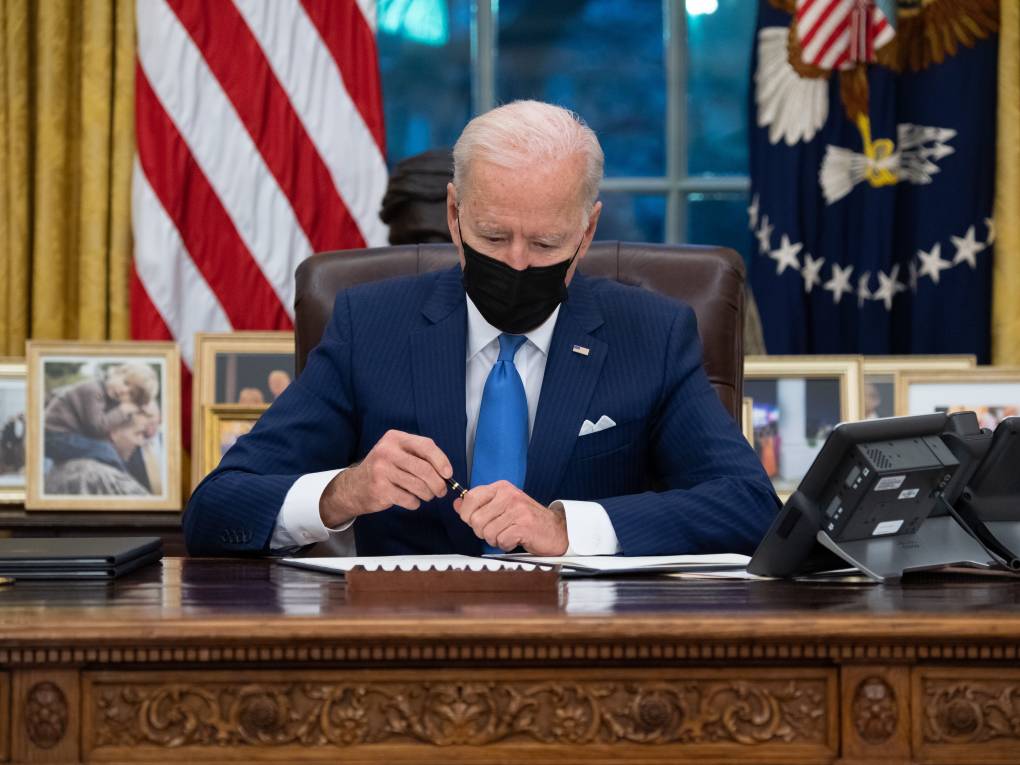
"caption": "President Biden signed three executive orders related to immigration on Tuesday. His aides said work to reverse his predecessor's immigration policies has only just begun.",
"description": "President Biden signed three executive orders related to immigration on Tuesday. His aides said work to reverse his predecessor's immigration policies has only just begun.",
"title": "President Biden signed three executive orders related to immigration. His aides said work to reverse his predecessors' immigration policies has only just begun.",
"credit": "Saul Loeb/AFP via Getty Images",
"status": "inherit",
"altTag": null,
"isLoading": false,
"fetchFailed": false
},
"news_11857217": {
"type": "attachments",
"id": "news_11857217",
"meta": {
"index": "attachments_1716263798",
"site": "news",
"id": "11857217",
"found": true
},
"parent": 11857198,
"imgSizes": {
"apple_news_ca_landscape_5_5": {
"file": "https://ww2.kqed.org/app/uploads/sites/10/2021/01/Child-CBP-Agents-1044x783.jpg",
"width": 1044,
"mimeType": "image/jpeg",
"height": 783
},
"apple_news_ca_square_4_0": {
"file": "https://ww2.kqed.org/app/uploads/sites/10/2021/01/Child-CBP-Agents-470x470.jpg",
"width": 470,
"mimeType": "image/jpeg",
"height": 470
},
"twentyfourteen-full-width": {
"file": "https://ww2.kqed.org/app/uploads/sites/10/2021/01/Child-CBP-Agents-1038x576.jpg",
"width": 1038,
"mimeType": "image/jpeg",
"height": 576
},
"thumbnail": {
"file": "https://ww2.kqed.org/app/uploads/sites/10/2021/01/Child-CBP-Agents-160x107.jpg",
"width": 160,
"mimeType": "image/jpeg",
"height": 107
},
"post-thumbnail": {
"file": "https://ww2.kqed.org/app/uploads/sites/10/2021/01/Child-CBP-Agents-672x372.jpg",
"width": 672,
"mimeType": "image/jpeg",
"height": 372
},
"kqedFullSize": {
"file": "https://ww2.kqed.org/app/uploads/sites/10/2021/01/Child-CBP-Agents.jpg",
"width": 1920,
"height": 1278
},
"apple_news_ca_landscape_4_7": {
"file": "https://ww2.kqed.org/app/uploads/sites/10/2021/01/Child-CBP-Agents-632x474.jpg",
"width": 632,
"mimeType": "image/jpeg",
"height": 474
},
"large": {
"file": "https://ww2.kqed.org/app/uploads/sites/10/2021/01/Child-CBP-Agents-1020x679.jpg",
"width": 1020,
"mimeType": "image/jpeg",
"height": 679
},
"apple_news_ca_landscape_4_0": {
"file": "https://ww2.kqed.org/app/uploads/sites/10/2021/01/Child-CBP-Agents-536x402.jpg",
"width": 536,
"mimeType": "image/jpeg",
"height": 402
},
"apple_news_ca_portrait_12_9": {
"file": "https://ww2.kqed.org/app/uploads/sites/10/2021/01/Child-CBP-Agents-1122x1278.jpg",
"width": 1122,
"mimeType": "image/jpeg",
"height": 1278
},
"medium": {
"file": "https://ww2.kqed.org/app/uploads/sites/10/2021/01/Child-CBP-Agents-800x533.jpg",
"width": 800,
"mimeType": "image/jpeg",
"height": 533
},
"apple_news_ca_portrait_4_0": {
"file": "https://ww2.kqed.org/app/uploads/sites/10/2021/01/Child-CBP-Agents-354x472.jpg",
"width": 354,
"mimeType": "image/jpeg",
"height": 472
},
"apple_news_ca_portrait_9_7": {
"file": "https://ww2.kqed.org/app/uploads/sites/10/2021/01/Child-CBP-Agents-840x1120.jpg",
"width": 840,
"mimeType": "image/jpeg",
"height": 1120
},
"apple_news_ca_landscape_12_9": {
"file": "https://ww2.kqed.org/app/uploads/sites/10/2021/01/Child-CBP-Agents-1832x1278.jpg",
"width": 1832,
"mimeType": "image/jpeg",
"height": 1278
},
"apple_news_ca_square_9_7": {
"file": "https://ww2.kqed.org/app/uploads/sites/10/2021/01/Child-CBP-Agents-1104x1104.jpg",
"width": 1104,
"mimeType": "image/jpeg",
"height": 1104
},
"1536x1536": {
"file": "https://ww2.kqed.org/app/uploads/sites/10/2021/01/Child-CBP-Agents-1536x1022.jpg",
"width": 1536,
"mimeType": "image/jpeg",
"height": 1022
},
"apple_news_ca_portrait_4_7": {
"file": "https://ww2.kqed.org/app/uploads/sites/10/2021/01/Child-CBP-Agents-414x552.jpg",
"width": 414,
"mimeType": "image/jpeg",
"height": 552
},
"apple_news_ca_square_12_9": {
"file": "https://ww2.kqed.org/app/uploads/sites/10/2021/01/Child-CBP-Agents-1472x1278.jpg",
"width": 1472,
"mimeType": "image/jpeg",
"height": 1278
},
"apple_news_ca_portrait_5_5": {
"file": "https://ww2.kqed.org/app/uploads/sites/10/2021/01/Child-CBP-Agents-687x916.jpg",
"width": 687,
"mimeType": "image/jpeg",
"height": 916
},
"apple_news_ca_square_4_7": {
"file": "https://ww2.kqed.org/app/uploads/sites/10/2021/01/Child-CBP-Agents-550x550.jpg",
"width": 550,
"mimeType": "image/jpeg",
"height": 550
},
"apple_news_ca_landscape_9_7": {
"file": "https://ww2.kqed.org/app/uploads/sites/10/2021/01/Child-CBP-Agents-1376x1032.jpg",
"width": 1376,
"mimeType": "image/jpeg",
"height": 1032
},
"apple_news_ca_square_5_5": {
"file": "https://ww2.kqed.org/app/uploads/sites/10/2021/01/Child-CBP-Agents-912x912.jpg",
"width": 912,
"mimeType": "image/jpeg",
"height": 912
}
},
"publishDate": 1611706692,
"modified": 1611706819,
"caption": "Central American asylum seekers wait as U.S. Border Patrol agents take them into custody in 2018 near McAllen, Texas. The families were then sent to a U.S. Customs and Border Protection (CBP) processing center for possible separation as part of the Trump administration's 'zero tolerance' policy towards undocumented immigrants. ",
"description": "Central American asylum seekers wait as U.S. Border Patrol agents take them into custody in 2018 near McAllen, Texas. The families were then sent to a U.S. Customs and Border Protection (CBP) processing center for possible separation as part of the Trump administration's 'zero tolerance' policy towards undocumented immigrants. ",
"title": "Child-CBP-Agents",
"credit": "John Moore/Getty Images",
"status": "inherit",
"altTag": "child looks up at CBP agents",
"isLoading": false,
"fetchFailed": false
},
"news_11855633": {
"type": "attachments",
"id": "news_11855633",
"meta": {
"index": "attachments_1716263798",
"site": "news",
"id": "11855633",
"found": true
},
"parent": 11855631,
"imgSizes": {
"apple_news_ca_landscape_5_5": {
"file": "https://ww2.kqed.org/app/uploads/sites/10/2021/01/gettyimages-978842164-fa21bbcf52538d3602e339e327be2979c09dcd46-1044x783.jpg",
"width": 1044,
"mimeType": "image/jpeg",
"height": 783
},
"apple_news_ca_square_4_0": {
"file": "https://ww2.kqed.org/app/uploads/sites/10/2021/01/gettyimages-978842164-fa21bbcf52538d3602e339e327be2979c09dcd46-470x470.jpg",
"width": 470,
"mimeType": "image/jpeg",
"height": 470
},
"twentyfourteen-full-width": {
"file": "https://ww2.kqed.org/app/uploads/sites/10/2021/01/gettyimages-978842164-fa21bbcf52538d3602e339e327be2979c09dcd46-1038x576.jpg",
"width": 1038,
"mimeType": "image/jpeg",
"height": 576
},
"thumbnail": {
"file": "https://ww2.kqed.org/app/uploads/sites/10/2021/01/gettyimages-978842164-fa21bbcf52538d3602e339e327be2979c09dcd46-160x120.jpg",
"width": 160,
"mimeType": "image/jpeg",
"height": 120
},
"post-thumbnail": {
"file": "https://ww2.kqed.org/app/uploads/sites/10/2021/01/gettyimages-978842164-fa21bbcf52538d3602e339e327be2979c09dcd46-672x372.jpg",
"width": 672,
"mimeType": "image/jpeg",
"height": 372
},
"kqedFullSize": {
"file": "https://ww2.kqed.org/app/uploads/sites/10/2021/01/gettyimages-978842164-fa21bbcf52538d3602e339e327be2979c09dcd46-scaled.jpg",
"width": 2560,
"height": 1920
},
"2048x2048": {
"file": "https://ww2.kqed.org/app/uploads/sites/10/2021/01/gettyimages-978842164-fa21bbcf52538d3602e339e327be2979c09dcd46-2048x1536.jpg",
"width": 2048,
"mimeType": "image/jpeg",
"height": 1536
},
"apple_news_ca_landscape_4_7": {
"file": "https://ww2.kqed.org/app/uploads/sites/10/2021/01/gettyimages-978842164-fa21bbcf52538d3602e339e327be2979c09dcd46-632x474.jpg",
"width": 632,
"mimeType": "image/jpeg",
"height": 474
},
"large": {
"file": "https://ww2.kqed.org/app/uploads/sites/10/2021/01/gettyimages-978842164-fa21bbcf52538d3602e339e327be2979c09dcd46-1020x765.jpg",
"width": 1020,
"mimeType": "image/jpeg",
"height": 765
},
"apple_news_ca_landscape_4_0": {
"file": "https://ww2.kqed.org/app/uploads/sites/10/2021/01/gettyimages-978842164-fa21bbcf52538d3602e339e327be2979c09dcd46-536x402.jpg",
"width": 536,
"mimeType": "image/jpeg",
"height": 402
},
"apple_news_ca_portrait_12_9": {
"file": "https://ww2.kqed.org/app/uploads/sites/10/2021/01/gettyimages-978842164-fa21bbcf52538d3602e339e327be2979c09dcd46-1122x1496.jpg",
"width": 1122,
"mimeType": "image/jpeg",
"height": 1496
},
"medium": {
"file": "https://ww2.kqed.org/app/uploads/sites/10/2021/01/gettyimages-978842164-fa21bbcf52538d3602e339e327be2979c09dcd46-800x600.jpg",
"width": 800,
"mimeType": "image/jpeg",
"height": 600
},
"apple_news_ca_portrait_4_0": {
"file": "https://ww2.kqed.org/app/uploads/sites/10/2021/01/gettyimages-978842164-fa21bbcf52538d3602e339e327be2979c09dcd46-354x472.jpg",
"width": 354,
"mimeType": "image/jpeg",
"height": 472
},
"apple_news_ca_portrait_9_7": {
"file": "https://ww2.kqed.org/app/uploads/sites/10/2021/01/gettyimages-978842164-fa21bbcf52538d3602e339e327be2979c09dcd46-840x1120.jpg",
"width": 840,
"mimeType": "image/jpeg",
"height": 1120
},
"apple_news_ca_landscape_12_9": {
"file": "https://ww2.kqed.org/app/uploads/sites/10/2021/01/gettyimages-978842164-fa21bbcf52538d3602e339e327be2979c09dcd46-1832x1374.jpg",
"width": 1832,
"mimeType": "image/jpeg",
"height": 1374
},
"apple_news_ca_square_9_7": {
"file": "https://ww2.kqed.org/app/uploads/sites/10/2021/01/gettyimages-978842164-fa21bbcf52538d3602e339e327be2979c09dcd46-1104x1104.jpg",
"width": 1104,
"mimeType": "image/jpeg",
"height": 1104
},
"1536x1536": {
"file": "https://ww2.kqed.org/app/uploads/sites/10/2021/01/gettyimages-978842164-fa21bbcf52538d3602e339e327be2979c09dcd46-1536x1152.jpg",
"width": 1536,
"mimeType": "image/jpeg",
"height": 1152
},
"apple_news_ca_portrait_4_7": {
"file": "https://ww2.kqed.org/app/uploads/sites/10/2021/01/gettyimages-978842164-fa21bbcf52538d3602e339e327be2979c09dcd46-414x552.jpg",
"width": 414,
"mimeType": "image/jpeg",
"height": 552
},
"apple_news_ca_square_12_9": {
"file": "https://ww2.kqed.org/app/uploads/sites/10/2021/01/gettyimages-978842164-fa21bbcf52538d3602e339e327be2979c09dcd46-1472x1472.jpg",
"width": 1472,
"mimeType": "image/jpeg",
"height": 1472
},
"apple_news_ca_portrait_5_5": {
"file": "https://ww2.kqed.org/app/uploads/sites/10/2021/01/gettyimages-978842164-fa21bbcf52538d3602e339e327be2979c09dcd46-687x916.jpg",
"width": 687,
"mimeType": "image/jpeg",
"height": 916
},
"full-width": {
"file": "https://ww2.kqed.org/app/uploads/sites/10/2021/01/gettyimages-978842164-fa21bbcf52538d3602e339e327be2979c09dcd46-1920x1440.jpg",
"width": 1920,
"mimeType": "image/jpeg",
"height": 1440
},
"apple_news_ca_square_4_7": {
"file": "https://ww2.kqed.org/app/uploads/sites/10/2021/01/gettyimages-978842164-fa21bbcf52538d3602e339e327be2979c09dcd46-550x550.jpg",
"width": 550,
"mimeType": "image/jpeg",
"height": 550
},
"apple_news_ca_landscape_9_7": {
"file": "https://ww2.kqed.org/app/uploads/sites/10/2021/01/gettyimages-978842164-fa21bbcf52538d3602e339e327be2979c09dcd46-1376x1032.jpg",
"width": 1376,
"mimeType": "image/jpeg",
"height": 1032
},
"apple_news_ca_square_5_5": {
"file": "https://ww2.kqed.org/app/uploads/sites/10/2021/01/gettyimages-978842164-fa21bbcf52538d3602e339e327be2979c09dcd46-912x912.jpg",
"width": 912,
"mimeType": "image/jpeg",
"height": 912
}
},
"publishDate": 1610745480,
"modified": 1610746242,
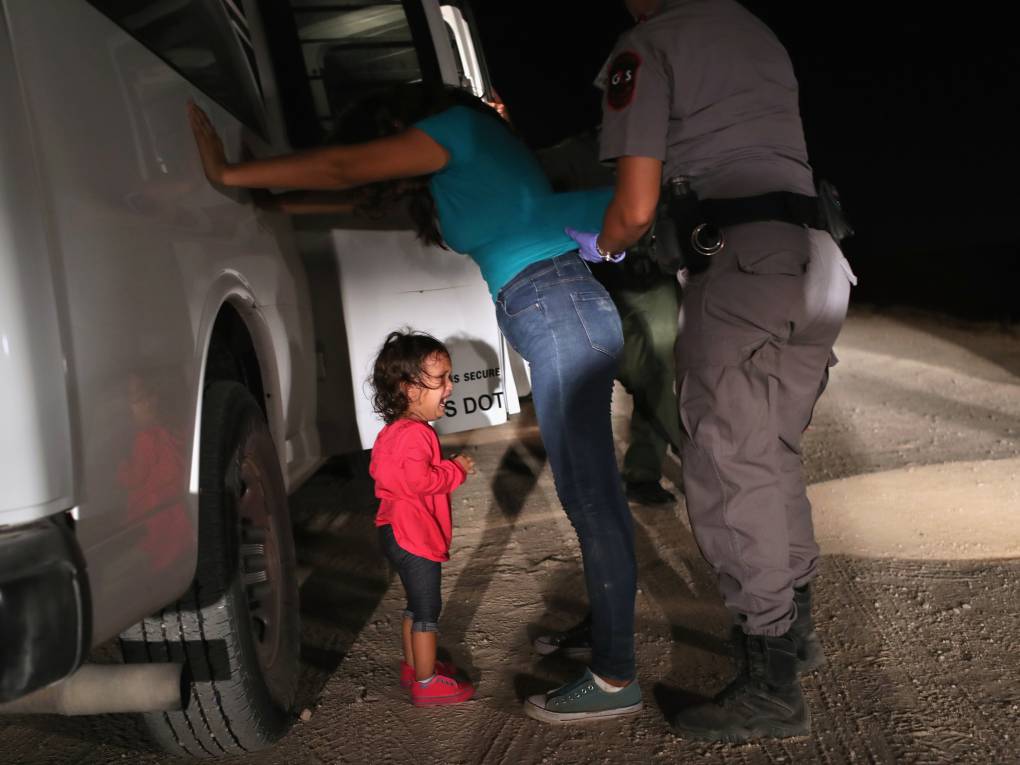
"caption": "A child cries as her mother is searched near the U.S.-Mexico border in June 2018. During the two and a half months the policy was in place, more than 3,000 children were separated from their families.",
"description": "A child cries as her mother is searched near the U.S.-Mexico border in June 2018. During the two and a half months the policy was in place, more than 3,000 children were separated from their families.",
"title": "A child cries as her mother is searched near the U.S.-Mexico border in June 2018. During the two and a half months the policy was in place, more than 3,000 children were separated from their families.",
"credit": "John Moore/Getty Images",
"status": "inherit",
"altTag": null,
"isLoading": false,
"fetchFailed": false
},
"news_11849866": {
"type": "attachments",
"id": "news_11849866",
"meta": {
"index": "attachments_1716263798",
"site": "news",
"id": "11849866",
"found": true
},
"parent": 11849630,
"imgSizes": {
"apple_news_ca_square_4_0": {
"file": "https://ww2.kqed.org/app/uploads/sites/10/2020/12/GettyImages-988419450-1-470x470.jpg",
"width": 470,
"mimeType": "image/jpeg",
"height": 470
},
"twentyfourteen-full-width": {
"file": "https://ww2.kqed.org/app/uploads/sites/10/2020/12/GettyImages-988419450-1-1024x576.jpg",
"width": 1024,
"mimeType": "image/jpeg",
"height": 576
},
"thumbnail": {
"file": "https://ww2.kqed.org/app/uploads/sites/10/2020/12/GettyImages-988419450-1-160x107.jpg",
"width": 160,
"mimeType": "image/jpeg",
"height": 107
},
"post-thumbnail": {
"file": "https://ww2.kqed.org/app/uploads/sites/10/2020/12/GettyImages-988419450-1-672x372.jpg",
"width": 672,
"mimeType": "image/jpeg",
"height": 372
},
"kqedFullSize": {
"file": "https://ww2.kqed.org/app/uploads/sites/10/2020/12/GettyImages-988419450-1.jpg",
"width": 1024,
"height": 683
},
"apple_news_ca_landscape_4_7": {
"file": "https://ww2.kqed.org/app/uploads/sites/10/2020/12/GettyImages-988419450-1-632x474.jpg",
"width": 632,
"mimeType": "image/jpeg",
"height": 474
},
"large": {
"file": "https://ww2.kqed.org/app/uploads/sites/10/2020/12/GettyImages-988419450-1-1020x680.jpg",
"width": 1020,
"mimeType": "image/jpeg",
"height": 680
},
"apple_news_ca_landscape_4_0": {
"file": "https://ww2.kqed.org/app/uploads/sites/10/2020/12/GettyImages-988419450-1-536x402.jpg",
"width": 536,
"mimeType": "image/jpeg",
"height": 402
},
"medium": {
"file": "https://ww2.kqed.org/app/uploads/sites/10/2020/12/GettyImages-988419450-1-800x534.jpg",
"width": 800,
"mimeType": "image/jpeg",
"height": 534
},
"apple_news_ca_portrait_4_0": {
"file": "https://ww2.kqed.org/app/uploads/sites/10/2020/12/GettyImages-988419450-1-354x472.jpg",
"width": 354,
"mimeType": "image/jpeg",
"height": 472
},
"apple_news_ca_portrait_9_7": {
"file": "https://ww2.kqed.org/app/uploads/sites/10/2020/12/GettyImages-988419450-1-840x683.jpg",
"width": 840,
"mimeType": "image/jpeg",
"height": 683
},
"apple_news_ca_portrait_4_7": {
"file": "https://ww2.kqed.org/app/uploads/sites/10/2020/12/GettyImages-988419450-1-414x552.jpg",
"width": 414,
"mimeType": "image/jpeg",
"height": 552
},
"apple_news_ca_portrait_5_5": {
"file": "https://ww2.kqed.org/app/uploads/sites/10/2020/12/GettyImages-988419450-1-687x683.jpg",
"width": 687,
"mimeType": "image/jpeg",
"height": 683
},
"apple_news_ca_square_4_7": {
"file": "https://ww2.kqed.org/app/uploads/sites/10/2020/12/GettyImages-988419450-1-550x550.jpg",
"width": 550,
"mimeType": "image/jpeg",
"height": 550
},
"apple_news_ca_square_5_5": {
"file": "https://ww2.kqed.org/app/uploads/sites/10/2020/12/GettyImages-988419450-1-912x683.jpg",
"width": 912,
"mimeType": "image/jpeg",
"height": 683
}
},
"publishDate": 1607130718,
"modified": 1607133592,
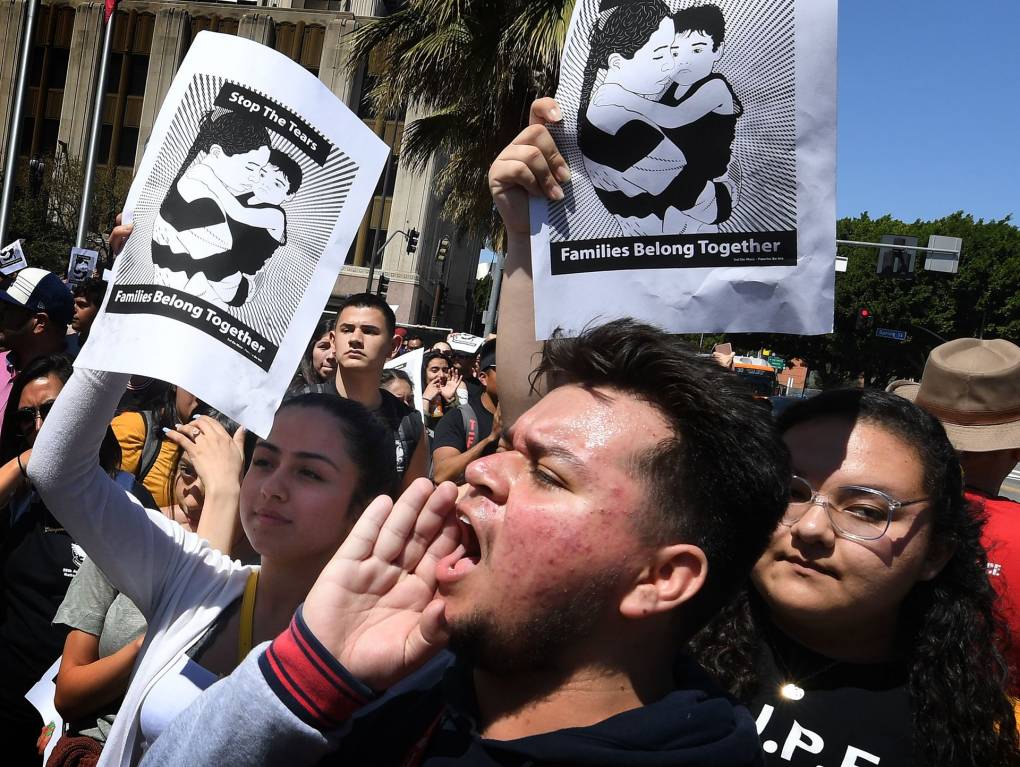
"caption": "Protesters call out words of encouragement to immigrant detainees held inside the Metropolitan Detention Center in Los Angeles on June 30, 2018, in a demonstration against the Trump administration's immigration policies.",
"description": null,
"title": "Thousands Across U.S March In Support Of Keeping Immigrant Families Together",
"credit": "David McNew/Getty Images",
"status": "inherit",
"altTag": null,
"isLoading": false,
"fetchFailed": false
},
"news_11848869": {
"type": "attachments",
"id": "news_11848869",
"meta": {
"index": "attachments_1716263798",
"site": "news",
"id": "11848869",
"found": true
},
"parent": 11847093,
"imgSizes": {
"apple_news_ca_landscape_5_5": {
"file": "https://ww2.kqed.org/app/uploads/sites/10/2020/11/GettyImages-1133880351_1920x-1044x783.jpg",
"width": 1044,
"mimeType": "image/jpeg",
"height": 783
},
"apple_news_ca_square_4_0": {
"file": "https://ww2.kqed.org/app/uploads/sites/10/2020/11/GettyImages-1133880351_1920x-470x470.jpg",
"width": 470,
"mimeType": "image/jpeg",
"height": 470
},
"twentyfourteen-full-width": {
"file": "https://ww2.kqed.org/app/uploads/sites/10/2020/11/GettyImages-1133880351_1920x-1038x576.jpg",
"width": 1038,
"mimeType": "image/jpeg",
"height": 576
},
"thumbnail": {
"file": "https://ww2.kqed.org/app/uploads/sites/10/2020/11/GettyImages-1133880351_1920x-160x120.jpg",
"width": 160,
"mimeType": "image/jpeg",
"height": 120
},
"post-thumbnail": {
"file": "https://ww2.kqed.org/app/uploads/sites/10/2020/11/GettyImages-1133880351_1920x-672x372.jpg",
"width": 672,
"mimeType": "image/jpeg",
"height": 372
},
"kqedFullSize": {
"file": "https://ww2.kqed.org/app/uploads/sites/10/2020/11/GettyImages-1133880351_1920x.jpg",
"width": 1920,
"height": 1444
},
"apple_news_ca_landscape_4_7": {
"file": "https://ww2.kqed.org/app/uploads/sites/10/2020/11/GettyImages-1133880351_1920x-632x474.jpg",
"width": 632,
"mimeType": "image/jpeg",
"height": 474
},
"large": {
"file": "https://ww2.kqed.org/app/uploads/sites/10/2020/11/GettyImages-1133880351_1920x-1020x767.jpg",
"width": 1020,
"mimeType": "image/jpeg",
"height": 767
},
"apple_news_ca_landscape_4_0": {
"file": "https://ww2.kqed.org/app/uploads/sites/10/2020/11/GettyImages-1133880351_1920x-536x402.jpg",
"width": 536,
"mimeType": "image/jpeg",
"height": 402
},
"apple_news_ca_portrait_12_9": {
"file": "https://ww2.kqed.org/app/uploads/sites/10/2020/11/GettyImages-1133880351_1920x-1122x1444.jpg",
"width": 1122,
"mimeType": "image/jpeg",
"height": 1444
},
"medium": {
"file": "https://ww2.kqed.org/app/uploads/sites/10/2020/11/GettyImages-1133880351_1920x-800x602.jpg",
"width": 800,
"mimeType": "image/jpeg",
"height": 602
},
"apple_news_ca_portrait_4_0": {
"file": "https://ww2.kqed.org/app/uploads/sites/10/2020/11/GettyImages-1133880351_1920x-354x472.jpg",
"width": 354,
"mimeType": "image/jpeg",
"height": 472
},
"apple_news_ca_portrait_9_7": {
"file": "https://ww2.kqed.org/app/uploads/sites/10/2020/11/GettyImages-1133880351_1920x-840x1120.jpg",
"width": 840,
"mimeType": "image/jpeg",
"height": 1120
},
"apple_news_ca_landscape_12_9": {
"file": "https://ww2.kqed.org/app/uploads/sites/10/2020/11/GettyImages-1133880351_1920x-1832x1374.jpg",
"width": 1832,
"mimeType": "image/jpeg",
"height": 1374
},
"apple_news_ca_square_9_7": {
"file": "https://ww2.kqed.org/app/uploads/sites/10/2020/11/GettyImages-1133880351_1920x-1104x1104.jpg",
"width": 1104,
"mimeType": "image/jpeg",
"height": 1104
},
"1536x1536": {
"file": "https://ww2.kqed.org/app/uploads/sites/10/2020/11/GettyImages-1133880351_1920x-1536x1155.jpg",
"width": 1536,
"mimeType": "image/jpeg",
"height": 1155
},
"apple_news_ca_portrait_4_7": {
"file": "https://ww2.kqed.org/app/uploads/sites/10/2020/11/GettyImages-1133880351_1920x-414x552.jpg",
"width": 414,
"mimeType": "image/jpeg",
"height": 552
},
"apple_news_ca_square_12_9": {
"file": "https://ww2.kqed.org/app/uploads/sites/10/2020/11/GettyImages-1133880351_1920x-1472x1444.jpg",
"width": 1472,
"mimeType": "image/jpeg",
"height": 1444
},
"apple_news_ca_portrait_5_5": {
"file": "https://ww2.kqed.org/app/uploads/sites/10/2020/11/GettyImages-1133880351_1920x-687x916.jpg",
"width": 687,
"mimeType": "image/jpeg",
"height": 916
},
"apple_news_ca_square_4_7": {
"file": "https://ww2.kqed.org/app/uploads/sites/10/2020/11/GettyImages-1133880351_1920x-550x550.jpg",
"width": 550,
"mimeType": "image/jpeg",
"height": 550
},
"apple_news_ca_landscape_9_7": {
"file": "https://ww2.kqed.org/app/uploads/sites/10/2020/11/GettyImages-1133880351_1920x-1376x1032.jpg",
"width": 1376,
"mimeType": "image/jpeg",
"height": 1032
},
"apple_news_ca_square_5_5": {
"file": "https://ww2.kqed.org/app/uploads/sites/10/2020/11/GettyImages-1133880351_1920x-912x912.jpg",
"width": 912,
"mimeType": "image/jpeg",
"height": 912
}
},
"publishDate": 1606347491,
"modified": 1606364758,
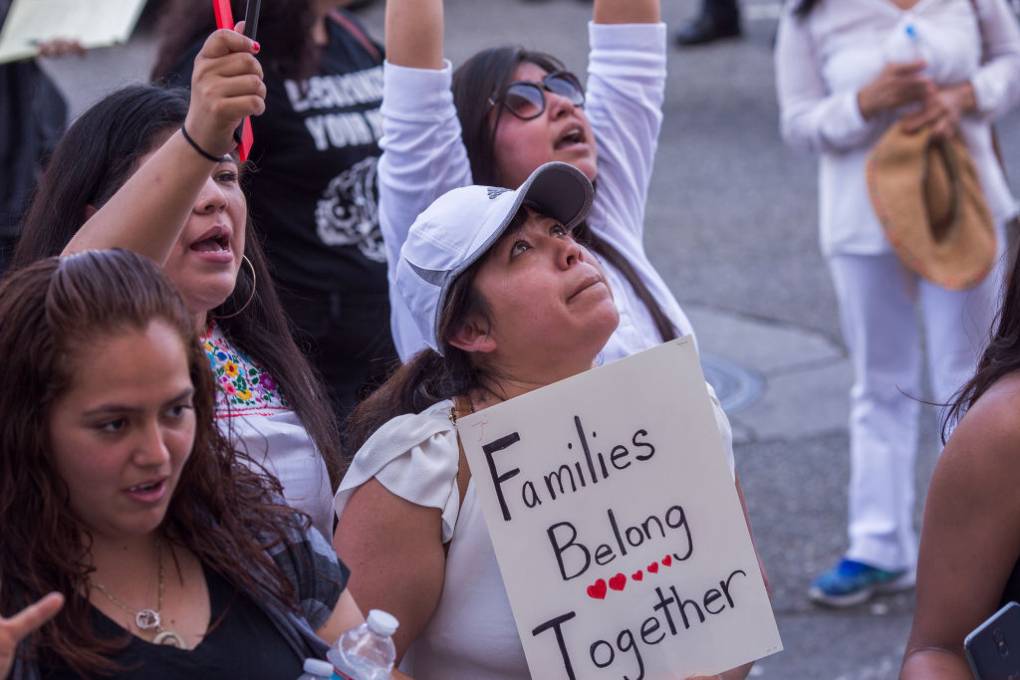
"caption": "Migrant rights protesters demonstrate outside police headquarters in Los Angeles on March 30, 2019, protesting forced family separations on the U.S.-Mexico border.",
"description": "Migrant rights protesters demonstrate against forced family separations on the US Mexico border, outside police headquarters in Los Angeles on March 30, 2019. - ",
"title": "US-IMMIGRATION-PROTEST",
"credit": "Mark Ralston/AFP via Getty Images",
"status": "inherit",
"isLoading": false,
"fetchFailed": false
},
"news_11844551": {
"type": "attachments",
"id": "news_11844551",
"meta": {
"index": "attachments_1716263798",
"site": "news",
"id": "11844551",
"found": true
},
"parent": 11844491,
"imgSizes": {
"apple_news_ca_landscape_5_5": {
"file": "https://ww2.kqed.org/app/uploads/sites/10/2020/10/CBP-family-border-1044x783.jpg",
"width": 1044,
"mimeType": "image/jpeg",
"height": 783
},
"apple_news_ca_square_4_0": {
"file": "https://ww2.kqed.org/app/uploads/sites/10/2020/10/CBP-family-border-470x470.jpg",
"width": 470,
"mimeType": "image/jpeg",
"height": 470
},
"twentyfourteen-full-width": {
"file": "https://ww2.kqed.org/app/uploads/sites/10/2020/10/CBP-family-border-1038x576.jpg",
"width": 1038,
"mimeType": "image/jpeg",
"height": 576
},
"thumbnail": {
"file": "https://ww2.kqed.org/app/uploads/sites/10/2020/10/CBP-family-border-160x107.jpg",
"width": 160,
"mimeType": "image/jpeg",
"height": 107
},
"post-thumbnail": {
"file": "https://ww2.kqed.org/app/uploads/sites/10/2020/10/CBP-family-border-672x372.jpg",
"width": 672,
"mimeType": "image/jpeg",
"height": 372
},
"kqedFullSize": {
"file": "https://ww2.kqed.org/app/uploads/sites/10/2020/10/CBP-family-border.jpg",
"width": 1920,
"height": 1280
},
"apple_news_ca_landscape_4_7": {
"file": "https://ww2.kqed.org/app/uploads/sites/10/2020/10/CBP-family-border-632x474.jpg",
"width": 632,
"mimeType": "image/jpeg",
"height": 474
},
"large": {
"file": "https://ww2.kqed.org/app/uploads/sites/10/2020/10/CBP-family-border-1020x680.jpg",
"width": 1020,
"mimeType": "image/jpeg",
"height": 680
},
"apple_news_ca_landscape_4_0": {
"file": "https://ww2.kqed.org/app/uploads/sites/10/2020/10/CBP-family-border-536x402.jpg",
"width": 536,
"mimeType": "image/jpeg",
"height": 402
},
"apple_news_ca_portrait_12_9": {
"file": "https://ww2.kqed.org/app/uploads/sites/10/2020/10/CBP-family-border-1122x1280.jpg",
"width": 1122,
"mimeType": "image/jpeg",
"height": 1280
},
"medium": {
"file": "https://ww2.kqed.org/app/uploads/sites/10/2020/10/CBP-family-border-800x533.jpg",
"width": 800,
"mimeType": "image/jpeg",
"height": 533
},
"apple_news_ca_portrait_4_0": {
"file": "https://ww2.kqed.org/app/uploads/sites/10/2020/10/CBP-family-border-354x472.jpg",
"width": 354,
"mimeType": "image/jpeg",
"height": 472
},
"apple_news_ca_portrait_9_7": {
"file": "https://ww2.kqed.org/app/uploads/sites/10/2020/10/CBP-family-border-840x1120.jpg",
"width": 840,
"mimeType": "image/jpeg",
"height": 1120
},
"apple_news_ca_landscape_12_9": {
"file": "https://ww2.kqed.org/app/uploads/sites/10/2020/10/CBP-family-border-1832x1280.jpg",
"width": 1832,
"mimeType": "image/jpeg",
"height": 1280
},
"apple_news_ca_square_9_7": {
"file": "https://ww2.kqed.org/app/uploads/sites/10/2020/10/CBP-family-border-1104x1104.jpg",
"width": 1104,
"mimeType": "image/jpeg",
"height": 1104
},
"1536x1536": {
"file": "https://ww2.kqed.org/app/uploads/sites/10/2020/10/CBP-family-border-1536x1024.jpg",
"width": 1536,
"mimeType": "image/jpeg",
"height": 1024
},
"apple_news_ca_portrait_4_7": {
"file": "https://ww2.kqed.org/app/uploads/sites/10/2020/10/CBP-family-border-414x552.jpg",
"width": 414,
"mimeType": "image/jpeg",
"height": 552
},
"apple_news_ca_square_12_9": {
"file": "https://ww2.kqed.org/app/uploads/sites/10/2020/10/CBP-family-border-1472x1280.jpg",
"width": 1472,
"mimeType": "image/jpeg",
"height": 1280
},
"apple_news_ca_portrait_5_5": {
"file": "https://ww2.kqed.org/app/uploads/sites/10/2020/10/CBP-family-border-687x916.jpg",
"width": 687,
"mimeType": "image/jpeg",
"height": 916
},
"apple_news_ca_square_4_7": {
"file": "https://ww2.kqed.org/app/uploads/sites/10/2020/10/CBP-family-border-550x550.jpg",
"width": 550,
"mimeType": "image/jpeg",
"height": 550
},
"apple_news_ca_landscape_9_7": {
"file": "https://ww2.kqed.org/app/uploads/sites/10/2020/10/CBP-family-border-1376x1032.jpg",
"width": 1376,
"mimeType": "image/jpeg",
"height": 1032
},
"apple_news_ca_square_5_5": {
"file": "https://ww2.kqed.org/app/uploads/sites/10/2020/10/CBP-family-border-912x912.jpg",
"width": 912,
"mimeType": "image/jpeg",
"height": 912
}
},
"publishDate": 1604083508,
"modified": 1604083584,
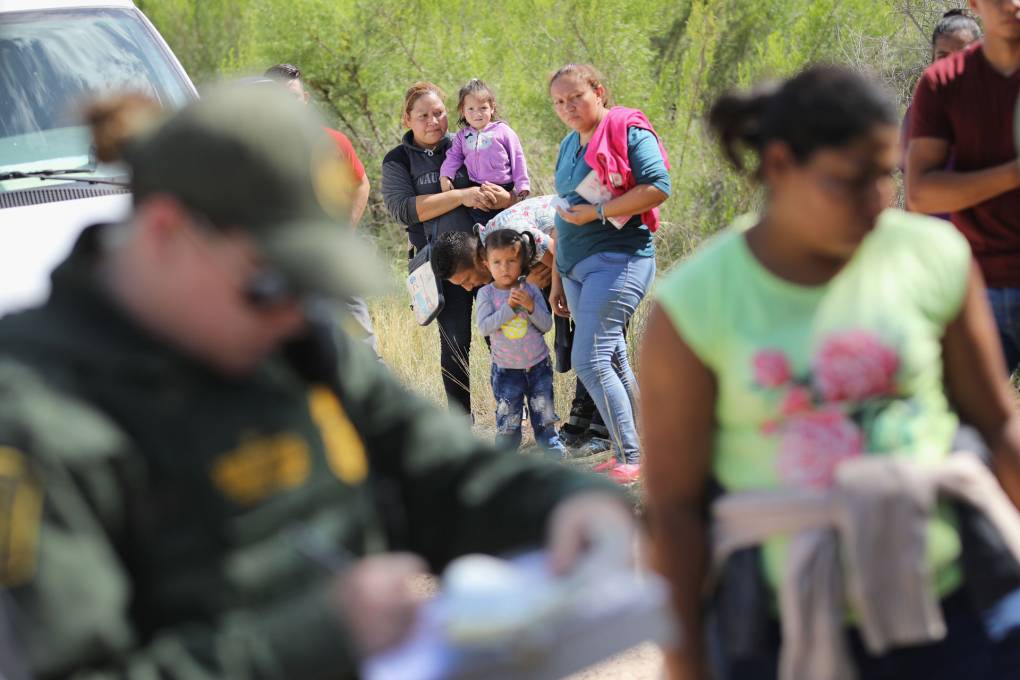
"caption": "Central American asylum seekers wait as U.S. Border Patrol agents take them into custody on June 12, 2018 near McAllen, Texas. The families were then sent to a U.S. Customs and Border Protection (CBP) processing center for possible separation.",
"description": "Central American asylum seekers wait as U.S. Border Patrol agents take them into custody on June 12, 2018 near McAllen, Texas. The families were then sent to a U.S. Customs and Border Protection (CBP) processing center for possible separation.",
"title": "CBP-family-border",
"credit": "John Moore/Getty Images",
"status": "inherit",
"isLoading": false,
"fetchFailed": false
},
"news_11844300": {
"type": "attachments",
"id": "news_11844300",
"meta": {
"index": "attachments_1716263798",
"site": "news",
"id": "11844300",
"found": true
},
"parent": 11844236,
"imgSizes": {
"apple_news_ca_square_4_0": {
"file": "https://ww2.kqed.org/app/uploads/sites/10/2020/10/GettyImages-1228982780-1-470x470.jpg",
"width": 470,
"mimeType": "image/jpeg",
"height": 470
},
"twentyfourteen-full-width": {
"file": "https://ww2.kqed.org/app/uploads/sites/10/2020/10/GettyImages-1228982780-1-1024x576.jpg",
"width": 1024,
"mimeType": "image/jpeg",
"height": 576
},
"thumbnail": {
"file": "https://ww2.kqed.org/app/uploads/sites/10/2020/10/GettyImages-1228982780-1-160x95.jpg",
"width": 160,
"mimeType": "image/jpeg",
"height": 95
},
"post-thumbnail": {
"file": "https://ww2.kqed.org/app/uploads/sites/10/2020/10/GettyImages-1228982780-1-672x372.jpg",
"width": 672,
"mimeType": "image/jpeg",
"height": 372
},
"kqedFullSize": {
"file": "https://ww2.kqed.org/app/uploads/sites/10/2020/10/GettyImages-1228982780-1.jpg",
"width": 1024,
"height": 607
},
"apple_news_ca_landscape_4_7": {
"file": "https://ww2.kqed.org/app/uploads/sites/10/2020/10/GettyImages-1228982780-1-632x474.jpg",
"width": 632,
"mimeType": "image/jpeg",
"height": 474
},
"large": {
"file": "https://ww2.kqed.org/app/uploads/sites/10/2020/10/GettyImages-1228982780-1-1020x605.jpg",
"width": 1020,
"mimeType": "image/jpeg",
"height": 605
},
"apple_news_ca_landscape_4_0": {
"file": "https://ww2.kqed.org/app/uploads/sites/10/2020/10/GettyImages-1228982780-1-536x402.jpg",
"width": 536,
"mimeType": "image/jpeg",
"height": 402
},
"medium": {
"file": "https://ww2.kqed.org/app/uploads/sites/10/2020/10/GettyImages-1228982780-1-800x474.jpg",
"width": 800,
"mimeType": "image/jpeg",
"height": 474
},
"apple_news_ca_portrait_4_0": {
"file": "https://ww2.kqed.org/app/uploads/sites/10/2020/10/GettyImages-1228982780-1-354x472.jpg",
"width": 354,
"mimeType": "image/jpeg",
"height": 472
},
"apple_news_ca_portrait_9_7": {
"file": "https://ww2.kqed.org/app/uploads/sites/10/2020/10/GettyImages-1228982780-1-840x607.jpg",
"width": 840,
"mimeType": "image/jpeg",
"height": 607
},
"apple_news_ca_portrait_4_7": {
"file": "https://ww2.kqed.org/app/uploads/sites/10/2020/10/GettyImages-1228982780-1-414x552.jpg",
"width": 414,
"mimeType": "image/jpeg",
"height": 552
},
"apple_news_ca_portrait_5_5": {
"file": "https://ww2.kqed.org/app/uploads/sites/10/2020/10/GettyImages-1228982780-1-687x607.jpg",
"width": 687,
"mimeType": "image/jpeg",
"height": 607
},
"apple_news_ca_square_4_7": {
"file": "https://ww2.kqed.org/app/uploads/sites/10/2020/10/GettyImages-1228982780-1-550x550.jpg",
"width": 550,
"mimeType": "image/jpeg",
"height": 550
},
"apple_news_ca_square_5_5": {
"file": "https://ww2.kqed.org/app/uploads/sites/10/2020/10/GettyImages-1228982780-1-912x607.jpg",
"width": 912,
"mimeType": "image/jpeg",
"height": 607
}
},
"publishDate": 1603998817,
"modified": 1603999134,
"caption": "Activist Charlie Castenada stands inside a mock cage as part of a protest held on the steps of Pershing Square in downtown Los Angeles on Oct. 9, 2020. Organized by Refuse Fascism, demonstrators demanded an end to the Trump administration's “assault on immigrants and sanctuary cities.”",
"description": null,
"title": "US-POLITICS-IMMIGRATION-MIGRANTS-PROTEST",
"credit": "Frederic J. Brown/AFP via Getty Images",
"status": "inherit",
"isLoading": false,
"fetchFailed": false
},
"news_11844142": {
"type": "attachments",
"id": "news_11844142",
"meta": {
"index": "attachments_1716263798",
"site": "news",
"id": "11844142",
"found": true
},
"parent": 11844137,
"imgSizes": {
"apple_news_ca_landscape_5_5": {
"file": "https://ww2.kqed.org/app/uploads/sites/10/2020/10/torture_102820_final-1044x783.png",
"width": 1044,
"mimeType": "image/png",
"height": 783
},
"apple_news_ca_square_4_0": {
"file": "https://ww2.kqed.org/app/uploads/sites/10/2020/10/torture_102820_final-470x470.png",
"width": 470,
"mimeType": "image/png",
"height": 470
},
"twentyfourteen-full-width": {
"file": "https://ww2.kqed.org/app/uploads/sites/10/2020/10/torture_102820_final-1038x576.png",
"width": 1038,
"mimeType": "image/png",
"height": 576
},
"thumbnail": {
"file": "https://ww2.kqed.org/app/uploads/sites/10/2020/10/torture_102820_final-160x101.png",
"width": 160,
"mimeType": "image/png",
"height": 101
},
"post-thumbnail": {
"file": "https://ww2.kqed.org/app/uploads/sites/10/2020/10/torture_102820_final-672x372.png",
"width": 672,
"mimeType": "image/png",
"height": 372
},
"kqedFullSize": {
"file": "https://ww2.kqed.org/app/uploads/sites/10/2020/10/torture_102820_final.png",
"width": 1920,
"height": 1215
},
"apple_news_ca_landscape_4_7": {
"file": "https://ww2.kqed.org/app/uploads/sites/10/2020/10/torture_102820_final-632x474.png",
"width": 632,
"mimeType": "image/png",
"height": 474
},
"large": {
"file": "https://ww2.kqed.org/app/uploads/sites/10/2020/10/torture_102820_final-1020x645.png",
"width": 1020,
"mimeType": "image/png",
"height": 645
},
"apple_news_ca_landscape_4_0": {
"file": "https://ww2.kqed.org/app/uploads/sites/10/2020/10/torture_102820_final-536x402.png",
"width": 536,
"mimeType": "image/png",
"height": 402
},
"apple_news_ca_portrait_12_9": {
"file": "https://ww2.kqed.org/app/uploads/sites/10/2020/10/torture_102820_final-1122x1215.png",
"width": 1122,
"mimeType": "image/png",
"height": 1215
},
"medium": {
"file": "https://ww2.kqed.org/app/uploads/sites/10/2020/10/torture_102820_final-800x506.png",
"width": 800,
"mimeType": "image/png",
"height": 506
},
"apple_news_ca_portrait_4_0": {
"file": "https://ww2.kqed.org/app/uploads/sites/10/2020/10/torture_102820_final-354x472.png",
"width": 354,
"mimeType": "image/png",
"height": 472
},
"apple_news_ca_portrait_9_7": {
"file": "https://ww2.kqed.org/app/uploads/sites/10/2020/10/torture_102820_final-840x1120.png",
"width": 840,
"mimeType": "image/png",
"height": 1120
},
"apple_news_ca_landscape_12_9": {
"file": "https://ww2.kqed.org/app/uploads/sites/10/2020/10/torture_102820_final-1832x1215.png",
"width": 1832,
"mimeType": "image/png",
"height": 1215
},
"apple_news_ca_square_9_7": {
"file": "https://ww2.kqed.org/app/uploads/sites/10/2020/10/torture_102820_final-1104x1104.png",
"width": 1104,
"mimeType": "image/png",
"height": 1104
},
"1536x1536": {
"file": "https://ww2.kqed.org/app/uploads/sites/10/2020/10/torture_102820_final-1536x972.png",
"width": 1536,
"mimeType": "image/png",
"height": 972
},
"apple_news_ca_portrait_4_7": {
"file": "https://ww2.kqed.org/app/uploads/sites/10/2020/10/torture_102820_final-414x552.png",
"width": 414,
"mimeType": "image/png",
"height": 552
},
"apple_news_ca_square_12_9": {
"file": "https://ww2.kqed.org/app/uploads/sites/10/2020/10/torture_102820_final-1472x1215.png",
"width": 1472,
"mimeType": "image/png",
"height": 1215
},
"apple_news_ca_portrait_5_5": {
"file": "https://ww2.kqed.org/app/uploads/sites/10/2020/10/torture_102820_final-687x916.png",
"width": 687,
"mimeType": "image/png",
"height": 916
},
"apple_news_ca_square_4_7": {
"file": "https://ww2.kqed.org/app/uploads/sites/10/2020/10/torture_102820_final-550x550.png",
"width": 550,
"mimeType": "image/png",
"height": 550
},
"apple_news_ca_landscape_9_7": {
"file": "https://ww2.kqed.org/app/uploads/sites/10/2020/10/torture_102820_final-1376x1032.png",
"width": 1376,
"mimeType": "image/png",
"height": 1032
},
"apple_news_ca_square_5_5": {
"file": "https://ww2.kqed.org/app/uploads/sites/10/2020/10/torture_102820_final-912x912.png",
"width": 912,
"mimeType": "image/png",
"height": 912
}
},
"publishDate": 1603913120,
"modified": 1603913171,
"caption": null,
"description": null,
"title": "torture_102820_final",
"credit": null,
"status": "inherit",
"isLoading": false,
"fetchFailed": false
},
"news_11844000": {
"type": "attachments",
"id": "news_11844000",
"meta": {
"index": "attachments_1716263798",
"site": "news",
"id": "11844000",
"found": true
},
"title": "CBPAgent",
"publishDate": 1603844148,
"status": "inherit",
"parent": 11843880,
"modified": 1760641559,
"caption": "Central American asylum seekers wait as U.S. Border Patrol agents take them into custody in 2018 near McAllen, Texas. The families were then sent to a U.S. Customs and Border Protection (CBP) processing center for possible separation as part of the Trump administration's \"zero tolerance\" policy toward undocumented immigrants.",
"credit": "John Moore/Getty Images",
"altTag": "CBP agent detains migrants",
"description": "Central American asylum seekers wait as U.S. Border Patrol agents take them into custody in 2018 near McAllen, Texas. The families were then sent to a U.S. Customs and Border Protection (CBP) processing center for possible separation as part of the Trump administration's \"zero tolerance\" policy towards undocumented immigrants.",
"imgSizes": {
"medium": {
"file": "https://cdn.kqed.org/wp-content/uploads/sites/10/2020/10/CBPAgent-800x533.jpg",
"width": 800,
"height": 533,
"mimeType": "image/jpeg"
},
"large": {
"file": "https://cdn.kqed.org/wp-content/uploads/sites/10/2020/10/CBPAgent-1020x680.jpg",
"width": 1020,
"height": 680,
"mimeType": "image/jpeg"
},
"thumbnail": {
"file": "https://cdn.kqed.org/wp-content/uploads/sites/10/2020/10/CBPAgent-160x107.jpg",
"width": 160,
"height": 107,
"mimeType": "image/jpeg"
},
"1536x1536": {
"file": "https://cdn.kqed.org/wp-content/uploads/sites/10/2020/10/CBPAgent-1536x1024.jpg",
"width": 1536,
"height": 1024,
"mimeType": "image/jpeg"
},
"post-thumbnail": {
"file": "https://cdn.kqed.org/wp-content/uploads/sites/10/2020/10/CBPAgent-672x372.jpg",
"width": 672,
"height": 372,
"mimeType": "image/jpeg"
},
"twentyfourteen-full-width": {
"file": "https://cdn.kqed.org/wp-content/uploads/sites/10/2020/10/CBPAgent-1038x576.jpg",
"width": 1038,
"height": 576,
"mimeType": "image/jpeg"
},
"apple_news_ca_landscape_12_9": {
"file": "https://cdn.kqed.org/wp-content/uploads/sites/10/2020/10/CBPAgent-1832x1280.jpg",
"width": 1832,
"height": 1280,
"mimeType": "image/jpeg"
},
"apple_news_ca_landscape_9_7": {
"file": "https://cdn.kqed.org/wp-content/uploads/sites/10/2020/10/CBPAgent-1376x1032.jpg",
"width": 1376,
"height": 1032,
"mimeType": "image/jpeg"
},
"apple_news_ca_landscape_5_5": {
"file": "https://cdn.kqed.org/wp-content/uploads/sites/10/2020/10/CBPAgent-1044x783.jpg",
"width": 1044,
"height": 783,
"mimeType": "image/jpeg"
},
"apple_news_ca_landscape_4_7": {
"file": "https://cdn.kqed.org/wp-content/uploads/sites/10/2020/10/CBPAgent-632x474.jpg",
"width": 632,
"height": 474,
"mimeType": "image/jpeg"
},
"apple_news_ca_landscape_4_0": {
"file": "https://cdn.kqed.org/wp-content/uploads/sites/10/2020/10/CBPAgent-536x402.jpg",
"width": 536,
"height": 402,
"mimeType": "image/jpeg"
},
"apple_news_ca_portrait_12_9": {
"file": "https://cdn.kqed.org/wp-content/uploads/sites/10/2020/10/CBPAgent-1122x1280.jpg",
"width": 1122,
"height": 1280,
"mimeType": "image/jpeg"
},
"apple_news_ca_portrait_9_7": {
"file": "https://cdn.kqed.org/wp-content/uploads/sites/10/2020/10/CBPAgent-840x1120.jpg",
"width": 840,
"height": 1120,
"mimeType": "image/jpeg"
},
"apple_news_ca_portrait_5_5": {
"file": "https://cdn.kqed.org/wp-content/uploads/sites/10/2020/10/CBPAgent-687x916.jpg",
"width": 687,
"height": 916,
"mimeType": "image/jpeg"
},
"apple_news_ca_portrait_4_7": {
"file": "https://cdn.kqed.org/wp-content/uploads/sites/10/2020/10/CBPAgent-414x552.jpg",
"width": 414,
"height": 552,
"mimeType": "image/jpeg"
},
"apple_news_ca_portrait_4_0": {
"file": "https://cdn.kqed.org/wp-content/uploads/sites/10/2020/10/CBPAgent-354x472.jpg",
"width": 354,
"height": 472,
"mimeType": "image/jpeg"
},
"apple_news_ca_square_12_9": {
"file": "https://cdn.kqed.org/wp-content/uploads/sites/10/2020/10/CBPAgent-1472x1280.jpg",
"width": 1472,
"height": 1280,
"mimeType": "image/jpeg"
},
"apple_news_ca_square_9_7": {
"file": "https://cdn.kqed.org/wp-content/uploads/sites/10/2020/10/CBPAgent-1104x1104.jpg",
"width": 1104,
"height": 1104,
"mimeType": "image/jpeg"
},
"apple_news_ca_square_5_5": {
"file": "https://cdn.kqed.org/wp-content/uploads/sites/10/2020/10/CBPAgent-912x912.jpg",
"width": 912,
"height": 912,
"mimeType": "image/jpeg"
},
"apple_news_ca_square_4_7": {
"file": "https://cdn.kqed.org/wp-content/uploads/sites/10/2020/10/CBPAgent-550x550.jpg",
"width": 550,
"height": 550,
"mimeType": "image/jpeg"
},
"apple_news_ca_square_4_0": {
"file": "https://cdn.kqed.org/wp-content/uploads/sites/10/2020/10/CBPAgent-470x470.jpg",
"width": 470,
"height": 470,
"mimeType": "image/jpeg"
},
"kqedFullSize": {
"file": "https://cdn.kqed.org/wp-content/uploads/sites/10/2020/10/CBPAgent.jpg",
"width": 1920,
"height": 1280
}
},
"isLoading": false,
"fetchFailed": false
},
"news_11843181": {
"type": "attachments",
"id": "news_11843181",
"meta": {
"index": "attachments_1716263798",
"site": "news",
"id": "11843181",
"found": true
},
"parent": 11843177,
"imgSizes": {
"apple_news_ca_landscape_5_5": {
"file": "https://ww2.kqed.org/app/uploads/sites/10/2020/10/missing_102120_final-1044x783.png",
"width": 1044,
"mimeType": "image/png",
"height": 783
},
"apple_news_ca_square_4_0": {
"file": "https://ww2.kqed.org/app/uploads/sites/10/2020/10/missing_102120_final-470x470.png",
"width": 470,
"mimeType": "image/png",
"height": 470
},
"twentyfourteen-full-width": {
"file": "https://ww2.kqed.org/app/uploads/sites/10/2020/10/missing_102120_final-1038x576.png",
"width": 1038,
"mimeType": "image/png",
"height": 576
},
"thumbnail": {
"file": "https://ww2.kqed.org/app/uploads/sites/10/2020/10/missing_102120_final-160x105.png",
"width": 160,
"mimeType": "image/png",
"height": 105
},
"post-thumbnail": {
"file": "https://ww2.kqed.org/app/uploads/sites/10/2020/10/missing_102120_final-672x372.png",
"width": 672,
"mimeType": "image/png",
"height": 372
},
"kqedFullSize": {
"file": "https://ww2.kqed.org/app/uploads/sites/10/2020/10/missing_102120_final.png",
"width": 1920,
"height": 1258
},
"apple_news_ca_landscape_4_7": {
"file": "https://ww2.kqed.org/app/uploads/sites/10/2020/10/missing_102120_final-632x474.png",
"width": 632,
"mimeType": "image/png",
"height": 474
},
"large": {
"file": "https://ww2.kqed.org/app/uploads/sites/10/2020/10/missing_102120_final-1020x668.png",
"width": 1020,
"mimeType": "image/png",
"height": 668
},
"apple_news_ca_landscape_4_0": {
"file": "https://ww2.kqed.org/app/uploads/sites/10/2020/10/missing_102120_final-536x402.png",
"width": 536,
"mimeType": "image/png",
"height": 402
},
"apple_news_ca_portrait_12_9": {
"file": "https://ww2.kqed.org/app/uploads/sites/10/2020/10/missing_102120_final-1122x1258.png",
"width": 1122,
"mimeType": "image/png",
"height": 1258
},
"medium": {
"file": "https://ww2.kqed.org/app/uploads/sites/10/2020/10/missing_102120_final-800x524.png",
"width": 800,
"mimeType": "image/png",
"height": 524
},
"apple_news_ca_portrait_4_0": {
"file": "https://ww2.kqed.org/app/uploads/sites/10/2020/10/missing_102120_final-354x472.png",
"width": 354,
"mimeType": "image/png",
"height": 472
},
"apple_news_ca_portrait_9_7": {
"file": "https://ww2.kqed.org/app/uploads/sites/10/2020/10/missing_102120_final-840x1120.png",
"width": 840,
"mimeType": "image/png",
"height": 1120
},
"apple_news_ca_landscape_12_9": {
"file": "https://ww2.kqed.org/app/uploads/sites/10/2020/10/missing_102120_final-1832x1258.png",
"width": 1832,
"mimeType": "image/png",
"height": 1258
},
"apple_news_ca_square_9_7": {
"file": "https://ww2.kqed.org/app/uploads/sites/10/2020/10/missing_102120_final-1104x1104.png",
"width": 1104,
"mimeType": "image/png",
"height": 1104
},
"1536x1536": {
"file": "https://ww2.kqed.org/app/uploads/sites/10/2020/10/missing_102120_final-1536x1006.png",
"width": 1536,
"mimeType": "image/png",
"height": 1006
},
"apple_news_ca_portrait_4_7": {
"file": "https://ww2.kqed.org/app/uploads/sites/10/2020/10/missing_102120_final-414x552.png",
"width": 414,
"mimeType": "image/png",
"height": 552
},
"apple_news_ca_square_12_9": {
"file": "https://ww2.kqed.org/app/uploads/sites/10/2020/10/missing_102120_final-1472x1258.png",
"width": 1472,
"mimeType": "image/png",
"height": 1258
},
"apple_news_ca_portrait_5_5": {
"file": "https://ww2.kqed.org/app/uploads/sites/10/2020/10/missing_102120_final-687x916.png",
"width": 687,
"mimeType": "image/png",
"height": 916
},
"apple_news_ca_square_4_7": {
"file": "https://ww2.kqed.org/app/uploads/sites/10/2020/10/missing_102120_final-550x550.png",
"width": 550,
"mimeType": "image/png",
"height": 550
},
"apple_news_ca_landscape_9_7": {
"file": "https://ww2.kqed.org/app/uploads/sites/10/2020/10/missing_102120_final-1376x1032.png",
"width": 1376,
"mimeType": "image/png",
"height": 1032
},
"apple_news_ca_square_5_5": {
"file": "https://ww2.kqed.org/app/uploads/sites/10/2020/10/missing_102120_final-912x912.png",
"width": 912,
"mimeType": "image/png",
"height": 912
}
},
"publishDate": 1603317983,
"modified": 1603318020,
"caption": null,
"description": null,
"title": "missing_102120_final",
"credit": null,
"status": "inherit",
"isLoading": false,
"fetchFailed": false
},
"news_11843101": {
"type": "attachments",
"id": "news_11843101",
"meta": {
"index": "attachments_1716263798",
"site": "news",
"id": "11843101",
"found": true
},
"parent": 11843100,
"imgSizes": {
"apple_news_ca_landscape_5_5": {
"file": "https://ww2.kqed.org/app/uploads/sites/10/2020/10/family-separation_custom-20ec9c806160f63d850a4028c3a412d0b5f5c1cb-1044x783.jpg",
"width": 1044,
"mimeType": "image/jpeg",
"height": 783
},
"apple_news_ca_square_4_0": {
"file": "https://ww2.kqed.org/app/uploads/sites/10/2020/10/family-separation_custom-20ec9c806160f63d850a4028c3a412d0b5f5c1cb-470x470.jpg",
"width": 470,
"mimeType": "image/jpeg",
"height": 470
},
"twentyfourteen-full-width": {
"file": "https://ww2.kqed.org/app/uploads/sites/10/2020/10/family-separation_custom-20ec9c806160f63d850a4028c3a412d0b5f5c1cb-1038x576.jpg",
"width": 1038,
"mimeType": "image/jpeg",
"height": 576
},
"thumbnail": {
"file": "https://ww2.kqed.org/app/uploads/sites/10/2020/10/family-separation_custom-20ec9c806160f63d850a4028c3a412d0b5f5c1cb-160x99.jpg",
"width": 160,
"mimeType": "image/jpeg",
"height": 99
},
"post-thumbnail": {
"file": "https://ww2.kqed.org/app/uploads/sites/10/2020/10/family-separation_custom-20ec9c806160f63d850a4028c3a412d0b5f5c1cb-672x372.jpg",
"width": 672,
"mimeType": "image/jpeg",
"height": 372
},
"kqedFullSize": {
"file": "https://ww2.kqed.org/app/uploads/sites/10/2020/10/family-separation_custom-20ec9c806160f63d850a4028c3a412d0b5f5c1cb-e1603297816509.jpg",
"width": 1920,
"height": 1191
},
"2048x2048": {
"file": "https://ww2.kqed.org/app/uploads/sites/10/2020/10/family-separation_custom-20ec9c806160f63d850a4028c3a412d0b5f5c1cb-2048x1271.jpg",
"width": 2048,
"mimeType": "image/jpeg",
"height": 1271
},
"apple_news_ca_landscape_4_7": {
"file": "https://ww2.kqed.org/app/uploads/sites/10/2020/10/family-separation_custom-20ec9c806160f63d850a4028c3a412d0b5f5c1cb-632x474.jpg",
"width": 632,
"mimeType": "image/jpeg",
"height": 474
},
"large": {
"file": "https://ww2.kqed.org/app/uploads/sites/10/2020/10/family-separation_custom-20ec9c806160f63d850a4028c3a412d0b5f5c1cb-1020x633.jpg",
"width": 1020,
"mimeType": "image/jpeg",
"height": 633
},
"apple_news_ca_landscape_4_0": {
"file": "https://ww2.kqed.org/app/uploads/sites/10/2020/10/family-separation_custom-20ec9c806160f63d850a4028c3a412d0b5f5c1cb-536x402.jpg",
"width": 536,
"mimeType": "image/jpeg",
"height": 402
},
"apple_news_ca_portrait_12_9": {
"file": "https://ww2.kqed.org/app/uploads/sites/10/2020/10/family-separation_custom-20ec9c806160f63d850a4028c3a412d0b5f5c1cb-1122x1414.jpg",
"width": 1122,
"mimeType": "image/jpeg",
"height": 1414
},
"medium": {
"file": "https://ww2.kqed.org/app/uploads/sites/10/2020/10/family-separation_custom-20ec9c806160f63d850a4028c3a412d0b5f5c1cb-800x496.jpg",
"width": 800,
"mimeType": "image/jpeg",
"height": 496
},
"apple_news_ca_portrait_4_0": {
"file": "https://ww2.kqed.org/app/uploads/sites/10/2020/10/family-separation_custom-20ec9c806160f63d850a4028c3a412d0b5f5c1cb-354x472.jpg",
"width": 354,
"mimeType": "image/jpeg",
"height": 472
},
"apple_news_ca_portrait_9_7": {
"file": "https://ww2.kqed.org/app/uploads/sites/10/2020/10/family-separation_custom-20ec9c806160f63d850a4028c3a412d0b5f5c1cb-840x1120.jpg",
"width": 840,
"mimeType": "image/jpeg",
"height": 1120
},
"apple_news_ca_landscape_12_9": {
"file": "https://ww2.kqed.org/app/uploads/sites/10/2020/10/family-separation_custom-20ec9c806160f63d850a4028c3a412d0b5f5c1cb-1832x1374.jpg",
"width": 1832,
"mimeType": "image/jpeg",
"height": 1374
},
"apple_news_ca_square_9_7": {
"file": "https://ww2.kqed.org/app/uploads/sites/10/2020/10/family-separation_custom-20ec9c806160f63d850a4028c3a412d0b5f5c1cb-1104x1104.jpg",
"width": 1104,
"mimeType": "image/jpeg",
"height": 1104
},
"1536x1536": {
"file": "https://ww2.kqed.org/app/uploads/sites/10/2020/10/family-separation_custom-20ec9c806160f63d850a4028c3a412d0b5f5c1cb-1536x953.jpg",
"width": 1536,
"mimeType": "image/jpeg",
"height": 953
},
"apple_news_ca_portrait_4_7": {
"file": "https://ww2.kqed.org/app/uploads/sites/10/2020/10/family-separation_custom-20ec9c806160f63d850a4028c3a412d0b5f5c1cb-414x552.jpg",
"width": 414,
"mimeType": "image/jpeg",
"height": 552
},
"apple_news_ca_square_12_9": {
"file": "https://ww2.kqed.org/app/uploads/sites/10/2020/10/family-separation_custom-20ec9c806160f63d850a4028c3a412d0b5f5c1cb-1472x1414.jpg",
"width": 1472,
"mimeType": "image/jpeg",
"height": 1414
},
"apple_news_ca_portrait_5_5": {
"file": "https://ww2.kqed.org/app/uploads/sites/10/2020/10/family-separation_custom-20ec9c806160f63d850a4028c3a412d0b5f5c1cb-687x916.jpg",
"width": 687,
"mimeType": "image/jpeg",
"height": 916
},
"full-width": {
"file": "https://ww2.kqed.org/app/uploads/sites/10/2020/10/family-separation_custom-20ec9c806160f63d850a4028c3a412d0b5f5c1cb-1920x1191.jpg",
"width": 1920,
"mimeType": "image/jpeg",
"height": 1191
},
"apple_news_ca_square_4_7": {
"file": "https://ww2.kqed.org/app/uploads/sites/10/2020/10/family-separation_custom-20ec9c806160f63d850a4028c3a412d0b5f5c1cb-550x550.jpg",
"width": 550,
"mimeType": "image/jpeg",
"height": 550
},
"apple_news_ca_landscape_9_7": {
"file": "https://ww2.kqed.org/app/uploads/sites/10/2020/10/family-separation_custom-20ec9c806160f63d850a4028c3a412d0b5f5c1cb-1376x1032.jpg",
"width": 1376,
"mimeType": "image/jpeg",
"height": 1032
},
"apple_news_ca_square_5_5": {
"file": "https://ww2.kqed.org/app/uploads/sites/10/2020/10/family-separation_custom-20ec9c806160f63d850a4028c3a412d0b5f5c1cb-912x912.jpg",
"width": 912,
"mimeType": "image/jpeg",
"height": 912
}
},
"publishDate": 1603297769,
"modified": 1603297843,
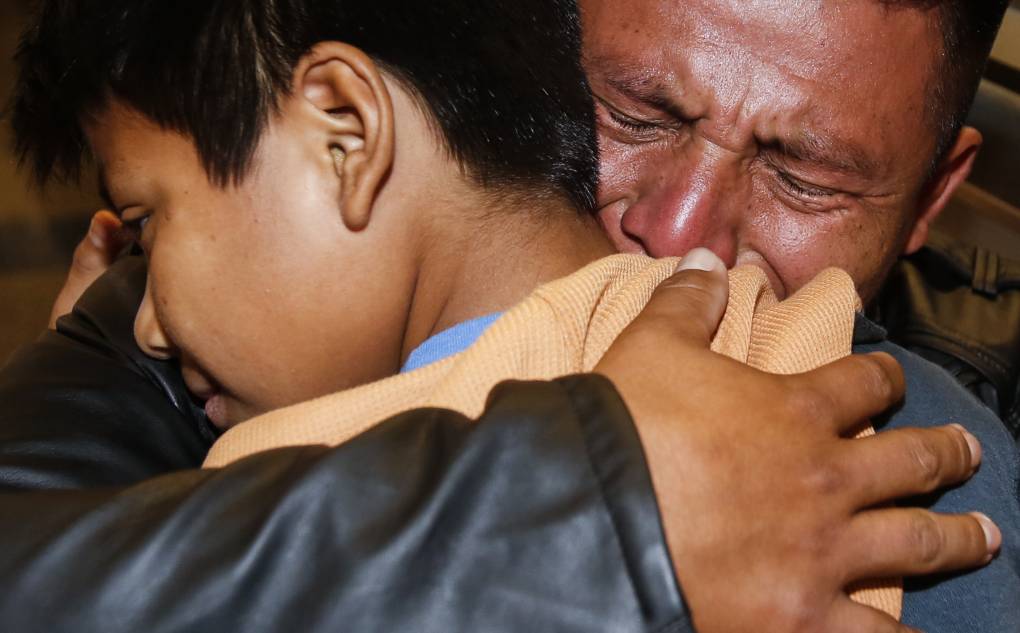
"caption": "David Xol of Guatemala hugs his son Byron as they were reunited at Los Angeles International Airport in January. The father and son were separated 18 months earlier under the Trump administration's \"no tolerance\" migration policy.",
"description": "David Xol, of Guatemala hugs his son Byron at Los Angeles International Airport as they reunite after being separated about one and half year ago during the Trump administration's wide-scale separation of immigrant families, Wednesday, Jan. 22, 2020, in Los Angeles. (AP Photo/Ringo H.W. Chiu)",
"title": "David Xol of Guatemala hugs his son Byron as they were reunited at Los Angeles International Airport in January. The father and son were separated 18 months earlier under the Trump administration's \"no tolerance\" migration policy.",
"credit": "Ringo H.W. Chiu/AP",
"status": "inherit",
"isLoading": false,
"fetchFailed": false
}
},
"audioPlayerReducer": {
"postId": "stream_live",
"isPaused": true,
"isPlaying": false,
"pfsActive": false,
"pledgeModalIsOpen": true,
"playerDrawerIsOpen": false,
"liveAudioPlayStartedAt": 0,
"liveAudioPlayContext": ""
},
"authorsReducer": {
"byline_news_11862665": {
"type": "authors",
"id": "byline_news_11862665",
"meta": {
"override": true
},
"slug": "byline_news_11862665",
"name": "Franco Ordoñez",
"isLoading": false
},
"byline_news_11857198": {
"type": "authors",
"id": "byline_news_11857198",
"meta": {
"override": true
},
"slug": "byline_news_11857198",
"name": "Michael Balsamo and Colleen Long \u003cbr> The Associated Press",
"isLoading": false
},
"byline_news_11855631": {
"type": "authors",
"id": "byline_news_11855631",
"meta": {
"override": true
},
"slug": "byline_news_11855631",
"name": "Dustin Jones",
"isLoading": false
},
"byline_news_11843100": {
"type": "authors",
"id": "byline_news_11843100",
"meta": {
"override": true
},
"slug": "byline_news_11843100",
"name": "Mark Katkov",
"isLoading": false
},
"kqednewsstaffandwires": {
"type": "authors",
"id": "237",
"meta": {
"index": "authors_1716337520",
"id": "237",
"found": true
},
"name": "KQED News Staff and Wires",
"firstName": "KQED News Staff and Wires",
"lastName": null,
"slug": "kqednewsstaffandwires",
"email": "onlinenewsstaff@kqed.org",
"display_author_email": false,
"staff_mastheads": [],
"title": null,
"bio": null,
"avatar": "https://secure.gravatar.com/avatar/72295af8ebbfbd19a4948f5271285664?s=600&d=blank&r=g",
"twitter": null,
"facebook": null,
"instagram": null,
"linkedin": null,
"sites": [
{
"site": "arts",
"roles": [
"contributor"
]
},
{
"site": "news",
"roles": [
"contributor"
]
},
{
"site": "lowdown",
"roles": [
"author"
]
},
{
"site": "stateofhealth",
"roles": [
"contributor"
]
},
{
"site": "food",
"roles": [
"author"
]
}
],
"headData": {
"title": "KQED News Staff and Wires | KQED",
"description": null,
"ogImgSrc": "https://secure.gravatar.com/avatar/72295af8ebbfbd19a4948f5271285664?s=600&d=blank&r=g",
"twImgSrc": "https://secure.gravatar.com/avatar/72295af8ebbfbd19a4948f5271285664?s=600&d=blank&r=g"
},
"isLoading": false,
"link": "/author/kqednewsstaffandwires"
},
"tychehendricks": {
"type": "authors",
"id": "259",
"meta": {
"index": "authors_1716337520",
"id": "259",
"found": true
},
"name": "Tyche Hendricks",
"firstName": "Tyche",
"lastName": "Hendricks",
"slug": "tychehendricks",
"email": "thendricks@kqed.org",
"display_author_email": true,
"staff_mastheads": [
"news"
],
"title": "KQED Senior Editor, Immigration",
"bio": "\u003cspan style=\"font-weight: 400;\">Tyche Hendricks is KQED’s senior editor for immigration, leading coverage of the policy and politics that affect California’s immigrant communities. Her work for KQED’s radio and online audiences is also carried on NPR and other national outlets. She has been recognized with awards from the Radio and Television News Directors Association, the Society for Professional Journalists; the Education Writers Association; the Best of the West and the National Federation of Community Broadcasters. Before joining KQED in 2010, Tyche spent more than a dozen years as a newspaper reporter, notably at the \u003c/span>\u003ci>\u003cspan style=\"font-weight: 400;\">San Francisco Chronicle\u003c/span>\u003c/i>\u003cspan style=\"font-weight: 400;\">. At different times she has covered criminal justice, government and politics and urban planning. Tyche has taught in the MFA Creative Writing program at the University of San Francisco and at UC Berkeley’s Graduate School of Journalism, where she was co-director of a national immigration symposium for professional journalists. She is the author of \u003c/span>\u003ci>\u003cspan style=\"font-weight: 400;\">The Wind Doesn't Need a Passport: Stories from the U.S.-Mexico Borderlands\u003c/span>\u003c/i>\u003cspan style=\"font-weight: 400;\"> (University of California Press). \u003c/span>",
"avatar": "https://secure.gravatar.com/avatar/b8ee458e2731c2d43df86882ce17267e?s=600&d=blank&r=g",
"twitter": "tychehendricks",
"facebook": null,
"instagram": null,
"linkedin": null,
"sites": [
{
"site": "news",
"roles": [
"editor"
]
},
{
"site": "stateofhealth",
"roles": [
"editor"
]
}
],
"headData": {
"title": "Tyche Hendricks | KQED",
"description": "KQED Senior Editor, Immigration",
"ogImgSrc": "https://secure.gravatar.com/avatar/b8ee458e2731c2d43df86882ce17267e?s=600&d=blank&r=g",
"twImgSrc": "https://secure.gravatar.com/avatar/b8ee458e2731c2d43df86882ce17267e?s=600&d=blank&r=g"
},
"isLoading": false,
"link": "/author/tychehendricks"
},
"markfiore": {
"type": "authors",
"id": "3236",
"meta": {
"index": "authors_1716337520",
"id": "3236",
"found": true
},
"name": "Mark Fiore",
"firstName": "Mark",
"lastName": "Fiore",
"slug": "markfiore",
"email": "mark@markfiore.com",
"display_author_email": false,
"staff_mastheads": [
"news"
],
"title": "KQED News Cartoonist",
"bio": "\u003ca href=\"http://www.MarkFiore.com\">MarkFiore.com\u003c/a> | \u003ca href=\"https://twitter.com/markfiore\">Follow on Twitter\u003c/a> | \u003ca href=\"https://www.facebook.com/pages/Mark-Fiore-Animated-Political-Cartoons/94451707396?ref=bookmarks\">Facebook\u003c/a> | \u003ca href=\"mailto:mark@markfiore.com\">email\u003c/a>\r\n\r\nPulitzer Prize-winner, Mark Fiore, who the Wall Street Journal has called “the undisputed guru of the form,” creates animated political cartoons in San Francisco, where his work has been featured regularly on the San Francisco Chronicle’s web site, SFGate.com. His work has appeared on Newsweek.com, Slate.com, CBSNews.com, MotherJones.com, DailyKos.com and NPR’s web site. Fiore’s political animation has appeared on CNN, Frontline, Bill Moyers Journal, Salon.com and cable and broadcast outlets across the globe.\r\n\r\nBeginning his professional life by drawing traditional political cartoons for newspapers, Fiore’s work appeared in publications ranging from the Washington Post to the Los Angeles Times. In the late 1990s, he began to experiment with animating political cartoons and, after a short stint at the San Jose Mercury News as their staff cartoonist, Fiore devoted all his energies to animation.\r\nGrowing up in California, Fiore also spent a good portion of his life in the backwoods of Idaho. It was this combination that shaped him politically. Mark majored in political science at Colorado College, where, in a perfect send-off for a cartoonist, he received his diploma in 1991 as commencement speaker Dick Cheney smiled approvingly.\r\nMark Fiore was awarded the Pulitzer Prize for political cartooning in 2010, a Robert F. Kennedy Journalism Award in 2004 and has twice received an Online Journalism Award for commentary from the Online News Association (2002, 2008). Fiore has received two awards for his work in new media from the National Cartoonists Society (2001, 2002), and in 2006 received The James Madison Freedom of Information Award from The Society of Professional Journalists.",
"avatar": "https://secure.gravatar.com/avatar/fc4e2a612b15b67bad0c6f0e1db4ca9b?s=600&d=blank&r=g",
"twitter": "MarkFiore",
"facebook": null,
"instagram": "https://www.instagram.com/markfiore/?hl=en",
"linkedin": null,
"sites": [
{
"site": "arts",
"roles": [
"contributor"
]
},
{
"site": "news",
"roles": [
"editor"
]
},
{
"site": "futureofyou",
"roles": [
"editor"
]
},
{
"site": "science",
"roles": [
"editor"
]
}
],
"headData": {
"title": "Mark Fiore | KQED",
"description": "KQED News Cartoonist",
"ogImgSrc": "https://secure.gravatar.com/avatar/fc4e2a612b15b67bad0c6f0e1db4ca9b?s=600&d=blank&r=g",
"twImgSrc": "https://secure.gravatar.com/avatar/fc4e2a612b15b67bad0c6f0e1db4ca9b?s=600&d=blank&r=g"
},
"isLoading": false,
"link": "/author/markfiore"
},
"mwiley": {
"type": "authors",
"id": "11526",
"meta": {
"index": "authors_1716337520",
"id": "11526",
"found": true
},
"name": "Michelle Wiley",
"firstName": "Michelle",
"lastName": "Wiley",
"slug": "mwiley",
"email": "mwiley@KQED.org",
"display_author_email": true,
"staff_mastheads": [],
"title": null,
"bio": "Michelle Wiley was the senior editor of weekends.",
"avatar": "https://secure.gravatar.com/avatar/3b897d82a09e8587e8e73fa69fbcc635?s=600&d=blank&r=g",
"twitter": "michelleewiley",
"facebook": null,
"instagram": null,
"linkedin": null,
"sites": [
{
"site": "",
"roles": [
"editor"
]
},
{
"site": "arts",
"roles": [
"editor"
]
},
{
"site": "news",
"roles": [
"subscriber"
]
},
{
"site": "lowdown",
"roles": [
"editor"
]
},
{
"site": "science",
"roles": [
"editor"
]
},
{
"site": "podcasts",
"roles": [
"editor"
]
}
],
"headData": {
"title": "Michelle Wiley | KQED",
"description": null,
"ogImgSrc": "https://secure.gravatar.com/avatar/3b897d82a09e8587e8e73fa69fbcc635?s=600&d=blank&r=g",
"twImgSrc": "https://secure.gravatar.com/avatar/3b897d82a09e8587e8e73fa69fbcc635?s=600&d=blank&r=g"
},
"isLoading": false,
"link": "/author/mwiley"
}
},
"pagesReducer": {
"news_tag_family-separation": {
"type": "terms",
"id": "news_23456",
"meta": {
"index": "terms_1716263798",
"site": "news",
"id": "23456",
"score": 9.305044
},
"featImg": null,
"name": "family separation",
"description": null,
"taxonomy": "tag",
"headData": {
"twImgId": null,
"twTitle": null,
"ogTitle": null,
"ogImgId": null,
"twDescription": null,
"description": null,
"title": "family separation Archives | KQED News",
"ogDescription": null
},
"ttid": 23473,
"slug": "family-separation",
"isLoading": false,
"title": "family separation",
"pageMeta": {
"site": "news",
"WpPageTemplate": "page-topic-editorial",
"currentPage": 3
},
"blocks": [
{
"blockName": "kqed/post-list",
"attrs": {
"layout": "cardArticle2",
"query": "posts/news?tag=family-separation",
"seeMore": false,
"paginated": true,
"page": 3
}
},
{
"blockName": "kqed/ad"
}
]
}
},
"pfsSessionReducer": {},
"postsReducer": {
"stream_live": {
"type": "live",
"id": "stream_live",
"audioUrl": "https://streams.kqed.org/kqedradio",
"title": "Live Stream",
"excerpt": "Live Stream information currently unavailable.",
"link": "/radio",
"featImg": "",
"label": {
"name": "KQED Live",
"link": "/"
}
},
"stream_kqedNewscast": {
"type": "posts",
"id": "stream_kqedNewscast",
"audioUrl": "https://www.kqed.org/.stream/anon/radio/RDnews/newscast.mp3?_=1",
"title": "KQED Newscast",
"featImg": "",
"label": {
"name": "88.5 FM",
"link": "/"
}
},
"news_11862665": {
"type": "posts",
"id": "news_11862665",
"meta": {
"index": "posts_1716263798",
"site": "news",
"id": "11862665",
"score": null,
"sort": [
1614644116000
]
},
"guestAuthors": [],
"slug": "biden-to-allow-some-separated-migrant-families-to-reunite-in-the-united-states",
"title": "Biden to Allow Some Separated Migrant Families to Reunite in the United States",
"publishDate": 1614644116,
"format": "standard",
"headTitle": "Biden to Allow Some Separated Migrant Families to Reunite in the United States | KQED",
"labelTerm": {},
"content": "\u003cp>Hundreds of migrant children still separated from their parents by the Trump administration may be allowed to reunite with their families in the United States — and some families may have the opportunity to stay, Homeland Security Secretary Alejandro Mayorkas announced on Monday.\u003c/p>\n\u003cp>Reuniting the families is one of the Biden administration’s top priorities, something Mayorkas described as a “moral imperative.” \u003c/p>\n\u003cp>During former President Donald Trump’s time in office, \u003ca href=\"https://www.npr.org/transcripts/961301353\">more than 5,500 migrant children\u003c/a> were separated from their parents when they entered the country, and more than 1,400 parents were ultimately deported without their children.\u003c/p>\n\u003cp>[pullquote size=\"medium\" align=\"right\" citation=\"Homeland Security Secretary Alejandro Mayorkas\"]‘It takes time to build out of the depths of cruelty that the administration before us established.’[/pullquote]\u003c/p>\n\u003cp>“We are hoping to reunite the families either here or in the country of origin,” Mayorkas said, explaining the government hopes to give migrants the choice. \u003c/p>\n\u003cp>“And if, in fact, they seek to reunite here in the United States, we will explore lawful pathways for them to remain in the United States and to address the family needs so we are acting as restoratively as possible,” he said, without giving details.\u003c/p>\n\u003cp>[ad fullwidth]\u003c/p>\n\u003cp>DHS said in a statement that the option of reuniting and staying in the United States would be provided “to the extent permissible under law” but did not provide more elaboration.\u003c/p>\n\u003cp>Advocates representing families who have been separated applauded the decision, but said they wanted more information. \u003c/p>\n\u003cp>[aside label='Related Coverage' tag='family-separations']“Of course, the devil is in the details and Secretary Mayorkas has to shed all the caveats and qualifications around his announcement and follow through with everything that’s necessary to right the wrong,” Anthony Romero, executive director of the ACLU, said in a statement.\u003c/p>\n\u003cp>“These separated families suffered unfathomably because of what our government did, and we owe them restitution. This includes a permanent pathway to citizenship, care, and resources to help them,” Romero said.\u003c/p>\n\u003cp>Mayorkas called the separation of children from their families “the most powerful example of cruelty” by the Trump administration, which had pushed to curb immigration. About 105 families have already been reunited since Biden took office, he said.\u003c/p>\n\u003cp>It’s one of several Trump-era immigration policies that Biden’s DHS is working to reverse, but Mayorkas warned changes would not happen overnight. \u003c/p>\n\u003cp>“It takes time to build out of the depths of cruelty that the administration before us established,” he said. \u003c/p>\n\u003cdiv class=\"fullattribution\">Copyright 2021 NPR. To see more, visit \u003ca href=\"https://www.npr.org\">NPR.org\u003c/a>.\u003cimg decoding=\"async\" src=\"https://www.google-analytics.com/__utm.gif?utmac=UA-5828686-4&utmdt=Biden+To+Allow+Some+Separated+Migrant+Families+To+Reunite+In+The+United+States&utme=8(APIKey)9(MDAxOTAwOTE4MDEyMTkxMDAzNjczZDljZA004)\">\u003c/div>\n\u003cp>\u003c/p>\n",
"blocks": [],
"excerpt": "'It takes time to build out of the depths of cruelty that the administration before us established,' DHS Secretary Alejandro Mayorkas said.",
"status": "publish",
"parent": 0,
"modified": 1739475067,
"stats": {
"hasAudio": false,
"hasVideo": false,
"hasChartOrMap": false,
"iframeSrcs": [],
"hasGoogleForm": false,
"hasGallery": false,
"hasHearkenModule": false,
"hasPolis": false,
"paragraphCount": 15,
"wordCount": 445
},
"headData": {
"title": "Biden to Allow Some Separated Migrant Families to Reunite in the United States | KQED",
"description": "'It takes time to build out of the depths of cruelty that the administration before us established,' DHS Secretary Alejandro Mayorkas said.",
"ogTitle": "",
"ogDescription": "",
"ogImgId": "",
"twTitle": "",
"twDescription": "",
"twImgId": "",
"schema": {
"@context": "https://schema.org",
"@type": "NewsArticle",
"headline": "Biden to Allow Some Separated Migrant Families to Reunite in the United States",
"datePublished": "2021-03-01T16:15:16-08:00",
"dateModified": "2025-02-13T11:31:07-08:00",
"image": "https://cdn.kqed.org/wp-content/uploads/2020/02/KQED-OG-Image@1x.png",
"isAccessibleForFree": "True",
"publisher": {
"@type": "NewsMediaOrganization",
"@id": "https://www.kqed.org/#organization",
"name": "KQED",
"logo": "https://cdn.kqed.org/wp-content/uploads/2020/02/KQED-OG-Image@1x.png",
"url": "https://www.kqed.org",
"sameAs": [
"https://www.facebook.com/KQED",
"https://twitter.com/KQED",
"https://www.instagram.com/kqed/",
"https://www.tiktok.com/@kqedofficial",
"https://www.linkedin.com/company/kqed",
"https://www.youtube.com/channel/UCeC0IOo7i1P_61zVUWbJ4nw"
]
}
}
},
"source": "NPR",
"sourceUrl": "https://www.npr.org/",
"sticky": false,
"nprImageCredit": "Drew Angerer",
"nprByline": "Franco Ordoñez",
"nprImageAgency": "Getty Images",
"nprStoryId": "972562860",
"nprApiLink": "http://api.npr.org/query?id=972562860&apiKey=MDAxOTAwOTE4MDEyMTkxMDAzNjczZDljZA004",
"nprHtmlLink": "https://www.npr.org/2021/03/01/972562860/biden-to-allow-separated-migrant-families-to-reunite-in-the-united-states?ft=nprml&f=972562860",
"nprRetrievedStory": "1",
"nprPubDate": "Mon, 01 Mar 2021 17:07:00 -0500",
"nprStoryDate": "Mon, 01 Mar 2021 15:11:54 -0500",
"nprLastModifiedDate": "Mon, 01 Mar 2021 17:07:58 -0500",
"path": "/news/11862665/biden-to-allow-some-separated-migrant-families-to-reunite-in-the-united-states",
"audioTrackLength": null,
"parsedContent": [
{
"type": "contentString",
"content": "\u003cdiv class=\"post-body\">\u003cp>\u003cp>Hundreds of migrant children still separated from their parents by the Trump administration may be allowed to reunite with their families in the United States — and some families may have the opportunity to stay, Homeland Security Secretary Alejandro Mayorkas announced on Monday.\u003c/p>\n\u003cp>Reuniting the families is one of the Biden administration’s top priorities, something Mayorkas described as a “moral imperative.” \u003c/p>\n\u003cp>During former President Donald Trump’s time in office, \u003ca href=\"https://www.npr.org/transcripts/961301353\">more than 5,500 migrant children\u003c/a> were separated from their parents when they entered the country, and more than 1,400 parents were ultimately deported without their children.\u003c/p>\n\u003cp>\u003c/p>\u003c/div>",
"attributes": {
"named": {},
"numeric": []
}
},
{
"type": "component",
"content": "‘It takes time to build out of the depths of cruelty that the administration before us established.’",
"name": "pullquote",
"attributes": {
"named": {
"size": "medium",
"align": "right",
"citation": "Homeland Security Secretary Alejandro Mayorkas",
"label": ""
},
"numeric": []
}
},
{
"type": "contentString",
"content": "\u003cdiv class=\"post-body\">\u003cp>\u003c/p>\n\u003cp>“We are hoping to reunite the families either here or in the country of origin,” Mayorkas said, explaining the government hopes to give migrants the choice. \u003c/p>\n\u003cp>“And if, in fact, they seek to reunite here in the United States, we will explore lawful pathways for them to remain in the United States and to address the family needs so we are acting as restoratively as possible,” he said, without giving details.\u003c/p>\n\u003cp>\u003c/p>\u003c/div>",
"attributes": {
"named": {},
"numeric": []
}
},
{
"type": "component",
"content": "",
"name": "ad",
"attributes": {
"named": {
"label": "fullwidth"
},
"numeric": [
"fullwidth"
]
}
},
{
"type": "contentString",
"content": "\u003cdiv class=\"post-body\">\u003cp>\u003c/p>\n\u003cp>DHS said in a statement that the option of reuniting and staying in the United States would be provided “to the extent permissible under law” but did not provide more elaboration.\u003c/p>\n\u003cp>Advocates representing families who have been separated applauded the decision, but said they wanted more information. \u003c/p>\n\u003cp>\u003c/p>\u003c/div>",
"attributes": {
"named": {},
"numeric": []
}
},
{
"type": "component",
"content": "",
"name": "aside",
"attributes": {
"named": {
"label": "Related Coverage ",
"tag": "family-separations"
},
"numeric": []
}
},
{
"type": "contentString",
"content": "\u003cdiv class=\"post-body\">\u003cp>“Of course, the devil is in the details and Secretary Mayorkas has to shed all the caveats and qualifications around his announcement and follow through with everything that’s necessary to right the wrong,” Anthony Romero, executive director of the ACLU, said in a statement.\u003c/p>\n\u003cp>“These separated families suffered unfathomably because of what our government did, and we owe them restitution. This includes a permanent pathway to citizenship, care, and resources to help them,” Romero said.\u003c/p>\n\u003cp>Mayorkas called the separation of children from their families “the most powerful example of cruelty” by the Trump administration, which had pushed to curb immigration. About 105 families have already been reunited since Biden took office, he said.\u003c/p>\n\u003cp>It’s one of several Trump-era immigration policies that Biden’s DHS is working to reverse, but Mayorkas warned changes would not happen overnight. \u003c/p>\n\u003cp>“It takes time to build out of the depths of cruelty that the administration before us established,” he said. \u003c/p>\n\u003cdiv class=\"fullattribution\">Copyright 2021 NPR. To see more, visit \u003ca href=\"https://www.npr.org\">NPR.org\u003c/a>.\u003cimg decoding=\"async\" src=\"https://www.google-analytics.com/__utm.gif?utmac=UA-5828686-4&utmdt=Biden+To+Allow+Some+Separated+Migrant+Families+To+Reunite+In+The+United+States&utme=8(APIKey)9(MDAxOTAwOTE4MDEyMTkxMDAzNjczZDljZA004)\">\u003c/div>\n\u003cp>\u003c/p>\n\u003c/div>\u003c/p>",
"attributes": {
"named": {},
"numeric": []
}
}
],
"link": "/news/11862665/biden-to-allow-some-separated-migrant-families-to-reunite-in-the-united-states",
"authors": [
"byline_news_11862665"
],
"categories": [
"news_1169",
"news_6188",
"news_8",
"news_13"
],
"tags": [
"news_23456",
"news_20202",
"news_717"
],
"featImg": "news_11862666",
"label": "source_news_11862665"
},
"news_11858316": {
"type": "posts",
"id": "news_11858316",
"meta": {
"index": "posts_1716263798",
"site": "news",
"id": "11858316",
"score": null,
"sort": [
1612314347000
]
},
"guestAuthors": [],
"slug": "biden-signs-immigration-executive-orders-establishes-task-force-to-reunite-separated-families",
"title": "Biden Signs Immigration Executive Orders, Establishes Task Force to Reunite Separated Families",
"publishDate": 1612314347,
"format": "audio",
"headTitle": "Biden Signs Immigration Executive Orders, Establishes Task Force to Reunite Separated Families | KQED",
"labelTerm": {
"site": "news"
},
"content": "\u003cp>President Biden signed three executive orders on Tuesday that he said he would lead to a more “fair, orderly, humane” immigration system, including one that would begin the difficult process of reuniting migrant children separated from their parents after crossing the United States border.\u003c/p>\n\u003cp>“There’s a lot of talk, with good reason, about the number of executive orders that I’ve signed. I’m not making new law — I’m eliminating bad policy,” Biden told reporters in the Oval Office before signing three actions to begin to roll back former President Donald Trump’s hard-line immigration measures.\u003c/p>\n\u003cp>One of the orders creates a task force to find ways to reunite children in the U.S. with their parents who have been deported without them — something Biden said was a “moral and national shame.”\u003c/p>\n\u003cp>The job is made challenging by a lack of records. Details of how reunifications will happen are still to be determined. The task force will make recommendations on how to do it, working with representatives of families and other stakeholders.\u003c/p>\n\u003cp>[pullquote size=\"medium\" align=\"right\" citation=\"Cathleen Caron, director of Justice in Motion, a nonprofit working to reunite separated families\"]‘They were deeply, deeply scarred by having their children taken away. So they don’t have any reason to believe the U.S. government is going to do anything to help them.’[/pullquote]The task force will issue a report on its progress in 120 days, and every 60 days thereafter, White House press secretary Jen Psaki told reporters.\u003c/p>\n\u003cp>But advocates said urgent action is needed.\u003c/p>\n\u003cp>“What we need now is an immediate commitment to specific remedies, including reunification in the U.S., permanent legal status, and restitution for all of the 5,500-plus families separated by the Trump administration,” said the ACLU’s Lee Gelernt, who fought the issue in court.\u003c/p>\n\u003cp>“Anything short of that will be extremely troubling given that the U.S. government engaged in deliberate child abuse,” Gelernt said in a statement.\u003c/p>\n\u003cp>Officials who previewed the executive actions to reporters said change won’t happen overnight. In fact, more actions are almost certain to follow. “It takes time to review everything, so we are starting with these right now, but that doesn’t mean it’s the end of it,” one of the officials said.\u003c/p>\n\u003ch3>Confronting a Deep Lack of Trust\u003c/h3>\n\u003cp>Cathleen Caron, founder and director of Justice in Motion, a U.S.-based nonprofit working to reunify separated families, emphasized how important it is that Biden’s task force plans to work with representatives of families who were separated from their children.\u003c/p>\n\u003cp>She said many of those families have difficulty trusting people from the United States — and especially the government — after everything that has happened to them.\u003c/p>\n\u003cp>“They were deeply, deeply scarred by having their children taken away,” she said. “So they don’t have any reason to believe the U.S. government is going to do anything to help them. Why should they, right?”\u003c/p>\n\u003cp>[ad fullwidth]\u003c/p>\n\u003cp>Caron said relying on trusted partners and advocates in separated families’ countries of origin will be key.\u003c/p>\n\u003cp>“What we want are partners that will support what the affected migrant families need and want,” she said. “Partners in the countries of origin who are from there and have been communicating with these families… And the families themselves. They need to be at the center of this so the families aren’t unintentionally traumatized [and] hurt again.”\u003c/p>\n\u003cp>As to one possible avenue for beginning to rebuild trust with separated families? University of San Francisco law and migration studies Professor Bill Hing suggested offering visas to parents who were deported to return to the U.S.\u003c/p>\n\u003cp>“We’ve damaged them. And there are visas in our law already, for example, [for] victims of crime, victims of domestic violence… Well, why not a visa for someone who has been victimized by the United States government?” Hing said. “That might add some incentives. And if you couple that with most likely much needed mental health counseling, regular health counseling, of course, they all need that.”\u003c/p>\n\u003cp>[aside label='Related Coverage' tag='family-separations']\u003c/p>\n\u003ch3>Restoring Asylum\u003c/h3>\n\u003cp>A second order Biden signed Tuesday looks at how to address the surge of migrants seeking asylum in the U.S. in recent years and will look at how to replace the Migrant Protection Protocols program — what Trump referred to as “Remain in Mexico.”\u003c/p>\n\u003cp>Biden suspended that program on his first day in office. He has vowed to help countries in Central America address the underlying causes of migration. But the administration wants to restore the asylum system, officials said — and do something to help people stuck in camps at the border. The details of how that will happen are not yet clear.\u003c/p>\n\u003cp>“We want to put in place an immigration process here that is humane, that is moral, that considers applications for refugees, applications for people to come into this country at the border in a way that treat people as human beings. That’s going to take some time. It’s not going to happen overnight,” Psaki told reporters.\u003c/p>\n\u003cp>The third order requires agencies to do a “top-to-bottom review of recent regulations, policies and guidance that have set up barriers to our legal immigration system.” The first one to go: Trump’s \u003ca href=\"https://www.npr.org/2019/08/12/748328652/trump-administration-rule-would-penalize-immigrants-for-using-benefits\">“public charge” rule\u003c/a>, which prevented immigrants from getting permanent resident or “green card” status if they had or were likely to require public benefits such as housing subsidies.\u003c/p>\n\u003cp>Advocacy groups said ending the public charge rule would help immigrants struggling with health care and food insecurity amid the COVID-19 crisis.\u003c/p>\n\u003cp>The new administration is \u003ca href=\"https://www.npr.org/2020/12/13/944791054/on-immigration-activists-demands-may-exceed-biden-realities\">under pressure from immigration activists\u003c/a> who are worried that reforms will stall as Biden rushes to deal with the response to the health and economic crises caused by the COVID-19 pandemic — as well as climate change and racial equity priorities.\u003c/p>\n\u003cp>Biden sent a \u003ca href=\"https://www.npr.org/sections/inauguration-day-live-updates/2021/01/20/958626092/on-immigration-biden-goes-big-in-opening-bid-to-congress\">sweeping immigration legislative proposal\u003c/a> to Congress the day he was sworn into office, but it’s unclear how quickly the plan may be considered.\u003c/p>\n\u003cp>\u003cem>This story includes reporting from NPR’s Franco Ordoñez and Joel Rose, and KQED’s Michelle Wiley. \u003c/em>\u003c/p>\n\u003cp>[ad floatright]\u003c/p>\n",
"blocks": [],
"excerpt": "President Biden has been working to unwind many of the executive actions taken by former President Donald Trump. But the administration has warned that the changes will take time.",
"status": "publish",
"parent": 0,
"modified": 1739475073,
"stats": {
"hasAudio": false,
"hasVideo": false,
"hasChartOrMap": false,
"iframeSrcs": [],
"hasGoogleForm": false,
"hasGallery": false,
"hasHearkenModule": false,
"hasPolis": false,
"paragraphCount": 27,
"wordCount": 1093
},
"headData": {
"title": "Biden Signs Immigration Executive Orders, Establishes Task Force to Reunite Separated Families | KQED",
"description": "President Biden has been working to unwind many of the executive actions taken by former President Donald Trump. But the administration has warned that the changes will take time.",
"ogTitle": "",
"ogDescription": "",
"ogImgId": "",
"twTitle": "",
"twDescription": "",
"twImgId": "",
"schema": {
"@context": "https://schema.org",
"@type": "NewsArticle",
"headline": "Biden Signs Immigration Executive Orders, Establishes Task Force to Reunite Separated Families",
"datePublished": "2021-02-02T17:05:47-08:00",
"dateModified": "2025-02-13T11:31:13-08:00",
"image": "https://cdn.kqed.org/wp-content/uploads/2020/02/KQED-OG-Image@1x.png",
"isAccessibleForFree": "True",
"publisher": {
"@type": "NewsMediaOrganization",
"@id": "https://www.kqed.org/#organization",
"name": "KQED",
"logo": "https://cdn.kqed.org/wp-content/uploads/2020/02/KQED-OG-Image@1x.png",
"url": "https://www.kqed.org",
"sameAs": [
"https://www.facebook.com/KQED",
"https://twitter.com/KQED",
"https://www.instagram.com/kqed/",
"https://www.tiktok.com/@kqedofficial",
"https://www.linkedin.com/company/kqed",
"https://www.youtube.com/channel/UCeC0IOo7i1P_61zVUWbJ4nw"
]
}
}
},
"audioUrl": "https://traffic.omny.fm/d/clips/0af137ef-751e-4b19-a055-aaef00d2d578/ffca7e9f-6831-41c5-bcaf-aaef00f5a073/648f1d35-e8a9-442b-8ae9-acc4011b1541/audio.mp3",
"sticky": false,
"nprImageCredit": "Saul Loeb",
"nprImageAgency": "AFP via Getty Images",
"nprStoryId": "962995562",
"nprApiLink": "http://api.npr.org/query?id=962995562&apiKey=MDAxOTAwOTE4MDEyMTkxMDAzNjczZDljZA004",
"nprHtmlLink": "https://www.npr.org/sections/president-biden-takes-office/2021/02/02/962995562/here-are-the-immigration-actions-president-biden-plans-to-sign?ft=nprml&f=962995562",
"nprRetrievedStory": "1",
"nprPubDate": "Tue, 02 Feb 2021 18:19:00 -0500",
"nprStoryDate": "Tue, 02 Feb 2021 05:01:00 -0500",
"nprLastModifiedDate": "Tue, 02 Feb 2021 18:19:15 -0500",
"nprAudio": "https://ondemand.npr.org/anon.npr-mp3/npr/me/2021/02/20210202_me_here_are_the_immigration_actions_president_biden_plans_to_sign.mp3?orgId=1&topicId=1014&d=219&p=3&story=962995562&ft=nprml&f=962995562",
"nprAudioM3u": "http://api.npr.org/m3u/1963115568-d4d368.m3u?orgId=1&topicId=1014&d=219&p=3&story=962995562&ft=nprml&f=962995562",
"path": "/news/11858316/biden-signs-immigration-executive-orders-establishes-task-force-to-reunite-separated-families",
"audioDuration": 94000,
"audioTrackLength": null,
"parsedContent": [
{
"type": "contentString",
"content": "\u003cdiv class=\"post-body\">\u003cp>\u003cp>President Biden signed three executive orders on Tuesday that he said he would lead to a more “fair, orderly, humane” immigration system, including one that would begin the difficult process of reuniting migrant children separated from their parents after crossing the United States border.\u003c/p>\n\u003cp>“There’s a lot of talk, with good reason, about the number of executive orders that I’ve signed. I’m not making new law — I’m eliminating bad policy,” Biden told reporters in the Oval Office before signing three actions to begin to roll back former President Donald Trump’s hard-line immigration measures.\u003c/p>\n\u003cp>One of the orders creates a task force to find ways to reunite children in the U.S. with their parents who have been deported without them — something Biden said was a “moral and national shame.”\u003c/p>\n\u003cp>The job is made challenging by a lack of records. Details of how reunifications will happen are still to be determined. The task force will make recommendations on how to do it, working with representatives of families and other stakeholders.\u003c/p>\n\u003cp>\u003c/p>\u003c/div>",
"attributes": {
"named": {},
"numeric": []
}
},
{
"type": "component",
"content": "‘They were deeply, deeply scarred by having their children taken away. So they don’t have any reason to believe the U.S. government is going to do anything to help them.’",
"name": "pullquote",
"attributes": {
"named": {
"size": "medium",
"align": "right",
"citation": "Cathleen Caron, director of Justice in Motion, a nonprofit working to reunite separated families",
"label": ""
},
"numeric": []
}
},
{
"type": "contentString",
"content": "\u003cdiv class=\"post-body\">\u003cp>The task force will issue a report on its progress in 120 days, and every 60 days thereafter, White House press secretary Jen Psaki told reporters.\u003c/p>\n\u003cp>But advocates said urgent action is needed.\u003c/p>\n\u003cp>“What we need now is an immediate commitment to specific remedies, including reunification in the U.S., permanent legal status, and restitution for all of the 5,500-plus families separated by the Trump administration,” said the ACLU’s Lee Gelernt, who fought the issue in court.\u003c/p>\n\u003cp>“Anything short of that will be extremely troubling given that the U.S. government engaged in deliberate child abuse,” Gelernt said in a statement.\u003c/p>\n\u003cp>Officials who previewed the executive actions to reporters said change won’t happen overnight. In fact, more actions are almost certain to follow. “It takes time to review everything, so we are starting with these right now, but that doesn’t mean it’s the end of it,” one of the officials said.\u003c/p>\n\u003ch3>Confronting a Deep Lack of Trust\u003c/h3>\n\u003cp>Cathleen Caron, founder and director of Justice in Motion, a U.S.-based nonprofit working to reunify separated families, emphasized how important it is that Biden’s task force plans to work with representatives of families who were separated from their children.\u003c/p>\n\u003cp>She said many of those families have difficulty trusting people from the United States — and especially the government — after everything that has happened to them.\u003c/p>\n\u003cp>“They were deeply, deeply scarred by having their children taken away,” she said. “So they don’t have any reason to believe the U.S. government is going to do anything to help them. Why should they, right?”\u003c/p>\n\u003cp>\u003c/p>\u003c/div>",
"attributes": {
"named": {},
"numeric": []
}
},
{
"type": "component",
"content": "",
"name": "ad",
"attributes": {
"named": {
"label": "fullwidth"
},
"numeric": [
"fullwidth"
]
}
},
{
"type": "contentString",
"content": "\u003cdiv class=\"post-body\">\u003cp>\u003c/p>\n\u003cp>Caron said relying on trusted partners and advocates in separated families’ countries of origin will be key.\u003c/p>\n\u003cp>“What we want are partners that will support what the affected migrant families need and want,” she said. “Partners in the countries of origin who are from there and have been communicating with these families… And the families themselves. They need to be at the center of this so the families aren’t unintentionally traumatized [and] hurt again.”\u003c/p>\n\u003cp>As to one possible avenue for beginning to rebuild trust with separated families? University of San Francisco law and migration studies Professor Bill Hing suggested offering visas to parents who were deported to return to the U.S.\u003c/p>\n\u003cp>“We’ve damaged them. And there are visas in our law already, for example, [for] victims of crime, victims of domestic violence… Well, why not a visa for someone who has been victimized by the United States government?” Hing said. “That might add some incentives. And if you couple that with most likely much needed mental health counseling, regular health counseling, of course, they all need that.”\u003c/p>\n\u003cp>\u003c/p>\u003c/div>",
"attributes": {
"named": {},
"numeric": []
}
},
{
"type": "component",
"content": "",
"name": "aside",
"attributes": {
"named": {
"label": "Related Coverage ",
"tag": "family-separations"
},
"numeric": []
}
},
{
"type": "contentString",
"content": "\u003cdiv class=\"post-body\">\u003cp>\u003c/p>\n\u003ch3>Restoring Asylum\u003c/h3>\n\u003cp>A second order Biden signed Tuesday looks at how to address the surge of migrants seeking asylum in the U.S. in recent years and will look at how to replace the Migrant Protection Protocols program — what Trump referred to as “Remain in Mexico.”\u003c/p>\n\u003cp>Biden suspended that program on his first day in office. He has vowed to help countries in Central America address the underlying causes of migration. But the administration wants to restore the asylum system, officials said — and do something to help people stuck in camps at the border. The details of how that will happen are not yet clear.\u003c/p>\n\u003cp>“We want to put in place an immigration process here that is humane, that is moral, that considers applications for refugees, applications for people to come into this country at the border in a way that treat people as human beings. That’s going to take some time. It’s not going to happen overnight,” Psaki told reporters.\u003c/p>\n\u003cp>The third order requires agencies to do a “top-to-bottom review of recent regulations, policies and guidance that have set up barriers to our legal immigration system.” The first one to go: Trump’s \u003ca href=\"https://www.npr.org/2019/08/12/748328652/trump-administration-rule-would-penalize-immigrants-for-using-benefits\">“public charge” rule\u003c/a>, which prevented immigrants from getting permanent resident or “green card” status if they had or were likely to require public benefits such as housing subsidies.\u003c/p>\n\u003cp>Advocacy groups said ending the public charge rule would help immigrants struggling with health care and food insecurity amid the COVID-19 crisis.\u003c/p>\n\u003cp>The new administration is \u003ca href=\"https://www.npr.org/2020/12/13/944791054/on-immigration-activists-demands-may-exceed-biden-realities\">under pressure from immigration activists\u003c/a> who are worried that reforms will stall as Biden rushes to deal with the response to the health and economic crises caused by the COVID-19 pandemic — as well as climate change and racial equity priorities.\u003c/p>\n\u003cp>Biden sent a \u003ca href=\"https://www.npr.org/sections/inauguration-day-live-updates/2021/01/20/958626092/on-immigration-biden-goes-big-in-opening-bid-to-congress\">sweeping immigration legislative proposal\u003c/a> to Congress the day he was sworn into office, but it’s unclear how quickly the plan may be considered.\u003c/p>\n\u003cp>\u003cem>This story includes reporting from NPR’s Franco Ordoñez and Joel Rose, and KQED’s Michelle Wiley. \u003c/em>\u003c/p>\n\u003cp>\u003c/p>\u003c/div>",
"attributes": {
"named": {},
"numeric": []
}
},
{
"type": "component",
"content": "",
"name": "ad",
"attributes": {
"named": {
"label": "floatright"
},
"numeric": [
"floatright"
]
}
},
{
"type": "contentString",
"content": "\u003cdiv class=\"post-body\">\u003cp>\u003c/p>\n\u003c/div>\u003c/p>",
"attributes": {
"named": {},
"numeric": []
}
}
],
"link": "/news/11858316/biden-signs-immigration-executive-orders-establishes-task-force-to-reunite-separated-families",
"authors": [
"237"
],
"categories": [
"news_1169",
"news_8",
"news_13"
],
"tags": [
"news_26233",
"news_23653",
"news_24736",
"news_23456",
"news_20202",
"news_717"
],
"featImg": "news_11858317",
"label": "news"
},
"news_11857198": {
"type": "posts",
"id": "news_11857198",
"meta": {
"index": "posts_1716263798",
"site": "news",
"id": "11857198",
"score": null,
"sort": [
1611707335000
]
},
"guestAuthors": [],
"slug": "doj-rescinds-trump-zero-tolerance-rule-that-separated-thousands-of-migrant-families",
"title": "DOJ Rescinds Trump 'Zero Tolerance' Rule That Separated Thousands of Migrant Families",
"publishDate": 1611707335,
"format": "standard",
"headTitle": "DOJ Rescinds Trump ‘Zero Tolerance’ Rule That Separated Thousands of Migrant Families | KQED",
"labelTerm": {
"site": "news"
},
"content": "\u003cp>The Justice Department on Tuesday rescinded a Trump-era memo that established a “zero tolerance” enforcement policy for migrants crossing the U.S.-Mexico border illegally, which resulted in thousands of family separations. \u003c/p>\n\u003cp>Acting Attorney General Monty Wilkinson issued the new memo to federal prosecutors across the nation, saying the department would return to its longstanding previous policy and instructing prosecutors to act on the merits of individual cases.\u003c/p>\n\u003cp>“Consistent with this longstanding principle of making individualized assessments in criminal cases, I am rescinding — effective immediately — the policy directive,” Wilkinson wrote. \u003c/p>\n\u003cp>Wilkinson said the department’s principles have “long emphasized that decisions about bringing criminal charges should involve not only a determination that a federal offense has been committed and that the admissible evidence will probably be sufficient to obtain and sustain a conviction, but should also take into account other individualized factors, including personal circumstances and criminal history, the seriousness of the offense, and the probable sentence or other consequences that would result from a conviction.” \u003c/p>\n\u003cp>The “zero tolerance” policy meant that any adult caught crossing the border illegally would be prosecuted for illegal entry. Because children cannot be jailed with their family members, families were separated and children were taken into custody by the U.S. Department of Health and Human Services, which manages unaccompanied children at the border. \u003c/p>\n\u003cp>[aside postID=news_11843880 hero='https://ww2.kqed.org/app/uploads/sites/10/2020/10/CBPAgent-1020x680.jpg']While the rescinding of “zero tolerance” is in part symbolic, it undoes the Trump administration’s massively unpopular policy responsible for the \u003ca href=\"https://www.kqed.org/news/tag/family-separation/\">separation of more than 5,500 children from their parents\u003c/a> at the U.S-Mexico border. \u003c/p>\n\u003cp>Most families have not been prosecuted under zero tolerance since 2018, when the separations were halted, though separations have continued on a smaller scale. Practically, the ending of the policy will affect mostly single men who have entered the country illegally. Prosecutions had dropped sharply after the Trump administration declared a pandemic-related health emergency that allows them to immediately expel Mexicans and many Central Americans without applying immigration laws. \u003c/p>\n\u003cp>“While policies may change, our mission always remains the same: to seek justice under the law,” Wilkinson wrote in the memo, which was obtained by The Associated Press. \u003c/p>\n\u003cp>[ad fullwidth]\u003c/p>\n\u003cp>President Biden has issued an executive order to undo some of Trump’s restrictive policies, but the previous administration has so altered the immigration landscape that it will take quite a while to untangle all the major changes. Some of the parents separated from their children were deported. Advocates for the families have called on Biden to allow those families to reunite in the United States. \u003c/p>\n\u003cp>[aside label='Related Coverage' tag='family-separation']Then-Attorney General Jeff Sessions, along with Trump and other top leaders in his administration, were bent on curbing immigration. The “zero tolerance” policy was one of several increasingly restrictive policies aimed at discouraging migrants from coming to the Southern border. Trump’s administration also vastly reduced the number of refugees allowed into the U.S. and all but halted asylum at the border, through a combination of executive orders and regulation changes.\u003c/p>\n\u003cp>The policy was a disaster. There was no system created to reunite children with their families. A report from the Justice Department’s inspector general, released earlier this month, found that the policy led to a $227 million funding shortfall. Children suffered lasting emotional damage from the separations, and the policy was criticized as grossly inhumane by world leaders.\u003c/p>\n\u003cp>The policy began April 6, 2018, under an executive order that was issued without warning to other federal agencies that would have to manage the policy, including the U.S. Marshals Service and Health and Human Services. It was halted June 20, 2018. A federal judge ordered the families to be reunited.\u003c/p>\n\u003cp>The watchdog report also found that Sessions and other top officials knew the children would be separated under the policy and encouraged it. Justice officials ignored concerns from staff about the rollout and did not bother to set up a system to track families in order to reunite them. Some children are still separated.\u003c/p>\n\u003cp>\u003c/p>\n",
"blocks": [],
"excerpt": "While rescinding 'zero tolerance' is in part symbolic, it undoes the Trump administration's policy responsible for the separation of more than 5,500 children from their parents at the U.S-Mexico border.",
"status": "publish",
"parent": 0,
"modified": 1739475078,
"stats": {
"hasAudio": false,
"hasVideo": false,
"hasChartOrMap": false,
"iframeSrcs": [],
"hasGoogleForm": false,
"hasGallery": false,
"hasHearkenModule": false,
"hasPolis": false,
"paragraphCount": 15,
"wordCount": 708
},
"headData": {
"title": "DOJ Rescinds Trump 'Zero Tolerance' Rule That Separated Thousands of Migrant Families | KQED",
"description": "While rescinding 'zero tolerance' is in part symbolic, it undoes the Trump administration's policy responsible for the separation of more than 5,500 children from their parents at the U.S-Mexico border.",
"ogTitle": "",
"ogDescription": "",
"ogImgId": "",
"twTitle": "",
"twDescription": "",
"twImgId": "",
"schema": {
"@context": "https://schema.org",
"@type": "NewsArticle",
"headline": "DOJ Rescinds Trump 'Zero Tolerance' Rule That Separated Thousands of Migrant Families",
"datePublished": "2021-01-26T16:28:55-08:00",
"dateModified": "2025-02-13T11:31:18-08:00",
"image": "https://cdn.kqed.org/wp-content/uploads/2020/02/KQED-OG-Image@1x.png",
"isAccessibleForFree": "True",
"publisher": {
"@type": "NewsMediaOrganization",
"@id": "https://www.kqed.org/#organization",
"name": "KQED",
"logo": "https://cdn.kqed.org/wp-content/uploads/2020/02/KQED-OG-Image@1x.png",
"url": "https://www.kqed.org",
"sameAs": [
"https://www.facebook.com/KQED",
"https://twitter.com/KQED",
"https://www.instagram.com/kqed/",
"https://www.tiktok.com/@kqedofficial",
"https://www.linkedin.com/company/kqed",
"https://www.youtube.com/channel/UCeC0IOo7i1P_61zVUWbJ4nw"
]
}
}
},
"sticky": false,
"nprByline": "Michael Balsamo and Colleen Long \u003cbr> The Associated Press",
"path": "/news/11857198/doj-rescinds-trump-zero-tolerance-rule-that-separated-thousands-of-migrant-families",
"audioTrackLength": null,
"parsedContent": [
{
"type": "contentString",
"content": "\u003cdiv class=\"post-body\">\u003cp>\u003cp>The Justice Department on Tuesday rescinded a Trump-era memo that established a “zero tolerance” enforcement policy for migrants crossing the U.S.-Mexico border illegally, which resulted in thousands of family separations. \u003c/p>\n\u003cp>Acting Attorney General Monty Wilkinson issued the new memo to federal prosecutors across the nation, saying the department would return to its longstanding previous policy and instructing prosecutors to act on the merits of individual cases.\u003c/p>\n\u003cp>“Consistent with this longstanding principle of making individualized assessments in criminal cases, I am rescinding — effective immediately — the policy directive,” Wilkinson wrote. \u003c/p>\n\u003cp>Wilkinson said the department’s principles have “long emphasized that decisions about bringing criminal charges should involve not only a determination that a federal offense has been committed and that the admissible evidence will probably be sufficient to obtain and sustain a conviction, but should also take into account other individualized factors, including personal circumstances and criminal history, the seriousness of the offense, and the probable sentence or other consequences that would result from a conviction.” \u003c/p>\n\u003cp>The “zero tolerance” policy meant that any adult caught crossing the border illegally would be prosecuted for illegal entry. Because children cannot be jailed with their family members, families were separated and children were taken into custody by the U.S. Department of Health and Human Services, which manages unaccompanied children at the border. \u003c/p>\n\u003cp>\u003c/p>\u003c/div>",
"attributes": {
"named": {},
"numeric": []
}
},
{
"type": "component",
"content": "",
"name": "aside",
"attributes": {
"named": {
"postid": "news_11843880",
"hero": "https://ww2.kqed.org/app/uploads/sites/10/2020/10/CBPAgent-1020x680.jpg",
"label": ""
},
"numeric": []
}
},
{
"type": "contentString",
"content": "\u003cdiv class=\"post-body\">\u003cp>While the rescinding of “zero tolerance” is in part symbolic, it undoes the Trump administration’s massively unpopular policy responsible for the \u003ca href=\"https://www.kqed.org/news/tag/family-separation/\">separation of more than 5,500 children from their parents\u003c/a> at the U.S-Mexico border. \u003c/p>\n\u003cp>Most families have not been prosecuted under zero tolerance since 2018, when the separations were halted, though separations have continued on a smaller scale. Practically, the ending of the policy will affect mostly single men who have entered the country illegally. Prosecutions had dropped sharply after the Trump administration declared a pandemic-related health emergency that allows them to immediately expel Mexicans and many Central Americans without applying immigration laws. \u003c/p>\n\u003cp>“While policies may change, our mission always remains the same: to seek justice under the law,” Wilkinson wrote in the memo, which was obtained by The Associated Press. \u003c/p>\n\u003cp>\u003c/p>\u003c/div>",
"attributes": {
"named": {},
"numeric": []
}
},
{
"type": "component",
"content": "",
"name": "ad",
"attributes": {
"named": {
"label": "fullwidth"
},
"numeric": [
"fullwidth"
]
}
},
{
"type": "contentString",
"content": "\u003cdiv class=\"post-body\">\u003cp>\u003c/p>\n\u003cp>President Biden has issued an executive order to undo some of Trump’s restrictive policies, but the previous administration has so altered the immigration landscape that it will take quite a while to untangle all the major changes. Some of the parents separated from their children were deported. Advocates for the families have called on Biden to allow those families to reunite in the United States. \u003c/p>\n\u003cp>\u003c/p>\u003c/div>",
"attributes": {
"named": {},
"numeric": []
}
},
{
"type": "component",
"content": "",
"name": "aside",
"attributes": {
"named": {
"label": "Related Coverage ",
"tag": "family-separation"
},
"numeric": []
}
},
{
"type": "contentString",
"content": "\u003cdiv class=\"post-body\">\u003cp>Then-Attorney General Jeff Sessions, along with Trump and other top leaders in his administration, were bent on curbing immigration. The “zero tolerance” policy was one of several increasingly restrictive policies aimed at discouraging migrants from coming to the Southern border. Trump’s administration also vastly reduced the number of refugees allowed into the U.S. and all but halted asylum at the border, through a combination of executive orders and regulation changes.\u003c/p>\n\u003cp>The policy was a disaster. There was no system created to reunite children with their families. A report from the Justice Department’s inspector general, released earlier this month, found that the policy led to a $227 million funding shortfall. Children suffered lasting emotional damage from the separations, and the policy was criticized as grossly inhumane by world leaders.\u003c/p>\n\u003cp>The policy began April 6, 2018, under an executive order that was issued without warning to other federal agencies that would have to manage the policy, including the U.S. Marshals Service and Health and Human Services. It was halted June 20, 2018. A federal judge ordered the families to be reunited.\u003c/p>\n\u003cp>The watchdog report also found that Sessions and other top officials knew the children would be separated under the policy and encouraged it. Justice officials ignored concerns from staff about the rollout and did not bother to set up a system to track families in order to reunite them. Some children are still separated.\u003c/p>\n\u003cp>\u003c/p>\n\u003c/div>\u003c/p>",
"attributes": {
"named": {},
"numeric": []
}
}
],
"link": "/news/11857198/doj-rescinds-trump-zero-tolerance-rule-that-separated-thousands-of-migrant-families",
"authors": [
"byline_news_11857198"
],
"categories": [
"news_1169",
"news_6188",
"news_8",
"news_13"
],
"tags": [
"news_18538",
"news_23456",
"news_20202",
"news_717",
"news_17968",
"news_23457"
],
"featImg": "news_11857217",
"label": "news"
},
"news_11855631": {
"type": "posts",
"id": "news_11855631",
"meta": {
"index": "posts_1716263798",
"site": "news",
"id": "11855631",
"score": null,
"sort": [
1610746345000
]
},
"guestAuthors": [],
"slug": "justice-department-knew-2018-border-policy-would-separate-children-from-families",
"title": "Justice Department Knew 2018 Border Policy Would Separate Children From Families",
"publishDate": 1610746345,
"format": "standard",
"headTitle": "Justice Department Knew 2018 Border Policy Would Separate Children From Families | KQED",
"labelTerm": {},
"content": "\u003cp>Former U.S. Attorney General Jeff Sessions knew his “zero tolerance” policy on illegal entry along the Southwest border in 2018 would separate children from their parents, a watchdog office reported on Thursday. \u003c/p>\n\u003cp>Despite warnings that the government couldn’t care for the children, he pushed forward with the policy. As a result, more than 3,000 children were separated from their families.\u003c/p>\n\u003cp>Department of Justice Inspector General Michael Horowitz \u003ca href=\"https://oig.justice.gov/sites/default/files/2021-01/2021-01-14.pdf\">released a critical review\u003c/a> which found the department “failed to effectively prepare for and manage the policy’s implementation.”\u003c/p>\n\u003cp>[pullquote size=\"medium\" align=\"right\" citation=\"Denise Bell, Amnesty International USA\"]‘This report reinforces what we already knew: The cruelty was the point, and the government ripped families apart intentionally to keep families from seeking safety here.’[/pullquote]\u003c/p>\n\u003cp>Trump administration officials “significantly underestimated [the policy’s] complexities and demonstrated a deficient understanding of the legal requirements related to the care and custody of separated children.” \u003c/p>\n\u003cp>The review concludes that the Justice Department’s “single-minded focus on increasing immigration prosecutions came at the expense of careful and appropriate consideration of the impact of family unit prosecutions and child separations.”\u003c/p>\n\u003cp>The administration had told federal prosecutors in 2017 to prioritize immigration prosecutions. Throughout the year, the DOJ and the Department of Homeland Security discussed possible policy changes, including criminally prosecuting “family unit adults” and separating them from their children, the report said.\u003c/p>\n\u003cp>[ad fullwidth]\u003c/p>\n\u003cp>At the same time, the Western District of Texas U.S. Attorney’s Office had begun prosecuting adults in certain instances, even if it resulted in separation from their children. It was referred to as the El Paso Initiative. Prosecutors and judges noted concerns about the whereabouts of the children of approximately 280 broken families.\u003c/p>\n\u003cp>Following the perceived success of the El Paso Initiative, \u003ca href=\"https://www.npr.org/sections/thetwo-way/2018/05/07/609225537/sessions-says-zero-tolerance-for-illegal-border-crossers-vows-to-divide-families\">Sessions’ policy\u003c/a> went into effect on April 6, 2018.\u003c/p>\n\u003cp>“I have put in place a ‘zero tolerance’ policy for illegal entry on our Southwest border,” \u003ca href=\"https://www.justice.gov/opa/speech/attorney-general-sessions-delivers-remarks-discussing-immigration-enforcement-actions\">Sessions said\u003c/a> one month later in San Diego. “If you cross this border unlawfully, then we will prosecute you. It’s that simple. If you are smuggling a child, then we will prosecute you and that child will be separated from you as required by law.”\u003c/p>\n\u003cp>[aside label='Related Coverage' tag='family-separation']Days after his speech in San Diego, U.S. attorneys along the border raised concerns about family separations as well as the whereabouts of children, the review notes. Sessions promised additional resources, but instructed them to stay the course.\u003c/p>\n\u003cp>The review says Sessions had grossly underestimated the legal and logistical challenges accompanying his policy. His department also failed to effectively coordinate with other agencies, including the U.S. Marshals Service, who were given no advanced notice, the review said. The USMS told the DOJ there would be resource shortages, which would impact the safety of the public, courthouses, detention facilities and staff.\u003c/p>\n\u003cp>Federal judges and other stakeholders along the border grew concerned as the courts became burdened with cases. On June 20, 2018, President Trump issued an executive order that curtailed the policy, replacing it with a similar one that kept families together. The damage had already been done.\u003c/p>\n\u003cp>Denise Bell, researcher for refugee and migrant rights at \u003ca href=\"https://www.amnestyusa.org/press-releases/government-report-reinforces-that-cruelty-drove-family-separations/\">Amnesty International USA\u003c/a>, called on the incoming Biden administration to make families whole and provide pathways for them to obtain legal status.\u003c/p>\n\u003cp>“This report reinforces what we already knew: The cruelty was the point and the government ripped families apart intentionally to keep families from seeking safety here,” Bell said in a statement. “This utter disregard for people’s lives caused irreparable harm.” \u003c/p>\n\u003cdiv class=\"fullattribution\">Copyright 2021 NPR. To see more, visit \u003ca href=\"https://www.npr.org\">NPR.org\u003c/a>.\u003cimg decoding=\"async\" src=\"https://www.google-analytics.com/__utm.gif?utmac=UA-5828686-4&utmdt=Justice+Department+Knew+2018+Border+Policy+Would+Separate+Children+From+Families&utme=8(APIKey)9(MDAxOTAwOTE4MDEyMTkxMDAzNjczZDljZA004)\">\u003c/div>\n\u003cp>\u003c/p>\n",
"blocks": [],
"excerpt": "Inspector General Michael Horowitz released a review Thursday confirming Trump administration officials knew its policy would separate children from their families at the Southwest border.",
"status": "publish",
"parent": 0,
"modified": 1739475084,
"stats": {
"hasAudio": false,
"hasVideo": false,
"hasChartOrMap": false,
"iframeSrcs": [],
"hasGoogleForm": false,
"hasGallery": false,
"hasHearkenModule": false,
"hasPolis": false,
"paragraphCount": 17,
"wordCount": 634
},
"headData": {
"title": "Justice Department Knew 2018 Border Policy Would Separate Children From Families | KQED",
"description": "Inspector General Michael Horowitz released a review Thursday confirming Trump administration officials knew its policy would separate children from their families at the Southwest border.",
"ogTitle": "",
"ogDescription": "",
"ogImgId": "",
"twTitle": "",
"twDescription": "",
"twImgId": "",
"schema": {
"@context": "https://schema.org",
"@type": "NewsArticle",
"headline": "Justice Department Knew 2018 Border Policy Would Separate Children From Families",
"datePublished": "2021-01-15T13:32:25-08:00",
"dateModified": "2025-02-13T11:31:24-08:00",
"image": "https://cdn.kqed.org/wp-content/uploads/2020/02/KQED-OG-Image@1x.png",
"isAccessibleForFree": "True",
"publisher": {
"@type": "NewsMediaOrganization",
"@id": "https://www.kqed.org/#organization",
"name": "KQED",
"logo": "https://cdn.kqed.org/wp-content/uploads/2020/02/KQED-OG-Image@1x.png",
"url": "https://www.kqed.org",
"sameAs": [
"https://www.facebook.com/KQED",
"https://twitter.com/KQED",
"https://www.instagram.com/kqed/",
"https://www.tiktok.com/@kqedofficial",
"https://www.linkedin.com/company/kqed",
"https://www.youtube.com/channel/UCeC0IOo7i1P_61zVUWbJ4nw"
]
}
}
},
"source": "NPR",
"sourceUrl": "https://www.npr.org/",
"sticky": false,
"nprImageCredit": "Sandy Huffaker",
"nprByline": "Dustin Jones",
"nprImageAgency": "Getty Images",
"nprStoryId": "957011268",
"nprApiLink": "http://api.npr.org/query?id=957011268&apiKey=MDAxOTAwOTE4MDEyMTkxMDAzNjczZDljZA004",
"nprHtmlLink": "https://www.npr.org/2021/01/14/957011268/justice-department-knew-2018-border-policy-would-separate-families?ft=nprml&f=957011268",
"nprRetrievedStory": "1",
"nprPubDate": "Fri, 15 Jan 2021 09:20:00 -0500",
"nprStoryDate": "Thu, 14 Jan 2021 19:49:47 -0500",
"nprLastModifiedDate": "Fri, 15 Jan 2021 09:20:19 -0500",
"path": "/news/11855631/justice-department-knew-2018-border-policy-would-separate-children-from-families",
"audioTrackLength": null,
"parsedContent": [
{
"type": "contentString",
"content": "\u003cdiv class=\"post-body\">\u003cp>\u003cp>Former U.S. Attorney General Jeff Sessions knew his “zero tolerance” policy on illegal entry along the Southwest border in 2018 would separate children from their parents, a watchdog office reported on Thursday. \u003c/p>\n\u003cp>Despite warnings that the government couldn’t care for the children, he pushed forward with the policy. As a result, more than 3,000 children were separated from their families.\u003c/p>\n\u003cp>Department of Justice Inspector General Michael Horowitz \u003ca href=\"https://oig.justice.gov/sites/default/files/2021-01/2021-01-14.pdf\">released a critical review\u003c/a> which found the department “failed to effectively prepare for and manage the policy’s implementation.”\u003c/p>\n\u003cp>\u003c/p>\u003c/div>",
"attributes": {
"named": {},
"numeric": []
}
},
{
"type": "component",
"content": "‘This report reinforces what we already knew: The cruelty was the point, and the government ripped families apart intentionally to keep families from seeking safety here.’",
"name": "pullquote",
"attributes": {
"named": {
"size": "medium",
"align": "right",
"citation": "Denise Bell, Amnesty International USA",
"label": ""
},
"numeric": []
}
},
{
"type": "contentString",
"content": "\u003cdiv class=\"post-body\">\u003cp>\u003c/p>\n\u003cp>Trump administration officials “significantly underestimated [the policy’s] complexities and demonstrated a deficient understanding of the legal requirements related to the care and custody of separated children.” \u003c/p>\n\u003cp>The review concludes that the Justice Department’s “single-minded focus on increasing immigration prosecutions came at the expense of careful and appropriate consideration of the impact of family unit prosecutions and child separations.”\u003c/p>\n\u003cp>The administration had told federal prosecutors in 2017 to prioritize immigration prosecutions. Throughout the year, the DOJ and the Department of Homeland Security discussed possible policy changes, including criminally prosecuting “family unit adults” and separating them from their children, the report said.\u003c/p>\n\u003cp>\u003c/p>\u003c/div>",
"attributes": {
"named": {},
"numeric": []
}
},
{
"type": "component",
"content": "",
"name": "ad",
"attributes": {
"named": {
"label": "fullwidth"
},
"numeric": [
"fullwidth"
]
}
},
{
"type": "contentString",
"content": "\u003cdiv class=\"post-body\">\u003cp>\u003c/p>\n\u003cp>At the same time, the Western District of Texas U.S. Attorney’s Office had begun prosecuting adults in certain instances, even if it resulted in separation from their children. It was referred to as the El Paso Initiative. Prosecutors and judges noted concerns about the whereabouts of the children of approximately 280 broken families.\u003c/p>\n\u003cp>Following the perceived success of the El Paso Initiative, \u003ca href=\"https://www.npr.org/sections/thetwo-way/2018/05/07/609225537/sessions-says-zero-tolerance-for-illegal-border-crossers-vows-to-divide-families\">Sessions’ policy\u003c/a> went into effect on April 6, 2018.\u003c/p>\n\u003cp>“I have put in place a ‘zero tolerance’ policy for illegal entry on our Southwest border,” \u003ca href=\"https://www.justice.gov/opa/speech/attorney-general-sessions-delivers-remarks-discussing-immigration-enforcement-actions\">Sessions said\u003c/a> one month later in San Diego. “If you cross this border unlawfully, then we will prosecute you. It’s that simple. If you are smuggling a child, then we will prosecute you and that child will be separated from you as required by law.”\u003c/p>\n\u003cp>\u003c/p>\u003c/div>",
"attributes": {
"named": {},
"numeric": []
}
},
{
"type": "component",
"content": "",
"name": "aside",
"attributes": {
"named": {
"label": "Related Coverage ",
"tag": "family-separation"
},
"numeric": []
}
},
{
"type": "contentString",
"content": "\u003cdiv class=\"post-body\">\u003cp>Days after his speech in San Diego, U.S. attorneys along the border raised concerns about family separations as well as the whereabouts of children, the review notes. Sessions promised additional resources, but instructed them to stay the course.\u003c/p>\n\u003cp>The review says Sessions had grossly underestimated the legal and logistical challenges accompanying his policy. His department also failed to effectively coordinate with other agencies, including the U.S. Marshals Service, who were given no advanced notice, the review said. The USMS told the DOJ there would be resource shortages, which would impact the safety of the public, courthouses, detention facilities and staff.\u003c/p>\n\u003cp>Federal judges and other stakeholders along the border grew concerned as the courts became burdened with cases. On June 20, 2018, President Trump issued an executive order that curtailed the policy, replacing it with a similar one that kept families together. The damage had already been done.\u003c/p>\n\u003cp>Denise Bell, researcher for refugee and migrant rights at \u003ca href=\"https://www.amnestyusa.org/press-releases/government-report-reinforces-that-cruelty-drove-family-separations/\">Amnesty International USA\u003c/a>, called on the incoming Biden administration to make families whole and provide pathways for them to obtain legal status.\u003c/p>\n\u003cp>“This report reinforces what we already knew: The cruelty was the point and the government ripped families apart intentionally to keep families from seeking safety here,” Bell said in a statement. “This utter disregard for people’s lives caused irreparable harm.” \u003c/p>\n\u003cdiv class=\"fullattribution\">Copyright 2021 NPR. To see more, visit \u003ca href=\"https://www.npr.org\">NPR.org\u003c/a>.\u003cimg decoding=\"async\" src=\"https://www.google-analytics.com/__utm.gif?utmac=UA-5828686-4&utmdt=Justice+Department+Knew+2018+Border+Policy+Would+Separate+Children+From+Families&utme=8(APIKey)9(MDAxOTAwOTE4MDEyMTkxMDAzNjczZDljZA004)\">\u003c/div>\n\u003cp>\u003c/p>\n\u003c/div>\u003c/p>",
"attributes": {
"named": {},
"numeric": []
}
}
],
"link": "/news/11855631/justice-department-knew-2018-border-policy-would-separate-children-from-families",
"authors": [
"byline_news_11855631"
],
"categories": [
"news_1169",
"news_6188",
"news_8",
"news_13"
],
"tags": [
"news_18538",
"news_24082",
"news_1323",
"news_23456",
"news_6904",
"news_20202",
"news_20377"
],
"featImg": "news_11855633",
"label": "source_news_11855631"
},
"news_11849630": {
"type": "posts",
"id": "news_11849630",
"meta": {
"index": "posts_1716263798",
"site": "news",
"id": "11849630",
"score": null,
"sort": [
1607130961000
]
},
"guestAuthors": [],
"slug": "disturbing-judge-asks-trump-administration-to-explain-why-it-withheld-contact-information-for-separated-migrant-parents",
"title": "'Disturbing': Judge Asks Trump Administration to Explain Why It Withheld Contact Information for Separated Migrant Parents",
"publishDate": 1607130961,
"format": "standard",
"headTitle": "‘Disturbing’: Judge Asks Trump Administration to Explain Why It Withheld Contact Information for Separated Migrant Parents | KQED",
"labelTerm": {
"site": "news"
},
"content": "\u003cp>A federal judge is asking the Trump administration to explain why it took so long to provide additional contact information for the immigrant families it separated at the U.S.-Mexico border.\u003c/p>\n\u003cp>Earlier this week, the \u003ca href=\"https://twitter.com/ACLU/status/1334336479275913218?s=20\">American Civil Liberties Union announced\u003c/a> that the administration had finally provided a tranche of phone numbers and addresses needed to help reunite hundreds of families, information advocates had been requesting for nearly a year.\u003c/p>\n\u003cp>https://twitter.com/ACLU/status/1334336479275913218\u003c/p>\n\u003cp>“This is disturbing in that it does seem to be readily available information,” said U.S. District Judge Dana Sabraw in a hearing held remotely on Friday.\u003c/p>\n\u003cp>The new contact information comes from a database held by the Executive Office for Immigration Review (EOIR).\u003c/p>\n\u003cp>In court, ACLU attorney Lee Gelernt, who’s representing the separated families in the ongoing lawsuit against the Trump administration, noted that the information was only released after the issue of family separations \u003ca href=\"https://www.pbs.org/newshour/politics/watch-trump-defends-separating-children-from-their-families-at-the-border\">came up in the final presidential debate \u003c/a>in late October.[pullquote align=\"right\" size=\"medium\" citation=\"Lee Gelernt, ACLU attorney\"]‘I suspect that there is still some more information out there. We hope we get that soon. We hope we don’t have to wait for a Biden administration to get every last piece of data that might help us.’[/pullquote]“Only [after the debate] did we hear from the government that maybe they might have additional information,” he said. “And now we’re first getting this information that actually adds phone numbers and addresses for many of the people for whom we didn’t have anything for.”\u003c/p>\n\u003cp>Gelernt said lawyers are still going through the data, and hope it will help them locate the remaining 628 parents that they’re still searching for, who remain separated from their children. More than 300 of those parents “are believed to have been removed from the United States following separation from their children,” according to a status report filed in court on Wednesday.\u003c/p>\n\u003cp>The Trump administration began its formal policy of family separations in the spring of 2018. After months of public outcry, Sabraw issued an injunction ordering an end to separations that June, and required the government to swiftly reunify children with their parents. Authorities eventually identified 2,814 separated children.\u003c/p>\n\u003cp>But in early 2019, the Office of Inspector General for the Department of Health and Human Services issued a watchdog report charging that the border separations began much earlier than had been previously thought — as early as July 2017. It identified more than 1,500 additional families that had been separated. This group makes up the majority of families that advocates and lawyers are still searching for.\u003c/p>\n\u003cp>Sabraw asked for a written declaration from Trump administration officials by Jan. 13, that explains “what happened and why, and how is it that the EOIR databases were identified at this late date.”\u003c/p>\n\u003cp>The late disclosure of contact information has also raised questions about whether the federal government may be holding onto \u003cem>more\u003c/em> contact information.\u003c/p>\n\u003cp>“You know, I keep thinking, ‘Well, OK, this time they’ve given us all the information,’ and then it turns out that there are more families that have been separated, or more contact information,” Gelernt said. “I suspect that there is still some more information out there. We hope we get that soon. We hope we don’t have to wait for a Biden administration to get every last piece of data that might help us. But we’ll have to wait and see.”\u003c/p>\n\u003cp>[ad fullwidth]U.S. Justice Department attorney Sarah Fabian, representing the Trump administration in Friday’s hearing, said federal officials were not intentionally withholding the information and had “made a strong and comprehensive” effort last year to compile it.\u003c/p>\n\u003cp>[aside label=\"related coverage\" tag=\"child-separation\"]But she conceded that the recently released information held by EOIR had not been included in that initial effort — despite ongoing requests from plaintiffs’ attorneys — and that more information may be forthcoming.\u003c/p>\n\u003cp>“I want us to move forward now. I think we have identified … not just the EOIR database, but other databases,” Fabian said, noting that she had a “couple additional spreadsheets” of potential information that she’s looking at, and is “hoping to send over.”\u003c/p>\n\u003cp>Fabian also said part of the difficulty in gathering the information stemmed from her team’s lack of clear understanding of the “processes” around the ongoing searches.\u003c/p>\n\u003cp>This contact information is vital in the ongoing efforts to locate separated families, especially as on-the-ground searches become more difficult.\u003c/p>\n\u003cp>In March, those searches screeched to a halt because of \u003ca href=\"https://www.kqed.org/news/11831289/how-covid-19-has-impacted-the-search-for-separated-families\">the coronavirus pandemic\u003c/a>. While limited searches were able to resume in August, recent \u003ca href=\"https://www.nbcnews.com/news/latino/no-choice-except-flee-after-back-back-hurricanes-central-americans-n1249993\">back-to-back hurricanes in the region\u003c/a> have again hampered efforts, and potentially forced separated parents to relocate.\u003c/p>\n\u003cp>“We weren’t even fully back up to 100% speed as of August. And now with the hurricanes, it’s yet another challenge in this 2020 year that has just taken such a toll on the world, and prolonged the agony of these families,” said Cathleen Caron, executive director of Justice in Motion, a migrant rights organization that has helped in the search for separated parents.\u003c/p>\n\u003cp>Caron said some of the lawyers and advocates working with her group in the region have lost their homes in the storms as well and are trying to get back on their feet to continue the searches.\u003c/p>\n\u003cp>“If it weren’t for all of these complications, we’d be done by now,” she said. “But … 2020 just keeps being such a difficult year to find these parents and finish the searches and move on with the justice and healing part of the work.”\u003c/p>\n\u003cp>\u003c/p>\n",
"blocks": [],
"excerpt": "Earlier this week, the American Civil Liberties Union announced that the federal government had finally provided long-requested contact information for immigrant families who were forcibly separated at the U.S.-Mexico border.",
"status": "publish",
"parent": 0,
"modified": 1739475170,
"stats": {
"hasAudio": false,
"hasVideo": false,
"hasChartOrMap": false,
"iframeSrcs": [],
"hasGoogleForm": false,
"hasGallery": false,
"hasHearkenModule": false,
"hasPolis": false,
"paragraphCount": 21,
"wordCount": 996
},
"headData": {
"title": "'Disturbing': Judge Asks Trump Administration to Explain Why It Withheld Contact Information for Separated Migrant Parents | KQED",
"description": "Earlier this week, the American Civil Liberties Union announced that the federal government had finally provided long-requested contact information for immigrant families who were forcibly separated at the U.S.-Mexico border.",
"ogTitle": "",
"ogDescription": "",
"ogImgId": "",
"twTitle": "",
"twDescription": "",
"twImgId": "",
"schema": {
"@context": "https://schema.org",
"@type": "NewsArticle",
"headline": "'Disturbing': Judge Asks Trump Administration to Explain Why It Withheld Contact Information for Separated Migrant Parents",
"datePublished": "2020-12-04T17:16:01-08:00",
"dateModified": "2025-02-13T11:32:50-08:00",
"image": "https://cdn.kqed.org/wp-content/uploads/2020/02/KQED-OG-Image@1x.png",
"isAccessibleForFree": "True",
"publisher": {
"@type": "NewsMediaOrganization",
"@id": "https://www.kqed.org/#organization",
"name": "KQED",
"logo": "https://cdn.kqed.org/wp-content/uploads/2020/02/KQED-OG-Image@1x.png",
"url": "https://www.kqed.org",
"sameAs": [
"https://www.facebook.com/KQED",
"https://twitter.com/KQED",
"https://www.instagram.com/kqed/",
"https://www.tiktok.com/@kqedofficial",
"https://www.linkedin.com/company/kqed",
"https://www.youtube.com/channel/UCeC0IOo7i1P_61zVUWbJ4nw"
]
}
}
},
"sticky": false,
"path": "/news/11849630/disturbing-judge-asks-trump-administration-to-explain-why-it-withheld-contact-information-for-separated-migrant-parents",
"audioTrackLength": null,
"parsedContent": [
{
"type": "contentString",
"content": "\u003cdiv class=\"post-body\">\u003cp>\u003cp>A federal judge is asking the Trump administration to explain why it took so long to provide additional contact information for the immigrant families it separated at the U.S.-Mexico border.\u003c/p>\n\u003cp>Earlier this week, the \u003ca href=\"https://twitter.com/ACLU/status/1334336479275913218?s=20\">American Civil Liberties Union announced\u003c/a> that the administration had finally provided a tranche of phone numbers and addresses needed to help reunite hundreds of families, information advocates had been requesting for nearly a year.\u003c/p>\u003c/p>\u003c/div>",
"attributes": {
"named": {},
"numeric": []
}
},
{
"type": "component",
"content": "",
"name": "singleTwitterStatus",
"attributes": {
"named": {
"id": "1334336479275913218"
},
"numeric": []
}
},
{
"type": "contentString",
"content": "\u003cdiv class=\"post-body\">\u003cp>\n\u003cp>“This is disturbing in that it does seem to be readily available information,” said U.S. District Judge Dana Sabraw in a hearing held remotely on Friday.\u003c/p>\n\u003cp>The new contact information comes from a database held by the Executive Office for Immigration Review (EOIR).\u003c/p>\n\u003cp>In court, ACLU attorney Lee Gelernt, who’s representing the separated families in the ongoing lawsuit against the Trump administration, noted that the information was only released after the issue of family separations \u003ca href=\"https://www.pbs.org/newshour/politics/watch-trump-defends-separating-children-from-their-families-at-the-border\">came up in the final presidential debate \u003c/a>in late October.\u003c/p>\u003c/div>",
"attributes": {
"named": {},
"numeric": []
}
},
{
"type": "component",
"content": "‘I suspect that there is still some more information out there. We hope we get that soon. We hope we don’t have to wait for a Biden administration to get every last piece of data that might help us.’",
"name": "pullquote",
"attributes": {
"named": {
"align": "right",
"size": "medium",
"citation": "Lee Gelernt, ACLU attorney",
"label": ""
},
"numeric": []
}
},
{
"type": "contentString",
"content": "\u003cdiv class=\"post-body\">\u003cp>“Only [after the debate] did we hear from the government that maybe they might have additional information,” he said. “And now we’re first getting this information that actually adds phone numbers and addresses for many of the people for whom we didn’t have anything for.”\u003c/p>\n\u003cp>Gelernt said lawyers are still going through the data, and hope it will help them locate the remaining 628 parents that they’re still searching for, who remain separated from their children. More than 300 of those parents “are believed to have been removed from the United States following separation from their children,” according to a status report filed in court on Wednesday.\u003c/p>\n\u003cp>The Trump administration began its formal policy of family separations in the spring of 2018. After months of public outcry, Sabraw issued an injunction ordering an end to separations that June, and required the government to swiftly reunify children with their parents. Authorities eventually identified 2,814 separated children.\u003c/p>\n\u003cp>But in early 2019, the Office of Inspector General for the Department of Health and Human Services issued a watchdog report charging that the border separations began much earlier than had been previously thought — as early as July 2017. It identified more than 1,500 additional families that had been separated. This group makes up the majority of families that advocates and lawyers are still searching for.\u003c/p>\n\u003cp>Sabraw asked for a written declaration from Trump administration officials by Jan. 13, that explains “what happened and why, and how is it that the EOIR databases were identified at this late date.”\u003c/p>\n\u003cp>The late disclosure of contact information has also raised questions about whether the federal government may be holding onto \u003cem>more\u003c/em> contact information.\u003c/p>\n\u003cp>“You know, I keep thinking, ‘Well, OK, this time they’ve given us all the information,’ and then it turns out that there are more families that have been separated, or more contact information,” Gelernt said. “I suspect that there is still some more information out there. We hope we get that soon. We hope we don’t have to wait for a Biden administration to get every last piece of data that might help us. But we’ll have to wait and see.”\u003c/p>\n\u003cp>\u003c/p>\u003c/div>",
"attributes": {
"named": {},
"numeric": []
}
},
{
"type": "component",
"content": "",
"name": "ad",
"attributes": {
"named": {
"label": "fullwidth"
},
"numeric": [
"fullwidth"
]
}
},
{
"type": "contentString",
"content": "\u003cdiv class=\"post-body\">\u003cp>U.S. Justice Department attorney Sarah Fabian, representing the Trump administration in Friday’s hearing, said federal officials were not intentionally withholding the information and had “made a strong and comprehensive” effort last year to compile it.\u003c/p>\n\u003cp>\u003c/p>\u003c/div>",
"attributes": {
"named": {},
"numeric": []
}
},
{
"type": "component",
"content": "",
"name": "aside",
"attributes": {
"named": {
"label": "related coverage ",
"tag": "child-separation"
},
"numeric": []
}
},
{
"type": "contentString",
"content": "\u003cdiv class=\"post-body\">\u003cp>But she conceded that the recently released information held by EOIR had not been included in that initial effort — despite ongoing requests from plaintiffs’ attorneys — and that more information may be forthcoming.\u003c/p>\n\u003cp>“I want us to move forward now. I think we have identified … not just the EOIR database, but other databases,” Fabian said, noting that she had a “couple additional spreadsheets” of potential information that she’s looking at, and is “hoping to send over.”\u003c/p>\n\u003cp>Fabian also said part of the difficulty in gathering the information stemmed from her team’s lack of clear understanding of the “processes” around the ongoing searches.\u003c/p>\n\u003cp>This contact information is vital in the ongoing efforts to locate separated families, especially as on-the-ground searches become more difficult.\u003c/p>\n\u003cp>In March, those searches screeched to a halt because of \u003ca href=\"https://www.kqed.org/news/11831289/how-covid-19-has-impacted-the-search-for-separated-families\">the coronavirus pandemic\u003c/a>. While limited searches were able to resume in August, recent \u003ca href=\"https://www.nbcnews.com/news/latino/no-choice-except-flee-after-back-back-hurricanes-central-americans-n1249993\">back-to-back hurricanes in the region\u003c/a> have again hampered efforts, and potentially forced separated parents to relocate.\u003c/p>\n\u003cp>“We weren’t even fully back up to 100% speed as of August. And now with the hurricanes, it’s yet another challenge in this 2020 year that has just taken such a toll on the world, and prolonged the agony of these families,” said Cathleen Caron, executive director of Justice in Motion, a migrant rights organization that has helped in the search for separated parents.\u003c/p>\n\u003cp>Caron said some of the lawyers and advocates working with her group in the region have lost their homes in the storms as well and are trying to get back on their feet to continue the searches.\u003c/p>\n\u003cp>“If it weren’t for all of these complications, we’d be done by now,” she said. “But … 2020 just keeps being such a difficult year to find these parents and finish the searches and move on with the justice and healing part of the work.”\u003c/p>\n\u003cp>\u003c/p>\n\u003c/div>\u003c/p>",
"attributes": {
"named": {},
"numeric": []
}
}
],
"link": "/news/11849630/disturbing-judge-asks-trump-administration-to-explain-why-it-withheld-contact-information-for-separated-migrant-parents",
"authors": [
"11526"
],
"categories": [
"news_1169",
"news_8"
],
"tags": [
"news_350",
"news_23725",
"news_1323",
"news_23456",
"news_27626"
],
"featImg": "news_11849866",
"label": "news"
},
"news_11847093": {
"type": "posts",
"id": "news_11847093",
"meta": {
"index": "posts_1716263798",
"site": "news",
"id": "11847093",
"score": null,
"sort": [
1606352812000
]
},
"parent": 0,
"labelTerm": {
"site": "news"
},
"blocks": [],
"publishDate": 1606352812,
"format": "image",
"disqusTitle": "The Pain of Family Separations Is Still Being Felt. What Could Biden Do?",
"title": "The Pain of Family Separations Is Still Being Felt. What Could Biden Do?",
"headTitle": "KQED News",
"content": "\u003cp>\u003cem>This post has been updated.\u003c/em>\u003c/p>\n\u003cp>\u003ca href=\"https://www.kqed.org/news/11849471/aun-se-siente-el-dolor-de-la-separacion-de-familias-migrantes-que-puede-hacer-biden\">\u003cem>Leer en español\u003c/em>\u003c/a>\u003c/p>\n\u003cp>Perhaps no immigration policy of President Trump has provoked more emotion than the practice of separating migrant families at the border.\u003c/p>\n\u003cp>It’s one of many of Trump's immigration initiatives that President-elect Joe Biden has pledged to reverse in his first 100 days in office. At the final presidential debate in October, Biden voiced outrage over the policy, in which border agents were instructed to take children away from their mothers and fathers to facilitate criminal prosecutions of the parents and send a message intended to deter future migration.\u003c/p>\n\u003cp>“Their kids were ripped from their arms and separated. And now they cannot find over 500 sets of those parents,” Biden said during the debate. “And those kids are alone. Nowhere to go. ... It's criminal.”\u003c/p>\n\u003cp>https://youtu.be/XaHidsQaqXE\u003c/p>\n\u003cp>Biden was referring to the \u003ca href=\"https://www.kqed.org/news/11843100/parents-of-545-children-separated-at-u-s-mexico-border-still-cant-be-found\">parents of 545 children\u003c/a> who were separated in 2017, and who lawyers and advocates say they’re still unable to locate.\u003c/p>\n\u003cp>In fact, the total number of families who have not been reunited — in some cases more than three years later — is believed to be far greater than that.\u003c/p>\n\u003cp>Since Trump took office in 2017, more than \u003ca href=\"https://www.kqed.org/news/11782685/new-tally-totals-over-5500-kids-taken-from-parents-at-the-border\">5,500 children\u003c/a> have been separated due to administration policies. And while more than 3,000 parents have been located, that leaves a great many kids still in limbo.\u003c/p>\n\u003cp>Biden has said that on his first day in office, he’ll create a federal task force to reunite families separated under the Trump administration. But fully addressing family separations won’t be a straightforward process — and questions remain about how far the new administration will go to address the long-term effects of these separations on the children and parents involved.\u003c/p>\n\u003ch3>Thousands of Separated Children\u003c/h3>\n\u003cp>In June 2018, lawyers with the American Civil Liberties Union and the federal government appeared before U.S. District Judge Dana Sabraw in San Diego as part of a months-long battle to end family separations at the U.S.-Mexico border.\u003c/p>\n\u003cp>Sabraw issued an \u003ca href=\"https://www.courtlistener.com/recap/gov.uscourts.casd.564097/gov.uscourts.casd.564097.83.0_4.pdf\">injunction\u003c/a>, ordering an end to separations and requiring the federal government to swiftly reunify children with their parents (setting a deadline of 14 days for children under the age of 5 and 30 days for older children).\u003c/p>\n\u003cp>The government eventually identified 2,814 separated children. These families are known as the \"original class\" in the class-action lawsuit \u003ca href=\"https://casetext.com/case/ms-l-v-us-immigration-customs-enforcement\">Ms. L. v. U.S. Immigration and Customs Enforcement\u003c/a>. In some cases it took many months, but almost all of those families were reunited.\u003c/p>\n\u003cp>[aside postID=\"news_11797878\" hero=\"https://ww2.kqed.org/app/uploads/sites/10/2020/01/GettyImages-973077552-1020x699.jpg\" label=\"More on Family Separations\"]\u003c/p>\n\u003cp>In early 2019, however, the Office of Inspector General for the Department of Health and Human Services, the agency responsible for the care of unaccompanied migrant children, \u003ca href=\"https://oig.hhs.gov/oei/reports/oei-BL-18-00511.pdf\">issued a watchdog report\u003c/a> charging that border separations began much earlier than previously known — as early as July 2017.\u003c/p>\n\u003cp>On Sabraw’s orders, government officials spent months investigating and finally reported there were as many as 1,556 additional separated children. As a result, Sabraw included this “expanded class” of parents in the lawsuit.\u003c/p>\n\u003cp>“Like the current class members, they too were separated from their children,” Sabraw wrote in the decision. “They were not reunited with their children despite the absence of any finding they were unfit parents or presented a danger to their children.”\u003c/p>\n\u003cp>These families make up the majority of those still separated today. Most of the parents are difficult to find because the separations occurred so long ago and many have since been deported.\u003c/p>\n\u003ch3>Parents Who Can’t Be Found\u003c/h3>\n\u003cp>Of those the children in the expanded class, plaintiffs' advocates have reached the parents of 570, according to a December report to the court. They're still working on finding the parents of 628 children, nearly 300 of whom they believe to have been removed from the U.S. after their kids were taken away.\u003c/p>\n\u003cp>ACLU attorney Lee Gelernt, who is lead counsel representing separated parents in the case, said the search for parents has been delayed because the government often provided outdated contact information or none at all.[pullquote size='medium' align='right' citation='ACLU lawyer Lee Gelernt']'We couldn't even begin the searches by phone, trying to contact these families.'[/pullquote]“We couldn't even begin the searches by phone, trying to contact these families,” Gelernt said.\u003c/p>\n\u003cp>Without contact information, a committee of lawyers and advocates in charge of the search have few options. They try to find parents online or through records in their country of origin, and when all else fails, they enlist a network of human rights lawyers and nonprofit organizations in Honduras, Guatemala, El Salvador and Mexico, who conduct door-to-door searches. This effort has been further \u003ca href=\"https://www.kqed.org/news/11831289/how-covid-19-has-impacted-the-search-for-separated-families\">complicated and hampered by the ongoing COVID-19 pandemic\u003c/a>.\u003c/p>\n\u003cp>Despite the challenges, Biden says his task force is committed to prioritizing the reunification of any children still separated from their families. But the details of how that might happen are still unclear.\u003c/p>\n\u003ch3>What Else Can Be Done?\u003c/h3>\n\u003cp>In addition to the Biden administration committing additional resources to the search, there are several other policy changes that would also help, Gelernt said.\u003c/p>\n\u003cp>First, he suggests allowing those parents to return to the U.S. and take the time they need to be reunified with their children — without fear of being deported.\u003c/p>\n\u003cp>“What I think a lot of people don't realize is that, [in addition to the parents we haven’t found] there are many more families that are [still] separated. We found them, but the Trump administration will not allow the parent to come back to the U.S. to join their child,” Gelernt said.\u003c/p>\n\u003cp>Second, he said, providing families with some sort of legal immigration status to stay in the U.S. would help undo some of the harm caused by their forcible separations.\u003c/p>\n\u003cp>“They have been through so much,” he said, “and I think the least we can do now is to provide them with some status.”\u003c/p>\n\u003cp>Third, Gelernt recommends the government create a fund to help families access physical and mental health care.[pullquote size='medium' align='right' citation='ACLU lawyer Lee Gelernt']'They have been through so much, and I think the least we can do now is to provide them with some status.'[/pullquote]Back in February, the nonprofit Physicians for Human Rights \u003ca href=\"https://phr.org/wp-content/uploads/2020/02/PHR-Report-2020-Family-Separation-Full-Report.pdf\">published a study\u003c/a> on parents who’d been separated from their children by the Trump administration. The study found that parents often experienced behaviors and symptoms “consistent with trauma,” and that most people in the study met the conditions for “at least one mental health condition,” such as post-traumatic stress disorder or major depression.\u003c/p>\n\u003cp>Another paper, \u003ca href=\"https://www.kqed.org/news/11843880/us-treatment-of-migrant-children-falls-under-un-definition-of-torture-doctors-say\">recently published\u003c/a> in the medical journal Pediatrics, calls the federal government's handling of migrant children at the border \"consistent with torture.\"\u003c/p>\n\u003cp>“I would describe cages and sleeping on the floor and being forcefully separated from their parents as severe pain or suffering, no different than I would if someone was beaten with a truncheon,” said the paper’s co-author, Coleen Kivlahan, a family medicine doctor at UCSF and co-chair of the UCSF Health and Human Rights Initiative.\u003c/p>\n\u003cp>Last week, White House officials \u003ca href=\"https://www.nbcnews.com/politics/immigration/white-house-killed-deal-pay-mental-health-care-migrant-families-n1248158\">blocked the Department of Justice\u003c/a> from making a deal that would have provided separated families with mental health care.\u003c/p>\n\u003cp>Finally, Gelernt recommends the Biden administration put an end to continued separations at the border.\u003c/p>\n\u003ch3>Child Welfare Issue\u003c/h3>\n\u003cp>Sabraw’s injunction stopping family separations included a provision that allows Homeland Security officials to separate parents from their children if the parents are considered “unfit” or “a danger to the child.” In 2019, the ACLU \u003ca href=\"https://www.kqed.org/news/11775527/more-than-1000-families-have-been-separated-at-the-border-despite-court-order\">asked Sabraw to reconsider that provision,\u003c/a> but the judge ultimately sided with the government.\u003c/p>\n\u003cp>As a result, more than 1,100 children have been taken away from their parents by U.S. Customs and Border Protection officials under this provision, sometimes because the parent had a minor criminal conviction, or even just contact with law enforcement. Gelernt said he’s hoping these cases can be added to the ongoing class-action lawsuit against the Trump administration.\u003c/p>\n\u003cp>[aside tag=\"family-separation\" label=\"more coverage\"]“We do not want the kinds of separation decisions that occur under the Trump administration made by CBP and ICE officials where they are unilaterally declaring — without evidence most of the time — that the parent is a danger to the child,” he said.\u003c/p>\n\u003cp>Advocates for migrant children say that any decision to take a child from their parents' custody should be made by child welfare experts, not immigration officials.\u003c/p>\n\u003cp>“If the government's attempting to remove a child from their parents in the dependency court context, there's a hearing. The parent has a right to counsel, as does the child. There's child welfare experts doing evaluations, maybe mental health experts doing evaluations,” said Erika Pinheiro, director of litigation and policy at Al Otro Lado, a California-based nonprofit working on behalf of immigrant families. “None of that is happening when CBP makes a decision to separate a parent and child.” [ad fullwidth]\u003c/p>\n\u003ch3>An Impossible Choice\u003c/h3>\n\u003cp>But even families who gained some legal protection from the case are still suffering as a result of the family separation policy and the terrible choices it forced them to make, Pinheiro said.\u003c/p>\n\u003cp>She described the story of a Guatemalan man who came to the U.S. with his 7-year-old son to seek asylum in 2018, where they were subsequently separated. Although the man had suffered violence and discrimination back home, Pinheiro said after reviewing his case, she thought it was unlikely he would qualify for protection.[pullquote size='medium' align='right' citation='Erika Pinheiro, director of litigation and policy at Al Otro Lado']'So the only choices are to bring your child back to a situation where you are receiving deadly threats or leave them in the United States and potentially never see them again.'[/pullquote]“He had definitely suffered violence and was being threatened, but it was really difficult to fit his story into any category that confers eligibility under U.S. law,” she said.\u003c/p>\n\u003cp>He ultimately made the painful decision to accept deportation, while his son stayed in the U.S. with an aunt. Pinheiro said he sometimes doesn’t speak with his son for weeks, and has suffered from the decision he was forced to make.\u003c/p>\n\u003cp>“So the only choices are to bring your child back to a situation where you are receiving deadly threats or leave them in the United States and potentially never see them again,” she said.\u003c/p>\n\u003ch3>‘A Definite Opportunity’\u003c/h3>\n\u003cp>Despite the difficult task ahead, Pinheiro said she’s hopeful that Biden is committed to repairing the damage.\u003c/p>\n\u003cp>“We see a definite opportunity with the Biden administration, much more of an opportunity than we would have had with the Trump administration, whose [Department of Justice] was fighting reunifications every step of the way,” she said.\u003c/p>\n\u003cp>And, Pinheiro added, she’ll be watching to see who will be on the next president’s task force, and how far they’ll be willing to go to make these separated families whole again.\u003c/p>\n\u003cp>[ad floatright]\u003c/p>\n",
"disqusIdentifier": "11847093 https://ww2.kqed.org/news/?p=11847093",
"disqusUrl": "https://ww2.kqed.org/news/2020/11/25/the-pain-of-family-separations-is-still-being-felt-what-could-biden-do/",
"stats": {
"hasVideo": false,
"hasChartOrMap": false,
"hasAudio": false,
"hasPolis": false,
"wordCount": 1934,
"hasGoogleForm": false,
"hasGallery": false,
"hasHearkenModule": false,
"iframeSrcs": [],
"paragraphCount": 44
},
"modified": 1607538631,
"excerpt": "Biden has said that on his first day in office, he’ll create a federal task force to reunite families separated by President Trump. But fully addressing family separations won’t be a straightforward process.",
"headData": {
"twImgId": "",
"twTitle": "",
"ogTitle": "",
"ogImgId": "",
"twDescription": "",
"description": "Biden has said that on his first day in office, he’ll create a federal task force to reunite families separated by President Trump. But fully addressing family separations won’t be a straightforward process.",
"title": "The Pain of Family Separations Is Still Being Felt. What Could Biden Do? | KQED",
"ogDescription": "",
"schema": {
"@context": "https://schema.org",
"@type": "NewsArticle",
"headline": "The Pain of Family Separations Is Still Being Felt. What Could Biden Do?",
"datePublished": "2020-11-25T17:06:52-08:00",
"dateModified": "2020-12-09T10:30:31-08:00",
"image": "https://cdn.kqed.org/wp-content/uploads/2020/02/KQED-OG-Image@1x.png",
"isAccessibleForFree": "True",
"publisher": {
"@type": "NewsMediaOrganization",
"@id": "https://www.kqed.org/#organization",
"name": "KQED",
"logo": "https://cdn.kqed.org/wp-content/uploads/2020/02/KQED-OG-Image@1x.png",
"url": "https://www.kqed.org",
"sameAs": [
"https://www.facebook.com/KQED",
"https://twitter.com/KQED",
"https://www.instagram.com/kqed/",
"https://www.tiktok.com/@kqedofficial",
"https://www.linkedin.com/company/kqed",
"https://www.youtube.com/channel/UCeC0IOo7i1P_61zVUWbJ4nw"
]
}
}
},
"guestAuthors": [],
"slug": "the-pain-of-family-separations-is-still-being-felt-what-could-biden-do",
"status": "publish",
"audioUrl": "https://traffic.omny.fm/d/clips/0af137ef-751e-4b19-a055-aaef00d2d578/ffca7e9f-6831-41c5-bcaf-aaef00f5a073/cae61c90-eb2f-44f8-bab0-ac7d010c4bc3/audio.mp3",
"path": "/news/11847093/the-pain-of-family-separations-is-still-being-felt-what-could-biden-do",
"audioTrackLength": null,
"parsedContent": [
{
"type": "contentString",
"content": "\u003cdiv class=\"post-body\">\u003cp>\u003cp>\u003cem>This post has been updated.\u003c/em>\u003c/p>\n\u003cp>\u003ca href=\"https://www.kqed.org/news/11849471/aun-se-siente-el-dolor-de-la-separacion-de-familias-migrantes-que-puede-hacer-biden\">\u003cem>Leer en español\u003c/em>\u003c/a>\u003c/p>\n\u003cp>Perhaps no immigration policy of President Trump has provoked more emotion than the practice of separating migrant families at the border.\u003c/p>\n\u003cp>It’s one of many of Trump's immigration initiatives that President-elect Joe Biden has pledged to reverse in his first 100 days in office. At the final presidential debate in October, Biden voiced outrage over the policy, in which border agents were instructed to take children away from their mothers and fathers to facilitate criminal prosecutions of the parents and send a message intended to deter future migration.\u003c/p>\n\u003cp>“Their kids were ripped from their arms and separated. And now they cannot find over 500 sets of those parents,” Biden said during the debate. “And those kids are alone. Nowhere to go. ... It's criminal.”\u003c/p>\u003c/p>\u003cp>\u003cspan class='utils-parseShortcode-shortcodes-__youtubeShortcode__embedYoutube'>\n \u003cspan class='utils-parseShortcode-shortcodes-__youtubeShortcode__embedYoutubeInside'>\n \u003ciframe\n loading='lazy'\n class='utils-parseShortcode-shortcodes-__youtubeShortcode__youtubePlayer'\n type='text/html'\n src='//www.youtube.com/embed/XaHidsQaqXE'\n title='//www.youtube.com/embed/XaHidsQaqXE'\n allowfullscreen='true'\n style='border:0;'>\u003c/iframe>\n \u003c/span>\n \u003c/span>\u003c/p>\u003cp>\u003cp>Biden was referring to the \u003ca href=\"https://www.kqed.org/news/11843100/parents-of-545-children-separated-at-u-s-mexico-border-still-cant-be-found\">parents of 545 children\u003c/a> who were separated in 2017, and who lawyers and advocates say they’re still unable to locate.\u003c/p>\n\u003cp>In fact, the total number of families who have not been reunited — in some cases more than three years later — is believed to be far greater than that.\u003c/p>\n\u003cp>Since Trump took office in 2017, more than \u003ca href=\"https://www.kqed.org/news/11782685/new-tally-totals-over-5500-kids-taken-from-parents-at-the-border\">5,500 children\u003c/a> have been separated due to administration policies. And while more than 3,000 parents have been located, that leaves a great many kids still in limbo.\u003c/p>\n\u003cp>Biden has said that on his first day in office, he’ll create a federal task force to reunite families separated under the Trump administration. But fully addressing family separations won’t be a straightforward process — and questions remain about how far the new administration will go to address the long-term effects of these separations on the children and parents involved.\u003c/p>\n\u003ch3>Thousands of Separated Children\u003c/h3>\n\u003cp>In June 2018, lawyers with the American Civil Liberties Union and the federal government appeared before U.S. District Judge Dana Sabraw in San Diego as part of a months-long battle to end family separations at the U.S.-Mexico border.\u003c/p>\n\u003cp>Sabraw issued an \u003ca href=\"https://www.courtlistener.com/recap/gov.uscourts.casd.564097/gov.uscourts.casd.564097.83.0_4.pdf\">injunction\u003c/a>, ordering an end to separations and requiring the federal government to swiftly reunify children with their parents (setting a deadline of 14 days for children under the age of 5 and 30 days for older children).\u003c/p>\n\u003cp>The government eventually identified 2,814 separated children. These families are known as the \"original class\" in the class-action lawsuit \u003ca href=\"https://casetext.com/case/ms-l-v-us-immigration-customs-enforcement\">Ms. L. v. U.S. Immigration and Customs Enforcement\u003c/a>. In some cases it took many months, but almost all of those families were reunited.\u003c/p>\n\u003cp>\u003c/p>\u003c/div>",
"attributes": {
"named": {},
"numeric": []
}
},
{
"type": "component",
"content": "",
"name": "aside",
"attributes": {
"named": {
"postid": "news_11797878",
"hero": "https://ww2.kqed.org/app/uploads/sites/10/2020/01/GettyImages-973077552-1020x699.jpg",
"label": "More on Family Separations "
},
"numeric": []
}
},
{
"type": "contentString",
"content": "\u003cdiv class=\"post-body\">\u003cp>\u003c/p>\n\u003cp>In early 2019, however, the Office of Inspector General for the Department of Health and Human Services, the agency responsible for the care of unaccompanied migrant children, \u003ca href=\"https://oig.hhs.gov/oei/reports/oei-BL-18-00511.pdf\">issued a watchdog report\u003c/a> charging that border separations began much earlier than previously known — as early as July 2017.\u003c/p>\n\u003cp>On Sabraw’s orders, government officials spent months investigating and finally reported there were as many as 1,556 additional separated children. As a result, Sabraw included this “expanded class” of parents in the lawsuit.\u003c/p>\n\u003cp>“Like the current class members, they too were separated from their children,” Sabraw wrote in the decision. “They were not reunited with their children despite the absence of any finding they were unfit parents or presented a danger to their children.”\u003c/p>\n\u003cp>These families make up the majority of those still separated today. Most of the parents are difficult to find because the separations occurred so long ago and many have since been deported.\u003c/p>\n\u003ch3>Parents Who Can’t Be Found\u003c/h3>\n\u003cp>Of those the children in the expanded class, plaintiffs' advocates have reached the parents of 570, according to a December report to the court. They're still working on finding the parents of 628 children, nearly 300 of whom they believe to have been removed from the U.S. after their kids were taken away.\u003c/p>\n\u003cp>ACLU attorney Lee Gelernt, who is lead counsel representing separated parents in the case, said the search for parents has been delayed because the government often provided outdated contact information or none at all.\u003c/p>\u003c/div>",
"attributes": {
"named": {},
"numeric": []
}
},
{
"type": "component",
"content": "'We couldn't even begin the searches by phone, trying to contact these families.'",
"name": "pullquote",
"attributes": {
"named": {
"size": "medium",
"align": "right",
"citation": "ACLU lawyer Lee Gelernt",
"label": ""
},
"numeric": []
}
},
{
"type": "contentString",
"content": "\u003cdiv class=\"post-body\">\u003cp>“We couldn't even begin the searches by phone, trying to contact these families,” Gelernt said.\u003c/p>\n\u003cp>Without contact information, a committee of lawyers and advocates in charge of the search have few options. They try to find parents online or through records in their country of origin, and when all else fails, they enlist a network of human rights lawyers and nonprofit organizations in Honduras, Guatemala, El Salvador and Mexico, who conduct door-to-door searches. This effort has been further \u003ca href=\"https://www.kqed.org/news/11831289/how-covid-19-has-impacted-the-search-for-separated-families\">complicated and hampered by the ongoing COVID-19 pandemic\u003c/a>.\u003c/p>\n\u003cp>Despite the challenges, Biden says his task force is committed to prioritizing the reunification of any children still separated from their families. But the details of how that might happen are still unclear.\u003c/p>\n\u003ch3>What Else Can Be Done?\u003c/h3>\n\u003cp>In addition to the Biden administration committing additional resources to the search, there are several other policy changes that would also help, Gelernt said.\u003c/p>\n\u003cp>First, he suggests allowing those parents to return to the U.S. and take the time they need to be reunified with their children — without fear of being deported.\u003c/p>\n\u003cp>“What I think a lot of people don't realize is that, [in addition to the parents we haven’t found] there are many more families that are [still] separated. We found them, but the Trump administration will not allow the parent to come back to the U.S. to join their child,” Gelernt said.\u003c/p>\n\u003cp>Second, he said, providing families with some sort of legal immigration status to stay in the U.S. would help undo some of the harm caused by their forcible separations.\u003c/p>\n\u003cp>“They have been through so much,” he said, “and I think the least we can do now is to provide them with some status.”\u003c/p>\n\u003cp>Third, Gelernt recommends the government create a fund to help families access physical and mental health care.\u003c/p>\u003c/div>",
"attributes": {
"named": {},
"numeric": []
}
},
{
"type": "component",
"content": "'They have been through so much, and I think the least we can do now is to provide them with some status.'",
"name": "pullquote",
"attributes": {
"named": {
"size": "medium",
"align": "right",
"citation": "ACLU lawyer Lee Gelernt",
"label": ""
},
"numeric": []
}
},
{
"type": "contentString",
"content": "\u003cdiv class=\"post-body\">\u003cp>Back in February, the nonprofit Physicians for Human Rights \u003ca href=\"https://phr.org/wp-content/uploads/2020/02/PHR-Report-2020-Family-Separation-Full-Report.pdf\">published a study\u003c/a> on parents who’d been separated from their children by the Trump administration. The study found that parents often experienced behaviors and symptoms “consistent with trauma,” and that most people in the study met the conditions for “at least one mental health condition,” such as post-traumatic stress disorder or major depression.\u003c/p>\n\u003cp>Another paper, \u003ca href=\"https://www.kqed.org/news/11843880/us-treatment-of-migrant-children-falls-under-un-definition-of-torture-doctors-say\">recently published\u003c/a> in the medical journal Pediatrics, calls the federal government's handling of migrant children at the border \"consistent with torture.\"\u003c/p>\n\u003cp>“I would describe cages and sleeping on the floor and being forcefully separated from their parents as severe pain or suffering, no different than I would if someone was beaten with a truncheon,” said the paper’s co-author, Coleen Kivlahan, a family medicine doctor at UCSF and co-chair of the UCSF Health and Human Rights Initiative.\u003c/p>\n\u003cp>Last week, White House officials \u003ca href=\"https://www.nbcnews.com/politics/immigration/white-house-killed-deal-pay-mental-health-care-migrant-families-n1248158\">blocked the Department of Justice\u003c/a> from making a deal that would have provided separated families with mental health care.\u003c/p>\n\u003cp>Finally, Gelernt recommends the Biden administration put an end to continued separations at the border.\u003c/p>\n\u003ch3>Child Welfare Issue\u003c/h3>\n\u003cp>Sabraw’s injunction stopping family separations included a provision that allows Homeland Security officials to separate parents from their children if the parents are considered “unfit” or “a danger to the child.” In 2019, the ACLU \u003ca href=\"https://www.kqed.org/news/11775527/more-than-1000-families-have-been-separated-at-the-border-despite-court-order\">asked Sabraw to reconsider that provision,\u003c/a> but the judge ultimately sided with the government.\u003c/p>\n\u003cp>As a result, more than 1,100 children have been taken away from their parents by U.S. Customs and Border Protection officials under this provision, sometimes because the parent had a minor criminal conviction, or even just contact with law enforcement. Gelernt said he’s hoping these cases can be added to the ongoing class-action lawsuit against the Trump administration.\u003c/p>\n\u003cp>\u003c/p>\u003c/div>",
"attributes": {
"named": {},
"numeric": []
}
},
{
"type": "component",
"content": "",
"name": "aside",
"attributes": {
"named": {
"tag": "family-separation",
"label": "more coverage "
},
"numeric": []
}
},
{
"type": "contentString",
"content": "\u003cdiv class=\"post-body\">\u003cp>“We do not want the kinds of separation decisions that occur under the Trump administration made by CBP and ICE officials where they are unilaterally declaring — without evidence most of the time — that the parent is a danger to the child,” he said.\u003c/p>\n\u003cp>Advocates for migrant children say that any decision to take a child from their parents' custody should be made by child welfare experts, not immigration officials.\u003c/p>\n\u003cp>“If the government's attempting to remove a child from their parents in the dependency court context, there's a hearing. The parent has a right to counsel, as does the child. There's child welfare experts doing evaluations, maybe mental health experts doing evaluations,” said Erika Pinheiro, director of litigation and policy at Al Otro Lado, a California-based nonprofit working on behalf of immigrant families. “None of that is happening when CBP makes a decision to separate a parent and child.” \u003c/p>\u003c/div>",
"attributes": {
"named": {},
"numeric": []
}
},
{
"type": "component",
"content": "",
"name": "ad",
"attributes": {
"named": {
"label": "fullwidth"
},
"numeric": [
"fullwidth"
]
}
},
{
"type": "contentString",
"content": "\u003cdiv class=\"post-body\">\u003cp>\u003c/p>\n\u003ch3>An Impossible Choice\u003c/h3>\n\u003cp>But even families who gained some legal protection from the case are still suffering as a result of the family separation policy and the terrible choices it forced them to make, Pinheiro said.\u003c/p>\n\u003cp>She described the story of a Guatemalan man who came to the U.S. with his 7-year-old son to seek asylum in 2018, where they were subsequently separated. Although the man had suffered violence and discrimination back home, Pinheiro said after reviewing his case, she thought it was unlikely he would qualify for protection.\u003c/p>\u003c/div>",
"attributes": {
"named": {},
"numeric": []
}
},
{
"type": "component",
"content": "'So the only choices are to bring your child back to a situation where you are receiving deadly threats or leave them in the United States and potentially never see them again.'",
"name": "pullquote",
"attributes": {
"named": {
"size": "medium",
"align": "right",
"citation": "Erika Pinheiro, director of litigation and policy at Al Otro Lado",
"label": ""
},
"numeric": []
}
},
{
"type": "contentString",
"content": "\u003cdiv class=\"post-body\">\u003cp>“He had definitely suffered violence and was being threatened, but it was really difficult to fit his story into any category that confers eligibility under U.S. law,” she said.\u003c/p>\n\u003cp>He ultimately made the painful decision to accept deportation, while his son stayed in the U.S. with an aunt. Pinheiro said he sometimes doesn’t speak with his son for weeks, and has suffered from the decision he was forced to make.\u003c/p>\n\u003cp>“So the only choices are to bring your child back to a situation where you are receiving deadly threats or leave them in the United States and potentially never see them again,” she said.\u003c/p>\n\u003ch3>‘A Definite Opportunity’\u003c/h3>\n\u003cp>Despite the difficult task ahead, Pinheiro said she’s hopeful that Biden is committed to repairing the damage.\u003c/p>\n\u003cp>“We see a definite opportunity with the Biden administration, much more of an opportunity than we would have had with the Trump administration, whose [Department of Justice] was fighting reunifications every step of the way,” she said.\u003c/p>\n\u003cp>And, Pinheiro added, she’ll be watching to see who will be on the next president’s task force, and how far they’ll be willing to go to make these separated families whole again.\u003c/p>\n\u003cp>\u003c/p>\u003c/div>",
"attributes": {
"named": {},
"numeric": []
}
},
{
"type": "component",
"content": "",
"name": "ad",
"attributes": {
"named": {
"label": "floatright"
},
"numeric": [
"floatright"
]
}
},
{
"type": "contentString",
"content": "\u003cdiv class=\"post-body\">\u003cp>\u003c/p>\n\u003c/div>\u003c/p>",
"attributes": {
"named": {},
"numeric": []
}
}
],
"link": "/news/11847093/the-pain-of-family-separations-is-still-being-felt-what-could-biden-do",
"authors": [
"11526"
],
"categories": [
"news_1169",
"news_8"
],
"tags": [
"news_1323",
"news_23456",
"news_20202",
"news_717"
],
"featImg": "news_11848869",
"label": "news"
},
"news_11844491": {
"type": "posts",
"id": "news_11844491",
"meta": {
"index": "posts_1716263798",
"site": "news",
"id": "11844491",
"score": null,
"sort": [
1604084573000
]
},
"guestAuthors": [],
"slug": "a-shameful-chapter-house-releases-comprehensive-report-on-family-separations",
"title": "'A Shameful Chapter': House Releases Comprehensive Report on Family Separations",
"publishDate": 1604084573,
"format": "audio",
"headTitle": "‘A Shameful Chapter’: House Releases Comprehensive Report on Family Separations | KQED",
"labelTerm": {
"site": "news"
},
"content": "\u003cp>The Trump administration’s family separation policy was marked by “reckless incompetence and intentional cruelty,” according to a \u003ca href=\"https://assets.documentcloud.org/documents/20400755/the_trump_administration_family_separation_policy_trauma_destruction_and_chaos.pdf\">report\u003c/a> released Thursday by the U.S. House Judiciary Committee.\u003c/p>\n\u003cp>The new report, released as the result of a 21-month investigation, shows that the administration’s plan to separate families at the U.S.-Mexico border began much earlier than many knew: within weeks of President Trump’s inauguration.\u003c/p>\n\u003cp>“It’s an outrageous, shameful chapter in America’s history,” said Rep. Zoe Lofgren, D-San Jose, who serves on the Judiciary Committee and chairs the House Immigration Subcommittee.\u003c/p>\n\u003cp>[pullquote size=\"medium\" align=\"right\" citation=\"Rep. Zoe Lofgren\"]‘Either it was an intentional human rights abuse or it was [done] with such a reckless disregard that it might as well have been an intentional human rights abuse.’[/pullquote]\u003c/p>\n\u003cp>The report also found that while a formal process of separations didn’t start until the summer of 2017, that spring saw a spike in family separations. The percentage of children in the custody of the Office of Refugee Resettlement (ORR) as a result of family separation jumped from 0.3% in November 2016 to 2.6% in March 2017.\u003c/p>\n\u003cp>While much of the report details information that has been widespread in the more than three years since separations began, it highlights the lack of communication between agencies under the Department of Homeland Security; particularly U.S. Customs and Border Protection, U.S. Immigration and Customs Enforcement and ORR.\u003c/p>\n\u003cp>One example of this disorganization happened in July 2018, according to the report, after U.S. District Judge Dana Sabraw in San Diego ordered the youngest group of separated children to be reunified with their parents. On July 16, 2018, “37 ‘tender age’ children were approved for reunification with their parents at an ICE detention facility.” But, after waiting eight hours at the facility, “ICE still had not processed any of the parents.” ORR officials then took the children back to the buses, where they waited until late in the evening.\u003c/p>\n\u003cfigure id=\"attachment_11844497\" class=\"wp-caption aligncenter\" style=\"max-width: 1802px\">\u003cimg loading=\"lazy\" decoding=\"async\" class=\"size-full wp-image-11844497\" src=\"https://ww2.kqed.org/app/uploads/sites/10/2020/10/Screen-Shot-2020-10-29-at-11.20.29-PM.png\" alt=\"\" width=\"1802\" height=\"758\" srcset=\"https://cdn.kqed.org/wp-content/uploads/sites/10/2020/10/Screen-Shot-2020-10-29-at-11.20.29-PM.png 1802w, https://cdn.kqed.org/wp-content/uploads/sites/10/2020/10/Screen-Shot-2020-10-29-at-11.20.29-PM-800x337.png 800w, https://cdn.kqed.org/wp-content/uploads/sites/10/2020/10/Screen-Shot-2020-10-29-at-11.20.29-PM-1020x429.png 1020w, https://cdn.kqed.org/wp-content/uploads/sites/10/2020/10/Screen-Shot-2020-10-29-at-11.20.29-PM-160x67.png 160w, https://cdn.kqed.org/wp-content/uploads/sites/10/2020/10/Screen-Shot-2020-10-29-at-11.20.29-PM-1536x646.png 1536w\" sizes=\"auto, (max-width: 1802px) 100vw, 1802px\">\u003cfigcaption class=\"wp-caption-text\">According to the report, inconsistent guidance — as displayed here — made the separation process “chaotic and even more cruel than necessary.” \u003ccite>(House Judiciary Committee)\u003c/cite>\u003c/figcaption>\u003c/figure>\n\u003cp>Lofgren said she was struck by the widespread knowledge of the program and the complicity of people within the administration.\u003c/p>\n\u003cp>“All the way from the secretary of Homeland Security to the attorney general to the head of the Border Patrol: They knew that they were taking these children away and they lacked the capacity to track them with their parents or to ever reunite them,” Lofgren said.\u003c/p>\n\u003cp>Earlier this month, court documents detailed that lawyers and advocates were \u003ca href=\"https://www.kqed.org/news/11843100/parents-of-545-children-separated-at-u-s-mexico-border-still-cant-be-found\">unable to find the parents of hundreds of children\u003c/a> who’d been separated in 2017.\u003c/p>\n\u003cp>[ad fullwidth]\u003c/p>\n\u003cp>According to the committee’s report, during that initial five-month pilot program in El Paso, Texas, where many of those 545 families were separated, Trump administration officials “discovered that the government was unable to track separated family members in a way that allowed for later reunification of children with their parents.”\u003c/p>\n\u003cp>“And, knowing that, they went ahead and took thousands of children away from their parents anyway,” Lofgren said. “Either it was an intentional human rights abuse or it was [done] with such a reckless disregard that it might as well have been an intentional human rights abuse.”\u003c/p>\n\u003cp>[aside label='Related Coverage' tag='family-separation']This week, a group of doctors \u003ca href=\"https://www.kqed.org/news/11843880/us-treatment-of-migrant-children-falls-under-un-definition-of-torture-doctors-say\">published a paper in the medical journal Pediatrics\u003c/a> alleging that the federal government’s treatment of separated families amounts to torture under international law. Lofgren said she agrees with that assessment.\u003c/p>\n\u003cp>“Children were taken from their parents without even being told what was going on. They never had a chance to even say goodbye to their parents. They were traumatized and removed to remote locations. Really there’s no excuse for it, and it really is torture in some cases,” she said.\u003c/p>\n\u003cp>In an effort to redress the policy of family separation, and numerous other issues at the border, Lofgren said she’s working on a comprehensive rewrite of the country’s \u003ca href=\"https://www.uscis.gov/laws-and-policy/legislation/immigration-and-nationality-act\">Immigration and Nationality Act\u003c/a>.\u003c/p>\n\u003cp>“The act hasn’t really been rewritten in its entirety since 1965, and it doesn’t well-serve the United States at this point,” she said.\u003c/p>\n\u003cp>Lofgren plans to release the new version before the end of the year.\u003c/p>\n\u003cp>\u003c/p>\n",
"blocks": [],
"excerpt": "The Trump administration’s family separation policy was marked by 'reckless incompetence and intentional cruelty,' according to a report released Thursday by the House Judiciary Committee.",
"status": "publish",
"parent": 0,
"modified": 1739475172,
"stats": {
"hasAudio": false,
"hasVideo": false,
"hasChartOrMap": false,
"iframeSrcs": [],
"hasGoogleForm": false,
"hasGallery": false,
"hasHearkenModule": false,
"hasPolis": false,
"paragraphCount": 19,
"wordCount": 762
},
"headData": {
"title": "'A Shameful Chapter': House Releases Comprehensive Report on Family Separations | KQED",
"description": "The Trump administration’s family separation policy was marked by 'reckless incompetence and intentional cruelty,' according to a report released Thursday by the House Judiciary Committee.",
"ogTitle": "",
"ogDescription": "",
"ogImgId": "",
"twTitle": "",
"twDescription": "",
"twImgId": "",
"schema": {
"@context": "https://schema.org",
"@type": "NewsArticle",
"headline": "'A Shameful Chapter': House Releases Comprehensive Report on Family Separations",
"datePublished": "2020-10-30T12:02:53-07:00",
"dateModified": "2025-02-13T11:32:52-08:00",
"image": "https://cdn.kqed.org/wp-content/uploads/2020/02/KQED-OG-Image@1x.png",
"isAccessibleForFree": "True",
"publisher": {
"@type": "NewsMediaOrganization",
"@id": "https://www.kqed.org/#organization",
"name": "KQED",
"logo": "https://cdn.kqed.org/wp-content/uploads/2020/02/KQED-OG-Image@1x.png",
"url": "https://www.kqed.org",
"sameAs": [
"https://www.facebook.com/KQED",
"https://twitter.com/KQED",
"https://www.instagram.com/kqed/",
"https://www.tiktok.com/@kqedofficial",
"https://www.linkedin.com/company/kqed",
"https://www.youtube.com/channel/UCeC0IOo7i1P_61zVUWbJ4nw"
]
}
}
},
"audioUrl": "https://www.kqed.org/.stream/anon/radio/RDnews/2020/10/WileyFamilySeparation.mp3",
"sticky": false,
"path": "/news/11844491/a-shameful-chapter-house-releases-comprehensive-report-on-family-separations",
"audioDuration": 69000,
"audioTrackLength": null,
"parsedContent": [
{
"type": "contentString",
"content": "\u003cdiv class=\"post-body\">\u003cp>\u003cp>The Trump administration’s family separation policy was marked by “reckless incompetence and intentional cruelty,” according to a \u003ca href=\"https://assets.documentcloud.org/documents/20400755/the_trump_administration_family_separation_policy_trauma_destruction_and_chaos.pdf\">report\u003c/a> released Thursday by the U.S. House Judiciary Committee.\u003c/p>\n\u003cp>The new report, released as the result of a 21-month investigation, shows that the administration’s plan to separate families at the U.S.-Mexico border began much earlier than many knew: within weeks of President Trump’s inauguration.\u003c/p>\n\u003cp>“It’s an outrageous, shameful chapter in America’s history,” said Rep. Zoe Lofgren, D-San Jose, who serves on the Judiciary Committee and chairs the House Immigration Subcommittee.\u003c/p>\n\u003cp>\u003c/p>\u003c/div>",
"attributes": {
"named": {},
"numeric": []
}
},
{
"type": "component",
"content": "‘Either it was an intentional human rights abuse or it was [done] with such a reckless disregard that it might as well have been an intentional human rights abuse.’",
"name": "pullquote",
"attributes": {
"named": {
"size": "medium",
"align": "right",
"citation": "Rep. Zoe Lofgren",
"label": ""
},
"numeric": []
}
},
{
"type": "contentString",
"content": "\u003cdiv class=\"post-body\">\u003cp>\u003c/p>\n\u003cp>The report also found that while a formal process of separations didn’t start until the summer of 2017, that spring saw a spike in family separations. The percentage of children in the custody of the Office of Refugee Resettlement (ORR) as a result of family separation jumped from 0.3% in November 2016 to 2.6% in March 2017.\u003c/p>\n\u003cp>While much of the report details information that has been widespread in the more than three years since separations began, it highlights the lack of communication between agencies under the Department of Homeland Security; particularly U.S. Customs and Border Protection, U.S. Immigration and Customs Enforcement and ORR.\u003c/p>\n\u003cp>One example of this disorganization happened in July 2018, according to the report, after U.S. District Judge Dana Sabraw in San Diego ordered the youngest group of separated children to be reunified with their parents. On July 16, 2018, “37 ‘tender age’ children were approved for reunification with their parents at an ICE detention facility.” But, after waiting eight hours at the facility, “ICE still had not processed any of the parents.” ORR officials then took the children back to the buses, where they waited until late in the evening.\u003c/p>\n\u003cfigure id=\"attachment_11844497\" class=\"wp-caption aligncenter\" style=\"max-width: 1802px\">\u003cimg loading=\"lazy\" decoding=\"async\" class=\"size-full wp-image-11844497\" src=\"https://ww2.kqed.org/app/uploads/sites/10/2020/10/Screen-Shot-2020-10-29-at-11.20.29-PM.png\" alt=\"\" width=\"1802\" height=\"758\" srcset=\"https://cdn.kqed.org/wp-content/uploads/sites/10/2020/10/Screen-Shot-2020-10-29-at-11.20.29-PM.png 1802w, https://cdn.kqed.org/wp-content/uploads/sites/10/2020/10/Screen-Shot-2020-10-29-at-11.20.29-PM-800x337.png 800w, https://cdn.kqed.org/wp-content/uploads/sites/10/2020/10/Screen-Shot-2020-10-29-at-11.20.29-PM-1020x429.png 1020w, https://cdn.kqed.org/wp-content/uploads/sites/10/2020/10/Screen-Shot-2020-10-29-at-11.20.29-PM-160x67.png 160w, https://cdn.kqed.org/wp-content/uploads/sites/10/2020/10/Screen-Shot-2020-10-29-at-11.20.29-PM-1536x646.png 1536w\" sizes=\"auto, (max-width: 1802px) 100vw, 1802px\">\u003cfigcaption class=\"wp-caption-text\">According to the report, inconsistent guidance — as displayed here — made the separation process “chaotic and even more cruel than necessary.” \u003ccite>(House Judiciary Committee)\u003c/cite>\u003c/figcaption>\u003c/figure>\n\u003cp>Lofgren said she was struck by the widespread knowledge of the program and the complicity of people within the administration.\u003c/p>\n\u003cp>“All the way from the secretary of Homeland Security to the attorney general to the head of the Border Patrol: They knew that they were taking these children away and they lacked the capacity to track them with their parents or to ever reunite them,” Lofgren said.\u003c/p>\n\u003cp>Earlier this month, court documents detailed that lawyers and advocates were \u003ca href=\"https://www.kqed.org/news/11843100/parents-of-545-children-separated-at-u-s-mexico-border-still-cant-be-found\">unable to find the parents of hundreds of children\u003c/a> who’d been separated in 2017.\u003c/p>\n\u003cp>\u003c/p>\u003c/div>",
"attributes": {
"named": {},
"numeric": []
}
},
{
"type": "component",
"content": "",
"name": "ad",
"attributes": {
"named": {
"label": "fullwidth"
},
"numeric": [
"fullwidth"
]
}
},
{
"type": "contentString",
"content": "\u003cdiv class=\"post-body\">\u003cp>\u003c/p>\n\u003cp>According to the committee’s report, during that initial five-month pilot program in El Paso, Texas, where many of those 545 families were separated, Trump administration officials “discovered that the government was unable to track separated family members in a way that allowed for later reunification of children with their parents.”\u003c/p>\n\u003cp>“And, knowing that, they went ahead and took thousands of children away from their parents anyway,” Lofgren said. “Either it was an intentional human rights abuse or it was [done] with such a reckless disregard that it might as well have been an intentional human rights abuse.”\u003c/p>\n\u003cp>\u003c/p>\u003c/div>",
"attributes": {
"named": {},
"numeric": []
}
},
{
"type": "component",
"content": "",
"name": "aside",
"attributes": {
"named": {
"label": "Related Coverage ",
"tag": "family-separation"
},
"numeric": []
}
},
{
"type": "contentString",
"content": "\u003cdiv class=\"post-body\">\u003cp>This week, a group of doctors \u003ca href=\"https://www.kqed.org/news/11843880/us-treatment-of-migrant-children-falls-under-un-definition-of-torture-doctors-say\">published a paper in the medical journal Pediatrics\u003c/a> alleging that the federal government’s treatment of separated families amounts to torture under international law. Lofgren said she agrees with that assessment.\u003c/p>\n\u003cp>“Children were taken from their parents without even being told what was going on. They never had a chance to even say goodbye to their parents. They were traumatized and removed to remote locations. Really there’s no excuse for it, and it really is torture in some cases,” she said.\u003c/p>\n\u003cp>In an effort to redress the policy of family separation, and numerous other issues at the border, Lofgren said she’s working on a comprehensive rewrite of the country’s \u003ca href=\"https://www.uscis.gov/laws-and-policy/legislation/immigration-and-nationality-act\">Immigration and Nationality Act\u003c/a>.\u003c/p>\n\u003cp>“The act hasn’t really been rewritten in its entirety since 1965, and it doesn’t well-serve the United States at this point,” she said.\u003c/p>\n\u003cp>Lofgren plans to release the new version before the end of the year.\u003c/p>\n\u003cp>\u003c/p>\n\u003c/div>\u003c/p>",
"attributes": {
"named": {},
"numeric": []
}
}
],
"link": "/news/11844491/a-shameful-chapter-house-releases-comprehensive-report-on-family-separations",
"authors": [
"11526"
],
"categories": [
"news_1169",
"news_8",
"news_13"
],
"tags": [
"news_18538",
"news_1323",
"news_23456",
"news_20202",
"news_17968",
"news_2013"
],
"featImg": "news_11844551",
"label": "news"
},
"news_11844236": {
"type": "posts",
"id": "news_11844236",
"meta": {
"index": "posts_1716263798",
"site": "news",
"id": "11844236",
"score": null,
"sort": [
1604003406000
]
},
"guestAuthors": [],
"slug": "immigration-is-a-gateway-issue-and-the-contrast-between-trump-and-biden-is-stark",
"title": "‘Immigration Is a Gateway Issue’ — and the Contrast Between Trump and Biden Is Stark",
"publishDate": 1604003406,
"format": "standard",
"headTitle": "‘Immigration Is a Gateway Issue’ — and the Contrast Between Trump and Biden Is Stark | KQED",
"labelTerm": {
"site": "news"
},
"content": "\u003cp>President Trump was asked at last week’s debate about his policy separating thousands of migrant families at the border — and how the \u003ca href=\"https://www.npr.org/2020/10/21/926031426/parents-of-545-children-separated-at-u-s-mexico-border-still-cant-be-found#:~:text=Live%20Sessions-,Parents%20Of%20545%20Children%20Separated%20At%20U.S.%2DMexico%20Border%20Still,pandemic%2C%20according%20to%20the%20filing.\">more than 500 remaining children\u003c/a> whose parents can’t be located would ever be reunited with them. He didn’t answer the question, then tried to shift attention to an Obama-era border processing center where kids were held in chain-link fenced enclosures, asking repeatedly: “Who built the cages, Joe?”\u003c/p>\n\u003cp>[pullquote align=\"right\" size=\"medium\" citation=\"Lisa García Bedolla, UC Berkeley political scientist\"]‘Immigration is a gateway issue, a signal to me of whether you think my family and I should be in this country or not, and deserve full rights or not.’[/pullquote]\u003c/p>\n\u003cp>The \u003ca href=\"https://www.youtube.com/watch?v=DZ9vIzVZjS4\">six minutes of the debate\u003c/a> that NBC moderator Kristen Welker dedicated to immigration that night marked one of the first times the topic has come up in any kind of substantial way during the presidential campaign. That’s striking, since Trump has made restricting immigration a dominant theme of his presidency.\u003c/p>\n\u003cp>And for voters in California, where one in four residents was born in another country and immigrants are integral to almost every community and to the state’s economy, U.S. immigration policy —and the president’s stance toward immigrants — deeply matters.\u003c/p>\n\u003cp>Ever since Trump \u003ca href=\"https://www.youtube.com/watch?v=apjNfkysjbM&feature=youtu.be&t=208\">announced his candidacy\u003c/a> in 2015, saying Mexicans are “bringing drugs, they’re bringing crime, they’re rapists,” he has linked his political fortunes to the idea that immigrants are a threat to the United States and a drain on its resources.\u003c/p>\n\u003cp>And with laser focus, his administration has pushed through more than \u003ca href=\"https://www.migrationpolicy.org/research/us-immigration-system-changes-trump-presidency\">400 executive actions\u003c/a> on immigration, ranging from sweeping policy directives, such as the travel ban aimed at citizens of mostly Muslim countries, to little-noticed rule changes, including one expanding DNA collection from people in immigration detention.\u003c/p>\n\u003cp>The contrast between Trump and Democratic nominee Joe Biden could hardly be starker.\u003c/p>\n\u003cp>The former vice president has pledged to reverse Trump’s immigration restrictions and raise the cap on refugee admissions to 125,000 (from Trump’s \u003ca href=\"https://apnews.com/article/virus-outbreak-donald-trump-politics-united-states-immigration-f76797b97e8a0b66150d0269fe4f432b\">recently announced\u003c/a> 15,000 — a record low). Biden says he will push legislation to create “a roadmap to citizenship” for the country’s nearly 11 million undocumented immigrants. And he talks about establishing a “fair and humane” immigration system, that will “enforce our laws without targeting communities, violating due process or tearing apart families.”\u003c/p>\n\u003cp>Biden also pledged on Thursday that, if elected, he would \u003ca href=\"https://www.youtube.com/watch?v=PevJComISV0&feature=youtu.be\">set up a task force\u003c/a> focused on reuniting families separated under the Trump administration.\u003c/p>\n\u003cp>But in a year defined by the coronavirus pandemic and the resulting economic crisis, as well as protests for racial justice and an onslaught of fierce climate change-driven wildfires and hurricanes, immigration has taken a back seat.\u003c/p>\n\u003cp>Some observers believe Trump has also downplayed the issue because his policies are not popular. In a commentary published earlier this month in the liberal-leaning \u003ca href=\"https://prospect.org/politics/trump-not-talking-as-much-about-immigrants-this-year/\">American Prospect\u003c/a> magazine, executive editor David Dayen said, “Trump’s full-barreled rhetorical assault on immigrants during the 2018 midterms led to an historic defeat. This year, he’s put that talk aside.”\u003c/p>\n\u003cp>A recent Gallup poll found that more than \u003ca href=\"https://news.gallup.com/poll/313106/americans-not-less-immigration-first-time.aspx\">three-fourths of Americans\u003c/a> believe immigration is a good thing for the country. And a UC Berkeley Institute of Governmental Studies Poll from 2019 found that support for immigration is even stronger among Californians, with \u003ca href=\"https://escholarship.org/uc/item/2147v4gd\">82% of the state’s voters\u003c/a> saying immigrants make the U.S. a better place to live.\u003c/p>\n\u003cp>“There’s overwhelming support for a path for undocumented people to stay in the country, overwhelming support for DACA, overwhelming opposition to building a wall,” said Mark Baldassare, president of the Public Policy Institute of California, who runs a monthly \u003ca href=\"https://www.ppic.org/survey/\">statewide public opinion survey\u003c/a>.\u003c/p>\n\u003cp>The attention on immigration in the most recent presidential debate “raised the profile of the issue again and reminded California voters of what the candidates’ positions are, and whose positions are closer to theirs,” Baldassare said.\u003c/p>\n\u003cp>But in the face of the pandemic, he added, immigration is a low-priority issue for most voters this year.\u003c/p>\n\u003cp>Yet for Latino voters, it remains among a handful of top issues. A \u003ca href=\"https://latinodecisions.com/wp-content/uploads/2020/09/NALEO-Week-7-Toplines_weekly.pdf\">national poll this month\u003c/a>, conducted by Latino Decisions, asked Latino voters to name the issues they felt were of greatest importance for the next president to address. After listing the coronavirus, the cost of health care and jobs, respondents pointed to issues of immigration reform and protecting immigrants’ rights.\u003c/p>\n\u003cp>[aside label=\"More immigration coverage\" postID=\"news_11843880,news_11843511,news_11831289,news_11797878\"]“Immigration is a gateway issue, a signal to me of whether you think my family and I should be in this country or not, and deserve full rights or not,” said Lisa García Bedolla, a UC Berkeley political scientist and dean of the university’s graduate division, whose parents were refugees from Cuba.\u003c/p>\n\u003cp>In the days before last week’s debate, the president’s controversial family separation policy was again \u003ca href=\"https://www.kqed.org/news/11843100/parents-of-545-children-separated-at-u-s-mexico-border-still-cant-be-found\">back in the headlines\u003c/a>. A status report to the federal judge overseeing the reunification of thousands of migrant families revealed that the parents of 545 children could not be located, despite \u003ca href=\"https://www.kqed.org/news/11831289/how-covid-19-has-impacted-the-search-for-separated-families\">search teams going door-to-door\u003c/a> through Central American cities and towns.\u003c/p>\n\u003cp>Additionally, court records show that contact hasn’t even been attempted with the parents of another 526 children separated as early as 2017. On top of that, at least \u003ca href=\"https://www.kqed.org/news/11797878/zero-tolerance-an-ongoing-history-of-family-separations-at-the-u-s-mexico-border\">1,142 more children\u003c/a> were taken from their parents at the border after the judge ordered the practice halted, although, so far, they are not protected by the lawsuit.\u003c/p>\n\u003cp>García Bedolla contrasted what she called Trump’s lack of empathy for the children taken from their parents (“They are in facilities that are so clean,” he said during the debate) with Biden’s outrage (“It violates every notion of who we are as a country.”).\u003c/p>\n\u003cp>“So immigration becomes a moral question,” she said. “Biden was correct: It’s about who we are … To what extent is immigration a reflection of our core values? And the place where we’ve gotten over the past four years is in violation of those values.”\u003c/p>\n\u003cp>The president’s apparent disdain for many immigrants was also in evidence at the debate when he said, falsely, that fewer than 1% of migrants arrested at the border and released with hearing dates actually appear in court, adding that only “those with the lowest IQ, they might come back.”\u003c/p>\n\u003cp>In fact, \u003ca href=\"https://trac.syr.edu/immigration/reports/562/\">court data shows\u003c/a> that more than 80% of migrant families released from immigration custody attended all their court hearings as of last year — and among those with lawyers, 99% attended.\u003c/p>\n\u003cp>Though many of Trump’s policies have been challenged in court, the relentless pace of immigration restrictions over the past four years — mostly accomplished through executive actions — has transformed immigration policy.\u003c/p>\n\u003cp>The Trump administration \u003ca href=\"https://www.promiseskept.com/achievement/overview/immigration/#\">has\u003c/a>:\u003c/p>\n\u003cul>\n\u003cli>Effectively shut down asylum at the U.S.-Mexico border;\u003c/li>\n\u003cli>Taken aim at local government “sanctuary” policies;\u003c/li>\n\u003cli>Created bureaucratic hurdles to legal immigration;\u003c/li>\n\u003cli>Made it harder for foreign students and skilled workers to get visas;\u003c/li>\n\u003cli>Established a financial means test for legal immigrants seeking green cards;\u003c/li>\n\u003cli>Attempted to end the deportation protections for DACA recipients ;\u003c/li>\n\u003cli>Spent billions of dollars to fortify the fence on the border;\u003c/li>\n\u003cli>Curtailed the independence of immigration judges;\u003c/li>\n\u003cli>And — until the pandemic — locked up record numbers of people in immigration detention (an average of 55,000 a day in August 2019).\u003c/li>\n\u003c/ul>\n\u003cp>And beginning this spring, the administration used the coronavirus crisis as a rationale to expel asylum seekers and unauthorized migrants at the border without screening them for fears of persecution, as required by law. The executive order, which relies on a 1944 public health statute, has turned away tens of thousands of people.\u003c/p>\n\u003cp>If Trump is re-elected, some observers believe his immigration adviser Stephen Miller has \u003ca href=\"https://twitter.com/Haleaziz/status/1310983880187412480\">a raft of executive orders\u003c/a> drafted to further restrict immigration, including policies that may have been considered too extreme for a candidate for re-election.\u003c/p>\n\u003cp>Biden’s \u003ca href=\"https://joebiden.com/immigration/#\">immigration plan\u003c/a>, by contrast, proposes to:\u003c/p>\n\u003cul>\n\u003cli>Reform temporary work visas to better protect U.S. and foreign workers;\u003c/li>\n\u003cli>Expand protections for undocumented immigrants who report labor violations;\u003c/li>\n\u003cli>Restore DACA protections and propose a permanent path to citizenship for Dreamers;\u003c/li>\n\u003cli>Return to Obama-era enforcement priorities that target serious convicted criminals for deportation;\u003c/li>\n\u003cli>Increase oversight and professional standards for immigration detention, and end the use of private prisons;\u003c/li>\n\u003cli>Invest in immigrant integration efforts, including naturalization and English instruction;\u003c/li>\n\u003cli>Double the number of immigration judges to tackle the 1 million-case backlog in immigration courts;\u003c/li>\n\u003cli>And address the root causes of migration by fostering economic development and the rule of law in Central American countries.\u003c/li>\n\u003c/ul>\n\u003cp>Some of Biden’s immigration proposals — most notably, creating a path to citizenship for the country’s roughly 11 million undocumented immigrants — will require congressional action, which isn’t likely unless Democrats regain control of the U.S. Senate. Meanwhile, simply undoing Trump’s new rules and executive actions could take years of work.\u003c/p>\n\u003cp>And if Biden is elected, immigration is not the first or only issue that will compete for his attention, notes immigration scholar and UCLA law professor Hiroshi Motomura.\u003c/p>\n\u003cp>“As a practical matter, a Biden presidency would begin with all kinds of demands to do as much as possible, as soon as possible,” Motomura said. “Immigration initiatives will compete with health care and all kinds of other things.”\u003c/p>\n\u003cp>[ad fullwidth]\u003c/p>\n\u003cp>Given the urgency of the economic crisis, the pandemic and other priorities, Biden’s pledge on the debate stage to introduce a legalization bill in his first 100 days in office took some immigration observers by surprise.\u003c/p>\n\u003cp>“Immigrant activists have been lobbying his team for many months, saying that he needed to take a bold position, largely to signal his moving away from Obama-era policies,” which included \u003ca href=\"https://www.migrationpolicy.org/article/obama-record-deportations-deporter-chief-or-not\">3 million deportations\u003c/a>, said García Bedolla. “The people I know in the immigrant rights movement weren’t sure that was going to happen.”\u003c/p>\n\u003cp>García Bedolla noted that President Obama also promised an immigration reform bill in his first 100 days, only to focus his attention on recovery from the Great Recession and health care reform.\u003c/p>\n\u003cp>“People decided to give him that political wiggle room and, at the end, immigrant rights folks were very disappointed,” she said. “So people’s willingness to get in line [if Biden is elected] is going to be much less. It’s a very different moment. And after four years of really draconian immigration policy, people are very clear, we cannot wait.”\u003c/p>\n\u003cp>[ad floatright]\u003c/p>\n",
"blocks": [],
"excerpt": "Dismantling U.S. immigration policies has been a key focus of the Trump administration over the last four years, but the issue has gotten surprisingly little attention in the runup to the 2020 presidential election.",
"status": "publish",
"parent": 0,
"modified": 1722892169,
"stats": {
"hasAudio": false,
"hasVideo": false,
"hasChartOrMap": false,
"iframeSrcs": [],
"hasGoogleForm": false,
"hasGallery": false,
"hasHearkenModule": false,
"hasPolis": false,
"paragraphCount": 37,
"wordCount": 1842
},
"headData": {
"title": "‘Immigration Is a Gateway Issue’ — and the Contrast Between Trump and Biden Is Stark | KQED",
"description": "Dismantling U.S. immigration policies has been a key focus of the Trump administration over the last four years, but the issue has gotten surprisingly little attention in the runup to the 2020 presidential election.",
"ogTitle": "",
"ogDescription": "",
"ogImgId": "",
"twTitle": "",
"twDescription": "",
"twImgId": "",
"schema": {
"@context": "https://schema.org",
"@type": "NewsArticle",
"headline": "‘Immigration Is a Gateway Issue’ — and the Contrast Between Trump and Biden Is Stark",
"datePublished": "2020-10-29T13:30:06-07:00",
"dateModified": "2024-08-05T14:09:29-07:00",
"image": "https://cdn.kqed.org/wp-content/uploads/2020/02/KQED-OG-Image@1x.png",
"isAccessibleForFree": "True",
"publisher": {
"@type": "NewsMediaOrganization",
"@id": "https://www.kqed.org/#organization",
"name": "KQED",
"logo": "https://cdn.kqed.org/wp-content/uploads/2020/02/KQED-OG-Image@1x.png",
"url": "https://www.kqed.org",
"sameAs": [
"https://www.facebook.com/KQED",
"https://twitter.com/KQED",
"https://www.instagram.com/kqed/",
"https://www.tiktok.com/@kqedofficial",
"https://www.linkedin.com/company/kqed",
"https://www.youtube.com/channel/UCeC0IOo7i1P_61zVUWbJ4nw"
]
}
}
},
"audioUrl": "https://traffic.omny.fm/d/clips/0af137ef-751e-4b19-a055-aaef00d2d578/ffca7e9f-6831-41c5-bcaf-aaef00f5a073/172eeafe-be35-4aaf-8b37-ac61011ea867/audio.mp3",
"sticky": false,
"path": "/news/11844236/immigration-is-a-gateway-issue-and-the-contrast-between-trump-and-biden-is-stark",
"audioTrackLength": null,
"parsedContent": [
{
"type": "contentString",
"content": "\u003cdiv class=\"post-body\">\u003cp>\u003cp>President Trump was asked at last week’s debate about his policy separating thousands of migrant families at the border — and how the \u003ca href=\"https://www.npr.org/2020/10/21/926031426/parents-of-545-children-separated-at-u-s-mexico-border-still-cant-be-found#:~:text=Live%20Sessions-,Parents%20Of%20545%20Children%20Separated%20At%20U.S.%2DMexico%20Border%20Still,pandemic%2C%20according%20to%20the%20filing.\">more than 500 remaining children\u003c/a> whose parents can’t be located would ever be reunited with them. He didn’t answer the question, then tried to shift attention to an Obama-era border processing center where kids were held in chain-link fenced enclosures, asking repeatedly: “Who built the cages, Joe?”\u003c/p>\n\u003cp>\u003c/p>\u003c/div>",
"attributes": {
"named": {},
"numeric": []
}
},
{
"type": "component",
"content": "‘Immigration is a gateway issue, a signal to me of whether you think my family and I should be in this country or not, and deserve full rights or not.’",
"name": "pullquote",
"attributes": {
"named": {
"align": "right",
"size": "medium",
"citation": "Lisa García Bedolla, UC Berkeley political scientist",
"label": ""
},
"numeric": []
}
},
{
"type": "contentString",
"content": "\u003cdiv class=\"post-body\">\u003cp>\u003c/p>\n\u003cp>The \u003ca href=\"https://www.youtube.com/watch?v=DZ9vIzVZjS4\">six minutes of the debate\u003c/a> that NBC moderator Kristen Welker dedicated to immigration that night marked one of the first times the topic has come up in any kind of substantial way during the presidential campaign. That’s striking, since Trump has made restricting immigration a dominant theme of his presidency.\u003c/p>\n\u003cp>And for voters in California, where one in four residents was born in another country and immigrants are integral to almost every community and to the state’s economy, U.S. immigration policy —and the president’s stance toward immigrants — deeply matters.\u003c/p>\n\u003cp>Ever since Trump \u003ca href=\"https://www.youtube.com/watch?v=apjNfkysjbM&feature=youtu.be&t=208\">announced his candidacy\u003c/a> in 2015, saying Mexicans are “bringing drugs, they’re bringing crime, they’re rapists,” he has linked his political fortunes to the idea that immigrants are a threat to the United States and a drain on its resources.\u003c/p>\n\u003cp>And with laser focus, his administration has pushed through more than \u003ca href=\"https://www.migrationpolicy.org/research/us-immigration-system-changes-trump-presidency\">400 executive actions\u003c/a> on immigration, ranging from sweeping policy directives, such as the travel ban aimed at citizens of mostly Muslim countries, to little-noticed rule changes, including one expanding DNA collection from people in immigration detention.\u003c/p>\n\u003cp>The contrast between Trump and Democratic nominee Joe Biden could hardly be starker.\u003c/p>\n\u003cp>The former vice president has pledged to reverse Trump’s immigration restrictions and raise the cap on refugee admissions to 125,000 (from Trump’s \u003ca href=\"https://apnews.com/article/virus-outbreak-donald-trump-politics-united-states-immigration-f76797b97e8a0b66150d0269fe4f432b\">recently announced\u003c/a> 15,000 — a record low). Biden says he will push legislation to create “a roadmap to citizenship” for the country’s nearly 11 million undocumented immigrants. And he talks about establishing a “fair and humane” immigration system, that will “enforce our laws without targeting communities, violating due process or tearing apart families.”\u003c/p>\n\u003cp>Biden also pledged on Thursday that, if elected, he would \u003ca href=\"https://www.youtube.com/watch?v=PevJComISV0&feature=youtu.be\">set up a task force\u003c/a> focused on reuniting families separated under the Trump administration.\u003c/p>\n\u003cp>But in a year defined by the coronavirus pandemic and the resulting economic crisis, as well as protests for racial justice and an onslaught of fierce climate change-driven wildfires and hurricanes, immigration has taken a back seat.\u003c/p>\n\u003cp>Some observers believe Trump has also downplayed the issue because his policies are not popular. In a commentary published earlier this month in the liberal-leaning \u003ca href=\"https://prospect.org/politics/trump-not-talking-as-much-about-immigrants-this-year/\">American Prospect\u003c/a> magazine, executive editor David Dayen said, “Trump’s full-barreled rhetorical assault on immigrants during the 2018 midterms led to an historic defeat. This year, he’s put that talk aside.”\u003c/p>\n\u003cp>A recent Gallup poll found that more than \u003ca href=\"https://news.gallup.com/poll/313106/americans-not-less-immigration-first-time.aspx\">three-fourths of Americans\u003c/a> believe immigration is a good thing for the country. And a UC Berkeley Institute of Governmental Studies Poll from 2019 found that support for immigration is even stronger among Californians, with \u003ca href=\"https://escholarship.org/uc/item/2147v4gd\">82% of the state’s voters\u003c/a> saying immigrants make the U.S. a better place to live.\u003c/p>\n\u003cp>“There’s overwhelming support for a path for undocumented people to stay in the country, overwhelming support for DACA, overwhelming opposition to building a wall,” said Mark Baldassare, president of the Public Policy Institute of California, who runs a monthly \u003ca href=\"https://www.ppic.org/survey/\">statewide public opinion survey\u003c/a>.\u003c/p>\n\u003cp>The attention on immigration in the most recent presidential debate “raised the profile of the issue again and reminded California voters of what the candidates’ positions are, and whose positions are closer to theirs,” Baldassare said.\u003c/p>\n\u003cp>But in the face of the pandemic, he added, immigration is a low-priority issue for most voters this year.\u003c/p>\n\u003cp>Yet for Latino voters, it remains among a handful of top issues. A \u003ca href=\"https://latinodecisions.com/wp-content/uploads/2020/09/NALEO-Week-7-Toplines_weekly.pdf\">national poll this month\u003c/a>, conducted by Latino Decisions, asked Latino voters to name the issues they felt were of greatest importance for the next president to address. After listing the coronavirus, the cost of health care and jobs, respondents pointed to issues of immigration reform and protecting immigrants’ rights.\u003c/p>\n\u003cp>\u003c/p>\u003c/div>",
"attributes": {
"named": {},
"numeric": []
}
},
{
"type": "component",
"content": "",
"name": "aside",
"attributes": {
"named": {
"label": "More immigration coverage ",
"postid": "news_11843880,news_11843511,news_11831289,news_11797878"
},
"numeric": []
}
},
{
"type": "contentString",
"content": "\u003cdiv class=\"post-body\">\u003cp>“Immigration is a gateway issue, a signal to me of whether you think my family and I should be in this country or not, and deserve full rights or not,” said Lisa García Bedolla, a UC Berkeley political scientist and dean of the university’s graduate division, whose parents were refugees from Cuba.\u003c/p>\n\u003cp>In the days before last week’s debate, the president’s controversial family separation policy was again \u003ca href=\"https://www.kqed.org/news/11843100/parents-of-545-children-separated-at-u-s-mexico-border-still-cant-be-found\">back in the headlines\u003c/a>. A status report to the federal judge overseeing the reunification of thousands of migrant families revealed that the parents of 545 children could not be located, despite \u003ca href=\"https://www.kqed.org/news/11831289/how-covid-19-has-impacted-the-search-for-separated-families\">search teams going door-to-door\u003c/a> through Central American cities and towns.\u003c/p>\n\u003cp>Additionally, court records show that contact hasn’t even been attempted with the parents of another 526 children separated as early as 2017. On top of that, at least \u003ca href=\"https://www.kqed.org/news/11797878/zero-tolerance-an-ongoing-history-of-family-separations-at-the-u-s-mexico-border\">1,142 more children\u003c/a> were taken from their parents at the border after the judge ordered the practice halted, although, so far, they are not protected by the lawsuit.\u003c/p>\n\u003cp>García Bedolla contrasted what she called Trump’s lack of empathy for the children taken from their parents (“They are in facilities that are so clean,” he said during the debate) with Biden’s outrage (“It violates every notion of who we are as a country.”).\u003c/p>\n\u003cp>“So immigration becomes a moral question,” she said. “Biden was correct: It’s about who we are … To what extent is immigration a reflection of our core values? And the place where we’ve gotten over the past four years is in violation of those values.”\u003c/p>\n\u003cp>The president’s apparent disdain for many immigrants was also in evidence at the debate when he said, falsely, that fewer than 1% of migrants arrested at the border and released with hearing dates actually appear in court, adding that only “those with the lowest IQ, they might come back.”\u003c/p>\n\u003cp>In fact, \u003ca href=\"https://trac.syr.edu/immigration/reports/562/\">court data shows\u003c/a> that more than 80% of migrant families released from immigration custody attended all their court hearings as of last year — and among those with lawyers, 99% attended.\u003c/p>\n\u003cp>Though many of Trump’s policies have been challenged in court, the relentless pace of immigration restrictions over the past four years — mostly accomplished through executive actions — has transformed immigration policy.\u003c/p>\n\u003cp>The Trump administration \u003ca href=\"https://www.promiseskept.com/achievement/overview/immigration/#\">has\u003c/a>:\u003c/p>\n\u003cul>\n\u003cli>Effectively shut down asylum at the U.S.-Mexico border;\u003c/li>\n\u003cli>Taken aim at local government “sanctuary” policies;\u003c/li>\n\u003cli>Created bureaucratic hurdles to legal immigration;\u003c/li>\n\u003cli>Made it harder for foreign students and skilled workers to get visas;\u003c/li>\n\u003cli>Established a financial means test for legal immigrants seeking green cards;\u003c/li>\n\u003cli>Attempted to end the deportation protections for DACA recipients ;\u003c/li>\n\u003cli>Spent billions of dollars to fortify the fence on the border;\u003c/li>\n\u003cli>Curtailed the independence of immigration judges;\u003c/li>\n\u003cli>And — until the pandemic — locked up record numbers of people in immigration detention (an average of 55,000 a day in August 2019).\u003c/li>\n\u003c/ul>\n\u003cp>And beginning this spring, the administration used the coronavirus crisis as a rationale to expel asylum seekers and unauthorized migrants at the border without screening them for fears of persecution, as required by law. The executive order, which relies on a 1944 public health statute, has turned away tens of thousands of people.\u003c/p>\n\u003cp>If Trump is re-elected, some observers believe his immigration adviser Stephen Miller has \u003ca href=\"https://twitter.com/Haleaziz/status/1310983880187412480\">a raft of executive orders\u003c/a> drafted to further restrict immigration, including policies that may have been considered too extreme for a candidate for re-election.\u003c/p>\n\u003cp>Biden’s \u003ca href=\"https://joebiden.com/immigration/#\">immigration plan\u003c/a>, by contrast, proposes to:\u003c/p>\n\u003cul>\n\u003cli>Reform temporary work visas to better protect U.S. and foreign workers;\u003c/li>\n\u003cli>Expand protections for undocumented immigrants who report labor violations;\u003c/li>\n\u003cli>Restore DACA protections and propose a permanent path to citizenship for Dreamers;\u003c/li>\n\u003cli>Return to Obama-era enforcement priorities that target serious convicted criminals for deportation;\u003c/li>\n\u003cli>Increase oversight and professional standards for immigration detention, and end the use of private prisons;\u003c/li>\n\u003cli>Invest in immigrant integration efforts, including naturalization and English instruction;\u003c/li>\n\u003cli>Double the number of immigration judges to tackle the 1 million-case backlog in immigration courts;\u003c/li>\n\u003cli>And address the root causes of migration by fostering economic development and the rule of law in Central American countries.\u003c/li>\n\u003c/ul>\n\u003cp>Some of Biden’s immigration proposals — most notably, creating a path to citizenship for the country’s roughly 11 million undocumented immigrants — will require congressional action, which isn’t likely unless Democrats regain control of the U.S. Senate. Meanwhile, simply undoing Trump’s new rules and executive actions could take years of work.\u003c/p>\n\u003cp>And if Biden is elected, immigration is not the first or only issue that will compete for his attention, notes immigration scholar and UCLA law professor Hiroshi Motomura.\u003c/p>\n\u003cp>“As a practical matter, a Biden presidency would begin with all kinds of demands to do as much as possible, as soon as possible,” Motomura said. “Immigration initiatives will compete with health care and all kinds of other things.”\u003c/p>\n\u003cp>\u003c/p>\u003c/div>",
"attributes": {
"named": {},
"numeric": []
}
},
{
"type": "component",
"content": "",
"name": "ad",
"attributes": {
"named": {
"label": "fullwidth"
},
"numeric": [
"fullwidth"
]
}
},
{
"type": "contentString",
"content": "\u003cdiv class=\"post-body\">\u003cp>\u003c/p>\n\u003cp>Given the urgency of the economic crisis, the pandemic and other priorities, Biden’s pledge on the debate stage to introduce a legalization bill in his first 100 days in office took some immigration observers by surprise.\u003c/p>\n\u003cp>“Immigrant activists have been lobbying his team for many months, saying that he needed to take a bold position, largely to signal his moving away from Obama-era policies,” which included \u003ca href=\"https://www.migrationpolicy.org/article/obama-record-deportations-deporter-chief-or-not\">3 million deportations\u003c/a>, said García Bedolla. “The people I know in the immigrant rights movement weren’t sure that was going to happen.”\u003c/p>\n\u003cp>García Bedolla noted that President Obama also promised an immigration reform bill in his first 100 days, only to focus his attention on recovery from the Great Recession and health care reform.\u003c/p>\n\u003cp>“People decided to give him that political wiggle room and, at the end, immigrant rights folks were very disappointed,” she said. “So people’s willingness to get in line [if Biden is elected] is going to be much less. It’s a very different moment. And after four years of really draconian immigration policy, people are very clear, we cannot wait.”\u003c/p>\n\u003cp>\u003c/p>\u003c/div>",
"attributes": {
"named": {},
"numeric": []
}
},
{
"type": "component",
"content": "",
"name": "ad",
"attributes": {
"named": {
"label": "floatright"
},
"numeric": [
"floatright"
]
}
},
{
"type": "contentString",
"content": "\u003cdiv class=\"post-body\">\u003cp>\u003c/p>\n\u003c/div>\u003c/p>",
"attributes": {
"named": {},
"numeric": []
}
}
],
"link": "/news/11844236/immigration-is-a-gateway-issue-and-the-contrast-between-trump-and-biden-is-stark",
"authors": [
"259"
],
"categories": [
"news_1169",
"news_8",
"news_13"
],
"tags": [
"news_23087",
"news_20458",
"news_18123",
"news_1323",
"news_28756",
"news_23456",
"news_20202",
"news_22361",
"news_717",
"news_27600"
],
"featImg": "news_11844300",
"label": "news"
},
"news_11844137": {
"type": "posts",
"id": "news_11844137",
"meta": {
"index": "posts_1716263798",
"site": "news",
"id": "11844137",
"score": null,
"sort": [
1603917080000
]
},
"guestAuthors": [],
"slug": "checking-the-boxes",
"title": "Checking the Boxes",
"publishDate": 1603917080,
"format": "standard",
"headTitle": "Checking the Boxes | KQED",
"labelTerm": {
"term": 18515,
"site": "news"
},
"content": "\u003cp>The US government’s treatment of migrant children \u003ca href=\"http://bit.ly/fiorefamilyseparationtorture\">meets the UN definition of torture\u003c/a> and is no different than “if someone was beaten with a truncheon,” according to a UCSF doctor who co-authored a new paper in the medical journal “Pediatrics.”\u003c/p>\n\u003cp>Last week we learned that the effects of the Trump administration’s “zero tolerance” policy of family separation are \u003ca href=\"https://www.kqed.org/news/11843177/ripple-effects-of-zero-tolerance\">still being felt\u003c/a>.\u003c/p>\n\u003cp>I’m glad doctors are still studying family separation and bringing attention to one of the most horrific policies carried out by the Trump administration.\u003c/p>\n\u003cp>Separated migrant kids and parents don’t need to read this paper to know family separation is (and was intended to be) torture, but it’s a great reminder for everyone who is voting in the current election.\u003c/p>\n\u003cp>[ad fullwidth]\u003c/p>\n\u003cp>\u003c/p>\n",
"blocks": [],
"excerpt": "The US government's treatment of migrant children meets the UN definition of torture and is no different than 'if someone was beaten with a truncheon,' according to a UCSF doctor.",
"status": "publish",
"parent": 0,
"modified": 1721122579,
"stats": {
"hasAudio": false,
"hasVideo": false,
"hasChartOrMap": false,
"iframeSrcs": [],
"hasGoogleForm": false,
"hasGallery": false,
"hasHearkenModule": false,
"hasPolis": false,
"paragraphCount": 6,
"wordCount": 140
},
"headData": {
"title": "Checking the Boxes | KQED",
"description": "The US government's treatment of migrant children meets the UN definition of torture and is no different than 'if someone was beaten with a truncheon,' according to a UCSF doctor.",
"ogTitle": "",
"ogDescription": "",
"ogImgId": "",
"twTitle": "",
"twDescription": "",
"twImgId": "",
"schema": {
"@context": "https://schema.org",
"@type": "NewsArticle",
"headline": "Checking the Boxes",
"datePublished": "2020-10-28T13:31:20-07:00",
"dateModified": "2024-07-16T02:36:19-07:00",
"image": "https://cdn.kqed.org/wp-content/uploads/2020/02/KQED-OG-Image@1x.png",
"isAccessibleForFree": "True",
"publisher": {
"@type": "NewsMediaOrganization",
"@id": "https://www.kqed.org/#organization",
"name": "KQED",
"logo": "https://cdn.kqed.org/wp-content/uploads/2020/02/KQED-OG-Image@1x.png",
"url": "https://www.kqed.org",
"sameAs": [
"https://www.facebook.com/KQED",
"https://twitter.com/KQED",
"https://www.instagram.com/kqed/",
"https://www.tiktok.com/@kqedofficial",
"https://www.linkedin.com/company/kqed",
"https://www.youtube.com/channel/UCeC0IOo7i1P_61zVUWbJ4nw"
]
}
}
},
"sticky": false,
"path": "/news/11844137/checking-the-boxes",
"audioTrackLength": null,
"parsedContent": [
{
"type": "contentString",
"content": "\u003cdiv class=\"post-body\">\u003cp>\u003cp>The US government’s treatment of migrant children \u003ca href=\"http://bit.ly/fiorefamilyseparationtorture\">meets the UN definition of torture\u003c/a> and is no different than “if someone was beaten with a truncheon,” according to a UCSF doctor who co-authored a new paper in the medical journal “Pediatrics.”\u003c/p>\n\u003cp>Last week we learned that the effects of the Trump administration’s “zero tolerance” policy of family separation are \u003ca href=\"https://www.kqed.org/news/11843177/ripple-effects-of-zero-tolerance\">still being felt\u003c/a>.\u003c/p>\n\u003cp>I’m glad doctors are still studying family separation and bringing attention to one of the most horrific policies carried out by the Trump administration.\u003c/p>\n\u003cp>Separated migrant kids and parents don’t need to read this paper to know family separation is (and was intended to be) torture, but it’s a great reminder for everyone who is voting in the current election.\u003c/p>\n\u003cp>\u003c/p>\u003c/div>",
"attributes": {
"named": {},
"numeric": []
}
},
{
"type": "component",
"content": "",
"name": "ad",
"attributes": {
"named": {
"label": "fullwidth"
},
"numeric": [
"fullwidth"
]
}
},
{
"type": "contentString",
"content": "\u003cdiv class=\"post-body\">\u003cp>\u003c/p>\n\u003cp>\u003c/p>\n\u003c/div>\u003c/p>",
"attributes": {
"named": {},
"numeric": []
}
}
],
"link": "/news/11844137/checking-the-boxes",
"authors": [
"3236"
],
"series": [
"news_18515"
],
"categories": [
"news_457",
"news_6188",
"news_13"
],
"tags": [
"news_24736",
"news_21200",
"news_1323",
"news_23720",
"news_23456",
"news_20202",
"news_20377",
"news_20949",
"news_23796",
"news_23457"
],
"featImg": "news_11844142",
"label": "news_18515"
},
"news_11843880": {
"type": "posts",
"id": "news_11843880",
"meta": {
"index": "posts_1716263798",
"site": "news",
"id": "11843880",
"score": null,
"sort": [
1603845041000
]
},
"parent": 0,
"labelTerm": {
"site": "news"
},
"blocks": [],
"publishDate": 1603845041,
"format": "audio",
"disqusTitle": "US Treatment of Migrant Children Falls Under UN Definition of 'Torture,' Doctors Say",
"title": "US Treatment of Migrant Children Falls Under UN Definition of 'Torture,' Doctors Say",
"headTitle": "KQED News",
"content": "\u003cp>A new paper, \u003ca href=\"https://pediatrics.aappublications.org/content/early/2020/10/23/peds.2020-012930\">published on the website of the medical journal \"Pediatrics\"\u003c/a> on Tuesday, calls the federal government's handling of migrant children at the border \"consistent with torture\" and recommends that pediatricians and child health care professionals take action.\u003c/p>\n\u003cp>\"There's been a really active dialogue across the country with child health professionals about the difference between: 'Is this child abuse and neglect that's going on in detention centers and foster homes related to those detention centers, or is it torture?'\" said Coleen Kivlahan, a family medicine doctor at UCSF and the co-chair of the UCSF Health and Human Rights Initiative who co-authored the paper.\u003c/p>\n\u003cp>The conclusion, according to the paper, is that the \"treatment of children at the border constitutes cruel, inhuman, or degrading treatment that rises to the level of torture.\"\u003c/p>\n\u003cp>The \u003ca href=\"https://www.ohchr.org/en/professionalinterest/pages/cat.aspx\">United Nations Convention against Torture\u003c/a> defines torture as follows:\u003c/p>\n\u003cblockquote>\u003cp>Any act by which severe pain or suffering, whether physical or mental, is intentionally inflicted on a person for such purposes as obtaining from him or a third person information or a confession, punishing him for an act he or a third person has committed or is suspected of having committed, or intimidating or coercing him or a third person, or for any reason based on discrimination of any kind, when such pain or suffering is inflicted by or at the instigation of or with the consent or acquiescence of a public official or other person acting in an official capacity.\u003c/p>\u003c/blockquote>\n\u003cp>The paper argues that the government's treatment of migrant children falls under three criteria from this definition, as well as the \u003ca href=\"https://www.icc-cpi.int/resource-library/documents/rs-eng.pdf\">Rome Statute\u003c/a> of the International Criminal Court.\u003c/p>\n\u003cp>[pullquote size=\"medium\" align=\"right\" citation=\"Dr. Coleen Kivlahan, UCSF\"]'I would describe cages and sleeping on the floor and being forcefully separated from their parents as severe pain or suffering. No different than I would if someone was beaten with a truncheon.'[/pullquote]\u003c/p>\n\u003cp>Researchers argue that actions like family separations caused \"severe pain and suffering\" and were inflicted with a specific purpose and with the consent of government officials — oftentimes by order from the president himself.\u003c/p>\n\u003cp>\"I would describe cages and sleeping on the floor and being forcefully separated from their parents as severe pain or suffering. No different than I would if someone was beaten with a truncheon,\" Kivlahan explained.\u003c/p>\n\u003cp>\"'Did in fact that occur for a purpose?' Of course it occurred for a purpose. And there are public statements regarding the purpose, and that is to deter people from crossing the border, and especially from [bringing] your children across. And ... it absolutely is done by people working in an official capacity.\"\u003c/p>\n\u003cp>[ad fullwidth]\u003c/p>\n\u003cp>In 2019, the \u003ca href=\"https://www.aappublications.org/news/2019/01/18/immigration011819\">American Academy of Pediatrics reported that family separation can cause toxic stress in children\u003c/a> and can damage their developing brains.\u003c/p>\n\u003cp>Dr. Zarin Noor, who also co-authored the paper, has seen these impacts firsthand. A pediatrician in Oakland, Noor said toxic stress can cause medical issues in children like speech delay, anxiety, aggressive behavior and depression, as well as long-term health impacts like diabetes.\u003c/p>\n\u003cp>And it's not just children who are impacted by these policies. According to Kivlahan, who practices family medicine at UCSF, the impacts can be intergenerational.\u003c/p>\n\u003cp>\"This becomes a multigenerational story of loss and trauma ... that impacts entire populations and is completely avoidable and preventable by making sure that we never engage in policies like this that can have this level of long-term impact,\" she said.\u003c/p>\n\u003cp>[aside postID=news_11831289 hero='https://ww2.kqed.org/app/uploads/sites/10/2020/09/child-separations4-1038x576.jpg']\u003c/p>\n\u003cp>A February \u003ca href=\"https://phr.org/wp-content/uploads/2020/02/PHR-Report-2020-Family-Separation-Full-Report.pdf\">study\u003c/a> from the nonprofit Physicians for Human Rights found that parents who'd been separated from their children at the border often experienced “pervasive symptoms and behaviors consistent with trauma,” and most met the conditions for “at least one mental health condition,” like post-traumatic stress disorder (PTSD) or major depression.\u003c/p>\n\u003cp>Dr. Noor also pointed out that the stress families are experiencing didn't necessarily start at the U.S. border – what happens there may be adding to an already stressful situation.\u003c/p>\n\u003cp>\"Families and children who are fleeing their country ... We know that they're leaving traumatic things. They're fleeing from violence or things that are harmful to them and their family ... so that's one part of the trauma,\" she said. \"And then they have the trauma that they are facing during migration, whether it's walking four miles, whatever it is to get to the border. And then they're dealing with another trauma of being separated from their family.\"\u003c/p>\n\u003cp>In the paper, the authors calls on pediatricians and child health professionals to take action to combat this treatment of children, including by:\u003c/p>\n\u003cul>\n\u003cli>Training in \"forensic assessments to identify, document, and disseminate the effects of severe ill treatment on migrant children\"\u003c/li>\n\u003cli>Using the conventions of international law, including the UN Conventions on the Rights of the Child and against Torture, to frame advocacy\u003c/li>\n\u003cli>Collaborating with families and cross-disciplinary groups, like Doctors Without Borders and Human Rights Watch, to develop programs, policies and systems \"related to children on the move at the border and globally\"\u003c/li>\n\u003c/ul>\n\u003cp>The paper also calls on the American Academy of Pediatrics (AAP) to immediately demand worldwide reunification of separated families, issue a policy statement on torture and child rights and initiate or support a case against the United States in the Inter-American Commission on Human Rights, in collaboration with other organizations.\u003c/p>\n\u003cp>\"They're just children. And I think that we just need to remember that, that they are children and they need our protection,\" Noor said.\u003c/p>\n\u003cp>\"They need ... pediatricians and child health providers, but also [they need] the public to really look at them and say, 'these are children, these are children just like our children, and they need our protection and they have rights just as we do.'\"\u003c/p>\n\u003cp>\u003c/p>\n",
"disqusIdentifier": "11843880 https://ww2.kqed.org/news/?p=11843880",
"disqusUrl": "https://ww2.kqed.org/news/2020/10/27/us-treatment-of-migrant-children-falls-under-un-definition-of-torture-doctors-say/",
"stats": {
"hasVideo": false,
"hasChartOrMap": false,
"hasAudio": false,
"hasPolis": false,
"wordCount": 983,
"hasGoogleForm": false,
"hasGallery": false,
"hasHearkenModule": false,
"iframeSrcs": [],
"paragraphCount": 24
},
"modified": 1603906173,
"excerpt": "A new paper in the medical journal 'Pediatrics' calls the federal government's treatment of migrant children at the US-Mexico border torture.",
"headData": {
"twImgId": "",
"twTitle": "",
"ogTitle": "",
"ogImgId": "",
"twDescription": "",
"description": "A new paper in the medical journal 'Pediatrics' calls the federal government's treatment of migrant children at the US-Mexico border torture.",
"title": "US Treatment of Migrant Children Falls Under UN Definition of 'Torture,' Doctors Say | KQED",
"ogDescription": "",
"schema": {
"@context": "https://schema.org",
"@type": "NewsArticle",
"headline": "US Treatment of Migrant Children Falls Under UN Definition of 'Torture,' Doctors Say",
"datePublished": "2020-10-27T17:30:41-07:00",
"dateModified": "2020-10-28T10:29:33-07:00",
"image": "https://cdn.kqed.org/wp-content/uploads/2020/02/KQED-OG-Image@1x.png",
"isAccessibleForFree": "True",
"publisher": {
"@type": "NewsMediaOrganization",
"@id": "https://www.kqed.org/#organization",
"name": "KQED",
"logo": "https://cdn.kqed.org/wp-content/uploads/2020/02/KQED-OG-Image@1x.png",
"url": "https://www.kqed.org",
"sameAs": [
"https://www.facebook.com/KQED",
"https://twitter.com/KQED",
"https://www.instagram.com/kqed/",
"https://www.tiktok.com/@kqedofficial",
"https://www.linkedin.com/company/kqed",
"https://www.youtube.com/channel/UCeC0IOo7i1P_61zVUWbJ4nw"
]
}
}
},
"guestAuthors": [],
"slug": "us-treatment-of-migrant-children-falls-under-un-definition-of-torture-doctors-say",
"status": "publish",
"audioUrl": "https://traffic.omny.fm/d/clips/0af137ef-751e-4b19-a055-aaef00d2d578/ffca7e9f-6831-41c5-bcaf-aaef00f5a073/6d950bd7-d641-44c4-8237-ac620112c79d/audio.mp3",
"path": "/news/11843880/us-treatment-of-migrant-children-falls-under-un-definition-of-torture-doctors-say",
"audioDuration": 60000,
"audioTrackLength": null,
"parsedContent": [
{
"type": "contentString",
"content": "\u003cdiv class=\"post-body\">\u003cp>\u003cp>A new paper, \u003ca href=\"https://pediatrics.aappublications.org/content/early/2020/10/23/peds.2020-012930\">published on the website of the medical journal \"Pediatrics\"\u003c/a> on Tuesday, calls the federal government's handling of migrant children at the border \"consistent with torture\" and recommends that pediatricians and child health care professionals take action.\u003c/p>\n\u003cp>\"There's been a really active dialogue across the country with child health professionals about the difference between: 'Is this child abuse and neglect that's going on in detention centers and foster homes related to those detention centers, or is it torture?'\" said Coleen Kivlahan, a family medicine doctor at UCSF and the co-chair of the UCSF Health and Human Rights Initiative who co-authored the paper.\u003c/p>\n\u003cp>The conclusion, according to the paper, is that the \"treatment of children at the border constitutes cruel, inhuman, or degrading treatment that rises to the level of torture.\"\u003c/p>\n\u003cp>The \u003ca href=\"https://www.ohchr.org/en/professionalinterest/pages/cat.aspx\">United Nations Convention against Torture\u003c/a> defines torture as follows:\u003c/p>\n\u003cblockquote>\u003cp>Any act by which severe pain or suffering, whether physical or mental, is intentionally inflicted on a person for such purposes as obtaining from him or a third person information or a confession, punishing him for an act he or a third person has committed or is suspected of having committed, or intimidating or coercing him or a third person, or for any reason based on discrimination of any kind, when such pain or suffering is inflicted by or at the instigation of or with the consent or acquiescence of a public official or other person acting in an official capacity.\u003c/p>\u003c/blockquote>\n\u003cp>The paper argues that the government's treatment of migrant children falls under three criteria from this definition, as well as the \u003ca href=\"https://www.icc-cpi.int/resource-library/documents/rs-eng.pdf\">Rome Statute\u003c/a> of the International Criminal Court.\u003c/p>\n\u003cp>\u003c/p>\u003c/div>",
"attributes": {
"named": {},
"numeric": []
}
},
{
"type": "component",
"content": "'I would describe cages and sleeping on the floor and being forcefully separated from their parents as severe pain or suffering. No different than I would if someone was beaten with a truncheon.'",
"name": "pullquote",
"attributes": {
"named": {
"size": "medium",
"align": "right",
"citation": "Dr. Coleen Kivlahan, UCSF",
"label": ""
},
"numeric": []
}
},
{
"type": "contentString",
"content": "\u003cdiv class=\"post-body\">\u003cp>\u003c/p>\n\u003cp>Researchers argue that actions like family separations caused \"severe pain and suffering\" and were inflicted with a specific purpose and with the consent of government officials — oftentimes by order from the president himself.\u003c/p>\n\u003cp>\"I would describe cages and sleeping on the floor and being forcefully separated from their parents as severe pain or suffering. No different than I would if someone was beaten with a truncheon,\" Kivlahan explained.\u003c/p>\n\u003cp>\"'Did in fact that occur for a purpose?' Of course it occurred for a purpose. And there are public statements regarding the purpose, and that is to deter people from crossing the border, and especially from [bringing] your children across. And ... it absolutely is done by people working in an official capacity.\"\u003c/p>\n\u003cp>\u003c/p>\u003c/div>",
"attributes": {
"named": {},
"numeric": []
}
},
{
"type": "component",
"content": "",
"name": "ad",
"attributes": {
"named": {
"label": "fullwidth"
},
"numeric": [
"fullwidth"
]
}
},
{
"type": "contentString",
"content": "\u003cdiv class=\"post-body\">\u003cp>\u003c/p>\n\u003cp>In 2019, the \u003ca href=\"https://www.aappublications.org/news/2019/01/18/immigration011819\">American Academy of Pediatrics reported that family separation can cause toxic stress in children\u003c/a> and can damage their developing brains.\u003c/p>\n\u003cp>Dr. Zarin Noor, who also co-authored the paper, has seen these impacts firsthand. A pediatrician in Oakland, Noor said toxic stress can cause medical issues in children like speech delay, anxiety, aggressive behavior and depression, as well as long-term health impacts like diabetes.\u003c/p>\n\u003cp>And it's not just children who are impacted by these policies. According to Kivlahan, who practices family medicine at UCSF, the impacts can be intergenerational.\u003c/p>\n\u003cp>\"This becomes a multigenerational story of loss and trauma ... that impacts entire populations and is completely avoidable and preventable by making sure that we never engage in policies like this that can have this level of long-term impact,\" she said.\u003c/p>\n\u003cp>\u003c/p>\u003c/div>",
"attributes": {
"named": {},
"numeric": []
}
},
{
"type": "component",
"content": "",
"name": "aside",
"attributes": {
"named": {
"postid": "news_11831289",
"hero": "https://ww2.kqed.org/app/uploads/sites/10/2020/09/child-separations4-1038x576.jpg",
"label": ""
},
"numeric": []
}
},
{
"type": "contentString",
"content": "\u003cdiv class=\"post-body\">\u003cp>\u003c/p>\n\u003cp>A February \u003ca href=\"https://phr.org/wp-content/uploads/2020/02/PHR-Report-2020-Family-Separation-Full-Report.pdf\">study\u003c/a> from the nonprofit Physicians for Human Rights found that parents who'd been separated from their children at the border often experienced “pervasive symptoms and behaviors consistent with trauma,” and most met the conditions for “at least one mental health condition,” like post-traumatic stress disorder (PTSD) or major depression.\u003c/p>\n\u003cp>Dr. Noor also pointed out that the stress families are experiencing didn't necessarily start at the U.S. border – what happens there may be adding to an already stressful situation.\u003c/p>\n\u003cp>\"Families and children who are fleeing their country ... We know that they're leaving traumatic things. They're fleeing from violence or things that are harmful to them and their family ... so that's one part of the trauma,\" she said. \"And then they have the trauma that they are facing during migration, whether it's walking four miles, whatever it is to get to the border. And then they're dealing with another trauma of being separated from their family.\"\u003c/p>\n\u003cp>In the paper, the authors calls on pediatricians and child health professionals to take action to combat this treatment of children, including by:\u003c/p>\n\u003cul>\n\u003cli>Training in \"forensic assessments to identify, document, and disseminate the effects of severe ill treatment on migrant children\"\u003c/li>\n\u003cli>Using the conventions of international law, including the UN Conventions on the Rights of the Child and against Torture, to frame advocacy\u003c/li>\n\u003cli>Collaborating with families and cross-disciplinary groups, like Doctors Without Borders and Human Rights Watch, to develop programs, policies and systems \"related to children on the move at the border and globally\"\u003c/li>\n\u003c/ul>\n\u003cp>The paper also calls on the American Academy of Pediatrics (AAP) to immediately demand worldwide reunification of separated families, issue a policy statement on torture and child rights and initiate or support a case against the United States in the Inter-American Commission on Human Rights, in collaboration with other organizations.\u003c/p>\n\u003cp>\"They're just children. And I think that we just need to remember that, that they are children and they need our protection,\" Noor said.\u003c/p>\n\u003cp>\"They need ... pediatricians and child health providers, but also [they need] the public to really look at them and say, 'these are children, these are children just like our children, and they need our protection and they have rights just as we do.'\"\u003c/p>\n\u003cp>\u003c/p>\n\u003c/div>\u003c/p>",
"attributes": {
"named": {},
"numeric": []
}
}
],
"link": "/news/11843880/us-treatment-of-migrant-children-falls-under-un-definition-of-torture-doctors-say",
"authors": [
"11526"
],
"categories": [
"news_1169",
"news_6188",
"news_8",
"news_13"
],
"tags": [
"news_20458",
"news_18538",
"news_24082",
"news_1323",
"news_23456",
"news_27626",
"news_20202",
"news_17968",
"news_21038"
],
"featImg": "news_11844000",
"label": "news"
},
"news_11843177": {
"type": "posts",
"id": "news_11843177",
"meta": {
"index": "posts_1716263798",
"site": "news",
"id": "11843177",
"score": null,
"sort": [
1603318416000
]
},
"guestAuthors": [],
"slug": "ripple-effects-of-zero-tolerance",
"title": "Ripple Effects of 'Zero Tolerance'",
"publishDate": 1603318416,
"format": "standard",
"headTitle": "Ripple Effects of ‘Zero Tolerance’ | KQED",
"labelTerm": {
"term": 18515,
"site": "news"
},
"content": "\u003cp>The parents of 545 children separated at the U.S.-Mexico border \u003ca href=\"http://bit.ly/fioremissingstill\">still can’t be found\u003c/a>, according to a court document filed by the U.S. Department of Justice and the American Civil Liberties Union.\u003c/p>\n\u003cp>The ripple effects of the Trump administration’s “zero tolerance” policy are still having a horrible impact on families who were seeking refuge in the United States.\u003c/p>\n\u003cp>While the administration’s botched response to the coronavirus pandemic is now front and center, let’s hope people also remember this unconscionable policy of family separation when they are casting their votes in the current election.\u003c/p>\n\u003cp>[ad fullwidth]\u003c/p>\n\u003cp>\u003c/p>\n",
"blocks": [],
"excerpt": "The parents of 545 children separated at the U.S.-Mexico border still can't be found, according to a court document filed by the U.S. Department of Justice and the ACLU.",
"status": "publish",
"parent": 0,
"modified": 1721153891,
"stats": {
"hasAudio": false,
"hasVideo": false,
"hasChartOrMap": false,
"iframeSrcs": [],
"hasGoogleForm": false,
"hasGallery": false,
"hasHearkenModule": false,
"hasPolis": false,
"paragraphCount": 5,
"wordCount": 108
},
"headData": {
"title": "Ripple Effects of 'Zero Tolerance' | KQED",
"description": "The parents of 545 children separated at the U.S.-Mexico border still can't be found, according to a court document filed by the U.S. Department of Justice and the ACLU.",
"ogTitle": "",
"ogDescription": "",
"ogImgId": "",
"twTitle": "",
"twDescription": "",
"twImgId": "",
"schema": {
"@context": "https://schema.org",
"@type": "NewsArticle",
"headline": "Ripple Effects of 'Zero Tolerance'",
"datePublished": "2020-10-21T15:13:36-07:00",
"dateModified": "2024-07-16T11:18:11-07:00",
"image": "https://cdn.kqed.org/wp-content/uploads/2020/02/KQED-OG-Image@1x.png",
"isAccessibleForFree": "True",
"publisher": {
"@type": "NewsMediaOrganization",
"@id": "https://www.kqed.org/#organization",
"name": "KQED",
"logo": "https://cdn.kqed.org/wp-content/uploads/2020/02/KQED-OG-Image@1x.png",
"url": "https://www.kqed.org",
"sameAs": [
"https://www.facebook.com/KQED",
"https://twitter.com/KQED",
"https://www.instagram.com/kqed/",
"https://www.tiktok.com/@kqedofficial",
"https://www.linkedin.com/company/kqed",
"https://www.youtube.com/channel/UCeC0IOo7i1P_61zVUWbJ4nw"
]
}
}
},
"sticky": false,
"path": "/news/11843177/ripple-effects-of-zero-tolerance",
"audioTrackLength": null,
"parsedContent": [
{
"type": "contentString",
"content": "\u003cdiv class=\"post-body\">\u003cp>\u003cp>The parents of 545 children separated at the U.S.-Mexico border \u003ca href=\"http://bit.ly/fioremissingstill\">still can’t be found\u003c/a>, according to a court document filed by the U.S. Department of Justice and the American Civil Liberties Union.\u003c/p>\n\u003cp>The ripple effects of the Trump administration’s “zero tolerance” policy are still having a horrible impact on families who were seeking refuge in the United States.\u003c/p>\n\u003cp>While the administration’s botched response to the coronavirus pandemic is now front and center, let’s hope people also remember this unconscionable policy of family separation when they are casting their votes in the current election.\u003c/p>\n\u003cp>\u003c/p>\u003c/div>",
"attributes": {
"named": {},
"numeric": []
}
},
{
"type": "component",
"content": "",
"name": "ad",
"attributes": {
"named": {
"label": "fullwidth"
},
"numeric": [
"fullwidth"
]
}
},
{
"type": "contentString",
"content": "\u003cdiv class=\"post-body\">\u003cp>\u003c/p>\n\u003cp>\u003c/p>\n\u003c/div>\u003c/p>",
"attributes": {
"named": {},
"numeric": []
}
}
],
"link": "/news/11843177/ripple-effects-of-zero-tolerance",
"authors": [
"3236"
],
"series": [
"news_18515"
],
"categories": [
"news_1169",
"news_6188",
"news_13"
],
"tags": [
"news_350",
"news_1323",
"news_23720",
"news_23456",
"news_20377",
"news_20949",
"news_23457"
],
"featImg": "news_11843181",
"label": "news_18515"
},
"news_11843100": {
"type": "posts",
"id": "news_11843100",
"meta": {
"index": "posts_1716263798",
"site": "news",
"id": "11843100",
"score": null,
"sort": [
1603298117000
]
},
"guestAuthors": [],
"slug": "parents-of-545-children-separated-at-u-s-mexico-border-still-cant-be-found",
"title": "Parents of 545 Children Separated at U.S.-Mexico Border Still Can't Be Found",
"publishDate": 1603298117,
"format": "standard",
"headTitle": "Parents of 545 Children Separated at U.S.-Mexico Border Still Can’t Be Found | KQED",
"labelTerm": {},
"content": "\u003cp>Despite a federal judge’s order that the government reunite families who had been separated at the U.S.-Mexico border under the Trump administration’s “zero tolerance” migration policy, the parents of 545 children still can’t be found, according to a court document filed Tuesday by the U.S. Justice Department and the American Civil Liberties Union.\u003c/p>\n\u003cp>Thousands of families were separated under the policy before the Trump administration ended the practice in 2018. The ACLU successfully sued the government, winning a court order to reunite families. Thousands of parents and children were reunited within weeks.\u003c/p>\n\u003cp>But about 1,000 families who had been separated in a pilot program in 2017 were not covered by the initial court order — reunification of this group was ordered only last year. The passage of time has made finding both parents and children more difficult.\u003c/p>\n\u003cp>[aside postID=news_11831289 hero='https://ww2.kqed.org/app/uploads/sites/10/2020/09/child-separations4-1038x576.jpg']\u003c/p>\n\u003cp>“What has happened is horrific,” says Lee Gelernt, deputy director of the ACLU Immigrants’ Rights Project, who has been leading the litigation. “Some of these children were just babies when they were separated. Some of these children may now have been separated for more than half their lives. Almost their whole life, they have not been with their parents.”\u003c/p>\n\u003cp>The update on reunification efforts was filed ahead of a status conference scheduled for Thursday before U.S. District Judge Dana Sabraw in San Diego.\u003c/p>\n\u003cp>The filing estimates that two-thirds of the separated parents are believed to have returned to their home countries. Nongovernmental groups appointed by the court have “engaged in time consuming and arduous on-the-ground searches for parents in their respective countries of origin,” according to the filing, but those efforts were halted by the coronavirus pandemic and are only now resuming in limited fashion.\u003c/p>\n\u003cp>[ad fullwidth]\u003c/p>\n\u003cp>NPR’s Joel Rose reports that the children initially went into a shelter system before being placed with sponsors across the country and that many will likely try to remain in the United States. The ACLU’s Gelernt says about 360 of the children still have not been located.\u003c/p>\n\u003cp>The case is \u003cem>Ms. L. v. U.S. Immigration and Customs Enforcement et al\u003c/em>., in U.S. District Court for the Southern District of California, 3:18-cv-428. \u003c/p>\n\u003cdiv class=\"fullattribution\">Copyright 2020 NPR. To see more, visit \u003ca href=\"https://www.npr.org\">NPR.org\u003c/a>.\u003cimg decoding=\"async\" src=\"https://www.google-analytics.com/__utm.gif?utmac=UA-5828686-4&utmdt=Parents+Of+545+Children+Separated+At+U.S.-Mexico+Border+Still+Can%27t+Be+Found&utme=8(APIKey)9(MDAxOTAwOTE4MDEyMTkxMDAzNjczZDljZA004)\">\u003c/div>\n\u003cp>\u003c/p>\n",
"blocks": [],
"excerpt": "A court filing says many of the parents are presumed to no longer be in the United States. Efforts to locate them have been hampered by the coronavirus pandemic, according to the filing.",
"status": "publish",
"parent": 0,
"modified": 1721123282,
"stats": {
"hasAudio": false,
"hasVideo": false,
"hasChartOrMap": false,
"iframeSrcs": [],
"hasGoogleForm": false,
"hasGallery": false,
"hasHearkenModule": false,
"hasPolis": false,
"paragraphCount": 11,
"wordCount": 414
},
"headData": {
"title": "Parents of 545 Children Separated at U.S.-Mexico Border Still Can't Be Found | KQED",
"description": "A court filing says many of the parents are presumed to no longer be in the United States. Efforts to locate them have been hampered by the coronavirus pandemic, according to the filing.",
"ogTitle": "",
"ogDescription": "",
"ogImgId": "",
"twTitle": "",
"twDescription": "",
"twImgId": "",
"schema": {
"@context": "https://schema.org",
"@type": "NewsArticle",
"headline": "Parents of 545 Children Separated at U.S.-Mexico Border Still Can't Be Found",
"datePublished": "2020-10-21T09:35:17-07:00",
"dateModified": "2024-07-16T02:48:02-07:00",
"image": "https://cdn.kqed.org/wp-content/uploads/2020/02/KQED-OG-Image@1x.png",
"isAccessibleForFree": "True",
"publisher": {
"@type": "NewsMediaOrganization",
"@id": "https://www.kqed.org/#organization",
"name": "KQED",
"logo": "https://cdn.kqed.org/wp-content/uploads/2020/02/KQED-OG-Image@1x.png",
"url": "https://www.kqed.org",
"sameAs": [
"https://www.facebook.com/KQED",
"https://twitter.com/KQED",
"https://www.instagram.com/kqed/",
"https://www.tiktok.com/@kqedofficial",
"https://www.linkedin.com/company/kqed",
"https://www.youtube.com/channel/UCeC0IOo7i1P_61zVUWbJ4nw"
]
}
}
},
"source": "NPR",
"sourceUrl": "https://www.npr.org/",
"sticky": false,
"nprImageCredit": "Ringo H.W. Chiu",
"nprByline": "Mark Katkov",
"nprImageAgency": "AP",
"nprStoryId": "926031426",
"nprApiLink": "http://api.npr.org/query?id=926031426&apiKey=MDAxOTAwOTE4MDEyMTkxMDAzNjczZDljZA004",
"nprHtmlLink": "https://www.npr.org/2020/10/21/926031426/parents-of-545-children-separated-at-u-s-mexico-border-still-cant-be-found?ft=nprml&f=926031426",
"nprRetrievedStory": "1",
"nprPubDate": "Wed, 21 Oct 2020 09:47:00 -0400",
"nprStoryDate": "Wed, 21 Oct 2020 03:34:00 -0400",
"nprLastModifiedDate": "Wed, 21 Oct 2020 09:47:45 -0400",
"path": "/news/11843100/parents-of-545-children-separated-at-u-s-mexico-border-still-cant-be-found",
"audioTrackLength": null,
"parsedContent": [
{
"type": "contentString",
"content": "\u003cdiv class=\"post-body\">\u003cp>\u003cp>Despite a federal judge’s order that the government reunite families who had been separated at the U.S.-Mexico border under the Trump administration’s “zero tolerance” migration policy, the parents of 545 children still can’t be found, according to a court document filed Tuesday by the U.S. Justice Department and the American Civil Liberties Union.\u003c/p>\n\u003cp>Thousands of families were separated under the policy before the Trump administration ended the practice in 2018. The ACLU successfully sued the government, winning a court order to reunite families. Thousands of parents and children were reunited within weeks.\u003c/p>\n\u003cp>But about 1,000 families who had been separated in a pilot program in 2017 were not covered by the initial court order — reunification of this group was ordered only last year. The passage of time has made finding both parents and children more difficult.\u003c/p>\n\u003cp>\u003c/p>\u003c/div>",
"attributes": {
"named": {},
"numeric": []
}
},
{
"type": "component",
"content": "",
"name": "aside",
"attributes": {
"named": {
"postid": "news_11831289",
"hero": "https://ww2.kqed.org/app/uploads/sites/10/2020/09/child-separations4-1038x576.jpg",
"label": ""
},
"numeric": []
}
},
{
"type": "contentString",
"content": "\u003cdiv class=\"post-body\">\u003cp>\u003c/p>\n\u003cp>“What has happened is horrific,” says Lee Gelernt, deputy director of the ACLU Immigrants’ Rights Project, who has been leading the litigation. “Some of these children were just babies when they were separated. Some of these children may now have been separated for more than half their lives. Almost their whole life, they have not been with their parents.”\u003c/p>\n\u003cp>The update on reunification efforts was filed ahead of a status conference scheduled for Thursday before U.S. District Judge Dana Sabraw in San Diego.\u003c/p>\n\u003cp>The filing estimates that two-thirds of the separated parents are believed to have returned to their home countries. Nongovernmental groups appointed by the court have “engaged in time consuming and arduous on-the-ground searches for parents in their respective countries of origin,” according to the filing, but those efforts were halted by the coronavirus pandemic and are only now resuming in limited fashion.\u003c/p>\n\u003cp>\u003c/p>\u003c/div>",
"attributes": {
"named": {},
"numeric": []
}
},
{
"type": "component",
"content": "",
"name": "ad",
"attributes": {
"named": {
"label": "fullwidth"
},
"numeric": [
"fullwidth"
]
}
},
{
"type": "contentString",
"content": "\u003cdiv class=\"post-body\">\u003cp>\u003c/p>\n\u003cp>NPR’s Joel Rose reports that the children initially went into a shelter system before being placed with sponsors across the country and that many will likely try to remain in the United States. The ACLU’s Gelernt says about 360 of the children still have not been located.\u003c/p>\n\u003cp>The case is \u003cem>Ms. L. v. U.S. Immigration and Customs Enforcement et al\u003c/em>., in U.S. District Court for the Southern District of California, 3:18-cv-428. \u003c/p>\n\u003cdiv class=\"fullattribution\">Copyright 2020 NPR. To see more, visit \u003ca href=\"https://www.npr.org\">NPR.org\u003c/a>.\u003cimg decoding=\"async\" src=\"https://www.google-analytics.com/__utm.gif?utmac=UA-5828686-4&utmdt=Parents+Of+545+Children+Separated+At+U.S.-Mexico+Border+Still+Can%27t+Be+Found&utme=8(APIKey)9(MDAxOTAwOTE4MDEyMTkxMDAzNjczZDljZA004)\">\u003c/div>\n\u003cp>\u003c/p>\n\u003c/div>\u003c/p>",
"attributes": {
"named": {},
"numeric": []
}
}
],
"link": "/news/11843100/parents-of-545-children-separated-at-u-s-mexico-border-still-cant-be-found",
"authors": [
"byline_news_11843100"
],
"categories": [
"news_1169",
"news_6188",
"news_8",
"news_13"
],
"tags": [
"news_350",
"news_24082",
"news_1323",
"news_23456",
"news_20202"
],
"featImg": "news_11843101",
"label": "source_news_11843100"
}
},
"podcastsReducer": {
"isFetching": false,
"fetchFailed": false,
"hasFetched": false,
"podcasts": {}
},
"radioProgramsReducer": {
"isFetching": false,
"fetchFailed": false,
"hasFetched": false,
"radioPrograms": {}
},
"radioSearchSegmentsReducer": {},
"programsReducer": {
"all-things-considered": {
"id": "all-things-considered",
"title": "All Things Considered",
"info": "Every weekday, \u003cem>All Things Considered\u003c/em> hosts Robert Siegel, Audie Cornish, Ari Shapiro, and Kelly McEvers present the program's trademark mix of news, interviews, commentaries, reviews, and offbeat features. Michel Martin hosts on the weekends.",
"airtime": "MON-FRI 1pm-2pm, 4:30pm-6:30pm\u003cbr />SAT-SUN 5pm-6pm",
"imageSrc": "https://cdn.kqed.org/wp-content/uploads/2024/04/All-Things-Considered-Podcast-Tile-360x360-1.jpg",
"officialWebsiteLink": "https://www.npr.org/programs/all-things-considered/",
"meta": {
"site": "news",
"source": "npr"
},
"link": "/radio/program/all-things-considered"
},
"american-suburb-podcast": {
"id": "american-suburb-podcast",
"title": "American Suburb: The Podcast",
"tagline": "The flip side of gentrification, told through one town",
"info": "Gentrification is changing cities across America, forcing people from neighborhoods they have long called home. Call them the displaced. Now those priced out of the Bay Area are looking for a better life in an unlikely place. American Suburb follows this migration to one California town along the Delta, 45 miles from San Francisco. But is this once sleepy suburb ready for them?",
"imageSrc": "https://cdn.kqed.org/wp-content/uploads/2024/04/American-Suburb-Podcast-Tile-703x703-1.jpg",
"officialWebsiteLink": "/news/series/american-suburb-podcast",
"meta": {
"site": "news",
"source": "kqed",
"order": 19
},
"link": "/news/series/american-suburb-podcast/",
"subscribe": {
"npr": "https://rpb3r.app.goo.gl/RBrW",
"apple": "https://itunes.apple.com/WebObjects/MZStore.woa/wa/viewPodcast?mt=2&id=1287748328",
"tuneIn": "https://tunein.com/radio/American-Suburb-p1086805/",
"rss": "https://ww2.kqed.org/news/series/american-suburb-podcast/feed/podcast",
"google": "https://podcasts.google.com/feed/aHR0cHM6Ly9mZWVkcy5tZWdhcGhvbmUuZm0vS1FJTkMzMDExODgxNjA5"
}
},
"baycurious": {
"id": "baycurious",
"title": "Bay Curious",
"tagline": "Exploring the Bay Area, one question at a time",
"info": "KQED’s new podcast, Bay Curious, gets to the bottom of the mysteries — both profound and peculiar — that give the Bay Area its unique identity. And we’ll do it with your help! You ask the questions. You decide what Bay Curious investigates. And you join us on the journey to find the answers.",
"imageSrc": "https://cdn.kqed.org/wp-content/uploads/2024/04/Bay-Curious-Podcast-Tile-703x703-1.jpg",
"imageAlt": "KQED Bay Curious",
"officialWebsiteLink": "/news/series/baycurious",
"meta": {
"site": "news",
"source": "kqed",
"order": 3
},
"link": "/podcasts/baycurious",
"subscribe": {
"apple": "https://podcasts.apple.com/us/podcast/bay-curious/id1172473406",
"npr": "https://www.npr.org/podcasts/500557090/bay-curious",
"rss": "https://ww2.kqed.org/news/category/bay-curious-podcast/feed/podcast",
"amazon": "https://music.amazon.com/podcasts/9a90d476-aa04-455d-9a4c-0871ed6216d4/bay-curious",
"stitcher": "https://www.stitcher.com/podcast/kqed/bay-curious",
"spotify": "https://open.spotify.com/show/6O76IdmhixfijmhTZLIJ8k"
}
},
"bbc-world-service": {
"id": "bbc-world-service",
"title": "BBC World Service",
"info": "The day's top stories from BBC News compiled twice daily in the week, once at weekends.",
"airtime": "MON-FRI 9pm-10pm, TUE-FRI 1am-2am",
"imageSrc": "https://cdn.kqed.org/wp-content/uploads/2024/04/BBC-World-Service-Podcast-Tile-360x360-1.jpg",
"officialWebsiteLink": "https://www.bbc.co.uk/sounds/play/live:bbc_world_service",
"meta": {
"site": "news",
"source": "BBC World Service"
},
"link": "/radio/program/bbc-world-service",
"subscribe": {
"apple": "https://itunes.apple.com/us/podcast/global-news-podcast/id135067274?mt=2",
"tuneIn": "https://tunein.com/radio/BBC-World-Service-p455581/",
"rss": "https://podcasts.files.bbci.co.uk/p02nq0gn.rss"
}
},
"californiareport": {
"id": "californiareport",
"title": "The California Report",
"tagline": "California, day by day",
"info": "KQED’s statewide radio news program providing daily coverage of issues, trends and public policy decisions.",
"imageSrc": "https://cdn.kqed.org/wp-content/uploads/2024/04/The-California-Report-Podcast-Tile-703x703-1.jpg",
"imageAlt": "KQED The California Report",
"officialWebsiteLink": "/californiareport",
"meta": {
"site": "news",
"source": "kqed",
"order": 8
},
"link": "/californiareport",
"subscribe": {
"apple": "https://podcasts.apple.com/us/podcast/kqeds-the-california-report/id79681292",
"amazon": "https://music.amazon.com/podcasts/26099305-72af-4542-9dde-ac1807fe36d5/kqed-s-the-california-report",
"npr": "https://www.npr.org/podcasts/432285393/the-california-report",
"stitcher": "https://www.stitcher.com/podcast/kqedfm-kqeds-the-california-report-podcast-8838",
"rss": "https://ww2.kqed.org/news/tag/tcram/feed/podcast"
}
},
"californiareportmagazine": {
"id": "californiareportmagazine",
"title": "The California Report Magazine",
"tagline": "Your state, your stories",
"info": "Every week, The California Report Magazine takes you on a road trip for the ears: to visit the places and meet the people who make California unique. The in-depth storytelling podcast from the California Report.",
"airtime": "FRI 4:30pm-5pm, 6:30pm-7pm, 11pm-11:30pm",
"imageSrc": "https://cdn.kqed.org/wp-content/uploads/2024/04/The-California-Report-Magazine-Podcast-Tile-703x703-1.jpg",
"imageAlt": "KQED The California Report Magazine",
"officialWebsiteLink": "/californiareportmagazine",
"meta": {
"site": "news",
"source": "kqed",
"order": 10
},
"link": "/californiareportmagazine",
"subscribe": {
"apple": "https://podcasts.apple.com/us/podcast/the-california-report-magazine/id1314750545",
"google": "https://podcasts.google.com/feed/aHR0cHM6Ly9mZWVkcy5tZWdhcGhvbmUuZm0vS1FJTkM3NjkwNjk1OTAz",
"npr": "https://www.npr.org/podcasts/564733126/the-california-report-magazine",
"stitcher": "https://www.stitcher.com/podcast/kqed/the-california-report-magazine",
"rss": "https://ww2.kqed.org/news/tag/tcrmag/feed/podcast"
}
},
"city-arts": {
"id": "city-arts",
"title": "City Arts & Lectures",
"info": "A one-hour radio program to hear celebrated writers, artists and thinkers address contemporary ideas and values, often discussing the creative process. Please note: tapes or transcripts are not available",
"imageSrc": "https://ww2.kqed.org/radio/wp-content/uploads/sites/50/2018/05/cityartsandlecture-300x300.jpg",
"officialWebsiteLink": "https://www.cityarts.net/",
"airtime": "SUN 1pm-2pm, TUE 10pm, WED 1am",
"meta": {
"site": "news",
"source": "City Arts & Lectures"
},
"link": "https://www.cityarts.net",
"subscribe": {
"tuneIn": "https://tunein.com/radio/City-Arts-and-Lectures-p692/",
"rss": "https://www.cityarts.net/feed/"
}
},
"closealltabs": {
"id": "closealltabs",
"title": "Close All Tabs",
"tagline": "Your irreverent guide to the trends redefining our world",
"info": "Close All Tabs breaks down how digital culture shapes our world through thoughtful insights and irreverent humor.",
"imageSrc": "https://cdn.kqed.org/wp-content/uploads/2025/02/CAT_2_Tile-scaled.jpg",
"imageAlt": "KQED Close All Tabs",
"officialWebsiteLink": "/podcasts/closealltabs",
"meta": {
"site": "news",
"source": "kqed",
"order": 1
},
"link": "/podcasts/closealltabs",
"subscribe": {
"apple": "https://podcasts.apple.com/us/podcast/close-all-tabs/id214663465",
"rss": "https://feeds.megaphone.fm/KQINC6993880386",
"amazon": "https://music.amazon.com/podcasts/92d9d4ac-67a3-4eed-b10a-fb45d45b1ef2/close-all-tabs",
"spotify": "https://open.spotify.com/show/6LAJFHnGK1pYXYzv6SIol6?si=deb0cae19813417c"
}
},
"code-switch-life-kit": {
"id": "code-switch-life-kit",
"title": "Code Switch / Life Kit",
"info": "\u003cem>Code Switch\u003c/em>, which listeners will hear in the first part of the hour, has fearless and much-needed conversations about race. Hosted by journalists of color, the show tackles the subject of race head-on, exploring how it impacts every part of society — from politics and pop culture to history, sports and more.\u003cbr />\u003cbr />\u003cem>Life Kit\u003c/em>, which will be in the second part of the hour, guides you through spaces and feelings no one prepares you for — from finances to mental health, from workplace microaggressions to imposter syndrome, from relationships to parenting. The show features experts with real world experience and shares their knowledge. Because everyone needs a little help being human.\u003cbr />\u003cbr />\u003ca href=\"https://www.npr.org/podcasts/510312/codeswitch\">\u003cem>Code Switch\u003c/em> offical site and podcast\u003c/a>\u003cbr />\u003ca href=\"https://www.npr.org/lifekit\">\u003cem>Life Kit\u003c/em> offical site and podcast\u003c/a>\u003cbr />",
"airtime": "SUN 9pm-10pm",
"imageSrc": "https://cdn.kqed.org/wp-content/uploads/2024/04/Code-Switch-Life-Kit-Podcast-Tile-360x360-1.jpg",
"meta": {
"site": "radio",
"source": "npr"
},
"link": "/radio/program/code-switch-life-kit",
"subscribe": {
"apple": "https://podcasts.apple.com/podcast/1112190608?mt=2&at=11l79Y&ct=nprdirectory",
"google": "https://podcasts.google.com/feed/aHR0cHM6Ly93d3cubnByLm9yZy9yc3MvcG9kY2FzdC5waHA_aWQ9NTEwMzEy",
"spotify": "https://open.spotify.com/show/3bExJ9JQpkwNhoHvaIIuyV",
"rss": "https://feeds.npr.org/510312/podcast.xml"
}
},
"commonwealth-club": {
"id": "commonwealth-club",
"title": "Commonwealth Club of California Podcast",
"info": "The Commonwealth Club of California is the nation's oldest and largest public affairs forum. As a non-partisan forum, The Club brings to the public airwaves diverse viewpoints on important topics. The Club's weekly radio broadcast - the oldest in the U.S., dating back to 1924 - is carried across the nation on public radio stations and is now podcasting. Our website archive features audio of our recent programs, as well as selected speeches from our long and distinguished history. This podcast feed is usually updated twice a week and is always un-edited.",
"airtime": "THU 10pm, FRI 1am",
"imageSrc": "https://cdn.kqed.org/wp-content/uploads/2024/04/Commonwealth-Club-Podcast-Tile-360x360-1.jpg",
"officialWebsiteLink": "https://www.commonwealthclub.org/podcasts",
"meta": {
"site": "news",
"source": "Commonwealth Club of California"
},
"link": "/radio/program/commonwealth-club",
"subscribe": {
"apple": "https://itunes.apple.com/us/podcast/commonwealth-club-of-california-podcast/id976334034?mt=2",
"google": "https://podcasts.google.com/feed/aHR0cDovL3d3dy5jb21tb253ZWFsdGhjbHViLm9yZy9hdWRpby9wb2RjYXN0L3dlZWtseS54bWw",
"tuneIn": "https://tunein.com/radio/Commonwealth-Club-of-California-p1060/"
}
},
"forum": {
"id": "forum",
"title": "Forum",
"tagline": "The conversation starts here",
"info": "KQED’s live call-in program discussing local, state, national and international issues, as well as in-depth interviews.",
"airtime": "MON-FRI 9am-11am, 10pm-11pm",
"imageSrc": "https://cdn.kqed.org/wp-content/uploads/2024/04/Forum-Podcast-Tile-703x703-1.jpg",
"imageAlt": "KQED Forum with Mina Kim and Alexis Madrigal",
"officialWebsiteLink": "/forum",
"meta": {
"site": "news",
"source": "kqed",
"order": 9
},
"link": "/forum",
"subscribe": {
"apple": "https://podcasts.apple.com/us/podcast/kqeds-forum/id73329719",
"google": "https://podcasts.google.com/feed/aHR0cHM6Ly9mZWVkcy5tZWdhcGhvbmUuZm0vS1FJTkM5NTU3MzgxNjMz",
"npr": "https://www.npr.org/podcasts/432307980/forum",
"stitcher": "https://www.stitcher.com/podcast/kqedfm-kqeds-forum-podcast",
"rss": "https://feeds.megaphone.fm/KQINC9557381633"
}
},
"freakonomics-radio": {
"id": "freakonomics-radio",
"title": "Freakonomics Radio",
"info": "Freakonomics Radio is a one-hour award-winning podcast and public-radio project hosted by Stephen Dubner, with co-author Steve Levitt as a regular guest. It is produced in partnership with WNYC.",
"imageSrc": "https://ww2.kqed.org/news/wp-content/uploads/sites/10/2018/05/freakonomicsRadio.png",
"officialWebsiteLink": "http://freakonomics.com/",
"airtime": "SUN 1am-2am, SAT 3pm-4pm",
"meta": {
"site": "radio",
"source": "WNYC"
},
"link": "/radio/program/freakonomics-radio",
"subscribe": {
"npr": "https://rpb3r.app.goo.gl/4s8b",
"apple": "https://itunes.apple.com/us/podcast/freakonomics-radio/id354668519",
"tuneIn": "https://tunein.com/podcasts/WNYC-Podcasts/Freakonomics-Radio-p272293/",
"rss": "https://feeds.feedburner.com/freakonomicsradio"
}
},
"fresh-air": {
"id": "fresh-air",
"title": "Fresh Air",
"info": "Hosted by Terry Gross, \u003cem>Fresh Air from WHYY\u003c/em> is the Peabody Award-winning weekday magazine of contemporary arts and issues. One of public radio's most popular programs, Fresh Air features intimate conversations with today's biggest luminaries.",
"airtime": "MON-FRI 7pm-8pm",
"imageSrc": "https://cdn.kqed.org/wp-content/uploads/2024/04/Fresh-Air-Podcast-Tile-360x360-1.jpg",
"officialWebsiteLink": "https://www.npr.org/programs/fresh-air/",
"meta": {
"site": "radio",
"source": "npr"
},
"link": "/radio/program/fresh-air",
"subscribe": {
"npr": "https://rpb3r.app.goo.gl/4s8b",
"apple": "https://itunes.apple.com/WebObjects/MZStore.woa/wa/viewPodcast?s=143441&mt=2&id=214089682&at=11l79Y&ct=nprdirectory",
"tuneIn": "https://tunein.com/radio/Fresh-Air-p17/",
"rss": "https://feeds.npr.org/381444908/podcast.xml"
}
},
"here-and-now": {
"id": "here-and-now",
"title": "Here & Now",
"info": "A live production of NPR and WBUR Boston, in collaboration with stations across the country, Here & Now reflects the fluid world of news as it's happening in the middle of the day, with timely, in-depth news, interviews and conversation. Hosted by Robin Young, Jeremy Hobson and Tonya Mosley.",
"airtime": "MON-THU 11am-12pm",
"imageSrc": "https://cdn.kqed.org/wp-content/uploads/2024/04/Here-And-Now-Podcast-Tile-360x360-1.jpg",
"officialWebsiteLink": "http://www.wbur.org/hereandnow",
"meta": {
"site": "news",
"source": "npr"
},
"link": "/radio/program/here-and-now",
"subsdcribe": {
"apple": "https://itunes.apple.com/WebObjects/MZStore.woa/wa/viewPodcast?mt=2&id=426698661",
"tuneIn": "https://tunein.com/radio/Here--Now-p211/",
"rss": "https://feeds.npr.org/510051/podcast.xml"
}
},
"hidden-brain": {
"id": "hidden-brain",
"title": "Hidden Brain",
"info": "Shankar Vedantam uses science and storytelling to reveal the unconscious patterns that drive human behavior, shape our choices and direct our relationships.",
"imageSrc": "https://ww2.kqed.org/radio/wp-content/uploads/sites/50/2018/05/hiddenbrain.jpg",
"officialWebsiteLink": "https://www.npr.org/series/423302056/hidden-brain",
"airtime": "SUN 7pm-8pm",
"meta": {
"site": "news",
"source": "NPR"
},
"link": "/radio/program/hidden-brain",
"subscribe": {
"apple": "https://itunes.apple.com/us/podcast/hidden-brain/id1028908750?mt=2",
"tuneIn": "https://tunein.com/podcasts/Science-Podcasts/Hidden-Brain-p787503/",
"rss": "https://feeds.npr.org/510308/podcast.xml"
}
},
"how-i-built-this": {
"id": "how-i-built-this",
"title": "How I Built This with Guy Raz",
"info": "Guy Raz dives into the stories behind some of the world's best known companies. How I Built This weaves a narrative journey about innovators, entrepreneurs and idealists—and the movements they built.",
"imageSrc": "https://ww2.kqed.org/news/wp-content/uploads/sites/10/2018/05/howIBuiltThis.png",
"officialWebsiteLink": "https://www.npr.org/podcasts/510313/how-i-built-this",
"airtime": "SUN 7:30pm-8pm",
"meta": {
"site": "news",
"source": "npr"
},
"link": "/radio/program/how-i-built-this",
"subscribe": {
"npr": "https://rpb3r.app.goo.gl/3zxy",
"apple": "https://itunes.apple.com/us/podcast/how-i-built-this-with-guy-raz/id1150510297?mt=2",
"tuneIn": "https://tunein.com/podcasts/Arts--Culture-Podcasts/How-I-Built-This-p910896/",
"rss": "https://feeds.npr.org/510313/podcast.xml"
}
},
"hyphenacion": {
"id": "hyphenacion",
"title": "Hyphenación",
"tagline": "Where conversation and cultura meet",
"info": "What kind of no sabo word is Hyphenación? For us, it’s about living within a hyphenation. Like being a third-gen Mexican-American from the Texas border now living that Bay Area Chicano life. Like Xorje! Each week we bring together a couple of hyphenated Latinos to talk all about personal life choices: family, careers, relationships, belonging … everything is on the table. ",
"imageSrc": "https://cdn.kqed.org/wp-content/uploads/2025/03/Hyphenacion_FinalAssets_PodcastTile.png",
"imageAlt": "KQED Hyphenación",
"officialWebsiteLink": "/podcasts/hyphenacion",
"meta": {
"site": "news",
"source": "kqed",
"order": 15
},
"link": "/podcasts/hyphenacion",
"subscribe": {
"apple": "https://podcasts.apple.com/us/podcast/hyphenaci%C3%B3n/id1191591838",
"spotify": "https://open.spotify.com/show/2p3Fifq96nw9BPcmFdIq0o?si=39209f7b25774f38",
"youtube": "https://www.youtube.com/c/kqedarts",
"amazon": "https://music.amazon.com/podcasts/6c3dd23c-93fb-4aab-97ba-1725fa6315f1/hyphenaci%C3%B3n",
"rss": "https://feeds.megaphone.fm/KQINC2275451163"
}
},
"jerrybrown": {
"id": "jerrybrown",
"title": "The Political Mind of Jerry Brown",
"tagline": "Lessons from a lifetime in politics",
"info": "The Political Mind of Jerry Brown brings listeners the wisdom of the former Governor, Mayor, and presidential candidate. Scott Shafer interviewed Brown for more than 40 hours, covering the former governor's life and half-century in the political game – and Brown has some lessons he'd like to share. ",
"imageSrc": "https://cdn.kqed.org/wp-content/uploads/2024/04/The-Political-Mind-of-Jerry-Brown-Podcast-Tile-703x703-1.jpg",
"imageAlt": "KQED The Political Mind of Jerry Brown",
"officialWebsiteLink": "/podcasts/jerrybrown",
"meta": {
"site": "news",
"source": "kqed",
"order": 18
},
"link": "/podcasts/jerrybrown",
"subscribe": {
"npr": "https://www.npr.org/podcasts/790253322/the-political-mind-of-jerry-brown",
"apple": "https://itunes.apple.com/us/podcast/id1492194549",
"rss": "https://ww2.kqed.org/news/series/jerrybrown/feed/podcast/",
"tuneIn": "http://tun.in/pjGcK",
"stitcher": "https://www.stitcher.com/podcast/kqed/the-political-mind-of-jerry-brown",
"spotify": "https://open.spotify.com/show/54C1dmuyFyKMFttY6X2j6r?si=K8SgRCoISNK6ZbjpXrX5-w",
"amazon": "https://music.amazon.com/podcasts/44420f75-3b0e-4301-ab3b-16da6b09e543/the-political-mind-of-jerry-brown"
}
},
"latino-usa": {
"id": "latino-usa",
"title": "Latino USA",
"airtime": "MON 1am-2am, SUN 6pm-7pm",
"info": "Latino USA, the radio journal of news and culture, is the only national, English-language radio program produced from a Latino perspective.",
"imageSrc": "https://ww2.kqed.org/radio/wp-content/uploads/sites/50/2018/04/latinoUsa.jpg",
"officialWebsiteLink": "http://latinousa.org/",
"meta": {
"site": "news",
"source": "npr"
},
"link": "/radio/program/latino-usa",
"subscribe": {
"npr": "https://rpb3r.app.goo.gl/xtTd",
"apple": "https://itunes.apple.com/WebObjects/MZStore.woa/wa/viewPodcast?s=143441&mt=2&id=79681317&at=11l79Y&ct=nprdirectory",
"tuneIn": "https://tunein.com/radio/Latino-USA-p621/",
"rss": "https://feeds.npr.org/510016/podcast.xml"
}
},
"marketplace": {
"id": "marketplace",
"title": "Marketplace",
"info": "Our flagship program, helmed by Kai Ryssdal, examines what the day in money delivered, through stories, conversations, newsworthy numbers and more. Updated Monday through Friday at about 3:30 p.m. PT.",
"airtime": "MON-FRI 4pm-4:30pm, MON-WED 6:30pm-7pm",
"imageSrc": "https://cdn.kqed.org/wp-content/uploads/2024/04/Marketplace-Podcast-Tile-360x360-1.jpg",
"officialWebsiteLink": "https://www.marketplace.org/",
"meta": {
"site": "news",
"source": "American Public Media"
},
"link": "/radio/program/marketplace",
"subscribe": {
"apple": "https://itunes.apple.com/WebObjects/MZStore.woa/wa/viewPodcast?s=143441&mt=2&id=201853034&at=11l79Y&ct=nprdirectory",
"tuneIn": "https://tunein.com/radio/APM-Marketplace-p88/",
"rss": "https://feeds.publicradio.org/public_feeds/marketplace-pm/rss/rss"
}
},
"masters-of-scale": {
"id": "masters-of-scale",
"title": "Masters of Scale",
"info": "Masters of Scale is an original podcast in which LinkedIn co-founder and Greylock Partner Reid Hoffman sets out to describe and prove theories that explain how great entrepreneurs take their companies from zero to a gazillion in ingenious fashion.",
"airtime": "Every other Wednesday June 12 through October 16 at 8pm (repeats Thursdays at 2am)",
"imageSrc": "https://cdn.kqed.org/wp-content/uploads/2024/04/Masters-of-Scale-Podcast-Tile-360x360-1.jpg",
"officialWebsiteLink": "https://mastersofscale.com/",
"meta": {
"site": "radio",
"source": "WaitWhat"
},
"link": "/radio/program/masters-of-scale",
"subscribe": {
"apple": "http://mastersofscale.app.link/",
"rss": "https://rss.art19.com/masters-of-scale"
}
},
"mindshift": {
"id": "mindshift",
"title": "MindShift",
"tagline": "A podcast about the future of learning and how we raise our kids",
"info": "The MindShift podcast explores the innovations in education that are shaping how kids learn. Hosts Ki Sung and Katrina Schwartz introduce listeners to educators, researchers, parents and students who are developing effective ways to improve how kids learn. We cover topics like how fed-up administrators are developing surprising tactics to deal with classroom disruptions; how listening to podcasts are helping kids develop reading skills; the consequences of overparenting; and why interdisciplinary learning can engage students on all ends of the traditional achievement spectrum. This podcast is part of the MindShift education site, a division of KQED News. KQED is an NPR/PBS member station based in San Francisco. You can also visit the MindShift website for episodes and supplemental blog posts or tweet us \u003ca href=\"https://twitter.com/MindShiftKQED\">@MindShiftKQED\u003c/a> or visit us at \u003ca href=\"/mindshift\">MindShift.KQED.org\u003c/a>",
"imageSrc": "https://cdn.kqed.org/wp-content/uploads/2024/04/Mindshift-Podcast-Tile-703x703-1.jpg",
"imageAlt": "KQED MindShift: How We Will Learn",
"officialWebsiteLink": "/mindshift/",
"meta": {
"site": "news",
"source": "kqed",
"order": 12
},
"link": "/podcasts/mindshift",
"subscribe": {
"apple": "https://podcasts.apple.com/us/podcast/mindshift-podcast/id1078765985",
"google": "https://podcasts.google.com/feed/aHR0cHM6Ly9mZWVkcy5tZWdhcGhvbmUuZm0vS1FJTkM1NzY0NjAwNDI5",
"npr": "https://www.npr.org/podcasts/464615685/mind-shift-podcast",
"stitcher": "https://www.stitcher.com/podcast/kqed/stories-teachers-share",
"spotify": "https://open.spotify.com/show/0MxSpNYZKNprFLCl7eEtyx"
}
},
"morning-edition": {
"id": "morning-edition",
"title": "Morning Edition",
"info": "\u003cem>Morning Edition\u003c/em> takes listeners around the country and the world with multi-faceted stories and commentaries every weekday. Hosts Steve Inskeep, David Greene and Rachel Martin bring you the latest breaking news and features to prepare you for the day.",
"airtime": "MON-FRI 3am-9am",
"imageSrc": "https://cdn.kqed.org/wp-content/uploads/2024/04/Morning-Edition-Podcast-Tile-360x360-1.jpg",
"officialWebsiteLink": "https://www.npr.org/programs/morning-edition/",
"meta": {
"site": "news",
"source": "npr"
},
"link": "/radio/program/morning-edition"
},
"onourwatch": {
"id": "onourwatch",
"title": "On Our Watch",
"tagline": "Deeply-reported investigative journalism",
"info": "For decades, the process for how police police themselves has been inconsistent – if not opaque. In some states, like California, these proceedings were completely hidden. After a new police transparency law unsealed scores of internal affairs files, our reporters set out to examine these cases and the shadow world of police discipline. On Our Watch brings listeners into the rooms where officers are questioned and witnesses are interrogated to find out who this system is really protecting. Is it the officers, or the public they've sworn to serve?",
"imageSrc": "https://cdn.kqed.org/wp-content/uploads/2024/04/On-Our-Watch-Podcast-Tile-703x703-1.jpg",
"imageAlt": "On Our Watch from NPR and KQED",
"officialWebsiteLink": "/podcasts/onourwatch",
"meta": {
"site": "news",
"source": "kqed",
"order": 11
},
"link": "/podcasts/onourwatch",
"subscribe": {
"apple": "https://podcasts.apple.com/podcast/id1567098962",
"google": "https://podcasts.google.com/feed/aHR0cHM6Ly9mZWVkcy5ucHIub3JnLzUxMDM2MC9wb2RjYXN0LnhtbD9zYz1nb29nbGVwb2RjYXN0cw",
"npr": "https://rpb3r.app.goo.gl/onourwatch",
"spotify": "https://open.spotify.com/show/0OLWoyizopu6tY1XiuX70x",
"tuneIn": "https://tunein.com/radio/On-Our-Watch-p1436229/",
"stitcher": "https://www.stitcher.com/show/on-our-watch",
"rss": "https://feeds.npr.org/510360/podcast.xml"
}
},
"on-the-media": {
"id": "on-the-media",
"title": "On The Media",
"info": "Our weekly podcast explores how the media 'sausage' is made, casts an incisive eye on fluctuations in the marketplace of ideas, and examines threats to the freedom of information and expression in America and abroad. For one hour a week, the show tries to lift the veil from the process of \"making media,\" especially news media, because it's through that lens that we see the world and the world sees us",
"airtime": "SUN 2pm-3pm, MON 12am-1am",
"imageSrc": "https://ww2.kqed.org/radio/wp-content/uploads/sites/50/2018/04/onTheMedia.png",
"officialWebsiteLink": "https://www.wnycstudios.org/shows/otm",
"meta": {
"site": "news",
"source": "wnyc"
},
"link": "/radio/program/on-the-media",
"subscribe": {
"apple": "https://itunes.apple.com/us/podcast/on-the-media/id73330715?mt=2",
"tuneIn": "https://tunein.com/radio/On-the-Media-p69/",
"rss": "http://feeds.wnyc.org/onthemedia"
}
},
"pbs-newshour": {
"id": "pbs-newshour",
"title": "PBS NewsHour",
"info": "Analysis, background reports and updates from the PBS NewsHour putting today's news in context.",
"airtime": "MON-FRI 3pm-4pm",
"imageSrc": "https://cdn.kqed.org/wp-content/uploads/2024/04/PBS-News-Hour-Podcast-Tile-360x360-1.jpg",
"officialWebsiteLink": "https://www.pbs.org/newshour/",
"meta": {
"site": "news",
"source": "pbs"
},
"link": "/radio/program/pbs-newshour",
"subscribe": {
"apple": "https://itunes.apple.com/us/podcast/pbs-newshour-full-show/id394432287?mt=2",
"tuneIn": "https://tunein.com/radio/PBS-NewsHour---Full-Show-p425698/",
"rss": "https://www.pbs.org/newshour/feeds/rss/podcasts/show"
}
},
"perspectives": {
"id": "perspectives",
"title": "Perspectives",
"tagline": "KQED's series of daily listener commentaries since 1991",
"info": "KQED's series of daily listener commentaries since 1991.",
"imageSrc": "https://cdn.kqed.org/wp-content/uploads/2025/01/Perspectives_Tile_Final.jpg",
"imageAlt": "KQED Perspectives",
"officialWebsiteLink": "/perspectives/",
"meta": {
"site": "radio",
"source": "kqed",
"order": 14
},
"link": "/perspectives",
"subscribe": {
"apple": "https://podcasts.apple.com/us/podcast/id73801135",
"npr": "https://www.npr.org/podcasts/432309616/perspectives",
"rss": "https://ww2.kqed.org/perspectives/category/perspectives/feed/",
"google": "https://podcasts.google.com/feed/aHR0cHM6Ly93dzIua3FlZC5vcmcvcGVyc3BlY3RpdmVzL2NhdGVnb3J5L3BlcnNwZWN0aXZlcy9mZWVkLw"
}
},
"planet-money": {
"id": "planet-money",
"title": "Planet Money",
"info": "The economy explained. Imagine you could call up a friend and say, Meet me at the bar and tell me what's going on with the economy. Now imagine that's actually a fun evening.",
"airtime": "SUN 3pm-4pm",
"imageSrc": "https://ww2.kqed.org/radio/wp-content/uploads/sites/50/2018/04/planetmoney.jpg",
"officialWebsiteLink": "https://www.npr.org/sections/money/",
"meta": {
"site": "news",
"source": "npr"
},
"link": "/radio/program/planet-money",
"subscribe": {
"npr": "https://rpb3r.app.goo.gl/M4f5",
"apple": "https://itunes.apple.com/us/podcast/planet-money/id290783428?mt=2",
"tuneIn": "https://tunein.com/podcasts/Business--Economics-Podcasts/Planet-Money-p164680/",
"rss": "https://feeds.npr.org/510289/podcast.xml"
}
},
"politicalbreakdown": {
"id": "politicalbreakdown",
"title": "Political Breakdown",
"tagline": "Politics from a personal perspective",
"info": "Political Breakdown is a new series that explores the political intersection of California and the nation. Each week hosts Scott Shafer and Marisa Lagos are joined with a new special guest to unpack politics -- with personality — and offer an insider’s glimpse at how politics happens.",
"airtime": "THU 6:30pm-7pm",
"imageSrc": "https://cdn.kqed.org/wp-content/uploads/2024/04/Political-Breakdown-2024-Podcast-Tile-703x703-1.jpg",
"imageAlt": "KQED Political Breakdown",
"officialWebsiteLink": "/podcasts/politicalbreakdown",
"meta": {
"site": "radio",
"source": "kqed",
"order": 5
},
"link": "/podcasts/politicalbreakdown",
"subscribe": {
"apple": "https://podcasts.apple.com/us/podcast/political-breakdown/id1327641087",
"amazon": "https://music.amazon.com/podcasts/e0c2d153-ad36-4c8d-901d-f1da6a724824/political-breakdown",
"npr": "https://www.npr.org/podcasts/572155894/political-breakdown",
"stitcher": "https://www.stitcher.com/podcast/kqed/political-breakdown",
"spotify": "https://open.spotify.com/show/07RVyIjIdk2WDuVehvBMoN",
"rss": "https://ww2.kqed.org/news/tag/political-breakdown/feed/podcast"
}
},
"possible": {
"id": "possible",
"title": "Possible",
"info": "Possible is hosted by entrepreneur Reid Hoffman and writer Aria Finger. Together in Possible, Hoffman and Finger lead enlightening discussions about building a brighter collective future. The show features interviews with visionary guests like Trevor Noah, Sam Altman and Janette Sadik-Khan. Possible paints an optimistic portrait of the world we can create through science, policy, business, art and our shared humanity. It asks: What if everything goes right for once? How can we get there? Each episode also includes a short fiction story generated by advanced AI GPT-4, serving as a thought-provoking springboard to speculate how humanity could leverage technology for good.",
"airtime": "SUN 2pm",
"imageSrc": "https://cdn.kqed.org/wp-content/uploads/2024/04/Possible-Podcast-Tile-360x360-1.jpg",
"officialWebsiteLink": "https://www.possible.fm/",
"meta": {
"site": "news",
"source": "Possible"
},
"link": "/radio/program/possible",
"subscribe": {
"apple": "https://podcasts.apple.com/us/podcast/possible/id1677184070",
"spotify": "https://open.spotify.com/show/730YpdUSNlMyPQwNnyjp4k"
}
},
"pri-the-world": {
"id": "pri-the-world",
"title": "PRI's The World: Latest Edition",
"info": "Each weekday, host Marco Werman and his team of producers bring you the world's most interesting stories in an hour of radio that reminds us just how small our planet really is.",
"airtime": "MON-FRI 2pm-3pm",
"imageSrc": "https://cdn.kqed.org/wp-content/uploads/2024/04/The-World-Podcast-Tile-360x360-1.jpg",
"officialWebsiteLink": "https://www.pri.org/programs/the-world",
"meta": {
"site": "news",
"source": "PRI"
},
"link": "/radio/program/pri-the-world",
"subscribe": {
"apple": "https://itunes.apple.com/us/podcast/pris-the-world-latest-edition/id278196007?mt=2",
"tuneIn": "https://tunein.com/podcasts/News--Politics-Podcasts/PRIs-The-World-p24/",
"rss": "http://feeds.feedburner.com/pri/theworld"
}
},
"radiolab": {
"id": "radiolab",
"title": "Radiolab",
"info": "A two-time Peabody Award-winner, Radiolab is an investigation told through sounds and stories, and centered around one big idea. In the Radiolab world, information sounds like music and science and culture collide. Hosted by Jad Abumrad and Robert Krulwich, the show is designed for listeners who demand skepticism, but appreciate wonder. WNYC Studios is the producer of other leading podcasts including Freakonomics Radio, Death, Sex & Money, On the Media and many more.",
"airtime": "SUN 12am-1am, SAT 2pm-3pm",
"imageSrc": "https://ww2.kqed.org/radio/wp-content/uploads/sites/50/2018/04/radiolab1400.png",
"officialWebsiteLink": "https://www.wnycstudios.org/shows/radiolab/",
"meta": {
"site": "science",
"source": "WNYC"
},
"link": "/radio/program/radiolab",
"subscribe": {
"apple": "https://itunes.apple.com/us/podcast/radiolab/id152249110?mt=2",
"tuneIn": "https://tunein.com/radio/RadioLab-p68032/",
"rss": "https://feeds.wnyc.org/radiolab"
}
},
"reveal": {
"id": "reveal",
"title": "Reveal",
"info": "Created by The Center for Investigative Reporting and PRX, Reveal is public radios first one-hour weekly radio show and podcast dedicated to investigative reporting. Credible, fact based and without a partisan agenda, Reveal combines the power and artistry of driveway moment storytelling with data-rich reporting on critically important issues. The result is stories that inform and inspire, arming our listeners with information to right injustices, hold the powerful accountable and improve lives.Reveal is hosted by Al Letson and showcases the award-winning work of CIR and newsrooms large and small across the nation. In a radio and podcast market crowded with choices, Reveal focuses on important and often surprising stories that illuminate the world for our listeners.",
"airtime": "SAT 4pm-5pm",
"imageSrc": "https://ww2.kqed.org/radio/wp-content/uploads/sites/50/2018/04/reveal300px.png",
"officialWebsiteLink": "https://www.revealnews.org/episodes/",
"meta": {
"site": "news",
"source": "npr"
},
"link": "/radio/program/reveal",
"subscribe": {
"apple": "https://itunes.apple.com/us/podcast/reveal/id886009669",
"tuneIn": "https://tunein.com/radio/Reveal-p679597/",
"rss": "http://feeds.revealradio.org/revealpodcast"
}
},
"rightnowish": {
"id": "rightnowish",
"title": "Rightnowish",
"tagline": "Art is where you find it",
"info": "Rightnowish digs into life in the Bay Area right now… ish. Journalist Pendarvis Harshaw takes us to galleries painted on the sides of liquor stores in West Oakland. We'll dance in warehouses in the Bayview, make smoothies with kids in South Berkeley, and listen to classical music in a 1984 Cutlass Supreme in Richmond. Every week, Pen talks to movers and shakers about how the Bay Area shapes what they create, and how they shape the place we call home.",
"imageSrc": "https://cdn.kqed.org/wp-content/uploads/2024/04/Rightnowish-Podcast-Tile-500x500-1.jpg",
"imageAlt": "KQED Rightnowish with Pendarvis Harshaw",
"officialWebsiteLink": "/podcasts/rightnowish",
"meta": {
"site": "arts",
"source": "kqed",
"order": 16
},
"link": "/podcasts/rightnowish",
"subscribe": {
"npr": "https://www.npr.org/podcasts/721590300/rightnowish",
"rss": "https://ww2.kqed.org/arts/programs/rightnowish/feed/podcast",
"apple": "https://podcasts.apple.com/us/podcast/rightnowish/id1482187648",
"stitcher": "https://www.stitcher.com/podcast/kqed/rightnowish",
"google": "https://podcasts.google.com/feed/aHR0cHM6Ly9mZWVkcy5tZWdhcGhvbmUuZm0vS1FJTkMxMjU5MTY3NDc4",
"spotify": "https://open.spotify.com/show/7kEJuafTzTVan7B78ttz1I"
}
},
"science-friday": {
"id": "science-friday",
"title": "Science Friday",
"info": "Science Friday is a weekly science talk show, broadcast live over public radio stations nationwide. Each week, the show focuses on science topics that are in the news and tries to bring an educated, balanced discussion to bear on the scientific issues at hand. Panels of expert guests join host Ira Flatow, a veteran science journalist, to discuss science and to take questions from listeners during the call-in portion of the program.",
"airtime": "FRI 11am-1pm",
"imageSrc": "https://cdn.kqed.org/wp-content/uploads/2024/04/Science-Friday-Podcast-Tile-360x360-1.jpg",
"officialWebsiteLink": "https://www.wnycstudios.org/shows/science-friday",
"meta": {
"site": "news",
"source": "npr"
},
"link": "/radio/program/science-friday",
"subscribe": {
"apple": "https://itunes.apple.com/WebObjects/MZStore.woa/wa/viewPodcast?s=143441&mt=2&id=73329284&at=11l79Y&ct=nprdirectory",
"tuneIn": "https://tunein.com/radio/Science-Friday-p394/",
"rss": "http://feeds.wnyc.org/science-friday"
}
},
"snap-judgment": {
"id": "snap-judgment",
"title": "Snap Judgment",
"tagline": "Real stories with killer beats",
"info": "The Snap Judgment radio show and podcast mixes real stories with killer beats to produce cinematic, dramatic radio. Snap's musical brand of storytelling dares listeners to see the world through the eyes of another. This is storytelling... with a BEAT!! Snap first aired on public radio stations nationwide in July 2010. Today, Snap Judgment airs on over 450 public radio stations and is brought to the airwaves by KQED & PRX.",
"airtime": "SAT 1pm-2pm, 9pm-10pm",
"imageSrc": "https://cdn.kqed.org/wp-content/uploads/2024/05/Snap-Judgment-Podcast-Tile-703x703-1.jpg",
"imageAlt": "KQED Snap Judgment",
"officialWebsiteLink": "https://snapjudgment.org",
"meta": {
"site": "arts",
"source": "kqed",
"order": 4
},
"link": "https://snapjudgment.org",
"subscribe": {
"apple": "https://podcasts.apple.com/us/podcast/snap-judgment/id283657561",
"npr": "https://www.npr.org/podcasts/449018144/snap-judgment",
"stitcher": "https://www.pandora.com/podcast/snap-judgment/PC:241?source=stitcher-sunset",
"spotify": "https://open.spotify.com/show/3Cct7ZWmxHNAtLgBTqjC5v",
"rss": "https://snap.feed.snapjudgment.org/"
}
},
"soldout": {
"id": "soldout",
"title": "SOLD OUT: Rethinking Housing in America",
"tagline": "A new future for housing",
"info": "Sold Out: Rethinking Housing in America",
"imageSrc": "https://cdn.kqed.org/wp-content/uploads/2024/04/Sold-Out-Podcast-Tile-703x703-1.jpg",
"imageAlt": "KQED Sold Out: Rethinking Housing in America",
"officialWebsiteLink": "/podcasts/soldout",
"meta": {
"site": "news",
"source": "kqed",
"order": 13
},
"link": "/podcasts/soldout",
"subscribe": {
"npr": "https://www.npr.org/podcasts/911586047/s-o-l-d-o-u-t-a-new-future-for-housing",
"apple": "https://podcasts.apple.com/us/podcast/introducing-sold-out-rethinking-housing-in-america/id1531354937",
"rss": "https://feeds.megaphone.fm/soldout",
"spotify": "https://open.spotify.com/show/38dTBSk2ISFoPiyYNoKn1X",
"stitcher": "https://www.stitcher.com/podcast/kqed/sold-out-rethinking-housing-in-america",
"tunein": "https://tunein.com/radio/SOLD-OUT-Rethinking-Housing-in-America-p1365871/"
}
},
"spooked": {
"id": "spooked",
"title": "Spooked",
"tagline": "True-life supernatural stories",
"info": "",
"imageSrc": "https://cdn.kqed.org/wp-content/uploads/2024/10/Spooked-Podcast-Tile-703x703-1.jpg",
"imageAlt": "KQED Spooked",
"officialWebsiteLink": "https://spookedpodcast.org/",
"meta": {
"site": "news",
"source": "kqed",
"order": 7
},
"link": "https://spookedpodcast.org/",
"subscribe": {
"apple": "https://podcasts.apple.com/us/podcast/spooked/id1279361017",
"npr": "https://www.npr.org/podcasts/549547848/snap-judgment-presents-spooked",
"spotify": "https://open.spotify.com/show/76571Rfl3m7PLJQZKQIGCT",
"rss": "https://feeds.simplecast.com/TBotaapn"
}
},
"tech-nation": {
"id": "tech-nation",
"title": "Tech Nation Radio Podcast",
"info": "Tech Nation is a weekly public radio program, hosted by Dr. Moira Gunn. Founded in 1993, it has grown from a simple interview show to a multi-faceted production, featuring conversations with noted technology and science leaders, and a weekly science and technology-related commentary.",
"airtime": "FRI 10pm",
"imageSrc": "https://cdn.kqed.org/wp-content/uploads/2024/04/Tech-Nation-Radio-Podcast-Tile-360x360-1.jpg",
"officialWebsiteLink": "http://technation.podomatic.com/",
"meta": {
"site": "science",
"source": "Tech Nation Media"
},
"link": "/radio/program/tech-nation",
"subscribe": {
"rss": "https://technation.podomatic.com/rss2.xml"
}
},
"ted-radio-hour": {
"id": "ted-radio-hour",
"title": "TED Radio Hour",
"info": "The TED Radio Hour is a journey through fascinating ideas, astonishing inventions, fresh approaches to old problems, and new ways to think and create.",
"airtime": "SUN 3pm-4pm, SAT 10pm-11pm",
"imageSrc": "https://ww2.kqed.org/radio/wp-content/uploads/sites/50/2018/04/tedRadioHour.jpg",
"officialWebsiteLink": "https://www.npr.org/programs/ted-radio-hour/?showDate=2018-06-22",
"meta": {
"site": "news",
"source": "npr"
},
"link": "/radio/program/ted-radio-hour",
"subscribe": {
"npr": "https://rpb3r.app.goo.gl/8vsS",
"apple": "https://itunes.apple.com/WebObjects/MZStore.woa/wa/viewPodcast?s=143441&mt=2&id=523121474&at=11l79Y&ct=nprdirectory",
"tuneIn": "https://tunein.com/radio/TED-Radio-Hour-p418021/",
"rss": "https://feeds.npr.org/510298/podcast.xml"
}
},
"thebay": {
"id": "thebay",
"title": "The Bay",
"tagline": "Local news to keep you rooted",
"info": "Host Devin Katayama walks you through the biggest story of the day with reporters and newsmakers.",
"imageSrc": "https://cdn.kqed.org/wp-content/uploads/2024/04/The-Bay-Podcast-Tile-703x703-1.jpg",
"imageAlt": "KQED The Bay",
"officialWebsiteLink": "/podcasts/thebay",
"meta": {
"site": "radio",
"source": "kqed",
"order": 2
},
"link": "/podcasts/thebay",
"subscribe": {
"apple": "https://podcasts.apple.com/us/podcast/the-bay/id1350043452",
"amazon": "https://music.amazon.com/podcasts/d800ea4c-7a2c-42f2-b861-edaf78a5db0b/the-bay",
"npr": "https://www.npr.org/podcasts/586725995/the-bay",
"stitcher": "https://www.stitcher.com/podcast/kqed/the-bay",
"spotify": "https://open.spotify.com/show/4BIKBKIujizLHlIlBNaAqQ",
"rss": "https://feeds.megaphone.fm/KQINC8259786327"
}
},
"thelatest": {
"id": "thelatest",
"title": "The Latest",
"tagline": "Trusted local news in real time",
"info": "",
"imageSrc": "https://cdn.kqed.org/wp-content/uploads/2025/05/The-Latest-2025-Podcast-Tile-703x703-1.jpg",
"imageAlt": "KQED The Latest",
"officialWebsiteLink": "/thelatest",
"meta": {
"site": "news",
"source": "kqed",
"order": 6
},
"link": "/thelatest",
"subscribe": {
"apple": "https://podcasts.apple.com/us/podcast/the-latest-from-kqed/id1197721799",
"npr": "https://www.npr.org/podcasts/1257949365/the-latest-from-k-q-e-d",
"spotify": "https://open.spotify.com/show/5KIIXMgM9GTi5AepwOYvIZ?si=bd3053fec7244dba",
"rss": "https://feeds.megaphone.fm/KQINC9137121918"
}
},
"theleap": {
"id": "theleap",
"title": "The Leap",
"tagline": "What if you closed your eyes, and jumped?",
"info": "Stories about people making dramatic, risky changes, told by award-winning public radio reporter Judy Campbell.",
"imageSrc": "https://cdn.kqed.org/wp-content/uploads/2024/04/The-Leap-Podcast-Tile-703x703-1.jpg",
"imageAlt": "KQED The Leap",
"officialWebsiteLink": "/podcasts/theleap",
"meta": {
"site": "news",
"source": "kqed",
"order": 17
},
"link": "/podcasts/theleap",
"subscribe": {
"apple": "https://podcasts.apple.com/us/podcast/the-leap/id1046668171",
"npr": "https://www.npr.org/podcasts/447248267/the-leap",
"stitcher": "https://www.stitcher.com/podcast/kqed/the-leap",
"spotify": "https://open.spotify.com/show/3sSlVHHzU0ytLwuGs1SD1U",
"rss": "https://ww2.kqed.org/news/programs/the-leap/feed/podcast"
}
},
"the-moth-radio-hour": {
"id": "the-moth-radio-hour",
"title": "The Moth Radio Hour",
"info": "Since its launch in 1997, The Moth has presented thousands of true stories, told live and without notes, to standing-room-only crowds worldwide. Moth storytellers stand alone, under a spotlight, with only a microphone and a roomful of strangers. The storyteller and the audience embark on a high-wire act of shared experience which is both terrifying and exhilarating. Since 2008, The Moth podcast has featured many of our favorite stories told live on Moth stages around the country. For information on all of our programs and live events, visit themoth.org.",
"airtime": "SAT 8pm-9pm and SUN 11am-12pm",
"imageSrc": "https://ww2.kqed.org/radio/wp-content/uploads/sites/50/2018/04/theMoth.jpg",
"officialWebsiteLink": "https://themoth.org/",
"meta": {
"site": "arts",
"source": "prx"
},
"link": "/radio/program/the-moth-radio-hour",
"subscribe": {
"apple": "https://itunes.apple.com/us/podcast/the-moth-podcast/id275699983?mt=2",
"tuneIn": "https://tunein.com/radio/The-Moth-p273888/",
"rss": "http://feeds.themoth.org/themothpodcast"
}
},
"the-new-yorker-radio-hour": {
"id": "the-new-yorker-radio-hour",
"title": "The New Yorker Radio Hour",
"info": "The New Yorker Radio Hour is a weekly program presented by the magazine's editor, David Remnick, and produced by WNYC Studios and The New Yorker. Each episode features a diverse mix of interviews, profiles, storytelling, and an occasional burst of humor inspired by the magazine, and shaped by its writers, artists, and editors. This isn't a radio version of a magazine, but something all its own, reflecting the rich possibilities of audio storytelling and conversation. Theme music for the show was composed and performed by Merrill Garbus of tUnE-YArDs.",
"airtime": "SAT 10am-11am",
"imageSrc": "https://cdn.kqed.org/wp-content/uploads/2024/04/The-New-Yorker-Podcast-Tile-360x360-1.jpg",
"officialWebsiteLink": "https://www.wnycstudios.org/shows/tnyradiohour",
"meta": {
"site": "arts",
"source": "WNYC"
},
"link": "/radio/program/the-new-yorker-radio-hour",
"subscribe": {
"apple": "https://itunes.apple.com/us/podcast/id1050430296",
"tuneIn": "https://tunein.com/podcasts/WNYC-Podcasts/New-Yorker-Radio-Hour-p803804/",
"rss": "https://feeds.feedburner.com/newyorkerradiohour"
}
},
"the-sam-sanders-show": {
"id": "the-sam-sanders-show",
"title": "The Sam Sanders Show",
"info": "One of public radio's most dynamic voices, Sam Sanders helped launch The NPR Politics Podcast and hosted NPR's hit show It's Been A Minute. Now, the award-winning host returns with something brand new, The Sam Sanders Show. Every week, Sam Sanders and friends dig into the culture that shapes our lives: what's driving the biggest trends, how artists really think, and even the memes you can't stop scrolling past. Sam is beloved for his way of unpacking the world and bringing you up close to fresh currents and engaging conversations. The Sam Sanders Show is smart, funny and always a good time.",
"airtime": "FRI 12-1pm AND SAT 11am-12pm",
"imageSrc": "https://cdn.kqed.org/wp-content/uploads/2025/11/The-Sam-Sanders-Show-Podcast-Tile-400x400-1.jpg",
"officialWebsiteLink": "https://www.kcrw.com/shows/the-sam-sanders-show/latest",
"meta": {
"site": "arts",
"source": "KCRW"
},
"link": "https://www.kcrw.com/shows/the-sam-sanders-show/latest",
"subscribe": {
"rss": "https://feed.cdnstream1.com/zjb/feed/download/ac/28/59/ac28594c-e1d0-4231-8728-61865cdc80e8.xml"
}
},
"the-splendid-table": {
"id": "the-splendid-table",
"title": "The Splendid Table",
"info": "\u003cem>The Splendid Table\u003c/em> hosts our nation's conversations about cooking, sustainability and food culture.",
"imageSrc": "https://cdn.kqed.org/wp-content/uploads/2024/04/The-Splendid-Table-Podcast-Tile-360x360-1.jpg",
"officialWebsiteLink": "https://www.splendidtable.org/",
"airtime": "SUN 10-11 pm",
"meta": {
"site": "radio",
"source": "npr"
},
"link": "/radio/program/the-splendid-table"
},
"this-american-life": {
"id": "this-american-life",
"title": "This American Life",
"info": "This American Life is a weekly public radio show, heard by 2.2 million people on more than 500 stations. Another 2.5 million people download the weekly podcast. It is hosted by Ira Glass, produced in collaboration with Chicago Public Media, delivered to stations by PRX The Public Radio Exchange, and has won all of the major broadcasting awards.",
"airtime": "SAT 12pm-1pm, 7pm-8pm",
"imageSrc": "https://ww2.kqed.org/radio/wp-content/uploads/sites/50/2018/04/thisAmericanLife.png",
"officialWebsiteLink": "https://www.thisamericanlife.org/",
"meta": {
"site": "news",
"source": "wbez"
},
"link": "/radio/program/this-american-life",
"subscribe": {
"apple": "https://itunes.apple.com/WebObjects/MZStore.woa/wa/viewPodcast?s=143441&mt=2&id=201671138&at=11l79Y&ct=nprdirectory",
"rss": "https://www.thisamericanlife.org/podcast/rss.xml"
}
},
"tinydeskradio": {
"id": "tinydeskradio",
"title": "Tiny Desk Radio",
"info": "We're bringing the best of Tiny Desk to the airwaves, only on public radio.",
"airtime": "SUN 8pm and SAT 9pm",
"imageSrc": "https://cdn.kqed.org/wp-content/uploads/2025/04/300x300-For-Member-Station-Logo-Tiny-Desk-Radio-@2x.png",
"officialWebsiteLink": "https://www.npr.org/series/g-s1-52030/tiny-desk-radio",
"meta": {
"site": "news",
"source": "npr"
},
"link": "/radio/program/tinydeskradio",
"subscribe": {
"rss": "https://feeds.npr.org/g-s1-52030/rss.xml"
}
},
"wait-wait-dont-tell-me": {
"id": "wait-wait-dont-tell-me",
"title": "Wait Wait... Don't Tell Me!",
"info": "Peter Sagal and Bill Kurtis host the weekly NPR News quiz show alongside some of the best and brightest news and entertainment personalities.",
"airtime": "SUN 10am-11am, SAT 11am-12pm, SAT 6pm-7pm",
"imageSrc": "https://cdn.kqed.org/wp-content/uploads/2024/04/Wait-Wait-Podcast-Tile-300x300-1.jpg",
"officialWebsiteLink": "https://www.npr.org/programs/wait-wait-dont-tell-me/",
"meta": {
"site": "news",
"source": "npr"
},
"link": "/radio/program/wait-wait-dont-tell-me",
"subscribe": {
"npr": "https://rpb3r.app.goo.gl/Xogv",
"apple": "https://itunes.apple.com/WebObjects/MZStore.woa/wa/viewPodcast?s=143441&mt=2&id=121493804&at=11l79Y&ct=nprdirectory",
"tuneIn": "https://tunein.com/radio/Wait-Wait-Dont-Tell-Me-p46/",
"rss": "https://feeds.npr.org/344098539/podcast.xml"
}
},
"weekend-edition-saturday": {
"id": "weekend-edition-saturday",
"title": "Weekend Edition Saturday",
"info": "Weekend Edition Saturday wraps up the week's news and offers a mix of analysis and features on a wide range of topics, including arts, sports, entertainment, and human interest stories. The two-hour program is hosted by NPR's Peabody Award-winning Scott Simon.",
"airtime": "SAT 5am-10am",
"imageSrc": "https://cdn.kqed.org/wp-content/uploads/2024/04/Weekend-Edition-Podcast-Tile-360x360-1.jpg",
"officialWebsiteLink": "https://www.npr.org/programs/weekend-edition-saturday/",
"meta": {
"site": "news",
"source": "npr"
},
"link": "/radio/program/weekend-edition-saturday"
},
"weekend-edition-sunday": {
"id": "weekend-edition-sunday",
"title": "Weekend Edition Sunday",
"info": "Weekend Edition Sunday features interviews with newsmakers, artists, scientists, politicians, musicians, writers, theologians and historians. The program has covered news events from Nelson Mandela's 1990 release from a South African prison to the capture of Saddam Hussein.",
"airtime": "SUN 5am-10am",
"imageSrc": "https://cdn.kqed.org/wp-content/uploads/2024/04/Weekend-Edition-Podcast-Tile-360x360-1.jpg",
"officialWebsiteLink": "https://www.npr.org/programs/weekend-edition-sunday/",
"meta": {
"site": "news",
"source": "npr"
},
"link": "/radio/program/weekend-edition-sunday"
}
},
"racesReducer": {},
"racesGenElectionReducer": {},
"racesGenElection2026Reducer": {},
"radioSchedulesReducer": {},
"listsReducer": {
"posts/news?tag=family-separation": {
"isFetching": false,
"latestQuery": {
"from": 24,
"size": 12
},
"vitalsOnly": false,
"totalRequested": 12,
"isLoading": false,
"isLoadingMore": true,
"total": {
"value": 160,
"relation": "eq"
},
"items": [
"news_11862665",
"news_11858316",
"news_11857198",
"news_11855631",
"news_11849630",
"news_11847093",
"news_11844491",
"news_11844236",
"news_11844137",
"news_11843880",
"news_11843177",
"news_11843100"
],
"complete": true
}
},
"recallGuideReducer": {
"intros": {},
"policy": {},
"candidates": {}
},
"savedArticleReducer": {
"articles": [],
"status": {}
},
"newslettersReducer": {
"isFetching": false,
"fetchFailed": false,
"hasFetched": false,
"newsletters": {},
"isSubscribing": false,
"isUnsubscribing": false,
"subscribedNewsletters": {}
},
"termsReducer": {
"about": {
"name": "About",
"type": "terms",
"id": "about",
"slug": "about",
"link": "/about",
"taxonomy": "site"
},
"arts": {
"name": "Arts & Culture",
"grouping": [
"arts",
"pop",
"trulyca"
],
"description": "KQED Arts provides daily in-depth coverage of the Bay Area's music, art, film, performing arts, literature and arts news, as well as cultural commentary and criticism.",
"type": "terms",
"id": "arts",
"slug": "arts",
"link": "/arts",
"taxonomy": "site"
},
"artschool": {
"name": "Art School",
"parent": "arts",
"type": "terms",
"id": "artschool",
"slug": "artschool",
"link": "/artschool",
"taxonomy": "site"
},
"bayareabites": {
"name": "KQED food",
"grouping": [
"food",
"bayareabites",
"checkplease"
],
"parent": "food",
"type": "terms",
"id": "bayareabites",
"slug": "bayareabites",
"link": "/food",
"taxonomy": "site"
},
"bayareahiphop": {
"name": "Bay Area Hiphop",
"type": "terms",
"id": "bayareahiphop",
"slug": "bayareahiphop",
"link": "/bayareahiphop",
"taxonomy": "site"
},
"campaign21": {
"name": "Campaign 21",
"type": "terms",
"id": "campaign21",
"slug": "campaign21",
"link": "/campaign21",
"taxonomy": "site"
},
"careers": {
"name": "Careers",
"type": "terms",
"id": "careers",
"slug": "careers",
"link": "/careers",
"taxonomy": "site"
},
"checkplease": {
"name": "KQED food",
"grouping": [
"food",
"bayareabites",
"checkplease"
],
"parent": "food",
"type": "terms",
"id": "checkplease",
"slug": "checkplease",
"link": "/food",
"taxonomy": "site"
},
"education": {
"name": "Education",
"grouping": [
"education"
],
"type": "terms",
"id": "education",
"slug": "education",
"link": "/education",
"taxonomy": "site"
},
"elections": {
"name": "Elections",
"type": "terms",
"id": "elections",
"slug": "elections",
"link": "/elections",
"taxonomy": "site"
},
"events": {
"name": "Events",
"type": "terms",
"id": "events",
"slug": "events",
"link": "/events",
"taxonomy": "site"
},
"event": {
"name": "Event",
"alias": "events",
"type": "terms",
"id": "event",
"slug": "event",
"link": "/event",
"taxonomy": "site"
},
"filmschoolshorts": {
"name": "Film School Shorts",
"type": "terms",
"id": "filmschoolshorts",
"slug": "filmschoolshorts",
"link": "/filmschoolshorts",
"taxonomy": "site"
},
"food": {
"name": "KQED food",
"grouping": [
"food",
"bayareabites",
"checkplease"
],
"type": "terms",
"id": "food",
"slug": "food",
"link": "/food",
"taxonomy": "site"
},
"forum": {
"name": "Forum",
"relatedContentQuery": "posts/forum?",
"parent": "news",
"type": "terms",
"id": "forum",
"slug": "forum",
"link": "/forum",
"taxonomy": "site"
},
"futureofyou": {
"name": "Future of You",
"grouping": [
"science",
"futureofyou"
],
"parent": "science",
"type": "terms",
"id": "futureofyou",
"slug": "futureofyou",
"link": "/futureofyou",
"taxonomy": "site"
},
"jpepinheart": {
"name": "KQED food",
"relatedContentQuery": "posts/food,bayareabites,checkplease",
"parent": "food",
"type": "terms",
"id": "jpepinheart",
"slug": "jpepinheart",
"link": "/food",
"taxonomy": "site"
},
"liveblog": {
"name": "Live Blog",
"type": "terms",
"id": "liveblog",
"slug": "liveblog",
"link": "/liveblog",
"taxonomy": "site"
},
"livetv": {
"name": "Live TV",
"parent": "tv",
"type": "terms",
"id": "livetv",
"slug": "livetv",
"link": "/livetv",
"taxonomy": "site"
},
"lowdown": {
"name": "The Lowdown",
"relatedContentQuery": "posts/lowdown?",
"parent": "news",
"type": "terms",
"id": "lowdown",
"slug": "lowdown",
"link": "/lowdown",
"taxonomy": "site"
},
"mindshift": {
"name": "Mindshift",
"parent": "news",
"description": "MindShift explores the future of education by highlighting the innovative – and sometimes counterintuitive – ways educators and parents are helping all children succeed.",
"type": "terms",
"id": "mindshift",
"slug": "mindshift",
"link": "/mindshift",
"taxonomy": "site"
},
"news": {
"name": "News",
"grouping": [
"news",
"forum"
],
"type": "terms",
"id": "news",
"slug": "news",
"link": "/news",
"taxonomy": "site"
},
"newsletters": {
"name": "newsletters",
"type": "terms",
"id": "newsletters",
"slug": "newsletters",
"link": "/newsletters",
"taxonomy": "site"
},
"perspectives": {
"name": "Perspectives",
"parent": "radio",
"type": "terms",
"id": "perspectives",
"slug": "perspectives",
"link": "/perspectives",
"taxonomy": "site"
},
"podcasts": {
"name": "Podcasts",
"type": "terms",
"id": "podcasts",
"slug": "podcasts",
"link": "/podcasts",
"taxonomy": "site"
},
"pop": {
"name": "Pop",
"parent": "arts",
"type": "terms",
"id": "pop",
"slug": "pop",
"link": "/pop",
"taxonomy": "site"
},
"pressroom": {
"name": "Pressroom",
"type": "terms",
"id": "pressroom",
"slug": "pressroom",
"link": "/pressroom",
"taxonomy": "site"
},
"quest": {
"name": "Quest",
"parent": "science",
"type": "terms",
"id": "quest",
"slug": "quest",
"link": "/quest",
"taxonomy": "site"
},
"radio": {
"name": "Radio",
"grouping": [
"forum",
"perspectives"
],
"description": "Listen to KQED Public Radio – home of Forum and The California Report – on 88.5 FM in San Francisco, 89.3 FM in Sacramento, 88.3 FM in Santa Rosa and 88.1 FM in Martinez.",
"type": "terms",
"id": "radio",
"slug": "radio",
"link": "/radio",
"taxonomy": "site"
},
"root": {
"name": "KQED",
"image": "https://ww2.kqed.org/app/uploads/2020/02/KQED-OG-Image@1x.png",
"imageWidth": 1200,
"imageHeight": 630,
"headData": {
"title": "KQED | News, Radio, Podcasts, TV | Public Media for Northern California",
"description": "KQED provides public radio, television, and independent reporting on issues that matter to the Bay Area. We’re the NPR and PBS member station for Northern California."
},
"type": "terms",
"id": "root",
"slug": "root",
"link": "/root",
"taxonomy": "site"
},
"science": {
"name": "Science",
"grouping": [
"science",
"futureofyou"
],
"description": "KQED Science brings you award-winning science and environment coverage from the Bay Area and beyond.",
"type": "terms",
"id": "science",
"slug": "science",
"link": "/science",
"taxonomy": "site"
},
"stateofhealth": {
"name": "State of Health",
"parent": "science",
"type": "terms",
"id": "stateofhealth",
"slug": "stateofhealth",
"link": "/stateofhealth",
"taxonomy": "site"
},
"support": {
"name": "Support",
"type": "terms",
"id": "support",
"slug": "support",
"link": "/support",
"taxonomy": "site"
},
"thedolist": {
"name": "The Do List",
"parent": "arts",
"type": "terms",
"id": "thedolist",
"slug": "thedolist",
"link": "/thedolist",
"taxonomy": "site"
},
"trulyca": {
"name": "Truly CA",
"grouping": [
"arts",
"pop",
"trulyca"
],
"parent": "arts",
"type": "terms",
"id": "trulyca",
"slug": "trulyca",
"link": "/trulyca",
"taxonomy": "site"
},
"tv": {
"name": "TV",
"type": "terms",
"id": "tv",
"slug": "tv",
"link": "/tv",
"taxonomy": "site"
},
"voterguide": {
"name": "Voter Guide",
"parent": "elections",
"alias": "elections",
"type": "terms",
"id": "voterguide",
"slug": "voterguide",
"link": "/voterguide",
"taxonomy": "site"
},
"guiaelectoral": {
"name": "Guia Electoral",
"parent": "elections",
"alias": "elections",
"type": "terms",
"id": "guiaelectoral",
"slug": "guiaelectoral",
"link": "/guiaelectoral",
"taxonomy": "site"
},
"news_tag_family-separation": {
"isLoading": true
},
"news_23456": {
"type": "terms",
"id": "news_23456",
"meta": {
"index": "terms_1716263798",
"site": "news",
"id": "23456",
"found": true
},
"relationships": {},
"featImg": null,
"name": "family separation",
"description": null,
"taxonomy": "tag",
"headData": {
"twImgId": null,
"twTitle": null,
"ogTitle": null,
"ogImgId": null,
"twDescription": null,
"description": null,
"title": "family separation Archives | KQED News",
"ogDescription": null
},
"ttid": 23473,
"slug": "family-separation",
"isLoading": false,
"link": "/news/tag/family-separation"
},
"source_news_11862665": {
"type": "terms",
"id": "source_news_11862665",
"meta": {
"override": true
},
"name": "NPR",
"link": "https://www.npr.org/",
"isLoading": false
},
"source_news_11855631": {
"type": "terms",
"id": "source_news_11855631",
"meta": {
"override": true
},
"name": "NPR",
"link": "https://www.npr.org/",
"isLoading": false
},
"source_news_11843100": {
"type": "terms",
"id": "source_news_11843100",
"meta": {
"override": true
},
"name": "NPR",
"link": "https://www.npr.org/",
"isLoading": false
},
"news_1169": {
"type": "terms",
"id": "news_1169",
"meta": {
"index": "terms_1716263798",
"site": "news",
"id": "1169",
"found": true
},
"relationships": {},
"featImg": null,
"name": "Immigration",
"description": null,
"taxonomy": "category",
"headData": {
"twImgId": null,
"twTitle": null,
"ogTitle": null,
"ogImgId": null,
"twDescription": null,
"description": null,
"title": "Immigration Archives | KQED News",
"ogDescription": null
},
"ttid": 1180,
"slug": "immigration",
"isLoading": false,
"link": "/news/category/immigration"
},
"news_6188": {
"type": "terms",
"id": "news_6188",
"meta": {
"index": "terms_1716263798",
"site": "news",
"id": "6188",
"found": true
},
"relationships": {},
"featImg": null,
"name": "Law and Justice",
"description": null,
"taxonomy": "category",
"headData": {
"twImgId": null,
"twTitle": null,
"ogTitle": null,
"ogImgId": null,
"twDescription": null,
"description": null,
"title": "Law and Justice Archives | KQED News",
"ogDescription": null
},
"ttid": 6212,
"slug": "law-and-justice",
"isLoading": false,
"link": "/news/category/law-and-justice"
},
"news_8": {
"type": "terms",
"id": "news_8",
"meta": {
"index": "terms_1716263798",
"site": "news",
"id": "8",
"found": true
},
"relationships": {},
"featImg": null,
"name": "News",
"description": null,
"taxonomy": "category",
"headData": {
"twImgId": null,
"twTitle": null,
"ogTitle": null,
"ogImgId": null,
"twDescription": null,
"description": null,
"title": "News Archives | KQED News",
"ogDescription": null
},
"ttid": 8,
"slug": "news",
"isLoading": false,
"link": "/news/category/news"
},
"news_13": {
"type": "terms",
"id": "news_13",
"meta": {
"index": "terms_1716263798",
"site": "news",
"id": "13",
"found": true
},
"relationships": {},
"name": "Politics",
"slug": "politics",
"taxonomy": "category",
"description": null,
"featImg": null,
"headData": {
"title": "Politics | KQED News",
"description": null,
"ogTitle": null,
"ogDescription": null,
"ogImgId": null,
"twTitle": null,
"twDescription": null,
"twImgId": null
},
"ttid": 13,
"isLoading": false,
"link": "/news/category/politics"
},
"news_20202": {
"type": "terms",
"id": "news_20202",
"meta": {
"index": "terms_1716263798",
"site": "news",
"id": "20202",
"found": true
},
"relationships": {},
"featImg": null,
"name": "immigration",
"description": null,
"taxonomy": "tag",
"headData": {
"twImgId": null,
"twTitle": null,
"ogTitle": null,
"ogImgId": null,
"twDescription": null,
"description": null,
"title": "immigration Archives | KQED News",
"ogDescription": null
},
"ttid": 20219,
"slug": "immigration",
"isLoading": false,
"link": "/news/tag/immigration"
},
"news_717": {
"type": "terms",
"id": "news_717",
"meta": {
"index": "terms_1716263798",
"site": "news",
"id": "717",
"found": true
},
"relationships": {},
"featImg": null,
"name": "Joe Biden",
"description": null,
"taxonomy": "tag",
"headData": {
"twImgId": null,
"twTitle": null,
"ogTitle": null,
"ogImgId": null,
"twDescription": null,
"description": null,
"title": "Joe Biden Archives | KQED News",
"ogDescription": null
},
"ttid": 726,
"slug": "joe-biden",
"isLoading": false,
"link": "/news/tag/joe-biden"
},
"news_26233": {
"type": "terms",
"id": "news_26233",
"meta": {
"index": "terms_1716263798",
"site": "news",
"id": "26233",
"found": true
},
"relationships": {},
"featImg": null,
"name": "asylum seeker",
"description": null,
"taxonomy": "tag",
"headData": {
"twImgId": null,
"twTitle": null,
"ogTitle": null,
"ogImgId": null,
"twDescription": null,
"description": null,
"title": "asylum seeker Archives | KQED News",
"ogDescription": null
},
"ttid": 26250,
"slug": "asylum-seeker",
"isLoading": false,
"link": "/news/tag/asylum-seeker"
},
"news_23653": {
"type": "terms",
"id": "news_23653",
"meta": {
"index": "terms_1716263798",
"site": "news",
"id": "23653",
"found": true
},
"relationships": {},
"featImg": null,
"name": "Asylum-seekers",
"description": null,
"taxonomy": "tag",
"headData": {
"twImgId": null,
"twTitle": null,
"ogTitle": null,
"ogImgId": null,
"twDescription": null,
"description": null,
"title": "Asylum-seekers Archives | KQED News",
"ogDescription": null
},
"ttid": 23670,
"slug": "asylum-seekers",
"isLoading": false,
"link": "/news/tag/asylum-seekers"
},
"news_24736": {
"type": "terms",
"id": "news_24736",
"meta": {
"index": "terms_1716263798",
"site": "news",
"id": "24736",
"found": true
},
"relationships": {},
"featImg": null,
"name": "CBP",
"description": null,
"taxonomy": "tag",
"headData": {
"twImgId": null,
"twTitle": null,
"ogTitle": null,
"ogImgId": null,
"twDescription": null,
"description": null,
"title": "CBP Archives | KQED News",
"ogDescription": null
},
"ttid": 24753,
"slug": "cbp",
"isLoading": false,
"link": "/news/tag/cbp"
},
"news_18538": {
"type": "terms",
"id": "news_18538",
"meta": {
"index": "terms_1716263798",
"site": "news",
"id": "18538",
"found": true
},
"relationships": {},
"featImg": null,
"name": "California",
"description": null,
"taxonomy": "tag",
"headData": {
"twImgId": null,
"twTitle": null,
"ogTitle": null,
"ogImgId": null,
"twDescription": null,
"description": null,
"title": "California Archives | KQED News",
"ogDescription": null
},
"ttid": 31,
"slug": "california",
"isLoading": false,
"link": "/news/tag/california"
},
"news_17968": {
"type": "terms",
"id": "news_17968",
"meta": {
"index": "terms_1716263798",
"site": "news",
"id": "17968",
"found": true
},
"relationships": {},
"name": "Politics",
"slug": "politics",
"taxonomy": "tag",
"description": null,
"featImg": null,
"headData": {
"title": "Politics | KQED News",
"description": null,
"ogTitle": null,
"ogDescription": null,
"ogImgId": null,
"twTitle": null,
"twDescription": null,
"twImgId": null
},
"ttid": 18002,
"isLoading": false,
"link": "/news/tag/politics"
},
"news_23457": {
"type": "terms",
"id": "news_23457",
"meta": {
"index": "terms_1716263798",
"site": "news",
"id": "23457",
"found": true
},
"relationships": {},
"featImg": null,
"name": "zero tolerance",
"description": null,
"taxonomy": "tag",
"headData": {
"twImgId": null,
"twTitle": null,
"ogTitle": null,
"ogImgId": null,
"twDescription": null,
"description": null,
"title": "zero tolerance Archives | KQED News",
"ogDescription": null
},
"ttid": 23474,
"slug": "zero-tolerance",
"isLoading": false,
"link": "/news/tag/zero-tolerance"
},
"news_24082": {
"type": "terms",
"id": "news_24082",
"meta": {
"index": "terms_1716263798",
"site": "news",
"id": "24082",
"found": true
},
"relationships": {},
"featImg": null,
"name": "child migrants",
"description": null,
"taxonomy": "tag",
"headData": {
"twImgId": null,
"twTitle": null,
"ogTitle": null,
"ogImgId": null,
"twDescription": null,
"description": null,
"title": "child migrants Archives | KQED News",
"ogDescription": null
},
"ttid": 24099,
"slug": "child-migrants",
"isLoading": false,
"link": "/news/tag/child-migrants"
},
"news_1323": {
"type": "terms",
"id": "news_1323",
"meta": {
"index": "terms_1716263798",
"site": "news",
"id": "1323",
"found": true
},
"relationships": {},
"featImg": null,
"name": "Donald Trump",
"description": null,
"taxonomy": "tag",
"headData": {
"twImgId": null,
"twTitle": null,
"ogTitle": null,
"ogImgId": null,
"twDescription": null,
"description": null,
"title": "Donald Trump Archives | KQED News",
"ogDescription": null
},
"ttid": 1335,
"slug": "donald-trump",
"isLoading": false,
"link": "/news/tag/donald-trump"
},
"news_6904": {
"type": "terms",
"id": "news_6904",
"meta": {
"index": "terms_1716263798",
"site": "news",
"id": "6904",
"found": true
},
"relationships": {},
"featImg": null,
"name": "immigrant children",
"description": null,
"taxonomy": "tag",
"headData": {
"twImgId": null,
"twTitle": null,
"ogTitle": null,
"ogImgId": null,
"twDescription": null,
"description": null,
"title": "immigrant children Archives | KQED News",
"ogDescription": null
},
"ttid": 6928,
"slug": "immigrant-children",
"isLoading": false,
"link": "/news/tag/immigrant-children"
},
"news_20377": {
"type": "terms",
"id": "news_20377",
"meta": {
"index": "terms_1716263798",
"site": "news",
"id": "20377",
"found": true
},
"relationships": {},
"featImg": null,
"name": "jeff sessions",
"description": null,
"taxonomy": "tag",
"headData": {
"twImgId": null,
"twTitle": null,
"ogTitle": null,
"ogImgId": null,
"twDescription": null,
"description": null,
"title": "jeff sessions Archives | KQED News",
"ogDescription": null
},
"ttid": 20394,
"slug": "jeff-sessions",
"isLoading": false,
"link": "/news/tag/jeff-sessions"
},
"news_350": {
"type": "terms",
"id": "news_350",
"meta": {
"index": "terms_1716263798",
"site": "news",
"id": "350",
"found": true
},
"relationships": {},
"featImg": null,
"name": "ACLU",
"description": null,
"taxonomy": "tag",
"headData": {
"twImgId": null,
"twTitle": null,
"ogTitle": null,
"ogImgId": null,
"twDescription": null,
"description": null,
"title": "ACLU Archives | KQED News",
"ogDescription": null
},
"ttid": 358,
"slug": "aclu",
"isLoading": false,
"link": "/news/tag/aclu"
},
"news_23725": {
"type": "terms",
"id": "news_23725",
"meta": {
"index": "terms_1716263798",
"site": "news",
"id": "23725",
"found": true
},
"relationships": {},
"featImg": null,
"name": "Dana Sabraw",
"description": null,
"taxonomy": "tag",
"headData": {
"twImgId": null,
"twTitle": null,
"ogTitle": null,
"ogImgId": null,
"twDescription": null,
"description": null,
"title": "Dana Sabraw Archives | KQED News",
"ogDescription": null
},
"ttid": 23742,
"slug": "dana-sabraw",
"isLoading": false,
"link": "/news/tag/dana-sabraw"
},
"news_27626": {
"type": "terms",
"id": "news_27626",
"meta": {
"index": "terms_1716263798",
"site": "news",
"id": "27626",
"found": true
},
"relationships": {},
"featImg": null,
"name": "featured-news",
"description": null,
"taxonomy": "tag",
"headData": {
"twImgId": null,
"twTitle": null,
"ogTitle": null,
"ogImgId": null,
"twDescription": null,
"description": null,
"title": "featured-news Archives | KQED News",
"ogDescription": null
},
"ttid": 27643,
"slug": "featured-news",
"isLoading": false,
"link": "/news/tag/featured-news"
},
"news_2013": {
"type": "terms",
"id": "news_2013",
"meta": {
"index": "terms_1716263798",
"site": "news",
"id": "2013",
"found": true
},
"relationships": {},
"featImg": null,
"name": "Zoe Lofgren",
"description": null,
"taxonomy": "tag",
"headData": {
"twImgId": null,
"twTitle": null,
"ogTitle": null,
"ogImgId": null,
"twDescription": null,
"description": null,
"title": "Zoe Lofgren Archives | KQED News",
"ogDescription": null
},
"ttid": 2028,
"slug": "zoe-lofgren",
"isLoading": false,
"link": "/news/tag/zoe-lofgren"
},
"news_23087": {
"type": "terms",
"id": "news_23087",
"meta": {
"index": "terms_1716263798",
"site": "news",
"id": "23087",
"found": true
},
"relationships": {},
"featImg": null,
"name": "Asylum",
"description": null,
"taxonomy": "tag",
"headData": {
"twImgId": null,
"twTitle": null,
"ogTitle": null,
"ogImgId": null,
"twDescription": null,
"description": null,
"title": "Asylum Archives | KQED News",
"ogDescription": null
},
"ttid": 23104,
"slug": "asylum",
"isLoading": false,
"link": "/news/tag/asylum"
},
"news_20458": {
"type": "terms",
"id": "news_20458",
"meta": {
"index": "terms_1716263798",
"site": "news",
"id": "20458",
"found": true
},
"relationships": {},
"featImg": null,
"name": "border",
"description": null,
"taxonomy": "tag",
"headData": {
"twImgId": null,
"twTitle": null,
"ogTitle": null,
"ogImgId": null,
"twDescription": null,
"description": null,
"title": "border Archives | KQED News",
"ogDescription": null
},
"ttid": 20475,
"slug": "border",
"isLoading": false,
"link": "/news/tag/border"
},
"news_18123": {
"type": "terms",
"id": "news_18123",
"meta": {
"index": "terms_1716263798",
"site": "news",
"id": "18123",
"found": true
},
"relationships": {},
"featImg": null,
"name": "deportation",
"description": null,
"taxonomy": "tag",
"headData": {
"twImgId": null,
"twTitle": null,
"ogTitle": null,
"ogImgId": null,
"twDescription": null,
"description": null,
"title": "deportation Archives | KQED News",
"ogDescription": null
},
"ttid": 18157,
"slug": "deportation",
"isLoading": false,
"link": "/news/tag/deportation"
},
"news_28756": {
"type": "terms",
"id": "news_28756",
"meta": {
"index": "terms_1716263798",
"site": "news",
"id": "28756",
"found": true
},
"relationships": {},
"name": "Election 2020",
"slug": "election-2020",
"taxonomy": "tag",
"description": null,
"featImg": null,
"headData": {
"title": "Election 2020 | KQED News",
"description": null,
"ogTitle": null,
"ogDescription": null,
"ogImgId": null,
"twTitle": null,
"twDescription": null,
"twImgId": null
},
"ttid": 28773,
"isLoading": false,
"link": "/news/tag/election-2020"
},
"news_22361": {
"type": "terms",
"id": "news_22361",
"meta": {
"index": "terms_1716263798",
"site": "news",
"id": "22361",
"found": true
},
"relationships": {},
"featImg": null,
"name": "Immigration reform",
"description": null,
"taxonomy": "tag",
"headData": {
"twImgId": null,
"twTitle": null,
"ogTitle": null,
"ogImgId": null,
"twDescription": null,
"description": null,
"title": "Immigration reform Archives | KQED News",
"ogDescription": null
},
"ttid": 22378,
"slug": "immigration-reform",
"isLoading": false,
"link": "/news/tag/immigration-reform"
},
"news_27600": {
"type": "terms",
"id": "news_27600",
"meta": {
"index": "terms_1716263798",
"site": "news",
"id": "27600",
"found": true
},
"relationships": {},
"featImg": null,
"name": "Latino voters",
"description": null,
"taxonomy": "tag",
"headData": {
"twImgId": null,
"twTitle": null,
"ogTitle": null,
"ogImgId": null,
"twDescription": null,
"description": null,
"title": "Latino voters Archives | KQED News",
"ogDescription": null
},
"ttid": 27617,
"slug": "latino-voters",
"isLoading": false,
"link": "/news/tag/latino-voters"
},
"news_18515": {
"type": "terms",
"id": "news_18515",
"meta": {
"index": "terms_1716263798",
"site": "news",
"id": "18515",
"found": true
},
"relationships": {},
"featImg": "https://ww2.kqed.org/app/uploads/sites/10/2015/09/DrawnBayHeader.jpg",
"name": "Mark Fiore: Drawn to the Bay",
"description": "\"Mark Fiore: Drawn to the Bay\" is a look at the Bay Area through the eyes of a longtime local cartoonist. Sometimes current, sometimes quirky, always interesting and engaging, you can find Drawn to the Bay here and on KQED’s Facebook, Twitter and Instagram feeds Monday through Friday. Mark Fiore is a Pulitzer Prize-winning political animator and cartoonist who hatched in California before the Intertubes were even invented.\r\n",
"taxonomy": "series",
"headData": {
"twImgId": null,
"twTitle": null,
"ogTitle": null,
"ogImgId": null,
"twDescription": null,
"description": "\"Mark Fiore: Drawn to the Bay\" is a look at the Bay Area through the eyes of a longtime local cartoonist. Sometimes current, sometimes quirky, always interesting and engaging, you can find Drawn to the Bay here and on KQED’s Facebook, Twitter and Instagram feeds Monday through Friday. Mark Fiore is a Pulitzer Prize-winning political animator and cartoonist who hatched in California before the Intertubes were even invented.",
"title": "Mark Fiore: Drawn to the Bay Archives | KQED News",
"ogDescription": null
},
"ttid": 18549,
"slug": "mark-fiore-drawn-to-the-bay",
"isLoading": false,
"link": "/news/series/mark-fiore-drawn-to-the-bay"
},
"news_457": {
"type": "terms",
"id": "news_457",
"meta": {
"index": "terms_1716263798",
"site": "news",
"id": "457",
"found": true
},
"relationships": {},
"featImg": null,
"name": "Health",
"description": null,
"taxonomy": "category",
"headData": {
"twImgId": null,
"twTitle": null,
"ogTitle": null,
"ogImgId": null,
"twDescription": null,
"description": null,
"title": "Health Archives | KQED News",
"ogDescription": null
},
"ttid": 16998,
"slug": "health",
"isLoading": false,
"link": "/news/category/health"
},
"news_21200": {
"type": "terms",
"id": "news_21200",
"meta": {
"index": "terms_1716263798",
"site": "news",
"id": "21200",
"found": true
},
"relationships": {},
"featImg": null,
"name": "Customs and Border Protection",
"description": null,
"taxonomy": "tag",
"headData": {
"twImgId": null,
"twTitle": null,
"ogTitle": null,
"ogImgId": null,
"twDescription": null,
"description": null,
"title": "Customs and Border Protection Archives | KQED News",
"ogDescription": null
},
"ttid": 21217,
"slug": "customs-and-border-protection",
"isLoading": false,
"link": "/news/tag/customs-and-border-protection"
},
"news_23720": {
"type": "terms",
"id": "news_23720",
"meta": {
"index": "terms_1716263798",
"site": "news",
"id": "23720",
"found": true
},
"relationships": {},
"featImg": null,
"name": "family reunification",
"description": null,
"taxonomy": "tag",
"headData": {
"twImgId": null,
"twTitle": null,
"ogTitle": null,
"ogImgId": null,
"twDescription": null,
"description": null,
"title": "family reunification Archives | KQED News",
"ogDescription": null
},
"ttid": 23737,
"slug": "family-reunification",
"isLoading": false,
"link": "/news/tag/family-reunification"
},
"news_20949": {
"type": "terms",
"id": "news_20949",
"meta": {
"index": "terms_1716263798",
"site": "news",
"id": "20949",
"found": true
},
"relationships": {},
"featImg": null,
"name": "mark-fiore-drawn-to-the-bay-featured",
"description": null,
"taxonomy": "tag",
"headData": {
"twImgId": null,
"twTitle": null,
"ogTitle": null,
"ogImgId": null,
"twDescription": null,
"description": null,
"title": "mark-fiore-drawn-to-the-bay-featured Archives | KQED News",
"ogDescription": null
},
"ttid": 20966,
"slug": "mark-fiore-drawn-to-the-bay-featured",
"isLoading": false,
"link": "/news/tag/mark-fiore-drawn-to-the-bay-featured"
},
"news_23796": {
"type": "terms",
"id": "news_23796",
"meta": {
"index": "terms_1716263798",
"site": "news",
"id": "23796",
"found": true
},
"relationships": {},
"featImg": null,
"name": "U.S. Border Patrol",
"description": null,
"taxonomy": "tag",
"headData": {
"twImgId": null,
"twTitle": null,
"ogTitle": null,
"ogImgId": null,
"twDescription": null,
"description": null,
"title": "U.S. Border Patrol Archives | KQED News",
"ogDescription": null
},
"ttid": 23813,
"slug": "u-s-border-patrol",
"isLoading": false,
"link": "/news/tag/u-s-border-patrol"
},
"news_21038": {
"type": "terms",
"id": "news_21038",
"meta": {
"index": "terms_1716263798",
"site": "news",
"id": "21038",
"found": true
},
"relationships": {},
"featImg": null,
"name": "U.S. Mexico border",
"description": null,
"taxonomy": "tag",
"headData": {
"twImgId": null,
"twTitle": null,
"ogTitle": null,
"ogImgId": null,
"twDescription": null,
"description": null,
"title": "U.S. Mexico border Archives | KQED News",
"ogDescription": null
},
"ttid": 21055,
"slug": "u-s-mexico-border",
"isLoading": false,
"link": "/news/tag/u-s-mexico-border"
}
},
"userPermissionsReducer": {
"wpLoggedIn": false
},
"eventsReducer": {},
"fssReducer": {},
"tvDailyScheduleReducer": {},
"tvWeeklyScheduleReducer": {},
"tvPrimetimeScheduleReducer": {},
"tvMonthlyScheduleReducer": {},
"userAccountReducer": {
"user": {
"email": null,
"emailStatus": "EMAIL_UNVALIDATED",
"loggedStatus": "LOGGED_OUT",
"loggingChecked": false,
"articles": [],
"firstName": null,
"lastName": null,
"phoneNumber": null,
"fetchingMembership": false,
"membershipError": false,
"memberships": [
{
"id": null,
"startDate": null,
"firstName": null,
"lastName": null,
"familyNumber": null,
"memberNumber": null,
"memberSince": null,
"expirationDate": null,
"pfsEligible": false,
"isSustaining": false,
"membershipLevel": "Prospect",
"membershipStatus": "Non Member",
"lastGiftDate": null,
"renewalDate": null,
"lastDonationAmount": null
}
]
},
"authModal": {
"isOpen": false,
"view": "LANDING_VIEW"
},
"error": null
},
"youthMediaReducer": {},
"checkPleaseReducer": {
"filterData": {
"region": {
"key": "Restaurant Region",
"filters": [
"Any Region"
]
},
"cuisine": {
"key": "Restaurant Cuisine",
"filters": [
"Any Cuisine"
]
}
},
"restaurantDataById": {},
"restaurantIdsSorted": [],
"error": null
},
"userAgentReducer": {
"userAgent": "Mozilla/5.0 AppleWebKit/537.36 (KHTML, like Gecko; compatible; ClaudeBot/1.0; +claudebot@anthropic.com)",
"isBot": true
},
"requestOutcomesReducer": {
"notFound": []
}
}