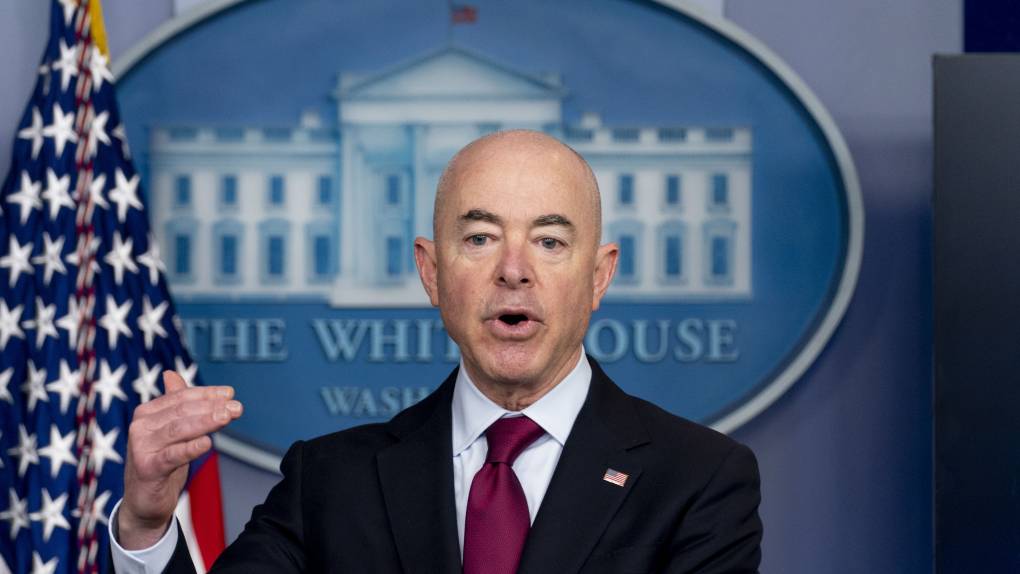
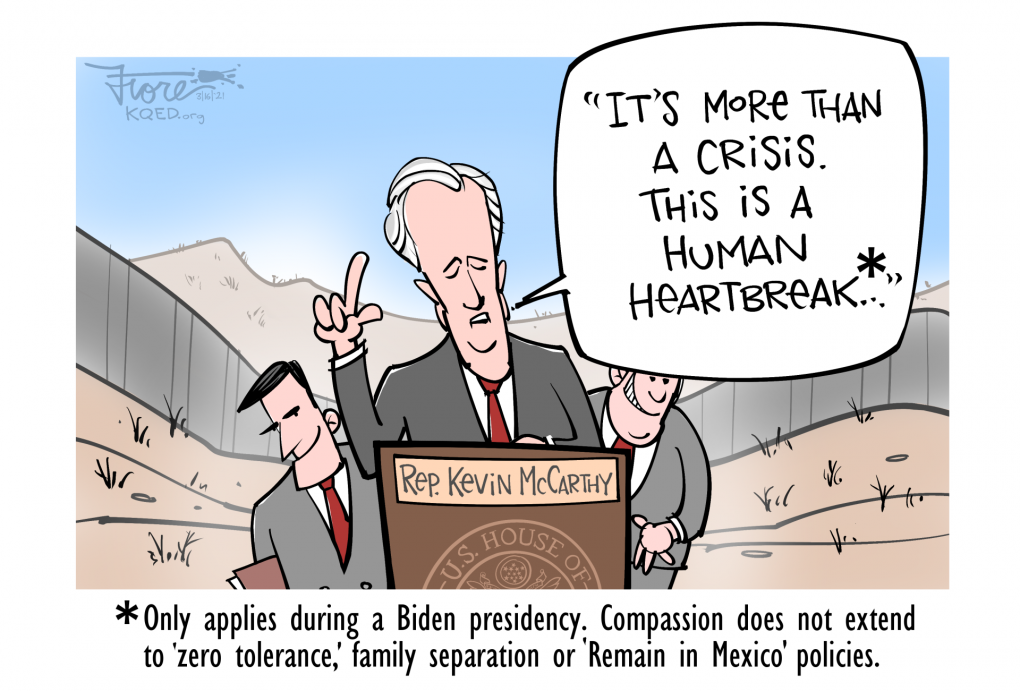
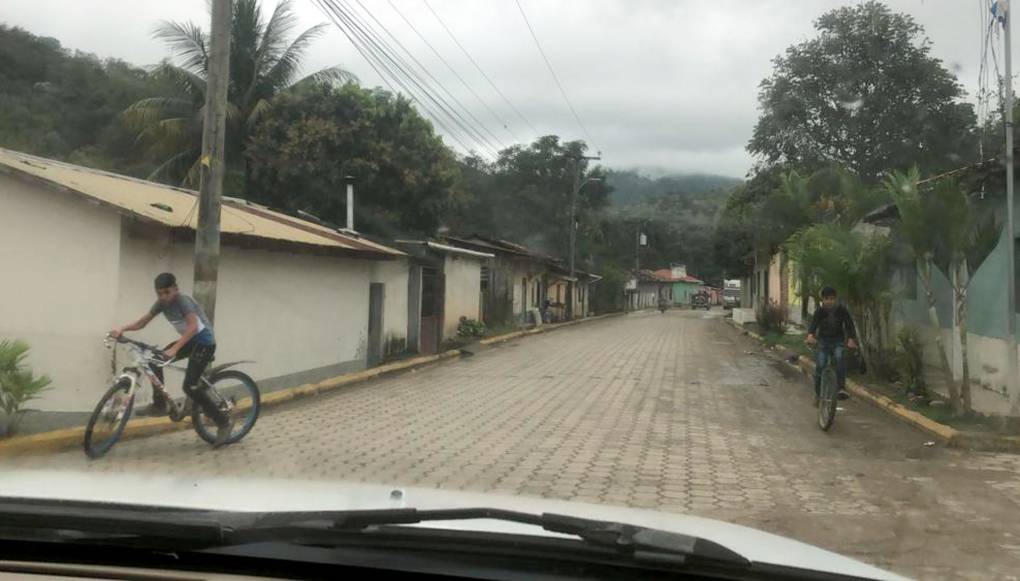
window.__IS_SSR__=true
window.__INITIAL_STATE__={
"attachmentsReducer": {
"audio_0": {
"type": "attachments",
"id": "audio_0",
"imgSizes": {
"kqedFullSize": {
"file": "https://ww2.kqed.org/news/wp-content/themes/KQED-unified/img/audio_bgs/background0.jpg"
}
}
},
"audio_1": {
"type": "attachments",
"id": "audio_1",
"imgSizes": {
"kqedFullSize": {
"file": "https://ww2.kqed.org/news/wp-content/themes/KQED-unified/img/audio_bgs/background1.jpg"
}
}
},
"audio_2": {
"type": "attachments",
"id": "audio_2",
"imgSizes": {
"kqedFullSize": {
"file": "https://ww2.kqed.org/news/wp-content/themes/KQED-unified/img/audio_bgs/background2.jpg"
}
}
},
"audio_3": {
"type": "attachments",
"id": "audio_3",
"imgSizes": {
"kqedFullSize": {
"file": "https://ww2.kqed.org/news/wp-content/themes/KQED-unified/img/audio_bgs/background3.jpg"
}
}
},
"audio_4": {
"type": "attachments",
"id": "audio_4",
"imgSizes": {
"kqedFullSize": {
"file": "https://ww2.kqed.org/news/wp-content/themes/KQED-unified/img/audio_bgs/background4.jpg"
}
}
},
"placeholder": {
"type": "attachments",
"id": "placeholder",
"imgSizes": {
"thumbnail": {
"file": "https://cdn.kqed.org/wp-content/uploads/2024/12/KQED-Default-Image-816638274-2000x1333-1-160x107.jpg",
"width": 160,
"height": 107,
"mimeType": "image/jpeg"
},
"medium": {
"file": "https://cdn.kqed.org/wp-content/uploads/2024/12/KQED-Default-Image-816638274-2000x1333-1-800x533.jpg",
"width": 800,
"height": 533,
"mimeType": "image/jpeg"
},
"medium_large": {
"file": "https://cdn.kqed.org/wp-content/uploads/2024/12/KQED-Default-Image-816638274-2000x1333-1-768x512.jpg",
"width": 768,
"height": 512,
"mimeType": "image/jpeg"
},
"large": {
"file": "https://cdn.kqed.org/wp-content/uploads/2024/12/KQED-Default-Image-816638274-2000x1333-1-1020x680.jpg",
"width": 1020,
"height": 680,
"mimeType": "image/jpeg"
},
"1536x1536": {
"file": "https://cdn.kqed.org/wp-content/uploads/2024/12/KQED-Default-Image-816638274-2000x1333-1-1536x1024.jpg",
"width": 1536,
"height": 1024,
"mimeType": "image/jpeg"
},
"fd-lrg": {
"file": "https://cdn.kqed.org/wp-content/uploads/2024/12/KQED-Default-Image-816638274-2000x1333-1-1536x1024.jpg",
"width": 1536,
"height": 1024,
"mimeType": "image/jpeg"
},
"fd-med": {
"file": "https://cdn.kqed.org/wp-content/uploads/2024/12/KQED-Default-Image-816638274-2000x1333-1-1020x680.jpg",
"width": 1020,
"height": 680,
"mimeType": "image/jpeg"
},
"fd-sm": {
"file": "https://cdn.kqed.org/wp-content/uploads/2024/12/KQED-Default-Image-816638274-2000x1333-1-800x533.jpg",
"width": 800,
"height": 533,
"mimeType": "image/jpeg"
},
"post-thumbnail": {
"file": "https://cdn.kqed.org/wp-content/uploads/2024/12/KQED-Default-Image-816638274-2000x1333-1-672x372.jpg",
"width": 672,
"height": 372,
"mimeType": "image/jpeg"
},
"twentyfourteen-full-width": {
"file": "https://cdn.kqed.org/wp-content/uploads/2024/12/KQED-Default-Image-816638274-2000x1333-1-1038x576.jpg",
"width": 1038,
"height": 576,
"mimeType": "image/jpeg"
},
"xxsmall": {
"file": "https://cdn.kqed.org/wp-content/uploads/2024/12/KQED-Default-Image-816638274-2000x1333-1-160x107.jpg",
"width": 160,
"height": 107,
"mimeType": "image/jpeg"
},
"xsmall": {
"file": "https://cdn.kqed.org/wp-content/uploads/2024/12/KQED-Default-Image-816638274-2000x1333-1-672x372.jpg",
"width": 672,
"height": 372,
"mimeType": "image/jpeg"
},
"small": {
"file": "https://cdn.kqed.org/wp-content/uploads/2024/12/KQED-Default-Image-816638274-2000x1333-1-672x372.jpg",
"width": 672,
"height": 372,
"mimeType": "image/jpeg"
},
"xlarge": {
"file": "https://cdn.kqed.org/wp-content/uploads/2024/12/KQED-Default-Image-816638274-2000x1333-1-1020x680.jpg",
"width": 1020,
"height": 680,
"mimeType": "image/jpeg"
},
"full-width": {
"file": "https://cdn.kqed.org/wp-content/uploads/2024/12/KQED-Default-Image-816638274-2000x1333-1-1920x1280.jpg",
"width": 1920,
"height": 1280,
"mimeType": "image/jpeg"
},
"guest-author-32": {
"file": "https://cdn.kqed.org/wp-content/uploads/2025/01/KQED-Default-Image-816638274-1333x1333-1-160x160.jpg",
"width": 32,
"height": 32,
"mimeType": "image/jpeg"
},
"guest-author-50": {
"file": "https://cdn.kqed.org/wp-content/uploads/2025/01/KQED-Default-Image-816638274-1333x1333-1-160x160.jpg",
"width": 50,
"height": 50,
"mimeType": "image/jpeg"
},
"guest-author-64": {
"file": "https://cdn.kqed.org/wp-content/uploads/2025/01/KQED-Default-Image-816638274-1333x1333-1-160x160.jpg",
"width": 64,
"height": 64,
"mimeType": "image/jpeg"
},
"guest-author-96": {
"file": "https://cdn.kqed.org/wp-content/uploads/2025/01/KQED-Default-Image-816638274-1333x1333-1-160x160.jpg",
"width": 96,
"height": 96,
"mimeType": "image/jpeg"
},
"guest-author-128": {
"file": "https://cdn.kqed.org/wp-content/uploads/2025/01/KQED-Default-Image-816638274-1333x1333-1-160x160.jpg",
"width": 128,
"height": 128,
"mimeType": "image/jpeg"
},
"detail": {
"file": "https://cdn.kqed.org/wp-content/uploads/2025/01/KQED-Default-Image-816638274-1333x1333-1-160x160.jpg",
"width": 160,
"height": 160,
"mimeType": "image/jpeg"
},
"kqedFullSize": {
"file": "https://cdn.kqed.org/wp-content/uploads/2024/12/KQED-Default-Image-816638274-2000x1333-1.jpg",
"width": 2000,
"height": 1333
}
}
},
"news_11907124": {
"type": "attachments",
"id": "news_11907124",
"meta": {
"index": "attachments_1716263798",
"site": "news",
"id": "11907124",
"found": true
},
"parent": 11907020,
"imgSizes": {
"twentyfourteen-full-width": {
"file": "https://ww2.kqed.org/app/uploads/sites/10/2022/03/RS54042_GettyImages-973077512-qut-1038x576.jpg",
"width": 1038,
"mimeType": "image/jpeg",
"height": 576
},
"thumbnail": {
"file": "https://ww2.kqed.org/app/uploads/sites/10/2022/03/RS54042_GettyImages-973077512-qut-160x107.jpg",
"width": 160,
"mimeType": "image/jpeg",
"height": 107
},
"post-thumbnail": {
"file": "https://ww2.kqed.org/app/uploads/sites/10/2022/03/RS54042_GettyImages-973077512-qut-672x372.jpg",
"width": 672,
"mimeType": "image/jpeg",
"height": 372
},
"kqedFullSize": {
"file": "https://ww2.kqed.org/app/uploads/sites/10/2022/03/RS54042_GettyImages-973077512-qut.jpg",
"width": 1920,
"height": 1280
},
"large": {
"file": "https://ww2.kqed.org/app/uploads/sites/10/2022/03/RS54042_GettyImages-973077512-qut-1020x680.jpg",
"width": 1020,
"mimeType": "image/jpeg",
"height": 680
},
"1536x1536": {
"file": "https://ww2.kqed.org/app/uploads/sites/10/2022/03/RS54042_GettyImages-973077512-qut-1536x1024.jpg",
"width": 1536,
"mimeType": "image/jpeg",
"height": 1024
},
"medium": {
"file": "https://ww2.kqed.org/app/uploads/sites/10/2022/03/RS54042_GettyImages-973077512-qut-800x533.jpg",
"width": 800,
"mimeType": "image/jpeg",
"height": 533
}
},
"publishDate": 1646345333,
"modified": 1646349875,
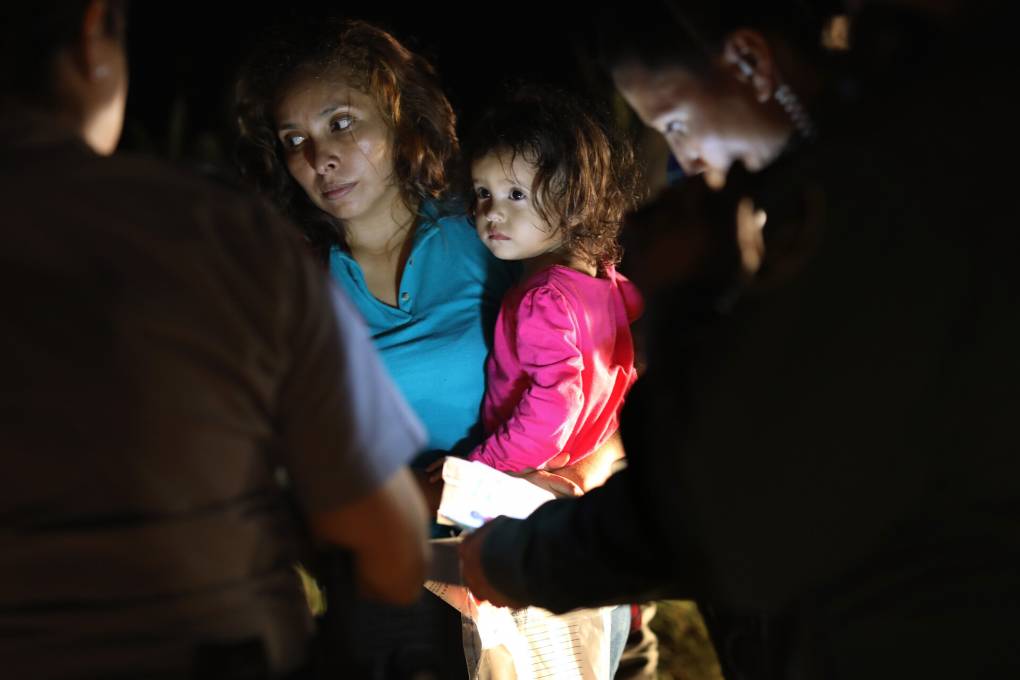
"caption": "A Honduran asylum seeker holds her 2-year-old child as U.S. Border Patrol agents review their papers near the U.S.-Mexico border on June 12, 2018, in Texas. They were sent to a processing center for possible separation as part of the Trump administration's 'zero tolerance' policy toward undocumented immigrants.",
"description": null,
"title": "Border Patrol Agents Detain Migrants Near US-Mexico Border",
"credit": "John Moore/Getty Images",
"status": "inherit",
"altTag": "night-time shot of woman holding her small child, both with concerned faces, surrounded by silhouettes of border patrol agents",
"isLoading": false,
"fetchFailed": false
},
"news_11899567": {
"type": "attachments",
"id": "news_11899567",
"meta": {
"index": "attachments_1716263798",
"site": "news",
"id": "11899567",
"found": true
},
"parent": 11899566,
"imgSizes": {
"twentyfourteen-full-width": {
"file": "https://ww2.kqed.org/app/uploads/sites/10/2021/12/ap_19276669107972-4157dfa405bb5b5b5ae1512bc469aa8dc930c533-1038x576.jpg",
"width": 1038,
"mimeType": "image/jpeg",
"height": 576
},
"thumbnail": {
"file": "https://ww2.kqed.org/app/uploads/sites/10/2021/12/ap_19276669107972-4157dfa405bb5b5b5ae1512bc469aa8dc930c533-160x120.jpg",
"width": 160,
"mimeType": "image/jpeg",
"height": 120
},
"post-thumbnail": {
"file": "https://ww2.kqed.org/app/uploads/sites/10/2021/12/ap_19276669107972-4157dfa405bb5b5b5ae1512bc469aa8dc930c533-672x372.jpg",
"width": 672,
"mimeType": "image/jpeg",
"height": 372
},
"kqedFullSize": {
"file": "https://ww2.kqed.org/app/uploads/sites/10/2021/12/ap_19276669107972-4157dfa405bb5b5b5ae1512bc469aa8dc930c533-e1639768153780.jpg",
"width": 1920,
"height": 1440
},
"large": {
"file": "https://ww2.kqed.org/app/uploads/sites/10/2021/12/ap_19276669107972-4157dfa405bb5b5b5ae1512bc469aa8dc930c533-1020x765.jpg",
"width": 1020,
"mimeType": "image/jpeg",
"height": 765
},
"1536x1536": {
"file": "https://ww2.kqed.org/app/uploads/sites/10/2021/12/ap_19276669107972-4157dfa405bb5b5b5ae1512bc469aa8dc930c533-1536x1152.jpg",
"width": 1536,
"mimeType": "image/jpeg",
"height": 1152
},
"full-width": {
"file": "https://ww2.kqed.org/app/uploads/sites/10/2021/12/ap_19276669107972-4157dfa405bb5b5b5ae1512bc469aa8dc930c533-1920x1440.jpg",
"width": 1920,
"mimeType": "image/jpeg",
"height": 1440
},
"medium": {
"file": "https://ww2.kqed.org/app/uploads/sites/10/2021/12/ap_19276669107972-4157dfa405bb5b5b5ae1512bc469aa8dc930c533-800x600.jpg",
"width": 800,
"mimeType": "image/jpeg",
"height": 600
}
},
"publishDate": 1639765061,
"modified": 1639768778,
"caption": "Migrant youth line up to enter a tent at the Homestead Temporary Shelter for Unaccompanied Children in Homestead, Florida., in Feb. 2019. The American Civil Liberties Union and other attorneys filed a lawsuit in October 2019, on behalf of thousands of families separated at the U.S.-Mexico border.",
"description": "FILE- In this Feb. 19, 2019 file photo, children line up to enter a tent at the Homestead Temporary Shelter for Unaccompanied Children in Homestead, Fla. The American Civil Liberties Union is seeking potentially millions of dollars in damages on behalf of thousands of immigrant families who were separated at the U.S.-Mexico border. The ACLU and other attorneys filed a lawsuit Thursday, Oct. 3, 2019, against past and present Trump administration officials in federal court in Tucson alleging the government violated immigrants' rights and traumatized young children who were taken from their parents after crossing the border illegally. (AP Photo/Wilfredo Lee, File)",
"title": "ap_19276669107972-4157dfa405bb5b5b5ae1512bc469aa8dc930c533",
"credit": "Wilfredo Lee/AP",
"status": "inherit",
"altTag": "Children walk in a line past barricades toward a large white tent.",
"isLoading": false,
"fetchFailed": false
},
"news_11888834": {
"type": "attachments",
"id": "news_11888834",
"meta": {
"index": "attachments_1716263798",
"site": "news",
"id": "11888834",
"found": true
},
"parent": 11888827,
"imgSizes": {
"twentyfourteen-full-width": {
"file": "https://ww2.kqed.org/app/uploads/sites/10/2021/09/Ed-Source-Video-Call-2-1000x576.jpg",
"width": 1000,
"mimeType": "image/jpeg",
"height": 576
},
"thumbnail": {
"file": "https://ww2.kqed.org/app/uploads/sites/10/2021/09/Ed-Source-Video-Call-2-160x107.jpg",
"width": 160,
"mimeType": "image/jpeg",
"height": 107
},
"post-thumbnail": {
"file": "https://ww2.kqed.org/app/uploads/sites/10/2021/09/Ed-Source-Video-Call-2-672x372.jpg",
"width": 672,
"mimeType": "image/jpeg",
"height": 372
},
"kqedFullSize": {
"file": "https://ww2.kqed.org/app/uploads/sites/10/2021/09/Ed-Source-Video-Call-2.jpg",
"width": 1000,
"height": 667
},
"medium": {
"file": "https://ww2.kqed.org/app/uploads/sites/10/2021/09/Ed-Source-Video-Call-2-800x534.jpg",
"width": 800,
"mimeType": "image/jpeg",
"height": 534
}
},
"publishDate": 1631813848,
"modified": 1631915656,
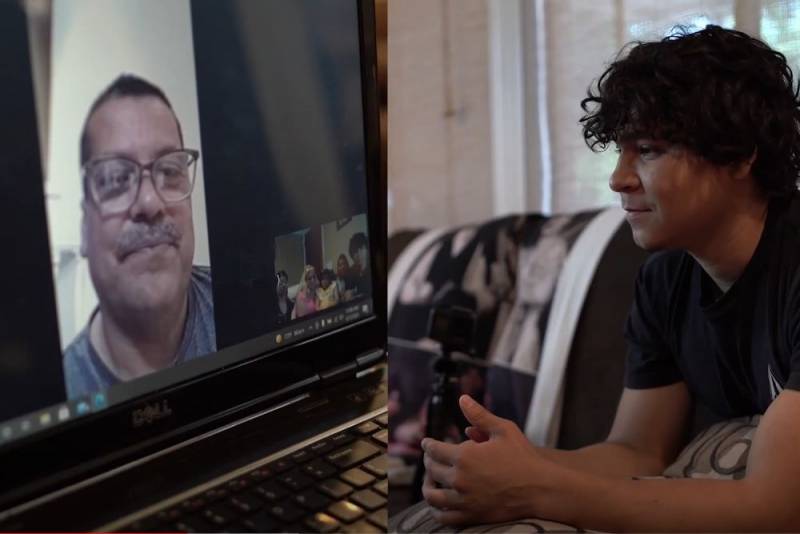
"caption": "José Luis Ruiz Arévalos videocalls his family in Los Banos from Hermosillo, Sonora. In May 2019, Ruiz Arévalos travelled to Mexico for what he thought would be the final step to apply for his green card: an interview at the U.S. Consulate. But he was unexpectedly refused a green card when U.S. Consulate officials decided that under Trump administration guidance he was likely to become a “public charge,” dependent on government services. Unable to return to the U.S., he remains in Hermosillo, Sonora, a thousand miles from his family, while he tries to appeal the decision.",
"description": "José Luis Ruiz Arévalos videocalls his family in Los Banos from Hermosillo, Sonora. In May 2019, Ruiz Arévalos travelled to Mexico for what he thought would be the final step to apply for his green card: an interview at the U.S. Consulate. But he was unexpectedly refused a green card when U.S. Consulate officials decided that under Trump administration guidance he was likely to become a “public charge,” dependent on government services. Unable to return to the U.S., he remains in Hermosillo, Sonora, a thousand miles from his family, while he tries to appeal the decision.",
"title": "Ed Source Video Call-2",
"credit": "Jennifer Molina/EdSource",
"status": "inherit",
"altTag": "A teenage boy with floppy hair videocalls his father on a flat-screen TV in a living room.",
"isLoading": false,
"fetchFailed": false
},
"news_11888806": {
"type": "attachments",
"id": "news_11888806",
"meta": {
"index": "attachments_1716263798",
"site": "news",
"id": "11888806",
"found": true
},
"title": "Father And Son From Honduras Seeking Asylum In The U.S. Await The Court's Decision On Their Status",
"publishDate": 1631785462,
"status": "inherit",
"parent": 11888754,
"modified": 1749678492,
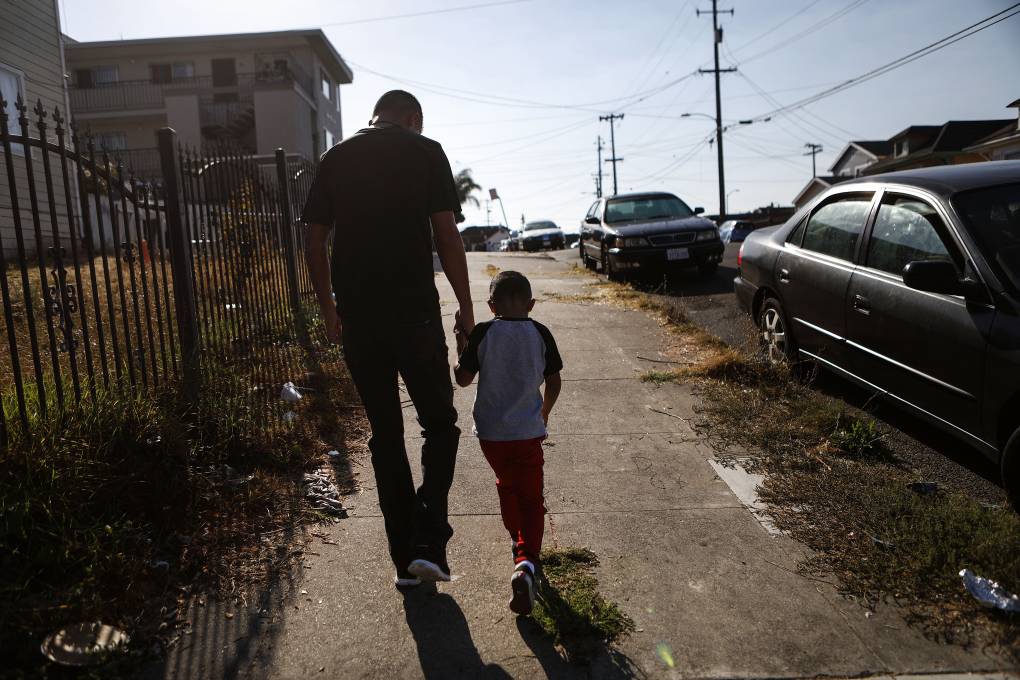
"caption": "A Honduran father and his 6-year-old son walk to Sunday Mass on Sept. 9, 2018, in Oakland, California. They were one of almost 2,600 families separated due to the Trump administration's \"zero tolerance\" immigration policy. ",
"credit": "Mario Tama/Getty Images",
"altTag": "A man and young boy hold hands as they walk in silhouette on an urban sidewalk in early morning sun.",
"description": "Honduran father Juan and his six-year-old son Anthony walk on their way to attend Sunday Mass on September 9, 2018 in Oakland, California. They fled their country, leaving many family members behind, and crossed the U.S. border in April at a lawful port of entry in Brownsville, Texas seeking asylum. They were soon separated and spent the next 85 days apart in detention. Juan was sent to Tulsa, Oklahoma, while his son was sent to a detention shelter New York. They were one of almost 2,600 families separated due to the Trump administration's \"zero tolerance\" immigration policy. Juan said it took six weeks from the time of separation until he was able to make a phone call to his son. They were finally reunited in July 2018.",
"imgSizes": {
"medium": {
"file": "https://cdn.kqed.org/wp-content/uploads/sites/10/2021/09/GettyImages-1031228044-800x533.jpg",
"width": 800,
"height": 533,
"mimeType": "image/jpeg"
},
"large": {
"file": "https://cdn.kqed.org/wp-content/uploads/sites/10/2021/09/GettyImages-1031228044-1020x680.jpg",
"width": 1020,
"height": 680,
"mimeType": "image/jpeg"
},
"thumbnail": {
"file": "https://cdn.kqed.org/wp-content/uploads/sites/10/2021/09/GettyImages-1031228044-160x107.jpg",
"width": 160,
"height": 107,
"mimeType": "image/jpeg"
},
"1536x1536": {
"file": "https://cdn.kqed.org/wp-content/uploads/sites/10/2021/09/GettyImages-1031228044-1536x1024.jpg",
"width": 1536,
"height": 1024,
"mimeType": "image/jpeg"
},
"2048x2048": {
"file": "https://cdn.kqed.org/wp-content/uploads/sites/10/2021/09/GettyImages-1031228044-2048x1365.jpg",
"width": 2048,
"height": 1365,
"mimeType": "image/jpeg"
},
"post-thumbnail": {
"file": "https://cdn.kqed.org/wp-content/uploads/sites/10/2021/09/GettyImages-1031228044-672x372.jpg",
"width": 672,
"height": 372,
"mimeType": "image/jpeg"
},
"twentyfourteen-full-width": {
"file": "https://cdn.kqed.org/wp-content/uploads/sites/10/2021/09/GettyImages-1031228044-1038x576.jpg",
"width": 1038,
"height": 576,
"mimeType": "image/jpeg"
},
"full-width": {
"file": "https://cdn.kqed.org/wp-content/uploads/sites/10/2021/09/GettyImages-1031228044-1920x1280.jpg",
"width": 1920,
"height": 1280,
"mimeType": "image/jpeg"
},
"kqedFullSize": {
"file": "https://cdn.kqed.org/wp-content/uploads/sites/10/2021/09/GettyImages-1031228044-scaled-e1776901494677.jpg",
"width": 2000,
"height": 1334
}
},
"isLoading": false,
"fetchFailed": false
},
"news_11878927": {
"type": "attachments",
"id": "news_11878927",
"meta": {
"index": "attachments_1716263798",
"site": "news",
"id": "11878927",
"found": true
},
"parent": 11878926,
"imgSizes": {
"twentyfourteen-full-width": {
"file": "https://ww2.kqed.org/app/uploads/sites/10/2021/06/c5d_2709-edit_custom-75c88cba370469aa5a9079c20e1553aeb840673e-1038x576.jpg",
"width": 1038,
"mimeType": "image/jpeg",
"height": 576
},
"thumbnail": {
"file": "https://ww2.kqed.org/app/uploads/sites/10/2021/06/c5d_2709-edit_custom-75c88cba370469aa5a9079c20e1553aeb840673e-160x114.jpg",
"width": 160,
"mimeType": "image/jpeg",
"height": 114
},
"post-thumbnail": {
"file": "https://ww2.kqed.org/app/uploads/sites/10/2021/06/c5d_2709-edit_custom-75c88cba370469aa5a9079c20e1553aeb840673e-672x372.jpg",
"width": 672,
"mimeType": "image/jpeg",
"height": 372
},
"kqedFullSize": {
"file": "https://ww2.kqed.org/app/uploads/sites/10/2021/06/c5d_2709-edit_custom-75c88cba370469aa5a9079c20e1553aeb840673e-scaled-e1624391822888.jpg",
"width": 1920,
"height": 1372
},
"2048x2048": {
"file": "https://ww2.kqed.org/app/uploads/sites/10/2021/06/c5d_2709-edit_custom-75c88cba370469aa5a9079c20e1553aeb840673e-2048x1463.jpg",
"width": 2048,
"mimeType": "image/jpeg",
"height": 1463
},
"large": {
"file": "https://ww2.kqed.org/app/uploads/sites/10/2021/06/c5d_2709-edit_custom-75c88cba370469aa5a9079c20e1553aeb840673e-1020x729.jpg",
"width": 1020,
"mimeType": "image/jpeg",
"height": 729
},
"1536x1536": {
"file": "https://ww2.kqed.org/app/uploads/sites/10/2021/06/c5d_2709-edit_custom-75c88cba370469aa5a9079c20e1553aeb840673e-1536x1097.jpg",
"width": 1536,
"mimeType": "image/jpeg",
"height": 1097
},
"full-width": {
"file": "https://ww2.kqed.org/app/uploads/sites/10/2021/06/c5d_2709-edit_custom-75c88cba370469aa5a9079c20e1553aeb840673e-1920x1372.jpg",
"width": 1920,
"mimeType": "image/jpeg",
"height": 1372
},
"medium": {
"file": "https://ww2.kqed.org/app/uploads/sites/10/2021/06/c5d_2709-edit_custom-75c88cba370469aa5a9079c20e1553aeb840673e-800x571.jpg",
"width": 800,
"mimeType": "image/jpeg",
"height": 571
}
},
"publishDate": 1624390884,
"modified": 1624469907,
"caption": "Melvin and his son, Néstor, were one family that was separated under former President Donald Trump's zero-tolerance immigration policy. Néstor says he would have frequent nightmares about the separation.",
"description": "Melvin and his son, Néstor, were one family that was separated under former President Trump's zero-tolerance immigration policy. Néstor says he would have frequent nightmares about the separation.",
"title": "Melvin and his son, Néstor, were one family that was separated under former President Trump's zero-tolerance immigration policy. Néstor says he would have frequent nightmares about the separation.",
"credit": "Jessica Pons/NPR",
"status": "inherit",
"altTag": null,
"isLoading": false,
"fetchFailed": false
},
"news_11877202": {
"type": "attachments",
"id": "news_11877202",
"meta": {
"index": "attachments_1716263798",
"site": "news",
"id": "11877202",
"found": true
},
"title": "US-MAYDAY-RALLY",
"publishDate": 1623184946,
"status": "inherit",
"parent": 11877128,
"modified": 1749679480,
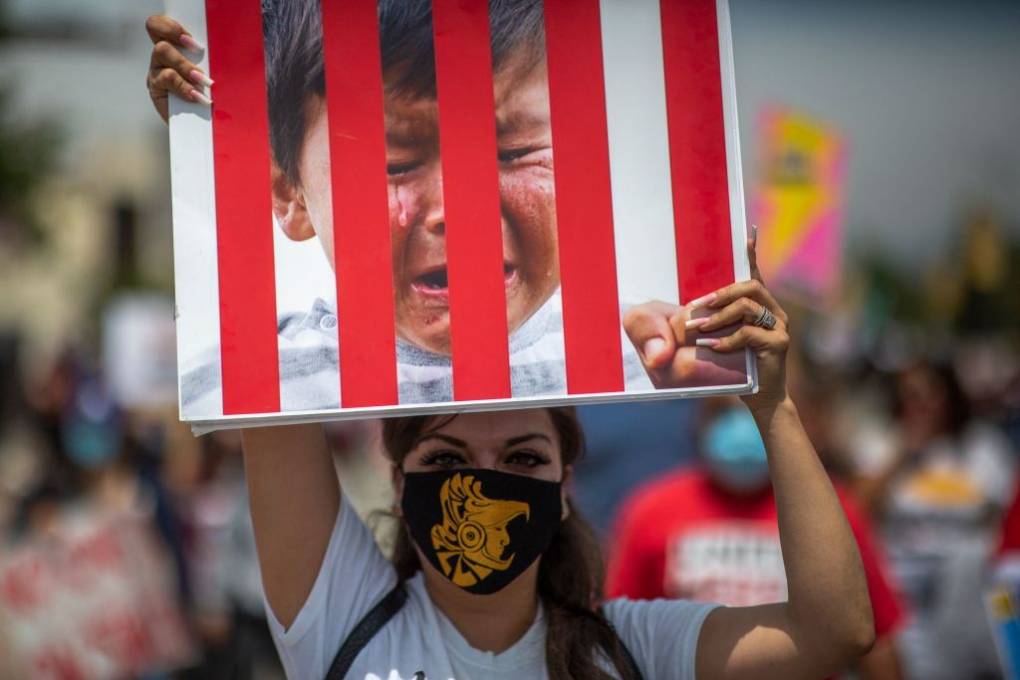
"caption": "A woman protests family separations at the border as a coalition of activist groups and labor unions participates in a May Day march in Los Angeles for workers and human rights in 2021.",
"credit": "David McNew/AFP via Getty Images",
"altTag": null,
"description": null,
"imgSizes": {
"medium": {
"file": "https://cdn.kqed.org/wp-content/uploads/sites/10/2021/06/GettyImages-1232636077-800x534.jpg",
"width": 800,
"height": 534,
"mimeType": "image/jpeg"
},
"large": {
"file": "https://cdn.kqed.org/wp-content/uploads/sites/10/2021/06/GettyImages-1232636077-1020x680.jpg",
"width": 1020,
"height": 680,
"mimeType": "image/jpeg"
},
"thumbnail": {
"file": "https://cdn.kqed.org/wp-content/uploads/sites/10/2021/06/GettyImages-1232636077-160x107.jpg",
"width": 160,
"height": 107,
"mimeType": "image/jpeg"
},
"post-thumbnail": {
"file": "https://cdn.kqed.org/wp-content/uploads/sites/10/2021/06/GettyImages-1232636077-672x372.jpg",
"width": 672,
"height": 372,
"mimeType": "image/jpeg"
},
"twentyfourteen-full-width": {
"file": "https://cdn.kqed.org/wp-content/uploads/sites/10/2021/06/GettyImages-1232636077-1024x576.jpg",
"width": 1024,
"height": 576,
"mimeType": "image/jpeg"
},
"kqedFullSize": {
"file": "https://cdn.kqed.org/wp-content/uploads/sites/10/2021/06/GettyImages-1232636077.jpg",
"width": 1024,
"height": 683
}
},
"isLoading": false,
"fetchFailed": false
},
"news_11872004": {
"type": "attachments",
"id": "news_11872004",
"meta": {
"index": "attachments_1716263798",
"site": "news",
"id": "11872004",
"found": true
},
"parent": 11872003,
"imgSizes": {
"twentyfourteen-full-width": {
"file": "https://ww2.kqed.org/app/uploads/sites/10/2021/05/ap21123159092833_wide-61079d044d9312bc2af3df1891be03a6fed3afa6-1038x576.jpg",
"width": 1038,
"mimeType": "image/jpeg",
"height": 576
},
"thumbnail": {
"file": "https://ww2.kqed.org/app/uploads/sites/10/2021/05/ap21123159092833_wide-61079d044d9312bc2af3df1891be03a6fed3afa6-160x90.jpg",
"width": 160,
"mimeType": "image/jpeg",
"height": 90
},
"post-thumbnail": {
"file": "https://ww2.kqed.org/app/uploads/sites/10/2021/05/ap21123159092833_wide-61079d044d9312bc2af3df1891be03a6fed3afa6-672x372.jpg",
"width": 672,
"mimeType": "image/jpeg",
"height": 372
},
"kqedFullSize": {
"file": "https://ww2.kqed.org/app/uploads/sites/10/2021/05/ap21123159092833_wide-61079d044d9312bc2af3df1891be03a6fed3afa6-scaled-e1620064719334.jpg",
"width": 1920,
"height": 1080
},
"2048x2048": {
"file": "https://ww2.kqed.org/app/uploads/sites/10/2021/05/ap21123159092833_wide-61079d044d9312bc2af3df1891be03a6fed3afa6-2048x1152.jpg",
"width": 2048,
"mimeType": "image/jpeg",
"height": 1152
},
"large": {
"file": "https://ww2.kqed.org/app/uploads/sites/10/2021/05/ap21123159092833_wide-61079d044d9312bc2af3df1891be03a6fed3afa6-1020x574.jpg",
"width": 1020,
"mimeType": "image/jpeg",
"height": 574
},
"1536x1536": {
"file": "https://ww2.kqed.org/app/uploads/sites/10/2021/05/ap21123159092833_wide-61079d044d9312bc2af3df1891be03a6fed3afa6-1536x864.jpg",
"width": 1536,
"mimeType": "image/jpeg",
"height": 864
},
"full-width": {
"file": "https://ww2.kqed.org/app/uploads/sites/10/2021/05/ap21123159092833_wide-61079d044d9312bc2af3df1891be03a6fed3afa6-1920x1080.jpg",
"width": 1920,
"mimeType": "image/jpeg",
"height": 1080
},
"medium": {
"file": "https://ww2.kqed.org/app/uploads/sites/10/2021/05/ap21123159092833_wide-61079d044d9312bc2af3df1891be03a6fed3afa6-800x450.jpg",
"width": 800,
"mimeType": "image/jpeg",
"height": 450
}
},
"publishDate": 1620062739,
"modified": 1620071552,
"caption": "Homeland Security Secretary Alejandro Mayorkas speaks during a news conference at the White House in Washington, D.C. The Biden administration says four families who were separated at the Mexico border during Donald Trump’s presidency would be reunited in the U.S during the first week of May, the first of what Mayorkas calls 'just the beginning' of a broader effort.",
"description": "FILE - In this March 1, 2021, file photo, Homeland Security Secretary Alejandro Mayorkas speaks during a news conference at the White House in Washington. The Biden administration says four families who were separated at the Mexico border during Donald Trump’s presidency would be reunited in the United States during the first week of May, the first of what Mayorkas calls “just the beginning” of a broader effort. (AP Photo/Andrew Harnik, File)",
"title": "Homeland Security Secretary Alejandro Mayorkas speaks during a March 1 news conference at the White House. The Biden administration says four families that were separated at the Mexico border during the Trump administration would be reunited in the U.S. during the first week of May. It's the first of what Mayorkas calls \"just the beginning\" of a broader effort.",
"credit": "AP Photo/Andrew Harnik, File",
"status": "inherit",
"altTag": null,
"isLoading": false,
"fetchFailed": false
},
"news_11868476": {
"type": "attachments",
"id": "news_11868476",
"meta": {
"index": "attachments_1716263798",
"site": "news",
"id": "11868476",
"found": true
},
"parent": 11868475,
"imgSizes": {
"twentyfourteen-full-width": {
"file": "https://ww2.kqed.org/app/uploads/sites/10/2021/04/ap_19276669107972-768175ba15960fafa81b51575f1b0122fd513bf8-1038x576.jpg",
"width": 1038,
"mimeType": "image/jpeg",
"height": 576
},
"thumbnail": {
"file": "https://ww2.kqed.org/app/uploads/sites/10/2021/04/ap_19276669107972-768175ba15960fafa81b51575f1b0122fd513bf8-160x120.jpg",
"width": 160,
"mimeType": "image/jpeg",
"height": 120
},
"post-thumbnail": {
"file": "https://ww2.kqed.org/app/uploads/sites/10/2021/04/ap_19276669107972-768175ba15960fafa81b51575f1b0122fd513bf8-672x372.jpg",
"width": 672,
"mimeType": "image/jpeg",
"height": 372
},
"kqedFullSize": {
"file": "https://ww2.kqed.org/app/uploads/sites/10/2021/04/ap_19276669107972-768175ba15960fafa81b51575f1b0122fd513bf8-e1617831728798.jpg",
"width": 1920,
"height": 1438
},
"2048x2048": {
"file": "https://ww2.kqed.org/app/uploads/sites/10/2021/04/ap_19276669107972-768175ba15960fafa81b51575f1b0122fd513bf8-2048x1533.jpg",
"width": 2048,
"mimeType": "image/jpeg",
"height": 1533
},
"large": {
"file": "https://ww2.kqed.org/app/uploads/sites/10/2021/04/ap_19276669107972-768175ba15960fafa81b51575f1b0122fd513bf8-1020x764.jpg",
"width": 1020,
"mimeType": "image/jpeg",
"height": 764
},
"1536x1536": {
"file": "https://ww2.kqed.org/app/uploads/sites/10/2021/04/ap_19276669107972-768175ba15960fafa81b51575f1b0122fd513bf8-1536x1150.jpg",
"width": 1536,
"mimeType": "image/jpeg",
"height": 1150
},
"full-width": {
"file": "https://ww2.kqed.org/app/uploads/sites/10/2021/04/ap_19276669107972-768175ba15960fafa81b51575f1b0122fd513bf8-1920x1438.jpg",
"width": 1920,
"mimeType": "image/jpeg",
"height": 1438
},
"medium": {
"file": "https://ww2.kqed.org/app/uploads/sites/10/2021/04/ap_19276669107972-768175ba15960fafa81b51575f1b0122fd513bf8-800x599.jpg",
"width": 800,
"mimeType": "image/jpeg",
"height": 599
}
},
"publishDate": 1617831342,
"modified": 1617840281,
"caption": "Children line up in February 2018 to enter a tent at the Homestead Temporary Shelter for Unaccompanied Children in Homestead, Florida. Many of these kids were taken from their parents after crossing the border illegally.",
"description": "Children line up in February 2018 to enter a tent at the Homestead Temporary Shelter for Unaccompanied Children in Homestead, Fla. Many of these kids were taken from their parents after crossing the border illegally.",
"title": "Children line up in February 2018 to enter a tent at the Homestead Temporary Shelter for Unaccompanied Children in Homestead, Fla. Many of these kids were taken from their parents after crossing the border illegally.",
"credit": "Wilfredo Lee/AP",
"status": "inherit",
"altTag": null,
"isLoading": false,
"fetchFailed": false
},
"news_11865073": {
"type": "attachments",
"id": "news_11865073",
"meta": {
"index": "attachments_1716263798",
"site": "news",
"id": "11865073",
"found": true
},
"parent": 11865067,
"imgSizes": {
"twentyfourteen-full-width": {
"file": "https://ww2.kqed.org/app/uploads/sites/10/2021/03/heartbreak_031621_final-1038x576.png",
"width": 1038,
"mimeType": "image/png",
"height": 576
},
"thumbnail": {
"file": "https://ww2.kqed.org/app/uploads/sites/10/2021/03/heartbreak_031621_final-160x108.png",
"width": 160,
"mimeType": "image/png",
"height": 108
},
"post-thumbnail": {
"file": "https://ww2.kqed.org/app/uploads/sites/10/2021/03/heartbreak_031621_final-672x372.png",
"width": 672,
"mimeType": "image/png",
"height": 372
},
"kqedFullSize": {
"file": "https://ww2.kqed.org/app/uploads/sites/10/2021/03/heartbreak_031621_final.png",
"width": 1920,
"height": 1301
},
"large": {
"file": "https://ww2.kqed.org/app/uploads/sites/10/2021/03/heartbreak_031621_final-1020x691.png",
"width": 1020,
"mimeType": "image/png",
"height": 691
},
"1536x1536": {
"file": "https://ww2.kqed.org/app/uploads/sites/10/2021/03/heartbreak_031621_final-1536x1041.png",
"width": 1536,
"mimeType": "image/png",
"height": 1041
},
"medium": {
"file": "https://ww2.kqed.org/app/uploads/sites/10/2021/03/heartbreak_031621_final-800x542.png",
"width": 800,
"mimeType": "image/png",
"height": 542
}
},
"publishDate": 1615936702,
"modified": 1615936811,
"caption": null,
"description": null,
"title": "heartbreak_031621_final",
"credit": null,
"status": "inherit",
"altTag": "A Mark Fiore cartoon showing House Republican leader Kevin McCarthy decrying the \"human heartbreak\" of the migrant surge at the border. The cartoon has small print that notes McCarthy did not decry the heartbreak of Trump's zero tolerance and remain in Mexico policies.",
"isLoading": false,
"fetchFailed": false
},
"news_11864946": {
"type": "attachments",
"id": "news_11864946",
"meta": {
"index": "attachments_1716263798",
"site": "news",
"id": "11864946",
"found": true
},
"parent": 11864859,
"imgSizes": {
"twentyfourteen-full-width": {
"file": "https://ww2.kqed.org/app/uploads/sites/10/2021/03/GettyImages-1231340649-1-1038x576.jpg",
"width": 1038,
"mimeType": "image/jpeg",
"height": 576
},
"thumbnail": {
"file": "https://ww2.kqed.org/app/uploads/sites/10/2021/03/GettyImages-1231340649-1-160x107.jpg",
"width": 160,
"mimeType": "image/jpeg",
"height": 107
},
"post-thumbnail": {
"file": "https://ww2.kqed.org/app/uploads/sites/10/2021/03/GettyImages-1231340649-1-672x372.jpg",
"width": 672,
"mimeType": "image/jpeg",
"height": 372
},
"kqedFullSize": {
"file": "https://ww2.kqed.org/app/uploads/sites/10/2021/03/GettyImages-1231340649-1.jpg",
"width": 1920,
"height": 1280
},
"large": {
"file": "https://ww2.kqed.org/app/uploads/sites/10/2021/03/GettyImages-1231340649-1-1020x680.jpg",
"width": 1020,
"mimeType": "image/jpeg",
"height": 680
},
"1536x1536": {
"file": "https://ww2.kqed.org/app/uploads/sites/10/2021/03/GettyImages-1231340649-1-1536x1024.jpg",
"width": 1536,
"mimeType": "image/jpeg",
"height": 1024
},
"medium": {
"file": "https://ww2.kqed.org/app/uploads/sites/10/2021/03/GettyImages-1231340649-1-800x533.jpg",
"width": 800,
"mimeType": "image/jpeg",
"height": 533
}
},
"publishDate": 1615852689,
"modified": 1615916432,
"caption": "Sen. Alex Padilla, D-California, delivers a statement in support of Xavier Becerra, nominee for Secretary of Health and Human Services, at his confirmation hearing before the Senate Health, Education, Labor and Pensions Committee on Feb. 23, 2021 in Washington, D.C.",
"description": "Senator Alex Padilla (D-CA) delivers a statement in support of Xavier Becerra, nominee for Secretary of Health and Human Services (HHS), at his confirmation hearing before the Senate Health, Education, Labor and Pensions Committee on February 23, 2021 in Washington, DC. Becerra was previously the Attorney General of California.",
"title": "GettyImages-1231340649 (1)",
"credit": "Sarah Silbiger/Pool/Getty Images",
"status": "inherit",
"altTag": null,
"isLoading": false,
"fetchFailed": false
},
"news_11858663": {
"type": "attachments",
"id": "news_11858663",
"meta": {
"index": "attachments_1716263798",
"site": "news",
"id": "11858663",
"found": true
},
"parent": 11858627,
"imgSizes": {
"apple_news_ca_landscape_5_5": {
"file": "https://ww2.kqed.org/app/uploads/sites/10/2021/02/Honduras-Road-Main-1044x783.jpg",
"width": 1044,
"mimeType": "image/jpeg",
"height": 783
},
"apple_news_ca_square_4_0": {
"file": "https://ww2.kqed.org/app/uploads/sites/10/2021/02/Honduras-Road-Main-470x470.jpg",
"width": 470,
"mimeType": "image/jpeg",
"height": 470
},
"twentyfourteen-full-width": {
"file": "https://ww2.kqed.org/app/uploads/sites/10/2021/02/Honduras-Road-Main-1038x576.jpg",
"width": 1038,
"mimeType": "image/jpeg",
"height": 576
},
"thumbnail": {
"file": "https://ww2.kqed.org/app/uploads/sites/10/2021/02/Honduras-Road-Main-160x91.jpg",
"width": 160,
"mimeType": "image/jpeg",
"height": 91
},
"post-thumbnail": {
"file": "https://ww2.kqed.org/app/uploads/sites/10/2021/02/Honduras-Road-Main-672x372.jpg",
"width": 672,
"mimeType": "image/jpeg",
"height": 372
},
"kqedFullSize": {
"file": "https://ww2.kqed.org/app/uploads/sites/10/2021/02/Honduras-Road-Main.jpg",
"width": 1920,
"height": 1094
},
"apple_news_ca_landscape_4_7": {
"file": "https://ww2.kqed.org/app/uploads/sites/10/2021/02/Honduras-Road-Main-632x474.jpg",
"width": 632,
"mimeType": "image/jpeg",
"height": 474
},
"large": {
"file": "https://ww2.kqed.org/app/uploads/sites/10/2021/02/Honduras-Road-Main-1020x581.jpg",
"width": 1020,
"mimeType": "image/jpeg",
"height": 581
},
"apple_news_ca_landscape_4_0": {
"file": "https://ww2.kqed.org/app/uploads/sites/10/2021/02/Honduras-Road-Main-536x402.jpg",
"width": 536,
"mimeType": "image/jpeg",
"height": 402
},
"apple_news_ca_portrait_12_9": {
"file": "https://ww2.kqed.org/app/uploads/sites/10/2021/02/Honduras-Road-Main-1122x1094.jpg",
"width": 1122,
"mimeType": "image/jpeg",
"height": 1094
},
"medium": {
"file": "https://ww2.kqed.org/app/uploads/sites/10/2021/02/Honduras-Road-Main-800x456.jpg",
"width": 800,
"mimeType": "image/jpeg",
"height": 456
},
"apple_news_ca_portrait_4_0": {
"file": "https://ww2.kqed.org/app/uploads/sites/10/2021/02/Honduras-Road-Main-354x472.jpg",
"width": 354,
"mimeType": "image/jpeg",
"height": 472
},
"apple_news_ca_portrait_9_7": {
"file": "https://ww2.kqed.org/app/uploads/sites/10/2021/02/Honduras-Road-Main-840x1094.jpg",
"width": 840,
"mimeType": "image/jpeg",
"height": 1094
},
"apple_news_ca_landscape_12_9": {
"file": "https://ww2.kqed.org/app/uploads/sites/10/2021/02/Honduras-Road-Main-1832x1094.jpg",
"width": 1832,
"mimeType": "image/jpeg",
"height": 1094
},
"apple_news_ca_square_9_7": {
"file": "https://ww2.kqed.org/app/uploads/sites/10/2021/02/Honduras-Road-Main-1104x1094.jpg",
"width": 1104,
"mimeType": "image/jpeg",
"height": 1094
},
"1536x1536": {
"file": "https://ww2.kqed.org/app/uploads/sites/10/2021/02/Honduras-Road-Main-1536x875.jpg",
"width": 1536,
"mimeType": "image/jpeg",
"height": 875
},
"apple_news_ca_portrait_4_7": {
"file": "https://ww2.kqed.org/app/uploads/sites/10/2021/02/Honduras-Road-Main-414x552.jpg",
"width": 414,
"mimeType": "image/jpeg",
"height": 552
},
"apple_news_ca_square_12_9": {
"file": "https://ww2.kqed.org/app/uploads/sites/10/2021/02/Honduras-Road-Main-1472x1094.jpg",
"width": 1472,
"mimeType": "image/jpeg",
"height": 1094
},
"apple_news_ca_portrait_5_5": {
"file": "https://ww2.kqed.org/app/uploads/sites/10/2021/02/Honduras-Road-Main-687x916.jpg",
"width": 687,
"mimeType": "image/jpeg",
"height": 916
},
"apple_news_ca_square_4_7": {
"file": "https://ww2.kqed.org/app/uploads/sites/10/2021/02/Honduras-Road-Main-550x550.jpg",
"width": 550,
"mimeType": "image/jpeg",
"height": 550
},
"apple_news_ca_landscape_9_7": {
"file": "https://ww2.kqed.org/app/uploads/sites/10/2021/02/Honduras-Road-Main-1376x1032.jpg",
"width": 1376,
"mimeType": "image/jpeg",
"height": 1032
},
"apple_news_ca_square_5_5": {
"file": "https://ww2.kqed.org/app/uploads/sites/10/2021/02/Honduras-Road-Main-912x912.jpg",
"width": 912,
"mimeType": "image/jpeg",
"height": 912
}
},
"publishDate": 1612467240,
"modified": 1612467277,
"caption": "Attorney Dora Melara drives through a small town in Honduras, looking for a father who was separated from his teenage son at the U.S.-Mexico border in 2018. ",
"description": "Attorney Dora Melara drives through a small town in Honduras, looking for a father who was separated from his teenage son at the U.S.-Mexico border in 2018. ",
"title": "Honduras-Road-Main",
"credit": "Courtesy of Dora Melara",
"status": "inherit",
"altTag": "Small town in Honduras, view from car windshield",
"isLoading": false,
"fetchFailed": false
},
"news_11864420": {
"type": "attachments",
"id": "news_11864420",
"meta": {
"index": "attachments_1716263798",
"site": "news",
"id": "11864420",
"found": true
},
"parent": 11864249,
"imgSizes": {
"twentyfourteen-full-width": {
"file": "https://ww2.kqed.org/app/uploads/sites/10/2021/03/RS47638_GettyImages-978180210-qut-1038x576.jpg",
"width": 1038,
"mimeType": "image/jpeg",
"height": 576
},
"thumbnail": {
"file": "https://ww2.kqed.org/app/uploads/sites/10/2021/03/RS47638_GettyImages-978180210-qut-160x107.jpg",
"width": 160,
"mimeType": "image/jpeg",
"height": 107
},
"post-thumbnail": {
"file": "https://ww2.kqed.org/app/uploads/sites/10/2021/03/RS47638_GettyImages-978180210-qut-672x372.jpg",
"width": 672,
"mimeType": "image/jpeg",
"height": 372
},
"kqedFullSize": {
"file": "https://ww2.kqed.org/app/uploads/sites/10/2021/03/RS47638_GettyImages-978180210-qut.jpg",
"width": 1920,
"height": 1287
},
"large": {
"file": "https://ww2.kqed.org/app/uploads/sites/10/2021/03/RS47638_GettyImages-978180210-qut-1020x684.jpg",
"width": 1020,
"mimeType": "image/jpeg",
"height": 684
},
"1536x1536": {
"file": "https://ww2.kqed.org/app/uploads/sites/10/2021/03/RS47638_GettyImages-978180210-qut-1536x1030.jpg",
"width": 1536,
"mimeType": "image/jpeg",
"height": 1030
},
"medium": {
"file": "https://ww2.kqed.org/app/uploads/sites/10/2021/03/RS47638_GettyImages-978180210-qut-800x536.jpg",
"width": 800,
"mimeType": "image/jpeg",
"height": 536
}
},
"publishDate": 1615511684,
"modified": 1615511812,
"caption": "Protesters demonstrate on June 18, 2018 in Los Angeles against the separation of migrant children from their families, in front of clothes and shoes representing the children.",
"description": null,
"title": "Activists In L.A. Protest Separation Of Migrant Children From Families",
"credit": "Mario Tama/Getty Images",
"status": "inherit",
"altTag": null,
"isLoading": false,
"fetchFailed": false
}
},
"audioPlayerReducer": {
"postId": "stream_live",
"isPaused": true,
"isPlaying": false,
"pfsActive": false,
"pledgeModalIsOpen": true,
"playerDrawerIsOpen": false,
"liveAudioPlayStartedAt": 0,
"liveAudioPlayContext": ""
},
"authorsReducer": {
"byline_news_11899566": {
"type": "authors",
"id": "byline_news_11899566",
"meta": {
"override": true
},
"slug": "byline_news_11899566",
"name": "Joel Rose and Vanessa Romo",
"isLoading": false
},
"byline_news_11888827": {
"type": "authors",
"id": "byline_news_11888827",
"meta": {
"override": true
},
"slug": "byline_news_11888827",
"name": "\u003ca href=\"https://edsource.org/author/zstavely\">Zaidee Stavely\u003c/a>",
"isLoading": false
},
"byline_news_11888754": {
"type": "authors",
"id": "byline_news_11888754",
"meta": {
"override": true
},
"slug": "byline_news_11888754",
"name": "Ben Fox \u003cbr> The Associated Press",
"isLoading": false
},
"byline_news_11878926": {
"type": "authors",
"id": "byline_news_11878926",
"meta": {
"override": true
},
"slug": "byline_news_11878926",
"name": "\u003ca href=\"https://www.npr.org/people/896256272/lilly-quiroz\">Lilly Quiroz\u003c/a>, \u003ca href=\"https://www.npr.org/people/128649543/rachel-martin\">Rachel Martin\u003c/a> and \u003ca href=\"https://www.npr.org/people/757442538/catherine-whelan\">Catherine Whelan\u003c/a>",
"isLoading": false
},
"byline_news_11872003": {
"type": "authors",
"id": "byline_news_11872003",
"meta": {
"override": true
},
"slug": "byline_news_11872003",
"name": "Joel Rose",
"isLoading": false
},
"byline_news_11868475": {
"type": "authors",
"id": "byline_news_11868475",
"meta": {
"override": true
},
"slug": "byline_news_11868475",
"name": "\u003ca href=\"https://www.npr.org/people/729411445/franco-ordonez\">Franco Ordoñez\u003c/a>",
"isLoading": false
},
"gmarzorati": {
"type": "authors",
"id": "227",
"meta": {
"index": "authors_1716337520",
"id": "227",
"found": true
},
"name": "Guy Marzorati",
"firstName": "Guy",
"lastName": "Marzorati",
"slug": "gmarzorati",
"email": "gmarzorati@KQED.org",
"display_author_email": true,
"staff_mastheads": [
"news"
],
"title": "Correspondent",
"bio": "Guy Marzorati is a correspondent on KQED's California Politics and Government Desk, based in San Jose. A graduate of Santa Clara University, Guy joined KQED in 2013. He reports on state and local politics and produces KQED's digital voter guide.",
"avatar": "https://secure.gravatar.com/avatar/e7038b8dbfd55b104369b76b1cd0b9de?s=600&d=blank&r=g",
"twitter": "guymarzorati",
"facebook": null,
"instagram": null,
"linkedin": null,
"sites": [
{
"site": "",
"roles": [
"editor"
]
},
{
"site": "news",
"roles": [
"editor"
]
},
{
"site": "science",
"roles": [
"editor"
]
},
{
"site": "forum",
"roles": [
"editor"
]
},
{
"site": "elections",
"roles": [
"editor"
]
},
{
"site": "liveblog",
"roles": [
"editor"
]
}
],
"headData": {
"title": "Guy Marzorati | KQED",
"description": "Correspondent",
"ogImgSrc": "https://secure.gravatar.com/avatar/e7038b8dbfd55b104369b76b1cd0b9de?s=600&d=blank&r=g",
"twImgSrc": "https://secure.gravatar.com/avatar/e7038b8dbfd55b104369b76b1cd0b9de?s=600&d=blank&r=g"
},
"isLoading": false,
"link": "/author/gmarzorati"
},
"markfiore": {
"type": "authors",
"id": "3236",
"meta": {
"index": "authors_1716337520",
"id": "3236",
"found": true
},
"name": "Mark Fiore",
"firstName": "Mark",
"lastName": "Fiore",
"slug": "markfiore",
"email": "mark@markfiore.com",
"display_author_email": false,
"staff_mastheads": [
"news"
],
"title": "KQED News Cartoonist",
"bio": "\u003ca href=\"http://www.MarkFiore.com\">MarkFiore.com\u003c/a> | \u003ca href=\"https://twitter.com/markfiore\">Follow on Twitter\u003c/a> | \u003ca href=\"https://www.facebook.com/pages/Mark-Fiore-Animated-Political-Cartoons/94451707396?ref=bookmarks\">Facebook\u003c/a> | \u003ca href=\"mailto:mark@markfiore.com\">email\u003c/a>\r\n\r\nPulitzer Prize-winner, Mark Fiore, who the Wall Street Journal has called “the undisputed guru of the form,” creates animated political cartoons in San Francisco, where his work has been featured regularly on the San Francisco Chronicle’s web site, SFGate.com. His work has appeared on Newsweek.com, Slate.com, CBSNews.com, MotherJones.com, DailyKos.com and NPR’s web site. Fiore’s political animation has appeared on CNN, Frontline, Bill Moyers Journal, Salon.com and cable and broadcast outlets across the globe.\r\n\r\nBeginning his professional life by drawing traditional political cartoons for newspapers, Fiore’s work appeared in publications ranging from the Washington Post to the Los Angeles Times. In the late 1990s, he began to experiment with animating political cartoons and, after a short stint at the San Jose Mercury News as their staff cartoonist, Fiore devoted all his energies to animation.\r\nGrowing up in California, Fiore also spent a good portion of his life in the backwoods of Idaho. It was this combination that shaped him politically. Mark majored in political science at Colorado College, where, in a perfect send-off for a cartoonist, he received his diploma in 1991 as commencement speaker Dick Cheney smiled approvingly.\r\nMark Fiore was awarded the Pulitzer Prize for political cartooning in 2010, a Robert F. Kennedy Journalism Award in 2004 and has twice received an Online Journalism Award for commentary from the Online News Association (2002, 2008). Fiore has received two awards for his work in new media from the National Cartoonists Society (2001, 2002), and in 2006 received The James Madison Freedom of Information Award from The Society of Professional Journalists.",
"avatar": "https://secure.gravatar.com/avatar/fc4e2a612b15b67bad0c6f0e1db4ca9b?s=600&d=blank&r=g",
"twitter": "MarkFiore",
"facebook": null,
"instagram": "https://www.instagram.com/markfiore/?hl=en",
"linkedin": null,
"sites": [
{
"site": "arts",
"roles": [
"contributor"
]
},
{
"site": "news",
"roles": [
"editor"
]
},
{
"site": "futureofyou",
"roles": [
"editor"
]
},
{
"site": "science",
"roles": [
"editor"
]
}
],
"headData": {
"title": "Mark Fiore | KQED",
"description": "KQED News Cartoonist",
"ogImgSrc": "https://secure.gravatar.com/avatar/fc4e2a612b15b67bad0c6f0e1db4ca9b?s=600&d=blank&r=g",
"twImgSrc": "https://secure.gravatar.com/avatar/fc4e2a612b15b67bad0c6f0e1db4ca9b?s=600&d=blank&r=g"
},
"isLoading": false,
"link": "/author/markfiore"
},
"mwiley": {
"type": "authors",
"id": "11526",
"meta": {
"index": "authors_1716337520",
"id": "11526",
"found": true
},
"name": "Michelle Wiley",
"firstName": "Michelle",
"lastName": "Wiley",
"slug": "mwiley",
"email": "mwiley@KQED.org",
"display_author_email": true,
"staff_mastheads": [],
"title": null,
"bio": "Michelle Wiley was the senior editor of weekends.",
"avatar": "https://secure.gravatar.com/avatar/3b897d82a09e8587e8e73fa69fbcc635?s=600&d=blank&r=g",
"twitter": "michelleewiley",
"facebook": null,
"instagram": null,
"linkedin": null,
"sites": [
{
"site": "",
"roles": [
"editor"
]
},
{
"site": "arts",
"roles": [
"editor"
]
},
{
"site": "news",
"roles": [
"subscriber"
]
},
{
"site": "lowdown",
"roles": [
"editor"
]
},
{
"site": "science",
"roles": [
"editor"
]
},
{
"site": "podcasts",
"roles": [
"editor"
]
}
],
"headData": {
"title": "Michelle Wiley | KQED",
"description": null,
"ogImgSrc": "https://secure.gravatar.com/avatar/3b897d82a09e8587e8e73fa69fbcc635?s=600&d=blank&r=g",
"twImgSrc": "https://secure.gravatar.com/avatar/3b897d82a09e8587e8e73fa69fbcc635?s=600&d=blank&r=g"
},
"isLoading": false,
"link": "/author/mwiley"
}
},
"pagesReducer": {
"news_tag_family-separation": {
"type": "terms",
"id": "news_23456",
"meta": {
"index": "terms_1716263798",
"site": "news",
"id": "23456",
"score": 9.305044
},
"featImg": null,
"name": "family separation",
"description": null,
"taxonomy": "tag",
"headData": {
"twImgId": null,
"twTitle": null,
"ogTitle": null,
"ogImgId": null,
"twDescription": null,
"description": null,
"title": "family separation Archives | KQED News",
"ogDescription": null
},
"ttid": 23473,
"slug": "family-separation",
"isLoading": false,
"title": "family separation",
"pageMeta": {
"site": "news",
"WpPageTemplate": "page-topic-editorial",
"currentPage": 2
},
"blocks": [
{
"blockName": "kqed/post-list",
"attrs": {
"layout": "cardArticle2",
"query": "posts/news?tag=family-separation",
"seeMore": false,
"paginated": true,
"page": 2
}
},
{
"blockName": "kqed/ad"
}
]
}
},
"pfsSessionReducer": {},
"postsReducer": {
"stream_live": {
"type": "live",
"id": "stream_live",
"audioUrl": "https://streams.kqed.org/kqedradio",
"title": "Live Stream",
"excerpt": "Live Stream information currently unavailable.",
"link": "/radio",
"featImg": "",
"label": {
"name": "KQED Live",
"link": "/"
}
},
"stream_kqedNewscast": {
"type": "posts",
"id": "stream_kqedNewscast",
"audioUrl": "https://www.kqed.org/.stream/anon/radio/RDnews/newscast.mp3?_=1",
"title": "KQED Newscast",
"featImg": "",
"label": {
"name": "88.5 FM",
"link": "/"
}
},
"news_11907020": {
"type": "posts",
"id": "news_11907020",
"meta": {
"index": "posts_1716263798",
"site": "news",
"id": "11907020",
"score": null,
"sort": [
1646346954000
]
},
"guestAuthors": [],
"slug": "biden-walked-away-from-compensating-separated-migrant-families-but-these-parents-arent-giving-up",
"title": "Biden Walked Away From Compensating Separated Migrant Families. But These Parents Aren't Giving Up",
"publishDate": 1646346954,
"format": "audio",
"headTitle": "Biden Walked Away From Compensating Separated Migrant Families. But These Parents Aren’t Giving Up | KQED",
"labelTerm": {
"term": 72,
"site": "news"
},
"content": "\u003cp>Days before the final 2020 presidential debate between candidate Joe Biden and then-President Donald Trump, news broke that hundreds of migrant children remained separated from their parents, more than two years after the Trump administration’s “zero tolerance” policy was halted.\u003c/p>\n\u003cp>At the debate in Nashville, Biden expressed his outrage.\u003c/p>\n\u003cp>“Their kids were ripped from their arms and separated,” he said. “It’s criminal.”\u003c/p>\n\u003cp>The Trump administration \u003ca href=\"https://www.washingtonpost.com/world/the_americas/family-separations-biden-trump-honduras/2021/01/31/f6b815cc-6198-11eb-9430-e7c77b5b0297_story.html\">separated more than 5,500 children from their parents\u003c/a>.\u003c/p>\n\u003cp>Reunifying the families — and undoing the harm of the separations — became a key part of Biden’s immigration platform. He ran an ad on it, just days before voters went to the polls.\u003c/p>\n\u003cp>https://www.youtube.com/watch?v=PevJComISV0\u003c/p>\n\u003cp>So it was a surprise in December of 2021 when the administration dropped out of negotiations with the American Civil Liberties Union to compensate families for the harm they suffered.\u003c/p>\n\u003cp>Though administration officials have not explained their decision, and the Justice Department declined to comment for this story, some advocates believe money and politics are to blame.\u003c/p>\n\u003cp>And with the breakdown of the talks, the Biden administration now faces a series of individual lawsuits as many of the affected families pursue compensation through the federal courts.\u003c/p>\n\u003cp>“Everyone has gone back to court and those lawsuits are spread out throughout the country,” said Lee Gelernt, deputy director of the ACLU’s Immigrants’ Rights Project. “I think they were on the right track to try and settle these globally. And unfortunately, politics got in the way.”\u003c/p>\n\u003ch2>Supposedly leaked compensation amount spawns backlash\u003c/h2>\n\u003cp>Nearly four years ago, the ACLU sued the federal government on behalf of newly arrived immigrant parents whose children had been taken from them by the Trump administration. This class action lawsuit, Ms. L v. ICE, led to the reunification of thousands of separated families, but the process has dragged on for years. The Trump administration was compelled by a court injunction to assist, but much of the work of locating the parents and children has been done by a team led by the ACLU.\u003c/p>\n\u003cp>When Biden was elected, it seemed like the government and the ACLU would finally be aligned in aiding the families. Shortly after taking office, the president signed an executive order establishing the Family Reunification Task Force. And a few months later, the ACLU and the government announced they’d be \u003ca href=\"https://www.kqed.org/news/11864249/family-separations-lawsuit-u-s-and-aclu-start-settlement-talks\">pursuing a settlement\u003c/a> in the case.\u003c/p>\n\u003cp>[aside postID='news_11864249,news_11858627,news_11888754' label='The Effort to Reunify Families']Then, according to advocates, a leaked number from the confidential negotiations caused the talks to break down: $450,000. In late October 2021, The Wall Street Journal reported that the Biden administration was considering paying each person harmed by family separation something close to that amount in monetary damages.\u003c/p>\n\u003cp>But according to ACLU attorney Gelernt, while they were discussing compensation for families, the actual dollar amount wasn’t firm.\u003c/p>\n\u003cp>“There was no offer on the table,” said Gelernt, who’s one of the attorneys on the Ms. L case. “There was no specific amount on the table. And we were prepared to continue negotiating.”\u003c/p>\n\u003cp>But it was too late. Once that number was out in the world, the backlash was swift. Online, and on right-wing media channels, politicians and pundits blasted the plan, calling government payouts to unauthorized immigrants “outrageous.”\u003c/p>\n\u003cp>Then, in December 2021, the administration \u003ca href=\"https://www.npr.org/2021/12/16/1065044185/justice-department-breaks-off-talks-on-compensation-for-separated-families\">backed out\u003c/a> of talks to compensate families altogether.\u003c/p>\n\u003ch2>‘You’re harmed, you sue’\u003c/h2>\n\u003cp>At the heart of the negotiations was an attempt to settle a series of lawsuits filed under the Federal Tort Claims Act by families who were separated. The FTCA \u003ca href=\"https://www.house.gov/doing-business-with-the-house/leases/federal-tort-claims-act\">allows individuals to sue the federal government\u003c/a> if they were harmed by government representatives acting in their official capacity.\u003c/p>\n\u003cp>With the collapse of the talks, attorneys say those families will now take their individual cases to federal judges across the country.\u003c/p>\n\u003cp>They add that the cases of families who were separated by border agents clearly meet the FTCA standard. A paper, published last year in the journal Pediatrics, found that the U.S. treatment of migrant children was \u003ca href=\"https://www.kqed.org/news/11843880/us-treatment-of-migrant-children-falls-under-un-definition-of-torture-doctors-say\">consistent with the United Nations’ definition of torture\u003c/a>.\u003c/p>\n\u003cp>[pullquote size='medium' align='right' citation='Carol Anne Donohoe, managing attorney, Family Reunification Project at Al Otro Lado']‘They have every right to file a claim like you or I would … You know, you’re harmed, you sue. That’s the American way.’[/pullquote]“The personal injury … in some cases it was physical harm, it’s emotional distress because we ripped their children from them,” said Carol Anne Donohoe, managing attorney for the Family Reunification Project at Al Otro Lado, a California-based immigrant rights organization. “There’s nothing that will ever make that OK.”\u003c/p>\n\u003cp>Whether or not money can undo the harm caused by the separations, Donohoe says, the families are entitled to pursue the legal remedy available under the U.S. justice system.\u003c/p>\n\u003cp>“They have every right to file a claim like you or I would,” she said. “You know, you’re harmed, you sue. That’s the American way.”\u003c/p>\n\u003cp>At the same time, Donohoe points out that the migrant parents who have been reunited with their kids in the U.S. may have a real need for those funds right now. Many are pursuing asylum claims, which can take years to resolve.\u003c/p>\n\u003cp>“Families that come here, they’re allowed to apply for a work permit — which they get within maybe two months — but if they need housing, if they need food … if they have any medical issues, there is nothing in place for these families,” Donohoe said.\u003c/p>\n\u003cp>[ad fullwidth]\u003c/p>\n\u003ch2>Three people, one room\u003c/h2>\n\u003cp>One of these families is headed by a widow named Sandra, who came to the U.S. with her two children — then 10 and 11 years old — in 2017. She said she fled Guatemala because she didn’t trust the police to protect her from a violent neighbor.\u003c/p>\n\u003cp>Sandra presented herself at a port of entry in Arizona, seeking asylum. After she and her children spent three days in immigration custody, Sandra said officials told her the facility could not support her children, and they would be taken away from her.\u003c/p>\n\u003cp>[aside tag=\"immigration\" label=\"Related Coverage\"]Sandra remained in immigration detention for three months before being deported without her children and didn’t see them for three years until she was allowed to return last year. She’s filed a tort claim against the federal government for the trauma caused by the separation. Sandra didn’t want to use her last name out of fear that talking to the press might harm her case.\u003c/p>\n\u003cp>Sandra and her kids — now 14 and 15 — are currently sharing a room in her brother-in-law’s house.\u003c/p>\n\u003cp>“In the place where we’re living, we just have one little room for the three of us, me and my kids,” she said, speaking through a translator. “Sometimes it’s really hard to sleep because we’re all in this one little room.”\u003c/p>\n\u003cp>Sandra said she’s having a hard time supporting her family. She’s been looking for work but most jobs she’s found would require her to work swing shifts, and that would prevent her from spending time with her kids. Without a steady job, she cannot afford a car or an apartment of her own.\u003c/p>\n\u003cp>Sandra says her kids often discuss what it’ll be like when they’re in a bigger place. She tells them to take advantage of their education, so when they’re adults they won’t have to struggle to support themselves.\u003c/p>\n\u003cp>“I tell them, ‘Study, my children, because you’re not meant to work the way I’m working. Just look at how I come home — exhausted,'” she said.\u003c/p>\n\u003cp>While she’s juggling looking for work and reconnecting with her kids, Sandra is also preparing, with the help of attorneys, to go before a judge with her tort claim.\u003c/p>\n\u003ch2>The politics of it all\u003c/h2>\n\u003cp>With the negotiated settlement off the table and the individual tort claims like Sandra’s moving forward, the Biden Justice Department could soon find itself having to defend the Trump administration’s family separation policy in court. And if the government loses, it could end up paying monetary damages — potentially greater than $450,000 — to the separated families.\u003c/p>\n\u003cp>That has led some advocates to conclude that politics — not fiscal pragmatism — may have motivated the administration to abandon the settlement talks.\u003c/p>\n\u003cp>Donohoe says she believes Biden was concerned about the potential political damage from providing payments.\u003c/p>\n\u003cp>“And now he doesn’t apparently care as much about the political damage of what it’s going to look like for his DOJ [to be] defending the same policy in court,” she said.\u003c/p>\n\u003cp>UC Berkeley political scientist Lisa García Bedolla says it’s possible that White House officials are trying to control the narrative ahead of this year’s midterm Congressional elections, where the president’s party traditionally suffers losses.\u003c/p>\n\u003cp>“What the White House in a midterm wants is they want the conversation to be one where they think that they can be portrayed in a positive light,” she said.\u003c/p>\n\u003cp>[pullquote size='medium' align='right' citation='Lee Gelernt, attorney, ACLU']‘I think the Biden administration is wrong to think the politics will be against them for doing what’s right here. But regardless, they need to do what’s right.’[/pullquote]With that in mind, Bedolla said, the administration may find it easier to deal with one tort claim at a time, rather than settling them all at once.\u003c/p>\n\u003cp>“It’s a trickle instead of a flood, right?” she said. “You’re dealing with each individual at a time, based on their individual circumstances.”\u003c/p>\n\u003cp>But the ACLU’s Gelernt disagrees that compensating families will hurt the Democrats politically.\u003c/p>\n\u003cp>“If you recall in 2018, a good chunk of the American public — not just Democrats and liberals [but] conservatives and Republicans — were outraged about the Trump administration taking little babies away from their parents,” he said. “So I think the Biden administration is wrong to think the politics will be against them for doing what’s right here. But regardless, they need to do what’s right.”\u003c/p>\n\u003cp>\u003cem>KQED’s Carlos Cabrera-Lomelí contributed to this story.\u003c/em>\u003c/p>\n\u003cp>[ad floatright]\u003c/p>\n",
"blocks": [],
"excerpt": "Reunifying families and undoing the harm they suffered was a key part of President Biden's immigration platform when he was elected. So it was a surprise in December when the administration dropped out of negotiations to compensate families.",
"status": "publish",
"parent": 0,
"modified": 1739475017,
"stats": {
"hasAudio": false,
"hasVideo": true,
"hasChartOrMap": false,
"iframeSrcs": [],
"hasGoogleForm": false,
"hasGallery": false,
"hasHearkenModule": false,
"hasPolis": false,
"paragraphCount": 46,
"wordCount": 1823
},
"headData": {
"title": "Biden Walked Away From Compensating Separated Migrant Families. But These Parents Aren't Giving Up | KQED",
"description": "Reunifying families and undoing the harm they suffered was a key part of President Biden's immigration platform when he was elected. So it was a surprise in December when the administration dropped out of negotiations to compensate families.",
"ogTitle": "",
"ogDescription": "",
"ogImgId": "",
"twTitle": "",
"twDescription": "",
"twImgId": "",
"schema": {
"@context": "https://schema.org",
"@type": "NewsArticle",
"headline": "Biden Walked Away From Compensating Separated Migrant Families. But These Parents Aren't Giving Up",
"datePublished": "2022-03-03T14:35:54-08:00",
"dateModified": "2025-02-13T11:30:17-08:00",
"image": "https://cdn.kqed.org/wp-content/uploads/2020/02/KQED-OG-Image@1x.png",
"isAccessibleForFree": "True",
"publisher": {
"@type": "NewsMediaOrganization",
"@id": "https://www.kqed.org/#organization",
"name": "KQED",
"logo": "https://cdn.kqed.org/wp-content/uploads/2020/02/KQED-OG-Image@1x.png",
"url": "https://www.kqed.org",
"sameAs": [
"https://www.facebook.com/KQED",
"https://twitter.com/KQED",
"https://www.instagram.com/kqed/",
"https://www.tiktok.com/@kqedofficial",
"https://www.linkedin.com/company/kqed",
"https://www.youtube.com/channel/UCeC0IOo7i1P_61zVUWbJ4nw"
]
}
}
},
"audioUrl": "https://traffic.omny.fm/d/clips/0af137ef-751e-4b19-a055-aaef00d2d578/ffca7e9f-6831-41c5-bcaf-aaef00f5a073/0280e941-dd47-459b-84be-ae4d0116cbbd/audio.mp3",
"sticky": false,
"excludeFromSiteSearch": "Include",
"path": "/news/11907020/biden-walked-away-from-compensating-separated-migrant-families-but-these-parents-arent-giving-up",
"audioTrackLength": null,
"parsedContent": [
{
"type": "contentString",
"content": "\u003cdiv class=\"post-body\">\u003cp>\u003cp>Days before the final 2020 presidential debate between candidate Joe Biden and then-President Donald Trump, news broke that hundreds of migrant children remained separated from their parents, more than two years after the Trump administration’s “zero tolerance” policy was halted.\u003c/p>\n\u003cp>At the debate in Nashville, Biden expressed his outrage.\u003c/p>\n\u003cp>“Their kids were ripped from their arms and separated,” he said. “It’s criminal.”\u003c/p>\n\u003cp>The Trump administration \u003ca href=\"https://www.washingtonpost.com/world/the_americas/family-separations-biden-trump-honduras/2021/01/31/f6b815cc-6198-11eb-9430-e7c77b5b0297_story.html\">separated more than 5,500 children from their parents\u003c/a>.\u003c/p>\n\u003cp>Reunifying the families — and undoing the harm of the separations — became a key part of Biden’s immigration platform. He ran an ad on it, just days before voters went to the polls.\u003c/p>\u003c/p>\u003cp>\u003cspan class='utils-parseShortcode-shortcodes-__youtubeShortcode__embedYoutube'>\n \u003cspan class='utils-parseShortcode-shortcodes-__youtubeShortcode__embedYoutubeInside'>\n \u003ciframe\n loading='lazy'\n class='utils-parseShortcode-shortcodes-__youtubeShortcode__youtubePlayer'\n type='text/html'\n src='//www.youtube.com/embed/PevJComISV0'\n title='//www.youtube.com/embed/PevJComISV0'\n allowfullscreen='true'\n style='border:0;'>\u003c/iframe>\n \u003c/span>\n \u003c/span>\u003c/p>\u003cp>\u003cp>So it was a surprise in December of 2021 when the administration dropped out of negotiations with the American Civil Liberties Union to compensate families for the harm they suffered.\u003c/p>\n\u003cp>Though administration officials have not explained their decision, and the Justice Department declined to comment for this story, some advocates believe money and politics are to blame.\u003c/p>\n\u003cp>And with the breakdown of the talks, the Biden administration now faces a series of individual lawsuits as many of the affected families pursue compensation through the federal courts.\u003c/p>\n\u003cp>“Everyone has gone back to court and those lawsuits are spread out throughout the country,” said Lee Gelernt, deputy director of the ACLU’s Immigrants’ Rights Project. “I think they were on the right track to try and settle these globally. And unfortunately, politics got in the way.”\u003c/p>\n\u003ch2>Supposedly leaked compensation amount spawns backlash\u003c/h2>\n\u003cp>Nearly four years ago, the ACLU sued the federal government on behalf of newly arrived immigrant parents whose children had been taken from them by the Trump administration. This class action lawsuit, Ms. L v. ICE, led to the reunification of thousands of separated families, but the process has dragged on for years. The Trump administration was compelled by a court injunction to assist, but much of the work of locating the parents and children has been done by a team led by the ACLU.\u003c/p>\n\u003cp>When Biden was elected, it seemed like the government and the ACLU would finally be aligned in aiding the families. Shortly after taking office, the president signed an executive order establishing the Family Reunification Task Force. And a few months later, the ACLU and the government announced they’d be \u003ca href=\"https://www.kqed.org/news/11864249/family-separations-lawsuit-u-s-and-aclu-start-settlement-talks\">pursuing a settlement\u003c/a> in the case.\u003c/p>\n\u003cp>\u003c/p>\u003c/div>",
"attributes": {
"named": {},
"numeric": []
}
},
{
"type": "component",
"content": "",
"name": "aside",
"attributes": {
"named": {
"postid": "news_11864249,news_11858627,news_11888754",
"label": "The Effort to Reunify Families "
},
"numeric": []
}
},
{
"type": "contentString",
"content": "\u003cdiv class=\"post-body\">\u003cp>Then, according to advocates, a leaked number from the confidential negotiations caused the talks to break down: $450,000. In late October 2021, The Wall Street Journal reported that the Biden administration was considering paying each person harmed by family separation something close to that amount in monetary damages.\u003c/p>\n\u003cp>But according to ACLU attorney Gelernt, while they were discussing compensation for families, the actual dollar amount wasn’t firm.\u003c/p>\n\u003cp>“There was no offer on the table,” said Gelernt, who’s one of the attorneys on the Ms. L case. “There was no specific amount on the table. And we were prepared to continue negotiating.”\u003c/p>\n\u003cp>But it was too late. Once that number was out in the world, the backlash was swift. Online, and on right-wing media channels, politicians and pundits blasted the plan, calling government payouts to unauthorized immigrants “outrageous.”\u003c/p>\n\u003cp>Then, in December 2021, the administration \u003ca href=\"https://www.npr.org/2021/12/16/1065044185/justice-department-breaks-off-talks-on-compensation-for-separated-families\">backed out\u003c/a> of talks to compensate families altogether.\u003c/p>\n\u003ch2>‘You’re harmed, you sue’\u003c/h2>\n\u003cp>At the heart of the negotiations was an attempt to settle a series of lawsuits filed under the Federal Tort Claims Act by families who were separated. The FTCA \u003ca href=\"https://www.house.gov/doing-business-with-the-house/leases/federal-tort-claims-act\">allows individuals to sue the federal government\u003c/a> if they were harmed by government representatives acting in their official capacity.\u003c/p>\n\u003cp>With the collapse of the talks, attorneys say those families will now take their individual cases to federal judges across the country.\u003c/p>\n\u003cp>They add that the cases of families who were separated by border agents clearly meet the FTCA standard. A paper, published last year in the journal Pediatrics, found that the U.S. treatment of migrant children was \u003ca href=\"https://www.kqed.org/news/11843880/us-treatment-of-migrant-children-falls-under-un-definition-of-torture-doctors-say\">consistent with the United Nations’ definition of torture\u003c/a>.\u003c/p>\n\u003cp>\u003c/p>\u003c/div>",
"attributes": {
"named": {},
"numeric": []
}
},
{
"type": "component",
"content": "‘They have every right to file a claim like you or I would … You know, you’re harmed, you sue. That’s the American way.’",
"name": "pullquote",
"attributes": {
"named": {
"size": "medium",
"align": "right",
"citation": "Carol Anne Donohoe, managing attorney, Family Reunification Project at Al Otro Lado",
"label": ""
},
"numeric": []
}
},
{
"type": "contentString",
"content": "\u003cdiv class=\"post-body\">\u003cp>“The personal injury … in some cases it was physical harm, it’s emotional distress because we ripped their children from them,” said Carol Anne Donohoe, managing attorney for the Family Reunification Project at Al Otro Lado, a California-based immigrant rights organization. “There’s nothing that will ever make that OK.”\u003c/p>\n\u003cp>Whether or not money can undo the harm caused by the separations, Donohoe says, the families are entitled to pursue the legal remedy available under the U.S. justice system.\u003c/p>\n\u003cp>“They have every right to file a claim like you or I would,” she said. “You know, you’re harmed, you sue. That’s the American way.”\u003c/p>\n\u003cp>At the same time, Donohoe points out that the migrant parents who have been reunited with their kids in the U.S. may have a real need for those funds right now. Many are pursuing asylum claims, which can take years to resolve.\u003c/p>\n\u003cp>“Families that come here, they’re allowed to apply for a work permit — which they get within maybe two months — but if they need housing, if they need food … if they have any medical issues, there is nothing in place for these families,” Donohoe said.\u003c/p>\n\u003cp>\u003c/p>\u003c/div>",
"attributes": {
"named": {},
"numeric": []
}
},
{
"type": "component",
"content": "",
"name": "ad",
"attributes": {
"named": {
"label": "fullwidth"
},
"numeric": [
"fullwidth"
]
}
},
{
"type": "contentString",
"content": "\u003cdiv class=\"post-body\">\u003cp>\u003c/p>\n\u003ch2>Three people, one room\u003c/h2>\n\u003cp>One of these families is headed by a widow named Sandra, who came to the U.S. with her two children — then 10 and 11 years old — in 2017. She said she fled Guatemala because she didn’t trust the police to protect her from a violent neighbor.\u003c/p>\n\u003cp>Sandra presented herself at a port of entry in Arizona, seeking asylum. After she and her children spent three days in immigration custody, Sandra said officials told her the facility could not support her children, and they would be taken away from her.\u003c/p>\n\u003cp>\u003c/p>\u003c/div>",
"attributes": {
"named": {},
"numeric": []
}
},
{
"type": "component",
"content": "",
"name": "aside",
"attributes": {
"named": {
"tag": "immigration",
"label": "Related Coverage "
},
"numeric": []
}
},
{
"type": "contentString",
"content": "\u003cdiv class=\"post-body\">\u003cp>Sandra remained in immigration detention for three months before being deported without her children and didn’t see them for three years until she was allowed to return last year. She’s filed a tort claim against the federal government for the trauma caused by the separation. Sandra didn’t want to use her last name out of fear that talking to the press might harm her case.\u003c/p>\n\u003cp>Sandra and her kids — now 14 and 15 — are currently sharing a room in her brother-in-law’s house.\u003c/p>\n\u003cp>“In the place where we’re living, we just have one little room for the three of us, me and my kids,” she said, speaking through a translator. “Sometimes it’s really hard to sleep because we’re all in this one little room.”\u003c/p>\n\u003cp>Sandra said she’s having a hard time supporting her family. She’s been looking for work but most jobs she’s found would require her to work swing shifts, and that would prevent her from spending time with her kids. Without a steady job, she cannot afford a car or an apartment of her own.\u003c/p>\n\u003cp>Sandra says her kids often discuss what it’ll be like when they’re in a bigger place. She tells them to take advantage of their education, so when they’re adults they won’t have to struggle to support themselves.\u003c/p>\n\u003cp>“I tell them, ‘Study, my children, because you’re not meant to work the way I’m working. Just look at how I come home — exhausted,'” she said.\u003c/p>\n\u003cp>While she’s juggling looking for work and reconnecting with her kids, Sandra is also preparing, with the help of attorneys, to go before a judge with her tort claim.\u003c/p>\n\u003ch2>The politics of it all\u003c/h2>\n\u003cp>With the negotiated settlement off the table and the individual tort claims like Sandra’s moving forward, the Biden Justice Department could soon find itself having to defend the Trump administration’s family separation policy in court. And if the government loses, it could end up paying monetary damages — potentially greater than $450,000 — to the separated families.\u003c/p>\n\u003cp>That has led some advocates to conclude that politics — not fiscal pragmatism — may have motivated the administration to abandon the settlement talks.\u003c/p>\n\u003cp>Donohoe says she believes Biden was concerned about the potential political damage from providing payments.\u003c/p>\n\u003cp>“And now he doesn’t apparently care as much about the political damage of what it’s going to look like for his DOJ [to be] defending the same policy in court,” she said.\u003c/p>\n\u003cp>UC Berkeley political scientist Lisa García Bedolla says it’s possible that White House officials are trying to control the narrative ahead of this year’s midterm Congressional elections, where the president’s party traditionally suffers losses.\u003c/p>\n\u003cp>“What the White House in a midterm wants is they want the conversation to be one where they think that they can be portrayed in a positive light,” she said.\u003c/p>\n\u003cp>\u003c/p>\u003c/div>",
"attributes": {
"named": {},
"numeric": []
}
},
{
"type": "component",
"content": "‘I think the Biden administration is wrong to think the politics will be against them for doing what’s right here. But regardless, they need to do what’s right.’",
"name": "pullquote",
"attributes": {
"named": {
"size": "medium",
"align": "right",
"citation": "Lee Gelernt, attorney, ACLU",
"label": ""
},
"numeric": []
}
},
{
"type": "contentString",
"content": "\u003cdiv class=\"post-body\">\u003cp>With that in mind, Bedolla said, the administration may find it easier to deal with one tort claim at a time, rather than settling them all at once.\u003c/p>\n\u003cp>“It’s a trickle instead of a flood, right?” she said. “You’re dealing with each individual at a time, based on their individual circumstances.”\u003c/p>\n\u003cp>But the ACLU’s Gelernt disagrees that compensating families will hurt the Democrats politically.\u003c/p>\n\u003cp>“If you recall in 2018, a good chunk of the American public — not just Democrats and liberals [but] conservatives and Republicans — were outraged about the Trump administration taking little babies away from their parents,” he said. “So I think the Biden administration is wrong to think the politics will be against them for doing what’s right here. But regardless, they need to do what’s right.”\u003c/p>\n\u003cp>\u003cem>KQED’s Carlos Cabrera-Lomelí contributed to this story.\u003c/em>\u003c/p>\n\u003cp>\u003c/p>\u003c/div>",
"attributes": {
"named": {},
"numeric": []
}
},
{
"type": "component",
"content": "",
"name": "ad",
"attributes": {
"named": {
"label": "floatright"
},
"numeric": [
"floatright"
]
}
},
{
"type": "contentString",
"content": "\u003cdiv class=\"post-body\">\u003cp>\u003c/p>\n\u003c/div>\u003c/p>",
"attributes": {
"named": {},
"numeric": []
}
}
],
"link": "/news/11907020/biden-walked-away-from-compensating-separated-migrant-families-but-these-parents-arent-giving-up",
"authors": [
"11526"
],
"programs": [
"news_72"
],
"categories": [
"news_1169",
"news_8",
"news_33520"
],
"tags": [
"news_350",
"news_29052",
"news_1323",
"news_23720",
"news_23456",
"news_27626",
"news_20202",
"news_717",
"news_23457"
],
"featImg": "news_11907124",
"label": "news_72"
},
"news_11899566": {
"type": "posts",
"id": "news_11899566",
"meta": {
"index": "posts_1716263798",
"site": "news",
"id": "11899566",
"score": null,
"sort": [
1639769941000
]
},
"guestAuthors": [],
"slug": "justice-department-breaks-off-talks-on-compensation-for-migrant-families-separated-at-us-mexico-border",
"title": "Justice Department Breaks Off Talks on Compensation for Migrant Families Separated at US-Mexico Border",
"publishDate": 1639769941,
"format": "standard",
"headTitle": "Justice Department Breaks Off Talks on Compensation for Migrant Families Separated at US-Mexico Border | KQED",
"labelTerm": {},
"content": "\u003cp>The U.S. Department of Justice has broken off negotiations to pay monetary damages to families who were forcibly separated at the border during the Trump administration.\u003c/p>\n\u003cp>The negotiations, which began in the early months of the Biden administration, \u003ca href=\"https://www.kqed.org/news/tag/family-separations\">and have been reported on extensively by KQED\u003c/a>, were aimed at settling claims brought by migrant families who were separated by U.S. authorities while seeking to enter the country for asylum and other reasons — as part of the previous administration’s “zero tolerance” policy.\u003c/p>\n\u003cp>But government officials abruptly pulled the plug on all settlement talks on Thursday, Lee Gelernt, a lawyer at the American Civil Liberties Union and one of the lead negotiators, told NPR.\u003c/p>\n\u003cp>[pullquote align=\"right\" size=\"medium\" citation=\"Lee Gelernt, ACLU attorney representing migrant families\"]‘We can see no reason for this other than this administration does not want to use any political capital to help these children. History will not judge this decision kindly.’[/pullquote]Gelernt said the Justice Department did not explain why it was walking away from the talks.\u003c/p>\n\u003cp>“We can see no reason for this other than this administration does not want to use any political capital to help these children,” Gelernt said. “History will not judge this decision kindly.”\u003c/p>\n\u003cp>In a statement, the Department of Justice said the parties have been unable to reach a settlement, but “we remain committed to engaging with the plaintiffs and to bringing justice to the victims of this abhorrent policy.”\u003c/p>\n\u003cp>The \u003ca href=\"https://www.npr.org/2021/01/27/961048895/justice-department-rescinds-trumps-zero-tolerance-immigration-policy\">controversial immigration policy was dismantled\u003c/a> within Biden’s first week as president.\u003c/p>\n\u003cp>In all, the Trump administration separated more than 5,000 families who crossed into the U.S. without visas. Under the policy, adults who entered the U.S. from the southern border were prosecuted for illegal entry. Because children cannot be imprisoned with adults, they were taken into separate federal facilities.\u003c/p>\n\u003cp>Government reports ultimately found the administration had no clear plan nor had it allocated resources to help reunite parents or guardians with their children when it implemented its zero-tolerance policy. Hundreds of families remain separated, and many more say they are still suffering the effects of the separation. And more than 100 have brought claims seeking monetary damages from the government, Gelernt said.\u003c/p>\n\u003cp>Republicans and Democrats eventually appeared united against the draconian policy, calling it a humanitarian failure. President Biden called it a “moral and national shame.” And settlement talks proceeded quietly behind closed doors for several months — until October, when The Wall Street Journal \u003ca href=\"https://www.wsj.com/articles/biden-administration-in-talks-to-pay-hundreds-of-millions-to-immigrant-families-separated-at-border-11635447591?page=1\">broke the story\u003c/a> that financial compensation amounts could reach as high as $450,000 per person in some cases.\u003cbr>\n[ad fullwidth]\u003cbr>\nAt that point, the negotiations became a political liability for Biden and his administration, who came under fire by Republicans.\u003c/p>\n\u003cp>Lawyers representing families who’d been torn apart, have insisted most settlement amounts would be far lower. But the story generated enormous outrage among GOP members, who tried to link the issue to the soaring number of arrests at the southern border. They argued that giving large cash settlements to migrant families would encourage more illegal immigration.\u003c/p>\n\u003cp>In a Department of Homeland Security \u003ca href=\"https://www.c-span.org/video/?516002-1/department-homeland-security-oversight-hearing\">hearing \u003c/a>on immigration last month, Sen. Chuck Grassley, R-Iowa, said he takes the entire concept of compensation as a personal affront.\u003c/p>\n\u003cp>“As you can imagine, many Americans think it’s a pretty outrageous idea to offer massive taxpayer-funded payments to illegal immigrants who broke our laws,” Grassley told DHS secretary Alejandro Mayorkas, blaming the Biden administration for the current immigration crisis.\u003c/p>\n\u003cp>Grassley noted that the families of service members who die on active duty receive a tax repayment of $100,000. “Under what circumstances, if any, do you think it’s appropriate for an illegal immigrant who broke our laws to receive more money from the government than the family of a fallen service member?” he asked.\u003c/p>\n\u003cp>Biden administration officials and the president himself were asked frequently about the settlement talks, which appear likely to become a midterm election-year issue in 2022.[aside label=\"related coverage\" tag=\"family-separations\"]Lawyers representing the families say they’re deeply disappointed and contend everyone who was a victim of the zero-tolerance approach deserves recompense, including financial settlements. They also say the government could easily wind up spending even more money fighting these cases than if it had simply reached a settlement.\u003c/p>\n\u003cp>The Women’s Refugee Commission condemned the Justice Department’s move to pull out of the negotiations.\u003c/p>\n\u003cp>“This move is a shameful, profound betrayal of the government’s responsibility to redress the harms of this heinous policy,” Katharina Obser, director of the group’s Migrant Rights and Justice program, said in a statement.\u003c/p>\n\u003cp>“While the U.S. can never undo what happened, we expected the Biden administration to engage in good faith with efforts for redress and repair,” she said, adding that “the cruelty of intentionally tearing families apart inflicted unspeakable and permanent trauma on children and their parents coming to the U.S. border seeking safety.”\u003c/p>\n\u003cp>Kathryn Hampton, deputy director of the Physicians for Human Rights Asylum Program, also noted the long-term effects of the separation on children. The organization has \u003ca href=\"https://journals.plos.org/plosone/article?id=10.1371/journal.pone.0259576\">documented\u003c/a> the psychological harms and trauma many have suffered, including PTSD, depression and anxiety.\u003c/p>\n\u003cp>“Instead of bowing to right-wing ideologues, the Biden administration should pursue justice and accountability for the deeply traumatized children and parents who endured these atrocious acts perpetrated by the United States government,” Hampton said in a statement.\u003c/p>\n\u003cp>The Biden administration says it will continue to identify and reunify families that were separated under the Trump administration.\u003c/p>\n\u003cp>Meanwhile, the ACLU is in negotiations with the administration over other issues, including the possibility of legal status for separated families. Those talks will continue, Gelernt said — but the termination of financial negotiations won’t make them any easier.\u003c/p>\n\u003cdiv class=\"fullattribution\">\u003cem>Copyright 2021 NPR. To see more, visit npr.org.\u003cimg decoding=\"async\" src=\"https://www.google-analytics.com/__utm.gif?utmac=UA-5828686-4&utmdt=Justice+Department+breaks+off+talks+on+compensation+for+separated+families+&utme=8(APIKey)9(MDAxOTAwOTE4MDEyMTkxMDAzNjczZDljZA004)\">\u003c/em>\u003c/div>\n\u003cp>\u003c/p>\n",
"blocks": [],
"excerpt": "The U.S. has left negotiations on paying monetary damages to families who were forcibly separated by U.S. authorities, under the Trump administration, while seeking to enter the country at the southern border.",
"status": "publish",
"parent": 0,
"modified": 1739475023,
"stats": {
"hasAudio": false,
"hasVideo": false,
"hasChartOrMap": false,
"iframeSrcs": [],
"hasGoogleForm": false,
"hasGallery": false,
"hasHearkenModule": false,
"hasPolis": false,
"paragraphCount": 23,
"wordCount": 1010
},
"headData": {
"title": "Justice Department Breaks Off Talks on Compensation for Migrant Families Separated at US-Mexico Border | KQED",
"description": "The U.S. has left negotiations on paying monetary damages to families who were forcibly separated by U.S. authorities, under the Trump administration, while seeking to enter the country at the southern border.",
"ogTitle": "",
"ogDescription": "",
"ogImgId": "",
"twTitle": "",
"twDescription": "",
"twImgId": "",
"schema": {
"@context": "https://schema.org",
"@type": "NewsArticle",
"headline": "Justice Department Breaks Off Talks on Compensation for Migrant Families Separated at US-Mexico Border",
"datePublished": "2021-12-17T11:39:01-08:00",
"dateModified": "2025-02-13T11:30:23-08:00",
"image": "https://cdn.kqed.org/wp-content/uploads/2020/02/KQED-OG-Image@1x.png",
"isAccessibleForFree": "True",
"publisher": {
"@type": "NewsMediaOrganization",
"@id": "https://www.kqed.org/#organization",
"name": "KQED",
"logo": "https://cdn.kqed.org/wp-content/uploads/2020/02/KQED-OG-Image@1x.png",
"url": "https://www.kqed.org",
"sameAs": [
"https://www.facebook.com/KQED",
"https://twitter.com/KQED",
"https://www.instagram.com/kqed/",
"https://www.tiktok.com/@kqedofficial",
"https://www.linkedin.com/company/kqed",
"https://www.youtube.com/channel/UCeC0IOo7i1P_61zVUWbJ4nw"
]
}
}
},
"source": "NPR",
"sourceUrl": "https://www.npr.org/",
"sticky": false,
"nprImageCredit": "Wilfredo Lee",
"nprByline": "Joel Rose and Vanessa Romo",
"nprImageAgency": "AP",
"nprStoryId": "1065044185",
"nprApiLink": "http://api.npr.org/query?id=1065044185&apiKey=MDAxOTAwOTE4MDEyMTkxMDAzNjczZDljZA004",
"nprHtmlLink": "https://www.npr.org/2021/12/16/1065044185/justice-department-breaks-off-talks-on-compensation-for-separated-families?ft=nprml&f=1065044185",
"nprRetrievedStory": "1",
"nprPubDate": "Thu, 16 Dec 2021 22:10:00 -0500",
"nprStoryDate": "Thu, 16 Dec 2021 21:13:45 -0500",
"nprLastModifiedDate": "Thu, 16 Dec 2021 22:10:39 -0500",
"excludeFromSiteSearch": "Include",
"showOnAuthorArchivePages": "No",
"path": "/news/11899566/justice-department-breaks-off-talks-on-compensation-for-migrant-families-separated-at-us-mexico-border",
"audioTrackLength": null,
"parsedContent": [
{
"type": "contentString",
"content": "\u003cdiv class=\"post-body\">\u003cp>\u003cp>The U.S. Department of Justice has broken off negotiations to pay monetary damages to families who were forcibly separated at the border during the Trump administration.\u003c/p>\n\u003cp>The negotiations, which began in the early months of the Biden administration, \u003ca href=\"https://www.kqed.org/news/tag/family-separations\">and have been reported on extensively by KQED\u003c/a>, were aimed at settling claims brought by migrant families who were separated by U.S. authorities while seeking to enter the country for asylum and other reasons — as part of the previous administration’s “zero tolerance” policy.\u003c/p>\n\u003cp>But government officials abruptly pulled the plug on all settlement talks on Thursday, Lee Gelernt, a lawyer at the American Civil Liberties Union and one of the lead negotiators, told NPR.\u003c/p>\n\u003cp>\u003c/p>\u003c/div>",
"attributes": {
"named": {},
"numeric": []
}
},
{
"type": "component",
"content": "‘We can see no reason for this other than this administration does not want to use any political capital to help these children. History will not judge this decision kindly.’",
"name": "pullquote",
"attributes": {
"named": {
"align": "right",
"size": "medium",
"citation": "Lee Gelernt, ACLU attorney representing migrant families",
"label": ""
},
"numeric": []
}
},
{
"type": "contentString",
"content": "\u003cdiv class=\"post-body\">\u003cp>Gelernt said the Justice Department did not explain why it was walking away from the talks.\u003c/p>\n\u003cp>“We can see no reason for this other than this administration does not want to use any political capital to help these children,” Gelernt said. “History will not judge this decision kindly.”\u003c/p>\n\u003cp>In a statement, the Department of Justice said the parties have been unable to reach a settlement, but “we remain committed to engaging with the plaintiffs and to bringing justice to the victims of this abhorrent policy.”\u003c/p>\n\u003cp>The \u003ca href=\"https://www.npr.org/2021/01/27/961048895/justice-department-rescinds-trumps-zero-tolerance-immigration-policy\">controversial immigration policy was dismantled\u003c/a> within Biden’s first week as president.\u003c/p>\n\u003cp>In all, the Trump administration separated more than 5,000 families who crossed into the U.S. without visas. Under the policy, adults who entered the U.S. from the southern border were prosecuted for illegal entry. Because children cannot be imprisoned with adults, they were taken into separate federal facilities.\u003c/p>\n\u003cp>Government reports ultimately found the administration had no clear plan nor had it allocated resources to help reunite parents or guardians with their children when it implemented its zero-tolerance policy. Hundreds of families remain separated, and many more say they are still suffering the effects of the separation. And more than 100 have brought claims seeking monetary damages from the government, Gelernt said.\u003c/p>\n\u003cp>Republicans and Democrats eventually appeared united against the draconian policy, calling it a humanitarian failure. President Biden called it a “moral and national shame.” And settlement talks proceeded quietly behind closed doors for several months — until October, when The Wall Street Journal \u003ca href=\"https://www.wsj.com/articles/biden-administration-in-talks-to-pay-hundreds-of-millions-to-immigrant-families-separated-at-border-11635447591?page=1\">broke the story\u003c/a> that financial compensation amounts could reach as high as $450,000 per person in some cases.\u003cbr>\n\u003c/p>\u003c/div>",
"attributes": {
"named": {},
"numeric": []
}
},
{
"type": "component",
"content": "",
"name": "ad",
"attributes": {
"named": {
"label": "fullwidth"
},
"numeric": [
"fullwidth"
]
}
},
{
"type": "contentString",
"content": "\u003cdiv class=\"post-body\">\u003cp>\u003cbr>\nAt that point, the negotiations became a political liability for Biden and his administration, who came under fire by Republicans.\u003c/p>\n\u003cp>Lawyers representing families who’d been torn apart, have insisted most settlement amounts would be far lower. But the story generated enormous outrage among GOP members, who tried to link the issue to the soaring number of arrests at the southern border. They argued that giving large cash settlements to migrant families would encourage more illegal immigration.\u003c/p>\n\u003cp>In a Department of Homeland Security \u003ca href=\"https://www.c-span.org/video/?516002-1/department-homeland-security-oversight-hearing\">hearing \u003c/a>on immigration last month, Sen. Chuck Grassley, R-Iowa, said he takes the entire concept of compensation as a personal affront.\u003c/p>\n\u003cp>“As you can imagine, many Americans think it’s a pretty outrageous idea to offer massive taxpayer-funded payments to illegal immigrants who broke our laws,” Grassley told DHS secretary Alejandro Mayorkas, blaming the Biden administration for the current immigration crisis.\u003c/p>\n\u003cp>Grassley noted that the families of service members who die on active duty receive a tax repayment of $100,000. “Under what circumstances, if any, do you think it’s appropriate for an illegal immigrant who broke our laws to receive more money from the government than the family of a fallen service member?” he asked.\u003c/p>\n\u003cp>Biden administration officials and the president himself were asked frequently about the settlement talks, which appear likely to become a midterm election-year issue in 2022.\u003c/p>\u003c/div>",
"attributes": {
"named": {},
"numeric": []
}
},
{
"type": "component",
"content": "",
"name": "aside",
"attributes": {
"named": {
"label": "related coverage ",
"tag": "family-separations"
},
"numeric": []
}
},
{
"type": "contentString",
"content": "\u003cdiv class=\"post-body\">\u003cp>Lawyers representing the families say they’re deeply disappointed and contend everyone who was a victim of the zero-tolerance approach deserves recompense, including financial settlements. They also say the government could easily wind up spending even more money fighting these cases than if it had simply reached a settlement.\u003c/p>\n\u003cp>The Women’s Refugee Commission condemned the Justice Department’s move to pull out of the negotiations.\u003c/p>\n\u003cp>“This move is a shameful, profound betrayal of the government’s responsibility to redress the harms of this heinous policy,” Katharina Obser, director of the group’s Migrant Rights and Justice program, said in a statement.\u003c/p>\n\u003cp>“While the U.S. can never undo what happened, we expected the Biden administration to engage in good faith with efforts for redress and repair,” she said, adding that “the cruelty of intentionally tearing families apart inflicted unspeakable and permanent trauma on children and their parents coming to the U.S. border seeking safety.”\u003c/p>\n\u003cp>Kathryn Hampton, deputy director of the Physicians for Human Rights Asylum Program, also noted the long-term effects of the separation on children. The organization has \u003ca href=\"https://journals.plos.org/plosone/article?id=10.1371/journal.pone.0259576\">documented\u003c/a> the psychological harms and trauma many have suffered, including PTSD, depression and anxiety.\u003c/p>\n\u003cp>“Instead of bowing to right-wing ideologues, the Biden administration should pursue justice and accountability for the deeply traumatized children and parents who endured these atrocious acts perpetrated by the United States government,” Hampton said in a statement.\u003c/p>\n\u003cp>The Biden administration says it will continue to identify and reunify families that were separated under the Trump administration.\u003c/p>\n\u003cp>Meanwhile, the ACLU is in negotiations with the administration over other issues, including the possibility of legal status for separated families. Those talks will continue, Gelernt said — but the termination of financial negotiations won’t make them any easier.\u003c/p>\n\u003cdiv class=\"fullattribution\">\u003cem>Copyright 2021 NPR. To see more, visit npr.org.\u003cimg decoding=\"async\" src=\"https://www.google-analytics.com/__utm.gif?utmac=UA-5828686-4&utmdt=Justice+Department+breaks+off+talks+on+compensation+for+separated+families+&utme=8(APIKey)9(MDAxOTAwOTE4MDEyMTkxMDAzNjczZDljZA004)\">\u003c/em>\u003c/div>\n\u003cp>\u003c/p>\n\u003c/div>\u003c/p>",
"attributes": {
"named": {},
"numeric": []
}
}
],
"link": "/news/11899566/justice-department-breaks-off-talks-on-compensation-for-migrant-families-separated-at-us-mexico-border",
"authors": [
"byline_news_11899566"
],
"categories": [
"news_1169",
"news_8"
],
"tags": [
"news_23653",
"news_23456",
"news_20202",
"news_21038"
],
"featImg": "news_11899567",
"label": "source_news_11899566"
},
"news_11888827": {
"type": "posts",
"id": "news_11888827",
"meta": {
"index": "posts_1716263798",
"site": "news",
"id": "11888827",
"score": null,
"sort": [
1631887208000
]
},
"guestAuthors": [],
"slug": "you-always-feel-that-someones-missing-how-a-trump-era-immigration-policy-has-kept-a-california-family-apart-for-two-years",
"title": "'You Always Feel That Someone’s Missing': How a Trump-Era Immigration Policy Has Kept a California Family Apart for Two Years",
"publishDate": 1631887208,
"format": "audio",
"headTitle": "‘You Always Feel That Someone’s Missing’: How a Trump-Era Immigration Policy Has Kept a California Family Apart for Two Years | KQED",
"labelTerm": {},
"content": "\u003cp>There are reminders of José Luis Ruiz Arévalos everywhere in the three-bedroom trailer where his wife and four children live in the small Central Valley city of Los Baños: the family photos along the hallway, the triple bunk bed he built to accommodate a growing family, the fence he installed out front.\u003c/p>\n\u003cp>[pullquote align=\"right\" size=\"medium\" citation=\"Nathan Gutiérrez Ramírez\"]‘There’s like this space where he used to be, but he’s not there anymore.’[/pullquote]But Ruiz Arévalos isn’t there. After he was forced to stay in Mexico two years ago, the college plans for the three oldest children have unraveled. The oldest dropped out of college and joined the U.S. Army Reserve. The second oldest is prioritizing work while studying. And their younger brother, a senior in high school, caught the eye of Harvard recruiters but instead is considering vocational school closer to home.\u003c/p>\n\u003cp>“There’s like this space where he used to be, but he’s not there anymore,” said Nathan Gutiérrez Ramírez, 19. “And like, every time you come home, you’re just like, ‘Oh, I feel like something’s missing.’ You always feel that someone’s missing, that he’s missing.”\u003c/p>\n\u003cfigure id=\"attachment_11888939\" class=\"wp-caption alignnone\" style=\"max-width: 1024px\">\u003cimg loading=\"lazy\" decoding=\"async\" class=\"wp-image-11888939 size-full\" src=\"https://ww2.kqed.org/app/uploads/sites/10/2021/09/ruiz_family_crop-1024x768-1.jpg\" alt=\"A family of six, with the parents sitting on the couch and four children standing behind, most smiling at the camera.\" width=\"1024\" height=\"682\" srcset=\"https://cdn.kqed.org/wp-content/uploads/sites/10/2021/09/ruiz_family_crop-1024x768-1.jpg 1024w, https://cdn.kqed.org/wp-content/uploads/sites/10/2021/09/ruiz_family_crop-1024x768-1-800x533.jpg 800w, https://cdn.kqed.org/wp-content/uploads/sites/10/2021/09/ruiz_family_crop-1024x768-1-1020x679.jpg 1020w, https://cdn.kqed.org/wp-content/uploads/sites/10/2021/09/ruiz_family_crop-1024x768-1-160x107.jpg 160w\" sizes=\"auto, (max-width: 1024px) 100vw, 1024px\">\u003cfigcaption class=\"wp-caption-text\">Armanda Ruiz (front left) with her husband, José Luis Ruiz Arévalos, and children Elena Gutiérrez Ramírez, Priscila Ruiz Ramírez, Ignacio Gutiérrez Ramírez, and Nathan Gutiérrez Ramírez. \u003ccite>(Courtesy of Armanda Ruiz)\u003c/cite>\u003c/figcaption>\u003c/figure>\n\u003cp>In May 2019, Ruiz Arévalos — also known as José, Dad or Papa, depending on whom you ask — went to Mexico for what he thought would be the final step to apply for his green card: an interview at the U.S. Consulate.\u003c/p>\n\u003cp>He and his family — the rest of whom all are U.S. citizens — expected he would be able to come back in a week or two.\u003c/p>\n\u003cp>But he was unexpectedly refused a green card when U.S. Consulate officials decided that under Trump administration guidance he was likely to become a “public charge,” dependent on government services.\u003c/p>\n\u003cp>Unable to return to the U.S., he remains in Hermosillo, Sonora, a thousand miles from his family, while he tries to appeal the decision.\u003c/p>\n\u003cp>Former President Donald Trump’s \u003ca href=\"https://apnews.com/article/immigration-donald-trump-ap-top-news-politics-business-f440cbe61eb642c99f4d9a47e437c526\">changes to the “public charge” immigration policy made headlines\u003c/a> the year of Ruiz Arévalos’s green card interview in 2019. What was less publicized is that in January 2018, the Trump administration had already made changes to the public charge policy at consulates outside the country.\u003cbr>\n[ad fullwidth]\u003cbr>\nThe changes gave consulate officers more discretion to scrutinize applicants’ age, education, job skills, and health insurance and whether they or their family members received any type of public benefits.\u003c/p>\n\u003cp>Between Oct. 1, 2018, and Sept. 30, 2019, \u003ca href=\"https://travel.state.gov/content/travel/en/legal/visa-law0/visa-statistics/annual-reports/report-of-the-visa-office-2019.html\">consulate officials refused almost 21,000 people applying for immigrant visas\u003c/a> based on the revised public charge policy. That was seven times as many people as had been refused under the same policy two years before.\u003c/p>\n\u003cp>The changes that were made have now been reversed under President Joe Biden. But the effects still remain, not only for immigrants, but also for their spouses and children. When Ruiz Arévalos couldn’t return home, it triggered economic hardship and emotional grief for his wife and children.\u003c/p>\n\u003cp>It also disrupted the education of his oldest stepchild, Elena Gutiérrez Ramírez.\u003c/p>\n\u003cp>Elena, 21, dropped out of the University of California, Merced so she could work to support the family. The decision was gut-wrenching and scary. Elena thought she might never return to college.\u003c/p>\n\u003cp>Ruiz Arévalos had been helping her pay for her college expenses not covered by financial aid with his income as a handyperson. Without his help, not only could she not afford to stay in school, but she also needed to help the rest of her family.\u003c/p>\n\u003cfigure id=\"attachment_11888944\" class=\"wp-caption alignnone\" style=\"max-width: 767px\">\u003cimg loading=\"lazy\" decoding=\"async\" class=\"wp-image-11888944 size-full\" src=\"https://ww2.kqed.org/app/uploads/sites/10/2021/09/Ruiz1-768x562-1.jpg\" alt=\"A man in a white T-shirt and jeans holds hands with an 11-year-old girl, amid pink and white balloons and decorations.\" width=\"767\" height=\"511\" srcset=\"https://cdn.kqed.org/wp-content/uploads/sites/10/2021/09/Ruiz1-768x562-1.jpg 767w, https://cdn.kqed.org/wp-content/uploads/sites/10/2021/09/Ruiz1-768x562-1-160x107.jpg 160w\" sizes=\"auto, (max-width: 767px) 100vw, 767px\">\u003cfigcaption class=\"wp-caption-text\">José Luis Ruiz Arévalos dances with daughter Priscila Ruiz Ramírez, at her birthday party in Mexico. \u003ccite>(Courtesy of Armanda Ruiz)\u003c/cite>\u003c/figcaption>\u003c/figure>\n\u003cp>Her mother, Armanda Ruiz, has a full-time job taking care of her little sister, Priscila Ruiz Ramírez, 11, who was born prematurely and has had four surgeries and multiple health issues her entire life.\u003c/p>\n\u003cp>Priscila has developmental delays and is under continuous medical care with speech, occupational and physical therapy. Her other two siblings, Ignacio and Nathan, were still in high school at the time Ruiz Arévalos was told he could not return from Mexico. Nathan had been struggling with severe depression. Elena felt she had no other choice but to drop out.\u003c/p>\n\u003cp>“Counselors usually advised me to, like, try to stay in school, but they didn’t really understand that I was the only one that was able to work,” Elena said.\u003c/p>\n\u003cp>There was one other thing motivating her decision: If she stayed in college, she reasoned, the burden to support the family would fall on her younger siblings. She wanted them to follow their dreams.\u003c/p>\n\u003cp>\u003c!-- iframe plugin v.4.3 wordpress.org/plugins/iframe/ -->\u003cbr>\n\u003ciframe loading=\"lazy\" width=\"800\" height=\"450\" src=\"https://www.youtube.com/embed/mwGywQnW88s\" title=\"YouTube video player\" frameborder=\"0\" allow=\"accelerometer; autoplay; clipboard-write; encrypted-media; gyroscope; picture-in-picture\" scrolling=\"yes\" class=\"iframe-class\">\u003c/iframe>\u003c/p>\n\u003cp>The oldest three have always excelled in school. Nathan, 19, got A’s and B’s at Merced College last year. Ignacio, 17, just finished his junior year at Los Baños High School with a 4.6 grade point average — all A’s, including four in Advanced Placement classes. He recently received a letter from Harvard, encouraging him to apply.\u003c/p>\n\u003cp>“Right now I just want to provide for my family and keep ourselves from sinking into debt,” Elena said. “With my dad out of the country and with no family but ourselves, I don’t want the lack of money to be the reason why my siblings don’t go where they want to go and get their degree in what they want.”\u003c/p>\n\u003cp>So Elena applied for dozens of jobs. She worked at a tomato-packing plant, at Big 5 Sporting Goods as a cashier, and with the U.S. Census Bureau for the 2020 census.\u003c/p>\n\u003cp>[pullquote align=\"right\" size=\"medium\" citation=\"Elena Gutiérrez Ramírez\"]‘Right now I just want to provide for my family and keep ourselves from sinking into debt … I don’t want the lack of money to be the reason why my siblings don’t go where they want to go.’[/pullquote]Then the coronavirus pandemic hit California, and work became even harder to find. Determined to continue toward a college degree, she began taking classes at Merced College. As the months dragged on and the family continued to struggle financially, she became increasingly worried.\u003c/p>\n\u003cp>In Mexico, Ruiz Arévalos felt that his world had broken into a million pieces. He has been part of this blended family for 12 years. When he first met his wife, Armanda Ramírez, her name before she married him, her daughter Elena was 8. Nathan was 6, and Ignacio was 5. The children have their father’s last name and their mother’s maiden name: Gutiérrez Ramírez. Later the couple had Priscila together.\u003c/p>\n\u003cp>When he talks about his children, his voice becomes soft with love as he recalls each of their personalities. Little Priscila is his treasure, his spoiled baby. Elena is loving and noble, he said, a “super daughter.” Nathan is both tough and affectionate. Ignacio, he said, could do anything he wants — studying comes easily to him.\u003c/p>\n\u003cp>“And the worst thing is that my kids really put their heart into their studies,” he said in Spanish. “I feel like I am clipping their wings.”\u003c/p>\n\u003cfigure id=\"attachment_11888946\" class=\"wp-caption alignnone\" style=\"max-width: 968px\">\u003cimg loading=\"lazy\" decoding=\"async\" class=\"wp-image-11888946 size-full\" src=\"https://ww2.kqed.org/app/uploads/sites/10/2021/09/Ruiz-1024x645-1.jpg\" alt=\"A family stands in a line for a picture amid pink and white birthday decorations. The girl in the middle wears a unicorn outfit.\" width=\"968\" height=\"645\" srcset=\"https://cdn.kqed.org/wp-content/uploads/sites/10/2021/09/Ruiz-1024x645-1.jpg 968w, https://cdn.kqed.org/wp-content/uploads/sites/10/2021/09/Ruiz-1024x645-1-800x533.jpg 800w, https://cdn.kqed.org/wp-content/uploads/sites/10/2021/09/Ruiz-1024x645-1-160x107.jpg 160w\" sizes=\"auto, (max-width: 968px) 100vw, 968px\">\u003cfigcaption class=\"wp-caption-text\">Ignacio Gutiérrez Ramírez, José Luis Ruiz Arévalos, Armanda Ruiz, Priscila Ruiz Ramirez, Elena Gutiérrez Ramírez and Nathan Gutiérrez Ramírez celebrating Priscila’s birthday in Mexico. \u003ccite>(Courtesy of Armanda Ruiz)\u003c/cite>\u003c/figcaption>\u003c/figure>\n\u003cp>Ruiz Arévalos had been living in the U.S. without immigration papers since his parents brought him in the early ’90s, when he was 17. Since 1996, immigration law makes it difficult for anyone who crossed the border illegally and stayed in the U.S. for more than a year to get a green card, even if they are married to a U.S. citizen. They have to leave the country to apply, and if they lived here without immigration papers, they are banned from reentering the country for 10 years.\u003c/p>\n\u003cp>[aside postID=\"news_11858316\" hero=\"https://ww2.kqed.org/app/uploads/sites/10/2021/02/gettyimages-1230936271-66a4f28f0f4c76f8936d96115f8be7f11c103ec7-1020x765.jpg\"]There is one way around the 10-year ban: You can apply for a waiver if you can prove that being forced to stay outside the U.S. would cause “extreme hardship” for a U.S. citizen spouse or parent.\u003c/p>\n\u003cp>Before going to his interview appointment in Ciudad Juárez, Ruiz Arévalos applied for a waiver, arguing that his absence would cause severe hardship for his wife. In the documents they submitted, they detailed how hard it would be for her to be left alone to care for their four children, including Priscila, with her medical issues and developmental delays, and Nathan, with severe depression and panic attacks.\u003c/p>\n\u003cp>U.S. Citizenship and Immigration Services approved the waiver. The couple believed they had all their paperwork in order. They secured a fiscal sponsor — a family friend who agreed to support Ruiz Arévalos and his family. The sponsor made far more than the minimum income required by federal regulations, which is 125% of the federal poverty level.\u003c/p>\n\u003cp>But when Ruiz Arévalos showed up for his appointment, the consulate official questioned whether his fiscal sponsor would actually support the family if needed and asked Ruiz Arévalos whether his family had used welfare. Priscila has received Supplemental Security Income — provided to disabled people in lower-income families — since she was born.\u003c/p>\n\u003cp>The other children in the family had received food stamps. The consulate told him he would need an additional fiscal sponsor to prove he wouldn’t become dependent on the government.\u003c/p>\n\u003cp>But instead of waiting for him to turn in the new paperwork, the consulate told him he was inadmissible to the U.S. because he was likely to become a public charge, and canceled his waiver of the 10-year ban.\u003c/p>\n\u003cp>The U.S. State Department declined to say how many other applicants for green cards had their waivers revoked because of the new public charge policy that was in place from 2018 to 2020. U.S. Citizenship and Immigration Services said the data was not available.\u003c/p>\n\u003cp>[pullquote align=\"right\" size=\"medium\" citation=\"Erin Quinn, Immigrant Legal Resource Center\"]‘They can overcome the public charge issue … but the damage was already done, because the real harm for families like this one is those years of separation that can’t be undone.’[/pullquote]Erin Quinn, senior staff attorney at the \u003ca href=\"https://www.ilrc.org/\">Immigrant Legal Resource Center\u003c/a>, said likely thousands of the people denied entry under “public charge” in 2018 and 2019 had previously lived in the U.S. and had waivers to show that being separated from their families would cause extreme hardship, like Ruiz Arévalos.\u003c/p>\n\u003cp>“After that guidance came out, officers had clearly gotten marching orders to go on this fishing expedition, as a way to begin denying cases that were otherwise clearly eligible for their permanent resident status,” Quinn said. “They can overcome the public charge issue by turning in the information requested, but the damage was already done, because the real harm for families like this one is those years of separation that can’t be undone.”\u003c/p>\n\u003cp>Ruiz Arévalos submitted the names of three different fiscal sponsors to the consulate. But the process slowed almost to a halt because of the pandemic. While he waited, he tried his best to stay connected to his family across the border. They do regular video calls so the kids can talk with their dad. Ignacio even calls Ruiz Arévalos for help when he has to fix something at home — how to change the oil in the car, how to unclog the toilet, how to fix the fence.\u003c/p>\n\u003cfigure id=\"attachment_11888941\" class=\"wp-caption alignright\" style=\"max-width: 534px\">\u003cimg loading=\"lazy\" decoding=\"async\" class=\"wp-image-11888941 size-full\" src=\"https://ww2.kqed.org/app/uploads/sites/10/2021/09/Elena-642x800-1.jpg\" alt='A woman in a dress embraces a high school graduate in a yellow cap and gown with a red \"2020\" sash.' width=\"534\" height=\"799\" srcset=\"https://cdn.kqed.org/wp-content/uploads/sites/10/2021/09/Elena-642x800-1.jpg 534w, https://cdn.kqed.org/wp-content/uploads/sites/10/2021/09/Elena-642x800-1-160x239.jpg 160w\" sizes=\"auto, (max-width: 534px) 100vw, 534px\">\u003cfigcaption class=\"wp-caption-text\">Nathan Gutiérrez Ramírez, right, at high school graduation with mom Armanda Ruiz. José Luis Ruiz Arévalos had to miss Nathan’s graduation. \u003ccite>(Courtesy of Armanda Ruiz)\u003c/cite>\u003c/figcaption>\u003c/figure>\n\u003cp>A few months before Ruiz Arévalos went to Mexico, the Gutiérrez Ramírez kids’ biological father died. They didn’t have much contact with him the last few years he was alive, but when they found out he died, it was painful.\u003c/p>\n\u003cp>“I had a dad, and I didn’t get along very well with him. We had problems. Then I get another dad, and they take him away,” Nathan told Ruiz Arévalos recently. “It’s not fair. I want my dad.”\u003c/p>\n\u003cp>“It hit us all very hard that he wasn’t able to come back,” Ruiz said. She said Priscila especially didn’t understand why her dad was in Mexico. “Why is my dad over there?” Ruiz said she would ask. “Why doesn’t he come here? Why doesn’t he sleep here with us?”\u003c/p>\n\u003cp>Ruiz Arévalos wasn’t there to see Nathan’s graduation from high school, or Priscila’s ceremony for “reclassification” to show she is no longer considered an English-language learner at school.\u003c/p>\n\u003cp>He’s missed two years of birthdays and movie watching and countless dance sessions in the family living room. He wasn’t there to see them all stuff eggshells with confetti for Easter, or to watch how they made distance learning work, with all five of them learning from home — Elena and Nathan in college classes, Ignacio in high school, Priscila in special education, and their mother taking an English class.\u003c/p>\n\u003cp>“Sometimes it feels different not having a father figure,” Ignacio said. “’Cause you know, there’s a different kind of relationship with your dad than your mother, I’d say, if you’re a guy, ’cause like, you know, guys just understand each other. Like you don’t even have to say something, you already know.”\u003c/p>\n\u003cp>A few months ago, Elena met with a college counselor and decided to join the Army Reserve. She went to basic training in July and will be there until November, so she won’t be able to attend college classes in the fall. She’s hoping she can return to college in the spring.\u003c/p>\n\u003cp>“During this time of uncertainty, at least the Army will bring some form of certainty,” Elena said. “In addition, if something were to happen to my mom, I will be the one taking care of my siblings, and without a stable job, I can’t guarantee that. That’s why the Army sounds like a good deal.”\u003c/p>\n\u003cp>There may finally be some hope in Ruiz Arévalos’s case. In July 2020, a U.S. District Court in New York issued a temporary injunction requiring consulates to stop using the new guidance on public charge.\u003c/p>\n\u003cp>[aside label ='Related Coverage' tag='immigration']And most recently in August, the Department of Homeland Security began the process to ask the public how the public charge rule should be changed in the future, specifically mentioning it does not want the rule to “unduly impose barriers” on people seeking adjustment of status, like Ruiz Arévalos.\u003c/p>\n\u003cp>This summer, Ruiz Arévalos received another letter in the mail from the consulate in Ciudad Juárez, the first in months. For the first time, there was no mention of “public charge.” The letter said he could now apply again for a waiver. The process could take months.\u003c/p>\n\u003cp>In June, Ruiz and the kids went to visit Ruiz Arévalos in Mexico, the last family trip before Elena headed to basic training.\u003c/p>\n\u003cp>They went to the beach — a first for some of the children — and waded into the ocean, playing in the waves. From the sand, Ruiz watched and took a video with her phone — her husband, with her children, walking toward the horizon. They jumped over wave after wave coming at them. For the moment, they were all together.\u003cbr>\n[ad fullwidth]\u003c/p>\n\u003cp>[ad floatright]\u003c/p>\n",
"blocks": [],
"excerpt": "In May 2019, a resident of the Central Valley went to Mexico for what he thought would be the final step to apply for his green card. But because of the Trump administration's public charge rule, that visit has become a two-year wait.",
"status": "publish",
"parent": 0,
"modified": 1739475029,
"stats": {
"hasAudio": false,
"hasVideo": true,
"hasChartOrMap": false,
"iframeSrcs": [],
"hasGoogleForm": false,
"hasGallery": false,
"hasHearkenModule": false,
"hasPolis": false,
"paragraphCount": 50,
"wordCount": 2846
},
"headData": {
"title": "'You Always Feel That Someone’s Missing': How a Trump-Era Immigration Policy Has Kept a California Family Apart for Two Years | KQED",
"description": "In May 2019, a resident of the Central Valley went to Mexico for what he thought would be the final step to apply for his green card. But because of the Trump administration's public charge rule, that visit has become a two-year wait.",
"ogTitle": "",
"ogDescription": "",
"ogImgId": "",
"twTitle": "",
"twDescription": "",
"twImgId": "",
"schema": {
"@context": "https://schema.org",
"@type": "NewsArticle",
"headline": "'You Always Feel That Someone’s Missing': How a Trump-Era Immigration Policy Has Kept a California Family Apart for Two Years",
"datePublished": "2021-09-17T07:00:08-07:00",
"dateModified": "2025-02-13T11:30:29-08:00",
"image": "https://cdn.kqed.org/wp-content/uploads/2020/02/KQED-OG-Image@1x.png",
"isAccessibleForFree": "True",
"publisher": {
"@type": "NewsMediaOrganization",
"@id": "https://www.kqed.org/#organization",
"name": "KQED",
"logo": "https://cdn.kqed.org/wp-content/uploads/2020/02/KQED-OG-Image@1x.png",
"url": "https://www.kqed.org",
"sameAs": [
"https://www.facebook.com/KQED",
"https://twitter.com/KQED",
"https://www.instagram.com/kqed/",
"https://www.tiktok.com/@kqedofficial",
"https://www.linkedin.com/company/kqed",
"https://www.youtube.com/channel/UCeC0IOo7i1P_61zVUWbJ4nw"
]
}
}
},
"source": "EdSource",
"sourceUrl": "https://edsource.org/",
"audioUrl": "https://traffic.omny.fm/d/clips/0af137ef-751e-4b19-a055-aaef00d2d578/ffca7e9f-6831-4[…]f-aaef00f5a073/3a189d41-0169-4dab-9992-ada60164ba35/audio.mp3",
"sticky": false,
"nprByline": "\u003ca href=\"https://edsource.org/author/zstavely\">Zaidee Stavely\u003c/a>",
"path": "/news/11888827/you-always-feel-that-someones-missing-how-a-trump-era-immigration-policy-has-kept-a-california-family-apart-for-two-years",
"audioTrackLength": null,
"parsedContent": [
{
"type": "contentString",
"content": "\u003cdiv class=\"post-body\">\u003cp>\u003cp>There are reminders of José Luis Ruiz Arévalos everywhere in the three-bedroom trailer where his wife and four children live in the small Central Valley city of Los Baños: the family photos along the hallway, the triple bunk bed he built to accommodate a growing family, the fence he installed out front.\u003c/p>\n\u003cp>\u003c/p>\u003c/div>",
"attributes": {
"named": {},
"numeric": []
}
},
{
"type": "component",
"content": "‘There’s like this space where he used to be, but he’s not there anymore.’",
"name": "pullquote",
"attributes": {
"named": {
"align": "right",
"size": "medium",
"citation": "Nathan Gutiérrez Ramírez",
"label": ""
},
"numeric": []
}
},
{
"type": "contentString",
"content": "\u003cdiv class=\"post-body\">\u003cp>But Ruiz Arévalos isn’t there. After he was forced to stay in Mexico two years ago, the college plans for the three oldest children have unraveled. The oldest dropped out of college and joined the U.S. Army Reserve. The second oldest is prioritizing work while studying. And their younger brother, a senior in high school, caught the eye of Harvard recruiters but instead is considering vocational school closer to home.\u003c/p>\n\u003cp>“There’s like this space where he used to be, but he’s not there anymore,” said Nathan Gutiérrez Ramírez, 19. “And like, every time you come home, you’re just like, ‘Oh, I feel like something’s missing.’ You always feel that someone’s missing, that he’s missing.”\u003c/p>\n\u003cfigure id=\"attachment_11888939\" class=\"wp-caption alignnone\" style=\"max-width: 1024px\">\u003cimg loading=\"lazy\" decoding=\"async\" class=\"wp-image-11888939 size-full\" src=\"https://ww2.kqed.org/app/uploads/sites/10/2021/09/ruiz_family_crop-1024x768-1.jpg\" alt=\"A family of six, with the parents sitting on the couch and four children standing behind, most smiling at the camera.\" width=\"1024\" height=\"682\" srcset=\"https://cdn.kqed.org/wp-content/uploads/sites/10/2021/09/ruiz_family_crop-1024x768-1.jpg 1024w, https://cdn.kqed.org/wp-content/uploads/sites/10/2021/09/ruiz_family_crop-1024x768-1-800x533.jpg 800w, https://cdn.kqed.org/wp-content/uploads/sites/10/2021/09/ruiz_family_crop-1024x768-1-1020x679.jpg 1020w, https://cdn.kqed.org/wp-content/uploads/sites/10/2021/09/ruiz_family_crop-1024x768-1-160x107.jpg 160w\" sizes=\"auto, (max-width: 1024px) 100vw, 1024px\">\u003cfigcaption class=\"wp-caption-text\">Armanda Ruiz (front left) with her husband, José Luis Ruiz Arévalos, and children Elena Gutiérrez Ramírez, Priscila Ruiz Ramírez, Ignacio Gutiérrez Ramírez, and Nathan Gutiérrez Ramírez. \u003ccite>(Courtesy of Armanda Ruiz)\u003c/cite>\u003c/figcaption>\u003c/figure>\n\u003cp>In May 2019, Ruiz Arévalos — also known as José, Dad or Papa, depending on whom you ask — went to Mexico for what he thought would be the final step to apply for his green card: an interview at the U.S. Consulate.\u003c/p>\n\u003cp>He and his family — the rest of whom all are U.S. citizens — expected he would be able to come back in a week or two.\u003c/p>\n\u003cp>But he was unexpectedly refused a green card when U.S. Consulate officials decided that under Trump administration guidance he was likely to become a “public charge,” dependent on government services.\u003c/p>\n\u003cp>Unable to return to the U.S., he remains in Hermosillo, Sonora, a thousand miles from his family, while he tries to appeal the decision.\u003c/p>\n\u003cp>Former President Donald Trump’s \u003ca href=\"https://apnews.com/article/immigration-donald-trump-ap-top-news-politics-business-f440cbe61eb642c99f4d9a47e437c526\">changes to the “public charge” immigration policy made headlines\u003c/a> the year of Ruiz Arévalos’s green card interview in 2019. What was less publicized is that in January 2018, the Trump administration had already made changes to the public charge policy at consulates outside the country.\u003cbr>\n\u003c/p>\u003c/div>",
"attributes": {
"named": {},
"numeric": []
}
},
{
"type": "component",
"content": "",
"name": "ad",
"attributes": {
"named": {
"label": "fullwidth"
},
"numeric": [
"fullwidth"
]
}
},
{
"type": "contentString",
"content": "\u003cdiv class=\"post-body\">\u003cp>\u003cbr>\nThe changes gave consulate officers more discretion to scrutinize applicants’ age, education, job skills, and health insurance and whether they or their family members received any type of public benefits.\u003c/p>\n\u003cp>Between Oct. 1, 2018, and Sept. 30, 2019, \u003ca href=\"https://travel.state.gov/content/travel/en/legal/visa-law0/visa-statistics/annual-reports/report-of-the-visa-office-2019.html\">consulate officials refused almost 21,000 people applying for immigrant visas\u003c/a> based on the revised public charge policy. That was seven times as many people as had been refused under the same policy two years before.\u003c/p>\n\u003cp>The changes that were made have now been reversed under President Joe Biden. But the effects still remain, not only for immigrants, but also for their spouses and children. When Ruiz Arévalos couldn’t return home, it triggered economic hardship and emotional grief for his wife and children.\u003c/p>\n\u003cp>It also disrupted the education of his oldest stepchild, Elena Gutiérrez Ramírez.\u003c/p>\n\u003cp>Elena, 21, dropped out of the University of California, Merced so she could work to support the family. The decision was gut-wrenching and scary. Elena thought she might never return to college.\u003c/p>\n\u003cp>Ruiz Arévalos had been helping her pay for her college expenses not covered by financial aid with his income as a handyperson. Without his help, not only could she not afford to stay in school, but she also needed to help the rest of her family.\u003c/p>\n\u003cfigure id=\"attachment_11888944\" class=\"wp-caption alignnone\" style=\"max-width: 767px\">\u003cimg loading=\"lazy\" decoding=\"async\" class=\"wp-image-11888944 size-full\" src=\"https://ww2.kqed.org/app/uploads/sites/10/2021/09/Ruiz1-768x562-1.jpg\" alt=\"A man in a white T-shirt and jeans holds hands with an 11-year-old girl, amid pink and white balloons and decorations.\" width=\"767\" height=\"511\" srcset=\"https://cdn.kqed.org/wp-content/uploads/sites/10/2021/09/Ruiz1-768x562-1.jpg 767w, https://cdn.kqed.org/wp-content/uploads/sites/10/2021/09/Ruiz1-768x562-1-160x107.jpg 160w\" sizes=\"auto, (max-width: 767px) 100vw, 767px\">\u003cfigcaption class=\"wp-caption-text\">José Luis Ruiz Arévalos dances with daughter Priscila Ruiz Ramírez, at her birthday party in Mexico. \u003ccite>(Courtesy of Armanda Ruiz)\u003c/cite>\u003c/figcaption>\u003c/figure>\n\u003cp>Her mother, Armanda Ruiz, has a full-time job taking care of her little sister, Priscila Ruiz Ramírez, 11, who was born prematurely and has had four surgeries and multiple health issues her entire life.\u003c/p>\n\u003cp>Priscila has developmental delays and is under continuous medical care with speech, occupational and physical therapy. Her other two siblings, Ignacio and Nathan, were still in high school at the time Ruiz Arévalos was told he could not return from Mexico. Nathan had been struggling with severe depression. Elena felt she had no other choice but to drop out.\u003c/p>\n\u003cp>“Counselors usually advised me to, like, try to stay in school, but they didn’t really understand that I was the only one that was able to work,” Elena said.\u003c/p>\n\u003cp>There was one other thing motivating her decision: If she stayed in college, she reasoned, the burden to support the family would fall on her younger siblings. She wanted them to follow their dreams.\u003c/p>\n\u003cp>\u003c!-- iframe plugin v.4.3 wordpress.org/plugins/iframe/ -->\u003cbr>\n\u003ciframe loading=\"lazy\" width=\"800\" height=\"450\" src=\"https://www.youtube.com/embed/mwGywQnW88s\" title=\"YouTube video player\" frameborder=\"0\" allow=\"accelerometer; autoplay; clipboard-write; encrypted-media; gyroscope; picture-in-picture\" scrolling=\"yes\" class=\"iframe-class\">\u003c/iframe>\u003c/p>\n\u003cp>The oldest three have always excelled in school. Nathan, 19, got A’s and B’s at Merced College last year. Ignacio, 17, just finished his junior year at Los Baños High School with a 4.6 grade point average — all A’s, including four in Advanced Placement classes. He recently received a letter from Harvard, encouraging him to apply.\u003c/p>\n\u003cp>“Right now I just want to provide for my family and keep ourselves from sinking into debt,” Elena said. “With my dad out of the country and with no family but ourselves, I don’t want the lack of money to be the reason why my siblings don’t go where they want to go and get their degree in what they want.”\u003c/p>\n\u003cp>So Elena applied for dozens of jobs. She worked at a tomato-packing plant, at Big 5 Sporting Goods as a cashier, and with the U.S. Census Bureau for the 2020 census.\u003c/p>\n\u003cp>\u003c/p>\u003c/div>",
"attributes": {
"named": {},
"numeric": []
}
},
{
"type": "component",
"content": "‘Right now I just want to provide for my family and keep ourselves from sinking into debt … I don’t want the lack of money to be the reason why my siblings don’t go where they want to go.’",
"name": "pullquote",
"attributes": {
"named": {
"align": "right",
"size": "medium",
"citation": "Elena Gutiérrez Ramírez",
"label": ""
},
"numeric": []
}
},
{
"type": "contentString",
"content": "\u003cdiv class=\"post-body\">\u003cp>Then the coronavirus pandemic hit California, and work became even harder to find. Determined to continue toward a college degree, she began taking classes at Merced College. As the months dragged on and the family continued to struggle financially, she became increasingly worried.\u003c/p>\n\u003cp>In Mexico, Ruiz Arévalos felt that his world had broken into a million pieces. He has been part of this blended family for 12 years. When he first met his wife, Armanda Ramírez, her name before she married him, her daughter Elena was 8. Nathan was 6, and Ignacio was 5. The children have their father’s last name and their mother’s maiden name: Gutiérrez Ramírez. Later the couple had Priscila together.\u003c/p>\n\u003cp>When he talks about his children, his voice becomes soft with love as he recalls each of their personalities. Little Priscila is his treasure, his spoiled baby. Elena is loving and noble, he said, a “super daughter.” Nathan is both tough and affectionate. Ignacio, he said, could do anything he wants — studying comes easily to him.\u003c/p>\n\u003cp>“And the worst thing is that my kids really put their heart into their studies,” he said in Spanish. “I feel like I am clipping their wings.”\u003c/p>\n\u003cfigure id=\"attachment_11888946\" class=\"wp-caption alignnone\" style=\"max-width: 968px\">\u003cimg loading=\"lazy\" decoding=\"async\" class=\"wp-image-11888946 size-full\" src=\"https://ww2.kqed.org/app/uploads/sites/10/2021/09/Ruiz-1024x645-1.jpg\" alt=\"A family stands in a line for a picture amid pink and white birthday decorations. The girl in the middle wears a unicorn outfit.\" width=\"968\" height=\"645\" srcset=\"https://cdn.kqed.org/wp-content/uploads/sites/10/2021/09/Ruiz-1024x645-1.jpg 968w, https://cdn.kqed.org/wp-content/uploads/sites/10/2021/09/Ruiz-1024x645-1-800x533.jpg 800w, https://cdn.kqed.org/wp-content/uploads/sites/10/2021/09/Ruiz-1024x645-1-160x107.jpg 160w\" sizes=\"auto, (max-width: 968px) 100vw, 968px\">\u003cfigcaption class=\"wp-caption-text\">Ignacio Gutiérrez Ramírez, José Luis Ruiz Arévalos, Armanda Ruiz, Priscila Ruiz Ramirez, Elena Gutiérrez Ramírez and Nathan Gutiérrez Ramírez celebrating Priscila’s birthday in Mexico. \u003ccite>(Courtesy of Armanda Ruiz)\u003c/cite>\u003c/figcaption>\u003c/figure>\n\u003cp>Ruiz Arévalos had been living in the U.S. without immigration papers since his parents brought him in the early ’90s, when he was 17. Since 1996, immigration law makes it difficult for anyone who crossed the border illegally and stayed in the U.S. for more than a year to get a green card, even if they are married to a U.S. citizen. They have to leave the country to apply, and if they lived here without immigration papers, they are banned from reentering the country for 10 years.\u003c/p>\n\u003cp>\u003c/p>\u003c/div>",
"attributes": {
"named": {},
"numeric": []
}
},
{
"type": "component",
"content": "",
"name": "aside",
"attributes": {
"named": {
"postid": "news_11858316",
"hero": "https://ww2.kqed.org/app/uploads/sites/10/2021/02/gettyimages-1230936271-66a4f28f0f4c76f8936d96115f8be7f11c103ec7-1020x765.jpg",
"label": ""
},
"numeric": []
}
},
{
"type": "contentString",
"content": "\u003cdiv class=\"post-body\">\u003cp>There is one way around the 10-year ban: You can apply for a waiver if you can prove that being forced to stay outside the U.S. would cause “extreme hardship” for a U.S. citizen spouse or parent.\u003c/p>\n\u003cp>Before going to his interview appointment in Ciudad Juárez, Ruiz Arévalos applied for a waiver, arguing that his absence would cause severe hardship for his wife. In the documents they submitted, they detailed how hard it would be for her to be left alone to care for their four children, including Priscila, with her medical issues and developmental delays, and Nathan, with severe depression and panic attacks.\u003c/p>\n\u003cp>U.S. Citizenship and Immigration Services approved the waiver. The couple believed they had all their paperwork in order. They secured a fiscal sponsor — a family friend who agreed to support Ruiz Arévalos and his family. The sponsor made far more than the minimum income required by federal regulations, which is 125% of the federal poverty level.\u003c/p>\n\u003cp>But when Ruiz Arévalos showed up for his appointment, the consulate official questioned whether his fiscal sponsor would actually support the family if needed and asked Ruiz Arévalos whether his family had used welfare. Priscila has received Supplemental Security Income — provided to disabled people in lower-income families — since she was born.\u003c/p>\n\u003cp>The other children in the family had received food stamps. The consulate told him he would need an additional fiscal sponsor to prove he wouldn’t become dependent on the government.\u003c/p>\n\u003cp>But instead of waiting for him to turn in the new paperwork, the consulate told him he was inadmissible to the U.S. because he was likely to become a public charge, and canceled his waiver of the 10-year ban.\u003c/p>\n\u003cp>The U.S. State Department declined to say how many other applicants for green cards had their waivers revoked because of the new public charge policy that was in place from 2018 to 2020. U.S. Citizenship and Immigration Services said the data was not available.\u003c/p>\n\u003cp>\u003c/p>\u003c/div>",
"attributes": {
"named": {},
"numeric": []
}
},
{
"type": "component",
"content": "‘They can overcome the public charge issue … but the damage was already done, because the real harm for families like this one is those years of separation that can’t be undone.’",
"name": "pullquote",
"attributes": {
"named": {
"align": "right",
"size": "medium",
"citation": "Erin Quinn, Immigrant Legal Resource Center",
"label": ""
},
"numeric": []
}
},
{
"type": "contentString",
"content": "\u003cdiv class=\"post-body\">\u003cp>Erin Quinn, senior staff attorney at the \u003ca href=\"https://www.ilrc.org/\">Immigrant Legal Resource Center\u003c/a>, said likely thousands of the people denied entry under “public charge” in 2018 and 2019 had previously lived in the U.S. and had waivers to show that being separated from their families would cause extreme hardship, like Ruiz Arévalos.\u003c/p>\n\u003cp>“After that guidance came out, officers had clearly gotten marching orders to go on this fishing expedition, as a way to begin denying cases that were otherwise clearly eligible for their permanent resident status,” Quinn said. “They can overcome the public charge issue by turning in the information requested, but the damage was already done, because the real harm for families like this one is those years of separation that can’t be undone.”\u003c/p>\n\u003cp>Ruiz Arévalos submitted the names of three different fiscal sponsors to the consulate. But the process slowed almost to a halt because of the pandemic. While he waited, he tried his best to stay connected to his family across the border. They do regular video calls so the kids can talk with their dad. Ignacio even calls Ruiz Arévalos for help when he has to fix something at home — how to change the oil in the car, how to unclog the toilet, how to fix the fence.\u003c/p>\n\u003cfigure id=\"attachment_11888941\" class=\"wp-caption alignright\" style=\"max-width: 534px\">\u003cimg loading=\"lazy\" decoding=\"async\" class=\"wp-image-11888941 size-full\" src=\"https://ww2.kqed.org/app/uploads/sites/10/2021/09/Elena-642x800-1.jpg\" alt='A woman in a dress embraces a high school graduate in a yellow cap and gown with a red \"2020\" sash.' width=\"534\" height=\"799\" srcset=\"https://cdn.kqed.org/wp-content/uploads/sites/10/2021/09/Elena-642x800-1.jpg 534w, https://cdn.kqed.org/wp-content/uploads/sites/10/2021/09/Elena-642x800-1-160x239.jpg 160w\" sizes=\"auto, (max-width: 534px) 100vw, 534px\">\u003cfigcaption class=\"wp-caption-text\">Nathan Gutiérrez Ramírez, right, at high school graduation with mom Armanda Ruiz. José Luis Ruiz Arévalos had to miss Nathan’s graduation. \u003ccite>(Courtesy of Armanda Ruiz)\u003c/cite>\u003c/figcaption>\u003c/figure>\n\u003cp>A few months before Ruiz Arévalos went to Mexico, the Gutiérrez Ramírez kids’ biological father died. They didn’t have much contact with him the last few years he was alive, but when they found out he died, it was painful.\u003c/p>\n\u003cp>“I had a dad, and I didn’t get along very well with him. We had problems. Then I get another dad, and they take him away,” Nathan told Ruiz Arévalos recently. “It’s not fair. I want my dad.”\u003c/p>\n\u003cp>“It hit us all very hard that he wasn’t able to come back,” Ruiz said. She said Priscila especially didn’t understand why her dad was in Mexico. “Why is my dad over there?” Ruiz said she would ask. “Why doesn’t he come here? Why doesn’t he sleep here with us?”\u003c/p>\n\u003cp>Ruiz Arévalos wasn’t there to see Nathan’s graduation from high school, or Priscila’s ceremony for “reclassification” to show she is no longer considered an English-language learner at school.\u003c/p>\n\u003cp>He’s missed two years of birthdays and movie watching and countless dance sessions in the family living room. He wasn’t there to see them all stuff eggshells with confetti for Easter, or to watch how they made distance learning work, with all five of them learning from home — Elena and Nathan in college classes, Ignacio in high school, Priscila in special education, and their mother taking an English class.\u003c/p>\n\u003cp>“Sometimes it feels different not having a father figure,” Ignacio said. “’Cause you know, there’s a different kind of relationship with your dad than your mother, I’d say, if you’re a guy, ’cause like, you know, guys just understand each other. Like you don’t even have to say something, you already know.”\u003c/p>\n\u003cp>A few months ago, Elena met with a college counselor and decided to join the Army Reserve. She went to basic training in July and will be there until November, so she won’t be able to attend college classes in the fall. She’s hoping she can return to college in the spring.\u003c/p>\n\u003cp>“During this time of uncertainty, at least the Army will bring some form of certainty,” Elena said. “In addition, if something were to happen to my mom, I will be the one taking care of my siblings, and without a stable job, I can’t guarantee that. That’s why the Army sounds like a good deal.”\u003c/p>\n\u003cp>There may finally be some hope in Ruiz Arévalos’s case. In July 2020, a U.S. District Court in New York issued a temporary injunction requiring consulates to stop using the new guidance on public charge.\u003c/p>\n\u003cp>\u003c/p>\u003c/div>",
"attributes": {
"named": {},
"numeric": []
}
},
{
"type": "component",
"content": "",
"name": "aside",
"attributes": {
"named": {
"label": "Related Coverage ",
"tag": "immigration"
},
"numeric": []
}
},
{
"type": "contentString",
"content": "\u003cdiv class=\"post-body\">\u003cp>And most recently in August, the Department of Homeland Security began the process to ask the public how the public charge rule should be changed in the future, specifically mentioning it does not want the rule to “unduly impose barriers” on people seeking adjustment of status, like Ruiz Arévalos.\u003c/p>\n\u003cp>This summer, Ruiz Arévalos received another letter in the mail from the consulate in Ciudad Juárez, the first in months. For the first time, there was no mention of “public charge.” The letter said he could now apply again for a waiver. The process could take months.\u003c/p>\n\u003cp>In June, Ruiz and the kids went to visit Ruiz Arévalos in Mexico, the last family trip before Elena headed to basic training.\u003c/p>\n\u003cp>They went to the beach — a first for some of the children — and waded into the ocean, playing in the waves. From the sand, Ruiz watched and took a video with her phone — her husband, with her children, walking toward the horizon. They jumped over wave after wave coming at them. For the moment, they were all together.\u003cbr>\n\u003c/p>\u003c/div>",
"attributes": {
"named": {},
"numeric": []
}
},
{
"type": "component",
"content": "",
"name": "ad",
"attributes": {
"named": {
"label": "fullwidth"
},
"numeric": [
"fullwidth"
]
}
},
{
"type": "contentString",
"content": "\u003cdiv class=\"post-body\">\u003cp>\u003c/p>\n\u003cp>\u003c/p>\u003c/div>",
"attributes": {
"named": {},
"numeric": []
}
},
{
"type": "component",
"content": "",
"name": "ad",
"attributes": {
"named": {
"label": "floatright"
},
"numeric": [
"floatright"
]
}
},
{
"type": "contentString",
"content": "\u003cdiv class=\"post-body\">\u003cp>\u003c/p>\n\u003c/div>\u003c/p>",
"attributes": {
"named": {},
"numeric": []
}
}
],
"link": "/news/11888827/you-always-feel-that-someones-missing-how-a-trump-era-immigration-policy-has-kept-a-california-family-apart-for-two-years",
"authors": [
"byline_news_11888827"
],
"categories": [
"news_1169",
"news_8"
],
"tags": [
"news_1323",
"news_29912",
"news_23456",
"news_20202",
"news_717",
"news_25409",
"news_24494"
],
"featImg": "news_11888834",
"label": "source_news_11888827"
},
"news_11888754": {
"type": "posts",
"id": "news_11888754",
"meta": {
"index": "posts_1716263798",
"site": "news",
"id": "11888754",
"score": null,
"sort": [
1631800805000
]
},
"guestAuthors": [],
"slug": "biden-administration-launches-website-to-help-reunite-families-separated-at-the-border",
"title": "Biden Administration Launches Website to Help Reunite Families Separated at the Border",
"publishDate": 1631800805,
"format": "standard",
"headTitle": "Biden Administration Launches Website to Help Reunite Families Separated at the Border | KQED",
"labelTerm": {
"site": "news"
},
"content": "\u003cp>The Biden administration is expanding its effort to find and reunite \u003ca href=\"https://www.kqed.org/news/11797878/zero-tolerance-an-ongoing-history-of-family-separations-at-the-u-s-mexico-border\">migrant families who were separated at the U.S.-Mexico border during the Trump presidency\u003c/a>.\u003c/p>\n\u003cp>[pullquote align=\"right\" size=\"medium\" citation=\"Michelle Brané, Family Reunification Task Force of the Biden Administration\"]‘We recognize that we can’t make these families completely whole again … but we want to do everything we can to put them on a path towards a better life.’[/pullquote]A federal task force is launching a new program Monday that officials say will expand efforts to find parents, many of whom are in remote Central American communities, and help them return to the United States, where they will get at least three years of legal residency and other assistance.\u003c/p>\n\u003cp>“We recognize that we can’t make these families completely whole again,” said Michelle Brané, executive director of the administration’s Family Reunification Task Force. “But we want to do everything we can to put them on a path towards a better life.”\u003c/p>\n\u003cp>As part of the new program, the federal government has agreed on a contract with the International Organization for Migration (IOM), an intergovernmental body that helps manage migration patterns and provide humanitarian assistance.\u003c/p>\n\u003cp>The program also includes a web portal, \u003ca href=\"https://www.together.gov/\">together.gov\u003c/a>, that will allow parents to contact the U.S. government to begin the process of reunification. The site and an outreach campaign to promote it will be in English, Spanish, Portuguese and several Indigenous languages of Central America.\u003c/p>\n\u003cfigure id=\"attachment_11888800\" class=\"wp-caption alignnone\" style=\"max-width: 1347px\">\u003cimg loading=\"lazy\" decoding=\"async\" class=\"size-full wp-image-11888800\" src=\"https://ww2.kqed.org/app/uploads/sites/10/2021/09/ploiuoytfrgyhu.jpg\" alt='A graphic that reads out, \"Do you qualify? You may qualify for reunification if you are either: 1. A parent or legal guardian who was separated under U.S. immigration laws, including through the use of the Zero Tolerance policy, from their child by the U.S. government at the U.S.-Mexico border; 2. A child who was separated under U.S. immigration laws, including through the use of the Zero Tolerance policy, from their parent or legal guardian by the U.S. government at the U.S.-Mexico border; 3. The separation occurred between January 20, 2017 to January 20, 2021. Parents and children who were previously reunited also qualify for Task Force benefits and should register.' width=\"1347\" height=\"898\" srcset=\"https://cdn.kqed.org/wp-content/uploads/sites/10/2021/09/ploiuoytfrgyhu.jpg 1347w, https://cdn.kqed.org/wp-content/uploads/sites/10/2021/09/ploiuoytfrgyhu-800x533.jpg 800w, https://cdn.kqed.org/wp-content/uploads/sites/10/2021/09/ploiuoytfrgyhu-1020x680.jpg 1020w, https://cdn.kqed.org/wp-content/uploads/sites/10/2021/09/ploiuoytfrgyhu-160x107.jpg 160w\" sizes=\"auto, (max-width: 1347px) 100vw, 1347px\">\u003cfigcaption class=\"wp-caption-text\">A screen grab of the qualifications to be eligible for the together.gov portal for parents seeking to be reunited with their children in the U.S. \u003ccite>(Courtesy of together.gov)\u003c/cite>\u003c/figcaption>\u003c/figure>\n\u003cp>The IOM will help with the logistics of reuniting families, explained Lee Gelernt, deputy director of the ACLU’s Immigrants’ Rights Project, who welcomed the Biden administration’s expanded efforts as “an important first step,” though he believes migrants should get more than three years of residency.\u003c/p>\n\u003cp>The IOM will also be tasked with “allowing the family to get passports more easily, [getting them] to the U.S. embassy, [getting] travel documents, [making] plane reservations, but also simply to get them from one place to another,” said Gelernt.\u003c/p>\n\u003cp>Most of the parents are believed to be in Guatemala, Honduras, Mexico and Brazil. They often lack passports and the means to travel to the U.S. to try to gain entry at the border.\u003c/p>\n\u003cp>“Sometimes they are living in rural communities, hours and hours away from the capital city, sometimes they need protection when they make that trip,” Gelernt explained.\u003c/p>\n\u003cp>Once parents are located and return to the United States, they will receive work permits, residency for three years and some support services.\u003c/p>\n\u003cp>“Ultimately, we need the families to be given permanent legal status in light of what the United States government deliberately did to these families,” Gelernt said.\u003c/p>\n\u003cp>The ACLU is in talks with the government to provide some compensation to the families as part of settlement talks.\u003c/p>\n\u003cfigure id=\"attachment_11888802\" class=\"wp-caption alignnone\" style=\"max-width: 1043px\">\u003cimg loading=\"lazy\" decoding=\"async\" class=\"size-full wp-image-11888802\" src=\"https://ww2.kqed.org/app/uploads/sites/10/2021/09/preparing-registration-reunite.jpg\" alt=\"aam-us.org graphic titled, 'Preparing your registration,' which includes the following sections: 1. Registration is the first step in reuniting your family. To complete the registration, be prepared to provide: 2. Your contact information (for example, email address, phone number, or physical address); 2. The separated parent's A-number, if known (this is an eight or nin-digit number that starts with the letter "A" that was on the documents provided by the U.S. immigration officials); 3. The separated child's A-number, if known; 4. The separated child's location, if known; 5. The separated child's contact information, if known (for example, email address or phone number); 6. If applicable, your legal representative's name and contact information (for example, phone mu,ber or email address). A signed Form G-28 is not required to complete the registration; 7. Registration is free. Only one registration is needed per family and should include all family members who were separated at the U.S.-Mexico border.\" width=\"1043\" height=\"695\" srcset=\"https://cdn.kqed.org/wp-content/uploads/sites/10/2021/09/preparing-registration-reunite.jpg 1043w, https://cdn.kqed.org/wp-content/uploads/sites/10/2021/09/preparing-registration-reunite-800x533.jpg 800w, https://cdn.kqed.org/wp-content/uploads/sites/10/2021/09/preparing-registration-reunite-1020x680.jpg 1020w, https://cdn.kqed.org/wp-content/uploads/sites/10/2021/09/preparing-registration-reunite-160x107.jpg 160w\" sizes=\"auto, (max-width: 1043px) 100vw, 1043px\">\u003cfigcaption class=\"wp-caption-text\">A screen grab of the list of eligibility requirements from together.gov for parents separated from their children at the border to receive assistance from the federal government. \u003ccite>(Courtesy of together.gov)\u003c/cite>\u003c/figcaption>\u003c/figure>\n\u003ch3>A new strategy for an ongoing problem\u003c/h3>\n\u003cp>Bringing the IOM on board to help with the often-complex task of getting expelled migrants back to the U.S., is a reflection of just how difficult it has been for President Joe Biden’s administration to address \u003ca href=\"https://www.kqed.org/immigration\">a chapter in U.S. immigration history\u003c/a> that drew widespread condemnation.\u003c/p>\n\u003cp>[aside postID=\"news_11885260\" hero=\"https://ww2.kqed.org/app/uploads/sites/10/2021/08/BhaiFamily-1020x732.jpg\"]The task force has reunited about 50 families since starting its work in late February, but there are hundreds of parents, and perhaps between 1,000 and 2,000, who were separated from their children and have not been located. A lack of accurate records from the Trump administration makes it difficult to say for certain, said Brané from the Family Reunification Task Force.\u003c/p>\n\u003cp>“It is a huge challenge that we are absolutely committed to following through to meet and to do whatever we can to reunify these families,” she said as she outlined the new program in an interview with The Associated Press.\u003c/p>\n\u003cp>The Trump administration \u003ca class=\"c-link\" href=\"https://www.kqed.org/news/11868475/task-force-investigates-whether-trump-separated-families-earlier-than-known\" target=\"_blank\" rel=\"noopener noreferrer\" data-sk=\"tooltip_parent\">separated thousands of migrant parents from their children in 2017 and 2018\u003c/a> as it moved to criminally prosecute people for crossing the southwest border, \u003ca class=\"c-link\" href=\"https://www.splcenter.org/news/2020/06/17/family-separation-under-trump-administration-timeline\" target=\"_blank\" rel=\"noopener noreferrer\" data-sk=\"tooltip_parent\">including those seeking asylum\u003c/a>. Minors, who could not be held in criminal custody with their parents, were transferred to the Department of Health and Human Services. HHS faced allegations that, in some shelters, caregivers were instructed not to touch or comfort the children, and in others, children suffered sexual abuse, including by staff members. From the shelters, the children were then typically sent to live with a sponsor, often a relative or someone else with a connection to the family.\u003c/p>\n\u003cp>Amid public outrage, Trump \u003ca href=\"https://apnews.com/article/latin-america-court-decisions-politics-courts-ap-top-news-1dafadd6fee4447cadd4a0179553026e\">issued an executive order\u003c/a> halting the practice of family separations in June 2018, days before a federal judge did the same and demanded that separated families be reunited in response to a lawsuit filed by the American Civil Liberties Union.\u003c/p>\n\u003cp>More than 5,500 children were separated from their families, according to the ACLU. The task force came up with an initial estimate closer to 4,000 but has been examining hundreds of other cases.\u003cbr>\n[ad fullwidth]\u003c/p>\n\u003ch3>‘An apology is not enough’\u003c/h3>\n\u003cp>Department of Homeland Security Secretary Alejandro Mayorkas held a virtual call with reunited families last month.\u003c/p>\n\u003cp>“He made it very clear that an apology is not enough, that we really need to do a lot more for them and we recognize that,” Brané said, and added that the administration recognizes that it needs “to find a better, longer-term solution to provide families with stability.”\u003c/p>\n\u003cp>But that, Brané said, will take more time, and perhaps action from Congress, to achieve that goal.\u003cbr>\n[aside label ='Related Coverage' tag='immigration']\u003cbr>\nThe contract with the IOM and the expanded efforts to find migrant parents and help them reach the U.S. are initially planned to run for a year but could be extended if necessary.\u003c/p>\n\u003cp>“We’ll continue looking for people until we feel that we’ve exhausted the options,” she said.\u003c/p>\n\u003cp>This effort comes amid an increase over the past year in the number of migrants attempting to cross the U.S.-Mexico border, especially children traveling alone, in part due to violence and poverty in Central America.\u003c/p>\n\u003cp>As part of what the Biden administration has portrayed as an effort to address the “root causes” of border crossings, it announced separately Monday that the government would start taking applications for an expanded program that enables children in Guatemala, Honduras and El Salvador to join parents and legal guardians who are citizens or have legal residency in the U.S. That program was halted under Trump.\u003c/p>\n\u003cp>\u003cem>This post includes reporting from KQED’s Michelle Wiley.\u003c/em>\u003cbr>\n[ad fullwidth]\u003c/p>\n\u003cp>[ad floatright]\u003c/p>\n",
"blocks": [],
"excerpt": "Together with the International Organization for Migration, the Biden administration will be helping reunite migrant families separated at the border during the Trump presidency, using the website: together.gov.",
"status": "publish",
"parent": 0,
"modified": 1739475342,
"stats": {
"hasAudio": false,
"hasVideo": false,
"hasChartOrMap": false,
"iframeSrcs": [],
"hasGoogleForm": false,
"hasGallery": false,
"hasHearkenModule": false,
"hasPolis": false,
"paragraphCount": 26,
"wordCount": 1200
},
"headData": {
"title": "Biden Administration Launches Website to Help Reunite Families Separated at the Border | KQED",
"description": "Together with the International Organization for Migration, the Biden administration will be helping reunite migrant families separated at the border during the Trump presidency, using the website: together.gov.",
"ogTitle": "",
"ogDescription": "",
"ogImgId": "",
"twTitle": "",
"twDescription": "",
"twImgId": "",
"schema": {
"@context": "https://schema.org",
"@type": "NewsArticle",
"headline": "Biden Administration Launches Website to Help Reunite Families Separated at the Border",
"datePublished": "2021-09-16T07:00:05-07:00",
"dateModified": "2025-02-13T11:35:42-08:00",
"image": "https://cdn.kqed.org/wp-content/uploads/2020/02/KQED-OG-Image@1x.png",
"isAccessibleForFree": "True",
"publisher": {
"@type": "NewsMediaOrganization",
"@id": "https://www.kqed.org/#organization",
"name": "KQED",
"logo": "https://cdn.kqed.org/wp-content/uploads/2020/02/KQED-OG-Image@1x.png",
"url": "https://www.kqed.org",
"sameAs": [
"https://www.facebook.com/KQED",
"https://twitter.com/KQED",
"https://www.instagram.com/kqed/",
"https://www.tiktok.com/@kqedofficial",
"https://www.linkedin.com/company/kqed",
"https://www.youtube.com/channel/UCeC0IOo7i1P_61zVUWbJ4nw"
]
}
}
},
"sticky": false,
"nprByline": "Ben Fox \u003cbr> The Associated Press",
"path": "/news/11888754/biden-administration-launches-website-to-help-reunite-families-separated-at-the-border",
"audioTrackLength": null,
"parsedContent": [
{
"type": "contentString",
"content": "\u003cdiv class=\"post-body\">\u003cp>\u003cp>The Biden administration is expanding its effort to find and reunite \u003ca href=\"https://www.kqed.org/news/11797878/zero-tolerance-an-ongoing-history-of-family-separations-at-the-u-s-mexico-border\">migrant families who were separated at the U.S.-Mexico border during the Trump presidency\u003c/a>.\u003c/p>\n\u003cp>\u003c/p>\u003c/div>",
"attributes": {
"named": {},
"numeric": []
}
},
{
"type": "component",
"content": "‘We recognize that we can’t make these families completely whole again … but we want to do everything we can to put them on a path towards a better life.’",
"name": "pullquote",
"attributes": {
"named": {
"align": "right",
"size": "medium",
"citation": "Michelle Brané, Family Reunification Task Force of the Biden Administration",
"label": ""
},
"numeric": []
}
},
{
"type": "contentString",
"content": "\u003cdiv class=\"post-body\">\u003cp>A federal task force is launching a new program Monday that officials say will expand efforts to find parents, many of whom are in remote Central American communities, and help them return to the United States, where they will get at least three years of legal residency and other assistance.\u003c/p>\n\u003cp>“We recognize that we can’t make these families completely whole again,” said Michelle Brané, executive director of the administration’s Family Reunification Task Force. “But we want to do everything we can to put them on a path towards a better life.”\u003c/p>\n\u003cp>As part of the new program, the federal government has agreed on a contract with the International Organization for Migration (IOM), an intergovernmental body that helps manage migration patterns and provide humanitarian assistance.\u003c/p>\n\u003cp>The program also includes a web portal, \u003ca href=\"https://www.together.gov/\">together.gov\u003c/a>, that will allow parents to contact the U.S. government to begin the process of reunification. The site and an outreach campaign to promote it will be in English, Spanish, Portuguese and several Indigenous languages of Central America.\u003c/p>\n\u003cfigure id=\"attachment_11888800\" class=\"wp-caption alignnone\" style=\"max-width: 1347px\">\u003cimg loading=\"lazy\" decoding=\"async\" class=\"size-full wp-image-11888800\" src=\"https://ww2.kqed.org/app/uploads/sites/10/2021/09/ploiuoytfrgyhu.jpg\" alt='A graphic that reads out, \"Do you qualify? You may qualify for reunification if you are either: 1. A parent or legal guardian who was separated under U.S. immigration laws, including through the use of the Zero Tolerance policy, from their child by the U.S. government at the U.S.-Mexico border; 2. A child who was separated under U.S. immigration laws, including through the use of the Zero Tolerance policy, from their parent or legal guardian by the U.S. government at the U.S.-Mexico border; 3. The separation occurred between January 20, 2017 to January 20, 2021. Parents and children who were previously reunited also qualify for Task Force benefits and should register.' width=\"1347\" height=\"898\" srcset=\"https://cdn.kqed.org/wp-content/uploads/sites/10/2021/09/ploiuoytfrgyhu.jpg 1347w, https://cdn.kqed.org/wp-content/uploads/sites/10/2021/09/ploiuoytfrgyhu-800x533.jpg 800w, https://cdn.kqed.org/wp-content/uploads/sites/10/2021/09/ploiuoytfrgyhu-1020x680.jpg 1020w, https://cdn.kqed.org/wp-content/uploads/sites/10/2021/09/ploiuoytfrgyhu-160x107.jpg 160w\" sizes=\"auto, (max-width: 1347px) 100vw, 1347px\">\u003cfigcaption class=\"wp-caption-text\">A screen grab of the qualifications to be eligible for the together.gov portal for parents seeking to be reunited with their children in the U.S. \u003ccite>(Courtesy of together.gov)\u003c/cite>\u003c/figcaption>\u003c/figure>\n\u003cp>The IOM will help with the logistics of reuniting families, explained Lee Gelernt, deputy director of the ACLU’s Immigrants’ Rights Project, who welcomed the Biden administration’s expanded efforts as “an important first step,” though he believes migrants should get more than three years of residency.\u003c/p>\n\u003cp>The IOM will also be tasked with “allowing the family to get passports more easily, [getting them] to the U.S. embassy, [getting] travel documents, [making] plane reservations, but also simply to get them from one place to another,” said Gelernt.\u003c/p>\n\u003cp>Most of the parents are believed to be in Guatemala, Honduras, Mexico and Brazil. They often lack passports and the means to travel to the U.S. to try to gain entry at the border.\u003c/p>\n\u003cp>“Sometimes they are living in rural communities, hours and hours away from the capital city, sometimes they need protection when they make that trip,” Gelernt explained.\u003c/p>\n\u003cp>Once parents are located and return to the United States, they will receive work permits, residency for three years and some support services.\u003c/p>\n\u003cp>“Ultimately, we need the families to be given permanent legal status in light of what the United States government deliberately did to these families,” Gelernt said.\u003c/p>\n\u003cp>The ACLU is in talks with the government to provide some compensation to the families as part of settlement talks.\u003c/p>\n\u003cfigure id=\"attachment_11888802\" class=\"wp-caption alignnone\" style=\"max-width: 1043px\">\u003cimg loading=\"lazy\" decoding=\"async\" class=\"size-full wp-image-11888802\" src=\"https://ww2.kqed.org/app/uploads/sites/10/2021/09/preparing-registration-reunite.jpg\" alt=\"aam-us.org graphic titled, 'Preparing your registration,' which includes the following sections: 1. Registration is the first step in reuniting your family. To complete the registration, be prepared to provide: 2. Your contact information (for example, email address, phone number, or physical address); 2. The separated parent's A-number, if known (this is an eight or nin-digit number that starts with the letter "A" that was on the documents provided by the U.S. immigration officials); 3. The separated child's A-number, if known; 4. The separated child's location, if known; 5. The separated child's contact information, if known (for example, email address or phone number); 6. If applicable, your legal representative's name and contact information (for example, phone mu,ber or email address). A signed Form G-28 is not required to complete the registration; 7. Registration is free. Only one registration is needed per family and should include all family members who were separated at the U.S.-Mexico border.\" width=\"1043\" height=\"695\" srcset=\"https://cdn.kqed.org/wp-content/uploads/sites/10/2021/09/preparing-registration-reunite.jpg 1043w, https://cdn.kqed.org/wp-content/uploads/sites/10/2021/09/preparing-registration-reunite-800x533.jpg 800w, https://cdn.kqed.org/wp-content/uploads/sites/10/2021/09/preparing-registration-reunite-1020x680.jpg 1020w, https://cdn.kqed.org/wp-content/uploads/sites/10/2021/09/preparing-registration-reunite-160x107.jpg 160w\" sizes=\"auto, (max-width: 1043px) 100vw, 1043px\">\u003cfigcaption class=\"wp-caption-text\">A screen grab of the list of eligibility requirements from together.gov for parents separated from their children at the border to receive assistance from the federal government. \u003ccite>(Courtesy of together.gov)\u003c/cite>\u003c/figcaption>\u003c/figure>\n\u003ch3>A new strategy for an ongoing problem\u003c/h3>\n\u003cp>Bringing the IOM on board to help with the often-complex task of getting expelled migrants back to the U.S., is a reflection of just how difficult it has been for President Joe Biden’s administration to address \u003ca href=\"https://www.kqed.org/immigration\">a chapter in U.S. immigration history\u003c/a> that drew widespread condemnation.\u003c/p>\n\u003cp>\u003c/p>\u003c/div>",
"attributes": {
"named": {},
"numeric": []
}
},
{
"type": "component",
"content": "",
"name": "aside",
"attributes": {
"named": {
"postid": "news_11885260",
"hero": "https://ww2.kqed.org/app/uploads/sites/10/2021/08/BhaiFamily-1020x732.jpg",
"label": ""
},
"numeric": []
}
},
{
"type": "contentString",
"content": "\u003cdiv class=\"post-body\">\u003cp>The task force has reunited about 50 families since starting its work in late February, but there are hundreds of parents, and perhaps between 1,000 and 2,000, who were separated from their children and have not been located. A lack of accurate records from the Trump administration makes it difficult to say for certain, said Brané from the Family Reunification Task Force.\u003c/p>\n\u003cp>“It is a huge challenge that we are absolutely committed to following through to meet and to do whatever we can to reunify these families,” she said as she outlined the new program in an interview with The Associated Press.\u003c/p>\n\u003cp>The Trump administration \u003ca class=\"c-link\" href=\"https://www.kqed.org/news/11868475/task-force-investigates-whether-trump-separated-families-earlier-than-known\" target=\"_blank\" rel=\"noopener noreferrer\" data-sk=\"tooltip_parent\">separated thousands of migrant parents from their children in 2017 and 2018\u003c/a> as it moved to criminally prosecute people for crossing the southwest border, \u003ca class=\"c-link\" href=\"https://www.splcenter.org/news/2020/06/17/family-separation-under-trump-administration-timeline\" target=\"_blank\" rel=\"noopener noreferrer\" data-sk=\"tooltip_parent\">including those seeking asylum\u003c/a>. Minors, who could not be held in criminal custody with their parents, were transferred to the Department of Health and Human Services. HHS faced allegations that, in some shelters, caregivers were instructed not to touch or comfort the children, and in others, children suffered sexual abuse, including by staff members. From the shelters, the children were then typically sent to live with a sponsor, often a relative or someone else with a connection to the family.\u003c/p>\n\u003cp>Amid public outrage, Trump \u003ca href=\"https://apnews.com/article/latin-america-court-decisions-politics-courts-ap-top-news-1dafadd6fee4447cadd4a0179553026e\">issued an executive order\u003c/a> halting the practice of family separations in June 2018, days before a federal judge did the same and demanded that separated families be reunited in response to a lawsuit filed by the American Civil Liberties Union.\u003c/p>\n\u003cp>More than 5,500 children were separated from their families, according to the ACLU. The task force came up with an initial estimate closer to 4,000 but has been examining hundreds of other cases.\u003cbr>\n\u003c/p>\u003c/div>",
"attributes": {
"named": {},
"numeric": []
}
},
{
"type": "component",
"content": "",
"name": "ad",
"attributes": {
"named": {
"label": "fullwidth"
},
"numeric": [
"fullwidth"
]
}
},
{
"type": "contentString",
"content": "\u003cdiv class=\"post-body\">\u003cp>\u003c/p>\n\u003ch3>‘An apology is not enough’\u003c/h3>\n\u003cp>Department of Homeland Security Secretary Alejandro Mayorkas held a virtual call with reunited families last month.\u003c/p>\n\u003cp>“He made it very clear that an apology is not enough, that we really need to do a lot more for them and we recognize that,” Brané said, and added that the administration recognizes that it needs “to find a better, longer-term solution to provide families with stability.”\u003c/p>\n\u003cp>But that, Brané said, will take more time, and perhaps action from Congress, to achieve that goal.\u003cbr>\n\u003c/p>\u003c/div>",
"attributes": {
"named": {},
"numeric": []
}
},
{
"type": "component",
"content": "",
"name": "aside",
"attributes": {
"named": {
"label": "Related Coverage ",
"tag": "immigration"
},
"numeric": []
}
},
{
"type": "contentString",
"content": "\u003cdiv class=\"post-body\">\u003cp>\u003cbr>\nThe contract with the IOM and the expanded efforts to find migrant parents and help them reach the U.S. are initially planned to run for a year but could be extended if necessary.\u003c/p>\n\u003cp>“We’ll continue looking for people until we feel that we’ve exhausted the options,” she said.\u003c/p>\n\u003cp>This effort comes amid an increase over the past year in the number of migrants attempting to cross the U.S.-Mexico border, especially children traveling alone, in part due to violence and poverty in Central America.\u003c/p>\n\u003cp>As part of what the Biden administration has portrayed as an effort to address the “root causes” of border crossings, it announced separately Monday that the government would start taking applications for an expanded program that enables children in Guatemala, Honduras and El Salvador to join parents and legal guardians who are citizens or have legal residency in the U.S. That program was halted under Trump.\u003c/p>\n\u003cp>\u003cem>This post includes reporting from KQED’s Michelle Wiley.\u003c/em>\u003cbr>\n\u003c/p>\u003c/div>",
"attributes": {
"named": {},
"numeric": []
}
},
{
"type": "component",
"content": "",
"name": "ad",
"attributes": {
"named": {
"label": "fullwidth"
},
"numeric": [
"fullwidth"
]
}
},
{
"type": "contentString",
"content": "\u003cdiv class=\"post-body\">\u003cp>\u003c/p>\n\u003cp>\u003c/p>\u003c/div>",
"attributes": {
"named": {},
"numeric": []
}
},
{
"type": "component",
"content": "",
"name": "ad",
"attributes": {
"named": {
"label": "floatright"
},
"numeric": [
"floatright"
]
}
},
{
"type": "contentString",
"content": "\u003cdiv class=\"post-body\">\u003cp>\u003c/p>\n\u003c/div>\u003c/p>",
"attributes": {
"named": {},
"numeric": []
}
}
],
"link": "/news/11888754/biden-administration-launches-website-to-help-reunite-families-separated-at-the-border",
"authors": [
"byline_news_11888754"
],
"categories": [
"news_1169",
"news_8"
],
"tags": [
"news_29052",
"news_1323",
"news_23456",
"news_20202",
"news_20584",
"news_21791",
"news_717"
],
"featImg": "news_11888806",
"label": "news"
},
"news_11878926": {
"type": "posts",
"id": "news_11878926",
"meta": {
"index": "posts_1716263798",
"site": "news",
"id": "11878926",
"score": null,
"sort": [
1624394077000
]
},
"guestAuthors": [],
"slug": "separated-at-the-border-a-father-reunites-with-his-son-in-california-but-struggles-remain",
"title": "Separated at the Border, a Father Reunites With His Son in California. But Struggles Remain",
"publishDate": 1624394077,
"format": "standard",
"headTitle": "Separated at the Border, a Father Reunites With His Son in California. But Struggles Remain | KQED",
"labelTerm": {},
"content": "\u003cp>“Coming here, we lost it all.” \u003c/p>\n\u003cp>That’s what Néstor, 14, says now about his journey to the United States three years ago. \u003c/p>\n\u003cp>His father, Melvin, says he received death threats from local gang members and leaving El Salvador was his best shot to protect his family. Néstor’s mother was pregnant at the time, and so just father and son made the journey north. Néstor still hasn’t had the opportunity to meet his new brother. “Whenever I think about that,” Néstor says in Spanish, “I feel like crying.”\u003c/p>\n\u003cp>Families who migrate to the U.S. from Central and South America to seek asylum know they will be leaving behind loved ones. What roughly 5,500 of those families didn’t know is that if they made it all the way to the U.S.-Mexico border, they would also be separated. \u003c/p>\n\u003cp>[pullquote size=\"medium\" align=\"right\" citation=\"Melvin, on being separated from his son\"]‘The most difficult part was not knowing anything about him, not even knowing where he was, not having any communication.’[/pullquote]Néstor and Melvin — they asked not to use their last name to protect their anonymity and safety as they apply for asylum — are among the families who were split apart by the Trump administration’s zero-tolerance policy in 2018. The policy was part of a strategy meant to curb legal and illegal immigration, but it’s been widely criticized by immigration advocates for being psychologically traumatic.\u003c/p>\n\u003cp>Melvin, 33, and Néstor shared with NPR some of the details of their story as they continue to process what happened to them and their asylum case makes its way through the courts.\u003c/p>\n\u003ch3>Parents Begged Detention Center Officials for Information\u003c/h3>\n\u003cp>Melvin and Néstor left their home in El Salvador on May 26, 2018. Néstor’s mom, pregnant with her third son, felt unable to make the dangerous journey. \u003c/p>\n\u003cp>“That is when I made the decision to bring [Néstor] because he was the oldest one,” Melvin says in Spanish.\u003c/p>\n\u003cp>[ad fullwidth]\u003c/p>\n\u003cp>He and his dad covered over 1,000 miles as they made their way to the U.S. by car, raft and foot. Melvin sometimes carried his son, exhausted from the journey, in his arms and on his back. They say the journey was terrifying — navigating police extortion, death threats and physical suffering. They passed over the Rio Grande on a makeshift raft, scared for their lives. \u003c/p>\n\u003cp>When Melvin and Néstor reached the U.S. border on June 5 — a few months after then-Attorney General Jeff Sessions formally announced \u003ca href=\"https://www.npr.org/2021/01/27/961048895/justice-department-rescinds-trumps-zero-tolerance-immigration-policy\">the zero-tolerance policy\u003c/a> — they hoped their journey was over and could begin the process of applying for asylum. Unaware they would be separated, they turned themselves in at the Port Isabel checkpoint in Texas and got in vans headed for detention centers.\u003c/p>\n\u003cp>They were taken to separate facilities. \u003c/p>\n\u003cp>[aside postID=news_11877128 hero='https://ww2.kqed.org/app/uploads/sites/10/2021/06/GettyImages-1232636077-1020x680.jpg']Néstor recalls being put in a van with other separated children and driven to a place he says looked like a prison. There were no cloth blankets. The children were given Mylar wraps to keep warm. Néstor doesn’t know how many days he was there. He lost count. He didn’t know where his father was. \u003c/p>\n\u003cp>” ‘And the children? And the children?” Melvin says he and other parents begged detention center officials to tell them where their children were, but he says officials wouldn’t say. \u003c/p>\n\u003cp>A new \u003ca href=\"https://www.kqed.org/news/11877128/reunification-alone-is-not-enough-biden-task-force-finds-2100-children-may-still-be-separated-from-parents\">Biden administration-era task force\u003c/a> has found that the strategy was so unclear, it might have been that even those officials didn’t know.\u003c/p>\n\u003cp>“[I’d] cry at night, feel sad, and not know what the future would be, because for me, every day what they told me was ‘No, they’re going to deport you. They’re going to send you back and your kids are going to stay here. They’re going to get adopted.’ I would say, ‘No, how are you going to take away my son? That’s my son, he’s mine. You can’t, you can’t,” Melvin says. \u003c/p>\n\u003cp>Meanwhile, Néstor was also asking for his father. He says the adults caring for him always said “soon,” but soon never came. \u003c/p>\n\u003cfigure id=\"attachment_11878929\" class=\"wp-caption aligncenter\" style=\"max-width: 1920px\">\u003cimg loading=\"lazy\" decoding=\"async\" src=\"https://ww2.kqed.org/app/uploads/sites/10/2021/06/c5d_2914-edit_custom-6cc5a8ed5d4b8ca48d3c5b0eef75bdaf5b881613-scaled-e1624391955465.jpg\" alt=\"\" width=\"1920\" height=\"1372\" class=\"size-full wp-image-11878929\">\u003cfigcaption class=\"wp-caption-text\">Melvin (left) shows the notes his son, Néstor, wrote while they were separated. \u003ccite>(Jessica Pons/NPR)\u003c/cite>\u003c/figcaption>\u003c/figure>\n\u003cp>Eventually, officials transferred Néstor north, more than 1,000 miles away from his father in Texas, to New York to stay with a foster mom. \u003c/p>\n\u003cp>He says he cried at night, worried he had lost his whole family forever.\u003c/p>\n\u003cp>That fear was not unfounded. NPR’s immigration team \u003ca href=\"https://www.npr.org/2021/06/08/1004205868/bidens-task-force-has-reunited-36-migrant-families-with-hundreds-to-go\">has reported\u003c/a> that immigrant advocates believe at least 1,000 children remain separated from their parents. The Department of Homeland Security says it cannot find a record of reunification for at least 2,100 children, but that is partly due to poor record keeping.\u003c/p>\n\u003cp>“The most difficult part was not knowing anything about him, not even knowing where he was, not having any communication,” Melvin says. \u003c/p>\n\u003ch3>They’re Reunited, But There’s Still Fear\u003c/h3>\n\u003cp>On June 26, 2018, \u003ca href=\"https://www.npr.org/2018/07/19/630463522/5-things-to-know-about-migrant-family-reunification\">a federal judge ordered the government\u003c/a> to reunify separated families. Exactly two months later, Néstor and Melvin were reunited.\u003c/p>\n\u003cp>Néstor had been apart from his dad for about two and a half months when a man came to New York to pick him up from his foster home and escort him to the airport to fly to California, where his dad was living.\u003c/p>\n\u003cfigure id=\"attachment_11878928\" class=\"wp-caption aligncenter\" style=\"max-width: 1920px\">\u003cimg loading=\"lazy\" decoding=\"async\" src=\"https://ww2.kqed.org/app/uploads/sites/10/2021/06/c5d_2748-edit_custom-f5d106c8704a2fd81aa9353f92e641601020a008-scaled-e1624392037467.jpg\" alt=\"\" width=\"1920\" height=\"1482\" class=\"size-full wp-image-11878928\">\u003cfigcaption class=\"wp-caption-text\">Néstor (left) and his father Melvin left their home in El Salvador in 2018. They covered over 1,000 miles by car, raft and foot, and then they were taken to separate facilities when they reached the U.S. border. \u003ccite>(Jessica Pons/NPR)\u003c/cite>\u003c/figcaption>\u003c/figure>\n\u003cp>Néstor says he gathered what little possessions he had — mostly notes he’d been writing to his father to try to maintain their connection — and he boarded a plane to Los Angeles. He recalls this next moment with an audible smile: When he saw his dad at the airport, he ran into his arms and instantly cried. \u003c/p>\n\u003cp>“There were mixed emotions, something unexplainable in that moment to see him arrive,” Melvin remembers. “After so much uncertainty of not knowing what would happen or know anything about him, it was something beautiful after so much pain.”\u003c/p>\n\u003cp>It was a joyous moment, but Néstor has struggled in many ways since. As the months passed, there were times when Néstor didn’t want to leave the house or play sports. He’s had nightmares. Melvin says he watched his son withdraw and feel unmotivated — something many separated children feel, says Melissa Tith, a therapist and a program supervisor at Seneca Family of Agencies, a nonprofit organization working to get free mental health support to people like Néstor. \u003c/p>\n\u003cfigure id=\"attachment_11878930\" class=\"wp-caption aligncenter\" style=\"max-width: 1920px\">\u003cimg loading=\"lazy\" decoding=\"async\" src=\"https://ww2.kqed.org/app/uploads/sites/10/2021/06/c5d_3096-edit_custom-49463e598f578c3ba4c6d1c1005e5f553618b515-scaled-e1624393197470.jpg\" alt=\"\" width=\"1920\" height=\"1372\" class=\"size-full wp-image-11878930\">\u003cfigcaption class=\"wp-caption-text\">Melvin and Néstor are reunited and currently live together in Southern California as they wait for their asylum case to be processed. \u003ccite>(Jessica Pons/NPR)\u003c/cite>\u003c/figcaption>\u003c/figure>\n\u003cp>Néstor and Melvin are living in Southern California while they wait for their asylum case to be processed. But as NPR has reported, \u003ca href=\"https://www.npr.org/2021/04/01/982795844/biden-administration-considers-overhaul-of-asylum-system-at-southern-border\">that could take years\u003c/a>. And there is no guarantee they’ll get to stay. The Biden administration says it’s helping affected families with free therapy and is negotiating with immigration advocates about doing more. That could include granting legal status to families separated under zero tolerance, but there are no firm public commitments yet.\u003c/p>\n\u003cp>Since October 2020, Néstor has been seeing a therapist weekly through Seneca. He says it’s helping. It’s a slow process of untangling the feelings and fear he experienced while separated and it may be a lifelong effort, Tith says.\u003c/p>\n\u003cp>“I hardly have any more nightmares,” he says. He’s just graduated middle school and he’s excited to start high school. He says he wants to grow up to become a surgeon in the United States.\u003c/p>\n\u003cp>They both imagine a life in the U.S., but that future is far from certain. \u003c/p>\n\u003cp>“The most valuable thing is to have our family together and have good health,” Melvin says. \u003c/p>\n\u003cp>\u003cem>Joel Rose contributed to and Heidi Glenn edited the digital story. \u003c/em> \u003c/p>\n\u003cdiv class=\"fullattribution\">Copyright 2021 NPR. To see more, visit \u003ca href=\"https://www.npr.org/\">NPR.org\u003c/a>.\u003cimg decoding=\"async\" src=\"https://www.google-analytics.com/__utm.gif?utmac=UA-5828686-4&utmdt=Separated+At+The+Border%2C+A+Father+Reunites+With+His+Son.+But+Struggles+Remain&utme=8(APIKey)9(MDAxOTAwOTE4MDEyMTkxMDAzNjczZDljZA004)\">\u003c/div>\n\u003cp>[ad floatright]\u003c/p>\n",
"blocks": [],
"excerpt": "Néstor was 11 when he and his dad, Melvin, left El Salvador and crossed into Texas in 2018. They were separated for over two months, split apart by the Trump administration's zero-tolerance policy.",
"status": "publish",
"parent": 0,
"modified": 1739475345,
"stats": {
"hasAudio": false,
"hasVideo": false,
"hasChartOrMap": false,
"iframeSrcs": [],
"hasGoogleForm": false,
"hasGallery": false,
"hasHearkenModule": false,
"hasPolis": false,
"paragraphCount": 33,
"wordCount": 1483
},
"headData": {
"title": "Separated at the Border, a Father Reunites With His Son in California. But Struggles Remain | KQED",
"description": "Néstor was 11 when he and his dad, Melvin, left El Salvador and crossed into Texas in 2018. They were separated for over two months, split apart by the Trump administration's zero-tolerance policy.",
"ogTitle": "",
"ogDescription": "",
"ogImgId": "",
"twTitle": "",
"twDescription": "",
"twImgId": "",
"schema": {
"@context": "https://schema.org",
"@type": "NewsArticle",
"headline": "Separated at the Border, a Father Reunites With His Son in California. But Struggles Remain",
"datePublished": "2021-06-22T13:34:37-07:00",
"dateModified": "2025-02-13T11:35:45-08:00",
"image": "https://cdn.kqed.org/wp-content/uploads/2020/02/KQED-OG-Image@1x.png",
"isAccessibleForFree": "True",
"publisher": {
"@type": "NewsMediaOrganization",
"@id": "https://www.kqed.org/#organization",
"name": "KQED",
"logo": "https://cdn.kqed.org/wp-content/uploads/2020/02/KQED-OG-Image@1x.png",
"url": "https://www.kqed.org",
"sameAs": [
"https://www.facebook.com/KQED",
"https://twitter.com/KQED",
"https://www.instagram.com/kqed/",
"https://www.tiktok.com/@kqedofficial",
"https://www.linkedin.com/company/kqed",
"https://www.youtube.com/channel/UCeC0IOo7i1P_61zVUWbJ4nw"
]
}
}
},
"source": "NPR",
"sourceUrl": "https://www.npr.org/",
"sticky": false,
"nprByline": "\u003ca href=\"https://www.npr.org/people/896256272/lilly-quiroz\">Lilly Quiroz\u003c/a>, \u003ca href=\"https://www.npr.org/people/128649543/rachel-martin\">Rachel Martin\u003c/a> and \u003ca href=\"https://www.npr.org/people/757442538/catherine-whelan\">Catherine Whelan\u003c/a>",
"nprImageAgency": "Jessica Pons for NPR",
"nprStoryId": "1006477931",
"nprApiLink": "http://api.npr.org/query?id=1006477931&apiKey=MDAxOTAwOTE4MDEyMTkxMDAzNjczZDljZA004",
"nprHtmlLink": "https://www.npr.org/2021/06/15/1006477931/how-families-separated-at-the-border-by-trump-policies-are-coping?ft=nprml&f=1006477931",
"nprRetrievedStory": "1",
"nprPubDate": "Tue, 22 Jun 2021 09:34:00 -0400",
"nprStoryDate": "Tue, 15 Jun 2021 05:07:00 -0400",
"nprLastModifiedDate": "Tue, 22 Jun 2021 09:34:26 -0400",
"nprAudio": "https://ondemand.npr.org/anon.npr-mp3/npr/me/2021/06/20210615_me_separated_families_trauma.mp3?orgId=1&topicId=1127&d=680&p=3&story=1006477931&ft=nprml&f=1006477931",
"nprAudioM3u": "http://api.npr.org/m3u/11006477932-d9d264.m3u?orgId=1&topicId=1127&d=680&p=3&story=1006477931&ft=nprml&f=1006477931",
"path": "/news/11878926/separated-at-the-border-a-father-reunites-with-his-son-in-california-but-struggles-remain",
"audioUrl": "https://ondemand.npr.org/anon.npr-mp3/npr/me/2021/06/20210615_me_separated_families_trauma.mp3?orgId=1&topicId=1127&d=680&p=3&story=1006477931&ft=nprml&f=1006477931",
"audioTrackLength": null,
"parsedContent": [
{
"type": "contentString",
"content": "\u003cdiv class=\"post-body\">\u003cp>\u003cp>“Coming here, we lost it all.” \u003c/p>\n\u003cp>That’s what Néstor, 14, says now about his journey to the United States three years ago. \u003c/p>\n\u003cp>His father, Melvin, says he received death threats from local gang members and leaving El Salvador was his best shot to protect his family. Néstor’s mother was pregnant at the time, and so just father and son made the journey north. Néstor still hasn’t had the opportunity to meet his new brother. “Whenever I think about that,” Néstor says in Spanish, “I feel like crying.”\u003c/p>\n\u003cp>Families who migrate to the U.S. from Central and South America to seek asylum know they will be leaving behind loved ones. What roughly 5,500 of those families didn’t know is that if they made it all the way to the U.S.-Mexico border, they would also be separated. \u003c/p>\n\u003cp>\u003c/p>\u003c/div>",
"attributes": {
"named": {},
"numeric": []
}
},
{
"type": "component",
"content": "‘The most difficult part was not knowing anything about him, not even knowing where he was, not having any communication.’",
"name": "pullquote",
"attributes": {
"named": {
"size": "medium",
"align": "right",
"citation": "Melvin, on being separated from his son",
"label": ""
},
"numeric": []
}
},
{
"type": "contentString",
"content": "\u003cdiv class=\"post-body\">\u003cp>Néstor and Melvin — they asked not to use their last name to protect their anonymity and safety as they apply for asylum — are among the families who were split apart by the Trump administration’s zero-tolerance policy in 2018. The policy was part of a strategy meant to curb legal and illegal immigration, but it’s been widely criticized by immigration advocates for being psychologically traumatic.\u003c/p>\n\u003cp>Melvin, 33, and Néstor shared with NPR some of the details of their story as they continue to process what happened to them and their asylum case makes its way through the courts.\u003c/p>\n\u003ch3>Parents Begged Detention Center Officials for Information\u003c/h3>\n\u003cp>Melvin and Néstor left their home in El Salvador on May 26, 2018. Néstor’s mom, pregnant with her third son, felt unable to make the dangerous journey. \u003c/p>\n\u003cp>“That is when I made the decision to bring [Néstor] because he was the oldest one,” Melvin says in Spanish.\u003c/p>\n\u003cp>\u003c/p>\u003c/div>",
"attributes": {
"named": {},
"numeric": []
}
},
{
"type": "component",
"content": "",
"name": "ad",
"attributes": {
"named": {
"label": "fullwidth"
},
"numeric": [
"fullwidth"
]
}
},
{
"type": "contentString",
"content": "\u003cdiv class=\"post-body\">\u003cp>\u003c/p>\n\u003cp>He and his dad covered over 1,000 miles as they made their way to the U.S. by car, raft and foot. Melvin sometimes carried his son, exhausted from the journey, in his arms and on his back. They say the journey was terrifying — navigating police extortion, death threats and physical suffering. They passed over the Rio Grande on a makeshift raft, scared for their lives. \u003c/p>\n\u003cp>When Melvin and Néstor reached the U.S. border on June 5 — a few months after then-Attorney General Jeff Sessions formally announced \u003ca href=\"https://www.npr.org/2021/01/27/961048895/justice-department-rescinds-trumps-zero-tolerance-immigration-policy\">the zero-tolerance policy\u003c/a> — they hoped their journey was over and could begin the process of applying for asylum. Unaware they would be separated, they turned themselves in at the Port Isabel checkpoint in Texas and got in vans headed for detention centers.\u003c/p>\n\u003cp>They were taken to separate facilities. \u003c/p>\n\u003cp>\u003c/p>\u003c/div>",
"attributes": {
"named": {},
"numeric": []
}
},
{
"type": "component",
"content": "",
"name": "aside",
"attributes": {
"named": {
"postid": "news_11877128",
"hero": "https://ww2.kqed.org/app/uploads/sites/10/2021/06/GettyImages-1232636077-1020x680.jpg",
"label": ""
},
"numeric": []
}
},
{
"type": "contentString",
"content": "\u003cdiv class=\"post-body\">\u003cp>Néstor recalls being put in a van with other separated children and driven to a place he says looked like a prison. There were no cloth blankets. The children were given Mylar wraps to keep warm. Néstor doesn’t know how many days he was there. He lost count. He didn’t know where his father was. \u003c/p>\n\u003cp>” ‘And the children? And the children?” Melvin says he and other parents begged detention center officials to tell them where their children were, but he says officials wouldn’t say. \u003c/p>\n\u003cp>A new \u003ca href=\"https://www.kqed.org/news/11877128/reunification-alone-is-not-enough-biden-task-force-finds-2100-children-may-still-be-separated-from-parents\">Biden administration-era task force\u003c/a> has found that the strategy was so unclear, it might have been that even those officials didn’t know.\u003c/p>\n\u003cp>“[I’d] cry at night, feel sad, and not know what the future would be, because for me, every day what they told me was ‘No, they’re going to deport you. They’re going to send you back and your kids are going to stay here. They’re going to get adopted.’ I would say, ‘No, how are you going to take away my son? That’s my son, he’s mine. You can’t, you can’t,” Melvin says. \u003c/p>\n\u003cp>Meanwhile, Néstor was also asking for his father. He says the adults caring for him always said “soon,” but soon never came. \u003c/p>\n\u003cfigure id=\"attachment_11878929\" class=\"wp-caption aligncenter\" style=\"max-width: 1920px\">\u003cimg loading=\"lazy\" decoding=\"async\" src=\"https://ww2.kqed.org/app/uploads/sites/10/2021/06/c5d_2914-edit_custom-6cc5a8ed5d4b8ca48d3c5b0eef75bdaf5b881613-scaled-e1624391955465.jpg\" alt=\"\" width=\"1920\" height=\"1372\" class=\"size-full wp-image-11878929\">\u003cfigcaption class=\"wp-caption-text\">Melvin (left) shows the notes his son, Néstor, wrote while they were separated. \u003ccite>(Jessica Pons/NPR)\u003c/cite>\u003c/figcaption>\u003c/figure>\n\u003cp>Eventually, officials transferred Néstor north, more than 1,000 miles away from his father in Texas, to New York to stay with a foster mom. \u003c/p>\n\u003cp>He says he cried at night, worried he had lost his whole family forever.\u003c/p>\n\u003cp>That fear was not unfounded. NPR’s immigration team \u003ca href=\"https://www.npr.org/2021/06/08/1004205868/bidens-task-force-has-reunited-36-migrant-families-with-hundreds-to-go\">has reported\u003c/a> that immigrant advocates believe at least 1,000 children remain separated from their parents. The Department of Homeland Security says it cannot find a record of reunification for at least 2,100 children, but that is partly due to poor record keeping.\u003c/p>\n\u003cp>“The most difficult part was not knowing anything about him, not even knowing where he was, not having any communication,” Melvin says. \u003c/p>\n\u003ch3>They’re Reunited, But There’s Still Fear\u003c/h3>\n\u003cp>On June 26, 2018, \u003ca href=\"https://www.npr.org/2018/07/19/630463522/5-things-to-know-about-migrant-family-reunification\">a federal judge ordered the government\u003c/a> to reunify separated families. Exactly two months later, Néstor and Melvin were reunited.\u003c/p>\n\u003cp>Néstor had been apart from his dad for about two and a half months when a man came to New York to pick him up from his foster home and escort him to the airport to fly to California, where his dad was living.\u003c/p>\n\u003cfigure id=\"attachment_11878928\" class=\"wp-caption aligncenter\" style=\"max-width: 1920px\">\u003cimg loading=\"lazy\" decoding=\"async\" src=\"https://ww2.kqed.org/app/uploads/sites/10/2021/06/c5d_2748-edit_custom-f5d106c8704a2fd81aa9353f92e641601020a008-scaled-e1624392037467.jpg\" alt=\"\" width=\"1920\" height=\"1482\" class=\"size-full wp-image-11878928\">\u003cfigcaption class=\"wp-caption-text\">Néstor (left) and his father Melvin left their home in El Salvador in 2018. They covered over 1,000 miles by car, raft and foot, and then they were taken to separate facilities when they reached the U.S. border. \u003ccite>(Jessica Pons/NPR)\u003c/cite>\u003c/figcaption>\u003c/figure>\n\u003cp>Néstor says he gathered what little possessions he had — mostly notes he’d been writing to his father to try to maintain their connection — and he boarded a plane to Los Angeles. He recalls this next moment with an audible smile: When he saw his dad at the airport, he ran into his arms and instantly cried. \u003c/p>\n\u003cp>“There were mixed emotions, something unexplainable in that moment to see him arrive,” Melvin remembers. “After so much uncertainty of not knowing what would happen or know anything about him, it was something beautiful after so much pain.”\u003c/p>\n\u003cp>It was a joyous moment, but Néstor has struggled in many ways since. As the months passed, there were times when Néstor didn’t want to leave the house or play sports. He’s had nightmares. Melvin says he watched his son withdraw and feel unmotivated — something many separated children feel, says Melissa Tith, a therapist and a program supervisor at Seneca Family of Agencies, a nonprofit organization working to get free mental health support to people like Néstor. \u003c/p>\n\u003cfigure id=\"attachment_11878930\" class=\"wp-caption aligncenter\" style=\"max-width: 1920px\">\u003cimg loading=\"lazy\" decoding=\"async\" src=\"https://ww2.kqed.org/app/uploads/sites/10/2021/06/c5d_3096-edit_custom-49463e598f578c3ba4c6d1c1005e5f553618b515-scaled-e1624393197470.jpg\" alt=\"\" width=\"1920\" height=\"1372\" class=\"size-full wp-image-11878930\">\u003cfigcaption class=\"wp-caption-text\">Melvin and Néstor are reunited and currently live together in Southern California as they wait for their asylum case to be processed. \u003ccite>(Jessica Pons/NPR)\u003c/cite>\u003c/figcaption>\u003c/figure>\n\u003cp>Néstor and Melvin are living in Southern California while they wait for their asylum case to be processed. But as NPR has reported, \u003ca href=\"https://www.npr.org/2021/04/01/982795844/biden-administration-considers-overhaul-of-asylum-system-at-southern-border\">that could take years\u003c/a>. And there is no guarantee they’ll get to stay. The Biden administration says it’s helping affected families with free therapy and is negotiating with immigration advocates about doing more. That could include granting legal status to families separated under zero tolerance, but there are no firm public commitments yet.\u003c/p>\n\u003cp>Since October 2020, Néstor has been seeing a therapist weekly through Seneca. He says it’s helping. It’s a slow process of untangling the feelings and fear he experienced while separated and it may be a lifelong effort, Tith says.\u003c/p>\n\u003cp>“I hardly have any more nightmares,” he says. He’s just graduated middle school and he’s excited to start high school. He says he wants to grow up to become a surgeon in the United States.\u003c/p>\n\u003cp>They both imagine a life in the U.S., but that future is far from certain. \u003c/p>\n\u003cp>“The most valuable thing is to have our family together and have good health,” Melvin says. \u003c/p>\n\u003cp>\u003cem>Joel Rose contributed to and Heidi Glenn edited the digital story. \u003c/em> \u003c/p>\n\u003cdiv class=\"fullattribution\">Copyright 2021 NPR. To see more, visit \u003ca href=\"https://www.npr.org/\">NPR.org\u003c/a>.\u003cimg decoding=\"async\" src=\"https://www.google-analytics.com/__utm.gif?utmac=UA-5828686-4&utmdt=Separated+At+The+Border%2C+A+Father+Reunites+With+His+Son.+But+Struggles+Remain&utme=8(APIKey)9(MDAxOTAwOTE4MDEyMTkxMDAzNjczZDljZA004)\">\u003c/div>\n\u003cp>\u003c/p>\u003c/div>",
"attributes": {
"named": {},
"numeric": []
}
},
{
"type": "component",
"content": "",
"name": "ad",
"attributes": {
"named": {
"label": "floatright"
},
"numeric": [
"floatright"
]
}
},
{
"type": "contentString",
"content": "\u003cdiv class=\"post-body\">\u003cp>\u003c/p>\n\u003c/div>\u003c/p>",
"attributes": {
"named": {},
"numeric": []
}
}
],
"link": "/news/11878926/separated-at-the-border-a-father-reunites-with-his-son-in-california-but-struggles-remain",
"authors": [
"byline_news_11878926"
],
"categories": [
"news_1169",
"news_6188",
"news_8",
"news_13"
],
"tags": [
"news_18538",
"news_1323",
"news_23456",
"news_20202"
],
"featImg": "news_11878927",
"label": "source_news_11878926"
},
"news_11877128": {
"type": "posts",
"id": "news_11877128",
"meta": {
"index": "posts_1716263798",
"site": "news",
"id": "11877128",
"score": null,
"sort": [
1623185294000
]
},
"guestAuthors": [],
"slug": "reunification-alone-is-not-enough-biden-task-force-finds-2100-children-may-still-be-separated-from-parents",
"title": "‘Reunification Alone Is Not Enough’: Biden Task Force Finds 2,100 Children May Still Be Separated From Parents",
"publishDate": 1623185294,
"format": "standard",
"headTitle": "‘Reunification Alone Is Not Enough’: Biden Task Force Finds 2,100 Children May Still Be Separated From Parents | KQED",
"labelTerm": {
"site": "news"
},
"content": "\u003cp>A \u003ca href=\"https://www.dhs.gov/sites/default/files/publications/21_0602_s1_family-reunification-task-force-120-day-progress-report.pdf\">new report\u003c/a> released Tuesday from the Biden administration’s Family Reunification Task Force identifies 2,127 children who may still be separated from their parents as a result of the Trump administration’s “zero tolerance” policy at the U.S.-Mexico border.\u003c/p>\n\u003cp>That total number includes families who fall into two distinct groups, according to American Civil Liberties Union attorney Lee Gelernt, who’s representing parents in a \u003ca href=\"https://www.kqed.org/news/11864249/family-separations-lawsuit-u-s-and-aclu-start-settlement-talks\">class-action lawsuit\u003c/a> over the forcible separations.\u003c/p>\n\u003cp>[pullquote align=\"right\" size=\"medium\" citation=\"Lee Gelernt, ACLU attorney\"]‘When the president of the United States says that something is an historic moral stain on the country, then I think all red tape needs to go.’[/pullquote]The first group is comprised of parents — those of 391 children — who have not been located by the ACLU and other groups through ongoing reunification efforts initiated as part of the lawsuit, according to the most recent report.\u003c/p>\n\u003cp>“The other group are families who have been contacted by us, but were not reunited because the Trump administration only gave them two brutal choices: remain permanently separated from your child, or have your child come back to your home country and back to the very danger from which they fled,” Gelernt said. “So those are families who’ve been found — we know they’re separated — but they need to be reunited now. And fortunately the Biden administration has agreed to reunite them.”\u003c/p>\n\u003cp>Gelernt also said he believes the government’s latest tally actually undercounts the total number of families in the second group that have already been reunified as a result of the lawsuit.\u003c/p>\n\u003cp>[ad fullwidth]\u003c/p>\n\u003cp>“We do not believe those numbers accurately reflect what’s happened, and we will be sharing additional information with the administration,” he said. “We believe that many more people actually have been reunited. The precise figures are still something we’re trying to work out.”\u003c/p>\n\u003cp>The government’s report also notes that some family members in this tally could have found their way back together on their own, and that an absence of separation records from the Trump administration has hindered some of the task force’s efforts.\u003c/p>\n\u003cp>The 22-page report was the first update issued by the task force as part of its mandate to identify and reunify separated children with their families. To date, the federal government has reunified just seven children with their parents in the U.S., a pace many advocates have criticized as too slow.\u003c/p>\n\u003cp>The report said the task force plans to reunify 29 more families in the coming weeks and expects “the pace of reunifications will increase over the next few months.”\u003c/p>\n\u003cp>In a press call Tuesday morning, Gelernt said he’s optimistic that the task force will proceed more rapidly now that it has established a reunification process.\u003c/p>\n\u003cp>“When the president of the United States says that something is an historic moral stain on the country, then I think all red tape needs to go,” he said. “There can’t be any bureaucratic slowness. We just need to get this done. And hopefully that’s where the administration is now, that they are going to move at a rapid pace.”\u003c/p>\n\u003cp>[aside label=\"related coverage\" tag=\"family-separations\"]Under the task force’s current process, family members — including parents or other household members of a separated child, like siblings — can apply for humanitarian parole from U.S. Citizenship and Immigration Services, even if they have been previously deported. The agency then screens applicants for public safety or national security threats.\u003c/p>\n\u003cp>Attorneys with the ACLU also believe that parole process could be available to families who were initially separated and then reunified outside the U.S.\u003c/p>\n\u003cp>Once the parole request has been granted by USCIS, the government will facilitate the family’s travel to a U.S. port of entry, according to the task force. There, family members are screened again by a U.S. Customs and Border Protection official, who can authorize parole for up to three years. While parole is a temporary status, it allows recipients to apply for work authorization and potentially restart an asylum application.\u003c/p>\n\u003cp>On the ACLU press call Tuesday, Gelernt said the ACLU is negotiating, as part of the settlement talks, for permanent legal status and compensation for the harm and suffering inflicted on the separated families.\u003c/p>\n\u003cp>The task force is also exploring continued support for the families, including ongoing case management services and referrals to clinical behavioral treatment services, and intends over the next two months to determine the scope of those services and find a “durable funding source,” according to the report.\u003c/p>\n\u003cp>“The Task Force seeks to implement needed holistic support and services for reunified families so that they may benefit from behavioral health assessment and treatment,” the report states. “Needed services will include housing, employment, security, legal status, food insecurity, income, language skills and interpretation, the asylum-seeking process, and discrimination.”\u003c/p>\n\u003cp>In a joint statement, House Judiciary Committee Chairman Jerry Nadler, D-New York, and Rep. Zoe Lofgren, D-San Jose, who chairs the committee’s Immigration and Citizenship Subcommittee, praised the progress the task force has made. But they said, “much more must be done to ensure that every child is swiftly reunited with their parent or legal guardian in the United States,” and noted that for many families “reunification alone is not enough.”\u003c/p>\n\u003cp>Currently, the task force is only focused on separations that were a direct result of the Trump administration’s zero tolerance policy, or similar initiatives. It has not yet taken up the cases of \u003ca href=\"https://www.kqed.org/news/11775527/more-than-1000-families-have-been-separated-at-the-border-despite-court-order\">more than 1,000 separated children\u003c/a> whose parents were deemed “unfit” by border agents because they had criminal convictions on their record, those who were “apprehended in the interior” or parents who had a communicable disease. According to the report, the task force is reviewing these cases to see if they fall under the scope of its mandate.\u003c/p>\n\u003cp>The next report is due in 60 days.\u003c/p>\n\u003cp>\u003c/p>\n\u003cp>\u003cem>\u003ca href=\"https://www.dhs.gov/sites/default/files/publications/21_0602_s1_family-reunification-task-force-120-day-progress-report.pdf\">Read the full report here.\u003c/a> \u003c/em>\u003c/p>\n\n",
"blocks": [],
"excerpt": "The Biden administration's Family Reunification Task Force identifies 2,127 children who may still be separated from their parents as a result of the Trump administration's 'zero tolerance' policy at the U.S.-Mexico border.",
"status": "publish",
"parent": 0,
"modified": 1739475351,
"stats": {
"hasAudio": false,
"hasVideo": false,
"hasChartOrMap": false,
"iframeSrcs": [],
"hasGoogleForm": false,
"hasGallery": false,
"hasHearkenModule": false,
"hasPolis": false,
"paragraphCount": 23,
"wordCount": 1051
},
"headData": {
"title": "‘Reunification Alone Is Not Enough’: Biden Task Force Finds 2,100 Children May Still Be Separated From Parents | KQED",
"description": "The Biden administration's Family Reunification Task Force identifies 2,127 children who may still be separated from their parents as a result of the Trump administration's 'zero tolerance' policy at the U.S.-Mexico border.",
"ogTitle": "",
"ogDescription": "",
"ogImgId": "",
"twTitle": "",
"twDescription": "",
"twImgId": "",
"schema": {
"@context": "https://schema.org",
"@type": "NewsArticle",
"headline": "‘Reunification Alone Is Not Enough’: Biden Task Force Finds 2,100 Children May Still Be Separated From Parents",
"datePublished": "2021-06-08T13:48:14-07:00",
"dateModified": "2025-02-13T11:35:51-08:00",
"image": "https://cdn.kqed.org/wp-content/uploads/2020/02/KQED-OG-Image@1x.png",
"isAccessibleForFree": "True",
"publisher": {
"@type": "NewsMediaOrganization",
"@id": "https://www.kqed.org/#organization",
"name": "KQED",
"logo": "https://cdn.kqed.org/wp-content/uploads/2020/02/KQED-OG-Image@1x.png",
"url": "https://www.kqed.org",
"sameAs": [
"https://www.facebook.com/KQED",
"https://twitter.com/KQED",
"https://www.instagram.com/kqed/",
"https://www.tiktok.com/@kqedofficial",
"https://www.linkedin.com/company/kqed",
"https://www.youtube.com/channel/UCeC0IOo7i1P_61zVUWbJ4nw"
]
}
}
},
"sticky": false,
"path": "/news/11877128/reunification-alone-is-not-enough-biden-task-force-finds-2100-children-may-still-be-separated-from-parents",
"audioTrackLength": null,
"parsedContent": [
{
"type": "contentString",
"content": "\u003cdiv class=\"post-body\">\u003cp>\u003cp>A \u003ca href=\"https://www.dhs.gov/sites/default/files/publications/21_0602_s1_family-reunification-task-force-120-day-progress-report.pdf\">new report\u003c/a> released Tuesday from the Biden administration’s Family Reunification Task Force identifies 2,127 children who may still be separated from their parents as a result of the Trump administration’s “zero tolerance” policy at the U.S.-Mexico border.\u003c/p>\n\u003cp>That total number includes families who fall into two distinct groups, according to American Civil Liberties Union attorney Lee Gelernt, who’s representing parents in a \u003ca href=\"https://www.kqed.org/news/11864249/family-separations-lawsuit-u-s-and-aclu-start-settlement-talks\">class-action lawsuit\u003c/a> over the forcible separations.\u003c/p>\n\u003cp>\u003c/p>\u003c/div>",
"attributes": {
"named": {},
"numeric": []
}
},
{
"type": "component",
"content": "‘When the president of the United States says that something is an historic moral stain on the country, then I think all red tape needs to go.’",
"name": "pullquote",
"attributes": {
"named": {
"align": "right",
"size": "medium",
"citation": "Lee Gelernt, ACLU attorney",
"label": ""
},
"numeric": []
}
},
{
"type": "contentString",
"content": "\u003cdiv class=\"post-body\">\u003cp>The first group is comprised of parents — those of 391 children — who have not been located by the ACLU and other groups through ongoing reunification efforts initiated as part of the lawsuit, according to the most recent report.\u003c/p>\n\u003cp>“The other group are families who have been contacted by us, but were not reunited because the Trump administration only gave them two brutal choices: remain permanently separated from your child, or have your child come back to your home country and back to the very danger from which they fled,” Gelernt said. “So those are families who’ve been found — we know they’re separated — but they need to be reunited now. And fortunately the Biden administration has agreed to reunite them.”\u003c/p>\n\u003cp>Gelernt also said he believes the government’s latest tally actually undercounts the total number of families in the second group that have already been reunified as a result of the lawsuit.\u003c/p>\n\u003cp>\u003c/p>\u003c/div>",
"attributes": {
"named": {},
"numeric": []
}
},
{
"type": "component",
"content": "",
"name": "ad",
"attributes": {
"named": {
"label": "fullwidth"
},
"numeric": [
"fullwidth"
]
}
},
{
"type": "contentString",
"content": "\u003cdiv class=\"post-body\">\u003cp>\u003c/p>\n\u003cp>“We do not believe those numbers accurately reflect what’s happened, and we will be sharing additional information with the administration,” he said. “We believe that many more people actually have been reunited. The precise figures are still something we’re trying to work out.”\u003c/p>\n\u003cp>The government’s report also notes that some family members in this tally could have found their way back together on their own, and that an absence of separation records from the Trump administration has hindered some of the task force’s efforts.\u003c/p>\n\u003cp>The 22-page report was the first update issued by the task force as part of its mandate to identify and reunify separated children with their families. To date, the federal government has reunified just seven children with their parents in the U.S., a pace many advocates have criticized as too slow.\u003c/p>\n\u003cp>The report said the task force plans to reunify 29 more families in the coming weeks and expects “the pace of reunifications will increase over the next few months.”\u003c/p>\n\u003cp>In a press call Tuesday morning, Gelernt said he’s optimistic that the task force will proceed more rapidly now that it has established a reunification process.\u003c/p>\n\u003cp>“When the president of the United States says that something is an historic moral stain on the country, then I think all red tape needs to go,” he said. “There can’t be any bureaucratic slowness. We just need to get this done. And hopefully that’s where the administration is now, that they are going to move at a rapid pace.”\u003c/p>\n\u003cp>\u003c/p>\u003c/div>",
"attributes": {
"named": {},
"numeric": []
}
},
{
"type": "component",
"content": "",
"name": "aside",
"attributes": {
"named": {
"label": "related coverage ",
"tag": "family-separations"
},
"numeric": []
}
},
{
"type": "contentString",
"content": "\u003cdiv class=\"post-body\">\u003cp>Under the task force’s current process, family members — including parents or other household members of a separated child, like siblings — can apply for humanitarian parole from U.S. Citizenship and Immigration Services, even if they have been previously deported. The agency then screens applicants for public safety or national security threats.\u003c/p>\n\u003cp>Attorneys with the ACLU also believe that parole process could be available to families who were initially separated and then reunified outside the U.S.\u003c/p>\n\u003cp>Once the parole request has been granted by USCIS, the government will facilitate the family’s travel to a U.S. port of entry, according to the task force. There, family members are screened again by a U.S. Customs and Border Protection official, who can authorize parole for up to three years. While parole is a temporary status, it allows recipients to apply for work authorization and potentially restart an asylum application.\u003c/p>\n\u003cp>On the ACLU press call Tuesday, Gelernt said the ACLU is negotiating, as part of the settlement talks, for permanent legal status and compensation for the harm and suffering inflicted on the separated families.\u003c/p>\n\u003cp>The task force is also exploring continued support for the families, including ongoing case management services and referrals to clinical behavioral treatment services, and intends over the next two months to determine the scope of those services and find a “durable funding source,” according to the report.\u003c/p>\n\u003cp>“The Task Force seeks to implement needed holistic support and services for reunified families so that they may benefit from behavioral health assessment and treatment,” the report states. “Needed services will include housing, employment, security, legal status, food insecurity, income, language skills and interpretation, the asylum-seeking process, and discrimination.”\u003c/p>\n\u003cp>In a joint statement, House Judiciary Committee Chairman Jerry Nadler, D-New York, and Rep. Zoe Lofgren, D-San Jose, who chairs the committee’s Immigration and Citizenship Subcommittee, praised the progress the task force has made. But they said, “much more must be done to ensure that every child is swiftly reunited with their parent or legal guardian in the United States,” and noted that for many families “reunification alone is not enough.”\u003c/p>\n\u003cp>Currently, the task force is only focused on separations that were a direct result of the Trump administration’s zero tolerance policy, or similar initiatives. It has not yet taken up the cases of \u003ca href=\"https://www.kqed.org/news/11775527/more-than-1000-families-have-been-separated-at-the-border-despite-court-order\">more than 1,000 separated children\u003c/a> whose parents were deemed “unfit” by border agents because they had criminal convictions on their record, those who were “apprehended in the interior” or parents who had a communicable disease. According to the report, the task force is reviewing these cases to see if they fall under the scope of its mandate.\u003c/p>\n\u003cp>The next report is due in 60 days.\u003c/p>\n\u003cp>\u003c/p>\n\u003cp>\u003cem>\u003ca href=\"https://www.dhs.gov/sites/default/files/publications/21_0602_s1_family-reunification-task-force-120-day-progress-report.pdf\">Read the full report here.\u003c/a> \u003c/em>\u003c/p>\n\n\u003c/div>\u003c/p>",
"attributes": {
"named": {},
"numeric": []
}
}
],
"link": "/news/11877128/reunification-alone-is-not-enough-biden-task-force-finds-2100-children-may-still-be-separated-from-parents",
"authors": [
"11526"
],
"categories": [
"news_1169",
"news_8"
],
"tags": [
"news_29052",
"news_1323",
"news_23456",
"news_27626",
"news_20202"
],
"featImg": "news_11877202",
"label": "news"
},
"news_11872003": {
"type": "posts",
"id": "news_11872003",
"meta": {
"index": "posts_1716263798",
"site": "news",
"id": "11872003",
"score": null,
"sort": [
1620064041000
]
},
"guestAuthors": [],
"slug": "biden-task-force-reunifies-handful-of-families-separated-at-u-s-border",
"title": "Biden Task Force Reunifies Handful of Families Separated at US Border",
"publishDate": 1620064041,
"format": "standard",
"headTitle": "Biden Task Force Reunifies Handful of Families Separated at US Border | KQED",
"labelTerm": {},
"content": "\u003cp>A handful of migrant families that were separated at the border by the Trump administration will be allowed to reunify in the United States this week, Homeland Security Secretary Alejandro Mayorkas announced Monday.\u003c/p>\n\u003cp>The four families will be the first to be reunified through a task force that was created by President Biden shortly after taking office in January.\u003c/p>\n\u003cp>The decision to allow migrant parents into the U.S. to reunify with their children here marks a sharp break with the Trump administration, which resisted allowing parents who were previously deported to return.\u003c/p>\n\u003cp>“Our team is dedicated to finding every family and giving them an opportunity to reunite and heal,” Mayorkas told reporters Sunday. He did not explain how DHS selected the first four families.[pullquote align=\"right\" size=\"medium\" citation=\"Homeland Security Secretary Alejandro Mayorkas\"]‘Our team is dedicated to finding every family and giving them an opportunity to reunite and heal.’[/pullquote]The families came from Honduras and Mexico, and some had been separated as far back as 2017 — months before the Trump administration formally announced its “zero tolerance” policy that led to the separation of thousands of families.\u003c/p>\n\u003cp>“They are children who were 3 years old at the time of separation. They are teenagers who have had to live without their parents during their most formative years,” Mayorkas said. “They are mothers who fled extremely dangerous situations in their home countries, who remained in dangerous environments in Mexico, holding out hope to reunite with their children.”\u003c/p>\n\u003cp>[ad fullwidth]\u003c/p>\n\u003cp>Immigrant advocates welcomed the announcement but expressed frustration at the slow pace of reunification.\u003c/p>\n\u003cp>“We are thrilled for the four families that are going to be reunited this week, but we are not feeling like this is a time for celebration,” said Lee Gelernt, deputy director of the ACLU’s Immigrants’ Rights Project, who fought the Trump administration over family separation in court. “Having been doing this for four years, we know how much work is left to be done. We assume and I hope the Biden administration recognizes that as well.”\u003c/p>\n\u003cp>[aside label=\"related coverage\" tag=\"immigration\"]The announcement on family reunification comes as the Biden administration faces mounting criticism about its handling of the southern border — from both sides of the political spectrum. Hardliners blame the administration for encouraging a surge of unauthorized migration at the border by relaxing some of former President Donald Trump’s immigration policies. Immigrant advocates say the Biden administration continues to send asylum-seekers back to danger in Mexico under an order put in place by his predecessor more than a year ago.\u003c/p>\n\u003cp>Michelle Brané, executive director of the family reunification task force and a longtime human rights advocate, said the parents would be given temporary permission to enter the U.S. through a process known as humanitarian parole. Brané said more than 1,000 families have yet to be reunited, although incomplete record-keeping by the Trump administration has made it difficult to give a precise number.\u003c/p>\n\u003cp>Immigrant advocates believe the Trump administration originally separated more than 5,500 families. A federal judge forced the Trump administration to reunite thousands of families in 2018, but that ruling did not help many parents who were deported before the case was filed. The ACLU is in settlement talks with the administration that would cover all of the separated families, Gelernt, of the ACLU, said in an interview. Immigrant rights groups have also urged the Biden administration to provide permanent legal status, as well as support services and potential financial compensation for families that were separated.\u003c/p>\n\u003cp>Brané said she could not detail any settlement negotiations.\u003c/p>\n\u003cp>\u003c/p>\n\u003cp>“The one thing we did agree on is that we will continue to reunify those where we can as we move forward in those negotiations,” she said. “So we hope that in the coming weeks and months, reunifications will continue until a larger formal process is announced.”\u003c/p>\n\u003cdiv class=\"fullattribution\">Copyright 2021 NPR. To see more, visit https://www.npr.org.\u003cimg decoding=\"async\" src=\"https://www.google-analytics.com/__utm.gif?utmac=UA-5828686-4&utmdt=Separated+Families+To+Reunite+In+The+U.S.+As+Immigrant+Advocates+Push+For+More&utme=8(APIKey)9(MDAxOTAwOTE4MDEyMTkxMDAzNjczZDljZA004)\">\u003c/div>\n\n",
"blocks": [],
"excerpt": "Four migrant families that were separated at the border by the Trump administration will be allowed to reunify in the U.S. this week, the secretary of Homeland Security announced. Immigrant rights advocates are pushing for many more reunifications.",
"status": "publish",
"parent": 0,
"modified": 1739475047,
"stats": {
"hasAudio": false,
"hasVideo": false,
"hasChartOrMap": false,
"iframeSrcs": [],
"hasGoogleForm": false,
"hasGallery": false,
"hasHearkenModule": false,
"hasPolis": false,
"paragraphCount": 14,
"wordCount": 685
},
"headData": {
"title": "Biden Task Force Reunifies Handful of Families Separated at US Border | KQED",
"description": "Four migrant families that were separated at the border by the Trump administration will be allowed to reunify in the U.S. this week, the secretary of Homeland Security announced. Immigrant rights advocates are pushing for many more reunifications.",
"ogTitle": "",
"ogDescription": "",
"ogImgId": "",
"twTitle": "",
"twDescription": "",
"twImgId": "",
"schema": {
"@context": "https://schema.org",
"@type": "NewsArticle",
"headline": "Biden Task Force Reunifies Handful of Families Separated at US Border",
"datePublished": "2021-05-03T10:47:21-07:00",
"dateModified": "2025-02-13T11:30:47-08:00",
"image": "https://cdn.kqed.org/wp-content/uploads/2020/02/KQED-OG-Image@1x.png",
"isAccessibleForFree": "True",
"publisher": {
"@type": "NewsMediaOrganization",
"@id": "https://www.kqed.org/#organization",
"name": "KQED",
"logo": "https://cdn.kqed.org/wp-content/uploads/2020/02/KQED-OG-Image@1x.png",
"url": "https://www.kqed.org",
"sameAs": [
"https://www.facebook.com/KQED",
"https://twitter.com/KQED",
"https://www.instagram.com/kqed/",
"https://www.tiktok.com/@kqedofficial",
"https://www.linkedin.com/company/kqed",
"https://www.youtube.com/channel/UCeC0IOo7i1P_61zVUWbJ4nw"
]
}
}
},
"source": "NPR",
"sourceUrl": "https://www.npr.org",
"sticky": false,
"nprImageCredit": "Andrew Harnik",
"nprByline": "Joel Rose",
"nprImageAgency": "AP",
"nprStoryId": "992961005",
"nprApiLink": "http://api.npr.org/query?id=992961005&apiKey=MDAxOTAwOTE4MDEyMTkxMDAzNjczZDljZA004",
"nprHtmlLink": "https://www.npr.org/2021/05/03/992961005/separated-families-to-reunite-in-the-u-s-as-immigrant-advocates-push-for-more?ft=nprml&f=992961005",
"nprRetrievedStory": "1",
"nprPubDate": "Mon, 03 May 2021 12:50:00 -0400",
"nprStoryDate": "Mon, 03 May 2021 05:10:00 -0400",
"nprLastModifiedDate": "Mon, 03 May 2021 12:50:13 -0400",
"nprAudio": "https://ondemand.npr.org/anon.npr-mp3/npr/me/2021/05/20210503_me_separated_families_to_reunite_in_the_us_as_immigrant_advocates_push_for_more.mp3?orgId=1&topicId=1003&d=226&p=3&story=992961005&ft=nprml&f=992961005",
"nprAudioM3u": "http://api.npr.org/m3u/1993001516-3a272f.m3u?orgId=1&topicId=1003&d=226&p=3&story=992961005&ft=nprml&f=992961005",
"path": "/news/11872003/biden-task-force-reunifies-handful-of-families-separated-at-u-s-border",
"audioUrl": "https://ondemand.npr.org/anon.npr-mp3/npr/me/2021/05/20210503_me_separated_families_to_reunite_in_the_us_as_immigrant_advocates_push_for_more.mp3?orgId=1&topicId=1003&d=226&p=3&story=992961005&ft=nprml&f=992961005",
"audioTrackLength": null,
"parsedContent": [
{
"type": "contentString",
"content": "\u003cdiv class=\"post-body\">\u003cp>\u003cp>A handful of migrant families that were separated at the border by the Trump administration will be allowed to reunify in the United States this week, Homeland Security Secretary Alejandro Mayorkas announced Monday.\u003c/p>\n\u003cp>The four families will be the first to be reunified through a task force that was created by President Biden shortly after taking office in January.\u003c/p>\n\u003cp>The decision to allow migrant parents into the U.S. to reunify with their children here marks a sharp break with the Trump administration, which resisted allowing parents who were previously deported to return.\u003c/p>\n\u003cp>“Our team is dedicated to finding every family and giving them an opportunity to reunite and heal,” Mayorkas told reporters Sunday. He did not explain how DHS selected the first four families.\u003c/p>\u003c/div>",
"attributes": {
"named": {},
"numeric": []
}
},
{
"type": "component",
"content": "‘Our team is dedicated to finding every family and giving them an opportunity to reunite and heal.’",
"name": "pullquote",
"attributes": {
"named": {
"align": "right",
"size": "medium",
"citation": "Homeland Security Secretary Alejandro Mayorkas",
"label": ""
},
"numeric": []
}
},
{
"type": "contentString",
"content": "\u003cdiv class=\"post-body\">\u003cp>The families came from Honduras and Mexico, and some had been separated as far back as 2017 — months before the Trump administration formally announced its “zero tolerance” policy that led to the separation of thousands of families.\u003c/p>\n\u003cp>“They are children who were 3 years old at the time of separation. They are teenagers who have had to live without their parents during their most formative years,” Mayorkas said. “They are mothers who fled extremely dangerous situations in their home countries, who remained in dangerous environments in Mexico, holding out hope to reunite with their children.”\u003c/p>\n\u003cp>\u003c/p>\u003c/div>",
"attributes": {
"named": {},
"numeric": []
}
},
{
"type": "component",
"content": "",
"name": "ad",
"attributes": {
"named": {
"label": "fullwidth"
},
"numeric": [
"fullwidth"
]
}
},
{
"type": "contentString",
"content": "\u003cdiv class=\"post-body\">\u003cp>\u003c/p>\n\u003cp>Immigrant advocates welcomed the announcement but expressed frustration at the slow pace of reunification.\u003c/p>\n\u003cp>“We are thrilled for the four families that are going to be reunited this week, but we are not feeling like this is a time for celebration,” said Lee Gelernt, deputy director of the ACLU’s Immigrants’ Rights Project, who fought the Trump administration over family separation in court. “Having been doing this for four years, we know how much work is left to be done. We assume and I hope the Biden administration recognizes that as well.”\u003c/p>\n\u003cp>\u003c/p>\u003c/div>",
"attributes": {
"named": {},
"numeric": []
}
},
{
"type": "component",
"content": "",
"name": "aside",
"attributes": {
"named": {
"label": "related coverage ",
"tag": "immigration"
},
"numeric": []
}
},
{
"type": "contentString",
"content": "\u003cdiv class=\"post-body\">\u003cp>The announcement on family reunification comes as the Biden administration faces mounting criticism about its handling of the southern border — from both sides of the political spectrum. Hardliners blame the administration for encouraging a surge of unauthorized migration at the border by relaxing some of former President Donald Trump’s immigration policies. Immigrant advocates say the Biden administration continues to send asylum-seekers back to danger in Mexico under an order put in place by his predecessor more than a year ago.\u003c/p>\n\u003cp>Michelle Brané, executive director of the family reunification task force and a longtime human rights advocate, said the parents would be given temporary permission to enter the U.S. through a process known as humanitarian parole. Brané said more than 1,000 families have yet to be reunited, although incomplete record-keeping by the Trump administration has made it difficult to give a precise number.\u003c/p>\n\u003cp>Immigrant advocates believe the Trump administration originally separated more than 5,500 families. A federal judge forced the Trump administration to reunite thousands of families in 2018, but that ruling did not help many parents who were deported before the case was filed. The ACLU is in settlement talks with the administration that would cover all of the separated families, Gelernt, of the ACLU, said in an interview. Immigrant rights groups have also urged the Biden administration to provide permanent legal status, as well as support services and potential financial compensation for families that were separated.\u003c/p>\n\u003cp>Brané said she could not detail any settlement negotiations.\u003c/p>\n\u003cp>\u003c/p>\n\u003cp>“The one thing we did agree on is that we will continue to reunify those where we can as we move forward in those negotiations,” she said. “So we hope that in the coming weeks and months, reunifications will continue until a larger formal process is announced.”\u003c/p>\n\u003cdiv class=\"fullattribution\">Copyright 2021 NPR. To see more, visit https://www.npr.org.\u003cimg decoding=\"async\" src=\"https://www.google-analytics.com/__utm.gif?utmac=UA-5828686-4&utmdt=Separated+Families+To+Reunite+In+The+U.S.+As+Immigrant+Advocates+Push+For+More&utme=8(APIKey)9(MDAxOTAwOTE4MDEyMTkxMDAzNjczZDljZA004)\">\u003c/div>\n\n\u003c/div>\u003c/p>",
"attributes": {
"named": {},
"numeric": []
}
}
],
"link": "/news/11872003/biden-task-force-reunifies-handful-of-families-separated-at-u-s-border",
"authors": [
"byline_news_11872003"
],
"categories": [
"news_1169",
"news_8"
],
"tags": [
"news_3716",
"news_23720",
"news_23456",
"news_20202"
],
"featImg": "news_11872004",
"label": "source_news_11872003"
},
"news_11868475": {
"type": "posts",
"id": "news_11868475",
"meta": {
"index": "posts_1716263798",
"site": "news",
"id": "11868475",
"score": null,
"sort": [
1617832034000
]
},
"guestAuthors": [],
"slug": "task-force-investigates-whether-trump-separated-families-earlier-than-known",
"title": "Task Force Investigates Whether Trump Separated Families Earlier Than Known",
"publishDate": 1617832034,
"format": "standard",
"headTitle": "Task Force Investigates Whether Trump Separated Families Earlier Than Known | KQED",
"labelTerm": {},
"content": "\u003cp>President Biden’s family separation task force is scouring through thousands of unreviewed files to determine whether the Trump administration began separating families within the first six months of coming into office. \u003c/p>\n\u003cp>The task force uncovered 5,600 files from the Department of Health and Human Services’ Office of Refugee Resettlement from Jan. 20, 2017, the day Donald Trump was sworn in as president, to July 2017. A DHS official acknowledged the task force has yet to reunite families but noted it remains committed to that goal.\u003c/p>\n\u003cp>“We’ve begun a process for reviewing and cross-checking those files,” said the DHS official, who spoke to reporters on condition of anonymity. “This is a manual process, manually going through each file, looking for clues. And it’s our hope and expectation that this process will review only a few additional families. But it’s important to look through them and make sure.” \u003c/p>\n\u003cp>Concerns that the Trump administration started separating families within the first months of taking office have grown since the Justice Department’s Office of the Inspector General found that children had been separated from their parents during a pilot program before the Trump administration’s “zero tolerance” policy, which was first implemented in mid-2018. \u003c/p>\n\u003cp>[ad fullwidth]\u003c/p>\n\u003cp>Lee Gelernt, deputy director of the American Civil Liberties Union’s Immigrants’ Rights Project, pointed to the OIG report and reports by lawyers that there may have been separations “in significant numbers” during the first few months of the Trump administration. \u003c/p>\n\u003cp>“Given the magnitude of the Trump administration’s family separation practice, I am not going to be shocked if there were dozens or possibly hundreds of separations in the first six months,” said Gelernt, who is the lead attorney in the ACLU lawsuit.\u003c/p>\n\u003cp>[aside label='Related Coverage' tag='family-separation']The Trump administration separated as many as 5,500 children from their parents. More than 1,400 parents were ultimately without their children, according to immigrant advocates. \u003c/p>\n\u003cp>The total number that remain separated is unclear, but immigration advocates estimate at least 500 children still remain separated from their parents. \u003c/p>\n\u003cp>Last month, the Biden administration \u003ca href=\"https://www.kqed.org/news/11858316/biden-signs-immigration-executive-orders-establishes-task-force-to-reunite-separated-families\">formed a multi-agency task force\u003c/a> to help reunite parents and children who remain separated. The DHS official said the task force has yet to reunite any of those families but is committed to the goal. \u003c/p>\n\u003cp>“We have been working every day to address the tragedy that occurred when the previous administration intentionally separated families,” the official said. \u003c/p>\n\u003cp>Gelernt said the slow start is concerning but noted there has been progress. \u003c/p>\n\u003cp>“We would hope that the task force would be up and running immediately and the families would have already been reunited,” he said. “But we are pleased that there has been progress in the past week. It’s going to be essential that that progress continue.” \u003c/p>\n\u003cdiv class=\"fullattribution\">Copyright 2021 NPR. To see more, visit \u003ca href=\"https://www.npr.org\">NPR.org\u003c/a>.\u003cimg decoding=\"async\" src=\"https://www.google-analytics.com/__utm.gif?utmac=UA-5828686-4&utmdt=Task+Force+Investigates+Whether+Trump+Separated+Families+Earlier+Than+Known&utme=8(APIKey)9(MDAxOTAwOTE4MDEyMTkxMDAzNjczZDljZA004)\">\u003c/div>\n\u003cp>\u003c/p>\n",
"blocks": [],
"excerpt": "The Biden task force is examining whether the Trump administration began separating migrant families at the border in the early days of Donald Trump's term.",
"status": "publish",
"parent": 0,
"modified": 1739475356,
"stats": {
"hasAudio": false,
"hasVideo": false,
"hasChartOrMap": false,
"iframeSrcs": [],
"hasGoogleForm": false,
"hasGallery": false,
"hasHearkenModule": false,
"hasPolis": false,
"paragraphCount": 14,
"wordCount": 507
},
"headData": {
"title": "Task Force Investigates Whether Trump Separated Families Earlier Than Known | KQED",
"description": "The Biden task force is examining whether the Trump administration began separating migrant families at the border in the early days of Donald Trump's term.",
"ogTitle": "",
"ogDescription": "",
"ogImgId": "",
"twTitle": "",
"twDescription": "",
"twImgId": "",
"schema": {
"@context": "https://schema.org",
"@type": "NewsArticle",
"headline": "Task Force Investigates Whether Trump Separated Families Earlier Than Known",
"datePublished": "2021-04-07T14:47:14-07:00",
"dateModified": "2025-02-13T11:35:56-08:00",
"image": "https://cdn.kqed.org/wp-content/uploads/2020/02/KQED-OG-Image@1x.png",
"isAccessibleForFree": "True",
"publisher": {
"@type": "NewsMediaOrganization",
"@id": "https://www.kqed.org/#organization",
"name": "KQED",
"logo": "https://cdn.kqed.org/wp-content/uploads/2020/02/KQED-OG-Image@1x.png",
"url": "https://www.kqed.org",
"sameAs": [
"https://www.facebook.com/KQED",
"https://twitter.com/KQED",
"https://www.instagram.com/kqed/",
"https://www.tiktok.com/@kqedofficial",
"https://www.linkedin.com/company/kqed",
"https://www.youtube.com/channel/UCeC0IOo7i1P_61zVUWbJ4nw"
]
}
}
},
"source": "NPR",
"sourceUrl": "https://www.npr.org/",
"sticky": false,
"nprImageCredit": "Wilfredo Lee",
"nprByline": "\u003ca href=\"https://www.npr.org/people/729411445/franco-ordonez\">Franco Ordoñez\u003c/a>",
"nprImageAgency": "AP",
"nprStoryId": "985105660",
"nprApiLink": "http://api.npr.org/query?id=985105660&apiKey=MDAxOTAwOTE4MDEyMTkxMDAzNjczZDljZA004",
"nprHtmlLink": "https://www.npr.org/2021/04/07/985105660/task-force-investigates-whether-trump-separated-families-earlier-than-known?ft=nprml&f=985105660",
"nprRetrievedStory": "1",
"nprPubDate": "Wed, 07 Apr 2021 17:08:00 -0400",
"nprStoryDate": "Wed, 07 Apr 2021 15:38:06 -0400",
"nprLastModifiedDate": "Wed, 07 Apr 2021 17:08:42 -0400",
"path": "/news/11868475/task-force-investigates-whether-trump-separated-families-earlier-than-known",
"audioTrackLength": null,
"parsedContent": [
{
"type": "contentString",
"content": "\u003cdiv class=\"post-body\">\u003cp>\u003cp>President Biden’s family separation task force is scouring through thousands of unreviewed files to determine whether the Trump administration began separating families within the first six months of coming into office. \u003c/p>\n\u003cp>The task force uncovered 5,600 files from the Department of Health and Human Services’ Office of Refugee Resettlement from Jan. 20, 2017, the day Donald Trump was sworn in as president, to July 2017. A DHS official acknowledged the task force has yet to reunite families but noted it remains committed to that goal.\u003c/p>\n\u003cp>“We’ve begun a process for reviewing and cross-checking those files,” said the DHS official, who spoke to reporters on condition of anonymity. “This is a manual process, manually going through each file, looking for clues. And it’s our hope and expectation that this process will review only a few additional families. But it’s important to look through them and make sure.” \u003c/p>\n\u003cp>Concerns that the Trump administration started separating families within the first months of taking office have grown since the Justice Department’s Office of the Inspector General found that children had been separated from their parents during a pilot program before the Trump administration’s “zero tolerance” policy, which was first implemented in mid-2018. \u003c/p>\n\u003cp>\u003c/p>\u003c/div>",
"attributes": {
"named": {},
"numeric": []
}
},
{
"type": "component",
"content": "",
"name": "ad",
"attributes": {
"named": {
"label": "fullwidth"
},
"numeric": [
"fullwidth"
]
}
},
{
"type": "contentString",
"content": "\u003cdiv class=\"post-body\">\u003cp>\u003c/p>\n\u003cp>Lee Gelernt, deputy director of the American Civil Liberties Union’s Immigrants’ Rights Project, pointed to the OIG report and reports by lawyers that there may have been separations “in significant numbers” during the first few months of the Trump administration. \u003c/p>\n\u003cp>“Given the magnitude of the Trump administration’s family separation practice, I am not going to be shocked if there were dozens or possibly hundreds of separations in the first six months,” said Gelernt, who is the lead attorney in the ACLU lawsuit.\u003c/p>\n\u003cp>\u003c/p>\u003c/div>",
"attributes": {
"named": {},
"numeric": []
}
},
{
"type": "component",
"content": "",
"name": "aside",
"attributes": {
"named": {
"label": "Related Coverage ",
"tag": "family-separation"
},
"numeric": []
}
},
{
"type": "contentString",
"content": "\u003cdiv class=\"post-body\">\u003cp>The Trump administration separated as many as 5,500 children from their parents. More than 1,400 parents were ultimately without their children, according to immigrant advocates. \u003c/p>\n\u003cp>The total number that remain separated is unclear, but immigration advocates estimate at least 500 children still remain separated from their parents. \u003c/p>\n\u003cp>Last month, the Biden administration \u003ca href=\"https://www.kqed.org/news/11858316/biden-signs-immigration-executive-orders-establishes-task-force-to-reunite-separated-families\">formed a multi-agency task force\u003c/a> to help reunite parents and children who remain separated. The DHS official said the task force has yet to reunite any of those families but is committed to the goal. \u003c/p>\n\u003cp>“We have been working every day to address the tragedy that occurred when the previous administration intentionally separated families,” the official said. \u003c/p>\n\u003cp>Gelernt said the slow start is concerning but noted there has been progress. \u003c/p>\n\u003cp>“We would hope that the task force would be up and running immediately and the families would have already been reunited,” he said. “But we are pleased that there has been progress in the past week. It’s going to be essential that that progress continue.” \u003c/p>\n\u003cdiv class=\"fullattribution\">Copyright 2021 NPR. To see more, visit \u003ca href=\"https://www.npr.org\">NPR.org\u003c/a>.\u003cimg decoding=\"async\" src=\"https://www.google-analytics.com/__utm.gif?utmac=UA-5828686-4&utmdt=Task+Force+Investigates+Whether+Trump+Separated+Families+Earlier+Than+Known&utme=8(APIKey)9(MDAxOTAwOTE4MDEyMTkxMDAzNjczZDljZA004)\">\u003c/div>\n\u003cp>\u003c/p>\n\u003c/div>\u003c/p>",
"attributes": {
"named": {},
"numeric": []
}
}
],
"link": "/news/11868475/task-force-investigates-whether-trump-separated-families-earlier-than-known",
"authors": [
"byline_news_11868475"
],
"categories": [
"news_1169",
"news_6188",
"news_8",
"news_13"
],
"tags": [
"news_18538",
"news_1323",
"news_23456",
"news_20202",
"news_717"
],
"featImg": "news_11868476",
"label": "source_news_11868475"
},
"news_11865067": {
"type": "posts",
"id": "news_11865067",
"meta": {
"index": "posts_1716263798",
"site": "news",
"id": "11865067",
"score": null,
"sort": [
1615940348000
]
},
"parent": 0,
"labelTerm": {
"site": "news",
"term": 18515
},
"blocks": [],
"publishDate": 1615940348,
"format": "standard",
"disqusTitle": "Don't Forget to Read the Fine Print",
"title": "Don't Forget to Read the Fine Print",
"headTitle": "Mark Fiore: Drawn to the Bay | KQED News",
"content": "\u003cp>The number of children and families crossing the southern border has jumped dramatically recently, and Republican leaders are \u003ca href=\"http://bit.ly/fiorebordercrossings\">blaming the Biden administration\u003c/a>.\u003c/p>\n\u003cp>House Minority Leader Kevin McCarthy, R-California, has been decrying the \"heartbreak\" of what he calls the \"\u003ca href=\"https://www.npr.org/2021/03/15/977021942/house-gop-leader-heads-to-southern-border-as-democrats-ready-immigration-bills\">Biden border crisis\u003c/a>.\"\u003c/p>\n\u003cp>McCarthy is a leader in the same Republican party that supported former President Trump's policy of \u003ca href=\"https://www.npr.org/2021/03/15/977021942/house-gop-leader-heads-to-southern-border-as-democrats-ready-immigration-bills\">separating children\u003c/a> from their families and locking them up.\u003c/p>\n\u003cp>Apparently his heart only breaks when a Democrat is in the White House.\u003c/p>\n\u003cp>[ad fullwidth]\u003c/p>\u003cp>\u003c/p>\n",
"disqusIdentifier": "11865067 https://ww2.kqed.org/news/?p=11865067",
"disqusUrl": "https://ww2.kqed.org/news/2021/03/16/dont-forget-to-read-the-fine-print/",
"stats": {
"hasVideo": false,
"hasChartOrMap": false,
"hasAudio": false,
"hasPolis": false,
"wordCount": 83,
"hasGoogleForm": false,
"hasGallery": false,
"hasHearkenModule": false,
"iframeSrcs": [],
"paragraphCount": 6
},
"modified": 1615944293,
"excerpt": "The number of children and families crossing the southern border has jumped dramatically recently, and Republican leaders are blaming the Biden administration. ",
"headData": {
"twImgId": "",
"twTitle": "",
"ogTitle": "",
"ogImgId": "",
"twDescription": "",
"description": "The number of children and families crossing the southern border has jumped dramatically recently, and Republican leaders are blaming the Biden administration. ",
"title": "Don't Forget to Read the Fine Print | KQED",
"ogDescription": "",
"schema": {
"@context": "https://schema.org",
"@type": "NewsArticle",
"headline": "Don't Forget to Read the Fine Print",
"datePublished": "2021-03-16T17:19:08-07:00",
"dateModified": "2021-03-16T18:24:53-07:00",
"image": "https://cdn.kqed.org/wp-content/uploads/2020/02/KQED-OG-Image@1x.png",
"isAccessibleForFree": "True",
"publisher": {
"@type": "NewsMediaOrganization",
"@id": "https://www.kqed.org/#organization",
"name": "KQED",
"logo": "https://cdn.kqed.org/wp-content/uploads/2020/02/KQED-OG-Image@1x.png",
"url": "https://www.kqed.org",
"sameAs": [
"https://www.facebook.com/KQED",
"https://twitter.com/KQED",
"https://www.instagram.com/kqed/",
"https://www.tiktok.com/@kqedofficial",
"https://www.linkedin.com/company/kqed",
"https://www.youtube.com/channel/UCeC0IOo7i1P_61zVUWbJ4nw"
]
}
}
},
"guestAuthors": [],
"slug": "dont-forget-to-read-the-fine-print",
"status": "publish",
"path": "/news/11865067/dont-forget-to-read-the-fine-print",
"audioTrackLength": null,
"parsedContent": [
{
"type": "contentString",
"content": "\u003cdiv class=\"post-body\">\u003cp>\u003cp>The number of children and families crossing the southern border has jumped dramatically recently, and Republican leaders are \u003ca href=\"http://bit.ly/fiorebordercrossings\">blaming the Biden administration\u003c/a>.\u003c/p>\n\u003cp>House Minority Leader Kevin McCarthy, R-California, has been decrying the \"heartbreak\" of what he calls the \"\u003ca href=\"https://www.npr.org/2021/03/15/977021942/house-gop-leader-heads-to-southern-border-as-democrats-ready-immigration-bills\">Biden border crisis\u003c/a>.\"\u003c/p>\n\u003cp>McCarthy is a leader in the same Republican party that supported former President Trump's policy of \u003ca href=\"https://www.npr.org/2021/03/15/977021942/house-gop-leader-heads-to-southern-border-as-democrats-ready-immigration-bills\">separating children\u003c/a> from their families and locking them up.\u003c/p>\n\u003cp>Apparently his heart only breaks when a Democrat is in the White House.\u003c/p>\n\u003cp>\u003c/p>\u003c/div>",
"attributes": {
"named": {},
"numeric": []
}
},
{
"type": "component",
"content": "",
"name": "ad",
"attributes": {
"named": {
"label": "fullwidth"
},
"numeric": [
"fullwidth"
]
}
},
{
"type": "contentString",
"content": "\u003cdiv class=\"post-body\">\u003cp>\u003c/p>\u003cp>\u003c/p>\n\u003c/div>\u003c/p>",
"attributes": {
"named": {},
"numeric": []
}
}
],
"link": "/news/11865067/dont-forget-to-read-the-fine-print",
"authors": [
"3236"
],
"series": [
"news_18515"
],
"categories": [
"news_1169",
"news_6188",
"news_13"
],
"tags": [
"news_23456",
"news_6904",
"news_1891",
"news_20949",
"news_23524",
"news_23792",
"news_387"
],
"featImg": "news_11865073",
"label": "news_18515"
},
"news_11864859": {
"type": "posts",
"id": "news_11864859",
"meta": {
"index": "posts_1716263798",
"site": "news",
"id": "11864859",
"score": null,
"sort": [
1615850590000
]
},
"guestAuthors": [],
"slug": "padilla-work-cut-out-for-us-in-housing-unaccompanied-migrant-children",
"title": "Padilla: 'Work Cut Out for Us' in Housing Unaccompanied Migrant Children",
"publishDate": 1615850590,
"format": "audio",
"headTitle": "Padilla: ‘Work Cut Out for Us’ in Housing Unaccompanied Migrant Children | KQED",
"labelTerm": {
"site": "news"
},
"content": "\u003cp>California Sen. Alex Padilla acknowledged Monday that President Biden and the Democratic-controlled Congress are facing a mounting challenge in finding safe shelter for the increasing numbers of unaccompanied migrant children arriving in the U.S.\u003c/p>\n\u003cp>The task is increasingly daunting: The number of children and families crossing the border jumped 100% between January and February, while kids crossing alone has increased 60%, according to \u003ca href=\"https://apnews.com/article/joe-biden-donald-trump-health-coronavirus-pandemic-immigration-a8e541613d08a21669e460a3ff5f76a4\" target=\"_blank\" rel=\"noopener noreferrer\">statistics released last week\u003c/a> by U.S. Customs and Border Protection. And as a candidate for president, Biden promised more humane treatment of detained migrants than his predecessor.\u003c/p>\n\u003cp>“Definitely with the uptick in the numbers of folks we’re talking about, and better, more humane housing conditions, coupled with COVID-19 protocols, it is definitely more challenging,” said Padilla.\u003c/p>\n\u003cp>In an interview with KQED on the day of his first speech on the U.S. Senate floor, Padilla said the spike in apprehensions at the southern border should be an incentive for Congress to pass legislation that overhauls the nation’s immigration laws.\u003c/p>\n\u003cp>“It’s just the latest reminder of why immigration reform is long overdue,” he said.\u003c/p>\n\u003cfigure id=\"attachment_11798877\" class=\"wp-caption alignnone\" style=\"max-width: 1920px\">\u003cimg loading=\"lazy\" decoding=\"async\" class=\"size-full wp-image-11798877\" src=\"https://ww2.kqed.org/app/uploads/sites/10/2020/01/GettyImages-982247184-1.jpg\" alt=\"\" width=\"1920\" height=\"1280\" srcset=\"https://cdn.kqed.org/wp-content/uploads/sites/10/2020/01/GettyImages-982247184-1.jpg 1920w, https://cdn.kqed.org/wp-content/uploads/sites/10/2020/01/GettyImages-982247184-1-160x107.jpg 160w, https://cdn.kqed.org/wp-content/uploads/sites/10/2020/01/GettyImages-982247184-1-800x533.jpg 800w, https://cdn.kqed.org/wp-content/uploads/sites/10/2020/01/GettyImages-982247184-1-1020x680.jpg 1020w\" sizes=\"(max-width: 1920px) 100vw, 1920px\">\u003cfigcaption class=\"wp-caption-text\">Protesters rally near the federal building in San Diego on June 23, 2018, demanding the reunification of thousands of children who were separated from their immigrant parents by border officials under the Trump administration’s controversial ‘zero tolerance’ policy. \u003ccite>(David McNew/AFP via Getty Images)\u003c/cite>\u003c/figcaption>\u003c/figure>\n\u003cp>And Padilla — who is chair of the Senate Subcommittee on Immigration, Citizenship, and Border Safety — reiterated his support for eliminating the Senate filibuster rules to ease the passage of legislation, including his first bill, which aims to lay out a pathway to citizenship for essential workers.\u003c/p>\n\u003cp>[ad fullwidth]\u003c/p>\n\u003cp>While the hurdles in front of the bill are high, Padilla’s embrace of the issue highlights his focus on the issue of immigration early in his Senate career.\u003c/p>\n\u003cp>And Padilla’s willingness to buck the filibuster may be an early signal of how his approach to the job will contrast with fellow California Sen. (and former boss) Dianne Feinstein, who has yet to stake out a position on ending the filibuster.\u003c/p>\n\u003cp>“I haven’t spoken to her about this issue quite yet,” Padilla said. “But I think the time is coming where we’re going to have to take a stand on whether this filibuster stays or not.”\u003c/p>\n\u003cp>But the immediate challenge facing the Biden administration is how to safely shelter the hundreds of migrant children being taken into custody daily by border agents.\u003c/p>\n\u003cp>The Trump administration had been expelling migrants of all ages caught crossing the border, under a health order issued during the COVID-19 pandemic.\u003c/p>\n\u003cp>President Biden eased the restrictions for unaccompanied minors, who have arrived at the border in increasing numbers since he took office.\u003c/p>\n\u003cp>Immigration advocates have called on federal officials to process the children as quickly as possible in order to get them out of shelters and into homes with relatives or sponsors.\u003c/p>\n\u003cp>https://twitter.com/GuyMarzorati/status/1371570317684973568\u003c/p>\n\u003cp>Padilla said Congress and the administration should ensure funding is sufficient to vet potential sponsors.\u003c/p>\n\u003cp>“Resources should not be an impediment from treating people safely and humanely,” he said.\u003c/p>\n\u003cp>In the short term, the U.S. Department of Health and Human Services faces a severe crunch in shelter space for the migrant children.\u003c/p>\n\u003cp>A convention center in Dallas \u003ca href=\"https://www.pbs.org/newshour/nation/u-s-to-house-up-to-3000-immigrant-teens-at-dallas-site\" target=\"_blank\" rel=\"noopener noreferrer\">is being tapped to hold up to 3,000 immigrant teenagers\u003c/a>, and the federal government is reportedly looking for vacant facilities in California as well.\u003c/p>\n\u003cp>On Monday, about 50 immigration advocates gathered in Mountain View to protest the \u003ca href=\"https://www.sfchronicle.com/local/article/Moffett-Field-in-Mountain-View-may-be-used-as-16016637.php\" target=\"_blank\" rel=\"noopener noreferrer\">potential selection of Moffett Field\u003c/a> as a shelter facility.\u003c/p>\n\u003cp>“So we have our work cut out for us,” Padilla said. “It’s our job to maintain the proper oversight and keep the proper pressure to make sure it’s done and done properly.”\u003c/p>\n\u003cp>It’s unclear how the surge of children and families arriving at the border will change the long-stalled prospects of comprehensive immigration reform on Capitol Hill.\u003c/p>\n\u003cp>Despite \u003ca href=\"https://www.npr.org/templates/story/story.php?storyId=5303735?storyId=5303735\" target=\"_blank\" rel=\"noopener noreferrer\">past\u003c/a> \u003ca href=\"https://www.npr.org/sections/itsallpolitics/2013/07/10/200860744/house-gop-we-wont-consider-senate-immigration-bill\" target=\"_blank\" rel=\"noopener noreferrer\">setbacks\u003c/a>, Padilla expressed hope that “the stars are aligned to achieve significant reform this year.”\u003c/p>\n\u003cp>He pointed to the increased public consciousness about the work of employees deemed “essential” during the pandemic — the farmworkers, grocers, construction workers and cooks who have continued going to work for the past year.\u003c/p>\n\u003cp>[aside postID=\"news_11864249\" label=\"More on family separations\"]\u003c/p>\n\u003cp>A study from the UC Berkeley Labor Center found that \u003ca href=\"https://laborcenter.berkeley.edu/front-line-essential-jobs-in-california-a-profile-of-job-and-worker-characteristics/\" target=\"_blank\" rel=\"noopener noreferrer\">nearly half of immigrant workers\u003c/a> in California are employed in essential jobs.\u003c/p>\n\u003cp>“For all the tweets, all the Facebook posts and other gestures of gratitude I’ve seen over the course of the last year praising essential workers — if we’re genuine about that, let’s give those essential workers, including 5 million undocumented essential workers, not just security in the workplace, but a pathway to citizenship,” Padilla said.\u003c/p>\n\u003cp>Padilla’s first Senate bill, the Citizenship for Essential Workers Act, would expedite a path to citizenship for those 5 million employees, along with undocumented workers who lost their jobs, and relatives of essential workers who died from the coronavirus.\u003c/p>\n\u003cp>On the Senate floor, Padilla spoke of\u003ca href=\"https://www.kqed.org/news/11852499/political-breakdown-special-alex-padilla-is-californias-next-u-s-senator\" target=\"_blank\" rel=\"noopener noreferrer\"> his mother and father\u003c/a>, a house cleaner and cook, respectively, and how providing a pathway to citizenship for workers like them is “personal for me.”\u003c/p>\n\u003cp>[pullquote size=”medium” align=”right” citation=”Resources should not be an impediment from treating people safely and humanely.’[/pullquote]\u003c/p>\n\u003cp>Padilla’s measure is unlikely to be considered in absence of a larger immigration reform framework. And such a deal seems out of reach because of the Senate’s filibuster rule, which effectively requires 60 votes to pass most legislation.\u003c/p>\n\u003cp>Since he arrived in the Senate, Padilla has supported ending the filibuster and opening the door for Democrats to pass legislation on voting rights, climate change and immigration with a majority vote.\u003c/p>\n\u003cp>But California’s senior senator, Democrat Dianne Feinstein, has \u003ca href=\"https://www.sfchronicle.com/politics/article/It-s-time-for-Dianne-Feinstein-to-pick-a-side-on-16022927.php\" target=\"_blank\" rel=\"noopener noreferrer\">not taken a position\u003c/a> on whether to abandon the parliamentary procedure.\u003c/p>\n\u003cp>Padilla is no stranger to Feinstein’s steadfast commitment to bipartisan legislating in the Senate: He \u003ca href=\"https://www.kqed.org/news/11852409/secretary-of-state-alex-padilla-named-californias-new-u-s-senator\" target=\"_blank\" rel=\"noopener noreferrer\">began his political career\u003c/a> in the early 1990s as an aide to Feinstein.\u003c/p>\n\u003cp>[ad floatright]\u003c/p>\n\u003cp>“If it’s one thing I’ve admired of Sen. Feinstein for many, many years is her ability to be effective, regardless of who’s in the majority. That was the case for the bulk of her time here in the Senate,” Padilla said. “But clearly, the political environment has changed in the last couple of years. And I would appeal to her that let’s not let the filibuster continue to obstruct the much-needed progress that we need to make and the much-needed assistance that American families need.”\u003c/p>\n\n",
"blocks": [],
"excerpt": "The California senator spoke to KQED about immigration reform and his message to Sen. Dianne Feinstein on eliminating the filibuster. ",
"status": "publish",
"parent": 0,
"modified": 1721128875,
"stats": {
"hasAudio": false,
"hasVideo": false,
"hasChartOrMap": false,
"iframeSrcs": [],
"hasGoogleForm": false,
"hasGallery": false,
"hasHearkenModule": false,
"hasPolis": false,
"paragraphCount": 35,
"wordCount": 1164
},
"headData": {
"title": "Padilla: 'Work Cut Out for Us' in Housing Unaccompanied Migrant Children | KQED",
"description": "The California senator spoke to KQED about immigration reform and his message to Sen. Dianne Feinstein on eliminating the filibuster. ",
"ogTitle": "",
"ogDescription": "",
"ogImgId": "",
"twTitle": "",
"twDescription": "",
"twImgId": "",
"schema": {
"@context": "https://schema.org",
"@type": "NewsArticle",
"headline": "Padilla: 'Work Cut Out for Us' in Housing Unaccompanied Migrant Children",
"datePublished": "2021-03-15T16:23:10-07:00",
"dateModified": "2024-07-16T04:21:15-07:00",
"image": "https://cdn.kqed.org/wp-content/uploads/2020/02/KQED-OG-Image@1x.png",
"isAccessibleForFree": "True",
"publisher": {
"@type": "NewsMediaOrganization",
"@id": "https://www.kqed.org/#organization",
"name": "KQED",
"logo": "https://cdn.kqed.org/wp-content/uploads/2020/02/KQED-OG-Image@1x.png",
"url": "https://www.kqed.org",
"sameAs": [
"https://www.facebook.com/KQED",
"https://twitter.com/KQED",
"https://www.instagram.com/kqed/",
"https://www.tiktok.com/@kqedofficial",
"https://www.linkedin.com/company/kqed",
"https://www.youtube.com/channel/UCeC0IOo7i1P_61zVUWbJ4nw"
]
}
}
},
"audioUrl": "https://www.kqed.org/.stream/anon/radio//2021/03/5302wayGuyAlexpadilla.mp3",
"sticky": false,
"path": "/news/11864859/padilla-work-cut-out-for-us-in-housing-unaccompanied-migrant-children",
"audioTrackLength": null,
"parsedContent": [
{
"type": "contentString",
"content": "\u003cdiv class=\"post-body\">\u003cp>\u003cp>California Sen. Alex Padilla acknowledged Monday that President Biden and the Democratic-controlled Congress are facing a mounting challenge in finding safe shelter for the increasing numbers of unaccompanied migrant children arriving in the U.S.\u003c/p>\n\u003cp>The task is increasingly daunting: The number of children and families crossing the border jumped 100% between January and February, while kids crossing alone has increased 60%, according to \u003ca href=\"https://apnews.com/article/joe-biden-donald-trump-health-coronavirus-pandemic-immigration-a8e541613d08a21669e460a3ff5f76a4\" target=\"_blank\" rel=\"noopener noreferrer\">statistics released last week\u003c/a> by U.S. Customs and Border Protection. And as a candidate for president, Biden promised more humane treatment of detained migrants than his predecessor.\u003c/p>\n\u003cp>“Definitely with the uptick in the numbers of folks we’re talking about, and better, more humane housing conditions, coupled with COVID-19 protocols, it is definitely more challenging,” said Padilla.\u003c/p>\n\u003cp>In an interview with KQED on the day of his first speech on the U.S. Senate floor, Padilla said the spike in apprehensions at the southern border should be an incentive for Congress to pass legislation that overhauls the nation’s immigration laws.\u003c/p>\n\u003cp>“It’s just the latest reminder of why immigration reform is long overdue,” he said.\u003c/p>\n\u003cfigure id=\"attachment_11798877\" class=\"wp-caption alignnone\" style=\"max-width: 1920px\">\u003cimg loading=\"lazy\" decoding=\"async\" class=\"size-full wp-image-11798877\" src=\"https://ww2.kqed.org/app/uploads/sites/10/2020/01/GettyImages-982247184-1.jpg\" alt=\"\" width=\"1920\" height=\"1280\" srcset=\"https://cdn.kqed.org/wp-content/uploads/sites/10/2020/01/GettyImages-982247184-1.jpg 1920w, https://cdn.kqed.org/wp-content/uploads/sites/10/2020/01/GettyImages-982247184-1-160x107.jpg 160w, https://cdn.kqed.org/wp-content/uploads/sites/10/2020/01/GettyImages-982247184-1-800x533.jpg 800w, https://cdn.kqed.org/wp-content/uploads/sites/10/2020/01/GettyImages-982247184-1-1020x680.jpg 1020w\" sizes=\"(max-width: 1920px) 100vw, 1920px\">\u003cfigcaption class=\"wp-caption-text\">Protesters rally near the federal building in San Diego on June 23, 2018, demanding the reunification of thousands of children who were separated from their immigrant parents by border officials under the Trump administration’s controversial ‘zero tolerance’ policy. \u003ccite>(David McNew/AFP via Getty Images)\u003c/cite>\u003c/figcaption>\u003c/figure>\n\u003cp>And Padilla — who is chair of the Senate Subcommittee on Immigration, Citizenship, and Border Safety — reiterated his support for eliminating the Senate filibuster rules to ease the passage of legislation, including his first bill, which aims to lay out a pathway to citizenship for essential workers.\u003c/p>\n\u003cp>\u003c/p>\u003c/div>",
"attributes": {
"named": {},
"numeric": []
}
},
{
"type": "component",
"content": "",
"name": "ad",
"attributes": {
"named": {
"label": "fullwidth"
},
"numeric": [
"fullwidth"
]
}
},
{
"type": "contentString",
"content": "\u003cdiv class=\"post-body\">\u003cp>\u003c/p>\n\u003cp>While the hurdles in front of the bill are high, Padilla’s embrace of the issue highlights his focus on the issue of immigration early in his Senate career.\u003c/p>\n\u003cp>And Padilla’s willingness to buck the filibuster may be an early signal of how his approach to the job will contrast with fellow California Sen. (and former boss) Dianne Feinstein, who has yet to stake out a position on ending the filibuster.\u003c/p>\n\u003cp>“I haven’t spoken to her about this issue quite yet,” Padilla said. “But I think the time is coming where we’re going to have to take a stand on whether this filibuster stays or not.”\u003c/p>\n\u003cp>But the immediate challenge facing the Biden administration is how to safely shelter the hundreds of migrant children being taken into custody daily by border agents.\u003c/p>\n\u003cp>The Trump administration had been expelling migrants of all ages caught crossing the border, under a health order issued during the COVID-19 pandemic.\u003c/p>\n\u003cp>President Biden eased the restrictions for unaccompanied minors, who have arrived at the border in increasing numbers since he took office.\u003c/p>\n\u003cp>Immigration advocates have called on federal officials to process the children as quickly as possible in order to get them out of shelters and into homes with relatives or sponsors.\u003c/p>\u003c/p>\u003c/div>",
"attributes": {
"named": {},
"numeric": []
}
},
{
"type": "component",
"content": "",
"name": "singleTwitterStatus",
"attributes": {
"named": {
"id": "1371570317684973568"
},
"numeric": []
}
},
{
"type": "contentString",
"content": "\u003cdiv class=\"post-body\">\u003cp>\n\u003cp>Padilla said Congress and the administration should ensure funding is sufficient to vet potential sponsors.\u003c/p>\n\u003cp>“Resources should not be an impediment from treating people safely and humanely,” he said.\u003c/p>\n\u003cp>In the short term, the U.S. Department of Health and Human Services faces a severe crunch in shelter space for the migrant children.\u003c/p>\n\u003cp>A convention center in Dallas \u003ca href=\"https://www.pbs.org/newshour/nation/u-s-to-house-up-to-3000-immigrant-teens-at-dallas-site\" target=\"_blank\" rel=\"noopener noreferrer\">is being tapped to hold up to 3,000 immigrant teenagers\u003c/a>, and the federal government is reportedly looking for vacant facilities in California as well.\u003c/p>\n\u003cp>On Monday, about 50 immigration advocates gathered in Mountain View to protest the \u003ca href=\"https://www.sfchronicle.com/local/article/Moffett-Field-in-Mountain-View-may-be-used-as-16016637.php\" target=\"_blank\" rel=\"noopener noreferrer\">potential selection of Moffett Field\u003c/a> as a shelter facility.\u003c/p>\n\u003cp>“So we have our work cut out for us,” Padilla said. “It’s our job to maintain the proper oversight and keep the proper pressure to make sure it’s done and done properly.”\u003c/p>\n\u003cp>It’s unclear how the surge of children and families arriving at the border will change the long-stalled prospects of comprehensive immigration reform on Capitol Hill.\u003c/p>\n\u003cp>Despite \u003ca href=\"https://www.npr.org/templates/story/story.php?storyId=5303735?storyId=5303735\" target=\"_blank\" rel=\"noopener noreferrer\">past\u003c/a> \u003ca href=\"https://www.npr.org/sections/itsallpolitics/2013/07/10/200860744/house-gop-we-wont-consider-senate-immigration-bill\" target=\"_blank\" rel=\"noopener noreferrer\">setbacks\u003c/a>, Padilla expressed hope that “the stars are aligned to achieve significant reform this year.”\u003c/p>\n\u003cp>He pointed to the increased public consciousness about the work of employees deemed “essential” during the pandemic — the farmworkers, grocers, construction workers and cooks who have continued going to work for the past year.\u003c/p>\n\u003cp>\u003c/p>\u003c/div>",
"attributes": {
"named": {},
"numeric": []
}
},
{
"type": "component",
"content": "",
"name": "aside",
"attributes": {
"named": {
"postid": "news_11864249",
"label": "More on family separations "
},
"numeric": []
}
},
{
"type": "contentString",
"content": "\u003cdiv class=\"post-body\">\u003cp>\u003c/p>\n\u003cp>A study from the UC Berkeley Labor Center found that \u003ca href=\"https://laborcenter.berkeley.edu/front-line-essential-jobs-in-california-a-profile-of-job-and-worker-characteristics/\" target=\"_blank\" rel=\"noopener noreferrer\">nearly half of immigrant workers\u003c/a> in California are employed in essential jobs.\u003c/p>\n\u003cp>“For all the tweets, all the Facebook posts and other gestures of gratitude I’ve seen over the course of the last year praising essential workers — if we’re genuine about that, let’s give those essential workers, including 5 million undocumented essential workers, not just security in the workplace, but a pathway to citizenship,” Padilla said.\u003c/p>\n\u003cp>Padilla’s first Senate bill, the Citizenship for Essential Workers Act, would expedite a path to citizenship for those 5 million employees, along with undocumented workers who lost their jobs, and relatives of essential workers who died from the coronavirus.\u003c/p>\n\u003cp>On the Senate floor, Padilla spoke of\u003ca href=\"https://www.kqed.org/news/11852499/political-breakdown-special-alex-padilla-is-californias-next-u-s-senator\" target=\"_blank\" rel=\"noopener noreferrer\"> his mother and father\u003c/a>, a house cleaner and cook, respectively, and how providing a pathway to citizenship for workers like them is “personal for me.”\u003c/p>\n\u003cp>\u003c/p>\u003c/div>",
"attributes": {
"named": {},
"numeric": []
}
},
{
"type": "component",
"content": "",
"name": "pullquote",
"attributes": {
"named": {
"size": "”medium”",
"align": "”right”",
"citation": "”Resources",
"label": "should not be an impediment from treating people safely and humanely.’[/pullquote"
},
"numeric": [
"should",
"not",
"be",
"an",
"impediment",
"from",
"treating",
"people",
"safely",
"and",
"humanely.’[/pullquote"
]
}
},
{
"type": "contentString",
"content": "\u003cdiv class=\"post-body\">\u003cp>\u003c/p>\n\u003cp>Padilla’s measure is unlikely to be considered in absence of a larger immigration reform framework. And such a deal seems out of reach because of the Senate’s filibuster rule, which effectively requires 60 votes to pass most legislation.\u003c/p>\n\u003cp>Since he arrived in the Senate, Padilla has supported ending the filibuster and opening the door for Democrats to pass legislation on voting rights, climate change and immigration with a majority vote.\u003c/p>\n\u003cp>But California’s senior senator, Democrat Dianne Feinstein, has \u003ca href=\"https://www.sfchronicle.com/politics/article/It-s-time-for-Dianne-Feinstein-to-pick-a-side-on-16022927.php\" target=\"_blank\" rel=\"noopener noreferrer\">not taken a position\u003c/a> on whether to abandon the parliamentary procedure.\u003c/p>\n\u003cp>Padilla is no stranger to Feinstein’s steadfast commitment to bipartisan legislating in the Senate: He \u003ca href=\"https://www.kqed.org/news/11852409/secretary-of-state-alex-padilla-named-californias-new-u-s-senator\" target=\"_blank\" rel=\"noopener noreferrer\">began his political career\u003c/a> in the early 1990s as an aide to Feinstein.\u003c/p>\n\u003cp>\u003c/p>\u003c/div>",
"attributes": {
"named": {},
"numeric": []
}
},
{
"type": "component",
"content": "",
"name": "ad",
"attributes": {
"named": {
"label": "floatright"
},
"numeric": [
"floatright"
]
}
},
{
"type": "contentString",
"content": "\u003cdiv class=\"post-body\">\u003cp>\u003c/p>\n\u003cp>“If it’s one thing I’ve admired of Sen. Feinstein for many, many years is her ability to be effective, regardless of who’s in the majority. That was the case for the bulk of her time here in the Senate,” Padilla said. “But clearly, the political environment has changed in the last couple of years. And I would appeal to her that let’s not let the filibuster continue to obstruct the much-needed progress that we need to make and the much-needed assistance that American families need.”\u003c/p>\n\n\u003c/div>\u003c/p>",
"attributes": {
"named": {},
"numeric": []
}
}
],
"link": "/news/11864859/padilla-work-cut-out-for-us-in-housing-unaccompanied-migrant-children",
"authors": [
"227"
],
"categories": [
"news_8",
"news_13"
],
"tags": [
"news_19112",
"news_274",
"news_23456",
"news_717",
"news_23524",
"news_23792",
"news_17968"
],
"featImg": "news_11864946",
"label": "news"
},
"news_11858627": {
"type": "posts",
"id": "news_11858627",
"meta": {
"index": "posts_1716263798",
"site": "news",
"id": "11858627",
"score": null,
"sort": [
1615590026000
]
},
"guestAuthors": [],
"slug": "the-winding-journey-to-reunite-families-separated-at-the-u-s-border",
"title": "In Honduras, a Lawyer's Winding Journey to Reunite Families Separated at the US Border",
"publishDate": 1615590026,
"format": "image",
"headTitle": "In Honduras, a Lawyer’s Winding Journey to Reunite Families Separated at the US Border | KQED",
"labelTerm": {
"term": 26731,
"site": "news"
},
"content": "\u003cp>\u003ca href=\"https://www.kqed.org/news/11859436/el-arduo-camino-de-una-abogada-hondurena-para-reunir-a-las-familias-separadas-en-la-frontera-sur-de-los-ee-uu\">\u003cem>Leer en español\u003c/em>\u003c/a>\u003c/p>\n\u003cp>It’s 10 p.m. Sunday, Jan. 17, in San Pedro Sula, Honduras, and 42-year-old Dora Melara is packing a bag. She grabs some clothes and important documents, and then makes some sandwiches.\u003c/p>\n\u003cp>In the morning, she will begin her search for a Honduran father who was separated from his teenage son at the U.S.-Mexico border in 2018. Their names are being withheld because the case is sensitive and still in legal limbo.\u003c/p>\n\u003cp>It’s unclear how long Melara may be away from home — one night, perhaps more. She has learned that this work is unpredictable.\u003c/p>\n\u003cp>\u003ca href=\"https://www.kqed.org/news/11831289/how-covid-19-has-impacted-the-search-for-separated-families\">Melara\u003c/a> is an attorney working for \u003ca href=\"https://www.guidestar.org/profile/72-1597864\">Justice in Motion\u003c/a>, a U.S.-based nonprofit that has been tasked with trying to find and reunify families. They work in tandem with the American Civil Liberties Union and other immigrant advocacy organizations as part of a \u003ca href=\"https://www.aclu.org/legal-document/ms-l-v-ice-complaint\">class-action lawsuit\u003c/a> filed against the federal government in response to the Trump administration’s family separation policy. This week, the ACLU and the Biden administration agreed to \u003ca href=\"https://www.kqed.org/news/11864249/family-separations-lawsuit-u-s-and-aclu-start-settlement-talks\">enter settlement negotiations\u003c/a> in the lawsuit.\u003c/p>\n\u003cp>[ad fullwidth]\u003c/p>\n\u003cp>So far, much of the burden of finding the parents of separated children has been on nonprofits and lawyers coordinating across borders, particularly in Honduras and Guatemala, the home countries of many of the families.\u003c/p>\n\u003cp>In January, President Biden signed an executive order to \u003ca href=\"https://www.kqed.org/news/11858316/biden-signs-immigration-executive-orders-establishes-task-force-to-reunite-separated-families\">establish a task force\u003c/a> focused on reunifying families separated by the Trump administration. But the details are still being worked out.\u003c/p>\n\u003cp>At a press briefing on March 1, Homeland Security Secretary Alejandro Mayorkas said that parents may be able to choose to reunite with their children either in their country of origin or in the United States.\u003c/p>\n\u003cp>“If in fact, they seek to reunite here in the United States, we will explore lawful pathways for them to remain in the United States and to address the family needs,” he said.\u003c/p>\n\u003cp>But so far, federal officials have not laid out concrete policy changes.\u003c/p>\n\u003cp>Until they act, it’s up to people like Melara to make these trips, looking for people who were separated from their children and then deported by the U.S. government. Melara focuses on cases close to home, in Honduras.\u003c/p>\n\u003ch3>Day One\u003c/h3>\n\u003cp>It’s 5 a.m. Monday, and Melara and a colleague who usually accompanies her on these searches head out. Their destination is a mountain town near the border with Guatemala. The drive should take four hours, on a good day. But today, it’s rainy and cold, and the traffic is piling up with everyone heading to work. It’s slowing things down.\u003c/p>\n\u003cp>This is Melara’s second time making this trip in the past four months. Since 2019, she has performed more than three dozen searches, many of them successful. She said the harm done to people who sought asylum in the U.S. motivates her to do this work.\u003c/p>\n\u003cfigure id=\"attachment_11858652\" class=\"wp-caption alignright\" style=\"max-width: 720px\">\u003cimg loading=\"lazy\" decoding=\"async\" class=\"size-full wp-image-11858652\" src=\"https://ww2.kqed.org/app/uploads/sites/10/2021/02/Photo-5.jpeg\" alt=\"\" width=\"720\" height=\"1280\" srcset=\"https://cdn.kqed.org/wp-content/uploads/sites/10/2021/02/Photo-5.jpeg 720w, https://cdn.kqed.org/wp-content/uploads/sites/10/2021/02/Photo-5-160x284.jpeg 160w\" sizes=\"auto, (max-width: 720px) 100vw, 720px\">\u003cfigcaption class=\"wp-caption-text\">Dora Melara stops to get gas during her trip. \u003ccite>(Courtesy of Dora Melara)\u003c/cite>\u003c/figcaption>\u003c/figure>\n\u003cp>“There were people who were humiliated, who had their rights violated,” Melara said. “They have the opportunity to know that they can have justice for everything they’ve lived through.”\u003c/p>\n\u003cp>She’s also a parent herself. The work can be personal.\u003c/p>\n\u003cp>“Every interview and story I hear from the parents is sad, and it moves me,” she said. “As parents, we want to protect [our children].”\u003c/p>\n\u003cp>The Trump administration \u003ca href=\"https://www.washingtonpost.com/world/the_americas/family-separations-biden-trump-honduras/2021/01/31/f6b815cc-6198-11eb-9430-e7c77b5b0297_story.html\">separated more than 5,500 children from their parents\u003c/a>. And while a majority of families have been reunited, hundreds of parents are still unaccounted for. That’s in part because the administration did not keep track of where the parents went. And contact information for them is often outdated or incomplete.\u003c/p>\n\u003cp>When Melara begins these searches, she usually has very little information — a name, maybe a location. Often, she finds that families have moved, or the information was inaccurate, and searching through government documents and online can only take her so far.\u003c/p>\n\u003cp>She has to rely on the kindness of strangers — family members of the parent, or their neighbors — to point her in the right direction. But getting this information requires building trust, in person.\u003c/p>\n\u003cp>That’s why she drives long distances for even the slimmest chance of finding parents, despite any challenges — and there have been many. She has performed searches during the coronavirus pandemic. Later, government-enforced curfews prevented her from traveling. It was only in August that she was able to restart the searches in person, but fears of contracting the coronavirus have made building trust more challenging.\u003c/p>\n\u003cp>Then, in November, two deadly hurricanes — Eta and Iota — swept through Honduras, \u003ca href=\"https://www.nytimes.com/2020/12/04/world/americas/guatemala-hurricanes-mudslide-migration.html\">leaving more than 150,000 people displaced and hundreds dead\u003c/a>.\u003c/p>\n\u003cp>The damage from the hurricanes has touched Melara directly. Her home in San Pedro Sula was hit by heavy floods, and while it wasn’t destroyed, nearly everything inside of it was.\u003c/p>\n\u003cp>“The house can’t be entered right now — it’s filled with mud,” she said.\u003c/p>\n\u003cp>Since then, she has stayed with relatives.\u003c/p>\n\u003cp>Just two hours into her drive, Melara has already counted four rockslides.\u003c/p>\n\u003cp>“There are warnings on the road that the roads are damaged and that we must drive with caution,” she said. “There are homemade signs that people have put up themselves.”\u003c/p>\n\u003cp>They brake often to avoid large potholes.\u003c/p>\n\u003cfigure id=\"attachment_11858654\" class=\"wp-caption aligncenter\" style=\"max-width: 1280px\">\u003cimg loading=\"lazy\" decoding=\"async\" class=\"size-full wp-image-11858654\" src=\"https://ww2.kqed.org/app/uploads/sites/10/2021/02/Photo-6.jpeg\" alt=\"\" width=\"1280\" height=\"720\" srcset=\"https://cdn.kqed.org/wp-content/uploads/sites/10/2021/02/Photo-6.jpeg 1280w, https://cdn.kqed.org/wp-content/uploads/sites/10/2021/02/Photo-6-800x450.jpeg 800w, https://cdn.kqed.org/wp-content/uploads/sites/10/2021/02/Photo-6-1020x574.jpeg 1020w, https://cdn.kqed.org/wp-content/uploads/sites/10/2021/02/Photo-6-160x90.jpeg 160w\" sizes=\"auto, (max-width: 1280px) 100vw, 1280px\">\u003cfigcaption class=\"wp-caption-text\">One of the numerous rockslides Melara has to navigate around on her journey. They were caused in part by hurricanes that devastated parts of Honduras in 2020. \u003ccite>(Courtesy of Dora Melara)\u003c/cite>\u003c/figcaption>\u003c/figure>\n\u003cp>Around noon, she finally arrives at the first town. With the bad weather and damaged roads, Melara’s trying to make this trip go quickly since driving can be dangerous after dark.\u003c/p>\n\u003cp>A \u003ca href=\"https://www.hrw.org/world-report/2021/country-chapters/honduras#34b6ed\">2021 report from Human Rights Watch\u003c/a> found that “violent organized crime continues to disrupt Honduran society,” and has pushed many to attempt to leave the country. According to a \u003ca href=\"https://documents-dds-ny.un.org/doc/UNDOC/GEN/G19/005/53/PDF/G1900553.pdf?OpenElement\">2018 report\u003c/a> from a United Nations special rapporteur, human rights defenders and lawyers are some of the most at-risk of that violence, with the vast majority “unable to work in a safe, supportive environment.”\u003c/p>\n\u003cp>Mindful that night will fall soon, she meets with local community leaders. She tells them the father’s name and explains why she is looking for him. They say the only people they know with that surname are in another town, about 40 minutes away.\u003c/p>\n\u003cp>Yet she has no address or contact there. So, once she arrives at the next town, she tracks down local leaders, once again. They tell her to go check yet another town, two hours away.\u003c/p>\n\u003cp>But now, the sun is getting low and the weather is bad.\u003c/p>\n\u003cp>“We’re going to need to stay the night here,” she said. “The rain won’t stop, and the fog is thick. The road isn’t good right now, parts of it have washed away because of the hurricanes.”\u003c/p>\n\u003cp>There’s nothing left to do but sleep and hope for more luck in the morning..\u003c/p>\n\u003ch3>Day Two\u003c/h3>\n\u003cp>Melara wakes up early, checks out of the hotel and hits the road.\u003c/p>\n\u003cp>When she gets to the new town — the third in two days — she, again, meets with local officials to explain her mission.\u003c/p>\n\u003cp>But this time, she’s in luck: Someone knows the area the father is living in.\u003c/p>\n\u003cp>“We have an address!” Melara said.\u003c/p>\n\u003cp>But the final road is steep and covered with mud. Eventually, Melara has to ditch her car and continue by foot.\u003c/p>\n\u003cp>When she gets to the top of the hill, there’s a cluster of small homes. A young boy runs up to greet her. He’s curious about why she’s there, and Melara explains.\u003c/p>\n\u003cp>Then, finally — after two days of searching — a man steps out of one of the homes. It’s the father.\u003c/p>\n\u003cfigure id=\"attachment_11858659\" class=\"wp-caption aligncenter\" style=\"max-width: 1280px\">\u003cimg loading=\"lazy\" decoding=\"async\" class=\"size-full wp-image-11858659\" src=\"https://ww2.kqed.org/app/uploads/sites/10/2021/02/Photo-10.jpeg\" alt=\"\" width=\"1280\" height=\"720\" srcset=\"https://cdn.kqed.org/wp-content/uploads/sites/10/2021/02/Photo-10.jpeg 1280w, https://cdn.kqed.org/wp-content/uploads/sites/10/2021/02/Photo-10-800x450.jpeg 800w, https://cdn.kqed.org/wp-content/uploads/sites/10/2021/02/Photo-10-1020x574.jpeg 1020w, https://cdn.kqed.org/wp-content/uploads/sites/10/2021/02/Photo-10-160x90.jpeg 160w\" sizes=\"auto, (max-width: 1280px) 100vw, 1280px\">\u003cfigcaption class=\"wp-caption-text\">The weather is bad on her trip, with dense fog and rain. Making the drive even more dangerous. \u003ccite>(Courtesy of Dora Melara)\u003c/cite>\u003c/figcaption>\u003c/figure>\n\u003ch3>Lost and Found\u003c/h3>\n\u003cp>At first, when she meets the father, he’s surprised to see her.\u003c/p>\n\u003cp>“He was completely unaware that we were looking for him,” Melara said.\u003c/p>\n\u003cp>[pullquote size=\"medium\" align=\"right\" citation=\"Dora Melara\"]‘There are parents who’ve told me, ‘I felt the desire to die. I felt a desire not to return to my land. I was ashamed to see my wife and know that I took my son and returned without him.”[/pullquote]After a while, and some explanation, he relaxes and invites her to sit. She asks if he knows where his son is and if he has any contact with him.\u003c/p>\n\u003cp>“He has an idea of where his son is, but he is not in contact with him,” she said.\u003c/p>\n\u003cp>According to Melara, that’s not uncommon. Parents might not have a phone, or have to walk long distances to get a cell signal.\u003c/p>\n\u003cp>In the end, Melara and the father talk for more than an hour. She listens to his story, they talk about his son and exchange information. She hopes they will remain in touch.\u003c/p>\n\u003cp>A few days later, Melara reflects on what parents have told her about being turned back at the U.S.-Mexico border without their kids. She says some parents feel shame. Some don’t want to go home at all to face their spouses without their children.\u003c/p>\n\u003cp>“There are parents who’ve told me, ‘I felt the desire to die. I felt a desire not to return to my land. I was ashamed to see my wife and know that I took my son and returned without him. What will my wife think of me?’ ” she said.\u003c/p>\n\u003cp>Even if she cannot change anything right away, Melara said that meeting the parents, listening to them, can be meaningful. When they talk, she said, parents know that someone cares about their family, perhaps brings them some hope — and acknowledgment — of what happened to them.\u003c/p>\n\u003cp>“They don’t feel so alone,” she said.\u003c/p>\n\u003cfigure id=\"attachment_11858657\" class=\"wp-caption aligncenter\" style=\"max-width: 1280px\">\u003cimg loading=\"lazy\" decoding=\"async\" class=\"size-full wp-image-11858657\" src=\"https://ww2.kqed.org/app/uploads/sites/10/2021/02/Photo-8.jpeg\" alt=\"\" width=\"1280\" height=\"958\" srcset=\"https://cdn.kqed.org/wp-content/uploads/sites/10/2021/02/Photo-8.jpeg 1280w, https://cdn.kqed.org/wp-content/uploads/sites/10/2021/02/Photo-8-800x599.jpeg 800w, https://cdn.kqed.org/wp-content/uploads/sites/10/2021/02/Photo-8-1020x763.jpeg 1020w, https://cdn.kqed.org/wp-content/uploads/sites/10/2021/02/Photo-8-160x120.jpeg 160w, https://cdn.kqed.org/wp-content/uploads/sites/10/2021/02/Photo-8-632x474.jpeg 632w, https://cdn.kqed.org/wp-content/uploads/sites/10/2021/02/Photo-8-536x402.jpeg 536w\" sizes=\"auto, (max-width: 1280px) 100vw, 1280px\">\u003cfigcaption class=\"wp-caption-text\">A church stands in one of the areas that Dora Melara searched for the father. \u003ccite>(Courtesy of Dora Melara)\u003c/cite>\u003c/figcaption>\u003c/figure>\n\u003ch3>‘He Needs Me With Him’\u003c/h3>\n\u003cp>One father said that when lawyers from Justice in Motion found him, it came as a surprise.\u003c/p>\n\u003cp>The man, whose name we’re not using due to threats against this life, fled to the United States in April 2018, seeking asylum with his 5-year-old son. Gangs in the area had recently killed someone close to him and were targeting him.\u003c/p>\n\u003cp>“[I fled] because of fear,” he said through a translator. “I was very scared because they had killed my cousin, he was like my brother, and my friend. So, I didn’t want that to happen to us.”\u003c/p>\n\u003cp>When he crossed over into the U.S., border agents took him and his son to the hielera, a cold room where people seeking asylum were often held. The man said immigration officials told him they would take him to court and that he would likely be deported, but his son would be staying behind.\u003c/p>\n\u003cp>“I asked him, ‘Please, deport me with my child.’ The officer said, ‘No, your child will stay here in this country and you’ll be deported,’ ” he said.\u003c/p>\n\u003cp>The officer told the man that his son would make it to his sister’s, where the two intended to stay, but that he would not be able to join him.\u003c/p>\n\u003cp>His son was taken from him while he appeared in court. The father said he never got a chance to say goodbye. It was 20 days before he knew where his son was, and it wasn’t until he was deported back to Central America that he was able to make contact with him.\u003c/p>\n\u003cp>Attorneys said that when the boy’s mother found out he had been taken from his father, she was so desperate to get him back that she journeyed to the border and crossed into the U.S. herself, to be with her child.\u003c/p>\n\u003cp>The boy is now 7 years old and living with his mother and an aunt. The father said when they talk on the phone, his son often asks why he isn’t there with him.\u003c/p>\n\u003cp>“He misses me a lot,” he said. “He talks to me, and he is always asking me when I’m going to get there, and he has told me that I’m a bad father because I abandoned him in the U.S.”\u003c/p>\n\u003cp>And sometimes, the father thinks so, too.\u003c/p>\n\u003cp>[aside postID=news_11831289 hero='https://ww2.kqed.org/app/uploads/sites/10/2020/09/child-separations4-1038x576.jpg']Despite the fact that the U.S. government is responsible for the conditions of their separation, and that he did everything he could to prevent it, the man still feels like it’s his fault.\u003c/p>\n\u003cp>“To be honest, I felt and I still feel sometimes like I failed as a father,” he said.\u003c/p>\n\u003cp>He tried to adjust to this new life, with the pain of loss in the backdrop.\u003c/p>\n\u003cp>Then, a little more than a year ago, an attorney called.\u003c/p>\n\u003cp>“I was not expecting anything. I really did not know what was happening,” he said.\u003c/p>\n\u003cp>The attorney explained who they were working with and his possible options. They helped put him in touch with Justice in Motion and Melara who has been working on his case.\u003c/p>\n\u003cp>“It was very, very great to hear from her because it’s only, really, a few people helping and I am still very thankful to her,” he said.\u003c/p>\n\u003cp>It was because of this meeting that the man eventually got connected to \u003ca href=\"https://www.immigrationadvocates.org/nonprofit/jobs/item.9742-Staff_Attorney_Al_Otro_Lado#:~:text=Al%20Otro%20Lado%20is%20a,violate%20the%20rights%20of%20migrants.&text=Current%20litigation%20includes%20Al%20Otro%20Lado%20v.\">Al Otro Lado,\u003c/a> a California-based binational advocacy and legal organization that is currently helping him pursue asylum. While he waits, he is in hiding in Central America.\u003c/p>\n\u003cp>Biden’s \u003ca href=\"https://www.whitehouse.gov/briefing-room/presidential-actions/2021/02/02/executive-order-the-establishment-of-interagency-task-force-on-the-reunification-of-families/\">executive order aims\u003c/a> to address some of the harm caused by separating families.\u003c/p>\n\u003cp>[aside label='Related Coverage' tag='family-separation']But advocates say the order \u003ca href=\"https://www.nbcnews.com/politics/immigration/biden-effort-reunite-migrant-families-separated-under-trump-not-enough-n1256495\">doesn’t go far enough\u003c/a>. The order focuses mainly on reunifying families who are still separated. It doesn’t specifically address remedies for parents who were pressured to accept deportation with their child rather than being separated.\u003c/p>\n\u003cp>And, they say, some families may be wary of interacting again with the U.S. government.\u003c/p>\n\u003cp>“They don’t have any reason to believe the U.S. government is going to do anything to help them. Why should they, right?” said Cathleen Caron, founder and executive director of Justice in Motion. She says the government should rely on people like Melara, who’ve already established connections and trust in the communities, and make sure they take the family’s preferences into account.\u003c/p>\n\u003cp>Biden’s order also does not guarantee any legal immigration status for those affected or ensure social services will be provided, though it does recommend the task force look into these issues.\u003c/p>\n\u003cp>When it comes to the father’s case that Melara is working on — the issue of legal status is especially pressing.\u003c/p>\n\u003cp>Melissa Flores, communications manager at Al Otro Lado, said that without a guarantee of protection, the father could risk applying for asylum and being turned away again, “resulting in a doubly traumatic re-separation from his child.”\u003c/p>\n\u003cp>Still, the father said — with the help he now has from Al Otro Lado and others — he can imagine a future where his family is together again.\u003c/p>\n\u003cp>“I hope to be able to reunify with my son because he’s so little, and he needs me with him,” he said.\u003c/p>\n\u003cp>\u003cem>The World’s Monica Campbell contributed to this story.\u003c/em>\u003c/p>\n\u003cp>[ad floatright]\u003c/p>\n\u003cp>\u003cem>This story was updated March 12. It was originally published on Feb. 4, 2021.\u003c/em>\u003c/p>\n\n",
"blocks": [],
"excerpt": "Much of the burden of finding families outside the U.S. has fallen on nonprofits and lawyers like Dora Melara, who often starts with scant information and must rely on the kindness of strangers to track people down.",
"status": "publish",
"parent": 0,
"modified": 1739475058,
"stats": {
"hasAudio": false,
"hasVideo": false,
"hasChartOrMap": false,
"iframeSrcs": [],
"hasGoogleForm": false,
"hasGallery": false,
"hasHearkenModule": false,
"hasPolis": false,
"paragraphCount": 83,
"wordCount": 2731
},
"headData": {
"title": "In Honduras, a Lawyer's Winding Journey to Reunite Families Separated at the US Border | KQED",
"description": "Much of the burden of finding families outside the U.S. has fallen on nonprofits and lawyers like Dora Melara, who often starts with scant information and must rely on the kindness of strangers to track people down.",
"ogTitle": "",
"ogDescription": "",
"ogImgId": "",
"twTitle": "",
"twDescription": "",
"twImgId": "",
"schema": {
"@context": "https://schema.org",
"@type": "NewsArticle",
"headline": "In Honduras, a Lawyer's Winding Journey to Reunite Families Separated at the US Border",
"datePublished": "2021-03-12T15:00:26-08:00",
"dateModified": "2025-02-13T11:30:58-08:00",
"image": "https://cdn.kqed.org/wp-content/uploads/2020/02/KQED-OG-Image@1x.png",
"isAccessibleForFree": "True",
"publisher": {
"@type": "NewsMediaOrganization",
"@id": "https://www.kqed.org/#organization",
"name": "KQED",
"logo": "https://cdn.kqed.org/wp-content/uploads/2020/02/KQED-OG-Image@1x.png",
"url": "https://www.kqed.org",
"sameAs": [
"https://www.facebook.com/KQED",
"https://twitter.com/KQED",
"https://www.instagram.com/kqed/",
"https://www.tiktok.com/@kqedofficial",
"https://www.linkedin.com/company/kqed",
"https://www.youtube.com/channel/UCeC0IOo7i1P_61zVUWbJ4nw"
]
}
}
},
"audioUrl": "https://www.podtrac.com/pts/redirect.mp3/traffic.megaphone.fm/KQINC4768124517.mp3",
"sticky": false,
"path": "/news/11858627/the-winding-journey-to-reunite-families-separated-at-the-u-s-border",
"audioTrackLength": null,
"parsedContent": [
{
"type": "contentString",
"content": "\u003cdiv class=\"post-body\">\u003cp>\u003cp>\u003ca href=\"https://www.kqed.org/news/11859436/el-arduo-camino-de-una-abogada-hondurena-para-reunir-a-las-familias-separadas-en-la-frontera-sur-de-los-ee-uu\">\u003cem>Leer en español\u003c/em>\u003c/a>\u003c/p>\n\u003cp>It’s 10 p.m. Sunday, Jan. 17, in San Pedro Sula, Honduras, and 42-year-old Dora Melara is packing a bag. She grabs some clothes and important documents, and then makes some sandwiches.\u003c/p>\n\u003cp>In the morning, she will begin her search for a Honduran father who was separated from his teenage son at the U.S.-Mexico border in 2018. Their names are being withheld because the case is sensitive and still in legal limbo.\u003c/p>\n\u003cp>It’s unclear how long Melara may be away from home — one night, perhaps more. She has learned that this work is unpredictable.\u003c/p>\n\u003cp>\u003ca href=\"https://www.kqed.org/news/11831289/how-covid-19-has-impacted-the-search-for-separated-families\">Melara\u003c/a> is an attorney working for \u003ca href=\"https://www.guidestar.org/profile/72-1597864\">Justice in Motion\u003c/a>, a U.S.-based nonprofit that has been tasked with trying to find and reunify families. They work in tandem with the American Civil Liberties Union and other immigrant advocacy organizations as part of a \u003ca href=\"https://www.aclu.org/legal-document/ms-l-v-ice-complaint\">class-action lawsuit\u003c/a> filed against the federal government in response to the Trump administration’s family separation policy. This week, the ACLU and the Biden administration agreed to \u003ca href=\"https://www.kqed.org/news/11864249/family-separations-lawsuit-u-s-and-aclu-start-settlement-talks\">enter settlement negotiations\u003c/a> in the lawsuit.\u003c/p>\n\u003cp>\u003c/p>\u003c/div>",
"attributes": {
"named": {},
"numeric": []
}
},
{
"type": "component",
"content": "",
"name": "ad",
"attributes": {
"named": {
"label": "fullwidth"
},
"numeric": [
"fullwidth"
]
}
},
{
"type": "contentString",
"content": "\u003cdiv class=\"post-body\">\u003cp>\u003c/p>\n\u003cp>So far, much of the burden of finding the parents of separated children has been on nonprofits and lawyers coordinating across borders, particularly in Honduras and Guatemala, the home countries of many of the families.\u003c/p>\n\u003cp>In January, President Biden signed an executive order to \u003ca href=\"https://www.kqed.org/news/11858316/biden-signs-immigration-executive-orders-establishes-task-force-to-reunite-separated-families\">establish a task force\u003c/a> focused on reunifying families separated by the Trump administration. But the details are still being worked out.\u003c/p>\n\u003cp>At a press briefing on March 1, Homeland Security Secretary Alejandro Mayorkas said that parents may be able to choose to reunite with their children either in their country of origin or in the United States.\u003c/p>\n\u003cp>“If in fact, they seek to reunite here in the United States, we will explore lawful pathways for them to remain in the United States and to address the family needs,” he said.\u003c/p>\n\u003cp>But so far, federal officials have not laid out concrete policy changes.\u003c/p>\n\u003cp>Until they act, it’s up to people like Melara to make these trips, looking for people who were separated from their children and then deported by the U.S. government. Melara focuses on cases close to home, in Honduras.\u003c/p>\n\u003ch3>Day One\u003c/h3>\n\u003cp>It’s 5 a.m. Monday, and Melara and a colleague who usually accompanies her on these searches head out. Their destination is a mountain town near the border with Guatemala. The drive should take four hours, on a good day. But today, it’s rainy and cold, and the traffic is piling up with everyone heading to work. It’s slowing things down.\u003c/p>\n\u003cp>This is Melara’s second time making this trip in the past four months. Since 2019, she has performed more than three dozen searches, many of them successful. She said the harm done to people who sought asylum in the U.S. motivates her to do this work.\u003c/p>\n\u003cfigure id=\"attachment_11858652\" class=\"wp-caption alignright\" style=\"max-width: 720px\">\u003cimg loading=\"lazy\" decoding=\"async\" class=\"size-full wp-image-11858652\" src=\"https://ww2.kqed.org/app/uploads/sites/10/2021/02/Photo-5.jpeg\" alt=\"\" width=\"720\" height=\"1280\" srcset=\"https://cdn.kqed.org/wp-content/uploads/sites/10/2021/02/Photo-5.jpeg 720w, https://cdn.kqed.org/wp-content/uploads/sites/10/2021/02/Photo-5-160x284.jpeg 160w\" sizes=\"auto, (max-width: 720px) 100vw, 720px\">\u003cfigcaption class=\"wp-caption-text\">Dora Melara stops to get gas during her trip. \u003ccite>(Courtesy of Dora Melara)\u003c/cite>\u003c/figcaption>\u003c/figure>\n\u003cp>“There were people who were humiliated, who had their rights violated,” Melara said. “They have the opportunity to know that they can have justice for everything they’ve lived through.”\u003c/p>\n\u003cp>She’s also a parent herself. The work can be personal.\u003c/p>\n\u003cp>“Every interview and story I hear from the parents is sad, and it moves me,” she said. “As parents, we want to protect [our children].”\u003c/p>\n\u003cp>The Trump administration \u003ca href=\"https://www.washingtonpost.com/world/the_americas/family-separations-biden-trump-honduras/2021/01/31/f6b815cc-6198-11eb-9430-e7c77b5b0297_story.html\">separated more than 5,500 children from their parents\u003c/a>. And while a majority of families have been reunited, hundreds of parents are still unaccounted for. That’s in part because the administration did not keep track of where the parents went. And contact information for them is often outdated or incomplete.\u003c/p>\n\u003cp>When Melara begins these searches, she usually has very little information — a name, maybe a location. Often, she finds that families have moved, or the information was inaccurate, and searching through government documents and online can only take her so far.\u003c/p>\n\u003cp>She has to rely on the kindness of strangers — family members of the parent, or their neighbors — to point her in the right direction. But getting this information requires building trust, in person.\u003c/p>\n\u003cp>That’s why she drives long distances for even the slimmest chance of finding parents, despite any challenges — and there have been many. She has performed searches during the coronavirus pandemic. Later, government-enforced curfews prevented her from traveling. It was only in August that she was able to restart the searches in person, but fears of contracting the coronavirus have made building trust more challenging.\u003c/p>\n\u003cp>Then, in November, two deadly hurricanes — Eta and Iota — swept through Honduras, \u003ca href=\"https://www.nytimes.com/2020/12/04/world/americas/guatemala-hurricanes-mudslide-migration.html\">leaving more than 150,000 people displaced and hundreds dead\u003c/a>.\u003c/p>\n\u003cp>The damage from the hurricanes has touched Melara directly. Her home in San Pedro Sula was hit by heavy floods, and while it wasn’t destroyed, nearly everything inside of it was.\u003c/p>\n\u003cp>“The house can’t be entered right now — it’s filled with mud,” she said.\u003c/p>\n\u003cp>Since then, she has stayed with relatives.\u003c/p>\n\u003cp>Just two hours into her drive, Melara has already counted four rockslides.\u003c/p>\n\u003cp>“There are warnings on the road that the roads are damaged and that we must drive with caution,” she said. “There are homemade signs that people have put up themselves.”\u003c/p>\n\u003cp>They brake often to avoid large potholes.\u003c/p>\n\u003cfigure id=\"attachment_11858654\" class=\"wp-caption aligncenter\" style=\"max-width: 1280px\">\u003cimg loading=\"lazy\" decoding=\"async\" class=\"size-full wp-image-11858654\" src=\"https://ww2.kqed.org/app/uploads/sites/10/2021/02/Photo-6.jpeg\" alt=\"\" width=\"1280\" height=\"720\" srcset=\"https://cdn.kqed.org/wp-content/uploads/sites/10/2021/02/Photo-6.jpeg 1280w, https://cdn.kqed.org/wp-content/uploads/sites/10/2021/02/Photo-6-800x450.jpeg 800w, https://cdn.kqed.org/wp-content/uploads/sites/10/2021/02/Photo-6-1020x574.jpeg 1020w, https://cdn.kqed.org/wp-content/uploads/sites/10/2021/02/Photo-6-160x90.jpeg 160w\" sizes=\"auto, (max-width: 1280px) 100vw, 1280px\">\u003cfigcaption class=\"wp-caption-text\">One of the numerous rockslides Melara has to navigate around on her journey. They were caused in part by hurricanes that devastated parts of Honduras in 2020. \u003ccite>(Courtesy of Dora Melara)\u003c/cite>\u003c/figcaption>\u003c/figure>\n\u003cp>Around noon, she finally arrives at the first town. With the bad weather and damaged roads, Melara’s trying to make this trip go quickly since driving can be dangerous after dark.\u003c/p>\n\u003cp>A \u003ca href=\"https://www.hrw.org/world-report/2021/country-chapters/honduras#34b6ed\">2021 report from Human Rights Watch\u003c/a> found that “violent organized crime continues to disrupt Honduran society,” and has pushed many to attempt to leave the country. According to a \u003ca href=\"https://documents-dds-ny.un.org/doc/UNDOC/GEN/G19/005/53/PDF/G1900553.pdf?OpenElement\">2018 report\u003c/a> from a United Nations special rapporteur, human rights defenders and lawyers are some of the most at-risk of that violence, with the vast majority “unable to work in a safe, supportive environment.”\u003c/p>\n\u003cp>Mindful that night will fall soon, she meets with local community leaders. She tells them the father’s name and explains why she is looking for him. They say the only people they know with that surname are in another town, about 40 minutes away.\u003c/p>\n\u003cp>Yet she has no address or contact there. So, once she arrives at the next town, she tracks down local leaders, once again. They tell her to go check yet another town, two hours away.\u003c/p>\n\u003cp>But now, the sun is getting low and the weather is bad.\u003c/p>\n\u003cp>“We’re going to need to stay the night here,” she said. “The rain won’t stop, and the fog is thick. The road isn’t good right now, parts of it have washed away because of the hurricanes.”\u003c/p>\n\u003cp>There’s nothing left to do but sleep and hope for more luck in the morning..\u003c/p>\n\u003ch3>Day Two\u003c/h3>\n\u003cp>Melara wakes up early, checks out of the hotel and hits the road.\u003c/p>\n\u003cp>When she gets to the new town — the third in two days — she, again, meets with local officials to explain her mission.\u003c/p>\n\u003cp>But this time, she’s in luck: Someone knows the area the father is living in.\u003c/p>\n\u003cp>“We have an address!” Melara said.\u003c/p>\n\u003cp>But the final road is steep and covered with mud. Eventually, Melara has to ditch her car and continue by foot.\u003c/p>\n\u003cp>When she gets to the top of the hill, there’s a cluster of small homes. A young boy runs up to greet her. He’s curious about why she’s there, and Melara explains.\u003c/p>\n\u003cp>Then, finally — after two days of searching — a man steps out of one of the homes. It’s the father.\u003c/p>\n\u003cfigure id=\"attachment_11858659\" class=\"wp-caption aligncenter\" style=\"max-width: 1280px\">\u003cimg loading=\"lazy\" decoding=\"async\" class=\"size-full wp-image-11858659\" src=\"https://ww2.kqed.org/app/uploads/sites/10/2021/02/Photo-10.jpeg\" alt=\"\" width=\"1280\" height=\"720\" srcset=\"https://cdn.kqed.org/wp-content/uploads/sites/10/2021/02/Photo-10.jpeg 1280w, https://cdn.kqed.org/wp-content/uploads/sites/10/2021/02/Photo-10-800x450.jpeg 800w, https://cdn.kqed.org/wp-content/uploads/sites/10/2021/02/Photo-10-1020x574.jpeg 1020w, https://cdn.kqed.org/wp-content/uploads/sites/10/2021/02/Photo-10-160x90.jpeg 160w\" sizes=\"auto, (max-width: 1280px) 100vw, 1280px\">\u003cfigcaption class=\"wp-caption-text\">The weather is bad on her trip, with dense fog and rain. Making the drive even more dangerous. \u003ccite>(Courtesy of Dora Melara)\u003c/cite>\u003c/figcaption>\u003c/figure>\n\u003ch3>Lost and Found\u003c/h3>\n\u003cp>At first, when she meets the father, he’s surprised to see her.\u003c/p>\n\u003cp>“He was completely unaware that we were looking for him,” Melara said.\u003c/p>\n\u003cp>\u003c/p>\u003c/div>",
"attributes": {
"named": {},
"numeric": []
}
},
{
"type": "component",
"content": "‘There are parents who’ve told me, ‘I felt the desire to die. I felt a desire not to return to my land. I was ashamed to see my wife and know that I took my son and returned without him.”",
"name": "pullquote",
"attributes": {
"named": {
"size": "medium",
"align": "right",
"citation": "Dora Melara",
"label": ""
},
"numeric": []
}
},
{
"type": "contentString",
"content": "\u003cdiv class=\"post-body\">\u003cp>After a while, and some explanation, he relaxes and invites her to sit. She asks if he knows where his son is and if he has any contact with him.\u003c/p>\n\u003cp>“He has an idea of where his son is, but he is not in contact with him,” she said.\u003c/p>\n\u003cp>According to Melara, that’s not uncommon. Parents might not have a phone, or have to walk long distances to get a cell signal.\u003c/p>\n\u003cp>In the end, Melara and the father talk for more than an hour. She listens to his story, they talk about his son and exchange information. She hopes they will remain in touch.\u003c/p>\n\u003cp>A few days later, Melara reflects on what parents have told her about being turned back at the U.S.-Mexico border without their kids. She says some parents feel shame. Some don’t want to go home at all to face their spouses without their children.\u003c/p>\n\u003cp>“There are parents who’ve told me, ‘I felt the desire to die. I felt a desire not to return to my land. I was ashamed to see my wife and know that I took my son and returned without him. What will my wife think of me?’ ” she said.\u003c/p>\n\u003cp>Even if she cannot change anything right away, Melara said that meeting the parents, listening to them, can be meaningful. When they talk, she said, parents know that someone cares about their family, perhaps brings them some hope — and acknowledgment — of what happened to them.\u003c/p>\n\u003cp>“They don’t feel so alone,” she said.\u003c/p>\n\u003cfigure id=\"attachment_11858657\" class=\"wp-caption aligncenter\" style=\"max-width: 1280px\">\u003cimg loading=\"lazy\" decoding=\"async\" class=\"size-full wp-image-11858657\" src=\"https://ww2.kqed.org/app/uploads/sites/10/2021/02/Photo-8.jpeg\" alt=\"\" width=\"1280\" height=\"958\" srcset=\"https://cdn.kqed.org/wp-content/uploads/sites/10/2021/02/Photo-8.jpeg 1280w, https://cdn.kqed.org/wp-content/uploads/sites/10/2021/02/Photo-8-800x599.jpeg 800w, https://cdn.kqed.org/wp-content/uploads/sites/10/2021/02/Photo-8-1020x763.jpeg 1020w, https://cdn.kqed.org/wp-content/uploads/sites/10/2021/02/Photo-8-160x120.jpeg 160w, https://cdn.kqed.org/wp-content/uploads/sites/10/2021/02/Photo-8-632x474.jpeg 632w, https://cdn.kqed.org/wp-content/uploads/sites/10/2021/02/Photo-8-536x402.jpeg 536w\" sizes=\"auto, (max-width: 1280px) 100vw, 1280px\">\u003cfigcaption class=\"wp-caption-text\">A church stands in one of the areas that Dora Melara searched for the father. \u003ccite>(Courtesy of Dora Melara)\u003c/cite>\u003c/figcaption>\u003c/figure>\n\u003ch3>‘He Needs Me With Him’\u003c/h3>\n\u003cp>One father said that when lawyers from Justice in Motion found him, it came as a surprise.\u003c/p>\n\u003cp>The man, whose name we’re not using due to threats against this life, fled to the United States in April 2018, seeking asylum with his 5-year-old son. Gangs in the area had recently killed someone close to him and were targeting him.\u003c/p>\n\u003cp>“[I fled] because of fear,” he said through a translator. “I was very scared because they had killed my cousin, he was like my brother, and my friend. So, I didn’t want that to happen to us.”\u003c/p>\n\u003cp>When he crossed over into the U.S., border agents took him and his son to the hielera, a cold room where people seeking asylum were often held. The man said immigration officials told him they would take him to court and that he would likely be deported, but his son would be staying behind.\u003c/p>\n\u003cp>“I asked him, ‘Please, deport me with my child.’ The officer said, ‘No, your child will stay here in this country and you’ll be deported,’ ” he said.\u003c/p>\n\u003cp>The officer told the man that his son would make it to his sister’s, where the two intended to stay, but that he would not be able to join him.\u003c/p>\n\u003cp>His son was taken from him while he appeared in court. The father said he never got a chance to say goodbye. It was 20 days before he knew where his son was, and it wasn’t until he was deported back to Central America that he was able to make contact with him.\u003c/p>\n\u003cp>Attorneys said that when the boy’s mother found out he had been taken from his father, she was so desperate to get him back that she journeyed to the border and crossed into the U.S. herself, to be with her child.\u003c/p>\n\u003cp>The boy is now 7 years old and living with his mother and an aunt. The father said when they talk on the phone, his son often asks why he isn’t there with him.\u003c/p>\n\u003cp>“He misses me a lot,” he said. “He talks to me, and he is always asking me when I’m going to get there, and he has told me that I’m a bad father because I abandoned him in the U.S.”\u003c/p>\n\u003cp>And sometimes, the father thinks so, too.\u003c/p>\n\u003cp>\u003c/p>\u003c/div>",
"attributes": {
"named": {},
"numeric": []
}
},
{
"type": "component",
"content": "",
"name": "aside",
"attributes": {
"named": {
"postid": "news_11831289",
"hero": "https://ww2.kqed.org/app/uploads/sites/10/2020/09/child-separations4-1038x576.jpg",
"label": ""
},
"numeric": []
}
},
{
"type": "contentString",
"content": "\u003cdiv class=\"post-body\">\u003cp>Despite the fact that the U.S. government is responsible for the conditions of their separation, and that he did everything he could to prevent it, the man still feels like it’s his fault.\u003c/p>\n\u003cp>“To be honest, I felt and I still feel sometimes like I failed as a father,” he said.\u003c/p>\n\u003cp>He tried to adjust to this new life, with the pain of loss in the backdrop.\u003c/p>\n\u003cp>Then, a little more than a year ago, an attorney called.\u003c/p>\n\u003cp>“I was not expecting anything. I really did not know what was happening,” he said.\u003c/p>\n\u003cp>The attorney explained who they were working with and his possible options. They helped put him in touch with Justice in Motion and Melara who has been working on his case.\u003c/p>\n\u003cp>“It was very, very great to hear from her because it’s only, really, a few people helping and I am still very thankful to her,” he said.\u003c/p>\n\u003cp>It was because of this meeting that the man eventually got connected to \u003ca href=\"https://www.immigrationadvocates.org/nonprofit/jobs/item.9742-Staff_Attorney_Al_Otro_Lado#:~:text=Al%20Otro%20Lado%20is%20a,violate%20the%20rights%20of%20migrants.&text=Current%20litigation%20includes%20Al%20Otro%20Lado%20v.\">Al Otro Lado,\u003c/a> a California-based binational advocacy and legal organization that is currently helping him pursue asylum. While he waits, he is in hiding in Central America.\u003c/p>\n\u003cp>Biden’s \u003ca href=\"https://www.whitehouse.gov/briefing-room/presidential-actions/2021/02/02/executive-order-the-establishment-of-interagency-task-force-on-the-reunification-of-families/\">executive order aims\u003c/a> to address some of the harm caused by separating families.\u003c/p>\n\u003cp>\u003c/p>\u003c/div>",
"attributes": {
"named": {},
"numeric": []
}
},
{
"type": "component",
"content": "",
"name": "aside",
"attributes": {
"named": {
"label": "Related Coverage ",
"tag": "family-separation"
},
"numeric": []
}
},
{
"type": "contentString",
"content": "\u003cdiv class=\"post-body\">\u003cp>But advocates say the order \u003ca href=\"https://www.nbcnews.com/politics/immigration/biden-effort-reunite-migrant-families-separated-under-trump-not-enough-n1256495\">doesn’t go far enough\u003c/a>. The order focuses mainly on reunifying families who are still separated. It doesn’t specifically address remedies for parents who were pressured to accept deportation with their child rather than being separated.\u003c/p>\n\u003cp>And, they say, some families may be wary of interacting again with the U.S. government.\u003c/p>\n\u003cp>“They don’t have any reason to believe the U.S. government is going to do anything to help them. Why should they, right?” said Cathleen Caron, founder and executive director of Justice in Motion. She says the government should rely on people like Melara, who’ve already established connections and trust in the communities, and make sure they take the family’s preferences into account.\u003c/p>\n\u003cp>Biden’s order also does not guarantee any legal immigration status for those affected or ensure social services will be provided, though it does recommend the task force look into these issues.\u003c/p>\n\u003cp>When it comes to the father’s case that Melara is working on — the issue of legal status is especially pressing.\u003c/p>\n\u003cp>Melissa Flores, communications manager at Al Otro Lado, said that without a guarantee of protection, the father could risk applying for asylum and being turned away again, “resulting in a doubly traumatic re-separation from his child.”\u003c/p>\n\u003cp>Still, the father said — with the help he now has from Al Otro Lado and others — he can imagine a future where his family is together again.\u003c/p>\n\u003cp>“I hope to be able to reunify with my son because he’s so little, and he needs me with him,” he said.\u003c/p>\n\u003cp>\u003cem>The World’s Monica Campbell contributed to this story.\u003c/em>\u003c/p>\n\u003cp>\u003c/p>\u003c/div>",
"attributes": {
"named": {},
"numeric": []
}
},
{
"type": "component",
"content": "",
"name": "ad",
"attributes": {
"named": {
"label": "floatright"
},
"numeric": [
"floatright"
]
}
},
{
"type": "contentString",
"content": "\u003cdiv class=\"post-body\">\u003cp>\u003c/p>\n\u003cp>\u003cem>This story was updated March 12. It was originally published on Feb. 4, 2021.\u003c/em>\u003c/p>\n\n\u003c/div>\u003c/p>",
"attributes": {
"named": {},
"numeric": []
}
}
],
"link": "/news/11858627/the-winding-journey-to-reunite-families-separated-at-the-u-s-border",
"authors": [
"11526"
],
"programs": [
"news_72",
"news_26731"
],
"categories": [
"news_1169",
"news_8",
"news_33520"
],
"tags": [
"news_18538",
"news_23456",
"news_27626",
"news_20202"
],
"featImg": "news_11858663",
"label": "news_26731"
},
"news_11864249": {
"type": "posts",
"id": "news_11864249",
"meta": {
"index": "posts_1716263798",
"site": "news",
"id": "11864249",
"score": null,
"sort": [
1615511896000
]
},
"guestAuthors": [],
"slug": "family-separations-lawsuit-u-s-and-aclu-start-settlement-talks",
"title": "Family Separations Lawsuit: US and ACLU Start Settlement Talks",
"publishDate": 1615511896,
"format": "audio",
"headTitle": "Family Separations Lawsuit: US and ACLU Start Settlement Talks | KQED",
"labelTerm": {
"site": "news"
},
"content": "\u003cp>In a court filing late Wednesday, the American Civil Liberties Union and the federal government announced the start of settlement negotiations in the longstanding lawsuit over the forced separation of immigrant families trying to enter the United States.\u003c/p>\n\u003cp>Lee Gelernt, deputy director of the ACLU’s Immigrants’ Rights Project, who has been representing the separated families in court for the past three years, says the government recently reached out to begin talks to conclude the litigation.\u003c/p>\n\u003cp>“We are welcoming any chance to talk about how to get these families reunited as quickly as possible, so we will talk to the government,” he said. “Obviously our patience will run out at some point if we can’t reach agreement.”\u003c/p>\n\u003cp>The class action lawsuit began in 2018 and has been the primary mechanism for court oversight of the family separations case, \u003ca href=\"https://www.aclu.org/legal-document/ms-l-v-ice-complaint\">Ms. L v. U.S. Immigration and Customs Enforcement\u003c/a>.\u003c/p>\n\u003cp>According to the filing, both parties hope that the settlement agreement and the work of President Biden’s \u003ca href=\"https://www.kqed.org/news/11858316/biden-signs-immigration-executive-orders-establishes-task-force-to-reunite-separated-families\">family separations task force\u003c/a> “will eventually resolve many or all of the outstanding issues in litigation” — most notably, the ongoing effort to reunite families.\u003c/p>\n\u003cp>[ad fullwidth]\u003c/p>\n\u003cp>In a February conference between the two parties, attorneys for the families said they have successfully located 112 parents who were separated from their children by U.S. immigration authorities between 2017 and 2018 as part of the Trump administration’s immigration enforcement policies.\u003c/p>\n\u003cp>https://twitter.com/MichelleEWiley/status/1369847730965606408?s=20\u003c/p>\n\u003cp>Attorneys and advocates are still searching for the parents of 499 children, many of whom are believed to have been deported to Central America.\u003c/p>\n\u003cp>Gelernt said one critical aspect of the settlement is that Biden’s task force, established in January, will continue to work independently to reunite families while negotiations with the government continue.\u003c/p>\n\u003cp>[aside label=\"related coverage\" tag=\"family-separations\"]\u003ca href=\"https://www.kqed.org/news/11847093/the-pain-of-family-separations-is-still-being-felt-what-could-biden-do\">Immigrant advocates have asked\u003c/a> that Biden include some kind of permanent status for separated parents, along with mental health services, as one way of addressing the harm done. According to Gelernt, many of these issues could be addressed by the task force, but the ACLU is open to addressing them as part of the settlement negotiation as well.\u003c/p>\n\u003cp>So far, the task force has not made any concrete promises on what they will provide beyond reunification. Earlier this month, Alejandro Mayorkas, the newly appointed Department of Homeland Security secretary, \u003ca href=\"https://www.youtube.com/watch?v=rcQGfsLqJ8Y\">said the government is hoping to reunite families\u003c/a> “either here or in the country of origin,” and will “explore lawful pathways for them to remain in the United States and to address the family needs.”\u003c/p>\n\u003cp>Attorneys for the separated families are pushing for the government to act on that intention as quickly as possible.\u003c/p>\n\u003cp>“We’ve now been talking with the Biden administration for … nearly two months, I think it’s time for us to see concrete actions,” Gelernt said.\u003c/p>\n\u003cp>In an order issued Thursday, U.S. District Court Judge Dana Sabraw agreed to stay all pending deadlines in the case at the request of the ACLU and the federal government.\u003c/p>\n\u003cp>\u003c/p>\n\u003cp>The two sides plan to reach out to U.S. Magistrate Judge Mitchell Dembin to set an initial settlement conference as soon as possible, according to the filing.\u003c/p>\n\n",
"blocks": [],
"excerpt": "According to the filing, both parties hope the settlement agreement and the work of President Biden's family separations task force 'will eventually resolve many or all of the outstanding issues in litigation' — most notably, the ongoing effort to reunite families.",
"status": "publish",
"parent": 0,
"modified": 1739475358,
"stats": {
"hasAudio": false,
"hasVideo": false,
"hasChartOrMap": false,
"iframeSrcs": [],
"hasGoogleForm": false,
"hasGallery": false,
"hasHearkenModule": false,
"hasPolis": false,
"paragraphCount": 16,
"wordCount": 556
},
"headData": {
"title": "Family Separations Lawsuit: US and ACLU Start Settlement Talks | KQED",
"description": "According to the filing, both parties hope the settlement agreement and the work of President Biden's family separations task force 'will eventually resolve many or all of the outstanding issues in litigation' — most notably, the ongoing effort to reunite families.",
"ogTitle": "",
"ogDescription": "",
"ogImgId": "",
"twTitle": "",
"twDescription": "",
"twImgId": "",
"schema": {
"@context": "https://schema.org",
"@type": "NewsArticle",
"headline": "Family Separations Lawsuit: US and ACLU Start Settlement Talks",
"datePublished": "2021-03-11T17:18:16-08:00",
"dateModified": "2025-02-13T11:35:58-08:00",
"image": "https://cdn.kqed.org/wp-content/uploads/2020/02/KQED-OG-Image@1x.png",
"isAccessibleForFree": "True",
"publisher": {
"@type": "NewsMediaOrganization",
"@id": "https://www.kqed.org/#organization",
"name": "KQED",
"logo": "https://cdn.kqed.org/wp-content/uploads/2020/02/KQED-OG-Image@1x.png",
"url": "https://www.kqed.org",
"sameAs": [
"https://www.facebook.com/KQED",
"https://twitter.com/KQED",
"https://www.instagram.com/kqed/",
"https://www.tiktok.com/@kqedofficial",
"https://www.linkedin.com/company/kqed",
"https://www.youtube.com/channel/UCeC0IOo7i1P_61zVUWbJ4nw"
]
}
}
},
"audioUrl": "https://www.kqed.org/.stream/anon/radio/RDnews/2021/03/WileyFamilySeparationsSettlement.mp3",
"sticky": false,
"path": "/news/11864249/family-separations-lawsuit-u-s-and-aclu-start-settlement-talks",
"audioTrackLength": null,
"parsedContent": [
{
"type": "contentString",
"content": "\u003cdiv class=\"post-body\">\u003cp>\u003cp>In a court filing late Wednesday, the American Civil Liberties Union and the federal government announced the start of settlement negotiations in the longstanding lawsuit over the forced separation of immigrant families trying to enter the United States.\u003c/p>\n\u003cp>Lee Gelernt, deputy director of the ACLU’s Immigrants’ Rights Project, who has been representing the separated families in court for the past three years, says the government recently reached out to begin talks to conclude the litigation.\u003c/p>\n\u003cp>“We are welcoming any chance to talk about how to get these families reunited as quickly as possible, so we will talk to the government,” he said. “Obviously our patience will run out at some point if we can’t reach agreement.”\u003c/p>\n\u003cp>The class action lawsuit began in 2018 and has been the primary mechanism for court oversight of the family separations case, \u003ca href=\"https://www.aclu.org/legal-document/ms-l-v-ice-complaint\">Ms. L v. U.S. Immigration and Customs Enforcement\u003c/a>.\u003c/p>\n\u003cp>According to the filing, both parties hope that the settlement agreement and the work of President Biden’s \u003ca href=\"https://www.kqed.org/news/11858316/biden-signs-immigration-executive-orders-establishes-task-force-to-reunite-separated-families\">family separations task force\u003c/a> “will eventually resolve many or all of the outstanding issues in litigation” — most notably, the ongoing effort to reunite families.\u003c/p>\n\u003cp>\u003c/p>\u003c/div>",
"attributes": {
"named": {},
"numeric": []
}
},
{
"type": "component",
"content": "",
"name": "ad",
"attributes": {
"named": {
"label": "fullwidth"
},
"numeric": [
"fullwidth"
]
}
},
{
"type": "contentString",
"content": "\u003cdiv class=\"post-body\">\u003cp>\u003c/p>\n\u003cp>In a February conference between the two parties, attorneys for the families said they have successfully located 112 parents who were separated from their children by U.S. immigration authorities between 2017 and 2018 as part of the Trump administration’s immigration enforcement policies.\u003c/p>\u003c/p>\u003c/div>",
"attributes": {
"named": {},
"numeric": []
}
},
{
"type": "component",
"content": "",
"name": "singleTwitterStatus",
"attributes": {
"named": {
"id": "1369847730965606408"
},
"numeric": []
}
},
{
"type": "contentString",
"content": "\u003cdiv class=\"post-body\">\u003cp>\n\u003cp>Attorneys and advocates are still searching for the parents of 499 children, many of whom are believed to have been deported to Central America.\u003c/p>\n\u003cp>Gelernt said one critical aspect of the settlement is that Biden’s task force, established in January, will continue to work independently to reunite families while negotiations with the government continue.\u003c/p>\n\u003cp>\u003c/p>\u003c/div>",
"attributes": {
"named": {},
"numeric": []
}
},
{
"type": "component",
"content": "",
"name": "aside",
"attributes": {
"named": {
"label": "related coverage ",
"tag": "family-separations"
},
"numeric": []
}
},
{
"type": "contentString",
"content": "\u003cdiv class=\"post-body\">\u003cp>\u003ca href=\"https://www.kqed.org/news/11847093/the-pain-of-family-separations-is-still-being-felt-what-could-biden-do\">Immigrant advocates have asked\u003c/a> that Biden include some kind of permanent status for separated parents, along with mental health services, as one way of addressing the harm done. According to Gelernt, many of these issues could be addressed by the task force, but the ACLU is open to addressing them as part of the settlement negotiation as well.\u003c/p>\n\u003cp>So far, the task force has not made any concrete promises on what they will provide beyond reunification. Earlier this month, Alejandro Mayorkas, the newly appointed Department of Homeland Security secretary, \u003ca href=\"https://www.youtube.com/watch?v=rcQGfsLqJ8Y\">said the government is hoping to reunite families\u003c/a> “either here or in the country of origin,” and will “explore lawful pathways for them to remain in the United States and to address the family needs.”\u003c/p>\n\u003cp>Attorneys for the separated families are pushing for the government to act on that intention as quickly as possible.\u003c/p>\n\u003cp>“We’ve now been talking with the Biden administration for … nearly two months, I think it’s time for us to see concrete actions,” Gelernt said.\u003c/p>\n\u003cp>In an order issued Thursday, U.S. District Court Judge Dana Sabraw agreed to stay all pending deadlines in the case at the request of the ACLU and the federal government.\u003c/p>\n\u003cp>\u003c/p>\n\u003cp>The two sides plan to reach out to U.S. Magistrate Judge Mitchell Dembin to set an initial settlement conference as soon as possible, according to the filing.\u003c/p>\n\n\u003c/div>\u003c/p>",
"attributes": {
"named": {},
"numeric": []
}
}
],
"link": "/news/11864249/family-separations-lawsuit-u-s-and-aclu-start-settlement-talks",
"authors": [
"11526"
],
"categories": [
"news_1169",
"news_8"
],
"tags": [
"news_1323",
"news_23456",
"news_20202",
"news_717"
],
"featImg": "news_11864420",
"label": "news"
}
},
"podcastsReducer": {
"isFetching": false,
"fetchFailed": false,
"hasFetched": false,
"podcasts": {}
},
"radioProgramsReducer": {
"isFetching": false,
"fetchFailed": false,
"hasFetched": false,
"radioPrograms": {}
},
"radioSearchSegmentsReducer": {},
"programsReducer": {
"all-things-considered": {
"id": "all-things-considered",
"title": "All Things Considered",
"info": "Every weekday, \u003cem>All Things Considered\u003c/em> hosts Robert Siegel, Audie Cornish, Ari Shapiro, and Kelly McEvers present the program's trademark mix of news, interviews, commentaries, reviews, and offbeat features. Michel Martin hosts on the weekends.",
"airtime": "MON-FRI 1pm-2pm, 4:30pm-6:30pm\u003cbr />SAT-SUN 5pm-6pm",
"imageSrc": "https://cdn.kqed.org/wp-content/uploads/2024/04/All-Things-Considered-Podcast-Tile-360x360-1.jpg",
"officialWebsiteLink": "https://www.npr.org/programs/all-things-considered/",
"meta": {
"site": "news",
"source": "npr"
},
"link": "/radio/program/all-things-considered"
},
"american-suburb-podcast": {
"id": "american-suburb-podcast",
"title": "American Suburb: The Podcast",
"tagline": "The flip side of gentrification, told through one town",
"info": "Gentrification is changing cities across America, forcing people from neighborhoods they have long called home. Call them the displaced. Now those priced out of the Bay Area are looking for a better life in an unlikely place. American Suburb follows this migration to one California town along the Delta, 45 miles from San Francisco. But is this once sleepy suburb ready for them?",
"imageSrc": "https://cdn.kqed.org/wp-content/uploads/2024/04/American-Suburb-Podcast-Tile-703x703-1.jpg",
"officialWebsiteLink": "/news/series/american-suburb-podcast",
"meta": {
"site": "news",
"source": "kqed",
"order": 19
},
"link": "/news/series/american-suburb-podcast/",
"subscribe": {
"npr": "https://rpb3r.app.goo.gl/RBrW",
"apple": "https://itunes.apple.com/WebObjects/MZStore.woa/wa/viewPodcast?mt=2&id=1287748328",
"tuneIn": "https://tunein.com/radio/American-Suburb-p1086805/",
"rss": "https://ww2.kqed.org/news/series/american-suburb-podcast/feed/podcast",
"google": "https://podcasts.google.com/feed/aHR0cHM6Ly9mZWVkcy5tZWdhcGhvbmUuZm0vS1FJTkMzMDExODgxNjA5"
}
},
"baycurious": {
"id": "baycurious",
"title": "Bay Curious",
"tagline": "Exploring the Bay Area, one question at a time",
"info": "KQED’s new podcast, Bay Curious, gets to the bottom of the mysteries — both profound and peculiar — that give the Bay Area its unique identity. And we’ll do it with your help! You ask the questions. You decide what Bay Curious investigates. And you join us on the journey to find the answers.",
"imageSrc": "https://cdn.kqed.org/wp-content/uploads/2024/04/Bay-Curious-Podcast-Tile-703x703-1.jpg",
"imageAlt": "KQED Bay Curious",
"officialWebsiteLink": "/news/series/baycurious",
"meta": {
"site": "news",
"source": "kqed",
"order": 3
},
"link": "/podcasts/baycurious",
"subscribe": {
"apple": "https://podcasts.apple.com/us/podcast/bay-curious/id1172473406",
"npr": "https://www.npr.org/podcasts/500557090/bay-curious",
"rss": "https://ww2.kqed.org/news/category/bay-curious-podcast/feed/podcast",
"amazon": "https://music.amazon.com/podcasts/9a90d476-aa04-455d-9a4c-0871ed6216d4/bay-curious",
"stitcher": "https://www.stitcher.com/podcast/kqed/bay-curious",
"spotify": "https://open.spotify.com/show/6O76IdmhixfijmhTZLIJ8k"
}
},
"bbc-world-service": {
"id": "bbc-world-service",
"title": "BBC World Service",
"info": "The day's top stories from BBC News compiled twice daily in the week, once at weekends.",
"airtime": "MON-FRI 9pm-10pm, TUE-FRI 1am-2am",
"imageSrc": "https://cdn.kqed.org/wp-content/uploads/2024/04/BBC-World-Service-Podcast-Tile-360x360-1.jpg",
"officialWebsiteLink": "https://www.bbc.co.uk/sounds/play/live:bbc_world_service",
"meta": {
"site": "news",
"source": "BBC World Service"
},
"link": "/radio/program/bbc-world-service",
"subscribe": {
"apple": "https://itunes.apple.com/us/podcast/global-news-podcast/id135067274?mt=2",
"tuneIn": "https://tunein.com/radio/BBC-World-Service-p455581/",
"rss": "https://podcasts.files.bbci.co.uk/p02nq0gn.rss"
}
},
"californiareport": {
"id": "californiareport",
"title": "The California Report",
"tagline": "California, day by day",
"info": "KQED’s statewide radio news program providing daily coverage of issues, trends and public policy decisions.",
"imageSrc": "https://cdn.kqed.org/wp-content/uploads/2024/04/The-California-Report-Podcast-Tile-703x703-1.jpg",
"imageAlt": "KQED The California Report",
"officialWebsiteLink": "/californiareport",
"meta": {
"site": "news",
"source": "kqed",
"order": 8
},
"link": "/californiareport",
"subscribe": {
"apple": "https://podcasts.apple.com/us/podcast/kqeds-the-california-report/id79681292",
"amazon": "https://music.amazon.com/podcasts/26099305-72af-4542-9dde-ac1807fe36d5/kqed-s-the-california-report",
"npr": "https://www.npr.org/podcasts/432285393/the-california-report",
"stitcher": "https://www.stitcher.com/podcast/kqedfm-kqeds-the-california-report-podcast-8838",
"rss": "https://ww2.kqed.org/news/tag/tcram/feed/podcast"
}
},
"californiareportmagazine": {
"id": "californiareportmagazine",
"title": "The California Report Magazine",
"tagline": "Your state, your stories",
"info": "Every week, The California Report Magazine takes you on a road trip for the ears: to visit the places and meet the people who make California unique. The in-depth storytelling podcast from the California Report.",
"airtime": "FRI 4:30pm-5pm, 6:30pm-7pm, 11pm-11:30pm",
"imageSrc": "https://cdn.kqed.org/wp-content/uploads/2024/04/The-California-Report-Magazine-Podcast-Tile-703x703-1.jpg",
"imageAlt": "KQED The California Report Magazine",
"officialWebsiteLink": "/californiareportmagazine",
"meta": {
"site": "news",
"source": "kqed",
"order": 10
},
"link": "/californiareportmagazine",
"subscribe": {
"apple": "https://podcasts.apple.com/us/podcast/the-california-report-magazine/id1314750545",
"google": "https://podcasts.google.com/feed/aHR0cHM6Ly9mZWVkcy5tZWdhcGhvbmUuZm0vS1FJTkM3NjkwNjk1OTAz",
"npr": "https://www.npr.org/podcasts/564733126/the-california-report-magazine",
"stitcher": "https://www.stitcher.com/podcast/kqed/the-california-report-magazine",
"rss": "https://ww2.kqed.org/news/tag/tcrmag/feed/podcast"
}
},
"city-arts": {
"id": "city-arts",
"title": "City Arts & Lectures",
"info": "A one-hour radio program to hear celebrated writers, artists and thinkers address contemporary ideas and values, often discussing the creative process. Please note: tapes or transcripts are not available",
"imageSrc": "https://ww2.kqed.org/radio/wp-content/uploads/sites/50/2018/05/cityartsandlecture-300x300.jpg",
"officialWebsiteLink": "https://www.cityarts.net/",
"airtime": "SUN 1pm-2pm, TUE 10pm, WED 1am",
"meta": {
"site": "news",
"source": "City Arts & Lectures"
},
"link": "https://www.cityarts.net",
"subscribe": {
"tuneIn": "https://tunein.com/radio/City-Arts-and-Lectures-p692/",
"rss": "https://www.cityarts.net/feed/"
}
},
"closealltabs": {
"id": "closealltabs",
"title": "Close All Tabs",
"tagline": "Your irreverent guide to the trends redefining our world",
"info": "Close All Tabs breaks down how digital culture shapes our world through thoughtful insights and irreverent humor.",
"imageSrc": "https://cdn.kqed.org/wp-content/uploads/2025/02/CAT_2_Tile-scaled.jpg",
"imageAlt": "KQED Close All Tabs",
"officialWebsiteLink": "/podcasts/closealltabs",
"meta": {
"site": "news",
"source": "kqed",
"order": 1
},
"link": "/podcasts/closealltabs",
"subscribe": {
"apple": "https://podcasts.apple.com/us/podcast/close-all-tabs/id214663465",
"rss": "https://feeds.megaphone.fm/KQINC6993880386",
"amazon": "https://music.amazon.com/podcasts/92d9d4ac-67a3-4eed-b10a-fb45d45b1ef2/close-all-tabs",
"spotify": "https://open.spotify.com/show/6LAJFHnGK1pYXYzv6SIol6?si=deb0cae19813417c"
}
},
"code-switch-life-kit": {
"id": "code-switch-life-kit",
"title": "Code Switch / Life Kit",
"info": "\u003cem>Code Switch\u003c/em>, which listeners will hear in the first part of the hour, has fearless and much-needed conversations about race. Hosted by journalists of color, the show tackles the subject of race head-on, exploring how it impacts every part of society — from politics and pop culture to history, sports and more.\u003cbr />\u003cbr />\u003cem>Life Kit\u003c/em>, which will be in the second part of the hour, guides you through spaces and feelings no one prepares you for — from finances to mental health, from workplace microaggressions to imposter syndrome, from relationships to parenting. The show features experts with real world experience and shares their knowledge. Because everyone needs a little help being human.\u003cbr />\u003cbr />\u003ca href=\"https://www.npr.org/podcasts/510312/codeswitch\">\u003cem>Code Switch\u003c/em> offical site and podcast\u003c/a>\u003cbr />\u003ca href=\"https://www.npr.org/lifekit\">\u003cem>Life Kit\u003c/em> offical site and podcast\u003c/a>\u003cbr />",
"airtime": "SUN 9pm-10pm",
"imageSrc": "https://cdn.kqed.org/wp-content/uploads/2024/04/Code-Switch-Life-Kit-Podcast-Tile-360x360-1.jpg",
"meta": {
"site": "radio",
"source": "npr"
},
"link": "/radio/program/code-switch-life-kit",
"subscribe": {
"apple": "https://podcasts.apple.com/podcast/1112190608?mt=2&at=11l79Y&ct=nprdirectory",
"google": "https://podcasts.google.com/feed/aHR0cHM6Ly93d3cubnByLm9yZy9yc3MvcG9kY2FzdC5waHA_aWQ9NTEwMzEy",
"spotify": "https://open.spotify.com/show/3bExJ9JQpkwNhoHvaIIuyV",
"rss": "https://feeds.npr.org/510312/podcast.xml"
}
},
"commonwealth-club": {
"id": "commonwealth-club",
"title": "Commonwealth Club of California Podcast",
"info": "The Commonwealth Club of California is the nation's oldest and largest public affairs forum. As a non-partisan forum, The Club brings to the public airwaves diverse viewpoints on important topics. The Club's weekly radio broadcast - the oldest in the U.S., dating back to 1924 - is carried across the nation on public radio stations and is now podcasting. Our website archive features audio of our recent programs, as well as selected speeches from our long and distinguished history. This podcast feed is usually updated twice a week and is always un-edited.",
"airtime": "THU 10pm, FRI 1am",
"imageSrc": "https://cdn.kqed.org/wp-content/uploads/2024/04/Commonwealth-Club-Podcast-Tile-360x360-1.jpg",
"officialWebsiteLink": "https://www.commonwealthclub.org/podcasts",
"meta": {
"site": "news",
"source": "Commonwealth Club of California"
},
"link": "/radio/program/commonwealth-club",
"subscribe": {
"apple": "https://itunes.apple.com/us/podcast/commonwealth-club-of-california-podcast/id976334034?mt=2",
"google": "https://podcasts.google.com/feed/aHR0cDovL3d3dy5jb21tb253ZWFsdGhjbHViLm9yZy9hdWRpby9wb2RjYXN0L3dlZWtseS54bWw",
"tuneIn": "https://tunein.com/radio/Commonwealth-Club-of-California-p1060/"
}
},
"forum": {
"id": "forum",
"title": "Forum",
"tagline": "The conversation starts here",
"info": "KQED’s live call-in program discussing local, state, national and international issues, as well as in-depth interviews.",
"airtime": "MON-FRI 9am-11am, 10pm-11pm",
"imageSrc": "https://cdn.kqed.org/wp-content/uploads/2024/04/Forum-Podcast-Tile-703x703-1.jpg",
"imageAlt": "KQED Forum with Mina Kim and Alexis Madrigal",
"officialWebsiteLink": "/forum",
"meta": {
"site": "news",
"source": "kqed",
"order": 9
},
"link": "/forum",
"subscribe": {
"apple": "https://podcasts.apple.com/us/podcast/kqeds-forum/id73329719",
"google": "https://podcasts.google.com/feed/aHR0cHM6Ly9mZWVkcy5tZWdhcGhvbmUuZm0vS1FJTkM5NTU3MzgxNjMz",
"npr": "https://www.npr.org/podcasts/432307980/forum",
"stitcher": "https://www.stitcher.com/podcast/kqedfm-kqeds-forum-podcast",
"rss": "https://feeds.megaphone.fm/KQINC9557381633"
}
},
"freakonomics-radio": {
"id": "freakonomics-radio",
"title": "Freakonomics Radio",
"info": "Freakonomics Radio is a one-hour award-winning podcast and public-radio project hosted by Stephen Dubner, with co-author Steve Levitt as a regular guest. It is produced in partnership with WNYC.",
"imageSrc": "https://ww2.kqed.org/news/wp-content/uploads/sites/10/2018/05/freakonomicsRadio.png",
"officialWebsiteLink": "http://freakonomics.com/",
"airtime": "SUN 1am-2am, SAT 3pm-4pm",
"meta": {
"site": "radio",
"source": "WNYC"
},
"link": "/radio/program/freakonomics-radio",
"subscribe": {
"npr": "https://rpb3r.app.goo.gl/4s8b",
"apple": "https://itunes.apple.com/us/podcast/freakonomics-radio/id354668519",
"tuneIn": "https://tunein.com/podcasts/WNYC-Podcasts/Freakonomics-Radio-p272293/",
"rss": "https://feeds.feedburner.com/freakonomicsradio"
}
},
"fresh-air": {
"id": "fresh-air",
"title": "Fresh Air",
"info": "Hosted by Terry Gross, \u003cem>Fresh Air from WHYY\u003c/em> is the Peabody Award-winning weekday magazine of contemporary arts and issues. One of public radio's most popular programs, Fresh Air features intimate conversations with today's biggest luminaries.",
"airtime": "MON-FRI 7pm-8pm",
"imageSrc": "https://cdn.kqed.org/wp-content/uploads/2024/04/Fresh-Air-Podcast-Tile-360x360-1.jpg",
"officialWebsiteLink": "https://www.npr.org/programs/fresh-air/",
"meta": {
"site": "radio",
"source": "npr"
},
"link": "/radio/program/fresh-air",
"subscribe": {
"npr": "https://rpb3r.app.goo.gl/4s8b",
"apple": "https://itunes.apple.com/WebObjects/MZStore.woa/wa/viewPodcast?s=143441&mt=2&id=214089682&at=11l79Y&ct=nprdirectory",
"tuneIn": "https://tunein.com/radio/Fresh-Air-p17/",
"rss": "https://feeds.npr.org/381444908/podcast.xml"
}
},
"here-and-now": {
"id": "here-and-now",
"title": "Here & Now",
"info": "A live production of NPR and WBUR Boston, in collaboration with stations across the country, Here & Now reflects the fluid world of news as it's happening in the middle of the day, with timely, in-depth news, interviews and conversation. Hosted by Robin Young, Jeremy Hobson and Tonya Mosley.",
"airtime": "MON-THU 11am-12pm",
"imageSrc": "https://cdn.kqed.org/wp-content/uploads/2024/04/Here-And-Now-Podcast-Tile-360x360-1.jpg",
"officialWebsiteLink": "http://www.wbur.org/hereandnow",
"meta": {
"site": "news",
"source": "npr"
},
"link": "/radio/program/here-and-now",
"subsdcribe": {
"apple": "https://itunes.apple.com/WebObjects/MZStore.woa/wa/viewPodcast?mt=2&id=426698661",
"tuneIn": "https://tunein.com/radio/Here--Now-p211/",
"rss": "https://feeds.npr.org/510051/podcast.xml"
}
},
"hidden-brain": {
"id": "hidden-brain",
"title": "Hidden Brain",
"info": "Shankar Vedantam uses science and storytelling to reveal the unconscious patterns that drive human behavior, shape our choices and direct our relationships.",
"imageSrc": "https://ww2.kqed.org/radio/wp-content/uploads/sites/50/2018/05/hiddenbrain.jpg",
"officialWebsiteLink": "https://www.npr.org/series/423302056/hidden-brain",
"airtime": "SUN 7pm-8pm",
"meta": {
"site": "news",
"source": "NPR"
},
"link": "/radio/program/hidden-brain",
"subscribe": {
"apple": "https://itunes.apple.com/us/podcast/hidden-brain/id1028908750?mt=2",
"tuneIn": "https://tunein.com/podcasts/Science-Podcasts/Hidden-Brain-p787503/",
"rss": "https://feeds.npr.org/510308/podcast.xml"
}
},
"how-i-built-this": {
"id": "how-i-built-this",
"title": "How I Built This with Guy Raz",
"info": "Guy Raz dives into the stories behind some of the world's best known companies. How I Built This weaves a narrative journey about innovators, entrepreneurs and idealists—and the movements they built.",
"imageSrc": "https://ww2.kqed.org/news/wp-content/uploads/sites/10/2018/05/howIBuiltThis.png",
"officialWebsiteLink": "https://www.npr.org/podcasts/510313/how-i-built-this",
"airtime": "SUN 7:30pm-8pm",
"meta": {
"site": "news",
"source": "npr"
},
"link": "/radio/program/how-i-built-this",
"subscribe": {
"npr": "https://rpb3r.app.goo.gl/3zxy",
"apple": "https://itunes.apple.com/us/podcast/how-i-built-this-with-guy-raz/id1150510297?mt=2",
"tuneIn": "https://tunein.com/podcasts/Arts--Culture-Podcasts/How-I-Built-This-p910896/",
"rss": "https://feeds.npr.org/510313/podcast.xml"
}
},
"hyphenacion": {
"id": "hyphenacion",
"title": "Hyphenación",
"tagline": "Where conversation and cultura meet",
"info": "What kind of no sabo word is Hyphenación? For us, it’s about living within a hyphenation. Like being a third-gen Mexican-American from the Texas border now living that Bay Area Chicano life. Like Xorje! Each week we bring together a couple of hyphenated Latinos to talk all about personal life choices: family, careers, relationships, belonging … everything is on the table. ",
"imageSrc": "https://cdn.kqed.org/wp-content/uploads/2025/03/Hyphenacion_FinalAssets_PodcastTile.png",
"imageAlt": "KQED Hyphenación",
"officialWebsiteLink": "/podcasts/hyphenacion",
"meta": {
"site": "news",
"source": "kqed",
"order": 15
},
"link": "/podcasts/hyphenacion",
"subscribe": {
"apple": "https://podcasts.apple.com/us/podcast/hyphenaci%C3%B3n/id1191591838",
"spotify": "https://open.spotify.com/show/2p3Fifq96nw9BPcmFdIq0o?si=39209f7b25774f38",
"youtube": "https://www.youtube.com/c/kqedarts",
"amazon": "https://music.amazon.com/podcasts/6c3dd23c-93fb-4aab-97ba-1725fa6315f1/hyphenaci%C3%B3n",
"rss": "https://feeds.megaphone.fm/KQINC2275451163"
}
},
"jerrybrown": {
"id": "jerrybrown",
"title": "The Political Mind of Jerry Brown",
"tagline": "Lessons from a lifetime in politics",
"info": "The Political Mind of Jerry Brown brings listeners the wisdom of the former Governor, Mayor, and presidential candidate. Scott Shafer interviewed Brown for more than 40 hours, covering the former governor's life and half-century in the political game – and Brown has some lessons he'd like to share. ",
"imageSrc": "https://cdn.kqed.org/wp-content/uploads/2024/04/The-Political-Mind-of-Jerry-Brown-Podcast-Tile-703x703-1.jpg",
"imageAlt": "KQED The Political Mind of Jerry Brown",
"officialWebsiteLink": "/podcasts/jerrybrown",
"meta": {
"site": "news",
"source": "kqed",
"order": 18
},
"link": "/podcasts/jerrybrown",
"subscribe": {
"npr": "https://www.npr.org/podcasts/790253322/the-political-mind-of-jerry-brown",
"apple": "https://itunes.apple.com/us/podcast/id1492194549",
"rss": "https://ww2.kqed.org/news/series/jerrybrown/feed/podcast/",
"tuneIn": "http://tun.in/pjGcK",
"stitcher": "https://www.stitcher.com/podcast/kqed/the-political-mind-of-jerry-brown",
"spotify": "https://open.spotify.com/show/54C1dmuyFyKMFttY6X2j6r?si=K8SgRCoISNK6ZbjpXrX5-w",
"amazon": "https://music.amazon.com/podcasts/44420f75-3b0e-4301-ab3b-16da6b09e543/the-political-mind-of-jerry-brown"
}
},
"latino-usa": {
"id": "latino-usa",
"title": "Latino USA",
"airtime": "MON 1am-2am, SUN 6pm-7pm",
"info": "Latino USA, the radio journal of news and culture, is the only national, English-language radio program produced from a Latino perspective.",
"imageSrc": "https://ww2.kqed.org/radio/wp-content/uploads/sites/50/2018/04/latinoUsa.jpg",
"officialWebsiteLink": "http://latinousa.org/",
"meta": {
"site": "news",
"source": "npr"
},
"link": "/radio/program/latino-usa",
"subscribe": {
"npr": "https://rpb3r.app.goo.gl/xtTd",
"apple": "https://itunes.apple.com/WebObjects/MZStore.woa/wa/viewPodcast?s=143441&mt=2&id=79681317&at=11l79Y&ct=nprdirectory",
"tuneIn": "https://tunein.com/radio/Latino-USA-p621/",
"rss": "https://feeds.npr.org/510016/podcast.xml"
}
},
"marketplace": {
"id": "marketplace",
"title": "Marketplace",
"info": "Our flagship program, helmed by Kai Ryssdal, examines what the day in money delivered, through stories, conversations, newsworthy numbers and more. Updated Monday through Friday at about 3:30 p.m. PT.",
"airtime": "MON-FRI 4pm-4:30pm, MON-WED 6:30pm-7pm",
"imageSrc": "https://cdn.kqed.org/wp-content/uploads/2024/04/Marketplace-Podcast-Tile-360x360-1.jpg",
"officialWebsiteLink": "https://www.marketplace.org/",
"meta": {
"site": "news",
"source": "American Public Media"
},
"link": "/radio/program/marketplace",
"subscribe": {
"apple": "https://itunes.apple.com/WebObjects/MZStore.woa/wa/viewPodcast?s=143441&mt=2&id=201853034&at=11l79Y&ct=nprdirectory",
"tuneIn": "https://tunein.com/radio/APM-Marketplace-p88/",
"rss": "https://feeds.publicradio.org/public_feeds/marketplace-pm/rss/rss"
}
},
"masters-of-scale": {
"id": "masters-of-scale",
"title": "Masters of Scale",
"info": "Masters of Scale is an original podcast in which LinkedIn co-founder and Greylock Partner Reid Hoffman sets out to describe and prove theories that explain how great entrepreneurs take their companies from zero to a gazillion in ingenious fashion.",
"airtime": "Every other Wednesday June 12 through October 16 at 8pm (repeats Thursdays at 2am)",
"imageSrc": "https://cdn.kqed.org/wp-content/uploads/2024/04/Masters-of-Scale-Podcast-Tile-360x360-1.jpg",
"officialWebsiteLink": "https://mastersofscale.com/",
"meta": {
"site": "radio",
"source": "WaitWhat"
},
"link": "/radio/program/masters-of-scale",
"subscribe": {
"apple": "http://mastersofscale.app.link/",
"rss": "https://rss.art19.com/masters-of-scale"
}
},
"mindshift": {
"id": "mindshift",
"title": "MindShift",
"tagline": "A podcast about the future of learning and how we raise our kids",
"info": "The MindShift podcast explores the innovations in education that are shaping how kids learn. Hosts Ki Sung and Katrina Schwartz introduce listeners to educators, researchers, parents and students who are developing effective ways to improve how kids learn. We cover topics like how fed-up administrators are developing surprising tactics to deal with classroom disruptions; how listening to podcasts are helping kids develop reading skills; the consequences of overparenting; and why interdisciplinary learning can engage students on all ends of the traditional achievement spectrum. This podcast is part of the MindShift education site, a division of KQED News. KQED is an NPR/PBS member station based in San Francisco. You can also visit the MindShift website for episodes and supplemental blog posts or tweet us \u003ca href=\"https://twitter.com/MindShiftKQED\">@MindShiftKQED\u003c/a> or visit us at \u003ca href=\"/mindshift\">MindShift.KQED.org\u003c/a>",
"imageSrc": "https://cdn.kqed.org/wp-content/uploads/2024/04/Mindshift-Podcast-Tile-703x703-1.jpg",
"imageAlt": "KQED MindShift: How We Will Learn",
"officialWebsiteLink": "/mindshift/",
"meta": {
"site": "news",
"source": "kqed",
"order": 12
},
"link": "/podcasts/mindshift",
"subscribe": {
"apple": "https://podcasts.apple.com/us/podcast/mindshift-podcast/id1078765985",
"google": "https://podcasts.google.com/feed/aHR0cHM6Ly9mZWVkcy5tZWdhcGhvbmUuZm0vS1FJTkM1NzY0NjAwNDI5",
"npr": "https://www.npr.org/podcasts/464615685/mind-shift-podcast",
"stitcher": "https://www.stitcher.com/podcast/kqed/stories-teachers-share",
"spotify": "https://open.spotify.com/show/0MxSpNYZKNprFLCl7eEtyx"
}
},
"morning-edition": {
"id": "morning-edition",
"title": "Morning Edition",
"info": "\u003cem>Morning Edition\u003c/em> takes listeners around the country and the world with multi-faceted stories and commentaries every weekday. Hosts Steve Inskeep, David Greene and Rachel Martin bring you the latest breaking news and features to prepare you for the day.",
"airtime": "MON-FRI 3am-9am",
"imageSrc": "https://cdn.kqed.org/wp-content/uploads/2024/04/Morning-Edition-Podcast-Tile-360x360-1.jpg",
"officialWebsiteLink": "https://www.npr.org/programs/morning-edition/",
"meta": {
"site": "news",
"source": "npr"
},
"link": "/radio/program/morning-edition"
},
"onourwatch": {
"id": "onourwatch",
"title": "On Our Watch",
"tagline": "Deeply-reported investigative journalism",
"info": "For decades, the process for how police police themselves has been inconsistent – if not opaque. In some states, like California, these proceedings were completely hidden. After a new police transparency law unsealed scores of internal affairs files, our reporters set out to examine these cases and the shadow world of police discipline. On Our Watch brings listeners into the rooms where officers are questioned and witnesses are interrogated to find out who this system is really protecting. Is it the officers, or the public they've sworn to serve?",
"imageSrc": "https://cdn.kqed.org/wp-content/uploads/2024/04/On-Our-Watch-Podcast-Tile-703x703-1.jpg",
"imageAlt": "On Our Watch from NPR and KQED",
"officialWebsiteLink": "/podcasts/onourwatch",
"meta": {
"site": "news",
"source": "kqed",
"order": 11
},
"link": "/podcasts/onourwatch",
"subscribe": {
"apple": "https://podcasts.apple.com/podcast/id1567098962",
"google": "https://podcasts.google.com/feed/aHR0cHM6Ly9mZWVkcy5ucHIub3JnLzUxMDM2MC9wb2RjYXN0LnhtbD9zYz1nb29nbGVwb2RjYXN0cw",
"npr": "https://rpb3r.app.goo.gl/onourwatch",
"spotify": "https://open.spotify.com/show/0OLWoyizopu6tY1XiuX70x",
"tuneIn": "https://tunein.com/radio/On-Our-Watch-p1436229/",
"stitcher": "https://www.stitcher.com/show/on-our-watch",
"rss": "https://feeds.npr.org/510360/podcast.xml"
}
},
"on-the-media": {
"id": "on-the-media",
"title": "On The Media",
"info": "Our weekly podcast explores how the media 'sausage' is made, casts an incisive eye on fluctuations in the marketplace of ideas, and examines threats to the freedom of information and expression in America and abroad. For one hour a week, the show tries to lift the veil from the process of \"making media,\" especially news media, because it's through that lens that we see the world and the world sees us",
"airtime": "SUN 2pm-3pm, MON 12am-1am",
"imageSrc": "https://ww2.kqed.org/radio/wp-content/uploads/sites/50/2018/04/onTheMedia.png",
"officialWebsiteLink": "https://www.wnycstudios.org/shows/otm",
"meta": {
"site": "news",
"source": "wnyc"
},
"link": "/radio/program/on-the-media",
"subscribe": {
"apple": "https://itunes.apple.com/us/podcast/on-the-media/id73330715?mt=2",
"tuneIn": "https://tunein.com/radio/On-the-Media-p69/",
"rss": "http://feeds.wnyc.org/onthemedia"
}
},
"pbs-newshour": {
"id": "pbs-newshour",
"title": "PBS NewsHour",
"info": "Analysis, background reports and updates from the PBS NewsHour putting today's news in context.",
"airtime": "MON-FRI 3pm-4pm",
"imageSrc": "https://cdn.kqed.org/wp-content/uploads/2024/04/PBS-News-Hour-Podcast-Tile-360x360-1.jpg",
"officialWebsiteLink": "https://www.pbs.org/newshour/",
"meta": {
"site": "news",
"source": "pbs"
},
"link": "/radio/program/pbs-newshour",
"subscribe": {
"apple": "https://itunes.apple.com/us/podcast/pbs-newshour-full-show/id394432287?mt=2",
"tuneIn": "https://tunein.com/radio/PBS-NewsHour---Full-Show-p425698/",
"rss": "https://www.pbs.org/newshour/feeds/rss/podcasts/show"
}
},
"perspectives": {
"id": "perspectives",
"title": "Perspectives",
"tagline": "KQED's series of daily listener commentaries since 1991",
"info": "KQED's series of daily listener commentaries since 1991.",
"imageSrc": "https://cdn.kqed.org/wp-content/uploads/2025/01/Perspectives_Tile_Final.jpg",
"imageAlt": "KQED Perspectives",
"officialWebsiteLink": "/perspectives/",
"meta": {
"site": "radio",
"source": "kqed",
"order": 14
},
"link": "/perspectives",
"subscribe": {
"apple": "https://podcasts.apple.com/us/podcast/id73801135",
"npr": "https://www.npr.org/podcasts/432309616/perspectives",
"rss": "https://ww2.kqed.org/perspectives/category/perspectives/feed/",
"google": "https://podcasts.google.com/feed/aHR0cHM6Ly93dzIua3FlZC5vcmcvcGVyc3BlY3RpdmVzL2NhdGVnb3J5L3BlcnNwZWN0aXZlcy9mZWVkLw"
}
},
"planet-money": {
"id": "planet-money",
"title": "Planet Money",
"info": "The economy explained. Imagine you could call up a friend and say, Meet me at the bar and tell me what's going on with the economy. Now imagine that's actually a fun evening.",
"airtime": "SUN 3pm-4pm",
"imageSrc": "https://ww2.kqed.org/radio/wp-content/uploads/sites/50/2018/04/planetmoney.jpg",
"officialWebsiteLink": "https://www.npr.org/sections/money/",
"meta": {
"site": "news",
"source": "npr"
},
"link": "/radio/program/planet-money",
"subscribe": {
"npr": "https://rpb3r.app.goo.gl/M4f5",
"apple": "https://itunes.apple.com/us/podcast/planet-money/id290783428?mt=2",
"tuneIn": "https://tunein.com/podcasts/Business--Economics-Podcasts/Planet-Money-p164680/",
"rss": "https://feeds.npr.org/510289/podcast.xml"
}
},
"politicalbreakdown": {
"id": "politicalbreakdown",
"title": "Political Breakdown",
"tagline": "Politics from a personal perspective",
"info": "Political Breakdown is a new series that explores the political intersection of California and the nation. Each week hosts Scott Shafer and Marisa Lagos are joined with a new special guest to unpack politics -- with personality — and offer an insider’s glimpse at how politics happens.",
"airtime": "THU 6:30pm-7pm",
"imageSrc": "https://cdn.kqed.org/wp-content/uploads/2024/04/Political-Breakdown-2024-Podcast-Tile-703x703-1.jpg",
"imageAlt": "KQED Political Breakdown",
"officialWebsiteLink": "/podcasts/politicalbreakdown",
"meta": {
"site": "radio",
"source": "kqed",
"order": 5
},
"link": "/podcasts/politicalbreakdown",
"subscribe": {
"apple": "https://podcasts.apple.com/us/podcast/political-breakdown/id1327641087",
"amazon": "https://music.amazon.com/podcasts/e0c2d153-ad36-4c8d-901d-f1da6a724824/political-breakdown",
"npr": "https://www.npr.org/podcasts/572155894/political-breakdown",
"stitcher": "https://www.stitcher.com/podcast/kqed/political-breakdown",
"spotify": "https://open.spotify.com/show/07RVyIjIdk2WDuVehvBMoN",
"rss": "https://ww2.kqed.org/news/tag/political-breakdown/feed/podcast"
}
},
"possible": {
"id": "possible",
"title": "Possible",
"info": "Possible is hosted by entrepreneur Reid Hoffman and writer Aria Finger. Together in Possible, Hoffman and Finger lead enlightening discussions about building a brighter collective future. The show features interviews with visionary guests like Trevor Noah, Sam Altman and Janette Sadik-Khan. Possible paints an optimistic portrait of the world we can create through science, policy, business, art and our shared humanity. It asks: What if everything goes right for once? How can we get there? Each episode also includes a short fiction story generated by advanced AI GPT-4, serving as a thought-provoking springboard to speculate how humanity could leverage technology for good.",
"airtime": "SUN 2pm",
"imageSrc": "https://cdn.kqed.org/wp-content/uploads/2024/04/Possible-Podcast-Tile-360x360-1.jpg",
"officialWebsiteLink": "https://www.possible.fm/",
"meta": {
"site": "news",
"source": "Possible"
},
"link": "/radio/program/possible",
"subscribe": {
"apple": "https://podcasts.apple.com/us/podcast/possible/id1677184070",
"spotify": "https://open.spotify.com/show/730YpdUSNlMyPQwNnyjp4k"
}
},
"pri-the-world": {
"id": "pri-the-world",
"title": "PRI's The World: Latest Edition",
"info": "Each weekday, host Marco Werman and his team of producers bring you the world's most interesting stories in an hour of radio that reminds us just how small our planet really is.",
"airtime": "MON-FRI 2pm-3pm",
"imageSrc": "https://cdn.kqed.org/wp-content/uploads/2024/04/The-World-Podcast-Tile-360x360-1.jpg",
"officialWebsiteLink": "https://www.pri.org/programs/the-world",
"meta": {
"site": "news",
"source": "PRI"
},
"link": "/radio/program/pri-the-world",
"subscribe": {
"apple": "https://itunes.apple.com/us/podcast/pris-the-world-latest-edition/id278196007?mt=2",
"tuneIn": "https://tunein.com/podcasts/News--Politics-Podcasts/PRIs-The-World-p24/",
"rss": "http://feeds.feedburner.com/pri/theworld"
}
},
"radiolab": {
"id": "radiolab",
"title": "Radiolab",
"info": "A two-time Peabody Award-winner, Radiolab is an investigation told through sounds and stories, and centered around one big idea. In the Radiolab world, information sounds like music and science and culture collide. Hosted by Jad Abumrad and Robert Krulwich, the show is designed for listeners who demand skepticism, but appreciate wonder. WNYC Studios is the producer of other leading podcasts including Freakonomics Radio, Death, Sex & Money, On the Media and many more.",
"airtime": "SUN 12am-1am, SAT 2pm-3pm",
"imageSrc": "https://ww2.kqed.org/radio/wp-content/uploads/sites/50/2018/04/radiolab1400.png",
"officialWebsiteLink": "https://www.wnycstudios.org/shows/radiolab/",
"meta": {
"site": "science",
"source": "WNYC"
},
"link": "/radio/program/radiolab",
"subscribe": {
"apple": "https://itunes.apple.com/us/podcast/radiolab/id152249110?mt=2",
"tuneIn": "https://tunein.com/radio/RadioLab-p68032/",
"rss": "https://feeds.wnyc.org/radiolab"
}
},
"reveal": {
"id": "reveal",
"title": "Reveal",
"info": "Created by The Center for Investigative Reporting and PRX, Reveal is public radios first one-hour weekly radio show and podcast dedicated to investigative reporting. Credible, fact based and without a partisan agenda, Reveal combines the power and artistry of driveway moment storytelling with data-rich reporting on critically important issues. The result is stories that inform and inspire, arming our listeners with information to right injustices, hold the powerful accountable and improve lives.Reveal is hosted by Al Letson and showcases the award-winning work of CIR and newsrooms large and small across the nation. In a radio and podcast market crowded with choices, Reveal focuses on important and often surprising stories that illuminate the world for our listeners.",
"airtime": "SAT 4pm-5pm",
"imageSrc": "https://ww2.kqed.org/radio/wp-content/uploads/sites/50/2018/04/reveal300px.png",
"officialWebsiteLink": "https://www.revealnews.org/episodes/",
"meta": {
"site": "news",
"source": "npr"
},
"link": "/radio/program/reveal",
"subscribe": {
"apple": "https://itunes.apple.com/us/podcast/reveal/id886009669",
"tuneIn": "https://tunein.com/radio/Reveal-p679597/",
"rss": "http://feeds.revealradio.org/revealpodcast"
}
},
"rightnowish": {
"id": "rightnowish",
"title": "Rightnowish",
"tagline": "Art is where you find it",
"info": "Rightnowish digs into life in the Bay Area right now… ish. Journalist Pendarvis Harshaw takes us to galleries painted on the sides of liquor stores in West Oakland. We'll dance in warehouses in the Bayview, make smoothies with kids in South Berkeley, and listen to classical music in a 1984 Cutlass Supreme in Richmond. Every week, Pen talks to movers and shakers about how the Bay Area shapes what they create, and how they shape the place we call home.",
"imageSrc": "https://cdn.kqed.org/wp-content/uploads/2024/04/Rightnowish-Podcast-Tile-500x500-1.jpg",
"imageAlt": "KQED Rightnowish with Pendarvis Harshaw",
"officialWebsiteLink": "/podcasts/rightnowish",
"meta": {
"site": "arts",
"source": "kqed",
"order": 16
},
"link": "/podcasts/rightnowish",
"subscribe": {
"npr": "https://www.npr.org/podcasts/721590300/rightnowish",
"rss": "https://ww2.kqed.org/arts/programs/rightnowish/feed/podcast",
"apple": "https://podcasts.apple.com/us/podcast/rightnowish/id1482187648",
"stitcher": "https://www.stitcher.com/podcast/kqed/rightnowish",
"google": "https://podcasts.google.com/feed/aHR0cHM6Ly9mZWVkcy5tZWdhcGhvbmUuZm0vS1FJTkMxMjU5MTY3NDc4",
"spotify": "https://open.spotify.com/show/7kEJuafTzTVan7B78ttz1I"
}
},
"science-friday": {
"id": "science-friday",
"title": "Science Friday",
"info": "Science Friday is a weekly science talk show, broadcast live over public radio stations nationwide. Each week, the show focuses on science topics that are in the news and tries to bring an educated, balanced discussion to bear on the scientific issues at hand. Panels of expert guests join host Ira Flatow, a veteran science journalist, to discuss science and to take questions from listeners during the call-in portion of the program.",
"airtime": "FRI 11am-1pm",
"imageSrc": "https://cdn.kqed.org/wp-content/uploads/2024/04/Science-Friday-Podcast-Tile-360x360-1.jpg",
"officialWebsiteLink": "https://www.wnycstudios.org/shows/science-friday",
"meta": {
"site": "news",
"source": "npr"
},
"link": "/radio/program/science-friday",
"subscribe": {
"apple": "https://itunes.apple.com/WebObjects/MZStore.woa/wa/viewPodcast?s=143441&mt=2&id=73329284&at=11l79Y&ct=nprdirectory",
"tuneIn": "https://tunein.com/radio/Science-Friday-p394/",
"rss": "http://feeds.wnyc.org/science-friday"
}
},
"snap-judgment": {
"id": "snap-judgment",
"title": "Snap Judgment",
"tagline": "Real stories with killer beats",
"info": "The Snap Judgment radio show and podcast mixes real stories with killer beats to produce cinematic, dramatic radio. Snap's musical brand of storytelling dares listeners to see the world through the eyes of another. This is storytelling... with a BEAT!! Snap first aired on public radio stations nationwide in July 2010. Today, Snap Judgment airs on over 450 public radio stations and is brought to the airwaves by KQED & PRX.",
"airtime": "SAT 1pm-2pm, 9pm-10pm",
"imageSrc": "https://cdn.kqed.org/wp-content/uploads/2024/05/Snap-Judgment-Podcast-Tile-703x703-1.jpg",
"imageAlt": "KQED Snap Judgment",
"officialWebsiteLink": "https://snapjudgment.org",
"meta": {
"site": "arts",
"source": "kqed",
"order": 4
},
"link": "https://snapjudgment.org",
"subscribe": {
"apple": "https://podcasts.apple.com/us/podcast/snap-judgment/id283657561",
"npr": "https://www.npr.org/podcasts/449018144/snap-judgment",
"stitcher": "https://www.pandora.com/podcast/snap-judgment/PC:241?source=stitcher-sunset",
"spotify": "https://open.spotify.com/show/3Cct7ZWmxHNAtLgBTqjC5v",
"rss": "https://snap.feed.snapjudgment.org/"
}
},
"soldout": {
"id": "soldout",
"title": "SOLD OUT: Rethinking Housing in America",
"tagline": "A new future for housing",
"info": "Sold Out: Rethinking Housing in America",
"imageSrc": "https://cdn.kqed.org/wp-content/uploads/2024/04/Sold-Out-Podcast-Tile-703x703-1.jpg",
"imageAlt": "KQED Sold Out: Rethinking Housing in America",
"officialWebsiteLink": "/podcasts/soldout",
"meta": {
"site": "news",
"source": "kqed",
"order": 13
},
"link": "/podcasts/soldout",
"subscribe": {
"npr": "https://www.npr.org/podcasts/911586047/s-o-l-d-o-u-t-a-new-future-for-housing",
"apple": "https://podcasts.apple.com/us/podcast/introducing-sold-out-rethinking-housing-in-america/id1531354937",
"rss": "https://feeds.megaphone.fm/soldout",
"spotify": "https://open.spotify.com/show/38dTBSk2ISFoPiyYNoKn1X",
"stitcher": "https://www.stitcher.com/podcast/kqed/sold-out-rethinking-housing-in-america",
"tunein": "https://tunein.com/radio/SOLD-OUT-Rethinking-Housing-in-America-p1365871/"
}
},
"spooked": {
"id": "spooked",
"title": "Spooked",
"tagline": "True-life supernatural stories",
"info": "",
"imageSrc": "https://cdn.kqed.org/wp-content/uploads/2024/10/Spooked-Podcast-Tile-703x703-1.jpg",
"imageAlt": "KQED Spooked",
"officialWebsiteLink": "https://spookedpodcast.org/",
"meta": {
"site": "news",
"source": "kqed",
"order": 7
},
"link": "https://spookedpodcast.org/",
"subscribe": {
"apple": "https://podcasts.apple.com/us/podcast/spooked/id1279361017",
"npr": "https://www.npr.org/podcasts/549547848/snap-judgment-presents-spooked",
"spotify": "https://open.spotify.com/show/76571Rfl3m7PLJQZKQIGCT",
"rss": "https://feeds.simplecast.com/TBotaapn"
}
},
"tech-nation": {
"id": "tech-nation",
"title": "Tech Nation Radio Podcast",
"info": "Tech Nation is a weekly public radio program, hosted by Dr. Moira Gunn. Founded in 1993, it has grown from a simple interview show to a multi-faceted production, featuring conversations with noted technology and science leaders, and a weekly science and technology-related commentary.",
"airtime": "FRI 10pm",
"imageSrc": "https://cdn.kqed.org/wp-content/uploads/2024/04/Tech-Nation-Radio-Podcast-Tile-360x360-1.jpg",
"officialWebsiteLink": "http://technation.podomatic.com/",
"meta": {
"site": "science",
"source": "Tech Nation Media"
},
"link": "/radio/program/tech-nation",
"subscribe": {
"rss": "https://technation.podomatic.com/rss2.xml"
}
},
"ted-radio-hour": {
"id": "ted-radio-hour",
"title": "TED Radio Hour",
"info": "The TED Radio Hour is a journey through fascinating ideas, astonishing inventions, fresh approaches to old problems, and new ways to think and create.",
"airtime": "SUN 3pm-4pm, SAT 10pm-11pm",
"imageSrc": "https://ww2.kqed.org/radio/wp-content/uploads/sites/50/2018/04/tedRadioHour.jpg",
"officialWebsiteLink": "https://www.npr.org/programs/ted-radio-hour/?showDate=2018-06-22",
"meta": {
"site": "news",
"source": "npr"
},
"link": "/radio/program/ted-radio-hour",
"subscribe": {
"npr": "https://rpb3r.app.goo.gl/8vsS",
"apple": "https://itunes.apple.com/WebObjects/MZStore.woa/wa/viewPodcast?s=143441&mt=2&id=523121474&at=11l79Y&ct=nprdirectory",
"tuneIn": "https://tunein.com/radio/TED-Radio-Hour-p418021/",
"rss": "https://feeds.npr.org/510298/podcast.xml"
}
},
"thebay": {
"id": "thebay",
"title": "The Bay",
"tagline": "Local news to keep you rooted",
"info": "Host Devin Katayama walks you through the biggest story of the day with reporters and newsmakers.",
"imageSrc": "https://cdn.kqed.org/wp-content/uploads/2024/04/The-Bay-Podcast-Tile-703x703-1.jpg",
"imageAlt": "KQED The Bay",
"officialWebsiteLink": "/podcasts/thebay",
"meta": {
"site": "radio",
"source": "kqed",
"order": 2
},
"link": "/podcasts/thebay",
"subscribe": {
"apple": "https://podcasts.apple.com/us/podcast/the-bay/id1350043452",
"amazon": "https://music.amazon.com/podcasts/d800ea4c-7a2c-42f2-b861-edaf78a5db0b/the-bay",
"npr": "https://www.npr.org/podcasts/586725995/the-bay",
"stitcher": "https://www.stitcher.com/podcast/kqed/the-bay",
"spotify": "https://open.spotify.com/show/4BIKBKIujizLHlIlBNaAqQ",
"rss": "https://feeds.megaphone.fm/KQINC8259786327"
}
},
"thelatest": {
"id": "thelatest",
"title": "The Latest",
"tagline": "Trusted local news in real time",
"info": "",
"imageSrc": "https://cdn.kqed.org/wp-content/uploads/2025/05/The-Latest-2025-Podcast-Tile-703x703-1.jpg",
"imageAlt": "KQED The Latest",
"officialWebsiteLink": "/thelatest",
"meta": {
"site": "news",
"source": "kqed",
"order": 6
},
"link": "/thelatest",
"subscribe": {
"apple": "https://podcasts.apple.com/us/podcast/the-latest-from-kqed/id1197721799",
"npr": "https://www.npr.org/podcasts/1257949365/the-latest-from-k-q-e-d",
"spotify": "https://open.spotify.com/show/5KIIXMgM9GTi5AepwOYvIZ?si=bd3053fec7244dba",
"rss": "https://feeds.megaphone.fm/KQINC9137121918"
}
},
"theleap": {
"id": "theleap",
"title": "The Leap",
"tagline": "What if you closed your eyes, and jumped?",
"info": "Stories about people making dramatic, risky changes, told by award-winning public radio reporter Judy Campbell.",
"imageSrc": "https://cdn.kqed.org/wp-content/uploads/2024/04/The-Leap-Podcast-Tile-703x703-1.jpg",
"imageAlt": "KQED The Leap",
"officialWebsiteLink": "/podcasts/theleap",
"meta": {
"site": "news",
"source": "kqed",
"order": 17
},
"link": "/podcasts/theleap",
"subscribe": {
"apple": "https://podcasts.apple.com/us/podcast/the-leap/id1046668171",
"npr": "https://www.npr.org/podcasts/447248267/the-leap",
"stitcher": "https://www.stitcher.com/podcast/kqed/the-leap",
"spotify": "https://open.spotify.com/show/3sSlVHHzU0ytLwuGs1SD1U",
"rss": "https://ww2.kqed.org/news/programs/the-leap/feed/podcast"
}
},
"the-moth-radio-hour": {
"id": "the-moth-radio-hour",
"title": "The Moth Radio Hour",
"info": "Since its launch in 1997, The Moth has presented thousands of true stories, told live and without notes, to standing-room-only crowds worldwide. Moth storytellers stand alone, under a spotlight, with only a microphone and a roomful of strangers. The storyteller and the audience embark on a high-wire act of shared experience which is both terrifying and exhilarating. Since 2008, The Moth podcast has featured many of our favorite stories told live on Moth stages around the country. For information on all of our programs and live events, visit themoth.org.",
"airtime": "SAT 8pm-9pm and SUN 11am-12pm",
"imageSrc": "https://ww2.kqed.org/radio/wp-content/uploads/sites/50/2018/04/theMoth.jpg",
"officialWebsiteLink": "https://themoth.org/",
"meta": {
"site": "arts",
"source": "prx"
},
"link": "/radio/program/the-moth-radio-hour",
"subscribe": {
"apple": "https://itunes.apple.com/us/podcast/the-moth-podcast/id275699983?mt=2",
"tuneIn": "https://tunein.com/radio/The-Moth-p273888/",
"rss": "http://feeds.themoth.org/themothpodcast"
}
},
"the-new-yorker-radio-hour": {
"id": "the-new-yorker-radio-hour",
"title": "The New Yorker Radio Hour",
"info": "The New Yorker Radio Hour is a weekly program presented by the magazine's editor, David Remnick, and produced by WNYC Studios and The New Yorker. Each episode features a diverse mix of interviews, profiles, storytelling, and an occasional burst of humor inspired by the magazine, and shaped by its writers, artists, and editors. This isn't a radio version of a magazine, but something all its own, reflecting the rich possibilities of audio storytelling and conversation. Theme music for the show was composed and performed by Merrill Garbus of tUnE-YArDs.",
"airtime": "SAT 10am-11am",
"imageSrc": "https://cdn.kqed.org/wp-content/uploads/2024/04/The-New-Yorker-Podcast-Tile-360x360-1.jpg",
"officialWebsiteLink": "https://www.wnycstudios.org/shows/tnyradiohour",
"meta": {
"site": "arts",
"source": "WNYC"
},
"link": "/radio/program/the-new-yorker-radio-hour",
"subscribe": {
"apple": "https://itunes.apple.com/us/podcast/id1050430296",
"tuneIn": "https://tunein.com/podcasts/WNYC-Podcasts/New-Yorker-Radio-Hour-p803804/",
"rss": "https://feeds.feedburner.com/newyorkerradiohour"
}
},
"the-sam-sanders-show": {
"id": "the-sam-sanders-show",
"title": "The Sam Sanders Show",
"info": "One of public radio's most dynamic voices, Sam Sanders helped launch The NPR Politics Podcast and hosted NPR's hit show It's Been A Minute. Now, the award-winning host returns with something brand new, The Sam Sanders Show. Every week, Sam Sanders and friends dig into the culture that shapes our lives: what's driving the biggest trends, how artists really think, and even the memes you can't stop scrolling past. Sam is beloved for his way of unpacking the world and bringing you up close to fresh currents and engaging conversations. The Sam Sanders Show is smart, funny and always a good time.",
"airtime": "FRI 12-1pm AND SAT 11am-12pm",
"imageSrc": "https://cdn.kqed.org/wp-content/uploads/2025/11/The-Sam-Sanders-Show-Podcast-Tile-400x400-1.jpg",
"officialWebsiteLink": "https://www.kcrw.com/shows/the-sam-sanders-show/latest",
"meta": {
"site": "arts",
"source": "KCRW"
},
"link": "https://www.kcrw.com/shows/the-sam-sanders-show/latest",
"subscribe": {
"rss": "https://feed.cdnstream1.com/zjb/feed/download/ac/28/59/ac28594c-e1d0-4231-8728-61865cdc80e8.xml"
}
},
"the-splendid-table": {
"id": "the-splendid-table",
"title": "The Splendid Table",
"info": "\u003cem>The Splendid Table\u003c/em> hosts our nation's conversations about cooking, sustainability and food culture.",
"imageSrc": "https://cdn.kqed.org/wp-content/uploads/2024/04/The-Splendid-Table-Podcast-Tile-360x360-1.jpg",
"officialWebsiteLink": "https://www.splendidtable.org/",
"airtime": "SUN 10-11 pm",
"meta": {
"site": "radio",
"source": "npr"
},
"link": "/radio/program/the-splendid-table"
},
"this-american-life": {
"id": "this-american-life",
"title": "This American Life",
"info": "This American Life is a weekly public radio show, heard by 2.2 million people on more than 500 stations. Another 2.5 million people download the weekly podcast. It is hosted by Ira Glass, produced in collaboration with Chicago Public Media, delivered to stations by PRX The Public Radio Exchange, and has won all of the major broadcasting awards.",
"airtime": "SAT 12pm-1pm, 7pm-8pm",
"imageSrc": "https://ww2.kqed.org/radio/wp-content/uploads/sites/50/2018/04/thisAmericanLife.png",
"officialWebsiteLink": "https://www.thisamericanlife.org/",
"meta": {
"site": "news",
"source": "wbez"
},
"link": "/radio/program/this-american-life",
"subscribe": {
"apple": "https://itunes.apple.com/WebObjects/MZStore.woa/wa/viewPodcast?s=143441&mt=2&id=201671138&at=11l79Y&ct=nprdirectory",
"rss": "https://www.thisamericanlife.org/podcast/rss.xml"
}
},
"tinydeskradio": {
"id": "tinydeskradio",
"title": "Tiny Desk Radio",
"info": "We're bringing the best of Tiny Desk to the airwaves, only on public radio.",
"airtime": "SUN 8pm and SAT 9pm",
"imageSrc": "https://cdn.kqed.org/wp-content/uploads/2025/04/300x300-For-Member-Station-Logo-Tiny-Desk-Radio-@2x.png",
"officialWebsiteLink": "https://www.npr.org/series/g-s1-52030/tiny-desk-radio",
"meta": {
"site": "news",
"source": "npr"
},
"link": "/radio/program/tinydeskradio",
"subscribe": {
"rss": "https://feeds.npr.org/g-s1-52030/rss.xml"
}
},
"wait-wait-dont-tell-me": {
"id": "wait-wait-dont-tell-me",
"title": "Wait Wait... Don't Tell Me!",
"info": "Peter Sagal and Bill Kurtis host the weekly NPR News quiz show alongside some of the best and brightest news and entertainment personalities.",
"airtime": "SUN 10am-11am, SAT 11am-12pm, SAT 6pm-7pm",
"imageSrc": "https://cdn.kqed.org/wp-content/uploads/2024/04/Wait-Wait-Podcast-Tile-300x300-1.jpg",
"officialWebsiteLink": "https://www.npr.org/programs/wait-wait-dont-tell-me/",
"meta": {
"site": "news",
"source": "npr"
},
"link": "/radio/program/wait-wait-dont-tell-me",
"subscribe": {
"npr": "https://rpb3r.app.goo.gl/Xogv",
"apple": "https://itunes.apple.com/WebObjects/MZStore.woa/wa/viewPodcast?s=143441&mt=2&id=121493804&at=11l79Y&ct=nprdirectory",
"tuneIn": "https://tunein.com/radio/Wait-Wait-Dont-Tell-Me-p46/",
"rss": "https://feeds.npr.org/344098539/podcast.xml"
}
},
"weekend-edition-saturday": {
"id": "weekend-edition-saturday",
"title": "Weekend Edition Saturday",
"info": "Weekend Edition Saturday wraps up the week's news and offers a mix of analysis and features on a wide range of topics, including arts, sports, entertainment, and human interest stories. The two-hour program is hosted by NPR's Peabody Award-winning Scott Simon.",
"airtime": "SAT 5am-10am",
"imageSrc": "https://cdn.kqed.org/wp-content/uploads/2024/04/Weekend-Edition-Podcast-Tile-360x360-1.jpg",
"officialWebsiteLink": "https://www.npr.org/programs/weekend-edition-saturday/",
"meta": {
"site": "news",
"source": "npr"
},
"link": "/radio/program/weekend-edition-saturday"
},
"weekend-edition-sunday": {
"id": "weekend-edition-sunday",
"title": "Weekend Edition Sunday",
"info": "Weekend Edition Sunday features interviews with newsmakers, artists, scientists, politicians, musicians, writers, theologians and historians. The program has covered news events from Nelson Mandela's 1990 release from a South African prison to the capture of Saddam Hussein.",
"airtime": "SUN 5am-10am",
"imageSrc": "https://cdn.kqed.org/wp-content/uploads/2024/04/Weekend-Edition-Podcast-Tile-360x360-1.jpg",
"officialWebsiteLink": "https://www.npr.org/programs/weekend-edition-sunday/",
"meta": {
"site": "news",
"source": "npr"
},
"link": "/radio/program/weekend-edition-sunday"
}
},
"racesReducer": {},
"racesGenElectionReducer": {},
"racesGenElection2026Reducer": {},
"radioSchedulesReducer": {},
"listsReducer": {
"posts/news?tag=family-separation": {
"isFetching": false,
"latestQuery": {
"from": 12,
"size": 12
},
"vitalsOnly": false,
"totalRequested": 12,
"isLoading": false,
"isLoadingMore": true,
"total": {
"value": 160,
"relation": "eq"
},
"items": [
"news_11907020",
"news_11899566",
"news_11888827",
"news_11888754",
"news_11878926",
"news_11877128",
"news_11872003",
"news_11868475",
"news_11865067",
"news_11864859",
"news_11858627",
"news_11864249"
],
"complete": true
}
},
"recallGuideReducer": {
"intros": {},
"policy": {},
"candidates": {}
},
"savedArticleReducer": {
"articles": [],
"status": {}
},
"newslettersReducer": {
"isFetching": false,
"fetchFailed": false,
"hasFetched": false,
"newsletters": {},
"isSubscribing": false,
"isUnsubscribing": false,
"subscribedNewsletters": {}
},
"termsReducer": {
"about": {
"name": "About",
"type": "terms",
"id": "about",
"slug": "about",
"link": "/about",
"taxonomy": "site"
},
"arts": {
"name": "Arts & Culture",
"grouping": [
"arts",
"pop",
"trulyca"
],
"description": "KQED Arts provides daily in-depth coverage of the Bay Area's music, art, film, performing arts, literature and arts news, as well as cultural commentary and criticism.",
"type": "terms",
"id": "arts",
"slug": "arts",
"link": "/arts",
"taxonomy": "site"
},
"artschool": {
"name": "Art School",
"parent": "arts",
"type": "terms",
"id": "artschool",
"slug": "artschool",
"link": "/artschool",
"taxonomy": "site"
},
"bayareabites": {
"name": "KQED food",
"grouping": [
"food",
"bayareabites",
"checkplease"
],
"parent": "food",
"type": "terms",
"id": "bayareabites",
"slug": "bayareabites",
"link": "/food",
"taxonomy": "site"
},
"bayareahiphop": {
"name": "Bay Area Hiphop",
"type": "terms",
"id": "bayareahiphop",
"slug": "bayareahiphop",
"link": "/bayareahiphop",
"taxonomy": "site"
},
"campaign21": {
"name": "Campaign 21",
"type": "terms",
"id": "campaign21",
"slug": "campaign21",
"link": "/campaign21",
"taxonomy": "site"
},
"careers": {
"name": "Careers",
"type": "terms",
"id": "careers",
"slug": "careers",
"link": "/careers",
"taxonomy": "site"
},
"checkplease": {
"name": "KQED food",
"grouping": [
"food",
"bayareabites",
"checkplease"
],
"parent": "food",
"type": "terms",
"id": "checkplease",
"slug": "checkplease",
"link": "/food",
"taxonomy": "site"
},
"education": {
"name": "Education",
"grouping": [
"education"
],
"type": "terms",
"id": "education",
"slug": "education",
"link": "/education",
"taxonomy": "site"
},
"elections": {
"name": "Elections",
"type": "terms",
"id": "elections",
"slug": "elections",
"link": "/elections",
"taxonomy": "site"
},
"events": {
"name": "Events",
"type": "terms",
"id": "events",
"slug": "events",
"link": "/events",
"taxonomy": "site"
},
"event": {
"name": "Event",
"alias": "events",
"type": "terms",
"id": "event",
"slug": "event",
"link": "/event",
"taxonomy": "site"
},
"filmschoolshorts": {
"name": "Film School Shorts",
"type": "terms",
"id": "filmschoolshorts",
"slug": "filmschoolshorts",
"link": "/filmschoolshorts",
"taxonomy": "site"
},
"food": {
"name": "KQED food",
"grouping": [
"food",
"bayareabites",
"checkplease"
],
"type": "terms",
"id": "food",
"slug": "food",
"link": "/food",
"taxonomy": "site"
},
"forum": {
"name": "Forum",
"relatedContentQuery": "posts/forum?",
"parent": "news",
"type": "terms",
"id": "forum",
"slug": "forum",
"link": "/forum",
"taxonomy": "site"
},
"futureofyou": {
"name": "Future of You",
"grouping": [
"science",
"futureofyou"
],
"parent": "science",
"type": "terms",
"id": "futureofyou",
"slug": "futureofyou",
"link": "/futureofyou",
"taxonomy": "site"
},
"jpepinheart": {
"name": "KQED food",
"relatedContentQuery": "posts/food,bayareabites,checkplease",
"parent": "food",
"type": "terms",
"id": "jpepinheart",
"slug": "jpepinheart",
"link": "/food",
"taxonomy": "site"
},
"liveblog": {
"name": "Live Blog",
"type": "terms",
"id": "liveblog",
"slug": "liveblog",
"link": "/liveblog",
"taxonomy": "site"
},
"livetv": {
"name": "Live TV",
"parent": "tv",
"type": "terms",
"id": "livetv",
"slug": "livetv",
"link": "/livetv",
"taxonomy": "site"
},
"lowdown": {
"name": "The Lowdown",
"relatedContentQuery": "posts/lowdown?",
"parent": "news",
"type": "terms",
"id": "lowdown",
"slug": "lowdown",
"link": "/lowdown",
"taxonomy": "site"
},
"mindshift": {
"name": "Mindshift",
"parent": "news",
"description": "MindShift explores the future of education by highlighting the innovative – and sometimes counterintuitive – ways educators and parents are helping all children succeed.",
"type": "terms",
"id": "mindshift",
"slug": "mindshift",
"link": "/mindshift",
"taxonomy": "site"
},
"news": {
"name": "News",
"grouping": [
"news",
"forum"
],
"type": "terms",
"id": "news",
"slug": "news",
"link": "/news",
"taxonomy": "site"
},
"newsletters": {
"name": "newsletters",
"type": "terms",
"id": "newsletters",
"slug": "newsletters",
"link": "/newsletters",
"taxonomy": "site"
},
"perspectives": {
"name": "Perspectives",
"parent": "radio",
"type": "terms",
"id": "perspectives",
"slug": "perspectives",
"link": "/perspectives",
"taxonomy": "site"
},
"podcasts": {
"name": "Podcasts",
"type": "terms",
"id": "podcasts",
"slug": "podcasts",
"link": "/podcasts",
"taxonomy": "site"
},
"pop": {
"name": "Pop",
"parent": "arts",
"type": "terms",
"id": "pop",
"slug": "pop",
"link": "/pop",
"taxonomy": "site"
},
"pressroom": {
"name": "Pressroom",
"type": "terms",
"id": "pressroom",
"slug": "pressroom",
"link": "/pressroom",
"taxonomy": "site"
},
"quest": {
"name": "Quest",
"parent": "science",
"type": "terms",
"id": "quest",
"slug": "quest",
"link": "/quest",
"taxonomy": "site"
},
"radio": {
"name": "Radio",
"grouping": [
"forum",
"perspectives"
],
"description": "Listen to KQED Public Radio – home of Forum and The California Report – on 88.5 FM in San Francisco, 89.3 FM in Sacramento, 88.3 FM in Santa Rosa and 88.1 FM in Martinez.",
"type": "terms",
"id": "radio",
"slug": "radio",
"link": "/radio",
"taxonomy": "site"
},
"root": {
"name": "KQED",
"image": "https://ww2.kqed.org/app/uploads/2020/02/KQED-OG-Image@1x.png",
"imageWidth": 1200,
"imageHeight": 630,
"headData": {
"title": "KQED | News, Radio, Podcasts, TV | Public Media for Northern California",
"description": "KQED provides public radio, television, and independent reporting on issues that matter to the Bay Area. We’re the NPR and PBS member station for Northern California."
},
"type": "terms",
"id": "root",
"slug": "root",
"link": "/root",
"taxonomy": "site"
},
"science": {
"name": "Science",
"grouping": [
"science",
"futureofyou"
],
"description": "KQED Science brings you award-winning science and environment coverage from the Bay Area and beyond.",
"type": "terms",
"id": "science",
"slug": "science",
"link": "/science",
"taxonomy": "site"
},
"stateofhealth": {
"name": "State of Health",
"parent": "science",
"type": "terms",
"id": "stateofhealth",
"slug": "stateofhealth",
"link": "/stateofhealth",
"taxonomy": "site"
},
"support": {
"name": "Support",
"type": "terms",
"id": "support",
"slug": "support",
"link": "/support",
"taxonomy": "site"
},
"thedolist": {
"name": "The Do List",
"parent": "arts",
"type": "terms",
"id": "thedolist",
"slug": "thedolist",
"link": "/thedolist",
"taxonomy": "site"
},
"trulyca": {
"name": "Truly CA",
"grouping": [
"arts",
"pop",
"trulyca"
],
"parent": "arts",
"type": "terms",
"id": "trulyca",
"slug": "trulyca",
"link": "/trulyca",
"taxonomy": "site"
},
"tv": {
"name": "TV",
"type": "terms",
"id": "tv",
"slug": "tv",
"link": "/tv",
"taxonomy": "site"
},
"voterguide": {
"name": "Voter Guide",
"parent": "elections",
"alias": "elections",
"type": "terms",
"id": "voterguide",
"slug": "voterguide",
"link": "/voterguide",
"taxonomy": "site"
},
"guiaelectoral": {
"name": "Guia Electoral",
"parent": "elections",
"alias": "elections",
"type": "terms",
"id": "guiaelectoral",
"slug": "guiaelectoral",
"link": "/guiaelectoral",
"taxonomy": "site"
},
"news_tag_family-separation": {
"isLoading": true
},
"news_23456": {
"type": "terms",
"id": "news_23456",
"meta": {
"index": "terms_1716263798",
"site": "news",
"id": "23456",
"found": true
},
"relationships": {},
"featImg": null,
"name": "family separation",
"description": null,
"taxonomy": "tag",
"headData": {
"twImgId": null,
"twTitle": null,
"ogTitle": null,
"ogImgId": null,
"twDescription": null,
"description": null,
"title": "family separation Archives | KQED News",
"ogDescription": null
},
"ttid": 23473,
"slug": "family-separation",
"isLoading": false,
"link": "/news/tag/family-separation"
},
"source_news_11899566": {
"type": "terms",
"id": "source_news_11899566",
"meta": {
"override": true
},
"name": "NPR",
"link": "https://www.npr.org/",
"isLoading": false
},
"source_news_11888827": {
"type": "terms",
"id": "source_news_11888827",
"meta": {
"override": true
},
"name": "EdSource",
"link": "https://edsource.org/",
"isLoading": false
},
"source_news_11878926": {
"type": "terms",
"id": "source_news_11878926",
"meta": {
"override": true
},
"name": "NPR",
"link": "https://www.npr.org/",
"isLoading": false
},
"source_news_11872003": {
"type": "terms",
"id": "source_news_11872003",
"meta": {
"override": true
},
"name": "NPR",
"link": "https://www.npr.org",
"isLoading": false
},
"source_news_11868475": {
"type": "terms",
"id": "source_news_11868475",
"meta": {
"override": true
},
"name": "NPR",
"link": "https://www.npr.org/",
"isLoading": false
},
"news_72": {
"type": "terms",
"id": "news_72",
"meta": {
"index": "terms_1716263798",
"site": "news",
"id": "72",
"found": true
},
"relationships": {},
"featImg": "https://ww2.kqed.org/app/uploads/sites/10/2014/10/TCR-2-Logo-Web-Banners-03.png",
"name": "The California Report",
"description": null,
"taxonomy": "program",
"headData": {
"twImgId": null,
"twTitle": null,
"ogTitle": null,
"ogImgId": null,
"twDescription": null,
"description": null,
"title": "The California Report Archives | KQED News",
"ogDescription": null
},
"ttid": 6969,
"slug": "the-california-report",
"isLoading": false,
"link": "/news/program/the-california-report"
},
"news_1169": {
"type": "terms",
"id": "news_1169",
"meta": {
"index": "terms_1716263798",
"site": "news",
"id": "1169",
"found": true
},
"relationships": {},
"featImg": null,
"name": "Immigration",
"description": null,
"taxonomy": "category",
"headData": {
"twImgId": null,
"twTitle": null,
"ogTitle": null,
"ogImgId": null,
"twDescription": null,
"description": null,
"title": "Immigration Archives | KQED News",
"ogDescription": null
},
"ttid": 1180,
"slug": "immigration",
"isLoading": false,
"link": "/news/category/immigration"
},
"news_8": {
"type": "terms",
"id": "news_8",
"meta": {
"index": "terms_1716263798",
"site": "news",
"id": "8",
"found": true
},
"relationships": {},
"featImg": null,
"name": "News",
"description": null,
"taxonomy": "category",
"headData": {
"twImgId": null,
"twTitle": null,
"ogTitle": null,
"ogImgId": null,
"twDescription": null,
"description": null,
"title": "News Archives | KQED News",
"ogDescription": null
},
"ttid": 8,
"slug": "news",
"isLoading": false,
"link": "/news/category/news"
},
"news_33520": {
"type": "terms",
"id": "news_33520",
"meta": {
"index": "terms_1716263798",
"site": "news",
"id": "33520",
"found": true
},
"relationships": {},
"featImg": null,
"name": "Podcast",
"description": null,
"taxonomy": "category",
"headData": {
"twImgId": null,
"twTitle": null,
"ogTitle": null,
"ogImgId": null,
"twDescription": null,
"description": null,
"title": "Podcast Archives | KQED News",
"ogDescription": null
},
"ttid": 33537,
"slug": "podcast",
"isLoading": false,
"link": "/news/category/podcast"
},
"news_350": {
"type": "terms",
"id": "news_350",
"meta": {
"index": "terms_1716263798",
"site": "news",
"id": "350",
"found": true
},
"relationships": {},
"featImg": null,
"name": "ACLU",
"description": null,
"taxonomy": "tag",
"headData": {
"twImgId": null,
"twTitle": null,
"ogTitle": null,
"ogImgId": null,
"twDescription": null,
"description": null,
"title": "ACLU Archives | KQED News",
"ogDescription": null
},
"ttid": 358,
"slug": "aclu",
"isLoading": false,
"link": "/news/tag/aclu"
},
"news_29052": {
"type": "terms",
"id": "news_29052",
"meta": {
"index": "terms_1716263798",
"site": "news",
"id": "29052",
"found": true
},
"relationships": {},
"featImg": null,
"name": "biden administration",
"description": null,
"taxonomy": "tag",
"headData": {
"twImgId": null,
"twTitle": null,
"ogTitle": null,
"ogImgId": null,
"twDescription": null,
"description": null,
"title": "biden administration Archives | KQED News",
"ogDescription": null
},
"ttid": 29069,
"slug": "biden-administration",
"isLoading": false,
"link": "/news/tag/biden-administration"
},
"news_1323": {
"type": "terms",
"id": "news_1323",
"meta": {
"index": "terms_1716263798",
"site": "news",
"id": "1323",
"found": true
},
"relationships": {},
"featImg": null,
"name": "Donald Trump",
"description": null,
"taxonomy": "tag",
"headData": {
"twImgId": null,
"twTitle": null,
"ogTitle": null,
"ogImgId": null,
"twDescription": null,
"description": null,
"title": "Donald Trump Archives | KQED News",
"ogDescription": null
},
"ttid": 1335,
"slug": "donald-trump",
"isLoading": false,
"link": "/news/tag/donald-trump"
},
"news_23720": {
"type": "terms",
"id": "news_23720",
"meta": {
"index": "terms_1716263798",
"site": "news",
"id": "23720",
"found": true
},
"relationships": {},
"featImg": null,
"name": "family reunification",
"description": null,
"taxonomy": "tag",
"headData": {
"twImgId": null,
"twTitle": null,
"ogTitle": null,
"ogImgId": null,
"twDescription": null,
"description": null,
"title": "family reunification Archives | KQED News",
"ogDescription": null
},
"ttid": 23737,
"slug": "family-reunification",
"isLoading": false,
"link": "/news/tag/family-reunification"
},
"news_27626": {
"type": "terms",
"id": "news_27626",
"meta": {
"index": "terms_1716263798",
"site": "news",
"id": "27626",
"found": true
},
"relationships": {},
"featImg": null,
"name": "featured-news",
"description": null,
"taxonomy": "tag",
"headData": {
"twImgId": null,
"twTitle": null,
"ogTitle": null,
"ogImgId": null,
"twDescription": null,
"description": null,
"title": "featured-news Archives | KQED News",
"ogDescription": null
},
"ttid": 27643,
"slug": "featured-news",
"isLoading": false,
"link": "/news/tag/featured-news"
},
"news_20202": {
"type": "terms",
"id": "news_20202",
"meta": {
"index": "terms_1716263798",
"site": "news",
"id": "20202",
"found": true
},
"relationships": {},
"featImg": null,
"name": "immigration",
"description": null,
"taxonomy": "tag",
"headData": {
"twImgId": null,
"twTitle": null,
"ogTitle": null,
"ogImgId": null,
"twDescription": null,
"description": null,
"title": "immigration Archives | KQED News",
"ogDescription": null
},
"ttid": 20219,
"slug": "immigration",
"isLoading": false,
"link": "/news/tag/immigration"
},
"news_717": {
"type": "terms",
"id": "news_717",
"meta": {
"index": "terms_1716263798",
"site": "news",
"id": "717",
"found": true
},
"relationships": {},
"featImg": null,
"name": "Joe Biden",
"description": null,
"taxonomy": "tag",
"headData": {
"twImgId": null,
"twTitle": null,
"ogTitle": null,
"ogImgId": null,
"twDescription": null,
"description": null,
"title": "Joe Biden Archives | KQED News",
"ogDescription": null
},
"ttid": 726,
"slug": "joe-biden",
"isLoading": false,
"link": "/news/tag/joe-biden"
},
"news_23457": {
"type": "terms",
"id": "news_23457",
"meta": {
"index": "terms_1716263798",
"site": "news",
"id": "23457",
"found": true
},
"relationships": {},
"featImg": null,
"name": "zero tolerance",
"description": null,
"taxonomy": "tag",
"headData": {
"twImgId": null,
"twTitle": null,
"ogTitle": null,
"ogImgId": null,
"twDescription": null,
"description": null,
"title": "zero tolerance Archives | KQED News",
"ogDescription": null
},
"ttid": 23474,
"slug": "zero-tolerance",
"isLoading": false,
"link": "/news/tag/zero-tolerance"
},
"news_23653": {
"type": "terms",
"id": "news_23653",
"meta": {
"index": "terms_1716263798",
"site": "news",
"id": "23653",
"found": true
},
"relationships": {},
"featImg": null,
"name": "Asylum-seekers",
"description": null,
"taxonomy": "tag",
"headData": {
"twImgId": null,
"twTitle": null,
"ogTitle": null,
"ogImgId": null,
"twDescription": null,
"description": null,
"title": "Asylum-seekers Archives | KQED News",
"ogDescription": null
},
"ttid": 23670,
"slug": "asylum-seekers",
"isLoading": false,
"link": "/news/tag/asylum-seekers"
},
"news_21038": {
"type": "terms",
"id": "news_21038",
"meta": {
"index": "terms_1716263798",
"site": "news",
"id": "21038",
"found": true
},
"relationships": {},
"featImg": null,
"name": "U.S. Mexico border",
"description": null,
"taxonomy": "tag",
"headData": {
"twImgId": null,
"twTitle": null,
"ogTitle": null,
"ogImgId": null,
"twDescription": null,
"description": null,
"title": "U.S. Mexico border Archives | KQED News",
"ogDescription": null
},
"ttid": 21055,
"slug": "u-s-mexico-border",
"isLoading": false,
"link": "/news/tag/u-s-mexico-border"
},
"news_29912": {
"type": "terms",
"id": "news_29912",
"meta": {
"index": "terms_1716263798",
"site": "news",
"id": "29912",
"found": true
},
"relationships": {},
"featImg": null,
"name": "EdSource",
"description": null,
"taxonomy": "tag",
"headData": {
"twImgId": null,
"twTitle": null,
"ogTitle": null,
"ogImgId": null,
"twDescription": null,
"description": null,
"title": "EdSource Archives | KQED News",
"ogDescription": null
},
"ttid": 29929,
"slug": "edsource",
"isLoading": false,
"link": "/news/tag/edsource"
},
"news_25409": {
"type": "terms",
"id": "news_25409",
"meta": {
"index": "terms_1716263798",
"site": "news",
"id": "25409",
"found": true
},
"relationships": {},
"featImg": null,
"name": "Latinx",
"description": null,
"taxonomy": "tag",
"headData": {
"twImgId": null,
"twTitle": null,
"ogTitle": null,
"ogImgId": null,
"twDescription": null,
"description": null,
"title": "Latinx Archives | KQED News",
"ogDescription": null
},
"ttid": 25426,
"slug": "latinx",
"isLoading": false,
"link": "/news/tag/latinx"
},
"news_24494": {
"type": "terms",
"id": "news_24494",
"meta": {
"index": "terms_1716263798",
"site": "news",
"id": "24494",
"found": true
},
"relationships": {},
"featImg": null,
"name": "public charge",
"description": null,
"taxonomy": "tag",
"headData": {
"twImgId": null,
"twTitle": null,
"ogTitle": null,
"ogImgId": null,
"twDescription": null,
"description": null,
"title": "public charge Archives | KQED News",
"ogDescription": null
},
"ttid": 24511,
"slug": "public-charge",
"isLoading": false,
"link": "/news/tag/public-charge"
},
"news_20584": {
"type": "terms",
"id": "news_20584",
"meta": {
"index": "terms_1716263798",
"site": "news",
"id": "20584",
"found": true
},
"relationships": {},
"featImg": null,
"name": "immigration detention",
"description": null,
"taxonomy": "tag",
"headData": {
"twImgId": null,
"twTitle": null,
"ogTitle": null,
"ogImgId": null,
"twDescription": null,
"description": null,
"title": "immigration detention Archives | KQED News",
"ogDescription": null
},
"ttid": 20601,
"slug": "immigration-detention",
"isLoading": false,
"link": "/news/tag/immigration-detention"
},
"news_21791": {
"type": "terms",
"id": "news_21791",
"meta": {
"index": "terms_1716263798",
"site": "news",
"id": "21791",
"found": true
},
"relationships": {},
"featImg": null,
"name": "immigration enforcement",
"description": null,
"taxonomy": "tag",
"headData": {
"twImgId": null,
"twTitle": null,
"ogTitle": null,
"ogImgId": null,
"twDescription": null,
"description": null,
"title": "immigration enforcement Archives | KQED News",
"ogDescription": null
},
"ttid": 21808,
"slug": "immigration-enforcement",
"isLoading": false,
"link": "/news/tag/immigration-enforcement"
},
"news_6188": {
"type": "terms",
"id": "news_6188",
"meta": {
"index": "terms_1716263798",
"site": "news",
"id": "6188",
"found": true
},
"relationships": {},
"featImg": null,
"name": "Law and Justice",
"description": null,
"taxonomy": "category",
"headData": {
"twImgId": null,
"twTitle": null,
"ogTitle": null,
"ogImgId": null,
"twDescription": null,
"description": null,
"title": "Law and Justice Archives | KQED News",
"ogDescription": null
},
"ttid": 6212,
"slug": "law-and-justice",
"isLoading": false,
"link": "/news/category/law-and-justice"
},
"news_13": {
"type": "terms",
"id": "news_13",
"meta": {
"index": "terms_1716263798",
"site": "news",
"id": "13",
"found": true
},
"relationships": {},
"name": "Politics",
"slug": "politics",
"taxonomy": "category",
"description": null,
"featImg": null,
"headData": {
"title": "Politics | KQED News",
"description": null,
"ogTitle": null,
"ogDescription": null,
"ogImgId": null,
"twTitle": null,
"twDescription": null,
"twImgId": null
},
"ttid": 13,
"isLoading": false,
"link": "/news/category/politics"
},
"news_18538": {
"type": "terms",
"id": "news_18538",
"meta": {
"index": "terms_1716263798",
"site": "news",
"id": "18538",
"found": true
},
"relationships": {},
"featImg": null,
"name": "California",
"description": null,
"taxonomy": "tag",
"headData": {
"twImgId": null,
"twTitle": null,
"ogTitle": null,
"ogImgId": null,
"twDescription": null,
"description": null,
"title": "California Archives | KQED News",
"ogDescription": null
},
"ttid": 31,
"slug": "california",
"isLoading": false,
"link": "/news/tag/california"
},
"news_3716": {
"type": "terms",
"id": "news_3716",
"meta": {
"index": "terms_1716263798",
"site": "news",
"id": "3716",
"found": true
},
"relationships": {},
"featImg": null,
"name": "Department of Homeland Security",
"description": null,
"taxonomy": "tag",
"headData": {
"twImgId": null,
"twTitle": null,
"ogTitle": null,
"ogImgId": null,
"twDescription": null,
"description": null,
"title": "Department of Homeland Security Archives | KQED News",
"ogDescription": null
},
"ttid": 3734,
"slug": "department-of-homeland-security",
"isLoading": false,
"link": "/news/tag/department-of-homeland-security"
},
"news_18515": {
"type": "terms",
"id": "news_18515",
"meta": {
"index": "terms_1716263798",
"site": "news",
"id": "18515",
"found": true
},
"relationships": {},
"featImg": "https://ww2.kqed.org/app/uploads/sites/10/2015/09/DrawnBayHeader.jpg",
"name": "Mark Fiore: Drawn to the Bay",
"description": "\"Mark Fiore: Drawn to the Bay\" is a look at the Bay Area through the eyes of a longtime local cartoonist. Sometimes current, sometimes quirky, always interesting and engaging, you can find Drawn to the Bay here and on KQED’s Facebook, Twitter and Instagram feeds Monday through Friday. Mark Fiore is a Pulitzer Prize-winning political animator and cartoonist who hatched in California before the Intertubes were even invented.\r\n",
"taxonomy": "series",
"headData": {
"twImgId": null,
"twTitle": null,
"ogTitle": null,
"ogImgId": null,
"twDescription": null,
"description": "\"Mark Fiore: Drawn to the Bay\" is a look at the Bay Area through the eyes of a longtime local cartoonist. Sometimes current, sometimes quirky, always interesting and engaging, you can find Drawn to the Bay here and on KQED’s Facebook, Twitter and Instagram feeds Monday through Friday. Mark Fiore is a Pulitzer Prize-winning political animator and cartoonist who hatched in California before the Intertubes were even invented.",
"title": "Mark Fiore: Drawn to the Bay Archives | KQED News",
"ogDescription": null
},
"ttid": 18549,
"slug": "mark-fiore-drawn-to-the-bay",
"isLoading": false,
"link": "/news/series/mark-fiore-drawn-to-the-bay"
},
"news_6904": {
"type": "terms",
"id": "news_6904",
"meta": {
"index": "terms_1716263798",
"site": "news",
"id": "6904",
"found": true
},
"relationships": {},
"featImg": null,
"name": "immigrant children",
"description": null,
"taxonomy": "tag",
"headData": {
"twImgId": null,
"twTitle": null,
"ogTitle": null,
"ogImgId": null,
"twDescription": null,
"description": null,
"title": "immigrant children Archives | KQED News",
"ogDescription": null
},
"ttid": 6928,
"slug": "immigrant-children",
"isLoading": false,
"link": "/news/tag/immigrant-children"
},
"news_1891": {
"type": "terms",
"id": "news_1891",
"meta": {
"index": "terms_1716263798",
"site": "news",
"id": "1891",
"found": true
},
"relationships": {},
"featImg": null,
"name": "Kevin McCarthy",
"description": null,
"taxonomy": "tag",
"headData": {
"twImgId": null,
"twTitle": null,
"ogTitle": null,
"ogImgId": null,
"twDescription": null,
"description": null,
"title": "Kevin McCarthy Archives | KQED News",
"ogDescription": null
},
"ttid": 1906,
"slug": "kevin-mccarthy",
"isLoading": false,
"link": "/news/tag/kevin-mccarthy"
},
"news_20949": {
"type": "terms",
"id": "news_20949",
"meta": {
"index": "terms_1716263798",
"site": "news",
"id": "20949",
"found": true
},
"relationships": {},
"featImg": null,
"name": "mark-fiore-drawn-to-the-bay-featured",
"description": null,
"taxonomy": "tag",
"headData": {
"twImgId": null,
"twTitle": null,
"ogTitle": null,
"ogImgId": null,
"twDescription": null,
"description": null,
"title": "mark-fiore-drawn-to-the-bay-featured Archives | KQED News",
"ogDescription": null
},
"ttid": 20966,
"slug": "mark-fiore-drawn-to-the-bay-featured",
"isLoading": false,
"link": "/news/tag/mark-fiore-drawn-to-the-bay-featured"
},
"news_23524": {
"type": "terms",
"id": "news_23524",
"meta": {
"index": "terms_1716263798",
"site": "news",
"id": "23524",
"found": true
},
"relationships": {},
"featImg": null,
"name": "migrant children",
"description": null,
"taxonomy": "tag",
"headData": {
"twImgId": null,
"twTitle": null,
"ogTitle": null,
"ogImgId": null,
"twDescription": null,
"description": null,
"title": "migrant children Archives | KQED News",
"ogDescription": null
},
"ttid": 23541,
"slug": "migrant-children",
"isLoading": false,
"link": "/news/tag/migrant-children"
},
"news_23792": {
"type": "terms",
"id": "news_23792",
"meta": {
"index": "terms_1716263798",
"site": "news",
"id": "23792",
"found": true
},
"relationships": {},
"featImg": null,
"name": "migrant families",
"description": null,
"taxonomy": "tag",
"headData": {
"twImgId": null,
"twTitle": null,
"ogTitle": null,
"ogImgId": null,
"twDescription": null,
"description": null,
"title": "migrant families Archives | KQED News",
"ogDescription": null
},
"ttid": 23809,
"slug": "migrant-families",
"isLoading": false,
"link": "/news/tag/migrant-families"
},
"news_387": {
"type": "terms",
"id": "news_387",
"meta": {
"index": "terms_1716263798",
"site": "news",
"id": "387",
"found": true
},
"relationships": {},
"featImg": null,
"name": "U.S. House of Representatives",
"description": null,
"taxonomy": "tag",
"headData": {
"twImgId": null,
"twTitle": null,
"ogTitle": null,
"ogImgId": null,
"twDescription": null,
"description": null,
"title": "U.S. House of Representatives Archives | KQED News",
"ogDescription": null
},
"ttid": 395,
"slug": "u-s-house-of-representatives",
"isLoading": false,
"link": "/news/tag/u-s-house-of-representatives"
},
"news_19112": {
"type": "terms",
"id": "news_19112",
"meta": {
"index": "terms_1716263798",
"site": "news",
"id": "19112",
"found": true
},
"relationships": {},
"featImg": null,
"name": "Alex Padilla",
"description": null,
"taxonomy": "tag",
"headData": {
"twImgId": null,
"twTitle": null,
"ogTitle": null,
"ogImgId": null,
"twDescription": null,
"description": null,
"title": "Alex Padilla Archives | KQED News",
"ogDescription": null
},
"ttid": 19129,
"slug": "alex-padilla",
"isLoading": false,
"link": "/news/tag/alex-padilla"
},
"news_274": {
"type": "terms",
"id": "news_274",
"meta": {
"index": "terms_1716263798",
"site": "news",
"id": "274",
"found": true
},
"relationships": {},
"featImg": null,
"name": "Dianne Feinstein",
"description": null,
"taxonomy": "tag",
"headData": {
"twImgId": null,
"twTitle": null,
"ogTitle": null,
"ogImgId": null,
"twDescription": null,
"description": null,
"title": "Dianne Feinstein Archives | KQED News",
"ogDescription": null
},
"ttid": 282,
"slug": "dianne-feinstein",
"isLoading": false,
"link": "/news/tag/dianne-feinstein"
},
"news_17968": {
"type": "terms",
"id": "news_17968",
"meta": {
"index": "terms_1716263798",
"site": "news",
"id": "17968",
"found": true
},
"relationships": {},
"name": "Politics",
"slug": "politics",
"taxonomy": "tag",
"description": null,
"featImg": null,
"headData": {
"title": "Politics | KQED News",
"description": null,
"ogTitle": null,
"ogDescription": null,
"ogImgId": null,
"twTitle": null,
"twDescription": null,
"twImgId": null
},
"ttid": 18002,
"isLoading": false,
"link": "/news/tag/politics"
},
"news_26731": {
"type": "terms",
"id": "news_26731",
"meta": {
"index": "terms_1716263798",
"site": "news",
"id": "26731",
"found": true
},
"relationships": {},
"featImg": null,
"name": "The California Report Magazine",
"description": null,
"taxonomy": "program",
"headData": {
"twImgId": null,
"twTitle": null,
"ogTitle": null,
"ogImgId": null,
"twDescription": null,
"description": null,
"title": "The California Report Magazine Archives | KQED News",
"ogDescription": null
},
"ttid": 26748,
"slug": "the-california-report-magazine",
"isLoading": false,
"link": "/news/program/the-california-report-magazine"
}
},
"userPermissionsReducer": {
"wpLoggedIn": false
},
"eventsReducer": {},
"fssReducer": {},
"tvDailyScheduleReducer": {},
"tvWeeklyScheduleReducer": {},
"tvPrimetimeScheduleReducer": {},
"tvMonthlyScheduleReducer": {},
"userAccountReducer": {
"user": {
"email": null,
"emailStatus": "EMAIL_UNVALIDATED",
"loggedStatus": "LOGGED_OUT",
"loggingChecked": false,
"articles": [],
"firstName": null,
"lastName": null,
"phoneNumber": null,
"fetchingMembership": false,
"membershipError": false,
"memberships": [
{
"id": null,
"startDate": null,
"firstName": null,
"lastName": null,
"familyNumber": null,
"memberNumber": null,
"memberSince": null,
"expirationDate": null,
"pfsEligible": false,
"isSustaining": false,
"membershipLevel": "Prospect",
"membershipStatus": "Non Member",
"lastGiftDate": null,
"renewalDate": null,
"lastDonationAmount": null
}
]
},
"authModal": {
"isOpen": false,
"view": "LANDING_VIEW"
},
"error": null
},
"youthMediaReducer": {},
"checkPleaseReducer": {
"filterData": {
"region": {
"key": "Restaurant Region",
"filters": [
"Any Region"
]
},
"cuisine": {
"key": "Restaurant Cuisine",
"filters": [
"Any Cuisine"
]
}
},
"restaurantDataById": {},
"restaurantIdsSorted": [],
"error": null
},
"userAgentReducer": {
"userAgent": "Mozilla/5.0 AppleWebKit/537.36 (KHTML, like Gecko; compatible; ClaudeBot/1.0; +claudebot@anthropic.com)",
"isBot": true
},
"requestOutcomesReducer": {
"notFound": []
}
}