window.__IS_SSR__=true
window.__INITIAL_STATE__={
"attachmentsReducer": {
"audio_0": {
"type": "attachments",
"id": "audio_0",
"imgSizes": {
"kqedFullSize": {
"file": "https://ww2.kqed.org/news/wp-content/themes/KQED-unified/img/audio_bgs/background0.jpg"
}
}
},
"audio_1": {
"type": "attachments",
"id": "audio_1",
"imgSizes": {
"kqedFullSize": {
"file": "https://ww2.kqed.org/news/wp-content/themes/KQED-unified/img/audio_bgs/background1.jpg"
}
}
},
"audio_2": {
"type": "attachments",
"id": "audio_2",
"imgSizes": {
"kqedFullSize": {
"file": "https://ww2.kqed.org/news/wp-content/themes/KQED-unified/img/audio_bgs/background2.jpg"
}
}
},
"audio_3": {
"type": "attachments",
"id": "audio_3",
"imgSizes": {
"kqedFullSize": {
"file": "https://ww2.kqed.org/news/wp-content/themes/KQED-unified/img/audio_bgs/background3.jpg"
}
}
},
"audio_4": {
"type": "attachments",
"id": "audio_4",
"imgSizes": {
"kqedFullSize": {
"file": "https://ww2.kqed.org/news/wp-content/themes/KQED-unified/img/audio_bgs/background4.jpg"
}
}
},
"placeholder": {
"type": "attachments",
"id": "placeholder",
"imgSizes": {
"thumbnail": {
"file": "https://cdn.kqed.org/wp-content/uploads/2024/12/KQED-Default-Image-816638274-2000x1333-1-160x107.jpg",
"width": 160,
"height": 107,
"mimeType": "image/jpeg"
},
"medium": {
"file": "https://cdn.kqed.org/wp-content/uploads/2024/12/KQED-Default-Image-816638274-2000x1333-1-800x533.jpg",
"width": 800,
"height": 533,
"mimeType": "image/jpeg"
},
"medium_large": {
"file": "https://cdn.kqed.org/wp-content/uploads/2024/12/KQED-Default-Image-816638274-2000x1333-1-768x512.jpg",
"width": 768,
"height": 512,
"mimeType": "image/jpeg"
},
"large": {
"file": "https://cdn.kqed.org/wp-content/uploads/2024/12/KQED-Default-Image-816638274-2000x1333-1-1020x680.jpg",
"width": 1020,
"height": 680,
"mimeType": "image/jpeg"
},
"1536x1536": {
"file": "https://cdn.kqed.org/wp-content/uploads/2024/12/KQED-Default-Image-816638274-2000x1333-1-1536x1024.jpg",
"width": 1536,
"height": 1024,
"mimeType": "image/jpeg"
},
"fd-lrg": {
"file": "https://cdn.kqed.org/wp-content/uploads/2024/12/KQED-Default-Image-816638274-2000x1333-1-1536x1024.jpg",
"width": 1536,
"height": 1024,
"mimeType": "image/jpeg"
},
"fd-med": {
"file": "https://cdn.kqed.org/wp-content/uploads/2024/12/KQED-Default-Image-816638274-2000x1333-1-1020x680.jpg",
"width": 1020,
"height": 680,
"mimeType": "image/jpeg"
},
"fd-sm": {
"file": "https://cdn.kqed.org/wp-content/uploads/2024/12/KQED-Default-Image-816638274-2000x1333-1-800x533.jpg",
"width": 800,
"height": 533,
"mimeType": "image/jpeg"
},
"post-thumbnail": {
"file": "https://cdn.kqed.org/wp-content/uploads/2024/12/KQED-Default-Image-816638274-2000x1333-1-672x372.jpg",
"width": 672,
"height": 372,
"mimeType": "image/jpeg"
},
"twentyfourteen-full-width": {
"file": "https://cdn.kqed.org/wp-content/uploads/2024/12/KQED-Default-Image-816638274-2000x1333-1-1038x576.jpg",
"width": 1038,
"height": 576,
"mimeType": "image/jpeg"
},
"xxsmall": {
"file": "https://cdn.kqed.org/wp-content/uploads/2024/12/KQED-Default-Image-816638274-2000x1333-1-160x107.jpg",
"width": 160,
"height": 107,
"mimeType": "image/jpeg"
},
"xsmall": {
"file": "https://cdn.kqed.org/wp-content/uploads/2024/12/KQED-Default-Image-816638274-2000x1333-1-672x372.jpg",
"width": 672,
"height": 372,
"mimeType": "image/jpeg"
},
"small": {
"file": "https://cdn.kqed.org/wp-content/uploads/2024/12/KQED-Default-Image-816638274-2000x1333-1-672x372.jpg",
"width": 672,
"height": 372,
"mimeType": "image/jpeg"
},
"xlarge": {
"file": "https://cdn.kqed.org/wp-content/uploads/2024/12/KQED-Default-Image-816638274-2000x1333-1-1020x680.jpg",
"width": 1020,
"height": 680,
"mimeType": "image/jpeg"
},
"full-width": {
"file": "https://cdn.kqed.org/wp-content/uploads/2024/12/KQED-Default-Image-816638274-2000x1333-1-1920x1280.jpg",
"width": 1920,
"height": 1280,
"mimeType": "image/jpeg"
},
"guest-author-32": {
"file": "https://cdn.kqed.org/wp-content/uploads/2025/01/KQED-Default-Image-816638274-1333x1333-1-160x160.jpg",
"width": 32,
"height": 32,
"mimeType": "image/jpeg"
},
"guest-author-50": {
"file": "https://cdn.kqed.org/wp-content/uploads/2025/01/KQED-Default-Image-816638274-1333x1333-1-160x160.jpg",
"width": 50,
"height": 50,
"mimeType": "image/jpeg"
},
"guest-author-64": {
"file": "https://cdn.kqed.org/wp-content/uploads/2025/01/KQED-Default-Image-816638274-1333x1333-1-160x160.jpg",
"width": 64,
"height": 64,
"mimeType": "image/jpeg"
},
"guest-author-96": {
"file": "https://cdn.kqed.org/wp-content/uploads/2025/01/KQED-Default-Image-816638274-1333x1333-1-160x160.jpg",
"width": 96,
"height": 96,
"mimeType": "image/jpeg"
},
"guest-author-128": {
"file": "https://cdn.kqed.org/wp-content/uploads/2025/01/KQED-Default-Image-816638274-1333x1333-1-160x160.jpg",
"width": 128,
"height": 128,
"mimeType": "image/jpeg"
},
"detail": {
"file": "https://cdn.kqed.org/wp-content/uploads/2025/01/KQED-Default-Image-816638274-1333x1333-1-160x160.jpg",
"width": 160,
"height": 160,
"mimeType": "image/jpeg"
},
"kqedFullSize": {
"file": "https://cdn.kqed.org/wp-content/uploads/2024/12/KQED-Default-Image-816638274-2000x1333-1.jpg",
"width": 2000,
"height": 1333
}
}
},
"news_11802117": {
"type": "attachments",
"id": "news_11802117",
"meta": {
"index": "attachments_1716263798",
"site": "news",
"id": "11802117",
"found": true
},
"parent": 11802114,
"imgSizes": {
"apple_news_ca_landscape_5_5": {
"file": "https://ww2.kqed.org/app/uploads/sites/10/2020/02/DeBartolo-Getty-586854584-1044x783.jpg",
"width": 1044,
"mimeType": "image/jpeg",
"height": 783
},
"apple_news_ca_square_4_0": {
"file": "https://ww2.kqed.org/app/uploads/sites/10/2020/02/DeBartolo-Getty-586854584-470x470.jpg",
"width": 470,
"mimeType": "image/jpeg",
"height": 470
},
"twentyfourteen-full-width": {
"file": "https://ww2.kqed.org/app/uploads/sites/10/2020/02/DeBartolo-Getty-586854584-1038x576.jpg",
"width": 1038,
"mimeType": "image/jpeg",
"height": 576
},
"thumbnail": {
"file": "https://ww2.kqed.org/app/uploads/sites/10/2020/02/DeBartolo-Getty-586854584-160x113.jpg",
"width": 160,
"mimeType": "image/jpeg",
"height": 113
},
"post-thumbnail": {
"file": "https://ww2.kqed.org/app/uploads/sites/10/2020/02/DeBartolo-Getty-586854584-672x372.jpg",
"width": 672,
"mimeType": "image/jpeg",
"height": 372
},
"kqedFullSize": {
"file": "https://ww2.kqed.org/app/uploads/sites/10/2020/02/DeBartolo-Getty-586854584.jpg",
"width": 1280,
"height": 905
},
"apple_news_ca_landscape_4_7": {
"file": "https://ww2.kqed.org/app/uploads/sites/10/2020/02/DeBartolo-Getty-586854584-632x474.jpg",
"width": 632,
"mimeType": "image/jpeg",
"height": 474
},
"large": {
"file": "https://ww2.kqed.org/app/uploads/sites/10/2020/02/DeBartolo-Getty-586854584-1020x721.jpg",
"width": 1020,
"mimeType": "image/jpeg",
"height": 721
},
"apple_news_ca_landscape_4_0": {
"file": "https://ww2.kqed.org/app/uploads/sites/10/2020/02/DeBartolo-Getty-586854584-536x402.jpg",
"width": 536,
"mimeType": "image/jpeg",
"height": 402
},
"apple_news_ca_portrait_12_9": {
"file": "https://ww2.kqed.org/app/uploads/sites/10/2020/02/DeBartolo-Getty-586854584-1122x905.jpg",
"width": 1122,
"mimeType": "image/jpeg",
"height": 905
},
"medium": {
"file": "https://ww2.kqed.org/app/uploads/sites/10/2020/02/DeBartolo-Getty-586854584-800x566.jpg",
"width": 800,
"mimeType": "image/jpeg",
"height": 566
},
"apple_news_ca_portrait_4_0": {
"file": "https://ww2.kqed.org/app/uploads/sites/10/2020/02/DeBartolo-Getty-586854584-354x472.jpg",
"width": 354,
"mimeType": "image/jpeg",
"height": 472
},
"apple_news_ca_portrait_9_7": {
"file": "https://ww2.kqed.org/app/uploads/sites/10/2020/02/DeBartolo-Getty-586854584-840x905.jpg",
"width": 840,
"mimeType": "image/jpeg",
"height": 905
},
"apple_news_ca_square_9_7": {
"file": "https://ww2.kqed.org/app/uploads/sites/10/2020/02/DeBartolo-Getty-586854584-1104x905.jpg",
"width": 1104,
"mimeType": "image/jpeg",
"height": 905
},
"apple_news_ca_portrait_4_7": {
"file": "https://ww2.kqed.org/app/uploads/sites/10/2020/02/DeBartolo-Getty-586854584-414x552.jpg",
"width": 414,
"mimeType": "image/jpeg",
"height": 552
},
"apple_news_ca_portrait_5_5": {
"file": "https://ww2.kqed.org/app/uploads/sites/10/2020/02/DeBartolo-Getty-586854584-687x905.jpg",
"width": 687,
"mimeType": "image/jpeg",
"height": 905
},
"apple_news_ca_square_4_7": {
"file": "https://ww2.kqed.org/app/uploads/sites/10/2020/02/DeBartolo-Getty-586854584-550x550.jpg",
"width": 550,
"mimeType": "image/jpeg",
"height": 550
},
"apple_news_ca_square_5_5": {
"file": "https://ww2.kqed.org/app/uploads/sites/10/2020/02/DeBartolo-Getty-586854584-912x905.jpg",
"width": 912,
"mimeType": "image/jpeg",
"height": 905
}
},
"publishDate": 1582046676,
"modified": 1582070121,
"caption": "Edward DeBartolo, Jr., former San Francisco 49ers Owner, speaks during his Pro Football Hall of Fame induction speech during the NFL Hall of Fame Enshrinement Ceremony at the Tom Benson Hall of Fame Stadium on August 6, 2016 in Canton, Ohio.",
"description": "Edward DeBartolo, Jr., former San Francisco 49ers Owner, speaks during his Pro Football Hall of Fame induction speech during the NFL Hall of Fame Enshrinement Ceremony at the Tom Benson Hall of Fame Stadium on August 6, 2016 in Canton, Ohio.",
"title": "DeBartolo-Getty-586854584",
"credit": "Joe Robbins/Getty Images",
"status": "inherit",
"isLoading": false,
"fetchFailed": false
},
"news_11801880": {
"type": "attachments",
"id": "news_11801880",
"meta": {
"index": "attachments_1716263798",
"site": "news",
"id": "11801880",
"found": true
},
"parent": 11801856,
"imgSizes": {
"apple_news_ca_landscape_5_5": {
"file": "https://ww2.kqed.org/app/uploads/sites/10/2020/02/02142020_immigration_girl-qut-1044x783.jpg",
"width": 1044,
"mimeType": "image/jpeg",
"height": 783
},
"apple_news_ca_square_4_0": {
"file": "https://ww2.kqed.org/app/uploads/sites/10/2020/02/02142020_immigration_girl-qut-470x470.jpg",
"width": 470,
"mimeType": "image/jpeg",
"height": 470
},
"twentyfourteen-full-width": {
"file": "https://ww2.kqed.org/app/uploads/sites/10/2020/02/02142020_immigration_girl-qut-1038x576.jpg",
"width": 1038,
"mimeType": "image/jpeg",
"height": 576
},
"thumbnail": {
"file": "https://ww2.kqed.org/app/uploads/sites/10/2020/02/02142020_immigration_girl-qut-160x101.jpg",
"width": 160,
"mimeType": "image/jpeg",
"height": 101
},
"post-thumbnail": {
"file": "https://ww2.kqed.org/app/uploads/sites/10/2020/02/02142020_immigration_girl-qut-672x372.jpg",
"width": 672,
"mimeType": "image/jpeg",
"height": 372
},
"kqedFullSize": {
"file": "https://ww2.kqed.org/app/uploads/sites/10/2020/02/02142020_immigration_girl-qut.jpg",
"width": 1920,
"height": 1209
},
"apple_news_ca_landscape_4_7": {
"file": "https://ww2.kqed.org/app/uploads/sites/10/2020/02/02142020_immigration_girl-qut-632x474.jpg",
"width": 632,
"mimeType": "image/jpeg",
"height": 474
},
"large": {
"file": "https://ww2.kqed.org/app/uploads/sites/10/2020/02/02142020_immigration_girl-qut-1020x642.jpg",
"width": 1020,
"mimeType": "image/jpeg",
"height": 642
},
"apple_news_ca_landscape_4_0": {
"file": "https://ww2.kqed.org/app/uploads/sites/10/2020/02/02142020_immigration_girl-qut-536x402.jpg",
"width": 536,
"mimeType": "image/jpeg",
"height": 402
},
"apple_news_ca_portrait_12_9": {
"file": "https://ww2.kqed.org/app/uploads/sites/10/2020/02/02142020_immigration_girl-qut-1122x1209.jpg",
"width": 1122,
"mimeType": "image/jpeg",
"height": 1209
},
"medium": {
"file": "https://ww2.kqed.org/app/uploads/sites/10/2020/02/02142020_immigration_girl-qut-800x504.jpg",
"width": 800,
"mimeType": "image/jpeg",
"height": 504
},
"apple_news_ca_portrait_4_0": {
"file": "https://ww2.kqed.org/app/uploads/sites/10/2020/02/02142020_immigration_girl-qut-354x472.jpg",
"width": 354,
"mimeType": "image/jpeg",
"height": 472
},
"apple_news_ca_portrait_9_7": {
"file": "https://ww2.kqed.org/app/uploads/sites/10/2020/02/02142020_immigration_girl-qut-840x1120.jpg",
"width": 840,
"mimeType": "image/jpeg",
"height": 1120
},
"apple_news_ca_landscape_12_9": {
"file": "https://ww2.kqed.org/app/uploads/sites/10/2020/02/02142020_immigration_girl-qut-1832x1209.jpg",
"width": 1832,
"mimeType": "image/jpeg",
"height": 1209
},
"apple_news_ca_square_9_7": {
"file": "https://ww2.kqed.org/app/uploads/sites/10/2020/02/02142020_immigration_girl-qut-1104x1104.jpg",
"width": 1104,
"mimeType": "image/jpeg",
"height": 1104
},
"apple_news_ca_portrait_4_7": {
"file": "https://ww2.kqed.org/app/uploads/sites/10/2020/02/02142020_immigration_girl-qut-414x552.jpg",
"width": 414,
"mimeType": "image/jpeg",
"height": 552
},
"apple_news_ca_square_12_9": {
"file": "https://ww2.kqed.org/app/uploads/sites/10/2020/02/02142020_immigration_girl-qut-1472x1209.jpg",
"width": 1472,
"mimeType": "image/jpeg",
"height": 1209
},
"apple_news_ca_portrait_5_5": {
"file": "https://ww2.kqed.org/app/uploads/sites/10/2020/02/02142020_immigration_girl-qut-687x916.jpg",
"width": 687,
"mimeType": "image/jpeg",
"height": 916
},
"full-width": {
"file": "https://ww2.kqed.org/app/uploads/sites/10/2020/02/02142020_immigration_girl-qut-1920x1209.jpg",
"width": 1920,
"mimeType": "image/jpeg",
"height": 1209
},
"apple_news_ca_square_4_7": {
"file": "https://ww2.kqed.org/app/uploads/sites/10/2020/02/02142020_immigration_girl-qut-550x550.jpg",
"width": 550,
"mimeType": "image/jpeg",
"height": 550
},
"apple_news_ca_landscape_9_7": {
"file": "https://ww2.kqed.org/app/uploads/sites/10/2020/02/02142020_immigration_girl-qut-1376x1032.jpg",
"width": 1376,
"mimeType": "image/jpeg",
"height": 1032
},
"apple_news_ca_square_5_5": {
"file": "https://ww2.kqed.org/app/uploads/sites/10/2020/02/02142020_immigration_girl-qut-912x912.jpg",
"width": 912,
"mimeType": "image/jpeg",
"height": 912
}
},
"publishDate": 1581726371,
"modified": 1581726465,
"caption": "Central American migrants traveling in the \"Migrant Via Crucis\" caravan sleep outside \"El Chaparral\" port of entry to the U.S. while waiting to be received by U.S. authorities in Tijuana, Mexico on April 30, 2018.",
"description": "Central American migrants traveling in the \"Migrant Via Crucis\" caravan sleep outside \"El Chaparral\" port of entry to the U.S. while waiting to be received by U.S. authorities in Tijuana, Mexico on April 30, 2018.",
"title": "MEXICO-US-MIGRANTS-CARAVAN",
"credit": "GUILLERMO ARIAS / AFP",
"status": "inherit",
"isLoading": false,
"fetchFailed": false
},
"news_11801748": {
"type": "attachments",
"id": "news_11801748",
"meta": {
"index": "attachments_1716263798",
"site": "news",
"id": "11801748",
"found": true
},
"parent": 11801732,
"imgSizes": {
"apple_news_ca_landscape_5_5": {
"file": "https://ww2.kqed.org/app/uploads/sites/10/2020/02/02142020_immigration_chaparral-FINAL-08-qut-1044x783.jpg",
"width": 1044,
"mimeType": "image/jpeg",
"height": 783
},
"apple_news_ca_square_4_0": {
"file": "https://ww2.kqed.org/app/uploads/sites/10/2020/02/02142020_immigration_chaparral-FINAL-08-qut-470x470.jpg",
"width": 470,
"mimeType": "image/jpeg",
"height": 470
},
"twentyfourteen-full-width": {
"file": "https://ww2.kqed.org/app/uploads/sites/10/2020/02/02142020_immigration_chaparral-FINAL-08-qut-1038x576.jpg",
"width": 1038,
"mimeType": "image/jpeg",
"height": 576
},
"thumbnail": {
"file": "https://ww2.kqed.org/app/uploads/sites/10/2020/02/02142020_immigration_chaparral-FINAL-08-qut-160x106.jpg",
"width": 160,
"mimeType": "image/jpeg",
"height": 106
},
"post-thumbnail": {
"file": "https://ww2.kqed.org/app/uploads/sites/10/2020/02/02142020_immigration_chaparral-FINAL-08-qut-672x372.jpg",
"width": 672,
"mimeType": "image/jpeg",
"height": 372
},
"kqedFullSize": {
"file": "https://ww2.kqed.org/app/uploads/sites/10/2020/02/02142020_immigration_chaparral-FINAL-08-qut.jpg",
"width": 1800,
"height": 1196
},
"apple_news_ca_landscape_4_7": {
"file": "https://ww2.kqed.org/app/uploads/sites/10/2020/02/02142020_immigration_chaparral-FINAL-08-qut-632x474.jpg",
"width": 632,
"mimeType": "image/jpeg",
"height": 474
},
"large": {
"file": "https://ww2.kqed.org/app/uploads/sites/10/2020/02/02142020_immigration_chaparral-FINAL-08-qut-1020x678.jpg",
"width": 1020,
"mimeType": "image/jpeg",
"height": 678
},
"apple_news_ca_landscape_4_0": {
"file": "https://ww2.kqed.org/app/uploads/sites/10/2020/02/02142020_immigration_chaparral-FINAL-08-qut-536x402.jpg",
"width": 536,
"mimeType": "image/jpeg",
"height": 402
},
"apple_news_ca_portrait_12_9": {
"file": "https://ww2.kqed.org/app/uploads/sites/10/2020/02/02142020_immigration_chaparral-FINAL-08-qut-1122x1196.jpg",
"width": 1122,
"mimeType": "image/jpeg",
"height": 1196
},
"medium": {
"file": "https://ww2.kqed.org/app/uploads/sites/10/2020/02/02142020_immigration_chaparral-FINAL-08-qut-800x532.jpg",
"width": 800,
"mimeType": "image/jpeg",
"height": 532
},
"apple_news_ca_portrait_4_0": {
"file": "https://ww2.kqed.org/app/uploads/sites/10/2020/02/02142020_immigration_chaparral-FINAL-08-qut-354x472.jpg",
"width": 354,
"mimeType": "image/jpeg",
"height": 472
},
"apple_news_ca_portrait_9_7": {
"file": "https://ww2.kqed.org/app/uploads/sites/10/2020/02/02142020_immigration_chaparral-FINAL-08-qut-840x1120.jpg",
"width": 840,
"mimeType": "image/jpeg",
"height": 1120
},
"apple_news_ca_square_9_7": {
"file": "https://ww2.kqed.org/app/uploads/sites/10/2020/02/02142020_immigration_chaparral-FINAL-08-qut-1104x1104.jpg",
"width": 1104,
"mimeType": "image/jpeg",
"height": 1104
},
"apple_news_ca_portrait_4_7": {
"file": "https://ww2.kqed.org/app/uploads/sites/10/2020/02/02142020_immigration_chaparral-FINAL-08-qut-414x552.jpg",
"width": 414,
"mimeType": "image/jpeg",
"height": 552
},
"apple_news_ca_square_12_9": {
"file": "https://ww2.kqed.org/app/uploads/sites/10/2020/02/02142020_immigration_chaparral-FINAL-08-qut-1472x1196.jpg",
"width": 1472,
"mimeType": "image/jpeg",
"height": 1196
},
"apple_news_ca_portrait_5_5": {
"file": "https://ww2.kqed.org/app/uploads/sites/10/2020/02/02142020_immigration_chaparral-FINAL-08-qut-687x916.jpg",
"width": 687,
"mimeType": "image/jpeg",
"height": 916
},
"apple_news_ca_square_4_7": {
"file": "https://ww2.kqed.org/app/uploads/sites/10/2020/02/02142020_immigration_chaparral-FINAL-08-qut-550x550.jpg",
"width": 550,
"mimeType": "image/jpeg",
"height": 550
},
"apple_news_ca_landscape_9_7": {
"file": "https://ww2.kqed.org/app/uploads/sites/10/2020/02/02142020_immigration_chaparral-FINAL-08-qut-1376x1032.jpg",
"width": 1376,
"mimeType": "image/jpeg",
"height": 1032
},
"apple_news_ca_square_5_5": {
"file": "https://ww2.kqed.org/app/uploads/sites/10/2020/02/02142020_immigration_chaparral-FINAL-08-qut-912x912.jpg",
"width": 912,
"mimeType": "image/jpeg",
"height": 912
}
},
"publishDate": 1581715470,
"modified": 1581715570,
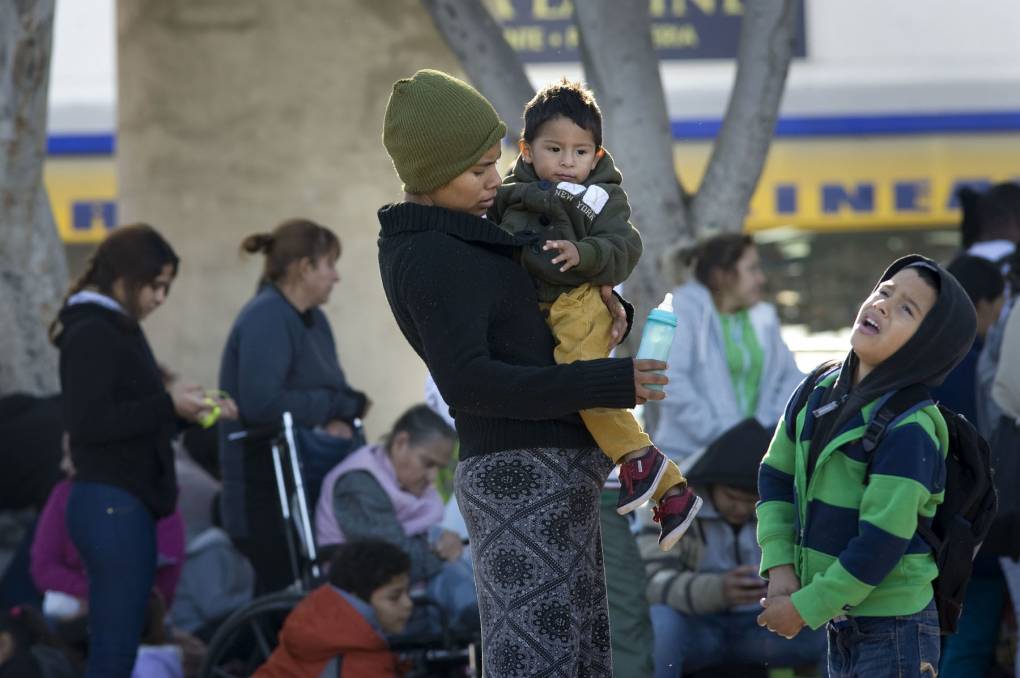
"caption": "A woman holds a child as they wait to hear their position on a list of people waiting at the U.S.-Mexico border to seek asylum in the U.S. on Nov. 21, 2018, in Tijuana, Mexico.",
"description": "A woman holds a child as they wait to hear their position on a list of people waiting at the U.S.-Mexico border to seek asylum in the U.S. on Nov. 21, 2018, in Tijuana, Mexico.",
"title": "02142020_immigration_chaparral FINAL 08-qut",
"credit": "David Maung for KQED",
"status": "inherit",
"isLoading": false,
"fetchFailed": false
},
"science_1957121": {
"type": "attachments",
"id": "science_1957121",
"meta": {
"index": "attachments_1716263798",
"site": "science",
"id": "1957121",
"found": true
},
"parent": 1957119,
"imgSizes": {
"twentyfourteen-full-width": {
"file": "https://ww2.kqed.org/app/uploads/sites/35/2020/02/RS41338_GettyImages-1204735206-qut-1038x576.jpg",
"width": 1038,
"mimeType": "image/jpeg",
"height": 576
},
"thumbnail": {
"file": "https://ww2.kqed.org/app/uploads/sites/35/2020/02/RS41338_GettyImages-1204735206-qut-160x107.jpg",
"width": 160,
"mimeType": "image/jpeg",
"height": 107
},
"post-thumbnail": {
"file": "https://ww2.kqed.org/app/uploads/sites/35/2020/02/RS41338_GettyImages-1204735206-qut-672x372.jpg",
"width": 672,
"mimeType": "image/jpeg",
"height": 372
},
"kqedFullSize": {
"file": "https://ww2.kqed.org/app/uploads/sites/35/2020/02/RS41338_GettyImages-1204735206-qut.jpg",
"width": 1920,
"height": 1280
},
"large": {
"file": "https://ww2.kqed.org/app/uploads/sites/35/2020/02/RS41338_GettyImages-1204735206-qut-1020x680.jpg",
"width": 1020,
"mimeType": "image/jpeg",
"height": 680
},
"full-width": {
"file": "https://ww2.kqed.org/app/uploads/sites/35/2020/02/RS41338_GettyImages-1204735206-qut-1920x1280.jpg",
"width": 1920,
"mimeType": "image/jpeg",
"height": 1280
},
"medium": {
"file": "https://ww2.kqed.org/app/uploads/sites/35/2020/02/RS41338_GettyImages-1204735206-qut-800x533.jpg",
"width": 800,
"mimeType": "image/jpeg",
"height": 533
},
"medium_large": {
"file": "https://ww2.kqed.org/app/uploads/sites/35/2020/02/RS41338_GettyImages-1204735206-qut-768x512.jpg",
"width": 768,
"mimeType": "image/jpeg",
"height": 512
}
},
"publishDate": 1581728385,
"modified": 1581979805,
"caption": "(L-R) Democratic presidential candidates former South Bend, Indiana Mayor Pete Buttigieg, Sen. Elizabeth Warren, D-Mass., former Vice President Joe Biden and Sen. Bernie Sanders, Independent, Vt., participate in the Democratic presidential primary debate in the Sullivan Arena at St. Anselm College on Feb. 7, 2020 in Manchester, New Hampshire. ",
"description": null,
"title": "RS41338_GettyImages-1204735206-qut",
"credit": "Photo by Joe Raedle/Getty Images",
"status": "inherit",
"isLoading": false,
"fetchFailed": false
},
"news_11801459": {
"type": "attachments",
"id": "news_11801459",
"meta": {
"index": "attachments_1716263798",
"site": "news",
"id": "11801459",
"found": true
},
"parent": 11801416,
"imgSizes": {
"apple_news_ca_landscape_5_5": {
"file": "https://ww2.kqed.org/app/uploads/sites/10/2020/02/RS41327_GettyImages-1202624864-qut-1044x783.jpg",
"width": 1044,
"mimeType": "image/jpeg",
"height": 783
},
"apple_news_ca_square_4_0": {
"file": "https://ww2.kqed.org/app/uploads/sites/10/2020/02/RS41327_GettyImages-1202624864-qut-470x470.jpg",
"width": 470,
"mimeType": "image/jpeg",
"height": 470
},
"twentyfourteen-full-width": {
"file": "https://ww2.kqed.org/app/uploads/sites/10/2020/02/RS41327_GettyImages-1202624864-qut-1038x576.jpg",
"width": 1038,
"mimeType": "image/jpeg",
"height": 576
},
"thumbnail": {
"file": "https://ww2.kqed.org/app/uploads/sites/10/2020/02/RS41327_GettyImages-1202624864-qut-160x107.jpg",
"width": 160,
"mimeType": "image/jpeg",
"height": 107
},
"post-thumbnail": {
"file": "https://ww2.kqed.org/app/uploads/sites/10/2020/02/RS41327_GettyImages-1202624864-qut-672x372.jpg",
"width": 672,
"mimeType": "image/jpeg",
"height": 372
},
"kqedFullSize": {
"file": "https://ww2.kqed.org/app/uploads/sites/10/2020/02/RS41327_GettyImages-1202624864-qut.jpg",
"width": 1920,
"height": 1280
},
"apple_news_ca_landscape_4_7": {
"file": "https://ww2.kqed.org/app/uploads/sites/10/2020/02/RS41327_GettyImages-1202624864-qut-632x474.jpg",
"width": 632,
"mimeType": "image/jpeg",
"height": 474
},
"large": {
"file": "https://ww2.kqed.org/app/uploads/sites/10/2020/02/RS41327_GettyImages-1202624864-qut-1020x680.jpg",
"width": 1020,
"mimeType": "image/jpeg",
"height": 680
},
"apple_news_ca_landscape_4_0": {
"file": "https://ww2.kqed.org/app/uploads/sites/10/2020/02/RS41327_GettyImages-1202624864-qut-536x402.jpg",
"width": 536,
"mimeType": "image/jpeg",
"height": 402
},
"apple_news_ca_portrait_12_9": {
"file": "https://ww2.kqed.org/app/uploads/sites/10/2020/02/RS41327_GettyImages-1202624864-qut-1122x1280.jpg",
"width": 1122,
"mimeType": "image/jpeg",
"height": 1280
},
"medium": {
"file": "https://ww2.kqed.org/app/uploads/sites/10/2020/02/RS41327_GettyImages-1202624864-qut-800x533.jpg",
"width": 800,
"mimeType": "image/jpeg",
"height": 533
},
"apple_news_ca_portrait_4_0": {
"file": "https://ww2.kqed.org/app/uploads/sites/10/2020/02/RS41327_GettyImages-1202624864-qut-354x472.jpg",
"width": 354,
"mimeType": "image/jpeg",
"height": 472
},
"apple_news_ca_portrait_9_7": {
"file": "https://ww2.kqed.org/app/uploads/sites/10/2020/02/RS41327_GettyImages-1202624864-qut-840x1120.jpg",
"width": 840,
"mimeType": "image/jpeg",
"height": 1120
},
"apple_news_ca_landscape_12_9": {
"file": "https://ww2.kqed.org/app/uploads/sites/10/2020/02/RS41327_GettyImages-1202624864-qut-1832x1280.jpg",
"width": 1832,
"mimeType": "image/jpeg",
"height": 1280
},
"apple_news_ca_square_9_7": {
"file": "https://ww2.kqed.org/app/uploads/sites/10/2020/02/RS41327_GettyImages-1202624864-qut-1104x1104.jpg",
"width": 1104,
"mimeType": "image/jpeg",
"height": 1104
},
"apple_news_ca_portrait_4_7": {
"file": "https://ww2.kqed.org/app/uploads/sites/10/2020/02/RS41327_GettyImages-1202624864-qut-414x552.jpg",
"width": 414,
"mimeType": "image/jpeg",
"height": 552
},
"apple_news_ca_square_12_9": {
"file": "https://ww2.kqed.org/app/uploads/sites/10/2020/02/RS41327_GettyImages-1202624864-qut-1472x1280.jpg",
"width": 1472,
"mimeType": "image/jpeg",
"height": 1280
},
"apple_news_ca_portrait_5_5": {
"file": "https://ww2.kqed.org/app/uploads/sites/10/2020/02/RS41327_GettyImages-1202624864-qut-687x916.jpg",
"width": 687,
"mimeType": "image/jpeg",
"height": 916
},
"full-width": {
"file": "https://ww2.kqed.org/app/uploads/sites/10/2020/02/RS41327_GettyImages-1202624864-qut-1920x1280.jpg",
"width": 1920,
"mimeType": "image/jpeg",
"height": 1280
},
"apple_news_ca_square_4_7": {
"file": "https://ww2.kqed.org/app/uploads/sites/10/2020/02/RS41327_GettyImages-1202624864-qut-550x550.jpg",
"width": 550,
"mimeType": "image/jpeg",
"height": 550
},
"apple_news_ca_landscape_9_7": {
"file": "https://ww2.kqed.org/app/uploads/sites/10/2020/02/RS41327_GettyImages-1202624864-qut-1376x1032.jpg",
"width": 1376,
"mimeType": "image/jpeg",
"height": 1032
},
"apple_news_ca_square_5_5": {
"file": "https://ww2.kqed.org/app/uploads/sites/10/2020/02/RS41327_GettyImages-1202624864-qut-912x912.jpg",
"width": 912,
"mimeType": "image/jpeg",
"height": 912
}
},
"publishDate": 1581609996,
"modified": 1581610036,
"caption": "A group of prominent Republicans are funding ads aimed at defeating Trump and Republican senators who support him.",
"description": null,
"title": "President Trump Holds Campaign Rally In Wildwood, New Jersey",
"credit": "Spencer Platt/Getty Images",
"status": "inherit",
"isLoading": false,
"fetchFailed": false
},
"news_11800998": {
"type": "attachments",
"id": "news_11800998",
"meta": {
"index": "attachments_1716263798",
"site": "news",
"id": "11800998",
"found": true
},
"parent": 11800987,
"imgSizes": {
"apple_news_ca_landscape_5_5": {
"file": "https://ww2.kqed.org/app/uploads/sites/10/2020/02/innocent_021020_final_MF-1044x783.png",
"width": 1044,
"mimeType": "image/png",
"height": 783
},
"apple_news_ca_square_4_0": {
"file": "https://ww2.kqed.org/app/uploads/sites/10/2020/02/innocent_021020_final_MF-470x470.png",
"width": 470,
"mimeType": "image/png",
"height": 470
},
"twentyfourteen-full-width": {
"file": "https://ww2.kqed.org/app/uploads/sites/10/2020/02/innocent_021020_final_MF-1038x576.png",
"width": 1038,
"mimeType": "image/png",
"height": 576
},
"thumbnail": {
"file": "https://ww2.kqed.org/app/uploads/sites/10/2020/02/innocent_021020_final_MF-160x108.png",
"width": 160,
"mimeType": "image/png",
"height": 108
},
"post-thumbnail": {
"file": "https://ww2.kqed.org/app/uploads/sites/10/2020/02/innocent_021020_final_MF-672x372.png",
"width": 672,
"mimeType": "image/png",
"height": 372
},
"kqedFullSize": {
"file": "https://ww2.kqed.org/app/uploads/sites/10/2020/02/innocent_021020_final_MF.png",
"width": 1920,
"height": 1298
},
"apple_news_ca_landscape_4_7": {
"file": "https://ww2.kqed.org/app/uploads/sites/10/2020/02/innocent_021020_final_MF-632x474.png",
"width": 632,
"mimeType": "image/png",
"height": 474
},
"large": {
"file": "https://ww2.kqed.org/app/uploads/sites/10/2020/02/innocent_021020_final_MF-1020x690.png",
"width": 1020,
"mimeType": "image/png",
"height": 690
},
"apple_news_ca_landscape_4_0": {
"file": "https://ww2.kqed.org/app/uploads/sites/10/2020/02/innocent_021020_final_MF-536x402.png",
"width": 536,
"mimeType": "image/png",
"height": 402
},
"apple_news_ca_portrait_12_9": {
"file": "https://ww2.kqed.org/app/uploads/sites/10/2020/02/innocent_021020_final_MF-1122x1298.png",
"width": 1122,
"mimeType": "image/png",
"height": 1298
},
"medium": {
"file": "https://ww2.kqed.org/app/uploads/sites/10/2020/02/innocent_021020_final_MF-800x541.png",
"width": 800,
"mimeType": "image/png",
"height": 541
},
"apple_news_ca_portrait_4_0": {
"file": "https://ww2.kqed.org/app/uploads/sites/10/2020/02/innocent_021020_final_MF-354x472.png",
"width": 354,
"mimeType": "image/png",
"height": 472
},
"apple_news_ca_portrait_9_7": {
"file": "https://ww2.kqed.org/app/uploads/sites/10/2020/02/innocent_021020_final_MF-840x1120.png",
"width": 840,
"mimeType": "image/png",
"height": 1120
},
"apple_news_ca_landscape_12_9": {
"file": "https://ww2.kqed.org/app/uploads/sites/10/2020/02/innocent_021020_final_MF-1832x1298.png",
"width": 1832,
"mimeType": "image/png",
"height": 1298
},
"apple_news_ca_square_9_7": {
"file": "https://ww2.kqed.org/app/uploads/sites/10/2020/02/innocent_021020_final_MF-1104x1104.png",
"width": 1104,
"mimeType": "image/png",
"height": 1104
},
"apple_news_ca_portrait_4_7": {
"file": "https://ww2.kqed.org/app/uploads/sites/10/2020/02/innocent_021020_final_MF-414x552.png",
"width": 414,
"mimeType": "image/png",
"height": 552
},
"apple_news_ca_square_12_9": {
"file": "https://ww2.kqed.org/app/uploads/sites/10/2020/02/innocent_021020_final_MF-1472x1298.png",
"width": 1472,
"mimeType": "image/png",
"height": 1298
},
"apple_news_ca_portrait_5_5": {
"file": "https://ww2.kqed.org/app/uploads/sites/10/2020/02/innocent_021020_final_MF-687x916.png",
"width": 687,
"mimeType": "image/png",
"height": 916
},
"full-width": {
"file": "https://ww2.kqed.org/app/uploads/sites/10/2020/02/innocent_021020_final_MF-1920x1298.png",
"width": 1920,
"mimeType": "image/png",
"height": 1298
},
"apple_news_ca_square_4_7": {
"file": "https://ww2.kqed.org/app/uploads/sites/10/2020/02/innocent_021020_final_MF-550x550.png",
"width": 550,
"mimeType": "image/png",
"height": 550
},
"apple_news_ca_landscape_9_7": {
"file": "https://ww2.kqed.org/app/uploads/sites/10/2020/02/innocent_021020_final_MF-1376x1032.png",
"width": 1376,
"mimeType": "image/png",
"height": 1032
},
"apple_news_ca_square_5_5": {
"file": "https://ww2.kqed.org/app/uploads/sites/10/2020/02/innocent_021020_final_MF-912x912.png",
"width": 912,
"mimeType": "image/png",
"height": 912
}
},
"publishDate": 1581384963,
"modified": 1581385004,
"caption": null,
"description": null,
"title": "innocent_021020_final_MF",
"credit": null,
"status": "inherit",
"isLoading": false,
"fetchFailed": false
},
"science_1956620": {
"type": "attachments",
"id": "science_1956620",
"meta": {
"index": "attachments_1716263798",
"site": "science",
"id": "1956620",
"found": true
},
"parent": 1956614,
"imgSizes": {
"twentyfourteen-full-width": {
"file": "https://ww2.kqed.org/app/uploads/sites/35/2020/02/RS41165_49435312328_e2223bd3ce_o-qut-1038x576.jpg",
"width": 1038,
"mimeType": "image/jpeg",
"height": 576
},
"thumbnail": {
"file": "https://ww2.kqed.org/app/uploads/sites/35/2020/02/RS41165_49435312328_e2223bd3ce_o-qut-160x107.jpg",
"width": 160,
"mimeType": "image/jpeg",
"height": 107
},
"post-thumbnail": {
"file": "https://ww2.kqed.org/app/uploads/sites/35/2020/02/RS41165_49435312328_e2223bd3ce_o-qut-672x372.jpg",
"width": 672,
"mimeType": "image/jpeg",
"height": 372
},
"kqedFullSize": {
"file": "https://ww2.kqed.org/app/uploads/sites/35/2020/02/RS41165_49435312328_e2223bd3ce_o-qut.jpg",
"width": 1920,
"height": 1280
},
"large": {
"file": "https://ww2.kqed.org/app/uploads/sites/35/2020/02/RS41165_49435312328_e2223bd3ce_o-qut-1020x680.jpg",
"width": 1020,
"mimeType": "image/jpeg",
"height": 680
},
"full-width": {
"file": "https://ww2.kqed.org/app/uploads/sites/35/2020/02/RS41165_49435312328_e2223bd3ce_o-qut-1920x1280.jpg",
"width": 1920,
"mimeType": "image/jpeg",
"height": 1280
},
"medium": {
"file": "https://ww2.kqed.org/app/uploads/sites/35/2020/02/RS41165_49435312328_e2223bd3ce_o-qut-800x533.jpg",
"width": 800,
"mimeType": "image/jpeg",
"height": 533
},
"medium_large": {
"file": "https://ww2.kqed.org/app/uploads/sites/35/2020/02/RS41165_49435312328_e2223bd3ce_o-qut-768x512.jpg",
"width": 768,
"mimeType": "image/jpeg",
"height": 512
}
},
"publishDate": 1581018268,
"modified": 1581019881,
"caption": "Mike Stoker addresses an Arizona audience about the Navigable Waters Protection Rule on Jan. 23, 2020. ",
"description": null,
"title": "-",
"credit": "Los Angeles District U.S. Army Corps of Engineers",
"status": "inherit",
"isLoading": false,
"fetchFailed": false
},
"news_11800340": {
"type": "attachments",
"id": "news_11800340",
"meta": {
"index": "attachments_1716263798",
"site": "news",
"id": "11800340",
"found": true
},
"parent": 11800271,
"imgSizes": {
"apple_news_ca_landscape_5_5": {
"file": "https://ww2.kqed.org/app/uploads/sites/10/2020/02/RS41146_002_KQED_TrumpProtest_02052020_1510-qut-1044x783.jpg",
"width": 1044,
"mimeType": "image/jpeg",
"height": 783
},
"apple_news_ca_square_4_0": {
"file": "https://ww2.kqed.org/app/uploads/sites/10/2020/02/RS41146_002_KQED_TrumpProtest_02052020_1510-qut-470x470.jpg",
"width": 470,
"mimeType": "image/jpeg",
"height": 470
},
"twentyfourteen-full-width": {
"file": "https://ww2.kqed.org/app/uploads/sites/10/2020/02/RS41146_002_KQED_TrumpProtest_02052020_1510-qut-1038x576.jpg",
"width": 1038,
"mimeType": "image/jpeg",
"height": 576
},
"thumbnail": {
"file": "https://ww2.kqed.org/app/uploads/sites/10/2020/02/RS41146_002_KQED_TrumpProtest_02052020_1510-qut-160x107.jpg",
"width": 160,
"mimeType": "image/jpeg",
"height": 107
},
"post-thumbnail": {
"file": "https://ww2.kqed.org/app/uploads/sites/10/2020/02/RS41146_002_KQED_TrumpProtest_02052020_1510-qut-672x372.jpg",
"width": 672,
"mimeType": "image/jpeg",
"height": 372
},
"kqedFullSize": {
"file": "https://ww2.kqed.org/app/uploads/sites/10/2020/02/RS41146_002_KQED_TrumpProtest_02052020_1510-qut.jpg",
"width": 1920,
"height": 1280
},
"apple_news_ca_landscape_4_7": {
"file": "https://ww2.kqed.org/app/uploads/sites/10/2020/02/RS41146_002_KQED_TrumpProtest_02052020_1510-qut-632x474.jpg",
"width": 632,
"mimeType": "image/jpeg",
"height": 474
},
"large": {
"file": "https://ww2.kqed.org/app/uploads/sites/10/2020/02/RS41146_002_KQED_TrumpProtest_02052020_1510-qut-1020x680.jpg",
"width": 1020,
"mimeType": "image/jpeg",
"height": 680
},
"apple_news_ca_landscape_4_0": {
"file": "https://ww2.kqed.org/app/uploads/sites/10/2020/02/RS41146_002_KQED_TrumpProtest_02052020_1510-qut-536x402.jpg",
"width": 536,
"mimeType": "image/jpeg",
"height": 402
},
"apple_news_ca_portrait_12_9": {
"file": "https://ww2.kqed.org/app/uploads/sites/10/2020/02/RS41146_002_KQED_TrumpProtest_02052020_1510-qut-1122x1280.jpg",
"width": 1122,
"mimeType": "image/jpeg",
"height": 1280
},
"medium": {
"file": "https://ww2.kqed.org/app/uploads/sites/10/2020/02/RS41146_002_KQED_TrumpProtest_02052020_1510-qut-800x533.jpg",
"width": 800,
"mimeType": "image/jpeg",
"height": 533
},
"apple_news_ca_portrait_4_0": {
"file": "https://ww2.kqed.org/app/uploads/sites/10/2020/02/RS41146_002_KQED_TrumpProtest_02052020_1510-qut-354x472.jpg",
"width": 354,
"mimeType": "image/jpeg",
"height": 472
},
"apple_news_ca_portrait_9_7": {
"file": "https://ww2.kqed.org/app/uploads/sites/10/2020/02/RS41146_002_KQED_TrumpProtest_02052020_1510-qut-840x1120.jpg",
"width": 840,
"mimeType": "image/jpeg",
"height": 1120
},
"apple_news_ca_landscape_12_9": {
"file": "https://ww2.kqed.org/app/uploads/sites/10/2020/02/RS41146_002_KQED_TrumpProtest_02052020_1510-qut-1832x1280.jpg",
"width": 1832,
"mimeType": "image/jpeg",
"height": 1280
},
"apple_news_ca_square_9_7": {
"file": "https://ww2.kqed.org/app/uploads/sites/10/2020/02/RS41146_002_KQED_TrumpProtest_02052020_1510-qut-1104x1104.jpg",
"width": 1104,
"mimeType": "image/jpeg",
"height": 1104
},
"apple_news_ca_portrait_4_7": {
"file": "https://ww2.kqed.org/app/uploads/sites/10/2020/02/RS41146_002_KQED_TrumpProtest_02052020_1510-qut-414x552.jpg",
"width": 414,
"mimeType": "image/jpeg",
"height": 552
},
"apple_news_ca_square_12_9": {
"file": "https://ww2.kqed.org/app/uploads/sites/10/2020/02/RS41146_002_KQED_TrumpProtest_02052020_1510-qut-1472x1280.jpg",
"width": 1472,
"mimeType": "image/jpeg",
"height": 1280
},
"apple_news_ca_portrait_5_5": {
"file": "https://ww2.kqed.org/app/uploads/sites/10/2020/02/RS41146_002_KQED_TrumpProtest_02052020_1510-qut-687x916.jpg",
"width": 687,
"mimeType": "image/jpeg",
"height": 916
},
"full-width": {
"file": "https://ww2.kqed.org/app/uploads/sites/10/2020/02/RS41146_002_KQED_TrumpProtest_02052020_1510-qut-1920x1280.jpg",
"width": 1920,
"mimeType": "image/jpeg",
"height": 1280
},
"apple_news_ca_square_4_7": {
"file": "https://ww2.kqed.org/app/uploads/sites/10/2020/02/RS41146_002_KQED_TrumpProtest_02052020_1510-qut-550x550.jpg",
"width": 550,
"mimeType": "image/jpeg",
"height": 550
},
"apple_news_ca_landscape_9_7": {
"file": "https://ww2.kqed.org/app/uploads/sites/10/2020/02/RS41146_002_KQED_TrumpProtest_02052020_1510-qut-1376x1032.jpg",
"width": 1376,
"mimeType": "image/jpeg",
"height": 1032
},
"apple_news_ca_square_5_5": {
"file": "https://ww2.kqed.org/app/uploads/sites/10/2020/02/RS41146_002_KQED_TrumpProtest_02052020_1510-qut-912x912.jpg",
"width": 912,
"mimeType": "image/jpeg",
"height": 912
}
},
"publishDate": 1580955842,
"modified": 1581014981,
"caption": "D'Andre Teeter holds a sign he made for a Feb. 5, 2020, protest organized by Nobody Is Above the Law, a coalition of progressive advocacy groups. He said, \"We need to be out here larger and larger and night after night. I can't wait for the election.\"",
"description": "D'Andre Teeter holds a sign he made for a Feb. 5, 2020 protest organized by Nobody Is Above the Law, a coalition of progressive advocacy groups. He said, \"We need to be out here larger and larger and night after night. I can't wait for the election.\"",
"title": "D'Andre-Teeter-protest-San-Francisco",
"credit": "Beth LaBerge/KQED",
"status": "inherit",
"isLoading": false,
"fetchFailed": false
},
"news_11800173": {
"type": "attachments",
"id": "news_11800173",
"meta": {
"index": "attachments_1716263798",
"site": "news",
"id": "11800173",
"found": true
},
"parent": 11800156,
"imgSizes": {
"apple_news_ca_landscape_5_5": {
"file": "https://ww2.kqed.org/app/uploads/sites/10/2020/02/rippers_020520_finalMF-1044x783.png",
"width": 1044,
"mimeType": "image/png",
"height": 783
},
"apple_news_ca_square_4_0": {
"file": "https://ww2.kqed.org/app/uploads/sites/10/2020/02/rippers_020520_finalMF-470x470.png",
"width": 470,
"mimeType": "image/png",
"height": 470
},
"twentyfourteen-full-width": {
"file": "https://ww2.kqed.org/app/uploads/sites/10/2020/02/rippers_020520_finalMF-1038x576.png",
"width": 1038,
"mimeType": "image/png",
"height": 576
},
"thumbnail": {
"file": "https://ww2.kqed.org/app/uploads/sites/10/2020/02/rippers_020520_finalMF-160x101.png",
"width": 160,
"mimeType": "image/png",
"height": 101
},
"post-thumbnail": {
"file": "https://ww2.kqed.org/app/uploads/sites/10/2020/02/rippers_020520_finalMF-672x372.png",
"width": 672,
"mimeType": "image/png",
"height": 372
},
"kqedFullSize": {
"file": "https://ww2.kqed.org/app/uploads/sites/10/2020/02/rippers_020520_finalMF.png",
"width": 1920,
"height": 1216
},
"apple_news_ca_landscape_4_7": {
"file": "https://ww2.kqed.org/app/uploads/sites/10/2020/02/rippers_020520_finalMF-632x474.png",
"width": 632,
"mimeType": "image/png",
"height": 474
},
"large": {
"file": "https://ww2.kqed.org/app/uploads/sites/10/2020/02/rippers_020520_finalMF-1020x646.png",
"width": 1020,
"mimeType": "image/png",
"height": 646
},
"apple_news_ca_landscape_4_0": {
"file": "https://ww2.kqed.org/app/uploads/sites/10/2020/02/rippers_020520_finalMF-536x402.png",
"width": 536,
"mimeType": "image/png",
"height": 402
},
"apple_news_ca_portrait_12_9": {
"file": "https://ww2.kqed.org/app/uploads/sites/10/2020/02/rippers_020520_finalMF-1122x1216.png",
"width": 1122,
"mimeType": "image/png",
"height": 1216
},
"medium": {
"file": "https://ww2.kqed.org/app/uploads/sites/10/2020/02/rippers_020520_finalMF-800x507.png",
"width": 800,
"mimeType": "image/png",
"height": 507
},
"apple_news_ca_portrait_4_0": {
"file": "https://ww2.kqed.org/app/uploads/sites/10/2020/02/rippers_020520_finalMF-354x472.png",
"width": 354,
"mimeType": "image/png",
"height": 472
},
"apple_news_ca_portrait_9_7": {
"file": "https://ww2.kqed.org/app/uploads/sites/10/2020/02/rippers_020520_finalMF-840x1120.png",
"width": 840,
"mimeType": "image/png",
"height": 1120
},
"apple_news_ca_landscape_12_9": {
"file": "https://ww2.kqed.org/app/uploads/sites/10/2020/02/rippers_020520_finalMF-1832x1216.png",
"width": 1832,
"mimeType": "image/png",
"height": 1216
},
"apple_news_ca_square_9_7": {
"file": "https://ww2.kqed.org/app/uploads/sites/10/2020/02/rippers_020520_finalMF-1104x1104.png",
"width": 1104,
"mimeType": "image/png",
"height": 1104
},
"apple_news_ca_portrait_4_7": {
"file": "https://ww2.kqed.org/app/uploads/sites/10/2020/02/rippers_020520_finalMF-414x552.png",
"width": 414,
"mimeType": "image/png",
"height": 552
},
"apple_news_ca_square_12_9": {
"file": "https://ww2.kqed.org/app/uploads/sites/10/2020/02/rippers_020520_finalMF-1472x1216.png",
"width": 1472,
"mimeType": "image/png",
"height": 1216
},
"apple_news_ca_portrait_5_5": {
"file": "https://ww2.kqed.org/app/uploads/sites/10/2020/02/rippers_020520_finalMF-687x916.png",
"width": 687,
"mimeType": "image/png",
"height": 916
},
"full-width": {
"file": "https://ww2.kqed.org/app/uploads/sites/10/2020/02/rippers_020520_finalMF-1920x1216.png",
"width": 1920,
"mimeType": "image/png",
"height": 1216
},
"apple_news_ca_square_4_7": {
"file": "https://ww2.kqed.org/app/uploads/sites/10/2020/02/rippers_020520_finalMF-550x550.png",
"width": 550,
"mimeType": "image/png",
"height": 550
},
"apple_news_ca_landscape_9_7": {
"file": "https://ww2.kqed.org/app/uploads/sites/10/2020/02/rippers_020520_finalMF-1376x1032.png",
"width": 1376,
"mimeType": "image/png",
"height": 1032
},
"apple_news_ca_square_5_5": {
"file": "https://ww2.kqed.org/app/uploads/sites/10/2020/02/rippers_020520_finalMF-912x912.png",
"width": 912,
"mimeType": "image/png",
"height": 912
}
},
"publishDate": 1580931929,
"modified": 1580931966,
"caption": null,
"description": null,
"title": "rippers_020520_finalMF",
"credit": null,
"status": "inherit",
"isLoading": false,
"fetchFailed": false
},
"news_11800217": {
"type": "attachments",
"id": "news_11800217",
"meta": {
"index": "attachments_1716263798",
"site": "news",
"id": "11800217",
"found": true
},
"parent": 11800119,
"imgSizes": {
"apple_news_ca_landscape_5_5": {
"file": "https://ww2.kqed.org/app/uploads/sites/10/2020/02/RS41121_GettyImages-1204262982-1-qut-1044x783.jpg",
"width": 1044,
"mimeType": "image/jpeg",
"height": 783
},
"apple_news_ca_square_4_0": {
"file": "https://ww2.kqed.org/app/uploads/sites/10/2020/02/RS41121_GettyImages-1204262982-1-qut-470x470.jpg",
"width": 470,
"mimeType": "image/jpeg",
"height": 470
},
"twentyfourteen-full-width": {
"file": "https://ww2.kqed.org/app/uploads/sites/10/2020/02/RS41121_GettyImages-1204262982-1-qut-1038x576.jpg",
"width": 1038,
"mimeType": "image/jpeg",
"height": 576
},
"thumbnail": {
"file": "https://ww2.kqed.org/app/uploads/sites/10/2020/02/RS41121_GettyImages-1204262982-1-qut-160x123.jpg",
"width": 160,
"mimeType": "image/jpeg",
"height": 123
},
"post-thumbnail": {
"file": "https://ww2.kqed.org/app/uploads/sites/10/2020/02/RS41121_GettyImages-1204262982-1-qut-672x372.jpg",
"width": 672,
"mimeType": "image/jpeg",
"height": 372
},
"kqedFullSize": {
"file": "https://ww2.kqed.org/app/uploads/sites/10/2020/02/RS41121_GettyImages-1204262982-1-qut.jpg",
"width": 1920,
"height": 1474
},
"apple_news_ca_landscape_4_7": {
"file": "https://ww2.kqed.org/app/uploads/sites/10/2020/02/RS41121_GettyImages-1204262982-1-qut-632x474.jpg",
"width": 632,
"mimeType": "image/jpeg",
"height": 474
},
"large": {
"file": "https://ww2.kqed.org/app/uploads/sites/10/2020/02/RS41121_GettyImages-1204262982-1-qut-1020x783.jpg",
"width": 1020,
"mimeType": "image/jpeg",
"height": 783
},
"apple_news_ca_landscape_4_0": {
"file": "https://ww2.kqed.org/app/uploads/sites/10/2020/02/RS41121_GettyImages-1204262982-1-qut-536x402.jpg",
"width": 536,
"mimeType": "image/jpeg",
"height": 402
},
"apple_news_ca_portrait_12_9": {
"file": "https://ww2.kqed.org/app/uploads/sites/10/2020/02/RS41121_GettyImages-1204262982-1-qut-1122x1474.jpg",
"width": 1122,
"mimeType": "image/jpeg",
"height": 1474
},
"medium": {
"file": "https://ww2.kqed.org/app/uploads/sites/10/2020/02/RS41121_GettyImages-1204262982-1-qut-800x614.jpg",
"width": 800,
"mimeType": "image/jpeg",
"height": 614
},
"apple_news_ca_portrait_4_0": {
"file": "https://ww2.kqed.org/app/uploads/sites/10/2020/02/RS41121_GettyImages-1204262982-1-qut-354x472.jpg",
"width": 354,
"mimeType": "image/jpeg",
"height": 472
},
"apple_news_ca_portrait_9_7": {
"file": "https://ww2.kqed.org/app/uploads/sites/10/2020/02/RS41121_GettyImages-1204262982-1-qut-840x1120.jpg",
"width": 840,
"mimeType": "image/jpeg",
"height": 1120
},
"apple_news_ca_landscape_12_9": {
"file": "https://ww2.kqed.org/app/uploads/sites/10/2020/02/RS41121_GettyImages-1204262982-1-qut-1832x1374.jpg",
"width": 1832,
"mimeType": "image/jpeg",
"height": 1374
},
"apple_news_ca_square_9_7": {
"file": "https://ww2.kqed.org/app/uploads/sites/10/2020/02/RS41121_GettyImages-1204262982-1-qut-1104x1104.jpg",
"width": 1104,
"mimeType": "image/jpeg",
"height": 1104
},
"apple_news_ca_portrait_4_7": {
"file": "https://ww2.kqed.org/app/uploads/sites/10/2020/02/RS41121_GettyImages-1204262982-1-qut-414x552.jpg",
"width": 414,
"mimeType": "image/jpeg",
"height": 552
},
"apple_news_ca_square_12_9": {
"file": "https://ww2.kqed.org/app/uploads/sites/10/2020/02/RS41121_GettyImages-1204262982-1-qut-1472x1472.jpg",
"width": 1472,
"mimeType": "image/jpeg",
"height": 1472
},
"apple_news_ca_portrait_5_5": {
"file": "https://ww2.kqed.org/app/uploads/sites/10/2020/02/RS41121_GettyImages-1204262982-1-qut-687x916.jpg",
"width": 687,
"mimeType": "image/jpeg",
"height": 916
},
"full-width": {
"file": "https://ww2.kqed.org/app/uploads/sites/10/2020/02/RS41121_GettyImages-1204262982-1-qut-1920x1474.jpg",
"width": 1920,
"mimeType": "image/jpeg",
"height": 1474
},
"apple_news_ca_square_4_7": {
"file": "https://ww2.kqed.org/app/uploads/sites/10/2020/02/RS41121_GettyImages-1204262982-1-qut-550x550.jpg",
"width": 550,
"mimeType": "image/jpeg",
"height": 550
},
"apple_news_ca_landscape_9_7": {
"file": "https://ww2.kqed.org/app/uploads/sites/10/2020/02/RS41121_GettyImages-1204262982-1-qut-1376x1032.jpg",
"width": 1376,
"mimeType": "image/jpeg",
"height": 1032
},
"apple_news_ca_square_5_5": {
"file": "https://ww2.kqed.org/app/uploads/sites/10/2020/02/RS41121_GettyImages-1204262982-1-qut-912x912.jpg",
"width": 912,
"mimeType": "image/jpeg",
"height": 912
}
},
"publishDate": 1580939741,
"modified": 1580939817,
"caption": "President Trump at the White House on Wednesday.",
"description": null,
"title": "President Trump Welcomes Venezuelan Opposition Leader Juan Guaido To White House",
"credit": "Mark Wilson/Getty Images",
"status": "inherit",
"isLoading": false,
"fetchFailed": false
},
"news_11800008": {
"type": "attachments",
"id": "news_11800008",
"meta": {
"index": "attachments_1716263798",
"site": "news",
"id": "11800008",
"found": true
},
"parent": 11799913,
"imgSizes": {
"apple_news_ca_square_4_0": {
"file": "https://ww2.kqed.org/app/uploads/sites/10/2020/02/ap_20035725257446-edit_custom-2b436e149a0210909da6684c80a1e9eb2275a4d0-s800-c85-470x470.jpg",
"width": 470,
"mimeType": "image/jpeg",
"height": 470
},
"thumbnail": {
"file": "https://ww2.kqed.org/app/uploads/sites/10/2020/02/ap_20035725257446-edit_custom-2b436e149a0210909da6684c80a1e9eb2275a4d0-s800-c85-160x107.jpg",
"width": 160,
"mimeType": "image/jpeg",
"height": 107
},
"post-thumbnail": {
"file": "https://ww2.kqed.org/app/uploads/sites/10/2020/02/ap_20035725257446-edit_custom-2b436e149a0210909da6684c80a1e9eb2275a4d0-s800-c85-672x372.jpg",
"width": 672,
"mimeType": "image/jpeg",
"height": 372
},
"kqedFullSize": {
"file": "https://ww2.kqed.org/app/uploads/sites/10/2020/02/ap_20035725257446-edit_custom-2b436e149a0210909da6684c80a1e9eb2275a4d0-s800-c85.jpg",
"width": 800,
"height": 534
},
"apple_news_ca_landscape_4_7": {
"file": "https://ww2.kqed.org/app/uploads/sites/10/2020/02/ap_20035725257446-edit_custom-2b436e149a0210909da6684c80a1e9eb2275a4d0-s800-c85-632x474.jpg",
"width": 632,
"mimeType": "image/jpeg",
"height": 474
},
"apple_news_ca_portrait_4_7": {
"file": "https://ww2.kqed.org/app/uploads/sites/10/2020/02/ap_20035725257446-edit_custom-2b436e149a0210909da6684c80a1e9eb2275a4d0-s800-c85-414x534.jpg",
"width": 414,
"mimeType": "image/jpeg",
"height": 534
},
"apple_news_ca_portrait_5_5": {
"file": "https://ww2.kqed.org/app/uploads/sites/10/2020/02/ap_20035725257446-edit_custom-2b436e149a0210909da6684c80a1e9eb2275a4d0-s800-c85-687x534.jpg",
"width": 687,
"mimeType": "image/jpeg",
"height": 534
},
"apple_news_ca_square_4_7": {
"file": "https://ww2.kqed.org/app/uploads/sites/10/2020/02/ap_20035725257446-edit_custom-2b436e149a0210909da6684c80a1e9eb2275a4d0-s800-c85-550x534.jpg",
"width": 550,
"mimeType": "image/jpeg",
"height": 534
},
"apple_news_ca_landscape_4_0": {
"file": "https://ww2.kqed.org/app/uploads/sites/10/2020/02/ap_20035725257446-edit_custom-2b436e149a0210909da6684c80a1e9eb2275a4d0-s800-c85-536x402.jpg",
"width": 536,
"mimeType": "image/jpeg",
"height": 402
},
"medium": {
"file": "https://ww2.kqed.org/app/uploads/sites/10/2020/02/ap_20035725257446-edit_custom-2b436e149a0210909da6684c80a1e9eb2275a4d0-s800-c85-800x534.jpg",
"width": 800,
"mimeType": "image/jpeg",
"height": 534
},
"apple_news_ca_portrait_4_0": {
"file": "https://ww2.kqed.org/app/uploads/sites/10/2020/02/ap_20035725257446-edit_custom-2b436e149a0210909da6684c80a1e9eb2275a4d0-s800-c85-354x472.jpg",
"width": 354,
"mimeType": "image/jpeg",
"height": 472
}
},
"publishDate": 1580856660,
"modified": 1580856700,
"caption": "Sen. Susan Collins, R-Maine, departs as Republican senators leave a closed-door strategy session at the Capitol on Tuesday.",
"description": null,
"title": "ap_20035725257446-edit_custom-2b436e149a0210909da6684c80a1e9eb2275a4d0-s800-c85",
"credit": "J. Scott Applewhite/AP",
"status": "inherit",
"isLoading": false,
"fetchFailed": false
},
"news_11799895": {
"type": "attachments",
"id": "news_11799895",
"meta": {
"index": "attachments_1716263798",
"site": "news",
"id": "11799895",
"found": true
},
"parent": 11799893,
"imgSizes": {
"apple_news_ca_landscape_5_5": {
"file": "https://ww2.kqed.org/app/uploads/sites/10/2020/02/closing_020320_final-1044x783.jpg",
"width": 1044,
"mimeType": "image/jpeg",
"height": 783
},
"apple_news_ca_square_4_0": {
"file": "https://ww2.kqed.org/app/uploads/sites/10/2020/02/closing_020320_final-470x470.jpg",
"width": 470,
"mimeType": "image/jpeg",
"height": 470
},
"twentyfourteen-full-width": {
"file": "https://ww2.kqed.org/app/uploads/sites/10/2020/02/closing_020320_final-1038x576.jpg",
"width": 1038,
"mimeType": "image/jpeg",
"height": 576
},
"thumbnail": {
"file": "https://ww2.kqed.org/app/uploads/sites/10/2020/02/closing_020320_final-160x122.jpg",
"width": 160,
"mimeType": "image/jpeg",
"height": 122
},
"post-thumbnail": {
"file": "https://ww2.kqed.org/app/uploads/sites/10/2020/02/closing_020320_final-672x372.jpg",
"width": 672,
"mimeType": "image/jpeg",
"height": 372
},
"kqedFullSize": {
"file": "https://ww2.kqed.org/app/uploads/sites/10/2020/02/closing_020320_final.jpg",
"width": 1920,
"height": 1458
},
"apple_news_ca_landscape_4_7": {
"file": "https://ww2.kqed.org/app/uploads/sites/10/2020/02/closing_020320_final-632x474.jpg",
"width": 632,
"mimeType": "image/jpeg",
"height": 474
},
"large": {
"file": "https://ww2.kqed.org/app/uploads/sites/10/2020/02/closing_020320_final-1020x775.jpg",
"width": 1020,
"mimeType": "image/jpeg",
"height": 775
},
"apple_news_ca_landscape_4_0": {
"file": "https://ww2.kqed.org/app/uploads/sites/10/2020/02/closing_020320_final-536x402.jpg",
"width": 536,
"mimeType": "image/jpeg",
"height": 402
},
"apple_news_ca_portrait_12_9": {
"file": "https://ww2.kqed.org/app/uploads/sites/10/2020/02/closing_020320_final-1122x1458.jpg",
"width": 1122,
"mimeType": "image/jpeg",
"height": 1458
},
"medium": {
"file": "https://ww2.kqed.org/app/uploads/sites/10/2020/02/closing_020320_final-800x608.jpg",
"width": 800,
"mimeType": "image/jpeg",
"height": 608
},
"apple_news_ca_portrait_4_0": {
"file": "https://ww2.kqed.org/app/uploads/sites/10/2020/02/closing_020320_final-354x472.jpg",
"width": 354,
"mimeType": "image/jpeg",
"height": 472
},
"apple_news_ca_portrait_9_7": {
"file": "https://ww2.kqed.org/app/uploads/sites/10/2020/02/closing_020320_final-840x1120.jpg",
"width": 840,
"mimeType": "image/jpeg",
"height": 1120
},
"apple_news_ca_landscape_12_9": {
"file": "https://ww2.kqed.org/app/uploads/sites/10/2020/02/closing_020320_final-1832x1374.jpg",
"width": 1832,
"mimeType": "image/jpeg",
"height": 1374
},
"apple_news_ca_square_9_7": {
"file": "https://ww2.kqed.org/app/uploads/sites/10/2020/02/closing_020320_final-1104x1104.jpg",
"width": 1104,
"mimeType": "image/jpeg",
"height": 1104
},
"apple_news_ca_portrait_4_7": {
"file": "https://ww2.kqed.org/app/uploads/sites/10/2020/02/closing_020320_final-414x552.jpg",
"width": 414,
"mimeType": "image/jpeg",
"height": 552
},
"apple_news_ca_square_12_9": {
"file": "https://ww2.kqed.org/app/uploads/sites/10/2020/02/closing_020320_final-1472x1458.jpg",
"width": 1472,
"mimeType": "image/jpeg",
"height": 1458
},
"apple_news_ca_portrait_5_5": {
"file": "https://ww2.kqed.org/app/uploads/sites/10/2020/02/closing_020320_final-687x916.jpg",
"width": 687,
"mimeType": "image/jpeg",
"height": 916
},
"full-width": {
"file": "https://ww2.kqed.org/app/uploads/sites/10/2020/02/closing_020320_final-1920x1458.jpg",
"width": 1920,
"mimeType": "image/jpeg",
"height": 1458
},
"apple_news_ca_square_4_7": {
"file": "https://ww2.kqed.org/app/uploads/sites/10/2020/02/closing_020320_final-550x550.jpg",
"width": 550,
"mimeType": "image/jpeg",
"height": 550
},
"apple_news_ca_landscape_9_7": {
"file": "https://ww2.kqed.org/app/uploads/sites/10/2020/02/closing_020320_final-1376x1032.jpg",
"width": 1376,
"mimeType": "image/jpeg",
"height": 1032
},
"apple_news_ca_square_5_5": {
"file": "https://ww2.kqed.org/app/uploads/sites/10/2020/02/closing_020320_final-912x912.jpg",
"width": 912,
"mimeType": "image/jpeg",
"height": 912
}
},
"publishDate": 1580780122,
"modified": 1580780150,
"caption": null,
"description": null,
"title": "closing_020320_final",
"credit": null,
"status": "inherit",
"isLoading": false,
"fetchFailed": false
}
},
"audioPlayerReducer": {
"postId": "stream_live",
"isPaused": true,
"isPlaying": false,
"pfsActive": false,
"pledgeModalIsOpen": true,
"playerDrawerIsOpen": false,
"liveAudioPlayStartedAt": 0,
"liveAudioPlayContext": ""
},
"authorsReducer": {
"byline_news_11802114": {
"type": "authors",
"id": "byline_news_11802114",
"meta": {
"override": true
},
"slug": "byline_news_11802114",
"name": "Aamer Madhani and Kevin Freking \u003cbr> The Associated Press",
"isLoading": false
},
"byline_news_11800119": {
"type": "authors",
"id": "byline_news_11800119",
"meta": {
"override": true
},
"slug": "byline_news_11800119",
"name": "\u003ca href=\"https://www.npr.org/people/348770153/krishnadev-calamur\"> Krishnadev Calamur \u003ca />, \u003ca href=\"https://www.npr.org/people/638550790/bobby-allyn\"> Bobby Allyn \u003ca /> and \u003ca href=\"https://www.npr.org/people/2100941/brian-naylor\"> Brian Naylor \u003ca />",
"isLoading": false
},
"byline_news_11799913": {
"type": "authors",
"id": "byline_news_11799913",
"meta": {
"override": true
},
"slug": "byline_news_11799913",
"name": "NPR Staff",
"isLoading": false
},
"mlam": {
"type": "authors",
"id": "244",
"meta": {
"index": "authors_1716337520",
"id": "244",
"found": true
},
"name": "Monica Lam",
"firstName": "Monica Z.",
"lastName": "Lam",
"slug": "mlam",
"email": "mlam@kqed.org",
"display_author_email": true,
"staff_mastheads": [
"news"
],
"title": "KQED Senior Producer",
"bio": "Monica is senior producer of the weekly current affairs program, \"KQED Newsroom.\" She's also served as senior editor of digital content at KQED. She likes to report and edit as well as produce video and take photos.\r\n\r\nBefore joining KQED, Monica worked at the Center for Investigative Reporting, where she examined conditions inside \u003cspan style=\"font-weight: 400;\">maximum security \u003c/span>prisons and abuse in state-run institutions for the developmentally disabled. Prior to that, she produced and directed \u003cem>Journey of the Bonesetter's Daughter,\u003c/em> a documentary that follows novelist Amy Tan as she creates an opera based on her family history.\r\n\r\nMonica's work has been honored with a duPont Award, five Emmys, regional and national Murrow Awards, and has been recognized by Investigative Reporters and Editors, the Society of Professional Journalists, Religion Newswriters Association and the San Francisco Peninsula Press Club. Monica studied urban studies at Stanford University and earned a master's in journalism at University of California at Berkeley. Follow her on twitter: @monicazlam",
"avatar": "https://secure.gravatar.com/avatar/018c474b2b71f43e0e6ca9b15a0ad36f?s=600&d=blank&r=g",
"twitter": "@monicazlam",
"facebook": null,
"instagram": null,
"linkedin": null,
"sites": [
{
"site": "arts",
"roles": [
"administrator"
]
},
{
"site": "news",
"roles": [
"editor"
]
},
{
"site": "trulyca",
"roles": [
"editor"
]
},
{
"site": "science",
"roles": [
"editor"
]
},
{
"site": "breakingnews",
"roles": [
"editor"
]
}
],
"headData": {
"title": "Monica Lam | KQED",
"description": "KQED Senior Producer",
"ogImgSrc": "https://secure.gravatar.com/avatar/018c474b2b71f43e0e6ca9b15a0ad36f?s=600&d=blank&r=g",
"twImgSrc": "https://secure.gravatar.com/avatar/018c474b2b71f43e0e6ca9b15a0ad36f?s=600&d=blank&r=g"
},
"isLoading": false,
"link": "/author/mlam"
},
"scottshafer": {
"type": "authors",
"id": "255",
"meta": {
"index": "authors_1716337520",
"id": "255",
"found": true
},
"name": "Scott Shafer",
"firstName": "Scott",
"lastName": "Shafer",
"slug": "scottshafer",
"email": "sshafer@kqed.org",
"display_author_email": false,
"staff_mastheads": [
"news"
],
"title": "KQED Contributor",
"bio": "Scott Shafer is the senior politics correspondent with the KQED Politics and Government desk. He is co-host of \u003cem>Political Breakdown\u003c/em>, the award-winning radio show and podcast with a personal take on the world of politics. Scott came to KQED in 1998 to host the statewide \u003cem>California Report\u003c/em>. Prior to that he had extended stints in politics and government. He uses that inside experience at KQED in his, reporting, hosting and analysis for the politics desk. Scott recently completed a 5-part podcast titled \u003cem>The Speaker\u003c/em>, examining Rep. Nancy Pelosi's life and legacy. Previously he collaborated on \u003cem>Political Breakdown\u003c/em> and on \u003cem>The Political Mind of Jerry Brown\u003c/em>, an eight-part series about the life and extraordinary political career of the former governor. For fun, he plays water polo and swims with the San Francisco Tsunami.",
"avatar": "https://secure.gravatar.com/avatar/a269f2db8e99b39bacd3dfb517e1aea56c8d9706cde1d375abfd9fba57eede2c?s=600&d=blank&r=g",
"twitter": "scottshafer",
"bluesky": null,
"facebook": null,
"instagram": null,
"linkedin": null,
"sites": [
{
"site": "news",
"roles": [
"editor"
]
},
{
"site": "stateofhealth",
"roles": [
"author"
]
},
{
"site": "science",
"roles": [
"author"
]
},
{
"site": "forum",
"roles": [
"subscriber"
]
},
{
"site": "liveblog",
"roles": [
"author"
]
}
],
"headData": {
"title": "Scott Shafer | KQED",
"description": "KQED Contributor",
"ogImgSrc": "https://secure.gravatar.com/avatar/a269f2db8e99b39bacd3dfb517e1aea56c8d9706cde1d375abfd9fba57eede2c?s=600&d=blank&r=g",
"twImgSrc": "https://secure.gravatar.com/avatar/a269f2db8e99b39bacd3dfb517e1aea56c8d9706cde1d375abfd9fba57eede2c?s=600&d=blank&r=g"
},
"isLoading": false,
"link": "/author/scottshafer"
},
"tychehendricks": {
"type": "authors",
"id": "259",
"meta": {
"index": "authors_1716337520",
"id": "259",
"found": true
},
"name": "Tyche Hendricks",
"firstName": "Tyche",
"lastName": "Hendricks",
"slug": "tychehendricks",
"email": "thendricks@kqed.org",
"display_author_email": true,
"staff_mastheads": [
"news"
],
"title": "KQED Senior Editor, Immigration",
"bio": "Tyche Hendricks is KQED’s senior editor for immigration, leading coverage of the policy and politics that affect California’s immigrant communities. Her work for KQED’s radio and online audiences is also carried on NPR and other national outlets. She has been recognized with awards from the Radio and Television News Directors Association, the Society for Professional Journalists; the Education Writers Association; the Best of the West and the National Federation of Community Broadcasters. Before joining KQED in 2010, Tyche spent more than a dozen years as a newspaper reporter, notably at the \u003ci>San Francisco Chronicle\u003c/i>. At different times she has covered criminal justice, government and politics and urban planning. Tyche has taught in the MFA Creative Writing program at the University of San Francisco and at UC Berkeley’s Graduate School of Journalism, where she was co-director of a national immigration symposium for professional journalists. She is the author of \u003ci>The Wind Doesn't Need a Passport: Stories from the U.S.-Mexico Borderlands\u003c/i> (University of California Press). ",
"avatar": "https://secure.gravatar.com/avatar/2a0bd7f2418d4be9198f23bf99a161f3f7a98fb9bf6d3820763d49b5c5f8fc81?s=600&d=blank&r=g",
"twitter": "tychehendricks",
"bluesky": null,
"facebook": null,
"instagram": null,
"linkedin": null,
"sites": [
{
"site": "news",
"roles": [
"editor"
]
},
{
"site": "stateofhealth",
"roles": [
"editor"
]
},
{
"site": "liveblog",
"roles": [
"author"
]
}
],
"headData": {
"title": "Tyche Hendricks | KQED",
"description": "KQED Senior Editor, Immigration",
"ogImgSrc": "https://secure.gravatar.com/avatar/2a0bd7f2418d4be9198f23bf99a161f3f7a98fb9bf6d3820763d49b5c5f8fc81?s=600&d=blank&r=g",
"twImgSrc": "https://secure.gravatar.com/avatar/2a0bd7f2418d4be9198f23bf99a161f3f7a98fb9bf6d3820763d49b5c5f8fc81?s=600&d=blank&r=g"
},
"isLoading": false,
"link": "/author/tychehendricks"
},
"markfiore": {
"type": "authors",
"id": "3236",
"meta": {
"index": "authors_1716337520",
"id": "3236",
"found": true
},
"name": "Mark Fiore",
"firstName": "Mark",
"lastName": "Fiore",
"slug": "markfiore",
"email": "mark@markfiore.com",
"display_author_email": false,
"staff_mastheads": [
"news"
],
"title": "KQED News Cartoonist",
"bio": "\u003ca href=\"http://www.MarkFiore.com\">MarkFiore.com\u003c/a> | \u003ca href=\"https://twitter.com/markfiore\">Follow on Twitter\u003c/a> | \u003ca href=\"https://www.facebook.com/pages/Mark-Fiore-Animated-Political-Cartoons/94451707396?ref=bookmarks\">Facebook\u003c/a> | \u003ca href=\"mailto:mark@markfiore.com\">email\u003c/a>\r\n\r\nPulitzer Prize-winner, Mark Fiore, who the Wall Street Journal has called “the undisputed guru of the form,” creates animated political cartoons in San Francisco, where his work has been featured regularly on the San Francisco Chronicle’s web site, SFGate.com. His work has appeared on Newsweek.com, Slate.com, CBSNews.com, MotherJones.com, DailyKos.com and NPR’s web site. Fiore’s political animation has appeared on CNN, Frontline, Bill Moyers Journal, Salon.com and cable and broadcast outlets across the globe.\r\n\r\nBeginning his professional life by drawing traditional political cartoons for newspapers, Fiore’s work appeared in publications ranging from the Washington Post to the Los Angeles Times. In the late 1990s, he began to experiment with animating political cartoons and, after a short stint at the San Jose Mercury News as their staff cartoonist, Fiore devoted all his energies to animation.\r\nGrowing up in California, Fiore also spent a good portion of his life in the backwoods of Idaho. It was this combination that shaped him politically. Mark majored in political science at Colorado College, where, in a perfect send-off for a cartoonist, he received his diploma in 1991 as commencement speaker Dick Cheney smiled approvingly.\r\nMark Fiore was awarded the Pulitzer Prize for political cartooning in 2010, a Robert F. Kennedy Journalism Award in 2004 and has twice received an Online Journalism Award for commentary from the Online News Association (2002, 2008). Fiore has received two awards for his work in new media from the National Cartoonists Society (2001, 2002), and in 2006 received The James Madison Freedom of Information Award from The Society of Professional Journalists.",
"avatar": "https://secure.gravatar.com/avatar/fc4e2a612b15b67bad0c6f0e1db4ca9b?s=600&d=blank&r=g",
"twitter": "MarkFiore",
"facebook": null,
"instagram": "https://www.instagram.com/markfiore/?hl=en",
"linkedin": null,
"sites": [
{
"site": "arts",
"roles": [
"contributor"
]
},
{
"site": "news",
"roles": [
"editor"
]
},
{
"site": "futureofyou",
"roles": [
"editor"
]
},
{
"site": "science",
"roles": [
"editor"
]
}
],
"headData": {
"title": "Mark Fiore | KQED",
"description": "KQED News Cartoonist",
"ogImgSrc": "https://secure.gravatar.com/avatar/fc4e2a612b15b67bad0c6f0e1db4ca9b?s=600&d=blank&r=g",
"twImgSrc": "https://secure.gravatar.com/avatar/fc4e2a612b15b67bad0c6f0e1db4ca9b?s=600&d=blank&r=g"
},
"isLoading": false,
"link": "/author/markfiore"
},
"kqedscience": {
"type": "authors",
"id": "6387",
"meta": {
"index": "authors_1716337520",
"id": "6387",
"found": true
},
"name": "KQED Science",
"firstName": "KQED",
"lastName": "Science",
"slug": "kqedscience",
"email": "kqedscience@gmail.com",
"display_author_email": false,
"staff_mastheads": [],
"title": null,
"bio": "KQED Science brings you award-winning science and environment coverage from the Bay Area and beyond by the flagship Northern California PBS and NPR affiliate.",
"avatar": "https://secure.gravatar.com/avatar/5a295ff49cf82a8c0f30937d3f788b2f?s=600&d=blank&r=g",
"twitter": null,
"facebook": null,
"instagram": null,
"linkedin": null,
"sites": [
{
"site": "science",
"roles": [
"contributor"
]
},
{
"site": "quest",
"roles": [
"editor"
]
},
{
"site": "food",
"roles": [
"contributor"
]
}
],
"headData": {
"title": "KQED Science | KQED",
"description": null,
"ogImgSrc": "https://secure.gravatar.com/avatar/5a295ff49cf82a8c0f30937d3f788b2f?s=600&d=blank&r=g",
"twImgSrc": "https://secure.gravatar.com/avatar/5a295ff49cf82a8c0f30937d3f788b2f?s=600&d=blank&r=g"
},
"isLoading": false,
"link": "/author/kqedscience"
},
"kevinstark": {
"type": "authors",
"id": "11608",
"meta": {
"index": "authors_1716337520",
"id": "11608",
"found": true
},
"name": "Kevin Stark",
"firstName": "Kevin",
"lastName": "Stark",
"slug": "kevinstark",
"email": "kstark@kqed.org",
"display_author_email": true,
"staff_mastheads": [
"science"
],
"title": "Senior Editor",
"bio": "Kevin is a senior editor for KQED Science, managing the station's health and climate desks. His journalism career began in the Pacific Northwest, and he later became a lead reporter for the San Francisco Public Press. His work has appeared in Pacific Standard magazine, the Energy News Network, the Center for Investigative Reporting's Reveal and WBEZ in Chicago. Kevin joined KQED in 2019, and has covered issues related to energy, wildfire, climate change and the environment.",
"avatar": "https://secure.gravatar.com/avatar/365aaa4b597d3a8374f67504ff0facd323d7906e8eb4be0a7efd2427408e802c?s=600&d=blank&r=g",
"twitter": "starkkev",
"bluesky": null,
"facebook": null,
"instagram": null,
"linkedin": null,
"sites": [
{
"site": "",
"roles": [
"editor"
]
},
{
"site": "news",
"roles": [
"editor"
]
},
{
"site": "science",
"roles": [
"administrator"
]
}
],
"headData": {
"title": "Kevin Stark | KQED",
"description": "Senior Editor",
"ogImgSrc": "https://secure.gravatar.com/avatar/365aaa4b597d3a8374f67504ff0facd323d7906e8eb4be0a7efd2427408e802c?s=600&d=blank&r=g",
"twImgSrc": "https://secure.gravatar.com/avatar/365aaa4b597d3a8374f67504ff0facd323d7906e8eb4be0a7efd2427408e802c?s=600&d=blank&r=g"
},
"isLoading": false,
"link": "/author/kevinstark"
},
"blaberge": {
"type": "authors",
"id": "11667",
"meta": {
"index": "authors_1716337520",
"id": "11667",
"found": true
},
"name": "Beth LaBerge",
"firstName": "Beth",
"lastName": "LaBerge",
"slug": "blaberge",
"email": "blaberge@KQED.org",
"display_author_email": true,
"staff_mastheads": [
"news"
],
"title": "Photographer, News",
"bio": "Beth LaBerge is a visual journalist for \u003ca href=\"https://www.kqed.org/news\">KQED News\u003c/a>.",
"avatar": "https://secure.gravatar.com/avatar/ce49ecd7a1306685637b45a1f6f5dedfc4ae9481966eb596fea5160466dd6319?s=600&d=blank&r=g",
"twitter": null,
"bluesky": null,
"facebook": null,
"instagram": "https://www.instagram.com/bethlaberge/",
"linkedin": null,
"sites": [
{
"site": "arts",
"roles": [
"editor",
"manage_categories"
]
},
{
"site": "news",
"roles": [
"editor",
"edit_plugins",
"manage_categories"
]
},
{
"site": "science",
"roles": [
"editor",
"contributor",
"author",
"manage_categories"
]
},
{
"site": "perspectives",
"roles": [
"editor"
]
},
{
"site": "liveblog",
"roles": [
"editor"
]
}
],
"headData": {
"title": "Beth LaBerge | KQED",
"description": "Photographer, News",
"ogImgSrc": "https://secure.gravatar.com/avatar/ce49ecd7a1306685637b45a1f6f5dedfc4ae9481966eb596fea5160466dd6319?s=600&d=blank&r=g",
"twImgSrc": "https://secure.gravatar.com/avatar/ce49ecd7a1306685637b45a1f6f5dedfc4ae9481966eb596fea5160466dd6319?s=600&d=blank&r=g"
},
"isLoading": false,
"link": "/author/blaberge"
}
},
"pagesReducer": {
"news_tag_donald-trump": {
"type": "terms",
"id": "news_1323",
"meta": {
"index": "terms_1716263798",
"site": "news",
"id": "1323",
"score": 8.561954
},
"featImg": null,
"name": "Donald Trump",
"description": null,
"taxonomy": "tag",
"headData": {
"twImgId": null,
"twTitle": null,
"ogTitle": null,
"ogImgId": null,
"twDescription": null,
"description": null,
"title": "Donald Trump Archives | KQED News",
"ogDescription": null
},
"ttid": 1335,
"slug": "donald-trump",
"isLoading": false,
"title": "Donald Trump",
"pageMeta": {
"site": "news",
"WpPageTemplate": "page-topic-editorial",
"currentPage": 91
},
"blocks": [
{
"blockName": "kqed/post-list",
"attrs": {
"layout": "cardArticle2",
"query": "posts/news?tag=donald-trump",
"seeMore": false,
"paginated": true,
"page": 91
}
},
{
"blockName": "kqed/ad"
}
]
}
},
"pfsSessionReducer": {},
"postsReducer": {
"stream_live": {
"type": "live",
"id": "stream_live",
"audioUrl": "https://hls.kqed.org/hls/kqed_app/playlist.m3u8",
"title": "Live Stream",
"excerpt": "Live Stream information currently unavailable.",
"link": "/radio",
"featImg": "",
"label": {
"name": "KQED Live",
"link": "/"
}
},
"stream_kqedNewscast": {
"type": "posts",
"id": "stream_kqedNewscast",
"audioUrl": "https://www.kqed.org/.stream/anon/radio/RDnews/newscast.mp3?_=1",
"title": "KQED Newscast",
"featImg": "",
"label": {
"name": "88.5 FM",
"link": "/"
}
},
"news_11802114": {
"type": "posts",
"id": "news_11802114",
"meta": {
"index": "posts_1716263798",
"site": "news",
"id": "11802114",
"score": null,
"sort": [
1582048376000
]
},
"parent": 0,
"labelTerm": {
"site": "news",
"term": 72
},
"blocks": [],
"publishDate": 1582048376,
"format": "standard",
"disqusTitle": "Trump Pardons Ex-San Francisco 49ers Owner DeBartolo Jr.",
"title": "Trump Pardons Ex-San Francisco 49ers Owner DeBartolo Jr.",
"headTitle": "The California Report | KQED News",
"content": "\u003cp>President Trump on Tuesday pardoned Edward DeBartolo Jr., the former San Francisco 49ers owner convicted in a gambling fraud scandal who built one of the most successful NFL teams in the game's history.\u003c/p>\n\u003cp>DeBartolo Jr., who owned the San Francisco 49ers during their 1980s-1990s dynasty, was involved in one of the biggest owners' scandals in the sport's history. In 1998, he pleaded guilty to failing to report a felony when he paid $400,000 to former Louisiana Gov. Edwin Edwards in exchange for a riverboat gambling license.\u003c/p>\n\u003cp>The White House announced the surprise decision to reporters on Tuesday, with NFL greats Jerry Rice, Jim Brown, Ronnie Lott and Charles Haley in attendance.\u003c/p>\n\u003cp>“You know what, we all make mistakes and today the president cleared that mistake from him,\" said Haley, an NFL Hall of Fame defensive end who played on two of DeBartolo's Super Bowl winning teams.\u003c/p>\n\u003cp>DeBartolo, whose San Francisco 49ers won five Super Bowls under his leadership, stepped down as owner in 1997 after two Louisiana newspapers reported he would be indicted for gambling fraud.\u003c/p>\n\u003cp>He avoided prison, was fined $1 million and was suspended for a year by the NFL. But the episode effectively ended his NFL career.\u003c/p>\n\u003cp>DeBartolo withdrew from the project after the state gambling board demanded he hand over all documents he gave to the grand jury. The documents included an “unexecuted agreement” between DeBartolo and the former governor's son, Stephen Edwards.\u003c/p>\n\u003cp>Rice, an NFL Hall of Famer who played on three of DeBartolo's Super Bowl-winning teams, said DeBartolo “was like that 12th man” of the great 49ers teams.\u003c/p>\n\u003cp>[ad fullwidth]\u003c/p>\n\u003cp>“He's the main reason why we won so many Super Bowls,” Rice said. \"So today is a great day for him. I'm glad to be here and be a part of that. It's just something I will never forget. This man, he has done so much in the community, has done so much in NFL football.\"\u003c/p>\n\u003cp>DeBartolo withdrew from the project after the state gambling board demanded he hand over all documents he gave to the grand jury. The documents included an “unexecuted agreement” between DeBartolo and Stephen Edwards, according to a copy of a grand jury subpoena obtained by the newspapers.\u003c/p>\n\u003cp>The state gambling board canceled the project after DeBartolo withdrew.\u003c/p>\n\u003cp>The DeBartolo family built their fortune through commercial real estate – mostly owning shopping malls. The family business was started by DeBartolo’s father, who died in 1994. In addition to the 49ers, the family also owned the Pittsburgh Penguins of the National Hockey League before selling the team in 1991.\u003c/p>\n\u003cp>DeBartolo Jr. ran the San Francisco 49ers starting 1977, and his hiring of coach Bill Walsh in 1979 led to the franchise’s most successful era. From 1982 to 1995, the team won five Super Bowls.\u003c/p>\n\u003cp>After the suspension, DeBartolo gave control of the team to his sister, Denise DeBartolo York.\u003c/p>\n\u003cp>He never returned to the NFL after his suspension. The team is now run by his nephew, Jed York.\u003c/p>\n\u003cp>DeBartolo was elected to the Pro Football Hall of Fame in 2016.\u003c/p>\n\u003cp>\u003cem>Associated Press writer Jill Colvin contributed to this article.\u003c/em>\u003c/p>\n\u003cp>\u003c/p>\n",
"disqusIdentifier": "11802114 https://ww2.kqed.org/news/?p=11802114",
"disqusUrl": "https://ww2.kqed.org/news/2020/02/18/trump-pardons-ex-san-francisco-49ers-owner-debartolo-jr/",
"stats": {
"hasVideo": false,
"hasChartOrMap": false,
"hasAudio": false,
"hasPolis": false,
"wordCount": 542,
"hasGoogleForm": false,
"hasGallery": false,
"hasHearkenModule": false,
"iframeSrcs": [],
"paragraphCount": 19
},
"modified": 1582070132,
"excerpt": "Edward DeBartolo Jr., a former San Francisco 49ers owner, was convicted in a gambling fraud scandal.",
"headData": {
"twImgId": "",
"twTitle": "",
"ogTitle": "",
"ogImgId": "",
"twDescription": "",
"description": "Edward DeBartolo Jr., a former San Francisco 49ers owner, was convicted in a gambling fraud scandal.",
"title": "Trump Pardons Ex-San Francisco 49ers Owner DeBartolo Jr. | KQED",
"ogDescription": "",
"schema": {
"@context": "https://schema.org",
"@type": "NewsArticle",
"headline": "Trump Pardons Ex-San Francisco 49ers Owner DeBartolo Jr.",
"datePublished": "2020-02-18T09:52:56-08:00",
"dateModified": "2020-02-18T15:55:32-08:00",
"image": "https://cdn.kqed.org/wp-content/uploads/2020/02/KQED-OG-Image@1x.png",
"isAccessibleForFree": "True",
"publisher": {
"@type": "NewsMediaOrganization",
"@id": "https://www.kqed.org/#organization",
"name": "KQED",
"logo": "https://cdn.kqed.org/wp-content/uploads/2020/02/KQED-OG-Image@1x.png",
"url": "https://www.kqed.org",
"sameAs": [
"https://www.facebook.com/KQED",
"https://twitter.com/KQED",
"https://www.instagram.com/kqed/",
"https://www.tiktok.com/@kqedofficial",
"https://www.linkedin.com/company/kqed",
"https://www.youtube.com/channel/UCeC0IOo7i1P_61zVUWbJ4nw"
]
}
}
},
"guestAuthors": [],
"slug": "trump-pardons-ex-san-francisco-49ers-owner-debartolo-jr",
"status": "publish",
"nprByline": "Aamer Madhani and Kevin Freking \u003cbr> The Associated Press",
"path": "/news/11802114/trump-pardons-ex-san-francisco-49ers-owner-debartolo-jr",
"audioTrackLength": null,
"parsedContent": [
{
"type": "contentString",
"content": "\u003cdiv class=\"post-body\">\u003cp>\u003cp>President Trump on Tuesday pardoned Edward DeBartolo Jr., the former San Francisco 49ers owner convicted in a gambling fraud scandal who built one of the most successful NFL teams in the game's history.\u003c/p>\n\u003cp>DeBartolo Jr., who owned the San Francisco 49ers during their 1980s-1990s dynasty, was involved in one of the biggest owners' scandals in the sport's history. In 1998, he pleaded guilty to failing to report a felony when he paid $400,000 to former Louisiana Gov. Edwin Edwards in exchange for a riverboat gambling license.\u003c/p>\n\u003cp>The White House announced the surprise decision to reporters on Tuesday, with NFL greats Jerry Rice, Jim Brown, Ronnie Lott and Charles Haley in attendance.\u003c/p>\n\u003cp>“You know what, we all make mistakes and today the president cleared that mistake from him,\" said Haley, an NFL Hall of Fame defensive end who played on two of DeBartolo's Super Bowl winning teams.\u003c/p>\n\u003cp>DeBartolo, whose San Francisco 49ers won five Super Bowls under his leadership, stepped down as owner in 1997 after two Louisiana newspapers reported he would be indicted for gambling fraud.\u003c/p>\n\u003cp>He avoided prison, was fined $1 million and was suspended for a year by the NFL. But the episode effectively ended his NFL career.\u003c/p>\n\u003cp>DeBartolo withdrew from the project after the state gambling board demanded he hand over all documents he gave to the grand jury. The documents included an “unexecuted agreement” between DeBartolo and the former governor's son, Stephen Edwards.\u003c/p>\n\u003cp>Rice, an NFL Hall of Famer who played on three of DeBartolo's Super Bowl-winning teams, said DeBartolo “was like that 12th man” of the great 49ers teams.\u003c/p>\n\u003cp>\u003c/p>\u003c/div>",
"attributes": {
"named": {},
"numeric": []
}
},
{
"type": "component",
"content": "",
"name": "ad",
"attributes": {
"named": {
"label": "fullwidth"
},
"numeric": [
"fullwidth"
]
}
},
{
"type": "contentString",
"content": "\u003cdiv class=\"post-body\">\u003cp>\u003c/p>\n\u003cp>“He's the main reason why we won so many Super Bowls,” Rice said. \"So today is a great day for him. I'm glad to be here and be a part of that. It's just something I will never forget. This man, he has done so much in the community, has done so much in NFL football.\"\u003c/p>\n\u003cp>DeBartolo withdrew from the project after the state gambling board demanded he hand over all documents he gave to the grand jury. The documents included an “unexecuted agreement” between DeBartolo and Stephen Edwards, according to a copy of a grand jury subpoena obtained by the newspapers.\u003c/p>\n\u003cp>The state gambling board canceled the project after DeBartolo withdrew.\u003c/p>\n\u003cp>The DeBartolo family built their fortune through commercial real estate – mostly owning shopping malls. The family business was started by DeBartolo’s father, who died in 1994. In addition to the 49ers, the family also owned the Pittsburgh Penguins of the National Hockey League before selling the team in 1991.\u003c/p>\n\u003cp>DeBartolo Jr. ran the San Francisco 49ers starting 1977, and his hiring of coach Bill Walsh in 1979 led to the franchise’s most successful era. From 1982 to 1995, the team won five Super Bowls.\u003c/p>\n\u003cp>After the suspension, DeBartolo gave control of the team to his sister, Denise DeBartolo York.\u003c/p>\n\u003cp>He never returned to the NFL after his suspension. The team is now run by his nephew, Jed York.\u003c/p>\n\u003cp>DeBartolo was elected to the Pro Football Hall of Fame in 2016.\u003c/p>\n\u003cp>\u003cem>Associated Press writer Jill Colvin contributed to this article.\u003c/em>\u003c/p>\n\u003cp>\u003c/p>\n\u003c/div>\u003c/p>",
"attributes": {
"named": {},
"numeric": []
}
}
],
"link": "/news/11802114/trump-pardons-ex-san-francisco-49ers-owner-debartolo-jr",
"authors": [
"byline_news_11802114"
],
"programs": [
"news_72"
],
"categories": [
"news_8",
"news_10"
],
"tags": [
"news_1323",
"news_505"
],
"featImg": "news_11802117",
"label": "news_72"
},
"news_11801856": {
"type": "posts",
"id": "news_11801856",
"meta": {
"index": "posts_1716263798",
"site": "news",
"id": "11801856",
"score": null,
"sort": [
1582045592000
]
},
"parent": 0,
"labelTerm": {
"site": "news",
"term": 72
},
"blocks": [],
"publishDate": 1582045592,
"format": "standard",
"disqusTitle": "9 Ways Trump Has Overhauled Immigration to the US",
"title": "9 Ways Trump Has Overhauled Immigration to the US",
"headTitle": "The California Report | KQED News",
"content": "\u003cp>During President Trump's first term, the transformation of federal immigration policy has been far-reaching and so broad that experts say the effects could last for years — even if he isn't reelected. Here are nine ways he has overhauled immigration in the U.S.:\u003c/p>\n\u003cp>\u003cstrong>1. Trying to build a border wall\u003c/strong>\u003c/p>\n\u003cp>Trump’s pledge that he would build a wall on the Mexican border (and making Mexico pay for it) galvanized enthusiasm among his supporters, but it has proven difficult — and costly.\u003c/p>\n\u003cp>Congress approved much less money than Trump requested — $1.3 billion in the 2020 spending bill, rather than $8.6 billion. The president declared a state of emergency and channeled billions more from the Defense Department to Homeland Security. Advocates and a group of states led by California sued, and federal judges in California and Texas ruled that Trump was wrong to flout the will of Congress. But conservative court majorities have recently allowed construction to move ahead.\u003c/p>\n\u003cp>As of January, the government had built one mile of new barrier and 100 miles of replacement or secondary fencing — at a cost of almost $20 million per mile, NPR reported.\u003c/p>\n\u003cfigure id=\"attachment_11729585\" class=\"wp-caption alignnone\" style=\"max-width: 800px\">\u003cimg class=\"size-medium wp-image-11729585\" src=\"https://ww2.kqed.org/app/uploads/sites/10/2019/02/WallsDestroyed-800x533.jpg\" alt=\"A border wall prototype is torn down at the U.S.-Mexico border, as seen from Tijuana, Mexico, on Feb. 27, 2019.\" width=\"800\" height=\"533\" srcset=\"https://ww2.kqed.org/app/uploads/sites/10/2019/02/WallsDestroyed-800x533.jpg 800w, https://ww2.kqed.org/app/uploads/sites/10/2019/02/WallsDestroyed-160x107.jpg 160w, https://ww2.kqed.org/app/uploads/sites/10/2019/02/WallsDestroyed-1020x680.jpg 1020w, https://ww2.kqed.org/app/uploads/sites/10/2019/02/WallsDestroyed-1200x800.jpg 1200w, https://ww2.kqed.org/app/uploads/sites/10/2019/02/WallsDestroyed.jpg 1920w\" sizes=\"(max-width: 800px) 100vw, 800px\">\u003cfigcaption class=\"wp-caption-text\">A border wall prototype is torn down at the U.S.-Mexico border, as seen from Tijuana, Mexico, on Feb. 27, 2019. \u003ccite>(GUILLERMO ARIAS/AFP/Getty Images)\u003c/cite>\u003c/figcaption>\u003c/figure>\n\u003cp>\u003cstrong>2. Restricting access to asylum\u003c/strong>\u003cbr>\nThe administration may not have gotten far with a physical wall, but it has succeeded in erecting a virtual wall of regulations blocking tens of thousands of migrants from requesting asylum at the U.S.-Mexico border.\u003c/p>\n\u003cp>The law says that people who reach the U.S., regardless of how they get here, can be granted asylum if they can prove a well-founded fear of persecution.\u003c/p>\n\u003cp>In November 2018, Trump issued a federal rule barring people from applying for asylum if they didn’t enter the country at an official port of entry. Federal courts have blocked the rule and the case is currently before the 9th Circuit Court of Appeals.\u003c/p>\n\u003cfigure id=\"attachment_11773820\" class=\"wp-caption alignnone\" style=\"max-width: 800px\">\u003cimg class=\"size-medium wp-image-11773820\" src=\"https://ww2.kqed.org/app/uploads/sites/10/2019/09/RS34163_chaparral-FINAL-01-qut-800x532.jpg\" alt=\"People listen as a man calls out the names on a waiting list whose turn it is to walk to the U.S. border crossing in Tijuana where they will then ask for asylum.\" width=\"800\" height=\"532\" srcset=\"https://ww2.kqed.org/app/uploads/sites/10/2019/09/RS34163_chaparral-FINAL-01-qut-800x532.jpg 800w, https://ww2.kqed.org/app/uploads/sites/10/2019/09/RS34163_chaparral-FINAL-01-qut-160x106.jpg 160w, https://ww2.kqed.org/app/uploads/sites/10/2019/09/RS34163_chaparral-FINAL-01-qut-1020x679.jpg 1020w, https://ww2.kqed.org/app/uploads/sites/10/2019/09/RS34163_chaparral-FINAL-01-qut-1200x799.jpg 1200w, https://ww2.kqed.org/app/uploads/sites/10/2019/09/RS34163_chaparral-FINAL-01-qut.jpg 1800w\" sizes=\"(max-width: 800px) 100vw, 800px\">\u003cfigcaption class=\"wp-caption-text\">People listen as a man calls out the names on a waiting list whose turn it is to walk to the U.S. border crossing in Tijuana where they will then ask for asylum. \u003ccite>(David Maung/KQED)\u003c/cite>\u003c/figcaption>\u003c/figure>\n\u003cp>Another rule, issued last July, made people ineligible for asylum if they crossed a “third country” on the way to the U.S. but didn’t apply for protection there. The U.S. Supreme Court allowed that policy to take effect while a lower court in California hears a legal challenge. Few migrants from Central America and beyond have pursued asylum claims in Mexico, so they are virtually shut out at the southern border of the U.S.\u003c/p>\n\u003cp>In 2019, Guatemala, Honduras and El Salvador signed agreements to receive and consider asylum-seekers that the U.S. sends them. So far, the Trump administration has flown scores of Hondurans and Salvadorans to Guatemala — despite the fact that 200,000 Guatemalans fled insecurity in their country last year.\u003c/p>\n\u003cp>Over the past year, Homeland Security officials also sent about 60,000 non-Mexicans back to Mexico to wait while their asylum cases are decided in U.S. immigration courts. People in the so-called Remain in Mexico program have found it next to impossible to obtain U.S. immigration lawyers. Only 187 people in the program — or 0.3% — have won their cases, compared to 30% of all asylum seekers last year, according to researchers at Syracuse University. Currently an estimated 20,000 people are camped in Mexico’s most violent cities, awaiting their day in court.\u003c/p>\n\u003cfigure id=\"attachment_11798867\" class=\"wp-caption alignnone\" style=\"max-width: 800px\">\u003cimg class=\"size-medium wp-image-11798867\" src=\"https://ww2.kqed.org/app/uploads/sites/10/2020/01/GettyImages-973077552-800x548.jpg\" alt=\"\" width=\"800\" height=\"548\" srcset=\"https://ww2.kqed.org/app/uploads/sites/10/2020/01/GettyImages-973077552-800x548.jpg 800w, https://ww2.kqed.org/app/uploads/sites/10/2020/01/GettyImages-973077552-160x110.jpg 160w, https://ww2.kqed.org/app/uploads/sites/10/2020/01/GettyImages-973077552-1020x699.jpg 1020w, https://ww2.kqed.org/app/uploads/sites/10/2020/01/GettyImages-973077552.jpg 1920w\" sizes=\"(max-width: 800px) 100vw, 800px\">\u003cfigcaption class=\"wp-caption-text\">A 2-year-old Honduran asylum-seeker cries as her mother is searched and detained near the U.S.-Mexico border on June 12, 2018, in McAllen, Texas. The asylum-seekers had rafted across the Rio Grande from Mexico and were detained by U.S. Border Patrol agents before being sent to a processing center for possible separation. \u003ccite>(John Moore/Getty Images)\u003c/cite>\u003c/figcaption>\u003c/figure>\n\u003cp>\u003cstrong>3. Separating families and zero tolerance\u003c/strong>\u003c/p>\n\u003cp>Removing migrant children from their parents at the U.S.-Mexico border was one of the Trump administration’s most controversial steps. Americans reacted to the sight of sobbing children with a broad, bipartisan backlash in 2018 that led President Trump to reverse the policy.\u003c/p>\n\u003cp>The separations began quietly in 2017 and increased in April 2018, after then-Attorney General Jeff Sessions announced a “zero tolerance” policy aimed at criminally prosecuting all adults — including parents — who crossed the border without authorization.\u003cbr>\nIn 2018, a federal judge in San Diego ordered a halt to the separations and the reunification of families. More than 18 months later, perhaps as many as 2,000 of the more than 5,500 separated children still have not been reunited with their parents.\u003c/p>\n\u003cp>[aside postID=news_11801732 label='the lasting impact of trump' hero=\"https://cdn.kqed.org/wp-content/uploads/sites/10/2020/02/02142020_immigration_chaparral-FINAL-08-qut-1020x678.jpg\"]\u003c/p>\n\u003cp>The government never got near its stated goal of “zero tolerance.” At its highest point, in June 2018, Customs and Border Protection referred 33% of unlawful border crossers to the Department of Justice, according to the Migration Policy Institute’s Sarah Pierce.\u003c/p>\n\u003cp>\u003cstrong>4. Pushing to end DACA \u003c/strong>\u003c/p>\n\u003cp>Since 2012, Deferred Action for Childhood Arrivals has granted temporary protection from deportation — and permission to work legally — to more than 800,000 young undocumented immigrants who were brought to the U.S. as children.\u003c/p>\n\u003cp>In 2017, the Trump administration moved to end the program, calling it an overreach of President Barack Obama’s executive power. The University of California, DACA recipients and others sued, and federal judges have kept the program in place for current recipients while the case is appealed. The U.S. Supreme Court is expected to rule this spring on whether the government followed administrative procedures when it tried to end DACA.\u003c/p>\n\u003cp>Last fall, U.S. Immigration and Customs Enforcement began reopening deportation cases against DACA recipients, according to a CNN investigation. In January, acting ICE director Matthew Albence confirmed the strategy.\u003c/p>\n\u003cp>There are currently about 650,000 DACA recipients and nearly 200,000 of them live in California, many with children of their own.\u003c/p>\n\u003cfigure id=\"attachment_11782817\" class=\"wp-caption alignnone\" style=\"max-width: 800px\">\u003cimg class=\"size-medium wp-image-11782817\" src=\"https://ww2.kqed.org/app/uploads/sites/10/2019/10/RS35002_Sindy_Ortiz_Flores_reunion_013019-qut-800x600.jpg\" alt=\"\" width=\"800\" height=\"600\" srcset=\"https://ww2.kqed.org/app/uploads/sites/10/2019/10/RS35002_Sindy_Ortiz_Flores_reunion_013019-qut-800x600.jpg 800w, https://ww2.kqed.org/app/uploads/sites/10/2019/10/RS35002_Sindy_Ortiz_Flores_reunion_013019-qut-160x120.jpg 160w, https://ww2.kqed.org/app/uploads/sites/10/2019/10/RS35002_Sindy_Ortiz_Flores_reunion_013019-qut-1020x765.jpg 1020w, https://ww2.kqed.org/app/uploads/sites/10/2019/10/RS35002_Sindy_Ortiz_Flores_reunion_013019-qut-1200x900.jpg 1200w, https://ww2.kqed.org/app/uploads/sites/10/2019/10/RS35002_Sindy_Ortiz_Flores_reunion_013019-qut-1044x783.jpg 1044w, https://ww2.kqed.org/app/uploads/sites/10/2019/10/RS35002_Sindy_Ortiz_Flores_reunion_013019-qut-632x474.jpg 632w, https://ww2.kqed.org/app/uploads/sites/10/2019/10/RS35002_Sindy_Ortiz_Flores_reunion_013019-qut-536x402.jpg 536w, https://ww2.kqed.org/app/uploads/sites/10/2019/10/RS35002_Sindy_Ortiz_Flores_reunion_013019-qut.jpg 1290w\" sizes=\"(max-width: 800px) 100vw, 800px\">\u003cfigcaption class=\"wp-caption-text\">Sindy Ortiz Flores hugs her toddler for the first time in more than a month at San Francisco International Airport on Jan. 29, 2019, as cameras surround them. The baby, Grethshell Juliet, spent a month under government custody, after immigration authorities separated her from her father at the border. \u003ccite>(Farida Jhabvala Romero/KQED)\u003c/cite>\u003c/figcaption>\u003c/figure>\n\u003cp>\u003cstrong>5. Broadening immigration enforcement\u003c/strong>\u003c/p>\n\u003cp>With an executive order in his first days in office, Trump wiped away the immigration enforcement priorities of Obama’s later years, which had focused narrowly on deporting violent criminals and recent border crossers. Instead, Trump made just about any “removable alien” a priority.\u003c/p>\n\u003cp>As a result, the share of immigrants arrested by ICE who had no criminal record increased — from 14% in 2016 to 36% last year, according to the Migration Policy Institute’s Pierce.\u003c/p>\n\u003cp>[ad fullwidth]\u003c/p>\n\u003cp>Deportations of people arrested in the interior of the country have not reached Obama’s 2013 peak of more than 133,000. But nearly 86,000 people were deported last year, well above the 65,000 deportations in the last year of Obama’s presidency.\u003c/p>\n\u003cp>Trump has also tried to withhold funding from so called “sanctuary cities” that limit law enforcement cooperation with ICE. The courts rejected that, but earlier in February the administration sued New Jersey and a county in Washington over sanctuary policies.\u003c/p>\n\u003cfigure id=\"attachment_11772090\" class=\"wp-caption alignnone\" style=\"max-width: 800px\">\u003cimg class=\"size-medium wp-image-11772090\" src=\"https://ww2.kqed.org/app/uploads/sites/10/2019/09/ap_18344131910992_custom-f83e75e7ac1321965d24d2dc7e03407867be6324-800x492.jpg\" alt=\"\" width=\"800\" height=\"492\">\u003cfigcaption class=\"wp-caption-text\">U.S. Border Patrol agents stand in front of a secondary fence in San Diego, Calif., looking across the border wall toward Mexico.\u003c/figcaption>\u003c/figure>\n\u003cp>\u003cstrong>6. Restricting legal immigration \u003c/strong>\u003c/p>\n\u003cp>In January, the U.S. Supreme Court ruled that the administration may expand the so-called “public charge” rule, even as the expansion is being challenged in court. The rule is a sweeping effort to restrict lower-income immigrants from becoming permanent U.S. residents.\u003c/p>\n\u003cp>The government has long denied green cards to people who used substantial cash assistance from the government. Now the rule applies to immigrants who have used, or might use, a broad range of non-cash benefits, including food stamps and MediCal — even for short periods. San Francisco and Santa Clara counties filed the first challenge to the rule, which some call a “wealth test,” saying it could hurt the U.S. citizen children of immigrants if their parents are afraid to apply for nutrition assistance and health care they need.\u003c/p>\n\u003cp>U.S. Citizenship and Immigration Services has also proposed almost doubling the fee to apply for citizenship, to $1170, while at the same time eliminating most fee waivers for low-income applicants. In December, a federal judge in San Francisco blocked the fee waiver rule.\u003c/p>\n\u003cp>Meanwhile, the processing time for green cards and for citizenship has almost doubled between 2015 and 2019.\u003c/p>\n\u003cp>\u003cstrong>7. Refugee and humanitarian restrictions\u003c/strong>\u003c/p>\n\u003cp>President Trump has slashed the number of refugees the U.S. will admit annually — from 85,000 when he was elected to 18,000 in 2020. That’s by far the lowest level since the Refugee Act was passed in 1980.\u003c/p>\n\u003cp>The administration has also tried to terminate Temporary Protected Status for citizens of six countries allowed to stay in the U.S. following war or natural disaster. Roughly 400,000 TPS holders could face deportation.\u003c/p>\n\u003cp>A federal judge in San Francisco has temporarily blocked the administration from ending TPS for people from El Salvador, Haiti, Nicaragua, Sudan, Honduras and Nepal. The Ninth Circuit Court of Appeals is deciding whether to allow that injunction to stand.\u003c/p>\n\u003cfigure id=\"attachment_11738686\" class=\"wp-caption alignnone\" style=\"max-width: 800px\">\u003cimg class=\"size-medium wp-image-11738686\" src=\"https://ww2.kqed.org/app/uploads/sites/10/2019/04/Asylum-Seeker-Mother-Waits-in-Mexico-800x511.jpg\" alt=\"A Honduran mother stands with her daughters in the migrant shelter where they are currently living near the U.S.-Mexico border on April 4, 2019 in Tijuana. She said they are on the waiting list to apply for asylum in the U.S. and must wait at the shelter for now.\" width=\"800\" height=\"511\" srcset=\"https://ww2.kqed.org/app/uploads/sites/10/2019/04/Asylum-Seeker-Mother-Waits-in-Mexico-800x511.jpg 800w, https://ww2.kqed.org/app/uploads/sites/10/2019/04/Asylum-Seeker-Mother-Waits-in-Mexico-160x102.jpg 160w, https://ww2.kqed.org/app/uploads/sites/10/2019/04/Asylum-Seeker-Mother-Waits-in-Mexico-1020x652.jpg 1020w, https://ww2.kqed.org/app/uploads/sites/10/2019/04/Asylum-Seeker-Mother-Waits-in-Mexico-1200x767.jpg 1200w, https://ww2.kqed.org/app/uploads/sites/10/2019/04/Asylum-Seeker-Mother-Waits-in-Mexico.jpg 1920w\" sizes=\"(max-width: 800px) 100vw, 800px\">\u003cfigcaption class=\"wp-caption-text\">A Honduran mother stands with her daughters in the migrant shelter near the U.S.-Mexico border on April 4, 2019 in Tijuana. \u003ccite>(Mario Tama/Getty Images)\u003c/cite>\u003c/figcaption>\u003c/figure>\n\u003cp>\u003cstrong>8. Aiming to expand detention of children\u003c/strong>\u003c/p>\n\u003cp>Children in immigration custody — whether they are alone or accompanied by a parent — are protected by a two-decades-old legal settlement, known as the Flores agreement. It says children should be released to an adult sponsor — but if they remain in custody, it must be in a licensed child-care facility, not a jail-like setting.\u003c/p>\n\u003cp>In 2015, a federal judge in Los Angeles ruled that kids must be released promptly from ICE family detention centers, generally within 20 days. Last year, the Trump administration published federal rules aimed at replacing Flores, in order to allow long-term family detention — something the L.A. judge blocked.\u003c/p>\n\u003cp>Courts also ruled that the government must provide children with soap and water, adequate food and a place to sleep, regardless of crowding in border facilities.\u003c/p>\n\u003cp>Meanwhile, six migrant children died of illness in federal custody between September 2018 and May 2019.\u003c/p>\n\u003cp>\u003cstrong>9. Tightening pressure on immigration courts\u003c/strong>\u003c/p>\n\u003cp>[aside postID=news_11797878,news_11796825,news_11785839]The Trump administration has increasingly used the immigration courts — which are part of the Justice Department — to speed up deportations. In 2018, then-Attorney general Jeff Sessions stripped authority from immigration judges, barring them from dismissing or suspending low-priority cases, and setting a quota requiring every judge to complete 700 cases a year.\u003c/p>\n\u003cp>Stepped-up immigration enforcement beginning under President George W. Bush has contributed to a historic backlog of more than 1 million cases — and Sessions’ order for judges to re-open administratively closed cases adds another 300,000 cases.\u003c/p>\n\u003cp>Immigration judges say their limited discretion and the pressure to close cases faster is creating an unbearable work environment and threatening due process for immigrants whose lives are in the balance. Dana Marks, former head of the National Association of Immigration Judges, said that she and her colleagues are asked to decide the equivalent of “death penalty cases in a traffic court setting.”\u003c/p>\n\u003cp>[ad floatright]\u003c/p>\n",
"disqusIdentifier": "11801856 https://ww2.kqed.org/news/?p=11801856",
"disqusUrl": "https://ww2.kqed.org/news/2020/02/18/9-ways-trump-has-overhauled-immigration-to-the-us/",
"stats": {
"hasVideo": false,
"hasChartOrMap": false,
"hasAudio": false,
"hasPolis": false,
"wordCount": 1994,
"hasGoogleForm": false,
"hasGallery": false,
"hasHearkenModule": false,
"iframeSrcs": [],
"paragraphCount": 46
},
"modified": 1584742773,
"excerpt": "From separating families, pushing to end DACA and limiting access to asylum, President Trump's reshaping of federal immigration policy has been vast.",
"headData": {
"twImgId": "",
"twTitle": "",
"ogTitle": "",
"ogImgId": "",
"twDescription": "",
"description": "From separating families, pushing to end DACA and limiting access to asylum, President Trump's reshaping of federal immigration policy has been vast.",
"title": "9 Ways Trump Has Overhauled Immigration to the US | KQED",
"ogDescription": "",
"schema": {
"@context": "https://schema.org",
"@type": "NewsArticle",
"headline": "9 Ways Trump Has Overhauled Immigration to the US",
"datePublished": "2020-02-18T09:06:32-08:00",
"dateModified": "2020-03-20T15:19:33-07:00",
"image": "https://cdn.kqed.org/wp-content/uploads/2020/02/KQED-OG-Image@1x.png",
"isAccessibleForFree": "True",
"publisher": {
"@type": "NewsMediaOrganization",
"@id": "https://www.kqed.org/#organization",
"name": "KQED",
"logo": "https://cdn.kqed.org/wp-content/uploads/2020/02/KQED-OG-Image@1x.png",
"url": "https://www.kqed.org",
"sameAs": [
"https://www.facebook.com/KQED",
"https://twitter.com/KQED",
"https://www.instagram.com/kqed/",
"https://www.tiktok.com/@kqedofficial",
"https://www.linkedin.com/company/kqed",
"https://www.youtube.com/channel/UCeC0IOo7i1P_61zVUWbJ4nw"
]
}
}
},
"guestAuthors": [],
"slug": "9-ways-trump-has-overhauled-immigration-to-the-us",
"status": "publish",
"path": "/news/11801856/9-ways-trump-has-overhauled-immigration-to-the-us",
"audioTrackLength": null,
"parsedContent": [
{
"type": "contentString",
"content": "\u003cdiv class=\"post-body\">\u003cp>\u003cp>During President Trump's first term, the transformation of federal immigration policy has been far-reaching and so broad that experts say the effects could last for years — even if he isn't reelected. Here are nine ways he has overhauled immigration in the U.S.:\u003c/p>\n\u003cp>\u003cstrong>1. Trying to build a border wall\u003c/strong>\u003c/p>\n\u003cp>Trump’s pledge that he would build a wall on the Mexican border (and making Mexico pay for it) galvanized enthusiasm among his supporters, but it has proven difficult — and costly.\u003c/p>\n\u003cp>Congress approved much less money than Trump requested — $1.3 billion in the 2020 spending bill, rather than $8.6 billion. The president declared a state of emergency and channeled billions more from the Defense Department to Homeland Security. Advocates and a group of states led by California sued, and federal judges in California and Texas ruled that Trump was wrong to flout the will of Congress. But conservative court majorities have recently allowed construction to move ahead.\u003c/p>\n\u003cp>As of January, the government had built one mile of new barrier and 100 miles of replacement or secondary fencing — at a cost of almost $20 million per mile, NPR reported.\u003c/p>\n\u003cfigure id=\"attachment_11729585\" class=\"wp-caption alignnone\" style=\"max-width: 800px\">\u003cimg class=\"size-medium wp-image-11729585\" src=\"https://ww2.kqed.org/app/uploads/sites/10/2019/02/WallsDestroyed-800x533.jpg\" alt=\"A border wall prototype is torn down at the U.S.-Mexico border, as seen from Tijuana, Mexico, on Feb. 27, 2019.\" width=\"800\" height=\"533\" srcset=\"https://ww2.kqed.org/app/uploads/sites/10/2019/02/WallsDestroyed-800x533.jpg 800w, https://ww2.kqed.org/app/uploads/sites/10/2019/02/WallsDestroyed-160x107.jpg 160w, https://ww2.kqed.org/app/uploads/sites/10/2019/02/WallsDestroyed-1020x680.jpg 1020w, https://ww2.kqed.org/app/uploads/sites/10/2019/02/WallsDestroyed-1200x800.jpg 1200w, https://ww2.kqed.org/app/uploads/sites/10/2019/02/WallsDestroyed.jpg 1920w\" sizes=\"(max-width: 800px) 100vw, 800px\">\u003cfigcaption class=\"wp-caption-text\">A border wall prototype is torn down at the U.S.-Mexico border, as seen from Tijuana, Mexico, on Feb. 27, 2019. \u003ccite>(GUILLERMO ARIAS/AFP/Getty Images)\u003c/cite>\u003c/figcaption>\u003c/figure>\n\u003cp>\u003cstrong>2. Restricting access to asylum\u003c/strong>\u003cbr>\nThe administration may not have gotten far with a physical wall, but it has succeeded in erecting a virtual wall of regulations blocking tens of thousands of migrants from requesting asylum at the U.S.-Mexico border.\u003c/p>\n\u003cp>The law says that people who reach the U.S., regardless of how they get here, can be granted asylum if they can prove a well-founded fear of persecution.\u003c/p>\n\u003cp>In November 2018, Trump issued a federal rule barring people from applying for asylum if they didn’t enter the country at an official port of entry. Federal courts have blocked the rule and the case is currently before the 9th Circuit Court of Appeals.\u003c/p>\n\u003cfigure id=\"attachment_11773820\" class=\"wp-caption alignnone\" style=\"max-width: 800px\">\u003cimg class=\"size-medium wp-image-11773820\" src=\"https://ww2.kqed.org/app/uploads/sites/10/2019/09/RS34163_chaparral-FINAL-01-qut-800x532.jpg\" alt=\"People listen as a man calls out the names on a waiting list whose turn it is to walk to the U.S. border crossing in Tijuana where they will then ask for asylum.\" width=\"800\" height=\"532\" srcset=\"https://ww2.kqed.org/app/uploads/sites/10/2019/09/RS34163_chaparral-FINAL-01-qut-800x532.jpg 800w, https://ww2.kqed.org/app/uploads/sites/10/2019/09/RS34163_chaparral-FINAL-01-qut-160x106.jpg 160w, https://ww2.kqed.org/app/uploads/sites/10/2019/09/RS34163_chaparral-FINAL-01-qut-1020x679.jpg 1020w, https://ww2.kqed.org/app/uploads/sites/10/2019/09/RS34163_chaparral-FINAL-01-qut-1200x799.jpg 1200w, https://ww2.kqed.org/app/uploads/sites/10/2019/09/RS34163_chaparral-FINAL-01-qut.jpg 1800w\" sizes=\"(max-width: 800px) 100vw, 800px\">\u003cfigcaption class=\"wp-caption-text\">People listen as a man calls out the names on a waiting list whose turn it is to walk to the U.S. border crossing in Tijuana where they will then ask for asylum. \u003ccite>(David Maung/KQED)\u003c/cite>\u003c/figcaption>\u003c/figure>\n\u003cp>Another rule, issued last July, made people ineligible for asylum if they crossed a “third country” on the way to the U.S. but didn’t apply for protection there. The U.S. Supreme Court allowed that policy to take effect while a lower court in California hears a legal challenge. Few migrants from Central America and beyond have pursued asylum claims in Mexico, so they are virtually shut out at the southern border of the U.S.\u003c/p>\n\u003cp>In 2019, Guatemala, Honduras and El Salvador signed agreements to receive and consider asylum-seekers that the U.S. sends them. So far, the Trump administration has flown scores of Hondurans and Salvadorans to Guatemala — despite the fact that 200,000 Guatemalans fled insecurity in their country last year.\u003c/p>\n\u003cp>Over the past year, Homeland Security officials also sent about 60,000 non-Mexicans back to Mexico to wait while their asylum cases are decided in U.S. immigration courts. People in the so-called Remain in Mexico program have found it next to impossible to obtain U.S. immigration lawyers. Only 187 people in the program — or 0.3% — have won their cases, compared to 30% of all asylum seekers last year, according to researchers at Syracuse University. Currently an estimated 20,000 people are camped in Mexico’s most violent cities, awaiting their day in court.\u003c/p>\n\u003cfigure id=\"attachment_11798867\" class=\"wp-caption alignnone\" style=\"max-width: 800px\">\u003cimg class=\"size-medium wp-image-11798867\" src=\"https://ww2.kqed.org/app/uploads/sites/10/2020/01/GettyImages-973077552-800x548.jpg\" alt=\"\" width=\"800\" height=\"548\" srcset=\"https://ww2.kqed.org/app/uploads/sites/10/2020/01/GettyImages-973077552-800x548.jpg 800w, https://ww2.kqed.org/app/uploads/sites/10/2020/01/GettyImages-973077552-160x110.jpg 160w, https://ww2.kqed.org/app/uploads/sites/10/2020/01/GettyImages-973077552-1020x699.jpg 1020w, https://ww2.kqed.org/app/uploads/sites/10/2020/01/GettyImages-973077552.jpg 1920w\" sizes=\"(max-width: 800px) 100vw, 800px\">\u003cfigcaption class=\"wp-caption-text\">A 2-year-old Honduran asylum-seeker cries as her mother is searched and detained near the U.S.-Mexico border on June 12, 2018, in McAllen, Texas. The asylum-seekers had rafted across the Rio Grande from Mexico and were detained by U.S. Border Patrol agents before being sent to a processing center for possible separation. \u003ccite>(John Moore/Getty Images)\u003c/cite>\u003c/figcaption>\u003c/figure>\n\u003cp>\u003cstrong>3. Separating families and zero tolerance\u003c/strong>\u003c/p>\n\u003cp>Removing migrant children from their parents at the U.S.-Mexico border was one of the Trump administration’s most controversial steps. Americans reacted to the sight of sobbing children with a broad, bipartisan backlash in 2018 that led President Trump to reverse the policy.\u003c/p>\n\u003cp>The separations began quietly in 2017 and increased in April 2018, after then-Attorney General Jeff Sessions announced a “zero tolerance” policy aimed at criminally prosecuting all adults — including parents — who crossed the border without authorization.\u003cbr>\nIn 2018, a federal judge in San Diego ordered a halt to the separations and the reunification of families. More than 18 months later, perhaps as many as 2,000 of the more than 5,500 separated children still have not been reunited with their parents.\u003c/p>\n\u003cp>\u003c/p>\u003c/div>",
"attributes": {
"named": {},
"numeric": []
}
},
{
"type": "component",
"content": "",
"name": "aside",
"attributes": {
"named": {
"postid": "news_11801732",
"label": "the lasting impact of trump ",
"hero": "https://cdn.kqed.org/wp-content/uploads/sites/10/2020/02/02142020_immigration_chaparral-FINAL-08-qut-1020x678.jpg"
},
"numeric": []
}
},
{
"type": "contentString",
"content": "\u003cdiv class=\"post-body\">\u003cp>\u003c/p>\n\u003cp>The government never got near its stated goal of “zero tolerance.” At its highest point, in June 2018, Customs and Border Protection referred 33% of unlawful border crossers to the Department of Justice, according to the Migration Policy Institute’s Sarah Pierce.\u003c/p>\n\u003cp>\u003cstrong>4. Pushing to end DACA \u003c/strong>\u003c/p>\n\u003cp>Since 2012, Deferred Action for Childhood Arrivals has granted temporary protection from deportation — and permission to work legally — to more than 800,000 young undocumented immigrants who were brought to the U.S. as children.\u003c/p>\n\u003cp>In 2017, the Trump administration moved to end the program, calling it an overreach of President Barack Obama’s executive power. The University of California, DACA recipients and others sued, and federal judges have kept the program in place for current recipients while the case is appealed. The U.S. Supreme Court is expected to rule this spring on whether the government followed administrative procedures when it tried to end DACA.\u003c/p>\n\u003cp>Last fall, U.S. Immigration and Customs Enforcement began reopening deportation cases against DACA recipients, according to a CNN investigation. In January, acting ICE director Matthew Albence confirmed the strategy.\u003c/p>\n\u003cp>There are currently about 650,000 DACA recipients and nearly 200,000 of them live in California, many with children of their own.\u003c/p>\n\u003cfigure id=\"attachment_11782817\" class=\"wp-caption alignnone\" style=\"max-width: 800px\">\u003cimg class=\"size-medium wp-image-11782817\" src=\"https://ww2.kqed.org/app/uploads/sites/10/2019/10/RS35002_Sindy_Ortiz_Flores_reunion_013019-qut-800x600.jpg\" alt=\"\" width=\"800\" height=\"600\" srcset=\"https://ww2.kqed.org/app/uploads/sites/10/2019/10/RS35002_Sindy_Ortiz_Flores_reunion_013019-qut-800x600.jpg 800w, https://ww2.kqed.org/app/uploads/sites/10/2019/10/RS35002_Sindy_Ortiz_Flores_reunion_013019-qut-160x120.jpg 160w, https://ww2.kqed.org/app/uploads/sites/10/2019/10/RS35002_Sindy_Ortiz_Flores_reunion_013019-qut-1020x765.jpg 1020w, https://ww2.kqed.org/app/uploads/sites/10/2019/10/RS35002_Sindy_Ortiz_Flores_reunion_013019-qut-1200x900.jpg 1200w, https://ww2.kqed.org/app/uploads/sites/10/2019/10/RS35002_Sindy_Ortiz_Flores_reunion_013019-qut-1044x783.jpg 1044w, https://ww2.kqed.org/app/uploads/sites/10/2019/10/RS35002_Sindy_Ortiz_Flores_reunion_013019-qut-632x474.jpg 632w, https://ww2.kqed.org/app/uploads/sites/10/2019/10/RS35002_Sindy_Ortiz_Flores_reunion_013019-qut-536x402.jpg 536w, https://ww2.kqed.org/app/uploads/sites/10/2019/10/RS35002_Sindy_Ortiz_Flores_reunion_013019-qut.jpg 1290w\" sizes=\"(max-width: 800px) 100vw, 800px\">\u003cfigcaption class=\"wp-caption-text\">Sindy Ortiz Flores hugs her toddler for the first time in more than a month at San Francisco International Airport on Jan. 29, 2019, as cameras surround them. The baby, Grethshell Juliet, spent a month under government custody, after immigration authorities separated her from her father at the border. \u003ccite>(Farida Jhabvala Romero/KQED)\u003c/cite>\u003c/figcaption>\u003c/figure>\n\u003cp>\u003cstrong>5. Broadening immigration enforcement\u003c/strong>\u003c/p>\n\u003cp>With an executive order in his first days in office, Trump wiped away the immigration enforcement priorities of Obama’s later years, which had focused narrowly on deporting violent criminals and recent border crossers. Instead, Trump made just about any “removable alien” a priority.\u003c/p>\n\u003cp>As a result, the share of immigrants arrested by ICE who had no criminal record increased — from 14% in 2016 to 36% last year, according to the Migration Policy Institute’s Pierce.\u003c/p>\n\u003cp>\u003c/p>\u003c/div>",
"attributes": {
"named": {},
"numeric": []
}
},
{
"type": "component",
"content": "",
"name": "ad",
"attributes": {
"named": {
"label": "fullwidth"
},
"numeric": [
"fullwidth"
]
}
},
{
"type": "contentString",
"content": "\u003cdiv class=\"post-body\">\u003cp>\u003c/p>\n\u003cp>Deportations of people arrested in the interior of the country have not reached Obama’s 2013 peak of more than 133,000. But nearly 86,000 people were deported last year, well above the 65,000 deportations in the last year of Obama’s presidency.\u003c/p>\n\u003cp>Trump has also tried to withhold funding from so called “sanctuary cities” that limit law enforcement cooperation with ICE. The courts rejected that, but earlier in February the administration sued New Jersey and a county in Washington over sanctuary policies.\u003c/p>\n\u003cfigure id=\"attachment_11772090\" class=\"wp-caption alignnone\" style=\"max-width: 800px\">\u003cimg class=\"size-medium wp-image-11772090\" src=\"https://ww2.kqed.org/app/uploads/sites/10/2019/09/ap_18344131910992_custom-f83e75e7ac1321965d24d2dc7e03407867be6324-800x492.jpg\" alt=\"\" width=\"800\" height=\"492\">\u003cfigcaption class=\"wp-caption-text\">U.S. Border Patrol agents stand in front of a secondary fence in San Diego, Calif., looking across the border wall toward Mexico.\u003c/figcaption>\u003c/figure>\n\u003cp>\u003cstrong>6. Restricting legal immigration \u003c/strong>\u003c/p>\n\u003cp>In January, the U.S. Supreme Court ruled that the administration may expand the so-called “public charge” rule, even as the expansion is being challenged in court. The rule is a sweeping effort to restrict lower-income immigrants from becoming permanent U.S. residents.\u003c/p>\n\u003cp>The government has long denied green cards to people who used substantial cash assistance from the government. Now the rule applies to immigrants who have used, or might use, a broad range of non-cash benefits, including food stamps and MediCal — even for short periods. San Francisco and Santa Clara counties filed the first challenge to the rule, which some call a “wealth test,” saying it could hurt the U.S. citizen children of immigrants if their parents are afraid to apply for nutrition assistance and health care they need.\u003c/p>\n\u003cp>U.S. Citizenship and Immigration Services has also proposed almost doubling the fee to apply for citizenship, to $1170, while at the same time eliminating most fee waivers for low-income applicants. In December, a federal judge in San Francisco blocked the fee waiver rule.\u003c/p>\n\u003cp>Meanwhile, the processing time for green cards and for citizenship has almost doubled between 2015 and 2019.\u003c/p>\n\u003cp>\u003cstrong>7. Refugee and humanitarian restrictions\u003c/strong>\u003c/p>\n\u003cp>President Trump has slashed the number of refugees the U.S. will admit annually — from 85,000 when he was elected to 18,000 in 2020. That’s by far the lowest level since the Refugee Act was passed in 1980.\u003c/p>\n\u003cp>The administration has also tried to terminate Temporary Protected Status for citizens of six countries allowed to stay in the U.S. following war or natural disaster. Roughly 400,000 TPS holders could face deportation.\u003c/p>\n\u003cp>A federal judge in San Francisco has temporarily blocked the administration from ending TPS for people from El Salvador, Haiti, Nicaragua, Sudan, Honduras and Nepal. The Ninth Circuit Court of Appeals is deciding whether to allow that injunction to stand.\u003c/p>\n\u003cfigure id=\"attachment_11738686\" class=\"wp-caption alignnone\" style=\"max-width: 800px\">\u003cimg class=\"size-medium wp-image-11738686\" src=\"https://ww2.kqed.org/app/uploads/sites/10/2019/04/Asylum-Seeker-Mother-Waits-in-Mexico-800x511.jpg\" alt=\"A Honduran mother stands with her daughters in the migrant shelter where they are currently living near the U.S.-Mexico border on April 4, 2019 in Tijuana. She said they are on the waiting list to apply for asylum in the U.S. and must wait at the shelter for now.\" width=\"800\" height=\"511\" srcset=\"https://ww2.kqed.org/app/uploads/sites/10/2019/04/Asylum-Seeker-Mother-Waits-in-Mexico-800x511.jpg 800w, https://ww2.kqed.org/app/uploads/sites/10/2019/04/Asylum-Seeker-Mother-Waits-in-Mexico-160x102.jpg 160w, https://ww2.kqed.org/app/uploads/sites/10/2019/04/Asylum-Seeker-Mother-Waits-in-Mexico-1020x652.jpg 1020w, https://ww2.kqed.org/app/uploads/sites/10/2019/04/Asylum-Seeker-Mother-Waits-in-Mexico-1200x767.jpg 1200w, https://ww2.kqed.org/app/uploads/sites/10/2019/04/Asylum-Seeker-Mother-Waits-in-Mexico.jpg 1920w\" sizes=\"(max-width: 800px) 100vw, 800px\">\u003cfigcaption class=\"wp-caption-text\">A Honduran mother stands with her daughters in the migrant shelter near the U.S.-Mexico border on April 4, 2019 in Tijuana. \u003ccite>(Mario Tama/Getty Images)\u003c/cite>\u003c/figcaption>\u003c/figure>\n\u003cp>\u003cstrong>8. Aiming to expand detention of children\u003c/strong>\u003c/p>\n\u003cp>Children in immigration custody — whether they are alone or accompanied by a parent — are protected by a two-decades-old legal settlement, known as the Flores agreement. It says children should be released to an adult sponsor — but if they remain in custody, it must be in a licensed child-care facility, not a jail-like setting.\u003c/p>\n\u003cp>In 2015, a federal judge in Los Angeles ruled that kids must be released promptly from ICE family detention centers, generally within 20 days. Last year, the Trump administration published federal rules aimed at replacing Flores, in order to allow long-term family detention — something the L.A. judge blocked.\u003c/p>\n\u003cp>Courts also ruled that the government must provide children with soap and water, adequate food and a place to sleep, regardless of crowding in border facilities.\u003c/p>\n\u003cp>Meanwhile, six migrant children died of illness in federal custody between September 2018 and May 2019.\u003c/p>\n\u003cp>\u003cstrong>9. Tightening pressure on immigration courts\u003c/strong>\u003c/p>\n\u003cp>\u003c/p>\u003c/div>",
"attributes": {
"named": {},
"numeric": []
}
},
{
"type": "component",
"content": "",
"name": "aside",
"attributes": {
"named": {
"postid": "news_11797878,news_11796825,news_11785839",
"label": ""
},
"numeric": []
}
},
{
"type": "contentString",
"content": "\u003cdiv class=\"post-body\">\u003cp>The Trump administration has increasingly used the immigration courts — which are part of the Justice Department — to speed up deportations. In 2018, then-Attorney general Jeff Sessions stripped authority from immigration judges, barring them from dismissing or suspending low-priority cases, and setting a quota requiring every judge to complete 700 cases a year.\u003c/p>\n\u003cp>Stepped-up immigration enforcement beginning under President George W. Bush has contributed to a historic backlog of more than 1 million cases — and Sessions’ order for judges to re-open administratively closed cases adds another 300,000 cases.\u003c/p>\n\u003cp>Immigration judges say their limited discretion and the pressure to close cases faster is creating an unbearable work environment and threatening due process for immigrants whose lives are in the balance. Dana Marks, former head of the National Association of Immigration Judges, said that she and her colleagues are asked to decide the equivalent of “death penalty cases in a traffic court setting.”\u003c/p>\n\u003cp>\u003c/p>\u003c/div>",
"attributes": {
"named": {},
"numeric": []
}
},
{
"type": "component",
"content": "",
"name": "ad",
"attributes": {
"named": {
"label": "floatright"
},
"numeric": [
"floatright"
]
}
},
{
"type": "contentString",
"content": "\u003cdiv class=\"post-body\">\u003cp>\u003c/p>\n\u003c/div>\u003c/p>",
"attributes": {
"named": {},
"numeric": []
}
}
],
"link": "/news/11801856/9-ways-trump-has-overhauled-immigration-to-the-us",
"authors": [
"259"
],
"programs": [
"news_72"
],
"categories": [
"news_1169",
"news_6188",
"news_8",
"news_13"
],
"tags": [
"news_23653",
"news_20226",
"news_1323",
"news_20415",
"news_23456",
"news_20202",
"news_17968",
"news_17041"
],
"featImg": "news_11801880",
"label": "news_72"
},
"news_11801732": {
"type": "posts",
"id": "news_11801732",
"meta": {
"index": "posts_1716263798",
"site": "news",
"id": "11801732",
"score": null,
"sort": [
1582045282000
]
},
"guestAuthors": [],
"slug": "trumps-changes-to-immigration-could-take-years-to-undo-experts-say",
"title": "Trump's Changes to Immigration Could Take Years to Undo — Even With a New President",
"publishDate": 1582045282,
"format": "standard",
"headTitle": "Trump’s Changes to Immigration Could Take Years to Undo — Even With a New President | KQED",
"labelTerm": {
"term": 72,
"site": "news"
},
"content": "\u003cp>As the 2020 presidential contest ramps up, President Trump is doubling down on restricting immigration to the U.S. — a key campaign pledge he made during his first run for the White House and one that he is hoping will earn him a second term. For many voters, immigration could be a defining issue in November — whether they support or oppose his policies.\u003c/p>\n\u003cp>In his first week in office in January 2017, Trump issued a series of directives to dramatically increase border enforcement, expand detention and deportation of immigrants and halt refugee resettlement. The president often speaks of immigrants as “dangerous” and a threat to Americans, using words like “criminals” and calling a migrant caravan an “invasion.”\u003c/p>\n\u003cp>Now, three years on, the transformation of federal immigration policy has been far-reaching, touching legal immigrants and asylum-seekers as well as immigrants in the country without authorization.\u003c/p>\n\u003cp>Trump’s antagonists, including California political leaders, have filed \u003ca href=\"https://www.forbes.com/sites/stuartanderson/2019/11/05/all-the-presidents-immigration-lawsuits/#68e55c6a7d8e\" target=\"_blank\" rel=\"noopener noreferrer\">scores of lawsuits\u003c/a> blocking many of the administration’s immigration moves — at least temporarily. But judges have \u003ca href=\"https://www.npr.org/2019/09/11/759981451/supreme-court-allows-government-to-curtail-asylum-requests-during-legal-fight\" target=\"_blank\" rel=\"noopener noreferrer\">allowed\u003c/a> other policies to take effect, even as legal challenges work their way through federal courts.\u003c/p>\n\u003cfigure id=\"attachment_11801948\" class=\"wp-caption alignnone\" style=\"max-width: 800px\">\u003cimg loading=\"lazy\" decoding=\"async\" class=\"wp-image-11801948 size-medium\" src=\"https://ww2.kqed.org/app/uploads/sites/10/2020/02/02142020_ICE-qut-800x533.jpg\" alt=\"\" width=\"800\" height=\"533\" srcset=\"https://cdn.kqed.org/wp-content/uploads/sites/10/2020/02/02142020_ICE-qut-800x533.jpg 800w, https://cdn.kqed.org/wp-content/uploads/sites/10/2020/02/02142020_ICE-qut-160x107.jpg 160w, https://cdn.kqed.org/wp-content/uploads/sites/10/2020/02/02142020_ICE-qut-1020x680.jpg 1020w, https://cdn.kqed.org/wp-content/uploads/sites/10/2020/02/02142020_ICE-qut.jpg 1920w\" sizes=\"auto, (max-width: 800px) 100vw, 800px\">\u003cfigcaption class=\"wp-caption-text\">U.S. Immigration and Customs Enforcement provided this handout of an ICE enforcement operation it said was targeting immigration fugitives and re-entrants, among others, on Feb. 9, 2017, in Atlanta, Georgia. (Photo by Bryan Cox/U.S. Immigration and Customs Enforcement via Getty Images)\u003c/figcaption>\u003c/figure>\n\u003cp>Trump’s harsh rhetoric and restrictive policies present a stark contrast with the Democratic field of presidential candidates. But analysts say the scope of the changes made by the Trump administration is so broad that the effects are likely to endure for years, even if the president is not reelected.\u003c/p>\n\u003cp>[ad fullwidth]\u003c/p>\n\u003cp>The administration’s enforcement push comes at a time when illegal immigration at the U.S.-Mexico border is \u003ca href=\"https://www.cbp.gov/sites/default/files/assets/documents/2020-Jan/U.S.%20Border%20Patrol%20Total%20Apprehensions%20%28FY%201925%20-%20FY%202019%29.pdf\" target=\"_blank\" rel=\"noopener noreferrer\">far lower\u003c/a> than it was 20 years ago. And most undocumented immigrants have lived in the U.S. for a decade or more.\u003c/p>\n\u003cp>Meanwhile, just 577,000 immigrants were granted lawful permanent residence last year, far fewer than any time in the past two decades, when the U.S. issued roughly 1 million \u003ca href=\"https://www.dhs.gov/immigration-statistics/yearbook/2018/table1\" target=\"_blank\" rel=\"noopener noreferrer\">green cards\u003c/a> annually.\u003c/p>\n\u003ch2>‘One of the Major Eras of Xenophobia?’\u003c/h2>\n\u003cp>Some immigration scholars say this presidency is more hostile to immigrants than any in modern history, while advocates who favor tougher immigration policies applaud Trump’s approach.\u003c/p>\n\u003cp>UC Davis School of Law Dean Kevin R. Johnson contrasted the current era with the 1950s, when more than 1 million Mexicans were rounded up in a mass deportation campaign.\u003c/p>\n\u003cp>“Even when he put in place Operation Wetback, President Eisenhower didn’t talk about immigrants the way this president does,” Johnson said. “The talk about race, and the fear created in immigrant communities, are what differentiates this president.”\u003c/p>\n\u003cp>[pullquote size='medium' align='right' citation='Jessica Vaughan, the Center for Immigration Studies']‘Almost every part of our immigration system has been touched.’[/pullquote]“In a historical sense, it represents one of the major eras of xenophobia,” said University of San Francisco law professor Bill Ong Hing, comparing this period to the 1920s.\u003c/p>\n\u003cp>Jessica Vaughan, director of policy studies at the Center for Immigration Studies, said that while Trump’s language is “coarse,” she gives him high marks for clamping down “to de-incentivize people streaming up to the border, thinking they’d be released into the interior.”\u003c/p>\n\u003cp>“Almost every part of our immigration system has been touched,” added Vaughn, whose center favors reducing immigration.\u003c/p>\n\u003cp>Meanwhile, \u003ca href=\"https://news.gallup.com/poll/1660/immigration.aspx\" target=\"_blank\" rel=\"noopener noreferrer\">public\u003c/a> \u003ca href=\"https://www.pewresearch.org/fact-tank/2019/11/12/americans-immigration-policy-priorities-divisions-between-and-within-the-two-parties/\" target=\"_blank\" rel=\"noopener noreferrer\">opinion\u003c/a> polls show that most Americans \u003ca href=\"https://www.pewresearch.org/fact-tank/2019/11/12/americans-immigration-policy-priorities-divisions-between-and-within-the-two-parties/\" target=\"_blank\" rel=\"noopener noreferrer\">support\u003c/a> border security as well as a path to citizenship for undocumented immigrants, and they favor taking in refugees of war and violence.\u003c/p>\n\u003cfigure id=\"attachment_11757637\" class=\"wp-caption alignnone\" style=\"max-width: 800px\">\u003cimg loading=\"lazy\" decoding=\"async\" class=\"size-medium wp-image-11757637\" src=\"https://ww2.kqed.org/app/uploads/sites/10/2019/06/ap_19126782050207_wide-926c85f779a71eddf5da6a166e583dd036c4cd76-800x450.jpg\" alt='Cuban migrants cross a bridge in Mexico to be processed as asylum-seekers in the U.S. The labor union representing asylum officers claims the policy formally known as the Migrant Protection Protocols is a \"widespread violation\" of international and domestic la' width=\"800\" height=\"450\">\u003cfigcaption class=\"wp-caption-text\">Cuban migrants cross a bridge in Mexico to be processed as asylum-seekers in the U.S. \u003ccite>(Christian Torres/AP )\u003c/cite>\u003c/figcaption>\u003c/figure>\n\u003ch2>Little Tweaks, Huge Policy Implications\u003c/h2>\n\u003cp>So far, immigration changes under Trump have not been enshrined in new laws.\u003c/p>\n\u003cp>Instead, he has used his executive authority, like other presidents before him, to accomplish his goals.\u003c/p>\n\u003cp>[aside postID=news_11801856 label='the lasting impact of trump' hero=\"https://cdn.kqed.org/wp-content/uploads/sites/10/2020/02/02142020_immigration_girl-qut-1020x642.jpg\"]\u003c/p>\n\u003cp>“Little tweaks have huge policy implications,” said Sarah Pierce, an immigration policy analyst at the nonpartisan Migration Policy Institute in Washington, D.C. “So any future administration that’s more friendly to immigration is going to require decades to reverse this.”\u003c/p>\n\u003cp>Here’s a look at what those changes add up to:\u003c/p>\n\u003cp>\u003cstrong>— Trying to build a border wall\u003c/strong>\u003c/p>\n\u003cp>President Trump’s pledge to build a wall on the Mexican border galvanized enthusiasm among his supporters, but it has proven difficult — and costly.\u003c/p>\n\u003cp>Congress approved much less money than Trump requested — $1.3 billion in the 2020 spending bill, rather than $8.6 billion. Despite legal challenges, conservative court majorities have recently \u003ca href=\"https://www.npr.org/2020/01/09/794969121/appeals-court-allows-trump-to-divert-3-6-billion-in-military-funds-for-border-wa\" target=\"_blank\" rel=\"noopener noreferrer\">allowed construction\u003c/a> to move ahead.\u003c/p>\n\u003cp>As of January, the government had built one mile of new barrier and 100 miles of replacement or secondary fencing — at a cost of almost $20 million per mile, \u003ca href=\"https://www.npr.org/2020/01/17/797410228/at-11-billion-and-counting-trumps-border-wall-would-be-the-worlds-most-expensive\" target=\"_blank\" rel=\"noopener noreferrer\">NPR reported\u003c/a>.\u003c/p>\n\u003cp>\u003cstrong>— Restricting access to asylum\u003c/strong>\u003c/p>\n\u003cp>The administration may not have gotten far with a physical wall, but it has succeeded in erecting a virtual wall of regulations, blocking tens of thousands of migrants from being considered for asylum at the U.S.-Mexico border.\u003c/p>\n\u003cp>For example: Over the past year, border officials sent about 60,000 non-Mexicans back to Mexico to wait while their asylum cases are decided in U.S. immigration courts. It’s next to impossible for migrants in the so-called Remain in Mexico program to find U.S. immigration lawyers, and fewer than 200 have won their cases.\u003c/p>\n\u003cp>And last year, a \u003ca href=\"https://www.federalregister.gov/documents/2019/07/16/2019-15246/asylum-eligibility-and-procedural-modifications\" target=\"_blank\" rel=\"noopener noreferrer\">new rule\u003c/a> shut out all asylum-seekers who crossed a “third country” en route to the U.S. but didn’t ask for protection there.\u003c/p>\n\u003cp>Federal courts have \u003ca href=\"https://www.npr.org/2019/09/11/759981451/supreme-court-allows-government-to-curtail-asylum-requests-during-legal-fight\" target=\"_blank\" rel=\"noopener noreferrer\">allowed both policies\u003c/a> to take effect while lower courts hear legal challenges.\u003c/p>\n\u003cp>\u003cstrong>— Separating families and zero tolerance\u003c/strong>\u003c/p>\n\u003cp>Removing migrant children from their parents at the U.S.-Mexico border was one of the Trump administration’s most controversial steps — and prompted a broad, bipartisan backlash.\u003c/p>\n\u003cp>The separations began after then-Attorney General Jeff Sessions announced a “zero tolerance” policy aimed at criminally prosecuting all adults — including parents — who cross the border illegally.\u003c/p>\n\u003cp>In 2018, a federal judge in San Diego halted the separations and ordered the reunification of families. More than 18 months later, perhaps as many as 2,000 of the more than 5,500 separated children still have not been reunited with their parents.\u003c/p>\n\u003cfigure id=\"attachment_11798878\" class=\"wp-caption alignnone\" style=\"max-width: 800px\">\u003cimg loading=\"lazy\" decoding=\"async\" class=\"size-medium wp-image-11798878\" src=\"https://ww2.kqed.org/app/uploads/sites/10/2020/01/GettyImages-986359448-800x533.jpg\" alt=\"\" width=\"800\" height=\"533\" srcset=\"https://cdn.kqed.org/wp-content/uploads/sites/10/2020/01/GettyImages-986359448-800x533.jpg 800w, https://cdn.kqed.org/wp-content/uploads/sites/10/2020/01/GettyImages-986359448-160x107.jpg 160w, https://cdn.kqed.org/wp-content/uploads/sites/10/2020/01/GettyImages-986359448-1020x679.jpg 1020w, https://cdn.kqed.org/wp-content/uploads/sites/10/2020/01/GettyImages-986359448.jpg 1920w\" sizes=\"auto, (max-width: 800px) 100vw, 800px\">\u003cfigcaption class=\"wp-caption-text\">People demonstrate in Washington, DC, on June 28, 2018, demanding an end to the separation of migrant children from their parents. (Photo credit should read NICHOLAS KAMM/AFP via Getty Images)\u003c/figcaption>\u003c/figure>\n\u003cp>\u003cstrong>— Pushing to end DACA \u003c/strong>\u003c/p>\n\u003cp>Since 2012, Deferred Action for Childhood Arrivals has granted temporary protection from deportation — and permission to work — to \u003ca href=\"https://www.uscis.gov/tools/reports-studies/immigration-forms-data\" target=\"_blank\" rel=\"noopener noreferrer\">more than 800,000\u003c/a> young undocumented immigrants brought to the U.S. as children.\u003c/p>\n\u003cp>In 2017, the Trump administration moved to end DACA, calling it an \u003ca href=\"https://www.justice.gov/opa/speech/attorney-general-sessions-delivers-remarks-daca\" target=\"_blank\" rel=\"noopener noreferrer\">overreach\u003c/a> of President Barack Obama’s executive power. The University of California and others sued, and federal judges have kept the program in place while the case is appealed. The U.S. Supreme Court is \u003ca href=\"https://www.kqed.org/news/11785839/u-s-supreme-court-takes-on-daca-and-the-fate-of-nearly-200000-california-dreamers\" target=\"_blank\" rel=\"noopener noreferrer\">expected\u003c/a> to rule this spring.\u003c/p>\n\u003cp>There are currently about 650,000 DACA recipients and nearly 200,000 of them live in California.\u003c/p>\n\u003cp>\u003cstrong>— Broadening immigration enforcement\u003c/strong>\u003c/p>\n\u003cp>With an \u003ca href=\"https://www.whitehouse.gov/presidential-actions/executive-order-enhancing-public-safety-interior-united-states/\" target=\"_blank\" rel=\"noopener noreferrer\">executive order\u003c/a> in his first days in office, Trump wiped away Obama’s deportation priorities, which had focused on violent criminals and recent border crossers. Instead, Trump made just about any “removable alien” a priority.\u003c/p>\n\u003cp>As a result, the share of immigrants arrested by U.S. Immigration and Customs Enforcement who had no criminal record grew — from 14% in 2016 to 36% last year, according to Pierce of the Migration Policy Institute.\u003c/p>\n\u003cp>\u003cstrong>— Restricting legal immigration \u003c/strong>\u003c/p>\n\u003cp>In January, the U.S. Supreme Court ruled that the administration may expand the so-called “public charge” rule, even as that’s being challenged in court. The rule is a sweeping effort to restrict lower-income immigrants from becoming permanent U.S. residents.\u003c/p>\n\u003cp>The government has long denied green cards to people who used substantial cash assistance from the government. Now the rule applies to immigrants who have used, or might use, many more non-cash benefits, including food stamps and MediCal — even for short periods. San Francisco and Santa Clara counties filed the first challenge to the rule, saying it could hurt the U.S. citizen children of immigrants.\u003c/p>\n\u003cp>\u003cstrong>— Refugee and humanitarian restrictions\u003c/strong>\u003c/p>\n\u003cp>President Trump has \u003ca href=\"https://www.migrationpolicy.org/programs/data-hub/charts/us-annual-refugee-resettlement-ceilings-and-number-refugees-admitted-united\" target=\"_blank\" rel=\"noopener noreferrer\">slashed\u003c/a> the number of refugees the U.S. will admit annually — from 85,000 when he was elected, to a historic low of 18,000 for 2020.\u003c/p>\n\u003cp>[pullquote size='medium' align='right' citation='Sarah Pierce, Migration Policy Institute']‘Little tweaks have huge policy implications. So any future administration that’s more friendly to immigration is going to require decades to reverse this.’[/pullquote]The administration has also tried to terminate Temporary Protected Status for citizens of six countries allowed to stay in the U.S. following war or natural disaster. Roughly \u003ca href=\"https://www.everycrsreport.com/files/20190329_RS20844_40bba737bf5e4440ac7bebb19757db87fe994fa4.pdf\" target=\"_blank\" rel=\"noopener noreferrer\">400,000 TPS holders\u003c/a> could face deportation.\u003c/p>\n\u003cp>A federal judge in San Francisco has \u003ca href=\"https://www.kqed.org/news/11783511/trump-administration-extends-protections-for-many-salvadorans-living-in-u-s\" target=\"_blank\" rel=\"noopener noreferrer\">temporarily blocked\u003c/a> the administration from ending TPS for people from El Salvador, Haiti, Nicaragua, Sudan, Honduras and Nepal. The 9th U.S. Circuit Court of Appeals is deciding whether to allow that injunction to stand.\u003c/p>\n\u003cp>\u003cstrong>— Aiming to expand detention of children\u003c/strong>\u003c/p>\n\u003cp>Children in immigration custody are protected by the \u003ca href=\"https://www.aila.org/infonet/flores-v-reno-settlement-agreement\" target=\"_blank\" rel=\"noopener noreferrer\">Flores settlement agreement\u003c/a>. It says children should be released to an adult sponsor — but if they remain in custody, it must be in a licensed child care facility, not a jail-like setting.\u003c/p>\n\u003cp>In 2015, a federal judge in Los Angeles ruled that kids must be released promptly from ICE family detention centers, generally within 20 days. Last year, the Trump administration published \u003ca href=\"https://www.kqed.org/news/11769437/whats-in-new-trump-immigration-rule-overriding-flores-agreement-3-key-changes\" target=\"_blank\" rel=\"noopener noreferrer\">federal rules aimed\u003c/a> at replacing Flores and permitting long-term family detention, which the L.A. judge blocked.\u003c/p>\n\u003cp>Meanwhile, six migrant children \u003ca href=\"https://www.propublica.org/article/six-children-died-in-border-patrol-care-democrats-in-congress-want-to-know-why\" target=\"_blank\" rel=\"noopener noreferrer\">died\u003c/a> of illness in federal custody between September 2018 and May 2019.\u003c/p>\n\u003cp>\u003cstrong>— Tightening pressure on immigration courts\u003c/strong>\u003c/p>\n\u003cp>The Justice Department, which oversees immigration courts, has tried to speed up deportations by setting a quota requiring judges to complete 700 cases a year.\u003c/p>\n\u003cp>Then-Attorney General Sessions also stripped authority from immigration judges, barring them from dismissing or suspending low-priority cases. Sessions also ordered judges to reopen more than 300,000 cases that had been administratively closed. That’s on top of a historic backlog of more than 1 million cases.\u003c/p>\n\u003cp>Immigration judges say their limited discretion and the pressure to close cases faster is creating an “\u003ca href=\"https://thehill.com/changing-america/well-being/mental-health/480165-immigration-judges-are-retiring-and-quitting-early\" target=\"_blank\" rel=\"noopener noreferrer\">unbearable\u003c/a>” work environment and threatening due process for immigrants.\u003c/p>\n\u003cfigure id=\"attachment_11796924\" class=\"wp-caption alignnone\" style=\"max-width: 800px\">\u003cimg loading=\"lazy\" decoding=\"async\" class=\"size-medium wp-image-11796924\" src=\"https://ww2.kqed.org/app/uploads/sites/10/2020/01/01172020_asylum-seeker_mexico-qut-800x532.jpg\" alt=\"A woman waits to hear her place on a list of people waiting in Tijuana, Mexico, on Nov. 18, 2018, to seek asylum in the U.S.\" width=\"800\" height=\"532\" srcset=\"https://cdn.kqed.org/wp-content/uploads/sites/10/2020/01/01172020_asylum-seeker_mexico-qut-800x532.jpg 800w, https://cdn.kqed.org/wp-content/uploads/sites/10/2020/01/01172020_asylum-seeker_mexico-qut-160x106.jpg 160w, https://cdn.kqed.org/wp-content/uploads/sites/10/2020/01/01172020_asylum-seeker_mexico-qut-1020x679.jpg 1020w, https://cdn.kqed.org/wp-content/uploads/sites/10/2020/01/01172020_asylum-seeker_mexico-qut.jpg 1800w\" sizes=\"auto, (max-width: 800px) 100vw, 800px\">\u003cfigcaption class=\"wp-caption-text\">A woman waits to hear her place on a list of people waiting in Tijuana, Mexico, on Nov. 18, 2018, to seek asylum in the U.S. \u003ccite>(David Maung/KQED)\u003c/cite>\u003c/figcaption>\u003c/figure>\n\u003cp>\u003cstrong>Political Implications\u003c/strong>\u003c/p>\n\u003cp>How lasting President Trump’s immigration restrictions prove will largely depend on the 2020 election, and who wins not just the presidency but also control of Congress.\u003c/p>\n\u003cp>In his State of the Union speech in early February, Trump emphasized his push to build a border wall, his opposition to sanctuary cities and his agreements that turn back asylum-seekers at the border.\u003c/p>\n\u003cp>It’s a strategy that Jessica Vaughan, with the conservative Center for Immigration Studies, believes will be popular.\u003c/p>\n\u003cp>“People are insistent that the laws be enforced. That’s a strength for him going into this election and he knows it,” she said. “We’re going to see him keep doing things he thinks are going to play well with voters.”\u003c/p>\n\u003cp>[aside postID=news_11797878,news_11796825,news_11785839]But others believe Trump’s tough-on-immigrants approach could backfire this year, even though it worked for him in 2016.\u003c/p>\n\u003cp>Matt Barreto, a professor of political science at UCLA and co-founder of the Latino Decisions polling firm, said \u003ca href=\"http://publications.unidosus.org/bitstream/handle/123456789/1996/TheStateoftheLatinoVote.pdf?sequence=1&isAllowed=y\" target=\"_blank\" rel=\"noopener noreferrer\">polls show Latino\u003c/a> and immigrant voters are angry over the president’s racially polarizing language, family separations and the deaths of migrant children in federal custody.\u003c/p>\n\u003cp>“No one’s in favor of putting kids in cages and giving them space blankets,” Barreto said. “It’s a hard thing to sell.”\u003c/p>\n\u003cp>Robust Latino turnout in 2018 helped flip at least a dozen congressional seats from Republican to Democrat, according to Barreto’s research, and it could play a big role in this year’s general election.\u003c/p>\n\u003cp>“I think on Super Tuesday we’ll get a really big clue,” he said. “We’ll have [primaries in] Texas and California both. If the turnout is really robust we’ll see that people are amped up and ready to participate.”\u003c/p>\n\u003cp>If Trump is reelected, Vaughan and others expect him to put forward a major immigration bill crafted by presidential adviser and son-in-law Jared Kushner. The proposal codifies many restrictive enforcement measures and favors high-skilled immigrants over family-based immigration.\u003c/p>\n\u003cp>For advocates and politicians, immigration is intensely polarizing, said Theresa Cardinal Brown, director of immigration policy at the centrist Bipartisan Policy Center in Washington, D.C.\u003c/p>\n\u003cp>“Immigration is now ranking up amongst those insoluble, intractable issues like abortion and gun control,” she said. “There’s no middle ground that people will admit to … And that’s highly problematic for an issue like immigration that has to be legislated.”\u003c/p>\n\u003cp>But she believes that public opinion is more nuanced.\u003c/p>\n\u003cp>[ad floatright]\u003c/p>\n\u003cp>“People believe in a middle ground,” she said. “They say, ‘Sure we can secure our borders, but we can also have compassion for immigrants. Sure we can tighten our legal immigration system, but that doesn’t mean we have to break up families.’ ”\u003c/p>\n\n",
"blocks": [],
"excerpt": "The transformation of federal immigration policy has been far-reaching — so broad that the effects are likely to endure for years, even if the president is not reelected, experts say.",
"status": "publish",
"parent": 0,
"modified": 1738715836,
"stats": {
"hasAudio": false,
"hasVideo": false,
"hasChartOrMap": false,
"iframeSrcs": [],
"hasGoogleForm": false,
"hasGallery": false,
"hasHearkenModule": false,
"hasPolis": false,
"paragraphCount": 71,
"wordCount": 2386
},
"headData": {
"title": "Trump's Changes to Immigration Could Take Years to Undo — Even With a New President | KQED",
"description": "The transformation of federal immigration policy has been far-reaching — so broad that the effects are likely to endure for years, even if the president is not reelected, experts say.",
"ogTitle": "",
"ogDescription": "",
"ogImgId": "",
"twTitle": "",
"twDescription": "",
"twImgId": "",
"schema": {
"@context": "https://schema.org",
"@type": "NewsArticle",
"headline": "Trump's Changes to Immigration Could Take Years to Undo — Even With a New President",
"datePublished": "2020-02-18T09:01:22-08:00",
"dateModified": "2025-02-04T16:37:16-08:00",
"image": "https://cdn.kqed.org/wp-content/uploads/2020/02/KQED-OG-Image@1x.png",
"isAccessibleForFree": "True",
"publisher": {
"@type": "NewsMediaOrganization",
"@id": "https://www.kqed.org/#organization",
"name": "KQED",
"logo": "https://cdn.kqed.org/wp-content/uploads/2020/02/KQED-OG-Image@1x.png",
"url": "https://www.kqed.org",
"sameAs": [
"https://www.facebook.com/KQED",
"https://twitter.com/KQED",
"https://www.instagram.com/kqed/",
"https://www.tiktok.com/@kqedofficial",
"https://www.linkedin.com/company/kqed",
"https://www.youtube.com/channel/UCeC0IOo7i1P_61zVUWbJ4nw"
]
}
}
},
"sticky": false,
"path": "/news/11801732/trumps-changes-to-immigration-could-take-years-to-undo-experts-say",
"audioTrackLength": null,
"parsedContent": [
{
"type": "contentString",
"content": "\u003cdiv class=\"post-body\">\u003cp>\u003cp>As the 2020 presidential contest ramps up, President Trump is doubling down on restricting immigration to the U.S. — a key campaign pledge he made during his first run for the White House and one that he is hoping will earn him a second term. For many voters, immigration could be a defining issue in November — whether they support or oppose his policies.\u003c/p>\n\u003cp>In his first week in office in January 2017, Trump issued a series of directives to dramatically increase border enforcement, expand detention and deportation of immigrants and halt refugee resettlement. The president often speaks of immigrants as “dangerous” and a threat to Americans, using words like “criminals” and calling a migrant caravan an “invasion.”\u003c/p>\n\u003cp>Now, three years on, the transformation of federal immigration policy has been far-reaching, touching legal immigrants and asylum-seekers as well as immigrants in the country without authorization.\u003c/p>\n\u003cp>Trump’s antagonists, including California political leaders, have filed \u003ca href=\"https://www.forbes.com/sites/stuartanderson/2019/11/05/all-the-presidents-immigration-lawsuits/#68e55c6a7d8e\" target=\"_blank\" rel=\"noopener noreferrer\">scores of lawsuits\u003c/a> blocking many of the administration’s immigration moves — at least temporarily. But judges have \u003ca href=\"https://www.npr.org/2019/09/11/759981451/supreme-court-allows-government-to-curtail-asylum-requests-during-legal-fight\" target=\"_blank\" rel=\"noopener noreferrer\">allowed\u003c/a> other policies to take effect, even as legal challenges work their way through federal courts.\u003c/p>\n\u003cfigure id=\"attachment_11801948\" class=\"wp-caption alignnone\" style=\"max-width: 800px\">\u003cimg loading=\"lazy\" decoding=\"async\" class=\"wp-image-11801948 size-medium\" src=\"https://ww2.kqed.org/app/uploads/sites/10/2020/02/02142020_ICE-qut-800x533.jpg\" alt=\"\" width=\"800\" height=\"533\" srcset=\"https://cdn.kqed.org/wp-content/uploads/sites/10/2020/02/02142020_ICE-qut-800x533.jpg 800w, https://cdn.kqed.org/wp-content/uploads/sites/10/2020/02/02142020_ICE-qut-160x107.jpg 160w, https://cdn.kqed.org/wp-content/uploads/sites/10/2020/02/02142020_ICE-qut-1020x680.jpg 1020w, https://cdn.kqed.org/wp-content/uploads/sites/10/2020/02/02142020_ICE-qut.jpg 1920w\" sizes=\"auto, (max-width: 800px) 100vw, 800px\">\u003cfigcaption class=\"wp-caption-text\">U.S. Immigration and Customs Enforcement provided this handout of an ICE enforcement operation it said was targeting immigration fugitives and re-entrants, among others, on Feb. 9, 2017, in Atlanta, Georgia. (Photo by Bryan Cox/U.S. Immigration and Customs Enforcement via Getty Images)\u003c/figcaption>\u003c/figure>\n\u003cp>Trump’s harsh rhetoric and restrictive policies present a stark contrast with the Democratic field of presidential candidates. But analysts say the scope of the changes made by the Trump administration is so broad that the effects are likely to endure for years, even if the president is not reelected.\u003c/p>\n\u003cp>\u003c/p>\u003c/div>",
"attributes": {
"named": {},
"numeric": []
}
},
{
"type": "component",
"content": "",
"name": "ad",
"attributes": {
"named": {
"label": "fullwidth"
},
"numeric": [
"fullwidth"
]
}
},
{
"type": "contentString",
"content": "\u003cdiv class=\"post-body\">\u003cp>\u003c/p>\n\u003cp>The administration’s enforcement push comes at a time when illegal immigration at the U.S.-Mexico border is \u003ca href=\"https://www.cbp.gov/sites/default/files/assets/documents/2020-Jan/U.S.%20Border%20Patrol%20Total%20Apprehensions%20%28FY%201925%20-%20FY%202019%29.pdf\" target=\"_blank\" rel=\"noopener noreferrer\">far lower\u003c/a> than it was 20 years ago. And most undocumented immigrants have lived in the U.S. for a decade or more.\u003c/p>\n\u003cp>Meanwhile, just 577,000 immigrants were granted lawful permanent residence last year, far fewer than any time in the past two decades, when the U.S. issued roughly 1 million \u003ca href=\"https://www.dhs.gov/immigration-statistics/yearbook/2018/table1\" target=\"_blank\" rel=\"noopener noreferrer\">green cards\u003c/a> annually.\u003c/p>\n\u003ch2>‘One of the Major Eras of Xenophobia?’\u003c/h2>\n\u003cp>Some immigration scholars say this presidency is more hostile to immigrants than any in modern history, while advocates who favor tougher immigration policies applaud Trump’s approach.\u003c/p>\n\u003cp>UC Davis School of Law Dean Kevin R. Johnson contrasted the current era with the 1950s, when more than 1 million Mexicans were rounded up in a mass deportation campaign.\u003c/p>\n\u003cp>“Even when he put in place Operation Wetback, President Eisenhower didn’t talk about immigrants the way this president does,” Johnson said. “The talk about race, and the fear created in immigrant communities, are what differentiates this president.”\u003c/p>\n\u003cp>\u003c/p>\u003c/div>",
"attributes": {
"named": {},
"numeric": []
}
},
{
"type": "component",
"content": "‘Almost every part of our immigration system has been touched.’",
"name": "pullquote",
"attributes": {
"named": {
"size": "medium",
"align": "right",
"citation": "Jessica Vaughan, the Center for Immigration Studies",
"label": ""
},
"numeric": []
}
},
{
"type": "contentString",
"content": "\u003cdiv class=\"post-body\">\u003cp>“In a historical sense, it represents one of the major eras of xenophobia,” said University of San Francisco law professor Bill Ong Hing, comparing this period to the 1920s.\u003c/p>\n\u003cp>Jessica Vaughan, director of policy studies at the Center for Immigration Studies, said that while Trump’s language is “coarse,” she gives him high marks for clamping down “to de-incentivize people streaming up to the border, thinking they’d be released into the interior.”\u003c/p>\n\u003cp>“Almost every part of our immigration system has been touched,” added Vaughn, whose center favors reducing immigration.\u003c/p>\n\u003cp>Meanwhile, \u003ca href=\"https://news.gallup.com/poll/1660/immigration.aspx\" target=\"_blank\" rel=\"noopener noreferrer\">public\u003c/a> \u003ca href=\"https://www.pewresearch.org/fact-tank/2019/11/12/americans-immigration-policy-priorities-divisions-between-and-within-the-two-parties/\" target=\"_blank\" rel=\"noopener noreferrer\">opinion\u003c/a> polls show that most Americans \u003ca href=\"https://www.pewresearch.org/fact-tank/2019/11/12/americans-immigration-policy-priorities-divisions-between-and-within-the-two-parties/\" target=\"_blank\" rel=\"noopener noreferrer\">support\u003c/a> border security as well as a path to citizenship for undocumented immigrants, and they favor taking in refugees of war and violence.\u003c/p>\n\u003cfigure id=\"attachment_11757637\" class=\"wp-caption alignnone\" style=\"max-width: 800px\">\u003cimg loading=\"lazy\" decoding=\"async\" class=\"size-medium wp-image-11757637\" src=\"https://ww2.kqed.org/app/uploads/sites/10/2019/06/ap_19126782050207_wide-926c85f779a71eddf5da6a166e583dd036c4cd76-800x450.jpg\" alt='Cuban migrants cross a bridge in Mexico to be processed as asylum-seekers in the U.S. The labor union representing asylum officers claims the policy formally known as the Migrant Protection Protocols is a \"widespread violation\" of international and domestic la' width=\"800\" height=\"450\">\u003cfigcaption class=\"wp-caption-text\">Cuban migrants cross a bridge in Mexico to be processed as asylum-seekers in the U.S. \u003ccite>(Christian Torres/AP )\u003c/cite>\u003c/figcaption>\u003c/figure>\n\u003ch2>Little Tweaks, Huge Policy Implications\u003c/h2>\n\u003cp>So far, immigration changes under Trump have not been enshrined in new laws.\u003c/p>\n\u003cp>Instead, he has used his executive authority, like other presidents before him, to accomplish his goals.\u003c/p>\n\u003cp>\u003c/p>\u003c/div>",
"attributes": {
"named": {},
"numeric": []
}
},
{
"type": "component",
"content": "",
"name": "aside",
"attributes": {
"named": {
"postid": "news_11801856",
"label": "the lasting impact of trump ",
"hero": "https://cdn.kqed.org/wp-content/uploads/sites/10/2020/02/02142020_immigration_girl-qut-1020x642.jpg"
},
"numeric": []
}
},
{
"type": "contentString",
"content": "\u003cdiv class=\"post-body\">\u003cp>\u003c/p>\n\u003cp>“Little tweaks have huge policy implications,” said Sarah Pierce, an immigration policy analyst at the nonpartisan Migration Policy Institute in Washington, D.C. “So any future administration that’s more friendly to immigration is going to require decades to reverse this.”\u003c/p>\n\u003cp>Here’s a look at what those changes add up to:\u003c/p>\n\u003cp>\u003cstrong>— Trying to build a border wall\u003c/strong>\u003c/p>\n\u003cp>President Trump’s pledge to build a wall on the Mexican border galvanized enthusiasm among his supporters, but it has proven difficult — and costly.\u003c/p>\n\u003cp>Congress approved much less money than Trump requested — $1.3 billion in the 2020 spending bill, rather than $8.6 billion. Despite legal challenges, conservative court majorities have recently \u003ca href=\"https://www.npr.org/2020/01/09/794969121/appeals-court-allows-trump-to-divert-3-6-billion-in-military-funds-for-border-wa\" target=\"_blank\" rel=\"noopener noreferrer\">allowed construction\u003c/a> to move ahead.\u003c/p>\n\u003cp>As of January, the government had built one mile of new barrier and 100 miles of replacement or secondary fencing — at a cost of almost $20 million per mile, \u003ca href=\"https://www.npr.org/2020/01/17/797410228/at-11-billion-and-counting-trumps-border-wall-would-be-the-worlds-most-expensive\" target=\"_blank\" rel=\"noopener noreferrer\">NPR reported\u003c/a>.\u003c/p>\n\u003cp>\u003cstrong>— Restricting access to asylum\u003c/strong>\u003c/p>\n\u003cp>The administration may not have gotten far with a physical wall, but it has succeeded in erecting a virtual wall of regulations, blocking tens of thousands of migrants from being considered for asylum at the U.S.-Mexico border.\u003c/p>\n\u003cp>For example: Over the past year, border officials sent about 60,000 non-Mexicans back to Mexico to wait while their asylum cases are decided in U.S. immigration courts. It’s next to impossible for migrants in the so-called Remain in Mexico program to find U.S. immigration lawyers, and fewer than 200 have won their cases.\u003c/p>\n\u003cp>And last year, a \u003ca href=\"https://www.federalregister.gov/documents/2019/07/16/2019-15246/asylum-eligibility-and-procedural-modifications\" target=\"_blank\" rel=\"noopener noreferrer\">new rule\u003c/a> shut out all asylum-seekers who crossed a “third country” en route to the U.S. but didn’t ask for protection there.\u003c/p>\n\u003cp>Federal courts have \u003ca href=\"https://www.npr.org/2019/09/11/759981451/supreme-court-allows-government-to-curtail-asylum-requests-during-legal-fight\" target=\"_blank\" rel=\"noopener noreferrer\">allowed both policies\u003c/a> to take effect while lower courts hear legal challenges.\u003c/p>\n\u003cp>\u003cstrong>— Separating families and zero tolerance\u003c/strong>\u003c/p>\n\u003cp>Removing migrant children from their parents at the U.S.-Mexico border was one of the Trump administration’s most controversial steps — and prompted a broad, bipartisan backlash.\u003c/p>\n\u003cp>The separations began after then-Attorney General Jeff Sessions announced a “zero tolerance” policy aimed at criminally prosecuting all adults — including parents — who cross the border illegally.\u003c/p>\n\u003cp>In 2018, a federal judge in San Diego halted the separations and ordered the reunification of families. More than 18 months later, perhaps as many as 2,000 of the more than 5,500 separated children still have not been reunited with their parents.\u003c/p>\n\u003cfigure id=\"attachment_11798878\" class=\"wp-caption alignnone\" style=\"max-width: 800px\">\u003cimg loading=\"lazy\" decoding=\"async\" class=\"size-medium wp-image-11798878\" src=\"https://ww2.kqed.org/app/uploads/sites/10/2020/01/GettyImages-986359448-800x533.jpg\" alt=\"\" width=\"800\" height=\"533\" srcset=\"https://cdn.kqed.org/wp-content/uploads/sites/10/2020/01/GettyImages-986359448-800x533.jpg 800w, https://cdn.kqed.org/wp-content/uploads/sites/10/2020/01/GettyImages-986359448-160x107.jpg 160w, https://cdn.kqed.org/wp-content/uploads/sites/10/2020/01/GettyImages-986359448-1020x679.jpg 1020w, https://cdn.kqed.org/wp-content/uploads/sites/10/2020/01/GettyImages-986359448.jpg 1920w\" sizes=\"auto, (max-width: 800px) 100vw, 800px\">\u003cfigcaption class=\"wp-caption-text\">People demonstrate in Washington, DC, on June 28, 2018, demanding an end to the separation of migrant children from their parents. (Photo credit should read NICHOLAS KAMM/AFP via Getty Images)\u003c/figcaption>\u003c/figure>\n\u003cp>\u003cstrong>— Pushing to end DACA \u003c/strong>\u003c/p>\n\u003cp>Since 2012, Deferred Action for Childhood Arrivals has granted temporary protection from deportation — and permission to work — to \u003ca href=\"https://www.uscis.gov/tools/reports-studies/immigration-forms-data\" target=\"_blank\" rel=\"noopener noreferrer\">more than 800,000\u003c/a> young undocumented immigrants brought to the U.S. as children.\u003c/p>\n\u003cp>In 2017, the Trump administration moved to end DACA, calling it an \u003ca href=\"https://www.justice.gov/opa/speech/attorney-general-sessions-delivers-remarks-daca\" target=\"_blank\" rel=\"noopener noreferrer\">overreach\u003c/a> of President Barack Obama’s executive power. The University of California and others sued, and federal judges have kept the program in place while the case is appealed. The U.S. Supreme Court is \u003ca href=\"https://www.kqed.org/news/11785839/u-s-supreme-court-takes-on-daca-and-the-fate-of-nearly-200000-california-dreamers\" target=\"_blank\" rel=\"noopener noreferrer\">expected\u003c/a> to rule this spring.\u003c/p>\n\u003cp>There are currently about 650,000 DACA recipients and nearly 200,000 of them live in California.\u003c/p>\n\u003cp>\u003cstrong>— Broadening immigration enforcement\u003c/strong>\u003c/p>\n\u003cp>With an \u003ca href=\"https://www.whitehouse.gov/presidential-actions/executive-order-enhancing-public-safety-interior-united-states/\" target=\"_blank\" rel=\"noopener noreferrer\">executive order\u003c/a> in his first days in office, Trump wiped away Obama’s deportation priorities, which had focused on violent criminals and recent border crossers. Instead, Trump made just about any “removable alien” a priority.\u003c/p>\n\u003cp>As a result, the share of immigrants arrested by U.S. Immigration and Customs Enforcement who had no criminal record grew — from 14% in 2016 to 36% last year, according to Pierce of the Migration Policy Institute.\u003c/p>\n\u003cp>\u003cstrong>— Restricting legal immigration \u003c/strong>\u003c/p>\n\u003cp>In January, the U.S. Supreme Court ruled that the administration may expand the so-called “public charge” rule, even as that’s being challenged in court. The rule is a sweeping effort to restrict lower-income immigrants from becoming permanent U.S. residents.\u003c/p>\n\u003cp>The government has long denied green cards to people who used substantial cash assistance from the government. Now the rule applies to immigrants who have used, or might use, many more non-cash benefits, including food stamps and MediCal — even for short periods. San Francisco and Santa Clara counties filed the first challenge to the rule, saying it could hurt the U.S. citizen children of immigrants.\u003c/p>\n\u003cp>\u003cstrong>— Refugee and humanitarian restrictions\u003c/strong>\u003c/p>\n\u003cp>President Trump has \u003ca href=\"https://www.migrationpolicy.org/programs/data-hub/charts/us-annual-refugee-resettlement-ceilings-and-number-refugees-admitted-united\" target=\"_blank\" rel=\"noopener noreferrer\">slashed\u003c/a> the number of refugees the U.S. will admit annually — from 85,000 when he was elected, to a historic low of 18,000 for 2020.\u003c/p>\n\u003cp>\u003c/p>\u003c/div>",
"attributes": {
"named": {},
"numeric": []
}
},
{
"type": "component",
"content": "‘Little tweaks have huge policy implications. So any future administration that’s more friendly to immigration is going to require decades to reverse this.’",
"name": "pullquote",
"attributes": {
"named": {
"size": "medium",
"align": "right",
"citation": "Sarah Pierce, Migration Policy Institute",
"label": ""
},
"numeric": []
}
},
{
"type": "contentString",
"content": "\u003cdiv class=\"post-body\">\u003cp>The administration has also tried to terminate Temporary Protected Status for citizens of six countries allowed to stay in the U.S. following war or natural disaster. Roughly \u003ca href=\"https://www.everycrsreport.com/files/20190329_RS20844_40bba737bf5e4440ac7bebb19757db87fe994fa4.pdf\" target=\"_blank\" rel=\"noopener noreferrer\">400,000 TPS holders\u003c/a> could face deportation.\u003c/p>\n\u003cp>A federal judge in San Francisco has \u003ca href=\"https://www.kqed.org/news/11783511/trump-administration-extends-protections-for-many-salvadorans-living-in-u-s\" target=\"_blank\" rel=\"noopener noreferrer\">temporarily blocked\u003c/a> the administration from ending TPS for people from El Salvador, Haiti, Nicaragua, Sudan, Honduras and Nepal. The 9th U.S. Circuit Court of Appeals is deciding whether to allow that injunction to stand.\u003c/p>\n\u003cp>\u003cstrong>— Aiming to expand detention of children\u003c/strong>\u003c/p>\n\u003cp>Children in immigration custody are protected by the \u003ca href=\"https://www.aila.org/infonet/flores-v-reno-settlement-agreement\" target=\"_blank\" rel=\"noopener noreferrer\">Flores settlement agreement\u003c/a>. It says children should be released to an adult sponsor — but if they remain in custody, it must be in a licensed child care facility, not a jail-like setting.\u003c/p>\n\u003cp>In 2015, a federal judge in Los Angeles ruled that kids must be released promptly from ICE family detention centers, generally within 20 days. Last year, the Trump administration published \u003ca href=\"https://www.kqed.org/news/11769437/whats-in-new-trump-immigration-rule-overriding-flores-agreement-3-key-changes\" target=\"_blank\" rel=\"noopener noreferrer\">federal rules aimed\u003c/a> at replacing Flores and permitting long-term family detention, which the L.A. judge blocked.\u003c/p>\n\u003cp>Meanwhile, six migrant children \u003ca href=\"https://www.propublica.org/article/six-children-died-in-border-patrol-care-democrats-in-congress-want-to-know-why\" target=\"_blank\" rel=\"noopener noreferrer\">died\u003c/a> of illness in federal custody between September 2018 and May 2019.\u003c/p>\n\u003cp>\u003cstrong>— Tightening pressure on immigration courts\u003c/strong>\u003c/p>\n\u003cp>The Justice Department, which oversees immigration courts, has tried to speed up deportations by setting a quota requiring judges to complete 700 cases a year.\u003c/p>\n\u003cp>Then-Attorney General Sessions also stripped authority from immigration judges, barring them from dismissing or suspending low-priority cases. Sessions also ordered judges to reopen more than 300,000 cases that had been administratively closed. That’s on top of a historic backlog of more than 1 million cases.\u003c/p>\n\u003cp>Immigration judges say their limited discretion and the pressure to close cases faster is creating an “\u003ca href=\"https://thehill.com/changing-america/well-being/mental-health/480165-immigration-judges-are-retiring-and-quitting-early\" target=\"_blank\" rel=\"noopener noreferrer\">unbearable\u003c/a>” work environment and threatening due process for immigrants.\u003c/p>\n\u003cfigure id=\"attachment_11796924\" class=\"wp-caption alignnone\" style=\"max-width: 800px\">\u003cimg loading=\"lazy\" decoding=\"async\" class=\"size-medium wp-image-11796924\" src=\"https://ww2.kqed.org/app/uploads/sites/10/2020/01/01172020_asylum-seeker_mexico-qut-800x532.jpg\" alt=\"A woman waits to hear her place on a list of people waiting in Tijuana, Mexico, on Nov. 18, 2018, to seek asylum in the U.S.\" width=\"800\" height=\"532\" srcset=\"https://cdn.kqed.org/wp-content/uploads/sites/10/2020/01/01172020_asylum-seeker_mexico-qut-800x532.jpg 800w, https://cdn.kqed.org/wp-content/uploads/sites/10/2020/01/01172020_asylum-seeker_mexico-qut-160x106.jpg 160w, https://cdn.kqed.org/wp-content/uploads/sites/10/2020/01/01172020_asylum-seeker_mexico-qut-1020x679.jpg 1020w, https://cdn.kqed.org/wp-content/uploads/sites/10/2020/01/01172020_asylum-seeker_mexico-qut.jpg 1800w\" sizes=\"auto, (max-width: 800px) 100vw, 800px\">\u003cfigcaption class=\"wp-caption-text\">A woman waits to hear her place on a list of people waiting in Tijuana, Mexico, on Nov. 18, 2018, to seek asylum in the U.S. \u003ccite>(David Maung/KQED)\u003c/cite>\u003c/figcaption>\u003c/figure>\n\u003cp>\u003cstrong>Political Implications\u003c/strong>\u003c/p>\n\u003cp>How lasting President Trump’s immigration restrictions prove will largely depend on the 2020 election, and who wins not just the presidency but also control of Congress.\u003c/p>\n\u003cp>In his State of the Union speech in early February, Trump emphasized his push to build a border wall, his opposition to sanctuary cities and his agreements that turn back asylum-seekers at the border.\u003c/p>\n\u003cp>It’s a strategy that Jessica Vaughan, with the conservative Center for Immigration Studies, believes will be popular.\u003c/p>\n\u003cp>“People are insistent that the laws be enforced. That’s a strength for him going into this election and he knows it,” she said. “We’re going to see him keep doing things he thinks are going to play well with voters.”\u003c/p>\n\u003cp>\u003c/p>\u003c/div>",
"attributes": {
"named": {},
"numeric": []
}
},
{
"type": "component",
"content": "",
"name": "aside",
"attributes": {
"named": {
"postid": "news_11797878,news_11796825,news_11785839",
"label": ""
},
"numeric": []
}
},
{
"type": "contentString",
"content": "\u003cdiv class=\"post-body\">\u003cp>But others believe Trump’s tough-on-immigrants approach could backfire this year, even though it worked for him in 2016.\u003c/p>\n\u003cp>Matt Barreto, a professor of political science at UCLA and co-founder of the Latino Decisions polling firm, said \u003ca href=\"http://publications.unidosus.org/bitstream/handle/123456789/1996/TheStateoftheLatinoVote.pdf?sequence=1&isAllowed=y\" target=\"_blank\" rel=\"noopener noreferrer\">polls show Latino\u003c/a> and immigrant voters are angry over the president’s racially polarizing language, family separations and the deaths of migrant children in federal custody.\u003c/p>\n\u003cp>“No one’s in favor of putting kids in cages and giving them space blankets,” Barreto said. “It’s a hard thing to sell.”\u003c/p>\n\u003cp>Robust Latino turnout in 2018 helped flip at least a dozen congressional seats from Republican to Democrat, according to Barreto’s research, and it could play a big role in this year’s general election.\u003c/p>\n\u003cp>“I think on Super Tuesday we’ll get a really big clue,” he said. “We’ll have [primaries in] Texas and California both. If the turnout is really robust we’ll see that people are amped up and ready to participate.”\u003c/p>\n\u003cp>If Trump is reelected, Vaughan and others expect him to put forward a major immigration bill crafted by presidential adviser and son-in-law Jared Kushner. The proposal codifies many restrictive enforcement measures and favors high-skilled immigrants over family-based immigration.\u003c/p>\n\u003cp>For advocates and politicians, immigration is intensely polarizing, said Theresa Cardinal Brown, director of immigration policy at the centrist Bipartisan Policy Center in Washington, D.C.\u003c/p>\n\u003cp>“Immigration is now ranking up amongst those insoluble, intractable issues like abortion and gun control,” she said. “There’s no middle ground that people will admit to … And that’s highly problematic for an issue like immigration that has to be legislated.”\u003c/p>\n\u003cp>But she believes that public opinion is more nuanced.\u003c/p>\n\u003cp>\u003c/p>\u003c/div>",
"attributes": {
"named": {},
"numeric": []
}
},
{
"type": "component",
"content": "",
"name": "ad",
"attributes": {
"named": {
"label": "floatright"
},
"numeric": [
"floatright"
]
}
},
{
"type": "contentString",
"content": "\u003cdiv class=\"post-body\">\u003cp>\u003c/p>\n\u003cp>“People believe in a middle ground,” she said. “They say, ‘Sure we can secure our borders, but we can also have compassion for immigrants. Sure we can tighten our legal immigration system, but that doesn’t mean we have to break up families.’ ”\u003c/p>\n\n\u003c/div>\u003c/p>",
"attributes": {
"named": {},
"numeric": []
}
}
],
"link": "/news/11801732/trumps-changes-to-immigration-could-take-years-to-undo-experts-say",
"authors": [
"259"
],
"programs": [
"news_72"
],
"categories": [
"news_1169",
"news_6188",
"news_8",
"news_33520",
"news_13"
],
"tags": [
"news_23653",
"news_335",
"news_20226",
"news_1323",
"news_20415",
"news_23456",
"news_19542",
"news_21027",
"news_17708",
"news_20202",
"news_20377",
"news_17968",
"news_26537"
],
"featImg": "news_11801748",
"label": "news_72"
},
"science_1957119": {
"type": "posts",
"id": "science_1957119",
"meta": {
"index": "posts_1716263798",
"site": "science",
"id": "1957119",
"score": null,
"sort": [
1583222509000
]
},
"parent": 0,
"labelTerm": {},
"blocks": [],
"publishDate": 1583222509,
"format": "standard",
"title": "Here's Where Each of the Presidential Candidates Stands on Climate Change",
"headTitle": "Here’s Where Each of the Presidential Candidates Stands on Climate Change | KQED",
"content": "\u003cp>\u003cem>Originally published Feb. 18, 2020\u003c/em>\u003c/p>\n\u003cp>California Democrats will go to the polls on March 3 to select a candidate to be the party’s nominee against President Donald Trump in November.\u003c/p>\n\u003cp>[pullquote align=\"right\" size=\"medium\"]Analysis: The Candidates on Climate Change\u003c/p>\n\u003cul>\n\u003cli>\u003ca href=\"https://www.kqed.org/science/1956430/joe-biden-climate-profile-surprising-embrace-of-green-new-deal\" target=\"_blank\" rel=\"noopener noreferrer\">Joe Biden\u003c/a>\u003c/li>\n\u003cli>\u003ca href=\"https://www.kqed.org/science/1956501/michael-bloomberg-climate-profile-shutting-down-coal-modest-federal-spending%22\" target=\"_blank\" rel=\"noopener noreferrer\">Michael Bloomberg\u003c/a>\u003c/li>\n\u003cli>\u003ca href=\"https://www.kqed.org/science/1956421/bernie-sanders-climate-profile-16-trillion-in-spending-for-most-ambitious-plan-yet\" target=\"_blank\" rel=\"noopener noreferrer\">Bernie Sanders\u003c/a>\u003c/li>\n\u003cli>\u003ca href=\"https://www.kqed.org/science/1957088/donald-trump-climate-profile-this-president-is-all-about-fossil-fuels\" target=\"_blank\" rel=\"noopener noreferrer\">Donald Trump\u003c/a>\u003c/li>\n\u003cli>\u003ca href=\"https://www.kqed.org/science/1956437/elizabeth-warren-climate-profile-taking-up-mantle-of-former-climate-candidate-inslee\" target=\"_blank\" rel=\"noopener noreferrer\">Elizabeth Warren\u003c/a>\u003c/li>\n\u003c/ul>\n\u003cp>[/pullquote]Top of mind for many is our warming planet.\u003c/p>\n\u003cp>In a December 2019 Berkeley Institute of Governmental Studies \u003ca href=\"https://news.berkeley.edu/2019/12/09/warren-biden-slip-in-california-primary-race-says-new-berkeley-igs-poll/\" target=\"_blank\" rel=\"noopener noreferrer\">\u003cspan class=\"s1\">poll \u003c/span>\u003c/a>of likely Democratic voters, almost half named climate change as their highest priority for the next president, more than on any other issue.\u003c/p>\n\u003cp class=\"p1\">\u003cspan class=\"s2\">Last July, a Public Policy Institute of California\u003c/span> \u003ca href=\"https://www.kqed.org/science/1945845/californians-concerns-about-worsening-wildfires-at-record-high\" target=\"_blank\" rel=\"noopener noreferrer\">\u003cspan class=\"s1\">poll \u003c/span>\u003c/a>found a record number of Californians — 71% — “very concerned” about wildfires becoming more severe because of global warming.\u003c/p>\n\u003cp class=\"p1\">Climate change has “gone from being a nonissue for voters to being one of the top one or two issues,” said \u003cb>Marianne Lavelle\u003c/b>, a reporter with the Pulitzer Prize-winning site \u003ca href=\"https://insideclimatenews.org/?gclid=CjwKCAiAp5nyBRABEiwApTwjXgSNTyXGVfMUyBa56uXbjIzF3GfrEfjjlkCEDk7u3hPficaJCxlXXhoCR4IQAvD_BwE\" target=\"_blank\" rel=\"noopener noreferrer\">\u003cspan class=\"s1\">\u003cb>InsideClimate News\u003c/b>\u003c/span>\u003c/a>.\u003c/p>\n\u003cp>Lavelle and her colleagues spent months crafting detailed climate profiles of the leading contenders for the Democratic nomination. She also wrote an expansive analysis of President Donald Trump’s environmental record in office.\u003c/p>\n\u003cp>“Although Trump occasionally feigns concern about climate — ‘I think about it all the time,’ he once said — his policy has been an unmitigated and relentless drive toward fossil energy development,” Lavelle wrote.\u003c/p>\n\u003cp>KQED’s Raquel Maria Dillon interviewed Lavelle and ICN reporter \u003cb>Georgina Gustin \u003c/b>on where the candidates stand on climate policy. \u003cspan class=\"s2\">Below are excerpts from their answers, edited for length and clarity. Some key points …\u003c/span>\u003c/p>\n\u003cp class=\"p4\">\u003cspan class=\"s2\">\u003cb>Climate is a huge issue this election\u003c/b>\u003c/span>\u003c/p>\n\u003cp>Gustin:\u003cspan class=\"Apple-converted-space\"> \u003c/span>We know that, at least in Iowa and New Hampshire, climate change ranked second only to health care in surveys of likely voters. That is likely because people are seeing the impacts of climate change all around them — in California, obviously, the devastating wildfires these last couple of years, and the historic flooding across the Midwest this past year. In New England, wildlife levels are dropping. Everybody sees this in their backyards and in their lives.\u003c/p>\n\u003cp>\u003cb>Democratic candidates agree on key policies\u003c/b>\u003c/p>\n\u003cp class=\"p4\">Lavelle: All of the Democrats agree on getting to zero new greenhouse gas emissions by midcentury, and that’s very significant because it’s in line with the science. They all agree on getting back in the Paris Accord. They all say they won’t take money from the fossil fuel industry. And each of them has embraced elements of the Green New Deal.\u003c/p>\n\u003cp>\u003cb>Disagreements on fracking and continued use of fossil fuels\u003c/b>\u003c/p>\n\u003cp class=\"p4\">Gustin: Amy Klobuchar, Joe Biden and Pete Buttigieg have all said that they are open to fracking, and they have said that they would continue exporting fossil fuels. Mike Bloomberg hasn’t addressed fracking. We’re not really sure where he stands. Elizabeth Warren and Bernie Sanders are out in front from a climate hawk standpoint: They would ban fracking and, to varying degrees, continued use of fossil fuels.\u003c/p>\n\u003cp class=\"p4\">\u003cb>Candidates talking about their experience\u003c/b>\u003c/p>\n\u003cp class=\"p4\">Lavelle:\u003cspan class=\"Apple-converted-space\"> \u003c/span>Warren’s plan includes a fossil fuel industry disclosure of risks, and that makes it unique\u003ci>. \u003c/i>Bloomberg worked with the Sierra Club for years on the “\u003ca href=\"https://www.nytimes.com/2019/06/06/climate/bloomberg-climate-pledge-coal.html\" target=\"_blank\" rel=\"noopener noreferrer\">\u003cspan class=\"s1\">Beyond Coal\u003c/span>\u003c/a>” campaign to shut down coal-fired power plants. His plan is to do that on a federal level. He talks a lot about resilience, and, of course, as mayor of New York City, he had to deal with Superstorm Sandy and the after effects. Biden talks about his diplomatic experience, and how he was active in the Paris climate talks.\u003c/p>\n\u003cp class=\"p4\">\u003cb>Trump: All about fossil fuels\u003c/b>\u003c/p>\n\u003cp>Lavelle: Donald Trump is\u003ci> \u003c/i>ignoring climate change and doing all he can to promote fossil fuels, including \u003ca href=\"https://www.kqed.org/science/1951605/its-official-feds-open-up-central-california-to-more-drilling\" target=\"_blank\" rel=\"noopener noreferrer\">\u003cspan class=\"s1\">opening up fracking\u003c/span>\u003c/a> on a million acres in California.\u003c/p>\n\u003cp class=\"p4\">Gustin: This administration has tried to, or is in the process of dismantling, every major piece of climate legislation enacted by the Obama administration, including the Clean Power Plan and fuel economy standards, which were major accomplishments.\u003c/p>\n\u003cp class=\"p4\">\u003cb>The filibuster and its 60-vote requirement to pass legislation is a big stumbling block\u003ci>\u003c/i>\u003c/b>\u003c/p>\n\u003cp>Lavelle: Just this past year, Congress couldn’t even pass a very small investment in renewable energy. And no matter who wins the Senate, it’s going to be a closely divided Congress. The candidates will have to work with the other party.\u003c/p>\n\u003cp class=\"p4\">\u003cb>Different constituencies divided on approaches and emphasis\u003c/b>\u003c/p>\n\u003cp class=\"p4\">Lavelle: Young people look at someone like Biden, who stresses his experience, and they say, ‘So what?’ They don’t see that he accomplished anything with the Obama administration. They don’t see that a lot of work went into environmental policy that went even that far.\u003c/p>\n\u003cp>Gustin: Rural voters who are typically very conservative and support Trump appreciate that the candidates include agriculture in their climate and rural plans. All of the candidates have agriculture proposals. Four or eight years ago, climate wasn’t an issue at all. To have candidates get into the weeds on an issue like soil carbon —which Biden and Buttigieg are semi-conversant in — is a remarkable change in the political conversation.\u003c/p>\n\u003cp class=\"p4\">Lavelle: Voters are divided on the approach that they want. Buttigieg and Sanders are sucking all the oxygen out of the room. Sanders has taken the mantle of the Green New Deal. Buttigieg seems to be the choice of people who want something more pragmatic. He garnered the largest percentage of people who place climate as their number one issue in New Hampshire.\u003c/p>\n\u003cp>[ad fullwidth]\u003c/p>\n\u003cp>\u003c/p>\n",
"stats": {
"hasVideo": false,
"hasChartOrMap": false,
"hasAudio": false,
"hasPolis": false,
"wordCount": 933,
"hasGoogleForm": false,
"hasGallery": false,
"hasHearkenModule": false,
"iframeSrcs": [],
"paragraphCount": 16
},
"modified": 1704847702,
"excerpt": "In a poll of likely Democratic voters, almost half named climate change as their highest priority for the next president. Here's what reporters for InsideClimateNews found in their extensive analyses of all the candidates' climate plans. ",
"headData": {
"twImgId": "",
"twTitle": "",
"ogTitle": "",
"ogImgId": "",
"twDescription": "",
"description": "In a poll of likely Democratic voters, almost half named climate change as their highest priority for the next president. Here's what reporters for InsideClimateNews found in their extensive analyses of all the candidates' climate plans. ",
"title": "Here's Where Each of the Presidential Candidates Stands on Climate Change | KQED",
"ogDescription": "",
"schema": {
"@context": "https://schema.org",
"@type": "Article",
"headline": "Here's Where Each of the Presidential Candidates Stands on Climate Change",
"datePublished": "2020-03-03T00:01:49-08:00",
"dateModified": "2024-01-09T16:48:22-08:00",
"image": "https://cdn.kqed.org/wp-content/uploads/2020/02/KQED-OG-Image@1x.png"
}
},
"guestAuthors": [],
"slug": "climate-change-is-a-top-issue-for-californias-democrats-heres-where-the-candidates-stand",
"status": "publish",
"audioUrl": "https://www.kqed.org/.stream/anon/radio/science/2020/02/DillonCandidateClimateConversation.mp3",
"sticky": false,
"source": "Election 2020",
"path": "/science/1957119/climate-change-is-a-top-issue-for-californias-democrats-heres-where-the-candidates-stand",
"audioTrackLength": null,
"parsedContent": [
{
"type": "contentString",
"content": "\u003cdiv class=\"post-body\">\u003cp>\u003cp>\u003cem>Originally published Feb. 18, 2020\u003c/em>\u003c/p>\n\u003cp>California Democrats will go to the polls on March 3 to select a candidate to be the party’s nominee against President Donald Trump in November.\u003c/p>\n\u003cp>\u003c/p>\u003c/div>",
"attributes": {
"named": {},
"numeric": []
}
},
{
"type": "component",
"content": "Analysis: The Candidates on Climate Change\u003c/p>\n\u003cul>\n\u003cli>\u003ca href=\"https://www.kqed.org/science/1956430/joe-biden-climate-profile-surprising-embrace-of-green-new-deal\" target=\"_blank\" rel=\"noopener noreferrer\">Joe Biden\u003c/a>\u003c/li>\n\u003cli>\u003ca href=\"https://www.kqed.org/science/1956501/michael-bloomberg-climate-profile-shutting-down-coal-modest-federal-spending%22\" target=\"_blank\" rel=\"noopener noreferrer\">Michael Bloomberg\u003c/a>\u003c/li>\n\u003cli>\u003ca href=\"https://www.kqed.org/science/1956421/bernie-sanders-climate-profile-16-trillion-in-spending-for-most-ambitious-plan-yet\" target=\"_blank\" rel=\"noopener noreferrer\">Bernie Sanders\u003c/a>\u003c/li>\n\u003cli>\u003ca href=\"https://www.kqed.org/science/1957088/donald-trump-climate-profile-this-president-is-all-about-fossil-fuels\" target=\"_blank\" rel=\"noopener noreferrer\">Donald Trump\u003c/a>\u003c/li>\n\u003cli>\u003ca href=\"https://www.kqed.org/science/1956437/elizabeth-warren-climate-profile-taking-up-mantle-of-former-climate-candidate-inslee\" target=\"_blank\" rel=\"noopener noreferrer\">Elizabeth Warren\u003c/a>\u003c/li>\n\u003c/ul>\n\u003cp>",
"name": "pullquote",
"attributes": {
"named": {
"align": "right",
"size": "medium",
"label": ""
},
"numeric": []
}
},
{
"type": "contentString",
"content": "\u003cdiv class=\"post-body\">\u003cp>Top of mind for many is our warming planet.\u003c/p>\n\u003cp>In a December 2019 Berkeley Institute of Governmental Studies \u003ca href=\"https://news.berkeley.edu/2019/12/09/warren-biden-slip-in-california-primary-race-says-new-berkeley-igs-poll/\" target=\"_blank\" rel=\"noopener noreferrer\">\u003cspan class=\"s1\">poll \u003c/span>\u003c/a>of likely Democratic voters, almost half named climate change as their highest priority for the next president, more than on any other issue.\u003c/p>\n\u003cp class=\"p1\">\u003cspan class=\"s2\">Last July, a Public Policy Institute of California\u003c/span> \u003ca href=\"https://www.kqed.org/science/1945845/californians-concerns-about-worsening-wildfires-at-record-high\" target=\"_blank\" rel=\"noopener noreferrer\">\u003cspan class=\"s1\">poll \u003c/span>\u003c/a>found a record number of Californians — 71% — “very concerned” about wildfires becoming more severe because of global warming.\u003c/p>\n\u003cp class=\"p1\">Climate change has “gone from being a nonissue for voters to being one of the top one or two issues,” said \u003cb>Marianne Lavelle\u003c/b>, a reporter with the Pulitzer Prize-winning site \u003ca href=\"https://insideclimatenews.org/?gclid=CjwKCAiAp5nyBRABEiwApTwjXgSNTyXGVfMUyBa56uXbjIzF3GfrEfjjlkCEDk7u3hPficaJCxlXXhoCR4IQAvD_BwE\" target=\"_blank\" rel=\"noopener noreferrer\">\u003cspan class=\"s1\">\u003cb>InsideClimate News\u003c/b>\u003c/span>\u003c/a>.\u003c/p>\n\u003cp>Lavelle and her colleagues spent months crafting detailed climate profiles of the leading contenders for the Democratic nomination. She also wrote an expansive analysis of President Donald Trump’s environmental record in office.\u003c/p>\n\u003cp>“Although Trump occasionally feigns concern about climate — ‘I think about it all the time,’ he once said — his policy has been an unmitigated and relentless drive toward fossil energy development,” Lavelle wrote.\u003c/p>\n\u003cp>KQED’s Raquel Maria Dillon interviewed Lavelle and ICN reporter \u003cb>Georgina Gustin \u003c/b>on where the candidates stand on climate policy. \u003cspan class=\"s2\">Below are excerpts from their answers, edited for length and clarity. Some key points …\u003c/span>\u003c/p>\n\u003cp class=\"p4\">\u003cspan class=\"s2\">\u003cb>Climate is a huge issue this election\u003c/b>\u003c/span>\u003c/p>\n\u003cp>Gustin:\u003cspan class=\"Apple-converted-space\"> \u003c/span>We know that, at least in Iowa and New Hampshire, climate change ranked second only to health care in surveys of likely voters. That is likely because people are seeing the impacts of climate change all around them — in California, obviously, the devastating wildfires these last couple of years, and the historic flooding across the Midwest this past year. In New England, wildlife levels are dropping. Everybody sees this in their backyards and in their lives.\u003c/p>\n\u003cp>\u003cb>Democratic candidates agree on key policies\u003c/b>\u003c/p>\n\u003cp class=\"p4\">Lavelle: All of the Democrats agree on getting to zero new greenhouse gas emissions by midcentury, and that’s very significant because it’s in line with the science. They all agree on getting back in the Paris Accord. They all say they won’t take money from the fossil fuel industry. And each of them has embraced elements of the Green New Deal.\u003c/p>\n\u003cp>\u003cb>Disagreements on fracking and continued use of fossil fuels\u003c/b>\u003c/p>\n\u003cp class=\"p4\">Gustin: Amy Klobuchar, Joe Biden and Pete Buttigieg have all said that they are open to fracking, and they have said that they would continue exporting fossil fuels. Mike Bloomberg hasn’t addressed fracking. We’re not really sure where he stands. Elizabeth Warren and Bernie Sanders are out in front from a climate hawk standpoint: They would ban fracking and, to varying degrees, continued use of fossil fuels.\u003c/p>\n\u003cp class=\"p4\">\u003cb>Candidates talking about their experience\u003c/b>\u003c/p>\n\u003cp class=\"p4\">Lavelle:\u003cspan class=\"Apple-converted-space\"> \u003c/span>Warren’s plan includes a fossil fuel industry disclosure of risks, and that makes it unique\u003ci>. \u003c/i>Bloomberg worked with the Sierra Club for years on the “\u003ca href=\"https://www.nytimes.com/2019/06/06/climate/bloomberg-climate-pledge-coal.html\" target=\"_blank\" rel=\"noopener noreferrer\">\u003cspan class=\"s1\">Beyond Coal\u003c/span>\u003c/a>” campaign to shut down coal-fired power plants. His plan is to do that on a federal level. He talks a lot about resilience, and, of course, as mayor of New York City, he had to deal with Superstorm Sandy and the after effects. Biden talks about his diplomatic experience, and how he was active in the Paris climate talks.\u003c/p>\n\u003cp class=\"p4\">\u003cb>Trump: All about fossil fuels\u003c/b>\u003c/p>\n\u003cp>Lavelle: Donald Trump is\u003ci> \u003c/i>ignoring climate change and doing all he can to promote fossil fuels, including \u003ca href=\"https://www.kqed.org/science/1951605/its-official-feds-open-up-central-california-to-more-drilling\" target=\"_blank\" rel=\"noopener noreferrer\">\u003cspan class=\"s1\">opening up fracking\u003c/span>\u003c/a> on a million acres in California.\u003c/p>\n\u003cp class=\"p4\">Gustin: This administration has tried to, or is in the process of dismantling, every major piece of climate legislation enacted by the Obama administration, including the Clean Power Plan and fuel economy standards, which were major accomplishments.\u003c/p>\n\u003cp class=\"p4\">\u003cb>The filibuster and its 60-vote requirement to pass legislation is a big stumbling block\u003ci>\u003c/i>\u003c/b>\u003c/p>\n\u003cp>Lavelle: Just this past year, Congress couldn’t even pass a very small investment in renewable energy. And no matter who wins the Senate, it’s going to be a closely divided Congress. The candidates will have to work with the other party.\u003c/p>\n\u003cp class=\"p4\">\u003cb>Different constituencies divided on approaches and emphasis\u003c/b>\u003c/p>\n\u003cp class=\"p4\">Lavelle: Young people look at someone like Biden, who stresses his experience, and they say, ‘So what?’ They don’t see that he accomplished anything with the Obama administration. They don’t see that a lot of work went into environmental policy that went even that far.\u003c/p>\n\u003cp>Gustin: Rural voters who are typically very conservative and support Trump appreciate that the candidates include agriculture in their climate and rural plans. All of the candidates have agriculture proposals. Four or eight years ago, climate wasn’t an issue at all. To have candidates get into the weeds on an issue like soil carbon —which Biden and Buttigieg are semi-conversant in — is a remarkable change in the political conversation.\u003c/p>\n\u003cp class=\"p4\">Lavelle: Voters are divided on the approach that they want. Buttigieg and Sanders are sucking all the oxygen out of the room. Sanders has taken the mantle of the Green New Deal. Buttigieg seems to be the choice of people who want something more pragmatic. He garnered the largest percentage of people who place climate as their number one issue in New Hampshire.\u003c/p>\n\u003cp>\u003c/p>\u003c/div>",
"attributes": {
"named": {},
"numeric": []
}
},
{
"type": "component",
"content": "",
"name": "ad",
"attributes": {
"named": {
"label": "fullwidth"
},
"numeric": [
"fullwidth"
]
}
},
{
"type": "contentString",
"content": "\u003cdiv class=\"post-body\">\u003cp>\u003c/p>\n\u003cp>\u003c/p>\n\u003c/div>\u003c/p>",
"attributes": {
"named": {},
"numeric": []
}
}
],
"link": "/science/1957119/climate-change-is-a-top-issue-for-californias-democrats-heres-where-the-candidates-stand",
"authors": [
"6387"
],
"categories": [
"science_31",
"science_33",
"science_35",
"science_40"
],
"tags": [
"science_194",
"science_4193",
"science_3221",
"science_2006"
],
"featImg": "science_1957121",
"label": "source_science_1957119"
},
"news_11801416": {
"type": "posts",
"id": "news_11801416",
"meta": {
"index": "posts_1716263798",
"site": "news",
"id": "11801416",
"score": null,
"sort": [
1581624733000
]
},
"parent": 0,
"labelTerm": {
"site": "news",
"term": 72
},
"blocks": [],
"publishDate": 1581624733,
"format": "standard",
"disqusTitle": "Rogue Republicans: GOP Insiders Take Aim at Trump and Supporters",
"title": "Rogue Republicans: GOP Insiders Take Aim at Trump and Supporters",
"headTitle": "The California Report | KQED News",
"content": "\u003cp>As Democrats agonize over who should be their 2020 presidential nominee, a group of prominent Republicans, including George Conway, the husband of President Trump's adviser, Kellyanne Conway, are funding ads aimed at defeating Trump and Republican senators who support him.\u003c/p>\n\u003cp>Last week, \u003ca href=\"https://lincolnproject.us/\" target=\"_blank\" rel=\"noopener noreferrer\">the Lincoln Project\u003c/a>, a conservative advocacy group, released a \u003ca href=\"https://www.youtube.com/watch?v=yW8u-DHuXfA\" target=\"_blank\" rel=\"noopener noreferrer\">tough\u003c/a> \u003ca href=\"https://www.youtube.com/watch?v=yW8u-DHuXfA\" target=\"_blank\" rel=\"noopener noreferrer\">ad\u003c/a> targeting Republican Sen. Susan Collins of Maine for waffling on whether to have a full impeachment trial with witnesses.\u003c/p>\n\u003cp>\"Senator Collins, you aren't doing the job we elected you to do,\" the narrator says grimly. \"You work for Maine, not Mitch McConnell. Act like it.\" The ad praises the independence of former Maine Sens. Bill Cohen and Olympia Snowe and implores Collins to not \"embarrass their legacy by protecting corruption.\"\u003c/p>\n\u003cp>\"We represent the Republican wing of the Republican Party,\" said Mike Madrid, one of the eight Republicans who heads up the Lincoln Project.\u003c/p>\n\u003cp>[pullquote size=\"medium\" align=\"right\" citation=\"Mike Madrid, an adviser for the Lincoln Project\"]'This new group, this new Trumpism is more about nationalism, it’s about populism, it’s about white identity.'[/pullquote]\u003c/p>\n\u003cp>Madrid has worked for the California Republican Party on numerous state campaigns. Now, he says, he just can’t stomach the direction his own party is taking.\u003c/p>\n\u003cp>\"This new group, this new Trumpism, is more about nationalism, it’s about populism, it’s about white identity,\" said Madrid, who in past efforts has helped the GOP reach out to Latino voters.\u003c/p>\n\u003cp>For years, moderate Republicans like Madrid have found themselves increasingly isolated within the California Republican Party. Even Arnold Schwarzenegger, the last Republican to win a gubernatorial election in California, has been characterized as a \"RINO\" — Republican in Name Only — by the California GOP's elected leadership.\u003c/p>\n\u003cp>Schwarzenegger, along with former Assembly Minority Leader Chad Mayes, have created a group called \u003ca href=\"https://www.facebook.com/NewWayCA/\" target=\"_blank\" rel=\"noopener noreferrer\">New Way California \u003c/a>which aims to make Republicans more relevant in state politics.\u003c/p>\n\u003cp>Mayes, along with other prominent Republicans like State Supreme Court Chief Justice Tani Cantil-Sakauye, have left left the Republican Party as it's grown more extreme under Trump.\u003c/p>\n\u003cp>Today, \u003ca href=\"https://elections.cdn.sos.ca.gov/ror/60day-presprim-2020/historical-reg-stats.pdf\" target=\"_blank\" rel=\"noopener noreferrer\">statistics\u003c/a> from the Secretary of State show Republicans are literally a \"third party\" in California, as their share of the electorate has shrunk to less than 24%, behind No Party Preference voters (26%) and Democrats (44.6%).\u003c/p>\n\u003cp>Madrid, along with consultants — like Steve Schmidt, who helped Arnold Schwarzenegger become governor, and John Weaver who worked for President George H.W. Bush, Arizona Sen. John McCain and Ohio Gov. John Kasich — have built their businesses and their reputations on getting Republicans elected and being knowledgeable about Republican voters.\u003c/p>\n\u003cp>\"We realized it was time for us to kind of take a stand and put all of that on the line and do what was right for the country and recognize that the Republican Party has been consumed by something that is very troubling and it's threatening the republic,\" Madrid said.\u003c/p>\n\u003cp>Madrid said their goal is not just to defeat Trump, but to \"remove Trumpism\" from the Republican Party.\u003c/p>\n\u003cp>[ad fullwidth]\u003c/p>\n\u003cp>Former East Bay Assemblywoman Catharine Baker, a moderate Republican who occasionally voted with Democrats in the Legislature before being defeated by one, thinks the Lincoln Project is misguided. While she strongly rejects most of Trump's harshest positions, she said targeting somewhat moderate Republicans like Collins is a mistake.\u003c/p>\n\u003cp>\"I understand their argument that, gee, there's others who are enabling [Trump],\" Baker said. \"And I certainly do think it would have been much better to have Republicans willing to be vocal, to be a counterweight to [Trump's] worst instincts and tendencies.\u003c/p>\n\u003cp>\"But there are candidates out there who are willing to be that counterweight, that counterbalance to the president. They need support.\"\u003c/p>\n\u003cp>Baker didn't get that support from voters in her own district, who voted her out in 2018 over a Democrat supported by organized labor. After the election, Baker said having the \"R\" designation after her name killed her chance of winning reelection.\u003c/p>\n\u003cp>Republican strategist Sean Walsh agrees, saying the goal of the Lincoln Project is \"very dangerous\" in that it seeks to replace one kind of purity test with another.\u003c/p>\n\u003cp>\"And honestly, that's not in the heart and spirit of what Abraham Lincoln was about. The old Bush theory of a big tent ... there's room for everyone,\" Walsh said.\u003c/p>\n\u003cp>Walsh doubts the Lincoln Project will have much impact on the presidential election, but he admits they could complicate Republican efforts to hold onto or win back congressional seats in California.\u003c/p>\n\u003cp>Walsh said some races, like the one to replace convicted Republican Rep. Duncan Hunter in the 50th Congressional District in San Diego and Riverside counties \"are vulnerable to moderate Republicans, particularly women. So if you stir that hornet's nest you may cost the California Republican Party some seats.\"\u003c/p>\n\u003cp>Others aren't so sure. California Republican National Convention Committeewoman Harmeet Dhillon called the Lincoln Project \"the coronavirus of Republican politics\" — a contagion to be eradicated.\u003c/p>\n\u003cp>\"These gentlemen — and they're all dudes — are in this sort of silo effect of hatred. This is, you know, like really irrational hatred of the president,\" Dhillon said. (\u003cem>Note: One of the group's leaders, Jennifer Horn, is a woman who once chaired the New Hampshire Republican Party.\u003c/em>)\u003c/p>\n\u003cp>The San Francisco attorney, never one to soften her criticism, called the group \"fringe nihilists, egotistical nihilists,\" adding that their work \"doesn't cause me to lose even like a minute of sleep at night.\"\u003c/p>\n\u003cp>[aside tag=\"california-republican-party\" label=\"related coverage\"]\u003c/p>\n\u003cp>Like Dhillon, Walsh thinks Trump is doing a good job. He said most rank-and-file Republicans who hear about the Lincoln Project will say, \" 'Are you kidding me? You want to take out Donald Trump, and give Bernie Sanders two Supreme Court justice nominations?' I just think that Republicans will look at that and say, 'You people are crazy.' \"\u003c/p>\n\u003cp>Madrid and the other Republicans guiding the Lincoln Project know they'll pay a big price for opposing the leader of their party. But too much is at stake, he said, to remain quiet, and hopes their effort will embolden other Republicans to speak out.\u003c/p>\n\u003cp>\"The fear tactics used by the president are making people feel isolated,\" Madrid said. \"And I think that people are just encouraged and feel stronger when they recognize that, you know, some of the people at the highest level of Republican politics are standing up and putting up a fight.\"\u003c/p>\n\u003cp>[ad floatright]\u003c/p>\n",
"disqusIdentifier": "11801416 https://ww2.kqed.org/news/?p=11801416",
"disqusUrl": "https://ww2.kqed.org/news/2020/02/13/rogue-republicans-gop-insiders-take-aim-at-trump-and-supporters/",
"stats": {
"hasVideo": false,
"hasChartOrMap": false,
"hasAudio": false,
"hasPolis": false,
"wordCount": 1088,
"hasGoogleForm": false,
"hasGallery": false,
"hasHearkenModule": false,
"iframeSrcs": [],
"paragraphCount": 31
},
"modified": 1581644015,
"excerpt": "Saying they take inspiration from Abraham Lincoln, the group sees Trump and Trumpism as a threat to the republic.",
"headData": {
"twImgId": "",
"twTitle": "",
"ogTitle": "",
"ogImgId": "",
"twDescription": "",
"description": "Saying they take inspiration from Abraham Lincoln, the group sees Trump and Trumpism as a threat to the republic.",
"title": "Rogue Republicans: GOP Insiders Take Aim at Trump and Supporters | KQED",
"ogDescription": "",
"schema": {
"@context": "https://schema.org",
"@type": "NewsArticle",
"headline": "Rogue Republicans: GOP Insiders Take Aim at Trump and Supporters",
"datePublished": "2020-02-13T12:12:13-08:00",
"dateModified": "2020-02-13T17:33:35-08:00",
"image": "https://cdn.kqed.org/wp-content/uploads/2020/02/KQED-OG-Image@1x.png",
"isAccessibleForFree": "True",
"publisher": {
"@type": "NewsMediaOrganization",
"@id": "https://www.kqed.org/#organization",
"name": "KQED",
"logo": "https://cdn.kqed.org/wp-content/uploads/2020/02/KQED-OG-Image@1x.png",
"url": "https://www.kqed.org",
"sameAs": [
"https://www.facebook.com/KQED",
"https://twitter.com/KQED",
"https://www.instagram.com/kqed/",
"https://www.tiktok.com/@kqedofficial",
"https://www.linkedin.com/company/kqed",
"https://www.youtube.com/channel/UCeC0IOo7i1P_61zVUWbJ4nw"
]
}
}
},
"guestAuthors": [],
"slug": "rogue-republicans-gop-insiders-take-aim-at-trump-and-supporters",
"status": "publish",
"audioUrl": "https://traffic.omny.fm/d/clips/0af137ef-751e-4b19-a055-aaef00d2d578/ffca7e9f-6831-41c5-bcaf-aaef00f5a073/9e6efa1e-2411-4e51-87c8-ab600132d5db/audio.mp3",
"audioTrackLength": 266,
"path": "/news/11801416/rogue-republicans-gop-insiders-take-aim-at-trump-and-supporters",
"audioDuration": 266000,
"parsedContent": [
{
"type": "contentString",
"content": "\u003cdiv class=\"post-body\">\u003cp>\u003cp>As Democrats agonize over who should be their 2020 presidential nominee, a group of prominent Republicans, including George Conway, the husband of President Trump's adviser, Kellyanne Conway, are funding ads aimed at defeating Trump and Republican senators who support him.\u003c/p>\n\u003cp>Last week, \u003ca href=\"https://lincolnproject.us/\" target=\"_blank\" rel=\"noopener noreferrer\">the Lincoln Project\u003c/a>, a conservative advocacy group, released a \u003ca href=\"https://www.youtube.com/watch?v=yW8u-DHuXfA\" target=\"_blank\" rel=\"noopener noreferrer\">tough\u003c/a> \u003ca href=\"https://www.youtube.com/watch?v=yW8u-DHuXfA\" target=\"_blank\" rel=\"noopener noreferrer\">ad\u003c/a> targeting Republican Sen. Susan Collins of Maine for waffling on whether to have a full impeachment trial with witnesses.\u003c/p>\n\u003cp>\"Senator Collins, you aren't doing the job we elected you to do,\" the narrator says grimly. \"You work for Maine, not Mitch McConnell. Act like it.\" The ad praises the independence of former Maine Sens. Bill Cohen and Olympia Snowe and implores Collins to not \"embarrass their legacy by protecting corruption.\"\u003c/p>\n\u003cp>\"We represent the Republican wing of the Republican Party,\" said Mike Madrid, one of the eight Republicans who heads up the Lincoln Project.\u003c/p>\n\u003cp>\u003c/p>\u003c/div>",
"attributes": {
"named": {},
"numeric": []
}
},
{
"type": "component",
"content": "'This new group, this new Trumpism is more about nationalism, it’s about populism, it’s about white identity.'",
"name": "pullquote",
"attributes": {
"named": {
"size": "medium",
"align": "right",
"citation": "Mike Madrid, an adviser for the Lincoln Project",
"label": ""
},
"numeric": []
}
},
{
"type": "contentString",
"content": "\u003cdiv class=\"post-body\">\u003cp>\u003c/p>\n\u003cp>Madrid has worked for the California Republican Party on numerous state campaigns. Now, he says, he just can’t stomach the direction his own party is taking.\u003c/p>\n\u003cp>\"This new group, this new Trumpism, is more about nationalism, it’s about populism, it’s about white identity,\" said Madrid, who in past efforts has helped the GOP reach out to Latino voters.\u003c/p>\n\u003cp>For years, moderate Republicans like Madrid have found themselves increasingly isolated within the California Republican Party. Even Arnold Schwarzenegger, the last Republican to win a gubernatorial election in California, has been characterized as a \"RINO\" — Republican in Name Only — by the California GOP's elected leadership.\u003c/p>\n\u003cp>Schwarzenegger, along with former Assembly Minority Leader Chad Mayes, have created a group called \u003ca href=\"https://www.facebook.com/NewWayCA/\" target=\"_blank\" rel=\"noopener noreferrer\">New Way California \u003c/a>which aims to make Republicans more relevant in state politics.\u003c/p>\n\u003cp>Mayes, along with other prominent Republicans like State Supreme Court Chief Justice Tani Cantil-Sakauye, have left left the Republican Party as it's grown more extreme under Trump.\u003c/p>\n\u003cp>Today, \u003ca href=\"https://elections.cdn.sos.ca.gov/ror/60day-presprim-2020/historical-reg-stats.pdf\" target=\"_blank\" rel=\"noopener noreferrer\">statistics\u003c/a> from the Secretary of State show Republicans are literally a \"third party\" in California, as their share of the electorate has shrunk to less than 24%, behind No Party Preference voters (26%) and Democrats (44.6%).\u003c/p>\n\u003cp>Madrid, along with consultants — like Steve Schmidt, who helped Arnold Schwarzenegger become governor, and John Weaver who worked for President George H.W. Bush, Arizona Sen. John McCain and Ohio Gov. John Kasich — have built their businesses and their reputations on getting Republicans elected and being knowledgeable about Republican voters.\u003c/p>\n\u003cp>\"We realized it was time for us to kind of take a stand and put all of that on the line and do what was right for the country and recognize that the Republican Party has been consumed by something that is very troubling and it's threatening the republic,\" Madrid said.\u003c/p>\n\u003cp>Madrid said their goal is not just to defeat Trump, but to \"remove Trumpism\" from the Republican Party.\u003c/p>\n\u003cp>\u003c/p>\u003c/div>",
"attributes": {
"named": {},
"numeric": []
}
},
{
"type": "component",
"content": "",
"name": "ad",
"attributes": {
"named": {
"label": "fullwidth"
},
"numeric": [
"fullwidth"
]
}
},
{
"type": "contentString",
"content": "\u003cdiv class=\"post-body\">\u003cp>\u003c/p>\n\u003cp>Former East Bay Assemblywoman Catharine Baker, a moderate Republican who occasionally voted with Democrats in the Legislature before being defeated by one, thinks the Lincoln Project is misguided. While she strongly rejects most of Trump's harshest positions, she said targeting somewhat moderate Republicans like Collins is a mistake.\u003c/p>\n\u003cp>\"I understand their argument that, gee, there's others who are enabling [Trump],\" Baker said. \"And I certainly do think it would have been much better to have Republicans willing to be vocal, to be a counterweight to [Trump's] worst instincts and tendencies.\u003c/p>\n\u003cp>\"But there are candidates out there who are willing to be that counterweight, that counterbalance to the president. They need support.\"\u003c/p>\n\u003cp>Baker didn't get that support from voters in her own district, who voted her out in 2018 over a Democrat supported by organized labor. After the election, Baker said having the \"R\" designation after her name killed her chance of winning reelection.\u003c/p>\n\u003cp>Republican strategist Sean Walsh agrees, saying the goal of the Lincoln Project is \"very dangerous\" in that it seeks to replace one kind of purity test with another.\u003c/p>\n\u003cp>\"And honestly, that's not in the heart and spirit of what Abraham Lincoln was about. The old Bush theory of a big tent ... there's room for everyone,\" Walsh said.\u003c/p>\n\u003cp>Walsh doubts the Lincoln Project will have much impact on the presidential election, but he admits they could complicate Republican efforts to hold onto or win back congressional seats in California.\u003c/p>\n\u003cp>Walsh said some races, like the one to replace convicted Republican Rep. Duncan Hunter in the 50th Congressional District in San Diego and Riverside counties \"are vulnerable to moderate Republicans, particularly women. So if you stir that hornet's nest you may cost the California Republican Party some seats.\"\u003c/p>\n\u003cp>Others aren't so sure. California Republican National Convention Committeewoman Harmeet Dhillon called the Lincoln Project \"the coronavirus of Republican politics\" — a contagion to be eradicated.\u003c/p>\n\u003cp>\"These gentlemen — and they're all dudes — are in this sort of silo effect of hatred. This is, you know, like really irrational hatred of the president,\" Dhillon said. (\u003cem>Note: One of the group's leaders, Jennifer Horn, is a woman who once chaired the New Hampshire Republican Party.\u003c/em>)\u003c/p>\n\u003cp>The San Francisco attorney, never one to soften her criticism, called the group \"fringe nihilists, egotistical nihilists,\" adding that their work \"doesn't cause me to lose even like a minute of sleep at night.\"\u003c/p>\n\u003cp>\u003c/p>\u003c/div>",
"attributes": {
"named": {},
"numeric": []
}
},
{
"type": "component",
"content": "",
"name": "aside",
"attributes": {
"named": {
"tag": "california-republican-party",
"label": "related coverage "
},
"numeric": []
}
},
{
"type": "contentString",
"content": "\u003cdiv class=\"post-body\">\u003cp>\u003c/p>\n\u003cp>Like Dhillon, Walsh thinks Trump is doing a good job. He said most rank-and-file Republicans who hear about the Lincoln Project will say, \" 'Are you kidding me? You want to take out Donald Trump, and give Bernie Sanders two Supreme Court justice nominations?' I just think that Republicans will look at that and say, 'You people are crazy.' \"\u003c/p>\n\u003cp>Madrid and the other Republicans guiding the Lincoln Project know they'll pay a big price for opposing the leader of their party. But too much is at stake, he said, to remain quiet, and hopes their effort will embolden other Republicans to speak out.\u003c/p>\n\u003cp>\"The fear tactics used by the president are making people feel isolated,\" Madrid said. \"And I think that people are just encouraged and feel stronger when they recognize that, you know, some of the people at the highest level of Republican politics are standing up and putting up a fight.\"\u003c/p>\n\u003cp>\u003c/p>\u003c/div>",
"attributes": {
"named": {},
"numeric": []
}
},
{
"type": "component",
"content": "",
"name": "ad",
"attributes": {
"named": {
"label": "floatright"
},
"numeric": [
"floatright"
]
}
},
{
"type": "contentString",
"content": "\u003cdiv class=\"post-body\">\u003cp>\u003c/p>\n\u003c/div>\u003c/p>",
"attributes": {
"named": {},
"numeric": []
}
}
],
"link": "/news/11801416/rogue-republicans-gop-insiders-take-aim-at-trump-and-supporters",
"authors": [
"255"
],
"programs": [
"news_72"
],
"categories": [
"news_8",
"news_13"
],
"tags": [
"news_23177",
"news_1323",
"news_27370",
"news_27419",
"news_3037"
],
"featImg": "news_11801459",
"label": "news_72"
},
"news_11800987": {
"type": "posts",
"id": "news_11800987",
"meta": {
"index": "posts_1716263798",
"site": "news",
"id": "11800987",
"score": null,
"sort": [
1581398162000
]
},
"guestAuthors": [],
"slug": "give-me-your-tired-your-poor-their-dna-yearning-to-be-collected",
"title": "Give Me Your Tired, Your Poor, Their DNA Yearning to be Collected ...",
"publishDate": 1581398162,
"format": "standard",
"headTitle": "Give Me Your Tired, Your Poor, Their DNA Yearning to be Collected … | KQED",
"labelTerm": {
"term": 18515,
"site": "news"
},
"content": "\u003cp>Under a Trump administration pilot program, U.S. Border Patrol agents are \u003ca href=\"http://bit.ly/fioremigrantdna\" target=\"_blank\" rel=\"noopener noreferrer\">collecting DNA from migrants\u003c/a> and entering the genetic information into a criminal database.\u003c/p>\n\u003cp>With plans to expand the program, children as young as 14 are having their saliva swabbed by federal agents who then put the samples in a database that until now has been used only for people arrested, charged or convicted of serious crimes.\u003c/p>\n\u003cp>But don’t worry, I’m sure\u003ca href=\"https://www.kqed.org/news/11797878/zero-tolerance-an-ongoing-history-of-family-separations-at-the-u-s-mexico-border\" target=\"_blank\" rel=\"noopener noreferrer\"> this administration\u003c/a> would never use the collected information for nefarious purposes.\u003c/p>\n\u003cp>[ad fullwidth]\u003c/p>\u003cp>\u003c/p>\n",
"blocks": [],
"excerpt": "Under a Trump administration pilot program, U.S. Border Patrol agents are collecting DNA from migrants and entering it into a criminal database.",
"status": "publish",
"parent": 0,
"modified": 1721154716,
"stats": {
"hasAudio": false,
"hasVideo": false,
"hasChartOrMap": false,
"iframeSrcs": [],
"hasGoogleForm": false,
"hasGallery": false,
"hasHearkenModule": false,
"hasPolis": false,
"paragraphCount": 5,
"wordCount": 90
},
"headData": {
"title": "Give Me Your Tired, Your Poor, Their DNA Yearning to be Collected ... | KQED",
"description": "Under a Trump administration pilot program, U.S. Border Patrol agents are collecting DNA from migrants and entering it into a criminal database.",
"ogTitle": "",
"ogDescription": "",
"ogImgId": "",
"twTitle": "",
"twDescription": "",
"twImgId": "",
"schema": {
"@context": "https://schema.org",
"@type": "NewsArticle",
"headline": "Give Me Your Tired, Your Poor, Their DNA Yearning to be Collected ...",
"datePublished": "2020-02-10T21:16:02-08:00",
"dateModified": "2024-07-16T11:31:56-07:00",
"image": "https://cdn.kqed.org/wp-content/uploads/2020/02/KQED-OG-Image@1x.png",
"isAccessibleForFree": "True",
"publisher": {
"@type": "NewsMediaOrganization",
"@id": "https://www.kqed.org/#organization",
"name": "KQED",
"logo": "https://cdn.kqed.org/wp-content/uploads/2020/02/KQED-OG-Image@1x.png",
"url": "https://www.kqed.org",
"sameAs": [
"https://www.facebook.com/KQED",
"https://twitter.com/KQED",
"https://www.instagram.com/kqed/",
"https://www.tiktok.com/@kqedofficial",
"https://www.linkedin.com/company/kqed",
"https://www.youtube.com/channel/UCeC0IOo7i1P_61zVUWbJ4nw"
]
}
}
},
"sticky": false,
"path": "/news/11800987/give-me-your-tired-your-poor-their-dna-yearning-to-be-collected",
"audioTrackLength": null,
"parsedContent": [
{
"type": "contentString",
"content": "\u003cdiv class=\"post-body\">\u003cp>\u003cp>Under a Trump administration pilot program, U.S. Border Patrol agents are \u003ca href=\"http://bit.ly/fioremigrantdna\" target=\"_blank\" rel=\"noopener noreferrer\">collecting DNA from migrants\u003c/a> and entering the genetic information into a criminal database.\u003c/p>\n\u003cp>With plans to expand the program, children as young as 14 are having their saliva swabbed by federal agents who then put the samples in a database that until now has been used only for people arrested, charged or convicted of serious crimes.\u003c/p>\n\u003cp>But don’t worry, I’m sure\u003ca href=\"https://www.kqed.org/news/11797878/zero-tolerance-an-ongoing-history-of-family-separations-at-the-u-s-mexico-border\" target=\"_blank\" rel=\"noopener noreferrer\"> this administration\u003c/a> would never use the collected information for nefarious purposes.\u003c/p>\n\u003cp>\u003c/p>\u003c/div>",
"attributes": {
"named": {},
"numeric": []
}
},
{
"type": "component",
"content": "",
"name": "ad",
"attributes": {
"named": {
"label": "fullwidth"
},
"numeric": [
"fullwidth"
]
}
},
{
"type": "contentString",
"content": "\u003cdiv class=\"post-body\">\u003cp>\u003c/p>\u003cp>\u003c/p>\n\u003c/div>\u003c/p>",
"attributes": {
"named": {},
"numeric": []
}
}
],
"link": "/news/11800987/give-me-your-tired-your-poor-their-dna-yearning-to-be-collected",
"authors": [
"3236"
],
"series": [
"news_18515"
],
"categories": [
"news_1169",
"news_6188",
"news_8",
"news_13"
],
"tags": [
"news_20595",
"news_2331",
"news_1323",
"news_20949",
"news_23744"
],
"featImg": "news_11800998",
"label": "news_18515"
},
"science_1956614": {
"type": "posts",
"id": "science_1956614",
"meta": {
"index": "posts_1716263798",
"site": "science",
"id": "1956614",
"score": null,
"sort": [
1581022821000
]
},
"guestAuthors": [],
"slug": "regional-epa-chief-who-faced-criticism-for-excessive-travel-suddenly-leaves-job",
"title": "Regional EPA Chief Who Faced Criticism for Excessive Travel Suddenly Leaves Job",
"publishDate": 1581022821,
"format": "standard",
"headTitle": "Regional EPA Chief Who Faced Criticism for Excessive Travel Suddenly Leaves Job | KQED",
"labelTerm": {},
"content": "\u003cp>The top regulator for the federal Environmental Protection Agency’s regional office in San Francisco left that job Wednesday without an explanation.\u003c/p>\n\u003cp>As EPA’s Region 9 administrator, Mike Stoker supervised environmental enforcement in California, Nevada, Arizona, Hawaii, the Pacific Islands and 148 tribes.\u003c/p>\n\u003cp>Molly Block, a spokeswoman for the EPA, confirmed in an email that Stoker is “no longer with the Agency.” She did not elaborate on the reason for his departure.\u003c/p>\n\u003cp>Deb Jordan is the acting regional administrator, Block added.\u003c/p>\n\u003cp>Jordan is a 30-year EPA employee. She’s worked as an assistant regional administrator in San Francisco since 2016, the San Francisco Chronicle \u003ca href=\"https://www.sfchronicle.com/bayarea/article/Controversial-head-of-EPA-s-San-Francisco-15034001.php\" target=\"_blank\" rel=\"noopener noreferrer\">reported\u003c/a>.\u003c/p>\n\u003cp>[ad fullwidth]\u003c/p>\n\u003cp>From the get-go, elected officials and environmentalists criticized Stoker as the Trump administration’s choice to run the regulatory office. He publicly doubted the scientific consensus around man-made climate change and had previous ties to the oil and gas industry.\u003c/p>\n\u003cp>“Californians will not miss Mike Stoker, a climate skeptic and former oil lobbyist who spent tens of thousands of dollars on taxpayer-funded travel,” Rep. Anna Eshoo, of Palo Alto, said in an emailed statement. “My constituents and all Californians need an EPA administrator who day in and day out is dedicated to promoting clean air, clean water and addressing climate change.”\u003c/p>\n\u003cp>Environmentalists protested his appointment when he took the job in 2018, and celebrated his abrupt dismissal less than two years later.\u003c/p>\n\u003cp>“Stoker’s departure is good news, but this oil industry ally should never have been in charge of protecting our environment,” said Kassie Siegel of the Center for Biological Diversity.\u003c/p>\n\u003cp>On the job, he received fierce \u003ca href=\"https://www.eenews.net/stories/1061653561\" target=\"_blank\" rel=\"noopener noreferrer\">criticism\u003c/a> from EPA lawyers, watchdog groups and Sen. Dianne Feinstein for managing a San Francisco-based staff of hundreds from his home city of Los Angeles.\u003c/p>\n\u003cp>Last March, the EPA’s inspector general documented what it called a pattern of Stoker’s taxpayer-funded travel.\u003c/p>\n\u003cp>From the San Francisco Chronicle story:\u003c/p>\n\u003cp>“In March 2019, the EPA’s Office of the Inspector General investigated a ‘hotline complaint’ about how much time Stoker was spending away from San Francisco and ‘his excessive number of trips.’\u003c/p>\n\u003cp>The office issued a ‘Management Alert’ that documented how he spent $43,875 in taxpayer funds on 35 separate trips between May 2018 and February 2019, including two trips to Hawaii, one to Japan and another to Saipan, in the Mariana Islands. The report, which did not reach any conclusions about the propriety of his travel, said he spent only 30 out of 145 workdays in San Francisco.”\u003c/p>\n\u003cp>Shortly after he became the region’s top EPA regulator, Stoker \u003ca href=\"https://www.kqed.org/science/1926287/new-epa-region-chief-questions-climate-science-but-favors-co2-cuts\">told\u003c/a> KQED’s Danielle Venton that his priority was to clean up sewage at the border between the U.S. and Mexico.\u003c/p>\n\u003cp>[pullquote] About climate change, the former EPA regional administrator told KQED: “I personally believe there’s questions on how much of it is man-made and how much of it is caused by Mother Nature and I have my personal feelings on global warming.”[/pullquote]\u003c/p>\n\u003cp>At the time, he told KQED’s Venton that he doubted the scientific consensus on anthropogenic climate change. He did add that he \u003ca href=\"https://www.kqed.org/science/1926287/new-epa-region-chief-questions-climate-science-but-favors-co2-cuts\" target=\"_blank\" rel=\"noopener noreferrer\">supported\u003c/a> “anything that reduces carbon emissions because that’s good for everyone.\u003c/p>\n\u003cp>“I personally believe there’s questions on how much of it is man-made and how much of it is caused by Mother Nature and I have my personal feelings on global warming,” he said. “The whole global warming debate is a debate for Washington DC, and whatever they tell me is what I implement.”\u003c/p>\n\u003cp>In response to Stoker’s departure, the Center for Biological Diversity’s Siegel said, “He accomplished virtually nothing at the EPA besides helping oil companies get permission to pollute California aquifers and alienating agency staff who actually care about our planet.”\u003c/p>\n\u003cp>She added, “the fact that Stoker lasted this long highlights the Trump administration’s utter contempt for the air we breathe and the water we drink.”\u003c/p>\n\u003cp>From Washington, the environmental agency’s administrator Andrew Wheeler thanked Stoker “for his service to the EPA” and wished “him and his family the best in their future endeavors,” the Chronicle reported.\u003c/p>\n\u003cp>\u003cstrong>Stoker’s Background\u003c/strong>\u003c/p>\n\u003cp>Stoker is a Republican from Central California who served as a Santa Barbara County supervisor from 1986 to 1994.\u003c/p>\n\u003cp>He also was chairman of the California Agricultural Labor Relations Board and he spent two years as California deputy secretary of state, from 2000 to 2002. Afterward, he worked as a lawyer for the agricultural industry and as a spokesman for an oil and gas company.\u003c/p>\n\u003cp>Stoker has run unsuccessfully for Congress and the California Legislature. He was a Trump delegate to the 2016 Republican National Convention and has \u003ca href=\"https://www.kqed.org/science/1924459/new-chief-of-epa-region-9-has-deep-ties-to-industry\" target=\"_blank\" rel=\"noopener noreferrer\">reportedly\u003c/a> been \u003ca href=\"https://www.independent.com/news/2017/jan/19/santa-barbarans-stoked-trump/\" target=\"_blank\" rel=\"noopener noreferrer\">credited\u003c/a> with starting the “lock her up” chant about Hillary Clinton.\u003c/p>\n\u003cp>Stoker has taken reliably pro-industry stances in the past, Nick Welsh, managing editor of the Santa Barbara Independent, told Venton. He has known Stoker for about 30 years.\u003c/p>\n\u003cp>As a county supervisor, Stoker argued against a ballot measure that would have placed limits on offshore oil drilling.\u003c/p>\n\u003cp>\u003c/p>\n\u003cp> \u003c/p>\n\n",
"blocks": [],
"excerpt": "Environmentalists protested his appointment when he took the job in 2018, and celebrated his abrupt dismissal. ",
"status": "publish",
"parent": 0,
"modified": 1721155482,
"stats": {
"hasAudio": false,
"hasVideo": false,
"hasChartOrMap": false,
"iframeSrcs": [],
"hasGoogleForm": false,
"hasGallery": false,
"hasHearkenModule": false,
"hasPolis": false,
"paragraphCount": 29,
"wordCount": 897
},
"headData": {
"title": "Regional EPA Chief Who Faced Criticism for Excessive Travel Suddenly Leaves Job | KQED",
"description": "Environmentalists protested his appointment when he took the job in 2018, and celebrated his abrupt dismissal. ",
"ogTitle": "",
"ogDescription": "",
"ogImgId": "",
"twTitle": "",
"twDescription": "",
"twImgId": "",
"schema": {
"@context": "https://schema.org",
"@type": "Article",
"headline": "Regional EPA Chief Who Faced Criticism for Excessive Travel Suddenly Leaves Job",
"datePublished": "2020-02-06T13:00:21-08:00",
"dateModified": "2024-07-16T11:44:42-07:00",
"image": "https://cdn.kqed.org/wp-content/uploads/2020/02/KQED-OG-Image@1x.png"
}
},
"source": "Environment",
"sticky": false,
"path": "/science/1956614/regional-epa-chief-who-faced-criticism-for-excessive-travel-suddenly-leaves-job",
"audioUrl": "https://traffic.omny.fm/d/clips/0af137ef-751e-4b19-a055-aaef00d2d578/ffca7e9f-6831-41c5-bcaf-aaef00f5a073/c862205a-c745-432a-aaf0-ab5a0137919e/audio.mp3",
"audioDuration": 91000,
"audioTrackLength": null,
"parsedContent": [
{
"type": "contentString",
"content": "\u003cdiv class=\"post-body\">\u003cp>\u003cp>The top regulator for the federal Environmental Protection Agency’s regional office in San Francisco left that job Wednesday without an explanation.\u003c/p>\n\u003cp>As EPA’s Region 9 administrator, Mike Stoker supervised environmental enforcement in California, Nevada, Arizona, Hawaii, the Pacific Islands and 148 tribes.\u003c/p>\n\u003cp>Molly Block, a spokeswoman for the EPA, confirmed in an email that Stoker is “no longer with the Agency.” She did not elaborate on the reason for his departure.\u003c/p>\n\u003cp>Deb Jordan is the acting regional administrator, Block added.\u003c/p>\n\u003cp>Jordan is a 30-year EPA employee. She’s worked as an assistant regional administrator in San Francisco since 2016, the San Francisco Chronicle \u003ca href=\"https://www.sfchronicle.com/bayarea/article/Controversial-head-of-EPA-s-San-Francisco-15034001.php\" target=\"_blank\" rel=\"noopener noreferrer\">reported\u003c/a>.\u003c/p>\n\u003cp>\u003c/p>\u003c/div>",
"attributes": {
"named": {},
"numeric": []
}
},
{
"type": "component",
"content": "",
"name": "ad",
"attributes": {
"named": {
"label": "fullwidth"
},
"numeric": [
"fullwidth"
]
}
},
{
"type": "contentString",
"content": "\u003cdiv class=\"post-body\">\u003cp>\u003c/p>\n\u003cp>From the get-go, elected officials and environmentalists criticized Stoker as the Trump administration’s choice to run the regulatory office. He publicly doubted the scientific consensus around man-made climate change and had previous ties to the oil and gas industry.\u003c/p>\n\u003cp>“Californians will not miss Mike Stoker, a climate skeptic and former oil lobbyist who spent tens of thousands of dollars on taxpayer-funded travel,” Rep. Anna Eshoo, of Palo Alto, said in an emailed statement. “My constituents and all Californians need an EPA administrator who day in and day out is dedicated to promoting clean air, clean water and addressing climate change.”\u003c/p>\n\u003cp>Environmentalists protested his appointment when he took the job in 2018, and celebrated his abrupt dismissal less than two years later.\u003c/p>\n\u003cp>“Stoker’s departure is good news, but this oil industry ally should never have been in charge of protecting our environment,” said Kassie Siegel of the Center for Biological Diversity.\u003c/p>\n\u003cp>On the job, he received fierce \u003ca href=\"https://www.eenews.net/stories/1061653561\" target=\"_blank\" rel=\"noopener noreferrer\">criticism\u003c/a> from EPA lawyers, watchdog groups and Sen. Dianne Feinstein for managing a San Francisco-based staff of hundreds from his home city of Los Angeles.\u003c/p>\n\u003cp>Last March, the EPA’s inspector general documented what it called a pattern of Stoker’s taxpayer-funded travel.\u003c/p>\n\u003cp>From the San Francisco Chronicle story:\u003c/p>\n\u003cp>“In March 2019, the EPA’s Office of the Inspector General investigated a ‘hotline complaint’ about how much time Stoker was spending away from San Francisco and ‘his excessive number of trips.’\u003c/p>\n\u003cp>The office issued a ‘Management Alert’ that documented how he spent $43,875 in taxpayer funds on 35 separate trips between May 2018 and February 2019, including two trips to Hawaii, one to Japan and another to Saipan, in the Mariana Islands. The report, which did not reach any conclusions about the propriety of his travel, said he spent only 30 out of 145 workdays in San Francisco.”\u003c/p>\n\u003cp>Shortly after he became the region’s top EPA regulator, Stoker \u003ca href=\"https://www.kqed.org/science/1926287/new-epa-region-chief-questions-climate-science-but-favors-co2-cuts\">told\u003c/a> KQED’s Danielle Venton that his priority was to clean up sewage at the border between the U.S. and Mexico.\u003c/p>\n\u003cp>\u003c/p>\u003c/div>",
"attributes": {
"named": {},
"numeric": []
}
},
{
"type": "component",
"content": " About climate change, the former EPA regional administrator told KQED: “I personally believe there’s questions on how much of it is man-made and how much of it is caused by Mother Nature and I have my personal feelings on global warming.”",
"name": "pullquote",
"attributes": {
"named": {
"label": ""
},
"numeric": []
}
},
{
"type": "contentString",
"content": "\u003cdiv class=\"post-body\">\u003cp>\u003c/p>\n\u003cp>At the time, he told KQED’s Venton that he doubted the scientific consensus on anthropogenic climate change. He did add that he \u003ca href=\"https://www.kqed.org/science/1926287/new-epa-region-chief-questions-climate-science-but-favors-co2-cuts\" target=\"_blank\" rel=\"noopener noreferrer\">supported\u003c/a> “anything that reduces carbon emissions because that’s good for everyone.\u003c/p>\n\u003cp>“I personally believe there’s questions on how much of it is man-made and how much of it is caused by Mother Nature and I have my personal feelings on global warming,” he said. “The whole global warming debate is a debate for Washington DC, and whatever they tell me is what I implement.”\u003c/p>\n\u003cp>In response to Stoker’s departure, the Center for Biological Diversity’s Siegel said, “He accomplished virtually nothing at the EPA besides helping oil companies get permission to pollute California aquifers and alienating agency staff who actually care about our planet.”\u003c/p>\n\u003cp>She added, “the fact that Stoker lasted this long highlights the Trump administration’s utter contempt for the air we breathe and the water we drink.”\u003c/p>\n\u003cp>From Washington, the environmental agency’s administrator Andrew Wheeler thanked Stoker “for his service to the EPA” and wished “him and his family the best in their future endeavors,” the Chronicle reported.\u003c/p>\n\u003cp>\u003cstrong>Stoker’s Background\u003c/strong>\u003c/p>\n\u003cp>Stoker is a Republican from Central California who served as a Santa Barbara County supervisor from 1986 to 1994.\u003c/p>\n\u003cp>He also was chairman of the California Agricultural Labor Relations Board and he spent two years as California deputy secretary of state, from 2000 to 2002. Afterward, he worked as a lawyer for the agricultural industry and as a spokesman for an oil and gas company.\u003c/p>\n\u003cp>Stoker has run unsuccessfully for Congress and the California Legislature. He was a Trump delegate to the 2016 Republican National Convention and has \u003ca href=\"https://www.kqed.org/science/1924459/new-chief-of-epa-region-9-has-deep-ties-to-industry\" target=\"_blank\" rel=\"noopener noreferrer\">reportedly\u003c/a> been \u003ca href=\"https://www.independent.com/news/2017/jan/19/santa-barbarans-stoked-trump/\" target=\"_blank\" rel=\"noopener noreferrer\">credited\u003c/a> with starting the “lock her up” chant about Hillary Clinton.\u003c/p>\n\u003cp>Stoker has taken reliably pro-industry stances in the past, Nick Welsh, managing editor of the Santa Barbara Independent, told Venton. He has known Stoker for about 30 years.\u003c/p>\n\u003cp>As a county supervisor, Stoker argued against a ballot measure that would have placed limits on offshore oil drilling.\u003c/p>\n\u003cp>\u003c/p>\n\u003cp> \u003c/p>\n\n\u003c/div>\u003c/p>",
"attributes": {
"named": {},
"numeric": []
}
}
],
"link": "/science/1956614/regional-epa-chief-who-faced-criticism-for-excessive-travel-suddenly-leaves-job",
"authors": [
"11608"
],
"categories": [
"science_31",
"science_33",
"science_35",
"science_40"
],
"tags": [
"science_3840",
"science_2080",
"science_3370"
],
"featImg": "science_1956620",
"label": "source_science_1956614"
},
"news_11800271": {
"type": "posts",
"id": "news_11800271",
"meta": {
"index": "posts_1716263798",
"site": "news",
"id": "11800271",
"score": null,
"sort": [
1580956638000
]
},
"guestAuthors": [],
"slug": "protesters-say-trumps-acquittal-in-impeachment-trial-is-a-coverup",
"title": "Protesters Say Trump's Acquittal in Impeachment Trial Is a 'Coverup'",
"publishDate": 1580956638,
"format": "standard",
"headTitle": "Protesters Say Trump’s Acquittal in Impeachment Trial Is a ‘Coverup’ | KQED",
"labelTerm": {
"site": "news"
},
"content": "\u003cp>\u003cem>Updated Thursday, 9:50 a.m.\u003c/em>\u003c/p>\n\u003cp>After the Senate \u003ca href=\"https://www.kqed.org/news/11800119/watch-live-trump-on-brink-of-acquittal-by-u-s-senate\">voted to acquit\u003c/a> President Trump on both articles of impeachment, abuse of power and obstruction of Congress, protesters took to the streets around the Bay Area early Wednesday evening.\u003c/p>\n\u003cp>Rallies organized by Nobody Is Above the Law, a national coalition of progressive advocacy groups, \u003ca href=\"https://rejectthecoverup.org/\">were planned\u003c/a> in San Francisco, Oakland and Emeryville, among other places.\u003c/p>\n\u003cp>At the cable car turnaround at the corner of Powell and Market streets in San Francisco, a group of about 100 people gathered, waving signs reading, “Reject the Coverup” and chanting, “The senate has failed, but the people will prevail.”\u003c/p>\n\u003cfigure id=\"attachment_11800386\" class=\"wp-caption alignnone\" style=\"max-width: 800px\">\u003cimg loading=\"lazy\" decoding=\"async\" class=\"size-medium wp-image-11800386\" src=\"https://ww2.kqed.org/app/uploads/sites/10/2020/02/RS41156_005_KQED_TrumpProtest_02052020_1577-qut-800x533.jpg\" alt=\"Demonstrators gather at the corner of Powell and Market streets in San Francisco on Feb. 5, 2020, to protest the Senate's acquittal of President Trump in a historic impeachment trial.\" width=\"800\" height=\"533\" srcset=\"https://cdn.kqed.org/wp-content/uploads/sites/10/2020/02/RS41156_005_KQED_TrumpProtest_02052020_1577-qut-800x533.jpg 800w, https://cdn.kqed.org/wp-content/uploads/sites/10/2020/02/RS41156_005_KQED_TrumpProtest_02052020_1577-qut-160x107.jpg 160w, https://cdn.kqed.org/wp-content/uploads/sites/10/2020/02/RS41156_005_KQED_TrumpProtest_02052020_1577-qut-1020x680.jpg 1020w, https://cdn.kqed.org/wp-content/uploads/sites/10/2020/02/RS41156_005_KQED_TrumpProtest_02052020_1577-qut.jpg 1920w\" sizes=\"auto, (max-width: 800px) 100vw, 800px\">\u003cfigcaption class=\"wp-caption-text\">Demonstrators gather at the corner of Powell and Market streets in San Francisco on Feb. 5, 2020, to protest the Senate’s acquittal of President Trump in a historic impeachment trial. \u003ccite>(Beth LaBerge/KQED)\u003c/cite>\u003c/figcaption>\u003c/figure>\n\u003cp>“We will keep up the pressure on Republican lawmakers who enabled Trump’s corruption,” said Ryan Thomas, press secretary for Stand Up America, one of the members of the coalition behind the protests.\u003c/p>\n\u003cp>Acquittal on the first article was 52-48, with Republican Sen. Mitt Romney of Utah becoming the only senator to cross party lines. Trump was cleared of the second charge on a straight party-line vote, 53-47.\u003c/p>\n\u003cfigure id=\"attachment_11800341\" class=\"wp-caption alignnone\" style=\"max-width: 800px\">\u003cimg loading=\"lazy\" decoding=\"async\" class=\"size-medium wp-image-11800341\" src=\"https://ww2.kqed.org/app/uploads/sites/10/2020/02/RS41147_003_KQED_TrumpProtest_02052020_1561-qut-800x533.jpg\" alt=\"Christine Diehl wears a Trump mask at a protest against the Senate's acquittal of President Trump on two impeachment charges.\" width=\"800\" height=\"533\" srcset=\"https://cdn.kqed.org/wp-content/uploads/sites/10/2020/02/RS41147_003_KQED_TrumpProtest_02052020_1561-qut-800x533.jpg 800w, https://cdn.kqed.org/wp-content/uploads/sites/10/2020/02/RS41147_003_KQED_TrumpProtest_02052020_1561-qut-160x107.jpg 160w, https://cdn.kqed.org/wp-content/uploads/sites/10/2020/02/RS41147_003_KQED_TrumpProtest_02052020_1561-qut-1020x680.jpg 1020w, https://cdn.kqed.org/wp-content/uploads/sites/10/2020/02/RS41147_003_KQED_TrumpProtest_02052020_1561-qut.jpg 1920w\" sizes=\"auto, (max-width: 800px) 100vw, 800px\">\u003cfigcaption class=\"wp-caption-text\">Christine Diehl wears a Trump mask at a protest against the Senate’s acquittal of President Trump on two impeachment charges. \u003ccite>(Beth LaBerge/KQED)\u003c/cite>\u003c/figcaption>\u003c/figure>\n\u003cp>Christine Diehl, who wore a Trump face mask to the San Francisco rally, said, “As much as I disagree with Mitt Romney, I respect that he stuck with his principles.”\u003c/p>\n\u003cfigure id=\"attachment_11800385\" class=\"wp-caption alignnone\" style=\"max-width: 800px\">\u003cimg loading=\"lazy\" decoding=\"async\" class=\"size-medium wp-image-11800385\" src=\"https://ww2.kqed.org/app/uploads/sites/10/2020/02/RS41155_004_KQED_TrumpProtest_02052020_1495-qut-800x533.jpg\" alt=\"Michael Kesselman hands out blindfolds at the Reject the Coverup protest at Powell and Market Streets in San Francisco on Feb. 5, 2020. He said that justice should be blind but not blinded.\" width=\"800\" height=\"533\" srcset=\"https://cdn.kqed.org/wp-content/uploads/sites/10/2020/02/RS41155_004_KQED_TrumpProtest_02052020_1495-qut-800x533.jpg 800w, https://cdn.kqed.org/wp-content/uploads/sites/10/2020/02/RS41155_004_KQED_TrumpProtest_02052020_1495-qut-160x107.jpg 160w, https://cdn.kqed.org/wp-content/uploads/sites/10/2020/02/RS41155_004_KQED_TrumpProtest_02052020_1495-qut-1020x680.jpg 1020w, https://cdn.kqed.org/wp-content/uploads/sites/10/2020/02/RS41155_004_KQED_TrumpProtest_02052020_1495-qut.jpg 1920w\" sizes=\"auto, (max-width: 800px) 100vw, 800px\">\u003cfigcaption class=\"wp-caption-text\">Michael Kesselman hands out blindfolds at the Reject the Coverup protest at Powell and Market Streets in San Francisco on Feb. 5, 2020. He said that justice should be blind but not blinded. \u003ccite>(Beth LaBerge/KQED)\u003c/cite>\u003c/figcaption>\u003c/figure>\n\u003cp>Michael Kesselman handed out blindfolds, saying that justice should be blind but not blinded.\u003c/p>\n\u003cp>Other rallies were reportedly peaceful, like ones in San Rafael and Walnut Creek.\u003c/p>\n\u003cp>https://twitter.com/SanRafaelPolice/status/1225287406753964032\u003c/p>\n\u003cp>https://twitter.com/rayinaction/status/1225280381915525121\u003c/p>\n\u003cp>Nobody Is Above the Law’s Thomas said that rallies were planned in 45 states and the District of Columbia.\u003c/p>\n\u003cp>https://twitter.com/JoshuaPotash/status/1225199316744187904\u003c/p>\n\u003cp>The Trump campaign immediately issued a statement after the Senate vote, saying the president had been “totally vindicated.”\u003c/p>\n\u003cp>Trump is only the third U.S. president to be impeached by the House of Representatives. None has been removed from office by the Senate.\u003c/p>\n\u003cp>\u003cem>NPR contributed to this story.\u003c/em>\u003c/p>\n\u003cp>[ad fullwidth]\u003c/p>\n\u003cp>\u003c/p>\n",
"blocks": [],
"excerpt": "Demonstrators took to the streets around the Bay Area Wednesday afternoon, saying they wanted to keep up the pressure on Republican lawmakers.",
"status": "publish",
"parent": 0,
"modified": 1738178925,
"stats": {
"hasAudio": false,
"hasVideo": false,
"hasChartOrMap": false,
"iframeSrcs": [],
"hasGoogleForm": false,
"hasGallery": false,
"hasHearkenModule": false,
"hasPolis": false,
"paragraphCount": 15,
"wordCount": 428
},
"headData": {
"title": "Protesters Say Trump's Acquittal in Impeachment Trial Is a 'Coverup' | KQED",
"description": "Demonstrators took to the streets around the Bay Area Wednesday afternoon, saying they wanted to keep up the pressure on Republican lawmakers.",
"ogTitle": "",
"ogDescription": "",
"ogImgId": "",
"twTitle": "",
"twDescription": "",
"twImgId": "",
"schema": {
"@context": "https://schema.org",
"@type": "NewsArticle",
"headline": "Protesters Say Trump's Acquittal in Impeachment Trial Is a 'Coverup'",
"datePublished": "2020-02-05T18:37:18-08:00",
"dateModified": "2025-01-29T11:28:45-08:00",
"image": "https://cdn.kqed.org/wp-content/uploads/2020/02/KQED-OG-Image@1x.png",
"isAccessibleForFree": "True",
"publisher": {
"@type": "NewsMediaOrganization",
"@id": "https://www.kqed.org/#organization",
"name": "KQED",
"logo": "https://cdn.kqed.org/wp-content/uploads/2020/02/KQED-OG-Image@1x.png",
"url": "https://www.kqed.org",
"sameAs": [
"https://www.facebook.com/KQED",
"https://twitter.com/KQED",
"https://www.instagram.com/kqed/",
"https://www.tiktok.com/@kqedofficial",
"https://www.linkedin.com/company/kqed",
"https://www.youtube.com/channel/UCeC0IOo7i1P_61zVUWbJ4nw"
]
}
}
},
"sticky": false,
"templateType": "standard",
"featuredImageType": "standard",
"path": "/news/11800271/protesters-say-trumps-acquittal-in-impeachment-trial-is-a-coverup",
"audioTrackLength": null,
"parsedContent": [
{
"type": "contentString",
"content": "\u003cdiv class=\"post-body\">\u003cp>\u003cp>\u003cem>Updated Thursday, 9:50 a.m.\u003c/em>\u003c/p>\n\u003cp>After the Senate \u003ca href=\"https://www.kqed.org/news/11800119/watch-live-trump-on-brink-of-acquittal-by-u-s-senate\">voted to acquit\u003c/a> President Trump on both articles of impeachment, abuse of power and obstruction of Congress, protesters took to the streets around the Bay Area early Wednesday evening.\u003c/p>\n\u003cp>Rallies organized by Nobody Is Above the Law, a national coalition of progressive advocacy groups, \u003ca href=\"https://rejectthecoverup.org/\">were planned\u003c/a> in San Francisco, Oakland and Emeryville, among other places.\u003c/p>\n\u003cp>At the cable car turnaround at the corner of Powell and Market streets in San Francisco, a group of about 100 people gathered, waving signs reading, “Reject the Coverup” and chanting, “The senate has failed, but the people will prevail.”\u003c/p>\n\u003cfigure id=\"attachment_11800386\" class=\"wp-caption alignnone\" style=\"max-width: 800px\">\u003cimg loading=\"lazy\" decoding=\"async\" class=\"size-medium wp-image-11800386\" src=\"https://ww2.kqed.org/app/uploads/sites/10/2020/02/RS41156_005_KQED_TrumpProtest_02052020_1577-qut-800x533.jpg\" alt=\"Demonstrators gather at the corner of Powell and Market streets in San Francisco on Feb. 5, 2020, to protest the Senate's acquittal of President Trump in a historic impeachment trial.\" width=\"800\" height=\"533\" srcset=\"https://cdn.kqed.org/wp-content/uploads/sites/10/2020/02/RS41156_005_KQED_TrumpProtest_02052020_1577-qut-800x533.jpg 800w, https://cdn.kqed.org/wp-content/uploads/sites/10/2020/02/RS41156_005_KQED_TrumpProtest_02052020_1577-qut-160x107.jpg 160w, https://cdn.kqed.org/wp-content/uploads/sites/10/2020/02/RS41156_005_KQED_TrumpProtest_02052020_1577-qut-1020x680.jpg 1020w, https://cdn.kqed.org/wp-content/uploads/sites/10/2020/02/RS41156_005_KQED_TrumpProtest_02052020_1577-qut.jpg 1920w\" sizes=\"auto, (max-width: 800px) 100vw, 800px\">\u003cfigcaption class=\"wp-caption-text\">Demonstrators gather at the corner of Powell and Market streets in San Francisco on Feb. 5, 2020, to protest the Senate’s acquittal of President Trump in a historic impeachment trial. \u003ccite>(Beth LaBerge/KQED)\u003c/cite>\u003c/figcaption>\u003c/figure>\n\u003cp>“We will keep up the pressure on Republican lawmakers who enabled Trump’s corruption,” said Ryan Thomas, press secretary for Stand Up America, one of the members of the coalition behind the protests.\u003c/p>\n\u003cp>Acquittal on the first article was 52-48, with Republican Sen. Mitt Romney of Utah becoming the only senator to cross party lines. Trump was cleared of the second charge on a straight party-line vote, 53-47.\u003c/p>\n\u003cfigure id=\"attachment_11800341\" class=\"wp-caption alignnone\" style=\"max-width: 800px\">\u003cimg loading=\"lazy\" decoding=\"async\" class=\"size-medium wp-image-11800341\" src=\"https://ww2.kqed.org/app/uploads/sites/10/2020/02/RS41147_003_KQED_TrumpProtest_02052020_1561-qut-800x533.jpg\" alt=\"Christine Diehl wears a Trump mask at a protest against the Senate's acquittal of President Trump on two impeachment charges.\" width=\"800\" height=\"533\" srcset=\"https://cdn.kqed.org/wp-content/uploads/sites/10/2020/02/RS41147_003_KQED_TrumpProtest_02052020_1561-qut-800x533.jpg 800w, https://cdn.kqed.org/wp-content/uploads/sites/10/2020/02/RS41147_003_KQED_TrumpProtest_02052020_1561-qut-160x107.jpg 160w, https://cdn.kqed.org/wp-content/uploads/sites/10/2020/02/RS41147_003_KQED_TrumpProtest_02052020_1561-qut-1020x680.jpg 1020w, https://cdn.kqed.org/wp-content/uploads/sites/10/2020/02/RS41147_003_KQED_TrumpProtest_02052020_1561-qut.jpg 1920w\" sizes=\"auto, (max-width: 800px) 100vw, 800px\">\u003cfigcaption class=\"wp-caption-text\">Christine Diehl wears a Trump mask at a protest against the Senate’s acquittal of President Trump on two impeachment charges. \u003ccite>(Beth LaBerge/KQED)\u003c/cite>\u003c/figcaption>\u003c/figure>\n\u003cp>Christine Diehl, who wore a Trump face mask to the San Francisco rally, said, “As much as I disagree with Mitt Romney, I respect that he stuck with his principles.”\u003c/p>\n\u003cfigure id=\"attachment_11800385\" class=\"wp-caption alignnone\" style=\"max-width: 800px\">\u003cimg loading=\"lazy\" decoding=\"async\" class=\"size-medium wp-image-11800385\" src=\"https://ww2.kqed.org/app/uploads/sites/10/2020/02/RS41155_004_KQED_TrumpProtest_02052020_1495-qut-800x533.jpg\" alt=\"Michael Kesselman hands out blindfolds at the Reject the Coverup protest at Powell and Market Streets in San Francisco on Feb. 5, 2020. He said that justice should be blind but not blinded.\" width=\"800\" height=\"533\" srcset=\"https://cdn.kqed.org/wp-content/uploads/sites/10/2020/02/RS41155_004_KQED_TrumpProtest_02052020_1495-qut-800x533.jpg 800w, https://cdn.kqed.org/wp-content/uploads/sites/10/2020/02/RS41155_004_KQED_TrumpProtest_02052020_1495-qut-160x107.jpg 160w, https://cdn.kqed.org/wp-content/uploads/sites/10/2020/02/RS41155_004_KQED_TrumpProtest_02052020_1495-qut-1020x680.jpg 1020w, https://cdn.kqed.org/wp-content/uploads/sites/10/2020/02/RS41155_004_KQED_TrumpProtest_02052020_1495-qut.jpg 1920w\" sizes=\"auto, (max-width: 800px) 100vw, 800px\">\u003cfigcaption class=\"wp-caption-text\">Michael Kesselman hands out blindfolds at the Reject the Coverup protest at Powell and Market Streets in San Francisco on Feb. 5, 2020. He said that justice should be blind but not blinded. \u003ccite>(Beth LaBerge/KQED)\u003c/cite>\u003c/figcaption>\u003c/figure>\n\u003cp>Michael Kesselman handed out blindfolds, saying that justice should be blind but not blinded.\u003c/p>\n\u003cp>Other rallies were reportedly peaceful, like ones in San Rafael and Walnut Creek.\u003c/p>\u003c/p>\u003c/div>",
"attributes": {
"named": {},
"numeric": []
}
},
{
"type": "component",
"content": "",
"name": "singleTwitterStatus",
"attributes": {
"named": {
"id": "1225287406753964032"
},
"numeric": []
}
},
{
"type": "contentString",
"content": "\u003cdiv class=\"post-body\">\u003cp>\u003c/p>\u003c/div>",
"attributes": {
"named": {},
"numeric": []
}
},
{
"type": "component",
"content": "",
"name": "singleTwitterStatus",
"attributes": {
"named": {
"id": "1225280381915525121"
},
"numeric": []
}
},
{
"type": "contentString",
"content": "\u003cdiv class=\"post-body\">\u003cp>\n\u003cp>Nobody Is Above the Law’s Thomas said that rallies were planned in 45 states and the District of Columbia.\u003c/p>\u003c/p>\u003c/div>",
"attributes": {
"named": {},
"numeric": []
}
},
{
"type": "component",
"content": "",
"name": "singleTwitterStatus",
"attributes": {
"named": {
"id": "1225199316744187904"
},
"numeric": []
}
},
{
"type": "contentString",
"content": "\u003cdiv class=\"post-body\">\u003cp>\n\u003cp>The Trump campaign immediately issued a statement after the Senate vote, saying the president had been “totally vindicated.”\u003c/p>\n\u003cp>Trump is only the third U.S. president to be impeached by the House of Representatives. None has been removed from office by the Senate.\u003c/p>\n\u003cp>\u003cem>NPR contributed to this story.\u003c/em>\u003c/p>\n\u003cp>\u003c/p>\u003c/div>",
"attributes": {
"named": {},
"numeric": []
}
},
{
"type": "component",
"content": "",
"name": "ad",
"attributes": {
"named": {
"label": "fullwidth"
},
"numeric": [
"fullwidth"
]
}
},
{
"type": "contentString",
"content": "\u003cdiv class=\"post-body\">\u003cp>\u003c/p>\n\u003cp>\u003c/p>\n\u003c/div>\u003c/p>",
"attributes": {
"named": {},
"numeric": []
}
}
],
"link": "/news/11800271/protesters-say-trumps-acquittal-in-impeachment-trial-is-a-coverup",
"authors": [
"11667",
"244"
],
"categories": [
"news_8",
"news_13"
],
"tags": [
"news_274",
"news_1323",
"news_21116"
],
"featImg": "news_11800340",
"label": "news"
},
"news_11800156": {
"type": "posts",
"id": "news_11800156",
"meta": {
"index": "posts_1716263798",
"site": "news",
"id": "11800156",
"score": null,
"sort": [
1580939053000
]
},
"parent": 0,
"labelTerm": {
"site": "news",
"term": 18515
},
"blocks": [],
"publishDate": 1580939053,
"format": "standard",
"disqusTitle": "Rep. Nancy Pelosi Lets It Rip",
"title": "Rep. Nancy Pelosi Lets It Rip",
"headTitle": "Mark Fiore: Drawn to the Bay | KQED News",
"content": "\u003cp>House Speaker Nancy Pelosi \u003ca href=\"https://www.npr.org/2020/02/05/802838044/6-surprising-and-emotional-moments-from-trumps-state-of-the-union-address\" target=\"_blank\" rel=\"noopener noreferrer\">tore up a copy of President Trump's speech\u003c/a> at the State of the Union on Tuesday.\u003c/p>\n\u003cp>She wasn't just organizing her desk, this was a very public statement for all to see.\u003c/p>\n\u003cp>Even though I'm definitely not a fan of Trump, I was shocked the long-time San Francisco representative did this.\u003c/p>\n\u003cp>Sure, it might have been a breech of decorum, but what about another far more important document?\u003c/p>\n\u003cp>From the \u003ca href=\"https://www.npr.org/2018/08/16/639125774/hundreds-of-newspapers-denounce-trumps-attacks-on-media-in-coordinated-editorial\" target=\"_blank\" rel=\"noopener noreferrer\">First Amendment\u003c/a> to the \u003ca href=\"https://www.npr.org/tags/503092129/emoluments-clause\" target=\"_blank\" rel=\"noopener noreferrer\">emoluments clause\u003c/a> to \u003ca href=\"https://www.nytimes.com/2019/04/24/us/politics/donald-trump-subpoenas.html\" target=\"_blank\" rel=\"noopener noreferrer\">separation of powers\u003c/a>, the president has done his share of ripping and tearing, no?\u003c/p>\n\u003cp>[ad fullwidth]\u003c/p>\n\u003cp>\u003c/p>\n",
"disqusIdentifier": "11800156 https://ww2.kqed.org/news/?p=11800156",
"disqusUrl": "https://ww2.kqed.org/news/2020/02/05/rep-nancy-pelosi-lets-it-rip/",
"stats": {
"hasVideo": false,
"hasChartOrMap": false,
"hasAudio": false,
"hasPolis": false,
"wordCount": 101,
"hasGoogleForm": false,
"hasGallery": false,
"hasHearkenModule": false,
"iframeSrcs": [],
"paragraphCount": 7
},
"modified": 1580943875,
"excerpt": "House Speaker Nancy Pelosi tore up a copy of President Trump's speech at the State of the Union on Tuesday. ",
"headData": {
"twImgId": "",
"twTitle": "",
"ogTitle": "",
"ogImgId": "",
"twDescription": "",
"description": "House Speaker Nancy Pelosi tore up a copy of President Trump's speech at the State of the Union on Tuesday. ",
"title": "Rep. Nancy Pelosi Lets It Rip | KQED",
"ogDescription": "",
"schema": {
"@context": "https://schema.org",
"@type": "NewsArticle",
"headline": "Rep. Nancy Pelosi Lets It Rip",
"datePublished": "2020-02-05T13:44:13-08:00",
"dateModified": "2020-02-05T15:04:35-08:00",
"image": "https://cdn.kqed.org/wp-content/uploads/2020/02/KQED-OG-Image@1x.png",
"isAccessibleForFree": "True",
"publisher": {
"@type": "NewsMediaOrganization",
"@id": "https://www.kqed.org/#organization",
"name": "KQED",
"logo": "https://cdn.kqed.org/wp-content/uploads/2020/02/KQED-OG-Image@1x.png",
"url": "https://www.kqed.org",
"sameAs": [
"https://www.facebook.com/KQED",
"https://twitter.com/KQED",
"https://www.instagram.com/kqed/",
"https://www.tiktok.com/@kqedofficial",
"https://www.linkedin.com/company/kqed",
"https://www.youtube.com/channel/UCeC0IOo7i1P_61zVUWbJ4nw"
]
}
}
},
"guestAuthors": [],
"slug": "rep-nancy-pelosi-lets-it-rip",
"status": "publish",
"path": "/news/11800156/rep-nancy-pelosi-lets-it-rip",
"audioTrackLength": null,
"parsedContent": [
{
"type": "contentString",
"content": "\u003cdiv class=\"post-body\">\u003cp>\u003cp>House Speaker Nancy Pelosi \u003ca href=\"https://www.npr.org/2020/02/05/802838044/6-surprising-and-emotional-moments-from-trumps-state-of-the-union-address\" target=\"_blank\" rel=\"noopener noreferrer\">tore up a copy of President Trump's speech\u003c/a> at the State of the Union on Tuesday.\u003c/p>\n\u003cp>She wasn't just organizing her desk, this was a very public statement for all to see.\u003c/p>\n\u003cp>Even though I'm definitely not a fan of Trump, I was shocked the long-time San Francisco representative did this.\u003c/p>\n\u003cp>Sure, it might have been a breech of decorum, but what about another far more important document?\u003c/p>\n\u003cp>From the \u003ca href=\"https://www.npr.org/2018/08/16/639125774/hundreds-of-newspapers-denounce-trumps-attacks-on-media-in-coordinated-editorial\" target=\"_blank\" rel=\"noopener noreferrer\">First Amendment\u003c/a> to the \u003ca href=\"https://www.npr.org/tags/503092129/emoluments-clause\" target=\"_blank\" rel=\"noopener noreferrer\">emoluments clause\u003c/a> to \u003ca href=\"https://www.nytimes.com/2019/04/24/us/politics/donald-trump-subpoenas.html\" target=\"_blank\" rel=\"noopener noreferrer\">separation of powers\u003c/a>, the president has done his share of ripping and tearing, no?\u003c/p>\n\u003cp>\u003c/p>\u003c/div>",
"attributes": {
"named": {},
"numeric": []
}
},
{
"type": "component",
"content": "",
"name": "ad",
"attributes": {
"named": {
"label": "fullwidth"
},
"numeric": [
"fullwidth"
]
}
},
{
"type": "contentString",
"content": "\u003cdiv class=\"post-body\">\u003cp>\u003c/p>\n\u003cp>\u003c/p>\n\u003c/div>\u003c/p>",
"attributes": {
"named": {},
"numeric": []
}
}
],
"link": "/news/11800156/rep-nancy-pelosi-lets-it-rip",
"authors": [
"3236"
],
"series": [
"news_18515"
],
"categories": [
"news_6188",
"news_8",
"news_13"
],
"tags": [
"news_1323",
"news_21116",
"news_20949",
"news_177",
"news_716"
],
"featImg": "news_11800173",
"label": "news_18515"
},
"news_11800119": {
"type": "posts",
"id": "news_11800119",
"meta": {
"index": "posts_1716263798",
"site": "news",
"id": "11800119",
"score": null,
"sort": [
1580916593000
]
},
"parent": 0,
"labelTerm": {},
"blocks": [],
"publishDate": 1580916593,
"format": "standard",
"disqusTitle": "Senate Acquits Trump, With Romney as Sole Republican Voting 'Guilty'",
"title": "Senate Acquits Trump, With Romney as Sole Republican Voting 'Guilty'",
"headTitle": "NPR | KQED News",
"content": "\u003cp>\u003cstrong>Updated 5:43 p.m. ET\u003c/strong>\u003c/p>\n\u003cp>The Senate has voted to acquit President Trump on both articles of impeachment, abuse of power and obstruction of Congress, ending a monthslong process of investigations and hearings, and exposing a sharply divided Congress and country.\u003c/p>\n\u003cp>Acquittal on the first article was 52-48, with Republican Sen. Mitt Romney of Utah becoming the only senator to cross party lines. Trump was cleared of the second charge on a straight party-line vote, 53-47.\u003c/p>\n\u003cp>Convicting and removing Trump from office would have required 67 votes.\u003c/p>\n\u003cp>The Trump campaign immediately issued a statement after the vote, saying the president has been \"totally vindicated.\" \u003ca href=\"https://twitter.com/realDonaldTrump/status/1225179058000089090?s=20\" target=\"_blank\" rel=\"noopener noreferrer\">Trump tweeted\u003c/a> that he will make a public statement on Thursday at 12 p.m. ET \"to discuss our Country's VICTORY on the Impeachment Hoax!\"\u003c/p>\n\u003cp>Trump is only the third U.S. president to be impeached by the House of Representatives. None has been removed from office by the Senate.\u003c/p>\n\u003cp>https://www.youtube.com/watch?v=GwoAUNJgLlU\u003c/p>\n\u003cp>Ahead of the vote, Romney said he could not stand with his party over Trump's actions with Ukraine, which he called \"grievously wrong.\"\u003c/p>\n\u003cp>\"The president is guilty of an appalling abuse of public trust,\" said Romney on the Senate floor. \"What he did was not perfect. No, it was a flagrant assault on our electoral rights, our national security and our fundamental values,\" he said. \"Corrupting an election to keep oneself in office is perhaps the most abusive and destructive violation of one's oath of office that I can imagine.\"\u003c/p>\n\u003cp>Romney was the only Republican to vote \"guilty\" but becomes the first senator to vote to remove a president of his own party from office.\u003c/p>\n\u003cp>\u003ca href=\"https://cdn.jwplayer.com/players/FxiuSZYZ-HWSueGzu.html\" target=\"_blank\" rel=\"noopener noreferrer\">Watch his remarks\u003c/a>.\u003c/p>\n\u003cp>https://www.youtube.com/watch?v=4cvae7mP69E\u003c/p>\n\u003cp>Romney did vote against the second article of impeachment for obstructing Congress.\u003c/p>\n\u003cp>Asked how long Romney would be in the Senate GOP's dog house, Majority Leader Mitch McConnell, R-Ky., responded, \"We don't have any dog houses here. The most important vote is the next vote.\"\u003c/p>\n\u003cp>McConnell told reporters that impeachment has been \"a political loser\" for Democrats and \"a colossal political mistake.\"\u003c/p>\n\u003cp>While Romney was the lone Republican to vote against the president, Democrats were united in their opposition. Three red-state Democrats who were considered possible supporters of acquittal — Sens. Joe Manchin of West Virginia, Kyrsten Sinema of Arizona and Doug Jones of Alabama — all voted guilty on both articles.\u003c/p>\n\u003cp>The action Wednesday closes the chapter on Trump's Senate trial, capping a process that began with an impeachment inquiry in the House of Representatives, led to the president's impeachment and, ultimately, his acquittal.\u003c/p>\n\u003cp>The result was never in doubt. Republicans hold a comfortable majority in the chamber, and the Democratic caucus would have needed 20 Republicans to break with their party leadership. Most GOP senators are ardent supporters of the president.\u003c/p>\n\u003cp>Trump has called the entire process a \"witch hunt\" and did not acknowledge it in Tuesday night's \u003ca href=\"https://www.npr.org/2020/02/04/800983688/fact-check-president-trump-delivers-his-3rd-state-of-the-union-address\" target=\"_blank\" rel=\"noopener noreferrer\">State of the Union address to Congress\u003c/a>, a speech where the audience of congressional lawmakers was as divided on the issue of impeachment as the citizens they represent.\u003c/p>\n\u003cp>At issue is Trump's \u003ca href=\"https://www.npr.org/2019/09/25/764052120/read-transcript-of-president-trumps-call-with-ukraine-s-leader\" target=\"_blank\" rel=\"noopener noreferrer\">July 25 phone call with Ukraine's newly elected president\u003c/a>, Volodymyr Zelenskiy. Democrats say Trump tied the release of frozen military aid to Ukraine to an investigation of Joe Biden, the former vice president who is a Democratic presidential candidate. That forms the basis of the first article of impeachment: abuse of power.\u003c/p>\n\u003cp>The White House declined to participate in the House impeachment inquiry into whether Trump's action constituted a quid pro quo — a decision that formed the basis of the second article of impeachment against Trump: obstruction of Congress.\u003c/p>\n\u003cp>[aside tag=\"impeachment\" label=\"related coverage\"]\u003c/p>\n\u003cp>Sen. Susan Collins, the Maine Republican who was seen as a swing vote in the trial, \u003ca href=\"https://www.npr.org/2020/02/04/801695201/watch-senators-have-their-say-on-impeachment\" target=\"_blank\" rel=\"noopener noreferrer\">said Tuesday\u003c/a> that House managers did not meet the burden of showing the president's conduct was worth his removal from office.\u003c/p>\n\u003cp>She said that while it was \"wrong of [Trump] to ask a foreign government to investigate a political rival,\" there were gaps in the record about the phone call.\u003c/p>\n\u003cp>Collins also criticized the House managers' rationale on Article 2, obstruction of Congress, saying the Democrats chose \"speed over finality\"; many Republicans argue that the House Democrats should have gone to court to subpoena Trump administration witnesses for testimony and documents.\u003c/p>\n\u003cp>Rep. Adam Schiff, the lead House manager, has said that legal route would have taken too long.\u003c/p>\n\u003cp>But the scrutiny of the Trump administration continues, Democrats vowed on Wednesday.\u003c/p>\n\u003cp>Senate Minority Leader Chuck Schumer of New York said that Trump should be impeached again if he commits future transgressions.\u003c/p>\n\u003cp>\"The standard should be, 'Did the president commit high crimes and misdemeanors? I think it's conclusive the president did ... and if the president does it again in three months, they should impeach him again,\" Schumer said.\u003c/p>\n\u003cp>On the House side, Judiciary Committee Chairman Jerry Nadler, D-N.Y., said \u003ca href=\"https://www.npr.org/802989827\" target=\"_blank\" rel=\"noopener noreferrer\">the House expects to continue its investigations\u003c/a> into Trump's conduct.\u003c/p>\n\u003cp>Nadler said the House \"will likely\" subpoena former national security adviser John Bolton, whom Democrats had hoped would appear as a witness in the Senate trial.\u003c/p>\n\u003cp>[ad fullwidth]\u003c/p>\n\u003cdiv class=\"fullattribution\">\u003cem>Copyright 2020 NPR. To see more, visit \u003ca href=\"https://www.npr.org\" target=\"_blank\" rel=\"noopener noreferrer\">NPR.org\u003c/a>.\u003cimg src=\"https://www.google-analytics.com/__utm.gif?utmac=UA-5828686-4&utmdt=WATCH+LIVE%3A+Trump+On+Brink+Of+Acquittal+By+U.S.+Senate&utme=8(APIKey)9(MDAxOTAwOTE4MDEyMTkxMDAzNjczZDljZA004)\">\u003c/em>\u003c/div>\n\u003cp>\u003c/p>\n",
"disqusIdentifier": "11800119 https://ww2.kqed.org/news/?p=11800119",
"disqusUrl": "https://ww2.kqed.org/news/2020/02/05/watch-live-trump-on-brink-of-acquittal-by-u-s-senate/",
"stats": {
"hasVideo": true,
"hasChartOrMap": false,
"hasAudio": false,
"hasPolis": false,
"wordCount": 894,
"hasGoogleForm": false,
"hasGallery": false,
"hasHearkenModule": false,
"iframeSrcs": [],
"paragraphCount": 31
},
"modified": 1580946158,
"excerpt": "The Senate found President Trump not guilty on charges of abuse of power and obstruction of power. Sen. Mitt Romney of Utah voted to convict Trump on only the first article of impeachment.",
"headData": {
"twImgId": "",
"twTitle": "",
"ogTitle": "",
"ogImgId": "",
"twDescription": "",
"description": "The Senate found President Trump not guilty on charges of abuse of power and obstruction of power. Sen. Mitt Romney of Utah voted to convict Trump on only the first article of impeachment.",
"title": "Senate Acquits Trump, With Romney as Sole Republican Voting 'Guilty' | KQED",
"ogDescription": "",
"schema": {
"@context": "https://schema.org",
"@type": "NewsArticle",
"headline": "Senate Acquits Trump, With Romney as Sole Republican Voting 'Guilty'",
"datePublished": "2020-02-05T07:29:53-08:00",
"dateModified": "2020-02-05T15:42:38-08:00",
"image": "https://cdn.kqed.org/wp-content/uploads/2020/02/KQED-OG-Image@1x.png",
"isAccessibleForFree": "True",
"publisher": {
"@type": "NewsMediaOrganization",
"@id": "https://www.kqed.org/#organization",
"name": "KQED",
"logo": "https://cdn.kqed.org/wp-content/uploads/2020/02/KQED-OG-Image@1x.png",
"url": "https://www.kqed.org",
"sameAs": [
"https://www.facebook.com/KQED",
"https://twitter.com/KQED",
"https://www.instagram.com/kqed/",
"https://www.tiktok.com/@kqedofficial",
"https://www.linkedin.com/company/kqed",
"https://www.youtube.com/channel/UCeC0IOo7i1P_61zVUWbJ4nw"
]
}
}
},
"guestAuthors": [],
"slug": "watch-live-trump-on-brink-of-acquittal-by-u-s-senate",
"status": "publish",
"nprApiLink": "http://api.npr.org/query?id=801695409&apiKey=MDAxOTAwOTE4MDEyMTkxMDAzNjczZDljZA004",
"videoEmbed": "https://www.youtube.com/watch?v=GwoAUNJgLlU",
"nprStoryDate": "Wed, 05 Feb 2020 08:30:51 -0500",
"nprLastModifiedDate": "Wed, 05 Feb 2020 10:20:09 -0500",
"nprHtmlLink": "https://www.npr.org/2020/02/05/801695409/watch-live-trump-on-brink-of-acquittal-by-u-s-senate?ft=nprml&f=801695409",
"nprImageAgency": "AP",
"source": "NPR",
"nprStoryId": "801695409",
"sourceUrl": "npr.org",
"nprByline": "\u003ca href=\"https://www.npr.org/people/348770153/krishnadev-calamur\"> Krishnadev Calamur \u003ca />, \u003ca href=\"https://www.npr.org/people/638550790/bobby-allyn\"> Bobby Allyn \u003ca /> and \u003ca href=\"https://www.npr.org/people/2100941/brian-naylor\"> Brian Naylor \u003ca />",
"nprImageCredit": "Alex Brandon",
"nprRetrievedStory": "1",
"nprPubDate": "Wed, 05 Feb 2020 10:20:00 -0500",
"path": "/news/11800119/watch-live-trump-on-brink-of-acquittal-by-u-s-senate",
"audioTrackLength": null,
"parsedContent": [
{
"type": "contentString",
"content": "\u003cdiv class=\"post-body\">\u003cp>\u003cp>\u003cstrong>Updated 5:43 p.m. ET\u003c/strong>\u003c/p>\n\u003cp>The Senate has voted to acquit President Trump on both articles of impeachment, abuse of power and obstruction of Congress, ending a monthslong process of investigations and hearings, and exposing a sharply divided Congress and country.\u003c/p>\n\u003cp>Acquittal on the first article was 52-48, with Republican Sen. Mitt Romney of Utah becoming the only senator to cross party lines. Trump was cleared of the second charge on a straight party-line vote, 53-47.\u003c/p>\n\u003cp>Convicting and removing Trump from office would have required 67 votes.\u003c/p>\n\u003cp>The Trump campaign immediately issued a statement after the vote, saying the president has been \"totally vindicated.\" \u003ca href=\"https://twitter.com/realDonaldTrump/status/1225179058000089090?s=20\" target=\"_blank\" rel=\"noopener noreferrer\">Trump tweeted\u003c/a> that he will make a public statement on Thursday at 12 p.m. ET \"to discuss our Country's VICTORY on the Impeachment Hoax!\"\u003c/p>\n\u003cp>Trump is only the third U.S. president to be impeached by the House of Representatives. None has been removed from office by the Senate.\u003c/p>\u003c/p>\u003cp>\u003cspan class='utils-parseShortcode-shortcodes-__youtubeShortcode__embedYoutube'>\n \u003cspan class='utils-parseShortcode-shortcodes-__youtubeShortcode__embedYoutubeInside'>\n \u003ciframe\n loading='lazy'\n class='utils-parseShortcode-shortcodes-__youtubeShortcode__youtubePlayer'\n type='text/html'\n src='//www.youtube.com/embed/GwoAUNJgLlU'\n title='//www.youtube.com/embed/GwoAUNJgLlU'\n allowfullscreen='true'\n style='border:0;'>\u003c/iframe>\n \u003c/span>\n \u003c/span>\u003c/p>\u003cp>\u003cp>Ahead of the vote, Romney said he could not stand with his party over Trump's actions with Ukraine, which he called \"grievously wrong.\"\u003c/p>\n\u003cp>\"The president is guilty of an appalling abuse of public trust,\" said Romney on the Senate floor. \"What he did was not perfect. No, it was a flagrant assault on our electoral rights, our national security and our fundamental values,\" he said. \"Corrupting an election to keep oneself in office is perhaps the most abusive and destructive violation of one's oath of office that I can imagine.\"\u003c/p>\n\u003cp>Romney was the only Republican to vote \"guilty\" but becomes the first senator to vote to remove a president of his own party from office.\u003c/p>\n\u003cp>\u003ca href=\"https://cdn.jwplayer.com/players/FxiuSZYZ-HWSueGzu.html\" target=\"_blank\" rel=\"noopener noreferrer\">Watch his remarks\u003c/a>.\u003c/p>\u003c/p>\u003cp>\u003cspan class='utils-parseShortcode-shortcodes-__youtubeShortcode__embedYoutube'>\n \u003cspan class='utils-parseShortcode-shortcodes-__youtubeShortcode__embedYoutubeInside'>\n \u003ciframe\n loading='lazy'\n class='utils-parseShortcode-shortcodes-__youtubeShortcode__youtubePlayer'\n type='text/html'\n src='//www.youtube.com/embed/4cvae7mP69E'\n title='//www.youtube.com/embed/4cvae7mP69E'\n allowfullscreen='true'\n style='border:0;'>\u003c/iframe>\n \u003c/span>\n \u003c/span>\u003c/p>\u003cp>\u003cp>Romney did vote against the second article of impeachment for obstructing Congress.\u003c/p>\n\u003cp>Asked how long Romney would be in the Senate GOP's dog house, Majority Leader Mitch McConnell, R-Ky., responded, \"We don't have any dog houses here. The most important vote is the next vote.\"\u003c/p>\n\u003cp>McConnell told reporters that impeachment has been \"a political loser\" for Democrats and \"a colossal political mistake.\"\u003c/p>\n\u003cp>While Romney was the lone Republican to vote against the president, Democrats were united in their opposition. Three red-state Democrats who were considered possible supporters of acquittal — Sens. Joe Manchin of West Virginia, Kyrsten Sinema of Arizona and Doug Jones of Alabama — all voted guilty on both articles.\u003c/p>\n\u003cp>The action Wednesday closes the chapter on Trump's Senate trial, capping a process that began with an impeachment inquiry in the House of Representatives, led to the president's impeachment and, ultimately, his acquittal.\u003c/p>\n\u003cp>The result was never in doubt. Republicans hold a comfortable majority in the chamber, and the Democratic caucus would have needed 20 Republicans to break with their party leadership. Most GOP senators are ardent supporters of the president.\u003c/p>\n\u003cp>Trump has called the entire process a \"witch hunt\" and did not acknowledge it in Tuesday night's \u003ca href=\"https://www.npr.org/2020/02/04/800983688/fact-check-president-trump-delivers-his-3rd-state-of-the-union-address\" target=\"_blank\" rel=\"noopener noreferrer\">State of the Union address to Congress\u003c/a>, a speech where the audience of congressional lawmakers was as divided on the issue of impeachment as the citizens they represent.\u003c/p>\n\u003cp>At issue is Trump's \u003ca href=\"https://www.npr.org/2019/09/25/764052120/read-transcript-of-president-trumps-call-with-ukraine-s-leader\" target=\"_blank\" rel=\"noopener noreferrer\">July 25 phone call with Ukraine's newly elected president\u003c/a>, Volodymyr Zelenskiy. Democrats say Trump tied the release of frozen military aid to Ukraine to an investigation of Joe Biden, the former vice president who is a Democratic presidential candidate. That forms the basis of the first article of impeachment: abuse of power.\u003c/p>\n\u003cp>The White House declined to participate in the House impeachment inquiry into whether Trump's action constituted a quid pro quo — a decision that formed the basis of the second article of impeachment against Trump: obstruction of Congress.\u003c/p>\n\u003cp>\u003c/p>\u003c/div>",
"attributes": {
"named": {},
"numeric": []
}
},
{
"type": "component",
"content": "",
"name": "aside",
"attributes": {
"named": {
"tag": "impeachment",
"label": "related coverage "
},
"numeric": []
}
},
{
"type": "contentString",
"content": "\u003cdiv class=\"post-body\">\u003cp>\u003c/p>\n\u003cp>Sen. Susan Collins, the Maine Republican who was seen as a swing vote in the trial, \u003ca href=\"https://www.npr.org/2020/02/04/801695201/watch-senators-have-their-say-on-impeachment\" target=\"_blank\" rel=\"noopener noreferrer\">said Tuesday\u003c/a> that House managers did not meet the burden of showing the president's conduct was worth his removal from office.\u003c/p>\n\u003cp>She said that while it was \"wrong of [Trump] to ask a foreign government to investigate a political rival,\" there were gaps in the record about the phone call.\u003c/p>\n\u003cp>Collins also criticized the House managers' rationale on Article 2, obstruction of Congress, saying the Democrats chose \"speed over finality\"; many Republicans argue that the House Democrats should have gone to court to subpoena Trump administration witnesses for testimony and documents.\u003c/p>\n\u003cp>Rep. Adam Schiff, the lead House manager, has said that legal route would have taken too long.\u003c/p>\n\u003cp>But the scrutiny of the Trump administration continues, Democrats vowed on Wednesday.\u003c/p>\n\u003cp>Senate Minority Leader Chuck Schumer of New York said that Trump should be impeached again if he commits future transgressions.\u003c/p>\n\u003cp>\"The standard should be, 'Did the president commit high crimes and misdemeanors? I think it's conclusive the president did ... and if the president does it again in three months, they should impeach him again,\" Schumer said.\u003c/p>\n\u003cp>On the House side, Judiciary Committee Chairman Jerry Nadler, D-N.Y., said \u003ca href=\"https://www.npr.org/802989827\" target=\"_blank\" rel=\"noopener noreferrer\">the House expects to continue its investigations\u003c/a> into Trump's conduct.\u003c/p>\n\u003cp>Nadler said the House \"will likely\" subpoena former national security adviser John Bolton, whom Democrats had hoped would appear as a witness in the Senate trial.\u003c/p>\n\u003cp>\u003c/p>\u003c/div>",
"attributes": {
"named": {},
"numeric": []
}
},
{
"type": "component",
"content": "",
"name": "ad",
"attributes": {
"named": {
"label": "fullwidth"
},
"numeric": [
"fullwidth"
]
}
},
{
"type": "contentString",
"content": "\u003cdiv class=\"post-body\">\u003cp>\u003c/p>\n\u003cdiv class=\"fullattribution\">\u003cem>Copyright 2020 NPR. To see more, visit \u003ca href=\"https://www.npr.org\" target=\"_blank\" rel=\"noopener noreferrer\">NPR.org\u003c/a>.\u003cimg src=\"https://www.google-analytics.com/__utm.gif?utmac=UA-5828686-4&utmdt=WATCH+LIVE%3A+Trump+On+Brink+Of+Acquittal+By+U.S.+Senate&utme=8(APIKey)9(MDAxOTAwOTE4MDEyMTkxMDAzNjczZDljZA004)\">\u003c/em>\u003c/div>\n\u003cp>\u003c/p>\n\u003c/div>\u003c/p>",
"attributes": {
"named": {},
"numeric": []
}
}
],
"link": "/news/11800119/watch-live-trump-on-brink-of-acquittal-by-u-s-senate",
"authors": [
"byline_news_11800119"
],
"categories": [
"news_6188",
"news_8",
"news_13"
],
"tags": [
"news_27143",
"news_1323",
"news_19542",
"news_21116",
"news_27366",
"news_17628"
],
"affiliates": [
"news_253"
],
"featImg": "news_11800217",
"label": "source_news_11800119"
},
"news_11799913": {
"type": "posts",
"id": "news_11799913",
"meta": {
"index": "posts_1716263798",
"site": "news",
"id": "11799913",
"score": null,
"sort": [
1580831018000
]
},
"parent": 0,
"labelTerm": {},
"blocks": [],
"publishDate": 1580831018,
"format": "video",
"disqusTitle": "Senators Speak Ahead of Final Impeachment Vote, Collins Will Vote to Acquit",
"title": "Senators Speak Ahead of Final Impeachment Vote, Collins Will Vote to Acquit",
"headTitle": "NPR | KQED News",
"content": "\u003cp>\u003cstrong>Updated at 4:30 p.m. ET\u003c/strong>\u003c/p>\n\u003cp>As jurors in President Trump's impeachment trial, senators have remained silent as House impeachment managers and Trump's defense team make their cases. But now they have their opening.\u003c/p>\n\u003cp>The trial adjourned on Monday, giving senators their chance to take the floor. That window is still open on Tuesday; senators get up to 10 minutes each to speak. \u003ca href=\"https://jwp.io/s/vps8hq3r\" target=\"_blank\" rel=\"noopener noreferrer\">Watch the proceedings live here\u003c/a>.\u003c/p>\n\u003cp>\u003cimg class=\"alignnone size-full wp-image-11799914\" src=\"https://ww2.kqed.org/app/uploads/sites/10/2020/02/gettyimages-1198372763_wide-69797d251114138308fb229490d4c64c7f896a30-e1580830603231.jpg\" alt=\"\" width=\"1920\" height=\"1080\">\u003c/p>\n\u003cp>Senate Majority Leader Mitch McConnell spoke first on Tuesday, dismissing the two articles of impeachment against Trump \"constitutionally incoherent.\"\u003c/p>\n\u003cp>Maine GOP Sen. Susan Collins, one of two Republicans who voted with Democrats to push for witnesses in the Senate impeachment trial, announced she will vote to acquit President Trump on both articles of impeachment.\u003c/p>\n\u003cp>Collins said that while there were gaps in the record \"some key facts are not disputed\" about the president's phone call with the Ukrainian president. Speaking about Article 1, which alleges abuse of power, Collins said it was wrong for the president to mention former Vice President Biden on the call and \"wrong of him to ask a foreign government to investigate a political rival.\" But she said that the House managers did not meet the burden of showing the president's conduct was worth removal from office.\u003c/p>\n\u003cp>The Maine Republican criticized the House managers' case on Article 2, obstruction of Congress, saying they chose \"speed over finality\" in their decision not to go to court to subpoena key Trump administration witnesses for testimony and documents.\u003c/p>\n\u003cp>[aside tag=\"impeachment\" label=\"related coverage\"]\u003c/p>\n\u003cp>Utah Republican Sen. Mitt Romney has not announced how he will vote, but he has been publicly critical of the president's conduct. He could be the lone GOP Senator voting to convict the president when the Senate votes tomorrow afternoon on both articles. There is also a small group of red state Democrats who have not announced their votes and it is possible there could be a bipartisan acquittal of the president on one or both articles of impeachment.\u003c/p>\n\u003cp>Trump was impeached by the House of Representatives in December on charges of \u003ca href=\"https://www.npr.org/2019/12/10/786579846/read-articles-of-impeachment-against-president-trump\">abuse of power and obstruction of Congress\u003c/a> related to efforts to get Ukraine to investigate Trump's political rivals.\u003c/p>\n\u003cp>On 4 p.m. Wednesday, the Senate is set to vote on whether Trump should be convicted or acquitted of those charges. McConnell made his case for why senators should vote to acquit.\u003c/p>\n\u003cp>\"We must vote to reject the House abuse of power, vote to protect our institutions, vote to reject to new precedents that would reduce the framers' design to rubble, vote to keep factional fever from boiling over and scorching our republic,\" he said on the Senate floor. \"I urge every one of our colleagues to cast the vote the facts, the evidence, the Constitution and the common good clearly require. Vote to acquit the president of these charges.\"\u003c/p>\n\u003cp>[ad fullwidth]\u003c/p>\n\u003cdiv class=\"fullattribution\">\u003cem>Copyright 2020 NPR. To see more, visit \u003ca href=\"https://www.npr.org\" target=\"_blank\" rel=\"noopener noreferrer\">NPR.org\u003c/a>.\u003cimg src=\"https://www.google-analytics.com/__utm.gif?utmac=UA-5828686-4&utmdt=WATCH%3A+Senators+Have+Their+Say+On+Impeachment&utme=8(APIKey)9(MDAxOTAwOTE4MDEyMTkxMDAzNjczZDljZA004)\">\u003c/em>\u003c/div>\n\u003cp>\u003c/p>\n",
"disqusIdentifier": "11799913 https://ww2.kqed.org/news/?p=11799913",
"disqusUrl": "https://ww2.kqed.org/news/2020/02/04/watch-live-senators-have-their-say-on-impeachment/",
"stats": {
"hasVideo": false,
"hasChartOrMap": false,
"hasAudio": false,
"hasPolis": false,
"wordCount": 495,
"hasGoogleForm": false,
"hasGallery": false,
"hasHearkenModule": false,
"iframeSrcs": [],
"paragraphCount": 15
},
"modified": 1580856754,
"excerpt": "The Trump impeachment trial is adjourned, but lawmakers have time to make their own cases for and against removing the president. A final vote is expected on Wednesday afternoon.",
"headData": {
"twImgId": "",
"twTitle": "",
"ogTitle": "",
"ogImgId": "",
"twDescription": "",
"description": "The Trump impeachment trial is adjourned, but lawmakers have time to make their own cases for and against removing the president. A final vote is expected on Wednesday afternoon.",
"title": "Senators Speak Ahead of Final Impeachment Vote, Collins Will Vote to Acquit | KQED",
"ogDescription": "",
"schema": {
"@context": "https://schema.org",
"@type": "NewsArticle",
"headline": "Senators Speak Ahead of Final Impeachment Vote, Collins Will Vote to Acquit",
"datePublished": "2020-02-04T07:43:38-08:00",
"dateModified": "2020-02-04T14:52:34-08:00",
"image": "https://cdn.kqed.org/wp-content/uploads/2020/02/KQED-OG-Image@1x.png",
"isAccessibleForFree": "True",
"publisher": {
"@type": "NewsMediaOrganization",
"@id": "https://www.kqed.org/#organization",
"name": "KQED",
"logo": "https://cdn.kqed.org/wp-content/uploads/2020/02/KQED-OG-Image@1x.png",
"url": "https://www.kqed.org",
"sameAs": [
"https://www.facebook.com/KQED",
"https://twitter.com/KQED",
"https://www.instagram.com/kqed/",
"https://www.tiktok.com/@kqedofficial",
"https://www.linkedin.com/company/kqed",
"https://www.youtube.com/channel/UCeC0IOo7i1P_61zVUWbJ4nw"
]
}
}
},
"guestAuthors": [],
"slug": "watch-live-senators-have-their-say-on-impeachment",
"status": "publish",
"nprApiLink": "http://api.npr.org/query?id=801695201&apiKey=MDAxOTAwOTE4MDEyMTkxMDAzNjczZDljZA004",
"videoEmbed": "https://www.youtube.com/watch?v=VIVVWCYfKhs",
"nprStoryDate": "Tue, 04 Feb 2020 09:19:39 -0500",
"nprLastModifiedDate": "Tue, 04 Feb 2020 10:22:37 -0500",
"nprHtmlLink": "https://www.npr.org/2020/02/04/801695201/watch-senators-have-their-say-on-impeachment?ft=nprml&f=801695201",
"nprImageAgency": "AFP via Getty Images",
"source": "NPR",
"nprStoryId": "801695201",
"sourceUrl": "npr.org",
"nprByline": "NPR Staff",
"nprImageCredit": "Mandel Ngan",
"nprRetrievedStory": "1",
"nprPubDate": "Tue, 04 Feb 2020 10:22:00 -0500",
"path": "/news/11799913/watch-live-senators-have-their-say-on-impeachment",
"audioTrackLength": null,
"parsedContent": [
{
"type": "contentString",
"content": "\u003cdiv class=\"post-body\">\u003cp>\u003cp>\u003cstrong>Updated at 4:30 p.m. ET\u003c/strong>\u003c/p>\n\u003cp>As jurors in President Trump's impeachment trial, senators have remained silent as House impeachment managers and Trump's defense team make their cases. But now they have their opening.\u003c/p>\n\u003cp>The trial adjourned on Monday, giving senators their chance to take the floor. That window is still open on Tuesday; senators get up to 10 minutes each to speak. \u003ca href=\"https://jwp.io/s/vps8hq3r\" target=\"_blank\" rel=\"noopener noreferrer\">Watch the proceedings live here\u003c/a>.\u003c/p>\n\u003cp>\u003cimg class=\"alignnone size-full wp-image-11799914\" src=\"https://ww2.kqed.org/app/uploads/sites/10/2020/02/gettyimages-1198372763_wide-69797d251114138308fb229490d4c64c7f896a30-e1580830603231.jpg\" alt=\"\" width=\"1920\" height=\"1080\">\u003c/p>\n\u003cp>Senate Majority Leader Mitch McConnell spoke first on Tuesday, dismissing the two articles of impeachment against Trump \"constitutionally incoherent.\"\u003c/p>\n\u003cp>Maine GOP Sen. Susan Collins, one of two Republicans who voted with Democrats to push for witnesses in the Senate impeachment trial, announced she will vote to acquit President Trump on both articles of impeachment.\u003c/p>\n\u003cp>Collins said that while there were gaps in the record \"some key facts are not disputed\" about the president's phone call with the Ukrainian president. Speaking about Article 1, which alleges abuse of power, Collins said it was wrong for the president to mention former Vice President Biden on the call and \"wrong of him to ask a foreign government to investigate a political rival.\" But she said that the House managers did not meet the burden of showing the president's conduct was worth removal from office.\u003c/p>\n\u003cp>The Maine Republican criticized the House managers' case on Article 2, obstruction of Congress, saying they chose \"speed over finality\" in their decision not to go to court to subpoena key Trump administration witnesses for testimony and documents.\u003c/p>\n\u003cp>\u003c/p>\u003c/div>",
"attributes": {
"named": {},
"numeric": []
}
},
{
"type": "component",
"content": "",
"name": "aside",
"attributes": {
"named": {
"tag": "impeachment",
"label": "related coverage "
},
"numeric": []
}
},
{
"type": "contentString",
"content": "\u003cdiv class=\"post-body\">\u003cp>\u003c/p>\n\u003cp>Utah Republican Sen. Mitt Romney has not announced how he will vote, but he has been publicly critical of the president's conduct. He could be the lone GOP Senator voting to convict the president when the Senate votes tomorrow afternoon on both articles. There is also a small group of red state Democrats who have not announced their votes and it is possible there could be a bipartisan acquittal of the president on one or both articles of impeachment.\u003c/p>\n\u003cp>Trump was impeached by the House of Representatives in December on charges of \u003ca href=\"https://www.npr.org/2019/12/10/786579846/read-articles-of-impeachment-against-president-trump\">abuse of power and obstruction of Congress\u003c/a> related to efforts to get Ukraine to investigate Trump's political rivals.\u003c/p>\n\u003cp>On 4 p.m. Wednesday, the Senate is set to vote on whether Trump should be convicted or acquitted of those charges. McConnell made his case for why senators should vote to acquit.\u003c/p>\n\u003cp>\"We must vote to reject the House abuse of power, vote to protect our institutions, vote to reject to new precedents that would reduce the framers' design to rubble, vote to keep factional fever from boiling over and scorching our republic,\" he said on the Senate floor. \"I urge every one of our colleagues to cast the vote the facts, the evidence, the Constitution and the common good clearly require. Vote to acquit the president of these charges.\"\u003c/p>\n\u003cp>\u003c/p>\u003c/div>",
"attributes": {
"named": {},
"numeric": []
}
},
{
"type": "component",
"content": "",
"name": "ad",
"attributes": {
"named": {
"label": "fullwidth"
},
"numeric": [
"fullwidth"
]
}
},
{
"type": "contentString",
"content": "\u003cdiv class=\"post-body\">\u003cp>\u003c/p>\n\u003cdiv class=\"fullattribution\">\u003cem>Copyright 2020 NPR. To see more, visit \u003ca href=\"https://www.npr.org\" target=\"_blank\" rel=\"noopener noreferrer\">NPR.org\u003c/a>.\u003cimg src=\"https://www.google-analytics.com/__utm.gif?utmac=UA-5828686-4&utmdt=WATCH%3A+Senators+Have+Their+Say+On+Impeachment&utme=8(APIKey)9(MDAxOTAwOTE4MDEyMTkxMDAzNjczZDljZA004)\">\u003c/em>\u003c/div>\n\u003cp>\u003c/p>\n\u003c/div>\u003c/p>",
"attributes": {
"named": {},
"numeric": []
}
}
],
"link": "/news/11799913/watch-live-senators-have-their-say-on-impeachment",
"authors": [
"byline_news_11799913"
],
"categories": [
"news_6188",
"news_8",
"news_13"
],
"tags": [
"news_27143",
"news_1323",
"news_21116",
"news_21171"
],
"affiliates": [
"news_253"
],
"featImg": "news_11800008",
"label": "source_news_11799913"
},
"news_11799893": {
"type": "posts",
"id": "news_11799893",
"meta": {
"index": "posts_1716263798",
"site": "news",
"id": "11799893",
"score": null,
"sort": [
1580780807000
]
},
"parent": 0,
"labelTerm": {
"site": "news",
"term": 18515
},
"blocks": [],
"publishDate": 1580780807,
"format": "standard",
"disqusTitle": "Closing the Door on Convicting the President",
"title": "Closing the Door on Convicting the President",
"headTitle": "Mark Fiore: Drawn to the Bay | KQED News",
"content": "\u003cp>With President Trump's acquittal looking like a done deal, the impeachment trial neared its conclusion with \u003ca href=\"http://bit.ly/fioreclosingarguments\" target=\"_blank\" rel=\"noopener noreferrer\">closing arguments on Monday\u003c/a>.\u003c/p>\n\u003cp>The Republican majority-controlled Senate successfully blocked the introduction of new evidence and witnesses to Trump's impeachment trial.\u003c/p>\n\u003cp>Throughout the trial, Democratic impeachment managers tended to focus on what the president actually did while Trump's defense largely focused on process arguments and technicalities.\u003c/p>\n\u003cp>Technically, what the president did is impeachable.\u003c/p>\n\u003cp>[ad fullwidth]\u003c/p>\n\u003cp>\u003c/p>\n",
"disqusIdentifier": "11799893 https://ww2.kqed.org/news/?p=11799893",
"disqusUrl": "https://ww2.kqed.org/news/2020/02/03/closing-the-door-on-convicting-the-president/",
"stats": {
"hasVideo": false,
"hasChartOrMap": false,
"hasAudio": false,
"hasPolis": false,
"wordCount": 75,
"hasGoogleForm": false,
"hasGallery": false,
"hasHearkenModule": false,
"iframeSrcs": [],
"paragraphCount": 6
},
"modified": 1580840822,
"excerpt": "With President Trump's acquittal looking like a done deal, the impeachment trial neared its conclusion with closing arguments on Monday. ",
"headData": {
"twImgId": "",
"twTitle": "",
"ogTitle": "",
"ogImgId": "",
"twDescription": "",
"description": "With President Trump's acquittal looking like a done deal, the impeachment trial neared its conclusion with closing arguments on Monday. ",
"title": "Closing the Door on Convicting the President | KQED",
"ogDescription": "",
"schema": {
"@context": "https://schema.org",
"@type": "NewsArticle",
"headline": "Closing the Door on Convicting the President",
"datePublished": "2020-02-03T17:46:47-08:00",
"dateModified": "2020-02-04T10:27:02-08:00",
"image": "https://cdn.kqed.org/wp-content/uploads/2020/02/KQED-OG-Image@1x.png",
"isAccessibleForFree": "True",
"publisher": {
"@type": "NewsMediaOrganization",
"@id": "https://www.kqed.org/#organization",
"name": "KQED",
"logo": "https://cdn.kqed.org/wp-content/uploads/2020/02/KQED-OG-Image@1x.png",
"url": "https://www.kqed.org",
"sameAs": [
"https://www.facebook.com/KQED",
"https://twitter.com/KQED",
"https://www.instagram.com/kqed/",
"https://www.tiktok.com/@kqedofficial",
"https://www.linkedin.com/company/kqed",
"https://www.youtube.com/channel/UCeC0IOo7i1P_61zVUWbJ4nw"
]
}
}
},
"guestAuthors": [],
"slug": "closing-the-door-on-convicting-the-president",
"status": "publish",
"path": "/news/11799893/closing-the-door-on-convicting-the-president",
"audioTrackLength": null,
"parsedContent": [
{
"type": "contentString",
"content": "\u003cdiv class=\"post-body\">\u003cp>\u003cp>With President Trump's acquittal looking like a done deal, the impeachment trial neared its conclusion with \u003ca href=\"http://bit.ly/fioreclosingarguments\" target=\"_blank\" rel=\"noopener noreferrer\">closing arguments on Monday\u003c/a>.\u003c/p>\n\u003cp>The Republican majority-controlled Senate successfully blocked the introduction of new evidence and witnesses to Trump's impeachment trial.\u003c/p>\n\u003cp>Throughout the trial, Democratic impeachment managers tended to focus on what the president actually did while Trump's defense largely focused on process arguments and technicalities.\u003c/p>\n\u003cp>Technically, what the president did is impeachable.\u003c/p>\n\u003cp>\u003c/p>\u003c/div>",
"attributes": {
"named": {},
"numeric": []
}
},
{
"type": "component",
"content": "",
"name": "ad",
"attributes": {
"named": {
"label": "fullwidth"
},
"numeric": [
"fullwidth"
]
}
},
{
"type": "contentString",
"content": "\u003cdiv class=\"post-body\">\u003cp>\u003c/p>\n\u003cp>\u003c/p>\n\u003c/div>\u003c/p>",
"attributes": {
"named": {},
"numeric": []
}
}
],
"link": "/news/11799893/closing-the-door-on-convicting-the-president",
"authors": [
"3236"
],
"series": [
"news_18515"
],
"categories": [
"news_6188",
"news_8",
"news_13"
],
"tags": [
"news_20716",
"news_1323",
"news_21116",
"news_27366",
"news_20949",
"news_21171",
"news_177",
"news_2013"
],
"featImg": "news_11799895",
"label": "news_18515"
}
},
"podcastsReducer": {
"isFetching": false,
"fetchFailed": false,
"hasFetched": false,
"podcasts": {}
},
"radioProgramsReducer": {
"isFetching": false,
"fetchFailed": false,
"hasFetched": false,
"radioPrograms": {}
},
"radioSearchSegmentsReducer": {},
"programsReducer": {
"all-things-considered": {
"id": "all-things-considered",
"title": "All Things Considered",
"info": "Every weekday, \u003cem>All Things Considered\u003c/em> hosts Robert Siegel, Audie Cornish, Ari Shapiro, and Kelly McEvers present the program's trademark mix of news, interviews, commentaries, reviews, and offbeat features. Michel Martin hosts on the weekends.",
"airtime": "MON-FRI 1pm-2pm, 4:30pm-6:30pm\u003cbr />SAT-SUN 5pm-6pm",
"imageSrc": "https://cdn.kqed.org/wp-content/uploads/2024/04/All-Things-Considered-Podcast-Tile-360x360-1.jpg",
"officialWebsiteLink": "https://www.npr.org/programs/all-things-considered/",
"meta": {
"site": "news",
"source": "npr"
},
"link": "/radio/program/all-things-considered"
},
"american-suburb-podcast": {
"id": "american-suburb-podcast",
"title": "American Suburb: The Podcast",
"tagline": "The flip side of gentrification, told through one town",
"info": "Gentrification is changing cities across America, forcing people from neighborhoods they have long called home. Call them the displaced. Now those priced out of the Bay Area are looking for a better life in an unlikely place. American Suburb follows this migration to one California town along the Delta, 45 miles from San Francisco. But is this once sleepy suburb ready for them?",
"imageSrc": "https://cdn.kqed.org/wp-content/uploads/2024/04/American-Suburb-Podcast-Tile-703x703-1.jpg",
"officialWebsiteLink": "/news/series/american-suburb-podcast",
"meta": {
"site": "news",
"source": "kqed",
"order": 19
},
"link": "/news/series/american-suburb-podcast/",
"subscribe": {
"npr": "https://rpb3r.app.goo.gl/RBrW",
"apple": "https://itunes.apple.com/WebObjects/MZStore.woa/wa/viewPodcast?mt=2&id=1287748328",
"tuneIn": "https://tunein.com/radio/American-Suburb-p1086805/",
"rss": "https://ww2.kqed.org/news/series/american-suburb-podcast/feed/podcast",
"google": "https://podcasts.google.com/feed/aHR0cHM6Ly9mZWVkcy5tZWdhcGhvbmUuZm0vS1FJTkMzMDExODgxNjA5"
}
},
"baycurious": {
"id": "baycurious",
"title": "Bay Curious",
"tagline": "Exploring the Bay Area, one question at a time",
"info": "KQED’s new podcast, Bay Curious, gets to the bottom of the mysteries — both profound and peculiar — that give the Bay Area its unique identity. And we’ll do it with your help! You ask the questions. You decide what Bay Curious investigates. And you join us on the journey to find the answers.",
"imageSrc": "https://cdn.kqed.org/wp-content/uploads/2024/04/Bay-Curious-Podcast-Tile-703x703-1.jpg",
"imageAlt": "KQED Bay Curious",
"officialWebsiteLink": "/news/series/baycurious",
"meta": {
"site": "news",
"source": "kqed",
"order": 3
},
"link": "/podcasts/baycurious",
"subscribe": {
"apple": "https://podcasts.apple.com/us/podcast/bay-curious/id1172473406",
"npr": "https://www.npr.org/podcasts/500557090/bay-curious",
"rss": "https://ww2.kqed.org/news/category/bay-curious-podcast/feed/podcast",
"amazon": "https://music.amazon.com/podcasts/9a90d476-aa04-455d-9a4c-0871ed6216d4/bay-curious",
"stitcher": "https://www.stitcher.com/podcast/kqed/bay-curious",
"spotify": "https://open.spotify.com/show/6O76IdmhixfijmhTZLIJ8k"
}
},
"bbc-world-service": {
"id": "bbc-world-service",
"title": "BBC World Service",
"info": "The day's top stories from BBC News compiled twice daily in the week, once at weekends.",
"airtime": "MON-FRI 9pm-10pm, TUE-FRI 1am-2am",
"imageSrc": "https://cdn.kqed.org/wp-content/uploads/2024/04/BBC-World-Service-Podcast-Tile-360x360-1.jpg",
"officialWebsiteLink": "https://www.bbc.co.uk/sounds/play/live:bbc_world_service",
"meta": {
"site": "news",
"source": "BBC World Service"
},
"link": "/radio/program/bbc-world-service",
"subscribe": {
"apple": "https://itunes.apple.com/us/podcast/global-news-podcast/id135067274?mt=2",
"tuneIn": "https://tunein.com/radio/BBC-World-Service-p455581/",
"rss": "https://podcasts.files.bbci.co.uk/p02nq0gn.rss"
}
},
"californiareport": {
"id": "californiareport",
"title": "The California Report",
"tagline": "California, day by day",
"info": "KQED’s statewide radio news program providing daily coverage of issues, trends and public policy decisions.",
"imageSrc": "https://cdn.kqed.org/wp-content/uploads/2024/04/The-California-Report-Podcast-Tile-703x703-1.jpg",
"imageAlt": "KQED The California Report",
"officialWebsiteLink": "/californiareport",
"meta": {
"site": "news",
"source": "kqed",
"order": 8
},
"link": "/californiareport",
"subscribe": {
"apple": "https://podcasts.apple.com/us/podcast/kqeds-the-california-report/id79681292",
"amazon": "https://music.amazon.com/podcasts/26099305-72af-4542-9dde-ac1807fe36d5/kqed-s-the-california-report",
"npr": "https://www.npr.org/podcasts/432285393/the-california-report",
"stitcher": "https://www.stitcher.com/podcast/kqedfm-kqeds-the-california-report-podcast-8838",
"rss": "https://ww2.kqed.org/news/tag/tcram/feed/podcast"
}
},
"californiareportmagazine": {
"id": "californiareportmagazine",
"title": "The California Report Magazine",
"tagline": "Your state, your stories",
"info": "Every week, The California Report Magazine takes you on a road trip for the ears: to visit the places and meet the people who make California unique. The in-depth storytelling podcast from the California Report.",
"airtime": "FRI 4:30pm-5pm, 6:30pm-7pm, 11pm-11:30pm",
"imageSrc": "https://cdn.kqed.org/wp-content/uploads/2024/04/The-California-Report-Magazine-Podcast-Tile-703x703-1.jpg",
"imageAlt": "KQED The California Report Magazine",
"officialWebsiteLink": "/californiareportmagazine",
"meta": {
"site": "news",
"source": "kqed",
"order": 10
},
"link": "/californiareportmagazine",
"subscribe": {
"apple": "https://podcasts.apple.com/us/podcast/the-california-report-magazine/id1314750545",
"google": "https://podcasts.google.com/feed/aHR0cHM6Ly9mZWVkcy5tZWdhcGhvbmUuZm0vS1FJTkM3NjkwNjk1OTAz",
"npr": "https://www.npr.org/podcasts/564733126/the-california-report-magazine",
"stitcher": "https://www.stitcher.com/podcast/kqed/the-california-report-magazine",
"rss": "https://ww2.kqed.org/news/tag/tcrmag/feed/podcast"
}
},
"city-arts": {
"id": "city-arts",
"title": "City Arts & Lectures",
"info": "A one-hour radio program to hear celebrated writers, artists and thinkers address contemporary ideas and values, often discussing the creative process. Please note: tapes or transcripts are not available",
"imageSrc": "https://ww2.kqed.org/radio/wp-content/uploads/sites/50/2018/05/cityartsandlecture-300x300.jpg",
"officialWebsiteLink": "https://www.cityarts.net/",
"airtime": "SUN 1pm-2pm, TUE 10pm, WED 1am",
"meta": {
"site": "news",
"source": "City Arts & Lectures"
},
"link": "https://www.cityarts.net",
"subscribe": {
"tuneIn": "https://tunein.com/radio/City-Arts-and-Lectures-p692/",
"rss": "https://www.cityarts.net/feed/"
}
},
"closealltabs": {
"id": "closealltabs",
"title": "Close All Tabs",
"tagline": "Your irreverent guide to the trends redefining our world",
"info": "Close All Tabs breaks down how digital culture shapes our world through thoughtful insights and irreverent humor.",
"imageSrc": "https://cdn.kqed.org/wp-content/uploads/2025/02/CAT_2_Tile-scaled.jpg",
"imageAlt": "KQED Close All Tabs",
"officialWebsiteLink": "/podcasts/closealltabs",
"meta": {
"site": "news",
"source": "kqed",
"order": 1
},
"link": "/podcasts/closealltabs",
"subscribe": {
"apple": "https://podcasts.apple.com/us/podcast/close-all-tabs/id214663465",
"rss": "https://feeds.megaphone.fm/KQINC6993880386",
"amazon": "https://music.amazon.com/podcasts/92d9d4ac-67a3-4eed-b10a-fb45d45b1ef2/close-all-tabs",
"spotify": "https://open.spotify.com/show/6LAJFHnGK1pYXYzv6SIol6?si=deb0cae19813417c"
}
},
"code-switch-life-kit": {
"id": "code-switch-life-kit",
"title": "Code Switch / Life Kit",
"info": "\u003cem>Code Switch\u003c/em>, which listeners will hear in the first part of the hour, has fearless and much-needed conversations about race. Hosted by journalists of color, the show tackles the subject of race head-on, exploring how it impacts every part of society — from politics and pop culture to history, sports and more.\u003cbr />\u003cbr />\u003cem>Life Kit\u003c/em>, which will be in the second part of the hour, guides you through spaces and feelings no one prepares you for — from finances to mental health, from workplace microaggressions to imposter syndrome, from relationships to parenting. The show features experts with real world experience and shares their knowledge. Because everyone needs a little help being human.\u003cbr />\u003cbr />\u003ca href=\"https://www.npr.org/podcasts/510312/codeswitch\">\u003cem>Code Switch\u003c/em> offical site and podcast\u003c/a>\u003cbr />\u003ca href=\"https://www.npr.org/lifekit\">\u003cem>Life Kit\u003c/em> offical site and podcast\u003c/a>\u003cbr />",
"airtime": "SUN 9pm-10pm",
"imageSrc": "https://cdn.kqed.org/wp-content/uploads/2024/04/Code-Switch-Life-Kit-Podcast-Tile-360x360-1.jpg",
"meta": {
"site": "radio",
"source": "npr"
},
"link": "/radio/program/code-switch-life-kit",
"subscribe": {
"apple": "https://podcasts.apple.com/podcast/1112190608?mt=2&at=11l79Y&ct=nprdirectory",
"google": "https://podcasts.google.com/feed/aHR0cHM6Ly93d3cubnByLm9yZy9yc3MvcG9kY2FzdC5waHA_aWQ9NTEwMzEy",
"spotify": "https://open.spotify.com/show/3bExJ9JQpkwNhoHvaIIuyV",
"rss": "https://feeds.npr.org/510312/podcast.xml"
}
},
"commonwealth-club": {
"id": "commonwealth-club",
"title": "Commonwealth Club of California Podcast",
"info": "The Commonwealth Club of California is the nation's oldest and largest public affairs forum. As a non-partisan forum, The Club brings to the public airwaves diverse viewpoints on important topics. The Club's weekly radio broadcast - the oldest in the U.S., dating back to 1924 - is carried across the nation on public radio stations and is now podcasting. Our website archive features audio of our recent programs, as well as selected speeches from our long and distinguished history. This podcast feed is usually updated twice a week and is always un-edited.",
"airtime": "THU 10pm, FRI 1am",
"imageSrc": "https://cdn.kqed.org/wp-content/uploads/2024/04/Commonwealth-Club-Podcast-Tile-360x360-1.jpg",
"officialWebsiteLink": "https://www.commonwealthclub.org/podcasts",
"meta": {
"site": "news",
"source": "Commonwealth Club of California"
},
"link": "/radio/program/commonwealth-club",
"subscribe": {
"apple": "https://itunes.apple.com/us/podcast/commonwealth-club-of-california-podcast/id976334034?mt=2",
"google": "https://podcasts.google.com/feed/aHR0cDovL3d3dy5jb21tb253ZWFsdGhjbHViLm9yZy9hdWRpby9wb2RjYXN0L3dlZWtseS54bWw",
"tuneIn": "https://tunein.com/radio/Commonwealth-Club-of-California-p1060/"
}
},
"forum": {
"id": "forum",
"title": "Forum",
"tagline": "The conversation starts here",
"info": "KQED’s live call-in program discussing local, state, national and international issues, as well as in-depth interviews.",
"airtime": "MON-FRI 9am-11am, 10pm-11pm",
"imageSrc": "https://cdn.kqed.org/wp-content/uploads/2024/04/Forum-Podcast-Tile-703x703-1.jpg",
"imageAlt": "KQED Forum with Mina Kim and Alexis Madrigal",
"officialWebsiteLink": "/forum",
"meta": {
"site": "news",
"source": "kqed",
"order": 9
},
"link": "/forum",
"subscribe": {
"apple": "https://podcasts.apple.com/us/podcast/kqeds-forum/id73329719",
"google": "https://podcasts.google.com/feed/aHR0cHM6Ly9mZWVkcy5tZWdhcGhvbmUuZm0vS1FJTkM5NTU3MzgxNjMz",
"npr": "https://www.npr.org/podcasts/432307980/forum",
"stitcher": "https://www.stitcher.com/podcast/kqedfm-kqeds-forum-podcast",
"rss": "https://feeds.megaphone.fm/KQINC9557381633"
}
},
"freakonomics-radio": {
"id": "freakonomics-radio",
"title": "Freakonomics Radio",
"info": "Freakonomics Radio is a one-hour award-winning podcast and public-radio project hosted by Stephen Dubner, with co-author Steve Levitt as a regular guest. It is produced in partnership with WNYC.",
"imageSrc": "https://ww2.kqed.org/news/wp-content/uploads/sites/10/2018/05/freakonomicsRadio.png",
"officialWebsiteLink": "http://freakonomics.com/",
"airtime": "SUN 1am-2am, SAT 3pm-4pm",
"meta": {
"site": "radio",
"source": "WNYC"
},
"link": "/radio/program/freakonomics-radio",
"subscribe": {
"npr": "https://rpb3r.app.goo.gl/4s8b",
"apple": "https://itunes.apple.com/us/podcast/freakonomics-radio/id354668519",
"tuneIn": "https://tunein.com/podcasts/WNYC-Podcasts/Freakonomics-Radio-p272293/",
"rss": "https://feeds.feedburner.com/freakonomicsradio"
}
},
"fresh-air": {
"id": "fresh-air",
"title": "Fresh Air",
"info": "Hosted by Terry Gross, \u003cem>Fresh Air from WHYY\u003c/em> is the Peabody Award-winning weekday magazine of contemporary arts and issues. One of public radio's most popular programs, Fresh Air features intimate conversations with today's biggest luminaries.",
"airtime": "MON-FRI 7pm-8pm",
"imageSrc": "https://cdn.kqed.org/wp-content/uploads/2024/04/Fresh-Air-Podcast-Tile-360x360-1.jpg",
"officialWebsiteLink": "https://www.npr.org/programs/fresh-air/",
"meta": {
"site": "radio",
"source": "npr"
},
"link": "/radio/program/fresh-air",
"subscribe": {
"npr": "https://rpb3r.app.goo.gl/4s8b",
"apple": "https://itunes.apple.com/WebObjects/MZStore.woa/wa/viewPodcast?s=143441&mt=2&id=214089682&at=11l79Y&ct=nprdirectory",
"tuneIn": "https://tunein.com/radio/Fresh-Air-p17/",
"rss": "https://feeds.npr.org/381444908/podcast.xml"
}
},
"here-and-now": {
"id": "here-and-now",
"title": "Here & Now",
"info": "A live production of NPR and WBUR Boston, in collaboration with stations across the country, Here & Now reflects the fluid world of news as it's happening in the middle of the day, with timely, in-depth news, interviews and conversation. Hosted by Robin Young, Jeremy Hobson and Tonya Mosley.",
"airtime": "MON-THU 11am-12pm",
"imageSrc": "https://cdn.kqed.org/wp-content/uploads/2024/04/Here-And-Now-Podcast-Tile-360x360-1.jpg",
"officialWebsiteLink": "http://www.wbur.org/hereandnow",
"meta": {
"site": "news",
"source": "npr"
},
"link": "/radio/program/here-and-now",
"subsdcribe": {
"apple": "https://itunes.apple.com/WebObjects/MZStore.woa/wa/viewPodcast?mt=2&id=426698661",
"tuneIn": "https://tunein.com/radio/Here--Now-p211/",
"rss": "https://feeds.npr.org/510051/podcast.xml"
}
},
"hidden-brain": {
"id": "hidden-brain",
"title": "Hidden Brain",
"info": "Shankar Vedantam uses science and storytelling to reveal the unconscious patterns that drive human behavior, shape our choices and direct our relationships.",
"imageSrc": "https://ww2.kqed.org/radio/wp-content/uploads/sites/50/2018/05/hiddenbrain.jpg",
"officialWebsiteLink": "https://www.npr.org/series/423302056/hidden-brain",
"airtime": "SUN 7pm-8pm",
"meta": {
"site": "news",
"source": "NPR"
},
"link": "/radio/program/hidden-brain",
"subscribe": {
"apple": "https://itunes.apple.com/us/podcast/hidden-brain/id1028908750?mt=2",
"tuneIn": "https://tunein.com/podcasts/Science-Podcasts/Hidden-Brain-p787503/",
"rss": "https://feeds.npr.org/510308/podcast.xml"
}
},
"how-i-built-this": {
"id": "how-i-built-this",
"title": "How I Built This with Guy Raz",
"info": "Guy Raz dives into the stories behind some of the world's best known companies. How I Built This weaves a narrative journey about innovators, entrepreneurs and idealists—and the movements they built.",
"imageSrc": "https://ww2.kqed.org/news/wp-content/uploads/sites/10/2018/05/howIBuiltThis.png",
"officialWebsiteLink": "https://www.npr.org/podcasts/510313/how-i-built-this",
"airtime": "SUN 7:30pm-8pm",
"meta": {
"site": "news",
"source": "npr"
},
"link": "/radio/program/how-i-built-this",
"subscribe": {
"npr": "https://rpb3r.app.goo.gl/3zxy",
"apple": "https://itunes.apple.com/us/podcast/how-i-built-this-with-guy-raz/id1150510297?mt=2",
"tuneIn": "https://tunein.com/podcasts/Arts--Culture-Podcasts/How-I-Built-This-p910896/",
"rss": "https://feeds.npr.org/510313/podcast.xml"
}
},
"hyphenacion": {
"id": "hyphenacion",
"title": "Hyphenación",
"tagline": "Where conversation and cultura meet",
"info": "What kind of no sabo word is Hyphenación? For us, it’s about living within a hyphenation. Like being a third-gen Mexican-American from the Texas border now living that Bay Area Chicano life. Like Xorje! Each week we bring together a couple of hyphenated Latinos to talk all about personal life choices: family, careers, relationships, belonging … everything is on the table. ",
"imageSrc": "https://cdn.kqed.org/wp-content/uploads/2025/03/Hyphenacion_FinalAssets_PodcastTile.png",
"imageAlt": "KQED Hyphenación",
"officialWebsiteLink": "/podcasts/hyphenacion",
"meta": {
"site": "news",
"source": "kqed",
"order": 15
},
"link": "/podcasts/hyphenacion",
"subscribe": {
"apple": "https://podcasts.apple.com/us/podcast/hyphenaci%C3%B3n/id1191591838",
"spotify": "https://open.spotify.com/show/2p3Fifq96nw9BPcmFdIq0o?si=39209f7b25774f38",
"youtube": "https://www.youtube.com/c/kqedarts",
"amazon": "https://music.amazon.com/podcasts/6c3dd23c-93fb-4aab-97ba-1725fa6315f1/hyphenaci%C3%B3n",
"rss": "https://feeds.megaphone.fm/KQINC2275451163"
}
},
"jerrybrown": {
"id": "jerrybrown",
"title": "The Political Mind of Jerry Brown",
"tagline": "Lessons from a lifetime in politics",
"info": "The Political Mind of Jerry Brown brings listeners the wisdom of the former Governor, Mayor, and presidential candidate. Scott Shafer interviewed Brown for more than 40 hours, covering the former governor's life and half-century in the political game – and Brown has some lessons he'd like to share. ",
"imageSrc": "https://cdn.kqed.org/wp-content/uploads/2024/04/The-Political-Mind-of-Jerry-Brown-Podcast-Tile-703x703-1.jpg",
"imageAlt": "KQED The Political Mind of Jerry Brown",
"officialWebsiteLink": "/podcasts/jerrybrown",
"meta": {
"site": "news",
"source": "kqed",
"order": 18
},
"link": "/podcasts/jerrybrown",
"subscribe": {
"npr": "https://www.npr.org/podcasts/790253322/the-political-mind-of-jerry-brown",
"apple": "https://itunes.apple.com/us/podcast/id1492194549",
"rss": "https://ww2.kqed.org/news/series/jerrybrown/feed/podcast/",
"tuneIn": "http://tun.in/pjGcK",
"stitcher": "https://www.stitcher.com/podcast/kqed/the-political-mind-of-jerry-brown",
"spotify": "https://open.spotify.com/show/54C1dmuyFyKMFttY6X2j6r?si=K8SgRCoISNK6ZbjpXrX5-w",
"amazon": "https://music.amazon.com/podcasts/44420f75-3b0e-4301-ab3b-16da6b09e543/the-political-mind-of-jerry-brown"
}
},
"latino-usa": {
"id": "latino-usa",
"title": "Latino USA",
"airtime": "MON 1am-2am, SUN 6pm-7pm",
"info": "Latino USA, the radio journal of news and culture, is the only national, English-language radio program produced from a Latino perspective.",
"imageSrc": "https://ww2.kqed.org/radio/wp-content/uploads/sites/50/2018/04/latinoUsa.jpg",
"officialWebsiteLink": "http://latinousa.org/",
"meta": {
"site": "news",
"source": "npr"
},
"link": "/radio/program/latino-usa",
"subscribe": {
"npr": "https://rpb3r.app.goo.gl/xtTd",
"apple": "https://itunes.apple.com/WebObjects/MZStore.woa/wa/viewPodcast?s=143441&mt=2&id=79681317&at=11l79Y&ct=nprdirectory",
"tuneIn": "https://tunein.com/radio/Latino-USA-p621/",
"rss": "https://feeds.npr.org/510016/podcast.xml"
}
},
"marketplace": {
"id": "marketplace",
"title": "Marketplace",
"info": "Our flagship program, helmed by Kai Ryssdal, examines what the day in money delivered, through stories, conversations, newsworthy numbers and more. Updated Monday through Friday at about 3:30 p.m. PT.",
"airtime": "MON-FRI 4pm-4:30pm, MON-WED 6:30pm-7pm",
"imageSrc": "https://cdn.kqed.org/wp-content/uploads/2024/04/Marketplace-Podcast-Tile-360x360-1.jpg",
"officialWebsiteLink": "https://www.marketplace.org/",
"meta": {
"site": "news",
"source": "American Public Media"
},
"link": "/radio/program/marketplace",
"subscribe": {
"apple": "https://itunes.apple.com/WebObjects/MZStore.woa/wa/viewPodcast?s=143441&mt=2&id=201853034&at=11l79Y&ct=nprdirectory",
"tuneIn": "https://tunein.com/radio/APM-Marketplace-p88/",
"rss": "https://feeds.publicradio.org/public_feeds/marketplace-pm/rss/rss"
}
},
"masters-of-scale": {
"id": "masters-of-scale",
"title": "Masters of Scale",
"info": "Masters of Scale is an original podcast in which LinkedIn co-founder and Greylock Partner Reid Hoffman sets out to describe and prove theories that explain how great entrepreneurs take their companies from zero to a gazillion in ingenious fashion.",
"airtime": "Every other Wednesday June 12 through October 16 at 8pm (repeats Thursdays at 2am)",
"imageSrc": "https://cdn.kqed.org/wp-content/uploads/2024/04/Masters-of-Scale-Podcast-Tile-360x360-1.jpg",
"officialWebsiteLink": "https://mastersofscale.com/",
"meta": {
"site": "radio",
"source": "WaitWhat"
},
"link": "/radio/program/masters-of-scale",
"subscribe": {
"apple": "http://mastersofscale.app.link/",
"rss": "https://rss.art19.com/masters-of-scale"
}
},
"mindshift": {
"id": "mindshift",
"title": "MindShift",
"tagline": "A podcast about the future of learning and how we raise our kids",
"info": "The MindShift podcast explores the innovations in education that are shaping how kids learn. Hosts Ki Sung and Katrina Schwartz introduce listeners to educators, researchers, parents and students who are developing effective ways to improve how kids learn. We cover topics like how fed-up administrators are developing surprising tactics to deal with classroom disruptions; how listening to podcasts are helping kids develop reading skills; the consequences of overparenting; and why interdisciplinary learning can engage students on all ends of the traditional achievement spectrum. This podcast is part of the MindShift education site, a division of KQED News. KQED is an NPR/PBS member station based in San Francisco. You can also visit the MindShift website for episodes and supplemental blog posts or tweet us \u003ca href=\"https://twitter.com/MindShiftKQED\">@MindShiftKQED\u003c/a> or visit us at \u003ca href=\"/mindshift\">MindShift.KQED.org\u003c/a>",
"imageSrc": "https://cdn.kqed.org/wp-content/uploads/2024/04/Mindshift-Podcast-Tile-703x703-1.jpg",
"imageAlt": "KQED MindShift: How We Will Learn",
"officialWebsiteLink": "/mindshift/",
"meta": {
"site": "news",
"source": "kqed",
"order": 12
},
"link": "/podcasts/mindshift",
"subscribe": {
"apple": "https://podcasts.apple.com/us/podcast/mindshift-podcast/id1078765985",
"google": "https://podcasts.google.com/feed/aHR0cHM6Ly9mZWVkcy5tZWdhcGhvbmUuZm0vS1FJTkM1NzY0NjAwNDI5",
"npr": "https://www.npr.org/podcasts/464615685/mind-shift-podcast",
"stitcher": "https://www.stitcher.com/podcast/kqed/stories-teachers-share",
"spotify": "https://open.spotify.com/show/0MxSpNYZKNprFLCl7eEtyx"
}
},
"morning-edition": {
"id": "morning-edition",
"title": "Morning Edition",
"info": "\u003cem>Morning Edition\u003c/em> takes listeners around the country and the world with multi-faceted stories and commentaries every weekday. Hosts Steve Inskeep, David Greene and Rachel Martin bring you the latest breaking news and features to prepare you for the day.",
"airtime": "MON-FRI 3am-9am",
"imageSrc": "https://cdn.kqed.org/wp-content/uploads/2024/04/Morning-Edition-Podcast-Tile-360x360-1.jpg",
"officialWebsiteLink": "https://www.npr.org/programs/morning-edition/",
"meta": {
"site": "news",
"source": "npr"
},
"link": "/radio/program/morning-edition"
},
"onourwatch": {
"id": "onourwatch",
"title": "On Our Watch",
"tagline": "Deeply-reported investigative journalism",
"info": "For decades, the process for how police police themselves has been inconsistent – if not opaque. In some states, like California, these proceedings were completely hidden. After a new police transparency law unsealed scores of internal affairs files, our reporters set out to examine these cases and the shadow world of police discipline. On Our Watch brings listeners into the rooms where officers are questioned and witnesses are interrogated to find out who this system is really protecting. Is it the officers, or the public they've sworn to serve?",
"imageSrc": "https://cdn.kqed.org/wp-content/uploads/2024/04/On-Our-Watch-Podcast-Tile-703x703-1.jpg",
"imageAlt": "On Our Watch from NPR and KQED",
"officialWebsiteLink": "/podcasts/onourwatch",
"meta": {
"site": "news",
"source": "kqed",
"order": 11
},
"link": "/podcasts/onourwatch",
"subscribe": {
"apple": "https://podcasts.apple.com/podcast/id1567098962",
"google": "https://podcasts.google.com/feed/aHR0cHM6Ly9mZWVkcy5ucHIub3JnLzUxMDM2MC9wb2RjYXN0LnhtbD9zYz1nb29nbGVwb2RjYXN0cw",
"npr": "https://rpb3r.app.goo.gl/onourwatch",
"spotify": "https://open.spotify.com/show/0OLWoyizopu6tY1XiuX70x",
"tuneIn": "https://tunein.com/radio/On-Our-Watch-p1436229/",
"stitcher": "https://www.stitcher.com/show/on-our-watch",
"rss": "https://feeds.npr.org/510360/podcast.xml"
}
},
"on-the-media": {
"id": "on-the-media",
"title": "On The Media",
"info": "Our weekly podcast explores how the media 'sausage' is made, casts an incisive eye on fluctuations in the marketplace of ideas, and examines threats to the freedom of information and expression in America and abroad. For one hour a week, the show tries to lift the veil from the process of \"making media,\" especially news media, because it's through that lens that we see the world and the world sees us",
"airtime": "SUN 2pm-3pm, MON 12am-1am",
"imageSrc": "https://ww2.kqed.org/radio/wp-content/uploads/sites/50/2018/04/onTheMedia.png",
"officialWebsiteLink": "https://www.wnycstudios.org/shows/otm",
"meta": {
"site": "news",
"source": "wnyc"
},
"link": "/radio/program/on-the-media",
"subscribe": {
"apple": "https://itunes.apple.com/us/podcast/on-the-media/id73330715?mt=2",
"tuneIn": "https://tunein.com/radio/On-the-Media-p69/",
"rss": "http://feeds.wnyc.org/onthemedia"
}
},
"pbs-newshour": {
"id": "pbs-newshour",
"title": "PBS NewsHour",
"info": "Analysis, background reports and updates from the PBS NewsHour putting today's news in context.",
"airtime": "MON-FRI 3pm-4pm",
"imageSrc": "https://cdn.kqed.org/wp-content/uploads/2024/04/PBS-News-Hour-Podcast-Tile-360x360-1.jpg",
"officialWebsiteLink": "https://www.pbs.org/newshour/",
"meta": {
"site": "news",
"source": "pbs"
},
"link": "/radio/program/pbs-newshour",
"subscribe": {
"apple": "https://itunes.apple.com/us/podcast/pbs-newshour-full-show/id394432287?mt=2",
"tuneIn": "https://tunein.com/radio/PBS-NewsHour---Full-Show-p425698/",
"rss": "https://www.pbs.org/newshour/feeds/rss/podcasts/show"
}
},
"perspectives": {
"id": "perspectives",
"title": "Perspectives",
"tagline": "KQED's series of daily listener commentaries since 1991",
"info": "KQED's series of daily listener commentaries since 1991.",
"imageSrc": "https://cdn.kqed.org/wp-content/uploads/2025/01/Perspectives_Tile_Final.jpg",
"imageAlt": "KQED Perspectives",
"officialWebsiteLink": "/perspectives/",
"meta": {
"site": "radio",
"source": "kqed",
"order": 14
},
"link": "/perspectives",
"subscribe": {
"apple": "https://podcasts.apple.com/us/podcast/id73801135",
"npr": "https://www.npr.org/podcasts/432309616/perspectives",
"rss": "https://ww2.kqed.org/perspectives/category/perspectives/feed/",
"google": "https://podcasts.google.com/feed/aHR0cHM6Ly93dzIua3FlZC5vcmcvcGVyc3BlY3RpdmVzL2NhdGVnb3J5L3BlcnNwZWN0aXZlcy9mZWVkLw"
}
},
"planet-money": {
"id": "planet-money",
"title": "Planet Money",
"info": "The economy explained. Imagine you could call up a friend and say, Meet me at the bar and tell me what's going on with the economy. Now imagine that's actually a fun evening.",
"airtime": "SUN 3pm-4pm",
"imageSrc": "https://ww2.kqed.org/radio/wp-content/uploads/sites/50/2018/04/planetmoney.jpg",
"officialWebsiteLink": "https://www.npr.org/sections/money/",
"meta": {
"site": "news",
"source": "npr"
},
"link": "/radio/program/planet-money",
"subscribe": {
"npr": "https://rpb3r.app.goo.gl/M4f5",
"apple": "https://itunes.apple.com/us/podcast/planet-money/id290783428?mt=2",
"tuneIn": "https://tunein.com/podcasts/Business--Economics-Podcasts/Planet-Money-p164680/",
"rss": "https://feeds.npr.org/510289/podcast.xml"
}
},
"politicalbreakdown": {
"id": "politicalbreakdown",
"title": "Political Breakdown",
"tagline": "Politics from a personal perspective",
"info": "Political Breakdown is a new series that explores the political intersection of California and the nation. Each week hosts Scott Shafer and Marisa Lagos are joined with a new special guest to unpack politics -- with personality — and offer an insider’s glimpse at how politics happens.",
"airtime": "THU 6:30pm-7pm",
"imageSrc": "https://cdn.kqed.org/wp-content/uploads/2024/04/Political-Breakdown-2024-Podcast-Tile-703x703-1.jpg",
"imageAlt": "KQED Political Breakdown",
"officialWebsiteLink": "/podcasts/politicalbreakdown",
"meta": {
"site": "radio",
"source": "kqed",
"order": 5
},
"link": "/podcasts/politicalbreakdown",
"subscribe": {
"apple": "https://podcasts.apple.com/us/podcast/political-breakdown/id1327641087",
"amazon": "https://music.amazon.com/podcasts/e0c2d153-ad36-4c8d-901d-f1da6a724824/political-breakdown",
"npr": "https://www.npr.org/podcasts/572155894/political-breakdown",
"stitcher": "https://www.stitcher.com/podcast/kqed/political-breakdown",
"spotify": "https://open.spotify.com/show/07RVyIjIdk2WDuVehvBMoN",
"rss": "https://ww2.kqed.org/news/tag/political-breakdown/feed/podcast"
}
},
"possible": {
"id": "possible",
"title": "Possible",
"info": "Possible is hosted by entrepreneur Reid Hoffman and writer Aria Finger. Together in Possible, Hoffman and Finger lead enlightening discussions about building a brighter collective future. The show features interviews with visionary guests like Trevor Noah, Sam Altman and Janette Sadik-Khan. Possible paints an optimistic portrait of the world we can create through science, policy, business, art and our shared humanity. It asks: What if everything goes right for once? How can we get there? Each episode also includes a short fiction story generated by advanced AI GPT-4, serving as a thought-provoking springboard to speculate how humanity could leverage technology for good.",
"airtime": "SUN 2pm",
"imageSrc": "https://cdn.kqed.org/wp-content/uploads/2024/04/Possible-Podcast-Tile-360x360-1.jpg",
"officialWebsiteLink": "https://www.possible.fm/",
"meta": {
"site": "news",
"source": "Possible"
},
"link": "/radio/program/possible",
"subscribe": {
"apple": "https://podcasts.apple.com/us/podcast/possible/id1677184070",
"spotify": "https://open.spotify.com/show/730YpdUSNlMyPQwNnyjp4k"
}
},
"pri-the-world": {
"id": "pri-the-world",
"title": "PRI's The World: Latest Edition",
"info": "Each weekday, host Marco Werman and his team of producers bring you the world's most interesting stories in an hour of radio that reminds us just how small our planet really is.",
"airtime": "MON-FRI 2pm-3pm",
"imageSrc": "https://cdn.kqed.org/wp-content/uploads/2024/04/The-World-Podcast-Tile-360x360-1.jpg",
"officialWebsiteLink": "https://www.pri.org/programs/the-world",
"meta": {
"site": "news",
"source": "PRI"
},
"link": "/radio/program/pri-the-world",
"subscribe": {
"apple": "https://itunes.apple.com/us/podcast/pris-the-world-latest-edition/id278196007?mt=2",
"tuneIn": "https://tunein.com/podcasts/News--Politics-Podcasts/PRIs-The-World-p24/",
"rss": "http://feeds.feedburner.com/pri/theworld"
}
},
"radiolab": {
"id": "radiolab",
"title": "Radiolab",
"info": "A two-time Peabody Award-winner, Radiolab is an investigation told through sounds and stories, and centered around one big idea. In the Radiolab world, information sounds like music and science and culture collide. Hosted by Jad Abumrad and Robert Krulwich, the show is designed for listeners who demand skepticism, but appreciate wonder. WNYC Studios is the producer of other leading podcasts including Freakonomics Radio, Death, Sex & Money, On the Media and many more.",
"airtime": "SUN 12am-1am, SAT 2pm-3pm",
"imageSrc": "https://ww2.kqed.org/radio/wp-content/uploads/sites/50/2018/04/radiolab1400.png",
"officialWebsiteLink": "https://www.wnycstudios.org/shows/radiolab/",
"meta": {
"site": "science",
"source": "WNYC"
},
"link": "/radio/program/radiolab",
"subscribe": {
"apple": "https://itunes.apple.com/us/podcast/radiolab/id152249110?mt=2",
"tuneIn": "https://tunein.com/radio/RadioLab-p68032/",
"rss": "https://feeds.wnyc.org/radiolab"
}
},
"reveal": {
"id": "reveal",
"title": "Reveal",
"info": "Created by The Center for Investigative Reporting and PRX, Reveal is public radios first one-hour weekly radio show and podcast dedicated to investigative reporting. Credible, fact based and without a partisan agenda, Reveal combines the power and artistry of driveway moment storytelling with data-rich reporting on critically important issues. The result is stories that inform and inspire, arming our listeners with information to right injustices, hold the powerful accountable and improve lives.Reveal is hosted by Al Letson and showcases the award-winning work of CIR and newsrooms large and small across the nation. In a radio and podcast market crowded with choices, Reveal focuses on important and often surprising stories that illuminate the world for our listeners.",
"airtime": "SAT 4pm-5pm",
"imageSrc": "https://ww2.kqed.org/radio/wp-content/uploads/sites/50/2018/04/reveal300px.png",
"officialWebsiteLink": "https://www.revealnews.org/episodes/",
"meta": {
"site": "news",
"source": "npr"
},
"link": "/radio/program/reveal",
"subscribe": {
"apple": "https://itunes.apple.com/us/podcast/reveal/id886009669",
"tuneIn": "https://tunein.com/radio/Reveal-p679597/",
"rss": "http://feeds.revealradio.org/revealpodcast"
}
},
"rightnowish": {
"id": "rightnowish",
"title": "Rightnowish",
"tagline": "Art is where you find it",
"info": "Rightnowish digs into life in the Bay Area right now… ish. Journalist Pendarvis Harshaw takes us to galleries painted on the sides of liquor stores in West Oakland. We'll dance in warehouses in the Bayview, make smoothies with kids in South Berkeley, and listen to classical music in a 1984 Cutlass Supreme in Richmond. Every week, Pen talks to movers and shakers about how the Bay Area shapes what they create, and how they shape the place we call home.",
"imageSrc": "https://cdn.kqed.org/wp-content/uploads/2024/04/Rightnowish-Podcast-Tile-500x500-1.jpg",
"imageAlt": "KQED Rightnowish with Pendarvis Harshaw",
"officialWebsiteLink": "/podcasts/rightnowish",
"meta": {
"site": "arts",
"source": "kqed",
"order": 16
},
"link": "/podcasts/rightnowish",
"subscribe": {
"npr": "https://www.npr.org/podcasts/721590300/rightnowish",
"rss": "https://ww2.kqed.org/arts/programs/rightnowish/feed/podcast",
"apple": "https://podcasts.apple.com/us/podcast/rightnowish/id1482187648",
"stitcher": "https://www.stitcher.com/podcast/kqed/rightnowish",
"google": "https://podcasts.google.com/feed/aHR0cHM6Ly9mZWVkcy5tZWdhcGhvbmUuZm0vS1FJTkMxMjU5MTY3NDc4",
"spotify": "https://open.spotify.com/show/7kEJuafTzTVan7B78ttz1I"
}
},
"science-friday": {
"id": "science-friday",
"title": "Science Friday",
"info": "Science Friday is a weekly science talk show, broadcast live over public radio stations nationwide. Each week, the show focuses on science topics that are in the news and tries to bring an educated, balanced discussion to bear on the scientific issues at hand. Panels of expert guests join host Ira Flatow, a veteran science journalist, to discuss science and to take questions from listeners during the call-in portion of the program.",
"airtime": "FRI 11am-1pm",
"imageSrc": "https://cdn.kqed.org/wp-content/uploads/2024/04/Science-Friday-Podcast-Tile-360x360-1.jpg",
"officialWebsiteLink": "https://www.wnycstudios.org/shows/science-friday",
"meta": {
"site": "news",
"source": "npr"
},
"link": "/radio/program/science-friday",
"subscribe": {
"apple": "https://itunes.apple.com/WebObjects/MZStore.woa/wa/viewPodcast?s=143441&mt=2&id=73329284&at=11l79Y&ct=nprdirectory",
"tuneIn": "https://tunein.com/radio/Science-Friday-p394/",
"rss": "http://feeds.wnyc.org/science-friday"
}
},
"snap-judgment": {
"id": "snap-judgment",
"title": "Snap Judgment",
"tagline": "Real stories with killer beats",
"info": "The Snap Judgment radio show and podcast mixes real stories with killer beats to produce cinematic, dramatic radio. Snap's musical brand of storytelling dares listeners to see the world through the eyes of another. This is storytelling... with a BEAT!! Snap first aired on public radio stations nationwide in July 2010. Today, Snap Judgment airs on over 450 public radio stations and is brought to the airwaves by KQED & PRX.",
"airtime": "SAT 1pm-2pm, 9pm-10pm",
"imageSrc": "https://cdn.kqed.org/wp-content/uploads/2024/05/Snap-Judgment-Podcast-Tile-703x703-1.jpg",
"imageAlt": "KQED Snap Judgment",
"officialWebsiteLink": "https://snapjudgment.org",
"meta": {
"site": "arts",
"source": "kqed",
"order": 4
},
"link": "https://snapjudgment.org",
"subscribe": {
"apple": "https://podcasts.apple.com/us/podcast/snap-judgment/id283657561",
"npr": "https://www.npr.org/podcasts/449018144/snap-judgment",
"stitcher": "https://www.pandora.com/podcast/snap-judgment/PC:241?source=stitcher-sunset",
"spotify": "https://open.spotify.com/show/3Cct7ZWmxHNAtLgBTqjC5v",
"rss": "https://snap.feed.snapjudgment.org/"
}
},
"soldout": {
"id": "soldout",
"title": "SOLD OUT: Rethinking Housing in America",
"tagline": "A new future for housing",
"info": "Sold Out: Rethinking Housing in America",
"imageSrc": "https://cdn.kqed.org/wp-content/uploads/2024/04/Sold-Out-Podcast-Tile-703x703-1.jpg",
"imageAlt": "KQED Sold Out: Rethinking Housing in America",
"officialWebsiteLink": "/podcasts/soldout",
"meta": {
"site": "news",
"source": "kqed",
"order": 13
},
"link": "/podcasts/soldout",
"subscribe": {
"npr": "https://www.npr.org/podcasts/911586047/s-o-l-d-o-u-t-a-new-future-for-housing",
"apple": "https://podcasts.apple.com/us/podcast/introducing-sold-out-rethinking-housing-in-america/id1531354937",
"rss": "https://feeds.megaphone.fm/soldout",
"spotify": "https://open.spotify.com/show/38dTBSk2ISFoPiyYNoKn1X",
"stitcher": "https://www.stitcher.com/podcast/kqed/sold-out-rethinking-housing-in-america",
"tunein": "https://tunein.com/radio/SOLD-OUT-Rethinking-Housing-in-America-p1365871/"
}
},
"spooked": {
"id": "spooked",
"title": "Spooked",
"tagline": "True-life supernatural stories",
"info": "",
"imageSrc": "https://cdn.kqed.org/wp-content/uploads/2024/10/Spooked-Podcast-Tile-703x703-1.jpg",
"imageAlt": "KQED Spooked",
"officialWebsiteLink": "https://spookedpodcast.org/",
"meta": {
"site": "news",
"source": "kqed",
"order": 7
},
"link": "https://spookedpodcast.org/",
"subscribe": {
"apple": "https://podcasts.apple.com/us/podcast/spooked/id1279361017",
"npr": "https://www.npr.org/podcasts/549547848/snap-judgment-presents-spooked",
"spotify": "https://open.spotify.com/show/76571Rfl3m7PLJQZKQIGCT",
"rss": "https://feeds.simplecast.com/TBotaapn"
}
},
"tech-nation": {
"id": "tech-nation",
"title": "Tech Nation Radio Podcast",
"info": "Tech Nation is a weekly public radio program, hosted by Dr. Moira Gunn. Founded in 1993, it has grown from a simple interview show to a multi-faceted production, featuring conversations with noted technology and science leaders, and a weekly science and technology-related commentary.",
"airtime": "FRI 10pm",
"imageSrc": "https://cdn.kqed.org/wp-content/uploads/2024/04/Tech-Nation-Radio-Podcast-Tile-360x360-1.jpg",
"officialWebsiteLink": "http://technation.podomatic.com/",
"meta": {
"site": "science",
"source": "Tech Nation Media"
},
"link": "/radio/program/tech-nation",
"subscribe": {
"rss": "https://technation.podomatic.com/rss2.xml"
}
},
"ted-radio-hour": {
"id": "ted-radio-hour",
"title": "TED Radio Hour",
"info": "The TED Radio Hour is a journey through fascinating ideas, astonishing inventions, fresh approaches to old problems, and new ways to think and create.",
"airtime": "SUN 3pm-4pm, SAT 10pm-11pm",
"imageSrc": "https://ww2.kqed.org/radio/wp-content/uploads/sites/50/2018/04/tedRadioHour.jpg",
"officialWebsiteLink": "https://www.npr.org/programs/ted-radio-hour/?showDate=2018-06-22",
"meta": {
"site": "news",
"source": "npr"
},
"link": "/radio/program/ted-radio-hour",
"subscribe": {
"npr": "https://rpb3r.app.goo.gl/8vsS",
"apple": "https://itunes.apple.com/WebObjects/MZStore.woa/wa/viewPodcast?s=143441&mt=2&id=523121474&at=11l79Y&ct=nprdirectory",
"tuneIn": "https://tunein.com/radio/TED-Radio-Hour-p418021/",
"rss": "https://feeds.npr.org/510298/podcast.xml"
}
},
"thebay": {
"id": "thebay",
"title": "The Bay",
"tagline": "Local news to keep you rooted",
"info": "Host Devin Katayama walks you through the biggest story of the day with reporters and newsmakers.",
"imageSrc": "https://cdn.kqed.org/wp-content/uploads/2024/04/The-Bay-Podcast-Tile-703x703-1.jpg",
"imageAlt": "KQED The Bay",
"officialWebsiteLink": "/podcasts/thebay",
"meta": {
"site": "radio",
"source": "kqed",
"order": 2
},
"link": "/podcasts/thebay",
"subscribe": {
"apple": "https://podcasts.apple.com/us/podcast/the-bay/id1350043452",
"amazon": "https://music.amazon.com/podcasts/d800ea4c-7a2c-42f2-b861-edaf78a5db0b/the-bay",
"npr": "https://www.npr.org/podcasts/586725995/the-bay",
"stitcher": "https://www.stitcher.com/podcast/kqed/the-bay",
"spotify": "https://open.spotify.com/show/4BIKBKIujizLHlIlBNaAqQ",
"rss": "https://feeds.megaphone.fm/KQINC8259786327"
}
},
"thelatest": {
"id": "thelatest",
"title": "The Latest",
"tagline": "Trusted local news in real time",
"info": "",
"imageSrc": "https://cdn.kqed.org/wp-content/uploads/2025/05/The-Latest-2025-Podcast-Tile-703x703-1.jpg",
"imageAlt": "KQED The Latest",
"officialWebsiteLink": "/thelatest",
"meta": {
"site": "news",
"source": "kqed",
"order": 6
},
"link": "/thelatest",
"subscribe": {
"apple": "https://podcasts.apple.com/us/podcast/the-latest-from-kqed/id1197721799",
"npr": "https://www.npr.org/podcasts/1257949365/the-latest-from-k-q-e-d",
"spotify": "https://open.spotify.com/show/5KIIXMgM9GTi5AepwOYvIZ?si=bd3053fec7244dba",
"rss": "https://feeds.megaphone.fm/KQINC9137121918"
}
},
"theleap": {
"id": "theleap",
"title": "The Leap",
"tagline": "What if you closed your eyes, and jumped?",
"info": "Stories about people making dramatic, risky changes, told by award-winning public radio reporter Judy Campbell.",
"imageSrc": "https://cdn.kqed.org/wp-content/uploads/2024/04/The-Leap-Podcast-Tile-703x703-1.jpg",
"imageAlt": "KQED The Leap",
"officialWebsiteLink": "/podcasts/theleap",
"meta": {
"site": "news",
"source": "kqed",
"order": 17
},
"link": "/podcasts/theleap",
"subscribe": {
"apple": "https://podcasts.apple.com/us/podcast/the-leap/id1046668171",
"npr": "https://www.npr.org/podcasts/447248267/the-leap",
"stitcher": "https://www.stitcher.com/podcast/kqed/the-leap",
"spotify": "https://open.spotify.com/show/3sSlVHHzU0ytLwuGs1SD1U",
"rss": "https://ww2.kqed.org/news/programs/the-leap/feed/podcast"
}
},
"the-moth-radio-hour": {
"id": "the-moth-radio-hour",
"title": "The Moth Radio Hour",
"info": "Since its launch in 1997, The Moth has presented thousands of true stories, told live and without notes, to standing-room-only crowds worldwide. Moth storytellers stand alone, under a spotlight, with only a microphone and a roomful of strangers. The storyteller and the audience embark on a high-wire act of shared experience which is both terrifying and exhilarating. Since 2008, The Moth podcast has featured many of our favorite stories told live on Moth stages around the country. For information on all of our programs and live events, visit themoth.org.",
"airtime": "SAT 8pm-9pm and SUN 11am-12pm",
"imageSrc": "https://ww2.kqed.org/radio/wp-content/uploads/sites/50/2018/04/theMoth.jpg",
"officialWebsiteLink": "https://themoth.org/",
"meta": {
"site": "arts",
"source": "prx"
},
"link": "/radio/program/the-moth-radio-hour",
"subscribe": {
"apple": "https://itunes.apple.com/us/podcast/the-moth-podcast/id275699983?mt=2",
"tuneIn": "https://tunein.com/radio/The-Moth-p273888/",
"rss": "http://feeds.themoth.org/themothpodcast"
}
},
"the-new-yorker-radio-hour": {
"id": "the-new-yorker-radio-hour",
"title": "The New Yorker Radio Hour",
"info": "The New Yorker Radio Hour is a weekly program presented by the magazine's editor, David Remnick, and produced by WNYC Studios and The New Yorker. Each episode features a diverse mix of interviews, profiles, storytelling, and an occasional burst of humor inspired by the magazine, and shaped by its writers, artists, and editors. This isn't a radio version of a magazine, but something all its own, reflecting the rich possibilities of audio storytelling and conversation. Theme music for the show was composed and performed by Merrill Garbus of tUnE-YArDs.",
"airtime": "SAT 10am-11am",
"imageSrc": "https://cdn.kqed.org/wp-content/uploads/2024/04/The-New-Yorker-Podcast-Tile-360x360-1.jpg",
"officialWebsiteLink": "https://www.wnycstudios.org/shows/tnyradiohour",
"meta": {
"site": "arts",
"source": "WNYC"
},
"link": "/radio/program/the-new-yorker-radio-hour",
"subscribe": {
"apple": "https://itunes.apple.com/us/podcast/id1050430296",
"tuneIn": "https://tunein.com/podcasts/WNYC-Podcasts/New-Yorker-Radio-Hour-p803804/",
"rss": "https://feeds.feedburner.com/newyorkerradiohour"
}
},
"the-sam-sanders-show": {
"id": "the-sam-sanders-show",
"title": "The Sam Sanders Show",
"info": "One of public radio's most dynamic voices, Sam Sanders helped launch The NPR Politics Podcast and hosted NPR's hit show It's Been A Minute. Now, the award-winning host returns with something brand new, The Sam Sanders Show. Every week, Sam Sanders and friends dig into the culture that shapes our lives: what's driving the biggest trends, how artists really think, and even the memes you can't stop scrolling past. Sam is beloved for his way of unpacking the world and bringing you up close to fresh currents and engaging conversations. The Sam Sanders Show is smart, funny and always a good time.",
"airtime": "FRI 12-1pm AND SAT 11am-12pm",
"imageSrc": "https://cdn.kqed.org/wp-content/uploads/2025/11/The-Sam-Sanders-Show-Podcast-Tile-400x400-1.jpg",
"officialWebsiteLink": "https://www.kcrw.com/shows/the-sam-sanders-show/latest",
"meta": {
"site": "arts",
"source": "KCRW"
},
"link": "https://www.kcrw.com/shows/the-sam-sanders-show/latest",
"subscribe": {
"rss": "https://feed.cdnstream1.com/zjb/feed/download/ac/28/59/ac28594c-e1d0-4231-8728-61865cdc80e8.xml"
}
},
"the-splendid-table": {
"id": "the-splendid-table",
"title": "The Splendid Table",
"info": "\u003cem>The Splendid Table\u003c/em> hosts our nation's conversations about cooking, sustainability and food culture.",
"imageSrc": "https://cdn.kqed.org/wp-content/uploads/2024/04/The-Splendid-Table-Podcast-Tile-360x360-1.jpg",
"officialWebsiteLink": "https://www.splendidtable.org/",
"airtime": "SUN 10-11 pm",
"meta": {
"site": "radio",
"source": "npr"
},
"link": "/radio/program/the-splendid-table"
},
"this-american-life": {
"id": "this-american-life",
"title": "This American Life",
"info": "This American Life is a weekly public radio show, heard by 2.2 million people on more than 500 stations. Another 2.5 million people download the weekly podcast. It is hosted by Ira Glass, produced in collaboration with Chicago Public Media, delivered to stations by PRX The Public Radio Exchange, and has won all of the major broadcasting awards.",
"airtime": "SAT 12pm-1pm, 7pm-8pm",
"imageSrc": "https://ww2.kqed.org/radio/wp-content/uploads/sites/50/2018/04/thisAmericanLife.png",
"officialWebsiteLink": "https://www.thisamericanlife.org/",
"meta": {
"site": "news",
"source": "wbez"
},
"link": "/radio/program/this-american-life",
"subscribe": {
"apple": "https://itunes.apple.com/WebObjects/MZStore.woa/wa/viewPodcast?s=143441&mt=2&id=201671138&at=11l79Y&ct=nprdirectory",
"rss": "https://www.thisamericanlife.org/podcast/rss.xml"
}
},
"tinydeskradio": {
"id": "tinydeskradio",
"title": "Tiny Desk Radio",
"info": "We're bringing the best of Tiny Desk to the airwaves, only on public radio.",
"airtime": "SUN 8pm and SAT 9pm",
"imageSrc": "https://cdn.kqed.org/wp-content/uploads/2025/04/300x300-For-Member-Station-Logo-Tiny-Desk-Radio-@2x.png",
"officialWebsiteLink": "https://www.npr.org/series/g-s1-52030/tiny-desk-radio",
"meta": {
"site": "news",
"source": "npr"
},
"link": "/radio/program/tinydeskradio",
"subscribe": {
"rss": "https://feeds.npr.org/g-s1-52030/rss.xml"
}
},
"wait-wait-dont-tell-me": {
"id": "wait-wait-dont-tell-me",
"title": "Wait Wait... Don't Tell Me!",
"info": "Peter Sagal and Bill Kurtis host the weekly NPR News quiz show alongside some of the best and brightest news and entertainment personalities.",
"airtime": "SUN 10am-11am, SAT 11am-12pm, SAT 6pm-7pm",
"imageSrc": "https://cdn.kqed.org/wp-content/uploads/2024/04/Wait-Wait-Podcast-Tile-300x300-1.jpg",
"officialWebsiteLink": "https://www.npr.org/programs/wait-wait-dont-tell-me/",
"meta": {
"site": "news",
"source": "npr"
},
"link": "/radio/program/wait-wait-dont-tell-me",
"subscribe": {
"npr": "https://rpb3r.app.goo.gl/Xogv",
"apple": "https://itunes.apple.com/WebObjects/MZStore.woa/wa/viewPodcast?s=143441&mt=2&id=121493804&at=11l79Y&ct=nprdirectory",
"tuneIn": "https://tunein.com/radio/Wait-Wait-Dont-Tell-Me-p46/",
"rss": "https://feeds.npr.org/344098539/podcast.xml"
}
},
"weekend-edition-saturday": {
"id": "weekend-edition-saturday",
"title": "Weekend Edition Saturday",
"info": "Weekend Edition Saturday wraps up the week's news and offers a mix of analysis and features on a wide range of topics, including arts, sports, entertainment, and human interest stories. The two-hour program is hosted by NPR's Peabody Award-winning Scott Simon.",
"airtime": "SAT 5am-10am",
"imageSrc": "https://cdn.kqed.org/wp-content/uploads/2024/04/Weekend-Edition-Podcast-Tile-360x360-1.jpg",
"officialWebsiteLink": "https://www.npr.org/programs/weekend-edition-saturday/",
"meta": {
"site": "news",
"source": "npr"
},
"link": "/radio/program/weekend-edition-saturday"
},
"weekend-edition-sunday": {
"id": "weekend-edition-sunday",
"title": "Weekend Edition Sunday",
"info": "Weekend Edition Sunday features interviews with newsmakers, artists, scientists, politicians, musicians, writers, theologians and historians. The program has covered news events from Nelson Mandela's 1990 release from a South African prison to the capture of Saddam Hussein.",
"airtime": "SUN 5am-10am",
"imageSrc": "https://cdn.kqed.org/wp-content/uploads/2024/04/Weekend-Edition-Podcast-Tile-360x360-1.jpg",
"officialWebsiteLink": "https://www.npr.org/programs/weekend-edition-sunday/",
"meta": {
"site": "news",
"source": "npr"
},
"link": "/radio/program/weekend-edition-sunday"
}
},
"racesReducer": {},
"racesGenElectionReducer": {},
"racesGenElection2026Reducer": {},
"racesGeneralEl2026Reducer": {},
"radioSchedulesReducer": {},
"listsReducer": {
"posts/news?tag=donald-trump": {
"isFetching": false,
"latestQuery": {
"from": 1080,
"size": 12
},
"vitalsOnly": false,
"totalRequested": 12,
"isLoading": false,
"isLoadingMore": true,
"total": {
"value": 2327,
"relation": "eq"
},
"items": [
"news_11802114",
"news_11801856",
"news_11801732",
"science_1957119",
"news_11801416",
"news_11800987",
"science_1956614",
"news_11800271",
"news_11800156",
"news_11800119",
"news_11799913",
"news_11799893"
],
"complete": true
}
},
"recallGuideReducer": {
"intros": {},
"policy": {},
"candidates": {}
},
"savedArticleReducer": {
"articles": [],
"status": {}
},
"newslettersReducer": {
"isFetching": false,
"fetchFailed": false,
"hasFetched": false,
"newsletters": {},
"isSubscribing": false,
"isUnsubscribing": false,
"subscribedNewsletters": {}
},
"termsReducer": {
"about": {
"name": "About",
"type": "terms",
"id": "about",
"slug": "about",
"link": "/about",
"taxonomy": "site"
},
"arts": {
"name": "Arts & Culture",
"grouping": [
"arts",
"pop",
"trulyca"
],
"description": "KQED Arts provides daily in-depth coverage of the Bay Area's music, art, film, performing arts, literature and arts news, as well as cultural commentary and criticism.",
"type": "terms",
"id": "arts",
"slug": "arts",
"link": "/arts",
"taxonomy": "site"
},
"artschool": {
"name": "Art School",
"parent": "arts",
"type": "terms",
"id": "artschool",
"slug": "artschool",
"link": "/artschool",
"taxonomy": "site"
},
"bayareabites": {
"name": "KQED food",
"grouping": [
"food",
"bayareabites",
"checkplease"
],
"parent": "food",
"type": "terms",
"id": "bayareabites",
"slug": "bayareabites",
"link": "/food",
"taxonomy": "site"
},
"bayareahiphop": {
"name": "Bay Area Hiphop",
"type": "terms",
"id": "bayareahiphop",
"slug": "bayareahiphop",
"link": "/bayareahiphop",
"taxonomy": "site"
},
"campaign21": {
"name": "Campaign 21",
"type": "terms",
"id": "campaign21",
"slug": "campaign21",
"link": "/campaign21",
"taxonomy": "site"
},
"careers": {
"name": "Careers",
"type": "terms",
"id": "careers",
"slug": "careers",
"link": "/careers",
"taxonomy": "site"
},
"checkplease": {
"name": "KQED food",
"grouping": [
"food",
"bayareabites",
"checkplease"
],
"parent": "food",
"type": "terms",
"id": "checkplease",
"slug": "checkplease",
"link": "/food",
"taxonomy": "site"
},
"education": {
"name": "Education",
"grouping": [
"education"
],
"type": "terms",
"id": "education",
"slug": "education",
"link": "/education",
"taxonomy": "site"
},
"elections": {
"name": "Elections",
"type": "terms",
"id": "elections",
"slug": "elections",
"link": "/elections",
"taxonomy": "site"
},
"events": {
"name": "Events",
"type": "terms",
"id": "events",
"slug": "events",
"link": "/events",
"taxonomy": "site"
},
"event": {
"name": "Event",
"alias": "events",
"type": "terms",
"id": "event",
"slug": "event",
"link": "/event",
"taxonomy": "site"
},
"filmschoolshorts": {
"name": "Film School Shorts",
"type": "terms",
"id": "filmschoolshorts",
"slug": "filmschoolshorts",
"link": "/filmschoolshorts",
"taxonomy": "site"
},
"food": {
"name": "KQED food",
"grouping": [
"food",
"bayareabites",
"checkplease"
],
"type": "terms",
"id": "food",
"slug": "food",
"link": "/food",
"taxonomy": "site"
},
"forum": {
"name": "Forum",
"relatedContentQuery": "posts/forum?",
"parent": "news",
"type": "terms",
"id": "forum",
"slug": "forum",
"link": "/forum",
"taxonomy": "site"
},
"futureofyou": {
"name": "Future of You",
"grouping": [
"science",
"futureofyou"
],
"parent": "science",
"type": "terms",
"id": "futureofyou",
"slug": "futureofyou",
"link": "/futureofyou",
"taxonomy": "site"
},
"jpepinheart": {
"name": "KQED food",
"relatedContentQuery": "posts/food,bayareabites,checkplease",
"parent": "food",
"type": "terms",
"id": "jpepinheart",
"slug": "jpepinheart",
"link": "/food",
"taxonomy": "site"
},
"liveblog": {
"name": "Live Blog",
"type": "terms",
"id": "liveblog",
"slug": "liveblog",
"link": "/liveblog",
"taxonomy": "site"
},
"livetv": {
"name": "Live TV",
"parent": "tv",
"type": "terms",
"id": "livetv",
"slug": "livetv",
"link": "/livetv",
"taxonomy": "site"
},
"lowdown": {
"name": "The Lowdown",
"relatedContentQuery": "posts/lowdown?",
"parent": "news",
"type": "terms",
"id": "lowdown",
"slug": "lowdown",
"link": "/lowdown",
"taxonomy": "site"
},
"mindshift": {
"name": "Mindshift",
"parent": "news",
"description": "MindShift explores the future of education by highlighting the innovative – and sometimes counterintuitive – ways educators and parents are helping all children succeed.",
"type": "terms",
"id": "mindshift",
"slug": "mindshift",
"link": "/mindshift",
"taxonomy": "site"
},
"news": {
"name": "News",
"grouping": [
"news",
"forum"
],
"type": "terms",
"id": "news",
"slug": "news",
"link": "/news",
"taxonomy": "site"
},
"newsletters": {
"name": "newsletters",
"type": "terms",
"id": "newsletters",
"slug": "newsletters",
"link": "/newsletters",
"taxonomy": "site"
},
"perspectives": {
"name": "Perspectives",
"parent": "radio",
"type": "terms",
"id": "perspectives",
"slug": "perspectives",
"link": "/perspectives",
"taxonomy": "site"
},
"podcasts": {
"name": "Podcasts",
"type": "terms",
"id": "podcasts",
"slug": "podcasts",
"link": "/podcasts",
"taxonomy": "site"
},
"pop": {
"name": "Pop",
"parent": "arts",
"type": "terms",
"id": "pop",
"slug": "pop",
"link": "/pop",
"taxonomy": "site"
},
"pressroom": {
"name": "Pressroom",
"type": "terms",
"id": "pressroom",
"slug": "pressroom",
"link": "/pressroom",
"taxonomy": "site"
},
"quest": {
"name": "Quest",
"parent": "science",
"type": "terms",
"id": "quest",
"slug": "quest",
"link": "/quest",
"taxonomy": "site"
},
"radio": {
"name": "Radio",
"grouping": [
"forum",
"perspectives"
],
"description": "Listen to KQED Public Radio – home of Forum and The California Report – on 88.5 FM in San Francisco, 89.3 FM in Sacramento, 88.3 FM in Santa Rosa and 88.1 FM in Martinez.",
"type": "terms",
"id": "radio",
"slug": "radio",
"link": "/radio",
"taxonomy": "site"
},
"root": {
"name": "KQED",
"image": "https://ww2.kqed.org/app/uploads/2020/02/KQED-OG-Image@1x.png",
"imageWidth": 1200,
"imageHeight": 630,
"headData": {
"title": "KQED | News, Radio, Podcasts, TV | Public Media for Northern California",
"description": "KQED provides public radio, television, and independent reporting on issues that matter to the Bay Area. We’re the NPR and PBS member station for Northern California."
},
"type": "terms",
"id": "root",
"slug": "root",
"link": "/root",
"taxonomy": "site"
},
"science": {
"name": "Science",
"grouping": [
"science",
"futureofyou"
],
"description": "KQED Science brings you award-winning science and environment coverage from the Bay Area and beyond.",
"type": "terms",
"id": "science",
"slug": "science",
"link": "/science",
"taxonomy": "site"
},
"stateofhealth": {
"name": "State of Health",
"parent": "science",
"type": "terms",
"id": "stateofhealth",
"slug": "stateofhealth",
"link": "/stateofhealth",
"taxonomy": "site"
},
"support": {
"name": "Support",
"type": "terms",
"id": "support",
"slug": "support",
"link": "/support",
"taxonomy": "site"
},
"thedolist": {
"name": "The Do List",
"parent": "arts",
"type": "terms",
"id": "thedolist",
"slug": "thedolist",
"link": "/thedolist",
"taxonomy": "site"
},
"trulyca": {
"name": "Truly CA",
"grouping": [
"arts",
"pop",
"trulyca"
],
"parent": "arts",
"type": "terms",
"id": "trulyca",
"slug": "trulyca",
"link": "/trulyca",
"taxonomy": "site"
},
"tv": {
"name": "TV",
"type": "terms",
"id": "tv",
"slug": "tv",
"link": "/tv",
"taxonomy": "site"
},
"voterguide": {
"name": "Voter Guide",
"parent": "elections",
"alias": "elections",
"type": "terms",
"id": "voterguide",
"slug": "voterguide",
"link": "/voterguide",
"taxonomy": "site"
},
"guiaelectoral": {
"name": "Guia Electoral",
"parent": "elections",
"alias": "elections",
"type": "terms",
"id": "guiaelectoral",
"slug": "guiaelectoral",
"link": "/guiaelectoral",
"taxonomy": "site"
},
"news_tag_donald-trump": {
"isLoading": true
},
"news_1323": {
"type": "terms",
"id": "news_1323",
"meta": {
"index": "terms_1716263798",
"site": "news",
"id": "1323",
"found": true
},
"relationships": {},
"featImg": null,
"name": "Donald Trump",
"description": null,
"taxonomy": "tag",
"headData": {
"twImgId": null,
"twTitle": null,
"ogTitle": null,
"ogImgId": null,
"twDescription": null,
"description": null,
"title": "Donald Trump Archives | KQED News",
"ogDescription": null
},
"ttid": 1335,
"slug": "donald-trump",
"isLoading": false,
"link": "/news/tag/donald-trump"
},
"source_science_1957119": {
"type": "terms",
"id": "source_science_1957119",
"meta": {
"override": true
},
"name": "Election 2020",
"isLoading": false
},
"source_science_1956614": {
"type": "terms",
"id": "source_science_1956614",
"meta": {
"override": true
},
"name": "Environment",
"isLoading": false
},
"source_news_11800119": {
"type": "terms",
"id": "source_news_11800119",
"meta": {
"override": true
},
"name": "NPR",
"link": "npr.org",
"isLoading": false
},
"source_news_11799913": {
"type": "terms",
"id": "source_news_11799913",
"meta": {
"override": true
},
"name": "NPR",
"link": "npr.org",
"isLoading": false
},
"news_72": {
"type": "terms",
"id": "news_72",
"meta": {
"index": "terms_1716263798",
"site": "news",
"id": "72",
"found": true
},
"relationships": {},
"featImg": "https://ww2.kqed.org/app/uploads/sites/10/2014/10/TCR-2-Logo-Web-Banners-03.png",
"name": "The California Report",
"description": null,
"taxonomy": "program",
"headData": {
"twImgId": null,
"twTitle": null,
"ogTitle": null,
"ogImgId": null,
"twDescription": null,
"description": null,
"title": "The California Report Archives | KQED News",
"ogDescription": null
},
"ttid": 6969,
"slug": "the-california-report",
"isLoading": false,
"link": "/news/program/the-california-report"
},
"news_8": {
"type": "terms",
"id": "news_8",
"meta": {
"index": "terms_1716263798",
"site": "news",
"id": "8",
"found": true
},
"relationships": {},
"featImg": null,
"name": "News",
"description": null,
"taxonomy": "category",
"headData": {
"twImgId": null,
"twTitle": null,
"ogTitle": null,
"ogImgId": null,
"twDescription": null,
"description": null,
"title": "News Archives | KQED News",
"ogDescription": null
},
"ttid": 8,
"slug": "news",
"isLoading": false,
"link": "/news/category/news"
},
"news_10": {
"type": "terms",
"id": "news_10",
"meta": {
"index": "terms_1716263798",
"site": "news",
"id": "10",
"found": true
},
"relationships": {},
"featImg": null,
"name": "Sports",
"description": null,
"taxonomy": "category",
"headData": {
"twImgId": null,
"twTitle": null,
"ogTitle": null,
"ogImgId": null,
"twDescription": null,
"description": null,
"title": "Sports Archives | KQED News",
"ogDescription": null
},
"ttid": 10,
"slug": "sports",
"isLoading": false,
"link": "/news/category/sports"
},
"news_505": {
"type": "terms",
"id": "news_505",
"meta": {
"index": "terms_1716263798",
"site": "news",
"id": "505",
"found": true
},
"relationships": {},
"featImg": null,
"name": "San Francisco 49ers",
"description": null,
"taxonomy": "tag",
"headData": {
"twImgId": null,
"twTitle": null,
"ogTitle": null,
"ogImgId": null,
"twDescription": null,
"description": null,
"title": "San Francisco 49ers Archives | KQED News",
"ogDescription": null
},
"ttid": 514,
"slug": "san-francisco-49ers",
"isLoading": false,
"link": "/news/tag/san-francisco-49ers"
},
"news_1169": {
"type": "terms",
"id": "news_1169",
"meta": {
"index": "terms_1716263798",
"site": "news",
"id": "1169",
"found": true
},
"relationships": {},
"featImg": null,
"name": "Immigration",
"description": null,
"taxonomy": "category",
"headData": {
"twImgId": null,
"twTitle": null,
"ogTitle": null,
"ogImgId": null,
"twDescription": null,
"description": null,
"title": "Immigration Archives | KQED News",
"ogDescription": null
},
"ttid": 1180,
"slug": "immigration",
"isLoading": false,
"link": "/news/category/immigration"
},
"news_6188": {
"type": "terms",
"id": "news_6188",
"meta": {
"index": "terms_1716263798",
"site": "news",
"id": "6188",
"found": true
},
"relationships": {},
"featImg": null,
"name": "Law and Justice",
"description": null,
"taxonomy": "category",
"headData": {
"twImgId": null,
"twTitle": null,
"ogTitle": null,
"ogImgId": null,
"twDescription": null,
"description": null,
"title": "Law and Justice Archives | KQED News",
"ogDescription": null
},
"ttid": 6212,
"slug": "law-and-justice",
"isLoading": false,
"link": "/news/category/law-and-justice"
},
"news_13": {
"type": "terms",
"id": "news_13",
"meta": {
"index": "terms_1716263798",
"site": "news",
"id": "13",
"found": true
},
"relationships": {},
"name": "Politics",
"slug": "politics",
"taxonomy": "category",
"description": null,
"featImg": null,
"headData": {
"title": "Politics | KQED News",
"description": null,
"ogTitle": null,
"ogDescription": null,
"ogImgId": null,
"twTitle": null,
"twDescription": null,
"twImgId": null
},
"ttid": 13,
"isLoading": false,
"link": "/news/category/politics"
},
"news_23653": {
"type": "terms",
"id": "news_23653",
"meta": {
"index": "terms_1716263798",
"site": "news",
"id": "23653",
"found": true
},
"relationships": {},
"featImg": null,
"name": "Asylum-seekers",
"description": null,
"taxonomy": "tag",
"headData": {
"twImgId": null,
"twTitle": null,
"ogTitle": null,
"ogImgId": null,
"twDescription": null,
"description": null,
"title": "Asylum-seekers Archives | KQED News",
"ogDescription": null
},
"ttid": 23670,
"slug": "asylum-seekers",
"isLoading": false,
"link": "/news/tag/asylum-seekers"
},
"news_20226": {
"type": "terms",
"id": "news_20226",
"meta": {
"index": "terms_1716263798",
"site": "news",
"id": "20226",
"found": true
},
"relationships": {},
"featImg": null,
"name": "DACA",
"description": null,
"taxonomy": "tag",
"headData": {
"twImgId": null,
"twTitle": null,
"ogTitle": null,
"ogImgId": null,
"twDescription": null,
"description": null,
"title": "DACA Archives | KQED News",
"ogDescription": null
},
"ttid": 20243,
"slug": "daca",
"isLoading": false,
"link": "/news/tag/daca"
},
"news_20415": {
"type": "terms",
"id": "news_20415",
"meta": {
"index": "terms_1716263798",
"site": "news",
"id": "20415",
"found": true
},
"relationships": {},
"featImg": null,
"name": "dreamers",
"description": null,
"taxonomy": "tag",
"headData": {
"twImgId": null,
"twTitle": null,
"ogTitle": null,
"ogImgId": null,
"twDescription": null,
"description": null,
"title": "dreamers Archives | KQED News",
"ogDescription": null
},
"ttid": 20432,
"slug": "dreamers",
"isLoading": false,
"link": "/news/tag/dreamers"
},
"news_23456": {
"type": "terms",
"id": "news_23456",
"meta": {
"index": "terms_1716263798",
"site": "news",
"id": "23456",
"found": true
},
"relationships": {},
"featImg": null,
"name": "family separation",
"description": null,
"taxonomy": "tag",
"headData": {
"twImgId": null,
"twTitle": null,
"ogTitle": null,
"ogImgId": null,
"twDescription": null,
"description": null,
"title": "family separation Archives | KQED News",
"ogDescription": null
},
"ttid": 23473,
"slug": "family-separation",
"isLoading": false,
"link": "/news/tag/family-separation"
},
"news_20202": {
"type": "terms",
"id": "news_20202",
"meta": {
"index": "terms_1716263798",
"site": "news",
"id": "20202",
"found": true
},
"relationships": {},
"featImg": null,
"name": "immigration",
"description": null,
"taxonomy": "tag",
"headData": {
"twImgId": null,
"twTitle": null,
"ogTitle": null,
"ogImgId": null,
"twDescription": null,
"description": null,
"title": "immigration Archives | KQED News",
"ogDescription": null
},
"ttid": 20219,
"slug": "immigration",
"isLoading": false,
"link": "/news/tag/immigration"
},
"news_17968": {
"type": "terms",
"id": "news_17968",
"meta": {
"index": "terms_1716263798",
"site": "news",
"id": "17968",
"found": true
},
"relationships": {},
"name": "Politics",
"slug": "politics",
"taxonomy": "tag",
"description": null,
"featImg": null,
"headData": {
"title": "Politics | KQED News",
"description": null,
"ogTitle": null,
"ogDescription": null,
"ogImgId": null,
"twTitle": null,
"twDescription": null,
"twImgId": null
},
"ttid": 18002,
"isLoading": false,
"link": "/news/tag/politics"
},
"news_17041": {
"type": "terms",
"id": "news_17041",
"meta": {
"index": "terms_1716263798",
"site": "news",
"id": "17041",
"found": true
},
"relationships": {},
"featImg": null,
"name": "the-california-report-featured",
"description": null,
"taxonomy": "tag",
"headData": {
"twImgId": null,
"twTitle": null,
"ogTitle": null,
"ogImgId": null,
"twDescription": null,
"description": null,
"title": "the-california-report-featured Archives | KQED News",
"ogDescription": null
},
"ttid": 17067,
"slug": "the-california-report-featured",
"isLoading": false,
"link": "/news/tag/the-california-report-featured"
},
"news_33520": {
"type": "terms",
"id": "news_33520",
"meta": {
"index": "terms_1716263798",
"site": "news",
"id": "33520",
"found": true
},
"relationships": {},
"featImg": null,
"name": "Podcast",
"description": null,
"taxonomy": "category",
"headData": {
"twImgId": null,
"twTitle": null,
"ogTitle": null,
"ogImgId": null,
"twDescription": null,
"description": null,
"title": "Podcast Archives | KQED News",
"ogDescription": null
},
"ttid": 33537,
"slug": "podcast",
"isLoading": false,
"link": "/news/category/podcast"
},
"news_335": {
"type": "terms",
"id": "news_335",
"meta": {
"index": "terms_1716263798",
"site": "news",
"id": "335",
"found": true
},
"relationships": {},
"featImg": null,
"name": "Barack Obama",
"description": null,
"taxonomy": "tag",
"headData": {
"twImgId": null,
"twTitle": null,
"ogTitle": null,
"ogImgId": null,
"twDescription": null,
"description": null,
"title": "Barack Obama Archives | KQED News",
"ogDescription": null
},
"ttid": 343,
"slug": "barack-obama",
"isLoading": false,
"link": "/news/tag/barack-obama"
},
"news_19542": {
"type": "terms",
"id": "news_19542",
"meta": {
"index": "terms_1716263798",
"site": "news",
"id": "19542",
"found": true
},
"relationships": {},
"featImg": null,
"name": "featured",
"description": null,
"taxonomy": "tag",
"headData": {
"twImgId": null,
"twTitle": null,
"ogTitle": null,
"ogImgId": null,
"twDescription": null,
"description": null,
"title": "featured Archives | KQED News",
"ogDescription": null
},
"ttid": 19559,
"slug": "featured",
"isLoading": false,
"link": "/news/tag/featured"
},
"news_21027": {
"type": "terms",
"id": "news_21027",
"meta": {
"index": "terms_1716263798",
"site": "news",
"id": "21027",
"found": true
},
"relationships": {},
"featImg": null,
"name": "ICE",
"description": null,
"taxonomy": "tag",
"headData": {
"twImgId": null,
"twTitle": null,
"ogTitle": null,
"ogImgId": null,
"twDescription": null,
"description": null,
"title": "ICE Archives | KQED News",
"ogDescription": null
},
"ttid": 21044,
"slug": "ice",
"isLoading": false,
"link": "/news/tag/ice"
},
"news_17708": {
"type": "terms",
"id": "news_17708",
"meta": {
"index": "terms_1716263798",
"site": "news",
"id": "17708",
"found": true
},
"relationships": {},
"featImg": null,
"name": "immigrants",
"description": null,
"taxonomy": "tag",
"headData": {
"twImgId": null,
"twTitle": null,
"ogTitle": null,
"ogImgId": null,
"twDescription": null,
"description": null,
"title": "immigrants Archives | KQED News",
"ogDescription": null
},
"ttid": 17742,
"slug": "immigrants",
"isLoading": false,
"link": "/news/tag/immigrants"
},
"news_20377": {
"type": "terms",
"id": "news_20377",
"meta": {
"index": "terms_1716263798",
"site": "news",
"id": "20377",
"found": true
},
"relationships": {},
"featImg": null,
"name": "jeff sessions",
"description": null,
"taxonomy": "tag",
"headData": {
"twImgId": null,
"twTitle": null,
"ogTitle": null,
"ogImgId": null,
"twDescription": null,
"description": null,
"title": "jeff sessions Archives | KQED News",
"ogDescription": null
},
"ttid": 20394,
"slug": "jeff-sessions",
"isLoading": false,
"link": "/news/tag/jeff-sessions"
},
"news_26537": {
"type": "terms",
"id": "news_26537",
"meta": {
"index": "terms_1716263798",
"site": "news",
"id": "26537",
"found": true
},
"relationships": {},
"featImg": null,
"name": "USCIS",
"description": null,
"taxonomy": "tag",
"headData": {
"twImgId": null,
"twTitle": null,
"ogTitle": null,
"ogImgId": null,
"twDescription": null,
"description": null,
"title": "USCIS Archives | KQED News",
"ogDescription": null
},
"ttid": 26554,
"slug": "uscis",
"isLoading": false,
"link": "/news/tag/uscis"
},
"science_31": {
"type": "terms",
"id": "science_31",
"meta": {
"index": "terms_1716263798",
"site": "science",
"id": "31",
"found": true
},
"relationships": {},
"featImg": null,
"name": "Climate",
"description": null,
"taxonomy": "category",
"headData": {
"twImgId": null,
"twTitle": null,
"ogTitle": null,
"ogImgId": null,
"twDescription": null,
"description": null,
"title": "Climate Archives | KQED Science",
"ogDescription": null
},
"ttid": 33,
"slug": "climate",
"isLoading": false,
"link": "/science/category/climate"
},
"science_33": {
"type": "terms",
"id": "science_33",
"meta": {
"index": "terms_1716263798",
"site": "science",
"id": "33",
"found": true
},
"relationships": {},
"featImg": null,
"name": "Energy",
"description": null,
"taxonomy": "category",
"headData": {
"twImgId": null,
"twTitle": null,
"ogTitle": null,
"ogImgId": null,
"twDescription": null,
"description": null,
"title": "Energy Archives | KQED Science",
"ogDescription": null
},
"ttid": 35,
"slug": "energy",
"isLoading": false,
"link": "/science/category/energy"
},
"science_35": {
"type": "terms",
"id": "science_35",
"meta": {
"index": "terms_1716263798",
"site": "science",
"id": "35",
"found": true
},
"relationships": {},
"featImg": null,
"name": "Environment",
"description": null,
"taxonomy": "category",
"headData": {
"twImgId": null,
"twTitle": null,
"ogTitle": null,
"ogImgId": null,
"twDescription": null,
"description": null,
"title": "Environment Archives | KQED Science",
"ogDescription": null
},
"ttid": 37,
"slug": "environment",
"isLoading": false,
"link": "/science/category/environment"
},
"science_40": {
"type": "terms",
"id": "science_40",
"meta": {
"index": "terms_1716263798",
"site": "science",
"id": "40",
"found": true
},
"relationships": {},
"featImg": null,
"name": "News",
"description": null,
"taxonomy": "category",
"headData": {
"twImgId": null,
"twTitle": null,
"ogTitle": null,
"ogImgId": null,
"twDescription": null,
"description": null,
"title": "News Archives | KQED Science",
"ogDescription": null
},
"ttid": 42,
"slug": "news",
"isLoading": false,
"link": "/science/category/news"
},
"science_194": {
"type": "terms",
"id": "science_194",
"meta": {
"index": "terms_1716263798",
"site": "science",
"id": "194",
"found": true
},
"relationships": {},
"featImg": null,
"name": "climate change",
"description": null,
"taxonomy": "tag",
"headData": {
"twImgId": null,
"twTitle": null,
"ogTitle": null,
"ogImgId": null,
"twDescription": null,
"description": null,
"title": "climate change Archives | KQED Science",
"ogDescription": null
},
"ttid": 198,
"slug": "climate-change",
"isLoading": false,
"link": "/science/tag/climate-change"
},
"science_4193": {
"type": "terms",
"id": "science_4193",
"meta": {
"index": "terms_1716263798",
"site": "science",
"id": "4193",
"found": true
},
"relationships": {},
"featImg": null,
"name": "Covering Climate Now",
"description": "It's the defining question of our time—can humans live cooperatively with Earth? We're joining a global media collaboration called \u003ca href=\"https://www.cjr.org/covering_climate_now/covering-climate-partnerships.php\">Covering Climate Now\u003c/a> to tell stories of people breaking new ground through action, science, laws and innovation. Because climate change is everyone's story.",
"taxonomy": "tag",
"headData": {
"twImgId": null,
"twTitle": null,
"ogTitle": null,
"ogImgId": null,
"twDescription": null,
"description": "It's the defining question of our time—can humans live cooperatively with Earth? We're joining a global media collaboration called Covering Climate Now to tell stories of people breaking new ground through action, science, laws and innovation. Because climate change is everyone's story.",
"title": "Covering Climate Now Archives | KQED Science",
"ogDescription": null
},
"ttid": 4193,
"slug": "climatenow",
"isLoading": false,
"link": "/science/tag/climatenow"
},
"science_3221": {
"type": "terms",
"id": "science_3221",
"meta": {
"index": "terms_1716263798",
"site": "science",
"id": "3221",
"found": true
},
"relationships": {},
"featImg": null,
"name": "Donald Trump",
"description": null,
"taxonomy": "tag",
"headData": {
"twImgId": null,
"twTitle": null,
"ogTitle": null,
"ogImgId": null,
"twDescription": null,
"description": null,
"title": "Donald Trump Archives | KQED Science",
"ogDescription": null
},
"ttid": 3221,
"slug": "donald-trump",
"isLoading": false,
"link": "/science/tag/donald-trump"
},
"science_2006": {
"type": "terms",
"id": "science_2006",
"meta": {
"index": "terms_1716263798",
"site": "science",
"id": "2006",
"found": true
},
"relationships": {},
"featImg": null,
"name": "election",
"description": null,
"taxonomy": "tag",
"headData": {
"twImgId": null,
"twTitle": null,
"ogTitle": null,
"ogImgId": null,
"twDescription": null,
"description": null,
"title": "election Archives | KQED Science",
"ogDescription": null
},
"ttid": 2017,
"slug": "election",
"isLoading": false,
"link": "/science/tag/election"
},
"news_23177": {
"type": "terms",
"id": "news_23177",
"meta": {
"index": "terms_1716263798",
"site": "news",
"id": "23177",
"found": true
},
"relationships": {},
"featImg": null,
"name": "California Republican Party",
"description": null,
"taxonomy": "tag",
"headData": {
"twImgId": null,
"twTitle": null,
"ogTitle": null,
"ogImgId": null,
"twDescription": null,
"description": null,
"title": "California Republican Party Archives | KQED News",
"ogDescription": null
},
"ttid": 23194,
"slug": "california-republican-party",
"isLoading": false,
"link": "/news/tag/california-republican-party"
},
"news_27370": {
"type": "terms",
"id": "news_27370",
"meta": {
"index": "terms_1716263798",
"site": "news",
"id": "27370",
"found": true
},
"relationships": {},
"name": "Election2020",
"slug": "election2020",
"taxonomy": "tag",
"description": null,
"featImg": null,
"headData": {
"title": "Election2020 | KQED News",
"description": null,
"ogTitle": null,
"ogDescription": null,
"ogImgId": null,
"twTitle": null,
"twDescription": null,
"twImgId": null
},
"ttid": 27387,
"isLoading": false,
"link": "/news/tag/election2020"
},
"news_27419": {
"type": "terms",
"id": "news_27419",
"meta": {
"index": "terms_1716263798",
"site": "news",
"id": "27419",
"found": true
},
"relationships": {},
"featImg": null,
"name": "election2020-featured",
"description": null,
"taxonomy": "tag",
"headData": {
"twImgId": null,
"twTitle": null,
"ogTitle": null,
"ogImgId": null,
"twDescription": null,
"description": null,
"title": "election2020-featured Archives | KQED News",
"ogDescription": null
},
"ttid": 27436,
"slug": "election2020-featured",
"isLoading": false,
"link": "/news/tag/election2020-featured"
},
"news_3037": {
"type": "terms",
"id": "news_3037",
"meta": {
"index": "terms_1716263798",
"site": "news",
"id": "3037",
"found": true
},
"relationships": {},
"featImg": null,
"name": "GOP",
"description": null,
"taxonomy": "tag",
"headData": {
"twImgId": null,
"twTitle": null,
"ogTitle": null,
"ogImgId": null,
"twDescription": null,
"description": null,
"title": "GOP Archives | KQED News",
"ogDescription": null
},
"ttid": 3055,
"slug": "gop",
"isLoading": false,
"link": "/news/tag/gop"
},
"news_18515": {
"type": "terms",
"id": "news_18515",
"meta": {
"index": "terms_1716263798",
"site": "news",
"id": "18515",
"found": true
},
"relationships": {},
"featImg": "https://ww2.kqed.org/app/uploads/sites/10/2015/09/DrawnBayHeader.jpg",
"name": "Mark Fiore: Drawn to the Bay",
"description": "\"Mark Fiore: Drawn to the Bay\" is a look at the Bay Area through the eyes of a longtime local cartoonist. Sometimes current, sometimes quirky, always interesting and engaging, you can find Drawn to the Bay here and on KQED’s Facebook, Twitter and Instagram feeds Monday through Friday. Mark Fiore is a Pulitzer Prize-winning political animator and cartoonist who hatched in California before the Intertubes were even invented.\r\n",
"taxonomy": "series",
"headData": {
"twImgId": null,
"twTitle": null,
"ogTitle": null,
"ogImgId": null,
"twDescription": null,
"description": "\"Mark Fiore: Drawn to the Bay\" is a look at the Bay Area through the eyes of a longtime local cartoonist. Sometimes current, sometimes quirky, always interesting and engaging, you can find Drawn to the Bay here and on KQED’s Facebook, Twitter and Instagram feeds Monday through Friday. Mark Fiore is a Pulitzer Prize-winning political animator and cartoonist who hatched in California before the Intertubes were even invented.",
"title": "Mark Fiore: Drawn to the Bay Archives | KQED News",
"ogDescription": null
},
"ttid": 18549,
"slug": "mark-fiore-drawn-to-the-bay",
"isLoading": false,
"link": "/news/series/mark-fiore-drawn-to-the-bay"
},
"news_20595": {
"type": "terms",
"id": "news_20595",
"meta": {
"index": "terms_1716263798",
"site": "news",
"id": "20595",
"found": true
},
"relationships": {},
"featImg": null,
"name": "border patrol",
"description": null,
"taxonomy": "tag",
"headData": {
"twImgId": null,
"twTitle": null,
"ogTitle": null,
"ogImgId": null,
"twDescription": null,
"description": null,
"title": "border patrol Archives | KQED News",
"ogDescription": null
},
"ttid": 20612,
"slug": "border-patrol",
"isLoading": false,
"link": "/news/tag/border-patrol"
},
"news_2331": {
"type": "terms",
"id": "news_2331",
"meta": {
"index": "terms_1716263798",
"site": "news",
"id": "2331",
"found": true
},
"relationships": {},
"featImg": null,
"name": "DNA",
"description": null,
"taxonomy": "tag",
"headData": {
"twImgId": null,
"twTitle": null,
"ogTitle": null,
"ogImgId": null,
"twDescription": null,
"description": null,
"title": "DNA Archives | KQED News",
"ogDescription": null
},
"ttid": 2346,
"slug": "dna",
"isLoading": false,
"link": "/news/tag/dna"
},
"news_20949": {
"type": "terms",
"id": "news_20949",
"meta": {
"index": "terms_1716263798",
"site": "news",
"id": "20949",
"found": true
},
"relationships": {},
"featImg": null,
"name": "mark-fiore-drawn-to-the-bay-featured",
"description": null,
"taxonomy": "tag",
"headData": {
"twImgId": null,
"twTitle": null,
"ogTitle": null,
"ogImgId": null,
"twDescription": null,
"description": null,
"title": "mark-fiore-drawn-to-the-bay-featured Archives | KQED News",
"ogDescription": null
},
"ttid": 20966,
"slug": "mark-fiore-drawn-to-the-bay-featured",
"isLoading": false,
"link": "/news/tag/mark-fiore-drawn-to-the-bay-featured"
},
"news_23744": {
"type": "terms",
"id": "news_23744",
"meta": {
"index": "terms_1716263798",
"site": "news",
"id": "23744",
"found": true
},
"relationships": {},
"featImg": null,
"name": "U.S. Customs and Border Enforcement",
"description": null,
"taxonomy": "tag",
"headData": {
"twImgId": null,
"twTitle": null,
"ogTitle": null,
"ogImgId": null,
"twDescription": null,
"description": null,
"title": "U.S. Customs and Border Enforcement Archives | KQED News",
"ogDescription": null
},
"ttid": 23761,
"slug": "u-s-customs-and-border-enforcement",
"isLoading": false,
"link": "/news/tag/u-s-customs-and-border-enforcement"
},
"science_3840": {
"type": "terms",
"id": "science_3840",
"meta": {
"index": "terms_1716263798",
"site": "science",
"id": "3840",
"found": true
},
"relationships": {},
"featImg": null,
"name": "daily",
"description": null,
"taxonomy": "tag",
"headData": {
"twImgId": null,
"twTitle": null,
"ogTitle": null,
"ogImgId": null,
"twDescription": null,
"description": null,
"title": "daily Archives | KQED Science",
"ogDescription": null
},
"ttid": 3840,
"slug": "daily",
"isLoading": false,
"link": "/science/tag/daily"
},
"science_2080": {
"type": "terms",
"id": "science_2080",
"meta": {
"index": "terms_1716263798",
"site": "science",
"id": "2080",
"found": true
},
"relationships": {},
"featImg": null,
"name": "EPA",
"description": null,
"taxonomy": "tag",
"headData": {
"twImgId": null,
"twTitle": null,
"ogTitle": null,
"ogImgId": null,
"twDescription": null,
"description": null,
"title": "EPA Archives | KQED Science",
"ogDescription": null
},
"ttid": 2091,
"slug": "epa",
"isLoading": false,
"link": "/science/tag/epa"
},
"science_3370": {
"type": "terms",
"id": "science_3370",
"meta": {
"index": "terms_1716263798",
"site": "science",
"id": "3370",
"found": true
},
"relationships": {},
"featImg": null,
"name": "featured",
"description": null,
"taxonomy": "tag",
"headData": {
"twImgId": null,
"twTitle": null,
"ogTitle": null,
"ogImgId": null,
"twDescription": null,
"description": null,
"title": "featured Archives | KQED Science",
"ogDescription": null
},
"ttid": 3370,
"slug": "featured",
"isLoading": false,
"link": "/science/tag/featured"
},
"news_274": {
"type": "terms",
"id": "news_274",
"meta": {
"index": "terms_1716263798",
"site": "news",
"id": "274",
"found": true
},
"relationships": {},
"featImg": null,
"name": "Dianne Feinstein",
"description": null,
"taxonomy": "tag",
"headData": {
"twImgId": null,
"twTitle": null,
"ogTitle": null,
"ogImgId": null,
"twDescription": null,
"description": null,
"title": "Dianne Feinstein Archives | KQED News",
"ogDescription": null
},
"ttid": 282,
"slug": "dianne-feinstein",
"isLoading": false,
"link": "/news/tag/dianne-feinstein"
},
"news_21116": {
"type": "terms",
"id": "news_21116",
"meta": {
"index": "terms_1716263798",
"site": "news",
"id": "21116",
"found": true
},
"relationships": {},
"featImg": null,
"name": "impeachment",
"description": null,
"taxonomy": "tag",
"headData": {
"twImgId": null,
"twTitle": null,
"ogTitle": null,
"ogImgId": null,
"twDescription": null,
"description": null,
"title": "impeachment Archives | KQED News",
"ogDescription": null
},
"ttid": 21133,
"slug": "impeachment",
"isLoading": false,
"link": "/news/tag/impeachment"
},
"news_177": {
"type": "terms",
"id": "news_177",
"meta": {
"index": "terms_1716263798",
"site": "news",
"id": "177",
"found": true
},
"relationships": {},
"featImg": null,
"name": "Nancy Pelosi",
"description": null,
"taxonomy": "tag",
"headData": {
"twImgId": null,
"twTitle": null,
"ogTitle": null,
"ogImgId": null,
"twDescription": null,
"description": null,
"title": "Nancy Pelosi Archives | KQED News",
"ogDescription": null
},
"ttid": 184,
"slug": "nancy-pelosi",
"isLoading": false,
"link": "/news/tag/nancy-pelosi"
},
"news_716": {
"type": "terms",
"id": "news_716",
"meta": {
"index": "terms_1716263798",
"site": "news",
"id": "716",
"found": true
},
"relationships": {},
"featImg": null,
"name": "State of the Union",
"description": null,
"taxonomy": "tag",
"headData": {
"twImgId": null,
"twTitle": null,
"ogTitle": null,
"ogImgId": null,
"twDescription": null,
"description": null,
"title": "State of the Union Archives | KQED News",
"ogDescription": null
},
"ttid": 725,
"slug": "state-of-the-union",
"isLoading": false,
"link": "/news/tag/state-of-the-union"
},
"news_27143": {
"type": "terms",
"id": "news_27143",
"meta": {
"index": "terms_1716263798",
"site": "news",
"id": "27143",
"found": true
},
"relationships": {},
"featImg": null,
"name": "Articles of Impeachment",
"description": null,
"taxonomy": "tag",
"headData": {
"twImgId": null,
"twTitle": null,
"ogTitle": null,
"ogImgId": null,
"twDescription": null,
"description": null,
"title": "Articles of Impeachment Archives | KQED News",
"ogDescription": null
},
"ttid": 27160,
"slug": "articles-of-impeachment",
"isLoading": false,
"link": "/news/tag/articles-of-impeachment"
},
"news_27366": {
"type": "terms",
"id": "news_27366",
"meta": {
"index": "terms_1716263798",
"site": "news",
"id": "27366",
"found": true
},
"relationships": {},
"featImg": null,
"name": "impeachment trial",
"description": null,
"taxonomy": "tag",
"headData": {
"twImgId": null,
"twTitle": null,
"ogTitle": null,
"ogImgId": null,
"twDescription": null,
"description": null,
"title": "impeachment trial Archives | KQED News",
"ogDescription": null
},
"ttid": 27383,
"slug": "impeachment-trial",
"isLoading": false,
"link": "/news/tag/impeachment-trial"
},
"news_17628": {
"type": "terms",
"id": "news_17628",
"meta": {
"index": "terms_1716263798",
"site": "news",
"id": "17628",
"found": true
},
"relationships": {},
"featImg": null,
"name": "U.S. Senate",
"description": null,
"taxonomy": "tag",
"headData": {
"twImgId": null,
"twTitle": null,
"ogTitle": null,
"ogImgId": null,
"twDescription": null,
"description": null,
"title": "U.S. Senate Archives | KQED News",
"ogDescription": null
},
"ttid": 17662,
"slug": "u-s-senate",
"isLoading": false,
"link": "/news/tag/u-s-senate"
},
"news_253": {
"type": "terms",
"id": "news_253",
"meta": {
"index": "terms_1716263798",
"site": "news",
"id": "253",
"found": true
},
"relationships": {},
"featImg": null,
"name": "NPR",
"description": null,
"taxonomy": "affiliate",
"headData": {
"twImgId": null,
"twTitle": null,
"ogTitle": null,
"ogImgId": null,
"twDescription": null,
"description": "KQED is the NPR station for the Bay Area, providing award-winning news, programming, and community engagement.",
"title": "NPR Archives - Get the Latest News and Reports from California | KQED",
"ogDescription": null
},
"ttid": 7083,
"slug": "npr",
"isLoading": false,
"link": "/news/affiliate/npr"
},
"news_21171": {
"type": "terms",
"id": "news_21171",
"meta": {
"index": "terms_1716263798",
"site": "news",
"id": "21171",
"found": true
},
"relationships": {},
"featImg": null,
"name": "Mitch McConnell",
"description": null,
"taxonomy": "tag",
"headData": {
"twImgId": null,
"twTitle": null,
"ogTitle": null,
"ogImgId": null,
"twDescription": null,
"description": null,
"title": "Mitch McConnell Archives | KQED News",
"ogDescription": null
},
"ttid": 21188,
"slug": "mitch-mcconnell",
"isLoading": false,
"link": "/news/tag/mitch-mcconnell"
},
"news_20716": {
"type": "terms",
"id": "news_20716",
"meta": {
"index": "terms_1716263798",
"site": "news",
"id": "20716",
"found": true
},
"relationships": {},
"featImg": null,
"name": "Adam Schiff",
"description": null,
"taxonomy": "tag",
"headData": {
"twImgId": null,
"twTitle": null,
"ogTitle": null,
"ogImgId": null,
"twDescription": null,
"description": null,
"title": "Adam Schiff Archives | KQED News",
"ogDescription": null
},
"ttid": 20733,
"slug": "adam-schiff",
"isLoading": false,
"link": "/news/tag/adam-schiff"
},
"news_2013": {
"type": "terms",
"id": "news_2013",
"meta": {
"index": "terms_1716263798",
"site": "news",
"id": "2013",
"found": true
},
"relationships": {},
"featImg": null,
"name": "Zoe Lofgren",
"description": null,
"taxonomy": "tag",
"headData": {
"twImgId": null,
"twTitle": null,
"ogTitle": null,
"ogImgId": null,
"twDescription": null,
"description": null,
"title": "Zoe Lofgren Archives | KQED News",
"ogDescription": null
},
"ttid": 2028,
"slug": "zoe-lofgren",
"isLoading": false,
"link": "/news/tag/zoe-lofgren"
}
},
"userPermissionsReducer": {
"wpLoggedIn": false
},
"eventsReducer": {},
"fssReducer": {},
"tvDailyScheduleReducer": {},
"tvWeeklyScheduleReducer": {},
"tvPrimetimeScheduleReducer": {},
"tvMonthlyScheduleReducer": {},
"userAccountReducer": {
"user": {
"email": null,
"emailStatus": "EMAIL_UNVALIDATED",
"loggedStatus": "LOGGED_OUT",
"loggingChecked": false,
"articles": [],
"firstName": null,
"lastName": null,
"phoneNumber": null,
"fetchingMembership": false,
"membershipError": false,
"memberships": [
{
"id": null,
"startDate": null,
"firstName": null,
"lastName": null,
"familyNumber": null,
"memberNumber": null,
"memberSince": null,
"expirationDate": null,
"pfsEligible": false,
"isSustaining": false,
"membershipLevel": "Prospect",
"membershipStatus": "Non Member",
"lastGiftDate": null,
"renewalDate": null,
"lastDonationAmount": null
}
]
},
"authModal": {
"isOpen": false,
"view": "LANDING_VIEW"
},
"error": null
},
"youthMediaReducer": {},
"checkPleaseReducer": {
"filterData": {
"region": {
"key": "Restaurant Region",
"filters": [
"Any Region"
]
},
"cuisine": {
"key": "Restaurant Cuisine",
"filters": [
"Any Cuisine"
]
}
},
"restaurantDataById": {},
"restaurantIdsSorted": [],
"error": null
},
"userAgentReducer": {
"userAgent": "Mozilla/5.0 AppleWebKit/537.36 (KHTML, like Gecko; compatible; ClaudeBot/1.0; +claudebot@anthropic.com)",
"isBot": true
},
"requestOutcomesReducer": {
"notFound": []
},
"navPromosReducer": {
"isFetching": false,
"fetchFailed": false,
"hasFetched": true,
"promos": {
"news": {},
"podcasts-radio": {},
"video-tv": {},
"events": {},
"support": {
"name": "Shop exclusive Bay Area offers",
"link": "https://shop.kqed.org/",
"imageURL": "https://cdn.kqed.org/wp-content/uploads/2026/11/Nav-Support-KQED-Marketplace@2x-e29b8111.png",
"description": "100% of net proceeds go to support KQED’s mission."
}
}
}
}