window.__IS_SSR__=true
window.__INITIAL_STATE__={
"attachmentsReducer": {
"audio_0": {
"type": "attachments",
"id": "audio_0",
"imgSizes": {
"kqedFullSize": {
"file": "https://ww2.kqed.org/news/wp-content/themes/KQED-unified/img/audio_bgs/background0.jpg"
}
}
},
"audio_1": {
"type": "attachments",
"id": "audio_1",
"imgSizes": {
"kqedFullSize": {
"file": "https://ww2.kqed.org/news/wp-content/themes/KQED-unified/img/audio_bgs/background1.jpg"
}
}
},
"audio_2": {
"type": "attachments",
"id": "audio_2",
"imgSizes": {
"kqedFullSize": {
"file": "https://ww2.kqed.org/news/wp-content/themes/KQED-unified/img/audio_bgs/background2.jpg"
}
}
},
"audio_3": {
"type": "attachments",
"id": "audio_3",
"imgSizes": {
"kqedFullSize": {
"file": "https://ww2.kqed.org/news/wp-content/themes/KQED-unified/img/audio_bgs/background3.jpg"
}
}
},
"audio_4": {
"type": "attachments",
"id": "audio_4",
"imgSizes": {
"kqedFullSize": {
"file": "https://ww2.kqed.org/news/wp-content/themes/KQED-unified/img/audio_bgs/background4.jpg"
}
}
},
"placeholder": {
"type": "attachments",
"id": "placeholder",
"imgSizes": {
"thumbnail": {
"file": "https://cdn.kqed.org/wp-content/uploads/2024/12/KQED-Default-Image-816638274-2000x1333-1-160x107.jpg",
"width": 160,
"height": 107,
"mimeType": "image/jpeg"
},
"medium": {
"file": "https://cdn.kqed.org/wp-content/uploads/2024/12/KQED-Default-Image-816638274-2000x1333-1-800x533.jpg",
"width": 800,
"height": 533,
"mimeType": "image/jpeg"
},
"medium_large": {
"file": "https://cdn.kqed.org/wp-content/uploads/2024/12/KQED-Default-Image-816638274-2000x1333-1-768x512.jpg",
"width": 768,
"height": 512,
"mimeType": "image/jpeg"
},
"large": {
"file": "https://cdn.kqed.org/wp-content/uploads/2024/12/KQED-Default-Image-816638274-2000x1333-1-1020x680.jpg",
"width": 1020,
"height": 680,
"mimeType": "image/jpeg"
},
"1536x1536": {
"file": "https://cdn.kqed.org/wp-content/uploads/2024/12/KQED-Default-Image-816638274-2000x1333-1-1536x1024.jpg",
"width": 1536,
"height": 1024,
"mimeType": "image/jpeg"
},
"fd-lrg": {
"file": "https://cdn.kqed.org/wp-content/uploads/2024/12/KQED-Default-Image-816638274-2000x1333-1-1536x1024.jpg",
"width": 1536,
"height": 1024,
"mimeType": "image/jpeg"
},
"fd-med": {
"file": "https://cdn.kqed.org/wp-content/uploads/2024/12/KQED-Default-Image-816638274-2000x1333-1-1020x680.jpg",
"width": 1020,
"height": 680,
"mimeType": "image/jpeg"
},
"fd-sm": {
"file": "https://cdn.kqed.org/wp-content/uploads/2024/12/KQED-Default-Image-816638274-2000x1333-1-800x533.jpg",
"width": 800,
"height": 533,
"mimeType": "image/jpeg"
},
"post-thumbnail": {
"file": "https://cdn.kqed.org/wp-content/uploads/2024/12/KQED-Default-Image-816638274-2000x1333-1-672x372.jpg",
"width": 672,
"height": 372,
"mimeType": "image/jpeg"
},
"twentyfourteen-full-width": {
"file": "https://cdn.kqed.org/wp-content/uploads/2024/12/KQED-Default-Image-816638274-2000x1333-1-1038x576.jpg",
"width": 1038,
"height": 576,
"mimeType": "image/jpeg"
},
"xxsmall": {
"file": "https://cdn.kqed.org/wp-content/uploads/2024/12/KQED-Default-Image-816638274-2000x1333-1-160x107.jpg",
"width": 160,
"height": 107,
"mimeType": "image/jpeg"
},
"xsmall": {
"file": "https://cdn.kqed.org/wp-content/uploads/2024/12/KQED-Default-Image-816638274-2000x1333-1-672x372.jpg",
"width": 672,
"height": 372,
"mimeType": "image/jpeg"
},
"small": {
"file": "https://cdn.kqed.org/wp-content/uploads/2024/12/KQED-Default-Image-816638274-2000x1333-1-672x372.jpg",
"width": 672,
"height": 372,
"mimeType": "image/jpeg"
},
"xlarge": {
"file": "https://cdn.kqed.org/wp-content/uploads/2024/12/KQED-Default-Image-816638274-2000x1333-1-1020x680.jpg",
"width": 1020,
"height": 680,
"mimeType": "image/jpeg"
},
"full-width": {
"file": "https://cdn.kqed.org/wp-content/uploads/2024/12/KQED-Default-Image-816638274-2000x1333-1-1920x1280.jpg",
"width": 1920,
"height": 1280,
"mimeType": "image/jpeg"
},
"guest-author-32": {
"file": "https://cdn.kqed.org/wp-content/uploads/2025/01/KQED-Default-Image-816638274-1333x1333-1-160x160.jpg",
"width": 32,
"height": 32,
"mimeType": "image/jpeg"
},
"guest-author-50": {
"file": "https://cdn.kqed.org/wp-content/uploads/2025/01/KQED-Default-Image-816638274-1333x1333-1-160x160.jpg",
"width": 50,
"height": 50,
"mimeType": "image/jpeg"
},
"guest-author-64": {
"file": "https://cdn.kqed.org/wp-content/uploads/2025/01/KQED-Default-Image-816638274-1333x1333-1-160x160.jpg",
"width": 64,
"height": 64,
"mimeType": "image/jpeg"
},
"guest-author-96": {
"file": "https://cdn.kqed.org/wp-content/uploads/2025/01/KQED-Default-Image-816638274-1333x1333-1-160x160.jpg",
"width": 96,
"height": 96,
"mimeType": "image/jpeg"
},
"guest-author-128": {
"file": "https://cdn.kqed.org/wp-content/uploads/2025/01/KQED-Default-Image-816638274-1333x1333-1-160x160.jpg",
"width": 128,
"height": 128,
"mimeType": "image/jpeg"
},
"detail": {
"file": "https://cdn.kqed.org/wp-content/uploads/2025/01/KQED-Default-Image-816638274-1333x1333-1-160x160.jpg",
"width": 160,
"height": 160,
"mimeType": "image/jpeg"
},
"kqedFullSize": {
"file": "https://cdn.kqed.org/wp-content/uploads/2024/12/KQED-Default-Image-816638274-2000x1333-1.jpg",
"width": 2000,
"height": 1333
}
}
},
"news_11967234": {
"type": "attachments",
"id": "news_11967234",
"meta": {
"index": "attachments_1716263798",
"site": "news",
"id": "11967234",
"found": true
},
"parent": 11966797,
"imgSizes": {
"twentyfourteen-full-width": {
"file": "https://ww2.kqed.org/app/uploads/sites/10/2023/11/GettyImages-1387450682-1024x576.jpg",
"width": 1024,
"mimeType": "image/jpeg",
"height": 576
},
"thumbnail": {
"file": "https://ww2.kqed.org/app/uploads/sites/10/2023/11/GettyImages-1387450682-160x107.jpg",
"width": 160,
"mimeType": "image/jpeg",
"height": 107
},
"post-thumbnail": {
"file": "https://ww2.kqed.org/app/uploads/sites/10/2023/11/GettyImages-1387450682-672x372.jpg",
"width": 672,
"mimeType": "image/jpeg",
"height": 372
},
"kqedFullSize": {
"file": "https://ww2.kqed.org/app/uploads/sites/10/2023/11/GettyImages-1387450682.jpg",
"width": 1024,
"height": 683
},
"large": {
"file": "https://ww2.kqed.org/app/uploads/sites/10/2023/11/GettyImages-1387450682-1020x680.jpg",
"width": 1020,
"mimeType": "image/jpeg",
"height": 680
},
"medium": {
"file": "https://ww2.kqed.org/app/uploads/sites/10/2023/11/GettyImages-1387450682-800x534.jpg",
"width": 800,
"mimeType": "image/jpeg",
"height": 534
}
},
"publishDate": 1699984325,
"modified": 1699989592,
"caption": "In this photo illustration, a box of 'Paxlovid,' the Pfizer drug for which the Ministry of Health has signed a procurement agreement, is displayed at the Ministry of Health on March 24, 2022, in Madrid, Spain. ",
"description": null,
"title": "Health Ministry Signs An Agreement With Pfizer To Purchase Drugs Against Covid-19",
"credit": "Europa Press/C.Lujan.POOL via Getty Images",
"status": "inherit",
"altTag": "A white box with blue and red coloring on the left side that says \"Paxlovid.\"",
"isLoading": false,
"fetchFailed": false
},
"news_11902230": {
"type": "attachments",
"id": "news_11902230",
"meta": {
"index": "attachments_1716263798",
"site": "news",
"id": "11902230",
"found": true
},
"parent": 11902149,
"imgSizes": {
"twentyfourteen-full-width": {
"file": "https://ww2.kqed.org/app/uploads/sites/10/2022/01/RS46108_016_KQED_SanFrancisco_COVIDTesting_11302020-qut-1038x576.jpg",
"width": 1038,
"mimeType": "image/jpeg",
"height": 576
},
"thumbnail": {
"file": "https://ww2.kqed.org/app/uploads/sites/10/2022/01/RS46108_016_KQED_SanFrancisco_COVIDTesting_11302020-qut-160x107.jpg",
"width": 160,
"mimeType": "image/jpeg",
"height": 107
},
"post-thumbnail": {
"file": "https://ww2.kqed.org/app/uploads/sites/10/2022/01/RS46108_016_KQED_SanFrancisco_COVIDTesting_11302020-qut-672x372.jpg",
"width": 672,
"mimeType": "image/jpeg",
"height": 372
},
"kqedFullSize": {
"file": "https://ww2.kqed.org/app/uploads/sites/10/2022/01/RS46108_016_KQED_SanFrancisco_COVIDTesting_11302020-qut.jpg",
"width": 1920,
"height": 1280
},
"large": {
"file": "https://ww2.kqed.org/app/uploads/sites/10/2022/01/RS46108_016_KQED_SanFrancisco_COVIDTesting_11302020-qut-1020x680.jpg",
"width": 1020,
"mimeType": "image/jpeg",
"height": 680
},
"1536x1536": {
"file": "https://ww2.kqed.org/app/uploads/sites/10/2022/01/RS46108_016_KQED_SanFrancisco_COVIDTesting_11302020-qut-1536x1024.jpg",
"width": 1536,
"mimeType": "image/jpeg",
"height": 1024
},
"medium": {
"file": "https://ww2.kqed.org/app/uploads/sites/10/2022/01/RS46108_016_KQED_SanFrancisco_COVIDTesting_11302020-qut-800x533.jpg",
"width": 800,
"mimeType": "image/jpeg",
"height": 533
}
},
"publishDate": 1642722284,
"modified": 1676430999,
"caption": "Health care worker Olga Duran tests a patient for COVID at a Unidos en Salud testing site on 24th and Mission streets in San Francisco on Nov. 30, 2020.",
"description": null,
"title": "RS46108_016_KQED_SanFrancisco_COVIDTesting_11302020-qut",
"credit": "Beth LaBerge/KQED",
"status": "inherit",
"altTag": "A nurse in full PPE prepares to swab man wearing a mask facing away from camera, outside in sunlight",
"isLoading": false,
"fetchFailed": false
},
"news_11939831": {
"type": "attachments",
"id": "news_11939831",
"meta": {
"index": "attachments_1716263798",
"site": "news",
"id": "11939831",
"found": true
},
"parent": 11939819,
"imgSizes": {
"twentyfourteen-full-width": {
"file": "https://ww2.kqed.org/app/uploads/sites/10/2023/01/082422_MonkeyPoxClinicFresno_LV__012-CM-1-1038x576.jpg",
"width": 1038,
"mimeType": "image/jpeg",
"height": 576
},
"thumbnail": {
"file": "https://ww2.kqed.org/app/uploads/sites/10/2023/01/082422_MonkeyPoxClinicFresno_LV__012-CM-1-160x107.jpg",
"width": 160,
"mimeType": "image/jpeg",
"height": 107
},
"post-thumbnail": {
"file": "https://ww2.kqed.org/app/uploads/sites/10/2023/01/082422_MonkeyPoxClinicFresno_LV__012-CM-1-672x372.jpg",
"width": 672,
"mimeType": "image/jpeg",
"height": 372
},
"kqedFullSize": {
"file": "https://ww2.kqed.org/app/uploads/sites/10/2023/01/082422_MonkeyPoxClinicFresno_LV__012-CM-1.jpg",
"width": 2000,
"height": 1333
},
"large": {
"file": "https://ww2.kqed.org/app/uploads/sites/10/2023/01/082422_MonkeyPoxClinicFresno_LV__012-CM-1-1020x680.jpg",
"width": 1020,
"mimeType": "image/jpeg",
"height": 680
},
"1536x1536": {
"file": "https://ww2.kqed.org/app/uploads/sites/10/2023/01/082422_MonkeyPoxClinicFresno_LV__012-CM-1-1536x1024.jpg",
"width": 1536,
"mimeType": "image/jpeg",
"height": 1024
},
"full-width": {
"file": "https://ww2.kqed.org/app/uploads/sites/10/2023/01/082422_MonkeyPoxClinicFresno_LV__012-CM-1-1920x1280.jpg",
"width": 1920,
"mimeType": "image/jpeg",
"height": 1280
},
"medium": {
"file": "https://ww2.kqed.org/app/uploads/sites/10/2023/01/082422_MonkeyPoxClinicFresno_LV__012-CM-1-800x533.jpg",
"width": 800,
"mimeType": "image/jpeg",
"height": 533
}
},
"publishDate": 1675192657,
"modified": 1675198086,
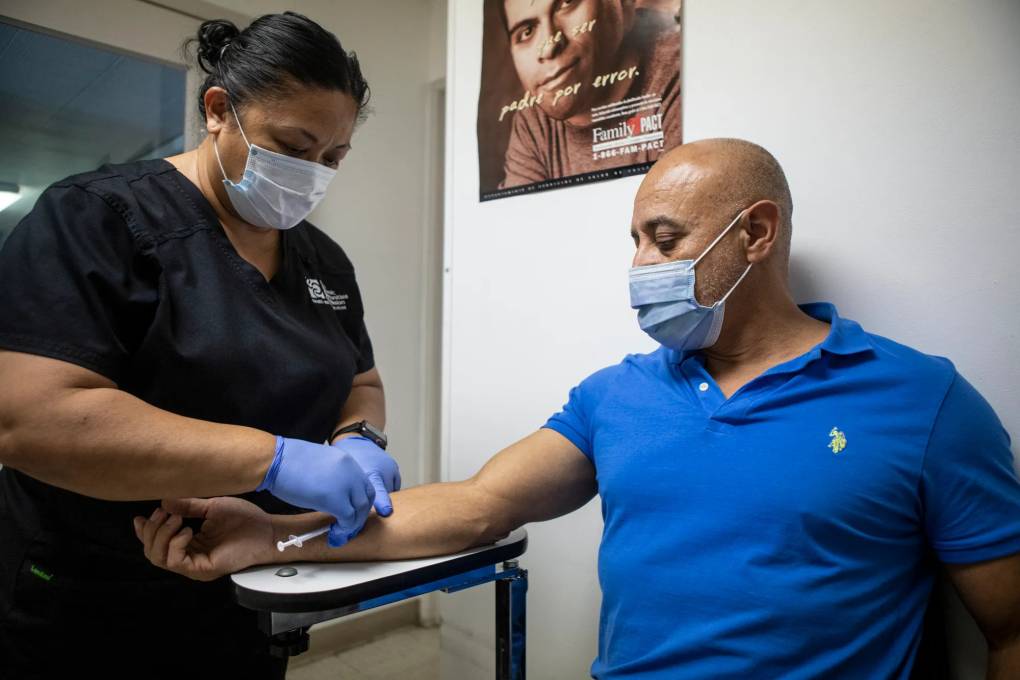
"caption": "Fresno resident Gonzalo Garcia receives the mpox vaccine on Aug. 24, 2022.",
"description": null,
"title": "082422_MonkeyPoxClinicFresno_LV__012-CM-1",
"credit": "Larry Valenzuela/CalMatters/CatchLight Local",
"status": "inherit",
"altTag": "a man in a blue shirt wearing a mask receives a vaccine shot from a nurse with black hair in a dark blue shirt",
"isLoading": false,
"fetchFailed": false
},
"news_11918762": {
"type": "attachments",
"id": "news_11918762",
"meta": {
"index": "attachments_1716263798",
"site": "news",
"id": "11918762",
"found": true
},
"parent": 11918758,
"imgSizes": {
"twentyfourteen-full-width": {
"file": "https://ww2.kqed.org/app/uploads/sites/10/2022/07/061422-FORMULA-SHORTAGE-MHN-04-CM-1038x576.jpg",
"width": 1038,
"mimeType": "image/jpeg",
"height": 576
},
"thumbnail": {
"file": "https://ww2.kqed.org/app/uploads/sites/10/2022/07/061422-FORMULA-SHORTAGE-MHN-04-CM-160x107.jpg",
"width": 160,
"mimeType": "image/jpeg",
"height": 107
},
"post-thumbnail": {
"file": "https://ww2.kqed.org/app/uploads/sites/10/2022/07/061422-FORMULA-SHORTAGE-MHN-04-CM-672x372.jpg",
"width": 672,
"mimeType": "image/jpeg",
"height": 372
},
"kqedFullSize": {
"file": "https://ww2.kqed.org/app/uploads/sites/10/2022/07/061422-FORMULA-SHORTAGE-MHN-04-CM.jpg",
"width": 1920,
"height": 1280
},
"large": {
"file": "https://ww2.kqed.org/app/uploads/sites/10/2022/07/061422-FORMULA-SHORTAGE-MHN-04-CM-1020x680.jpg",
"width": 1020,
"mimeType": "image/jpeg",
"height": 680
},
"1536x1536": {
"file": "https://ww2.kqed.org/app/uploads/sites/10/2022/07/061422-FORMULA-SHORTAGE-MHN-04-CM-1536x1024.jpg",
"width": 1536,
"mimeType": "image/jpeg",
"height": 1024
},
"medium": {
"file": "https://ww2.kqed.org/app/uploads/sites/10/2022/07/061422-FORMULA-SHORTAGE-MHN-04-CM-800x533.jpg",
"width": 800,
"mimeType": "image/jpeg",
"height": 533
}
},
"publishDate": 1657042390,
"modified": 1657057759,
"caption": "Starlyn Darby doesn't produce enough breastmilk to feed her 8-month-old son Zelimir, who is underweight and relies on Enfamil Ensure formula.",
"description": null,
"title": "061422-FORMULA-SHORTAGE-MHN-04-CM",
"credit": "Martin do Nascimento/CalMatters",
"status": "inherit",
"altTag": "A woman is carrying her infant son and looking at him",
"isLoading": false,
"fetchFailed": false
},
"news_11917447": {
"type": "attachments",
"id": "news_11917447",
"meta": {
"index": "attachments_1716263798",
"site": "news",
"id": "11917447",
"found": true
},
"parent": 11917438,
"imgSizes": {
"twentyfourteen-full-width": {
"file": "https://ww2.kqed.org/app/uploads/sites/10/2022/06/Douglas-Forbes-06202022-1038x576.jpg",
"width": 1038,
"mimeType": "image/jpeg",
"height": 576
},
"thumbnail": {
"file": "https://ww2.kqed.org/app/uploads/sites/10/2022/06/Douglas-Forbes-06202022-160x107.jpg",
"width": 160,
"mimeType": "image/jpeg",
"height": 107
},
"post-thumbnail": {
"file": "https://ww2.kqed.org/app/uploads/sites/10/2022/06/Douglas-Forbes-06202022-672x372.jpg",
"width": 672,
"mimeType": "image/jpeg",
"height": 372
},
"kqedFullSize": {
"file": "https://ww2.kqed.org/app/uploads/sites/10/2022/06/Douglas-Forbes-06202022.jpg",
"width": 1920,
"height": 1279
},
"large": {
"file": "https://ww2.kqed.org/app/uploads/sites/10/2022/06/Douglas-Forbes-06202022-1020x679.jpg",
"width": 1020,
"mimeType": "image/jpeg",
"height": 679
},
"1536x1536": {
"file": "https://ww2.kqed.org/app/uploads/sites/10/2022/06/Douglas-Forbes-06202022-1536x1023.jpg",
"width": 1536,
"mimeType": "image/jpeg",
"height": 1023
},
"medium": {
"file": "https://ww2.kqed.org/app/uploads/sites/10/2022/06/Douglas-Forbes-06202022-800x533.jpg",
"width": 800,
"mimeType": "image/jpeg",
"height": 533
}
},
"publishDate": 1655757302,
"modified": 1655757396,
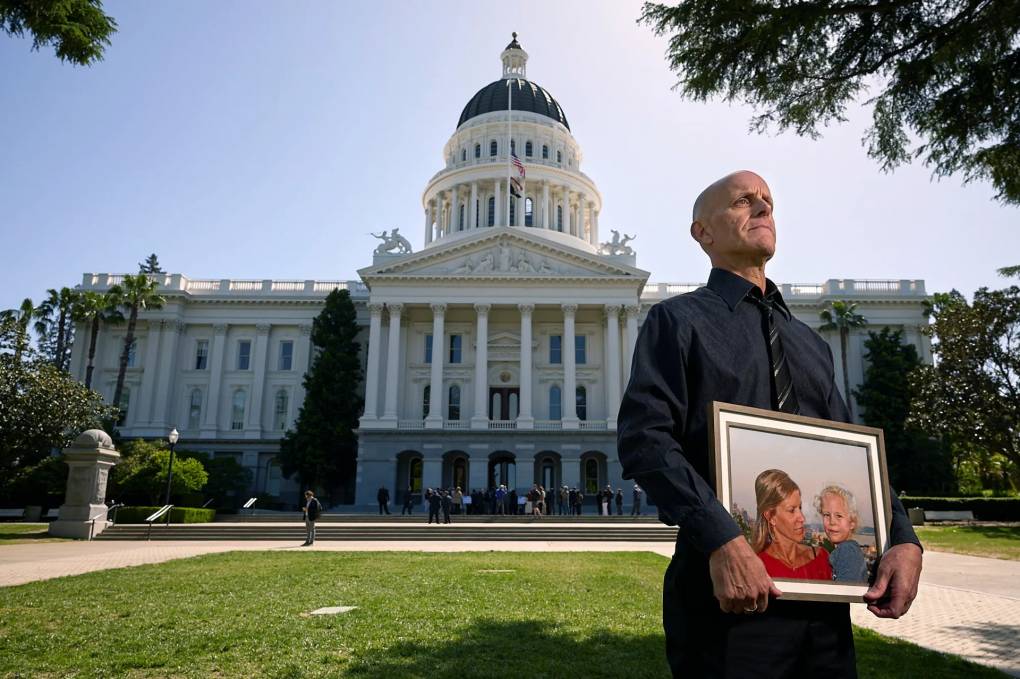
"caption": "Doug Forbes poses for a portrait in front of the Capitol while holding a picture of his daughter Roxie, who drowned at a day camp in Pasadena a few years ago and his wife Elena Matyas, who passed away recently.\n",
"description": null,
"title": "Douglas-Forbes-06202022",
"credit": "Fred Greaves/CalMatters",
"status": "inherit",
"altTag": "Douglas Forbes stands in front of the California Capitol holding a painting of his late wife and his daughter",
"isLoading": false,
"fetchFailed": false
},
"news_11901834": {
"type": "attachments",
"id": "news_11901834",
"meta": {
"index": "attachments_1716263798",
"site": "news",
"id": "11901834",
"found": true
},
"parent": 11901829,
"imgSizes": {
"twentyfourteen-full-width": {
"file": "https://ww2.kqed.org/app/uploads/sites/10/2022/01/01112022_Long-Beach_Testing_Site_PU_CM_15-1038x576.jpeg",
"width": 1038,
"mimeType": "image/jpeg",
"height": 576
},
"thumbnail": {
"file": "https://ww2.kqed.org/app/uploads/sites/10/2022/01/01112022_Long-Beach_Testing_Site_PU_CM_15-160x107.jpeg",
"width": 160,
"mimeType": "image/jpeg",
"height": 107
},
"post-thumbnail": {
"file": "https://ww2.kqed.org/app/uploads/sites/10/2022/01/01112022_Long-Beach_Testing_Site_PU_CM_15-672x372.jpeg",
"width": 672,
"mimeType": "image/jpeg",
"height": 372
},
"kqedFullSize": {
"file": "https://ww2.kqed.org/app/uploads/sites/10/2022/01/01112022_Long-Beach_Testing_Site_PU_CM_15-e1642218789897.jpeg",
"width": 1920,
"height": 1280
},
"large": {
"file": "https://ww2.kqed.org/app/uploads/sites/10/2022/01/01112022_Long-Beach_Testing_Site_PU_CM_15-1020x680.jpeg",
"width": 1020,
"mimeType": "image/jpeg",
"height": 680
},
"1536x1536": {
"file": "https://ww2.kqed.org/app/uploads/sites/10/2022/01/01112022_Long-Beach_Testing_Site_PU_CM_15-1536x1024.jpeg",
"width": 1536,
"mimeType": "image/jpeg",
"height": 1024
},
"full-width": {
"file": "https://ww2.kqed.org/app/uploads/sites/10/2022/01/01112022_Long-Beach_Testing_Site_PU_CM_15-1920x1280.jpeg",
"width": 1920,
"mimeType": "image/jpeg",
"height": 1280
},
"medium": {
"file": "https://ww2.kqed.org/app/uploads/sites/10/2022/01/01112022_Long-Beach_Testing_Site_PU_CM_15-800x533.jpeg",
"width": 800,
"mimeType": "image/jpeg",
"height": 533
}
},
"publishDate": 1642218768,
"modified": 1642537744,
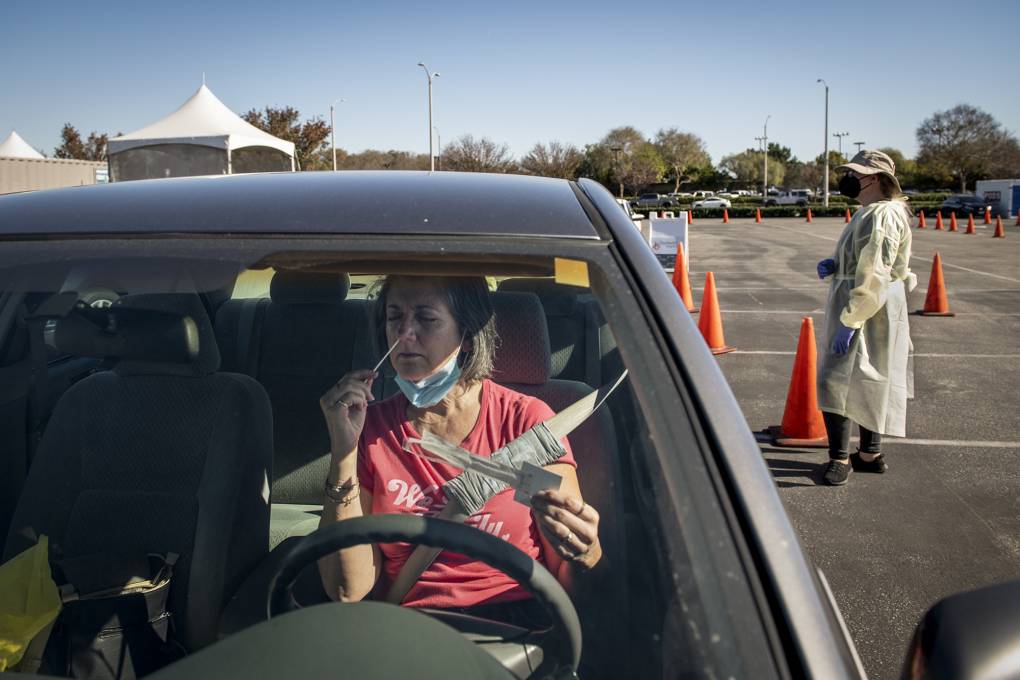
"caption": "Diane Ahern swabs herself for COVID-19 at a testing site at the Long Beach Airport in Long Beach on Jan. 11, 2022. 'I need to get tested every three days to be able to visit my parents at their retirement home,' Ahern said. 'I'm nervous.'",
"description": null,
"title": "01112022_Long-Beach_Testing_Site_PU_CM_15",
"credit": "Pablo Unzueta/CalMatters",
"status": "inherit",
"altTag": "Woman swabs her nose while seated in her caras part of a COVID test.",
"isLoading": false,
"fetchFailed": false
},
"news_11901275": {
"type": "attachments",
"id": "news_11901275",
"meta": {
"index": "attachments_1716263798",
"site": "news",
"id": "11901275",
"found": true
},
"parent": 11901267,
"imgSizes": {
"twentyfourteen-full-width": {
"file": "https://ww2.kqed.org/app/uploads/sites/10/2022/01/leantesting_011022_final-1038x576.png",
"width": 1038,
"mimeType": "image/png",
"height": 576
},
"thumbnail": {
"file": "https://ww2.kqed.org/app/uploads/sites/10/2022/01/leantesting_011022_final-160x115.png",
"width": 160,
"mimeType": "image/png",
"height": 115
},
"post-thumbnail": {
"file": "https://ww2.kqed.org/app/uploads/sites/10/2022/01/leantesting_011022_final-672x372.png",
"width": 672,
"mimeType": "image/png",
"height": 372
},
"kqedFullSize": {
"file": "https://ww2.kqed.org/app/uploads/sites/10/2022/01/leantesting_011022_final.png",
"width": 1920,
"height": 1379
},
"large": {
"file": "https://ww2.kqed.org/app/uploads/sites/10/2022/01/leantesting_011022_final-1020x733.png",
"width": 1020,
"mimeType": "image/png",
"height": 733
},
"1536x1536": {
"file": "https://ww2.kqed.org/app/uploads/sites/10/2022/01/leantesting_011022_final-1536x1103.png",
"width": 1536,
"mimeType": "image/png",
"height": 1103
},
"medium": {
"file": "https://ww2.kqed.org/app/uploads/sites/10/2022/01/leantesting_011022_final-800x575.png",
"width": 800,
"mimeType": "image/png",
"height": 575
}
},
"publishDate": 1641851297,
"modified": 1641851473,
"caption": null,
"description": null,
"title": "leantesting_011022_final",
"credit": null,
"status": "inherit",
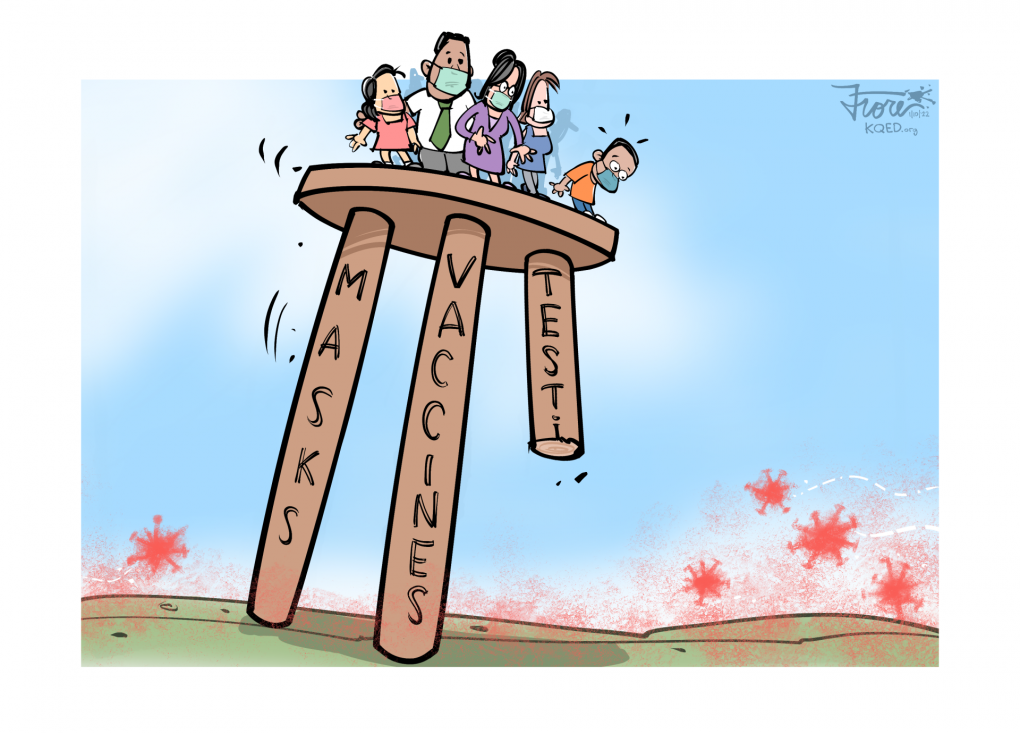
"altTag": "Cartoon: a three-legged stool with one leg, chopped shorter, that is labeled \"testi--.\" The other two legs read, \"masks\" and \"vaccines.\" Atop the stool is a small crowd of nervous people looking down as the stool leans toward covid virus.",
"isLoading": false,
"fetchFailed": false
},
"news_11887893": {
"type": "attachments",
"id": "news_11887893",
"meta": {
"index": "attachments_1716263798",
"site": "news",
"id": "11887893",
"found": true
},
"parent": 11887815,
"imgSizes": {
"twentyfourteen-full-width": {
"file": "https://ww2.kqed.org/app/uploads/sites/10/2021/09/GettyImages-1233456190-1038x576.jpg",
"width": 1038,
"mimeType": "image/jpeg",
"height": 576
},
"thumbnail": {
"file": "https://ww2.kqed.org/app/uploads/sites/10/2021/09/GettyImages-1233456190-160x107.jpg",
"width": 160,
"mimeType": "image/jpeg",
"height": 107
},
"post-thumbnail": {
"file": "https://ww2.kqed.org/app/uploads/sites/10/2021/09/GettyImages-1233456190-672x372.jpg",
"width": 672,
"mimeType": "image/jpeg",
"height": 372
},
"kqedFullSize": {
"file": "https://ww2.kqed.org/app/uploads/sites/10/2021/09/GettyImages-1233456190-scaled.jpg",
"width": 2560,
"height": 1707
},
"2048x2048": {
"file": "https://ww2.kqed.org/app/uploads/sites/10/2021/09/GettyImages-1233456190-2048x1366.jpg",
"width": 2048,
"mimeType": "image/jpeg",
"height": 1366
},
"large": {
"file": "https://ww2.kqed.org/app/uploads/sites/10/2021/09/GettyImages-1233456190-1020x680.jpg",
"width": 1020,
"mimeType": "image/jpeg",
"height": 680
},
"1536x1536": {
"file": "https://ww2.kqed.org/app/uploads/sites/10/2021/09/GettyImages-1233456190-1536x1024.jpg",
"width": 1536,
"mimeType": "image/jpeg",
"height": 1024
},
"full-width": {
"file": "https://ww2.kqed.org/app/uploads/sites/10/2021/09/GettyImages-1233456190-1920x1280.jpg",
"width": 1920,
"mimeType": "image/jpeg",
"height": 1280
},
"medium": {
"file": "https://ww2.kqed.org/app/uploads/sites/10/2021/09/GettyImages-1233456190-800x533.jpg",
"width": 800,
"mimeType": "image/jpeg",
"height": 533
}
},
"publishDate": 1631164204,
"modified": 1631236098,
"caption": "Mishel Herrera from CORE (Community Organized Relief Effort) speaks with an unhoused resident of Los Angeles before he receives his one-shot Johnson & Johnson COVID-19 vaccine administered by members of the Los Angeles Fire Department's Outreach unit on June 14, 2021. Over the next five years, California is plowing nearly $6 billion into expanding Medi-Cal services for the most high-needs patients, including unhoused Californians, heavy users of hospital emergency rooms, children and seniors with complicated physical and mental health conditions and others.",
"description": "Mishel Herrera from CORE (Community Organized Relief Effort) speaks with Eduardo Vasquez, homeless on the streets of Los Angeles since 1992, before he receives his one-shot Johnson and Johnson's Janssen Covid-19 vaccine administered by members of the Los Angeles Fire Department's Covid Outreach unit on June 14, 2021 in Los Angeles. - With more than 40 million vaccine doses administered, California is one of the last state's to fully reopen its economy, though businesses have been open at reduced capacity for months.",
"title": "US-HEALTH-VIRUS-PANDEMIC",
"credit": "Frederic J. Brown/AFP via Getty Images",
"status": "inherit",
"altTag": "Woman in baseball cap and mask, holding clipboard, leans over to talk to man in baseball cap near two ambulances parked on a street.",
"isLoading": false,
"fetchFailed": false
},
"news_11882884": {
"type": "attachments",
"id": "news_11882884",
"meta": {
"index": "attachments_1716263798",
"site": "news",
"id": "11882884",
"found": true
},
"parent": 11882864,
"imgSizes": {
"twentyfourteen-full-width": {
"file": "https://ww2.kqed.org/app/uploads/sites/10/2021/07/GettyImages-1234063582-1024x576.jpg",
"width": 1024,
"mimeType": "image/jpeg",
"height": 576
},
"thumbnail": {
"file": "https://ww2.kqed.org/app/uploads/sites/10/2021/07/GettyImages-1234063582-160x102.jpg",
"width": 160,
"mimeType": "image/jpeg",
"height": 102
},
"post-thumbnail": {
"file": "https://ww2.kqed.org/app/uploads/sites/10/2021/07/GettyImages-1234063582-672x372.jpg",
"width": 672,
"mimeType": "image/jpeg",
"height": 372
},
"kqedFullSize": {
"file": "https://ww2.kqed.org/app/uploads/sites/10/2021/07/GettyImages-1234063582.jpg",
"width": 1024,
"height": 650
},
"large": {
"file": "https://ww2.kqed.org/app/uploads/sites/10/2021/07/GettyImages-1234063582-1020x647.jpg",
"width": 1020,
"mimeType": "image/jpeg",
"height": 647
},
"medium": {
"file": "https://ww2.kqed.org/app/uploads/sites/10/2021/07/GettyImages-1234063582-800x508.jpg",
"width": 800,
"mimeType": "image/jpeg",
"height": 508
}
},
"publishDate": 1627517125,
"modified": 1627521631,
"caption": "People shop at a store in Hollywood on July 19, 2021, the second day of the return of the indoor mask mandate in Los Angeles County due to a spike in coronavirus cases.",
"description": null,
"title": "US-HEALTH-VIRUS",
"credit": "Robyn Beck/AFP via Getty Images",
"status": "inherit",
"altTag": null,
"isLoading": false,
"fetchFailed": false
},
"news_11881192": {
"type": "attachments",
"id": "news_11881192",
"meta": {
"index": "attachments_1716263798",
"site": "news",
"id": "11881192",
"found": true
},
"parent": 11881184,
"imgSizes": {
"twentyfourteen-full-width": {
"file": "https://ww2.kqed.org/app/uploads/sites/10/2021/07/schoolmasks_071221_final-1038x576.png",
"width": 1038,
"mimeType": "image/png",
"height": 576
},
"thumbnail": {
"file": "https://ww2.kqed.org/app/uploads/sites/10/2021/07/schoolmasks_071221_final-160x109.png",
"width": 160,
"mimeType": "image/png",
"height": 109
},
"post-thumbnail": {
"file": "https://ww2.kqed.org/app/uploads/sites/10/2021/07/schoolmasks_071221_final-672x372.png",
"width": 672,
"mimeType": "image/png",
"height": 372
},
"kqedFullSize": {
"file": "https://ww2.kqed.org/app/uploads/sites/10/2021/07/schoolmasks_071221_final.png",
"width": 1920,
"height": 1302
},
"large": {
"file": "https://ww2.kqed.org/app/uploads/sites/10/2021/07/schoolmasks_071221_final-1020x692.png",
"width": 1020,
"mimeType": "image/png",
"height": 692
},
"1536x1536": {
"file": "https://ww2.kqed.org/app/uploads/sites/10/2021/07/schoolmasks_071221_final-1536x1042.png",
"width": 1536,
"mimeType": "image/png",
"height": 1042
},
"medium": {
"file": "https://ww2.kqed.org/app/uploads/sites/10/2021/07/schoolmasks_071221_final-800x543.png",
"width": 800,
"mimeType": "image/png",
"height": 543
}
},
"publishDate": 1626293317,
"modified": 1626293429,
"caption": null,
"description": null,
"title": "schoolmasks_071221_final",
"credit": null,
"status": "inherit",
"altTag": "A Mark Fiore cartoon showing two students with masks standing in front of a chalk board with mathematical style writing that looks confusing. X=face masks, V=vaccines, if V, then X=0, and similar equations. The cartoon's caption reads \"Maskmatics.\"",
"isLoading": false,
"fetchFailed": false
},
"news_11870474": {
"type": "attachments",
"id": "news_11870474",
"meta": {
"index": "attachments_1716263798",
"site": "news",
"id": "11870474",
"found": true
},
"parent": 11859829,
"imgSizes": {
"twentyfourteen-full-width": {
"file": "https://ww2.kqed.org/app/uploads/sites/10/2021/02/ZCxYb-span-style-text-align-center-display-block-span-blank-map-2-copy-1038x576.png",
"width": 1038,
"mimeType": "image/png",
"height": 576
},
"thumbnail": {
"file": "https://ww2.kqed.org/app/uploads/sites/10/2021/02/ZCxYb-span-style-text-align-center-display-block-span-blank-map-2-copy-160x110.png",
"width": 160,
"mimeType": "image/png",
"height": 110
},
"post-thumbnail": {
"file": "https://ww2.kqed.org/app/uploads/sites/10/2021/02/ZCxYb-span-style-text-align-center-display-block-span-blank-map-2-copy-672x372.png",
"width": 672,
"mimeType": "image/png",
"height": 372
},
"kqedFullSize": {
"file": "https://ww2.kqed.org/app/uploads/sites/10/2021/02/ZCxYb-span-style-text-align-center-display-block-span-blank-map-2-copy-e1618963382197.png",
"width": 1920,
"height": 1325
},
"large": {
"file": "https://ww2.kqed.org/app/uploads/sites/10/2021/02/ZCxYb-span-style-text-align-center-display-block-span-blank-map-2-copy-1020x704.png",
"width": 1020,
"mimeType": "image/png",
"height": 704
},
"1536x1536": {
"file": "https://ww2.kqed.org/app/uploads/sites/10/2021/02/ZCxYb-span-style-text-align-center-display-block-span-blank-map-2-copy-1536x1060.png",
"width": 1536,
"mimeType": "image/png",
"height": 1060
},
"full-width": {
"file": "https://ww2.kqed.org/app/uploads/sites/10/2021/02/ZCxYb-span-style-text-align-center-display-block-span-blank-map-2-copy-1920x1325.png",
"width": 1920,
"mimeType": "image/png",
"height": 1325
},
"medium": {
"file": "https://ww2.kqed.org/app/uploads/sites/10/2021/02/ZCxYb-span-style-text-align-center-display-block-span-blank-map-2-copy-800x552.png",
"width": 800,
"mimeType": "image/png",
"height": 552
}
},
"publishDate": 1618963350,
"modified": 1618963658,
"caption": "California's vaccine rollout was initially marred by vague and often-changing eligibility requirements and unexpected supply shortages, but the state now appears to have finally hit its stride.",
"description": null,
"title": "ZCxYb--span-style-text-align-center-display-block-span-blank-map (2) copy",
"credit": "Illustration by Matthew Green, with Getty stock image",
"status": "inherit",
"altTag": null,
"isLoading": false,
"fetchFailed": false
},
"news_11869397": {
"type": "attachments",
"id": "news_11869397",
"meta": {
"index": "attachments_1716263798",
"site": "news",
"id": "11869397",
"found": true
},
"parent": 11869396,
"imgSizes": {
"twentyfourteen-full-width": {
"file": "https://ww2.kqed.org/app/uploads/sites/10/2021/04/syphilis-1e5f0fbaed374da10b75f52349a2a74a057c0761-1038x576.jpg",
"width": 1038,
"mimeType": "image/jpeg",
"height": 576
},
"thumbnail": {
"file": "https://ww2.kqed.org/app/uploads/sites/10/2021/04/syphilis-1e5f0fbaed374da10b75f52349a2a74a057c0761-160x120.jpg",
"width": 160,
"mimeType": "image/jpeg",
"height": 120
},
"post-thumbnail": {
"file": "https://ww2.kqed.org/app/uploads/sites/10/2021/04/syphilis-1e5f0fbaed374da10b75f52349a2a74a057c0761-672x372.jpg",
"width": 672,
"mimeType": "image/jpeg",
"height": 372
},
"kqedFullSize": {
"file": "https://ww2.kqed.org/app/uploads/sites/10/2021/04/syphilis-1e5f0fbaed374da10b75f52349a2a74a057c0761.jpg",
"width": 1782,
"height": 1336
},
"large": {
"file": "https://ww2.kqed.org/app/uploads/sites/10/2021/04/syphilis-1e5f0fbaed374da10b75f52349a2a74a057c0761-1020x765.jpg",
"width": 1020,
"mimeType": "image/jpeg",
"height": 765
},
"1536x1536": {
"file": "https://ww2.kqed.org/app/uploads/sites/10/2021/04/syphilis-1e5f0fbaed374da10b75f52349a2a74a057c0761-1536x1152.jpg",
"width": 1536,
"mimeType": "image/jpeg",
"height": 1152
},
"medium": {
"file": "https://ww2.kqed.org/app/uploads/sites/10/2021/04/syphilis-1e5f0fbaed374da10b75f52349a2a74a057c0761-800x600.jpg",
"width": 800,
"mimeType": "image/jpeg",
"height": 600
}
},
"publishDate": 1618419754,
"modified": 1618426055,
"caption": "Syphilis cases in California have contributed to soaring national caseloads of sexually transmitted diseases. Experts point to the advent of dating apps, less condom use and an increase in meth use.",
"description": null,
"title": "Syphilis cases in California have contributed to soaring national caseloads of sexually transmitted diseases. Experts point to the advent of dating apps, less condom use and an increase in meth.",
"credit": "Wladimur Bulgar/Science Photo Library/Getty Images",
"status": "inherit",
"altTag": null,
"isLoading": false,
"fetchFailed": false
}
},
"audioPlayerReducer": {
"postId": "stream_live",
"isPaused": true,
"isPlaying": false,
"pfsActive": false,
"pledgeModalIsOpen": true,
"playerDrawerIsOpen": false,
"liveAudioPlayStartedAt": 0,
"liveAudioPlayContext": ""
},
"authorsReducer": {
"byline_news_11939819": {
"type": "authors",
"id": "byline_news_11939819",
"meta": {
"override": true
},
"slug": "byline_news_11939819",
"name": "\u003ca href=\"https://calmatters.org/author/kristen-hwang/\">Kristen Hwang\u003c/a>",
"isLoading": false
},
"byline_news_11918758": {
"type": "authors",
"id": "byline_news_11918758",
"meta": {
"override": true
},
"slug": "byline_news_11918758",
"name": "\u003ca href=\"https://calmatters.org/author/elizabeth-aguilera/\">Elizabeth Aguilera\u003c/a> ",
"isLoading": false
},
"byline_news_11917438": {
"type": "authors",
"id": "byline_news_11917438",
"meta": {
"override": true
},
"slug": "byline_news_11917438",
"name": "Elizabeth Aguilera",
"isLoading": false
},
"byline_news_11901829": {
"type": "authors",
"id": "byline_news_11901829",
"meta": {
"override": true
},
"slug": "byline_news_11901829",
"name": "\u003ca href=\"https://calmatters.org/author/anaibarra/\">Ana B. Ibarra\u003c/a>",
"isLoading": false
},
"byline_news_11887815": {
"type": "authors",
"id": "byline_news_11887815",
"meta": {
"override": true
},
"slug": "byline_news_11887815",
"name": "\u003ca href=\"https://californiahealthline.org/news/author/angela-hart/\">Angela Hart\u003c/a>",
"isLoading": false
},
"byline_news_11869396": {
"type": "authors",
"id": "byline_news_11869396",
"meta": {
"override": true
},
"slug": "byline_news_11869396",
"name": "April Dembosky",
"isLoading": false
},
"kqednewsstaffandwires": {
"type": "authors",
"id": "237",
"meta": {
"index": "authors_1716337520",
"id": "237",
"found": true
},
"name": "KQED News Staff and Wires",
"firstName": "KQED News Staff and Wires",
"lastName": null,
"slug": "kqednewsstaffandwires",
"email": "onlinenewsstaff@kqed.org",
"display_author_email": false,
"staff_mastheads": [],
"title": null,
"bio": null,
"avatar": "https://secure.gravatar.com/avatar/72295af8ebbfbd19a4948f5271285664?s=600&d=blank&r=g",
"twitter": null,
"facebook": null,
"instagram": null,
"linkedin": null,
"sites": [
{
"site": "arts",
"roles": [
"contributor"
]
},
{
"site": "news",
"roles": [
"contributor"
]
},
{
"site": "lowdown",
"roles": [
"author"
]
},
{
"site": "stateofhealth",
"roles": [
"contributor"
]
},
{
"site": "food",
"roles": [
"author"
]
}
],
"headData": {
"title": "KQED News Staff and Wires | KQED",
"description": null,
"ogImgSrc": "https://secure.gravatar.com/avatar/72295af8ebbfbd19a4948f5271285664?s=600&d=blank&r=g",
"twImgSrc": "https://secure.gravatar.com/avatar/72295af8ebbfbd19a4948f5271285664?s=600&d=blank&r=g"
},
"isLoading": false,
"link": "/author/kqednewsstaffandwires"
},
"matthewgreen": {
"type": "authors",
"id": "1263",
"meta": {
"index": "authors_1716337520",
"id": "1263",
"found": true
},
"name": "Matthew Green",
"firstName": "Matthew",
"lastName": "Green",
"slug": "matthewgreen",
"email": "mgreen@kqed.org",
"display_author_email": false,
"staff_mastheads": [],
"title": "KQED Editor/Reporter",
"bio": "Matthew Green is a digital media producer for KQED News. He previously produced \u003ca href=\"http://www.kqed.org/lowdown\">The Lowdown\u003c/a>, KQED’s multimedia news education blog. Matthew's written for numerous Bay Area publications, including the Oakland Tribune and San Francisco Chronicle. He also taught journalism classes at Fremont High School in East Oakland.\r\n\r\nEmail: mgreen@kqed.org; Twitter: @MGreenKQED",
"avatar": "https://secure.gravatar.com/avatar/3bf498d1267ca02c8494f33d8cfc575e?s=600&d=blank&r=g",
"twitter": "MGreenKQED",
"facebook": null,
"instagram": null,
"linkedin": null,
"sites": [
{
"site": "news",
"roles": []
},
{
"site": "lowdown",
"roles": []
},
{
"site": "science",
"roles": []
},
{
"site": "education",
"roles": []
},
{
"site": "quest",
"roles": []
},
{
"site": "liveblog",
"roles": []
}
],
"headData": {
"title": "Matthew Green | KQED",
"description": "KQED Editor/Reporter",
"ogImgSrc": "https://secure.gravatar.com/avatar/3bf498d1267ca02c8494f33d8cfc575e?s=600&d=blank&r=g",
"twImgSrc": "https://secure.gravatar.com/avatar/3bf498d1267ca02c8494f33d8cfc575e?s=600&d=blank&r=g"
},
"isLoading": false,
"link": "/author/matthewgreen"
},
"markfiore": {
"type": "authors",
"id": "3236",
"meta": {
"index": "authors_1716337520",
"id": "3236",
"found": true
},
"name": "Mark Fiore",
"firstName": "Mark",
"lastName": "Fiore",
"slug": "markfiore",
"email": "mark@markfiore.com",
"display_author_email": false,
"staff_mastheads": [
"news"
],
"title": "KQED News Cartoonist",
"bio": "\u003ca href=\"http://www.MarkFiore.com\">MarkFiore.com\u003c/a> | \u003ca href=\"https://twitter.com/markfiore\">Follow on Twitter\u003c/a> | \u003ca href=\"https://www.facebook.com/pages/Mark-Fiore-Animated-Political-Cartoons/94451707396?ref=bookmarks\">Facebook\u003c/a> | \u003ca href=\"mailto:mark@markfiore.com\">email\u003c/a>\r\n\r\nPulitzer Prize-winner, Mark Fiore, who the Wall Street Journal has called “the undisputed guru of the form,” creates animated political cartoons in San Francisco, where his work has been featured regularly on the San Francisco Chronicle’s web site, SFGate.com. His work has appeared on Newsweek.com, Slate.com, CBSNews.com, MotherJones.com, DailyKos.com and NPR’s web site. Fiore’s political animation has appeared on CNN, Frontline, Bill Moyers Journal, Salon.com and cable and broadcast outlets across the globe.\r\n\r\nBeginning his professional life by drawing traditional political cartoons for newspapers, Fiore’s work appeared in publications ranging from the Washington Post to the Los Angeles Times. In the late 1990s, he began to experiment with animating political cartoons and, after a short stint at the San Jose Mercury News as their staff cartoonist, Fiore devoted all his energies to animation.\r\nGrowing up in California, Fiore also spent a good portion of his life in the backwoods of Idaho. It was this combination that shaped him politically. Mark majored in political science at Colorado College, where, in a perfect send-off for a cartoonist, he received his diploma in 1991 as commencement speaker Dick Cheney smiled approvingly.\r\nMark Fiore was awarded the Pulitzer Prize for political cartooning in 2010, a Robert F. Kennedy Journalism Award in 2004 and has twice received an Online Journalism Award for commentary from the Online News Association (2002, 2008). Fiore has received two awards for his work in new media from the National Cartoonists Society (2001, 2002), and in 2006 received The James Madison Freedom of Information Award from The Society of Professional Journalists.",
"avatar": "https://secure.gravatar.com/avatar/fc4e2a612b15b67bad0c6f0e1db4ca9b?s=600&d=blank&r=g",
"twitter": "MarkFiore",
"facebook": null,
"instagram": "https://www.instagram.com/markfiore/?hl=en",
"linkedin": null,
"sites": [
{
"site": "arts",
"roles": [
"contributor"
]
},
{
"site": "news",
"roles": [
"editor"
]
},
{
"site": "futureofyou",
"roles": [
"editor"
]
},
{
"site": "science",
"roles": [
"editor"
]
}
],
"headData": {
"title": "Mark Fiore | KQED",
"description": "KQED News Cartoonist",
"ogImgSrc": "https://secure.gravatar.com/avatar/fc4e2a612b15b67bad0c6f0e1db4ca9b?s=600&d=blank&r=g",
"twImgSrc": "https://secure.gravatar.com/avatar/fc4e2a612b15b67bad0c6f0e1db4ca9b?s=600&d=blank&r=g"
},
"isLoading": false,
"link": "/author/markfiore"
},
"carlysevern": {
"type": "authors",
"id": "3243",
"meta": {
"index": "authors_1716337520",
"id": "3243",
"found": true
},
"name": "Carly Severn",
"firstName": "Carly",
"lastName": "Severn",
"slug": "carlysevern",
"email": "csevern@kqed.org",
"display_author_email": false,
"staff_mastheads": [
"news"
],
"title": "Senior Editor, Audience News ",
"bio": "Carly is KQED's Senior Editor of Audience News on the Digital News team, and has reported for the California Report Magazine, Bay Curious and KQED Arts. She's formerly the host of \u003ca href=\"http://ww2.kqed.org/pop/category/the-cooler/\" rel=\"noopener noreferrer\">The Cooler\u003c/a> podcast.",
"avatar": "https://secure.gravatar.com/avatar/54037bf5c128fe678f0ef26cec97a93f2e7f220a22d7285703328f12c42c1b1d?s=600&d=blank&r=g",
"twitter": "teacupinthebay",
"bluesky": null,
"facebook": null,
"instagram": null,
"linkedin": null,
"sites": [
{
"site": "",
"roles": [
"editor"
]
},
{
"site": "arts",
"roles": [
"editor"
]
},
{
"site": "news",
"roles": [
"administrator"
]
},
{
"site": "pop",
"roles": [
"editor"
]
},
{
"site": "futureofyou",
"roles": [
"editor"
]
},
{
"site": "about",
"roles": [
"administrator"
]
},
{
"site": "mindshift",
"roles": [
"editor"
]
},
{
"site": "bayareabites",
"roles": [
"editor"
]
},
{
"site": "stateofhealth",
"roles": [
"editor"
]
},
{
"site": "science",
"roles": [
"editor"
]
},
{
"site": "food",
"roles": [
"contributor"
]
},
{
"site": "forum",
"roles": [
"editor"
]
},
{
"site": "perspectives",
"roles": [
"administrator"
]
},
{
"site": "liveblog",
"roles": [
"editor"
]
}
],
"headData": {
"title": "Carly Severn | KQED",
"description": "Senior Editor, Audience News ",
"ogImgSrc": "https://secure.gravatar.com/avatar/54037bf5c128fe678f0ef26cec97a93f2e7f220a22d7285703328f12c42c1b1d?s=600&d=blank&r=g",
"twImgSrc": "https://secure.gravatar.com/avatar/54037bf5c128fe678f0ef26cec97a93f2e7f220a22d7285703328f12c42c1b1d?s=600&d=blank&r=g"
},
"isLoading": false,
"link": "/author/carlysevern"
}
},
"pagesReducer": {
"news_tag_california-department-of-public-health": {
"type": "terms",
"id": "news_1153",
"meta": {
"index": "terms_1716263798",
"site": "news",
"id": "1153",
"score": 10.403168
},
"featImg": null,
"name": "California Department of Public Health",
"description": null,
"taxonomy": "tag",
"headData": {
"twImgId": null,
"twTitle": null,
"ogTitle": null,
"ogImgId": null,
"twDescription": null,
"description": null,
"title": "California Department of Public Health Archives | KQED News",
"ogDescription": null
},
"ttid": 1164,
"slug": "california-department-of-public-health",
"isLoading": false,
"title": "California Department of Public Health",
"pageMeta": {
"site": "news",
"WpPageTemplate": "page-topic-editorial",
"currentPage": 2
},
"blocks": [
{
"blockName": "kqed/post-list",
"attrs": {
"layout": "cardArticle2",
"query": "posts/news?tag=california-department-of-public-health",
"seeMore": false,
"paginated": true,
"page": 2
}
},
{
"blockName": "kqed/ad"
}
]
}
},
"pfsSessionReducer": {},
"postsReducer": {
"stream_live": {
"type": "live",
"id": "stream_live",
"audioUrl": "https://streams.kqed.org/kqedradio",
"title": "Live Stream",
"excerpt": "Live Stream information currently unavailable.",
"link": "/radio",
"featImg": "",
"label": {
"name": "KQED Live",
"link": "/"
}
},
"stream_kqedNewscast": {
"type": "posts",
"id": "stream_kqedNewscast",
"audioUrl": "https://www.kqed.org/.stream/anon/radio/RDnews/newscast.mp3?_=1",
"title": "KQED Newscast",
"featImg": "",
"label": {
"name": "88.5 FM",
"link": "/"
}
},
"news_11966797": {
"type": "posts",
"id": "news_11966797",
"meta": {
"index": "posts_1716263798",
"site": "news",
"id": "11966797",
"score": null,
"sort": [
1699992015000
]
},
"guestAuthors": [],
"slug": "paxlovid-free-eligibility-california-2023",
"title": "Accessing Free Paxlovid in California Amid Policy Changes",
"publishDate": 1699992015,
"format": "image",
"headTitle": "Accessing Free Paxlovid in California Amid Policy Changes | KQED",
"labelTerm": {
"site": "news"
},
"content": "\u003cp>As 2024 inches closer,\u003ca href=\"https://www.kqed.org/news/11957790/the-new-covid-eris-variant-and-rising-cases-what-you-need-to-know\"> COVID-19 is unfortunately still very much with us\u003c/a>.\u003c/p>\n\u003cp>Ever since the drug \u003ca href=\"https://www.fda.gov/news-events/press-announcements/coronavirus-covid-19-update-fda-authorizes-first-oral-antiviral-treatment-covid-19\">Paxlovid was authorized by the Food and Drug Administration (FDA) back in December 2021\u003c/a>, requesting this antiviral pill has been part of many people’s COVID plans for treatment and recovery for the last couple of years.\u003c/p>\n\u003cp>But now, starting this month, a few changes to how Paxlovid is funded are here — which could potentially have consequences for how you request and access the drug. And if you’ve asked for Paxlovid before or plan on seeking out the antiviral drug if you get COVID, there are some updates you might not necessarily expect.\u003c/p>\n\u003cp>Paxlovid has been proven to be highly effective at reducing severe disease and hospitalization from COVID, and there’s now also evidence it can help reduce the risks of long COVID, too. The drug has also been free by prescription in California for \u003ca href=\"https://www.cdph.ca.gov/Programs/CID/DCDC/Pages/COVID-19/Questions-and-Answers-Treatment-Information-for-Providers-and-Facilities.aspx#question3\">patients with mild to moderate illness “with risk of progression to severe disease,”\u003c/a> according to the California Department of Public Health (CDPH). The agency notes that many common conditions might qualify you for this, including physical inactivity, obesity and depression.\u003c/p>\n\u003cp>Keep reading for everything you need to know about requesting Paxlovid in or after November so you’re prepared for any bumps along the way. If you’re met with unexpected Paxlovid charges, this information might help you understand why that’s happening — and how to avoid or challenge those new costs.\u003c/p>\n\u003cp>\u003cstrong>Jump straight to:\u003c/strong>\u003c/p>\n\u003cul>\n\u003cli>\u003cstrong>\u003ca href=\"#healthinsurance\">If you have health insurance: How to avoid new potential costs for Paxlovid\u003c/a>\u003cbr>\n\u003c/strong>\u003c/li>\n\u003cli>\u003cstrong>\u003ca href=\"#nohealthinsurance\">If you don’t have health insurance: How to find free Paxlovid\u003c/a>\u003c/strong>\u003c/li>\n\u003c/ul>\n\u003ch2>Paxlovid is transitioning to the commercial market\u003c/h2>\n\u003cp>Like COVID vaccines (more on that below), Paxlovid supplies in the United States are moving away from being bought by the federal government and into the commercial market — like countless other drugs.\u003c/p>\n\u003cp>The government paid Pfizer, the makers of Paxlovid, around $530 per course of the drug. Now, Pfizer said \u003ca href=\"https://www.reuters.com/business/healthcare-pharmaceuticals/us-shifting-covid-antivirals-commercial-market-nov-1-2023-10-27/\">the company has set the price of Paxlovid at around $1,400 per five-day course\u003c/a>, and commercial ordering of the drug began on Nov. 1. Regardless of this change, health insurers still have to cover your Paxlovid (more on \u003cem>that\u003c/em> below).\u003c/p>\n\u003cul>\n\u003cli>\u003cstrong>\u003ca href=\"#tellus\">Tell us: What else do you need information about right now?\u003c/a>\u003c/strong>\u003c/li>\n\u003c/ul>\n\u003cp>There’s also \u003ca href=\"https://aspr.hhs.gov/COVID-19/Therapeutics/Products/Lagevrio/Pages/default.aspx\">a Paxlovid alternative called Lagevrio (molnupiravir),\u003c/a> which is undergoing the same transition to the commercial market this month. While the FDA’s data has shown that \u003ca href=\"https://www.npr.org/sections/health-shots/2022/02/22/1081898013/doctors-find-limited-use-for-less-effective-covid-pill\">molnupiravir is a less effective drug than Paxlovid\u003c/a>, doctors may still prescribe it instead for several reasons, including the risk of Paxlovid’s interactions with other medications you’re taking.\u003c/p>\n\u003cp>This move follows the trend of COVID care transitioning away from federal funding and into the traditional commercial health care market. This is also what’s happened with \u003ca href=\"https://www.kqed.org/news/11960630/free-new-covid-vaccine-near-me-2023\">the new COVID vaccines now available in the U.S.\u003c/a>, which is why these kinds of vaccines were once offered at government-funded vaccination sites but are now being offered through providers and paid for by any health insurance you have.\u003c/p>\n\u003cp>In the earlier years of the pandemic, the federal government paying for COVID care was “a way to sort of just get a lot of people covered and then … figure out the financing after the fact,” said Anthony Wright, executive director of consumer advocate group Health Access California.\u003c/p>\n\u003cp>“But these resources are still available for folks, and people should take advantage of them, even though there’s no longer sort of a federal blanket policy,” Wright said. “It’s now more of a patchwork policy depending on your plan, depending on your location, etc.”\u003c/p>\n\u003cp>\u003cem>The takeaway: Paxlovid’s entry into the commercial market, with a much higher sticker price, means that any out-of-pocket costs could potentially be far greater. Hopefully, you won’t have to pay them.\u003c/em>\u003c/p>\n\u003ch2>There’ll still be a federal stockpile of Paxlovid (for a while)\u003c/h2>\n\u003cp>Because the federal government \u003cem>did\u003c/em> buy so much Paxlovid from Pfizer during the last couple of years, there’s still what a U.S. Department of Health and Human Services (HHS) official described as “an ample supply of federally-owned therapeutics with millions of treatment courses still in the field.”\u003c/p>\n\u003cp>The existence of this federal stockpile means that until Dec. 15, health care providers can still order Paxlovid from the government — rather than Pfizer — to distribute until supplies run out.\u003c/p>\n\u003cp>Federally purchased Paxlovid has been prescribed free so far during the pandemic, and the California Department of Public Health (CDPH) said that these supplies “will remain free to all patients regardless of insurance status.” This free federal supply is “expected to last through the end of the year in most areas, although this will vary depending on demand,” CDPH said.\u003c/p>\n\u003cp>Once that supply runs out, “the price of commercial product will depend on the individual’s insurance.” But because you won’t necessarily know if you are indeed getting Paxlovid free from the government and not purchased from Pfizer, if you have health insurance, it’s important to make sure you’re getting your prescription “in-network.” \u003cstrong>\u003ca href=\"#healthinsurance\">Jump straight to more information about getting Paxlovid through your health insurance. \u003c/a>\u003c/strong>\u003c/p>\n\u003cp>\u003cem>The takeaway: If you are prescribed Paxlovid in the next few months, you could be getting a course that came straight from the government’s own supply rather than one purchased from Pfizer. \u003c/em>\u003c/p>\n\u003cp>[ad fullwidth]\u003c/p>\n\u003ch2>Federal stockpile or not, your California health insurer still has to cover Paxlovid\u003c/h2>\n\u003cp>We’re now six months out from the end of the federal public health emergency for COVID, which ended on May 11 and had big effects on nationwide funding for COVID vaccines and testing. But thanks to laws passed in California during the pandemic, Californians kept a lot more COVID coverage than folks living in other states. Specifically, State Bill 1473 required insurers to keep covering the costs of COVID therapeutic treatments like Paxlovid, as well as \u003ca href=\"https://www.kqed.org/news/11902122/at-home-covid-test-reimbursement-from-blue-shield-to-kaiser-how-to-get-your-health-insurance-to-pay-you-back\">reimbursing their members for the costs of up to eight over-the-counter COVID tests a month\u003c/a> after the end of the public health emergency.\u003c/p>\n\u003cp>The California Department of Managed Health Care (DMHC) said that health plans regulated by their agency — which includes \u003ca href=\"https://www.dmhc.ca.gov/healthcareincalifornia/typesofplans.aspx\">HMO plans and “some other kinds of plans” \u003c/a>— “must cover COVID-19 tests, vaccines and treatment with no health plan prior authorization.” California law said the DMHC “also prohibits cost sharing and utilization management for therapeutics/Paxlovid, similar to testing and vaccines.”\u003c/p>\n\u003cp>\u003cem>The takeaway: Your health insurer can’t deny you coverage of Paxlovid. But that said …\u003c/em>\u003c/p>\n\u003ch2>\u003ca id=\"healthinsurance\">\u003c/a>If you have health insurance, be sure to request Paxlovid “in-network” for it to be covered starting Nov. 12\u003c/h2>\n\u003cp>That California law also forced insurers to cover these costs regardless of whether a patient sought COVID services “in-network.” But it only kept the current situation in place until six months after the end of the federal emergency — a period that ended on Nov. 11.\u003c/p>\n\u003cp>Previously, Paxlovid supplies were funded by the federal government and were free regardless of health insurance status — so the concept of getting your Paxlovid “in-network” just didn’t apply. But as California reaches that “six months after the end of the federal emergency” mark, it means that starting Nov. 12, insurers can require their members to obtain certain COVID care and treatment “in-network.” And, confirms DMHC, “after November 11, if [patients] access the services from an out-of-network provider, they may be charged cost-sharing, such as a co-pay or co-insurance.”\u003c/p>\n\u003cp>DMHC stresses that “if health plan members access these services from a provider in their health plan’s network, they will not need to pay anything for these services.” Going out of network after Nov. 12 could look like getting a telehealth visit with a provider who’s not in your health plan’s network or using an out-of-network pharmacy for the Paxlovid prescription, if your plan requires you to only use certain pharmacies.\u003c/p>\n\u003cp>“It’s hard to give blanket advice because it really depends plan by plan,” said Health Access’ Wright, but “in general,” he stresses that people should now seek their COVID treatment, or their COVID vaccine, “in the way that they have normally got other health care through their plan.”\u003c/p>\n\u003cp>“As long as you are getting the care in the way that you have typically got other care, including other prescriptions … then you should be OK,” Wright said. “You can double-check with your plan if you’re worried about it.”\u003c/p>\n\u003cp>What if you believe you’ve been wrongly charged for the cost of Paxlovid — or a COVID test or vaccine, for that matter? DMHC said that if you get a bill you don’t believe you should be paying for, such as a “qualifying” treatment, you “should first contact [your] health plan to file a grievance, sometimes called an appeal, and include a copy of the bill.”\u003c/p>\n\u003cp>If you “do not agree” with your health plan’s response to your grievance, or “if the plan takes more than 30 days to fix the problem,” \u003ca href=\"http://www.HealthHelp.ca.gov\">DMHC advises contacting their \u003c/a>Help Center online or calling them at 1-888-466-2219.\u003c/p>\n\u003cp>Your health plan should also not claim you \u003cem>have\u003c/em> to go out-of-network to get COVID care, Wright said.\u003c/p>\n\u003cp>“If your plan is not providing you access to any of these therapeutics or tests or treatments, then they’re violating the consumer protections of what you’re entitled to as a plan member,” he said.\u003c/p>\n\u003cp>“Yes, it will need to be in network, but [plans] are required to provide that in-network care in a timely fashion,” he emphasized. “And if they don’t, that you have a right to complain [to DMHC] and get that care.”\u003c/p>\n\u003cp>“You don’t have to go out-of-network and deal with a big bill,” he added.\u003c/p>\n\u003cp>\u003cem>The takeaway: If you have health insurance, be certain you’re going in-network to request and pick up Paxlovid after Nov. 12.\u003c/em>\u003c/p>\n\u003ch2>\u003ca id=\"nohealthinsurance\">\u003c/a>If you don’t have insurance, Paxlovid will still be free\u003c/h2>\n\u003cp>If you don’t have health insurance and have wanted Paxlovid for the last few years, the California Department of Health (CDPH) advises using \u003ca href=\"https://sesamecare.com/covidca\">Sesame Care, California’s COVID telehealth service\u003c/a>.\u003c/p>\n\u003cp>This program is intended “to support uninsured and underinsured individuals within the State of California who cannot connect with a healthcare provider within 24 hours of receiving a positive test result,” CDPH said. Uninsured folks should visit \u003ca href=\"https://sesamecare.com/covid\">sesamecare.com/covid\u003c/a> to make a free phone or video appointment through Sesame Care or call (833) 686-5051 (6 a.m. to 4 p.m. PT, seven days a week). When you speak to a provider through Sesame Care, they’ll prescribe you Paxlovid if you’re eligible, and it will either be mailed to you or made available at a nearby pharmacy.\u003c/p>\n\u003cp>This Sesame Care consultation and the Paxlovid prescription should be free. Sesame Care’s site said that if you are asked to pay for any of these services, you should call Sesame Care at (888) 897-1244 so they “can follow up with the pharmacy.” CDPH confirms that this service “will continue to provide free appointments through February 2024.” (Be careful only to use Sesame Care’s free COVID care webpage at \u003ca href=\"https://sesamecare.com/covid\">sesamecare.com/covid\u003c/a> and not click away to other parts of Sesame Care’s website. Sesame warns that if you enter Sesame Care’s regular website, you’ll be charged for its services.)\u003c/p>\n\u003cp>In the long term, the Department of Health and Human Services (HHS) said that \u003ca href=\"https://www.reuters.com/business/healthcare-pharmaceuticals/us-shifting-covid-antivirals-commercial-market-nov-1-2023-10-27/\">the costs of Paxlovid for uninsured and underinsured will be covered\u003c/a> through a separate federal program through 2028.\u003c/p>\n\u003cp>If you \u003cem>have\u003c/em> health insurance, you can also use Sesame Care for a free telehealth appointment if you haven’t been able to connect with your regular health care provider within 24 hours of receiving a positive test result, according to CDPH. But bear in mind that CDPH also said that “the cost of the medication may vary on the patient’s insurance status after commercialization of Paxlovid/Lagevrio begins in November.”\u003c/p>\n\u003cp>Remember, the federal stockpiles of these drugs will still be around for a while, and CDPH confirms that “federally purchased COVID-19 medications that are still in supply will remain free to all patients regardless of insurance status.” But “once the federal supply runs out, the price of commercial product will depend on the individual’s insurance,” the agency said.\u003c/p>\n\u003cp>If you have health insurance, be very clear about that detail with the telehealth provider you speak to through Sesame Care, and ask if it’s possible to know whether any Paxlovid prescription you get is coming from that free federal stockpile and whether you should anticipate any cost-sharing from your insurance for getting the prescription through Sesame Care.\u003c/p>\n\u003cp>\u003cem>The takeaway: Don’t panic about the new commercial sticker price of Paxlovid if you don’t have health insurance — there are still ways to get it for free. \u003c/em>\u003c/p>\n\u003ch2>The official eligibility criteria for a Paxlovid prescription hasn’t changed (yet)\u003c/h2>\n\u003cp>Back in December 2021, \u003ca href=\"https://www.fda.gov/news-events/press-announcements/coronavirus-covid-19-update-fda-authorizes-first-oral-antiviral-treatment-covid-19\">Paxlovid was the first oral antiviral treatment for COVID authorized by the Food and Drug Administration (FDA)\u003c/a>. Due to limited supply, Paxlovid was initially only used to treat the patients deemed most at risk from severe illness from COVID — but later in 2022, it was expanded to more pharmacies across the United States as part of \u003ca href=\"https://www.npr.org/2022/04/26/1094735822/biden-will-make-paxlovid-a-highly-effective-covid-drug-available-to-more-pharmac\">a nationwide push to get Paxlovid to more COVID patients \u003c/a>who could benefit from it due to existing health factors.\u003c/p>\n\u003cp>\u003ca href=\"https://www.cdph.ca.gov/Programs/OPA/Pages/CAHAN/Reminder-to-Prescribe-COVID-19-Therapeutics-to-Mitigate-Impact-of-Winter-Respiratory-Surge.aspx\">California even sent out an advisory to health care providers in December 2022, reminding them of “ample supply\u003c/a>” and urging them only to refuse to prescribe Paxlovid in “situations in which the risk of prescribing clearly outweighs the benefits of treatment in preventing hospitalization, death, and the potential for reduced risk of long COVID.”\u003c/p>\n\u003cp>\u003ca href=\"https://www.covid19treatmentguidelines.nih.gov/therapies/antivirals-including-antibody-products/ritonavir-boosted-nirmatrelvir--paxlovid-/\">The state’s most up-to-date guidance for Paxlovid prescriptions\u003c/a> comes from the National Institute of Health (NIH), which notes that the drug is recommended for people with “mild to moderate COVID-19 who are at high risk of disease progression.” As for what constitutes that “high risk,” NIH follows \u003ca href=\"https://www.cdc.gov/coronavirus/2019-ncov/need-extra-precautions/people-with-medical-conditions.html\">the CDC’s list of medical conditions that might potentially put a person at higher risk\u003c/a> of severe disease, hospitalization or death from COVID, which includes immunocompromise, disabilities, mental health conditions including depression, body mass, physical inactivity and being a current or former smoker.\u003c/p>\n\u003cp>So will Paxlovid’s move to the commercial market (and differences in how you access a prescription in-network) change who’s eligible to be prescribed the antiviral? When KQED asked CDPH, the agency said they would continue “to review and update guidance” and pointed to \u003ca href=\"https://www.covid19treatmentguidelines.nih.gov/therapies/antivirals-including-antibody-products/ritonavir-boosted-nirmatrelvir--paxlovid-/\">the NIH’s Paxlovid guidance\u003c/a> as “the most up-to-date.”\u003c/p>\n\u003cp>Health Access’s Wright said that as the price of Paxlovid goes up, insurers might as well “be more watchful about those guidelines,” but that “it shouldn’t have an impact on people’s out-of-pocket [expenses], even if it does provide a cost that we all will bear with the premiums.”\u003c/p>\n\u003cp>\u003cem>The takeaway: If you test positive for COVID, it’s still worth asking your provider whether you’re a good candidate for Paxlovid — even if you don’t consider yourself “high risk.” \u003c/em>\u003c/p>\n\u003ch2>\u003ca id=\"tellus\">\u003c/a>Tell us: What else do you need information about?\u003c/h2>\n\u003cp>At KQED News, we know that it can sometimes be hard to track down the answers to navigate life in the Bay Area in 2023. We’ve published \u003ca href=\"https://www.kqed.org/news/tag/coronavirus-resources-and-explainers\">clear, practical explainers and guides about COVID\u003c/a>, \u003ca href=\"https://www.kqed.org/news/11936674/how-to-prepare-for-this-weeks-atmospheric-river-storm-sandbags-emergency-kits-and-more\">how to cope with intense winter weather\u003c/a>, and \u003ca href=\"https://www.kqed.org/news/11821950/how-to-safely-attend-a-protest-in-the-bay-area\">how to exercise your right to protest safely\u003c/a>.\u003c/p>\n\u003cp>So tell us: What do you need to know more about? Tell us, and you could see your question answered online or on social media. What you submit will make our reporting stronger and help us decide what to cover here on our site and on KQED Public Radio, too.\u003c/p>\n\u003cp>[hearken id=\"10483\" src=\"https://modules.wearehearken.com/kqed/embed/10483.js\"]\u003c/p>\n\u003cp>[ad floatright]\u003c/p>\n",
"blocks": [],
"excerpt": "As 2024 nears, COVID-19 persists. Since the FDA approved Paxlovid, changes in funding have impacted access to the antiviral. For those considering or previously requesting it, there may be unexpected updates.",
"status": "publish",
"parent": 0,
"modified": 1747677617,
"stats": {
"hasAudio": false,
"hasVideo": false,
"hasChartOrMap": false,
"iframeSrcs": [],
"hasGoogleForm": false,
"hasGallery": false,
"hasHearkenModule": true,
"hasPolis": false,
"paragraphCount": 52,
"wordCount": 2859
},
"headData": {
"title": "Free Paxlovid in California Amid Policy Changes | KQED",
"description": "Paxlovid remains free for eligible Californians, including uninsured or with certain health conditions. Learn how to access it & what changes to expect.",
"ogTitle": "",
"ogDescription": "",
"ogImgId": "",
"twTitle": "",
"twDescription": "",
"twImgId": "",
"socialTitle": "Free Paxlovid in California Amid Policy Changes | KQED",
"socialDescription": "Paxlovid remains free for eligible Californians, including uninsured or with certain health conditions. Learn how to access it & what changes to expect.",
"schema": {
"@context": "https://schema.org",
"@type": "NewsArticle",
"headline": "Accessing Free Paxlovid in California Amid Policy Changes",
"datePublished": "2023-11-14T12:00:15-08:00",
"dateModified": "2025-05-19T11:00:17-07:00",
"image": "https://cdn.kqed.org/wp-content/uploads/2020/02/KQED-OG-Image@1x.png",
"isAccessibleForFree": "True",
"publisher": {
"@type": "NewsMediaOrganization",
"@id": "https://www.kqed.org/#organization",
"name": "KQED",
"logo": "https://cdn.kqed.org/wp-content/uploads/2020/02/KQED-OG-Image@1x.png",
"url": "https://www.kqed.org",
"sameAs": [
"https://www.facebook.com/KQED",
"https://twitter.com/KQED",
"https://www.instagram.com/kqed/",
"https://www.tiktok.com/@kqedofficial",
"https://www.linkedin.com/company/kqed",
"https://www.youtube.com/channel/UCeC0IOo7i1P_61zVUWbJ4nw"
]
}
}
},
"sticky": false,
"templateType": "standard",
"featuredImageType": "standard",
"excludeFromSiteSearch": "Include",
"articleAge": "0",
"path": "/news/11966797/paxlovid-free-eligibility-california-2023",
"audioTrackLength": null,
"parsedContent": [
{
"type": "contentString",
"content": "\u003cdiv class=\"post-body\">\u003cp>\u003cp>As 2024 inches closer,\u003ca href=\"https://www.kqed.org/news/11957790/the-new-covid-eris-variant-and-rising-cases-what-you-need-to-know\"> COVID-19 is unfortunately still very much with us\u003c/a>.\u003c/p>\n\u003cp>Ever since the drug \u003ca href=\"https://www.fda.gov/news-events/press-announcements/coronavirus-covid-19-update-fda-authorizes-first-oral-antiviral-treatment-covid-19\">Paxlovid was authorized by the Food and Drug Administration (FDA) back in December 2021\u003c/a>, requesting this antiviral pill has been part of many people’s COVID plans for treatment and recovery for the last couple of years.\u003c/p>\n\u003cp>But now, starting this month, a few changes to how Paxlovid is funded are here — which could potentially have consequences for how you request and access the drug. And if you’ve asked for Paxlovid before or plan on seeking out the antiviral drug if you get COVID, there are some updates you might not necessarily expect.\u003c/p>\n\u003cp>Paxlovid has been proven to be highly effective at reducing severe disease and hospitalization from COVID, and there’s now also evidence it can help reduce the risks of long COVID, too. The drug has also been free by prescription in California for \u003ca href=\"https://www.cdph.ca.gov/Programs/CID/DCDC/Pages/COVID-19/Questions-and-Answers-Treatment-Information-for-Providers-and-Facilities.aspx#question3\">patients with mild to moderate illness “with risk of progression to severe disease,”\u003c/a> according to the California Department of Public Health (CDPH). The agency notes that many common conditions might qualify you for this, including physical inactivity, obesity and depression.\u003c/p>\n\u003cp>Keep reading for everything you need to know about requesting Paxlovid in or after November so you’re prepared for any bumps along the way. If you’re met with unexpected Paxlovid charges, this information might help you understand why that’s happening — and how to avoid or challenge those new costs.\u003c/p>\n\u003cp>\u003cstrong>Jump straight to:\u003c/strong>\u003c/p>\n\u003cul>\n\u003cli>\u003cstrong>\u003ca href=\"#healthinsurance\">If you have health insurance: How to avoid new potential costs for Paxlovid\u003c/a>\u003cbr>\n\u003c/strong>\u003c/li>\n\u003cli>\u003cstrong>\u003ca href=\"#nohealthinsurance\">If you don’t have health insurance: How to find free Paxlovid\u003c/a>\u003c/strong>\u003c/li>\n\u003c/ul>\n\u003ch2>Paxlovid is transitioning to the commercial market\u003c/h2>\n\u003cp>Like COVID vaccines (more on that below), Paxlovid supplies in the United States are moving away from being bought by the federal government and into the commercial market — like countless other drugs.\u003c/p>\n\u003cp>The government paid Pfizer, the makers of Paxlovid, around $530 per course of the drug. Now, Pfizer said \u003ca href=\"https://www.reuters.com/business/healthcare-pharmaceuticals/us-shifting-covid-antivirals-commercial-market-nov-1-2023-10-27/\">the company has set the price of Paxlovid at around $1,400 per five-day course\u003c/a>, and commercial ordering of the drug began on Nov. 1. Regardless of this change, health insurers still have to cover your Paxlovid (more on \u003cem>that\u003c/em> below).\u003c/p>\n\u003cul>\n\u003cli>\u003cstrong>\u003ca href=\"#tellus\">Tell us: What else do you need information about right now?\u003c/a>\u003c/strong>\u003c/li>\n\u003c/ul>\n\u003cp>There’s also \u003ca href=\"https://aspr.hhs.gov/COVID-19/Therapeutics/Products/Lagevrio/Pages/default.aspx\">a Paxlovid alternative called Lagevrio (molnupiravir),\u003c/a> which is undergoing the same transition to the commercial market this month. While the FDA’s data has shown that \u003ca href=\"https://www.npr.org/sections/health-shots/2022/02/22/1081898013/doctors-find-limited-use-for-less-effective-covid-pill\">molnupiravir is a less effective drug than Paxlovid\u003c/a>, doctors may still prescribe it instead for several reasons, including the risk of Paxlovid’s interactions with other medications you’re taking.\u003c/p>\n\u003cp>This move follows the trend of COVID care transitioning away from federal funding and into the traditional commercial health care market. This is also what’s happened with \u003ca href=\"https://www.kqed.org/news/11960630/free-new-covid-vaccine-near-me-2023\">the new COVID vaccines now available in the U.S.\u003c/a>, which is why these kinds of vaccines were once offered at government-funded vaccination sites but are now being offered through providers and paid for by any health insurance you have.\u003c/p>\n\u003cp>In the earlier years of the pandemic, the federal government paying for COVID care was “a way to sort of just get a lot of people covered and then … figure out the financing after the fact,” said Anthony Wright, executive director of consumer advocate group Health Access California.\u003c/p>\n\u003cp>“But these resources are still available for folks, and people should take advantage of them, even though there’s no longer sort of a federal blanket policy,” Wright said. “It’s now more of a patchwork policy depending on your plan, depending on your location, etc.”\u003c/p>\n\u003cp>\u003cem>The takeaway: Paxlovid’s entry into the commercial market, with a much higher sticker price, means that any out-of-pocket costs could potentially be far greater. Hopefully, you won’t have to pay them.\u003c/em>\u003c/p>\n\u003ch2>There’ll still be a federal stockpile of Paxlovid (for a while)\u003c/h2>\n\u003cp>Because the federal government \u003cem>did\u003c/em> buy so much Paxlovid from Pfizer during the last couple of years, there’s still what a U.S. Department of Health and Human Services (HHS) official described as “an ample supply of federally-owned therapeutics with millions of treatment courses still in the field.”\u003c/p>\n\u003cp>The existence of this federal stockpile means that until Dec. 15, health care providers can still order Paxlovid from the government — rather than Pfizer — to distribute until supplies run out.\u003c/p>\n\u003cp>Federally purchased Paxlovid has been prescribed free so far during the pandemic, and the California Department of Public Health (CDPH) said that these supplies “will remain free to all patients regardless of insurance status.” This free federal supply is “expected to last through the end of the year in most areas, although this will vary depending on demand,” CDPH said.\u003c/p>\n\u003cp>Once that supply runs out, “the price of commercial product will depend on the individual’s insurance.” But because you won’t necessarily know if you are indeed getting Paxlovid free from the government and not purchased from Pfizer, if you have health insurance, it’s important to make sure you’re getting your prescription “in-network.” \u003cstrong>\u003ca href=\"#healthinsurance\">Jump straight to more information about getting Paxlovid through your health insurance. \u003c/a>\u003c/strong>\u003c/p>\n\u003cp>\u003cem>The takeaway: If you are prescribed Paxlovid in the next few months, you could be getting a course that came straight from the government’s own supply rather than one purchased from Pfizer. \u003c/em>\u003c/p>\n\u003cp>\u003c/p>\u003c/div>",
"attributes": {
"named": {},
"numeric": []
}
},
{
"type": "component",
"content": "",
"name": "ad",
"attributes": {
"named": {
"label": "fullwidth"
},
"numeric": [
"fullwidth"
]
}
},
{
"type": "contentString",
"content": "\u003cdiv class=\"post-body\">\u003cp>\u003c/p>\n\u003ch2>Federal stockpile or not, your California health insurer still has to cover Paxlovid\u003c/h2>\n\u003cp>We’re now six months out from the end of the federal public health emergency for COVID, which ended on May 11 and had big effects on nationwide funding for COVID vaccines and testing. But thanks to laws passed in California during the pandemic, Californians kept a lot more COVID coverage than folks living in other states. Specifically, State Bill 1473 required insurers to keep covering the costs of COVID therapeutic treatments like Paxlovid, as well as \u003ca href=\"https://www.kqed.org/news/11902122/at-home-covid-test-reimbursement-from-blue-shield-to-kaiser-how-to-get-your-health-insurance-to-pay-you-back\">reimbursing their members for the costs of up to eight over-the-counter COVID tests a month\u003c/a> after the end of the public health emergency.\u003c/p>\n\u003cp>The California Department of Managed Health Care (DMHC) said that health plans regulated by their agency — which includes \u003ca href=\"https://www.dmhc.ca.gov/healthcareincalifornia/typesofplans.aspx\">HMO plans and “some other kinds of plans” \u003c/a>— “must cover COVID-19 tests, vaccines and treatment with no health plan prior authorization.” California law said the DMHC “also prohibits cost sharing and utilization management for therapeutics/Paxlovid, similar to testing and vaccines.”\u003c/p>\n\u003cp>\u003cem>The takeaway: Your health insurer can’t deny you coverage of Paxlovid. But that said …\u003c/em>\u003c/p>\n\u003ch2>\u003ca id=\"healthinsurance\">\u003c/a>If you have health insurance, be sure to request Paxlovid “in-network” for it to be covered starting Nov. 12\u003c/h2>\n\u003cp>That California law also forced insurers to cover these costs regardless of whether a patient sought COVID services “in-network.” But it only kept the current situation in place until six months after the end of the federal emergency — a period that ended on Nov. 11.\u003c/p>\n\u003cp>Previously, Paxlovid supplies were funded by the federal government and were free regardless of health insurance status — so the concept of getting your Paxlovid “in-network” just didn’t apply. But as California reaches that “six months after the end of the federal emergency” mark, it means that starting Nov. 12, insurers can require their members to obtain certain COVID care and treatment “in-network.” And, confirms DMHC, “after November 11, if [patients] access the services from an out-of-network provider, they may be charged cost-sharing, such as a co-pay or co-insurance.”\u003c/p>\n\u003cp>DMHC stresses that “if health plan members access these services from a provider in their health plan’s network, they will not need to pay anything for these services.” Going out of network after Nov. 12 could look like getting a telehealth visit with a provider who’s not in your health plan’s network or using an out-of-network pharmacy for the Paxlovid prescription, if your plan requires you to only use certain pharmacies.\u003c/p>\n\u003cp>“It’s hard to give blanket advice because it really depends plan by plan,” said Health Access’ Wright, but “in general,” he stresses that people should now seek their COVID treatment, or their COVID vaccine, “in the way that they have normally got other health care through their plan.”\u003c/p>\n\u003cp>“As long as you are getting the care in the way that you have typically got other care, including other prescriptions … then you should be OK,” Wright said. “You can double-check with your plan if you’re worried about it.”\u003c/p>\n\u003cp>What if you believe you’ve been wrongly charged for the cost of Paxlovid — or a COVID test or vaccine, for that matter? DMHC said that if you get a bill you don’t believe you should be paying for, such as a “qualifying” treatment, you “should first contact [your] health plan to file a grievance, sometimes called an appeal, and include a copy of the bill.”\u003c/p>\n\u003cp>If you “do not agree” with your health plan’s response to your grievance, or “if the plan takes more than 30 days to fix the problem,” \u003ca href=\"http://www.HealthHelp.ca.gov\">DMHC advises contacting their \u003c/a>Help Center online or calling them at 1-888-466-2219.\u003c/p>\n\u003cp>Your health plan should also not claim you \u003cem>have\u003c/em> to go out-of-network to get COVID care, Wright said.\u003c/p>\n\u003cp>“If your plan is not providing you access to any of these therapeutics or tests or treatments, then they’re violating the consumer protections of what you’re entitled to as a plan member,” he said.\u003c/p>\n\u003cp>“Yes, it will need to be in network, but [plans] are required to provide that in-network care in a timely fashion,” he emphasized. “And if they don’t, that you have a right to complain [to DMHC] and get that care.”\u003c/p>\n\u003cp>“You don’t have to go out-of-network and deal with a big bill,” he added.\u003c/p>\n\u003cp>\u003cem>The takeaway: If you have health insurance, be certain you’re going in-network to request and pick up Paxlovid after Nov. 12.\u003c/em>\u003c/p>\n\u003ch2>\u003ca id=\"nohealthinsurance\">\u003c/a>If you don’t have insurance, Paxlovid will still be free\u003c/h2>\n\u003cp>If you don’t have health insurance and have wanted Paxlovid for the last few years, the California Department of Health (CDPH) advises using \u003ca href=\"https://sesamecare.com/covidca\">Sesame Care, California’s COVID telehealth service\u003c/a>.\u003c/p>\n\u003cp>This program is intended “to support uninsured and underinsured individuals within the State of California who cannot connect with a healthcare provider within 24 hours of receiving a positive test result,” CDPH said. Uninsured folks should visit \u003ca href=\"https://sesamecare.com/covid\">sesamecare.com/covid\u003c/a> to make a free phone or video appointment through Sesame Care or call (833) 686-5051 (6 a.m. to 4 p.m. PT, seven days a week). When you speak to a provider through Sesame Care, they’ll prescribe you Paxlovid if you’re eligible, and it will either be mailed to you or made available at a nearby pharmacy.\u003c/p>\n\u003cp>This Sesame Care consultation and the Paxlovid prescription should be free. Sesame Care’s site said that if you are asked to pay for any of these services, you should call Sesame Care at (888) 897-1244 so they “can follow up with the pharmacy.” CDPH confirms that this service “will continue to provide free appointments through February 2024.” (Be careful only to use Sesame Care’s free COVID care webpage at \u003ca href=\"https://sesamecare.com/covid\">sesamecare.com/covid\u003c/a> and not click away to other parts of Sesame Care’s website. Sesame warns that if you enter Sesame Care’s regular website, you’ll be charged for its services.)\u003c/p>\n\u003cp>In the long term, the Department of Health and Human Services (HHS) said that \u003ca href=\"https://www.reuters.com/business/healthcare-pharmaceuticals/us-shifting-covid-antivirals-commercial-market-nov-1-2023-10-27/\">the costs of Paxlovid for uninsured and underinsured will be covered\u003c/a> through a separate federal program through 2028.\u003c/p>\n\u003cp>If you \u003cem>have\u003c/em> health insurance, you can also use Sesame Care for a free telehealth appointment if you haven’t been able to connect with your regular health care provider within 24 hours of receiving a positive test result, according to CDPH. But bear in mind that CDPH also said that “the cost of the medication may vary on the patient’s insurance status after commercialization of Paxlovid/Lagevrio begins in November.”\u003c/p>\n\u003cp>Remember, the federal stockpiles of these drugs will still be around for a while, and CDPH confirms that “federally purchased COVID-19 medications that are still in supply will remain free to all patients regardless of insurance status.” But “once the federal supply runs out, the price of commercial product will depend on the individual’s insurance,” the agency said.\u003c/p>\n\u003cp>If you have health insurance, be very clear about that detail with the telehealth provider you speak to through Sesame Care, and ask if it’s possible to know whether any Paxlovid prescription you get is coming from that free federal stockpile and whether you should anticipate any cost-sharing from your insurance for getting the prescription through Sesame Care.\u003c/p>\n\u003cp>\u003cem>The takeaway: Don’t panic about the new commercial sticker price of Paxlovid if you don’t have health insurance — there are still ways to get it for free. \u003c/em>\u003c/p>\n\u003ch2>The official eligibility criteria for a Paxlovid prescription hasn’t changed (yet)\u003c/h2>\n\u003cp>Back in December 2021, \u003ca href=\"https://www.fda.gov/news-events/press-announcements/coronavirus-covid-19-update-fda-authorizes-first-oral-antiviral-treatment-covid-19\">Paxlovid was the first oral antiviral treatment for COVID authorized by the Food and Drug Administration (FDA)\u003c/a>. Due to limited supply, Paxlovid was initially only used to treat the patients deemed most at risk from severe illness from COVID — but later in 2022, it was expanded to more pharmacies across the United States as part of \u003ca href=\"https://www.npr.org/2022/04/26/1094735822/biden-will-make-paxlovid-a-highly-effective-covid-drug-available-to-more-pharmac\">a nationwide push to get Paxlovid to more COVID patients \u003c/a>who could benefit from it due to existing health factors.\u003c/p>\n\u003cp>\u003ca href=\"https://www.cdph.ca.gov/Programs/OPA/Pages/CAHAN/Reminder-to-Prescribe-COVID-19-Therapeutics-to-Mitigate-Impact-of-Winter-Respiratory-Surge.aspx\">California even sent out an advisory to health care providers in December 2022, reminding them of “ample supply\u003c/a>” and urging them only to refuse to prescribe Paxlovid in “situations in which the risk of prescribing clearly outweighs the benefits of treatment in preventing hospitalization, death, and the potential for reduced risk of long COVID.”\u003c/p>\n\u003cp>\u003ca href=\"https://www.covid19treatmentguidelines.nih.gov/therapies/antivirals-including-antibody-products/ritonavir-boosted-nirmatrelvir--paxlovid-/\">The state’s most up-to-date guidance for Paxlovid prescriptions\u003c/a> comes from the National Institute of Health (NIH), which notes that the drug is recommended for people with “mild to moderate COVID-19 who are at high risk of disease progression.” As for what constitutes that “high risk,” NIH follows \u003ca href=\"https://www.cdc.gov/coronavirus/2019-ncov/need-extra-precautions/people-with-medical-conditions.html\">the CDC’s list of medical conditions that might potentially put a person at higher risk\u003c/a> of severe disease, hospitalization or death from COVID, which includes immunocompromise, disabilities, mental health conditions including depression, body mass, physical inactivity and being a current or former smoker.\u003c/p>\n\u003cp>So will Paxlovid’s move to the commercial market (and differences in how you access a prescription in-network) change who’s eligible to be prescribed the antiviral? When KQED asked CDPH, the agency said they would continue “to review and update guidance” and pointed to \u003ca href=\"https://www.covid19treatmentguidelines.nih.gov/therapies/antivirals-including-antibody-products/ritonavir-boosted-nirmatrelvir--paxlovid-/\">the NIH’s Paxlovid guidance\u003c/a> as “the most up-to-date.”\u003c/p>\n\u003cp>Health Access’s Wright said that as the price of Paxlovid goes up, insurers might as well “be more watchful about those guidelines,” but that “it shouldn’t have an impact on people’s out-of-pocket [expenses], even if it does provide a cost that we all will bear with the premiums.”\u003c/p>\n\u003cp>\u003cem>The takeaway: If you test positive for COVID, it’s still worth asking your provider whether you’re a good candidate for Paxlovid — even if you don’t consider yourself “high risk.” \u003c/em>\u003c/p>\n\u003ch2>\u003ca id=\"tellus\">\u003c/a>Tell us: What else do you need information about?\u003c/h2>\n\u003cp>At KQED News, we know that it can sometimes be hard to track down the answers to navigate life in the Bay Area in 2023. We’ve published \u003ca href=\"https://www.kqed.org/news/tag/coronavirus-resources-and-explainers\">clear, practical explainers and guides about COVID\u003c/a>, \u003ca href=\"https://www.kqed.org/news/11936674/how-to-prepare-for-this-weeks-atmospheric-river-storm-sandbags-emergency-kits-and-more\">how to cope with intense winter weather\u003c/a>, and \u003ca href=\"https://www.kqed.org/news/11821950/how-to-safely-attend-a-protest-in-the-bay-area\">how to exercise your right to protest safely\u003c/a>.\u003c/p>\n\u003cp>So tell us: What do you need to know more about? Tell us, and you could see your question answered online or on social media. What you submit will make our reporting stronger and help us decide what to cover here on our site and on KQED Public Radio, too.\u003c/p>\n\u003cp>\u003c/p>\u003c/div>",
"attributes": {
"named": {},
"numeric": []
}
},
{
"type": "component",
"content": "",
"name": "hearken",
"attributes": {
"named": {
"id": "10483",
"src": "https://modules.wearehearken.com/kqed/embed/10483.js",
"label": ""
},
"numeric": []
}
},
{
"type": "contentString",
"content": "\u003cdiv class=\"post-body\">\u003cp>\u003c/p>\n\u003cp>\u003c/p>\u003c/div>",
"attributes": {
"named": {},
"numeric": []
}
},
{
"type": "component",
"content": "",
"name": "ad",
"attributes": {
"named": {
"label": "floatright"
},
"numeric": [
"floatright"
]
}
},
{
"type": "contentString",
"content": "\u003cdiv class=\"post-body\">\u003cp>\u003c/p>\n\u003c/div>\u003c/p>",
"attributes": {
"named": {},
"numeric": []
}
}
],
"link": "/news/11966797/paxlovid-free-eligibility-california-2023",
"authors": [
"3243"
],
"categories": [
"news_8"
],
"tags": [
"news_32707",
"news_1153",
"news_29029",
"news_27989",
"news_27504",
"news_27626"
],
"featImg": "news_11967234",
"label": "news"
},
"news_11941075": {
"type": "posts",
"id": "news_11941075",
"meta": {
"index": "posts_1716263798",
"site": "news",
"id": "11941075",
"score": null,
"sort": [
1677604534000
]
},
"guestAuthors": [],
"slug": "californias-covid-emergency-ends-feb-28-what-does-that-actually-mean-for-you",
"title": "California's COVID State of Emergency Ends Today. What Does That Actually Mean for You?",
"publishDate": 1677604534,
"format": "standard",
"headTitle": "California’s COVID State of Emergency Ends Today. What Does That Actually Mean for You? | KQED",
"labelTerm": {
"site": "news"
},
"content": "\u003cp>Today, \u003ca href=\"https://www.kqed.org/news/11929285/newsom-to-end-californias-covid-state-of-emergency-in-february\">California’s COVID-19 state of emergency officially comes to an end\u003c/a>.\u003c/p>\n\u003cp>Since March 2020, this statewide emergency declaration has given Gov. Gavin Newsom the power to suspend or change laws in California to fight the spread of COVID. Now, after almost three years, the state is winding down its state of emergency.\u003c/p>\n\u003cul>\n\u003cli>\u003cstrong>Jump to: \u003ca href=\"#calfreshmedical\">What you need to know if use CalFresh or Medi-Cal\u003c/a>\u003c/strong>\u003c/li>\n\u003c/ul>\n\u003cp>The move has been characterized as \u003ca href=\"https://apnews.com/article/health-california-covid-gavin-newsom-government-and-politics-0a013cc71e580d33fe59f93bc6c2b16e\">“a symbolic end” to the pandemic in California\u003c/a>, and a “decision [that] will have little practical impact on most people’s lives.” And it’s certainly true that most of the pandemic-related orders Newsom has issued since March 2020 — almost 600 of them — have been lifted.\u003c/p>\n\u003cp>https://twitter.com/TeacupInTheBay/status/1623832514744942592\u003c/p>\n\u003cp>But it’s not entirely accurate to say that this move will have \u003ci>zero \u003c/i>implications for California and the way COVID is handled — and perceived. Added to the mix is the fact that even if people are aware that the state of emergency is ending, they might not really know exactly what that entails — or how it could affect them personally.\u003c/p>\n\u003cp>So what \u003ci>does\u003c/i> California ending its state of emergency mean for you?\u003c/p>\n\u003ch2>The federal state of emergency is ending, too — which also affects Californians\u003c/h2>\n\u003cp>In January, the White House announced that \u003ca href=\"https://www.npr.org/2023/01/30/1152702709/covid-emergency-declarations-end-white-house\">the federal state of emergency for COVID will end on May 11\u003c/a> — over two months after California ends its own. And to complicate matters a little more, there are actually \u003ci>two \u003c/i>federal emergencies ending May 11: the national emergency, and the public health emergency.[aside postID=news_11940562 hero='https://ww2.kqed.org/app/uploads/sites/10/2023/02/RS62644_GettyImages-1237599780-qut-1020x680.jpg']\u003c/p>\n\u003cp>The end of these national emergencies will have big effects upon nationwide funding for COVID vaccines and testing.\u003c/p>\n\u003cp>Thanks to laws that have been passed in California in the last few years (more on this below), Californians will at least be able to keep a lot \u003ci>more \u003c/i>COVID coverage than folks living in other states. But May 11 is a date people in California still need to know, because some of those laws are tied to the end of the national-level declarations.\u003c/p>\n\u003cp>Looking beyond the end of both the statewide emergency and the nationwide public health declaration, Gov. Newsom’s office says his administration intends to seek lawmakers’ approval to actually preserve two of the emergency provisions enabled by the 2020 state of emergency in California. These specifically deal with allowing different health care workers to perform certain COVID-related functions (for nurses, it’s dispensing COVID medications like Paxlovid; for lab workers, it’s processing COVID tests on their own).\u003c/p>\n\u003ch2>For insured people in California, most COVID coverage won’t change — yet\u003c/h2>\n\u003cp>California has recently enacted several laws that force insurers to keep covering COVID care even after the state and federal states of emergency wind down.\u003c/p>\n\u003cp>State Senate Bill 510 requires insurers in California to keep covering COVID costs like testing and vaccination after the national emergency ends. On the national level, the White House’s COVID-19 Response Coordinator Dr. Ashish K. Jha has promised that COVID vaccines will remain free in the U.S. for insured people as a preventive service covered under the Affordable Care Act of 2010.\u003c/p>\n\u003cp>Meanwhile, another California law — \u003ca href=\"https://leginfo.legislature.ca.gov/faces/billTextClient.xhtml?bill_id=202120220SB1473\">State Bill 1473\u003c/a> — requires insurers to not only keep covering the costs of COVID therapeutic treatments like Paxlovid, but also to keep reimbursing their members for the costs of up to eight over-the-counter COVID tests a month. But this law only keeps the current situation in place until six months after the \u003ca href=\"https://www.latimes.com/california/story/2023-02-07/with-covid-emergency-ending-will-i-have-to-pay-for-tests\">end of the federal emergency on Nov. 11\u003c/a>.[aside postID=news_11902122 hero='https://ww2.kqed.org/app/uploads/sites/10/2022/01/RS53229_GettyImages-1237664205-qut-1536x1065.jpg']After that date, if you want Paxlovid or to \u003ca href=\"https://www.kqed.org/news/11902122/at-home-covid-test-reimbursement-from-blue-shield-to-kaiser-how-to-get-your-health-insurance-to-pay-you-back\">get reimbursed for COVID tests by an insurer\u003c/a>, you’ll have to make sure you are obtaining these services “in-network.” And at this stage of the year, specific details about what that’ll look like in practice come November are lacking.\u003c/p>\n\u003ch2>For uninsured people, COVID care will probably get (even) more confusing\u003c/h2>\n\u003cp>As with so many aspects of the pandemic, it looks like things will become less clear — and often plain harder — for uninsured folks. Jha has given assurances that “\u003ca href=\"https://twitter.com/AshishKJha46/status/1620836123630239750\">[o]n May 12, you can still walk into a pharmacy and get your bivalent vaccine. For free\u003c/a>,” and that the same will hold for obtaining Paxlovid.\u003c/p>\n\u003cp>But he also wrote that, longer term, “likely over the summer or early fall,” the country would “transition from US government distributed vaccines and treatments to those purchased through the regular healthcare system,” and that the White House was “committed to ensuring that vaccines and treatments are accessible and not prohibitively expensive for uninsured Americans.”\u003c/p>\n\u003cp>Which does not necessarily mean they will be free.\u003c/p>\n\u003ch2>Some California cities also have their own public health emergencies — with their own effects\u003c/h2>\n\u003cp>California ending its state of emergency may well spur the remaining cities that have kept their own states of emergencies to end theirs, too — which may have effects of their own upon residents.\u003c/p>\n\u003cp>For example, San Francisco also still has its own \u003ca href=\"https://sf.gov/resource/2022/public-health-emergency-declarations\">Public Health Emergency Declaration for COVID\u003c/a> in effect, and several programs for San Francisco residents (and people who work in the city) are dependent on that declaration being in effect. But on Thursday, San Francisco officials announced that the city’s public health emergency would be coming to an end at the same time as the state’s, on Feb. 28.\u003c/p>\n\u003cp>Among the impacts of this decision: As of Oct. 1, 2022, \u003ca href=\"https://sfgov.org/olse/public-health-emergency-leave-ordinance\">San Francisco’s Public Health Emergency Leave (PHEL)\u003c/a> offers employees who work for certain San Francisco employers \u003ca href=\"https://www.kqed.org/news/11904834/covid-sick-pay-in-california-how-to-claim-this-new-paid-leave\">up to 80 hours of paid leave for COVID-related reasons\u003c/a>. Now that San Francisco’s public health emergency is ending at the end of February, city residents and workers will no longer be able to claim this paid sick leave for COVID starting March 1.\u003c/p>\n\u003cfigure id=\"attachment_11938425\" class=\"wp-caption alignnone\" style=\"max-width: 1920px\">\u003cimg loading=\"lazy\" decoding=\"async\" class=\"size-full wp-image-11938425\" src=\"https://ww2.kqed.org/app/uploads/sites/10/2022/12/RS50546_014_SanFrancisco_IndoorMasks_07302021-qut-1.jpg\" alt=\"A person in an orange shirt and black mask and black-rimmed glasses operates a tablet-style cash register.\" width=\"1920\" height=\"1280\" srcset=\"https://cdn.kqed.org/wp-content/uploads/sites/10/2022/12/RS50546_014_SanFrancisco_IndoorMasks_07302021-qut-1.jpg 1920w, https://cdn.kqed.org/wp-content/uploads/sites/10/2022/12/RS50546_014_SanFrancisco_IndoorMasks_07302021-qut-1-800x533.jpg 800w, https://cdn.kqed.org/wp-content/uploads/sites/10/2022/12/RS50546_014_SanFrancisco_IndoorMasks_07302021-qut-1-1020x680.jpg 1020w, https://cdn.kqed.org/wp-content/uploads/sites/10/2022/12/RS50546_014_SanFrancisco_IndoorMasks_07302021-qut-1-160x107.jpg 160w, https://cdn.kqed.org/wp-content/uploads/sites/10/2022/12/RS50546_014_SanFrancisco_IndoorMasks_07302021-qut-1-1536x1024.jpg 1536w\" sizes=\"auto, (max-width: 1920px) 100vw, 1920px\">\u003cfigcaption class=\"wp-caption-text\">An employee at La Copa Loca Gelato rings up a customer at the shop in San Francisco on July 30, 2021. \u003ccite>(Beth LaBerge/KQED)\u003c/cite>\u003c/figcaption>\u003c/figure>\n\u003ch2>Not everyone thinks this is a good idea\u003c/h2>\n\u003cp>In the announcement about California ending its state of emergency on Feb. 28, administration officials acknowledged the crucial role played by these emergency powers in fighting the pandemic — but framed the expiration as a logical step that was coming at the right time.\u003c/p>\n\u003cp>Gov. Newsom called the state of emergency “an effective and necessary tool that we utilized to protect our state,” saying that now, “with the operational preparedness that we’ve built up and the measures that we’ll continue to employ moving forward, California is ready to phase out this tool.” Dr. Mark Ghaly, secretary of the California Health and Human Services Agency, spoke of California moving “into this next phase” with the winding down of the state of emergency, and how “the infrastructure and processes we’ve invested in and built up will provide us the tools to manage any ups and downs in the future.”\u003c/p>\n\u003cp>But some disagree it’s the right time to end the state’s emergency powers. Carmela Coyle, head of the California Hospital Association, told \u003cem>The New York Times\u003c/em> earlier this month that \u003ca href=\"https://www.nytimes.com/2023/02/02/us/california-covid-state-of-emergency-ending.html\">February was “a terrible time to end the public health emergency,”\u003c/a> because of ongoing strain on California’s hospitals.\u003c/p>\n\u003cp>Coyle said that Newsom’s emergency declaration had helped state hospitals better cope with high numbers of patients — by permitting facilities to temporarily expand treatment spaces to deal with larger numbers of patients — and also staffing shortages, by allowing hospitals to hire workers from out of state.\u003c/p>\n\u003cp>[ad fullwidth]\u003c/p>\n\u003cp>“The discontinuation of those declarations of emergency has to be thoughtfully planned and transitioned,” Coyle told \u003cem>The New York Times\u003c/em>. “Otherwise, it leaves hospitals caught in the middle in this debate of whether the pandemic is over or not.”\u003c/p>\n\u003cp>Speaking to KQED Forum this month, UCSF infectious disease specialist Dr. Peter Chin-Hong struck a cautious note, saying that while he believed it is essentially “the right time” for California and the White House to end these emergency declarations, there were still “repercussions that we have to be prepared for.”\u003c/p>\n\u003cp>“In a fractured medical health care system, I’m worried that people are going to fall between the cracks,” said Chin-Hong, noting that Californians would still be “generally, decently protected as a people, compared to other areas” in the U.S. “The biggest worry that I have is that it will be confusing,” he said, pointing to the potential for contradictory signals around COVID testing, vaccination and treatment among people who don’t know whether they’ll face steep out-of-pocket costs for this care and might just give up trying to access it.\u003c/p>\n\u003cp>Chin-Hong also acknowledged the risks of how the states of emergency ending could falsely signal to the general public that COVID no longer posed them — or others — any threat. “The worst thing,” he said, would be “that people think that it means that it’s all over until next winter.”\u003c/p>\n\u003cp>And finally, just to make everything even \u003ci>more \u003c/i>complex …\u003c/p>\n\u003cfigure id=\"attachment_11940585\" class=\"wp-caption alignnone\" style=\"max-width: 1920px\">\u003cimg loading=\"lazy\" decoding=\"async\" class=\"size-full wp-image-11940585\" src=\"https://ww2.kqed.org/app/uploads/sites/10/2023/02/RS62643_GettyImages-1239425766-qut.jpg\" alt=\"A sign taped to a brick wall saying COVID 19\" width=\"1920\" height=\"1290\" srcset=\"https://cdn.kqed.org/wp-content/uploads/sites/10/2023/02/RS62643_GettyImages-1239425766-qut.jpg 1920w, https://cdn.kqed.org/wp-content/uploads/sites/10/2023/02/RS62643_GettyImages-1239425766-qut-800x538.jpg 800w, https://cdn.kqed.org/wp-content/uploads/sites/10/2023/02/RS62643_GettyImages-1239425766-qut-1020x685.jpg 1020w, https://cdn.kqed.org/wp-content/uploads/sites/10/2023/02/RS62643_GettyImages-1239425766-qut-160x108.jpg 160w, https://cdn.kqed.org/wp-content/uploads/sites/10/2023/02/RS62643_GettyImages-1239425766-qut-1536x1032.jpg 1536w\" sizes=\"auto, (max-width: 1920px) 100vw, 1920px\">\u003cfigcaption class=\"wp-caption-text\">Lines for COVID testing and vaccinations are now nonexistent at Jessie Turner Health and Fitness in Fontana on Tuesday, March 22, 2022. Federal funding is running out for COVID relief measures, calling into question what will happen to clinics, testing and other COVID-related funding measures. \u003ccite>(Will Lester/MediaNews Group/Inland Valley Daily Bulletin via Getty Images)\u003c/cite>\u003c/figcaption>\u003c/figure>\n\u003ch2>\u003ca id=\"calfreshmedical\">\u003c/a>Several other COVID programs are ending in California — but that’s not (entirely) due to the state of emergency\u003c/h2>\n\u003cp>There are a number of pandemic-related programs and support schemes that are winding down alongside the ending of California’s (and the nation’s) states of emergency, but they are not 100% related to those expirations — at least, not directly. Among them:\u003c/p>\n\u003ch2>COVID testing sites are shutting down\u003c/h2>\n\u003cp>Large-scale testing sites have been a crucial part of counties’ ability to slow the spread of COVID over the last few years — and these states of emergency have played a key role in funding these facilities. Now, a large portion of funding for free COVID testing (and vaccination) clinics will come to an end, meaning not only that costs for individuals for these services could rise, but also the sites themselves are starting to shutter. And the sites that remain open will have to look to the future of county-level funding after the state and federal supplies are gone.\u003c/p>\n\u003cp>But officials say the end of California’s state of emergency is not the sole reason many of these facilities are closing. San Francisco’s free drive-up testing site on Alemany Blvd., for example, is being closed due to a combination of reduced funding and “low demand,” according to San Francisco health officials. \u003ca href=\"https://www.kqed.org/news/11940562/how-to-find-a-free-covid-test-near-you-in-2023-because-its-getting-harder\">Find a COVID testing site near you.\u003c/a>\u003c/p>\n\u003cp>The California Department of Public Health’s post-state of emergency “\u003ca href=\"https://www.gov.ca.gov/wp-content/uploads/2022/10/SMARTER-Plan-Progress-Update-FINAL-10.12.2022_jb.pdf?emrc=eed198\">SMARTER Plan (PDF)\u003c/a>” says that as far as schools are concerned, the agency has “completed the distribution of 8.4 million over-the-counter antigen tests for end of school year and summer testing, and an additional 10.6 million for the return from summer break testing.”\u003c/p>\n\u003ch2>California is ending its vaccine mandate for schoolchildren\u003c/h2>\n\u003cp>In 2021, Gov. Newsom announced the policy mandating COVID vaccination for schoolchildren — adding it as one of the (multiple) vaccinations families would need to prove for a child to attend school. There was uncertainty over whether this policy would be extended, and on Feb. 3 the California Department of Health finally announced that the state’s schoolkids would not now have to get a COVID vaccine, and that the department was “not currently exploring emergency rulemaking to add COVID-19 to the list of required school vaccinations,” adding, “but we continue to strongly recommend COVID-19 immunization for students and staff to keep everyone safer in the classroom.”\u003c/p>\n\u003cp>Because the policy itself originated from the state Department of Public Health, it wasn’t itself affected directly by California’s emergency declaration being lifted. But early this month, just before the change was announced, state public health officials told EdSource in an email that the end of California’s state of emergency \u003ci>was\u003c/i> \u003ca href=\"https://edsource.org/2023/california-ends-plans-for-kids-covid-vaccine-mandate/685077?campaign_id=49&emc=edit_ca_20230203&instance_id=84396&nl=california-today®i_id=79933371&segment_id=124294&te=1&user_id=730d7bc2f6e57d075af70f58c76999e6\">effectively going to end any plan to add COVID vaccinations to the required-vaccines list for schoolchildren\u003c/a>.\u003c/p>\n\u003ch2>CalFresh is ending extra payments\u003c/h2>\n\u003cp>[aside postID=news_11940602 hero='https://ww2.kqed.org/app/uploads/sites/10/2023/02/GettyImages-1219595595.jpg']During the pandemic, folks using CalFresh — California’s version of the federal Supplemental Nutrition Assistance Program (SNAP) food benefits program for lower-income families — have been receiving extra funds, called “emergency allotments.”\u003c/p>\n\u003cp>This increase was at least $95 in CalFresh benefits per month. But \u003ca href=\"https://cdss.ca.gov/calfreshcovid19\">these extra CalFresh funds will now cease on Feb. 28\u003c/a> — not because they’re tied to California’s state of emergency, but because of the federal Consolidated Appropriations Act of 2023, which ends the pandemic-era release of these extra funds to households across the United States.\u003c/p>\n\u003ch2>Medi-Cal will no longer automatically renew enrollment\u003c/h2>\n\u003cp>When COVID hit, Congress signed \u003ca href=\"https://www.congress.gov/bill/116th-congress/house-bill/6201/text\">a bill that required Medicaid programs around the U.S. — known as Medi-Cal in California — to keep their members continuously enrolled\u003c/a>, in exchange for higher federal funding. This has meant that during the pandemic, Medi-Cal has not been permitted to drop people who would otherwise not qualify for the program if they tried to sign up fresh.\u003c/p>\n\u003cp>But now, the same act that means the end of CalFresh’s extra payments (see above) is bringing an end to the Medi-Cal requirement to automatically renew its members. This means that starting in April, \u003ca href=\"https://californiahealthline.org/news/article/medicaid-unwinding-coverage-loss-california-post-pandemic/\">the state will begin to remove folks who no longer qualify\u003c/a> — and require Medi-Cal members to manually renew their coverage, which they haven’t had to do for the last few years.\u003c/p>\n\u003cp>Over 15 million Californians are enrolled in Medi-Cal, and \u003ca href=\"https://www.dhcs.ca.gov/Documents/PHE-UOP/Medi-Cal-COVID-19-PHE-Unwinding-Plan.pdf\">the state forecasts that up to 3 million people could lose their coverage (PDF)\u003c/a> if they fail to reenroll or no longer qualify. If you’re on Medi-Cal, the state recommends that you \u003ca href=\"https://www.dhcs.ca.gov/Pages/Keep-Your-Medi-Cal.aspx\">make sure Medi-Cal has your up-to-date contact details\u003c/a>, sign up for email and text alerts and watch for the renewal form hitting your mailbox in the coming weeks.\u003c/p>\n\u003cp>\u003cem>This story has been updated. An earlier version of this story was published on Feb. 15.\u003c/em>\u003c/p>\n\u003cp>[ad floatright]\u003c/p>\n",
"blocks": [],
"excerpt": "On Feb. 28, California’s COVID-19 state of emergency officially comes to an end. Since March 2020, this statewide emergency declaration has given Gov. Newsom the power to suspend or change laws in California to fight the spread of COVID.",
"status": "publish",
"parent": 0,
"modified": 1740699476,
"stats": {
"hasAudio": false,
"hasVideo": false,
"hasChartOrMap": false,
"iframeSrcs": [],
"hasGoogleForm": false,
"hasGallery": false,
"hasHearkenModule": false,
"hasPolis": false,
"paragraphCount": 41,
"wordCount": 2538
},
"headData": {
"title": "California's COVID State of Emergency Ends Today. What Does That Actually Mean for You? | KQED",
"description": "On Feb. 28, California’s COVID-19 state of emergency officially comes to an end. Since March 2020, this statewide emergency declaration has given Gov. Newsom the power to suspend or change laws in California to fight the spread of COVID.",
"ogTitle": "",
"ogDescription": "",
"ogImgId": "",
"twTitle": "",
"twDescription": "",
"twImgId": "",
"schema": {
"@context": "https://schema.org",
"@type": "NewsArticle",
"headline": "California's COVID State of Emergency Ends Today. What Does That Actually Mean for You?",
"datePublished": "2023-02-28T09:15:34-08:00",
"dateModified": "2025-02-27T15:37:56-08:00",
"image": "https://cdn.kqed.org/wp-content/uploads/2020/02/KQED-OG-Image@1x.png",
"isAccessibleForFree": "True",
"publisher": {
"@type": "NewsMediaOrganization",
"@id": "https://www.kqed.org/#organization",
"name": "KQED",
"logo": "https://cdn.kqed.org/wp-content/uploads/2020/02/KQED-OG-Image@1x.png",
"url": "https://www.kqed.org",
"sameAs": [
"https://www.facebook.com/KQED",
"https://twitter.com/KQED",
"https://www.instagram.com/kqed/",
"https://www.tiktok.com/@kqedofficial",
"https://www.linkedin.com/company/kqed",
"https://www.youtube.com/channel/UCeC0IOo7i1P_61zVUWbJ4nw"
]
}
}
},
"sticky": false,
"excludeFromSiteSearch": "Include",
"articleAge": "0",
"path": "/news/11941075/californias-covid-emergency-ends-feb-28-what-does-that-actually-mean-for-you",
"audioTrackLength": null,
"parsedContent": [
{
"type": "contentString",
"content": "\u003cdiv class=\"post-body\">\u003cp>\u003cp>Today, \u003ca href=\"https://www.kqed.org/news/11929285/newsom-to-end-californias-covid-state-of-emergency-in-february\">California’s COVID-19 state of emergency officially comes to an end\u003c/a>.\u003c/p>\n\u003cp>Since March 2020, this statewide emergency declaration has given Gov. Gavin Newsom the power to suspend or change laws in California to fight the spread of COVID. Now, after almost three years, the state is winding down its state of emergency.\u003c/p>\n\u003cul>\n\u003cli>\u003cstrong>Jump to: \u003ca href=\"#calfreshmedical\">What you need to know if use CalFresh or Medi-Cal\u003c/a>\u003c/strong>\u003c/li>\n\u003c/ul>\n\u003cp>The move has been characterized as \u003ca href=\"https://apnews.com/article/health-california-covid-gavin-newsom-government-and-politics-0a013cc71e580d33fe59f93bc6c2b16e\">“a symbolic end” to the pandemic in California\u003c/a>, and a “decision [that] will have little practical impact on most people’s lives.” And it’s certainly true that most of the pandemic-related orders Newsom has issued since March 2020 — almost 600 of them — have been lifted.\u003c/p>\u003c/p>\u003c/div>",
"attributes": {
"named": {},
"numeric": []
}
},
{
"type": "component",
"content": "",
"name": "singleTwitterStatus",
"attributes": {
"named": {
"id": "1623832514744942592"
},
"numeric": []
}
},
{
"type": "contentString",
"content": "\u003cdiv class=\"post-body\">\u003cp>\n\u003cp>But it’s not entirely accurate to say that this move will have \u003ci>zero \u003c/i>implications for California and the way COVID is handled — and perceived. Added to the mix is the fact that even if people are aware that the state of emergency is ending, they might not really know exactly what that entails — or how it could affect them personally.\u003c/p>\n\u003cp>So what \u003ci>does\u003c/i> California ending its state of emergency mean for you?\u003c/p>\n\u003ch2>The federal state of emergency is ending, too — which also affects Californians\u003c/h2>\n\u003cp>In January, the White House announced that \u003ca href=\"https://www.npr.org/2023/01/30/1152702709/covid-emergency-declarations-end-white-house\">the federal state of emergency for COVID will end on May 11\u003c/a> — over two months after California ends its own. And to complicate matters a little more, there are actually \u003ci>two \u003c/i>federal emergencies ending May 11: the national emergency, and the public health emergency.\u003c/p>\u003c/div>",
"attributes": {
"named": {},
"numeric": []
}
},
{
"type": "component",
"content": "",
"name": "aside",
"attributes": {
"named": {
"postid": "news_11940562",
"hero": "https://ww2.kqed.org/app/uploads/sites/10/2023/02/RS62644_GettyImages-1237599780-qut-1020x680.jpg",
"label": ""
},
"numeric": []
}
},
{
"type": "contentString",
"content": "\u003cdiv class=\"post-body\">\u003cp>\u003c/p>\n\u003cp>The end of these national emergencies will have big effects upon nationwide funding for COVID vaccines and testing.\u003c/p>\n\u003cp>Thanks to laws that have been passed in California in the last few years (more on this below), Californians will at least be able to keep a lot \u003ci>more \u003c/i>COVID coverage than folks living in other states. But May 11 is a date people in California still need to know, because some of those laws are tied to the end of the national-level declarations.\u003c/p>\n\u003cp>Looking beyond the end of both the statewide emergency and the nationwide public health declaration, Gov. Newsom’s office says his administration intends to seek lawmakers’ approval to actually preserve two of the emergency provisions enabled by the 2020 state of emergency in California. These specifically deal with allowing different health care workers to perform certain COVID-related functions (for nurses, it’s dispensing COVID medications like Paxlovid; for lab workers, it’s processing COVID tests on their own).\u003c/p>\n\u003ch2>For insured people in California, most COVID coverage won’t change — yet\u003c/h2>\n\u003cp>California has recently enacted several laws that force insurers to keep covering COVID care even after the state and federal states of emergency wind down.\u003c/p>\n\u003cp>State Senate Bill 510 requires insurers in California to keep covering COVID costs like testing and vaccination after the national emergency ends. On the national level, the White House’s COVID-19 Response Coordinator Dr. Ashish K. Jha has promised that COVID vaccines will remain free in the U.S. for insured people as a preventive service covered under the Affordable Care Act of 2010.\u003c/p>\n\u003cp>Meanwhile, another California law — \u003ca href=\"https://leginfo.legislature.ca.gov/faces/billTextClient.xhtml?bill_id=202120220SB1473\">State Bill 1473\u003c/a> — requires insurers to not only keep covering the costs of COVID therapeutic treatments like Paxlovid, but also to keep reimbursing their members for the costs of up to eight over-the-counter COVID tests a month. But this law only keeps the current situation in place until six months after the \u003ca href=\"https://www.latimes.com/california/story/2023-02-07/with-covid-emergency-ending-will-i-have-to-pay-for-tests\">end of the federal emergency on Nov. 11\u003c/a>.\u003c/p>\u003c/div>",
"attributes": {
"named": {},
"numeric": []
}
},
{
"type": "component",
"content": "",
"name": "aside",
"attributes": {
"named": {
"postid": "news_11902122",
"hero": "https://ww2.kqed.org/app/uploads/sites/10/2022/01/RS53229_GettyImages-1237664205-qut-1536x1065.jpg",
"label": ""
},
"numeric": []
}
},
{
"type": "contentString",
"content": "\u003cdiv class=\"post-body\">\u003cp>After that date, if you want Paxlovid or to \u003ca href=\"https://www.kqed.org/news/11902122/at-home-covid-test-reimbursement-from-blue-shield-to-kaiser-how-to-get-your-health-insurance-to-pay-you-back\">get reimbursed for COVID tests by an insurer\u003c/a>, you’ll have to make sure you are obtaining these services “in-network.” And at this stage of the year, specific details about what that’ll look like in practice come November are lacking.\u003c/p>\n\u003ch2>For uninsured people, COVID care will probably get (even) more confusing\u003c/h2>\n\u003cp>As with so many aspects of the pandemic, it looks like things will become less clear — and often plain harder — for uninsured folks. Jha has given assurances that “\u003ca href=\"https://twitter.com/AshishKJha46/status/1620836123630239750\">[o]n May 12, you can still walk into a pharmacy and get your bivalent vaccine. For free\u003c/a>,” and that the same will hold for obtaining Paxlovid.\u003c/p>\n\u003cp>But he also wrote that, longer term, “likely over the summer or early fall,” the country would “transition from US government distributed vaccines and treatments to those purchased through the regular healthcare system,” and that the White House was “committed to ensuring that vaccines and treatments are accessible and not prohibitively expensive for uninsured Americans.”\u003c/p>\n\u003cp>Which does not necessarily mean they will be free.\u003c/p>\n\u003ch2>Some California cities also have their own public health emergencies — with their own effects\u003c/h2>\n\u003cp>California ending its state of emergency may well spur the remaining cities that have kept their own states of emergencies to end theirs, too — which may have effects of their own upon residents.\u003c/p>\n\u003cp>For example, San Francisco also still has its own \u003ca href=\"https://sf.gov/resource/2022/public-health-emergency-declarations\">Public Health Emergency Declaration for COVID\u003c/a> in effect, and several programs for San Francisco residents (and people who work in the city) are dependent on that declaration being in effect. But on Thursday, San Francisco officials announced that the city’s public health emergency would be coming to an end at the same time as the state’s, on Feb. 28.\u003c/p>\n\u003cp>Among the impacts of this decision: As of Oct. 1, 2022, \u003ca href=\"https://sfgov.org/olse/public-health-emergency-leave-ordinance\">San Francisco’s Public Health Emergency Leave (PHEL)\u003c/a> offers employees who work for certain San Francisco employers \u003ca href=\"https://www.kqed.org/news/11904834/covid-sick-pay-in-california-how-to-claim-this-new-paid-leave\">up to 80 hours of paid leave for COVID-related reasons\u003c/a>. Now that San Francisco’s public health emergency is ending at the end of February, city residents and workers will no longer be able to claim this paid sick leave for COVID starting March 1.\u003c/p>\n\u003cfigure id=\"attachment_11938425\" class=\"wp-caption alignnone\" style=\"max-width: 1920px\">\u003cimg loading=\"lazy\" decoding=\"async\" class=\"size-full wp-image-11938425\" src=\"https://ww2.kqed.org/app/uploads/sites/10/2022/12/RS50546_014_SanFrancisco_IndoorMasks_07302021-qut-1.jpg\" alt=\"A person in an orange shirt and black mask and black-rimmed glasses operates a tablet-style cash register.\" width=\"1920\" height=\"1280\" srcset=\"https://cdn.kqed.org/wp-content/uploads/sites/10/2022/12/RS50546_014_SanFrancisco_IndoorMasks_07302021-qut-1.jpg 1920w, https://cdn.kqed.org/wp-content/uploads/sites/10/2022/12/RS50546_014_SanFrancisco_IndoorMasks_07302021-qut-1-800x533.jpg 800w, https://cdn.kqed.org/wp-content/uploads/sites/10/2022/12/RS50546_014_SanFrancisco_IndoorMasks_07302021-qut-1-1020x680.jpg 1020w, https://cdn.kqed.org/wp-content/uploads/sites/10/2022/12/RS50546_014_SanFrancisco_IndoorMasks_07302021-qut-1-160x107.jpg 160w, https://cdn.kqed.org/wp-content/uploads/sites/10/2022/12/RS50546_014_SanFrancisco_IndoorMasks_07302021-qut-1-1536x1024.jpg 1536w\" sizes=\"auto, (max-width: 1920px) 100vw, 1920px\">\u003cfigcaption class=\"wp-caption-text\">An employee at La Copa Loca Gelato rings up a customer at the shop in San Francisco on July 30, 2021. \u003ccite>(Beth LaBerge/KQED)\u003c/cite>\u003c/figcaption>\u003c/figure>\n\u003ch2>Not everyone thinks this is a good idea\u003c/h2>\n\u003cp>In the announcement about California ending its state of emergency on Feb. 28, administration officials acknowledged the crucial role played by these emergency powers in fighting the pandemic — but framed the expiration as a logical step that was coming at the right time.\u003c/p>\n\u003cp>Gov. Newsom called the state of emergency “an effective and necessary tool that we utilized to protect our state,” saying that now, “with the operational preparedness that we’ve built up and the measures that we’ll continue to employ moving forward, California is ready to phase out this tool.” Dr. Mark Ghaly, secretary of the California Health and Human Services Agency, spoke of California moving “into this next phase” with the winding down of the state of emergency, and how “the infrastructure and processes we’ve invested in and built up will provide us the tools to manage any ups and downs in the future.”\u003c/p>\n\u003cp>But some disagree it’s the right time to end the state’s emergency powers. Carmela Coyle, head of the California Hospital Association, told \u003cem>The New York Times\u003c/em> earlier this month that \u003ca href=\"https://www.nytimes.com/2023/02/02/us/california-covid-state-of-emergency-ending.html\">February was “a terrible time to end the public health emergency,”\u003c/a> because of ongoing strain on California’s hospitals.\u003c/p>\n\u003cp>Coyle said that Newsom’s emergency declaration had helped state hospitals better cope with high numbers of patients — by permitting facilities to temporarily expand treatment spaces to deal with larger numbers of patients — and also staffing shortages, by allowing hospitals to hire workers from out of state.\u003c/p>\n\u003cp>\u003c/p>\u003c/div>",
"attributes": {
"named": {},
"numeric": []
}
},
{
"type": "component",
"content": "",
"name": "ad",
"attributes": {
"named": {
"label": "fullwidth"
},
"numeric": [
"fullwidth"
]
}
},
{
"type": "contentString",
"content": "\u003cdiv class=\"post-body\">\u003cp>\u003c/p>\n\u003cp>“The discontinuation of those declarations of emergency has to be thoughtfully planned and transitioned,” Coyle told \u003cem>The New York Times\u003c/em>. “Otherwise, it leaves hospitals caught in the middle in this debate of whether the pandemic is over or not.”\u003c/p>\n\u003cp>Speaking to KQED Forum this month, UCSF infectious disease specialist Dr. Peter Chin-Hong struck a cautious note, saying that while he believed it is essentially “the right time” for California and the White House to end these emergency declarations, there were still “repercussions that we have to be prepared for.”\u003c/p>\n\u003cp>“In a fractured medical health care system, I’m worried that people are going to fall between the cracks,” said Chin-Hong, noting that Californians would still be “generally, decently protected as a people, compared to other areas” in the U.S. “The biggest worry that I have is that it will be confusing,” he said, pointing to the potential for contradictory signals around COVID testing, vaccination and treatment among people who don’t know whether they’ll face steep out-of-pocket costs for this care and might just give up trying to access it.\u003c/p>\n\u003cp>Chin-Hong also acknowledged the risks of how the states of emergency ending could falsely signal to the general public that COVID no longer posed them — or others — any threat. “The worst thing,” he said, would be “that people think that it means that it’s all over until next winter.”\u003c/p>\n\u003cp>And finally, just to make everything even \u003ci>more \u003c/i>complex …\u003c/p>\n\u003cfigure id=\"attachment_11940585\" class=\"wp-caption alignnone\" style=\"max-width: 1920px\">\u003cimg loading=\"lazy\" decoding=\"async\" class=\"size-full wp-image-11940585\" src=\"https://ww2.kqed.org/app/uploads/sites/10/2023/02/RS62643_GettyImages-1239425766-qut.jpg\" alt=\"A sign taped to a brick wall saying COVID 19\" width=\"1920\" height=\"1290\" srcset=\"https://cdn.kqed.org/wp-content/uploads/sites/10/2023/02/RS62643_GettyImages-1239425766-qut.jpg 1920w, https://cdn.kqed.org/wp-content/uploads/sites/10/2023/02/RS62643_GettyImages-1239425766-qut-800x538.jpg 800w, https://cdn.kqed.org/wp-content/uploads/sites/10/2023/02/RS62643_GettyImages-1239425766-qut-1020x685.jpg 1020w, https://cdn.kqed.org/wp-content/uploads/sites/10/2023/02/RS62643_GettyImages-1239425766-qut-160x108.jpg 160w, https://cdn.kqed.org/wp-content/uploads/sites/10/2023/02/RS62643_GettyImages-1239425766-qut-1536x1032.jpg 1536w\" sizes=\"auto, (max-width: 1920px) 100vw, 1920px\">\u003cfigcaption class=\"wp-caption-text\">Lines for COVID testing and vaccinations are now nonexistent at Jessie Turner Health and Fitness in Fontana on Tuesday, March 22, 2022. Federal funding is running out for COVID relief measures, calling into question what will happen to clinics, testing and other COVID-related funding measures. \u003ccite>(Will Lester/MediaNews Group/Inland Valley Daily Bulletin via Getty Images)\u003c/cite>\u003c/figcaption>\u003c/figure>\n\u003ch2>\u003ca id=\"calfreshmedical\">\u003c/a>Several other COVID programs are ending in California — but that’s not (entirely) due to the state of emergency\u003c/h2>\n\u003cp>There are a number of pandemic-related programs and support schemes that are winding down alongside the ending of California’s (and the nation’s) states of emergency, but they are not 100% related to those expirations — at least, not directly. Among them:\u003c/p>\n\u003ch2>COVID testing sites are shutting down\u003c/h2>\n\u003cp>Large-scale testing sites have been a crucial part of counties’ ability to slow the spread of COVID over the last few years — and these states of emergency have played a key role in funding these facilities. Now, a large portion of funding for free COVID testing (and vaccination) clinics will come to an end, meaning not only that costs for individuals for these services could rise, but also the sites themselves are starting to shutter. And the sites that remain open will have to look to the future of county-level funding after the state and federal supplies are gone.\u003c/p>\n\u003cp>But officials say the end of California’s state of emergency is not the sole reason many of these facilities are closing. San Francisco’s free drive-up testing site on Alemany Blvd., for example, is being closed due to a combination of reduced funding and “low demand,” according to San Francisco health officials. \u003ca href=\"https://www.kqed.org/news/11940562/how-to-find-a-free-covid-test-near-you-in-2023-because-its-getting-harder\">Find a COVID testing site near you.\u003c/a>\u003c/p>\n\u003cp>The California Department of Public Health’s post-state of emergency “\u003ca href=\"https://www.gov.ca.gov/wp-content/uploads/2022/10/SMARTER-Plan-Progress-Update-FINAL-10.12.2022_jb.pdf?emrc=eed198\">SMARTER Plan (PDF)\u003c/a>” says that as far as schools are concerned, the agency has “completed the distribution of 8.4 million over-the-counter antigen tests for end of school year and summer testing, and an additional 10.6 million for the return from summer break testing.”\u003c/p>\n\u003ch2>California is ending its vaccine mandate for schoolchildren\u003c/h2>\n\u003cp>In 2021, Gov. Newsom announced the policy mandating COVID vaccination for schoolchildren — adding it as one of the (multiple) vaccinations families would need to prove for a child to attend school. There was uncertainty over whether this policy would be extended, and on Feb. 3 the California Department of Health finally announced that the state’s schoolkids would not now have to get a COVID vaccine, and that the department was “not currently exploring emergency rulemaking to add COVID-19 to the list of required school vaccinations,” adding, “but we continue to strongly recommend COVID-19 immunization for students and staff to keep everyone safer in the classroom.”\u003c/p>\n\u003cp>Because the policy itself originated from the state Department of Public Health, it wasn’t itself affected directly by California’s emergency declaration being lifted. But early this month, just before the change was announced, state public health officials told EdSource in an email that the end of California’s state of emergency \u003ci>was\u003c/i> \u003ca href=\"https://edsource.org/2023/california-ends-plans-for-kids-covid-vaccine-mandate/685077?campaign_id=49&emc=edit_ca_20230203&instance_id=84396&nl=california-today®i_id=79933371&segment_id=124294&te=1&user_id=730d7bc2f6e57d075af70f58c76999e6\">effectively going to end any plan to add COVID vaccinations to the required-vaccines list for schoolchildren\u003c/a>.\u003c/p>\n\u003ch2>CalFresh is ending extra payments\u003c/h2>\n\u003cp>\u003c/p>\u003c/div>",
"attributes": {
"named": {},
"numeric": []
}
},
{
"type": "component",
"content": "",
"name": "aside",
"attributes": {
"named": {
"postid": "news_11940602",
"hero": "https://ww2.kqed.org/app/uploads/sites/10/2023/02/GettyImages-1219595595.jpg",
"label": ""
},
"numeric": []
}
},
{
"type": "contentString",
"content": "\u003cdiv class=\"post-body\">\u003cp>During the pandemic, folks using CalFresh — California’s version of the federal Supplemental Nutrition Assistance Program (SNAP) food benefits program for lower-income families — have been receiving extra funds, called “emergency allotments.”\u003c/p>\n\u003cp>This increase was at least $95 in CalFresh benefits per month. But \u003ca href=\"https://cdss.ca.gov/calfreshcovid19\">these extra CalFresh funds will now cease on Feb. 28\u003c/a> — not because they’re tied to California’s state of emergency, but because of the federal Consolidated Appropriations Act of 2023, which ends the pandemic-era release of these extra funds to households across the United States.\u003c/p>\n\u003ch2>Medi-Cal will no longer automatically renew enrollment\u003c/h2>\n\u003cp>When COVID hit, Congress signed \u003ca href=\"https://www.congress.gov/bill/116th-congress/house-bill/6201/text\">a bill that required Medicaid programs around the U.S. — known as Medi-Cal in California — to keep their members continuously enrolled\u003c/a>, in exchange for higher federal funding. This has meant that during the pandemic, Medi-Cal has not been permitted to drop people who would otherwise not qualify for the program if they tried to sign up fresh.\u003c/p>\n\u003cp>But now, the same act that means the end of CalFresh’s extra payments (see above) is bringing an end to the Medi-Cal requirement to automatically renew its members. This means that starting in April, \u003ca href=\"https://californiahealthline.org/news/article/medicaid-unwinding-coverage-loss-california-post-pandemic/\">the state will begin to remove folks who no longer qualify\u003c/a> — and require Medi-Cal members to manually renew their coverage, which they haven’t had to do for the last few years.\u003c/p>\n\u003cp>Over 15 million Californians are enrolled in Medi-Cal, and \u003ca href=\"https://www.dhcs.ca.gov/Documents/PHE-UOP/Medi-Cal-COVID-19-PHE-Unwinding-Plan.pdf\">the state forecasts that up to 3 million people could lose their coverage (PDF)\u003c/a> if they fail to reenroll or no longer qualify. If you’re on Medi-Cal, the state recommends that you \u003ca href=\"https://www.dhcs.ca.gov/Pages/Keep-Your-Medi-Cal.aspx\">make sure Medi-Cal has your up-to-date contact details\u003c/a>, sign up for email and text alerts and watch for the renewal form hitting your mailbox in the coming weeks.\u003c/p>\n\u003cp>\u003cem>This story has been updated. An earlier version of this story was published on Feb. 15.\u003c/em>\u003c/p>\n\u003cp>\u003c/p>\u003c/div>",
"attributes": {
"named": {},
"numeric": []
}
},
{
"type": "component",
"content": "",
"name": "ad",
"attributes": {
"named": {
"label": "floatright"
},
"numeric": [
"floatright"
]
}
},
{
"type": "contentString",
"content": "\u003cdiv class=\"post-body\">\u003cp>\u003c/p>\n\u003c/div>\u003c/p>",
"attributes": {
"named": {},
"numeric": []
}
}
],
"link": "/news/11941075/californias-covid-emergency-ends-feb-28-what-does-that-actually-mean-for-you",
"authors": [
"3243"
],
"categories": [
"news_457",
"news_8"
],
"tags": [
"news_22578",
"news_1153",
"news_29029",
"news_27989",
"news_29122",
"news_27626",
"news_981"
],
"featImg": "news_11902230",
"label": "news"
},
"news_11939819": {
"type": "posts",
"id": "news_11939819",
"meta": {
"index": "posts_1716263798",
"site": "news",
"id": "11939819",
"score": null,
"sort": [
1675200181000
]
},
"parent": 0,
"labelTerm": {
"site": "news",
"term": 18481
},
"blocks": [],
"publishDate": 1675200181,
"format": "standard",
"title": "When Mpox Hit, Community Clinics Stepped In. Why Hasn't the Government Paid Them Back Yet?",
"headTitle": "CALmatters | KQED News",
"content": "\u003cp>Seven months ago, California battled its second widespread infectious disease outbreak in as many years — \u003ca href=\"https://www.who.int/news/item/28-11-2022-who-recommends-new-name-for-monkeypox-disease#:~:text=Following%20a%20series%20of%20consultations,%E2%80%9Cmonkeypox%E2%80%9D%20is%20phased%20out.\">mpox, formerly referred to as monkeypox\u003c/a>. Cases spread exponentially, primarily among the state’s male LGBTQ population, and officials \u003ca href=\"https://calmatters.org/health/2022/08/california-monkeypox-2/\">struggled to roll out limited vaccine supplies\u003c/a> from the federal government.\u003c/p>\n\u003cp>Community clinics and LGBTQ health centers opened mass mpox vaccination sites as quickly as possible and clamored for assistance from local and legislative leaders, but oftentimes \u003ca href=\"https://calmatters.org/health/2022/08/california-monkeypox/\">red tape at both the federal and state levels\u003c/a> hampered a speedy response.\u003c/p>\n\u003cp>[aside label=\"Related Stories\" postID=\"news_11920455,news_11926465,news_11921709\"]Today, as the federal government ends its mpox state of emergency, those clinics say bureaucracy is once again standing in the way. State and federal reimbursement for services — potentially in the millions of dollars — has not been approved and likely won’t be for months.\u003c/p>\n\u003cp>“I’m not clear what the holdup is,” said Craig Pulsipher, former associate director of government affairs at APLA Health, a clinic in Los Angeles specializing in LGBTQ populations. APLA Health administered more than 4,000 vaccines and was one of the largest vaccinators in the city. It received an \u003ca href=\"https://www.cdph.ca.gov/Programs/CID/DOA/CDPH%20Document%20Library/MPX-CBO-Grant-RFA-Awardees_ADA.pdf\">$83,000 grant for mpox work (PDF)\u003c/a> from the state Office of AIDS, but dedicated “hundreds of thousands of dollars” to vaccination and shifted funding from other programs to the response effort.\u003c/p>\n\u003cp>The Legislature released \u003ca href=\"https://www.sfchronicle.com/politics/article/California-will-pour-money-into-fight-against-17405442.php\">$41 million in emergency funding\u003c/a> for mpox response efforts last year, half of which has stayed with the state Department of Public Health. Approximately $1.4 million went to community organizations helping directly with vaccine efforts, but organizations say it’s not nearly enough to cover their costs.\u003c/p>\n\u003cp>Although the vaccine itself was given to states free-of-charge from the federal stockpile, community organizations dispensing the shots still had to invest staff time, equipment and other resources to respond. Typically, shots and other minor procedures are billed as part of a “provider visit,” but that requires being seen by a doctor, which doesn’t happen during the kind of mass vaccine drives that became commonplace for COVID-19 and mpox.\u003c/p>\n\u003cp>Instead, the state must \u003ca href=\"https://www.dhcs.ca.gov/formsandpubs/laws/Documents/SPA-22-0062-Pending.pdf\">petition the federal government (PDF)\u003c/a> to use Medi-Cal dollars for standalone vaccine reimbursement to try to recoup some of the labor expenses. Medi-Cal is the state’s insurance program for patients with lower incomes, and it’s funded through state and federal dollars.[pullquote align=\"right\" size=\"medium\" citation=\"Dr. Ward Carpenter, chief health officer, Los Angeles LGBT Center\"]'The virus isn't gone. It's not surging right now, but it's not gone, so we're at risk of a resurgence.'[/pullquote]“This was everything we did for probably three months,” said Dr. Ward Carpenter, chief health officer with the Los Angeles LGBT Center. “We were barely able to keep our urgent care visits open for non-mpox related things. ... It was at least as busy as the early days of COVID if not more so.”\u003c/p>\n\u003cp>The LGBT Center doled out more than 6,500 vaccines, Carpenter said, and has more than $500,000 in outstanding expenses. It received an $116,000 mpox grant from the AIDS office in November.\u003c/p>\n\u003cp>In September, California’s Department of Health Care Services submitted a federal \u003ca href=\"https://www.dhcs.ca.gov/formsandpubs/laws/Documents/SPA-22-0062-Pending.pdf\">request for reimbursement (PDF)\u003c/a>. Shortly after, members of California’s Congressional delegation, led by Democratic Rep. Jimmy Gomez of Los Angeles, \u003ca href=\"https://gomez.house.gov/news/documentsingle.aspx?DocumentID=2698\">sent a letter\u003c/a> to the U.S. Health and Human Services branch urging timely approval of the request. Community clinics, which often serve as safety nets for underrepresented patients and those with lower incomes, have little financial wiggle room and already had to \u003ca href=\"https://calmatters.org/health/coronavirus/2022/03/california-covid-vaccines-community-clinics-payment/\">wait two years for COVID-19 payment\u003c/a>.\u003c/p>\n\u003cp>“Your rapid and urgent attention to these requests will help to ensure that critical providers and community clinics in our districts are able to continue their vital work,” the letter read.\u003c/p>\n\u003cp>Pulsipher said in November that Gomez’s office asked APLA Health if additional pressure on federal partners would be helpful, but the organization turned him down at the time because state officials were confident the approval was coming soon.\u003c/p>\n\u003cp>“What we heard from [the state Department of Health Care Services] was they were moving forward and that pressure wouldn’t be needed,” Pulsipher said. “It has yet to be approved.”\u003c/p>\n\u003cfigure id=\"attachment_11921529\" class=\"wp-caption aligncenter\" style=\"max-width: 800px\">\u003ca href=\"https://ww2.kqed.org/app/uploads/sites/10/2022/08/RS57502_007_KQED_MonkeypoxVaccineLineSFGen_08012022-qut.jpg\">\u003cimg decoding=\"async\" loading=\"lazy\" class=\"size-medium wp-image-11921529\" src=\"https://ww2.kqed.org/app/uploads/sites/10/2022/08/RS57502_007_KQED_MonkeypoxVaccineLineSFGen_08012022-qut-800x533.jpg\" alt=\"People lined up to get the monkeypox vaccine.\" width=\"800\" height=\"533\" srcset=\"https://ww2.kqed.org/app/uploads/sites/10/2022/08/RS57502_007_KQED_MonkeypoxVaccineLineSFGen_08012022-qut-800x533.jpg 800w, https://ww2.kqed.org/app/uploads/sites/10/2022/08/RS57502_007_KQED_MonkeypoxVaccineLineSFGen_08012022-qut-1020x680.jpg 1020w, https://ww2.kqed.org/app/uploads/sites/10/2022/08/RS57502_007_KQED_MonkeypoxVaccineLineSFGen_08012022-qut-160x107.jpg 160w, https://ww2.kqed.org/app/uploads/sites/10/2022/08/RS57502_007_KQED_MonkeypoxVaccineLineSFGen_08012022-qut-1536x1024.jpg 1536w, https://ww2.kqed.org/app/uploads/sites/10/2022/08/RS57502_007_KQED_MonkeypoxVaccineLineSFGen_08012022-qut.jpg 1920w\" sizes=\"(max-width: 800px) 100vw, 800px\">\u003c/a>\u003cfigcaption class=\"wp-caption-text\">Hundreds of people wait in a walk-in line for an mpox vaccine at Zuckerberg San Francisco General Hospital on Monday, Aug. 1, 2022. \u003ccite>(Beth LaBerge/KQED)\u003c/cite>\u003c/figcaption>\u003c/figure>\n\u003cp>The department told CalMatters in a statement that the federal government must approve California’s plan to use Medi-Cal dollars for mpox reimbursement. The federal government sent the state comments and revisions to the plan in December with a 90-day review window, which potentially pushes the timeline for clinics to receive checks past March. Although clinics will eventually be able to ask for payment for services they provided as far back as August, when mpox was at its height, the more time that goes by, the less likely overburdened staff will be able to bill retroactively, Pulsipher said.\u003c/p>\n\u003cp>“It is extremely time-intensive to go back and submit those claims,” he said. “Some clinics will do that and some probably won’t.”\u003c/p>\n\u003ch2>Mpox outbreak today\u003c/h2>\n\u003cp>California reported its \u003ca href=\"https://calmatters.org/health/2022/05/monkeypox-california/\">first mpox case in Sacramento last May\u003c/a>. What began as an isolated travel-related infection quickly ballooned into a statewide outbreak, which \u003ca href=\"https://www.cdph.ca.gov/Programs/CID/DCDC/Pages/Mpox-Data.aspx\">peaked in August at 145 cases in one day\u003c/a>, according to state data. More than 5,700 cases have been reported in California, the most of any state, including the \u003ca href=\"https://www.google.com/search?q=california+monkeypox+deaths&ei=SUTUY5rpG7OfkPIPnZuy4Ao&ved=0ahUKEwjasef32uj8AhWzD0QIHZ2NDKwQ4dUDCBA&uact=5&oq=california+monkeypox+deaths&gs_lcp=Cgxnd3Mtd2l6LXNlcnAQAzIGCAAQFhAeMgYIABAWEB4yBQgAEIYDMgUIABCGAzIFCAAQhgM6CggAEEcQ1gQQsAM6DQgAEEcQ1gQQyQMQsANKBAhBGABKBAhGGABQpAFYpAFg2ANoAXABeACAAWeIAWeSAQMwLjGYAQCgAQHIAQjAAQE&sclient=gws-wiz-serp\">country’s first death\u003c/a>.\u003c/p>\n\u003cp>“It would be hard to kind of overstate how frantic and frenetic and all-consuming it was at that point versus now,” Carpenter said.\u003c/p>\n\u003cp>In stark contrast, there were two cases reported on Jan. 10, the most recent date data was available.\u003c/p>\n\u003cp>Although state officials have not set an end date for California’s state of emergency, the Department of Public Health plans to roll routine surveillance and response duties into its Sexually Transmitted Disease Control Branch and Office of AIDS, according to an unsigned email from its media department.\u003c/p>\n\u003cp>“As cases decline, the outbreak comes under control, and the public health components for a robust response are fully operational, there should be no impact to providers, [local health jurisdictions], or patients of ending the state of emergency,” the email said.\u003c/p>\n\u003cp>[ad fullwidth]\u003c/p>\n\u003cp>But the end of the emergency does not mean “the end of disease,” Carpenter said. Plenty of LA's LGBT Center patients are vaccinated during routine doctor’s visits, often having been unaware of the outbreak and the need for protection.\u003c/p>\n\u003cp>“The virus isn’t gone. It’s not surging right now, but it’s not gone, so we’re at risk of a resurgence,” Carpenter said.\u003c/p>\n\u003cp>Pulsipher, with APLA Health, said his organization is still working hard to educate and vaccinate Black and Latino patients, who often face the greatest health care barriers — even though the expense for that work will likely never be reimbursed.\u003c/p>\n\u003cp>“It’s important to remain vigilant,” he said, “to continue outreach and education, continue to reach folks that aren’t vaccinated and to recognize the inequities around vaccine uptake.”\u003c/p>\n\u003cp>Black and Latino Californians account for \u003ca href=\"https://www.cdph.ca.gov/Programs/CID/DCDC/Pages/Mpox-Data.aspx\">58% of all mpox cases but only 33% of all vaccinations\u003c/a>, according to state data.\u003c/p>\n\u003cp>“What has become so clear between COVID and mpox is that one person’s poor access to health care affects all of us,” Carpenter said. “That’s, again, why we are not putting these vaccines down and going back to business as usual. Even within our own community we know that we still have a lot more work to do.”\u003c/p>\n\u003cp>[ad floatright]\u003c/p>\n",
"stats": {
"hasVideo": false,
"hasChartOrMap": false,
"hasAudio": false,
"hasPolis": false,
"wordCount": 1333,
"hasGoogleForm": false,
"hasGallery": false,
"hasHearkenModule": false,
"iframeSrcs": [],
"paragraphCount": 27
},
"modified": 1675200181,
"excerpt": "Cash-strapped LGBTQ health centers provided thousands of mpox vaccines under a state of emergency, but as cases wane, the promised reimbursements have been mired in red tape.",
"headData": {
"twImgId": "",
"twTitle": "",
"ogTitle": "",
"ogImgId": "",
"twDescription": "",
"description": "Cash-strapped LGBTQ health centers provided thousands of mpox vaccines under a state of emergency, but as cases wane, the promised reimbursements have been mired in red tape.",
"title": "When Mpox Hit, Community Clinics Stepped In. Why Hasn't the Government Paid Them Back Yet? | KQED",
"ogDescription": "",
"schema": {
"@context": "https://schema.org",
"@type": "NewsArticle",
"headline": "When Mpox Hit, Community Clinics Stepped In. Why Hasn't the Government Paid Them Back Yet?",
"datePublished": "2023-01-31T13:23:01-08:00",
"dateModified": "2023-01-31T13:23:01-08:00",
"image": "https://cdn.kqed.org/wp-content/uploads/2020/02/KQED-OG-Image@1x.png",
"isAccessibleForFree": "True",
"publisher": {
"@type": "NewsMediaOrganization",
"@id": "https://www.kqed.org/#organization",
"name": "KQED",
"logo": "https://cdn.kqed.org/wp-content/uploads/2020/02/KQED-OG-Image@1x.png",
"url": "https://www.kqed.org",
"sameAs": [
"https://www.facebook.com/KQED",
"https://twitter.com/KQED",
"https://www.instagram.com/kqed/",
"https://www.tiktok.com/@kqedofficial",
"https://www.linkedin.com/company/kqed",
"https://www.youtube.com/channel/UCeC0IOo7i1P_61zVUWbJ4nw"
]
}
}
},
"guestAuthors": [],
"slug": "when-mpox-hit-community-clinics-stepped-in-why-hasnt-the-government-paid-them-back-yet",
"status": "publish",
"nprByline": "\u003ca href=\"https://calmatters.org/author/kristen-hwang/\">Kristen Hwang\u003c/a>",
"excludeFromSiteSearch": "Include",
"showOnAuthorArchivePages": "No",
"articleAge": "0",
"path": "/news/11939819/when-mpox-hit-community-clinics-stepped-in-why-hasnt-the-government-paid-them-back-yet",
"audioTrackLength": null,
"parsedContent": [
{
"type": "contentString",
"content": "\u003cdiv class=\"post-body\">\u003cp>\u003cp>Seven months ago, California battled its second widespread infectious disease outbreak in as many years — \u003ca href=\"https://www.who.int/news/item/28-11-2022-who-recommends-new-name-for-monkeypox-disease#:~:text=Following%20a%20series%20of%20consultations,%E2%80%9Cmonkeypox%E2%80%9D%20is%20phased%20out.\">mpox, formerly referred to as monkeypox\u003c/a>. Cases spread exponentially, primarily among the state’s male LGBTQ population, and officials \u003ca href=\"https://calmatters.org/health/2022/08/california-monkeypox-2/\">struggled to roll out limited vaccine supplies\u003c/a> from the federal government.\u003c/p>\n\u003cp>Community clinics and LGBTQ health centers opened mass mpox vaccination sites as quickly as possible and clamored for assistance from local and legislative leaders, but oftentimes \u003ca href=\"https://calmatters.org/health/2022/08/california-monkeypox/\">red tape at both the federal and state levels\u003c/a> hampered a speedy response.\u003c/p>\n\u003cp>\u003c/p>\u003c/div>",
"attributes": {
"named": {},
"numeric": []
}
},
{
"type": "component",
"content": "",
"name": "aside",
"attributes": {
"named": {
"label": "Related Stories ",
"postid": "news_11920455,news_11926465,news_11921709"
},
"numeric": []
}
},
{
"type": "contentString",
"content": "\u003cdiv class=\"post-body\">\u003cp>Today, as the federal government ends its mpox state of emergency, those clinics say bureaucracy is once again standing in the way. State and federal reimbursement for services — potentially in the millions of dollars — has not been approved and likely won’t be for months.\u003c/p>\n\u003cp>“I’m not clear what the holdup is,” said Craig Pulsipher, former associate director of government affairs at APLA Health, a clinic in Los Angeles specializing in LGBTQ populations. APLA Health administered more than 4,000 vaccines and was one of the largest vaccinators in the city. It received an \u003ca href=\"https://www.cdph.ca.gov/Programs/CID/DOA/CDPH%20Document%20Library/MPX-CBO-Grant-RFA-Awardees_ADA.pdf\">$83,000 grant for mpox work (PDF)\u003c/a> from the state Office of AIDS, but dedicated “hundreds of thousands of dollars” to vaccination and shifted funding from other programs to the response effort.\u003c/p>\n\u003cp>The Legislature released \u003ca href=\"https://www.sfchronicle.com/politics/article/California-will-pour-money-into-fight-against-17405442.php\">$41 million in emergency funding\u003c/a> for mpox response efforts last year, half of which has stayed with the state Department of Public Health. Approximately $1.4 million went to community organizations helping directly with vaccine efforts, but organizations say it’s not nearly enough to cover their costs.\u003c/p>\n\u003cp>Although the vaccine itself was given to states free-of-charge from the federal stockpile, community organizations dispensing the shots still had to invest staff time, equipment and other resources to respond. Typically, shots and other minor procedures are billed as part of a “provider visit,” but that requires being seen by a doctor, which doesn’t happen during the kind of mass vaccine drives that became commonplace for COVID-19 and mpox.\u003c/p>\n\u003cp>Instead, the state must \u003ca href=\"https://www.dhcs.ca.gov/formsandpubs/laws/Documents/SPA-22-0062-Pending.pdf\">petition the federal government (PDF)\u003c/a> to use Medi-Cal dollars for standalone vaccine reimbursement to try to recoup some of the labor expenses. Medi-Cal is the state’s insurance program for patients with lower incomes, and it’s funded through state and federal dollars.\u003c/p>\u003c/div>",
"attributes": {
"named": {},
"numeric": []
}
},
{
"type": "component",
"content": "'The virus isn't gone. It's not surging right now, but it's not gone, so we're at risk of a resurgence.'",
"name": "pullquote",
"attributes": {
"named": {
"align": "right",
"size": "medium",
"citation": "Dr. Ward Carpenter, chief health officer, Los Angeles LGBT Center",
"label": ""
},
"numeric": []
}
},
{
"type": "contentString",
"content": "\u003cdiv class=\"post-body\">\u003cp>“This was everything we did for probably three months,” said Dr. Ward Carpenter, chief health officer with the Los Angeles LGBT Center. “We were barely able to keep our urgent care visits open for non-mpox related things. ... It was at least as busy as the early days of COVID if not more so.”\u003c/p>\n\u003cp>The LGBT Center doled out more than 6,500 vaccines, Carpenter said, and has more than $500,000 in outstanding expenses. It received an $116,000 mpox grant from the AIDS office in November.\u003c/p>\n\u003cp>In September, California’s Department of Health Care Services submitted a federal \u003ca href=\"https://www.dhcs.ca.gov/formsandpubs/laws/Documents/SPA-22-0062-Pending.pdf\">request for reimbursement (PDF)\u003c/a>. Shortly after, members of California’s Congressional delegation, led by Democratic Rep. Jimmy Gomez of Los Angeles, \u003ca href=\"https://gomez.house.gov/news/documentsingle.aspx?DocumentID=2698\">sent a letter\u003c/a> to the U.S. Health and Human Services branch urging timely approval of the request. Community clinics, which often serve as safety nets for underrepresented patients and those with lower incomes, have little financial wiggle room and already had to \u003ca href=\"https://calmatters.org/health/coronavirus/2022/03/california-covid-vaccines-community-clinics-payment/\">wait two years for COVID-19 payment\u003c/a>.\u003c/p>\n\u003cp>“Your rapid and urgent attention to these requests will help to ensure that critical providers and community clinics in our districts are able to continue their vital work,” the letter read.\u003c/p>\n\u003cp>Pulsipher said in November that Gomez’s office asked APLA Health if additional pressure on federal partners would be helpful, but the organization turned him down at the time because state officials were confident the approval was coming soon.\u003c/p>\n\u003cp>“What we heard from [the state Department of Health Care Services] was they were moving forward and that pressure wouldn’t be needed,” Pulsipher said. “It has yet to be approved.”\u003c/p>\n\u003cfigure id=\"attachment_11921529\" class=\"wp-caption aligncenter\" style=\"max-width: 800px\">\u003ca href=\"https://ww2.kqed.org/app/uploads/sites/10/2022/08/RS57502_007_KQED_MonkeypoxVaccineLineSFGen_08012022-qut.jpg\">\u003cimg decoding=\"async\" loading=\"lazy\" class=\"size-medium wp-image-11921529\" src=\"https://ww2.kqed.org/app/uploads/sites/10/2022/08/RS57502_007_KQED_MonkeypoxVaccineLineSFGen_08012022-qut-800x533.jpg\" alt=\"People lined up to get the monkeypox vaccine.\" width=\"800\" height=\"533\" srcset=\"https://ww2.kqed.org/app/uploads/sites/10/2022/08/RS57502_007_KQED_MonkeypoxVaccineLineSFGen_08012022-qut-800x533.jpg 800w, https://ww2.kqed.org/app/uploads/sites/10/2022/08/RS57502_007_KQED_MonkeypoxVaccineLineSFGen_08012022-qut-1020x680.jpg 1020w, https://ww2.kqed.org/app/uploads/sites/10/2022/08/RS57502_007_KQED_MonkeypoxVaccineLineSFGen_08012022-qut-160x107.jpg 160w, https://ww2.kqed.org/app/uploads/sites/10/2022/08/RS57502_007_KQED_MonkeypoxVaccineLineSFGen_08012022-qut-1536x1024.jpg 1536w, https://ww2.kqed.org/app/uploads/sites/10/2022/08/RS57502_007_KQED_MonkeypoxVaccineLineSFGen_08012022-qut.jpg 1920w\" sizes=\"(max-width: 800px) 100vw, 800px\">\u003c/a>\u003cfigcaption class=\"wp-caption-text\">Hundreds of people wait in a walk-in line for an mpox vaccine at Zuckerberg San Francisco General Hospital on Monday, Aug. 1, 2022. \u003ccite>(Beth LaBerge/KQED)\u003c/cite>\u003c/figcaption>\u003c/figure>\n\u003cp>The department told CalMatters in a statement that the federal government must approve California’s plan to use Medi-Cal dollars for mpox reimbursement. The federal government sent the state comments and revisions to the plan in December with a 90-day review window, which potentially pushes the timeline for clinics to receive checks past March. Although clinics will eventually be able to ask for payment for services they provided as far back as August, when mpox was at its height, the more time that goes by, the less likely overburdened staff will be able to bill retroactively, Pulsipher said.\u003c/p>\n\u003cp>“It is extremely time-intensive to go back and submit those claims,” he said. “Some clinics will do that and some probably won’t.”\u003c/p>\n\u003ch2>Mpox outbreak today\u003c/h2>\n\u003cp>California reported its \u003ca href=\"https://calmatters.org/health/2022/05/monkeypox-california/\">first mpox case in Sacramento last May\u003c/a>. What began as an isolated travel-related infection quickly ballooned into a statewide outbreak, which \u003ca href=\"https://www.cdph.ca.gov/Programs/CID/DCDC/Pages/Mpox-Data.aspx\">peaked in August at 145 cases in one day\u003c/a>, according to state data. More than 5,700 cases have been reported in California, the most of any state, including the \u003ca href=\"https://www.google.com/search?q=california+monkeypox+deaths&ei=SUTUY5rpG7OfkPIPnZuy4Ao&ved=0ahUKEwjasef32uj8AhWzD0QIHZ2NDKwQ4dUDCBA&uact=5&oq=california+monkeypox+deaths&gs_lcp=Cgxnd3Mtd2l6LXNlcnAQAzIGCAAQFhAeMgYIABAWEB4yBQgAEIYDMgUIABCGAzIFCAAQhgM6CggAEEcQ1gQQsAM6DQgAEEcQ1gQQyQMQsANKBAhBGABKBAhGGABQpAFYpAFg2ANoAXABeACAAWeIAWeSAQMwLjGYAQCgAQHIAQjAAQE&sclient=gws-wiz-serp\">country’s first death\u003c/a>.\u003c/p>\n\u003cp>“It would be hard to kind of overstate how frantic and frenetic and all-consuming it was at that point versus now,” Carpenter said.\u003c/p>\n\u003cp>In stark contrast, there were two cases reported on Jan. 10, the most recent date data was available.\u003c/p>\n\u003cp>Although state officials have not set an end date for California’s state of emergency, the Department of Public Health plans to roll routine surveillance and response duties into its Sexually Transmitted Disease Control Branch and Office of AIDS, according to an unsigned email from its media department.\u003c/p>\n\u003cp>“As cases decline, the outbreak comes under control, and the public health components for a robust response are fully operational, there should be no impact to providers, [local health jurisdictions], or patients of ending the state of emergency,” the email said.\u003c/p>\n\u003cp>\u003c/p>\u003c/div>",
"attributes": {
"named": {},
"numeric": []
}
},
{
"type": "component",
"content": "",
"name": "ad",
"attributes": {
"named": {
"label": "fullwidth"
},
"numeric": [
"fullwidth"
]
}
},
{
"type": "contentString",
"content": "\u003cdiv class=\"post-body\">\u003cp>\u003c/p>\n\u003cp>But the end of the emergency does not mean “the end of disease,” Carpenter said. Plenty of LA's LGBT Center patients are vaccinated during routine doctor’s visits, often having been unaware of the outbreak and the need for protection.\u003c/p>\n\u003cp>“The virus isn’t gone. It’s not surging right now, but it’s not gone, so we’re at risk of a resurgence,” Carpenter said.\u003c/p>\n\u003cp>Pulsipher, with APLA Health, said his organization is still working hard to educate and vaccinate Black and Latino patients, who often face the greatest health care barriers — even though the expense for that work will likely never be reimbursed.\u003c/p>\n\u003cp>“It’s important to remain vigilant,” he said, “to continue outreach and education, continue to reach folks that aren’t vaccinated and to recognize the inequities around vaccine uptake.”\u003c/p>\n\u003cp>Black and Latino Californians account for \u003ca href=\"https://www.cdph.ca.gov/Programs/CID/DCDC/Pages/Mpox-Data.aspx\">58% of all mpox cases but only 33% of all vaccinations\u003c/a>, according to state data.\u003c/p>\n\u003cp>“What has become so clear between COVID and mpox is that one person’s poor access to health care affects all of us,” Carpenter said. “That’s, again, why we are not putting these vaccines down and going back to business as usual. Even within our own community we know that we still have a lot more work to do.”\u003c/p>\n\u003cp>\u003c/p>\u003c/div>",
"attributes": {
"named": {},
"numeric": []
}
},
{
"type": "component",
"content": "",
"name": "ad",
"attributes": {
"named": {
"label": "floatright"
},
"numeric": [
"floatright"
]
}
},
{
"type": "contentString",
"content": "\u003cdiv class=\"post-body\">\u003cp>\u003c/p>\n\u003c/div>\u003c/p>",
"attributes": {
"named": {},
"numeric": []
}
}
],
"link": "/news/11939819/when-mpox-hit-community-clinics-stepped-in-why-hasnt-the-government-paid-them-back-yet",
"authors": [
"byline_news_11939819"
],
"categories": [
"news_31795",
"news_457",
"news_8"
],
"tags": [
"news_1153",
"news_20003",
"news_32353",
"news_981"
],
"affiliates": [
"news_18481"
],
"featImg": "news_11939831",
"label": "news_18481"
},
"news_11918758": {
"type": "posts",
"id": "news_11918758",
"meta": {
"index": "posts_1716263798",
"site": "news",
"id": "11918758",
"score": null,
"sort": [
1657052667000
]
},
"guestAuthors": [],
"slug": "state-and-federal-restrictions-make-it-harder-for-low-income-families-to-get-infant-formula",
"title": "State and Federal Restrictions Make It Harder for Lower-Income Families to Get Infant Formula",
"publishDate": 1657052667,
"format": "standard",
"headTitle": "State and Federal Restrictions Make It Harder for Lower-Income Families to Get Infant Formula | KQED",
"labelTerm": {},
"content": "\u003cp>A shortage of infant formula plaguing the nation has been difficult for all families that need it, but state and federal limitations have made it even worse for lower-income families in California that rely on government assistance.\u003c/p>\n\u003cp>[pullquote size='medium' align='right' citation=\"Jennifer Kelleher Cloyd, CEO, First 5 San Jose\"]‘The way our benefits systems work, they are not quickly nimble or flexible for situations like these.’[/pullquote]\u003c/p>\n\u003cp>Those families receive vouchers to pay for formula through the federal Women, Infants and Children program, which provides supplemental nutrition assistance to lower-income pregnant, breastfeeding and postpartum individuals, infants and children under 5 years old. But the program limits which brands families can buy, making an already scarce supply even scarcer for program participants.\u003c/p>\n\u003cp>California received a federal waiver in February, when the shortage began, to make changes to the program to ensure formula was still getting to families that need it. Still, it took three more months for the state to expand the list of approved formula brands because of federal restrictions.\u003c/p>\n\u003cp>Even with the latest loosening of the program regulations, families are still struggling to find formula. Families and advocates say the state should lift all restrictions and allow families enrolled in the program to purchase any kind of formula they can find.\u003c/p>\n\u003cp>[ad fullwidth]\u003c/p>\n\u003cp>“At this point, at this level of shortage and with zero alternatives and selection, they should loosen the restrictions to the greatest degree possible,” said Jennifer Kelleher Cloyd, CEO of First 5 San Jose. “The way our benefits systems work, they are not quickly nimble or flexible for situations like these.”\u003c/p>\n\u003cp>The California Department of Public Health said when the shortage began it tried to expand the list of approved formula but had to wait because of federal rules restricting which states were allowed to do so.\u003c/p>\n\u003cp>Earlier this year, inflation and supply chain delays had already curtailed formula distribution. Then in February, a recall of certain formulas and the closure of the nation’s largest formula manufacturing facility, Abbott Nutrition in Michigan, hampered the industry. Abbott makes the popular Similac brand of formula.\u003c/p>\n\u003cp>At first, the federal government allowed only states that contract with Abbott for their program formula to expand their list of approved brands.[aside postID=\"news_11914291,news_11911563,news_11910942\" label=\"More Stories\"]California does not contract with Abbott, so it didn’t add brands and upheld its exclusive contract with Enfamil-maker Mead Johnson, according to the Department of Public Health. The limited federal waiver the state received in February allowed recipients to exchange formula, waive medical documentation for formula and allow differently sized containers of formula to be purchased. Recipients could seek permission to buy other brands if they got a medical prescription from their physician.\u003c/p>\n\u003cp>At the time the state got the waiver, Mead Johnson was making enough formula for families enrolled in the Women, Infants and Children program, according to an email from Ronald Owens, a public information officer at the Department of Public Health.\u003c/p>\n\u003cp>“Mead Johnson was fully operational at the time of the Abbott recall and able to supply enough contract formula to California,” according to Owens’ email. The agency denied a request for an interview and only provided written responses to questions via email.\u003c/p>\n\u003cp>But it wasn’t just lower-income families buying Mead Johnson formula; it was all families looking for any available brand. So as the shortage worsened, the Mead Johnson supply wasn’t enough.\u003c/p>\n\u003cp>On May 25, federal officials allowed states to work with their contracted companies to expand their lists of approved formula brands. In California, Mead Johnson agreed the state could add other brands to the list on May 26. The next day, the state released the list of alternative options for families on the program.\u003c/p>\n\u003cp>Owens wrote that the state moved to expand quickly because the rate of voucher redemption dropped significantly in May to 970,430 benefits used, from a high of 985,011 in March.[pullquote size='medium' align='left' citation=\"Kelly Sawyer-Patricof, co-CEO, Baby2Baby\"]‘The shortage has been challenging for every parent, but absolutely devastating for families living in poverty.’[/pullquote]Despite the expanded list, with so little formula on shelves families are still struggling. The Women, Infants and Children program allows substitutions, but they are limited for many families.\u003c/p>\n\u003cp>“The shortage has been challenging for every parent, but absolutely devastating for families living in poverty,” said Kelly Sawyer-Patricof, co-CEO of Baby2Baby, a Los Angeles-based nonprofit that provides necessities, like formula and diapers, for lower-income children and families. “The families we serve don’t have the luxury of switching to a more expensive brand, buying in bulk, or driving to multiple stores to search for formula.”\u003c/p>\n\u003cp>Infants under 6 months old cannot eat anything besides formula and breast milk. Infants older than 6 months can have pureed and solid foods but also need breast milk or formula. Babies can’t digest cow milk until they are at least 12 months old.\u003c/p>\n\u003cp>In California, \u003ca href=\"https://www.gov.ca.gov/2022/06/02/state-continues-to-add-formula-choices-for-wic-families/\">50% of infants\u003c/a>, those under 12 months of age, are in families enrolled in the program and 80% of them are solely formula-fed or use formula to supplement breastfeeding and chestfeeding, according to the state. Families purchase nearly a million cans of formula a month through the program in California.\u003c/p>\n\u003cp>When families are enrolled in the program, they are placed into categories for certain formulas. In response to the shortage, the agency created a new category called “powder formula,” which offers up to 16 brands. It covers 12% of program families.\u003c/p>\n\u003cp>As of last week, 44% of families are approved for Enfamil infant, 35% for Gentlease and 9% for other brands. Those approved for Enfamil infant and Gentlease now have more than 10 other brands to choose from, but others with more specific needs may have only one or a few options.\u003c/p>\n\u003cp>Owens wrote that families in limited categories can request to be moved to a broader category if it’s appropriate for their infants.\u003c/p>\n\u003cp>For families, it’s not just the formula voucher program that has been affected but the food stamps they rely on to feed their families. The Supplemental Nutrition Assistance Program, known as food stamps, gives families a certain dollar amount for food, including formula. Some parents have used their food stamps to purchase formula at inflated prices if they could not find the brand allowed by their vouchers.\u003c/p>\n\u003cp>But buying formula with food stamps cuts into a family’s food budget.\u003c/p>\n\u003cp>Starlyn Darby has been using food stamps to purchase the kind of formula her son Zelimir eats when she can find it. But that leaves her less to feed her other children.[pullquote size='medium' align='right' citation=\"Starlyn Darby\"]‘Since there is a shortage of formula, I feel like they need to increase the food stamps to be able to buy the ones that are more expensive.’[/pullquote]“It has been more expensive and I would be lucky to find it,” said Darby, who has looked all over Oakland for the formula she needs. “Since there is a shortage of formula, I feel like they need to increase the food stamps to be able to buy the ones that are more expensive.”\u003c/p>\n\u003cp>Eight-month-old Zelimir also breastfeeds, but Darby said she doesn’t produce enough breast milk for her son, who is underweight. She’s been cutting back on his formula to stretch it and trying to breastfeed him more often, but she is anxious he may not be getting enough.\u003c/p>\n\u003cp>In Southern California, Stephanie Del Toro, a social work youth advocate for First Place for Youth, manages former foster youth as they are transitioning into adulthood. Many of them have babies and rely on her to help them find formula.\u003c/p>\n\u003cp>“Not having transportation, not having big circles of support, they have to figure it out on their own and that’s where my role plays a big part,” Del Toro said.\u003c/p>\n\u003cp>Former foster youth Jewell Stewart, 19, is counting down the months to when her 9-month-old, Ma’laya Sanders, will outgrow formula. Her most recent container of Enfamil Gentlease formula came from her partner’s family more than 60 miles away in Moreno Valley.\u003c/p>\n\u003cp>“I just keep thinking she’s not going to need formula for that much longer,” Stewart said. Her baby turns a year old in October.\u003c/p>\n\u003cp>Until then, the Department of Public Health is adding options, such as imported brands, to the expanded list as they become available, Owens wrote.\u003c/p>\n\u003cp>The state estimates it could be a couple more months before the shortage eases.\u003c/p>\n\u003cp>[ad floatright]\u003c/p>\n\u003cp>“Despite efforts to increase infant formula supply, it is unclear when parents and caregivers can see formula supply levels return to pre-recall levels,” the state wrote in an anonymous email response. “It could take another six to eight weeks before formula from the Sturgis, Michigan plant is available on grocery shelves.”\u003c/p>\n\n",
"blocks": [],
"excerpt": "For families receiving government assistance, the types of infant formula they are allowed to purchase is limited. When the shortage began, California couldn't quickly expand its list of approved formula brands due to federal restrictions, leaving lower-income families scrambling to find formula.",
"status": "publish",
"parent": 0,
"modified": 1721158767,
"stats": {
"hasAudio": false,
"hasVideo": false,
"hasChartOrMap": false,
"iframeSrcs": [],
"hasGoogleForm": false,
"hasGallery": false,
"hasHearkenModule": false,
"hasPolis": false,
"paragraphCount": 33,
"wordCount": 1534
},
"headData": {
"title": "State and Federal Restrictions Make It Harder for Lower-Income Families to Get Infant Formula | KQED",
"description": "For families receiving government assistance, the types of infant formula they are allowed to purchase is limited. When the shortage began, California couldn't quickly expand its list of approved formula brands due to federal restrictions, leaving lower-income families scrambling to find formula.",
"ogTitle": "",
"ogDescription": "",
"ogImgId": "",
"twTitle": "",
"twDescription": "",
"twImgId": "",
"schema": {
"@context": "https://schema.org",
"@type": "NewsArticle",
"headline": "State and Federal Restrictions Make It Harder for Lower-Income Families to Get Infant Formula",
"datePublished": "2022-07-05T13:24:27-07:00",
"dateModified": "2024-07-16T12:39:27-07:00",
"image": "https://cdn.kqed.org/wp-content/uploads/2020/02/KQED-OG-Image@1x.png",
"isAccessibleForFree": "True",
"publisher": {
"@type": "NewsMediaOrganization",
"@id": "https://www.kqed.org/#organization",
"name": "KQED",
"logo": "https://cdn.kqed.org/wp-content/uploads/2020/02/KQED-OG-Image@1x.png",
"url": "https://www.kqed.org",
"sameAs": [
"https://www.facebook.com/KQED",
"https://twitter.com/KQED",
"https://www.instagram.com/kqed/",
"https://www.tiktok.com/@kqedofficial",
"https://www.linkedin.com/company/kqed",
"https://www.youtube.com/channel/UCeC0IOo7i1P_61zVUWbJ4nw"
]
}
}
},
"source": "CalMatters",
"sourceUrl": "https://calmatters.org/children-and-youth/2022/07/california-formula-shortage/",
"sticky": false,
"nprByline": "\u003ca href=\"https://calmatters.org/author/elizabeth-aguilera/\">Elizabeth Aguilera\u003c/a> ",
"excludeFromSiteSearch": "Include",
"showOnAuthorArchivePages": "No",
"path": "/news/11918758/state-and-federal-restrictions-make-it-harder-for-low-income-families-to-get-infant-formula",
"audioTrackLength": null,
"parsedContent": [
{
"type": "contentString",
"content": "\u003cdiv class=\"post-body\">\u003cp>\u003cp>A shortage of infant formula plaguing the nation has been difficult for all families that need it, but state and federal limitations have made it even worse for lower-income families in California that rely on government assistance.\u003c/p>\n\u003cp>\u003c/p>\u003c/div>",
"attributes": {
"named": {},
"numeric": []
}
},
{
"type": "component",
"content": "‘The way our benefits systems work, they are not quickly nimble or flexible for situations like these.’",
"name": "pullquote",
"attributes": {
"named": {
"size": "medium",
"align": "right",
"citation": "Jennifer Kelleher Cloyd, CEO, First 5 San Jose",
"label": ""
},
"numeric": []
}
},
{
"type": "contentString",
"content": "\u003cdiv class=\"post-body\">\u003cp>\u003c/p>\n\u003cp>Those families receive vouchers to pay for formula through the federal Women, Infants and Children program, which provides supplemental nutrition assistance to lower-income pregnant, breastfeeding and postpartum individuals, infants and children under 5 years old. But the program limits which brands families can buy, making an already scarce supply even scarcer for program participants.\u003c/p>\n\u003cp>California received a federal waiver in February, when the shortage began, to make changes to the program to ensure formula was still getting to families that need it. Still, it took three more months for the state to expand the list of approved formula brands because of federal restrictions.\u003c/p>\n\u003cp>Even with the latest loosening of the program regulations, families are still struggling to find formula. Families and advocates say the state should lift all restrictions and allow families enrolled in the program to purchase any kind of formula they can find.\u003c/p>\n\u003cp>\u003c/p>\u003c/div>",
"attributes": {
"named": {},
"numeric": []
}
},
{
"type": "component",
"content": "",
"name": "ad",
"attributes": {
"named": {
"label": "fullwidth"
},
"numeric": [
"fullwidth"
]
}
},
{
"type": "contentString",
"content": "\u003cdiv class=\"post-body\">\u003cp>\u003c/p>\n\u003cp>“At this point, at this level of shortage and with zero alternatives and selection, they should loosen the restrictions to the greatest degree possible,” said Jennifer Kelleher Cloyd, CEO of First 5 San Jose. “The way our benefits systems work, they are not quickly nimble or flexible for situations like these.”\u003c/p>\n\u003cp>The California Department of Public Health said when the shortage began it tried to expand the list of approved formula but had to wait because of federal rules restricting which states were allowed to do so.\u003c/p>\n\u003cp>Earlier this year, inflation and supply chain delays had already curtailed formula distribution. Then in February, a recall of certain formulas and the closure of the nation’s largest formula manufacturing facility, Abbott Nutrition in Michigan, hampered the industry. Abbott makes the popular Similac brand of formula.\u003c/p>\n\u003cp>At first, the federal government allowed only states that contract with Abbott for their program formula to expand their list of approved brands.\u003c/p>\u003c/div>",
"attributes": {
"named": {},
"numeric": []
}
},
{
"type": "component",
"content": "",
"name": "aside",
"attributes": {
"named": {
"postid": "news_11914291,news_11911563,news_11910942",
"label": "More Stories "
},
"numeric": []
}
},
{
"type": "contentString",
"content": "\u003cdiv class=\"post-body\">\u003cp>California does not contract with Abbott, so it didn’t add brands and upheld its exclusive contract with Enfamil-maker Mead Johnson, according to the Department of Public Health. The limited federal waiver the state received in February allowed recipients to exchange formula, waive medical documentation for formula and allow differently sized containers of formula to be purchased. Recipients could seek permission to buy other brands if they got a medical prescription from their physician.\u003c/p>\n\u003cp>At the time the state got the waiver, Mead Johnson was making enough formula for families enrolled in the Women, Infants and Children program, according to an email from Ronald Owens, a public information officer at the Department of Public Health.\u003c/p>\n\u003cp>“Mead Johnson was fully operational at the time of the Abbott recall and able to supply enough contract formula to California,” according to Owens’ email. The agency denied a request for an interview and only provided written responses to questions via email.\u003c/p>\n\u003cp>But it wasn’t just lower-income families buying Mead Johnson formula; it was all families looking for any available brand. So as the shortage worsened, the Mead Johnson supply wasn’t enough.\u003c/p>\n\u003cp>On May 25, federal officials allowed states to work with their contracted companies to expand their lists of approved formula brands. In California, Mead Johnson agreed the state could add other brands to the list on May 26. The next day, the state released the list of alternative options for families on the program.\u003c/p>\n\u003cp>Owens wrote that the state moved to expand quickly because the rate of voucher redemption dropped significantly in May to 970,430 benefits used, from a high of 985,011 in March.\u003c/p>\u003c/div>",
"attributes": {
"named": {},
"numeric": []
}
},
{
"type": "component",
"content": "‘The shortage has been challenging for every parent, but absolutely devastating for families living in poverty.’",
"name": "pullquote",
"attributes": {
"named": {
"size": "medium",
"align": "left",
"citation": "Kelly Sawyer-Patricof, co-CEO, Baby2Baby",
"label": ""
},
"numeric": []
}
},
{
"type": "contentString",
"content": "\u003cdiv class=\"post-body\">\u003cp>Despite the expanded list, with so little formula on shelves families are still struggling. The Women, Infants and Children program allows substitutions, but they are limited for many families.\u003c/p>\n\u003cp>“The shortage has been challenging for every parent, but absolutely devastating for families living in poverty,” said Kelly Sawyer-Patricof, co-CEO of Baby2Baby, a Los Angeles-based nonprofit that provides necessities, like formula and diapers, for lower-income children and families. “The families we serve don’t have the luxury of switching to a more expensive brand, buying in bulk, or driving to multiple stores to search for formula.”\u003c/p>\n\u003cp>Infants under 6 months old cannot eat anything besides formula and breast milk. Infants older than 6 months can have pureed and solid foods but also need breast milk or formula. Babies can’t digest cow milk until they are at least 12 months old.\u003c/p>\n\u003cp>In California, \u003ca href=\"https://www.gov.ca.gov/2022/06/02/state-continues-to-add-formula-choices-for-wic-families/\">50% of infants\u003c/a>, those under 12 months of age, are in families enrolled in the program and 80% of them are solely formula-fed or use formula to supplement breastfeeding and chestfeeding, according to the state. Families purchase nearly a million cans of formula a month through the program in California.\u003c/p>\n\u003cp>When families are enrolled in the program, they are placed into categories for certain formulas. In response to the shortage, the agency created a new category called “powder formula,” which offers up to 16 brands. It covers 12% of program families.\u003c/p>\n\u003cp>As of last week, 44% of families are approved for Enfamil infant, 35% for Gentlease and 9% for other brands. Those approved for Enfamil infant and Gentlease now have more than 10 other brands to choose from, but others with more specific needs may have only one or a few options.\u003c/p>\n\u003cp>Owens wrote that families in limited categories can request to be moved to a broader category if it’s appropriate for their infants.\u003c/p>\n\u003cp>For families, it’s not just the formula voucher program that has been affected but the food stamps they rely on to feed their families. The Supplemental Nutrition Assistance Program, known as food stamps, gives families a certain dollar amount for food, including formula. Some parents have used their food stamps to purchase formula at inflated prices if they could not find the brand allowed by their vouchers.\u003c/p>\n\u003cp>But buying formula with food stamps cuts into a family’s food budget.\u003c/p>\n\u003cp>Starlyn Darby has been using food stamps to purchase the kind of formula her son Zelimir eats when she can find it. But that leaves her less to feed her other children.\u003c/p>\u003c/div>",
"attributes": {
"named": {},
"numeric": []
}
},
{
"type": "component",
"content": "‘Since there is a shortage of formula, I feel like they need to increase the food stamps to be able to buy the ones that are more expensive.’",
"name": "pullquote",
"attributes": {
"named": {
"size": "medium",
"align": "right",
"citation": "Starlyn Darby",
"label": ""
},
"numeric": []
}
},
{
"type": "contentString",
"content": "\u003cdiv class=\"post-body\">\u003cp>“It has been more expensive and I would be lucky to find it,” said Darby, who has looked all over Oakland for the formula she needs. “Since there is a shortage of formula, I feel like they need to increase the food stamps to be able to buy the ones that are more expensive.”\u003c/p>\n\u003cp>Eight-month-old Zelimir also breastfeeds, but Darby said she doesn’t produce enough breast milk for her son, who is underweight. She’s been cutting back on his formula to stretch it and trying to breastfeed him more often, but she is anxious he may not be getting enough.\u003c/p>\n\u003cp>In Southern California, Stephanie Del Toro, a social work youth advocate for First Place for Youth, manages former foster youth as they are transitioning into adulthood. Many of them have babies and rely on her to help them find formula.\u003c/p>\n\u003cp>“Not having transportation, not having big circles of support, they have to figure it out on their own and that’s where my role plays a big part,” Del Toro said.\u003c/p>\n\u003cp>Former foster youth Jewell Stewart, 19, is counting down the months to when her 9-month-old, Ma’laya Sanders, will outgrow formula. Her most recent container of Enfamil Gentlease formula came from her partner’s family more than 60 miles away in Moreno Valley.\u003c/p>\n\u003cp>“I just keep thinking she’s not going to need formula for that much longer,” Stewart said. Her baby turns a year old in October.\u003c/p>\n\u003cp>Until then, the Department of Public Health is adding options, such as imported brands, to the expanded list as they become available, Owens wrote.\u003c/p>\n\u003cp>The state estimates it could be a couple more months before the shortage eases.\u003c/p>\n\u003cp>\u003c/p>\u003c/div>",
"attributes": {
"named": {},
"numeric": []
}
},
{
"type": "component",
"content": "",
"name": "ad",
"attributes": {
"named": {
"label": "floatright"
},
"numeric": [
"floatright"
]
}
},
{
"type": "contentString",
"content": "\u003cdiv class=\"post-body\">\u003cp>\u003c/p>\n\u003cp>“Despite efforts to increase infant formula supply, it is unclear when parents and caregivers can see formula supply levels return to pre-recall levels,” the state wrote in an anonymous email response. “It could take another six to eight weeks before formula from the Sturgis, Michigan plant is available on grocery shelves.”\u003c/p>\n\n\u003c/div>\u003c/p>",
"attributes": {
"named": {},
"numeric": []
}
}
],
"link": "/news/11918758/state-and-federal-restrictions-make-it-harder-for-low-income-families-to-get-infant-formula",
"authors": [
"byline_news_11918758"
],
"categories": [
"news_8"
],
"tags": [
"news_1153",
"news_18545",
"news_2833"
],
"featImg": "news_11918762",
"label": "source_news_11918758"
},
"news_11917438": {
"type": "posts",
"id": "news_11917438",
"meta": {
"index": "posts_1716263798",
"site": "news",
"id": "11917438",
"score": null,
"sort": [
1655762678000
]
},
"guestAuthors": [],
"slug": "one-familys-quest-to-make-sure-california-creates-more-rules-for-childrens-day-camps",
"title": "One Family's Quest to Make Sure California Creates More Rules for Children's Day Camps",
"publishDate": 1655762678,
"format": "standard",
"headTitle": "One Family’s Quest to Make Sure California Creates More Rules for Children’s Day Camps | KQED",
"labelTerm": {},
"content": "\u003cp>As summer kicks off, more than a million California children are gearing up for horseback riding, swimming, archery, computer coding and hip hop day camps. As parents scout out fun activities for their kids, most are likely unaware of the risks.\u003c/p>\n\u003cp>Unlike child care facilities and schools, children’s day camps are not required to conduct employee background checks, be licensed by the state, require CPR certification or report injuries or deaths to the state. No state agency conducts inspections for child safety, audits lifeguard certifications or reviews safety plans for activities that include zip-lining, swimming and shooting guns.\u003c/p>\n\u003cp>[pullquote size='medium' align='right' citation=\"Doug Forbes, parent\"]‘What we found out was that nobody is watching over these camps. Millions of children are at operations that are completely unlicensed.’[/pullquote]\u003c/p>\n\u003cp>Doug Forbes and his late wife Elena Matyas didn’t know this when they dropped their daughter Roxie off at the Summerkids camp in Altadena one morning in June of 2019.\u003c/p>\n\u003cp>Less than an hour later they were racing toward the same hospital in Pasadena where Roxie was born. Their daughter had drowned in the camp pool. She was 6 years old.\u003c/p>\n\u003cp>Only as the couple sought answers about her final minutes of life did they discover the lack of oversight for children’s day camps in California. They filed an \u003ca href=\"https://calmatters.org/wp-content/uploads/2022/06/ForbesVSummerkidsLawsuit.pdf\">ongoing lawsuit against the camp for wrongful death\u003c/a> and began advocating for state officials to mandate regulations. The camp denies that it was negligent.\u003c/p>\n\u003cp>“What we found out was that nobody is watching over these camps,” Forbes said. “Millions of children are at operations that are completely unlicensed.”\u003c/p>\n\u003cp>There are no statistics on how many camps there are or how many children attend each year. There also is no data on how many kids are injured, abused or die at day camps because the camps do not have to report those statistics.\u003c/p>\n\u003cp>The \u003ca href=\"https://www.acacamps.org/\">American Camp Association\u003c/a>, a camp membership organization, estimates there are more than 700 day camps in California that enroll more than 1.2 million kids each summer. Day camps run for weeks or months during the summer and sometimes during school breaks. Many also offer before and after care to accommodate parents’ work schedules.\u003cbr>\n[ad fullwidth]\u003c/p>\n\u003ch3 id=\"h-regulations-proposed\">Regulations proposed\u003c/h3>\n\u003cp>At the end of May, the state Assembly passed \u003ca href=\"https://leginfo.legislature.ca.gov/faces/billNavClient.xhtml?bill_id=202120220AB1737\">Assembly Bill 1737\u003c/a> to create some oversight for day camps — legislation carried by Pasadena Democratic Assemblymember Chris Holden in response to what happened to Roxie. Its fate is now in the Senate.\u003c/p>\n\u003cp>California can’t have a group of “children who are susceptible to great bodily injury and potential death,” Holden said. “It would be totally irresponsible for us to continue operating this way as a state knowing what we know and the great harm that has happened to children.”\u003c/p>\n\u003cp>California is one of about a dozen states that do not regulate day camps, according to Holden’s office. Most states, including \u003ca href=\"https://www.health.ny.gov/publications/3601/\">New York\u003c/a>, have regulations in place and some cities require camp operators to attend \u003ca href=\"https://www1.nyc.gov/assets/doh/downloads/pdf/about/healthcode/health-code-article48.pdf\">city-run orientations\u003c/a> and follow extensive rules.\u003c/p>\n\u003cp>Holden’s bill would require all day camps to register with the state Department of Social Services, conduct background checks for all staff and require staff be trained as “mandated reporters,” people legally required to report suspicions of abuse. It would also require non-government camps with certain activities like ziplining, archery, river rafting and riflery to submit their operational and emergency plans.\u003c/p>\n\u003cp>[pullquote size='medium' align='right' citation=\"Assemblymember Chris Holden\"]‘It’s very complicated trying to find who will be the regulator of this. Everybody says this needs to happen but no one wants to take hold of it.’[/pullquote]\u003c/p>\n\u003cp>Under the bill, the Department of Social Services would also conduct random, unannounced inspections of all children’s camps annually. The bill exempts government-run camps from most requirements.\u003c/p>\n\u003cp>Currently, the proposal places oversight responsibility with the California Department of Social Services, which oversees child care throughout California. Originally, oversight of day camps was going to fall under the Department of Public Health but that was changed last week. Holden said neither agency wants to take this on.\u003c/p>\n\u003cp>Both agencies refused requests for interviews. In email responses, both departments said they don’t oversee day camps because day camps are not defined in state statute. State law only defines “\u003ca href=\"https://leginfo.legislature.ca.gov/faces/codes_displayText.xhtml?lawCode=HSC&division=13.&title=&part=2.4.&chapter=&article=\">organized camps\u003c/a>,” which are overnight camps where kids stay five nights or more. These fall under the purview of the state Department of Public Health, which leaves oversight to local counties. The state does not require the counties to report anything about the camps.\u003c/p>\n\u003cp>Originally, Holden’s bill included licensing, regular inspections and a designated health supervisor. Those requirements were removed from the bill after lobbying by camp advocates and organizations representing county officials, as well as after meetings with the state departments of Public Health and Social Services. Now, the bill includes registration, random inspections, background checks for all staff and, depending on the type of activities a camp offers, the submission of operational and emergency plans.\u003c/p>\n\u003cp>“It’s very complicated trying to find who will be the regulator of this,” Holden said. “Everybody says this needs to happen but no one wants to take hold of it.”\u003c/p>\n\u003cp>Holden said he intends to try to strengthen the law in future years if this bill is enacted.\u003c/p>\n\u003cp>When Roxie drowned, Los Angeles County Sheriff’s Department \u003ca href=\"https://calmatters.org/wp-content/uploads/2022/06/RoxieForbes_SheriffsIncident-Report.pdf\">reports show that the lifeguards who were poolside didn’t see her\u003c/a> until another camp counselor outside the pool area yelled at them that Roxie was floating face down in the shallow end of the pool.\u003c/p>\n\u003cp>The family’s lawsuit alleges that the camp was negligent and that the camp’s lifeguards were not trained properly.\u003c/p>\n\u003cp>“We both jumped in the car that morning with her, went to camp, kissed her on the lips, said ‘Goodbye, I love you sweetheart.’ And boom, she’s gone,” Forbes said. “A six-year-old was left in a pool in need of help and nobody helped her.”\u003c/p>\n\u003cp>In the \u003ca href=\"https://calmatters.org/wp-content/uploads/2022/06/ForbsVSummerkids_ResponsefromCamp.pdf\">response to the lawsuit\u003c/a>, the camp argues that none of the actions that day were “performed with the requisite malice, oppression, or fraud” for the camp to pay punitive damages.\u003c/p>\n\u003cp>While there are no regulations for day camps the state has extensive regulations for child care facilities. At times, the distinction between the two types of businesses is not clear.\u003c/p>\n\u003cp>After Roxie’s death, the Department of Social Services received two unrelated complaints that the Summerkids camp was operating as an unlicensed child care facility. The agency inspected the camp, determined it was operating an illegal child care program and cited the owners.\u003c/p>\n\u003cp>[aside label=\"More on child care\" tag=\"child-care\"]\u003c/p>\n\u003cp>The state attorney general’s office \u003ca href=\"https://calmatters.org/wp-content/uploads/2022/06/DSSvSummerkidsLawsuit.pdf\">filed a lawsuit against the camp\u003c/a> on behalf of Social Services. It alleges the camp fits the definition of a child care and does not fall under any of the regulatory exclusions, which include health care facilities, cooperative agreements between parents, and public recreation programs. Neither Social Services nor the attorney general’s office would comment on the case, which is ongoing.\u003c/p>\n\u003cp>Despite the lawsuit, \u003ca href=\"https://www.summerkids.net/forms\">Summerkids\u003c/a> is still operating and opened this week for summer camp. The Department of Social Services had asked a judge to shut it down as part of the ongoing lawsuit, but said its request was rejected.\u003c/p>\n\u003cp>Summerkids camp owners are declining interviews because of the pending litigation, said attorney Steve Madison, who is representing the owners in the attorney general’s lawsuit.\u003c/p>\n\u003cp>“Summerkids very much denies that it was negligent in any way or caused the tragic death of Roxie,” said Madison, who is also a \u003ca href=\"https://www.cityofpasadena.net/district6/bio/\">member of the Pasadena city council\u003c/a>. He added that the camp maintains it “paid for the appropriate CPR training” for staff.\u003c/p>\n\u003cp>He said the camp is not a day care facility and never has been. Madison said day care sites are usually indoors and required to have a certain number of kids per square footage and are staffed by certified teachers. Summerkids is held outdoors and is staffed by college kids and alumni campers, he said.\u003c/p>\n\u003cp>“There are numerous day camps in California that are not licensed as day care facilities under the statute that the AG has sued on,” Madison said. “They seem to be saying now that to be a recreational day camp you have to become this square peg in a round hole and apply to be a licensed day care facility.”\u003c/p>\n\u003cp>State law defines child care as providing “nonmedical care to children under 18 years of age in need of personal services, supervision, or assistance essential for sustaining the activities of daily living or for the protection of the individual on less than a 24-hour basis.”\u003c/p>\n\u003cp>The Department of Social Service would not provide a more detailed description of the differences and whether differences have to do with the age of the children, the activities, the hours of the program or how parents view camps for their children. However, in a \u003ca href=\"https://www.cdss.ca.gov/inforesources/child-care-licensing/resources-for-parents\">video on the agency’s website\u003c/a> about understanding licensed and unlicensed care, a narrator explains that one of the exempt groups from child care licensing is “public and non-profit programs designed to provide recreation on a part-time basis.”\u003c/p>\n\u003cp>[pullquote size='medium' align='right' citation=\"Assemblymember Chris Holden\"]‘It would be totally irresponsible for us to continue operating this way as a state knowing what we know and the great harm that has happened to children.’[/pullquote]\u003c/p>\n\u003cp>Cathy Barankin, executive director of the California Collaboration for Youth, said she believes there is a vast difference between child care and day camps. Her organization represents the American Camp Association, Girl and Boy Scouts, and the Western Association of Independent Camps.\u003c/p>\n\u003cp>Barankin said child care facilities operate during the school year, focus on child development and taking care of kids while parents are working, and are conducted mainly indoors by teachers. Day camps, she said, usually happen when kids are out of school, emphasize outdoor activities and are led by camp counselors who are usually college students.\u003c/p>\n\u003cp>Mike Stillson, president of the Western Association of Independent Camps and a camp operator in Los Angeles County, said the differences are also based on the activities of the camp and the duration.\u003c/p>\n\u003cp>“Unfortunately, there is not much clarity from the oversight bodies,” he said.\u003c/p>\n\u003cp>Within weeks of Roxie’s death, her parents started the \u003ca href=\"https://www.meowmeowfoundation.org/\">Meow Meow Foundation\u003c/a>, named after Roxie’s favorite stuffed animal. The mission: to increase awareness about drowning prevention and improve day camp safety.\u003c/p>\n\u003cp>The foundation recently pulled its support from Holden’s bill because it no longer requires licensing and regular inspections, and allows for the American Camp Association to potentially be involved in how day camps report to the state.\u003c/p>\n\u003cp>This is the second time the foundation and the family have withdrawn support for similar proposed regulations — the same thing happened two years ago after a bill was watered down and shelved by its author.\u003c/p>\n\u003cp>Forbes encourages parents to be wary of camps and ask questions. Roxie was born with a rare autoimmune disorder that kept her parents vigilant about her safety. So, he said, when they selected Summerkids, they asked a lot of questions about the protocols and workings of the camp — assuming state licensing and oversight was required.\u003c/p>\n\u003ch3 id=\"h-critics-of-proposed-day-camp-regulations\">Critics of proposed day camp regulations\u003c/h3>\n\u003cp>Some camp operators say they welcome safety regulations but are opposed to the current proposal.\u003c/p>\n\u003cp>“We want to be regulated to make sure as an industry that we are able to provide the safest programs for children,” said Stillson, executive director of Valley Trails Summer day camp in Castaic and Tarzana. “Right now anyone who wants to set up a camp and call themselves a camp can do it, and no one is out there to tell them they can’t.”\u003c/p>\n\u003cp>Even so, Stillson vehemently opposes the bill. He believes the Department of Social Services is not the right agency to oversee day camps, that the bill is too broad and that it should include city- and government-run camps, which serve thousands of children each summer, and that the state should recognize accreditation by the American Camp Association\u003c/p>\n\u003cp>The California Collaboration for Youth also opposes the bill, saying it is too broad and onerous.\u003c/p>\n\u003cp>“Day camps should be narrowly defined and overseen, not open to every single program that services children in the entire state,” she said.\u003c/p>\n\u003cp>Instead, Stillson and Barankin say camps belong under the purview of Public Health, which already oversees and inspects “organized camps.”\u003c/p>\n\u003cp>[pullquote size='medium' align='right' citation=\"President Mike Stillson, Western Association of Independent Camps\"]‘Right now anyone who wants to set up a camp and call themselves a camp can do it, and no one is out there to tell them they can’t.’[/pullquote]\u003c/p>\n\u003cp>Forbes is still watching the bill closely.\u003c/p>\n\u003cp>His wife, Elena Matyas will not see the work the foundation has been doing lead to meaningful change. In March, she died after a second bout with breast cancer, Forbes said — adding that he believes his wife was more susceptible to a recurrence because of her intense grief.\u003c/p>\n\u003cp>So now he lives alone in the home the couple had once been renovating with their daughter in mind. Roxie would be 10 this year.\u003c/p>\n\u003cp>“I live with ghosts. The silence is deafening,” said Forbes, as the family pool glistened unused beyond double glass sliding doors off the dining room. “What I do every day is a constant reminder of despair, but I have to do this work and I don’t want to.”\u003c/p>\n\u003cp>Three days after Roxie died, the Los Angeles County Department of Public Health inspected the pool at the camp and found nine violations. It shut the pool down until those violations were fixed. Counties do oversee public pools but do not regulate day camps.\u003c/p>\n\u003cp>“If (they) would have gone out to inspect Summerkids’ pool before the camp season started, my daughter may be alive right now,” Forbes said. “We must manage each day knowing our little girl’s death could and should have been prevented.”\u003c/p>\n\u003cp>Madison, Summerkids’ attorney, said that the camp tried to get a county permit after Roxie died, but it is exempt from licensing because it is not considered an organized camp. That may change.\u003c/p>\n\u003cp>Last year the Los Angeles County Board of Supervisors voted to create an ordinance that would regulate both day and overnight camps. At the end of June, the board is expected to approve the detailed regulations.\u003c/p>\n\u003cp>Counties are Forbes’ new focus, given the obstacles to strict statewide legislation. He’s got a list of California counties and he’s working his way through it, starting with the most populous.\u003c/p>\n\u003cp>“The camp world is the wild, wild west,” Forbes said. “They want the kids to let loose, but there are consequences.”\u003c/p>\n\u003cp>[ad floatright]\u003c/p>\n",
"blocks": [],
"excerpt": "California day camps operate without background checks, CPR training, child/adult ratios or required reporting of injury and death. ",
"status": "publish",
"parent": 0,
"modified": 1721158747,
"stats": {
"hasAudio": false,
"hasVideo": false,
"hasChartOrMap": false,
"iframeSrcs": [],
"hasGoogleForm": false,
"hasGallery": false,
"hasHearkenModule": false,
"hasPolis": false,
"paragraphCount": 62,
"wordCount": 2575
},
"headData": {
"title": "One Family's Quest to Make Sure California Creates More Rules for Children's Day Camps | KQED",
"description": "California day camps operate without background checks, CPR training, child/adult ratios or required reporting of injury and death. ",
"ogTitle": "",
"ogDescription": "",
"ogImgId": "",
"twTitle": "",
"twDescription": "",
"twImgId": "",
"schema": {
"@context": "https://schema.org",
"@type": "NewsArticle",
"headline": "One Family's Quest to Make Sure California Creates More Rules for Children's Day Camps",
"datePublished": "2022-06-20T15:04:38-07:00",
"dateModified": "2024-07-16T12:39:07-07:00",
"image": "https://cdn.kqed.org/wp-content/uploads/2020/02/KQED-OG-Image@1x.png",
"isAccessibleForFree": "True",
"publisher": {
"@type": "NewsMediaOrganization",
"@id": "https://www.kqed.org/#organization",
"name": "KQED",
"logo": "https://cdn.kqed.org/wp-content/uploads/2020/02/KQED-OG-Image@1x.png",
"url": "https://www.kqed.org",
"sameAs": [
"https://www.facebook.com/KQED",
"https://twitter.com/KQED",
"https://www.instagram.com/kqed/",
"https://www.tiktok.com/@kqedofficial",
"https://www.linkedin.com/company/kqed",
"https://www.youtube.com/channel/UCeC0IOo7i1P_61zVUWbJ4nw"
]
}
}
},
"source": "CalMatters",
"sourceUrl": "https://calmatters.org/children-and-youth/2022/06/day-camps-california-unregulated/",
"sticky": false,
"nprByline": "Elizabeth Aguilera",
"excludeFromSiteSearch": "Include",
"showOnAuthorArchivePages": "No",
"path": "/news/11917438/one-familys-quest-to-make-sure-california-creates-more-rules-for-childrens-day-camps",
"audioTrackLength": null,
"parsedContent": [
{
"type": "contentString",
"content": "\u003cdiv class=\"post-body\">\u003cp>\u003cp>As summer kicks off, more than a million California children are gearing up for horseback riding, swimming, archery, computer coding and hip hop day camps. As parents scout out fun activities for their kids, most are likely unaware of the risks.\u003c/p>\n\u003cp>Unlike child care facilities and schools, children’s day camps are not required to conduct employee background checks, be licensed by the state, require CPR certification or report injuries or deaths to the state. No state agency conducts inspections for child safety, audits lifeguard certifications or reviews safety plans for activities that include zip-lining, swimming and shooting guns.\u003c/p>\n\u003cp>\u003c/p>\u003c/div>",
"attributes": {
"named": {},
"numeric": []
}
},
{
"type": "component",
"content": "‘What we found out was that nobody is watching over these camps. Millions of children are at operations that are completely unlicensed.’",
"name": "pullquote",
"attributes": {
"named": {
"size": "medium",
"align": "right",
"citation": "Doug Forbes, parent",
"label": ""
},
"numeric": []
}
},
{
"type": "contentString",
"content": "\u003cdiv class=\"post-body\">\u003cp>\u003c/p>\n\u003cp>Doug Forbes and his late wife Elena Matyas didn’t know this when they dropped their daughter Roxie off at the Summerkids camp in Altadena one morning in June of 2019.\u003c/p>\n\u003cp>Less than an hour later they were racing toward the same hospital in Pasadena where Roxie was born. Their daughter had drowned in the camp pool. She was 6 years old.\u003c/p>\n\u003cp>Only as the couple sought answers about her final minutes of life did they discover the lack of oversight for children’s day camps in California. They filed an \u003ca href=\"https://calmatters.org/wp-content/uploads/2022/06/ForbesVSummerkidsLawsuit.pdf\">ongoing lawsuit against the camp for wrongful death\u003c/a> and began advocating for state officials to mandate regulations. The camp denies that it was negligent.\u003c/p>\n\u003cp>“What we found out was that nobody is watching over these camps,” Forbes said. “Millions of children are at operations that are completely unlicensed.”\u003c/p>\n\u003cp>There are no statistics on how many camps there are or how many children attend each year. There also is no data on how many kids are injured, abused or die at day camps because the camps do not have to report those statistics.\u003c/p>\n\u003cp>The \u003ca href=\"https://www.acacamps.org/\">American Camp Association\u003c/a>, a camp membership organization, estimates there are more than 700 day camps in California that enroll more than 1.2 million kids each summer. Day camps run for weeks or months during the summer and sometimes during school breaks. Many also offer before and after care to accommodate parents’ work schedules.\u003cbr>\n\u003c/p>\u003c/div>",
"attributes": {
"named": {},
"numeric": []
}
},
{
"type": "component",
"content": "",
"name": "ad",
"attributes": {
"named": {
"label": "fullwidth"
},
"numeric": [
"fullwidth"
]
}
},
{
"type": "contentString",
"content": "\u003cdiv class=\"post-body\">\u003cp>\u003c/p>\n\u003ch3 id=\"h-regulations-proposed\">Regulations proposed\u003c/h3>\n\u003cp>At the end of May, the state Assembly passed \u003ca href=\"https://leginfo.legislature.ca.gov/faces/billNavClient.xhtml?bill_id=202120220AB1737\">Assembly Bill 1737\u003c/a> to create some oversight for day camps — legislation carried by Pasadena Democratic Assemblymember Chris Holden in response to what happened to Roxie. Its fate is now in the Senate.\u003c/p>\n\u003cp>California can’t have a group of “children who are susceptible to great bodily injury and potential death,” Holden said. “It would be totally irresponsible for us to continue operating this way as a state knowing what we know and the great harm that has happened to children.”\u003c/p>\n\u003cp>California is one of about a dozen states that do not regulate day camps, according to Holden’s office. Most states, including \u003ca href=\"https://www.health.ny.gov/publications/3601/\">New York\u003c/a>, have regulations in place and some cities require camp operators to attend \u003ca href=\"https://www1.nyc.gov/assets/doh/downloads/pdf/about/healthcode/health-code-article48.pdf\">city-run orientations\u003c/a> and follow extensive rules.\u003c/p>\n\u003cp>Holden’s bill would require all day camps to register with the state Department of Social Services, conduct background checks for all staff and require staff be trained as “mandated reporters,” people legally required to report suspicions of abuse. It would also require non-government camps with certain activities like ziplining, archery, river rafting and riflery to submit their operational and emergency plans.\u003c/p>\n\u003cp>\u003c/p>\u003c/div>",
"attributes": {
"named": {},
"numeric": []
}
},
{
"type": "component",
"content": "‘It’s very complicated trying to find who will be the regulator of this. Everybody says this needs to happen but no one wants to take hold of it.’",
"name": "pullquote",
"attributes": {
"named": {
"size": "medium",
"align": "right",
"citation": "Assemblymember Chris Holden",
"label": ""
},
"numeric": []
}
},
{
"type": "contentString",
"content": "\u003cdiv class=\"post-body\">\u003cp>\u003c/p>\n\u003cp>Under the bill, the Department of Social Services would also conduct random, unannounced inspections of all children’s camps annually. The bill exempts government-run camps from most requirements.\u003c/p>\n\u003cp>Currently, the proposal places oversight responsibility with the California Department of Social Services, which oversees child care throughout California. Originally, oversight of day camps was going to fall under the Department of Public Health but that was changed last week. Holden said neither agency wants to take this on.\u003c/p>\n\u003cp>Both agencies refused requests for interviews. In email responses, both departments said they don’t oversee day camps because day camps are not defined in state statute. State law only defines “\u003ca href=\"https://leginfo.legislature.ca.gov/faces/codes_displayText.xhtml?lawCode=HSC&division=13.&title=&part=2.4.&chapter=&article=\">organized camps\u003c/a>,” which are overnight camps where kids stay five nights or more. These fall under the purview of the state Department of Public Health, which leaves oversight to local counties. The state does not require the counties to report anything about the camps.\u003c/p>\n\u003cp>Originally, Holden’s bill included licensing, regular inspections and a designated health supervisor. Those requirements were removed from the bill after lobbying by camp advocates and organizations representing county officials, as well as after meetings with the state departments of Public Health and Social Services. Now, the bill includes registration, random inspections, background checks for all staff and, depending on the type of activities a camp offers, the submission of operational and emergency plans.\u003c/p>\n\u003cp>“It’s very complicated trying to find who will be the regulator of this,” Holden said. “Everybody says this needs to happen but no one wants to take hold of it.”\u003c/p>\n\u003cp>Holden said he intends to try to strengthen the law in future years if this bill is enacted.\u003c/p>\n\u003cp>When Roxie drowned, Los Angeles County Sheriff’s Department \u003ca href=\"https://calmatters.org/wp-content/uploads/2022/06/RoxieForbes_SheriffsIncident-Report.pdf\">reports show that the lifeguards who were poolside didn’t see her\u003c/a> until another camp counselor outside the pool area yelled at them that Roxie was floating face down in the shallow end of the pool.\u003c/p>\n\u003cp>The family’s lawsuit alleges that the camp was negligent and that the camp’s lifeguards were not trained properly.\u003c/p>\n\u003cp>“We both jumped in the car that morning with her, went to camp, kissed her on the lips, said ‘Goodbye, I love you sweetheart.’ And boom, she’s gone,” Forbes said. “A six-year-old was left in a pool in need of help and nobody helped her.”\u003c/p>\n\u003cp>In the \u003ca href=\"https://calmatters.org/wp-content/uploads/2022/06/ForbsVSummerkids_ResponsefromCamp.pdf\">response to the lawsuit\u003c/a>, the camp argues that none of the actions that day were “performed with the requisite malice, oppression, or fraud” for the camp to pay punitive damages.\u003c/p>\n\u003cp>While there are no regulations for day camps the state has extensive regulations for child care facilities. At times, the distinction between the two types of businesses is not clear.\u003c/p>\n\u003cp>After Roxie’s death, the Department of Social Services received two unrelated complaints that the Summerkids camp was operating as an unlicensed child care facility. The agency inspected the camp, determined it was operating an illegal child care program and cited the owners.\u003c/p>\n\u003cp>\u003c/p>\u003c/div>",
"attributes": {
"named": {},
"numeric": []
}
},
{
"type": "component",
"content": "",
"name": "aside",
"attributes": {
"named": {
"label": "More on child care ",
"tag": "child-care"
},
"numeric": []
}
},
{
"type": "contentString",
"content": "\u003cdiv class=\"post-body\">\u003cp>\u003c/p>\n\u003cp>The state attorney general’s office \u003ca href=\"https://calmatters.org/wp-content/uploads/2022/06/DSSvSummerkidsLawsuit.pdf\">filed a lawsuit against the camp\u003c/a> on behalf of Social Services. It alleges the camp fits the definition of a child care and does not fall under any of the regulatory exclusions, which include health care facilities, cooperative agreements between parents, and public recreation programs. Neither Social Services nor the attorney general’s office would comment on the case, which is ongoing.\u003c/p>\n\u003cp>Despite the lawsuit, \u003ca href=\"https://www.summerkids.net/forms\">Summerkids\u003c/a> is still operating and opened this week for summer camp. The Department of Social Services had asked a judge to shut it down as part of the ongoing lawsuit, but said its request was rejected.\u003c/p>\n\u003cp>Summerkids camp owners are declining interviews because of the pending litigation, said attorney Steve Madison, who is representing the owners in the attorney general’s lawsuit.\u003c/p>\n\u003cp>“Summerkids very much denies that it was negligent in any way or caused the tragic death of Roxie,” said Madison, who is also a \u003ca href=\"https://www.cityofpasadena.net/district6/bio/\">member of the Pasadena city council\u003c/a>. He added that the camp maintains it “paid for the appropriate CPR training” for staff.\u003c/p>\n\u003cp>He said the camp is not a day care facility and never has been. Madison said day care sites are usually indoors and required to have a certain number of kids per square footage and are staffed by certified teachers. Summerkids is held outdoors and is staffed by college kids and alumni campers, he said.\u003c/p>\n\u003cp>“There are numerous day camps in California that are not licensed as day care facilities under the statute that the AG has sued on,” Madison said. “They seem to be saying now that to be a recreational day camp you have to become this square peg in a round hole and apply to be a licensed day care facility.”\u003c/p>\n\u003cp>State law defines child care as providing “nonmedical care to children under 18 years of age in need of personal services, supervision, or assistance essential for sustaining the activities of daily living or for the protection of the individual on less than a 24-hour basis.”\u003c/p>\n\u003cp>The Department of Social Service would not provide a more detailed description of the differences and whether differences have to do with the age of the children, the activities, the hours of the program or how parents view camps for their children. However, in a \u003ca href=\"https://www.cdss.ca.gov/inforesources/child-care-licensing/resources-for-parents\">video on the agency’s website\u003c/a> about understanding licensed and unlicensed care, a narrator explains that one of the exempt groups from child care licensing is “public and non-profit programs designed to provide recreation on a part-time basis.”\u003c/p>\n\u003cp>\u003c/p>\u003c/div>",
"attributes": {
"named": {},
"numeric": []
}
},
{
"type": "component",
"content": "‘It would be totally irresponsible for us to continue operating this way as a state knowing what we know and the great harm that has happened to children.’",
"name": "pullquote",
"attributes": {
"named": {
"size": "medium",
"align": "right",
"citation": "Assemblymember Chris Holden",
"label": ""
},
"numeric": []
}
},
{
"type": "contentString",
"content": "\u003cdiv class=\"post-body\">\u003cp>\u003c/p>\n\u003cp>Cathy Barankin, executive director of the California Collaboration for Youth, said she believes there is a vast difference between child care and day camps. Her organization represents the American Camp Association, Girl and Boy Scouts, and the Western Association of Independent Camps.\u003c/p>\n\u003cp>Barankin said child care facilities operate during the school year, focus on child development and taking care of kids while parents are working, and are conducted mainly indoors by teachers. Day camps, she said, usually happen when kids are out of school, emphasize outdoor activities and are led by camp counselors who are usually college students.\u003c/p>\n\u003cp>Mike Stillson, president of the Western Association of Independent Camps and a camp operator in Los Angeles County, said the differences are also based on the activities of the camp and the duration.\u003c/p>\n\u003cp>“Unfortunately, there is not much clarity from the oversight bodies,” he said.\u003c/p>\n\u003cp>Within weeks of Roxie’s death, her parents started the \u003ca href=\"https://www.meowmeowfoundation.org/\">Meow Meow Foundation\u003c/a>, named after Roxie’s favorite stuffed animal. The mission: to increase awareness about drowning prevention and improve day camp safety.\u003c/p>\n\u003cp>The foundation recently pulled its support from Holden’s bill because it no longer requires licensing and regular inspections, and allows for the American Camp Association to potentially be involved in how day camps report to the state.\u003c/p>\n\u003cp>This is the second time the foundation and the family have withdrawn support for similar proposed regulations — the same thing happened two years ago after a bill was watered down and shelved by its author.\u003c/p>\n\u003cp>Forbes encourages parents to be wary of camps and ask questions. Roxie was born with a rare autoimmune disorder that kept her parents vigilant about her safety. So, he said, when they selected Summerkids, they asked a lot of questions about the protocols and workings of the camp — assuming state licensing and oversight was required.\u003c/p>\n\u003ch3 id=\"h-critics-of-proposed-day-camp-regulations\">Critics of proposed day camp regulations\u003c/h3>\n\u003cp>Some camp operators say they welcome safety regulations but are opposed to the current proposal.\u003c/p>\n\u003cp>“We want to be regulated to make sure as an industry that we are able to provide the safest programs for children,” said Stillson, executive director of Valley Trails Summer day camp in Castaic and Tarzana. “Right now anyone who wants to set up a camp and call themselves a camp can do it, and no one is out there to tell them they can’t.”\u003c/p>\n\u003cp>Even so, Stillson vehemently opposes the bill. He believes the Department of Social Services is not the right agency to oversee day camps, that the bill is too broad and that it should include city- and government-run camps, which serve thousands of children each summer, and that the state should recognize accreditation by the American Camp Association\u003c/p>\n\u003cp>The California Collaboration for Youth also opposes the bill, saying it is too broad and onerous.\u003c/p>\n\u003cp>“Day camps should be narrowly defined and overseen, not open to every single program that services children in the entire state,” she said.\u003c/p>\n\u003cp>Instead, Stillson and Barankin say camps belong under the purview of Public Health, which already oversees and inspects “organized camps.”\u003c/p>\n\u003cp>\u003c/p>\u003c/div>",
"attributes": {
"named": {},
"numeric": []
}
},
{
"type": "component",
"content": "‘Right now anyone who wants to set up a camp and call themselves a camp can do it, and no one is out there to tell them they can’t.’",
"name": "pullquote",
"attributes": {
"named": {
"size": "medium",
"align": "right",
"citation": "President Mike Stillson, Western Association of Independent Camps",
"label": ""
},
"numeric": []
}
},
{
"type": "contentString",
"content": "\u003cdiv class=\"post-body\">\u003cp>\u003c/p>\n\u003cp>Forbes is still watching the bill closely.\u003c/p>\n\u003cp>His wife, Elena Matyas will not see the work the foundation has been doing lead to meaningful change. In March, she died after a second bout with breast cancer, Forbes said — adding that he believes his wife was more susceptible to a recurrence because of her intense grief.\u003c/p>\n\u003cp>So now he lives alone in the home the couple had once been renovating with their daughter in mind. Roxie would be 10 this year.\u003c/p>\n\u003cp>“I live with ghosts. The silence is deafening,” said Forbes, as the family pool glistened unused beyond double glass sliding doors off the dining room. “What I do every day is a constant reminder of despair, but I have to do this work and I don’t want to.”\u003c/p>\n\u003cp>Three days after Roxie died, the Los Angeles County Department of Public Health inspected the pool at the camp and found nine violations. It shut the pool down until those violations were fixed. Counties do oversee public pools but do not regulate day camps.\u003c/p>\n\u003cp>“If (they) would have gone out to inspect Summerkids’ pool before the camp season started, my daughter may be alive right now,” Forbes said. “We must manage each day knowing our little girl’s death could and should have been prevented.”\u003c/p>\n\u003cp>Madison, Summerkids’ attorney, said that the camp tried to get a county permit after Roxie died, but it is exempt from licensing because it is not considered an organized camp. That may change.\u003c/p>\n\u003cp>Last year the Los Angeles County Board of Supervisors voted to create an ordinance that would regulate both day and overnight camps. At the end of June, the board is expected to approve the detailed regulations.\u003c/p>\n\u003cp>Counties are Forbes’ new focus, given the obstacles to strict statewide legislation. He’s got a list of California counties and he’s working his way through it, starting with the most populous.\u003c/p>\n\u003cp>“The camp world is the wild, wild west,” Forbes said. “They want the kids to let loose, but there are consequences.”\u003c/p>\n\u003cp>\u003c/p>\u003c/div>",
"attributes": {
"named": {},
"numeric": []
}
},
{
"type": "component",
"content": "",
"name": "ad",
"attributes": {
"named": {
"label": "floatright"
},
"numeric": [
"floatright"
]
}
},
{
"type": "contentString",
"content": "\u003cdiv class=\"post-body\">\u003cp>\u003c/p>\n\u003c/div>\u003c/p>",
"attributes": {
"named": {},
"numeric": []
}
}
],
"link": "/news/11917438/one-familys-quest-to-make-sure-california-creates-more-rules-for-childrens-day-camps",
"authors": [
"byline_news_11917438"
],
"categories": [
"news_8"
],
"tags": [
"news_18538",
"news_1153",
"news_2704",
"news_20754"
],
"featImg": "news_11917447",
"label": "source_news_11917438"
},
"news_11901829": {
"type": "posts",
"id": "news_11901829",
"meta": {
"index": "posts_1716263798",
"site": "news",
"id": "11901829",
"score": null,
"sort": [
1642370226000
]
},
"guestAuthors": [],
"slug": "as-covid-surges-rapid-results-can-cost-a-couple-of-hundred-dollars",
"title": "As COVID Surges, Rapid Results Can Cost a Couple Hundred Dollars",
"publishDate": 1642370226,
"format": "standard",
"headTitle": "As COVID Surges, Rapid Results Can Cost a Couple Hundred Dollars | KQED",
"labelTerm": {},
"content": "\u003cp>When Rebecca Santucci of Lakewood learned that her sister, Stacy, may have been exposed to COVID-19, she set out to look for a rapid test. She needed to know quickly whether their 88-year-old father was at risk.\u003c/p>\n\u003cp>Pharmacies had been wiped out of home test kits, and testing clinics were booked solid for at least two weeks. On Amazon, she found a set of two at-home tests for $38, but they wouldn’t arrive until the following month. And anything that required waiting hours in line wouldn’t work for her sister, who has Down syndrome and anxiety.\u003c/p>\n\u003cp>Eventually she found a slot for a rapid antigen test at a private drive-thru clinic on the \u003ca href=\"https://www.lakewoodcity.org/Government/COVID-19-Updates/COVID-19-Test-Sites\">city of Lakewood’s website\u003c/a>. But the appointment was five days after Stacy learned of her potential exposure.\u003c/p>\n\u003cp>The price tag for the test: $129.\u003c/p>\n\u003cp>“We ended up paying the money but it killed me to do it,” Rebecca said. Stacy tested negative, so at least they finally got some peace of mind.\u003c/p>\n\u003cp>[ad fullwidth]\u003c/p>\n\u003cp>With the explosion of the highly transmissible omicron variant, more Californians find themselves seeking tests wherever they can find them. State and local testing sites offer free COVID-19 tests, but they are swamped, forcing people to seek private pop-up clinics.\u003c/p>\n\u003cp>Quick results often come with hefty upfront costs: Some clinics charge nearly $300 for a rapid PCR test.\u003c/p>\n\u003cp>Although state and federal regulations require COVID tests to be free or covered by health insurance, people often have to pay upfront, and the amount is unaffordable for many Californians.\u003c/p>\n\u003cp>Those who can’t afford to pay will often have to wait hours in line at local and state free testing sites, and then sometimes wait days for the lab results.\u003c/p>\n\u003cp>“There is a requirement that testing be free, but there is no requirement of how fast those test results need to be returned,” said Shira Shafir, a UCLA professor of epidemiology. “With this omicron surge, some people are again waiting four to five days for those lab results and at that point those results are essentially useless.”\u003c/p>\n\u003cp>Adding to the demand for quick results is that certain places demand proof of testing within a time frame of 24 to 72 hours. People need them \u003ca href=\"https://www.cdph.ca.gov/Programs/CID/DCDC/Pages/COVID-19/Order-of-the-State-Public-Health-Officer-Requirements-for-Visitors-in-Acute-Health-Care-and-Long-Term-Care-Settings.aspx\">to visit nursing and senior homes\u003c/a>, return to day care programs or board flights to Hawaii or overseas.\u003c/p>\n\u003cp>Pop-up sites at California’s international airports charge upfront. At San Francisco International Airport, \u003ca href=\"https://www.gohealthuc.com/dte/dignity/san-francisco-international-airport-covid-19-testing\">a rapid test is $275\u003c/a>. At \u003ca href=\"https://www.flylax.com/travelsafely\">Los Angeles International Airport\u003c/a>, a rapid PCR test with results in one hour costs $199. According to one LAX provider, \u003ca href=\"https://claritymv.com/faq/#1543992442921-43f43563-e92b\">Clarity Mobile Venture\u003c/a>, debit or credit card payments are required, although a receipt is provided for insurance reimbursement. At San Diego International Airport, \u003ca href=\"https://carbonhealth.com/locations/covid-19-travel-clearance-san-diego-airport\">the cost is $135 to $165\u003c/a>, and at Long Beach Airport, a test with \u003ca href=\"https://www.oaklandairport.com/hawaii-passengers-testing/\">1.5-hour results costs $250\u003c/a>.\u003c/p>\n\u003cp>At the \u003ca href=\"https://www.covidclinic.org/lakewood-ca/\">Lakewood clinic\u003c/a> where Santucci went, costs range from $129 for a rapid antigen test with one-hour results to $299 for a PCR test with two-hour results. The clinic also advertises a free standard PCR test with results in two or more days.\u003c/p>\n\u003cp>“With rapid tests, what people may be paying for is the guarantee of quick results,” said Shafir. “The test site is not always pitching it that way.”\u003c/p>\n\u003cp>PCR and antigen tests are both used to diagnose COVID-19; antigen tests can yield faster results but PCR tests are more sensitive to detecting the virus so they are considered more accurate.\u003c/p>\n\u003cp>Health experts say getting results quickly is vital to protecting people and avoiding long quarantines, but rapid tests have \u003ca href=\"https://calmatters.org/health/coronavirus/2021/09/covid-california-tests/\">long been in short supply\u003c/a>.\u003c/p>\n\u003ch3 id=\"h-save-your-receipts\">Save your receipts\u003c/h3>\n\u003cp>Californians have an array of places where they can be tested: a hodgepodge of pharmacies, community clinics, government mass-testing sites and private pop-up sites. Many of these are free, but they are booked for weeks. Some pop-up testing sites charge upfront, creating confusion as to why, since testing is supposed to be free.\u003c/p>\n\u003cp>At most pharmacies and doctor’s offices, providers do not charge people directly. Instead, they collect insurance information so they can be paid. But some private testing clinics charge individuals, who are then responsible for seeking reimbursement from an insurer. Claims can be filed online or sent to the insurer by mail.\u003c/p>\n\u003cp>But it’s not always a guarantee that they’ll get their money back.\u003c/p>\n\u003cp>Stacy Santucci is covered by Medicare, which covers people with disabilities. Rebecca said she did not receive a receipt after her sister’s test, but she had an email confirmation from the testing provider, Covid Clinic. When Rebecca called her sister’s Medicare plan, she was advised to print the email and send it in by snail mail, but there was no assurance she’d be reimbursed because the printed email might not suffice.\u003c/p>\n\u003cp>https://twitter.com/16thkid/status/1479580275688411139\u003c/p>\n\u003cp>Experts recommend checking receipts for extra service charges, such as a fee for expedited results.\u003c/p>\n\u003cp>Charging an extra fee for rapid results is deceptive, said state Sen. Richard Pan, a Democrat from Sacramento, who last year authored a bill, \u003ca href=\"https://leginfo.legislature.ca.gov/faces/billNavClient.xhtml?bill_id=202120220SB510\">SB 510\u003c/a>, that clarified rules around free testing. The law, which went into effect Jan. 1, codifies federal rules into state law, requiring insurance companies to cover testing without any cost sharing such as copays or deductibles.\u003c/p>\n\u003cp>Pan said his office is looking into cases of providers who are tacking on extra charges to a test — they’ll provide a procedure code for the test itself that patients can then submit to their insurer for repayment, but they won’t provide a reimbursement code for the mysterious extra charge.\u003c/p>\n\u003cp>“Trying to splice the bill in a way that continues to have a cost to the patient is certainly not in the spirit of the law,” Pan said.\u003c/p>\n\u003cp>The law also doesn’t address the issue of having to pay upfront. The challenge is that new test sites don’t usually have existing relationships with insurers, so instead they charge the individual, Pan said.\u003c/p>\n\u003cp>“They [testing clinics] just want to get paid. To them it doesn’t matter where that payment comes from,” Shafir said.\u003c/p>\n\u003cp>It’s been a \u003ca href=\"https://calmatters.org/health/coronavirus/2021/09/covid-california-tests/\">pattern throughout the pandemic\u003c/a> that those with fewer resources are less likely to access testing.\u003c/p>\n\u003cp>Upfront costs and long lines can deter people from getting tested and worsen health disparities, experts say. People without insurance don’t have the option to seek reimbursement. And testing requires free time or a flexible job, and sometimes the physical ability to stand in line or car ownership.\u003c/p>\n\u003ch3 id=\"h-state-is-reviewing-complaints\">State is reviewing complaints\u003c/h3>\n\u003cp>The California Department of Public Health told CalMatters in an unsigned email that it is aware of complaints regarding pop-up sites, including concerns around business practices related to pricing, but also around the validity of tests and sample handling.\u003c/p>\n\u003cp>The health department urges residents to look on its website for \u003ca href=\"https://covid19.ca.gov/get-tested/#how-to-get-tested\">verified testing sites\u003c/a> where there are no out-of-pocket costs, regardless of insurance situation.\u003c/p>\n\u003cfigure id=\"attachment_11901831\" class=\"wp-caption alignnone\" style=\"max-width: 1536px\">\u003cimg loading=\"lazy\" decoding=\"async\" class=\"size-full wp-image-11901831\" src=\"https://ww2.kqed.org/app/uploads/sites/10/2022/01/01042022-Oakland-Omicron-MHN-CM-07.jpeg\" alt=\"Person receives curbside COVID nasal swab testing in downtown Oakland\" width=\"1536\" height=\"1021\" srcset=\"https://cdn.kqed.org/wp-content/uploads/sites/10/2022/01/01042022-Oakland-Omicron-MHN-CM-07.jpeg 1536w, https://cdn.kqed.org/wp-content/uploads/sites/10/2022/01/01042022-Oakland-Omicron-MHN-CM-07-800x532.jpeg 800w, https://cdn.kqed.org/wp-content/uploads/sites/10/2022/01/01042022-Oakland-Omicron-MHN-CM-07-1020x678.jpeg 1020w, https://cdn.kqed.org/wp-content/uploads/sites/10/2022/01/01042022-Oakland-Omicron-MHN-CM-07-160x106.jpeg 160w\" sizes=\"(max-width: 1536px) 100vw, 1536px\">\u003cfigcaption class=\"wp-caption-text\">Eddie Daniels administers a rapid COVID-19 test at Greater St. Paul Church in downtown Oakland on Jan. 4, 2022. \u003ccite>(Martin do Nascimento/CalMatters)\u003c/cite>\u003c/figcaption>\u003c/figure>\n\u003cp>In recent press conferences, Gov. Gavin Newsom has touted the more than 6,200 verified testing locations in the state. About 90% of Californians are within a 30-minute drive of a verified testing site, according to the state health department.\u003c/p>\n\u003cp>“While that’s impressive, we recognize it’s not good enough, nor is the fact that there are lines appearing at sites like this all across the state,” Newsom said from a testing location in Paramount on Wednesday.\u003c/p>\n\u003cp>In response, Newsom has tapped the National Guard to help administer testing and introduced a \u003ca href=\"https://calmatters.org/newsletters/whatmatters/2022/01/covid-testing-california-budget/\">$2.7 billion COVID relief package\u003c/a> that includes dollars to increase capacity, staffing and hours at testing sites, as well as expand the number of COVID-19 antigen tests being sent to local health departments, community clinics and county offices of education and schools.\u003c/p>\n\u003cp>https://twitter.com/LACountyBOS/status/1481770317282349056\u003c/p>\n\u003cp>Testing sites are likely to be in high demand for several more weeks, especially as at-home test kits are still hard to come by.\u003c/p>\n\u003cp>For those who can find at-home tests, a new state order will add some protections for what people pay. Newsom \u003ca href=\"https://www.gov.ca.gov/2022/01/08/governor-newsom-signs-executive-order-to-prevent-price-gouging-on-at-home-covid-tests/\">signed an executive order\u003c/a> to protect people from price gouging of at-home test kits. The order prohibits the sale of test kits at a price that is more than 10% of the price the seller was charging on Dec. 1. New sellers may not charge a price greater than 50% of what they paid for the test kit.\u003c/p>\n\u003cp>Starting Saturday, a new federal rule will allow people who purchase at-home tests to get reimbursed from their insurer for up to eight at-home coronavirus tests per person per month. Again, the trick is finding those tests.\u003c/p>\n\u003cp>[ad floatright]\u003c/p>\n\u003cp>Also, U.S. residents can order free rapid at-home coronavirus tests online at \u003ca href=\"http://covidtests.gov/\" target=\"_blank\" rel=\"noreferrer noopener\">COVIDtests.gov\u003c/a> beginning Wednesday. The tests will ship 7 to 12 days later, according to federal officials.\u003c/p>\n\n",
"blocks": [],
"excerpt": "For those who can't wait in line for free tests, some clinics offer results for more than $100 for a PCR test. Faster results can cost a couple hundred more. ",
"status": "publish",
"parent": 0,
"modified": 1726005834,
"stats": {
"hasAudio": false,
"hasVideo": false,
"hasChartOrMap": false,
"iframeSrcs": [],
"hasGoogleForm": false,
"hasGallery": false,
"hasHearkenModule": false,
"hasPolis": false,
"paragraphCount": 39,
"wordCount": 1569
},
"headData": {
"title": "As COVID Surges, Rapid Results Can Cost a Couple Hundred Dollars | KQED",
"description": "For those who can't wait in line for free tests, some clinics offer results for more than $100 for a PCR test. Faster results can cost a couple hundred more. ",
"ogTitle": "",
"ogDescription": "",
"ogImgId": "",
"twTitle": "",
"twDescription": "",
"twImgId": "",
"schema": {
"@context": "https://schema.org",
"@type": "NewsArticle",
"headline": "As COVID Surges, Rapid Results Can Cost a Couple Hundred Dollars",
"datePublished": "2022-01-16T13:57:06-08:00",
"dateModified": "2024-09-10T15:03:54-07:00",
"image": "https://cdn.kqed.org/wp-content/uploads/2020/02/KQED-OG-Image@1x.png",
"isAccessibleForFree": "True",
"publisher": {
"@type": "NewsMediaOrganization",
"@id": "https://www.kqed.org/#organization",
"name": "KQED",
"logo": "https://cdn.kqed.org/wp-content/uploads/2020/02/KQED-OG-Image@1x.png",
"url": "https://www.kqed.org",
"sameAs": [
"https://www.facebook.com/KQED",
"https://twitter.com/KQED",
"https://www.instagram.com/kqed/",
"https://www.tiktok.com/@kqedofficial",
"https://www.linkedin.com/company/kqed",
"https://www.youtube.com/channel/UCeC0IOo7i1P_61zVUWbJ4nw"
]
}
}
},
"source": "CalMatters",
"sticky": false,
"nprByline": "\u003ca href=\"https://calmatters.org/author/anaibarra/\">Ana B. Ibarra\u003c/a>",
"excludeFromSiteSearch": "Include",
"showOnAuthorArchivePages": "No",
"path": "/news/11901829/as-covid-surges-rapid-results-can-cost-a-couple-of-hundred-dollars",
"audioTrackLength": null,
"parsedContent": [
{
"type": "contentString",
"content": "\u003cdiv class=\"post-body\">\u003cp>\u003cp>When Rebecca Santucci of Lakewood learned that her sister, Stacy, may have been exposed to COVID-19, she set out to look for a rapid test. She needed to know quickly whether their 88-year-old father was at risk.\u003c/p>\n\u003cp>Pharmacies had been wiped out of home test kits, and testing clinics were booked solid for at least two weeks. On Amazon, she found a set of two at-home tests for $38, but they wouldn’t arrive until the following month. And anything that required waiting hours in line wouldn’t work for her sister, who has Down syndrome and anxiety.\u003c/p>\n\u003cp>Eventually she found a slot for a rapid antigen test at a private drive-thru clinic on the \u003ca href=\"https://www.lakewoodcity.org/Government/COVID-19-Updates/COVID-19-Test-Sites\">city of Lakewood’s website\u003c/a>. But the appointment was five days after Stacy learned of her potential exposure.\u003c/p>\n\u003cp>The price tag for the test: $129.\u003c/p>\n\u003cp>“We ended up paying the money but it killed me to do it,” Rebecca said. Stacy tested negative, so at least they finally got some peace of mind.\u003c/p>\n\u003cp>\u003c/p>\u003c/div>",
"attributes": {
"named": {},
"numeric": []
}
},
{
"type": "component",
"content": "",
"name": "ad",
"attributes": {
"named": {
"label": "fullwidth"
},
"numeric": [
"fullwidth"
]
}
},
{
"type": "contentString",
"content": "\u003cdiv class=\"post-body\">\u003cp>\u003c/p>\n\u003cp>With the explosion of the highly transmissible omicron variant, more Californians find themselves seeking tests wherever they can find them. State and local testing sites offer free COVID-19 tests, but they are swamped, forcing people to seek private pop-up clinics.\u003c/p>\n\u003cp>Quick results often come with hefty upfront costs: Some clinics charge nearly $300 for a rapid PCR test.\u003c/p>\n\u003cp>Although state and federal regulations require COVID tests to be free or covered by health insurance, people often have to pay upfront, and the amount is unaffordable for many Californians.\u003c/p>\n\u003cp>Those who can’t afford to pay will often have to wait hours in line at local and state free testing sites, and then sometimes wait days for the lab results.\u003c/p>\n\u003cp>“There is a requirement that testing be free, but there is no requirement of how fast those test results need to be returned,” said Shira Shafir, a UCLA professor of epidemiology. “With this omicron surge, some people are again waiting four to five days for those lab results and at that point those results are essentially useless.”\u003c/p>\n\u003cp>Adding to the demand for quick results is that certain places demand proof of testing within a time frame of 24 to 72 hours. People need them \u003ca href=\"https://www.cdph.ca.gov/Programs/CID/DCDC/Pages/COVID-19/Order-of-the-State-Public-Health-Officer-Requirements-for-Visitors-in-Acute-Health-Care-and-Long-Term-Care-Settings.aspx\">to visit nursing and senior homes\u003c/a>, return to day care programs or board flights to Hawaii or overseas.\u003c/p>\n\u003cp>Pop-up sites at California’s international airports charge upfront. At San Francisco International Airport, \u003ca href=\"https://www.gohealthuc.com/dte/dignity/san-francisco-international-airport-covid-19-testing\">a rapid test is $275\u003c/a>. At \u003ca href=\"https://www.flylax.com/travelsafely\">Los Angeles International Airport\u003c/a>, a rapid PCR test with results in one hour costs $199. According to one LAX provider, \u003ca href=\"https://claritymv.com/faq/#1543992442921-43f43563-e92b\">Clarity Mobile Venture\u003c/a>, debit or credit card payments are required, although a receipt is provided for insurance reimbursement. At San Diego International Airport, \u003ca href=\"https://carbonhealth.com/locations/covid-19-travel-clearance-san-diego-airport\">the cost is $135 to $165\u003c/a>, and at Long Beach Airport, a test with \u003ca href=\"https://www.oaklandairport.com/hawaii-passengers-testing/\">1.5-hour results costs $250\u003c/a>.\u003c/p>\n\u003cp>At the \u003ca href=\"https://www.covidclinic.org/lakewood-ca/\">Lakewood clinic\u003c/a> where Santucci went, costs range from $129 for a rapid antigen test with one-hour results to $299 for a PCR test with two-hour results. The clinic also advertises a free standard PCR test with results in two or more days.\u003c/p>\n\u003cp>“With rapid tests, what people may be paying for is the guarantee of quick results,” said Shafir. “The test site is not always pitching it that way.”\u003c/p>\n\u003cp>PCR and antigen tests are both used to diagnose COVID-19; antigen tests can yield faster results but PCR tests are more sensitive to detecting the virus so they are considered more accurate.\u003c/p>\n\u003cp>Health experts say getting results quickly is vital to protecting people and avoiding long quarantines, but rapid tests have \u003ca href=\"https://calmatters.org/health/coronavirus/2021/09/covid-california-tests/\">long been in short supply\u003c/a>.\u003c/p>\n\u003ch3 id=\"h-save-your-receipts\">Save your receipts\u003c/h3>\n\u003cp>Californians have an array of places where they can be tested: a hodgepodge of pharmacies, community clinics, government mass-testing sites and private pop-up sites. Many of these are free, but they are booked for weeks. Some pop-up testing sites charge upfront, creating confusion as to why, since testing is supposed to be free.\u003c/p>\n\u003cp>At most pharmacies and doctor’s offices, providers do not charge people directly. Instead, they collect insurance information so they can be paid. But some private testing clinics charge individuals, who are then responsible for seeking reimbursement from an insurer. Claims can be filed online or sent to the insurer by mail.\u003c/p>\n\u003cp>But it’s not always a guarantee that they’ll get their money back.\u003c/p>\n\u003cp>Stacy Santucci is covered by Medicare, which covers people with disabilities. Rebecca said she did not receive a receipt after her sister’s test, but she had an email confirmation from the testing provider, Covid Clinic. When Rebecca called her sister’s Medicare plan, she was advised to print the email and send it in by snail mail, but there was no assurance she’d be reimbursed because the printed email might not suffice.\u003c/p>\u003c/p>\u003c/div>",
"attributes": {
"named": {},
"numeric": []
}
},
{
"type": "component",
"content": "",
"name": "singleTwitterStatus",
"attributes": {
"named": {
"id": "1479580275688411139"
},
"numeric": []
}
},
{
"type": "contentString",
"content": "\u003cdiv class=\"post-body\">\u003cp>\n\u003cp>Experts recommend checking receipts for extra service charges, such as a fee for expedited results.\u003c/p>\n\u003cp>Charging an extra fee for rapid results is deceptive, said state Sen. Richard Pan, a Democrat from Sacramento, who last year authored a bill, \u003ca href=\"https://leginfo.legislature.ca.gov/faces/billNavClient.xhtml?bill_id=202120220SB510\">SB 510\u003c/a>, that clarified rules around free testing. The law, which went into effect Jan. 1, codifies federal rules into state law, requiring insurance companies to cover testing without any cost sharing such as copays or deductibles.\u003c/p>\n\u003cp>Pan said his office is looking into cases of providers who are tacking on extra charges to a test — they’ll provide a procedure code for the test itself that patients can then submit to their insurer for repayment, but they won’t provide a reimbursement code for the mysterious extra charge.\u003c/p>\n\u003cp>“Trying to splice the bill in a way that continues to have a cost to the patient is certainly not in the spirit of the law,” Pan said.\u003c/p>\n\u003cp>The law also doesn’t address the issue of having to pay upfront. The challenge is that new test sites don’t usually have existing relationships with insurers, so instead they charge the individual, Pan said.\u003c/p>\n\u003cp>“They [testing clinics] just want to get paid. To them it doesn’t matter where that payment comes from,” Shafir said.\u003c/p>\n\u003cp>It’s been a \u003ca href=\"https://calmatters.org/health/coronavirus/2021/09/covid-california-tests/\">pattern throughout the pandemic\u003c/a> that those with fewer resources are less likely to access testing.\u003c/p>\n\u003cp>Upfront costs and long lines can deter people from getting tested and worsen health disparities, experts say. People without insurance don’t have the option to seek reimbursement. And testing requires free time or a flexible job, and sometimes the physical ability to stand in line or car ownership.\u003c/p>\n\u003ch3 id=\"h-state-is-reviewing-complaints\">State is reviewing complaints\u003c/h3>\n\u003cp>The California Department of Public Health told CalMatters in an unsigned email that it is aware of complaints regarding pop-up sites, including concerns around business practices related to pricing, but also around the validity of tests and sample handling.\u003c/p>\n\u003cp>The health department urges residents to look on its website for \u003ca href=\"https://covid19.ca.gov/get-tested/#how-to-get-tested\">verified testing sites\u003c/a> where there are no out-of-pocket costs, regardless of insurance situation.\u003c/p>\n\u003cfigure id=\"attachment_11901831\" class=\"wp-caption alignnone\" style=\"max-width: 1536px\">\u003cimg loading=\"lazy\" decoding=\"async\" class=\"size-full wp-image-11901831\" src=\"https://ww2.kqed.org/app/uploads/sites/10/2022/01/01042022-Oakland-Omicron-MHN-CM-07.jpeg\" alt=\"Person receives curbside COVID nasal swab testing in downtown Oakland\" width=\"1536\" height=\"1021\" srcset=\"https://cdn.kqed.org/wp-content/uploads/sites/10/2022/01/01042022-Oakland-Omicron-MHN-CM-07.jpeg 1536w, https://cdn.kqed.org/wp-content/uploads/sites/10/2022/01/01042022-Oakland-Omicron-MHN-CM-07-800x532.jpeg 800w, https://cdn.kqed.org/wp-content/uploads/sites/10/2022/01/01042022-Oakland-Omicron-MHN-CM-07-1020x678.jpeg 1020w, https://cdn.kqed.org/wp-content/uploads/sites/10/2022/01/01042022-Oakland-Omicron-MHN-CM-07-160x106.jpeg 160w\" sizes=\"(max-width: 1536px) 100vw, 1536px\">\u003cfigcaption class=\"wp-caption-text\">Eddie Daniels administers a rapid COVID-19 test at Greater St. Paul Church in downtown Oakland on Jan. 4, 2022. \u003ccite>(Martin do Nascimento/CalMatters)\u003c/cite>\u003c/figcaption>\u003c/figure>\n\u003cp>In recent press conferences, Gov. Gavin Newsom has touted the more than 6,200 verified testing locations in the state. About 90% of Californians are within a 30-minute drive of a verified testing site, according to the state health department.\u003c/p>\n\u003cp>“While that’s impressive, we recognize it’s not good enough, nor is the fact that there are lines appearing at sites like this all across the state,” Newsom said from a testing location in Paramount on Wednesday.\u003c/p>\n\u003cp>In response, Newsom has tapped the National Guard to help administer testing and introduced a \u003ca href=\"https://calmatters.org/newsletters/whatmatters/2022/01/covid-testing-california-budget/\">$2.7 billion COVID relief package\u003c/a> that includes dollars to increase capacity, staffing and hours at testing sites, as well as expand the number of COVID-19 antigen tests being sent to local health departments, community clinics and county offices of education and schools.\u003c/p>\u003c/p>\u003c/div>",
"attributes": {
"named": {},
"numeric": []
}
},
{
"type": "component",
"content": "",
"name": "singleTwitterStatus",
"attributes": {
"named": {
"id": "1481770317282349056"
},
"numeric": []
}
},
{
"type": "contentString",
"content": "\u003cdiv class=\"post-body\">\u003cp>\n\u003cp>Testing sites are likely to be in high demand for several more weeks, especially as at-home test kits are still hard to come by.\u003c/p>\n\u003cp>For those who can find at-home tests, a new state order will add some protections for what people pay. Newsom \u003ca href=\"https://www.gov.ca.gov/2022/01/08/governor-newsom-signs-executive-order-to-prevent-price-gouging-on-at-home-covid-tests/\">signed an executive order\u003c/a> to protect people from price gouging of at-home test kits. The order prohibits the sale of test kits at a price that is more than 10% of the price the seller was charging on Dec. 1. New sellers may not charge a price greater than 50% of what they paid for the test kit.\u003c/p>\n\u003cp>Starting Saturday, a new federal rule will allow people who purchase at-home tests to get reimbursed from their insurer for up to eight at-home coronavirus tests per person per month. Again, the trick is finding those tests.\u003c/p>\n\u003cp>\u003c/p>\u003c/div>",
"attributes": {
"named": {},
"numeric": []
}
},
{
"type": "component",
"content": "",
"name": "ad",
"attributes": {
"named": {
"label": "floatright"
},
"numeric": [
"floatright"
]
}
},
{
"type": "contentString",
"content": "\u003cdiv class=\"post-body\">\u003cp>\u003c/p>\n\u003cp>Also, U.S. residents can order free rapid at-home coronavirus tests online at \u003ca href=\"http://covidtests.gov/\" target=\"_blank\" rel=\"noreferrer noopener\">COVIDtests.gov\u003c/a> beginning Wednesday. The tests will ship 7 to 12 days later, according to federal officials.\u003c/p>\n\n\u003c/div>\u003c/p>",
"attributes": {
"named": {},
"numeric": []
}
}
],
"link": "/news/11901829/as-covid-surges-rapid-results-can-cost-a-couple-of-hundred-dollars",
"authors": [
"byline_news_11901829"
],
"categories": [
"news_457",
"news_8"
],
"tags": [
"news_1153",
"news_27989",
"news_27626",
"news_18543"
],
"featImg": "news_11901834",
"label": "source_news_11901829"
},
"news_11901267": {
"type": "posts",
"id": "news_11901267",
"meta": {
"index": "posts_1716263798",
"site": "news",
"id": "11901267",
"score": null,
"sort": [
1641852453000
]
},
"parent": 0,
"labelTerm": {
"site": "news",
"term": 18515
},
"blocks": [],
"publishDate": 1641852453,
"format": "aside",
"disqusTitle": "The Two-and-a-Half-Legged Stool",
"title": "The Two-and-a-Half-Legged Stool",
"headTitle": "Mark Fiore: Drawn to the Bay | KQED News",
"content": "\u003cp>\u003ca href=\"https://ww2.kqed.org/app/uploads/sites/10/2022/01/leantesting_011022_final.png\">\u003cimg class=\"alignnone size-full wp-image-11901275\" src=\"https://ww2.kqed.org/app/uploads/sites/10/2022/01/leantesting_011022_final.png\" alt='Cartoon: a three-legged stool with one leg, chopped shorter, that is labeled \"testi--.\" The other two legs read, \"masks\" and \"vaccines.\" Atop the stool is a small crowd of nervous people looking down as the stool leans toward covid virus.' width=\"1920\" height=\"1379\" srcset=\"https://ww2.kqed.org/app/uploads/sites/10/2022/01/leantesting_011022_final.png 1920w, https://ww2.kqed.org/app/uploads/sites/10/2022/01/leantesting_011022_final-800x575.png 800w, https://ww2.kqed.org/app/uploads/sites/10/2022/01/leantesting_011022_final-1020x733.png 1020w, https://ww2.kqed.org/app/uploads/sites/10/2022/01/leantesting_011022_final-160x115.png 160w, https://ww2.kqed.org/app/uploads/sites/10/2022/01/leantesting_011022_final-1536x1103.png 1536w\" sizes=\"(max-width: 1920px) 100vw, 1920px\">\u003c/a>\u003c/p>\n\u003cp>With COVID testing hard to come by, \u003ca href=\"https://bit.ly/fiorenewsombudgettesting\">the budget proposal Gov. Gavin Newsom released today includes $1.2 billion to expand capacity at testing sites\u003c/a> and distribute rapid tests across the state.\u003c/p>\n\u003cp>I still cannot believe that we are struggling to distribute rapid antigen tests and provide access to PCR testing this late in the game.\u003c/p>\n\u003cp>\u003ca href=\"https://www.sfchronicle.com/health/article/California-officials-warn-against-price-gouging-16761546.php\">From supply shortages to price gouging\u003c/a>, I'm beginning to suspect that capitalism may not be the best means for ending a deadly pandemic.\u003c/p>\n\u003cp>Let's hope Newsom's proposal makes it easier for people to get tested. In the meantime, \u003ca href=\"https://bit.ly/fiorecovidtesting\">here are some suggestions for finding a COVID test in the Bay Area\u003c/a>.\u003c/p>\n\u003cp>[ad fullwidth]\u003c/p>\n\u003cp>\u003c/p>\n",
"disqusIdentifier": "11901267 https://ww2.kqed.org/news/?p=11901267",
"disqusUrl": "https://ww2.kqed.org/news/2022/01/10/the-two-and-a-half-legged-stool/",
"stats": {
"hasVideo": false,
"hasChartOrMap": false,
"hasAudio": false,
"hasPolis": false,
"wordCount": 112,
"hasGoogleForm": false,
"hasGallery": false,
"hasHearkenModule": false,
"iframeSrcs": [],
"paragraphCount": 7
},
"modified": 1641852453,
"excerpt": "With COVID testing hard to come by, the budget proposal Gov. Gavin Newsom released today includes $1.2 billion to expand capacity at testing sites and distribute rapid tests across the state.",
"headData": {
"twImgId": "",
"twTitle": "",
"ogTitle": "",
"ogImgId": "",
"twDescription": "",
"description": "With COVID testing hard to come by, the budget proposal Gov. Gavin Newsom released today includes $1.2 billion to expand capacity at testing sites and distribute rapid tests across the state.",
"title": "The Two-and-a-Half-Legged Stool | KQED",
"ogDescription": "",
"schema": {
"@context": "https://schema.org",
"@type": "NewsArticle",
"headline": "The Two-and-a-Half-Legged Stool",
"datePublished": "2022-01-10T14:07:33-08:00",
"dateModified": "2022-01-10T14:07:33-08:00",
"image": "https://cdn.kqed.org/wp-content/uploads/2020/02/KQED-OG-Image@1x.png",
"isAccessibleForFree": "True",
"publisher": {
"@type": "NewsMediaOrganization",
"@id": "https://www.kqed.org/#organization",
"name": "KQED",
"logo": "https://cdn.kqed.org/wp-content/uploads/2020/02/KQED-OG-Image@1x.png",
"url": "https://www.kqed.org",
"sameAs": [
"https://www.facebook.com/KQED",
"https://twitter.com/KQED",
"https://www.instagram.com/kqed/",
"https://www.tiktok.com/@kqedofficial",
"https://www.linkedin.com/company/kqed",
"https://www.youtube.com/channel/UCeC0IOo7i1P_61zVUWbJ4nw"
]
}
}
},
"guestAuthors": [],
"slug": "the-two-and-a-half-legged-stool",
"status": "publish",
"excludeFromSiteSearch": "Include",
"path": "/news/11901267/the-two-and-a-half-legged-stool",
"audioTrackLength": null,
"parsedContent": [
{
"type": "contentString",
"content": "\u003cdiv class=\"post-body\">\u003cp>\u003cp>\u003ca href=\"https://ww2.kqed.org/app/uploads/sites/10/2022/01/leantesting_011022_final.png\">\u003cimg class=\"alignnone size-full wp-image-11901275\" src=\"https://ww2.kqed.org/app/uploads/sites/10/2022/01/leantesting_011022_final.png\" alt='Cartoon: a three-legged stool with one leg, chopped shorter, that is labeled \"testi--.\" The other two legs read, \"masks\" and \"vaccines.\" Atop the stool is a small crowd of nervous people looking down as the stool leans toward covid virus.' width=\"1920\" height=\"1379\" srcset=\"https://ww2.kqed.org/app/uploads/sites/10/2022/01/leantesting_011022_final.png 1920w, https://ww2.kqed.org/app/uploads/sites/10/2022/01/leantesting_011022_final-800x575.png 800w, https://ww2.kqed.org/app/uploads/sites/10/2022/01/leantesting_011022_final-1020x733.png 1020w, https://ww2.kqed.org/app/uploads/sites/10/2022/01/leantesting_011022_final-160x115.png 160w, https://ww2.kqed.org/app/uploads/sites/10/2022/01/leantesting_011022_final-1536x1103.png 1536w\" sizes=\"(max-width: 1920px) 100vw, 1920px\">\u003c/a>\u003c/p>\n\u003cp>With COVID testing hard to come by, \u003ca href=\"https://bit.ly/fiorenewsombudgettesting\">the budget proposal Gov. Gavin Newsom released today includes $1.2 billion to expand capacity at testing sites\u003c/a> and distribute rapid tests across the state.\u003c/p>\n\u003cp>I still cannot believe that we are struggling to distribute rapid antigen tests and provide access to PCR testing this late in the game.\u003c/p>\n\u003cp>\u003ca href=\"https://www.sfchronicle.com/health/article/California-officials-warn-against-price-gouging-16761546.php\">From supply shortages to price gouging\u003c/a>, I'm beginning to suspect that capitalism may not be the best means for ending a deadly pandemic.\u003c/p>\n\u003cp>Let's hope Newsom's proposal makes it easier for people to get tested. In the meantime, \u003ca href=\"https://bit.ly/fiorecovidtesting\">here are some suggestions for finding a COVID test in the Bay Area\u003c/a>.\u003c/p>\n\u003cp>\u003c/p>\u003c/div>",
"attributes": {
"named": {},
"numeric": []
}
},
{
"type": "component",
"content": "",
"name": "ad",
"attributes": {
"named": {
"label": "fullwidth"
},
"numeric": [
"fullwidth"
]
}
},
{
"type": "contentString",
"content": "\u003cdiv class=\"post-body\">\u003cp>\u003c/p>\n\u003cp>\u003c/p>\n\u003c/div>\u003c/p>",
"attributes": {
"named": {},
"numeric": []
}
}
],
"link": "/news/11901267/the-two-and-a-half-legged-stool",
"authors": [
"3236"
],
"series": [
"news_18515"
],
"categories": [
"news_457",
"news_8",
"news_13"
],
"tags": [
"news_402",
"news_1153",
"news_22178",
"news_27646",
"news_27989",
"news_27504",
"news_29122",
"news_16",
"news_20949",
"news_27660",
"news_19960"
],
"featImg": "news_11901275",
"label": "news_18515"
},
"news_11887815": {
"type": "posts",
"id": "news_11887815",
"meta": {
"index": "posts_1716263798",
"site": "news",
"id": "11887815",
"score": null,
"sort": [
1631192412000
]
},
"guestAuthors": [],
"slug": "billions-in-public-money-aimed-at-curing-homelessness-and-caring-for-whole-body-politic",
"title": "'Whole Person Care': A Major Shift in Medi-Cal's Scope Targets Those Most in Need",
"publishDate": 1631192412,
"format": "standard",
"headTitle": "‘Whole Person Care’: A Major Shift in Medi-Cal’s Scope Targets Those Most in Need | KQED",
"labelTerm": {},
"content": "\u003cp>Living unmedicated with schizophrenia and bipolar disorder, Eugenia Hunter has a hard time recalling how long she’s been staying in the tent she calls home at the bustling intersection of San Pablo Avenue and Martin Luther King Jr. Way in Oakland’s Uptown neighborhood. Craft coffee shops and weed dispensaries are plentiful here, and one-bedroom apartments push $3,000 per month.\u003c/p>\n\u003cp>“At least the rats aren’t all over me in here,” the 59-year-old Oakland native said on a bright August afternoon, stretching her arm to grab the zipper to her front door.\u003c/p>\n\u003cp>It was hot inside and the stench of wildfire smoke hung in the air. Still, after sleeping on a nearby bench for the better part of a year, she felt safer here, Hunter explained as she rolled a joint she’d use to ease the pain from also living with what she said is untreated pancreatic cancer.\u003c/p>\n\u003cfigure id=\"attachment_11887857\" class=\"wp-caption alignnone\" style=\"max-width: 1350px\">\u003cimg loading=\"lazy\" decoding=\"async\" class=\"wp-image-11887857 size-full\" src=\"https://ww2.kqed.org/app/uploads/sites/10/2021/09/Hunter03.jpg\" alt=\"Woman with no hair sits in door of a tent on a bedframe, looking tired.\" width=\"1350\" height=\"900\" srcset=\"https://cdn.kqed.org/wp-content/uploads/sites/10/2021/09/Hunter03.jpg 1350w, https://cdn.kqed.org/wp-content/uploads/sites/10/2021/09/Hunter03-800x533.jpg 800w, https://cdn.kqed.org/wp-content/uploads/sites/10/2021/09/Hunter03-1020x680.jpg 1020w, https://cdn.kqed.org/wp-content/uploads/sites/10/2021/09/Hunter03-160x107.jpg 160w\" sizes=\"auto, (max-width: 1350px) 100vw, 1350px\">\u003cfigcaption class=\"wp-caption-text\">Eugenia Hunter lives in Oakland’s Uptown neighborhood surrounded by upscale apartments and hip eateries. She can’t find a place she can afford on the $930 per month she receives in federal disability payments. \u003ccite>(Angela Hart/KHN)\u003c/cite>\u003c/figcaption>\u003c/figure>\n\u003cp>Hunter has been hospitalized repeatedly, including once last summer after she overdosed on alcohol and lay unconscious on a sidewalk until someone stopped to help. But she is reluctant to see a doctor or use Medi-Cal, California’s health insurance program for low-income and disabled people, largely because it would force her to leave her tent.\u003c/p>\n\u003cp>“My stuff keeps on getting taken when I’m not around and, besides, I’m waiting until I got a place to live to start taking my medication again,” Hunter said, tearing up. “I can’t get anything right out here.”\u003c/p>\n\u003cp>Hunter’s long and complex list of ailments, combined with her mistrust of the health care system, make her an incredibly difficult and expensive patient to treat. But she is exactly the kind of person California intends to prioritize under an ambitious experiment to move Medi-Cal beyond traditional doctor visits and hospital stays into the realm of social services.\u003c/p>\n\u003cfigure id=\"attachment_11887890\" class=\"wp-caption alignnone\" style=\"max-width: 1350px\">\u003cimg loading=\"lazy\" decoding=\"async\" class=\"wp-image-11887890 size-full\" src=\"https://ww2.kqed.org/app/uploads/sites/10/2021/09/Hunter06.jpg\" alt=\"A row of tents alongside a cement sidewalk in an urban park surrounded by buildings.\" width=\"1350\" height=\"900\" srcset=\"https://cdn.kqed.org/wp-content/uploads/sites/10/2021/09/Hunter06.jpg 1350w, https://cdn.kqed.org/wp-content/uploads/sites/10/2021/09/Hunter06-800x533.jpg 800w, https://cdn.kqed.org/wp-content/uploads/sites/10/2021/09/Hunter06-1020x680.jpg 1020w, https://cdn.kqed.org/wp-content/uploads/sites/10/2021/09/Hunter06-160x107.jpg 160w\" sizes=\"auto, (max-width: 1350px) 100vw, 1350px\">\u003cfigcaption class=\"wp-caption-text\">Staying in a tent in Oakland’s Uptown neighborhood has been a safer experience for Eugenia Hunter than sleeping on a nearby bench, which was her living situation for most of the year. However, she is reluctant to see a doctor or use Medi-Cal, largely because it would force her to leave her tent. When she has left her tent in the past, her belongings have been stolen. \u003ccite>(Angela Hart/KHN)\u003c/cite>\u003c/figcaption>\u003c/figure>\n\u003cp>Under the program, vulnerable patients like Hunter will be assigned a personal care manager to coordinate their health care treatments and daily needs, like paying bills and buying groceries. And they will receive \u003ca href=\"https://californiahealthline.org/wp-content/uploads/sites/3/2021/09/CalAIM-Nontraditional-Services-2022.pdf\">services that aren’t typically covered by health insurance plans\u003c/a>, such as getting security deposits paid, receiving deliveries of fruits and vegetables, and having toxic mold removed from homes to reduce asthma flare-ups.\u003c/p>\n\u003cp>Over the next five years, California is plowing nearly $6 billion in state and federal money into the plan, which will target just a sliver of the 14 million low-income Californians enrolled in Medi-Cal: unhoused individuals or those at risk of losing their homes; heavy users of hospital emergency rooms; children and seniors with complicated physical and mental health conditions; and people in — or at risk of landing in — expensive institutions like jails, nursing homes or mental health crisis centers.\u003c/p>\n\u003cp>[pullquote size='large' align='right']Under the program, vulnerable patients like Hunter will be assigned a personal care manager to coordinate their health care treatments and daily needs, like paying bills and buying groceries.[/pullquote]\u003c/p>\n\u003cp>Gov. Gavin Newsom is trumpeting the first-in-the-nation initiative as the centerpiece of his ambitious health care agenda — and vows it will help fix the mental health and addiction crisis on the streets and get people into housing, all while saving taxpayer money. His top health care advisers have even \u003ca href=\"https://www.dhcs.ca.gov/Documents/MCQMD/CalAIM-Role-in-Addressing-Homelessness-Fact-Sheet-%26-Letter-4-9-21.pdf\">cast it as an antidote to California’s worsening homelessness crisis\u003c/a>.\u003c/p>\n\u003cp>But the first-term Democrat, who faces a Sept. 14 recall election, is making a risky bet.\u003c/p>\n\u003cp>California does not have the evidence to prove this approach will work statewide, nor the workforce or infrastructure to make it happen on such a large scale.\u003c/p>\n\u003cp>[aside postID=\"news_11883165\" hero=\"https://ww2.kqed.org/app/uploads/sites/10/2021/07/041021_FacebookVaccine_AW_09-1020x680.jpeg\"]Critics also fear the program will do nothing to improve care for the millions of other Medi-Cal enrollees who won’t get help from this initiative. Medi-Cal has been slammed for failing to provide basic services, \u003ca href=\"https://www.auditor.ca.gov/pdfs/reports/2018-111.pdf\">including vaccinations for kids\u003c/a>, \u003ca href=\"https://www.auditor.ca.gov/pdfs/reports/2018-122.pdf\">timely appointments for rural residents\u003c/a> and \u003ca href=\"https://californiahealthline.org/wp-content/uploads/sites/3/2021/09/Newsom_begins_mental_health_care_crackdown_with_county_sanctions.pdf\">adequate mental health treatment\u003c/a> for Californians in crisis.\u003c/p>\n\u003cp>Yet the managed-care insurance companies responsible for most enrollees’ health will nonetheless be given massive new power as they implement this experiment. The insurers will decide which services to offer and which high-needs patients to target, likely creating disparities across regions and further contributing to an unequal system of care in California.\u003c/p>\n\u003cp>“This will leave a lot of people behind,” said Linda Nguy, a policy advocate at the Western Center on Law & Poverty.\u003c/p>\n\u003cp>“We haven’t seen health plans excel in even providing basic preventative services to healthy people,” she said. “I mean, do your basic job first. How can they be expected to successfully take on these additional responsibilities for people with very high health needs?”\u003c/p>\n\u003cp>This revolution in Medi-Cal’s scope and mission is taking place alongside a parallel initiative to hold insurance companies more accountable for providing quality health care.\u003c/p>\n\u003cp>[pullquote size='large' align='right']If California’s experiment succeeds, other states will likely follow … but if the richest state in the country can’t pull off better health outcomes and cost savings, the movement to put health insurers into the business of social work will falter.[/pullquote]\u003c/p>\n\u003cp>State health officials are forcing Medi-Cal managed-care plans to reapply and meet stricter standards if they want to continue doing business in the program. Together, these initiatives will fundamentally reinvent the biggest Medicaid program in the country, which serves about one-third of the state population at a cost of $124 billion this fiscal year.\u003c/p>\n\u003cp>If California’s \u003ca href=\"https://www.dhcs.ca.gov/provgovpart/Documents/CalAIM-Proposal-03-23-2021.pdf\">experiment succeeds\u003c/a>, other states will likely follow, national Medicaid experts say. But if the richest state in the country can’t pull off better health outcomes and cost savings, the movement to put health insurers into the business of social work will falter.\u003cbr>\n[ad fullwidth]\u003c/p>\n\u003ch3>What it takes to provide ‘whole person care’\u003c/h3>\n\u003cp>When Newsom signed the “California Advancing and Innovating Medi-Cal” initiative into law in late July — “CalAIM” for short — he celebrated it as a “once-in-a-generation opportunity to completely transform the Medicaid system in California.” He declined an interview request.\u003c/p>\n\u003cp>[aside postID=\"news_11877000\" hero=\"https://ww2.kqed.org/app/uploads/sites/10/2021/06/RS49414_028_SanRafael_ProjectHomekey_05172021-qut-1020x680.jpg\"]Beginning next year, public and private managed health care plans will pick high-needs Medi-Cal enrollees to receive nontraditional services from among \u003ca href=\"https://www.dhcs.ca.gov/Documents/MCQMD/MCP-ECM-and-ILOS-Contract-Template-Provisions.pdf\">14 broad categories, including housing and food benefits, addiction care and home repairs\u003c/a>.\u003c/p>\n\u003cp>The approach is known as “whole person care,” and insurers will be required to assign patients a personal care manager to help them navigate the system. Insurers will receive incentive payments to offer new services and boost provider networks and, over time, the program will expand to more people and services. For instance, members of Native American tribes will eventually be eligible to receive treatment for substance use disorder, and incarcerated people will be enrolled in Medi-Cal automatically upon release.\u003c/p>\n\u003cp>The insurers — currently 25 are participating — will focus most intensely on developing housing programs to combat the state’s \u003ca href=\"https://www.dhcs.ca.gov/Documents/MCQMD/CalAIM-Role-in-Addressing-Homelessness-Fact-Sheet-%26-Letter-4-9-21.pdf\">worsening homelessness epidemic\u003c/a>. The state was home to at least 162,000 unhoused people in 2020, a 6.8% increase since Newsom took office in 2019.\u003c/p>\n\u003cp>[pullquote align=\"right\" size=\"medium\" citation=\"Jacey Cooper, director of Medicaid for California\"]‘If you generally focus on [the most vulnerable], you will be able to yield better health outcomes for those individuals and, ultimately, cost savings.’[/pullquote]Jacey Cooper, the state’s Medicaid director, said \u003ca href=\"https://www.dhcs.ca.gov/Documents/MCQMD/CalAIM-Role-in-Addressing-Homelessness-Fact-Sheet-%26-Letter-4-9-21.pdf\">all Medi-Cal members will eventually be eligible for housing services\u003c/a>. Initially, though, they will be available only to the costliest patients. State Medi-Cal expenditure data shows that 1% of Medi-Cal enrollees, many of the unhoused patients who frequently land in hospitals, account for a staggering 21% of overall spending. And 5% account for 44% of the budget.\u003c/p>\n\u003cp>“You really need to focus on your top 1% to 5% of utilizers — that’s your most vulnerable,” Cooper said. “If you generally focus on that group, you will be able to yield better health outcomes for those individuals and, ultimately, cost savings.”\u003c/p>\n\u003cp>State officials do not have a savings estimate for the program, nor a projection of how many people will be enrolled.\u003c/p>\n\u003cp>The plan, Cooper said, builds on more than \u003ca href=\"https://healthpolicy.ucla.edu/publications/Documents/PDF/2020/wholepersoncare-report-jan2020.pdf\">25 successful regional experiments underway since 2016\u003c/a>. From Los Angeles to rural Shasta, big and small counties have provided vulnerable Medi-Cal patients with different services based on their communities’ needs, from job placement services to providing a safe place for an unhoused person to get sober.\u003c/p>\n\u003cp>Cooper highlighted \u003ca href=\"https://healthpolicy.ucla.edu/publications/Documents/PDF/2020/wholepersoncare-report-jan2020.pdf\">interim data from the experiments\u003c/a> that showed patients hospitalized due to mental illness were more likely to receive follow-up care, obtain treatment for substance abuse, avoid hospitalizations and emergency department visits, and see improvements in chronic diseases like diabetes.\u003c/p>\n\u003cp>She argued that data — even though it is not comprehensive — is enough to prove the initiative will work on a statewide scale.\u003c/p>\n\u003cp>[aside postID=\"news_11870625\" hero=\"https://ww2.kqed.org/app/uploads/sites/10/2021/04/RS43040_011_KQED_SanFrancisco_TentEncampments_05052020-qut-1020x680.jpg\"]However, studies of similar programs elsewhere have yielded mixed results. New York provided housing services to high-cost Medicaid enrollees with chronic diseases and mental health and substance use disorders and found major reductions in hospital admissions and emergency department visits between 2012 and 2017, and saw a \u003ca href=\"https://www.health.ny.gov/health_care/medicaid/redesign/supportive_housing/evaluation.htm\">15% reduction in Medicaid spending.\u003c/a>\u003c/p>\n\u003cp>In Camden, New Jersey, \u003ca href=\"https://californiahealthline.org/news/despite-new-doubts-hotspotting-help-for-heavy-health-care-users-marches-on/\">an early test of the “whole person care” approach\u003c/a> provided expensive Medicaid patients with intensive care coordination, but not nontraditional services. A \u003ca href=\"https://www.nejm.org/doi/full/10.1056/NEJMsa1906848\">study concluded in 2020 that it hadn’t lowered hospital readmissions\u003c/a> — and thus didn’t save health care dollars.\u003c/p>\n\u003cp>“We found we just couldn’t help people with housing as quickly as they needed help,” said Kathleen Noonan, CEO of the Camden Coalition of Healthcare Providers. “Many of these clients have bad credit, they may have a record, and they’re still using. Those are huge challenges.”\u003c/p>\n\u003cp>California may find success where the coalition hadn’t because it will offer social services, she said, which the coalition has also started doing.\u003c/p>\n\u003cp>But it will take time. California will have five years to prove to the federal government it can save money and improve health care quality. Insurers will be required to track health outcomes and savings, and can boost services over time or drop programs that don’t work.\u003c/p>\n\u003cp>So far, the regional experiments have failed to serve low-income Black and Latino residents, according to the interim assessments conducted by Nadereh Pourat, director of the UCLA Center for Health Policy Research. She concluded that they have \u003ca href=\"https://healthpolicy.ucla.edu/publications/Documents/PDF/2020/wholepersoncare-report-jan2020.pdf\">primarily benefited white, English-speaking, middle-aged men\u003c/a>.\u003c/p>\n\u003cp>[aside postID=\"news_11877585\" hero=\"https://ww2.kqed.org/app/uploads/sites/10/2021/06/RS49286_002_LakeCounty_ProjectHomekey_05142021-qut-1020x680.jpg\"]Cooper said \u003ca href=\"https://www.dhcs.ca.gov/provgovpart/Documents/CalAIM-Proposal-03-23-2021.pdf\">the statewide initiative will tackle “systemic racism,” \u003c/a>initially as it targets \u003ca href=\"https://endhomelessness.org/resource/racial-inequalities-homelessness-numbers/\">unhoused individuals, who are disproportionately Black\u003c/a>.\u003c/p>\n\u003cp>Consider Eugenia Hunter, who is African American, and whose many untreated mental and physical illnesses, intertwined with her addictions, mean it will take a herculean effort — and cost — to get her off the street.\u003c/p>\n\u003cp>Hunter has gone without a stable housing situation for at least three years. Or maybe it’s five; her mental illness clouds her memory, and she erupts in anger when pressed for details. She eases her frustration sometimes with sleep, sometimes by smoking crystal meth.\u003c/p>\n\u003cp>A stack of unopened health insurance letters sat beside Hunter one evening in late August. Her eyes were glassy when she struggled to remember when she received a cancer diagnosis — if she ever did at all.\u003c/p>\n\u003ch3>Bringing stakeholders on board\u003c/h3>\n\u003cp>Health insurers will not be required to offer social services to patients like Hunter because federal law requires nontraditional Medicaid services to be optional. But California is enticing insurers with bigger payouts and higher state rankings.\u003c/p>\n\u003cp>“We are asking the plans and providers to stretch. We’re asking them to reform,” Cooper said.\u003c/p>\n\u003cp>[pullquote align=\"right\" size=\"medium\" citation=\"Jacey Cooper, director of Medicaid for California\"]‘We are asking the plans and providers to stretch. We’re asking them to reform.’[/pullquote]The state is urging insurers to start with the roughly 130,500 Medi-Cal patients already enrolled in the local experiments. To prepare, they are cobbling together networks of nonprofits and social service organizations to provide food, housing and other services — much as they do with doctors and hospitals contracted to deliver medical care.\u003c/p>\n\u003cp>\u003ca href=\"https://californiahealthline.org/wp-content/uploads/sites/3/2021/09/CalAIM-Nontraditional-Services-2022.pdf\">Services will also vary by insurer and region.\u003c/a>\u003c/p>\n\u003cp>The Inland Empire Health Plan, for example, will offer some patients home repairs that reduce asthma triggers, such as mold removal and installing air filters. But Partnership HealthPlan of California will not offer those benefits in its wildfire-prone Northern California region because it doesn’t have an adequate network of organizations equipped to provide those services.\u003c/p>\n\u003cp>In interviews with nearly all of California’s Medi-Cal managed-care plans, executives said they support the dual goals of helping patients get healthier while saving money, but “it is a lot to take on,” said Richard Sanchez, CEO of CalOptima, which serves Orange County and will start modestly, primarily with housing services.\u003c/p>\n\u003cp>[pullquote size='large' align='right']Nearly all the health plans will offer housing services right away, focusing on three categories of aid: helping enrollees secure housing and rent subsidies; providing temporary rent and security deposit payments; and helping tenants stay housed.[/pullquote]\u003c/p>\n\u003cp>“The last thing I want to do is make promises that we can do all these things and not come through,” he said.\u003c/p>\n\u003cp>Nearly all the health plans will offer housing services right away, focusing on three categories of aid: helping enrollees secure housing and rent subsidies; providing temporary rent and security deposit payments; and helping tenants stay housed, like intervening with a landlord if a patient misses rent.\u003c/p>\n\u003cp>[pullquote align=\"right\" size=\"medium\" citation=\"Dr. Robert Moore, chief medical officer of Partnership HealthPlan\"]‘It’s a great deal of money for a small number of members … we are building something extraordinarily ambitious quickly, without the infrastructure in place to make it successful.’[/pullquote]Partnership HealthPlan, which serves 616,000 Medi-Cal patients in 14 Northern California counties, will prioritize its most at-risk enrollees with housing services, food deliveries and a “homemaker” benefit to help them cook dinner, do laundry and pay bills.\u003c/p>\n\u003cp>“It’s a great deal of money for a small number of members and, frankly, there’s no guarantee it’s going to work,” said Dr. Robert Moore, the plan’s chief medical officer. “We are building something extraordinarily ambitious quickly, without the infrastructure in place to make it successful.”\u003c/p>\n\u003cp>Even if offering new services costs more money than it saves, it’s a worthwhile investment, said John Baackes, CEO of L.A. Care Health Plan, the largest Medi-Cal plan, which serves more than 2 million patients in Los Angeles County.\u003c/p>\n\u003cp>“When somebody has congestive heart failure, their diet should be structured around alleviating that chronic condition,” he said, explaining his plan to offer patients healthful food. “What are we going to do — let them eat ramen noodles for the rest of their lives?”\u003c/p>\n\u003cp>In Alameda County, two plans are available to serve Hunter. The Alameda Alliance for Health, a public insurer established by the county, and Anthem Blue Cross, a private insurance company, will expand housing services.\u003c/p>\n\u003cp>[aside label ='Related Coverage' tag='healthcare, health care']“People like Eugenia Hunter are exactly who we want to serve, and we’re prepared to go out and help her,” said Scott Coffin, CEO of the Alameda Alliance for Health, who is also on a local street medicine team.\u003c/p>\n\u003cp>But they’d have to find her first — chaos and homeless encampment sweeps force her to move her tent frequently. And then they’d have to win her trust.\u003c/p>\n\u003cp>In one moment, Hunter angrily described how health plans have tried to enroll her in services, but she declined, mistrustful of their motives. In the next moment, fighting back voices in her head, she said she desperately wants care.\u003c/p>\n\u003cp>“Someone is going to help me?” she asked. “All I want to do is pay my rent and succeed.”\u003c/p>\n\u003cp>\u003cem>Kaiser Health News is a national newsroom that produces in-depth journalism about health issues. Together with Policy Analysis and Polling, KHN is one of the three major operating programs at Kaiser Family Foundation, an endowed nonprofit providing information on health issues.\u003c/em>\u003cbr>\n[ad fullwidth]\u003c/p>\n\u003cp>[ad floatright]\u003c/p>\n",
"blocks": [],
"excerpt": "Under an ambitious Medi-Cal experiment, personal care managers will be assigned to high-needs patients to help with daily needs like paying bills and buying groceries.",
"status": "publish",
"parent": 0,
"modified": 1740614782,
"stats": {
"hasAudio": false,
"hasVideo": false,
"hasChartOrMap": false,
"iframeSrcs": [],
"hasGoogleForm": false,
"hasGallery": false,
"hasHearkenModule": false,
"hasPolis": false,
"paragraphCount": 60,
"wordCount": 2972
},
"headData": {
"title": "'Whole Person Care': A Major Shift in Medi-Cal's Scope Targets Those Most in Need | KQED",
"description": "Under an ambitious Medi-Cal experiment, personal care managers will be assigned to high-needs patients to help with daily needs like paying bills and buying groceries.",
"ogTitle": "",
"ogDescription": "",
"ogImgId": "",
"twTitle": "",
"twDescription": "",
"twImgId": "",
"schema": {
"@context": "https://schema.org",
"@type": "NewsArticle",
"headline": "'Whole Person Care': A Major Shift in Medi-Cal's Scope Targets Those Most in Need",
"datePublished": "2021-09-09T06:00:12-07:00",
"dateModified": "2025-02-26T16:06:22-08:00",
"image": "https://cdn.kqed.org/wp-content/uploads/2020/02/KQED-OG-Image@1x.png",
"isAccessibleForFree": "True",
"publisher": {
"@type": "NewsMediaOrganization",
"@id": "https://www.kqed.org/#organization",
"name": "KQED",
"logo": "https://cdn.kqed.org/wp-content/uploads/2020/02/KQED-OG-Image@1x.png",
"url": "https://www.kqed.org",
"sameAs": [
"https://www.facebook.com/KQED",
"https://twitter.com/KQED",
"https://www.instagram.com/kqed/",
"https://www.tiktok.com/@kqedofficial",
"https://www.linkedin.com/company/kqed",
"https://www.youtube.com/channel/UCeC0IOo7i1P_61zVUWbJ4nw"
]
}
}
},
"source": "Kaiser Health News",
"sourceUrl": "https://khn.org/",
"sticky": false,
"nprByline": "\u003ca href=\"https://californiahealthline.org/news/author/angela-hart/\">Angela Hart\u003c/a>",
"path": "/news/11887815/billions-in-public-money-aimed-at-curing-homelessness-and-caring-for-whole-body-politic",
"audioTrackLength": null,
"parsedContent": [
{
"type": "contentString",
"content": "\u003cdiv class=\"post-body\">\u003cp>\u003cp>Living unmedicated with schizophrenia and bipolar disorder, Eugenia Hunter has a hard time recalling how long she’s been staying in the tent she calls home at the bustling intersection of San Pablo Avenue and Martin Luther King Jr. Way in Oakland’s Uptown neighborhood. Craft coffee shops and weed dispensaries are plentiful here, and one-bedroom apartments push $3,000 per month.\u003c/p>\n\u003cp>“At least the rats aren’t all over me in here,” the 59-year-old Oakland native said on a bright August afternoon, stretching her arm to grab the zipper to her front door.\u003c/p>\n\u003cp>It was hot inside and the stench of wildfire smoke hung in the air. Still, after sleeping on a nearby bench for the better part of a year, she felt safer here, Hunter explained as she rolled a joint she’d use to ease the pain from also living with what she said is untreated pancreatic cancer.\u003c/p>\n\u003cfigure id=\"attachment_11887857\" class=\"wp-caption alignnone\" style=\"max-width: 1350px\">\u003cimg loading=\"lazy\" decoding=\"async\" class=\"wp-image-11887857 size-full\" src=\"https://ww2.kqed.org/app/uploads/sites/10/2021/09/Hunter03.jpg\" alt=\"Woman with no hair sits in door of a tent on a bedframe, looking tired.\" width=\"1350\" height=\"900\" srcset=\"https://cdn.kqed.org/wp-content/uploads/sites/10/2021/09/Hunter03.jpg 1350w, https://cdn.kqed.org/wp-content/uploads/sites/10/2021/09/Hunter03-800x533.jpg 800w, https://cdn.kqed.org/wp-content/uploads/sites/10/2021/09/Hunter03-1020x680.jpg 1020w, https://cdn.kqed.org/wp-content/uploads/sites/10/2021/09/Hunter03-160x107.jpg 160w\" sizes=\"auto, (max-width: 1350px) 100vw, 1350px\">\u003cfigcaption class=\"wp-caption-text\">Eugenia Hunter lives in Oakland’s Uptown neighborhood surrounded by upscale apartments and hip eateries. She can’t find a place she can afford on the $930 per month she receives in federal disability payments. \u003ccite>(Angela Hart/KHN)\u003c/cite>\u003c/figcaption>\u003c/figure>\n\u003cp>Hunter has been hospitalized repeatedly, including once last summer after she overdosed on alcohol and lay unconscious on a sidewalk until someone stopped to help. But she is reluctant to see a doctor or use Medi-Cal, California’s health insurance program for low-income and disabled people, largely because it would force her to leave her tent.\u003c/p>\n\u003cp>“My stuff keeps on getting taken when I’m not around and, besides, I’m waiting until I got a place to live to start taking my medication again,” Hunter said, tearing up. “I can’t get anything right out here.”\u003c/p>\n\u003cp>Hunter’s long and complex list of ailments, combined with her mistrust of the health care system, make her an incredibly difficult and expensive patient to treat. But she is exactly the kind of person California intends to prioritize under an ambitious experiment to move Medi-Cal beyond traditional doctor visits and hospital stays into the realm of social services.\u003c/p>\n\u003cfigure id=\"attachment_11887890\" class=\"wp-caption alignnone\" style=\"max-width: 1350px\">\u003cimg loading=\"lazy\" decoding=\"async\" class=\"wp-image-11887890 size-full\" src=\"https://ww2.kqed.org/app/uploads/sites/10/2021/09/Hunter06.jpg\" alt=\"A row of tents alongside a cement sidewalk in an urban park surrounded by buildings.\" width=\"1350\" height=\"900\" srcset=\"https://cdn.kqed.org/wp-content/uploads/sites/10/2021/09/Hunter06.jpg 1350w, https://cdn.kqed.org/wp-content/uploads/sites/10/2021/09/Hunter06-800x533.jpg 800w, https://cdn.kqed.org/wp-content/uploads/sites/10/2021/09/Hunter06-1020x680.jpg 1020w, https://cdn.kqed.org/wp-content/uploads/sites/10/2021/09/Hunter06-160x107.jpg 160w\" sizes=\"auto, (max-width: 1350px) 100vw, 1350px\">\u003cfigcaption class=\"wp-caption-text\">Staying in a tent in Oakland’s Uptown neighborhood has been a safer experience for Eugenia Hunter than sleeping on a nearby bench, which was her living situation for most of the year. However, she is reluctant to see a doctor or use Medi-Cal, largely because it would force her to leave her tent. When she has left her tent in the past, her belongings have been stolen. \u003ccite>(Angela Hart/KHN)\u003c/cite>\u003c/figcaption>\u003c/figure>\n\u003cp>Under the program, vulnerable patients like Hunter will be assigned a personal care manager to coordinate their health care treatments and daily needs, like paying bills and buying groceries. And they will receive \u003ca href=\"https://californiahealthline.org/wp-content/uploads/sites/3/2021/09/CalAIM-Nontraditional-Services-2022.pdf\">services that aren’t typically covered by health insurance plans\u003c/a>, such as getting security deposits paid, receiving deliveries of fruits and vegetables, and having toxic mold removed from homes to reduce asthma flare-ups.\u003c/p>\n\u003cp>Over the next five years, California is plowing nearly $6 billion in state and federal money into the plan, which will target just a sliver of the 14 million low-income Californians enrolled in Medi-Cal: unhoused individuals or those at risk of losing their homes; heavy users of hospital emergency rooms; children and seniors with complicated physical and mental health conditions; and people in — or at risk of landing in — expensive institutions like jails, nursing homes or mental health crisis centers.\u003c/p>\n\u003cp>\u003c/p>\u003c/div>",
"attributes": {
"named": {},
"numeric": []
}
},
{
"type": "component",
"content": "Under the program, vulnerable patients like Hunter will be assigned a personal care manager to coordinate their health care treatments and daily needs, like paying bills and buying groceries.",
"name": "pullquote",
"attributes": {
"named": {
"size": "large",
"align": "right",
"label": ""
},
"numeric": []
}
},
{
"type": "contentString",
"content": "\u003cdiv class=\"post-body\">\u003cp>\u003c/p>\n\u003cp>Gov. Gavin Newsom is trumpeting the first-in-the-nation initiative as the centerpiece of his ambitious health care agenda — and vows it will help fix the mental health and addiction crisis on the streets and get people into housing, all while saving taxpayer money. His top health care advisers have even \u003ca href=\"https://www.dhcs.ca.gov/Documents/MCQMD/CalAIM-Role-in-Addressing-Homelessness-Fact-Sheet-%26-Letter-4-9-21.pdf\">cast it as an antidote to California’s worsening homelessness crisis\u003c/a>.\u003c/p>\n\u003cp>But the first-term Democrat, who faces a Sept. 14 recall election, is making a risky bet.\u003c/p>\n\u003cp>California does not have the evidence to prove this approach will work statewide, nor the workforce or infrastructure to make it happen on such a large scale.\u003c/p>\n\u003cp>\u003c/p>\u003c/div>",
"attributes": {
"named": {},
"numeric": []
}
},
{
"type": "component",
"content": "",
"name": "aside",
"attributes": {
"named": {
"postid": "news_11883165",
"hero": "https://ww2.kqed.org/app/uploads/sites/10/2021/07/041021_FacebookVaccine_AW_09-1020x680.jpeg",
"label": ""
},
"numeric": []
}
},
{
"type": "contentString",
"content": "\u003cdiv class=\"post-body\">\u003cp>Critics also fear the program will do nothing to improve care for the millions of other Medi-Cal enrollees who won’t get help from this initiative. Medi-Cal has been slammed for failing to provide basic services, \u003ca href=\"https://www.auditor.ca.gov/pdfs/reports/2018-111.pdf\">including vaccinations for kids\u003c/a>, \u003ca href=\"https://www.auditor.ca.gov/pdfs/reports/2018-122.pdf\">timely appointments for rural residents\u003c/a> and \u003ca href=\"https://californiahealthline.org/wp-content/uploads/sites/3/2021/09/Newsom_begins_mental_health_care_crackdown_with_county_sanctions.pdf\">adequate mental health treatment\u003c/a> for Californians in crisis.\u003c/p>\n\u003cp>Yet the managed-care insurance companies responsible for most enrollees’ health will nonetheless be given massive new power as they implement this experiment. The insurers will decide which services to offer and which high-needs patients to target, likely creating disparities across regions and further contributing to an unequal system of care in California.\u003c/p>\n\u003cp>“This will leave a lot of people behind,” said Linda Nguy, a policy advocate at the Western Center on Law & Poverty.\u003c/p>\n\u003cp>“We haven’t seen health plans excel in even providing basic preventative services to healthy people,” she said. “I mean, do your basic job first. How can they be expected to successfully take on these additional responsibilities for people with very high health needs?”\u003c/p>\n\u003cp>This revolution in Medi-Cal’s scope and mission is taking place alongside a parallel initiative to hold insurance companies more accountable for providing quality health care.\u003c/p>\n\u003cp>\u003c/p>\u003c/div>",
"attributes": {
"named": {},
"numeric": []
}
},
{
"type": "component",
"content": "If California’s experiment succeeds, other states will likely follow … but if the richest state in the country can’t pull off better health outcomes and cost savings, the movement to put health insurers into the business of social work will falter.",
"name": "pullquote",
"attributes": {
"named": {
"size": "large",
"align": "right",
"label": ""
},
"numeric": []
}
},
{
"type": "contentString",
"content": "\u003cdiv class=\"post-body\">\u003cp>\u003c/p>\n\u003cp>State health officials are forcing Medi-Cal managed-care plans to reapply and meet stricter standards if they want to continue doing business in the program. Together, these initiatives will fundamentally reinvent the biggest Medicaid program in the country, which serves about one-third of the state population at a cost of $124 billion this fiscal year.\u003c/p>\n\u003cp>If California’s \u003ca href=\"https://www.dhcs.ca.gov/provgovpart/Documents/CalAIM-Proposal-03-23-2021.pdf\">experiment succeeds\u003c/a>, other states will likely follow, national Medicaid experts say. But if the richest state in the country can’t pull off better health outcomes and cost savings, the movement to put health insurers into the business of social work will falter.\u003cbr>\n\u003c/p>\u003c/div>",
"attributes": {
"named": {},
"numeric": []
}
},
{
"type": "component",
"content": "",
"name": "ad",
"attributes": {
"named": {
"label": "fullwidth"
},
"numeric": [
"fullwidth"
]
}
},
{
"type": "contentString",
"content": "\u003cdiv class=\"post-body\">\u003cp>\u003c/p>\n\u003ch3>What it takes to provide ‘whole person care’\u003c/h3>\n\u003cp>When Newsom signed the “California Advancing and Innovating Medi-Cal” initiative into law in late July — “CalAIM” for short — he celebrated it as a “once-in-a-generation opportunity to completely transform the Medicaid system in California.” He declined an interview request.\u003c/p>\n\u003cp>\u003c/p>\u003c/div>",
"attributes": {
"named": {},
"numeric": []
}
},
{
"type": "component",
"content": "",
"name": "aside",
"attributes": {
"named": {
"postid": "news_11877000",
"hero": "https://ww2.kqed.org/app/uploads/sites/10/2021/06/RS49414_028_SanRafael_ProjectHomekey_05172021-qut-1020x680.jpg",
"label": ""
},
"numeric": []
}
},
{
"type": "contentString",
"content": "\u003cdiv class=\"post-body\">\u003cp>Beginning next year, public and private managed health care plans will pick high-needs Medi-Cal enrollees to receive nontraditional services from among \u003ca href=\"https://www.dhcs.ca.gov/Documents/MCQMD/MCP-ECM-and-ILOS-Contract-Template-Provisions.pdf\">14 broad categories, including housing and food benefits, addiction care and home repairs\u003c/a>.\u003c/p>\n\u003cp>The approach is known as “whole person care,” and insurers will be required to assign patients a personal care manager to help them navigate the system. Insurers will receive incentive payments to offer new services and boost provider networks and, over time, the program will expand to more people and services. For instance, members of Native American tribes will eventually be eligible to receive treatment for substance use disorder, and incarcerated people will be enrolled in Medi-Cal automatically upon release.\u003c/p>\n\u003cp>The insurers — currently 25 are participating — will focus most intensely on developing housing programs to combat the state’s \u003ca href=\"https://www.dhcs.ca.gov/Documents/MCQMD/CalAIM-Role-in-Addressing-Homelessness-Fact-Sheet-%26-Letter-4-9-21.pdf\">worsening homelessness epidemic\u003c/a>. The state was home to at least 162,000 unhoused people in 2020, a 6.8% increase since Newsom took office in 2019.\u003c/p>\n\u003cp>\u003c/p>\u003c/div>",
"attributes": {
"named": {},
"numeric": []
}
},
{
"type": "component",
"content": "‘If you generally focus on [the most vulnerable], you will be able to yield better health outcomes for those individuals and, ultimately, cost savings.’",
"name": "pullquote",
"attributes": {
"named": {
"align": "right",
"size": "medium",
"citation": "Jacey Cooper, director of Medicaid for California",
"label": ""
},
"numeric": []
}
},
{
"type": "contentString",
"content": "\u003cdiv class=\"post-body\">\u003cp>Jacey Cooper, the state’s Medicaid director, said \u003ca href=\"https://www.dhcs.ca.gov/Documents/MCQMD/CalAIM-Role-in-Addressing-Homelessness-Fact-Sheet-%26-Letter-4-9-21.pdf\">all Medi-Cal members will eventually be eligible for housing services\u003c/a>. Initially, though, they will be available only to the costliest patients. State Medi-Cal expenditure data shows that 1% of Medi-Cal enrollees, many of the unhoused patients who frequently land in hospitals, account for a staggering 21% of overall spending. And 5% account for 44% of the budget.\u003c/p>\n\u003cp>“You really need to focus on your top 1% to 5% of utilizers — that’s your most vulnerable,” Cooper said. “If you generally focus on that group, you will be able to yield better health outcomes for those individuals and, ultimately, cost savings.”\u003c/p>\n\u003cp>State officials do not have a savings estimate for the program, nor a projection of how many people will be enrolled.\u003c/p>\n\u003cp>The plan, Cooper said, builds on more than \u003ca href=\"https://healthpolicy.ucla.edu/publications/Documents/PDF/2020/wholepersoncare-report-jan2020.pdf\">25 successful regional experiments underway since 2016\u003c/a>. From Los Angeles to rural Shasta, big and small counties have provided vulnerable Medi-Cal patients with different services based on their communities’ needs, from job placement services to providing a safe place for an unhoused person to get sober.\u003c/p>\n\u003cp>Cooper highlighted \u003ca href=\"https://healthpolicy.ucla.edu/publications/Documents/PDF/2020/wholepersoncare-report-jan2020.pdf\">interim data from the experiments\u003c/a> that showed patients hospitalized due to mental illness were more likely to receive follow-up care, obtain treatment for substance abuse, avoid hospitalizations and emergency department visits, and see improvements in chronic diseases like diabetes.\u003c/p>\n\u003cp>She argued that data — even though it is not comprehensive — is enough to prove the initiative will work on a statewide scale.\u003c/p>\n\u003cp>\u003c/p>\u003c/div>",
"attributes": {
"named": {},
"numeric": []
}
},
{
"type": "component",
"content": "",
"name": "aside",
"attributes": {
"named": {
"postid": "news_11870625",
"hero": "https://ww2.kqed.org/app/uploads/sites/10/2021/04/RS43040_011_KQED_SanFrancisco_TentEncampments_05052020-qut-1020x680.jpg",
"label": ""
},
"numeric": []
}
},
{
"type": "contentString",
"content": "\u003cdiv class=\"post-body\">\u003cp>However, studies of similar programs elsewhere have yielded mixed results. New York provided housing services to high-cost Medicaid enrollees with chronic diseases and mental health and substance use disorders and found major reductions in hospital admissions and emergency department visits between 2012 and 2017, and saw a \u003ca href=\"https://www.health.ny.gov/health_care/medicaid/redesign/supportive_housing/evaluation.htm\">15% reduction in Medicaid spending.\u003c/a>\u003c/p>\n\u003cp>In Camden, New Jersey, \u003ca href=\"https://californiahealthline.org/news/despite-new-doubts-hotspotting-help-for-heavy-health-care-users-marches-on/\">an early test of the “whole person care” approach\u003c/a> provided expensive Medicaid patients with intensive care coordination, but not nontraditional services. A \u003ca href=\"https://www.nejm.org/doi/full/10.1056/NEJMsa1906848\">study concluded in 2020 that it hadn’t lowered hospital readmissions\u003c/a> — and thus didn’t save health care dollars.\u003c/p>\n\u003cp>“We found we just couldn’t help people with housing as quickly as they needed help,” said Kathleen Noonan, CEO of the Camden Coalition of Healthcare Providers. “Many of these clients have bad credit, they may have a record, and they’re still using. Those are huge challenges.”\u003c/p>\n\u003cp>California may find success where the coalition hadn’t because it will offer social services, she said, which the coalition has also started doing.\u003c/p>\n\u003cp>But it will take time. California will have five years to prove to the federal government it can save money and improve health care quality. Insurers will be required to track health outcomes and savings, and can boost services over time or drop programs that don’t work.\u003c/p>\n\u003cp>So far, the regional experiments have failed to serve low-income Black and Latino residents, according to the interim assessments conducted by Nadereh Pourat, director of the UCLA Center for Health Policy Research. She concluded that they have \u003ca href=\"https://healthpolicy.ucla.edu/publications/Documents/PDF/2020/wholepersoncare-report-jan2020.pdf\">primarily benefited white, English-speaking, middle-aged men\u003c/a>.\u003c/p>\n\u003cp>\u003c/p>\u003c/div>",
"attributes": {
"named": {},
"numeric": []
}
},
{
"type": "component",
"content": "",
"name": "aside",
"attributes": {
"named": {
"postid": "news_11877585",
"hero": "https://ww2.kqed.org/app/uploads/sites/10/2021/06/RS49286_002_LakeCounty_ProjectHomekey_05142021-qut-1020x680.jpg",
"label": ""
},
"numeric": []
}
},
{
"type": "contentString",
"content": "\u003cdiv class=\"post-body\">\u003cp>Cooper said \u003ca href=\"https://www.dhcs.ca.gov/provgovpart/Documents/CalAIM-Proposal-03-23-2021.pdf\">the statewide initiative will tackle “systemic racism,” \u003c/a>initially as it targets \u003ca href=\"https://endhomelessness.org/resource/racial-inequalities-homelessness-numbers/\">unhoused individuals, who are disproportionately Black\u003c/a>.\u003c/p>\n\u003cp>Consider Eugenia Hunter, who is African American, and whose many untreated mental and physical illnesses, intertwined with her addictions, mean it will take a herculean effort — and cost — to get her off the street.\u003c/p>\n\u003cp>Hunter has gone without a stable housing situation for at least three years. Or maybe it’s five; her mental illness clouds her memory, and she erupts in anger when pressed for details. She eases her frustration sometimes with sleep, sometimes by smoking crystal meth.\u003c/p>\n\u003cp>A stack of unopened health insurance letters sat beside Hunter one evening in late August. Her eyes were glassy when she struggled to remember when she received a cancer diagnosis — if she ever did at all.\u003c/p>\n\u003ch3>Bringing stakeholders on board\u003c/h3>\n\u003cp>Health insurers will not be required to offer social services to patients like Hunter because federal law requires nontraditional Medicaid services to be optional. But California is enticing insurers with bigger payouts and higher state rankings.\u003c/p>\n\u003cp>“We are asking the plans and providers to stretch. We’re asking them to reform,” Cooper said.\u003c/p>\n\u003cp>\u003c/p>\u003c/div>",
"attributes": {
"named": {},
"numeric": []
}
},
{
"type": "component",
"content": "‘We are asking the plans and providers to stretch. We’re asking them to reform.’",
"name": "pullquote",
"attributes": {
"named": {
"align": "right",
"size": "medium",
"citation": "Jacey Cooper, director of Medicaid for California",
"label": ""
},
"numeric": []
}
},
{
"type": "contentString",
"content": "\u003cdiv class=\"post-body\">\u003cp>The state is urging insurers to start with the roughly 130,500 Medi-Cal patients already enrolled in the local experiments. To prepare, they are cobbling together networks of nonprofits and social service organizations to provide food, housing and other services — much as they do with doctors and hospitals contracted to deliver medical care.\u003c/p>\n\u003cp>\u003ca href=\"https://californiahealthline.org/wp-content/uploads/sites/3/2021/09/CalAIM-Nontraditional-Services-2022.pdf\">Services will also vary by insurer and region.\u003c/a>\u003c/p>\n\u003cp>The Inland Empire Health Plan, for example, will offer some patients home repairs that reduce asthma triggers, such as mold removal and installing air filters. But Partnership HealthPlan of California will not offer those benefits in its wildfire-prone Northern California region because it doesn’t have an adequate network of organizations equipped to provide those services.\u003c/p>\n\u003cp>In interviews with nearly all of California’s Medi-Cal managed-care plans, executives said they support the dual goals of helping patients get healthier while saving money, but “it is a lot to take on,” said Richard Sanchez, CEO of CalOptima, which serves Orange County and will start modestly, primarily with housing services.\u003c/p>\n\u003cp>\u003c/p>\u003c/div>",
"attributes": {
"named": {},
"numeric": []
}
},
{
"type": "component",
"content": "Nearly all the health plans will offer housing services right away, focusing on three categories of aid: helping enrollees secure housing and rent subsidies; providing temporary rent and security deposit payments; and helping tenants stay housed.",
"name": "pullquote",
"attributes": {
"named": {
"size": "large",
"align": "right",
"label": ""
},
"numeric": []
}
},
{
"type": "contentString",
"content": "\u003cdiv class=\"post-body\">\u003cp>\u003c/p>\n\u003cp>“The last thing I want to do is make promises that we can do all these things and not come through,” he said.\u003c/p>\n\u003cp>Nearly all the health plans will offer housing services right away, focusing on three categories of aid: helping enrollees secure housing and rent subsidies; providing temporary rent and security deposit payments; and helping tenants stay housed, like intervening with a landlord if a patient misses rent.\u003c/p>\n\u003cp>\u003c/p>\u003c/div>",
"attributes": {
"named": {},
"numeric": []
}
},
{
"type": "component",
"content": "‘It’s a great deal of money for a small number of members … we are building something extraordinarily ambitious quickly, without the infrastructure in place to make it successful.’",
"name": "pullquote",
"attributes": {
"named": {
"align": "right",
"size": "medium",
"citation": "Dr. Robert Moore, chief medical officer of Partnership HealthPlan",
"label": ""
},
"numeric": []
}
},
{
"type": "contentString",
"content": "\u003cdiv class=\"post-body\">\u003cp>Partnership HealthPlan, which serves 616,000 Medi-Cal patients in 14 Northern California counties, will prioritize its most at-risk enrollees with housing services, food deliveries and a “homemaker” benefit to help them cook dinner, do laundry and pay bills.\u003c/p>\n\u003cp>“It’s a great deal of money for a small number of members and, frankly, there’s no guarantee it’s going to work,” said Dr. Robert Moore, the plan’s chief medical officer. “We are building something extraordinarily ambitious quickly, without the infrastructure in place to make it successful.”\u003c/p>\n\u003cp>Even if offering new services costs more money than it saves, it’s a worthwhile investment, said John Baackes, CEO of L.A. Care Health Plan, the largest Medi-Cal plan, which serves more than 2 million patients in Los Angeles County.\u003c/p>\n\u003cp>“When somebody has congestive heart failure, their diet should be structured around alleviating that chronic condition,” he said, explaining his plan to offer patients healthful food. “What are we going to do — let them eat ramen noodles for the rest of their lives?”\u003c/p>\n\u003cp>In Alameda County, two plans are available to serve Hunter. The Alameda Alliance for Health, a public insurer established by the county, and Anthem Blue Cross, a private insurance company, will expand housing services.\u003c/p>\n\u003cp>\u003c/p>\u003c/div>",
"attributes": {
"named": {},
"numeric": []
}
},
{
"type": "component",
"content": "",
"name": "aside",
"attributes": {
"named": {
"label": "Related Coverage ",
"tag": "healthcare, health care"
},
"numeric": []
}
},
{
"type": "contentString",
"content": "\u003cdiv class=\"post-body\">\u003cp>“People like Eugenia Hunter are exactly who we want to serve, and we’re prepared to go out and help her,” said Scott Coffin, CEO of the Alameda Alliance for Health, who is also on a local street medicine team.\u003c/p>\n\u003cp>But they’d have to find her first — chaos and homeless encampment sweeps force her to move her tent frequently. And then they’d have to win her trust.\u003c/p>\n\u003cp>In one moment, Hunter angrily described how health plans have tried to enroll her in services, but she declined, mistrustful of their motives. In the next moment, fighting back voices in her head, she said she desperately wants care.\u003c/p>\n\u003cp>“Someone is going to help me?” she asked. “All I want to do is pay my rent and succeed.”\u003c/p>\n\u003cp>\u003cem>Kaiser Health News is a national newsroom that produces in-depth journalism about health issues. Together with Policy Analysis and Polling, KHN is one of the three major operating programs at Kaiser Family Foundation, an endowed nonprofit providing information on health issues.\u003c/em>\u003cbr>\n\u003c/p>\u003c/div>",
"attributes": {
"named": {},
"numeric": []
}
},
{
"type": "component",
"content": "",
"name": "ad",
"attributes": {
"named": {
"label": "fullwidth"
},
"numeric": [
"fullwidth"
]
}
},
{
"type": "contentString",
"content": "\u003cdiv class=\"post-body\">\u003cp>\u003c/p>\n\u003cp>\u003c/p>\u003c/div>",
"attributes": {
"named": {},
"numeric": []
}
},
{
"type": "component",
"content": "",
"name": "ad",
"attributes": {
"named": {
"label": "floatright"
},
"numeric": [
"floatright"
]
}
},
{
"type": "contentString",
"content": "\u003cdiv class=\"post-body\">\u003cp>\u003c/p>\n\u003c/div>\u003c/p>",
"attributes": {
"named": {},
"numeric": []
}
}
],
"link": "/news/11887815/billions-in-public-money-aimed-at-curing-homelessness-and-caring-for-whole-body-politic",
"authors": [
"byline_news_11887815"
],
"categories": [
"news_18540",
"news_457",
"news_6266",
"news_8"
],
"tags": [
"news_3921",
"news_1153",
"news_28801",
"news_20013",
"news_4020",
"news_1775",
"news_2605",
"news_19960"
],
"featImg": "news_11887893",
"label": "source_news_11887815"
},
"news_11882864": {
"type": "posts",
"id": "news_11882864",
"meta": {
"index": "posts_1716263798",
"site": "news",
"id": "11882864",
"score": null,
"sort": [
1627517891000
]
},
"parent": 0,
"labelTerm": {
"site": "news"
},
"blocks": [],
"publishDate": 1627517891,
"format": "standard",
"disqusTitle": "California Once Again Recommends Everyone Mask Up Indoors",
"title": "California Once Again Recommends Everyone Mask Up Indoors",
"headTitle": "KQED News",
"content": "\u003cp>California health officials on Wednesday formally recommended that everyone resume wearing a face covering indoors, regardless of their vaccination status.\u003c/p>\n\u003cp>The recommendation comes one day after the Centers for Disease Control and Prevention \u003ca href=\"https://www.kqed.org/news/11882610/in-reversal-cdc-urges-vaccinated-people-to-wear-masks-indoors-in-areas-with-high-virus-transmission\">issued similar guidance\u003c/a> for people who live in areas with high COVID-19 transmission rates.\u003c/p>\n\u003cp>According to \u003ca href=\"https://www.cdph.ca.gov/Programs/OPA/Pages/NR21-234.aspx\">the California Department of Public Health\u003c/a>, more than 90% of the state's residents live in areas with \"substantial\" or \"high\" transmission of the virus. That ubiquity has been primarily driven by the highly contagious delta variant, which has brought a wave of new cases, predominantly among the unvaccinated.\u003c/p>\n\u003cp>Although COVID-19 rates are still far below where they were during the winter surge earlier this year, the number of new infections throughout California has \u003ca href=\"https://covid19.ca.gov/state-dashboard/\">shot up\u003c/a> in recent weeks. Some 7,000 new cases are now being reported daily, up from a low of around 600 new cases in early June. And the seven-day test positivity rate is now nearly 6%, up from less than 1%.\u003c/p>\n\u003cp>\"The delta variant has caused a sharp increase in hospitalizations and case rates across the state,\" CDPH Director and state Public Health Officer Dr. Tomás Aragón said in a statement. \"We are recommending masking in indoor public places to slow the spread while we continue efforts to get more Californians vaccinated.\"\u003c/p>\n\u003cp>[ad fullwidth]\u003c/p>\n\u003cp>Public health officials in 10 of the 11 greater Bay Area counties — with the exception of Solano County — issued similar guidance over the last two weeks, urging residents to wear face coverings inside public places like grocery and retail stores, theaters and family entertainment centers.\u003c/p>\n\u003cp>Some jurisdictions, like San Mateo County, have taken the step of requiring masks indoors at county facilities like offices and clinics. And just over a week ago, Los Angeles County became the first county in California to \u003ca href=\"https://www.nytimes.com/2021/07/18/us/la-masks-covid.html\">reinstate an order\u003c/a> requiring that everyone wear masks indoors in public spaces.\u003c/p>\n\u003cp>The state also recently announced that students will be required to wear masks when they return to school next month, regardless of vaccination status.\u003c/p>\n\u003cp>In Santa Clara, Contra Costa and San Francisco counties, public health officials have urged employers to go a step further and require their employees to get vaccinated or be frequently tested for COVID-19.\u003c/p>\n\u003cp>Gov. Gavin Newsom also announced this week that \u003ca href=\"https://www.kqed.org/news/11882436/california-requiring-proof-of-vaccine-or-weekly-testing-for-health-workers-and-state-employees\">vaccinations or weekly tests\u003c/a> will be soon required for state employees and health care workers.\u003c/p>\n\u003cp>[aside label=\"related coverage\" tag=\"delta-variant\"]State and local officials have so far shied away from instituting a full vaccination mandate, instead opting to work with community-based organizations to persuade eligible residents to get the shot, and repeatedly underscoring that the vaccines are safe and effective at preventing severe illness and death.\u003c/p>\n\u003cp>\"We're mindful that there are a lot of people that are still anxious, a lot of people that still need to work with doctors and private settings to work through those anxieties,\" Newsom said Tuesday.\u003c/p>\n\u003cp>The governor, who faces a recall election in September driven largely by criticism over his handling of the pandemic, has frequently argued that potential mask and vaccination mandates are not necessary as long as enough residents get inoculated.\u003c/p>\n\u003cp>More than 70% of Californians 12 and over are now at least partially vaccinated, a rate notably higher than in most other states. But the pace of vaccinations in the Golden State has slowed considerably in recent weeks, with millions of eligible residents still unprotected.\u003c/p>\n\u003cp>Unvaccinated Californians can go to \u003ca title=\"myturn.ca.gov\" href=\"https://myturn.ca.gov/\" target=\"_blank\" rel=\"noopener noreferrer\" data-auth=\"NotApplicable\" data-linkindex=\"6\">myturn.ca.gov\u003c/a> or call (833) 422-4255 to schedule their appointment or go to \u003ca title=\"myturn.ca.gov/clinic\" href=\"https://myturn.ca.gov/clinic.html\" target=\"_blank\" rel=\"noopener noreferrer\" data-auth=\"NotApplicable\" data-linkindex=\"7\">myturn.ca.gov/clinic\u003c/a> to find a walk-in clinic in their county.\u003c/p>\n\u003cp>\u003c/p>\n\u003cp>\u003cem>This post includes reporting from KQED's Matthew Green and Eli Walsh from Bay City News. \u003c/em>\u003c/p>\n\n",
"disqusIdentifier": "11882864 https://ww2.kqed.org/news/?p=11882864",
"disqusUrl": "https://ww2.kqed.org/news/2021/07/28/california-once-again-recommends-everyone-mask-up-indoors/",
"stats": {
"hasVideo": false,
"hasChartOrMap": false,
"hasAudio": false,
"hasPolis": false,
"wordCount": 629,
"hasGoogleForm": false,
"hasGallery": false,
"hasHearkenModule": false,
"iframeSrcs": [],
"paragraphCount": 18
},
"modified": 1627521647,
"excerpt": "More than 90% of the Californians live in areas with \"substantial\" or \"high\" transmission of the virus, due primarily to the highly transmissible delta variant, according to state health officials.",
"headData": {
"twImgId": "",
"twTitle": "",
"ogTitle": "",
"ogImgId": "",
"twDescription": "",
"description": "More than 90% of the Californians live in areas with "substantial" or "high" transmission of the virus, due primarily to the highly transmissible delta variant, according to state health officials.",
"title": "California Once Again Recommends Everyone Mask Up Indoors | KQED",
"ogDescription": "",
"schema": {
"@context": "https://schema.org",
"@type": "NewsArticle",
"headline": "California Once Again Recommends Everyone Mask Up Indoors",
"datePublished": "2021-07-28T17:18:11-07:00",
"dateModified": "2021-07-28T18:20:47-07:00",
"image": "https://cdn.kqed.org/wp-content/uploads/2020/02/KQED-OG-Image@1x.png",
"isAccessibleForFree": "True",
"publisher": {
"@type": "NewsMediaOrganization",
"@id": "https://www.kqed.org/#organization",
"name": "KQED",
"logo": "https://cdn.kqed.org/wp-content/uploads/2020/02/KQED-OG-Image@1x.png",
"url": "https://www.kqed.org",
"sameAs": [
"https://www.facebook.com/KQED",
"https://twitter.com/KQED",
"https://www.instagram.com/kqed/",
"https://www.tiktok.com/@kqedofficial",
"https://www.linkedin.com/company/kqed",
"https://www.youtube.com/channel/UCeC0IOo7i1P_61zVUWbJ4nw"
]
}
}
},
"guestAuthors": [],
"slug": "california-once-again-recommends-everyone-mask-up-indoors",
"status": "publish",
"path": "/news/11882864/california-once-again-recommends-everyone-mask-up-indoors",
"audioTrackLength": null,
"parsedContent": [
{
"type": "contentString",
"content": "\u003cdiv class=\"post-body\">\u003cp>\u003cp>California health officials on Wednesday formally recommended that everyone resume wearing a face covering indoors, regardless of their vaccination status.\u003c/p>\n\u003cp>The recommendation comes one day after the Centers for Disease Control and Prevention \u003ca href=\"https://www.kqed.org/news/11882610/in-reversal-cdc-urges-vaccinated-people-to-wear-masks-indoors-in-areas-with-high-virus-transmission\">issued similar guidance\u003c/a> for people who live in areas with high COVID-19 transmission rates.\u003c/p>\n\u003cp>According to \u003ca href=\"https://www.cdph.ca.gov/Programs/OPA/Pages/NR21-234.aspx\">the California Department of Public Health\u003c/a>, more than 90% of the state's residents live in areas with \"substantial\" or \"high\" transmission of the virus. That ubiquity has been primarily driven by the highly contagious delta variant, which has brought a wave of new cases, predominantly among the unvaccinated.\u003c/p>\n\u003cp>Although COVID-19 rates are still far below where they were during the winter surge earlier this year, the number of new infections throughout California has \u003ca href=\"https://covid19.ca.gov/state-dashboard/\">shot up\u003c/a> in recent weeks. Some 7,000 new cases are now being reported daily, up from a low of around 600 new cases in early June. And the seven-day test positivity rate is now nearly 6%, up from less than 1%.\u003c/p>\n\u003cp>\"The delta variant has caused a sharp increase in hospitalizations and case rates across the state,\" CDPH Director and state Public Health Officer Dr. Tomás Aragón said in a statement. \"We are recommending masking in indoor public places to slow the spread while we continue efforts to get more Californians vaccinated.\"\u003c/p>\n\u003cp>\u003c/p>\u003c/div>",
"attributes": {
"named": {},
"numeric": []
}
},
{
"type": "component",
"content": "",
"name": "ad",
"attributes": {
"named": {
"label": "fullwidth"
},
"numeric": [
"fullwidth"
]
}
},
{
"type": "contentString",
"content": "\u003cdiv class=\"post-body\">\u003cp>\u003c/p>\n\u003cp>Public health officials in 10 of the 11 greater Bay Area counties — with the exception of Solano County — issued similar guidance over the last two weeks, urging residents to wear face coverings inside public places like grocery and retail stores, theaters and family entertainment centers.\u003c/p>\n\u003cp>Some jurisdictions, like San Mateo County, have taken the step of requiring masks indoors at county facilities like offices and clinics. And just over a week ago, Los Angeles County became the first county in California to \u003ca href=\"https://www.nytimes.com/2021/07/18/us/la-masks-covid.html\">reinstate an order\u003c/a> requiring that everyone wear masks indoors in public spaces.\u003c/p>\n\u003cp>The state also recently announced that students will be required to wear masks when they return to school next month, regardless of vaccination status.\u003c/p>\n\u003cp>In Santa Clara, Contra Costa and San Francisco counties, public health officials have urged employers to go a step further and require their employees to get vaccinated or be frequently tested for COVID-19.\u003c/p>\n\u003cp>Gov. Gavin Newsom also announced this week that \u003ca href=\"https://www.kqed.org/news/11882436/california-requiring-proof-of-vaccine-or-weekly-testing-for-health-workers-and-state-employees\">vaccinations or weekly tests\u003c/a> will be soon required for state employees and health care workers.\u003c/p>\n\u003cp>\u003c/p>\u003c/div>",
"attributes": {
"named": {},
"numeric": []
}
},
{
"type": "component",
"content": "",
"name": "aside",
"attributes": {
"named": {
"label": "related coverage ",
"tag": "delta-variant"
},
"numeric": []
}
},
{
"type": "contentString",
"content": "\u003cdiv class=\"post-body\">\u003cp>State and local officials have so far shied away from instituting a full vaccination mandate, instead opting to work with community-based organizations to persuade eligible residents to get the shot, and repeatedly underscoring that the vaccines are safe and effective at preventing severe illness and death.\u003c/p>\n\u003cp>\"We're mindful that there are a lot of people that are still anxious, a lot of people that still need to work with doctors and private settings to work through those anxieties,\" Newsom said Tuesday.\u003c/p>\n\u003cp>The governor, who faces a recall election in September driven largely by criticism over his handling of the pandemic, has frequently argued that potential mask and vaccination mandates are not necessary as long as enough residents get inoculated.\u003c/p>\n\u003cp>More than 70% of Californians 12 and over are now at least partially vaccinated, a rate notably higher than in most other states. But the pace of vaccinations in the Golden State has slowed considerably in recent weeks, with millions of eligible residents still unprotected.\u003c/p>\n\u003cp>Unvaccinated Californians can go to \u003ca title=\"myturn.ca.gov\" href=\"https://myturn.ca.gov/\" target=\"_blank\" rel=\"noopener noreferrer\" data-auth=\"NotApplicable\" data-linkindex=\"6\">myturn.ca.gov\u003c/a> or call (833) 422-4255 to schedule their appointment or go to \u003ca title=\"myturn.ca.gov/clinic\" href=\"https://myturn.ca.gov/clinic.html\" target=\"_blank\" rel=\"noopener noreferrer\" data-auth=\"NotApplicable\" data-linkindex=\"7\">myturn.ca.gov/clinic\u003c/a> to find a walk-in clinic in their county.\u003c/p>\n\u003cp>\u003c/p>\n\u003cp>\u003cem>This post includes reporting from KQED's Matthew Green and Eli Walsh from Bay City News. \u003c/em>\u003c/p>\n\n\u003c/div>\u003c/p>",
"attributes": {
"named": {},
"numeric": []
}
}
],
"link": "/news/11882864/california-once-again-recommends-everyone-mask-up-indoors",
"authors": [
"237"
],
"categories": [
"news_8"
],
"tags": [
"news_1153",
"news_22221",
"news_27350",
"news_27504",
"news_29644"
],
"featImg": "news_11882884",
"label": "news"
},
"news_11881184": {
"type": "posts",
"id": "news_11881184",
"meta": {
"index": "posts_1716263798",
"site": "news",
"id": "11881184",
"score": null,
"sort": [
1626294510000
]
},
"parent": 0,
"labelTerm": {
"site": "news",
"term": 18515
},
"blocks": [],
"publishDate": 1626294510,
"format": "aside",
"disqusTitle": "School Supplies",
"title": "School Supplies",
"headTitle": "Mark Fiore: Drawn to the Bay | KQED News",
"content": "\u003cp>\u003ca href=\"https://ww2.kqed.org/app/uploads/sites/10/2021/07/schoolmasks_071221_final.png\">\u003cimg class=\"alignnone size-full wp-image-11881192\" src=\"https://ww2.kqed.org/app/uploads/sites/10/2021/07/schoolmasks_071221_final.png\" alt=\"A Mark Fiore cartoon showing two students with masks standing in front of a chalk board with mathematical style writing that looks confusing. X=face masks, V=vaccines, if V, then X=0, and similar equations. The cartoon's caption reads "Maskmatics."\" width=\"1920\" height=\"1302\" srcset=\"https://ww2.kqed.org/app/uploads/sites/10/2021/07/schoolmasks_071221_final.png 1920w, https://ww2.kqed.org/app/uploads/sites/10/2021/07/schoolmasks_071221_final-800x543.png 800w, https://ww2.kqed.org/app/uploads/sites/10/2021/07/schoolmasks_071221_final-1020x692.png 1020w, https://ww2.kqed.org/app/uploads/sites/10/2021/07/schoolmasks_071221_final-160x109.png 160w, https://ww2.kqed.org/app/uploads/sites/10/2021/07/schoolmasks_071221_final-1536x1042.png 1536w\" sizes=\"(max-width: 1920px) 100vw, 1920px\">\u003c/a>\u003c/p>\n\u003cp>Should students in California schools be required to wear face masks when in-person classes resume next month?\u003c/p>\n\u003cp>That depends \u003ca href=\"https://bit.ly/fioreschoolmasks\">who you ask\u003c/a>.\u003c/p>\n\u003cp>The Centers for Disease Control and Prevention released guidelines last week that said fully vaccinated students and teachers do not need to wear face masks indoors but recommended keeping a distance of 3 feet to avoid spreading COVID-19.\u003c/p>\n\u003cp>On Monday, the California Department of Public Health announced that all students at K-12 public schools must wear masks — even if they are fully vaccinated — or risk being sent home.\u003c/p>\n\u003cp>After an immediate uproar, health officials punted the enforcement portion of their mandate to local school districts.\u003c/p>\n\u003cp>Unfortunately, this looks like another confusing patchwork of competing health guidelines.\u003c/p>\n\u003cp>What's a kid to do?\u003c/p>\n\u003cp>[ad fullwidth]\u003c/p>\n\u003cp>\u003c/p>\n",
"disqusIdentifier": "11881184 https://ww2.kqed.org/news/?p=11881184",
"disqusUrl": "https://ww2.kqed.org/news/2021/07/14/school-supplies/",
"stats": {
"hasVideo": false,
"hasChartOrMap": false,
"hasAudio": false,
"hasPolis": false,
"wordCount": 131,
"hasGoogleForm": false,
"hasGallery": false,
"hasHearkenModule": false,
"iframeSrcs": [],
"paragraphCount": 10
},
"modified": 1626298863,
"excerpt": "Should students in California schools be required to wear face masks when in-person classes resume next month? That depends who you ask.",
"headData": {
"twImgId": "",
"twTitle": "",
"ogTitle": "",
"ogImgId": "",
"twDescription": "",
"description": "Should students in California schools be required to wear face masks when in-person classes resume next month? That depends who you ask.",
"title": "School Supplies | KQED",
"ogDescription": "",
"schema": {
"@context": "https://schema.org",
"@type": "NewsArticle",
"headline": "School Supplies",
"datePublished": "2021-07-14T13:28:30-07:00",
"dateModified": "2021-07-14T14:41:03-07:00",
"image": "https://cdn.kqed.org/wp-content/uploads/2020/02/KQED-OG-Image@1x.png",
"isAccessibleForFree": "True",
"publisher": {
"@type": "NewsMediaOrganization",
"@id": "https://www.kqed.org/#organization",
"name": "KQED",
"logo": "https://cdn.kqed.org/wp-content/uploads/2020/02/KQED-OG-Image@1x.png",
"url": "https://www.kqed.org",
"sameAs": [
"https://www.facebook.com/KQED",
"https://twitter.com/KQED",
"https://www.instagram.com/kqed/",
"https://www.tiktok.com/@kqedofficial",
"https://www.linkedin.com/company/kqed",
"https://www.youtube.com/channel/UCeC0IOo7i1P_61zVUWbJ4nw"
]
}
}
},
"guestAuthors": [],
"slug": "school-supplies",
"status": "publish",
"path": "/news/11881184/school-supplies",
"audioTrackLength": null,
"parsedContent": [
{
"type": "contentString",
"content": "\u003cdiv class=\"post-body\">\u003cp>\u003cp>\u003ca href=\"https://ww2.kqed.org/app/uploads/sites/10/2021/07/schoolmasks_071221_final.png\">\u003cimg class=\"alignnone size-full wp-image-11881192\" src=\"https://ww2.kqed.org/app/uploads/sites/10/2021/07/schoolmasks_071221_final.png\" alt=\"A Mark Fiore cartoon showing two students with masks standing in front of a chalk board with mathematical style writing that looks confusing. X=face masks, V=vaccines, if V, then X=0, and similar equations. The cartoon's caption reads "Maskmatics."\" width=\"1920\" height=\"1302\" srcset=\"https://ww2.kqed.org/app/uploads/sites/10/2021/07/schoolmasks_071221_final.png 1920w, https://ww2.kqed.org/app/uploads/sites/10/2021/07/schoolmasks_071221_final-800x543.png 800w, https://ww2.kqed.org/app/uploads/sites/10/2021/07/schoolmasks_071221_final-1020x692.png 1020w, https://ww2.kqed.org/app/uploads/sites/10/2021/07/schoolmasks_071221_final-160x109.png 160w, https://ww2.kqed.org/app/uploads/sites/10/2021/07/schoolmasks_071221_final-1536x1042.png 1536w\" sizes=\"(max-width: 1920px) 100vw, 1920px\">\u003c/a>\u003c/p>\n\u003cp>Should students in California schools be required to wear face masks when in-person classes resume next month?\u003c/p>\n\u003cp>That depends \u003ca href=\"https://bit.ly/fioreschoolmasks\">who you ask\u003c/a>.\u003c/p>\n\u003cp>The Centers for Disease Control and Prevention released guidelines last week that said fully vaccinated students and teachers do not need to wear face masks indoors but recommended keeping a distance of 3 feet to avoid spreading COVID-19.\u003c/p>\n\u003cp>On Monday, the California Department of Public Health announced that all students at K-12 public schools must wear masks — even if they are fully vaccinated — or risk being sent home.\u003c/p>\n\u003cp>After an immediate uproar, health officials punted the enforcement portion of their mandate to local school districts.\u003c/p>\n\u003cp>Unfortunately, this looks like another confusing patchwork of competing health guidelines.\u003c/p>\n\u003cp>What's a kid to do?\u003c/p>\n\u003cp>\u003c/p>\u003c/div>",
"attributes": {
"named": {},
"numeric": []
}
},
{
"type": "component",
"content": "",
"name": "ad",
"attributes": {
"named": {
"label": "fullwidth"
},
"numeric": [
"fullwidth"
]
}
},
{
"type": "contentString",
"content": "\u003cdiv class=\"post-body\">\u003cp>\u003c/p>\n\u003cp>\u003c/p>\n\u003c/div>\u003c/p>",
"attributes": {
"named": {},
"numeric": []
}
}
],
"link": "/news/11881184/school-supplies",
"authors": [
"3236"
],
"series": [
"news_18515"
],
"categories": [
"news_18540",
"news_457",
"news_13"
],
"tags": [
"news_1153",
"news_22221",
"news_23099",
"news_27350",
"news_27504",
"news_27804",
"news_20949",
"news_27651",
"news_27660",
"news_2998"
],
"featImg": "news_11881192",
"label": "news_18515"
},
"news_11859829": {
"type": "posts",
"id": "news_11859829",
"meta": {
"index": "posts_1716263798",
"site": "news",
"id": "11859829",
"score": null,
"sort": [
1619028086000
]
},
"guestAuthors": [],
"slug": "see-how-many-people-got-the-covid-19-vaccine-in-your-county-so-far",
"title": "California COVID-19 Vaccine Tracker: How Many People Have Gotten a Shot?",
"publishDate": 1619028086,
"format": "aside",
"headTitle": "California COVID-19 Vaccine Tracker: How Many People Have Gotten a Shot? | KQED",
"labelTerm": {
"site": "news"
},
"content": "\u003cp>The statewide dashboard and by-county map are based on data, updated daily, from the \u003ca href=\"https://www.cdph.ca.gov/\">California Department of Public Health\u003c/a>.\u003c/p>\n\u003cp>\u003c!-- iframe plugin v.4.3 wordpress.org/plugins/iframe/ -->\u003cbr>\n\u003ciframe loading=\"lazy\" title=\"COVID-19 Vaccine Doses in California\" aria-label=\"table\" id=\"datawrapper-chart-rscFU\" src=\"https://datawrapper.dwcdn.net/rscFU/26/\" scrolling=\"no\" frameborder=\"0\" style=\"border: none;\" width=\"1000\" height=\"375\" class=\"iframe-class\">\u003c/iframe>\u003c/p>\n\u003cp>\u003c!-- iframe plugin v.4.3 wordpress.org/plugins/iframe/ -->\u003cbr>\n\u003ciframe loading=\"lazy\" title=\"COVID-19 Vaccination Rate by County\" aria-label=\"Map\" id=\"datawrapper-chart-tbrNG\" src=\"https://datawrapper.dwcdn.net/tbrNG/15/\" scrolling=\"no\" frameborder=\"0\" style=\"border: none;\" width=\"1200\" height=\"718\" class=\"iframe-class\">\u003c/iframe>\u003c/p>\n\u003cp>\u003cem>A version of this post was originally published on Feb. 17, 2021.\u003c/em>\u003cbr>\n[ad fullwidth]\u003c/p>\n\u003cp>\u003c/p>\n",
"blocks": [],
"excerpt": "Explore a map of vaccine delivery and administration rates across California.",
"status": "publish",
"parent": 0,
"modified": 1740614845,
"stats": {
"hasAudio": false,
"hasVideo": false,
"hasChartOrMap": true,
"iframeSrcs": [
"https://datawrapper.dwcdn.net/rscFU/26/",
"https://datawrapper.dwcdn.net/tbrNG/15/"
],
"hasGoogleForm": false,
"hasGallery": false,
"hasHearkenModule": false,
"hasPolis": false,
"paragraphCount": 5,
"wordCount": 34
},
"headData": {
"title": "California COVID-19 Vaccine Tracker: How Many People Have Gotten a Shot? | KQED",
"description": "Explore a map of vaccine delivery and administration rates across California.",
"ogTitle": "",
"ogDescription": "",
"ogImgId": "",
"twTitle": "",
"twDescription": "",
"twImgId": "",
"schema": {
"@context": "https://schema.org",
"@type": "NewsArticle",
"headline": "California COVID-19 Vaccine Tracker: How Many People Have Gotten a Shot?",
"datePublished": "2021-04-21T11:01:26-07:00",
"dateModified": "2025-02-26T16:07:25-08:00",
"image": "https://cdn.kqed.org/wp-content/uploads/2020/02/KQED-OG-Image@1x.png",
"isAccessibleForFree": "True",
"publisher": {
"@type": "NewsMediaOrganization",
"@id": "https://www.kqed.org/#organization",
"name": "KQED",
"logo": "https://cdn.kqed.org/wp-content/uploads/2020/02/KQED-OG-Image@1x.png",
"url": "https://www.kqed.org",
"sameAs": [
"https://www.facebook.com/KQED",
"https://twitter.com/KQED",
"https://www.instagram.com/kqed/",
"https://www.tiktok.com/@kqedofficial",
"https://www.linkedin.com/company/kqed",
"https://www.youtube.com/channel/UCeC0IOo7i1P_61zVUWbJ4nw"
]
}
}
},
"sticky": false,
"excludeFromSiteSearch": "Include",
"path": "/news/11859829/see-how-many-people-got-the-covid-19-vaccine-in-your-county-so-far",
"audioTrackLength": null,
"parsedContent": [
{
"type": "contentString",
"content": "\u003cdiv class=\"post-body\">\u003cp>\u003cp>The statewide dashboard and by-county map are based on data, updated daily, from the \u003ca href=\"https://www.cdph.ca.gov/\">California Department of Public Health\u003c/a>.\u003c/p>\n\u003cp>\u003c!-- iframe plugin v.4.3 wordpress.org/plugins/iframe/ -->\u003cbr>\n\u003ciframe loading=\"lazy\" title=\"COVID-19 Vaccine Doses in California\" aria-label=\"table\" id=\"datawrapper-chart-rscFU\" src=\"https://datawrapper.dwcdn.net/rscFU/26/\" scrolling=\"no\" frameborder=\"0\" style=\"border: none;\" width=\"1000\" height=\"375\" class=\"iframe-class\">\u003c/iframe>\u003c/p>\n\u003cp>\u003c!-- iframe plugin v.4.3 wordpress.org/plugins/iframe/ -->\u003cbr>\n\u003ciframe loading=\"lazy\" title=\"COVID-19 Vaccination Rate by County\" aria-label=\"Map\" id=\"datawrapper-chart-tbrNG\" src=\"https://datawrapper.dwcdn.net/tbrNG/15/\" scrolling=\"no\" frameborder=\"0\" style=\"border: none;\" width=\"1200\" height=\"718\" class=\"iframe-class\">\u003c/iframe>\u003c/p>\n\u003cp>\u003cem>A version of this post was originally published on Feb. 17, 2021.\u003c/em>\u003cbr>\n\u003c/p>\u003c/div>",
"attributes": {
"named": {},
"numeric": []
}
},
{
"type": "component",
"content": "",
"name": "ad",
"attributes": {
"named": {
"label": "fullwidth"
},
"numeric": [
"fullwidth"
]
}
},
{
"type": "contentString",
"content": "\u003cdiv class=\"post-body\">\u003cp>\u003c/p>\n\u003cp>\u003c/p>\n\u003c/div>\u003c/p>",
"attributes": {
"named": {},
"numeric": []
}
}
],
"link": "/news/11859829/see-how-many-people-got-the-covid-19-vaccine-in-your-county-so-far",
"authors": [
"1263"
],
"categories": [
"news_457",
"news_8",
"news_356"
],
"tags": [
"news_1153",
"news_27350",
"news_29029",
"news_28801",
"news_27504"
],
"featImg": "news_11870474",
"label": "news"
},
"news_11869396": {
"type": "posts",
"id": "news_11869396",
"meta": {
"index": "posts_1716263798",
"site": "news",
"id": "11869396",
"score": null,
"sort": [
1618423723000
]
},
"guestAuthors": [],
"slug": "once-on-the-brink-of-eradication-syphilis-is-raging-again-in-san-francisco",
"title": "Once on the Brink of Eradication, Syphilis Is Raging Again in San Francisco and Beyond",
"publishDate": 1618423723,
"format": "standard",
"headTitle": "Once on the Brink of Eradication, Syphilis Is Raging Again in San Francisco and Beyond | KQED",
"labelTerm": {
"site": "news"
},
"content": "\u003cp>In certain circles of San Francisco, a case of syphilis can be as common and casual as catching the flu, to the point where Billy Lemon can’t even remember how many times he’s had it.\u003c/p>\n\u003cp>“Three or four? Five times in my life?” he struggles to recall. “It does not seem like a big deal.”\u003c/p>\n\u003cp>At the time, about a decade ago, Lemon went on frequent methamphetamine binges, kicking his libido into overdrive and silencing the voice in his head that said condoms would be a wise choice at a raging sex party.\u003c/p>\n\u003cp>“It lowers your inhibitions, and also your decision-making abilities are skewed,” Lemon says.\u003c/p>\n\u003cp>He’s sober now and runs the Castro Country Club in San Francisco, which is not a resort, but a place where gay men can get help with addiction, especially meth. Lemon says syphilis comes with the territory.\u003c/p>\n\u003cp>“In the 12-step community, if meth was your thing, everybody had syphilis,” he says.\u003c/p>\n\u003cp>[pullquote align=\"right\" size=\"medium\" citation=\"Billy Lemon, addiction counselor\"]‘In the 12-step community, if meth was your thing, everybody had syphilis.’[/pullquote]In 2000, syphilis rates were so low that public health officials believed eradication was on the horizon. But the rates started creeping up in 2001, grew steadily for the next two decades, then spiked 74% since 2015. There were nearly 130,000 cases nationwide in 2019, according to \u003ca href=\"https://www.cdc.gov/std/statistics/2019/overview.htm#Syphilis\">data\u003c/a> released Tuesday by the Centers for Disease Control and Prevention.\u003c/p>\n\u003cp>In California, and throughout the United States, about \u003ca href=\"https://www.cdph.ca.gov/Programs/CID/DCDC/CDPH%20Document%20Library/STD-Surveillance-Executive-Summary.pdf\">half of syphilis cases\u003c/a> are in men who have sex with men. More than \u003ca href=\"https://www.cdc.gov/mmwr/volumes/68/wr/mm6806a4.htm\">a third of women\u003c/a> in the western U.S. who have syphilis also use meth, a drug that has seen its own \u003ca href=\"https://www.kqed.org/news/11724407/meths-comeback-a-new-speed-epidemic-takes-its-toll-on-san-francisco\">surge\u003c/a> in recent years.\u003c/p>\n\u003cp>These are just some of the trends causing overall national cases of sexually transmitted diseases to hit all-time highs for the past six years in a row, reaching 2.5 million cases. And the consequences are now trickling down to babies who are contracting syphilis from their mothers; these congenital syphilis rates nearly quadrupled between 2012 and 2019.\u003c/p>\n\u003cp>This was all before the coronavirus pandemic took hold in the U.S., and with contact tracers and testing supplies diverted from STDs to COVID-19, the CDC is predicting 2020 numbers will be no better.\u003c/p>\n\u003cp>“We are quite worried about this and have seen this trend over time,” says Dr. Erica Pan, California’s state epidemiologist. “Unfortunately, with years of not having enough funding and infrastructure in public health, and then in this past year, of course, both at the local and state level, a lot of personnel who had been focusing on STDs and syphilis follow-up have really been redirected to the pandemic.”\u003c/p>\n\u003ch3>Multiple Factors Fueling Surge\u003c/h3>\n\u003cp>There are many factors that contribute to the rise of STDs, and syphilis in particular.\u003c/p>\n\u003cp>In the gay community in San Francisco, for example, the rise of mobile dating apps like Grindr and Tinder have made finding a date “faster than getting pizza delivered to your home,” says Dan Wohlfeiler, an STD prevention specialist and co-founder of \u003ca href=\"https://bhocpartners.org/\">Building Healthy Online Communities\u003c/a>, which uses these apps to improve gay men’s health.\u003c/p>\n\u003cp>When the dating apps first came on the scene around 2009, they made it harder for disease investigators to track the spread of STDs and notify people who may have been infected, because men don’t always know the names of the other men they hook up with.\u003c/p>\n\u003cp>“They sometimes only know their online handle,” says \u003ca href=\"https://fcm.ucsf.edu/people/ina-park-md\">Dr. Ina Park\u003c/a>, associate professor at UCSF School of Medicine and author of the book “\u003ca href=\"https://us.macmillan.com/books/9781250206626\">Strange Bedfellows\u003c/a>,” about the history of STDs. “And if the sex didn’t go well, then sometimes they will block the person from their app and they don’t even know how to reach that person again.”\u003c/p>\n\u003cp>Online dating began back in the late 1990s, which was around the same time effective medications to prevent the transmission of HIV became available: first, antiretrovirals that suppress the virus in those who are HIV-positive, and then later, in 2012, preexposure prophylaxis, or PrEP, which prevents new infections in people who are HIV-negative, but considered at risk for exposure to the virus.\u003c/p>\n\u003cp>With the risk of contracting a deadly disease falling to almost zero, condoms fell even more out of favor than they already were, says Park.\u003c/p>\n\u003cp>“If one man is taking PrEP and the other one is virally suppressed, there’s no HIV risk at all,” she says. “So why use condoms if you don’t mind having a touch of syphilis?”\u003c/p>\n\u003ch3>Diagnosing Syphilis Is Tricky\u003c/h3>\n\u003cp>While syphilis is not benign — it can cause blindness, deafness or brain damage — it is easy to treat. Typically, a shot of penicillin in the buttock will cure it.\u003c/p>\n\u003cp>But diagnosing syphilis can be tricky, says Park, who treats patients with STDs at the \u003ca href=\"https://www.sfcityclinic.org/\">San Francisco City Clinic\u003c/a>. She often finds herself crouched low in the exam room, “lifting up their scrotum and lifting up their penis,” craning her head to get a look from all angles.\u003c/p>\n\u003cp>She does these gymnastics to find rashes associated with syphilis. Some are obvious, others subtle. She says doctors in regular family medicine clinics often aren’t trained on where to look, or when.\u003c/p>\n\u003cp>“The patient came in saying, ‘I’m tired,’ ” Park says, referring to a common symptom of syphilis. “How many people are going to say, ‘Take off your pants and lift up your scrotum, I want to look? We only do that at the STD clinic because that’s what we do.”\u003c/p>\n\u003cp>But specialized public STD clinics, like the one where Park works, \u003ca href=\"https://pubmed.ncbi.nlm.nih.gov/28703733/\">have been shutting down\u003c/a> nationwide. One reason is persistent underfunding of public health programs, \u003ca href=\"https://khn.org/news/us-public-health-system-underfunded-under-threat-faces-more-cuts-amid-covid-pandemic/\">a trend laid bare\u003c/a> during the coronavirus pandemic. Another reason is the Affordable Care Act. In a strange way, the 2010 law intended to expand access to health care actually contributed to the closure of STD clinics.\u003c/p>\n\u003cp>[ad fullwidth]“Honestly, I think everyone thought they weren’t going to be necessary,” said \u003ca href=\"https://www.linkedin.com/in/karen-smith-a1293134/\">Dr. Karen Smith\u003c/a> in 2019, when she was the director of the California Department of Public Health. She says once Obamacare was in place, the thought was that STD testing would happen in primary care clinics.\u003c/p>\n\u003cp>“We sort of all assumed that if you’ve got health insurance and you’ve got access to a doctor, that’s all that you need,” she said. “It turns out that that’s not really all that you need.”\u003c/p>\n\u003cp>People still had affairs that they didn’t want to talk about with their family doctor. And some family doctors didn’t want to probe into their patients’ sex lives. Young people, in particular, prefer clinics geared to them, out of their parents’ purview.\u003c/p>\n\u003cp>“That loss of anonymous care really was a problem,” Smith said.\u003c/p>\n\u003ch3>Reaching Newborns\u003c/h3>\n\u003cp>When Christian Faulkenberry-Miranda decided to become a pediatrician, she never thought she’d become an expert in syphilis.\u003c/p>\n\u003cp>In 2010, shortly after finishing her medical training and starting work at the \u003ca href=\"https://www.communitymedical.org/\">Community Regional Medical Center\u003c/a> in Fresno, she began seeing babies with rashes on their tummies that looked like a blueberry muffin. At first she thought it was a common viral infection, until these babies tested positive for syphilis.\u003c/p>\n\u003cp>In those early days, Faulkenberry-Miranda saw perhaps a few instances of congenital syphilis each year. Now she sees two cases every week. It’s important to start the 10-day antibiotic treatment right away to avoid complications, but she still follows her patients through their first year of life, and often through their childhood, to watch for vision and hearing problems, developmental delays, attention deficits and learning disabilities, all of which can result from congenital syphilis infections. In 2019, 128 of these congenital syphilis cases resulted in stillbirth or neonatal death.\u003c/p>\n\u003cp>“The disappointing thing is that syphilis is very treatable,” she says. “This is something that’s completely preventable with proper screening and treatment of these moms during pregnancy.”\u003c/p>\n\u003cp>Congenital syphilis cases hit a troubling milestone in 2019, increasing 279% over the previous five years. That puts the number of mother-to-child transmissions of syphilis above what the peak of mother-to-child cases of HIV was \u003ca href=\"https://www.cdc.gov/media/pressrel/r020707b.htm\">in 1991\u003c/a>.\u003c/p>\n\u003cp>“How could this be happening? Testing is cheap and widely available. The same treatment we’ve been using since the ’40s still works,” says Park, who has also seen an increase in congenital syphilis cases in San Francisco. “And yet we have this completely out-of-control epidemic among the most vulnerable babies in our society.”\u003c/p>\n\u003cp>Many of the women who give birth to babies with syphilis have had no prenatal care. They often use drugs — \u003ca href=\"https://www.cdc.gov/mmwr/volumes/68/wr/mm6806a4.htm\">mainly meth\u003c/a> — and they are often homeless, said Dr. Karen Smith, the former CDPH director. This makes them more likely to trade sex for housing, food or drugs, a factor that prompts Smith to call congenital syphilis a “disease of despair.” Drug use, in particular, makes women less likely to recognize that they’re pregnant at all and less likely to seek health care if they do.\u003c/p>\n\u003cp>“They’re very concerned about what’s going to happen when they’re found to be pregnant and using drugs,” Smith said. “They’re concerned that their drug use will be reported and then CPS [Child Protective Services] will be involved and their children will be taken away.”\u003c/p>\n\u003cp>Romni Neiman is a veteran contact tracer with the CDC. Before she got redirected to COVID-19 last year, she was working on STD prevention in California, including the problem of congenital syphilis. Neiman says when she tries to reach pregnant women who may have been exposed to syphilis, it’s extremely challenging.\u003c/p>\n\u003cp>[aside label=\"related coverage\" tag=\"stds\"]Neiman remembers looking for one woman in the late 1980s in Chicago, who used drugs, was pregnant and had been exposed to syphilis. The woman’s housing was so unstable that Neiman went to three different places before finding her. The woman had no car, so Neiman offered to drive her to the clinic to get tested. The woman had no safe place to leave her toddler, because a man in the place she was staying was abusive, so Neiman took care of the child while the woman saw the doctor.\u003c/p>\n\u003cp>“She was just trying to do the best that she can, and she was really afraid,” Neiman remembers. “Sometimes it’s really taxing and really sad. And you come home at the end of the day and you’re like, ‘Wow. Wow.’ ”\u003c/p>\n\u003cp>Those challenges, combined with persistent underfunding for public health, are what led to the initial spike in congenital syphilis cases in Fresno County in the 2010s, says Park. Local contact tracers couldn’t keep up, and the state had to step in with reinforcements. After leveling off for a couple of years, congenital syphilis rates in Fresno \u003ca href=\"https://mail.google.com/mail/u/1/#search/faulkenberry/FMfcgxwKjdrspGtTMhDPrmQfzVvxQGbV?projector=1&messagePartId=0.1\">spiked 900%\u003c/a> in 2018.\u003c/p>\n\u003cp>The state is taking new measures to address the rates, says state epidemiologist Dr. Erica Pan, such as requiring women to be screened for syphilis twice during pregnancy, instead of just once. And rather than waiting for women to come in for prenatal care, the state is doing more outreach and screening pregnant women in the emergency room and in prisons and jails.\u003c/p>\n\u003cp>Pan believes the coronavirus pandemic has created an opportunity to invest in a more nimble response to emerging and reemerging public health issues such as syphilis and congenital syphilis.\u003c/p>\n\u003cp>“It’s been a really long, hard year responding to this pandemic, but people have really acknowledged and realized the impact of divesting in public health infrastructure,” Pan said. “I hope that a lot of the resources that we hope to bring to bear in the longer term after this pandemic will benefit STDs as well.”\u003c/p>\n\u003cp>\u003cem>This story was part of NPR’s health reporting partnership with \u003c/em>\u003ca href=\"https://www.kqed.org/\">\u003cem>KQED \u003c/em>\u003c/a>\u003cem>and \u003c/em>\u003ca href=\"https://khn.org/\">\u003cem>Kaiser Health News\u003c/em>\u003c/a>\u003cem>.\u003c/em>\u003c/p>\n\u003cdiv class=\"fullattribution\">\u003cimg decoding=\"async\" src=\"https://www.google-analytics.com/__utm.gif?utmac=UA-5828686-4&utmdt=Once+On+The+Brink+Of+Eradication%2C+Syphilis+Is+Raging+Again&utme=8(APIKey)9(MDAxOTAwOTE4MDEyMTkxMDAzNjczZDljZA004)\">\u003c/div>\n\u003cp>[ad floatright]\u003c/p>\n",
"blocks": [],
"excerpt": "Syphilis cases in California have contributed to soaring national caseloads of sexually transmitted diseases. Experts point to the advent of dating apps, decreased condom use and an increase in the use of methamphetamine.",
"status": "publish",
"parent": 0,
"modified": 1721125596,
"stats": {
"hasAudio": false,
"hasVideo": false,
"hasChartOrMap": false,
"iframeSrcs": [],
"hasGoogleForm": false,
"hasGallery": false,
"hasHearkenModule": false,
"hasPolis": false,
"paragraphCount": 44,
"wordCount": 2093
},
"headData": {
"title": "Once on the Brink of Eradication, Syphilis Is Raging Again in San Francisco and Beyond | KQED",
"description": "Syphilis cases in California have contributed to soaring national caseloads of sexually transmitted diseases. Experts point to the advent of dating apps, decreased condom use and an increase in the use of methamphetamine.",
"ogTitle": "",
"ogDescription": "",
"ogImgId": "",
"twTitle": "",
"twDescription": "",
"twImgId": "",
"schema": {
"@context": "https://schema.org",
"@type": "NewsArticle",
"headline": "Once on the Brink of Eradication, Syphilis Is Raging Again in San Francisco and Beyond",
"datePublished": "2021-04-14T11:08:43-07:00",
"dateModified": "2024-07-16T03:26:36-07:00",
"image": "https://cdn.kqed.org/wp-content/uploads/2020/02/KQED-OG-Image@1x.png",
"isAccessibleForFree": "True",
"publisher": {
"@type": "NewsMediaOrganization",
"@id": "https://www.kqed.org/#organization",
"name": "KQED",
"logo": "https://cdn.kqed.org/wp-content/uploads/2020/02/KQED-OG-Image@1x.png",
"url": "https://www.kqed.org",
"sameAs": [
"https://www.facebook.com/KQED",
"https://twitter.com/KQED",
"https://www.instagram.com/kqed/",
"https://www.tiktok.com/@kqedofficial",
"https://www.linkedin.com/company/kqed",
"https://www.youtube.com/channel/UCeC0IOo7i1P_61zVUWbJ4nw"
]
}
}
},
"sticky": false,
"nprImageCredit": " Wladimur Bulgar/Science Photo Library",
"nprByline": "April Dembosky",
"nprImageAgency": "Getty Images",
"nprStoryId": "986997576",
"nprApiLink": "http://api.npr.org/query?id=986997576&apiKey=MDAxOTAwOTE4MDEyMTkxMDAzNjczZDljZA004",
"nprHtmlLink": "https://www.npr.org/sections/health-shots/2021/04/14/986997576/once-on-the-brink-of-eradication-syphilis-is-raging-again?ft=nprml&f=986997576",
"nprRetrievedStory": "1",
"nprPubDate": "Wed, 14 Apr 2021 10:49:00 -0400",
"nprStoryDate": "Wed, 14 Apr 2021 05:00:00 -0400",
"nprLastModifiedDate": "Wed, 14 Apr 2021 08:36:46 -0400",
"nprAudio": "https://ondemand.npr.org/anon.npr-mp3/npr/me/2021/04/20210414_me_once_on_the_brink_of_eradication_syphilis_is_raging_again.mp3?orgId=150&topicId=1128&aggIds=914131100&d=232&p=3&story=986997576&ft=nprml&f=986997576",
"nprAudioM3u": "http://api.npr.org/m3u/1987106838-9036c7.m3u?orgId=150&topicId=1128&aggIds=914131100&d=232&p=3&story=986997576&ft=nprml&f=986997576",
"path": "/news/11869396/once-on-the-brink-of-eradication-syphilis-is-raging-again-in-san-francisco",
"audioUrl": "https://ondemand.npr.org/anon.npr-mp3/npr/me/2021/04/20210414_me_once_on_the_brink_of_eradication_syphilis_is_raging_again.mp3?orgId=150&topicId=1128&aggIds=914131100&d=232&p=3&story=986997576&ft=nprml&f=986997576",
"audioTrackLength": null,
"parsedContent": [
{
"type": "contentString",
"content": "\u003cdiv class=\"post-body\">\u003cp>\u003cp>In certain circles of San Francisco, a case of syphilis can be as common and casual as catching the flu, to the point where Billy Lemon can’t even remember how many times he’s had it.\u003c/p>\n\u003cp>“Three or four? Five times in my life?” he struggles to recall. “It does not seem like a big deal.”\u003c/p>\n\u003cp>At the time, about a decade ago, Lemon went on frequent methamphetamine binges, kicking his libido into overdrive and silencing the voice in his head that said condoms would be a wise choice at a raging sex party.\u003c/p>\n\u003cp>“It lowers your inhibitions, and also your decision-making abilities are skewed,” Lemon says.\u003c/p>\n\u003cp>He’s sober now and runs the Castro Country Club in San Francisco, which is not a resort, but a place where gay men can get help with addiction, especially meth. Lemon says syphilis comes with the territory.\u003c/p>\n\u003cp>“In the 12-step community, if meth was your thing, everybody had syphilis,” he says.\u003c/p>\n\u003cp>\u003c/p>\u003c/div>",
"attributes": {
"named": {},
"numeric": []
}
},
{
"type": "component",
"content": "‘In the 12-step community, if meth was your thing, everybody had syphilis.’",
"name": "pullquote",
"attributes": {
"named": {
"align": "right",
"size": "medium",
"citation": "Billy Lemon, addiction counselor",
"label": ""
},
"numeric": []
}
},
{
"type": "contentString",
"content": "\u003cdiv class=\"post-body\">\u003cp>In 2000, syphilis rates were so low that public health officials believed eradication was on the horizon. But the rates started creeping up in 2001, grew steadily for the next two decades, then spiked 74% since 2015. There were nearly 130,000 cases nationwide in 2019, according to \u003ca href=\"https://www.cdc.gov/std/statistics/2019/overview.htm#Syphilis\">data\u003c/a> released Tuesday by the Centers for Disease Control and Prevention.\u003c/p>\n\u003cp>In California, and throughout the United States, about \u003ca href=\"https://www.cdph.ca.gov/Programs/CID/DCDC/CDPH%20Document%20Library/STD-Surveillance-Executive-Summary.pdf\">half of syphilis cases\u003c/a> are in men who have sex with men. More than \u003ca href=\"https://www.cdc.gov/mmwr/volumes/68/wr/mm6806a4.htm\">a third of women\u003c/a> in the western U.S. who have syphilis also use meth, a drug that has seen its own \u003ca href=\"https://www.kqed.org/news/11724407/meths-comeback-a-new-speed-epidemic-takes-its-toll-on-san-francisco\">surge\u003c/a> in recent years.\u003c/p>\n\u003cp>These are just some of the trends causing overall national cases of sexually transmitted diseases to hit all-time highs for the past six years in a row, reaching 2.5 million cases. And the consequences are now trickling down to babies who are contracting syphilis from their mothers; these congenital syphilis rates nearly quadrupled between 2012 and 2019.\u003c/p>\n\u003cp>This was all before the coronavirus pandemic took hold in the U.S., and with contact tracers and testing supplies diverted from STDs to COVID-19, the CDC is predicting 2020 numbers will be no better.\u003c/p>\n\u003cp>“We are quite worried about this and have seen this trend over time,” says Dr. Erica Pan, California’s state epidemiologist. “Unfortunately, with years of not having enough funding and infrastructure in public health, and then in this past year, of course, both at the local and state level, a lot of personnel who had been focusing on STDs and syphilis follow-up have really been redirected to the pandemic.”\u003c/p>\n\u003ch3>Multiple Factors Fueling Surge\u003c/h3>\n\u003cp>There are many factors that contribute to the rise of STDs, and syphilis in particular.\u003c/p>\n\u003cp>In the gay community in San Francisco, for example, the rise of mobile dating apps like Grindr and Tinder have made finding a date “faster than getting pizza delivered to your home,” says Dan Wohlfeiler, an STD prevention specialist and co-founder of \u003ca href=\"https://bhocpartners.org/\">Building Healthy Online Communities\u003c/a>, which uses these apps to improve gay men’s health.\u003c/p>\n\u003cp>When the dating apps first came on the scene around 2009, they made it harder for disease investigators to track the spread of STDs and notify people who may have been infected, because men don’t always know the names of the other men they hook up with.\u003c/p>\n\u003cp>“They sometimes only know their online handle,” says \u003ca href=\"https://fcm.ucsf.edu/people/ina-park-md\">Dr. Ina Park\u003c/a>, associate professor at UCSF School of Medicine and author of the book “\u003ca href=\"https://us.macmillan.com/books/9781250206626\">Strange Bedfellows\u003c/a>,” about the history of STDs. “And if the sex didn’t go well, then sometimes they will block the person from their app and they don’t even know how to reach that person again.”\u003c/p>\n\u003cp>Online dating began back in the late 1990s, which was around the same time effective medications to prevent the transmission of HIV became available: first, antiretrovirals that suppress the virus in those who are HIV-positive, and then later, in 2012, preexposure prophylaxis, or PrEP, which prevents new infections in people who are HIV-negative, but considered at risk for exposure to the virus.\u003c/p>\n\u003cp>With the risk of contracting a deadly disease falling to almost zero, condoms fell even more out of favor than they already were, says Park.\u003c/p>\n\u003cp>“If one man is taking PrEP and the other one is virally suppressed, there’s no HIV risk at all,” she says. “So why use condoms if you don’t mind having a touch of syphilis?”\u003c/p>\n\u003ch3>Diagnosing Syphilis Is Tricky\u003c/h3>\n\u003cp>While syphilis is not benign — it can cause blindness, deafness or brain damage — it is easy to treat. Typically, a shot of penicillin in the buttock will cure it.\u003c/p>\n\u003cp>But diagnosing syphilis can be tricky, says Park, who treats patients with STDs at the \u003ca href=\"https://www.sfcityclinic.org/\">San Francisco City Clinic\u003c/a>. She often finds herself crouched low in the exam room, “lifting up their scrotum and lifting up their penis,” craning her head to get a look from all angles.\u003c/p>\n\u003cp>She does these gymnastics to find rashes associated with syphilis. Some are obvious, others subtle. She says doctors in regular family medicine clinics often aren’t trained on where to look, or when.\u003c/p>\n\u003cp>“The patient came in saying, ‘I’m tired,’ ” Park says, referring to a common symptom of syphilis. “How many people are going to say, ‘Take off your pants and lift up your scrotum, I want to look? We only do that at the STD clinic because that’s what we do.”\u003c/p>\n\u003cp>But specialized public STD clinics, like the one where Park works, \u003ca href=\"https://pubmed.ncbi.nlm.nih.gov/28703733/\">have been shutting down\u003c/a> nationwide. One reason is persistent underfunding of public health programs, \u003ca href=\"https://khn.org/news/us-public-health-system-underfunded-under-threat-faces-more-cuts-amid-covid-pandemic/\">a trend laid bare\u003c/a> during the coronavirus pandemic. Another reason is the Affordable Care Act. In a strange way, the 2010 law intended to expand access to health care actually contributed to the closure of STD clinics.\u003c/p>\n\u003cp>\u003c/p>\u003c/div>",
"attributes": {
"named": {},
"numeric": []
}
},
{
"type": "component",
"content": "",
"name": "ad",
"attributes": {
"named": {
"label": "fullwidth"
},
"numeric": [
"fullwidth"
]
}
},
{
"type": "contentString",
"content": "\u003cdiv class=\"post-body\">\u003cp>“Honestly, I think everyone thought they weren’t going to be necessary,” said \u003ca href=\"https://www.linkedin.com/in/karen-smith-a1293134/\">Dr. Karen Smith\u003c/a> in 2019, when she was the director of the California Department of Public Health. She says once Obamacare was in place, the thought was that STD testing would happen in primary care clinics.\u003c/p>\n\u003cp>“We sort of all assumed that if you’ve got health insurance and you’ve got access to a doctor, that’s all that you need,” she said. “It turns out that that’s not really all that you need.”\u003c/p>\n\u003cp>People still had affairs that they didn’t want to talk about with their family doctor. And some family doctors didn’t want to probe into their patients’ sex lives. Young people, in particular, prefer clinics geared to them, out of their parents’ purview.\u003c/p>\n\u003cp>“That loss of anonymous care really was a problem,” Smith said.\u003c/p>\n\u003ch3>Reaching Newborns\u003c/h3>\n\u003cp>When Christian Faulkenberry-Miranda decided to become a pediatrician, she never thought she’d become an expert in syphilis.\u003c/p>\n\u003cp>In 2010, shortly after finishing her medical training and starting work at the \u003ca href=\"https://www.communitymedical.org/\">Community Regional Medical Center\u003c/a> in Fresno, she began seeing babies with rashes on their tummies that looked like a blueberry muffin. At first she thought it was a common viral infection, until these babies tested positive for syphilis.\u003c/p>\n\u003cp>In those early days, Faulkenberry-Miranda saw perhaps a few instances of congenital syphilis each year. Now she sees two cases every week. It’s important to start the 10-day antibiotic treatment right away to avoid complications, but she still follows her patients through their first year of life, and often through their childhood, to watch for vision and hearing problems, developmental delays, attention deficits and learning disabilities, all of which can result from congenital syphilis infections. In 2019, 128 of these congenital syphilis cases resulted in stillbirth or neonatal death.\u003c/p>\n\u003cp>“The disappointing thing is that syphilis is very treatable,” she says. “This is something that’s completely preventable with proper screening and treatment of these moms during pregnancy.”\u003c/p>\n\u003cp>Congenital syphilis cases hit a troubling milestone in 2019, increasing 279% over the previous five years. That puts the number of mother-to-child transmissions of syphilis above what the peak of mother-to-child cases of HIV was \u003ca href=\"https://www.cdc.gov/media/pressrel/r020707b.htm\">in 1991\u003c/a>.\u003c/p>\n\u003cp>“How could this be happening? Testing is cheap and widely available. The same treatment we’ve been using since the ’40s still works,” says Park, who has also seen an increase in congenital syphilis cases in San Francisco. “And yet we have this completely out-of-control epidemic among the most vulnerable babies in our society.”\u003c/p>\n\u003cp>Many of the women who give birth to babies with syphilis have had no prenatal care. They often use drugs — \u003ca href=\"https://www.cdc.gov/mmwr/volumes/68/wr/mm6806a4.htm\">mainly meth\u003c/a> — and they are often homeless, said Dr. Karen Smith, the former CDPH director. This makes them more likely to trade sex for housing, food or drugs, a factor that prompts Smith to call congenital syphilis a “disease of despair.” Drug use, in particular, makes women less likely to recognize that they’re pregnant at all and less likely to seek health care if they do.\u003c/p>\n\u003cp>“They’re very concerned about what’s going to happen when they’re found to be pregnant and using drugs,” Smith said. “They’re concerned that their drug use will be reported and then CPS [Child Protective Services] will be involved and their children will be taken away.”\u003c/p>\n\u003cp>Romni Neiman is a veteran contact tracer with the CDC. Before she got redirected to COVID-19 last year, she was working on STD prevention in California, including the problem of congenital syphilis. Neiman says when she tries to reach pregnant women who may have been exposed to syphilis, it’s extremely challenging.\u003c/p>\n\u003cp>\u003c/p>\u003c/div>",
"attributes": {
"named": {},
"numeric": []
}
},
{
"type": "component",
"content": "",
"name": "aside",
"attributes": {
"named": {
"label": "related coverage ",
"tag": "stds"
},
"numeric": []
}
},
{
"type": "contentString",
"content": "\u003cdiv class=\"post-body\">\u003cp>Neiman remembers looking for one woman in the late 1980s in Chicago, who used drugs, was pregnant and had been exposed to syphilis. The woman’s housing was so unstable that Neiman went to three different places before finding her. The woman had no car, so Neiman offered to drive her to the clinic to get tested. The woman had no safe place to leave her toddler, because a man in the place she was staying was abusive, so Neiman took care of the child while the woman saw the doctor.\u003c/p>\n\u003cp>“She was just trying to do the best that she can, and she was really afraid,” Neiman remembers. “Sometimes it’s really taxing and really sad. And you come home at the end of the day and you’re like, ‘Wow. Wow.’ ”\u003c/p>\n\u003cp>Those challenges, combined with persistent underfunding for public health, are what led to the initial spike in congenital syphilis cases in Fresno County in the 2010s, says Park. Local contact tracers couldn’t keep up, and the state had to step in with reinforcements. After leveling off for a couple of years, congenital syphilis rates in Fresno \u003ca href=\"https://mail.google.com/mail/u/1/#search/faulkenberry/FMfcgxwKjdrspGtTMhDPrmQfzVvxQGbV?projector=1&messagePartId=0.1\">spiked 900%\u003c/a> in 2018.\u003c/p>\n\u003cp>The state is taking new measures to address the rates, says state epidemiologist Dr. Erica Pan, such as requiring women to be screened for syphilis twice during pregnancy, instead of just once. And rather than waiting for women to come in for prenatal care, the state is doing more outreach and screening pregnant women in the emergency room and in prisons and jails.\u003c/p>\n\u003cp>Pan believes the coronavirus pandemic has created an opportunity to invest in a more nimble response to emerging and reemerging public health issues such as syphilis and congenital syphilis.\u003c/p>\n\u003cp>“It’s been a really long, hard year responding to this pandemic, but people have really acknowledged and realized the impact of divesting in public health infrastructure,” Pan said. “I hope that a lot of the resources that we hope to bring to bear in the longer term after this pandemic will benefit STDs as well.”\u003c/p>\n\u003cp>\u003cem>This story was part of NPR’s health reporting partnership with \u003c/em>\u003ca href=\"https://www.kqed.org/\">\u003cem>KQED \u003c/em>\u003c/a>\u003cem>and \u003c/em>\u003ca href=\"https://khn.org/\">\u003cem>Kaiser Health News\u003c/em>\u003c/a>\u003cem>.\u003c/em>\u003c/p>\n\u003cdiv class=\"fullattribution\">\u003cimg decoding=\"async\" src=\"https://www.google-analytics.com/__utm.gif?utmac=UA-5828686-4&utmdt=Once+On+The+Brink+Of+Eradication%2C+Syphilis+Is+Raging+Again&utme=8(APIKey)9(MDAxOTAwOTE4MDEyMTkxMDAzNjczZDljZA004)\">\u003c/div>\n\u003cp>\u003c/p>\u003c/div>",
"attributes": {
"named": {},
"numeric": []
}
},
{
"type": "component",
"content": "",
"name": "ad",
"attributes": {
"named": {
"label": "floatright"
},
"numeric": [
"floatright"
]
}
},
{
"type": "contentString",
"content": "\u003cdiv class=\"post-body\">\u003cp>\u003c/p>\n\u003c/div>\u003c/p>",
"attributes": {
"named": {},
"numeric": []
}
}
],
"link": "/news/11869396/once-on-the-brink-of-eradication-syphilis-is-raging-again-in-san-francisco",
"authors": [
"byline_news_11869396"
],
"categories": [
"news_457",
"news_8"
],
"tags": [
"news_1153",
"news_18543",
"news_19960"
],
"featImg": "news_11869397",
"label": "news"
}
},
"podcastsReducer": {
"isFetching": false,
"fetchFailed": false,
"hasFetched": false,
"podcasts": {}
},
"radioProgramsReducer": {
"isFetching": false,
"fetchFailed": false,
"hasFetched": false,
"radioPrograms": {}
},
"radioSearchSegmentsReducer": {},
"programsReducer": {
"all-things-considered": {
"id": "all-things-considered",
"title": "All Things Considered",
"info": "Every weekday, \u003cem>All Things Considered\u003c/em> hosts Robert Siegel, Audie Cornish, Ari Shapiro, and Kelly McEvers present the program's trademark mix of news, interviews, commentaries, reviews, and offbeat features. Michel Martin hosts on the weekends.",
"airtime": "MON-FRI 1pm-2pm, 4:30pm-6:30pm\u003cbr />SAT-SUN 5pm-6pm",
"imageSrc": "https://cdn.kqed.org/wp-content/uploads/2024/04/All-Things-Considered-Podcast-Tile-360x360-1.jpg",
"officialWebsiteLink": "https://www.npr.org/programs/all-things-considered/",
"meta": {
"site": "news",
"source": "npr"
},
"link": "/radio/program/all-things-considered"
},
"american-suburb-podcast": {
"id": "american-suburb-podcast",
"title": "American Suburb: The Podcast",
"tagline": "The flip side of gentrification, told through one town",
"info": "Gentrification is changing cities across America, forcing people from neighborhoods they have long called home. Call them the displaced. Now those priced out of the Bay Area are looking for a better life in an unlikely place. American Suburb follows this migration to one California town along the Delta, 45 miles from San Francisco. But is this once sleepy suburb ready for them?",
"imageSrc": "https://cdn.kqed.org/wp-content/uploads/2024/04/American-Suburb-Podcast-Tile-703x703-1.jpg",
"officialWebsiteLink": "/news/series/american-suburb-podcast",
"meta": {
"site": "news",
"source": "kqed",
"order": 19
},
"link": "/news/series/american-suburb-podcast/",
"subscribe": {
"npr": "https://rpb3r.app.goo.gl/RBrW",
"apple": "https://itunes.apple.com/WebObjects/MZStore.woa/wa/viewPodcast?mt=2&id=1287748328",
"tuneIn": "https://tunein.com/radio/American-Suburb-p1086805/",
"rss": "https://ww2.kqed.org/news/series/american-suburb-podcast/feed/podcast",
"google": "https://podcasts.google.com/feed/aHR0cHM6Ly9mZWVkcy5tZWdhcGhvbmUuZm0vS1FJTkMzMDExODgxNjA5"
}
},
"baycurious": {
"id": "baycurious",
"title": "Bay Curious",
"tagline": "Exploring the Bay Area, one question at a time",
"info": "KQED’s new podcast, Bay Curious, gets to the bottom of the mysteries — both profound and peculiar — that give the Bay Area its unique identity. And we’ll do it with your help! You ask the questions. You decide what Bay Curious investigates. And you join us on the journey to find the answers.",
"imageSrc": "https://cdn.kqed.org/wp-content/uploads/2024/04/Bay-Curious-Podcast-Tile-703x703-1.jpg",
"imageAlt": "KQED Bay Curious",
"officialWebsiteLink": "/news/series/baycurious",
"meta": {
"site": "news",
"source": "kqed",
"order": 3
},
"link": "/podcasts/baycurious",
"subscribe": {
"apple": "https://podcasts.apple.com/us/podcast/bay-curious/id1172473406",
"npr": "https://www.npr.org/podcasts/500557090/bay-curious",
"rss": "https://ww2.kqed.org/news/category/bay-curious-podcast/feed/podcast",
"amazon": "https://music.amazon.com/podcasts/9a90d476-aa04-455d-9a4c-0871ed6216d4/bay-curious",
"stitcher": "https://www.stitcher.com/podcast/kqed/bay-curious",
"spotify": "https://open.spotify.com/show/6O76IdmhixfijmhTZLIJ8k"
}
},
"bbc-world-service": {
"id": "bbc-world-service",
"title": "BBC World Service",
"info": "The day's top stories from BBC News compiled twice daily in the week, once at weekends.",
"airtime": "MON-FRI 9pm-10pm, TUE-FRI 1am-2am",
"imageSrc": "https://cdn.kqed.org/wp-content/uploads/2024/04/BBC-World-Service-Podcast-Tile-360x360-1.jpg",
"officialWebsiteLink": "https://www.bbc.co.uk/sounds/play/live:bbc_world_service",
"meta": {
"site": "news",
"source": "BBC World Service"
},
"link": "/radio/program/bbc-world-service",
"subscribe": {
"apple": "https://itunes.apple.com/us/podcast/global-news-podcast/id135067274?mt=2",
"tuneIn": "https://tunein.com/radio/BBC-World-Service-p455581/",
"rss": "https://podcasts.files.bbci.co.uk/p02nq0gn.rss"
}
},
"californiareport": {
"id": "californiareport",
"title": "The California Report",
"tagline": "California, day by day",
"info": "KQED’s statewide radio news program providing daily coverage of issues, trends and public policy decisions.",
"imageSrc": "https://cdn.kqed.org/wp-content/uploads/2024/04/The-California-Report-Podcast-Tile-703x703-1.jpg",
"imageAlt": "KQED The California Report",
"officialWebsiteLink": "/californiareport",
"meta": {
"site": "news",
"source": "kqed",
"order": 8
},
"link": "/californiareport",
"subscribe": {
"apple": "https://podcasts.apple.com/us/podcast/kqeds-the-california-report/id79681292",
"amazon": "https://music.amazon.com/podcasts/26099305-72af-4542-9dde-ac1807fe36d5/kqed-s-the-california-report",
"npr": "https://www.npr.org/podcasts/432285393/the-california-report",
"stitcher": "https://www.stitcher.com/podcast/kqedfm-kqeds-the-california-report-podcast-8838",
"rss": "https://ww2.kqed.org/news/tag/tcram/feed/podcast"
}
},
"californiareportmagazine": {
"id": "californiareportmagazine",
"title": "The California Report Magazine",
"tagline": "Your state, your stories",
"info": "Every week, The California Report Magazine takes you on a road trip for the ears: to visit the places and meet the people who make California unique. The in-depth storytelling podcast from the California Report.",
"airtime": "FRI 4:30pm-5pm, 6:30pm-7pm, 11pm-11:30pm",
"imageSrc": "https://cdn.kqed.org/wp-content/uploads/2024/04/The-California-Report-Magazine-Podcast-Tile-703x703-1.jpg",
"imageAlt": "KQED The California Report Magazine",
"officialWebsiteLink": "/californiareportmagazine",
"meta": {
"site": "news",
"source": "kqed",
"order": 10
},
"link": "/californiareportmagazine",
"subscribe": {
"apple": "https://podcasts.apple.com/us/podcast/the-california-report-magazine/id1314750545",
"google": "https://podcasts.google.com/feed/aHR0cHM6Ly9mZWVkcy5tZWdhcGhvbmUuZm0vS1FJTkM3NjkwNjk1OTAz",
"npr": "https://www.npr.org/podcasts/564733126/the-california-report-magazine",
"stitcher": "https://www.stitcher.com/podcast/kqed/the-california-report-magazine",
"rss": "https://ww2.kqed.org/news/tag/tcrmag/feed/podcast"
}
},
"city-arts": {
"id": "city-arts",
"title": "City Arts & Lectures",
"info": "A one-hour radio program to hear celebrated writers, artists and thinkers address contemporary ideas and values, often discussing the creative process. Please note: tapes or transcripts are not available",
"imageSrc": "https://ww2.kqed.org/radio/wp-content/uploads/sites/50/2018/05/cityartsandlecture-300x300.jpg",
"officialWebsiteLink": "https://www.cityarts.net/",
"airtime": "SUN 1pm-2pm, TUE 10pm, WED 1am",
"meta": {
"site": "news",
"source": "City Arts & Lectures"
},
"link": "https://www.cityarts.net",
"subscribe": {
"tuneIn": "https://tunein.com/radio/City-Arts-and-Lectures-p692/",
"rss": "https://www.cityarts.net/feed/"
}
},
"closealltabs": {
"id": "closealltabs",
"title": "Close All Tabs",
"tagline": "Your irreverent guide to the trends redefining our world",
"info": "Close All Tabs breaks down how digital culture shapes our world through thoughtful insights and irreverent humor.",
"imageSrc": "https://cdn.kqed.org/wp-content/uploads/2025/02/CAT_2_Tile-scaled.jpg",
"imageAlt": "KQED Close All Tabs",
"officialWebsiteLink": "/podcasts/closealltabs",
"meta": {
"site": "news",
"source": "kqed",
"order": 1
},
"link": "/podcasts/closealltabs",
"subscribe": {
"apple": "https://podcasts.apple.com/us/podcast/close-all-tabs/id214663465",
"rss": "https://feeds.megaphone.fm/KQINC6993880386",
"amazon": "https://music.amazon.com/podcasts/92d9d4ac-67a3-4eed-b10a-fb45d45b1ef2/close-all-tabs",
"spotify": "https://open.spotify.com/show/6LAJFHnGK1pYXYzv6SIol6?si=deb0cae19813417c"
}
},
"code-switch-life-kit": {
"id": "code-switch-life-kit",
"title": "Code Switch / Life Kit",
"info": "\u003cem>Code Switch\u003c/em>, which listeners will hear in the first part of the hour, has fearless and much-needed conversations about race. Hosted by journalists of color, the show tackles the subject of race head-on, exploring how it impacts every part of society — from politics and pop culture to history, sports and more.\u003cbr />\u003cbr />\u003cem>Life Kit\u003c/em>, which will be in the second part of the hour, guides you through spaces and feelings no one prepares you for — from finances to mental health, from workplace microaggressions to imposter syndrome, from relationships to parenting. The show features experts with real world experience and shares their knowledge. Because everyone needs a little help being human.\u003cbr />\u003cbr />\u003ca href=\"https://www.npr.org/podcasts/510312/codeswitch\">\u003cem>Code Switch\u003c/em> offical site and podcast\u003c/a>\u003cbr />\u003ca href=\"https://www.npr.org/lifekit\">\u003cem>Life Kit\u003c/em> offical site and podcast\u003c/a>\u003cbr />",
"airtime": "SUN 9pm-10pm",
"imageSrc": "https://cdn.kqed.org/wp-content/uploads/2024/04/Code-Switch-Life-Kit-Podcast-Tile-360x360-1.jpg",
"meta": {
"site": "radio",
"source": "npr"
},
"link": "/radio/program/code-switch-life-kit",
"subscribe": {
"apple": "https://podcasts.apple.com/podcast/1112190608?mt=2&at=11l79Y&ct=nprdirectory",
"google": "https://podcasts.google.com/feed/aHR0cHM6Ly93d3cubnByLm9yZy9yc3MvcG9kY2FzdC5waHA_aWQ9NTEwMzEy",
"spotify": "https://open.spotify.com/show/3bExJ9JQpkwNhoHvaIIuyV",
"rss": "https://feeds.npr.org/510312/podcast.xml"
}
},
"commonwealth-club": {
"id": "commonwealth-club",
"title": "Commonwealth Club of California Podcast",
"info": "The Commonwealth Club of California is the nation's oldest and largest public affairs forum. As a non-partisan forum, The Club brings to the public airwaves diverse viewpoints on important topics. The Club's weekly radio broadcast - the oldest in the U.S., dating back to 1924 - is carried across the nation on public radio stations and is now podcasting. Our website archive features audio of our recent programs, as well as selected speeches from our long and distinguished history. This podcast feed is usually updated twice a week and is always un-edited.",
"airtime": "THU 10pm, FRI 1am",
"imageSrc": "https://cdn.kqed.org/wp-content/uploads/2024/04/Commonwealth-Club-Podcast-Tile-360x360-1.jpg",
"officialWebsiteLink": "https://www.commonwealthclub.org/podcasts",
"meta": {
"site": "news",
"source": "Commonwealth Club of California"
},
"link": "/radio/program/commonwealth-club",
"subscribe": {
"apple": "https://itunes.apple.com/us/podcast/commonwealth-club-of-california-podcast/id976334034?mt=2",
"google": "https://podcasts.google.com/feed/aHR0cDovL3d3dy5jb21tb253ZWFsdGhjbHViLm9yZy9hdWRpby9wb2RjYXN0L3dlZWtseS54bWw",
"tuneIn": "https://tunein.com/radio/Commonwealth-Club-of-California-p1060/"
}
},
"forum": {
"id": "forum",
"title": "Forum",
"tagline": "The conversation starts here",
"info": "KQED’s live call-in program discussing local, state, national and international issues, as well as in-depth interviews.",
"airtime": "MON-FRI 9am-11am, 10pm-11pm",
"imageSrc": "https://cdn.kqed.org/wp-content/uploads/2024/04/Forum-Podcast-Tile-703x703-1.jpg",
"imageAlt": "KQED Forum with Mina Kim and Alexis Madrigal",
"officialWebsiteLink": "/forum",
"meta": {
"site": "news",
"source": "kqed",
"order": 9
},
"link": "/forum",
"subscribe": {
"apple": "https://podcasts.apple.com/us/podcast/kqeds-forum/id73329719",
"google": "https://podcasts.google.com/feed/aHR0cHM6Ly9mZWVkcy5tZWdhcGhvbmUuZm0vS1FJTkM5NTU3MzgxNjMz",
"npr": "https://www.npr.org/podcasts/432307980/forum",
"stitcher": "https://www.stitcher.com/podcast/kqedfm-kqeds-forum-podcast",
"rss": "https://feeds.megaphone.fm/KQINC9557381633"
}
},
"freakonomics-radio": {
"id": "freakonomics-radio",
"title": "Freakonomics Radio",
"info": "Freakonomics Radio is a one-hour award-winning podcast and public-radio project hosted by Stephen Dubner, with co-author Steve Levitt as a regular guest. It is produced in partnership with WNYC.",
"imageSrc": "https://ww2.kqed.org/news/wp-content/uploads/sites/10/2018/05/freakonomicsRadio.png",
"officialWebsiteLink": "http://freakonomics.com/",
"airtime": "SUN 1am-2am, SAT 3pm-4pm",
"meta": {
"site": "radio",
"source": "WNYC"
},
"link": "/radio/program/freakonomics-radio",
"subscribe": {
"npr": "https://rpb3r.app.goo.gl/4s8b",
"apple": "https://itunes.apple.com/us/podcast/freakonomics-radio/id354668519",
"tuneIn": "https://tunein.com/podcasts/WNYC-Podcasts/Freakonomics-Radio-p272293/",
"rss": "https://feeds.feedburner.com/freakonomicsradio"
}
},
"fresh-air": {
"id": "fresh-air",
"title": "Fresh Air",
"info": "Hosted by Terry Gross, \u003cem>Fresh Air from WHYY\u003c/em> is the Peabody Award-winning weekday magazine of contemporary arts and issues. One of public radio's most popular programs, Fresh Air features intimate conversations with today's biggest luminaries.",
"airtime": "MON-FRI 7pm-8pm",
"imageSrc": "https://cdn.kqed.org/wp-content/uploads/2024/04/Fresh-Air-Podcast-Tile-360x360-1.jpg",
"officialWebsiteLink": "https://www.npr.org/programs/fresh-air/",
"meta": {
"site": "radio",
"source": "npr"
},
"link": "/radio/program/fresh-air",
"subscribe": {
"npr": "https://rpb3r.app.goo.gl/4s8b",
"apple": "https://itunes.apple.com/WebObjects/MZStore.woa/wa/viewPodcast?s=143441&mt=2&id=214089682&at=11l79Y&ct=nprdirectory",
"tuneIn": "https://tunein.com/radio/Fresh-Air-p17/",
"rss": "https://feeds.npr.org/381444908/podcast.xml"
}
},
"here-and-now": {
"id": "here-and-now",
"title": "Here & Now",
"info": "A live production of NPR and WBUR Boston, in collaboration with stations across the country, Here & Now reflects the fluid world of news as it's happening in the middle of the day, with timely, in-depth news, interviews and conversation. Hosted by Robin Young, Jeremy Hobson and Tonya Mosley.",
"airtime": "MON-THU 11am-12pm",
"imageSrc": "https://cdn.kqed.org/wp-content/uploads/2024/04/Here-And-Now-Podcast-Tile-360x360-1.jpg",
"officialWebsiteLink": "http://www.wbur.org/hereandnow",
"meta": {
"site": "news",
"source": "npr"
},
"link": "/radio/program/here-and-now",
"subsdcribe": {
"apple": "https://itunes.apple.com/WebObjects/MZStore.woa/wa/viewPodcast?mt=2&id=426698661",
"tuneIn": "https://tunein.com/radio/Here--Now-p211/",
"rss": "https://feeds.npr.org/510051/podcast.xml"
}
},
"hidden-brain": {
"id": "hidden-brain",
"title": "Hidden Brain",
"info": "Shankar Vedantam uses science and storytelling to reveal the unconscious patterns that drive human behavior, shape our choices and direct our relationships.",
"imageSrc": "https://ww2.kqed.org/radio/wp-content/uploads/sites/50/2018/05/hiddenbrain.jpg",
"officialWebsiteLink": "https://www.npr.org/series/423302056/hidden-brain",
"airtime": "SUN 7pm-8pm",
"meta": {
"site": "news",
"source": "NPR"
},
"link": "/radio/program/hidden-brain",
"subscribe": {
"apple": "https://itunes.apple.com/us/podcast/hidden-brain/id1028908750?mt=2",
"tuneIn": "https://tunein.com/podcasts/Science-Podcasts/Hidden-Brain-p787503/",
"rss": "https://feeds.npr.org/510308/podcast.xml"
}
},
"how-i-built-this": {
"id": "how-i-built-this",
"title": "How I Built This with Guy Raz",
"info": "Guy Raz dives into the stories behind some of the world's best known companies. How I Built This weaves a narrative journey about innovators, entrepreneurs and idealists—and the movements they built.",
"imageSrc": "https://ww2.kqed.org/news/wp-content/uploads/sites/10/2018/05/howIBuiltThis.png",
"officialWebsiteLink": "https://www.npr.org/podcasts/510313/how-i-built-this",
"airtime": "SUN 7:30pm-8pm",
"meta": {
"site": "news",
"source": "npr"
},
"link": "/radio/program/how-i-built-this",
"subscribe": {
"npr": "https://rpb3r.app.goo.gl/3zxy",
"apple": "https://itunes.apple.com/us/podcast/how-i-built-this-with-guy-raz/id1150510297?mt=2",
"tuneIn": "https://tunein.com/podcasts/Arts--Culture-Podcasts/How-I-Built-This-p910896/",
"rss": "https://feeds.npr.org/510313/podcast.xml"
}
},
"hyphenacion": {
"id": "hyphenacion",
"title": "Hyphenación",
"tagline": "Where conversation and cultura meet",
"info": "What kind of no sabo word is Hyphenación? For us, it’s about living within a hyphenation. Like being a third-gen Mexican-American from the Texas border now living that Bay Area Chicano life. Like Xorje! Each week we bring together a couple of hyphenated Latinos to talk all about personal life choices: family, careers, relationships, belonging … everything is on the table. ",
"imageSrc": "https://cdn.kqed.org/wp-content/uploads/2025/03/Hyphenacion_FinalAssets_PodcastTile.png",
"imageAlt": "KQED Hyphenación",
"officialWebsiteLink": "/podcasts/hyphenacion",
"meta": {
"site": "news",
"source": "kqed",
"order": 15
},
"link": "/podcasts/hyphenacion",
"subscribe": {
"apple": "https://podcasts.apple.com/us/podcast/hyphenaci%C3%B3n/id1191591838",
"spotify": "https://open.spotify.com/show/2p3Fifq96nw9BPcmFdIq0o?si=39209f7b25774f38",
"youtube": "https://www.youtube.com/c/kqedarts",
"amazon": "https://music.amazon.com/podcasts/6c3dd23c-93fb-4aab-97ba-1725fa6315f1/hyphenaci%C3%B3n",
"rss": "https://feeds.megaphone.fm/KQINC2275451163"
}
},
"jerrybrown": {
"id": "jerrybrown",
"title": "The Political Mind of Jerry Brown",
"tagline": "Lessons from a lifetime in politics",
"info": "The Political Mind of Jerry Brown brings listeners the wisdom of the former Governor, Mayor, and presidential candidate. Scott Shafer interviewed Brown for more than 40 hours, covering the former governor's life and half-century in the political game – and Brown has some lessons he'd like to share. ",
"imageSrc": "https://cdn.kqed.org/wp-content/uploads/2024/04/The-Political-Mind-of-Jerry-Brown-Podcast-Tile-703x703-1.jpg",
"imageAlt": "KQED The Political Mind of Jerry Brown",
"officialWebsiteLink": "/podcasts/jerrybrown",
"meta": {
"site": "news",
"source": "kqed",
"order": 18
},
"link": "/podcasts/jerrybrown",
"subscribe": {
"npr": "https://www.npr.org/podcasts/790253322/the-political-mind-of-jerry-brown",
"apple": "https://itunes.apple.com/us/podcast/id1492194549",
"rss": "https://ww2.kqed.org/news/series/jerrybrown/feed/podcast/",
"tuneIn": "http://tun.in/pjGcK",
"stitcher": "https://www.stitcher.com/podcast/kqed/the-political-mind-of-jerry-brown",
"spotify": "https://open.spotify.com/show/54C1dmuyFyKMFttY6X2j6r?si=K8SgRCoISNK6ZbjpXrX5-w",
"amazon": "https://music.amazon.com/podcasts/44420f75-3b0e-4301-ab3b-16da6b09e543/the-political-mind-of-jerry-brown"
}
},
"latino-usa": {
"id": "latino-usa",
"title": "Latino USA",
"airtime": "MON 1am-2am, SUN 6pm-7pm",
"info": "Latino USA, the radio journal of news and culture, is the only national, English-language radio program produced from a Latino perspective.",
"imageSrc": "https://ww2.kqed.org/radio/wp-content/uploads/sites/50/2018/04/latinoUsa.jpg",
"officialWebsiteLink": "http://latinousa.org/",
"meta": {
"site": "news",
"source": "npr"
},
"link": "/radio/program/latino-usa",
"subscribe": {
"npr": "https://rpb3r.app.goo.gl/xtTd",
"apple": "https://itunes.apple.com/WebObjects/MZStore.woa/wa/viewPodcast?s=143441&mt=2&id=79681317&at=11l79Y&ct=nprdirectory",
"tuneIn": "https://tunein.com/radio/Latino-USA-p621/",
"rss": "https://feeds.npr.org/510016/podcast.xml"
}
},
"marketplace": {
"id": "marketplace",
"title": "Marketplace",
"info": "Our flagship program, helmed by Kai Ryssdal, examines what the day in money delivered, through stories, conversations, newsworthy numbers and more. Updated Monday through Friday at about 3:30 p.m. PT.",
"airtime": "MON-FRI 4pm-4:30pm, MON-WED 6:30pm-7pm",
"imageSrc": "https://cdn.kqed.org/wp-content/uploads/2024/04/Marketplace-Podcast-Tile-360x360-1.jpg",
"officialWebsiteLink": "https://www.marketplace.org/",
"meta": {
"site": "news",
"source": "American Public Media"
},
"link": "/radio/program/marketplace",
"subscribe": {
"apple": "https://itunes.apple.com/WebObjects/MZStore.woa/wa/viewPodcast?s=143441&mt=2&id=201853034&at=11l79Y&ct=nprdirectory",
"tuneIn": "https://tunein.com/radio/APM-Marketplace-p88/",
"rss": "https://feeds.publicradio.org/public_feeds/marketplace-pm/rss/rss"
}
},
"masters-of-scale": {
"id": "masters-of-scale",
"title": "Masters of Scale",
"info": "Masters of Scale is an original podcast in which LinkedIn co-founder and Greylock Partner Reid Hoffman sets out to describe and prove theories that explain how great entrepreneurs take their companies from zero to a gazillion in ingenious fashion.",
"airtime": "Every other Wednesday June 12 through October 16 at 8pm (repeats Thursdays at 2am)",
"imageSrc": "https://cdn.kqed.org/wp-content/uploads/2024/04/Masters-of-Scale-Podcast-Tile-360x360-1.jpg",
"officialWebsiteLink": "https://mastersofscale.com/",
"meta": {
"site": "radio",
"source": "WaitWhat"
},
"link": "/radio/program/masters-of-scale",
"subscribe": {
"apple": "http://mastersofscale.app.link/",
"rss": "https://rss.art19.com/masters-of-scale"
}
},
"mindshift": {
"id": "mindshift",
"title": "MindShift",
"tagline": "A podcast about the future of learning and how we raise our kids",
"info": "The MindShift podcast explores the innovations in education that are shaping how kids learn. Hosts Ki Sung and Katrina Schwartz introduce listeners to educators, researchers, parents and students who are developing effective ways to improve how kids learn. We cover topics like how fed-up administrators are developing surprising tactics to deal with classroom disruptions; how listening to podcasts are helping kids develop reading skills; the consequences of overparenting; and why interdisciplinary learning can engage students on all ends of the traditional achievement spectrum. This podcast is part of the MindShift education site, a division of KQED News. KQED is an NPR/PBS member station based in San Francisco. You can also visit the MindShift website for episodes and supplemental blog posts or tweet us \u003ca href=\"https://twitter.com/MindShiftKQED\">@MindShiftKQED\u003c/a> or visit us at \u003ca href=\"/mindshift\">MindShift.KQED.org\u003c/a>",
"imageSrc": "https://cdn.kqed.org/wp-content/uploads/2024/04/Mindshift-Podcast-Tile-703x703-1.jpg",
"imageAlt": "KQED MindShift: How We Will Learn",
"officialWebsiteLink": "/mindshift/",
"meta": {
"site": "news",
"source": "kqed",
"order": 12
},
"link": "/podcasts/mindshift",
"subscribe": {
"apple": "https://podcasts.apple.com/us/podcast/mindshift-podcast/id1078765985",
"google": "https://podcasts.google.com/feed/aHR0cHM6Ly9mZWVkcy5tZWdhcGhvbmUuZm0vS1FJTkM1NzY0NjAwNDI5",
"npr": "https://www.npr.org/podcasts/464615685/mind-shift-podcast",
"stitcher": "https://www.stitcher.com/podcast/kqed/stories-teachers-share",
"spotify": "https://open.spotify.com/show/0MxSpNYZKNprFLCl7eEtyx"
}
},
"morning-edition": {
"id": "morning-edition",
"title": "Morning Edition",
"info": "\u003cem>Morning Edition\u003c/em> takes listeners around the country and the world with multi-faceted stories and commentaries every weekday. Hosts Steve Inskeep, David Greene and Rachel Martin bring you the latest breaking news and features to prepare you for the day.",
"airtime": "MON-FRI 3am-9am",
"imageSrc": "https://cdn.kqed.org/wp-content/uploads/2024/04/Morning-Edition-Podcast-Tile-360x360-1.jpg",
"officialWebsiteLink": "https://www.npr.org/programs/morning-edition/",
"meta": {
"site": "news",
"source": "npr"
},
"link": "/radio/program/morning-edition"
},
"onourwatch": {
"id": "onourwatch",
"title": "On Our Watch",
"tagline": "Deeply-reported investigative journalism",
"info": "For decades, the process for how police police themselves has been inconsistent – if not opaque. In some states, like California, these proceedings were completely hidden. After a new police transparency law unsealed scores of internal affairs files, our reporters set out to examine these cases and the shadow world of police discipline. On Our Watch brings listeners into the rooms where officers are questioned and witnesses are interrogated to find out who this system is really protecting. Is it the officers, or the public they've sworn to serve?",
"imageSrc": "https://cdn.kqed.org/wp-content/uploads/2024/04/On-Our-Watch-Podcast-Tile-703x703-1.jpg",
"imageAlt": "On Our Watch from NPR and KQED",
"officialWebsiteLink": "/podcasts/onourwatch",
"meta": {
"site": "news",
"source": "kqed",
"order": 11
},
"link": "/podcasts/onourwatch",
"subscribe": {
"apple": "https://podcasts.apple.com/podcast/id1567098962",
"google": "https://podcasts.google.com/feed/aHR0cHM6Ly9mZWVkcy5ucHIub3JnLzUxMDM2MC9wb2RjYXN0LnhtbD9zYz1nb29nbGVwb2RjYXN0cw",
"npr": "https://rpb3r.app.goo.gl/onourwatch",
"spotify": "https://open.spotify.com/show/0OLWoyizopu6tY1XiuX70x",
"tuneIn": "https://tunein.com/radio/On-Our-Watch-p1436229/",
"stitcher": "https://www.stitcher.com/show/on-our-watch",
"rss": "https://feeds.npr.org/510360/podcast.xml"
}
},
"on-the-media": {
"id": "on-the-media",
"title": "On The Media",
"info": "Our weekly podcast explores how the media 'sausage' is made, casts an incisive eye on fluctuations in the marketplace of ideas, and examines threats to the freedom of information and expression in America and abroad. For one hour a week, the show tries to lift the veil from the process of \"making media,\" especially news media, because it's through that lens that we see the world and the world sees us",
"airtime": "SUN 2pm-3pm, MON 12am-1am",
"imageSrc": "https://ww2.kqed.org/radio/wp-content/uploads/sites/50/2018/04/onTheMedia.png",
"officialWebsiteLink": "https://www.wnycstudios.org/shows/otm",
"meta": {
"site": "news",
"source": "wnyc"
},
"link": "/radio/program/on-the-media",
"subscribe": {
"apple": "https://itunes.apple.com/us/podcast/on-the-media/id73330715?mt=2",
"tuneIn": "https://tunein.com/radio/On-the-Media-p69/",
"rss": "http://feeds.wnyc.org/onthemedia"
}
},
"pbs-newshour": {
"id": "pbs-newshour",
"title": "PBS NewsHour",
"info": "Analysis, background reports and updates from the PBS NewsHour putting today's news in context.",
"airtime": "MON-FRI 3pm-4pm",
"imageSrc": "https://cdn.kqed.org/wp-content/uploads/2024/04/PBS-News-Hour-Podcast-Tile-360x360-1.jpg",
"officialWebsiteLink": "https://www.pbs.org/newshour/",
"meta": {
"site": "news",
"source": "pbs"
},
"link": "/radio/program/pbs-newshour",
"subscribe": {
"apple": "https://itunes.apple.com/us/podcast/pbs-newshour-full-show/id394432287?mt=2",
"tuneIn": "https://tunein.com/radio/PBS-NewsHour---Full-Show-p425698/",
"rss": "https://www.pbs.org/newshour/feeds/rss/podcasts/show"
}
},
"perspectives": {
"id": "perspectives",
"title": "Perspectives",
"tagline": "KQED's series of daily listener commentaries since 1991",
"info": "KQED's series of daily listener commentaries since 1991.",
"imageSrc": "https://cdn.kqed.org/wp-content/uploads/2025/01/Perspectives_Tile_Final.jpg",
"imageAlt": "KQED Perspectives",
"officialWebsiteLink": "/perspectives/",
"meta": {
"site": "radio",
"source": "kqed",
"order": 14
},
"link": "/perspectives",
"subscribe": {
"apple": "https://podcasts.apple.com/us/podcast/id73801135",
"npr": "https://www.npr.org/podcasts/432309616/perspectives",
"rss": "https://ww2.kqed.org/perspectives/category/perspectives/feed/",
"google": "https://podcasts.google.com/feed/aHR0cHM6Ly93dzIua3FlZC5vcmcvcGVyc3BlY3RpdmVzL2NhdGVnb3J5L3BlcnNwZWN0aXZlcy9mZWVkLw"
}
},
"planet-money": {
"id": "planet-money",
"title": "Planet Money",
"info": "The economy explained. Imagine you could call up a friend and say, Meet me at the bar and tell me what's going on with the economy. Now imagine that's actually a fun evening.",
"airtime": "SUN 3pm-4pm",
"imageSrc": "https://ww2.kqed.org/radio/wp-content/uploads/sites/50/2018/04/planetmoney.jpg",
"officialWebsiteLink": "https://www.npr.org/sections/money/",
"meta": {
"site": "news",
"source": "npr"
},
"link": "/radio/program/planet-money",
"subscribe": {
"npr": "https://rpb3r.app.goo.gl/M4f5",
"apple": "https://itunes.apple.com/us/podcast/planet-money/id290783428?mt=2",
"tuneIn": "https://tunein.com/podcasts/Business--Economics-Podcasts/Planet-Money-p164680/",
"rss": "https://feeds.npr.org/510289/podcast.xml"
}
},
"politicalbreakdown": {
"id": "politicalbreakdown",
"title": "Political Breakdown",
"tagline": "Politics from a personal perspective",
"info": "Political Breakdown is a new series that explores the political intersection of California and the nation. Each week hosts Scott Shafer and Marisa Lagos are joined with a new special guest to unpack politics -- with personality — and offer an insider’s glimpse at how politics happens.",
"airtime": "THU 6:30pm-7pm",
"imageSrc": "https://cdn.kqed.org/wp-content/uploads/2024/04/Political-Breakdown-2024-Podcast-Tile-703x703-1.jpg",
"imageAlt": "KQED Political Breakdown",
"officialWebsiteLink": "/podcasts/politicalbreakdown",
"meta": {
"site": "radio",
"source": "kqed",
"order": 5
},
"link": "/podcasts/politicalbreakdown",
"subscribe": {
"apple": "https://podcasts.apple.com/us/podcast/political-breakdown/id1327641087",
"amazon": "https://music.amazon.com/podcasts/e0c2d153-ad36-4c8d-901d-f1da6a724824/political-breakdown",
"npr": "https://www.npr.org/podcasts/572155894/political-breakdown",
"stitcher": "https://www.stitcher.com/podcast/kqed/political-breakdown",
"spotify": "https://open.spotify.com/show/07RVyIjIdk2WDuVehvBMoN",
"rss": "https://ww2.kqed.org/news/tag/political-breakdown/feed/podcast"
}
},
"possible": {
"id": "possible",
"title": "Possible",
"info": "Possible is hosted by entrepreneur Reid Hoffman and writer Aria Finger. Together in Possible, Hoffman and Finger lead enlightening discussions about building a brighter collective future. The show features interviews with visionary guests like Trevor Noah, Sam Altman and Janette Sadik-Khan. Possible paints an optimistic portrait of the world we can create through science, policy, business, art and our shared humanity. It asks: What if everything goes right for once? How can we get there? Each episode also includes a short fiction story generated by advanced AI GPT-4, serving as a thought-provoking springboard to speculate how humanity could leverage technology for good.",
"airtime": "SUN 2pm",
"imageSrc": "https://cdn.kqed.org/wp-content/uploads/2024/04/Possible-Podcast-Tile-360x360-1.jpg",
"officialWebsiteLink": "https://www.possible.fm/",
"meta": {
"site": "news",
"source": "Possible"
},
"link": "/radio/program/possible",
"subscribe": {
"apple": "https://podcasts.apple.com/us/podcast/possible/id1677184070",
"spotify": "https://open.spotify.com/show/730YpdUSNlMyPQwNnyjp4k"
}
},
"pri-the-world": {
"id": "pri-the-world",
"title": "PRI's The World: Latest Edition",
"info": "Each weekday, host Marco Werman and his team of producers bring you the world's most interesting stories in an hour of radio that reminds us just how small our planet really is.",
"airtime": "MON-FRI 2pm-3pm",
"imageSrc": "https://cdn.kqed.org/wp-content/uploads/2024/04/The-World-Podcast-Tile-360x360-1.jpg",
"officialWebsiteLink": "https://www.pri.org/programs/the-world",
"meta": {
"site": "news",
"source": "PRI"
},
"link": "/radio/program/pri-the-world",
"subscribe": {
"apple": "https://itunes.apple.com/us/podcast/pris-the-world-latest-edition/id278196007?mt=2",
"tuneIn": "https://tunein.com/podcasts/News--Politics-Podcasts/PRIs-The-World-p24/",
"rss": "http://feeds.feedburner.com/pri/theworld"
}
},
"radiolab": {
"id": "radiolab",
"title": "Radiolab",
"info": "A two-time Peabody Award-winner, Radiolab is an investigation told through sounds and stories, and centered around one big idea. In the Radiolab world, information sounds like music and science and culture collide. Hosted by Jad Abumrad and Robert Krulwich, the show is designed for listeners who demand skepticism, but appreciate wonder. WNYC Studios is the producer of other leading podcasts including Freakonomics Radio, Death, Sex & Money, On the Media and many more.",
"airtime": "SUN 12am-1am, SAT 2pm-3pm",
"imageSrc": "https://ww2.kqed.org/radio/wp-content/uploads/sites/50/2018/04/radiolab1400.png",
"officialWebsiteLink": "https://www.wnycstudios.org/shows/radiolab/",
"meta": {
"site": "science",
"source": "WNYC"
},
"link": "/radio/program/radiolab",
"subscribe": {
"apple": "https://itunes.apple.com/us/podcast/radiolab/id152249110?mt=2",
"tuneIn": "https://tunein.com/radio/RadioLab-p68032/",
"rss": "https://feeds.wnyc.org/radiolab"
}
},
"reveal": {
"id": "reveal",
"title": "Reveal",
"info": "Created by The Center for Investigative Reporting and PRX, Reveal is public radios first one-hour weekly radio show and podcast dedicated to investigative reporting. Credible, fact based and without a partisan agenda, Reveal combines the power and artistry of driveway moment storytelling with data-rich reporting on critically important issues. The result is stories that inform and inspire, arming our listeners with information to right injustices, hold the powerful accountable and improve lives.Reveal is hosted by Al Letson and showcases the award-winning work of CIR and newsrooms large and small across the nation. In a radio and podcast market crowded with choices, Reveal focuses on important and often surprising stories that illuminate the world for our listeners.",
"airtime": "SAT 4pm-5pm",
"imageSrc": "https://ww2.kqed.org/radio/wp-content/uploads/sites/50/2018/04/reveal300px.png",
"officialWebsiteLink": "https://www.revealnews.org/episodes/",
"meta": {
"site": "news",
"source": "npr"
},
"link": "/radio/program/reveal",
"subscribe": {
"apple": "https://itunes.apple.com/us/podcast/reveal/id886009669",
"tuneIn": "https://tunein.com/radio/Reveal-p679597/",
"rss": "http://feeds.revealradio.org/revealpodcast"
}
},
"rightnowish": {
"id": "rightnowish",
"title": "Rightnowish",
"tagline": "Art is where you find it",
"info": "Rightnowish digs into life in the Bay Area right now… ish. Journalist Pendarvis Harshaw takes us to galleries painted on the sides of liquor stores in West Oakland. We'll dance in warehouses in the Bayview, make smoothies with kids in South Berkeley, and listen to classical music in a 1984 Cutlass Supreme in Richmond. Every week, Pen talks to movers and shakers about how the Bay Area shapes what they create, and how they shape the place we call home.",
"imageSrc": "https://cdn.kqed.org/wp-content/uploads/2024/04/Rightnowish-Podcast-Tile-500x500-1.jpg",
"imageAlt": "KQED Rightnowish with Pendarvis Harshaw",
"officialWebsiteLink": "/podcasts/rightnowish",
"meta": {
"site": "arts",
"source": "kqed",
"order": 16
},
"link": "/podcasts/rightnowish",
"subscribe": {
"npr": "https://www.npr.org/podcasts/721590300/rightnowish",
"rss": "https://ww2.kqed.org/arts/programs/rightnowish/feed/podcast",
"apple": "https://podcasts.apple.com/us/podcast/rightnowish/id1482187648",
"stitcher": "https://www.stitcher.com/podcast/kqed/rightnowish",
"google": "https://podcasts.google.com/feed/aHR0cHM6Ly9mZWVkcy5tZWdhcGhvbmUuZm0vS1FJTkMxMjU5MTY3NDc4",
"spotify": "https://open.spotify.com/show/7kEJuafTzTVan7B78ttz1I"
}
},
"science-friday": {
"id": "science-friday",
"title": "Science Friday",
"info": "Science Friday is a weekly science talk show, broadcast live over public radio stations nationwide. Each week, the show focuses on science topics that are in the news and tries to bring an educated, balanced discussion to bear on the scientific issues at hand. Panels of expert guests join host Ira Flatow, a veteran science journalist, to discuss science and to take questions from listeners during the call-in portion of the program.",
"airtime": "FRI 11am-1pm",
"imageSrc": "https://cdn.kqed.org/wp-content/uploads/2024/04/Science-Friday-Podcast-Tile-360x360-1.jpg",
"officialWebsiteLink": "https://www.wnycstudios.org/shows/science-friday",
"meta": {
"site": "news",
"source": "npr"
},
"link": "/radio/program/science-friday",
"subscribe": {
"apple": "https://itunes.apple.com/WebObjects/MZStore.woa/wa/viewPodcast?s=143441&mt=2&id=73329284&at=11l79Y&ct=nprdirectory",
"tuneIn": "https://tunein.com/radio/Science-Friday-p394/",
"rss": "http://feeds.wnyc.org/science-friday"
}
},
"snap-judgment": {
"id": "snap-judgment",
"title": "Snap Judgment",
"tagline": "Real stories with killer beats",
"info": "The Snap Judgment radio show and podcast mixes real stories with killer beats to produce cinematic, dramatic radio. Snap's musical brand of storytelling dares listeners to see the world through the eyes of another. This is storytelling... with a BEAT!! Snap first aired on public radio stations nationwide in July 2010. Today, Snap Judgment airs on over 450 public radio stations and is brought to the airwaves by KQED & PRX.",
"airtime": "SAT 1pm-2pm, 9pm-10pm",
"imageSrc": "https://cdn.kqed.org/wp-content/uploads/2024/05/Snap-Judgment-Podcast-Tile-703x703-1.jpg",
"imageAlt": "KQED Snap Judgment",
"officialWebsiteLink": "https://snapjudgment.org",
"meta": {
"site": "arts",
"source": "kqed",
"order": 4
},
"link": "https://snapjudgment.org",
"subscribe": {
"apple": "https://podcasts.apple.com/us/podcast/snap-judgment/id283657561",
"npr": "https://www.npr.org/podcasts/449018144/snap-judgment",
"stitcher": "https://www.pandora.com/podcast/snap-judgment/PC:241?source=stitcher-sunset",
"spotify": "https://open.spotify.com/show/3Cct7ZWmxHNAtLgBTqjC5v",
"rss": "https://snap.feed.snapjudgment.org/"
}
},
"soldout": {
"id": "soldout",
"title": "SOLD OUT: Rethinking Housing in America",
"tagline": "A new future for housing",
"info": "Sold Out: Rethinking Housing in America",
"imageSrc": "https://cdn.kqed.org/wp-content/uploads/2024/04/Sold-Out-Podcast-Tile-703x703-1.jpg",
"imageAlt": "KQED Sold Out: Rethinking Housing in America",
"officialWebsiteLink": "/podcasts/soldout",
"meta": {
"site": "news",
"source": "kqed",
"order": 13
},
"link": "/podcasts/soldout",
"subscribe": {
"npr": "https://www.npr.org/podcasts/911586047/s-o-l-d-o-u-t-a-new-future-for-housing",
"apple": "https://podcasts.apple.com/us/podcast/introducing-sold-out-rethinking-housing-in-america/id1531354937",
"rss": "https://feeds.megaphone.fm/soldout",
"spotify": "https://open.spotify.com/show/38dTBSk2ISFoPiyYNoKn1X",
"stitcher": "https://www.stitcher.com/podcast/kqed/sold-out-rethinking-housing-in-america",
"tunein": "https://tunein.com/radio/SOLD-OUT-Rethinking-Housing-in-America-p1365871/"
}
},
"spooked": {
"id": "spooked",
"title": "Spooked",
"tagline": "True-life supernatural stories",
"info": "",
"imageSrc": "https://cdn.kqed.org/wp-content/uploads/2024/10/Spooked-Podcast-Tile-703x703-1.jpg",
"imageAlt": "KQED Spooked",
"officialWebsiteLink": "https://spookedpodcast.org/",
"meta": {
"site": "news",
"source": "kqed",
"order": 7
},
"link": "https://spookedpodcast.org/",
"subscribe": {
"apple": "https://podcasts.apple.com/us/podcast/spooked/id1279361017",
"npr": "https://www.npr.org/podcasts/549547848/snap-judgment-presents-spooked",
"spotify": "https://open.spotify.com/show/76571Rfl3m7PLJQZKQIGCT",
"rss": "https://feeds.simplecast.com/TBotaapn"
}
},
"tech-nation": {
"id": "tech-nation",
"title": "Tech Nation Radio Podcast",
"info": "Tech Nation is a weekly public radio program, hosted by Dr. Moira Gunn. Founded in 1993, it has grown from a simple interview show to a multi-faceted production, featuring conversations with noted technology and science leaders, and a weekly science and technology-related commentary.",
"airtime": "FRI 10pm",
"imageSrc": "https://cdn.kqed.org/wp-content/uploads/2024/04/Tech-Nation-Radio-Podcast-Tile-360x360-1.jpg",
"officialWebsiteLink": "http://technation.podomatic.com/",
"meta": {
"site": "science",
"source": "Tech Nation Media"
},
"link": "/radio/program/tech-nation",
"subscribe": {
"rss": "https://technation.podomatic.com/rss2.xml"
}
},
"ted-radio-hour": {
"id": "ted-radio-hour",
"title": "TED Radio Hour",
"info": "The TED Radio Hour is a journey through fascinating ideas, astonishing inventions, fresh approaches to old problems, and new ways to think and create.",
"airtime": "SUN 3pm-4pm, SAT 10pm-11pm",
"imageSrc": "https://ww2.kqed.org/radio/wp-content/uploads/sites/50/2018/04/tedRadioHour.jpg",
"officialWebsiteLink": "https://www.npr.org/programs/ted-radio-hour/?showDate=2018-06-22",
"meta": {
"site": "news",
"source": "npr"
},
"link": "/radio/program/ted-radio-hour",
"subscribe": {
"npr": "https://rpb3r.app.goo.gl/8vsS",
"apple": "https://itunes.apple.com/WebObjects/MZStore.woa/wa/viewPodcast?s=143441&mt=2&id=523121474&at=11l79Y&ct=nprdirectory",
"tuneIn": "https://tunein.com/radio/TED-Radio-Hour-p418021/",
"rss": "https://feeds.npr.org/510298/podcast.xml"
}
},
"thebay": {
"id": "thebay",
"title": "The Bay",
"tagline": "Local news to keep you rooted",
"info": "Host Devin Katayama walks you through the biggest story of the day with reporters and newsmakers.",
"imageSrc": "https://cdn.kqed.org/wp-content/uploads/2024/04/The-Bay-Podcast-Tile-703x703-1.jpg",
"imageAlt": "KQED The Bay",
"officialWebsiteLink": "/podcasts/thebay",
"meta": {
"site": "radio",
"source": "kqed",
"order": 2
},
"link": "/podcasts/thebay",
"subscribe": {
"apple": "https://podcasts.apple.com/us/podcast/the-bay/id1350043452",
"amazon": "https://music.amazon.com/podcasts/d800ea4c-7a2c-42f2-b861-edaf78a5db0b/the-bay",
"npr": "https://www.npr.org/podcasts/586725995/the-bay",
"stitcher": "https://www.stitcher.com/podcast/kqed/the-bay",
"spotify": "https://open.spotify.com/show/4BIKBKIujizLHlIlBNaAqQ",
"rss": "https://feeds.megaphone.fm/KQINC8259786327"
}
},
"thelatest": {
"id": "thelatest",
"title": "The Latest",
"tagline": "Trusted local news in real time",
"info": "",
"imageSrc": "https://cdn.kqed.org/wp-content/uploads/2025/05/The-Latest-2025-Podcast-Tile-703x703-1.jpg",
"imageAlt": "KQED The Latest",
"officialWebsiteLink": "/thelatest",
"meta": {
"site": "news",
"source": "kqed",
"order": 6
},
"link": "/thelatest",
"subscribe": {
"apple": "https://podcasts.apple.com/us/podcast/the-latest-from-kqed/id1197721799",
"npr": "https://www.npr.org/podcasts/1257949365/the-latest-from-k-q-e-d",
"spotify": "https://open.spotify.com/show/5KIIXMgM9GTi5AepwOYvIZ?si=bd3053fec7244dba",
"rss": "https://feeds.megaphone.fm/KQINC9137121918"
}
},
"theleap": {
"id": "theleap",
"title": "The Leap",
"tagline": "What if you closed your eyes, and jumped?",
"info": "Stories about people making dramatic, risky changes, told by award-winning public radio reporter Judy Campbell.",
"imageSrc": "https://cdn.kqed.org/wp-content/uploads/2024/04/The-Leap-Podcast-Tile-703x703-1.jpg",
"imageAlt": "KQED The Leap",
"officialWebsiteLink": "/podcasts/theleap",
"meta": {
"site": "news",
"source": "kqed",
"order": 17
},
"link": "/podcasts/theleap",
"subscribe": {
"apple": "https://podcasts.apple.com/us/podcast/the-leap/id1046668171",
"npr": "https://www.npr.org/podcasts/447248267/the-leap",
"stitcher": "https://www.stitcher.com/podcast/kqed/the-leap",
"spotify": "https://open.spotify.com/show/3sSlVHHzU0ytLwuGs1SD1U",
"rss": "https://ww2.kqed.org/news/programs/the-leap/feed/podcast"
}
},
"the-moth-radio-hour": {
"id": "the-moth-radio-hour",
"title": "The Moth Radio Hour",
"info": "Since its launch in 1997, The Moth has presented thousands of true stories, told live and without notes, to standing-room-only crowds worldwide. Moth storytellers stand alone, under a spotlight, with only a microphone and a roomful of strangers. The storyteller and the audience embark on a high-wire act of shared experience which is both terrifying and exhilarating. Since 2008, The Moth podcast has featured many of our favorite stories told live on Moth stages around the country. For information on all of our programs and live events, visit themoth.org.",
"airtime": "SAT 8pm-9pm and SUN 11am-12pm",
"imageSrc": "https://ww2.kqed.org/radio/wp-content/uploads/sites/50/2018/04/theMoth.jpg",
"officialWebsiteLink": "https://themoth.org/",
"meta": {
"site": "arts",
"source": "prx"
},
"link": "/radio/program/the-moth-radio-hour",
"subscribe": {
"apple": "https://itunes.apple.com/us/podcast/the-moth-podcast/id275699983?mt=2",
"tuneIn": "https://tunein.com/radio/The-Moth-p273888/",
"rss": "http://feeds.themoth.org/themothpodcast"
}
},
"the-new-yorker-radio-hour": {
"id": "the-new-yorker-radio-hour",
"title": "The New Yorker Radio Hour",
"info": "The New Yorker Radio Hour is a weekly program presented by the magazine's editor, David Remnick, and produced by WNYC Studios and The New Yorker. Each episode features a diverse mix of interviews, profiles, storytelling, and an occasional burst of humor inspired by the magazine, and shaped by its writers, artists, and editors. This isn't a radio version of a magazine, but something all its own, reflecting the rich possibilities of audio storytelling and conversation. Theme music for the show was composed and performed by Merrill Garbus of tUnE-YArDs.",
"airtime": "SAT 10am-11am",
"imageSrc": "https://cdn.kqed.org/wp-content/uploads/2024/04/The-New-Yorker-Podcast-Tile-360x360-1.jpg",
"officialWebsiteLink": "https://www.wnycstudios.org/shows/tnyradiohour",
"meta": {
"site": "arts",
"source": "WNYC"
},
"link": "/radio/program/the-new-yorker-radio-hour",
"subscribe": {
"apple": "https://itunes.apple.com/us/podcast/id1050430296",
"tuneIn": "https://tunein.com/podcasts/WNYC-Podcasts/New-Yorker-Radio-Hour-p803804/",
"rss": "https://feeds.feedburner.com/newyorkerradiohour"
}
},
"the-sam-sanders-show": {
"id": "the-sam-sanders-show",
"title": "The Sam Sanders Show",
"info": "One of public radio's most dynamic voices, Sam Sanders helped launch The NPR Politics Podcast and hosted NPR's hit show It's Been A Minute. Now, the award-winning host returns with something brand new, The Sam Sanders Show. Every week, Sam Sanders and friends dig into the culture that shapes our lives: what's driving the biggest trends, how artists really think, and even the memes you can't stop scrolling past. Sam is beloved for his way of unpacking the world and bringing you up close to fresh currents and engaging conversations. The Sam Sanders Show is smart, funny and always a good time.",
"airtime": "FRI 12-1pm AND SAT 11am-12pm",
"imageSrc": "https://cdn.kqed.org/wp-content/uploads/2025/11/The-Sam-Sanders-Show-Podcast-Tile-400x400-1.jpg",
"officialWebsiteLink": "https://www.kcrw.com/shows/the-sam-sanders-show/latest",
"meta": {
"site": "arts",
"source": "KCRW"
},
"link": "https://www.kcrw.com/shows/the-sam-sanders-show/latest",
"subscribe": {
"rss": "https://feed.cdnstream1.com/zjb/feed/download/ac/28/59/ac28594c-e1d0-4231-8728-61865cdc80e8.xml"
}
},
"the-splendid-table": {
"id": "the-splendid-table",
"title": "The Splendid Table",
"info": "\u003cem>The Splendid Table\u003c/em> hosts our nation's conversations about cooking, sustainability and food culture.",
"imageSrc": "https://cdn.kqed.org/wp-content/uploads/2024/04/The-Splendid-Table-Podcast-Tile-360x360-1.jpg",
"officialWebsiteLink": "https://www.splendidtable.org/",
"airtime": "SUN 10-11 pm",
"meta": {
"site": "radio",
"source": "npr"
},
"link": "/radio/program/the-splendid-table"
},
"this-american-life": {
"id": "this-american-life",
"title": "This American Life",
"info": "This American Life is a weekly public radio show, heard by 2.2 million people on more than 500 stations. Another 2.5 million people download the weekly podcast. It is hosted by Ira Glass, produced in collaboration with Chicago Public Media, delivered to stations by PRX The Public Radio Exchange, and has won all of the major broadcasting awards.",
"airtime": "SAT 12pm-1pm, 7pm-8pm",
"imageSrc": "https://ww2.kqed.org/radio/wp-content/uploads/sites/50/2018/04/thisAmericanLife.png",
"officialWebsiteLink": "https://www.thisamericanlife.org/",
"meta": {
"site": "news",
"source": "wbez"
},
"link": "/radio/program/this-american-life",
"subscribe": {
"apple": "https://itunes.apple.com/WebObjects/MZStore.woa/wa/viewPodcast?s=143441&mt=2&id=201671138&at=11l79Y&ct=nprdirectory",
"rss": "https://www.thisamericanlife.org/podcast/rss.xml"
}
},
"tinydeskradio": {
"id": "tinydeskradio",
"title": "Tiny Desk Radio",
"info": "We're bringing the best of Tiny Desk to the airwaves, only on public radio.",
"airtime": "SUN 8pm and SAT 9pm",
"imageSrc": "https://cdn.kqed.org/wp-content/uploads/2025/04/300x300-For-Member-Station-Logo-Tiny-Desk-Radio-@2x.png",
"officialWebsiteLink": "https://www.npr.org/series/g-s1-52030/tiny-desk-radio",
"meta": {
"site": "news",
"source": "npr"
},
"link": "/radio/program/tinydeskradio",
"subscribe": {
"rss": "https://feeds.npr.org/g-s1-52030/rss.xml"
}
},
"wait-wait-dont-tell-me": {
"id": "wait-wait-dont-tell-me",
"title": "Wait Wait... Don't Tell Me!",
"info": "Peter Sagal and Bill Kurtis host the weekly NPR News quiz show alongside some of the best and brightest news and entertainment personalities.",
"airtime": "SUN 10am-11am, SAT 11am-12pm, SAT 6pm-7pm",
"imageSrc": "https://cdn.kqed.org/wp-content/uploads/2024/04/Wait-Wait-Podcast-Tile-300x300-1.jpg",
"officialWebsiteLink": "https://www.npr.org/programs/wait-wait-dont-tell-me/",
"meta": {
"site": "news",
"source": "npr"
},
"link": "/radio/program/wait-wait-dont-tell-me",
"subscribe": {
"npr": "https://rpb3r.app.goo.gl/Xogv",
"apple": "https://itunes.apple.com/WebObjects/MZStore.woa/wa/viewPodcast?s=143441&mt=2&id=121493804&at=11l79Y&ct=nprdirectory",
"tuneIn": "https://tunein.com/radio/Wait-Wait-Dont-Tell-Me-p46/",
"rss": "https://feeds.npr.org/344098539/podcast.xml"
}
},
"weekend-edition-saturday": {
"id": "weekend-edition-saturday",
"title": "Weekend Edition Saturday",
"info": "Weekend Edition Saturday wraps up the week's news and offers a mix of analysis and features on a wide range of topics, including arts, sports, entertainment, and human interest stories. The two-hour program is hosted by NPR's Peabody Award-winning Scott Simon.",
"airtime": "SAT 5am-10am",
"imageSrc": "https://cdn.kqed.org/wp-content/uploads/2024/04/Weekend-Edition-Podcast-Tile-360x360-1.jpg",
"officialWebsiteLink": "https://www.npr.org/programs/weekend-edition-saturday/",
"meta": {
"site": "news",
"source": "npr"
},
"link": "/radio/program/weekend-edition-saturday"
},
"weekend-edition-sunday": {
"id": "weekend-edition-sunday",
"title": "Weekend Edition Sunday",
"info": "Weekend Edition Sunday features interviews with newsmakers, artists, scientists, politicians, musicians, writers, theologians and historians. The program has covered news events from Nelson Mandela's 1990 release from a South African prison to the capture of Saddam Hussein.",
"airtime": "SUN 5am-10am",
"imageSrc": "https://cdn.kqed.org/wp-content/uploads/2024/04/Weekend-Edition-Podcast-Tile-360x360-1.jpg",
"officialWebsiteLink": "https://www.npr.org/programs/weekend-edition-sunday/",
"meta": {
"site": "news",
"source": "npr"
},
"link": "/radio/program/weekend-edition-sunday"
}
},
"racesReducer": {},
"racesGenElectionReducer": {},
"racesGenElection2026Reducer": {},
"radioSchedulesReducer": {},
"listsReducer": {
"posts/news?tag=california-department-of-public-health": {
"isFetching": false,
"latestQuery": {
"from": 12,
"size": 12
},
"vitalsOnly": false,
"totalRequested": 12,
"isLoading": false,
"isLoadingMore": true,
"total": {
"value": 39,
"relation": "eq"
},
"items": [
"news_11966797",
"news_11941075",
"news_11939819",
"news_11918758",
"news_11917438",
"news_11901829",
"news_11901267",
"news_11887815",
"news_11882864",
"news_11881184",
"news_11859829",
"news_11869396"
],
"complete": true
}
},
"recallGuideReducer": {
"intros": {},
"policy": {},
"candidates": {}
},
"savedArticleReducer": {
"articles": [],
"status": {}
},
"newslettersReducer": {
"isFetching": false,
"fetchFailed": false,
"hasFetched": false,
"newsletters": {},
"isSubscribing": false,
"isUnsubscribing": false,
"subscribedNewsletters": {}
},
"termsReducer": {
"about": {
"name": "About",
"type": "terms",
"id": "about",
"slug": "about",
"link": "/about",
"taxonomy": "site"
},
"arts": {
"name": "Arts & Culture",
"grouping": [
"arts",
"pop",
"trulyca"
],
"description": "KQED Arts provides daily in-depth coverage of the Bay Area's music, art, film, performing arts, literature and arts news, as well as cultural commentary and criticism.",
"type": "terms",
"id": "arts",
"slug": "arts",
"link": "/arts",
"taxonomy": "site"
},
"artschool": {
"name": "Art School",
"parent": "arts",
"type": "terms",
"id": "artschool",
"slug": "artschool",
"link": "/artschool",
"taxonomy": "site"
},
"bayareabites": {
"name": "KQED food",
"grouping": [
"food",
"bayareabites",
"checkplease"
],
"parent": "food",
"type": "terms",
"id": "bayareabites",
"slug": "bayareabites",
"link": "/food",
"taxonomy": "site"
},
"bayareahiphop": {
"name": "Bay Area Hiphop",
"type": "terms",
"id": "bayareahiphop",
"slug": "bayareahiphop",
"link": "/bayareahiphop",
"taxonomy": "site"
},
"campaign21": {
"name": "Campaign 21",
"type": "terms",
"id": "campaign21",
"slug": "campaign21",
"link": "/campaign21",
"taxonomy": "site"
},
"careers": {
"name": "Careers",
"type": "terms",
"id": "careers",
"slug": "careers",
"link": "/careers",
"taxonomy": "site"
},
"checkplease": {
"name": "KQED food",
"grouping": [
"food",
"bayareabites",
"checkplease"
],
"parent": "food",
"type": "terms",
"id": "checkplease",
"slug": "checkplease",
"link": "/food",
"taxonomy": "site"
},
"education": {
"name": "Education",
"grouping": [
"education"
],
"type": "terms",
"id": "education",
"slug": "education",
"link": "/education",
"taxonomy": "site"
},
"elections": {
"name": "Elections",
"type": "terms",
"id": "elections",
"slug": "elections",
"link": "/elections",
"taxonomy": "site"
},
"events": {
"name": "Events",
"type": "terms",
"id": "events",
"slug": "events",
"link": "/events",
"taxonomy": "site"
},
"event": {
"name": "Event",
"alias": "events",
"type": "terms",
"id": "event",
"slug": "event",
"link": "/event",
"taxonomy": "site"
},
"filmschoolshorts": {
"name": "Film School Shorts",
"type": "terms",
"id": "filmschoolshorts",
"slug": "filmschoolshorts",
"link": "/filmschoolshorts",
"taxonomy": "site"
},
"food": {
"name": "KQED food",
"grouping": [
"food",
"bayareabites",
"checkplease"
],
"type": "terms",
"id": "food",
"slug": "food",
"link": "/food",
"taxonomy": "site"
},
"forum": {
"name": "Forum",
"relatedContentQuery": "posts/forum?",
"parent": "news",
"type": "terms",
"id": "forum",
"slug": "forum",
"link": "/forum",
"taxonomy": "site"
},
"futureofyou": {
"name": "Future of You",
"grouping": [
"science",
"futureofyou"
],
"parent": "science",
"type": "terms",
"id": "futureofyou",
"slug": "futureofyou",
"link": "/futureofyou",
"taxonomy": "site"
},
"jpepinheart": {
"name": "KQED food",
"relatedContentQuery": "posts/food,bayareabites,checkplease",
"parent": "food",
"type": "terms",
"id": "jpepinheart",
"slug": "jpepinheart",
"link": "/food",
"taxonomy": "site"
},
"liveblog": {
"name": "Live Blog",
"type": "terms",
"id": "liveblog",
"slug": "liveblog",
"link": "/liveblog",
"taxonomy": "site"
},
"livetv": {
"name": "Live TV",
"parent": "tv",
"type": "terms",
"id": "livetv",
"slug": "livetv",
"link": "/livetv",
"taxonomy": "site"
},
"lowdown": {
"name": "The Lowdown",
"relatedContentQuery": "posts/lowdown?",
"parent": "news",
"type": "terms",
"id": "lowdown",
"slug": "lowdown",
"link": "/lowdown",
"taxonomy": "site"
},
"mindshift": {
"name": "Mindshift",
"parent": "news",
"description": "MindShift explores the future of education by highlighting the innovative – and sometimes counterintuitive – ways educators and parents are helping all children succeed.",
"type": "terms",
"id": "mindshift",
"slug": "mindshift",
"link": "/mindshift",
"taxonomy": "site"
},
"news": {
"name": "News",
"grouping": [
"news",
"forum"
],
"type": "terms",
"id": "news",
"slug": "news",
"link": "/news",
"taxonomy": "site"
},
"newsletters": {
"name": "newsletters",
"type": "terms",
"id": "newsletters",
"slug": "newsletters",
"link": "/newsletters",
"taxonomy": "site"
},
"perspectives": {
"name": "Perspectives",
"parent": "radio",
"type": "terms",
"id": "perspectives",
"slug": "perspectives",
"link": "/perspectives",
"taxonomy": "site"
},
"podcasts": {
"name": "Podcasts",
"type": "terms",
"id": "podcasts",
"slug": "podcasts",
"link": "/podcasts",
"taxonomy": "site"
},
"pop": {
"name": "Pop",
"parent": "arts",
"type": "terms",
"id": "pop",
"slug": "pop",
"link": "/pop",
"taxonomy": "site"
},
"pressroom": {
"name": "Pressroom",
"type": "terms",
"id": "pressroom",
"slug": "pressroom",
"link": "/pressroom",
"taxonomy": "site"
},
"quest": {
"name": "Quest",
"parent": "science",
"type": "terms",
"id": "quest",
"slug": "quest",
"link": "/quest",
"taxonomy": "site"
},
"radio": {
"name": "Radio",
"grouping": [
"forum",
"perspectives"
],
"description": "Listen to KQED Public Radio – home of Forum and The California Report – on 88.5 FM in San Francisco, 89.3 FM in Sacramento, 88.3 FM in Santa Rosa and 88.1 FM in Martinez.",
"type": "terms",
"id": "radio",
"slug": "radio",
"link": "/radio",
"taxonomy": "site"
},
"root": {
"name": "KQED",
"image": "https://ww2.kqed.org/app/uploads/2020/02/KQED-OG-Image@1x.png",
"imageWidth": 1200,
"imageHeight": 630,
"headData": {
"title": "KQED | News, Radio, Podcasts, TV | Public Media for Northern California",
"description": "KQED provides public radio, television, and independent reporting on issues that matter to the Bay Area. We’re the NPR and PBS member station for Northern California."
},
"type": "terms",
"id": "root",
"slug": "root",
"link": "/root",
"taxonomy": "site"
},
"science": {
"name": "Science",
"grouping": [
"science",
"futureofyou"
],
"description": "KQED Science brings you award-winning science and environment coverage from the Bay Area and beyond.",
"type": "terms",
"id": "science",
"slug": "science",
"link": "/science",
"taxonomy": "site"
},
"stateofhealth": {
"name": "State of Health",
"parent": "science",
"type": "terms",
"id": "stateofhealth",
"slug": "stateofhealth",
"link": "/stateofhealth",
"taxonomy": "site"
},
"support": {
"name": "Support",
"type": "terms",
"id": "support",
"slug": "support",
"link": "/support",
"taxonomy": "site"
},
"thedolist": {
"name": "The Do List",
"parent": "arts",
"type": "terms",
"id": "thedolist",
"slug": "thedolist",
"link": "/thedolist",
"taxonomy": "site"
},
"trulyca": {
"name": "Truly CA",
"grouping": [
"arts",
"pop",
"trulyca"
],
"parent": "arts",
"type": "terms",
"id": "trulyca",
"slug": "trulyca",
"link": "/trulyca",
"taxonomy": "site"
},
"tv": {
"name": "TV",
"type": "terms",
"id": "tv",
"slug": "tv",
"link": "/tv",
"taxonomy": "site"
},
"voterguide": {
"name": "Voter Guide",
"parent": "elections",
"alias": "elections",
"type": "terms",
"id": "voterguide",
"slug": "voterguide",
"link": "/voterguide",
"taxonomy": "site"
},
"guiaelectoral": {
"name": "Guia Electoral",
"parent": "elections",
"alias": "elections",
"type": "terms",
"id": "guiaelectoral",
"slug": "guiaelectoral",
"link": "/guiaelectoral",
"taxonomy": "site"
},
"news_tag_california-department-of-public-health": {
"isLoading": true
},
"news_1153": {
"type": "terms",
"id": "news_1153",
"meta": {
"index": "terms_1716263798",
"site": "news",
"id": "1153",
"found": true
},
"relationships": {},
"featImg": null,
"name": "California Department of Public Health",
"description": null,
"taxonomy": "tag",
"headData": {
"twImgId": null,
"twTitle": null,
"ogTitle": null,
"ogImgId": null,
"twDescription": null,
"description": null,
"title": "California Department of Public Health Archives | KQED News",
"ogDescription": null
},
"ttid": 1164,
"slug": "california-department-of-public-health",
"isLoading": false,
"link": "/news/tag/california-department-of-public-health"
},
"source_news_11918758": {
"type": "terms",
"id": "source_news_11918758",
"meta": {
"override": true
},
"name": "CalMatters",
"link": "https://calmatters.org/children-and-youth/2022/07/california-formula-shortage/",
"isLoading": false
},
"source_news_11917438": {
"type": "terms",
"id": "source_news_11917438",
"meta": {
"override": true
},
"name": "CalMatters",
"link": "https://calmatters.org/children-and-youth/2022/06/day-camps-california-unregulated/",
"isLoading": false
},
"source_news_11901829": {
"type": "terms",
"id": "source_news_11901829",
"meta": {
"override": true
},
"name": "CalMatters",
"isLoading": false
},
"source_news_11887815": {
"type": "terms",
"id": "source_news_11887815",
"meta": {
"override": true
},
"name": "Kaiser Health News",
"link": "https://khn.org/",
"isLoading": false
},
"news_8": {
"type": "terms",
"id": "news_8",
"meta": {
"index": "terms_1716263798",
"site": "news",
"id": "8",
"found": true
},
"relationships": {},
"featImg": null,
"name": "News",
"description": null,
"taxonomy": "category",
"headData": {
"twImgId": null,
"twTitle": null,
"ogTitle": null,
"ogImgId": null,
"twDescription": null,
"description": null,
"title": "News Archives | KQED News",
"ogDescription": null
},
"ttid": 8,
"slug": "news",
"isLoading": false,
"link": "/news/category/news"
},
"news_32707": {
"type": "terms",
"id": "news_32707",
"meta": {
"index": "terms_1716263798",
"site": "news",
"id": "32707",
"found": true
},
"relationships": {},
"featImg": null,
"name": "audience-news",
"description": null,
"taxonomy": "tag",
"headData": {
"twImgId": null,
"twTitle": null,
"ogTitle": null,
"ogImgId": null,
"twDescription": null,
"description": null,
"title": "audience-news Archives | KQED News",
"ogDescription": null
},
"ttid": 32724,
"slug": "audience-news",
"isLoading": false,
"link": "/news/tag/audience-news"
},
"news_29029": {
"type": "terms",
"id": "news_29029",
"meta": {
"index": "terms_1716263798",
"site": "news",
"id": "29029",
"found": true
},
"relationships": {},
"featImg": null,
"name": "Coronavirus Resources and Explainers",
"description": null,
"taxonomy": "tag",
"headData": {
"twImgId": null,
"twTitle": null,
"ogTitle": null,
"ogImgId": null,
"twDescription": null,
"description": null,
"title": "Coronavirus Resources and Explainers Archives | KQED News",
"ogDescription": null
},
"ttid": 29046,
"slug": "coronavirus-resources-and-explainers",
"isLoading": false,
"link": "/news/tag/coronavirus-resources-and-explainers"
},
"news_27989": {
"type": "terms",
"id": "news_27989",
"meta": {
"index": "terms_1716263798",
"site": "news",
"id": "27989",
"found": true
},
"relationships": {},
"featImg": null,
"name": "covid",
"description": null,
"taxonomy": "tag",
"headData": {
"twImgId": null,
"twTitle": null,
"ogTitle": null,
"ogImgId": null,
"twDescription": null,
"description": null,
"title": "covid Archives | KQED News",
"ogDescription": null
},
"ttid": 28006,
"slug": "covid",
"isLoading": false,
"link": "/news/tag/covid"
},
"news_27504": {
"type": "terms",
"id": "news_27504",
"meta": {
"index": "terms_1716263798",
"site": "news",
"id": "27504",
"found": true
},
"relationships": {},
"featImg": null,
"name": "covid-19",
"description": null,
"taxonomy": "tag",
"headData": {
"twImgId": null,
"twTitle": null,
"ogTitle": null,
"ogImgId": null,
"twDescription": null,
"description": null,
"title": "covid-19 Archives | KQED News",
"ogDescription": null
},
"ttid": 27521,
"slug": "covid-19",
"isLoading": false,
"link": "/news/tag/covid-19"
},
"news_27626": {
"type": "terms",
"id": "news_27626",
"meta": {
"index": "terms_1716263798",
"site": "news",
"id": "27626",
"found": true
},
"relationships": {},
"featImg": null,
"name": "featured-news",
"description": null,
"taxonomy": "tag",
"headData": {
"twImgId": null,
"twTitle": null,
"ogTitle": null,
"ogImgId": null,
"twDescription": null,
"description": null,
"title": "featured-news Archives | KQED News",
"ogDescription": null
},
"ttid": 27643,
"slug": "featured-news",
"isLoading": false,
"link": "/news/tag/featured-news"
},
"news_457": {
"type": "terms",
"id": "news_457",
"meta": {
"index": "terms_1716263798",
"site": "news",
"id": "457",
"found": true
},
"relationships": {},
"featImg": null,
"name": "Health",
"description": null,
"taxonomy": "category",
"headData": {
"twImgId": null,
"twTitle": null,
"ogTitle": null,
"ogImgId": null,
"twDescription": null,
"description": null,
"title": "Health Archives | KQED News",
"ogDescription": null
},
"ttid": 16998,
"slug": "health",
"isLoading": false,
"link": "/news/category/health"
},
"news_22578": {
"type": "terms",
"id": "news_22578",
"meta": {
"index": "terms_1716263798",
"site": "news",
"id": "22578",
"found": true
},
"relationships": {},
"featImg": null,
"name": "CalFresh",
"description": null,
"taxonomy": "tag",
"headData": {
"twImgId": null,
"twTitle": null,
"ogTitle": null,
"ogImgId": null,
"twDescription": null,
"description": null,
"title": "CalFresh Archives | KQED News",
"ogDescription": null
},
"ttid": 22595,
"slug": "calfresh",
"isLoading": false,
"link": "/news/tag/calfresh"
},
"news_29122": {
"type": "terms",
"id": "news_29122",
"meta": {
"index": "terms_1716263798",
"site": "news",
"id": "29122",
"found": true
},
"relationships": {},
"featImg": null,
"name": "COVID-19 testing",
"description": null,
"taxonomy": "tag",
"headData": {
"twImgId": null,
"twTitle": null,
"ogTitle": null,
"ogImgId": null,
"twDescription": null,
"description": null,
"title": "COVID-19 testing Archives | KQED News",
"ogDescription": null
},
"ttid": 29139,
"slug": "covid-19-testing",
"isLoading": false,
"link": "/news/tag/covid-19-testing"
},
"news_981": {
"type": "terms",
"id": "news_981",
"meta": {
"index": "terms_1716263798",
"site": "news",
"id": "981",
"found": true
},
"relationships": {},
"name": "Vaccines",
"slug": "vaccines",
"taxonomy": "tag",
"description": null,
"featImg": null,
"headData": {
"title": "Vaccines | KQED News",
"description": null,
"ogTitle": null,
"ogDescription": null,
"ogImgId": null,
"twTitle": null,
"twDescription": null,
"twImgId": null
},
"ttid": 991,
"isLoading": false,
"link": "/news/tag/vaccines"
},
"news_31795": {
"type": "terms",
"id": "news_31795",
"meta": {
"index": "terms_1716263798",
"site": "news",
"id": "31795",
"found": true
},
"relationships": {},
"featImg": null,
"name": "California",
"description": null,
"taxonomy": "category",
"headData": {
"twImgId": null,
"twTitle": null,
"ogTitle": null,
"ogImgId": null,
"twDescription": null,
"description": null,
"title": "California Archives | KQED News",
"ogDescription": null
},
"ttid": 31812,
"slug": "california",
"isLoading": false,
"link": "/news/category/california"
},
"news_20003": {
"type": "terms",
"id": "news_20003",
"meta": {
"index": "terms_1716263798",
"site": "news",
"id": "20003",
"found": true
},
"relationships": {},
"featImg": null,
"name": "LGBTQ community",
"description": null,
"taxonomy": "tag",
"headData": {
"twImgId": null,
"twTitle": null,
"ogTitle": null,
"ogImgId": null,
"twDescription": null,
"description": null,
"title": "LGBTQ community Archives | KQED News",
"ogDescription": null
},
"ttid": 20020,
"slug": "lgbtq-community",
"isLoading": false,
"link": "/news/tag/lgbtq-community"
},
"news_32353": {
"type": "terms",
"id": "news_32353",
"meta": {
"index": "terms_1716263798",
"site": "news",
"id": "32353",
"found": true
},
"relationships": {},
"featImg": null,
"name": "mpox",
"description": null,
"taxonomy": "tag",
"headData": {
"twImgId": null,
"twTitle": null,
"ogTitle": null,
"ogImgId": null,
"twDescription": null,
"description": null,
"title": "mpox Archives | KQED News",
"ogDescription": null
},
"ttid": 32370,
"slug": "mpox",
"isLoading": false,
"link": "/news/tag/mpox"
},
"news_18481": {
"type": "terms",
"id": "news_18481",
"meta": {
"index": "terms_1716263798",
"site": "news",
"id": "18481",
"found": true
},
"relationships": {},
"featImg": null,
"name": "CALmatters",
"description": null,
"taxonomy": "affiliate",
"headData": {
"twImgId": null,
"twTitle": null,
"ogTitle": null,
"ogImgId": null,
"twDescription": null,
"description": null,
"title": "CALmatters Archives | KQED Arts",
"ogDescription": null
},
"ttid": 18515,
"slug": "calmatters",
"isLoading": false,
"link": "/news/affiliate/calmatters"
},
"news_18545": {
"type": "terms",
"id": "news_18545",
"meta": {
"index": "terms_1716263798",
"site": "news",
"id": "18545",
"found": true
},
"relationships": {},
"featImg": null,
"name": "Economy",
"description": null,
"taxonomy": "tag",
"headData": {
"twImgId": null,
"twTitle": null,
"ogTitle": null,
"ogImgId": null,
"twDescription": null,
"description": null,
"title": "Economy Archives | KQED News",
"ogDescription": null
},
"ttid": 1771,
"slug": "economy",
"isLoading": false,
"link": "/news/tag/economy"
},
"news_2833": {
"type": "terms",
"id": "news_2833",
"meta": {
"index": "terms_1716263798",
"site": "news",
"id": "2833",
"found": true
},
"relationships": {},
"featImg": null,
"name": "women",
"description": null,
"taxonomy": "tag",
"headData": {
"twImgId": null,
"twTitle": null,
"ogTitle": null,
"ogImgId": null,
"twDescription": null,
"description": null,
"title": "women Archives | KQED News",
"ogDescription": null
},
"ttid": 2851,
"slug": "women",
"isLoading": false,
"link": "/news/tag/women"
},
"news_18538": {
"type": "terms",
"id": "news_18538",
"meta": {
"index": "terms_1716263798",
"site": "news",
"id": "18538",
"found": true
},
"relationships": {},
"featImg": null,
"name": "California",
"description": null,
"taxonomy": "tag",
"headData": {
"twImgId": null,
"twTitle": null,
"ogTitle": null,
"ogImgId": null,
"twDescription": null,
"description": null,
"title": "California Archives | KQED News",
"ogDescription": null
},
"ttid": 31,
"slug": "california",
"isLoading": false,
"link": "/news/tag/california"
},
"news_2704": {
"type": "terms",
"id": "news_2704",
"meta": {
"index": "terms_1716263798",
"site": "news",
"id": "2704",
"found": true
},
"relationships": {},
"featImg": null,
"name": "California Legislature",
"description": null,
"taxonomy": "tag",
"headData": {
"twImgId": null,
"twTitle": null,
"ogTitle": null,
"ogImgId": null,
"twDescription": null,
"description": null,
"title": "California Legislature Archives | KQED News",
"ogDescription": null
},
"ttid": 2722,
"slug": "california-legislature",
"isLoading": false,
"link": "/news/tag/california-legislature"
},
"news_20754": {
"type": "terms",
"id": "news_20754",
"meta": {
"index": "terms_1716263798",
"site": "news",
"id": "20754",
"found": true
},
"relationships": {},
"featImg": null,
"name": "child care",
"description": null,
"taxonomy": "tag",
"headData": {
"twImgId": null,
"twTitle": null,
"ogTitle": null,
"ogImgId": null,
"twDescription": null,
"description": null,
"title": "child care Archives | KQED News",
"ogDescription": null
},
"ttid": 20771,
"slug": "child-care",
"isLoading": false,
"link": "/news/tag/child-care"
},
"news_18543": {
"type": "terms",
"id": "news_18543",
"meta": {
"index": "terms_1716263798",
"site": "news",
"id": "18543",
"found": true
},
"relationships": {},
"featImg": null,
"name": "Health",
"description": null,
"taxonomy": "tag",
"headData": {
"twImgId": null,
"twTitle": null,
"ogTitle": null,
"ogImgId": null,
"twDescription": null,
"description": null,
"title": "Health Archives | KQED News",
"ogDescription": null
},
"ttid": 466,
"slug": "health",
"isLoading": false,
"link": "/news/tag/health"
},
"news_18515": {
"type": "terms",
"id": "news_18515",
"meta": {
"index": "terms_1716263798",
"site": "news",
"id": "18515",
"found": true
},
"relationships": {},
"featImg": "https://ww2.kqed.org/app/uploads/sites/10/2015/09/DrawnBayHeader.jpg",
"name": "Mark Fiore: Drawn to the Bay",
"description": "\"Mark Fiore: Drawn to the Bay\" is a look at the Bay Area through the eyes of a longtime local cartoonist. Sometimes current, sometimes quirky, always interesting and engaging, you can find Drawn to the Bay here and on KQED’s Facebook, Twitter and Instagram feeds Monday through Friday. Mark Fiore is a Pulitzer Prize-winning political animator and cartoonist who hatched in California before the Intertubes were even invented.\r\n",
"taxonomy": "series",
"headData": {
"twImgId": null,
"twTitle": null,
"ogTitle": null,
"ogImgId": null,
"twDescription": null,
"description": "\"Mark Fiore: Drawn to the Bay\" is a look at the Bay Area through the eyes of a longtime local cartoonist. Sometimes current, sometimes quirky, always interesting and engaging, you can find Drawn to the Bay here and on KQED’s Facebook, Twitter and Instagram feeds Monday through Friday. Mark Fiore is a Pulitzer Prize-winning political animator and cartoonist who hatched in California before the Intertubes were even invented.",
"title": "Mark Fiore: Drawn to the Bay Archives | KQED News",
"ogDescription": null
},
"ttid": 18549,
"slug": "mark-fiore-drawn-to-the-bay",
"isLoading": false,
"link": "/news/series/mark-fiore-drawn-to-the-bay"
},
"news_13": {
"type": "terms",
"id": "news_13",
"meta": {
"index": "terms_1716263798",
"site": "news",
"id": "13",
"found": true
},
"relationships": {},
"name": "Politics",
"slug": "politics",
"taxonomy": "category",
"description": null,
"featImg": null,
"headData": {
"title": "Politics | KQED News",
"description": null,
"ogTitle": null,
"ogDescription": null,
"ogImgId": null,
"twTitle": null,
"twDescription": null,
"twImgId": null
},
"ttid": 13,
"isLoading": false,
"link": "/news/category/politics"
},
"news_402": {
"type": "terms",
"id": "news_402",
"meta": {
"index": "terms_1716263798",
"site": "news",
"id": "402",
"found": true
},
"relationships": {},
"featImg": null,
"name": "California budget",
"description": null,
"taxonomy": "tag",
"headData": {
"twImgId": null,
"twTitle": null,
"ogTitle": null,
"ogImgId": null,
"twDescription": null,
"description": null,
"title": "California budget Archives | KQED News",
"ogDescription": null
},
"ttid": 410,
"slug": "california-budget",
"isLoading": false,
"link": "/news/tag/california-budget"
},
"news_22178": {
"type": "terms",
"id": "news_22178",
"meta": {
"index": "terms_1716263798",
"site": "news",
"id": "22178",
"found": true
},
"relationships": {},
"featImg": null,
"name": "California State Budget",
"description": null,
"taxonomy": "tag",
"headData": {
"twImgId": null,
"twTitle": null,
"ogTitle": null,
"ogImgId": null,
"twDescription": null,
"description": null,
"title": "California State Budget Archives | KQED News",
"ogDescription": null
},
"ttid": 22195,
"slug": "california-state-budget",
"isLoading": false,
"link": "/news/tag/california-state-budget"
},
"news_27646": {
"type": "terms",
"id": "news_27646",
"meta": {
"index": "terms_1716263798",
"site": "news",
"id": "27646",
"found": true
},
"relationships": {},
"featImg": null,
"name": "coronavirus testing",
"description": null,
"taxonomy": "tag",
"headData": {
"twImgId": null,
"twTitle": null,
"ogTitle": null,
"ogImgId": null,
"twDescription": null,
"description": null,
"title": "coronavirus testing Archives | KQED News",
"ogDescription": null
},
"ttid": 27663,
"slug": "coronavirus-testing",
"isLoading": false,
"link": "/news/tag/coronavirus-testing"
},
"news_16": {
"type": "terms",
"id": "news_16",
"meta": {
"index": "terms_1716263798",
"site": "news",
"id": "16",
"found": true
},
"relationships": {},
"featImg": null,
"name": "Gavin Newsom",
"description": null,
"taxonomy": "tag",
"headData": {
"twImgId": null,
"twTitle": null,
"ogTitle": null,
"ogImgId": null,
"twDescription": null,
"description": null,
"title": "Gavin Newsom Archives | KQED News",
"ogDescription": null
},
"ttid": 16,
"slug": "gavin-newsom",
"isLoading": false,
"link": "/news/tag/gavin-newsom"
},
"news_20949": {
"type": "terms",
"id": "news_20949",
"meta": {
"index": "terms_1716263798",
"site": "news",
"id": "20949",
"found": true
},
"relationships": {},
"featImg": null,
"name": "mark-fiore-drawn-to-the-bay-featured",
"description": null,
"taxonomy": "tag",
"headData": {
"twImgId": null,
"twTitle": null,
"ogTitle": null,
"ogImgId": null,
"twDescription": null,
"description": null,
"title": "mark-fiore-drawn-to-the-bay-featured Archives | KQED News",
"ogDescription": null
},
"ttid": 20966,
"slug": "mark-fiore-drawn-to-the-bay-featured",
"isLoading": false,
"link": "/news/tag/mark-fiore-drawn-to-the-bay-featured"
},
"news_27660": {
"type": "terms",
"id": "news_27660",
"meta": {
"index": "terms_1716263798",
"site": "news",
"id": "27660",
"found": true
},
"relationships": {},
"featImg": null,
"name": "pandemic",
"description": null,
"taxonomy": "tag",
"headData": {
"twImgId": null,
"twTitle": null,
"ogTitle": null,
"ogImgId": null,
"twDescription": null,
"description": null,
"title": "pandemic Archives | KQED News",
"ogDescription": null
},
"ttid": 27677,
"slug": "pandemic",
"isLoading": false,
"link": "/news/tag/pandemic"
},
"news_19960": {
"type": "terms",
"id": "news_19960",
"meta": {
"index": "terms_1716263798",
"site": "news",
"id": "19960",
"found": true
},
"relationships": {},
"featImg": null,
"name": "public health",
"description": null,
"taxonomy": "tag",
"headData": {
"twImgId": null,
"twTitle": null,
"ogTitle": null,
"ogImgId": null,
"twDescription": null,
"description": null,
"title": "public health Archives | KQED News",
"ogDescription": null
},
"ttid": 19977,
"slug": "public-health",
"isLoading": false,
"link": "/news/tag/public-health"
},
"news_18540": {
"type": "terms",
"id": "news_18540",
"meta": {
"index": "terms_1716263798",
"site": "news",
"id": "18540",
"found": true
},
"relationships": {},
"featImg": null,
"name": "Education",
"description": null,
"taxonomy": "category",
"headData": {
"twImgId": null,
"twTitle": null,
"ogTitle": null,
"ogImgId": null,
"twDescription": null,
"description": null,
"title": "Education Archives | KQED News",
"ogDescription": null
},
"ttid": 2595,
"slug": "education",
"isLoading": false,
"link": "/news/category/education"
},
"news_6266": {
"type": "terms",
"id": "news_6266",
"meta": {
"index": "terms_1716263798",
"site": "news",
"id": "6266",
"found": true
},
"relationships": {},
"featImg": null,
"name": "Housing",
"description": null,
"taxonomy": "category",
"headData": {
"twImgId": null,
"twTitle": null,
"ogTitle": null,
"ogImgId": null,
"twDescription": null,
"description": null,
"title": "Housing Archives | KQED News",
"ogDescription": null
},
"ttid": 6290,
"slug": "housing",
"isLoading": false,
"link": "/news/category/housing"
},
"news_3921": {
"type": "terms",
"id": "news_3921",
"meta": {
"index": "terms_1716263798",
"site": "news",
"id": "3921",
"found": true
},
"relationships": {},
"featImg": null,
"name": "affordable housing",
"description": null,
"taxonomy": "tag",
"headData": {
"twImgId": null,
"twTitle": null,
"ogTitle": null,
"ogImgId": null,
"twDescription": null,
"description": null,
"title": "affordable housing Archives | KQED News",
"ogDescription": null
},
"ttid": 3940,
"slug": "affordable-housing",
"isLoading": false,
"link": "/news/tag/affordable-housing"
},
"news_28801": {
"type": "terms",
"id": "news_28801",
"meta": {
"index": "terms_1716263798",
"site": "news",
"id": "28801",
"found": true
},
"relationships": {},
"name": "COVID vaccines",
"slug": "covid-vaccines",
"taxonomy": "tag",
"description": null,
"featImg": null,
"headData": {
"title": "COVID vaccines | KQED News",
"description": null,
"ogTitle": null,
"ogDescription": null,
"ogImgId": null,
"twTitle": null,
"twDescription": null,
"twImgId": null
},
"ttid": 28818,
"isLoading": false,
"link": "/news/tag/covid-vaccines"
},
"news_20013": {
"type": "terms",
"id": "news_20013",
"meta": {
"index": "terms_1716263798",
"site": "news",
"id": "20013",
"found": true
},
"relationships": {},
"featImg": null,
"name": "education",
"description": null,
"taxonomy": "tag",
"headData": {
"twImgId": null,
"twTitle": null,
"ogTitle": null,
"ogImgId": null,
"twDescription": null,
"description": null,
"title": "education Archives | KQED News",
"ogDescription": null
},
"ttid": 20030,
"slug": "education",
"isLoading": false,
"link": "/news/tag/education"
},
"news_4020": {
"type": "terms",
"id": "news_4020",
"meta": {
"index": "terms_1716263798",
"site": "news",
"id": "4020",
"found": true
},
"relationships": {},
"name": "Homelessness",
"slug": "homelessness",
"taxonomy": "tag",
"description": null,
"featImg": null,
"headData": {
"title": "Homelessness | KQED News",
"description": null,
"ogTitle": null,
"ogDescription": null,
"ogImgId": null,
"twTitle": null,
"twDescription": null,
"twImgId": null,
"metaRobotsNoIndex": "index"
},
"ttid": 4039,
"isLoading": false,
"link": "/news/tag/homelessness"
},
"news_1775": {
"type": "terms",
"id": "news_1775",
"meta": {
"index": "terms_1716263798",
"site": "news",
"id": "1775",
"found": true
},
"relationships": {},
"featImg": null,
"name": "housing",
"description": null,
"taxonomy": "tag",
"headData": {
"twImgId": null,
"twTitle": null,
"ogTitle": null,
"ogImgId": null,
"twDescription": null,
"description": null,
"title": "housing Archives | KQED News",
"ogDescription": null
},
"ttid": 1790,
"slug": "housing",
"isLoading": false,
"link": "/news/tag/housing"
},
"news_2605": {
"type": "terms",
"id": "news_2605",
"meta": {
"index": "terms_1716263798",
"site": "news",
"id": "2605",
"found": true
},
"relationships": {},
"featImg": null,
"name": "Medi-Cal",
"description": null,
"taxonomy": "tag",
"headData": {
"twImgId": null,
"twTitle": null,
"ogTitle": null,
"ogImgId": null,
"twDescription": null,
"description": null,
"title": "Medi-Cal Archives | KQED News",
"ogDescription": null
},
"ttid": 2621,
"slug": "medi-cal",
"isLoading": false,
"link": "/news/tag/medi-cal"
},
"news_22221": {
"type": "terms",
"id": "news_22221",
"meta": {
"index": "terms_1716263798",
"site": "news",
"id": "22221",
"found": true
},
"relationships": {},
"featImg": null,
"name": "cdc",
"description": null,
"taxonomy": "tag",
"headData": {
"twImgId": null,
"twTitle": null,
"ogTitle": null,
"ogImgId": null,
"twDescription": null,
"description": null,
"title": "cdc Archives | KQED News",
"ogDescription": null
},
"ttid": 22238,
"slug": "cdc",
"isLoading": false,
"link": "/news/tag/cdc"
},
"news_27350": {
"type": "terms",
"id": "news_27350",
"meta": {
"index": "terms_1716263798",
"site": "news",
"id": "27350",
"found": true
},
"relationships": {},
"featImg": null,
"name": "coronavirus",
"description": null,
"taxonomy": "tag",
"headData": {
"twImgId": null,
"twTitle": null,
"ogTitle": null,
"ogImgId": null,
"twDescription": null,
"description": null,
"title": "coronavirus Archives | KQED News",
"ogDescription": null
},
"ttid": 27367,
"slug": "coronavirus",
"isLoading": false,
"link": "/news/tag/coronavirus"
},
"news_29644": {
"type": "terms",
"id": "news_29644",
"meta": {
"index": "terms_1716263798",
"site": "news",
"id": "29644",
"found": true
},
"relationships": {},
"featImg": null,
"name": "delta variant",
"description": null,
"taxonomy": "tag",
"headData": {
"twImgId": null,
"twTitle": null,
"ogTitle": null,
"ogImgId": null,
"twDescription": null,
"description": null,
"title": "delta variant Archives | KQED News",
"ogDescription": null
},
"ttid": 29661,
"slug": "delta-variant",
"isLoading": false,
"link": "/news/tag/delta-variant"
},
"news_23099": {
"type": "terms",
"id": "news_23099",
"meta": {
"index": "terms_1716263798",
"site": "news",
"id": "23099",
"found": true
},
"relationships": {},
"featImg": null,
"name": "Centers for Disease Control and Prevention",
"description": null,
"taxonomy": "tag",
"headData": {
"twImgId": null,
"twTitle": null,
"ogTitle": null,
"ogImgId": null,
"twDescription": null,
"description": null,
"title": "Centers for Disease Control and Prevention Archives | KQED News",
"ogDescription": null
},
"ttid": 23116,
"slug": "centers-for-disease-control-and-prevention",
"isLoading": false,
"link": "/news/tag/centers-for-disease-control-and-prevention"
},
"news_27804": {
"type": "terms",
"id": "news_27804",
"meta": {
"index": "terms_1716263798",
"site": "news",
"id": "27804",
"found": true
},
"relationships": {},
"featImg": null,
"name": "face masks",
"description": null,
"taxonomy": "tag",
"headData": {
"twImgId": null,
"twTitle": null,
"ogTitle": null,
"ogImgId": null,
"twDescription": null,
"description": null,
"title": "face masks Archives | KQED News",
"ogDescription": null
},
"ttid": 27821,
"slug": "face-masks",
"isLoading": false,
"link": "/news/tag/face-masks"
},
"news_27651": {
"type": "terms",
"id": "news_27651",
"meta": {
"index": "terms_1716263798",
"site": "news",
"id": "27651",
"found": true
},
"relationships": {},
"featImg": null,
"name": "masks",
"description": null,
"taxonomy": "tag",
"headData": {
"twImgId": null,
"twTitle": null,
"ogTitle": null,
"ogImgId": null,
"twDescription": null,
"description": null,
"title": "masks Archives | KQED News",
"ogDescription": null
},
"ttid": 27668,
"slug": "masks",
"isLoading": false,
"link": "/news/tag/masks"
},
"news_2998": {
"type": "terms",
"id": "news_2998",
"meta": {
"index": "terms_1716263798",
"site": "news",
"id": "2998",
"found": true
},
"relationships": {},
"featImg": null,
"name": "schools",
"description": null,
"taxonomy": "tag",
"headData": {
"twImgId": null,
"twTitle": null,
"ogTitle": null,
"ogImgId": null,
"twDescription": null,
"description": null,
"title": "schools Archives | KQED News",
"ogDescription": null
},
"ttid": 3016,
"slug": "schools",
"isLoading": false,
"link": "/news/tag/schools"
},
"news_356": {
"type": "terms",
"id": "news_356",
"meta": {
"index": "terms_1716263798",
"site": "news",
"id": "356",
"found": true
},
"relationships": {},
"featImg": null,
"name": "Science",
"description": null,
"taxonomy": "category",
"headData": {
"twImgId": null,
"twTitle": null,
"ogTitle": null,
"ogImgId": null,
"twDescription": null,
"description": null,
"title": "Science Archives | KQED News",
"ogDescription": null
},
"ttid": 364,
"slug": "science",
"isLoading": false,
"link": "/news/category/science"
}
},
"userPermissionsReducer": {
"wpLoggedIn": false
},
"eventsReducer": {},
"fssReducer": {},
"tvDailyScheduleReducer": {},
"tvWeeklyScheduleReducer": {},
"tvPrimetimeScheduleReducer": {},
"tvMonthlyScheduleReducer": {},
"userAccountReducer": {
"user": {
"email": null,
"emailStatus": "EMAIL_UNVALIDATED",
"loggedStatus": "LOGGED_OUT",
"loggingChecked": false,
"articles": [],
"firstName": null,
"lastName": null,
"phoneNumber": null,
"fetchingMembership": false,
"membershipError": false,
"memberships": [
{
"id": null,
"startDate": null,
"firstName": null,
"lastName": null,
"familyNumber": null,
"memberNumber": null,
"memberSince": null,
"expirationDate": null,
"pfsEligible": false,
"isSustaining": false,
"membershipLevel": "Prospect",
"membershipStatus": "Non Member",
"lastGiftDate": null,
"renewalDate": null,
"lastDonationAmount": null
}
]
},
"authModal": {
"isOpen": false,
"view": "LANDING_VIEW"
},
"error": null
},
"youthMediaReducer": {},
"checkPleaseReducer": {
"filterData": {
"region": {
"key": "Restaurant Region",
"filters": [
"Any Region"
]
},
"cuisine": {
"key": "Restaurant Cuisine",
"filters": [
"Any Cuisine"
]
}
},
"restaurantDataById": {},
"restaurantIdsSorted": [],
"error": null
},
"userAgentReducer": {
"userAgent": "Mozilla/5.0 AppleWebKit/537.36 (KHTML, like Gecko; compatible; ClaudeBot/1.0; +claudebot@anthropic.com)",
"isBot": true
},
"requestOutcomesReducer": {
"notFound": []
}
}