window.__IS_SSR__=true
window.__INITIAL_STATE__={
"attachmentsReducer": {
"audio_0": {
"type": "attachments",
"id": "audio_0",
"imgSizes": {
"kqedFullSize": {
"file": "https://ww2.kqed.org/news/wp-content/themes/KQED-unified/img/audio_bgs/background0.jpg"
}
}
},
"audio_1": {
"type": "attachments",
"id": "audio_1",
"imgSizes": {
"kqedFullSize": {
"file": "https://ww2.kqed.org/news/wp-content/themes/KQED-unified/img/audio_bgs/background1.jpg"
}
}
},
"audio_2": {
"type": "attachments",
"id": "audio_2",
"imgSizes": {
"kqedFullSize": {
"file": "https://ww2.kqed.org/news/wp-content/themes/KQED-unified/img/audio_bgs/background2.jpg"
}
}
},
"audio_3": {
"type": "attachments",
"id": "audio_3",
"imgSizes": {
"kqedFullSize": {
"file": "https://ww2.kqed.org/news/wp-content/themes/KQED-unified/img/audio_bgs/background3.jpg"
}
}
},
"audio_4": {
"type": "attachments",
"id": "audio_4",
"imgSizes": {
"kqedFullSize": {
"file": "https://ww2.kqed.org/news/wp-content/themes/KQED-unified/img/audio_bgs/background4.jpg"
}
}
},
"placeholder": {
"type": "attachments",
"id": "placeholder",
"imgSizes": {
"thumbnail": {
"file": "https://cdn.kqed.org/wp-content/uploads/2024/12/KQED-Default-Image-816638274-2000x1333-1-160x107.jpg",
"width": 160,
"height": 107,
"mimeType": "image/jpeg"
},
"medium": {
"file": "https://cdn.kqed.org/wp-content/uploads/2024/12/KQED-Default-Image-816638274-2000x1333-1-800x533.jpg",
"width": 800,
"height": 533,
"mimeType": "image/jpeg"
},
"medium_large": {
"file": "https://cdn.kqed.org/wp-content/uploads/2024/12/KQED-Default-Image-816638274-2000x1333-1-768x512.jpg",
"width": 768,
"height": 512,
"mimeType": "image/jpeg"
},
"large": {
"file": "https://cdn.kqed.org/wp-content/uploads/2024/12/KQED-Default-Image-816638274-2000x1333-1-1020x680.jpg",
"width": 1020,
"height": 680,
"mimeType": "image/jpeg"
},
"1536x1536": {
"file": "https://cdn.kqed.org/wp-content/uploads/2024/12/KQED-Default-Image-816638274-2000x1333-1-1536x1024.jpg",
"width": 1536,
"height": 1024,
"mimeType": "image/jpeg"
},
"fd-lrg": {
"file": "https://cdn.kqed.org/wp-content/uploads/2024/12/KQED-Default-Image-816638274-2000x1333-1-1536x1024.jpg",
"width": 1536,
"height": 1024,
"mimeType": "image/jpeg"
},
"fd-med": {
"file": "https://cdn.kqed.org/wp-content/uploads/2024/12/KQED-Default-Image-816638274-2000x1333-1-1020x680.jpg",
"width": 1020,
"height": 680,
"mimeType": "image/jpeg"
},
"fd-sm": {
"file": "https://cdn.kqed.org/wp-content/uploads/2024/12/KQED-Default-Image-816638274-2000x1333-1-800x533.jpg",
"width": 800,
"height": 533,
"mimeType": "image/jpeg"
},
"post-thumbnail": {
"file": "https://cdn.kqed.org/wp-content/uploads/2024/12/KQED-Default-Image-816638274-2000x1333-1-672x372.jpg",
"width": 672,
"height": 372,
"mimeType": "image/jpeg"
},
"twentyfourteen-full-width": {
"file": "https://cdn.kqed.org/wp-content/uploads/2024/12/KQED-Default-Image-816638274-2000x1333-1-1038x576.jpg",
"width": 1038,
"height": 576,
"mimeType": "image/jpeg"
},
"xxsmall": {
"file": "https://cdn.kqed.org/wp-content/uploads/2024/12/KQED-Default-Image-816638274-2000x1333-1-160x107.jpg",
"width": 160,
"height": 107,
"mimeType": "image/jpeg"
},
"xsmall": {
"file": "https://cdn.kqed.org/wp-content/uploads/2024/12/KQED-Default-Image-816638274-2000x1333-1-672x372.jpg",
"width": 672,
"height": 372,
"mimeType": "image/jpeg"
},
"small": {
"file": "https://cdn.kqed.org/wp-content/uploads/2024/12/KQED-Default-Image-816638274-2000x1333-1-672x372.jpg",
"width": 672,
"height": 372,
"mimeType": "image/jpeg"
},
"xlarge": {
"file": "https://cdn.kqed.org/wp-content/uploads/2024/12/KQED-Default-Image-816638274-2000x1333-1-1020x680.jpg",
"width": 1020,
"height": 680,
"mimeType": "image/jpeg"
},
"full-width": {
"file": "https://cdn.kqed.org/wp-content/uploads/2024/12/KQED-Default-Image-816638274-2000x1333-1-1920x1280.jpg",
"width": 1920,
"height": 1280,
"mimeType": "image/jpeg"
},
"guest-author-32": {
"file": "https://cdn.kqed.org/wp-content/uploads/2025/01/KQED-Default-Image-816638274-1333x1333-1-160x160.jpg",
"width": 32,
"height": 32,
"mimeType": "image/jpeg"
},
"guest-author-50": {
"file": "https://cdn.kqed.org/wp-content/uploads/2025/01/KQED-Default-Image-816638274-1333x1333-1-160x160.jpg",
"width": 50,
"height": 50,
"mimeType": "image/jpeg"
},
"guest-author-64": {
"file": "https://cdn.kqed.org/wp-content/uploads/2025/01/KQED-Default-Image-816638274-1333x1333-1-160x160.jpg",
"width": 64,
"height": 64,
"mimeType": "image/jpeg"
},
"guest-author-96": {
"file": "https://cdn.kqed.org/wp-content/uploads/2025/01/KQED-Default-Image-816638274-1333x1333-1-160x160.jpg",
"width": 96,
"height": 96,
"mimeType": "image/jpeg"
},
"guest-author-128": {
"file": "https://cdn.kqed.org/wp-content/uploads/2025/01/KQED-Default-Image-816638274-1333x1333-1-160x160.jpg",
"width": 128,
"height": 128,
"mimeType": "image/jpeg"
},
"detail": {
"file": "https://cdn.kqed.org/wp-content/uploads/2025/01/KQED-Default-Image-816638274-1333x1333-1-160x160.jpg",
"width": 160,
"height": 160,
"mimeType": "image/jpeg"
},
"kqedFullSize": {
"file": "https://cdn.kqed.org/wp-content/uploads/2024/12/KQED-Default-Image-816638274-2000x1333-1.jpg",
"width": 2000,
"height": 1333
}
}
},
"news_11885556": {
"type": "attachments",
"id": "news_11885556",
"meta": {
"index": "attachments_1716263798",
"site": "news",
"id": "11885556",
"found": true
},
"parent": 11885260,
"imgSizes": {
"twentyfourteen-full-width": {
"file": "https://ww2.kqed.org/app/uploads/sites/10/2021/08/BhaiFamily-1038x576.jpg",
"width": 1038,
"mimeType": "image/jpeg",
"height": 576
},
"thumbnail": {
"file": "https://ww2.kqed.org/app/uploads/sites/10/2021/08/BhaiFamily-160x115.jpg",
"width": 160,
"mimeType": "image/jpeg",
"height": 115
},
"post-thumbnail": {
"file": "https://ww2.kqed.org/app/uploads/sites/10/2021/08/BhaiFamily-672x372.jpg",
"width": 672,
"mimeType": "image/jpeg",
"height": 372
},
"kqedFullSize": {
"file": "https://ww2.kqed.org/app/uploads/sites/10/2021/08/BhaiFamily.jpg",
"width": 1920,
"height": 1377
},
"large": {
"file": "https://ww2.kqed.org/app/uploads/sites/10/2021/08/BhaiFamily-1020x732.jpg",
"width": 1020,
"mimeType": "image/jpeg",
"height": 732
},
"1536x1536": {
"file": "https://ww2.kqed.org/app/uploads/sites/10/2021/08/BhaiFamily-1536x1102.jpg",
"width": 1536,
"mimeType": "image/jpeg",
"height": 1102
},
"medium": {
"file": "https://ww2.kqed.org/app/uploads/sites/10/2021/08/BhaiFamily-800x574.jpg",
"width": 800,
"mimeType": "image/jpeg",
"height": 574
}
},
"publishDate": 1629312416,
"modified": 1629312449,
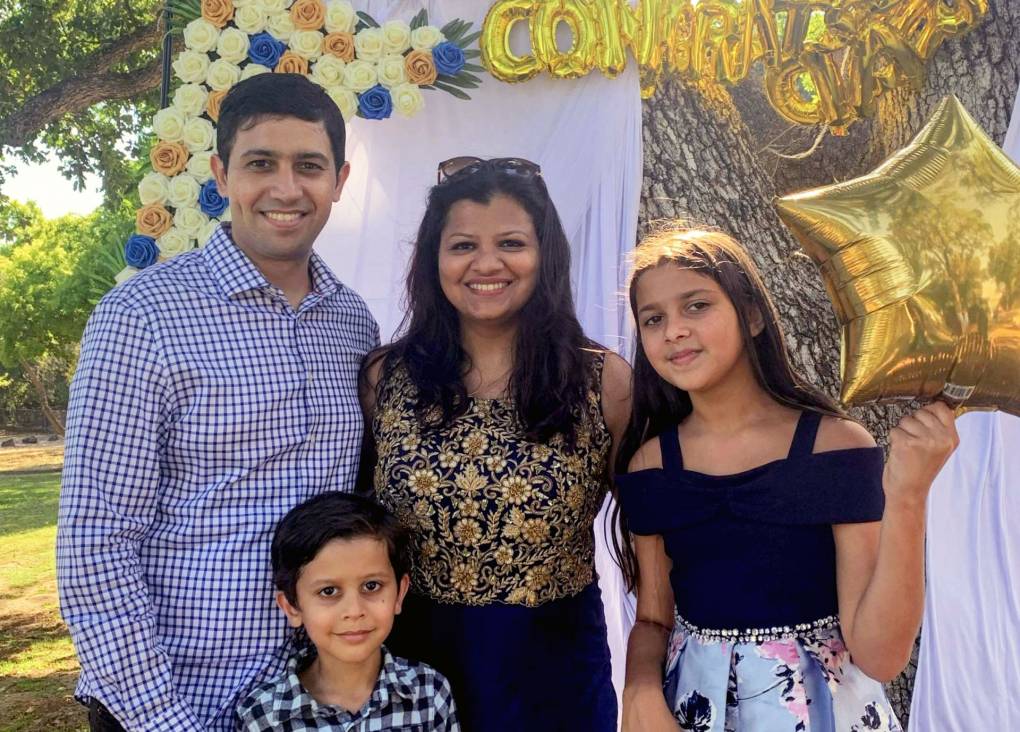
"caption": "Leena Bhai with her family at a recent graduation celebration. Her husband Siddharth has a job at Splunk and an H-1B visa, but because of the years-long wait time many Indian applicants face for an employment-based green card, the Bhais feel like they may have to give up on their 'American dream.'",
"description": "Leena Bhai with her family at a recent graduation celebration. Her husband Siddharth has a job at Splunk and an H-1B visa, but because of the years-long wait time many Indian applicants face for an employment-based green card, the Bhais feel like they may have to give up on their 'American dream.'",
"title": "BhaiFamily",
"credit": "Courtesy of Leena Bhai",
"status": "inherit",
"altTag": null,
"isLoading": false,
"fetchFailed": false
},
"news_11871486": {
"type": "attachments",
"id": "news_11871486",
"meta": {
"index": "attachments_1716263798",
"site": "news",
"id": "11871486",
"found": true
},
"parent": 11871482,
"imgSizes": {
"twentyfourteen-full-width": {
"file": "https://ww2.kqed.org/app/uploads/sites/10/2021/04/1920_GettyImages-1203684608-1038x576.jpg",
"width": 1038,
"mimeType": "image/jpeg",
"height": 576
},
"thumbnail": {
"file": "https://ww2.kqed.org/app/uploads/sites/10/2021/04/1920_GettyImages-1203684608-160x90.jpg",
"width": 160,
"mimeType": "image/jpeg",
"height": 90
},
"post-thumbnail": {
"file": "https://ww2.kqed.org/app/uploads/sites/10/2021/04/1920_GettyImages-1203684608-672x372.jpg",
"width": 672,
"mimeType": "image/jpeg",
"height": 372
},
"kqedFullSize": {
"file": "https://ww2.kqed.org/app/uploads/sites/10/2021/04/1920_GettyImages-1203684608-scaled.jpg",
"width": 2560,
"height": 1440
},
"2048x2048": {
"file": "https://ww2.kqed.org/app/uploads/sites/10/2021/04/1920_GettyImages-1203684608-2048x1152.jpg",
"width": 2048,
"mimeType": "image/jpeg",
"height": 1152
},
"large": {
"file": "https://ww2.kqed.org/app/uploads/sites/10/2021/04/1920_GettyImages-1203684608-1020x574.jpg",
"width": 1020,
"mimeType": "image/jpeg",
"height": 574
},
"1536x1536": {
"file": "https://ww2.kqed.org/app/uploads/sites/10/2021/04/1920_GettyImages-1203684608-1536x864.jpg",
"width": 1536,
"mimeType": "image/jpeg",
"height": 864
},
"full-width": {
"file": "https://ww2.kqed.org/app/uploads/sites/10/2021/04/1920_GettyImages-1203684608-1920x1080.jpg",
"width": 1920,
"mimeType": "image/jpeg",
"height": 1080
},
"medium": {
"file": "https://ww2.kqed.org/app/uploads/sites/10/2021/04/1920_GettyImages-1203684608-800x450.jpg",
"width": 800,
"mimeType": "image/jpeg",
"height": 450
}
},
"publishDate": 1619635051,
"modified": 1627927353,
"caption": "Drivers are striking against San Francisco-based DoorDash.",
"description": null,
"title": "US-IT-LIFESTYLE-FOOD-DOORDASH",
"credit": "Eric Baradat/AFP via Getty Images",
"status": "inherit",
"altTag": null,
"isLoading": false,
"fetchFailed": false
},
"news_11882688": {
"type": "attachments",
"id": "news_11882688",
"meta": {
"index": "attachments_1716263798",
"site": "news",
"id": "11882688",
"found": true
},
"parent": 11882577,
"imgSizes": {
"twentyfourteen-full-width": {
"file": "https://ww2.kqed.org/app/uploads/sites/10/2021/07/GNma2FZU-1038x576.jpeg",
"width": 1038,
"mimeType": "image/jpeg",
"height": 576
},
"thumbnail": {
"file": "https://ww2.kqed.org/app/uploads/sites/10/2021/07/GNma2FZU-160x107.jpeg",
"width": 160,
"mimeType": "image/jpeg",
"height": 107
},
"post-thumbnail": {
"file": "https://ww2.kqed.org/app/uploads/sites/10/2021/07/GNma2FZU-672x372.jpeg",
"width": 672,
"mimeType": "image/jpeg",
"height": 372
},
"kqedFullSize": {
"file": "https://ww2.kqed.org/app/uploads/sites/10/2021/07/GNma2FZU.jpeg",
"width": 1200,
"height": 800
},
"large": {
"file": "https://ww2.kqed.org/app/uploads/sites/10/2021/07/GNma2FZU-1020x680.jpeg",
"width": 1020,
"mimeType": "image/jpeg",
"height": 680
},
"medium": {
"file": "https://ww2.kqed.org/app/uploads/sites/10/2021/07/GNma2FZU-800x533.jpeg",
"width": 800,
"mimeType": "image/jpeg",
"height": 533
}
},
"publishDate": 1627426381,
"modified": 1627426480,
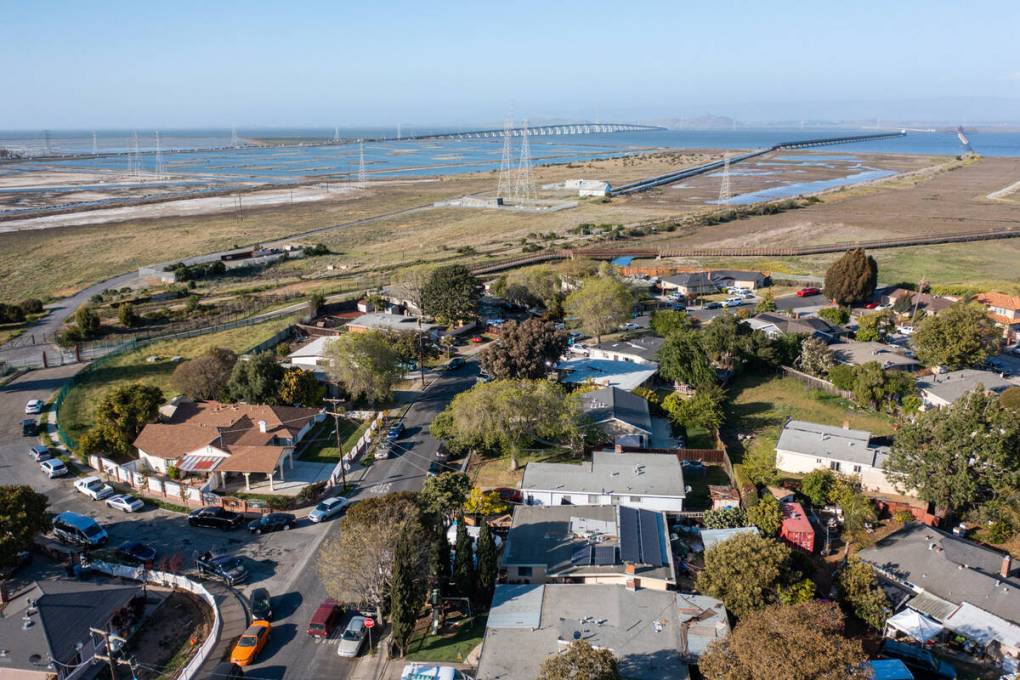
"caption": "The South Bay shoreline.",
"description": null,
"title": "GNma2FZU",
"credit": "NPR",
"status": "inherit",
"altTag": null,
"isLoading": false,
"fetchFailed": false
},
"news_11882169": {
"type": "attachments",
"id": "news_11882169",
"meta": {
"index": "attachments_1716263798",
"site": "news",
"id": "11882169",
"found": true
},
"parent": 11878952,
"imgSizes": {
"twentyfourteen-full-width": {
"file": "https://ww2.kqed.org/app/uploads/sites/10/2021/07/GettyImages-509765744-1-1038x576.jpg",
"width": 1038,
"mimeType": "image/jpeg",
"height": 576
},
"thumbnail": {
"file": "https://ww2.kqed.org/app/uploads/sites/10/2021/07/GettyImages-509765744-1-160x106.jpg",
"width": 160,
"mimeType": "image/jpeg",
"height": 106
},
"post-thumbnail": {
"file": "https://ww2.kqed.org/app/uploads/sites/10/2021/07/GettyImages-509765744-1-672x372.jpg",
"width": 672,
"mimeType": "image/jpeg",
"height": 372
},
"kqedFullSize": {
"file": "https://ww2.kqed.org/app/uploads/sites/10/2021/07/GettyImages-509765744-1-scaled.jpg",
"width": 2560,
"height": 1704
},
"2048x2048": {
"file": "https://ww2.kqed.org/app/uploads/sites/10/2021/07/GettyImages-509765744-1-2048x1363.jpg",
"width": 2048,
"mimeType": "image/jpeg",
"height": 1363
},
"large": {
"file": "https://ww2.kqed.org/app/uploads/sites/10/2021/07/GettyImages-509765744-1-1020x679.jpg",
"width": 1020,
"mimeType": "image/jpeg",
"height": 679
},
"1536x1536": {
"file": "https://ww2.kqed.org/app/uploads/sites/10/2021/07/GettyImages-509765744-1-1536x1022.jpg",
"width": 1536,
"mimeType": "image/jpeg",
"height": 1022
},
"full-width": {
"file": "https://ww2.kqed.org/app/uploads/sites/10/2021/07/GettyImages-509765744-1-1920x1278.jpg",
"width": 1920,
"mimeType": "image/jpeg",
"height": 1278
},
"medium": {
"file": "https://ww2.kqed.org/app/uploads/sites/10/2021/07/GettyImages-509765744-1-800x532.jpg",
"width": 800,
"mimeType": "image/jpeg",
"height": 532
}
},
"publishDate": 1626987733,
"modified": 1626987794,
"caption": "The driver rating screen in an Uber app is seen February 12, 2016 in Washington, DC.",
"description": "The driver rating screen in an Uber app is seen February 12, 2016 in Washington, DC. Global ridesharing service Uber said February 12, 2016 it had raised $200 million in additional funding to help its push into emerging markets.The latest round comes from Luxembourg-based investment group LetterOne (L1), according to a joint statement. ",
"title": "US-IT-LIFESTYLE-TRANSPORT-UBER",
"credit": "Brendan Smialowski/AFP via Getty Images",
"status": "inherit",
"altTag": "A hand holds up a smart phone that shows a screen for rating Uber drivers",
"isLoading": false,
"fetchFailed": false
},
"news_11685494": {
"type": "attachments",
"id": "news_11685494",
"meta": {
"index": "attachments_1716263798",
"site": "news",
"id": "11685494",
"found": true
},
"parent": 11685038,
"imgSizes": {
"small": {
"file": "https://ww2.kqed.org/app/uploads/sites/10/2018/08/GettyImages-3188658-520x338.jpg",
"width": 520,
"mimeType": "image/jpeg",
"height": 338
},
"twentyfourteen-full-width": {
"file": "https://ww2.kqed.org/app/uploads/sites/10/2018/08/GettyImages-3188658-1038x576.jpg",
"width": 1038,
"mimeType": "image/jpeg",
"height": 576
},
"thumbnail": {
"file": "https://ww2.kqed.org/app/uploads/sites/10/2018/08/GettyImages-3188658-160x104.jpg",
"width": 160,
"mimeType": "image/jpeg",
"height": 104
},
"fd-sm": {
"file": "https://ww2.kqed.org/app/uploads/sites/10/2018/08/GettyImages-3188658-960x623.jpg",
"width": 960,
"mimeType": "image/jpeg",
"height": 623
},
"post-thumbnail": {
"file": "https://ww2.kqed.org/app/uploads/sites/10/2018/08/GettyImages-3188658-672x372.jpg",
"width": 672,
"mimeType": "image/jpeg",
"height": 372
},
"xsmall": {
"file": "https://ww2.kqed.org/app/uploads/sites/10/2018/08/GettyImages-3188658-375x244.jpg",
"width": 375,
"mimeType": "image/jpeg",
"height": 244
},
"kqedFullSize": {
"file": "https://ww2.kqed.org/app/uploads/sites/10/2018/08/GettyImages-3188658-e1552593074481.jpg",
"width": 1920,
"height": 1247
},
"large": {
"file": "https://ww2.kqed.org/app/uploads/sites/10/2018/08/GettyImages-3188658-1020x662.jpg",
"width": 1020,
"mimeType": "image/jpeg",
"height": 662
},
"xlarge": {
"file": "https://ww2.kqed.org/app/uploads/sites/10/2018/08/GettyImages-3188658-1180x766.jpg",
"width": 1180,
"mimeType": "image/jpeg",
"height": 766
},
"complete_open_graph": {
"file": "https://ww2.kqed.org/app/uploads/sites/10/2018/08/GettyImages-3188658-1200x779.jpg",
"width": 1200,
"mimeType": "image/jpeg",
"height": 779
},
"guest-author-50": {
"file": "https://ww2.kqed.org/app/uploads/sites/10/2018/08/GettyImages-3188658-50x50.jpg",
"width": 50,
"mimeType": "image/jpeg",
"height": 50
},
"guest-author-96": {
"file": "https://ww2.kqed.org/app/uploads/sites/10/2018/08/GettyImages-3188658-96x96.jpg",
"width": 96,
"mimeType": "image/jpeg",
"height": 96
},
"medium": {
"file": "https://ww2.kqed.org/app/uploads/sites/10/2018/08/GettyImages-3188658-800x519.jpg",
"width": 800,
"mimeType": "image/jpeg",
"height": 519
},
"guest-author-64": {
"file": "https://ww2.kqed.org/app/uploads/sites/10/2018/08/GettyImages-3188658-64x64.jpg",
"width": 64,
"mimeType": "image/jpeg",
"height": 64
},
"guest-author-32": {
"file": "https://ww2.kqed.org/app/uploads/sites/10/2018/08/GettyImages-3188658-32x32.jpg",
"width": 32,
"mimeType": "image/jpeg",
"height": 32
},
"fd-lrg": {
"file": "https://ww2.kqed.org/app/uploads/sites/10/2018/08/GettyImages-3188658-1920x1247.jpg",
"width": 1920,
"mimeType": "image/jpeg",
"height": 1247
},
"fd-med": {
"file": "https://ww2.kqed.org/app/uploads/sites/10/2018/08/GettyImages-3188658-1180x766.jpg",
"width": 1180,
"mimeType": "image/jpeg",
"height": 766
},
"full-width": {
"file": "https://ww2.kqed.org/app/uploads/sites/10/2018/08/GettyImages-3188658-1920x1247.jpg",
"width": 1920,
"mimeType": "image/jpeg",
"height": 1247
},
"detail": {
"file": "https://ww2.kqed.org/app/uploads/sites/10/2018/08/GettyImages-3188658-150x150.jpg",
"width": 150,
"mimeType": "image/jpeg",
"height": 150
},
"guest-author-128": {
"file": "https://ww2.kqed.org/app/uploads/sites/10/2018/08/GettyImages-3188658-128x128.jpg",
"width": 128,
"mimeType": "image/jpeg",
"height": 128
},
"xxsmall": {
"file": "https://ww2.kqed.org/app/uploads/sites/10/2018/08/GettyImages-3188658-240x156.jpg",
"width": 240,
"mimeType": "image/jpeg",
"height": 156
}
},
"publishDate": 1533677464,
"modified": 1626902651,
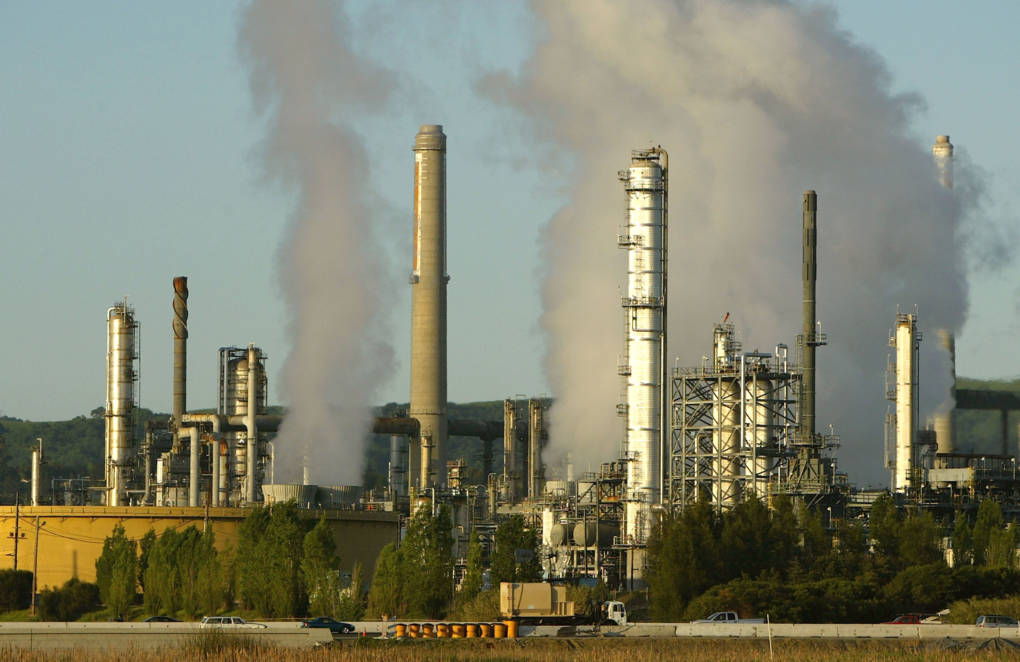
"caption": "The PBF Energy refinery in Martinez, pictured in August 2018 when it was owned by Shell. ",
"description": "The PBF Energy refinery in Martinez, pictured in August 2018 when it was owned by Shell. ",
"title": "The Martinez Refining Company Refinery",
"credit": "Justin Sullivan/Getty Images",
"status": "inherit",
"altTag": null,
"isLoading": false,
"fetchFailed": false
},
"news_11875603": {
"type": "attachments",
"id": "news_11875603",
"meta": {
"index": "attachments_1716263798",
"site": "news",
"id": "11875603",
"found": true
},
"parent": 11875602,
"imgSizes": {
"twentyfourteen-full-width": {
"file": "https://ww2.kqed.org/app/uploads/sites/10/2021/05/ap_21146605202057-d42dc63ad53bca04f809ddc1e00e078f4f9b761d-1038x576.jpg",
"width": 1038,
"mimeType": "image/jpeg",
"height": 576
},
"thumbnail": {
"file": "https://ww2.kqed.org/app/uploads/sites/10/2021/05/ap_21146605202057-d42dc63ad53bca04f809ddc1e00e078f4f9b761d-160x120.jpg",
"width": 160,
"mimeType": "image/jpeg",
"height": 120
},
"post-thumbnail": {
"file": "https://ww2.kqed.org/app/uploads/sites/10/2021/05/ap_21146605202057-d42dc63ad53bca04f809ddc1e00e078f4f9b761d-672x372.jpg",
"width": 672,
"mimeType": "image/jpeg",
"height": 372
},
"kqedFullSize": {
"file": "https://ww2.kqed.org/app/uploads/sites/10/2021/05/ap_21146605202057-d42dc63ad53bca04f809ddc1e00e078f4f9b761d-scaled-e1622136559352.jpg",
"width": 1920,
"height": 1440
},
"2048x2048": {
"file": "https://ww2.kqed.org/app/uploads/sites/10/2021/05/ap_21146605202057-d42dc63ad53bca04f809ddc1e00e078f4f9b761d-2048x1536.jpg",
"width": 2048,
"mimeType": "image/jpeg",
"height": 1536
},
"large": {
"file": "https://ww2.kqed.org/app/uploads/sites/10/2021/05/ap_21146605202057-d42dc63ad53bca04f809ddc1e00e078f4f9b761d-1020x765.jpg",
"width": 1020,
"mimeType": "image/jpeg",
"height": 765
},
"1536x1536": {
"file": "https://ww2.kqed.org/app/uploads/sites/10/2021/05/ap_21146605202057-d42dc63ad53bca04f809ddc1e00e078f4f9b761d-1536x1152.jpg",
"width": 1536,
"mimeType": "image/jpeg",
"height": 1152
},
"full-width": {
"file": "https://ww2.kqed.org/app/uploads/sites/10/2021/05/ap_21146605202057-d42dc63ad53bca04f809ddc1e00e078f4f9b761d-1920x1440.jpg",
"width": 1920,
"mimeType": "image/jpeg",
"height": 1440
},
"medium": {
"file": "https://ww2.kqed.org/app/uploads/sites/10/2021/05/ap_21146605202057-d42dc63ad53bca04f809ddc1e00e078f4f9b761d-800x600.jpg",
"width": 800,
"mimeType": "image/jpeg",
"height": 600
}
},
"publishDate": 1622134547,
"modified": 1622136696,
"caption": "Law enforcement officers respond to the scene of a shooting at a Santa Clara Valley Transportation Authority facility on Wednesday, May 26, 2021, in San Jose.",
"description": "Law enforcement officers respond to the scene of a shooting at a Santa Clara Valley Transportation Authority facility on Wednesday, May 26, 2021, in San Jose.",
"title": "Law enforcement officers respond to a mass shooting at a Santa Clara Valley Transportation Authority facility on Wednesday in San Jose, Calif. A Santa Clara County sheriff's spokesman said the rail yard shooting left multiple people, including the shooter, dead.",
"credit": "Noah Berger/AP",
"status": "inherit",
"altTag": null,
"isLoading": false,
"fetchFailed": false
},
"news_11881246": {
"type": "attachments",
"id": "news_11881246",
"meta": {
"index": "attachments_1716263798",
"site": "news",
"id": "11881246",
"found": true
},
"parent": 11881207,
"imgSizes": {
"twentyfourteen-full-width": {
"file": "https://ww2.kqed.org/app/uploads/sites/10/2021/07/GettyImages-1229644112-1-1038x576.jpg",
"width": 1038,
"mimeType": "image/jpeg",
"height": 576
},
"thumbnail": {
"file": "https://ww2.kqed.org/app/uploads/sites/10/2021/07/GettyImages-1229644112-1-160x91.jpg",
"width": 160,
"mimeType": "image/jpeg",
"height": 91
},
"post-thumbnail": {
"file": "https://ww2.kqed.org/app/uploads/sites/10/2021/07/GettyImages-1229644112-1-672x372.jpg",
"width": 672,
"mimeType": "image/jpeg",
"height": 372
},
"kqedFullSize": {
"file": "https://ww2.kqed.org/app/uploads/sites/10/2021/07/GettyImages-1229644112-1.jpg",
"width": 1920,
"height": 1093
},
"large": {
"file": "https://ww2.kqed.org/app/uploads/sites/10/2021/07/GettyImages-1229644112-1-1020x581.jpg",
"width": 1020,
"mimeType": "image/jpeg",
"height": 581
},
"1536x1536": {
"file": "https://ww2.kqed.org/app/uploads/sites/10/2021/07/GettyImages-1229644112-1-1536x874.jpg",
"width": 1536,
"mimeType": "image/jpeg",
"height": 874
},
"medium": {
"file": "https://ww2.kqed.org/app/uploads/sites/10/2021/07/GettyImages-1229644112-1-800x455.jpg",
"width": 800,
"mimeType": "image/jpeg",
"height": 455
}
},
"publishDate": 1626310567,
"modified": 1626466314,
"caption": "Students sit with their laptop computers at St. Joseph Catholic School in La Puente, California, on Nov. 16, 2020.",
"description": "Students sit with their laptop computers at St. Joseph Catholic School in La Puente, California on November 16, 2020.",
"title": "GettyImages-1229644112 (1)",
"credit": "Frederic J. Brown/AFP via Getty Images",
"status": "inherit",
"altTag": null,
"isLoading": false,
"fetchFailed": false
},
"news_11880899": {
"type": "attachments",
"id": "news_11880899",
"meta": {
"index": "attachments_1716263798",
"site": "news",
"id": "11880899",
"found": true
},
"parent": 11880893,
"imgSizes": {
"twentyfourteen-full-width": {
"file": "https://ww2.kqed.org/app/uploads/sites/10/2021/07/blue_071221_final-1038x576.png",
"width": 1038,
"mimeType": "image/png",
"height": 576
},
"thumbnail": {
"file": "https://ww2.kqed.org/app/uploads/sites/10/2021/07/blue_071221_final-160x107.png",
"width": 160,
"mimeType": "image/png",
"height": 107
},
"post-thumbnail": {
"file": "https://ww2.kqed.org/app/uploads/sites/10/2021/07/blue_071221_final-672x372.png",
"width": 672,
"mimeType": "image/png",
"height": 372
},
"kqedFullSize": {
"file": "https://ww2.kqed.org/app/uploads/sites/10/2021/07/blue_071221_final.png",
"width": 1920,
"height": 1279
},
"large": {
"file": "https://ww2.kqed.org/app/uploads/sites/10/2021/07/blue_071221_final-1020x679.png",
"width": 1020,
"mimeType": "image/png",
"height": 679
},
"1536x1536": {
"file": "https://ww2.kqed.org/app/uploads/sites/10/2021/07/blue_071221_final-1536x1023.png",
"width": 1536,
"mimeType": "image/png",
"height": 1023
},
"medium": {
"file": "https://ww2.kqed.org/app/uploads/sites/10/2021/07/blue_071221_final-800x533.png",
"width": 800,
"mimeType": "image/png",
"height": 533
}
},
"publishDate": 1626117827,
"modified": 1626117912,
"caption": null,
"description": null,
"title": "blue_071221_final",
"credit": null,
"status": "inherit",
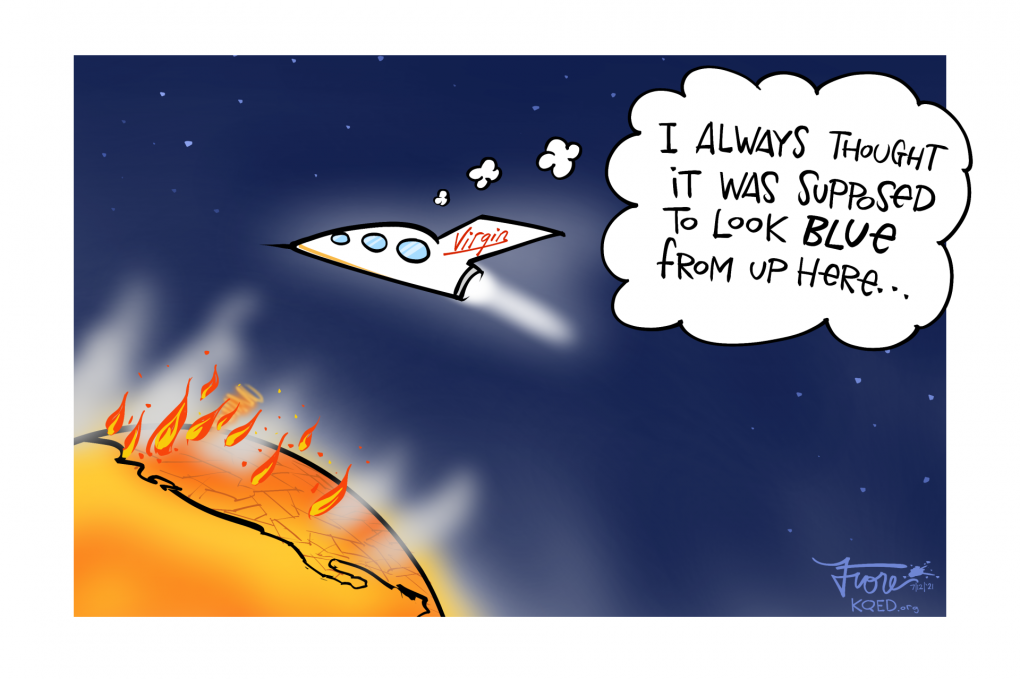
"altTag": "A Mark Fiore cartoon that shows Richard Branson's spaceship flying over a flaming red and orange earth and western United States as a thought bubble over the spaceship reads, \"I always thought it was supposed to look blue from up here...\"",
"isLoading": false,
"fetchFailed": false
},
"news_11877151": {
"type": "attachments",
"id": "news_11877151",
"meta": {
"index": "attachments_1716263798",
"site": "news",
"id": "11877151",
"found": true
},
"parent": 11877144,
"imgSizes": {
"twentyfourteen-full-width": {
"file": "https://ww2.kqed.org/app/uploads/sites/10/2021/06/thisplanet_060821_final-1038x576.png",
"width": 1038,
"mimeType": "image/png",
"height": 576
},
"thumbnail": {
"file": "https://ww2.kqed.org/app/uploads/sites/10/2021/06/thisplanet_060821_final-160x118.png",
"width": 160,
"mimeType": "image/png",
"height": 118
},
"post-thumbnail": {
"file": "https://ww2.kqed.org/app/uploads/sites/10/2021/06/thisplanet_060821_final-672x372.png",
"width": 672,
"mimeType": "image/png",
"height": 372
},
"kqedFullSize": {
"file": "https://ww2.kqed.org/app/uploads/sites/10/2021/06/thisplanet_060821_final.png",
"width": 1920,
"height": 1415
},
"large": {
"file": "https://ww2.kqed.org/app/uploads/sites/10/2021/06/thisplanet_060821_final-1020x752.png",
"width": 1020,
"mimeType": "image/png",
"height": 752
},
"1536x1536": {
"file": "https://ww2.kqed.org/app/uploads/sites/10/2021/06/thisplanet_060821_final-1536x1132.png",
"width": 1536,
"mimeType": "image/png",
"height": 1132
},
"medium": {
"file": "https://ww2.kqed.org/app/uploads/sites/10/2021/06/thisplanet_060821_final-800x590.png",
"width": 800,
"mimeType": "image/png",
"height": 590
}
},
"publishDate": 1623175996,
"modified": 1623176074,
"caption": null,
"description": null,
"title": "thisplanet_060821_final",
"credit": null,
"status": "inherit",
"altTag": "A Mark Fiore cartoon showing aliens flying over the Bay Area with lights and warnings on their dashboard that read, \"mega drought, carbon levels and extreme fire danger,\" as one alien says, \"I thought you said this planet could support life!\"",
"isLoading": false,
"fetchFailed": false
},
"news_11876305": {
"type": "attachments",
"id": "news_11876305",
"meta": {
"index": "attachments_1716263798",
"site": "news",
"id": "11876305",
"found": true
},
"parent": 11874325,
"imgSizes": {
"twentyfourteen-full-width": {
"file": "https://ww2.kqed.org/app/uploads/sites/10/2021/06/organizinghistory-1038x576.jpg",
"width": 1038,
"mimeType": "image/jpeg",
"height": 576
},
"thumbnail": {
"file": "https://ww2.kqed.org/app/uploads/sites/10/2021/06/organizinghistory-160x107.jpg",
"width": 160,
"mimeType": "image/jpeg",
"height": 107
},
"post-thumbnail": {
"file": "https://ww2.kqed.org/app/uploads/sites/10/2021/06/organizinghistory-672x372.jpg",
"width": 672,
"mimeType": "image/jpeg",
"height": 372
},
"kqedFullSize": {
"file": "https://ww2.kqed.org/app/uploads/sites/10/2021/06/organizinghistory.jpg",
"width": 1920,
"height": 1279
},
"large": {
"file": "https://ww2.kqed.org/app/uploads/sites/10/2021/06/organizinghistory-1020x679.jpg",
"width": 1020,
"mimeType": "image/jpeg",
"height": 679
},
"1536x1536": {
"file": "https://ww2.kqed.org/app/uploads/sites/10/2021/06/organizinghistory-1536x1023.jpg",
"width": 1536,
"mimeType": "image/jpeg",
"height": 1023
},
"medium": {
"file": "https://ww2.kqed.org/app/uploads/sites/10/2021/06/organizinghistory-800x533.jpg",
"width": 800,
"mimeType": "image/jpeg",
"height": 533
}
},
"publishDate": 1622652157,
"modified": 1622749371,
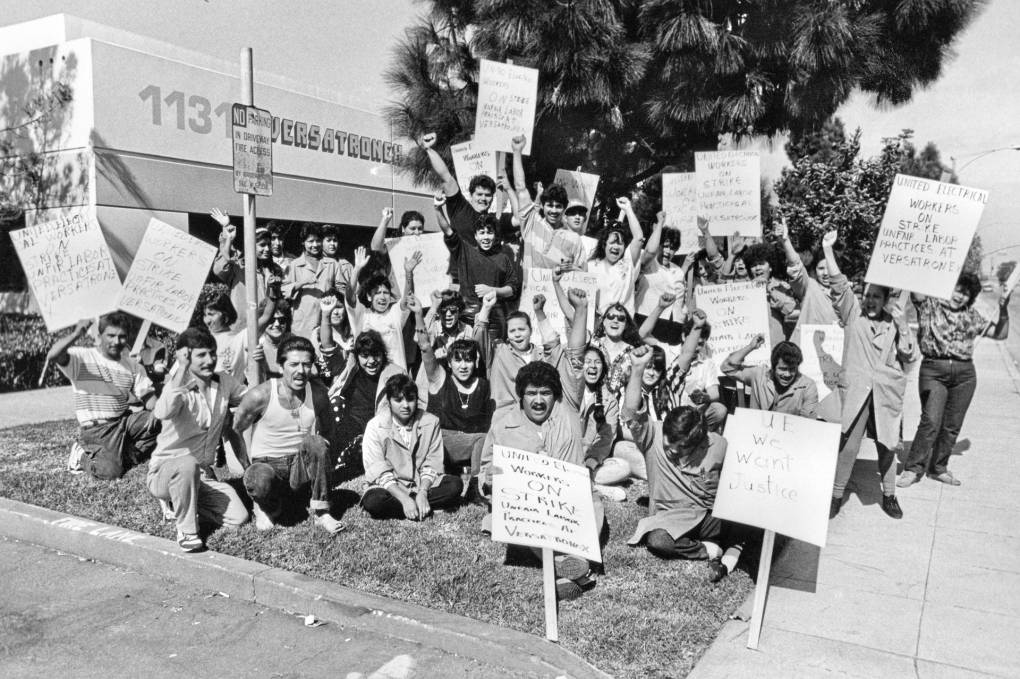
"caption": "In 1992, women and people of color led a strike at the Silicon Valley chip manufacturing plant, Versatronex.",
"description": null,
"title": "organizinghistory",
"credit": "Courtesy David Bacon",
"status": "inherit",
"altTag": null,
"isLoading": false,
"fetchFailed": false
},
"news_11871566": {
"type": "attachments",
"id": "news_11871566",
"meta": {
"index": "attachments_1716263798",
"site": "news",
"id": "11871566",
"found": true
},
"parent": 11871565,
"imgSizes": {
"twentyfourteen-full-width": {
"file": "https://ww2.kqed.org/app/uploads/sites/10/2021/04/16994899290_64a91947fa_b-1023x576.jpg",
"width": 1023,
"mimeType": "image/jpeg",
"height": 576
},
"thumbnail": {
"file": "https://ww2.kqed.org/app/uploads/sites/10/2021/04/16994899290_64a91947fa_b-160x101.jpg",
"width": 160,
"mimeType": "image/jpeg",
"height": 101
},
"post-thumbnail": {
"file": "https://ww2.kqed.org/app/uploads/sites/10/2021/04/16994899290_64a91947fa_b-672x372.jpg",
"width": 672,
"mimeType": "image/jpeg",
"height": 372
},
"kqedFullSize": {
"file": "https://ww2.kqed.org/app/uploads/sites/10/2021/04/16994899290_64a91947fa_b.jpg",
"width": 1023,
"height": 645
},
"large": {
"file": "https://ww2.kqed.org/app/uploads/sites/10/2021/04/16994899290_64a91947fa_b-1020x643.jpg",
"width": 1020,
"mimeType": "image/jpeg",
"height": 643
},
"medium": {
"file": "https://ww2.kqed.org/app/uploads/sites/10/2021/04/16994899290_64a91947fa_b-800x504.jpg",
"width": 800,
"mimeType": "image/jpeg",
"height": 504
}
},
"publishDate": 1619652499,
"modified": 1621474833,
"caption": "For half a century, Searsville Lake functioned as a man-made playground that drew thousands of people from all over the Bay Area for water sports, summer camps, picnics and more. ",
"description": "For half a century, Searsville Lake functioned as a man-made playground that drew thousands of people from all over the Bay Area for water sports, summer camps, picnics and more.",
"title": "16994899290_64a91947fa_b",
"credit": "Courtesy Stanford University Archives",
"status": "inherit",
"altTag": "For half a century, Searsville Lake functioned as a man-made playground that drew thousands of people from all over the Bay Area for water sports, summer camps, picnics and more when the weather was good.",
"isLoading": false,
"fetchFailed": false
},
"news_11874201": {
"type": "attachments",
"id": "news_11874201",
"meta": {
"index": "attachments_1716263798",
"site": "news",
"id": "11874201",
"found": true
},
"parent": 11873927,
"imgSizes": {
"twentyfourteen-full-width": {
"file": "https://ww2.kqed.org/app/uploads/sites/10/2021/05/Imperfect-foods-bro-1038x576.jpg",
"width": 1038,
"mimeType": "image/jpeg",
"height": 576
},
"thumbnail": {
"file": "https://ww2.kqed.org/app/uploads/sites/10/2021/05/Imperfect-foods-bro-160x112.jpg",
"width": 160,
"mimeType": "image/jpeg",
"height": 112
},
"post-thumbnail": {
"file": "https://ww2.kqed.org/app/uploads/sites/10/2021/05/Imperfect-foods-bro-672x372.jpg",
"width": 672,
"mimeType": "image/jpeg",
"height": 372
},
"kqedFullSize": {
"file": "https://ww2.kqed.org/app/uploads/sites/10/2021/05/Imperfect-foods-bro.jpg",
"width": 1920,
"height": 1342
},
"large": {
"file": "https://ww2.kqed.org/app/uploads/sites/10/2021/05/Imperfect-foods-bro-1020x713.jpg",
"width": 1020,
"mimeType": "image/jpeg",
"height": 713
},
"1536x1536": {
"file": "https://ww2.kqed.org/app/uploads/sites/10/2021/05/Imperfect-foods-bro-1536x1074.jpg",
"width": 1536,
"mimeType": "image/jpeg",
"height": 1074
},
"medium": {
"file": "https://ww2.kqed.org/app/uploads/sites/10/2021/05/Imperfect-foods-bro-800x559.jpg",
"width": 800,
"mimeType": "image/jpeg",
"height": 559
}
},
"publishDate": 1621378926,
"modified": 1621387433,
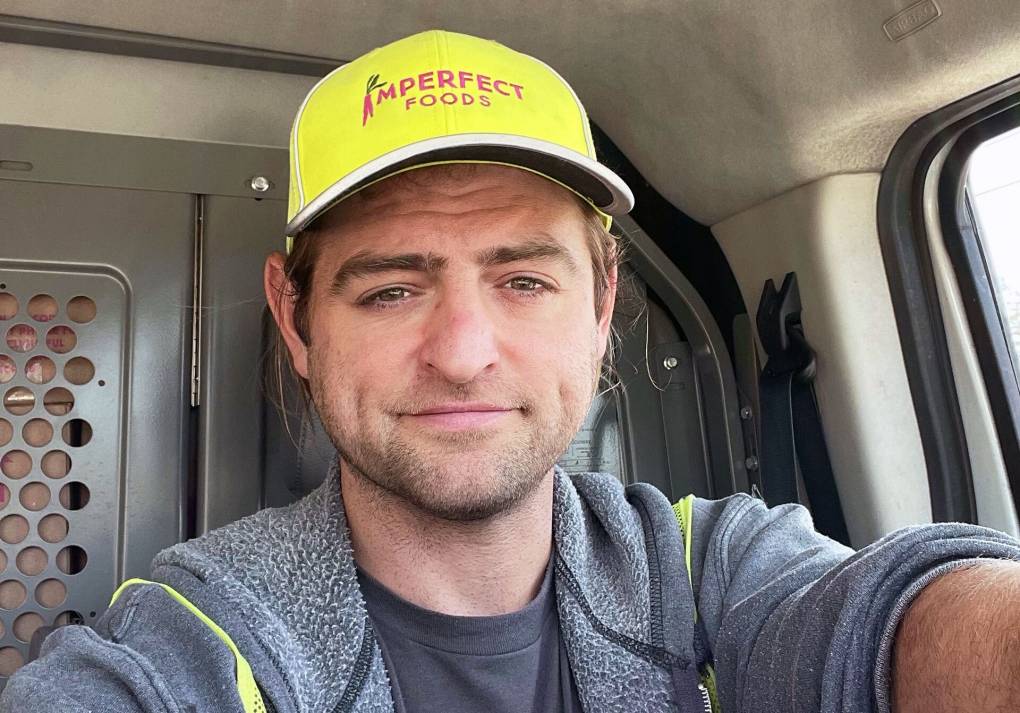
"caption": "Chris Jasinski is one of the workers who voted to form a union at Imperfect Foods, a food delivery app.",
"description": "Chris Jasinski is one of the workers who voted to form a union at Imperfect Foods, a food delivery app.",
"title": "Imperfect-foods-jasinski-2",
"credit": "Courtesy Chris Jasinski",
"status": "inherit",
"altTag": "Chris Jasinski, wearing an Imperfect Foods hat looks at the camera from inside a vehicle.",
"isLoading": false,
"fetchFailed": false
}
},
"audioPlayerReducer": {
"postId": "stream_live",
"isPaused": true,
"isPlaying": false,
"pfsActive": false,
"pledgeModalIsOpen": true,
"playerDrawerIsOpen": false,
"liveAudioPlayStartedAt": 0,
"liveAudioPlayContext": ""
},
"authorsReducer": {
"byline_news_11883367": {
"type": "authors",
"id": "byline_news_11883367",
"meta": {
"override": true
},
"slug": "byline_news_11883367",
"name": "Josie Fischels\u003cbr>NPR",
"isLoading": false
},
"byline_news_11882577": {
"type": "authors",
"id": "byline_news_11882577",
"meta": {
"override": true
},
"slug": "byline_news_11882577",
"name": "Lauren Sommer",
"isLoading": false
},
"byline_news_11881235": {
"type": "authors",
"id": "byline_news_11881235",
"meta": {
"override": true
},
"slug": "byline_news_11881235",
"name": "\u003ca href=\"https://calmatters.org/author/zayna-syed/\">Zayna Syed\u003c/a>",
"isLoading": false
},
"rachael-myrow": {
"type": "authors",
"id": "251",
"meta": {
"index": "authors_1716337520",
"id": "251",
"found": true
},
"name": "Rachael Myrow",
"firstName": "Rachael",
"lastName": "Myrow",
"slug": "rachael-myrow",
"email": "rmyrow@kqed.org",
"display_author_email": true,
"staff_mastheads": [
"news"
],
"title": "Senior Editor of KQED's Silicon Valley News Desk",
"bio": "• I write and edit stories about how Silicon Valley power and policies shape everyday life in California. I’m also passionate about making Bay Area history and culture more accessible to a broad public. • I’ve been a journalist for most of my life, starting in high school with The Franklin Press in Los Angeles, where I grew up. While earning my first degree in English at UC Berkeley, I got my start in public radio at KALX-FM. After completing a second degree in journalism at Cal, I landed my first professional job at Marketplace, then moved on to KPCC (now LAist), and then KQED, where I hosted The California Report for more than seven years. • My reporting has appeared on NPR, The World, WBUR’s \u003ci>Here & Now\u003c/i>, and the BBC. I also guest host for KQED’s \u003ci>Forum\u003c/i>, as well as the Commonwealth Club in San Francisco. • I speak periodically on media, democracy and technology issues, and do voiceover work for documentaries and educational video projects. • Outside of the studio, you'll find me hiking Bay Area trails and whipping up Insta-ready meals in my kitchen. • I do not accept gifts, money, or favors from anyone connected to my reporting, I don't pay people for information, and I do not support or donate to political causes. • I strive to treat the people I report on with fairness, honesty, and respect. I also recognize there are often multiple sides to a story and work to verify information through multiple sources and documentation. If I get something wrong, I correct it.",
"avatar": "https://secure.gravatar.com/avatar/3ed8a3c5f26025e4a805ba634cda8cd764906b97438a6d9ce216b044e340da4e?s=600&d=blank&r=g",
"twitter": "rachaelmyrow",
"bluesky": null,
"facebook": null,
"instagram": null,
"linkedin": "https://www.linkedin.com/in/rachaelmyrow/",
"sites": [
{
"site": "arts",
"roles": [
"administrator"
]
},
{
"site": "news",
"roles": [
"edit_others_posts",
"editor"
]
},
{
"site": "futureofyou",
"roles": [
"editor"
]
},
{
"site": "bayareabites",
"roles": [
"editor"
]
},
{
"site": "stateofhealth",
"roles": [
"editor"
]
},
{
"site": "science",
"roles": [
"editor"
]
},
{
"site": "food",
"roles": [
"editor"
]
},
{
"site": "forum",
"roles": [
"editor"
]
},
{
"site": "liveblog",
"roles": [
"author"
]
}
],
"headData": {
"title": "Rachael Myrow | KQED",
"description": "Senior Editor of KQED's Silicon Valley News Desk",
"ogImgSrc": "https://secure.gravatar.com/avatar/3ed8a3c5f26025e4a805ba634cda8cd764906b97438a6d9ce216b044e340da4e?s=600&d=blank&r=g",
"twImgSrc": "https://secure.gravatar.com/avatar/3ed8a3c5f26025e4a805ba634cda8cd764906b97438a6d9ce216b044e340da4e?s=600&d=blank&r=g"
},
"isLoading": false,
"link": "/author/rachael-myrow"
},
"samharnett": {
"type": "authors",
"id": "253",
"meta": {
"index": "authors_1716337520",
"id": "253",
"found": true
},
"name": "Sam Harnett",
"firstName": "Sam",
"lastName": "Harnett",
"slug": "samharnett",
"email": "samharnett@gmail.com",
"display_author_email": false,
"staff_mastheads": [],
"title": "KQED Contributor",
"bio": "Sam Harnett covered tech and work at KQED. He is the co-creator of \u003cem>\u003ca href=\"http://www.theworldaccordingtosound.org\">The World According to Sound\u003c/a>,\u003c/em> a 90-second podcast that features different sounds and the stories behind them.\r\n\r\nBefore coming to KQED, Sam worked as an independent reporter who contributed regularly to \u003cem>The California Report, Marketplace,\u003c/em> \u003cem>The World \u003c/em>and NPR.",
"avatar": "https://secure.gravatar.com/avatar/2538b972ac02f2b9546c7a6c59a0f3d0?s=600&d=blank&r=g",
"twitter": "Samwharnett",
"facebook": null,
"instagram": null,
"linkedin": null,
"sites": [
{
"site": "news",
"roles": [
"edit_others_posts",
"subscriber"
]
},
{
"site": "stateofhealth",
"roles": [
"author"
]
},
{
"site": "science",
"roles": [
"editor"
]
},
{
"site": "quest",
"roles": [
"subscriber"
]
}
],
"headData": {
"title": "Sam Harnett | KQED",
"description": "KQED Contributor",
"ogImgSrc": "https://secure.gravatar.com/avatar/2538b972ac02f2b9546c7a6c59a0f3d0?s=600&d=blank&r=g",
"twImgSrc": "https://secure.gravatar.com/avatar/2538b972ac02f2b9546c7a6c59a0f3d0?s=600&d=blank&r=g"
},
"isLoading": false,
"link": "/author/samharnett"
},
"tgoldberg": {
"type": "authors",
"id": "258",
"meta": {
"index": "authors_1716337520",
"id": "258",
"found": true
},
"name": "Ted Goldberg",
"firstName": "Ted",
"lastName": "Goldberg",
"slug": "tgoldberg",
"email": "tgoldberg@kqed.org",
"display_author_email": true,
"staff_mastheads": [
"news"
],
"title": "KQED Managing Editor, News and Newscasts",
"bio": "Ted Goldberg is Managing Editor of News and Newscasts at KQED. His main reporting beat is the Bay Area's oil refining industry.\r\n\r\nPrior to joining KQED in 2014, Ted worked at CBS News and WCBS AM in New York and Bay City News and KCBS Radio in San Francisco. He graduated from Oberlin College in Ohio in 1998.",
"avatar": "https://secure.gravatar.com/avatar/30ce2e4fe89135e104f89be2394d16225b9d36c121b5b3cb7651ce642978b96f?s=600&d=blank&r=g",
"twitter": "TedrickG",
"bluesky": null,
"facebook": null,
"instagram": null,
"linkedin": null,
"sites": [
{
"site": "news",
"roles": [
"editor"
]
},
{
"site": "science",
"roles": [
"editor"
]
}
],
"headData": {
"title": "Ted Goldberg | KQED",
"description": "KQED Managing Editor, News and Newscasts",
"ogImgSrc": "https://secure.gravatar.com/avatar/30ce2e4fe89135e104f89be2394d16225b9d36c121b5b3cb7651ce642978b96f?s=600&d=blank&r=g",
"twImgSrc": "https://secure.gravatar.com/avatar/30ce2e4fe89135e104f89be2394d16225b9d36c121b5b3cb7651ce642978b96f?s=600&d=blank&r=g"
},
"isLoading": false,
"link": "/author/tgoldberg"
},
"markfiore": {
"type": "authors",
"id": "3236",
"meta": {
"index": "authors_1716337520",
"id": "3236",
"found": true
},
"name": "Mark Fiore",
"firstName": "Mark",
"lastName": "Fiore",
"slug": "markfiore",
"email": "mark@markfiore.com",
"display_author_email": false,
"staff_mastheads": [
"news"
],
"title": "KQED News Cartoonist",
"bio": "\u003ca href=\"http://www.MarkFiore.com\">MarkFiore.com\u003c/a> | \u003ca href=\"https://twitter.com/markfiore\">Follow on Twitter\u003c/a> | \u003ca href=\"https://www.facebook.com/pages/Mark-Fiore-Animated-Political-Cartoons/94451707396?ref=bookmarks\">Facebook\u003c/a> | \u003ca href=\"mailto:mark@markfiore.com\">email\u003c/a>\r\n\r\nPulitzer Prize-winner, Mark Fiore, who the Wall Street Journal has called “the undisputed guru of the form,” creates animated political cartoons in San Francisco, where his work has been featured regularly on the San Francisco Chronicle’s web site, SFGate.com. His work has appeared on Newsweek.com, Slate.com, CBSNews.com, MotherJones.com, DailyKos.com and NPR’s web site. Fiore’s political animation has appeared on CNN, Frontline, Bill Moyers Journal, Salon.com and cable and broadcast outlets across the globe.\r\n\r\nBeginning his professional life by drawing traditional political cartoons for newspapers, Fiore’s work appeared in publications ranging from the Washington Post to the Los Angeles Times. In the late 1990s, he began to experiment with animating political cartoons and, after a short stint at the San Jose Mercury News as their staff cartoonist, Fiore devoted all his energies to animation.\r\nGrowing up in California, Fiore also spent a good portion of his life in the backwoods of Idaho. It was this combination that shaped him politically. Mark majored in political science at Colorado College, where, in a perfect send-off for a cartoonist, he received his diploma in 1991 as commencement speaker Dick Cheney smiled approvingly.\r\nMark Fiore was awarded the Pulitzer Prize for political cartooning in 2010, a Robert F. Kennedy Journalism Award in 2004 and has twice received an Online Journalism Award for commentary from the Online News Association (2002, 2008). Fiore has received two awards for his work in new media from the National Cartoonists Society (2001, 2002), and in 2006 received The James Madison Freedom of Information Award from The Society of Professional Journalists.",
"avatar": "https://secure.gravatar.com/avatar/fc4e2a612b15b67bad0c6f0e1db4ca9b?s=600&d=blank&r=g",
"twitter": "MarkFiore",
"facebook": null,
"instagram": "https://www.instagram.com/markfiore/?hl=en",
"linkedin": null,
"sites": [
{
"site": "arts",
"roles": [
"contributor"
]
},
{
"site": "news",
"roles": [
"editor"
]
},
{
"site": "futureofyou",
"roles": [
"editor"
]
},
{
"site": "science",
"roles": [
"editor"
]
}
],
"headData": {
"title": "Mark Fiore | KQED",
"description": "KQED News Cartoonist",
"ogImgSrc": "https://secure.gravatar.com/avatar/fc4e2a612b15b67bad0c6f0e1db4ca9b?s=600&d=blank&r=g",
"twImgSrc": "https://secure.gravatar.com/avatar/fc4e2a612b15b67bad0c6f0e1db4ca9b?s=600&d=blank&r=g"
},
"isLoading": false,
"link": "/author/markfiore"
},
"abandlamudi": {
"type": "authors",
"id": "11672",
"meta": {
"index": "authors_1716337520",
"id": "11672",
"found": true
},
"name": "Adhiti Bandlamudi",
"firstName": "Adhiti",
"lastName": "Bandlamudi",
"slug": "abandlamudi",
"email": "abandlamudi@kqed.org",
"display_author_email": false,
"staff_mastheads": [
"news"
],
"title": "KQED Housing Reporter",
"bio": "Adhiti Bandlamudi reports for KQED's Housing desk. She focuses on how housing gets built across the Bay Area. Before joining KQED in 2020, she reported for WUNC in Durham, North Carolina, WABE in Atlanta, Georgia and Capital Public Radio in Sacramento. In 2017, she was awarded a Kroc Fellowship at NPR where she reported on everything from sprinkles to the Golden State Killer's arrest. When she's not reporting, she's baking new recipes in her kitchen or watching movies with friends and family. She's originally from Georgia and has strong opinions about Great British Bake Off.",
"avatar": "https://secure.gravatar.com/avatar/868129c8b257bb99a3500e2c86a65400?s=600&d=mm&r=g",
"twitter": "oddity_adhiti",
"facebook": null,
"instagram": null,
"linkedin": null,
"sites": [
{
"site": "arts",
"roles": [
"author"
]
},
{
"site": "news",
"roles": [
"editor"
]
},
{
"site": "liveblog",
"roles": [
"author"
]
}
],
"headData": {
"title": "Adhiti Bandlamudi | KQED",
"description": "KQED Housing Reporter",
"ogImgSrc": "https://secure.gravatar.com/avatar/868129c8b257bb99a3500e2c86a65400?s=600&d=mm&r=g",
"twImgSrc": "https://secure.gravatar.com/avatar/868129c8b257bb99a3500e2c86a65400?s=600&d=mm&r=g"
},
"isLoading": false,
"link": "/author/abandlamudi"
}
},
"pagesReducer": {
"news_category_technology": {
"type": "terms",
"id": "news_248",
"meta": {
"index": "terms_1716263798",
"site": "news",
"id": "248",
"score": 10.93111
},
"featImg": null,
"name": "Technology",
"description": null,
"taxonomy": "category",
"headData": {
"twImgId": null,
"twTitle": null,
"ogTitle": null,
"ogImgId": null,
"twDescription": null,
"description": null,
"title": "Technology Archives | KQED News",
"ogDescription": null
},
"ttid": 256,
"slug": "technology",
"isLoading": false,
"title": "Technology",
"pageMeta": {
"site": "news",
"WpPageTemplate": "page-topic-editorial",
"currentPage": 42
},
"blocks": [
{
"blockName": "kqed/post-list",
"attrs": {
"layout": "cardArticle2",
"query": "posts/news?category=technology",
"seeMore": false,
"paginated": true,
"page": 42
}
},
{
"blockName": "kqed/ad"
}
]
}
},
"pfsSessionReducer": {},
"postsReducer": {
"stream_live": {
"type": "live",
"id": "stream_live",
"audioUrl": "https://streams.kqed.org/kqedradio",
"title": "Live Stream",
"excerpt": "Live Stream information currently unavailable.",
"link": "/radio",
"featImg": "",
"label": {
"name": "KQED Live",
"link": "/"
}
},
"stream_kqedNewscast": {
"type": "posts",
"id": "stream_kqedNewscast",
"audioUrl": "https://www.kqed.org/.stream/anon/radio/RDnews/newscast.mp3?_=1",
"title": "KQED Newscast",
"featImg": "",
"label": {
"name": "88.5 FM",
"link": "/"
}
},
"news_11885260": {
"type": "posts",
"id": "news_11885260",
"meta": {
"index": "posts_1716263798",
"site": "news",
"id": "11885260",
"score": null,
"sort": [
1629314374000
]
},
"guestAuthors": [],
"slug": "silicon-valley-lawmaker-seeks-to-shorten-path-to-citizenship-for-immigrant-tech-workers",
"title": "Silicon Valley Lawmaker Seeks to Shorten Path to Citizenship for Immigrant Tech Workers",
"publishDate": 1629314374,
"format": "audio",
"headTitle": "Silicon Valley Lawmaker Seeks to Shorten Path to Citizenship for Immigrant Tech Workers | KQED",
"labelTerm": {
"site": "news"
},
"content": "\u003cp>Many skilled foreign workers — especially from India — wait years, or even decades, for a green card, which would allow them to stay and work in the United States permanently. Federal legislation\u003ca href=\"https://lofgren.house.gov/media/press-releases/lofgren-curtis-introduce-bipartisan-legislation-eliminate-arbitrary-country\" target=\"_blank\" rel=\"noopener noreferrer\"> co-sponsored\u003c/a> by Democratic Silicon Valley Rep. Zoe Lofgren would phase out some of the rules that have created that backlog. But the bill’s survival is far from certain.\u003c/p>\n\u003cp>If you spend much time in the tech world, you invariably hear about the epic queue for \u003ca href=\"https://www.uscis.gov/green-card/green-card-eligibility/green-card-for-employment-based-immigrants\" target=\"_blank\" rel=\"noopener noreferrer\">employment-based green cards\u003c/a>, especially from Indian nationals. Shibin Nambiar of Fremont did when he first moved to the U.S. in 2013 on a temporary H-1B work visa.\u003c/p>\n\u003cp>“You don’t realize it today, but down the line, when you’ll have your kid and your wife, and you’re settled and you have a house — that time you’ll realize — you just will never get your green card,” said Nambiar, a data architect at Rubrik, a cloud data management company based in Palo Alto. “It’s going to be a life of uncertainty forever.”\u003c/p>\n\u003cp>Nambiar applied for a green card in 2015, after he got married, had a kid and bought a house. But he faces a wait so long, he jokes he may have to wait for his 4-year-old son, born here in the U.S., to turn 21 and sponsor him for residency based on their family relationship. “He can file for us ultimately, and that’s the way we might get a green card!”\u003c/p>\n\u003cp>[pullquote size=\"medium\" align=\"right\" citation=\"Rep. Zoe Lofgren\"]‘If you were born in India, applications filed on Aug. 1, 2010, are being approved today. It doesn’t make any sense to organize it in this way.’[/pullquote]According to 2020 data from U.S. Citizenship and Immigration Services, more than 1 million people are waiting for an employment-based green card. And more people join the queue each year. But immigration law caps the total number of new cards at just 140,000 per year, and spouses and children of green card applicants count toward the annual cap.\u003c/p>\n\u003cp>“You know, the system that we have now has basically not been changed in many decades, and I think it’s operating in a way that people likely didn’t envision,” said Lofgren, who co-sponsored the \u003ca href=\"https://lofgren.house.gov/sites/lofgren.house.gov/files/EAGLE%20Act%20Final%20Bill%20Text.pdf\" target=\"_blank\" rel=\"noopener noreferrer\">Equal Access to Green cards for Legal Employment\u003c/a>, or EAGLE, Act of 2021. She serves on the Judiciary Committee and chairs the House Immigration and Citizenship Subcommittee.\u003c/p>\n\u003cp>The bottleneck is compounded for immigrants from high-demand countries, because U.S. law stipulates that no more than 7% of green cards can go to workers from any single country in a given year.\u003c/p>\n\u003cp>“If you were born in India, applications filed on Aug. 1, 2010, are being approved today, and it doesn’t make any sense to organize it in this way,” she added.\u003c/p>\n\u003cp>[ad fullwidth]\u003c/p>\n\u003cp>Most of those waiting for employment-based green cards are from two countries: India and China. Albania and Zimbabwe are allocated the same number as India and China, even though Albania and Zimbabwe don’t have nearly as many applicants keen to work in Silicon Valley.\u003c/p>\n\u003cp>“It’s worth remembering the only people who actually benefit from this bill are people who’ve gone through all the hoops to become legal permanent residents of the United States,” said Lofgren. “And, in a way that’s really un-American, instead of looking at their merits, we’re looking at their place of birth.”\u003c/p>\n\u003cp>The bill, H.R. 3648, phases out the 7% per-country limit on employment-based immigrant visas. It would also raise the 7% per-country limit on family-sponsored immigrant visas to 15%.\u003c/p>\n\u003cp>Reducing the bottlenecks and allowing more skilled foreign workers to make a permanent home in the U.S. will benefit the broader economy, said Sean Randolph, senior director of the Bay Area Council Economic Institute, a public-private partnership of business, labor, government and higher education.\u003c/p>\n\u003cp>“If you look at where a lot of the hiring is from in tech companies, the big story is India,” Randolph said. “There is a pretty broad consensus, on a bipartisan level, that we need to support more skilled immigration into the United States.”\u003c/p>\n\u003cp>[aside postID=\"news_10859344,news_11707255,news_11701936\" label=\"Related Coverage\"]But even though the EAGLE Act is widely supported by business interests, its future is not assured. A similar bill failed to make it to President Trump’s desk in 2019. And due to the way partisanship has frozen Washington, D.C., it’s become difficult for Republican lawmakers to publicly support a hot-button issue like immigration reform.\u003c/p>\n\u003cp>While the EAGLE Act may not move forward as a stand-alone bill, according to a Democratic staffer who asked not to be identified, there’s a plan to fold in elements of the bill when the Senate sends its budget to the House for reconciliation, sometime in September. Lofgren was one of roughly a dozen lawmakers lobbying President Biden over the summer for various immigration reforms. It’s too soon to say which parts of the bill might survive these negotiations.\u003c/p>\n\u003cp>The EAGLE Act also includes reforms to the contentious H-1B visa program, which allows foreign citizens in specialty occupations, like computer engineering, to work in the U.S. temporarily. Silicon Valley employers have long taken advantage of people on these visas — and often hire them instead of American citizens who expect better pay and working conditions. The changes the EAGLE Act would make are not enough to mollify critics like protectionist John Miano, a computer programmer turned lawyer who’s sued multiple administrations over immigration policy.\u003c/p>\n\u003cp>Among other things, he dislikes the fact that a 1990 law allowed employers of H-1B and L-1 visa holders to apply for green cards for those workers. That extended the U.S. stay of those employees while the applications are processed, and it gave hundreds of thousands of foreign workers like Nambiar hope of a permanent life here. But it also swamped the waiting line for employment-based green cards. The EAGLE Act, Miano argues, would not change that.\u003c/p>\n\u003cp>“The fundamental problem is that we have a guest worker system, and we have a permanent immigration system. The guest worker system is larger than the permanent immigration system,” said Miano. “They used to be separate. You take a large system and you pour it into a small system, and you can see what happens.”\u003c/p>\n\u003cp>Comedian John Oliver, who came to the U.S. on a work-based visa himself, explained this dynamic in a 2019 episode of his show “Last Week Tonight.”\u003c/p>\n\u003cp>“I can tell you from experience here, living on a visa can be very stressful, and involves having to jump through endless, costly hoops,” Oliver said.\u003c/p>\n\u003cp>When his employer finally presented Oliver with a green card, he said he nearly burst into tears from relief: “That is when I realized I’d been worried about my immigration status every single day.”\u003c/p>\n\u003cp>https://www.youtube.com/watch?v=tXqnRMU1fTs\u003c/p>\n\u003cp>So what do those in the epic queue for a green card think of the modest ambitions of the EAGLE Act?\u003c/p>\n\u003cp>“I feel [if a] Band-Aid is the approach, then [so be] it,” said Leena Bhai of Sunnyvale. Her family has been waiting on her husband’s green card application for five years. “Is comprehensive reform even possible? If not, let’s just work with what we can.”\u003c/p>\n\u003cp>One of Bhai’s children was born in the U.S., the other in India. If they don’t get their green cards before the child born in India — now 6 — turns 21, he will lose his dependent status, and will have to return to the country of his birth to file his own green card application.\u003c/p>\n\u003cp>At the very least, Bhai says, she’s hoping federal lawmakers make clear whether they want families like hers to stay permanently. Because if not, she and her husband are likely to move their family to another country — one where they can feel secure that their young children will be welcome to go to college when that day comes.\u003c/p>\n\u003cp>[ad floatright]\u003c/p>\n",
"blocks": [],
"excerpt": "A bill by Democratic Rep. Zoe Lofgren could reduce immigration bottlenecks that have kept 1 million skilled workers – most from India and China – waiting years for green cards.",
"status": "publish",
"parent": 0,
"modified": 1738715759,
"stats": {
"hasAudio": false,
"hasVideo": true,
"hasChartOrMap": false,
"iframeSrcs": [],
"hasGoogleForm": false,
"hasGallery": false,
"hasHearkenModule": false,
"hasPolis": false,
"paragraphCount": 27,
"wordCount": 1440
},
"headData": {
"title": "Silicon Valley Lawmaker Seeks to Shorten Path to Citizenship for Immigrant Tech Workers | KQED",
"description": "A bill by Democratic Rep. Zoe Lofgren could reduce immigration bottlenecks that have kept 1 million skilled workers – most from India and China – waiting years for green cards.",
"ogTitle": "",
"ogDescription": "",
"ogImgId": "",
"twTitle": "",
"twDescription": "",
"twImgId": "",
"schema": {
"@context": "https://schema.org",
"@type": "NewsArticle",
"headline": "Silicon Valley Lawmaker Seeks to Shorten Path to Citizenship for Immigrant Tech Workers",
"datePublished": "2021-08-18T12:19:34-07:00",
"dateModified": "2025-02-04T16:35:59-08:00",
"image": "https://cdn.kqed.org/wp-content/uploads/2020/02/KQED-OG-Image@1x.png",
"isAccessibleForFree": "True",
"publisher": {
"@type": "NewsMediaOrganization",
"@id": "https://www.kqed.org/#organization",
"name": "KQED",
"logo": "https://cdn.kqed.org/wp-content/uploads/2020/02/KQED-OG-Image@1x.png",
"url": "https://www.kqed.org",
"sameAs": [
"https://www.facebook.com/KQED",
"https://twitter.com/KQED",
"https://www.instagram.com/kqed/",
"https://www.tiktok.com/@kqedofficial",
"https://www.linkedin.com/company/kqed",
"https://www.youtube.com/channel/UCeC0IOo7i1P_61zVUWbJ4nw"
]
}
}
},
"audioUrl": "https://traffic.omny.fm/d/clips/0af137ef-751e-4b19-a055-aaef00d2d578/ffca7e9f-6831-41c5-bcaf-aaef00f5a073/42dd94fc-c723-4f18-aaff-ad880123b6ee/audio.mp3",
"sticky": false,
"path": "/news/11885260/silicon-valley-lawmaker-seeks-to-shorten-path-to-citizenship-for-immigrant-tech-workers",
"audioTrackLength": null,
"parsedContent": [
{
"type": "contentString",
"content": "\u003cdiv class=\"post-body\">\u003cp>\u003cp>Many skilled foreign workers — especially from India — wait years, or even decades, for a green card, which would allow them to stay and work in the United States permanently. Federal legislation\u003ca href=\"https://lofgren.house.gov/media/press-releases/lofgren-curtis-introduce-bipartisan-legislation-eliminate-arbitrary-country\" target=\"_blank\" rel=\"noopener noreferrer\"> co-sponsored\u003c/a> by Democratic Silicon Valley Rep. Zoe Lofgren would phase out some of the rules that have created that backlog. But the bill’s survival is far from certain.\u003c/p>\n\u003cp>If you spend much time in the tech world, you invariably hear about the epic queue for \u003ca href=\"https://www.uscis.gov/green-card/green-card-eligibility/green-card-for-employment-based-immigrants\" target=\"_blank\" rel=\"noopener noreferrer\">employment-based green cards\u003c/a>, especially from Indian nationals. Shibin Nambiar of Fremont did when he first moved to the U.S. in 2013 on a temporary H-1B work visa.\u003c/p>\n\u003cp>“You don’t realize it today, but down the line, when you’ll have your kid and your wife, and you’re settled and you have a house — that time you’ll realize — you just will never get your green card,” said Nambiar, a data architect at Rubrik, a cloud data management company based in Palo Alto. “It’s going to be a life of uncertainty forever.”\u003c/p>\n\u003cp>Nambiar applied for a green card in 2015, after he got married, had a kid and bought a house. But he faces a wait so long, he jokes he may have to wait for his 4-year-old son, born here in the U.S., to turn 21 and sponsor him for residency based on their family relationship. “He can file for us ultimately, and that’s the way we might get a green card!”\u003c/p>\n\u003cp>\u003c/p>\u003c/div>",
"attributes": {
"named": {},
"numeric": []
}
},
{
"type": "component",
"content": "‘If you were born in India, applications filed on Aug. 1, 2010, are being approved today. It doesn’t make any sense to organize it in this way.’",
"name": "pullquote",
"attributes": {
"named": {
"size": "medium",
"align": "right",
"citation": "Rep. Zoe Lofgren",
"label": ""
},
"numeric": []
}
},
{
"type": "contentString",
"content": "\u003cdiv class=\"post-body\">\u003cp>According to 2020 data from U.S. Citizenship and Immigration Services, more than 1 million people are waiting for an employment-based green card. And more people join the queue each year. But immigration law caps the total number of new cards at just 140,000 per year, and spouses and children of green card applicants count toward the annual cap.\u003c/p>\n\u003cp>“You know, the system that we have now has basically not been changed in many decades, and I think it’s operating in a way that people likely didn’t envision,” said Lofgren, who co-sponsored the \u003ca href=\"https://lofgren.house.gov/sites/lofgren.house.gov/files/EAGLE%20Act%20Final%20Bill%20Text.pdf\" target=\"_blank\" rel=\"noopener noreferrer\">Equal Access to Green cards for Legal Employment\u003c/a>, or EAGLE, Act of 2021. She serves on the Judiciary Committee and chairs the House Immigration and Citizenship Subcommittee.\u003c/p>\n\u003cp>The bottleneck is compounded for immigrants from high-demand countries, because U.S. law stipulates that no more than 7% of green cards can go to workers from any single country in a given year.\u003c/p>\n\u003cp>“If you were born in India, applications filed on Aug. 1, 2010, are being approved today, and it doesn’t make any sense to organize it in this way,” she added.\u003c/p>\n\u003cp>\u003c/p>\u003c/div>",
"attributes": {
"named": {},
"numeric": []
}
},
{
"type": "component",
"content": "",
"name": "ad",
"attributes": {
"named": {
"label": "fullwidth"
},
"numeric": [
"fullwidth"
]
}
},
{
"type": "contentString",
"content": "\u003cdiv class=\"post-body\">\u003cp>\u003c/p>\n\u003cp>Most of those waiting for employment-based green cards are from two countries: India and China. Albania and Zimbabwe are allocated the same number as India and China, even though Albania and Zimbabwe don’t have nearly as many applicants keen to work in Silicon Valley.\u003c/p>\n\u003cp>“It’s worth remembering the only people who actually benefit from this bill are people who’ve gone through all the hoops to become legal permanent residents of the United States,” said Lofgren. “And, in a way that’s really un-American, instead of looking at their merits, we’re looking at their place of birth.”\u003c/p>\n\u003cp>The bill, H.R. 3648, phases out the 7% per-country limit on employment-based immigrant visas. It would also raise the 7% per-country limit on family-sponsored immigrant visas to 15%.\u003c/p>\n\u003cp>Reducing the bottlenecks and allowing more skilled foreign workers to make a permanent home in the U.S. will benefit the broader economy, said Sean Randolph, senior director of the Bay Area Council Economic Institute, a public-private partnership of business, labor, government and higher education.\u003c/p>\n\u003cp>“If you look at where a lot of the hiring is from in tech companies, the big story is India,” Randolph said. “There is a pretty broad consensus, on a bipartisan level, that we need to support more skilled immigration into the United States.”\u003c/p>\n\u003cp>\u003c/p>\u003c/div>",
"attributes": {
"named": {},
"numeric": []
}
},
{
"type": "component",
"content": "",
"name": "aside",
"attributes": {
"named": {
"postid": "news_10859344,news_11707255,news_11701936",
"label": "Related Coverage "
},
"numeric": []
}
},
{
"type": "contentString",
"content": "\u003cdiv class=\"post-body\">\u003cp>But even though the EAGLE Act is widely supported by business interests, its future is not assured. A similar bill failed to make it to President Trump’s desk in 2019. And due to the way partisanship has frozen Washington, D.C., it’s become difficult for Republican lawmakers to publicly support a hot-button issue like immigration reform.\u003c/p>\n\u003cp>While the EAGLE Act may not move forward as a stand-alone bill, according to a Democratic staffer who asked not to be identified, there’s a plan to fold in elements of the bill when the Senate sends its budget to the House for reconciliation, sometime in September. Lofgren was one of roughly a dozen lawmakers lobbying President Biden over the summer for various immigration reforms. It’s too soon to say which parts of the bill might survive these negotiations.\u003c/p>\n\u003cp>The EAGLE Act also includes reforms to the contentious H-1B visa program, which allows foreign citizens in specialty occupations, like computer engineering, to work in the U.S. temporarily. Silicon Valley employers have long taken advantage of people on these visas — and often hire them instead of American citizens who expect better pay and working conditions. The changes the EAGLE Act would make are not enough to mollify critics like protectionist John Miano, a computer programmer turned lawyer who’s sued multiple administrations over immigration policy.\u003c/p>\n\u003cp>Among other things, he dislikes the fact that a 1990 law allowed employers of H-1B and L-1 visa holders to apply for green cards for those workers. That extended the U.S. stay of those employees while the applications are processed, and it gave hundreds of thousands of foreign workers like Nambiar hope of a permanent life here. But it also swamped the waiting line for employment-based green cards. The EAGLE Act, Miano argues, would not change that.\u003c/p>\n\u003cp>“The fundamental problem is that we have a guest worker system, and we have a permanent immigration system. The guest worker system is larger than the permanent immigration system,” said Miano. “They used to be separate. You take a large system and you pour it into a small system, and you can see what happens.”\u003c/p>\n\u003cp>Comedian John Oliver, who came to the U.S. on a work-based visa himself, explained this dynamic in a 2019 episode of his show “Last Week Tonight.”\u003c/p>\n\u003cp>“I can tell you from experience here, living on a visa can be very stressful, and involves having to jump through endless, costly hoops,” Oliver said.\u003c/p>\n\u003cp>When his employer finally presented Oliver with a green card, he said he nearly burst into tears from relief: “That is when I realized I’d been worried about my immigration status every single day.”\u003c/p>\u003c/p>\u003cp>\u003cspan class='utils-parseShortcode-shortcodes-__youtubeShortcode__embedYoutube'>\n \u003cspan class='utils-parseShortcode-shortcodes-__youtubeShortcode__embedYoutubeInside'>\n \u003ciframe\n loading='lazy'\n class='utils-parseShortcode-shortcodes-__youtubeShortcode__youtubePlayer'\n type='text/html'\n src='//www.youtube.com/embed/tXqnRMU1fTs'\n title='//www.youtube.com/embed/tXqnRMU1fTs'\n allowfullscreen='true'\n style='border:0;'>\u003c/iframe>\n \u003c/span>\n \u003c/span>\u003c/p>\u003cp>\u003cp>So what do those in the epic queue for a green card think of the modest ambitions of the EAGLE Act?\u003c/p>\n\u003cp>“I feel [if a] Band-Aid is the approach, then [so be] it,” said Leena Bhai of Sunnyvale. Her family has been waiting on her husband’s green card application for five years. “Is comprehensive reform even possible? If not, let’s just work with what we can.”\u003c/p>\n\u003cp>One of Bhai’s children was born in the U.S., the other in India. If they don’t get their green cards before the child born in India — now 6 — turns 21, he will lose his dependent status, and will have to return to the country of his birth to file his own green card application.\u003c/p>\n\u003cp>At the very least, Bhai says, she’s hoping federal lawmakers make clear whether they want families like hers to stay permanently. Because if not, she and her husband are likely to move their family to another country — one where they can feel secure that their young children will be welcome to go to college when that day comes.\u003c/p>\n\u003cp>\u003c/p>\u003c/div>",
"attributes": {
"named": {},
"numeric": []
}
},
{
"type": "component",
"content": "",
"name": "ad",
"attributes": {
"named": {
"label": "floatright"
},
"numeric": [
"floatright"
]
}
},
{
"type": "contentString",
"content": "\u003cdiv class=\"post-body\">\u003cp>\u003c/p>\n\u003c/div>\u003c/p>",
"attributes": {
"named": {},
"numeric": []
}
}
],
"link": "/news/11885260/silicon-valley-lawmaker-seeks-to-shorten-path-to-citizenship-for-immigrant-tech-workers",
"authors": [
"251"
],
"categories": [
"news_1758",
"news_1169",
"news_8",
"news_13",
"news_248"
],
"tags": [
"news_18538",
"news_20829",
"news_28145",
"news_21027",
"news_20202",
"news_22750",
"news_2011",
"news_1631",
"news_2013"
],
"featImg": "news_11885556",
"label": "news"
},
"news_11883367": {
"type": "posts",
"id": "news_11883367",
"meta": {
"index": "posts_1716263798",
"site": "news",
"id": "11883367",
"score": null,
"sort": [
1627852451000
]
},
"parent": 0,
"labelTerm": {},
"blocks": [],
"publishDate": 1627852451,
"format": "standard",
"disqusTitle": "Why Some DoorDash Drivers Are on Strike",
"title": "Why Some DoorDash Drivers Are on Strike",
"headTitle": "KQED News",
"content": "\u003cp>Across the country, many DoorDash drivers have stopped dashing to your door.\u003c/p>\n\u003cp>They've logged off the app for the day as part of a strike organized on social media against the food delivery service, demanding tip transparency and higher pay.\u003c/p>\n\u003cp>Here's why.\u003c/p>\n\u003ch3>It all started, presumably, on Reddit\u003c/h3>\n\u003cp>While the strike is nationwide and not affiliated with any particular organization, it appears to have originated on Reddit, where a post from July 15 circulated, titled, \"DOORDASH BOYCOTT ON JULY 31ST ALL DAY !!\" [aside postID=news_11849055]\u003c/p>\n\u003cp>The post urged dashers — the company name for drivers — to stop using the app for the day and to instead use Uber Eats. At the bottom the post lists demands, including a minimum \"base pay,\" the amount a driver earns on each order before a tip, of $4.50.\u003c/p>\n\u003cp>The Bay Area had its own moment of seeing DoorDash's practices take the spotlight in February when \u003ca href=\"https://www.kqed.org/arts/13892479/san-francisco-jeffrey-fang-children-carjacking-kidnapping\">one DoorDash driver's car was stolen while he was delivering food with his two children inside the vehicle in San Francisco\u003c/a>. The children suffered no physical harm and were reunited with family several hours later, but the incident sparked \u003ca href=\"https://sf.eater.com/2021/2/8/22272913/doordash-kidnapping-minimum-wage-prop-22\">a public conversation around DoorDash drivers' ability to pay for child care\u003c/a>.\u003c/p>\n\u003cp>https://twitter.com/GigWorkersRise/status/1358832157200838657\u003c/p>\n\u003cp>Responding to the strike, DoorDash defended its practices and said dasher base pay is calculated based on the estimated time, distance and desirability of an order. Right now, dashers can expect to earn a base pay between $2 to $10+, according to DoorDash's website. Drivers say the lower end of that range had previously been $3.\u003c/p>\n\u003cp>\"As if a $3 base pay from DoorDash was not insulting enough, they've lowered it to $2, $2.25, $2.50, $2.75,\" one DoorDasher, Denise Small, said in a TikTok video that has amassed over 530,000 views. \"I've declined so many orders because they've been $2.\"\u003c/p>\n\u003ch3>Drivers want to know tip amount before accepting an order\u003c/h3>\n\u003cp>Workers have also demanded to know how much in tips they'd make before accepting or declining an order. Dashers keep 100% of their tips, but the DoorDash app only shows a guaranteed minimum amount and does not allow drivers to see how much a customer has tipped until after the driver accepts the order.\u003c/p>\n\u003cp>For orders that contain larger tips, the app shows an estimated amount rather than the full tip amount, which according to information sent to NPR from DoorDash, the company does due to the number of drivers who would repeatedly decline deliveries if they didn't have high tip amounts.\u003c/p>\n\u003cp>But some drivers have told \u003ca href=\"https://www.vice.com/en/article/pkbvgz/no-dasher-no-deliveries-doordash-drivers-strike-for-tip-transparency\">Motherboard\u003c/a> that because tip amount is factored so heavily into a driver's total earning, the tip can be the difference between making or losing money on a delivery.\u003c/p>\n\u003cp>Some dashers solved this problem by downloading Para, a third-party app that used DoorDash's code to let drivers see the tip amount before accepting an order.\u003c/p>\n\u003cp>The app became extremely popular, but its success was short-lived. Soon enough, in mid-July, it no longer worked with DoorDash's app.\u003c/p>\n\u003cp>\"I would say a lot of workers woke up when Para stopped working,\" one DoorDash driver told Motherboard. \"Para showed that DoorDash is not as transparent as it could be. I think it's ridiculous that DoorDash hides tips for orders. It's very common to get no tips.\"\u003c/p>\n\u003cp>According to a statement from DoorDash, Para violated the company's terms of service.\u003cbr>\n[ad fullwidth]\u003c/p>\n\u003cp>\"Para collects its information by scraping content without authorization from the DoorDash platform. This is deeply concerning as we are committed to protecting the privacy and data security of every side of our marketplace and stakeholders,\" the statement read.\u003c/p>\n\u003ch3>The effects of the strike are unknown so far\u003c/h3>\n\u003cp>It's unclear how many dashers have participated in the strike, though hundreds of posts about it can be found across TikTok, Reddit, Twitter and Facebook. While some people have voiced their approval and encouraged others to participate, several other commenters expressed their doubts that the strike would be effective.\u003c/p>\n\u003cp>https://twitter.com/EmeryldL/status/1416041255377719301\u003c/p>\n\u003cp>In a statement to NPR, DoorDash called the strikers \"a vocal minority,\" but said the company was monitoring boycott conditions.\u003c/p>\n\u003cp>\"DoorDash is proud to provide flexible, low-barrier earning opportunities for Dashers while helping restaurants grow their businesses. On average nationally, Dashers work fewer than 4 hours a week and earn over $25 an hour (while) they're on delivery, including 100% of their tips,\" DoorDash wrote in a statement.\u003c/p>\n\u003cp>One driver who is participating in the strike \u003ca href=\"https://www.insider.com/doordash-tiktok-boycott-base-pay-tips-ubereats-grubhub-2021-7\">told Insider\u003c/a>: \"Dashers want fair compensation for our time and efforts. We are what makes the company run but we're treated as disposable.\"\u003c/p>\n\u003cp>\u003cem>Josie Fischels is an intern on NPR's News Desk. KQED's Joe Fitzgerald Rodriguez contributed to this report. \u003c/em>\u003c/p>\n\u003cp>\u003c/p>\n",
"disqusIdentifier": "11883367 https://ww2.kqed.org/news/?p=11883367",
"disqusUrl": "https://ww2.kqed.org/news/2021/08/01/why-some-doordash-drivers-are-on-strike/",
"stats": {
"hasVideo": false,
"hasChartOrMap": false,
"hasAudio": false,
"hasPolis": false,
"wordCount": 813,
"hasGoogleForm": false,
"hasGallery": false,
"hasHearkenModule": false,
"iframeSrcs": [],
"paragraphCount": 22
},
"modified": 1627927379,
"excerpt": "Drivers want to know tip amount before accepting an order, and have also demanded to know how much in tips they'd make before accepting or declining an order.",
"headData": {
"twImgId": "",
"twTitle": "",
"ogTitle": "",
"ogImgId": "",
"twDescription": "",
"description": "Drivers want to know tip amount before accepting an order, and have also demanded to know how much in tips they'd make before accepting or declining an order.",
"title": "Why Some DoorDash Drivers Are on Strike | KQED",
"ogDescription": "",
"schema": {
"@context": "https://schema.org",
"@type": "NewsArticle",
"headline": "Why Some DoorDash Drivers Are on Strike",
"datePublished": "2021-08-01T14:14:11-07:00",
"dateModified": "2021-08-02T11:02:59-07:00",
"image": "https://cdn.kqed.org/wp-content/uploads/2020/02/KQED-OG-Image@1x.png",
"isAccessibleForFree": "True",
"publisher": {
"@type": "NewsMediaOrganization",
"@id": "https://www.kqed.org/#organization",
"name": "KQED",
"logo": "https://cdn.kqed.org/wp-content/uploads/2020/02/KQED-OG-Image@1x.png",
"url": "https://www.kqed.org",
"sameAs": [
"https://www.facebook.com/KQED",
"https://twitter.com/KQED",
"https://www.instagram.com/kqed/",
"https://www.tiktok.com/@kqedofficial",
"https://www.linkedin.com/company/kqed",
"https://www.youtube.com/channel/UCeC0IOo7i1P_61zVUWbJ4nw"
]
}
}
},
"guestAuthors": [],
"slug": "why-some-doordash-drivers-are-on-strike",
"status": "publish",
"sourceUrl": "https://www.npr.org/",
"nprByline": "Josie Fischels\u003cbr>NPR",
"source": "NPR",
"path": "/news/11883367/why-some-doordash-drivers-are-on-strike",
"audioTrackLength": null,
"parsedContent": [
{
"type": "contentString",
"content": "\u003cdiv class=\"post-body\">\u003cp>\u003cp>Across the country, many DoorDash drivers have stopped dashing to your door.\u003c/p>\n\u003cp>They've logged off the app for the day as part of a strike organized on social media against the food delivery service, demanding tip transparency and higher pay.\u003c/p>\n\u003cp>Here's why.\u003c/p>\n\u003ch3>It all started, presumably, on Reddit\u003c/h3>\n\u003cp>While the strike is nationwide and not affiliated with any particular organization, it appears to have originated on Reddit, where a post from July 15 circulated, titled, \"DOORDASH BOYCOTT ON JULY 31ST ALL DAY !!\" \u003c/p>\u003c/div>",
"attributes": {
"named": {},
"numeric": []
}
},
{
"type": "component",
"content": "",
"name": "aside",
"attributes": {
"named": {
"postid": "news_11849055",
"label": ""
},
"numeric": []
}
},
{
"type": "contentString",
"content": "\u003cdiv class=\"post-body\">\u003cp>\u003c/p>\n\u003cp>The post urged dashers — the company name for drivers — to stop using the app for the day and to instead use Uber Eats. At the bottom the post lists demands, including a minimum \"base pay,\" the amount a driver earns on each order before a tip, of $4.50.\u003c/p>\n\u003cp>The Bay Area had its own moment of seeing DoorDash's practices take the spotlight in February when \u003ca href=\"https://www.kqed.org/arts/13892479/san-francisco-jeffrey-fang-children-carjacking-kidnapping\">one DoorDash driver's car was stolen while he was delivering food with his two children inside the vehicle in San Francisco\u003c/a>. The children suffered no physical harm and were reunited with family several hours later, but the incident sparked \u003ca href=\"https://sf.eater.com/2021/2/8/22272913/doordash-kidnapping-minimum-wage-prop-22\">a public conversation around DoorDash drivers' ability to pay for child care\u003c/a>.\u003c/p>\u003c/p>\u003c/div>",
"attributes": {
"named": {},
"numeric": []
}
},
{
"type": "component",
"content": "",
"name": "singleTwitterStatus",
"attributes": {
"named": {
"id": "1358832157200838657"
},
"numeric": []
}
},
{
"type": "contentString",
"content": "\u003cdiv class=\"post-body\">\u003cp>\n\u003cp>Responding to the strike, DoorDash defended its practices and said dasher base pay is calculated based on the estimated time, distance and desirability of an order. Right now, dashers can expect to earn a base pay between $2 to $10+, according to DoorDash's website. Drivers say the lower end of that range had previously been $3.\u003c/p>\n\u003cp>\"As if a $3 base pay from DoorDash was not insulting enough, they've lowered it to $2, $2.25, $2.50, $2.75,\" one DoorDasher, Denise Small, said in a TikTok video that has amassed over 530,000 views. \"I've declined so many orders because they've been $2.\"\u003c/p>\n\u003ch3>Drivers want to know tip amount before accepting an order\u003c/h3>\n\u003cp>Workers have also demanded to know how much in tips they'd make before accepting or declining an order. Dashers keep 100% of their tips, but the DoorDash app only shows a guaranteed minimum amount and does not allow drivers to see how much a customer has tipped until after the driver accepts the order.\u003c/p>\n\u003cp>For orders that contain larger tips, the app shows an estimated amount rather than the full tip amount, which according to information sent to NPR from DoorDash, the company does due to the number of drivers who would repeatedly decline deliveries if they didn't have high tip amounts.\u003c/p>\n\u003cp>But some drivers have told \u003ca href=\"https://www.vice.com/en/article/pkbvgz/no-dasher-no-deliveries-doordash-drivers-strike-for-tip-transparency\">Motherboard\u003c/a> that because tip amount is factored so heavily into a driver's total earning, the tip can be the difference between making or losing money on a delivery.\u003c/p>\n\u003cp>Some dashers solved this problem by downloading Para, a third-party app that used DoorDash's code to let drivers see the tip amount before accepting an order.\u003c/p>\n\u003cp>The app became extremely popular, but its success was short-lived. Soon enough, in mid-July, it no longer worked with DoorDash's app.\u003c/p>\n\u003cp>\"I would say a lot of workers woke up when Para stopped working,\" one DoorDash driver told Motherboard. \"Para showed that DoorDash is not as transparent as it could be. I think it's ridiculous that DoorDash hides tips for orders. It's very common to get no tips.\"\u003c/p>\n\u003cp>According to a statement from DoorDash, Para violated the company's terms of service.\u003cbr>\n\u003c/p>\u003c/div>",
"attributes": {
"named": {},
"numeric": []
}
},
{
"type": "component",
"content": "",
"name": "ad",
"attributes": {
"named": {
"label": "fullwidth"
},
"numeric": [
"fullwidth"
]
}
},
{
"type": "contentString",
"content": "\u003cdiv class=\"post-body\">\u003cp>\u003c/p>\n\u003cp>\"Para collects its information by scraping content without authorization from the DoorDash platform. This is deeply concerning as we are committed to protecting the privacy and data security of every side of our marketplace and stakeholders,\" the statement read.\u003c/p>\n\u003ch3>The effects of the strike are unknown so far\u003c/h3>\n\u003cp>It's unclear how many dashers have participated in the strike, though hundreds of posts about it can be found across TikTok, Reddit, Twitter and Facebook. While some people have voiced their approval and encouraged others to participate, several other commenters expressed their doubts that the strike would be effective.\u003c/p>\u003c/p>\u003c/div>",
"attributes": {
"named": {},
"numeric": []
}
},
{
"type": "component",
"content": "",
"name": "singleTwitterStatus",
"attributes": {
"named": {
"id": "1416041255377719301"
},
"numeric": []
}
},
{
"type": "contentString",
"content": "\u003cdiv class=\"post-body\">\u003cp>\n\u003cp>In a statement to NPR, DoorDash called the strikers \"a vocal minority,\" but said the company was monitoring boycott conditions.\u003c/p>\n\u003cp>\"DoorDash is proud to provide flexible, low-barrier earning opportunities for Dashers while helping restaurants grow their businesses. On average nationally, Dashers work fewer than 4 hours a week and earn over $25 an hour (while) they're on delivery, including 100% of their tips,\" DoorDash wrote in a statement.\u003c/p>\n\u003cp>One driver who is participating in the strike \u003ca href=\"https://www.insider.com/doordash-tiktok-boycott-base-pay-tips-ubereats-grubhub-2021-7\">told Insider\u003c/a>: \"Dashers want fair compensation for our time and efforts. We are what makes the company run but we're treated as disposable.\"\u003c/p>\n\u003cp>\u003cem>Josie Fischels is an intern on NPR's News Desk. KQED's Joe Fitzgerald Rodriguez contributed to this report. \u003c/em>\u003c/p>\n\u003cp>\u003c/p>\n\u003c/div>\u003c/p>",
"attributes": {
"named": {},
"numeric": []
}
}
],
"link": "/news/11883367/why-some-doordash-drivers-are-on-strike",
"authors": [
"byline_news_11883367"
],
"categories": [
"news_1758",
"news_8",
"news_248"
],
"tags": [
"news_26532",
"news_17994",
"news_26585",
"news_2759",
"news_4569"
],
"featImg": "news_11871486",
"label": "source_news_11883367"
},
"news_11882577": {
"type": "posts",
"id": "news_11882577",
"meta": {
"index": "posts_1716263798",
"site": "news",
"id": "11882577",
"score": null,
"sort": [
1627411701000
]
},
"guestAuthors": [],
"slug": "who-will-pay-to-protect-silicon-valleys-tech-giants-from-rising-seas",
"title": "Who Will Pay to Protect Silicon Valley's Tech Giants From Rising Seas?",
"publishDate": 1627411701,
"format": "aside",
"headTitle": "Who Will Pay to Protect Silicon Valley’s Tech Giants From Rising Seas? | KQED",
"labelTerm": {},
"content": "\u003cdiv style=\"width: 100%\">\n\u003c!-- iframe plugin v.4.3 wordpress.org/plugins/iframe/ -->\u003cbr>\n\u003ciframe loading=\"lazy\" src=\"https://apps.npr.org/sea-level-rise-silicon-valley/\" width=\"100%\" height=\"800\" scrolling=\"yes\" class=\"iframe-class\" frameborder=\"0\">\u003c/iframe>\n\u003c/div>\n\u003cp>[ad fullwidth]\u003c/p>\u003cp>\u003c/p>\n",
"blocks": [],
"excerpt": "Coastal cities need billions of dollars to build defenses against sea level rise, and tensions are growing over where that funding will come from: taxpayers or rich private companies — like Facebook and Google — with vulnerable waterfront properties?",
"status": "publish",
"parent": 0,
"modified": 1729027872,
"stats": {
"hasAudio": false,
"hasVideo": false,
"hasChartOrMap": true,
"iframeSrcs": [
"https://apps.npr.org/sea-level-rise-silicon-valley/"
],
"hasGoogleForm": false,
"hasGallery": false,
"hasHearkenModule": false,
"hasPolis": false,
"paragraphCount": 2,
"wordCount": 2
},
"headData": {
"title": "Who Will Pay to Protect Silicon Valley's Tech Giants From Rising Seas? | KQED",
"description": "Coastal cities need billions of dollars to build defenses against sea level rise, and tensions are growing over where that funding will come from: taxpayers or rich private companies — like Facebook and Google — with vulnerable waterfront properties?",
"ogTitle": "",
"ogDescription": "",
"ogImgId": "",
"twTitle": "",
"twDescription": "",
"twImgId": "",
"schema": {
"@context": "https://schema.org",
"@type": "NewsArticle",
"headline": "Who Will Pay to Protect Silicon Valley's Tech Giants From Rising Seas?",
"datePublished": "2021-07-27T11:48:21-07:00",
"dateModified": "2024-10-15T14:31:12-07:00",
"image": "https://cdn.kqed.org/wp-content/uploads/2020/02/KQED-OG-Image@1x.png",
"isAccessibleForFree": "True",
"publisher": {
"@type": "NewsMediaOrganization",
"@id": "https://www.kqed.org/#organization",
"name": "KQED",
"logo": "https://cdn.kqed.org/wp-content/uploads/2020/02/KQED-OG-Image@1x.png",
"url": "https://www.kqed.org",
"sameAs": [
"https://www.facebook.com/KQED",
"https://twitter.com/KQED",
"https://www.instagram.com/kqed/",
"https://www.tiktok.com/@kqedofficial",
"https://www.linkedin.com/company/kqed",
"https://www.youtube.com/channel/UCeC0IOo7i1P_61zVUWbJ4nw"
]
}
}
},
"source": "NPR",
"sourceUrl": "https://www.npr.org/",
"audioUrl": "https://ondemand.npr.org/anon.npr-mp3/npr/atc/2021/07/20210727_atc_big_tech_rising_seas_-_part_2.mp3?orgId=1&topicId=1025&d=370&p=2&story=1021373017&dl=1&sc=siteplayer&siteplayer=true&size=5925870&dl=1",
"sticky": false,
"nprByline": "Lauren Sommer",
"path": "/news/11882577/who-will-pay-to-protect-silicon-valleys-tech-giants-from-rising-seas",
"audioTrackLength": null,
"parsedContent": [
{
"type": "contentString",
"content": "\u003cdiv class=\"post-body\">\u003cp>\u003cdiv style=\"width: 100%\">\n\u003c!-- iframe plugin v.4.3 wordpress.org/plugins/iframe/ -->\u003cbr>\n\u003ciframe loading=\"lazy\" src=\"https://apps.npr.org/sea-level-rise-silicon-valley/\" width=\"100%\" height=\"800\" scrolling=\"yes\" class=\"iframe-class\" frameborder=\"0\">\u003c/iframe>\n\u003c/div>\n\u003cp>\u003c/p>\u003c/div>",
"attributes": {
"named": {},
"numeric": []
}
},
{
"type": "component",
"content": "",
"name": "ad",
"attributes": {
"named": {
"label": "fullwidth"
},
"numeric": [
"fullwidth"
]
}
},
{
"type": "contentString",
"content": "\u003cdiv class=\"post-body\">\u003cp>\u003c/p>\u003cp>\u003c/p>\n\u003c/div>\u003c/p>",
"attributes": {
"named": {},
"numeric": []
}
}
],
"link": "/news/11882577/who-will-pay-to-protect-silicon-valleys-tech-giants-from-rising-seas",
"authors": [
"byline_news_11882577"
],
"categories": [
"news_19906",
"news_8",
"news_356",
"news_248"
],
"tags": [
"news_249",
"news_28199",
"news_93",
"news_2181",
"news_1631"
],
"featImg": "news_11882688",
"label": "source_news_11882577"
},
"news_11878952": {
"type": "posts",
"id": "news_11878952",
"meta": {
"index": "posts_1716263798",
"site": "news",
"id": "11878952",
"score": null,
"sort": [
1626987919000
]
},
"guestAuthors": [],
"slug": "black-and-brown-gig-workers-report-lower-ratings-but-companies-make-bias-hard-to-track",
"title": "Black and Brown Gig Workers Report Lower Ratings — But Companies Make Bias Hard to Track",
"publishDate": 1626987919,
"format": "audio",
"headTitle": "Black and Brown Gig Workers Report Lower Ratings — But Companies Make Bias Hard to Track | KQED",
"labelTerm": {
"site": "news"
},
"content": "\u003cp>For almost a decade, on-demand services like Lyft, DoorDash and Instacart have allowed customers to rate and tip workers with just the tap of a finger. Even though it has been almost a decade, we still have no idea how much this allows customer bias to hurt Black and brown workers.\u003c/p>\n\u003cp>While rating workers on an app is new, it’s just the latest system companies have devised to allow customers to impact pay or promotions. If their ratings aren’t perfect, workers can lose income, or even their job, and there’s mounting evidence these systems allow bias to hurt workers of color.\u003c/p>\n\u003ch3>How Restaurants Paved the Way\u003c/h3>\n\u003cp>Long before apps entered the picture, tipping established a way for consumer bias to impact worker pay. Michael Lynn, a professor of consumer behavior at Cornell University, said he has long suspected bias influenced tips.\u003c/p>\n\u003cp>“I believe that we have an implicit bias against people of color in this country, and I believe those implicit biases are likely to impact tipping,” Lynn said. But over and over again, he’s come up against a major hurdle in proving it.\u003c/p>\n\u003cp>“I’ve asked a lot of different companies to give me data,” Lynn said. “But there’s no interest on their part in finding out because it doesn’t benefit them. If there is racism, that puts them in a bind, and it’s worse when there is racism and they know about it.”\u003c/p>\n\u003cp>That said, Lynn was able to get some data \u003ca href=\"https://www.wagehourlitigation.com/wp-content/uploads/sites/215/2015/10/cornell.pdf\">to run a small study on waiters\u003c/a> in 2008. He found that customers did indeed give workers of color lower tips.\u003c/p>\n\u003cp>[ad fullwidth]\u003c/p>\n\u003ch3>Similar Findings in Other Industries\u003c/h3>\n\u003cp>Studies have consistently shown that\u003ca href=\"https://www.yalelawjournal.org/pdf/207_wd54xsc1.pdf\"> Black, brown and immigrant taxi drivers\u003c/a> get lower tips; and health care, management and sales professionals\u003ca href=\"https://journals.aom.org/doi/abs/10.5465/amj.2010.49388763\"> get more negative customer feedback\u003c/a>.\u003c/p>\n\u003cp>The trend is the same in online reviews: Black and brown professors \u003ca href=\"https://teaching.pitt.edu/wp-content/uploads/2018/12/OMET-Racial_bias_and_student_ratings_of_instructors.pdf\">get worse student evaluations\u003c/a>, while \u003ca href=\"https://news.northeastern.edu/2016/12/06/researchers-find-racial-gender-bias-in-online-freelance-marketplaces/\">freelancers on Fiverr and TaskRabbit get lower reviews\u003c/a>, which means fewer jobs and less money.\u003c/p>\n\u003cp>Customers may not even realize they’re treating Black and brown workers differently, giving them lower tips, leaving less positive feedback or rating them lower on an app. The cause of all this, according to researchers, is implicit or unconscious bias.\u003c/p>\n\u003cp>[aside label=\"Related Stories\" tag=\"gig-economy\"]To fully understand the extent of the problem, researchers would need to look at large data sets and see what different groups of workers were getting tipped and rated. Race is just one possible trait to evaluate for bias. The same problem could exist for gender, age, ability or any category that is regularly discriminated against.\u003c/p>\n\u003cp>But while many companies are resistant to collect or share data along these lines, on-demand service apps like DoorDash and Uber don’t even have to gather worker demographic data.\u003c/p>\n\u003cp>That’s because of the way they classify their workers. App companies call workers contractors instead of employees. The contractor status also protects these on-demand app service companies from liability if is found that customers are discriminating against any of the workers.\u003c/p>\n\u003cp>The news that the app rating system is problematic is far from new. Labor advocates have been warning about it since the apps started. In 2016, there was an entire study done by Data & Society titled “\u003ca href=\"https://datasociety.net/pubs/ia/Discriminating_Tastes_Customer_Ratings_as_Vehicles_for_Bias.pdf\">Discriminating Tastes: Customer Ratings as Vehicles for Bias\u003c/a>,” which was co-authored by Alex Rosenblat, who now works for Uber as the Head of Marketplace Policy, Fairness and Research.\u003c/p>\n\u003ch3>What the Companies Say\u003c/h3>\n\u003cp>KQED reached out to several major app companies: DoorDash, Lyft, Uber and TaskRabbit. Only Lyft and DoorDash responded.\u003c/p>\n\u003cp>DoorDash PR representatives talked about protocols for kicking overtly racist customers off the app, but didn’t mention anything about a system for detecting or addressing implicit bias.\u003c/p>\n\u003cp>A representative from Lyft said the company had commissioned a study to understand the extent of the problem. The PR representative said the company found no evidence of implicit bias in ratings, but it’s not possible to confirm the veracity of this assessment, as the company has not made the results or methodology of the study public.\u003c/p>\n\u003cp>Also Lyft, like many other app companies, does not gather demographic information on workers. Without that data, researchers say it’s impossible to know with certainty how much a rating and/or tip system allows for implicit bias to hurt workers. The companies are in the dark, and so are the workers.\u003c/p>\n\u003cp>Ashley Salas would love to know what led to non-perfect ratings she got delivering for Instacart in San Francisco. After those, she said, everything changed.\u003c/p>\n\u003cp>[pullquote sze='medium' align='right' citation=\"Ashley Salas, Instacart shopper\"]‘It got really, really hard. I went from making $200 a day to struggling to make $100.’[/pullquote]\u003c/p>\n\u003cp>“It got really, really hard. I went from making $200 a day to struggling to make $100,” Salas said.\u003c/p>\n\u003cp>That’s $100 a day before expenses like gas and wear and tear on her car, while she went to school for radiology and took care of her newborn baby.\u003c/p>\n\u003cp>Did she get low ratings because she did something wrong? Were the customers just grumpy? Or did they react negatively to who she is? Salas is part Pacific Islander, part Native American.\u003c/p>\n\u003cp>“It’s kind of a bummer,” Salas said. “I would have wished to know why so I could improve myself.”\u003c/p>\n\u003cp>Frustrated, Salas reached out to Gig Workers Rising, an advocacy group for app workers. Lead organizer Lauren Casey said she has heard this same story again and again from workers of color.\u003c/p>\n\u003cp>Casey said, “Their performance at work is held to a different standard and in turn they receive worse ratings.”\u003c/p>\n\u003cp>A representative from Instacart said it has policies to deal with overt racism, but like other app companies, there’s no mechanism for detecting implicit bias, let alone addressing it.\u003c/p>\n\u003ch3>No Data, No Context\u003c/h3>\n\u003cp>Stanford University law professor Richard Ford said the app rating system has magnified the problem of implicit bias, making it easier for customers to hurt workers and harder for workers to prove it is happening.\u003c/p>\n\u003cp>“You don’t have context, and you don’t have the interpersonal reactions that might give you some clue that the ratings were based on race,” Ford said.\u003c/p>\n\u003cp>All you have is a number, and given our society’s increasing fetishization of data, Ford said a number without context can be very dangerous. “The difference in today’s environment is that it looks more objective. You’re getting, you know, a numerical rating. How could you argue with the numbers?”\u003c/p>\n\u003cp>Even if the ratings are high, it doesn’t mean they are fair. It’s possible that a person of different a race, sex or origin had to work harder to get good ratings.\u003c/p>\n\u003cp>UC Hastings labor law professor Veena Dubal has interviewed more than 100 Lyft and Uber drivers. She said Black and brown drivers often talk about having to perform to make white customers happy.\u003c/p>\n\u003cp>“There’s a lot of emotional labor and a lot of emotional performance that goes into ensuring that you’re not getting poor ratings, because otherwise you’re going to get fired. It’s almost that you have to play into the racial sensibilities of consumers,” Dubal said.\u003c/p>\n\u003cp>Some restaurants pool tips so any negative impacts from implicit bias are shared by the whole staff. App companies could adjust tips and ratings for Black and brown drivers to compensate for bias, but that means first figuring out how much lower they are on average.\u003c/p>\n\u003cp>Thanks to Proposition 22, app companies face no legal pressure to gather the necessary demographic data. Without data, individual workers are left to interpret their own experience, isolated and unprotected.\u003c/p>\n\u003cp>[ad floatright]\u003c/p>\n",
"blocks": [],
"excerpt": "For almost a decade, companies like Uber have been allowing customers to rate workers without having to prove the system is fair for Black and brown workers.\r\n",
"status": "publish",
"parent": 0,
"modified": 1729027875,
"stats": {
"hasAudio": false,
"hasVideo": false,
"hasChartOrMap": false,
"iframeSrcs": [],
"hasGoogleForm": false,
"hasGallery": false,
"hasHearkenModule": false,
"hasPolis": false,
"paragraphCount": 36,
"wordCount": 1345
},
"headData": {
"title": "Black and Brown Gig Workers Report Lower Ratings — But Companies Make Bias Hard to Track | KQED",
"description": "For almost a decade, companies like Uber have been allowing customers to rate workers without having to prove the system is fair for Black and brown workers.\r\n",
"ogTitle": "",
"ogDescription": "",
"ogImgId": "",
"twTitle": "",
"twDescription": "",
"twImgId": "",
"schema": {
"@context": "https://schema.org",
"@type": "NewsArticle",
"headline": "Black and Brown Gig Workers Report Lower Ratings — But Companies Make Bias Hard to Track",
"datePublished": "2021-07-22T14:05:19-07:00",
"dateModified": "2024-10-15T14:31:15-07:00",
"image": "https://cdn.kqed.org/wp-content/uploads/2020/02/KQED-OG-Image@1x.png",
"isAccessibleForFree": "True",
"publisher": {
"@type": "NewsMediaOrganization",
"@id": "https://www.kqed.org/#organization",
"name": "KQED",
"logo": "https://cdn.kqed.org/wp-content/uploads/2020/02/KQED-OG-Image@1x.png",
"url": "https://www.kqed.org",
"sameAs": [
"https://www.facebook.com/KQED",
"https://twitter.com/KQED",
"https://www.instagram.com/kqed/",
"https://www.tiktok.com/@kqedofficial",
"https://www.linkedin.com/company/kqed",
"https://www.youtube.com/channel/UCeC0IOo7i1P_61zVUWbJ4nw"
]
}
}
},
"audioUrl": "https://traffic.omny.fm/d/clips/0af137ef-751e-4b19-a055-aaef00d2d578/ffca7e9f-6831-4[…]f-aaef00f5a073/4f224e8f-2363-4050-bfbb-ad630120ffcb/audio.mp3",
"sticky": false,
"path": "/news/11878952/black-and-brown-gig-workers-report-lower-ratings-but-companies-make-bias-hard-to-track",
"audioTrackLength": null,
"parsedContent": [
{
"type": "contentString",
"content": "\u003cdiv class=\"post-body\">\u003cp>\u003cp>For almost a decade, on-demand services like Lyft, DoorDash and Instacart have allowed customers to rate and tip workers with just the tap of a finger. Even though it has been almost a decade, we still have no idea how much this allows customer bias to hurt Black and brown workers.\u003c/p>\n\u003cp>While rating workers on an app is new, it’s just the latest system companies have devised to allow customers to impact pay or promotions. If their ratings aren’t perfect, workers can lose income, or even their job, and there’s mounting evidence these systems allow bias to hurt workers of color.\u003c/p>\n\u003ch3>How Restaurants Paved the Way\u003c/h3>\n\u003cp>Long before apps entered the picture, tipping established a way for consumer bias to impact worker pay. Michael Lynn, a professor of consumer behavior at Cornell University, said he has long suspected bias influenced tips.\u003c/p>\n\u003cp>“I believe that we have an implicit bias against people of color in this country, and I believe those implicit biases are likely to impact tipping,” Lynn said. But over and over again, he’s come up against a major hurdle in proving it.\u003c/p>\n\u003cp>“I’ve asked a lot of different companies to give me data,” Lynn said. “But there’s no interest on their part in finding out because it doesn’t benefit them. If there is racism, that puts them in a bind, and it’s worse when there is racism and they know about it.”\u003c/p>\n\u003cp>That said, Lynn was able to get some data \u003ca href=\"https://www.wagehourlitigation.com/wp-content/uploads/sites/215/2015/10/cornell.pdf\">to run a small study on waiters\u003c/a> in 2008. He found that customers did indeed give workers of color lower tips.\u003c/p>\n\u003cp>\u003c/p>\u003c/div>",
"attributes": {
"named": {},
"numeric": []
}
},
{
"type": "component",
"content": "",
"name": "ad",
"attributes": {
"named": {
"label": "fullwidth"
},
"numeric": [
"fullwidth"
]
}
},
{
"type": "contentString",
"content": "\u003cdiv class=\"post-body\">\u003cp>\u003c/p>\n\u003ch3>Similar Findings in Other Industries\u003c/h3>\n\u003cp>Studies have consistently shown that\u003ca href=\"https://www.yalelawjournal.org/pdf/207_wd54xsc1.pdf\"> Black, brown and immigrant taxi drivers\u003c/a> get lower tips; and health care, management and sales professionals\u003ca href=\"https://journals.aom.org/doi/abs/10.5465/amj.2010.49388763\"> get more negative customer feedback\u003c/a>.\u003c/p>\n\u003cp>The trend is the same in online reviews: Black and brown professors \u003ca href=\"https://teaching.pitt.edu/wp-content/uploads/2018/12/OMET-Racial_bias_and_student_ratings_of_instructors.pdf\">get worse student evaluations\u003c/a>, while \u003ca href=\"https://news.northeastern.edu/2016/12/06/researchers-find-racial-gender-bias-in-online-freelance-marketplaces/\">freelancers on Fiverr and TaskRabbit get lower reviews\u003c/a>, which means fewer jobs and less money.\u003c/p>\n\u003cp>Customers may not even realize they’re treating Black and brown workers differently, giving them lower tips, leaving less positive feedback or rating them lower on an app. The cause of all this, according to researchers, is implicit or unconscious bias.\u003c/p>\n\u003cp>\u003c/p>\u003c/div>",
"attributes": {
"named": {},
"numeric": []
}
},
{
"type": "component",
"content": "",
"name": "aside",
"attributes": {
"named": {
"label": "Related Stories ",
"tag": "gig-economy"
},
"numeric": []
}
},
{
"type": "contentString",
"content": "\u003cdiv class=\"post-body\">\u003cp>To fully understand the extent of the problem, researchers would need to look at large data sets and see what different groups of workers were getting tipped and rated. Race is just one possible trait to evaluate for bias. The same problem could exist for gender, age, ability or any category that is regularly discriminated against.\u003c/p>\n\u003cp>But while many companies are resistant to collect or share data along these lines, on-demand service apps like DoorDash and Uber don’t even have to gather worker demographic data.\u003c/p>\n\u003cp>That’s because of the way they classify their workers. App companies call workers contractors instead of employees. The contractor status also protects these on-demand app service companies from liability if is found that customers are discriminating against any of the workers.\u003c/p>\n\u003cp>The news that the app rating system is problematic is far from new. Labor advocates have been warning about it since the apps started. In 2016, there was an entire study done by Data & Society titled “\u003ca href=\"https://datasociety.net/pubs/ia/Discriminating_Tastes_Customer_Ratings_as_Vehicles_for_Bias.pdf\">Discriminating Tastes: Customer Ratings as Vehicles for Bias\u003c/a>,” which was co-authored by Alex Rosenblat, who now works for Uber as the Head of Marketplace Policy, Fairness and Research.\u003c/p>\n\u003ch3>What the Companies Say\u003c/h3>\n\u003cp>KQED reached out to several major app companies: DoorDash, Lyft, Uber and TaskRabbit. Only Lyft and DoorDash responded.\u003c/p>\n\u003cp>DoorDash PR representatives talked about protocols for kicking overtly racist customers off the app, but didn’t mention anything about a system for detecting or addressing implicit bias.\u003c/p>\n\u003cp>A representative from Lyft said the company had commissioned a study to understand the extent of the problem. The PR representative said the company found no evidence of implicit bias in ratings, but it’s not possible to confirm the veracity of this assessment, as the company has not made the results or methodology of the study public.\u003c/p>\n\u003cp>Also Lyft, like many other app companies, does not gather demographic information on workers. Without that data, researchers say it’s impossible to know with certainty how much a rating and/or tip system allows for implicit bias to hurt workers. The companies are in the dark, and so are the workers.\u003c/p>\n\u003cp>Ashley Salas would love to know what led to non-perfect ratings she got delivering for Instacart in San Francisco. After those, she said, everything changed.\u003c/p>\n\u003cp>\u003c/p>\u003c/div>",
"attributes": {
"named": {},
"numeric": []
}
},
{
"type": "component",
"content": "‘It got really, really hard. I went from making $200 a day to struggling to make $100.’",
"name": "pullquote",
"attributes": {
"named": {
"sze": "medium",
"align": "right",
"citation": "Ashley Salas, Instacart shopper",
"label": ""
},
"numeric": []
}
},
{
"type": "contentString",
"content": "\u003cdiv class=\"post-body\">\u003cp>\u003c/p>\n\u003cp>“It got really, really hard. I went from making $200 a day to struggling to make $100,” Salas said.\u003c/p>\n\u003cp>That’s $100 a day before expenses like gas and wear and tear on her car, while she went to school for radiology and took care of her newborn baby.\u003c/p>\n\u003cp>Did she get low ratings because she did something wrong? Were the customers just grumpy? Or did they react negatively to who she is? Salas is part Pacific Islander, part Native American.\u003c/p>\n\u003cp>“It’s kind of a bummer,” Salas said. “I would have wished to know why so I could improve myself.”\u003c/p>\n\u003cp>Frustrated, Salas reached out to Gig Workers Rising, an advocacy group for app workers. Lead organizer Lauren Casey said she has heard this same story again and again from workers of color.\u003c/p>\n\u003cp>Casey said, “Their performance at work is held to a different standard and in turn they receive worse ratings.”\u003c/p>\n\u003cp>A representative from Instacart said it has policies to deal with overt racism, but like other app companies, there’s no mechanism for detecting implicit bias, let alone addressing it.\u003c/p>\n\u003ch3>No Data, No Context\u003c/h3>\n\u003cp>Stanford University law professor Richard Ford said the app rating system has magnified the problem of implicit bias, making it easier for customers to hurt workers and harder for workers to prove it is happening.\u003c/p>\n\u003cp>“You don’t have context, and you don’t have the interpersonal reactions that might give you some clue that the ratings were based on race,” Ford said.\u003c/p>\n\u003cp>All you have is a number, and given our society’s increasing fetishization of data, Ford said a number without context can be very dangerous. “The difference in today’s environment is that it looks more objective. You’re getting, you know, a numerical rating. How could you argue with the numbers?”\u003c/p>\n\u003cp>Even if the ratings are high, it doesn’t mean they are fair. It’s possible that a person of different a race, sex or origin had to work harder to get good ratings.\u003c/p>\n\u003cp>UC Hastings labor law professor Veena Dubal has interviewed more than 100 Lyft and Uber drivers. She said Black and brown drivers often talk about having to perform to make white customers happy.\u003c/p>\n\u003cp>“There’s a lot of emotional labor and a lot of emotional performance that goes into ensuring that you’re not getting poor ratings, because otherwise you’re going to get fired. It’s almost that you have to play into the racial sensibilities of consumers,” Dubal said.\u003c/p>\n\u003cp>Some restaurants pool tips so any negative impacts from implicit bias are shared by the whole staff. App companies could adjust tips and ratings for Black and brown drivers to compensate for bias, but that means first figuring out how much lower they are on average.\u003c/p>\n\u003cp>Thanks to Proposition 22, app companies face no legal pressure to gather the necessary demographic data. Without data, individual workers are left to interpret their own experience, isolated and unprotected.\u003c/p>\n\u003cp>\u003c/p>\u003c/div>",
"attributes": {
"named": {},
"numeric": []
}
},
{
"type": "component",
"content": "",
"name": "ad",
"attributes": {
"named": {
"label": "floatright"
},
"numeric": [
"floatright"
]
}
},
{
"type": "contentString",
"content": "\u003cdiv class=\"post-body\">\u003cp>\u003c/p>\n\u003c/div>\u003c/p>",
"attributes": {
"named": {},
"numeric": []
}
}
],
"link": "/news/11878952/black-and-brown-gig-workers-report-lower-ratings-but-companies-make-bias-hard-to-track",
"authors": [
"253"
],
"categories": [
"news_1758",
"news_8",
"news_248"
],
"tags": [
"news_26532",
"news_17994",
"news_20109",
"news_25039",
"news_4524",
"news_28581",
"news_28695",
"news_22800",
"news_1631",
"news_4523",
"news_4569"
],
"featImg": "news_11882169",
"label": "news"
},
"news_11876301": {
"type": "posts",
"id": "news_11876301",
"meta": {
"index": "posts_1716263798",
"site": "news",
"id": "11876301",
"score": null,
"sort": [
1626903376000
]
},
"parent": 0,
"labelTerm": {
"site": "news"
},
"blocks": [],
"publishDate": 1626903376,
"format": "standard",
"disqusTitle": "Bay Area Refineries Must Dramatically Cut Pollution, Air District Says in Historic Vote",
"title": "Bay Area Refineries Must Dramatically Cut Pollution, Air District Says in Historic Vote",
"headTitle": "KQED News",
"content": "\u003cp>Local air regulators moved Wednesday to require two of California's largest oil refineries to significantly reduce the amount of pollution they spew into the air.\u003c/p>\n\u003cp>The board that oversees the Bay Area Air Quality Management District voted 19 to 3 to force Chevron's Richmond refinery and the \u003ca href=\"https://www.pbfenergy.com/refineries/\">PBF Energy-owned refinery in Martinez\u003c/a> to cut down on the particulate matter emitted by a key part of their plants.\u003c/p>\n\u003cp>The vote came after two separate days of hours-long hearings and threats of a lawsuit from the oil industry, along with pressure from environmentalists, health advocates, refinery workers and labor leaders.\u003c/p>\n\u003cp>\"Whatever we do we're going to face a legal challenge and that's the name of the game,\" said Nate Miley, a member of the board and an Alameda County supervisor. \"I want history to show, at least my vote, that I was on the side of protecting communities, putting the health of people above cost, above money, above refineries.\"\u003c/p>\n\u003cp>To satisfy the \u003ca href=\"https://www.baaqmd.gov/rules-and-compliance/rules/reg-6-rule-5-particulate-emissions-from-refinery-fluidized-catalytic-cracking-units?rule_version=2020%20Amendment#:~:text=Description%3A,precursors%20of%20secondary%20particulate%20matter.,\" target=\"_blank\" rel=\"noopener noreferrer\">new rules\u003c/a>, the two oil companies would most likely need to buy and install air pollution devices known as wet gas scrubbers at a cost of hundreds of millions of dollars.\u003c/p>\n\u003cp>[pullquote size=\"medium\" align=\"right\" citation=\"John Bauters, Bay Area Air Quality Management District board director\"]'Oil and gas companies have built a multi-billion dollar industry at the expense of largely Brown, Black, impoverished or politically under-represented communities for decades. They have externalized hazardous materials, pollution and waste onto the people we as a board collectively represent.'[/pullquote]\u003c/p>\n\u003cp>The vote is the culmination of work started by air district staff in 2019. Dozens of agency workers researched the proposal, worked with outside departments and took comments from the public.\u003c/p>\n\u003cp>Wednesday's hearing was the \u003ca href=\"https://www.kqed.org/news/11878624/a-pivotal-moment-for-regulating-the-bay-areas-oil-industry\" target=\"_blank\" rel=\"noopener noreferrer\">second\u003c/a> before the full board on the proposed rule. In early June, so many environmentalists, refinery workers, union officials and local residents offered public comment that the board had to delay the hearing.\u003c/p>\n\u003cp>In all, more than 300 people spoke during the public comment periods of both meetings, according to the air district.\u003c/p>\n\u003cp>After Wednesday's public comment period, board director John Bauters, a member of the Emeryville City Council who chaired the district committee that first approved the rule, implored his colleagues to act aggressively to protect people who live near the region's refineries.\u003c/p>\n\u003cp>[ad fullwidth]\u003c/p>\n\u003cp>\"Oil and gas companies have built a multi-billion dollar industry at the expense of largely brown, Black, impoverished or politically underrepresented communities for decades,\" Bauters said. \"They have externalized hazardous materials, pollution and waste onto the people we as a board collectively represent.\"\u003c/p>\n\u003cp>Environmentalists and health advocates have \u003ca href=\"https://www.kqed.org/news/11874932/air-regulators-weigh-plan-aimed-at-dramatically-cutting-bay-area-refinery-pollution\">urged\u003c/a> the board to approve the proposal. They emphasized the need to protect the health of residents who live near the refineries, many of whom are low-income people of color in areas with higher rates of respiratory disease. Refineries in other parts of the country use the wet gas scrubbers, they said, and the ones in the Bay Area could easily follow suit.\u003c/p>\n\u003cp>\"I am asking the air district to stand with me for our mothers and our babies and to remain true to their mission,\" said Dr. Teresa Muñoz, an obstetrician-gynecologist in Richmond, at a press conference in late May held a few blocks from the Chevron refinery. \"Please keep your word.\"\u003c/p>\n\u003cp>[pullquote size=\"medium\" align=\"right\" citation=\"Davina Hurt, Bay Area Air Quality Management District board director\"]'People are being asked to wait. It's very reminiscent to what my parents and their parents have heard living in the South... In this case you need to wait to breathe clean air. 'Wait' almost always means 'never.' '[/pullquote]Some oil executives, labor leaders and refinery workers urged directors to go with a less stringent proposal. They said the one the board approved Wednesday will hurt jobs, raise the cost of gasoline and hurt local airports that rely on the two refineries. They also said the large devices they may need to buy to satisfy the new rule use too much water and won't achieve the environmental gains predicted by the air agency.\u003c/p>\n\u003cp>In a statement after the vote, Chevron said it has already reduced its particulate matter releases, argued those reductions were greater than the ones required under the new rule and indicated it might sue the district.\u003c/p>\n\u003cp>\"Unfortunately, rather than rely on actual data from our facility, Air Board Members adopted a rule based on erroneous data that fails to significantly improve local air quality at an extreme cost that could impact Bay Area consumers who rely on affordable energy in their daily lives,\" company spokesman Brian Hubinger said in an email.\u003c/p>\n\u003cp>\"The rule threatens the supply of affordable, reliable and ever-cleaner energy at a time when our regional economy is still struggling to recover from the COVID-19 pandemic. In this case, the rulemaking effort is so flawed that we will investigate our legal options to ensure we can meet environmental goals, continue to provide fuels that meet strict environmental standards and save energy jobs in our community,\" Chevron's Hubinger said.\u003c/p>\n\u003cp>PBF Energy executives have told the air district the rule would force them to close down their refinery.\u003c/p>\n\u003cp>In a statement after Wednesday's hearing, PBF's Western Region President, Paul Davis, said the company expected the vote would come down the way it did and emphasized that the new rule only required emissions reductions, not necessarily the installation of a wet gas scrubber.\u003c/p>\n\u003cp>\"PBF has previously planned projects that will be implemented over the coming months that will allow our Martinez refinery to achieve emissions reductions significantly closer to the desired level in the first quarter of 2022,\" Davis said.\u003c/p>\n\u003cp>\"We will continue to work with the BAAQMD to arrive at our mutually desired goal of improving air quality and continuing to provide our vital products to one of the largest fuel markets in the world,\" he said.\u003c/p>\n\u003cp>[aside label='Related Coverage' tag='refineries']A proposal floated during Wednesday's meeting to delay the vote and bring along the other, less-stringent rule to a future hearing lost steam after a growing number of directors indicated they wanted to move forward now.\u003c/p>\n\u003cp>Director Davina Hurt, a Belmont City Council member, likened efforts to delay the vote to the nation's slow pace in responding to calls for racial equality.\u003c/p>\n\u003cp>\"People are being asked to wait. It's very reminiscent to what my parents and their parents have heard living in the South and in Indiana and [which was] prominent during the civil rights movement and even emancipation,\" Hurt said.\u003c/p>\n\u003cp>\"In this case, you need to wait to breathe clean air,\" she said. \"'Wait' almost always means 'never.'\"\u003c/p>\n\u003cp>The rule change is aimed at cutting down the amount of particulate matter released into the air from refineries' fluidized catalytic cracking units. Those units use a chemical catalyst to help break down heavy crude oil into lighter components for products like gasoline. During the cracking process, the catalyst is coated with a carbon material called coke, which is then burned off.\u003c/p>\n\u003cp>The air district said that the procedure emits more particulate matter than any other part of the refining process and makes up a significant portion of each plant's total emissions.\u003c/p>\n\u003cp>Air district staff said the rule change will save lives and millions of dollars in health costs. They said agency studies found that the predominantly Latino and Black communities in the areas around the refineries were exposed to particulate matter at a disproportionately higher rate than others in the Bay Area.\u003c/p>\n\u003cp>Some directors and others expressed concern about the amount of water wet gas scrubbers use - and that bringing them on in a drought would exacerbate the region's worsening water supply. Air district staff and other supporters of the proposal said the increase in water use is small compared to what the refineries already use.\u003c/p>\n\u003cp>The rule is set to take effect in five years.\u003c/p>\n\u003cp>\u003cem>This story has been updated.\u003c/em>\u003c/p>\n\u003cp>[ad floatright]\u003c/p>\n",
"disqusIdentifier": "11876301 https://ww2.kqed.org/news/?p=11876301",
"disqusUrl": "https://ww2.kqed.org/news/2021/07/21/bay-area-refineries-must-dramatically-cut-pollution-air-district-says-in-historic-vote/",
"stats": {
"hasVideo": false,
"hasChartOrMap": false,
"hasAudio": false,
"hasPolis": false,
"wordCount": 1335,
"hasGoogleForm": false,
"hasGallery": false,
"hasHearkenModule": false,
"iframeSrcs": [],
"paragraphCount": 33
},
"modified": 1626961005,
"excerpt": "Air regulators voted 19-3 to move forward on a plan health advocates had urged them to approve, emphasizing the need to protect the health of residents who live near refineries, many of whom are low-income people of color.",
"headData": {
"twImgId": "",
"twTitle": "",
"ogTitle": "",
"ogImgId": "",
"twDescription": "",
"description": "Air regulators voted 19-3 to move forward on a plan health advocates had urged them to approve, emphasizing the need to protect the health of residents who live near refineries, many of whom are low-income people of color.",
"title": "Bay Area Refineries Must Dramatically Cut Pollution, Air District Says in Historic Vote | KQED",
"ogDescription": "",
"schema": {
"@context": "https://schema.org",
"@type": "NewsArticle",
"headline": "Bay Area Refineries Must Dramatically Cut Pollution, Air District Says in Historic Vote",
"datePublished": "2021-07-21T14:36:16-07:00",
"dateModified": "2021-07-22T06:36:45-07:00",
"image": "https://cdn.kqed.org/wp-content/uploads/2020/02/KQED-OG-Image@1x.png",
"isAccessibleForFree": "True",
"publisher": {
"@type": "NewsMediaOrganization",
"@id": "https://www.kqed.org/#organization",
"name": "KQED",
"logo": "https://cdn.kqed.org/wp-content/uploads/2020/02/KQED-OG-Image@1x.png",
"url": "https://www.kqed.org",
"sameAs": [
"https://www.facebook.com/KQED",
"https://twitter.com/KQED",
"https://www.instagram.com/kqed/",
"https://www.tiktok.com/@kqedofficial",
"https://www.linkedin.com/company/kqed",
"https://www.youtube.com/channel/UCeC0IOo7i1P_61zVUWbJ4nw"
]
}
}
},
"guestAuthors": [],
"slug": "bay-area-refineries-must-dramatically-cut-pollution-air-district-says-in-historic-vote",
"status": "publish",
"path": "/news/11876301/bay-area-refineries-must-dramatically-cut-pollution-air-district-says-in-historic-vote",
"audioTrackLength": null,
"parsedContent": [
{
"type": "contentString",
"content": "\u003cdiv class=\"post-body\">\u003cp>\u003cp>Local air regulators moved Wednesday to require two of California's largest oil refineries to significantly reduce the amount of pollution they spew into the air.\u003c/p>\n\u003cp>The board that oversees the Bay Area Air Quality Management District voted 19 to 3 to force Chevron's Richmond refinery and the \u003ca href=\"https://www.pbfenergy.com/refineries/\">PBF Energy-owned refinery in Martinez\u003c/a> to cut down on the particulate matter emitted by a key part of their plants.\u003c/p>\n\u003cp>The vote came after two separate days of hours-long hearings and threats of a lawsuit from the oil industry, along with pressure from environmentalists, health advocates, refinery workers and labor leaders.\u003c/p>\n\u003cp>\"Whatever we do we're going to face a legal challenge and that's the name of the game,\" said Nate Miley, a member of the board and an Alameda County supervisor. \"I want history to show, at least my vote, that I was on the side of protecting communities, putting the health of people above cost, above money, above refineries.\"\u003c/p>\n\u003cp>To satisfy the \u003ca href=\"https://www.baaqmd.gov/rules-and-compliance/rules/reg-6-rule-5-particulate-emissions-from-refinery-fluidized-catalytic-cracking-units?rule_version=2020%20Amendment#:~:text=Description%3A,precursors%20of%20secondary%20particulate%20matter.,\" target=\"_blank\" rel=\"noopener noreferrer\">new rules\u003c/a>, the two oil companies would most likely need to buy and install air pollution devices known as wet gas scrubbers at a cost of hundreds of millions of dollars.\u003c/p>\n\u003cp>\u003c/p>\u003c/div>",
"attributes": {
"named": {},
"numeric": []
}
},
{
"type": "component",
"content": "'Oil and gas companies have built a multi-billion dollar industry at the expense of largely Brown, Black, impoverished or politically under-represented communities for decades. They have externalized hazardous materials, pollution and waste onto the people we as a board collectively represent.'",
"name": "pullquote",
"attributes": {
"named": {
"size": "medium",
"align": "right",
"citation": "John Bauters, Bay Area Air Quality Management District board director",
"label": ""
},
"numeric": []
}
},
{
"type": "contentString",
"content": "\u003cdiv class=\"post-body\">\u003cp>\u003c/p>\n\u003cp>The vote is the culmination of work started by air district staff in 2019. Dozens of agency workers researched the proposal, worked with outside departments and took comments from the public.\u003c/p>\n\u003cp>Wednesday's hearing was the \u003ca href=\"https://www.kqed.org/news/11878624/a-pivotal-moment-for-regulating-the-bay-areas-oil-industry\" target=\"_blank\" rel=\"noopener noreferrer\">second\u003c/a> before the full board on the proposed rule. In early June, so many environmentalists, refinery workers, union officials and local residents offered public comment that the board had to delay the hearing.\u003c/p>\n\u003cp>In all, more than 300 people spoke during the public comment periods of both meetings, according to the air district.\u003c/p>\n\u003cp>After Wednesday's public comment period, board director John Bauters, a member of the Emeryville City Council who chaired the district committee that first approved the rule, implored his colleagues to act aggressively to protect people who live near the region's refineries.\u003c/p>\n\u003cp>\u003c/p>\u003c/div>",
"attributes": {
"named": {},
"numeric": []
}
},
{
"type": "component",
"content": "",
"name": "ad",
"attributes": {
"named": {
"label": "fullwidth"
},
"numeric": [
"fullwidth"
]
}
},
{
"type": "contentString",
"content": "\u003cdiv class=\"post-body\">\u003cp>\u003c/p>\n\u003cp>\"Oil and gas companies have built a multi-billion dollar industry at the expense of largely brown, Black, impoverished or politically underrepresented communities for decades,\" Bauters said. \"They have externalized hazardous materials, pollution and waste onto the people we as a board collectively represent.\"\u003c/p>\n\u003cp>Environmentalists and health advocates have \u003ca href=\"https://www.kqed.org/news/11874932/air-regulators-weigh-plan-aimed-at-dramatically-cutting-bay-area-refinery-pollution\">urged\u003c/a> the board to approve the proposal. They emphasized the need to protect the health of residents who live near the refineries, many of whom are low-income people of color in areas with higher rates of respiratory disease. Refineries in other parts of the country use the wet gas scrubbers, they said, and the ones in the Bay Area could easily follow suit.\u003c/p>\n\u003cp>\"I am asking the air district to stand with me for our mothers and our babies and to remain true to their mission,\" said Dr. Teresa Muñoz, an obstetrician-gynecologist in Richmond, at a press conference in late May held a few blocks from the Chevron refinery. \"Please keep your word.\"\u003c/p>\n\u003cp>\u003c/p>\u003c/div>",
"attributes": {
"named": {},
"numeric": []
}
},
{
"type": "component",
"content": "'People are being asked to wait. It's very reminiscent to what my parents and their parents have heard living in the South... In this case you need to wait to breathe clean air. 'Wait' almost always means 'never.' '",
"name": "pullquote",
"attributes": {
"named": {
"size": "medium",
"align": "right",
"citation": "Davina Hurt, Bay Area Air Quality Management District board director",
"label": ""
},
"numeric": []
}
},
{
"type": "contentString",
"content": "\u003cdiv class=\"post-body\">\u003cp>Some oil executives, labor leaders and refinery workers urged directors to go with a less stringent proposal. They said the one the board approved Wednesday will hurt jobs, raise the cost of gasoline and hurt local airports that rely on the two refineries. They also said the large devices they may need to buy to satisfy the new rule use too much water and won't achieve the environmental gains predicted by the air agency.\u003c/p>\n\u003cp>In a statement after the vote, Chevron said it has already reduced its particulate matter releases, argued those reductions were greater than the ones required under the new rule and indicated it might sue the district.\u003c/p>\n\u003cp>\"Unfortunately, rather than rely on actual data from our facility, Air Board Members adopted a rule based on erroneous data that fails to significantly improve local air quality at an extreme cost that could impact Bay Area consumers who rely on affordable energy in their daily lives,\" company spokesman Brian Hubinger said in an email.\u003c/p>\n\u003cp>\"The rule threatens the supply of affordable, reliable and ever-cleaner energy at a time when our regional economy is still struggling to recover from the COVID-19 pandemic. In this case, the rulemaking effort is so flawed that we will investigate our legal options to ensure we can meet environmental goals, continue to provide fuels that meet strict environmental standards and save energy jobs in our community,\" Chevron's Hubinger said.\u003c/p>\n\u003cp>PBF Energy executives have told the air district the rule would force them to close down their refinery.\u003c/p>\n\u003cp>In a statement after Wednesday's hearing, PBF's Western Region President, Paul Davis, said the company expected the vote would come down the way it did and emphasized that the new rule only required emissions reductions, not necessarily the installation of a wet gas scrubber.\u003c/p>\n\u003cp>\"PBF has previously planned projects that will be implemented over the coming months that will allow our Martinez refinery to achieve emissions reductions significantly closer to the desired level in the first quarter of 2022,\" Davis said.\u003c/p>\n\u003cp>\"We will continue to work with the BAAQMD to arrive at our mutually desired goal of improving air quality and continuing to provide our vital products to one of the largest fuel markets in the world,\" he said.\u003c/p>\n\u003cp>\u003c/p>\u003c/div>",
"attributes": {
"named": {},
"numeric": []
}
},
{
"type": "component",
"content": "",
"name": "aside",
"attributes": {
"named": {
"label": "Related Coverage ",
"tag": "refineries"
},
"numeric": []
}
},
{
"type": "contentString",
"content": "\u003cdiv class=\"post-body\">\u003cp>A proposal floated during Wednesday's meeting to delay the vote and bring along the other, less-stringent rule to a future hearing lost steam after a growing number of directors indicated they wanted to move forward now.\u003c/p>\n\u003cp>Director Davina Hurt, a Belmont City Council member, likened efforts to delay the vote to the nation's slow pace in responding to calls for racial equality.\u003c/p>\n\u003cp>\"People are being asked to wait. It's very reminiscent to what my parents and their parents have heard living in the South and in Indiana and [which was] prominent during the civil rights movement and even emancipation,\" Hurt said.\u003c/p>\n\u003cp>\"In this case, you need to wait to breathe clean air,\" she said. \"'Wait' almost always means 'never.'\"\u003c/p>\n\u003cp>The rule change is aimed at cutting down the amount of particulate matter released into the air from refineries' fluidized catalytic cracking units. Those units use a chemical catalyst to help break down heavy crude oil into lighter components for products like gasoline. During the cracking process, the catalyst is coated with a carbon material called coke, which is then burned off.\u003c/p>\n\u003cp>The air district said that the procedure emits more particulate matter than any other part of the refining process and makes up a significant portion of each plant's total emissions.\u003c/p>\n\u003cp>Air district staff said the rule change will save lives and millions of dollars in health costs. They said agency studies found that the predominantly Latino and Black communities in the areas around the refineries were exposed to particulate matter at a disproportionately higher rate than others in the Bay Area.\u003c/p>\n\u003cp>Some directors and others expressed concern about the amount of water wet gas scrubbers use - and that bringing them on in a drought would exacerbate the region's worsening water supply. Air district staff and other supporters of the proposal said the increase in water use is small compared to what the refineries already use.\u003c/p>\n\u003cp>The rule is set to take effect in five years.\u003c/p>\n\u003cp>\u003cem>This story has been updated.\u003c/em>\u003c/p>\n\u003cp>\u003c/p>\u003c/div>",
"attributes": {
"named": {},
"numeric": []
}
},
{
"type": "component",
"content": "",
"name": "ad",
"attributes": {
"named": {
"label": "floatright"
},
"numeric": [
"floatright"
]
}
},
{
"type": "contentString",
"content": "\u003cdiv class=\"post-body\">\u003cp>\u003c/p>\n\u003c/div>\u003c/p>",
"attributes": {
"named": {},
"numeric": []
}
}
],
"link": "/news/11876301/bay-area-refineries-must-dramatically-cut-pollution-air-district-says-in-historic-vote",
"authors": [
"258"
],
"categories": [
"news_1758",
"news_19906",
"news_457",
"news_8",
"news_13",
"news_356",
"news_248",
"news_1397"
],
"tags": [
"news_2036",
"news_20628",
"news_20389",
"news_424",
"news_27626",
"news_3111",
"news_29527",
"news_26179"
],
"featImg": "news_11685494",
"label": "news"
},
"news_11881070": {
"type": "posts",
"id": "news_11881070",
"meta": {
"index": "posts_1716263798",
"site": "news",
"id": "11881070",
"score": null,
"sort": [
1626354038000
]
},
"guestAuthors": [],
"slug": "san-jose-has-big-ambitions-for-gun-control-but-how-would-the-measures-actually-work",
"title": "San Jose Has Big Ambitions for Gun Control, But How Would the Measures Actually Work?",
"publishDate": 1626354038,
"format": "standard",
"headTitle": "San Jose Has Big Ambitions for Gun Control, But How Would the Measures Actually Work? | KQED",
"labelTerm": {
"site": "news"
},
"content": "\u003cp>This week, San Jose Mayor Sam Liccardo was among six local government leaders sitting at a \u003ca href=\"https://www.whitehouse.gov/briefing-room/statements-releases/2021/06/23/fact-sheet-biden-harris-administration-announces-comprehensive-strategy-to-prevent-and-respond-to-gun-crime-and-ensure-public-safety/\">roundtable discussion\u003c/a> with President Biden and other White House officials to discuss their plans to reduce gun violence in their cities.\u003c/p>\n\u003cp>Mayor Sam Liccardo has pushed for gun control laws that would curb gun violence and crimes in San Jose since before the Gilroy Garlic Festival mass shooting in 2019. Following another one this year that left 10 dead at a VTA rail yard near downtown San Jose, Liccardo’s multi-point platform that would further regulate gun ownership has gained political traction. The question now is whether local municipal ordinances can survive inevitable challenges in the courts.\u003c/p>\n\u003cp>[pullquote size=\"medium\" align=\"right\" citation=\"Ted Miller, researcher at Pacific Institute for Research and Evaluation\"]‘Many taxpayers don’t even realize that most emergency medical response is paid for by their local government, not by insurance.’[/pullquote]\u003cbr>\n“The President demonstrated a genuine commitment to partnering with cities to stem the tide of gun violence, and to scaling innovative solutions that are emerging in our cities,” Liccardo said. “I look forward to rolling up our sleeves with our federal partners. We have much work to do, and lives hang in the balance.”\u003c/p>\n\u003cp>San Jose is looking to spend $20 million from Biden’s American Rescue Plan and Federal Emergency Management Agency dollars to fund the \u003ca href=\"https://www.sanjoseca.gov/your-government/departments-offices/mayor-and-city-council/mayor-s-office/our-work/resilience-corps\" target=\"_blank\" rel=\"noopener noreferrer\">Resilience Corps Program\u003c/a>, which would provide employment for at-risk youth in the city. The U.S. Department of Justice is also launching a gun trafficking strike force with Liccardo’s support centered on the Bay Area in San Jose to stem the flow of guns used in crimes.\u003c/p>\n\u003ch3>An Ambitious Vision for Gun Control\u003c/h3>\n\u003cp>The gun control ordinances \u003ca href=\"https://www.kqed.org/news/11880041/san-jose-to-require-gun-owners-to-carry-liability-insurance\">City Council passed\u003c/a> last month include various strategies to combat gun violence and crime, including requiring licensed gun dealers to videotape their sales. City officials believe this could mitigate straw purchases, which is when someone legally buys a firearm on behalf of someone who cannot legally make that purchase themselves.\u003c/p>\n\u003cp>Two other proposals, in particular, have gained national attention because they’ve never been tried before:\u003c/p>\n\u003cul>\n\u003cli>Mandating gun liability insurance for gun owners to incentivize owners to take safety classes, store their firearms safely and to practice safe behavior with their guns.\u003c/li>\n\u003cli>Requiring gun owners to pay an annual fee to offset what taxpayers spend in the aftermath of gun violence.\u003c/li>\n\u003c/ul>\n\u003cp>Ted Miller, a researcher with the \u003ca href=\"https://www.pire.org/\">Pacific Institute for Research and Evaluation\u003c/a> (PIRE), has been working with the city to draft the measures. His \u003ca href=\"https://everytownresearch.org/report/the-economic-cost-of-gun-violence/#executive-summary\">preliminary research\u003c/a> found San Jose taxpayers spent $442 million between 2013 and 2019 on costs associated with gun violence, including emergency response, victim support and tax revenue lost when a victim can’t work.\u003c/p>\n\u003cp>“Taxpayers don’t think about it that way,” Miller said. “Many taxpayers don’t even realize that most emergency medical response is paid for by their local government, not by insurance.”\u003c/p>\n\u003cp>[ad fullwidth]\u003c/p>\n\u003cp>But because these proposals have never been tried before, there are real questions about how they’ll be enforced. For example, California\u003ca href=\"https://leginfo.legislature.ca.gov/faces/codes_displaySection.xhtml?lawCode=PEN§ionNum=28205.\"> law\u003c/a> requires most gun sales to go through licensed firearms dealers who are required to electronically report information about sales and transactions to the California DOJ. But that information doesn’t include private sales or guns that might have been stolen. Moreover, there isn’t a gun registry where officials can look up who has what gun in their home, which means enforcing that annual fee gun owners would have to pay or making sure every gun owner has insurance for their firearms could become nearly impossible to enforce.\u003c/p>\n\u003cp>https://twitter.com/POTUS/status/1414766114228383746\u003c/p>\n\u003cp>\u003cem>In the Tweet above, San Jose Mayor Sam Liccardo (third from left) meets with President Joe Biden to discuss gun crimes.\u003c/em>\u003c/p>\n\u003cp>“There are practical questions about whether this system can operate in the absence of that type of gun registry,” said John Donohue, an economist and professor of law at Stanford Law School. “If you’ve got a system that is only enforceable through police contact, then you might be shifting the burden of the particular regulation.”\u003c/p>\n\u003cp>San Jose police have \u003ca href=\"https://www.nbcbayarea.com/news/local/south-bay/city-of-san-jose-approves-gun-control-plan-imposing-gun-owner-fee-liability-insurance/2582624/\">said\u003c/a> they won’t be knocking on people’s doors and asking to see registration for firearms. Instead, if police come across a firearm in a search, they will ask to see insurance papers.\u003c/p>\n\u003ch3>How Gun Owners of Color Could Be Affected\u003c/h3>\n\u003cp>Enforcing these laws purely through a police contact concerns P.B. Gomez, the founder of the \u003ca href=\"http://latinorifleassociation.org/\">Latino Rifle Association (LRA)\u003c/a>. He worries that because people of color and low-income people disproportionately encounter police more than other groups, they could be pinched for these laws more than affluent or white gun owners.\u003c/p>\n\u003cp>Gomez, a Mexican American, is keenly aware of how people of color are perceived in some circles in gun ownership communities. He created the group in April of 2020, during the height of the pandemic.\u003c/p>\n\u003cp>[aside label=\"related coverage\" tag=\"gun-control\"]“You were seeing, across the country, rising rates of gun ownership,” Gomez said. “Most interestingly, \u003ca href=\"https://www.npr.org/2020/09/06/910194857/black-gun-ownership-rises-amid-pandemic-protests-for-racial-justice\">rising rates of gun ownership\u003c/a> for demographics who didn’t traditionally embrace gun ownership: Black people, Latino people.”\u003c/p>\n\u003cp>Gomez wanted to create a space for people new to the world of firearms to ask questions freely and educate themselves. Gomez said he’s skeptical about San Jose’s proposals.\u003c/p>\n\u003cp>“They’re trying to shrink, by any means, the [number] of gun owners and to make gun ownership more of an inconvenience. That will dissuade people from pursuing it,” Gomez said.\u003c/p>\n\u003cp>Gomez is concerned that this kind of enforcement strategy will impact the poorest residents and people of color by providing police with one more excuse to search people, charge them with minor offenses and then confiscate their weapons.\u003c/p>\n\u003cp>San Jose’s proposal does include a waiver for that annual fee and the insurance plan if some gun owners can’t afford it. And in the event a gun owner doesn’t have their insurance or hasn’t paid their annual fee, they would receive a fine and a misdemeanor. City officials argue that, while it hasn’t been tried before, a gun liability insurance mandate is a common-sense measure.\u003c/p>\n\u003cp>https://twitter.com/MestizoLeftist/status/1412243582065405963\u003c/p>\n\u003cp>\u003cem>In the Tweet above, P.B. Gomez takes issue with the rising cost of gun laws.\u003c/em>\u003c/p>\n\u003cp>\u003ca href=\"https://www.deltadefense.com/offers/60da23d5cdfc4/join-the-uscca-today?tID=5f6e270aea094&expid=GAX1.2.2JdFxlUjS6Sl4XRGOCN1Vw.18882.0%21ybJlqX6JROmyZBrXY8uuZQ.18908.2&_gl=1%2Ac7vuh8%2A_ga%2AMjgzMTc2NzA1LjE2MjU4NzA3MzI.%2A_ga_MFZ3H4HBX9%2AMTYyNjI5NzU5MC4yLjAuMTYyNjI5NzU5MC42MA..&_ga=2.162948287.224880330.1626297590-283176705.1625870732\">Myriad\u003c/a> \u003ca href=\"https://ccwsafe.com/\">companies\u003c/a> have offered this kind of insurance to gun owners, particularly those with concealed carry permits, for many years. For a few hundred dollars a year, gun owners can purchase liability insurance for their firearms.\u003c/p>\n\u003cp>Still, Gomez doesn’t think it makes sense for people on the lower end of the economic spectrum.\u003c/p>\n\u003cp>“Working-class people in America cannot afford it. It’s just a de facto ban on people owning guns below a certain income level,” Gomez said.\u003c/p>\n\u003ch3>The Inevitable Legal Challenges\u003c/h3>\n\u003cp>But some experts wonder whether the nuances of how these laws will be enforced matter if these laws can’t survive the courts.\u003c/p>\n\u003cp>\u003ca href=\"https://sanjosespotlight.com/up-in-arms-over-san-jose-gun-rules-activists-promise-lawsuits/\">Gun rights activists\u003c/a> have already threatened legal challenges to these ordinances if they pass.\u003c/p>\n\u003cp>[pullquote size=\"medium\" align=\"right\" citation=\"P.B. Gomez, founder of the Latino Rifle Association\"]‘It’s just a de facto ban on people owning guns below a certain income level.’[/pullquote]“We recognize that we’re going to face litigation,” Mayor Liccardo said. “We know that in the world of reasonable gun regulation, no good deed goes unlitigated.”\u003c/p>\n\u003cp>If the legal challenges reach the U.S. Supreme Court, John Donohue isn’t counting on the proposals holding up, especially against the National Rifle Association.\u003c/p>\n\u003cp>“The justices that Donald Trump put on the court were carefully vetted by the NRA and sometimes very strongly proposed to Trump by the NRA,” Donohue said. “Can [the proposals] be adopted into law and will [they] survive the inevitable challenges?”\u003c/p>\n\u003cp>San Jose’s city attorney is working on making the proposals as legally air-tight as possible before they go before the City Council in September for a final vote.\u003c/p>\n\u003cp>[ad floatright]\u003c/p>\n",
"blocks": [],
"excerpt": "San Jose has gotten a lot of national attention lately for its ambitious gun control ordinances, not yet signed into law. ",
"status": "publish",
"parent": 0,
"modified": 1729884163,
"stats": {
"hasAudio": false,
"hasVideo": false,
"hasChartOrMap": false,
"iframeSrcs": [],
"hasGoogleForm": false,
"hasGallery": false,
"hasHearkenModule": false,
"hasPolis": false,
"paragraphCount": 31,
"wordCount": 1394
},
"headData": {
"title": "San Jose Has Big Ambitions for Gun Control, But How Would the Measures Actually Work? | KQED",
"description": "San Jose has gotten a lot of national attention lately for its ambitious gun control ordinances, not yet signed into law. ",
"ogTitle": "",
"ogDescription": "",
"ogImgId": "",
"twTitle": "",
"twDescription": "",
"twImgId": "",
"schema": {
"@context": "https://schema.org",
"@type": "NewsArticle",
"headline": "San Jose Has Big Ambitions for Gun Control, But How Would the Measures Actually Work?",
"datePublished": "2021-07-15T06:00:38-07:00",
"dateModified": "2024-10-25T12:22:43-07:00",
"image": "https://cdn.kqed.org/wp-content/uploads/2020/02/KQED-OG-Image@1x.png",
"isAccessibleForFree": "True",
"publisher": {
"@type": "NewsMediaOrganization",
"@id": "https://www.kqed.org/#organization",
"name": "KQED",
"logo": "https://cdn.kqed.org/wp-content/uploads/2020/02/KQED-OG-Image@1x.png",
"url": "https://www.kqed.org",
"sameAs": [
"https://www.facebook.com/KQED",
"https://twitter.com/KQED",
"https://www.instagram.com/kqed/",
"https://www.tiktok.com/@kqedofficial",
"https://www.linkedin.com/company/kqed",
"https://www.youtube.com/channel/UCeC0IOo7i1P_61zVUWbJ4nw"
]
}
}
},
"audioUrl": "https://traffic.omny.fm/d/clips/0af137ef-751e-4b19-a055-aaef00d2d578/ffca7e9f-6831-41c5-bcaf-aaef00f5a073/58577587-bedc-478a-b08a-ad640120bed9/audio.mp3",
"sticky": false,
"path": "/news/11881070/san-jose-has-big-ambitions-for-gun-control-but-how-would-the-measures-actually-work",
"audioTrackLength": null,
"parsedContent": [
{
"type": "contentString",
"content": "\u003cdiv class=\"post-body\">\u003cp>\u003cp>This week, San Jose Mayor Sam Liccardo was among six local government leaders sitting at a \u003ca href=\"https://www.whitehouse.gov/briefing-room/statements-releases/2021/06/23/fact-sheet-biden-harris-administration-announces-comprehensive-strategy-to-prevent-and-respond-to-gun-crime-and-ensure-public-safety/\">roundtable discussion\u003c/a> with President Biden and other White House officials to discuss their plans to reduce gun violence in their cities.\u003c/p>\n\u003cp>Mayor Sam Liccardo has pushed for gun control laws that would curb gun violence and crimes in San Jose since before the Gilroy Garlic Festival mass shooting in 2019. Following another one this year that left 10 dead at a VTA rail yard near downtown San Jose, Liccardo’s multi-point platform that would further regulate gun ownership has gained political traction. The question now is whether local municipal ordinances can survive inevitable challenges in the courts.\u003c/p>\n\u003cp>\u003c/p>\u003c/div>",
"attributes": {
"named": {},
"numeric": []
}
},
{
"type": "component",
"content": "‘Many taxpayers don’t even realize that most emergency medical response is paid for by their local government, not by insurance.’",
"name": "pullquote",
"attributes": {
"named": {
"size": "medium",
"align": "right",
"citation": "Ted Miller, researcher at Pacific Institute for Research and Evaluation",
"label": ""
},
"numeric": []
}
},
{
"type": "contentString",
"content": "\u003cdiv class=\"post-body\">\u003cp>\u003cbr>\n“The President demonstrated a genuine commitment to partnering with cities to stem the tide of gun violence, and to scaling innovative solutions that are emerging in our cities,” Liccardo said. “I look forward to rolling up our sleeves with our federal partners. We have much work to do, and lives hang in the balance.”\u003c/p>\n\u003cp>San Jose is looking to spend $20 million from Biden’s American Rescue Plan and Federal Emergency Management Agency dollars to fund the \u003ca href=\"https://www.sanjoseca.gov/your-government/departments-offices/mayor-and-city-council/mayor-s-office/our-work/resilience-corps\" target=\"_blank\" rel=\"noopener noreferrer\">Resilience Corps Program\u003c/a>, which would provide employment for at-risk youth in the city. The U.S. Department of Justice is also launching a gun trafficking strike force with Liccardo’s support centered on the Bay Area in San Jose to stem the flow of guns used in crimes.\u003c/p>\n\u003ch3>An Ambitious Vision for Gun Control\u003c/h3>\n\u003cp>The gun control ordinances \u003ca href=\"https://www.kqed.org/news/11880041/san-jose-to-require-gun-owners-to-carry-liability-insurance\">City Council passed\u003c/a> last month include various strategies to combat gun violence and crime, including requiring licensed gun dealers to videotape their sales. City officials believe this could mitigate straw purchases, which is when someone legally buys a firearm on behalf of someone who cannot legally make that purchase themselves.\u003c/p>\n\u003cp>Two other proposals, in particular, have gained national attention because they’ve never been tried before:\u003c/p>\n\u003cul>\n\u003cli>Mandating gun liability insurance for gun owners to incentivize owners to take safety classes, store their firearms safely and to practice safe behavior with their guns.\u003c/li>\n\u003cli>Requiring gun owners to pay an annual fee to offset what taxpayers spend in the aftermath of gun violence.\u003c/li>\n\u003c/ul>\n\u003cp>Ted Miller, a researcher with the \u003ca href=\"https://www.pire.org/\">Pacific Institute for Research and Evaluation\u003c/a> (PIRE), has been working with the city to draft the measures. His \u003ca href=\"https://everytownresearch.org/report/the-economic-cost-of-gun-violence/#executive-summary\">preliminary research\u003c/a> found San Jose taxpayers spent $442 million between 2013 and 2019 on costs associated with gun violence, including emergency response, victim support and tax revenue lost when a victim can’t work.\u003c/p>\n\u003cp>“Taxpayers don’t think about it that way,” Miller said. “Many taxpayers don’t even realize that most emergency medical response is paid for by their local government, not by insurance.”\u003c/p>\n\u003cp>\u003c/p>\u003c/div>",
"attributes": {
"named": {},
"numeric": []
}
},
{
"type": "component",
"content": "",
"name": "ad",
"attributes": {
"named": {
"label": "fullwidth"
},
"numeric": [
"fullwidth"
]
}
},
{
"type": "contentString",
"content": "\u003cdiv class=\"post-body\">\u003cp>\u003c/p>\n\u003cp>But because these proposals have never been tried before, there are real questions about how they’ll be enforced. For example, California\u003ca href=\"https://leginfo.legislature.ca.gov/faces/codes_displaySection.xhtml?lawCode=PEN§ionNum=28205.\"> law\u003c/a> requires most gun sales to go through licensed firearms dealers who are required to electronically report information about sales and transactions to the California DOJ. But that information doesn’t include private sales or guns that might have been stolen. Moreover, there isn’t a gun registry where officials can look up who has what gun in their home, which means enforcing that annual fee gun owners would have to pay or making sure every gun owner has insurance for their firearms could become nearly impossible to enforce.\u003c/p>\u003c/p>\u003c/div>",
"attributes": {
"named": {},
"numeric": []
}
},
{
"type": "component",
"content": "",
"name": "singleTwitterStatus",
"attributes": {
"named": {
"id": "1414766114228383746"
},
"numeric": []
}
},
{
"type": "contentString",
"content": "\u003cdiv class=\"post-body\">\u003cp>\n\u003cp>\u003cem>In the Tweet above, San Jose Mayor Sam Liccardo (third from left) meets with President Joe Biden to discuss gun crimes.\u003c/em>\u003c/p>\n\u003cp>“There are practical questions about whether this system can operate in the absence of that type of gun registry,” said John Donohue, an economist and professor of law at Stanford Law School. “If you’ve got a system that is only enforceable through police contact, then you might be shifting the burden of the particular regulation.”\u003c/p>\n\u003cp>San Jose police have \u003ca href=\"https://www.nbcbayarea.com/news/local/south-bay/city-of-san-jose-approves-gun-control-plan-imposing-gun-owner-fee-liability-insurance/2582624/\">said\u003c/a> they won’t be knocking on people’s doors and asking to see registration for firearms. Instead, if police come across a firearm in a search, they will ask to see insurance papers.\u003c/p>\n\u003ch3>How Gun Owners of Color Could Be Affected\u003c/h3>\n\u003cp>Enforcing these laws purely through a police contact concerns P.B. Gomez, the founder of the \u003ca href=\"http://latinorifleassociation.org/\">Latino Rifle Association (LRA)\u003c/a>. He worries that because people of color and low-income people disproportionately encounter police more than other groups, they could be pinched for these laws more than affluent or white gun owners.\u003c/p>\n\u003cp>Gomez, a Mexican American, is keenly aware of how people of color are perceived in some circles in gun ownership communities. He created the group in April of 2020, during the height of the pandemic.\u003c/p>\n\u003cp>\u003c/p>\u003c/div>",
"attributes": {
"named": {},
"numeric": []
}
},
{
"type": "component",
"content": "",
"name": "aside",
"attributes": {
"named": {
"label": "related coverage ",
"tag": "gun-control"
},
"numeric": []
}
},
{
"type": "contentString",
"content": "\u003cdiv class=\"post-body\">\u003cp>“You were seeing, across the country, rising rates of gun ownership,” Gomez said. “Most interestingly, \u003ca href=\"https://www.npr.org/2020/09/06/910194857/black-gun-ownership-rises-amid-pandemic-protests-for-racial-justice\">rising rates of gun ownership\u003c/a> for demographics who didn’t traditionally embrace gun ownership: Black people, Latino people.”\u003c/p>\n\u003cp>Gomez wanted to create a space for people new to the world of firearms to ask questions freely and educate themselves. Gomez said he’s skeptical about San Jose’s proposals.\u003c/p>\n\u003cp>“They’re trying to shrink, by any means, the [number] of gun owners and to make gun ownership more of an inconvenience. That will dissuade people from pursuing it,” Gomez said.\u003c/p>\n\u003cp>Gomez is concerned that this kind of enforcement strategy will impact the poorest residents and people of color by providing police with one more excuse to search people, charge them with minor offenses and then confiscate their weapons.\u003c/p>\n\u003cp>San Jose’s proposal does include a waiver for that annual fee and the insurance plan if some gun owners can’t afford it. And in the event a gun owner doesn’t have their insurance or hasn’t paid their annual fee, they would receive a fine and a misdemeanor. City officials argue that, while it hasn’t been tried before, a gun liability insurance mandate is a common-sense measure.\u003c/p>\u003c/p>\u003c/div>",
"attributes": {
"named": {},
"numeric": []
}
},
{
"type": "component",
"content": "",
"name": "singleTwitterStatus",
"attributes": {
"named": {
"id": "1412243582065405963"
},
"numeric": []
}
},
{
"type": "contentString",
"content": "\u003cdiv class=\"post-body\">\u003cp>\n\u003cp>\u003cem>In the Tweet above, P.B. Gomez takes issue with the rising cost of gun laws.\u003c/em>\u003c/p>\n\u003cp>\u003ca href=\"https://www.deltadefense.com/offers/60da23d5cdfc4/join-the-uscca-today?tID=5f6e270aea094&expid=GAX1.2.2JdFxlUjS6Sl4XRGOCN1Vw.18882.0%21ybJlqX6JROmyZBrXY8uuZQ.18908.2&_gl=1%2Ac7vuh8%2A_ga%2AMjgzMTc2NzA1LjE2MjU4NzA3MzI.%2A_ga_MFZ3H4HBX9%2AMTYyNjI5NzU5MC4yLjAuMTYyNjI5NzU5MC42MA..&_ga=2.162948287.224880330.1626297590-283176705.1625870732\">Myriad\u003c/a> \u003ca href=\"https://ccwsafe.com/\">companies\u003c/a> have offered this kind of insurance to gun owners, particularly those with concealed carry permits, for many years. For a few hundred dollars a year, gun owners can purchase liability insurance for their firearms.\u003c/p>\n\u003cp>Still, Gomez doesn’t think it makes sense for people on the lower end of the economic spectrum.\u003c/p>\n\u003cp>“Working-class people in America cannot afford it. It’s just a de facto ban on people owning guns below a certain income level,” Gomez said.\u003c/p>\n\u003ch3>The Inevitable Legal Challenges\u003c/h3>\n\u003cp>But some experts wonder whether the nuances of how these laws will be enforced matter if these laws can’t survive the courts.\u003c/p>\n\u003cp>\u003ca href=\"https://sanjosespotlight.com/up-in-arms-over-san-jose-gun-rules-activists-promise-lawsuits/\">Gun rights activists\u003c/a> have already threatened legal challenges to these ordinances if they pass.\u003c/p>\n\u003cp>\u003c/p>\u003c/div>",
"attributes": {
"named": {},
"numeric": []
}
},
{
"type": "component",
"content": "‘It’s just a de facto ban on people owning guns below a certain income level.’",
"name": "pullquote",
"attributes": {
"named": {
"size": "medium",
"align": "right",
"citation": "P.B. Gomez, founder of the Latino Rifle Association",
"label": ""
},
"numeric": []
}
},
{
"type": "contentString",
"content": "\u003cdiv class=\"post-body\">\u003cp>“We recognize that we’re going to face litigation,” Mayor Liccardo said. “We know that in the world of reasonable gun regulation, no good deed goes unlitigated.”\u003c/p>\n\u003cp>If the legal challenges reach the U.S. Supreme Court, John Donohue isn’t counting on the proposals holding up, especially against the National Rifle Association.\u003c/p>\n\u003cp>“The justices that Donald Trump put on the court were carefully vetted by the NRA and sometimes very strongly proposed to Trump by the NRA,” Donohue said. “Can [the proposals] be adopted into law and will [they] survive the inevitable challenges?”\u003c/p>\n\u003cp>San Jose’s city attorney is working on making the proposals as legally air-tight as possible before they go before the City Council in September for a final vote.\u003c/p>\n\u003cp>\u003c/p>\u003c/div>",
"attributes": {
"named": {},
"numeric": []
}
},
{
"type": "component",
"content": "",
"name": "ad",
"attributes": {
"named": {
"label": "floatright"
},
"numeric": [
"floatright"
]
}
},
{
"type": "contentString",
"content": "\u003cdiv class=\"post-body\">\u003cp>\u003c/p>\n\u003c/div>\u003c/p>",
"attributes": {
"named": {},
"numeric": []
}
}
],
"link": "/news/11881070/san-jose-has-big-ambitions-for-gun-control-but-how-would-the-measures-actually-work",
"authors": [
"11672"
],
"categories": [
"news_8",
"news_13",
"news_248"
],
"tags": [
"news_27510",
"news_27626",
"news_2795",
"news_22711",
"news_1103",
"news_22610",
"news_6413",
"news_18541",
"news_1631"
],
"featImg": "news_11875603",
"label": "news"
},
"news_11881235": {
"type": "posts",
"id": "news_11881235",
"meta": {
"index": "posts_1716263798",
"site": "news",
"id": "11881235",
"score": null,
"sort": [
1626312362000
]
},
"guestAuthors": [],
"slug": "california-schools-face-rising-ransomware-threats",
"title": "California Schools Face Rising Ransomware Threats",
"publishDate": 1626312362,
"format": "standard",
"headTitle": "California Schools Face Rising Ransomware Threats | KQED",
"labelTerm": {},
"content": "\u003cp>Sixth grade teacher Hilary Hall had just started teaching one Monday morning in September when her teacher’s group chats at Newhall School District exploded with confused messages. Teachers in the Santa Clarita school district — located just north of Los Angeles — were panicking.\u003c/p>\n\u003cp>While Hall had no issues logging onto her computer from home, many of her colleagues, connected to the school district’s server, were met with a mysterious pop-up message.\u003c/p>\n\u003cp>It said users wouldn’t be able to log into the server.\u003c/p>\n\u003cp>People turned to Hall, co-president of the district’s teachers union, for information, but she didn’t know what was going on either.\u003c/p>\n\u003cp>A few minutes later, an answer arrived via phone call from each grade’s head teacher: The school district, all 10 schools representing under 6,000 children, had been hit with a ransomware attack. All teachers were instructed to log off immediately.\u003c/p>\n\u003cp>[ad fullwidth]\u003c/p>\n\u003cp>“Read a book!” Hall told the kids in her class, trying to think of educational activities on the spot as she quickly logged off.\u003c/p>\n\u003cp>While incidents like \u003ca href=\"https://www.vox.com/recode/22428774/ransomeware-pipeline-colonial-darkside-gas-prices\">the Colonial pipeline ransomware attack\u003c/a> and the \u003ca href=\"https://www.wsj.com/articles/kaseya-ransomware-attack-11625593654?mod=article_inline\">Kaseya attack\u003c/a> received international attention, schools and universities have also been on the wrong end of cybercriminals.\u003c/p>\n\u003cp>Experts interviewed by CalMatters — including researchers, cybersecurity companies, IT employees and the FBI — all agree the number of cyberattacks has increased during the pandemic. Many believe the number of attacks on the education sector has also increased, but it’s an area so new to cybercrime that there’s virtually no comprehensive data on it.\u003c/p>\n\u003cp>California schools, colleges and universities have scrambled to adjust. In the past five years, more than two dozen California school systems have been targeted, from Rialto Unified School District in San Bernardino to Stanford University’s School of Medicine.\u003c/p>\n\u003cp>Prior to the ransomware attack last September, Newhall had implemented what experts consider commonsense security measures like internal firewalls to prevent malicious software from affecting entire systems. A few times a year, the IT department even sent students and employees fake “phishing” emails — deceptive emails enticing users to click on malicious links or reveal sensitive information — to see if they would click on suspicious links that could compromise their networks.\u003c/p>\n\u003cp>But none of these efforts stopped cybercriminals from attacking the district’s computer systems and rendering over 6,000 elementary school students and teachers without normal school for a week.\u003c/p>\n\u003cp>“When we heard that it was ransomware, it was almost like, ‘Are we in a movie?’ Like, what in the world?” Hall said.\u003c/p>\n\u003ch3>How Ransomware Attacks Work\u003c/h3>\n\u003cp>Ransomware attacks use a specific type of malicious software to encrypt files on computers connected to the internet, essentially locking out organizations from accessing their files. The \u003ca href=\"https://calmatters.org/projects/threats-to-california-electricity-grid/\">cybercriminals\u003c/a> then demand a ransom to decrypt the files.\u003c/p>\n\u003cp>Sometimes, these attacks are “double-pronged,” meaning the criminals will threaten to sell (or when there’s potential for blackmail, release) sensitive information in order to provide an extra incentive for fast payment. Coveware, a well-known Connecticut-based ransomware recovery firm, found that 77% of ransomware attacks\u003ca href=\"https://www.coveware.com/blog/ransomware-attack-vectors-shift-as-new-software-vulnerability-exploits-abound\"> threatened to leak data\u003c/a> in the first quarter of 2021.\u003c/p>\n\u003cp>Emsisoft, a New Zealand-based software company, expects these \u003ca href=\"https://blog.emsisoft.com/en/37314/the-state-of-ransomware-in-the-us-report-and-statistics-2020/\">data theft attacks\u003c/a> to double in 2021, with cybercriminals finding more ways to make stolen data useful in extracting a ransom.\u003c/p>\n\u003cp>The FBI’s Internet Crime Complaint Center, which tracks complaints of cybercrimes (not just ransomware), \u003ca href=\"https://www.ic3.gov/Media/PDF/AnnualReport/2020_IC3Report.pdf\">said it received 791,790 complaints in 2020, a 165% increase from 2016\u003c/a>. The complaints only reflect crimes reported to the FBI, so the actual number in any given year is larger.\u003c/p>\n\u003cp>And as COVID-19 forced many organizations, from schools to huge corporations, to move even more of their systems online, cybercrime increased, said Ronald Manuel, a supervisor on the FBI’s Los Angeles cyber task force.\u003c/p>\n\u003cp>\u003c!-- iframe plugin v.4.3 wordpress.org/plugins/iframe/ -->\u003cbr>\n\u003ciframe loading=\"lazy\" src=\"https://e.infogram.com/c29acf04-97ef-4918-b9be-19c839f52b2d?src=embed\" title=\"2020 cyber crime victims by state\" width=\"550\" height=\"705\" scrolling=\"no\" frameborder=\"0\" style=\"border:none;\" allowfullscreen=\"allowfullscreen\" class=\"iframe-class\">\u003c/iframe>\u003c/p>\n\u003cp>Schools and universities confronted an unprecedented increase in attacks.\u003c/p>\n\u003cp>In 2020, cybercriminal attacks affected at least 1,681 schools and universities across the country, according to \u003ca href=\"https://blog.emsisoft.com/en/37314/the-state-of-ransomware-in-the-us-report-and-statistics-2020/\">research\u003c/a> by Emsisoft. In \u003ca href=\"https://blog.emsisoft.com/en/34822/the-state-of-ransomware-in-the-us-report-and-statistics-2019/\">2019\u003c/a>, only 89 were attacked with ransomware, although over 1,000 more were potentially affected. These numbers represent a minimum of ransomware attacks, Emsisoft said — there are no federal reporting requirements.\u003c/p>\n\u003cp>Seculore Solutions, a software company based in Maryland, has recorded 122 \u003ca href=\"https://www.seculore.com/resources/cyber-attack-archive/california\">cyberattacks in California\u003c/a> across the public safety, government, medical and education sectors since 2016. At least 26 of those cyberattacks have targeted California school districts, colleges and universities, including the University of California, Sierra College, College of the Desert and Visalia Unified School District.\u003c/p>\n\u003cp>If the data on cyberattacks seems sketchy and incomplete, that’s because it is. Nick Merrill, a cybersecurity researcher at UC Berkeley, said he doesn’t know of an archive for cyberattacks in California. “But if you find one, please let me know,” he wrote in an email to CalMatters.\u003c/p>\n\u003cp>While it’s ultimately a mystery how ransomware crews pick their specific targets, the education sector is vulnerable for a few reasons, according to multiple experts. Tight budgets prevent them from having the resources to stop cyberattacks. Unique characteristics — like an open WiFi network — make schools particularly vulnerable. And they are also dependent on their online systems: They wouldn’t be able to function without grading systems or other file-sharing software.\u003c/p>\n\u003cp>[aside postID=\"news_11873288\" label=\"CA Vulernable to Cyber Attacks\"]\u003c/p>\n\u003cp>“They’re essentially low-hanging fruit,” said Andrew Brandt, a malware researcher with SophosLabs.\u003c/p>\n\u003cp>Schools could also be a quick and easy payout for “ransomware crews” who make a living off of these attacks, Merrill said. Experts believe that many of these cybercriminals\u003ca href=\"https://www.wsj.com/articles/kaseya-ransomware-attack-11625593654?mod=article_inline\"> are located in Russia or the former USSR\u003c/a>, where ransomware is a lucrative business in an otherwise depressed economy.\u003c/p>\n\u003cp>“There are a lot of them, so you can keep hitting these (schools and colleges) all across the U.S., all across maybe even the world, and you can get a pretty consistent payout every time,” Merrill said.\u003c/p>\n\u003cp>But while ransomware attacks are increasing in schools across California and the country, key players are struggling to play catch-up. School administrators, experts and government officials are having different conversations, if any at all.\u003c/p>\n\u003ch3 id=\"h-do-you-pay-ransomware-attackers-or-not\">Do you pay ransomware attackers or not?\u003c/h3>\n\u003cp>The week of the ransomware attack at Newhall School District, teachers uploaded videos to the school district’s website as a form of makeshift online school. All students in the district watched the same videos. Hall said some of her students felt that week was “a bit of a waste,” because the lesson plans were so generic. She said teachers felt guilty about “leaving our kids stranded without our support.”\u003c/p>\n\u003cp>Meanwhile, the district’s four-person IT department was working overtime. The district’s 310 teachers were at a standstill until the systems were online and ransomware-free.\u003c/p>\n\u003cp>[pullquote size=\"medium\" align=\"right\" citation=\"Hilary Hall, teacher\"]‘When we heard that it was ransomware, it was almost like, ‘Are we in a movie?’ Like, what in the world?’[/pullquote]\u003c/p>\n\u003cp>Luckily, the district had purchased cyber insurance a few years back. Its insurer — Alliance of Schools for Cooperative Insurance Programs — contracted with Alvaka, an advanced network services and security company, to help retrieve files, according to one Newhall administrator. District officials would not say if they paid the ransom or not. Doing so would be considered controversial; the FBI advises against paying ransoms.\u003c/p>\n\u003cp>But Superintendent Jeff Pelzel did say teachers’ intellectual property — their lesson plans — were taken into consideration.\u003c/p>\n\u003cp>“Of course, the FBI doesn’t want anyone to pay anything for the ransom,” Pelzel said. But if you put a dollar value on the time it takes to make lesson plans, some of which have been developed over a decade, it can become difficult to decide whether to pay or not. “It would be devastating for staff.”\u003c/p>\n\u003cp>By the next week, students and teachers were able to access their online classrooms again. Within a few months, most of the district’s other programs and servers were running.\u003c/p>\n\u003cp>Newhall has since upped its cybersecurity efforts: more frequent phishing exercises, required cybersecurity training for every employee, more operations in the cloud and two-factor authentication for administrators, among other measures.\u003c/p>\n\u003ch3>Ransomware protocols for schools still evolving\u003c/h3>\n\u003cp>A couple of months after the ransomware attack, Newhall applied for an exemption from the California Department of Education to add days onto the end of the school year. These are typically granted for school shootings, wildfires and other emergencies where students had missed days of quality instruction from school.\u003c/p>\n\u003cp>But the department initially denied Newhall’s request, only to reverse itself about half a year later. Cyberattacks did not meet the state’s criteria and it took months of advocacy from Pelzel to reverse the decision.\u003c/p>\n\u003cp>Pelzel has said the federal government should fund cybersecurity for all school districts. He also called for a crisis manual for ransomware attacks, similar to crisis procedures for active shooters and earthquakes.\u003c/p>\n\u003cp>“In general, we live in a society where governments are reactive rather than proactive,” Brian Walters, president of Newhall’s school board, said. “It takes usually some sort of disaster for people to take a hard look at what needs to be improved. California is frankly, behind … but eventually (it shows) a history of catching up.”\u003c/p>\n\u003cp>Trade organizations — including the California School Boards Association and Association of California School Administrators — don’t offer cybersecurity resources or guidance and directed CalMatters to the California Department of Education.\u003c/p>\n\u003cp>But the department started working on cybersecurity for schools just recently.\u003c/p>\n\u003cp>Mary Nicely, the department’s point person for cybersecurity efforts, said she was tasked with working on cybersecurity just a few weeks ago, although the department’s data management team had previously provided resources to help schools understand digital literacy.\u003c/p>\n\u003cp>[ad floatright]\u003c/p>\n\u003cp>“We can’t say, ‘Hey, everybody put your money into cybersecurity or allocate this much of your budget to that,’ ” Nicely said. “Those are individual decisions of the school districts. I think we should be giving more guidance in that area. I don’t think (the California Department of Education) has done that in the past.”\u003c/p>\n\n",
"blocks": [],
"excerpt": "In 2020, cybercriminals attacks affected at least 1,681 schools and universities across the country.",
"status": "publish",
"parent": 0,
"modified": 1729027881,
"stats": {
"hasAudio": false,
"hasVideo": false,
"hasChartOrMap": true,
"iframeSrcs": [
"https://e.infogram.com/c29acf04-97ef-4918-b9be-19c839f52b2d"
],
"hasGoogleForm": false,
"hasGallery": false,
"hasHearkenModule": false,
"hasPolis": false,
"paragraphCount": 46,
"wordCount": 1756
},
"headData": {
"title": "California Schools Face Rising Ransomware Threats | KQED",
"description": "In 2020, cybercriminals attacks affected at least 1,681 schools and universities across the country.",
"ogTitle": "",
"ogDescription": "",
"ogImgId": "",
"twTitle": "",
"twDescription": "",
"twImgId": "",
"schema": {
"@context": "https://schema.org",
"@type": "NewsArticle",
"headline": "California Schools Face Rising Ransomware Threats",
"datePublished": "2021-07-14T18:26:02-07:00",
"dateModified": "2024-10-15T14:31:21-07:00",
"image": "https://cdn.kqed.org/wp-content/uploads/2020/02/KQED-OG-Image@1x.png",
"isAccessibleForFree": "True",
"publisher": {
"@type": "NewsMediaOrganization",
"@id": "https://www.kqed.org/#organization",
"name": "KQED",
"logo": "https://cdn.kqed.org/wp-content/uploads/2020/02/KQED-OG-Image@1x.png",
"url": "https://www.kqed.org",
"sameAs": [
"https://www.facebook.com/KQED",
"https://twitter.com/KQED",
"https://www.instagram.com/kqed/",
"https://www.tiktok.com/@kqedofficial",
"https://www.linkedin.com/company/kqed",
"https://www.youtube.com/channel/UCeC0IOo7i1P_61zVUWbJ4nw"
]
}
}
},
"source": "CalMatters",
"sticky": false,
"nprByline": "\u003ca href=\"https://calmatters.org/author/zayna-syed/\">Zayna Syed\u003c/a>",
"path": "/news/11881235/california-schools-face-rising-ransomware-threats",
"audioTrackLength": null,
"parsedContent": [
{
"type": "contentString",
"content": "\u003cdiv class=\"post-body\">\u003cp>\u003cp>Sixth grade teacher Hilary Hall had just started teaching one Monday morning in September when her teacher’s group chats at Newhall School District exploded with confused messages. Teachers in the Santa Clarita school district — located just north of Los Angeles — were panicking.\u003c/p>\n\u003cp>While Hall had no issues logging onto her computer from home, many of her colleagues, connected to the school district’s server, were met with a mysterious pop-up message.\u003c/p>\n\u003cp>It said users wouldn’t be able to log into the server.\u003c/p>\n\u003cp>People turned to Hall, co-president of the district’s teachers union, for information, but she didn’t know what was going on either.\u003c/p>\n\u003cp>A few minutes later, an answer arrived via phone call from each grade’s head teacher: The school district, all 10 schools representing under 6,000 children, had been hit with a ransomware attack. All teachers were instructed to log off immediately.\u003c/p>\n\u003cp>\u003c/p>\u003c/div>",
"attributes": {
"named": {},
"numeric": []
}
},
{
"type": "component",
"content": "",
"name": "ad",
"attributes": {
"named": {
"label": "fullwidth"
},
"numeric": [
"fullwidth"
]
}
},
{
"type": "contentString",
"content": "\u003cdiv class=\"post-body\">\u003cp>\u003c/p>\n\u003cp>“Read a book!” Hall told the kids in her class, trying to think of educational activities on the spot as she quickly logged off.\u003c/p>\n\u003cp>While incidents like \u003ca href=\"https://www.vox.com/recode/22428774/ransomeware-pipeline-colonial-darkside-gas-prices\">the Colonial pipeline ransomware attack\u003c/a> and the \u003ca href=\"https://www.wsj.com/articles/kaseya-ransomware-attack-11625593654?mod=article_inline\">Kaseya attack\u003c/a> received international attention, schools and universities have also been on the wrong end of cybercriminals.\u003c/p>\n\u003cp>Experts interviewed by CalMatters — including researchers, cybersecurity companies, IT employees and the FBI — all agree the number of cyberattacks has increased during the pandemic. Many believe the number of attacks on the education sector has also increased, but it’s an area so new to cybercrime that there’s virtually no comprehensive data on it.\u003c/p>\n\u003cp>California schools, colleges and universities have scrambled to adjust. In the past five years, more than two dozen California school systems have been targeted, from Rialto Unified School District in San Bernardino to Stanford University’s School of Medicine.\u003c/p>\n\u003cp>Prior to the ransomware attack last September, Newhall had implemented what experts consider commonsense security measures like internal firewalls to prevent malicious software from affecting entire systems. A few times a year, the IT department even sent students and employees fake “phishing” emails — deceptive emails enticing users to click on malicious links or reveal sensitive information — to see if they would click on suspicious links that could compromise their networks.\u003c/p>\n\u003cp>But none of these efforts stopped cybercriminals from attacking the district’s computer systems and rendering over 6,000 elementary school students and teachers without normal school for a week.\u003c/p>\n\u003cp>“When we heard that it was ransomware, it was almost like, ‘Are we in a movie?’ Like, what in the world?” Hall said.\u003c/p>\n\u003ch3>How Ransomware Attacks Work\u003c/h3>\n\u003cp>Ransomware attacks use a specific type of malicious software to encrypt files on computers connected to the internet, essentially locking out organizations from accessing their files. The \u003ca href=\"https://calmatters.org/projects/threats-to-california-electricity-grid/\">cybercriminals\u003c/a> then demand a ransom to decrypt the files.\u003c/p>\n\u003cp>Sometimes, these attacks are “double-pronged,” meaning the criminals will threaten to sell (or when there’s potential for blackmail, release) sensitive information in order to provide an extra incentive for fast payment. Coveware, a well-known Connecticut-based ransomware recovery firm, found that 77% of ransomware attacks\u003ca href=\"https://www.coveware.com/blog/ransomware-attack-vectors-shift-as-new-software-vulnerability-exploits-abound\"> threatened to leak data\u003c/a> in the first quarter of 2021.\u003c/p>\n\u003cp>Emsisoft, a New Zealand-based software company, expects these \u003ca href=\"https://blog.emsisoft.com/en/37314/the-state-of-ransomware-in-the-us-report-and-statistics-2020/\">data theft attacks\u003c/a> to double in 2021, with cybercriminals finding more ways to make stolen data useful in extracting a ransom.\u003c/p>\n\u003cp>The FBI’s Internet Crime Complaint Center, which tracks complaints of cybercrimes (not just ransomware), \u003ca href=\"https://www.ic3.gov/Media/PDF/AnnualReport/2020_IC3Report.pdf\">said it received 791,790 complaints in 2020, a 165% increase from 2016\u003c/a>. The complaints only reflect crimes reported to the FBI, so the actual number in any given year is larger.\u003c/p>\n\u003cp>And as COVID-19 forced many organizations, from schools to huge corporations, to move even more of their systems online, cybercrime increased, said Ronald Manuel, a supervisor on the FBI’s Los Angeles cyber task force.\u003c/p>\n\u003cp>\u003c!-- iframe plugin v.4.3 wordpress.org/plugins/iframe/ -->\u003cbr>\n\u003ciframe loading=\"lazy\" src=\"https://e.infogram.com/c29acf04-97ef-4918-b9be-19c839f52b2d?src=embed\" title=\"2020 cyber crime victims by state\" width=\"550\" height=\"705\" scrolling=\"no\" frameborder=\"0\" style=\"border:none;\" allowfullscreen=\"allowfullscreen\" class=\"iframe-class\">\u003c/iframe>\u003c/p>\n\u003cp>Schools and universities confronted an unprecedented increase in attacks.\u003c/p>\n\u003cp>In 2020, cybercriminal attacks affected at least 1,681 schools and universities across the country, according to \u003ca href=\"https://blog.emsisoft.com/en/37314/the-state-of-ransomware-in-the-us-report-and-statistics-2020/\">research\u003c/a> by Emsisoft. In \u003ca href=\"https://blog.emsisoft.com/en/34822/the-state-of-ransomware-in-the-us-report-and-statistics-2019/\">2019\u003c/a>, only 89 were attacked with ransomware, although over 1,000 more were potentially affected. These numbers represent a minimum of ransomware attacks, Emsisoft said — there are no federal reporting requirements.\u003c/p>\n\u003cp>Seculore Solutions, a software company based in Maryland, has recorded 122 \u003ca href=\"https://www.seculore.com/resources/cyber-attack-archive/california\">cyberattacks in California\u003c/a> across the public safety, government, medical and education sectors since 2016. At least 26 of those cyberattacks have targeted California school districts, colleges and universities, including the University of California, Sierra College, College of the Desert and Visalia Unified School District.\u003c/p>\n\u003cp>If the data on cyberattacks seems sketchy and incomplete, that’s because it is. Nick Merrill, a cybersecurity researcher at UC Berkeley, said he doesn’t know of an archive for cyberattacks in California. “But if you find one, please let me know,” he wrote in an email to CalMatters.\u003c/p>\n\u003cp>While it’s ultimately a mystery how ransomware crews pick their specific targets, the education sector is vulnerable for a few reasons, according to multiple experts. Tight budgets prevent them from having the resources to stop cyberattacks. Unique characteristics — like an open WiFi network — make schools particularly vulnerable. And they are also dependent on their online systems: They wouldn’t be able to function without grading systems or other file-sharing software.\u003c/p>\n\u003cp>\u003c/p>\u003c/div>",
"attributes": {
"named": {},
"numeric": []
}
},
{
"type": "component",
"content": "",
"name": "aside",
"attributes": {
"named": {
"postid": "news_11873288",
"label": "CA Vulernable to Cyber Attacks "
},
"numeric": []
}
},
{
"type": "contentString",
"content": "\u003cdiv class=\"post-body\">\u003cp>\u003c/p>\n\u003cp>“They’re essentially low-hanging fruit,” said Andrew Brandt, a malware researcher with SophosLabs.\u003c/p>\n\u003cp>Schools could also be a quick and easy payout for “ransomware crews” who make a living off of these attacks, Merrill said. Experts believe that many of these cybercriminals\u003ca href=\"https://www.wsj.com/articles/kaseya-ransomware-attack-11625593654?mod=article_inline\"> are located in Russia or the former USSR\u003c/a>, where ransomware is a lucrative business in an otherwise depressed economy.\u003c/p>\n\u003cp>“There are a lot of them, so you can keep hitting these (schools and colleges) all across the U.S., all across maybe even the world, and you can get a pretty consistent payout every time,” Merrill said.\u003c/p>\n\u003cp>But while ransomware attacks are increasing in schools across California and the country, key players are struggling to play catch-up. School administrators, experts and government officials are having different conversations, if any at all.\u003c/p>\n\u003ch3 id=\"h-do-you-pay-ransomware-attackers-or-not\">Do you pay ransomware attackers or not?\u003c/h3>\n\u003cp>The week of the ransomware attack at Newhall School District, teachers uploaded videos to the school district’s website as a form of makeshift online school. All students in the district watched the same videos. Hall said some of her students felt that week was “a bit of a waste,” because the lesson plans were so generic. She said teachers felt guilty about “leaving our kids stranded without our support.”\u003c/p>\n\u003cp>Meanwhile, the district’s four-person IT department was working overtime. The district’s 310 teachers were at a standstill until the systems were online and ransomware-free.\u003c/p>\n\u003cp>\u003c/p>\u003c/div>",
"attributes": {
"named": {},
"numeric": []
}
},
{
"type": "component",
"content": "‘When we heard that it was ransomware, it was almost like, ‘Are we in a movie?’ Like, what in the world?’",
"name": "pullquote",
"attributes": {
"named": {
"size": "medium",
"align": "right",
"citation": "Hilary Hall, teacher",
"label": ""
},
"numeric": []
}
},
{
"type": "contentString",
"content": "\u003cdiv class=\"post-body\">\u003cp>\u003c/p>\n\u003cp>Luckily, the district had purchased cyber insurance a few years back. Its insurer — Alliance of Schools for Cooperative Insurance Programs — contracted with Alvaka, an advanced network services and security company, to help retrieve files, according to one Newhall administrator. District officials would not say if they paid the ransom or not. Doing so would be considered controversial; the FBI advises against paying ransoms.\u003c/p>\n\u003cp>But Superintendent Jeff Pelzel did say teachers’ intellectual property — their lesson plans — were taken into consideration.\u003c/p>\n\u003cp>“Of course, the FBI doesn’t want anyone to pay anything for the ransom,” Pelzel said. But if you put a dollar value on the time it takes to make lesson plans, some of which have been developed over a decade, it can become difficult to decide whether to pay or not. “It would be devastating for staff.”\u003c/p>\n\u003cp>By the next week, students and teachers were able to access their online classrooms again. Within a few months, most of the district’s other programs and servers were running.\u003c/p>\n\u003cp>Newhall has since upped its cybersecurity efforts: more frequent phishing exercises, required cybersecurity training for every employee, more operations in the cloud and two-factor authentication for administrators, among other measures.\u003c/p>\n\u003ch3>Ransomware protocols for schools still evolving\u003c/h3>\n\u003cp>A couple of months after the ransomware attack, Newhall applied for an exemption from the California Department of Education to add days onto the end of the school year. These are typically granted for school shootings, wildfires and other emergencies where students had missed days of quality instruction from school.\u003c/p>\n\u003cp>But the department initially denied Newhall’s request, only to reverse itself about half a year later. Cyberattacks did not meet the state’s criteria and it took months of advocacy from Pelzel to reverse the decision.\u003c/p>\n\u003cp>Pelzel has said the federal government should fund cybersecurity for all school districts. He also called for a crisis manual for ransomware attacks, similar to crisis procedures for active shooters and earthquakes.\u003c/p>\n\u003cp>“In general, we live in a society where governments are reactive rather than proactive,” Brian Walters, president of Newhall’s school board, said. “It takes usually some sort of disaster for people to take a hard look at what needs to be improved. California is frankly, behind … but eventually (it shows) a history of catching up.”\u003c/p>\n\u003cp>Trade organizations — including the California School Boards Association and Association of California School Administrators — don’t offer cybersecurity resources or guidance and directed CalMatters to the California Department of Education.\u003c/p>\n\u003cp>But the department started working on cybersecurity for schools just recently.\u003c/p>\n\u003cp>Mary Nicely, the department’s point person for cybersecurity efforts, said she was tasked with working on cybersecurity just a few weeks ago, although the department’s data management team had previously provided resources to help schools understand digital literacy.\u003c/p>\n\u003cp>\u003c/p>\u003c/div>",
"attributes": {
"named": {},
"numeric": []
}
},
{
"type": "component",
"content": "",
"name": "ad",
"attributes": {
"named": {
"label": "floatright"
},
"numeric": [
"floatright"
]
}
},
{
"type": "contentString",
"content": "\u003cdiv class=\"post-body\">\u003cp>\u003c/p>\n\u003cp>“We can’t say, ‘Hey, everybody put your money into cybersecurity or allocate this much of your budget to that,’ ” Nicely said. “Those are individual decisions of the school districts. I think we should be giving more guidance in that area. I don’t think (the California Department of Education) has done that in the past.”\u003c/p>\n\n\u003c/div>\u003c/p>",
"attributes": {
"named": {},
"numeric": []
}
}
],
"link": "/news/11881235/california-schools-face-rising-ransomware-threats",
"authors": [
"byline_news_11881235"
],
"categories": [
"news_8",
"news_248"
],
"tags": [
"news_27504",
"news_2998",
"news_1631"
],
"featImg": "news_11881246",
"label": "source_news_11881235"
},
"news_11880893": {
"type": "posts",
"id": "news_11880893",
"meta": {
"index": "posts_1716263798",
"site": "news",
"id": "11880893",
"score": null,
"sort": [
1626120375000
]
},
"guestAuthors": [],
"slug": "the-billion-dollar-view",
"title": "The Billion-Dollar View",
"publishDate": 1626120375,
"format": "aside",
"headTitle": "The Billion-Dollar View | KQED",
"labelTerm": {
"term": 18515,
"site": "news"
},
"content": "\u003cp>\u003ca href=\"https://ww2.kqed.org/app/uploads/sites/10/2021/07/blue_071221_final.png\">\u003cimg loading=\"lazy\" decoding=\"async\" class=\"size-full wp-image-11880899 aligncenter\" src=\"https://ww2.kqed.org/app/uploads/sites/10/2021/07/blue_071221_final.png\" alt=\"A Mark Fiore cartoon that shows Richard Branson's spaceship flying over a flaming red and orange earth and western United States as a thought bubble over the spaceship reads, "I always thought it was supposed to look blue from up here..."\" width=\"1920\" height=\"1279\" srcset=\"https://cdn.kqed.org/wp-content/uploads/sites/10/2021/07/blue_071221_final.png 1920w, https://cdn.kqed.org/wp-content/uploads/sites/10/2021/07/blue_071221_final-800x533.png 800w, https://cdn.kqed.org/wp-content/uploads/sites/10/2021/07/blue_071221_final-1020x679.png 1020w, https://cdn.kqed.org/wp-content/uploads/sites/10/2021/07/blue_071221_final-160x107.png 160w, https://cdn.kqed.org/wp-content/uploads/sites/10/2021/07/blue_071221_final-1536x1023.png 1536w\" sizes=\"(max-width: 1920px) 100vw, 1920px\">\u003c/a>The West is seeing record-breaking high temperatures, extreme drought, wildfires and a \u003ca href=\"https://bit.ly/fiorepowergrid\">struggling power grid\u003c/a>.\u003c/p>\n\u003cp>Meanwhile, Richard Branson \u003ca href=\"https://www.npr.org/2021/07/11/1015079564/richard-branson-has-completed-a-historic-trip-to-the-edge-of-space-on-virgin-gal\">took a space flight\u003c/a>.\u003c/p>\n\u003cp>The billionaire space race is in full swing, with Amazon’s Jeff Bezos scheduled to \u003ca href=\"https://www.nytimes.com/2021/07/11/science/jeff-bezos-space-flight-blue-origin.html\">blast off on July 20\u003c/a>.\u003c/p>\n\u003cp>Don’t get me wrong, I’m a huge fan of space exploration.\u003c/p>\n\u003cp>I just wonder if any of these billionaire space magnates will be able to see a “\u003ca href=\"https://twitter.com/Weather_West/status/1414419469070311425\">pyrovortex\u003c/a>” as they soar overhead in their super-cool rockets.\u003c/p>\n\u003cp>[ad fullwidth]\u003c/p>\n\u003cp>\u003c/p>\n",
"blocks": [],
"excerpt": "The West is seeing record-breaking high temperatures, extreme drought, wildfires and a struggling power grid. Meanwhile, Richard Branson took a space flight.",
"status": "publish",
"parent": 0,
"modified": 1726004081,
"stats": {
"hasAudio": false,
"hasVideo": false,
"hasChartOrMap": false,
"iframeSrcs": [],
"hasGoogleForm": false,
"hasGallery": false,
"hasHearkenModule": false,
"hasPolis": false,
"paragraphCount": 7,
"wordCount": 93
},
"headData": {
"title": "The Billion-Dollar View | KQED",
"description": "The West is seeing record-breaking high temperatures, extreme drought, wildfires and a struggling power grid. Meanwhile, Richard Branson took a space flight.",
"ogTitle": "",
"ogDescription": "",
"ogImgId": "",
"twTitle": "",
"twDescription": "",
"twImgId": "",
"schema": {
"@context": "https://schema.org",
"@type": "NewsArticle",
"headline": "The Billion-Dollar View",
"datePublished": "2021-07-12T13:06:15-07:00",
"dateModified": "2024-09-10T14:34:41-07:00",
"image": "https://cdn.kqed.org/wp-content/uploads/2020/02/KQED-OG-Image@1x.png",
"isAccessibleForFree": "True",
"publisher": {
"@type": "NewsMediaOrganization",
"@id": "https://www.kqed.org/#organization",
"name": "KQED",
"logo": "https://cdn.kqed.org/wp-content/uploads/2020/02/KQED-OG-Image@1x.png",
"url": "https://www.kqed.org",
"sameAs": [
"https://www.facebook.com/KQED",
"https://twitter.com/KQED",
"https://www.instagram.com/kqed/",
"https://www.tiktok.com/@kqedofficial",
"https://www.linkedin.com/company/kqed",
"https://www.youtube.com/channel/UCeC0IOo7i1P_61zVUWbJ4nw"
]
}
}
},
"sticky": false,
"path": "/news/11880893/the-billion-dollar-view",
"audioTrackLength": null,
"parsedContent": [
{
"type": "contentString",
"content": "\u003cdiv class=\"post-body\">\u003cp>\u003cp>\u003ca href=\"https://ww2.kqed.org/app/uploads/sites/10/2021/07/blue_071221_final.png\">\u003cimg loading=\"lazy\" decoding=\"async\" class=\"size-full wp-image-11880899 aligncenter\" src=\"https://ww2.kqed.org/app/uploads/sites/10/2021/07/blue_071221_final.png\" alt=\"A Mark Fiore cartoon that shows Richard Branson's spaceship flying over a flaming red and orange earth and western United States as a thought bubble over the spaceship reads, "I always thought it was supposed to look blue from up here..."\" width=\"1920\" height=\"1279\" srcset=\"https://cdn.kqed.org/wp-content/uploads/sites/10/2021/07/blue_071221_final.png 1920w, https://cdn.kqed.org/wp-content/uploads/sites/10/2021/07/blue_071221_final-800x533.png 800w, https://cdn.kqed.org/wp-content/uploads/sites/10/2021/07/blue_071221_final-1020x679.png 1020w, https://cdn.kqed.org/wp-content/uploads/sites/10/2021/07/blue_071221_final-160x107.png 160w, https://cdn.kqed.org/wp-content/uploads/sites/10/2021/07/blue_071221_final-1536x1023.png 1536w\" sizes=\"(max-width: 1920px) 100vw, 1920px\">\u003c/a>The West is seeing record-breaking high temperatures, extreme drought, wildfires and a \u003ca href=\"https://bit.ly/fiorepowergrid\">struggling power grid\u003c/a>.\u003c/p>\n\u003cp>Meanwhile, Richard Branson \u003ca href=\"https://www.npr.org/2021/07/11/1015079564/richard-branson-has-completed-a-historic-trip-to-the-edge-of-space-on-virgin-gal\">took a space flight\u003c/a>.\u003c/p>\n\u003cp>The billionaire space race is in full swing, with Amazon’s Jeff Bezos scheduled to \u003ca href=\"https://www.nytimes.com/2021/07/11/science/jeff-bezos-space-flight-blue-origin.html\">blast off on July 20\u003c/a>.\u003c/p>\n\u003cp>Don’t get me wrong, I’m a huge fan of space exploration.\u003c/p>\n\u003cp>I just wonder if any of these billionaire space magnates will be able to see a “\u003ca href=\"https://twitter.com/Weather_West/status/1414419469070311425\">pyrovortex\u003c/a>” as they soar overhead in their super-cool rockets.\u003c/p>\n\u003cp>\u003c/p>\u003c/div>",
"attributes": {
"named": {},
"numeric": []
}
},
{
"type": "component",
"content": "",
"name": "ad",
"attributes": {
"named": {
"label": "fullwidth"
},
"numeric": [
"fullwidth"
]
}
},
{
"type": "contentString",
"content": "\u003cdiv class=\"post-body\">\u003cp>\u003c/p>\n\u003cp>\u003c/p>\n\u003c/div>\u003c/p>",
"attributes": {
"named": {},
"numeric": []
}
}
],
"link": "/news/11880893/the-billion-dollar-view",
"authors": [
"3236"
],
"series": [
"news_18515"
],
"categories": [
"news_34165",
"news_19906",
"news_8",
"news_248"
],
"tags": [
"news_255",
"news_17601",
"news_328",
"news_4681",
"news_18386",
"news_1770",
"news_4463"
],
"featImg": "news_11880899",
"label": "news_18515"
},
"news_11877144": {
"type": "posts",
"id": "news_11877144",
"meta": {
"index": "posts_1716263798",
"site": "news",
"id": "11877144",
"score": null,
"sort": [
1623177188000
]
},
"guestAuthors": [],
"slug": "a-tough-time-to-colonize",
"title": "A Tough Time to Colonize",
"publishDate": 1623177188,
"format": "aside",
"headTitle": "A Tough Time to Colonize | KQED",
"labelTerm": {
"term": 18515,
"site": "news"
},
"content": "\u003cp>\u003ca href=\"https://ww2.kqed.org/app/uploads/sites/10/2021/06/thisplanet_060821_final.png\">\u003cimg loading=\"lazy\" decoding=\"async\" class=\"alignnone size-full wp-image-11877151\" src=\"https://ww2.kqed.org/app/uploads/sites/10/2021/06/thisplanet_060821_final.png\" alt='A Mark Fiore cartoon showing aliens flying over the Bay Area with lights and warnings on their dashboard that read, \"mega drought, carbon levels and extreme fire danger,\" as one alien says, \"I thought you said this planet could support life!\"' width=\"1920\" height=\"1415\" srcset=\"https://cdn.kqed.org/wp-content/uploads/sites/10/2021/06/thisplanet_060821_final.png 1920w, https://cdn.kqed.org/wp-content/uploads/sites/10/2021/06/thisplanet_060821_final-800x590.png 800w, https://cdn.kqed.org/wp-content/uploads/sites/10/2021/06/thisplanet_060821_final-1020x752.png 1020w, https://cdn.kqed.org/wp-content/uploads/sites/10/2021/06/thisplanet_060821_final-160x118.png 160w, https://cdn.kqed.org/wp-content/uploads/sites/10/2021/06/thisplanet_060821_final-1536x1132.png 1536w\" sizes=\"(max-width: 1920px) 100vw, 1920px\">\u003c/a>\u003c/p>\n\u003cp>U.S. intelligence agencies are taking \u003ca href=\"http://bit.ly/fioreufos\">UFO sightings\u003c/a> more seriously as they release a report on “unidentified aerial phenomena.” (Spoiler alert: They’re not quite sure what these things are.)\u003c/p>\n\u003cp>If there are aliens zipping along at hypersonic speeds overhead, they’re probably wondering about the tinder-dry landscape they’re seeing around the western United States.\u003c/p>\n\u003cp>The little green creatures may have missed their ideal time to colonize our planet by a century or so …\u003c/p>\n\u003cp>[ad fullwidth]\u003c/p>\n\u003cp>\u003c/p>\n",
"blocks": [],
"excerpt": "U.S. intelligence agencies are taking UFO sightings more seriously as they release a report on 'unidentified aerial phenomena.' (Spoiler alert: They're not quite sure what these things are.)",
"status": "publish",
"parent": 0,
"modified": 1726001059,
"stats": {
"hasAudio": false,
"hasVideo": false,
"hasChartOrMap": false,
"iframeSrcs": [],
"hasGoogleForm": false,
"hasGallery": false,
"hasHearkenModule": false,
"hasPolis": false,
"paragraphCount": 6,
"wordCount": 84
},
"headData": {
"title": "A Tough Time to Colonize | KQED",
"description": "U.S. intelligence agencies are taking UFO sightings more seriously as they release a report on 'unidentified aerial phenomena.' (Spoiler alert: They're not quite sure what these things are.)",
"ogTitle": "",
"ogDescription": "",
"ogImgId": "",
"twTitle": "",
"twDescription": "",
"twImgId": "",
"schema": {
"@context": "https://schema.org",
"@type": "NewsArticle",
"headline": "A Tough Time to Colonize",
"datePublished": "2021-06-08T11:33:08-07:00",
"dateModified": "2024-09-10T13:44:19-07:00",
"image": "https://cdn.kqed.org/wp-content/uploads/2020/02/KQED-OG-Image@1x.png",
"isAccessibleForFree": "True",
"publisher": {
"@type": "NewsMediaOrganization",
"@id": "https://www.kqed.org/#organization",
"name": "KQED",
"logo": "https://cdn.kqed.org/wp-content/uploads/2020/02/KQED-OG-Image@1x.png",
"url": "https://www.kqed.org",
"sameAs": [
"https://www.facebook.com/KQED",
"https://twitter.com/KQED",
"https://www.instagram.com/kqed/",
"https://www.tiktok.com/@kqedofficial",
"https://www.linkedin.com/company/kqed",
"https://www.youtube.com/channel/UCeC0IOo7i1P_61zVUWbJ4nw"
]
}
}
},
"sticky": false,
"path": "/news/11877144/a-tough-time-to-colonize",
"audioTrackLength": null,
"parsedContent": [
{
"type": "contentString",
"content": "\u003cdiv class=\"post-body\">\u003cp>\u003cp>\u003ca href=\"https://ww2.kqed.org/app/uploads/sites/10/2021/06/thisplanet_060821_final.png\">\u003cimg loading=\"lazy\" decoding=\"async\" class=\"alignnone size-full wp-image-11877151\" src=\"https://ww2.kqed.org/app/uploads/sites/10/2021/06/thisplanet_060821_final.png\" alt='A Mark Fiore cartoon showing aliens flying over the Bay Area with lights and warnings on their dashboard that read, \"mega drought, carbon levels and extreme fire danger,\" as one alien says, \"I thought you said this planet could support life!\"' width=\"1920\" height=\"1415\" srcset=\"https://cdn.kqed.org/wp-content/uploads/sites/10/2021/06/thisplanet_060821_final.png 1920w, https://cdn.kqed.org/wp-content/uploads/sites/10/2021/06/thisplanet_060821_final-800x590.png 800w, https://cdn.kqed.org/wp-content/uploads/sites/10/2021/06/thisplanet_060821_final-1020x752.png 1020w, https://cdn.kqed.org/wp-content/uploads/sites/10/2021/06/thisplanet_060821_final-160x118.png 160w, https://cdn.kqed.org/wp-content/uploads/sites/10/2021/06/thisplanet_060821_final-1536x1132.png 1536w\" sizes=\"(max-width: 1920px) 100vw, 1920px\">\u003c/a>\u003c/p>\n\u003cp>U.S. intelligence agencies are taking \u003ca href=\"http://bit.ly/fioreufos\">UFO sightings\u003c/a> more seriously as they release a report on “unidentified aerial phenomena.” (Spoiler alert: They’re not quite sure what these things are.)\u003c/p>\n\u003cp>If there are aliens zipping along at hypersonic speeds overhead, they’re probably wondering about the tinder-dry landscape they’re seeing around the western United States.\u003c/p>\n\u003cp>The little green creatures may have missed their ideal time to colonize our planet by a century or so …\u003c/p>\n\u003cp>\u003c/p>\u003c/div>",
"attributes": {
"named": {},
"numeric": []
}
},
{
"type": "component",
"content": "",
"name": "ad",
"attributes": {
"named": {
"label": "fullwidth"
},
"numeric": [
"fullwidth"
]
}
},
{
"type": "contentString",
"content": "\u003cdiv class=\"post-body\">\u003cp>\u003c/p>\n\u003cp>\u003c/p>\n\u003c/div>\u003c/p>",
"attributes": {
"named": {},
"numeric": []
}
}
],
"link": "/news/11877144/a-tough-time-to-colonize",
"authors": [
"3236"
],
"series": [
"news_18515"
],
"categories": [
"news_34165",
"news_19906",
"news_248"
],
"tags": [
"news_29555",
"news_255",
"news_17601",
"news_20949",
"news_4722"
],
"featImg": "news_11877151",
"label": "news_18515"
},
"news_11874325": {
"type": "posts",
"id": "news_11874325",
"meta": {
"index": "posts_1716263798",
"site": "news",
"id": "11874325",
"score": null,
"sort": [
1622668337000
]
},
"guestAuthors": [],
"slug": "tech-worker-organizing-is-nothing-new-but-actually-forming-unions-is",
"title": "Tech Workers Organizing Is Nothing New ... But Them Actually Forming Unions Is",
"publishDate": 1622668337,
"format": "audio",
"headTitle": "Tech Workers Organizing Is Nothing New … But Them Actually Forming Unions Is | KQED",
"labelTerm": {
"site": "news"
},
"content": "\u003cp>Some \u003ca href=\"https://www.census.gov/newsroom/press-releases/2016/cb16-139.html\">5 million Americans today work in information technology, \u003c/a>based on the latest U.S. Census Bureau count.\u003c/p>\n\u003cp>That marks a growth of more than 35% over the last two decades, and doesn’t even factor in the many millions of workers in other industries whose jobs have become increasingly tech-focused.\u003c/p>\n\u003cp>[pullquote align=\"right\" size=\"medium\" citation=\"Marcus Courtney, former Microsoft contractor\"]‘Your actual personal experience as a tech worker is very different than the perception that’s been shaped in the popular culture and media.’[/pullquote]Despite the rapid growth of its workforce, the tech sector is still among the least unionized major industries in the country. But that’s not for lack of trying.\u003c/p>\n\u003cp>\u003ca href=\"https://web.archive.org/web/20200318140849/https://digitalcommons.ilr.cornell.edu/cgi/viewcontent.cgi?referer=&httpsredir=1&article=1071&context=lrr\">For decades\u003c/a>, tech workers have faced consistent hurdles to organizing: lack of power on the job, workforces spread across the world, false narratives about working conditions, and staunch resistance from management.\u003c/p>\n\u003cp>Robert Noyce, co-founder of Intel, \u003ca href=\"https://books.google.com/books?id=GGQLLFDTudIC&pg=PA155&lpg=PA155&dq=remaining+non-union+is+an+essential+for+survival+for+most+of+our+companies.+If+we+had+the+work+rules+that+unionized+companies+have,+we%27d+all+go+out+of+business.+noyce&source=bl&ots=hCegxKzk0m&sig=efIv11ybFeTj6nqLgC3mlIeqgdA&hl=en&sa=X&ved=0ahUKEwiMntDJw-jSAhUG1mMKHZfgCysQ6AEIHDAA#v=onepage&q=remaining%20non-union%20is%20an%20essential%20for%20survival%20for%20most%20of%20our%20companies.%20If%20we%20had%20the%20work%20rules%20that%20unionized%20companies%20have%2C%20we'd%20all%20go%20out%20of%20business.%20noyce&f=false\">once reportedly argued\u003c/a> that “remaining non-union is essential for survival for most of our companies. If we had the work rules that unionized companies have, we’d all go out of business.”\u003c/p>\n\u003cp>Despite staunch opposition, tech workers decades ago tried to build solidarity, first in high-tech manufacturing and then IT work.\u003ca href=\"https://truthout.org/articles/up-against-the-open-shop-the-hidden-story-of-silicon-valley-s-high-tech-workers-2/\"> In the 1970s\u003c/a>, organizing in Silicon Valley was led by largely underpaid women and people of color at semiconductor plants in Silicon Valley, like Fairchild Semiconductor and National Semiconductor. \u003ca href=\"https://www.fastcompany.com/40787/permatemps-contretemps\">In the 1990s,\u003c/a> there was another surge of organizing among IT workers at software companies like Microsoft and then-nascent online retailers like Amazon.\u003c/p>\n\u003cp>[aside label=\"related coverage\" tag=\"tech-industry\"]More recently, labor organizers have succeeded at unionizing tech workers at a handful of companies, like \u003ca href=\"https://www.kqed.org/news/11839817/how-a-scrappy-group-of-tech-workers-formed-one-of-the-only-unions-in-the-industry\">Kickstarter \u003c/a>and \u003ca href=\"https://www.kqed.org/news/11873927/they-work-for-an-app-they-deliver-groceries-and-now-they-have-a-union\" target=\"_blank\" rel=\"noopener noreferrer\">Imperfect Foods\u003c/a>.\u003c/p>\n\u003cp>But organizing efforts are also running into many of the same historical roadblocks — along with some new ones.\u003c/p>\n\u003ch3>Organizing in the CD-ROM Era\u003c/h3>\n\u003cp>Marcus Courtney got an intimate look at the wave of tech worker organizing efforts in the 1990s. At the time, he was a test engineer at Microsoft, working on “mail products,” and a bunch of applications that now sound ancient.\u003c/p>\n\u003cp>Courtney said that, like today, many people then thought they’d be set for life if they got a job working on cutting edge technology at a place like Microsoft. But similar to many modern tech workers, Courtney was a Microsoft contractor, not an employee, so he didn’t enjoy the benefits, relatively high salaries or stock options of some of the people he worked alongside.\u003c/p>\n\u003cp>“Your actual personal experience as a tech worker is very different than the perception that’s been shaped in the popular culture and media,” Courtney said. “And I think that’s why we decided it was time to take action.”\u003c/p>\n\u003cp>Courtney and other contractors formed a group called Washington Alliance of Technology Workers, or\u003ca href=\"https://www.researchgate.net/publication/227538285_Collective_Representation_Among_High-Tech_Workers_at_Microsoft_and_Beyond_Lessons_from_WashTechCWA\"> WashTech\u003c/a>, with help from the Communications Workers of America union. Around the same time, several hundred IBM workers created a group called \u003ca href=\"https://www.postbulletin.com/news/business/alliance-ibm-dissolves-after-years/article_a1724fe8-a672-5442-986a-77a3259fd951.html\">Alliance@IBM\u003c/a>.\u003c/p>\n\u003cp>But these union organizing efforts fell far short of recruiting the large percentage of workers required for recognition by the National Labor Relations Board. And most of these group are now long since defunct.\u003cstrong> \u003c/strong>\u003c/p>\n\u003ch3>Myth of the Pampered Tech Worker\u003c/h3>\n\u003cp>Following the dot-com bust in 2000, a wave of new tech companies promised more power and autonomy for their workers. The general pitch: These startups wouldn’t have standard top-down corporate hierarchies. Instead they would be “flat organizations,” where anyone with a good idea could be heard and rewarded with perks and pay. Meritocracy would rule.\u003c/p>\n\u003cp>Media outlets ate up and amplified this narrative for years, running stories that marveled at the gilded conditions of a relatively small group of elite workers at Silicon Valley companies like Google and Facebook.\u003c/p>\n\u003cp>https://youtu.be/_QqT38QRA84\u003c/p>\n\u003cp>“The media portrays tech workers as being in a position of power and control — the world is their oyster. They can switch jobs if they want and they have huge bargaining power,” said Ronil Hira, a political science professor at Howard University who has followed the tech labor market for two decades. “In reality, most tech workers are on the receiving end. They don’t have much control over their employment situation.”\u003c/p>\n\u003cp>This stereotype of privilege and power has long obscured the realities of the tech workforce, he said.\u003c/p>\n\u003cp>Hira notes that a majority of tech workers are not even located in Silicon Valley; they can more often be found in the back offices of insurance agencies, banks, and media organizations around the country.\u003c/p>\n\u003cp>And unlike the common depiction of pampered engineers in Silicon Valley, he adds, many tech workers face the same labor issues as those in other industries: stagnant pay, temporary contracts, the threat of outsourcing, and little say over working conditions.\u003c/p>\n\u003ch3>Changing Attitudes on Unions\u003c/h3>\n\u003cp>After some initial scrutiny in the 1990s, federal labor regulators largely let up on the tech industry after the dot-com bust, taking a generally light-handed approach to ongoing concerns like its heavy reliance on long-term temporary workers and outsourcing.\u003c/p>\n\u003cp>But even as labor issues persisted, there still wasn’t much appetite among workers to unionize. While tech workers in the U.S. shied away from unions, those in other countries more commonly adopted them, a contrast that \u003ca href=\"https://engagedscholarship.csuohio.edu/cgi/viewcontent.cgi?article=1043&context=clsoc_crim_facpub\">prompted a string of studies\u003c/a>\u003ca href=\"https://engagedscholarship.csuohio.edu/cgi/viewcontent.cgi?article=1043&context=clsoc_crim_facpub\"> \u003c/a>detailing various tech worker organizing efforts.\u003c/p>\n\u003cp>[pullquote align=\"right\" size=\"medium\" citation=\"Jennifer Dorning, Department for Professional Employees\"]There was a general belief in the early 2000s that folks felt they could do better on their own and that they didn’t need a union.’[/pullquote]“There was a general belief in the early 2000s that folks felt they could do better on their own and that they didn’t need a union,” said Jennifer Dorning, president of the Department for Professional Employees, AFL-CIO\u003c/p>\n\u003cp>But in the late 2000s and early 2010s, as a new class of tech startups took off, Dorning said attitudes among rank-and-file workers began shifting. In the early 2000s the AFL-CIO Department for Professional Employees started conducting survey of tech workers across the country found. In 2004, the survey showed that just 33% supported unionizing their workplace. By 2016, that had grown to 59%.\u003c/p>\n\u003ch3>Top-Down Organizing\u003c/h3>\n\u003cp>Tech workers at places \u003ca href=\"https://current.org/2021/04/npr-plans-to-recognize-digital-staffers-union/\">like NPR\u003c/a> and the \u003ca href=\"https://techcrunch.com/2021/03/02/following-unionization-glitch-signs-collective-bargaining-agreement/\">software collaboration company Glitch\u003c/a> have since unionized. And at The New York Times, a group of over 650 IT workers are currently \u003ca href=\"https://www.kqed.org/news/11869185/the-biggest-tech-unionization-effort-is-happening-at-the-new-york-times\">trying to join the union\u003c/a> that represents their journalist peers.\u003c/p>\n\u003cp>Alexander Peterson is a software engineer trying to \u003ca href=\"https://www.kqed.org/news/11854528/new-google-union-triples-in-size-in-first-week-but-faces-formidable-challenges\">organize his co-workers at Alphabet-owned Google\u003c/a>. “We really want to save Alphabet from itself,” he said, to “stop it from becoming just another one of these huge, inhuman, faceless entities that just bulldozes humanity for the sake of profit.”\u003c/p>\n\u003cp>[ad fullwidth]That’s language former Microsoft contractor Marcus Courtney said he can’t imagine programmers using back when he was on the frontlines.\u003c/p>\n\u003cp>“Now, you have programmers and these coders that are at the top of the pyramid — they are actually leading the organizing,” he said. “That’s one of the reasons why it’s been more successful. They are empowering workers who don’t feel they have as much leverage to step up and join them.”\u003c/p>\n\u003cp>Despite this shift, tech workers still face enormous organizing challenges, often having to face off against some of the largest, most powerful companies in the country. All of which suggests that further unionizing the industry will remain an uphill battle for the foreseeable future.\u003c/p>\n\u003cp>[ad floatright]\u003c/p>\n",
"blocks": [],
"excerpt": "Despite the rapid growth of its workforce, the tech sector is still among the least unionized major industries in the country. But that's not for lack of trying.",
"status": "publish",
"parent": 0,
"modified": 1729027884,
"stats": {
"hasAudio": false,
"hasVideo": false,
"hasChartOrMap": false,
"iframeSrcs": [],
"hasGoogleForm": false,
"hasGallery": false,
"hasHearkenModule": false,
"hasPolis": false,
"paragraphCount": 29,
"wordCount": 1304
},
"headData": {
"title": "Tech Workers Organizing Is Nothing New ... But Them Actually Forming Unions Is | KQED",
"description": "Despite the rapid growth of its workforce, the tech sector is still among the least unionized major industries in the country. But that's not for lack of trying.",
"ogTitle": "",
"ogDescription": "",
"ogImgId": "",
"twTitle": "",
"twDescription": "",
"twImgId": "",
"schema": {
"@context": "https://schema.org",
"@type": "NewsArticle",
"headline": "Tech Workers Organizing Is Nothing New ... But Them Actually Forming Unions Is",
"datePublished": "2021-06-02T14:12:17-07:00",
"dateModified": "2024-10-15T14:31:24-07:00",
"image": "https://cdn.kqed.org/wp-content/uploads/2020/02/KQED-OG-Image@1x.png",
"isAccessibleForFree": "True",
"publisher": {
"@type": "NewsMediaOrganization",
"@id": "https://www.kqed.org/#organization",
"name": "KQED",
"logo": "https://cdn.kqed.org/wp-content/uploads/2020/02/KQED-OG-Image@1x.png",
"url": "https://www.kqed.org",
"sameAs": [
"https://www.facebook.com/KQED",
"https://twitter.com/KQED",
"https://www.instagram.com/kqed/",
"https://www.tiktok.com/@kqedofficial",
"https://www.linkedin.com/company/kqed",
"https://www.youtube.com/channel/UCeC0IOo7i1P_61zVUWbJ4nw"
]
}
}
},
"audioUrl": "https://traffic.omny.fm/d/clips/0af137ef-751e-4b19-a055-aaef00d2d578/ffca7e9f-6831-41c5-bcaf-aaef00f5a073/ab42f327-2700-4d9c-84f1-ad340121239f/audio.mp3",
"sticky": false,
"path": "/news/11874325/tech-worker-organizing-is-nothing-new-but-actually-forming-unions-is",
"audioTrackLength": null,
"parsedContent": [
{
"type": "contentString",
"content": "\u003cdiv class=\"post-body\">\u003cp>\u003cp>Some \u003ca href=\"https://www.census.gov/newsroom/press-releases/2016/cb16-139.html\">5 million Americans today work in information technology, \u003c/a>based on the latest U.S. Census Bureau count.\u003c/p>\n\u003cp>That marks a growth of more than 35% over the last two decades, and doesn’t even factor in the many millions of workers in other industries whose jobs have become increasingly tech-focused.\u003c/p>\n\u003cp>\u003c/p>\u003c/div>",
"attributes": {
"named": {},
"numeric": []
}
},
{
"type": "component",
"content": "‘Your actual personal experience as a tech worker is very different than the perception that’s been shaped in the popular culture and media.’",
"name": "pullquote",
"attributes": {
"named": {
"align": "right",
"size": "medium",
"citation": "Marcus Courtney, former Microsoft contractor",
"label": ""
},
"numeric": []
}
},
{
"type": "contentString",
"content": "\u003cdiv class=\"post-body\">\u003cp>Despite the rapid growth of its workforce, the tech sector is still among the least unionized major industries in the country. But that’s not for lack of trying.\u003c/p>\n\u003cp>\u003ca href=\"https://web.archive.org/web/20200318140849/https://digitalcommons.ilr.cornell.edu/cgi/viewcontent.cgi?referer=&httpsredir=1&article=1071&context=lrr\">For decades\u003c/a>, tech workers have faced consistent hurdles to organizing: lack of power on the job, workforces spread across the world, false narratives about working conditions, and staunch resistance from management.\u003c/p>\n\u003cp>Robert Noyce, co-founder of Intel, \u003ca href=\"https://books.google.com/books?id=GGQLLFDTudIC&pg=PA155&lpg=PA155&dq=remaining+non-union+is+an+essential+for+survival+for+most+of+our+companies.+If+we+had+the+work+rules+that+unionized+companies+have,+we%27d+all+go+out+of+business.+noyce&source=bl&ots=hCegxKzk0m&sig=efIv11ybFeTj6nqLgC3mlIeqgdA&hl=en&sa=X&ved=0ahUKEwiMntDJw-jSAhUG1mMKHZfgCysQ6AEIHDAA#v=onepage&q=remaining%20non-union%20is%20an%20essential%20for%20survival%20for%20most%20of%20our%20companies.%20If%20we%20had%20the%20work%20rules%20that%20unionized%20companies%20have%2C%20we'd%20all%20go%20out%20of%20business.%20noyce&f=false\">once reportedly argued\u003c/a> that “remaining non-union is essential for survival for most of our companies. If we had the work rules that unionized companies have, we’d all go out of business.”\u003c/p>\n\u003cp>Despite staunch opposition, tech workers decades ago tried to build solidarity, first in high-tech manufacturing and then IT work.\u003ca href=\"https://truthout.org/articles/up-against-the-open-shop-the-hidden-story-of-silicon-valley-s-high-tech-workers-2/\"> In the 1970s\u003c/a>, organizing in Silicon Valley was led by largely underpaid women and people of color at semiconductor plants in Silicon Valley, like Fairchild Semiconductor and National Semiconductor. \u003ca href=\"https://www.fastcompany.com/40787/permatemps-contretemps\">In the 1990s,\u003c/a> there was another surge of organizing among IT workers at software companies like Microsoft and then-nascent online retailers like Amazon.\u003c/p>\n\u003cp>\u003c/p>\u003c/div>",
"attributes": {
"named": {},
"numeric": []
}
},
{
"type": "component",
"content": "",
"name": "aside",
"attributes": {
"named": {
"label": "related coverage ",
"tag": "tech-industry"
},
"numeric": []
}
},
{
"type": "contentString",
"content": "\u003cdiv class=\"post-body\">\u003cp>More recently, labor organizers have succeeded at unionizing tech workers at a handful of companies, like \u003ca href=\"https://www.kqed.org/news/11839817/how-a-scrappy-group-of-tech-workers-formed-one-of-the-only-unions-in-the-industry\">Kickstarter \u003c/a>and \u003ca href=\"https://www.kqed.org/news/11873927/they-work-for-an-app-they-deliver-groceries-and-now-they-have-a-union\" target=\"_blank\" rel=\"noopener noreferrer\">Imperfect Foods\u003c/a>.\u003c/p>\n\u003cp>But organizing efforts are also running into many of the same historical roadblocks — along with some new ones.\u003c/p>\n\u003ch3>Organizing in the CD-ROM Era\u003c/h3>\n\u003cp>Marcus Courtney got an intimate look at the wave of tech worker organizing efforts in the 1990s. At the time, he was a test engineer at Microsoft, working on “mail products,” and a bunch of applications that now sound ancient.\u003c/p>\n\u003cp>Courtney said that, like today, many people then thought they’d be set for life if they got a job working on cutting edge technology at a place like Microsoft. But similar to many modern tech workers, Courtney was a Microsoft contractor, not an employee, so he didn’t enjoy the benefits, relatively high salaries or stock options of some of the people he worked alongside.\u003c/p>\n\u003cp>“Your actual personal experience as a tech worker is very different than the perception that’s been shaped in the popular culture and media,” Courtney said. “And I think that’s why we decided it was time to take action.”\u003c/p>\n\u003cp>Courtney and other contractors formed a group called Washington Alliance of Technology Workers, or\u003ca href=\"https://www.researchgate.net/publication/227538285_Collective_Representation_Among_High-Tech_Workers_at_Microsoft_and_Beyond_Lessons_from_WashTechCWA\"> WashTech\u003c/a>, with help from the Communications Workers of America union. Around the same time, several hundred IBM workers created a group called \u003ca href=\"https://www.postbulletin.com/news/business/alliance-ibm-dissolves-after-years/article_a1724fe8-a672-5442-986a-77a3259fd951.html\">Alliance@IBM\u003c/a>.\u003c/p>\n\u003cp>But these union organizing efforts fell far short of recruiting the large percentage of workers required for recognition by the National Labor Relations Board. And most of these group are now long since defunct.\u003cstrong> \u003c/strong>\u003c/p>\n\u003ch3>Myth of the Pampered Tech Worker\u003c/h3>\n\u003cp>Following the dot-com bust in 2000, a wave of new tech companies promised more power and autonomy for their workers. The general pitch: These startups wouldn’t have standard top-down corporate hierarchies. Instead they would be “flat organizations,” where anyone with a good idea could be heard and rewarded with perks and pay. Meritocracy would rule.\u003c/p>\n\u003cp>Media outlets ate up and amplified this narrative for years, running stories that marveled at the gilded conditions of a relatively small group of elite workers at Silicon Valley companies like Google and Facebook.\u003c/p>\u003c/p>\u003cp>\u003cspan class='utils-parseShortcode-shortcodes-__youtubeShortcode__embedYoutube'>\n \u003cspan class='utils-parseShortcode-shortcodes-__youtubeShortcode__embedYoutubeInside'>\n \u003ciframe\n loading='lazy'\n class='utils-parseShortcode-shortcodes-__youtubeShortcode__youtubePlayer'\n type='text/html'\n src='//www.youtube.com/embed/_QqT38QRA84'\n title='//www.youtube.com/embed/_QqT38QRA84'\n allowfullscreen='true'\n style='border:0;'>\u003c/iframe>\n \u003c/span>\n \u003c/span>\u003c/p>\u003cp>\u003cp>“The media portrays tech workers as being in a position of power and control — the world is their oyster. They can switch jobs if they want and they have huge bargaining power,” said Ronil Hira, a political science professor at Howard University who has followed the tech labor market for two decades. “In reality, most tech workers are on the receiving end. They don’t have much control over their employment situation.”\u003c/p>\n\u003cp>This stereotype of privilege and power has long obscured the realities of the tech workforce, he said.\u003c/p>\n\u003cp>Hira notes that a majority of tech workers are not even located in Silicon Valley; they can more often be found in the back offices of insurance agencies, banks, and media organizations around the country.\u003c/p>\n\u003cp>And unlike the common depiction of pampered engineers in Silicon Valley, he adds, many tech workers face the same labor issues as those in other industries: stagnant pay, temporary contracts, the threat of outsourcing, and little say over working conditions.\u003c/p>\n\u003ch3>Changing Attitudes on Unions\u003c/h3>\n\u003cp>After some initial scrutiny in the 1990s, federal labor regulators largely let up on the tech industry after the dot-com bust, taking a generally light-handed approach to ongoing concerns like its heavy reliance on long-term temporary workers and outsourcing.\u003c/p>\n\u003cp>But even as labor issues persisted, there still wasn’t much appetite among workers to unionize. While tech workers in the U.S. shied away from unions, those in other countries more commonly adopted them, a contrast that \u003ca href=\"https://engagedscholarship.csuohio.edu/cgi/viewcontent.cgi?article=1043&context=clsoc_crim_facpub\">prompted a string of studies\u003c/a>\u003ca href=\"https://engagedscholarship.csuohio.edu/cgi/viewcontent.cgi?article=1043&context=clsoc_crim_facpub\"> \u003c/a>detailing various tech worker organizing efforts.\u003c/p>\n\u003cp>\u003c/p>\u003c/div>",
"attributes": {
"named": {},
"numeric": []
}
},
{
"type": "component",
"content": "There was a general belief in the early 2000s that folks felt they could do better on their own and that they didn’t need a union.’",
"name": "pullquote",
"attributes": {
"named": {
"align": "right",
"size": "medium",
"citation": "Jennifer Dorning, Department for Professional Employees",
"label": ""
},
"numeric": []
}
},
{
"type": "contentString",
"content": "\u003cdiv class=\"post-body\">\u003cp>“There was a general belief in the early 2000s that folks felt they could do better on their own and that they didn’t need a union,” said Jennifer Dorning, president of the Department for Professional Employees, AFL-CIO\u003c/p>\n\u003cp>But in the late 2000s and early 2010s, as a new class of tech startups took off, Dorning said attitudes among rank-and-file workers began shifting. In the early 2000s the AFL-CIO Department for Professional Employees started conducting survey of tech workers across the country found. In 2004, the survey showed that just 33% supported unionizing their workplace. By 2016, that had grown to 59%.\u003c/p>\n\u003ch3>Top-Down Organizing\u003c/h3>\n\u003cp>Tech workers at places \u003ca href=\"https://current.org/2021/04/npr-plans-to-recognize-digital-staffers-union/\">like NPR\u003c/a> and the \u003ca href=\"https://techcrunch.com/2021/03/02/following-unionization-glitch-signs-collective-bargaining-agreement/\">software collaboration company Glitch\u003c/a> have since unionized. And at The New York Times, a group of over 650 IT workers are currently \u003ca href=\"https://www.kqed.org/news/11869185/the-biggest-tech-unionization-effort-is-happening-at-the-new-york-times\">trying to join the union\u003c/a> that represents their journalist peers.\u003c/p>\n\u003cp>Alexander Peterson is a software engineer trying to \u003ca href=\"https://www.kqed.org/news/11854528/new-google-union-triples-in-size-in-first-week-but-faces-formidable-challenges\">organize his co-workers at Alphabet-owned Google\u003c/a>. “We really want to save Alphabet from itself,” he said, to “stop it from becoming just another one of these huge, inhuman, faceless entities that just bulldozes humanity for the sake of profit.”\u003c/p>\n\u003cp>\u003c/p>\u003c/div>",
"attributes": {
"named": {},
"numeric": []
}
},
{
"type": "component",
"content": "",
"name": "ad",
"attributes": {
"named": {
"label": "fullwidth"
},
"numeric": [
"fullwidth"
]
}
},
{
"type": "contentString",
"content": "\u003cdiv class=\"post-body\">\u003cp>That’s language former Microsoft contractor Marcus Courtney said he can’t imagine programmers using back when he was on the frontlines.\u003c/p>\n\u003cp>“Now, you have programmers and these coders that are at the top of the pyramid — they are actually leading the organizing,” he said. “That’s one of the reasons why it’s been more successful. They are empowering workers who don’t feel they have as much leverage to step up and join them.”\u003c/p>\n\u003cp>Despite this shift, tech workers still face enormous organizing challenges, often having to face off against some of the largest, most powerful companies in the country. All of which suggests that further unionizing the industry will remain an uphill battle for the foreseeable future.\u003c/p>\n\u003cp>\u003c/p>\u003c/div>",
"attributes": {
"named": {},
"numeric": []
}
},
{
"type": "component",
"content": "",
"name": "ad",
"attributes": {
"named": {
"label": "floatright"
},
"numeric": [
"floatright"
]
}
},
{
"type": "contentString",
"content": "\u003cdiv class=\"post-body\">\u003cp>\u003c/p>\n\u003c/div>\u003c/p>",
"attributes": {
"named": {},
"numeric": []
}
}
],
"link": "/news/11874325/tech-worker-organizing-is-nothing-new-but-actually-forming-unions-is",
"authors": [
"253"
],
"categories": [
"news_1758",
"news_34551",
"news_8",
"news_248"
],
"tags": [
"news_1611",
"news_93",
"news_512",
"news_18341",
"news_19904",
"news_20482",
"news_3952",
"news_420",
"news_22800",
"news_1631",
"news_794"
],
"featImg": "news_11876305",
"label": "news"
},
"news_11871565": {
"type": "posts",
"id": "news_11871565",
"meta": {
"index": "posts_1716263798",
"site": "news",
"id": "11871565",
"score": null,
"sort": [
1621504820000
]
},
"guestAuthors": [],
"slug": "the-real-history-behind-the-myths-and-mystery-of-stanfords-searsville-lake",
"title": "The Real History Behind the Myths and Mystery of Stanford's Searsville Lake",
"publishDate": 1621504820,
"format": "standard",
"headTitle": "The Real History Behind the Myths and Mystery of Stanford’s Searsville Lake | KQED",
"labelTerm": {},
"content": "\u003cp>Rohnert Park resident David Mattea remembers fondly when he was a boy in the 1970s, how his family would drive half an hour south to escape foggy Daly City. They would head to a place called Searsville Lake for some fun in the sun. When the weather was good, the man-made playground would regularly draw thousands of people from all over the Bay Area for water sports, summer camps, picnics and more.\u003c/p>\n\u003cp>[baycuriouspodcastinfo]\u003c/p>\n\u003cp>“Whatever became of Searsville Lake on the Peninsula?” Mattea wants to know.\u003c/p>\n\u003ch2>The Great Water Grab of the 19th Century\u003c/h2>\n\u003cp>In the years following the Gold Rush, San Francisco’s growing population was thirsty for drinking water. The Spring Valley Water Company bought up a lot of the farmland on the Peninsula south of the city to take advantage of all the creek water pouring off the Santa Cruz Mountains. They built dams to collect the water in reservoirs like \u003ca href=\"https://www.kqed.org/news/11747125/the-not-so-crystal-clean-history-of-san-franciscos-drinking-water-2\">Crystal Springs \u003c/a>and directed it to San Francisco.\u003c/p>\n\u003cp>Now, around this time, the railroad baron Leland Stanford was building a brand new university. He bought a small reservoir from the Spring Valley Water Company for use on his \u003ca href=\"https://www.kqed.org/news/11781771/how-stanford-became-the-largest-landowner-in-silicon-valley\" target=\"_blank\" rel=\"noopener noreferrer\">sprawling, 8,200-acre campus\u003c/a>.\u003c/p>\n\u003cfigure id=\"attachment_11871596\" class=\"wp-caption aligncenter\" style=\"max-width: 1024px\">\u003cimg loading=\"lazy\" decoding=\"async\" class=\"size-full wp-image-11871596\" src=\"https://ww2.kqed.org/app/uploads/sites/10/2021/05/16562202803_c583eefd4c_b.jpg\" alt=\"The dam was built in 1892 by the Spring Valley Water Company, but the reservoir never proved to be a reliable source of palatable drinking water and was acquired by Stanford University in 1919. \" width=\"1024\" height=\"612\" srcset=\"https://cdn.kqed.org/wp-content/uploads/sites/10/2021/05/16562202803_c583eefd4c_b.jpg 1024w, https://cdn.kqed.org/wp-content/uploads/sites/10/2021/05/16562202803_c583eefd4c_b-800x478.jpg 800w, https://cdn.kqed.org/wp-content/uploads/sites/10/2021/05/16562202803_c583eefd4c_b-1020x610.jpg 1020w, https://cdn.kqed.org/wp-content/uploads/sites/10/2021/05/16562202803_c583eefd4c_b-160x96.jpg 160w\" sizes=\"(max-width: 1024px) 100vw, 1024px\">\u003cfigcaption class=\"wp-caption-text\">The dam was built in 1892 by the Spring Valley Water Company, but the reservoir never proved to be a reliable source of palatable drinking water and was acquired by Stanford University in 1919. \u003ccite>(Courtesy of Stanford University Archives)\u003c/cite>\u003c/figcaption>\u003c/figure>\n\u003cp>A handful of creeks feed the little reservoir on the campus, according to Tom Zigterman, director of water resources and civil infrastructure at Stanford.\u003c/p>\n\u003cp>[ad fullwidth]\u003c/p>\n\u003cp>“There’s four or five, depends on where you’re doing the counting, but it’s a number of creeks that merge right there at that canyon,” he says.\u003c/p>\n\u003cp>However, this reservoir proved to be a major disappointment as a drinking water source because one of the creeks that fed into it, Corte Madera Creek, also carried tons of silt and sediment down from the mountains.\u003c/p>\n\u003cp>“The water smelled awful,” says Julie Cain, a historian for Stanford Heritage Services, which is responsible for the campus archaeology program. Cain is co-writing a book with another local historian, Nancy Lund, about Searsville Dam. “The water tasted awful. All of the porcelain sinks and bathtubs had yellow or brownish stains that could not be removed.”\u003c/p>\n\u003cp>Cain says Stanford’s early campus manager “figured out relatively quickly that this water was really going to only be good for irrigation and fire protection.”\u003c/p>\n\u003cp>Even though the reservoir couldn’t deliver potable water, it was still a pretty sweet place to hang out.\u003c/p>\n\u003cp>“There were about 200 families living in the area, roughly, and the lake became an immediate unofficial recreational spot with people that lived nearby,” Cain says.\u003c/p>\n\u003cfigure id=\"attachment_11871597\" class=\"wp-caption aligncenter\" style=\"max-width: 1024px\">\u003cimg loading=\"lazy\" decoding=\"async\" class=\"size-full wp-image-11871597\" src=\"https://ww2.kqed.org/app/uploads/sites/10/2021/05/17180724472_97b8ec665b_b.jpg\" alt=\"Searsville Dam may be man-made, but it's still pretty and fascinating to natural scientists. The dam is surrounded by grasslands, chaparral, oak woodland, mixed evergreen forest, and even freshwater wetlands. \" width=\"1024\" height=\"665\" srcset=\"https://cdn.kqed.org/wp-content/uploads/sites/10/2021/05/17180724472_97b8ec665b_b.jpg 1024w, https://cdn.kqed.org/wp-content/uploads/sites/10/2021/05/17180724472_97b8ec665b_b-800x520.jpg 800w, https://cdn.kqed.org/wp-content/uploads/sites/10/2021/05/17180724472_97b8ec665b_b-1020x662.jpg 1020w, https://cdn.kqed.org/wp-content/uploads/sites/10/2021/05/17180724472_97b8ec665b_b-160x104.jpg 160w\" sizes=\"(max-width: 1024px) 100vw, 1024px\">\u003cfigcaption class=\"wp-caption-text\">Searsville Dam may be man-made, but it’s still pretty to many and fascinating to natural scientists. The dam is surrounded by grasslands, chaparral, oak woodland, mixed evergreen forest, and even freshwater wetlands. \u003ccite>(Courtesy of Dan Quinn)\u003c/cite>\u003c/figcaption>\u003c/figure>\n\u003cp>In 1922, a Stanford couple leased the property so they could teach water sports and run a summer camp. Ernst and Greta Brandsten were both Swedish immigrants and Olympic divers. They called it Camp Searsville.\u003c/p>\n\u003cp>“Greta was the first woman ever to win an Olympic gold medal for \u003ca href=\"https://en.wikipedia.org/wiki/Greta_Johansson\" target=\"_blank\" rel=\"noopener noreferrer\">high diving in 1912\u003c/a>!” Cain notes.\u003c/p>\n\u003cp>Girl Scouts and Boy Scouts camped on the property. Tons of sand was brought in to create a man-made beach. 1,500 people might show up on a Sunday, 2,500 people on a holiday weekend. It was a scene, “for not just the local community, but really anybody within the Bay Area. I have photos of, I think Memorial Day, and it looks like \u003ca href=\"http://www.pdxhistory.com/html/coney_island.html\" target=\"_blank\" rel=\"noopener noreferrer\">Coney Island\u003c/a>,” Cain says.\u003c/p>\n\u003ch2>Debunking Urban Myths\u003c/h2>\n\u003cp>Near the lake, there was a tiny town called Searsville that doesn’t exist anymore. It’s a myth, however, that the town was flooded by the construction of the reservoir. That was a rumor started by Ernst Brandsten, who loved to scare his diving students by telling them they could hit their heads on an old Searsville rooftop if they weren’t careful.\u003c/p>\n\u003cp>Also untrue: a legendary concert in 1968 that baby boomers who spent summer days at Searsville Lake as children and teenagers recall. They remember hearing \u003cem>about\u003c/em> \u003cem>it\u003c/em>, but nobody could have \u003cem>attended\u003c/em> \u003cem>it\u003c/em>, because as historian Julie Cain explains, the university got wind of it while it was being organized and shut the concert down.\u003c/p>\n\u003cp>(A legendary concert that DID happen in 1963 featured the famous folk singer Pete Seeger. But Searsville – again, contrary to rumor – did not become a rock concert venue.)\u003c/p>\n\u003cfigure id=\"attachment_11871599\" class=\"wp-caption aligncenter\" style=\"max-width: 1024px\">\u003cimg loading=\"lazy\" decoding=\"async\" class=\"size-full wp-image-11871599\" src=\"https://ww2.kqed.org/app/uploads/sites/10/2021/05/16559944954_0ba30159ea_b.jpg\" alt=\"Searsville Dam is a concrete gravity structure made of interlocking concrete blocks. \" width=\"1024\" height=\"681\" srcset=\"https://cdn.kqed.org/wp-content/uploads/sites/10/2021/05/16559944954_0ba30159ea_b.jpg 1024w, https://cdn.kqed.org/wp-content/uploads/sites/10/2021/05/16559944954_0ba30159ea_b-800x532.jpg 800w, https://cdn.kqed.org/wp-content/uploads/sites/10/2021/05/16559944954_0ba30159ea_b-1020x678.jpg 1020w, https://cdn.kqed.org/wp-content/uploads/sites/10/2021/05/16559944954_0ba30159ea_b-160x106.jpg 160w\" sizes=\"(max-width: 1024px) 100vw, 1024px\">\u003cfigcaption class=\"wp-caption-text\">Searsville Dam is a concrete gravity structure made of interlocking concrete blocks. \u003ccite>(Courtesy of Philippe Cohen)\u003c/cite>\u003c/figcaption>\u003c/figure>\n\u003cp>“They would have had great people, though,” Cain says. “Country Joe and the Fish, Joan Baez, everybody and their dog that was anybody in San Francisco was on that list.”\u003c/p>\n\u003ch2>What happened to the Coney Island of Stanford University, Then?\u003c/h2>\n\u003cp>As decades passed, the university’s biology department grew tired of having to share its 1,200-acre biological preserve with the swimming, boating, picnicking party animals of the Bay Area.\u003c/p>\n\u003cp>Stanford researchers use the land to study everything from Bay \u003ca href=\"https://news.stanford.edu/news/2002/may15/butterfly-515.html\" target=\"_blank\" rel=\"noopener noreferrer\">checkerspot butterflies\u003c/a> to climate change and invasive plants. A lot of this didn’t mean much to Searsville Lake visitors, who unwittingly trampled on a lot of science projects.\u003c/p>\n\u003cp>“Which really, has continued to this day with local kids who got nothing better to do,” Cain says.\u003c/p>\n\u003cp>In 1976, the university bought out the camp’s lease and closed the beloved swimming spot down. You can still take docent-led tours of what’s now called the Jasper Ridge Biological Preserve, but mostly, the party is over.\u003c/p>\n\u003cp>After more decades passed, the dam caught the eye of a different group of locals for very different reasons. In 2013, two environmental groups brought a \u003ca href=\"https://www.kqed.org/news/7035/environmentalists-sue-stanford-over-dam\" target=\"_blank\" rel=\"noopener noreferrer\">lawsuit\u003c/a> against Stanford, arguing Searsville Dam, particularly its diversion of water from the San Francisquito Creek Watershed, damaged the habitat and threatened local fauna.\u003c/p>\n\u003cfigure id=\"attachment_11871600\" class=\"wp-caption aligncenter\" style=\"max-width: 613px\">\u003cimg loading=\"lazy\" decoding=\"async\" class=\"size-full wp-image-11871600\" src=\"https://ww2.kqed.org/app/uploads/sites/10/2021/05/17156443456_8de7bb384f_z.jpg\" alt=\"The Searsville Dam is located within the San Francisquito Creek watershed, which encompasses about 50 square miles and more than 20 creeks. Over thousands of years, the creek has carried sediment downstream from the Santa Cruz Mountains to create the alluvial fan upon which Atherton, Menlo Park, Palo Alto, East Palo Alto and Stanford were developed.\" width=\"613\" height=\"640\" srcset=\"https://cdn.kqed.org/wp-content/uploads/sites/10/2021/05/17156443456_8de7bb384f_z.jpg 613w, https://cdn.kqed.org/wp-content/uploads/sites/10/2021/05/17156443456_8de7bb384f_z-160x167.jpg 160w\" sizes=\"(max-width: 613px) 100vw, 613px\">\u003cfigcaption class=\"wp-caption-text\">The Searsville Dam is located within the San Francisquito Creek Watershed, which encompasses about 50 square miles and more than 20 creeks. Over thousands of years, the creek has carried sediment downstream from the Santa Cruz Mountains to create the alluvial fan upon which Atherton, Menlo Park, Palo Alto, East Palo Alto and Stanford were developed. \u003ccite>(Courtesy Oakland Museum)\u003c/cite>\u003c/figcaption>\u003c/figure>\n\u003cp>Fish biologist Matt Stoecker grew up in Portola Valley, one of several Peninsula cities that popped up near Stanford. His parents swam in Searsville Lake. He remembers playing in the creeks that fed the reservoir when he was a boy.\u003c/p>\n\u003cp>“There was a steelhead run that used to run from the Bay all the way up to Windy Hill and Portola Valley, where I lived,” Stoecker says.\u003c/p>\n\u003cp>He remembers one brave little steelhead trout in particular.\u003c/p>\n\u003cp>“This was actually a steelhead that had come from the ocean and may have swum from as far away as, you know, off the coast of Japan, all the way back to the stream it was born in and this useless dam that’s not serving a function anymore is preventing it from swimming back to its home,” Stoecker says.\u003c/p>\n\u003cp>As a grown-up, Stoecker started a group called \u003ca href=\"http://www.beyondsearsvilledam.org/Beyond_Searsville_Dam/Home.html\" target=\"_blank\" rel=\"noopener noreferrer\">Beyond Searsville Dam\u003c/a>, which has spent 20 years trying to get Stanford to restore the local watershed to something like its original glory.\u003c/p>\n\u003cp>The university did budge, kind of. It’s come up with a \u003ca href=\"https://news.stanford.edu/news/2015/may/searsville-preferred-plan-050115.html\" target=\"_blank\" rel=\"noopener noreferrer\">plan\u003c/a> — not to get rid of Searsville Dam altogether, which is what Stoecker wants — but to open a hole in the bottom of the dam.\u003c/p>\n\u003cfigure id=\"attachment_11871593\" class=\"wp-caption aligncenter\" style=\"max-width: 1024px\">\u003cimg loading=\"lazy\" decoding=\"async\" class=\"size-full wp-image-11871593\" src=\"https://ww2.kqed.org/app/uploads/sites/10/2013/01/16562202473_dbbd4e6bbd_b.jpg\" alt=\"Two environmental groups filed a federal lawsuit against Stanford University, claiming Searsville Dam harms threatened steelhead trout.\" width=\"1024\" height=\"638\" srcset=\"https://cdn.kqed.org/wp-content/uploads/sites/10/2013/01/16562202473_dbbd4e6bbd_b.jpg 1024w, https://cdn.kqed.org/wp-content/uploads/sites/10/2013/01/16562202473_dbbd4e6bbd_b-800x498.jpg 800w, https://cdn.kqed.org/wp-content/uploads/sites/10/2013/01/16562202473_dbbd4e6bbd_b-1020x636.jpg 1020w, https://cdn.kqed.org/wp-content/uploads/sites/10/2013/01/16562202473_dbbd4e6bbd_b-160x100.jpg 160w\" sizes=\"(max-width: 1024px) 100vw, 1024px\">\u003cfigcaption class=\"wp-caption-text\">Two environmental groups filed a federal lawsuit against Stanford University, claiming Searsville Dam harms threatened steelhead trout. \u003ccite>(Courtesy of Philippe Cohen)\u003c/cite>\u003c/figcaption>\u003c/figure>\n\u003cp>That would let the \u003ca href=\"https://www.fisheries.noaa.gov/west-coast/endangered-species-conservation/central-california-coast-steelhead\" target=\"_blank\" rel=\"noopener noreferrer\">steelhead trout\u003c/a> returning from the bay go upstream, and it would let the water go downstream.\u003c/p>\n\u003cp>Even so, you can anticipate Stanford will engage in a lot of meetings in the years to come with the public and various agencies before anything finally happens on the ground.\u003c/p>\n\u003cp>“So it’s not a total success story, but it’s a partial success story,” writes plaintiff’s attorney Chris Sproul, who notes the lawsuit has been resolved. “The environment organizations I represent are happy with the progress so far and hopeful that the big prize will be attained (steelhead being able to freely utilize the entire Corte Madera Creek watershed — there is some absolutely beautiful habitat up above Searsville) in the not-too-distant future.”\u003c/p>\n\u003cp>“We’ve been meeting with the resource agencies at the state and federal level: (Army) Corps of Engineers, National Marine Fisheries (Service), the California Department of Fish and Wildlife, (San Francisco Bay) Regional Water Quality Control Board. They’re all involved,” says Zigterman, director of water resources and civil infrastructure for Stanford.\u003c/p>\n\u003cp>So, I gotta give the last word to historian Julie Cain.\u003c/p>\n\u003cp>“I’m probably going to put words in somebody’s mouth,” she says, “but I’m sure somebody at Stanford is shaking his or her head, going, ‘What in the hell did we buy that place for?'”\u003c/p>\n\u003cp>[ad floatright]\u003c/p>\n\u003cp>[baycuriousquestion]\u003c/p>\n\n",
"blocks": [],
"excerpt": "Some of the shoreline along Searsville Dam used to be a man-made, beach-like playground open to the public on the Stanford campus. Over the years rumors and myths about the place have taken root.",
"status": "publish",
"parent": 0,
"modified": 1729027889,
"stats": {
"hasAudio": false,
"hasVideo": false,
"hasChartOrMap": false,
"iframeSrcs": [],
"hasGoogleForm": false,
"hasGallery": false,
"hasHearkenModule": true,
"hasPolis": false,
"paragraphCount": 39,
"wordCount": 1584
},
"headData": {
"title": "The Real History Behind the Myths and Mystery of Stanford's Searsville Lake | KQED",
"description": "Some of the shoreline along Searsville Dam used to be a man-made, beach-like playground open to the public on the Stanford campus. Over the years rumors and myths about the place have taken root.",
"ogTitle": "",
"ogDescription": "",
"ogImgId": "",
"twTitle": "",
"twDescription": "",
"twImgId": "",
"schema": {
"@context": "https://schema.org",
"@type": "NewsArticle",
"headline": "The Real History Behind the Myths and Mystery of Stanford's Searsville Lake",
"datePublished": "2021-05-20T03:00:20-07:00",
"dateModified": "2024-10-15T14:31:29-07:00",
"image": "https://cdn.kqed.org/wp-content/uploads/2020/02/KQED-OG-Image@1x.png",
"isAccessibleForFree": "True",
"publisher": {
"@type": "NewsMediaOrganization",
"@id": "https://www.kqed.org/#organization",
"name": "KQED",
"logo": "https://cdn.kqed.org/wp-content/uploads/2020/02/KQED-OG-Image@1x.png",
"url": "https://www.kqed.org",
"sameAs": [
"https://www.facebook.com/KQED",
"https://twitter.com/KQED",
"https://www.instagram.com/kqed/",
"https://www.tiktok.com/@kqedofficial",
"https://www.linkedin.com/company/kqed",
"https://www.youtube.com/channel/UCeC0IOo7i1P_61zVUWbJ4nw"
]
}
}
},
"source": "Bay Curious",
"sourceUrl": "https://www.kqed.org/podcasts/baycurious",
"audioUrl": "https://www.podtrac.com/pts/redirect.mp3/traffic.megaphone.fm/KQINC5318402244.mp3?updated=1621448971",
"sticky": false,
"templateType": "standard",
"featuredImageType": "standard",
"subhead": "Did Leland Stanford really flood a town? What about that legendary concert in 1968?",
"path": "/news/11871565/the-real-history-behind-the-myths-and-mystery-of-stanfords-searsville-lake",
"audioTrackLength": null,
"parsedContent": [
{
"type": "contentString",
"content": "\u003cdiv class=\"post-body\">\u003cp>\u003cp>Rohnert Park resident David Mattea remembers fondly when he was a boy in the 1970s, how his family would drive half an hour south to escape foggy Daly City. They would head to a place called Searsville Lake for some fun in the sun. When the weather was good, the man-made playground would regularly draw thousands of people from all over the Bay Area for water sports, summer camps, picnics and more.\u003c/p>\n\u003cp>\u003c/p>\u003cp>\u003caside class=\"alignleft utils-parseShortcode-shortcodes-__bayCuriousPodcastShortcode__bayCurious\">\u003cimg src=https://cdn.kqed.org/wp-content/uploads/2023/02/bayCuriousLogo.png alt=\"Bay Curious Podcast\" loading=\"lazy\" />\n \u003ca href=\"/news/series/baycurious\">Bay Curious\u003c/a> is a podcast that answers your questions about the Bay Area.\n Subscribe on \u003ca href=\"https://itunes.apple.com/us/podcast/bay-curious/id1172473406\" target=\"_blank\" rel=\"noopener noreferrer\">Apple Podcasts\u003c/a>,\n \u003ca href=\"http://www.npr.org/podcasts/500557090/bay-curious\" target=\"_blank\" rel=\"noopener noreferrer\">NPR One\u003c/a> or your favorite podcast platform.\u003c/aside>\u003c/p>\u003cp>\u003c/p>\n\u003cp>“Whatever became of Searsville Lake on the Peninsula?” Mattea wants to know.\u003c/p>\n\u003ch2>The Great Water Grab of the 19th Century\u003c/h2>\n\u003cp>In the years following the Gold Rush, San Francisco’s growing population was thirsty for drinking water. The Spring Valley Water Company bought up a lot of the farmland on the Peninsula south of the city to take advantage of all the creek water pouring off the Santa Cruz Mountains. They built dams to collect the water in reservoirs like \u003ca href=\"https://www.kqed.org/news/11747125/the-not-so-crystal-clean-history-of-san-franciscos-drinking-water-2\">Crystal Springs \u003c/a>and directed it to San Francisco.\u003c/p>\n\u003cp>Now, around this time, the railroad baron Leland Stanford was building a brand new university. He bought a small reservoir from the Spring Valley Water Company for use on his \u003ca href=\"https://www.kqed.org/news/11781771/how-stanford-became-the-largest-landowner-in-silicon-valley\" target=\"_blank\" rel=\"noopener noreferrer\">sprawling, 8,200-acre campus\u003c/a>.\u003c/p>\n\u003cfigure id=\"attachment_11871596\" class=\"wp-caption aligncenter\" style=\"max-width: 1024px\">\u003cimg loading=\"lazy\" decoding=\"async\" class=\"size-full wp-image-11871596\" src=\"https://ww2.kqed.org/app/uploads/sites/10/2021/05/16562202803_c583eefd4c_b.jpg\" alt=\"The dam was built in 1892 by the Spring Valley Water Company, but the reservoir never proved to be a reliable source of palatable drinking water and was acquired by Stanford University in 1919. \" width=\"1024\" height=\"612\" srcset=\"https://cdn.kqed.org/wp-content/uploads/sites/10/2021/05/16562202803_c583eefd4c_b.jpg 1024w, https://cdn.kqed.org/wp-content/uploads/sites/10/2021/05/16562202803_c583eefd4c_b-800x478.jpg 800w, https://cdn.kqed.org/wp-content/uploads/sites/10/2021/05/16562202803_c583eefd4c_b-1020x610.jpg 1020w, https://cdn.kqed.org/wp-content/uploads/sites/10/2021/05/16562202803_c583eefd4c_b-160x96.jpg 160w\" sizes=\"(max-width: 1024px) 100vw, 1024px\">\u003cfigcaption class=\"wp-caption-text\">The dam was built in 1892 by the Spring Valley Water Company, but the reservoir never proved to be a reliable source of palatable drinking water and was acquired by Stanford University in 1919. \u003ccite>(Courtesy of Stanford University Archives)\u003c/cite>\u003c/figcaption>\u003c/figure>\n\u003cp>A handful of creeks feed the little reservoir on the campus, according to Tom Zigterman, director of water resources and civil infrastructure at Stanford.\u003c/p>\n\u003cp>\u003c/p>\u003c/div>",
"attributes": {
"named": {},
"numeric": []
}
},
{
"type": "component",
"content": "",
"name": "ad",
"attributes": {
"named": {
"label": "fullwidth"
},
"numeric": [
"fullwidth"
]
}
},
{
"type": "contentString",
"content": "\u003cdiv class=\"post-body\">\u003cp>\u003c/p>\n\u003cp>“There’s four or five, depends on where you’re doing the counting, but it’s a number of creeks that merge right there at that canyon,” he says.\u003c/p>\n\u003cp>However, this reservoir proved to be a major disappointment as a drinking water source because one of the creeks that fed into it, Corte Madera Creek, also carried tons of silt and sediment down from the mountains.\u003c/p>\n\u003cp>“The water smelled awful,” says Julie Cain, a historian for Stanford Heritage Services, which is responsible for the campus archaeology program. Cain is co-writing a book with another local historian, Nancy Lund, about Searsville Dam. “The water tasted awful. All of the porcelain sinks and bathtubs had yellow or brownish stains that could not be removed.”\u003c/p>\n\u003cp>Cain says Stanford’s early campus manager “figured out relatively quickly that this water was really going to only be good for irrigation and fire protection.”\u003c/p>\n\u003cp>Even though the reservoir couldn’t deliver potable water, it was still a pretty sweet place to hang out.\u003c/p>\n\u003cp>“There were about 200 families living in the area, roughly, and the lake became an immediate unofficial recreational spot with people that lived nearby,” Cain says.\u003c/p>\n\u003cfigure id=\"attachment_11871597\" class=\"wp-caption aligncenter\" style=\"max-width: 1024px\">\u003cimg loading=\"lazy\" decoding=\"async\" class=\"size-full wp-image-11871597\" src=\"https://ww2.kqed.org/app/uploads/sites/10/2021/05/17180724472_97b8ec665b_b.jpg\" alt=\"Searsville Dam may be man-made, but it's still pretty and fascinating to natural scientists. The dam is surrounded by grasslands, chaparral, oak woodland, mixed evergreen forest, and even freshwater wetlands. \" width=\"1024\" height=\"665\" srcset=\"https://cdn.kqed.org/wp-content/uploads/sites/10/2021/05/17180724472_97b8ec665b_b.jpg 1024w, https://cdn.kqed.org/wp-content/uploads/sites/10/2021/05/17180724472_97b8ec665b_b-800x520.jpg 800w, https://cdn.kqed.org/wp-content/uploads/sites/10/2021/05/17180724472_97b8ec665b_b-1020x662.jpg 1020w, https://cdn.kqed.org/wp-content/uploads/sites/10/2021/05/17180724472_97b8ec665b_b-160x104.jpg 160w\" sizes=\"(max-width: 1024px) 100vw, 1024px\">\u003cfigcaption class=\"wp-caption-text\">Searsville Dam may be man-made, but it’s still pretty to many and fascinating to natural scientists. The dam is surrounded by grasslands, chaparral, oak woodland, mixed evergreen forest, and even freshwater wetlands. \u003ccite>(Courtesy of Dan Quinn)\u003c/cite>\u003c/figcaption>\u003c/figure>\n\u003cp>In 1922, a Stanford couple leased the property so they could teach water sports and run a summer camp. Ernst and Greta Brandsten were both Swedish immigrants and Olympic divers. They called it Camp Searsville.\u003c/p>\n\u003cp>“Greta was the first woman ever to win an Olympic gold medal for \u003ca href=\"https://en.wikipedia.org/wiki/Greta_Johansson\" target=\"_blank\" rel=\"noopener noreferrer\">high diving in 1912\u003c/a>!” Cain notes.\u003c/p>\n\u003cp>Girl Scouts and Boy Scouts camped on the property. Tons of sand was brought in to create a man-made beach. 1,500 people might show up on a Sunday, 2,500 people on a holiday weekend. It was a scene, “for not just the local community, but really anybody within the Bay Area. I have photos of, I think Memorial Day, and it looks like \u003ca href=\"http://www.pdxhistory.com/html/coney_island.html\" target=\"_blank\" rel=\"noopener noreferrer\">Coney Island\u003c/a>,” Cain says.\u003c/p>\n\u003ch2>Debunking Urban Myths\u003c/h2>\n\u003cp>Near the lake, there was a tiny town called Searsville that doesn’t exist anymore. It’s a myth, however, that the town was flooded by the construction of the reservoir. That was a rumor started by Ernst Brandsten, who loved to scare his diving students by telling them they could hit their heads on an old Searsville rooftop if they weren’t careful.\u003c/p>\n\u003cp>Also untrue: a legendary concert in 1968 that baby boomers who spent summer days at Searsville Lake as children and teenagers recall. They remember hearing \u003cem>about\u003c/em> \u003cem>it\u003c/em>, but nobody could have \u003cem>attended\u003c/em> \u003cem>it\u003c/em>, because as historian Julie Cain explains, the university got wind of it while it was being organized and shut the concert down.\u003c/p>\n\u003cp>(A legendary concert that DID happen in 1963 featured the famous folk singer Pete Seeger. But Searsville – again, contrary to rumor – did not become a rock concert venue.)\u003c/p>\n\u003cfigure id=\"attachment_11871599\" class=\"wp-caption aligncenter\" style=\"max-width: 1024px\">\u003cimg loading=\"lazy\" decoding=\"async\" class=\"size-full wp-image-11871599\" src=\"https://ww2.kqed.org/app/uploads/sites/10/2021/05/16559944954_0ba30159ea_b.jpg\" alt=\"Searsville Dam is a concrete gravity structure made of interlocking concrete blocks. \" width=\"1024\" height=\"681\" srcset=\"https://cdn.kqed.org/wp-content/uploads/sites/10/2021/05/16559944954_0ba30159ea_b.jpg 1024w, https://cdn.kqed.org/wp-content/uploads/sites/10/2021/05/16559944954_0ba30159ea_b-800x532.jpg 800w, https://cdn.kqed.org/wp-content/uploads/sites/10/2021/05/16559944954_0ba30159ea_b-1020x678.jpg 1020w, https://cdn.kqed.org/wp-content/uploads/sites/10/2021/05/16559944954_0ba30159ea_b-160x106.jpg 160w\" sizes=\"(max-width: 1024px) 100vw, 1024px\">\u003cfigcaption class=\"wp-caption-text\">Searsville Dam is a concrete gravity structure made of interlocking concrete blocks. \u003ccite>(Courtesy of Philippe Cohen)\u003c/cite>\u003c/figcaption>\u003c/figure>\n\u003cp>“They would have had great people, though,” Cain says. “Country Joe and the Fish, Joan Baez, everybody and their dog that was anybody in San Francisco was on that list.”\u003c/p>\n\u003ch2>What happened to the Coney Island of Stanford University, Then?\u003c/h2>\n\u003cp>As decades passed, the university’s biology department grew tired of having to share its 1,200-acre biological preserve with the swimming, boating, picnicking party animals of the Bay Area.\u003c/p>\n\u003cp>Stanford researchers use the land to study everything from Bay \u003ca href=\"https://news.stanford.edu/news/2002/may15/butterfly-515.html\" target=\"_blank\" rel=\"noopener noreferrer\">checkerspot butterflies\u003c/a> to climate change and invasive plants. A lot of this didn’t mean much to Searsville Lake visitors, who unwittingly trampled on a lot of science projects.\u003c/p>\n\u003cp>“Which really, has continued to this day with local kids who got nothing better to do,” Cain says.\u003c/p>\n\u003cp>In 1976, the university bought out the camp’s lease and closed the beloved swimming spot down. You can still take docent-led tours of what’s now called the Jasper Ridge Biological Preserve, but mostly, the party is over.\u003c/p>\n\u003cp>After more decades passed, the dam caught the eye of a different group of locals for very different reasons. In 2013, two environmental groups brought a \u003ca href=\"https://www.kqed.org/news/7035/environmentalists-sue-stanford-over-dam\" target=\"_blank\" rel=\"noopener noreferrer\">lawsuit\u003c/a> against Stanford, arguing Searsville Dam, particularly its diversion of water from the San Francisquito Creek Watershed, damaged the habitat and threatened local fauna.\u003c/p>\n\u003cfigure id=\"attachment_11871600\" class=\"wp-caption aligncenter\" style=\"max-width: 613px\">\u003cimg loading=\"lazy\" decoding=\"async\" class=\"size-full wp-image-11871600\" src=\"https://ww2.kqed.org/app/uploads/sites/10/2021/05/17156443456_8de7bb384f_z.jpg\" alt=\"The Searsville Dam is located within the San Francisquito Creek watershed, which encompasses about 50 square miles and more than 20 creeks. Over thousands of years, the creek has carried sediment downstream from the Santa Cruz Mountains to create the alluvial fan upon which Atherton, Menlo Park, Palo Alto, East Palo Alto and Stanford were developed.\" width=\"613\" height=\"640\" srcset=\"https://cdn.kqed.org/wp-content/uploads/sites/10/2021/05/17156443456_8de7bb384f_z.jpg 613w, https://cdn.kqed.org/wp-content/uploads/sites/10/2021/05/17156443456_8de7bb384f_z-160x167.jpg 160w\" sizes=\"(max-width: 613px) 100vw, 613px\">\u003cfigcaption class=\"wp-caption-text\">The Searsville Dam is located within the San Francisquito Creek Watershed, which encompasses about 50 square miles and more than 20 creeks. Over thousands of years, the creek has carried sediment downstream from the Santa Cruz Mountains to create the alluvial fan upon which Atherton, Menlo Park, Palo Alto, East Palo Alto and Stanford were developed. \u003ccite>(Courtesy Oakland Museum)\u003c/cite>\u003c/figcaption>\u003c/figure>\n\u003cp>Fish biologist Matt Stoecker grew up in Portola Valley, one of several Peninsula cities that popped up near Stanford. His parents swam in Searsville Lake. He remembers playing in the creeks that fed the reservoir when he was a boy.\u003c/p>\n\u003cp>“There was a steelhead run that used to run from the Bay all the way up to Windy Hill and Portola Valley, where I lived,” Stoecker says.\u003c/p>\n\u003cp>He remembers one brave little steelhead trout in particular.\u003c/p>\n\u003cp>“This was actually a steelhead that had come from the ocean and may have swum from as far away as, you know, off the coast of Japan, all the way back to the stream it was born in and this useless dam that’s not serving a function anymore is preventing it from swimming back to its home,” Stoecker says.\u003c/p>\n\u003cp>As a grown-up, Stoecker started a group called \u003ca href=\"http://www.beyondsearsvilledam.org/Beyond_Searsville_Dam/Home.html\" target=\"_blank\" rel=\"noopener noreferrer\">Beyond Searsville Dam\u003c/a>, which has spent 20 years trying to get Stanford to restore the local watershed to something like its original glory.\u003c/p>\n\u003cp>The university did budge, kind of. It’s come up with a \u003ca href=\"https://news.stanford.edu/news/2015/may/searsville-preferred-plan-050115.html\" target=\"_blank\" rel=\"noopener noreferrer\">plan\u003c/a> — not to get rid of Searsville Dam altogether, which is what Stoecker wants — but to open a hole in the bottom of the dam.\u003c/p>\n\u003cfigure id=\"attachment_11871593\" class=\"wp-caption aligncenter\" style=\"max-width: 1024px\">\u003cimg loading=\"lazy\" decoding=\"async\" class=\"size-full wp-image-11871593\" src=\"https://ww2.kqed.org/app/uploads/sites/10/2013/01/16562202473_dbbd4e6bbd_b.jpg\" alt=\"Two environmental groups filed a federal lawsuit against Stanford University, claiming Searsville Dam harms threatened steelhead trout.\" width=\"1024\" height=\"638\" srcset=\"https://cdn.kqed.org/wp-content/uploads/sites/10/2013/01/16562202473_dbbd4e6bbd_b.jpg 1024w, https://cdn.kqed.org/wp-content/uploads/sites/10/2013/01/16562202473_dbbd4e6bbd_b-800x498.jpg 800w, https://cdn.kqed.org/wp-content/uploads/sites/10/2013/01/16562202473_dbbd4e6bbd_b-1020x636.jpg 1020w, https://cdn.kqed.org/wp-content/uploads/sites/10/2013/01/16562202473_dbbd4e6bbd_b-160x100.jpg 160w\" sizes=\"(max-width: 1024px) 100vw, 1024px\">\u003cfigcaption class=\"wp-caption-text\">Two environmental groups filed a federal lawsuit against Stanford University, claiming Searsville Dam harms threatened steelhead trout. \u003ccite>(Courtesy of Philippe Cohen)\u003c/cite>\u003c/figcaption>\u003c/figure>\n\u003cp>That would let the \u003ca href=\"https://www.fisheries.noaa.gov/west-coast/endangered-species-conservation/central-california-coast-steelhead\" target=\"_blank\" rel=\"noopener noreferrer\">steelhead trout\u003c/a> returning from the bay go upstream, and it would let the water go downstream.\u003c/p>\n\u003cp>Even so, you can anticipate Stanford will engage in a lot of meetings in the years to come with the public and various agencies before anything finally happens on the ground.\u003c/p>\n\u003cp>“So it’s not a total success story, but it’s a partial success story,” writes plaintiff’s attorney Chris Sproul, who notes the lawsuit has been resolved. “The environment organizations I represent are happy with the progress so far and hopeful that the big prize will be attained (steelhead being able to freely utilize the entire Corte Madera Creek watershed — there is some absolutely beautiful habitat up above Searsville) in the not-too-distant future.”\u003c/p>\n\u003cp>“We’ve been meeting with the resource agencies at the state and federal level: (Army) Corps of Engineers, National Marine Fisheries (Service), the California Department of Fish and Wildlife, (San Francisco Bay) Regional Water Quality Control Board. They’re all involved,” says Zigterman, director of water resources and civil infrastructure for Stanford.\u003c/p>\n\u003cp>So, I gotta give the last word to historian Julie Cain.\u003c/p>\n\u003cp>“I’m probably going to put words in somebody’s mouth,” she says, “but I’m sure somebody at Stanford is shaking his or her head, going, ‘What in the hell did we buy that place for?'”\u003c/p>\n\u003cp>\u003c/p>\u003c/div>",
"attributes": {
"named": {},
"numeric": []
}
},
{
"type": "component",
"content": "",
"name": "ad",
"attributes": {
"named": {
"label": "floatright"
},
"numeric": [
"floatright"
]
}
},
{
"type": "contentString",
"content": "\u003cdiv class=\"post-body\">\u003cp>\u003c/p>\n\u003cp>\u003c/p>\u003c/div>",
"attributes": {
"named": {},
"numeric": []
}
},
{
"type": "component",
"content": "",
"name": "baycuriousquestion",
"attributes": {
"named": {
"label": ""
},
"numeric": []
}
},
{
"type": "contentString",
"content": "\u003cdiv class=\"post-body\">\u003cp>\u003c/p>\n\n\u003c/div>\u003c/p>",
"attributes": {
"named": {},
"numeric": []
}
}
],
"link": "/news/11871565/the-real-history-behind-the-myths-and-mystery-of-stanfords-searsville-lake",
"authors": [
"251"
],
"programs": [
"news_28779",
"news_34552",
"news_33523"
],
"series": [
"news_17986"
],
"categories": [
"news_19906",
"news_28250",
"news_8",
"news_33520",
"news_248"
],
"tags": [
"news_27626",
"news_178",
"news_1631",
"news_22761"
],
"featImg": "news_11871566",
"label": "source_news_11871565"
},
"news_11873927": {
"type": "posts",
"id": "news_11873927",
"meta": {
"index": "posts_1716263798",
"site": "news",
"id": "11873927",
"score": null,
"sort": [
1621380607000
]
},
"guestAuthors": [],
"slug": "they-work-for-an-app-they-deliver-groceries-and-now-they-have-a-union",
"title": "They Work on an App. They Deliver Groceries. And Now They Have a Union",
"publishDate": 1621380607,
"format": "standard",
"headTitle": "They Work on an App. They Deliver Groceries. And Now They Have a Union | KQED",
"labelTerm": {
"site": "news"
},
"content": "\u003cp>When Oakland resident Chris Jasinski joined \u003ca href=\"https://www.imperfectfoods.com/\">Imperfect Foods\u003c/a>, he was happy to be at a place where he’d be an employee, not a contractor like grocery delivery workers for Instacart or Amazon-owned Whole Foods.\u003c/p>\n\u003cp>“That’s one of the good differentiators right out of the gate for Imperfect Foods versus other companies,” he says.\u003c/p>\n\u003cp>Jasinski has been at the company for just about a year. Several months in, he started talking to other workers about organizing. He was not the only grocery delivery worker who thought joining a union would be a good idea.\u003c/p>\n\u003cp>Since the coronavirus pandemic began, workers across the grocery delivery business at places \u003ca href=\"https://www.kqed.org/news/11809184/instacart-workers-set-to-strike-on-monday-demanding-hazard-pay-and-protections\">like Instacart\u003c/a>, Safeway, Whole Foods and Trader Joe’s have been trying to unionize to get more protections and benefits.\u003c/p>\n\u003cp>Last month, delivery workers at Imperfect Foods \u003ca href=\"https://www.bloomberg.com/news/articles/2021-04-16/drivers-at-grocery-startup-imperfect-foods-vote-to-unionize\">succeeded\u003c/a>. The vote was tight: 28 workers in favor, 23 against. The company is now \u003ca href=\"https://www.bloomberg.com/news/articles/2021-04-16/drivers-at-grocery-startup-imperfect-foods-vote-to-unionize\">set to join\u003c/a> the United Food and Commercial Workers International Union.\u003c/p>\n\u003cp>[pullquote align=\"right\" size=\"medium\" citation=\"Jesus Gomez, Imperfect Foods delivery worker\"]‘“We didn’t get not even a dollar more … We see them growing but we don’t grow with them.’[/pullquote]\u003c/p>\n\u003cp>Imperfect Foods has always pitched itself as a company trying to make the world a better place. It began by letting customers purchase produce that was not quite perfect and would otherwise end up donated to food banks or even in the trash.\u003c/p>\n\u003cp>This not only enticed customers, but also employees like Jasinski, the delivery worker from Oakland. “One of the big draws of coming to work for this company in the first place was its explicitly green mission,” he says.\u003c/p>\n\u003cp>During the pandemic, business has boomed for Imperfect Foods.\u003c/p>\n\u003cp>The company just raised \u003ca href=\"https://www.prnewswire.com/news-releases/imperfect-foods-secures-95mm-series-d-investment-commitment-301212899.html#:~:text=21%2C%202021%20%2FPRNewswire%2F%20%2D%2D,ago%2C%20and%20Norwest%20Venture%20Partners\">$95 million in venture capital\u003c/a>, bringing its total investment up to $229 million. But as the company has grown, so have tensions with its workers.\u003c/p>\n\u003cp>Jesus Gomez is a delivery driver in Sacramento, and he was bothered by how the company handled the surge in business. “They were unorganized, that’s what bugged me the most,” he says.\u003c/p>\n\u003cp>Like Jasinski, Gomez voted to unionize.\u003c/p>\n\u003cp>He says one of the issues was the way the company started pushing drivers to work on Saturdays. The company technically does not require drivers to come in on those days, but the drivers KQED spoke to said it was made clear to them they were expected to work.\u003c/p>\n\u003cp>Gomez also points out there was increasingly less predictability about their routes and longer distances to travel to work.\u003c/p>\n\u003cp>Based in Sacramento, he says, “You would sometimes have to go to East Bay and SF to work, or Merced, or Reno. They sent you over there and you’d get 100, 100-plus boxes. We were getting out late and we had to be ready to be the next day.”\u003c/p>\n\u003cp>There were other issues, too. According to Gomez, delivery workers haven’t received any raises or extra hazard pay.\u003c/p>\n\u003cp>“We didn’t get not even a dollar more,” he says, “so that was what was getting me mad or a lot of people. We see them growing but we don’t grow with them.”\u003cbr>\n[ad fullwidth]\u003c/p>\n\u003ch3>Unionizing where others cannot\u003c/h3>\n\u003cp>After the votes were counted on April 14, Imperfect Foods announced it would challenge the results with the National Labor Relations Board (NLRB), a common anti-union delay tactic. But the NLRB threw out the challenge and certified the union.\u003c/p>\n\u003cp>The company declined to comment for this story. But in\u003ca href=\"https://blog.imperfectfoods.com/blog-1/2021/4/21/our-commitment-to-standing-by-our-drivers\"> a blog post published in the week after challenging the election\u003c/a>, CEO Philip Behn wrote: “We can and will do better at collaborating directly with our employees and resolving our issues.”\u003c/p>\n\u003cp>Having unionized delivery workers makes Imperfect Foods an outlier among venture-capital-backed grocery delivery companies. But their effort can’t be a model for all on-demand grocery delivery workers, not since Proposition 22 became law in California just last year.\u003c/p>\n\u003cp>[pullquote align=\"right\" size=\"medium\" citation=\"Ruth Milkman, Labor sociologist at the City University of New York\"]‘Under current law, gig workers … don’t have legally the right to collective bargaining.’[/pullquote]Prop. 22 makes it legal for app-based gig companies to classify their workers as contractors, not employees. And that means no NLRB protections.\u003c/p>\n\u003cp>“Under current law, gig workers, if they are independent contractors or even if they’re misclassified as independent contractors, they’re not covered by the National Labor Relations Act at all, so they actually don’t have legally the right to collective bargaining,” says Ruth Milkman, a labor sociologist at the City University of New York.\u003c/p>\n\u003cp>The way \u003ca href=\"https://news.google.com/articles/CAIiEOlbqxSNAYnf8tVL33lDQAQqGAgEKg8IACoHCAowtbypAjDOrCsw-8SeBg?hl=en-US&gl=US&ceid=US%3Aen\" target=\"_blank\" rel=\"noopener noreferrer\">Prop. 22 was written\u003c/a>, political analysts say it’s nearly impossible to overturn. But change could come at the federal level, with the \u003ca href=\"https://www.teenvogue.com/story/what-is-the-pro-act\" target=\"_blank\" rel=\"noopener noreferrer\">PRO Act\u003c/a>.\u003c/p>\n\u003cp>The PRO Act is federal legislation that would curb some of the anti-union tactics that have become routine in the U.S. It would make it more difficult for companies to delay union elections, drag out the contract negotiating process and push anti-union messages on workers.\u003c/p>\n\u003cp>Most critically for app\u003cstrong>–\u003c/strong>based workers, it would allow contractors to unionize.\u003c/p>\n\u003cp>UC Santa Barbara labor history professor Nelson Lichtenstein says the PRO Act would “totally wipe out Prop. 22.”\u003c/p>\n\u003cp>[aside label ='Related Coverage' tag='gig-economy']But with their razor-thin margin in the U.S. Senate, Democrats would need every single senator to support the legislation to get it passed, but not every legislator is on board.\u003c/p>\n\u003cp>Even if the PRO Act doesn’t pass, Lichtenstein says, the union vote at Imperfect Foods could be helpful for app workers in California who want to organize because it provides a model of grocery delivery workers at a Bay Area startup who actually have a union.\u003c/p>\n\u003cp>“If a group of workers are doing the same work who are defined as employees, unionize, that will have a large impact on both the impulse for the other workers to unionize and also in a legal and political realm as well,” he says.\u003c/p>\n\u003cp>Lichtenstein expects some legal battle to start brewing in the future.\u003c/p>\n\u003cp>U.S. Labor Secretary Marty Walsh has already \u003ca href=\"https://www.vox.com/recode/2021/4/29/22409952/labor-secretary-gig-workers-uber-lyft-employees-contractors\" target=\"_blank\" rel=\"noopener noreferrer\">openly rebuked\u003c/a> Prop. 22. With Imperfect Foods, the U.S. Department of Labor may have a counterexample to the app work: a group of workers at a venture-backed grocery delivery company who are not only employees, but now who also have a union.\u003cbr>\n[ad fullwidth]\u003c/p>\n\u003cp>[ad floatright]\u003c/p>\n",
"blocks": [],
"excerpt": "Delivery workers at Imperfect Foods have unionized but Proposition 22 makes it harder for workers at other app-based companies to unionize.",
"status": "publish",
"parent": 0,
"modified": 1729027893,
"stats": {
"hasAudio": false,
"hasVideo": false,
"hasChartOrMap": false,
"iframeSrcs": [],
"hasGoogleForm": false,
"hasGallery": false,
"hasHearkenModule": false,
"hasPolis": false,
"paragraphCount": 32,
"wordCount": 1117
},
"headData": {
"title": "They Work on an App. They Deliver Groceries. And Now They Have a Union | KQED",
"description": "Delivery workers at Imperfect Foods have unionized but Proposition 22 makes it harder for workers at other app-based companies to unionize.",
"ogTitle": "",
"ogDescription": "",
"ogImgId": "",
"twTitle": "",
"twDescription": "",
"twImgId": "",
"schema": {
"@context": "https://schema.org",
"@type": "NewsArticle",
"headline": "They Work on an App. They Deliver Groceries. And Now They Have a Union",
"datePublished": "2021-05-18T16:30:07-07:00",
"dateModified": "2024-10-15T14:31:33-07:00",
"image": "https://cdn.kqed.org/wp-content/uploads/2020/02/KQED-OG-Image@1x.png",
"isAccessibleForFree": "True",
"publisher": {
"@type": "NewsMediaOrganization",
"@id": "https://www.kqed.org/#organization",
"name": "KQED",
"logo": "https://cdn.kqed.org/wp-content/uploads/2020/02/KQED-OG-Image@1x.png",
"url": "https://www.kqed.org",
"sameAs": [
"https://www.facebook.com/KQED",
"https://twitter.com/KQED",
"https://www.instagram.com/kqed/",
"https://www.tiktok.com/@kqedofficial",
"https://www.linkedin.com/company/kqed",
"https://www.youtube.com/channel/UCeC0IOo7i1P_61zVUWbJ4nw"
]
}
}
},
"audioUrl": "https://traffic.omny.fm/d/clips/0af137ef-751e-4b19-a055-aaef00d2d578/ffca7e9f-6831-4[…]f-aaef00f5a073/eb8f198d-b7fb-4499-8f05-ad2c010e9e47/audio.mp3",
"sticky": false,
"path": "/news/11873927/they-work-for-an-app-they-deliver-groceries-and-now-they-have-a-union",
"audioTrackLength": null,
"parsedContent": [
{
"type": "contentString",
"content": "\u003cdiv class=\"post-body\">\u003cp>\u003cp>When Oakland resident Chris Jasinski joined \u003ca href=\"https://www.imperfectfoods.com/\">Imperfect Foods\u003c/a>, he was happy to be at a place where he’d be an employee, not a contractor like grocery delivery workers for Instacart or Amazon-owned Whole Foods.\u003c/p>\n\u003cp>“That’s one of the good differentiators right out of the gate for Imperfect Foods versus other companies,” he says.\u003c/p>\n\u003cp>Jasinski has been at the company for just about a year. Several months in, he started talking to other workers about organizing. He was not the only grocery delivery worker who thought joining a union would be a good idea.\u003c/p>\n\u003cp>Since the coronavirus pandemic began, workers across the grocery delivery business at places \u003ca href=\"https://www.kqed.org/news/11809184/instacart-workers-set-to-strike-on-monday-demanding-hazard-pay-and-protections\">like Instacart\u003c/a>, Safeway, Whole Foods and Trader Joe’s have been trying to unionize to get more protections and benefits.\u003c/p>\n\u003cp>Last month, delivery workers at Imperfect Foods \u003ca href=\"https://www.bloomberg.com/news/articles/2021-04-16/drivers-at-grocery-startup-imperfect-foods-vote-to-unionize\">succeeded\u003c/a>. The vote was tight: 28 workers in favor, 23 against. The company is now \u003ca href=\"https://www.bloomberg.com/news/articles/2021-04-16/drivers-at-grocery-startup-imperfect-foods-vote-to-unionize\">set to join\u003c/a> the United Food and Commercial Workers International Union.\u003c/p>\n\u003cp>\u003c/p>\u003c/div>",
"attributes": {
"named": {},
"numeric": []
}
},
{
"type": "component",
"content": "‘“We didn’t get not even a dollar more … We see them growing but we don’t grow with them.’",
"name": "pullquote",
"attributes": {
"named": {
"align": "right",
"size": "medium",
"citation": "Jesus Gomez, Imperfect Foods delivery worker",
"label": ""
},
"numeric": []
}
},
{
"type": "contentString",
"content": "\u003cdiv class=\"post-body\">\u003cp>\u003c/p>\n\u003cp>Imperfect Foods has always pitched itself as a company trying to make the world a better place. It began by letting customers purchase produce that was not quite perfect and would otherwise end up donated to food banks or even in the trash.\u003c/p>\n\u003cp>This not only enticed customers, but also employees like Jasinski, the delivery worker from Oakland. “One of the big draws of coming to work for this company in the first place was its explicitly green mission,” he says.\u003c/p>\n\u003cp>During the pandemic, business has boomed for Imperfect Foods.\u003c/p>\n\u003cp>The company just raised \u003ca href=\"https://www.prnewswire.com/news-releases/imperfect-foods-secures-95mm-series-d-investment-commitment-301212899.html#:~:text=21%2C%202021%20%2FPRNewswire%2F%20%2D%2D,ago%2C%20and%20Norwest%20Venture%20Partners\">$95 million in venture capital\u003c/a>, bringing its total investment up to $229 million. But as the company has grown, so have tensions with its workers.\u003c/p>\n\u003cp>Jesus Gomez is a delivery driver in Sacramento, and he was bothered by how the company handled the surge in business. “They were unorganized, that’s what bugged me the most,” he says.\u003c/p>\n\u003cp>Like Jasinski, Gomez voted to unionize.\u003c/p>\n\u003cp>He says one of the issues was the way the company started pushing drivers to work on Saturdays. The company technically does not require drivers to come in on those days, but the drivers KQED spoke to said it was made clear to them they were expected to work.\u003c/p>\n\u003cp>Gomez also points out there was increasingly less predictability about their routes and longer distances to travel to work.\u003c/p>\n\u003cp>Based in Sacramento, he says, “You would sometimes have to go to East Bay and SF to work, or Merced, or Reno. They sent you over there and you’d get 100, 100-plus boxes. We were getting out late and we had to be ready to be the next day.”\u003c/p>\n\u003cp>There were other issues, too. According to Gomez, delivery workers haven’t received any raises or extra hazard pay.\u003c/p>\n\u003cp>“We didn’t get not even a dollar more,” he says, “so that was what was getting me mad or a lot of people. We see them growing but we don’t grow with them.”\u003cbr>\n\u003c/p>\u003c/div>",
"attributes": {
"named": {},
"numeric": []
}
},
{
"type": "component",
"content": "",
"name": "ad",
"attributes": {
"named": {
"label": "fullwidth"
},
"numeric": [
"fullwidth"
]
}
},
{
"type": "contentString",
"content": "\u003cdiv class=\"post-body\">\u003cp>\u003c/p>\n\u003ch3>Unionizing where others cannot\u003c/h3>\n\u003cp>After the votes were counted on April 14, Imperfect Foods announced it would challenge the results with the National Labor Relations Board (NLRB), a common anti-union delay tactic. But the NLRB threw out the challenge and certified the union.\u003c/p>\n\u003cp>The company declined to comment for this story. But in\u003ca href=\"https://blog.imperfectfoods.com/blog-1/2021/4/21/our-commitment-to-standing-by-our-drivers\"> a blog post published in the week after challenging the election\u003c/a>, CEO Philip Behn wrote: “We can and will do better at collaborating directly with our employees and resolving our issues.”\u003c/p>\n\u003cp>Having unionized delivery workers makes Imperfect Foods an outlier among venture-capital-backed grocery delivery companies. But their effort can’t be a model for all on-demand grocery delivery workers, not since Proposition 22 became law in California just last year.\u003c/p>\n\u003cp>\u003c/p>\u003c/div>",
"attributes": {
"named": {},
"numeric": []
}
},
{
"type": "component",
"content": "‘Under current law, gig workers … don’t have legally the right to collective bargaining.’",
"name": "pullquote",
"attributes": {
"named": {
"align": "right",
"size": "medium",
"citation": "Ruth Milkman, Labor sociologist at the City University of New York",
"label": ""
},
"numeric": []
}
},
{
"type": "contentString",
"content": "\u003cdiv class=\"post-body\">\u003cp>Prop. 22 makes it legal for app-based gig companies to classify their workers as contractors, not employees. And that means no NLRB protections.\u003c/p>\n\u003cp>“Under current law, gig workers, if they are independent contractors or even if they’re misclassified as independent contractors, they’re not covered by the National Labor Relations Act at all, so they actually don’t have legally the right to collective bargaining,” says Ruth Milkman, a labor sociologist at the City University of New York.\u003c/p>\n\u003cp>The way \u003ca href=\"https://news.google.com/articles/CAIiEOlbqxSNAYnf8tVL33lDQAQqGAgEKg8IACoHCAowtbypAjDOrCsw-8SeBg?hl=en-US&gl=US&ceid=US%3Aen\" target=\"_blank\" rel=\"noopener noreferrer\">Prop. 22 was written\u003c/a>, political analysts say it’s nearly impossible to overturn. But change could come at the federal level, with the \u003ca href=\"https://www.teenvogue.com/story/what-is-the-pro-act\" target=\"_blank\" rel=\"noopener noreferrer\">PRO Act\u003c/a>.\u003c/p>\n\u003cp>The PRO Act is federal legislation that would curb some of the anti-union tactics that have become routine in the U.S. It would make it more difficult for companies to delay union elections, drag out the contract negotiating process and push anti-union messages on workers.\u003c/p>\n\u003cp>Most critically for app\u003cstrong>–\u003c/strong>based workers, it would allow contractors to unionize.\u003c/p>\n\u003cp>UC Santa Barbara labor history professor Nelson Lichtenstein says the PRO Act would “totally wipe out Prop. 22.”\u003c/p>\n\u003cp>\u003c/p>\u003c/div>",
"attributes": {
"named": {},
"numeric": []
}
},
{
"type": "component",
"content": "",
"name": "aside",
"attributes": {
"named": {
"label": "Related Coverage ",
"tag": "gig-economy"
},
"numeric": []
}
},
{
"type": "contentString",
"content": "\u003cdiv class=\"post-body\">\u003cp>But with their razor-thin margin in the U.S. Senate, Democrats would need every single senator to support the legislation to get it passed, but not every legislator is on board.\u003c/p>\n\u003cp>Even if the PRO Act doesn’t pass, Lichtenstein says, the union vote at Imperfect Foods could be helpful for app workers in California who want to organize because it provides a model of grocery delivery workers at a Bay Area startup who actually have a union.\u003c/p>\n\u003cp>“If a group of workers are doing the same work who are defined as employees, unionize, that will have a large impact on both the impulse for the other workers to unionize and also in a legal and political realm as well,” he says.\u003c/p>\n\u003cp>Lichtenstein expects some legal battle to start brewing in the future.\u003c/p>\n\u003cp>U.S. Labor Secretary Marty Walsh has already \u003ca href=\"https://www.vox.com/recode/2021/4/29/22409952/labor-secretary-gig-workers-uber-lyft-employees-contractors\" target=\"_blank\" rel=\"noopener noreferrer\">openly rebuked\u003c/a> Prop. 22. With Imperfect Foods, the U.S. Department of Labor may have a counterexample to the app work: a group of workers at a venture-backed grocery delivery company who are not only employees, but now who also have a union.\u003cbr>\n\u003c/p>\u003c/div>",
"attributes": {
"named": {},
"numeric": []
}
},
{
"type": "component",
"content": "",
"name": "ad",
"attributes": {
"named": {
"label": "fullwidth"
},
"numeric": [
"fullwidth"
]
}
},
{
"type": "contentString",
"content": "\u003cdiv class=\"post-body\">\u003cp>\u003c/p>\n\u003cp>\u003c/p>\u003c/div>",
"attributes": {
"named": {},
"numeric": []
}
},
{
"type": "component",
"content": "",
"name": "ad",
"attributes": {
"named": {
"label": "floatright"
},
"numeric": [
"floatright"
]
}
},
{
"type": "contentString",
"content": "\u003cdiv class=\"post-body\">\u003cp>\u003c/p>\n\u003c/div>\u003c/p>",
"attributes": {
"named": {},
"numeric": []
}
}
],
"link": "/news/11873927/they-work-for-an-app-they-deliver-groceries-and-now-they-have-a-union",
"authors": [
"253"
],
"categories": [
"news_1758",
"news_8",
"news_13",
"news_248"
],
"tags": [
"news_1611",
"news_27698",
"news_17994",
"news_25039",
"news_28695",
"news_22800",
"news_1631",
"news_811"
],
"featImg": "news_11874201",
"label": "news"
}
},
"podcastsReducer": {
"isFetching": false,
"fetchFailed": false,
"hasFetched": false,
"podcasts": {}
},
"radioProgramsReducer": {
"isFetching": false,
"fetchFailed": false,
"hasFetched": false,
"radioPrograms": {}
},
"radioSearchSegmentsReducer": {},
"programsReducer": {
"all-things-considered": {
"id": "all-things-considered",
"title": "All Things Considered",
"info": "Every weekday, \u003cem>All Things Considered\u003c/em> hosts Robert Siegel, Audie Cornish, Ari Shapiro, and Kelly McEvers present the program's trademark mix of news, interviews, commentaries, reviews, and offbeat features. Michel Martin hosts on the weekends.",
"airtime": "MON-FRI 1pm-2pm, 4:30pm-6:30pm\u003cbr />SAT-SUN 5pm-6pm",
"imageSrc": "https://cdn.kqed.org/wp-content/uploads/2024/04/All-Things-Considered-Podcast-Tile-360x360-1.jpg",
"officialWebsiteLink": "https://www.npr.org/programs/all-things-considered/",
"meta": {
"site": "news",
"source": "npr"
},
"link": "/radio/program/all-things-considered"
},
"american-suburb-podcast": {
"id": "american-suburb-podcast",
"title": "American Suburb: The Podcast",
"tagline": "The flip side of gentrification, told through one town",
"info": "Gentrification is changing cities across America, forcing people from neighborhoods they have long called home. Call them the displaced. Now those priced out of the Bay Area are looking for a better life in an unlikely place. American Suburb follows this migration to one California town along the Delta, 45 miles from San Francisco. But is this once sleepy suburb ready for them?",
"imageSrc": "https://cdn.kqed.org/wp-content/uploads/2024/04/American-Suburb-Podcast-Tile-703x703-1.jpg",
"officialWebsiteLink": "/news/series/american-suburb-podcast",
"meta": {
"site": "news",
"source": "kqed",
"order": 19
},
"link": "/news/series/american-suburb-podcast/",
"subscribe": {
"npr": "https://rpb3r.app.goo.gl/RBrW",
"apple": "https://itunes.apple.com/WebObjects/MZStore.woa/wa/viewPodcast?mt=2&id=1287748328",
"tuneIn": "https://tunein.com/radio/American-Suburb-p1086805/",
"rss": "https://ww2.kqed.org/news/series/american-suburb-podcast/feed/podcast",
"google": "https://podcasts.google.com/feed/aHR0cHM6Ly9mZWVkcy5tZWdhcGhvbmUuZm0vS1FJTkMzMDExODgxNjA5"
}
},
"baycurious": {
"id": "baycurious",
"title": "Bay Curious",
"tagline": "Exploring the Bay Area, one question at a time",
"info": "KQED’s new podcast, Bay Curious, gets to the bottom of the mysteries — both profound and peculiar — that give the Bay Area its unique identity. And we’ll do it with your help! You ask the questions. You decide what Bay Curious investigates. And you join us on the journey to find the answers.",
"imageSrc": "https://cdn.kqed.org/wp-content/uploads/2024/04/Bay-Curious-Podcast-Tile-703x703-1.jpg",
"imageAlt": "KQED Bay Curious",
"officialWebsiteLink": "/news/series/baycurious",
"meta": {
"site": "news",
"source": "kqed",
"order": 3
},
"link": "/podcasts/baycurious",
"subscribe": {
"apple": "https://podcasts.apple.com/us/podcast/bay-curious/id1172473406",
"npr": "https://www.npr.org/podcasts/500557090/bay-curious",
"rss": "https://ww2.kqed.org/news/category/bay-curious-podcast/feed/podcast",
"amazon": "https://music.amazon.com/podcasts/9a90d476-aa04-455d-9a4c-0871ed6216d4/bay-curious",
"stitcher": "https://www.stitcher.com/podcast/kqed/bay-curious",
"spotify": "https://open.spotify.com/show/6O76IdmhixfijmhTZLIJ8k"
}
},
"bbc-world-service": {
"id": "bbc-world-service",
"title": "BBC World Service",
"info": "The day's top stories from BBC News compiled twice daily in the week, once at weekends.",
"airtime": "MON-FRI 9pm-10pm, TUE-FRI 1am-2am",
"imageSrc": "https://cdn.kqed.org/wp-content/uploads/2024/04/BBC-World-Service-Podcast-Tile-360x360-1.jpg",
"officialWebsiteLink": "https://www.bbc.co.uk/sounds/play/live:bbc_world_service",
"meta": {
"site": "news",
"source": "BBC World Service"
},
"link": "/radio/program/bbc-world-service",
"subscribe": {
"apple": "https://itunes.apple.com/us/podcast/global-news-podcast/id135067274?mt=2",
"tuneIn": "https://tunein.com/radio/BBC-World-Service-p455581/",
"rss": "https://podcasts.files.bbci.co.uk/p02nq0gn.rss"
}
},
"californiareport": {
"id": "californiareport",
"title": "The California Report",
"tagline": "California, day by day",
"info": "KQED’s statewide radio news program providing daily coverage of issues, trends and public policy decisions.",
"imageSrc": "https://cdn.kqed.org/wp-content/uploads/2024/04/The-California-Report-Podcast-Tile-703x703-1.jpg",
"imageAlt": "KQED The California Report",
"officialWebsiteLink": "/californiareport",
"meta": {
"site": "news",
"source": "kqed",
"order": 8
},
"link": "/californiareport",
"subscribe": {
"apple": "https://podcasts.apple.com/us/podcast/kqeds-the-california-report/id79681292",
"amazon": "https://music.amazon.com/podcasts/26099305-72af-4542-9dde-ac1807fe36d5/kqed-s-the-california-report",
"npr": "https://www.npr.org/podcasts/432285393/the-california-report",
"stitcher": "https://www.stitcher.com/podcast/kqedfm-kqeds-the-california-report-podcast-8838",
"rss": "https://ww2.kqed.org/news/tag/tcram/feed/podcast"
}
},
"californiareportmagazine": {
"id": "californiareportmagazine",
"title": "The California Report Magazine",
"tagline": "Your state, your stories",
"info": "Every week, The California Report Magazine takes you on a road trip for the ears: to visit the places and meet the people who make California unique. The in-depth storytelling podcast from the California Report.",
"airtime": "FRI 4:30pm-5pm, 6:30pm-7pm, 11pm-11:30pm",
"imageSrc": "https://cdn.kqed.org/wp-content/uploads/2024/04/The-California-Report-Magazine-Podcast-Tile-703x703-1.jpg",
"imageAlt": "KQED The California Report Magazine",
"officialWebsiteLink": "/californiareportmagazine",
"meta": {
"site": "news",
"source": "kqed",
"order": 10
},
"link": "/californiareportmagazine",
"subscribe": {
"apple": "https://podcasts.apple.com/us/podcast/the-california-report-magazine/id1314750545",
"google": "https://podcasts.google.com/feed/aHR0cHM6Ly9mZWVkcy5tZWdhcGhvbmUuZm0vS1FJTkM3NjkwNjk1OTAz",
"npr": "https://www.npr.org/podcasts/564733126/the-california-report-magazine",
"stitcher": "https://www.stitcher.com/podcast/kqed/the-california-report-magazine",
"rss": "https://ww2.kqed.org/news/tag/tcrmag/feed/podcast"
}
},
"city-arts": {
"id": "city-arts",
"title": "City Arts & Lectures",
"info": "A one-hour radio program to hear celebrated writers, artists and thinkers address contemporary ideas and values, often discussing the creative process. Please note: tapes or transcripts are not available",
"imageSrc": "https://ww2.kqed.org/radio/wp-content/uploads/sites/50/2018/05/cityartsandlecture-300x300.jpg",
"officialWebsiteLink": "https://www.cityarts.net/",
"airtime": "SUN 1pm-2pm, TUE 10pm, WED 1am",
"meta": {
"site": "news",
"source": "City Arts & Lectures"
},
"link": "https://www.cityarts.net",
"subscribe": {
"tuneIn": "https://tunein.com/radio/City-Arts-and-Lectures-p692/",
"rss": "https://www.cityarts.net/feed/"
}
},
"closealltabs": {
"id": "closealltabs",
"title": "Close All Tabs",
"tagline": "Your irreverent guide to the trends redefining our world",
"info": "Close All Tabs breaks down how digital culture shapes our world through thoughtful insights and irreverent humor.",
"imageSrc": "https://cdn.kqed.org/wp-content/uploads/2025/02/CAT_2_Tile-scaled.jpg",
"imageAlt": "KQED Close All Tabs",
"officialWebsiteLink": "/podcasts/closealltabs",
"meta": {
"site": "news",
"source": "kqed",
"order": 1
},
"link": "/podcasts/closealltabs",
"subscribe": {
"apple": "https://podcasts.apple.com/us/podcast/close-all-tabs/id214663465",
"rss": "https://feeds.megaphone.fm/KQINC6993880386",
"amazon": "https://music.amazon.com/podcasts/92d9d4ac-67a3-4eed-b10a-fb45d45b1ef2/close-all-tabs",
"spotify": "https://open.spotify.com/show/6LAJFHnGK1pYXYzv6SIol6?si=deb0cae19813417c"
}
},
"code-switch-life-kit": {
"id": "code-switch-life-kit",
"title": "Code Switch / Life Kit",
"info": "\u003cem>Code Switch\u003c/em>, which listeners will hear in the first part of the hour, has fearless and much-needed conversations about race. Hosted by journalists of color, the show tackles the subject of race head-on, exploring how it impacts every part of society — from politics and pop culture to history, sports and more.\u003cbr />\u003cbr />\u003cem>Life Kit\u003c/em>, which will be in the second part of the hour, guides you through spaces and feelings no one prepares you for — from finances to mental health, from workplace microaggressions to imposter syndrome, from relationships to parenting. The show features experts with real world experience and shares their knowledge. Because everyone needs a little help being human.\u003cbr />\u003cbr />\u003ca href=\"https://www.npr.org/podcasts/510312/codeswitch\">\u003cem>Code Switch\u003c/em> offical site and podcast\u003c/a>\u003cbr />\u003ca href=\"https://www.npr.org/lifekit\">\u003cem>Life Kit\u003c/em> offical site and podcast\u003c/a>\u003cbr />",
"airtime": "SUN 9pm-10pm",
"imageSrc": "https://cdn.kqed.org/wp-content/uploads/2024/04/Code-Switch-Life-Kit-Podcast-Tile-360x360-1.jpg",
"meta": {
"site": "radio",
"source": "npr"
},
"link": "/radio/program/code-switch-life-kit",
"subscribe": {
"apple": "https://podcasts.apple.com/podcast/1112190608?mt=2&at=11l79Y&ct=nprdirectory",
"google": "https://podcasts.google.com/feed/aHR0cHM6Ly93d3cubnByLm9yZy9yc3MvcG9kY2FzdC5waHA_aWQ9NTEwMzEy",
"spotify": "https://open.spotify.com/show/3bExJ9JQpkwNhoHvaIIuyV",
"rss": "https://feeds.npr.org/510312/podcast.xml"
}
},
"commonwealth-club": {
"id": "commonwealth-club",
"title": "Commonwealth Club of California Podcast",
"info": "The Commonwealth Club of California is the nation's oldest and largest public affairs forum. As a non-partisan forum, The Club brings to the public airwaves diverse viewpoints on important topics. The Club's weekly radio broadcast - the oldest in the U.S., dating back to 1924 - is carried across the nation on public radio stations and is now podcasting. Our website archive features audio of our recent programs, as well as selected speeches from our long and distinguished history. This podcast feed is usually updated twice a week and is always un-edited.",
"airtime": "THU 10pm, FRI 1am",
"imageSrc": "https://cdn.kqed.org/wp-content/uploads/2024/04/Commonwealth-Club-Podcast-Tile-360x360-1.jpg",
"officialWebsiteLink": "https://www.commonwealthclub.org/podcasts",
"meta": {
"site": "news",
"source": "Commonwealth Club of California"
},
"link": "/radio/program/commonwealth-club",
"subscribe": {
"apple": "https://itunes.apple.com/us/podcast/commonwealth-club-of-california-podcast/id976334034?mt=2",
"google": "https://podcasts.google.com/feed/aHR0cDovL3d3dy5jb21tb253ZWFsdGhjbHViLm9yZy9hdWRpby9wb2RjYXN0L3dlZWtseS54bWw",
"tuneIn": "https://tunein.com/radio/Commonwealth-Club-of-California-p1060/"
}
},
"forum": {
"id": "forum",
"title": "Forum",
"tagline": "The conversation starts here",
"info": "KQED’s live call-in program discussing local, state, national and international issues, as well as in-depth interviews.",
"airtime": "MON-FRI 9am-11am, 10pm-11pm",
"imageSrc": "https://cdn.kqed.org/wp-content/uploads/2024/04/Forum-Podcast-Tile-703x703-1.jpg",
"imageAlt": "KQED Forum with Mina Kim and Alexis Madrigal",
"officialWebsiteLink": "/forum",
"meta": {
"site": "news",
"source": "kqed",
"order": 9
},
"link": "/forum",
"subscribe": {
"apple": "https://podcasts.apple.com/us/podcast/kqeds-forum/id73329719",
"google": "https://podcasts.google.com/feed/aHR0cHM6Ly9mZWVkcy5tZWdhcGhvbmUuZm0vS1FJTkM5NTU3MzgxNjMz",
"npr": "https://www.npr.org/podcasts/432307980/forum",
"stitcher": "https://www.stitcher.com/podcast/kqedfm-kqeds-forum-podcast",
"rss": "https://feeds.megaphone.fm/KQINC9557381633"
}
},
"freakonomics-radio": {
"id": "freakonomics-radio",
"title": "Freakonomics Radio",
"info": "Freakonomics Radio is a one-hour award-winning podcast and public-radio project hosted by Stephen Dubner, with co-author Steve Levitt as a regular guest. It is produced in partnership with WNYC.",
"imageSrc": "https://ww2.kqed.org/news/wp-content/uploads/sites/10/2018/05/freakonomicsRadio.png",
"officialWebsiteLink": "http://freakonomics.com/",
"airtime": "SUN 1am-2am, SAT 3pm-4pm",
"meta": {
"site": "radio",
"source": "WNYC"
},
"link": "/radio/program/freakonomics-radio",
"subscribe": {
"npr": "https://rpb3r.app.goo.gl/4s8b",
"apple": "https://itunes.apple.com/us/podcast/freakonomics-radio/id354668519",
"tuneIn": "https://tunein.com/podcasts/WNYC-Podcasts/Freakonomics-Radio-p272293/",
"rss": "https://feeds.feedburner.com/freakonomicsradio"
}
},
"fresh-air": {
"id": "fresh-air",
"title": "Fresh Air",
"info": "Hosted by Terry Gross, \u003cem>Fresh Air from WHYY\u003c/em> is the Peabody Award-winning weekday magazine of contemporary arts and issues. One of public radio's most popular programs, Fresh Air features intimate conversations with today's biggest luminaries.",
"airtime": "MON-FRI 7pm-8pm",
"imageSrc": "https://cdn.kqed.org/wp-content/uploads/2024/04/Fresh-Air-Podcast-Tile-360x360-1.jpg",
"officialWebsiteLink": "https://www.npr.org/programs/fresh-air/",
"meta": {
"site": "radio",
"source": "npr"
},
"link": "/radio/program/fresh-air",
"subscribe": {
"npr": "https://rpb3r.app.goo.gl/4s8b",
"apple": "https://itunes.apple.com/WebObjects/MZStore.woa/wa/viewPodcast?s=143441&mt=2&id=214089682&at=11l79Y&ct=nprdirectory",
"tuneIn": "https://tunein.com/radio/Fresh-Air-p17/",
"rss": "https://feeds.npr.org/381444908/podcast.xml"
}
},
"here-and-now": {
"id": "here-and-now",
"title": "Here & Now",
"info": "A live production of NPR and WBUR Boston, in collaboration with stations across the country, Here & Now reflects the fluid world of news as it's happening in the middle of the day, with timely, in-depth news, interviews and conversation. Hosted by Robin Young, Jeremy Hobson and Tonya Mosley.",
"airtime": "MON-THU 11am-12pm",
"imageSrc": "https://cdn.kqed.org/wp-content/uploads/2024/04/Here-And-Now-Podcast-Tile-360x360-1.jpg",
"officialWebsiteLink": "http://www.wbur.org/hereandnow",
"meta": {
"site": "news",
"source": "npr"
},
"link": "/radio/program/here-and-now",
"subsdcribe": {
"apple": "https://itunes.apple.com/WebObjects/MZStore.woa/wa/viewPodcast?mt=2&id=426698661",
"tuneIn": "https://tunein.com/radio/Here--Now-p211/",
"rss": "https://feeds.npr.org/510051/podcast.xml"
}
},
"hidden-brain": {
"id": "hidden-brain",
"title": "Hidden Brain",
"info": "Shankar Vedantam uses science and storytelling to reveal the unconscious patterns that drive human behavior, shape our choices and direct our relationships.",
"imageSrc": "https://ww2.kqed.org/radio/wp-content/uploads/sites/50/2018/05/hiddenbrain.jpg",
"officialWebsiteLink": "https://www.npr.org/series/423302056/hidden-brain",
"airtime": "SUN 7pm-8pm",
"meta": {
"site": "news",
"source": "NPR"
},
"link": "/radio/program/hidden-brain",
"subscribe": {
"apple": "https://itunes.apple.com/us/podcast/hidden-brain/id1028908750?mt=2",
"tuneIn": "https://tunein.com/podcasts/Science-Podcasts/Hidden-Brain-p787503/",
"rss": "https://feeds.npr.org/510308/podcast.xml"
}
},
"how-i-built-this": {
"id": "how-i-built-this",
"title": "How I Built This with Guy Raz",
"info": "Guy Raz dives into the stories behind some of the world's best known companies. How I Built This weaves a narrative journey about innovators, entrepreneurs and idealists—and the movements they built.",
"imageSrc": "https://ww2.kqed.org/news/wp-content/uploads/sites/10/2018/05/howIBuiltThis.png",
"officialWebsiteLink": "https://www.npr.org/podcasts/510313/how-i-built-this",
"airtime": "SUN 7:30pm-8pm",
"meta": {
"site": "news",
"source": "npr"
},
"link": "/radio/program/how-i-built-this",
"subscribe": {
"npr": "https://rpb3r.app.goo.gl/3zxy",
"apple": "https://itunes.apple.com/us/podcast/how-i-built-this-with-guy-raz/id1150510297?mt=2",
"tuneIn": "https://tunein.com/podcasts/Arts--Culture-Podcasts/How-I-Built-This-p910896/",
"rss": "https://feeds.npr.org/510313/podcast.xml"
}
},
"hyphenacion": {
"id": "hyphenacion",
"title": "Hyphenación",
"tagline": "Where conversation and cultura meet",
"info": "What kind of no sabo word is Hyphenación? For us, it’s about living within a hyphenation. Like being a third-gen Mexican-American from the Texas border now living that Bay Area Chicano life. Like Xorje! Each week we bring together a couple of hyphenated Latinos to talk all about personal life choices: family, careers, relationships, belonging … everything is on the table. ",
"imageSrc": "https://cdn.kqed.org/wp-content/uploads/2025/03/Hyphenacion_FinalAssets_PodcastTile.png",
"imageAlt": "KQED Hyphenación",
"officialWebsiteLink": "/podcasts/hyphenacion",
"meta": {
"site": "news",
"source": "kqed",
"order": 15
},
"link": "/podcasts/hyphenacion",
"subscribe": {
"apple": "https://podcasts.apple.com/us/podcast/hyphenaci%C3%B3n/id1191591838",
"spotify": "https://open.spotify.com/show/2p3Fifq96nw9BPcmFdIq0o?si=39209f7b25774f38",
"youtube": "https://www.youtube.com/c/kqedarts",
"amazon": "https://music.amazon.com/podcasts/6c3dd23c-93fb-4aab-97ba-1725fa6315f1/hyphenaci%C3%B3n",
"rss": "https://feeds.megaphone.fm/KQINC2275451163"
}
},
"jerrybrown": {
"id": "jerrybrown",
"title": "The Political Mind of Jerry Brown",
"tagline": "Lessons from a lifetime in politics",
"info": "The Political Mind of Jerry Brown brings listeners the wisdom of the former Governor, Mayor, and presidential candidate. Scott Shafer interviewed Brown for more than 40 hours, covering the former governor's life and half-century in the political game – and Brown has some lessons he'd like to share. ",
"imageSrc": "https://cdn.kqed.org/wp-content/uploads/2024/04/The-Political-Mind-of-Jerry-Brown-Podcast-Tile-703x703-1.jpg",
"imageAlt": "KQED The Political Mind of Jerry Brown",
"officialWebsiteLink": "/podcasts/jerrybrown",
"meta": {
"site": "news",
"source": "kqed",
"order": 18
},
"link": "/podcasts/jerrybrown",
"subscribe": {
"npr": "https://www.npr.org/podcasts/790253322/the-political-mind-of-jerry-brown",
"apple": "https://itunes.apple.com/us/podcast/id1492194549",
"rss": "https://ww2.kqed.org/news/series/jerrybrown/feed/podcast/",
"tuneIn": "http://tun.in/pjGcK",
"stitcher": "https://www.stitcher.com/podcast/kqed/the-political-mind-of-jerry-brown",
"spotify": "https://open.spotify.com/show/54C1dmuyFyKMFttY6X2j6r?si=K8SgRCoISNK6ZbjpXrX5-w",
"amazon": "https://music.amazon.com/podcasts/44420f75-3b0e-4301-ab3b-16da6b09e543/the-political-mind-of-jerry-brown"
}
},
"latino-usa": {
"id": "latino-usa",
"title": "Latino USA",
"airtime": "MON 1am-2am, SUN 6pm-7pm",
"info": "Latino USA, the radio journal of news and culture, is the only national, English-language radio program produced from a Latino perspective.",
"imageSrc": "https://ww2.kqed.org/radio/wp-content/uploads/sites/50/2018/04/latinoUsa.jpg",
"officialWebsiteLink": "http://latinousa.org/",
"meta": {
"site": "news",
"source": "npr"
},
"link": "/radio/program/latino-usa",
"subscribe": {
"npr": "https://rpb3r.app.goo.gl/xtTd",
"apple": "https://itunes.apple.com/WebObjects/MZStore.woa/wa/viewPodcast?s=143441&mt=2&id=79681317&at=11l79Y&ct=nprdirectory",
"tuneIn": "https://tunein.com/radio/Latino-USA-p621/",
"rss": "https://feeds.npr.org/510016/podcast.xml"
}
},
"marketplace": {
"id": "marketplace",
"title": "Marketplace",
"info": "Our flagship program, helmed by Kai Ryssdal, examines what the day in money delivered, through stories, conversations, newsworthy numbers and more. Updated Monday through Friday at about 3:30 p.m. PT.",
"airtime": "MON-FRI 4pm-4:30pm, MON-WED 6:30pm-7pm",
"imageSrc": "https://cdn.kqed.org/wp-content/uploads/2024/04/Marketplace-Podcast-Tile-360x360-1.jpg",
"officialWebsiteLink": "https://www.marketplace.org/",
"meta": {
"site": "news",
"source": "American Public Media"
},
"link": "/radio/program/marketplace",
"subscribe": {
"apple": "https://itunes.apple.com/WebObjects/MZStore.woa/wa/viewPodcast?s=143441&mt=2&id=201853034&at=11l79Y&ct=nprdirectory",
"tuneIn": "https://tunein.com/radio/APM-Marketplace-p88/",
"rss": "https://feeds.publicradio.org/public_feeds/marketplace-pm/rss/rss"
}
},
"masters-of-scale": {
"id": "masters-of-scale",
"title": "Masters of Scale",
"info": "Masters of Scale is an original podcast in which LinkedIn co-founder and Greylock Partner Reid Hoffman sets out to describe and prove theories that explain how great entrepreneurs take their companies from zero to a gazillion in ingenious fashion.",
"airtime": "Every other Wednesday June 12 through October 16 at 8pm (repeats Thursdays at 2am)",
"imageSrc": "https://cdn.kqed.org/wp-content/uploads/2024/04/Masters-of-Scale-Podcast-Tile-360x360-1.jpg",
"officialWebsiteLink": "https://mastersofscale.com/",
"meta": {
"site": "radio",
"source": "WaitWhat"
},
"link": "/radio/program/masters-of-scale",
"subscribe": {
"apple": "http://mastersofscale.app.link/",
"rss": "https://rss.art19.com/masters-of-scale"
}
},
"mindshift": {
"id": "mindshift",
"title": "MindShift",
"tagline": "A podcast about the future of learning and how we raise our kids",
"info": "The MindShift podcast explores the innovations in education that are shaping how kids learn. Hosts Ki Sung and Katrina Schwartz introduce listeners to educators, researchers, parents and students who are developing effective ways to improve how kids learn. We cover topics like how fed-up administrators are developing surprising tactics to deal with classroom disruptions; how listening to podcasts are helping kids develop reading skills; the consequences of overparenting; and why interdisciplinary learning can engage students on all ends of the traditional achievement spectrum. This podcast is part of the MindShift education site, a division of KQED News. KQED is an NPR/PBS member station based in San Francisco. You can also visit the MindShift website for episodes and supplemental blog posts or tweet us \u003ca href=\"https://twitter.com/MindShiftKQED\">@MindShiftKQED\u003c/a> or visit us at \u003ca href=\"/mindshift\">MindShift.KQED.org\u003c/a>",
"imageSrc": "https://cdn.kqed.org/wp-content/uploads/2024/04/Mindshift-Podcast-Tile-703x703-1.jpg",
"imageAlt": "KQED MindShift: How We Will Learn",
"officialWebsiteLink": "/mindshift/",
"meta": {
"site": "news",
"source": "kqed",
"order": 12
},
"link": "/podcasts/mindshift",
"subscribe": {
"apple": "https://podcasts.apple.com/us/podcast/mindshift-podcast/id1078765985",
"google": "https://podcasts.google.com/feed/aHR0cHM6Ly9mZWVkcy5tZWdhcGhvbmUuZm0vS1FJTkM1NzY0NjAwNDI5",
"npr": "https://www.npr.org/podcasts/464615685/mind-shift-podcast",
"stitcher": "https://www.stitcher.com/podcast/kqed/stories-teachers-share",
"spotify": "https://open.spotify.com/show/0MxSpNYZKNprFLCl7eEtyx"
}
},
"morning-edition": {
"id": "morning-edition",
"title": "Morning Edition",
"info": "\u003cem>Morning Edition\u003c/em> takes listeners around the country and the world with multi-faceted stories and commentaries every weekday. Hosts Steve Inskeep, David Greene and Rachel Martin bring you the latest breaking news and features to prepare you for the day.",
"airtime": "MON-FRI 3am-9am",
"imageSrc": "https://cdn.kqed.org/wp-content/uploads/2024/04/Morning-Edition-Podcast-Tile-360x360-1.jpg",
"officialWebsiteLink": "https://www.npr.org/programs/morning-edition/",
"meta": {
"site": "news",
"source": "npr"
},
"link": "/radio/program/morning-edition"
},
"onourwatch": {
"id": "onourwatch",
"title": "On Our Watch",
"tagline": "Deeply-reported investigative journalism",
"info": "For decades, the process for how police police themselves has been inconsistent – if not opaque. In some states, like California, these proceedings were completely hidden. After a new police transparency law unsealed scores of internal affairs files, our reporters set out to examine these cases and the shadow world of police discipline. On Our Watch brings listeners into the rooms where officers are questioned and witnesses are interrogated to find out who this system is really protecting. Is it the officers, or the public they've sworn to serve?",
"imageSrc": "https://cdn.kqed.org/wp-content/uploads/2024/04/On-Our-Watch-Podcast-Tile-703x703-1.jpg",
"imageAlt": "On Our Watch from NPR and KQED",
"officialWebsiteLink": "/podcasts/onourwatch",
"meta": {
"site": "news",
"source": "kqed",
"order": 11
},
"link": "/podcasts/onourwatch",
"subscribe": {
"apple": "https://podcasts.apple.com/podcast/id1567098962",
"google": "https://podcasts.google.com/feed/aHR0cHM6Ly9mZWVkcy5ucHIub3JnLzUxMDM2MC9wb2RjYXN0LnhtbD9zYz1nb29nbGVwb2RjYXN0cw",
"npr": "https://rpb3r.app.goo.gl/onourwatch",
"spotify": "https://open.spotify.com/show/0OLWoyizopu6tY1XiuX70x",
"tuneIn": "https://tunein.com/radio/On-Our-Watch-p1436229/",
"stitcher": "https://www.stitcher.com/show/on-our-watch",
"rss": "https://feeds.npr.org/510360/podcast.xml"
}
},
"on-the-media": {
"id": "on-the-media",
"title": "On The Media",
"info": "Our weekly podcast explores how the media 'sausage' is made, casts an incisive eye on fluctuations in the marketplace of ideas, and examines threats to the freedom of information and expression in America and abroad. For one hour a week, the show tries to lift the veil from the process of \"making media,\" especially news media, because it's through that lens that we see the world and the world sees us",
"airtime": "SUN 2pm-3pm, MON 12am-1am",
"imageSrc": "https://ww2.kqed.org/radio/wp-content/uploads/sites/50/2018/04/onTheMedia.png",
"officialWebsiteLink": "https://www.wnycstudios.org/shows/otm",
"meta": {
"site": "news",
"source": "wnyc"
},
"link": "/radio/program/on-the-media",
"subscribe": {
"apple": "https://itunes.apple.com/us/podcast/on-the-media/id73330715?mt=2",
"tuneIn": "https://tunein.com/radio/On-the-Media-p69/",
"rss": "http://feeds.wnyc.org/onthemedia"
}
},
"pbs-newshour": {
"id": "pbs-newshour",
"title": "PBS NewsHour",
"info": "Analysis, background reports and updates from the PBS NewsHour putting today's news in context.",
"airtime": "MON-FRI 3pm-4pm",
"imageSrc": "https://cdn.kqed.org/wp-content/uploads/2024/04/PBS-News-Hour-Podcast-Tile-360x360-1.jpg",
"officialWebsiteLink": "https://www.pbs.org/newshour/",
"meta": {
"site": "news",
"source": "pbs"
},
"link": "/radio/program/pbs-newshour",
"subscribe": {
"apple": "https://itunes.apple.com/us/podcast/pbs-newshour-full-show/id394432287?mt=2",
"tuneIn": "https://tunein.com/radio/PBS-NewsHour---Full-Show-p425698/",
"rss": "https://www.pbs.org/newshour/feeds/rss/podcasts/show"
}
},
"perspectives": {
"id": "perspectives",
"title": "Perspectives",
"tagline": "KQED's series of daily listener commentaries since 1991",
"info": "KQED's series of daily listener commentaries since 1991.",
"imageSrc": "https://cdn.kqed.org/wp-content/uploads/2025/01/Perspectives_Tile_Final.jpg",
"imageAlt": "KQED Perspectives",
"officialWebsiteLink": "/perspectives/",
"meta": {
"site": "radio",
"source": "kqed",
"order": 14
},
"link": "/perspectives",
"subscribe": {
"apple": "https://podcasts.apple.com/us/podcast/id73801135",
"npr": "https://www.npr.org/podcasts/432309616/perspectives",
"rss": "https://ww2.kqed.org/perspectives/category/perspectives/feed/",
"google": "https://podcasts.google.com/feed/aHR0cHM6Ly93dzIua3FlZC5vcmcvcGVyc3BlY3RpdmVzL2NhdGVnb3J5L3BlcnNwZWN0aXZlcy9mZWVkLw"
}
},
"planet-money": {
"id": "planet-money",
"title": "Planet Money",
"info": "The economy explained. Imagine you could call up a friend and say, Meet me at the bar and tell me what's going on with the economy. Now imagine that's actually a fun evening.",
"airtime": "SUN 3pm-4pm",
"imageSrc": "https://ww2.kqed.org/radio/wp-content/uploads/sites/50/2018/04/planetmoney.jpg",
"officialWebsiteLink": "https://www.npr.org/sections/money/",
"meta": {
"site": "news",
"source": "npr"
},
"link": "/radio/program/planet-money",
"subscribe": {
"npr": "https://rpb3r.app.goo.gl/M4f5",
"apple": "https://itunes.apple.com/us/podcast/planet-money/id290783428?mt=2",
"tuneIn": "https://tunein.com/podcasts/Business--Economics-Podcasts/Planet-Money-p164680/",
"rss": "https://feeds.npr.org/510289/podcast.xml"
}
},
"politicalbreakdown": {
"id": "politicalbreakdown",
"title": "Political Breakdown",
"tagline": "Politics from a personal perspective",
"info": "Political Breakdown is a new series that explores the political intersection of California and the nation. Each week hosts Scott Shafer and Marisa Lagos are joined with a new special guest to unpack politics -- with personality — and offer an insider’s glimpse at how politics happens.",
"airtime": "THU 6:30pm-7pm",
"imageSrc": "https://cdn.kqed.org/wp-content/uploads/2024/04/Political-Breakdown-2024-Podcast-Tile-703x703-1.jpg",
"imageAlt": "KQED Political Breakdown",
"officialWebsiteLink": "/podcasts/politicalbreakdown",
"meta": {
"site": "radio",
"source": "kqed",
"order": 5
},
"link": "/podcasts/politicalbreakdown",
"subscribe": {
"apple": "https://podcasts.apple.com/us/podcast/political-breakdown/id1327641087",
"amazon": "https://music.amazon.com/podcasts/e0c2d153-ad36-4c8d-901d-f1da6a724824/political-breakdown",
"npr": "https://www.npr.org/podcasts/572155894/political-breakdown",
"stitcher": "https://www.stitcher.com/podcast/kqed/political-breakdown",
"spotify": "https://open.spotify.com/show/07RVyIjIdk2WDuVehvBMoN",
"rss": "https://ww2.kqed.org/news/tag/political-breakdown/feed/podcast"
}
},
"possible": {
"id": "possible",
"title": "Possible",
"info": "Possible is hosted by entrepreneur Reid Hoffman and writer Aria Finger. Together in Possible, Hoffman and Finger lead enlightening discussions about building a brighter collective future. The show features interviews with visionary guests like Trevor Noah, Sam Altman and Janette Sadik-Khan. Possible paints an optimistic portrait of the world we can create through science, policy, business, art and our shared humanity. It asks: What if everything goes right for once? How can we get there? Each episode also includes a short fiction story generated by advanced AI GPT-4, serving as a thought-provoking springboard to speculate how humanity could leverage technology for good.",
"airtime": "SUN 2pm",
"imageSrc": "https://cdn.kqed.org/wp-content/uploads/2024/04/Possible-Podcast-Tile-360x360-1.jpg",
"officialWebsiteLink": "https://www.possible.fm/",
"meta": {
"site": "news",
"source": "Possible"
},
"link": "/radio/program/possible",
"subscribe": {
"apple": "https://podcasts.apple.com/us/podcast/possible/id1677184070",
"spotify": "https://open.spotify.com/show/730YpdUSNlMyPQwNnyjp4k"
}
},
"pri-the-world": {
"id": "pri-the-world",
"title": "PRI's The World: Latest Edition",
"info": "Each weekday, host Marco Werman and his team of producers bring you the world's most interesting stories in an hour of radio that reminds us just how small our planet really is.",
"airtime": "MON-FRI 2pm-3pm",
"imageSrc": "https://cdn.kqed.org/wp-content/uploads/2024/04/The-World-Podcast-Tile-360x360-1.jpg",
"officialWebsiteLink": "https://www.pri.org/programs/the-world",
"meta": {
"site": "news",
"source": "PRI"
},
"link": "/radio/program/pri-the-world",
"subscribe": {
"apple": "https://itunes.apple.com/us/podcast/pris-the-world-latest-edition/id278196007?mt=2",
"tuneIn": "https://tunein.com/podcasts/News--Politics-Podcasts/PRIs-The-World-p24/",
"rss": "http://feeds.feedburner.com/pri/theworld"
}
},
"radiolab": {
"id": "radiolab",
"title": "Radiolab",
"info": "A two-time Peabody Award-winner, Radiolab is an investigation told through sounds and stories, and centered around one big idea. In the Radiolab world, information sounds like music and science and culture collide. Hosted by Jad Abumrad and Robert Krulwich, the show is designed for listeners who demand skepticism, but appreciate wonder. WNYC Studios is the producer of other leading podcasts including Freakonomics Radio, Death, Sex & Money, On the Media and many more.",
"airtime": "SUN 12am-1am, SAT 2pm-3pm",
"imageSrc": "https://ww2.kqed.org/radio/wp-content/uploads/sites/50/2018/04/radiolab1400.png",
"officialWebsiteLink": "https://www.wnycstudios.org/shows/radiolab/",
"meta": {
"site": "science",
"source": "WNYC"
},
"link": "/radio/program/radiolab",
"subscribe": {
"apple": "https://itunes.apple.com/us/podcast/radiolab/id152249110?mt=2",
"tuneIn": "https://tunein.com/radio/RadioLab-p68032/",
"rss": "https://feeds.wnyc.org/radiolab"
}
},
"reveal": {
"id": "reveal",
"title": "Reveal",
"info": "Created by The Center for Investigative Reporting and PRX, Reveal is public radios first one-hour weekly radio show and podcast dedicated to investigative reporting. Credible, fact based and without a partisan agenda, Reveal combines the power and artistry of driveway moment storytelling with data-rich reporting on critically important issues. The result is stories that inform and inspire, arming our listeners with information to right injustices, hold the powerful accountable and improve lives.Reveal is hosted by Al Letson and showcases the award-winning work of CIR and newsrooms large and small across the nation. In a radio and podcast market crowded with choices, Reveal focuses on important and often surprising stories that illuminate the world for our listeners.",
"airtime": "SAT 4pm-5pm",
"imageSrc": "https://ww2.kqed.org/radio/wp-content/uploads/sites/50/2018/04/reveal300px.png",
"officialWebsiteLink": "https://www.revealnews.org/episodes/",
"meta": {
"site": "news",
"source": "npr"
},
"link": "/radio/program/reveal",
"subscribe": {
"apple": "https://itunes.apple.com/us/podcast/reveal/id886009669",
"tuneIn": "https://tunein.com/radio/Reveal-p679597/",
"rss": "http://feeds.revealradio.org/revealpodcast"
}
},
"rightnowish": {
"id": "rightnowish",
"title": "Rightnowish",
"tagline": "Art is where you find it",
"info": "Rightnowish digs into life in the Bay Area right now… ish. Journalist Pendarvis Harshaw takes us to galleries painted on the sides of liquor stores in West Oakland. We'll dance in warehouses in the Bayview, make smoothies with kids in South Berkeley, and listen to classical music in a 1984 Cutlass Supreme in Richmond. Every week, Pen talks to movers and shakers about how the Bay Area shapes what they create, and how they shape the place we call home.",
"imageSrc": "https://cdn.kqed.org/wp-content/uploads/2024/04/Rightnowish-Podcast-Tile-500x500-1.jpg",
"imageAlt": "KQED Rightnowish with Pendarvis Harshaw",
"officialWebsiteLink": "/podcasts/rightnowish",
"meta": {
"site": "arts",
"source": "kqed",
"order": 16
},
"link": "/podcasts/rightnowish",
"subscribe": {
"npr": "https://www.npr.org/podcasts/721590300/rightnowish",
"rss": "https://ww2.kqed.org/arts/programs/rightnowish/feed/podcast",
"apple": "https://podcasts.apple.com/us/podcast/rightnowish/id1482187648",
"stitcher": "https://www.stitcher.com/podcast/kqed/rightnowish",
"google": "https://podcasts.google.com/feed/aHR0cHM6Ly9mZWVkcy5tZWdhcGhvbmUuZm0vS1FJTkMxMjU5MTY3NDc4",
"spotify": "https://open.spotify.com/show/7kEJuafTzTVan7B78ttz1I"
}
},
"science-friday": {
"id": "science-friday",
"title": "Science Friday",
"info": "Science Friday is a weekly science talk show, broadcast live over public radio stations nationwide. Each week, the show focuses on science topics that are in the news and tries to bring an educated, balanced discussion to bear on the scientific issues at hand. Panels of expert guests join host Ira Flatow, a veteran science journalist, to discuss science and to take questions from listeners during the call-in portion of the program.",
"airtime": "FRI 11am-1pm",
"imageSrc": "https://cdn.kqed.org/wp-content/uploads/2024/04/Science-Friday-Podcast-Tile-360x360-1.jpg",
"officialWebsiteLink": "https://www.wnycstudios.org/shows/science-friday",
"meta": {
"site": "news",
"source": "npr"
},
"link": "/radio/program/science-friday",
"subscribe": {
"apple": "https://itunes.apple.com/WebObjects/MZStore.woa/wa/viewPodcast?s=143441&mt=2&id=73329284&at=11l79Y&ct=nprdirectory",
"tuneIn": "https://tunein.com/radio/Science-Friday-p394/",
"rss": "http://feeds.wnyc.org/science-friday"
}
},
"snap-judgment": {
"id": "snap-judgment",
"title": "Snap Judgment",
"tagline": "Real stories with killer beats",
"info": "The Snap Judgment radio show and podcast mixes real stories with killer beats to produce cinematic, dramatic radio. Snap's musical brand of storytelling dares listeners to see the world through the eyes of another. This is storytelling... with a BEAT!! Snap first aired on public radio stations nationwide in July 2010. Today, Snap Judgment airs on over 450 public radio stations and is brought to the airwaves by KQED & PRX.",
"airtime": "SAT 1pm-2pm, 9pm-10pm",
"imageSrc": "https://cdn.kqed.org/wp-content/uploads/2024/05/Snap-Judgment-Podcast-Tile-703x703-1.jpg",
"imageAlt": "KQED Snap Judgment",
"officialWebsiteLink": "https://snapjudgment.org",
"meta": {
"site": "arts",
"source": "kqed",
"order": 4
},
"link": "https://snapjudgment.org",
"subscribe": {
"apple": "https://podcasts.apple.com/us/podcast/snap-judgment/id283657561",
"npr": "https://www.npr.org/podcasts/449018144/snap-judgment",
"stitcher": "https://www.pandora.com/podcast/snap-judgment/PC:241?source=stitcher-sunset",
"spotify": "https://open.spotify.com/show/3Cct7ZWmxHNAtLgBTqjC5v",
"rss": "https://snap.feed.snapjudgment.org/"
}
},
"soldout": {
"id": "soldout",
"title": "SOLD OUT: Rethinking Housing in America",
"tagline": "A new future for housing",
"info": "Sold Out: Rethinking Housing in America",
"imageSrc": "https://cdn.kqed.org/wp-content/uploads/2024/04/Sold-Out-Podcast-Tile-703x703-1.jpg",
"imageAlt": "KQED Sold Out: Rethinking Housing in America",
"officialWebsiteLink": "/podcasts/soldout",
"meta": {
"site": "news",
"source": "kqed",
"order": 13
},
"link": "/podcasts/soldout",
"subscribe": {
"npr": "https://www.npr.org/podcasts/911586047/s-o-l-d-o-u-t-a-new-future-for-housing",
"apple": "https://podcasts.apple.com/us/podcast/introducing-sold-out-rethinking-housing-in-america/id1531354937",
"rss": "https://feeds.megaphone.fm/soldout",
"spotify": "https://open.spotify.com/show/38dTBSk2ISFoPiyYNoKn1X",
"stitcher": "https://www.stitcher.com/podcast/kqed/sold-out-rethinking-housing-in-america",
"tunein": "https://tunein.com/radio/SOLD-OUT-Rethinking-Housing-in-America-p1365871/"
}
},
"spooked": {
"id": "spooked",
"title": "Spooked",
"tagline": "True-life supernatural stories",
"info": "",
"imageSrc": "https://cdn.kqed.org/wp-content/uploads/2024/10/Spooked-Podcast-Tile-703x703-1.jpg",
"imageAlt": "KQED Spooked",
"officialWebsiteLink": "https://spookedpodcast.org/",
"meta": {
"site": "news",
"source": "kqed",
"order": 7
},
"link": "https://spookedpodcast.org/",
"subscribe": {
"apple": "https://podcasts.apple.com/us/podcast/spooked/id1279361017",
"npr": "https://www.npr.org/podcasts/549547848/snap-judgment-presents-spooked",
"spotify": "https://open.spotify.com/show/76571Rfl3m7PLJQZKQIGCT",
"rss": "https://feeds.simplecast.com/TBotaapn"
}
},
"tech-nation": {
"id": "tech-nation",
"title": "Tech Nation Radio Podcast",
"info": "Tech Nation is a weekly public radio program, hosted by Dr. Moira Gunn. Founded in 1993, it has grown from a simple interview show to a multi-faceted production, featuring conversations with noted technology and science leaders, and a weekly science and technology-related commentary.",
"airtime": "FRI 10pm",
"imageSrc": "https://cdn.kqed.org/wp-content/uploads/2024/04/Tech-Nation-Radio-Podcast-Tile-360x360-1.jpg",
"officialWebsiteLink": "http://technation.podomatic.com/",
"meta": {
"site": "science",
"source": "Tech Nation Media"
},
"link": "/radio/program/tech-nation",
"subscribe": {
"rss": "https://technation.podomatic.com/rss2.xml"
}
},
"ted-radio-hour": {
"id": "ted-radio-hour",
"title": "TED Radio Hour",
"info": "The TED Radio Hour is a journey through fascinating ideas, astonishing inventions, fresh approaches to old problems, and new ways to think and create.",
"airtime": "SUN 3pm-4pm, SAT 10pm-11pm",
"imageSrc": "https://ww2.kqed.org/radio/wp-content/uploads/sites/50/2018/04/tedRadioHour.jpg",
"officialWebsiteLink": "https://www.npr.org/programs/ted-radio-hour/?showDate=2018-06-22",
"meta": {
"site": "news",
"source": "npr"
},
"link": "/radio/program/ted-radio-hour",
"subscribe": {
"npr": "https://rpb3r.app.goo.gl/8vsS",
"apple": "https://itunes.apple.com/WebObjects/MZStore.woa/wa/viewPodcast?s=143441&mt=2&id=523121474&at=11l79Y&ct=nprdirectory",
"tuneIn": "https://tunein.com/radio/TED-Radio-Hour-p418021/",
"rss": "https://feeds.npr.org/510298/podcast.xml"
}
},
"thebay": {
"id": "thebay",
"title": "The Bay",
"tagline": "Local news to keep you rooted",
"info": "Host Devin Katayama walks you through the biggest story of the day with reporters and newsmakers.",
"imageSrc": "https://cdn.kqed.org/wp-content/uploads/2024/04/The-Bay-Podcast-Tile-703x703-1.jpg",
"imageAlt": "KQED The Bay",
"officialWebsiteLink": "/podcasts/thebay",
"meta": {
"site": "radio",
"source": "kqed",
"order": 2
},
"link": "/podcasts/thebay",
"subscribe": {
"apple": "https://podcasts.apple.com/us/podcast/the-bay/id1350043452",
"amazon": "https://music.amazon.com/podcasts/d800ea4c-7a2c-42f2-b861-edaf78a5db0b/the-bay",
"npr": "https://www.npr.org/podcasts/586725995/the-bay",
"stitcher": "https://www.stitcher.com/podcast/kqed/the-bay",
"spotify": "https://open.spotify.com/show/4BIKBKIujizLHlIlBNaAqQ",
"rss": "https://feeds.megaphone.fm/KQINC8259786327"
}
},
"thelatest": {
"id": "thelatest",
"title": "The Latest",
"tagline": "Trusted local news in real time",
"info": "",
"imageSrc": "https://cdn.kqed.org/wp-content/uploads/2025/05/The-Latest-2025-Podcast-Tile-703x703-1.jpg",
"imageAlt": "KQED The Latest",
"officialWebsiteLink": "/thelatest",
"meta": {
"site": "news",
"source": "kqed",
"order": 6
},
"link": "/thelatest",
"subscribe": {
"apple": "https://podcasts.apple.com/us/podcast/the-latest-from-kqed/id1197721799",
"npr": "https://www.npr.org/podcasts/1257949365/the-latest-from-k-q-e-d",
"spotify": "https://open.spotify.com/show/5KIIXMgM9GTi5AepwOYvIZ?si=bd3053fec7244dba",
"rss": "https://feeds.megaphone.fm/KQINC9137121918"
}
},
"theleap": {
"id": "theleap",
"title": "The Leap",
"tagline": "What if you closed your eyes, and jumped?",
"info": "Stories about people making dramatic, risky changes, told by award-winning public radio reporter Judy Campbell.",
"imageSrc": "https://cdn.kqed.org/wp-content/uploads/2024/04/The-Leap-Podcast-Tile-703x703-1.jpg",
"imageAlt": "KQED The Leap",
"officialWebsiteLink": "/podcasts/theleap",
"meta": {
"site": "news",
"source": "kqed",
"order": 17
},
"link": "/podcasts/theleap",
"subscribe": {
"apple": "https://podcasts.apple.com/us/podcast/the-leap/id1046668171",
"npr": "https://www.npr.org/podcasts/447248267/the-leap",
"stitcher": "https://www.stitcher.com/podcast/kqed/the-leap",
"spotify": "https://open.spotify.com/show/3sSlVHHzU0ytLwuGs1SD1U",
"rss": "https://ww2.kqed.org/news/programs/the-leap/feed/podcast"
}
},
"the-moth-radio-hour": {
"id": "the-moth-radio-hour",
"title": "The Moth Radio Hour",
"info": "Since its launch in 1997, The Moth has presented thousands of true stories, told live and without notes, to standing-room-only crowds worldwide. Moth storytellers stand alone, under a spotlight, with only a microphone and a roomful of strangers. The storyteller and the audience embark on a high-wire act of shared experience which is both terrifying and exhilarating. Since 2008, The Moth podcast has featured many of our favorite stories told live on Moth stages around the country. For information on all of our programs and live events, visit themoth.org.",
"airtime": "SAT 8pm-9pm and SUN 11am-12pm",
"imageSrc": "https://ww2.kqed.org/radio/wp-content/uploads/sites/50/2018/04/theMoth.jpg",
"officialWebsiteLink": "https://themoth.org/",
"meta": {
"site": "arts",
"source": "prx"
},
"link": "/radio/program/the-moth-radio-hour",
"subscribe": {
"apple": "https://itunes.apple.com/us/podcast/the-moth-podcast/id275699983?mt=2",
"tuneIn": "https://tunein.com/radio/The-Moth-p273888/",
"rss": "http://feeds.themoth.org/themothpodcast"
}
},
"the-new-yorker-radio-hour": {
"id": "the-new-yorker-radio-hour",
"title": "The New Yorker Radio Hour",
"info": "The New Yorker Radio Hour is a weekly program presented by the magazine's editor, David Remnick, and produced by WNYC Studios and The New Yorker. Each episode features a diverse mix of interviews, profiles, storytelling, and an occasional burst of humor inspired by the magazine, and shaped by its writers, artists, and editors. This isn't a radio version of a magazine, but something all its own, reflecting the rich possibilities of audio storytelling and conversation. Theme music for the show was composed and performed by Merrill Garbus of tUnE-YArDs.",
"airtime": "SAT 10am-11am",
"imageSrc": "https://cdn.kqed.org/wp-content/uploads/2024/04/The-New-Yorker-Podcast-Tile-360x360-1.jpg",
"officialWebsiteLink": "https://www.wnycstudios.org/shows/tnyradiohour",
"meta": {
"site": "arts",
"source": "WNYC"
},
"link": "/radio/program/the-new-yorker-radio-hour",
"subscribe": {
"apple": "https://itunes.apple.com/us/podcast/id1050430296",
"tuneIn": "https://tunein.com/podcasts/WNYC-Podcasts/New-Yorker-Radio-Hour-p803804/",
"rss": "https://feeds.feedburner.com/newyorkerradiohour"
}
},
"the-sam-sanders-show": {
"id": "the-sam-sanders-show",
"title": "The Sam Sanders Show",
"info": "One of public radio's most dynamic voices, Sam Sanders helped launch The NPR Politics Podcast and hosted NPR's hit show It's Been A Minute. Now, the award-winning host returns with something brand new, The Sam Sanders Show. Every week, Sam Sanders and friends dig into the culture that shapes our lives: what's driving the biggest trends, how artists really think, and even the memes you can't stop scrolling past. Sam is beloved for his way of unpacking the world and bringing you up close to fresh currents and engaging conversations. The Sam Sanders Show is smart, funny and always a good time.",
"airtime": "FRI 12-1pm AND SAT 11am-12pm",
"imageSrc": "https://cdn.kqed.org/wp-content/uploads/2025/11/The-Sam-Sanders-Show-Podcast-Tile-400x400-1.jpg",
"officialWebsiteLink": "https://www.kcrw.com/shows/the-sam-sanders-show/latest",
"meta": {
"site": "arts",
"source": "KCRW"
},
"link": "https://www.kcrw.com/shows/the-sam-sanders-show/latest",
"subscribe": {
"rss": "https://feed.cdnstream1.com/zjb/feed/download/ac/28/59/ac28594c-e1d0-4231-8728-61865cdc80e8.xml"
}
},
"the-splendid-table": {
"id": "the-splendid-table",
"title": "The Splendid Table",
"info": "\u003cem>The Splendid Table\u003c/em> hosts our nation's conversations about cooking, sustainability and food culture.",
"imageSrc": "https://cdn.kqed.org/wp-content/uploads/2024/04/The-Splendid-Table-Podcast-Tile-360x360-1.jpg",
"officialWebsiteLink": "https://www.splendidtable.org/",
"airtime": "SUN 10-11 pm",
"meta": {
"site": "radio",
"source": "npr"
},
"link": "/radio/program/the-splendid-table"
},
"this-american-life": {
"id": "this-american-life",
"title": "This American Life",
"info": "This American Life is a weekly public radio show, heard by 2.2 million people on more than 500 stations. Another 2.5 million people download the weekly podcast. It is hosted by Ira Glass, produced in collaboration with Chicago Public Media, delivered to stations by PRX The Public Radio Exchange, and has won all of the major broadcasting awards.",
"airtime": "SAT 12pm-1pm, 7pm-8pm",
"imageSrc": "https://ww2.kqed.org/radio/wp-content/uploads/sites/50/2018/04/thisAmericanLife.png",
"officialWebsiteLink": "https://www.thisamericanlife.org/",
"meta": {
"site": "news",
"source": "wbez"
},
"link": "/radio/program/this-american-life",
"subscribe": {
"apple": "https://itunes.apple.com/WebObjects/MZStore.woa/wa/viewPodcast?s=143441&mt=2&id=201671138&at=11l79Y&ct=nprdirectory",
"rss": "https://www.thisamericanlife.org/podcast/rss.xml"
}
},
"tinydeskradio": {
"id": "tinydeskradio",
"title": "Tiny Desk Radio",
"info": "We're bringing the best of Tiny Desk to the airwaves, only on public radio.",
"airtime": "SUN 8pm and SAT 9pm",
"imageSrc": "https://cdn.kqed.org/wp-content/uploads/2025/04/300x300-For-Member-Station-Logo-Tiny-Desk-Radio-@2x.png",
"officialWebsiteLink": "https://www.npr.org/series/g-s1-52030/tiny-desk-radio",
"meta": {
"site": "news",
"source": "npr"
},
"link": "/radio/program/tinydeskradio",
"subscribe": {
"rss": "https://feeds.npr.org/g-s1-52030/rss.xml"
}
},
"wait-wait-dont-tell-me": {
"id": "wait-wait-dont-tell-me",
"title": "Wait Wait... Don't Tell Me!",
"info": "Peter Sagal and Bill Kurtis host the weekly NPR News quiz show alongside some of the best and brightest news and entertainment personalities.",
"airtime": "SUN 10am-11am, SAT 11am-12pm, SAT 6pm-7pm",
"imageSrc": "https://cdn.kqed.org/wp-content/uploads/2024/04/Wait-Wait-Podcast-Tile-300x300-1.jpg",
"officialWebsiteLink": "https://www.npr.org/programs/wait-wait-dont-tell-me/",
"meta": {
"site": "news",
"source": "npr"
},
"link": "/radio/program/wait-wait-dont-tell-me",
"subscribe": {
"npr": "https://rpb3r.app.goo.gl/Xogv",
"apple": "https://itunes.apple.com/WebObjects/MZStore.woa/wa/viewPodcast?s=143441&mt=2&id=121493804&at=11l79Y&ct=nprdirectory",
"tuneIn": "https://tunein.com/radio/Wait-Wait-Dont-Tell-Me-p46/",
"rss": "https://feeds.npr.org/344098539/podcast.xml"
}
},
"weekend-edition-saturday": {
"id": "weekend-edition-saturday",
"title": "Weekend Edition Saturday",
"info": "Weekend Edition Saturday wraps up the week's news and offers a mix of analysis and features on a wide range of topics, including arts, sports, entertainment, and human interest stories. The two-hour program is hosted by NPR's Peabody Award-winning Scott Simon.",
"airtime": "SAT 5am-10am",
"imageSrc": "https://cdn.kqed.org/wp-content/uploads/2024/04/Weekend-Edition-Podcast-Tile-360x360-1.jpg",
"officialWebsiteLink": "https://www.npr.org/programs/weekend-edition-saturday/",
"meta": {
"site": "news",
"source": "npr"
},
"link": "/radio/program/weekend-edition-saturday"
},
"weekend-edition-sunday": {
"id": "weekend-edition-sunday",
"title": "Weekend Edition Sunday",
"info": "Weekend Edition Sunday features interviews with newsmakers, artists, scientists, politicians, musicians, writers, theologians and historians. The program has covered news events from Nelson Mandela's 1990 release from a South African prison to the capture of Saddam Hussein.",
"airtime": "SUN 5am-10am",
"imageSrc": "https://cdn.kqed.org/wp-content/uploads/2024/04/Weekend-Edition-Podcast-Tile-360x360-1.jpg",
"officialWebsiteLink": "https://www.npr.org/programs/weekend-edition-sunday/",
"meta": {
"site": "news",
"source": "npr"
},
"link": "/radio/program/weekend-edition-sunday"
}
},
"racesReducer": {},
"racesGenElectionReducer": {},
"racesGenElection2026Reducer": {},
"racesGenElection2026PresidentialReducer": {},
"radioSchedulesReducer": {},
"listsReducer": {
"posts/news?category=technology": {
"isFetching": false,
"latestQuery": {
"from": 492,
"size": 12
},
"vitalsOnly": false,
"totalRequested": 12,
"isLoading": false,
"isLoadingMore": true,
"total": {
"value": 2461,
"relation": "eq"
},
"items": [
"news_11885260",
"news_11883367",
"news_11882577",
"news_11878952",
"news_11876301",
"news_11881070",
"news_11881235",
"news_11880893",
"news_11877144",
"news_11874325",
"news_11871565",
"news_11873927"
],
"complete": true
}
},
"recallGuideReducer": {
"intros": {},
"policy": {},
"candidates": {}
},
"savedArticleReducer": {
"articles": [],
"status": {}
},
"newslettersReducer": {
"isFetching": false,
"fetchFailed": false,
"hasFetched": false,
"newsletters": {},
"isSubscribing": false,
"isUnsubscribing": false,
"subscribedNewsletters": {}
},
"termsReducer": {
"about": {
"name": "About",
"type": "terms",
"id": "about",
"slug": "about",
"link": "/about",
"taxonomy": "site"
},
"arts": {
"name": "Arts & Culture",
"grouping": [
"arts",
"pop",
"trulyca"
],
"description": "KQED Arts provides daily in-depth coverage of the Bay Area's music, art, film, performing arts, literature and arts news, as well as cultural commentary and criticism.",
"type": "terms",
"id": "arts",
"slug": "arts",
"link": "/arts",
"taxonomy": "site"
},
"artschool": {
"name": "Art School",
"parent": "arts",
"type": "terms",
"id": "artschool",
"slug": "artschool",
"link": "/artschool",
"taxonomy": "site"
},
"bayareabites": {
"name": "KQED food",
"grouping": [
"food",
"bayareabites",
"checkplease"
],
"parent": "food",
"type": "terms",
"id": "bayareabites",
"slug": "bayareabites",
"link": "/food",
"taxonomy": "site"
},
"bayareahiphop": {
"name": "Bay Area Hiphop",
"type": "terms",
"id": "bayareahiphop",
"slug": "bayareahiphop",
"link": "/bayareahiphop",
"taxonomy": "site"
},
"campaign21": {
"name": "Campaign 21",
"type": "terms",
"id": "campaign21",
"slug": "campaign21",
"link": "/campaign21",
"taxonomy": "site"
},
"careers": {
"name": "Careers",
"type": "terms",
"id": "careers",
"slug": "careers",
"link": "/careers",
"taxonomy": "site"
},
"checkplease": {
"name": "KQED food",
"grouping": [
"food",
"bayareabites",
"checkplease"
],
"parent": "food",
"type": "terms",
"id": "checkplease",
"slug": "checkplease",
"link": "/food",
"taxonomy": "site"
},
"education": {
"name": "Education",
"grouping": [
"education"
],
"type": "terms",
"id": "education",
"slug": "education",
"link": "/education",
"taxonomy": "site"
},
"elections": {
"name": "Elections",
"type": "terms",
"id": "elections",
"slug": "elections",
"link": "/elections",
"taxonomy": "site"
},
"events": {
"name": "Events",
"type": "terms",
"id": "events",
"slug": "events",
"link": "/events",
"taxonomy": "site"
},
"event": {
"name": "Event",
"alias": "events",
"type": "terms",
"id": "event",
"slug": "event",
"link": "/event",
"taxonomy": "site"
},
"filmschoolshorts": {
"name": "Film School Shorts",
"type": "terms",
"id": "filmschoolshorts",
"slug": "filmschoolshorts",
"link": "/filmschoolshorts",
"taxonomy": "site"
},
"food": {
"name": "KQED food",
"grouping": [
"food",
"bayareabites",
"checkplease"
],
"type": "terms",
"id": "food",
"slug": "food",
"link": "/food",
"taxonomy": "site"
},
"forum": {
"name": "Forum",
"relatedContentQuery": "posts/forum?",
"parent": "news",
"type": "terms",
"id": "forum",
"slug": "forum",
"link": "/forum",
"taxonomy": "site"
},
"futureofyou": {
"name": "Future of You",
"grouping": [
"science",
"futureofyou"
],
"parent": "science",
"type": "terms",
"id": "futureofyou",
"slug": "futureofyou",
"link": "/futureofyou",
"taxonomy": "site"
},
"jpepinheart": {
"name": "KQED food",
"relatedContentQuery": "posts/food,bayareabites,checkplease",
"parent": "food",
"type": "terms",
"id": "jpepinheart",
"slug": "jpepinheart",
"link": "/food",
"taxonomy": "site"
},
"liveblog": {
"name": "Live Blog",
"type": "terms",
"id": "liveblog",
"slug": "liveblog",
"link": "/liveblog",
"taxonomy": "site"
},
"livetv": {
"name": "Live TV",
"parent": "tv",
"type": "terms",
"id": "livetv",
"slug": "livetv",
"link": "/livetv",
"taxonomy": "site"
},
"lowdown": {
"name": "The Lowdown",
"relatedContentQuery": "posts/lowdown?",
"parent": "news",
"type": "terms",
"id": "lowdown",
"slug": "lowdown",
"link": "/lowdown",
"taxonomy": "site"
},
"mindshift": {
"name": "Mindshift",
"parent": "news",
"description": "MindShift explores the future of education by highlighting the innovative – and sometimes counterintuitive – ways educators and parents are helping all children succeed.",
"type": "terms",
"id": "mindshift",
"slug": "mindshift",
"link": "/mindshift",
"taxonomy": "site"
},
"news": {
"name": "News",
"grouping": [
"news",
"forum"
],
"type": "terms",
"id": "news",
"slug": "news",
"link": "/news",
"taxonomy": "site"
},
"newsletters": {
"name": "newsletters",
"type": "terms",
"id": "newsletters",
"slug": "newsletters",
"link": "/newsletters",
"taxonomy": "site"
},
"perspectives": {
"name": "Perspectives",
"parent": "radio",
"type": "terms",
"id": "perspectives",
"slug": "perspectives",
"link": "/perspectives",
"taxonomy": "site"
},
"podcasts": {
"name": "Podcasts",
"type": "terms",
"id": "podcasts",
"slug": "podcasts",
"link": "/podcasts",
"taxonomy": "site"
},
"pop": {
"name": "Pop",
"parent": "arts",
"type": "terms",
"id": "pop",
"slug": "pop",
"link": "/pop",
"taxonomy": "site"
},
"pressroom": {
"name": "Pressroom",
"type": "terms",
"id": "pressroom",
"slug": "pressroom",
"link": "/pressroom",
"taxonomy": "site"
},
"quest": {
"name": "Quest",
"parent": "science",
"type": "terms",
"id": "quest",
"slug": "quest",
"link": "/quest",
"taxonomy": "site"
},
"radio": {
"name": "Radio",
"grouping": [
"forum",
"perspectives"
],
"description": "Listen to KQED Public Radio – home of Forum and The California Report – on 88.5 FM in San Francisco, 89.3 FM in Sacramento, 88.3 FM in Santa Rosa and 88.1 FM in Martinez.",
"type": "terms",
"id": "radio",
"slug": "radio",
"link": "/radio",
"taxonomy": "site"
},
"root": {
"name": "KQED",
"image": "https://ww2.kqed.org/app/uploads/2020/02/KQED-OG-Image@1x.png",
"imageWidth": 1200,
"imageHeight": 630,
"headData": {
"title": "KQED | News, Radio, Podcasts, TV | Public Media for Northern California",
"description": "KQED provides public radio, television, and independent reporting on issues that matter to the Bay Area. We’re the NPR and PBS member station for Northern California."
},
"type": "terms",
"id": "root",
"slug": "root",
"link": "/root",
"taxonomy": "site"
},
"science": {
"name": "Science",
"grouping": [
"science",
"futureofyou"
],
"description": "KQED Science brings you award-winning science and environment coverage from the Bay Area and beyond.",
"type": "terms",
"id": "science",
"slug": "science",
"link": "/science",
"taxonomy": "site"
},
"stateofhealth": {
"name": "State of Health",
"parent": "science",
"type": "terms",
"id": "stateofhealth",
"slug": "stateofhealth",
"link": "/stateofhealth",
"taxonomy": "site"
},
"support": {
"name": "Support",
"type": "terms",
"id": "support",
"slug": "support",
"link": "/support",
"taxonomy": "site"
},
"thedolist": {
"name": "The Do List",
"parent": "arts",
"type": "terms",
"id": "thedolist",
"slug": "thedolist",
"link": "/thedolist",
"taxonomy": "site"
},
"trulyca": {
"name": "Truly CA",
"grouping": [
"arts",
"pop",
"trulyca"
],
"parent": "arts",
"type": "terms",
"id": "trulyca",
"slug": "trulyca",
"link": "/trulyca",
"taxonomy": "site"
},
"tv": {
"name": "TV",
"type": "terms",
"id": "tv",
"slug": "tv",
"link": "/tv",
"taxonomy": "site"
},
"voterguide": {
"name": "Voter Guide",
"parent": "elections",
"alias": "elections",
"type": "terms",
"id": "voterguide",
"slug": "voterguide",
"link": "/voterguide",
"taxonomy": "site"
},
"guiaelectoral": {
"name": "Guia Electoral",
"parent": "elections",
"alias": "elections",
"type": "terms",
"id": "guiaelectoral",
"slug": "guiaelectoral",
"link": "/guiaelectoral",
"taxonomy": "site"
},
"news_category_technology": {
"isLoading": true
},
"news_248": {
"type": "terms",
"id": "news_248",
"meta": {
"index": "terms_1716263798",
"site": "news",
"id": "248",
"found": true
},
"relationships": {},
"featImg": null,
"name": "Technology",
"description": null,
"taxonomy": "category",
"headData": {
"twImgId": null,
"twTitle": null,
"ogTitle": null,
"ogImgId": null,
"twDescription": null,
"description": null,
"title": "Technology Archives | KQED News",
"ogDescription": null
},
"ttid": 256,
"slug": "technology",
"isLoading": false,
"link": "/news/category/technology"
},
"source_news_11883367": {
"type": "terms",
"id": "source_news_11883367",
"meta": {
"override": true
},
"name": "NPR",
"link": "https://www.npr.org/",
"isLoading": false
},
"source_news_11882577": {
"type": "terms",
"id": "source_news_11882577",
"meta": {
"override": true
},
"name": "NPR",
"link": "https://www.npr.org/",
"isLoading": false
},
"source_news_11881235": {
"type": "terms",
"id": "source_news_11881235",
"meta": {
"override": true
},
"name": "CalMatters",
"isLoading": false
},
"source_news_11871565": {
"type": "terms",
"id": "source_news_11871565",
"meta": {
"override": true
},
"name": "Bay Curious",
"link": "https://www.kqed.org/podcasts/baycurious",
"isLoading": false
},
"news_1758": {
"type": "terms",
"id": "news_1758",
"meta": {
"index": "terms_1716263798",
"site": "news",
"id": "1758",
"found": true
},
"relationships": {},
"featImg": null,
"name": "Economy",
"description": null,
"taxonomy": "category",
"headData": {
"twImgId": null,
"twTitle": null,
"ogTitle": null,
"ogImgId": null,
"twDescription": null,
"description": "Full coverage of the economy",
"title": "Economy Archives | KQED News",
"ogDescription": null
},
"ttid": 2648,
"slug": "economy",
"isLoading": false,
"link": "/news/category/economy"
},
"news_1169": {
"type": "terms",
"id": "news_1169",
"meta": {
"index": "terms_1716263798",
"site": "news",
"id": "1169",
"found": true
},
"relationships": {},
"featImg": null,
"name": "Immigration",
"description": null,
"taxonomy": "category",
"headData": {
"twImgId": null,
"twTitle": null,
"ogTitle": null,
"ogImgId": null,
"twDescription": null,
"description": null,
"title": "Immigration Archives | KQED News",
"ogDescription": null
},
"ttid": 1180,
"slug": "immigration",
"isLoading": false,
"link": "/news/category/immigration"
},
"news_8": {
"type": "terms",
"id": "news_8",
"meta": {
"index": "terms_1716263798",
"site": "news",
"id": "8",
"found": true
},
"relationships": {},
"featImg": null,
"name": "News",
"description": null,
"taxonomy": "category",
"headData": {
"twImgId": null,
"twTitle": null,
"ogTitle": null,
"ogImgId": null,
"twDescription": null,
"description": null,
"title": "News Archives | KQED News",
"ogDescription": null
},
"ttid": 8,
"slug": "news",
"isLoading": false,
"link": "/news/category/news"
},
"news_13": {
"type": "terms",
"id": "news_13",
"meta": {
"index": "terms_1716263798",
"site": "news",
"id": "13",
"found": true
},
"relationships": {},
"name": "Politics",
"slug": "politics",
"taxonomy": "category",
"description": null,
"featImg": null,
"headData": {
"title": "Politics | KQED News",
"description": null,
"ogTitle": null,
"ogDescription": null,
"ogImgId": null,
"twTitle": null,
"twDescription": null,
"twImgId": null
},
"ttid": 13,
"isLoading": false,
"link": "/news/category/politics"
},
"news_18538": {
"type": "terms",
"id": "news_18538",
"meta": {
"index": "terms_1716263798",
"site": "news",
"id": "18538",
"found": true
},
"relationships": {},
"featImg": null,
"name": "California",
"description": null,
"taxonomy": "tag",
"headData": {
"twImgId": null,
"twTitle": null,
"ogTitle": null,
"ogImgId": null,
"twDescription": null,
"description": null,
"title": "California Archives | KQED News",
"ogDescription": null
},
"ttid": 31,
"slug": "california",
"isLoading": false,
"link": "/news/tag/california"
},
"news_20829": {
"type": "terms",
"id": "news_20829",
"meta": {
"index": "terms_1716263798",
"site": "news",
"id": "20829",
"found": true
},
"relationships": {},
"featImg": null,
"name": "green card",
"description": null,
"taxonomy": "tag",
"headData": {
"twImgId": null,
"twTitle": null,
"ogTitle": null,
"ogImgId": null,
"twDescription": null,
"description": null,
"title": "green card Archives | KQED News",
"ogDescription": null
},
"ttid": 20846,
"slug": "green-card",
"isLoading": false,
"link": "/news/tag/green-card"
},
"news_28145": {
"type": "terms",
"id": "news_28145",
"meta": {
"index": "terms_1716263798",
"site": "news",
"id": "28145",
"found": true
},
"relationships": {},
"featImg": null,
"name": "H1B visas",
"description": null,
"taxonomy": "tag",
"headData": {
"twImgId": null,
"twTitle": null,
"ogTitle": null,
"ogImgId": null,
"twDescription": null,
"description": null,
"title": "H1B visas Archives | KQED News",
"ogDescription": null
},
"ttid": 28162,
"slug": "h1b-visas",
"isLoading": false,
"link": "/news/tag/h1b-visas"
},
"news_21027": {
"type": "terms",
"id": "news_21027",
"meta": {
"index": "terms_1716263798",
"site": "news",
"id": "21027",
"found": true
},
"relationships": {},
"featImg": null,
"name": "ICE",
"description": null,
"taxonomy": "tag",
"headData": {
"twImgId": null,
"twTitle": null,
"ogTitle": null,
"ogImgId": null,
"twDescription": null,
"description": null,
"title": "ICE Archives | KQED News",
"ogDescription": null
},
"ttid": 21044,
"slug": "ice",
"isLoading": false,
"link": "/news/tag/ice"
},
"news_20202": {
"type": "terms",
"id": "news_20202",
"meta": {
"index": "terms_1716263798",
"site": "news",
"id": "20202",
"found": true
},
"relationships": {},
"featImg": null,
"name": "immigration",
"description": null,
"taxonomy": "tag",
"headData": {
"twImgId": null,
"twTitle": null,
"ogTitle": null,
"ogImgId": null,
"twDescription": null,
"description": null,
"title": "immigration Archives | KQED News",
"ogDescription": null
},
"ttid": 20219,
"slug": "immigration",
"isLoading": false,
"link": "/news/tag/immigration"
},
"news_22750": {
"type": "terms",
"id": "news_22750",
"meta": {
"index": "terms_1716263798",
"site": "news",
"id": "22750",
"found": true
},
"relationships": {},
"featImg": null,
"name": "Indians",
"description": null,
"taxonomy": "tag",
"headData": {
"twImgId": null,
"twTitle": null,
"ogTitle": null,
"ogImgId": null,
"twDescription": null,
"description": null,
"title": "Indians Archives | KQED News",
"ogDescription": null
},
"ttid": 22767,
"slug": "indians",
"isLoading": false,
"link": "/news/tag/indians"
},
"news_2011": {
"type": "terms",
"id": "news_2011",
"meta": {
"index": "terms_1716263798",
"site": "news",
"id": "2011",
"found": true
},
"relationships": {},
"featImg": null,
"name": "Rachael Myrow",
"description": null,
"taxonomy": "tag",
"headData": {
"twImgId": null,
"twTitle": null,
"ogTitle": null,
"ogImgId": null,
"twDescription": null,
"description": null,
"title": "Rachael Myrow Archives | KQED News",
"ogDescription": null
},
"ttid": 2026,
"slug": "rachael-myrow-2",
"isLoading": false,
"link": "/news/tag/rachael-myrow-2"
},
"news_1631": {
"type": "terms",
"id": "news_1631",
"meta": {
"index": "terms_1716263798",
"site": "news",
"id": "1631",
"found": true
},
"relationships": {},
"name": "Technology",
"slug": "technology",
"taxonomy": "tag",
"description": null,
"featImg": null,
"headData": {
"title": "Technology | KQED News",
"description": null,
"ogTitle": null,
"ogDescription": null,
"ogImgId": null,
"twTitle": null,
"twDescription": null,
"twImgId": null
},
"ttid": 1643,
"isLoading": false,
"link": "/news/tag/technology"
},
"news_2013": {
"type": "terms",
"id": "news_2013",
"meta": {
"index": "terms_1716263798",
"site": "news",
"id": "2013",
"found": true
},
"relationships": {},
"featImg": null,
"name": "Zoe Lofgren",
"description": null,
"taxonomy": "tag",
"headData": {
"twImgId": null,
"twTitle": null,
"ogTitle": null,
"ogImgId": null,
"twDescription": null,
"description": null,
"title": "Zoe Lofgren Archives | KQED News",
"ogDescription": null
},
"ttid": 2028,
"slug": "zoe-lofgren",
"isLoading": false,
"link": "/news/tag/zoe-lofgren"
},
"news_26532": {
"type": "terms",
"id": "news_26532",
"meta": {
"index": "terms_1716263798",
"site": "news",
"id": "26532",
"found": true
},
"relationships": {},
"featImg": null,
"name": "doordash",
"description": null,
"taxonomy": "tag",
"headData": {
"twImgId": null,
"twTitle": null,
"ogTitle": null,
"ogImgId": null,
"twDescription": null,
"description": null,
"title": "doordash Archives | KQED News",
"ogDescription": null
},
"ttid": 26549,
"slug": "doordash",
"isLoading": false,
"link": "/news/tag/doordash"
},
"news_17994": {
"type": "terms",
"id": "news_17994",
"meta": {
"index": "terms_1716263798",
"site": "news",
"id": "17994",
"found": true
},
"relationships": {},
"featImg": null,
"name": "gig economy",
"description": null,
"taxonomy": "tag",
"headData": {
"twImgId": null,
"twTitle": null,
"ogTitle": null,
"ogImgId": null,
"twDescription": null,
"description": null,
"title": "gig economy Archives | KQED News",
"ogDescription": null
},
"ttid": 18028,
"slug": "gig-economy",
"isLoading": false,
"link": "/news/tag/gig-economy"
},
"news_26585": {
"type": "terms",
"id": "news_26585",
"meta": {
"index": "terms_1716263798",
"site": "news",
"id": "26585",
"found": true
},
"relationships": {},
"featImg": null,
"name": "gig workers",
"description": null,
"taxonomy": "tag",
"headData": {
"twImgId": null,
"twTitle": null,
"ogTitle": null,
"ogImgId": null,
"twDescription": null,
"description": null,
"title": "gig workers Archives | KQED News",
"ogDescription": null
},
"ttid": 26602,
"slug": "gig-workers",
"isLoading": false,
"link": "/news/tag/gig-workers"
},
"news_2759": {
"type": "terms",
"id": "news_2759",
"meta": {
"index": "terms_1716263798",
"site": "news",
"id": "2759",
"found": true
},
"relationships": {},
"featImg": null,
"name": "Strike",
"description": null,
"taxonomy": "tag",
"headData": {
"twImgId": null,
"twTitle": null,
"ogTitle": null,
"ogImgId": null,
"twDescription": null,
"description": null,
"title": "Strike Archives | KQED News",
"ogDescription": null
},
"ttid": 2777,
"slug": "strike",
"isLoading": false,
"link": "/news/tag/strike"
},
"news_4569": {
"type": "terms",
"id": "news_4569",
"meta": {
"index": "terms_1716263798",
"site": "news",
"id": "4569",
"found": true
},
"relationships": {},
"featImg": null,
"name": "Workers",
"description": null,
"taxonomy": "tag",
"headData": {
"twImgId": null,
"twTitle": null,
"ogTitle": null,
"ogImgId": null,
"twDescription": null,
"description": null,
"title": "Workers Archives | KQED News",
"ogDescription": null
},
"ttid": 4588,
"slug": "workers",
"isLoading": false,
"link": "/news/tag/workers"
},
"news_19906": {
"type": "terms",
"id": "news_19906",
"meta": {
"index": "terms_1716263798",
"site": "news",
"id": "19906",
"found": true
},
"relationships": {},
"featImg": null,
"name": "Environment",
"description": null,
"taxonomy": "category",
"headData": {
"twImgId": null,
"twTitle": null,
"ogTitle": null,
"ogImgId": null,
"twDescription": null,
"description": null,
"title": "Environment Archives | KQED News",
"ogDescription": null
},
"ttid": 19923,
"slug": "environment",
"isLoading": false,
"link": "/news/category/environment"
},
"news_356": {
"type": "terms",
"id": "news_356",
"meta": {
"index": "terms_1716263798",
"site": "news",
"id": "356",
"found": true
},
"relationships": {},
"featImg": null,
"name": "Science",
"description": null,
"taxonomy": "category",
"headData": {
"twImgId": null,
"twTitle": null,
"ogTitle": null,
"ogImgId": null,
"twDescription": null,
"description": null,
"title": "Science Archives | KQED News",
"ogDescription": null
},
"ttid": 364,
"slug": "science",
"isLoading": false,
"link": "/news/category/science"
},
"news_249": {
"type": "terms",
"id": "news_249",
"meta": {
"index": "terms_1716263798",
"site": "news",
"id": "249",
"found": true
},
"relationships": {},
"featImg": null,
"name": "Facebook",
"description": null,
"taxonomy": "tag",
"headData": {
"twImgId": null,
"twTitle": null,
"ogTitle": null,
"ogImgId": null,
"twDescription": null,
"description": null,
"title": "Facebook Archives | KQED News",
"ogDescription": null
},
"ttid": 257,
"slug": "facebook",
"isLoading": false,
"link": "/news/tag/facebook"
},
"news_28199": {
"type": "terms",
"id": "news_28199",
"meta": {
"index": "terms_1716263798",
"site": "news",
"id": "28199",
"found": true
},
"relationships": {},
"featImg": null,
"name": "featured-science",
"description": null,
"taxonomy": "tag",
"headData": {
"twImgId": null,
"twTitle": null,
"ogTitle": null,
"ogImgId": null,
"twDescription": null,
"description": null,
"title": "featured-science Archives | KQED News",
"ogDescription": null
},
"ttid": 28216,
"slug": "featured-science",
"isLoading": false,
"link": "/news/tag/featured-science"
},
"news_93": {
"type": "terms",
"id": "news_93",
"meta": {
"index": "terms_1716263798",
"site": "news",
"id": "93",
"found": true
},
"relationships": {},
"featImg": null,
"name": "Google",
"description": null,
"taxonomy": "tag",
"headData": {
"twImgId": null,
"twTitle": null,
"ogTitle": null,
"ogImgId": null,
"twDescription": null,
"description": null,
"title": "Google Archives | KQED News",
"ogDescription": null
},
"ttid": 96,
"slug": "google",
"isLoading": false,
"link": "/news/tag/google"
},
"news_2181": {
"type": "terms",
"id": "news_2181",
"meta": {
"index": "terms_1716263798",
"site": "news",
"id": "2181",
"found": true
},
"relationships": {},
"featImg": null,
"name": "sea-level rise",
"description": null,
"taxonomy": "tag",
"headData": {
"twImgId": null,
"twTitle": null,
"ogTitle": null,
"ogImgId": null,
"twDescription": null,
"description": null,
"title": "sea-level rise Archives | KQED News",
"ogDescription": null
},
"ttid": 2196,
"slug": "sea-level-rise",
"isLoading": false,
"link": "/news/tag/sea-level-rise"
},
"news_20109": {
"type": "terms",
"id": "news_20109",
"meta": {
"index": "terms_1716263798",
"site": "news",
"id": "20109",
"found": true
},
"relationships": {},
"featImg": null,
"name": "implicit bias",
"description": null,
"taxonomy": "tag",
"headData": {
"twImgId": null,
"twTitle": null,
"ogTitle": null,
"ogImgId": null,
"twDescription": null,
"description": null,
"title": "implicit bias Archives | KQED News",
"ogDescription": null
},
"ttid": 20126,
"slug": "implicit-bias",
"isLoading": false,
"link": "/news/tag/implicit-bias"
},
"news_25039": {
"type": "terms",
"id": "news_25039",
"meta": {
"index": "terms_1716263798",
"site": "news",
"id": "25039",
"found": true
},
"relationships": {},
"featImg": null,
"name": "Instacart",
"description": null,
"taxonomy": "tag",
"headData": {
"twImgId": null,
"twTitle": null,
"ogTitle": null,
"ogImgId": null,
"twDescription": null,
"description": null,
"title": "Instacart Archives | KQED News",
"ogDescription": null
},
"ttid": 25056,
"slug": "instacart",
"isLoading": false,
"link": "/news/tag/instacart"
},
"news_4524": {
"type": "terms",
"id": "news_4524",
"meta": {
"index": "terms_1716263798",
"site": "news",
"id": "4524",
"found": true
},
"relationships": {},
"featImg": null,
"name": "Lyft",
"description": null,
"taxonomy": "tag",
"headData": {
"twImgId": null,
"twTitle": null,
"ogTitle": null,
"ogImgId": null,
"twDescription": null,
"description": null,
"title": "Lyft Archives | KQED News",
"ogDescription": null
},
"ttid": 4543,
"slug": "lyft",
"isLoading": false,
"link": "/news/tag/lyft"
},
"news_28581": {
"type": "terms",
"id": "news_28581",
"meta": {
"index": "terms_1716263798",
"site": "news",
"id": "28581",
"found": true
},
"relationships": {},
"featImg": null,
"name": "prop 22",
"description": null,
"taxonomy": "tag",
"headData": {
"twImgId": null,
"twTitle": null,
"ogTitle": null,
"ogImgId": null,
"twDescription": null,
"description": null,
"title": "prop 22 Archives | KQED News",
"ogDescription": null
},
"ttid": 28598,
"slug": "prop-22",
"isLoading": false,
"link": "/news/tag/prop-22"
},
"news_28695": {
"type": "terms",
"id": "news_28695",
"meta": {
"index": "terms_1716263798",
"site": "news",
"id": "28695",
"found": true
},
"relationships": {},
"featImg": null,
"name": "proposition 22",
"description": null,
"taxonomy": "tag",
"headData": {
"twImgId": null,
"twTitle": null,
"ogTitle": null,
"ogImgId": null,
"twDescription": null,
"description": null,
"title": "proposition 22 Archives | KQED News",
"ogDescription": null
},
"ttid": 28712,
"slug": "proposition-22",
"isLoading": false,
"link": "/news/tag/proposition-22"
},
"news_22800": {
"type": "terms",
"id": "news_22800",
"meta": {
"index": "terms_1716263798",
"site": "news",
"id": "22800",
"found": true
},
"relationships": {},
"featImg": null,
"name": "Sam Harnett",
"description": null,
"taxonomy": "tag",
"headData": {
"twImgId": null,
"twTitle": null,
"ogTitle": null,
"ogImgId": null,
"twDescription": null,
"description": null,
"title": "Sam Harnett Archives | KQED News",
"ogDescription": null
},
"ttid": 22817,
"slug": "sam-harnett",
"isLoading": false,
"link": "/news/tag/sam-harnett"
},
"news_4523": {
"type": "terms",
"id": "news_4523",
"meta": {
"index": "terms_1716263798",
"site": "news",
"id": "4523",
"found": true
},
"relationships": {},
"featImg": null,
"name": "Uber",
"description": null,
"taxonomy": "tag",
"headData": {
"twImgId": null,
"twTitle": null,
"ogTitle": null,
"ogImgId": null,
"twDescription": null,
"description": null,
"title": "Uber Archives | KQED News",
"ogDescription": null
},
"ttid": 4542,
"slug": "uber",
"isLoading": false,
"link": "/news/tag/uber"
},
"news_457": {
"type": "terms",
"id": "news_457",
"meta": {
"index": "terms_1716263798",
"site": "news",
"id": "457",
"found": true
},
"relationships": {},
"featImg": null,
"name": "Health",
"description": null,
"taxonomy": "category",
"headData": {
"twImgId": null,
"twTitle": null,
"ogTitle": null,
"ogImgId": null,
"twDescription": null,
"description": null,
"title": "Health Archives | KQED News",
"ogDescription": null
},
"ttid": 16998,
"slug": "health",
"isLoading": false,
"link": "/news/category/health"
},
"news_1397": {
"type": "terms",
"id": "news_1397",
"meta": {
"index": "terms_1716263798",
"site": "news",
"id": "1397",
"found": true
},
"relationships": {},
"featImg": null,
"name": "Transportation",
"description": null,
"taxonomy": "category",
"headData": {
"twImgId": null,
"twTitle": null,
"ogTitle": null,
"ogImgId": null,
"twDescription": null,
"description": null,
"title": "Transportation Archives | KQED News",
"ogDescription": null
},
"ttid": 1409,
"slug": "transportation",
"isLoading": false,
"link": "/news/category/transportation"
},
"news_2036": {
"type": "terms",
"id": "news_2036",
"meta": {
"index": "terms_1716263798",
"site": "news",
"id": "2036",
"found": true
},
"relationships": {},
"featImg": null,
"name": "air pollution",
"description": null,
"taxonomy": "tag",
"headData": {
"twImgId": null,
"twTitle": null,
"ogTitle": null,
"ogImgId": null,
"twDescription": null,
"description": null,
"title": "air pollution Archives | KQED News",
"ogDescription": null
},
"ttid": 2051,
"slug": "air-pollution",
"isLoading": false,
"link": "/news/tag/air-pollution"
},
"news_20628": {
"type": "terms",
"id": "news_20628",
"meta": {
"index": "terms_1716263798",
"site": "news",
"id": "20628",
"found": true
},
"relationships": {},
"featImg": null,
"name": "Bay Area Air Quality Management District",
"description": null,
"taxonomy": "tag",
"headData": {
"twImgId": null,
"twTitle": null,
"ogTitle": null,
"ogImgId": null,
"twDescription": null,
"description": null,
"title": "Bay Area Air Quality Management District Archives | KQED News",
"ogDescription": null
},
"ttid": 20645,
"slug": "bay-area-air-quality-management-district",
"isLoading": false,
"link": "/news/tag/bay-area-air-quality-management-district"
},
"news_20389": {
"type": "terms",
"id": "news_20389",
"meta": {
"index": "terms_1716263798",
"site": "news",
"id": "20389",
"found": true
},
"relationships": {},
"featImg": null,
"name": "Bay Area refineries",
"description": null,
"taxonomy": "tag",
"headData": {
"twImgId": null,
"twTitle": null,
"ogTitle": null,
"ogImgId": null,
"twDescription": null,
"description": null,
"title": "Bay Area refineries Archives | KQED News",
"ogDescription": null
},
"ttid": 20406,
"slug": "bay-area-refineries",
"isLoading": false,
"link": "/news/tag/bay-area-refineries"
},
"news_424": {
"type": "terms",
"id": "news_424",
"meta": {
"index": "terms_1716263798",
"site": "news",
"id": "424",
"found": true
},
"relationships": {},
"featImg": null,
"name": "Chevron",
"description": null,
"taxonomy": "tag",
"headData": {
"twImgId": null,
"twTitle": null,
"ogTitle": null,
"ogImgId": null,
"twDescription": null,
"description": null,
"title": "Chevron Archives | KQED News",
"ogDescription": null
},
"ttid": 433,
"slug": "chevron",
"isLoading": false,
"link": "/news/tag/chevron"
},
"news_27626": {
"type": "terms",
"id": "news_27626",
"meta": {
"index": "terms_1716263798",
"site": "news",
"id": "27626",
"found": true
},
"relationships": {},
"featImg": null,
"name": "featured-news",
"description": null,
"taxonomy": "tag",
"headData": {
"twImgId": null,
"twTitle": null,
"ogTitle": null,
"ogImgId": null,
"twDescription": null,
"description": null,
"title": "featured-news Archives | KQED News",
"ogDescription": null
},
"ttid": 27643,
"slug": "featured-news",
"isLoading": false,
"link": "/news/tag/featured-news"
},
"news_3111": {
"type": "terms",
"id": "news_3111",
"meta": {
"index": "terms_1716263798",
"site": "news",
"id": "3111",
"found": true
},
"relationships": {},
"featImg": null,
"name": "oil",
"description": null,
"taxonomy": "tag",
"headData": {
"twImgId": null,
"twTitle": null,
"ogTitle": null,
"ogImgId": null,
"twDescription": null,
"description": null,
"title": "oil Archives | KQED News",
"ogDescription": null
},
"ttid": 3129,
"slug": "oil",
"isLoading": false,
"link": "/news/tag/oil"
},
"news_29527": {
"type": "terms",
"id": "news_29527",
"meta": {
"index": "terms_1716263798",
"site": "news",
"id": "29527",
"found": true
},
"relationships": {},
"featImg": null,
"name": "PBF Energy",
"description": null,
"taxonomy": "tag",
"headData": {
"twImgId": null,
"twTitle": null,
"ogTitle": null,
"ogImgId": null,
"twDescription": null,
"description": null,
"title": "PBF Energy Archives | KQED News",
"ogDescription": null
},
"ttid": 29544,
"slug": "pbf-energy",
"isLoading": false,
"link": "/news/tag/pbf-energy"
},
"news_26179": {
"type": "terms",
"id": "news_26179",
"meta": {
"index": "terms_1716263798",
"site": "news",
"id": "26179",
"found": true
},
"relationships": {},
"featImg": null,
"name": "refineries",
"description": null,
"taxonomy": "tag",
"headData": {
"twImgId": null,
"twTitle": null,
"ogTitle": null,
"ogImgId": null,
"twDescription": null,
"description": null,
"title": "refineries Archives | KQED News",
"ogDescription": null
},
"ttid": 26196,
"slug": "refineries",
"isLoading": false,
"link": "/news/tag/refineries"
},
"news_27510": {
"type": "terms",
"id": "news_27510",
"meta": {
"index": "terms_1716263798",
"site": "news",
"id": "27510",
"found": true
},
"relationships": {},
"featImg": null,
"name": "Adhiti Bandlamudi",
"description": null,
"taxonomy": "tag",
"headData": {
"twImgId": null,
"twTitle": null,
"ogTitle": null,
"ogImgId": null,
"twDescription": null,
"description": null,
"title": "Adhiti Bandlamudi Archives | KQED News",
"ogDescription": null
},
"ttid": 27527,
"slug": "adhiti-bandlamudi",
"isLoading": false,
"link": "/news/tag/adhiti-bandlamudi"
},
"news_2795": {
"type": "terms",
"id": "news_2795",
"meta": {
"index": "terms_1716263798",
"site": "news",
"id": "2795",
"found": true
},
"relationships": {},
"featImg": null,
"name": "gun control",
"description": null,
"taxonomy": "tag",
"headData": {
"twImgId": null,
"twTitle": null,
"ogTitle": null,
"ogImgId": null,
"twDescription": null,
"description": null,
"title": "gun control Archives | KQED News",
"ogDescription": null
},
"ttid": 2813,
"slug": "gun-control",
"isLoading": false,
"link": "/news/tag/gun-control"
},
"news_22711": {
"type": "terms",
"id": "news_22711",
"meta": {
"index": "terms_1716263798",
"site": "news",
"id": "22711",
"found": true
},
"relationships": {},
"featImg": null,
"name": "gun laws",
"description": null,
"taxonomy": "tag",
"headData": {
"twImgId": null,
"twTitle": null,
"ogTitle": null,
"ogImgId": null,
"twDescription": null,
"description": null,
"title": "gun laws Archives | KQED News",
"ogDescription": null
},
"ttid": 22728,
"slug": "gun-laws",
"isLoading": false,
"link": "/news/tag/gun-laws"
},
"news_1103": {
"type": "terms",
"id": "news_1103",
"meta": {
"index": "terms_1716263798",
"site": "news",
"id": "1103",
"found": true
},
"relationships": {},
"featImg": null,
"name": "guns",
"description": null,
"taxonomy": "tag",
"headData": {
"twImgId": null,
"twTitle": null,
"ogTitle": null,
"ogImgId": null,
"twDescription": null,
"description": null,
"title": "guns Archives | KQED News",
"ogDescription": null
},
"ttid": 1114,
"slug": "guns",
"isLoading": false,
"link": "/news/tag/guns"
},
"news_22610": {
"type": "terms",
"id": "news_22610",
"meta": {
"index": "terms_1716263798",
"site": "news",
"id": "22610",
"found": true
},
"relationships": {},
"featImg": null,
"name": "National Rifle Association",
"description": null,
"taxonomy": "tag",
"headData": {
"twImgId": null,
"twTitle": null,
"ogTitle": null,
"ogImgId": null,
"twDescription": null,
"description": null,
"title": "National Rifle Association Archives | KQED News",
"ogDescription": null
},
"ttid": 22627,
"slug": "national-rifle-association",
"isLoading": false,
"link": "/news/tag/national-rifle-association"
},
"news_6413": {
"type": "terms",
"id": "news_6413",
"meta": {
"index": "terms_1716263798",
"site": "news",
"id": "6413",
"found": true
},
"relationships": {},
"featImg": null,
"name": "Sam Liccardo",
"description": null,
"taxonomy": "tag",
"headData": {
"twImgId": null,
"twTitle": null,
"ogTitle": null,
"ogImgId": null,
"twDescription": null,
"description": null,
"title": "Sam Liccardo Archives | KQED News",
"ogDescription": null
},
"ttid": 6437,
"slug": "sam-liccardo",
"isLoading": false,
"link": "/news/tag/sam-liccardo"
},
"news_18541": {
"type": "terms",
"id": "news_18541",
"meta": {
"index": "terms_1716263798",
"site": "news",
"id": "18541",
"found": true
},
"relationships": {},
"featImg": null,
"name": "San Jose",
"description": null,
"taxonomy": "tag",
"headData": {
"twImgId": null,
"twTitle": null,
"ogTitle": null,
"ogImgId": null,
"twDescription": null,
"description": null,
"title": "San Jose Archives | KQED News",
"ogDescription": null
},
"ttid": 91,
"slug": "san-jose",
"isLoading": false,
"link": "/news/tag/san-jose"
},
"news_27504": {
"type": "terms",
"id": "news_27504",
"meta": {
"index": "terms_1716263798",
"site": "news",
"id": "27504",
"found": true
},
"relationships": {},
"featImg": null,
"name": "covid-19",
"description": null,
"taxonomy": "tag",
"headData": {
"twImgId": null,
"twTitle": null,
"ogTitle": null,
"ogImgId": null,
"twDescription": null,
"description": null,
"title": "covid-19 Archives | KQED News",
"ogDescription": null
},
"ttid": 27521,
"slug": "covid-19",
"isLoading": false,
"link": "/news/tag/covid-19"
},
"news_2998": {
"type": "terms",
"id": "news_2998",
"meta": {
"index": "terms_1716263798",
"site": "news",
"id": "2998",
"found": true
},
"relationships": {},
"featImg": null,
"name": "schools",
"description": null,
"taxonomy": "tag",
"headData": {
"twImgId": null,
"twTitle": null,
"ogTitle": null,
"ogImgId": null,
"twDescription": null,
"description": null,
"title": "schools Archives | KQED News",
"ogDescription": null
},
"ttid": 3016,
"slug": "schools",
"isLoading": false,
"link": "/news/tag/schools"
},
"news_18515": {
"type": "terms",
"id": "news_18515",
"meta": {
"index": "terms_1716263798",
"site": "news",
"id": "18515",
"found": true
},
"relationships": {},
"featImg": "https://ww2.kqed.org/app/uploads/sites/10/2015/09/DrawnBayHeader.jpg",
"name": "Mark Fiore: Drawn to the Bay",
"description": "\"Mark Fiore: Drawn to the Bay\" is a look at the Bay Area through the eyes of a longtime local cartoonist. Sometimes current, sometimes quirky, always interesting and engaging, you can find Drawn to the Bay here and on KQED’s Facebook, Twitter and Instagram feeds Monday through Friday. Mark Fiore is a Pulitzer Prize-winning political animator and cartoonist who hatched in California before the Intertubes were even invented.\r\n",
"taxonomy": "series",
"headData": {
"twImgId": null,
"twTitle": null,
"ogTitle": null,
"ogImgId": null,
"twDescription": null,
"description": "\"Mark Fiore: Drawn to the Bay\" is a look at the Bay Area through the eyes of a longtime local cartoonist. Sometimes current, sometimes quirky, always interesting and engaging, you can find Drawn to the Bay here and on KQED’s Facebook, Twitter and Instagram feeds Monday through Friday. Mark Fiore is a Pulitzer Prize-winning political animator and cartoonist who hatched in California before the Intertubes were even invented.",
"title": "Mark Fiore: Drawn to the Bay Archives | KQED News",
"ogDescription": null
},
"ttid": 18549,
"slug": "mark-fiore-drawn-to-the-bay",
"isLoading": false,
"link": "/news/series/mark-fiore-drawn-to-the-bay"
},
"news_34165": {
"type": "terms",
"id": "news_34165",
"meta": {
"index": "terms_1716263798",
"site": "news",
"id": "34165",
"found": true
},
"relationships": {},
"name": "Climate",
"slug": "climate",
"taxonomy": "category",
"description": null,
"featImg": null,
"headData": {
"title": "Climate Archives | KQED News",
"description": null,
"ogTitle": null,
"ogDescription": null,
"ogImgId": null,
"twTitle": null,
"twDescription": null,
"twImgId": null
},
"ttid": 34182,
"isLoading": false,
"link": "/news/category/climate"
},
"news_255": {
"type": "terms",
"id": "news_255",
"meta": {
"index": "terms_1716263798",
"site": "news",
"id": "255",
"found": true
},
"relationships": {},
"featImg": null,
"name": "climate change",
"description": null,
"taxonomy": "tag",
"headData": {
"twImgId": null,
"twTitle": null,
"ogTitle": null,
"ogImgId": null,
"twDescription": null,
"description": null,
"title": "climate change Archives | KQED News",
"ogDescription": null
},
"ttid": 263,
"slug": "climate-change",
"isLoading": false,
"link": "/news/tag/climate-change"
},
"news_17601": {
"type": "terms",
"id": "news_17601",
"meta": {
"index": "terms_1716263798",
"site": "news",
"id": "17601",
"found": true
},
"relationships": {},
"featImg": null,
"name": "Drought",
"description": null,
"taxonomy": "tag",
"headData": {
"twImgId": null,
"twTitle": null,
"ogTitle": null,
"ogImgId": null,
"twDescription": null,
"description": null,
"title": "Drought Archives | KQED News",
"ogDescription": null
},
"ttid": 17635,
"slug": "drought",
"isLoading": false,
"link": "/news/tag/drought"
},
"news_328": {
"type": "terms",
"id": "news_328",
"meta": {
"index": "terms_1716263798",
"site": "news",
"id": "328",
"found": true
},
"relationships": {},
"featImg": null,
"name": "global warming",
"description": null,
"taxonomy": "tag",
"headData": {
"twImgId": null,
"twTitle": null,
"ogTitle": null,
"ogImgId": null,
"twDescription": null,
"description": null,
"title": "global warming Archives | KQED News",
"ogDescription": null
},
"ttid": 336,
"slug": "global-warming",
"isLoading": false,
"link": "/news/tag/global-warming"
},
"news_4681": {
"type": "terms",
"id": "news_4681",
"meta": {
"index": "terms_1716263798",
"site": "news",
"id": "4681",
"found": true
},
"relationships": {},
"name": "Jeff Bezos",
"slug": "jeff-bezos",
"taxonomy": "tag",
"description": null,
"featImg": null,
"headData": {
"title": "Jeff Bezos | KQED News",
"description": null,
"ogTitle": null,
"ogDescription": null,
"ogImgId": null,
"twTitle": null,
"twDescription": null,
"twImgId": null,
"metaRobotsNoIndex": "noindex"
},
"ttid": 4700,
"isLoading": false,
"link": "/news/tag/jeff-bezos"
},
"news_18386": {
"type": "terms",
"id": "news_18386",
"meta": {
"index": "terms_1716263798",
"site": "news",
"id": "18386",
"found": true
},
"relationships": {},
"name": "Richard Branson",
"slug": "richard-branson",
"taxonomy": "tag",
"description": null,
"featImg": null,
"headData": {
"title": "Richard Branson | KQED News",
"description": null,
"ogTitle": null,
"ogDescription": null,
"ogImgId": null,
"twTitle": null,
"twDescription": null,
"twImgId": null,
"metaRobotsNoIndex": "noindex"
},
"ttid": 18420,
"isLoading": false,
"link": "/news/tag/richard-branson"
},
"news_1770": {
"type": "terms",
"id": "news_1770",
"meta": {
"index": "terms_1716263798",
"site": "news",
"id": "1770",
"found": true
},
"relationships": {},
"featImg": null,
"name": "space",
"description": null,
"taxonomy": "tag",
"headData": {
"twImgId": null,
"twTitle": null,
"ogTitle": null,
"ogImgId": null,
"twDescription": null,
"description": null,
"title": "space Archives | KQED News",
"ogDescription": null
},
"ttid": 1785,
"slug": "space",
"isLoading": false,
"link": "/news/tag/space"
},
"news_4463": {
"type": "terms",
"id": "news_4463",
"meta": {
"index": "terms_1716263798",
"site": "news",
"id": "4463",
"found": true
},
"relationships": {},
"featImg": null,
"name": "wildfires",
"description": null,
"taxonomy": "tag",
"headData": {
"twImgId": null,
"twTitle": null,
"ogTitle": null,
"ogImgId": null,
"twDescription": null,
"description": null,
"title": "wildfires Archives | KQED News",
"ogDescription": null
},
"ttid": 4482,
"slug": "wildfires",
"isLoading": false,
"link": "/news/tag/wildfires"
},
"news_29555": {
"type": "terms",
"id": "news_29555",
"meta": {
"index": "terms_1716263798",
"site": "news",
"id": "29555",
"found": true
},
"relationships": {},
"name": "aliens",
"slug": "aliens",
"taxonomy": "tag",
"description": null,
"featImg": null,
"headData": {
"title": "aliens | KQED News",
"description": null,
"ogTitle": null,
"ogDescription": null,
"ogImgId": null,
"twTitle": null,
"twDescription": null,
"twImgId": null,
"metaRobotsNoIndex": "noindex"
},
"ttid": 29572,
"isLoading": false,
"link": "/news/tag/aliens"
},
"news_20949": {
"type": "terms",
"id": "news_20949",
"meta": {
"index": "terms_1716263798",
"site": "news",
"id": "20949",
"found": true
},
"relationships": {},
"featImg": null,
"name": "mark-fiore-drawn-to-the-bay-featured",
"description": null,
"taxonomy": "tag",
"headData": {
"twImgId": null,
"twTitle": null,
"ogTitle": null,
"ogImgId": null,
"twDescription": null,
"description": null,
"title": "mark-fiore-drawn-to-the-bay-featured Archives | KQED News",
"ogDescription": null
},
"ttid": 20966,
"slug": "mark-fiore-drawn-to-the-bay-featured",
"isLoading": false,
"link": "/news/tag/mark-fiore-drawn-to-the-bay-featured"
},
"news_4722": {
"type": "terms",
"id": "news_4722",
"meta": {
"index": "terms_1716263798",
"site": "news",
"id": "4722",
"found": true
},
"relationships": {},
"name": "UFO",
"slug": "ufo",
"taxonomy": "tag",
"description": null,
"featImg": null,
"headData": {
"title": "UFO | KQED News",
"description": null,
"ogTitle": null,
"ogDescription": null,
"ogImgId": null,
"twTitle": null,
"twDescription": null,
"twImgId": null,
"metaRobotsNoIndex": "noindex"
},
"ttid": 4741,
"isLoading": false,
"link": "/news/tag/ufo"
},
"news_34551": {
"type": "terms",
"id": "news_34551",
"meta": {
"index": "terms_1716263798",
"site": "news",
"id": "34551",
"found": true
},
"relationships": {},
"name": "Labor",
"slug": "labor",
"taxonomy": "category",
"description": "We examine worker safety, workplace regulation, employment trends and union organizing.",
"featImg": null,
"headData": {
"title": "Labor | KQED News",
"description": "We examine worker safety, workplace regulation, employment trends and union organizing.",
"ogTitle": null,
"ogDescription": null,
"ogImgId": null,
"twTitle": null,
"twDescription": null,
"twImgId": null
},
"ttid": 34568,
"isLoading": false,
"link": "/news/category/labor"
},
"news_1611": {
"type": "terms",
"id": "news_1611",
"meta": {
"index": "terms_1716263798",
"site": "news",
"id": "1611",
"found": true
},
"relationships": {},
"featImg": null,
"name": "Amazon",
"description": null,
"taxonomy": "tag",
"headData": {
"twImgId": null,
"twTitle": null,
"ogTitle": null,
"ogImgId": null,
"twDescription": null,
"description": null,
"title": "Amazon Archives | KQED News",
"ogDescription": null
},
"ttid": 1623,
"slug": "amazon",
"isLoading": false,
"link": "/news/tag/amazon"
},
"news_512": {
"type": "terms",
"id": "news_512",
"meta": {
"index": "terms_1716263798",
"site": "news",
"id": "512",
"found": true
},
"relationships": {},
"name": "IBM",
"slug": "ibm",
"taxonomy": "tag",
"description": null,
"featImg": null,
"headData": {
"title": "IBM | KQED News",
"description": null,
"ogTitle": null,
"ogDescription": null,
"ogImgId": null,
"twTitle": null,
"twDescription": null,
"twImgId": null,
"metaRobotsNoIndex": "noindex"
},
"ttid": 521,
"isLoading": false,
"link": "/news/tag/ibm"
},
"news_18341": {
"type": "terms",
"id": "news_18341",
"meta": {
"index": "terms_1716263798",
"site": "news",
"id": "18341",
"found": true
},
"relationships": {},
"featImg": null,
"name": "Intel",
"description": null,
"taxonomy": "tag",
"headData": {
"twImgId": null,
"twTitle": null,
"ogTitle": null,
"ogImgId": null,
"twDescription": null,
"description": null,
"title": "Intel Archives | KQED News",
"ogDescription": null
},
"ttid": 18375,
"slug": "intel",
"isLoading": false,
"link": "/news/tag/intel"
},
"news_19904": {
"type": "terms",
"id": "news_19904",
"meta": {
"index": "terms_1716263798",
"site": "news",
"id": "19904",
"found": true
},
"relationships": {},
"name": "Labor",
"slug": "labor",
"taxonomy": "tag",
"description": null,
"featImg": null,
"headData": {
"title": "Labor | KQED News",
"description": null,
"ogTitle": null,
"ogDescription": null,
"ogImgId": null,
"twTitle": null,
"twDescription": null,
"twImgId": null
},
"ttid": 19921,
"isLoading": false,
"link": "/news/tag/labor"
},
"news_20482": {
"type": "terms",
"id": "news_20482",
"meta": {
"index": "terms_1716263798",
"site": "news",
"id": "20482",
"found": true
},
"relationships": {},
"featImg": null,
"name": "labor unions",
"description": null,
"taxonomy": "tag",
"headData": {
"twImgId": null,
"twTitle": null,
"ogTitle": null,
"ogImgId": null,
"twDescription": null,
"description": null,
"title": "labor unions Archives | KQED News",
"ogDescription": null
},
"ttid": 20499,
"slug": "labor-unions",
"isLoading": false,
"link": "/news/tag/labor-unions"
},
"news_3952": {
"type": "terms",
"id": "news_3952",
"meta": {
"index": "terms_1716263798",
"site": "news",
"id": "3952",
"found": true
},
"relationships": {},
"featImg": null,
"name": "Microsoft",
"description": null,
"taxonomy": "tag",
"headData": {
"twImgId": null,
"twTitle": null,
"ogTitle": null,
"ogImgId": null,
"twDescription": null,
"description": null,
"title": "Microsoft Archives | KQED News",
"ogDescription": null
},
"ttid": 3971,
"slug": "microsoft",
"isLoading": false,
"link": "/news/tag/microsoft"
},
"news_420": {
"type": "terms",
"id": "news_420",
"meta": {
"index": "terms_1716263798",
"site": "news",
"id": "420",
"found": true
},
"relationships": {},
"name": "NLRB",
"slug": "nlrb",
"taxonomy": "tag",
"description": null,
"featImg": null,
"headData": {
"title": "NLRB | KQED News",
"description": null,
"ogTitle": null,
"ogDescription": null,
"ogImgId": null,
"twTitle": null,
"twDescription": null,
"twImgId": null,
"metaRobotsNoIndex": "noindex"
},
"ttid": 429,
"isLoading": false,
"link": "/news/tag/nlrb"
},
"news_794": {
"type": "terms",
"id": "news_794",
"meta": {
"index": "terms_1716263798",
"site": "news",
"id": "794",
"found": true
},
"relationships": {},
"name": "Unions",
"slug": "unions",
"taxonomy": "tag",
"description": null,
"featImg": null,
"headData": {
"title": "Unions | KQED News",
"description": null,
"ogTitle": null,
"ogDescription": null,
"ogImgId": null,
"twTitle": null,
"twDescription": null,
"twImgId": null
},
"ttid": 804,
"isLoading": false,
"link": "/news/tag/unions"
},
"news_28779": {
"type": "terms",
"id": "news_28779",
"meta": {
"index": "terms_1716263798",
"site": "news",
"id": "28779",
"found": true
},
"relationships": {},
"featImg": null,
"name": "The Bay",
"description": null,
"taxonomy": "program",
"headData": {
"twImgId": null,
"twTitle": null,
"ogTitle": null,
"ogImgId": null,
"twDescription": null,
"description": "The Bay is a daily news and culture program from KQED that covers the latest headlines, trends, and stories that matter to the Bay Area.",
"title": "The Bay Area Archives | KQED",
"ogDescription": null
},
"ttid": 28796,
"slug": "the-bay",
"isLoading": false,
"link": "/news/program/the-bay"
},
"news_34552": {
"type": "terms",
"id": "news_34552",
"meta": {
"index": "terms_1716263798",
"site": "news",
"id": "34552",
"found": true
},
"relationships": {},
"name": "baycurious",
"slug": "baycurious",
"taxonomy": "program",
"description": null,
"featImg": null,
"headData": {
"title": "baycurious | KQED News",
"description": null,
"ogTitle": null,
"ogDescription": null,
"ogImgId": null,
"twTitle": null,
"twDescription": null,
"twImgId": null
},
"ttid": 34569,
"isLoading": false,
"link": "/news/program/baycurious"
},
"news_33523": {
"type": "terms",
"id": "news_33523",
"meta": {
"index": "terms_1716263798",
"site": "news",
"id": "33523",
"found": true
},
"relationships": {},
"featImg": null,
"name": "Bay Curious",
"description": null,
"taxonomy": "program",
"headData": {
"twImgId": null,
"twTitle": null,
"ogTitle": null,
"ogImgId": null,
"twDescription": null,
"description": null,
"title": "Bay Curious Archives | KQED News",
"ogDescription": null
},
"ttid": 33540,
"slug": "bay-curious",
"isLoading": false,
"link": "/news/program/bay-curious"
},
"news_17986": {
"type": "terms",
"id": "news_17986",
"meta": {
"index": "terms_1716263798",
"site": "news",
"id": "17986",
"found": true
},
"relationships": {},
"featImg": "https://ww2.kqed.org/app/uploads/sites/10/2016/11/BayCuriousLogoFinal01-e1493662037229.png",
"name": "Bay Curious",
"description": "\u003ch2>A podcast exploring the Bay Area one question at a time\u003c/h2>\r\n\r\n\u003caside>\r\n\u003cdiv style=\"width: 100%; padding-right: 20px;\">\r\n\r\nKQED’s \u003cstrong>Bay Curious\u003c/strong> gets to the bottom of the mysteries — both profound and peculiar — that give the Bay Area its unique identity. And we’ll do it with your help! You ask the questions. You decide what Bay Curious investigates. And you join us on the journey to find the answers.\r\n\u003cbr />\r\n\u003cspan class=\"alignleft\">\u003ca href=\"https://itunes.apple.com/us/podcast/id1172473406\">\u003cimg width=\"75px\" src=\"https://ww2.kqed.org/news/wp-content/uploads/sites/10/2016/11/DownloadOniTunes_100x100.png\">\u003c/a> \u003ca href=\"https://goo.gl/app/playmusic?ibi=com.google.PlayMusic&isi=691797987&ius=googleplaymusic&link=https://play.google.com/music/m/Ipi2mc5aqfen4nr2daayiziiyuy?t%3DBay_Curious\">\u003cimg width=\"75px\" src=\"https://ww2.kqed.org/news/wp-content/uploads/sites/10/2016/11/Google_Play_100x100.png\">\u003c/a>\u003c/span>\u003c/div>\r\n\u003c/aside> \r\n\u003ch2>What's your question?\u003c/h2>\r\n\u003cdiv id=\"huxq6\" class=\"curiosity-module\" data-pym-src=\"//modules.wearehearken.com/kqed/curiosity_modules/133\">\u003c/div>\r\n\u003cscript src=\"//assets.wearehearken.com/production/thirdparty/p.m.js\">\u003c/script>\r\n\u003ch2>Bay Curious monthly newsletter\u003c/h2>\r\nWe're launching it soon! \u003ca href=\"https://docs.google.com/forms/d/e/1FAIpQLSdEtzbyNbSQkRHCCAkKhoGiAl3Bd0zWxhk0ZseJ1KH_o_ZDjQ/viewform\" target=\"_blank\">Sign up\u003c/a> so you don't miss it when it drops.\r\n",
"taxonomy": "series",
"headData": {
"twImgId": null,
"twTitle": null,
"ogTitle": null,
"ogImgId": null,
"twDescription": null,
"description": "A podcast exploring the Bay Area one question at a time KQED’s Bay Curious gets to the bottom of the mysteries — both profound and peculiar — that give the Bay Area its unique identity. And we’ll do it with your help! You ask the questions. You decide what Bay Curious investigates. And you join us on the journey to find the answers. What's your question? Bay Curious monthly newsletter We're launching it soon! Sign up so you don't miss it when it drops.",
"title": "Bay Curious Archives | KQED News",
"ogDescription": null
},
"ttid": 18020,
"slug": "baycurious",
"isLoading": false,
"link": "/news/series/baycurious"
},
"news_28250": {
"type": "terms",
"id": "news_28250",
"meta": {
"index": "terms_1716263798",
"site": "news",
"id": "28250",
"found": true
},
"relationships": {},
"featImg": null,
"name": "Local",
"description": null,
"taxonomy": "category",
"headData": {
"twImgId": null,
"twTitle": null,
"ogTitle": null,
"ogImgId": null,
"twDescription": null,
"description": null,
"title": "Local Archives | KQED News",
"ogDescription": null
},
"ttid": 28267,
"slug": "local",
"isLoading": false,
"link": "/news/category/local"
},
"news_33520": {
"type": "terms",
"id": "news_33520",
"meta": {
"index": "terms_1716263798",
"site": "news",
"id": "33520",
"found": true
},
"relationships": {},
"featImg": null,
"name": "Podcast",
"description": null,
"taxonomy": "category",
"headData": {
"twImgId": null,
"twTitle": null,
"ogTitle": null,
"ogImgId": null,
"twDescription": null,
"description": null,
"title": "Podcast Archives | KQED News",
"ogDescription": null
},
"ttid": 33537,
"slug": "podcast",
"isLoading": false,
"link": "/news/category/podcast"
},
"news_178": {
"type": "terms",
"id": "news_178",
"meta": {
"index": "terms_1716263798",
"site": "news",
"id": "178",
"found": true
},
"relationships": {},
"featImg": null,
"name": "Stanford",
"description": null,
"taxonomy": "tag",
"headData": {
"twImgId": null,
"twTitle": null,
"ogTitle": null,
"ogImgId": null,
"twDescription": null,
"description": null,
"title": "Stanford Archives | KQED News",
"ogDescription": null
},
"ttid": 185,
"slug": "stanford",
"isLoading": false,
"link": "/news/tag/stanford"
},
"news_22761": {
"type": "terms",
"id": "news_22761",
"meta": {
"index": "terms_1716263798",
"site": "news",
"id": "22761",
"found": true
},
"relationships": {},
"featImg": null,
"name": "The Gold Rush",
"description": null,
"taxonomy": "tag",
"headData": {
"twImgId": null,
"twTitle": null,
"ogTitle": null,
"ogImgId": null,
"twDescription": null,
"description": null,
"title": "The Gold Rush Archives | KQED News",
"ogDescription": null
},
"ttid": 22778,
"slug": "the-gold-rush",
"isLoading": false,
"link": "/news/tag/the-gold-rush"
},
"news_27698": {
"type": "terms",
"id": "news_27698",
"meta": {
"index": "terms_1716263798",
"site": "news",
"id": "27698",
"found": true
},
"relationships": {},
"featImg": null,
"name": "essential workers",
"description": null,
"taxonomy": "tag",
"headData": {
"twImgId": null,
"twTitle": null,
"ogTitle": null,
"ogImgId": null,
"twDescription": null,
"description": null,
"title": "essential workers Archives | KQED News",
"ogDescription": null
},
"ttid": 27715,
"slug": "essential-workers",
"isLoading": false,
"link": "/news/tag/essential-workers"
},
"news_811": {
"type": "terms",
"id": "news_811",
"meta": {
"index": "terms_1716263798",
"site": "news",
"id": "811",
"found": true
},
"relationships": {},
"featImg": null,
"name": "Whole Foods",
"description": null,
"taxonomy": "tag",
"headData": {
"twImgId": null,
"twTitle": null,
"ogTitle": null,
"ogImgId": null,
"twDescription": null,
"description": null,
"title": "Whole Foods Archives | KQED News",
"ogDescription": null
},
"ttid": 821,
"slug": "whole-foods",
"isLoading": false,
"link": "/news/tag/whole-foods"
}
},
"userPermissionsReducer": {
"wpLoggedIn": false
},
"eventsReducer": {},
"fssReducer": {},
"tvDailyScheduleReducer": {},
"tvWeeklyScheduleReducer": {},
"tvPrimetimeScheduleReducer": {},
"tvMonthlyScheduleReducer": {},
"userAccountReducer": {
"user": {
"email": null,
"emailStatus": "EMAIL_UNVALIDATED",
"loggedStatus": "LOGGED_OUT",
"loggingChecked": false,
"articles": [],
"firstName": null,
"lastName": null,
"phoneNumber": null,
"fetchingMembership": false,
"membershipError": false,
"memberships": [
{
"id": null,
"startDate": null,
"firstName": null,
"lastName": null,
"familyNumber": null,
"memberNumber": null,
"memberSince": null,
"expirationDate": null,
"pfsEligible": false,
"isSustaining": false,
"membershipLevel": "Prospect",
"membershipStatus": "Non Member",
"lastGiftDate": null,
"renewalDate": null,
"lastDonationAmount": null
}
]
},
"authModal": {
"isOpen": false,
"view": "LANDING_VIEW"
},
"error": null
},
"youthMediaReducer": {},
"checkPleaseReducer": {
"filterData": {
"region": {
"key": "Restaurant Region",
"filters": [
"Any Region"
]
},
"cuisine": {
"key": "Restaurant Cuisine",
"filters": [
"Any Cuisine"
]
}
},
"restaurantDataById": {},
"restaurantIdsSorted": [],
"error": null
},
"userAgentReducer": {
"userAgent": "Mozilla/5.0 AppleWebKit/537.36 (KHTML, like Gecko; compatible; ClaudeBot/1.0; +claudebot@anthropic.com)",
"isBot": true
},
"requestOutcomesReducer": {
"notFound": []
}
}