window.__IS_SSR__=true
window.__INITIAL_STATE__={
"attachmentsReducer": {
"audio_0": {
"type": "attachments",
"id": "audio_0",
"imgSizes": {
"kqedFullSize": {
"file": "https://ww2.kqed.org/news/wp-content/themes/KQED-unified/img/audio_bgs/background0.jpg"
}
}
},
"audio_1": {
"type": "attachments",
"id": "audio_1",
"imgSizes": {
"kqedFullSize": {
"file": "https://ww2.kqed.org/news/wp-content/themes/KQED-unified/img/audio_bgs/background1.jpg"
}
}
},
"audio_2": {
"type": "attachments",
"id": "audio_2",
"imgSizes": {
"kqedFullSize": {
"file": "https://ww2.kqed.org/news/wp-content/themes/KQED-unified/img/audio_bgs/background2.jpg"
}
}
},
"audio_3": {
"type": "attachments",
"id": "audio_3",
"imgSizes": {
"kqedFullSize": {
"file": "https://ww2.kqed.org/news/wp-content/themes/KQED-unified/img/audio_bgs/background3.jpg"
}
}
},
"audio_4": {
"type": "attachments",
"id": "audio_4",
"imgSizes": {
"kqedFullSize": {
"file": "https://ww2.kqed.org/news/wp-content/themes/KQED-unified/img/audio_bgs/background4.jpg"
}
}
},
"placeholder": {
"type": "attachments",
"id": "placeholder",
"imgSizes": {
"thumbnail": {
"file": "https://cdn.kqed.org/wp-content/uploads/2024/12/KQED-Default-Image-816638274-2000x1333-1-160x107.jpg",
"width": 160,
"height": 107,
"mimeType": "image/jpeg"
},
"medium": {
"file": "https://cdn.kqed.org/wp-content/uploads/2024/12/KQED-Default-Image-816638274-2000x1333-1-800x533.jpg",
"width": 800,
"height": 533,
"mimeType": "image/jpeg"
},
"medium_large": {
"file": "https://cdn.kqed.org/wp-content/uploads/2024/12/KQED-Default-Image-816638274-2000x1333-1-768x512.jpg",
"width": 768,
"height": 512,
"mimeType": "image/jpeg"
},
"large": {
"file": "https://cdn.kqed.org/wp-content/uploads/2024/12/KQED-Default-Image-816638274-2000x1333-1-1020x680.jpg",
"width": 1020,
"height": 680,
"mimeType": "image/jpeg"
},
"1536x1536": {
"file": "https://cdn.kqed.org/wp-content/uploads/2024/12/KQED-Default-Image-816638274-2000x1333-1-1536x1024.jpg",
"width": 1536,
"height": 1024,
"mimeType": "image/jpeg"
},
"fd-lrg": {
"file": "https://cdn.kqed.org/wp-content/uploads/2024/12/KQED-Default-Image-816638274-2000x1333-1-1536x1024.jpg",
"width": 1536,
"height": 1024,
"mimeType": "image/jpeg"
},
"fd-med": {
"file": "https://cdn.kqed.org/wp-content/uploads/2024/12/KQED-Default-Image-816638274-2000x1333-1-1020x680.jpg",
"width": 1020,
"height": 680,
"mimeType": "image/jpeg"
},
"fd-sm": {
"file": "https://cdn.kqed.org/wp-content/uploads/2024/12/KQED-Default-Image-816638274-2000x1333-1-800x533.jpg",
"width": 800,
"height": 533,
"mimeType": "image/jpeg"
},
"post-thumbnail": {
"file": "https://cdn.kqed.org/wp-content/uploads/2024/12/KQED-Default-Image-816638274-2000x1333-1-672x372.jpg",
"width": 672,
"height": 372,
"mimeType": "image/jpeg"
},
"twentyfourteen-full-width": {
"file": "https://cdn.kqed.org/wp-content/uploads/2024/12/KQED-Default-Image-816638274-2000x1333-1-1038x576.jpg",
"width": 1038,
"height": 576,
"mimeType": "image/jpeg"
},
"xxsmall": {
"file": "https://cdn.kqed.org/wp-content/uploads/2024/12/KQED-Default-Image-816638274-2000x1333-1-160x107.jpg",
"width": 160,
"height": 107,
"mimeType": "image/jpeg"
},
"xsmall": {
"file": "https://cdn.kqed.org/wp-content/uploads/2024/12/KQED-Default-Image-816638274-2000x1333-1-672x372.jpg",
"width": 672,
"height": 372,
"mimeType": "image/jpeg"
},
"small": {
"file": "https://cdn.kqed.org/wp-content/uploads/2024/12/KQED-Default-Image-816638274-2000x1333-1-672x372.jpg",
"width": 672,
"height": 372,
"mimeType": "image/jpeg"
},
"xlarge": {
"file": "https://cdn.kqed.org/wp-content/uploads/2024/12/KQED-Default-Image-816638274-2000x1333-1-1020x680.jpg",
"width": 1020,
"height": 680,
"mimeType": "image/jpeg"
},
"full-width": {
"file": "https://cdn.kqed.org/wp-content/uploads/2024/12/KQED-Default-Image-816638274-2000x1333-1-1920x1280.jpg",
"width": 1920,
"height": 1280,
"mimeType": "image/jpeg"
},
"guest-author-32": {
"file": "https://cdn.kqed.org/wp-content/uploads/2025/01/KQED-Default-Image-816638274-1333x1333-1-160x160.jpg",
"width": 32,
"height": 32,
"mimeType": "image/jpeg"
},
"guest-author-50": {
"file": "https://cdn.kqed.org/wp-content/uploads/2025/01/KQED-Default-Image-816638274-1333x1333-1-160x160.jpg",
"width": 50,
"height": 50,
"mimeType": "image/jpeg"
},
"guest-author-64": {
"file": "https://cdn.kqed.org/wp-content/uploads/2025/01/KQED-Default-Image-816638274-1333x1333-1-160x160.jpg",
"width": 64,
"height": 64,
"mimeType": "image/jpeg"
},
"guest-author-96": {
"file": "https://cdn.kqed.org/wp-content/uploads/2025/01/KQED-Default-Image-816638274-1333x1333-1-160x160.jpg",
"width": 96,
"height": 96,
"mimeType": "image/jpeg"
},
"guest-author-128": {
"file": "https://cdn.kqed.org/wp-content/uploads/2025/01/KQED-Default-Image-816638274-1333x1333-1-160x160.jpg",
"width": 128,
"height": 128,
"mimeType": "image/jpeg"
},
"detail": {
"file": "https://cdn.kqed.org/wp-content/uploads/2025/01/KQED-Default-Image-816638274-1333x1333-1-160x160.jpg",
"width": 160,
"height": 160,
"mimeType": "image/jpeg"
},
"kqedFullSize": {
"file": "https://cdn.kqed.org/wp-content/uploads/2024/12/KQED-Default-Image-816638274-2000x1333-1.jpg",
"width": 2000,
"height": 1333
}
}
},
"news_11926393": {
"type": "attachments",
"id": "news_11926393",
"meta": {
"index": "attachments_1716263798",
"site": "news",
"id": "11926393",
"found": true
},
"parent": 11926349,
"imgSizes": {
"twentyfourteen-full-width": {
"file": "https://ww2.kqed.org/app/uploads/sites/10/2022/09/003_KQED_MLKMiddleSchoolTeacherShortage_09202022-1038x576.jpg",
"width": 1038,
"mimeType": "image/jpeg",
"height": 576
},
"thumbnail": {
"file": "https://ww2.kqed.org/app/uploads/sites/10/2022/09/003_KQED_MLKMiddleSchoolTeacherShortage_09202022-160x107.jpg",
"width": 160,
"mimeType": "image/jpeg",
"height": 107
},
"post-thumbnail": {
"file": "https://ww2.kqed.org/app/uploads/sites/10/2022/09/003_KQED_MLKMiddleSchoolTeacherShortage_09202022-672x372.jpg",
"width": 672,
"mimeType": "image/jpeg",
"height": 372
},
"kqedFullSize": {
"file": "https://ww2.kqed.org/app/uploads/sites/10/2022/09/003_KQED_MLKMiddleSchoolTeacherShortage_09202022.jpg",
"width": 1920,
"height": 1280
},
"large": {
"file": "https://ww2.kqed.org/app/uploads/sites/10/2022/09/003_KQED_MLKMiddleSchoolTeacherShortage_09202022-1020x680.jpg",
"width": 1020,
"mimeType": "image/jpeg",
"height": 680
},
"1536x1536": {
"file": "https://ww2.kqed.org/app/uploads/sites/10/2022/09/003_KQED_MLKMiddleSchoolTeacherShortage_09202022-1536x1024.jpg",
"width": 1536,
"mimeType": "image/jpeg",
"height": 1024
},
"medium": {
"file": "https://ww2.kqed.org/app/uploads/sites/10/2022/09/003_KQED_MLKMiddleSchoolTeacherShortage_09202022-800x533.jpg",
"width": 800,
"mimeType": "image/jpeg",
"height": 533
}
},
"publishDate": 1663790302,
"modified": 1663799911,
"caption": "Maritza Tupul and her son Adonis, 8, wait for her older son, Douglass, at Dr. Martin Luther King Jr. Academic Middle School in San Francisco on Sept. 20, 2022. Douglass has been without a science teacher for weeks.",
"description": "A mother and her young son wait for her older son to get out of school. ",
"title": "003_KQED_MLKMiddleSchoolTeacherShortage_09202022",
"credit": "Beth LaBerge/KQED",
"status": "inherit",
"altTag": "A Hispanic woman and her young son are seen from behind as high schoolers exit school.",
"isLoading": false,
"fetchFailed": false
},
"news_11925180": {
"type": "attachments",
"id": "news_11925180",
"meta": {
"index": "attachments_1716263798",
"site": "news",
"id": "11925180",
"found": true
},
"parent": 11925169,
"imgSizes": {
"twentyfourteen-full-width": {
"file": "https://ww2.kqed.org/app/uploads/sites/10/2022/09/022_KQED_WoodStreetOaklandCalTrans_09082022-1038x576.jpg",
"width": 1038,
"mimeType": "image/jpeg",
"height": 576
},
"thumbnail": {
"file": "https://ww2.kqed.org/app/uploads/sites/10/2022/09/022_KQED_WoodStreetOaklandCalTrans_09082022-160x107.jpg",
"width": 160,
"mimeType": "image/jpeg",
"height": 107
},
"post-thumbnail": {
"file": "https://ww2.kqed.org/app/uploads/sites/10/2022/09/022_KQED_WoodStreetOaklandCalTrans_09082022-672x372.jpg",
"width": 672,
"mimeType": "image/jpeg",
"height": 372
},
"kqedFullSize": {
"file": "https://ww2.kqed.org/app/uploads/sites/10/2022/09/022_KQED_WoodStreetOaklandCalTrans_09082022.jpg",
"width": 1920,
"height": 1280
},
"large": {
"file": "https://ww2.kqed.org/app/uploads/sites/10/2022/09/022_KQED_WoodStreetOaklandCalTrans_09082022-1020x680.jpg",
"width": 1020,
"mimeType": "image/jpeg",
"height": 680
},
"1536x1536": {
"file": "https://ww2.kqed.org/app/uploads/sites/10/2022/09/022_KQED_WoodStreetOaklandCalTrans_09082022-1536x1024.jpg",
"width": 1536,
"mimeType": "image/jpeg",
"height": 1024
},
"medium": {
"file": "https://ww2.kqed.org/app/uploads/sites/10/2022/09/022_KQED_WoodStreetOaklandCalTrans_09082022-800x533.jpg",
"width": 800,
"mimeType": "image/jpeg",
"height": 533
}
},
"publishDate": 1662759779,
"modified": 1663002999,
"caption": "Caltrans crews wait to clear the Wood Street encampment in Oakland on Sept. 8, 2022, while residents and advocates block the road.",
"description": null,
"title": "022_KQED_WoodStreetOaklandCalTrans_09082022",
"credit": "Beth LaBerge/KQED",
"status": "inherit",
"altTag": "Several people stand with signs saying 'shelter beds are not the answer' police and people with hardhats can be seen among the crowd",
"isLoading": false,
"fetchFailed": false
},
"news_11925235": {
"type": "attachments",
"id": "news_11925235",
"meta": {
"index": "attachments_1716263798",
"site": "news",
"id": "11925235",
"found": true
},
"parent": 11925154,
"imgSizes": {
"thumbnail": {
"file": "https://ww2.kqed.org/app/uploads/sites/10/2022/09/marquee-160x106.jpg",
"width": 160,
"mimeType": "image/jpeg",
"height": 106
},
"post-thumbnail": {
"file": "https://ww2.kqed.org/app/uploads/sites/10/2022/09/marquee-672x372.jpg",
"width": 672,
"mimeType": "image/jpeg",
"height": 372
},
"kqedFullSize": {
"file": "https://ww2.kqed.org/app/uploads/sites/10/2022/09/marquee.jpg",
"width": 835,
"height": 555
},
"medium": {
"file": "https://ww2.kqed.org/app/uploads/sites/10/2022/09/marquee-800x532.jpg",
"width": 800,
"mimeType": "image/jpeg",
"height": 532
}
},
"publishDate": 1662763757,
"modified": 1662763757,
"caption": null,
"description": null,
"title": "marquee",
"credit": null,
"status": "inherit",
"altTag": null,
"isLoading": false,
"fetchFailed": false
},
"news_11924663": {
"type": "attachments",
"id": "news_11924663",
"meta": {
"index": "attachments_1716263798",
"site": "news",
"id": "11924663",
"found": true
},
"parent": 11924660,
"imgSizes": {
"twentyfourteen-full-width": {
"file": "https://ww2.kqed.org/app/uploads/sites/10/2022/09/RS58315_006_KQED_FishDieoffLakeMerritt_08292022-qut-1038x576.jpg",
"width": 1038,
"mimeType": "image/jpeg",
"height": 576
},
"thumbnail": {
"file": "https://ww2.kqed.org/app/uploads/sites/10/2022/09/RS58315_006_KQED_FishDieoffLakeMerritt_08292022-qut-160x107.jpg",
"width": 160,
"mimeType": "image/jpeg",
"height": 107
},
"post-thumbnail": {
"file": "https://ww2.kqed.org/app/uploads/sites/10/2022/09/RS58315_006_KQED_FishDieoffLakeMerritt_08292022-qut-672x372.jpg",
"width": 672,
"mimeType": "image/jpeg",
"height": 372
},
"kqedFullSize": {
"file": "https://ww2.kqed.org/app/uploads/sites/10/2022/09/RS58315_006_KQED_FishDieoffLakeMerritt_08292022-qut.jpg",
"width": 1920,
"height": 1280
},
"large": {
"file": "https://ww2.kqed.org/app/uploads/sites/10/2022/09/RS58315_006_KQED_FishDieoffLakeMerritt_08292022-qut-1020x680.jpg",
"width": 1020,
"mimeType": "image/jpeg",
"height": 680
},
"1536x1536": {
"file": "https://ww2.kqed.org/app/uploads/sites/10/2022/09/RS58315_006_KQED_FishDieoffLakeMerritt_08292022-qut-1536x1024.jpg",
"width": 1536,
"mimeType": "image/jpeg",
"height": 1024
},
"medium": {
"file": "https://ww2.kqed.org/app/uploads/sites/10/2022/09/RS58315_006_KQED_FishDieoffLakeMerritt_08292022-qut-800x533.jpg",
"width": 800,
"mimeType": "image/jpeg",
"height": 533
}
},
"publishDate": 1662303672,
"modified": 1662490135,
"caption": "Dead fish line the shore of Lake Merritt in Oakland on Aug. 29, 2022.",
"description": null,
"title": "RS58315_006_KQED_FishDieoffLakeMerritt_08292022-qut",
"credit": "Beth LaBerge/KQED",
"status": "inherit",
"altTag": "Concrete connects pipe with several dead fish lying on the ground next to it",
"isLoading": false,
"fetchFailed": false
},
"news_11924016": {
"type": "attachments",
"id": "news_11924016",
"meta": {
"index": "attachments_1716263798",
"site": "news",
"id": "11924016",
"found": true
},
"parent": 11923658,
"imgSizes": {
"twentyfourteen-full-width": {
"file": "https://ww2.kqed.org/app/uploads/sites/10/2022/08/RS57399_GettyImages-1408879341-qut-1020x765-1-1020x576.jpg",
"width": 1020,
"mimeType": "image/jpeg",
"height": 576
},
"thumbnail": {
"file": "https://ww2.kqed.org/app/uploads/sites/10/2022/08/RS57399_GettyImages-1408879341-qut-1020x765-1-160x120.jpg",
"width": 160,
"mimeType": "image/jpeg",
"height": 120
},
"post-thumbnail": {
"file": "https://ww2.kqed.org/app/uploads/sites/10/2022/08/RS57399_GettyImages-1408879341-qut-1020x765-1-672x372.jpg",
"width": 672,
"mimeType": "image/jpeg",
"height": 372
},
"kqedFullSize": {
"file": "https://ww2.kqed.org/app/uploads/sites/10/2022/08/RS57399_GettyImages-1408879341-qut-1020x765-1.jpg",
"width": 1020,
"height": 765
},
"medium": {
"file": "https://ww2.kqed.org/app/uploads/sites/10/2022/08/RS57399_GettyImages-1408879341-qut-1020x765-1-800x600.jpg",
"width": 800,
"mimeType": "image/jpeg",
"height": 600
}
},
"publishDate": 1661814659,
"modified": 1661820272,
"caption": null,
"description": null,
"title": "RS57399_GettyImages-1408879341-qut-1020x765 (1)",
"credit": "James Carbone/Newsday RM via Getty Images",
"status": "inherit",
"altTag": "Una mano sostiene un vial que contiene la vacuna contra la viruela del mono.",
"isLoading": false,
"fetchFailed": false
},
"news_11923884": {
"type": "attachments",
"id": "news_11923884",
"meta": {
"index": "attachments_1716263798",
"site": "news",
"id": "11923884",
"found": true
},
"parent": 11923881,
"imgSizes": {
"twentyfourteen-full-width": {
"file": "https://ww2.kqed.org/app/uploads/sites/10/2022/08/ADA_GettyImages-1063395660-1038x576.jpg",
"width": 1038,
"mimeType": "image/jpeg",
"height": 576
},
"thumbnail": {
"file": "https://ww2.kqed.org/app/uploads/sites/10/2022/08/ADA_GettyImages-1063395660-160x90.jpg",
"width": 160,
"mimeType": "image/jpeg",
"height": 90
},
"post-thumbnail": {
"file": "https://ww2.kqed.org/app/uploads/sites/10/2022/08/ADA_GettyImages-1063395660-672x372.jpg",
"width": 672,
"mimeType": "image/jpeg",
"height": 372
},
"kqedFullSize": {
"file": "https://ww2.kqed.org/app/uploads/sites/10/2022/08/ADA_GettyImages-1063395660.jpg",
"width": 2088,
"height": 1174
},
"2048x2048": {
"file": "https://ww2.kqed.org/app/uploads/sites/10/2022/08/ADA_GettyImages-1063395660-2048x1152.jpg",
"width": 2048,
"mimeType": "image/jpeg",
"height": 1152
},
"large": {
"file": "https://ww2.kqed.org/app/uploads/sites/10/2022/08/ADA_GettyImages-1063395660-1020x574.jpg",
"width": 1020,
"mimeType": "image/jpeg",
"height": 574
},
"1536x1536": {
"file": "https://ww2.kqed.org/app/uploads/sites/10/2022/08/ADA_GettyImages-1063395660-1536x864.jpg",
"width": 1536,
"mimeType": "image/jpeg",
"height": 864
},
"full-width": {
"file": "https://ww2.kqed.org/app/uploads/sites/10/2022/08/ADA_GettyImages-1063395660-1920x1080.jpg",
"width": 1920,
"mimeType": "image/jpeg",
"height": 1080
},
"medium": {
"file": "https://ww2.kqed.org/app/uploads/sites/10/2022/08/ADA_GettyImages-1063395660-800x450.jpg",
"width": 800,
"mimeType": "image/jpeg",
"height": 450
}
},
"publishDate": 1661710808,
"modified": 1661966316,
"caption": "Ada Limón attends Vulture Festival Los Angeles 2018 at The Hollywood Roosevelt Hotel on Nov. 18, 2018, in Los Angeles.",
"description": null,
"title": "Vulture Festival Los Angeles 2018",
"credit": "Gregg DeGuire/Getty Images",
"status": "inherit",
"altTag": "A woman with black hair and red lipstick stands against a dark purple background",
"isLoading": false,
"fetchFailed": false
},
"news_11923751": {
"type": "attachments",
"id": "news_11923751",
"meta": {
"index": "attachments_1716263798",
"site": "news",
"id": "11923751",
"found": true
},
"parent": 11923680,
"imgSizes": {
"twentyfourteen-full-width": {
"file": "https://ww2.kqed.org/app/uploads/sites/10/2022/08/IMG_0768-1038x576.jpg",
"width": 1038,
"mimeType": "image/jpeg",
"height": 576
},
"thumbnail": {
"file": "https://ww2.kqed.org/app/uploads/sites/10/2022/08/IMG_0768-160x120.jpg",
"width": 160,
"mimeType": "image/jpeg",
"height": 120
},
"post-thumbnail": {
"file": "https://ww2.kqed.org/app/uploads/sites/10/2022/08/IMG_0768-672x372.jpg",
"width": 672,
"mimeType": "image/jpeg",
"height": 372
},
"kqedFullSize": {
"file": "https://ww2.kqed.org/app/uploads/sites/10/2022/08/IMG_0768-scaled.jpg",
"width": 2560,
"height": 1920
},
"2048x2048": {
"file": "https://ww2.kqed.org/app/uploads/sites/10/2022/08/IMG_0768-2048x1536.jpg",
"width": 2048,
"mimeType": "image/jpeg",
"height": 1536
},
"large": {
"file": "https://ww2.kqed.org/app/uploads/sites/10/2022/08/IMG_0768-1020x765.jpg",
"width": 1020,
"mimeType": "image/jpeg",
"height": 765
},
"1536x1536": {
"file": "https://ww2.kqed.org/app/uploads/sites/10/2022/08/IMG_0768-1536x1152.jpg",
"width": 1536,
"mimeType": "image/jpeg",
"height": 1152
},
"full-width": {
"file": "https://ww2.kqed.org/app/uploads/sites/10/2022/08/IMG_0768-1920x1440.jpg",
"width": 1920,
"mimeType": "image/jpeg",
"height": 1440
},
"medium": {
"file": "https://ww2.kqed.org/app/uploads/sites/10/2022/08/IMG_0768-800x600.jpg",
"width": 800,
"mimeType": "image/jpeg",
"height": 600
}
},
"publishDate": 1661551090,
"modified": 1661551090,
"caption": null,
"description": null,
"title": "IMG_0768",
"credit": null,
"status": "inherit",
"altTag": null,
"isLoading": false,
"fetchFailed": false
},
"news_11922905": {
"type": "attachments",
"id": "news_11922905",
"meta": {
"index": "attachments_1716263798",
"site": "news",
"id": "11922905",
"found": true
},
"parent": 11922900,
"imgSizes": {
"twentyfourteen-full-width": {
"file": "https://ww2.kqed.org/app/uploads/sites/10/2022/08/RS57548_025_KQED_PeoplesParkRally_08032022-qut-1038x576.jpg",
"width": 1038,
"mimeType": "image/jpeg",
"height": 576
},
"thumbnail": {
"file": "https://ww2.kqed.org/app/uploads/sites/10/2022/08/RS57548_025_KQED_PeoplesParkRally_08032022-qut-160x107.jpg",
"width": 160,
"mimeType": "image/jpeg",
"height": 107
},
"post-thumbnail": {
"file": "https://ww2.kqed.org/app/uploads/sites/10/2022/08/RS57548_025_KQED_PeoplesParkRally_08032022-qut-672x372.jpg",
"width": 672,
"mimeType": "image/jpeg",
"height": 372
},
"kqedFullSize": {
"file": "https://ww2.kqed.org/app/uploads/sites/10/2022/08/RS57548_025_KQED_PeoplesParkRally_08032022-qut.jpg",
"width": 1920,
"height": 1278
},
"large": {
"file": "https://ww2.kqed.org/app/uploads/sites/10/2022/08/RS57548_025_KQED_PeoplesParkRally_08032022-qut-1020x679.jpg",
"width": 1020,
"mimeType": "image/jpeg",
"height": 679
},
"1536x1536": {
"file": "https://ww2.kqed.org/app/uploads/sites/10/2022/08/RS57548_025_KQED_PeoplesParkRally_08032022-qut-1536x1022.jpg",
"width": 1536,
"mimeType": "image/jpeg",
"height": 1022
},
"medium": {
"file": "https://ww2.kqed.org/app/uploads/sites/10/2022/08/RS57548_025_KQED_PeoplesParkRally_08032022-qut-800x533.jpg",
"width": 800,
"mimeType": "image/jpeg",
"height": 533
}
},
"publishDate": 1660783052,
"modified": 1660783114,
"caption": "Jane Stillwater speaks to a crowd gathered at People's Park in Berkeley to protest the construction of UC Berkeley student housing at the park on Aug. 3, 2022. Stillwater has been protesting in the park for decades.",
"description": null,
"title": "RS57548_025_KQED_PeoplesParkRally_08032022-qut",
"credit": "Beth LaBerge/KQED",
"status": "inherit",
"altTag": "An older woman with glasses stands with a microphone with the backdrop of a building and blue sky",
"isLoading": false,
"fetchFailed": false
},
"news_11922465": {
"type": "attachments",
"id": "news_11922465",
"meta": {
"index": "attachments_1716263798",
"site": "news",
"id": "11922465",
"found": true
},
"parent": 11922463,
"imgSizes": {
"twentyfourteen-full-width": {
"file": "https://ww2.kqed.org/app/uploads/sites/10/2022/08/RS57772_25CEBD33-E693-41CD-B6E3-CC4525E4A416_1_201_a-qut-1038x576.jpg",
"width": 1038,
"mimeType": "image/jpeg",
"height": 576
},
"thumbnail": {
"file": "https://ww2.kqed.org/app/uploads/sites/10/2022/08/RS57772_25CEBD33-E693-41CD-B6E3-CC4525E4A416_1_201_a-qut-160x115.jpg",
"width": 160,
"mimeType": "image/jpeg",
"height": 115
},
"post-thumbnail": {
"file": "https://ww2.kqed.org/app/uploads/sites/10/2022/08/RS57772_25CEBD33-E693-41CD-B6E3-CC4525E4A416_1_201_a-qut-672x372.jpg",
"width": 672,
"mimeType": "image/jpeg",
"height": 372
},
"kqedFullSize": {
"file": "https://ww2.kqed.org/app/uploads/sites/10/2022/08/RS57772_25CEBD33-E693-41CD-B6E3-CC4525E4A416_1_201_a-qut.jpg",
"width": 1522,
"height": 1093
},
"large": {
"file": "https://ww2.kqed.org/app/uploads/sites/10/2022/08/RS57772_25CEBD33-E693-41CD-B6E3-CC4525E4A416_1_201_a-qut-1020x732.jpg",
"width": 1020,
"mimeType": "image/jpeg",
"height": 732
},
"medium": {
"file": "https://ww2.kqed.org/app/uploads/sites/10/2022/08/RS57772_25CEBD33-E693-41CD-B6E3-CC4525E4A416_1_201_a-qut-800x575.jpg",
"width": 800,
"mimeType": "image/jpeg",
"height": 575
}
},
"publishDate": 1660418954,
"modified": 1660610517,
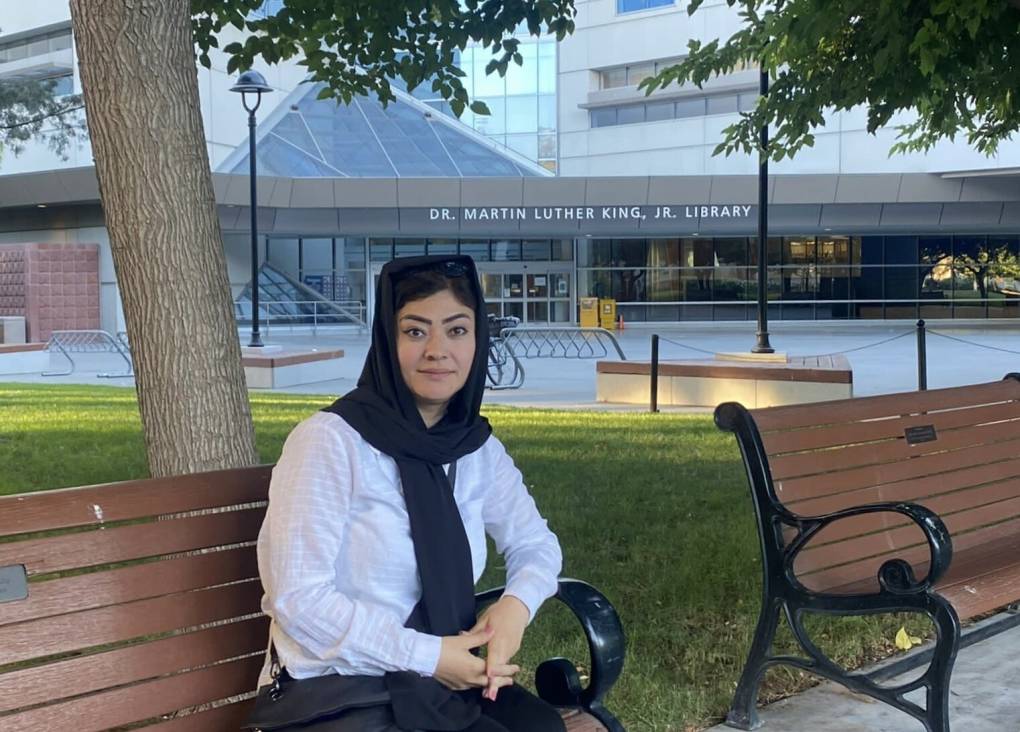
"caption": "Masuma Mohammadi sits on a bench at San José State University, where she's been hired to research Afghanistan from a safe distance. ",
"description": "Masuma Mohammadi sits on a bench at San José State University, where she's been hired to research Afghanistan from a safe distance. ",
"title": "RS57772_25CEBD33-E693-41CD-B6E3-CC4525E4A416_1_201_a-qut",
"credit": "Courtesy of Sara Arman",
"status": "inherit",
"altTag": "A woman with a black headscarf and white shirt sits in a bench in front of a library",
"isLoading": false,
"fetchFailed": false
},
"news_11813975": {
"type": "attachments",
"id": "news_11813975",
"meta": {
"index": "attachments_1716263798",
"site": "news",
"id": "11813975",
"found": true
},
"parent": 11813696,
"imgSizes": {
"apple_news_ca_landscape_5_5": {
"file": "https://ww2.kqed.org/app/uploads/sites/10/2020/04/Mission-Street-pedestrians-1044x783.jpg",
"width": 1044,
"mimeType": "image/jpeg",
"height": 783
},
"apple_news_ca_square_4_0": {
"file": "https://ww2.kqed.org/app/uploads/sites/10/2020/04/Mission-Street-pedestrians-470x470.jpg",
"width": 470,
"mimeType": "image/jpeg",
"height": 470
},
"twentyfourteen-full-width": {
"file": "https://ww2.kqed.org/app/uploads/sites/10/2020/04/Mission-Street-pedestrians-1038x576.jpg",
"width": 1038,
"mimeType": "image/jpeg",
"height": 576
},
"thumbnail": {
"file": "https://ww2.kqed.org/app/uploads/sites/10/2020/04/Mission-Street-pedestrians-160x114.jpg",
"width": 160,
"mimeType": "image/jpeg",
"height": 114
},
"post-thumbnail": {
"file": "https://ww2.kqed.org/app/uploads/sites/10/2020/04/Mission-Street-pedestrians-672x372.jpg",
"width": 672,
"mimeType": "image/jpeg",
"height": 372
},
"kqedFullSize": {
"file": "https://ww2.kqed.org/app/uploads/sites/10/2020/04/Mission-Street-pedestrians.jpg",
"width": 1920,
"height": 1371
},
"apple_news_ca_landscape_4_7": {
"file": "https://ww2.kqed.org/app/uploads/sites/10/2020/04/Mission-Street-pedestrians-632x474.jpg",
"width": 632,
"mimeType": "image/jpeg",
"height": 474
},
"large": {
"file": "https://ww2.kqed.org/app/uploads/sites/10/2020/04/Mission-Street-pedestrians-1020x728.jpg",
"width": 1020,
"mimeType": "image/jpeg",
"height": 728
},
"apple_news_ca_landscape_4_0": {
"file": "https://ww2.kqed.org/app/uploads/sites/10/2020/04/Mission-Street-pedestrians-536x402.jpg",
"width": 536,
"mimeType": "image/jpeg",
"height": 402
},
"apple_news_ca_portrait_12_9": {
"file": "https://ww2.kqed.org/app/uploads/sites/10/2020/04/Mission-Street-pedestrians-1122x1371.jpg",
"width": 1122,
"mimeType": "image/jpeg",
"height": 1371
},
"medium": {
"file": "https://ww2.kqed.org/app/uploads/sites/10/2020/04/Mission-Street-pedestrians-800x571.jpg",
"width": 800,
"mimeType": "image/jpeg",
"height": 571
},
"apple_news_ca_portrait_4_0": {
"file": "https://ww2.kqed.org/app/uploads/sites/10/2020/04/Mission-Street-pedestrians-354x472.jpg",
"width": 354,
"mimeType": "image/jpeg",
"height": 472
},
"apple_news_ca_portrait_9_7": {
"file": "https://ww2.kqed.org/app/uploads/sites/10/2020/04/Mission-Street-pedestrians-840x1120.jpg",
"width": 840,
"mimeType": "image/jpeg",
"height": 1120
},
"apple_news_ca_landscape_12_9": {
"file": "https://ww2.kqed.org/app/uploads/sites/10/2020/04/Mission-Street-pedestrians-1832x1371.jpg",
"width": 1832,
"mimeType": "image/jpeg",
"height": 1371
},
"apple_news_ca_square_9_7": {
"file": "https://ww2.kqed.org/app/uploads/sites/10/2020/04/Mission-Street-pedestrians-1104x1104.jpg",
"width": 1104,
"mimeType": "image/jpeg",
"height": 1104
},
"apple_news_ca_portrait_4_7": {
"file": "https://ww2.kqed.org/app/uploads/sites/10/2020/04/Mission-Street-pedestrians-414x552.jpg",
"width": 414,
"mimeType": "image/jpeg",
"height": 552
},
"apple_news_ca_square_12_9": {
"file": "https://ww2.kqed.org/app/uploads/sites/10/2020/04/Mission-Street-pedestrians-1472x1371.jpg",
"width": 1472,
"mimeType": "image/jpeg",
"height": 1371
},
"apple_news_ca_portrait_5_5": {
"file": "https://ww2.kqed.org/app/uploads/sites/10/2020/04/Mission-Street-pedestrians-687x916.jpg",
"width": 687,
"mimeType": "image/jpeg",
"height": 916
},
"full-width": {
"file": "https://ww2.kqed.org/app/uploads/sites/10/2020/04/Mission-Street-pedestrians-1920x1371.jpg",
"width": 1920,
"mimeType": "image/jpeg",
"height": 1371
},
"apple_news_ca_square_4_7": {
"file": "https://ww2.kqed.org/app/uploads/sites/10/2020/04/Mission-Street-pedestrians-550x550.jpg",
"width": 550,
"mimeType": "image/jpeg",
"height": 550
},
"apple_news_ca_landscape_9_7": {
"file": "https://ww2.kqed.org/app/uploads/sites/10/2020/04/Mission-Street-pedestrians-1376x1032.jpg",
"width": 1376,
"mimeType": "image/jpeg",
"height": 1032
},
"apple_news_ca_square_5_5": {
"file": "https://ww2.kqed.org/app/uploads/sites/10/2020/04/Mission-Street-pedestrians-912x912.jpg",
"width": 912,
"mimeType": "image/jpeg",
"height": 912
}
},
"publishDate": 1587669760,
"modified": 1659982271,
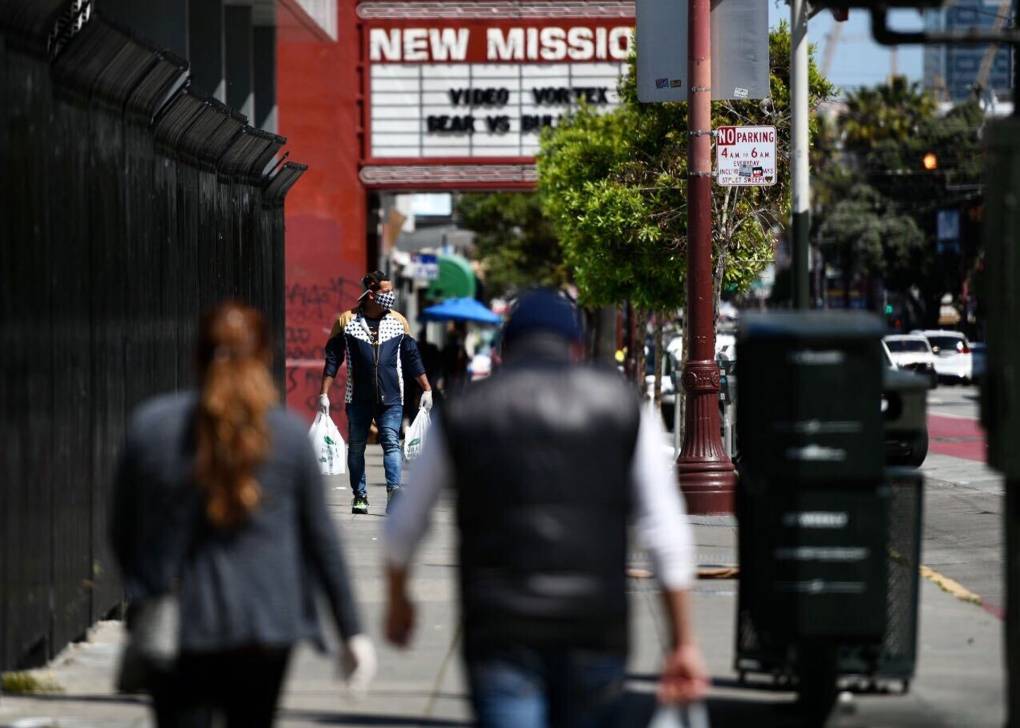
"caption": "Pedestrians walk in San Francisco's Mission District.",
"description": "Pedestrians walk in San Francisco's Mission District.",
"title": "Mission-Street-pedestrians",
"credit": "Beth LaBerge/KQED",
"status": "inherit",
"altTag": "Two people photographed from behind walking down what is recognizably Mission Street in San Francisco, because of the New Mission theater sign in the background, in focus.",
"isLoading": false,
"fetchFailed": false
},
"news_11921874": {
"type": "attachments",
"id": "news_11921874",
"meta": {
"index": "attachments_1716263798",
"site": "news",
"id": "11921874",
"found": true
},
"parent": 11921871,
"imgSizes": {
"twentyfourteen-full-width": {
"file": "https://ww2.kqed.org/app/uploads/sites/10/2022/08/Image-from-iOS-1038x576.jpg",
"width": 1038,
"mimeType": "image/jpeg",
"height": 576
},
"thumbnail": {
"file": "https://ww2.kqed.org/app/uploads/sites/10/2022/08/Image-from-iOS-160x90.jpg",
"width": 160,
"mimeType": "image/jpeg",
"height": 90
},
"post-thumbnail": {
"file": "https://ww2.kqed.org/app/uploads/sites/10/2022/08/Image-from-iOS-672x372.jpg",
"width": 672,
"mimeType": "image/jpeg",
"height": 372
},
"kqedFullSize": {
"file": "https://ww2.kqed.org/app/uploads/sites/10/2022/08/Image-from-iOS.jpg",
"width": 1918,
"height": 1080
},
"large": {
"file": "https://ww2.kqed.org/app/uploads/sites/10/2022/08/Image-from-iOS-1020x574.jpg",
"width": 1020,
"mimeType": "image/jpeg",
"height": 574
},
"1536x1536": {
"file": "https://ww2.kqed.org/app/uploads/sites/10/2022/08/Image-from-iOS-1536x865.jpg",
"width": 1536,
"mimeType": "image/jpeg",
"height": 865
},
"medium": {
"file": "https://ww2.kqed.org/app/uploads/sites/10/2022/08/Image-from-iOS-800x450.jpg",
"width": 800,
"mimeType": "image/jpeg",
"height": 450
}
},
"publishDate": 1659743551,
"modified": 1659743674,
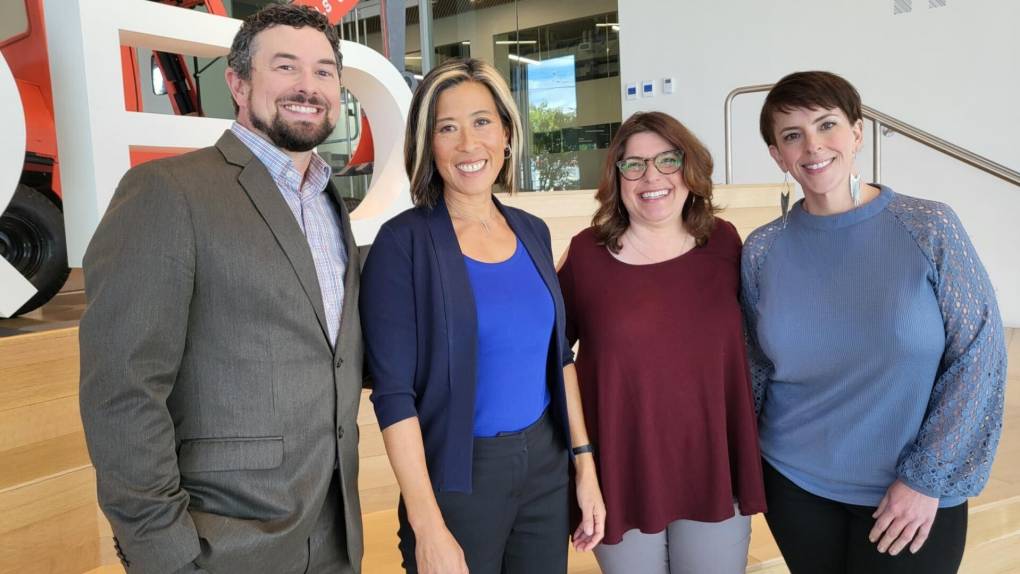
"caption": "Jeremy C. Owens, Monica Z. Lam, Rachael Myrow, and Abbie Langston.",
"description": null,
"title": "Image-from-iOS",
"credit": "Christopher J Beale",
"status": "inherit",
"altTag": null,
"isLoading": false,
"fetchFailed": false
},
"news_11911714": {
"type": "attachments",
"id": "news_11911714",
"meta": {
"index": "attachments_1716263798",
"site": "news",
"id": "11911714",
"found": true
},
"parent": 11911549,
"imgSizes": {
"twentyfourteen-full-width": {
"file": "https://ww2.kqed.org/app/uploads/sites/10/2022/04/RS42061_055_KQED_SanFrancisco_Coronavirus_03132020_7513-qut-1038x576.jpg",
"width": 1038,
"mimeType": "image/jpeg",
"height": 576
},
"thumbnail": {
"file": "https://ww2.kqed.org/app/uploads/sites/10/2022/04/RS42061_055_KQED_SanFrancisco_Coronavirus_03132020_7513-qut-160x107.jpg",
"width": 160,
"mimeType": "image/jpeg",
"height": 107
},
"post-thumbnail": {
"file": "https://ww2.kqed.org/app/uploads/sites/10/2022/04/RS42061_055_KQED_SanFrancisco_Coronavirus_03132020_7513-qut-672x372.jpg",
"width": 672,
"mimeType": "image/jpeg",
"height": 372
},
"kqedFullSize": {
"file": "https://ww2.kqed.org/app/uploads/sites/10/2022/04/RS42061_055_KQED_SanFrancisco_Coronavirus_03132020_7513-qut.jpg",
"width": 1920,
"height": 1280
},
"large": {
"file": "https://ww2.kqed.org/app/uploads/sites/10/2022/04/RS42061_055_KQED_SanFrancisco_Coronavirus_03132020_7513-qut-1020x680.jpg",
"width": 1020,
"mimeType": "image/jpeg",
"height": 680
},
"1536x1536": {
"file": "https://ww2.kqed.org/app/uploads/sites/10/2022/04/RS42061_055_KQED_SanFrancisco_Coronavirus_03132020_7513-qut-1536x1024.jpg",
"width": 1536,
"mimeType": "image/jpeg",
"height": 1024
},
"medium": {
"file": "https://ww2.kqed.org/app/uploads/sites/10/2022/04/RS42061_055_KQED_SanFrancisco_Coronavirus_03132020_7513-qut-800x533.jpg",
"width": 800,
"mimeType": "image/jpeg",
"height": 533
}
},
"publishDate": 1650484222,
"modified": 1650505799,
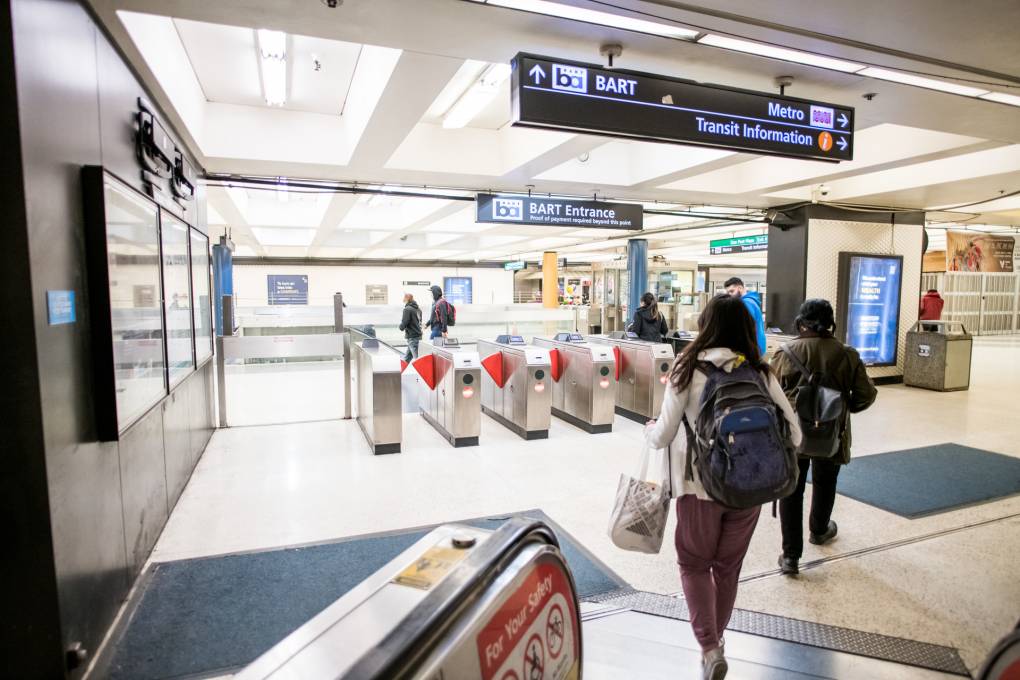
"caption": "Commuters at the Montgomery BART station in San Francisco.",
"description": null,
"title": "RS42061_055_KQED_SanFrancisco_Coronavirus_03132020_7513-qut",
"credit": "Beth LaBerge/KQED",
"status": "inherit",
"altTag": "A bank of BART turnstiles under bright strip lighting in a BART station, with people photographed from the back approaching the turnstiles.",
"isLoading": false,
"fetchFailed": false
}
},
"audioPlayerReducer": {
"postId": "stream_live",
"isPaused": true,
"isPlaying": false,
"pfsActive": false,
"pledgeModalIsOpen": true,
"playerDrawerIsOpen": false,
"liveAudioPlayStartedAt": 0,
"liveAudioPlayContext": ""
},
"authorsReducer": {
"danbrekke": {
"type": "authors",
"id": "222",
"meta": {
"index": "authors_1716337520",
"id": "222",
"found": true
},
"name": "Dan Brekke",
"firstName": "Dan",
"lastName": "Brekke",
"slug": "danbrekke",
"email": "dbrekke@kqed.org",
"display_author_email": true,
"staff_mastheads": [
"news",
"science"
],
"title": "KQED Editor and Reporter",
"bio": "Dan Brekke is a reporter and editor for KQED News, responsible for coverage of topics ranging from California water issues to the Bay Area's transportation challenges. In a newsroom career that began in Chicago in 1972, Dan has worked for \u003cem>The San Francisco Examiner,\u003c/em> Wired and TechTV and has been published in The New York Times, The New York Times Magazine, Business 2.0, Salon and elsewhere.\r\n\r\nSince joining KQED in 2007, Dan has reported, edited and produced both radio and online features and breaking news pieces. He has shared as both editor and reporter in four Society of Professional Journalists Norcal Excellence in Journalism awards and one Edward R. Murrow regional award. He was chosen for a spring 2017 residency at the Mesa Refuge to advance his research on California salmon.\r\n\r\nEmail Dan at: \u003ca href=\"mailto:dbrekke@kqed.org\">dbrekke@kqed.org\u003c/a>\r\n\r\n\u003cstrong>Twitter:\u003c/strong> \u003ca href=\"https://twitter.com/danbrekke\" rel=\"noopener noreferrer\">twitter.com/danbrekke\u003c/a>\r\n\u003cstrong>Facebook:\u003c/strong> \u003ca href=\"https://www.facebook.com/danbrekke\" rel=\"noopener noreferrer\">www.facebook.com/danbrekke\u003c/a>\r\n\u003cstrong>LinkedIn:\u003c/strong> \u003ca href=\"https://www.linkedin.com/in/danbrekke\" rel=\"noopener noreferrer\">www.linkedin.com/in/danbrekke\u003c/a>",
"avatar": "https://secure.gravatar.com/avatar/8f1f0d2a978fb3b23426c922c7e2af558fa36905b49c4ce76a97dc3c72d27226?s=600&d=mm&r=g",
"twitter": "danbrekke",
"bluesky": null,
"facebook": null,
"instagram": "https://www.instagram.com/dan.brekke/",
"linkedin": "https://www.linkedin.com/in/danbrekke/",
"sites": [
{
"site": "news",
"roles": [
"administrator",
"create_posts"
]
},
{
"site": "stateofhealth",
"roles": [
"editor"
]
},
{
"site": "science",
"roles": [
"editor"
]
},
{
"site": "quest",
"roles": [
"contributor"
]
},
{
"site": "food",
"roles": [
"contributor"
]
},
{
"site": "forum",
"roles": [
"contributor"
]
},
{
"site": "elections",
"roles": [
"editor"
]
},
{
"site": "liveblog",
"roles": [
"editor"
]
}
],
"headData": {
"title": "Dan Brekke | KQED",
"description": "KQED Editor and Reporter",
"ogImgSrc": "https://secure.gravatar.com/avatar/8f1f0d2a978fb3b23426c922c7e2af558fa36905b49c4ce76a97dc3c72d27226?s=600&d=mm&r=g",
"twImgSrc": "https://secure.gravatar.com/avatar/8f1f0d2a978fb3b23426c922c7e2af558fa36905b49c4ce76a97dc3c72d27226?s=600&d=mm&r=g"
},
"isLoading": false,
"link": "/author/danbrekke"
},
"jmcevoy": {
"type": "authors",
"id": "231",
"meta": {
"index": "authors_1716337520",
"id": "231",
"found": true
},
"name": "Julia McEvoy",
"firstName": "Julia",
"lastName": "McEvoy",
"slug": "jmcevoy",
"email": "jmcevoy@KQED.org",
"display_author_email": true,
"staff_mastheads": [
"news"
],
"title": "KQED Senior Editor",
"bio": "Julia McEvoy is KQED's Senior Editor, Education Equity.\r\n\r\nJulia heads KQED’s education coverage examining inequities students face in Bay Area and California schools, and reports on what it will take to educate the next generation.\r\n\r\nJulia's editorial work has received a Peabody Award, a Casey Medal for Coverage of Children and Families, several Edward R. Murrow awards, as well as awards from the Public Radio News Directors Inc. and the Society for Professional Journalists.",
"avatar": "https://secure.gravatar.com/avatar/aec3ce21abe02b302fd33638abd56a22?s=600&d=blank&r=g",
"twitter": "juliamcevoy1",
"facebook": null,
"instagram": null,
"linkedin": null,
"sites": [
{
"site": "news",
"roles": []
},
{
"site": "stateofhealth",
"roles": [
"author"
]
}
],
"headData": {
"title": "Julia McEvoy | KQED",
"description": "KQED Senior Editor",
"ogImgSrc": "https://secure.gravatar.com/avatar/aec3ce21abe02b302fd33638abd56a22?s=600&d=blank&r=g",
"twImgSrc": "https://secure.gravatar.com/avatar/aec3ce21abe02b302fd33638abd56a22?s=600&d=blank&r=g"
},
"isLoading": false,
"link": "/author/jmcevoy"
},
"kqed": {
"type": "authors",
"id": "236",
"meta": {
"index": "authors_1716337520",
"id": "236",
"found": true
},
"name": "KQED News Staff",
"firstName": "KQED News Staff",
"lastName": null,
"slug": "kqed",
"email": "faq@kqed.org",
"display_author_email": false,
"staff_mastheads": [],
"title": null,
"bio": null,
"avatar": "https://secure.gravatar.com/avatar/ef0e801a68c4c54afa9180db14084167?s=600&d=blank&r=g",
"twitter": null,
"facebook": null,
"instagram": null,
"linkedin": null,
"sites": [
{
"site": "arts",
"roles": [
"contributor"
]
},
{
"site": "news",
"roles": [
"editor"
]
},
{
"site": "futureofyou",
"roles": [
"author"
]
}
],
"headData": {
"title": "KQED News Staff | KQED",
"description": null,
"ogImgSrc": "https://secure.gravatar.com/avatar/ef0e801a68c4c54afa9180db14084167?s=600&d=blank&r=g",
"twImgSrc": "https://secure.gravatar.com/avatar/ef0e801a68c4c54afa9180db14084167?s=600&d=blank&r=g"
},
"isLoading": false,
"link": "/author/kqed"
},
"kqednewsstaffandwires": {
"type": "authors",
"id": "237",
"meta": {
"index": "authors_1716337520",
"id": "237",
"found": true
},
"name": "KQED News Staff and Wires",
"firstName": "KQED News Staff and Wires",
"lastName": null,
"slug": "kqednewsstaffandwires",
"email": "onlinenewsstaff@kqed.org",
"display_author_email": false,
"staff_mastheads": [],
"title": null,
"bio": null,
"avatar": "https://secure.gravatar.com/avatar/72295af8ebbfbd19a4948f5271285664?s=600&d=blank&r=g",
"twitter": null,
"facebook": null,
"instagram": null,
"linkedin": null,
"sites": [
{
"site": "arts",
"roles": [
"contributor"
]
},
{
"site": "news",
"roles": [
"contributor"
]
},
{
"site": "lowdown",
"roles": [
"author"
]
},
{
"site": "stateofhealth",
"roles": [
"contributor"
]
},
{
"site": "food",
"roles": [
"author"
]
}
],
"headData": {
"title": "KQED News Staff and Wires | KQED",
"description": null,
"ogImgSrc": "https://secure.gravatar.com/avatar/72295af8ebbfbd19a4948f5271285664?s=600&d=blank&r=g",
"twImgSrc": "https://secure.gravatar.com/avatar/72295af8ebbfbd19a4948f5271285664?s=600&d=blank&r=g"
},
"isLoading": false,
"link": "/author/kqednewsstaffandwires"
},
"mlam": {
"type": "authors",
"id": "244",
"meta": {
"index": "authors_1716337520",
"id": "244",
"found": true
},
"name": "Monica Lam",
"firstName": "Monica Z.",
"lastName": "Lam",
"slug": "mlam",
"email": "mlam@kqed.org",
"display_author_email": true,
"staff_mastheads": [
"news"
],
"title": "KQED Senior Producer",
"bio": "Monica is senior producer of the weekly current affairs program, \"KQED Newsroom.\" She's also served as senior editor of digital content at KQED. She likes to report and edit as well as produce video and take photos.\r\n\r\nBefore joining KQED, Monica worked at the Center for Investigative Reporting, where she examined conditions inside \u003cspan style=\"font-weight: 400;\">maximum security \u003c/span>prisons and abuse in state-run institutions for the developmentally disabled. Prior to that, she produced and directed \u003cem>Journey of the Bonesetter's Daughter,\u003c/em> a documentary that follows novelist Amy Tan as she creates an opera based on her family history.\r\n\r\nMonica's work has been honored with a duPont Award, five Emmys, regional and national Murrow Awards, and has been recognized by Investigative Reporters and Editors, the Society of Professional Journalists, Religion Newswriters Association and the San Francisco Peninsula Press Club. Monica studied urban studies at Stanford University and earned a master's in journalism at University of California at Berkeley. Follow her on twitter: @monicazlam",
"avatar": "https://secure.gravatar.com/avatar/018c474b2b71f43e0e6ca9b15a0ad36f?s=600&d=blank&r=g",
"twitter": "@monicazlam",
"facebook": null,
"instagram": null,
"linkedin": null,
"sites": [
{
"site": "arts",
"roles": [
"administrator"
]
},
{
"site": "news",
"roles": [
"editor"
]
},
{
"site": "trulyca",
"roles": [
"editor"
]
},
{
"site": "science",
"roles": [
"editor"
]
},
{
"site": "breakingnews",
"roles": [
"editor"
]
}
],
"headData": {
"title": "Monica Lam | KQED",
"description": "KQED Senior Producer",
"ogImgSrc": "https://secure.gravatar.com/avatar/018c474b2b71f43e0e6ca9b15a0ad36f?s=600&d=blank&r=g",
"twImgSrc": "https://secure.gravatar.com/avatar/018c474b2b71f43e0e6ca9b15a0ad36f?s=600&d=blank&r=g"
},
"isLoading": false,
"link": "/author/mlam"
},
"rachael-myrow": {
"type": "authors",
"id": "251",
"meta": {
"index": "authors_1716337520",
"id": "251",
"found": true
},
"name": "Rachael Myrow",
"firstName": "Rachael",
"lastName": "Myrow",
"slug": "rachael-myrow",
"email": "rmyrow@kqed.org",
"display_author_email": true,
"staff_mastheads": [
"news"
],
"title": "Senior Editor of KQED's Silicon Valley News Desk",
"bio": "• I write and edit stories about how Silicon Valley power and policies shape everyday life in California. I’m also passionate about making Bay Area history and culture more accessible to a broad public. • I’ve been a journalist for most of my life, starting in high school with The Franklin Press in Los Angeles, where I grew up. While earning my first degree in English at UC Berkeley, I got my start in public radio at KALX-FM. After completing a second degree in journalism at Cal, I landed my first professional job at Marketplace, then moved on to KPCC (now LAist), and then KQED, where I hosted The California Report for more than seven years. • My reporting has appeared on NPR, The World, WBUR’s \u003ci>Here & Now\u003c/i>, and the BBC. I also guest host for KQED’s \u003ci>Forum\u003c/i>, as well as the Commonwealth Club in San Francisco. • I speak periodically on media, democracy and technology issues, and do voiceover work for documentaries and educational video projects. • Outside of the studio, you'll find me hiking Bay Area trails and whipping up Insta-ready meals in my kitchen. • I do not accept gifts, money, or favors from anyone connected to my reporting, I don't pay people for information, and I do not support or donate to political causes. • I strive to treat the people I report on with fairness, honesty, and respect. I also recognize there are often multiple sides to a story and work to verify information through multiple sources and documentation. If I get something wrong, I correct it.",
"avatar": "https://secure.gravatar.com/avatar/3ed8a3c5f26025e4a805ba634cda8cd764906b97438a6d9ce216b044e340da4e?s=600&d=blank&r=g",
"twitter": "rachaelmyrow",
"bluesky": null,
"facebook": null,
"instagram": null,
"linkedin": "https://www.linkedin.com/in/rachaelmyrow/",
"sites": [
{
"site": "arts",
"roles": [
"administrator"
]
},
{
"site": "news",
"roles": [
"edit_others_posts",
"editor"
]
},
{
"site": "futureofyou",
"roles": [
"editor"
]
},
{
"site": "bayareabites",
"roles": [
"editor"
]
},
{
"site": "stateofhealth",
"roles": [
"editor"
]
},
{
"site": "science",
"roles": [
"editor"
]
},
{
"site": "food",
"roles": [
"editor"
]
},
{
"site": "forum",
"roles": [
"editor"
]
},
{
"site": "liveblog",
"roles": [
"author"
]
}
],
"headData": {
"title": "Rachael Myrow | KQED",
"description": "Senior Editor of KQED's Silicon Valley News Desk",
"ogImgSrc": "https://secure.gravatar.com/avatar/3ed8a3c5f26025e4a805ba634cda8cd764906b97438a6d9ce216b044e340da4e?s=600&d=blank&r=g",
"twImgSrc": "https://secure.gravatar.com/avatar/3ed8a3c5f26025e4a805ba634cda8cd764906b97438a6d9ce216b044e340da4e?s=600&d=blank&r=g"
},
"isLoading": false,
"link": "/author/rachael-myrow"
},
"carlysevern": {
"type": "authors",
"id": "3243",
"meta": {
"index": "authors_1716337520",
"id": "3243",
"found": true
},
"name": "Carly Severn",
"firstName": "Carly",
"lastName": "Severn",
"slug": "carlysevern",
"email": "csevern@kqed.org",
"display_author_email": false,
"staff_mastheads": [
"news"
],
"title": "Senior Editor, Audience News ",
"bio": "Carly is KQED's Senior Editor of Audience News on the Digital News team, and has reported for the California Report Magazine, Bay Curious and KQED Arts. She's formerly the host of \u003ca href=\"http://ww2.kqed.org/pop/category/the-cooler/\" rel=\"noopener noreferrer\">The Cooler\u003c/a> podcast.",
"avatar": "https://secure.gravatar.com/avatar/54037bf5c128fe678f0ef26cec97a93f2e7f220a22d7285703328f12c42c1b1d?s=600&d=blank&r=g",
"twitter": "teacupinthebay",
"bluesky": null,
"facebook": null,
"instagram": null,
"linkedin": null,
"sites": [
{
"site": "",
"roles": [
"editor"
]
},
{
"site": "arts",
"roles": [
"editor"
]
},
{
"site": "news",
"roles": [
"administrator"
]
},
{
"site": "pop",
"roles": [
"editor"
]
},
{
"site": "futureofyou",
"roles": [
"editor"
]
},
{
"site": "about",
"roles": [
"administrator"
]
},
{
"site": "mindshift",
"roles": [
"editor"
]
},
{
"site": "bayareabites",
"roles": [
"editor"
]
},
{
"site": "stateofhealth",
"roles": [
"editor"
]
},
{
"site": "science",
"roles": [
"editor"
]
},
{
"site": "food",
"roles": [
"contributor"
]
},
{
"site": "forum",
"roles": [
"editor"
]
},
{
"site": "perspectives",
"roles": [
"administrator"
]
},
{
"site": "liveblog",
"roles": [
"editor"
]
}
],
"headData": {
"title": "Carly Severn | KQED",
"description": "Senior Editor, Audience News ",
"ogImgSrc": "https://secure.gravatar.com/avatar/54037bf5c128fe678f0ef26cec97a93f2e7f220a22d7285703328f12c42c1b1d?s=600&d=blank&r=g",
"twImgSrc": "https://secure.gravatar.com/avatar/54037bf5c128fe678f0ef26cec97a93f2e7f220a22d7285703328f12c42c1b1d?s=600&d=blank&r=g"
},
"isLoading": false,
"link": "/author/carlysevern"
},
"bwatt": {
"type": "authors",
"id": "11238",
"meta": {
"index": "authors_1716337520",
"id": "11238",
"found": true
},
"name": "Brian Watt",
"firstName": "Brian",
"lastName": "Watt",
"slug": "bwatt",
"email": "bwatt@KQED.org",
"display_author_email": false,
"staff_mastheads": [
"news"
],
"title": "Morning News Anchor",
"bio": "Brian Watt is KQED's morning radio news anchor. He joined the KQED News team in April of 2016. Prior to that, he worked as a Reporter for KPCC in Los Angeles and a producer at \u003cem>Marketplace.\u003c/em>\r\n\r\nDuring eight years at KPCC, Brian covered business and economics, and his work won several awards. In 2008, he won the Los Angeles Press Club’s first-place award for Business and Financial Reporting, Broadcast. He’s also received honorable mention and been first runner up for the Press Club’s Radio Journalist of the Year. He won two Golden Mike awards from the Radio and TV News Association of Southern California.\r\n\r\nBrian holds degrees in theater from Yale University and the Sorbonne, and has worked as an actor in France, Italy, Brazil, Hungary and . . . Hollywood. He appeared in a few television shows, including \u003cem>The West Wing, Judging Amy\u003c/em> and \u003cem>The District.\u003c/em>\r\n\r\nEmail: bwatt@KQED.org Twitter: @RadioBWatt",
"avatar": "https://secure.gravatar.com/avatar/55393ff57ed34e2be773ba4789dd6a19?s=600&d=blank&r=g",
"twitter": "@RadioBWatt",
"facebook": null,
"instagram": null,
"linkedin": null,
"sites": [
{
"site": "arts",
"roles": [
"contributor"
]
},
{
"site": "news",
"roles": [
"editor"
]
}
],
"headData": {
"title": "Brian Watt | KQED",
"description": "Morning News Anchor",
"ogImgSrc": "https://secure.gravatar.com/avatar/55393ff57ed34e2be773ba4789dd6a19?s=600&d=blank&r=g",
"twImgSrc": "https://secure.gravatar.com/avatar/55393ff57ed34e2be773ba4789dd6a19?s=600&d=blank&r=g"
},
"isLoading": false,
"link": "/author/bwatt"
},
"lsarah": {
"type": "authors",
"id": "11626",
"meta": {
"index": "authors_1716337520",
"id": "11626",
"found": true
},
"name": "Lakshmi Sarah",
"firstName": "Lakshmi",
"lastName": "Sarah",
"slug": "lsarah",
"email": "lsarah@kqed.org",
"display_author_email": false,
"staff_mastheads": [],
"title": "Digital Producer",
"bio": "Lakshmi Sarah is an educator, author and journalist with a focus on innovative storytelling. She has worked with newspapers, radio and magazines from Ahmedabad, India to Los Angeles, California. She has written and produced for Die Zeit, Global Voices, AJ+, KQED, Fusion Media Group and the New York Times.",
"avatar": "https://secure.gravatar.com/avatar/652dcaecd8b28826fc17a8b2d6bb4e93?s=600&d=blank&r=g",
"twitter": "lakitalki",
"facebook": null,
"instagram": "https://www.instagram.com/laki.talki/",
"linkedin": "https://www.linkedin.com/in/lakisarah/",
"sites": [
{
"site": "arts",
"roles": []
},
{
"site": "news",
"roles": []
},
{
"site": "bayareabites",
"roles": []
},
{
"site": "science",
"roles": []
}
],
"headData": {
"title": "Lakshmi Sarah | KQED",
"description": "Digital Producer",
"ogImgSrc": "https://secure.gravatar.com/avatar/652dcaecd8b28826fc17a8b2d6bb4e93?s=600&d=blank&r=g",
"twImgSrc": "https://secure.gravatar.com/avatar/652dcaecd8b28826fc17a8b2d6bb4e93?s=600&d=blank&r=g"
},
"isLoading": false,
"link": "/author/lsarah"
},
"amontecillo": {
"type": "authors",
"id": "11649",
"meta": {
"index": "authors_1716337520",
"id": "11649",
"found": true
},
"name": "Alan Montecillo",
"firstName": "Alan",
"lastName": "Montecillo",
"slug": "amontecillo",
"email": "amontecillo@kqed.org",
"display_author_email": false,
"staff_mastheads": [
"news"
],
"title": "KQED Contributor",
"bio": "Alan Montecillo is the senior editor of \u003cem>\u003ca href=\"http://kqed.org/thebay\">The Bay\u003c/a>, \u003c/em> KQED's local news podcast. Before moving to the Bay Area, he worked as a senior talk show producer for WILL in Champaign-Urbana, Illinois and at Oregon Public Broadcasting in Portland, Oregon. He has won journalism awards from the Society of Professional Journalists Northern California, the Public Media Journalists Association, The Signal Awards, and has also received a regional Edward R. Murrow award. Alan is a Filipino American from Hong Kong and a graduate of Reed College.",
"avatar": "https://secure.gravatar.com/avatar/268f53a2066899ea9efdd8a5900218b17c822d9862cbc9326cccec53ef41d349?s=600&d=blank&r=g",
"twitter": "alanmontecillo",
"bluesky": null,
"facebook": null,
"instagram": null,
"linkedin": null,
"sites": [
{
"site": "",
"roles": [
"editor"
]
},
{
"site": "news",
"roles": [
"editor",
"manage_categories"
]
}
],
"headData": {
"title": "Alan Montecillo | KQED",
"description": "KQED Contributor",
"ogImgSrc": "https://secure.gravatar.com/avatar/268f53a2066899ea9efdd8a5900218b17c822d9862cbc9326cccec53ef41d349?s=600&d=blank&r=g",
"twImgSrc": "https://secure.gravatar.com/avatar/268f53a2066899ea9efdd8a5900218b17c822d9862cbc9326cccec53ef41d349?s=600&d=blank&r=g"
},
"isLoading": false,
"link": "/author/amontecillo"
},
"ebaldassari": {
"type": "authors",
"id": "11652",
"meta": {
"index": "authors_1716337520",
"id": "11652",
"found": true
},
"name": "Erin Baldassari",
"firstName": "Erin",
"lastName": "Baldassari",
"slug": "ebaldassari",
"email": "ebaldassari@KQED.org",
"display_author_email": true,
"staff_mastheads": [
"news"
],
"title": "Staff Writer",
"bio": "Erin Baldassari covers housing for KQED. She's a former print journalist and most recently worked as the transportation reporter for the \u003cem>Mercury News\u003c/em> and \u003cem>East Bay Times. \u003c/em>There, she focused on how the Bay Area’s housing shortage has changed the way people move around the region. She also served on the \u003cem>East Bay Times\u003c/em>’ 2017 Pulitzer Prize-winning team for coverage of the Ghost Ship Fire in Oakland. Prior to that, Erin worked as a breaking news and general assignment reporter for a variety of outlets in the Bay Area and the greater Boston area. A Tufts University alumna, Erin grew up in the foothills of the Sierra Nevada mountains and in Sonoma County. She is a life-long KQED listener.",
"avatar": "https://secure.gravatar.com/avatar/5e95cad64a8ca08288082212e199d2b0cbeb4fd8e8ef5339395f361032bbe005?s=600&d=blank&r=g",
"twitter": "e_baldi",
"bluesky": null,
"facebook": null,
"instagram": null,
"linkedin": null,
"sites": [
{
"site": "news",
"roles": [
"edit_others_posts",
"editor"
]
},
{
"site": "science",
"roles": [
"editor"
]
},
{
"site": "liveblog",
"roles": [
"editor"
]
}
],
"headData": {
"title": "Erin Baldassari | KQED",
"description": "Staff Writer",
"ogImgSrc": "https://secure.gravatar.com/avatar/5e95cad64a8ca08288082212e199d2b0cbeb4fd8e8ef5339395f361032bbe005?s=600&d=blank&r=g",
"twImgSrc": "https://secure.gravatar.com/avatar/5e95cad64a8ca08288082212e199d2b0cbeb4fd8e8ef5339395f361032bbe005?s=600&d=blank&r=g"
},
"isLoading": false,
"link": "/author/ebaldassari"
},
"blaberge": {
"type": "authors",
"id": "11667",
"meta": {
"index": "authors_1716337520",
"id": "11667",
"found": true
},
"name": "Beth LaBerge",
"firstName": "Beth",
"lastName": "LaBerge",
"slug": "blaberge",
"email": "blaberge@KQED.org",
"display_author_email": true,
"staff_mastheads": [
"news"
],
"title": "Photographer, News",
"bio": "Beth LaBerge is a visual journalist for \u003ca href=\"https://www.kqed.org/news\">KQED News\u003c/a>.",
"avatar": "https://secure.gravatar.com/avatar/ce49ecd7a1306685637b45a1f6f5dedfc4ae9481966eb596fea5160466dd6319?s=600&d=blank&r=g",
"twitter": null,
"bluesky": null,
"facebook": null,
"instagram": "https://www.instagram.com/bethlaberge/",
"linkedin": null,
"sites": [
{
"site": "arts",
"roles": [
"editor",
"manage_categories"
]
},
{
"site": "news",
"roles": [
"editor",
"edit_plugins",
"manage_categories"
]
},
{
"site": "science",
"roles": [
"editor",
"contributor",
"author",
"manage_categories"
]
},
{
"site": "perspectives",
"roles": [
"editor"
]
},
{
"site": "liveblog",
"roles": [
"editor"
]
}
],
"headData": {
"title": "Beth LaBerge | KQED",
"description": "Photographer, News",
"ogImgSrc": "https://secure.gravatar.com/avatar/ce49ecd7a1306685637b45a1f6f5dedfc4ae9481966eb596fea5160466dd6319?s=600&d=blank&r=g",
"twImgSrc": "https://secure.gravatar.com/avatar/ce49ecd7a1306685637b45a1f6f5dedfc4ae9481966eb596fea5160466dd6319?s=600&d=blank&r=g"
},
"isLoading": false,
"link": "/author/blaberge"
},
"ccabreralomeli": {
"type": "authors",
"id": "11708",
"meta": {
"index": "authors_1716337520",
"id": "11708",
"found": true
},
"name": "Carlos Cabrera-Lomelí",
"firstName": "Carlos",
"lastName": "Cabrera-Lomelí",
"slug": "ccabreralomeli",
"email": "ccabreralomeli@KQED.org",
"display_author_email": true,
"staff_mastheads": [
"news"
],
"title": "Community Reporter",
"bio": "Carlos Cabrera-Lomelí is a community reporter with KQED's digital engagement team. He also reports and co-produces for KQED's bilingual news hub KQED en Español. He grew up in San Francisco's Mission District and has previously worked with Univision, 48 Hills and REFORMA in Mexico City.",
"avatar": "https://secure.gravatar.com/avatar/c309be9665e484f887b818c89e273ecc673004f426f36b24d00a4d813a2e0518?s=600&d=blank&r=g",
"twitter": "@LomeliCabrera",
"bluesky": null,
"facebook": null,
"instagram": null,
"linkedin": null,
"sites": [
{
"site": "arts",
"roles": [
"editor"
]
},
{
"site": "news",
"roles": [
"editor"
]
},
{
"site": "about",
"roles": [
"editor"
]
},
{
"site": "science",
"roles": [
"editor"
]
},
{
"site": "perspectives",
"roles": [
"editor"
]
},
{
"site": "elections",
"roles": [
"editor"
]
},
{
"site": "liveblog",
"roles": [
"contributor"
]
}
],
"headData": {
"title": "Carlos Cabrera-Lomelí | KQED",
"description": "Community Reporter",
"ogImgSrc": "https://secure.gravatar.com/avatar/c309be9665e484f887b818c89e273ecc673004f426f36b24d00a4d813a2e0518?s=600&d=blank&r=g",
"twImgSrc": "https://secure.gravatar.com/avatar/c309be9665e484f887b818c89e273ecc673004f426f36b24d00a4d813a2e0518?s=600&d=blank&r=g"
},
"isLoading": false,
"link": "/author/ccabreralomeli"
},
"krobles": {
"type": "authors",
"id": "11717",
"meta": {
"index": "authors_1716337520",
"id": "11717",
"found": true
},
"name": "Kervy Justo Robles",
"firstName": "Kervy",
"lastName": "Robles",
"slug": "krobles",
"email": "krobles@kqed.org",
"display_author_email": false,
"staff_mastheads": [
"news"
],
"title": "KQED Contributor",
"bio": null,
"avatar": "https://secure.gravatar.com/avatar/6705a0fa8238cb46eef3cf14bfbb09d1?s=600&d=blank&r=g",
"twitter": "@justoescribe",
"facebook": null,
"instagram": null,
"linkedin": null,
"sites": [
{
"site": "news",
"roles": [
"editor"
]
},
{
"site": "elections",
"roles": [
"editor"
]
}
],
"headData": {
"title": "Kervy Justo Robles | KQED",
"description": "KQED Contributor",
"ogImgSrc": "https://secure.gravatar.com/avatar/6705a0fa8238cb46eef3cf14bfbb09d1?s=600&d=blank&r=g",
"twImgSrc": "https://secure.gravatar.com/avatar/6705a0fa8238cb46eef3cf14bfbb09d1?s=600&d=blank&r=g"
},
"isLoading": false,
"link": "/author/krobles"
},
"agonzalez": {
"type": "authors",
"id": "11724",
"meta": {
"index": "authors_1716337520",
"id": "11724",
"found": true
},
"name": "Alexander Gonzalez",
"firstName": "Alexander",
"lastName": "Gonzalez",
"slug": "agonzalez",
"email": "AlexanderGonzalez@KQED.org",
"display_author_email": false,
"staff_mastheads": [
"news"
],
"title": "KQED Contributor",
"bio": null,
"avatar": "https://secure.gravatar.com/avatar/9e291ed34e154df4c662edf858b641d70b4859939bfe40be478408f9dfd057d2?s=600&d=blank&r=g",
"twitter": null,
"bluesky": null,
"facebook": null,
"instagram": null,
"linkedin": null,
"sites": [
{
"site": "arts",
"roles": [
"editor"
]
},
{
"site": "news",
"roles": [
"editor"
]
},
{
"site": "science",
"roles": [
"editor"
]
}
],
"headData": {
"title": "Alexander Gonzalez | KQED",
"description": "KQED Contributor",
"ogImgSrc": "https://secure.gravatar.com/avatar/9e291ed34e154df4c662edf858b641d70b4859939bfe40be478408f9dfd057d2?s=600&d=blank&r=g",
"twImgSrc": "https://secure.gravatar.com/avatar/9e291ed34e154df4c662edf858b641d70b4859939bfe40be478408f9dfd057d2?s=600&d=blank&r=g"
},
"isLoading": false,
"link": "/author/agonzalez"
},
"amadrigal": {
"type": "authors",
"id": "11757",
"meta": {
"index": "authors_1716337520",
"id": "11757",
"found": true
},
"name": "Alexis Madrigal",
"firstName": "Alexis",
"lastName": "Madrigal",
"slug": "amadrigal",
"email": "amadrigal@kqed.org",
"display_author_email": true,
"staff_mastheads": [],
"title": "Co-Host Forum",
"bio": "Alexis Madrigal is the co-host of Forum. He is also a contributing writer at \u003cem>The Atlantic \u003c/em>and the co-founder of the COVID Tracking Project. He's the creator of the podcast, \u003cem>Containers\u003c/em>, and has been a staff writer at \u003cem>Wired. \u003c/em>He was a visiting scholar at UC Berkeley's Information School, and is working on a book about Oakland and the Bay Area's revolutionary ideas.",
"avatar": "https://secure.gravatar.com/avatar/ffeee1fe99a3e31957381f377ca63502bdcc0c3dbccaaa701e579a10aa0c5e1f?s=600&d=blank&r=g",
"twitter": "alexismadrigal",
"bluesky": null,
"facebook": null,
"instagram": null,
"linkedin": null,
"sites": [
{
"site": "arts",
"roles": [
"editor"
]
},
{
"site": "news",
"roles": [
"editor"
]
},
{
"site": "forum",
"roles": [
"editor"
]
}
],
"headData": {
"title": "Alexis Madrigal | KQED",
"description": "Co-Host Forum",
"ogImgSrc": "https://secure.gravatar.com/avatar/ffeee1fe99a3e31957381f377ca63502bdcc0c3dbccaaa701e579a10aa0c5e1f?s=600&d=blank&r=g",
"twImgSrc": "https://secure.gravatar.com/avatar/ffeee1fe99a3e31957381f377ca63502bdcc0c3dbccaaa701e579a10aa0c5e1f?s=600&d=blank&r=g"
},
"isLoading": false,
"link": "/author/amadrigal"
}
},
"pagesReducer": {
"news_category_local": {
"type": "terms",
"id": "news_28250",
"meta": {
"index": "terms_1716263798",
"site": "news",
"id": "28250",
"score": 12.940872
},
"featImg": null,
"name": "Local",
"description": null,
"taxonomy": "category",
"headData": {
"twImgId": null,
"twTitle": null,
"ogTitle": null,
"ogImgId": null,
"twDescription": null,
"description": null,
"title": "Local Archives | KQED News",
"ogDescription": null
},
"ttid": 28267,
"slug": "local",
"isLoading": false,
"title": "Local",
"pageMeta": {
"site": "news",
"WpPageTemplate": "page-topic-editorial",
"currentPage": 149
},
"blocks": [
{
"blockName": "kqed/post-list",
"attrs": {
"layout": "cardArticle2",
"query": "posts/news?category=local",
"seeMore": false,
"paginated": true,
"page": 149
}
},
{
"blockName": "kqed/ad"
}
]
}
},
"pfsSessionReducer": {},
"postsReducer": {
"stream_live": {
"type": "live",
"id": "stream_live",
"audioUrl": "https://streams.kqed.org/kqedradio",
"title": "Live Stream",
"excerpt": "Live Stream information currently unavailable.",
"link": "/radio",
"featImg": "",
"label": {
"name": "KQED Live",
"link": "/"
}
},
"stream_kqedNewscast": {
"type": "posts",
"id": "stream_kqedNewscast",
"audioUrl": "https://www.kqed.org/.stream/anon/radio/RDnews/newscast.mp3?_=1",
"title": "KQED Newscast",
"featImg": "",
"label": {
"name": "88.5 FM",
"link": "/"
}
},
"news_11926349": {
"type": "posts",
"id": "news_11926349",
"meta": {
"index": "posts_1716263798",
"site": "news",
"id": "11926349",
"score": null,
"sort": [
1663800596000
]
},
"guestAuthors": [],
"slug": "despite-promises-of-equity-students-at-this-san-francisco-middle-school-still-lack-teachers",
"title": "Despite Promises of Equity, Students at This San Francisco Middle School Still Lack Teachers",
"publishDate": 1663800596,
"format": "standard",
"headTitle": "Despite Promises of Equity, Students at This San Francisco Middle School Still Lack Teachers | KQED",
"labelTerm": {
"site": "news"
},
"content": "\u003cp>\u003cspan style=\"font-weight: 400\">At back-to-school night last week, parents at Dr. Martin Luther King Jr. Academic Middle School in San Francisco’s Portola neighborhood got some bad news. \u003c/span>\u003c/p>\n\u003cp>“We are missing science teachers,” said Ricky Li, whose \u003cspan style=\"font-weight: 400\">son is a sixth grader at the school\u003c/span>. “So all they do now is just give out handouts. They (are) asking for help from parents. They should have had enough staff. I’m not sure why they are missing teachers.”\u003cspan style=\"font-weight: 400\"> \u003c/span>\u003c/p>\n\u003cp>\u003cspan style=\"font-weight: 400\">The teacher shortage at MLK Middle School, and staffing challenges in districts across the state, comes at a time when unprecedented state and federal education dollars have been sent to districts to help students recover from pandemic-related learning loss — something noted by \u003ca href=\"https://www.kqed.org/mindshift/59662/researchers-find-growth-in-number-of-jobs-not-exodus-paints-view-of-teacher-shortages\">researchers studying the phenomenon of teaching-staff shortages nationwide\u003c/a>.\u003c/span>\u003c/p>\n\u003cp>\u003cspan style=\"font-weight: 400\">Whatever the overall reasons, one thing remains clear: \u003ca href=\"https://www.kqed.org/news/11924222/teacher-shortages-felt-most-acutely-in-lower-income-school-districts-survey-reveals\">Teacher shortages tend to be worse at schools that serve kids from economically disadvantaged communities.\u003c/a> \u003c/span>\u003c/p>\n\u003cp>\u003cspan style=\"font-weight: 400\"> MLK Middle School, where a third of the kids speak English as a second language and 10% are considered unhoused, is one of those schools.[aside label='Related Coverage' tag='teachers']\u003cspan style=\"font-weight: 400\">Maritza Tupul’s son Douglass Mejia is in eighth grade. His classroom is missing a full-time science teacher, but Tupul said she didn’t know this until she checked her son’s grades and found he’s getting an F.\u003c/span>\u003c/span>\u003c/p>\n\u003cp>“So I asked him what’s going on,” she said. “And he says, ‘Oh, we don’t have a teacher in the classroom.’ So … how could you have an F (if) you don’t have grades?”\u003c/p>\n\u003cp>Tupul’s son told her they hadn’t had teachers for weeks and that the sixth grade teachers were subbing the class.\u003c/p>\n\u003cp>\u003cspan style=\"font-weight: 400\">The San Francisco Board of Education has vowed to improve struggling elementary and middle schools in an effort to make school quality more equitable, and\u003c/span>\u003cspan style=\"font-weight: 400\"> district officials say they’ve sent three teachers on special assignment to MLK to help staff for now.\u003c/span>\u003c/p>\n\u003cp>\u003cspan style=\"font-weight: 400\">\u003cspan style=\"font-weight: 400\">Eric Lewis, a science content specialist who helped create the district’s curriculum, is one of those teachers. At the start of every year he emails all the district’s science teachers about training opportunities and resources — but a lot of those emails never get read.\u003c/span>\u003c/span>\u003c/p>\n\u003cp>“That’s how I figure out who is not in the district anymore,” Lewis said. “Because I get all these emails bouncing back at me. I mean, this year I had probably 40 emails bouncing back. This was a huge number of teachers that were gone. And it was across the district!”\u003c/p>\n\u003cp>\u003cspan style=\"font-weight: 400\">Lewis says this year’s eighth graders have already had a rough time.\u003c/span>\u003c/p>\n\u003cp>“They have had very inconsistent science education in sixth, seventh and now into eighth grade,” said Lewis. “Their sixth grade was online. Their seventh grade had teachers who left halfway through the year for science.”\u003c/p>\n\u003cfigure id=\"attachment_11926395\" class=\"wp-caption alignnone\" style=\"max-width: 800px\">\u003cimg loading=\"lazy\" decoding=\"async\" class=\"size-medium wp-image-11926395\" src=\"https://ww2.kqed.org/app/uploads/sites/10/2022/09/017_KQED_MLKMiddleSchoolTeacherShortage_09202022-800x533.jpg\" alt=\"A bald white man with a beard and wearing a blue shirt and brown pants sits on steps outside a green building, looking at the camera.\" width=\"800\" height=\"533\" srcset=\"https://cdn.kqed.org/wp-content/uploads/sites/10/2022/09/017_KQED_MLKMiddleSchoolTeacherShortage_09202022-800x533.jpg 800w, https://cdn.kqed.org/wp-content/uploads/sites/10/2022/09/017_KQED_MLKMiddleSchoolTeacherShortage_09202022-1020x680.jpg 1020w, https://cdn.kqed.org/wp-content/uploads/sites/10/2022/09/017_KQED_MLKMiddleSchoolTeacherShortage_09202022-160x107.jpg 160w, https://cdn.kqed.org/wp-content/uploads/sites/10/2022/09/017_KQED_MLKMiddleSchoolTeacherShortage_09202022-1536x1024.jpg 1536w, https://cdn.kqed.org/wp-content/uploads/sites/10/2022/09/017_KQED_MLKMiddleSchoolTeacherShortage_09202022.jpg 1920w\" sizes=\"(max-width: 800px) 100vw, 800px\">\u003cfigcaption class=\"wp-caption-text\">Jackson Whittington, a teacher at Dr. Martin Luther King Jr. Academic Middle School, sits outside the school in San Francisco’s Portola neighborhood on Sept. 20, 2022. In a letter written to SFUSD, Whittington described his school’s current condition as being ‘unsafe, inequitable, and in need of immediate attention.’ \u003ccite>(Beth LaBerge/KQED)\u003c/cite>\u003c/figcaption>\u003c/figure>\n\u003cp>\u003cspan style=\"font-weight: 400\">Lewis is normally tasked with supporting new teachers so they don’t quit and with helping teachers implement the new science curriculum. \u003c/span>\u003cspan style=\"font-weight: 400\">Instead, he’s been assigned to fill in on classroom teaching.\u003c/span>\u003c/p>\n\u003cp>“There was supposed to be another TSA [teacher on special assignment] who came in to teach the other half of the courses,” he explained, “and that teacher didn’t show. They ended up taking a leave from the district.”\u003cspan style=\"font-weight: 400\"> \u003c/span>\u003c/p>\n\u003cp>\u003cspan style=\"font-weight: 400\">Lewis is confident most of his students can rebound. But he also says those with the most needs will have the longest-term impacts, and he predicts they will have major gaps.\u003c/span>\u003c/p>\n\u003cp>\u003cspan style=\"font-weight: 400\">The staffing shortage got worse a week ago after a teacher got COVID and another was injured. \u003c/span>\u003cspan style=\"font-weight: 400\">Jackson Whittington, an art and integrated arts teacher at MLK, says three seventh grade classes were put into the cafeteria.\u003c/span>[pullquote size=\"medium\" align=\"right\" citation=\"Maritza Tupul, parent\"]‘I wish someone could do something. … (If not), I have to do something.’[/pullquote]\u003cspan style=\"font-weight: 400\">“I think you can imagine having three seventh grade classes in a cafeteria is not, like, the best learning space,” said Whittington. “It’s kind of just a management situation.”\u003c/span>\u003c/p>\n\u003cp>Maritza Tupul has asked for her son to be transferred to another classroom.\u003c/p>\n\u003cp>“I wish somebody (could) do something,” she said. “(If not), I have to do something.”\u003c/p>\n\u003cp>\u003cspan style=\"font-weight: 400\">Other parents say they’re taking their kids out of MLK altogether.\u003c/span>\u003c/p>\n\u003cp>In a letter written to the San Francisco Unified School District, Whittington decried the current situation as “\u003cspan style=\"font-weight: 400\">unsafe, inequitable, and in need of immediate attention,” \u003c/span>saying enrollment at MLK Middle School had dropped by almost 100 students;\u003cspan style=\"font-weight: 400\"> that \u003c/span>\u003cspan style=\"font-weight: 400\">multiple teachers are giving up prep time; and that staff — including administrative staff — cover classes on a daily basis because “there are \u003c/span>no subs coming here and no full time TSAs covering open positions.”\u003c/p>\n\u003cp>\u003cspan style=\"font-weight: 400\">SFUSD, meanwhile, is continuing to recruit, with \u003c/span>\u003ca href=\"https://careers.sfusd.edu/go/Current-Openings/8548000/\">\u003cspan style=\"font-weight: 400\">210 certificated teaching positions open\u003c/span>\u003c/a>\u003cspan style=\"font-weight: 400\"> online as of Friday. The district had about \u003c/span>\u003ca href=\"https://nces.ed.gov/ccd/districtsearch/district_detail.asp?ID2=0634410\">\u003cspan style=\"font-weight: 400\">2,500 full-time-equivalent teachers\u003c/span>\u003c/a>\u003cspan style=\"font-weight: 400\"> for the 2021-22 school year.\u003c/span>\u003c/p>\n\u003cp>\u003cspan style=\"font-weight: 400\">Ricky Li has sympathy for the district trying to find more teachers, but doesn’t understand why there still isn’t enough staff.\u003c/span>\u003c/p>\n\u003cp>“H\u003cspan style=\"font-weight: 400\">elp should be here by now,” he said. “\u003c/span>So hopefully, they’ll find somebody soon.”\u003c/p>\n\u003cp>\u003cspan style=\"font-weight: 400\">That’s something everybody can agree on.\u003c/span>\u003c/p>\n\u003cp>\u003cem>KQED’s Alexander Gonzalez and Attila Pelit contributed to this report.\u003c/em>\u003c/p>\n\u003cp>[ad fullwidth]\u003c/p>\n\u003cp>\u003c/p>\n",
"blocks": [],
"excerpt": "The San Francisco school board has vowed to improve struggling elementary and middle schools, in an effort to make school quality more equitable. But at one of the district's middle schools serving mostly high-needs students, kids have started the year without enough full-time teachers.",
"status": "publish",
"parent": 0,
"modified": 1721156753,
"stats": {
"hasAudio": false,
"hasVideo": false,
"hasChartOrMap": false,
"iframeSrcs": [],
"hasGoogleForm": false,
"hasGallery": false,
"hasHearkenModule": false,
"hasPolis": false,
"paragraphCount": 27,
"wordCount": 1002
},
"headData": {
"title": "Despite Promises of Equity, Students at This San Francisco Middle School Still Lack Teachers | KQED",
"description": "The San Francisco school board has vowed to improve struggling elementary and middle schools, in an effort to make school quality more equitable. But at one of the district's middle schools serving mostly high-needs students, kids have started the year without enough full-time teachers.",
"ogTitle": "",
"ogDescription": "",
"ogImgId": "",
"twTitle": "",
"twDescription": "",
"twImgId": "",
"schema": {
"@context": "https://schema.org",
"@type": "NewsArticle",
"headline": "Despite Promises of Equity, Students at This San Francisco Middle School Still Lack Teachers",
"datePublished": "2022-09-21T15:49:56-07:00",
"dateModified": "2024-07-16T12:05:53-07:00",
"image": "https://cdn.kqed.org/wp-content/uploads/2020/02/KQED-OG-Image@1x.png",
"isAccessibleForFree": "True",
"publisher": {
"@type": "NewsMediaOrganization",
"@id": "https://www.kqed.org/#organization",
"name": "KQED",
"logo": "https://cdn.kqed.org/wp-content/uploads/2020/02/KQED-OG-Image@1x.png",
"url": "https://www.kqed.org",
"sameAs": [
"https://www.facebook.com/KQED",
"https://twitter.com/KQED",
"https://www.instagram.com/kqed/",
"https://www.tiktok.com/@kqedofficial",
"https://www.linkedin.com/company/kqed",
"https://www.youtube.com/channel/UCeC0IOo7i1P_61zVUWbJ4nw"
]
}
}
},
"sticky": false,
"excludeFromSiteSearch": "Include",
"showOnAuthorArchivePages": "No",
"path": "/news/11926349/despite-promises-of-equity-students-at-this-san-francisco-middle-school-still-lack-teachers",
"audioTrackLength": null,
"parsedContent": [
{
"type": "contentString",
"content": "\u003cdiv class=\"post-body\">\u003cp>\u003cp>\u003cspan style=\"font-weight: 400\">At back-to-school night last week, parents at Dr. Martin Luther King Jr. Academic Middle School in San Francisco’s Portola neighborhood got some bad news. \u003c/span>\u003c/p>\n\u003cp>“We are missing science teachers,” said Ricky Li, whose \u003cspan style=\"font-weight: 400\">son is a sixth grader at the school\u003c/span>. “So all they do now is just give out handouts. They (are) asking for help from parents. They should have had enough staff. I’m not sure why they are missing teachers.”\u003cspan style=\"font-weight: 400\"> \u003c/span>\u003c/p>\n\u003cp>\u003cspan style=\"font-weight: 400\">The teacher shortage at MLK Middle School, and staffing challenges in districts across the state, comes at a time when unprecedented state and federal education dollars have been sent to districts to help students recover from pandemic-related learning loss — something noted by \u003ca href=\"https://www.kqed.org/mindshift/59662/researchers-find-growth-in-number-of-jobs-not-exodus-paints-view-of-teacher-shortages\">researchers studying the phenomenon of teaching-staff shortages nationwide\u003c/a>.\u003c/span>\u003c/p>\n\u003cp>\u003cspan style=\"font-weight: 400\">Whatever the overall reasons, one thing remains clear: \u003ca href=\"https://www.kqed.org/news/11924222/teacher-shortages-felt-most-acutely-in-lower-income-school-districts-survey-reveals\">Teacher shortages tend to be worse at schools that serve kids from economically disadvantaged communities.\u003c/a> \u003c/span>\u003c/p>\n\u003cp>\u003cspan style=\"font-weight: 400\"> MLK Middle School, where a third of the kids speak English as a second language and 10% are considered unhoused, is one of those schools.\u003c/p>\u003c/div>",
"attributes": {
"named": {},
"numeric": []
}
},
{
"type": "component",
"content": "",
"name": "aside",
"attributes": {
"named": {
"label": "Related Coverage ",
"tag": "teachers"
},
"numeric": []
}
},
{
"type": "contentString",
"content": "\u003cdiv class=\"post-body\">\u003cp>\u003cspan style=\"font-weight: 400\">Maritza Tupul’s son Douglass Mejia is in eighth grade. His classroom is missing a full-time science teacher, but Tupul said she didn’t know this until she checked her son’s grades and found he’s getting an F.\u003c/span>\u003c/span>\u003c/p>\n\u003cp>“So I asked him what’s going on,” she said. “And he says, ‘Oh, we don’t have a teacher in the classroom.’ So … how could you have an F (if) you don’t have grades?”\u003c/p>\n\u003cp>Tupul’s son told her they hadn’t had teachers for weeks and that the sixth grade teachers were subbing the class.\u003c/p>\n\u003cp>\u003cspan style=\"font-weight: 400\">The San Francisco Board of Education has vowed to improve struggling elementary and middle schools in an effort to make school quality more equitable, and\u003c/span>\u003cspan style=\"font-weight: 400\"> district officials say they’ve sent three teachers on special assignment to MLK to help staff for now.\u003c/span>\u003c/p>\n\u003cp>\u003cspan style=\"font-weight: 400\">\u003cspan style=\"font-weight: 400\">Eric Lewis, a science content specialist who helped create the district’s curriculum, is one of those teachers. At the start of every year he emails all the district’s science teachers about training opportunities and resources — but a lot of those emails never get read.\u003c/span>\u003c/span>\u003c/p>\n\u003cp>“That’s how I figure out who is not in the district anymore,” Lewis said. “Because I get all these emails bouncing back at me. I mean, this year I had probably 40 emails bouncing back. This was a huge number of teachers that were gone. And it was across the district!”\u003c/p>\n\u003cp>\u003cspan style=\"font-weight: 400\">Lewis says this year’s eighth graders have already had a rough time.\u003c/span>\u003c/p>\n\u003cp>“They have had very inconsistent science education in sixth, seventh and now into eighth grade,” said Lewis. “Their sixth grade was online. Their seventh grade had teachers who left halfway through the year for science.”\u003c/p>\n\u003cfigure id=\"attachment_11926395\" class=\"wp-caption alignnone\" style=\"max-width: 800px\">\u003cimg loading=\"lazy\" decoding=\"async\" class=\"size-medium wp-image-11926395\" src=\"https://ww2.kqed.org/app/uploads/sites/10/2022/09/017_KQED_MLKMiddleSchoolTeacherShortage_09202022-800x533.jpg\" alt=\"A bald white man with a beard and wearing a blue shirt and brown pants sits on steps outside a green building, looking at the camera.\" width=\"800\" height=\"533\" srcset=\"https://cdn.kqed.org/wp-content/uploads/sites/10/2022/09/017_KQED_MLKMiddleSchoolTeacherShortage_09202022-800x533.jpg 800w, https://cdn.kqed.org/wp-content/uploads/sites/10/2022/09/017_KQED_MLKMiddleSchoolTeacherShortage_09202022-1020x680.jpg 1020w, https://cdn.kqed.org/wp-content/uploads/sites/10/2022/09/017_KQED_MLKMiddleSchoolTeacherShortage_09202022-160x107.jpg 160w, https://cdn.kqed.org/wp-content/uploads/sites/10/2022/09/017_KQED_MLKMiddleSchoolTeacherShortage_09202022-1536x1024.jpg 1536w, https://cdn.kqed.org/wp-content/uploads/sites/10/2022/09/017_KQED_MLKMiddleSchoolTeacherShortage_09202022.jpg 1920w\" sizes=\"(max-width: 800px) 100vw, 800px\">\u003cfigcaption class=\"wp-caption-text\">Jackson Whittington, a teacher at Dr. Martin Luther King Jr. Academic Middle School, sits outside the school in San Francisco’s Portola neighborhood on Sept. 20, 2022. In a letter written to SFUSD, Whittington described his school’s current condition as being ‘unsafe, inequitable, and in need of immediate attention.’ \u003ccite>(Beth LaBerge/KQED)\u003c/cite>\u003c/figcaption>\u003c/figure>\n\u003cp>\u003cspan style=\"font-weight: 400\">Lewis is normally tasked with supporting new teachers so they don’t quit and with helping teachers implement the new science curriculum. \u003c/span>\u003cspan style=\"font-weight: 400\">Instead, he’s been assigned to fill in on classroom teaching.\u003c/span>\u003c/p>\n\u003cp>“There was supposed to be another TSA [teacher on special assignment] who came in to teach the other half of the courses,” he explained, “and that teacher didn’t show. They ended up taking a leave from the district.”\u003cspan style=\"font-weight: 400\"> \u003c/span>\u003c/p>\n\u003cp>\u003cspan style=\"font-weight: 400\">Lewis is confident most of his students can rebound. But he also says those with the most needs will have the longest-term impacts, and he predicts they will have major gaps.\u003c/span>\u003c/p>\n\u003cp>\u003cspan style=\"font-weight: 400\">The staffing shortage got worse a week ago after a teacher got COVID and another was injured. \u003c/span>\u003cspan style=\"font-weight: 400\">Jackson Whittington, an art and integrated arts teacher at MLK, says three seventh grade classes were put into the cafeteria.\u003c/span>\u003c/p>\u003c/div>",
"attributes": {
"named": {},
"numeric": []
}
},
{
"type": "component",
"content": "‘I wish someone could do something. … (If not), I have to do something.’",
"name": "pullquote",
"attributes": {
"named": {
"size": "medium",
"align": "right",
"citation": "Maritza Tupul, parent",
"label": ""
},
"numeric": []
}
},
{
"type": "contentString",
"content": "\u003cdiv class=\"post-body\">\u003cp>\u003cspan style=\"font-weight: 400\">“I think you can imagine having three seventh grade classes in a cafeteria is not, like, the best learning space,” said Whittington. “It’s kind of just a management situation.”\u003c/span>\u003c/p>\n\u003cp>Maritza Tupul has asked for her son to be transferred to another classroom.\u003c/p>\n\u003cp>“I wish somebody (could) do something,” she said. “(If not), I have to do something.”\u003c/p>\n\u003cp>\u003cspan style=\"font-weight: 400\">Other parents say they’re taking their kids out of MLK altogether.\u003c/span>\u003c/p>\n\u003cp>In a letter written to the San Francisco Unified School District, Whittington decried the current situation as “\u003cspan style=\"font-weight: 400\">unsafe, inequitable, and in need of immediate attention,” \u003c/span>saying enrollment at MLK Middle School had dropped by almost 100 students;\u003cspan style=\"font-weight: 400\"> that \u003c/span>\u003cspan style=\"font-weight: 400\">multiple teachers are giving up prep time; and that staff — including administrative staff — cover classes on a daily basis because “there are \u003c/span>no subs coming here and no full time TSAs covering open positions.”\u003c/p>\n\u003cp>\u003cspan style=\"font-weight: 400\">SFUSD, meanwhile, is continuing to recruit, with \u003c/span>\u003ca href=\"https://careers.sfusd.edu/go/Current-Openings/8548000/\">\u003cspan style=\"font-weight: 400\">210 certificated teaching positions open\u003c/span>\u003c/a>\u003cspan style=\"font-weight: 400\"> online as of Friday. The district had about \u003c/span>\u003ca href=\"https://nces.ed.gov/ccd/districtsearch/district_detail.asp?ID2=0634410\">\u003cspan style=\"font-weight: 400\">2,500 full-time-equivalent teachers\u003c/span>\u003c/a>\u003cspan style=\"font-weight: 400\"> for the 2021-22 school year.\u003c/span>\u003c/p>\n\u003cp>\u003cspan style=\"font-weight: 400\">Ricky Li has sympathy for the district trying to find more teachers, but doesn’t understand why there still isn’t enough staff.\u003c/span>\u003c/p>\n\u003cp>“H\u003cspan style=\"font-weight: 400\">elp should be here by now,” he said. “\u003c/span>So hopefully, they’ll find somebody soon.”\u003c/p>\n\u003cp>\u003cspan style=\"font-weight: 400\">That’s something everybody can agree on.\u003c/span>\u003c/p>\n\u003cp>\u003cem>KQED’s Alexander Gonzalez and Attila Pelit contributed to this report.\u003c/em>\u003c/p>\n\u003cp>\u003c/p>\u003c/div>",
"attributes": {
"named": {},
"numeric": []
}
},
{
"type": "component",
"content": "",
"name": "ad",
"attributes": {
"named": {
"label": "fullwidth"
},
"numeric": [
"fullwidth"
]
}
},
{
"type": "contentString",
"content": "\u003cdiv class=\"post-body\">\u003cp>\u003c/p>\n\u003cp>\u003c/p>\n\u003c/div>\u003c/p>",
"attributes": {
"named": {},
"numeric": []
}
}
],
"link": "/news/11926349/despite-promises-of-equity-students-at-this-san-francisco-middle-school-still-lack-teachers",
"authors": [
"231"
],
"categories": [
"news_18540",
"news_28250",
"news_8"
],
"tags": [
"news_27626",
"news_1290",
"news_18434",
"news_264"
],
"featImg": "news_11926393",
"label": "news"
},
"news_11925169": {
"type": "posts",
"id": "news_11925169",
"meta": {
"index": "posts_1716263798",
"site": "news",
"id": "11925169",
"score": null,
"sort": [
1662826272000
]
},
"guestAuthors": [],
"slug": "residents-activists-decry-evictions-at-oaklands-largest-homeless-encampment",
"title": "Residents, Activists Decry Evictions at Oakland's Largest Homeless Encampment",
"publishDate": 1662826272,
"format": "image",
"headTitle": "Residents, Activists Decry Evictions at Oakland’s Largest Homeless Encampment | KQED",
"labelTerm": {
"site": "news"
},
"content": "\u003cp>Emotions ran hot Thursday as Caltrans began evicting residents from Oakland’s largest encampment of unhoused people. Some residents of the Wood Street encampment, with help from volunteers and activists, erected a makeshift barricade to block the only access road to the site.\u003c/p>\n\u003cp>[pullquote size=\"medium\" align=\"right\" citation=\"Ben Murawski, 47, Wood Street resident\"]‘You destroy people’s lives, you take their belongings … how are they supposed to get back on their feet to do anything to move forward in life?’[/pullquote]\u003c/p>\n\u003cp>Woody Guthrie’s folk anthem “This Land Is Your Land” blared from a windup amplifier as Oakland police and California Highway Patrol officers faced off with residents and supporters.\u003c/p>\n\u003cp>“You destroy people’s lives, you take their belongings,” said Ben Murawski, 47, his voice quivering. “And how are they supposed to get back on their feet to do anything to move forward in life?”\u003c/p>\n\u003cp>Two people — Ron McGowan, who lived in the northern area of the encampment and was set to be evicted Thursday, and Jaz Colibri, a resident and organizer — both were arrested after refusing to leave a pickup truck that was blocking the access road. Colibri lay down, motionless, in the bed of the truck, prompting officers to pick her up and physically carry her away, as supporters chanted, “We love you, Jaz!” and “Housing is a human right!”\u003c/p>\n\u003cfigure id=\"attachment_11925196\" class=\"wp-caption alignnone\" style=\"max-width: 800px\">\u003cimg loading=\"lazy\" decoding=\"async\" class=\"size-medium wp-image-11925196\" src=\"https://ww2.kqed.org/app/uploads/sites/10/2022/09/RS58517_061_KQED_WoodStreetOaklandCalTrans_09082022-qut-800x533.jpg\" alt=\"Three officers hold a person as they are arrested with a dumpster in the background\" width=\"800\" height=\"533\" srcset=\"https://cdn.kqed.org/wp-content/uploads/sites/10/2022/09/RS58517_061_KQED_WoodStreetOaklandCalTrans_09082022-qut-800x533.jpg 800w, https://cdn.kqed.org/wp-content/uploads/sites/10/2022/09/RS58517_061_KQED_WoodStreetOaklandCalTrans_09082022-qut-1020x680.jpg 1020w, https://cdn.kqed.org/wp-content/uploads/sites/10/2022/09/RS58517_061_KQED_WoodStreetOaklandCalTrans_09082022-qut-160x107.jpg 160w, https://cdn.kqed.org/wp-content/uploads/sites/10/2022/09/RS58517_061_KQED_WoodStreetOaklandCalTrans_09082022-qut-1536x1024.jpg 1536w, https://cdn.kqed.org/wp-content/uploads/sites/10/2022/09/RS58517_061_KQED_WoodStreetOaklandCalTrans_09082022-qut.jpg 1920w\" sizes=\"auto, (max-width: 800px) 100vw, 800px\">\u003cfigcaption class=\"wp-caption-text\">Wood Street resident Jaz Colibri is arrested and carried by police officers after she attempted to block Caltrans from removing a barricade from the Wood Street encampment in Oakland on Sept. 8, 2022. \u003ccite>(Beth LaBerge/KQED)\u003c/cite>\u003c/figcaption>\u003c/figure>\n\u003cp>The evictions came after a more-than-month-long delay, resulting from a lawsuit residents filed in July to block Caltrans from clearing the site. Federal District Judge William Orrick ruled last month they could continue, citing safety concerns.\u003c/p>\n\u003cp>[ad fullwidth]\u003c/p>\n\u003cp>But despite the delay, for many residents, the evictions came too quickly. Caltrans posted notices on Tuesday that the first of the three-phased evictions would start in two days.\u003c/p>\n\u003cp>“How could you complain if you’re on somebody else’s land, and they want you to leave in 30 days? Seems reasonable,” said Matthew Schatzinger, 45, who’s lived at Wood Street for nearly four years. “But to get out of here in two days or then destroy your stuff, or take your stuff, it just doesn’t make sense to me.”\u003c/p>\n\u003cfigure id=\"attachment_11925192\" class=\"wp-caption aligncenter\" style=\"max-width: 800px\">\u003cimg loading=\"lazy\" decoding=\"async\" class=\"size-medium wp-image-11925192\" src=\"https://ww2.kqed.org/app/uploads/sites/10/2022/09/RS58499_038_KQED_WoodStreetOaklandCalTrans_09082022-qut-800x533.jpg\" alt=\"People standing on a car that is spray-painted saying: 'where do we go?'\" width=\"800\" height=\"533\" srcset=\"https://cdn.kqed.org/wp-content/uploads/sites/10/2022/09/RS58499_038_KQED_WoodStreetOaklandCalTrans_09082022-qut-800x533.jpg 800w, https://cdn.kqed.org/wp-content/uploads/sites/10/2022/09/RS58499_038_KQED_WoodStreetOaklandCalTrans_09082022-qut-1020x680.jpg 1020w, https://cdn.kqed.org/wp-content/uploads/sites/10/2022/09/RS58499_038_KQED_WoodStreetOaklandCalTrans_09082022-qut-160x107.jpg 160w, https://cdn.kqed.org/wp-content/uploads/sites/10/2022/09/RS58499_038_KQED_WoodStreetOaklandCalTrans_09082022-qut-1536x1024.jpg 1536w, https://cdn.kqed.org/wp-content/uploads/sites/10/2022/09/RS58499_038_KQED_WoodStreetOaklandCalTrans_09082022-qut.jpg 1920w\" sizes=\"auto, (max-width: 800px) 100vw, 800px\">\u003cfigcaption class=\"wp-caption-text\">Wood Street residents and supporters stand on a truck to barricade Caltrans workers from entering the encampment In Oakland to begin clearing garbage on Sept. 8, 2022. \u003ccite>(Beth LaBerge/KQED)\u003c/cite>\u003c/figcaption>\u003c/figure>\n\u003cp>In his order, Judge Orrick directed Caltrans to work with the city of Oakland and Alameda County to offer shelter to the estimated 200 residents who live at Wood Street. As of Thursday, the county had made contact with 75 residents and around half had accepted offers of shelter, said Jerri Applegate Randrup, a spokesperson for Alameda County.\u003c/p>\n\u003cp>Randrup said the county offered residents spaces in congregate shelters, Oakland’s “cabin community” or “tuff shed” shelters, and safe RV parking, among other options.\u003c/p>\n\u003cp>Jeremy Oliveira, 42, said he got a spot at a hotel that’s been converted into housing for people who were formerly homeless. Even though he’ll have to share a room, he said it was a much better situation than some of the other shelters. [aside tag=\"housing, homeless\" label=\"More Related Stories\"]“I’m really happy. It’s gonna help me out a whole lot,” Oliveira said. “It’s going to be good. I’m going to actually be able to get restful sleep.”\u003c/p>\n\u003cp>But Schatzinger said he was offered only a spot at a tuff shed site, which he declined because there is no parking within three blocks, residents aren’t allowed to bring in mattresses or bedding and can only use city-provided cots, and there is little space to store his belongings. Instead, he and his neighbor, Jessica Huffman, 42, will likely be looking for some other place to park their RVs.\u003c/p>\n\u003cp>They came to Wood Street after being forced to leave other encampments, Huffman said, and she didn’t want to return to a situation where she’s required to move her RV every few days.\u003c/p>\n\u003cp>“It’s going to be a big problem when we’re forced into residential neighborhoods,” Huffman said. “That’s why the cops all pushed us out here in the first place. But it looks like we’re probably going to have to.”\u003c/p>\n\u003cp>Over the past decade, the encampment at Wood Street has grown from a few RVs parked on the street to a sprawling tangle of structures, vehicles and trailers. It stretches for more than 15 city blocks underneath the I-880 overpass between Wood Street and the BNSF and Union Pacific railroad tracks on land owned by Caltrans, the city of Oakland, BNSF and private entities.\u003c/p>\n\u003cfigure id=\"attachment_11925205\" class=\"wp-caption alignnone\" style=\"max-width: 800px\">\u003cimg loading=\"lazy\" decoding=\"async\" class=\"size-medium wp-image-11925205\" src=\"https://ww2.kqed.org/app/uploads/sites/10/2022/09/RS58525_074_KQED_WoodStreetOaklandCalTrans_09082022-qut-800x533.jpg\" alt=\"A man puts some items onto a truck\" width=\"800\" height=\"533\" srcset=\"https://cdn.kqed.org/wp-content/uploads/sites/10/2022/09/RS58525_074_KQED_WoodStreetOaklandCalTrans_09082022-qut-800x533.jpg 800w, https://cdn.kqed.org/wp-content/uploads/sites/10/2022/09/RS58525_074_KQED_WoodStreetOaklandCalTrans_09082022-qut-1020x680.jpg 1020w, https://cdn.kqed.org/wp-content/uploads/sites/10/2022/09/RS58525_074_KQED_WoodStreetOaklandCalTrans_09082022-qut-160x107.jpg 160w, https://cdn.kqed.org/wp-content/uploads/sites/10/2022/09/RS58525_074_KQED_WoodStreetOaklandCalTrans_09082022-qut-1536x1024.jpg 1536w, https://cdn.kqed.org/wp-content/uploads/sites/10/2022/09/RS58525_074_KQED_WoodStreetOaklandCalTrans_09082022-qut.jpg 1920w\" sizes=\"auto, (max-width: 800px) 100vw, 800px\">\u003cfigcaption class=\"wp-caption-text\">Ben Murawski fills a truck with his belongings in an attempt to remove the items from an area being cleared by Caltrans at the Wood Street encampment in Oakland on Sept. 8, 2022. \u003ccite>(Beth LaBerge/KQED)\u003c/cite>\u003c/figcaption>\u003c/figure>\n\u003cp>But attorneys for Caltrans say the encampment posed a serious health and safety risk, citing some 200 fires over the past two years, including one on July 11 that sent plumes of smoke onto the freeway and prompted the transportation agency to begin clearing the site.\u003c/p>\n\u003cp>“The frequency with fires, especially in that area,” Mark Guenzi, an attorney for Caltrans, said at an August 26 hearing, “is just very concerning given the potential for catastrophic risk.”\u003c/p>\n\u003cp>[ad floatright]\u003c/p>\n\u003cp>The evictions are expected to continue over the next six weeks.\u003c/p>\n\u003cfigure id=\"attachment_11925268\" class=\"wp-caption alignnone\" style=\"max-width: 800px\">\u003cimg loading=\"lazy\" decoding=\"async\" class=\"wp-image-11925268 size-medium\" src=\"https://ww2.kqed.org/app/uploads/sites/10/2022/09/017_KQED_WoodStreetOaklandCalTrans_09082022-800x533.jpg\" alt=\"Several people in hard hats and construction bests stand in a line under a freeway overpass\" width=\"800\" height=\"533\" srcset=\"https://cdn.kqed.org/wp-content/uploads/sites/10/2022/09/017_KQED_WoodStreetOaklandCalTrans_09082022-800x533.jpg 800w, https://cdn.kqed.org/wp-content/uploads/sites/10/2022/09/017_KQED_WoodStreetOaklandCalTrans_09082022-1020x680.jpg 1020w, https://cdn.kqed.org/wp-content/uploads/sites/10/2022/09/017_KQED_WoodStreetOaklandCalTrans_09082022-160x107.jpg 160w, https://cdn.kqed.org/wp-content/uploads/sites/10/2022/09/017_KQED_WoodStreetOaklandCalTrans_09082022-1536x1024.jpg 1536w, https://cdn.kqed.org/wp-content/uploads/sites/10/2022/09/017_KQED_WoodStreetOaklandCalTrans_09082022.jpg 1920w\" sizes=\"auto, (max-width: 800px) 100vw, 800px\">\u003cfigcaption class=\"wp-caption-text\">Caltrans crews wait to clear the Wood Street encampment in Oakland on Sept. 8, 2022, while residents and advocates block the road. \u003ccite>(Beth LaBerge/KQED)\u003c/cite>\u003c/figcaption>\u003c/figure>\n\u003cfigure id=\"attachment_11925269\" class=\"wp-caption alignnone\" style=\"max-width: 800px\">\u003cimg loading=\"lazy\" decoding=\"async\" class=\"wp-image-11925269 size-medium\" src=\"https://ww2.kqed.org/app/uploads/sites/10/2022/09/034_KQED_WoodStreetOaklandCalTrans_09082022-800x533.jpg\" alt=\"Image from further away of the highway overpass and the clearing of Wood Street encampment\" width=\"800\" height=\"533\" srcset=\"https://cdn.kqed.org/wp-content/uploads/sites/10/2022/09/034_KQED_WoodStreetOaklandCalTrans_09082022-800x533.jpg 800w, https://cdn.kqed.org/wp-content/uploads/sites/10/2022/09/034_KQED_WoodStreetOaklandCalTrans_09082022-1020x680.jpg 1020w, https://cdn.kqed.org/wp-content/uploads/sites/10/2022/09/034_KQED_WoodStreetOaklandCalTrans_09082022-160x107.jpg 160w, https://cdn.kqed.org/wp-content/uploads/sites/10/2022/09/034_KQED_WoodStreetOaklandCalTrans_09082022-1536x1024.jpg 1536w, https://cdn.kqed.org/wp-content/uploads/sites/10/2022/09/034_KQED_WoodStreetOaklandCalTrans_09082022.jpg 1920w\" sizes=\"auto, (max-width: 800px) 100vw, 800px\">\u003cfigcaption class=\"wp-caption-text\">Caltrans workers clear a barricade made by Wood Street residents meant to keep Caltrans out of the encampment in Oakland on Sept. 8, 2022. \u003ccite>(Beth LaBerge/KQED)\u003c/cite>\u003c/figcaption>\u003c/figure>\n\u003cfigure id=\"attachment_11925270\" class=\"wp-caption alignnone\" style=\"max-width: 800px\">\u003cimg loading=\"lazy\" decoding=\"async\" class=\"wp-image-11925270 size-medium\" src=\"https://ww2.kqed.org/app/uploads/sites/10/2022/09/067_KQED_WoodStreetOaklandCalTrans_09082022-800x533.jpg\" alt=\"Several people in hard hats, bright vests and masks clear away debris from the encampment with rakes\" width=\"800\" height=\"533\" srcset=\"https://cdn.kqed.org/wp-content/uploads/sites/10/2022/09/067_KQED_WoodStreetOaklandCalTrans_09082022-800x533.jpg 800w, https://cdn.kqed.org/wp-content/uploads/sites/10/2022/09/067_KQED_WoodStreetOaklandCalTrans_09082022-1020x680.jpg 1020w, https://cdn.kqed.org/wp-content/uploads/sites/10/2022/09/067_KQED_WoodStreetOaklandCalTrans_09082022-160x107.jpg 160w, https://cdn.kqed.org/wp-content/uploads/sites/10/2022/09/067_KQED_WoodStreetOaklandCalTrans_09082022-1536x1024.jpg 1536w, https://cdn.kqed.org/wp-content/uploads/sites/10/2022/09/067_KQED_WoodStreetOaklandCalTrans_09082022.jpg 1920w\" sizes=\"auto, (max-width: 800px) 100vw, 800px\">\u003cfigcaption class=\"wp-caption-text\">Caltrans workers clear garbage from the Wood Street encampment in Oakland on Sept. 8, 2022. \u003ccite>(Beth LaBerge/KQED)\u003c/cite>\u003c/figcaption>\u003c/figure>\n\u003cfigure id=\"attachment_11925272\" class=\"wp-caption alignnone\" style=\"max-width: 800px\">\u003cimg loading=\"lazy\" decoding=\"async\" class=\"wp-image-11925272 size-medium\" src=\"https://ww2.kqed.org/app/uploads/sites/10/2022/09/073_KQED_WoodStreetOaklandCalTrans_09082022-800x533.jpg\" alt=\"Two people pack items on one side, while another person speaks to a police officer in the foreground with a trailer in the background\" width=\"800\" height=\"533\" srcset=\"https://cdn.kqed.org/wp-content/uploads/sites/10/2022/09/073_KQED_WoodStreetOaklandCalTrans_09082022-800x533.jpg 800w, https://cdn.kqed.org/wp-content/uploads/sites/10/2022/09/073_KQED_WoodStreetOaklandCalTrans_09082022-1020x680.jpg 1020w, https://cdn.kqed.org/wp-content/uploads/sites/10/2022/09/073_KQED_WoodStreetOaklandCalTrans_09082022-160x107.jpg 160w, https://cdn.kqed.org/wp-content/uploads/sites/10/2022/09/073_KQED_WoodStreetOaklandCalTrans_09082022-1536x1024.jpg 1536w, https://cdn.kqed.org/wp-content/uploads/sites/10/2022/09/073_KQED_WoodStreetOaklandCalTrans_09082022.jpg 1920w\" sizes=\"auto, (max-width: 800px) 100vw, 800px\">\u003cfigcaption class=\"wp-caption-text\">Ben Murawski fills a truck with his belongings in an attempt to remove the items from an area being cleared by Caltrans at the Wood Street encampment in Oakland on Sept. 8, 2022. \u003ccite>(Beth LaBerge/KQED)\u003c/cite>\u003c/figcaption>\u003c/figure>\n\u003cfigure id=\"attachment_11925274\" class=\"wp-caption alignnone\" style=\"max-width: 800px\">\u003cimg loading=\"lazy\" decoding=\"async\" class=\"size-medium wp-image-11925274\" src=\"https://ww2.kqed.org/app/uploads/sites/10/2022/09/RS58537_086_KQED_WoodStreetOaklandCalTrans_09082022-qut-800x533.jpg\" alt=\"A man in a hat looks on in anguish next to four others \" width=\"800\" height=\"533\" srcset=\"https://cdn.kqed.org/wp-content/uploads/sites/10/2022/09/RS58537_086_KQED_WoodStreetOaklandCalTrans_09082022-qut-800x533.jpg 800w, https://cdn.kqed.org/wp-content/uploads/sites/10/2022/09/RS58537_086_KQED_WoodStreetOaklandCalTrans_09082022-qut-1020x680.jpg 1020w, https://cdn.kqed.org/wp-content/uploads/sites/10/2022/09/RS58537_086_KQED_WoodStreetOaklandCalTrans_09082022-qut-160x107.jpg 160w, https://cdn.kqed.org/wp-content/uploads/sites/10/2022/09/RS58537_086_KQED_WoodStreetOaklandCalTrans_09082022-qut-1536x1024.jpg 1536w, https://cdn.kqed.org/wp-content/uploads/sites/10/2022/09/RS58537_086_KQED_WoodStreetOaklandCalTrans_09082022-qut.jpg 1920w\" sizes=\"auto, (max-width: 800px) 100vw, 800px\">\u003cfigcaption class=\"wp-caption-text\">Wood Street resident LaMonte Ford looks on while Caltrans clears the area in Oakland on Sept. 8, 2022. \u003ccite>(Beth LaBerge/KQED)\u003c/cite>\u003c/figcaption>\u003c/figure>\n\u003cfigure id=\"attachment_11925275\" class=\"wp-caption alignnone\" style=\"max-width: 800px\">\u003cimg loading=\"lazy\" decoding=\"async\" class=\"size-medium wp-image-11925275\" src=\"https://ww2.kqed.org/app/uploads/sites/10/2022/09/RS58506_042_KQED_WoodStreetOaklandCalTrans_09082022-qut-800x533.jpg\" alt=\"Three police officers stand around a man in a blue shirt as another police officer stands in the foreground\" width=\"800\" height=\"533\" srcset=\"https://cdn.kqed.org/wp-content/uploads/sites/10/2022/09/RS58506_042_KQED_WoodStreetOaklandCalTrans_09082022-qut-800x533.jpg 800w, https://cdn.kqed.org/wp-content/uploads/sites/10/2022/09/RS58506_042_KQED_WoodStreetOaklandCalTrans_09082022-qut-1020x680.jpg 1020w, https://cdn.kqed.org/wp-content/uploads/sites/10/2022/09/RS58506_042_KQED_WoodStreetOaklandCalTrans_09082022-qut-160x107.jpg 160w, https://cdn.kqed.org/wp-content/uploads/sites/10/2022/09/RS58506_042_KQED_WoodStreetOaklandCalTrans_09082022-qut-1536x1024.jpg 1536w, https://cdn.kqed.org/wp-content/uploads/sites/10/2022/09/RS58506_042_KQED_WoodStreetOaklandCalTrans_09082022-qut.jpg 1920w\" sizes=\"auto, (max-width: 800px) 100vw, 800px\">\u003cfigcaption class=\"wp-caption-text\">Wood Street resident Ron McGowan is arrested after standing on a truck that was blocking Caltrans from entering the encampment in Oakland on Sept. 8, 2022. \u003ccite>(Beth LaBerge/KQED)\u003c/cite>\u003c/figcaption>\u003c/figure>\n\u003cfigure id=\"attachment_11925271\" class=\"wp-caption alignnone\" style=\"max-width: 800px\">\u003cimg loading=\"lazy\" decoding=\"async\" class=\"size-medium wp-image-11925271\" src=\"https://ww2.kqed.org/app/uploads/sites/10/2022/09/081_KQED_WoodStreetOaklandCalTrans_09082022-800x533.jpg\" alt=\"\" width=\"800\" height=\"533\" srcset=\"https://cdn.kqed.org/wp-content/uploads/sites/10/2022/09/081_KQED_WoodStreetOaklandCalTrans_09082022-800x533.jpg 800w, https://cdn.kqed.org/wp-content/uploads/sites/10/2022/09/081_KQED_WoodStreetOaklandCalTrans_09082022-1020x680.jpg 1020w, https://cdn.kqed.org/wp-content/uploads/sites/10/2022/09/081_KQED_WoodStreetOaklandCalTrans_09082022-160x107.jpg 160w, https://cdn.kqed.org/wp-content/uploads/sites/10/2022/09/081_KQED_WoodStreetOaklandCalTrans_09082022-1536x1024.jpg 1536w, https://cdn.kqed.org/wp-content/uploads/sites/10/2022/09/081_KQED_WoodStreetOaklandCalTrans_09082022.jpg 1920w\" sizes=\"auto, (max-width: 800px) 100vw, 800px\">\u003cfigcaption class=\"wp-caption-text\">Wood Street resident LaMonte Ford hugs a friend while Caltrans clears the encampment in Oakland on Sept. 8, 2022. \u003ccite>(Beth LaBerge/KQED)\u003c/cite>\u003c/figcaption>\u003c/figure>\n\n",
"blocks": [],
"excerpt": "After a more than month-long delay, Caltrans on Thursday began evicting residents at Wood Street, an encampment for people experiencing homelessness that stretches for more than 15 city blocks in West Oakland.",
"status": "publish",
"parent": 0,
"modified": 1740517112,
"stats": {
"hasAudio": false,
"hasVideo": false,
"hasChartOrMap": false,
"iframeSrcs": [],
"hasGoogleForm": false,
"hasGallery": false,
"hasHearkenModule": false,
"hasPolis": false,
"paragraphCount": 20,
"wordCount": 1166
},
"headData": {
"title": "Residents, Activists Decry Evictions at Oakland's Largest Homeless Encampment | KQED",
"description": "After a more than month-long delay, Caltrans on Thursday began evicting residents at Wood Street, an encampment for people experiencing homelessness that stretches for more than 15 city blocks in West Oakland.",
"ogTitle": "",
"ogDescription": "",
"ogImgId": "",
"twTitle": "",
"twDescription": "",
"twImgId": "",
"schema": {
"@context": "https://schema.org",
"@type": "NewsArticle",
"headline": "Residents, Activists Decry Evictions at Oakland's Largest Homeless Encampment",
"datePublished": "2022-09-10T09:11:12-07:00",
"dateModified": "2025-02-25T12:58:32-08:00",
"image": "https://cdn.kqed.org/wp-content/uploads/2020/02/KQED-OG-Image@1x.png",
"isAccessibleForFree": "True",
"publisher": {
"@type": "NewsMediaOrganization",
"@id": "https://www.kqed.org/#organization",
"name": "KQED",
"logo": "https://cdn.kqed.org/wp-content/uploads/2020/02/KQED-OG-Image@1x.png",
"url": "https://www.kqed.org",
"sameAs": [
"https://www.facebook.com/KQED",
"https://twitter.com/KQED",
"https://www.instagram.com/kqed/",
"https://www.tiktok.com/@kqedofficial",
"https://www.linkedin.com/company/kqed",
"https://www.youtube.com/channel/UCeC0IOo7i1P_61zVUWbJ4nw"
]
}
}
},
"sticky": false,
"excludeFromSiteSearch": "Include",
"articleAge": "0",
"path": "/news/11925169/residents-activists-decry-evictions-at-oaklands-largest-homeless-encampment",
"audioTrackLength": null,
"parsedContent": [
{
"type": "contentString",
"content": "\u003cdiv class=\"post-body\">\u003cp>\u003cp>Emotions ran hot Thursday as Caltrans began evicting residents from Oakland’s largest encampment of unhoused people. Some residents of the Wood Street encampment, with help from volunteers and activists, erected a makeshift barricade to block the only access road to the site.\u003c/p>\n\u003cp>\u003c/p>\u003c/div>",
"attributes": {
"named": {},
"numeric": []
}
},
{
"type": "component",
"content": "‘You destroy people’s lives, you take their belongings … how are they supposed to get back on their feet to do anything to move forward in life?’",
"name": "pullquote",
"attributes": {
"named": {
"size": "medium",
"align": "right",
"citation": "Ben Murawski, 47, Wood Street resident",
"label": ""
},
"numeric": []
}
},
{
"type": "contentString",
"content": "\u003cdiv class=\"post-body\">\u003cp>\u003c/p>\n\u003cp>Woody Guthrie’s folk anthem “This Land Is Your Land” blared from a windup amplifier as Oakland police and California Highway Patrol officers faced off with residents and supporters.\u003c/p>\n\u003cp>“You destroy people’s lives, you take their belongings,” said Ben Murawski, 47, his voice quivering. “And how are they supposed to get back on their feet to do anything to move forward in life?”\u003c/p>\n\u003cp>Two people — Ron McGowan, who lived in the northern area of the encampment and was set to be evicted Thursday, and Jaz Colibri, a resident and organizer — both were arrested after refusing to leave a pickup truck that was blocking the access road. Colibri lay down, motionless, in the bed of the truck, prompting officers to pick her up and physically carry her away, as supporters chanted, “We love you, Jaz!” and “Housing is a human right!”\u003c/p>\n\u003cfigure id=\"attachment_11925196\" class=\"wp-caption alignnone\" style=\"max-width: 800px\">\u003cimg loading=\"lazy\" decoding=\"async\" class=\"size-medium wp-image-11925196\" src=\"https://ww2.kqed.org/app/uploads/sites/10/2022/09/RS58517_061_KQED_WoodStreetOaklandCalTrans_09082022-qut-800x533.jpg\" alt=\"Three officers hold a person as they are arrested with a dumpster in the background\" width=\"800\" height=\"533\" srcset=\"https://cdn.kqed.org/wp-content/uploads/sites/10/2022/09/RS58517_061_KQED_WoodStreetOaklandCalTrans_09082022-qut-800x533.jpg 800w, https://cdn.kqed.org/wp-content/uploads/sites/10/2022/09/RS58517_061_KQED_WoodStreetOaklandCalTrans_09082022-qut-1020x680.jpg 1020w, https://cdn.kqed.org/wp-content/uploads/sites/10/2022/09/RS58517_061_KQED_WoodStreetOaklandCalTrans_09082022-qut-160x107.jpg 160w, https://cdn.kqed.org/wp-content/uploads/sites/10/2022/09/RS58517_061_KQED_WoodStreetOaklandCalTrans_09082022-qut-1536x1024.jpg 1536w, https://cdn.kqed.org/wp-content/uploads/sites/10/2022/09/RS58517_061_KQED_WoodStreetOaklandCalTrans_09082022-qut.jpg 1920w\" sizes=\"auto, (max-width: 800px) 100vw, 800px\">\u003cfigcaption class=\"wp-caption-text\">Wood Street resident Jaz Colibri is arrested and carried by police officers after she attempted to block Caltrans from removing a barricade from the Wood Street encampment in Oakland on Sept. 8, 2022. \u003ccite>(Beth LaBerge/KQED)\u003c/cite>\u003c/figcaption>\u003c/figure>\n\u003cp>The evictions came after a more-than-month-long delay, resulting from a lawsuit residents filed in July to block Caltrans from clearing the site. Federal District Judge William Orrick ruled last month they could continue, citing safety concerns.\u003c/p>\n\u003cp>\u003c/p>\u003c/div>",
"attributes": {
"named": {},
"numeric": []
}
},
{
"type": "component",
"content": "",
"name": "ad",
"attributes": {
"named": {
"label": "fullwidth"
},
"numeric": [
"fullwidth"
]
}
},
{
"type": "contentString",
"content": "\u003cdiv class=\"post-body\">\u003cp>\u003c/p>\n\u003cp>But despite the delay, for many residents, the evictions came too quickly. Caltrans posted notices on Tuesday that the first of the three-phased evictions would start in two days.\u003c/p>\n\u003cp>“How could you complain if you’re on somebody else’s land, and they want you to leave in 30 days? Seems reasonable,” said Matthew Schatzinger, 45, who’s lived at Wood Street for nearly four years. “But to get out of here in two days or then destroy your stuff, or take your stuff, it just doesn’t make sense to me.”\u003c/p>\n\u003cfigure id=\"attachment_11925192\" class=\"wp-caption aligncenter\" style=\"max-width: 800px\">\u003cimg loading=\"lazy\" decoding=\"async\" class=\"size-medium wp-image-11925192\" src=\"https://ww2.kqed.org/app/uploads/sites/10/2022/09/RS58499_038_KQED_WoodStreetOaklandCalTrans_09082022-qut-800x533.jpg\" alt=\"People standing on a car that is spray-painted saying: 'where do we go?'\" width=\"800\" height=\"533\" srcset=\"https://cdn.kqed.org/wp-content/uploads/sites/10/2022/09/RS58499_038_KQED_WoodStreetOaklandCalTrans_09082022-qut-800x533.jpg 800w, https://cdn.kqed.org/wp-content/uploads/sites/10/2022/09/RS58499_038_KQED_WoodStreetOaklandCalTrans_09082022-qut-1020x680.jpg 1020w, https://cdn.kqed.org/wp-content/uploads/sites/10/2022/09/RS58499_038_KQED_WoodStreetOaklandCalTrans_09082022-qut-160x107.jpg 160w, https://cdn.kqed.org/wp-content/uploads/sites/10/2022/09/RS58499_038_KQED_WoodStreetOaklandCalTrans_09082022-qut-1536x1024.jpg 1536w, https://cdn.kqed.org/wp-content/uploads/sites/10/2022/09/RS58499_038_KQED_WoodStreetOaklandCalTrans_09082022-qut.jpg 1920w\" sizes=\"auto, (max-width: 800px) 100vw, 800px\">\u003cfigcaption class=\"wp-caption-text\">Wood Street residents and supporters stand on a truck to barricade Caltrans workers from entering the encampment In Oakland to begin clearing garbage on Sept. 8, 2022. \u003ccite>(Beth LaBerge/KQED)\u003c/cite>\u003c/figcaption>\u003c/figure>\n\u003cp>In his order, Judge Orrick directed Caltrans to work with the city of Oakland and Alameda County to offer shelter to the estimated 200 residents who live at Wood Street. As of Thursday, the county had made contact with 75 residents and around half had accepted offers of shelter, said Jerri Applegate Randrup, a spokesperson for Alameda County.\u003c/p>\n\u003cp>Randrup said the county offered residents spaces in congregate shelters, Oakland’s “cabin community” or “tuff shed” shelters, and safe RV parking, among other options.\u003c/p>\n\u003cp>Jeremy Oliveira, 42, said he got a spot at a hotel that’s been converted into housing for people who were formerly homeless. Even though he’ll have to share a room, he said it was a much better situation than some of the other shelters. \u003c/p>\u003c/div>",
"attributes": {
"named": {},
"numeric": []
}
},
{
"type": "component",
"content": "",
"name": "aside",
"attributes": {
"named": {
"tag": "housing, homeless",
"label": "More Related Stories "
},
"numeric": []
}
},
{
"type": "contentString",
"content": "\u003cdiv class=\"post-body\">\u003cp>“I’m really happy. It’s gonna help me out a whole lot,” Oliveira said. “It’s going to be good. I’m going to actually be able to get restful sleep.”\u003c/p>\n\u003cp>But Schatzinger said he was offered only a spot at a tuff shed site, which he declined because there is no parking within three blocks, residents aren’t allowed to bring in mattresses or bedding and can only use city-provided cots, and there is little space to store his belongings. Instead, he and his neighbor, Jessica Huffman, 42, will likely be looking for some other place to park their RVs.\u003c/p>\n\u003cp>They came to Wood Street after being forced to leave other encampments, Huffman said, and she didn’t want to return to a situation where she’s required to move her RV every few days.\u003c/p>\n\u003cp>“It’s going to be a big problem when we’re forced into residential neighborhoods,” Huffman said. “That’s why the cops all pushed us out here in the first place. But it looks like we’re probably going to have to.”\u003c/p>\n\u003cp>Over the past decade, the encampment at Wood Street has grown from a few RVs parked on the street to a sprawling tangle of structures, vehicles and trailers. It stretches for more than 15 city blocks underneath the I-880 overpass between Wood Street and the BNSF and Union Pacific railroad tracks on land owned by Caltrans, the city of Oakland, BNSF and private entities.\u003c/p>\n\u003cfigure id=\"attachment_11925205\" class=\"wp-caption alignnone\" style=\"max-width: 800px\">\u003cimg loading=\"lazy\" decoding=\"async\" class=\"size-medium wp-image-11925205\" src=\"https://ww2.kqed.org/app/uploads/sites/10/2022/09/RS58525_074_KQED_WoodStreetOaklandCalTrans_09082022-qut-800x533.jpg\" alt=\"A man puts some items onto a truck\" width=\"800\" height=\"533\" srcset=\"https://cdn.kqed.org/wp-content/uploads/sites/10/2022/09/RS58525_074_KQED_WoodStreetOaklandCalTrans_09082022-qut-800x533.jpg 800w, https://cdn.kqed.org/wp-content/uploads/sites/10/2022/09/RS58525_074_KQED_WoodStreetOaklandCalTrans_09082022-qut-1020x680.jpg 1020w, https://cdn.kqed.org/wp-content/uploads/sites/10/2022/09/RS58525_074_KQED_WoodStreetOaklandCalTrans_09082022-qut-160x107.jpg 160w, https://cdn.kqed.org/wp-content/uploads/sites/10/2022/09/RS58525_074_KQED_WoodStreetOaklandCalTrans_09082022-qut-1536x1024.jpg 1536w, https://cdn.kqed.org/wp-content/uploads/sites/10/2022/09/RS58525_074_KQED_WoodStreetOaklandCalTrans_09082022-qut.jpg 1920w\" sizes=\"auto, (max-width: 800px) 100vw, 800px\">\u003cfigcaption class=\"wp-caption-text\">Ben Murawski fills a truck with his belongings in an attempt to remove the items from an area being cleared by Caltrans at the Wood Street encampment in Oakland on Sept. 8, 2022. \u003ccite>(Beth LaBerge/KQED)\u003c/cite>\u003c/figcaption>\u003c/figure>\n\u003cp>But attorneys for Caltrans say the encampment posed a serious health and safety risk, citing some 200 fires over the past two years, including one on July 11 that sent plumes of smoke onto the freeway and prompted the transportation agency to begin clearing the site.\u003c/p>\n\u003cp>“The frequency with fires, especially in that area,” Mark Guenzi, an attorney for Caltrans, said at an August 26 hearing, “is just very concerning given the potential for catastrophic risk.”\u003c/p>\n\u003cp>\u003c/p>\u003c/div>",
"attributes": {
"named": {},
"numeric": []
}
},
{
"type": "component",
"content": "",
"name": "ad",
"attributes": {
"named": {
"label": "floatright"
},
"numeric": [
"floatright"
]
}
},
{
"type": "contentString",
"content": "\u003cdiv class=\"post-body\">\u003cp>\u003c/p>\n\u003cp>The evictions are expected to continue over the next six weeks.\u003c/p>\n\u003cfigure id=\"attachment_11925268\" class=\"wp-caption alignnone\" style=\"max-width: 800px\">\u003cimg loading=\"lazy\" decoding=\"async\" class=\"wp-image-11925268 size-medium\" src=\"https://ww2.kqed.org/app/uploads/sites/10/2022/09/017_KQED_WoodStreetOaklandCalTrans_09082022-800x533.jpg\" alt=\"Several people in hard hats and construction bests stand in a line under a freeway overpass\" width=\"800\" height=\"533\" srcset=\"https://cdn.kqed.org/wp-content/uploads/sites/10/2022/09/017_KQED_WoodStreetOaklandCalTrans_09082022-800x533.jpg 800w, https://cdn.kqed.org/wp-content/uploads/sites/10/2022/09/017_KQED_WoodStreetOaklandCalTrans_09082022-1020x680.jpg 1020w, https://cdn.kqed.org/wp-content/uploads/sites/10/2022/09/017_KQED_WoodStreetOaklandCalTrans_09082022-160x107.jpg 160w, https://cdn.kqed.org/wp-content/uploads/sites/10/2022/09/017_KQED_WoodStreetOaklandCalTrans_09082022-1536x1024.jpg 1536w, https://cdn.kqed.org/wp-content/uploads/sites/10/2022/09/017_KQED_WoodStreetOaklandCalTrans_09082022.jpg 1920w\" sizes=\"auto, (max-width: 800px) 100vw, 800px\">\u003cfigcaption class=\"wp-caption-text\">Caltrans crews wait to clear the Wood Street encampment in Oakland on Sept. 8, 2022, while residents and advocates block the road. \u003ccite>(Beth LaBerge/KQED)\u003c/cite>\u003c/figcaption>\u003c/figure>\n\u003cfigure id=\"attachment_11925269\" class=\"wp-caption alignnone\" style=\"max-width: 800px\">\u003cimg loading=\"lazy\" decoding=\"async\" class=\"wp-image-11925269 size-medium\" src=\"https://ww2.kqed.org/app/uploads/sites/10/2022/09/034_KQED_WoodStreetOaklandCalTrans_09082022-800x533.jpg\" alt=\"Image from further away of the highway overpass and the clearing of Wood Street encampment\" width=\"800\" height=\"533\" srcset=\"https://cdn.kqed.org/wp-content/uploads/sites/10/2022/09/034_KQED_WoodStreetOaklandCalTrans_09082022-800x533.jpg 800w, https://cdn.kqed.org/wp-content/uploads/sites/10/2022/09/034_KQED_WoodStreetOaklandCalTrans_09082022-1020x680.jpg 1020w, https://cdn.kqed.org/wp-content/uploads/sites/10/2022/09/034_KQED_WoodStreetOaklandCalTrans_09082022-160x107.jpg 160w, https://cdn.kqed.org/wp-content/uploads/sites/10/2022/09/034_KQED_WoodStreetOaklandCalTrans_09082022-1536x1024.jpg 1536w, https://cdn.kqed.org/wp-content/uploads/sites/10/2022/09/034_KQED_WoodStreetOaklandCalTrans_09082022.jpg 1920w\" sizes=\"auto, (max-width: 800px) 100vw, 800px\">\u003cfigcaption class=\"wp-caption-text\">Caltrans workers clear a barricade made by Wood Street residents meant to keep Caltrans out of the encampment in Oakland on Sept. 8, 2022. \u003ccite>(Beth LaBerge/KQED)\u003c/cite>\u003c/figcaption>\u003c/figure>\n\u003cfigure id=\"attachment_11925270\" class=\"wp-caption alignnone\" style=\"max-width: 800px\">\u003cimg loading=\"lazy\" decoding=\"async\" class=\"wp-image-11925270 size-medium\" src=\"https://ww2.kqed.org/app/uploads/sites/10/2022/09/067_KQED_WoodStreetOaklandCalTrans_09082022-800x533.jpg\" alt=\"Several people in hard hats, bright vests and masks clear away debris from the encampment with rakes\" width=\"800\" height=\"533\" srcset=\"https://cdn.kqed.org/wp-content/uploads/sites/10/2022/09/067_KQED_WoodStreetOaklandCalTrans_09082022-800x533.jpg 800w, https://cdn.kqed.org/wp-content/uploads/sites/10/2022/09/067_KQED_WoodStreetOaklandCalTrans_09082022-1020x680.jpg 1020w, https://cdn.kqed.org/wp-content/uploads/sites/10/2022/09/067_KQED_WoodStreetOaklandCalTrans_09082022-160x107.jpg 160w, https://cdn.kqed.org/wp-content/uploads/sites/10/2022/09/067_KQED_WoodStreetOaklandCalTrans_09082022-1536x1024.jpg 1536w, https://cdn.kqed.org/wp-content/uploads/sites/10/2022/09/067_KQED_WoodStreetOaklandCalTrans_09082022.jpg 1920w\" sizes=\"auto, (max-width: 800px) 100vw, 800px\">\u003cfigcaption class=\"wp-caption-text\">Caltrans workers clear garbage from the Wood Street encampment in Oakland on Sept. 8, 2022. \u003ccite>(Beth LaBerge/KQED)\u003c/cite>\u003c/figcaption>\u003c/figure>\n\u003cfigure id=\"attachment_11925272\" class=\"wp-caption alignnone\" style=\"max-width: 800px\">\u003cimg loading=\"lazy\" decoding=\"async\" class=\"wp-image-11925272 size-medium\" src=\"https://ww2.kqed.org/app/uploads/sites/10/2022/09/073_KQED_WoodStreetOaklandCalTrans_09082022-800x533.jpg\" alt=\"Two people pack items on one side, while another person speaks to a police officer in the foreground with a trailer in the background\" width=\"800\" height=\"533\" srcset=\"https://cdn.kqed.org/wp-content/uploads/sites/10/2022/09/073_KQED_WoodStreetOaklandCalTrans_09082022-800x533.jpg 800w, https://cdn.kqed.org/wp-content/uploads/sites/10/2022/09/073_KQED_WoodStreetOaklandCalTrans_09082022-1020x680.jpg 1020w, https://cdn.kqed.org/wp-content/uploads/sites/10/2022/09/073_KQED_WoodStreetOaklandCalTrans_09082022-160x107.jpg 160w, https://cdn.kqed.org/wp-content/uploads/sites/10/2022/09/073_KQED_WoodStreetOaklandCalTrans_09082022-1536x1024.jpg 1536w, https://cdn.kqed.org/wp-content/uploads/sites/10/2022/09/073_KQED_WoodStreetOaklandCalTrans_09082022.jpg 1920w\" sizes=\"auto, (max-width: 800px) 100vw, 800px\">\u003cfigcaption class=\"wp-caption-text\">Ben Murawski fills a truck with his belongings in an attempt to remove the items from an area being cleared by Caltrans at the Wood Street encampment in Oakland on Sept. 8, 2022. \u003ccite>(Beth LaBerge/KQED)\u003c/cite>\u003c/figcaption>\u003c/figure>\n\u003cfigure id=\"attachment_11925274\" class=\"wp-caption alignnone\" style=\"max-width: 800px\">\u003cimg loading=\"lazy\" decoding=\"async\" class=\"size-medium wp-image-11925274\" src=\"https://ww2.kqed.org/app/uploads/sites/10/2022/09/RS58537_086_KQED_WoodStreetOaklandCalTrans_09082022-qut-800x533.jpg\" alt=\"A man in a hat looks on in anguish next to four others \" width=\"800\" height=\"533\" srcset=\"https://cdn.kqed.org/wp-content/uploads/sites/10/2022/09/RS58537_086_KQED_WoodStreetOaklandCalTrans_09082022-qut-800x533.jpg 800w, https://cdn.kqed.org/wp-content/uploads/sites/10/2022/09/RS58537_086_KQED_WoodStreetOaklandCalTrans_09082022-qut-1020x680.jpg 1020w, https://cdn.kqed.org/wp-content/uploads/sites/10/2022/09/RS58537_086_KQED_WoodStreetOaklandCalTrans_09082022-qut-160x107.jpg 160w, https://cdn.kqed.org/wp-content/uploads/sites/10/2022/09/RS58537_086_KQED_WoodStreetOaklandCalTrans_09082022-qut-1536x1024.jpg 1536w, https://cdn.kqed.org/wp-content/uploads/sites/10/2022/09/RS58537_086_KQED_WoodStreetOaklandCalTrans_09082022-qut.jpg 1920w\" sizes=\"auto, (max-width: 800px) 100vw, 800px\">\u003cfigcaption class=\"wp-caption-text\">Wood Street resident LaMonte Ford looks on while Caltrans clears the area in Oakland on Sept. 8, 2022. \u003ccite>(Beth LaBerge/KQED)\u003c/cite>\u003c/figcaption>\u003c/figure>\n\u003cfigure id=\"attachment_11925275\" class=\"wp-caption alignnone\" style=\"max-width: 800px\">\u003cimg loading=\"lazy\" decoding=\"async\" class=\"size-medium wp-image-11925275\" src=\"https://ww2.kqed.org/app/uploads/sites/10/2022/09/RS58506_042_KQED_WoodStreetOaklandCalTrans_09082022-qut-800x533.jpg\" alt=\"Three police officers stand around a man in a blue shirt as another police officer stands in the foreground\" width=\"800\" height=\"533\" srcset=\"https://cdn.kqed.org/wp-content/uploads/sites/10/2022/09/RS58506_042_KQED_WoodStreetOaklandCalTrans_09082022-qut-800x533.jpg 800w, https://cdn.kqed.org/wp-content/uploads/sites/10/2022/09/RS58506_042_KQED_WoodStreetOaklandCalTrans_09082022-qut-1020x680.jpg 1020w, https://cdn.kqed.org/wp-content/uploads/sites/10/2022/09/RS58506_042_KQED_WoodStreetOaklandCalTrans_09082022-qut-160x107.jpg 160w, https://cdn.kqed.org/wp-content/uploads/sites/10/2022/09/RS58506_042_KQED_WoodStreetOaklandCalTrans_09082022-qut-1536x1024.jpg 1536w, https://cdn.kqed.org/wp-content/uploads/sites/10/2022/09/RS58506_042_KQED_WoodStreetOaklandCalTrans_09082022-qut.jpg 1920w\" sizes=\"auto, (max-width: 800px) 100vw, 800px\">\u003cfigcaption class=\"wp-caption-text\">Wood Street resident Ron McGowan is arrested after standing on a truck that was blocking Caltrans from entering the encampment in Oakland on Sept. 8, 2022. \u003ccite>(Beth LaBerge/KQED)\u003c/cite>\u003c/figcaption>\u003c/figure>\n\u003cfigure id=\"attachment_11925271\" class=\"wp-caption alignnone\" style=\"max-width: 800px\">\u003cimg loading=\"lazy\" decoding=\"async\" class=\"size-medium wp-image-11925271\" src=\"https://ww2.kqed.org/app/uploads/sites/10/2022/09/081_KQED_WoodStreetOaklandCalTrans_09082022-800x533.jpg\" alt=\"\" width=\"800\" height=\"533\" srcset=\"https://cdn.kqed.org/wp-content/uploads/sites/10/2022/09/081_KQED_WoodStreetOaklandCalTrans_09082022-800x533.jpg 800w, https://cdn.kqed.org/wp-content/uploads/sites/10/2022/09/081_KQED_WoodStreetOaklandCalTrans_09082022-1020x680.jpg 1020w, https://cdn.kqed.org/wp-content/uploads/sites/10/2022/09/081_KQED_WoodStreetOaklandCalTrans_09082022-160x107.jpg 160w, https://cdn.kqed.org/wp-content/uploads/sites/10/2022/09/081_KQED_WoodStreetOaklandCalTrans_09082022-1536x1024.jpg 1536w, https://cdn.kqed.org/wp-content/uploads/sites/10/2022/09/081_KQED_WoodStreetOaklandCalTrans_09082022.jpg 1920w\" sizes=\"auto, (max-width: 800px) 100vw, 800px\">\u003cfigcaption class=\"wp-caption-text\">Wood Street resident LaMonte Ford hugs a friend while Caltrans clears the encampment in Oakland on Sept. 8, 2022. \u003ccite>(Beth LaBerge/KQED)\u003c/cite>\u003c/figcaption>\u003c/figure>\n\n\u003c/div>\u003c/p>",
"attributes": {
"named": {},
"numeric": []
}
}
],
"link": "/news/11925169/residents-activists-decry-evictions-at-oaklands-largest-homeless-encampment",
"authors": [
"11652",
"11667"
],
"categories": [
"news_18540",
"news_6266",
"news_28250",
"news_8"
],
"tags": [
"news_24805",
"news_943",
"news_20013",
"news_27626",
"news_4020",
"news_1775",
"news_2672",
"news_29607",
"news_31342"
],
"featImg": "news_11925180",
"label": "news"
},
"news_11925154": {
"type": "posts",
"id": "news_11925154",
"meta": {
"index": "posts_1716263798",
"site": "news",
"id": "11925154",
"score": null,
"sort": [
1662770512000
]
},
"guestAuthors": [],
"slug": "ca-power-grid-suicide-prevention",
"title": "Suicide Prevention | Power Grid Concerns",
"publishDate": 1662770512,
"format": "video",
"headTitle": "Suicide Prevention | Power Grid Concerns | KQED",
"labelTerm": {
"term": 7052,
"site": "news"
},
"content": "\u003cp>\u003cb>Heat Wave Burdens Power Grid\u003c/b>\u003cb>\u003cbr>\n\u003c/b>\u003cspan style=\"font-weight: 400\">A weeklong heat wave broke all-time temperature records across California and pushed the power grid toward the point of collapse. We analyze the state of our power grid and how Californians responded. \u003c/span>\u003c/p>\n\u003cp>\u003cspan style=\"font-weight: 400\">Guest:\u003c/span>\u003c/p>\n\u003cul>\n\u003cli style=\"font-weight: 400\">\u003cspan style=\"font-weight: 400\">Dan Brekke, KQED transportation and infrastructure editor\u003c/span>\u003c/li>\n\u003c/ul>\n\u003cp>\u003cb>Suicide Prevention Week\u003cbr>\n\u003c/b>\u003cspan style=\"font-weight: 400\">It’s National Suicide Prevention Week, an annual campaign to inform and engage health professionals and the general public about suicide prevention. We welcome a diverse group of guests to share personal stories and discuss how best we can tackle the issue, including right here in our backyard at the Golden Gate Bridge. \u003c/span>\u003c/p>\n\u003cp>\u003cspan style=\"font-weight: 400\">Guests:\u003c/span>\u003c/p>\n\u003cul>\n\u003cli style=\"font-weight: 400\">\u003cspan style=\"font-weight: 400\">Denis Mulligan, general manager and C\u003c/span>\u003cspan style=\"font-weight: 400\">EO, \u003c/span>\u003cspan style=\"font-weight: 400\">Golden Gate Bridge, Highway and Transportation District\u003c/span>\u003c/li>\n\u003cli style=\"font-weight: 400\">\u003cspan style=\"font-weight: 400\">Manuel Gamboa, parent\u003c/span>\u003c/li>\n\u003cli style=\"font-weight: 400\">\u003cspan style=\"font-weight: 400\">Stacy Tor\u003c/span>\u003cspan style=\"font-weight: 400\">res, UCSF \u003c/span>\u003cspan style=\"font-weight: 400\">professor of social behavioral sciences\u003c/span>\u003c/li>\n\u003c/ul>\n\u003cp>\u003cb>Something Beautiful: Muir Woods\u003c/b>\u003cb>\u003cbr>\n\u003c/b>\u003cspan style=\"font-weight: 400\">Take a walk with us through towering old-growth redwoods in Muir Woods. The national park, which is home to trees that are hundreds of feet tall and hundreds of years old, was named after California naturalist John Muir by President Theodore Roosevelt in 1908.\u003c/span>\u003c/p>\n\u003cp>[ad fullwidth]\u003c/p>\u003cp>\u003c/p>\n",
"blocks": [],
"excerpt": null,
"status": "publish",
"parent": 0,
"modified": 1721134541,
"stats": {
"hasAudio": false,
"hasVideo": false,
"hasChartOrMap": false,
"iframeSrcs": [],
"hasGoogleForm": false,
"hasGallery": false,
"hasHearkenModule": false,
"hasPolis": false,
"paragraphCount": 7,
"wordCount": 181
},
"headData": {
"title": "Suicide Prevention | Power Grid Concerns | KQED",
"description": "Heat Wave Burdens Power Grid A weeklong heat wave broke all-time temperature records across California and pushed the power grid toward the point of collapse. We analyze the state of our power grid and how Californians responded. Guest: Dan Brekke, KQED transportation and infrastructure editor Suicide Prevention Week It’s National Suicide Prevention Week, an annual",
"ogTitle": "",
"ogDescription": "",
"ogImgId": "",
"twTitle": "",
"twDescription": "",
"twImgId": "",
"schema": {
"@context": "https://schema.org",
"@type": "NewsArticle",
"headline": "Suicide Prevention | Power Grid Concerns",
"datePublished": "2022-09-09T17:41:52-07:00",
"dateModified": "2024-07-16T05:55:41-07:00",
"image": "https://cdn.kqed.org/wp-content/uploads/2020/02/KQED-OG-Image@1x.png",
"isAccessibleForFree": "True",
"publisher": {
"@type": "NewsMediaOrganization",
"@id": "https://www.kqed.org/#organization",
"name": "KQED",
"logo": "https://cdn.kqed.org/wp-content/uploads/2020/02/KQED-OG-Image@1x.png",
"url": "https://www.kqed.org",
"sameAs": [
"https://www.facebook.com/KQED",
"https://twitter.com/KQED",
"https://www.instagram.com/kqed/",
"https://www.tiktok.com/@kqedofficial",
"https://www.linkedin.com/company/kqed",
"https://www.youtube.com/channel/UCeC0IOo7i1P_61zVUWbJ4nw"
]
}
}
},
"videoEmbed": "https://youtu.be/ccyYPgPyD8s",
"sticky": false,
"excludeFromSiteSearch": "Include",
"path": "/news/11925154/ca-power-grid-suicide-prevention",
"audioTrackLength": null,
"parsedContent": [
{
"type": "contentString",
"content": "\u003cdiv class=\"post-body\">\u003cp>\u003cp>\u003cb>Heat Wave Burdens Power Grid\u003c/b>\u003cb>\u003cbr>\n\u003c/b>\u003cspan style=\"font-weight: 400\">A weeklong heat wave broke all-time temperature records across California and pushed the power grid toward the point of collapse. We analyze the state of our power grid and how Californians responded. \u003c/span>\u003c/p>\n\u003cp>\u003cspan style=\"font-weight: 400\">Guest:\u003c/span>\u003c/p>\n\u003cul>\n\u003cli style=\"font-weight: 400\">\u003cspan style=\"font-weight: 400\">Dan Brekke, KQED transportation and infrastructure editor\u003c/span>\u003c/li>\n\u003c/ul>\n\u003cp>\u003cb>Suicide Prevention Week\u003cbr>\n\u003c/b>\u003cspan style=\"font-weight: 400\">It’s National Suicide Prevention Week, an annual campaign to inform and engage health professionals and the general public about suicide prevention. We welcome a diverse group of guests to share personal stories and discuss how best we can tackle the issue, including right here in our backyard at the Golden Gate Bridge. \u003c/span>\u003c/p>\n\u003cp>\u003cspan style=\"font-weight: 400\">Guests:\u003c/span>\u003c/p>\n\u003cul>\n\u003cli style=\"font-weight: 400\">\u003cspan style=\"font-weight: 400\">Denis Mulligan, general manager and C\u003c/span>\u003cspan style=\"font-weight: 400\">EO, \u003c/span>\u003cspan style=\"font-weight: 400\">Golden Gate Bridge, Highway and Transportation District\u003c/span>\u003c/li>\n\u003cli style=\"font-weight: 400\">\u003cspan style=\"font-weight: 400\">Manuel Gamboa, parent\u003c/span>\u003c/li>\n\u003cli style=\"font-weight: 400\">\u003cspan style=\"font-weight: 400\">Stacy Tor\u003c/span>\u003cspan style=\"font-weight: 400\">res, UCSF \u003c/span>\u003cspan style=\"font-weight: 400\">professor of social behavioral sciences\u003c/span>\u003c/li>\n\u003c/ul>\n\u003cp>\u003cb>Something Beautiful: Muir Woods\u003c/b>\u003cb>\u003cbr>\n\u003c/b>\u003cspan style=\"font-weight: 400\">Take a walk with us through towering old-growth redwoods in Muir Woods. The national park, which is home to trees that are hundreds of feet tall and hundreds of years old, was named after California naturalist John Muir by President Theodore Roosevelt in 1908.\u003c/span>\u003c/p>\n\u003cp>\u003c/p>\u003c/div>",
"attributes": {
"named": {},
"numeric": []
}
},
{
"type": "component",
"content": "",
"name": "ad",
"attributes": {
"named": {
"label": "fullwidth"
},
"numeric": [
"fullwidth"
]
}
},
{
"type": "contentString",
"content": "\u003cdiv class=\"post-body\">\u003cp>\u003c/p>\u003cp>\u003c/p>\n\u003c/div>\u003c/p>",
"attributes": {
"named": {},
"numeric": []
}
}
],
"link": "/news/11925154/ca-power-grid-suicide-prevention",
"authors": [
"236"
],
"programs": [
"news_7052"
],
"categories": [
"news_19906",
"news_457",
"news_28250",
"news_13"
],
"tags": [
"news_29147",
"news_24620",
"news_1276",
"news_2929",
"news_4593",
"news_19177",
"news_3971",
"news_6616"
],
"featImg": "news_11925235",
"label": "news_7052"
},
"news_11924660": {
"type": "posts",
"id": "news_11924660",
"meta": {
"index": "posts_1716263798",
"site": "news",
"id": "11924660",
"score": null,
"sort": [
1662411861000
]
},
"guestAuthors": [],
"slug": "why-are-there-so-many-dead-fish-and-what-can-we-do-about-it",
"title": "Why Are There So Many Dead Fish? And What Can We Do About It?",
"publishDate": 1662411861,
"format": "audio",
"headTitle": "Why Are There So Many Dead Fish? And What Can We Do About It? | KQED",
"labelTerm": {
"site": "news"
},
"content": "\u003cp>By now, many people have seen, or even smelled, the thousands of fish that have washed up on shores all over the Bay Area. Scientists say it’s likely the result of an algal bloom that’s grown over the past month or so, but they also say there are things we could have done to prevent it.\u003c/p>\n\u003cp>San Francisco Baykeeper, an environmental watchdog for the San Francisco Bay, first received reports of discolored water in late July. The organization patrols the bay and investigates reports of pollution, and then holds polluters and public agencies accountable.[pullquote size=\"medium\" align=\"right\" citation=\"Jon Rosenfield, senior scientist, SF Baykeeper\"]‘We really need to take this trauma and turn it into a focus on cleaning up our mess and living within the limits that nature prescribes.’[/pullquote]\u003c/p>\n\u003cp>The San Francisco Bay is known to have algal blooms, particularly during the summer, that are small and usually don’t last that long. But this one has lasted over a month now, which is unprecedented, according to \u003ca href=\"https://twitter.com/jarosenfield\">Jon Rosenfield\u003c/a>, senior scientist with \u003ca href=\"https://twitter.com/SFBaykeeper\">SF Baykeeper\u003c/a>.\u003c/p>\n\u003cp>He said they started to get reports of dead fish washing up on the Foster City shoreline. “A few sturgeon appeared there. Sharks. Striped bass. Things that you don’t usually see washed up,” Rosenfield said. “Lake Merritt had the most graphic documentation and dramatic images of the fish kill, but it certainly wasn’t limited to Lake Merritt in any way. Central San Francisco Bay, but also the South Bay down by San José and then the North Bay as well as up in the Vallejo area.”\u003c/p>\n\u003cp>Rosenfield said that since then, they’ve continued to get reports of dead or dying fish washing up on the shoreline. He sat down with Alan Montecillo, editor of KQED’s \u003ca href=\"https://www.kqed.org/podcasts/thebay\" target=\"_blank\" rel=\"noopener noreferrer\">The Bay\u003c/a> podcast.\u003c/p>\n\u003cp>[ad fullwidth]\u003c/p>\n\u003cp>\u003cem>The following excerpts have been edited for length and clarity.\u003c/em>\u003c/p>\n\u003cp>\u003cstrong>ALAN MONTECILLO: Do we have any idea yet how many fish have died?\u003c/strong>\u003c/p>\n\u003cp>\u003cstrong>JON ROSENFIELD:\u003c/strong> It’s an unimaginable number of fish. Whatever you’re seeing on the shore or even floating in the water is literally skimming the surface of the actual event.[aside postID=\"news_11923920\"]Lake Merritt was particularly dramatic because it’s not very deep, so you can see everything. It’s really an uncountable number of fish.\u003c/p>\n\u003cp>\u003cstrong>We know that these fish have died as a result of an algal bloom. What is an algal bloom and how do they typically form? What has been so dangerous about this algal bloom in the bay?\u003c/strong>\u003c/p>\n\u003cp>A bloom is when the reproduction of a particular organism kind of goes out of control. And so that’s what’s happening here — a particular organism, heterosigma akashiwo, grew out of control. An algal bloom of any size can lead to low dissolved oxygen in the water as the algae die. Other things are consuming it in the water and their populations then go off the charts and they’re sucking the oxygen out of the water. And then fish don’t have enough oxygen.\u003c/p>\n\u003cp>Algae are a normal part of the bay. There are lots of organisms floating around in the bay that are the foundation of the food web for the bay. When one of those organisms starts growing out of control and we call that a bloom, once we get to a bloom state, then it can dramatically alter the chemistry of the water to the point that there’s no oxygen and/or lots of toxins floating around. It’s the size and the duration of this bloom that have caused the real problem.\u003c/p>\n\u003cp>\u003cstrong>Is it fair to say basically the fish couldn’t breathe?\u003c/strong>\u003c/p>\n\u003cp>We don’t know the specific mechanism that produced this fish kill, but it’s highly likely, and certainly the pictures that we saw indicate that these fish were struggling for oxygen, whether that’s because there wasn’t enough oxygen in the water or because the algae released a toxin that damages the fish’s gills. We don’t know. And it could be both.\u003c/p>\n\u003cp>\u003cstrong>What is your sense of the cause or causes behind this?\u003c/strong>\u003c/p>\n\u003cp>So, algae in any body of water need sunlight, nutrients and a certain level of water temperature. So San Francisco Bay, we know, is over-enriched with nutrients, nitrogen and phosphorus. The source of the nitrogen and phosphorus in the bay water is primarily from wastewater treatment plants around the bay. There’s 40 different publicly owned water treatment plants that are treating our wastewater. And after treatment, the effluent is disposed of in the bay.\u003c/p>\n\u003cp>\u003cstrong>When we say wastewater, we’re talking about sewage water, like human waste?\u003c/strong>\u003c/p>\n\u003cp>Treated sewage water. On average, that’s about a little bit over 60% of the nitrogen and phosphorus in the bay. Other inputs are stormwater runoff from urban areas and agricultural runoff, principally from the Central Valley. If you mix that over-enriched bay water with the right amount of sunlight and the right temperature, that sets the stage for harmful algal blooms like this to occur. We have those necessary conditions every summer.\u003c/p>\n\u003cp>\u003cstrong>My first instinct when I heard about this was to think about climate change. Did this happen because of climate change?\u003c/strong>\u003c/p>\n\u003cp>Everyone’s mind goes to climate change these days when there’s some sort of natural disaster. And that’s appropriate because the changing climate is certainly affecting everything. But we have no direct signal at this early stage of a particular climate change mechanism driving this bloom this year.\u003c/p>\n\u003cp>The important thing to understand is that the necessary conditions for a harmful algal bloom of this type are in the bay every year, and we’ve known that for decades. We don’t need to invoke climate change in order to explain what’s happened.\u003c/p>\n\u003cp>Again, climate change could have played a role and will likely exacerbate this problem, making it more common in the future. But, what we know is, there are nutrients in the bay that are always at a level that will support harmful algal blooms. The East Bay shoreline gets a lot of sunlight during the summer, and water temperatures reach levels that will support a bloom even before climate change. I’m not saying that climate change doesn’t have a role, but for some people, it’s convenient to point to climate change because it means that they didn’t have responsibility.\u003c/p>\n\u003cp>\u003cstrong>What is the problem and what is this really about, do you think?\u003c/strong>\u003c/p>\n\u003cp>One of the problems that’s not gotten enough attention is where our wastewater goes when we flush the toilet. I want to acknowledge again that there’s a smaller but measurable component of urban stormwater runoff and a measurable component from agricultural runoff. But we have wastewater treatment facilities that are operating the way they’re supposed to operate. They’re removing solids from the water. They’re treating the water and getting rid of the bacteria. But they’re not designed to remove these nutrients, nitrogen and phosphorus, before the water gets dumped into the bay. So it’s sort of an out-of-sight, out-of-mind problem.\u003c/p>\n\u003cp>This problem has been lurking for decades, and those who research it and study it and manage it within the agencies have been aware of it. This red tide, algal bloom, that we’re experiencing is a signal from nature that we’re taking too long.\u003c/p>\n\u003cp>\u003cstrong>In an interview with KQED, Bill Johnson with the San Francisco Bay Regional Water Quality Control Board said it’s actually too soon to say that human wastewater is to blame. Why has it taken so long, and why are these nutrients not removed from the wastewater?\u003c/strong>\u003c/p>\n\u003cp>It’s a challenging problem. To reduce that nutrient load is an expensive proposition. And so before we begin to make the investments, it’s prudent to know how much of an effect we need to have. That takes research. That research needs to be funded adequately in order to have it proceed at the fastest pace it can. And then there needs to be the leadership.\u003c/p>\n\u003cp>\u003cstrong>What are some of the things that you believe would help?\u003c/strong>\u003c/p>\n\u003cp>There’s technology to do wastewater recycling. Potable reuse. We can take the water that we flushed down the toilet or that goes down the drain, and clean it up to the level that people can use it, then we’ve removed the nutrients and we kind of have them in hand and we then have a choice of how to dispose of them. And hopefully, that choice would be to dispose of them in a responsible manner.\u003c/p>\n\u003cp>Other options in addition to water recycling would be nature-based solutions such as treatment, wetlands, constructed wetlands, wetland plants, and any plants like these same nutrients that the algae like. And they, well, they can soak it up and store it in their tissue, and then that’s treating the water as well. And then a final way would be continuing to invest in the large-scale restoration of the natural wetlands that used to surround San Francisco Bay. Natural marsh plants are also filtering this water that’s in the bay.\u003c/p>\n\u003cp>\u003cstrong>This sounds to me like infrastructure.\u003c/strong>\u003c/p>\n\u003cp>It’s physical infrastructure of the pipes and the filters and the systems to treat the water. It’s also natural infrastructure that unfortunately we’ve destroyed in the past, but are now turning towards restoring more.\u003c/p>\n\u003cp>\u003cstrong>What will it take to implement some of these solutions, and who needs to take the lead on it?\u003c/strong>\u003c/p>\n\u003cp>Various agencies are responsible, principally the Regional Water Quality Control Board, which issued permits for wastewater treatment facilities and stormwater runoff, etcetera. So there is sort of the lead agency at the state level. The federal level would be the Environmental Protection Agency. But also we have these sewage management districts, 40 treatment plants, and they have responsibility, too.\u003c/p>\n\u003cp>For instance, water recycling. As an example, San Francisco does not recycle very much of its water at all. But the San Francisco Public Utilities Commission could make the decision that they need to invest heavily in water recycling. So there’s many different actors that do play a role here and will have to play a role, and they will need a lot of money to implement these solutions.\u003c/p>\n\u003cp>\u003cstrong>What do you hope people take away from the events of this week?\u003c/strong>\u003c/p>\n\u003cp>I hope people take away from the fish kill the tremendous diversity and abundance of beautiful organisms that this bay supports, even though we don’t always see them. Many of the species that are going to be affected by this were already endangered or their populations have declined a bunch. And that’s because of the way that we treat this ecosystem.\u003c/p>\n\u003cp>San Francisco Bay is a gem and it’s a source of joy for all of us who see it. And when you drive over the bay and see that the water is blue and has returned to normal like that, that’s great. But it doesn’t mean that the problem has gone away or that we’ve solved anything. We really need to take this trauma and turn it into a focus on cleaning up our mess and living within the limits that nature prescribes.\u003c/p>\n\u003cp>\u003c!-- iframe plugin v.4.3 wordpress.org/plugins/iframe/ -->\u003cbr>\n\u003ciframe loading=\"lazy\" frameborder=\"0\" height=\"200\" scrolling=\"no\" src=\"https://playlist.megaphone.fm?e=KQINC1031855459&light=true\" width=\"100%\" class=\"iframe-class\">\u003c/iframe>\u003c/p>\n\u003cp>[ad floatright]\u003c/p>\n\u003cp>\u003ca href=\"https://drive.google.com/file/d/1kvWirA3uksBE_oQRhtR1Q2YncQLsu0Om/view\" target=\"_blank\" rel=\"noopener noreferrer\">\u003cem>Read the full transcript.\u003c/em>\u003c/a>\u003c/p>\n\u003ch2>\u003cstrong>Learn more and get involved:\u003c/strong>\u003c/h2>\n\u003cul>\n\u003cli>\u003ca href=\"https://lakemerrittinstitute.org/how-you-can-help/\" target=\"_blank\" rel=\"noopener noreferrer\">Lake Merritt Institute\u003c/a>\u003c/li>\n\u003cli>\u003ca href=\"https://www.inaturalist.org/\" target=\"_blank\" rel=\"noopener noreferrer\">Record your own observations through iNaturalist.org.\u003c/a>\u003c/li>\n\u003c/ul>\n\n",
"blocks": [],
"excerpt": "Alan Montecillo, editor of KQED's The Bay podcast, sat down with Jon Rosenfield, senior scientist with SF Baykeeper, to talk about all those dead fish. ",
"status": "publish",
"parent": 0,
"modified": 1721134472,
"stats": {
"hasAudio": true,
"hasVideo": false,
"hasChartOrMap": false,
"iframeSrcs": [],
"hasGoogleForm": false,
"hasGallery": false,
"hasHearkenModule": false,
"hasPolis": false,
"paragraphCount": 41,
"wordCount": 1984
},
"headData": {
"title": "Why Are There So Many Dead Fish? And What Can We Do About It? | KQED",
"description": "Alan Montecillo, editor of KQED's The Bay podcast, sat down with Jon Rosenfield, senior scientist with SF Baykeeper, to talk about all those dead fish. ",
"ogTitle": "",
"ogDescription": "",
"ogImgId": "",
"twTitle": "",
"twDescription": "",
"twImgId": "",
"schema": {
"@context": "https://schema.org",
"@type": "NewsArticle",
"headline": "Why Are There So Many Dead Fish? And What Can We Do About It?",
"datePublished": "2022-09-05T14:04:21-07:00",
"dateModified": "2024-07-16T05:54:32-07:00",
"image": "https://cdn.kqed.org/wp-content/uploads/2020/02/KQED-OG-Image@1x.png",
"isAccessibleForFree": "True",
"publisher": {
"@type": "NewsMediaOrganization",
"@id": "https://www.kqed.org/#organization",
"name": "KQED",
"logo": "https://cdn.kqed.org/wp-content/uploads/2020/02/KQED-OG-Image@1x.png",
"url": "https://www.kqed.org",
"sameAs": [
"https://www.facebook.com/KQED",
"https://twitter.com/KQED",
"https://www.instagram.com/kqed/",
"https://www.tiktok.com/@kqedofficial",
"https://www.linkedin.com/company/kqed",
"https://www.youtube.com/channel/UCeC0IOo7i1P_61zVUWbJ4nw"
]
}
}
},
"audioUrl": "https://www.podtrac.com/pts/redirect.mp3/traffic.megaphone.fm/KQINC1031855459.mp3?updated=1662077726",
"sticky": false,
"excludeFromSiteSearch": "Include",
"path": "/news/11924660/why-are-there-so-many-dead-fish-and-what-can-we-do-about-it",
"audioTrackLength": null,
"parsedContent": [
{
"type": "contentString",
"content": "\u003cdiv class=\"post-body\">\u003cp>\u003cp>By now, many people have seen, or even smelled, the thousands of fish that have washed up on shores all over the Bay Area. Scientists say it’s likely the result of an algal bloom that’s grown over the past month or so, but they also say there are things we could have done to prevent it.\u003c/p>\n\u003cp>San Francisco Baykeeper, an environmental watchdog for the San Francisco Bay, first received reports of discolored water in late July. The organization patrols the bay and investigates reports of pollution, and then holds polluters and public agencies accountable.\u003c/p>\u003c/div>",
"attributes": {
"named": {},
"numeric": []
}
},
{
"type": "component",
"content": "‘We really need to take this trauma and turn it into a focus on cleaning up our mess and living within the limits that nature prescribes.’",
"name": "pullquote",
"attributes": {
"named": {
"size": "medium",
"align": "right",
"citation": "Jon Rosenfield, senior scientist, SF Baykeeper",
"label": ""
},
"numeric": []
}
},
{
"type": "contentString",
"content": "\u003cdiv class=\"post-body\">\u003cp>\u003c/p>\n\u003cp>The San Francisco Bay is known to have algal blooms, particularly during the summer, that are small and usually don’t last that long. But this one has lasted over a month now, which is unprecedented, according to \u003ca href=\"https://twitter.com/jarosenfield\">Jon Rosenfield\u003c/a>, senior scientist with \u003ca href=\"https://twitter.com/SFBaykeeper\">SF Baykeeper\u003c/a>.\u003c/p>\n\u003cp>He said they started to get reports of dead fish washing up on the Foster City shoreline. “A few sturgeon appeared there. Sharks. Striped bass. Things that you don’t usually see washed up,” Rosenfield said. “Lake Merritt had the most graphic documentation and dramatic images of the fish kill, but it certainly wasn’t limited to Lake Merritt in any way. Central San Francisco Bay, but also the South Bay down by San José and then the North Bay as well as up in the Vallejo area.”\u003c/p>\n\u003cp>Rosenfield said that since then, they’ve continued to get reports of dead or dying fish washing up on the shoreline. He sat down with Alan Montecillo, editor of KQED’s \u003ca href=\"https://www.kqed.org/podcasts/thebay\" target=\"_blank\" rel=\"noopener noreferrer\">The Bay\u003c/a> podcast.\u003c/p>\n\u003cp>\u003c/p>\u003c/div>",
"attributes": {
"named": {},
"numeric": []
}
},
{
"type": "component",
"content": "",
"name": "ad",
"attributes": {
"named": {
"label": "fullwidth"
},
"numeric": [
"fullwidth"
]
}
},
{
"type": "contentString",
"content": "\u003cdiv class=\"post-body\">\u003cp>\u003c/p>\n\u003cp>\u003cem>The following excerpts have been edited for length and clarity.\u003c/em>\u003c/p>\n\u003cp>\u003cstrong>ALAN MONTECILLO: Do we have any idea yet how many fish have died?\u003c/strong>\u003c/p>\n\u003cp>\u003cstrong>JON ROSENFIELD:\u003c/strong> It’s an unimaginable number of fish. Whatever you’re seeing on the shore or even floating in the water is literally skimming the surface of the actual event.\u003c/p>\u003c/div>",
"attributes": {
"named": {},
"numeric": []
}
},
{
"type": "component",
"content": "",
"name": "aside",
"attributes": {
"named": {
"postid": "news_11923920",
"label": ""
},
"numeric": []
}
},
{
"type": "contentString",
"content": "\u003cdiv class=\"post-body\">\u003cp>Lake Merritt was particularly dramatic because it’s not very deep, so you can see everything. It’s really an uncountable number of fish.\u003c/p>\n\u003cp>\u003cstrong>We know that these fish have died as a result of an algal bloom. What is an algal bloom and how do they typically form? What has been so dangerous about this algal bloom in the bay?\u003c/strong>\u003c/p>\n\u003cp>A bloom is when the reproduction of a particular organism kind of goes out of control. And so that’s what’s happening here — a particular organism, heterosigma akashiwo, grew out of control. An algal bloom of any size can lead to low dissolved oxygen in the water as the algae die. Other things are consuming it in the water and their populations then go off the charts and they’re sucking the oxygen out of the water. And then fish don’t have enough oxygen.\u003c/p>\n\u003cp>Algae are a normal part of the bay. There are lots of organisms floating around in the bay that are the foundation of the food web for the bay. When one of those organisms starts growing out of control and we call that a bloom, once we get to a bloom state, then it can dramatically alter the chemistry of the water to the point that there’s no oxygen and/or lots of toxins floating around. It’s the size and the duration of this bloom that have caused the real problem.\u003c/p>\n\u003cp>\u003cstrong>Is it fair to say basically the fish couldn’t breathe?\u003c/strong>\u003c/p>\n\u003cp>We don’t know the specific mechanism that produced this fish kill, but it’s highly likely, and certainly the pictures that we saw indicate that these fish were struggling for oxygen, whether that’s because there wasn’t enough oxygen in the water or because the algae released a toxin that damages the fish’s gills. We don’t know. And it could be both.\u003c/p>\n\u003cp>\u003cstrong>What is your sense of the cause or causes behind this?\u003c/strong>\u003c/p>\n\u003cp>So, algae in any body of water need sunlight, nutrients and a certain level of water temperature. So San Francisco Bay, we know, is over-enriched with nutrients, nitrogen and phosphorus. The source of the nitrogen and phosphorus in the bay water is primarily from wastewater treatment plants around the bay. There’s 40 different publicly owned water treatment plants that are treating our wastewater. And after treatment, the effluent is disposed of in the bay.\u003c/p>\n\u003cp>\u003cstrong>When we say wastewater, we’re talking about sewage water, like human waste?\u003c/strong>\u003c/p>\n\u003cp>Treated sewage water. On average, that’s about a little bit over 60% of the nitrogen and phosphorus in the bay. Other inputs are stormwater runoff from urban areas and agricultural runoff, principally from the Central Valley. If you mix that over-enriched bay water with the right amount of sunlight and the right temperature, that sets the stage for harmful algal blooms like this to occur. We have those necessary conditions every summer.\u003c/p>\n\u003cp>\u003cstrong>My first instinct when I heard about this was to think about climate change. Did this happen because of climate change?\u003c/strong>\u003c/p>\n\u003cp>Everyone’s mind goes to climate change these days when there’s some sort of natural disaster. And that’s appropriate because the changing climate is certainly affecting everything. But we have no direct signal at this early stage of a particular climate change mechanism driving this bloom this year.\u003c/p>\n\u003cp>The important thing to understand is that the necessary conditions for a harmful algal bloom of this type are in the bay every year, and we’ve known that for decades. We don’t need to invoke climate change in order to explain what’s happened.\u003c/p>\n\u003cp>Again, climate change could have played a role and will likely exacerbate this problem, making it more common in the future. But, what we know is, there are nutrients in the bay that are always at a level that will support harmful algal blooms. The East Bay shoreline gets a lot of sunlight during the summer, and water temperatures reach levels that will support a bloom even before climate change. I’m not saying that climate change doesn’t have a role, but for some people, it’s convenient to point to climate change because it means that they didn’t have responsibility.\u003c/p>\n\u003cp>\u003cstrong>What is the problem and what is this really about, do you think?\u003c/strong>\u003c/p>\n\u003cp>One of the problems that’s not gotten enough attention is where our wastewater goes when we flush the toilet. I want to acknowledge again that there’s a smaller but measurable component of urban stormwater runoff and a measurable component from agricultural runoff. But we have wastewater treatment facilities that are operating the way they’re supposed to operate. They’re removing solids from the water. They’re treating the water and getting rid of the bacteria. But they’re not designed to remove these nutrients, nitrogen and phosphorus, before the water gets dumped into the bay. So it’s sort of an out-of-sight, out-of-mind problem.\u003c/p>\n\u003cp>This problem has been lurking for decades, and those who research it and study it and manage it within the agencies have been aware of it. This red tide, algal bloom, that we’re experiencing is a signal from nature that we’re taking too long.\u003c/p>\n\u003cp>\u003cstrong>In an interview with KQED, Bill Johnson with the San Francisco Bay Regional Water Quality Control Board said it’s actually too soon to say that human wastewater is to blame. Why has it taken so long, and why are these nutrients not removed from the wastewater?\u003c/strong>\u003c/p>\n\u003cp>It’s a challenging problem. To reduce that nutrient load is an expensive proposition. And so before we begin to make the investments, it’s prudent to know how much of an effect we need to have. That takes research. That research needs to be funded adequately in order to have it proceed at the fastest pace it can. And then there needs to be the leadership.\u003c/p>\n\u003cp>\u003cstrong>What are some of the things that you believe would help?\u003c/strong>\u003c/p>\n\u003cp>There’s technology to do wastewater recycling. Potable reuse. We can take the water that we flushed down the toilet or that goes down the drain, and clean it up to the level that people can use it, then we’ve removed the nutrients and we kind of have them in hand and we then have a choice of how to dispose of them. And hopefully, that choice would be to dispose of them in a responsible manner.\u003c/p>\n\u003cp>Other options in addition to water recycling would be nature-based solutions such as treatment, wetlands, constructed wetlands, wetland plants, and any plants like these same nutrients that the algae like. And they, well, they can soak it up and store it in their tissue, and then that’s treating the water as well. And then a final way would be continuing to invest in the large-scale restoration of the natural wetlands that used to surround San Francisco Bay. Natural marsh plants are also filtering this water that’s in the bay.\u003c/p>\n\u003cp>\u003cstrong>This sounds to me like infrastructure.\u003c/strong>\u003c/p>\n\u003cp>It’s physical infrastructure of the pipes and the filters and the systems to treat the water. It’s also natural infrastructure that unfortunately we’ve destroyed in the past, but are now turning towards restoring more.\u003c/p>\n\u003cp>\u003cstrong>What will it take to implement some of these solutions, and who needs to take the lead on it?\u003c/strong>\u003c/p>\n\u003cp>Various agencies are responsible, principally the Regional Water Quality Control Board, which issued permits for wastewater treatment facilities and stormwater runoff, etcetera. So there is sort of the lead agency at the state level. The federal level would be the Environmental Protection Agency. But also we have these sewage management districts, 40 treatment plants, and they have responsibility, too.\u003c/p>\n\u003cp>For instance, water recycling. As an example, San Francisco does not recycle very much of its water at all. But the San Francisco Public Utilities Commission could make the decision that they need to invest heavily in water recycling. So there’s many different actors that do play a role here and will have to play a role, and they will need a lot of money to implement these solutions.\u003c/p>\n\u003cp>\u003cstrong>What do you hope people take away from the events of this week?\u003c/strong>\u003c/p>\n\u003cp>I hope people take away from the fish kill the tremendous diversity and abundance of beautiful organisms that this bay supports, even though we don’t always see them. Many of the species that are going to be affected by this were already endangered or their populations have declined a bunch. And that’s because of the way that we treat this ecosystem.\u003c/p>\n\u003cp>San Francisco Bay is a gem and it’s a source of joy for all of us who see it. And when you drive over the bay and see that the water is blue and has returned to normal like that, that’s great. But it doesn’t mean that the problem has gone away or that we’ve solved anything. We really need to take this trauma and turn it into a focus on cleaning up our mess and living within the limits that nature prescribes.\u003c/p>\n\u003cp>\u003c!-- iframe plugin v.4.3 wordpress.org/plugins/iframe/ -->\u003cbr>\n\u003ciframe loading=\"lazy\" frameborder=\"0\" height=\"200\" scrolling=\"no\" src=\"https://playlist.megaphone.fm?e=KQINC1031855459&light=true\" width=\"100%\" class=\"iframe-class\">\u003c/iframe>\u003c/p>\n\u003cp>\u003c/p>\u003c/div>",
"attributes": {
"named": {},
"numeric": []
}
},
{
"type": "component",
"content": "",
"name": "ad",
"attributes": {
"named": {
"label": "floatright"
},
"numeric": [
"floatright"
]
}
},
{
"type": "contentString",
"content": "\u003cdiv class=\"post-body\">\u003cp>\u003c/p>\n\u003cp>\u003ca href=\"https://drive.google.com/file/d/1kvWirA3uksBE_oQRhtR1Q2YncQLsu0Om/view\" target=\"_blank\" rel=\"noopener noreferrer\">\u003cem>Read the full transcript.\u003c/em>\u003c/a>\u003c/p>\n\u003ch2>\u003cstrong>Learn more and get involved:\u003c/strong>\u003c/h2>\n\u003cul>\n\u003cli>\u003ca href=\"https://lakemerrittinstitute.org/how-you-can-help/\" target=\"_blank\" rel=\"noopener noreferrer\">Lake Merritt Institute\u003c/a>\u003c/li>\n\u003cli>\u003ca href=\"https://www.inaturalist.org/\" target=\"_blank\" rel=\"noopener noreferrer\">Record your own observations through iNaturalist.org.\u003c/a>\u003c/li>\n\u003c/ul>\n\n\u003c/div>\u003c/p>",
"attributes": {
"named": {},
"numeric": []
}
}
],
"link": "/news/11924660/why-are-there-so-many-dead-fish-and-what-can-we-do-about-it",
"authors": [
"11649",
"11626"
],
"categories": [
"news_19906",
"news_28250",
"news_8",
"news_356"
],
"tags": [
"news_1386",
"news_20023",
"news_1604"
],
"featImg": "news_11924663",
"label": "news"
},
"news_11923658": {
"type": "posts",
"id": "news_11923658",
"meta": {
"index": "posts_1716263798",
"site": "news",
"id": "11923658",
"score": null,
"sort": [
1661986846000
]
},
"guestAuthors": [],
"slug": "donde-vacuna-contra-viruela-del-mono",
"title": "¿Dónde puedo vacunarme contra la viruela del mono en el Área de la Bahía?",
"publishDate": 1661986846,
"format": "standard",
"headTitle": "¿Dónde puedo vacunarme contra la viruela del mono en el Área de la Bahía? | KQED",
"labelTerm": {},
"content": "\u003cp>\u003ca href=\"https://www.kqed.org/news/11920455/where-can-i-find-a-monkeypox-vaccine-near-me\">\u003cem>Read in English\u003c/em>\u003c/a>\u003c/p>\n\u003cp>\u003cstrong>Avanza a una sección específica:\u003c/strong>\u003c/p>\n\u003cul>\n\u003cli>\u003cem>\u003cstrong>\u003ca href=\"#donde\">¿Dónde puedo vacunarme contra la viruela del mono en el Área de la Bahía?\u003c/a>\u003c/strong>\u003c/em>\u003c/li>\n\u003cli>\u003cem>\u003cstrong>\u003ca href=\"#que\">¿Cómo funciona la vacuna contra la viruela del mono?\u003c/a>\u003c/strong>\u003c/em>\u003c/li>\n\u003cli>\u003cem>\u003cstrong>\u003ca href=\"#quien\">¿Quién puede recibir la vacuna contra la viruela del mono?\u003c/a>\u003c/strong>\u003c/em>\u003c/li>\n\u003cli>\u003cem>\u003cstrong>\u003ca href=\"#cuando\">¿Cuándo puedo recibir la vacuna contra la viruela del mono?\u003c/a>\u003c/strong>\u003c/em>\u003c/li>\n\u003cli>\u003cem>\u003cstrong>\u003ca href=\"#varicela\">Si me vacuné contra la viruela cuando era joven, ¿estoy protegido contra la viruela del mono?\u003c/a>\u003c/strong>\u003c/em>\u003c/li>\n\u003cli>\u003cem>\u003cstrong>\u003ca href=\"#tratamiento\">¿Qué otros tratamientos existen?\u003c/a>\u003c/strong>\u003c/em>\u003c/li>\n\u003c/ul>\n\u003cp>Cualquier persona puede contraer la viruela del mono. El brote de la viruela del mono en Estados Unidos \u003ca href=\"https://www.who.int/es/publications/m/item/monkeypox-public-health-advice-for-men-who-have-sex-with-men\">está afectando particularmente a las comunidades de hombres homosexuales y bisexuales y hombres que tienen relaciones sexuales con otros hombres\u003c/a>. La Organización Mundial de la Salud (OMS) señala que \u003ca href=\"https://www.who.int/es/publications/m/item/monkeypox-public-health-advice-for-men-who-have-sex-with-men\">las personas trans y género no conforme “también pueden ser más vulnerables en el contexto del brote actual”\u003c/a>.\u003c/p>\n\u003cp>\u003cem>\u003cstrong>Actualización más reciente:\u003c/strong>\u003c/em> Los funcionarios de salud de San Francisco anunciaron este miércoles que han expandido las pautas de eligibilidad para la vacuna contra la viruela del mono. A partir del 6 de septiembre, todos los hombres gay, bisexuales y que tienen sexo con otros hombres podrán recibir la vacuna — siempre y cuando vivan en San Francisco. Todas las personas trans en la ciudad también serán elegibles para recibir la vacuna a partir de esa fecha.\u003c/p>\n\u003cp>Previamente, personas que forman parte de estas comunidades sólo podrían recibir la vacuna en San Francisco si tuvieron varias parejas sexuales en los pasados 14 días. \u003ca href=\"#quien\">\u003cstrong>Lea más sobre quien puede recibir la vacuna en el Área de la Bahía en este momento.\u003c/strong>\u003c/a>\u003c/p>\n\u003cp>Otra actualización: El Departamento de Salud Pública de San Francisco informó que a partir del 6 de enero las clínicas de vacunación en esa ciudad ofrecerón la segunda dosis a personas que ya recibieron su primera dosis hace más de 28 días. Otros condados del Área de la Bahía se están preparando para ofrecer la segunda dosis. Anteriormente, no se ofrecía la segunda dosis ya que el suministro de dosis que había ofrecido el gobierno federal no era suficiente.\u003c/p>\n\u003cp>Entendemos que este proceso puede ser complicado y hasta puede provocar ansiedad, especialmente si crees que estuviste expuesto al virus. Estaremos actualizando esta guía a medida que recibamos nueva información sobre la vacuna contra la viruela del mono en el Área de la Bahía y el resto de California.\u003c/p>\n\u003cp>Varias entidades de salud, incluidos los departamentos de salud pública de San Francisco y California, han decidido referirse a la viruela de mono como “MPX” (pronunciado “em-pox” tanto en inglés como en español), en respuesta a la preocupación de que el nombre “la viruela del mono” pueda ser racista o crear un estigma homofóbico en torno a la enfermedad y a quienes se contagien.\u003c/p>\n\u003cp>En un discurso, MPX es usualmente pronunciado “em-pox” o según sus iniciales en inglés “em-pee-ecks”.\u003c/p>\n\u003cp>Puede que vea “la viruela del mono” para referirse a la enfermedad por primera vez, luego será identificado como “MPX” en un artículo o una investigación de una agencia pública. Tenga la seguridad que ambos términos se refieren a la misma condición.\u003c/p>\n\u003cp>¿No encuentra respuestas a sus preguntas aquí, o en nuestras guías sobre los síntomas relacionados a la viruela del mono o cómo se propaga el virus? \u003cstrong>\u003ca href=\"#preguntas\">Envíe sus preguntas y díganos qué debemos de investigar.\u003c/a>\u003c/strong>\u003c/p>\n\u003ch2>\u003ca id=\"que\">\u003c/a>¿Qué es la vacuna contra la viruela del mono y cómo se administra?\u003c/h2>\n\u003cp>La vacuna contra la viruela del mono que se ofrece en Estados Unidos se llama Jynneos y es producida en Dinamarca.\u003c/p>\n\u003cp>Esta vacuna se usa también para prevenir la viruela, puesto que el virus de la viruela del mono está relacionado al virus de la viruela (aunque generalmente esta es menos severa y mucho menos contagiosa que la propia viruela). Podría asumir que la viruela del mono está relacionada a la viruela pero no es así.\u003c/p>\n\u003cp>Jynneos estaba disponible originalmente para personas mayores de 18 años, pero el 9 de agosto, la Administración de Alimentos y Medicamentos (FDA por sus siglas en inglés) anunció la autorización de uso de emergencia (EUA por sus siglas en inglés) y permitió a los proveedores \u003ca href=\"https://www.fda.gov/news-events/press-announcements/monkeypox-update-fda-authorizes-emergency-use-jynneos-vaccine-increase-vaccine-supply\">administrar la vacuna contra la viruela del mono a jóvenes menores de 18 años\u003c/a> que “presentan un alto riesgo de contagio por la viruela del mono”.\u003c/p>\n\u003cp>Si es elegible para vacunarse contra la viruela del mono, hay dos escenarios en los que puede recibir la dosis:\u003c/p>\n\u003ch2>Si sospecha o está seguro que estuvo expuesto a la viruela del mono \u003cspan style=\"font-weight: 400\">…\u003c/span>\u003c/h2>\n\u003cp>En este caso, la vacuna es administrada con la esperanza de no contraer la enfermedad, o al menos, reducir sus síntomas. Este método es llamado profilaxis posexposición (PEP por sus siglas en inglés). Lee sobre cuándo la vacuna contra la viruela del mono es más efectiva como PEP.\u003c/p>\n\u003ch2>Si no cree que estuvo expuesto a la viruela del mono, pero forma parte de uno de los grupos que corren mayor riesgo\u003c/h2>\n\u003cp>En este caso, la vacuna es administrada con la esperanza de no contraer la viruela del mono. Previamente, Jynneos sólo se ofrecía a personas que estaban seguras, o al menos sospechaban, de haber estado expuestos al virus. Pero los Centros para el Control y la Prevención de Enfermedades (CDC por sus siglas en inglés) han actualizado sus pautas en torno a la vacunación contra la viruela del mono. Este enfoque es conocido también como \u003ca href=\"https://espanol.cdc.gov/poxvirus/monkeypox/index.html?CDC_AA_refVal=https%3A%2F%2Fwww.cdc.gov%2Fspanish%2Fmonkeypox%2Findex.html\">profilaxis posexposición, o PEP++\u003c/a>.\u003c/p>\n\u003cp>A los laboratoristas quienes frecuentemente cuentan con muestras del virus de la viruela del mono también se les ofrece la vacuna. En este caso, \u003ca href=\"https://espanol.cdc.gov/poxvirus/monkeypox/index.html?CDC_AA_refVal=https%3A%2F%2Fwww.cdc.gov%2Fspanish%2Fmonkeypox%2Findex.html\">el enfoque es llamado profilaxis prexposición\u003c/a> (o PrEP por sus siglas en inglés).\u003c/p>\n\u003cp>Avanza a \u003ca href=\"#preguntas\">\u003cstrong>quién es actualmente elegible para recibir la vacuna contra la viruela del mono.\u003c/strong>\u003c/a>\u003cbr>\n[ad fullwidth]\u003c/p>\n\u003ch2>¿Cuántas inyecciones de la vacuna contra la viruela del mono recibiré?\u003c/h2>\n\u003cp>La vacuna contra la viruela del mono se administra generalmente en dos dosis con 28 días entre sí. Pero la doctora Susan Philip, funcionaria de salud de San Francisco, ha confirmado que “no existe algún daño” si recibe la segunda dosis de Jynneos después del marco de 28 días, y que ese retraso en la segunda dosis, mientras el suministro es bajo, “nos permitirá usar la vacuna eficientemente”.\u003c/p>\n\u003cp>¿Cuánto tiempo tendrá que esperar alguien para recibir la segunda dosis? En la clínica de vacunación del Hospital General Zuckerberg de San Francisco (ZSFG por sus siglas en inglés) los pacientes han sido informados por el personal del hospital que su segunda inyección puede tardar, de manera segura, hasta dos años.\u003c/p>\n\u003cp>El \u003ca href=\"https://profiles.ucsf.edu/peter.chin-hong\">doctor Peter Chin-Hong\u003c/a>, especialista en enfermedades infecciosas del Centro Médico en UCSF, confirma que “es seguro no recibir la segunda dosis de la vacuna en el marco de los 28 días” y “algunos datos sugieren que esperar hasta dos años estaría bien”.\u003c/p>\n\u003cp>“Claro, es probable, que no tengamos que esperar tanto”, dijo Chin-Hong, y agregó que la segunda inyección puede servir como una dosis de refuerzo. “La primera dosis es realmente buena (85% a 90% de protección después de cuatro días) y es equivalente a dos dosis de vacuna mRNA para COVID-19”, dijo Ching- Hong. Por lo tanto, si logra recibir la primera dosis de la vacuna contra la viruela del mono y en esa cita le dijeron que debe esperar un largo tiempo para su segunda inyección, no se preocupe.\u003c/p>\n\u003cp>Si es una persona con condiciones de inmunodepresión, puede ser elegible para recibir la segunda dosis, incluso si su condado prioriza la primera inyección. El Departamento de Salud Pública de San Francisco (SFDPH por sus siglas en inglés) por ejemplo, ofrece la segunda dosis a aquellos que tienen “un sistema con condiciones de inmunodepresión severo a moderado pues no desarrollarán inmunidad después de una dosis”.\u003c/p>\n\u003cp>SFDPH agrega que este grupo incluye “personas en tratamiento activo contra el cáncer, personas que toman medicamento para inhibir el sistema inmunológico y personas con una infección de VIH avanzada o que no está siendo asistido, entre otros”.\u003c/p>\n\u003ch2>\u003ca id=\"quien\">\u003c/a>¿Quién puede recibir la vacuna contra la viruela del mono?\u003c/h2>\n\u003cp>Originalmente, SFDPH seguía las pautas de salud de los CDC al ofrecer la vacuna contra la viruela del mono sólo a personas que estaban seguros, o sospechaban, que fueron expuestos al virus. Sin embargo, el 19 de julio, \u003ca href=\"https://sf.gov/es/node/5217\">la agencia anunció que amplió los criterios de elegibilidad para ofrecer la vacuna Jynneos\u003c/a> a los siguientes residentes de San Francisco:\u003c/p>\n\u003cul>\n\u003cli>Hombres homosexuales, bisexuales y otros hombres que tienen sexo con hombres y personas trans que tienen sexo con hombres y han tenido múltiples parejas sexuales (más de una) en los últimos 14 días.\u003c/li>\n\u003cli>Trabajadores sexuales de cualquier orientación sexual o género.\u003c/li>\n\u003cli>Personas que han sido identificadas como contactos cercanos a alguien que contrajo la viruela del mono (bajo sospecha o confirmado).\u003c/li>\n\u003cli>Personas que han recibido una notificación de un lugar o un evento en el que estuvo expuesto a alguien con la viruela del mono (bajo sospecha o confirmado).\u003c/li>\n\u003c/ul>\n\u003cp>La vacuna es ofrecida también a los laboratoristas de San Francisco que cuentan rutinariamente muestras del virus de la viruela del mono o a cualquier médico en alto riesgo de exposición laboral.\u003c/p>\n\u003cp>Actualmente, la elegibilidad de la vacuna contra la viruela del mono difiere según el condado donde viva. Por ejemplo, el 19 de julio,\u003ca href=\"https://publichealth.sccgov.org/news/news-release/condado-de-santa-clara-amplia-requisitos-para-vacuna-viruela-s%C3%ADmica\"> el condado de Santa Clara amplió sus pautas para la vacuna\u003c/a>.\u003c/p>\n\u003cp>Consulte las pautas actuales de vacunación contra la viruela del mono en su condado, pero tenga en cuenta que algunos condados poseen información y más recursos disponibles sobre la viruela del mono que otros:\u003c/p>\n\u003cul>\n\u003cli>\u003ca href=\"https://sf.gov/es/node/5217\">Vacunas contra la viruela del mono en San Francisco\u003c/a>\u003c/li>\n\u003cli>\u003ca href=\"https://monkeypox.wpengine.com/vaccine/\">Vacunas contra la viruela del mono en el condado de Alameda\u003c/a>\u003c/li>\n\u003cli>\u003ca href=\"https://publichealth.sccgov.org/disease-information/monkeypox/viruela-del-mono\">Vacunas contra la viruela del mono en el condado de Santa Clara\u003c/a>\u003c/li>\n\u003cli>\u003ca href=\"https://www.smchealth.org/node/6023\">Vacunas contra la viruela del mono en el condado de San Mateo\u003c/a>\u003c/li>\n\u003cli>\u003ca href=\"https://cchealth.org/mpx/\">Vacunas contra la viruela del mono en el condado de Contra Costa\u003c/a>\u003c/li>\n\u003cli>\u003ca href=\"https://www.marinhhs.org/monkeypox\">Vacunas contra la viruela del mono en el condado de Marín\u003c/a>\u003c/li>\n\u003cli>\u003ca href=\"https://www.solanocounty.com/depts/ph/bureaus/communicable_disease/monkeypox.asp\">Vacunas contra la viruela del mono en el condado de Solano\u003c/a>\u003c/li>\n\u003cli>\u003ca href=\"https://www.countyofnapa.org/3340/Monkeypox-MPX\">Vacunas contra la viruela del mono en el condado de Napa\u003c/a>\u003c/li>\n\u003cli>\u003ca href=\"https://sonomacounty.ca.gov/health-and-human-services/health-services/divisions/public-health/disease-control/diseases-and-conditions/monkeypox-(mpx)\">Vacunas contra la viruela del mono en el condado de Sonoma\u003c/a>\u003c/li>\n\u003c/ul>\n\u003ch2>\u003cstrong>¿Necesito dar positivo en una prueba de la viruela del mono para recibir la vacuna?\u003c/strong>\u003c/h2>\n\u003cp>No necesita dar positivo a una prueba de la viruela del mono para recibir la vacuna.\u003c/p>\n\u003cp>Las pruebas para la viruela del mono son limitadas hoy y es posible que tenga que cumplir con ciertos requisitos: en San Francisco, por ejemplo, \u003ca href=\"https://sf.gov/es/node/5187\">los residentes deben presentar un sarpullido o manchas para realizarse una prueba\u003c/a>.\u003c/p>\n\u003ch2>\u003ca id=\"cuando\">\u003c/a>¿Cuándo debería recibir la vacuna contra la viruela del mono?\u003c/h2>\n\u003cp>Los CDC recomiendan que \u003ca href=\"https://espanol.cdc.gov/poxvirus/monkeypox/vaccines/index.html\">la vacuna contra la viruela del mono se administre a una persona dentro de los cuatro días posteriores a la fecha que estuvo expuesta al virus\u003c/a>, siendo la mejor manera de prevenir la aparición de la enfermedad.\u003c/p>\n\u003cp>Si una persona recibe la vacuna entre los cuatro y 14 días después de haber sido expuesta, la vacuna puede que reduzca los síntomas de la viruela del mono, pero es probable que no prevenga la enfermedad por completo. Vacunarse a tiempo es otra razón por la que es importante permanecer alerta ante una posible exposición a la viruela del mono. Si tiene síntomas, lo más recomendable es actuar rápido.\u003c/p>\n\u003cp>Si ha estado recientemente en un evento o una fiesta en la que tuvo contacto cercano con otros asistentes, es crítico estar atento a los mensajes de los organizadores u otras personas presentes ante una posible exposición a la viruela del mono.\u003c/p>\n\u003cp>Si recibe la primera dosis de la vacuna contra la viruela del mono después de haber estado expuesto al virus, esto puede ayudar a prevenir el desarrollo de la enfermedad y reducir los síntomas, pero la eficacia de la vacuna dependería de la rapidez con que la reciba después de una exposición.\u003c/p>\n\u003ch2>\u003ca id=\"donde\">\u003c/a>Si soy elegible ¿dónde puedo recibir la vacuna contra la viruela del mono?\u003c/h2>\n\u003cp>El suministro de la vacuna contra la viruela del mono en el Área de la Bahía se distribuye directamente desde el Departamento de Salud Pública de California, cuyo suministro proviene del gobierno federal. Hoy, la disponibilidad sigue siendo limitada mientras que la demanda es alta.\u003c/p>\n\u003cp>Si experimenta los síntomas de la viruela del mono, o si le informaron que estuvo expuesto al virus, debe comunicarse con un proveedor de atención médica de inmediato. Un proveedor de atención médica puede ayudarle a navegar en este proceso, hablar sobre cualquier factor de riesgo adicional que pueda tener y también decirle si es elegible para \u003ca href=\"#tratamiento\">algunos de los tratamientos contra la viruela del mono disponibles hoy.\u003c/a>\u003c/p>\n\u003cp>Si tiene seguro médico, comuníquese con su proveedor tan pronto como pueda.\u003c/p>\n\u003cp>También \u003ca href=\"https://myturn.ca.gov/es_US.html\">puede programa una cita para recibir su vacuna\u003c/a>, ya sea su primera o su segunda dosis, a través del \u003ca href=\"https://myturn.ca.gov/es_US.html\">sitio My Turn del estado de California\u003c/a>. (Este es el mismo My Turn que se usa para hacer citas para las vacunas COVID-19) El Departamento de Salud Pública de California ha agregado la vacuna contra la viruela del mono a la lista de vacunas que puede obtener a través de este sitio.\u003c/p>\n\u003cp>Kaiser Permanente \u003ca href=\"https://healthy.kaiserpermanente.org/health-wellness/monkeypox\">ha recibido vacunas contra la viruela del mono y actualmente sólo las ofrece a sus miembros\u003c/a>. Puede realizar una cita llamando a la línea directa de vacunación contra la viruela del mono del proveedor de salud al (415) 833-9999. Un miembro del personal atenderá su llamada y preguntará si tiene síntomas o estuvo recientemente en contacto con un caso confirmado.\u003c/p>\n\u003cp>UCSF también ofrece vacunas a quienes actualmente son elegibles. No necesita ser un paciente de UCSF, ni tener seguro médico para programar una cita. Puede visitar \u003ca href=\"https://www.ucsfhealth.org/clinics/monkeypox-vaccines-at-ucsf-es\">la página web de vacunas contra la viruela del mono de UCSF\u003c/a> para obtener instrucciones sobre cómo programar una cita usando el portal MyChart. Las vacunas se administran en: 333 California Street en San Francisco.\u003c/p>\n\u003cp>Si no tiene seguro médico, comuníquese con el departamento de salud pública de su condado para solicitar información:\u003c/p>\n\u003cul>\n\u003cli>\u003cstrong>San Francisco:\u003c/strong> el departamento de salud pública de la ciudad dice que los residentes pueden realizar una cita para recibir la vacuna contra la viruela del mono según el suministro lo permita en \u003ca href=\"https://sf.gov/es/information/monkeypox\">sf.gov/monkeypox\u003c/a>. Los residentes sin seguro médico pueden también ir a la clínica de vacunación sin cita previa en ZSFG, \u003ca href=\"#donde\">más información al respecto aquí.\u003c/a>\u003c/li>\n\u003cli>\u003cstrong>Condado de Santa Clara:\u003c/strong> ha establecido un formulario de vacunación electrónico para que los residentes soliciten una cita en las clínicas de vacunación del condado. \u003ca href=\"https://vax.sccgov.org/\">Accede al formulario aquí\u003c/a>. También puede comunicarse al centro de llamadas de la viruela del mono al (408) 970-2200 de lunes a viernes de 8 a.m. a 5 p.m. Los residentes sin seguro pueden solicitar tratamiento en \u003ca href=\"https://chpscc.org/member-clinics/\">las clínicas comunitarias del condado\u003c/a>.\u003c/li>\n\u003cli>\u003cstrong>Condado de Alameda:\u003c/strong> los residentes elegibles que no tengan seguro médico pueden comunicarse directamente con el departamento de salud pública en \u003ca href=\"mailto:monkeypox@acgov.org\">monkeypox@acgov.org\u003c/a>. También puede ver una lista de las próximas clínicas comunitarias de vacunación en \u003ca href=\"https://monkeypox.wpengine.com/vaccine/\">la página web del condado\u003c/a>.\u003c/li>\n\u003cli>\u003cstrong>Condado de Contra Costa:\u003c/strong> el departamento de salud pública ha establecido un formulario electrónico para que los residentes soliciten una cita. \u003ca href=\"http://mpxvaccine.cchealth.org/\">Haga una cita aquí\u003c/a>. También puede llamar a los funcionarios de salud al (925) 313-6740 o comunicarse con \u003ca href=\"https://cchealth.org/centers-clinics/\">las clínicas comunitarias del condado\u003c/a>.\u003c/li>\n\u003cli>\u003cstrong>Condado de Sonoma:\u003c/strong> los residentes pueden llamar al (707) 565-4568 o comunicarse con una de \u003ca href=\"https://sonomacounty.ca.gov/health-and-human-services/health-services/divisions/public-health/disease-control/immunizations/community-clinics\">las clínicas comunitarias del condado\u003c/a>.\u003c/li>\n\u003cli>\u003cstrong>Condado de San Mateo:\u003c/strong> los residentes sin seguro pueden inscribirse para recibir la vacuna usando \u003ca href=\"https://www.smchealth.org/monkeypoxvax\">la página web del condado\u003c/a> o también pueden comunicarse con una de \u003ca href=\"https://www.smchealth.org/smmc-find-location\">las clínicas comunitarias del condado\u003c/a>.\u003c/li>\n\u003cli>\u003cstrong>Condado de Solano:\u003c/strong> los residentes pueden llamar al (707) 784-8001 o comunicarse con uno de \u003ca href=\"https://www.solanocounty.com/depts/ph/fhs/primary_care_clinics/default.asp\">los consultorios comunitarios del condado\u003c/a>. También puede ver una lista de las próximas clínicas comunitarias de vacunación en \u003ca href=\"https://www.solanocounty.com/depts/ph/bureaus/communicable_disease/monkeypox.asp\">la página web del condado\u003c/a>.\u003c/li>\n\u003cli>\u003cstrong>Condado de Marín:\u003c/strong> los residentes sin seguro pueden comunicarse con una de \u003ca href=\"https://www.marinhhs.org/community-resource-guide/marin-community-clinics-5-locations-larkspur-novato-san-rafael\">los consultorios comunitarios del condado\u003c/a>. También puede ver una lista de las próximas clínicas gratuitas de vacunación en \u003ca href=\"https://www.marinhhs.org/monkeypox\">la página web del condado\u003c/a>.\u003c/li>\n\u003cli>\u003cstrong>Condado de Napa:\u003c/strong> los residentes pueden llamar al (707) 253-4270 o comunicarse con una de \u003ca href=\"https://www.rchc.net/napa-county-health-centers/\">las clínicas comunitarias del condado\u003c/a>.\u003c/li>\n\u003c/ul>\n\u003cp>El Departamento de Salud Pública de San Francisco recomienda que si vive en la ciudad y no tiene un proveedor, o tiene dificultades para programar una cita, puede ser asistido en SF City Clinic en 356 7th Street (número telefónico: (628) 217-6600) o en la clínica Strut en 270 Castro Street (número telefónico: (415) 581-1600).\u003c/p>\n\u003cp>Actualmente, hay un sitio de vacunación en San Francisco donde no se requiere una cita: la clínica SZFG Learning Center en 1001 Potrero Avenue. El horario habitual de atención durante la semana es de 8 a.m. a 4 p.m. Si visita el sitio SZFG en un día que está abierto, busque el edificio 30. La clínica estará en el segundo piso.\u003c/p>\n\u003cp>Tenga en cuenta que esta clínica sin cita previa ha tenido que cerrar con breve aviso en el pasado debido a la falta de suministro, por lo que es importante verificar que el sitio esté abierto antes de visitarlo. Puede encontrar las actualizaciones sobre el estado de operación de la clínica ZSFG en \u003ca href=\"https://twitter.com/SF_DPH\">la cuenta de Twitter del Departamento de Salud Pública de San Francisco\u003c/a>.\u003c/p>\n\u003cp>La Fundación contra el Sida de San Francisco tiene una lista de espera para recibir la vacuna con Magnet, la clínica de salud sexual de la organización. Puede llamar al (415) 581-1600 o \u003ca href=\"https://docs.google.com/forms/d/e/1FAIpQLSfBxNb__0J6JSfa02xK_fz7_56OLt9PgXuavpOVRdiP9AK0Rg/viewform\">acceder a la lista de espera aquí\u003c/a>.\u003c/p>\n\u003cul>\n\u003cli>\u003ca href=\"#preguntas\">\u003cstrong>Envíe sus preguntas sobre la viruela del mono y díganos qué debemos de investigar.\u003c/strong>\u003c/a>\u003c/li>\n\u003c/ul>\n\u003ch2>\u003ca id=\"varicela\">\u003c/a>Si me vacuné contra la viruela en el pasado ¿estoy protegido contra la viruela del mono?\u003c/h2>\n\u003cp>La vacunación rutinaria contra la viruela en Estados Unidos finalizó en 1972. Pero si recibió una vacuna contra la viruela antes de 1972, es probable que se pregunte si aún está protegido, puesto que el virus de la viruela del mono está relacionado con el virus de la viruela (aunque la viruela del mono es menos severa y menos contagiosa que la viruela).\u003c/p>\n\u003cp>La doctora Susan Philip, funcionaria de San Francisco, dice que vacunarse contra la viruela “tendría cierta protección cruzada contra la viruela del mono” y “parece que las personas que han sido vacunadas contra la viruela en el pasado poseen una protección parcial, por lo que puede que no tengan un caso tan grave de la viruela del mono”.\u003c/p>\n\u003cp>Pero si te vacunaste contra la viruela antes de 1972 ¿todavía tienes inmunidad contra la viruela del mono? Hoy, eso parece incierto. Andrea McCollum, líder del equipo de epidemiología del poxvirus en la división de patología y microorganismos patógenos de graves consecuencias de los CDC dice que “\u003ca href=\"https://www.statnews.com/2022/05/19/a-cdc-expert-answers-questions-on-monkeypox/\">esto es algo que realmente no hemos descubierto en personas que se vacunaron [contra la viruela] 50 años antes, 60 años antes\u003c/a>”.\u003c/p>\n\u003cp>Philip enfatiza que dado que una vacuna histórica contra la viruela “puede que no sea una protección completa” contra la viruela del mono, el Departamento de Salud Pública de San Francisco y los CDC recomiendan que aunque recibió una vacuna contra la viruela cuando era niño, definitivamente debe buscar una vacuna contra la viruela del mono si estuvo expuesto a este virus para “obtener la mayor protección posible”.\u003c/p>\n\u003cfigure id=\"attachment_11924194\" class=\"wp-caption aligncenter\" style=\"max-width: 1920px\">\u003cimg loading=\"lazy\" decoding=\"async\" class=\"size-full wp-image-11924194\" src=\"https://ww2.kqed.org/app/uploads/sites/10/2022/08/GettyImages-1242023301-1920x1281-2.jpg\" alt=\"Una persona sostiene una botella de medicamentos en su mano.\" width=\"1920\" height=\"1281\" srcset=\"https://cdn.kqed.org/wp-content/uploads/sites/10/2022/08/GettyImages-1242023301-1920x1281-2.jpg 1920w, https://cdn.kqed.org/wp-content/uploads/sites/10/2022/08/GettyImages-1242023301-1920x1281-2-800x534.jpg 800w, https://cdn.kqed.org/wp-content/uploads/sites/10/2022/08/GettyImages-1242023301-1920x1281-2-1020x681.jpg 1020w, https://cdn.kqed.org/wp-content/uploads/sites/10/2022/08/GettyImages-1242023301-1920x1281-2-160x107.jpg 160w, https://cdn.kqed.org/wp-content/uploads/sites/10/2022/08/GettyImages-1242023301-1920x1281-2-1536x1025.jpg 1536w\" sizes=\"(max-width: 1920px) 100vw, 1920px\">\u003cfigcaption class=\"wp-caption-text\">TPOXX (también conocido como Tecovirimat o ST-246) se usa para tratar a las personas que experimentan los peores síntomas de la viruela del mono. La FDA aprobó Tecovirimat para tratar la viruela en 2018. \u003ccite>(uki Iwamura/AFP via Getty Images)\u003c/cite>\u003c/figcaption>\u003c/figure>\n\u003ch2>\u003ca id=\"tratamiento\">\u003c/a>¿Qué otros tratamientos existen?\u003c/h2>\n\u003cp>La vacuna contra la viruela del mono puede actuar como una especie de tratamiento, pero sólo si se recibe al poco tiempo de haber estado expuesto, dice el doctor Peter Ching-Hong, especialista de enfermedades infecciosas de UCSF.\u003c/p>\n\u003cp>“Si recibió una vacuna poco después de estar expuesto, algunas personas piensan que dentro de los cuatros días, puede afectar y evitar que se enferme, aunque haya estado expuesto a una infección,” dice Ching-Hong. “Si recibe la vacuna dentro de los 14 días posteriores a la exposición, aunque pueda tener sarpullido o enfermedad, sus síntomas se reducirán”.\u003c/p>\n\u003cp>Pero la vacuna contra la viruela del mono no es el único tratamiento disponible en la actualidad. Algunos médicos administran el medicamento TPOXX (también conocido como Tecovirimat o ST-246) a pacientes que experimentan síntomas graves de viruela del mono. Tecovirimat suele ser un tratamiento de dos semanas y puede administrarse a través de una cápsula o una inyección intravenosa. El medicamento dificulta al virus que intenta infectar nuevas células, lo cual limita el crecimiento de la infección.\u003c/p>\n\u003cp>“La mayoría de las personas mejorarán por sí solas, pero algunas necesitarán tratamiento”, dice el doctor Ching-Hong de UCSF. Entre las personas elegibles para el tratamiento se incluyen aquellos con el sistema inmunológico vulnerable, personas embarazadas y niños menores de 8 años.\u003c/p>\n\u003cp>Las personas que no poseen esas características de riesgo pero contraen la viruela del mono pueden recibir tratamiento, dice Chin-Hong. Esto incluye a aquellos que desarrollan una enfermedad oral prolongada, pues les resulta muy difícil comer y beber. “Es como tener un montón de úlceras en la boca”, dice Ching-Hong. Aquellos que desarrollan la enfermedad de manera en el área rectal o cerca de los ojos también pueden recibir tratamiento.\u003c/p>\n\u003cp>TPOXX solo ha sido aprobado por la FDA para tratar infecciones de viruela. Los CDC, sin embargo, permiten que los médicos receten TPOXX para el tratamiento de la viruela del mono a través de un proceso conocido como “protocolo de nuevo fármaco en investigación para amplio acceso”. Un médico deberá presentar una solicitud a la FDA y el paciente debe estar dispuesto a firmar un formulario bajo su consentimiento.\u003c/p>\n\u003cp>La doctora Philip de San Francisco dice que los funcionarios de la ciudad se están asociando con los proveedores de salud para “ampliar el acceso de las personas en toda la ciudad, ya sea que estén afiliados o no al sistema de salud”. La doctora agrega que depende de los CDC agilizar el proceso para que los médicos puedan solicitar TPOXX.\u003c/p>\n\u003cp>Otro aspecto que los pacientes deben considerar es hablar con su médico sobre cualquier dolor que sientan y dónde. Algunos pacientes con la viruela del mono\u003ca href=\"https://laist.com/news/health/lesions-debilitating-pain-monkeypox-experience\"> consideran el dolor de los sarpullidos como algo “insoportable”\u003c/a>.\u003c/p>\n\u003cp>Existen muchas opciones que pueden aliviar o al menos reducir el dolor si se tiene la viruela del mono. Los médicos pueden recetar un tratamiento que respondería al dolor asociado con las lesiones presentes en la cara, o los brazos, la boca, o el área genital o rectal del paciente, dice el doctor Chin-Hong.\u003c/p>\n\u003cp>“El tratamiento no solo se trata de vacunas y medicamentos. El tratamiento también se enfoca en los síntomas específicos que presenta el paciente”, dice. “Así que asegúrese de pedir ayuda a su profesional de la salud porque puede haber cosas que ayuden a sentir menos dolor”.\u003c/p>\n\u003ch2>\u003cstrong>\u003ca id=\"preguntas\">\u003c/a>¿Qué otras preguntas tiene sobre la viruela del mono?\u003c/strong>\u003c/h2>\n\u003cp>¿Tiene más preguntas sobre la viruela del mono y no encuentra una respuesta en esta publicación o en \u003ca href=\"https://www.kqed.org/monkeypox\">nuestras guías que explican los síntomas y cómo se propaga el virus\u003c/a>?\u003c/p>\n\u003cp>Puede usar el cuadro a continuación para enviar una pregunta. Lo que nos envíe ayudará nuestros informes sobre la viruela del mono y podremos decidir qué cubrir aquí, en nuestro sitio web y en la radio pública de KQED.\u003c/p>\n\u003cp>Tenga en cuenta que no podemos comunicarnos directamente con aquellos que envían preguntas y no podemos brindar asesoramiento médico personal. Si le preocupa la viruela del mono u otro problema de salud, le recomendamos que se comunique con su proveedor de atención médica o una clínica comunitaria local si no tiene seguro (\u003ca href=\"#donde\">consulte nuestra lista de consultorios comunitarios en su condado\u003c/a>).\u003c/p>\n\u003cp>[hearken id=\"9840\" src=\"https://modules.wearehearken.com/kqed/embed/9840.js\"]\u003c/p>\n\u003cp>\u003cem>Este artículo fue traducido por el periodista, \u003ca href=\"https://twitter.com/justoescribe\">Kervy Robles\u003c/a>.\u003c/em>\u003c/p>\n\u003cp>[ad fullwidth]\u003c/p>\n\u003cp>[ad floatright]\u003c/p>\n",
"blocks": [],
"excerpt": "Ya existe una vacuna contra la viruela del mono (\"monkeypox\" o \"MPX\" en inglés), ¿pero quién se puede vacunar ahora en California?",
"status": "publish",
"parent": 0,
"modified": 1721158856,
"stats": {
"hasAudio": false,
"hasVideo": false,
"hasChartOrMap": false,
"iframeSrcs": [],
"hasGoogleForm": false,
"hasGallery": false,
"hasHearkenModule": true,
"hasPolis": false,
"paragraphCount": 67,
"wordCount": 4709
},
"headData": {
"title": "¿Dónde puedo vacunarme contra la viruela del mono en el Área de la Bahía? | KQED",
"description": "Ya existe una vacuna contra la viruela del mono ("monkeypox" o "MPX" en inglés), ¿pero quién se puede vacunar ahora en California?",
"ogTitle": "",
"ogDescription": "",
"ogImgId": "",
"twTitle": "",
"twDescription": "",
"twImgId": "",
"schema": {
"@context": "https://schema.org",
"@type": "NewsArticle",
"headline": "¿Dónde puedo vacunarme contra la viruela del mono en el Área de la Bahía?",
"datePublished": "2022-08-31T16:00:46-07:00",
"dateModified": "2024-07-16T12:40:56-07:00",
"image": "https://cdn.kqed.org/wp-content/uploads/2020/02/KQED-OG-Image@1x.png",
"isAccessibleForFree": "True",
"publisher": {
"@type": "NewsMediaOrganization",
"@id": "https://www.kqed.org/#organization",
"name": "KQED",
"logo": "https://cdn.kqed.org/wp-content/uploads/2020/02/KQED-OG-Image@1x.png",
"url": "https://www.kqed.org",
"sameAs": [
"https://www.facebook.com/KQED",
"https://twitter.com/KQED",
"https://www.instagram.com/kqed/",
"https://www.tiktok.com/@kqedofficial",
"https://www.linkedin.com/company/kqed",
"https://www.youtube.com/channel/UCeC0IOo7i1P_61zVUWbJ4nw"
]
}
}
},
"source": "KQED en Español",
"sourceUrl": "https://www.kqed.org/kqedenespanol/",
"sticky": false,
"excludeFromSiteSearch": "Include",
"showOnAuthorArchivePages": "Yes",
"path": "/news/11923658/donde-vacuna-contra-viruela-del-mono",
"audioTrackLength": null,
"parsedContent": [
{
"type": "contentString",
"content": "\u003cdiv class=\"post-body\">\u003cp>\u003cp>\u003ca href=\"https://www.kqed.org/news/11920455/where-can-i-find-a-monkeypox-vaccine-near-me\">\u003cem>Read in English\u003c/em>\u003c/a>\u003c/p>\n\u003cp>\u003cstrong>Avanza a una sección específica:\u003c/strong>\u003c/p>\n\u003cul>\n\u003cli>\u003cem>\u003cstrong>\u003ca href=\"#donde\">¿Dónde puedo vacunarme contra la viruela del mono en el Área de la Bahía?\u003c/a>\u003c/strong>\u003c/em>\u003c/li>\n\u003cli>\u003cem>\u003cstrong>\u003ca href=\"#que\">¿Cómo funciona la vacuna contra la viruela del mono?\u003c/a>\u003c/strong>\u003c/em>\u003c/li>\n\u003cli>\u003cem>\u003cstrong>\u003ca href=\"#quien\">¿Quién puede recibir la vacuna contra la viruela del mono?\u003c/a>\u003c/strong>\u003c/em>\u003c/li>\n\u003cli>\u003cem>\u003cstrong>\u003ca href=\"#cuando\">¿Cuándo puedo recibir la vacuna contra la viruela del mono?\u003c/a>\u003c/strong>\u003c/em>\u003c/li>\n\u003cli>\u003cem>\u003cstrong>\u003ca href=\"#varicela\">Si me vacuné contra la viruela cuando era joven, ¿estoy protegido contra la viruela del mono?\u003c/a>\u003c/strong>\u003c/em>\u003c/li>\n\u003cli>\u003cem>\u003cstrong>\u003ca href=\"#tratamiento\">¿Qué otros tratamientos existen?\u003c/a>\u003c/strong>\u003c/em>\u003c/li>\n\u003c/ul>\n\u003cp>Cualquier persona puede contraer la viruela del mono. El brote de la viruela del mono en Estados Unidos \u003ca href=\"https://www.who.int/es/publications/m/item/monkeypox-public-health-advice-for-men-who-have-sex-with-men\">está afectando particularmente a las comunidades de hombres homosexuales y bisexuales y hombres que tienen relaciones sexuales con otros hombres\u003c/a>. La Organización Mundial de la Salud (OMS) señala que \u003ca href=\"https://www.who.int/es/publications/m/item/monkeypox-public-health-advice-for-men-who-have-sex-with-men\">las personas trans y género no conforme “también pueden ser más vulnerables en el contexto del brote actual”\u003c/a>.\u003c/p>\n\u003cp>\u003cem>\u003cstrong>Actualización más reciente:\u003c/strong>\u003c/em> Los funcionarios de salud de San Francisco anunciaron este miércoles que han expandido las pautas de eligibilidad para la vacuna contra la viruela del mono. A partir del 6 de septiembre, todos los hombres gay, bisexuales y que tienen sexo con otros hombres podrán recibir la vacuna — siempre y cuando vivan en San Francisco. Todas las personas trans en la ciudad también serán elegibles para recibir la vacuna a partir de esa fecha.\u003c/p>\n\u003cp>Previamente, personas que forman parte de estas comunidades sólo podrían recibir la vacuna en San Francisco si tuvieron varias parejas sexuales en los pasados 14 días. \u003ca href=\"#quien\">\u003cstrong>Lea más sobre quien puede recibir la vacuna en el Área de la Bahía en este momento.\u003c/strong>\u003c/a>\u003c/p>\n\u003cp>Otra actualización: El Departamento de Salud Pública de San Francisco informó que a partir del 6 de enero las clínicas de vacunación en esa ciudad ofrecerón la segunda dosis a personas que ya recibieron su primera dosis hace más de 28 días. Otros condados del Área de la Bahía se están preparando para ofrecer la segunda dosis. Anteriormente, no se ofrecía la segunda dosis ya que el suministro de dosis que había ofrecido el gobierno federal no era suficiente.\u003c/p>\n\u003cp>Entendemos que este proceso puede ser complicado y hasta puede provocar ansiedad, especialmente si crees que estuviste expuesto al virus. Estaremos actualizando esta guía a medida que recibamos nueva información sobre la vacuna contra la viruela del mono en el Área de la Bahía y el resto de California.\u003c/p>\n\u003cp>Varias entidades de salud, incluidos los departamentos de salud pública de San Francisco y California, han decidido referirse a la viruela de mono como “MPX” (pronunciado “em-pox” tanto en inglés como en español), en respuesta a la preocupación de que el nombre “la viruela del mono” pueda ser racista o crear un estigma homofóbico en torno a la enfermedad y a quienes se contagien.\u003c/p>\n\u003cp>En un discurso, MPX es usualmente pronunciado “em-pox” o según sus iniciales en inglés “em-pee-ecks”.\u003c/p>\n\u003cp>Puede que vea “la viruela del mono” para referirse a la enfermedad por primera vez, luego será identificado como “MPX” en un artículo o una investigación de una agencia pública. Tenga la seguridad que ambos términos se refieren a la misma condición.\u003c/p>\n\u003cp>¿No encuentra respuestas a sus preguntas aquí, o en nuestras guías sobre los síntomas relacionados a la viruela del mono o cómo se propaga el virus? \u003cstrong>\u003ca href=\"#preguntas\">Envíe sus preguntas y díganos qué debemos de investigar.\u003c/a>\u003c/strong>\u003c/p>\n\u003ch2>\u003ca id=\"que\">\u003c/a>¿Qué es la vacuna contra la viruela del mono y cómo se administra?\u003c/h2>\n\u003cp>La vacuna contra la viruela del mono que se ofrece en Estados Unidos se llama Jynneos y es producida en Dinamarca.\u003c/p>\n\u003cp>Esta vacuna se usa también para prevenir la viruela, puesto que el virus de la viruela del mono está relacionado al virus de la viruela (aunque generalmente esta es menos severa y mucho menos contagiosa que la propia viruela). Podría asumir que la viruela del mono está relacionada a la viruela pero no es así.\u003c/p>\n\u003cp>Jynneos estaba disponible originalmente para personas mayores de 18 años, pero el 9 de agosto, la Administración de Alimentos y Medicamentos (FDA por sus siglas en inglés) anunció la autorización de uso de emergencia (EUA por sus siglas en inglés) y permitió a los proveedores \u003ca href=\"https://www.fda.gov/news-events/press-announcements/monkeypox-update-fda-authorizes-emergency-use-jynneos-vaccine-increase-vaccine-supply\">administrar la vacuna contra la viruela del mono a jóvenes menores de 18 años\u003c/a> que “presentan un alto riesgo de contagio por la viruela del mono”.\u003c/p>\n\u003cp>Si es elegible para vacunarse contra la viruela del mono, hay dos escenarios en los que puede recibir la dosis:\u003c/p>\n\u003ch2>Si sospecha o está seguro que estuvo expuesto a la viruela del mono \u003cspan style=\"font-weight: 400\">…\u003c/span>\u003c/h2>\n\u003cp>En este caso, la vacuna es administrada con la esperanza de no contraer la enfermedad, o al menos, reducir sus síntomas. Este método es llamado profilaxis posexposición (PEP por sus siglas en inglés). Lee sobre cuándo la vacuna contra la viruela del mono es más efectiva como PEP.\u003c/p>\n\u003ch2>Si no cree que estuvo expuesto a la viruela del mono, pero forma parte de uno de los grupos que corren mayor riesgo\u003c/h2>\n\u003cp>En este caso, la vacuna es administrada con la esperanza de no contraer la viruela del mono. Previamente, Jynneos sólo se ofrecía a personas que estaban seguras, o al menos sospechaban, de haber estado expuestos al virus. Pero los Centros para el Control y la Prevención de Enfermedades (CDC por sus siglas en inglés) han actualizado sus pautas en torno a la vacunación contra la viruela del mono. Este enfoque es conocido también como \u003ca href=\"https://espanol.cdc.gov/poxvirus/monkeypox/index.html?CDC_AA_refVal=https%3A%2F%2Fwww.cdc.gov%2Fspanish%2Fmonkeypox%2Findex.html\">profilaxis posexposición, o PEP++\u003c/a>.\u003c/p>\n\u003cp>A los laboratoristas quienes frecuentemente cuentan con muestras del virus de la viruela del mono también se les ofrece la vacuna. En este caso, \u003ca href=\"https://espanol.cdc.gov/poxvirus/monkeypox/index.html?CDC_AA_refVal=https%3A%2F%2Fwww.cdc.gov%2Fspanish%2Fmonkeypox%2Findex.html\">el enfoque es llamado profilaxis prexposición\u003c/a> (o PrEP por sus siglas en inglés).\u003c/p>\n\u003cp>Avanza a \u003ca href=\"#preguntas\">\u003cstrong>quién es actualmente elegible para recibir la vacuna contra la viruela del mono.\u003c/strong>\u003c/a>\u003cbr>\n\u003c/p>\u003c/div>",
"attributes": {
"named": {},
"numeric": []
}
},
{
"type": "component",
"content": "",
"name": "ad",
"attributes": {
"named": {
"label": "fullwidth"
},
"numeric": [
"fullwidth"
]
}
},
{
"type": "contentString",
"content": "\u003cdiv class=\"post-body\">\u003cp>\u003c/p>\n\u003ch2>¿Cuántas inyecciones de la vacuna contra la viruela del mono recibiré?\u003c/h2>\n\u003cp>La vacuna contra la viruela del mono se administra generalmente en dos dosis con 28 días entre sí. Pero la doctora Susan Philip, funcionaria de salud de San Francisco, ha confirmado que “no existe algún daño” si recibe la segunda dosis de Jynneos después del marco de 28 días, y que ese retraso en la segunda dosis, mientras el suministro es bajo, “nos permitirá usar la vacuna eficientemente”.\u003c/p>\n\u003cp>¿Cuánto tiempo tendrá que esperar alguien para recibir la segunda dosis? En la clínica de vacunación del Hospital General Zuckerberg de San Francisco (ZSFG por sus siglas en inglés) los pacientes han sido informados por el personal del hospital que su segunda inyección puede tardar, de manera segura, hasta dos años.\u003c/p>\n\u003cp>El \u003ca href=\"https://profiles.ucsf.edu/peter.chin-hong\">doctor Peter Chin-Hong\u003c/a>, especialista en enfermedades infecciosas del Centro Médico en UCSF, confirma que “es seguro no recibir la segunda dosis de la vacuna en el marco de los 28 días” y “algunos datos sugieren que esperar hasta dos años estaría bien”.\u003c/p>\n\u003cp>“Claro, es probable, que no tengamos que esperar tanto”, dijo Chin-Hong, y agregó que la segunda inyección puede servir como una dosis de refuerzo. “La primera dosis es realmente buena (85% a 90% de protección después de cuatro días) y es equivalente a dos dosis de vacuna mRNA para COVID-19”, dijo Ching- Hong. Por lo tanto, si logra recibir la primera dosis de la vacuna contra la viruela del mono y en esa cita le dijeron que debe esperar un largo tiempo para su segunda inyección, no se preocupe.\u003c/p>\n\u003cp>Si es una persona con condiciones de inmunodepresión, puede ser elegible para recibir la segunda dosis, incluso si su condado prioriza la primera inyección. El Departamento de Salud Pública de San Francisco (SFDPH por sus siglas en inglés) por ejemplo, ofrece la segunda dosis a aquellos que tienen “un sistema con condiciones de inmunodepresión severo a moderado pues no desarrollarán inmunidad después de una dosis”.\u003c/p>\n\u003cp>SFDPH agrega que este grupo incluye “personas en tratamiento activo contra el cáncer, personas que toman medicamento para inhibir el sistema inmunológico y personas con una infección de VIH avanzada o que no está siendo asistido, entre otros”.\u003c/p>\n\u003ch2>\u003ca id=\"quien\">\u003c/a>¿Quién puede recibir la vacuna contra la viruela del mono?\u003c/h2>\n\u003cp>Originalmente, SFDPH seguía las pautas de salud de los CDC al ofrecer la vacuna contra la viruela del mono sólo a personas que estaban seguros, o sospechaban, que fueron expuestos al virus. Sin embargo, el 19 de julio, \u003ca href=\"https://sf.gov/es/node/5217\">la agencia anunció que amplió los criterios de elegibilidad para ofrecer la vacuna Jynneos\u003c/a> a los siguientes residentes de San Francisco:\u003c/p>\n\u003cul>\n\u003cli>Hombres homosexuales, bisexuales y otros hombres que tienen sexo con hombres y personas trans que tienen sexo con hombres y han tenido múltiples parejas sexuales (más de una) en los últimos 14 días.\u003c/li>\n\u003cli>Trabajadores sexuales de cualquier orientación sexual o género.\u003c/li>\n\u003cli>Personas que han sido identificadas como contactos cercanos a alguien que contrajo la viruela del mono (bajo sospecha o confirmado).\u003c/li>\n\u003cli>Personas que han recibido una notificación de un lugar o un evento en el que estuvo expuesto a alguien con la viruela del mono (bajo sospecha o confirmado).\u003c/li>\n\u003c/ul>\n\u003cp>La vacuna es ofrecida también a los laboratoristas de San Francisco que cuentan rutinariamente muestras del virus de la viruela del mono o a cualquier médico en alto riesgo de exposición laboral.\u003c/p>\n\u003cp>Actualmente, la elegibilidad de la vacuna contra la viruela del mono difiere según el condado donde viva. Por ejemplo, el 19 de julio,\u003ca href=\"https://publichealth.sccgov.org/news/news-release/condado-de-santa-clara-amplia-requisitos-para-vacuna-viruela-s%C3%ADmica\"> el condado de Santa Clara amplió sus pautas para la vacuna\u003c/a>.\u003c/p>\n\u003cp>Consulte las pautas actuales de vacunación contra la viruela del mono en su condado, pero tenga en cuenta que algunos condados poseen información y más recursos disponibles sobre la viruela del mono que otros:\u003c/p>\n\u003cul>\n\u003cli>\u003ca href=\"https://sf.gov/es/node/5217\">Vacunas contra la viruela del mono en San Francisco\u003c/a>\u003c/li>\n\u003cli>\u003ca href=\"https://monkeypox.wpengine.com/vaccine/\">Vacunas contra la viruela del mono en el condado de Alameda\u003c/a>\u003c/li>\n\u003cli>\u003ca href=\"https://publichealth.sccgov.org/disease-information/monkeypox/viruela-del-mono\">Vacunas contra la viruela del mono en el condado de Santa Clara\u003c/a>\u003c/li>\n\u003cli>\u003ca href=\"https://www.smchealth.org/node/6023\">Vacunas contra la viruela del mono en el condado de San Mateo\u003c/a>\u003c/li>\n\u003cli>\u003ca href=\"https://cchealth.org/mpx/\">Vacunas contra la viruela del mono en el condado de Contra Costa\u003c/a>\u003c/li>\n\u003cli>\u003ca href=\"https://www.marinhhs.org/monkeypox\">Vacunas contra la viruela del mono en el condado de Marín\u003c/a>\u003c/li>\n\u003cli>\u003ca href=\"https://www.solanocounty.com/depts/ph/bureaus/communicable_disease/monkeypox.asp\">Vacunas contra la viruela del mono en el condado de Solano\u003c/a>\u003c/li>\n\u003cli>\u003ca href=\"https://www.countyofnapa.org/3340/Monkeypox-MPX\">Vacunas contra la viruela del mono en el condado de Napa\u003c/a>\u003c/li>\n\u003cli>\u003ca href=\"https://sonomacounty.ca.gov/health-and-human-services/health-services/divisions/public-health/disease-control/diseases-and-conditions/monkeypox-(mpx)\">Vacunas contra la viruela del mono en el condado de Sonoma\u003c/a>\u003c/li>\n\u003c/ul>\n\u003ch2>\u003cstrong>¿Necesito dar positivo en una prueba de la viruela del mono para recibir la vacuna?\u003c/strong>\u003c/h2>\n\u003cp>No necesita dar positivo a una prueba de la viruela del mono para recibir la vacuna.\u003c/p>\n\u003cp>Las pruebas para la viruela del mono son limitadas hoy y es posible que tenga que cumplir con ciertos requisitos: en San Francisco, por ejemplo, \u003ca href=\"https://sf.gov/es/node/5187\">los residentes deben presentar un sarpullido o manchas para realizarse una prueba\u003c/a>.\u003c/p>\n\u003ch2>\u003ca id=\"cuando\">\u003c/a>¿Cuándo debería recibir la vacuna contra la viruela del mono?\u003c/h2>\n\u003cp>Los CDC recomiendan que \u003ca href=\"https://espanol.cdc.gov/poxvirus/monkeypox/vaccines/index.html\">la vacuna contra la viruela del mono se administre a una persona dentro de los cuatro días posteriores a la fecha que estuvo expuesta al virus\u003c/a>, siendo la mejor manera de prevenir la aparición de la enfermedad.\u003c/p>\n\u003cp>Si una persona recibe la vacuna entre los cuatro y 14 días después de haber sido expuesta, la vacuna puede que reduzca los síntomas de la viruela del mono, pero es probable que no prevenga la enfermedad por completo. Vacunarse a tiempo es otra razón por la que es importante permanecer alerta ante una posible exposición a la viruela del mono. Si tiene síntomas, lo más recomendable es actuar rápido.\u003c/p>\n\u003cp>Si ha estado recientemente en un evento o una fiesta en la que tuvo contacto cercano con otros asistentes, es crítico estar atento a los mensajes de los organizadores u otras personas presentes ante una posible exposición a la viruela del mono.\u003c/p>\n\u003cp>Si recibe la primera dosis de la vacuna contra la viruela del mono después de haber estado expuesto al virus, esto puede ayudar a prevenir el desarrollo de la enfermedad y reducir los síntomas, pero la eficacia de la vacuna dependería de la rapidez con que la reciba después de una exposición.\u003c/p>\n\u003ch2>\u003ca id=\"donde\">\u003c/a>Si soy elegible ¿dónde puedo recibir la vacuna contra la viruela del mono?\u003c/h2>\n\u003cp>El suministro de la vacuna contra la viruela del mono en el Área de la Bahía se distribuye directamente desde el Departamento de Salud Pública de California, cuyo suministro proviene del gobierno federal. Hoy, la disponibilidad sigue siendo limitada mientras que la demanda es alta.\u003c/p>\n\u003cp>Si experimenta los síntomas de la viruela del mono, o si le informaron que estuvo expuesto al virus, debe comunicarse con un proveedor de atención médica de inmediato. Un proveedor de atención médica puede ayudarle a navegar en este proceso, hablar sobre cualquier factor de riesgo adicional que pueda tener y también decirle si es elegible para \u003ca href=\"#tratamiento\">algunos de los tratamientos contra la viruela del mono disponibles hoy.\u003c/a>\u003c/p>\n\u003cp>Si tiene seguro médico, comuníquese con su proveedor tan pronto como pueda.\u003c/p>\n\u003cp>También \u003ca href=\"https://myturn.ca.gov/es_US.html\">puede programa una cita para recibir su vacuna\u003c/a>, ya sea su primera o su segunda dosis, a través del \u003ca href=\"https://myturn.ca.gov/es_US.html\">sitio My Turn del estado de California\u003c/a>. (Este es el mismo My Turn que se usa para hacer citas para las vacunas COVID-19) El Departamento de Salud Pública de California ha agregado la vacuna contra la viruela del mono a la lista de vacunas que puede obtener a través de este sitio.\u003c/p>\n\u003cp>Kaiser Permanente \u003ca href=\"https://healthy.kaiserpermanente.org/health-wellness/monkeypox\">ha recibido vacunas contra la viruela del mono y actualmente sólo las ofrece a sus miembros\u003c/a>. Puede realizar una cita llamando a la línea directa de vacunación contra la viruela del mono del proveedor de salud al (415) 833-9999. Un miembro del personal atenderá su llamada y preguntará si tiene síntomas o estuvo recientemente en contacto con un caso confirmado.\u003c/p>\n\u003cp>UCSF también ofrece vacunas a quienes actualmente son elegibles. No necesita ser un paciente de UCSF, ni tener seguro médico para programar una cita. Puede visitar \u003ca href=\"https://www.ucsfhealth.org/clinics/monkeypox-vaccines-at-ucsf-es\">la página web de vacunas contra la viruela del mono de UCSF\u003c/a> para obtener instrucciones sobre cómo programar una cita usando el portal MyChart. Las vacunas se administran en: 333 California Street en San Francisco.\u003c/p>\n\u003cp>Si no tiene seguro médico, comuníquese con el departamento de salud pública de su condado para solicitar información:\u003c/p>\n\u003cul>\n\u003cli>\u003cstrong>San Francisco:\u003c/strong> el departamento de salud pública de la ciudad dice que los residentes pueden realizar una cita para recibir la vacuna contra la viruela del mono según el suministro lo permita en \u003ca href=\"https://sf.gov/es/information/monkeypox\">sf.gov/monkeypox\u003c/a>. Los residentes sin seguro médico pueden también ir a la clínica de vacunación sin cita previa en ZSFG, \u003ca href=\"#donde\">más información al respecto aquí.\u003c/a>\u003c/li>\n\u003cli>\u003cstrong>Condado de Santa Clara:\u003c/strong> ha establecido un formulario de vacunación electrónico para que los residentes soliciten una cita en las clínicas de vacunación del condado. \u003ca href=\"https://vax.sccgov.org/\">Accede al formulario aquí\u003c/a>. También puede comunicarse al centro de llamadas de la viruela del mono al (408) 970-2200 de lunes a viernes de 8 a.m. a 5 p.m. Los residentes sin seguro pueden solicitar tratamiento en \u003ca href=\"https://chpscc.org/member-clinics/\">las clínicas comunitarias del condado\u003c/a>.\u003c/li>\n\u003cli>\u003cstrong>Condado de Alameda:\u003c/strong> los residentes elegibles que no tengan seguro médico pueden comunicarse directamente con el departamento de salud pública en \u003ca href=\"mailto:monkeypox@acgov.org\">monkeypox@acgov.org\u003c/a>. También puede ver una lista de las próximas clínicas comunitarias de vacunación en \u003ca href=\"https://monkeypox.wpengine.com/vaccine/\">la página web del condado\u003c/a>.\u003c/li>\n\u003cli>\u003cstrong>Condado de Contra Costa:\u003c/strong> el departamento de salud pública ha establecido un formulario electrónico para que los residentes soliciten una cita. \u003ca href=\"http://mpxvaccine.cchealth.org/\">Haga una cita aquí\u003c/a>. También puede llamar a los funcionarios de salud al (925) 313-6740 o comunicarse con \u003ca href=\"https://cchealth.org/centers-clinics/\">las clínicas comunitarias del condado\u003c/a>.\u003c/li>\n\u003cli>\u003cstrong>Condado de Sonoma:\u003c/strong> los residentes pueden llamar al (707) 565-4568 o comunicarse con una de \u003ca href=\"https://sonomacounty.ca.gov/health-and-human-services/health-services/divisions/public-health/disease-control/immunizations/community-clinics\">las clínicas comunitarias del condado\u003c/a>.\u003c/li>\n\u003cli>\u003cstrong>Condado de San Mateo:\u003c/strong> los residentes sin seguro pueden inscribirse para recibir la vacuna usando \u003ca href=\"https://www.smchealth.org/monkeypoxvax\">la página web del condado\u003c/a> o también pueden comunicarse con una de \u003ca href=\"https://www.smchealth.org/smmc-find-location\">las clínicas comunitarias del condado\u003c/a>.\u003c/li>\n\u003cli>\u003cstrong>Condado de Solano:\u003c/strong> los residentes pueden llamar al (707) 784-8001 o comunicarse con uno de \u003ca href=\"https://www.solanocounty.com/depts/ph/fhs/primary_care_clinics/default.asp\">los consultorios comunitarios del condado\u003c/a>. También puede ver una lista de las próximas clínicas comunitarias de vacunación en \u003ca href=\"https://www.solanocounty.com/depts/ph/bureaus/communicable_disease/monkeypox.asp\">la página web del condado\u003c/a>.\u003c/li>\n\u003cli>\u003cstrong>Condado de Marín:\u003c/strong> los residentes sin seguro pueden comunicarse con una de \u003ca href=\"https://www.marinhhs.org/community-resource-guide/marin-community-clinics-5-locations-larkspur-novato-san-rafael\">los consultorios comunitarios del condado\u003c/a>. También puede ver una lista de las próximas clínicas gratuitas de vacunación en \u003ca href=\"https://www.marinhhs.org/monkeypox\">la página web del condado\u003c/a>.\u003c/li>\n\u003cli>\u003cstrong>Condado de Napa:\u003c/strong> los residentes pueden llamar al (707) 253-4270 o comunicarse con una de \u003ca href=\"https://www.rchc.net/napa-county-health-centers/\">las clínicas comunitarias del condado\u003c/a>.\u003c/li>\n\u003c/ul>\n\u003cp>El Departamento de Salud Pública de San Francisco recomienda que si vive en la ciudad y no tiene un proveedor, o tiene dificultades para programar una cita, puede ser asistido en SF City Clinic en 356 7th Street (número telefónico: (628) 217-6600) o en la clínica Strut en 270 Castro Street (número telefónico: (415) 581-1600).\u003c/p>\n\u003cp>Actualmente, hay un sitio de vacunación en San Francisco donde no se requiere una cita: la clínica SZFG Learning Center en 1001 Potrero Avenue. El horario habitual de atención durante la semana es de 8 a.m. a 4 p.m. Si visita el sitio SZFG en un día que está abierto, busque el edificio 30. La clínica estará en el segundo piso.\u003c/p>\n\u003cp>Tenga en cuenta que esta clínica sin cita previa ha tenido que cerrar con breve aviso en el pasado debido a la falta de suministro, por lo que es importante verificar que el sitio esté abierto antes de visitarlo. Puede encontrar las actualizaciones sobre el estado de operación de la clínica ZSFG en \u003ca href=\"https://twitter.com/SF_DPH\">la cuenta de Twitter del Departamento de Salud Pública de San Francisco\u003c/a>.\u003c/p>\n\u003cp>La Fundación contra el Sida de San Francisco tiene una lista de espera para recibir la vacuna con Magnet, la clínica de salud sexual de la organización. Puede llamar al (415) 581-1600 o \u003ca href=\"https://docs.google.com/forms/d/e/1FAIpQLSfBxNb__0J6JSfa02xK_fz7_56OLt9PgXuavpOVRdiP9AK0Rg/viewform\">acceder a la lista de espera aquí\u003c/a>.\u003c/p>\n\u003cul>\n\u003cli>\u003ca href=\"#preguntas\">\u003cstrong>Envíe sus preguntas sobre la viruela del mono y díganos qué debemos de investigar.\u003c/strong>\u003c/a>\u003c/li>\n\u003c/ul>\n\u003ch2>\u003ca id=\"varicela\">\u003c/a>Si me vacuné contra la viruela en el pasado ¿estoy protegido contra la viruela del mono?\u003c/h2>\n\u003cp>La vacunación rutinaria contra la viruela en Estados Unidos finalizó en 1972. Pero si recibió una vacuna contra la viruela antes de 1972, es probable que se pregunte si aún está protegido, puesto que el virus de la viruela del mono está relacionado con el virus de la viruela (aunque la viruela del mono es menos severa y menos contagiosa que la viruela).\u003c/p>\n\u003cp>La doctora Susan Philip, funcionaria de San Francisco, dice que vacunarse contra la viruela “tendría cierta protección cruzada contra la viruela del mono” y “parece que las personas que han sido vacunadas contra la viruela en el pasado poseen una protección parcial, por lo que puede que no tengan un caso tan grave de la viruela del mono”.\u003c/p>\n\u003cp>Pero si te vacunaste contra la viruela antes de 1972 ¿todavía tienes inmunidad contra la viruela del mono? Hoy, eso parece incierto. Andrea McCollum, líder del equipo de epidemiología del poxvirus en la división de patología y microorganismos patógenos de graves consecuencias de los CDC dice que “\u003ca href=\"https://www.statnews.com/2022/05/19/a-cdc-expert-answers-questions-on-monkeypox/\">esto es algo que realmente no hemos descubierto en personas que se vacunaron [contra la viruela] 50 años antes, 60 años antes\u003c/a>”.\u003c/p>\n\u003cp>Philip enfatiza que dado que una vacuna histórica contra la viruela “puede que no sea una protección completa” contra la viruela del mono, el Departamento de Salud Pública de San Francisco y los CDC recomiendan que aunque recibió una vacuna contra la viruela cuando era niño, definitivamente debe buscar una vacuna contra la viruela del mono si estuvo expuesto a este virus para “obtener la mayor protección posible”.\u003c/p>\n\u003cfigure id=\"attachment_11924194\" class=\"wp-caption aligncenter\" style=\"max-width: 1920px\">\u003cimg loading=\"lazy\" decoding=\"async\" class=\"size-full wp-image-11924194\" src=\"https://ww2.kqed.org/app/uploads/sites/10/2022/08/GettyImages-1242023301-1920x1281-2.jpg\" alt=\"Una persona sostiene una botella de medicamentos en su mano.\" width=\"1920\" height=\"1281\" srcset=\"https://cdn.kqed.org/wp-content/uploads/sites/10/2022/08/GettyImages-1242023301-1920x1281-2.jpg 1920w, https://cdn.kqed.org/wp-content/uploads/sites/10/2022/08/GettyImages-1242023301-1920x1281-2-800x534.jpg 800w, https://cdn.kqed.org/wp-content/uploads/sites/10/2022/08/GettyImages-1242023301-1920x1281-2-1020x681.jpg 1020w, https://cdn.kqed.org/wp-content/uploads/sites/10/2022/08/GettyImages-1242023301-1920x1281-2-160x107.jpg 160w, https://cdn.kqed.org/wp-content/uploads/sites/10/2022/08/GettyImages-1242023301-1920x1281-2-1536x1025.jpg 1536w\" sizes=\"(max-width: 1920px) 100vw, 1920px\">\u003cfigcaption class=\"wp-caption-text\">TPOXX (también conocido como Tecovirimat o ST-246) se usa para tratar a las personas que experimentan los peores síntomas de la viruela del mono. La FDA aprobó Tecovirimat para tratar la viruela en 2018. \u003ccite>(uki Iwamura/AFP via Getty Images)\u003c/cite>\u003c/figcaption>\u003c/figure>\n\u003ch2>\u003ca id=\"tratamiento\">\u003c/a>¿Qué otros tratamientos existen?\u003c/h2>\n\u003cp>La vacuna contra la viruela del mono puede actuar como una especie de tratamiento, pero sólo si se recibe al poco tiempo de haber estado expuesto, dice el doctor Peter Ching-Hong, especialista de enfermedades infecciosas de UCSF.\u003c/p>\n\u003cp>“Si recibió una vacuna poco después de estar expuesto, algunas personas piensan que dentro de los cuatros días, puede afectar y evitar que se enferme, aunque haya estado expuesto a una infección,” dice Ching-Hong. “Si recibe la vacuna dentro de los 14 días posteriores a la exposición, aunque pueda tener sarpullido o enfermedad, sus síntomas se reducirán”.\u003c/p>\n\u003cp>Pero la vacuna contra la viruela del mono no es el único tratamiento disponible en la actualidad. Algunos médicos administran el medicamento TPOXX (también conocido como Tecovirimat o ST-246) a pacientes que experimentan síntomas graves de viruela del mono. Tecovirimat suele ser un tratamiento de dos semanas y puede administrarse a través de una cápsula o una inyección intravenosa. El medicamento dificulta al virus que intenta infectar nuevas células, lo cual limita el crecimiento de la infección.\u003c/p>\n\u003cp>“La mayoría de las personas mejorarán por sí solas, pero algunas necesitarán tratamiento”, dice el doctor Ching-Hong de UCSF. Entre las personas elegibles para el tratamiento se incluyen aquellos con el sistema inmunológico vulnerable, personas embarazadas y niños menores de 8 años.\u003c/p>\n\u003cp>Las personas que no poseen esas características de riesgo pero contraen la viruela del mono pueden recibir tratamiento, dice Chin-Hong. Esto incluye a aquellos que desarrollan una enfermedad oral prolongada, pues les resulta muy difícil comer y beber. “Es como tener un montón de úlceras en la boca”, dice Ching-Hong. Aquellos que desarrollan la enfermedad de manera en el área rectal o cerca de los ojos también pueden recibir tratamiento.\u003c/p>\n\u003cp>TPOXX solo ha sido aprobado por la FDA para tratar infecciones de viruela. Los CDC, sin embargo, permiten que los médicos receten TPOXX para el tratamiento de la viruela del mono a través de un proceso conocido como “protocolo de nuevo fármaco en investigación para amplio acceso”. Un médico deberá presentar una solicitud a la FDA y el paciente debe estar dispuesto a firmar un formulario bajo su consentimiento.\u003c/p>\n\u003cp>La doctora Philip de San Francisco dice que los funcionarios de la ciudad se están asociando con los proveedores de salud para “ampliar el acceso de las personas en toda la ciudad, ya sea que estén afiliados o no al sistema de salud”. La doctora agrega que depende de los CDC agilizar el proceso para que los médicos puedan solicitar TPOXX.\u003c/p>\n\u003cp>Otro aspecto que los pacientes deben considerar es hablar con su médico sobre cualquier dolor que sientan y dónde. Algunos pacientes con la viruela del mono\u003ca href=\"https://laist.com/news/health/lesions-debilitating-pain-monkeypox-experience\"> consideran el dolor de los sarpullidos como algo “insoportable”\u003c/a>.\u003c/p>\n\u003cp>Existen muchas opciones que pueden aliviar o al menos reducir el dolor si se tiene la viruela del mono. Los médicos pueden recetar un tratamiento que respondería al dolor asociado con las lesiones presentes en la cara, o los brazos, la boca, o el área genital o rectal del paciente, dice el doctor Chin-Hong.\u003c/p>\n\u003cp>“El tratamiento no solo se trata de vacunas y medicamentos. El tratamiento también se enfoca en los síntomas específicos que presenta el paciente”, dice. “Así que asegúrese de pedir ayuda a su profesional de la salud porque puede haber cosas que ayuden a sentir menos dolor”.\u003c/p>\n\u003ch2>\u003cstrong>\u003ca id=\"preguntas\">\u003c/a>¿Qué otras preguntas tiene sobre la viruela del mono?\u003c/strong>\u003c/h2>\n\u003cp>¿Tiene más preguntas sobre la viruela del mono y no encuentra una respuesta en esta publicación o en \u003ca href=\"https://www.kqed.org/monkeypox\">nuestras guías que explican los síntomas y cómo se propaga el virus\u003c/a>?\u003c/p>\n\u003cp>Puede usar el cuadro a continuación para enviar una pregunta. Lo que nos envíe ayudará nuestros informes sobre la viruela del mono y podremos decidir qué cubrir aquí, en nuestro sitio web y en la radio pública de KQED.\u003c/p>\n\u003cp>Tenga en cuenta que no podemos comunicarnos directamente con aquellos que envían preguntas y no podemos brindar asesoramiento médico personal. Si le preocupa la viruela del mono u otro problema de salud, le recomendamos que se comunique con su proveedor de atención médica o una clínica comunitaria local si no tiene seguro (\u003ca href=\"#donde\">consulte nuestra lista de consultorios comunitarios en su condado\u003c/a>).\u003c/p>\n\u003cp>\u003c/p>\u003c/div>",
"attributes": {
"named": {},
"numeric": []
}
},
{
"type": "component",
"content": "",
"name": "hearken",
"attributes": {
"named": {
"id": "9840",
"src": "https://modules.wearehearken.com/kqed/embed/9840.js",
"label": ""
},
"numeric": []
}
},
{
"type": "contentString",
"content": "\u003cdiv class=\"post-body\">\u003cp>\u003c/p>\n\u003cp>\u003cem>Este artículo fue traducido por el periodista, \u003ca href=\"https://twitter.com/justoescribe\">Kervy Robles\u003c/a>.\u003c/em>\u003c/p>\n\u003cp>\u003c/p>\u003c/div>",
"attributes": {
"named": {},
"numeric": []
}
},
{
"type": "component",
"content": "",
"name": "ad",
"attributes": {
"named": {
"label": "fullwidth"
},
"numeric": [
"fullwidth"
]
}
},
{
"type": "contentString",
"content": "\u003cdiv class=\"post-body\">\u003cp>\u003c/p>\n\u003cp>\u003c/p>\u003c/div>",
"attributes": {
"named": {},
"numeric": []
}
},
{
"type": "component",
"content": "",
"name": "ad",
"attributes": {
"named": {
"label": "floatright"
},
"numeric": [
"floatright"
]
}
},
{
"type": "contentString",
"content": "\u003cdiv class=\"post-body\">\u003cp>\u003c/p>\n\u003c/div>\u003c/p>",
"attributes": {
"named": {},
"numeric": []
}
}
],
"link": "/news/11923658/donde-vacuna-contra-viruela-del-mono",
"authors": [
"3243",
"11708",
"11717"
],
"categories": [
"news_457",
"news_28523",
"news_28250",
"news_8"
],
"tags": [
"news_28586",
"news_27775",
"news_28444",
"news_25409",
"news_31133",
"news_31382",
"news_31325",
"news_32353",
"news_28584"
],
"featImg": "news_11924016",
"label": "source_news_11923658"
},
"news_11923881": {
"type": "posts",
"id": "news_11923881",
"meta": {
"index": "posts_1716263798",
"site": "news",
"id": "11923881",
"score": null,
"sort": [
1661900713000
]
},
"parent": 0,
"labelTerm": {
"site": "news"
},
"blocks": [],
"publishDate": 1661900713,
"format": "audio",
"disqusTitle": "US Poet Laureate and Sonoma Writer Ada Limón on Writing",
"title": "US Poet Laureate and Sonoma Writer Ada Limón on Writing",
"headTitle": "KQED News",
"content": "\u003cp>As the 24th poet laureate of the United States, Ada Limón is an ambassador to the world of beautiful words. Her poems use clear, everyday language. But they have as much literary heft as they do accessibility. Limón has written a half dozen books of poetry, and her most recent work is \"\u003ca href=\"https://www.npr.org/2022/05/09/1096005629/ada-limon-hurting-kind-review-poetry\" target=\"_blank\" rel=\"noopener noreferrer\">The Hurting Kind\u003c/a>.\" She's also the winner of the National Book Critics Circle Award for poetry and many other accolades.\u003c/p>\n\u003cp>Limón was born in Sonoma County, and now lives among the hills and horses of Kentucky. \u003ca href=\"https://www.kqed.org/forum/2010101890341/u-s-poet-laureate-ada-limon-on-elevating-and-promoting-poetry-when-america-needs-healing\" target=\"_blank\" rel=\"noopener noreferrer\">KQED Forum host Alexis Madrigal spoke with Limón\u003c/a> about her new post as poet laureate and how to read a poem.\u003c/p>\n\u003cp>\u003cem>The following excerpts have been edited for length and clarity.\u003c/em>\u003c/p>\n\u003cp>\u003cstrong>ALEXIS MADRIGAL: In a 2008 essay, you were living in New York and pondering regional poetry and asking if you were, in fact, a poet of Sonoma. And then you said, \"I think I would claim myself a California poet. This definition is too tight, and it smells like old wine.\" Do you see yourself now as a Sonoma poet? \u003c/strong>\u003c/p>\n\u003cp>\u003cstrong>ADA LIMÓN:\u003c/strong> To be honest, I think that the place I feel the most at home is in Sonoma. It does feel like a place where I deeply belong. But I also feel like there is a part of me that now that I've lived so many different places ... I do feel like there's this sort of sense that I belong to America. I think the landscape of the United States is something that I really feel connected to. And now that I've lived so many places in it, I feel like I can speak to that. But, Sonoma definitely still feels like home.\u003c/p>\n\u003cp>\u003cstrong>Do you feel coming from these different places, living in these different places, that contrasts stick out more?\u003c/strong>\u003c/p>\n\u003cp>I think that one of the things that I really love about being in different places, even just traveling, is that idea of getting to know the natural elements in each place. When I first arrived in Kentucky, I was really hoping to move back to California permanently, and then I fell madly in love and married my husband and I live in Kentucky and have learned to just love it.\u003c/p>\n\u003cp>But I think the way that I know to love something, or how I can figure that out, is to explore the natural landscape around me. A lot of the poems in the book are about me really figuring out the landscape around me and looking at the old barns and the incredible horse pastures everywhere. That was important to me to figure out — how to love a place, to name the plants and animals, that I'm surrounded by.\u003c/p>\n\u003cp>\u003cstrong>Let's have you read \"\u003ca href=\"https://www.oprahdaily.com/entertainment/books/a39654803/ada-limon-hurting-kind-poem-video/\" target=\"_blank\" rel=\"noopener noreferrer\">A Good Story\u003c/a>.\" This is from your most recent collection.\u003c/strong>\u003c/p>\n\u003cp>It's a poem that began for me at a place where I feel like there were so many poems that were dealing with trauma. And I think it's incredibly important that we write and read poems that are hard and that deal with the hard things. But I also really wanted to write about tenderness and be grateful for those moments that tenderness was offered to me. This is where that poem came from.\u003c/p>\n\u003cp>\u003cstrong>It made me think of a time my sister's ex-husband silently made me a bowl of macaroni and cheese, while I cried on my sister's lap. What is the literary infrastructure that makes that pack such a punch?\u003c/strong>\u003c/p>\n\u003cp>Thank you for that. The poem is in couplets and there are actually long lines in the poem that sort of allow for it to move a little faster.\u003c/p>\n\u003cp>The line length of a poem really determines the rhythm and speed of how the poem is read. A shorter line is going to be much slower if you think sort of Emily Dickinson, that's going to read much slower because it's got the breath in it.\u003c/p>\n\u003cp>That slight pause after the line break is going to make you read it slower and then a longer line is going to read a little faster.\u003c/p>\n\u003cp>You can think of Whitman and then sort of the mid-length line is more for conversation. You can think of Shakespeare. It's meant to be read a little fast, but then at the same time it's in couplets. So you're going to break after each of those couplets, which gives you that little moment of pause.\u003c/p>\n\u003cp>It has that sort of rhythm that goes back and forth.\u003c/p>\n\u003cp>The last line is then on its own, which kind of allows for it to stand out a little bit.\u003c/p>\n\u003cp>The other part of this poem is that it's dealing with time.\u003c/p>\n\u003cp>I had a student ask me, \"How is it that you can go from the present moment into the past or into the future so easily in your poems?\" And I said, well, this is going to sound weird, but I think time doesn't exist. I say my stepfather told me a story. And then he does this thing. But at the same time, it does feel like it's happening in the present moment because it begins with a hard day. And what does the hard day require? The hard day requires a good story and sometimes that good story isn't something that's happening now. But maybe it's a memory like you were talking about. The person that fed you macaroni and cheese.\u003cbr>\n[pullquote size=\"medium\" align=\"right\" citation=\"Ada Limón, 24th US poet laureate\"]'There's a real danger in living without feeling and swallowing everything to become sort of courageous and resilient ... sometimes I think we also need to be a mess.'[/pullquote]\u003c/p>\n\u003cp>\u003cstrong>We praise people so much for courage and bravery and strength and sometimes not for tenderness. In \"The Hurting Kind,\" how do you think about celebrating the ability to hold grief or the ability to hurt? How does one actually do that?\u003c/strong>\u003c/p>\n\u003cp>I've been thinking about this a lot, and I feel like oftentimes when we come to a poem, it's not even so much that we have to feel a certain thing, right? You don't have to feel exactly what I want you to feel after a poem I've read or a poem I've given you by somebody else.\u003c/p>\n\u003cp>Maybe the important thing is just that you feel period.\u003c/p>\n\u003cp>And maybe that is something that we need to tap into, because I know for me, this is true. We've just become so numb to so much because there's just so much chaos and crisis in the world that it feels like every one of us is being shoved from one emergency to the next.\u003c/p>\n\u003cp>We have to compartmentalize, and of course, we have to go numb a little bit. But I think that there is a real danger in that. There's a real danger in living without feeling and swallowing everything to become sort of courageous and resilient. And listen, I love the word \"resilience\" and I want to be resilient. But sometimes I think we also need to be a mess.[pullquote size=\"medium\" align=\"left\" citation=\"Ada Limón, 24th US poet laureate\"]'There is power in that moment when you break down, that moment when you feel all the feelings and it feels like too much.'[/pullquote]We need to feel and maybe have someone give us macaroni and cheese while we cry. I think those are really important moments. It's what makes us human. It also is what makes us able to find strength.\u003c/p>\n\u003cp>There is power in that moment when you break down, that moment when you feel all the feelings and it feels like too much. That's important because that's where we get the courage to go on, and maybe pursue the action that we need to see in the world. But I do think we need to make space for breathing, for falling apart, for crying. And for grieving those that we lost, because we just, we move on so quickly.\u003c/p>\n\u003cp>We're asked to move on so quickly. And I think sometimes we aren't supposed to.\u003c/p>\n\u003cp>\u003cstrong>It feels like the river you grew up by, the creek you grew up by in Sonoma, it raised you in some way, thinking about the poem you wrote about the raccoon decomposing in the water with its little hand eventually turning to bone.\u003c/strong>\u003c/p>\n\u003cp>That's the Calabazas Creek. That creek is really important to me. Someone asked me one time where my poems come from and that creek was my first thought: \"It's the Calabazas Creek.\" There's something about that area.\u003c/p>\n\u003cp>Sometimes with poetry, we're looking for the voice under the voice. It's not just the voice, but the thing underneath it. And that creek was underneath our life. The cars were going from the job and school and all of that. You could feel the rush. But there it was quiet. It was small. There were the little crawdads and little minnows. And there was all of this life happening. But it was like a secret life. And I think oftentimes my poems begin there.\u003c/p>\n\u003cp>\u003cstrong>In this new role as poet laureate, do you feel like you have to perform yourself and perform yourself in certain ways? How do you feel about being the first Latina poet laureate?\u003c/strong>\u003c/p>\n\u003cp>That's a great question. It's easy to feel that way, and I think that people will ask that of me. But I really hope I stay true to me and who I am as an authentic human being, full of complex emotions and identities and desires and needs and poems. If I want to perform anything, it's a poem and it's not an identity.\u003c/p>\n\u003cp>\u003cstrong>Through your life you've had a few different physical conditions that have conditioned you to think about pain in certain ways. How has that infused into your identity, to have been dealing with that since you were a child?\u003c/strong>\u003c/p>\n\u003cp>I have pretty intense scoliosis. And so, in fact, I just had an adjustment yesterday and I deal with it all the time. It is something that causes me quite a bit of pain. And I think a lot about mobility issues.\u003c/p>\n\u003cp>I'm trying to avoid some of the phrasing that makes me really uncomfortable. People will say, \"Oh, you were in chronic pain.\" And I'm like, the only problem with the word \"chronic pain\" is that I would like to leave space for it not to be chronic. I'd also like to leave space for maybe someday it will all magically disappear. I think a lot about language, and the language of the body, but also that sometimes when you practice meditation, which I do, a lot of the wonderful teachers and guides will say, \"Now return to the body.\" And I often think — what if the body is really not a happy place right now?[aside tag=\"poetry, writing\" label=\"More Related Stories\"]Sometimes the most free I feel is when I'm in the mind, and not in the body. That's an interesting thing for me to explore in my own writing.\u003c/p>\n\u003cp>\u003cstrong>I do love that in your poems, your garden is growing and changing. That has been a real salve for you — the world may have issues, but on your plot of land, things are beautiful and green.\u003c/strong>\u003c/p>\n\u003cp>Finding some refuge in the natural world is really essential to remembering that I am part of nature as well, and that even my own mortality is linked to the natural world and the cycles of things. It feels to me like nature is one of our greatest teachers, and if you're paying attention, you get all of those incredible lessons right there up front. I'm always trying to figure out my purpose, what is the point to all of the big questions that artists and human beings have been asking since the dawn of time? And I think sometimes the answers are there, just watching the natural world. And that answer is that cycle.\u003c/p>\n\u003cp>[ad fullwidth]\u003c/p>\n\u003cp>[ad floatright]\u003c/p>\n",
"disqusIdentifier": "11923881 https://ww2.kqed.org/news/?p=11923881",
"disqusUrl": "https://ww2.kqed.org/news/2022/08/30/us-poet-laureate-and-sonoma-writer-ada-limon-on-writing/",
"stats": {
"hasVideo": false,
"hasChartOrMap": false,
"hasAudio": false,
"hasPolis": false,
"wordCount": 2070,
"hasGoogleForm": false,
"hasGallery": false,
"hasHearkenModule": false,
"iframeSrcs": [],
"paragraphCount": 38
},
"modified": 1661966694,
"excerpt": "KQED Forum host Alexis Madrigal sat down with Ada Limón to talk poetry, writing and her most recent book, 'The Hurting Kind.'",
"headData": {
"twImgId": "",
"twTitle": "",
"ogTitle": "",
"ogImgId": "",
"twDescription": "",
"description": "KQED Forum host Alexis Madrigal sat down with Ada Limón to talk poetry, writing and her most recent book, 'The Hurting Kind.'",
"title": "US Poet Laureate and Sonoma Writer Ada Limón on Writing | KQED",
"ogDescription": "",
"schema": {
"@context": "https://schema.org",
"@type": "NewsArticle",
"headline": "US Poet Laureate and Sonoma Writer Ada Limón on Writing",
"datePublished": "2022-08-30T16:05:13-07:00",
"dateModified": "2022-08-31T10:24:54-07:00",
"image": "https://cdn.kqed.org/wp-content/uploads/2020/02/KQED-OG-Image@1x.png",
"isAccessibleForFree": "True",
"publisher": {
"@type": "NewsMediaOrganization",
"@id": "https://www.kqed.org/#organization",
"name": "KQED",
"logo": "https://cdn.kqed.org/wp-content/uploads/2020/02/KQED-OG-Image@1x.png",
"url": "https://www.kqed.org",
"sameAs": [
"https://www.facebook.com/KQED",
"https://twitter.com/KQED",
"https://www.instagram.com/kqed/",
"https://www.tiktok.com/@kqedofficial",
"https://www.linkedin.com/company/kqed",
"https://www.youtube.com/channel/UCeC0IOo7i1P_61zVUWbJ4nw"
]
}
}
},
"guestAuthors": [],
"slug": "us-poet-laureate-and-sonoma-writer-ada-limon-on-writing",
"status": "publish",
"audioUrl": "https://dcs.megaphone.fm/KQINC6324659107.mp3?key=7c9782f04b41d206d47eb4c51e325983",
"excludeFromSiteSearch": "Include",
"path": "/news/11923881/us-poet-laureate-and-sonoma-writer-ada-limon-on-writing",
"audioTrackLength": null,
"parsedContent": [
{
"type": "contentString",
"content": "\u003cdiv class=\"post-body\">\u003cp>\u003cp>As the 24th poet laureate of the United States, Ada Limón is an ambassador to the world of beautiful words. Her poems use clear, everyday language. But they have as much literary heft as they do accessibility. Limón has written a half dozen books of poetry, and her most recent work is \"\u003ca href=\"https://www.npr.org/2022/05/09/1096005629/ada-limon-hurting-kind-review-poetry\" target=\"_blank\" rel=\"noopener noreferrer\">The Hurting Kind\u003c/a>.\" She's also the winner of the National Book Critics Circle Award for poetry and many other accolades.\u003c/p>\n\u003cp>Limón was born in Sonoma County, and now lives among the hills and horses of Kentucky. \u003ca href=\"https://www.kqed.org/forum/2010101890341/u-s-poet-laureate-ada-limon-on-elevating-and-promoting-poetry-when-america-needs-healing\" target=\"_blank\" rel=\"noopener noreferrer\">KQED Forum host Alexis Madrigal spoke with Limón\u003c/a> about her new post as poet laureate and how to read a poem.\u003c/p>\n\u003cp>\u003cem>The following excerpts have been edited for length and clarity.\u003c/em>\u003c/p>\n\u003cp>\u003cstrong>ALEXIS MADRIGAL: In a 2008 essay, you were living in New York and pondering regional poetry and asking if you were, in fact, a poet of Sonoma. And then you said, \"I think I would claim myself a California poet. This definition is too tight, and it smells like old wine.\" Do you see yourself now as a Sonoma poet? \u003c/strong>\u003c/p>\n\u003cp>\u003cstrong>ADA LIMÓN:\u003c/strong> To be honest, I think that the place I feel the most at home is in Sonoma. It does feel like a place where I deeply belong. But I also feel like there is a part of me that now that I've lived so many different places ... I do feel like there's this sort of sense that I belong to America. I think the landscape of the United States is something that I really feel connected to. And now that I've lived so many places in it, I feel like I can speak to that. But, Sonoma definitely still feels like home.\u003c/p>\n\u003cp>\u003cstrong>Do you feel coming from these different places, living in these different places, that contrasts stick out more?\u003c/strong>\u003c/p>\n\u003cp>I think that one of the things that I really love about being in different places, even just traveling, is that idea of getting to know the natural elements in each place. When I first arrived in Kentucky, I was really hoping to move back to California permanently, and then I fell madly in love and married my husband and I live in Kentucky and have learned to just love it.\u003c/p>\n\u003cp>But I think the way that I know to love something, or how I can figure that out, is to explore the natural landscape around me. A lot of the poems in the book are about me really figuring out the landscape around me and looking at the old barns and the incredible horse pastures everywhere. That was important to me to figure out — how to love a place, to name the plants and animals, that I'm surrounded by.\u003c/p>\n\u003cp>\u003cstrong>Let's have you read \"\u003ca href=\"https://www.oprahdaily.com/entertainment/books/a39654803/ada-limon-hurting-kind-poem-video/\" target=\"_blank\" rel=\"noopener noreferrer\">A Good Story\u003c/a>.\" This is from your most recent collection.\u003c/strong>\u003c/p>\n\u003cp>It's a poem that began for me at a place where I feel like there were so many poems that were dealing with trauma. And I think it's incredibly important that we write and read poems that are hard and that deal with the hard things. But I also really wanted to write about tenderness and be grateful for those moments that tenderness was offered to me. This is where that poem came from.\u003c/p>\n\u003cp>\u003cstrong>It made me think of a time my sister's ex-husband silently made me a bowl of macaroni and cheese, while I cried on my sister's lap. What is the literary infrastructure that makes that pack such a punch?\u003c/strong>\u003c/p>\n\u003cp>Thank you for that. The poem is in couplets and there are actually long lines in the poem that sort of allow for it to move a little faster.\u003c/p>\n\u003cp>The line length of a poem really determines the rhythm and speed of how the poem is read. A shorter line is going to be much slower if you think sort of Emily Dickinson, that's going to read much slower because it's got the breath in it.\u003c/p>\n\u003cp>That slight pause after the line break is going to make you read it slower and then a longer line is going to read a little faster.\u003c/p>\n\u003cp>You can think of Whitman and then sort of the mid-length line is more for conversation. You can think of Shakespeare. It's meant to be read a little fast, but then at the same time it's in couplets. So you're going to break after each of those couplets, which gives you that little moment of pause.\u003c/p>\n\u003cp>It has that sort of rhythm that goes back and forth.\u003c/p>\n\u003cp>The last line is then on its own, which kind of allows for it to stand out a little bit.\u003c/p>\n\u003cp>The other part of this poem is that it's dealing with time.\u003c/p>\n\u003cp>I had a student ask me, \"How is it that you can go from the present moment into the past or into the future so easily in your poems?\" And I said, well, this is going to sound weird, but I think time doesn't exist. I say my stepfather told me a story. And then he does this thing. But at the same time, it does feel like it's happening in the present moment because it begins with a hard day. And what does the hard day require? The hard day requires a good story and sometimes that good story isn't something that's happening now. But maybe it's a memory like you were talking about. The person that fed you macaroni and cheese.\u003cbr>\n\u003c/p>\u003c/div>",
"attributes": {
"named": {},
"numeric": []
}
},
{
"type": "component",
"content": "'There's a real danger in living without feeling and swallowing everything to become sort of courageous and resilient ... sometimes I think we also need to be a mess.'",
"name": "pullquote",
"attributes": {
"named": {
"size": "medium",
"align": "right",
"citation": "Ada Limón, 24th US poet laureate",
"label": ""
},
"numeric": []
}
},
{
"type": "contentString",
"content": "\u003cdiv class=\"post-body\">\u003cp>\u003c/p>\n\u003cp>\u003cstrong>We praise people so much for courage and bravery and strength and sometimes not for tenderness. In \"The Hurting Kind,\" how do you think about celebrating the ability to hold grief or the ability to hurt? How does one actually do that?\u003c/strong>\u003c/p>\n\u003cp>I've been thinking about this a lot, and I feel like oftentimes when we come to a poem, it's not even so much that we have to feel a certain thing, right? You don't have to feel exactly what I want you to feel after a poem I've read or a poem I've given you by somebody else.\u003c/p>\n\u003cp>Maybe the important thing is just that you feel period.\u003c/p>\n\u003cp>And maybe that is something that we need to tap into, because I know for me, this is true. We've just become so numb to so much because there's just so much chaos and crisis in the world that it feels like every one of us is being shoved from one emergency to the next.\u003c/p>\n\u003cp>We have to compartmentalize, and of course, we have to go numb a little bit. But I think that there is a real danger in that. There's a real danger in living without feeling and swallowing everything to become sort of courageous and resilient. And listen, I love the word \"resilience\" and I want to be resilient. But sometimes I think we also need to be a mess.\u003c/p>\u003c/div>",
"attributes": {
"named": {},
"numeric": []
}
},
{
"type": "component",
"content": "'There is power in that moment when you break down, that moment when you feel all the feelings and it feels like too much.'",
"name": "pullquote",
"attributes": {
"named": {
"size": "medium",
"align": "left",
"citation": "Ada Limón, 24th US poet laureate",
"label": ""
},
"numeric": []
}
},
{
"type": "contentString",
"content": "\u003cdiv class=\"post-body\">\u003cp>We need to feel and maybe have someone give us macaroni and cheese while we cry. I think those are really important moments. It's what makes us human. It also is what makes us able to find strength.\u003c/p>\n\u003cp>There is power in that moment when you break down, that moment when you feel all the feelings and it feels like too much. That's important because that's where we get the courage to go on, and maybe pursue the action that we need to see in the world. But I do think we need to make space for breathing, for falling apart, for crying. And for grieving those that we lost, because we just, we move on so quickly.\u003c/p>\n\u003cp>We're asked to move on so quickly. And I think sometimes we aren't supposed to.\u003c/p>\n\u003cp>\u003cstrong>It feels like the river you grew up by, the creek you grew up by in Sonoma, it raised you in some way, thinking about the poem you wrote about the raccoon decomposing in the water with its little hand eventually turning to bone.\u003c/strong>\u003c/p>\n\u003cp>That's the Calabazas Creek. That creek is really important to me. Someone asked me one time where my poems come from and that creek was my first thought: \"It's the Calabazas Creek.\" There's something about that area.\u003c/p>\n\u003cp>Sometimes with poetry, we're looking for the voice under the voice. It's not just the voice, but the thing underneath it. And that creek was underneath our life. The cars were going from the job and school and all of that. You could feel the rush. But there it was quiet. It was small. There were the little crawdads and little minnows. And there was all of this life happening. But it was like a secret life. And I think oftentimes my poems begin there.\u003c/p>\n\u003cp>\u003cstrong>In this new role as poet laureate, do you feel like you have to perform yourself and perform yourself in certain ways? How do you feel about being the first Latina poet laureate?\u003c/strong>\u003c/p>\n\u003cp>That's a great question. It's easy to feel that way, and I think that people will ask that of me. But I really hope I stay true to me and who I am as an authentic human being, full of complex emotions and identities and desires and needs and poems. If I want to perform anything, it's a poem and it's not an identity.\u003c/p>\n\u003cp>\u003cstrong>Through your life you've had a few different physical conditions that have conditioned you to think about pain in certain ways. How has that infused into your identity, to have been dealing with that since you were a child?\u003c/strong>\u003c/p>\n\u003cp>I have pretty intense scoliosis. And so, in fact, I just had an adjustment yesterday and I deal with it all the time. It is something that causes me quite a bit of pain. And I think a lot about mobility issues.\u003c/p>\n\u003cp>I'm trying to avoid some of the phrasing that makes me really uncomfortable. People will say, \"Oh, you were in chronic pain.\" And I'm like, the only problem with the word \"chronic pain\" is that I would like to leave space for it not to be chronic. I'd also like to leave space for maybe someday it will all magically disappear. I think a lot about language, and the language of the body, but also that sometimes when you practice meditation, which I do, a lot of the wonderful teachers and guides will say, \"Now return to the body.\" And I often think — what if the body is really not a happy place right now?\u003c/p>\u003c/div>",
"attributes": {
"named": {},
"numeric": []
}
},
{
"type": "component",
"content": "",
"name": "aside",
"attributes": {
"named": {
"tag": "poetry, writing",
"label": "More Related Stories "
},
"numeric": []
}
},
{
"type": "contentString",
"content": "\u003cdiv class=\"post-body\">\u003cp>Sometimes the most free I feel is when I'm in the mind, and not in the body. That's an interesting thing for me to explore in my own writing.\u003c/p>\n\u003cp>\u003cstrong>I do love that in your poems, your garden is growing and changing. That has been a real salve for you — the world may have issues, but on your plot of land, things are beautiful and green.\u003c/strong>\u003c/p>\n\u003cp>Finding some refuge in the natural world is really essential to remembering that I am part of nature as well, and that even my own mortality is linked to the natural world and the cycles of things. It feels to me like nature is one of our greatest teachers, and if you're paying attention, you get all of those incredible lessons right there up front. I'm always trying to figure out my purpose, what is the point to all of the big questions that artists and human beings have been asking since the dawn of time? And I think sometimes the answers are there, just watching the natural world. And that answer is that cycle.\u003c/p>\n\u003cp>\u003c/p>\u003c/div>",
"attributes": {
"named": {},
"numeric": []
}
},
{
"type": "component",
"content": "",
"name": "ad",
"attributes": {
"named": {
"label": "fullwidth"
},
"numeric": [
"fullwidth"
]
}
},
{
"type": "contentString",
"content": "\u003cdiv class=\"post-body\">\u003cp>\u003c/p>\n\u003cp>\u003c/p>\u003c/div>",
"attributes": {
"named": {},
"numeric": []
}
},
{
"type": "component",
"content": "",
"name": "ad",
"attributes": {
"named": {
"label": "floatright"
},
"numeric": [
"floatright"
]
}
},
{
"type": "contentString",
"content": "\u003cdiv class=\"post-body\">\u003cp>\u003c/p>\n\u003c/div>\u003c/p>",
"attributes": {
"named": {},
"numeric": []
}
}
],
"link": "/news/11923881/us-poet-laureate-and-sonoma-writer-ada-limon-on-writing",
"authors": [
"11757",
"11626"
],
"categories": [
"news_29992",
"news_223",
"news_28250",
"news_8"
],
"tags": [
"news_31521",
"news_1222"
],
"featImg": "news_11923884",
"label": "news"
},
"news_11923680": {
"type": "posts",
"id": "news_11923680",
"meta": {
"index": "posts_1716263798",
"site": "news",
"id": "11923680",
"score": null,
"sort": [
1661559139000
]
},
"guestAuthors": [],
"slug": "aimee-allison-sf-news-and-politics",
"title": "Aimee Allison | SF News and Politics",
"publishDate": 1661559139,
"format": "video",
"headTitle": "Aimee Allison | SF News and Politics | KQED",
"labelTerm": {
"term": 7052,
"site": "news"
},
"content": "\u003cp>\u003cb>San Francisco News and Politics \u003c/b>\u003cb>\u003cbr>\n\u003c/b>\u003cspan style=\"font-weight: 400\">Overdoses due to fentanyl have become one of the most pressing public health concerns in the United States. In San Francisco alone, roughly 1,300 people died from drug overdoses in 2020 \u003c/span>\u003cspan style=\"font-weight: 400\">and 2021 — almost twice the toll of the COVID-19 pandemic, according to The San Francisco Chronicle. We analyze what California is doing to combat the overdose crisis and why Gov. Gavin Newsom vetoed a bill this week to create more safe injection sites, along with other stories from this week.\u003c/span>\u003c/p>\n\u003cp>\u003cspan style=\"font-weight: 400\">Guests:\u003c/span>\u003c/p>\n\u003cul>\n\u003cli style=\"font-weight: 400\">\u003cspan style=\"font-weight: 400\">Joe Fitzgerald Rodriguez, KQED political reporter\u003c/span>\u003c/li>\n\u003cli style=\"font-weight: 400\">\u003cspan style=\"font-weight: 400\">Trisha Thadani, San Francisco Chronicle city hall reporter\u003c/span>\u003c/li>\n\u003c/ul>\n\u003cp>\u003cb>Women in Politics With Aimee Allison\u003cbr>\n\u003c/b>\u003cspan style=\"font-weight: 400\">Friday is Women’s Equality Day and a day to celebrate women earning the right to vote. According to the Center for American Women and Politics, there are now about 10 million more women registered to vote than men, and, in presidential elections, more women than men are casting ballots. The number of women running for elected office also continues to grow. We discuss what this trend means for fall elections and for the future of our country with \u003c/span>\u003cb>Aimee Allison\u003c/b>\u003cspan style=\"font-weight: 400\">, founder of She the People.\u003c/span>\u003c/p>\n\u003cp>\u003cb>Something Beautiful: Chapel of the Chimes\u003c/b>\u003cb>\u003cbr>\n\u003c/b>\u003cspan style=\"font-weight: 400\">At the turn of the 20th century, a streetcar station in Oakland was transformed into a labyrinth of gardens, fountains and stained glass windows. The current structure, designed by Julia Morgan with Moorish and Gothic influences, is the final resting place of famous icons such as blues singer John Lee Hooker, and Al Davis, late owner of the Oakland Raiders.\u003c/span>\u003c/p>\n\u003cp>[ad fullwidth]\u003c/p>\u003cp>\u003c/p>\n",
"blocks": [],
"excerpt": null,
"status": "publish",
"parent": 0,
"modified": 1721157470,
"stats": {
"hasAudio": false,
"hasVideo": false,
"hasChartOrMap": false,
"iframeSrcs": [],
"hasGoogleForm": false,
"hasGallery": false,
"hasHearkenModule": false,
"hasPolis": false,
"paragraphCount": 6,
"wordCount": 266
},
"headData": {
"title": "Aimee Allison | SF News and Politics | KQED",
"description": "San Francisco News and Politics Overdoses due to fentanyl have become one of the most pressing public health concerns in the United States. In San Francisco alone, roughly 1,300 people died from drug overdoses in 2020 and 2021 — almost twice the toll of the COVID-19 pandemic, according to The San Francisco Chronicle. We analyze what",
"ogTitle": "",
"ogDescription": "",
"ogImgId": "",
"twTitle": "",
"twDescription": "",
"twImgId": "",
"schema": {
"@context": "https://schema.org",
"@type": "NewsArticle",
"headline": "Aimee Allison | SF News and Politics",
"datePublished": "2022-08-26T17:12:19-07:00",
"dateModified": "2024-07-16T12:17:50-07:00",
"image": "https://cdn.kqed.org/wp-content/uploads/2020/02/KQED-OG-Image@1x.png",
"isAccessibleForFree": "True",
"publisher": {
"@type": "NewsMediaOrganization",
"@id": "https://www.kqed.org/#organization",
"name": "KQED",
"logo": "https://cdn.kqed.org/wp-content/uploads/2020/02/KQED-OG-Image@1x.png",
"url": "https://www.kqed.org",
"sameAs": [
"https://www.facebook.com/KQED",
"https://twitter.com/KQED",
"https://www.instagram.com/kqed/",
"https://www.tiktok.com/@kqedofficial",
"https://www.linkedin.com/company/kqed",
"https://www.youtube.com/channel/UCeC0IOo7i1P_61zVUWbJ4nw"
]
}
}
},
"videoEmbed": "https://youtu.be/yBQ1h83ktus",
"sticky": false,
"excludeFromSiteSearch": "Include",
"path": "/news/11923680/aimee-allison-sf-news-and-politics",
"audioTrackLength": null,
"parsedContent": [
{
"type": "contentString",
"content": "\u003cdiv class=\"post-body\">\u003cp>\u003cp>\u003cb>San Francisco News and Politics \u003c/b>\u003cb>\u003cbr>\n\u003c/b>\u003cspan style=\"font-weight: 400\">Overdoses due to fentanyl have become one of the most pressing public health concerns in the United States. In San Francisco alone, roughly 1,300 people died from drug overdoses in 2020 \u003c/span>\u003cspan style=\"font-weight: 400\">and 2021 — almost twice the toll of the COVID-19 pandemic, according to The San Francisco Chronicle. We analyze what California is doing to combat the overdose crisis and why Gov. Gavin Newsom vetoed a bill this week to create more safe injection sites, along with other stories from this week.\u003c/span>\u003c/p>\n\u003cp>\u003cspan style=\"font-weight: 400\">Guests:\u003c/span>\u003c/p>\n\u003cul>\n\u003cli style=\"font-weight: 400\">\u003cspan style=\"font-weight: 400\">Joe Fitzgerald Rodriguez, KQED political reporter\u003c/span>\u003c/li>\n\u003cli style=\"font-weight: 400\">\u003cspan style=\"font-weight: 400\">Trisha Thadani, San Francisco Chronicle city hall reporter\u003c/span>\u003c/li>\n\u003c/ul>\n\u003cp>\u003cb>Women in Politics With Aimee Allison\u003cbr>\n\u003c/b>\u003cspan style=\"font-weight: 400\">Friday is Women’s Equality Day and a day to celebrate women earning the right to vote. According to the Center for American Women and Politics, there are now about 10 million more women registered to vote than men, and, in presidential elections, more women than men are casting ballots. The number of women running for elected office also continues to grow. We discuss what this trend means for fall elections and for the future of our country with \u003c/span>\u003cb>Aimee Allison\u003c/b>\u003cspan style=\"font-weight: 400\">, founder of She the People.\u003c/span>\u003c/p>\n\u003cp>\u003cb>Something Beautiful: Chapel of the Chimes\u003c/b>\u003cb>\u003cbr>\n\u003c/b>\u003cspan style=\"font-weight: 400\">At the turn of the 20th century, a streetcar station in Oakland was transformed into a labyrinth of gardens, fountains and stained glass windows. The current structure, designed by Julia Morgan with Moorish and Gothic influences, is the final resting place of famous icons such as blues singer John Lee Hooker, and Al Davis, late owner of the Oakland Raiders.\u003c/span>\u003c/p>\n\u003cp>\u003c/p>\u003c/div>",
"attributes": {
"named": {},
"numeric": []
}
},
{
"type": "component",
"content": "",
"name": "ad",
"attributes": {
"named": {
"label": "fullwidth"
},
"numeric": [
"fullwidth"
]
}
},
{
"type": "contentString",
"content": "\u003cdiv class=\"post-body\">\u003cp>\u003c/p>\u003cp>\u003c/p>\n\u003c/div>\u003c/p>",
"attributes": {
"named": {},
"numeric": []
}
}
],
"link": "/news/11923680/aimee-allison-sf-news-and-politics",
"authors": [
"236"
],
"programs": [
"news_7052"
],
"categories": [
"news_457",
"news_28250",
"news_13"
],
"tags": [
"news_21962",
"news_30678",
"news_26003",
"news_30249",
"news_2587",
"news_30879",
"news_23394",
"news_23051",
"news_29524",
"news_16",
"news_3424",
"news_24074"
],
"featImg": "news_11923751",
"label": "news_7052"
},
"news_11922900": {
"type": "posts",
"id": "news_11922900",
"meta": {
"index": "posts_1716263798",
"site": "news",
"id": "11922900",
"score": null,
"sort": [
1660864509000
]
},
"guestAuthors": [],
"slug": "community-divided-over-fate-of-berkeleys-peoples-park",
"title": "Community Divided Over Fate of Berkeley's People's Park",
"publishDate": 1660864509,
"format": "standard",
"headTitle": "Community Divided Over Fate of Berkeley’s People’s Park | KQED",
"labelTerm": {
"site": "news"
},
"content": "\u003cp>People’s Park is one of the most famous sites of the student movement of the 1960s — battled into existence, it has been held together by activists. The current debate is whether the university should be allowed to build student housing, or whether the park should remain completely open space, a sanctuary of sorts, for people in need of help. Issues of housing, homelessness, open space and more combine for a story with many elements of quintessential Berkeley.\u003c/p>\n\u003cp>For a long time, the university hadn’t done much with it. Volunteers had guarded the space and run programs for various groups. During the pandemic, the eastern edge of the park became a large encampment for unhoused people. In recent years, the university has tried to develop the parcel of land, after its first attempt was blocked in 1969 by protesters. Under the new plans, about 60% of the land would remain a park that the university says will honor the legacy of its creation.[pullquote size=\"medium\" align=\"right\" citation=\"Harvey Smith, member of People's Park Historic District Advocacy Group\"]‘The park should remain a park, but a well-maintained park. This debate goes beyond Berkeley. It goes beyond California. The park has been placed on the National Register of Historic Places.’[/pullquote]\u003c/p>\n\u003cp>The rest would be turned into a new development, with 1,100 housing units for students and another hundred units of supportive housing run through a local nonprofit. In the meantime, the unhoused residents of the park have been offered a roof over their heads at a converted motel. Earlier this month, the university tried to begin construction, but activists clashed with police as demolition of the trees began. Soon, construction was halted.\u003c/p>\n\u003cp>Most recently, a judge issued an injunction and the project has been paused, pending a new review.\u003c/p>\n\u003cp>\u003ca href=\"https://www.kqed.org/forum/2010101890205/the-battle-for-peoples-park\">KQED Forum host Alexis Madrigal spoke with\u003c/a>: Dan Mogulof, assistant vice chancellor of public affairs at UC Berkeley; Harvey Smith, member of People’s Park Historic District Advocacy Group; and Supriya Yelimeli, housing and homelessness reporter for Berkeleyside.\u003c/p>\n\u003cp>\u003cem>The following excerpts have been edited for length and clarity.\u003c/em>\u003c/p>\n\u003ch2>The origin and state of People’s Park\u003c/h2>\n\u003cp>\u003cstrong>Supriya Yelimeli, Berkeleyside:\u003c/strong> I was there Tuesday evening around 5 p.m., and some activists who run the People’s Park Garden were watering. There were about 10 tents there — people who are occupying the park. The People’s Park Kitchen, also run by activists, has used some of the fencing that was put around the park. There are some folks who are just hanging out there, but it still looks very different than before. There used to be groups of people who kind of just hung out in the area. Now, most of the folks who are at the park now are actively protesting for it.\u003c/p>\n\u003cfigure id=\"attachment_11922915\" class=\"wp-caption alignnone\" style=\"max-width: 800px\">\u003cimg loading=\"lazy\" decoding=\"async\" class=\"size-medium wp-image-11922915\" src=\"https://ww2.kqed.org/app/uploads/sites/10/2022/08/RS57541_018_KQED_PeoplesParkRally_08032022-qut-800x533.jpg\" alt=\"Several people stand in the sun one has a sign that says: 'We Love People's Park'\" width=\"800\" height=\"533\" srcset=\"https://cdn.kqed.org/wp-content/uploads/sites/10/2022/08/RS57541_018_KQED_PeoplesParkRally_08032022-qut-800x533.jpg 800w, https://cdn.kqed.org/wp-content/uploads/sites/10/2022/08/RS57541_018_KQED_PeoplesParkRally_08032022-qut-1020x679.jpg 1020w, https://cdn.kqed.org/wp-content/uploads/sites/10/2022/08/RS57541_018_KQED_PeoplesParkRally_08032022-qut-160x107.jpg 160w, https://cdn.kqed.org/wp-content/uploads/sites/10/2022/08/RS57541_018_KQED_PeoplesParkRally_08032022-qut-1536x1022.jpg 1536w, https://cdn.kqed.org/wp-content/uploads/sites/10/2022/08/RS57541_018_KQED_PeoplesParkRally_08032022-qut.jpg 1920w\" sizes=\"auto, (max-width: 800px) 100vw, 800px\">\u003cfigcaption class=\"wp-caption-text\">Demonstrators rally at People’s Park to protest the construction by UC Berkeley of student housing at the park on Aug. 3, 2022. \u003ccite>(Beth LaBerge/KQED)\u003c/cite>\u003c/figcaption>\u003c/figure>\n\u003ch2>An abridged story of the park\u003c/h2>\n\u003cp>\u003cstrong>Yelimeli: \u003c/strong>In the ’60s, alongside many other big rebellions and civil rights movements, people who lived in the city decided to take the park land and turn it into a public park. At the time, there were plans to turn it into a parking lot. But people walked into the park, they started digging and shoveling. And there was one very famous protest where around 6,000 people marched to the park when the UC tried to reclaim the land. And on that day, one person was shot and killed. That set in motion a lot of the activism and the real vigor for defending the park.\u003c/p>\n\u003cfigure id=\"attachment_11922963\" class=\"wp-caption aligncenter\" style=\"max-width: 800px\">\u003ca href=\"https://ww2.kqed.org/app/uploads/sites/10/2022/08/GettyImages-72160036.jpg\">\u003cimg loading=\"lazy\" decoding=\"async\" class=\"size-medium wp-image-11922963\" src=\"https://ww2.kqed.org/app/uploads/sites/10/2022/08/GettyImages-72160036-800x543.jpg\" alt=\"A black and white photo of several people standing outside behind barbed wire.\" width=\"800\" height=\"543\" srcset=\"https://cdn.kqed.org/wp-content/uploads/sites/10/2022/08/GettyImages-72160036-800x543.jpg 800w, https://cdn.kqed.org/wp-content/uploads/sites/10/2022/08/GettyImages-72160036-1020x692.jpg 1020w, https://cdn.kqed.org/wp-content/uploads/sites/10/2022/08/GettyImages-72160036-160x109.jpg 160w, https://cdn.kqed.org/wp-content/uploads/sites/10/2022/08/GettyImages-72160036.jpg 1024w\" sizes=\"auto, (max-width: 800px) 100vw, 800px\">\u003c/a>\u003cfigcaption class=\"wp-caption-text\">Demonstrators place flowers on a barbed wire fence in People’s Park on the UC Berkeley campus, May 30, 1969. The demonstrators were part of a group of 30,000 Berkeley residents, of a total population of 100,000, who gathered and marched to protest the May 15 killing by police of an unarmed spectator at an earlier demonstration and the subsequent occupation of their city by the National Guard. \u003ccite>(David Fenton/Getty Images)\u003c/cite>\u003c/figcaption>\u003c/figure>\n\u003ch2>The UC’s vision for People’s Park\u003c/h2>\n\u003cp>\u003cstrong>Dan Mogulof, UC Berkeley:\u003c/strong> The vision really started five years ago. UC Berkeley is facing an urgent student housing crisis and an initiative was launched with relatively modest goals.\u003c/p>\n\u003cp>Those goals were to provide every incoming freshman with two years of university housing. But to do that, we need 8,000 new beds. Twenty percent of our students don’t even live in the city of Berkeley. Ten percent of our students report being unhoused at any given time. We need to build on every single piece of university-owned property in close proximity to the campus — People’s Park is one of those sites.[aside postID=\"forum_2010101890205\" label=\"Related Post\"]We also understood how important the park site is to members of the Berkeley community — its past, its legacy. We understood there were unhoused people who had been sleeping and gathering there in the pandemic. Instead of blithely rushing ahead, we developed a plan that acknowledges and addresses all of those various interests.\u003c/p>\n\u003cfigure id=\"attachment_11922966\" class=\"wp-caption aligncenter\" style=\"max-width: 800px\">\u003ca href=\"https://ww2.kqed.org/app/uploads/sites/10/2022/08/RS47370_036_Berkeley_PeoplesPark_02192021-qut.jpg\">\u003cimg loading=\"lazy\" decoding=\"async\" class=\"size-medium wp-image-11922966\" src=\"https://ww2.kqed.org/app/uploads/sites/10/2022/08/RS47370_036_Berkeley_PeoplesPark_02192021-qut-800x533.jpg\" alt='A sign outside that reads \"Peoples Park\" with tents outside.' width=\"800\" height=\"533\" srcset=\"https://cdn.kqed.org/wp-content/uploads/sites/10/2022/08/RS47370_036_Berkeley_PeoplesPark_02192021-qut-800x533.jpg 800w, https://cdn.kqed.org/wp-content/uploads/sites/10/2022/08/RS47370_036_Berkeley_PeoplesPark_02192021-qut-1020x680.jpg 1020w, https://cdn.kqed.org/wp-content/uploads/sites/10/2022/08/RS47370_036_Berkeley_PeoplesPark_02192021-qut-160x107.jpg 160w, https://cdn.kqed.org/wp-content/uploads/sites/10/2022/08/RS47370_036_Berkeley_PeoplesPark_02192021-qut-1536x1024.jpg 1536w, https://cdn.kqed.org/wp-content/uploads/sites/10/2022/08/RS47370_036_Berkeley_PeoplesPark_02192021-qut.jpg 1920w\" sizes=\"auto, (max-width: 800px) 100vw, 800px\">\u003c/a>\u003cfigcaption class=\"wp-caption-text\">A sign says ‘Save Peoples Park, No More Buildings’ at People’s Park in Berkeley on Feb. 19, 2021. \u003ccite>(Beth LaBerge/KQED)\u003c/cite>\u003c/figcaption>\u003c/figure>\n\u003cp>We’re ready to and want to commemorate the park’s past and legacy. And also make sure that we’re meeting the needs and interests of unhoused people who have been using the park.\u003c/p>\n\u003cp>Not only was nearly $5 million spent to help them relocate to the Rodeway Inn, another million dollars is being spent by the city and the campus to open a new daytime gathering center at the First Presbyterian Church, where unhoused people can receive services and food and showers, medical care, counseling and the like.\u003c/p>\n\u003ch2>A continuing struggle for student housing\u003c/h2>\n\u003cp>\u003cstrong>Alexis Madrigal, KQED: Why doesn’t the UC Berkeley just accept fewer students?\u003c/strong>\u003c/p>\n\u003cp>\u003cstrong>Mogulof\u003c/strong>: There are a number of fallacies and myths around that question. First of all, the UC campuses don’t decide their own enrollment levels. Enrollment is decided by the regents in concert with the office of the president. They’re facing pressure from throughout the state … to enroll more students. The size of the system hasn’t tracked with the growing population of the state of California. In recent years, we’ve been required to take more students than we had housing for, exacerbating a preexisting crisis.\u003c/p>\n\u003cp>\u003cstrong>Harvey Smith, People’s Park Historic District Advocacy Group:\u003c/strong> I’m highly disappointed with the devolution of the UC. When I was a student, there was zero tuition. Now I think students pay about $14,000 a year for tuition plus housing costs. [\u003ca href=\"https://nces.ed.gov/collegenavigator/?id=110635#expenses\">Editor’s note: The average in-state tuition is $14,000, and out-of-state tuition is $44,000.\u003c/a>]\u003c/p>\n\u003cp>Our organization is totally in favor of more student housing. I applaud the plan to provide more student housing. We’re critical of the delivery of the plan. It’s been reported that up to 10% of Berkeley students at Cal have been homeless — and it’s an urgent problem, but our feeling is that it should be addressed in an appropriate way.\u003c/p>\n\u003cp>The park should remain a park, but a well-maintained park. This debate goes beyond Berkeley. It goes beyond California. The park has been placed on the National Register of Historic Places. Wouldn’t it be easier to build in another part of the UC land holdings?\u003c/p>\n\u003cfigure id=\"attachment_11922916\" class=\"wp-caption alignnone\" style=\"max-width: 800px\">\u003cimg loading=\"lazy\" decoding=\"async\" class=\"size-medium wp-image-11922916\" src=\"https://ww2.kqed.org/app/uploads/sites/10/2022/08/RS57544_016_KQED_PeoplesParkRally_08032022-qut-1-800x533.jpg\" alt=\"Cut trees on top of one another\" width=\"800\" height=\"533\" srcset=\"https://cdn.kqed.org/wp-content/uploads/sites/10/2022/08/RS57544_016_KQED_PeoplesParkRally_08032022-qut-1-800x533.jpg 800w, https://cdn.kqed.org/wp-content/uploads/sites/10/2022/08/RS57544_016_KQED_PeoplesParkRally_08032022-qut-1-1020x680.jpg 1020w, https://cdn.kqed.org/wp-content/uploads/sites/10/2022/08/RS57544_016_KQED_PeoplesParkRally_08032022-qut-1-160x107.jpg 160w, https://cdn.kqed.org/wp-content/uploads/sites/10/2022/08/RS57544_016_KQED_PeoplesParkRally_08032022-qut-1-1536x1024.jpg 1536w, https://cdn.kqed.org/wp-content/uploads/sites/10/2022/08/RS57544_016_KQED_PeoplesParkRally_08032022-qut-1.jpg 1920w\" sizes=\"auto, (max-width: 800px) 100vw, 800px\">\u003cfigcaption class=\"wp-caption-text\">Tree branches lay cut on the ground after UC Berkeley student housing construction began at People’s Park in Berkeley on Aug. 3, 2022. \u003ccite>(Beth LaBerge/KQED)\u003c/cite>\u003c/figcaption>\u003c/figure>\n\u003ch2>What do the people of People’s Park want?\u003c/h2>\n\u003cp>\u003cstrong>Yelimeli:\u003c/strong> I wanted to make clear that there are different groups asking for different things at the park. Defend People’s Park, which is mostly a student-run organization, wants People’s Park returned to Indigenous stewardship. They want no development at People’s Park, and they want folks who previously lived there or who got resources at the park to get permanent housing. They also want UC police defunded and for those funds to be redirected to students and staff who need services, as well as people who lived at the park.\u003c/p>\n\u003cp>We’ve been talking about opposition and support … At the protests, we’ve heard from Moms for Housing, who famously reclaimed a home in Oakland and were able to live there. We have heard alignment from folks at the Wood Street encampment, Oakland. We’ve heard alignment from, you know, groups in San Francisco and in Los Angeles, other people who have been fighting for homeless rights.\u003c/p>\n\u003cfigure id=\"attachment_11922964\" class=\"wp-caption aligncenter\" style=\"max-width: 800px\">\u003ca href=\"https://ww2.kqed.org/app/uploads/sites/10/2022/08/RS47341_006_Berkeley_PeoplesPark_02192021-qut.jpg\">\u003cimg loading=\"lazy\" decoding=\"async\" class=\"size-medium wp-image-11922964\" src=\"https://ww2.kqed.org/app/uploads/sites/10/2022/08/RS47341_006_Berkeley_PeoplesPark_02192021-qut-800x533.jpg\" alt=\"Two people wearing masks and jacket hold a plastic bag and vegetables outside near tents in a park.\" width=\"800\" height=\"533\" srcset=\"https://cdn.kqed.org/wp-content/uploads/sites/10/2022/08/RS47341_006_Berkeley_PeoplesPark_02192021-qut-800x533.jpg 800w, https://cdn.kqed.org/wp-content/uploads/sites/10/2022/08/RS47341_006_Berkeley_PeoplesPark_02192021-qut-1020x680.jpg 1020w, https://cdn.kqed.org/wp-content/uploads/sites/10/2022/08/RS47341_006_Berkeley_PeoplesPark_02192021-qut-160x107.jpg 160w, https://cdn.kqed.org/wp-content/uploads/sites/10/2022/08/RS47341_006_Berkeley_PeoplesPark_02192021-qut-1536x1024.jpg 1536w, https://cdn.kqed.org/wp-content/uploads/sites/10/2022/08/RS47341_006_Berkeley_PeoplesPark_02192021-qut.jpg 1920w\" sizes=\"auto, (max-width: 800px) 100vw, 800px\">\u003c/a>\u003cfigcaption class=\"wp-caption-text\">Romeo Channer (left) and Alecia Harger look through a bag donated at People’s Park in Berkeley on Feb. 19, 2021. \u003ccite>(Beth LaBerge/KQED)\u003c/cite>\u003c/figcaption>\u003c/figure>\n\u003cp>We do have to be respectful of homeless voices who are not represented saying that [People’s Park] is where [they get their] resources — “if I don’t have a phone or my friend doesn’t have a phone, I can go here and hear from someone who will know their whereabouts.” And these are very distinct issues from the student housing crisis.\u003c/p>\n\u003cp>There’s a lack of hearing the voices of these folks at all because they’re hard to reach. You can’t always get them on the radio or in the newspaper or in a university press release. There are people who certainly acknowledge that living outside in the cold is not what they want.\u003c/p>\n\u003cp>There are people who are grateful for this opportunity. And then there are folks who are more comfortable living on the streets as well because of past traumas and past terrible experiences with the institutions that surround them. I don’t want to speak for them, those voices should be heard. But it’s not binary. It never is.\u003c/p>\n\u003cp>\u003cstrong>Mogulof:\u003c/strong> I just want to note that all of the plans that were developed in concert with the city were based on what unhoused people told us. We went out of our way to ensure their voices were heard. We had graduate students for the School of Public Policy who were in the park every day asking people about what the services and support they need and want.\u003c/p>\n\u003cp>We are, to the best of our knowledge, the only university that hired a social worker to provide care and services to connect people with services. We could not agree more that those are voices that should be heard, that have been heard in the past and need to continue to be heard going forward.\u003c/p>\n\u003cp>[ad fullwidth]\u003c/p>\n\u003cp>[ad floatright]\u003c/p>\n",
"blocks": [],
"excerpt": "What's next for People's Park, and what's at stake? KQED Forum featured a discussion of the multiple layers of housing, homelessness and public space.",
"status": "publish",
"parent": 0,
"modified": 1740517120,
"stats": {
"hasAudio": false,
"hasVideo": false,
"hasChartOrMap": false,
"iframeSrcs": [],
"hasGoogleForm": false,
"hasGallery": false,
"hasHearkenModule": false,
"hasPolis": false,
"paragraphCount": 26,
"wordCount": 1827
},
"headData": {
"title": "Community Divided Over Fate of Berkeley's People's Park | KQED",
"description": "What's next for People's Park, and what's at stake? KQED Forum featured a discussion of the multiple layers of housing, homelessness and public space.",
"ogTitle": "",
"ogDescription": "",
"ogImgId": "",
"twTitle": "",
"twDescription": "",
"twImgId": "",
"schema": {
"@context": "https://schema.org",
"@type": "NewsArticle",
"headline": "Community Divided Over Fate of Berkeley's People's Park",
"datePublished": "2022-08-18T16:15:09-07:00",
"dateModified": "2025-02-25T12:58:40-08:00",
"image": "https://cdn.kqed.org/wp-content/uploads/2020/02/KQED-OG-Image@1x.png",
"isAccessibleForFree": "True",
"publisher": {
"@type": "NewsMediaOrganization",
"@id": "https://www.kqed.org/#organization",
"name": "KQED",
"logo": "https://cdn.kqed.org/wp-content/uploads/2020/02/KQED-OG-Image@1x.png",
"url": "https://www.kqed.org",
"sameAs": [
"https://www.facebook.com/KQED",
"https://twitter.com/KQED",
"https://www.instagram.com/kqed/",
"https://www.tiktok.com/@kqedofficial",
"https://www.linkedin.com/company/kqed",
"https://www.youtube.com/channel/UCeC0IOo7i1P_61zVUWbJ4nw"
]
}
}
},
"sticky": false,
"excludeFromSiteSearch": "Include",
"path": "/news/11922900/community-divided-over-fate-of-berkeleys-peoples-park",
"audioTrackLength": null,
"parsedContent": [
{
"type": "contentString",
"content": "\u003cdiv class=\"post-body\">\u003cp>\u003cp>People’s Park is one of the most famous sites of the student movement of the 1960s — battled into existence, it has been held together by activists. The current debate is whether the university should be allowed to build student housing, or whether the park should remain completely open space, a sanctuary of sorts, for people in need of help. Issues of housing, homelessness, open space and more combine for a story with many elements of quintessential Berkeley.\u003c/p>\n\u003cp>For a long time, the university hadn’t done much with it. Volunteers had guarded the space and run programs for various groups. During the pandemic, the eastern edge of the park became a large encampment for unhoused people. In recent years, the university has tried to develop the parcel of land, after its first attempt was blocked in 1969 by protesters. Under the new plans, about 60% of the land would remain a park that the university says will honor the legacy of its creation.\u003c/p>\u003c/div>",
"attributes": {
"named": {},
"numeric": []
}
},
{
"type": "component",
"content": "‘The park should remain a park, but a well-maintained park. This debate goes beyond Berkeley. It goes beyond California. The park has been placed on the National Register of Historic Places.’",
"name": "pullquote",
"attributes": {
"named": {
"size": "medium",
"align": "right",
"citation": "Harvey Smith, member of People's Park Historic District Advocacy Group",
"label": ""
},
"numeric": []
}
},
{
"type": "contentString",
"content": "\u003cdiv class=\"post-body\">\u003cp>\u003c/p>\n\u003cp>The rest would be turned into a new development, with 1,100 housing units for students and another hundred units of supportive housing run through a local nonprofit. In the meantime, the unhoused residents of the park have been offered a roof over their heads at a converted motel. Earlier this month, the university tried to begin construction, but activists clashed with police as demolition of the trees began. Soon, construction was halted.\u003c/p>\n\u003cp>Most recently, a judge issued an injunction and the project has been paused, pending a new review.\u003c/p>\n\u003cp>\u003ca href=\"https://www.kqed.org/forum/2010101890205/the-battle-for-peoples-park\">KQED Forum host Alexis Madrigal spoke with\u003c/a>: Dan Mogulof, assistant vice chancellor of public affairs at UC Berkeley; Harvey Smith, member of People’s Park Historic District Advocacy Group; and Supriya Yelimeli, housing and homelessness reporter for Berkeleyside.\u003c/p>\n\u003cp>\u003cem>The following excerpts have been edited for length and clarity.\u003c/em>\u003c/p>\n\u003ch2>The origin and state of People’s Park\u003c/h2>\n\u003cp>\u003cstrong>Supriya Yelimeli, Berkeleyside:\u003c/strong> I was there Tuesday evening around 5 p.m., and some activists who run the People’s Park Garden were watering. There were about 10 tents there — people who are occupying the park. The People’s Park Kitchen, also run by activists, has used some of the fencing that was put around the park. There are some folks who are just hanging out there, but it still looks very different than before. There used to be groups of people who kind of just hung out in the area. Now, most of the folks who are at the park now are actively protesting for it.\u003c/p>\n\u003cfigure id=\"attachment_11922915\" class=\"wp-caption alignnone\" style=\"max-width: 800px\">\u003cimg loading=\"lazy\" decoding=\"async\" class=\"size-medium wp-image-11922915\" src=\"https://ww2.kqed.org/app/uploads/sites/10/2022/08/RS57541_018_KQED_PeoplesParkRally_08032022-qut-800x533.jpg\" alt=\"Several people stand in the sun one has a sign that says: 'We Love People's Park'\" width=\"800\" height=\"533\" srcset=\"https://cdn.kqed.org/wp-content/uploads/sites/10/2022/08/RS57541_018_KQED_PeoplesParkRally_08032022-qut-800x533.jpg 800w, https://cdn.kqed.org/wp-content/uploads/sites/10/2022/08/RS57541_018_KQED_PeoplesParkRally_08032022-qut-1020x679.jpg 1020w, https://cdn.kqed.org/wp-content/uploads/sites/10/2022/08/RS57541_018_KQED_PeoplesParkRally_08032022-qut-160x107.jpg 160w, https://cdn.kqed.org/wp-content/uploads/sites/10/2022/08/RS57541_018_KQED_PeoplesParkRally_08032022-qut-1536x1022.jpg 1536w, https://cdn.kqed.org/wp-content/uploads/sites/10/2022/08/RS57541_018_KQED_PeoplesParkRally_08032022-qut.jpg 1920w\" sizes=\"auto, (max-width: 800px) 100vw, 800px\">\u003cfigcaption class=\"wp-caption-text\">Demonstrators rally at People’s Park to protest the construction by UC Berkeley of student housing at the park on Aug. 3, 2022. \u003ccite>(Beth LaBerge/KQED)\u003c/cite>\u003c/figcaption>\u003c/figure>\n\u003ch2>An abridged story of the park\u003c/h2>\n\u003cp>\u003cstrong>Yelimeli: \u003c/strong>In the ’60s, alongside many other big rebellions and civil rights movements, people who lived in the city decided to take the park land and turn it into a public park. At the time, there were plans to turn it into a parking lot. But people walked into the park, they started digging and shoveling. And there was one very famous protest where around 6,000 people marched to the park when the UC tried to reclaim the land. And on that day, one person was shot and killed. That set in motion a lot of the activism and the real vigor for defending the park.\u003c/p>\n\u003cfigure id=\"attachment_11922963\" class=\"wp-caption aligncenter\" style=\"max-width: 800px\">\u003ca href=\"https://ww2.kqed.org/app/uploads/sites/10/2022/08/GettyImages-72160036.jpg\">\u003cimg loading=\"lazy\" decoding=\"async\" class=\"size-medium wp-image-11922963\" src=\"https://ww2.kqed.org/app/uploads/sites/10/2022/08/GettyImages-72160036-800x543.jpg\" alt=\"A black and white photo of several people standing outside behind barbed wire.\" width=\"800\" height=\"543\" srcset=\"https://cdn.kqed.org/wp-content/uploads/sites/10/2022/08/GettyImages-72160036-800x543.jpg 800w, https://cdn.kqed.org/wp-content/uploads/sites/10/2022/08/GettyImages-72160036-1020x692.jpg 1020w, https://cdn.kqed.org/wp-content/uploads/sites/10/2022/08/GettyImages-72160036-160x109.jpg 160w, https://cdn.kqed.org/wp-content/uploads/sites/10/2022/08/GettyImages-72160036.jpg 1024w\" sizes=\"auto, (max-width: 800px) 100vw, 800px\">\u003c/a>\u003cfigcaption class=\"wp-caption-text\">Demonstrators place flowers on a barbed wire fence in People’s Park on the UC Berkeley campus, May 30, 1969. The demonstrators were part of a group of 30,000 Berkeley residents, of a total population of 100,000, who gathered and marched to protest the May 15 killing by police of an unarmed spectator at an earlier demonstration and the subsequent occupation of their city by the National Guard. \u003ccite>(David Fenton/Getty Images)\u003c/cite>\u003c/figcaption>\u003c/figure>\n\u003ch2>The UC’s vision for People’s Park\u003c/h2>\n\u003cp>\u003cstrong>Dan Mogulof, UC Berkeley:\u003c/strong> The vision really started five years ago. UC Berkeley is facing an urgent student housing crisis and an initiative was launched with relatively modest goals.\u003c/p>\n\u003cp>Those goals were to provide every incoming freshman with two years of university housing. But to do that, we need 8,000 new beds. Twenty percent of our students don’t even live in the city of Berkeley. Ten percent of our students report being unhoused at any given time. We need to build on every single piece of university-owned property in close proximity to the campus — People’s Park is one of those sites.\u003c/p>\u003c/div>",
"attributes": {
"named": {},
"numeric": []
}
},
{
"type": "component",
"content": "",
"name": "aside",
"attributes": {
"named": {
"postid": "forum_2010101890205",
"label": "Related Post "
},
"numeric": []
}
},
{
"type": "contentString",
"content": "\u003cdiv class=\"post-body\">\u003cp>We also understood how important the park site is to members of the Berkeley community — its past, its legacy. We understood there were unhoused people who had been sleeping and gathering there in the pandemic. Instead of blithely rushing ahead, we developed a plan that acknowledges and addresses all of those various interests.\u003c/p>\n\u003cfigure id=\"attachment_11922966\" class=\"wp-caption aligncenter\" style=\"max-width: 800px\">\u003ca href=\"https://ww2.kqed.org/app/uploads/sites/10/2022/08/RS47370_036_Berkeley_PeoplesPark_02192021-qut.jpg\">\u003cimg loading=\"lazy\" decoding=\"async\" class=\"size-medium wp-image-11922966\" src=\"https://ww2.kqed.org/app/uploads/sites/10/2022/08/RS47370_036_Berkeley_PeoplesPark_02192021-qut-800x533.jpg\" alt='A sign outside that reads \"Peoples Park\" with tents outside.' width=\"800\" height=\"533\" srcset=\"https://cdn.kqed.org/wp-content/uploads/sites/10/2022/08/RS47370_036_Berkeley_PeoplesPark_02192021-qut-800x533.jpg 800w, https://cdn.kqed.org/wp-content/uploads/sites/10/2022/08/RS47370_036_Berkeley_PeoplesPark_02192021-qut-1020x680.jpg 1020w, https://cdn.kqed.org/wp-content/uploads/sites/10/2022/08/RS47370_036_Berkeley_PeoplesPark_02192021-qut-160x107.jpg 160w, https://cdn.kqed.org/wp-content/uploads/sites/10/2022/08/RS47370_036_Berkeley_PeoplesPark_02192021-qut-1536x1024.jpg 1536w, https://cdn.kqed.org/wp-content/uploads/sites/10/2022/08/RS47370_036_Berkeley_PeoplesPark_02192021-qut.jpg 1920w\" sizes=\"auto, (max-width: 800px) 100vw, 800px\">\u003c/a>\u003cfigcaption class=\"wp-caption-text\">A sign says ‘Save Peoples Park, No More Buildings’ at People’s Park in Berkeley on Feb. 19, 2021. \u003ccite>(Beth LaBerge/KQED)\u003c/cite>\u003c/figcaption>\u003c/figure>\n\u003cp>We’re ready to and want to commemorate the park’s past and legacy. And also make sure that we’re meeting the needs and interests of unhoused people who have been using the park.\u003c/p>\n\u003cp>Not only was nearly $5 million spent to help them relocate to the Rodeway Inn, another million dollars is being spent by the city and the campus to open a new daytime gathering center at the First Presbyterian Church, where unhoused people can receive services and food and showers, medical care, counseling and the like.\u003c/p>\n\u003ch2>A continuing struggle for student housing\u003c/h2>\n\u003cp>\u003cstrong>Alexis Madrigal, KQED: Why doesn’t the UC Berkeley just accept fewer students?\u003c/strong>\u003c/p>\n\u003cp>\u003cstrong>Mogulof\u003c/strong>: There are a number of fallacies and myths around that question. First of all, the UC campuses don’t decide their own enrollment levels. Enrollment is decided by the regents in concert with the office of the president. They’re facing pressure from throughout the state … to enroll more students. The size of the system hasn’t tracked with the growing population of the state of California. In recent years, we’ve been required to take more students than we had housing for, exacerbating a preexisting crisis.\u003c/p>\n\u003cp>\u003cstrong>Harvey Smith, People’s Park Historic District Advocacy Group:\u003c/strong> I’m highly disappointed with the devolution of the UC. When I was a student, there was zero tuition. Now I think students pay about $14,000 a year for tuition plus housing costs. [\u003ca href=\"https://nces.ed.gov/collegenavigator/?id=110635#expenses\">Editor’s note: The average in-state tuition is $14,000, and out-of-state tuition is $44,000.\u003c/a>]\u003c/p>\n\u003cp>Our organization is totally in favor of more student housing. I applaud the plan to provide more student housing. We’re critical of the delivery of the plan. It’s been reported that up to 10% of Berkeley students at Cal have been homeless — and it’s an urgent problem, but our feeling is that it should be addressed in an appropriate way.\u003c/p>\n\u003cp>The park should remain a park, but a well-maintained park. This debate goes beyond Berkeley. It goes beyond California. The park has been placed on the National Register of Historic Places. Wouldn’t it be easier to build in another part of the UC land holdings?\u003c/p>\n\u003cfigure id=\"attachment_11922916\" class=\"wp-caption alignnone\" style=\"max-width: 800px\">\u003cimg loading=\"lazy\" decoding=\"async\" class=\"size-medium wp-image-11922916\" src=\"https://ww2.kqed.org/app/uploads/sites/10/2022/08/RS57544_016_KQED_PeoplesParkRally_08032022-qut-1-800x533.jpg\" alt=\"Cut trees on top of one another\" width=\"800\" height=\"533\" srcset=\"https://cdn.kqed.org/wp-content/uploads/sites/10/2022/08/RS57544_016_KQED_PeoplesParkRally_08032022-qut-1-800x533.jpg 800w, https://cdn.kqed.org/wp-content/uploads/sites/10/2022/08/RS57544_016_KQED_PeoplesParkRally_08032022-qut-1-1020x680.jpg 1020w, https://cdn.kqed.org/wp-content/uploads/sites/10/2022/08/RS57544_016_KQED_PeoplesParkRally_08032022-qut-1-160x107.jpg 160w, https://cdn.kqed.org/wp-content/uploads/sites/10/2022/08/RS57544_016_KQED_PeoplesParkRally_08032022-qut-1-1536x1024.jpg 1536w, https://cdn.kqed.org/wp-content/uploads/sites/10/2022/08/RS57544_016_KQED_PeoplesParkRally_08032022-qut-1.jpg 1920w\" sizes=\"auto, (max-width: 800px) 100vw, 800px\">\u003cfigcaption class=\"wp-caption-text\">Tree branches lay cut on the ground after UC Berkeley student housing construction began at People’s Park in Berkeley on Aug. 3, 2022. \u003ccite>(Beth LaBerge/KQED)\u003c/cite>\u003c/figcaption>\u003c/figure>\n\u003ch2>What do the people of People’s Park want?\u003c/h2>\n\u003cp>\u003cstrong>Yelimeli:\u003c/strong> I wanted to make clear that there are different groups asking for different things at the park. Defend People’s Park, which is mostly a student-run organization, wants People’s Park returned to Indigenous stewardship. They want no development at People’s Park, and they want folks who previously lived there or who got resources at the park to get permanent housing. They also want UC police defunded and for those funds to be redirected to students and staff who need services, as well as people who lived at the park.\u003c/p>\n\u003cp>We’ve been talking about opposition and support … At the protests, we’ve heard from Moms for Housing, who famously reclaimed a home in Oakland and were able to live there. We have heard alignment from folks at the Wood Street encampment, Oakland. We’ve heard alignment from, you know, groups in San Francisco and in Los Angeles, other people who have been fighting for homeless rights.\u003c/p>\n\u003cfigure id=\"attachment_11922964\" class=\"wp-caption aligncenter\" style=\"max-width: 800px\">\u003ca href=\"https://ww2.kqed.org/app/uploads/sites/10/2022/08/RS47341_006_Berkeley_PeoplesPark_02192021-qut.jpg\">\u003cimg loading=\"lazy\" decoding=\"async\" class=\"size-medium wp-image-11922964\" src=\"https://ww2.kqed.org/app/uploads/sites/10/2022/08/RS47341_006_Berkeley_PeoplesPark_02192021-qut-800x533.jpg\" alt=\"Two people wearing masks and jacket hold a plastic bag and vegetables outside near tents in a park.\" width=\"800\" height=\"533\" srcset=\"https://cdn.kqed.org/wp-content/uploads/sites/10/2022/08/RS47341_006_Berkeley_PeoplesPark_02192021-qut-800x533.jpg 800w, https://cdn.kqed.org/wp-content/uploads/sites/10/2022/08/RS47341_006_Berkeley_PeoplesPark_02192021-qut-1020x680.jpg 1020w, https://cdn.kqed.org/wp-content/uploads/sites/10/2022/08/RS47341_006_Berkeley_PeoplesPark_02192021-qut-160x107.jpg 160w, https://cdn.kqed.org/wp-content/uploads/sites/10/2022/08/RS47341_006_Berkeley_PeoplesPark_02192021-qut-1536x1024.jpg 1536w, https://cdn.kqed.org/wp-content/uploads/sites/10/2022/08/RS47341_006_Berkeley_PeoplesPark_02192021-qut.jpg 1920w\" sizes=\"auto, (max-width: 800px) 100vw, 800px\">\u003c/a>\u003cfigcaption class=\"wp-caption-text\">Romeo Channer (left) and Alecia Harger look through a bag donated at People’s Park in Berkeley on Feb. 19, 2021. \u003ccite>(Beth LaBerge/KQED)\u003c/cite>\u003c/figcaption>\u003c/figure>\n\u003cp>We do have to be respectful of homeless voices who are not represented saying that [People’s Park] is where [they get their] resources — “if I don’t have a phone or my friend doesn’t have a phone, I can go here and hear from someone who will know their whereabouts.” And these are very distinct issues from the student housing crisis.\u003c/p>\n\u003cp>There’s a lack of hearing the voices of these folks at all because they’re hard to reach. You can’t always get them on the radio or in the newspaper or in a university press release. There are people who certainly acknowledge that living outside in the cold is not what they want.\u003c/p>\n\u003cp>There are people who are grateful for this opportunity. And then there are folks who are more comfortable living on the streets as well because of past traumas and past terrible experiences with the institutions that surround them. I don’t want to speak for them, those voices should be heard. But it’s not binary. It never is.\u003c/p>\n\u003cp>\u003cstrong>Mogulof:\u003c/strong> I just want to note that all of the plans that were developed in concert with the city were based on what unhoused people told us. We went out of our way to ensure their voices were heard. We had graduate students for the School of Public Policy who were in the park every day asking people about what the services and support they need and want.\u003c/p>\n\u003cp>We are, to the best of our knowledge, the only university that hired a social worker to provide care and services to connect people with services. We could not agree more that those are voices that should be heard, that have been heard in the past and need to continue to be heard going forward.\u003c/p>\n\u003cp>\u003c/p>\u003c/div>",
"attributes": {
"named": {},
"numeric": []
}
},
{
"type": "component",
"content": "",
"name": "ad",
"attributes": {
"named": {
"label": "fullwidth"
},
"numeric": [
"fullwidth"
]
}
},
{
"type": "contentString",
"content": "\u003cdiv class=\"post-body\">\u003cp>\u003c/p>\n\u003cp>\u003c/p>\u003c/div>",
"attributes": {
"named": {},
"numeric": []
}
},
{
"type": "component",
"content": "",
"name": "ad",
"attributes": {
"named": {
"label": "floatright"
},
"numeric": [
"floatright"
]
}
},
{
"type": "contentString",
"content": "\u003cdiv class=\"post-body\">\u003cp>\u003c/p>\n\u003c/div>\u003c/p>",
"attributes": {
"named": {},
"numeric": []
}
}
],
"link": "/news/11922900/community-divided-over-fate-of-berkeleys-peoples-park",
"authors": [
"11757",
"11626"
],
"categories": [
"news_6266",
"news_28250",
"news_8"
],
"tags": [
"news_129",
"news_31473",
"news_4020",
"news_1775",
"news_29198",
"news_17597",
"news_29607"
],
"featImg": "news_11922905",
"label": "news"
},
"news_11922463": {
"type": "posts",
"id": "news_11922463",
"meta": {
"index": "posts_1716263798",
"site": "news",
"id": "11922463",
"score": null,
"sort": [
1660598245000
]
},
"guestAuthors": [],
"slug": "fear-of-taliban-leads-afghan-scholars-to-seek-safe-haven-in-the-u-s",
"title": "Fear of Taliban Leads Afghan Scholars to Seek Safe Haven in the US",
"publishDate": 1660598245,
"format": "standard",
"headTitle": "Fear of Taliban Leads Afghan Scholars to Seek Safe Haven in the US | KQED",
"labelTerm": {
"site": "news"
},
"content": "\u003cp>\u003cspan style=\"font-weight: 400\">Masuma Mohammadi has been at San José State University for all of five months now, by way of Turkey. “Afghan women have been completely removed from the structure of [public] life in Afghanistan,” Mohammadi said.\u003c/span>\u003c/p>\n\u003cp>\u003cspan style=\"font-weight: 400\">Her work as a journalist and women’s rights activist put her in the Taliban’s target sites. She was a radio reporter for the United Nations News service for a show called “Hello, Countrymen, Countrywomen,” a popular program in Afghanistan. \u003c/span>\u003c/p>\n\u003cp>\u003cspan style=\"font-weight: 400\">“\u003c/span>\u003cspan style=\"font-weight: 400\">It was painful to leave everything behind,” \u003c/span>\u003cspan style=\"font-weight: 400\">Mohammadi said.\u003c/span>\u003cspan style=\"font-weight: 400\"> \u003c/span>\u003c/p>\n\u003cp>\u003cspan style=\"font-weight: 400\">“I \u003c/span>\u003cspan style=\"font-weight: 400\">founded the Equality Social and Cultural Organization (ESCO) in 2011, which was active in supporting women journalists and strengthening their presence and media activities. I was also the owner and chief editor of Equality News Agency, based in Kabul, Afghanistan.”\u003c/span>[pullquote size=\"medium\" align=\"right\" citation=\"Halima Kazem-Stojanovic, journalism instructor and member of SJSU's Human Rights Institute\"]‘There’s still so much need to understand this country and this part of the world. And I would like to see native Afghans contribute to that … there’s room and space now for Afghans to do the work.’[/pullquote]\u003c/p>\n\u003cp>\u003cspan style=\"font-weight: 400\">Today, her research detailing the \u003c/span>\u003ca href=\"https://www.aljazeera.com/opinions/2021/10/27/why-the-hazara-people-fear-genocide-in-afghanistan\">\u003cspan style=\"font-weight: 400\">persecution of the ethnic Hazara\u003c/span>\u003c/a>\u003cspan style=\"font-weight: 400\"> in Afghanistan is work she could never do, let alone publicize, there. Furthermore, no non-Hazara could do this work as well as someone like Mohammadi can.\u003c/span>\u003c/p>\n\u003cp>\u003cspan style=\"font-weight: 400\">“We don’t hear stories from people, stories from victims, what situation they are living under, what’s their problems, what’s their request from the U.S., from the international community. In this way, we raise their voices,” Mohammadi said.\u003c/span>\u003c/p>\n\u003cp>\u003cspan style=\"font-weight: 400\">She’s hoping that the international community will not lose interest in Afghanistan now that the U.S. \u003c/span>\u003cspan style=\"font-weight: 400\">military \u003c/span>\u003cspan style=\"font-weight: 400\">has pulled out. But in the meantime, she and her family are able to live, safely and un-silenced. \u003c/span>\u003c/p>\n\u003ch2>How she got here\u003c/h2>\n\u003cp>\u003cspan style=\"font-weight: 400\">The program that installed Mohammadi here in the San Francisco Bay Area is the brainchild of Halima Kazem-Stojanovic, who was once a refugee herself, more than 40 years ago when Afghanistan fell to the Soviet Union.\u003c/span>\u003c/p>\n\u003cp>\u003cspan style=\"font-weight: 400\">“My family came as Afghan political refugees, in what I call the first migration of Afghans into the United States,” said Kazem-Stojanovic. The family settled in San José just before she started kindergarten.\u003c/span>[aside postID=\"forum_2010101890166,forum_2010101889290,perspectives_201601142348\" label=\"Related Posts\"]\u003cspan style=\"font-weight: 400\">Today, she’s an oral historian on Afghanistan at Stanford’s Hoover Institution, but for 10 years, she was a journalism and human rights professor at San José State — and a core faculty member of its \u003c/span>\u003ca href=\"https://www.sjsu.edu/hri/afghan-scholars/index.php\">\u003cspan style=\"font-weight: 400\">Human Rights Institute\u003c/span>\u003c/a>\u003cspan style=\"font-weight: 400\">.\u003c/span>\u003c/p>\n\u003cp>\u003cspan style=\"font-weight: 400\">“I’ve spent more of my time in Afghanistan than in the United States,” she said. “This has meant incredible opportunities to make very close friendships in Afghanistan. I trained more than 300 journalists in the last 20 years in Afghanistan. Many became wonderful friends, and that’s a very dear title we have among Afghans, when you’re considered a cousin, even though you’re not by blood.”\u003c/span>\u003c/p>\n\u003cp>\u003cspan style=\"font-weight: 400\">As \u003c/span>\u003ca href=\"https://theworld.org/stories/2021-08-23/how-kabul-airport-went-calm-chaos\">\u003cspan style=\"font-weight: 400\">Kabul fell\u003c/span>\u003c/a>\u003cspan style=\"font-weight: 400\"> to the Taliban in mid-August of 2021, she received hundreds of messages on her WhatsApp and Signal accounts, like:\u003c/span>\u003c/p>\n\u003cblockquote>\u003cp>\u003ci>\u003cspan style=\"font-weight: 400\">‘How do we get out of here?’\u003c/span>\u003c/i>\u003c/p>\n\u003cp>\u003ci>\u003cspan style=\"font-weight: 400\">‘Can you send money?’\u003c/span>\u003c/i>\u003c/p>\n\u003cp>\u003ci>\u003cspan style=\"font-weight: 400\">‘I can’t go home.’\u003c/span>\u003c/i>\u003c/p>\u003c/blockquote>\n\u003cp>\u003cspan style=\"font-weight: 400\">Kazem-Stojanovic said most of the people she was in contact with are in hiding. “A lot of them smashed their SIM cards,” she added. One photographer she knew dug a hole in his yard to bury his awards, including his Pulitzer Prize. \u003c/span>\u003c/p>\n\u003cp>\u003cspan style=\"font-weight: 400\">Kazem-Stojanovic reached out to her network in the U.S. to help Afghan academics and journalists get out of the country — but also, to help people once they arrived here. As the child of an economics professor who couldn’t teach in America, she was keenly aware that these refugees would need financial and professional support to establish themselves on this side of the Pacific. And so began the Afghan Visiting Scholars program.\u003c/span>\u003c/p>\n\u003cp>\u003cspan style=\"font-weight: 400\">“I thought, possibly, I could give some — a few — an opportunity not only to come here, but continue their public-facing work,” Kazem-Stojanovic said.\u003c/span>\u003c/p>\n\u003cfigure id=\"attachment_11922471\" class=\"wp-caption aligncenter\" style=\"max-width: 800px\">\u003ca href=\"https://ww2.kqed.org/app/uploads/sites/10/2022/08/RS57769_ED84C3D8-EA04-4364-B8D8-E9F74848AB92_1_201_a-qut.jpg\">\u003cimg loading=\"lazy\" decoding=\"async\" class=\"size-medium wp-image-11922471\" src=\"https://ww2.kqed.org/app/uploads/sites/10/2022/08/RS57769_ED84C3D8-EA04-4364-B8D8-E9F74848AB92_1_201_a-qut-800x668.jpg\" alt=\"Two women stand in front of a university building with two people sitting in the background on green grass\" width=\"800\" height=\"668\" srcset=\"https://cdn.kqed.org/wp-content/uploads/sites/10/2022/08/RS57769_ED84C3D8-EA04-4364-B8D8-E9F74848AB92_1_201_a-qut-800x668.jpg 800w, https://cdn.kqed.org/wp-content/uploads/sites/10/2022/08/RS57769_ED84C3D8-EA04-4364-B8D8-E9F74848AB92_1_201_a-qut-160x134.jpg 160w, https://cdn.kqed.org/wp-content/uploads/sites/10/2022/08/RS57769_ED84C3D8-EA04-4364-B8D8-E9F74848AB92_1_201_a-qut.jpg 985w\" sizes=\"(max-width: 800px) 100vw, 800px\">\u003c/a>\u003cfigcaption class=\"wp-caption-text\">Halima Kazem-Stojanovic (right) and Masuma Mohammadi pose for a photo. \u003ccite>(Courtesy of Halima Kazem-Stojanovic)\u003c/cite>\u003c/figcaption>\u003c/figure>\n\u003cp>\u003cspan style=\"font-weight: 400\">She found ready collaborators at UC Berkeley’s Human Rights Center and her own San José State. The Human Rights Institute held a \u003c/span>\u003ca href=\"https://fb.watch/eNatqlp5PN/\">\u003cspan style=\"font-weight: 400\">press conference\u003c/span>\u003c/a>\u003cspan style=\"font-weight: 400\"> last May to welcome two scholars. In his introductory remarks, Director \u003c/span>\u003cspan style=\"font-weight: 400\">Dr. William Armaline said, “We had an opportunity to play a role, and thanks to the courage and initiative of Halima and some others, we were able to step in and play a very, very small part in this much larger crisis\u003c/span>\u003cspan style=\"font-weight: 400\">.”\u003c/span>\u003ca href=\"https://protect-us.mimecast.com/s/10JKCkRozNIYj0B7I2f1Sv?domain=fb.watch\">\u003cspan style=\"font-weight: 400\"> \u003c/span>\u003c/a>\u003c/p>\n\u003ch2>The Afghan Visiting Scholars Program\u003c/h2>\n\u003cp>\u003cspan style=\"font-weight: 400\">One year later, she maintains a list of roughly 130 people waiting for academic visas, many of them in Pakistan, India and Turkey. Others are already in the U.S. on humanitarian parole, which allows them to stay for two years. How many scholars has she found placements for so far? About 15.\u003c/span>\u003c/p>\n\u003cp>\u003cspan style=\"font-weight: 400\">“Together we quickly rolled out a crowdfunding campaign because universities work very slowly, the wheels don’t turn very fast and we were in an emergency. \u003c/span>\u003cspan style=\"font-weight: 400\">We were in a crisis,” Kazem-Stojanovic said ruefully. “Gosh, I think we raised over $300,000. And that was the easy part because then it was, all right, well, how do we get people here?” \u003c/span>\u003c/p>\n\u003cp>\u003cspan style=\"font-weight: 400\">She added, “We thought that if we could reach out to members of Congress and senators with lists of people … but they couldn’t do very much. The evacuation lists were so long. There were so few places.” \u003c/span>\u003c/p>\n\u003cp>\u003cspan style=\"font-weight: 400\">The list of schools that have taken on more Afghan scholars, and participated in the work involved to apply for J-1 academic visas and J-2 visas for immediate family members, is small but growing, including UC Berkeley and UC Santa Cruz, as well as Yale, Tennessee State and the University of Texas at El Paso. \u003c/span>\u003c/p>\n\u003cp>\u003cspan style=\"font-weight: 400\">“There’s still so much need to understand this country and this part of the world. And I would like to see native Afghans contribute to that,” Kazem-Stojanovic said. “So much of what’s published in the West is by non-Afghans — you know, a lot of American and European anthropologists and historians. And there’s room and space now for Afghans to do the work.” \u003c/span>\u003c/p>\n\u003cp>\u003cspan style=\"font-weight: 400\">The Afghan Visiting Scholars Program isn’t the only one of its kind. Stanford University is working with New York-based \u003c/span>\u003ca href=\"https://www.scholarsatrisk.org/\">\u003cspan style=\"font-weight: 400\">Scholars at Risk\u003c/span>\u003c/a>\u003cspan style=\"font-weight: 400\">, and the \u003c/span>\u003ca href=\"https://newuniversityinexileconsortium.org/\">\u003cspan style=\"font-weight: 400\">New University in Exile Consortium\u003c/span>\u003c/a>\u003cspan style=\"font-weight: 400\"> boasts nearly 60 universities around the world that have agreed to host displaced scholars from countries where their lives are in danger. \u003c/span>\u003c/p>\n\u003cp>\u003cspan style=\"font-weight: 400\">According to the \u003c/span>\u003ca href=\"https://refugeerights.org/news-resources/afghan-adjustment-cant-wait\">\u003cspan style=\"font-weight: 400\">International Refugee Assistance Project\u003c/span>\u003c/a>\u003cspan style=\"font-weight: 400\">, an estimated 83,000 Afghans were evacuated to the United States, and about 76,000 of them do not have access to a pathway to permanent legal status. The \u003c/span>\u003ca href=\"https://www.aila.org/infonet/bill-text-and-section-by-section-afghan-adjustment\">\u003cspan style=\"font-weight: 400\">Afghan Adjustment Act\u003c/span>\u003c/a>\u003cspan style=\"font-weight: 400\">, now pending on Capitol Hill, would allow them to apply for permanent legal residency, as happened for Vietnamese people after the conflict in Vietnam, and Kurds after the Iraq War. \u003c/span>\u003c/p>\n\u003cp>\u003cspan style=\"font-weight: 400\">“Pass the Afghan Adjustment Act,” said Kazem-Stojanovic. “The people who are here have gone through so much. They need peace of mind. They need to know that their lives are secure in the future, and they will be wonderful, incredible assets to this country.” \u003c/span>\u003c/p>\n\u003cp>[ad fullwidth]\u003c/p>\n\u003cp>[ad floatright]\u003c/p>\n",
"blocks": [],
"excerpt": "Halima Kazem-Stojanovic, a former professor at San José State University, used her network in the U.S. to help Afghan academics and journalists get out of the country — but also, to help people once they arrived here.",
"status": "publish",
"parent": 0,
"modified": 1721158037,
"stats": {
"hasAudio": false,
"hasVideo": false,
"hasChartOrMap": false,
"iframeSrcs": [],
"hasGoogleForm": false,
"hasGallery": false,
"hasHearkenModule": false,
"hasPolis": false,
"paragraphCount": 28,
"wordCount": 1313
},
"headData": {
"title": "Fear of Taliban Leads Afghan Scholars to Seek Safe Haven in the US | KQED",
"description": "Halima Kazem-Stojanovic, a former professor at San José State University, used her network in the U.S. to help Afghan academics and journalists get out of the country — but also, to help people once they arrived here.",
"ogTitle": "",
"ogDescription": "",
"ogImgId": "",
"twTitle": "",
"twDescription": "",
"twImgId": "",
"schema": {
"@context": "https://schema.org",
"@type": "NewsArticle",
"headline": "Fear of Taliban Leads Afghan Scholars to Seek Safe Haven in the US",
"datePublished": "2022-08-15T14:17:25-07:00",
"dateModified": "2024-07-16T12:27:17-07:00",
"image": "https://cdn.kqed.org/wp-content/uploads/2020/02/KQED-OG-Image@1x.png",
"isAccessibleForFree": "True",
"publisher": {
"@type": "NewsMediaOrganization",
"@id": "https://www.kqed.org/#organization",
"name": "KQED",
"logo": "https://cdn.kqed.org/wp-content/uploads/2020/02/KQED-OG-Image@1x.png",
"url": "https://www.kqed.org",
"sameAs": [
"https://www.facebook.com/KQED",
"https://twitter.com/KQED",
"https://www.instagram.com/kqed/",
"https://www.tiktok.com/@kqedofficial",
"https://www.linkedin.com/company/kqed",
"https://www.youtube.com/channel/UCeC0IOo7i1P_61zVUWbJ4nw"
]
}
}
},
"audioUrl": "https://traffic.omny.fm/d/clips/0af137ef-751e-4b19-a055-aaef00d2d578/ffca7e9f-6831-41c5-bcaf-aaef00f5a073/9e9dd03c-1226-41c3-80c4-aef201247631/audio.mp3?d",
"sticky": false,
"excludeFromSiteSearch": "Include",
"path": "/news/11922463/fear-of-taliban-leads-afghan-scholars-to-seek-safe-haven-in-the-u-s",
"audioTrackLength": null,
"parsedContent": [
{
"type": "contentString",
"content": "\u003cdiv class=\"post-body\">\u003cp>\u003cp>\u003cspan style=\"font-weight: 400\">Masuma Mohammadi has been at San José State University for all of five months now, by way of Turkey. “Afghan women have been completely removed from the structure of [public] life in Afghanistan,” Mohammadi said.\u003c/span>\u003c/p>\n\u003cp>\u003cspan style=\"font-weight: 400\">Her work as a journalist and women’s rights activist put her in the Taliban’s target sites. She was a radio reporter for the United Nations News service for a show called “Hello, Countrymen, Countrywomen,” a popular program in Afghanistan. \u003c/span>\u003c/p>\n\u003cp>\u003cspan style=\"font-weight: 400\">“\u003c/span>\u003cspan style=\"font-weight: 400\">It was painful to leave everything behind,” \u003c/span>\u003cspan style=\"font-weight: 400\">Mohammadi said.\u003c/span>\u003cspan style=\"font-weight: 400\"> \u003c/span>\u003c/p>\n\u003cp>\u003cspan style=\"font-weight: 400\">“I \u003c/span>\u003cspan style=\"font-weight: 400\">founded the Equality Social and Cultural Organization (ESCO) in 2011, which was active in supporting women journalists and strengthening their presence and media activities. I was also the owner and chief editor of Equality News Agency, based in Kabul, Afghanistan.”\u003c/span>\u003c/p>\u003c/div>",
"attributes": {
"named": {},
"numeric": []
}
},
{
"type": "component",
"content": "‘There’s still so much need to understand this country and this part of the world. And I would like to see native Afghans contribute to that … there’s room and space now for Afghans to do the work.’",
"name": "pullquote",
"attributes": {
"named": {
"size": "medium",
"align": "right",
"citation": "Halima Kazem-Stojanovic, journalism instructor and member of SJSU's Human Rights Institute",
"label": ""
},
"numeric": []
}
},
{
"type": "contentString",
"content": "\u003cdiv class=\"post-body\">\u003cp>\u003c/p>\n\u003cp>\u003cspan style=\"font-weight: 400\">Today, her research detailing the \u003c/span>\u003ca href=\"https://www.aljazeera.com/opinions/2021/10/27/why-the-hazara-people-fear-genocide-in-afghanistan\">\u003cspan style=\"font-weight: 400\">persecution of the ethnic Hazara\u003c/span>\u003c/a>\u003cspan style=\"font-weight: 400\"> in Afghanistan is work she could never do, let alone publicize, there. Furthermore, no non-Hazara could do this work as well as someone like Mohammadi can.\u003c/span>\u003c/p>\n\u003cp>\u003cspan style=\"font-weight: 400\">“We don’t hear stories from people, stories from victims, what situation they are living under, what’s their problems, what’s their request from the U.S., from the international community. In this way, we raise their voices,” Mohammadi said.\u003c/span>\u003c/p>\n\u003cp>\u003cspan style=\"font-weight: 400\">She’s hoping that the international community will not lose interest in Afghanistan now that the U.S. \u003c/span>\u003cspan style=\"font-weight: 400\">military \u003c/span>\u003cspan style=\"font-weight: 400\">has pulled out. But in the meantime, she and her family are able to live, safely and un-silenced. \u003c/span>\u003c/p>\n\u003ch2>How she got here\u003c/h2>\n\u003cp>\u003cspan style=\"font-weight: 400\">The program that installed Mohammadi here in the San Francisco Bay Area is the brainchild of Halima Kazem-Stojanovic, who was once a refugee herself, more than 40 years ago when Afghanistan fell to the Soviet Union.\u003c/span>\u003c/p>\n\u003cp>\u003cspan style=\"font-weight: 400\">“My family came as Afghan political refugees, in what I call the first migration of Afghans into the United States,” said Kazem-Stojanovic. The family settled in San José just before she started kindergarten.\u003c/span>\u003c/p>\u003c/div>",
"attributes": {
"named": {},
"numeric": []
}
},
{
"type": "component",
"content": "",
"name": "aside",
"attributes": {
"named": {
"postid": "forum_2010101890166,forum_2010101889290,perspectives_201601142348",
"label": "Related Posts "
},
"numeric": []
}
},
{
"type": "contentString",
"content": "\u003cdiv class=\"post-body\">\u003cp>\u003cspan style=\"font-weight: 400\">Today, she’s an oral historian on Afghanistan at Stanford’s Hoover Institution, but for 10 years, she was a journalism and human rights professor at San José State — and a core faculty member of its \u003c/span>\u003ca href=\"https://www.sjsu.edu/hri/afghan-scholars/index.php\">\u003cspan style=\"font-weight: 400\">Human Rights Institute\u003c/span>\u003c/a>\u003cspan style=\"font-weight: 400\">.\u003c/span>\u003c/p>\n\u003cp>\u003cspan style=\"font-weight: 400\">“I’ve spent more of my time in Afghanistan than in the United States,” she said. “This has meant incredible opportunities to make very close friendships in Afghanistan. I trained more than 300 journalists in the last 20 years in Afghanistan. Many became wonderful friends, and that’s a very dear title we have among Afghans, when you’re considered a cousin, even though you’re not by blood.”\u003c/span>\u003c/p>\n\u003cp>\u003cspan style=\"font-weight: 400\">As \u003c/span>\u003ca href=\"https://theworld.org/stories/2021-08-23/how-kabul-airport-went-calm-chaos\">\u003cspan style=\"font-weight: 400\">Kabul fell\u003c/span>\u003c/a>\u003cspan style=\"font-weight: 400\"> to the Taliban in mid-August of 2021, she received hundreds of messages on her WhatsApp and Signal accounts, like:\u003c/span>\u003c/p>\n\u003cblockquote>\u003cp>\u003ci>\u003cspan style=\"font-weight: 400\">‘How do we get out of here?’\u003c/span>\u003c/i>\u003c/p>\n\u003cp>\u003ci>\u003cspan style=\"font-weight: 400\">‘Can you send money?’\u003c/span>\u003c/i>\u003c/p>\n\u003cp>\u003ci>\u003cspan style=\"font-weight: 400\">‘I can’t go home.’\u003c/span>\u003c/i>\u003c/p>\u003c/blockquote>\n\u003cp>\u003cspan style=\"font-weight: 400\">Kazem-Stojanovic said most of the people she was in contact with are in hiding. “A lot of them smashed their SIM cards,” she added. One photographer she knew dug a hole in his yard to bury his awards, including his Pulitzer Prize. \u003c/span>\u003c/p>\n\u003cp>\u003cspan style=\"font-weight: 400\">Kazem-Stojanovic reached out to her network in the U.S. to help Afghan academics and journalists get out of the country — but also, to help people once they arrived here. As the child of an economics professor who couldn’t teach in America, she was keenly aware that these refugees would need financial and professional support to establish themselves on this side of the Pacific. And so began the Afghan Visiting Scholars program.\u003c/span>\u003c/p>\n\u003cp>\u003cspan style=\"font-weight: 400\">“I thought, possibly, I could give some — a few — an opportunity not only to come here, but continue their public-facing work,” Kazem-Stojanovic said.\u003c/span>\u003c/p>\n\u003cfigure id=\"attachment_11922471\" class=\"wp-caption aligncenter\" style=\"max-width: 800px\">\u003ca href=\"https://ww2.kqed.org/app/uploads/sites/10/2022/08/RS57769_ED84C3D8-EA04-4364-B8D8-E9F74848AB92_1_201_a-qut.jpg\">\u003cimg loading=\"lazy\" decoding=\"async\" class=\"size-medium wp-image-11922471\" src=\"https://ww2.kqed.org/app/uploads/sites/10/2022/08/RS57769_ED84C3D8-EA04-4364-B8D8-E9F74848AB92_1_201_a-qut-800x668.jpg\" alt=\"Two women stand in front of a university building with two people sitting in the background on green grass\" width=\"800\" height=\"668\" srcset=\"https://cdn.kqed.org/wp-content/uploads/sites/10/2022/08/RS57769_ED84C3D8-EA04-4364-B8D8-E9F74848AB92_1_201_a-qut-800x668.jpg 800w, https://cdn.kqed.org/wp-content/uploads/sites/10/2022/08/RS57769_ED84C3D8-EA04-4364-B8D8-E9F74848AB92_1_201_a-qut-160x134.jpg 160w, https://cdn.kqed.org/wp-content/uploads/sites/10/2022/08/RS57769_ED84C3D8-EA04-4364-B8D8-E9F74848AB92_1_201_a-qut.jpg 985w\" sizes=\"(max-width: 800px) 100vw, 800px\">\u003c/a>\u003cfigcaption class=\"wp-caption-text\">Halima Kazem-Stojanovic (right) and Masuma Mohammadi pose for a photo. \u003ccite>(Courtesy of Halima Kazem-Stojanovic)\u003c/cite>\u003c/figcaption>\u003c/figure>\n\u003cp>\u003cspan style=\"font-weight: 400\">She found ready collaborators at UC Berkeley’s Human Rights Center and her own San José State. The Human Rights Institute held a \u003c/span>\u003ca href=\"https://fb.watch/eNatqlp5PN/\">\u003cspan style=\"font-weight: 400\">press conference\u003c/span>\u003c/a>\u003cspan style=\"font-weight: 400\"> last May to welcome two scholars. In his introductory remarks, Director \u003c/span>\u003cspan style=\"font-weight: 400\">Dr. William Armaline said, “We had an opportunity to play a role, and thanks to the courage and initiative of Halima and some others, we were able to step in and play a very, very small part in this much larger crisis\u003c/span>\u003cspan style=\"font-weight: 400\">.”\u003c/span>\u003ca href=\"https://protect-us.mimecast.com/s/10JKCkRozNIYj0B7I2f1Sv?domain=fb.watch\">\u003cspan style=\"font-weight: 400\"> \u003c/span>\u003c/a>\u003c/p>\n\u003ch2>The Afghan Visiting Scholars Program\u003c/h2>\n\u003cp>\u003cspan style=\"font-weight: 400\">One year later, she maintains a list of roughly 130 people waiting for academic visas, many of them in Pakistan, India and Turkey. Others are already in the U.S. on humanitarian parole, which allows them to stay for two years. How many scholars has she found placements for so far? About 15.\u003c/span>\u003c/p>\n\u003cp>\u003cspan style=\"font-weight: 400\">“Together we quickly rolled out a crowdfunding campaign because universities work very slowly, the wheels don’t turn very fast and we were in an emergency. \u003c/span>\u003cspan style=\"font-weight: 400\">We were in a crisis,” Kazem-Stojanovic said ruefully. “Gosh, I think we raised over $300,000. And that was the easy part because then it was, all right, well, how do we get people here?” \u003c/span>\u003c/p>\n\u003cp>\u003cspan style=\"font-weight: 400\">She added, “We thought that if we could reach out to members of Congress and senators with lists of people … but they couldn’t do very much. The evacuation lists were so long. There were so few places.” \u003c/span>\u003c/p>\n\u003cp>\u003cspan style=\"font-weight: 400\">The list of schools that have taken on more Afghan scholars, and participated in the work involved to apply for J-1 academic visas and J-2 visas for immediate family members, is small but growing, including UC Berkeley and UC Santa Cruz, as well as Yale, Tennessee State and the University of Texas at El Paso. \u003c/span>\u003c/p>\n\u003cp>\u003cspan style=\"font-weight: 400\">“There’s still so much need to understand this country and this part of the world. And I would like to see native Afghans contribute to that,” Kazem-Stojanovic said. “So much of what’s published in the West is by non-Afghans — you know, a lot of American and European anthropologists and historians. And there’s room and space now for Afghans to do the work.” \u003c/span>\u003c/p>\n\u003cp>\u003cspan style=\"font-weight: 400\">The Afghan Visiting Scholars Program isn’t the only one of its kind. Stanford University is working with New York-based \u003c/span>\u003ca href=\"https://www.scholarsatrisk.org/\">\u003cspan style=\"font-weight: 400\">Scholars at Risk\u003c/span>\u003c/a>\u003cspan style=\"font-weight: 400\">, and the \u003c/span>\u003ca href=\"https://newuniversityinexileconsortium.org/\">\u003cspan style=\"font-weight: 400\">New University in Exile Consortium\u003c/span>\u003c/a>\u003cspan style=\"font-weight: 400\"> boasts nearly 60 universities around the world that have agreed to host displaced scholars from countries where their lives are in danger. \u003c/span>\u003c/p>\n\u003cp>\u003cspan style=\"font-weight: 400\">According to the \u003c/span>\u003ca href=\"https://refugeerights.org/news-resources/afghan-adjustment-cant-wait\">\u003cspan style=\"font-weight: 400\">International Refugee Assistance Project\u003c/span>\u003c/a>\u003cspan style=\"font-weight: 400\">, an estimated 83,000 Afghans were evacuated to the United States, and about 76,000 of them do not have access to a pathway to permanent legal status. The \u003c/span>\u003ca href=\"https://www.aila.org/infonet/bill-text-and-section-by-section-afghan-adjustment\">\u003cspan style=\"font-weight: 400\">Afghan Adjustment Act\u003c/span>\u003c/a>\u003cspan style=\"font-weight: 400\">, now pending on Capitol Hill, would allow them to apply for permanent legal residency, as happened for Vietnamese people after the conflict in Vietnam, and Kurds after the Iraq War. \u003c/span>\u003c/p>\n\u003cp>\u003cspan style=\"font-weight: 400\">“Pass the Afghan Adjustment Act,” said Kazem-Stojanovic. “The people who are here have gone through so much. They need peace of mind. They need to know that their lives are secure in the future, and they will be wonderful, incredible assets to this country.” \u003c/span>\u003c/p>\n\u003cp>\u003c/p>\u003c/div>",
"attributes": {
"named": {},
"numeric": []
}
},
{
"type": "component",
"content": "",
"name": "ad",
"attributes": {
"named": {
"label": "fullwidth"
},
"numeric": [
"fullwidth"
]
}
},
{
"type": "contentString",
"content": "\u003cdiv class=\"post-body\">\u003cp>\u003c/p>\n\u003cp>\u003c/p>\u003c/div>",
"attributes": {
"named": {},
"numeric": []
}
},
{
"type": "component",
"content": "",
"name": "ad",
"attributes": {
"named": {
"label": "floatright"
},
"numeric": [
"floatright"
]
}
},
{
"type": "contentString",
"content": "\u003cdiv class=\"post-body\">\u003cp>\u003c/p>\n\u003c/div>\u003c/p>",
"attributes": {
"named": {},
"numeric": []
}
}
],
"link": "/news/11922463/fear-of-taliban-leads-afghan-scholars-to-seek-safe-haven-in-the-u-s",
"authors": [
"251"
],
"categories": [
"news_18540",
"news_28250",
"news_8",
"news_13"
],
"tags": [
"news_19537",
"news_20013"
],
"featImg": "news_11922465",
"label": "news"
},
"news_11921791": {
"type": "posts",
"id": "news_11921791",
"meta": {
"index": "posts_1716263798",
"site": "news",
"id": "11921791",
"score": null,
"sort": [
1659987865000
]
},
"guestAuthors": [],
"slug": "monkeypox-covid-latinos-cases-covid",
"title": "Like COVID-19, Monkeypox Is Heavily Affecting Bay Area Latinos. Are We Prepared?",
"publishDate": 1659987865,
"format": "standard",
"headTitle": "Like COVID-19, Monkeypox Is Heavily Affecting Bay Area Latinos. Are We Prepared? | KQED",
"labelTerm": {
"site": "news"
},
"content": "\u003cp>\u003ca href=\"https://www.kqed.org/news/11921185/newsom-declares-statewide-emergency-amid-rapid-spread-of-monkeypox-virus\">Monkeypox has now been formally declared a public health state of emergency in California.\u003c/a> And when the state released initial data on the demographics of confirmed monkeypox infections in July, the numbers revealed that two ethnic groups \u003ca href=\"https://www.cdph.ca.gov/Programs/CID/DCDC/Pages/Monkeypox-Data.aspx\">composed an overwhelming majority of cases\u003c/a>: white and Latino residents.\u003c/p>\n\u003cp>White people represented 40.5% of cases in California, while Latinos formed 37%. The percentages roughly match up with the overall makeup of the state’s population — 35% of Californians are non-Hispanic whites, while 40% consider themselves Latinos.\u003c/p>\n\u003cp>But in the Bay Area, a different picture is emerging.\u003c/p>\n\u003cp>As individual counties in the region share their own numbers on monkeypox cases, this more localized data shows that within the Bay Area, it’s the Latino community that’s being disproportionately affected by the virus.\u003c/p>\n\u003cp>On July 29, the San Francisco Public Health Department confirmed that \u003ca href=\"https://sf.gov/information/monkeypox-cases\">Latinos made up over 26% of cases\u003c/a> — despite representing only 15% of the city’s population. That same week, \u003ca href=\"https://publichealth.sccgov.org/news/news-release/public-health-department-releases-new-data-showing-latino-gay-and-bisexual-men\">Santa Clara County released its own data\u003c/a>, which showed that over 50% of cases are among Latinos, while this population represents only 26% of the county.\u003c/p>\n\u003cp>[aside postID=\"news_11921709\" hero=\"https://ww2.kqed.org/app/uploads/sites/10/2022/08/RS57502_007_KQED_MonkeypoxVaccineLineSFGen_08012022-qut-1020x680.jpg\"]The disproportionate nature of these numbers has alarmed both public health officials and Latino community organizers — some of whom say it’s reminding them of COVID-19, and the asymmetrical impact that virus had on this population in the Bay Area.\u003c/p>\n\u003cp>The COVID-19 pandemic saw \u003ca href=\"https://www.kqed.org/news/11860883/trusted-leaders-are-fighting-covid-19-vaccine-fears-in-black-and-latino-communities\">many community-led public health initiatives in predominantly Latino neighborhoods across the region\u003c/a>, including San Jose’s Eastside, Fruitvale in Oakland and San Francisco’s Mission District. In the Mission, the Latino Task Force, a coalition of nonprofits and organizers, partnered with UC San Francisco and the city to bring testing and vaccination services to public transport hubs and food banks. These efforts helped \u003ca href=\"https://www.kqed.org/news/11902149/community-covid-clinics-fill-crucial-need-in-underserved-communities-but-are-strapped-for-resources\">make the COVID-19 vaccine easily accessible\u003c/a> to essential workers, uninsured residents and immigrant families. So what lessons can be learned for the new public health challenge of monkeypox?\u003c/p>\n\u003cp>On Wednesday, KQED’s Brian Watt spoke with Dr. Carina Marquez, associate professor of medicine at UCSF and one of the founders of Unidos en Salud — a partnership of the Latino Task Force, UCSF, UC Berkeley and CZ Biohub — to understand what lessons from the coronavirus pandemic can be applied to the way care providers respond to the monkeypox outbreak, and to hear more about monkeypox’s disproportionate impact on Latino and immigrant communities.\u003c/p>\n\u003cp>\u003cem>The following interview has been edited for length and clarity.\u003c/em>\u003c/p>\n\u003cp>\u003cstrong>BRIAN WATT: W\u003c/strong>\u003cstrong>hat do you make of these early signs of monkeypox spread among Latinos in parts of the Bay?\u003c/strong>\u003c/p>\n\u003cp>DR. CARINA MARQUEZ: This isn’t anything new. I think we saw early disparities by race/ethnicity emerged with the COVID-19 pandemic. We see them in other health conditions.\u003c/p>\n\u003cp>And so I wasn’t surprised to see these disparities emerge early on. Of course, I was saddened by it.\u003c/p>\n\u003cp>\u003cstrong>What are groups like the Latino Task Force doing to help address this?\u003c/strong>\u003c/p>\n\u003cp>We’re in a unique situation with monkeypox in that we have a vaccine, but it’s very limited. When we were in COVID-19, we started the COVID-19 pandemic without a vaccine.\u003c/p>\n\u003cp>So with the monkeypox vaccine, we have to do everything we can to partner with community to get the word out on how to access the vaccine \u003cspan style=\"font-weight: 400\">… \u003c/span> communities want to know what [the vaccine] is and whether they should trust it.\u003c/p>\n\u003cp>[aside postID=\"news_11920455\" hero=\"https://ww2.kqed.org/app/uploads/sites/10/2022/07/RS57399_GettyImages-1408879341-qut-1020x765.jpg\"]Education is the first thing and doing it with trusted messengers in the community is extremely important and certainly particularly important with the Latino community.\u003c/p>\n\u003cp>Then how you structurally access the vaccine is really important. My colleagues at San Francisco General Hospital have set up a really great low-barrier walk-up access clinic, but we know that this is not enough. The lines are really long. You have to know when to show up in line to get it. And then there may be a stigma associated with waiting in line.\u003c/p>\n\u003cp>As we’re thinking about vaccine distribution, partnering with community and using what we know has worked with the COVID-19 vaccine — in terms of using neighborhood sites or pop-up sites, to bring vaccines out of the health care system to the communities most impacted — I think are going to be a key part of an equitable response to vaccine distribution.\u003c/p>\n\u003cfigure id=\"attachment_11849488\" class=\"wp-caption aligncenter\" style=\"max-width: 1920px\">\u003cimg loading=\"lazy\" decoding=\"async\" class=\"size-full wp-image-11849488\" src=\"https://ww2.kqed.org/app/uploads/sites/10/2020/12/RS46154_063_KQED_SanFrancisco_COVIDTesting_11302020-qut.jpg\" alt=\"A family gets ready to receive a COVID-19 test in a large plaza.\" width=\"1920\" height=\"1280\" srcset=\"https://cdn.kqed.org/wp-content/uploads/sites/10/2020/12/RS46154_063_KQED_SanFrancisco_COVIDTesting_11302020-qut.jpg 1920w, https://cdn.kqed.org/wp-content/uploads/sites/10/2020/12/RS46154_063_KQED_SanFrancisco_COVIDTesting_11302020-qut-800x533.jpg 800w, https://cdn.kqed.org/wp-content/uploads/sites/10/2020/12/RS46154_063_KQED_SanFrancisco_COVIDTesting_11302020-qut-1020x680.jpg 1020w, https://cdn.kqed.org/wp-content/uploads/sites/10/2020/12/RS46154_063_KQED_SanFrancisco_COVIDTesting_11302020-qut-160x107.jpg 160w, https://cdn.kqed.org/wp-content/uploads/sites/10/2020/12/RS46154_063_KQED_SanFrancisco_COVIDTesting_11302020-qut-1536x1024.jpg 1536w\" sizes=\"(max-width: 1920px) 100vw, 1920px\">\u003cfigcaption class=\"wp-caption-text\">A pop-up COVID-19 testing site near the BART station at 24th and Mission streets in San Francisco on Nov. 30, 2020. The site is part of the Unidos en Salud initiative, a collaboration between UCSF and the city’s Latino Task Force. \u003ccite>(Beth LaBerge/KQED)\u003c/cite>\u003c/figcaption>\u003c/figure>\n\u003cp>\u003cstrong>I hear you saying that our experience with COVID-19 should have prepared us better for monkeypox. Do you think we are better prepared now than we would have been without COVID-19?\u003c/strong>\u003c/p>\n\u003cp>I think in some ways we are still in our COVID-19 response. In San Francisco, we still have a number of highly used neighborhood vaccination sites, community partnerships, both with [UCSF] and the San Francisco Department of Public Health, where we’re working together to address equity.\u003c/p>\n\u003cp>We have a lot of room to go, but we can use these relationships and these sites to increase vaccine access. The limiting issue right now is the number of vaccines available, and I hope that that changes quickly. I know many people are advocating for increased vaccine supply.\u003c/p>\n\u003cp>[ad fullwidth]\u003c/p>\n\u003cp>\u003cstrong>You mentioned the importance of trust — building trust. I was reading one media report on this topic that suggests, “Hey, you gotta go on Spanish-language radio and make sure that the word is out there.” Do you feel like that’s happening enough? And what is the best way to build trust?\u003c/strong>\u003c/p>\n\u003cp>Absolutely. So I think messaging coming from trusted sources is absolutely critical. So we cannot stop at just doing Zoom town halls. We need to be on Spanish-language radio. We need information that is in Spanish, and delivered by trusted community sources, both by community groups as well as Spanish-speaking health care professionals.\u003c/p>\n\u003cp>The other thing, in addition to radio and town halls: The “ground game” is really important. So that person-to-person discussion can be had with trusted community members at community-based organizations who are talking to people all the time. Having those conversations is also critical to increasing vaccine uptake and trust in the vaccine.\u003c/p>\n\u003cp>In the Latino community, we have many people who are uninsured who may not feel comfortable going to a health care center to get the vaccine. So having those conversations with trusted community members can increase that trust and is a critical piece of the response.\u003c/p>\n\u003cp>[aside postID=\"arts_13916810\" hero=\"https://ww2.kqed.org/app/uploads/sites/2/2022/07/Festival.Selfie-1020x664.jpg\"]\u003cstrong>How can Latinx parents or caregivers talk about monkeypox with kids when they’re talking about sexual health?\u003c/strong>\u003c/p>\n\u003cp>I’m a parent of young children. I think that this is part of the bigger conversation about the importance of talking about sexual health with youth in an age-appropriate way. And we have to be very clear about how it transmits, and what it looks like, and when to get tested and who should get vaccinated. But I think just being honest is the best policy.\u003c/p>\n\u003cp>\u003cstrong>What conversation should a family have after a loved one tests positive for monkeypox? I’m thinking about the case of a large sort of multigenerational family, living together in the same space.\u003c/strong>\u003c/p>\n\u003cp>We hope that these conversations are filled with compassion and love for the family member.\u003c/p>\n\u003cp>The other big question you’re bringing up is that with monkeypox, the recommended isolation is quite long. It can be, oftentimes, a month. You have to wait until the lesions scab over and new skin grows. So oftentimes, we’re talking about being out of work and having infection control precautions within the house for one month.\u003c/p>\n\u003cp>We as a society need to think about, as we did with COVID-19, how we support people who have to isolate and who don’t have sick pay. And again, \u003ca href=\"https://www.kqed.org/news/11904834/covid-sick-pay-in-california-how-to-claim-this-new-paid-leave\">this sick pay comes up over and over again\u003c/a> and certainly [is] extremely important for Latino households.\u003c/p>\n\u003cp>[pullquote align=\"right\" size=\"medium\" citation=\"Dr. Carina Marquez, associate professor of medicine, UCSF\"]‘We as a society need to think about … how we support people who have to isolate and who don’t have sick pay.’[/pullquote]The other question is about being in multigenerational households or large households, or if you’re in a shelter or single-room occupancy hotel with other roommates. With COVID-19, we had hotels, places where people could go to be able to isolate safely. That certainly should be part of the discussion about what the city offers for people living in very crowded circumstances to try to limit spread.\u003c/p>\n\u003cp>Secondly, we know that household transmission \u003cem>can\u003c/em> occur. We are still trying to understand exactly how much, and thinking about the best ways to protect against that.\u003c/p>\n\u003cp>\u003cstrong>Are there some common themes about monkeypox, misinformation that you and the groups you’re working with are hearing on the regular? Something that just keeps popping up out there that just needs to be immediately debunked?\u003c/strong>\u003c/p>\n\u003cp>One of the biggest things that we need to keep addressing is the stigma associated with [monkeypox].\u003c/p>\n\u003cp>Certainly, while anybody could be affected with monkeypox, we are certainly seeing that this current outbreak is predominantly affecting men who have sex with men, gay, bisexual men and trans people. [We should continue] to mention that without making it sound like we are saying, “Oh, it’s a gay disease.” Continually mentioning who’s most infected helps us to direct resources to the community that is most affected, and most needs it.\u003c/p>\n\u003cp>I think there’s a lot of questions about how it’s transmitted. Really emphasizing right now that the predominant mode of transmission is close contact — mostly through sexual encounters — is important so that people know what their risk is.\u003c/p>\n\u003cp>It’s not to say that not everyone can be at risk, but we need to know who’s at highest risk right now. And so I think the questions about transmission, risk groups and addressing stigma are some of our top priorities.\u003c/p>\n\u003cp>\u003cstrong>Now that the entire state of California is under a public health emergency from monkeypox, what difference does this make to expanding testing and vaccination?\u003c/strong>\u003c/p>\n\u003cp>Declaring this a public health emergency was the right thing to do so that we can have the resources to respond in a swift manner.\u003c/p>\n\u003cp>I will say, I have taken care of many patients with monkeypox. I’m one of the clinicians who is delivering TPOXX for the most severe cases, and seeing patients suffer with this disease — the pain that it causes — is heartbreaking.\u003c/p>\n\u003cp>We have tools to address this outbreak and we need to do it swiftly. This public health emergency is one of the pieces that will allow us to do it. We have a lot of work to do, especially in terms of addressing it equitably. But this is one component to get us there.\u003c/p>\n\u003cp>[hearken id=\"9840\" src=\"https://modules.wearehearken.com/kqed/embed/9840.js\"]\u003c/p>\n\u003cp>[ad floatright]\u003c/p>\n",
"blocks": [],
"excerpt": "UCSF's Dr. Carina Marquez on monkeypox's disproportionate impact on Latino and immigrant communities, and what lessons can be applied from the COVID pandemic.",
"status": "publish",
"parent": 0,
"modified": 1721158938,
"stats": {
"hasAudio": false,
"hasVideo": false,
"hasChartOrMap": false,
"iframeSrcs": [],
"hasGoogleForm": false,
"hasGallery": false,
"hasHearkenModule": true,
"hasPolis": false,
"paragraphCount": 45,
"wordCount": 1965
},
"headData": {
"title": "Like COVID-19, Monkeypox Is Heavily Affecting Bay Area Latinos. Are We Prepared? | KQED",
"description": "UCSF's Dr. Carina Marquez on monkeypox's disproportionate impact on Latino and immigrant communities, and what lessons can be applied from the COVID pandemic.",
"ogTitle": "",
"ogDescription": "",
"ogImgId": "",
"twTitle": "",
"twDescription": "",
"twImgId": "",
"schema": {
"@context": "https://schema.org",
"@type": "NewsArticle",
"headline": "Like COVID-19, Monkeypox Is Heavily Affecting Bay Area Latinos. Are We Prepared?",
"datePublished": "2022-08-08T12:44:25-07:00",
"dateModified": "2024-07-16T12:42:18-07:00",
"image": "https://cdn.kqed.org/wp-content/uploads/2020/02/KQED-OG-Image@1x.png",
"isAccessibleForFree": "True",
"publisher": {
"@type": "NewsMediaOrganization",
"@id": "https://www.kqed.org/#organization",
"name": "KQED",
"logo": "https://cdn.kqed.org/wp-content/uploads/2020/02/KQED-OG-Image@1x.png",
"url": "https://www.kqed.org",
"sameAs": [
"https://www.facebook.com/KQED",
"https://twitter.com/KQED",
"https://www.instagram.com/kqed/",
"https://www.tiktok.com/@kqedofficial",
"https://www.linkedin.com/company/kqed",
"https://www.youtube.com/channel/UCeC0IOo7i1P_61zVUWbJ4nw"
]
}
}
},
"sticky": false,
"excludeFromSiteSearch": "Include",
"path": "/news/11921791/monkeypox-covid-latinos-cases-covid",
"audioTrackLength": null,
"parsedContent": [
{
"type": "contentString",
"content": "\u003cdiv class=\"post-body\">\u003cp>\u003cp>\u003ca href=\"https://www.kqed.org/news/11921185/newsom-declares-statewide-emergency-amid-rapid-spread-of-monkeypox-virus\">Monkeypox has now been formally declared a public health state of emergency in California.\u003c/a> And when the state released initial data on the demographics of confirmed monkeypox infections in July, the numbers revealed that two ethnic groups \u003ca href=\"https://www.cdph.ca.gov/Programs/CID/DCDC/Pages/Monkeypox-Data.aspx\">composed an overwhelming majority of cases\u003c/a>: white and Latino residents.\u003c/p>\n\u003cp>White people represented 40.5% of cases in California, while Latinos formed 37%. The percentages roughly match up with the overall makeup of the state’s population — 35% of Californians are non-Hispanic whites, while 40% consider themselves Latinos.\u003c/p>\n\u003cp>But in the Bay Area, a different picture is emerging.\u003c/p>\n\u003cp>As individual counties in the region share their own numbers on monkeypox cases, this more localized data shows that within the Bay Area, it’s the Latino community that’s being disproportionately affected by the virus.\u003c/p>\n\u003cp>On July 29, the San Francisco Public Health Department confirmed that \u003ca href=\"https://sf.gov/information/monkeypox-cases\">Latinos made up over 26% of cases\u003c/a> — despite representing only 15% of the city’s population. That same week, \u003ca href=\"https://publichealth.sccgov.org/news/news-release/public-health-department-releases-new-data-showing-latino-gay-and-bisexual-men\">Santa Clara County released its own data\u003c/a>, which showed that over 50% of cases are among Latinos, while this population represents only 26% of the county.\u003c/p>\n\u003cp>\u003c/p>\u003c/div>",
"attributes": {
"named": {},
"numeric": []
}
},
{
"type": "component",
"content": "",
"name": "aside",
"attributes": {
"named": {
"postid": "news_11921709",
"hero": "https://ww2.kqed.org/app/uploads/sites/10/2022/08/RS57502_007_KQED_MonkeypoxVaccineLineSFGen_08012022-qut-1020x680.jpg",
"label": ""
},
"numeric": []
}
},
{
"type": "contentString",
"content": "\u003cdiv class=\"post-body\">\u003cp>The disproportionate nature of these numbers has alarmed both public health officials and Latino community organizers — some of whom say it’s reminding them of COVID-19, and the asymmetrical impact that virus had on this population in the Bay Area.\u003c/p>\n\u003cp>The COVID-19 pandemic saw \u003ca href=\"https://www.kqed.org/news/11860883/trusted-leaders-are-fighting-covid-19-vaccine-fears-in-black-and-latino-communities\">many community-led public health initiatives in predominantly Latino neighborhoods across the region\u003c/a>, including San Jose’s Eastside, Fruitvale in Oakland and San Francisco’s Mission District. In the Mission, the Latino Task Force, a coalition of nonprofits and organizers, partnered with UC San Francisco and the city to bring testing and vaccination services to public transport hubs and food banks. These efforts helped \u003ca href=\"https://www.kqed.org/news/11902149/community-covid-clinics-fill-crucial-need-in-underserved-communities-but-are-strapped-for-resources\">make the COVID-19 vaccine easily accessible\u003c/a> to essential workers, uninsured residents and immigrant families. So what lessons can be learned for the new public health challenge of monkeypox?\u003c/p>\n\u003cp>On Wednesday, KQED’s Brian Watt spoke with Dr. Carina Marquez, associate professor of medicine at UCSF and one of the founders of Unidos en Salud — a partnership of the Latino Task Force, UCSF, UC Berkeley and CZ Biohub — to understand what lessons from the coronavirus pandemic can be applied to the way care providers respond to the monkeypox outbreak, and to hear more about monkeypox’s disproportionate impact on Latino and immigrant communities.\u003c/p>\n\u003cp>\u003cem>The following interview has been edited for length and clarity.\u003c/em>\u003c/p>\n\u003cp>\u003cstrong>BRIAN WATT: W\u003c/strong>\u003cstrong>hat do you make of these early signs of monkeypox spread among Latinos in parts of the Bay?\u003c/strong>\u003c/p>\n\u003cp>DR. CARINA MARQUEZ: This isn’t anything new. I think we saw early disparities by race/ethnicity emerged with the COVID-19 pandemic. We see them in other health conditions.\u003c/p>\n\u003cp>And so I wasn’t surprised to see these disparities emerge early on. Of course, I was saddened by it.\u003c/p>\n\u003cp>\u003cstrong>What are groups like the Latino Task Force doing to help address this?\u003c/strong>\u003c/p>\n\u003cp>We’re in a unique situation with monkeypox in that we have a vaccine, but it’s very limited. When we were in COVID-19, we started the COVID-19 pandemic without a vaccine.\u003c/p>\n\u003cp>So with the monkeypox vaccine, we have to do everything we can to partner with community to get the word out on how to access the vaccine \u003cspan style=\"font-weight: 400\">… \u003c/span> communities want to know what [the vaccine] is and whether they should trust it.\u003c/p>\n\u003cp>\u003c/p>\u003c/div>",
"attributes": {
"named": {},
"numeric": []
}
},
{
"type": "component",
"content": "",
"name": "aside",
"attributes": {
"named": {
"postid": "news_11920455",
"hero": "https://ww2.kqed.org/app/uploads/sites/10/2022/07/RS57399_GettyImages-1408879341-qut-1020x765.jpg",
"label": ""
},
"numeric": []
}
},
{
"type": "contentString",
"content": "\u003cdiv class=\"post-body\">\u003cp>Education is the first thing and doing it with trusted messengers in the community is extremely important and certainly particularly important with the Latino community.\u003c/p>\n\u003cp>Then how you structurally access the vaccine is really important. My colleagues at San Francisco General Hospital have set up a really great low-barrier walk-up access clinic, but we know that this is not enough. The lines are really long. You have to know when to show up in line to get it. And then there may be a stigma associated with waiting in line.\u003c/p>\n\u003cp>As we’re thinking about vaccine distribution, partnering with community and using what we know has worked with the COVID-19 vaccine — in terms of using neighborhood sites or pop-up sites, to bring vaccines out of the health care system to the communities most impacted — I think are going to be a key part of an equitable response to vaccine distribution.\u003c/p>\n\u003cfigure id=\"attachment_11849488\" class=\"wp-caption aligncenter\" style=\"max-width: 1920px\">\u003cimg loading=\"lazy\" decoding=\"async\" class=\"size-full wp-image-11849488\" src=\"https://ww2.kqed.org/app/uploads/sites/10/2020/12/RS46154_063_KQED_SanFrancisco_COVIDTesting_11302020-qut.jpg\" alt=\"A family gets ready to receive a COVID-19 test in a large plaza.\" width=\"1920\" height=\"1280\" srcset=\"https://cdn.kqed.org/wp-content/uploads/sites/10/2020/12/RS46154_063_KQED_SanFrancisco_COVIDTesting_11302020-qut.jpg 1920w, https://cdn.kqed.org/wp-content/uploads/sites/10/2020/12/RS46154_063_KQED_SanFrancisco_COVIDTesting_11302020-qut-800x533.jpg 800w, https://cdn.kqed.org/wp-content/uploads/sites/10/2020/12/RS46154_063_KQED_SanFrancisco_COVIDTesting_11302020-qut-1020x680.jpg 1020w, https://cdn.kqed.org/wp-content/uploads/sites/10/2020/12/RS46154_063_KQED_SanFrancisco_COVIDTesting_11302020-qut-160x107.jpg 160w, https://cdn.kqed.org/wp-content/uploads/sites/10/2020/12/RS46154_063_KQED_SanFrancisco_COVIDTesting_11302020-qut-1536x1024.jpg 1536w\" sizes=\"(max-width: 1920px) 100vw, 1920px\">\u003cfigcaption class=\"wp-caption-text\">A pop-up COVID-19 testing site near the BART station at 24th and Mission streets in San Francisco on Nov. 30, 2020. The site is part of the Unidos en Salud initiative, a collaboration between UCSF and the city’s Latino Task Force. \u003ccite>(Beth LaBerge/KQED)\u003c/cite>\u003c/figcaption>\u003c/figure>\n\u003cp>\u003cstrong>I hear you saying that our experience with COVID-19 should have prepared us better for monkeypox. Do you think we are better prepared now than we would have been without COVID-19?\u003c/strong>\u003c/p>\n\u003cp>I think in some ways we are still in our COVID-19 response. In San Francisco, we still have a number of highly used neighborhood vaccination sites, community partnerships, both with [UCSF] and the San Francisco Department of Public Health, where we’re working together to address equity.\u003c/p>\n\u003cp>We have a lot of room to go, but we can use these relationships and these sites to increase vaccine access. The limiting issue right now is the number of vaccines available, and I hope that that changes quickly. I know many people are advocating for increased vaccine supply.\u003c/p>\n\u003cp>\u003c/p>\u003c/div>",
"attributes": {
"named": {},
"numeric": []
}
},
{
"type": "component",
"content": "",
"name": "ad",
"attributes": {
"named": {
"label": "fullwidth"
},
"numeric": [
"fullwidth"
]
}
},
{
"type": "contentString",
"content": "\u003cdiv class=\"post-body\">\u003cp>\u003c/p>\n\u003cp>\u003cstrong>You mentioned the importance of trust — building trust. I was reading one media report on this topic that suggests, “Hey, you gotta go on Spanish-language radio and make sure that the word is out there.” Do you feel like that’s happening enough? And what is the best way to build trust?\u003c/strong>\u003c/p>\n\u003cp>Absolutely. So I think messaging coming from trusted sources is absolutely critical. So we cannot stop at just doing Zoom town halls. We need to be on Spanish-language radio. We need information that is in Spanish, and delivered by trusted community sources, both by community groups as well as Spanish-speaking health care professionals.\u003c/p>\n\u003cp>The other thing, in addition to radio and town halls: The “ground game” is really important. So that person-to-person discussion can be had with trusted community members at community-based organizations who are talking to people all the time. Having those conversations is also critical to increasing vaccine uptake and trust in the vaccine.\u003c/p>\n\u003cp>In the Latino community, we have many people who are uninsured who may not feel comfortable going to a health care center to get the vaccine. So having those conversations with trusted community members can increase that trust and is a critical piece of the response.\u003c/p>\n\u003cp>\u003c/p>\u003c/div>",
"attributes": {
"named": {},
"numeric": []
}
},
{
"type": "component",
"content": "",
"name": "aside",
"attributes": {
"named": {
"postid": "arts_13916810",
"hero": "https://ww2.kqed.org/app/uploads/sites/2/2022/07/Festival.Selfie-1020x664.jpg",
"label": ""
},
"numeric": []
}
},
{
"type": "contentString",
"content": "\u003cdiv class=\"post-body\">\u003cp>\u003cstrong>How can Latinx parents or caregivers talk about monkeypox with kids when they’re talking about sexual health?\u003c/strong>\u003c/p>\n\u003cp>I’m a parent of young children. I think that this is part of the bigger conversation about the importance of talking about sexual health with youth in an age-appropriate way. And we have to be very clear about how it transmits, and what it looks like, and when to get tested and who should get vaccinated. But I think just being honest is the best policy.\u003c/p>\n\u003cp>\u003cstrong>What conversation should a family have after a loved one tests positive for monkeypox? I’m thinking about the case of a large sort of multigenerational family, living together in the same space.\u003c/strong>\u003c/p>\n\u003cp>We hope that these conversations are filled with compassion and love for the family member.\u003c/p>\n\u003cp>The other big question you’re bringing up is that with monkeypox, the recommended isolation is quite long. It can be, oftentimes, a month. You have to wait until the lesions scab over and new skin grows. So oftentimes, we’re talking about being out of work and having infection control precautions within the house for one month.\u003c/p>\n\u003cp>We as a society need to think about, as we did with COVID-19, how we support people who have to isolate and who don’t have sick pay. And again, \u003ca href=\"https://www.kqed.org/news/11904834/covid-sick-pay-in-california-how-to-claim-this-new-paid-leave\">this sick pay comes up over and over again\u003c/a> and certainly [is] extremely important for Latino households.\u003c/p>\n\u003cp>\u003c/p>\u003c/div>",
"attributes": {
"named": {},
"numeric": []
}
},
{
"type": "component",
"content": "‘We as a society need to think about … how we support people who have to isolate and who don’t have sick pay.’",
"name": "pullquote",
"attributes": {
"named": {
"align": "right",
"size": "medium",
"citation": "Dr. Carina Marquez, associate professor of medicine, UCSF",
"label": ""
},
"numeric": []
}
},
{
"type": "contentString",
"content": "\u003cdiv class=\"post-body\">\u003cp>The other question is about being in multigenerational households or large households, or if you’re in a shelter or single-room occupancy hotel with other roommates. With COVID-19, we had hotels, places where people could go to be able to isolate safely. That certainly should be part of the discussion about what the city offers for people living in very crowded circumstances to try to limit spread.\u003c/p>\n\u003cp>Secondly, we know that household transmission \u003cem>can\u003c/em> occur. We are still trying to understand exactly how much, and thinking about the best ways to protect against that.\u003c/p>\n\u003cp>\u003cstrong>Are there some common themes about monkeypox, misinformation that you and the groups you’re working with are hearing on the regular? Something that just keeps popping up out there that just needs to be immediately debunked?\u003c/strong>\u003c/p>\n\u003cp>One of the biggest things that we need to keep addressing is the stigma associated with [monkeypox].\u003c/p>\n\u003cp>Certainly, while anybody could be affected with monkeypox, we are certainly seeing that this current outbreak is predominantly affecting men who have sex with men, gay, bisexual men and trans people. [We should continue] to mention that without making it sound like we are saying, “Oh, it’s a gay disease.” Continually mentioning who’s most infected helps us to direct resources to the community that is most affected, and most needs it.\u003c/p>\n\u003cp>I think there’s a lot of questions about how it’s transmitted. Really emphasizing right now that the predominant mode of transmission is close contact — mostly through sexual encounters — is important so that people know what their risk is.\u003c/p>\n\u003cp>It’s not to say that not everyone can be at risk, but we need to know who’s at highest risk right now. And so I think the questions about transmission, risk groups and addressing stigma are some of our top priorities.\u003c/p>\n\u003cp>\u003cstrong>Now that the entire state of California is under a public health emergency from monkeypox, what difference does this make to expanding testing and vaccination?\u003c/strong>\u003c/p>\n\u003cp>Declaring this a public health emergency was the right thing to do so that we can have the resources to respond in a swift manner.\u003c/p>\n\u003cp>I will say, I have taken care of many patients with monkeypox. I’m one of the clinicians who is delivering TPOXX for the most severe cases, and seeing patients suffer with this disease — the pain that it causes — is heartbreaking.\u003c/p>\n\u003cp>We have tools to address this outbreak and we need to do it swiftly. This public health emergency is one of the pieces that will allow us to do it. We have a lot of work to do, especially in terms of addressing it equitably. But this is one component to get us there.\u003c/p>\n\u003cp>\u003c/p>\u003c/div>",
"attributes": {
"named": {},
"numeric": []
}
},
{
"type": "component",
"content": "",
"name": "hearken",
"attributes": {
"named": {
"id": "9840",
"src": "https://modules.wearehearken.com/kqed/embed/9840.js",
"label": ""
},
"numeric": []
}
},
{
"type": "contentString",
"content": "\u003cdiv class=\"post-body\">\u003cp>\u003c/p>\n\u003cp>\u003c/p>\u003c/div>",
"attributes": {
"named": {},
"numeric": []
}
},
{
"type": "component",
"content": "",
"name": "ad",
"attributes": {
"named": {
"label": "floatright"
},
"numeric": [
"floatright"
]
}
},
{
"type": "contentString",
"content": "\u003cdiv class=\"post-body\">\u003cp>\u003c/p>\n\u003c/div>\u003c/p>",
"attributes": {
"named": {},
"numeric": []
}
}
],
"link": "/news/11921791/monkeypox-covid-latinos-cases-covid",
"authors": [
"11238",
"11724",
"11708"
],
"categories": [
"news_457",
"news_28250",
"news_8",
"news_356"
],
"tags": [
"news_18142",
"news_25409",
"news_31133",
"news_19960",
"news_922"
],
"featImg": "news_11813975",
"label": "news"
},
"news_11921871": {
"type": "posts",
"id": "news_11921871",
"meta": {
"index": "posts_1716263798",
"site": "news",
"id": "11921871",
"score": null,
"sort": [
1659743924000
]
},
"guestAuthors": [],
"slug": "are-people-and-businesses-leaving-the-golden-state-remembering-bill-russell",
"title": "Are People and Businesses Leaving the Golden State? | Remembering Bill Russell",
"publishDate": 1659743924,
"format": "video",
"headTitle": "Are People and Businesses Leaving the Golden State? | Remembering Bill Russell | KQED",
"labelTerm": {
"term": 7052,
"site": "news"
},
"content": "\u003cp>\u003cb>Smithfield Foods Factory Closes\u003c/b>\u003c/p>\n\u003cp>\u003cspan style=\"font-weight: 400\">Last week, the meat-packing giant Smithfield Foods announced it will close its factory in Vernon, CA, citing the high cost of doing business in the Golden State. About 1,800 employees will lose their jobs in February next year, although some could relocate to other Smithfield facilities outside of California.\u003c/span>\u003c/p>\n\u003cp>\u003cspan style=\"font-weight: 400\">We talk to New York Times economics correspondent \u003c/span>\u003cb>Kurtis Lee, \u003c/b>\u003cspan style=\"font-weight: 400\">who reported on the Smithfield Foods story and what it says about doing business in California.\u003c/span>\u003c/p>\n\u003cp>\u003cb>Are People Leaving the Golden State?\u003c/b>\u003c/p>\n\u003cp>\u003cspan style=\"font-weight: 400\">The pandemic and high housing prices are often cited as fueling a wave of departures from the San Francisco Bay area, but are people and businesses actually fleeing in search of better opportunities elsewhere? We look at shifts in the Bay Area’s demographics and workforce. \u003c/span>\u003c/p>\n\u003cp>[ad fullwidth]\u003c/p>\n\u003cp>\u003cspan style=\"font-weight: 400\">Guests:\u003c/span>\u003c/p>\n\u003cul>\n\u003cli style=\"font-weight: 400\">\u003cspan style=\"font-weight: 400\">Abbie Langston, Director of Equitable Economy, PolicyLink\u003c/span>\u003c/li>\n\u003cli style=\"font-weight: 400\">\u003cspan style=\"font-weight: 400\">Rachael Myrow, KQED Silicon Valley Desk senior editor\u003c/span>\u003c/li>\n\u003cli style=\"font-weight: 400\">\u003cspan style=\"font-weight: 400\">Jeremy C. Owens, San Francisco bureau chief, MarketWatch \u003c/span>\u003c/li>\n\u003c/ul>\n\u003cp>\u003cb>Something Beautiful: Bill Russell\u003c/b>\u003c/p>\n\u003cp>\u003c/p>\n\u003cp>\u003cspan style=\"font-weight: 400\">Last Sunday, the Bay Area and the basketball world lost an icon: Bill Russell is arguably the greatest champion the sport has ever seen. Yet, Russell’s legacy off the court is where he really left a mark. This week’s Something Beautiful celebrates Bill Russell’s impact on sports and the civil rights movement. \u003c/span>\u003c/p>\n\n",
"blocks": [],
"excerpt": null,
"status": "publish",
"parent": 0,
"modified": 1721158894,
"stats": {
"hasAudio": false,
"hasVideo": false,
"hasChartOrMap": false,
"iframeSrcs": [],
"hasGoogleForm": false,
"hasGallery": false,
"hasHearkenModule": false,
"hasPolis": false,
"paragraphCount": 10,
"wordCount": 225
},
"headData": {
"title": "Are People and Businesses Leaving the Golden State? | Remembering Bill Russell | KQED",
"description": "Smithfield Foods Factory Closes Last week, the meat-packing giant Smithfield Foods announced it will close its factory in Vernon, CA, citing the high cost of doing business in the Golden State. About 1,800 employees will lose their jobs in February next year, although some could relocate to other Smithfield facilities outside of California. We talk",
"ogTitle": "",
"ogDescription": "",
"ogImgId": "",
"twTitle": "",
"twDescription": "",
"twImgId": "",
"schema": {
"@context": "https://schema.org",
"@type": "NewsArticle",
"headline": "Are People and Businesses Leaving the Golden State? | Remembering Bill Russell",
"datePublished": "2022-08-05T16:58:44-07:00",
"dateModified": "2024-07-16T12:41:34-07:00",
"image": "https://cdn.kqed.org/wp-content/uploads/2020/02/KQED-OG-Image@1x.png",
"isAccessibleForFree": "True",
"publisher": {
"@type": "NewsMediaOrganization",
"@id": "https://www.kqed.org/#organization",
"name": "KQED",
"logo": "https://cdn.kqed.org/wp-content/uploads/2020/02/KQED-OG-Image@1x.png",
"url": "https://www.kqed.org",
"sameAs": [
"https://www.facebook.com/KQED",
"https://twitter.com/KQED",
"https://www.instagram.com/kqed/",
"https://www.tiktok.com/@kqedofficial",
"https://www.linkedin.com/company/kqed",
"https://www.youtube.com/channel/UCeC0IOo7i1P_61zVUWbJ4nw"
]
}
}
},
"videoEmbed": "https://youtu.be/n5m1lXwqcfA",
"sticky": false,
"excludeFromSiteSearch": "Include",
"path": "/news/11921871/are-people-and-businesses-leaving-the-golden-state-remembering-bill-russell",
"audioTrackLength": null,
"parsedContent": [
{
"type": "contentString",
"content": "\u003cdiv class=\"post-body\">\u003cp>\u003cp>\u003cb>Smithfield Foods Factory Closes\u003c/b>\u003c/p>\n\u003cp>\u003cspan style=\"font-weight: 400\">Last week, the meat-packing giant Smithfield Foods announced it will close its factory in Vernon, CA, citing the high cost of doing business in the Golden State. About 1,800 employees will lose their jobs in February next year, although some could relocate to other Smithfield facilities outside of California.\u003c/span>\u003c/p>\n\u003cp>\u003cspan style=\"font-weight: 400\">We talk to New York Times economics correspondent \u003c/span>\u003cb>Kurtis Lee, \u003c/b>\u003cspan style=\"font-weight: 400\">who reported on the Smithfield Foods story and what it says about doing business in California.\u003c/span>\u003c/p>\n\u003cp>\u003cb>Are People Leaving the Golden State?\u003c/b>\u003c/p>\n\u003cp>\u003cspan style=\"font-weight: 400\">The pandemic and high housing prices are often cited as fueling a wave of departures from the San Francisco Bay area, but are people and businesses actually fleeing in search of better opportunities elsewhere? We look at shifts in the Bay Area’s demographics and workforce. \u003c/span>\u003c/p>\n\u003cp>\u003c/p>\u003c/div>",
"attributes": {
"named": {},
"numeric": []
}
},
{
"type": "component",
"content": "",
"name": "ad",
"attributes": {
"named": {
"label": "fullwidth"
},
"numeric": [
"fullwidth"
]
}
},
{
"type": "contentString",
"content": "\u003cdiv class=\"post-body\">\u003cp>\u003c/p>\n\u003cp>\u003cspan style=\"font-weight: 400\">Guests:\u003c/span>\u003c/p>\n\u003cul>\n\u003cli style=\"font-weight: 400\">\u003cspan style=\"font-weight: 400\">Abbie Langston, Director of Equitable Economy, PolicyLink\u003c/span>\u003c/li>\n\u003cli style=\"font-weight: 400\">\u003cspan style=\"font-weight: 400\">Rachael Myrow, KQED Silicon Valley Desk senior editor\u003c/span>\u003c/li>\n\u003cli style=\"font-weight: 400\">\u003cspan style=\"font-weight: 400\">Jeremy C. Owens, San Francisco bureau chief, MarketWatch \u003c/span>\u003c/li>\n\u003c/ul>\n\u003cp>\u003cb>Something Beautiful: Bill Russell\u003c/b>\u003c/p>\n\u003cp>\u003c/p>\n\u003cp>\u003cspan style=\"font-weight: 400\">Last Sunday, the Bay Area and the basketball world lost an icon: Bill Russell is arguably the greatest champion the sport has ever seen. Yet, Russell’s legacy off the court is where he really left a mark. This week’s Something Beautiful celebrates Bill Russell’s impact on sports and the civil rights movement. \u003c/span>\u003c/p>\n\n\u003c/div>\u003c/p>",
"attributes": {
"named": {},
"numeric": []
}
}
],
"link": "/news/11921871/are-people-and-businesses-leaving-the-golden-state-remembering-bill-russell",
"authors": [
"237",
"244"
],
"programs": [
"news_7052"
],
"categories": [
"news_1758",
"news_6266",
"news_1169",
"news_28250",
"news_8",
"news_10"
],
"tags": [
"news_18538",
"news_20627",
"news_2011",
"news_38"
],
"featImg": "news_11921874",
"label": "news_7052"
},
"news_11911549": {
"type": "posts",
"id": "news_11911549",
"meta": {
"index": "posts_1716263798",
"site": "news",
"id": "11911549",
"score": null,
"sort": [
1659126658000
]
},
"guestAuthors": [],
"slug": "mask-mandate-bart-bay-area-transit",
"title": "BART's Mask Mandate Reinstated — Which Other Bay Area Transit Agencies Still Require Masks?",
"publishDate": 1659126658,
"format": "image",
"headTitle": "BART’s Mask Mandate Reinstated — Which Other Bay Area Transit Agencies Still Require Masks? | KQED",
"labelTerm": {
"site": "news"
},
"content": "\u003cp>\u003cem>Stay up to date on the latest developments on mask mandates in the Bay Area with our daily newsletter. \u003ca href=\"https://www.kqed.org/newsletters\">Sign up for the News Daily here.\u003c/a>\u003c/em>\u003c/p>\n\u003cp>\u003cem>Updated 2:45 p.m. Friday, July 29\u003c/em>\u003c/p>\n\u003cp>The BART board of directors approved a resolution Thursday night reinstating a mask requirement on the transit system effective immediately.\u003c/p>\n\u003cp>After a federal judge in Florida struck down an order from the Centers for Disease Control and Prevention requiring masks on public transit nationwide, BART broke ranks with most other operators in late April and adopted its own mask mandate. The agency allowed that requirement, which was incorporated into its customer code of conduct, to lapse on July 18.\u003c/p>\n\u003cul>\n\u003cli>\u003cstrong>Skip to: \u003ca href=\"#maskmandate\">What your local Bay Area transit agency says about masks\u003c/a>\u003c/strong>\u003c/li>\n\u003c/ul>\n\u003cp>Board member Bevan Dufty proposed renewing the mandate because of the highly contagious nature of the currently dominant coronavirus variant.\u003c/p>\n\u003cp>“I think COVID is at its most transmissible right now, and I think our responsibility is to stay the course and to ensure our riders, many of whom are immunocompromised, are safe and feel welcome in our system,” Dufty said.\u003c/p>\n\u003cp>Pushback came from board members Robert Raburn of Oakland and Debora Allen of Clayton. Raburn argued that mask mandates are not supported by current guidance from health authorities. Allen questioned the wisdom and effectiveness of having BART police enforce a mandate.\u003c/p>\n\u003cp>After hearing public comment, the board agreed to reinstate the mask requirement through Oct. 1 by a vote of 7-2. The board will consider extending the mandate further at its Sept. 22 meeting.\u003c/p>\n\u003cp>AC Transit is the only other major Bay Area transit agency currently requiring riders to wear masks.\u003c/p>\n\u003cp>https://twitter.com/SFBART/status/1552835835069755393\u003c/p>\n\u003ch2>\u003cstrong>Masks on transit: How we got here\u003c/strong>\u003c/h2>\n\u003cp>Federal agencies imposed a mask mandate for passengers on most modes of transportation at the outset of the pandemic. And following guidance from the U.S. Centers for Disease Control and Prevention (CDC), the Transportation Security Administration (TSA) extended nationwide mask requirements on planes, buses, trains and ferries through May 3, 2022.\u003c/p>\n\u003cp>But on April 18, a federal judge in Florida \u003ca href=\"https://www.kqed.org/news/11911526/tsa-will-no-longer-enforce-travel-mask-mandate-after-federal-judge-strikes-it-down\">struck down the CDC mask mandate\u003c/a>. A few hours later, the TSA announced it would no longer enforce mask rules inside airports and airplanes and on public transportation.\u003c/p>\n\u003cp>This ruling meant private and public transportation agencies could drop their own mask mandates.\u003c/p>\n\u003cp>Most major airlines, along with the San Francisco, Oakland and San Jose international airports, now have made masks optional. Rideshare giants \u003ca href=\"https://www.uber.com/us/en/safety/\">Uber\u003c/a> and \u003ca href=\"https://www.lyft.com/blog/posts/update-to-lyfts-health-safety-guidelines\">Lyft\u003c/a> also have dropped their masking requirements for passengers and drivers. And private bus companies, like \u003ca href=\"https://twitter.com/FlixBus_USA/status/1516446461671714820\">FlixBus\u003c/a> and \u003ca href=\"https://twitter.com/megabus/status/1516415898168532992\">Megabus\u003c/a>, have followed suit.\u003c/p>\n\u003ch2>BART and AC Transit are the only Bay Area public transit agencies that currently require face masks\u003c/h2>\n\u003cp>Several Bay Area transit agencies — including Caltrain and Muni — initially retained their mask rules after the TSA announcement.\u003c/p>\n\u003cp>But on April 20, the California Department of Public Health (CDPH) announced that \u003ca href=\"https://www.cdph.ca.gov/Programs/CID/DCDC/Pages/COVID-19/guidance-for-face-coverings.aspx\">the state’s mask requirements for public transit — and transportation hubs, like stations — also \u003c/a>\u003ca href=\"https://www.cdph.ca.gov/Programs/CID/DCDC/Pages/COVID-19/guidance-for-face-coverings.aspx\">were \u003c/a>\u003ca href=\"https://www.cdph.ca.gov/Programs/CID/DCDC/Pages/COVID-19/guidance-for-face-coverings.aspx\"> terminated\u003c/a> “effective immediately.” The statement nonetheless still “strongly” recommended that California residents keep wearing their masks in these settings.\u003c/p>\n\u003cp>\u003ca href=\"#maskmandate\">Every Bay Area public transit agency subsequently dropped their mask requirements\u003c/a> for riders following the state’s announcement. However, AC Transit, which operates in both Alameda and Contra Costa counties, announced June 2 that its passengers would once again be required to wear face masks.\u003c/p>\n\u003cp>Could we see more agencies or regions reintroducing their own mask rules for public transit — regardless of \u003ca href=\"https://www.npr.org/2022/04/20/1093927926/mask-mandate-appeal-doj\">the Justice Department’s own appeal against the original decision by the Florida judge\u003c/a>? Right now, it’s unclear. CDC officials declined to comment on the status of that appeal, and \u003ca href=\"https://apnews.com/article/covid-science-travel-health-business-3b819aa097b4e642a97d39f606924203\">The Associated Press reports that DOJ officials did not immediately respond\u003c/a> to a request for information.\u003c/p>\n\u003cp>On April 22, \u003ca href=\"https://abc7.com/los-angeles-county-masks-mandate-bring-back-face-public-transit/11779646/\">Los Angeles County independently introduced a new health order that once again requires masks\u003c/a> on all public transit within the county. LA County Public Health Director Dr. Barbara Ferrer cited the CDC’s continued guidance that masking on public transit remains a key way of preventing the spread of COVID.\u003c/p>\n\u003cp>In the meantime, remember: Regardless of whether a transit agency has dropped its mask requirement, you can always choose to keep wearing your mask in whichever setting you please. NPR has \u003ca href=\"https://www.npr.org/sections/goatsandsoda/2022/02/25/1083046757/coronavirus-faq-im-a-one-way-masker-what-strategy-will-give-me-optimal-protectio\">tips on figuring out whether wearing a mask when others around you are not (aka “one-way masking”) is the right call\u003c/a>.\u003c/p>\n\u003ch2>\u003ca id=\"maskmandate\">\u003c/a>Face mask requirements of all Bay Area transit agencies\u003c/h2>\n\u003ch2>\u003cstrong>BART\u003c/strong>\u003c/h2>\n\u003cp>\u003cstrong>Are masks required on BART?\u003c/strong> \u003cem>Yes.\u003c/em>\u003c/p>\n\u003cp>The rapid transit system, which serves five Bay Area counties, now requires riders to wear masks in all its facilities beyond the fare gates. This includes any waiting areas, platforms and trains.\u003c/p>\n\u003cp>https://twitter.com/SFBART/status/1552835835069755393\u003c/p>\n\u003cp>BART riders are required to wear face masks when waiting at a station and when riding a train. The rule is set to expire Oct. 1. The BART board of directors will review the mask requirement at a meeting on Sept. 22.\u003c/p>\n\u003ch2>\u003cstrong>Caltrain\u003c/strong>\u003c/h2>\n\u003cp>\u003cstrong>Are masks required on Caltrain?\u003c/strong> \u003cem>No.\u003c/em>\u003c/p>\n\u003cp>Caltrain updated riders Wednesday afternoon that it will no longer require face masks on trains. The agency \u003ca href=\"https://twitter.com/Caltrain/status/1516926371573866496\">stated on Twitter that while its mandate has ended\u003c/a>, “guests can and are strongly encouraged to continue wearing them.”\u003c/p>\n\u003ch2>\u003cstrong>AC Transit\u003c/strong>\u003c/h2>\n\u003cp>\u003cstrong>Are masks required on AC Transit?\u003c/strong> \u003cem>Yes.\u003c/em>\u003c/p>\n\u003cp>AC Transit, which serves both Alameda and Contra Costa counties, brought back its mandate in June. \u003ca href=\"https://www.actransit.org/mask-mandate-policy-restored-june-2022\">Wearing a face mask is required whenever riding an AC Transit bus.\u003c/a>\u003c/p>\n\u003cp>Agency officials stressed that the return of the mandate is due to the recent spike in new COVID-19 cases in Alameda County.\u003c/p>\n\u003cfigure id=\"attachment_11911715\" class=\"wp-caption alignnone\" style=\"max-width: 1920px\">\u003cimg loading=\"lazy\" decoding=\"async\" class=\"size-full wp-image-11911715\" src=\"https://ww2.kqed.org/app/uploads/sites/10/2022/04/RS41958_008_KQED_PublicTransit_03102020_6529-qut.jpg\" alt=\"\" width=\"1920\" height=\"1280\" srcset=\"https://cdn.kqed.org/wp-content/uploads/sites/10/2022/04/RS41958_008_KQED_PublicTransit_03102020_6529-qut.jpg 1920w, https://cdn.kqed.org/wp-content/uploads/sites/10/2022/04/RS41958_008_KQED_PublicTransit_03102020_6529-qut-800x533.jpg 800w, https://cdn.kqed.org/wp-content/uploads/sites/10/2022/04/RS41958_008_KQED_PublicTransit_03102020_6529-qut-1020x680.jpg 1020w, https://cdn.kqed.org/wp-content/uploads/sites/10/2022/04/RS41958_008_KQED_PublicTransit_03102020_6529-qut-160x107.jpg 160w, https://cdn.kqed.org/wp-content/uploads/sites/10/2022/04/RS41958_008_KQED_PublicTransit_03102020_6529-qut-1536x1024.jpg 1536w\" sizes=\"(max-width: 1920px) 100vw, 1920px\">\u003cfigcaption class=\"wp-caption-text\">Passengers on the F Muni car in San Francisco. \u003ccite>(Beth LaBerge/KQED)\u003c/cite>\u003c/figcaption>\u003c/figure>\n\u003ch2>\u003cstrong>Muni\u003c/strong>\u003c/h2>\n\u003cp>\u003cstrong>Are masks required on Muni?\u003c/strong> \u003cem>No.\u003c/em>\u003c/p>\n\u003cp>The San Francisco Municipal Transportation Agency, which operates Muni, is still “strongly recommending” that people who ride Muni continue to wear a mask. The agency emphasizes what it called “excellent air flow” on its vehicles, noting that “the Muni fleet HVAC systems turn the air over once every minute.”\u003c/p>\n\u003ch2>\u003cstrong>VTA (Santa Clara Valley Transportation Authority)\u003c/strong>\u003c/h2>\n\u003cp>\u003cstrong>Are masks required on VTA?\u003c/strong> \u003cem>No.\u003c/em>\u003c/p>\n\u003cp>Santa Clara County’s public transit agency is still “strongly recommending” passengers wear masks.\u003c/p>\n\u003ch2>\u003cstrong>SamTrans\u003c/strong>\u003c/h2>\n\u003cp>\u003cstrong>Are masks required on SamTrans?\u003c/strong> \u003cem>No.\u003c/em>\u003c/p>\n\u003cp>San Mateo County’s public transit system says masks are not required but are still “strongly encouraged.”\u003c/p>\n\u003ch2>\u003cstrong>Golden Gate Transit\u003c/strong>\u003c/h2>\n\u003cp>\u003cstrong>Are masks required on Golden Gate Transit?\u003c/strong> \u003cem>No.\u003c/em>\u003c/p>\n\u003cp>\u003cimg loading=\"lazy\" decoding=\"async\" class=\"size-full wp-image-11911716\" style=\"font-weight: bold;background-color: transparent;color: #767676\" src=\"https://ww2.kqed.org/app/uploads/sites/10/2022/04/RS42256_030_KQED_SanFrancisco_Mission_03202020_9678-qut.jpg\" alt=\"\" width=\"1920\" height=\"1280\" srcset=\"https://cdn.kqed.org/wp-content/uploads/sites/10/2022/04/RS42256_030_KQED_SanFrancisco_Mission_03202020_9678-qut.jpg 1920w, https://cdn.kqed.org/wp-content/uploads/sites/10/2022/04/RS42256_030_KQED_SanFrancisco_Mission_03202020_9678-qut-800x533.jpg 800w, https://cdn.kqed.org/wp-content/uploads/sites/10/2022/04/RS42256_030_KQED_SanFrancisco_Mission_03202020_9678-qut-1020x680.jpg 1020w, https://cdn.kqed.org/wp-content/uploads/sites/10/2022/04/RS42256_030_KQED_SanFrancisco_Mission_03202020_9678-qut-160x107.jpg 160w, https://cdn.kqed.org/wp-content/uploads/sites/10/2022/04/RS42256_030_KQED_SanFrancisco_Mission_03202020_9678-qut-1536x1024.jpg 1536w\" sizes=\"(max-width: 1920px) 100vw, 1920px\">\u003c/p>\n\u003cp>A bank of BART turnstiles at 24th Street Station.\u003c/p>\n\u003ch2>\u003cstrong>SMART\u003c/strong>\u003c/h2>\n\u003cp>\u003cstrong>Are masks required on SMART?\u003c/strong> \u003cem>No.\u003c/em>\u003c/p>\n\u003ch2>\u003cstrong>Santa Cruz METRO\u003c/strong>\u003c/h2>\n\u003cp>\u003cstrong>Are masks required on Santa Cruz METRO?\u003c/strong> \u003cem>No — but this only applies to vaccinated people.\u003c/em>\u003c/p>\n\u003cp>Santa Cruz METRO — which serves both Santa Cruz and Santa Clara counties — announced on Tuesday it will no longer require individuals fully vaccinated for COVID-19 to wear face masks in agency vehicles and transit centers.\u003c/p>\n\u003cp>Unvaccinated passengers are still required to wear face masks on Santa Cruz METRO.\u003c/p>\n\u003cp>[ad fullwidth]\u003c/p>\n\u003ch2>\u003cstrong>San Francisco Bay Ferry\u003c/strong>\u003c/h2>\n\u003cp>\u003cstrong>Are masks required on the San Francisco Bay Ferry?\u003c/strong> \u003cem>No.\u003c/em>\u003c/p>\n\u003cp>The Bay Area Water Emergency Transportation Authority, which oversees the Bay Ferry network, says masks are still “strongly recommended,” though not required. The agency also urges patrons: “Be kind to fellow ferry passengers whether they choose to wear a mask or not.”\u003c/p>\n\u003cp>\u003cem>This story contains reporting by KQED’s Carly Severn and the Associated Press.\u003c/em>\u003c/p>\n\u003cp>[ad floatright]\u003c/p>\n",
"blocks": [],
"excerpt": "Now that the federal travel mask mandate has been removed, what's your local Bay Area transit agency enforcing? From BART to Muni and Caltrain, check our list.",
"status": "publish",
"parent": 0,
"modified": 1721110515,
"stats": {
"hasAudio": false,
"hasVideo": false,
"hasChartOrMap": false,
"iframeSrcs": [],
"hasGoogleForm": false,
"hasGallery": false,
"hasHearkenModule": false,
"hasPolis": false,
"paragraphCount": 45,
"wordCount": 1260
},
"headData": {
"title": "BART's Mask Mandate Reinstated — Which Other Bay Area Transit Agencies Still Require Masks? | KQED",
"description": "Now that the federal travel mask mandate has been removed, what's your local Bay Area transit agency enforcing? From BART to Muni and Caltrain, check our list.",
"ogTitle": "BART's Mask Mandate Reinstated — What Other Bay Area Transit Agencies Still Require Masks?",
"ogDescription": "",
"ogImgId": "",
"twTitle": "BART's Mask Mandate Reinstated — What Other Bay Area Transit Agencies Still Require Masks?",
"twDescription": "",
"twImgId": "",
"schema": {
"@context": "https://schema.org",
"@type": "NewsArticle",
"headline": "BART's Mask Mandate Reinstated — Which Other Bay Area Transit Agencies Still Require Masks?",
"datePublished": "2022-07-29T13:30:58-07:00",
"dateModified": "2024-07-15T23:15:15-07:00",
"image": "https://cdn.kqed.org/wp-content/uploads/2020/02/KQED-OG-Image@1x.png",
"isAccessibleForFree": "True",
"publisher": {
"@type": "NewsMediaOrganization",
"@id": "https://www.kqed.org/#organization",
"name": "KQED",
"logo": "https://cdn.kqed.org/wp-content/uploads/2020/02/KQED-OG-Image@1x.png",
"url": "https://www.kqed.org",
"sameAs": [
"https://www.facebook.com/KQED",
"https://twitter.com/KQED",
"https://www.instagram.com/kqed/",
"https://www.tiktok.com/@kqedofficial",
"https://www.linkedin.com/company/kqed",
"https://www.youtube.com/channel/UCeC0IOo7i1P_61zVUWbJ4nw"
]
}
}
},
"sticky": false,
"excludeFromSiteSearch": "Include",
"path": "/news/11911549/mask-mandate-bart-bay-area-transit",
"audioTrackLength": null,
"parsedContent": [
{
"type": "contentString",
"content": "\u003cdiv class=\"post-body\">\u003cp>\u003cp>\u003cem>Stay up to date on the latest developments on mask mandates in the Bay Area with our daily newsletter. \u003ca href=\"https://www.kqed.org/newsletters\">Sign up for the News Daily here.\u003c/a>\u003c/em>\u003c/p>\n\u003cp>\u003cem>Updated 2:45 p.m. Friday, July 29\u003c/em>\u003c/p>\n\u003cp>The BART board of directors approved a resolution Thursday night reinstating a mask requirement on the transit system effective immediately.\u003c/p>\n\u003cp>After a federal judge in Florida struck down an order from the Centers for Disease Control and Prevention requiring masks on public transit nationwide, BART broke ranks with most other operators in late April and adopted its own mask mandate. The agency allowed that requirement, which was incorporated into its customer code of conduct, to lapse on July 18.\u003c/p>\n\u003cul>\n\u003cli>\u003cstrong>Skip to: \u003ca href=\"#maskmandate\">What your local Bay Area transit agency says about masks\u003c/a>\u003c/strong>\u003c/li>\n\u003c/ul>\n\u003cp>Board member Bevan Dufty proposed renewing the mandate because of the highly contagious nature of the currently dominant coronavirus variant.\u003c/p>\n\u003cp>“I think COVID is at its most transmissible right now, and I think our responsibility is to stay the course and to ensure our riders, many of whom are immunocompromised, are safe and feel welcome in our system,” Dufty said.\u003c/p>\n\u003cp>Pushback came from board members Robert Raburn of Oakland and Debora Allen of Clayton. Raburn argued that mask mandates are not supported by current guidance from health authorities. Allen questioned the wisdom and effectiveness of having BART police enforce a mandate.\u003c/p>\n\u003cp>After hearing public comment, the board agreed to reinstate the mask requirement through Oct. 1 by a vote of 7-2. The board will consider extending the mandate further at its Sept. 22 meeting.\u003c/p>\n\u003cp>AC Transit is the only other major Bay Area transit agency currently requiring riders to wear masks.\u003c/p>\u003c/p>\u003c/div>",
"attributes": {
"named": {},
"numeric": []
}
},
{
"type": "component",
"content": "",
"name": "singleTwitterStatus",
"attributes": {
"named": {
"id": "1552835835069755393"
},
"numeric": []
}
},
{
"type": "contentString",
"content": "\u003cdiv class=\"post-body\">\u003cp>\n\u003ch2>\u003cstrong>Masks on transit: How we got here\u003c/strong>\u003c/h2>\n\u003cp>Federal agencies imposed a mask mandate for passengers on most modes of transportation at the outset of the pandemic. And following guidance from the U.S. Centers for Disease Control and Prevention (CDC), the Transportation Security Administration (TSA) extended nationwide mask requirements on planes, buses, trains and ferries through May 3, 2022.\u003c/p>\n\u003cp>But on April 18, a federal judge in Florida \u003ca href=\"https://www.kqed.org/news/11911526/tsa-will-no-longer-enforce-travel-mask-mandate-after-federal-judge-strikes-it-down\">struck down the CDC mask mandate\u003c/a>. A few hours later, the TSA announced it would no longer enforce mask rules inside airports and airplanes and on public transportation.\u003c/p>\n\u003cp>This ruling meant private and public transportation agencies could drop their own mask mandates.\u003c/p>\n\u003cp>Most major airlines, along with the San Francisco, Oakland and San Jose international airports, now have made masks optional. Rideshare giants \u003ca href=\"https://www.uber.com/us/en/safety/\">Uber\u003c/a> and \u003ca href=\"https://www.lyft.com/blog/posts/update-to-lyfts-health-safety-guidelines\">Lyft\u003c/a> also have dropped their masking requirements for passengers and drivers. And private bus companies, like \u003ca href=\"https://twitter.com/FlixBus_USA/status/1516446461671714820\">FlixBus\u003c/a> and \u003ca href=\"https://twitter.com/megabus/status/1516415898168532992\">Megabus\u003c/a>, have followed suit.\u003c/p>\n\u003ch2>BART and AC Transit are the only Bay Area public transit agencies that currently require face masks\u003c/h2>\n\u003cp>Several Bay Area transit agencies — including Caltrain and Muni — initially retained their mask rules after the TSA announcement.\u003c/p>\n\u003cp>But on April 20, the California Department of Public Health (CDPH) announced that \u003ca href=\"https://www.cdph.ca.gov/Programs/CID/DCDC/Pages/COVID-19/guidance-for-face-coverings.aspx\">the state’s mask requirements for public transit — and transportation hubs, like stations — also \u003c/a>\u003ca href=\"https://www.cdph.ca.gov/Programs/CID/DCDC/Pages/COVID-19/guidance-for-face-coverings.aspx\">were \u003c/a>\u003ca href=\"https://www.cdph.ca.gov/Programs/CID/DCDC/Pages/COVID-19/guidance-for-face-coverings.aspx\"> terminated\u003c/a> “effective immediately.” The statement nonetheless still “strongly” recommended that California residents keep wearing their masks in these settings.\u003c/p>\n\u003cp>\u003ca href=\"#maskmandate\">Every Bay Area public transit agency subsequently dropped their mask requirements\u003c/a> for riders following the state’s announcement. However, AC Transit, which operates in both Alameda and Contra Costa counties, announced June 2 that its passengers would once again be required to wear face masks.\u003c/p>\n\u003cp>Could we see more agencies or regions reintroducing their own mask rules for public transit — regardless of \u003ca href=\"https://www.npr.org/2022/04/20/1093927926/mask-mandate-appeal-doj\">the Justice Department’s own appeal against the original decision by the Florida judge\u003c/a>? Right now, it’s unclear. CDC officials declined to comment on the status of that appeal, and \u003ca href=\"https://apnews.com/article/covid-science-travel-health-business-3b819aa097b4e642a97d39f606924203\">The Associated Press reports that DOJ officials did not immediately respond\u003c/a> to a request for information.\u003c/p>\n\u003cp>On April 22, \u003ca href=\"https://abc7.com/los-angeles-county-masks-mandate-bring-back-face-public-transit/11779646/\">Los Angeles County independently introduced a new health order that once again requires masks\u003c/a> on all public transit within the county. LA County Public Health Director Dr. Barbara Ferrer cited the CDC’s continued guidance that masking on public transit remains a key way of preventing the spread of COVID.\u003c/p>\n\u003cp>In the meantime, remember: Regardless of whether a transit agency has dropped its mask requirement, you can always choose to keep wearing your mask in whichever setting you please. NPR has \u003ca href=\"https://www.npr.org/sections/goatsandsoda/2022/02/25/1083046757/coronavirus-faq-im-a-one-way-masker-what-strategy-will-give-me-optimal-protectio\">tips on figuring out whether wearing a mask when others around you are not (aka “one-way masking”) is the right call\u003c/a>.\u003c/p>\n\u003ch2>\u003ca id=\"maskmandate\">\u003c/a>Face mask requirements of all Bay Area transit agencies\u003c/h2>\n\u003ch2>\u003cstrong>BART\u003c/strong>\u003c/h2>\n\u003cp>\u003cstrong>Are masks required on BART?\u003c/strong> \u003cem>Yes.\u003c/em>\u003c/p>\n\u003cp>The rapid transit system, which serves five Bay Area counties, now requires riders to wear masks in all its facilities beyond the fare gates. This includes any waiting areas, platforms and trains.\u003c/p>\u003c/p>\u003c/div>",
"attributes": {
"named": {},
"numeric": []
}
},
{
"type": "component",
"content": "",
"name": "singleTwitterStatus",
"attributes": {
"named": {
"id": "1552835835069755393"
},
"numeric": []
}
},
{
"type": "contentString",
"content": "\u003cdiv class=\"post-body\">\u003cp>\n\u003cp>BART riders are required to wear face masks when waiting at a station and when riding a train. The rule is set to expire Oct. 1. The BART board of directors will review the mask requirement at a meeting on Sept. 22.\u003c/p>\n\u003ch2>\u003cstrong>Caltrain\u003c/strong>\u003c/h2>\n\u003cp>\u003cstrong>Are masks required on Caltrain?\u003c/strong> \u003cem>No.\u003c/em>\u003c/p>\n\u003cp>Caltrain updated riders Wednesday afternoon that it will no longer require face masks on trains. The agency \u003ca href=\"https://twitter.com/Caltrain/status/1516926371573866496\">stated on Twitter that while its mandate has ended\u003c/a>, “guests can and are strongly encouraged to continue wearing them.”\u003c/p>\n\u003ch2>\u003cstrong>AC Transit\u003c/strong>\u003c/h2>\n\u003cp>\u003cstrong>Are masks required on AC Transit?\u003c/strong> \u003cem>Yes.\u003c/em>\u003c/p>\n\u003cp>AC Transit, which serves both Alameda and Contra Costa counties, brought back its mandate in June. \u003ca href=\"https://www.actransit.org/mask-mandate-policy-restored-june-2022\">Wearing a face mask is required whenever riding an AC Transit bus.\u003c/a>\u003c/p>\n\u003cp>Agency officials stressed that the return of the mandate is due to the recent spike in new COVID-19 cases in Alameda County.\u003c/p>\n\u003cfigure id=\"attachment_11911715\" class=\"wp-caption alignnone\" style=\"max-width: 1920px\">\u003cimg loading=\"lazy\" decoding=\"async\" class=\"size-full wp-image-11911715\" src=\"https://ww2.kqed.org/app/uploads/sites/10/2022/04/RS41958_008_KQED_PublicTransit_03102020_6529-qut.jpg\" alt=\"\" width=\"1920\" height=\"1280\" srcset=\"https://cdn.kqed.org/wp-content/uploads/sites/10/2022/04/RS41958_008_KQED_PublicTransit_03102020_6529-qut.jpg 1920w, https://cdn.kqed.org/wp-content/uploads/sites/10/2022/04/RS41958_008_KQED_PublicTransit_03102020_6529-qut-800x533.jpg 800w, https://cdn.kqed.org/wp-content/uploads/sites/10/2022/04/RS41958_008_KQED_PublicTransit_03102020_6529-qut-1020x680.jpg 1020w, https://cdn.kqed.org/wp-content/uploads/sites/10/2022/04/RS41958_008_KQED_PublicTransit_03102020_6529-qut-160x107.jpg 160w, https://cdn.kqed.org/wp-content/uploads/sites/10/2022/04/RS41958_008_KQED_PublicTransit_03102020_6529-qut-1536x1024.jpg 1536w\" sizes=\"(max-width: 1920px) 100vw, 1920px\">\u003cfigcaption class=\"wp-caption-text\">Passengers on the F Muni car in San Francisco. \u003ccite>(Beth LaBerge/KQED)\u003c/cite>\u003c/figcaption>\u003c/figure>\n\u003ch2>\u003cstrong>Muni\u003c/strong>\u003c/h2>\n\u003cp>\u003cstrong>Are masks required on Muni?\u003c/strong> \u003cem>No.\u003c/em>\u003c/p>\n\u003cp>The San Francisco Municipal Transportation Agency, which operates Muni, is still “strongly recommending” that people who ride Muni continue to wear a mask. The agency emphasizes what it called “excellent air flow” on its vehicles, noting that “the Muni fleet HVAC systems turn the air over once every minute.”\u003c/p>\n\u003ch2>\u003cstrong>VTA (Santa Clara Valley Transportation Authority)\u003c/strong>\u003c/h2>\n\u003cp>\u003cstrong>Are masks required on VTA?\u003c/strong> \u003cem>No.\u003c/em>\u003c/p>\n\u003cp>Santa Clara County’s public transit agency is still “strongly recommending” passengers wear masks.\u003c/p>\n\u003ch2>\u003cstrong>SamTrans\u003c/strong>\u003c/h2>\n\u003cp>\u003cstrong>Are masks required on SamTrans?\u003c/strong> \u003cem>No.\u003c/em>\u003c/p>\n\u003cp>San Mateo County’s public transit system says masks are not required but are still “strongly encouraged.”\u003c/p>\n\u003ch2>\u003cstrong>Golden Gate Transit\u003c/strong>\u003c/h2>\n\u003cp>\u003cstrong>Are masks required on Golden Gate Transit?\u003c/strong> \u003cem>No.\u003c/em>\u003c/p>\n\u003cp>\u003cimg loading=\"lazy\" decoding=\"async\" class=\"size-full wp-image-11911716\" style=\"font-weight: bold;background-color: transparent;color: #767676\" src=\"https://ww2.kqed.org/app/uploads/sites/10/2022/04/RS42256_030_KQED_SanFrancisco_Mission_03202020_9678-qut.jpg\" alt=\"\" width=\"1920\" height=\"1280\" srcset=\"https://cdn.kqed.org/wp-content/uploads/sites/10/2022/04/RS42256_030_KQED_SanFrancisco_Mission_03202020_9678-qut.jpg 1920w, https://cdn.kqed.org/wp-content/uploads/sites/10/2022/04/RS42256_030_KQED_SanFrancisco_Mission_03202020_9678-qut-800x533.jpg 800w, https://cdn.kqed.org/wp-content/uploads/sites/10/2022/04/RS42256_030_KQED_SanFrancisco_Mission_03202020_9678-qut-1020x680.jpg 1020w, https://cdn.kqed.org/wp-content/uploads/sites/10/2022/04/RS42256_030_KQED_SanFrancisco_Mission_03202020_9678-qut-160x107.jpg 160w, https://cdn.kqed.org/wp-content/uploads/sites/10/2022/04/RS42256_030_KQED_SanFrancisco_Mission_03202020_9678-qut-1536x1024.jpg 1536w\" sizes=\"(max-width: 1920px) 100vw, 1920px\">\u003c/p>\n\u003cp>A bank of BART turnstiles at 24th Street Station.\u003c/p>\n\u003ch2>\u003cstrong>SMART\u003c/strong>\u003c/h2>\n\u003cp>\u003cstrong>Are masks required on SMART?\u003c/strong> \u003cem>No.\u003c/em>\u003c/p>\n\u003ch2>\u003cstrong>Santa Cruz METRO\u003c/strong>\u003c/h2>\n\u003cp>\u003cstrong>Are masks required on Santa Cruz METRO?\u003c/strong> \u003cem>No — but this only applies to vaccinated people.\u003c/em>\u003c/p>\n\u003cp>Santa Cruz METRO — which serves both Santa Cruz and Santa Clara counties — announced on Tuesday it will no longer require individuals fully vaccinated for COVID-19 to wear face masks in agency vehicles and transit centers.\u003c/p>\n\u003cp>Unvaccinated passengers are still required to wear face masks on Santa Cruz METRO.\u003c/p>\n\u003cp>\u003c/p>\u003c/div>",
"attributes": {
"named": {},
"numeric": []
}
},
{
"type": "component",
"content": "",
"name": "ad",
"attributes": {
"named": {
"label": "fullwidth"
},
"numeric": [
"fullwidth"
]
}
},
{
"type": "contentString",
"content": "\u003cdiv class=\"post-body\">\u003cp>\u003c/p>\n\u003ch2>\u003cstrong>San Francisco Bay Ferry\u003c/strong>\u003c/h2>\n\u003cp>\u003cstrong>Are masks required on the San Francisco Bay Ferry?\u003c/strong> \u003cem>No.\u003c/em>\u003c/p>\n\u003cp>The Bay Area Water Emergency Transportation Authority, which oversees the Bay Ferry network, says masks are still “strongly recommended,” though not required. The agency also urges patrons: “Be kind to fellow ferry passengers whether they choose to wear a mask or not.”\u003c/p>\n\u003cp>\u003cem>This story contains reporting by KQED’s Carly Severn and the Associated Press.\u003c/em>\u003c/p>\n\u003cp>\u003c/p>\u003c/div>",
"attributes": {
"named": {},
"numeric": []
}
},
{
"type": "component",
"content": "",
"name": "ad",
"attributes": {
"named": {
"label": "floatright"
},
"numeric": [
"floatright"
]
}
},
{
"type": "contentString",
"content": "\u003cdiv class=\"post-body\">\u003cp>\u003c/p>\n\u003c/div>\u003c/p>",
"attributes": {
"named": {},
"numeric": []
}
}
],
"link": "/news/11911549/mask-mandate-bart-bay-area-transit",
"authors": [
"11708",
"222"
],
"categories": [
"news_457",
"news_28250",
"news_8",
"news_1397"
],
"tags": [
"news_2505",
"news_269",
"news_510",
"news_2493",
"news_21010",
"news_320",
"news_1764",
"news_1533",
"news_3636",
"news_20887",
"news_20517",
"news_20675"
],
"featImg": "news_11911714",
"label": "news"
}
},
"podcastsReducer": {
"isFetching": false,
"fetchFailed": false,
"hasFetched": false,
"podcasts": {}
},
"radioProgramsReducer": {
"isFetching": false,
"fetchFailed": false,
"hasFetched": false,
"radioPrograms": {}
},
"radioSearchSegmentsReducer": {},
"programsReducer": {
"all-things-considered": {
"id": "all-things-considered",
"title": "All Things Considered",
"info": "Every weekday, \u003cem>All Things Considered\u003c/em> hosts Robert Siegel, Audie Cornish, Ari Shapiro, and Kelly McEvers present the program's trademark mix of news, interviews, commentaries, reviews, and offbeat features. Michel Martin hosts on the weekends.",
"airtime": "MON-FRI 1pm-2pm, 4:30pm-6:30pm\u003cbr />SAT-SUN 5pm-6pm",
"imageSrc": "https://cdn.kqed.org/wp-content/uploads/2024/04/All-Things-Considered-Podcast-Tile-360x360-1.jpg",
"officialWebsiteLink": "https://www.npr.org/programs/all-things-considered/",
"meta": {
"site": "news",
"source": "npr"
},
"link": "/radio/program/all-things-considered"
},
"american-suburb-podcast": {
"id": "american-suburb-podcast",
"title": "American Suburb: The Podcast",
"tagline": "The flip side of gentrification, told through one town",
"info": "Gentrification is changing cities across America, forcing people from neighborhoods they have long called home. Call them the displaced. Now those priced out of the Bay Area are looking for a better life in an unlikely place. American Suburb follows this migration to one California town along the Delta, 45 miles from San Francisco. But is this once sleepy suburb ready for them?",
"imageSrc": "https://cdn.kqed.org/wp-content/uploads/2024/04/American-Suburb-Podcast-Tile-703x703-1.jpg",
"officialWebsiteLink": "/news/series/american-suburb-podcast",
"meta": {
"site": "news",
"source": "kqed",
"order": 19
},
"link": "/news/series/american-suburb-podcast/",
"subscribe": {
"npr": "https://rpb3r.app.goo.gl/RBrW",
"apple": "https://itunes.apple.com/WebObjects/MZStore.woa/wa/viewPodcast?mt=2&id=1287748328",
"tuneIn": "https://tunein.com/radio/American-Suburb-p1086805/",
"rss": "https://ww2.kqed.org/news/series/american-suburb-podcast/feed/podcast",
"google": "https://podcasts.google.com/feed/aHR0cHM6Ly9mZWVkcy5tZWdhcGhvbmUuZm0vS1FJTkMzMDExODgxNjA5"
}
},
"baycurious": {
"id": "baycurious",
"title": "Bay Curious",
"tagline": "Exploring the Bay Area, one question at a time",
"info": "KQED’s new podcast, Bay Curious, gets to the bottom of the mysteries — both profound and peculiar — that give the Bay Area its unique identity. And we’ll do it with your help! You ask the questions. You decide what Bay Curious investigates. And you join us on the journey to find the answers.",
"imageSrc": "https://cdn.kqed.org/wp-content/uploads/2024/04/Bay-Curious-Podcast-Tile-703x703-1.jpg",
"imageAlt": "KQED Bay Curious",
"officialWebsiteLink": "/news/series/baycurious",
"meta": {
"site": "news",
"source": "kqed",
"order": 3
},
"link": "/podcasts/baycurious",
"subscribe": {
"apple": "https://podcasts.apple.com/us/podcast/bay-curious/id1172473406",
"npr": "https://www.npr.org/podcasts/500557090/bay-curious",
"rss": "https://ww2.kqed.org/news/category/bay-curious-podcast/feed/podcast",
"amazon": "https://music.amazon.com/podcasts/9a90d476-aa04-455d-9a4c-0871ed6216d4/bay-curious",
"stitcher": "https://www.stitcher.com/podcast/kqed/bay-curious",
"spotify": "https://open.spotify.com/show/6O76IdmhixfijmhTZLIJ8k"
}
},
"bbc-world-service": {
"id": "bbc-world-service",
"title": "BBC World Service",
"info": "The day's top stories from BBC News compiled twice daily in the week, once at weekends.",
"airtime": "MON-FRI 9pm-10pm, TUE-FRI 1am-2am",
"imageSrc": "https://cdn.kqed.org/wp-content/uploads/2024/04/BBC-World-Service-Podcast-Tile-360x360-1.jpg",
"officialWebsiteLink": "https://www.bbc.co.uk/sounds/play/live:bbc_world_service",
"meta": {
"site": "news",
"source": "BBC World Service"
},
"link": "/radio/program/bbc-world-service",
"subscribe": {
"apple": "https://itunes.apple.com/us/podcast/global-news-podcast/id135067274?mt=2",
"tuneIn": "https://tunein.com/radio/BBC-World-Service-p455581/",
"rss": "https://podcasts.files.bbci.co.uk/p02nq0gn.rss"
}
},
"californiareport": {
"id": "californiareport",
"title": "The California Report",
"tagline": "California, day by day",
"info": "KQED’s statewide radio news program providing daily coverage of issues, trends and public policy decisions.",
"imageSrc": "https://cdn.kqed.org/wp-content/uploads/2024/04/The-California-Report-Podcast-Tile-703x703-1.jpg",
"imageAlt": "KQED The California Report",
"officialWebsiteLink": "/californiareport",
"meta": {
"site": "news",
"source": "kqed",
"order": 8
},
"link": "/californiareport",
"subscribe": {
"apple": "https://podcasts.apple.com/us/podcast/kqeds-the-california-report/id79681292",
"amazon": "https://music.amazon.com/podcasts/26099305-72af-4542-9dde-ac1807fe36d5/kqed-s-the-california-report",
"npr": "https://www.npr.org/podcasts/432285393/the-california-report",
"stitcher": "https://www.stitcher.com/podcast/kqedfm-kqeds-the-california-report-podcast-8838",
"rss": "https://ww2.kqed.org/news/tag/tcram/feed/podcast"
}
},
"californiareportmagazine": {
"id": "californiareportmagazine",
"title": "The California Report Magazine",
"tagline": "Your state, your stories",
"info": "Every week, The California Report Magazine takes you on a road trip for the ears: to visit the places and meet the people who make California unique. The in-depth storytelling podcast from the California Report.",
"airtime": "FRI 4:30pm-5pm, 6:30pm-7pm, 11pm-11:30pm",
"imageSrc": "https://cdn.kqed.org/wp-content/uploads/2024/04/The-California-Report-Magazine-Podcast-Tile-703x703-1.jpg",
"imageAlt": "KQED The California Report Magazine",
"officialWebsiteLink": "/californiareportmagazine",
"meta": {
"site": "news",
"source": "kqed",
"order": 10
},
"link": "/californiareportmagazine",
"subscribe": {
"apple": "https://podcasts.apple.com/us/podcast/the-california-report-magazine/id1314750545",
"google": "https://podcasts.google.com/feed/aHR0cHM6Ly9mZWVkcy5tZWdhcGhvbmUuZm0vS1FJTkM3NjkwNjk1OTAz",
"npr": "https://www.npr.org/podcasts/564733126/the-california-report-magazine",
"stitcher": "https://www.stitcher.com/podcast/kqed/the-california-report-magazine",
"rss": "https://ww2.kqed.org/news/tag/tcrmag/feed/podcast"
}
},
"city-arts": {
"id": "city-arts",
"title": "City Arts & Lectures",
"info": "A one-hour radio program to hear celebrated writers, artists and thinkers address contemporary ideas and values, often discussing the creative process. Please note: tapes or transcripts are not available",
"imageSrc": "https://ww2.kqed.org/radio/wp-content/uploads/sites/50/2018/05/cityartsandlecture-300x300.jpg",
"officialWebsiteLink": "https://www.cityarts.net/",
"airtime": "SUN 1pm-2pm, TUE 10pm, WED 1am",
"meta": {
"site": "news",
"source": "City Arts & Lectures"
},
"link": "https://www.cityarts.net",
"subscribe": {
"tuneIn": "https://tunein.com/radio/City-Arts-and-Lectures-p692/",
"rss": "https://www.cityarts.net/feed/"
}
},
"closealltabs": {
"id": "closealltabs",
"title": "Close All Tabs",
"tagline": "Your irreverent guide to the trends redefining our world",
"info": "Close All Tabs breaks down how digital culture shapes our world through thoughtful insights and irreverent humor.",
"imageSrc": "https://cdn.kqed.org/wp-content/uploads/2025/02/CAT_2_Tile-scaled.jpg",
"imageAlt": "KQED Close All Tabs",
"officialWebsiteLink": "/podcasts/closealltabs",
"meta": {
"site": "news",
"source": "kqed",
"order": 1
},
"link": "/podcasts/closealltabs",
"subscribe": {
"apple": "https://podcasts.apple.com/us/podcast/close-all-tabs/id214663465",
"rss": "https://feeds.megaphone.fm/KQINC6993880386",
"amazon": "https://music.amazon.com/podcasts/92d9d4ac-67a3-4eed-b10a-fb45d45b1ef2/close-all-tabs",
"spotify": "https://open.spotify.com/show/6LAJFHnGK1pYXYzv6SIol6?si=deb0cae19813417c"
}
},
"code-switch-life-kit": {
"id": "code-switch-life-kit",
"title": "Code Switch / Life Kit",
"info": "\u003cem>Code Switch\u003c/em>, which listeners will hear in the first part of the hour, has fearless and much-needed conversations about race. Hosted by journalists of color, the show tackles the subject of race head-on, exploring how it impacts every part of society — from politics and pop culture to history, sports and more.\u003cbr />\u003cbr />\u003cem>Life Kit\u003c/em>, which will be in the second part of the hour, guides you through spaces and feelings no one prepares you for — from finances to mental health, from workplace microaggressions to imposter syndrome, from relationships to parenting. The show features experts with real world experience and shares their knowledge. Because everyone needs a little help being human.\u003cbr />\u003cbr />\u003ca href=\"https://www.npr.org/podcasts/510312/codeswitch\">\u003cem>Code Switch\u003c/em> offical site and podcast\u003c/a>\u003cbr />\u003ca href=\"https://www.npr.org/lifekit\">\u003cem>Life Kit\u003c/em> offical site and podcast\u003c/a>\u003cbr />",
"airtime": "SUN 9pm-10pm",
"imageSrc": "https://cdn.kqed.org/wp-content/uploads/2024/04/Code-Switch-Life-Kit-Podcast-Tile-360x360-1.jpg",
"meta": {
"site": "radio",
"source": "npr"
},
"link": "/radio/program/code-switch-life-kit",
"subscribe": {
"apple": "https://podcasts.apple.com/podcast/1112190608?mt=2&at=11l79Y&ct=nprdirectory",
"google": "https://podcasts.google.com/feed/aHR0cHM6Ly93d3cubnByLm9yZy9yc3MvcG9kY2FzdC5waHA_aWQ9NTEwMzEy",
"spotify": "https://open.spotify.com/show/3bExJ9JQpkwNhoHvaIIuyV",
"rss": "https://feeds.npr.org/510312/podcast.xml"
}
},
"commonwealth-club": {
"id": "commonwealth-club",
"title": "Commonwealth Club of California Podcast",
"info": "The Commonwealth Club of California is the nation's oldest and largest public affairs forum. As a non-partisan forum, The Club brings to the public airwaves diverse viewpoints on important topics. The Club's weekly radio broadcast - the oldest in the U.S., dating back to 1924 - is carried across the nation on public radio stations and is now podcasting. Our website archive features audio of our recent programs, as well as selected speeches from our long and distinguished history. This podcast feed is usually updated twice a week and is always un-edited.",
"airtime": "THU 10pm, FRI 1am",
"imageSrc": "https://cdn.kqed.org/wp-content/uploads/2024/04/Commonwealth-Club-Podcast-Tile-360x360-1.jpg",
"officialWebsiteLink": "https://www.commonwealthclub.org/podcasts",
"meta": {
"site": "news",
"source": "Commonwealth Club of California"
},
"link": "/radio/program/commonwealth-club",
"subscribe": {
"apple": "https://itunes.apple.com/us/podcast/commonwealth-club-of-california-podcast/id976334034?mt=2",
"google": "https://podcasts.google.com/feed/aHR0cDovL3d3dy5jb21tb253ZWFsdGhjbHViLm9yZy9hdWRpby9wb2RjYXN0L3dlZWtseS54bWw",
"tuneIn": "https://tunein.com/radio/Commonwealth-Club-of-California-p1060/"
}
},
"forum": {
"id": "forum",
"title": "Forum",
"tagline": "The conversation starts here",
"info": "KQED’s live call-in program discussing local, state, national and international issues, as well as in-depth interviews.",
"airtime": "MON-FRI 9am-11am, 10pm-11pm",
"imageSrc": "https://cdn.kqed.org/wp-content/uploads/2024/04/Forum-Podcast-Tile-703x703-1.jpg",
"imageAlt": "KQED Forum with Mina Kim and Alexis Madrigal",
"officialWebsiteLink": "/forum",
"meta": {
"site": "news",
"source": "kqed",
"order": 9
},
"link": "/forum",
"subscribe": {
"apple": "https://podcasts.apple.com/us/podcast/kqeds-forum/id73329719",
"google": "https://podcasts.google.com/feed/aHR0cHM6Ly9mZWVkcy5tZWdhcGhvbmUuZm0vS1FJTkM5NTU3MzgxNjMz",
"npr": "https://www.npr.org/podcasts/432307980/forum",
"stitcher": "https://www.stitcher.com/podcast/kqedfm-kqeds-forum-podcast",
"rss": "https://feeds.megaphone.fm/KQINC9557381633"
}
},
"freakonomics-radio": {
"id": "freakonomics-radio",
"title": "Freakonomics Radio",
"info": "Freakonomics Radio is a one-hour award-winning podcast and public-radio project hosted by Stephen Dubner, with co-author Steve Levitt as a regular guest. It is produced in partnership with WNYC.",
"imageSrc": "https://ww2.kqed.org/news/wp-content/uploads/sites/10/2018/05/freakonomicsRadio.png",
"officialWebsiteLink": "http://freakonomics.com/",
"airtime": "SUN 1am-2am, SAT 3pm-4pm",
"meta": {
"site": "radio",
"source": "WNYC"
},
"link": "/radio/program/freakonomics-radio",
"subscribe": {
"npr": "https://rpb3r.app.goo.gl/4s8b",
"apple": "https://itunes.apple.com/us/podcast/freakonomics-radio/id354668519",
"tuneIn": "https://tunein.com/podcasts/WNYC-Podcasts/Freakonomics-Radio-p272293/",
"rss": "https://feeds.feedburner.com/freakonomicsradio"
}
},
"fresh-air": {
"id": "fresh-air",
"title": "Fresh Air",
"info": "Hosted by Terry Gross, \u003cem>Fresh Air from WHYY\u003c/em> is the Peabody Award-winning weekday magazine of contemporary arts and issues. One of public radio's most popular programs, Fresh Air features intimate conversations with today's biggest luminaries.",
"airtime": "MON-FRI 7pm-8pm",
"imageSrc": "https://cdn.kqed.org/wp-content/uploads/2024/04/Fresh-Air-Podcast-Tile-360x360-1.jpg",
"officialWebsiteLink": "https://www.npr.org/programs/fresh-air/",
"meta": {
"site": "radio",
"source": "npr"
},
"link": "/radio/program/fresh-air",
"subscribe": {
"npr": "https://rpb3r.app.goo.gl/4s8b",
"apple": "https://itunes.apple.com/WebObjects/MZStore.woa/wa/viewPodcast?s=143441&mt=2&id=214089682&at=11l79Y&ct=nprdirectory",
"tuneIn": "https://tunein.com/radio/Fresh-Air-p17/",
"rss": "https://feeds.npr.org/381444908/podcast.xml"
}
},
"here-and-now": {
"id": "here-and-now",
"title": "Here & Now",
"info": "A live production of NPR and WBUR Boston, in collaboration with stations across the country, Here & Now reflects the fluid world of news as it's happening in the middle of the day, with timely, in-depth news, interviews and conversation. Hosted by Robin Young, Jeremy Hobson and Tonya Mosley.",
"airtime": "MON-THU 11am-12pm",
"imageSrc": "https://cdn.kqed.org/wp-content/uploads/2024/04/Here-And-Now-Podcast-Tile-360x360-1.jpg",
"officialWebsiteLink": "http://www.wbur.org/hereandnow",
"meta": {
"site": "news",
"source": "npr"
},
"link": "/radio/program/here-and-now",
"subsdcribe": {
"apple": "https://itunes.apple.com/WebObjects/MZStore.woa/wa/viewPodcast?mt=2&id=426698661",
"tuneIn": "https://tunein.com/radio/Here--Now-p211/",
"rss": "https://feeds.npr.org/510051/podcast.xml"
}
},
"hidden-brain": {
"id": "hidden-brain",
"title": "Hidden Brain",
"info": "Shankar Vedantam uses science and storytelling to reveal the unconscious patterns that drive human behavior, shape our choices and direct our relationships.",
"imageSrc": "https://ww2.kqed.org/radio/wp-content/uploads/sites/50/2018/05/hiddenbrain.jpg",
"officialWebsiteLink": "https://www.npr.org/series/423302056/hidden-brain",
"airtime": "SUN 7pm-8pm",
"meta": {
"site": "news",
"source": "NPR"
},
"link": "/radio/program/hidden-brain",
"subscribe": {
"apple": "https://itunes.apple.com/us/podcast/hidden-brain/id1028908750?mt=2",
"tuneIn": "https://tunein.com/podcasts/Science-Podcasts/Hidden-Brain-p787503/",
"rss": "https://feeds.npr.org/510308/podcast.xml"
}
},
"how-i-built-this": {
"id": "how-i-built-this",
"title": "How I Built This with Guy Raz",
"info": "Guy Raz dives into the stories behind some of the world's best known companies. How I Built This weaves a narrative journey about innovators, entrepreneurs and idealists—and the movements they built.",
"imageSrc": "https://ww2.kqed.org/news/wp-content/uploads/sites/10/2018/05/howIBuiltThis.png",
"officialWebsiteLink": "https://www.npr.org/podcasts/510313/how-i-built-this",
"airtime": "SUN 7:30pm-8pm",
"meta": {
"site": "news",
"source": "npr"
},
"link": "/radio/program/how-i-built-this",
"subscribe": {
"npr": "https://rpb3r.app.goo.gl/3zxy",
"apple": "https://itunes.apple.com/us/podcast/how-i-built-this-with-guy-raz/id1150510297?mt=2",
"tuneIn": "https://tunein.com/podcasts/Arts--Culture-Podcasts/How-I-Built-This-p910896/",
"rss": "https://feeds.npr.org/510313/podcast.xml"
}
},
"hyphenacion": {
"id": "hyphenacion",
"title": "Hyphenación",
"tagline": "Where conversation and cultura meet",
"info": "What kind of no sabo word is Hyphenación? For us, it’s about living within a hyphenation. Like being a third-gen Mexican-American from the Texas border now living that Bay Area Chicano life. Like Xorje! Each week we bring together a couple of hyphenated Latinos to talk all about personal life choices: family, careers, relationships, belonging … everything is on the table. ",
"imageSrc": "https://cdn.kqed.org/wp-content/uploads/2025/03/Hyphenacion_FinalAssets_PodcastTile.png",
"imageAlt": "KQED Hyphenación",
"officialWebsiteLink": "/podcasts/hyphenacion",
"meta": {
"site": "news",
"source": "kqed",
"order": 15
},
"link": "/podcasts/hyphenacion",
"subscribe": {
"apple": "https://podcasts.apple.com/us/podcast/hyphenaci%C3%B3n/id1191591838",
"spotify": "https://open.spotify.com/show/2p3Fifq96nw9BPcmFdIq0o?si=39209f7b25774f38",
"youtube": "https://www.youtube.com/c/kqedarts",
"amazon": "https://music.amazon.com/podcasts/6c3dd23c-93fb-4aab-97ba-1725fa6315f1/hyphenaci%C3%B3n",
"rss": "https://feeds.megaphone.fm/KQINC2275451163"
}
},
"jerrybrown": {
"id": "jerrybrown",
"title": "The Political Mind of Jerry Brown",
"tagline": "Lessons from a lifetime in politics",
"info": "The Political Mind of Jerry Brown brings listeners the wisdom of the former Governor, Mayor, and presidential candidate. Scott Shafer interviewed Brown for more than 40 hours, covering the former governor's life and half-century in the political game – and Brown has some lessons he'd like to share. ",
"imageSrc": "https://cdn.kqed.org/wp-content/uploads/2024/04/The-Political-Mind-of-Jerry-Brown-Podcast-Tile-703x703-1.jpg",
"imageAlt": "KQED The Political Mind of Jerry Brown",
"officialWebsiteLink": "/podcasts/jerrybrown",
"meta": {
"site": "news",
"source": "kqed",
"order": 18
},
"link": "/podcasts/jerrybrown",
"subscribe": {
"npr": "https://www.npr.org/podcasts/790253322/the-political-mind-of-jerry-brown",
"apple": "https://itunes.apple.com/us/podcast/id1492194549",
"rss": "https://ww2.kqed.org/news/series/jerrybrown/feed/podcast/",
"tuneIn": "http://tun.in/pjGcK",
"stitcher": "https://www.stitcher.com/podcast/kqed/the-political-mind-of-jerry-brown",
"spotify": "https://open.spotify.com/show/54C1dmuyFyKMFttY6X2j6r?si=K8SgRCoISNK6ZbjpXrX5-w",
"amazon": "https://music.amazon.com/podcasts/44420f75-3b0e-4301-ab3b-16da6b09e543/the-political-mind-of-jerry-brown"
}
},
"latino-usa": {
"id": "latino-usa",
"title": "Latino USA",
"airtime": "MON 1am-2am, SUN 6pm-7pm",
"info": "Latino USA, the radio journal of news and culture, is the only national, English-language radio program produced from a Latino perspective.",
"imageSrc": "https://ww2.kqed.org/radio/wp-content/uploads/sites/50/2018/04/latinoUsa.jpg",
"officialWebsiteLink": "http://latinousa.org/",
"meta": {
"site": "news",
"source": "npr"
},
"link": "/radio/program/latino-usa",
"subscribe": {
"npr": "https://rpb3r.app.goo.gl/xtTd",
"apple": "https://itunes.apple.com/WebObjects/MZStore.woa/wa/viewPodcast?s=143441&mt=2&id=79681317&at=11l79Y&ct=nprdirectory",
"tuneIn": "https://tunein.com/radio/Latino-USA-p621/",
"rss": "https://feeds.npr.org/510016/podcast.xml"
}
},
"marketplace": {
"id": "marketplace",
"title": "Marketplace",
"info": "Our flagship program, helmed by Kai Ryssdal, examines what the day in money delivered, through stories, conversations, newsworthy numbers and more. Updated Monday through Friday at about 3:30 p.m. PT.",
"airtime": "MON-FRI 4pm-4:30pm, MON-WED 6:30pm-7pm",
"imageSrc": "https://cdn.kqed.org/wp-content/uploads/2024/04/Marketplace-Podcast-Tile-360x360-1.jpg",
"officialWebsiteLink": "https://www.marketplace.org/",
"meta": {
"site": "news",
"source": "American Public Media"
},
"link": "/radio/program/marketplace",
"subscribe": {
"apple": "https://itunes.apple.com/WebObjects/MZStore.woa/wa/viewPodcast?s=143441&mt=2&id=201853034&at=11l79Y&ct=nprdirectory",
"tuneIn": "https://tunein.com/radio/APM-Marketplace-p88/",
"rss": "https://feeds.publicradio.org/public_feeds/marketplace-pm/rss/rss"
}
},
"masters-of-scale": {
"id": "masters-of-scale",
"title": "Masters of Scale",
"info": "Masters of Scale is an original podcast in which LinkedIn co-founder and Greylock Partner Reid Hoffman sets out to describe and prove theories that explain how great entrepreneurs take their companies from zero to a gazillion in ingenious fashion.",
"airtime": "Every other Wednesday June 12 through October 16 at 8pm (repeats Thursdays at 2am)",
"imageSrc": "https://cdn.kqed.org/wp-content/uploads/2024/04/Masters-of-Scale-Podcast-Tile-360x360-1.jpg",
"officialWebsiteLink": "https://mastersofscale.com/",
"meta": {
"site": "radio",
"source": "WaitWhat"
},
"link": "/radio/program/masters-of-scale",
"subscribe": {
"apple": "http://mastersofscale.app.link/",
"rss": "https://rss.art19.com/masters-of-scale"
}
},
"mindshift": {
"id": "mindshift",
"title": "MindShift",
"tagline": "A podcast about the future of learning and how we raise our kids",
"info": "The MindShift podcast explores the innovations in education that are shaping how kids learn. Hosts Ki Sung and Katrina Schwartz introduce listeners to educators, researchers, parents and students who are developing effective ways to improve how kids learn. We cover topics like how fed-up administrators are developing surprising tactics to deal with classroom disruptions; how listening to podcasts are helping kids develop reading skills; the consequences of overparenting; and why interdisciplinary learning can engage students on all ends of the traditional achievement spectrum. This podcast is part of the MindShift education site, a division of KQED News. KQED is an NPR/PBS member station based in San Francisco. You can also visit the MindShift website for episodes and supplemental blog posts or tweet us \u003ca href=\"https://twitter.com/MindShiftKQED\">@MindShiftKQED\u003c/a> or visit us at \u003ca href=\"/mindshift\">MindShift.KQED.org\u003c/a>",
"imageSrc": "https://cdn.kqed.org/wp-content/uploads/2024/04/Mindshift-Podcast-Tile-703x703-1.jpg",
"imageAlt": "KQED MindShift: How We Will Learn",
"officialWebsiteLink": "/mindshift/",
"meta": {
"site": "news",
"source": "kqed",
"order": 12
},
"link": "/podcasts/mindshift",
"subscribe": {
"apple": "https://podcasts.apple.com/us/podcast/mindshift-podcast/id1078765985",
"google": "https://podcasts.google.com/feed/aHR0cHM6Ly9mZWVkcy5tZWdhcGhvbmUuZm0vS1FJTkM1NzY0NjAwNDI5",
"npr": "https://www.npr.org/podcasts/464615685/mind-shift-podcast",
"stitcher": "https://www.stitcher.com/podcast/kqed/stories-teachers-share",
"spotify": "https://open.spotify.com/show/0MxSpNYZKNprFLCl7eEtyx"
}
},
"morning-edition": {
"id": "morning-edition",
"title": "Morning Edition",
"info": "\u003cem>Morning Edition\u003c/em> takes listeners around the country and the world with multi-faceted stories and commentaries every weekday. Hosts Steve Inskeep, David Greene and Rachel Martin bring you the latest breaking news and features to prepare you for the day.",
"airtime": "MON-FRI 3am-9am",
"imageSrc": "https://cdn.kqed.org/wp-content/uploads/2024/04/Morning-Edition-Podcast-Tile-360x360-1.jpg",
"officialWebsiteLink": "https://www.npr.org/programs/morning-edition/",
"meta": {
"site": "news",
"source": "npr"
},
"link": "/radio/program/morning-edition"
},
"onourwatch": {
"id": "onourwatch",
"title": "On Our Watch",
"tagline": "Deeply-reported investigative journalism",
"info": "For decades, the process for how police police themselves has been inconsistent – if not opaque. In some states, like California, these proceedings were completely hidden. After a new police transparency law unsealed scores of internal affairs files, our reporters set out to examine these cases and the shadow world of police discipline. On Our Watch brings listeners into the rooms where officers are questioned and witnesses are interrogated to find out who this system is really protecting. Is it the officers, or the public they've sworn to serve?",
"imageSrc": "https://cdn.kqed.org/wp-content/uploads/2024/04/On-Our-Watch-Podcast-Tile-703x703-1.jpg",
"imageAlt": "On Our Watch from NPR and KQED",
"officialWebsiteLink": "/podcasts/onourwatch",
"meta": {
"site": "news",
"source": "kqed",
"order": 11
},
"link": "/podcasts/onourwatch",
"subscribe": {
"apple": "https://podcasts.apple.com/podcast/id1567098962",
"google": "https://podcasts.google.com/feed/aHR0cHM6Ly9mZWVkcy5ucHIub3JnLzUxMDM2MC9wb2RjYXN0LnhtbD9zYz1nb29nbGVwb2RjYXN0cw",
"npr": "https://rpb3r.app.goo.gl/onourwatch",
"spotify": "https://open.spotify.com/show/0OLWoyizopu6tY1XiuX70x",
"tuneIn": "https://tunein.com/radio/On-Our-Watch-p1436229/",
"stitcher": "https://www.stitcher.com/show/on-our-watch",
"rss": "https://feeds.npr.org/510360/podcast.xml"
}
},
"on-the-media": {
"id": "on-the-media",
"title": "On The Media",
"info": "Our weekly podcast explores how the media 'sausage' is made, casts an incisive eye on fluctuations in the marketplace of ideas, and examines threats to the freedom of information and expression in America and abroad. For one hour a week, the show tries to lift the veil from the process of \"making media,\" especially news media, because it's through that lens that we see the world and the world sees us",
"airtime": "SUN 2pm-3pm, MON 12am-1am",
"imageSrc": "https://ww2.kqed.org/radio/wp-content/uploads/sites/50/2018/04/onTheMedia.png",
"officialWebsiteLink": "https://www.wnycstudios.org/shows/otm",
"meta": {
"site": "news",
"source": "wnyc"
},
"link": "/radio/program/on-the-media",
"subscribe": {
"apple": "https://itunes.apple.com/us/podcast/on-the-media/id73330715?mt=2",
"tuneIn": "https://tunein.com/radio/On-the-Media-p69/",
"rss": "http://feeds.wnyc.org/onthemedia"
}
},
"pbs-newshour": {
"id": "pbs-newshour",
"title": "PBS NewsHour",
"info": "Analysis, background reports and updates from the PBS NewsHour putting today's news in context.",
"airtime": "MON-FRI 3pm-4pm",
"imageSrc": "https://cdn.kqed.org/wp-content/uploads/2024/04/PBS-News-Hour-Podcast-Tile-360x360-1.jpg",
"officialWebsiteLink": "https://www.pbs.org/newshour/",
"meta": {
"site": "news",
"source": "pbs"
},
"link": "/radio/program/pbs-newshour",
"subscribe": {
"apple": "https://itunes.apple.com/us/podcast/pbs-newshour-full-show/id394432287?mt=2",
"tuneIn": "https://tunein.com/radio/PBS-NewsHour---Full-Show-p425698/",
"rss": "https://www.pbs.org/newshour/feeds/rss/podcasts/show"
}
},
"perspectives": {
"id": "perspectives",
"title": "Perspectives",
"tagline": "KQED's series of daily listener commentaries since 1991",
"info": "KQED's series of daily listener commentaries since 1991.",
"imageSrc": "https://cdn.kqed.org/wp-content/uploads/2025/01/Perspectives_Tile_Final.jpg",
"imageAlt": "KQED Perspectives",
"officialWebsiteLink": "/perspectives/",
"meta": {
"site": "radio",
"source": "kqed",
"order": 14
},
"link": "/perspectives",
"subscribe": {
"apple": "https://podcasts.apple.com/us/podcast/id73801135",
"npr": "https://www.npr.org/podcasts/432309616/perspectives",
"rss": "https://ww2.kqed.org/perspectives/category/perspectives/feed/",
"google": "https://podcasts.google.com/feed/aHR0cHM6Ly93dzIua3FlZC5vcmcvcGVyc3BlY3RpdmVzL2NhdGVnb3J5L3BlcnNwZWN0aXZlcy9mZWVkLw"
}
},
"planet-money": {
"id": "planet-money",
"title": "Planet Money",
"info": "The economy explained. Imagine you could call up a friend and say, Meet me at the bar and tell me what's going on with the economy. Now imagine that's actually a fun evening.",
"airtime": "SUN 3pm-4pm",
"imageSrc": "https://ww2.kqed.org/radio/wp-content/uploads/sites/50/2018/04/planetmoney.jpg",
"officialWebsiteLink": "https://www.npr.org/sections/money/",
"meta": {
"site": "news",
"source": "npr"
},
"link": "/radio/program/planet-money",
"subscribe": {
"npr": "https://rpb3r.app.goo.gl/M4f5",
"apple": "https://itunes.apple.com/us/podcast/planet-money/id290783428?mt=2",
"tuneIn": "https://tunein.com/podcasts/Business--Economics-Podcasts/Planet-Money-p164680/",
"rss": "https://feeds.npr.org/510289/podcast.xml"
}
},
"politicalbreakdown": {
"id": "politicalbreakdown",
"title": "Political Breakdown",
"tagline": "Politics from a personal perspective",
"info": "Political Breakdown is a new series that explores the political intersection of California and the nation. Each week hosts Scott Shafer and Marisa Lagos are joined with a new special guest to unpack politics -- with personality — and offer an insider’s glimpse at how politics happens.",
"airtime": "THU 6:30pm-7pm",
"imageSrc": "https://cdn.kqed.org/wp-content/uploads/2024/04/Political-Breakdown-2024-Podcast-Tile-703x703-1.jpg",
"imageAlt": "KQED Political Breakdown",
"officialWebsiteLink": "/podcasts/politicalbreakdown",
"meta": {
"site": "radio",
"source": "kqed",
"order": 5
},
"link": "/podcasts/politicalbreakdown",
"subscribe": {
"apple": "https://podcasts.apple.com/us/podcast/political-breakdown/id1327641087",
"amazon": "https://music.amazon.com/podcasts/e0c2d153-ad36-4c8d-901d-f1da6a724824/political-breakdown",
"npr": "https://www.npr.org/podcasts/572155894/political-breakdown",
"stitcher": "https://www.stitcher.com/podcast/kqed/political-breakdown",
"spotify": "https://open.spotify.com/show/07RVyIjIdk2WDuVehvBMoN",
"rss": "https://ww2.kqed.org/news/tag/political-breakdown/feed/podcast"
}
},
"possible": {
"id": "possible",
"title": "Possible",
"info": "Possible is hosted by entrepreneur Reid Hoffman and writer Aria Finger. Together in Possible, Hoffman and Finger lead enlightening discussions about building a brighter collective future. The show features interviews with visionary guests like Trevor Noah, Sam Altman and Janette Sadik-Khan. Possible paints an optimistic portrait of the world we can create through science, policy, business, art and our shared humanity. It asks: What if everything goes right for once? How can we get there? Each episode also includes a short fiction story generated by advanced AI GPT-4, serving as a thought-provoking springboard to speculate how humanity could leverage technology for good.",
"airtime": "SUN 2pm",
"imageSrc": "https://cdn.kqed.org/wp-content/uploads/2024/04/Possible-Podcast-Tile-360x360-1.jpg",
"officialWebsiteLink": "https://www.possible.fm/",
"meta": {
"site": "news",
"source": "Possible"
},
"link": "/radio/program/possible",
"subscribe": {
"apple": "https://podcasts.apple.com/us/podcast/possible/id1677184070",
"spotify": "https://open.spotify.com/show/730YpdUSNlMyPQwNnyjp4k"
}
},
"pri-the-world": {
"id": "pri-the-world",
"title": "PRI's The World: Latest Edition",
"info": "Each weekday, host Marco Werman and his team of producers bring you the world's most interesting stories in an hour of radio that reminds us just how small our planet really is.",
"airtime": "MON-FRI 2pm-3pm",
"imageSrc": "https://cdn.kqed.org/wp-content/uploads/2024/04/The-World-Podcast-Tile-360x360-1.jpg",
"officialWebsiteLink": "https://www.pri.org/programs/the-world",
"meta": {
"site": "news",
"source": "PRI"
},
"link": "/radio/program/pri-the-world",
"subscribe": {
"apple": "https://itunes.apple.com/us/podcast/pris-the-world-latest-edition/id278196007?mt=2",
"tuneIn": "https://tunein.com/podcasts/News--Politics-Podcasts/PRIs-The-World-p24/",
"rss": "http://feeds.feedburner.com/pri/theworld"
}
},
"radiolab": {
"id": "radiolab",
"title": "Radiolab",
"info": "A two-time Peabody Award-winner, Radiolab is an investigation told through sounds and stories, and centered around one big idea. In the Radiolab world, information sounds like music and science and culture collide. Hosted by Jad Abumrad and Robert Krulwich, the show is designed for listeners who demand skepticism, but appreciate wonder. WNYC Studios is the producer of other leading podcasts including Freakonomics Radio, Death, Sex & Money, On the Media and many more.",
"airtime": "SUN 12am-1am, SAT 2pm-3pm",
"imageSrc": "https://ww2.kqed.org/radio/wp-content/uploads/sites/50/2018/04/radiolab1400.png",
"officialWebsiteLink": "https://www.wnycstudios.org/shows/radiolab/",
"meta": {
"site": "science",
"source": "WNYC"
},
"link": "/radio/program/radiolab",
"subscribe": {
"apple": "https://itunes.apple.com/us/podcast/radiolab/id152249110?mt=2",
"tuneIn": "https://tunein.com/radio/RadioLab-p68032/",
"rss": "https://feeds.wnyc.org/radiolab"
}
},
"reveal": {
"id": "reveal",
"title": "Reveal",
"info": "Created by The Center for Investigative Reporting and PRX, Reveal is public radios first one-hour weekly radio show and podcast dedicated to investigative reporting. Credible, fact based and without a partisan agenda, Reveal combines the power and artistry of driveway moment storytelling with data-rich reporting on critically important issues. The result is stories that inform and inspire, arming our listeners with information to right injustices, hold the powerful accountable and improve lives.Reveal is hosted by Al Letson and showcases the award-winning work of CIR and newsrooms large and small across the nation. In a radio and podcast market crowded with choices, Reveal focuses on important and often surprising stories that illuminate the world for our listeners.",
"airtime": "SAT 4pm-5pm",
"imageSrc": "https://ww2.kqed.org/radio/wp-content/uploads/sites/50/2018/04/reveal300px.png",
"officialWebsiteLink": "https://www.revealnews.org/episodes/",
"meta": {
"site": "news",
"source": "npr"
},
"link": "/radio/program/reveal",
"subscribe": {
"apple": "https://itunes.apple.com/us/podcast/reveal/id886009669",
"tuneIn": "https://tunein.com/radio/Reveal-p679597/",
"rss": "http://feeds.revealradio.org/revealpodcast"
}
},
"rightnowish": {
"id": "rightnowish",
"title": "Rightnowish",
"tagline": "Art is where you find it",
"info": "Rightnowish digs into life in the Bay Area right now… ish. Journalist Pendarvis Harshaw takes us to galleries painted on the sides of liquor stores in West Oakland. We'll dance in warehouses in the Bayview, make smoothies with kids in South Berkeley, and listen to classical music in a 1984 Cutlass Supreme in Richmond. Every week, Pen talks to movers and shakers about how the Bay Area shapes what they create, and how they shape the place we call home.",
"imageSrc": "https://cdn.kqed.org/wp-content/uploads/2024/04/Rightnowish-Podcast-Tile-500x500-1.jpg",
"imageAlt": "KQED Rightnowish with Pendarvis Harshaw",
"officialWebsiteLink": "/podcasts/rightnowish",
"meta": {
"site": "arts",
"source": "kqed",
"order": 16
},
"link": "/podcasts/rightnowish",
"subscribe": {
"npr": "https://www.npr.org/podcasts/721590300/rightnowish",
"rss": "https://ww2.kqed.org/arts/programs/rightnowish/feed/podcast",
"apple": "https://podcasts.apple.com/us/podcast/rightnowish/id1482187648",
"stitcher": "https://www.stitcher.com/podcast/kqed/rightnowish",
"google": "https://podcasts.google.com/feed/aHR0cHM6Ly9mZWVkcy5tZWdhcGhvbmUuZm0vS1FJTkMxMjU5MTY3NDc4",
"spotify": "https://open.spotify.com/show/7kEJuafTzTVan7B78ttz1I"
}
},
"science-friday": {
"id": "science-friday",
"title": "Science Friday",
"info": "Science Friday is a weekly science talk show, broadcast live over public radio stations nationwide. Each week, the show focuses on science topics that are in the news and tries to bring an educated, balanced discussion to bear on the scientific issues at hand. Panels of expert guests join host Ira Flatow, a veteran science journalist, to discuss science and to take questions from listeners during the call-in portion of the program.",
"airtime": "FRI 11am-1pm",
"imageSrc": "https://cdn.kqed.org/wp-content/uploads/2024/04/Science-Friday-Podcast-Tile-360x360-1.jpg",
"officialWebsiteLink": "https://www.wnycstudios.org/shows/science-friday",
"meta": {
"site": "news",
"source": "npr"
},
"link": "/radio/program/science-friday",
"subscribe": {
"apple": "https://itunes.apple.com/WebObjects/MZStore.woa/wa/viewPodcast?s=143441&mt=2&id=73329284&at=11l79Y&ct=nprdirectory",
"tuneIn": "https://tunein.com/radio/Science-Friday-p394/",
"rss": "http://feeds.wnyc.org/science-friday"
}
},
"snap-judgment": {
"id": "snap-judgment",
"title": "Snap Judgment",
"tagline": "Real stories with killer beats",
"info": "The Snap Judgment radio show and podcast mixes real stories with killer beats to produce cinematic, dramatic radio. Snap's musical brand of storytelling dares listeners to see the world through the eyes of another. This is storytelling... with a BEAT!! Snap first aired on public radio stations nationwide in July 2010. Today, Snap Judgment airs on over 450 public radio stations and is brought to the airwaves by KQED & PRX.",
"airtime": "SAT 1pm-2pm, 9pm-10pm",
"imageSrc": "https://cdn.kqed.org/wp-content/uploads/2024/05/Snap-Judgment-Podcast-Tile-703x703-1.jpg",
"imageAlt": "KQED Snap Judgment",
"officialWebsiteLink": "https://snapjudgment.org",
"meta": {
"site": "arts",
"source": "kqed",
"order": 4
},
"link": "https://snapjudgment.org",
"subscribe": {
"apple": "https://podcasts.apple.com/us/podcast/snap-judgment/id283657561",
"npr": "https://www.npr.org/podcasts/449018144/snap-judgment",
"stitcher": "https://www.pandora.com/podcast/snap-judgment/PC:241?source=stitcher-sunset",
"spotify": "https://open.spotify.com/show/3Cct7ZWmxHNAtLgBTqjC5v",
"rss": "https://snap.feed.snapjudgment.org/"
}
},
"soldout": {
"id": "soldout",
"title": "SOLD OUT: Rethinking Housing in America",
"tagline": "A new future for housing",
"info": "Sold Out: Rethinking Housing in America",
"imageSrc": "https://cdn.kqed.org/wp-content/uploads/2024/04/Sold-Out-Podcast-Tile-703x703-1.jpg",
"imageAlt": "KQED Sold Out: Rethinking Housing in America",
"officialWebsiteLink": "/podcasts/soldout",
"meta": {
"site": "news",
"source": "kqed",
"order": 13
},
"link": "/podcasts/soldout",
"subscribe": {
"npr": "https://www.npr.org/podcasts/911586047/s-o-l-d-o-u-t-a-new-future-for-housing",
"apple": "https://podcasts.apple.com/us/podcast/introducing-sold-out-rethinking-housing-in-america/id1531354937",
"rss": "https://feeds.megaphone.fm/soldout",
"spotify": "https://open.spotify.com/show/38dTBSk2ISFoPiyYNoKn1X",
"stitcher": "https://www.stitcher.com/podcast/kqed/sold-out-rethinking-housing-in-america",
"tunein": "https://tunein.com/radio/SOLD-OUT-Rethinking-Housing-in-America-p1365871/"
}
},
"spooked": {
"id": "spooked",
"title": "Spooked",
"tagline": "True-life supernatural stories",
"info": "",
"imageSrc": "https://cdn.kqed.org/wp-content/uploads/2024/10/Spooked-Podcast-Tile-703x703-1.jpg",
"imageAlt": "KQED Spooked",
"officialWebsiteLink": "https://spookedpodcast.org/",
"meta": {
"site": "news",
"source": "kqed",
"order": 7
},
"link": "https://spookedpodcast.org/",
"subscribe": {
"apple": "https://podcasts.apple.com/us/podcast/spooked/id1279361017",
"npr": "https://www.npr.org/podcasts/549547848/snap-judgment-presents-spooked",
"spotify": "https://open.spotify.com/show/76571Rfl3m7PLJQZKQIGCT",
"rss": "https://feeds.simplecast.com/TBotaapn"
}
},
"tech-nation": {
"id": "tech-nation",
"title": "Tech Nation Radio Podcast",
"info": "Tech Nation is a weekly public radio program, hosted by Dr. Moira Gunn. Founded in 1993, it has grown from a simple interview show to a multi-faceted production, featuring conversations with noted technology and science leaders, and a weekly science and technology-related commentary.",
"airtime": "FRI 10pm",
"imageSrc": "https://cdn.kqed.org/wp-content/uploads/2024/04/Tech-Nation-Radio-Podcast-Tile-360x360-1.jpg",
"officialWebsiteLink": "http://technation.podomatic.com/",
"meta": {
"site": "science",
"source": "Tech Nation Media"
},
"link": "/radio/program/tech-nation",
"subscribe": {
"rss": "https://technation.podomatic.com/rss2.xml"
}
},
"ted-radio-hour": {
"id": "ted-radio-hour",
"title": "TED Radio Hour",
"info": "The TED Radio Hour is a journey through fascinating ideas, astonishing inventions, fresh approaches to old problems, and new ways to think and create.",
"airtime": "SUN 3pm-4pm, SAT 10pm-11pm",
"imageSrc": "https://ww2.kqed.org/radio/wp-content/uploads/sites/50/2018/04/tedRadioHour.jpg",
"officialWebsiteLink": "https://www.npr.org/programs/ted-radio-hour/?showDate=2018-06-22",
"meta": {
"site": "news",
"source": "npr"
},
"link": "/radio/program/ted-radio-hour",
"subscribe": {
"npr": "https://rpb3r.app.goo.gl/8vsS",
"apple": "https://itunes.apple.com/WebObjects/MZStore.woa/wa/viewPodcast?s=143441&mt=2&id=523121474&at=11l79Y&ct=nprdirectory",
"tuneIn": "https://tunein.com/radio/TED-Radio-Hour-p418021/",
"rss": "https://feeds.npr.org/510298/podcast.xml"
}
},
"thebay": {
"id": "thebay",
"title": "The Bay",
"tagline": "Local news to keep you rooted",
"info": "Host Devin Katayama walks you through the biggest story of the day with reporters and newsmakers.",
"imageSrc": "https://cdn.kqed.org/wp-content/uploads/2024/04/The-Bay-Podcast-Tile-703x703-1.jpg",
"imageAlt": "KQED The Bay",
"officialWebsiteLink": "/podcasts/thebay",
"meta": {
"site": "radio",
"source": "kqed",
"order": 2
},
"link": "/podcasts/thebay",
"subscribe": {
"apple": "https://podcasts.apple.com/us/podcast/the-bay/id1350043452",
"amazon": "https://music.amazon.com/podcasts/d800ea4c-7a2c-42f2-b861-edaf78a5db0b/the-bay",
"npr": "https://www.npr.org/podcasts/586725995/the-bay",
"stitcher": "https://www.stitcher.com/podcast/kqed/the-bay",
"spotify": "https://open.spotify.com/show/4BIKBKIujizLHlIlBNaAqQ",
"rss": "https://feeds.megaphone.fm/KQINC8259786327"
}
},
"thelatest": {
"id": "thelatest",
"title": "The Latest",
"tagline": "Trusted local news in real time",
"info": "",
"imageSrc": "https://cdn.kqed.org/wp-content/uploads/2025/05/The-Latest-2025-Podcast-Tile-703x703-1.jpg",
"imageAlt": "KQED The Latest",
"officialWebsiteLink": "/thelatest",
"meta": {
"site": "news",
"source": "kqed",
"order": 6
},
"link": "/thelatest",
"subscribe": {
"apple": "https://podcasts.apple.com/us/podcast/the-latest-from-kqed/id1197721799",
"npr": "https://www.npr.org/podcasts/1257949365/the-latest-from-k-q-e-d",
"spotify": "https://open.spotify.com/show/5KIIXMgM9GTi5AepwOYvIZ?si=bd3053fec7244dba",
"rss": "https://feeds.megaphone.fm/KQINC9137121918"
}
},
"theleap": {
"id": "theleap",
"title": "The Leap",
"tagline": "What if you closed your eyes, and jumped?",
"info": "Stories about people making dramatic, risky changes, told by award-winning public radio reporter Judy Campbell.",
"imageSrc": "https://cdn.kqed.org/wp-content/uploads/2024/04/The-Leap-Podcast-Tile-703x703-1.jpg",
"imageAlt": "KQED The Leap",
"officialWebsiteLink": "/podcasts/theleap",
"meta": {
"site": "news",
"source": "kqed",
"order": 17
},
"link": "/podcasts/theleap",
"subscribe": {
"apple": "https://podcasts.apple.com/us/podcast/the-leap/id1046668171",
"npr": "https://www.npr.org/podcasts/447248267/the-leap",
"stitcher": "https://www.stitcher.com/podcast/kqed/the-leap",
"spotify": "https://open.spotify.com/show/3sSlVHHzU0ytLwuGs1SD1U",
"rss": "https://ww2.kqed.org/news/programs/the-leap/feed/podcast"
}
},
"the-moth-radio-hour": {
"id": "the-moth-radio-hour",
"title": "The Moth Radio Hour",
"info": "Since its launch in 1997, The Moth has presented thousands of true stories, told live and without notes, to standing-room-only crowds worldwide. Moth storytellers stand alone, under a spotlight, with only a microphone and a roomful of strangers. The storyteller and the audience embark on a high-wire act of shared experience which is both terrifying and exhilarating. Since 2008, The Moth podcast has featured many of our favorite stories told live on Moth stages around the country. For information on all of our programs and live events, visit themoth.org.",
"airtime": "SAT 8pm-9pm and SUN 11am-12pm",
"imageSrc": "https://ww2.kqed.org/radio/wp-content/uploads/sites/50/2018/04/theMoth.jpg",
"officialWebsiteLink": "https://themoth.org/",
"meta": {
"site": "arts",
"source": "prx"
},
"link": "/radio/program/the-moth-radio-hour",
"subscribe": {
"apple": "https://itunes.apple.com/us/podcast/the-moth-podcast/id275699983?mt=2",
"tuneIn": "https://tunein.com/radio/The-Moth-p273888/",
"rss": "http://feeds.themoth.org/themothpodcast"
}
},
"the-new-yorker-radio-hour": {
"id": "the-new-yorker-radio-hour",
"title": "The New Yorker Radio Hour",
"info": "The New Yorker Radio Hour is a weekly program presented by the magazine's editor, David Remnick, and produced by WNYC Studios and The New Yorker. Each episode features a diverse mix of interviews, profiles, storytelling, and an occasional burst of humor inspired by the magazine, and shaped by its writers, artists, and editors. This isn't a radio version of a magazine, but something all its own, reflecting the rich possibilities of audio storytelling and conversation. Theme music for the show was composed and performed by Merrill Garbus of tUnE-YArDs.",
"airtime": "SAT 10am-11am",
"imageSrc": "https://cdn.kqed.org/wp-content/uploads/2024/04/The-New-Yorker-Podcast-Tile-360x360-1.jpg",
"officialWebsiteLink": "https://www.wnycstudios.org/shows/tnyradiohour",
"meta": {
"site": "arts",
"source": "WNYC"
},
"link": "/radio/program/the-new-yorker-radio-hour",
"subscribe": {
"apple": "https://itunes.apple.com/us/podcast/id1050430296",
"tuneIn": "https://tunein.com/podcasts/WNYC-Podcasts/New-Yorker-Radio-Hour-p803804/",
"rss": "https://feeds.feedburner.com/newyorkerradiohour"
}
},
"the-sam-sanders-show": {
"id": "the-sam-sanders-show",
"title": "The Sam Sanders Show",
"info": "One of public radio's most dynamic voices, Sam Sanders helped launch The NPR Politics Podcast and hosted NPR's hit show It's Been A Minute. Now, the award-winning host returns with something brand new, The Sam Sanders Show. Every week, Sam Sanders and friends dig into the culture that shapes our lives: what's driving the biggest trends, how artists really think, and even the memes you can't stop scrolling past. Sam is beloved for his way of unpacking the world and bringing you up close to fresh currents and engaging conversations. The Sam Sanders Show is smart, funny and always a good time.",
"airtime": "FRI 12-1pm AND SAT 11am-12pm",
"imageSrc": "https://cdn.kqed.org/wp-content/uploads/2025/11/The-Sam-Sanders-Show-Podcast-Tile-400x400-1.jpg",
"officialWebsiteLink": "https://www.kcrw.com/shows/the-sam-sanders-show/latest",
"meta": {
"site": "arts",
"source": "KCRW"
},
"link": "https://www.kcrw.com/shows/the-sam-sanders-show/latest",
"subscribe": {
"rss": "https://feed.cdnstream1.com/zjb/feed/download/ac/28/59/ac28594c-e1d0-4231-8728-61865cdc80e8.xml"
}
},
"the-splendid-table": {
"id": "the-splendid-table",
"title": "The Splendid Table",
"info": "\u003cem>The Splendid Table\u003c/em> hosts our nation's conversations about cooking, sustainability and food culture.",
"imageSrc": "https://cdn.kqed.org/wp-content/uploads/2024/04/The-Splendid-Table-Podcast-Tile-360x360-1.jpg",
"officialWebsiteLink": "https://www.splendidtable.org/",
"airtime": "SUN 10-11 pm",
"meta": {
"site": "radio",
"source": "npr"
},
"link": "/radio/program/the-splendid-table"
},
"this-american-life": {
"id": "this-american-life",
"title": "This American Life",
"info": "This American Life is a weekly public radio show, heard by 2.2 million people on more than 500 stations. Another 2.5 million people download the weekly podcast. It is hosted by Ira Glass, produced in collaboration with Chicago Public Media, delivered to stations by PRX The Public Radio Exchange, and has won all of the major broadcasting awards.",
"airtime": "SAT 12pm-1pm, 7pm-8pm",
"imageSrc": "https://ww2.kqed.org/radio/wp-content/uploads/sites/50/2018/04/thisAmericanLife.png",
"officialWebsiteLink": "https://www.thisamericanlife.org/",
"meta": {
"site": "news",
"source": "wbez"
},
"link": "/radio/program/this-american-life",
"subscribe": {
"apple": "https://itunes.apple.com/WebObjects/MZStore.woa/wa/viewPodcast?s=143441&mt=2&id=201671138&at=11l79Y&ct=nprdirectory",
"rss": "https://www.thisamericanlife.org/podcast/rss.xml"
}
},
"tinydeskradio": {
"id": "tinydeskradio",
"title": "Tiny Desk Radio",
"info": "We're bringing the best of Tiny Desk to the airwaves, only on public radio.",
"airtime": "SUN 8pm and SAT 9pm",
"imageSrc": "https://cdn.kqed.org/wp-content/uploads/2025/04/300x300-For-Member-Station-Logo-Tiny-Desk-Radio-@2x.png",
"officialWebsiteLink": "https://www.npr.org/series/g-s1-52030/tiny-desk-radio",
"meta": {
"site": "news",
"source": "npr"
},
"link": "/radio/program/tinydeskradio",
"subscribe": {
"rss": "https://feeds.npr.org/g-s1-52030/rss.xml"
}
},
"wait-wait-dont-tell-me": {
"id": "wait-wait-dont-tell-me",
"title": "Wait Wait... Don't Tell Me!",
"info": "Peter Sagal and Bill Kurtis host the weekly NPR News quiz show alongside some of the best and brightest news and entertainment personalities.",
"airtime": "SUN 10am-11am, SAT 11am-12pm, SAT 6pm-7pm",
"imageSrc": "https://cdn.kqed.org/wp-content/uploads/2024/04/Wait-Wait-Podcast-Tile-300x300-1.jpg",
"officialWebsiteLink": "https://www.npr.org/programs/wait-wait-dont-tell-me/",
"meta": {
"site": "news",
"source": "npr"
},
"link": "/radio/program/wait-wait-dont-tell-me",
"subscribe": {
"npr": "https://rpb3r.app.goo.gl/Xogv",
"apple": "https://itunes.apple.com/WebObjects/MZStore.woa/wa/viewPodcast?s=143441&mt=2&id=121493804&at=11l79Y&ct=nprdirectory",
"tuneIn": "https://tunein.com/radio/Wait-Wait-Dont-Tell-Me-p46/",
"rss": "https://feeds.npr.org/344098539/podcast.xml"
}
},
"weekend-edition-saturday": {
"id": "weekend-edition-saturday",
"title": "Weekend Edition Saturday",
"info": "Weekend Edition Saturday wraps up the week's news and offers a mix of analysis and features on a wide range of topics, including arts, sports, entertainment, and human interest stories. The two-hour program is hosted by NPR's Peabody Award-winning Scott Simon.",
"airtime": "SAT 5am-10am",
"imageSrc": "https://cdn.kqed.org/wp-content/uploads/2024/04/Weekend-Edition-Podcast-Tile-360x360-1.jpg",
"officialWebsiteLink": "https://www.npr.org/programs/weekend-edition-saturday/",
"meta": {
"site": "news",
"source": "npr"
},
"link": "/radio/program/weekend-edition-saturday"
},
"weekend-edition-sunday": {
"id": "weekend-edition-sunday",
"title": "Weekend Edition Sunday",
"info": "Weekend Edition Sunday features interviews with newsmakers, artists, scientists, politicians, musicians, writers, theologians and historians. The program has covered news events from Nelson Mandela's 1990 release from a South African prison to the capture of Saddam Hussein.",
"airtime": "SUN 5am-10am",
"imageSrc": "https://cdn.kqed.org/wp-content/uploads/2024/04/Weekend-Edition-Podcast-Tile-360x360-1.jpg",
"officialWebsiteLink": "https://www.npr.org/programs/weekend-edition-sunday/",
"meta": {
"site": "news",
"source": "npr"
},
"link": "/radio/program/weekend-edition-sunday"
}
},
"racesReducer": {},
"racesGenElectionReducer": {},
"racesGenElection2026Reducer": {},
"racesGenElection2026PresidentialReducer": {},
"radioSchedulesReducer": {},
"listsReducer": {
"posts/news?category=local": {
"isFetching": false,
"latestQuery": {
"from": 1776,
"size": 12
},
"vitalsOnly": false,
"totalRequested": 12,
"isLoading": false,
"isLoadingMore": true,
"total": {
"value": 1998,
"relation": "eq"
},
"items": [
"news_11926349",
"news_11925169",
"news_11925154",
"news_11924660",
"news_11923658",
"news_11923881",
"news_11923680",
"news_11922900",
"news_11922463",
"news_11921791",
"news_11921871",
"news_11911549"
],
"complete": true
}
},
"recallGuideReducer": {
"intros": {},
"policy": {},
"candidates": {}
},
"savedArticleReducer": {
"articles": [],
"status": {}
},
"newslettersReducer": {
"isFetching": false,
"fetchFailed": false,
"hasFetched": false,
"newsletters": {},
"isSubscribing": false,
"isUnsubscribing": false,
"subscribedNewsletters": {}
},
"termsReducer": {
"about": {
"name": "About",
"type": "terms",
"id": "about",
"slug": "about",
"link": "/about",
"taxonomy": "site"
},
"arts": {
"name": "Arts & Culture",
"grouping": [
"arts",
"pop",
"trulyca"
],
"description": "KQED Arts provides daily in-depth coverage of the Bay Area's music, art, film, performing arts, literature and arts news, as well as cultural commentary and criticism.",
"type": "terms",
"id": "arts",
"slug": "arts",
"link": "/arts",
"taxonomy": "site"
},
"artschool": {
"name": "Art School",
"parent": "arts",
"type": "terms",
"id": "artschool",
"slug": "artschool",
"link": "/artschool",
"taxonomy": "site"
},
"bayareabites": {
"name": "KQED food",
"grouping": [
"food",
"bayareabites",
"checkplease"
],
"parent": "food",
"type": "terms",
"id": "bayareabites",
"slug": "bayareabites",
"link": "/food",
"taxonomy": "site"
},
"bayareahiphop": {
"name": "Bay Area Hiphop",
"type": "terms",
"id": "bayareahiphop",
"slug": "bayareahiphop",
"link": "/bayareahiphop",
"taxonomy": "site"
},
"campaign21": {
"name": "Campaign 21",
"type": "terms",
"id": "campaign21",
"slug": "campaign21",
"link": "/campaign21",
"taxonomy": "site"
},
"careers": {
"name": "Careers",
"type": "terms",
"id": "careers",
"slug": "careers",
"link": "/careers",
"taxonomy": "site"
},
"checkplease": {
"name": "KQED food",
"grouping": [
"food",
"bayareabites",
"checkplease"
],
"parent": "food",
"type": "terms",
"id": "checkplease",
"slug": "checkplease",
"link": "/food",
"taxonomy": "site"
},
"education": {
"name": "Education",
"grouping": [
"education"
],
"type": "terms",
"id": "education",
"slug": "education",
"link": "/education",
"taxonomy": "site"
},
"elections": {
"name": "Elections",
"type": "terms",
"id": "elections",
"slug": "elections",
"link": "/elections",
"taxonomy": "site"
},
"events": {
"name": "Events",
"type": "terms",
"id": "events",
"slug": "events",
"link": "/events",
"taxonomy": "site"
},
"event": {
"name": "Event",
"alias": "events",
"type": "terms",
"id": "event",
"slug": "event",
"link": "/event",
"taxonomy": "site"
},
"filmschoolshorts": {
"name": "Film School Shorts",
"type": "terms",
"id": "filmschoolshorts",
"slug": "filmschoolshorts",
"link": "/filmschoolshorts",
"taxonomy": "site"
},
"food": {
"name": "KQED food",
"grouping": [
"food",
"bayareabites",
"checkplease"
],
"type": "terms",
"id": "food",
"slug": "food",
"link": "/food",
"taxonomy": "site"
},
"forum": {
"name": "Forum",
"relatedContentQuery": "posts/forum?",
"parent": "news",
"type": "terms",
"id": "forum",
"slug": "forum",
"link": "/forum",
"taxonomy": "site"
},
"futureofyou": {
"name": "Future of You",
"grouping": [
"science",
"futureofyou"
],
"parent": "science",
"type": "terms",
"id": "futureofyou",
"slug": "futureofyou",
"link": "/futureofyou",
"taxonomy": "site"
},
"jpepinheart": {
"name": "KQED food",
"relatedContentQuery": "posts/food,bayareabites,checkplease",
"parent": "food",
"type": "terms",
"id": "jpepinheart",
"slug": "jpepinheart",
"link": "/food",
"taxonomy": "site"
},
"liveblog": {
"name": "Live Blog",
"type": "terms",
"id": "liveblog",
"slug": "liveblog",
"link": "/liveblog",
"taxonomy": "site"
},
"livetv": {
"name": "Live TV",
"parent": "tv",
"type": "terms",
"id": "livetv",
"slug": "livetv",
"link": "/livetv",
"taxonomy": "site"
},
"lowdown": {
"name": "The Lowdown",
"relatedContentQuery": "posts/lowdown?",
"parent": "news",
"type": "terms",
"id": "lowdown",
"slug": "lowdown",
"link": "/lowdown",
"taxonomy": "site"
},
"mindshift": {
"name": "Mindshift",
"parent": "news",
"description": "MindShift explores the future of education by highlighting the innovative – and sometimes counterintuitive – ways educators and parents are helping all children succeed.",
"type": "terms",
"id": "mindshift",
"slug": "mindshift",
"link": "/mindshift",
"taxonomy": "site"
},
"news": {
"name": "News",
"grouping": [
"news",
"forum"
],
"type": "terms",
"id": "news",
"slug": "news",
"link": "/news",
"taxonomy": "site"
},
"newsletters": {
"name": "newsletters",
"type": "terms",
"id": "newsletters",
"slug": "newsletters",
"link": "/newsletters",
"taxonomy": "site"
},
"perspectives": {
"name": "Perspectives",
"parent": "radio",
"type": "terms",
"id": "perspectives",
"slug": "perspectives",
"link": "/perspectives",
"taxonomy": "site"
},
"podcasts": {
"name": "Podcasts",
"type": "terms",
"id": "podcasts",
"slug": "podcasts",
"link": "/podcasts",
"taxonomy": "site"
},
"pop": {
"name": "Pop",
"parent": "arts",
"type": "terms",
"id": "pop",
"slug": "pop",
"link": "/pop",
"taxonomy": "site"
},
"pressroom": {
"name": "Pressroom",
"type": "terms",
"id": "pressroom",
"slug": "pressroom",
"link": "/pressroom",
"taxonomy": "site"
},
"quest": {
"name": "Quest",
"parent": "science",
"type": "terms",
"id": "quest",
"slug": "quest",
"link": "/quest",
"taxonomy": "site"
},
"radio": {
"name": "Radio",
"grouping": [
"forum",
"perspectives"
],
"description": "Listen to KQED Public Radio – home of Forum and The California Report – on 88.5 FM in San Francisco, 89.3 FM in Sacramento, 88.3 FM in Santa Rosa and 88.1 FM in Martinez.",
"type": "terms",
"id": "radio",
"slug": "radio",
"link": "/radio",
"taxonomy": "site"
},
"root": {
"name": "KQED",
"image": "https://ww2.kqed.org/app/uploads/2020/02/KQED-OG-Image@1x.png",
"imageWidth": 1200,
"imageHeight": 630,
"headData": {
"title": "KQED | News, Radio, Podcasts, TV | Public Media for Northern California",
"description": "KQED provides public radio, television, and independent reporting on issues that matter to the Bay Area. We’re the NPR and PBS member station for Northern California."
},
"type": "terms",
"id": "root",
"slug": "root",
"link": "/root",
"taxonomy": "site"
},
"science": {
"name": "Science",
"grouping": [
"science",
"futureofyou"
],
"description": "KQED Science brings you award-winning science and environment coverage from the Bay Area and beyond.",
"type": "terms",
"id": "science",
"slug": "science",
"link": "/science",
"taxonomy": "site"
},
"stateofhealth": {
"name": "State of Health",
"parent": "science",
"type": "terms",
"id": "stateofhealth",
"slug": "stateofhealth",
"link": "/stateofhealth",
"taxonomy": "site"
},
"support": {
"name": "Support",
"type": "terms",
"id": "support",
"slug": "support",
"link": "/support",
"taxonomy": "site"
},
"thedolist": {
"name": "The Do List",
"parent": "arts",
"type": "terms",
"id": "thedolist",
"slug": "thedolist",
"link": "/thedolist",
"taxonomy": "site"
},
"trulyca": {
"name": "Truly CA",
"grouping": [
"arts",
"pop",
"trulyca"
],
"parent": "arts",
"type": "terms",
"id": "trulyca",
"slug": "trulyca",
"link": "/trulyca",
"taxonomy": "site"
},
"tv": {
"name": "TV",
"type": "terms",
"id": "tv",
"slug": "tv",
"link": "/tv",
"taxonomy": "site"
},
"voterguide": {
"name": "Voter Guide",
"parent": "elections",
"alias": "elections",
"type": "terms",
"id": "voterguide",
"slug": "voterguide",
"link": "/voterguide",
"taxonomy": "site"
},
"guiaelectoral": {
"name": "Guia Electoral",
"parent": "elections",
"alias": "elections",
"type": "terms",
"id": "guiaelectoral",
"slug": "guiaelectoral",
"link": "/guiaelectoral",
"taxonomy": "site"
},
"news_category_local": {
"isLoading": true
},
"news_28250": {
"type": "terms",
"id": "news_28250",
"meta": {
"index": "terms_1716263798",
"site": "news",
"id": "28250",
"found": true
},
"relationships": {},
"featImg": null,
"name": "Local",
"description": null,
"taxonomy": "category",
"headData": {
"twImgId": null,
"twTitle": null,
"ogTitle": null,
"ogImgId": null,
"twDescription": null,
"description": null,
"title": "Local Archives | KQED News",
"ogDescription": null
},
"ttid": 28267,
"slug": "local",
"isLoading": false,
"link": "/news/category/local"
},
"source_news_11923658": {
"type": "terms",
"id": "source_news_11923658",
"meta": {
"override": true
},
"name": "KQED en Español",
"link": "https://www.kqed.org/kqedenespanol/",
"isLoading": false
},
"news_18540": {
"type": "terms",
"id": "news_18540",
"meta": {
"index": "terms_1716263798",
"site": "news",
"id": "18540",
"found": true
},
"relationships": {},
"featImg": null,
"name": "Education",
"description": null,
"taxonomy": "category",
"headData": {
"twImgId": null,
"twTitle": null,
"ogTitle": null,
"ogImgId": null,
"twDescription": null,
"description": null,
"title": "Education Archives | KQED News",
"ogDescription": null
},
"ttid": 2595,
"slug": "education",
"isLoading": false,
"link": "/news/category/education"
},
"news_8": {
"type": "terms",
"id": "news_8",
"meta": {
"index": "terms_1716263798",
"site": "news",
"id": "8",
"found": true
},
"relationships": {},
"featImg": null,
"name": "News",
"description": null,
"taxonomy": "category",
"headData": {
"twImgId": null,
"twTitle": null,
"ogTitle": null,
"ogImgId": null,
"twDescription": null,
"description": null,
"title": "News Archives | KQED News",
"ogDescription": null
},
"ttid": 8,
"slug": "news",
"isLoading": false,
"link": "/news/category/news"
},
"news_27626": {
"type": "terms",
"id": "news_27626",
"meta": {
"index": "terms_1716263798",
"site": "news",
"id": "27626",
"found": true
},
"relationships": {},
"featImg": null,
"name": "featured-news",
"description": null,
"taxonomy": "tag",
"headData": {
"twImgId": null,
"twTitle": null,
"ogTitle": null,
"ogImgId": null,
"twDescription": null,
"description": null,
"title": "featured-news Archives | KQED News",
"ogDescription": null
},
"ttid": 27643,
"slug": "featured-news",
"isLoading": false,
"link": "/news/tag/featured-news"
},
"news_1290": {
"type": "terms",
"id": "news_1290",
"meta": {
"index": "terms_1716263798",
"site": "news",
"id": "1290",
"found": true
},
"relationships": {},
"featImg": null,
"name": "SFUSD",
"description": null,
"taxonomy": "tag",
"headData": {
"twImgId": null,
"twTitle": null,
"ogTitle": null,
"ogImgId": null,
"twDescription": null,
"description": null,
"title": "SFUSD Archives | KQED News",
"ogDescription": null
},
"ttid": 1302,
"slug": "sfusd",
"isLoading": false,
"link": "/news/tag/sfusd"
},
"news_18434": {
"type": "terms",
"id": "news_18434",
"meta": {
"index": "terms_1716263798",
"site": "news",
"id": "18434",
"found": true
},
"relationships": {},
"featImg": null,
"name": "teacher shortage",
"description": null,
"taxonomy": "tag",
"headData": {
"twImgId": null,
"twTitle": null,
"ogTitle": null,
"ogImgId": null,
"twDescription": null,
"description": null,
"title": "teacher shortage Archives | KQED News",
"ogDescription": null
},
"ttid": 18468,
"slug": "teacher-shortage",
"isLoading": false,
"link": "/news/tag/teacher-shortage"
},
"news_264": {
"type": "terms",
"id": "news_264",
"meta": {
"index": "terms_1716263798",
"site": "news",
"id": "264",
"found": true
},
"relationships": {},
"featImg": null,
"name": "TSA",
"description": null,
"taxonomy": "tag",
"headData": {
"twImgId": null,
"twTitle": null,
"ogTitle": null,
"ogImgId": null,
"twDescription": null,
"description": null,
"title": "TSA Archives | KQED News",
"ogDescription": null
},
"ttid": 272,
"slug": "tsa",
"isLoading": false,
"link": "/news/tag/tsa"
},
"news_6266": {
"type": "terms",
"id": "news_6266",
"meta": {
"index": "terms_1716263798",
"site": "news",
"id": "6266",
"found": true
},
"relationships": {},
"featImg": null,
"name": "Housing",
"description": null,
"taxonomy": "category",
"headData": {
"twImgId": null,
"twTitle": null,
"ogTitle": null,
"ogImgId": null,
"twDescription": null,
"description": null,
"title": "Housing Archives | KQED News",
"ogDescription": null
},
"ttid": 6290,
"slug": "housing",
"isLoading": false,
"link": "/news/category/housing"
},
"news_24805": {
"type": "terms",
"id": "news_24805",
"meta": {
"index": "terms_1716263798",
"site": "news",
"id": "24805",
"found": true
},
"relationships": {},
"featImg": null,
"name": "affordable housing crisis",
"description": null,
"taxonomy": "tag",
"headData": {
"twImgId": null,
"twTitle": null,
"ogTitle": null,
"ogImgId": null,
"twDescription": null,
"description": null,
"title": "affordable housing crisis Archives | KQED News",
"ogDescription": null
},
"ttid": 24822,
"slug": "affordable-housing-crisis",
"isLoading": false,
"link": "/news/tag/affordable-housing-crisis"
},
"news_943": {
"type": "terms",
"id": "news_943",
"meta": {
"index": "terms_1716263798",
"site": "news",
"id": "943",
"found": true
},
"relationships": {},
"featImg": null,
"name": "Caltrans",
"description": null,
"taxonomy": "tag",
"headData": {
"twImgId": null,
"twTitle": null,
"ogTitle": null,
"ogImgId": null,
"twDescription": null,
"description": null,
"title": "Caltrans Archives | KQED News",
"ogDescription": null
},
"ttid": 953,
"slug": "caltrans",
"isLoading": false,
"link": "/news/tag/caltrans"
},
"news_20013": {
"type": "terms",
"id": "news_20013",
"meta": {
"index": "terms_1716263798",
"site": "news",
"id": "20013",
"found": true
},
"relationships": {},
"featImg": null,
"name": "education",
"description": null,
"taxonomy": "tag",
"headData": {
"twImgId": null,
"twTitle": null,
"ogTitle": null,
"ogImgId": null,
"twDescription": null,
"description": null,
"title": "education Archives | KQED News",
"ogDescription": null
},
"ttid": 20030,
"slug": "education",
"isLoading": false,
"link": "/news/tag/education"
},
"news_4020": {
"type": "terms",
"id": "news_4020",
"meta": {
"index": "terms_1716263798",
"site": "news",
"id": "4020",
"found": true
},
"relationships": {},
"name": "Homelessness",
"slug": "homelessness",
"taxonomy": "tag",
"description": null,
"featImg": null,
"headData": {
"title": "Homelessness | KQED News",
"description": null,
"ogTitle": null,
"ogDescription": null,
"ogImgId": null,
"twTitle": null,
"twDescription": null,
"twImgId": null,
"metaRobotsNoIndex": "index"
},
"ttid": 4039,
"isLoading": false,
"link": "/news/tag/homelessness"
},
"news_1775": {
"type": "terms",
"id": "news_1775",
"meta": {
"index": "terms_1716263798",
"site": "news",
"id": "1775",
"found": true
},
"relationships": {},
"featImg": null,
"name": "housing",
"description": null,
"taxonomy": "tag",
"headData": {
"twImgId": null,
"twTitle": null,
"ogTitle": null,
"ogImgId": null,
"twDescription": null,
"description": null,
"title": "housing Archives | KQED News",
"ogDescription": null
},
"ttid": 1790,
"slug": "housing",
"isLoading": false,
"link": "/news/tag/housing"
},
"news_2672": {
"type": "terms",
"id": "news_2672",
"meta": {
"index": "terms_1716263798",
"site": "news",
"id": "2672",
"found": true
},
"relationships": {},
"featImg": null,
"name": "Photography",
"description": "Witness the Bay Area through captivating images and compelling narratives. Explore the latest visually-driven storytelling by KQED and immerse yourself in the heart of our community.",
"taxonomy": "tag",
"headData": {
"twImgId": null,
"twTitle": null,
"ogTitle": null,
"ogImgId": null,
"twDescription": null,
"description": "Witness the Bay Area through captivating images and compelling narratives. Explore the latest visually-driven storytelling by KQED and immerse yourself in the heart of our community.",
"title": "Photography Archives | KQED News",
"ogDescription": null
},
"ttid": 2689,
"slug": "photography",
"isLoading": false,
"link": "/news/tag/photography"
},
"news_29607": {
"type": "terms",
"id": "news_29607",
"meta": {
"index": "terms_1716263798",
"site": "news",
"id": "29607",
"found": true
},
"relationships": {},
"featImg": null,
"name": "unhoused",
"description": null,
"taxonomy": "tag",
"headData": {
"twImgId": null,
"twTitle": null,
"ogTitle": null,
"ogImgId": null,
"twDescription": null,
"description": null,
"title": "unhoused Archives | KQED News",
"ogDescription": null
},
"ttid": 29624,
"slug": "unhoused",
"isLoading": false,
"link": "/news/tag/unhoused"
},
"news_31342": {
"type": "terms",
"id": "news_31342",
"meta": {
"index": "terms_1716263798",
"site": "news",
"id": "31342",
"found": true
},
"relationships": {},
"featImg": null,
"name": "wood street",
"description": null,
"taxonomy": "tag",
"headData": {
"twImgId": null,
"twTitle": null,
"ogTitle": null,
"ogImgId": null,
"twDescription": null,
"description": null,
"title": "wood street Archives | KQED News",
"ogDescription": null
},
"ttid": 31359,
"slug": "wood-street",
"isLoading": false,
"link": "/news/tag/wood-street"
},
"news_7052": {
"type": "terms",
"id": "news_7052",
"meta": {
"index": "terms_1716263798",
"site": "news",
"id": "7052",
"found": true
},
"relationships": {
"ogImgId": {
"data": {
"type": "attachments",
"id": "news_117396"
}
}
},
"featImg": "https://ww2.kqed.org/app/uploads/sites/10/2014/10/KQED-Newsroom-Logo-Web-Banners-051.png",
"name": "KQED Newsroom",
"description": null,
"taxonomy": "program",
"headData": {
"twImgId": null,
"twTitle": null,
"ogTitle": "KQED Newsroom",
"ogImgId": "news_117396",
"twDescription": null,
"description": "KQED Newsroom airs every Friday on KQED-9",
"title": "KQED Newsroom | KQED Arts",
"ogDescription": "KQED Newsroom is our weekly show highlighting the issues that matter most to the people of Northern California."
},
"ttid": 7078,
"slug": "kqed-newsroom",
"isLoading": false,
"link": "/news/program/kqed-newsroom"
},
"news_19906": {
"type": "terms",
"id": "news_19906",
"meta": {
"index": "terms_1716263798",
"site": "news",
"id": "19906",
"found": true
},
"relationships": {},
"featImg": null,
"name": "Environment",
"description": null,
"taxonomy": "category",
"headData": {
"twImgId": null,
"twTitle": null,
"ogTitle": null,
"ogImgId": null,
"twDescription": null,
"description": null,
"title": "Environment Archives | KQED News",
"ogDescription": null
},
"ttid": 19923,
"slug": "environment",
"isLoading": false,
"link": "/news/category/environment"
},
"news_457": {
"type": "terms",
"id": "news_457",
"meta": {
"index": "terms_1716263798",
"site": "news",
"id": "457",
"found": true
},
"relationships": {},
"featImg": null,
"name": "Health",
"description": null,
"taxonomy": "category",
"headData": {
"twImgId": null,
"twTitle": null,
"ogTitle": null,
"ogImgId": null,
"twDescription": null,
"description": null,
"title": "Health Archives | KQED News",
"ogDescription": null
},
"ttid": 16998,
"slug": "health",
"isLoading": false,
"link": "/news/category/health"
},
"news_13": {
"type": "terms",
"id": "news_13",
"meta": {
"index": "terms_1716263798",
"site": "news",
"id": "13",
"found": true
},
"relationships": {},
"name": "Politics",
"slug": "politics",
"taxonomy": "category",
"description": null,
"featImg": null,
"headData": {
"title": "Politics | KQED News",
"description": null,
"ogTitle": null,
"ogDescription": null,
"ogImgId": null,
"twTitle": null,
"twDescription": null,
"twImgId": null
},
"ttid": 13,
"isLoading": false,
"link": "/news/category/politics"
},
"news_29147": {
"type": "terms",
"id": "news_29147",
"meta": {
"index": "terms_1716263798",
"site": "news",
"id": "29147",
"found": true
},
"relationships": {},
"featImg": null,
"name": "California Power Grid",
"description": null,
"taxonomy": "tag",
"headData": {
"twImgId": null,
"twTitle": null,
"ogTitle": null,
"ogImgId": null,
"twDescription": null,
"description": null,
"title": "California Power Grid Archives | KQED News",
"ogDescription": null
},
"ttid": 29164,
"slug": "california-power-grid",
"isLoading": false,
"link": "/news/tag/california-power-grid"
},
"news_24620": {
"type": "terms",
"id": "news_24620",
"meta": {
"index": "terms_1716263798",
"site": "news",
"id": "24620",
"found": true
},
"relationships": {},
"featImg": null,
"name": "Dan Brekke",
"description": null,
"taxonomy": "tag",
"headData": {
"twImgId": null,
"twTitle": null,
"ogTitle": null,
"ogImgId": null,
"twDescription": null,
"description": null,
"title": "Dan Brekke Archives | KQED News",
"ogDescription": null
},
"ttid": 24637,
"slug": "dan-brekke",
"isLoading": false,
"link": "/news/tag/dan-brekke"
},
"news_1276": {
"type": "terms",
"id": "news_1276",
"meta": {
"index": "terms_1716263798",
"site": "news",
"id": "1276",
"found": true
},
"relationships": {},
"featImg": null,
"name": "Golden Gate Bridge",
"description": null,
"taxonomy": "tag",
"headData": {
"twImgId": null,
"twTitle": null,
"ogTitle": null,
"ogImgId": null,
"twDescription": null,
"description": null,
"title": "Golden Gate Bridge Archives | KQED News",
"ogDescription": null
},
"ttid": 1288,
"slug": "golden-gate-bridge",
"isLoading": false,
"link": "/news/tag/golden-gate-bridge"
},
"news_2929": {
"type": "terms",
"id": "news_2929",
"meta": {
"index": "terms_1716263798",
"site": "news",
"id": "2929",
"found": true
},
"relationships": {},
"featImg": null,
"name": "heat",
"description": null,
"taxonomy": "tag",
"headData": {
"twImgId": null,
"twTitle": null,
"ogTitle": null,
"ogImgId": null,
"twDescription": null,
"description": null,
"title": "heat Archives | KQED News",
"ogDescription": null
},
"ttid": 2947,
"slug": "heat",
"isLoading": false,
"link": "/news/tag/heat"
},
"news_4593": {
"type": "terms",
"id": "news_4593",
"meta": {
"index": "terms_1716263798",
"site": "news",
"id": "4593",
"found": true
},
"relationships": {},
"featImg": null,
"name": "KQED newsroom",
"description": null,
"taxonomy": "tag",
"headData": {
"twImgId": null,
"twTitle": null,
"ogTitle": null,
"ogImgId": null,
"twDescription": null,
"description": null,
"title": "KQED newsroom Archives | KQED News",
"ogDescription": null
},
"ttid": 4612,
"slug": "newsroom-kqed",
"isLoading": false,
"link": "/news/tag/newsroom-kqed"
},
"news_19177": {
"type": "terms",
"id": "news_19177",
"meta": {
"index": "terms_1716263798",
"site": "news",
"id": "19177",
"found": true
},
"relationships": {},
"featImg": null,
"name": "kqed-newsroom-featured",
"description": null,
"taxonomy": "tag",
"headData": {
"twImgId": null,
"twTitle": null,
"ogTitle": null,
"ogImgId": null,
"twDescription": null,
"description": null,
"title": "kqed-newsroom-featured Archives | KQED News",
"ogDescription": null
},
"ttid": 19194,
"slug": "kqed-newsroom-featured",
"isLoading": false,
"link": "/news/tag/kqed-newsroom-featured"
},
"news_3971": {
"type": "terms",
"id": "news_3971",
"meta": {
"index": "terms_1716263798",
"site": "news",
"id": "3971",
"found": true
},
"relationships": {},
"featImg": null,
"name": "muir woods",
"description": null,
"taxonomy": "tag",
"headData": {
"twImgId": null,
"twTitle": null,
"ogTitle": null,
"ogImgId": null,
"twDescription": null,
"description": null,
"title": "muir woods Archives | KQED News",
"ogDescription": null
},
"ttid": 3990,
"slug": "muir-woods",
"isLoading": false,
"link": "/news/tag/muir-woods"
},
"news_6616": {
"type": "terms",
"id": "news_6616",
"meta": {
"index": "terms_1716263798",
"site": "news",
"id": "6616",
"found": true
},
"relationships": {},
"featImg": null,
"name": "suicide prevention",
"description": null,
"taxonomy": "tag",
"headData": {
"twImgId": null,
"twTitle": null,
"ogTitle": null,
"ogImgId": null,
"twDescription": null,
"description": null,
"title": "suicide prevention Archives | KQED News",
"ogDescription": null
},
"ttid": 6640,
"slug": "suicide-prevention",
"isLoading": false,
"link": "/news/tag/suicide-prevention"
},
"news_356": {
"type": "terms",
"id": "news_356",
"meta": {
"index": "terms_1716263798",
"site": "news",
"id": "356",
"found": true
},
"relationships": {},
"featImg": null,
"name": "Science",
"description": null,
"taxonomy": "category",
"headData": {
"twImgId": null,
"twTitle": null,
"ogTitle": null,
"ogImgId": null,
"twDescription": null,
"description": null,
"title": "Science Archives | KQED News",
"ogDescription": null
},
"ttid": 364,
"slug": "science",
"isLoading": false,
"link": "/news/category/science"
},
"news_1386": {
"type": "terms",
"id": "news_1386",
"meta": {
"index": "terms_1716263798",
"site": "news",
"id": "1386",
"found": true
},
"relationships": {},
"featImg": null,
"name": "Bay Area",
"description": null,
"taxonomy": "tag",
"headData": {
"twImgId": null,
"twTitle": null,
"ogTitle": null,
"ogImgId": null,
"twDescription": null,
"description": null,
"title": "Bay Area Archives | KQED News",
"ogDescription": null
},
"ttid": 1398,
"slug": "bay-area",
"isLoading": false,
"link": "/news/tag/bay-area"
},
"news_20023": {
"type": "terms",
"id": "news_20023",
"meta": {
"index": "terms_1716263798",
"site": "news",
"id": "20023",
"found": true
},
"relationships": {},
"featImg": null,
"name": "environment",
"description": null,
"taxonomy": "tag",
"headData": {
"twImgId": null,
"twTitle": null,
"ogTitle": null,
"ogImgId": null,
"twDescription": null,
"description": null,
"title": "environment Archives | KQED News",
"ogDescription": null
},
"ttid": 20040,
"slug": "environment",
"isLoading": false,
"link": "/news/tag/environment"
},
"news_1604": {
"type": "terms",
"id": "news_1604",
"meta": {
"index": "terms_1716263798",
"site": "news",
"id": "1604",
"found": true
},
"relationships": {},
"featImg": null,
"name": "Lake Merritt",
"description": null,
"taxonomy": "tag",
"headData": {
"twImgId": null,
"twTitle": null,
"ogTitle": null,
"ogImgId": null,
"twDescription": null,
"description": null,
"title": "Lake Merritt Archives | KQED News",
"ogDescription": null
},
"ttid": 1616,
"slug": "lake-merritt",
"isLoading": false,
"link": "/news/tag/lake-merritt"
},
"news_28523": {
"type": "terms",
"id": "news_28523",
"meta": {
"index": "terms_1716263798",
"site": "news",
"id": "28523",
"found": true
},
"relationships": {},
"featImg": null,
"name": "KQED en Español",
"description": null,
"taxonomy": "category",
"headData": {
"twImgId": null,
"twTitle": null,
"ogTitle": null,
"ogImgId": null,
"twDescription": null,
"description": null,
"title": "KQED en Español Archives | KQED News",
"ogDescription": null
},
"ttid": 28540,
"slug": "kqed-en-espanol",
"isLoading": false,
"link": "/news/category/kqed-en-espanol"
},
"news_28586": {
"type": "terms",
"id": "news_28586",
"meta": {
"index": "terms_1716263798",
"site": "news",
"id": "28586",
"found": true
},
"relationships": {},
"featImg": null,
"name": "en español",
"description": null,
"taxonomy": "tag",
"headData": {
"twImgId": null,
"twTitle": null,
"ogTitle": null,
"ogImgId": null,
"twDescription": null,
"description": null,
"title": "en español Archives | KQED News",
"ogDescription": null
},
"ttid": 28603,
"slug": "en-espanol",
"isLoading": false,
"link": "/news/tag/en-espanol"
},
"news_27775": {
"type": "terms",
"id": "news_27775",
"meta": {
"index": "terms_1716263798",
"site": "news",
"id": "27775",
"found": true
},
"relationships": {},
"featImg": null,
"name": "kqed en español",
"description": null,
"taxonomy": "tag",
"headData": {
"twImgId": null,
"twTitle": null,
"ogTitle": null,
"ogImgId": null,
"twDescription": null,
"description": null,
"title": "kqed en español Archives | KQED News",
"ogDescription": null
},
"ttid": 27792,
"slug": "kqed-en-espanol",
"isLoading": false,
"link": "/news/tag/kqed-en-espanol"
},
"news_28444": {
"type": "terms",
"id": "news_28444",
"meta": {
"index": "terms_1716263798",
"site": "news",
"id": "28444",
"found": true
},
"relationships": {},
"featImg": null,
"name": "kqedenespanol",
"description": null,
"taxonomy": "tag",
"headData": {
"twImgId": null,
"twTitle": null,
"ogTitle": null,
"ogImgId": null,
"twDescription": null,
"description": null,
"title": "kqedenespanol Archives | KQED News",
"ogDescription": null
},
"ttid": 28461,
"slug": "kqedenespanol",
"isLoading": false,
"link": "/news/tag/kqedenespanol"
},
"news_25409": {
"type": "terms",
"id": "news_25409",
"meta": {
"index": "terms_1716263798",
"site": "news",
"id": "25409",
"found": true
},
"relationships": {},
"featImg": null,
"name": "Latinx",
"description": null,
"taxonomy": "tag",
"headData": {
"twImgId": null,
"twTitle": null,
"ogTitle": null,
"ogImgId": null,
"twDescription": null,
"description": null,
"title": "Latinx Archives | KQED News",
"ogDescription": null
},
"ttid": 25426,
"slug": "latinx",
"isLoading": false,
"link": "/news/tag/latinx"
},
"news_31133": {
"type": "terms",
"id": "news_31133",
"meta": {
"index": "terms_1716263798",
"site": "news",
"id": "31133",
"found": true
},
"relationships": {},
"featImg": null,
"name": "Monkeypox",
"description": null,
"taxonomy": "tag",
"headData": {
"twImgId": null,
"twTitle": null,
"ogTitle": null,
"ogImgId": null,
"twDescription": null,
"description": null,
"title": "Monkeypox Archives | KQED News",
"ogDescription": null
},
"ttid": 31150,
"slug": "monkeypox",
"isLoading": false,
"link": "/news/tag/monkeypox"
},
"news_31382": {
"type": "terms",
"id": "news_31382",
"meta": {
"index": "terms_1716263798",
"site": "news",
"id": "31382",
"found": true
},
"relationships": {},
"featImg": null,
"name": "monkeypox resources and explainers",
"description": null,
"taxonomy": "tag",
"headData": {
"twImgId": null,
"twTitle": null,
"ogTitle": null,
"ogImgId": null,
"twDescription": null,
"description": null,
"title": "monkeypox resources and explainers Archives | KQED News",
"ogDescription": null
},
"ttid": 31399,
"slug": "monkeypox-resources-and-explainers",
"isLoading": false,
"link": "/news/tag/monkeypox-resources-and-explainers"
},
"news_31325": {
"type": "terms",
"id": "news_31325",
"meta": {
"index": "terms_1716263798",
"site": "news",
"id": "31325",
"found": true
},
"relationships": {},
"name": "Mpox vaccine",
"slug": "mpox-vaccine",
"taxonomy": "tag",
"description": null,
"featImg": null,
"headData": {
"title": "Mpox vaccine | KQED News",
"description": null,
"ogTitle": null,
"ogDescription": null,
"ogImgId": null,
"twTitle": null,
"twDescription": null,
"twImgId": null
},
"ttid": 31342,
"isLoading": false,
"link": "/news/tag/mpox-vaccine"
},
"news_32353": {
"type": "terms",
"id": "news_32353",
"meta": {
"index": "terms_1716263798",
"site": "news",
"id": "32353",
"found": true
},
"relationships": {},
"featImg": null,
"name": "mpox",
"description": null,
"taxonomy": "tag",
"headData": {
"twImgId": null,
"twTitle": null,
"ogTitle": null,
"ogImgId": null,
"twDescription": null,
"description": null,
"title": "mpox Archives | KQED News",
"ogDescription": null
},
"ttid": 32370,
"slug": "mpox",
"isLoading": false,
"link": "/news/tag/mpox"
},
"news_28584": {
"type": "terms",
"id": "news_28584",
"meta": {
"index": "terms_1716263798",
"site": "news",
"id": "28584",
"found": true
},
"relationships": {},
"featImg": null,
"name": "vacunas",
"description": null,
"taxonomy": "tag",
"headData": {
"twImgId": null,
"twTitle": null,
"ogTitle": null,
"ogImgId": null,
"twDescription": null,
"description": null,
"title": "vacunas Archives | KQED News",
"ogDescription": null
},
"ttid": 28601,
"slug": "vacunas",
"isLoading": false,
"link": "/news/tag/vacunas"
},
"news_29992": {
"type": "terms",
"id": "news_29992",
"meta": {
"index": "terms_1716263798",
"site": "news",
"id": "29992",
"found": true
},
"relationships": {},
"featImg": null,
"name": "Arts",
"description": null,
"taxonomy": "category",
"headData": {
"twImgId": null,
"twTitle": null,
"ogTitle": null,
"ogImgId": null,
"twDescription": null,
"description": null,
"title": "Arts Archives | KQED News",
"ogDescription": null
},
"ttid": 30009,
"slug": "arts",
"isLoading": false,
"link": "/news/category/arts"
},
"news_223": {
"type": "terms",
"id": "news_223",
"meta": {
"index": "terms_1716263798",
"site": "news",
"id": "223",
"found": true
},
"relationships": {},
"featImg": null,
"name": "Arts and Culture",
"description": null,
"taxonomy": "category",
"headData": {
"twImgId": null,
"twTitle": null,
"ogTitle": null,
"ogImgId": null,
"twDescription": null,
"description": null,
"title": "Arts and Culture Archives | KQED News",
"ogDescription": null
},
"ttid": 231,
"slug": "arts-and-culture",
"isLoading": false,
"link": "/news/category/arts-and-culture"
},
"news_1222": {
"type": "terms",
"id": "news_1222",
"meta": {
"index": "terms_1716263798",
"site": "news",
"id": "1222",
"found": true
},
"relationships": {},
"featImg": null,
"name": "poetry",
"description": null,
"taxonomy": "tag",
"headData": {
"twImgId": null,
"twTitle": null,
"ogTitle": null,
"ogImgId": null,
"twDescription": null,
"description": null,
"title": "poetry Archives | KQED News",
"ogDescription": null
},
"ttid": 1234,
"slug": "poetry",
"isLoading": false,
"link": "/news/tag/poetry"
},
"news_21962": {
"type": "terms",
"id": "news_21962",
"meta": {
"index": "terms_1716263798",
"site": "news",
"id": "21962",
"found": true
},
"relationships": {},
"featImg": null,
"name": "aimee allison",
"description": null,
"taxonomy": "tag",
"headData": {
"twImgId": null,
"twTitle": null,
"ogTitle": null,
"ogImgId": null,
"twDescription": null,
"description": null,
"title": "aimee allison Archives | KQED News",
"ogDescription": null
},
"ttid": 21979,
"slug": "aimee-allison",
"isLoading": false,
"link": "/news/tag/aimee-allison"
},
"news_30678": {
"type": "terms",
"id": "news_30678",
"meta": {
"index": "terms_1716263798",
"site": "news",
"id": "30678",
"found": true
},
"relationships": {},
"featImg": null,
"name": "Black women",
"description": null,
"taxonomy": "tag",
"headData": {
"twImgId": null,
"twTitle": null,
"ogTitle": null,
"ogImgId": null,
"twDescription": null,
"description": null,
"title": "Black women Archives | KQED News",
"ogDescription": null
},
"ttid": 30695,
"slug": "black-women",
"isLoading": false,
"link": "/news/tag/black-women"
},
"news_26003": {
"type": "terms",
"id": "news_26003",
"meta": {
"index": "terms_1716263798",
"site": "news",
"id": "26003",
"found": true
},
"relationships": {},
"featImg": null,
"name": "drug overdose",
"description": null,
"taxonomy": "tag",
"headData": {
"twImgId": null,
"twTitle": null,
"ogTitle": null,
"ogImgId": null,
"twDescription": null,
"description": null,
"title": "drug overdose Archives | KQED News",
"ogDescription": null
},
"ttid": 26020,
"slug": "drug-overdose",
"isLoading": false,
"link": "/news/tag/drug-overdose"
},
"news_30249": {
"type": "terms",
"id": "news_30249",
"meta": {
"index": "terms_1716263798",
"site": "news",
"id": "30249",
"found": true
},
"relationships": {},
"featImg": null,
"name": "drug overdoses",
"description": null,
"taxonomy": "tag",
"headData": {
"twImgId": null,
"twTitle": null,
"ogTitle": null,
"ogImgId": null,
"twDescription": null,
"description": null,
"title": "drug overdoses Archives | KQED News",
"ogDescription": null
},
"ttid": 30266,
"slug": "drug-overdoses",
"isLoading": false,
"link": "/news/tag/drug-overdoses"
},
"news_2587": {
"type": "terms",
"id": "news_2587",
"meta": {
"index": "terms_1716263798",
"site": "news",
"id": "2587",
"found": true
},
"relationships": {},
"featImg": null,
"name": "drugs",
"description": null,
"taxonomy": "tag",
"headData": {
"twImgId": null,
"twTitle": null,
"ogTitle": null,
"ogImgId": null,
"twDescription": null,
"description": null,
"title": "drugs Archives | KQED News",
"ogDescription": null
},
"ttid": 2603,
"slug": "drugs",
"isLoading": false,
"link": "/news/tag/drugs"
},
"news_30879": {
"type": "terms",
"id": "news_30879",
"meta": {
"index": "terms_1716263798",
"site": "news",
"id": "30879",
"found": true
},
"relationships": {},
"name": "Election 2022",
"slug": "election-2022",
"taxonomy": "tag",
"description": null,
"featImg": null,
"headData": {
"title": "Election 2022 | KQED News",
"description": null,
"ogTitle": null,
"ogDescription": null,
"ogImgId": null,
"twTitle": null,
"twDescription": null,
"twImgId": null
},
"ttid": 30896,
"isLoading": false,
"link": "/news/tag/election-2022"
},
"news_23394": {
"type": "terms",
"id": "news_23394",
"meta": {
"index": "terms_1716263798",
"site": "news",
"id": "23394",
"found": true
},
"relationships": {},
"featImg": null,
"name": "elections",
"description": null,
"taxonomy": "tag",
"headData": {
"twImgId": null,
"twTitle": null,
"ogTitle": null,
"ogImgId": null,
"twDescription": null,
"description": null,
"title": "elections Archives | KQED News",
"ogDescription": null
},
"ttid": 23411,
"slug": "elections",
"isLoading": false,
"link": "/news/tag/elections"
},
"news_23051": {
"type": "terms",
"id": "news_23051",
"meta": {
"index": "terms_1716263798",
"site": "news",
"id": "23051",
"found": true
},
"relationships": {},
"featImg": null,
"name": "fentanyl",
"description": null,
"taxonomy": "tag",
"headData": {
"twImgId": null,
"twTitle": null,
"ogTitle": null,
"ogImgId": null,
"twDescription": null,
"description": null,
"title": "fentanyl Archives | KQED News",
"ogDescription": null
},
"ttid": 23068,
"slug": "fentanyl",
"isLoading": false,
"link": "/news/tag/fentanyl"
},
"news_29524": {
"type": "terms",
"id": "news_29524",
"meta": {
"index": "terms_1716263798",
"site": "news",
"id": "29524",
"found": true
},
"relationships": {},
"featImg": null,
"name": "Fentanyl overdoses",
"description": null,
"taxonomy": "tag",
"headData": {
"twImgId": null,
"twTitle": null,
"ogTitle": null,
"ogImgId": null,
"twDescription": null,
"description": null,
"title": "Fentanyl overdoses Archives | KQED News",
"ogDescription": null
},
"ttid": 29541,
"slug": "fentanyl-overdoses",
"isLoading": false,
"link": "/news/tag/fentanyl-overdoses"
},
"news_16": {
"type": "terms",
"id": "news_16",
"meta": {
"index": "terms_1716263798",
"site": "news",
"id": "16",
"found": true
},
"relationships": {},
"featImg": null,
"name": "Gavin Newsom",
"description": null,
"taxonomy": "tag",
"headData": {
"twImgId": null,
"twTitle": null,
"ogTitle": null,
"ogImgId": null,
"twDescription": null,
"description": null,
"title": "Gavin Newsom Archives | KQED News",
"ogDescription": null
},
"ttid": 16,
"slug": "gavin-newsom",
"isLoading": false,
"link": "/news/tag/gavin-newsom"
},
"news_3424": {
"type": "terms",
"id": "news_3424",
"meta": {
"index": "terms_1716263798",
"site": "news",
"id": "3424",
"found": true
},
"relationships": {},
"featImg": null,
"name": "nonprofits",
"description": null,
"taxonomy": "tag",
"headData": {
"twImgId": null,
"twTitle": null,
"ogTitle": null,
"ogImgId": null,
"twDescription": null,
"description": null,
"title": "nonprofits Archives | KQED News",
"ogDescription": null
},
"ttid": 3442,
"slug": "nonprofits",
"isLoading": false,
"link": "/news/tag/nonprofits"
},
"news_24074": {
"type": "terms",
"id": "news_24074",
"meta": {
"index": "terms_1716263798",
"site": "news",
"id": "24074",
"found": true
},
"relationships": {},
"featImg": null,
"name": "safe injection sites",
"description": null,
"taxonomy": "tag",
"headData": {
"twImgId": null,
"twTitle": null,
"ogTitle": null,
"ogImgId": null,
"twDescription": null,
"description": null,
"title": "safe injection sites Archives | KQED News",
"ogDescription": null
},
"ttid": 24091,
"slug": "safe-injection-sites",
"isLoading": false,
"link": "/news/tag/safe-injection-sites"
},
"news_129": {
"type": "terms",
"id": "news_129",
"meta": {
"index": "terms_1716263798",
"site": "news",
"id": "129",
"found": true
},
"relationships": {},
"featImg": null,
"name": "Berkeley",
"description": null,
"taxonomy": "tag",
"headData": {
"twImgId": null,
"twTitle": null,
"ogTitle": null,
"ogImgId": null,
"twDescription": null,
"description": null,
"title": "Berkeley Archives | KQED News",
"ogDescription": null
},
"ttid": 133,
"slug": "berkeley",
"isLoading": false,
"link": "/news/tag/berkeley"
},
"news_31473": {
"type": "terms",
"id": "news_31473",
"meta": {
"index": "terms_1716263798",
"site": "news",
"id": "31473",
"found": true
},
"relationships": {},
"name": "defend people's park",
"slug": "defend-peoples-park",
"taxonomy": "tag",
"description": null,
"featImg": null,
"headData": {
"title": "defend people's park | KQED News",
"description": null,
"ogTitle": null,
"ogDescription": null,
"ogImgId": null,
"twTitle": null,
"twDescription": null,
"twImgId": null,
"metaRobotsNoIndex": "noindex"
},
"ttid": 31490,
"isLoading": false,
"link": "/news/tag/defend-peoples-park"
},
"news_29198": {
"type": "terms",
"id": "news_29198",
"meta": {
"index": "terms_1716263798",
"site": "news",
"id": "29198",
"found": true
},
"relationships": {},
"featImg": null,
"name": "people's park",
"description": null,
"taxonomy": "tag",
"headData": {
"twImgId": null,
"twTitle": null,
"ogTitle": null,
"ogImgId": null,
"twDescription": null,
"description": null,
"title": "people's park Archives | KQED News",
"ogDescription": null
},
"ttid": 29215,
"slug": "peoples-park",
"isLoading": false,
"link": "/news/tag/peoples-park"
},
"news_17597": {
"type": "terms",
"id": "news_17597",
"meta": {
"index": "terms_1716263798",
"site": "news",
"id": "17597",
"found": true
},
"relationships": {},
"featImg": null,
"name": "UC Berkeley",
"description": null,
"taxonomy": "tag",
"headData": {
"twImgId": null,
"twTitle": null,
"ogTitle": null,
"ogImgId": null,
"twDescription": null,
"description": null,
"title": "UC Berkeley Archives | KQED News",
"ogDescription": null
},
"ttid": 17631,
"slug": "uc-berkeley",
"isLoading": false,
"link": "/news/tag/uc-berkeley"
},
"news_19537": {
"type": "terms",
"id": "news_19537",
"meta": {
"index": "terms_1716263798",
"site": "news",
"id": "19537",
"found": true
},
"relationships": {},
"featImg": null,
"name": "Afghanistan",
"description": null,
"taxonomy": "tag",
"headData": {
"twImgId": null,
"twTitle": null,
"ogTitle": null,
"ogImgId": null,
"twDescription": null,
"description": null,
"title": "Afghanistan Archives | KQED News",
"ogDescription": null
},
"ttid": 19554,
"slug": "afghanistan",
"isLoading": false,
"link": "/news/tag/afghanistan"
},
"news_18142": {
"type": "terms",
"id": "news_18142",
"meta": {
"index": "terms_1716263798",
"site": "news",
"id": "18142",
"found": true
},
"relationships": {},
"featImg": null,
"name": "Latinos",
"description": null,
"taxonomy": "tag",
"headData": {
"twImgId": null,
"twTitle": null,
"ogTitle": null,
"ogImgId": null,
"twDescription": null,
"description": null,
"title": "Latinos Archives | KQED News",
"ogDescription": null
},
"ttid": 18176,
"slug": "latinos",
"isLoading": false,
"link": "/news/tag/latinos"
},
"news_19960": {
"type": "terms",
"id": "news_19960",
"meta": {
"index": "terms_1716263798",
"site": "news",
"id": "19960",
"found": true
},
"relationships": {},
"featImg": null,
"name": "public health",
"description": null,
"taxonomy": "tag",
"headData": {
"twImgId": null,
"twTitle": null,
"ogTitle": null,
"ogImgId": null,
"twDescription": null,
"description": null,
"title": "public health Archives | KQED News",
"ogDescription": null
},
"ttid": 19977,
"slug": "public-health",
"isLoading": false,
"link": "/news/tag/public-health"
},
"news_922": {
"type": "terms",
"id": "news_922",
"meta": {
"index": "terms_1716263798",
"site": "news",
"id": "922",
"found": true
},
"relationships": {},
"featImg": null,
"name": "ucsf",
"description": null,
"taxonomy": "tag",
"headData": {
"twImgId": null,
"twTitle": null,
"ogTitle": null,
"ogImgId": null,
"twDescription": null,
"description": null,
"title": "ucsf Archives | KQED News",
"ogDescription": null
},
"ttid": 932,
"slug": "ucsf",
"isLoading": false,
"link": "/news/tag/ucsf"
},
"news_1758": {
"type": "terms",
"id": "news_1758",
"meta": {
"index": "terms_1716263798",
"site": "news",
"id": "1758",
"found": true
},
"relationships": {},
"featImg": null,
"name": "Economy",
"description": null,
"taxonomy": "category",
"headData": {
"twImgId": null,
"twTitle": null,
"ogTitle": null,
"ogImgId": null,
"twDescription": null,
"description": "Full coverage of the economy",
"title": "Economy Archives | KQED News",
"ogDescription": null
},
"ttid": 2648,
"slug": "economy",
"isLoading": false,
"link": "/news/category/economy"
},
"news_1169": {
"type": "terms",
"id": "news_1169",
"meta": {
"index": "terms_1716263798",
"site": "news",
"id": "1169",
"found": true
},
"relationships": {},
"featImg": null,
"name": "Immigration",
"description": null,
"taxonomy": "category",
"headData": {
"twImgId": null,
"twTitle": null,
"ogTitle": null,
"ogImgId": null,
"twDescription": null,
"description": null,
"title": "Immigration Archives | KQED News",
"ogDescription": null
},
"ttid": 1180,
"slug": "immigration",
"isLoading": false,
"link": "/news/category/immigration"
},
"news_10": {
"type": "terms",
"id": "news_10",
"meta": {
"index": "terms_1716263798",
"site": "news",
"id": "10",
"found": true
},
"relationships": {},
"featImg": null,
"name": "Sports",
"description": null,
"taxonomy": "category",
"headData": {
"twImgId": null,
"twTitle": null,
"ogTitle": null,
"ogImgId": null,
"twDescription": null,
"description": null,
"title": "Sports Archives | KQED News",
"ogDescription": null
},
"ttid": 10,
"slug": "sports",
"isLoading": false,
"link": "/news/category/sports"
},
"news_18538": {
"type": "terms",
"id": "news_18538",
"meta": {
"index": "terms_1716263798",
"site": "news",
"id": "18538",
"found": true
},
"relationships": {},
"featImg": null,
"name": "California",
"description": null,
"taxonomy": "tag",
"headData": {
"twImgId": null,
"twTitle": null,
"ogTitle": null,
"ogImgId": null,
"twDescription": null,
"description": null,
"title": "California Archives | KQED News",
"ogDescription": null
},
"ttid": 31,
"slug": "california",
"isLoading": false,
"link": "/news/tag/california"
},
"news_20627": {
"type": "terms",
"id": "news_20627",
"meta": {
"index": "terms_1716263798",
"site": "news",
"id": "20627",
"found": true
},
"relationships": {},
"featImg": null,
"name": "New York Times",
"description": null,
"taxonomy": "tag",
"headData": {
"twImgId": null,
"twTitle": null,
"ogTitle": null,
"ogImgId": null,
"twDescription": null,
"description": null,
"title": "New York Times Archives | KQED News",
"ogDescription": null
},
"ttid": 20644,
"slug": "new-york-times",
"isLoading": false,
"link": "/news/tag/new-york-times"
},
"news_2011": {
"type": "terms",
"id": "news_2011",
"meta": {
"index": "terms_1716263798",
"site": "news",
"id": "2011",
"found": true
},
"relationships": {},
"featImg": null,
"name": "Rachael Myrow",
"description": null,
"taxonomy": "tag",
"headData": {
"twImgId": null,
"twTitle": null,
"ogTitle": null,
"ogImgId": null,
"twDescription": null,
"description": null,
"title": "Rachael Myrow Archives | KQED News",
"ogDescription": null
},
"ttid": 2026,
"slug": "rachael-myrow-2",
"isLoading": false,
"link": "/news/tag/rachael-myrow-2"
},
"news_38": {
"type": "terms",
"id": "news_38",
"meta": {
"index": "terms_1716263798",
"site": "news",
"id": "38",
"found": true
},
"relationships": {},
"featImg": null,
"name": "San Francisco",
"description": null,
"taxonomy": "tag",
"headData": {
"twImgId": null,
"twTitle": null,
"ogTitle": null,
"ogImgId": null,
"twDescription": null,
"description": null,
"title": "San Francisco Archives | KQED News",
"ogDescription": null
},
"ttid": 58,
"slug": "san-francisco",
"isLoading": false,
"link": "/news/tag/san-francisco"
},
"news_1397": {
"type": "terms",
"id": "news_1397",
"meta": {
"index": "terms_1716263798",
"site": "news",
"id": "1397",
"found": true
},
"relationships": {},
"featImg": null,
"name": "Transportation",
"description": null,
"taxonomy": "category",
"headData": {
"twImgId": null,
"twTitle": null,
"ogTitle": null,
"ogImgId": null,
"twDescription": null,
"description": null,
"title": "Transportation Archives | KQED News",
"ogDescription": null
},
"ttid": 1409,
"slug": "transportation",
"isLoading": false,
"link": "/news/category/transportation"
},
"news_2505": {
"type": "terms",
"id": "news_2505",
"meta": {
"index": "terms_1716263798",
"site": "news",
"id": "2505",
"found": true
},
"relationships": {},
"featImg": null,
"name": "AC Transit",
"description": null,
"taxonomy": "tag",
"headData": {
"twImgId": null,
"twTitle": null,
"ogTitle": null,
"ogImgId": null,
"twDescription": null,
"description": null,
"title": "AC Transit Archives | KQED News",
"ogDescription": null
},
"ttid": 2520,
"slug": "ac-transit",
"isLoading": false,
"link": "/news/tag/ac-transit"
},
"news_269": {
"type": "terms",
"id": "news_269",
"meta": {
"index": "terms_1716263798",
"site": "news",
"id": "269",
"found": true
},
"relationships": {},
"featImg": null,
"name": "BART",
"description": null,
"taxonomy": "tag",
"headData": {
"twImgId": null,
"twTitle": null,
"ogTitle": null,
"ogImgId": null,
"twDescription": null,
"description": null,
"title": "BART Archives | KQED News",
"ogDescription": null
},
"ttid": 277,
"slug": "bart",
"isLoading": false,
"link": "/news/tag/bart"
},
"news_510": {
"type": "terms",
"id": "news_510",
"meta": {
"index": "terms_1716263798",
"site": "news",
"id": "510",
"found": true
},
"relationships": {},
"featImg": null,
"name": "Caltrain",
"description": null,
"taxonomy": "tag",
"headData": {
"twImgId": null,
"twTitle": null,
"ogTitle": null,
"ogImgId": null,
"twDescription": null,
"description": null,
"title": "Caltrain Archives | KQED News",
"ogDescription": null
},
"ttid": 519,
"slug": "caltrain",
"isLoading": false,
"link": "/news/tag/caltrain"
},
"news_2493": {
"type": "terms",
"id": "news_2493",
"meta": {
"index": "terms_1716263798",
"site": "news",
"id": "2493",
"found": true
},
"relationships": {},
"name": "Golden Gate Ferry",
"slug": "golden-gate-ferry",
"taxonomy": "tag",
"description": null,
"featImg": null,
"headData": {
"title": "Golden Gate Ferry | KQED News",
"description": null,
"ogTitle": null,
"ogDescription": null,
"ogImgId": null,
"twTitle": null,
"twDescription": null,
"twImgId": null,
"metaRobotsNoIndex": "noindex"
},
"ttid": 2508,
"isLoading": false,
"link": "/news/tag/golden-gate-ferry"
},
"news_21010": {
"type": "terms",
"id": "news_21010",
"meta": {
"index": "terms_1716263798",
"site": "news",
"id": "21010",
"found": true
},
"relationships": {},
"name": "Golden Gate Transit",
"slug": "golden-gate-transit",
"taxonomy": "tag",
"description": null,
"featImg": null,
"headData": {
"title": "Golden Gate Transit | KQED News",
"description": null,
"ogTitle": null,
"ogDescription": null,
"ogImgId": null,
"twTitle": null,
"twDescription": null,
"twImgId": null,
"metaRobotsNoIndex": "noindex"
},
"ttid": 21027,
"isLoading": false,
"link": "/news/tag/golden-gate-transit"
},
"news_320": {
"type": "terms",
"id": "news_320",
"meta": {
"index": "terms_1716263798",
"site": "news",
"id": "320",
"found": true
},
"relationships": {},
"featImg": null,
"name": "Muni",
"description": null,
"taxonomy": "tag",
"headData": {
"twImgId": null,
"twTitle": null,
"ogTitle": null,
"ogImgId": null,
"twDescription": null,
"description": null,
"title": "Muni Archives | KQED News",
"ogDescription": null
},
"ttid": 328,
"slug": "muni",
"isLoading": false,
"link": "/news/tag/muni"
},
"news_1764": {
"type": "terms",
"id": "news_1764",
"meta": {
"index": "terms_1716263798",
"site": "news",
"id": "1764",
"found": true
},
"relationships": {},
"featImg": null,
"name": "public transit",
"description": null,
"taxonomy": "tag",
"headData": {
"twImgId": null,
"twTitle": null,
"ogTitle": null,
"ogImgId": null,
"twDescription": null,
"description": null,
"title": "public transit Archives | KQED News",
"ogDescription": null
},
"ttid": 1777,
"slug": "public-transit",
"isLoading": false,
"link": "/news/tag/public-transit"
},
"news_1533": {
"type": "terms",
"id": "news_1533",
"meta": {
"index": "terms_1716263798",
"site": "news",
"id": "1533",
"found": true
},
"relationships": {},
"featImg": null,
"name": "public transportation",
"description": null,
"taxonomy": "tag",
"headData": {
"twImgId": null,
"twTitle": null,
"ogTitle": null,
"ogImgId": null,
"twDescription": null,
"description": null,
"title": "public transportation Archives | KQED News",
"ogDescription": null
},
"ttid": 1545,
"slug": "public-transportation",
"isLoading": false,
"link": "/news/tag/public-transportation"
},
"news_3636": {
"type": "terms",
"id": "news_3636",
"meta": {
"index": "terms_1716263798",
"site": "news",
"id": "3636",
"found": true
},
"relationships": {},
"featImg": null,
"name": "samtrans",
"description": null,
"taxonomy": "tag",
"headData": {
"twImgId": null,
"twTitle": null,
"ogTitle": null,
"ogImgId": null,
"twDescription": null,
"description": null,
"title": "samtrans Archives | KQED News",
"ogDescription": null
},
"ttid": 3654,
"slug": "samtrans",
"isLoading": false,
"link": "/news/tag/samtrans"
},
"news_20887": {
"type": "terms",
"id": "news_20887",
"meta": {
"index": "terms_1716263798",
"site": "news",
"id": "20887",
"found": true
},
"relationships": {},
"featImg": null,
"name": "San Francisco Bay Ferry",
"description": null,
"taxonomy": "tag",
"headData": {
"twImgId": null,
"twTitle": null,
"ogTitle": null,
"ogImgId": null,
"twDescription": null,
"description": null,
"title": "San Francisco Bay Ferry Archives | KQED News",
"ogDescription": null
},
"ttid": 20904,
"slug": "san-francisco-bay-ferry",
"isLoading": false,
"link": "/news/tag/san-francisco-bay-ferry"
},
"news_20517": {
"type": "terms",
"id": "news_20517",
"meta": {
"index": "terms_1716263798",
"site": "news",
"id": "20517",
"found": true
},
"relationships": {},
"featImg": null,
"name": "transportation",
"description": null,
"taxonomy": "tag",
"headData": {
"twImgId": null,
"twTitle": null,
"ogTitle": null,
"ogImgId": null,
"twDescription": null,
"description": null,
"title": "transportation Archives | KQED News",
"ogDescription": null
},
"ttid": 20534,
"slug": "transportation",
"isLoading": false,
"link": "/news/tag/transportation"
},
"news_20675": {
"type": "terms",
"id": "news_20675",
"meta": {
"index": "terms_1716263798",
"site": "news",
"id": "20675",
"found": true
},
"relationships": {},
"featImg": null,
"name": "VTA",
"description": null,
"taxonomy": "tag",
"headData": {
"twImgId": null,
"twTitle": null,
"ogTitle": null,
"ogImgId": null,
"twDescription": null,
"description": null,
"title": "VTA Archives | KQED News",
"ogDescription": null
},
"ttid": 20692,
"slug": "vta",
"isLoading": false,
"link": "/news/tag/vta"
}
},
"userPermissionsReducer": {
"wpLoggedIn": false
},
"eventsReducer": {},
"fssReducer": {},
"tvDailyScheduleReducer": {},
"tvWeeklyScheduleReducer": {},
"tvPrimetimeScheduleReducer": {},
"tvMonthlyScheduleReducer": {},
"userAccountReducer": {
"user": {
"email": null,
"emailStatus": "EMAIL_UNVALIDATED",
"loggedStatus": "LOGGED_OUT",
"loggingChecked": false,
"articles": [],
"firstName": null,
"lastName": null,
"phoneNumber": null,
"fetchingMembership": false,
"membershipError": false,
"memberships": [
{
"id": null,
"startDate": null,
"firstName": null,
"lastName": null,
"familyNumber": null,
"memberNumber": null,
"memberSince": null,
"expirationDate": null,
"pfsEligible": false,
"isSustaining": false,
"membershipLevel": "Prospect",
"membershipStatus": "Non Member",
"lastGiftDate": null,
"renewalDate": null,
"lastDonationAmount": null
}
]
},
"authModal": {
"isOpen": false,
"view": "LANDING_VIEW"
},
"error": null
},
"youthMediaReducer": {},
"checkPleaseReducer": {
"filterData": {
"region": {
"key": "Restaurant Region",
"filters": [
"Any Region"
]
},
"cuisine": {
"key": "Restaurant Cuisine",
"filters": [
"Any Cuisine"
]
}
},
"restaurantDataById": {},
"restaurantIdsSorted": [],
"error": null
},
"userAgentReducer": {
"userAgent": "Mozilla/5.0 AppleWebKit/537.36 (KHTML, like Gecko; compatible; ClaudeBot/1.0; +claudebot@anthropic.com)",
"isBot": true
},
"requestOutcomesReducer": {
"notFound": []
}
}