window.__IS_SSR__=true
window.__INITIAL_STATE__={
"attachmentsReducer": {
"audio_0": {
"type": "attachments",
"id": "audio_0",
"imgSizes": {
"kqedFullSize": {
"file": "https://ww2.kqed.org/news/wp-content/themes/KQED-unified/img/audio_bgs/background0.jpg"
}
}
},
"audio_1": {
"type": "attachments",
"id": "audio_1",
"imgSizes": {
"kqedFullSize": {
"file": "https://ww2.kqed.org/news/wp-content/themes/KQED-unified/img/audio_bgs/background1.jpg"
}
}
},
"audio_2": {
"type": "attachments",
"id": "audio_2",
"imgSizes": {
"kqedFullSize": {
"file": "https://ww2.kqed.org/news/wp-content/themes/KQED-unified/img/audio_bgs/background2.jpg"
}
}
},
"audio_3": {
"type": "attachments",
"id": "audio_3",
"imgSizes": {
"kqedFullSize": {
"file": "https://ww2.kqed.org/news/wp-content/themes/KQED-unified/img/audio_bgs/background3.jpg"
}
}
},
"audio_4": {
"type": "attachments",
"id": "audio_4",
"imgSizes": {
"kqedFullSize": {
"file": "https://ww2.kqed.org/news/wp-content/themes/KQED-unified/img/audio_bgs/background4.jpg"
}
}
},
"placeholder": {
"type": "attachments",
"id": "placeholder",
"imgSizes": {
"thumbnail": {
"file": "https://cdn.kqed.org/wp-content/uploads/2024/12/KQED-Default-Image-816638274-2000x1333-1-160x107.jpg",
"width": 160,
"height": 107,
"mimeType": "image/jpeg"
},
"medium": {
"file": "https://cdn.kqed.org/wp-content/uploads/2024/12/KQED-Default-Image-816638274-2000x1333-1-800x533.jpg",
"width": 800,
"height": 533,
"mimeType": "image/jpeg"
},
"medium_large": {
"file": "https://cdn.kqed.org/wp-content/uploads/2024/12/KQED-Default-Image-816638274-2000x1333-1-768x512.jpg",
"width": 768,
"height": 512,
"mimeType": "image/jpeg"
},
"large": {
"file": "https://cdn.kqed.org/wp-content/uploads/2024/12/KQED-Default-Image-816638274-2000x1333-1-1020x680.jpg",
"width": 1020,
"height": 680,
"mimeType": "image/jpeg"
},
"1536x1536": {
"file": "https://cdn.kqed.org/wp-content/uploads/2024/12/KQED-Default-Image-816638274-2000x1333-1-1536x1024.jpg",
"width": 1536,
"height": 1024,
"mimeType": "image/jpeg"
},
"fd-lrg": {
"file": "https://cdn.kqed.org/wp-content/uploads/2024/12/KQED-Default-Image-816638274-2000x1333-1-1536x1024.jpg",
"width": 1536,
"height": 1024,
"mimeType": "image/jpeg"
},
"fd-med": {
"file": "https://cdn.kqed.org/wp-content/uploads/2024/12/KQED-Default-Image-816638274-2000x1333-1-1020x680.jpg",
"width": 1020,
"height": 680,
"mimeType": "image/jpeg"
},
"fd-sm": {
"file": "https://cdn.kqed.org/wp-content/uploads/2024/12/KQED-Default-Image-816638274-2000x1333-1-800x533.jpg",
"width": 800,
"height": 533,
"mimeType": "image/jpeg"
},
"post-thumbnail": {
"file": "https://cdn.kqed.org/wp-content/uploads/2024/12/KQED-Default-Image-816638274-2000x1333-1-672x372.jpg",
"width": 672,
"height": 372,
"mimeType": "image/jpeg"
},
"twentyfourteen-full-width": {
"file": "https://cdn.kqed.org/wp-content/uploads/2024/12/KQED-Default-Image-816638274-2000x1333-1-1038x576.jpg",
"width": 1038,
"height": 576,
"mimeType": "image/jpeg"
},
"xxsmall": {
"file": "https://cdn.kqed.org/wp-content/uploads/2024/12/KQED-Default-Image-816638274-2000x1333-1-160x107.jpg",
"width": 160,
"height": 107,
"mimeType": "image/jpeg"
},
"xsmall": {
"file": "https://cdn.kqed.org/wp-content/uploads/2024/12/KQED-Default-Image-816638274-2000x1333-1-672x372.jpg",
"width": 672,
"height": 372,
"mimeType": "image/jpeg"
},
"small": {
"file": "https://cdn.kqed.org/wp-content/uploads/2024/12/KQED-Default-Image-816638274-2000x1333-1-672x372.jpg",
"width": 672,
"height": 372,
"mimeType": "image/jpeg"
},
"xlarge": {
"file": "https://cdn.kqed.org/wp-content/uploads/2024/12/KQED-Default-Image-816638274-2000x1333-1-1020x680.jpg",
"width": 1020,
"height": 680,
"mimeType": "image/jpeg"
},
"full-width": {
"file": "https://cdn.kqed.org/wp-content/uploads/2024/12/KQED-Default-Image-816638274-2000x1333-1-1920x1280.jpg",
"width": 1920,
"height": 1280,
"mimeType": "image/jpeg"
},
"guest-author-32": {
"file": "https://cdn.kqed.org/wp-content/uploads/2025/01/KQED-Default-Image-816638274-1333x1333-1-160x160.jpg",
"width": 32,
"height": 32,
"mimeType": "image/jpeg"
},
"guest-author-50": {
"file": "https://cdn.kqed.org/wp-content/uploads/2025/01/KQED-Default-Image-816638274-1333x1333-1-160x160.jpg",
"width": 50,
"height": 50,
"mimeType": "image/jpeg"
},
"guest-author-64": {
"file": "https://cdn.kqed.org/wp-content/uploads/2025/01/KQED-Default-Image-816638274-1333x1333-1-160x160.jpg",
"width": 64,
"height": 64,
"mimeType": "image/jpeg"
},
"guest-author-96": {
"file": "https://cdn.kqed.org/wp-content/uploads/2025/01/KQED-Default-Image-816638274-1333x1333-1-160x160.jpg",
"width": 96,
"height": 96,
"mimeType": "image/jpeg"
},
"guest-author-128": {
"file": "https://cdn.kqed.org/wp-content/uploads/2025/01/KQED-Default-Image-816638274-1333x1333-1-160x160.jpg",
"width": 128,
"height": 128,
"mimeType": "image/jpeg"
},
"detail": {
"file": "https://cdn.kqed.org/wp-content/uploads/2025/01/KQED-Default-Image-816638274-1333x1333-1-160x160.jpg",
"width": 160,
"height": 160,
"mimeType": "image/jpeg"
},
"kqedFullSize": {
"file": "https://cdn.kqed.org/wp-content/uploads/2024/12/KQED-Default-Image-816638274-2000x1333-1.jpg",
"width": 2000,
"height": 1333
}
}
},
"news_11844551": {
"type": "attachments",
"id": "news_11844551",
"meta": {
"index": "attachments_1716263798",
"site": "news",
"id": "11844551",
"found": true
},
"parent": 11844491,
"imgSizes": {
"apple_news_ca_landscape_5_5": {
"file": "https://ww2.kqed.org/app/uploads/sites/10/2020/10/CBP-family-border-1044x783.jpg",
"width": 1044,
"mimeType": "image/jpeg",
"height": 783
},
"apple_news_ca_square_4_0": {
"file": "https://ww2.kqed.org/app/uploads/sites/10/2020/10/CBP-family-border-470x470.jpg",
"width": 470,
"mimeType": "image/jpeg",
"height": 470
},
"twentyfourteen-full-width": {
"file": "https://ww2.kqed.org/app/uploads/sites/10/2020/10/CBP-family-border-1038x576.jpg",
"width": 1038,
"mimeType": "image/jpeg",
"height": 576
},
"thumbnail": {
"file": "https://ww2.kqed.org/app/uploads/sites/10/2020/10/CBP-family-border-160x107.jpg",
"width": 160,
"mimeType": "image/jpeg",
"height": 107
},
"post-thumbnail": {
"file": "https://ww2.kqed.org/app/uploads/sites/10/2020/10/CBP-family-border-672x372.jpg",
"width": 672,
"mimeType": "image/jpeg",
"height": 372
},
"kqedFullSize": {
"file": "https://ww2.kqed.org/app/uploads/sites/10/2020/10/CBP-family-border.jpg",
"width": 1920,
"height": 1280
},
"apple_news_ca_landscape_4_7": {
"file": "https://ww2.kqed.org/app/uploads/sites/10/2020/10/CBP-family-border-632x474.jpg",
"width": 632,
"mimeType": "image/jpeg",
"height": 474
},
"large": {
"file": "https://ww2.kqed.org/app/uploads/sites/10/2020/10/CBP-family-border-1020x680.jpg",
"width": 1020,
"mimeType": "image/jpeg",
"height": 680
},
"apple_news_ca_landscape_4_0": {
"file": "https://ww2.kqed.org/app/uploads/sites/10/2020/10/CBP-family-border-536x402.jpg",
"width": 536,
"mimeType": "image/jpeg",
"height": 402
},
"apple_news_ca_portrait_12_9": {
"file": "https://ww2.kqed.org/app/uploads/sites/10/2020/10/CBP-family-border-1122x1280.jpg",
"width": 1122,
"mimeType": "image/jpeg",
"height": 1280
},
"medium": {
"file": "https://ww2.kqed.org/app/uploads/sites/10/2020/10/CBP-family-border-800x533.jpg",
"width": 800,
"mimeType": "image/jpeg",
"height": 533
},
"apple_news_ca_portrait_4_0": {
"file": "https://ww2.kqed.org/app/uploads/sites/10/2020/10/CBP-family-border-354x472.jpg",
"width": 354,
"mimeType": "image/jpeg",
"height": 472
},
"apple_news_ca_portrait_9_7": {
"file": "https://ww2.kqed.org/app/uploads/sites/10/2020/10/CBP-family-border-840x1120.jpg",
"width": 840,
"mimeType": "image/jpeg",
"height": 1120
},
"apple_news_ca_landscape_12_9": {
"file": "https://ww2.kqed.org/app/uploads/sites/10/2020/10/CBP-family-border-1832x1280.jpg",
"width": 1832,
"mimeType": "image/jpeg",
"height": 1280
},
"apple_news_ca_square_9_7": {
"file": "https://ww2.kqed.org/app/uploads/sites/10/2020/10/CBP-family-border-1104x1104.jpg",
"width": 1104,
"mimeType": "image/jpeg",
"height": 1104
},
"1536x1536": {
"file": "https://ww2.kqed.org/app/uploads/sites/10/2020/10/CBP-family-border-1536x1024.jpg",
"width": 1536,
"mimeType": "image/jpeg",
"height": 1024
},
"apple_news_ca_portrait_4_7": {
"file": "https://ww2.kqed.org/app/uploads/sites/10/2020/10/CBP-family-border-414x552.jpg",
"width": 414,
"mimeType": "image/jpeg",
"height": 552
},
"apple_news_ca_square_12_9": {
"file": "https://ww2.kqed.org/app/uploads/sites/10/2020/10/CBP-family-border-1472x1280.jpg",
"width": 1472,
"mimeType": "image/jpeg",
"height": 1280
},
"apple_news_ca_portrait_5_5": {
"file": "https://ww2.kqed.org/app/uploads/sites/10/2020/10/CBP-family-border-687x916.jpg",
"width": 687,
"mimeType": "image/jpeg",
"height": 916
},
"apple_news_ca_square_4_7": {
"file": "https://ww2.kqed.org/app/uploads/sites/10/2020/10/CBP-family-border-550x550.jpg",
"width": 550,
"mimeType": "image/jpeg",
"height": 550
},
"apple_news_ca_landscape_9_7": {
"file": "https://ww2.kqed.org/app/uploads/sites/10/2020/10/CBP-family-border-1376x1032.jpg",
"width": 1376,
"mimeType": "image/jpeg",
"height": 1032
},
"apple_news_ca_square_5_5": {
"file": "https://ww2.kqed.org/app/uploads/sites/10/2020/10/CBP-family-border-912x912.jpg",
"width": 912,
"mimeType": "image/jpeg",
"height": 912
}
},
"publishDate": 1604083508,
"modified": 1604083584,
"caption": "Central American asylum seekers wait as U.S. Border Patrol agents take them into custody on June 12, 2018 near McAllen, Texas. The families were then sent to a U.S. Customs and Border Protection (CBP) processing center for possible separation.",
"description": "Central American asylum seekers wait as U.S. Border Patrol agents take them into custody on June 12, 2018 near McAllen, Texas. The families were then sent to a U.S. Customs and Border Protection (CBP) processing center for possible separation.",
"title": "CBP-family-border",
"credit": "John Moore/Getty Images",
"status": "inherit",
"isLoading": false,
"fetchFailed": false
},
"news_11844300": {
"type": "attachments",
"id": "news_11844300",
"meta": {
"index": "attachments_1716263798",
"site": "news",
"id": "11844300",
"found": true
},
"parent": 11844236,
"imgSizes": {
"apple_news_ca_square_4_0": {
"file": "https://ww2.kqed.org/app/uploads/sites/10/2020/10/GettyImages-1228982780-1-470x470.jpg",
"width": 470,
"mimeType": "image/jpeg",
"height": 470
},
"twentyfourteen-full-width": {
"file": "https://ww2.kqed.org/app/uploads/sites/10/2020/10/GettyImages-1228982780-1-1024x576.jpg",
"width": 1024,
"mimeType": "image/jpeg",
"height": 576
},
"thumbnail": {
"file": "https://ww2.kqed.org/app/uploads/sites/10/2020/10/GettyImages-1228982780-1-160x95.jpg",
"width": 160,
"mimeType": "image/jpeg",
"height": 95
},
"post-thumbnail": {
"file": "https://ww2.kqed.org/app/uploads/sites/10/2020/10/GettyImages-1228982780-1-672x372.jpg",
"width": 672,
"mimeType": "image/jpeg",
"height": 372
},
"kqedFullSize": {
"file": "https://ww2.kqed.org/app/uploads/sites/10/2020/10/GettyImages-1228982780-1.jpg",
"width": 1024,
"height": 607
},
"apple_news_ca_landscape_4_7": {
"file": "https://ww2.kqed.org/app/uploads/sites/10/2020/10/GettyImages-1228982780-1-632x474.jpg",
"width": 632,
"mimeType": "image/jpeg",
"height": 474
},
"large": {
"file": "https://ww2.kqed.org/app/uploads/sites/10/2020/10/GettyImages-1228982780-1-1020x605.jpg",
"width": 1020,
"mimeType": "image/jpeg",
"height": 605
},
"apple_news_ca_landscape_4_0": {
"file": "https://ww2.kqed.org/app/uploads/sites/10/2020/10/GettyImages-1228982780-1-536x402.jpg",
"width": 536,
"mimeType": "image/jpeg",
"height": 402
},
"medium": {
"file": "https://ww2.kqed.org/app/uploads/sites/10/2020/10/GettyImages-1228982780-1-800x474.jpg",
"width": 800,
"mimeType": "image/jpeg",
"height": 474
},
"apple_news_ca_portrait_4_0": {
"file": "https://ww2.kqed.org/app/uploads/sites/10/2020/10/GettyImages-1228982780-1-354x472.jpg",
"width": 354,
"mimeType": "image/jpeg",
"height": 472
},
"apple_news_ca_portrait_9_7": {
"file": "https://ww2.kqed.org/app/uploads/sites/10/2020/10/GettyImages-1228982780-1-840x607.jpg",
"width": 840,
"mimeType": "image/jpeg",
"height": 607
},
"apple_news_ca_portrait_4_7": {
"file": "https://ww2.kqed.org/app/uploads/sites/10/2020/10/GettyImages-1228982780-1-414x552.jpg",
"width": 414,
"mimeType": "image/jpeg",
"height": 552
},
"apple_news_ca_portrait_5_5": {
"file": "https://ww2.kqed.org/app/uploads/sites/10/2020/10/GettyImages-1228982780-1-687x607.jpg",
"width": 687,
"mimeType": "image/jpeg",
"height": 607
},
"apple_news_ca_square_4_7": {
"file": "https://ww2.kqed.org/app/uploads/sites/10/2020/10/GettyImages-1228982780-1-550x550.jpg",
"width": 550,
"mimeType": "image/jpeg",
"height": 550
},
"apple_news_ca_square_5_5": {
"file": "https://ww2.kqed.org/app/uploads/sites/10/2020/10/GettyImages-1228982780-1-912x607.jpg",
"width": 912,
"mimeType": "image/jpeg",
"height": 607
}
},
"publishDate": 1603998817,
"modified": 1603999134,
"caption": "Activist Charlie Castenada stands inside a mock cage as part of a protest held on the steps of Pershing Square in downtown Los Angeles on Oct. 9, 2020. Organized by Refuse Fascism, demonstrators demanded an end to the Trump administration's “assault on immigrants and sanctuary cities.”",
"description": null,
"title": "US-POLITICS-IMMIGRATION-MIGRANTS-PROTEST",
"credit": "Frederic J. Brown/AFP via Getty Images",
"status": "inherit",
"isLoading": false,
"fetchFailed": false
},
"news_11844000": {
"type": "attachments",
"id": "news_11844000",
"meta": {
"index": "attachments_1716263798",
"site": "news",
"id": "11844000",
"found": true
},
"title": "CBPAgent",
"publishDate": 1603844148,
"status": "inherit",
"parent": 11843880,
"modified": 1760641559,
"caption": "Central American asylum seekers wait as U.S. Border Patrol agents take them into custody in 2018 near McAllen, Texas. The families were then sent to a U.S. Customs and Border Protection (CBP) processing center for possible separation as part of the Trump administration's \"zero tolerance\" policy toward undocumented immigrants.",
"credit": "John Moore/Getty Images",
"altTag": "CBP agent detains migrants",
"description": "Central American asylum seekers wait as U.S. Border Patrol agents take them into custody in 2018 near McAllen, Texas. The families were then sent to a U.S. Customs and Border Protection (CBP) processing center for possible separation as part of the Trump administration's \"zero tolerance\" policy towards undocumented immigrants.",
"imgSizes": {
"medium": {
"file": "https://cdn.kqed.org/wp-content/uploads/sites/10/2020/10/CBPAgent-800x533.jpg",
"width": 800,
"height": 533,
"mimeType": "image/jpeg"
},
"large": {
"file": "https://cdn.kqed.org/wp-content/uploads/sites/10/2020/10/CBPAgent-1020x680.jpg",
"width": 1020,
"height": 680,
"mimeType": "image/jpeg"
},
"thumbnail": {
"file": "https://cdn.kqed.org/wp-content/uploads/sites/10/2020/10/CBPAgent-160x107.jpg",
"width": 160,
"height": 107,
"mimeType": "image/jpeg"
},
"1536x1536": {
"file": "https://cdn.kqed.org/wp-content/uploads/sites/10/2020/10/CBPAgent-1536x1024.jpg",
"width": 1536,
"height": 1024,
"mimeType": "image/jpeg"
},
"post-thumbnail": {
"file": "https://cdn.kqed.org/wp-content/uploads/sites/10/2020/10/CBPAgent-672x372.jpg",
"width": 672,
"height": 372,
"mimeType": "image/jpeg"
},
"twentyfourteen-full-width": {
"file": "https://cdn.kqed.org/wp-content/uploads/sites/10/2020/10/CBPAgent-1038x576.jpg",
"width": 1038,
"height": 576,
"mimeType": "image/jpeg"
},
"apple_news_ca_landscape_12_9": {
"file": "https://cdn.kqed.org/wp-content/uploads/sites/10/2020/10/CBPAgent-1832x1280.jpg",
"width": 1832,
"height": 1280,
"mimeType": "image/jpeg"
},
"apple_news_ca_landscape_9_7": {
"file": "https://cdn.kqed.org/wp-content/uploads/sites/10/2020/10/CBPAgent-1376x1032.jpg",
"width": 1376,
"height": 1032,
"mimeType": "image/jpeg"
},
"apple_news_ca_landscape_5_5": {
"file": "https://cdn.kqed.org/wp-content/uploads/sites/10/2020/10/CBPAgent-1044x783.jpg",
"width": 1044,
"height": 783,
"mimeType": "image/jpeg"
},
"apple_news_ca_landscape_4_7": {
"file": "https://cdn.kqed.org/wp-content/uploads/sites/10/2020/10/CBPAgent-632x474.jpg",
"width": 632,
"height": 474,
"mimeType": "image/jpeg"
},
"apple_news_ca_landscape_4_0": {
"file": "https://cdn.kqed.org/wp-content/uploads/sites/10/2020/10/CBPAgent-536x402.jpg",
"width": 536,
"height": 402,
"mimeType": "image/jpeg"
},
"apple_news_ca_portrait_12_9": {
"file": "https://cdn.kqed.org/wp-content/uploads/sites/10/2020/10/CBPAgent-1122x1280.jpg",
"width": 1122,
"height": 1280,
"mimeType": "image/jpeg"
},
"apple_news_ca_portrait_9_7": {
"file": "https://cdn.kqed.org/wp-content/uploads/sites/10/2020/10/CBPAgent-840x1120.jpg",
"width": 840,
"height": 1120,
"mimeType": "image/jpeg"
},
"apple_news_ca_portrait_5_5": {
"file": "https://cdn.kqed.org/wp-content/uploads/sites/10/2020/10/CBPAgent-687x916.jpg",
"width": 687,
"height": 916,
"mimeType": "image/jpeg"
},
"apple_news_ca_portrait_4_7": {
"file": "https://cdn.kqed.org/wp-content/uploads/sites/10/2020/10/CBPAgent-414x552.jpg",
"width": 414,
"height": 552,
"mimeType": "image/jpeg"
},
"apple_news_ca_portrait_4_0": {
"file": "https://cdn.kqed.org/wp-content/uploads/sites/10/2020/10/CBPAgent-354x472.jpg",
"width": 354,
"height": 472,
"mimeType": "image/jpeg"
},
"apple_news_ca_square_12_9": {
"file": "https://cdn.kqed.org/wp-content/uploads/sites/10/2020/10/CBPAgent-1472x1280.jpg",
"width": 1472,
"height": 1280,
"mimeType": "image/jpeg"
},
"apple_news_ca_square_9_7": {
"file": "https://cdn.kqed.org/wp-content/uploads/sites/10/2020/10/CBPAgent-1104x1104.jpg",
"width": 1104,
"height": 1104,
"mimeType": "image/jpeg"
},
"apple_news_ca_square_5_5": {
"file": "https://cdn.kqed.org/wp-content/uploads/sites/10/2020/10/CBPAgent-912x912.jpg",
"width": 912,
"height": 912,
"mimeType": "image/jpeg"
},
"apple_news_ca_square_4_7": {
"file": "https://cdn.kqed.org/wp-content/uploads/sites/10/2020/10/CBPAgent-550x550.jpg",
"width": 550,
"height": 550,
"mimeType": "image/jpeg"
},
"apple_news_ca_square_4_0": {
"file": "https://cdn.kqed.org/wp-content/uploads/sites/10/2020/10/CBPAgent-470x470.jpg",
"width": 470,
"height": 470,
"mimeType": "image/jpeg"
},
"kqedFullSize": {
"file": "https://cdn.kqed.org/wp-content/uploads/sites/10/2020/10/CBPAgent.jpg",
"width": 1920,
"height": 1280
}
},
"isLoading": false,
"fetchFailed": false
},
"news_11843434": {
"type": "attachments",
"id": "news_11843434",
"meta": {
"index": "attachments_1716263798",
"site": "news",
"id": "11843434",
"found": true
},
"parent": 11843335,
"imgSizes": {
"apple_news_ca_square_4_0": {
"file": "https://ww2.kqed.org/app/uploads/sites/10/2020/10/1920_Avenal-470x470.jpg",
"width": 470,
"mimeType": "image/jpeg",
"height": 470
},
"thumbnail": {
"file": "https://ww2.kqed.org/app/uploads/sites/10/2020/10/1920_Avenal-160x90.jpg",
"width": 160,
"mimeType": "image/jpeg",
"height": 90
},
"post-thumbnail": {
"file": "https://ww2.kqed.org/app/uploads/sites/10/2020/10/1920_Avenal-672x372.jpg",
"width": 672,
"mimeType": "image/jpeg",
"height": 372
},
"kqedFullSize": {
"file": "https://ww2.kqed.org/app/uploads/sites/10/2020/10/1920_Avenal.jpg",
"width": 1023,
"height": 576
},
"apple_news_ca_landscape_4_7": {
"file": "https://ww2.kqed.org/app/uploads/sites/10/2020/10/1920_Avenal-632x474.jpg",
"width": 632,
"mimeType": "image/jpeg",
"height": 474
},
"large": {
"file": "https://ww2.kqed.org/app/uploads/sites/10/2020/10/1920_Avenal-1020x574.jpg",
"width": 1020,
"mimeType": "image/jpeg",
"height": 574
},
"apple_news_ca_landscape_4_0": {
"file": "https://ww2.kqed.org/app/uploads/sites/10/2020/10/1920_Avenal-536x402.jpg",
"width": 536,
"mimeType": "image/jpeg",
"height": 402
},
"medium": {
"file": "https://ww2.kqed.org/app/uploads/sites/10/2020/10/1920_Avenal-800x450.jpg",
"width": 800,
"mimeType": "image/jpeg",
"height": 450
},
"apple_news_ca_portrait_4_0": {
"file": "https://ww2.kqed.org/app/uploads/sites/10/2020/10/1920_Avenal-354x472.jpg",
"width": 354,
"mimeType": "image/jpeg",
"height": 472
},
"apple_news_ca_portrait_9_7": {
"file": "https://ww2.kqed.org/app/uploads/sites/10/2020/10/1920_Avenal-840x576.jpg",
"width": 840,
"mimeType": "image/jpeg",
"height": 576
},
"apple_news_ca_portrait_4_7": {
"file": "https://ww2.kqed.org/app/uploads/sites/10/2020/10/1920_Avenal-414x552.jpg",
"width": 414,
"mimeType": "image/jpeg",
"height": 552
},
"apple_news_ca_portrait_5_5": {
"file": "https://ww2.kqed.org/app/uploads/sites/10/2020/10/1920_Avenal-687x576.jpg",
"width": 687,
"mimeType": "image/jpeg",
"height": 576
},
"apple_news_ca_square_4_7": {
"file": "https://ww2.kqed.org/app/uploads/sites/10/2020/10/1920_Avenal-550x550.jpg",
"width": 550,
"mimeType": "image/jpeg",
"height": 550
},
"apple_news_ca_square_5_5": {
"file": "https://ww2.kqed.org/app/uploads/sites/10/2020/10/1920_Avenal-912x576.jpg",
"width": 912,
"mimeType": "image/jpeg",
"height": 576
}
},
"publishDate": 1603417815,
"modified": 1603417922,
"caption": "The advocacy group Families United to End Life Without Parole organized a protest at Avenal State Prison on June 6 to demand better living conditions and early releases for medically vulnerable inmates amidst the ongoing COVID-19 pandemic.",
"description": null,
"title": "1920_Avenal",
"credit": "Courtesy of Families United to End Life Without Parole",
"status": "inherit",
"isLoading": false,
"fetchFailed": false
},
"news_11843528": {
"type": "attachments",
"id": "news_11843528",
"meta": {
"index": "attachments_1716263798",
"site": "news",
"id": "11843528",
"found": true
},
"parent": 11843511,
"imgSizes": {
"apple_news_ca_landscape_5_5": {
"file": "https://ww2.kqed.org/app/uploads/sites/10/2020/10/RS45429_Screen-Shot-2020-10-22-at-1.14.33-PM-qut-e1603488168840-1044x783.jpg",
"width": 1044,
"mimeType": "image/jpeg",
"height": 783
},
"apple_news_ca_square_4_0": {
"file": "https://ww2.kqed.org/app/uploads/sites/10/2020/10/RS45429_Screen-Shot-2020-10-22-at-1.14.33-PM-qut-e1603488168840-470x470.jpg",
"width": 470,
"mimeType": "image/jpeg",
"height": 470
},
"twentyfourteen-full-width": {
"file": "https://ww2.kqed.org/app/uploads/sites/10/2020/10/RS45429_Screen-Shot-2020-10-22-at-1.14.33-PM-qut-e1603488168840-1038x576.jpg",
"width": 1038,
"mimeType": "image/jpeg",
"height": 576
},
"thumbnail": {
"file": "https://ww2.kqed.org/app/uploads/sites/10/2020/10/RS45429_Screen-Shot-2020-10-22-at-1.14.33-PM-qut-e1603488168840-160x122.jpg",
"width": 160,
"mimeType": "image/jpeg",
"height": 122
},
"post-thumbnail": {
"file": "https://ww2.kqed.org/app/uploads/sites/10/2020/10/RS45429_Screen-Shot-2020-10-22-at-1.14.33-PM-qut-e1603488168840-672x372.jpg",
"width": 672,
"mimeType": "image/jpeg",
"height": 372
},
"kqedFullSize": {
"file": "https://ww2.kqed.org/app/uploads/sites/10/2020/10/RS45429_Screen-Shot-2020-10-22-at-1.14.33-PM-qut-e1603488168840.jpg",
"width": 1200,
"height": 912
},
"apple_news_ca_landscape_4_7": {
"file": "https://ww2.kqed.org/app/uploads/sites/10/2020/10/RS45429_Screen-Shot-2020-10-22-at-1.14.33-PM-qut-e1603488168840-632x474.jpg",
"width": 632,
"mimeType": "image/jpeg",
"height": 474
},
"large": {
"file": "https://ww2.kqed.org/app/uploads/sites/10/2020/10/RS45429_Screen-Shot-2020-10-22-at-1.14.33-PM-qut-e1603488168840-1020x775.jpg",
"width": 1020,
"mimeType": "image/jpeg",
"height": 775
},
"apple_news_ca_landscape_4_0": {
"file": "https://ww2.kqed.org/app/uploads/sites/10/2020/10/RS45429_Screen-Shot-2020-10-22-at-1.14.33-PM-qut-e1603488168840-536x402.jpg",
"width": 536,
"mimeType": "image/jpeg",
"height": 402
},
"apple_news_ca_portrait_12_9": {
"file": "https://ww2.kqed.org/app/uploads/sites/10/2020/10/RS45429_Screen-Shot-2020-10-22-at-1.14.33-PM-qut-e1603488168840-1122x912.jpg",
"width": 1122,
"mimeType": "image/jpeg",
"height": 912
},
"medium": {
"file": "https://ww2.kqed.org/app/uploads/sites/10/2020/10/RS45429_Screen-Shot-2020-10-22-at-1.14.33-PM-qut-e1603488168840-800x608.jpg",
"width": 800,
"mimeType": "image/jpeg",
"height": 608
},
"apple_news_ca_portrait_4_0": {
"file": "https://ww2.kqed.org/app/uploads/sites/10/2020/10/RS45429_Screen-Shot-2020-10-22-at-1.14.33-PM-qut-e1603488168840-354x472.jpg",
"width": 354,
"mimeType": "image/jpeg",
"height": 472
},
"apple_news_ca_portrait_9_7": {
"file": "https://ww2.kqed.org/app/uploads/sites/10/2020/10/RS45429_Screen-Shot-2020-10-22-at-1.14.33-PM-qut-e1603488168840-840x912.jpg",
"width": 840,
"mimeType": "image/jpeg",
"height": 912
},
"apple_news_ca_square_9_7": {
"file": "https://ww2.kqed.org/app/uploads/sites/10/2020/10/RS45429_Screen-Shot-2020-10-22-at-1.14.33-PM-qut-e1603488168840-1104x912.jpg",
"width": 1104,
"mimeType": "image/jpeg",
"height": 912
},
"apple_news_ca_portrait_4_7": {
"file": "https://ww2.kqed.org/app/uploads/sites/10/2020/10/RS45429_Screen-Shot-2020-10-22-at-1.14.33-PM-qut-e1603488168840-414x552.jpg",
"width": 414,
"mimeType": "image/jpeg",
"height": 552
},
"apple_news_ca_portrait_5_5": {
"file": "https://ww2.kqed.org/app/uploads/sites/10/2020/10/RS45429_Screen-Shot-2020-10-22-at-1.14.33-PM-qut-e1603488168840-687x912.jpg",
"width": 687,
"mimeType": "image/jpeg",
"height": 912
},
"apple_news_ca_square_4_7": {
"file": "https://ww2.kqed.org/app/uploads/sites/10/2020/10/RS45429_Screen-Shot-2020-10-22-at-1.14.33-PM-qut-e1603488168840-550x550.jpg",
"width": 550,
"mimeType": "image/jpeg",
"height": 550
},
"apple_news_ca_landscape_9_7": {
"file": "https://ww2.kqed.org/app/uploads/sites/10/2020/10/RS45429_Screen-Shot-2020-10-22-at-1.14.33-PM-qut-1200x1032.jpg",
"width": 1200,
"mimeType": "image/jpeg",
"height": 1032
},
"apple_news_ca_square_5_5": {
"file": "https://ww2.kqed.org/app/uploads/sites/10/2020/10/RS45429_Screen-Shot-2020-10-22-at-1.14.33-PM-qut-e1603488168840-912x912.jpg",
"width": 912,
"mimeType": "image/jpeg",
"height": 912
}
},
"publishDate": 1603484569,
"modified": 1603488212,
"caption": "A team of phone bankers with the nonprofit Power California meet virtually over Zoom in October to urge young Latino voters in the Central Valley to cast their ballots.",
"description": null,
"title": "RS45429_Screen Shot 2020-10-22 at 1.14.33 PM-qut",
"credit": "Courtesy of Power California",
"status": "inherit",
"isLoading": false,
"fetchFailed": false
},
"news_11843181": {
"type": "attachments",
"id": "news_11843181",
"meta": {
"index": "attachments_1716263798",
"site": "news",
"id": "11843181",
"found": true
},
"parent": 11843177,
"imgSizes": {
"apple_news_ca_landscape_5_5": {
"file": "https://ww2.kqed.org/app/uploads/sites/10/2020/10/missing_102120_final-1044x783.png",
"width": 1044,
"mimeType": "image/png",
"height": 783
},
"apple_news_ca_square_4_0": {
"file": "https://ww2.kqed.org/app/uploads/sites/10/2020/10/missing_102120_final-470x470.png",
"width": 470,
"mimeType": "image/png",
"height": 470
},
"twentyfourteen-full-width": {
"file": "https://ww2.kqed.org/app/uploads/sites/10/2020/10/missing_102120_final-1038x576.png",
"width": 1038,
"mimeType": "image/png",
"height": 576
},
"thumbnail": {
"file": "https://ww2.kqed.org/app/uploads/sites/10/2020/10/missing_102120_final-160x105.png",
"width": 160,
"mimeType": "image/png",
"height": 105
},
"post-thumbnail": {
"file": "https://ww2.kqed.org/app/uploads/sites/10/2020/10/missing_102120_final-672x372.png",
"width": 672,
"mimeType": "image/png",
"height": 372
},
"kqedFullSize": {
"file": "https://ww2.kqed.org/app/uploads/sites/10/2020/10/missing_102120_final.png",
"width": 1920,
"height": 1258
},
"apple_news_ca_landscape_4_7": {
"file": "https://ww2.kqed.org/app/uploads/sites/10/2020/10/missing_102120_final-632x474.png",
"width": 632,
"mimeType": "image/png",
"height": 474
},
"large": {
"file": "https://ww2.kqed.org/app/uploads/sites/10/2020/10/missing_102120_final-1020x668.png",
"width": 1020,
"mimeType": "image/png",
"height": 668
},
"apple_news_ca_landscape_4_0": {
"file": "https://ww2.kqed.org/app/uploads/sites/10/2020/10/missing_102120_final-536x402.png",
"width": 536,
"mimeType": "image/png",
"height": 402
},
"apple_news_ca_portrait_12_9": {
"file": "https://ww2.kqed.org/app/uploads/sites/10/2020/10/missing_102120_final-1122x1258.png",
"width": 1122,
"mimeType": "image/png",
"height": 1258
},
"medium": {
"file": "https://ww2.kqed.org/app/uploads/sites/10/2020/10/missing_102120_final-800x524.png",
"width": 800,
"mimeType": "image/png",
"height": 524
},
"apple_news_ca_portrait_4_0": {
"file": "https://ww2.kqed.org/app/uploads/sites/10/2020/10/missing_102120_final-354x472.png",
"width": 354,
"mimeType": "image/png",
"height": 472
},
"apple_news_ca_portrait_9_7": {
"file": "https://ww2.kqed.org/app/uploads/sites/10/2020/10/missing_102120_final-840x1120.png",
"width": 840,
"mimeType": "image/png",
"height": 1120
},
"apple_news_ca_landscape_12_9": {
"file": "https://ww2.kqed.org/app/uploads/sites/10/2020/10/missing_102120_final-1832x1258.png",
"width": 1832,
"mimeType": "image/png",
"height": 1258
},
"apple_news_ca_square_9_7": {
"file": "https://ww2.kqed.org/app/uploads/sites/10/2020/10/missing_102120_final-1104x1104.png",
"width": 1104,
"mimeType": "image/png",
"height": 1104
},
"1536x1536": {
"file": "https://ww2.kqed.org/app/uploads/sites/10/2020/10/missing_102120_final-1536x1006.png",
"width": 1536,
"mimeType": "image/png",
"height": 1006
},
"apple_news_ca_portrait_4_7": {
"file": "https://ww2.kqed.org/app/uploads/sites/10/2020/10/missing_102120_final-414x552.png",
"width": 414,
"mimeType": "image/png",
"height": 552
},
"apple_news_ca_square_12_9": {
"file": "https://ww2.kqed.org/app/uploads/sites/10/2020/10/missing_102120_final-1472x1258.png",
"width": 1472,
"mimeType": "image/png",
"height": 1258
},
"apple_news_ca_portrait_5_5": {
"file": "https://ww2.kqed.org/app/uploads/sites/10/2020/10/missing_102120_final-687x916.png",
"width": 687,
"mimeType": "image/png",
"height": 916
},
"apple_news_ca_square_4_7": {
"file": "https://ww2.kqed.org/app/uploads/sites/10/2020/10/missing_102120_final-550x550.png",
"width": 550,
"mimeType": "image/png",
"height": 550
},
"apple_news_ca_landscape_9_7": {
"file": "https://ww2.kqed.org/app/uploads/sites/10/2020/10/missing_102120_final-1376x1032.png",
"width": 1376,
"mimeType": "image/png",
"height": 1032
},
"apple_news_ca_square_5_5": {
"file": "https://ww2.kqed.org/app/uploads/sites/10/2020/10/missing_102120_final-912x912.png",
"width": 912,
"mimeType": "image/png",
"height": 912
}
},
"publishDate": 1603317983,
"modified": 1603318020,
"caption": null,
"description": null,
"title": "missing_102120_final",
"credit": null,
"status": "inherit",
"isLoading": false,
"fetchFailed": false
},
"news_11843101": {
"type": "attachments",
"id": "news_11843101",
"meta": {
"index": "attachments_1716263798",
"site": "news",
"id": "11843101",
"found": true
},
"parent": 11843100,
"imgSizes": {
"apple_news_ca_landscape_5_5": {
"file": "https://ww2.kqed.org/app/uploads/sites/10/2020/10/family-separation_custom-20ec9c806160f63d850a4028c3a412d0b5f5c1cb-1044x783.jpg",
"width": 1044,
"mimeType": "image/jpeg",
"height": 783
},
"apple_news_ca_square_4_0": {
"file": "https://ww2.kqed.org/app/uploads/sites/10/2020/10/family-separation_custom-20ec9c806160f63d850a4028c3a412d0b5f5c1cb-470x470.jpg",
"width": 470,
"mimeType": "image/jpeg",
"height": 470
},
"twentyfourteen-full-width": {
"file": "https://ww2.kqed.org/app/uploads/sites/10/2020/10/family-separation_custom-20ec9c806160f63d850a4028c3a412d0b5f5c1cb-1038x576.jpg",
"width": 1038,
"mimeType": "image/jpeg",
"height": 576
},
"thumbnail": {
"file": "https://ww2.kqed.org/app/uploads/sites/10/2020/10/family-separation_custom-20ec9c806160f63d850a4028c3a412d0b5f5c1cb-160x99.jpg",
"width": 160,
"mimeType": "image/jpeg",
"height": 99
},
"post-thumbnail": {
"file": "https://ww2.kqed.org/app/uploads/sites/10/2020/10/family-separation_custom-20ec9c806160f63d850a4028c3a412d0b5f5c1cb-672x372.jpg",
"width": 672,
"mimeType": "image/jpeg",
"height": 372
},
"kqedFullSize": {
"file": "https://ww2.kqed.org/app/uploads/sites/10/2020/10/family-separation_custom-20ec9c806160f63d850a4028c3a412d0b5f5c1cb-e1603297816509.jpg",
"width": 1920,
"height": 1191
},
"2048x2048": {
"file": "https://ww2.kqed.org/app/uploads/sites/10/2020/10/family-separation_custom-20ec9c806160f63d850a4028c3a412d0b5f5c1cb-2048x1271.jpg",
"width": 2048,
"mimeType": "image/jpeg",
"height": 1271
},
"apple_news_ca_landscape_4_7": {
"file": "https://ww2.kqed.org/app/uploads/sites/10/2020/10/family-separation_custom-20ec9c806160f63d850a4028c3a412d0b5f5c1cb-632x474.jpg",
"width": 632,
"mimeType": "image/jpeg",
"height": 474
},
"large": {
"file": "https://ww2.kqed.org/app/uploads/sites/10/2020/10/family-separation_custom-20ec9c806160f63d850a4028c3a412d0b5f5c1cb-1020x633.jpg",
"width": 1020,
"mimeType": "image/jpeg",
"height": 633
},
"apple_news_ca_landscape_4_0": {
"file": "https://ww2.kqed.org/app/uploads/sites/10/2020/10/family-separation_custom-20ec9c806160f63d850a4028c3a412d0b5f5c1cb-536x402.jpg",
"width": 536,
"mimeType": "image/jpeg",
"height": 402
},
"apple_news_ca_portrait_12_9": {
"file": "https://ww2.kqed.org/app/uploads/sites/10/2020/10/family-separation_custom-20ec9c806160f63d850a4028c3a412d0b5f5c1cb-1122x1414.jpg",
"width": 1122,
"mimeType": "image/jpeg",
"height": 1414
},
"medium": {
"file": "https://ww2.kqed.org/app/uploads/sites/10/2020/10/family-separation_custom-20ec9c806160f63d850a4028c3a412d0b5f5c1cb-800x496.jpg",
"width": 800,
"mimeType": "image/jpeg",
"height": 496
},
"apple_news_ca_portrait_4_0": {
"file": "https://ww2.kqed.org/app/uploads/sites/10/2020/10/family-separation_custom-20ec9c806160f63d850a4028c3a412d0b5f5c1cb-354x472.jpg",
"width": 354,
"mimeType": "image/jpeg",
"height": 472
},
"apple_news_ca_portrait_9_7": {
"file": "https://ww2.kqed.org/app/uploads/sites/10/2020/10/family-separation_custom-20ec9c806160f63d850a4028c3a412d0b5f5c1cb-840x1120.jpg",
"width": 840,
"mimeType": "image/jpeg",
"height": 1120
},
"apple_news_ca_landscape_12_9": {
"file": "https://ww2.kqed.org/app/uploads/sites/10/2020/10/family-separation_custom-20ec9c806160f63d850a4028c3a412d0b5f5c1cb-1832x1374.jpg",
"width": 1832,
"mimeType": "image/jpeg",
"height": 1374
},
"apple_news_ca_square_9_7": {
"file": "https://ww2.kqed.org/app/uploads/sites/10/2020/10/family-separation_custom-20ec9c806160f63d850a4028c3a412d0b5f5c1cb-1104x1104.jpg",
"width": 1104,
"mimeType": "image/jpeg",
"height": 1104
},
"1536x1536": {
"file": "https://ww2.kqed.org/app/uploads/sites/10/2020/10/family-separation_custom-20ec9c806160f63d850a4028c3a412d0b5f5c1cb-1536x953.jpg",
"width": 1536,
"mimeType": "image/jpeg",
"height": 953
},
"apple_news_ca_portrait_4_7": {
"file": "https://ww2.kqed.org/app/uploads/sites/10/2020/10/family-separation_custom-20ec9c806160f63d850a4028c3a412d0b5f5c1cb-414x552.jpg",
"width": 414,
"mimeType": "image/jpeg",
"height": 552
},
"apple_news_ca_square_12_9": {
"file": "https://ww2.kqed.org/app/uploads/sites/10/2020/10/family-separation_custom-20ec9c806160f63d850a4028c3a412d0b5f5c1cb-1472x1414.jpg",
"width": 1472,
"mimeType": "image/jpeg",
"height": 1414
},
"apple_news_ca_portrait_5_5": {
"file": "https://ww2.kqed.org/app/uploads/sites/10/2020/10/family-separation_custom-20ec9c806160f63d850a4028c3a412d0b5f5c1cb-687x916.jpg",
"width": 687,
"mimeType": "image/jpeg",
"height": 916
},
"full-width": {
"file": "https://ww2.kqed.org/app/uploads/sites/10/2020/10/family-separation_custom-20ec9c806160f63d850a4028c3a412d0b5f5c1cb-1920x1191.jpg",
"width": 1920,
"mimeType": "image/jpeg",
"height": 1191
},
"apple_news_ca_square_4_7": {
"file": "https://ww2.kqed.org/app/uploads/sites/10/2020/10/family-separation_custom-20ec9c806160f63d850a4028c3a412d0b5f5c1cb-550x550.jpg",
"width": 550,
"mimeType": "image/jpeg",
"height": 550
},
"apple_news_ca_landscape_9_7": {
"file": "https://ww2.kqed.org/app/uploads/sites/10/2020/10/family-separation_custom-20ec9c806160f63d850a4028c3a412d0b5f5c1cb-1376x1032.jpg",
"width": 1376,
"mimeType": "image/jpeg",
"height": 1032
},
"apple_news_ca_square_5_5": {
"file": "https://ww2.kqed.org/app/uploads/sites/10/2020/10/family-separation_custom-20ec9c806160f63d850a4028c3a412d0b5f5c1cb-912x912.jpg",
"width": 912,
"mimeType": "image/jpeg",
"height": 912
}
},
"publishDate": 1603297769,
"modified": 1603297843,
"caption": "David Xol of Guatemala hugs his son Byron as they were reunited at Los Angeles International Airport in January. The father and son were separated 18 months earlier under the Trump administration's \"no tolerance\" migration policy.",
"description": "David Xol, of Guatemala hugs his son Byron at Los Angeles International Airport as they reunite after being separated about one and half year ago during the Trump administration's wide-scale separation of immigrant families, Wednesday, Jan. 22, 2020, in Los Angeles. (AP Photo/Ringo H.W. Chiu)",
"title": "David Xol of Guatemala hugs his son Byron as they were reunited at Los Angeles International Airport in January. The father and son were separated 18 months earlier under the Trump administration's \"no tolerance\" migration policy.",
"credit": "Ringo H.W. Chiu/AP",
"status": "inherit",
"isLoading": false,
"fetchFailed": false
},
"news_11842953": {
"type": "attachments",
"id": "news_11842953",
"meta": {
"index": "attachments_1716263798",
"site": "news",
"id": "11842953",
"found": true
},
"parent": 11842931,
"imgSizes": {
"apple_news_ca_landscape_5_5": {
"file": "https://ww2.kqed.org/app/uploads/sites/10/2020/10/RS45356_GettyImages-1125526875-qut-1044x783.jpg",
"width": 1044,
"mimeType": "image/jpeg",
"height": 783
},
"apple_news_ca_square_4_0": {
"file": "https://ww2.kqed.org/app/uploads/sites/10/2020/10/RS45356_GettyImages-1125526875-qut-470x470.jpg",
"width": 470,
"mimeType": "image/jpeg",
"height": 470
},
"twentyfourteen-full-width": {
"file": "https://ww2.kqed.org/app/uploads/sites/10/2020/10/RS45356_GettyImages-1125526875-qut-1038x576.jpg",
"width": 1038,
"mimeType": "image/jpeg",
"height": 576
},
"thumbnail": {
"file": "https://ww2.kqed.org/app/uploads/sites/10/2020/10/RS45356_GettyImages-1125526875-qut-160x107.jpg",
"width": 160,
"mimeType": "image/jpeg",
"height": 107
},
"post-thumbnail": {
"file": "https://ww2.kqed.org/app/uploads/sites/10/2020/10/RS45356_GettyImages-1125526875-qut-672x372.jpg",
"width": 672,
"mimeType": "image/jpeg",
"height": 372
},
"kqedFullSize": {
"file": "https://ww2.kqed.org/app/uploads/sites/10/2020/10/RS45356_GettyImages-1125526875-qut.jpg",
"width": 1920,
"height": 1280
},
"apple_news_ca_landscape_4_7": {
"file": "https://ww2.kqed.org/app/uploads/sites/10/2020/10/RS45356_GettyImages-1125526875-qut-632x474.jpg",
"width": 632,
"mimeType": "image/jpeg",
"height": 474
},
"large": {
"file": "https://ww2.kqed.org/app/uploads/sites/10/2020/10/RS45356_GettyImages-1125526875-qut-1020x680.jpg",
"width": 1020,
"mimeType": "image/jpeg",
"height": 680
},
"apple_news_ca_landscape_4_0": {
"file": "https://ww2.kqed.org/app/uploads/sites/10/2020/10/RS45356_GettyImages-1125526875-qut-536x402.jpg",
"width": 536,
"mimeType": "image/jpeg",
"height": 402
},
"apple_news_ca_portrait_12_9": {
"file": "https://ww2.kqed.org/app/uploads/sites/10/2020/10/RS45356_GettyImages-1125526875-qut-1122x1280.jpg",
"width": 1122,
"mimeType": "image/jpeg",
"height": 1280
},
"medium": {
"file": "https://ww2.kqed.org/app/uploads/sites/10/2020/10/RS45356_GettyImages-1125526875-qut-800x533.jpg",
"width": 800,
"mimeType": "image/jpeg",
"height": 533
},
"apple_news_ca_portrait_4_0": {
"file": "https://ww2.kqed.org/app/uploads/sites/10/2020/10/RS45356_GettyImages-1125526875-qut-354x472.jpg",
"width": 354,
"mimeType": "image/jpeg",
"height": 472
},
"apple_news_ca_portrait_9_7": {
"file": "https://ww2.kqed.org/app/uploads/sites/10/2020/10/RS45356_GettyImages-1125526875-qut-840x1120.jpg",
"width": 840,
"mimeType": "image/jpeg",
"height": 1120
},
"apple_news_ca_landscape_12_9": {
"file": "https://ww2.kqed.org/app/uploads/sites/10/2020/10/RS45356_GettyImages-1125526875-qut-1832x1280.jpg",
"width": 1832,
"mimeType": "image/jpeg",
"height": 1280
},
"apple_news_ca_square_9_7": {
"file": "https://ww2.kqed.org/app/uploads/sites/10/2020/10/RS45356_GettyImages-1125526875-qut-1104x1104.jpg",
"width": 1104,
"mimeType": "image/jpeg",
"height": 1104
},
"1536x1536": {
"file": "https://ww2.kqed.org/app/uploads/sites/10/2020/10/RS45356_GettyImages-1125526875-qut-1536x1024.jpg",
"width": 1536,
"mimeType": "image/jpeg",
"height": 1024
},
"apple_news_ca_portrait_4_7": {
"file": "https://ww2.kqed.org/app/uploads/sites/10/2020/10/RS45356_GettyImages-1125526875-qut-414x552.jpg",
"width": 414,
"mimeType": "image/jpeg",
"height": 552
},
"apple_news_ca_square_12_9": {
"file": "https://ww2.kqed.org/app/uploads/sites/10/2020/10/RS45356_GettyImages-1125526875-qut-1472x1280.jpg",
"width": 1472,
"mimeType": "image/jpeg",
"height": 1280
},
"apple_news_ca_portrait_5_5": {
"file": "https://ww2.kqed.org/app/uploads/sites/10/2020/10/RS45356_GettyImages-1125526875-qut-687x916.jpg",
"width": 687,
"mimeType": "image/jpeg",
"height": 916
},
"apple_news_ca_square_4_7": {
"file": "https://ww2.kqed.org/app/uploads/sites/10/2020/10/RS45356_GettyImages-1125526875-qut-550x550.jpg",
"width": 550,
"mimeType": "image/jpeg",
"height": 550
},
"apple_news_ca_landscape_9_7": {
"file": "https://ww2.kqed.org/app/uploads/sites/10/2020/10/RS45356_GettyImages-1125526875-qut-1376x1032.jpg",
"width": 1376,
"mimeType": "image/jpeg",
"height": 1032
},
"apple_news_ca_square_5_5": {
"file": "https://ww2.kqed.org/app/uploads/sites/10/2020/10/RS45356_GettyImages-1125526875-qut-912x912.jpg",
"width": 912,
"mimeType": "image/jpeg",
"height": 912
}
},
"publishDate": 1603219254,
"modified": 1603219302,
"caption": "An older section of border wall that separates the United States and Mexico ends at a ravine on January 27, 2019 near Campo, California. ",
"description": "An older section of border wall that separates the United States and Mexico ends at a ravine on January 27, 2019 near Campo, California. ",
"title": "Border Wall Funding Remains The Debate After Government Shutdown Ends",
"credit": "Scott Olson/Getty Images",
"status": "inherit",
"isLoading": false,
"fetchFailed": false
},
"news_11841620": {
"type": "attachments",
"id": "news_11841620",
"meta": {
"index": "attachments_1716263798",
"site": "news",
"id": "11841620",
"found": true
},
"parent": 11841618,
"imgSizes": {
"apple_news_ca_landscape_5_5": {
"file": "https://ww2.kqed.org/app/uploads/sites/10/2020/10/RS45254_IMG_2690-qut-1044x783.jpg",
"width": 1044,
"mimeType": "image/jpeg",
"height": 783
},
"apple_news_ca_square_4_0": {
"file": "https://ww2.kqed.org/app/uploads/sites/10/2020/10/RS45254_IMG_2690-qut-470x470.jpg",
"width": 470,
"mimeType": "image/jpeg",
"height": 470
},
"twentyfourteen-full-width": {
"file": "https://ww2.kqed.org/app/uploads/sites/10/2020/10/RS45254_IMG_2690-qut-1038x576.jpg",
"width": 1038,
"mimeType": "image/jpeg",
"height": 576
},
"thumbnail": {
"file": "https://ww2.kqed.org/app/uploads/sites/10/2020/10/RS45254_IMG_2690-qut-160x120.jpg",
"width": 160,
"mimeType": "image/jpeg",
"height": 120
},
"post-thumbnail": {
"file": "https://ww2.kqed.org/app/uploads/sites/10/2020/10/RS45254_IMG_2690-qut-672x372.jpg",
"width": 672,
"mimeType": "image/jpeg",
"height": 372
},
"kqedFullSize": {
"file": "https://ww2.kqed.org/app/uploads/sites/10/2020/10/RS45254_IMG_2690-qut.jpg",
"width": 1920,
"height": 1440
},
"apple_news_ca_landscape_4_7": {
"file": "https://ww2.kqed.org/app/uploads/sites/10/2020/10/RS45254_IMG_2690-qut-632x474.jpg",
"width": 632,
"mimeType": "image/jpeg",
"height": 474
},
"large": {
"file": "https://ww2.kqed.org/app/uploads/sites/10/2020/10/RS45254_IMG_2690-qut-1020x765.jpg",
"width": 1020,
"mimeType": "image/jpeg",
"height": 765
},
"apple_news_ca_landscape_4_0": {
"file": "https://ww2.kqed.org/app/uploads/sites/10/2020/10/RS45254_IMG_2690-qut-536x402.jpg",
"width": 536,
"mimeType": "image/jpeg",
"height": 402
},
"apple_news_ca_portrait_12_9": {
"file": "https://ww2.kqed.org/app/uploads/sites/10/2020/10/RS45254_IMG_2690-qut-1122x1440.jpg",
"width": 1122,
"mimeType": "image/jpeg",
"height": 1440
},
"medium": {
"file": "https://ww2.kqed.org/app/uploads/sites/10/2020/10/RS45254_IMG_2690-qut-800x600.jpg",
"width": 800,
"mimeType": "image/jpeg",
"height": 600
},
"apple_news_ca_portrait_4_0": {
"file": "https://ww2.kqed.org/app/uploads/sites/10/2020/10/RS45254_IMG_2690-qut-354x472.jpg",
"width": 354,
"mimeType": "image/jpeg",
"height": 472
},
"apple_news_ca_portrait_9_7": {
"file": "https://ww2.kqed.org/app/uploads/sites/10/2020/10/RS45254_IMG_2690-qut-840x1120.jpg",
"width": 840,
"mimeType": "image/jpeg",
"height": 1120
},
"apple_news_ca_landscape_12_9": {
"file": "https://ww2.kqed.org/app/uploads/sites/10/2020/10/RS45254_IMG_2690-qut-1832x1374.jpg",
"width": 1832,
"mimeType": "image/jpeg",
"height": 1374
},
"apple_news_ca_square_9_7": {
"file": "https://ww2.kqed.org/app/uploads/sites/10/2020/10/RS45254_IMG_2690-qut-1104x1104.jpg",
"width": 1104,
"mimeType": "image/jpeg",
"height": 1104
},
"1536x1536": {
"file": "https://ww2.kqed.org/app/uploads/sites/10/2020/10/RS45254_IMG_2690-qut-1536x1152.jpg",
"width": 1536,
"mimeType": "image/jpeg",
"height": 1152
},
"apple_news_ca_portrait_4_7": {
"file": "https://ww2.kqed.org/app/uploads/sites/10/2020/10/RS45254_IMG_2690-qut-414x552.jpg",
"width": 414,
"mimeType": "image/jpeg",
"height": 552
},
"apple_news_ca_square_12_9": {
"file": "https://ww2.kqed.org/app/uploads/sites/10/2020/10/RS45254_IMG_2690-qut-1472x1440.jpg",
"width": 1472,
"mimeType": "image/jpeg",
"height": 1440
},
"apple_news_ca_portrait_5_5": {
"file": "https://ww2.kqed.org/app/uploads/sites/10/2020/10/RS45254_IMG_2690-qut-687x916.jpg",
"width": 687,
"mimeType": "image/jpeg",
"height": 916
},
"apple_news_ca_square_4_7": {
"file": "https://ww2.kqed.org/app/uploads/sites/10/2020/10/RS45254_IMG_2690-qut-550x550.jpg",
"width": 550,
"mimeType": "image/jpeg",
"height": 550
},
"apple_news_ca_landscape_9_7": {
"file": "https://ww2.kqed.org/app/uploads/sites/10/2020/10/RS45254_IMG_2690-qut-1376x1032.jpg",
"width": 1376,
"mimeType": "image/jpeg",
"height": 1032
},
"apple_news_ca_square_5_5": {
"file": "https://ww2.kqed.org/app/uploads/sites/10/2020/10/RS45254_IMG_2690-qut-912x912.jpg",
"width": 912,
"mimeType": "image/jpeg",
"height": 912
}
},
"publishDate": 1602203449,
"modified": 1602285641,
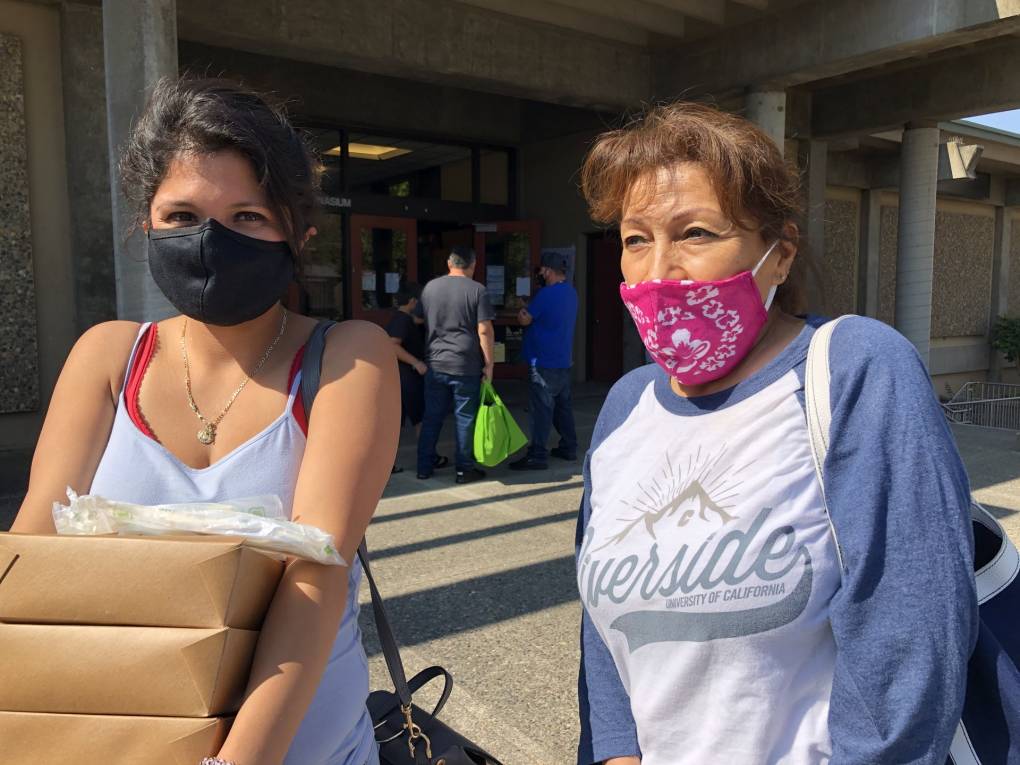
"caption": "Yalitza Garcia (left) and sister-in-law Silvia Arroyo gather boxed lunches at an evacuation center at Napa Valley College on Oct. 5, 2020. Both women said the pandemic and wildfires have meant income losses.",
"description": "Yalitza Garcia (left) and sister-in-law Silvia Arroyo gather boxed lunches at an evacuation center at Napa Valley College on Oct. 5, 2020. Both women said the pandemic and wildfires have meant income losses.",
"title": "RS45254_IMG_2690-qut",
"credit": "Farida Jhabvala Romero/KQED",
"status": "inherit",
"isLoading": false,
"fetchFailed": false
},
"news_11840603": {
"type": "attachments",
"id": "news_11840603",
"meta": {
"index": "attachments_1716263798",
"site": "news",
"id": "11840603",
"found": true
},
"parent": 11840535,
"imgSizes": {
"apple_news_ca_landscape_5_5": {
"file": "https://ww2.kqed.org/app/uploads/sites/10/2020/10/Wine-Grape-Harvest-Farmworkers-Glass-Fire-COVID-1044x783.jpg",
"width": 1044,
"mimeType": "image/jpeg",
"height": 783
},
"apple_news_ca_square_4_0": {
"file": "https://ww2.kqed.org/app/uploads/sites/10/2020/10/Wine-Grape-Harvest-Farmworkers-Glass-Fire-COVID-470x470.jpg",
"width": 470,
"mimeType": "image/jpeg",
"height": 470
},
"twentyfourteen-full-width": {
"file": "https://ww2.kqed.org/app/uploads/sites/10/2020/10/Wine-Grape-Harvest-Farmworkers-Glass-Fire-COVID-1038x576.jpg",
"width": 1038,
"mimeType": "image/jpeg",
"height": 576
},
"thumbnail": {
"file": "https://ww2.kqed.org/app/uploads/sites/10/2020/10/Wine-Grape-Harvest-Farmworkers-Glass-Fire-COVID-160x102.jpg",
"width": 160,
"mimeType": "image/jpeg",
"height": 102
},
"post-thumbnail": {
"file": "https://ww2.kqed.org/app/uploads/sites/10/2020/10/Wine-Grape-Harvest-Farmworkers-Glass-Fire-COVID-672x372.jpg",
"width": 672,
"mimeType": "image/jpeg",
"height": 372
},
"kqedFullSize": {
"file": "https://ww2.kqed.org/app/uploads/sites/10/2020/10/Wine-Grape-Harvest-Farmworkers-Glass-Fire-COVID.jpg",
"width": 1920,
"height": 1228
},
"apple_news_ca_landscape_4_7": {
"file": "https://ww2.kqed.org/app/uploads/sites/10/2020/10/Wine-Grape-Harvest-Farmworkers-Glass-Fire-COVID-632x474.jpg",
"width": 632,
"mimeType": "image/jpeg",
"height": 474
},
"large": {
"file": "https://ww2.kqed.org/app/uploads/sites/10/2020/10/Wine-Grape-Harvest-Farmworkers-Glass-Fire-COVID-1020x652.jpg",
"width": 1020,
"mimeType": "image/jpeg",
"height": 652
},
"apple_news_ca_landscape_4_0": {
"file": "https://ww2.kqed.org/app/uploads/sites/10/2020/10/Wine-Grape-Harvest-Farmworkers-Glass-Fire-COVID-536x402.jpg",
"width": 536,
"mimeType": "image/jpeg",
"height": 402
},
"apple_news_ca_portrait_12_9": {
"file": "https://ww2.kqed.org/app/uploads/sites/10/2020/10/Wine-Grape-Harvest-Farmworkers-Glass-Fire-COVID-1122x1228.jpg",
"width": 1122,
"mimeType": "image/jpeg",
"height": 1228
},
"medium": {
"file": "https://ww2.kqed.org/app/uploads/sites/10/2020/10/Wine-Grape-Harvest-Farmworkers-Glass-Fire-COVID-800x512.jpg",
"width": 800,
"mimeType": "image/jpeg",
"height": 512
},
"apple_news_ca_portrait_4_0": {
"file": "https://ww2.kqed.org/app/uploads/sites/10/2020/10/Wine-Grape-Harvest-Farmworkers-Glass-Fire-COVID-354x472.jpg",
"width": 354,
"mimeType": "image/jpeg",
"height": 472
},
"apple_news_ca_portrait_9_7": {
"file": "https://ww2.kqed.org/app/uploads/sites/10/2020/10/Wine-Grape-Harvest-Farmworkers-Glass-Fire-COVID-840x1120.jpg",
"width": 840,
"mimeType": "image/jpeg",
"height": 1120
},
"apple_news_ca_landscape_12_9": {
"file": "https://ww2.kqed.org/app/uploads/sites/10/2020/10/Wine-Grape-Harvest-Farmworkers-Glass-Fire-COVID-1832x1228.jpg",
"width": 1832,
"mimeType": "image/jpeg",
"height": 1228
},
"apple_news_ca_square_9_7": {
"file": "https://ww2.kqed.org/app/uploads/sites/10/2020/10/Wine-Grape-Harvest-Farmworkers-Glass-Fire-COVID-1104x1104.jpg",
"width": 1104,
"mimeType": "image/jpeg",
"height": 1104
},
"1536x1536": {
"file": "https://ww2.kqed.org/app/uploads/sites/10/2020/10/Wine-Grape-Harvest-Farmworkers-Glass-Fire-COVID-1536x982.jpg",
"width": 1536,
"mimeType": "image/jpeg",
"height": 982
},
"apple_news_ca_portrait_4_7": {
"file": "https://ww2.kqed.org/app/uploads/sites/10/2020/10/Wine-Grape-Harvest-Farmworkers-Glass-Fire-COVID-414x552.jpg",
"width": 414,
"mimeType": "image/jpeg",
"height": 552
},
"apple_news_ca_square_12_9": {
"file": "https://ww2.kqed.org/app/uploads/sites/10/2020/10/Wine-Grape-Harvest-Farmworkers-Glass-Fire-COVID-1472x1228.jpg",
"width": 1472,
"mimeType": "image/jpeg",
"height": 1228
},
"apple_news_ca_portrait_5_5": {
"file": "https://ww2.kqed.org/app/uploads/sites/10/2020/10/Wine-Grape-Harvest-Farmworkers-Glass-Fire-COVID-687x916.jpg",
"width": 687,
"mimeType": "image/jpeg",
"height": 916
},
"apple_news_ca_square_4_7": {
"file": "https://ww2.kqed.org/app/uploads/sites/10/2020/10/Wine-Grape-Harvest-Farmworkers-Glass-Fire-COVID-550x550.jpg",
"width": 550,
"mimeType": "image/jpeg",
"height": 550
},
"apple_news_ca_landscape_9_7": {
"file": "https://ww2.kqed.org/app/uploads/sites/10/2020/10/Wine-Grape-Harvest-Farmworkers-Glass-Fire-COVID-1376x1032.jpg",
"width": 1376,
"mimeType": "image/jpeg",
"height": 1032
},
"apple_news_ca_square_5_5": {
"file": "https://ww2.kqed.org/app/uploads/sites/10/2020/10/Wine-Grape-Harvest-Farmworkers-Glass-Fire-COVID-912x912.jpg",
"width": 912,
"mimeType": "image/jpeg",
"height": 912
}
},
"publishDate": 1601586251,
"modified": 1602095153,
"caption": null,
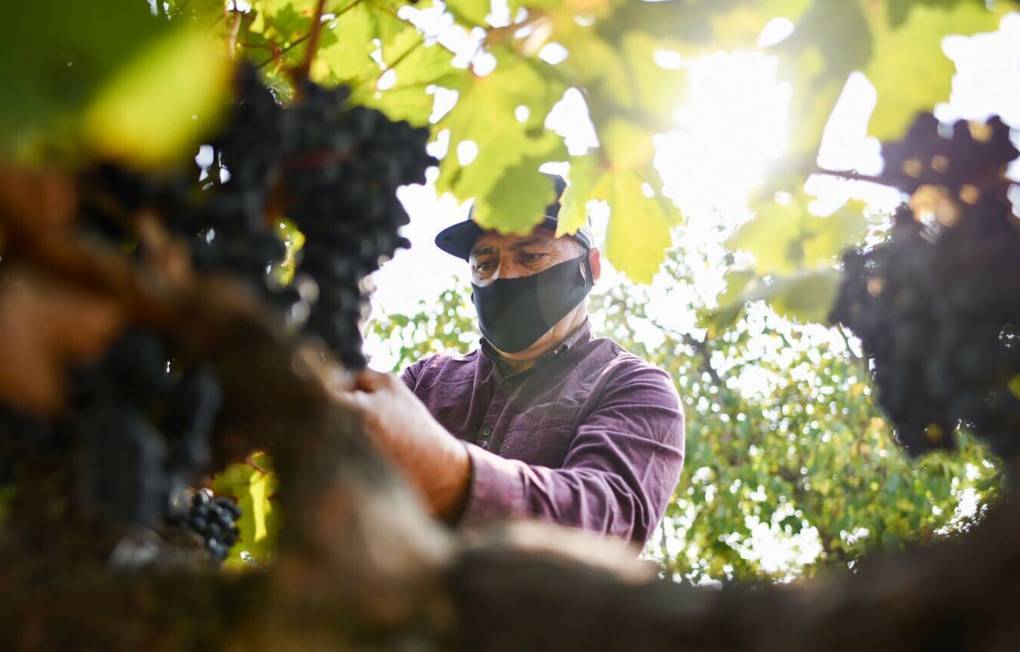
"description": "Francisco J Servin, of Servin-Lopez Vineyard Management, picks dead leaves off of grape vines at Garton Vineyards in Napa on Sept. 30, 2020. As many wineries abandon their smoke-damaged grapes, workers who were counting on income from the grape harvest are being left in the lurch.",
"title": "Wine-Grape-Harvest-Farmworkers-Glass-Fire-COVID",
"credit": "Beth LaBerge/KQED",
"status": "inherit",
"isLoading": false,
"fetchFailed": false
},
"news_11841225": {
"type": "attachments",
"id": "news_11841225",
"meta": {
"index": "attachments_1716263798",
"site": "news",
"id": "11841225",
"found": true
},
"parent": 11841120,
"imgSizes": {
"apple_news_ca_landscape_5_5": {
"file": "https://ww2.kqed.org/app/uploads/sites/10/2020/10/RS22943_GettyImages-450371331-qut-1044x783.jpg",
"width": 1044,
"mimeType": "image/jpeg",
"height": 783
},
"apple_news_ca_square_4_0": {
"file": "https://ww2.kqed.org/app/uploads/sites/10/2020/10/RS22943_GettyImages-450371331-qut-470x470.jpg",
"width": 470,
"mimeType": "image/jpeg",
"height": 470
},
"twentyfourteen-full-width": {
"file": "https://ww2.kqed.org/app/uploads/sites/10/2020/10/RS22943_GettyImages-450371331-qut-1038x576.jpg",
"width": 1038,
"mimeType": "image/jpeg",
"height": 576
},
"thumbnail": {
"file": "https://ww2.kqed.org/app/uploads/sites/10/2020/10/RS22943_GettyImages-450371331-qut-160x109.jpg",
"width": 160,
"mimeType": "image/jpeg",
"height": 109
},
"post-thumbnail": {
"file": "https://ww2.kqed.org/app/uploads/sites/10/2020/10/RS22943_GettyImages-450371331-qut-672x372.jpg",
"width": 672,
"mimeType": "image/jpeg",
"height": 372
},
"kqedFullSize": {
"file": "https://ww2.kqed.org/app/uploads/sites/10/2020/10/RS22943_GettyImages-450371331-qut.jpg",
"width": 1920,
"height": 1305
},
"apple_news_ca_landscape_4_7": {
"file": "https://ww2.kqed.org/app/uploads/sites/10/2020/10/RS22943_GettyImages-450371331-qut-632x474.jpg",
"width": 632,
"mimeType": "image/jpeg",
"height": 474
},
"large": {
"file": "https://ww2.kqed.org/app/uploads/sites/10/2020/10/RS22943_GettyImages-450371331-qut-1020x693.jpg",
"width": 1020,
"mimeType": "image/jpeg",
"height": 693
},
"apple_news_ca_landscape_4_0": {
"file": "https://ww2.kqed.org/app/uploads/sites/10/2020/10/RS22943_GettyImages-450371331-qut-536x402.jpg",
"width": 536,
"mimeType": "image/jpeg",
"height": 402
},
"apple_news_ca_portrait_12_9": {
"file": "https://ww2.kqed.org/app/uploads/sites/10/2020/10/RS22943_GettyImages-450371331-qut-1122x1305.jpg",
"width": 1122,
"mimeType": "image/jpeg",
"height": 1305
},
"medium": {
"file": "https://ww2.kqed.org/app/uploads/sites/10/2020/10/RS22943_GettyImages-450371331-qut-800x544.jpg",
"width": 800,
"mimeType": "image/jpeg",
"height": 544
},
"apple_news_ca_portrait_4_0": {
"file": "https://ww2.kqed.org/app/uploads/sites/10/2020/10/RS22943_GettyImages-450371331-qut-354x472.jpg",
"width": 354,
"mimeType": "image/jpeg",
"height": 472
},
"apple_news_ca_portrait_9_7": {
"file": "https://ww2.kqed.org/app/uploads/sites/10/2020/10/RS22943_GettyImages-450371331-qut-840x1120.jpg",
"width": 840,
"mimeType": "image/jpeg",
"height": 1120
},
"apple_news_ca_landscape_12_9": {
"file": "https://ww2.kqed.org/app/uploads/sites/10/2020/10/RS22943_GettyImages-450371331-qut-1832x1305.jpg",
"width": 1832,
"mimeType": "image/jpeg",
"height": 1305
},
"apple_news_ca_square_9_7": {
"file": "https://ww2.kqed.org/app/uploads/sites/10/2020/10/RS22943_GettyImages-450371331-qut-1104x1104.jpg",
"width": 1104,
"mimeType": "image/jpeg",
"height": 1104
},
"1536x1536": {
"file": "https://ww2.kqed.org/app/uploads/sites/10/2020/10/RS22943_GettyImages-450371331-qut-1536x1044.jpg",
"width": 1536,
"mimeType": "image/jpeg",
"height": 1044
},
"apple_news_ca_portrait_4_7": {
"file": "https://ww2.kqed.org/app/uploads/sites/10/2020/10/RS22943_GettyImages-450371331-qut-414x552.jpg",
"width": 414,
"mimeType": "image/jpeg",
"height": 552
},
"apple_news_ca_square_12_9": {
"file": "https://ww2.kqed.org/app/uploads/sites/10/2020/10/RS22943_GettyImages-450371331-qut-1472x1305.jpg",
"width": 1472,
"mimeType": "image/jpeg",
"height": 1305
},
"apple_news_ca_portrait_5_5": {
"file": "https://ww2.kqed.org/app/uploads/sites/10/2020/10/RS22943_GettyImages-450371331-qut-687x916.jpg",
"width": 687,
"mimeType": "image/jpeg",
"height": 916
},
"apple_news_ca_square_4_7": {
"file": "https://ww2.kqed.org/app/uploads/sites/10/2020/10/RS22943_GettyImages-450371331-qut-550x550.jpg",
"width": 550,
"mimeType": "image/jpeg",
"height": 550
},
"apple_news_ca_landscape_9_7": {
"file": "https://ww2.kqed.org/app/uploads/sites/10/2020/10/RS22943_GettyImages-450371331-qut-1376x1032.jpg",
"width": 1376,
"mimeType": "image/jpeg",
"height": 1032
},
"apple_news_ca_square_5_5": {
"file": "https://ww2.kqed.org/app/uploads/sites/10/2020/10/RS22943_GettyImages-450371331-qut-912x912.jpg",
"width": 912,
"mimeType": "image/jpeg",
"height": 912
}
},
"publishDate": 1602014698,
"modified": 1602025610,
"caption": "An immigrant detainee looks from his segregation cell at the Adelanto Detention Center in California's Inland Empire. Detainees may be put in these cells for fighting and other disturbances. But during the COVID-19 pandemic, some detainees say they've been forced to quarantine there.",
"description": "An immigrant detainee looks from his segregation cell at the Adelanto Detention Center in California's Inland Empire. Detainees may be put in these cells for fighting and other disturbances. But during the COVID-19 pandemic, some detainees say they've been forced to quarantine there.",
"title": "RS22943_GettyImages-450371331-qut",
"credit": "John Moore/Getty Images",
"status": "inherit",
"isLoading": false,
"fetchFailed": false
},
"news_11840799": {
"type": "attachments",
"id": "news_11840799",
"meta": {
"index": "attachments_1716263798",
"site": "news",
"id": "11840799",
"found": true
},
"parent": 11840788,
"imgSizes": {
"apple_news_ca_landscape_5_5": {
"file": "https://ww2.kqed.org/app/uploads/sites/10/2020/10/RS44933_028_KQED_Oakland_OBCACensus_09162020-qut-1044x783.jpg",
"width": 1044,
"mimeType": "image/jpeg",
"height": 783
},
"apple_news_ca_square_4_0": {
"file": "https://ww2.kqed.org/app/uploads/sites/10/2020/10/RS44933_028_KQED_Oakland_OBCACensus_09162020-qut-470x470.jpg",
"width": 470,
"mimeType": "image/jpeg",
"height": 470
},
"twentyfourteen-full-width": {
"file": "https://ww2.kqed.org/app/uploads/sites/10/2020/10/RS44933_028_KQED_Oakland_OBCACensus_09162020-qut-1038x576.jpg",
"width": 1038,
"mimeType": "image/jpeg",
"height": 576
},
"thumbnail": {
"file": "https://ww2.kqed.org/app/uploads/sites/10/2020/10/RS44933_028_KQED_Oakland_OBCACensus_09162020-qut-160x107.jpg",
"width": 160,
"mimeType": "image/jpeg",
"height": 107
},
"post-thumbnail": {
"file": "https://ww2.kqed.org/app/uploads/sites/10/2020/10/RS44933_028_KQED_Oakland_OBCACensus_09162020-qut-672x372.jpg",
"width": 672,
"mimeType": "image/jpeg",
"height": 372
},
"kqedFullSize": {
"file": "https://ww2.kqed.org/app/uploads/sites/10/2020/10/RS44933_028_KQED_Oakland_OBCACensus_09162020-qut.jpg",
"width": 1920,
"height": 1280
},
"apple_news_ca_landscape_4_7": {
"file": "https://ww2.kqed.org/app/uploads/sites/10/2020/10/RS44933_028_KQED_Oakland_OBCACensus_09162020-qut-632x474.jpg",
"width": 632,
"mimeType": "image/jpeg",
"height": 474
},
"large": {
"file": "https://ww2.kqed.org/app/uploads/sites/10/2020/10/RS44933_028_KQED_Oakland_OBCACensus_09162020-qut-1020x680.jpg",
"width": 1020,
"mimeType": "image/jpeg",
"height": 680
},
"apple_news_ca_landscape_4_0": {
"file": "https://ww2.kqed.org/app/uploads/sites/10/2020/10/RS44933_028_KQED_Oakland_OBCACensus_09162020-qut-536x402.jpg",
"width": 536,
"mimeType": "image/jpeg",
"height": 402
},
"apple_news_ca_portrait_12_9": {
"file": "https://ww2.kqed.org/app/uploads/sites/10/2020/10/RS44933_028_KQED_Oakland_OBCACensus_09162020-qut-1122x1280.jpg",
"width": 1122,
"mimeType": "image/jpeg",
"height": 1280
},
"medium": {
"file": "https://ww2.kqed.org/app/uploads/sites/10/2020/10/RS44933_028_KQED_Oakland_OBCACensus_09162020-qut-800x533.jpg",
"width": 800,
"mimeType": "image/jpeg",
"height": 533
},
"apple_news_ca_portrait_4_0": {
"file": "https://ww2.kqed.org/app/uploads/sites/10/2020/10/RS44933_028_KQED_Oakland_OBCACensus_09162020-qut-354x472.jpg",
"width": 354,
"mimeType": "image/jpeg",
"height": 472
},
"apple_news_ca_portrait_9_7": {
"file": "https://ww2.kqed.org/app/uploads/sites/10/2020/10/RS44933_028_KQED_Oakland_OBCACensus_09162020-qut-840x1120.jpg",
"width": 840,
"mimeType": "image/jpeg",
"height": 1120
},
"apple_news_ca_landscape_12_9": {
"file": "https://ww2.kqed.org/app/uploads/sites/10/2020/10/RS44933_028_KQED_Oakland_OBCACensus_09162020-qut-1832x1280.jpg",
"width": 1832,
"mimeType": "image/jpeg",
"height": 1280
},
"apple_news_ca_square_9_7": {
"file": "https://ww2.kqed.org/app/uploads/sites/10/2020/10/RS44933_028_KQED_Oakland_OBCACensus_09162020-qut-1104x1104.jpg",
"width": 1104,
"mimeType": "image/jpeg",
"height": 1104
},
"1536x1536": {
"file": "https://ww2.kqed.org/app/uploads/sites/10/2020/10/RS44933_028_KQED_Oakland_OBCACensus_09162020-qut-1536x1024.jpg",
"width": 1536,
"mimeType": "image/jpeg",
"height": 1024
},
"apple_news_ca_portrait_4_7": {
"file": "https://ww2.kqed.org/app/uploads/sites/10/2020/10/RS44933_028_KQED_Oakland_OBCACensus_09162020-qut-414x552.jpg",
"width": 414,
"mimeType": "image/jpeg",
"height": 552
},
"apple_news_ca_square_12_9": {
"file": "https://ww2.kqed.org/app/uploads/sites/10/2020/10/RS44933_028_KQED_Oakland_OBCACensus_09162020-qut-1472x1280.jpg",
"width": 1472,
"mimeType": "image/jpeg",
"height": 1280
},
"apple_news_ca_portrait_5_5": {
"file": "https://ww2.kqed.org/app/uploads/sites/10/2020/10/RS44933_028_KQED_Oakland_OBCACensus_09162020-qut-687x916.jpg",
"width": 687,
"mimeType": "image/jpeg",
"height": 916
},
"apple_news_ca_square_4_7": {
"file": "https://ww2.kqed.org/app/uploads/sites/10/2020/10/RS44933_028_KQED_Oakland_OBCACensus_09162020-qut-550x550.jpg",
"width": 550,
"mimeType": "image/jpeg",
"height": 550
},
"apple_news_ca_landscape_9_7": {
"file": "https://ww2.kqed.org/app/uploads/sites/10/2020/10/RS44933_028_KQED_Oakland_OBCACensus_09162020-qut-1376x1032.jpg",
"width": 1376,
"mimeType": "image/jpeg",
"height": 1032
},
"apple_news_ca_square_5_5": {
"file": "https://ww2.kqed.org/app/uploads/sites/10/2020/10/RS44933_028_KQED_Oakland_OBCACensus_09162020-qut-912x912.jpg",
"width": 912,
"mimeType": "image/jpeg",
"height": 912
}
},
"publishDate": 1601664583,
"modified": 1601665143,
"caption": "Members of the Oakland Black Cowboy Association do outreach for the 2020 census at De Fremery Park in West Oakland on Sep. 16, 2020.",
"description": "Members of the Oakland Black Cowboy Association do outreach for the 2020 census at De Fremery Park in West Oakland on Sep. 16, 2020.",
"title": "RS44933_028_KQED_Oakland_OBCACensus_09162020-qut",
"credit": "Beth LaBerge/KQED",
"status": "inherit",
"isLoading": false,
"fetchFailed": false
}
},
"audioPlayerReducer": {
"postId": "stream_live",
"isPaused": true,
"isPlaying": false,
"pfsActive": false,
"pledgeModalIsOpen": true,
"playerDrawerIsOpen": false,
"liveAudioPlayStartedAt": 0,
"liveAudioPlayContext": ""
},
"authorsReducer": {
"byline_news_11843335": {
"type": "authors",
"id": "byline_news_11843335",
"meta": {
"override": true
},
"slug": "byline_news_11843335",
"name": "\u003ca href=\"https://www.kvpr.org/people/kerry-klein\">Kerry Klein\u003c/a> \u003cbr> Valley Public Radio",
"isLoading": false
},
"byline_news_11843100": {
"type": "authors",
"id": "byline_news_11843100",
"meta": {
"override": true
},
"slug": "byline_news_11843100",
"name": "Mark Katkov",
"isLoading": false
},
"byline_news_11840788": {
"type": "authors",
"id": "byline_news_11840788",
"meta": {
"override": true
},
"slug": "byline_news_11840788",
"name": "\u003ca href=\"https://twitter.com/MikeSchneiderAP\">Mike Schneider\u003c/a>\u003cBR>Associated Press",
"isLoading": false
},
"tychehendricks": {
"type": "authors",
"id": "259",
"meta": {
"index": "authors_1716337520",
"id": "259",
"found": true
},
"name": "Tyche Hendricks",
"firstName": "Tyche",
"lastName": "Hendricks",
"slug": "tychehendricks",
"email": "thendricks@kqed.org",
"display_author_email": true,
"staff_mastheads": [
"news"
],
"title": "KQED Senior Editor, Immigration",
"bio": "\u003cspan style=\"font-weight: 400;\">Tyche Hendricks is KQED’s senior editor for immigration, leading coverage of the policy and politics that affect California’s immigrant communities. Her work for KQED’s radio and online audiences is also carried on NPR and other national outlets. She has been recognized with awards from the Radio and Television News Directors Association, the Society for Professional Journalists; the Education Writers Association; the Best of the West and the National Federation of Community Broadcasters. Before joining KQED in 2010, Tyche spent more than a dozen years as a newspaper reporter, notably at the \u003c/span>\u003ci>\u003cspan style=\"font-weight: 400;\">San Francisco Chronicle\u003c/span>\u003c/i>\u003cspan style=\"font-weight: 400;\">. At different times she has covered criminal justice, government and politics and urban planning. Tyche has taught in the MFA Creative Writing program at the University of San Francisco and at UC Berkeley’s Graduate School of Journalism, where she was co-director of a national immigration symposium for professional journalists. She is the author of \u003c/span>\u003ci>\u003cspan style=\"font-weight: 400;\">The Wind Doesn't Need a Passport: Stories from the U.S.-Mexico Borderlands\u003c/span>\u003c/i>\u003cspan style=\"font-weight: 400;\"> (University of California Press). \u003c/span>",
"avatar": "https://secure.gravatar.com/avatar/b8ee458e2731c2d43df86882ce17267e?s=600&d=blank&r=g",
"twitter": "tychehendricks",
"facebook": null,
"instagram": null,
"linkedin": null,
"sites": [
{
"site": "news",
"roles": [
"editor"
]
},
{
"site": "stateofhealth",
"roles": [
"editor"
]
}
],
"headData": {
"title": "Tyche Hendricks | KQED",
"description": "KQED Senior Editor, Immigration",
"ogImgSrc": "https://secure.gravatar.com/avatar/b8ee458e2731c2d43df86882ce17267e?s=600&d=blank&r=g",
"twImgSrc": "https://secure.gravatar.com/avatar/b8ee458e2731c2d43df86882ce17267e?s=600&d=blank&r=g"
},
"isLoading": false,
"link": "/author/tychehendricks"
},
"markfiore": {
"type": "authors",
"id": "3236",
"meta": {
"index": "authors_1716337520",
"id": "3236",
"found": true
},
"name": "Mark Fiore",
"firstName": "Mark",
"lastName": "Fiore",
"slug": "markfiore",
"email": "mark@markfiore.com",
"display_author_email": false,
"staff_mastheads": [
"news"
],
"title": "KQED News Cartoonist",
"bio": "\u003ca href=\"http://www.MarkFiore.com\">MarkFiore.com\u003c/a> | \u003ca href=\"https://twitter.com/markfiore\">Follow on Twitter\u003c/a> | \u003ca href=\"https://www.facebook.com/pages/Mark-Fiore-Animated-Political-Cartoons/94451707396?ref=bookmarks\">Facebook\u003c/a> | \u003ca href=\"mailto:mark@markfiore.com\">email\u003c/a>\r\n\r\nPulitzer Prize-winner, Mark Fiore, who the Wall Street Journal has called “the undisputed guru of the form,” creates animated political cartoons in San Francisco, where his work has been featured regularly on the San Francisco Chronicle’s web site, SFGate.com. His work has appeared on Newsweek.com, Slate.com, CBSNews.com, MotherJones.com, DailyKos.com and NPR’s web site. Fiore’s political animation has appeared on CNN, Frontline, Bill Moyers Journal, Salon.com and cable and broadcast outlets across the globe.\r\n\r\nBeginning his professional life by drawing traditional political cartoons for newspapers, Fiore’s work appeared in publications ranging from the Washington Post to the Los Angeles Times. In the late 1990s, he began to experiment with animating political cartoons and, after a short stint at the San Jose Mercury News as their staff cartoonist, Fiore devoted all his energies to animation.\r\nGrowing up in California, Fiore also spent a good portion of his life in the backwoods of Idaho. It was this combination that shaped him politically. Mark majored in political science at Colorado College, where, in a perfect send-off for a cartoonist, he received his diploma in 1991 as commencement speaker Dick Cheney smiled approvingly.\r\nMark Fiore was awarded the Pulitzer Prize for political cartooning in 2010, a Robert F. Kennedy Journalism Award in 2004 and has twice received an Online Journalism Award for commentary from the Online News Association (2002, 2008). Fiore has received two awards for his work in new media from the National Cartoonists Society (2001, 2002), and in 2006 received The James Madison Freedom of Information Award from The Society of Professional Journalists.",
"avatar": "https://secure.gravatar.com/avatar/fc4e2a612b15b67bad0c6f0e1db4ca9b?s=600&d=blank&r=g",
"twitter": "MarkFiore",
"facebook": null,
"instagram": "https://www.instagram.com/markfiore/?hl=en",
"linkedin": null,
"sites": [
{
"site": "arts",
"roles": [
"contributor"
]
},
{
"site": "news",
"roles": [
"editor"
]
},
{
"site": "futureofyou",
"roles": [
"editor"
]
},
{
"site": "science",
"roles": [
"editor"
]
}
],
"headData": {
"title": "Mark Fiore | KQED",
"description": "KQED News Cartoonist",
"ogImgSrc": "https://secure.gravatar.com/avatar/fc4e2a612b15b67bad0c6f0e1db4ca9b?s=600&d=blank&r=g",
"twImgSrc": "https://secure.gravatar.com/avatar/fc4e2a612b15b67bad0c6f0e1db4ca9b?s=600&d=blank&r=g"
},
"isLoading": false,
"link": "/author/markfiore"
},
"fjhabvala": {
"type": "authors",
"id": "8659",
"meta": {
"index": "authors_1716337520",
"id": "8659",
"found": true
},
"name": "Farida Jhabvala Romero",
"firstName": "Farida",
"lastName": "Jhabvala Romero",
"slug": "fjhabvala",
"email": "fjhabvala@kqed.org",
"display_author_email": true,
"staff_mastheads": [
"news"
],
"title": "KQED Contributor",
"bio": "Farida Jhabvala Romero is a Labor Correspondent for KQED. She previously covered immigration. Farida was \u003ca href=\"https://www.ccnma.org/2022-most-influential-latina-journalists\">named\u003c/a> one of the 10 Most Influential Latina Journalists in California in 2022 by the California Chicano News Media Association. Her work has won awards from the Society of Professional Journalists (Northern California), as well as a national and regional Edward M. Murrow Award for the collaborative reporting projects “Dangerous Air” and “Graying California.” Before joining KQED, Farida worked as a producer at Radio Bilingüe, a national public radio network. Farida earned her master’s degree in journalism from Stanford University.",
"avatar": "https://secure.gravatar.com/avatar/f9f022d4e2609741874222a1e9d41f48fea74011aa7c615eef91d9a50c944ebe?s=600&d=blank&r=g",
"twitter": "FaridaJhabvala",
"bluesky": null,
"facebook": null,
"instagram": null,
"linkedin": "https://www.linkedin.com/in/faridajhabvala/",
"sites": [
{
"site": "news",
"roles": [
"editor"
]
},
{
"site": "stateofhealth",
"roles": [
"author"
]
},
{
"site": "liveblog",
"roles": [
"author"
]
}
],
"headData": {
"title": "Farida Jhabvala Romero | KQED",
"description": "KQED Contributor",
"ogImgSrc": "https://secure.gravatar.com/avatar/f9f022d4e2609741874222a1e9d41f48fea74011aa7c615eef91d9a50c944ebe?s=600&d=blank&r=g",
"twImgSrc": "https://secure.gravatar.com/avatar/f9f022d4e2609741874222a1e9d41f48fea74011aa7c615eef91d9a50c944ebe?s=600&d=blank&r=g"
},
"isLoading": false,
"link": "/author/fjhabvala"
},
"mwiley": {
"type": "authors",
"id": "11526",
"meta": {
"index": "authors_1716337520",
"id": "11526",
"found": true
},
"name": "Michelle Wiley",
"firstName": "Michelle",
"lastName": "Wiley",
"slug": "mwiley",
"email": "mwiley@KQED.org",
"display_author_email": true,
"staff_mastheads": [],
"title": null,
"bio": "Michelle Wiley was the senior editor of weekends.",
"avatar": "https://secure.gravatar.com/avatar/3b897d82a09e8587e8e73fa69fbcc635?s=600&d=blank&r=g",
"twitter": "michelleewiley",
"facebook": null,
"instagram": null,
"linkedin": null,
"sites": [
{
"site": "",
"roles": [
"editor"
]
},
{
"site": "arts",
"roles": [
"editor"
]
},
{
"site": "news",
"roles": [
"subscriber"
]
},
{
"site": "lowdown",
"roles": [
"editor"
]
},
{
"site": "science",
"roles": [
"editor"
]
},
{
"site": "podcasts",
"roles": [
"editor"
]
}
],
"headData": {
"title": "Michelle Wiley | KQED",
"description": null,
"ogImgSrc": "https://secure.gravatar.com/avatar/3b897d82a09e8587e8e73fa69fbcc635?s=600&d=blank&r=g",
"twImgSrc": "https://secure.gravatar.com/avatar/3b897d82a09e8587e8e73fa69fbcc635?s=600&d=blank&r=g"
},
"isLoading": false,
"link": "/author/mwiley"
}
},
"pagesReducer": {
"news_category_immigration": {
"type": "terms",
"id": "news_1169",
"meta": {
"index": "terms_1716263798",
"site": "news",
"id": "1169",
"score": 10.910406
},
"featImg": null,
"name": "Immigration",
"description": null,
"taxonomy": "category",
"headData": {
"twImgId": null,
"twTitle": null,
"ogTitle": null,
"ogImgId": null,
"twDescription": null,
"description": null,
"title": "Immigration Archives | KQED News",
"ogDescription": null
},
"ttid": 1180,
"slug": "immigration",
"isLoading": false,
"title": "Immigration",
"pageMeta": {
"site": "news",
"WpPageTemplate": "page-topic-editorial",
"currentPage": 62
},
"blocks": [
{
"blockName": "kqed/post-list",
"attrs": {
"layout": "cardArticle2",
"query": "posts/news?category=immigration",
"seeMore": false,
"paginated": true,
"page": 62
}
},
{
"blockName": "kqed/ad"
}
]
}
},
"pfsSessionReducer": {},
"postsReducer": {
"stream_live": {
"type": "live",
"id": "stream_live",
"audioUrl": "https://streams.kqed.org/kqedradio",
"title": "Live Stream",
"excerpt": "Live Stream information currently unavailable.",
"link": "/radio",
"featImg": "",
"label": {
"name": "KQED Live",
"link": "/"
}
},
"stream_kqedNewscast": {
"type": "posts",
"id": "stream_kqedNewscast",
"audioUrl": "https://www.kqed.org/.stream/anon/radio/RDnews/newscast.mp3?_=1",
"title": "KQED Newscast",
"featImg": "",
"label": {
"name": "88.5 FM",
"link": "/"
}
},
"news_11844491": {
"type": "posts",
"id": "news_11844491",
"meta": {
"index": "posts_1716263798",
"site": "news",
"id": "11844491",
"score": null,
"sort": [
1604084573000
]
},
"guestAuthors": [],
"slug": "a-shameful-chapter-house-releases-comprehensive-report-on-family-separations",
"title": "'A Shameful Chapter': House Releases Comprehensive Report on Family Separations",
"publishDate": 1604084573,
"format": "audio",
"headTitle": "‘A Shameful Chapter’: House Releases Comprehensive Report on Family Separations | KQED",
"labelTerm": {
"site": "news"
},
"content": "\u003cp>The Trump administration’s family separation policy was marked by “reckless incompetence and intentional cruelty,” according to a \u003ca href=\"https://assets.documentcloud.org/documents/20400755/the_trump_administration_family_separation_policy_trauma_destruction_and_chaos.pdf\">report\u003c/a> released Thursday by the U.S. House Judiciary Committee.\u003c/p>\n\u003cp>The new report, released as the result of a 21-month investigation, shows that the administration’s plan to separate families at the U.S.-Mexico border began much earlier than many knew: within weeks of President Trump’s inauguration.\u003c/p>\n\u003cp>“It’s an outrageous, shameful chapter in America’s history,” said Rep. Zoe Lofgren, D-San Jose, who serves on the Judiciary Committee and chairs the House Immigration Subcommittee.\u003c/p>\n\u003cp>[pullquote size=\"medium\" align=\"right\" citation=\"Rep. Zoe Lofgren\"]‘Either it was an intentional human rights abuse or it was [done] with such a reckless disregard that it might as well have been an intentional human rights abuse.’[/pullquote]\u003c/p>\n\u003cp>The report also found that while a formal process of separations didn’t start until the summer of 2017, that spring saw a spike in family separations. The percentage of children in the custody of the Office of Refugee Resettlement (ORR) as a result of family separation jumped from 0.3% in November 2016 to 2.6% in March 2017.\u003c/p>\n\u003cp>While much of the report details information that has been widespread in the more than three years since separations began, it highlights the lack of communication between agencies under the Department of Homeland Security; particularly U.S. Customs and Border Protection, U.S. Immigration and Customs Enforcement and ORR.\u003c/p>\n\u003cp>One example of this disorganization happened in July 2018, according to the report, after U.S. District Judge Dana Sabraw in San Diego ordered the youngest group of separated children to be reunified with their parents. On July 16, 2018, “37 ‘tender age’ children were approved for reunification with their parents at an ICE detention facility.” But, after waiting eight hours at the facility, “ICE still had not processed any of the parents.” ORR officials then took the children back to the buses, where they waited until late in the evening.\u003c/p>\n\u003cfigure id=\"attachment_11844497\" class=\"wp-caption aligncenter\" style=\"max-width: 1802px\">\u003cimg loading=\"lazy\" decoding=\"async\" class=\"size-full wp-image-11844497\" src=\"https://ww2.kqed.org/app/uploads/sites/10/2020/10/Screen-Shot-2020-10-29-at-11.20.29-PM.png\" alt=\"\" width=\"1802\" height=\"758\" srcset=\"https://cdn.kqed.org/wp-content/uploads/sites/10/2020/10/Screen-Shot-2020-10-29-at-11.20.29-PM.png 1802w, https://cdn.kqed.org/wp-content/uploads/sites/10/2020/10/Screen-Shot-2020-10-29-at-11.20.29-PM-800x337.png 800w, https://cdn.kqed.org/wp-content/uploads/sites/10/2020/10/Screen-Shot-2020-10-29-at-11.20.29-PM-1020x429.png 1020w, https://cdn.kqed.org/wp-content/uploads/sites/10/2020/10/Screen-Shot-2020-10-29-at-11.20.29-PM-160x67.png 160w, https://cdn.kqed.org/wp-content/uploads/sites/10/2020/10/Screen-Shot-2020-10-29-at-11.20.29-PM-1536x646.png 1536w\" sizes=\"auto, (max-width: 1802px) 100vw, 1802px\">\u003cfigcaption class=\"wp-caption-text\">According to the report, inconsistent guidance — as displayed here — made the separation process “chaotic and even more cruel than necessary.” \u003ccite>(House Judiciary Committee)\u003c/cite>\u003c/figcaption>\u003c/figure>\n\u003cp>Lofgren said she was struck by the widespread knowledge of the program and the complicity of people within the administration.\u003c/p>\n\u003cp>“All the way from the secretary of Homeland Security to the attorney general to the head of the Border Patrol: They knew that they were taking these children away and they lacked the capacity to track them with their parents or to ever reunite them,” Lofgren said.\u003c/p>\n\u003cp>Earlier this month, court documents detailed that lawyers and advocates were \u003ca href=\"https://www.kqed.org/news/11843100/parents-of-545-children-separated-at-u-s-mexico-border-still-cant-be-found\">unable to find the parents of hundreds of children\u003c/a> who’d been separated in 2017.\u003c/p>\n\u003cp>[ad fullwidth]\u003c/p>\n\u003cp>According to the committee’s report, during that initial five-month pilot program in El Paso, Texas, where many of those 545 families were separated, Trump administration officials “discovered that the government was unable to track separated family members in a way that allowed for later reunification of children with their parents.”\u003c/p>\n\u003cp>“And, knowing that, they went ahead and took thousands of children away from their parents anyway,” Lofgren said. “Either it was an intentional human rights abuse or it was [done] with such a reckless disregard that it might as well have been an intentional human rights abuse.”\u003c/p>\n\u003cp>[aside label='Related Coverage' tag='family-separation']This week, a group of doctors \u003ca href=\"https://www.kqed.org/news/11843880/us-treatment-of-migrant-children-falls-under-un-definition-of-torture-doctors-say\">published a paper in the medical journal Pediatrics\u003c/a> alleging that the federal government’s treatment of separated families amounts to torture under international law. Lofgren said she agrees with that assessment.\u003c/p>\n\u003cp>“Children were taken from their parents without even being told what was going on. They never had a chance to even say goodbye to their parents. They were traumatized and removed to remote locations. Really there’s no excuse for it, and it really is torture in some cases,” she said.\u003c/p>\n\u003cp>In an effort to redress the policy of family separation, and numerous other issues at the border, Lofgren said she’s working on a comprehensive rewrite of the country’s \u003ca href=\"https://www.uscis.gov/laws-and-policy/legislation/immigration-and-nationality-act\">Immigration and Nationality Act\u003c/a>.\u003c/p>\n\u003cp>“The act hasn’t really been rewritten in its entirety since 1965, and it doesn’t well-serve the United States at this point,” she said.\u003c/p>\n\u003cp>Lofgren plans to release the new version before the end of the year.\u003c/p>\n\u003cp>\u003c/p>\n",
"blocks": [],
"excerpt": "The Trump administration’s family separation policy was marked by 'reckless incompetence and intentional cruelty,' according to a report released Thursday by the House Judiciary Committee.",
"status": "publish",
"parent": 0,
"modified": 1739475172,
"stats": {
"hasAudio": false,
"hasVideo": false,
"hasChartOrMap": false,
"iframeSrcs": [],
"hasGoogleForm": false,
"hasGallery": false,
"hasHearkenModule": false,
"hasPolis": false,
"paragraphCount": 19,
"wordCount": 762
},
"headData": {
"title": "'A Shameful Chapter': House Releases Comprehensive Report on Family Separations | KQED",
"description": "The Trump administration’s family separation policy was marked by 'reckless incompetence and intentional cruelty,' according to a report released Thursday by the House Judiciary Committee.",
"ogTitle": "",
"ogDescription": "",
"ogImgId": "",
"twTitle": "",
"twDescription": "",
"twImgId": "",
"schema": {
"@context": "https://schema.org",
"@type": "NewsArticle",
"headline": "'A Shameful Chapter': House Releases Comprehensive Report on Family Separations",
"datePublished": "2020-10-30T12:02:53-07:00",
"dateModified": "2025-02-13T11:32:52-08:00",
"image": "https://cdn.kqed.org/wp-content/uploads/2020/02/KQED-OG-Image@1x.png",
"isAccessibleForFree": "True",
"publisher": {
"@type": "NewsMediaOrganization",
"@id": "https://www.kqed.org/#organization",
"name": "KQED",
"logo": "https://cdn.kqed.org/wp-content/uploads/2020/02/KQED-OG-Image@1x.png",
"url": "https://www.kqed.org",
"sameAs": [
"https://www.facebook.com/KQED",
"https://twitter.com/KQED",
"https://www.instagram.com/kqed/",
"https://www.tiktok.com/@kqedofficial",
"https://www.linkedin.com/company/kqed",
"https://www.youtube.com/channel/UCeC0IOo7i1P_61zVUWbJ4nw"
]
}
}
},
"audioUrl": "https://www.kqed.org/.stream/anon/radio/RDnews/2020/10/WileyFamilySeparation.mp3",
"sticky": false,
"path": "/news/11844491/a-shameful-chapter-house-releases-comprehensive-report-on-family-separations",
"audioDuration": 69000,
"audioTrackLength": null,
"parsedContent": [
{
"type": "contentString",
"content": "\u003cdiv class=\"post-body\">\u003cp>\u003cp>The Trump administration’s family separation policy was marked by “reckless incompetence and intentional cruelty,” according to a \u003ca href=\"https://assets.documentcloud.org/documents/20400755/the_trump_administration_family_separation_policy_trauma_destruction_and_chaos.pdf\">report\u003c/a> released Thursday by the U.S. House Judiciary Committee.\u003c/p>\n\u003cp>The new report, released as the result of a 21-month investigation, shows that the administration’s plan to separate families at the U.S.-Mexico border began much earlier than many knew: within weeks of President Trump’s inauguration.\u003c/p>\n\u003cp>“It’s an outrageous, shameful chapter in America’s history,” said Rep. Zoe Lofgren, D-San Jose, who serves on the Judiciary Committee and chairs the House Immigration Subcommittee.\u003c/p>\n\u003cp>\u003c/p>\u003c/div>",
"attributes": {
"named": {},
"numeric": []
}
},
{
"type": "component",
"content": "‘Either it was an intentional human rights abuse or it was [done] with such a reckless disregard that it might as well have been an intentional human rights abuse.’",
"name": "pullquote",
"attributes": {
"named": {
"size": "medium",
"align": "right",
"citation": "Rep. Zoe Lofgren",
"label": ""
},
"numeric": []
}
},
{
"type": "contentString",
"content": "\u003cdiv class=\"post-body\">\u003cp>\u003c/p>\n\u003cp>The report also found that while a formal process of separations didn’t start until the summer of 2017, that spring saw a spike in family separations. The percentage of children in the custody of the Office of Refugee Resettlement (ORR) as a result of family separation jumped from 0.3% in November 2016 to 2.6% in March 2017.\u003c/p>\n\u003cp>While much of the report details information that has been widespread in the more than three years since separations began, it highlights the lack of communication between agencies under the Department of Homeland Security; particularly U.S. Customs and Border Protection, U.S. Immigration and Customs Enforcement and ORR.\u003c/p>\n\u003cp>One example of this disorganization happened in July 2018, according to the report, after U.S. District Judge Dana Sabraw in San Diego ordered the youngest group of separated children to be reunified with their parents. On July 16, 2018, “37 ‘tender age’ children were approved for reunification with their parents at an ICE detention facility.” But, after waiting eight hours at the facility, “ICE still had not processed any of the parents.” ORR officials then took the children back to the buses, where they waited until late in the evening.\u003c/p>\n\u003cfigure id=\"attachment_11844497\" class=\"wp-caption aligncenter\" style=\"max-width: 1802px\">\u003cimg loading=\"lazy\" decoding=\"async\" class=\"size-full wp-image-11844497\" src=\"https://ww2.kqed.org/app/uploads/sites/10/2020/10/Screen-Shot-2020-10-29-at-11.20.29-PM.png\" alt=\"\" width=\"1802\" height=\"758\" srcset=\"https://cdn.kqed.org/wp-content/uploads/sites/10/2020/10/Screen-Shot-2020-10-29-at-11.20.29-PM.png 1802w, https://cdn.kqed.org/wp-content/uploads/sites/10/2020/10/Screen-Shot-2020-10-29-at-11.20.29-PM-800x337.png 800w, https://cdn.kqed.org/wp-content/uploads/sites/10/2020/10/Screen-Shot-2020-10-29-at-11.20.29-PM-1020x429.png 1020w, https://cdn.kqed.org/wp-content/uploads/sites/10/2020/10/Screen-Shot-2020-10-29-at-11.20.29-PM-160x67.png 160w, https://cdn.kqed.org/wp-content/uploads/sites/10/2020/10/Screen-Shot-2020-10-29-at-11.20.29-PM-1536x646.png 1536w\" sizes=\"auto, (max-width: 1802px) 100vw, 1802px\">\u003cfigcaption class=\"wp-caption-text\">According to the report, inconsistent guidance — as displayed here — made the separation process “chaotic and even more cruel than necessary.” \u003ccite>(House Judiciary Committee)\u003c/cite>\u003c/figcaption>\u003c/figure>\n\u003cp>Lofgren said she was struck by the widespread knowledge of the program and the complicity of people within the administration.\u003c/p>\n\u003cp>“All the way from the secretary of Homeland Security to the attorney general to the head of the Border Patrol: They knew that they were taking these children away and they lacked the capacity to track them with their parents or to ever reunite them,” Lofgren said.\u003c/p>\n\u003cp>Earlier this month, court documents detailed that lawyers and advocates were \u003ca href=\"https://www.kqed.org/news/11843100/parents-of-545-children-separated-at-u-s-mexico-border-still-cant-be-found\">unable to find the parents of hundreds of children\u003c/a> who’d been separated in 2017.\u003c/p>\n\u003cp>\u003c/p>\u003c/div>",
"attributes": {
"named": {},
"numeric": []
}
},
{
"type": "component",
"content": "",
"name": "ad",
"attributes": {
"named": {
"label": "fullwidth"
},
"numeric": [
"fullwidth"
]
}
},
{
"type": "contentString",
"content": "\u003cdiv class=\"post-body\">\u003cp>\u003c/p>\n\u003cp>According to the committee’s report, during that initial five-month pilot program in El Paso, Texas, where many of those 545 families were separated, Trump administration officials “discovered that the government was unable to track separated family members in a way that allowed for later reunification of children with their parents.”\u003c/p>\n\u003cp>“And, knowing that, they went ahead and took thousands of children away from their parents anyway,” Lofgren said. “Either it was an intentional human rights abuse or it was [done] with such a reckless disregard that it might as well have been an intentional human rights abuse.”\u003c/p>\n\u003cp>\u003c/p>\u003c/div>",
"attributes": {
"named": {},
"numeric": []
}
},
{
"type": "component",
"content": "",
"name": "aside",
"attributes": {
"named": {
"label": "Related Coverage ",
"tag": "family-separation"
},
"numeric": []
}
},
{
"type": "contentString",
"content": "\u003cdiv class=\"post-body\">\u003cp>This week, a group of doctors \u003ca href=\"https://www.kqed.org/news/11843880/us-treatment-of-migrant-children-falls-under-un-definition-of-torture-doctors-say\">published a paper in the medical journal Pediatrics\u003c/a> alleging that the federal government’s treatment of separated families amounts to torture under international law. Lofgren said she agrees with that assessment.\u003c/p>\n\u003cp>“Children were taken from their parents without even being told what was going on. They never had a chance to even say goodbye to their parents. They were traumatized and removed to remote locations. Really there’s no excuse for it, and it really is torture in some cases,” she said.\u003c/p>\n\u003cp>In an effort to redress the policy of family separation, and numerous other issues at the border, Lofgren said she’s working on a comprehensive rewrite of the country’s \u003ca href=\"https://www.uscis.gov/laws-and-policy/legislation/immigration-and-nationality-act\">Immigration and Nationality Act\u003c/a>.\u003c/p>\n\u003cp>“The act hasn’t really been rewritten in its entirety since 1965, and it doesn’t well-serve the United States at this point,” she said.\u003c/p>\n\u003cp>Lofgren plans to release the new version before the end of the year.\u003c/p>\n\u003cp>\u003c/p>\n\u003c/div>\u003c/p>",
"attributes": {
"named": {},
"numeric": []
}
}
],
"link": "/news/11844491/a-shameful-chapter-house-releases-comprehensive-report-on-family-separations",
"authors": [
"11526"
],
"categories": [
"news_1169",
"news_8",
"news_13"
],
"tags": [
"news_18538",
"news_1323",
"news_23456",
"news_20202",
"news_17968",
"news_2013"
],
"featImg": "news_11844551",
"label": "news"
},
"news_11844236": {
"type": "posts",
"id": "news_11844236",
"meta": {
"index": "posts_1716263798",
"site": "news",
"id": "11844236",
"score": null,
"sort": [
1604003406000
]
},
"guestAuthors": [],
"slug": "immigration-is-a-gateway-issue-and-the-contrast-between-trump-and-biden-is-stark",
"title": "‘Immigration Is a Gateway Issue’ — and the Contrast Between Trump and Biden Is Stark",
"publishDate": 1604003406,
"format": "standard",
"headTitle": "‘Immigration Is a Gateway Issue’ — and the Contrast Between Trump and Biden Is Stark | KQED",
"labelTerm": {
"site": "news"
},
"content": "\u003cp>President Trump was asked at last week’s debate about his policy separating thousands of migrant families at the border — and how the \u003ca href=\"https://www.npr.org/2020/10/21/926031426/parents-of-545-children-separated-at-u-s-mexico-border-still-cant-be-found#:~:text=Live%20Sessions-,Parents%20Of%20545%20Children%20Separated%20At%20U.S.%2DMexico%20Border%20Still,pandemic%2C%20according%20to%20the%20filing.\">more than 500 remaining children\u003c/a> whose parents can’t be located would ever be reunited with them. He didn’t answer the question, then tried to shift attention to an Obama-era border processing center where kids were held in chain-link fenced enclosures, asking repeatedly: “Who built the cages, Joe?”\u003c/p>\n\u003cp>[pullquote align=\"right\" size=\"medium\" citation=\"Lisa García Bedolla, UC Berkeley political scientist\"]‘Immigration is a gateway issue, a signal to me of whether you think my family and I should be in this country or not, and deserve full rights or not.’[/pullquote]\u003c/p>\n\u003cp>The \u003ca href=\"https://www.youtube.com/watch?v=DZ9vIzVZjS4\">six minutes of the debate\u003c/a> that NBC moderator Kristen Welker dedicated to immigration that night marked one of the first times the topic has come up in any kind of substantial way during the presidential campaign. That’s striking, since Trump has made restricting immigration a dominant theme of his presidency.\u003c/p>\n\u003cp>And for voters in California, where one in four residents was born in another country and immigrants are integral to almost every community and to the state’s economy, U.S. immigration policy —and the president’s stance toward immigrants — deeply matters.\u003c/p>\n\u003cp>Ever since Trump \u003ca href=\"https://www.youtube.com/watch?v=apjNfkysjbM&feature=youtu.be&t=208\">announced his candidacy\u003c/a> in 2015, saying Mexicans are “bringing drugs, they’re bringing crime, they’re rapists,” he has linked his political fortunes to the idea that immigrants are a threat to the United States and a drain on its resources.\u003c/p>\n\u003cp>And with laser focus, his administration has pushed through more than \u003ca href=\"https://www.migrationpolicy.org/research/us-immigration-system-changes-trump-presidency\">400 executive actions\u003c/a> on immigration, ranging from sweeping policy directives, such as the travel ban aimed at citizens of mostly Muslim countries, to little-noticed rule changes, including one expanding DNA collection from people in immigration detention.\u003c/p>\n\u003cp>The contrast between Trump and Democratic nominee Joe Biden could hardly be starker.\u003c/p>\n\u003cp>The former vice president has pledged to reverse Trump’s immigration restrictions and raise the cap on refugee admissions to 125,000 (from Trump’s \u003ca href=\"https://apnews.com/article/virus-outbreak-donald-trump-politics-united-states-immigration-f76797b97e8a0b66150d0269fe4f432b\">recently announced\u003c/a> 15,000 — a record low). Biden says he will push legislation to create “a roadmap to citizenship” for the country’s nearly 11 million undocumented immigrants. And he talks about establishing a “fair and humane” immigration system, that will “enforce our laws without targeting communities, violating due process or tearing apart families.”\u003c/p>\n\u003cp>Biden also pledged on Thursday that, if elected, he would \u003ca href=\"https://www.youtube.com/watch?v=PevJComISV0&feature=youtu.be\">set up a task force\u003c/a> focused on reuniting families separated under the Trump administration.\u003c/p>\n\u003cp>But in a year defined by the coronavirus pandemic and the resulting economic crisis, as well as protests for racial justice and an onslaught of fierce climate change-driven wildfires and hurricanes, immigration has taken a back seat.\u003c/p>\n\u003cp>Some observers believe Trump has also downplayed the issue because his policies are not popular. In a commentary published earlier this month in the liberal-leaning \u003ca href=\"https://prospect.org/politics/trump-not-talking-as-much-about-immigrants-this-year/\">American Prospect\u003c/a> magazine, executive editor David Dayen said, “Trump’s full-barreled rhetorical assault on immigrants during the 2018 midterms led to an historic defeat. This year, he’s put that talk aside.”\u003c/p>\n\u003cp>A recent Gallup poll found that more than \u003ca href=\"https://news.gallup.com/poll/313106/americans-not-less-immigration-first-time.aspx\">three-fourths of Americans\u003c/a> believe immigration is a good thing for the country. And a UC Berkeley Institute of Governmental Studies Poll from 2019 found that support for immigration is even stronger among Californians, with \u003ca href=\"https://escholarship.org/uc/item/2147v4gd\">82% of the state’s voters\u003c/a> saying immigrants make the U.S. a better place to live.\u003c/p>\n\u003cp>“There’s overwhelming support for a path for undocumented people to stay in the country, overwhelming support for DACA, overwhelming opposition to building a wall,” said Mark Baldassare, president of the Public Policy Institute of California, who runs a monthly \u003ca href=\"https://www.ppic.org/survey/\">statewide public opinion survey\u003c/a>.\u003c/p>\n\u003cp>The attention on immigration in the most recent presidential debate “raised the profile of the issue again and reminded California voters of what the candidates’ positions are, and whose positions are closer to theirs,” Baldassare said.\u003c/p>\n\u003cp>But in the face of the pandemic, he added, immigration is a low-priority issue for most voters this year.\u003c/p>\n\u003cp>Yet for Latino voters, it remains among a handful of top issues. A \u003ca href=\"https://latinodecisions.com/wp-content/uploads/2020/09/NALEO-Week-7-Toplines_weekly.pdf\">national poll this month\u003c/a>, conducted by Latino Decisions, asked Latino voters to name the issues they felt were of greatest importance for the next president to address. After listing the coronavirus, the cost of health care and jobs, respondents pointed to issues of immigration reform and protecting immigrants’ rights.\u003c/p>\n\u003cp>[aside label=\"More immigration coverage\" postID=\"news_11843880,news_11843511,news_11831289,news_11797878\"]“Immigration is a gateway issue, a signal to me of whether you think my family and I should be in this country or not, and deserve full rights or not,” said Lisa García Bedolla, a UC Berkeley political scientist and dean of the university’s graduate division, whose parents were refugees from Cuba.\u003c/p>\n\u003cp>In the days before last week’s debate, the president’s controversial family separation policy was again \u003ca href=\"https://www.kqed.org/news/11843100/parents-of-545-children-separated-at-u-s-mexico-border-still-cant-be-found\">back in the headlines\u003c/a>. A status report to the federal judge overseeing the reunification of thousands of migrant families revealed that the parents of 545 children could not be located, despite \u003ca href=\"https://www.kqed.org/news/11831289/how-covid-19-has-impacted-the-search-for-separated-families\">search teams going door-to-door\u003c/a> through Central American cities and towns.\u003c/p>\n\u003cp>Additionally, court records show that contact hasn’t even been attempted with the parents of another 526 children separated as early as 2017. On top of that, at least \u003ca href=\"https://www.kqed.org/news/11797878/zero-tolerance-an-ongoing-history-of-family-separations-at-the-u-s-mexico-border\">1,142 more children\u003c/a> were taken from their parents at the border after the judge ordered the practice halted, although, so far, they are not protected by the lawsuit.\u003c/p>\n\u003cp>García Bedolla contrasted what she called Trump’s lack of empathy for the children taken from their parents (“They are in facilities that are so clean,” he said during the debate) with Biden’s outrage (“It violates every notion of who we are as a country.”).\u003c/p>\n\u003cp>“So immigration becomes a moral question,” she said. “Biden was correct: It’s about who we are … To what extent is immigration a reflection of our core values? And the place where we’ve gotten over the past four years is in violation of those values.”\u003c/p>\n\u003cp>The president’s apparent disdain for many immigrants was also in evidence at the debate when he said, falsely, that fewer than 1% of migrants arrested at the border and released with hearing dates actually appear in court, adding that only “those with the lowest IQ, they might come back.”\u003c/p>\n\u003cp>In fact, \u003ca href=\"https://trac.syr.edu/immigration/reports/562/\">court data shows\u003c/a> that more than 80% of migrant families released from immigration custody attended all their court hearings as of last year — and among those with lawyers, 99% attended.\u003c/p>\n\u003cp>Though many of Trump’s policies have been challenged in court, the relentless pace of immigration restrictions over the past four years — mostly accomplished through executive actions — has transformed immigration policy.\u003c/p>\n\u003cp>The Trump administration \u003ca href=\"https://www.promiseskept.com/achievement/overview/immigration/#\">has\u003c/a>:\u003c/p>\n\u003cul>\n\u003cli>Effectively shut down asylum at the U.S.-Mexico border;\u003c/li>\n\u003cli>Taken aim at local government “sanctuary” policies;\u003c/li>\n\u003cli>Created bureaucratic hurdles to legal immigration;\u003c/li>\n\u003cli>Made it harder for foreign students and skilled workers to get visas;\u003c/li>\n\u003cli>Established a financial means test for legal immigrants seeking green cards;\u003c/li>\n\u003cli>Attempted to end the deportation protections for DACA recipients ;\u003c/li>\n\u003cli>Spent billions of dollars to fortify the fence on the border;\u003c/li>\n\u003cli>Curtailed the independence of immigration judges;\u003c/li>\n\u003cli>And — until the pandemic — locked up record numbers of people in immigration detention (an average of 55,000 a day in August 2019).\u003c/li>\n\u003c/ul>\n\u003cp>And beginning this spring, the administration used the coronavirus crisis as a rationale to expel asylum seekers and unauthorized migrants at the border without screening them for fears of persecution, as required by law. The executive order, which relies on a 1944 public health statute, has turned away tens of thousands of people.\u003c/p>\n\u003cp>If Trump is re-elected, some observers believe his immigration adviser Stephen Miller has \u003ca href=\"https://twitter.com/Haleaziz/status/1310983880187412480\">a raft of executive orders\u003c/a> drafted to further restrict immigration, including policies that may have been considered too extreme for a candidate for re-election.\u003c/p>\n\u003cp>Biden’s \u003ca href=\"https://joebiden.com/immigration/#\">immigration plan\u003c/a>, by contrast, proposes to:\u003c/p>\n\u003cul>\n\u003cli>Reform temporary work visas to better protect U.S. and foreign workers;\u003c/li>\n\u003cli>Expand protections for undocumented immigrants who report labor violations;\u003c/li>\n\u003cli>Restore DACA protections and propose a permanent path to citizenship for Dreamers;\u003c/li>\n\u003cli>Return to Obama-era enforcement priorities that target serious convicted criminals for deportation;\u003c/li>\n\u003cli>Increase oversight and professional standards for immigration detention, and end the use of private prisons;\u003c/li>\n\u003cli>Invest in immigrant integration efforts, including naturalization and English instruction;\u003c/li>\n\u003cli>Double the number of immigration judges to tackle the 1 million-case backlog in immigration courts;\u003c/li>\n\u003cli>And address the root causes of migration by fostering economic development and the rule of law in Central American countries.\u003c/li>\n\u003c/ul>\n\u003cp>Some of Biden’s immigration proposals — most notably, creating a path to citizenship for the country’s roughly 11 million undocumented immigrants — will require congressional action, which isn’t likely unless Democrats regain control of the U.S. Senate. Meanwhile, simply undoing Trump’s new rules and executive actions could take years of work.\u003c/p>\n\u003cp>And if Biden is elected, immigration is not the first or only issue that will compete for his attention, notes immigration scholar and UCLA law professor Hiroshi Motomura.\u003c/p>\n\u003cp>“As a practical matter, a Biden presidency would begin with all kinds of demands to do as much as possible, as soon as possible,” Motomura said. “Immigration initiatives will compete with health care and all kinds of other things.”\u003c/p>\n\u003cp>[ad fullwidth]\u003c/p>\n\u003cp>Given the urgency of the economic crisis, the pandemic and other priorities, Biden’s pledge on the debate stage to introduce a legalization bill in his first 100 days in office took some immigration observers by surprise.\u003c/p>\n\u003cp>“Immigrant activists have been lobbying his team for many months, saying that he needed to take a bold position, largely to signal his moving away from Obama-era policies,” which included \u003ca href=\"https://www.migrationpolicy.org/article/obama-record-deportations-deporter-chief-or-not\">3 million deportations\u003c/a>, said García Bedolla. “The people I know in the immigrant rights movement weren’t sure that was going to happen.”\u003c/p>\n\u003cp>García Bedolla noted that President Obama also promised an immigration reform bill in his first 100 days, only to focus his attention on recovery from the Great Recession and health care reform.\u003c/p>\n\u003cp>“People decided to give him that political wiggle room and, at the end, immigrant rights folks were very disappointed,” she said. “So people’s willingness to get in line [if Biden is elected] is going to be much less. It’s a very different moment. And after four years of really draconian immigration policy, people are very clear, we cannot wait.”\u003c/p>\n\u003cp>[ad floatright]\u003c/p>\n",
"blocks": [],
"excerpt": "Dismantling U.S. immigration policies has been a key focus of the Trump administration over the last four years, but the issue has gotten surprisingly little attention in the runup to the 2020 presidential election.",
"status": "publish",
"parent": 0,
"modified": 1722892169,
"stats": {
"hasAudio": false,
"hasVideo": false,
"hasChartOrMap": false,
"iframeSrcs": [],
"hasGoogleForm": false,
"hasGallery": false,
"hasHearkenModule": false,
"hasPolis": false,
"paragraphCount": 37,
"wordCount": 1842
},
"headData": {
"title": "‘Immigration Is a Gateway Issue’ — and the Contrast Between Trump and Biden Is Stark | KQED",
"description": "Dismantling U.S. immigration policies has been a key focus of the Trump administration over the last four years, but the issue has gotten surprisingly little attention in the runup to the 2020 presidential election.",
"ogTitle": "",
"ogDescription": "",
"ogImgId": "",
"twTitle": "",
"twDescription": "",
"twImgId": "",
"schema": {
"@context": "https://schema.org",
"@type": "NewsArticle",
"headline": "‘Immigration Is a Gateway Issue’ — and the Contrast Between Trump and Biden Is Stark",
"datePublished": "2020-10-29T13:30:06-07:00",
"dateModified": "2024-08-05T14:09:29-07:00",
"image": "https://cdn.kqed.org/wp-content/uploads/2020/02/KQED-OG-Image@1x.png",
"isAccessibleForFree": "True",
"publisher": {
"@type": "NewsMediaOrganization",
"@id": "https://www.kqed.org/#organization",
"name": "KQED",
"logo": "https://cdn.kqed.org/wp-content/uploads/2020/02/KQED-OG-Image@1x.png",
"url": "https://www.kqed.org",
"sameAs": [
"https://www.facebook.com/KQED",
"https://twitter.com/KQED",
"https://www.instagram.com/kqed/",
"https://www.tiktok.com/@kqedofficial",
"https://www.linkedin.com/company/kqed",
"https://www.youtube.com/channel/UCeC0IOo7i1P_61zVUWbJ4nw"
]
}
}
},
"audioUrl": "https://traffic.omny.fm/d/clips/0af137ef-751e-4b19-a055-aaef00d2d578/ffca7e9f-6831-41c5-bcaf-aaef00f5a073/172eeafe-be35-4aaf-8b37-ac61011ea867/audio.mp3",
"sticky": false,
"path": "/news/11844236/immigration-is-a-gateway-issue-and-the-contrast-between-trump-and-biden-is-stark",
"audioTrackLength": null,
"parsedContent": [
{
"type": "contentString",
"content": "\u003cdiv class=\"post-body\">\u003cp>\u003cp>President Trump was asked at last week’s debate about his policy separating thousands of migrant families at the border — and how the \u003ca href=\"https://www.npr.org/2020/10/21/926031426/parents-of-545-children-separated-at-u-s-mexico-border-still-cant-be-found#:~:text=Live%20Sessions-,Parents%20Of%20545%20Children%20Separated%20At%20U.S.%2DMexico%20Border%20Still,pandemic%2C%20according%20to%20the%20filing.\">more than 500 remaining children\u003c/a> whose parents can’t be located would ever be reunited with them. He didn’t answer the question, then tried to shift attention to an Obama-era border processing center where kids were held in chain-link fenced enclosures, asking repeatedly: “Who built the cages, Joe?”\u003c/p>\n\u003cp>\u003c/p>\u003c/div>",
"attributes": {
"named": {},
"numeric": []
}
},
{
"type": "component",
"content": "‘Immigration is a gateway issue, a signal to me of whether you think my family and I should be in this country or not, and deserve full rights or not.’",
"name": "pullquote",
"attributes": {
"named": {
"align": "right",
"size": "medium",
"citation": "Lisa García Bedolla, UC Berkeley political scientist",
"label": ""
},
"numeric": []
}
},
{
"type": "contentString",
"content": "\u003cdiv class=\"post-body\">\u003cp>\u003c/p>\n\u003cp>The \u003ca href=\"https://www.youtube.com/watch?v=DZ9vIzVZjS4\">six minutes of the debate\u003c/a> that NBC moderator Kristen Welker dedicated to immigration that night marked one of the first times the topic has come up in any kind of substantial way during the presidential campaign. That’s striking, since Trump has made restricting immigration a dominant theme of his presidency.\u003c/p>\n\u003cp>And for voters in California, where one in four residents was born in another country and immigrants are integral to almost every community and to the state’s economy, U.S. immigration policy —and the president’s stance toward immigrants — deeply matters.\u003c/p>\n\u003cp>Ever since Trump \u003ca href=\"https://www.youtube.com/watch?v=apjNfkysjbM&feature=youtu.be&t=208\">announced his candidacy\u003c/a> in 2015, saying Mexicans are “bringing drugs, they’re bringing crime, they’re rapists,” he has linked his political fortunes to the idea that immigrants are a threat to the United States and a drain on its resources.\u003c/p>\n\u003cp>And with laser focus, his administration has pushed through more than \u003ca href=\"https://www.migrationpolicy.org/research/us-immigration-system-changes-trump-presidency\">400 executive actions\u003c/a> on immigration, ranging from sweeping policy directives, such as the travel ban aimed at citizens of mostly Muslim countries, to little-noticed rule changes, including one expanding DNA collection from people in immigration detention.\u003c/p>\n\u003cp>The contrast between Trump and Democratic nominee Joe Biden could hardly be starker.\u003c/p>\n\u003cp>The former vice president has pledged to reverse Trump’s immigration restrictions and raise the cap on refugee admissions to 125,000 (from Trump’s \u003ca href=\"https://apnews.com/article/virus-outbreak-donald-trump-politics-united-states-immigration-f76797b97e8a0b66150d0269fe4f432b\">recently announced\u003c/a> 15,000 — a record low). Biden says he will push legislation to create “a roadmap to citizenship” for the country’s nearly 11 million undocumented immigrants. And he talks about establishing a “fair and humane” immigration system, that will “enforce our laws without targeting communities, violating due process or tearing apart families.”\u003c/p>\n\u003cp>Biden also pledged on Thursday that, if elected, he would \u003ca href=\"https://www.youtube.com/watch?v=PevJComISV0&feature=youtu.be\">set up a task force\u003c/a> focused on reuniting families separated under the Trump administration.\u003c/p>\n\u003cp>But in a year defined by the coronavirus pandemic and the resulting economic crisis, as well as protests for racial justice and an onslaught of fierce climate change-driven wildfires and hurricanes, immigration has taken a back seat.\u003c/p>\n\u003cp>Some observers believe Trump has also downplayed the issue because his policies are not popular. In a commentary published earlier this month in the liberal-leaning \u003ca href=\"https://prospect.org/politics/trump-not-talking-as-much-about-immigrants-this-year/\">American Prospect\u003c/a> magazine, executive editor David Dayen said, “Trump’s full-barreled rhetorical assault on immigrants during the 2018 midterms led to an historic defeat. This year, he’s put that talk aside.”\u003c/p>\n\u003cp>A recent Gallup poll found that more than \u003ca href=\"https://news.gallup.com/poll/313106/americans-not-less-immigration-first-time.aspx\">three-fourths of Americans\u003c/a> believe immigration is a good thing for the country. And a UC Berkeley Institute of Governmental Studies Poll from 2019 found that support for immigration is even stronger among Californians, with \u003ca href=\"https://escholarship.org/uc/item/2147v4gd\">82% of the state’s voters\u003c/a> saying immigrants make the U.S. a better place to live.\u003c/p>\n\u003cp>“There’s overwhelming support for a path for undocumented people to stay in the country, overwhelming support for DACA, overwhelming opposition to building a wall,” said Mark Baldassare, president of the Public Policy Institute of California, who runs a monthly \u003ca href=\"https://www.ppic.org/survey/\">statewide public opinion survey\u003c/a>.\u003c/p>\n\u003cp>The attention on immigration in the most recent presidential debate “raised the profile of the issue again and reminded California voters of what the candidates’ positions are, and whose positions are closer to theirs,” Baldassare said.\u003c/p>\n\u003cp>But in the face of the pandemic, he added, immigration is a low-priority issue for most voters this year.\u003c/p>\n\u003cp>Yet for Latino voters, it remains among a handful of top issues. A \u003ca href=\"https://latinodecisions.com/wp-content/uploads/2020/09/NALEO-Week-7-Toplines_weekly.pdf\">national poll this month\u003c/a>, conducted by Latino Decisions, asked Latino voters to name the issues they felt were of greatest importance for the next president to address. After listing the coronavirus, the cost of health care and jobs, respondents pointed to issues of immigration reform and protecting immigrants’ rights.\u003c/p>\n\u003cp>\u003c/p>\u003c/div>",
"attributes": {
"named": {},
"numeric": []
}
},
{
"type": "component",
"content": "",
"name": "aside",
"attributes": {
"named": {
"label": "More immigration coverage ",
"postid": "news_11843880,news_11843511,news_11831289,news_11797878"
},
"numeric": []
}
},
{
"type": "contentString",
"content": "\u003cdiv class=\"post-body\">\u003cp>“Immigration is a gateway issue, a signal to me of whether you think my family and I should be in this country or not, and deserve full rights or not,” said Lisa García Bedolla, a UC Berkeley political scientist and dean of the university’s graduate division, whose parents were refugees from Cuba.\u003c/p>\n\u003cp>In the days before last week’s debate, the president’s controversial family separation policy was again \u003ca href=\"https://www.kqed.org/news/11843100/parents-of-545-children-separated-at-u-s-mexico-border-still-cant-be-found\">back in the headlines\u003c/a>. A status report to the federal judge overseeing the reunification of thousands of migrant families revealed that the parents of 545 children could not be located, despite \u003ca href=\"https://www.kqed.org/news/11831289/how-covid-19-has-impacted-the-search-for-separated-families\">search teams going door-to-door\u003c/a> through Central American cities and towns.\u003c/p>\n\u003cp>Additionally, court records show that contact hasn’t even been attempted with the parents of another 526 children separated as early as 2017. On top of that, at least \u003ca href=\"https://www.kqed.org/news/11797878/zero-tolerance-an-ongoing-history-of-family-separations-at-the-u-s-mexico-border\">1,142 more children\u003c/a> were taken from their parents at the border after the judge ordered the practice halted, although, so far, they are not protected by the lawsuit.\u003c/p>\n\u003cp>García Bedolla contrasted what she called Trump’s lack of empathy for the children taken from their parents (“They are in facilities that are so clean,” he said during the debate) with Biden’s outrage (“It violates every notion of who we are as a country.”).\u003c/p>\n\u003cp>“So immigration becomes a moral question,” she said. “Biden was correct: It’s about who we are … To what extent is immigration a reflection of our core values? And the place where we’ve gotten over the past four years is in violation of those values.”\u003c/p>\n\u003cp>The president’s apparent disdain for many immigrants was also in evidence at the debate when he said, falsely, that fewer than 1% of migrants arrested at the border and released with hearing dates actually appear in court, adding that only “those with the lowest IQ, they might come back.”\u003c/p>\n\u003cp>In fact, \u003ca href=\"https://trac.syr.edu/immigration/reports/562/\">court data shows\u003c/a> that more than 80% of migrant families released from immigration custody attended all their court hearings as of last year — and among those with lawyers, 99% attended.\u003c/p>\n\u003cp>Though many of Trump’s policies have been challenged in court, the relentless pace of immigration restrictions over the past four years — mostly accomplished through executive actions — has transformed immigration policy.\u003c/p>\n\u003cp>The Trump administration \u003ca href=\"https://www.promiseskept.com/achievement/overview/immigration/#\">has\u003c/a>:\u003c/p>\n\u003cul>\n\u003cli>Effectively shut down asylum at the U.S.-Mexico border;\u003c/li>\n\u003cli>Taken aim at local government “sanctuary” policies;\u003c/li>\n\u003cli>Created bureaucratic hurdles to legal immigration;\u003c/li>\n\u003cli>Made it harder for foreign students and skilled workers to get visas;\u003c/li>\n\u003cli>Established a financial means test for legal immigrants seeking green cards;\u003c/li>\n\u003cli>Attempted to end the deportation protections for DACA recipients ;\u003c/li>\n\u003cli>Spent billions of dollars to fortify the fence on the border;\u003c/li>\n\u003cli>Curtailed the independence of immigration judges;\u003c/li>\n\u003cli>And — until the pandemic — locked up record numbers of people in immigration detention (an average of 55,000 a day in August 2019).\u003c/li>\n\u003c/ul>\n\u003cp>And beginning this spring, the administration used the coronavirus crisis as a rationale to expel asylum seekers and unauthorized migrants at the border without screening them for fears of persecution, as required by law. The executive order, which relies on a 1944 public health statute, has turned away tens of thousands of people.\u003c/p>\n\u003cp>If Trump is re-elected, some observers believe his immigration adviser Stephen Miller has \u003ca href=\"https://twitter.com/Haleaziz/status/1310983880187412480\">a raft of executive orders\u003c/a> drafted to further restrict immigration, including policies that may have been considered too extreme for a candidate for re-election.\u003c/p>\n\u003cp>Biden’s \u003ca href=\"https://joebiden.com/immigration/#\">immigration plan\u003c/a>, by contrast, proposes to:\u003c/p>\n\u003cul>\n\u003cli>Reform temporary work visas to better protect U.S. and foreign workers;\u003c/li>\n\u003cli>Expand protections for undocumented immigrants who report labor violations;\u003c/li>\n\u003cli>Restore DACA protections and propose a permanent path to citizenship for Dreamers;\u003c/li>\n\u003cli>Return to Obama-era enforcement priorities that target serious convicted criminals for deportation;\u003c/li>\n\u003cli>Increase oversight and professional standards for immigration detention, and end the use of private prisons;\u003c/li>\n\u003cli>Invest in immigrant integration efforts, including naturalization and English instruction;\u003c/li>\n\u003cli>Double the number of immigration judges to tackle the 1 million-case backlog in immigration courts;\u003c/li>\n\u003cli>And address the root causes of migration by fostering economic development and the rule of law in Central American countries.\u003c/li>\n\u003c/ul>\n\u003cp>Some of Biden’s immigration proposals — most notably, creating a path to citizenship for the country’s roughly 11 million undocumented immigrants — will require congressional action, which isn’t likely unless Democrats regain control of the U.S. Senate. Meanwhile, simply undoing Trump’s new rules and executive actions could take years of work.\u003c/p>\n\u003cp>And if Biden is elected, immigration is not the first or only issue that will compete for his attention, notes immigration scholar and UCLA law professor Hiroshi Motomura.\u003c/p>\n\u003cp>“As a practical matter, a Biden presidency would begin with all kinds of demands to do as much as possible, as soon as possible,” Motomura said. “Immigration initiatives will compete with health care and all kinds of other things.”\u003c/p>\n\u003cp>\u003c/p>\u003c/div>",
"attributes": {
"named": {},
"numeric": []
}
},
{
"type": "component",
"content": "",
"name": "ad",
"attributes": {
"named": {
"label": "fullwidth"
},
"numeric": [
"fullwidth"
]
}
},
{
"type": "contentString",
"content": "\u003cdiv class=\"post-body\">\u003cp>\u003c/p>\n\u003cp>Given the urgency of the economic crisis, the pandemic and other priorities, Biden’s pledge on the debate stage to introduce a legalization bill in his first 100 days in office took some immigration observers by surprise.\u003c/p>\n\u003cp>“Immigrant activists have been lobbying his team for many months, saying that he needed to take a bold position, largely to signal his moving away from Obama-era policies,” which included \u003ca href=\"https://www.migrationpolicy.org/article/obama-record-deportations-deporter-chief-or-not\">3 million deportations\u003c/a>, said García Bedolla. “The people I know in the immigrant rights movement weren’t sure that was going to happen.”\u003c/p>\n\u003cp>García Bedolla noted that President Obama also promised an immigration reform bill in his first 100 days, only to focus his attention on recovery from the Great Recession and health care reform.\u003c/p>\n\u003cp>“People decided to give him that political wiggle room and, at the end, immigrant rights folks were very disappointed,” she said. “So people’s willingness to get in line [if Biden is elected] is going to be much less. It’s a very different moment. And after four years of really draconian immigration policy, people are very clear, we cannot wait.”\u003c/p>\n\u003cp>\u003c/p>\u003c/div>",
"attributes": {
"named": {},
"numeric": []
}
},
{
"type": "component",
"content": "",
"name": "ad",
"attributes": {
"named": {
"label": "floatright"
},
"numeric": [
"floatright"
]
}
},
{
"type": "contentString",
"content": "\u003cdiv class=\"post-body\">\u003cp>\u003c/p>\n\u003c/div>\u003c/p>",
"attributes": {
"named": {},
"numeric": []
}
}
],
"link": "/news/11844236/immigration-is-a-gateway-issue-and-the-contrast-between-trump-and-biden-is-stark",
"authors": [
"259"
],
"categories": [
"news_1169",
"news_8",
"news_13"
],
"tags": [
"news_23087",
"news_20458",
"news_18123",
"news_1323",
"news_28756",
"news_23456",
"news_20202",
"news_22361",
"news_717",
"news_27600"
],
"featImg": "news_11844300",
"label": "news"
},
"news_11843880": {
"type": "posts",
"id": "news_11843880",
"meta": {
"index": "posts_1716263798",
"site": "news",
"id": "11843880",
"score": null,
"sort": [
1603845041000
]
},
"parent": 0,
"labelTerm": {
"site": "news"
},
"blocks": [],
"publishDate": 1603845041,
"format": "audio",
"disqusTitle": "US Treatment of Migrant Children Falls Under UN Definition of 'Torture,' Doctors Say",
"title": "US Treatment of Migrant Children Falls Under UN Definition of 'Torture,' Doctors Say",
"headTitle": "KQED News",
"content": "\u003cp>A new paper, \u003ca href=\"https://pediatrics.aappublications.org/content/early/2020/10/23/peds.2020-012930\">published on the website of the medical journal \"Pediatrics\"\u003c/a> on Tuesday, calls the federal government's handling of migrant children at the border \"consistent with torture\" and recommends that pediatricians and child health care professionals take action.\u003c/p>\n\u003cp>\"There's been a really active dialogue across the country with child health professionals about the difference between: 'Is this child abuse and neglect that's going on in detention centers and foster homes related to those detention centers, or is it torture?'\" said Coleen Kivlahan, a family medicine doctor at UCSF and the co-chair of the UCSF Health and Human Rights Initiative who co-authored the paper.\u003c/p>\n\u003cp>The conclusion, according to the paper, is that the \"treatment of children at the border constitutes cruel, inhuman, or degrading treatment that rises to the level of torture.\"\u003c/p>\n\u003cp>The \u003ca href=\"https://www.ohchr.org/en/professionalinterest/pages/cat.aspx\">United Nations Convention against Torture\u003c/a> defines torture as follows:\u003c/p>\n\u003cblockquote>\u003cp>Any act by which severe pain or suffering, whether physical or mental, is intentionally inflicted on a person for such purposes as obtaining from him or a third person information or a confession, punishing him for an act he or a third person has committed or is suspected of having committed, or intimidating or coercing him or a third person, or for any reason based on discrimination of any kind, when such pain or suffering is inflicted by or at the instigation of or with the consent or acquiescence of a public official or other person acting in an official capacity.\u003c/p>\u003c/blockquote>\n\u003cp>The paper argues that the government's treatment of migrant children falls under three criteria from this definition, as well as the \u003ca href=\"https://www.icc-cpi.int/resource-library/documents/rs-eng.pdf\">Rome Statute\u003c/a> of the International Criminal Court.\u003c/p>\n\u003cp>[pullquote size=\"medium\" align=\"right\" citation=\"Dr. Coleen Kivlahan, UCSF\"]'I would describe cages and sleeping on the floor and being forcefully separated from their parents as severe pain or suffering. No different than I would if someone was beaten with a truncheon.'[/pullquote]\u003c/p>\n\u003cp>Researchers argue that actions like family separations caused \"severe pain and suffering\" and were inflicted with a specific purpose and with the consent of government officials — oftentimes by order from the president himself.\u003c/p>\n\u003cp>\"I would describe cages and sleeping on the floor and being forcefully separated from their parents as severe pain or suffering. No different than I would if someone was beaten with a truncheon,\" Kivlahan explained.\u003c/p>\n\u003cp>\"'Did in fact that occur for a purpose?' Of course it occurred for a purpose. And there are public statements regarding the purpose, and that is to deter people from crossing the border, and especially from [bringing] your children across. And ... it absolutely is done by people working in an official capacity.\"\u003c/p>\n\u003cp>[ad fullwidth]\u003c/p>\n\u003cp>In 2019, the \u003ca href=\"https://www.aappublications.org/news/2019/01/18/immigration011819\">American Academy of Pediatrics reported that family separation can cause toxic stress in children\u003c/a> and can damage their developing brains.\u003c/p>\n\u003cp>Dr. Zarin Noor, who also co-authored the paper, has seen these impacts firsthand. A pediatrician in Oakland, Noor said toxic stress can cause medical issues in children like speech delay, anxiety, aggressive behavior and depression, as well as long-term health impacts like diabetes.\u003c/p>\n\u003cp>And it's not just children who are impacted by these policies. According to Kivlahan, who practices family medicine at UCSF, the impacts can be intergenerational.\u003c/p>\n\u003cp>\"This becomes a multigenerational story of loss and trauma ... that impacts entire populations and is completely avoidable and preventable by making sure that we never engage in policies like this that can have this level of long-term impact,\" she said.\u003c/p>\n\u003cp>[aside postID=news_11831289 hero='https://ww2.kqed.org/app/uploads/sites/10/2020/09/child-separations4-1038x576.jpg']\u003c/p>\n\u003cp>A February \u003ca href=\"https://phr.org/wp-content/uploads/2020/02/PHR-Report-2020-Family-Separation-Full-Report.pdf\">study\u003c/a> from the nonprofit Physicians for Human Rights found that parents who'd been separated from their children at the border often experienced “pervasive symptoms and behaviors consistent with trauma,” and most met the conditions for “at least one mental health condition,” like post-traumatic stress disorder (PTSD) or major depression.\u003c/p>\n\u003cp>Dr. Noor also pointed out that the stress families are experiencing didn't necessarily start at the U.S. border – what happens there may be adding to an already stressful situation.\u003c/p>\n\u003cp>\"Families and children who are fleeing their country ... We know that they're leaving traumatic things. They're fleeing from violence or things that are harmful to them and their family ... so that's one part of the trauma,\" she said. \"And then they have the trauma that they are facing during migration, whether it's walking four miles, whatever it is to get to the border. And then they're dealing with another trauma of being separated from their family.\"\u003c/p>\n\u003cp>In the paper, the authors calls on pediatricians and child health professionals to take action to combat this treatment of children, including by:\u003c/p>\n\u003cul>\n\u003cli>Training in \"forensic assessments to identify, document, and disseminate the effects of severe ill treatment on migrant children\"\u003c/li>\n\u003cli>Using the conventions of international law, including the UN Conventions on the Rights of the Child and against Torture, to frame advocacy\u003c/li>\n\u003cli>Collaborating with families and cross-disciplinary groups, like Doctors Without Borders and Human Rights Watch, to develop programs, policies and systems \"related to children on the move at the border and globally\"\u003c/li>\n\u003c/ul>\n\u003cp>The paper also calls on the American Academy of Pediatrics (AAP) to immediately demand worldwide reunification of separated families, issue a policy statement on torture and child rights and initiate or support a case against the United States in the Inter-American Commission on Human Rights, in collaboration with other organizations.\u003c/p>\n\u003cp>\"They're just children. And I think that we just need to remember that, that they are children and they need our protection,\" Noor said.\u003c/p>\n\u003cp>\"They need ... pediatricians and child health providers, but also [they need] the public to really look at them and say, 'these are children, these are children just like our children, and they need our protection and they have rights just as we do.'\"\u003c/p>\n\u003cp>\u003c/p>\n",
"disqusIdentifier": "11843880 https://ww2.kqed.org/news/?p=11843880",
"disqusUrl": "https://ww2.kqed.org/news/2020/10/27/us-treatment-of-migrant-children-falls-under-un-definition-of-torture-doctors-say/",
"stats": {
"hasVideo": false,
"hasChartOrMap": false,
"hasAudio": false,
"hasPolis": false,
"wordCount": 983,
"hasGoogleForm": false,
"hasGallery": false,
"hasHearkenModule": false,
"iframeSrcs": [],
"paragraphCount": 24
},
"modified": 1603906173,
"excerpt": "A new paper in the medical journal 'Pediatrics' calls the federal government's treatment of migrant children at the US-Mexico border torture.",
"headData": {
"twImgId": "",
"twTitle": "",
"ogTitle": "",
"ogImgId": "",
"twDescription": "",
"description": "A new paper in the medical journal 'Pediatrics' calls the federal government's treatment of migrant children at the US-Mexico border torture.",
"title": "US Treatment of Migrant Children Falls Under UN Definition of 'Torture,' Doctors Say | KQED",
"ogDescription": "",
"schema": {
"@context": "https://schema.org",
"@type": "NewsArticle",
"headline": "US Treatment of Migrant Children Falls Under UN Definition of 'Torture,' Doctors Say",
"datePublished": "2020-10-27T17:30:41-07:00",
"dateModified": "2020-10-28T10:29:33-07:00",
"image": "https://cdn.kqed.org/wp-content/uploads/2020/02/KQED-OG-Image@1x.png",
"isAccessibleForFree": "True",
"publisher": {
"@type": "NewsMediaOrganization",
"@id": "https://www.kqed.org/#organization",
"name": "KQED",
"logo": "https://cdn.kqed.org/wp-content/uploads/2020/02/KQED-OG-Image@1x.png",
"url": "https://www.kqed.org",
"sameAs": [
"https://www.facebook.com/KQED",
"https://twitter.com/KQED",
"https://www.instagram.com/kqed/",
"https://www.tiktok.com/@kqedofficial",
"https://www.linkedin.com/company/kqed",
"https://www.youtube.com/channel/UCeC0IOo7i1P_61zVUWbJ4nw"
]
}
}
},
"guestAuthors": [],
"slug": "us-treatment-of-migrant-children-falls-under-un-definition-of-torture-doctors-say",
"status": "publish",
"audioUrl": "https://traffic.omny.fm/d/clips/0af137ef-751e-4b19-a055-aaef00d2d578/ffca7e9f-6831-41c5-bcaf-aaef00f5a073/6d950bd7-d641-44c4-8237-ac620112c79d/audio.mp3",
"path": "/news/11843880/us-treatment-of-migrant-children-falls-under-un-definition-of-torture-doctors-say",
"audioDuration": 60000,
"audioTrackLength": null,
"parsedContent": [
{
"type": "contentString",
"content": "\u003cdiv class=\"post-body\">\u003cp>\u003cp>A new paper, \u003ca href=\"https://pediatrics.aappublications.org/content/early/2020/10/23/peds.2020-012930\">published on the website of the medical journal \"Pediatrics\"\u003c/a> on Tuesday, calls the federal government's handling of migrant children at the border \"consistent with torture\" and recommends that pediatricians and child health care professionals take action.\u003c/p>\n\u003cp>\"There's been a really active dialogue across the country with child health professionals about the difference between: 'Is this child abuse and neglect that's going on in detention centers and foster homes related to those detention centers, or is it torture?'\" said Coleen Kivlahan, a family medicine doctor at UCSF and the co-chair of the UCSF Health and Human Rights Initiative who co-authored the paper.\u003c/p>\n\u003cp>The conclusion, according to the paper, is that the \"treatment of children at the border constitutes cruel, inhuman, or degrading treatment that rises to the level of torture.\"\u003c/p>\n\u003cp>The \u003ca href=\"https://www.ohchr.org/en/professionalinterest/pages/cat.aspx\">United Nations Convention against Torture\u003c/a> defines torture as follows:\u003c/p>\n\u003cblockquote>\u003cp>Any act by which severe pain or suffering, whether physical or mental, is intentionally inflicted on a person for such purposes as obtaining from him or a third person information or a confession, punishing him for an act he or a third person has committed or is suspected of having committed, or intimidating or coercing him or a third person, or for any reason based on discrimination of any kind, when such pain or suffering is inflicted by or at the instigation of or with the consent or acquiescence of a public official or other person acting in an official capacity.\u003c/p>\u003c/blockquote>\n\u003cp>The paper argues that the government's treatment of migrant children falls under three criteria from this definition, as well as the \u003ca href=\"https://www.icc-cpi.int/resource-library/documents/rs-eng.pdf\">Rome Statute\u003c/a> of the International Criminal Court.\u003c/p>\n\u003cp>\u003c/p>\u003c/div>",
"attributes": {
"named": {},
"numeric": []
}
},
{
"type": "component",
"content": "'I would describe cages and sleeping on the floor and being forcefully separated from their parents as severe pain or suffering. No different than I would if someone was beaten with a truncheon.'",
"name": "pullquote",
"attributes": {
"named": {
"size": "medium",
"align": "right",
"citation": "Dr. Coleen Kivlahan, UCSF",
"label": ""
},
"numeric": []
}
},
{
"type": "contentString",
"content": "\u003cdiv class=\"post-body\">\u003cp>\u003c/p>\n\u003cp>Researchers argue that actions like family separations caused \"severe pain and suffering\" and were inflicted with a specific purpose and with the consent of government officials — oftentimes by order from the president himself.\u003c/p>\n\u003cp>\"I would describe cages and sleeping on the floor and being forcefully separated from their parents as severe pain or suffering. No different than I would if someone was beaten with a truncheon,\" Kivlahan explained.\u003c/p>\n\u003cp>\"'Did in fact that occur for a purpose?' Of course it occurred for a purpose. And there are public statements regarding the purpose, and that is to deter people from crossing the border, and especially from [bringing] your children across. And ... it absolutely is done by people working in an official capacity.\"\u003c/p>\n\u003cp>\u003c/p>\u003c/div>",
"attributes": {
"named": {},
"numeric": []
}
},
{
"type": "component",
"content": "",
"name": "ad",
"attributes": {
"named": {
"label": "fullwidth"
},
"numeric": [
"fullwidth"
]
}
},
{
"type": "contentString",
"content": "\u003cdiv class=\"post-body\">\u003cp>\u003c/p>\n\u003cp>In 2019, the \u003ca href=\"https://www.aappublications.org/news/2019/01/18/immigration011819\">American Academy of Pediatrics reported that family separation can cause toxic stress in children\u003c/a> and can damage their developing brains.\u003c/p>\n\u003cp>Dr. Zarin Noor, who also co-authored the paper, has seen these impacts firsthand. A pediatrician in Oakland, Noor said toxic stress can cause medical issues in children like speech delay, anxiety, aggressive behavior and depression, as well as long-term health impacts like diabetes.\u003c/p>\n\u003cp>And it's not just children who are impacted by these policies. According to Kivlahan, who practices family medicine at UCSF, the impacts can be intergenerational.\u003c/p>\n\u003cp>\"This becomes a multigenerational story of loss and trauma ... that impacts entire populations and is completely avoidable and preventable by making sure that we never engage in policies like this that can have this level of long-term impact,\" she said.\u003c/p>\n\u003cp>\u003c/p>\u003c/div>",
"attributes": {
"named": {},
"numeric": []
}
},
{
"type": "component",
"content": "",
"name": "aside",
"attributes": {
"named": {
"postid": "news_11831289",
"hero": "https://ww2.kqed.org/app/uploads/sites/10/2020/09/child-separations4-1038x576.jpg",
"label": ""
},
"numeric": []
}
},
{
"type": "contentString",
"content": "\u003cdiv class=\"post-body\">\u003cp>\u003c/p>\n\u003cp>A February \u003ca href=\"https://phr.org/wp-content/uploads/2020/02/PHR-Report-2020-Family-Separation-Full-Report.pdf\">study\u003c/a> from the nonprofit Physicians for Human Rights found that parents who'd been separated from their children at the border often experienced “pervasive symptoms and behaviors consistent with trauma,” and most met the conditions for “at least one mental health condition,” like post-traumatic stress disorder (PTSD) or major depression.\u003c/p>\n\u003cp>Dr. Noor also pointed out that the stress families are experiencing didn't necessarily start at the U.S. border – what happens there may be adding to an already stressful situation.\u003c/p>\n\u003cp>\"Families and children who are fleeing their country ... We know that they're leaving traumatic things. They're fleeing from violence or things that are harmful to them and their family ... so that's one part of the trauma,\" she said. \"And then they have the trauma that they are facing during migration, whether it's walking four miles, whatever it is to get to the border. And then they're dealing with another trauma of being separated from their family.\"\u003c/p>\n\u003cp>In the paper, the authors calls on pediatricians and child health professionals to take action to combat this treatment of children, including by:\u003c/p>\n\u003cul>\n\u003cli>Training in \"forensic assessments to identify, document, and disseminate the effects of severe ill treatment on migrant children\"\u003c/li>\n\u003cli>Using the conventions of international law, including the UN Conventions on the Rights of the Child and against Torture, to frame advocacy\u003c/li>\n\u003cli>Collaborating with families and cross-disciplinary groups, like Doctors Without Borders and Human Rights Watch, to develop programs, policies and systems \"related to children on the move at the border and globally\"\u003c/li>\n\u003c/ul>\n\u003cp>The paper also calls on the American Academy of Pediatrics (AAP) to immediately demand worldwide reunification of separated families, issue a policy statement on torture and child rights and initiate or support a case against the United States in the Inter-American Commission on Human Rights, in collaboration with other organizations.\u003c/p>\n\u003cp>\"They're just children. And I think that we just need to remember that, that they are children and they need our protection,\" Noor said.\u003c/p>\n\u003cp>\"They need ... pediatricians and child health providers, but also [they need] the public to really look at them and say, 'these are children, these are children just like our children, and they need our protection and they have rights just as we do.'\"\u003c/p>\n\u003cp>\u003c/p>\n\u003c/div>\u003c/p>",
"attributes": {
"named": {},
"numeric": []
}
}
],
"link": "/news/11843880/us-treatment-of-migrant-children-falls-under-un-definition-of-torture-doctors-say",
"authors": [
"11526"
],
"categories": [
"news_1169",
"news_6188",
"news_8",
"news_13"
],
"tags": [
"news_20458",
"news_18538",
"news_24082",
"news_1323",
"news_23456",
"news_27626",
"news_20202",
"news_17968",
"news_21038"
],
"featImg": "news_11844000",
"label": "news"
},
"news_11843335": {
"type": "posts",
"id": "news_11843335",
"meta": {
"index": "posts_1716263798",
"site": "news",
"id": "11843335",
"score": null,
"sort": [
1603494170000
]
},
"guestAuthors": [],
"slug": "in-californias-prison-with-the-worst-covid-19-outbreak-men-say-their-mental-health-is-suffering",
"title": "In California's Prison With the Worst COVID-19 Outbreak, Men Say Their Mental Health Is Suffering",
"publishDate": 1603494170,
"format": "standard",
"headTitle": "In California’s Prison With the Worst COVID-19 Outbreak, Men Say Their Mental Health Is Suffering | KQED",
"labelTerm": {
"site": "news"
},
"content": "\u003cp>At first, John Walker wasn’t scared of COVID-19. But that changed in May when the virus infiltrated Avenal State Prison, where he’s been incarcerated for a year.\u003c/p>\n\u003cp>“I was in the block on Alpha yard that got the COVID first,” he said. “One person came in positive and then it spread around like wildfire.”\u003c/p>\n\u003cp>Some of the \u003ca href=\"https://www.nytimes.com/interactive/2020/us/coronavirus-us-cases.html\" target=\"_blank\" rel=\"noopener noreferrer\">largest COVID-19 clusters in the country\u003c/a> are in California’s jails and prisons. At the top of the list is Avenal, located in rural Kings County in the San Joaquin Valley.\u003c/p>\n\u003cp>Walker eventually became one of the \u003ca href=\"https://www.cdcr.ca.gov/covid19/population-status-tracking/\" target=\"_blank\" rel=\"noopener noreferrer\">nearly 3,000 incarcerated men\u003c/a> and \u003ca href=\"https://www.cdcr.ca.gov/covid19/cdcr-cchcs-covid-19-status/\" target=\"_blank\" rel=\"noopener noreferrer\">300 employees\u003c/a> at the prison to contract the virus. Although his case was mild, others were not so fortunate.\u003c/p>\n\u003cp>Avenal’s incarcerated men say they don’t feel safe. With bunkbeds, social distancing for the prison’s 3,500 current inmates is nearly impossible, and the men must often work as janitors in each other’s living spaces. On top of that, dorm assignments keep changing. Family visits and education programs have been halted indefinitely.\u003c/p>\n\u003cp>As officials have struggled to contain the outbreak and policies continually shift, those incarcerated have said the prison’s handling of the virus has been chaotic. Walker said that’s not only taking a toll on their safety, but also their mental health.\u003c/p>\n\u003cp>“This prison has changed their mind dozens of times, and the inmates are victims of it,” Walker said. “They can’t get settled, they can’t relax, the mental health department is filled with cases of people with anxiety and depression over all this crap.”\u003c/p>\n\u003cp>[ad fullwidth]\u003c/p>\n\u003cp>Since March, prison administrators have responded to the pandemic with a \u003ca href=\"https://www.cdcr.ca.gov/covid19/covid-19-response-efforts/#CFC\" target=\"_blank\" rel=\"noopener noreferrer\">variety of safety precautions\u003c/a>. They have rearranged living spaces and limited intermingling among inmates living in different buildings. Staff and the incarcerated population must wear face coverings, and hand sanitizer dispensers have been hung throughout the facility. Gyms and other facilities have been repurposed to house inmates at various stages of the quarantine process.\u003c/p>\n\u003cfigure id=\"attachment_11843436\" class=\"wp-caption alignright\" style=\"max-width: 505px\">\u003cimg loading=\"lazy\" decoding=\"async\" class=\"size-full wp-image-11843436\" src=\"https://ww2.kqed.org/app/uploads/sites/10/2020/10/Benitez1.jpeg\" alt=\"\" width=\"505\" height=\"742\" srcset=\"https://cdn.kqed.org/wp-content/uploads/sites/10/2020/10/Benitez1.jpeg 505w, https://cdn.kqed.org/wp-content/uploads/sites/10/2020/10/Benitez1-160x235.jpeg 160w\" sizes=\"auto, (max-width: 505px) 100vw, 505px\">\u003cfigcaption class=\"wp-caption-text\">Jacob Benitez, incarcerate at Avenal State Prison, said administrators have not been as up-front about the prison’s pandemic response as his inmate-elected Men’s Advisory Council would like. \u003ccite>(Courtesy of Lorina Benitez)\u003c/cite>\u003c/figcaption>\u003c/figure>\n\u003cp>Still, Ed Welker, also incarcerated at Avenal, said it’s impossible to keep up with the changes. After he caught the virus, he was moved to different dorms — twice — while suffering from severe fatigue and a persistent migraine. Although he and other residents of his building were moved according to their exposure and testing status, Welker said they were given little notice before moving.\u003c/p>\n\u003cp>“Everything is kept secret, they’ll come to you and they’ll say ‘Hey, pack your stuff, you’re moving,’” he said. Welker said when he asked why, he was told, “Because Sacramento says you’re moving.”\u003c/p>\n\u003cp>And the men say officials aren’t sharing enough information about the prison’s plan for managing the outbreak.\u003c/p>\n\u003cp>Jacob Benitez is an elected member of a Men’s Advisory Council made up of incarcerated representatives from throughout the prison. It’s one of the prison population’s few direct lines of communication with administrators. But since March, he said, meetings have been sporadic.\u003c/p>\n\u003cp>“This is a big entity that we’re facing, can we at least get some transparency?” he asked.\u003c/p>\n\u003cp>Many men have said they rely on their loved ones on the outside as their news sources, even when it comes to information from other parts of the prison.\u003c/p>\n\u003cp>“Wives on all six yards all communicate well with one another,” said Michelle Tran. Her husband Thai Tran is incarcerated at Avenal.\u003c/p>\n\u003cp>“If something’s going on, somebody will ask a question or send out something on Facebook to where we all can interact with one another,” Tran said. Unlike the Men’s Advisory Council behind bars, an Inmate Family Council — made up mostly of spouses — meets with prison representatives once a week.\u003c/p>\n\u003cfigure id=\"attachment_11843440\" class=\"wp-caption alignnone\" style=\"max-width: 800px\">\u003cimg loading=\"lazy\" decoding=\"async\" class=\"size-medium wp-image-11843440\" src=\"https://ww2.kqed.org/app/uploads/sites/10/2020/10/MichelleThaiTranAvenal-800x566.jpg\" alt=\"\" width=\"800\" height=\"566\" srcset=\"https://cdn.kqed.org/wp-content/uploads/sites/10/2020/10/MichelleThaiTranAvenal-800x566.jpg 800w, https://cdn.kqed.org/wp-content/uploads/sites/10/2020/10/MichelleThaiTranAvenal-1020x722.jpg 1020w, https://cdn.kqed.org/wp-content/uploads/sites/10/2020/10/MichelleThaiTranAvenal-160x113.jpg 160w, https://cdn.kqed.org/wp-content/uploads/sites/10/2020/10/MichelleThaiTranAvenal-1536x1087.jpg 1536w, https://cdn.kqed.org/wp-content/uploads/sites/10/2020/10/MichelleThaiTranAvenal.jpg 1589w\" sizes=\"auto, (max-width: 800px) 100vw, 800px\">\u003cfigcaption class=\"wp-caption-text\">Michelle Tran, whose husband Thai Tran is incarcerated at Avenal State Prison, said her network of spouses on the outside often knows more about what’s happening within the prison’s walls than their husbands do. \u003ccite>(Courtesy of Michelle Tran)\u003c/cite>\u003c/figcaption>\u003c/figure>\n\u003cp>Don Specter, executive director of the Prison Law Office said that traditionally correctional administrators “don’t do the best job of communicating with the people who are incarcerated there.” Specter is currently involved in a number of lawsuits advocating for better medical and mental health care for those incarcerated in California’s state prisons.\u003c/p>\n\u003cp>The absence of information about the prison’s handling of the virus, combined with the lack of control people experience in confinement, “creates an incredible amount of anxiety,” Specter said.\u003c/p>\n\u003cp>The anxiety inmates are feeling can have very real consequences, according to UC Merced psychology professor Jennifer Howell. Her research on the effects of the pandemic in the U.S. and China has revealed high amounts of chronic stress and disrupted sleep, which not only affect eating and exercise, but can also impair immune function, cognition and long-term health. And that’s in communities outside of prison. Howell says the effects are likely much worse for those who are confined.\u003c/p>\n\u003cp>“That kind of environment, where you have a very fixed schedule, where you’re not necessarily in control over how much space you have from other people, when you’re not necessarily in control of government policies that you are sort of being told what to do, I imagine it’s just exacerbating these effects incredibly,” she said.\u003c/p>\n\u003cp>[aside postID=news_11835340,news_11836868 label='Related Coverage']A representative with the California Department of Corrections and Rehabilitation (CDCR) wrote that up-to-date information on the pandemic airs on television channels throughout the state prison system.\u003c/p>\n\u003cp>“Posters and handouts have also been distributed and put up for display on topics such as social distancing, proper handwashing and COVID-19 warning signs,” an email statement said.\u003c/p>\n\u003cp>The agency also said that all inmates get mental health check-ins during daily COVID-19 screenings with nurses, and although the prison has paused some group treatment programs, it has increased its use of telehealth services.\u003c/p>\n\u003cp>“The well-being and safety of the incarcerated population and staff within CDCR … is our top priority,” the statement read. “We understand how vitally important it is to deliver comprehensive mental health services within our institutions at all times, but especially during these extraordinary times of heightened uncertainty.”\u003c/p>\n\u003cp>Many men said they’d feel better if only they could visit with their loved ones. Although the prison has discounted a messaging service used by incarcerated people and their loved ones, and offered a few free call days each month, the men at Avenal have had no face-to-face contact with family or friends for months.\u003c/p>\n\u003cp>Jacob Benitez said not seeing his wife since March is wearing on his marriage.\u003c/p>\n\u003cp>“Just last night I was talking to my wife and she told me that she forgot my face, she forgot what I look like,” he said. “It does put a strain on your relationship.”\u003c/p>\n\u003cp>That’s why Benitez said his inmate council is fighting for video visits as one way to alleviate stress.\u003c/p>\n\u003cp>[ad floatright]\u003c/p>\n",
"blocks": [],
"excerpt": "Some of the largest COVID-19 clusters in the country are in California’s jails and prisons. At the top of the list is Avenal, located in rural Kings County in the San Joaquin Valley.",
"status": "publish",
"parent": 0,
"modified": 1738778270,
"stats": {
"hasAudio": false,
"hasVideo": false,
"hasChartOrMap": false,
"iframeSrcs": [],
"hasGoogleForm": false,
"hasGallery": false,
"hasHearkenModule": false,
"hasPolis": false,
"paragraphCount": 30,
"wordCount": 1275
},
"headData": {
"title": "In California's Prison With the Worst COVID-19 Outbreak, Men Say Their Mental Health Is Suffering | KQED",
"description": "Some of the largest COVID-19 clusters in the country are in California’s jails and prisons. At the top of the list is Avenal, located in rural Kings County in the San Joaquin Valley.",
"ogTitle": "",
"ogDescription": "",
"ogImgId": "",
"twTitle": "",
"twDescription": "",
"twImgId": "",
"schema": {
"@context": "https://schema.org",
"@type": "NewsArticle",
"headline": "In California's Prison With the Worst COVID-19 Outbreak, Men Say Their Mental Health Is Suffering",
"datePublished": "2020-10-23T16:02:50-07:00",
"dateModified": "2025-02-05T09:57:50-08:00",
"image": "https://cdn.kqed.org/wp-content/uploads/2020/02/KQED-OG-Image@1x.png",
"isAccessibleForFree": "True",
"publisher": {
"@type": "NewsMediaOrganization",
"@id": "https://www.kqed.org/#organization",
"name": "KQED",
"logo": "https://cdn.kqed.org/wp-content/uploads/2020/02/KQED-OG-Image@1x.png",
"url": "https://www.kqed.org",
"sameAs": [
"https://www.facebook.com/KQED",
"https://twitter.com/KQED",
"https://www.instagram.com/kqed/",
"https://www.tiktok.com/@kqedofficial",
"https://www.linkedin.com/company/kqed",
"https://www.youtube.com/channel/UCeC0IOo7i1P_61zVUWbJ4nw"
]
}
}
},
"sticky": false,
"nprByline": "\u003ca href=\"https://www.kvpr.org/people/kerry-klein\">Kerry Klein\u003c/a> \u003cbr> Valley Public Radio",
"path": "/news/11843335/in-californias-prison-with-the-worst-covid-19-outbreak-men-say-their-mental-health-is-suffering",
"audioTrackLength": null,
"parsedContent": [
{
"type": "contentString",
"content": "\u003cdiv class=\"post-body\">\u003cp>\u003cp>At first, John Walker wasn’t scared of COVID-19. But that changed in May when the virus infiltrated Avenal State Prison, where he’s been incarcerated for a year.\u003c/p>\n\u003cp>“I was in the block on Alpha yard that got the COVID first,” he said. “One person came in positive and then it spread around like wildfire.”\u003c/p>\n\u003cp>Some of the \u003ca href=\"https://www.nytimes.com/interactive/2020/us/coronavirus-us-cases.html\" target=\"_blank\" rel=\"noopener noreferrer\">largest COVID-19 clusters in the country\u003c/a> are in California’s jails and prisons. At the top of the list is Avenal, located in rural Kings County in the San Joaquin Valley.\u003c/p>\n\u003cp>Walker eventually became one of the \u003ca href=\"https://www.cdcr.ca.gov/covid19/population-status-tracking/\" target=\"_blank\" rel=\"noopener noreferrer\">nearly 3,000 incarcerated men\u003c/a> and \u003ca href=\"https://www.cdcr.ca.gov/covid19/cdcr-cchcs-covid-19-status/\" target=\"_blank\" rel=\"noopener noreferrer\">300 employees\u003c/a> at the prison to contract the virus. Although his case was mild, others were not so fortunate.\u003c/p>\n\u003cp>Avenal’s incarcerated men say they don’t feel safe. With bunkbeds, social distancing for the prison’s 3,500 current inmates is nearly impossible, and the men must often work as janitors in each other’s living spaces. On top of that, dorm assignments keep changing. Family visits and education programs have been halted indefinitely.\u003c/p>\n\u003cp>As officials have struggled to contain the outbreak and policies continually shift, those incarcerated have said the prison’s handling of the virus has been chaotic. Walker said that’s not only taking a toll on their safety, but also their mental health.\u003c/p>\n\u003cp>“This prison has changed their mind dozens of times, and the inmates are victims of it,” Walker said. “They can’t get settled, they can’t relax, the mental health department is filled with cases of people with anxiety and depression over all this crap.”\u003c/p>\n\u003cp>\u003c/p>\u003c/div>",
"attributes": {
"named": {},
"numeric": []
}
},
{
"type": "component",
"content": "",
"name": "ad",
"attributes": {
"named": {
"label": "fullwidth"
},
"numeric": [
"fullwidth"
]
}
},
{
"type": "contentString",
"content": "\u003cdiv class=\"post-body\">\u003cp>\u003c/p>\n\u003cp>Since March, prison administrators have responded to the pandemic with a \u003ca href=\"https://www.cdcr.ca.gov/covid19/covid-19-response-efforts/#CFC\" target=\"_blank\" rel=\"noopener noreferrer\">variety of safety precautions\u003c/a>. They have rearranged living spaces and limited intermingling among inmates living in different buildings. Staff and the incarcerated population must wear face coverings, and hand sanitizer dispensers have been hung throughout the facility. Gyms and other facilities have been repurposed to house inmates at various stages of the quarantine process.\u003c/p>\n\u003cfigure id=\"attachment_11843436\" class=\"wp-caption alignright\" style=\"max-width: 505px\">\u003cimg loading=\"lazy\" decoding=\"async\" class=\"size-full wp-image-11843436\" src=\"https://ww2.kqed.org/app/uploads/sites/10/2020/10/Benitez1.jpeg\" alt=\"\" width=\"505\" height=\"742\" srcset=\"https://cdn.kqed.org/wp-content/uploads/sites/10/2020/10/Benitez1.jpeg 505w, https://cdn.kqed.org/wp-content/uploads/sites/10/2020/10/Benitez1-160x235.jpeg 160w\" sizes=\"auto, (max-width: 505px) 100vw, 505px\">\u003cfigcaption class=\"wp-caption-text\">Jacob Benitez, incarcerate at Avenal State Prison, said administrators have not been as up-front about the prison’s pandemic response as his inmate-elected Men’s Advisory Council would like. \u003ccite>(Courtesy of Lorina Benitez)\u003c/cite>\u003c/figcaption>\u003c/figure>\n\u003cp>Still, Ed Welker, also incarcerated at Avenal, said it’s impossible to keep up with the changes. After he caught the virus, he was moved to different dorms — twice — while suffering from severe fatigue and a persistent migraine. Although he and other residents of his building were moved according to their exposure and testing status, Welker said they were given little notice before moving.\u003c/p>\n\u003cp>“Everything is kept secret, they’ll come to you and they’ll say ‘Hey, pack your stuff, you’re moving,’” he said. Welker said when he asked why, he was told, “Because Sacramento says you’re moving.”\u003c/p>\n\u003cp>And the men say officials aren’t sharing enough information about the prison’s plan for managing the outbreak.\u003c/p>\n\u003cp>Jacob Benitez is an elected member of a Men’s Advisory Council made up of incarcerated representatives from throughout the prison. It’s one of the prison population’s few direct lines of communication with administrators. But since March, he said, meetings have been sporadic.\u003c/p>\n\u003cp>“This is a big entity that we’re facing, can we at least get some transparency?” he asked.\u003c/p>\n\u003cp>Many men have said they rely on their loved ones on the outside as their news sources, even when it comes to information from other parts of the prison.\u003c/p>\n\u003cp>“Wives on all six yards all communicate well with one another,” said Michelle Tran. Her husband Thai Tran is incarcerated at Avenal.\u003c/p>\n\u003cp>“If something’s going on, somebody will ask a question or send out something on Facebook to where we all can interact with one another,” Tran said. Unlike the Men’s Advisory Council behind bars, an Inmate Family Council — made up mostly of spouses — meets with prison representatives once a week.\u003c/p>\n\u003cfigure id=\"attachment_11843440\" class=\"wp-caption alignnone\" style=\"max-width: 800px\">\u003cimg loading=\"lazy\" decoding=\"async\" class=\"size-medium wp-image-11843440\" src=\"https://ww2.kqed.org/app/uploads/sites/10/2020/10/MichelleThaiTranAvenal-800x566.jpg\" alt=\"\" width=\"800\" height=\"566\" srcset=\"https://cdn.kqed.org/wp-content/uploads/sites/10/2020/10/MichelleThaiTranAvenal-800x566.jpg 800w, https://cdn.kqed.org/wp-content/uploads/sites/10/2020/10/MichelleThaiTranAvenal-1020x722.jpg 1020w, https://cdn.kqed.org/wp-content/uploads/sites/10/2020/10/MichelleThaiTranAvenal-160x113.jpg 160w, https://cdn.kqed.org/wp-content/uploads/sites/10/2020/10/MichelleThaiTranAvenal-1536x1087.jpg 1536w, https://cdn.kqed.org/wp-content/uploads/sites/10/2020/10/MichelleThaiTranAvenal.jpg 1589w\" sizes=\"auto, (max-width: 800px) 100vw, 800px\">\u003cfigcaption class=\"wp-caption-text\">Michelle Tran, whose husband Thai Tran is incarcerated at Avenal State Prison, said her network of spouses on the outside often knows more about what’s happening within the prison’s walls than their husbands do. \u003ccite>(Courtesy of Michelle Tran)\u003c/cite>\u003c/figcaption>\u003c/figure>\n\u003cp>Don Specter, executive director of the Prison Law Office said that traditionally correctional administrators “don’t do the best job of communicating with the people who are incarcerated there.” Specter is currently involved in a number of lawsuits advocating for better medical and mental health care for those incarcerated in California’s state prisons.\u003c/p>\n\u003cp>The absence of information about the prison’s handling of the virus, combined with the lack of control people experience in confinement, “creates an incredible amount of anxiety,” Specter said.\u003c/p>\n\u003cp>The anxiety inmates are feeling can have very real consequences, according to UC Merced psychology professor Jennifer Howell. Her research on the effects of the pandemic in the U.S. and China has revealed high amounts of chronic stress and disrupted sleep, which not only affect eating and exercise, but can also impair immune function, cognition and long-term health. And that’s in communities outside of prison. Howell says the effects are likely much worse for those who are confined.\u003c/p>\n\u003cp>“That kind of environment, where you have a very fixed schedule, where you’re not necessarily in control over how much space you have from other people, when you’re not necessarily in control of government policies that you are sort of being told what to do, I imagine it’s just exacerbating these effects incredibly,” she said.\u003c/p>\n\u003cp>\u003c/p>\u003c/div>",
"attributes": {
"named": {},
"numeric": []
}
},
{
"type": "component",
"content": "",
"name": "aside",
"attributes": {
"named": {
"postid": "news_11835340,news_11836868",
"label": "Related Coverage "
},
"numeric": []
}
},
{
"type": "contentString",
"content": "\u003cdiv class=\"post-body\">\u003cp>A representative with the California Department of Corrections and Rehabilitation (CDCR) wrote that up-to-date information on the pandemic airs on television channels throughout the state prison system.\u003c/p>\n\u003cp>“Posters and handouts have also been distributed and put up for display on topics such as social distancing, proper handwashing and COVID-19 warning signs,” an email statement said.\u003c/p>\n\u003cp>The agency also said that all inmates get mental health check-ins during daily COVID-19 screenings with nurses, and although the prison has paused some group treatment programs, it has increased its use of telehealth services.\u003c/p>\n\u003cp>“The well-being and safety of the incarcerated population and staff within CDCR … is our top priority,” the statement read. “We understand how vitally important it is to deliver comprehensive mental health services within our institutions at all times, but especially during these extraordinary times of heightened uncertainty.”\u003c/p>\n\u003cp>Many men said they’d feel better if only they could visit with their loved ones. Although the prison has discounted a messaging service used by incarcerated people and their loved ones, and offered a few free call days each month, the men at Avenal have had no face-to-face contact with family or friends for months.\u003c/p>\n\u003cp>Jacob Benitez said not seeing his wife since March is wearing on his marriage.\u003c/p>\n\u003cp>“Just last night I was talking to my wife and she told me that she forgot my face, she forgot what I look like,” he said. “It does put a strain on your relationship.”\u003c/p>\n\u003cp>That’s why Benitez said his inmate council is fighting for video visits as one way to alleviate stress.\u003c/p>\n\u003cp>\u003c/p>\u003c/div>",
"attributes": {
"named": {},
"numeric": []
}
},
{
"type": "component",
"content": "",
"name": "ad",
"attributes": {
"named": {
"label": "floatright"
},
"numeric": [
"floatright"
]
}
},
{
"type": "contentString",
"content": "\u003cdiv class=\"post-body\">\u003cp>\u003c/p>\n\u003c/div>\u003c/p>",
"attributes": {
"named": {},
"numeric": []
}
}
],
"link": "/news/11843335/in-californias-prison-with-the-worst-covid-19-outbreak-men-say-their-mental-health-is-suffering",
"authors": [
"byline_news_11843335"
],
"categories": [
"news_34167",
"news_457",
"news_1169",
"news_6188",
"news_8"
],
"tags": [
"news_28846",
"news_18538",
"news_1629",
"news_27350",
"news_27504",
"news_17725",
"news_2842",
"news_1471"
],
"featImg": "news_11843434",
"label": "news"
},
"news_11843511": {
"type": "posts",
"id": "news_11843511",
"meta": {
"index": "posts_1716263798",
"site": "news",
"id": "11843511",
"score": null,
"sort": [
1603493280000
]
},
"guestAuthors": [],
"slug": "more-important-than-ever-the-race-to-boost-californias-latino-vote",
"title": "‘More Important Than Ever’: The Race to Boost California’s Latino Vote",
"publishDate": 1603493280,
"format": "standard",
"headTitle": "‘More Important Than Ever’: The Race to Boost California’s Latino Vote | KQED",
"labelTerm": {
"term": 72,
"site": "news"
},
"content": "\u003cp>Alondra Lara is fired up to vote for the first time. The college freshman said she intends for her ballot choices to represent not just herself, but also family members who aren’t citizens, including some undocumented immigrants.\u003c/p>\n\u003cp>“It’s really important for me to not only express my voice, but express my voice for those who cannot vote,” said Lara, 18, who was born and raised in Sanger, a small city in California’s Central Valley. “It’s more important than ever for people of my color, my ethnicity, to go vote right now.”\u003c/p>\n\u003cp>[pullquote align=\"right\" size=\"medium\" citation=\"Alondra Lara, first-time voter\"]‘It’s more important than ever for people of my color, my ethnicity, to go vote right now.’[/pullquote]To urge other young Latino citizens to participate in the election, Lara leads a team of phone bankers at \u003ca href=\"https://powercalifornia.org/99rootz\">99Rootz\u003c/a>, a youth organizing project of the nonprofit group Power California.\u003c/p>\n\u003cp>Three times a week, Lara’s team connects virtually over Zoom to keep each other company while they take on the often difficult task of cold-calling thousands of registered young voters under 35 in Merced and Fresno counties.\u003c/p>\n\u003cp>Before the pandemic, 99Rootz would hold in-person meetings and rallies, and phone bankers would work together at an office in Fresno.\u003c/p>\n\u003cp>[ad fullwidth]\u003c/p>\n\u003cp>“We would be sitting right next to our friends. We would feel connected,” said Lara, an art major at CSU Fullerton. “We are trying to emulate that with Zoom. But it’s tough.”\u003c/p>\n\u003cp>With less than two weeks before election day, civic engagement groups are racing to contact Latino voters, who have historically had lower turnouts than the general population. Even in California, where Latinos represent nearly a third of all eligible voters, their turnout has typically been lower than for white and Black voters.\u003c/p>\n\u003cp>There are signs of strong enthusiasm about the election in California. Nearly 6 million people have already turned in their ballots by mail, including more than \u003ca href=\"https://www.politicaldata.com/2020-ballot-returned-tracker-state/\">a million\u003c/a> Latinos.\u003c/p>\n\u003cp>But in the pandemic, the need for social distancing and the fear of infection present new challenges for tried and true methods of voter outreach. And experts say the impact this will have on efforts to mobilize this key voting bloc is still largely unknown, as the majority of Latinos tend to cast their ballots in person.\u003c/p>\n\u003cp>During the 2018 elections, nonprofits helped increase Latino representation by knocking on doors and talking with voters about how ballot choices impact them, said Lisa García Bedolla, a UC Berkeley political scientist and author of the book “Latino Politics.” Greater participation by Latinos helped Democrats flip seven congressional seats in the state that year.\u003c/p>\n\u003cp>“If Latino voters are engaged, if people reach out to them and talk to them about the things that they care about … they vote,” said García Bedolla. “And so the challenge this time is, are we able to have those conversations, given the difficulty of connecting with people in this moment?”\u003c/p>\n\u003cfigure id=\"attachment_11843526\" class=\"wp-caption aligncenter\" style=\"max-width: 1920px\">\u003cimg loading=\"lazy\" decoding=\"async\" class=\"size-full wp-image-11843526\" src=\"https://ww2.kqed.org/app/uploads/sites/10/2020/10/RS45430_AlondraLara.99RootzPhoneBanker-qut.jpg\" alt=\"\" width=\"1920\" height=\"1341\" srcset=\"https://cdn.kqed.org/wp-content/uploads/sites/10/2020/10/RS45430_AlondraLara.99RootzPhoneBanker-qut.jpg 1920w, https://cdn.kqed.org/wp-content/uploads/sites/10/2020/10/RS45430_AlondraLara.99RootzPhoneBanker-qut-800x559.jpg 800w, https://cdn.kqed.org/wp-content/uploads/sites/10/2020/10/RS45430_AlondraLara.99RootzPhoneBanker-qut-1020x712.jpg 1020w, https://cdn.kqed.org/wp-content/uploads/sites/10/2020/10/RS45430_AlondraLara.99RootzPhoneBanker-qut-160x112.jpg 160w, https://cdn.kqed.org/wp-content/uploads/sites/10/2020/10/RS45430_AlondraLara.99RootzPhoneBanker-qut-1536x1073.jpg 1536w\" sizes=\"(max-width: 1920px) 100vw, 1920px\">\u003cfigcaption class=\"wp-caption-text\">Alondra Lara, 18, leads a team of phone bankers with the nonprofit group Power California virtually from her home in Sanger, California. “It’s more important than ever for people of my color, my ethnicity, to go vote right now,” she said. \u003ccite>(Courtesy of Power California)\u003c/cite>\u003c/figcaption>\u003c/figure>\n\u003cp>Even a small increase in Latino voters could make a big difference in competitive races, such as the contest between Democratic Rep. TJ Cox and his challenger, Republican David Valadao, in the 21st Congressional District. Valadao lost the seat two years ago by less than a \u003ca href=\"https://www.kqed.org/news/11839743/congressional-rematch-pits-central-valley-democrat-against-the-republican-he-beat-in-2018\">thousand votes\u003c/a>.\u003c/p>\n\u003cp>Latinos represent about \u003ca href=\"https://static1.squarespace.com/static/57b8c7ce15d5dbf599fb46ab/t/5e54e82cb61b1e513a1dfd3b/1582622836910/CCEP-California-Latino-and-Asian-American-Vote-2020-Primary-Election-Final.pdf\">60%\u003c/a> of all eligible voters in that district, which includes Kings County and parts of Kern, Tulare and Fresno counties.\u003c/p>\n\u003cp>The Cox and Valadao campaigns have raised a combined total of more than \u003ca href=\"https://www.opensecrets.org/races/summary?cycle=2020&id=CA21&spec=N\">$8 million\u003c/a>, and they’re blanketing the airwaves and social media with advertisements, including some in Spanish.\u003c/p>\n\u003cp>José Luis León has heard the ads, but he has not followed the race much, and he’s not even sure he will vote.\u003c/p>\n\u003cp>[aside label=\"related coverage\" tag=\"election-2020\"]“I am still considering it,” said León, 57, who owns a restaurant in the city of Lemoore in Kings County.\u003c/p>\n\u003cp>León said he is disappointed with both presidential candidates, and doesn’t feel well informed about the rest of the races and measures on the ballot.\u003c/p>\n\u003cp>He said he wished there was more in-person outreach to voters like him, but he has not been contacted yet by any campaign or organization about this election.\u003c/p>\n\u003cp>That’s not an uncommon story, especially in rural towns in the Central Valley, where local grassroots organizations are often cash starved, said Pam Whalen, organizing director with the Dolores Huerta Foundation.\u003c/p>\n\u003cp>The foundation is contacting Latino voters in small towns spread throughout Fresno, Tulare, Kern and parts of Los Angeles counties. In addition to phone banking and sending text messages to voters, hundreds of volunteers are donning masks and going door-to-door to engage with neighbors from a safe distance.\u003c/p>\n\u003cp>“It’s the most effective way to communicate with voters. … Having that conversation by the door can be incredibly life changing,” said Whalen, who has worked in voter outreach in the region for about two decades.\u003c/p>\n\u003cp>“But we’ve been hampered by the pandemic,” she said. “That effort has not been nearly as robust as in the past.”\u003c/p>\n\u003cfigure id=\"attachment_11843570\" class=\"wp-caption aligncenter\" style=\"max-width: 1023px\">\u003ca href=\"https://ww2.kqed.org/app/uploads/sites/10/2020/10/RS45428_IMG_9004-qut-1376x1032-1.jpg\">\u003cimg loading=\"lazy\" decoding=\"async\" class=\"size-full wp-image-11843570\" src=\"https://ww2.kqed.org/app/uploads/sites/10/2020/10/RS45428_IMG_9004-qut-1376x1032-1.jpg\" alt=\"\" width=\"1023\" height=\"890\" srcset=\"https://cdn.kqed.org/wp-content/uploads/sites/10/2020/10/RS45428_IMG_9004-qut-1376x1032-1.jpg 1023w, https://cdn.kqed.org/wp-content/uploads/sites/10/2020/10/RS45428_IMG_9004-qut-1376x1032-1-800x696.jpg 800w, https://cdn.kqed.org/wp-content/uploads/sites/10/2020/10/RS45428_IMG_9004-qut-1376x1032-1-1020x887.jpg 1020w, https://cdn.kqed.org/wp-content/uploads/sites/10/2020/10/RS45428_IMG_9004-qut-1376x1032-1-160x139.jpg 160w\" sizes=\"(max-width: 1023px) 100vw, 1023px\">\u003c/a>\u003cfigcaption class=\"wp-caption-text\">Lourdes Oliva (l) with the Dolores Huerta Foundation confers with volunteer canvasser Eugenia Gonzalez in the Central Valley town of Parlier on Oct. 11, 2020. \u003ccite>(Lupe Santillan/ Dolores Huerta Foundation)\u003c/cite>\u003c/figcaption>\u003c/figure>\n\u003cp>Voter turnout in California does not get the attention or the billions of dollars currently being spent to increase voter participation in battleground states.\u003c/p>\n\u003cp>Most of the work to convince infrequent or unlikely voters to become active ones is carried out by community organizations that typically operate on shoestring budgets, said García Bedolla, the UC Berkeley political scientist.\u003c/p>\n\u003cp>Political campaigns — which care about winning elections, regardless of how many people actually turn out — focus most of their efforts on reaching reliable voters. But most Latinos are not, she said.\u003c/p>\n\u003cp>“If you are a new voter, if you are a low-propensity voter, you are not going to get contacted by a campaign,” said García Bedolla. “And that’s the space that community-based organizations are trying to fill.”\u003c/p>\n\u003cp>Staffers with the Latino Community Foundation said they have invested over $500,000 this year into grassroots, Latino-led civic engagement organizations in California, including the Dolores Huerta Foundation and Power California.\u003c/p>\n\u003cp>[pullquote align=\"right\" size=\"medium\" citation=\"Lisa García Bedolla, UC Berkeley political scientist\"]‘If Latino voters are engaged, if people reach out to them and talk to them about the things that they care about … they vote.’[/pullquote]That’s part of a multiyear, $10 million initiative aimed at raising the electoral representation of Latinos in the state, said Christian Arana, the foundation’s policy director.\u003c/p>\n\u003cp>“A lot of these groups that we have invested in are developing leadership opportunities for young people, like, ‘How do you go to a city council meeting and do a public comment, or call a member of Congress to support legislation?’ ” Arana said.\u003c/p>\n\u003cp>“Because if Latinos — especially young Latinos — don’t understand their power to begin with, they are not going to turn out to vote,” he added.\u003c/p>\n\u003cp>Mindy Romero, who directs the Center for Inclusive Democracy at the University of Southern California, said a big push to engage Latinos is still needed before Nov. 3.\u003c/p>\n\u003cp>In the 2012 presidential election, less than 40% of eligible Latinos voted in California. In 2016, that figure grew slightly to 46%, according to \u003ca href=\"https://static1.squarespace.com/static/57b8c7ce15d5dbf599fb46ab/t/5c651fc3e4966b8c909ea052/1550132778391/CCEP+Fact+Sheet+2+-+2018+General+Election+Final.pdf\">figures\u003c/a> compiled by Romero’s center. Turnout could increase this year as well, she said.\u003c/p>\n\u003cp>“If we get above 50%, that’s fantastic,” Romero said. “Now, that means it’s still a long way to go, but it’s progress.”\u003c/p>\n\u003cp>By contrast, nearly 70% of California’s eligible white and Black voters cast ballots in the 2016 presidential election.\u003c/p>\n\u003cp>California’s 21st Congressional District represents a big opportunity for voter engagement, said Romero, because so many eligible Latino residents haven’t been voting.\u003c/p>\n\u003cp>“If turnout goes up just a little bit, that will influence who wins and who doesn’t win,” she said. “They have a much bigger sway.”\u003c/p>\n\u003cp>From her home in Sanger, Alondra Lara is one of the voters who will decide that congressional race. Ensuring more Latinos have a say in the election keeps her motivated to continue phone banking, she said.\u003c/p>\n\u003cp>[ad floatright]\u003c/p>\n\u003cp>“My hope in this election is to see those Latino voters voting,” Lara said. “I really hope that they know how much their voice does matter.”\u003c/p>\n\n",
"blocks": [],
"excerpt": "Civic engagement groups are working to engage Latino voters, who have historically had lower turnouts than the general population. But the pandemic presents new challenges for tried and true methods of voter outreach.",
"status": "publish",
"parent": 0,
"modified": 1722891669,
"stats": {
"hasAudio": false,
"hasVideo": false,
"hasChartOrMap": false,
"iframeSrcs": [],
"hasGoogleForm": false,
"hasGallery": false,
"hasHearkenModule": false,
"hasPolis": false,
"paragraphCount": 40,
"wordCount": 1536
},
"headData": {
"title": "‘More Important Than Ever’: The Race to Boost California’s Latino Vote | KQED",
"description": "Civic engagement groups are working to engage Latino voters, who have historically had lower turnouts than the general population. But the pandemic presents new challenges for tried and true methods of voter outreach.",
"ogTitle": "",
"ogDescription": "",
"ogImgId": "",
"twTitle": "",
"twDescription": "",
"twImgId": "",
"schema": {
"@context": "https://schema.org",
"@type": "NewsArticle",
"headline": "‘More Important Than Ever’: The Race to Boost California’s Latino Vote",
"datePublished": "2020-10-23T15:48:00-07:00",
"dateModified": "2024-08-05T14:01:09-07:00",
"image": "https://cdn.kqed.org/wp-content/uploads/2020/02/KQED-OG-Image@1x.png",
"isAccessibleForFree": "True",
"publisher": {
"@type": "NewsMediaOrganization",
"@id": "https://www.kqed.org/#organization",
"name": "KQED",
"logo": "https://cdn.kqed.org/wp-content/uploads/2020/02/KQED-OG-Image@1x.png",
"url": "https://www.kqed.org",
"sameAs": [
"https://www.facebook.com/KQED",
"https://twitter.com/KQED",
"https://www.instagram.com/kqed/",
"https://www.tiktok.com/@kqedofficial",
"https://www.linkedin.com/company/kqed",
"https://www.youtube.com/channel/UCeC0IOo7i1P_61zVUWbJ4nw"
]
}
}
},
"audioUrl": "https://traffic.omny.fm/d/clips/0af137ef-751e-4b19-a055-aaef00d2d578/ffca7e9f-6831-41c5-bcaf-aaef00f5a073/b35879d8-f26c-42a6-b897-ac5d00fa0592/audio.mp3",
"sticky": false,
"path": "/news/11843511/more-important-than-ever-the-race-to-boost-californias-latino-vote",
"audioTrackLength": null,
"parsedContent": [
{
"type": "contentString",
"content": "\u003cdiv class=\"post-body\">\u003cp>\u003cp>Alondra Lara is fired up to vote for the first time. The college freshman said she intends for her ballot choices to represent not just herself, but also family members who aren’t citizens, including some undocumented immigrants.\u003c/p>\n\u003cp>“It’s really important for me to not only express my voice, but express my voice for those who cannot vote,” said Lara, 18, who was born and raised in Sanger, a small city in California’s Central Valley. “It’s more important than ever for people of my color, my ethnicity, to go vote right now.”\u003c/p>\n\u003cp>\u003c/p>\u003c/div>",
"attributes": {
"named": {},
"numeric": []
}
},
{
"type": "component",
"content": "‘It’s more important than ever for people of my color, my ethnicity, to go vote right now.’",
"name": "pullquote",
"attributes": {
"named": {
"align": "right",
"size": "medium",
"citation": "Alondra Lara, first-time voter",
"label": ""
},
"numeric": []
}
},
{
"type": "contentString",
"content": "\u003cdiv class=\"post-body\">\u003cp>To urge other young Latino citizens to participate in the election, Lara leads a team of phone bankers at \u003ca href=\"https://powercalifornia.org/99rootz\">99Rootz\u003c/a>, a youth organizing project of the nonprofit group Power California.\u003c/p>\n\u003cp>Three times a week, Lara’s team connects virtually over Zoom to keep each other company while they take on the often difficult task of cold-calling thousands of registered young voters under 35 in Merced and Fresno counties.\u003c/p>\n\u003cp>Before the pandemic, 99Rootz would hold in-person meetings and rallies, and phone bankers would work together at an office in Fresno.\u003c/p>\n\u003cp>\u003c/p>\u003c/div>",
"attributes": {
"named": {},
"numeric": []
}
},
{
"type": "component",
"content": "",
"name": "ad",
"attributes": {
"named": {
"label": "fullwidth"
},
"numeric": [
"fullwidth"
]
}
},
{
"type": "contentString",
"content": "\u003cdiv class=\"post-body\">\u003cp>\u003c/p>\n\u003cp>“We would be sitting right next to our friends. We would feel connected,” said Lara, an art major at CSU Fullerton. “We are trying to emulate that with Zoom. But it’s tough.”\u003c/p>\n\u003cp>With less than two weeks before election day, civic engagement groups are racing to contact Latino voters, who have historically had lower turnouts than the general population. Even in California, where Latinos represent nearly a third of all eligible voters, their turnout has typically been lower than for white and Black voters.\u003c/p>\n\u003cp>There are signs of strong enthusiasm about the election in California. Nearly 6 million people have already turned in their ballots by mail, including more than \u003ca href=\"https://www.politicaldata.com/2020-ballot-returned-tracker-state/\">a million\u003c/a> Latinos.\u003c/p>\n\u003cp>But in the pandemic, the need for social distancing and the fear of infection present new challenges for tried and true methods of voter outreach. And experts say the impact this will have on efforts to mobilize this key voting bloc is still largely unknown, as the majority of Latinos tend to cast their ballots in person.\u003c/p>\n\u003cp>During the 2018 elections, nonprofits helped increase Latino representation by knocking on doors and talking with voters about how ballot choices impact them, said Lisa García Bedolla, a UC Berkeley political scientist and author of the book “Latino Politics.” Greater participation by Latinos helped Democrats flip seven congressional seats in the state that year.\u003c/p>\n\u003cp>“If Latino voters are engaged, if people reach out to them and talk to them about the things that they care about … they vote,” said García Bedolla. “And so the challenge this time is, are we able to have those conversations, given the difficulty of connecting with people in this moment?”\u003c/p>\n\u003cfigure id=\"attachment_11843526\" class=\"wp-caption aligncenter\" style=\"max-width: 1920px\">\u003cimg loading=\"lazy\" decoding=\"async\" class=\"size-full wp-image-11843526\" src=\"https://ww2.kqed.org/app/uploads/sites/10/2020/10/RS45430_AlondraLara.99RootzPhoneBanker-qut.jpg\" alt=\"\" width=\"1920\" height=\"1341\" srcset=\"https://cdn.kqed.org/wp-content/uploads/sites/10/2020/10/RS45430_AlondraLara.99RootzPhoneBanker-qut.jpg 1920w, https://cdn.kqed.org/wp-content/uploads/sites/10/2020/10/RS45430_AlondraLara.99RootzPhoneBanker-qut-800x559.jpg 800w, https://cdn.kqed.org/wp-content/uploads/sites/10/2020/10/RS45430_AlondraLara.99RootzPhoneBanker-qut-1020x712.jpg 1020w, https://cdn.kqed.org/wp-content/uploads/sites/10/2020/10/RS45430_AlondraLara.99RootzPhoneBanker-qut-160x112.jpg 160w, https://cdn.kqed.org/wp-content/uploads/sites/10/2020/10/RS45430_AlondraLara.99RootzPhoneBanker-qut-1536x1073.jpg 1536w\" sizes=\"(max-width: 1920px) 100vw, 1920px\">\u003cfigcaption class=\"wp-caption-text\">Alondra Lara, 18, leads a team of phone bankers with the nonprofit group Power California virtually from her home in Sanger, California. “It’s more important than ever for people of my color, my ethnicity, to go vote right now,” she said. \u003ccite>(Courtesy of Power California)\u003c/cite>\u003c/figcaption>\u003c/figure>\n\u003cp>Even a small increase in Latino voters could make a big difference in competitive races, such as the contest between Democratic Rep. TJ Cox and his challenger, Republican David Valadao, in the 21st Congressional District. Valadao lost the seat two years ago by less than a \u003ca href=\"https://www.kqed.org/news/11839743/congressional-rematch-pits-central-valley-democrat-against-the-republican-he-beat-in-2018\">thousand votes\u003c/a>.\u003c/p>\n\u003cp>Latinos represent about \u003ca href=\"https://static1.squarespace.com/static/57b8c7ce15d5dbf599fb46ab/t/5e54e82cb61b1e513a1dfd3b/1582622836910/CCEP-California-Latino-and-Asian-American-Vote-2020-Primary-Election-Final.pdf\">60%\u003c/a> of all eligible voters in that district, which includes Kings County and parts of Kern, Tulare and Fresno counties.\u003c/p>\n\u003cp>The Cox and Valadao campaigns have raised a combined total of more than \u003ca href=\"https://www.opensecrets.org/races/summary?cycle=2020&id=CA21&spec=N\">$8 million\u003c/a>, and they’re blanketing the airwaves and social media with advertisements, including some in Spanish.\u003c/p>\n\u003cp>José Luis León has heard the ads, but he has not followed the race much, and he’s not even sure he will vote.\u003c/p>\n\u003cp>\u003c/p>\u003c/div>",
"attributes": {
"named": {},
"numeric": []
}
},
{
"type": "component",
"content": "",
"name": "aside",
"attributes": {
"named": {
"label": "related coverage ",
"tag": "election-2020"
},
"numeric": []
}
},
{
"type": "contentString",
"content": "\u003cdiv class=\"post-body\">\u003cp>“I am still considering it,” said León, 57, who owns a restaurant in the city of Lemoore in Kings County.\u003c/p>\n\u003cp>León said he is disappointed with both presidential candidates, and doesn’t feel well informed about the rest of the races and measures on the ballot.\u003c/p>\n\u003cp>He said he wished there was more in-person outreach to voters like him, but he has not been contacted yet by any campaign or organization about this election.\u003c/p>\n\u003cp>That’s not an uncommon story, especially in rural towns in the Central Valley, where local grassroots organizations are often cash starved, said Pam Whalen, organizing director with the Dolores Huerta Foundation.\u003c/p>\n\u003cp>The foundation is contacting Latino voters in small towns spread throughout Fresno, Tulare, Kern and parts of Los Angeles counties. In addition to phone banking and sending text messages to voters, hundreds of volunteers are donning masks and going door-to-door to engage with neighbors from a safe distance.\u003c/p>\n\u003cp>“It’s the most effective way to communicate with voters. … Having that conversation by the door can be incredibly life changing,” said Whalen, who has worked in voter outreach in the region for about two decades.\u003c/p>\n\u003cp>“But we’ve been hampered by the pandemic,” she said. “That effort has not been nearly as robust as in the past.”\u003c/p>\n\u003cfigure id=\"attachment_11843570\" class=\"wp-caption aligncenter\" style=\"max-width: 1023px\">\u003ca href=\"https://ww2.kqed.org/app/uploads/sites/10/2020/10/RS45428_IMG_9004-qut-1376x1032-1.jpg\">\u003cimg loading=\"lazy\" decoding=\"async\" class=\"size-full wp-image-11843570\" src=\"https://ww2.kqed.org/app/uploads/sites/10/2020/10/RS45428_IMG_9004-qut-1376x1032-1.jpg\" alt=\"\" width=\"1023\" height=\"890\" srcset=\"https://cdn.kqed.org/wp-content/uploads/sites/10/2020/10/RS45428_IMG_9004-qut-1376x1032-1.jpg 1023w, https://cdn.kqed.org/wp-content/uploads/sites/10/2020/10/RS45428_IMG_9004-qut-1376x1032-1-800x696.jpg 800w, https://cdn.kqed.org/wp-content/uploads/sites/10/2020/10/RS45428_IMG_9004-qut-1376x1032-1-1020x887.jpg 1020w, https://cdn.kqed.org/wp-content/uploads/sites/10/2020/10/RS45428_IMG_9004-qut-1376x1032-1-160x139.jpg 160w\" sizes=\"(max-width: 1023px) 100vw, 1023px\">\u003c/a>\u003cfigcaption class=\"wp-caption-text\">Lourdes Oliva (l) with the Dolores Huerta Foundation confers with volunteer canvasser Eugenia Gonzalez in the Central Valley town of Parlier on Oct. 11, 2020. \u003ccite>(Lupe Santillan/ Dolores Huerta Foundation)\u003c/cite>\u003c/figcaption>\u003c/figure>\n\u003cp>Voter turnout in California does not get the attention or the billions of dollars currently being spent to increase voter participation in battleground states.\u003c/p>\n\u003cp>Most of the work to convince infrequent or unlikely voters to become active ones is carried out by community organizations that typically operate on shoestring budgets, said García Bedolla, the UC Berkeley political scientist.\u003c/p>\n\u003cp>Political campaigns — which care about winning elections, regardless of how many people actually turn out — focus most of their efforts on reaching reliable voters. But most Latinos are not, she said.\u003c/p>\n\u003cp>“If you are a new voter, if you are a low-propensity voter, you are not going to get contacted by a campaign,” said García Bedolla. “And that’s the space that community-based organizations are trying to fill.”\u003c/p>\n\u003cp>Staffers with the Latino Community Foundation said they have invested over $500,000 this year into grassroots, Latino-led civic engagement organizations in California, including the Dolores Huerta Foundation and Power California.\u003c/p>\n\u003cp>\u003c/p>\u003c/div>",
"attributes": {
"named": {},
"numeric": []
}
},
{
"type": "component",
"content": "‘If Latino voters are engaged, if people reach out to them and talk to them about the things that they care about … they vote.’",
"name": "pullquote",
"attributes": {
"named": {
"align": "right",
"size": "medium",
"citation": "Lisa García Bedolla, UC Berkeley political scientist",
"label": ""
},
"numeric": []
}
},
{
"type": "contentString",
"content": "\u003cdiv class=\"post-body\">\u003cp>That’s part of a multiyear, $10 million initiative aimed at raising the electoral representation of Latinos in the state, said Christian Arana, the foundation’s policy director.\u003c/p>\n\u003cp>“A lot of these groups that we have invested in are developing leadership opportunities for young people, like, ‘How do you go to a city council meeting and do a public comment, or call a member of Congress to support legislation?’ ” Arana said.\u003c/p>\n\u003cp>“Because if Latinos — especially young Latinos — don’t understand their power to begin with, they are not going to turn out to vote,” he added.\u003c/p>\n\u003cp>Mindy Romero, who directs the Center for Inclusive Democracy at the University of Southern California, said a big push to engage Latinos is still needed before Nov. 3.\u003c/p>\n\u003cp>In the 2012 presidential election, less than 40% of eligible Latinos voted in California. In 2016, that figure grew slightly to 46%, according to \u003ca href=\"https://static1.squarespace.com/static/57b8c7ce15d5dbf599fb46ab/t/5c651fc3e4966b8c909ea052/1550132778391/CCEP+Fact+Sheet+2+-+2018+General+Election+Final.pdf\">figures\u003c/a> compiled by Romero’s center. Turnout could increase this year as well, she said.\u003c/p>\n\u003cp>“If we get above 50%, that’s fantastic,” Romero said. “Now, that means it’s still a long way to go, but it’s progress.”\u003c/p>\n\u003cp>By contrast, nearly 70% of California’s eligible white and Black voters cast ballots in the 2016 presidential election.\u003c/p>\n\u003cp>California’s 21st Congressional District represents a big opportunity for voter engagement, said Romero, because so many eligible Latino residents haven’t been voting.\u003c/p>\n\u003cp>“If turnout goes up just a little bit, that will influence who wins and who doesn’t win,” she said. “They have a much bigger sway.”\u003c/p>\n\u003cp>From her home in Sanger, Alondra Lara is one of the voters who will decide that congressional race. Ensuring more Latinos have a say in the election keeps her motivated to continue phone banking, she said.\u003c/p>\n\u003cp>\u003c/p>\u003c/div>",
"attributes": {
"named": {},
"numeric": []
}
},
{
"type": "component",
"content": "",
"name": "ad",
"attributes": {
"named": {
"label": "floatright"
},
"numeric": [
"floatright"
]
}
},
{
"type": "contentString",
"content": "\u003cdiv class=\"post-body\">\u003cp>\u003c/p>\n\u003cp>“My hope in this election is to see those Latino voters voting,” Lara said. “I really hope that they know how much their voice does matter.”\u003c/p>\n\n\u003c/div>\u003c/p>",
"attributes": {
"named": {},
"numeric": []
}
}
],
"link": "/news/11843511/more-important-than-ever-the-race-to-boost-californias-latino-vote",
"authors": [
"8659"
],
"programs": [
"news_72"
],
"categories": [
"news_1169",
"news_8",
"news_13"
],
"tags": [
"news_18538",
"news_311",
"news_28756",
"news_20605",
"news_27600"
],
"featImg": "news_11843528",
"label": "news_72"
},
"news_11843177": {
"type": "posts",
"id": "news_11843177",
"meta": {
"index": "posts_1716263798",
"site": "news",
"id": "11843177",
"score": null,
"sort": [
1603318416000
]
},
"guestAuthors": [],
"slug": "ripple-effects-of-zero-tolerance",
"title": "Ripple Effects of 'Zero Tolerance'",
"publishDate": 1603318416,
"format": "standard",
"headTitle": "Ripple Effects of ‘Zero Tolerance’ | KQED",
"labelTerm": {
"term": 18515,
"site": "news"
},
"content": "\u003cp>The parents of 545 children separated at the U.S.-Mexico border \u003ca href=\"http://bit.ly/fioremissingstill\">still can’t be found\u003c/a>, according to a court document filed by the U.S. Department of Justice and the American Civil Liberties Union.\u003c/p>\n\u003cp>The ripple effects of the Trump administration’s “zero tolerance” policy are still having a horrible impact on families who were seeking refuge in the United States.\u003c/p>\n\u003cp>While the administration’s botched response to the coronavirus pandemic is now front and center, let’s hope people also remember this unconscionable policy of family separation when they are casting their votes in the current election.\u003c/p>\n\u003cp>[ad fullwidth]\u003c/p>\n\u003cp>\u003c/p>\n",
"blocks": [],
"excerpt": "The parents of 545 children separated at the U.S.-Mexico border still can't be found, according to a court document filed by the U.S. Department of Justice and the ACLU.",
"status": "publish",
"parent": 0,
"modified": 1721153891,
"stats": {
"hasAudio": false,
"hasVideo": false,
"hasChartOrMap": false,
"iframeSrcs": [],
"hasGoogleForm": false,
"hasGallery": false,
"hasHearkenModule": false,
"hasPolis": false,
"paragraphCount": 5,
"wordCount": 108
},
"headData": {
"title": "Ripple Effects of 'Zero Tolerance' | KQED",
"description": "The parents of 545 children separated at the U.S.-Mexico border still can't be found, according to a court document filed by the U.S. Department of Justice and the ACLU.",
"ogTitle": "",
"ogDescription": "",
"ogImgId": "",
"twTitle": "",
"twDescription": "",
"twImgId": "",
"schema": {
"@context": "https://schema.org",
"@type": "NewsArticle",
"headline": "Ripple Effects of 'Zero Tolerance'",
"datePublished": "2020-10-21T15:13:36-07:00",
"dateModified": "2024-07-16T11:18:11-07:00",
"image": "https://cdn.kqed.org/wp-content/uploads/2020/02/KQED-OG-Image@1x.png",
"isAccessibleForFree": "True",
"publisher": {
"@type": "NewsMediaOrganization",
"@id": "https://www.kqed.org/#organization",
"name": "KQED",
"logo": "https://cdn.kqed.org/wp-content/uploads/2020/02/KQED-OG-Image@1x.png",
"url": "https://www.kqed.org",
"sameAs": [
"https://www.facebook.com/KQED",
"https://twitter.com/KQED",
"https://www.instagram.com/kqed/",
"https://www.tiktok.com/@kqedofficial",
"https://www.linkedin.com/company/kqed",
"https://www.youtube.com/channel/UCeC0IOo7i1P_61zVUWbJ4nw"
]
}
}
},
"sticky": false,
"path": "/news/11843177/ripple-effects-of-zero-tolerance",
"audioTrackLength": null,
"parsedContent": [
{
"type": "contentString",
"content": "\u003cdiv class=\"post-body\">\u003cp>\u003cp>The parents of 545 children separated at the U.S.-Mexico border \u003ca href=\"http://bit.ly/fioremissingstill\">still can’t be found\u003c/a>, according to a court document filed by the U.S. Department of Justice and the American Civil Liberties Union.\u003c/p>\n\u003cp>The ripple effects of the Trump administration’s “zero tolerance” policy are still having a horrible impact on families who were seeking refuge in the United States.\u003c/p>\n\u003cp>While the administration’s botched response to the coronavirus pandemic is now front and center, let’s hope people also remember this unconscionable policy of family separation when they are casting their votes in the current election.\u003c/p>\n\u003cp>\u003c/p>\u003c/div>",
"attributes": {
"named": {},
"numeric": []
}
},
{
"type": "component",
"content": "",
"name": "ad",
"attributes": {
"named": {
"label": "fullwidth"
},
"numeric": [
"fullwidth"
]
}
},
{
"type": "contentString",
"content": "\u003cdiv class=\"post-body\">\u003cp>\u003c/p>\n\u003cp>\u003c/p>\n\u003c/div>\u003c/p>",
"attributes": {
"named": {},
"numeric": []
}
}
],
"link": "/news/11843177/ripple-effects-of-zero-tolerance",
"authors": [
"3236"
],
"series": [
"news_18515"
],
"categories": [
"news_1169",
"news_6188",
"news_13"
],
"tags": [
"news_350",
"news_1323",
"news_23720",
"news_23456",
"news_20377",
"news_20949",
"news_23457"
],
"featImg": "news_11843181",
"label": "news_18515"
},
"news_11843100": {
"type": "posts",
"id": "news_11843100",
"meta": {
"index": "posts_1716263798",
"site": "news",
"id": "11843100",
"score": null,
"sort": [
1603298117000
]
},
"guestAuthors": [],
"slug": "parents-of-545-children-separated-at-u-s-mexico-border-still-cant-be-found",
"title": "Parents of 545 Children Separated at U.S.-Mexico Border Still Can't Be Found",
"publishDate": 1603298117,
"format": "standard",
"headTitle": "Parents of 545 Children Separated at U.S.-Mexico Border Still Can’t Be Found | KQED",
"labelTerm": {},
"content": "\u003cp>Despite a federal judge’s order that the government reunite families who had been separated at the U.S.-Mexico border under the Trump administration’s “zero tolerance” migration policy, the parents of 545 children still can’t be found, according to a court document filed Tuesday by the U.S. Justice Department and the American Civil Liberties Union.\u003c/p>\n\u003cp>Thousands of families were separated under the policy before the Trump administration ended the practice in 2018. The ACLU successfully sued the government, winning a court order to reunite families. Thousands of parents and children were reunited within weeks.\u003c/p>\n\u003cp>But about 1,000 families who had been separated in a pilot program in 2017 were not covered by the initial court order — reunification of this group was ordered only last year. The passage of time has made finding both parents and children more difficult.\u003c/p>\n\u003cp>[aside postID=news_11831289 hero='https://ww2.kqed.org/app/uploads/sites/10/2020/09/child-separations4-1038x576.jpg']\u003c/p>\n\u003cp>“What has happened is horrific,” says Lee Gelernt, deputy director of the ACLU Immigrants’ Rights Project, who has been leading the litigation. “Some of these children were just babies when they were separated. Some of these children may now have been separated for more than half their lives. Almost their whole life, they have not been with their parents.”\u003c/p>\n\u003cp>The update on reunification efforts was filed ahead of a status conference scheduled for Thursday before U.S. District Judge Dana Sabraw in San Diego.\u003c/p>\n\u003cp>The filing estimates that two-thirds of the separated parents are believed to have returned to their home countries. Nongovernmental groups appointed by the court have “engaged in time consuming and arduous on-the-ground searches for parents in their respective countries of origin,” according to the filing, but those efforts were halted by the coronavirus pandemic and are only now resuming in limited fashion.\u003c/p>\n\u003cp>[ad fullwidth]\u003c/p>\n\u003cp>NPR’s Joel Rose reports that the children initially went into a shelter system before being placed with sponsors across the country and that many will likely try to remain in the United States. The ACLU’s Gelernt says about 360 of the children still have not been located.\u003c/p>\n\u003cp>The case is \u003cem>Ms. L. v. U.S. Immigration and Customs Enforcement et al\u003c/em>., in U.S. District Court for the Southern District of California, 3:18-cv-428. \u003c/p>\n\u003cdiv class=\"fullattribution\">Copyright 2020 NPR. To see more, visit \u003ca href=\"https://www.npr.org\">NPR.org\u003c/a>.\u003cimg decoding=\"async\" src=\"https://www.google-analytics.com/__utm.gif?utmac=UA-5828686-4&utmdt=Parents+Of+545+Children+Separated+At+U.S.-Mexico+Border+Still+Can%27t+Be+Found&utme=8(APIKey)9(MDAxOTAwOTE4MDEyMTkxMDAzNjczZDljZA004)\">\u003c/div>\n\u003cp>\u003c/p>\n",
"blocks": [],
"excerpt": "A court filing says many of the parents are presumed to no longer be in the United States. Efforts to locate them have been hampered by the coronavirus pandemic, according to the filing.",
"status": "publish",
"parent": 0,
"modified": 1721123282,
"stats": {
"hasAudio": false,
"hasVideo": false,
"hasChartOrMap": false,
"iframeSrcs": [],
"hasGoogleForm": false,
"hasGallery": false,
"hasHearkenModule": false,
"hasPolis": false,
"paragraphCount": 11,
"wordCount": 414
},
"headData": {
"title": "Parents of 545 Children Separated at U.S.-Mexico Border Still Can't Be Found | KQED",
"description": "A court filing says many of the parents are presumed to no longer be in the United States. Efforts to locate them have been hampered by the coronavirus pandemic, according to the filing.",
"ogTitle": "",
"ogDescription": "",
"ogImgId": "",
"twTitle": "",
"twDescription": "",
"twImgId": "",
"schema": {
"@context": "https://schema.org",
"@type": "NewsArticle",
"headline": "Parents of 545 Children Separated at U.S.-Mexico Border Still Can't Be Found",
"datePublished": "2020-10-21T09:35:17-07:00",
"dateModified": "2024-07-16T02:48:02-07:00",
"image": "https://cdn.kqed.org/wp-content/uploads/2020/02/KQED-OG-Image@1x.png",
"isAccessibleForFree": "True",
"publisher": {
"@type": "NewsMediaOrganization",
"@id": "https://www.kqed.org/#organization",
"name": "KQED",
"logo": "https://cdn.kqed.org/wp-content/uploads/2020/02/KQED-OG-Image@1x.png",
"url": "https://www.kqed.org",
"sameAs": [
"https://www.facebook.com/KQED",
"https://twitter.com/KQED",
"https://www.instagram.com/kqed/",
"https://www.tiktok.com/@kqedofficial",
"https://www.linkedin.com/company/kqed",
"https://www.youtube.com/channel/UCeC0IOo7i1P_61zVUWbJ4nw"
]
}
}
},
"source": "NPR",
"sourceUrl": "https://www.npr.org/",
"sticky": false,
"nprImageCredit": "Ringo H.W. Chiu",
"nprByline": "Mark Katkov",
"nprImageAgency": "AP",
"nprStoryId": "926031426",
"nprApiLink": "http://api.npr.org/query?id=926031426&apiKey=MDAxOTAwOTE4MDEyMTkxMDAzNjczZDljZA004",
"nprHtmlLink": "https://www.npr.org/2020/10/21/926031426/parents-of-545-children-separated-at-u-s-mexico-border-still-cant-be-found?ft=nprml&f=926031426",
"nprRetrievedStory": "1",
"nprPubDate": "Wed, 21 Oct 2020 09:47:00 -0400",
"nprStoryDate": "Wed, 21 Oct 2020 03:34:00 -0400",
"nprLastModifiedDate": "Wed, 21 Oct 2020 09:47:45 -0400",
"path": "/news/11843100/parents-of-545-children-separated-at-u-s-mexico-border-still-cant-be-found",
"audioTrackLength": null,
"parsedContent": [
{
"type": "contentString",
"content": "\u003cdiv class=\"post-body\">\u003cp>\u003cp>Despite a federal judge’s order that the government reunite families who had been separated at the U.S.-Mexico border under the Trump administration’s “zero tolerance” migration policy, the parents of 545 children still can’t be found, according to a court document filed Tuesday by the U.S. Justice Department and the American Civil Liberties Union.\u003c/p>\n\u003cp>Thousands of families were separated under the policy before the Trump administration ended the practice in 2018. The ACLU successfully sued the government, winning a court order to reunite families. Thousands of parents and children were reunited within weeks.\u003c/p>\n\u003cp>But about 1,000 families who had been separated in a pilot program in 2017 were not covered by the initial court order — reunification of this group was ordered only last year. The passage of time has made finding both parents and children more difficult.\u003c/p>\n\u003cp>\u003c/p>\u003c/div>",
"attributes": {
"named": {},
"numeric": []
}
},
{
"type": "component",
"content": "",
"name": "aside",
"attributes": {
"named": {
"postid": "news_11831289",
"hero": "https://ww2.kqed.org/app/uploads/sites/10/2020/09/child-separations4-1038x576.jpg",
"label": ""
},
"numeric": []
}
},
{
"type": "contentString",
"content": "\u003cdiv class=\"post-body\">\u003cp>\u003c/p>\n\u003cp>“What has happened is horrific,” says Lee Gelernt, deputy director of the ACLU Immigrants’ Rights Project, who has been leading the litigation. “Some of these children were just babies when they were separated. Some of these children may now have been separated for more than half their lives. Almost their whole life, they have not been with their parents.”\u003c/p>\n\u003cp>The update on reunification efforts was filed ahead of a status conference scheduled for Thursday before U.S. District Judge Dana Sabraw in San Diego.\u003c/p>\n\u003cp>The filing estimates that two-thirds of the separated parents are believed to have returned to their home countries. Nongovernmental groups appointed by the court have “engaged in time consuming and arduous on-the-ground searches for parents in their respective countries of origin,” according to the filing, but those efforts were halted by the coronavirus pandemic and are only now resuming in limited fashion.\u003c/p>\n\u003cp>\u003c/p>\u003c/div>",
"attributes": {
"named": {},
"numeric": []
}
},
{
"type": "component",
"content": "",
"name": "ad",
"attributes": {
"named": {
"label": "fullwidth"
},
"numeric": [
"fullwidth"
]
}
},
{
"type": "contentString",
"content": "\u003cdiv class=\"post-body\">\u003cp>\u003c/p>\n\u003cp>NPR’s Joel Rose reports that the children initially went into a shelter system before being placed with sponsors across the country and that many will likely try to remain in the United States. The ACLU’s Gelernt says about 360 of the children still have not been located.\u003c/p>\n\u003cp>The case is \u003cem>Ms. L. v. U.S. Immigration and Customs Enforcement et al\u003c/em>., in U.S. District Court for the Southern District of California, 3:18-cv-428. \u003c/p>\n\u003cdiv class=\"fullattribution\">Copyright 2020 NPR. To see more, visit \u003ca href=\"https://www.npr.org\">NPR.org\u003c/a>.\u003cimg decoding=\"async\" src=\"https://www.google-analytics.com/__utm.gif?utmac=UA-5828686-4&utmdt=Parents+Of+545+Children+Separated+At+U.S.-Mexico+Border+Still+Can%27t+Be+Found&utme=8(APIKey)9(MDAxOTAwOTE4MDEyMTkxMDAzNjczZDljZA004)\">\u003c/div>\n\u003cp>\u003c/p>\n\u003c/div>\u003c/p>",
"attributes": {
"named": {},
"numeric": []
}
}
],
"link": "/news/11843100/parents-of-545-children-separated-at-u-s-mexico-border-still-cant-be-found",
"authors": [
"byline_news_11843100"
],
"categories": [
"news_1169",
"news_6188",
"news_8",
"news_13"
],
"tags": [
"news_350",
"news_24082",
"news_1323",
"news_23456",
"news_20202"
],
"featImg": "news_11843101",
"label": "source_news_11843100"
},
"news_11842931": {
"type": "posts",
"id": "news_11842931",
"meta": {
"index": "posts_1716263798",
"site": "news",
"id": "11842931",
"score": null,
"sort": [
1603224086000
]
},
"guestAuthors": [],
"slug": "bay-area-courts-challenged-trump-on-immigration-now-the-cases-head-to-supreme-court",
"title": "Bay Area Courts Challenged Trump on Immigration. Now the Cases Head to Supreme Court",
"publishDate": 1603224086,
"format": "standard",
"headTitle": "Bay Area Courts Challenged Trump on Immigration. Now the Cases Head to Supreme Court | KQED",
"labelTerm": {
"site": "news"
},
"content": "\u003cp>Two controversial Trump administration immigration policies that were ruled illegal by federal courts in the San Francisco Bay Area will be decided by the U.S. Supreme Court in coming months, the high court announced Monday.\u003c/p>\n\u003cp>One case deals with President Donald Trump’s approach to funding the border wall, The other deals with the policy known as “Remain in Mexico,” aimed at keeping asylum seekers out of the United States while they await hearings in immigration court.\u003c/p>\n\u003cp>Both the wall and the asylum restrictions have been central to the president’s emphasis on halting immigration at the U.S.-Mexico border, and casting immigrants as a threat. The cases also raise the question of how much power the president has to implement his policies without restriction, legal scholars say.\u003c/p>\n\u003cp>But the outcome of the Nov. 3 presidential election could affect the future of these border policies more than the Supreme Court. If Democratic nominee and former Vice President Joe Biden wins, he could roll them back, leaving the cases moot.\u003c/p>\n\u003ch3>\u003cstrong>Looking for Funds for a Border Fence\u003c/strong>\u003c/h3>\n\u003cp>Trump made building “a big, beautiful wall” a central campaign theme in 2016. But Congress granted less than $1.4 billion for border fencing last year, far short of the $5.7 billion the administration sought. So the president announced a state of emergency, alleging that it enabled him to redirect billions of dollars that Congress had appropriated to the Defense Department for other purposes.\u003c/p>\n\u003cp>[pullquote size='medium' align='right' citation='Dror Ladin, ACLU senior staff attorney']‘Every lower court that has considered the case has found that the President has no authority to waste billions of taxpayer dollars on construction.’[/pullquote]\u003c/p>\n\u003cp>The Sierra Club and the Southern Border Communities Coalition \u003ca href=\"https://www.aclu.org/cases/sierra-club-v-trump-challenge-trumps-national-emergency-declaration-construct-border-wall\">sued\u003c/a>, saying that the move violated the separation of powers spelled out in the U.S. Constitution, which gives Congress the sole right to appropriate funds. And a federal judge in Oakland — U.S. District Judge Haywood Gilliam — ruled in June 2019 that the diversion of funds was illegal. The 9th U.S. Circuit Court of Appeals agreed, but the U.S. Supreme Court allowed construction to proceed while the case is being decided.\u003c/p>\n\u003cp>“Every lower court that has considered the case has found that the President has no authority to waste billions of taxpayer dollars on construction,” Dror Ladin, a senior staff attorney at the ACLU and lead counsel in the case, said in a statement. “We look forward to making the same case before the Supreme Court and finally putting a stop to the administration’s unconstitutional power grab.”\u003c/p>\n\u003cp>The Trump administration says it has built 341 miles so far, but almost all of that is new fencing to replace sections of the existing fence, which covers close to 700 miles of the 2,000 mile border.\u003c/p>\n\u003ch3>\u003cstrong>A Policy to Deter Asylum Seekers\u003c/strong>\u003c/h3>\n\u003cp>The second case the high court agreed to hear deals with the 2018 Remain in Mexico policy, formally known as the \u003ca href=\"https://www.dhs.gov/news/2019/01/24/migrant-protection-protocols\">Migrant Protection Protocols\u003c/a>. The protocols aim to prevent migrants from “gaming” the asylum system for economic opportunity in the U.S. The policy allows U.S. border authorities, after an initial asylum screening, to turn back non-Mexican adults to wait for an immigration court hearing on the Mexican side of the border.\u003c/p>\n\u003cp>It is one of several actions by the administration that have transformed the U.S. asylum system and effectively kept out the increased number of people seeking refuge in this country. Since the start of the coronavirus crisis, federal officials have used emergency pandemic restrictions to expel most migrants at the border without even an asylum screening. [aside tag=\"immigration\" label=\"more coverage\"]\u003c/p>\n\u003cp>More than 66,000 asylum seekers have fallen under the Remain in Mexico plan since it began in January of last year, including more than \u003ca href=\"https://trac.syr.edu/immigration/reports/628/\">25,000 with cases pending\u003c/a> in immigration courts. Most have had to shelter in Mexican border cities where cartel and gang violence is rampant, and where it has proven \u003ca href=\"https://trac.syr.edu/immigration/reports/568/\">nearly impossible\u003c/a> for migrants to find U.S. lawyers to guide their cases through an unfamiliar immigration court system. Only a tiny fraction of them — 260 people in total — \u003ca href=\"https://trac.syr.edu/phptools/immigration/mpp/\">have won asylum\u003c/a>.\u003c/p>\n\u003cp>The program was \u003ca href=\"https://www.aclu.org/cases/innovation-law-lab-v-wolf\">challenged\u003c/a> by 11 asylum seekers and a group of immigrant legal service providers, including several in the Bay Area. Plaintiffs say the protocols do not provide “protection” to migrants, but rather put them in harm’s way.\u003c/p>\n\u003cp>“Thousands of families remain stranded in increasingly perilous conditions, where many have faced brutal violence and homelessness,” said Blaine Bookey, legal director for the San Francisco-based Center for Gender and Refugee Studies. “We will continue the fight to stop this cruelty once and for all.”\u003c/p>\n\u003cp>Last year, U.S. District Judge Richard Seeborg in San Francisco ruled that the policy likely violates the Immigration and Nationality Act, and other legal protections against returning immigrants to “unduly dangerous circumstances.” Again, the 9th Circuit agreed. And, again, the Supreme Court intervened to allow the policy to go forward while the case is litigated.\u003c/p>\n\u003cp>[ad fullwidth]\u003c/p>\n\u003ch3>\u003cstrong>Legal and Political Changes Could Affect Cases\u003c/strong>\u003c/h3>\n\u003cp>Oral arguments in the two cases will be scheduled for February at the earliest, legal analysts say. And by then, the legal and political landscape may have changed significantly. Judge Amy Coney Barrett may have been confirmed to fill the vacancy left by the death of Justice Ruth Bader Ginsburg, likely solidifying a conservative majority on the court. And the presidential election will have been decided.\u003c/p>\n\u003cp>But a more conservative court won’t necessarily rule in Trump’s favor, especially on the border wall funding case, said Kevin R. Johnson, dean of the UC Davis School of Law.\u003c/p>\n\u003cp>“If I had to guess, I’d say it’s more likely the [border wall] appropriations case will be upheld,” Johnson said. The court “may have a conservative bent, but they do respect the constitutional separation of powers framework.”\u003c/p>\n\u003cp>However, if Biden is elected, he could simply end the border wall construction and the “Remain in Mexico” policy, which were executive actions to begin with, and dismiss the government’s appeals to the Supreme Court, Johnson said.\u003c/p>\n\u003cp>“It makes all the difference who the president is,” he said. “If you wanted these cases to go away\u003cstrong>,\u003c/strong> you’d vote for a Biden-Harris ticket.”\u003c/p>\n\u003cp>[ad floatright]\u003c/p>\n",
"blocks": [],
"excerpt": "Asylum and border cases will go on trial next year, but if Biden is elected he could reverse the policies and make the cases moot",
"status": "publish",
"parent": 0,
"modified": 1721154762,
"stats": {
"hasAudio": false,
"hasVideo": false,
"hasChartOrMap": false,
"iframeSrcs": [],
"hasGoogleForm": false,
"hasGallery": false,
"hasHearkenModule": false,
"hasPolis": false,
"paragraphCount": 22,
"wordCount": 1106
},
"headData": {
"title": "Bay Area Courts Challenged Trump on Immigration. Now the Cases Head to Supreme Court | KQED",
"description": "Asylum and border cases will go on trial next year, but if Biden is elected he could reverse the policies and make the cases moot",
"ogTitle": "",
"ogDescription": "",
"ogImgId": "",
"twTitle": "",
"twDescription": "",
"twImgId": "",
"schema": {
"@context": "https://schema.org",
"@type": "NewsArticle",
"headline": "Bay Area Courts Challenged Trump on Immigration. Now the Cases Head to Supreme Court",
"datePublished": "2020-10-20T13:01:26-07:00",
"dateModified": "2024-07-16T11:32:42-07:00",
"image": "https://cdn.kqed.org/wp-content/uploads/2020/02/KQED-OG-Image@1x.png",
"isAccessibleForFree": "True",
"publisher": {
"@type": "NewsMediaOrganization",
"@id": "https://www.kqed.org/#organization",
"name": "KQED",
"logo": "https://cdn.kqed.org/wp-content/uploads/2020/02/KQED-OG-Image@1x.png",
"url": "https://www.kqed.org",
"sameAs": [
"https://www.facebook.com/KQED",
"https://twitter.com/KQED",
"https://www.instagram.com/kqed/",
"https://www.tiktok.com/@kqedofficial",
"https://www.linkedin.com/company/kqed",
"https://www.youtube.com/channel/UCeC0IOo7i1P_61zVUWbJ4nw"
]
}
}
},
"audioUrl": "https://www.kqed.org/.stream/anon/radio/RDnews/2020/10/WolffeHendricksSCOTUSImmigrationChallenge2Way.mp3",
"sticky": false,
"path": "/news/11842931/bay-area-courts-challenged-trump-on-immigration-now-the-cases-head-to-supreme-court",
"audioTrackLength": null,
"parsedContent": [
{
"type": "contentString",
"content": "\u003cdiv class=\"post-body\">\u003cp>\u003cp>Two controversial Trump administration immigration policies that were ruled illegal by federal courts in the San Francisco Bay Area will be decided by the U.S. Supreme Court in coming months, the high court announced Monday.\u003c/p>\n\u003cp>One case deals with President Donald Trump’s approach to funding the border wall, The other deals with the policy known as “Remain in Mexico,” aimed at keeping asylum seekers out of the United States while they await hearings in immigration court.\u003c/p>\n\u003cp>Both the wall and the asylum restrictions have been central to the president’s emphasis on halting immigration at the U.S.-Mexico border, and casting immigrants as a threat. The cases also raise the question of how much power the president has to implement his policies without restriction, legal scholars say.\u003c/p>\n\u003cp>But the outcome of the Nov. 3 presidential election could affect the future of these border policies more than the Supreme Court. If Democratic nominee and former Vice President Joe Biden wins, he could roll them back, leaving the cases moot.\u003c/p>\n\u003ch3>\u003cstrong>Looking for Funds for a Border Fence\u003c/strong>\u003c/h3>\n\u003cp>Trump made building “a big, beautiful wall” a central campaign theme in 2016. But Congress granted less than $1.4 billion for border fencing last year, far short of the $5.7 billion the administration sought. So the president announced a state of emergency, alleging that it enabled him to redirect billions of dollars that Congress had appropriated to the Defense Department for other purposes.\u003c/p>\n\u003cp>\u003c/p>\u003c/div>",
"attributes": {
"named": {},
"numeric": []
}
},
{
"type": "component",
"content": "‘Every lower court that has considered the case has found that the President has no authority to waste billions of taxpayer dollars on construction.’",
"name": "pullquote",
"attributes": {
"named": {
"size": "medium",
"align": "right",
"citation": "Dror Ladin, ACLU senior staff attorney",
"label": ""
},
"numeric": []
}
},
{
"type": "contentString",
"content": "\u003cdiv class=\"post-body\">\u003cp>\u003c/p>\n\u003cp>The Sierra Club and the Southern Border Communities Coalition \u003ca href=\"https://www.aclu.org/cases/sierra-club-v-trump-challenge-trumps-national-emergency-declaration-construct-border-wall\">sued\u003c/a>, saying that the move violated the separation of powers spelled out in the U.S. Constitution, which gives Congress the sole right to appropriate funds. And a federal judge in Oakland — U.S. District Judge Haywood Gilliam — ruled in June 2019 that the diversion of funds was illegal. The 9th U.S. Circuit Court of Appeals agreed, but the U.S. Supreme Court allowed construction to proceed while the case is being decided.\u003c/p>\n\u003cp>“Every lower court that has considered the case has found that the President has no authority to waste billions of taxpayer dollars on construction,” Dror Ladin, a senior staff attorney at the ACLU and lead counsel in the case, said in a statement. “We look forward to making the same case before the Supreme Court and finally putting a stop to the administration’s unconstitutional power grab.”\u003c/p>\n\u003cp>The Trump administration says it has built 341 miles so far, but almost all of that is new fencing to replace sections of the existing fence, which covers close to 700 miles of the 2,000 mile border.\u003c/p>\n\u003ch3>\u003cstrong>A Policy to Deter Asylum Seekers\u003c/strong>\u003c/h3>\n\u003cp>The second case the high court agreed to hear deals with the 2018 Remain in Mexico policy, formally known as the \u003ca href=\"https://www.dhs.gov/news/2019/01/24/migrant-protection-protocols\">Migrant Protection Protocols\u003c/a>. The protocols aim to prevent migrants from “gaming” the asylum system for economic opportunity in the U.S. The policy allows U.S. border authorities, after an initial asylum screening, to turn back non-Mexican adults to wait for an immigration court hearing on the Mexican side of the border.\u003c/p>\n\u003cp>It is one of several actions by the administration that have transformed the U.S. asylum system and effectively kept out the increased number of people seeking refuge in this country. Since the start of the coronavirus crisis, federal officials have used emergency pandemic restrictions to expel most migrants at the border without even an asylum screening. \u003c/p>\u003c/div>",
"attributes": {
"named": {},
"numeric": []
}
},
{
"type": "component",
"content": "",
"name": "aside",
"attributes": {
"named": {
"tag": "immigration",
"label": "more coverage "
},
"numeric": []
}
},
{
"type": "contentString",
"content": "\u003cdiv class=\"post-body\">\u003cp>\u003c/p>\n\u003cp>More than 66,000 asylum seekers have fallen under the Remain in Mexico plan since it began in January of last year, including more than \u003ca href=\"https://trac.syr.edu/immigration/reports/628/\">25,000 with cases pending\u003c/a> in immigration courts. Most have had to shelter in Mexican border cities where cartel and gang violence is rampant, and where it has proven \u003ca href=\"https://trac.syr.edu/immigration/reports/568/\">nearly impossible\u003c/a> for migrants to find U.S. lawyers to guide their cases through an unfamiliar immigration court system. Only a tiny fraction of them — 260 people in total — \u003ca href=\"https://trac.syr.edu/phptools/immigration/mpp/\">have won asylum\u003c/a>.\u003c/p>\n\u003cp>The program was \u003ca href=\"https://www.aclu.org/cases/innovation-law-lab-v-wolf\">challenged\u003c/a> by 11 asylum seekers and a group of immigrant legal service providers, including several in the Bay Area. Plaintiffs say the protocols do not provide “protection” to migrants, but rather put them in harm’s way.\u003c/p>\n\u003cp>“Thousands of families remain stranded in increasingly perilous conditions, where many have faced brutal violence and homelessness,” said Blaine Bookey, legal director for the San Francisco-based Center for Gender and Refugee Studies. “We will continue the fight to stop this cruelty once and for all.”\u003c/p>\n\u003cp>Last year, U.S. District Judge Richard Seeborg in San Francisco ruled that the policy likely violates the Immigration and Nationality Act, and other legal protections against returning immigrants to “unduly dangerous circumstances.” Again, the 9th Circuit agreed. And, again, the Supreme Court intervened to allow the policy to go forward while the case is litigated.\u003c/p>\n\u003cp>\u003c/p>\u003c/div>",
"attributes": {
"named": {},
"numeric": []
}
},
{
"type": "component",
"content": "",
"name": "ad",
"attributes": {
"named": {
"label": "fullwidth"
},
"numeric": [
"fullwidth"
]
}
},
{
"type": "contentString",
"content": "\u003cdiv class=\"post-body\">\u003cp>\u003c/p>\n\u003ch3>\u003cstrong>Legal and Political Changes Could Affect Cases\u003c/strong>\u003c/h3>\n\u003cp>Oral arguments in the two cases will be scheduled for February at the earliest, legal analysts say. And by then, the legal and political landscape may have changed significantly. Judge Amy Coney Barrett may have been confirmed to fill the vacancy left by the death of Justice Ruth Bader Ginsburg, likely solidifying a conservative majority on the court. And the presidential election will have been decided.\u003c/p>\n\u003cp>But a more conservative court won’t necessarily rule in Trump’s favor, especially on the border wall funding case, said Kevin R. Johnson, dean of the UC Davis School of Law.\u003c/p>\n\u003cp>“If I had to guess, I’d say it’s more likely the [border wall] appropriations case will be upheld,” Johnson said. The court “may have a conservative bent, but they do respect the constitutional separation of powers framework.”\u003c/p>\n\u003cp>However, if Biden is elected, he could simply end the border wall construction and the “Remain in Mexico” policy, which were executive actions to begin with, and dismiss the government’s appeals to the Supreme Court, Johnson said.\u003c/p>\n\u003cp>“It makes all the difference who the president is,” he said. “If you wanted these cases to go away\u003cstrong>,\u003c/strong> you’d vote for a Biden-Harris ticket.”\u003c/p>\n\u003cp>\u003c/p>\u003c/div>",
"attributes": {
"named": {},
"numeric": []
}
},
{
"type": "component",
"content": "",
"name": "ad",
"attributes": {
"named": {
"label": "floatright"
},
"numeric": [
"floatright"
]
}
},
{
"type": "contentString",
"content": "\u003cdiv class=\"post-body\">\u003cp>\u003c/p>\n\u003c/div>\u003c/p>",
"attributes": {
"named": {},
"numeric": []
}
}
],
"link": "/news/11842931/bay-area-courts-challenged-trump-on-immigration-now-the-cases-head-to-supreme-court",
"authors": [
"259"
],
"categories": [
"news_1169",
"news_6188",
"news_8"
],
"tags": [
"news_4863",
"news_350",
"news_23087",
"news_20446",
"news_20202",
"news_24941",
"news_20530",
"news_26112",
"news_21038",
"news_1172"
],
"featImg": "news_11842953",
"label": "news"
},
"news_11841618": {
"type": "posts",
"id": "news_11841618",
"meta": {
"index": "posts_1716263798",
"site": "news",
"id": "11841618",
"score": null,
"sort": [
1602272542000
]
},
"parent": 0,
"labelTerm": {
"site": "news"
},
"blocks": [],
"publishDate": 1602272542,
"format": "standard",
"disqusTitle": "Immigrant Workers Power Napa Valley's Economy – But Fires and COVID-19 Are Destroying Jobs",
"title": "Immigrant Workers Power Napa Valley's Economy – But Fires and COVID-19 Are Destroying Jobs",
"headTitle": "KQED News",
"content": "\u003cp>\u003cem>\u003ca href=\"https://www.kqed.org/news/11842308/los-trabajadores-inmigrantes-impulsan-la-economia-del-valle-de-napa-pero-los-incendios-y-el-covid-19-estan-eliminando-esos-trabajos\">Leer en Español\u003c/a>\u003c/em>\u003c/p>\n\u003cp>Carlos Arnulfo Vergara, an evacuee forced to flee from the Glass Fire burning in Napa and Sonoma counties, arrived at an emergency center at Napa Valley College earlier this week with a furrowed brow.\u003c/p>\n\u003cp>Vergara, a farmworker for more than two decades, had planned on working the entire harvest season. But the destruction wrought by recent wildfires in the form of scorched vineyards and smoke-damaged grapes has cut short many local vineyard and winery jobs, he said.\u003c/p>\n\u003cp>“It’s over. The fire came and finished everything,” said Vergara, 59, an immigrant from Mexico who lives at the \u003ca href=\"https://www.countyofnapa.org/467/Housing-Authority\">Calistoga Farmworker Center\u003c/a>. “I’m not going to work the rest of October or November. That’s money that won’t go into my pocket.”\u003c/p>\n\u003cp>[pullquote size=\"medium\" align=\"right\" citation=\"Jenny Ocón, executive director of UpValley Family Centers\"]'It’s just devastating for the community. It’s been one thing after another.'[/pullquote]\u003c/p>\n\u003cp>The immediate danger to thousands of residents of Calistoga, St. Helena and other Napa Valley communities has subsided as firefighters continue to make progress against the \u003ca href=\"https://www.fire.ca.gov/incidents/2020/9/27/glass-fire/\">Glass Fire\u003c/a>, which has charred over 67,000 acres since igniting on Sept. 27 and is now nearly 75% contained.\u003c/p>\n\u003cp>But many of the region’s Latino immigrant workers – who are key to the local economy – say this year’s wildfires have intensified another danger: income and job losses.\u003c/p>\n\u003cp>[ad fullwidth]\u003c/p>\n\u003cp>Since the start of the coronavirus pandemic, many local families have struggled financially as shelter-in-place measures hampered tourism, restaurants and wine businesses, said Jenny Ocón, executive director for UpValley Family Centers.\u003c/p>\n\u003cp>“It’s just devastating for the community. It’s been one thing after another,” she said. “And in particular, the immigrant community is pretty hard-hit because often certain members are not eligible for federal benefits.”\u003c/p>\n\u003cp>Undocumented immigrants are ineligible for unemployment insurance, coronavirus aid or other government benefits — even when they pay taxes. And more than half of California’s farmworkers are undocumented, according to \u003ca href=\"https://www.doleta.gov/naws/research/data-tables/\">estimates\u003c/a> by the U.S. Department of Labor.\u003c/p>\n\u003cp>UpValley and other nonprofits in the Napa Valley Community Organizations Active in Disaster (COAD) network have channeled more than $150,000 in private donations to provide evacuees with emergency gift cards for gas, groceries and other basic needs, said Ocón.\u003c/p>\n\u003cp>But she foresees more long-term help will be needed, including rental assistance for vulnerable residents.\u003c/p>\n\u003cfigure id=\"attachment_11841621\" class=\"wp-caption aligncenter\" style=\"max-width: 1920px\">\u003cimg class=\"size-full wp-image-11841621\" src=\"https://ww2.kqed.org/app/uploads/sites/10/2020/10/RS45256_IMG_2701-qut.jpg\" alt=\"\" width=\"1920\" height=\"1440\" srcset=\"https://ww2.kqed.org/app/uploads/sites/10/2020/10/RS45256_IMG_2701-qut.jpg 1920w, https://ww2.kqed.org/app/uploads/sites/10/2020/10/RS45256_IMG_2701-qut-800x600.jpg 800w, https://ww2.kqed.org/app/uploads/sites/10/2020/10/RS45256_IMG_2701-qut-1020x765.jpg 1020w, https://ww2.kqed.org/app/uploads/sites/10/2020/10/RS45256_IMG_2701-qut-160x120.jpg 160w, https://ww2.kqed.org/app/uploads/sites/10/2020/10/RS45256_IMG_2701-qut-1536x1152.jpg 1536w, https://ww2.kqed.org/app/uploads/sites/10/2020/10/RS45256_IMG_2701-qut-1832x1374.jpg 1832w, https://ww2.kqed.org/app/uploads/sites/10/2020/10/RS45256_IMG_2701-qut-1376x1032.jpg 1376w, https://ww2.kqed.org/app/uploads/sites/10/2020/10/RS45256_IMG_2701-qut-1044x783.jpg 1044w, https://ww2.kqed.org/app/uploads/sites/10/2020/10/RS45256_IMG_2701-qut-632x474.jpg 632w, https://ww2.kqed.org/app/uploads/sites/10/2020/10/RS45256_IMG_2701-qut-536x402.jpg 536w\" sizes=\"(max-width: 1920px) 100vw, 1920px\">\u003cfigcaption class=\"wp-caption-text\">Susana Garcia-Sanchez at UpValley Family Centers holds gift cards for evacuees to purchase food, gas and other basic needs. The nonprofit is part of a network, Napa Valley Community Organizations Active in Disaster, that has distributed more than $150,000 in gift cards to local evacuees. \u003ccite>(Farida Jhabvala Romero/KQED)\u003c/cite>\u003c/figcaption>\u003c/figure>\n\u003cp>Before the Glass Fire destroyed more than 300 homes in Napa County, some low-income families were already struggling to afford rent. This new loss of housing stock could make it even more difficult for them to continue living in the area, Ocón said.\u003c/p>\n\u003cp>“I do think it will displace some families,” she said. “Housing is already really expensive here.”\u003c/p>\n\u003cp>The median rent in the city of Napa is more than $2,400 a month, according to \u003ca href=\"https://napavalleyregister.com/news/local/city-napa-tenants-need-47-an-hour-to-afford-median-rent/article_5967495b-7352-5c54-a895-e56e49ca113f.htm\" target=\"_blank\" rel=\"noopener noreferrer\">city officials\u003c/a>.\u003c/p>\n\u003cp>The displacement of workers could spell trouble for restaurants, hotels, wineries and vineyards that rely on low-wage immigrant workers to be competitive, said Sonoma State University economics professor Robert Eyler.\u003c/p>\n\u003cp>“Once they want to hire workers back in earnest, they might find a labor market that doesn't have as much supply as they used to,” he said.\u003c/p>\n\u003cp>[aside label='Related Coverage' tag='farmworkers']Eyler estimates that more than 80% of Napa County’s economy is connected in some way to tourism or the wine industry.\u003c/p>\n\u003cp>“If people can’t find work here and other states are opening more quickly and have fewer COVID cases, have fewer fires affecting their agriculture and hospitality, people might move on,” said Eyler, who grew up in the area.\u003c/p>\n\u003cp>Low-wage workers facing food insecurity and the inability to pay rent will need more long-term support to hang on in the region, he said, but the pandemic and decreased tax revenues have shrunk local and state budgets.\u003c/p>\n\u003cp>Yalitza Garcia, another evacuee, said she lost her six-year job as a waitress at a restaurant in Yountville during the pandemic.\u003c/p>\n\u003cp>In June, she found another position as a server, but the restaurant — which can only seat up to 25% of its capacity indoors — lost customers as the smoky air meant patrons couldn’t sit outdoors either, she said.\u003c/p>\n\u003cp>“It’s really difficult,” said Garcia, the mother of two young children. “My wages have gone down a lot.”\u003c/p>\n\u003cp>She is one of nearly 2,000 evacuees the county of Napa has helped shelter in hotel rooms during the Glass Fire, according to county officials.\u003c/p>\n\u003cp>Garcia came to the evacuation center with Silvia Arroyo, her sister-in-law, to get boxed lunches for relatives staying at their hotel.\u003c/p>\n\u003cp>Arroyo, a house cleaner, said the fire burnt two houses in St. Helena where she worked. She had already lost clients and income during the pandemic.\u003c/p>\n\u003cp>Both women said they were grateful for the immediate aid of food and hotel rooms to shelter in. But they are also applying for rental assistance from the county, which could keep their families housed until they can make more money, Garcia said.\u003c/p>\n\u003cp>“But we have to wait,” she said. “Because a lot of other people have also applied.”\u003c/p>\n\u003ch3>Resources for Immigrant Workers\u003c/h3>\n\u003cp>These organizations offer cash assistance to undocumented immigrants in wine country:\u003c/p>\n\u003cul>\n\u003cli>\u003ca href=\"https://undocufund.org/\">UndocuFund for Disaster Relief in Sonoma County\u003c/a>\u003c/li>\n\u003cli>\u003ca href=\"http://www.upvalleyfamilycenters.org/\">UpValley Relief Fund (includes Napa and Lake counties)\u003c/a>\u003c/li>\n\u003cli>\u003ca href=\"https://www.onthemovebayarea.org/ncrc\">Down Valley Relief Fund (Napa County)\u003c/a>\u003c/li>\n\u003c/ul>\n\u003cp>Find a full list of organizations providing assistance in Northern California \u003ca href=\"https://www.immigrantfundca.org/northern-california\">here\u003c/a> via the California Immigrant Resilience Fund.\u003c/p>\n\u003cp>Find COVID-19-related resources from the state of California for immigrants in Spanish, Vietnamese and other languages \u003ca href=\"https://covid19.ca.gov/guide-immigrant-californians/\">here\u003c/a>.\u003c/p>\n\u003cp>\u003c/p>\n",
"disqusIdentifier": "11841618 https://ww2.kqed.org/news/?p=11841618",
"disqusUrl": "https://ww2.kqed.org/news/2020/10/09/immigrant-workers-power-napa-valleys-economy-but-fires-and-covid-are-destroying-jobs/",
"stats": {
"hasVideo": false,
"hasChartOrMap": false,
"hasAudio": false,
"hasPolis": false,
"wordCount": 1030,
"hasGoogleForm": false,
"hasGallery": false,
"hasHearkenModule": false,
"iframeSrcs": [],
"paragraphCount": 33
},
"modified": 1603220322,
"excerpt": "Without steady income, low-income Latino families could be displaced, advocates fear. ",
"headData": {
"twImgId": "",
"twTitle": "",
"ogTitle": "",
"ogImgId": "",
"twDescription": "",
"description": "Without steady income, low-income Latino families could be displaced, advocates fear. ",
"title": "Immigrant Workers Power Napa Valley's Economy – But Fires and COVID-19 Are Destroying Jobs | KQED",
"ogDescription": "",
"schema": {
"@context": "https://schema.org",
"@type": "NewsArticle",
"headline": "Immigrant Workers Power Napa Valley's Economy – But Fires and COVID-19 Are Destroying Jobs",
"datePublished": "2020-10-09T12:42:22-07:00",
"dateModified": "2020-10-20T11:58:42-07:00",
"image": "https://cdn.kqed.org/wp-content/uploads/2020/02/KQED-OG-Image@1x.png",
"isAccessibleForFree": "True",
"publisher": {
"@type": "NewsMediaOrganization",
"@id": "https://www.kqed.org/#organization",
"name": "KQED",
"logo": "https://cdn.kqed.org/wp-content/uploads/2020/02/KQED-OG-Image@1x.png",
"url": "https://www.kqed.org",
"sameAs": [
"https://www.facebook.com/KQED",
"https://twitter.com/KQED",
"https://www.instagram.com/kqed/",
"https://www.tiktok.com/@kqedofficial",
"https://www.linkedin.com/company/kqed",
"https://www.youtube.com/channel/UCeC0IOo7i1P_61zVUWbJ4nw"
]
}
}
},
"guestAuthors": [],
"slug": "immigrant-workers-power-napa-valleys-economy-but-fires-and-covid-are-destroying-jobs",
"status": "publish",
"audioUrl": "https://traffic.omny.fm/d/clips/0af137ef-751e-4b19-a055-aaef00d2d578/ffca7e9f-6831-41c5-bcaf-aaef00f5a073/33e61d2e-79a5-46f9-99bb-ac4e012e71a8/audio.mp3",
"path": "/news/11841618/immigrant-workers-power-napa-valleys-economy-but-fires-and-covid-are-destroying-jobs",
"audioTrackLength": null,
"parsedContent": [
{
"type": "contentString",
"content": "\u003cdiv class=\"post-body\">\u003cp>\u003cp>\u003cem>\u003ca href=\"https://www.kqed.org/news/11842308/los-trabajadores-inmigrantes-impulsan-la-economia-del-valle-de-napa-pero-los-incendios-y-el-covid-19-estan-eliminando-esos-trabajos\">Leer en Español\u003c/a>\u003c/em>\u003c/p>\n\u003cp>Carlos Arnulfo Vergara, an evacuee forced to flee from the Glass Fire burning in Napa and Sonoma counties, arrived at an emergency center at Napa Valley College earlier this week with a furrowed brow.\u003c/p>\n\u003cp>Vergara, a farmworker for more than two decades, had planned on working the entire harvest season. But the destruction wrought by recent wildfires in the form of scorched vineyards and smoke-damaged grapes has cut short many local vineyard and winery jobs, he said.\u003c/p>\n\u003cp>“It’s over. The fire came and finished everything,” said Vergara, 59, an immigrant from Mexico who lives at the \u003ca href=\"https://www.countyofnapa.org/467/Housing-Authority\">Calistoga Farmworker Center\u003c/a>. “I’m not going to work the rest of October or November. That’s money that won’t go into my pocket.”\u003c/p>\n\u003cp>\u003c/p>\u003c/div>",
"attributes": {
"named": {},
"numeric": []
}
},
{
"type": "component",
"content": "'It’s just devastating for the community. It’s been one thing after another.'",
"name": "pullquote",
"attributes": {
"named": {
"size": "medium",
"align": "right",
"citation": "Jenny Ocón, executive director of UpValley Family Centers",
"label": ""
},
"numeric": []
}
},
{
"type": "contentString",
"content": "\u003cdiv class=\"post-body\">\u003cp>\u003c/p>\n\u003cp>The immediate danger to thousands of residents of Calistoga, St. Helena and other Napa Valley communities has subsided as firefighters continue to make progress against the \u003ca href=\"https://www.fire.ca.gov/incidents/2020/9/27/glass-fire/\">Glass Fire\u003c/a>, which has charred over 67,000 acres since igniting on Sept. 27 and is now nearly 75% contained.\u003c/p>\n\u003cp>But many of the region’s Latino immigrant workers – who are key to the local economy – say this year’s wildfires have intensified another danger: income and job losses.\u003c/p>\n\u003cp>\u003c/p>\u003c/div>",
"attributes": {
"named": {},
"numeric": []
}
},
{
"type": "component",
"content": "",
"name": "ad",
"attributes": {
"named": {
"label": "fullwidth"
},
"numeric": [
"fullwidth"
]
}
},
{
"type": "contentString",
"content": "\u003cdiv class=\"post-body\">\u003cp>\u003c/p>\n\u003cp>Since the start of the coronavirus pandemic, many local families have struggled financially as shelter-in-place measures hampered tourism, restaurants and wine businesses, said Jenny Ocón, executive director for UpValley Family Centers.\u003c/p>\n\u003cp>“It’s just devastating for the community. It’s been one thing after another,” she said. “And in particular, the immigrant community is pretty hard-hit because often certain members are not eligible for federal benefits.”\u003c/p>\n\u003cp>Undocumented immigrants are ineligible for unemployment insurance, coronavirus aid or other government benefits — even when they pay taxes. And more than half of California’s farmworkers are undocumented, according to \u003ca href=\"https://www.doleta.gov/naws/research/data-tables/\">estimates\u003c/a> by the U.S. Department of Labor.\u003c/p>\n\u003cp>UpValley and other nonprofits in the Napa Valley Community Organizations Active in Disaster (COAD) network have channeled more than $150,000 in private donations to provide evacuees with emergency gift cards for gas, groceries and other basic needs, said Ocón.\u003c/p>\n\u003cp>But she foresees more long-term help will be needed, including rental assistance for vulnerable residents.\u003c/p>\n\u003cfigure id=\"attachment_11841621\" class=\"wp-caption aligncenter\" style=\"max-width: 1920px\">\u003cimg class=\"size-full wp-image-11841621\" src=\"https://ww2.kqed.org/app/uploads/sites/10/2020/10/RS45256_IMG_2701-qut.jpg\" alt=\"\" width=\"1920\" height=\"1440\" srcset=\"https://ww2.kqed.org/app/uploads/sites/10/2020/10/RS45256_IMG_2701-qut.jpg 1920w, https://ww2.kqed.org/app/uploads/sites/10/2020/10/RS45256_IMG_2701-qut-800x600.jpg 800w, https://ww2.kqed.org/app/uploads/sites/10/2020/10/RS45256_IMG_2701-qut-1020x765.jpg 1020w, https://ww2.kqed.org/app/uploads/sites/10/2020/10/RS45256_IMG_2701-qut-160x120.jpg 160w, https://ww2.kqed.org/app/uploads/sites/10/2020/10/RS45256_IMG_2701-qut-1536x1152.jpg 1536w, https://ww2.kqed.org/app/uploads/sites/10/2020/10/RS45256_IMG_2701-qut-1832x1374.jpg 1832w, https://ww2.kqed.org/app/uploads/sites/10/2020/10/RS45256_IMG_2701-qut-1376x1032.jpg 1376w, https://ww2.kqed.org/app/uploads/sites/10/2020/10/RS45256_IMG_2701-qut-1044x783.jpg 1044w, https://ww2.kqed.org/app/uploads/sites/10/2020/10/RS45256_IMG_2701-qut-632x474.jpg 632w, https://ww2.kqed.org/app/uploads/sites/10/2020/10/RS45256_IMG_2701-qut-536x402.jpg 536w\" sizes=\"(max-width: 1920px) 100vw, 1920px\">\u003cfigcaption class=\"wp-caption-text\">Susana Garcia-Sanchez at UpValley Family Centers holds gift cards for evacuees to purchase food, gas and other basic needs. The nonprofit is part of a network, Napa Valley Community Organizations Active in Disaster, that has distributed more than $150,000 in gift cards to local evacuees. \u003ccite>(Farida Jhabvala Romero/KQED)\u003c/cite>\u003c/figcaption>\u003c/figure>\n\u003cp>Before the Glass Fire destroyed more than 300 homes in Napa County, some low-income families were already struggling to afford rent. This new loss of housing stock could make it even more difficult for them to continue living in the area, Ocón said.\u003c/p>\n\u003cp>“I do think it will displace some families,” she said. “Housing is already really expensive here.”\u003c/p>\n\u003cp>The median rent in the city of Napa is more than $2,400 a month, according to \u003ca href=\"https://napavalleyregister.com/news/local/city-napa-tenants-need-47-an-hour-to-afford-median-rent/article_5967495b-7352-5c54-a895-e56e49ca113f.htm\" target=\"_blank\" rel=\"noopener noreferrer\">city officials\u003c/a>.\u003c/p>\n\u003cp>The displacement of workers could spell trouble for restaurants, hotels, wineries and vineyards that rely on low-wage immigrant workers to be competitive, said Sonoma State University economics professor Robert Eyler.\u003c/p>\n\u003cp>“Once they want to hire workers back in earnest, they might find a labor market that doesn't have as much supply as they used to,” he said.\u003c/p>\n\u003cp>\u003c/p>\u003c/div>",
"attributes": {
"named": {},
"numeric": []
}
},
{
"type": "component",
"content": "",
"name": "aside",
"attributes": {
"named": {
"label": "Related Coverage ",
"tag": "farmworkers"
},
"numeric": []
}
},
{
"type": "contentString",
"content": "\u003cdiv class=\"post-body\">\u003cp>Eyler estimates that more than 80% of Napa County’s economy is connected in some way to tourism or the wine industry.\u003c/p>\n\u003cp>“If people can’t find work here and other states are opening more quickly and have fewer COVID cases, have fewer fires affecting their agriculture and hospitality, people might move on,” said Eyler, who grew up in the area.\u003c/p>\n\u003cp>Low-wage workers facing food insecurity and the inability to pay rent will need more long-term support to hang on in the region, he said, but the pandemic and decreased tax revenues have shrunk local and state budgets.\u003c/p>\n\u003cp>Yalitza Garcia, another evacuee, said she lost her six-year job as a waitress at a restaurant in Yountville during the pandemic.\u003c/p>\n\u003cp>In June, she found another position as a server, but the restaurant — which can only seat up to 25% of its capacity indoors — lost customers as the smoky air meant patrons couldn’t sit outdoors either, she said.\u003c/p>\n\u003cp>“It’s really difficult,” said Garcia, the mother of two young children. “My wages have gone down a lot.”\u003c/p>\n\u003cp>She is one of nearly 2,000 evacuees the county of Napa has helped shelter in hotel rooms during the Glass Fire, according to county officials.\u003c/p>\n\u003cp>Garcia came to the evacuation center with Silvia Arroyo, her sister-in-law, to get boxed lunches for relatives staying at their hotel.\u003c/p>\n\u003cp>Arroyo, a house cleaner, said the fire burnt two houses in St. Helena where she worked. She had already lost clients and income during the pandemic.\u003c/p>\n\u003cp>Both women said they were grateful for the immediate aid of food and hotel rooms to shelter in. But they are also applying for rental assistance from the county, which could keep their families housed until they can make more money, Garcia said.\u003c/p>\n\u003cp>“But we have to wait,” she said. “Because a lot of other people have also applied.”\u003c/p>\n\u003ch3>Resources for Immigrant Workers\u003c/h3>\n\u003cp>These organizations offer cash assistance to undocumented immigrants in wine country:\u003c/p>\n\u003cul>\n\u003cli>\u003ca href=\"https://undocufund.org/\">UndocuFund for Disaster Relief in Sonoma County\u003c/a>\u003c/li>\n\u003cli>\u003ca href=\"http://www.upvalleyfamilycenters.org/\">UpValley Relief Fund (includes Napa and Lake counties)\u003c/a>\u003c/li>\n\u003cli>\u003ca href=\"https://www.onthemovebayarea.org/ncrc\">Down Valley Relief Fund (Napa County)\u003c/a>\u003c/li>\n\u003c/ul>\n\u003cp>Find a full list of organizations providing assistance in Northern California \u003ca href=\"https://www.immigrantfundca.org/northern-california\">here\u003c/a> via the California Immigrant Resilience Fund.\u003c/p>\n\u003cp>Find COVID-19-related resources from the state of California for immigrants in Spanish, Vietnamese and other languages \u003ca href=\"https://covid19.ca.gov/guide-immigrant-californians/\">here\u003c/a>.\u003c/p>\n\u003cp>\u003c/p>\n\u003c/div>\u003c/p>",
"attributes": {
"named": {},
"numeric": []
}
}
],
"link": "/news/11841618/immigrant-workers-power-napa-valleys-economy-but-fires-and-covid-are-destroying-jobs",
"authors": [
"8659"
],
"categories": [
"news_24114",
"news_1169",
"news_8"
],
"tags": [
"news_18538",
"news_18269",
"news_27626",
"news_20202",
"news_19904",
"news_20605",
"news_6565",
"news_4981",
"news_4463",
"news_21765",
"news_21991"
],
"featImg": "news_11841620",
"label": "news"
},
"news_11841337": {
"type": "posts",
"id": "news_11841337",
"meta": {
"index": "posts_1716263798",
"site": "news",
"id": "11841337",
"score": null,
"sort": [
1602187667000
]
},
"parent": 0,
"labelTerm": {
"site": "news",
"term": 28487
},
"blocks": [],
"publishDate": 1602187667,
"format": "standard",
"disqusTitle": "Los incendios lanzan otro golpe a los trabajadores inmigrantes que se tambalean por el Covid-19",
"title": "Los incendios lanzan otro golpe a los trabajadores inmigrantes que se tambalean por el Covid-19",
"headTitle": "KQED en Espanol | KQED News",
"content": "\u003cp>\u003ca href=\"https://www.kqed.org/news/11840535/wine-country-fires-yet-another-blow-to-farmworkers-reeling-from-covid-19\">Read in English\u003c/a>\u003c/p>\n\u003ch3>Recursos para trabajadores inmigrantes\u003c/h3>\n\u003cp>Estas organizaciones ofrecen asistencia en efectivo a inmigrantes indocumentados en la region vinícola:\u003c/p>\n\u003cul>\n\u003cli>\u003ca href=\"https://undocufund.org/\">UndocuFund para el alivio de desastres en el condado de Sonoma\u003c/a>\u003c/li>\n\u003cli>\u003ca href=\"http://upvalleyfamilycenters.org/\" target=\"_blank\" rel=\"noopener noreferrer\">UpValley Relief Fund (incluye los condados de Napa y Lake)\u003c/a>\u003c/li>\n\u003cli>\u003ca href=\"https://www.onthemovebayarea.org/ncrc\" target=\"_blank\" rel=\"noopener noreferrer\">Fondo de ayuda de Down Valley (condado de Napa)\u003c/a>\u003c/li>\n\u003c/ul>\n\u003cp>Encuentre una lista completa de organizaciones que brindan asistencia en el norte de California en \u003ca href=\"https://covid19.ca.gov/es/guide-immigrant-californians/\" target=\"_blank\" rel=\"noopener noreferrer\">este enlace\u003c/a> a través del Fondo de Resiliencia de Inmigrantes de California (California Immigrant Resilience Fund).\u003c/p>\n\u003cp>Encuentre recursos relacionados con COVID-19 del estado de California para inmigrantes en español, vietnamita y otros idiomas en \u003ca href=\"https://covid19.ca.gov/guide-immigrant-californians/\" target=\"_blank\" rel=\"noopener noreferrer\">este enlace\u003c/a>.\u003c/p>\n\u003chr>\n\u003cp>Mientras el incendio llamado Glass Fire arrasaba en los condados de Sonoma y Napa el martes, Guillermo Herrera y cinco compañeros de su trabajo transportaban herramientas a camiones, preparándose para recoger una tanda de uvas de un viñedo cercano.\u003c/p>\n\u003cp>Actualmente es la temporada de cosecha en la región vinícola. Pero Herrera, quien administra un equipo de alrededor de 100 trabajadores agrícolas, dijo que el labor escasea, ya que los incendios forestales de esta temporada han reducido drásticamente el trabajo disponible en los viñedos.\u003c/p>\n\u003cp>Dado a que la exposición prolongada al humo puede arruinar las uvas, muchos productores están dejando frutas posiblemente contaminadas en la vid. Es por eso que muchos cosechadores están sin trabajo, dijo Herrera.\u003c/p>\n\u003cp>“Recibo llamadas de todo el tiempo, día tras día, de personas que están buscando trabajo”, dijo Herrera, quien también dirige su propia compañía de vinos, Herencia del Valle. “Cinco o seis de mis clientes no van a recoger ninguna de sus frutas este año. Cero\".\u003c/p>\n\u003cp>El Glass Fire es el último de una serie de golpes a los trabajadores agrícolas de la región, junto otros trabajadores inmigrantes de bajos ingresos, que ya estaban luchando con la pérdida de trabajos y los impactos en la salud de la pandemia de covid-19.\u003c/p>\n\u003cp>[pullquote size=\"medium\" align=\"right\" citation=\"Ezequiel Guzman, presidente de Latinos Unidos del Condado de Sonoma\"]'La gente necesita entender la devastación oculta que estos incendios han provocado económicamente en los trabajadores agrícolas. ¿Cómo van a pagar el alquiler? ¿Cómo van a alimentar a sus familias?'[/pullquote]\u003c/p>\n\u003cp>Los inmigrantes indocumentados, incluido aproximadamente el 56% de los trabajadores agrícolas en todo el estado, no son elegibles para el seguro de desempleo, el alivio del coronavirus ni otra ayuda del gobierno.\u003c/p>\n\u003cp>Y a pesar de que su trabajo es fundamental para la economía local, muchos trabajadores inmigrantes carecen de una red de seguridad o ahorros para sobrellevar esta serie de crisis, dijo Gabriel Machabanski, director asociado del Centro de Trabajo Diurno Graton (Graton Day Labor Center) en el condado de Sonoma.\u003c/p>\n\u003cp>\"Es el impacto agravado de los incendios además de una pandemia\", dijo Machabanski. \"Los jornaleros, los trabajadores domésticos, los trabajadores agrícolas han visto una disminución significativa en la cantidad de oportunidades de empleo que tienen ... su sustento es precario de una semana a la siguiente\".\u003c/p>\n\u003cfigure id=\"attachment_11840622\" class=\"wp-caption aligncenter\" style=\"max-width: 800px\">\u003cimg class=\"size-medium wp-image-11840622\" src=\"https://ww2.kqed.org/app/uploads/sites/10/2020/10/Image-from-iOS-20-800x533.jpg\" alt=\"Workers harvest grapes at Garton Vineyards in Napa on Sept. 30, 2020.\" width=\"800\" height=\"533\" srcset=\"https://ww2.kqed.org/app/uploads/sites/10/2020/10/Image-from-iOS-20-800x533.jpg 800w, https://ww2.kqed.org/app/uploads/sites/10/2020/10/Image-from-iOS-20-1020x680.jpg 1020w, https://ww2.kqed.org/app/uploads/sites/10/2020/10/Image-from-iOS-20-160x107.jpg 160w, https://ww2.kqed.org/app/uploads/sites/10/2020/10/Image-from-iOS-20-1536x1024.jpg 1536w, https://ww2.kqed.org/app/uploads/sites/10/2020/10/Image-from-iOS-20.jpg 1620w\" sizes=\"(max-width: 800px) 100vw, 800px\">\u003cfigcaption class=\"wp-caption-text\">Los trabajadores cosechan uvas en Garton Vineyards en Napa el 30 de septiembre de 2020 \u003ccite>(Beth LaBerge/KQED)\u003c/cite>\u003c/figcaption>\u003c/figure>\n\u003cp>Los trabajadores agrícolas en particular dependen de su salario durante la cosecha de estos dos meses para sobrevivir durante el invierno, hasta que los trabajos en los campos se recuperen de nuevo, dijo Ezequiel Guzmán, presidente de la organización sin fines de lucro Latinos Unidos del Condado de Sonoma.\u003c/p>\n\u003cp>Él dijo que esta semana, cerca de 350 familias en la ciudad agrícola de Cloverdale, fueron a recoger bolsas de harina, arroz, frijoles y otros alimentos básicos en un evento organizado por el Redwood Empire Food Bank—este número de personas es tres veces mayor al que se ha recibido en semanas pasadas\u003c/p>\n\u003cp>“La gente necesita entender la destrucción que estos incendios han causado económicamente a los trabajadores agrícolas”, dijo Guzmán, un defensor de los trabajadores agrícolas desde hace mucho tiempo. “¿Cómo van a pagar el alquiler? ¿Cómo van a alimentar a sus familias? \"\u003c/p>\n\u003cp>Aquellos que pueden conseguir trabajo rescatando uvas que aún no han sido dañadas por el humo o el fuego ponen en riesgo su salud y seguridad—tanto por el humo como por covid-19—porque necesitan ganarse la vida, dijo Gervacio Peña López, director del Movimiento Cultural de la Unión Indígena, que apoya a inmigrantes indígenas de México, muchos de ellos son trabajadores agrícolas indocumentados.\u003c/p>\n\u003cp>“Se arriesgan porque es como si no tuvieran otra opción”, dijo Peña López, en español.\u003c/p>\n\u003cfigure id=\"attachment_11840613\" class=\"wp-caption aligncenter\" style=\"max-width: 800px\">\u003cimg class=\"size-medium wp-image-11840613\" src=\"https://ww2.kqed.org/app/uploads/sites/10/2020/10/Image-from-iOS-23-800x533.jpg\" alt=\"Grapes wither on the vine as smoke from the Glass Fire fills the sky at a vineyard near Calistoga on Sept. 30.\" width=\"800\" height=\"533\" srcset=\"https://ww2.kqed.org/app/uploads/sites/10/2020/10/Image-from-iOS-23-800x533.jpg 800w, https://ww2.kqed.org/app/uploads/sites/10/2020/10/Image-from-iOS-23-1020x680.jpg 1020w, https://ww2.kqed.org/app/uploads/sites/10/2020/10/Image-from-iOS-23-160x107.jpg 160w, https://ww2.kqed.org/app/uploads/sites/10/2020/10/Image-from-iOS-23-1536x1024.jpg 1536w, https://ww2.kqed.org/app/uploads/sites/10/2020/10/Image-from-iOS-23.jpg 1620w\" sizes=\"(max-width: 800px) 100vw, 800px\">\u003cfigcaption class=\"wp-caption-text\">Las uvas marchitas en la vid mientras el humo del Glass Fire llena el cielo en un viñedo cerca de Calistoga el 30 de septiembre. \u003ccite>(Beth LaBerge/KQED)\u003c/cite>\u003c/figcaption>\u003c/figure>\n\u003cp>El martes por la tarde, Peña López condujo hasta KBBF, una estación de radio en Santa Rosa, para copresentar un programa con la información más reciente sobre los incendios y recursos de emergencia para familias locales que hablan triqui, mixteco y chatino.\u003c/p>\n\u003cp>“Tratamos de informarles cómo protegerse, y que deben asegurarse de usar un cubrebocas”, dijo. \"Pero a veces, eso no es suficiente\".\u003c/p>\n\u003cp>Peña López dijo que desde que comenzó la pandemia, muchos trabajadores agrícolas han contraído covid-19 mientras se transportan en vehículos llenos de gente, o viven en viviendas con muchas personas, lo que muchos hacen debido al alto costo de renta en el área.\u003c/p>\n\u003cp>[pullquote size=\"medium\" align=\"right\" citation=\"Gervacio Peña Lopez, director del Movimiento Cultural de la Unión Indígena\"]'Se arriesgan porque es como si no tuvieran otra opción'[/pullquote]\u003c/p>\n\u003cp>Pero la gente quizás tiene miedo de hacerse la prueba del coronavirus porque un resultado positivo significaría pasar dos semanas en cuarentena y sin trabajo, dijo Peña López.\u003c/p>\n\u003cp>El covid-19 infectó a muchos de los empleados de Encanto Vineyards en St. Helena, dijo Enrique López, propietario de la bodega de vino. Luego, su familia también se enfermó en agosto.\u003c/p>\n\u003cp>\"Todo el mundo tiene covid\", dijo. \"Mi esposa, mi pequeña — tenía nueve meses — mi suegra que está aquí de visita\".\u003c/p>\n\u003cfigure id=\"attachment_11840629\" class=\"wp-caption aligncenter\" style=\"max-width: 800px\">\u003cimg class=\"size-medium wp-image-11840629\" src=\"https://ww2.kqed.org/app/uploads/sites/10/2020/10/Enrique-Lopez-Winery-COVID-Glass-Fire-800x533.jpg\" alt=\"Enrique Lopez, of Servin-Lopez Vineyard Management, at Garton Vineyards in Napa on Sept. 30.\" width=\"800\" height=\"533\" srcset=\"https://ww2.kqed.org/app/uploads/sites/10/2020/10/Enrique-Lopez-Winery-COVID-Glass-Fire-800x533.jpg 800w, https://ww2.kqed.org/app/uploads/sites/10/2020/10/Enrique-Lopez-Winery-COVID-Glass-Fire-1020x680.jpg 1020w, https://ww2.kqed.org/app/uploads/sites/10/2020/10/Enrique-Lopez-Winery-COVID-Glass-Fire-160x107.jpg 160w, https://ww2.kqed.org/app/uploads/sites/10/2020/10/Enrique-Lopez-Winery-COVID-Glass-Fire-1536x1024.jpg 1536w, https://ww2.kqed.org/app/uploads/sites/10/2020/10/Enrique-Lopez-Winery-COVID-Glass-Fire.jpg 1620w\" sizes=\"(max-width: 800px) 100vw, 800px\">\u003cfigcaption class=\"wp-caption-text\">Enrique Lopez, of Servin-Lopez Vineyard Management, at Graton Vineyards in Napa on Sept. 30. \u003ccite>(Beth LaBerge/KQED)\u003c/cite>\u003c/figcaption>\u003c/figure>\n\u003cp>Muchos trabajadores de bajos ingresos en las industrias hotelera y agrícola que vieron caer sus salarios durante la pandemia ahora enfrentan más pérdidas económicas — así como evacuaciones — debido a los incendios, dijo Susana García, de la organización sin fines de lucro de equidad social On The Move.\u003c/p>\n\u003cp>\"Es muy desafortunado ver que prácticamente las mismas familias son afectadas, golpe tras golpe, y siguen afectadas de esta manera\", dijo García, quien dirige \u003ca href=\"https://www.onthemovebayarea.org/ncrc\" target=\"_blank\" rel=\"noopener noreferrer\">un programa\u003c/a> que ha canalizado donaciones privadas a cientos de residentes indocumentados en Napa desde que la pandemia empezó.\u003c/p>\n\u003cp>Pero a los defensores Peña López, Guzmán y Machabanski les preocupa que una población que ya es vulnerable al daño respiratorio del covid-19 pueda enfrentar otro riesgo por el humo de los incendios recientes. Todos concordaron que algunos trabajadores agrícolas han reportado que sus empleadores no les han proporcionado el equipo de protección adecuado para el trabajo al aire libre.\u003c/p>\n\u003cp>Según \u003ca href=\"https://www.dir.ca.gov/dosh/Worker-Health-and-Safety-in-Wildfire-Regions.html/Spanish/\" target=\"_blank\" rel=\"noopener noreferrer\">las regulaciones\u003c/a> de California, si el índice de \u003ca href=\"https://www.kqed.org/science/1968622/mapa-reporte-actual-de-la-calidad-del-aire-en-el-area-de-la-bahia\" target=\"_blank\" rel=\"noopener noreferrer\">calidad del aire\u003c/a> (AQI por sus siglas en inglés) es 151 o más, los empleadores deben proporcionar respiradores gratuitos a los trabajadores que trabajan al aire libre , como un cubrebocas N95, e información sobre cómo usarlos correctamente.\u003c/p>\n\u003cp>Andrew Smith, el comisionado de agricultura del condado de Sonoma, dijo que no tenía conocimiento de ninguna violación de la política.\u003c/p>\n\u003cp>\"Si esto está sucediendo, no es bueno\", dijo Smith. “Pero que yo sepa, no hay un caso documentado de que esto suceda en el condado de Sonoma. Por ahora, son acusaciones ”.\u003c/p>\n\u003cfigure id=\"attachment_11840645\" class=\"wp-caption aligncenter\" style=\"max-width: 800px\">\u003cimg class=\"size-medium wp-image-11840645\" src=\"https://ww2.kqed.org/app/uploads/sites/10/2020/10/Glass-Fire-Smoke-Vineyard-800x533.jpg\" alt=\"El fuego de cristal arde detrás de un viñedo en la autopista 29 al norte de Calistoga el 30 de septiembre \" width=\"800\" height=\"533\" srcset=\"https://ww2.kqed.org/app/uploads/sites/10/2020/10/Glass-Fire-Smoke-Vineyard-800x533.jpg 800w, https://ww2.kqed.org/app/uploads/sites/10/2020/10/Glass-Fire-Smoke-Vineyard-1020x680.jpg 1020w, https://ww2.kqed.org/app/uploads/sites/10/2020/10/Glass-Fire-Smoke-Vineyard-160x107.jpg 160w, https://ww2.kqed.org/app/uploads/sites/10/2020/10/Glass-Fire-Smoke-Vineyard-1536x1024.jpg 1536w, https://ww2.kqed.org/app/uploads/sites/10/2020/10/Glass-Fire-Smoke-Vineyard.jpg 1620w\" sizes=\"(max-width: 800px) 100vw, 800px\">\u003cfigcaption class=\"wp-caption-text\">El Glass Fire arde detrás de un viñedo cerca de Calistoga el 30 de septiembre \u003ccite>(Beth LaBerge/KQED)\u003c/cite>\u003c/figcaption>\u003c/figure>\n\u003cp>La División de Salud y Seguridad Ocupacional de California (CAL OSHA por sus siglas en inglés) está en cargo de investigar las quejas de violaciones, y las personas \u003ca href=\"https://www.dir.ca.gov/dosh/Spanish/complaint.htm\" target=\"_blank\" rel=\"noopener noreferrer\">pueden presentar un reclamo de seguridad\u003c/a> en el lugar de trabajao a la agencia que asegura que no pregunta sobre el estado migratorio.\u003c/p>\n\u003cp>Desde el incendio de Walbridge en el mes pasado, Smith dijo que su oficina ha ayudado a cientos de bodegas, operadores de ganado, viveros y otras empresas agrícolas a ser verificadas como tales, de modo que puedan solicitar permiso a las fuerzas del orden para entrar a las áreas de evacuación y continuar las funciones esenciales como cosechar uvas o alimentar al ganado.\u003c/p>\n\u003cp>\"Si no pueden hacer el trabajo, no pueden pagar a sus empleados, llevar las cosechas al mercado y es posible que sus negocios no sobreviviran\", dijo. \"La agricultura no se detiene porque hay una emergencia declarada\".\u003c/p>\n\u003cp>Smith dijo que la oficina del Comisionado de Agricultura emitió alrededor de 300 \"verificaciones de acceso\" durante el incendio de Walbridge, y hasta ahora ha recibido alrededor de 30 solicitudes adicionales durante el incendio de vidrio. Su oficina tiene un suministro de máscaras N95 disponibles para distribuir a los trabajadores a través de organizaciones y empresas comunitarias, dijo.\u003c/p>\n\u003ch3>Recursos para trabajadores inmigrantes\u003c/h3>\n\u003cp>Estas organizaciones ofrecen asistencia en efectivo a inmigrantes indocumentados en la region vinícola:\u003c/p>\n\u003cul>\n\u003cli>\u003ca href=\"https://undocufund.org/\">UndocuFund para el alivio de desastres en el condado de Sonoma\u003c/a>\u003c/li>\n\u003cli>\u003ca href=\"http://upvalleyfamilycenters.org/\" target=\"_blank\" rel=\"noopener noreferrer\">UpValley Relief Fund (incluye los condados de Napa y Lake)\u003c/a>\u003c/li>\n\u003cli>\u003ca href=\"https://www.onthemovebayarea.org/ncrc\" target=\"_blank\" rel=\"noopener noreferrer\">Fondo de ayuda de Down Valley (condado de Napa)\u003c/a>\u003c/li>\n\u003c/ul>\n\u003cp>Encuentre una lista completa de organizaciones que brindan asistencia en el norte de California en \u003ca href=\"https://covid19.ca.gov/es/guide-immigrant-californians/\" target=\"_blank\" rel=\"noopener noreferrer\">este enlace\u003c/a> a través del Fondo de Resiliencia de Inmigrantes de California (California Immigrant Resilience Fund).\u003c/p>\n\u003cp>Encuentre recursos relacionados con COVID-19 del estado de California para inmigrantes en español, vietnamita y otros idiomas en \u003ca href=\"https://covid19.ca.gov/guide-immigrant-californians/\" target=\"_blank\" rel=\"noopener noreferrer\">este enlace\u003c/a>.\u003c/p>\n\u003cp>\u003cem>\u003ca href=\"https://www.kqed.org/author/samharnett\" target=\"_blank\" rel=\"noopener noreferrer\">Sam Harnett\u003c/a>, periodista de KQED, contribuyó a este reporte. Este articulo fue traducido por las periodistas \u003ca href=\"https://www.kqed.org/author/lblanco\" target=\"_blank\" rel=\"noopener noreferrer\">Lina Blanco \u003c/a>y \u003ca href=\"https://www.kqed.org/author/amorga\" target=\"_blank\" rel=\"noopener noreferrer\">Adriana Morga\u003c/a>. \u003c/em>\u003c/p>\n\u003cp>[ad fullwidth]\u003c/p>\n\u003cp>[ad floatright]\u003c/p>\n",
"disqusIdentifier": "11841337 https://ww2.kqed.org/news/?p=11841337",
"disqusUrl": "https://ww2.kqed.org/news/2020/10/08/los-incendios-lanzan-otro-golpe-a-los-trabajadores-inmigrantes-que-se-tambalean-por-el-covid-19/",
"stats": {
"hasVideo": false,
"hasChartOrMap": false,
"hasAudio": false,
"hasPolis": false,
"wordCount": 1862,
"hasGoogleForm": false,
"hasGallery": false,
"hasHearkenModule": false,
"iframeSrcs": [],
"paragraphCount": 41
},
"modified": 1602187667,
"excerpt": "La pérdida de empleo deja a muchos trabajadores inmigrantes en los condados de Napa y Sonoma luchando por alimentar a sus familias, según los defensores de la comunidad.",
"headData": {
"twImgId": "",
"twTitle": "",
"ogTitle": "",
"ogImgId": "",
"twDescription": "",
"description": "La pérdida de empleo deja a muchos trabajadores inmigrantes en los condados de Napa y Sonoma luchando por alimentar a sus familias, según los defensores de la comunidad.",
"title": "Los incendios lanzan otro golpe a los trabajadores inmigrantes que se tambalean por el Covid-19 | KQED",
"ogDescription": "",
"schema": {
"@context": "https://schema.org",
"@type": "NewsArticle",
"headline": "Los incendios lanzan otro golpe a los trabajadores inmigrantes que se tambalean por el Covid-19",
"datePublished": "2020-10-08T13:07:47-07:00",
"dateModified": "2020-10-08T13:07:47-07:00",
"image": "https://cdn.kqed.org/wp-content/uploads/2020/02/KQED-OG-Image@1x.png",
"isAccessibleForFree": "True",
"publisher": {
"@type": "NewsMediaOrganization",
"@id": "https://www.kqed.org/#organization",
"name": "KQED",
"logo": "https://cdn.kqed.org/wp-content/uploads/2020/02/KQED-OG-Image@1x.png",
"url": "https://www.kqed.org",
"sameAs": [
"https://www.facebook.com/KQED",
"https://twitter.com/KQED",
"https://www.instagram.com/kqed/",
"https://www.tiktok.com/@kqedofficial",
"https://www.linkedin.com/company/kqed",
"https://www.youtube.com/channel/UCeC0IOo7i1P_61zVUWbJ4nw"
]
}
}
},
"guestAuthors": [],
"slug": "los-incendios-lanzan-otro-golpe-a-los-trabajadores-inmigrantes-que-se-tambalean-por-el-covid-19",
"status": "publish",
"path": "/news/11841337/los-incendios-lanzan-otro-golpe-a-los-trabajadores-inmigrantes-que-se-tambalean-por-el-covid-19",
"audioTrackLength": null,
"parsedContent": [
{
"type": "contentString",
"content": "\u003cdiv class=\"post-body\">\u003cp>\u003cp>\u003ca href=\"https://www.kqed.org/news/11840535/wine-country-fires-yet-another-blow-to-farmworkers-reeling-from-covid-19\">Read in English\u003c/a>\u003c/p>\n\u003ch3>Recursos para trabajadores inmigrantes\u003c/h3>\n\u003cp>Estas organizaciones ofrecen asistencia en efectivo a inmigrantes indocumentados en la region vinícola:\u003c/p>\n\u003cul>\n\u003cli>\u003ca href=\"https://undocufund.org/\">UndocuFund para el alivio de desastres en el condado de Sonoma\u003c/a>\u003c/li>\n\u003cli>\u003ca href=\"http://upvalleyfamilycenters.org/\" target=\"_blank\" rel=\"noopener noreferrer\">UpValley Relief Fund (incluye los condados de Napa y Lake)\u003c/a>\u003c/li>\n\u003cli>\u003ca href=\"https://www.onthemovebayarea.org/ncrc\" target=\"_blank\" rel=\"noopener noreferrer\">Fondo de ayuda de Down Valley (condado de Napa)\u003c/a>\u003c/li>\n\u003c/ul>\n\u003cp>Encuentre una lista completa de organizaciones que brindan asistencia en el norte de California en \u003ca href=\"https://covid19.ca.gov/es/guide-immigrant-californians/\" target=\"_blank\" rel=\"noopener noreferrer\">este enlace\u003c/a> a través del Fondo de Resiliencia de Inmigrantes de California (California Immigrant Resilience Fund).\u003c/p>\n\u003cp>Encuentre recursos relacionados con COVID-19 del estado de California para inmigrantes en español, vietnamita y otros idiomas en \u003ca href=\"https://covid19.ca.gov/guide-immigrant-californians/\" target=\"_blank\" rel=\"noopener noreferrer\">este enlace\u003c/a>.\u003c/p>\n\u003chr>\n\u003cp>Mientras el incendio llamado Glass Fire arrasaba en los condados de Sonoma y Napa el martes, Guillermo Herrera y cinco compañeros de su trabajo transportaban herramientas a camiones, preparándose para recoger una tanda de uvas de un viñedo cercano.\u003c/p>\n\u003cp>Actualmente es la temporada de cosecha en la región vinícola. Pero Herrera, quien administra un equipo de alrededor de 100 trabajadores agrícolas, dijo que el labor escasea, ya que los incendios forestales de esta temporada han reducido drásticamente el trabajo disponible en los viñedos.\u003c/p>\n\u003cp>Dado a que la exposición prolongada al humo puede arruinar las uvas, muchos productores están dejando frutas posiblemente contaminadas en la vid. Es por eso que muchos cosechadores están sin trabajo, dijo Herrera.\u003c/p>\n\u003cp>“Recibo llamadas de todo el tiempo, día tras día, de personas que están buscando trabajo”, dijo Herrera, quien también dirige su propia compañía de vinos, Herencia del Valle. “Cinco o seis de mis clientes no van a recoger ninguna de sus frutas este año. Cero\".\u003c/p>\n\u003cp>El Glass Fire es el último de una serie de golpes a los trabajadores agrícolas de la región, junto otros trabajadores inmigrantes de bajos ingresos, que ya estaban luchando con la pérdida de trabajos y los impactos en la salud de la pandemia de covid-19.\u003c/p>\n\u003cp>\u003c/p>\u003c/div>",
"attributes": {
"named": {},
"numeric": []
}
},
{
"type": "component",
"content": "'La gente necesita entender la devastación oculta que estos incendios han provocado económicamente en los trabajadores agrícolas. ¿Cómo van a pagar el alquiler? ¿Cómo van a alimentar a sus familias?'",
"name": "pullquote",
"attributes": {
"named": {
"size": "medium",
"align": "right",
"citation": "Ezequiel Guzman, presidente de Latinos Unidos del Condado de Sonoma",
"label": ""
},
"numeric": []
}
},
{
"type": "contentString",
"content": "\u003cdiv class=\"post-body\">\u003cp>\u003c/p>\n\u003cp>Los inmigrantes indocumentados, incluido aproximadamente el 56% de los trabajadores agrícolas en todo el estado, no son elegibles para el seguro de desempleo, el alivio del coronavirus ni otra ayuda del gobierno.\u003c/p>\n\u003cp>Y a pesar de que su trabajo es fundamental para la economía local, muchos trabajadores inmigrantes carecen de una red de seguridad o ahorros para sobrellevar esta serie de crisis, dijo Gabriel Machabanski, director asociado del Centro de Trabajo Diurno Graton (Graton Day Labor Center) en el condado de Sonoma.\u003c/p>\n\u003cp>\"Es el impacto agravado de los incendios además de una pandemia\", dijo Machabanski. \"Los jornaleros, los trabajadores domésticos, los trabajadores agrícolas han visto una disminución significativa en la cantidad de oportunidades de empleo que tienen ... su sustento es precario de una semana a la siguiente\".\u003c/p>\n\u003cfigure id=\"attachment_11840622\" class=\"wp-caption aligncenter\" style=\"max-width: 800px\">\u003cimg class=\"size-medium wp-image-11840622\" src=\"https://ww2.kqed.org/app/uploads/sites/10/2020/10/Image-from-iOS-20-800x533.jpg\" alt=\"Workers harvest grapes at Garton Vineyards in Napa on Sept. 30, 2020.\" width=\"800\" height=\"533\" srcset=\"https://ww2.kqed.org/app/uploads/sites/10/2020/10/Image-from-iOS-20-800x533.jpg 800w, https://ww2.kqed.org/app/uploads/sites/10/2020/10/Image-from-iOS-20-1020x680.jpg 1020w, https://ww2.kqed.org/app/uploads/sites/10/2020/10/Image-from-iOS-20-160x107.jpg 160w, https://ww2.kqed.org/app/uploads/sites/10/2020/10/Image-from-iOS-20-1536x1024.jpg 1536w, https://ww2.kqed.org/app/uploads/sites/10/2020/10/Image-from-iOS-20.jpg 1620w\" sizes=\"(max-width: 800px) 100vw, 800px\">\u003cfigcaption class=\"wp-caption-text\">Los trabajadores cosechan uvas en Garton Vineyards en Napa el 30 de septiembre de 2020 \u003ccite>(Beth LaBerge/KQED)\u003c/cite>\u003c/figcaption>\u003c/figure>\n\u003cp>Los trabajadores agrícolas en particular dependen de su salario durante la cosecha de estos dos meses para sobrevivir durante el invierno, hasta que los trabajos en los campos se recuperen de nuevo, dijo Ezequiel Guzmán, presidente de la organización sin fines de lucro Latinos Unidos del Condado de Sonoma.\u003c/p>\n\u003cp>Él dijo que esta semana, cerca de 350 familias en la ciudad agrícola de Cloverdale, fueron a recoger bolsas de harina, arroz, frijoles y otros alimentos básicos en un evento organizado por el Redwood Empire Food Bank—este número de personas es tres veces mayor al que se ha recibido en semanas pasadas\u003c/p>\n\u003cp>“La gente necesita entender la destrucción que estos incendios han causado económicamente a los trabajadores agrícolas”, dijo Guzmán, un defensor de los trabajadores agrícolas desde hace mucho tiempo. “¿Cómo van a pagar el alquiler? ¿Cómo van a alimentar a sus familias? \"\u003c/p>\n\u003cp>Aquellos que pueden conseguir trabajo rescatando uvas que aún no han sido dañadas por el humo o el fuego ponen en riesgo su salud y seguridad—tanto por el humo como por covid-19—porque necesitan ganarse la vida, dijo Gervacio Peña López, director del Movimiento Cultural de la Unión Indígena, que apoya a inmigrantes indígenas de México, muchos de ellos son trabajadores agrícolas indocumentados.\u003c/p>\n\u003cp>“Se arriesgan porque es como si no tuvieran otra opción”, dijo Peña López, en español.\u003c/p>\n\u003cfigure id=\"attachment_11840613\" class=\"wp-caption aligncenter\" style=\"max-width: 800px\">\u003cimg class=\"size-medium wp-image-11840613\" src=\"https://ww2.kqed.org/app/uploads/sites/10/2020/10/Image-from-iOS-23-800x533.jpg\" alt=\"Grapes wither on the vine as smoke from the Glass Fire fills the sky at a vineyard near Calistoga on Sept. 30.\" width=\"800\" height=\"533\" srcset=\"https://ww2.kqed.org/app/uploads/sites/10/2020/10/Image-from-iOS-23-800x533.jpg 800w, https://ww2.kqed.org/app/uploads/sites/10/2020/10/Image-from-iOS-23-1020x680.jpg 1020w, https://ww2.kqed.org/app/uploads/sites/10/2020/10/Image-from-iOS-23-160x107.jpg 160w, https://ww2.kqed.org/app/uploads/sites/10/2020/10/Image-from-iOS-23-1536x1024.jpg 1536w, https://ww2.kqed.org/app/uploads/sites/10/2020/10/Image-from-iOS-23.jpg 1620w\" sizes=\"(max-width: 800px) 100vw, 800px\">\u003cfigcaption class=\"wp-caption-text\">Las uvas marchitas en la vid mientras el humo del Glass Fire llena el cielo en un viñedo cerca de Calistoga el 30 de septiembre. \u003ccite>(Beth LaBerge/KQED)\u003c/cite>\u003c/figcaption>\u003c/figure>\n\u003cp>El martes por la tarde, Peña López condujo hasta KBBF, una estación de radio en Santa Rosa, para copresentar un programa con la información más reciente sobre los incendios y recursos de emergencia para familias locales que hablan triqui, mixteco y chatino.\u003c/p>\n\u003cp>“Tratamos de informarles cómo protegerse, y que deben asegurarse de usar un cubrebocas”, dijo. \"Pero a veces, eso no es suficiente\".\u003c/p>\n\u003cp>Peña López dijo que desde que comenzó la pandemia, muchos trabajadores agrícolas han contraído covid-19 mientras se transportan en vehículos llenos de gente, o viven en viviendas con muchas personas, lo que muchos hacen debido al alto costo de renta en el área.\u003c/p>\n\u003cp>\u003c/p>\u003c/div>",
"attributes": {
"named": {},
"numeric": []
}
},
{
"type": "component",
"content": "'Se arriesgan porque es como si no tuvieran otra opción'",
"name": "pullquote",
"attributes": {
"named": {
"size": "medium",
"align": "right",
"citation": "Gervacio Peña Lopez, director del Movimiento Cultural de la Unión Indígena",
"label": ""
},
"numeric": []
}
},
{
"type": "contentString",
"content": "\u003cdiv class=\"post-body\">\u003cp>\u003c/p>\n\u003cp>Pero la gente quizás tiene miedo de hacerse la prueba del coronavirus porque un resultado positivo significaría pasar dos semanas en cuarentena y sin trabajo, dijo Peña López.\u003c/p>\n\u003cp>El covid-19 infectó a muchos de los empleados de Encanto Vineyards en St. Helena, dijo Enrique López, propietario de la bodega de vino. Luego, su familia también se enfermó en agosto.\u003c/p>\n\u003cp>\"Todo el mundo tiene covid\", dijo. \"Mi esposa, mi pequeña — tenía nueve meses — mi suegra que está aquí de visita\".\u003c/p>\n\u003cfigure id=\"attachment_11840629\" class=\"wp-caption aligncenter\" style=\"max-width: 800px\">\u003cimg class=\"size-medium wp-image-11840629\" src=\"https://ww2.kqed.org/app/uploads/sites/10/2020/10/Enrique-Lopez-Winery-COVID-Glass-Fire-800x533.jpg\" alt=\"Enrique Lopez, of Servin-Lopez Vineyard Management, at Garton Vineyards in Napa on Sept. 30.\" width=\"800\" height=\"533\" srcset=\"https://ww2.kqed.org/app/uploads/sites/10/2020/10/Enrique-Lopez-Winery-COVID-Glass-Fire-800x533.jpg 800w, https://ww2.kqed.org/app/uploads/sites/10/2020/10/Enrique-Lopez-Winery-COVID-Glass-Fire-1020x680.jpg 1020w, https://ww2.kqed.org/app/uploads/sites/10/2020/10/Enrique-Lopez-Winery-COVID-Glass-Fire-160x107.jpg 160w, https://ww2.kqed.org/app/uploads/sites/10/2020/10/Enrique-Lopez-Winery-COVID-Glass-Fire-1536x1024.jpg 1536w, https://ww2.kqed.org/app/uploads/sites/10/2020/10/Enrique-Lopez-Winery-COVID-Glass-Fire.jpg 1620w\" sizes=\"(max-width: 800px) 100vw, 800px\">\u003cfigcaption class=\"wp-caption-text\">Enrique Lopez, of Servin-Lopez Vineyard Management, at Graton Vineyards in Napa on Sept. 30. \u003ccite>(Beth LaBerge/KQED)\u003c/cite>\u003c/figcaption>\u003c/figure>\n\u003cp>Muchos trabajadores de bajos ingresos en las industrias hotelera y agrícola que vieron caer sus salarios durante la pandemia ahora enfrentan más pérdidas económicas — así como evacuaciones — debido a los incendios, dijo Susana García, de la organización sin fines de lucro de equidad social On The Move.\u003c/p>\n\u003cp>\"Es muy desafortunado ver que prácticamente las mismas familias son afectadas, golpe tras golpe, y siguen afectadas de esta manera\", dijo García, quien dirige \u003ca href=\"https://www.onthemovebayarea.org/ncrc\" target=\"_blank\" rel=\"noopener noreferrer\">un programa\u003c/a> que ha canalizado donaciones privadas a cientos de residentes indocumentados en Napa desde que la pandemia empezó.\u003c/p>\n\u003cp>Pero a los defensores Peña López, Guzmán y Machabanski les preocupa que una población que ya es vulnerable al daño respiratorio del covid-19 pueda enfrentar otro riesgo por el humo de los incendios recientes. Todos concordaron que algunos trabajadores agrícolas han reportado que sus empleadores no les han proporcionado el equipo de protección adecuado para el trabajo al aire libre.\u003c/p>\n\u003cp>Según \u003ca href=\"https://www.dir.ca.gov/dosh/Worker-Health-and-Safety-in-Wildfire-Regions.html/Spanish/\" target=\"_blank\" rel=\"noopener noreferrer\">las regulaciones\u003c/a> de California, si el índice de \u003ca href=\"https://www.kqed.org/science/1968622/mapa-reporte-actual-de-la-calidad-del-aire-en-el-area-de-la-bahia\" target=\"_blank\" rel=\"noopener noreferrer\">calidad del aire\u003c/a> (AQI por sus siglas en inglés) es 151 o más, los empleadores deben proporcionar respiradores gratuitos a los trabajadores que trabajan al aire libre , como un cubrebocas N95, e información sobre cómo usarlos correctamente.\u003c/p>\n\u003cp>Andrew Smith, el comisionado de agricultura del condado de Sonoma, dijo que no tenía conocimiento de ninguna violación de la política.\u003c/p>\n\u003cp>\"Si esto está sucediendo, no es bueno\", dijo Smith. “Pero que yo sepa, no hay un caso documentado de que esto suceda en el condado de Sonoma. Por ahora, son acusaciones ”.\u003c/p>\n\u003cfigure id=\"attachment_11840645\" class=\"wp-caption aligncenter\" style=\"max-width: 800px\">\u003cimg class=\"size-medium wp-image-11840645\" src=\"https://ww2.kqed.org/app/uploads/sites/10/2020/10/Glass-Fire-Smoke-Vineyard-800x533.jpg\" alt=\"El fuego de cristal arde detrás de un viñedo en la autopista 29 al norte de Calistoga el 30 de septiembre \" width=\"800\" height=\"533\" srcset=\"https://ww2.kqed.org/app/uploads/sites/10/2020/10/Glass-Fire-Smoke-Vineyard-800x533.jpg 800w, https://ww2.kqed.org/app/uploads/sites/10/2020/10/Glass-Fire-Smoke-Vineyard-1020x680.jpg 1020w, https://ww2.kqed.org/app/uploads/sites/10/2020/10/Glass-Fire-Smoke-Vineyard-160x107.jpg 160w, https://ww2.kqed.org/app/uploads/sites/10/2020/10/Glass-Fire-Smoke-Vineyard-1536x1024.jpg 1536w, https://ww2.kqed.org/app/uploads/sites/10/2020/10/Glass-Fire-Smoke-Vineyard.jpg 1620w\" sizes=\"(max-width: 800px) 100vw, 800px\">\u003cfigcaption class=\"wp-caption-text\">El Glass Fire arde detrás de un viñedo cerca de Calistoga el 30 de septiembre \u003ccite>(Beth LaBerge/KQED)\u003c/cite>\u003c/figcaption>\u003c/figure>\n\u003cp>La División de Salud y Seguridad Ocupacional de California (CAL OSHA por sus siglas en inglés) está en cargo de investigar las quejas de violaciones, y las personas \u003ca href=\"https://www.dir.ca.gov/dosh/Spanish/complaint.htm\" target=\"_blank\" rel=\"noopener noreferrer\">pueden presentar un reclamo de seguridad\u003c/a> en el lugar de trabajao a la agencia que asegura que no pregunta sobre el estado migratorio.\u003c/p>\n\u003cp>Desde el incendio de Walbridge en el mes pasado, Smith dijo que su oficina ha ayudado a cientos de bodegas, operadores de ganado, viveros y otras empresas agrícolas a ser verificadas como tales, de modo que puedan solicitar permiso a las fuerzas del orden para entrar a las áreas de evacuación y continuar las funciones esenciales como cosechar uvas o alimentar al ganado.\u003c/p>\n\u003cp>\"Si no pueden hacer el trabajo, no pueden pagar a sus empleados, llevar las cosechas al mercado y es posible que sus negocios no sobreviviran\", dijo. \"La agricultura no se detiene porque hay una emergencia declarada\".\u003c/p>\n\u003cp>Smith dijo que la oficina del Comisionado de Agricultura emitió alrededor de 300 \"verificaciones de acceso\" durante el incendio de Walbridge, y hasta ahora ha recibido alrededor de 30 solicitudes adicionales durante el incendio de vidrio. Su oficina tiene un suministro de máscaras N95 disponibles para distribuir a los trabajadores a través de organizaciones y empresas comunitarias, dijo.\u003c/p>\n\u003ch3>Recursos para trabajadores inmigrantes\u003c/h3>\n\u003cp>Estas organizaciones ofrecen asistencia en efectivo a inmigrantes indocumentados en la region vinícola:\u003c/p>\n\u003cul>\n\u003cli>\u003ca href=\"https://undocufund.org/\">UndocuFund para el alivio de desastres en el condado de Sonoma\u003c/a>\u003c/li>\n\u003cli>\u003ca href=\"http://upvalleyfamilycenters.org/\" target=\"_blank\" rel=\"noopener noreferrer\">UpValley Relief Fund (incluye los condados de Napa y Lake)\u003c/a>\u003c/li>\n\u003cli>\u003ca href=\"https://www.onthemovebayarea.org/ncrc\" target=\"_blank\" rel=\"noopener noreferrer\">Fondo de ayuda de Down Valley (condado de Napa)\u003c/a>\u003c/li>\n\u003c/ul>\n\u003cp>Encuentre una lista completa de organizaciones que brindan asistencia en el norte de California en \u003ca href=\"https://covid19.ca.gov/es/guide-immigrant-californians/\" target=\"_blank\" rel=\"noopener noreferrer\">este enlace\u003c/a> a través del Fondo de Resiliencia de Inmigrantes de California (California Immigrant Resilience Fund).\u003c/p>\n\u003cp>Encuentre recursos relacionados con COVID-19 del estado de California para inmigrantes en español, vietnamita y otros idiomas en \u003ca href=\"https://covid19.ca.gov/guide-immigrant-californians/\" target=\"_blank\" rel=\"noopener noreferrer\">este enlace\u003c/a>.\u003c/p>\n\u003cp>\u003cem>\u003ca href=\"https://www.kqed.org/author/samharnett\" target=\"_blank\" rel=\"noopener noreferrer\">Sam Harnett\u003c/a>, periodista de KQED, contribuyó a este reporte. Este articulo fue traducido por las periodistas \u003ca href=\"https://www.kqed.org/author/lblanco\" target=\"_blank\" rel=\"noopener noreferrer\">Lina Blanco \u003c/a>y \u003ca href=\"https://www.kqed.org/author/amorga\" target=\"_blank\" rel=\"noopener noreferrer\">Adriana Morga\u003c/a>. \u003c/em>\u003c/p>\n\u003cp>\u003c/p>\u003c/div>",
"attributes": {
"named": {},
"numeric": []
}
},
{
"type": "component",
"content": "",
"name": "ad",
"attributes": {
"named": {
"label": "fullwidth"
},
"numeric": [
"fullwidth"
]
}
},
{
"type": "contentString",
"content": "\u003cdiv class=\"post-body\">\u003cp>\u003c/p>\n\u003cp>\u003c/p>\u003c/div>",
"attributes": {
"named": {},
"numeric": []
}
},
{
"type": "component",
"content": "",
"name": "ad",
"attributes": {
"named": {
"label": "floatright"
},
"numeric": [
"floatright"
]
}
},
{
"type": "contentString",
"content": "\u003cdiv class=\"post-body\">\u003cp>\u003c/p>\n\u003c/div>\u003c/p>",
"attributes": {
"named": {},
"numeric": []
}
}
],
"link": "/news/11841337/los-incendios-lanzan-otro-golpe-a-los-trabajadores-inmigrantes-que-se-tambalean-por-el-covid-19",
"authors": [
"8659"
],
"series": [
"news_28487"
],
"categories": [
"news_19906",
"news_1169",
"news_28523"
],
"tags": [
"news_27350",
"news_28423",
"news_28462",
"news_28640",
"news_27775",
"news_28444"
],
"featImg": "news_11840603",
"label": "news_28487"
},
"news_11841120": {
"type": "posts",
"id": "news_11841120",
"meta": {
"index": "posts_1716263798",
"site": "news",
"id": "11841120",
"score": null,
"sort": [
1602016887000
]
},
"guestAuthors": [],
"slug": "ice-misusing-solitary-confinement-for-covid-19-quarantine-detainees-say",
"title": "ICE Misusing Solitary Confinement for COVID-19 Quarantine, Detainees Say",
"publishDate": 1602016887,
"format": "standard",
"headTitle": "ICE Misusing Solitary Confinement for COVID-19 Quarantine, Detainees Say | KQED",
"labelTerm": {
"term": 72,
"site": "news"
},
"content": "\u003cp>Alton Edmondson is no longer in the custody of U.S. Immigration and Customs Enforcement, but the Jamaican construction worker can’t shake off the feeling of being locked up alone.\u003c/p>\n\u003cp>As COVID-19 sickened dozens of people at a for-profit immigration detention center in Bakersfield this summer, staffers put Edmondson in isolation for weeks, including placing him in a cell used for disciplinary segregation that detainees call “the hole,” court records show.\u003c/p>\n\u003cp>ICE officials said Edmondson, who repeatedly tested negative for the coronavirus, was being quarantined and housed apart from other detainees for his own protection.\u003c/p>\n\u003cp>[pullquote align=\"right\" size=\"medium\" citation=\"Elizabeth Jordan, civil rights attorney\"]‘This is really dangerous because it places a serious strain on people’s mental health.’[/pullquote]\u003c/p>\n\u003cp>But to Edmondson, the three-week isolation he said he experienced amounted to punishing solitary confinement. Officials at the Mesa Verde ICE Processing Center locked him up for about 23 hours per day, he said.\u003c/p>\n\u003cp>“I was depressed. I felt helpless,” said Edmondson, who has lived in this country for nearly 20 years and has three U.S.-born sons. “They served me food through a hole in the door. They made me feel like I’m a terrorist or a murderer.”\u003c/p>\n\u003cp>Edmondson’s experience is echoed by other ICE detainees, whose reports to advocates and in court records suggest widespread use of solitary confinement as COVID-19 proliferated in immigration detention centers around the country.\u003c/p>\n\u003cp>“Based on evidence we’ve gathered, this is the practice that they are allowing their contractors to use,” said Elizabeth Jordan, an attorney with the Civil Rights Education and Enforcement Center in Denver, who represents plaintiffs in \u003ca href=\"https://creeclaw.org/fraihat-v-immigration-and-customs-enforcement/\">Fraihat v. ICE\u003c/a>, a class-action lawsuit challenging ICE detention conditions, including the use of punitive segregation.\u003c/p>\n\u003cp>“This is really dangerous because it places a serious strain on people’s mental health,” added Jordan, who said those held in solitary confinement conditions include some immigrants who were sick with COVID-19. “It’s not what public health officials have in mind when they suggest separating people out.”\u003c/p>\n\u003cp>The coronavirus has infected more than 6,300 immigrants held by ICE, including hundreds in California, according to the agency.\u003c/p>\n\u003cp>ICE requires that immigrants kept in isolation for medical reasons must not be treated as if they are in solitary confinement, even if placed in the same cells used for disciplinary reasons.\u003c/p>\n\u003cp>But detainees report being locked by themselves for more than 20 hours a day as a means of quarantine during the pandemic, advocates say, and some immigrants refuse to disclose their COVID-19 symptoms out of fear of being thrown in “the hole.”\u003c/p>\n\u003ch3>A Week in a Windowless Cell With No Bed\u003c/h3>\n\u003cp>On Aug. 4, at least six men at Mesa Verde’s Dorm B were confirmed to have the coronavirus, and staffers cleared the dorm to house only positive cases. Edmondson expected guards to move him to one of three other dorms in the facility with other detainees who had tested negative. Instead, they took him to an intake cell.\u003c/p>\n\u003cp>The windowless room, used by staff to interview new detainees, was very small, with a toilet but no bed, he said.\u003c/p>\n\u003cp>“It was horrible. I didn’t want to be there,” Edmondson said. “No fresh air. I’ve never been in a place like that for so long in my life.”\u003c/p>\n\u003cp>Guards brought in a TV and DVD-player for Edmondson to watch movies on. But he was forced to sleep on a mat on the floor and had no access to the commissary, which he depended on to comply with his plant-based, Rastafarian diet.\u003c/p>\n\u003cp>[ad fullwidth]\u003c/p>\n\u003cp>People must not be kept in such a hold room for more than 12 hours, according to ICE’s \u003ca href=\"https://www.ice.gov/doclib/detention-standards/2011/2-6.pdf\">standards\u003c/a>. But Edmondson said officials left him there for seven days.\u003c/p>\n\u003cp>Next, guards confined him in a Restricted Housing Unit (known as a RHU) for two more weeks, according to ICE reports to a district court in San Francisco.\u003c/p>\n\u003cp>Edmondson said he only had his Bible to read. Sometimes, he stood by a small window on his cell’s metal door to watch a TV in the hall outside, he said.\u003c/p>\n\u003cp>Immigration officials did not explain why he could not live in a dorm with others who had also tested negative, according to Edmondson and his attorney.\u003c/p>\n\u003cp>The GEO Group, which owns and operates Mesa Verde, referred questions to ICE. An ICE spokesman declined to comment on Edmondson’s case.\u003c/p>\n\u003ch3>More ICE Detainees Isolated During Pandemic\u003c/h3>\n\u003cp>Since June, ICE facilities have been isolating detainees with coronavirus symptoms and placing new arrivals in quarantine for 14 days, according to the agency’s \u003ca href=\"https://www.ice.gov/coronavirus\">guidance on COVID-19\u003c/a>.\u003c/p>\n\u003cp>But detainees are usually housed in dorms; most detention centers only have a few units where people can be isolated for disciplinary or other reasons, such as medical isolation, according to advocates and researchers who have visited ICE facilities in California and other states.\u003c/p>\n\u003cp>Mesa Verde, where Edmondson was detained, has at least one medical isolation room and at least one intake cell, and three RHUs that have been generally full since August, when ICE began reporting on the facility’s COVID-19 outbreak to a district court. The facility has a maximum capacity of 400 detainees.\u003c/p>\n\u003cfigure id=\"attachment_11841232\" class=\"wp-caption aligncenter\" style=\"max-width: 840px\">\u003ca href=\"https://ww2.kqed.org/app/uploads/sites/10/2020/10/RS44334_IMG-20200810-WA0001_104405150868869-1.jpg\">\u003cimg loading=\"lazy\" decoding=\"async\" class=\"wp-image-11841232 size-full\" src=\"https://ww2.kqed.org/app/uploads/sites/10/2020/10/RS44334_IMG-20200810-WA0001_104405150868869-1.jpg\" alt=\"\" width=\"840\" height=\"473\" srcset=\"https://cdn.kqed.org/wp-content/uploads/sites/10/2020/10/RS44334_IMG-20200810-WA0001_104405150868869-1.jpg 840w, https://cdn.kqed.org/wp-content/uploads/sites/10/2020/10/RS44334_IMG-20200810-WA0001_104405150868869-1-800x450.jpg 800w, https://cdn.kqed.org/wp-content/uploads/sites/10/2020/10/RS44334_IMG-20200810-WA0001_104405150868869-1-160x90.jpg 160w\" sizes=\"auto, (max-width: 840px) 100vw, 840px\">\u003c/a>\u003cfigcaption class=\"wp-caption-text\">Drone-captured footage shows detainees on a hunger strike forming a heart in the yard of Mesa Verde ICE Processing Center in April in protest over the facility’s coronavirus response. \u003ccite>(Courtesy of Kern Youth Abolitionists)\u003c/cite>\u003c/figcaption>\u003c/figure>\n\u003cp>ICE requires that during the pandemic, individuals quarantined in cells used for solitary confinement get regular visits from medical staff, and have access to mental health services and other benefits.\u003c/p>\n\u003cp>“Make efforts to provide similar access to radio, TV, reading materials, personal property, and commissary as would be available in individuals’ regular housing units,” reads the agency’s \u003ca href=\"https://www.ice.gov/coronavirus/prr\">Pandemic Response Requirements\u003c/a>.\u003c/p>\n\u003cp>But advocates say that has not been happening. As part of the Fraihat case, Jordan presented a federal court in Los Angeles with sworn declarations from two men held in solitary confinement during the pandemic.\u003c/p>\n\u003cp>On May 28, Oscar Perez Aguirre returned to the Aurora Contract Detention Facility in Colorado from a local hospital where he was treated for COVID-19. He said he was held for two weeks in a solitary confinement unit that was filthy and freezing.\u003c/p>\n\u003cp>Perez Aguirre said he was so sick he couldn’t stand up, but he was not seen by a doctor or a mental health staffer while in isolation. A nurse did come by daily to take his temperature and blood pressure, he said.\u003c/p>\n\u003cp>“While I was in disciplinary segregation … I felt really down and did not have anything to do,” said Perez Aguirre, 57. “I asked for cards (to pass the time) and was told I could not have any.”\u003c/p>\n\u003cp>Ruben Mencias Soto had a similar experience in May after he was treated for chest pain at a hospital and returned to California’s largest immigrant detention center in the Inland Empire city of Adelanto. A COVID-19 outbreak at the privately run facility has already infected more than \u003ca href=\"https://www.ice.gov/coronavirus\">120 detainees\u003c/a> and is growing.\u003c/p>\n\u003cp>“I am locked in a cell by myself approximately 23 hours a day,” said Mencias Soto, 37. “I am very worried that I am going to have more heart issues and I will die without them noticing.”\u003c/p>\n\u003cp>Both the Aurora and Adelanto detention facilities are also run by The GEO Group, the Florida-based private prison firm.\u003c/p>\n\u003cp>An ICE spokesman declined to comment on the court declarations by Mencias Soto or Perez Aguirre about their quarantine, citing the lawsuit.\u003c/p>\n\u003cp>“U.S. Immigration and Customs Enforcement cannot comment further due to pending litigation,” said ICE spokesman Jonathan Moor in a statement. “However, lack of comment should not be construed as agreement with or stipulation to any of the litigation.”\u003c/p>\n\u003cp>The advocacy group Freedom for Immigrants \u003ca href=\"https://www.freedomforimmigrants.org/covid19\">reports\u003c/a> that dozens of people detained at several ICE facilities have called the organization’s hotline saying they were afraid to disclose COVID-19 symptoms for fear of being isolated. Other callers who tested positive said they were held for 14 days in solitary confinement without appropriate medical care, according to the organization.\u003c/p>\n\u003cp>[aside label=\"related coverage\" tag=\"ice-detention\"]“COVID-19 has exacerbated issues that have long existed within the U.S. immigration detention system, which has had an impact on the mental health of those in custody,” said Rebekah Entralgo, a spokeswoman for the organization, in a statement.\u003c/p>\n\u003cp>“Resources like phone calls, outside recreational time, and timely meals — which are difficult to come by even under normal circumstances — are severely limited during the pandemic, which adds to the isolation of immigration detention,” Entralgo added.\u003c/p>\n\u003ch3>Suicide in Quarantine\u003c/h3>\n\u003cp>The United Nations has argued that prolonged solitary confinement for more than 15 days should be banned.\u003c/p>\n\u003cp>The practice should never be used on juveniles or people with mental disabilities because it can amount to “cruel, inhuman or degrading treatment,” Juan Méndez, the UN Special Rapporteur on torture, \u003ca href=\"https://news.un.org/en/story/2011/10/392012-solitary-confinement-should-be-banned-most-cases-un-expert-says\">warned in 2011\u003c/a>.\u003c/p>\n\u003cp>The stress and suffering of solitary confinement can also lead to the onset or worsening of mental illness, researchers say.\u003c/p>\n\u003cp>The strain of isolation was particularly detrimental to Choung Woong Ahn, a detainee who committed suicide at the Mesa Verde detention center in May, according to his attorney Trevor Kosmo, with Centro Legal de la Raza in Oakland.\u003c/p>\n\u003cp>Ahn, a 74-year-old man from South Korea, killed himself in the shower of a medical isolation unit while in quarantine after he returned from a hospital. ICE knew Ahn had a history of \u003ca href=\"https://www.ice.gov/doclib/foia/reports/ddrAHNChoungWoong.pdf\">suicide attempts\u003c/a>, Kosmo said, but failed to continuously \u003ca href=\"https://www.desertsun.com/story/news/politics/immigration/2020/08/07/family-asks-newsom-probe-choung-woohn-ahn-suicide-ice-mesa-verde/5504694002/\">monitor him\u003c/a>, as required for at-risk detainees.\u003c/p>\n\u003cp>“I believe that my client, Mr. Ahn, died due to ICE’s negligence,” Kosmo said. “And because they quarantined him in solitary confinement without giving him the one-on-one observation that he was required to have under their own detention standards.”\u003c/p>\n\u003cp>Kosmo, who also represents Alton Edmondson, said ICE does not need to lock up people who are awaiting immigration court hearings, and the pandemic has highlighted long-standing problems with detention.\u003c/p>\n\u003cp>“It’s completely inhumane to put people in a windowless room for 23 hours to quarantine them,” he said. “If they can’t properly quarantine them, they need to release everyone.”\u003c/p>\n\u003cp>Ahn’s family and Edmondson could both sue The GEO Group under a new California law signed last month by Gov. Gavin Newsom. \u003ca href=\"https://leginfo.legislature.ca.gov/faces/billTextClient.xhtml?bill_id=201920200AB3228\">AB 3228\u003c/a> makes it easier for individuals to bring legal charges in state court against private detention companies for failing to abide by the terms of their contracts.\u003c/p>\n\u003cp>Supporters of AB 3228 say the new law provides a path to state-level accountability for violations of ICE’s standards at for-profit facilities.\u003c/p>\n\u003ch3>ICE’s History With Solitary Confinement\u003c/h3>\n\u003cp>Concerns about ICE’s use of solitary confinement predate the pandemic.\u003c/p>\n\u003cp>A recent congressional \u003ca href=\"https://homeland.house.gov/imo/media/doc/Homeland%20ICE%20facility%20staff%20report.pdf\">investigation\u003c/a> found that ICE regularly contracts with facilities that are “poorly equipped” to meet the agency’s detention guidelines, and that ICE and its parent agency, the Department of Homeland Security, rarely enforce corrections of identified problems.\u003c/p>\n\u003cp>The report by the House Committee on Homeland Security also found that detainees are often denied adequate medical and mental health care, and that ICE facilities “improperly use segregation as retaliation,” sometimes on detainees who have participated in hunger strikes to protest detention conditions.\u003c/p>\n\u003cp>“Unfortunately, ICE appears to prioritize obtaining bed space over the wellbeing of detainees in its custody,” concluded the committee staffers who visited eight detention centers, including two in California and interviewed more than 400 immigrants held there.\u003c/p>\n\u003cp>An ICE spokeswoman defended the agency and said it will review the committee’s report. She added that ICE’s “aggressive inspections program” includes targeted site visits and independent third-party compliance reviews, and that the agency has made improvements to detention conditions based on recommendations by the DHS Office of the Inspector General.\u003c/p>\n\u003cp>ICE “is fully committed to the health and safety of those in our care,” said Stacey Daniels, who directs public affairs at the agency. “However, it is clear this one-sided review of our facilities was done to tarnish our agency’s reputation, as opposed to actually reviewing the care detainees receive while in our custody.”\u003c/p>\n\u003cp>ICE refers to the practice of isolating a detainee from the general population as “segregation,” and allows it for disciplinary or other reasons, including for a vulnerable detainee’s own protection. Facility administrators are required to notify ICE field office directors when detainees are segregated for 14 days or longer, according to the agency’s \u003ca href=\"https://www.ice.gov/doclib/detention-standards/2011/2-12.pdf\">standards\u003c/a>.[pullquote align=\"right\" size=\"medium\" citation=\"Caitlin Patler, UC Davis sociology professor\"]‘It’s a really, really punitive experience, regardless of the reason for someone’s placement into solitary confinement.’[/pullquote]Between 2013 to 2017, ICE facilities nationwide logged more than 5,300 cases of segregation that lasted two weeks or more, according to Caitlin Patler, an assistant professor of sociology at UC Davis who analyzed the incident reports. One person was isolated for more than two years, she said.\u003c/p>\n\u003cp>“It’s a really, really punitive experience, regardless of the reason for someone’s placement into solitary confinement,” Patler said.\u003c/p>\n\u003cp>Patler was troubled to find that people with mental illness were overrepresented in ICE segregation cases. And immigrants from Africa and the Caribbean — with majority Black populations — experienced a quarter of all the incidents, though they comprised only 4% of the detainee population.\u003c/p>\n\u003cp>“There might be some really problematic racialized practices happening within detention facilities where a situation involving a Black detained person results in solitary confinement much more frequently than we would expect based on their portion of the detained population,” said Patler, who co-authored a \u003ca href=\"https://osf.io/preprints/socarxiv/zdy7f/\">study\u003c/a> on the issue soon to be published in the peer-reviewed journal Punishment and Society.\u003c/p>\n\u003cp>An ICE spokesman declined to comment on Patler’s findings, saying they haven’t been published yet.\u003c/p>\n\u003cfigure id=\"attachment_11841227\" class=\"wp-caption aligncenter\" style=\"max-width: 1920px\">\u003ca href=\"https://ww2.kqed.org/app/uploads/sites/10/2020/10/RS22944_GettyImages-450371255-qut-1.jpg\">\u003cimg loading=\"lazy\" decoding=\"async\" class=\"size-full wp-image-11841227\" src=\"https://ww2.kqed.org/app/uploads/sites/10/2020/10/RS22944_GettyImages-450371255-qut-1.jpg\" alt=\"\" width=\"1920\" height=\"1294\" srcset=\"https://cdn.kqed.org/wp-content/uploads/sites/10/2020/10/RS22944_GettyImages-450371255-qut-1.jpg 1920w, https://cdn.kqed.org/wp-content/uploads/sites/10/2020/10/RS22944_GettyImages-450371255-qut-1-800x539.jpg 800w, https://cdn.kqed.org/wp-content/uploads/sites/10/2020/10/RS22944_GettyImages-450371255-qut-1-1020x687.jpg 1020w, https://cdn.kqed.org/wp-content/uploads/sites/10/2020/10/RS22944_GettyImages-450371255-qut-1-160x108.jpg 160w, https://cdn.kqed.org/wp-content/uploads/sites/10/2020/10/RS22944_GettyImages-450371255-qut-1-1536x1035.jpg 1536w\" sizes=\"auto, (max-width: 1920px) 100vw, 1920px\">\u003c/a>\u003cfigcaption class=\"wp-caption-text\">A guard escorts an immigrant detainee from his ‘segregation cell’ back into the general population at the Adelanto Detention Center. \u003ccite>(John Moore/Getty images)\u003c/cite>\u003c/figcaption>\u003c/figure>\n\u003cp>ICE is currently jailing about \u003ca href=\"https://www.ice.gov/detention-management\">20,000 people\u003c/a> across the country, compared to about 38,000 immigrants who were in custody in late March. About half of those detained have criminal convictions, while the rest have pending criminal charges or have only violated immigration laws.\u003c/p>\n\u003ch3>From Plea Deal to Detention\u003c/h3>\n\u003cp>Alton Edmondson had been jailed for 14 months in Nevada County, California, when he pled guilty to a serious felony conviction for assault with a firearm during a robbery.\u003c/p>\n\u003cp>Throughout his criminal proceedings, Edmondson, who is Black, insisted that he was wrongly accused of the offense. He maintains his arrest stemmed from a racially-motivated traffic stop in a county where only about 1% of the population is Black.\u003c/p>\n\u003cp>The criminal court had granted him bail, but he and his family could not afford to pay it, he said, and he remained behind bars.\u003c/p>\n\u003cp>“The whole thing was racial profiling,” said Edmondson, who was visiting a friend in California when he was arrested. “I was innocent.”\u003c/p>\n\u003cp>When they arrested Edmondson in Nov. 2018, sheriff’s deputies did not find a firearm in the vehicle he was in, and the charges were filed based on a dubious eyewitness identification, according to court documents submitted by San Francisco Public Defender’s Office. The office sued, along with the ACLU and other legal aid nonprofits, to force ICE to release vulnerable detainees from Mesa Verde during the pandemic.\u003c/p>\n\u003cp>Edmondson was told that if he lost his criminal trial, he faced up to 12 years of incarceration, but if he took the plea deal, he would be let out in four months, court records show.\u003c/p>\n\u003cp>“Because of the racial demographics of the county, and pervasive racial bias among the likely juror pool, his attorney advised that his chances of winning at trial were slim,” according to the request for Edmond’s release from ICE detention filed by Genna Beier, a San Francisco deputy public defender.\u003c/p>\n\u003cp>On May 26, as Edmondson was released from the Nevada County Jail, ICE officials arrested him and detained him at Mesa Verde.\u003c/p>\n\u003cp>Edmondson said he didn’t understand at the time that pleading guilty to the felony would lead to deportation proceedings and losing his green card, which has allowed him to lawfully work and live in the U.S. for nearly 20 years. But ICE disputes that.\u003c/p>\n\u003cp>“He signed an agreement acknowledging that he understood the nature of the crimes and allegations and the consequences of his plea,” said agency officials opposing his release, adding that Edmondson had two prior misdemeanor offenses related to marijuana possession and a DUI.\u003c/p>\n\u003cp>But on Sept. 23, U.S. District Judge Vince Chhabria ordered ICE to release Edmondson, who has asthma, along with more than 140 other detainees at Mesa Verde, where COVID-19 has infected nearly 60 detainees.\u003c/p>\n\u003cp>Chhabria’s release orders weigh each person’s health risk in detention against the likelihood that he or she will endanger the community or will fail to show up for immigration court proceedings if released.\u003c/p>\n\u003cp>Edmondson is quarantining at a hotel in Bakersfield until Oct. 7, following the judge’s orders. He then plans to go home to Georgia, where two of his three sons live. The youngest is just 6, he said.\u003c/p>\n\u003cp>“I feel great, I feel freedom,” he said. “I want to see my kids. Missed them a lot.”\u003c/p>\n\u003cp>Edmondson said he hopes that talking about his experience of isolation at Mesa Verde will make ICE detention more humane for others.\u003c/p>\n\u003cp>“That’s not right the way they treated me,” he said. “I think it’s very important for people to hear my story.”\u003c/p>\n\u003cp>[ad floatright]\u003c/p>\n",
"blocks": [],
"excerpt": "Advocates say widespread use of 'segregation' is 'not what public health officials have in mind' to protect detainees from coronavirus. ",
"status": "publish",
"parent": 0,
"modified": 1738715773,
"stats": {
"hasAudio": false,
"hasVideo": false,
"hasChartOrMap": false,
"iframeSrcs": [],
"hasGoogleForm": false,
"hasGallery": false,
"hasHearkenModule": false,
"hasPolis": false,
"paragraphCount": 78,
"wordCount": 3086
},
"headData": {
"title": "ICE Misusing Solitary Confinement for COVID-19 Quarantine, Detainees Say | KQED",
"description": "Advocates say widespread use of 'segregation' is 'not what public health officials have in mind' to protect detainees from coronavirus. ",
"ogTitle": "",
"ogDescription": "",
"ogImgId": "",
"twTitle": "",
"twDescription": "",
"twImgId": "",
"schema": {
"@context": "https://schema.org",
"@type": "NewsArticle",
"headline": "ICE Misusing Solitary Confinement for COVID-19 Quarantine, Detainees Say",
"datePublished": "2020-10-06T13:41:27-07:00",
"dateModified": "2025-02-04T16:36:13-08:00",
"image": "https://cdn.kqed.org/wp-content/uploads/2020/02/KQED-OG-Image@1x.png",
"isAccessibleForFree": "True",
"publisher": {
"@type": "NewsMediaOrganization",
"@id": "https://www.kqed.org/#organization",
"name": "KQED",
"logo": "https://cdn.kqed.org/wp-content/uploads/2020/02/KQED-OG-Image@1x.png",
"url": "https://www.kqed.org",
"sameAs": [
"https://www.facebook.com/KQED",
"https://twitter.com/KQED",
"https://www.instagram.com/kqed/",
"https://www.tiktok.com/@kqedofficial",
"https://www.linkedin.com/company/kqed",
"https://www.youtube.com/channel/UCeC0IOo7i1P_61zVUWbJ4nw"
]
}
}
},
"audioUrl": "https://traffic.omny.fm/d/clips/0af137ef-751e-4b19-a055-aaef00d2d578/ffca7e9f-6831-41c5-bcaf-aaef00f5a073/1e42a669-06f3-4c62-9763-ac4b014690f0/audio.mp3",
"sticky": false,
"path": "/news/11841120/ice-misusing-solitary-confinement-for-covid-19-quarantine-detainees-say",
"audioTrackLength": null,
"parsedContent": [
{
"type": "contentString",
"content": "\u003cdiv class=\"post-body\">\u003cp>\u003cp>Alton Edmondson is no longer in the custody of U.S. Immigration and Customs Enforcement, but the Jamaican construction worker can’t shake off the feeling of being locked up alone.\u003c/p>\n\u003cp>As COVID-19 sickened dozens of people at a for-profit immigration detention center in Bakersfield this summer, staffers put Edmondson in isolation for weeks, including placing him in a cell used for disciplinary segregation that detainees call “the hole,” court records show.\u003c/p>\n\u003cp>ICE officials said Edmondson, who repeatedly tested negative for the coronavirus, was being quarantined and housed apart from other detainees for his own protection.\u003c/p>\n\u003cp>\u003c/p>\u003c/div>",
"attributes": {
"named": {},
"numeric": []
}
},
{
"type": "component",
"content": "‘This is really dangerous because it places a serious strain on people’s mental health.’",
"name": "pullquote",
"attributes": {
"named": {
"align": "right",
"size": "medium",
"citation": "Elizabeth Jordan, civil rights attorney",
"label": ""
},
"numeric": []
}
},
{
"type": "contentString",
"content": "\u003cdiv class=\"post-body\">\u003cp>\u003c/p>\n\u003cp>But to Edmondson, the three-week isolation he said he experienced amounted to punishing solitary confinement. Officials at the Mesa Verde ICE Processing Center locked him up for about 23 hours per day, he said.\u003c/p>\n\u003cp>“I was depressed. I felt helpless,” said Edmondson, who has lived in this country for nearly 20 years and has three U.S.-born sons. “They served me food through a hole in the door. They made me feel like I’m a terrorist or a murderer.”\u003c/p>\n\u003cp>Edmondson’s experience is echoed by other ICE detainees, whose reports to advocates and in court records suggest widespread use of solitary confinement as COVID-19 proliferated in immigration detention centers around the country.\u003c/p>\n\u003cp>“Based on evidence we’ve gathered, this is the practice that they are allowing their contractors to use,” said Elizabeth Jordan, an attorney with the Civil Rights Education and Enforcement Center in Denver, who represents plaintiffs in \u003ca href=\"https://creeclaw.org/fraihat-v-immigration-and-customs-enforcement/\">Fraihat v. ICE\u003c/a>, a class-action lawsuit challenging ICE detention conditions, including the use of punitive segregation.\u003c/p>\n\u003cp>“This is really dangerous because it places a serious strain on people’s mental health,” added Jordan, who said those held in solitary confinement conditions include some immigrants who were sick with COVID-19. “It’s not what public health officials have in mind when they suggest separating people out.”\u003c/p>\n\u003cp>The coronavirus has infected more than 6,300 immigrants held by ICE, including hundreds in California, according to the agency.\u003c/p>\n\u003cp>ICE requires that immigrants kept in isolation for medical reasons must not be treated as if they are in solitary confinement, even if placed in the same cells used for disciplinary reasons.\u003c/p>\n\u003cp>But detainees report being locked by themselves for more than 20 hours a day as a means of quarantine during the pandemic, advocates say, and some immigrants refuse to disclose their COVID-19 symptoms out of fear of being thrown in “the hole.”\u003c/p>\n\u003ch3>A Week in a Windowless Cell With No Bed\u003c/h3>\n\u003cp>On Aug. 4, at least six men at Mesa Verde’s Dorm B were confirmed to have the coronavirus, and staffers cleared the dorm to house only positive cases. Edmondson expected guards to move him to one of three other dorms in the facility with other detainees who had tested negative. Instead, they took him to an intake cell.\u003c/p>\n\u003cp>The windowless room, used by staff to interview new detainees, was very small, with a toilet but no bed, he said.\u003c/p>\n\u003cp>“It was horrible. I didn’t want to be there,” Edmondson said. “No fresh air. I’ve never been in a place like that for so long in my life.”\u003c/p>\n\u003cp>Guards brought in a TV and DVD-player for Edmondson to watch movies on. But he was forced to sleep on a mat on the floor and had no access to the commissary, which he depended on to comply with his plant-based, Rastafarian diet.\u003c/p>\n\u003cp>\u003c/p>\u003c/div>",
"attributes": {
"named": {},
"numeric": []
}
},
{
"type": "component",
"content": "",
"name": "ad",
"attributes": {
"named": {
"label": "fullwidth"
},
"numeric": [
"fullwidth"
]
}
},
{
"type": "contentString",
"content": "\u003cdiv class=\"post-body\">\u003cp>\u003c/p>\n\u003cp>People must not be kept in such a hold room for more than 12 hours, according to ICE’s \u003ca href=\"https://www.ice.gov/doclib/detention-standards/2011/2-6.pdf\">standards\u003c/a>. But Edmondson said officials left him there for seven days.\u003c/p>\n\u003cp>Next, guards confined him in a Restricted Housing Unit (known as a RHU) for two more weeks, according to ICE reports to a district court in San Francisco.\u003c/p>\n\u003cp>Edmondson said he only had his Bible to read. Sometimes, he stood by a small window on his cell’s metal door to watch a TV in the hall outside, he said.\u003c/p>\n\u003cp>Immigration officials did not explain why he could not live in a dorm with others who had also tested negative, according to Edmondson and his attorney.\u003c/p>\n\u003cp>The GEO Group, which owns and operates Mesa Verde, referred questions to ICE. An ICE spokesman declined to comment on Edmondson’s case.\u003c/p>\n\u003ch3>More ICE Detainees Isolated During Pandemic\u003c/h3>\n\u003cp>Since June, ICE facilities have been isolating detainees with coronavirus symptoms and placing new arrivals in quarantine for 14 days, according to the agency’s \u003ca href=\"https://www.ice.gov/coronavirus\">guidance on COVID-19\u003c/a>.\u003c/p>\n\u003cp>But detainees are usually housed in dorms; most detention centers only have a few units where people can be isolated for disciplinary or other reasons, such as medical isolation, according to advocates and researchers who have visited ICE facilities in California and other states.\u003c/p>\n\u003cp>Mesa Verde, where Edmondson was detained, has at least one medical isolation room and at least one intake cell, and three RHUs that have been generally full since August, when ICE began reporting on the facility’s COVID-19 outbreak to a district court. The facility has a maximum capacity of 400 detainees.\u003c/p>\n\u003cfigure id=\"attachment_11841232\" class=\"wp-caption aligncenter\" style=\"max-width: 840px\">\u003ca href=\"https://ww2.kqed.org/app/uploads/sites/10/2020/10/RS44334_IMG-20200810-WA0001_104405150868869-1.jpg\">\u003cimg loading=\"lazy\" decoding=\"async\" class=\"wp-image-11841232 size-full\" src=\"https://ww2.kqed.org/app/uploads/sites/10/2020/10/RS44334_IMG-20200810-WA0001_104405150868869-1.jpg\" alt=\"\" width=\"840\" height=\"473\" srcset=\"https://cdn.kqed.org/wp-content/uploads/sites/10/2020/10/RS44334_IMG-20200810-WA0001_104405150868869-1.jpg 840w, https://cdn.kqed.org/wp-content/uploads/sites/10/2020/10/RS44334_IMG-20200810-WA0001_104405150868869-1-800x450.jpg 800w, https://cdn.kqed.org/wp-content/uploads/sites/10/2020/10/RS44334_IMG-20200810-WA0001_104405150868869-1-160x90.jpg 160w\" sizes=\"auto, (max-width: 840px) 100vw, 840px\">\u003c/a>\u003cfigcaption class=\"wp-caption-text\">Drone-captured footage shows detainees on a hunger strike forming a heart in the yard of Mesa Verde ICE Processing Center in April in protest over the facility’s coronavirus response. \u003ccite>(Courtesy of Kern Youth Abolitionists)\u003c/cite>\u003c/figcaption>\u003c/figure>\n\u003cp>ICE requires that during the pandemic, individuals quarantined in cells used for solitary confinement get regular visits from medical staff, and have access to mental health services and other benefits.\u003c/p>\n\u003cp>“Make efforts to provide similar access to radio, TV, reading materials, personal property, and commissary as would be available in individuals’ regular housing units,” reads the agency’s \u003ca href=\"https://www.ice.gov/coronavirus/prr\">Pandemic Response Requirements\u003c/a>.\u003c/p>\n\u003cp>But advocates say that has not been happening. As part of the Fraihat case, Jordan presented a federal court in Los Angeles with sworn declarations from two men held in solitary confinement during the pandemic.\u003c/p>\n\u003cp>On May 28, Oscar Perez Aguirre returned to the Aurora Contract Detention Facility in Colorado from a local hospital where he was treated for COVID-19. He said he was held for two weeks in a solitary confinement unit that was filthy and freezing.\u003c/p>\n\u003cp>Perez Aguirre said he was so sick he couldn’t stand up, but he was not seen by a doctor or a mental health staffer while in isolation. A nurse did come by daily to take his temperature and blood pressure, he said.\u003c/p>\n\u003cp>“While I was in disciplinary segregation … I felt really down and did not have anything to do,” said Perez Aguirre, 57. “I asked for cards (to pass the time) and was told I could not have any.”\u003c/p>\n\u003cp>Ruben Mencias Soto had a similar experience in May after he was treated for chest pain at a hospital and returned to California’s largest immigrant detention center in the Inland Empire city of Adelanto. A COVID-19 outbreak at the privately run facility has already infected more than \u003ca href=\"https://www.ice.gov/coronavirus\">120 detainees\u003c/a> and is growing.\u003c/p>\n\u003cp>“I am locked in a cell by myself approximately 23 hours a day,” said Mencias Soto, 37. “I am very worried that I am going to have more heart issues and I will die without them noticing.”\u003c/p>\n\u003cp>Both the Aurora and Adelanto detention facilities are also run by The GEO Group, the Florida-based private prison firm.\u003c/p>\n\u003cp>An ICE spokesman declined to comment on the court declarations by Mencias Soto or Perez Aguirre about their quarantine, citing the lawsuit.\u003c/p>\n\u003cp>“U.S. Immigration and Customs Enforcement cannot comment further due to pending litigation,” said ICE spokesman Jonathan Moor in a statement. “However, lack of comment should not be construed as agreement with or stipulation to any of the litigation.”\u003c/p>\n\u003cp>The advocacy group Freedom for Immigrants \u003ca href=\"https://www.freedomforimmigrants.org/covid19\">reports\u003c/a> that dozens of people detained at several ICE facilities have called the organization’s hotline saying they were afraid to disclose COVID-19 symptoms for fear of being isolated. Other callers who tested positive said they were held for 14 days in solitary confinement without appropriate medical care, according to the organization.\u003c/p>\n\u003cp>\u003c/p>\u003c/div>",
"attributes": {
"named": {},
"numeric": []
}
},
{
"type": "component",
"content": "",
"name": "aside",
"attributes": {
"named": {
"label": "related coverage ",
"tag": "ice-detention"
},
"numeric": []
}
},
{
"type": "contentString",
"content": "\u003cdiv class=\"post-body\">\u003cp>“COVID-19 has exacerbated issues that have long existed within the U.S. immigration detention system, which has had an impact on the mental health of those in custody,” said Rebekah Entralgo, a spokeswoman for the organization, in a statement.\u003c/p>\n\u003cp>“Resources like phone calls, outside recreational time, and timely meals — which are difficult to come by even under normal circumstances — are severely limited during the pandemic, which adds to the isolation of immigration detention,” Entralgo added.\u003c/p>\n\u003ch3>Suicide in Quarantine\u003c/h3>\n\u003cp>The United Nations has argued that prolonged solitary confinement for more than 15 days should be banned.\u003c/p>\n\u003cp>The practice should never be used on juveniles or people with mental disabilities because it can amount to “cruel, inhuman or degrading treatment,” Juan Méndez, the UN Special Rapporteur on torture, \u003ca href=\"https://news.un.org/en/story/2011/10/392012-solitary-confinement-should-be-banned-most-cases-un-expert-says\">warned in 2011\u003c/a>.\u003c/p>\n\u003cp>The stress and suffering of solitary confinement can also lead to the onset or worsening of mental illness, researchers say.\u003c/p>\n\u003cp>The strain of isolation was particularly detrimental to Choung Woong Ahn, a detainee who committed suicide at the Mesa Verde detention center in May, according to his attorney Trevor Kosmo, with Centro Legal de la Raza in Oakland.\u003c/p>\n\u003cp>Ahn, a 74-year-old man from South Korea, killed himself in the shower of a medical isolation unit while in quarantine after he returned from a hospital. ICE knew Ahn had a history of \u003ca href=\"https://www.ice.gov/doclib/foia/reports/ddrAHNChoungWoong.pdf\">suicide attempts\u003c/a>, Kosmo said, but failed to continuously \u003ca href=\"https://www.desertsun.com/story/news/politics/immigration/2020/08/07/family-asks-newsom-probe-choung-woohn-ahn-suicide-ice-mesa-verde/5504694002/\">monitor him\u003c/a>, as required for at-risk detainees.\u003c/p>\n\u003cp>“I believe that my client, Mr. Ahn, died due to ICE’s negligence,” Kosmo said. “And because they quarantined him in solitary confinement without giving him the one-on-one observation that he was required to have under their own detention standards.”\u003c/p>\n\u003cp>Kosmo, who also represents Alton Edmondson, said ICE does not need to lock up people who are awaiting immigration court hearings, and the pandemic has highlighted long-standing problems with detention.\u003c/p>\n\u003cp>“It’s completely inhumane to put people in a windowless room for 23 hours to quarantine them,” he said. “If they can’t properly quarantine them, they need to release everyone.”\u003c/p>\n\u003cp>Ahn’s family and Edmondson could both sue The GEO Group under a new California law signed last month by Gov. Gavin Newsom. \u003ca href=\"https://leginfo.legislature.ca.gov/faces/billTextClient.xhtml?bill_id=201920200AB3228\">AB 3228\u003c/a> makes it easier for individuals to bring legal charges in state court against private detention companies for failing to abide by the terms of their contracts.\u003c/p>\n\u003cp>Supporters of AB 3228 say the new law provides a path to state-level accountability for violations of ICE’s standards at for-profit facilities.\u003c/p>\n\u003ch3>ICE’s History With Solitary Confinement\u003c/h3>\n\u003cp>Concerns about ICE’s use of solitary confinement predate the pandemic.\u003c/p>\n\u003cp>A recent congressional \u003ca href=\"https://homeland.house.gov/imo/media/doc/Homeland%20ICE%20facility%20staff%20report.pdf\">investigation\u003c/a> found that ICE regularly contracts with facilities that are “poorly equipped” to meet the agency’s detention guidelines, and that ICE and its parent agency, the Department of Homeland Security, rarely enforce corrections of identified problems.\u003c/p>\n\u003cp>The report by the House Committee on Homeland Security also found that detainees are often denied adequate medical and mental health care, and that ICE facilities “improperly use segregation as retaliation,” sometimes on detainees who have participated in hunger strikes to protest detention conditions.\u003c/p>\n\u003cp>“Unfortunately, ICE appears to prioritize obtaining bed space over the wellbeing of detainees in its custody,” concluded the committee staffers who visited eight detention centers, including two in California and interviewed more than 400 immigrants held there.\u003c/p>\n\u003cp>An ICE spokeswoman defended the agency and said it will review the committee’s report. She added that ICE’s “aggressive inspections program” includes targeted site visits and independent third-party compliance reviews, and that the agency has made improvements to detention conditions based on recommendations by the DHS Office of the Inspector General.\u003c/p>\n\u003cp>ICE “is fully committed to the health and safety of those in our care,” said Stacey Daniels, who directs public affairs at the agency. “However, it is clear this one-sided review of our facilities was done to tarnish our agency’s reputation, as opposed to actually reviewing the care detainees receive while in our custody.”\u003c/p>\n\u003cp>ICE refers to the practice of isolating a detainee from the general population as “segregation,” and allows it for disciplinary or other reasons, including for a vulnerable detainee’s own protection. Facility administrators are required to notify ICE field office directors when detainees are segregated for 14 days or longer, according to the agency’s \u003ca href=\"https://www.ice.gov/doclib/detention-standards/2011/2-12.pdf\">standards\u003c/a>.\u003c/p>\u003c/div>",
"attributes": {
"named": {},
"numeric": []
}
},
{
"type": "component",
"content": "‘It’s a really, really punitive experience, regardless of the reason for someone’s placement into solitary confinement.’",
"name": "pullquote",
"attributes": {
"named": {
"align": "right",
"size": "medium",
"citation": "Caitlin Patler, UC Davis sociology professor",
"label": ""
},
"numeric": []
}
},
{
"type": "contentString",
"content": "\u003cdiv class=\"post-body\">\u003cp>Between 2013 to 2017, ICE facilities nationwide logged more than 5,300 cases of segregation that lasted two weeks or more, according to Caitlin Patler, an assistant professor of sociology at UC Davis who analyzed the incident reports. One person was isolated for more than two years, she said.\u003c/p>\n\u003cp>“It’s a really, really punitive experience, regardless of the reason for someone’s placement into solitary confinement,” Patler said.\u003c/p>\n\u003cp>Patler was troubled to find that people with mental illness were overrepresented in ICE segregation cases. And immigrants from Africa and the Caribbean — with majority Black populations — experienced a quarter of all the incidents, though they comprised only 4% of the detainee population.\u003c/p>\n\u003cp>“There might be some really problematic racialized practices happening within detention facilities where a situation involving a Black detained person results in solitary confinement much more frequently than we would expect based on their portion of the detained population,” said Patler, who co-authored a \u003ca href=\"https://osf.io/preprints/socarxiv/zdy7f/\">study\u003c/a> on the issue soon to be published in the peer-reviewed journal Punishment and Society.\u003c/p>\n\u003cp>An ICE spokesman declined to comment on Patler’s findings, saying they haven’t been published yet.\u003c/p>\n\u003cfigure id=\"attachment_11841227\" class=\"wp-caption aligncenter\" style=\"max-width: 1920px\">\u003ca href=\"https://ww2.kqed.org/app/uploads/sites/10/2020/10/RS22944_GettyImages-450371255-qut-1.jpg\">\u003cimg loading=\"lazy\" decoding=\"async\" class=\"size-full wp-image-11841227\" src=\"https://ww2.kqed.org/app/uploads/sites/10/2020/10/RS22944_GettyImages-450371255-qut-1.jpg\" alt=\"\" width=\"1920\" height=\"1294\" srcset=\"https://cdn.kqed.org/wp-content/uploads/sites/10/2020/10/RS22944_GettyImages-450371255-qut-1.jpg 1920w, https://cdn.kqed.org/wp-content/uploads/sites/10/2020/10/RS22944_GettyImages-450371255-qut-1-800x539.jpg 800w, https://cdn.kqed.org/wp-content/uploads/sites/10/2020/10/RS22944_GettyImages-450371255-qut-1-1020x687.jpg 1020w, https://cdn.kqed.org/wp-content/uploads/sites/10/2020/10/RS22944_GettyImages-450371255-qut-1-160x108.jpg 160w, https://cdn.kqed.org/wp-content/uploads/sites/10/2020/10/RS22944_GettyImages-450371255-qut-1-1536x1035.jpg 1536w\" sizes=\"auto, (max-width: 1920px) 100vw, 1920px\">\u003c/a>\u003cfigcaption class=\"wp-caption-text\">A guard escorts an immigrant detainee from his ‘segregation cell’ back into the general population at the Adelanto Detention Center. \u003ccite>(John Moore/Getty images)\u003c/cite>\u003c/figcaption>\u003c/figure>\n\u003cp>ICE is currently jailing about \u003ca href=\"https://www.ice.gov/detention-management\">20,000 people\u003c/a> across the country, compared to about 38,000 immigrants who were in custody in late March. About half of those detained have criminal convictions, while the rest have pending criminal charges or have only violated immigration laws.\u003c/p>\n\u003ch3>From Plea Deal to Detention\u003c/h3>\n\u003cp>Alton Edmondson had been jailed for 14 months in Nevada County, California, when he pled guilty to a serious felony conviction for assault with a firearm during a robbery.\u003c/p>\n\u003cp>Throughout his criminal proceedings, Edmondson, who is Black, insisted that he was wrongly accused of the offense. He maintains his arrest stemmed from a racially-motivated traffic stop in a county where only about 1% of the population is Black.\u003c/p>\n\u003cp>The criminal court had granted him bail, but he and his family could not afford to pay it, he said, and he remained behind bars.\u003c/p>\n\u003cp>“The whole thing was racial profiling,” said Edmondson, who was visiting a friend in California when he was arrested. “I was innocent.”\u003c/p>\n\u003cp>When they arrested Edmondson in Nov. 2018, sheriff’s deputies did not find a firearm in the vehicle he was in, and the charges were filed based on a dubious eyewitness identification, according to court documents submitted by San Francisco Public Defender’s Office. The office sued, along with the ACLU and other legal aid nonprofits, to force ICE to release vulnerable detainees from Mesa Verde during the pandemic.\u003c/p>\n\u003cp>Edmondson was told that if he lost his criminal trial, he faced up to 12 years of incarceration, but if he took the plea deal, he would be let out in four months, court records show.\u003c/p>\n\u003cp>“Because of the racial demographics of the county, and pervasive racial bias among the likely juror pool, his attorney advised that his chances of winning at trial were slim,” according to the request for Edmond’s release from ICE detention filed by Genna Beier, a San Francisco deputy public defender.\u003c/p>\n\u003cp>On May 26, as Edmondson was released from the Nevada County Jail, ICE officials arrested him and detained him at Mesa Verde.\u003c/p>\n\u003cp>Edmondson said he didn’t understand at the time that pleading guilty to the felony would lead to deportation proceedings and losing his green card, which has allowed him to lawfully work and live in the U.S. for nearly 20 years. But ICE disputes that.\u003c/p>\n\u003cp>“He signed an agreement acknowledging that he understood the nature of the crimes and allegations and the consequences of his plea,” said agency officials opposing his release, adding that Edmondson had two prior misdemeanor offenses related to marijuana possession and a DUI.\u003c/p>\n\u003cp>But on Sept. 23, U.S. District Judge Vince Chhabria ordered ICE to release Edmondson, who has asthma, along with more than 140 other detainees at Mesa Verde, where COVID-19 has infected nearly 60 detainees.\u003c/p>\n\u003cp>Chhabria’s release orders weigh each person’s health risk in detention against the likelihood that he or she will endanger the community or will fail to show up for immigration court proceedings if released.\u003c/p>\n\u003cp>Edmondson is quarantining at a hotel in Bakersfield until Oct. 7, following the judge’s orders. He then plans to go home to Georgia, where two of his three sons live. The youngest is just 6, he said.\u003c/p>\n\u003cp>“I feel great, I feel freedom,” he said. “I want to see my kids. Missed them a lot.”\u003c/p>\n\u003cp>Edmondson said he hopes that talking about his experience of isolation at Mesa Verde will make ICE detention more humane for others.\u003c/p>\n\u003cp>“That’s not right the way they treated me,” he said. “I think it’s very important for people to hear my story.”\u003c/p>\n\u003cp>\u003c/p>\u003c/div>",
"attributes": {
"named": {},
"numeric": []
}
},
{
"type": "component",
"content": "",
"name": "ad",
"attributes": {
"named": {
"label": "floatright"
},
"numeric": [
"floatright"
]
}
},
{
"type": "contentString",
"content": "\u003cdiv class=\"post-body\">\u003cp>\u003c/p>\n\u003c/div>\u003c/p>",
"attributes": {
"named": {},
"numeric": []
}
}
],
"link": "/news/11841120/ice-misusing-solitary-confinement-for-covid-19-quarantine-detainees-say",
"authors": [
"8659"
],
"programs": [
"news_72"
],
"categories": [
"news_1169",
"news_8",
"news_33520"
],
"tags": [
"news_350",
"news_27350",
"news_27504",
"news_27626",
"news_21027",
"news_23687",
"news_20202",
"news_27797",
"news_25891",
"news_3113"
],
"featImg": "news_11841225",
"label": "news_72"
},
"news_11840788": {
"type": "posts",
"id": "news_11840788",
"meta": {
"index": "posts_1716263798",
"site": "news",
"id": "11840788",
"score": null,
"sort": [
1601665515000
]
},
"parent": 0,
"labelTerm": {
"site": "news"
},
"blocks": [],
"publishDate": 1601665515,
"format": "standard",
"disqusTitle": "Judge Orders Census to Text Workers That Count Must Continue Through October",
"title": "Judge Orders Census to Text Workers That Count Must Continue Through October",
"headTitle": "KQED News",
"content": "\u003cp>A federal judge is ordering the U.S. Census Bureau to text every 2020 census worker by Friday to let them know the head count of every U.S. resident is continuing through the end of the month and not ending next week, as the bureau had previously announced in violation of the judge's \u003ca href=\"https://www.kqed.org/news/11839647/court-orders-census-counting-to-continue-through-oct-31-appeal-expected\">court order\u003c/a>.\u003c/p>\n\u003cp>The new order issued late Thursday by U.S. District Judge Lucy Koh in San Jose, California, instructs the Census Bureau to send out a mass text message saying an Oct. 5 target data for finishing the nation's head count is not in effect and that people can still answer the questionnaire and census takers can still knock on doors through Oct. 31.\u003c/p>\n\u003cp>The judge also ordered Census Bureau director Steven Dillingham to file with the court a declaration by the start of next week confirming his agency was following a preliminary injunction she had issued last week.\u003c/p>\n\u003cp>[pullquote size=\"medium\" align=\"right\" citation=\"U.S. District Judge Lucy Koh\"]'Defendants’ dissemination of erroneous information; lurching from one hasty, unexplained plan to the next; and unlawful sacrifices of completeness and accuracy of the 2020 Census are upending the status quo, violating the Injunction Order, and undermining the credibility of the Census Bureau and the 2020 Census.'[/pullquote]\u003c/p>\n\u003cp>Koh wrote in Thursday's decision that the U.S. Census Bureau and the U.S. Commerce Department, which oversees the agency, had violated her injunction “in several ways.\" She threatened them with sanctions or contempt proceedings if they violated the injunction again.\u003c/p>\n\u003cp>“Defendants’ dissemination of erroneous information; lurching from one hasty, unexplained plan to the next; and unlawful sacrifices of completeness and accuracy of the 2020 Census are upending the status quo, violating the Injunction Order, and undermining the credibility of the Census Bureau and the 2020 Census,\" the judge wrote. “This must stop.\"\u003c/p>\n\u003cp>Koh's injunction last week suspended a Sept. 30 deadline for ending the head count and also a Dec. 31 deadline for turning in numbers used to determine how many congressional seats each state gets in a process known as apportionment. By doing this, the deadlines reverted back to a previous Census Bureau plan that had field operations ending Oct. 31 and the reporting of apportionment figures at the end of April next year.\u003c/p>\n\u003cp>By issuing the injunction, the judge sided with civil rights groups and local governments that had sued the U.S. Census Bureau and the U.S. Department of Commerce, arguing that minorities and others in hard-to-count communities would be missed if the counting ended in September.\u003c/p>\n\u003cp>[ad fullwidth]\u003c/p>\n\u003cp>Koh referred to a tweet by the Commerce Department and Census Bureau last Monday that they now were targeting Oct. 5 as the date to end the census as “a hasty and unexplained change to the Bureau’s operations that was created in 4 days.\"\u003c/p>\n\u003cp>“The decision also risks further undermining trust in the Bureau and its partners, sowing more confusion, and depressing Census participation,\" Koh wrote.\u003c/p>\n\u003cp>Besides deciding how many congressional seats and Electoral College votes each state gets, the census also determines how $1.5 trillion in federal spending is distributed annually.\u003c/p>\n\u003cp>[aside tag=\"census-2020\" label=\"More census coverage\"]\u003c/p>\n\u003cp>In court papers, attorneys for the federal government argued that the Commerce Department and the Census Bureau had been complying with the judge's injunction.\u003c/p>\n\u003cp>“An agency may make a multitude of plans in light of competing obligations,\" the government attorneys said. “Preventing the very formation of such plans would necessarily embroil the Court in the supervision of how the agency goes about its day-to-day activities and how it adjusts its operations from one day to the next.\"\u003c/p>\n\u003cp>Earlier this week, Koh had told attorneys for the civil rights groups and local governments that she would be open to a contempt motion against the Trump administration.\u003c/p>\n\u003cp>While the court has the authority to find the Trump administration in contempt, the plaintiff attorneys said in a motion that they were not seeking a contempt finding at this time. Instead, they said they wanted full compliance with the judge’s order, arguing the Trump administration had violated it “several times over.”\u003c/p>\n\u003cp>“An unrushed, full and fair count is paramount to ensuring the accuracy of the 2020 Census,\" said Melissa Sherry, one of the plaintiff attorneys. “This ruling brings us one step closer to realizing that important goal.”\u003c/p>\n\u003cp>\u003c/p>\n",
"disqusIdentifier": "11840788 https://ww2.kqed.org/news/?p=11840788",
"disqusUrl": "https://ww2.kqed.org/news/2020/10/02/judge-orders-census-to-text-workers-clarifying-that-count-should-continue-through-october/",
"stats": {
"hasVideo": false,
"hasChartOrMap": false,
"hasAudio": false,
"hasPolis": false,
"wordCount": 749,
"hasGoogleForm": false,
"hasGallery": false,
"hasHearkenModule": false,
"iframeSrcs": [],
"paragraphCount": 19
},
"modified": 1601665868,
"excerpt": "A federal judge said the U.S. Census Bureau had violated court orders by setting an Oct. 5 deadline for the 2020 census and is requiring the count to continue through Oct. 31.",
"headData": {
"twImgId": "",
"twTitle": "",
"ogTitle": "",
"ogImgId": "",
"twDescription": "",
"description": "A federal judge said the U.S. Census Bureau had violated court orders by setting an Oct. 5 deadline for the 2020 census and is requiring the count to continue through Oct. 31.",
"title": "Judge Orders Census to Text Workers That Count Must Continue Through October | KQED",
"ogDescription": "",
"schema": {
"@context": "https://schema.org",
"@type": "NewsArticle",
"headline": "Judge Orders Census to Text Workers That Count Must Continue Through October",
"datePublished": "2020-10-02T12:05:15-07:00",
"dateModified": "2020-10-02T12:11:08-07:00",
"image": "https://cdn.kqed.org/wp-content/uploads/2020/02/KQED-OG-Image@1x.png",
"isAccessibleForFree": "True",
"publisher": {
"@type": "NewsMediaOrganization",
"@id": "https://www.kqed.org/#organization",
"name": "KQED",
"logo": "https://cdn.kqed.org/wp-content/uploads/2020/02/KQED-OG-Image@1x.png",
"url": "https://www.kqed.org",
"sameAs": [
"https://www.facebook.com/KQED",
"https://twitter.com/KQED",
"https://www.instagram.com/kqed/",
"https://www.tiktok.com/@kqedofficial",
"https://www.linkedin.com/company/kqed",
"https://www.youtube.com/channel/UCeC0IOo7i1P_61zVUWbJ4nw"
]
}
}
},
"guestAuthors": [],
"slug": "judge-orders-census-to-text-workers-clarifying-that-count-should-continue-through-october",
"status": "publish",
"nprByline": "\u003ca href=\"https://twitter.com/MikeSchneiderAP\">Mike Schneider\u003c/a>\u003cBR>Associated Press",
"path": "/news/11840788/judge-orders-census-to-text-workers-clarifying-that-count-should-continue-through-october",
"audioTrackLength": null,
"parsedContent": [
{
"type": "contentString",
"content": "\u003cdiv class=\"post-body\">\u003cp>\u003cp>A federal judge is ordering the U.S. Census Bureau to text every 2020 census worker by Friday to let them know the head count of every U.S. resident is continuing through the end of the month and not ending next week, as the bureau had previously announced in violation of the judge's \u003ca href=\"https://www.kqed.org/news/11839647/court-orders-census-counting-to-continue-through-oct-31-appeal-expected\">court order\u003c/a>.\u003c/p>\n\u003cp>The new order issued late Thursday by U.S. District Judge Lucy Koh in San Jose, California, instructs the Census Bureau to send out a mass text message saying an Oct. 5 target data for finishing the nation's head count is not in effect and that people can still answer the questionnaire and census takers can still knock on doors through Oct. 31.\u003c/p>\n\u003cp>The judge also ordered Census Bureau director Steven Dillingham to file with the court a declaration by the start of next week confirming his agency was following a preliminary injunction she had issued last week.\u003c/p>\n\u003cp>\u003c/p>\u003c/div>",
"attributes": {
"named": {},
"numeric": []
}
},
{
"type": "component",
"content": "'Defendants’ dissemination of erroneous information; lurching from one hasty, unexplained plan to the next; and unlawful sacrifices of completeness and accuracy of the 2020 Census are upending the status quo, violating the Injunction Order, and undermining the credibility of the Census Bureau and the 2020 Census.'",
"name": "pullquote",
"attributes": {
"named": {
"size": "medium",
"align": "right",
"citation": "U.S. District Judge Lucy Koh",
"label": ""
},
"numeric": []
}
},
{
"type": "contentString",
"content": "\u003cdiv class=\"post-body\">\u003cp>\u003c/p>\n\u003cp>Koh wrote in Thursday's decision that the U.S. Census Bureau and the U.S. Commerce Department, which oversees the agency, had violated her injunction “in several ways.\" She threatened them with sanctions or contempt proceedings if they violated the injunction again.\u003c/p>\n\u003cp>“Defendants’ dissemination of erroneous information; lurching from one hasty, unexplained plan to the next; and unlawful sacrifices of completeness and accuracy of the 2020 Census are upending the status quo, violating the Injunction Order, and undermining the credibility of the Census Bureau and the 2020 Census,\" the judge wrote. “This must stop.\"\u003c/p>\n\u003cp>Koh's injunction last week suspended a Sept. 30 deadline for ending the head count and also a Dec. 31 deadline for turning in numbers used to determine how many congressional seats each state gets in a process known as apportionment. By doing this, the deadlines reverted back to a previous Census Bureau plan that had field operations ending Oct. 31 and the reporting of apportionment figures at the end of April next year.\u003c/p>\n\u003cp>By issuing the injunction, the judge sided with civil rights groups and local governments that had sued the U.S. Census Bureau and the U.S. Department of Commerce, arguing that minorities and others in hard-to-count communities would be missed if the counting ended in September.\u003c/p>\n\u003cp>\u003c/p>\u003c/div>",
"attributes": {
"named": {},
"numeric": []
}
},
{
"type": "component",
"content": "",
"name": "ad",
"attributes": {
"named": {
"label": "fullwidth"
},
"numeric": [
"fullwidth"
]
}
},
{
"type": "contentString",
"content": "\u003cdiv class=\"post-body\">\u003cp>\u003c/p>\n\u003cp>Koh referred to a tweet by the Commerce Department and Census Bureau last Monday that they now were targeting Oct. 5 as the date to end the census as “a hasty and unexplained change to the Bureau’s operations that was created in 4 days.\"\u003c/p>\n\u003cp>“The decision also risks further undermining trust in the Bureau and its partners, sowing more confusion, and depressing Census participation,\" Koh wrote.\u003c/p>\n\u003cp>Besides deciding how many congressional seats and Electoral College votes each state gets, the census also determines how $1.5 trillion in federal spending is distributed annually.\u003c/p>\n\u003cp>\u003c/p>\u003c/div>",
"attributes": {
"named": {},
"numeric": []
}
},
{
"type": "component",
"content": "",
"name": "aside",
"attributes": {
"named": {
"tag": "census-2020",
"label": "More census coverage "
},
"numeric": []
}
},
{
"type": "contentString",
"content": "\u003cdiv class=\"post-body\">\u003cp>\u003c/p>\n\u003cp>In court papers, attorneys for the federal government argued that the Commerce Department and the Census Bureau had been complying with the judge's injunction.\u003c/p>\n\u003cp>“An agency may make a multitude of plans in light of competing obligations,\" the government attorneys said. “Preventing the very formation of such plans would necessarily embroil the Court in the supervision of how the agency goes about its day-to-day activities and how it adjusts its operations from one day to the next.\"\u003c/p>\n\u003cp>Earlier this week, Koh had told attorneys for the civil rights groups and local governments that she would be open to a contempt motion against the Trump administration.\u003c/p>\n\u003cp>While the court has the authority to find the Trump administration in contempt, the plaintiff attorneys said in a motion that they were not seeking a contempt finding at this time. Instead, they said they wanted full compliance with the judge’s order, arguing the Trump administration had violated it “several times over.”\u003c/p>\n\u003cp>“An unrushed, full and fair count is paramount to ensuring the accuracy of the 2020 Census,\" said Melissa Sherry, one of the plaintiff attorneys. “This ruling brings us one step closer to realizing that important goal.”\u003c/p>\n\u003cp>\u003c/p>\n\u003c/div>\u003c/p>",
"attributes": {
"named": {},
"numeric": []
}
}
],
"link": "/news/11840788/judge-orders-census-to-text-workers-clarifying-that-count-should-continue-through-october",
"authors": [
"byline_news_11840788"
],
"categories": [
"news_6266",
"news_1169",
"news_8",
"news_13"
],
"tags": [
"news_26244",
"news_482",
"news_25535",
"news_27553"
],
"featImg": "news_11840799",
"label": "news"
}
},
"podcastsReducer": {
"isFetching": false,
"fetchFailed": false,
"hasFetched": false,
"podcasts": {}
},
"radioProgramsReducer": {
"isFetching": false,
"fetchFailed": false,
"hasFetched": false,
"radioPrograms": {}
},
"radioSearchSegmentsReducer": {},
"programsReducer": {
"all-things-considered": {
"id": "all-things-considered",
"title": "All Things Considered",
"info": "Every weekday, \u003cem>All Things Considered\u003c/em> hosts Robert Siegel, Audie Cornish, Ari Shapiro, and Kelly McEvers present the program's trademark mix of news, interviews, commentaries, reviews, and offbeat features. Michel Martin hosts on the weekends.",
"airtime": "MON-FRI 1pm-2pm, 4:30pm-6:30pm\u003cbr />SAT-SUN 5pm-6pm",
"imageSrc": "https://cdn.kqed.org/wp-content/uploads/2024/04/All-Things-Considered-Podcast-Tile-360x360-1.jpg",
"officialWebsiteLink": "https://www.npr.org/programs/all-things-considered/",
"meta": {
"site": "news",
"source": "npr"
},
"link": "/radio/program/all-things-considered"
},
"american-suburb-podcast": {
"id": "american-suburb-podcast",
"title": "American Suburb: The Podcast",
"tagline": "The flip side of gentrification, told through one town",
"info": "Gentrification is changing cities across America, forcing people from neighborhoods they have long called home. Call them the displaced. Now those priced out of the Bay Area are looking for a better life in an unlikely place. American Suburb follows this migration to one California town along the Delta, 45 miles from San Francisco. But is this once sleepy suburb ready for them?",
"imageSrc": "https://cdn.kqed.org/wp-content/uploads/2024/04/American-Suburb-Podcast-Tile-703x703-1.jpg",
"officialWebsiteLink": "/news/series/american-suburb-podcast",
"meta": {
"site": "news",
"source": "kqed",
"order": 19
},
"link": "/news/series/american-suburb-podcast/",
"subscribe": {
"npr": "https://rpb3r.app.goo.gl/RBrW",
"apple": "https://itunes.apple.com/WebObjects/MZStore.woa/wa/viewPodcast?mt=2&id=1287748328",
"tuneIn": "https://tunein.com/radio/American-Suburb-p1086805/",
"rss": "https://ww2.kqed.org/news/series/american-suburb-podcast/feed/podcast",
"google": "https://podcasts.google.com/feed/aHR0cHM6Ly9mZWVkcy5tZWdhcGhvbmUuZm0vS1FJTkMzMDExODgxNjA5"
}
},
"baycurious": {
"id": "baycurious",
"title": "Bay Curious",
"tagline": "Exploring the Bay Area, one question at a time",
"info": "KQED’s new podcast, Bay Curious, gets to the bottom of the mysteries — both profound and peculiar — that give the Bay Area its unique identity. And we’ll do it with your help! You ask the questions. You decide what Bay Curious investigates. And you join us on the journey to find the answers.",
"imageSrc": "https://cdn.kqed.org/wp-content/uploads/2024/04/Bay-Curious-Podcast-Tile-703x703-1.jpg",
"imageAlt": "KQED Bay Curious",
"officialWebsiteLink": "/news/series/baycurious",
"meta": {
"site": "news",
"source": "kqed",
"order": 3
},
"link": "/podcasts/baycurious",
"subscribe": {
"apple": "https://podcasts.apple.com/us/podcast/bay-curious/id1172473406",
"npr": "https://www.npr.org/podcasts/500557090/bay-curious",
"rss": "https://ww2.kqed.org/news/category/bay-curious-podcast/feed/podcast",
"amazon": "https://music.amazon.com/podcasts/9a90d476-aa04-455d-9a4c-0871ed6216d4/bay-curious",
"stitcher": "https://www.stitcher.com/podcast/kqed/bay-curious",
"spotify": "https://open.spotify.com/show/6O76IdmhixfijmhTZLIJ8k"
}
},
"bbc-world-service": {
"id": "bbc-world-service",
"title": "BBC World Service",
"info": "The day's top stories from BBC News compiled twice daily in the week, once at weekends.",
"airtime": "MON-FRI 9pm-10pm, TUE-FRI 1am-2am",
"imageSrc": "https://cdn.kqed.org/wp-content/uploads/2024/04/BBC-World-Service-Podcast-Tile-360x360-1.jpg",
"officialWebsiteLink": "https://www.bbc.co.uk/sounds/play/live:bbc_world_service",
"meta": {
"site": "news",
"source": "BBC World Service"
},
"link": "/radio/program/bbc-world-service",
"subscribe": {
"apple": "https://itunes.apple.com/us/podcast/global-news-podcast/id135067274?mt=2",
"tuneIn": "https://tunein.com/radio/BBC-World-Service-p455581/",
"rss": "https://podcasts.files.bbci.co.uk/p02nq0gn.rss"
}
},
"californiareport": {
"id": "californiareport",
"title": "The California Report",
"tagline": "California, day by day",
"info": "KQED’s statewide radio news program providing daily coverage of issues, trends and public policy decisions.",
"imageSrc": "https://cdn.kqed.org/wp-content/uploads/2024/04/The-California-Report-Podcast-Tile-703x703-1.jpg",
"imageAlt": "KQED The California Report",
"officialWebsiteLink": "/californiareport",
"meta": {
"site": "news",
"source": "kqed",
"order": 8
},
"link": "/californiareport",
"subscribe": {
"apple": "https://podcasts.apple.com/us/podcast/kqeds-the-california-report/id79681292",
"amazon": "https://music.amazon.com/podcasts/26099305-72af-4542-9dde-ac1807fe36d5/kqed-s-the-california-report",
"npr": "https://www.npr.org/podcasts/432285393/the-california-report",
"stitcher": "https://www.stitcher.com/podcast/kqedfm-kqeds-the-california-report-podcast-8838",
"rss": "https://ww2.kqed.org/news/tag/tcram/feed/podcast"
}
},
"californiareportmagazine": {
"id": "californiareportmagazine",
"title": "The California Report Magazine",
"tagline": "Your state, your stories",
"info": "Every week, The California Report Magazine takes you on a road trip for the ears: to visit the places and meet the people who make California unique. The in-depth storytelling podcast from the California Report.",
"airtime": "FRI 4:30pm-5pm, 6:30pm-7pm, 11pm-11:30pm",
"imageSrc": "https://cdn.kqed.org/wp-content/uploads/2024/04/The-California-Report-Magazine-Podcast-Tile-703x703-1.jpg",
"imageAlt": "KQED The California Report Magazine",
"officialWebsiteLink": "/californiareportmagazine",
"meta": {
"site": "news",
"source": "kqed",
"order": 10
},
"link": "/californiareportmagazine",
"subscribe": {
"apple": "https://podcasts.apple.com/us/podcast/the-california-report-magazine/id1314750545",
"google": "https://podcasts.google.com/feed/aHR0cHM6Ly9mZWVkcy5tZWdhcGhvbmUuZm0vS1FJTkM3NjkwNjk1OTAz",
"npr": "https://www.npr.org/podcasts/564733126/the-california-report-magazine",
"stitcher": "https://www.stitcher.com/podcast/kqed/the-california-report-magazine",
"rss": "https://ww2.kqed.org/news/tag/tcrmag/feed/podcast"
}
},
"city-arts": {
"id": "city-arts",
"title": "City Arts & Lectures",
"info": "A one-hour radio program to hear celebrated writers, artists and thinkers address contemporary ideas and values, often discussing the creative process. Please note: tapes or transcripts are not available",
"imageSrc": "https://ww2.kqed.org/radio/wp-content/uploads/sites/50/2018/05/cityartsandlecture-300x300.jpg",
"officialWebsiteLink": "https://www.cityarts.net/",
"airtime": "SUN 1pm-2pm, TUE 10pm, WED 1am",
"meta": {
"site": "news",
"source": "City Arts & Lectures"
},
"link": "https://www.cityarts.net",
"subscribe": {
"tuneIn": "https://tunein.com/radio/City-Arts-and-Lectures-p692/",
"rss": "https://www.cityarts.net/feed/"
}
},
"closealltabs": {
"id": "closealltabs",
"title": "Close All Tabs",
"tagline": "Your irreverent guide to the trends redefining our world",
"info": "Close All Tabs breaks down how digital culture shapes our world through thoughtful insights and irreverent humor.",
"imageSrc": "https://cdn.kqed.org/wp-content/uploads/2025/02/CAT_2_Tile-scaled.jpg",
"imageAlt": "KQED Close All Tabs",
"officialWebsiteLink": "/podcasts/closealltabs",
"meta": {
"site": "news",
"source": "kqed",
"order": 1
},
"link": "/podcasts/closealltabs",
"subscribe": {
"apple": "https://podcasts.apple.com/us/podcast/close-all-tabs/id214663465",
"rss": "https://feeds.megaphone.fm/KQINC6993880386",
"amazon": "https://music.amazon.com/podcasts/92d9d4ac-67a3-4eed-b10a-fb45d45b1ef2/close-all-tabs",
"spotify": "https://open.spotify.com/show/6LAJFHnGK1pYXYzv6SIol6?si=deb0cae19813417c"
}
},
"code-switch-life-kit": {
"id": "code-switch-life-kit",
"title": "Code Switch / Life Kit",
"info": "\u003cem>Code Switch\u003c/em>, which listeners will hear in the first part of the hour, has fearless and much-needed conversations about race. Hosted by journalists of color, the show tackles the subject of race head-on, exploring how it impacts every part of society — from politics and pop culture to history, sports and more.\u003cbr />\u003cbr />\u003cem>Life Kit\u003c/em>, which will be in the second part of the hour, guides you through spaces and feelings no one prepares you for — from finances to mental health, from workplace microaggressions to imposter syndrome, from relationships to parenting. The show features experts with real world experience and shares their knowledge. Because everyone needs a little help being human.\u003cbr />\u003cbr />\u003ca href=\"https://www.npr.org/podcasts/510312/codeswitch\">\u003cem>Code Switch\u003c/em> offical site and podcast\u003c/a>\u003cbr />\u003ca href=\"https://www.npr.org/lifekit\">\u003cem>Life Kit\u003c/em> offical site and podcast\u003c/a>\u003cbr />",
"airtime": "SUN 9pm-10pm",
"imageSrc": "https://cdn.kqed.org/wp-content/uploads/2024/04/Code-Switch-Life-Kit-Podcast-Tile-360x360-1.jpg",
"meta": {
"site": "radio",
"source": "npr"
},
"link": "/radio/program/code-switch-life-kit",
"subscribe": {
"apple": "https://podcasts.apple.com/podcast/1112190608?mt=2&at=11l79Y&ct=nprdirectory",
"google": "https://podcasts.google.com/feed/aHR0cHM6Ly93d3cubnByLm9yZy9yc3MvcG9kY2FzdC5waHA_aWQ9NTEwMzEy",
"spotify": "https://open.spotify.com/show/3bExJ9JQpkwNhoHvaIIuyV",
"rss": "https://feeds.npr.org/510312/podcast.xml"
}
},
"commonwealth-club": {
"id": "commonwealth-club",
"title": "Commonwealth Club of California Podcast",
"info": "The Commonwealth Club of California is the nation's oldest and largest public affairs forum. As a non-partisan forum, The Club brings to the public airwaves diverse viewpoints on important topics. The Club's weekly radio broadcast - the oldest in the U.S., dating back to 1924 - is carried across the nation on public radio stations and is now podcasting. Our website archive features audio of our recent programs, as well as selected speeches from our long and distinguished history. This podcast feed is usually updated twice a week and is always un-edited.",
"airtime": "THU 10pm, FRI 1am",
"imageSrc": "https://cdn.kqed.org/wp-content/uploads/2024/04/Commonwealth-Club-Podcast-Tile-360x360-1.jpg",
"officialWebsiteLink": "https://www.commonwealthclub.org/podcasts",
"meta": {
"site": "news",
"source": "Commonwealth Club of California"
},
"link": "/radio/program/commonwealth-club",
"subscribe": {
"apple": "https://itunes.apple.com/us/podcast/commonwealth-club-of-california-podcast/id976334034?mt=2",
"google": "https://podcasts.google.com/feed/aHR0cDovL3d3dy5jb21tb253ZWFsdGhjbHViLm9yZy9hdWRpby9wb2RjYXN0L3dlZWtseS54bWw",
"tuneIn": "https://tunein.com/radio/Commonwealth-Club-of-California-p1060/"
}
},
"forum": {
"id": "forum",
"title": "Forum",
"tagline": "The conversation starts here",
"info": "KQED’s live call-in program discussing local, state, national and international issues, as well as in-depth interviews.",
"airtime": "MON-FRI 9am-11am, 10pm-11pm",
"imageSrc": "https://cdn.kqed.org/wp-content/uploads/2024/04/Forum-Podcast-Tile-703x703-1.jpg",
"imageAlt": "KQED Forum with Mina Kim and Alexis Madrigal",
"officialWebsiteLink": "/forum",
"meta": {
"site": "news",
"source": "kqed",
"order": 9
},
"link": "/forum",
"subscribe": {
"apple": "https://podcasts.apple.com/us/podcast/kqeds-forum/id73329719",
"google": "https://podcasts.google.com/feed/aHR0cHM6Ly9mZWVkcy5tZWdhcGhvbmUuZm0vS1FJTkM5NTU3MzgxNjMz",
"npr": "https://www.npr.org/podcasts/432307980/forum",
"stitcher": "https://www.stitcher.com/podcast/kqedfm-kqeds-forum-podcast",
"rss": "https://feeds.megaphone.fm/KQINC9557381633"
}
},
"freakonomics-radio": {
"id": "freakonomics-radio",
"title": "Freakonomics Radio",
"info": "Freakonomics Radio is a one-hour award-winning podcast and public-radio project hosted by Stephen Dubner, with co-author Steve Levitt as a regular guest. It is produced in partnership with WNYC.",
"imageSrc": "https://ww2.kqed.org/news/wp-content/uploads/sites/10/2018/05/freakonomicsRadio.png",
"officialWebsiteLink": "http://freakonomics.com/",
"airtime": "SUN 1am-2am, SAT 3pm-4pm",
"meta": {
"site": "radio",
"source": "WNYC"
},
"link": "/radio/program/freakonomics-radio",
"subscribe": {
"npr": "https://rpb3r.app.goo.gl/4s8b",
"apple": "https://itunes.apple.com/us/podcast/freakonomics-radio/id354668519",
"tuneIn": "https://tunein.com/podcasts/WNYC-Podcasts/Freakonomics-Radio-p272293/",
"rss": "https://feeds.feedburner.com/freakonomicsradio"
}
},
"fresh-air": {
"id": "fresh-air",
"title": "Fresh Air",
"info": "Hosted by Terry Gross, \u003cem>Fresh Air from WHYY\u003c/em> is the Peabody Award-winning weekday magazine of contemporary arts and issues. One of public radio's most popular programs, Fresh Air features intimate conversations with today's biggest luminaries.",
"airtime": "MON-FRI 7pm-8pm",
"imageSrc": "https://cdn.kqed.org/wp-content/uploads/2024/04/Fresh-Air-Podcast-Tile-360x360-1.jpg",
"officialWebsiteLink": "https://www.npr.org/programs/fresh-air/",
"meta": {
"site": "radio",
"source": "npr"
},
"link": "/radio/program/fresh-air",
"subscribe": {
"npr": "https://rpb3r.app.goo.gl/4s8b",
"apple": "https://itunes.apple.com/WebObjects/MZStore.woa/wa/viewPodcast?s=143441&mt=2&id=214089682&at=11l79Y&ct=nprdirectory",
"tuneIn": "https://tunein.com/radio/Fresh-Air-p17/",
"rss": "https://feeds.npr.org/381444908/podcast.xml"
}
},
"here-and-now": {
"id": "here-and-now",
"title": "Here & Now",
"info": "A live production of NPR and WBUR Boston, in collaboration with stations across the country, Here & Now reflects the fluid world of news as it's happening in the middle of the day, with timely, in-depth news, interviews and conversation. Hosted by Robin Young, Jeremy Hobson and Tonya Mosley.",
"airtime": "MON-THU 11am-12pm",
"imageSrc": "https://cdn.kqed.org/wp-content/uploads/2024/04/Here-And-Now-Podcast-Tile-360x360-1.jpg",
"officialWebsiteLink": "http://www.wbur.org/hereandnow",
"meta": {
"site": "news",
"source": "npr"
},
"link": "/radio/program/here-and-now",
"subsdcribe": {
"apple": "https://itunes.apple.com/WebObjects/MZStore.woa/wa/viewPodcast?mt=2&id=426698661",
"tuneIn": "https://tunein.com/radio/Here--Now-p211/",
"rss": "https://feeds.npr.org/510051/podcast.xml"
}
},
"hidden-brain": {
"id": "hidden-brain",
"title": "Hidden Brain",
"info": "Shankar Vedantam uses science and storytelling to reveal the unconscious patterns that drive human behavior, shape our choices and direct our relationships.",
"imageSrc": "https://ww2.kqed.org/radio/wp-content/uploads/sites/50/2018/05/hiddenbrain.jpg",
"officialWebsiteLink": "https://www.npr.org/series/423302056/hidden-brain",
"airtime": "SUN 7pm-8pm",
"meta": {
"site": "news",
"source": "NPR"
},
"link": "/radio/program/hidden-brain",
"subscribe": {
"apple": "https://itunes.apple.com/us/podcast/hidden-brain/id1028908750?mt=2",
"tuneIn": "https://tunein.com/podcasts/Science-Podcasts/Hidden-Brain-p787503/",
"rss": "https://feeds.npr.org/510308/podcast.xml"
}
},
"how-i-built-this": {
"id": "how-i-built-this",
"title": "How I Built This with Guy Raz",
"info": "Guy Raz dives into the stories behind some of the world's best known companies. How I Built This weaves a narrative journey about innovators, entrepreneurs and idealists—and the movements they built.",
"imageSrc": "https://ww2.kqed.org/news/wp-content/uploads/sites/10/2018/05/howIBuiltThis.png",
"officialWebsiteLink": "https://www.npr.org/podcasts/510313/how-i-built-this",
"airtime": "SUN 7:30pm-8pm",
"meta": {
"site": "news",
"source": "npr"
},
"link": "/radio/program/how-i-built-this",
"subscribe": {
"npr": "https://rpb3r.app.goo.gl/3zxy",
"apple": "https://itunes.apple.com/us/podcast/how-i-built-this-with-guy-raz/id1150510297?mt=2",
"tuneIn": "https://tunein.com/podcasts/Arts--Culture-Podcasts/How-I-Built-This-p910896/",
"rss": "https://feeds.npr.org/510313/podcast.xml"
}
},
"hyphenacion": {
"id": "hyphenacion",
"title": "Hyphenación",
"tagline": "Where conversation and cultura meet",
"info": "What kind of no sabo word is Hyphenación? For us, it’s about living within a hyphenation. Like being a third-gen Mexican-American from the Texas border now living that Bay Area Chicano life. Like Xorje! Each week we bring together a couple of hyphenated Latinos to talk all about personal life choices: family, careers, relationships, belonging … everything is on the table. ",
"imageSrc": "https://cdn.kqed.org/wp-content/uploads/2025/03/Hyphenacion_FinalAssets_PodcastTile.png",
"imageAlt": "KQED Hyphenación",
"officialWebsiteLink": "/podcasts/hyphenacion",
"meta": {
"site": "news",
"source": "kqed",
"order": 15
},
"link": "/podcasts/hyphenacion",
"subscribe": {
"apple": "https://podcasts.apple.com/us/podcast/hyphenaci%C3%B3n/id1191591838",
"spotify": "https://open.spotify.com/show/2p3Fifq96nw9BPcmFdIq0o?si=39209f7b25774f38",
"youtube": "https://www.youtube.com/c/kqedarts",
"amazon": "https://music.amazon.com/podcasts/6c3dd23c-93fb-4aab-97ba-1725fa6315f1/hyphenaci%C3%B3n",
"rss": "https://feeds.megaphone.fm/KQINC2275451163"
}
},
"jerrybrown": {
"id": "jerrybrown",
"title": "The Political Mind of Jerry Brown",
"tagline": "Lessons from a lifetime in politics",
"info": "The Political Mind of Jerry Brown brings listeners the wisdom of the former Governor, Mayor, and presidential candidate. Scott Shafer interviewed Brown for more than 40 hours, covering the former governor's life and half-century in the political game – and Brown has some lessons he'd like to share. ",
"imageSrc": "https://cdn.kqed.org/wp-content/uploads/2024/04/The-Political-Mind-of-Jerry-Brown-Podcast-Tile-703x703-1.jpg",
"imageAlt": "KQED The Political Mind of Jerry Brown",
"officialWebsiteLink": "/podcasts/jerrybrown",
"meta": {
"site": "news",
"source": "kqed",
"order": 18
},
"link": "/podcasts/jerrybrown",
"subscribe": {
"npr": "https://www.npr.org/podcasts/790253322/the-political-mind-of-jerry-brown",
"apple": "https://itunes.apple.com/us/podcast/id1492194549",
"rss": "https://ww2.kqed.org/news/series/jerrybrown/feed/podcast/",
"tuneIn": "http://tun.in/pjGcK",
"stitcher": "https://www.stitcher.com/podcast/kqed/the-political-mind-of-jerry-brown",
"spotify": "https://open.spotify.com/show/54C1dmuyFyKMFttY6X2j6r?si=K8SgRCoISNK6ZbjpXrX5-w",
"amazon": "https://music.amazon.com/podcasts/44420f75-3b0e-4301-ab3b-16da6b09e543/the-political-mind-of-jerry-brown"
}
},
"latino-usa": {
"id": "latino-usa",
"title": "Latino USA",
"airtime": "MON 1am-2am, SUN 6pm-7pm",
"info": "Latino USA, the radio journal of news and culture, is the only national, English-language radio program produced from a Latino perspective.",
"imageSrc": "https://ww2.kqed.org/radio/wp-content/uploads/sites/50/2018/04/latinoUsa.jpg",
"officialWebsiteLink": "http://latinousa.org/",
"meta": {
"site": "news",
"source": "npr"
},
"link": "/radio/program/latino-usa",
"subscribe": {
"npr": "https://rpb3r.app.goo.gl/xtTd",
"apple": "https://itunes.apple.com/WebObjects/MZStore.woa/wa/viewPodcast?s=143441&mt=2&id=79681317&at=11l79Y&ct=nprdirectory",
"tuneIn": "https://tunein.com/radio/Latino-USA-p621/",
"rss": "https://feeds.npr.org/510016/podcast.xml"
}
},
"marketplace": {
"id": "marketplace",
"title": "Marketplace",
"info": "Our flagship program, helmed by Kai Ryssdal, examines what the day in money delivered, through stories, conversations, newsworthy numbers and more. Updated Monday through Friday at about 3:30 p.m. PT.",
"airtime": "MON-FRI 4pm-4:30pm, MON-WED 6:30pm-7pm",
"imageSrc": "https://cdn.kqed.org/wp-content/uploads/2024/04/Marketplace-Podcast-Tile-360x360-1.jpg",
"officialWebsiteLink": "https://www.marketplace.org/",
"meta": {
"site": "news",
"source": "American Public Media"
},
"link": "/radio/program/marketplace",
"subscribe": {
"apple": "https://itunes.apple.com/WebObjects/MZStore.woa/wa/viewPodcast?s=143441&mt=2&id=201853034&at=11l79Y&ct=nprdirectory",
"tuneIn": "https://tunein.com/radio/APM-Marketplace-p88/",
"rss": "https://feeds.publicradio.org/public_feeds/marketplace-pm/rss/rss"
}
},
"masters-of-scale": {
"id": "masters-of-scale",
"title": "Masters of Scale",
"info": "Masters of Scale is an original podcast in which LinkedIn co-founder and Greylock Partner Reid Hoffman sets out to describe and prove theories that explain how great entrepreneurs take their companies from zero to a gazillion in ingenious fashion.",
"airtime": "Every other Wednesday June 12 through October 16 at 8pm (repeats Thursdays at 2am)",
"imageSrc": "https://cdn.kqed.org/wp-content/uploads/2024/04/Masters-of-Scale-Podcast-Tile-360x360-1.jpg",
"officialWebsiteLink": "https://mastersofscale.com/",
"meta": {
"site": "radio",
"source": "WaitWhat"
},
"link": "/radio/program/masters-of-scale",
"subscribe": {
"apple": "http://mastersofscale.app.link/",
"rss": "https://rss.art19.com/masters-of-scale"
}
},
"mindshift": {
"id": "mindshift",
"title": "MindShift",
"tagline": "A podcast about the future of learning and how we raise our kids",
"info": "The MindShift podcast explores the innovations in education that are shaping how kids learn. Hosts Ki Sung and Katrina Schwartz introduce listeners to educators, researchers, parents and students who are developing effective ways to improve how kids learn. We cover topics like how fed-up administrators are developing surprising tactics to deal with classroom disruptions; how listening to podcasts are helping kids develop reading skills; the consequences of overparenting; and why interdisciplinary learning can engage students on all ends of the traditional achievement spectrum. This podcast is part of the MindShift education site, a division of KQED News. KQED is an NPR/PBS member station based in San Francisco. You can also visit the MindShift website for episodes and supplemental blog posts or tweet us \u003ca href=\"https://twitter.com/MindShiftKQED\">@MindShiftKQED\u003c/a> or visit us at \u003ca href=\"/mindshift\">MindShift.KQED.org\u003c/a>",
"imageSrc": "https://cdn.kqed.org/wp-content/uploads/2024/04/Mindshift-Podcast-Tile-703x703-1.jpg",
"imageAlt": "KQED MindShift: How We Will Learn",
"officialWebsiteLink": "/mindshift/",
"meta": {
"site": "news",
"source": "kqed",
"order": 12
},
"link": "/podcasts/mindshift",
"subscribe": {
"apple": "https://podcasts.apple.com/us/podcast/mindshift-podcast/id1078765985",
"google": "https://podcasts.google.com/feed/aHR0cHM6Ly9mZWVkcy5tZWdhcGhvbmUuZm0vS1FJTkM1NzY0NjAwNDI5",
"npr": "https://www.npr.org/podcasts/464615685/mind-shift-podcast",
"stitcher": "https://www.stitcher.com/podcast/kqed/stories-teachers-share",
"spotify": "https://open.spotify.com/show/0MxSpNYZKNprFLCl7eEtyx"
}
},
"morning-edition": {
"id": "morning-edition",
"title": "Morning Edition",
"info": "\u003cem>Morning Edition\u003c/em> takes listeners around the country and the world with multi-faceted stories and commentaries every weekday. Hosts Steve Inskeep, David Greene and Rachel Martin bring you the latest breaking news and features to prepare you for the day.",
"airtime": "MON-FRI 3am-9am",
"imageSrc": "https://cdn.kqed.org/wp-content/uploads/2024/04/Morning-Edition-Podcast-Tile-360x360-1.jpg",
"officialWebsiteLink": "https://www.npr.org/programs/morning-edition/",
"meta": {
"site": "news",
"source": "npr"
},
"link": "/radio/program/morning-edition"
},
"onourwatch": {
"id": "onourwatch",
"title": "On Our Watch",
"tagline": "Deeply-reported investigative journalism",
"info": "For decades, the process for how police police themselves has been inconsistent – if not opaque. In some states, like California, these proceedings were completely hidden. After a new police transparency law unsealed scores of internal affairs files, our reporters set out to examine these cases and the shadow world of police discipline. On Our Watch brings listeners into the rooms where officers are questioned and witnesses are interrogated to find out who this system is really protecting. Is it the officers, or the public they've sworn to serve?",
"imageSrc": "https://cdn.kqed.org/wp-content/uploads/2024/04/On-Our-Watch-Podcast-Tile-703x703-1.jpg",
"imageAlt": "On Our Watch from NPR and KQED",
"officialWebsiteLink": "/podcasts/onourwatch",
"meta": {
"site": "news",
"source": "kqed",
"order": 11
},
"link": "/podcasts/onourwatch",
"subscribe": {
"apple": "https://podcasts.apple.com/podcast/id1567098962",
"google": "https://podcasts.google.com/feed/aHR0cHM6Ly9mZWVkcy5ucHIub3JnLzUxMDM2MC9wb2RjYXN0LnhtbD9zYz1nb29nbGVwb2RjYXN0cw",
"npr": "https://rpb3r.app.goo.gl/onourwatch",
"spotify": "https://open.spotify.com/show/0OLWoyizopu6tY1XiuX70x",
"tuneIn": "https://tunein.com/radio/On-Our-Watch-p1436229/",
"stitcher": "https://www.stitcher.com/show/on-our-watch",
"rss": "https://feeds.npr.org/510360/podcast.xml"
}
},
"on-the-media": {
"id": "on-the-media",
"title": "On The Media",
"info": "Our weekly podcast explores how the media 'sausage' is made, casts an incisive eye on fluctuations in the marketplace of ideas, and examines threats to the freedom of information and expression in America and abroad. For one hour a week, the show tries to lift the veil from the process of \"making media,\" especially news media, because it's through that lens that we see the world and the world sees us",
"airtime": "SUN 2pm-3pm, MON 12am-1am",
"imageSrc": "https://ww2.kqed.org/radio/wp-content/uploads/sites/50/2018/04/onTheMedia.png",
"officialWebsiteLink": "https://www.wnycstudios.org/shows/otm",
"meta": {
"site": "news",
"source": "wnyc"
},
"link": "/radio/program/on-the-media",
"subscribe": {
"apple": "https://itunes.apple.com/us/podcast/on-the-media/id73330715?mt=2",
"tuneIn": "https://tunein.com/radio/On-the-Media-p69/",
"rss": "http://feeds.wnyc.org/onthemedia"
}
},
"pbs-newshour": {
"id": "pbs-newshour",
"title": "PBS NewsHour",
"info": "Analysis, background reports and updates from the PBS NewsHour putting today's news in context.",
"airtime": "MON-FRI 3pm-4pm",
"imageSrc": "https://cdn.kqed.org/wp-content/uploads/2024/04/PBS-News-Hour-Podcast-Tile-360x360-1.jpg",
"officialWebsiteLink": "https://www.pbs.org/newshour/",
"meta": {
"site": "news",
"source": "pbs"
},
"link": "/radio/program/pbs-newshour",
"subscribe": {
"apple": "https://itunes.apple.com/us/podcast/pbs-newshour-full-show/id394432287?mt=2",
"tuneIn": "https://tunein.com/radio/PBS-NewsHour---Full-Show-p425698/",
"rss": "https://www.pbs.org/newshour/feeds/rss/podcasts/show"
}
},
"perspectives": {
"id": "perspectives",
"title": "Perspectives",
"tagline": "KQED's series of daily listener commentaries since 1991",
"info": "KQED's series of daily listener commentaries since 1991.",
"imageSrc": "https://cdn.kqed.org/wp-content/uploads/2025/01/Perspectives_Tile_Final.jpg",
"imageAlt": "KQED Perspectives",
"officialWebsiteLink": "/perspectives/",
"meta": {
"site": "radio",
"source": "kqed",
"order": 14
},
"link": "/perspectives",
"subscribe": {
"apple": "https://podcasts.apple.com/us/podcast/id73801135",
"npr": "https://www.npr.org/podcasts/432309616/perspectives",
"rss": "https://ww2.kqed.org/perspectives/category/perspectives/feed/",
"google": "https://podcasts.google.com/feed/aHR0cHM6Ly93dzIua3FlZC5vcmcvcGVyc3BlY3RpdmVzL2NhdGVnb3J5L3BlcnNwZWN0aXZlcy9mZWVkLw"
}
},
"planet-money": {
"id": "planet-money",
"title": "Planet Money",
"info": "The economy explained. Imagine you could call up a friend and say, Meet me at the bar and tell me what's going on with the economy. Now imagine that's actually a fun evening.",
"airtime": "SUN 3pm-4pm",
"imageSrc": "https://ww2.kqed.org/radio/wp-content/uploads/sites/50/2018/04/planetmoney.jpg",
"officialWebsiteLink": "https://www.npr.org/sections/money/",
"meta": {
"site": "news",
"source": "npr"
},
"link": "/radio/program/planet-money",
"subscribe": {
"npr": "https://rpb3r.app.goo.gl/M4f5",
"apple": "https://itunes.apple.com/us/podcast/planet-money/id290783428?mt=2",
"tuneIn": "https://tunein.com/podcasts/Business--Economics-Podcasts/Planet-Money-p164680/",
"rss": "https://feeds.npr.org/510289/podcast.xml"
}
},
"politicalbreakdown": {
"id": "politicalbreakdown",
"title": "Political Breakdown",
"tagline": "Politics from a personal perspective",
"info": "Political Breakdown is a new series that explores the political intersection of California and the nation. Each week hosts Scott Shafer and Marisa Lagos are joined with a new special guest to unpack politics -- with personality — and offer an insider’s glimpse at how politics happens.",
"airtime": "THU 6:30pm-7pm",
"imageSrc": "https://cdn.kqed.org/wp-content/uploads/2024/04/Political-Breakdown-2024-Podcast-Tile-703x703-1.jpg",
"imageAlt": "KQED Political Breakdown",
"officialWebsiteLink": "/podcasts/politicalbreakdown",
"meta": {
"site": "radio",
"source": "kqed",
"order": 5
},
"link": "/podcasts/politicalbreakdown",
"subscribe": {
"apple": "https://podcasts.apple.com/us/podcast/political-breakdown/id1327641087",
"amazon": "https://music.amazon.com/podcasts/e0c2d153-ad36-4c8d-901d-f1da6a724824/political-breakdown",
"npr": "https://www.npr.org/podcasts/572155894/political-breakdown",
"stitcher": "https://www.stitcher.com/podcast/kqed/political-breakdown",
"spotify": "https://open.spotify.com/show/07RVyIjIdk2WDuVehvBMoN",
"rss": "https://ww2.kqed.org/news/tag/political-breakdown/feed/podcast"
}
},
"possible": {
"id": "possible",
"title": "Possible",
"info": "Possible is hosted by entrepreneur Reid Hoffman and writer Aria Finger. Together in Possible, Hoffman and Finger lead enlightening discussions about building a brighter collective future. The show features interviews with visionary guests like Trevor Noah, Sam Altman and Janette Sadik-Khan. Possible paints an optimistic portrait of the world we can create through science, policy, business, art and our shared humanity. It asks: What if everything goes right for once? How can we get there? Each episode also includes a short fiction story generated by advanced AI GPT-4, serving as a thought-provoking springboard to speculate how humanity could leverage technology for good.",
"airtime": "SUN 2pm",
"imageSrc": "https://cdn.kqed.org/wp-content/uploads/2024/04/Possible-Podcast-Tile-360x360-1.jpg",
"officialWebsiteLink": "https://www.possible.fm/",
"meta": {
"site": "news",
"source": "Possible"
},
"link": "/radio/program/possible",
"subscribe": {
"apple": "https://podcasts.apple.com/us/podcast/possible/id1677184070",
"spotify": "https://open.spotify.com/show/730YpdUSNlMyPQwNnyjp4k"
}
},
"pri-the-world": {
"id": "pri-the-world",
"title": "PRI's The World: Latest Edition",
"info": "Each weekday, host Marco Werman and his team of producers bring you the world's most interesting stories in an hour of radio that reminds us just how small our planet really is.",
"airtime": "MON-FRI 2pm-3pm",
"imageSrc": "https://cdn.kqed.org/wp-content/uploads/2024/04/The-World-Podcast-Tile-360x360-1.jpg",
"officialWebsiteLink": "https://www.pri.org/programs/the-world",
"meta": {
"site": "news",
"source": "PRI"
},
"link": "/radio/program/pri-the-world",
"subscribe": {
"apple": "https://itunes.apple.com/us/podcast/pris-the-world-latest-edition/id278196007?mt=2",
"tuneIn": "https://tunein.com/podcasts/News--Politics-Podcasts/PRIs-The-World-p24/",
"rss": "http://feeds.feedburner.com/pri/theworld"
}
},
"radiolab": {
"id": "radiolab",
"title": "Radiolab",
"info": "A two-time Peabody Award-winner, Radiolab is an investigation told through sounds and stories, and centered around one big idea. In the Radiolab world, information sounds like music and science and culture collide. Hosted by Jad Abumrad and Robert Krulwich, the show is designed for listeners who demand skepticism, but appreciate wonder. WNYC Studios is the producer of other leading podcasts including Freakonomics Radio, Death, Sex & Money, On the Media and many more.",
"airtime": "SUN 12am-1am, SAT 2pm-3pm",
"imageSrc": "https://ww2.kqed.org/radio/wp-content/uploads/sites/50/2018/04/radiolab1400.png",
"officialWebsiteLink": "https://www.wnycstudios.org/shows/radiolab/",
"meta": {
"site": "science",
"source": "WNYC"
},
"link": "/radio/program/radiolab",
"subscribe": {
"apple": "https://itunes.apple.com/us/podcast/radiolab/id152249110?mt=2",
"tuneIn": "https://tunein.com/radio/RadioLab-p68032/",
"rss": "https://feeds.wnyc.org/radiolab"
}
},
"reveal": {
"id": "reveal",
"title": "Reveal",
"info": "Created by The Center for Investigative Reporting and PRX, Reveal is public radios first one-hour weekly radio show and podcast dedicated to investigative reporting. Credible, fact based and without a partisan agenda, Reveal combines the power and artistry of driveway moment storytelling with data-rich reporting on critically important issues. The result is stories that inform and inspire, arming our listeners with information to right injustices, hold the powerful accountable and improve lives.Reveal is hosted by Al Letson and showcases the award-winning work of CIR and newsrooms large and small across the nation. In a radio and podcast market crowded with choices, Reveal focuses on important and often surprising stories that illuminate the world for our listeners.",
"airtime": "SAT 4pm-5pm",
"imageSrc": "https://ww2.kqed.org/radio/wp-content/uploads/sites/50/2018/04/reveal300px.png",
"officialWebsiteLink": "https://www.revealnews.org/episodes/",
"meta": {
"site": "news",
"source": "npr"
},
"link": "/radio/program/reveal",
"subscribe": {
"apple": "https://itunes.apple.com/us/podcast/reveal/id886009669",
"tuneIn": "https://tunein.com/radio/Reveal-p679597/",
"rss": "http://feeds.revealradio.org/revealpodcast"
}
},
"rightnowish": {
"id": "rightnowish",
"title": "Rightnowish",
"tagline": "Art is where you find it",
"info": "Rightnowish digs into life in the Bay Area right now… ish. Journalist Pendarvis Harshaw takes us to galleries painted on the sides of liquor stores in West Oakland. We'll dance in warehouses in the Bayview, make smoothies with kids in South Berkeley, and listen to classical music in a 1984 Cutlass Supreme in Richmond. Every week, Pen talks to movers and shakers about how the Bay Area shapes what they create, and how they shape the place we call home.",
"imageSrc": "https://cdn.kqed.org/wp-content/uploads/2024/04/Rightnowish-Podcast-Tile-500x500-1.jpg",
"imageAlt": "KQED Rightnowish with Pendarvis Harshaw",
"officialWebsiteLink": "/podcasts/rightnowish",
"meta": {
"site": "arts",
"source": "kqed",
"order": 16
},
"link": "/podcasts/rightnowish",
"subscribe": {
"npr": "https://www.npr.org/podcasts/721590300/rightnowish",
"rss": "https://ww2.kqed.org/arts/programs/rightnowish/feed/podcast",
"apple": "https://podcasts.apple.com/us/podcast/rightnowish/id1482187648",
"stitcher": "https://www.stitcher.com/podcast/kqed/rightnowish",
"google": "https://podcasts.google.com/feed/aHR0cHM6Ly9mZWVkcy5tZWdhcGhvbmUuZm0vS1FJTkMxMjU5MTY3NDc4",
"spotify": "https://open.spotify.com/show/7kEJuafTzTVan7B78ttz1I"
}
},
"science-friday": {
"id": "science-friday",
"title": "Science Friday",
"info": "Science Friday is a weekly science talk show, broadcast live over public radio stations nationwide. Each week, the show focuses on science topics that are in the news and tries to bring an educated, balanced discussion to bear on the scientific issues at hand. Panels of expert guests join host Ira Flatow, a veteran science journalist, to discuss science and to take questions from listeners during the call-in portion of the program.",
"airtime": "FRI 11am-1pm",
"imageSrc": "https://cdn.kqed.org/wp-content/uploads/2024/04/Science-Friday-Podcast-Tile-360x360-1.jpg",
"officialWebsiteLink": "https://www.wnycstudios.org/shows/science-friday",
"meta": {
"site": "news",
"source": "npr"
},
"link": "/radio/program/science-friday",
"subscribe": {
"apple": "https://itunes.apple.com/WebObjects/MZStore.woa/wa/viewPodcast?s=143441&mt=2&id=73329284&at=11l79Y&ct=nprdirectory",
"tuneIn": "https://tunein.com/radio/Science-Friday-p394/",
"rss": "http://feeds.wnyc.org/science-friday"
}
},
"snap-judgment": {
"id": "snap-judgment",
"title": "Snap Judgment",
"tagline": "Real stories with killer beats",
"info": "The Snap Judgment radio show and podcast mixes real stories with killer beats to produce cinematic, dramatic radio. Snap's musical brand of storytelling dares listeners to see the world through the eyes of another. This is storytelling... with a BEAT!! Snap first aired on public radio stations nationwide in July 2010. Today, Snap Judgment airs on over 450 public radio stations and is brought to the airwaves by KQED & PRX.",
"airtime": "SAT 1pm-2pm, 9pm-10pm",
"imageSrc": "https://cdn.kqed.org/wp-content/uploads/2024/05/Snap-Judgment-Podcast-Tile-703x703-1.jpg",
"imageAlt": "KQED Snap Judgment",
"officialWebsiteLink": "https://snapjudgment.org",
"meta": {
"site": "arts",
"source": "kqed",
"order": 4
},
"link": "https://snapjudgment.org",
"subscribe": {
"apple": "https://podcasts.apple.com/us/podcast/snap-judgment/id283657561",
"npr": "https://www.npr.org/podcasts/449018144/snap-judgment",
"stitcher": "https://www.pandora.com/podcast/snap-judgment/PC:241?source=stitcher-sunset",
"spotify": "https://open.spotify.com/show/3Cct7ZWmxHNAtLgBTqjC5v",
"rss": "https://snap.feed.snapjudgment.org/"
}
},
"soldout": {
"id": "soldout",
"title": "SOLD OUT: Rethinking Housing in America",
"tagline": "A new future for housing",
"info": "Sold Out: Rethinking Housing in America",
"imageSrc": "https://cdn.kqed.org/wp-content/uploads/2024/04/Sold-Out-Podcast-Tile-703x703-1.jpg",
"imageAlt": "KQED Sold Out: Rethinking Housing in America",
"officialWebsiteLink": "/podcasts/soldout",
"meta": {
"site": "news",
"source": "kqed",
"order": 13
},
"link": "/podcasts/soldout",
"subscribe": {
"npr": "https://www.npr.org/podcasts/911586047/s-o-l-d-o-u-t-a-new-future-for-housing",
"apple": "https://podcasts.apple.com/us/podcast/introducing-sold-out-rethinking-housing-in-america/id1531354937",
"rss": "https://feeds.megaphone.fm/soldout",
"spotify": "https://open.spotify.com/show/38dTBSk2ISFoPiyYNoKn1X",
"stitcher": "https://www.stitcher.com/podcast/kqed/sold-out-rethinking-housing-in-america",
"tunein": "https://tunein.com/radio/SOLD-OUT-Rethinking-Housing-in-America-p1365871/"
}
},
"spooked": {
"id": "spooked",
"title": "Spooked",
"tagline": "True-life supernatural stories",
"info": "",
"imageSrc": "https://cdn.kqed.org/wp-content/uploads/2024/10/Spooked-Podcast-Tile-703x703-1.jpg",
"imageAlt": "KQED Spooked",
"officialWebsiteLink": "https://spookedpodcast.org/",
"meta": {
"site": "news",
"source": "kqed",
"order": 7
},
"link": "https://spookedpodcast.org/",
"subscribe": {
"apple": "https://podcasts.apple.com/us/podcast/spooked/id1279361017",
"npr": "https://www.npr.org/podcasts/549547848/snap-judgment-presents-spooked",
"spotify": "https://open.spotify.com/show/76571Rfl3m7PLJQZKQIGCT",
"rss": "https://feeds.simplecast.com/TBotaapn"
}
},
"tech-nation": {
"id": "tech-nation",
"title": "Tech Nation Radio Podcast",
"info": "Tech Nation is a weekly public radio program, hosted by Dr. Moira Gunn. Founded in 1993, it has grown from a simple interview show to a multi-faceted production, featuring conversations with noted technology and science leaders, and a weekly science and technology-related commentary.",
"airtime": "FRI 10pm",
"imageSrc": "https://cdn.kqed.org/wp-content/uploads/2024/04/Tech-Nation-Radio-Podcast-Tile-360x360-1.jpg",
"officialWebsiteLink": "http://technation.podomatic.com/",
"meta": {
"site": "science",
"source": "Tech Nation Media"
},
"link": "/radio/program/tech-nation",
"subscribe": {
"rss": "https://technation.podomatic.com/rss2.xml"
}
},
"ted-radio-hour": {
"id": "ted-radio-hour",
"title": "TED Radio Hour",
"info": "The TED Radio Hour is a journey through fascinating ideas, astonishing inventions, fresh approaches to old problems, and new ways to think and create.",
"airtime": "SUN 3pm-4pm, SAT 10pm-11pm",
"imageSrc": "https://ww2.kqed.org/radio/wp-content/uploads/sites/50/2018/04/tedRadioHour.jpg",
"officialWebsiteLink": "https://www.npr.org/programs/ted-radio-hour/?showDate=2018-06-22",
"meta": {
"site": "news",
"source": "npr"
},
"link": "/radio/program/ted-radio-hour",
"subscribe": {
"npr": "https://rpb3r.app.goo.gl/8vsS",
"apple": "https://itunes.apple.com/WebObjects/MZStore.woa/wa/viewPodcast?s=143441&mt=2&id=523121474&at=11l79Y&ct=nprdirectory",
"tuneIn": "https://tunein.com/radio/TED-Radio-Hour-p418021/",
"rss": "https://feeds.npr.org/510298/podcast.xml"
}
},
"thebay": {
"id": "thebay",
"title": "The Bay",
"tagline": "Local news to keep you rooted",
"info": "Host Devin Katayama walks you through the biggest story of the day with reporters and newsmakers.",
"imageSrc": "https://cdn.kqed.org/wp-content/uploads/2024/04/The-Bay-Podcast-Tile-703x703-1.jpg",
"imageAlt": "KQED The Bay",
"officialWebsiteLink": "/podcasts/thebay",
"meta": {
"site": "radio",
"source": "kqed",
"order": 2
},
"link": "/podcasts/thebay",
"subscribe": {
"apple": "https://podcasts.apple.com/us/podcast/the-bay/id1350043452",
"amazon": "https://music.amazon.com/podcasts/d800ea4c-7a2c-42f2-b861-edaf78a5db0b/the-bay",
"npr": "https://www.npr.org/podcasts/586725995/the-bay",
"stitcher": "https://www.stitcher.com/podcast/kqed/the-bay",
"spotify": "https://open.spotify.com/show/4BIKBKIujizLHlIlBNaAqQ",
"rss": "https://feeds.megaphone.fm/KQINC8259786327"
}
},
"thelatest": {
"id": "thelatest",
"title": "The Latest",
"tagline": "Trusted local news in real time",
"info": "",
"imageSrc": "https://cdn.kqed.org/wp-content/uploads/2025/05/The-Latest-2025-Podcast-Tile-703x703-1.jpg",
"imageAlt": "KQED The Latest",
"officialWebsiteLink": "/thelatest",
"meta": {
"site": "news",
"source": "kqed",
"order": 6
},
"link": "/thelatest",
"subscribe": {
"apple": "https://podcasts.apple.com/us/podcast/the-latest-from-kqed/id1197721799",
"npr": "https://www.npr.org/podcasts/1257949365/the-latest-from-k-q-e-d",
"spotify": "https://open.spotify.com/show/5KIIXMgM9GTi5AepwOYvIZ?si=bd3053fec7244dba",
"rss": "https://feeds.megaphone.fm/KQINC9137121918"
}
},
"theleap": {
"id": "theleap",
"title": "The Leap",
"tagline": "What if you closed your eyes, and jumped?",
"info": "Stories about people making dramatic, risky changes, told by award-winning public radio reporter Judy Campbell.",
"imageSrc": "https://cdn.kqed.org/wp-content/uploads/2024/04/The-Leap-Podcast-Tile-703x703-1.jpg",
"imageAlt": "KQED The Leap",
"officialWebsiteLink": "/podcasts/theleap",
"meta": {
"site": "news",
"source": "kqed",
"order": 17
},
"link": "/podcasts/theleap",
"subscribe": {
"apple": "https://podcasts.apple.com/us/podcast/the-leap/id1046668171",
"npr": "https://www.npr.org/podcasts/447248267/the-leap",
"stitcher": "https://www.stitcher.com/podcast/kqed/the-leap",
"spotify": "https://open.spotify.com/show/3sSlVHHzU0ytLwuGs1SD1U",
"rss": "https://ww2.kqed.org/news/programs/the-leap/feed/podcast"
}
},
"the-moth-radio-hour": {
"id": "the-moth-radio-hour",
"title": "The Moth Radio Hour",
"info": "Since its launch in 1997, The Moth has presented thousands of true stories, told live and without notes, to standing-room-only crowds worldwide. Moth storytellers stand alone, under a spotlight, with only a microphone and a roomful of strangers. The storyteller and the audience embark on a high-wire act of shared experience which is both terrifying and exhilarating. Since 2008, The Moth podcast has featured many of our favorite stories told live on Moth stages around the country. For information on all of our programs and live events, visit themoth.org.",
"airtime": "SAT 8pm-9pm and SUN 11am-12pm",
"imageSrc": "https://ww2.kqed.org/radio/wp-content/uploads/sites/50/2018/04/theMoth.jpg",
"officialWebsiteLink": "https://themoth.org/",
"meta": {
"site": "arts",
"source": "prx"
},
"link": "/radio/program/the-moth-radio-hour",
"subscribe": {
"apple": "https://itunes.apple.com/us/podcast/the-moth-podcast/id275699983?mt=2",
"tuneIn": "https://tunein.com/radio/The-Moth-p273888/",
"rss": "http://feeds.themoth.org/themothpodcast"
}
},
"the-new-yorker-radio-hour": {
"id": "the-new-yorker-radio-hour",
"title": "The New Yorker Radio Hour",
"info": "The New Yorker Radio Hour is a weekly program presented by the magazine's editor, David Remnick, and produced by WNYC Studios and The New Yorker. Each episode features a diverse mix of interviews, profiles, storytelling, and an occasional burst of humor inspired by the magazine, and shaped by its writers, artists, and editors. This isn't a radio version of a magazine, but something all its own, reflecting the rich possibilities of audio storytelling and conversation. Theme music for the show was composed and performed by Merrill Garbus of tUnE-YArDs.",
"airtime": "SAT 10am-11am",
"imageSrc": "https://cdn.kqed.org/wp-content/uploads/2024/04/The-New-Yorker-Podcast-Tile-360x360-1.jpg",
"officialWebsiteLink": "https://www.wnycstudios.org/shows/tnyradiohour",
"meta": {
"site": "arts",
"source": "WNYC"
},
"link": "/radio/program/the-new-yorker-radio-hour",
"subscribe": {
"apple": "https://itunes.apple.com/us/podcast/id1050430296",
"tuneIn": "https://tunein.com/podcasts/WNYC-Podcasts/New-Yorker-Radio-Hour-p803804/",
"rss": "https://feeds.feedburner.com/newyorkerradiohour"
}
},
"the-sam-sanders-show": {
"id": "the-sam-sanders-show",
"title": "The Sam Sanders Show",
"info": "One of public radio's most dynamic voices, Sam Sanders helped launch The NPR Politics Podcast and hosted NPR's hit show It's Been A Minute. Now, the award-winning host returns with something brand new, The Sam Sanders Show. Every week, Sam Sanders and friends dig into the culture that shapes our lives: what's driving the biggest trends, how artists really think, and even the memes you can't stop scrolling past. Sam is beloved for his way of unpacking the world and bringing you up close to fresh currents and engaging conversations. The Sam Sanders Show is smart, funny and always a good time.",
"airtime": "FRI 12-1pm AND SAT 11am-12pm",
"imageSrc": "https://cdn.kqed.org/wp-content/uploads/2025/11/The-Sam-Sanders-Show-Podcast-Tile-400x400-1.jpg",
"officialWebsiteLink": "https://www.kcrw.com/shows/the-sam-sanders-show/latest",
"meta": {
"site": "arts",
"source": "KCRW"
},
"link": "https://www.kcrw.com/shows/the-sam-sanders-show/latest",
"subscribe": {
"rss": "https://feed.cdnstream1.com/zjb/feed/download/ac/28/59/ac28594c-e1d0-4231-8728-61865cdc80e8.xml"
}
},
"the-splendid-table": {
"id": "the-splendid-table",
"title": "The Splendid Table",
"info": "\u003cem>The Splendid Table\u003c/em> hosts our nation's conversations about cooking, sustainability and food culture.",
"imageSrc": "https://cdn.kqed.org/wp-content/uploads/2024/04/The-Splendid-Table-Podcast-Tile-360x360-1.jpg",
"officialWebsiteLink": "https://www.splendidtable.org/",
"airtime": "SUN 10-11 pm",
"meta": {
"site": "radio",
"source": "npr"
},
"link": "/radio/program/the-splendid-table"
},
"this-american-life": {
"id": "this-american-life",
"title": "This American Life",
"info": "This American Life is a weekly public radio show, heard by 2.2 million people on more than 500 stations. Another 2.5 million people download the weekly podcast. It is hosted by Ira Glass, produced in collaboration with Chicago Public Media, delivered to stations by PRX The Public Radio Exchange, and has won all of the major broadcasting awards.",
"airtime": "SAT 12pm-1pm, 7pm-8pm",
"imageSrc": "https://ww2.kqed.org/radio/wp-content/uploads/sites/50/2018/04/thisAmericanLife.png",
"officialWebsiteLink": "https://www.thisamericanlife.org/",
"meta": {
"site": "news",
"source": "wbez"
},
"link": "/radio/program/this-american-life",
"subscribe": {
"apple": "https://itunes.apple.com/WebObjects/MZStore.woa/wa/viewPodcast?s=143441&mt=2&id=201671138&at=11l79Y&ct=nprdirectory",
"rss": "https://www.thisamericanlife.org/podcast/rss.xml"
}
},
"tinydeskradio": {
"id": "tinydeskradio",
"title": "Tiny Desk Radio",
"info": "We're bringing the best of Tiny Desk to the airwaves, only on public radio.",
"airtime": "SUN 8pm and SAT 9pm",
"imageSrc": "https://cdn.kqed.org/wp-content/uploads/2025/04/300x300-For-Member-Station-Logo-Tiny-Desk-Radio-@2x.png",
"officialWebsiteLink": "https://www.npr.org/series/g-s1-52030/tiny-desk-radio",
"meta": {
"site": "news",
"source": "npr"
},
"link": "/radio/program/tinydeskradio",
"subscribe": {
"rss": "https://feeds.npr.org/g-s1-52030/rss.xml"
}
},
"wait-wait-dont-tell-me": {
"id": "wait-wait-dont-tell-me",
"title": "Wait Wait... Don't Tell Me!",
"info": "Peter Sagal and Bill Kurtis host the weekly NPR News quiz show alongside some of the best and brightest news and entertainment personalities.",
"airtime": "SUN 10am-11am, SAT 11am-12pm, SAT 6pm-7pm",
"imageSrc": "https://cdn.kqed.org/wp-content/uploads/2024/04/Wait-Wait-Podcast-Tile-300x300-1.jpg",
"officialWebsiteLink": "https://www.npr.org/programs/wait-wait-dont-tell-me/",
"meta": {
"site": "news",
"source": "npr"
},
"link": "/radio/program/wait-wait-dont-tell-me",
"subscribe": {
"npr": "https://rpb3r.app.goo.gl/Xogv",
"apple": "https://itunes.apple.com/WebObjects/MZStore.woa/wa/viewPodcast?s=143441&mt=2&id=121493804&at=11l79Y&ct=nprdirectory",
"tuneIn": "https://tunein.com/radio/Wait-Wait-Dont-Tell-Me-p46/",
"rss": "https://feeds.npr.org/344098539/podcast.xml"
}
},
"weekend-edition-saturday": {
"id": "weekend-edition-saturday",
"title": "Weekend Edition Saturday",
"info": "Weekend Edition Saturday wraps up the week's news and offers a mix of analysis and features on a wide range of topics, including arts, sports, entertainment, and human interest stories. The two-hour program is hosted by NPR's Peabody Award-winning Scott Simon.",
"airtime": "SAT 5am-10am",
"imageSrc": "https://cdn.kqed.org/wp-content/uploads/2024/04/Weekend-Edition-Podcast-Tile-360x360-1.jpg",
"officialWebsiteLink": "https://www.npr.org/programs/weekend-edition-saturday/",
"meta": {
"site": "news",
"source": "npr"
},
"link": "/radio/program/weekend-edition-saturday"
},
"weekend-edition-sunday": {
"id": "weekend-edition-sunday",
"title": "Weekend Edition Sunday",
"info": "Weekend Edition Sunday features interviews with newsmakers, artists, scientists, politicians, musicians, writers, theologians and historians. The program has covered news events from Nelson Mandela's 1990 release from a South African prison to the capture of Saddam Hussein.",
"airtime": "SUN 5am-10am",
"imageSrc": "https://cdn.kqed.org/wp-content/uploads/2024/04/Weekend-Edition-Podcast-Tile-360x360-1.jpg",
"officialWebsiteLink": "https://www.npr.org/programs/weekend-edition-sunday/",
"meta": {
"site": "news",
"source": "npr"
},
"link": "/radio/program/weekend-edition-sunday"
}
},
"racesReducer": {},
"racesGenElectionReducer": {},
"racesGenElection2026Reducer": {},
"racesGenElection2026PresidentialReducer": {},
"radioSchedulesReducer": {},
"listsReducer": {
"posts/news?category=immigration": {
"isFetching": false,
"latestQuery": {
"from": 732,
"size": 12
},
"vitalsOnly": false,
"totalRequested": 12,
"isLoading": false,
"isLoadingMore": true,
"total": {
"value": 2388,
"relation": "eq"
},
"items": [
"news_11844491",
"news_11844236",
"news_11843880",
"news_11843335",
"news_11843511",
"news_11843177",
"news_11843100",
"news_11842931",
"news_11841618",
"news_11841337",
"news_11841120",
"news_11840788"
],
"complete": true
}
},
"recallGuideReducer": {
"intros": {},
"policy": {},
"candidates": {}
},
"savedArticleReducer": {
"articles": [],
"status": {}
},
"newslettersReducer": {
"isFetching": false,
"fetchFailed": false,
"hasFetched": false,
"newsletters": {},
"isSubscribing": false,
"isUnsubscribing": false,
"subscribedNewsletters": {}
},
"termsReducer": {
"about": {
"name": "About",
"type": "terms",
"id": "about",
"slug": "about",
"link": "/about",
"taxonomy": "site"
},
"arts": {
"name": "Arts & Culture",
"grouping": [
"arts",
"pop",
"trulyca"
],
"description": "KQED Arts provides daily in-depth coverage of the Bay Area's music, art, film, performing arts, literature and arts news, as well as cultural commentary and criticism.",
"type": "terms",
"id": "arts",
"slug": "arts",
"link": "/arts",
"taxonomy": "site"
},
"artschool": {
"name": "Art School",
"parent": "arts",
"type": "terms",
"id": "artschool",
"slug": "artschool",
"link": "/artschool",
"taxonomy": "site"
},
"bayareabites": {
"name": "KQED food",
"grouping": [
"food",
"bayareabites",
"checkplease"
],
"parent": "food",
"type": "terms",
"id": "bayareabites",
"slug": "bayareabites",
"link": "/food",
"taxonomy": "site"
},
"bayareahiphop": {
"name": "Bay Area Hiphop",
"type": "terms",
"id": "bayareahiphop",
"slug": "bayareahiphop",
"link": "/bayareahiphop",
"taxonomy": "site"
},
"campaign21": {
"name": "Campaign 21",
"type": "terms",
"id": "campaign21",
"slug": "campaign21",
"link": "/campaign21",
"taxonomy": "site"
},
"careers": {
"name": "Careers",
"type": "terms",
"id": "careers",
"slug": "careers",
"link": "/careers",
"taxonomy": "site"
},
"checkplease": {
"name": "KQED food",
"grouping": [
"food",
"bayareabites",
"checkplease"
],
"parent": "food",
"type": "terms",
"id": "checkplease",
"slug": "checkplease",
"link": "/food",
"taxonomy": "site"
},
"education": {
"name": "Education",
"grouping": [
"education"
],
"type": "terms",
"id": "education",
"slug": "education",
"link": "/education",
"taxonomy": "site"
},
"elections": {
"name": "Elections",
"type": "terms",
"id": "elections",
"slug": "elections",
"link": "/elections",
"taxonomy": "site"
},
"events": {
"name": "Events",
"type": "terms",
"id": "events",
"slug": "events",
"link": "/events",
"taxonomy": "site"
},
"event": {
"name": "Event",
"alias": "events",
"type": "terms",
"id": "event",
"slug": "event",
"link": "/event",
"taxonomy": "site"
},
"filmschoolshorts": {
"name": "Film School Shorts",
"type": "terms",
"id": "filmschoolshorts",
"slug": "filmschoolshorts",
"link": "/filmschoolshorts",
"taxonomy": "site"
},
"food": {
"name": "KQED food",
"grouping": [
"food",
"bayareabites",
"checkplease"
],
"type": "terms",
"id": "food",
"slug": "food",
"link": "/food",
"taxonomy": "site"
},
"forum": {
"name": "Forum",
"relatedContentQuery": "posts/forum?",
"parent": "news",
"type": "terms",
"id": "forum",
"slug": "forum",
"link": "/forum",
"taxonomy": "site"
},
"futureofyou": {
"name": "Future of You",
"grouping": [
"science",
"futureofyou"
],
"parent": "science",
"type": "terms",
"id": "futureofyou",
"slug": "futureofyou",
"link": "/futureofyou",
"taxonomy": "site"
},
"jpepinheart": {
"name": "KQED food",
"relatedContentQuery": "posts/food,bayareabites,checkplease",
"parent": "food",
"type": "terms",
"id": "jpepinheart",
"slug": "jpepinheart",
"link": "/food",
"taxonomy": "site"
},
"liveblog": {
"name": "Live Blog",
"type": "terms",
"id": "liveblog",
"slug": "liveblog",
"link": "/liveblog",
"taxonomy": "site"
},
"livetv": {
"name": "Live TV",
"parent": "tv",
"type": "terms",
"id": "livetv",
"slug": "livetv",
"link": "/livetv",
"taxonomy": "site"
},
"lowdown": {
"name": "The Lowdown",
"relatedContentQuery": "posts/lowdown?",
"parent": "news",
"type": "terms",
"id": "lowdown",
"slug": "lowdown",
"link": "/lowdown",
"taxonomy": "site"
},
"mindshift": {
"name": "Mindshift",
"parent": "news",
"description": "MindShift explores the future of education by highlighting the innovative – and sometimes counterintuitive – ways educators and parents are helping all children succeed.",
"type": "terms",
"id": "mindshift",
"slug": "mindshift",
"link": "/mindshift",
"taxonomy": "site"
},
"news": {
"name": "News",
"grouping": [
"news",
"forum"
],
"type": "terms",
"id": "news",
"slug": "news",
"link": "/news",
"taxonomy": "site"
},
"newsletters": {
"name": "newsletters",
"type": "terms",
"id": "newsletters",
"slug": "newsletters",
"link": "/newsletters",
"taxonomy": "site"
},
"perspectives": {
"name": "Perspectives",
"parent": "radio",
"type": "terms",
"id": "perspectives",
"slug": "perspectives",
"link": "/perspectives",
"taxonomy": "site"
},
"podcasts": {
"name": "Podcasts",
"type": "terms",
"id": "podcasts",
"slug": "podcasts",
"link": "/podcasts",
"taxonomy": "site"
},
"pop": {
"name": "Pop",
"parent": "arts",
"type": "terms",
"id": "pop",
"slug": "pop",
"link": "/pop",
"taxonomy": "site"
},
"pressroom": {
"name": "Pressroom",
"type": "terms",
"id": "pressroom",
"slug": "pressroom",
"link": "/pressroom",
"taxonomy": "site"
},
"quest": {
"name": "Quest",
"parent": "science",
"type": "terms",
"id": "quest",
"slug": "quest",
"link": "/quest",
"taxonomy": "site"
},
"radio": {
"name": "Radio",
"grouping": [
"forum",
"perspectives"
],
"description": "Listen to KQED Public Radio – home of Forum and The California Report – on 88.5 FM in San Francisco, 89.3 FM in Sacramento, 88.3 FM in Santa Rosa and 88.1 FM in Martinez.",
"type": "terms",
"id": "radio",
"slug": "radio",
"link": "/radio",
"taxonomy": "site"
},
"root": {
"name": "KQED",
"image": "https://ww2.kqed.org/app/uploads/2020/02/KQED-OG-Image@1x.png",
"imageWidth": 1200,
"imageHeight": 630,
"headData": {
"title": "KQED | News, Radio, Podcasts, TV | Public Media for Northern California",
"description": "KQED provides public radio, television, and independent reporting on issues that matter to the Bay Area. We’re the NPR and PBS member station for Northern California."
},
"type": "terms",
"id": "root",
"slug": "root",
"link": "/root",
"taxonomy": "site"
},
"science": {
"name": "Science",
"grouping": [
"science",
"futureofyou"
],
"description": "KQED Science brings you award-winning science and environment coverage from the Bay Area and beyond.",
"type": "terms",
"id": "science",
"slug": "science",
"link": "/science",
"taxonomy": "site"
},
"stateofhealth": {
"name": "State of Health",
"parent": "science",
"type": "terms",
"id": "stateofhealth",
"slug": "stateofhealth",
"link": "/stateofhealth",
"taxonomy": "site"
},
"support": {
"name": "Support",
"type": "terms",
"id": "support",
"slug": "support",
"link": "/support",
"taxonomy": "site"
},
"thedolist": {
"name": "The Do List",
"parent": "arts",
"type": "terms",
"id": "thedolist",
"slug": "thedolist",
"link": "/thedolist",
"taxonomy": "site"
},
"trulyca": {
"name": "Truly CA",
"grouping": [
"arts",
"pop",
"trulyca"
],
"parent": "arts",
"type": "terms",
"id": "trulyca",
"slug": "trulyca",
"link": "/trulyca",
"taxonomy": "site"
},
"tv": {
"name": "TV",
"type": "terms",
"id": "tv",
"slug": "tv",
"link": "/tv",
"taxonomy": "site"
},
"voterguide": {
"name": "Voter Guide",
"parent": "elections",
"alias": "elections",
"type": "terms",
"id": "voterguide",
"slug": "voterguide",
"link": "/voterguide",
"taxonomy": "site"
},
"guiaelectoral": {
"name": "Guia Electoral",
"parent": "elections",
"alias": "elections",
"type": "terms",
"id": "guiaelectoral",
"slug": "guiaelectoral",
"link": "/guiaelectoral",
"taxonomy": "site"
},
"news_category_immigration": {
"isLoading": true
},
"news_1169": {
"type": "terms",
"id": "news_1169",
"meta": {
"index": "terms_1716263798",
"site": "news",
"id": "1169",
"found": true
},
"relationships": {},
"featImg": null,
"name": "Immigration",
"description": null,
"taxonomy": "category",
"headData": {
"twImgId": null,
"twTitle": null,
"ogTitle": null,
"ogImgId": null,
"twDescription": null,
"description": null,
"title": "Immigration Archives | KQED News",
"ogDescription": null
},
"ttid": 1180,
"slug": "immigration",
"isLoading": false,
"link": "/news/category/immigration"
},
"source_news_11843100": {
"type": "terms",
"id": "source_news_11843100",
"meta": {
"override": true
},
"name": "NPR",
"link": "https://www.npr.org/",
"isLoading": false
},
"news_8": {
"type": "terms",
"id": "news_8",
"meta": {
"index": "terms_1716263798",
"site": "news",
"id": "8",
"found": true
},
"relationships": {},
"featImg": null,
"name": "News",
"description": null,
"taxonomy": "category",
"headData": {
"twImgId": null,
"twTitle": null,
"ogTitle": null,
"ogImgId": null,
"twDescription": null,
"description": null,
"title": "News Archives | KQED News",
"ogDescription": null
},
"ttid": 8,
"slug": "news",
"isLoading": false,
"link": "/news/category/news"
},
"news_13": {
"type": "terms",
"id": "news_13",
"meta": {
"index": "terms_1716263798",
"site": "news",
"id": "13",
"found": true
},
"relationships": {},
"name": "Politics",
"slug": "politics",
"taxonomy": "category",
"description": null,
"featImg": null,
"headData": {
"title": "Politics | KQED News",
"description": null,
"ogTitle": null,
"ogDescription": null,
"ogImgId": null,
"twTitle": null,
"twDescription": null,
"twImgId": null
},
"ttid": 13,
"isLoading": false,
"link": "/news/category/politics"
},
"news_18538": {
"type": "terms",
"id": "news_18538",
"meta": {
"index": "terms_1716263798",
"site": "news",
"id": "18538",
"found": true
},
"relationships": {},
"featImg": null,
"name": "California",
"description": null,
"taxonomy": "tag",
"headData": {
"twImgId": null,
"twTitle": null,
"ogTitle": null,
"ogImgId": null,
"twDescription": null,
"description": null,
"title": "California Archives | KQED News",
"ogDescription": null
},
"ttid": 31,
"slug": "california",
"isLoading": false,
"link": "/news/tag/california"
},
"news_1323": {
"type": "terms",
"id": "news_1323",
"meta": {
"index": "terms_1716263798",
"site": "news",
"id": "1323",
"found": true
},
"relationships": {},
"featImg": null,
"name": "Donald Trump",
"description": null,
"taxonomy": "tag",
"headData": {
"twImgId": null,
"twTitle": null,
"ogTitle": null,
"ogImgId": null,
"twDescription": null,
"description": null,
"title": "Donald Trump Archives | KQED News",
"ogDescription": null
},
"ttid": 1335,
"slug": "donald-trump",
"isLoading": false,
"link": "/news/tag/donald-trump"
},
"news_23456": {
"type": "terms",
"id": "news_23456",
"meta": {
"index": "terms_1716263798",
"site": "news",
"id": "23456",
"found": true
},
"relationships": {},
"featImg": null,
"name": "family separation",
"description": null,
"taxonomy": "tag",
"headData": {
"twImgId": null,
"twTitle": null,
"ogTitle": null,
"ogImgId": null,
"twDescription": null,
"description": null,
"title": "family separation Archives | KQED News",
"ogDescription": null
},
"ttid": 23473,
"slug": "family-separation",
"isLoading": false,
"link": "/news/tag/family-separation"
},
"news_20202": {
"type": "terms",
"id": "news_20202",
"meta": {
"index": "terms_1716263798",
"site": "news",
"id": "20202",
"found": true
},
"relationships": {},
"featImg": null,
"name": "immigration",
"description": null,
"taxonomy": "tag",
"headData": {
"twImgId": null,
"twTitle": null,
"ogTitle": null,
"ogImgId": null,
"twDescription": null,
"description": null,
"title": "immigration Archives | KQED News",
"ogDescription": null
},
"ttid": 20219,
"slug": "immigration",
"isLoading": false,
"link": "/news/tag/immigration"
},
"news_17968": {
"type": "terms",
"id": "news_17968",
"meta": {
"index": "terms_1716263798",
"site": "news",
"id": "17968",
"found": true
},
"relationships": {},
"name": "Politics",
"slug": "politics",
"taxonomy": "tag",
"description": null,
"featImg": null,
"headData": {
"title": "Politics | KQED News",
"description": null,
"ogTitle": null,
"ogDescription": null,
"ogImgId": null,
"twTitle": null,
"twDescription": null,
"twImgId": null
},
"ttid": 18002,
"isLoading": false,
"link": "/news/tag/politics"
},
"news_2013": {
"type": "terms",
"id": "news_2013",
"meta": {
"index": "terms_1716263798",
"site": "news",
"id": "2013",
"found": true
},
"relationships": {},
"featImg": null,
"name": "Zoe Lofgren",
"description": null,
"taxonomy": "tag",
"headData": {
"twImgId": null,
"twTitle": null,
"ogTitle": null,
"ogImgId": null,
"twDescription": null,
"description": null,
"title": "Zoe Lofgren Archives | KQED News",
"ogDescription": null
},
"ttid": 2028,
"slug": "zoe-lofgren",
"isLoading": false,
"link": "/news/tag/zoe-lofgren"
},
"news_23087": {
"type": "terms",
"id": "news_23087",
"meta": {
"index": "terms_1716263798",
"site": "news",
"id": "23087",
"found": true
},
"relationships": {},
"featImg": null,
"name": "Asylum",
"description": null,
"taxonomy": "tag",
"headData": {
"twImgId": null,
"twTitle": null,
"ogTitle": null,
"ogImgId": null,
"twDescription": null,
"description": null,
"title": "Asylum Archives | KQED News",
"ogDescription": null
},
"ttid": 23104,
"slug": "asylum",
"isLoading": false,
"link": "/news/tag/asylum"
},
"news_20458": {
"type": "terms",
"id": "news_20458",
"meta": {
"index": "terms_1716263798",
"site": "news",
"id": "20458",
"found": true
},
"relationships": {},
"featImg": null,
"name": "border",
"description": null,
"taxonomy": "tag",
"headData": {
"twImgId": null,
"twTitle": null,
"ogTitle": null,
"ogImgId": null,
"twDescription": null,
"description": null,
"title": "border Archives | KQED News",
"ogDescription": null
},
"ttid": 20475,
"slug": "border",
"isLoading": false,
"link": "/news/tag/border"
},
"news_18123": {
"type": "terms",
"id": "news_18123",
"meta": {
"index": "terms_1716263798",
"site": "news",
"id": "18123",
"found": true
},
"relationships": {},
"featImg": null,
"name": "deportation",
"description": null,
"taxonomy": "tag",
"headData": {
"twImgId": null,
"twTitle": null,
"ogTitle": null,
"ogImgId": null,
"twDescription": null,
"description": null,
"title": "deportation Archives | KQED News",
"ogDescription": null
},
"ttid": 18157,
"slug": "deportation",
"isLoading": false,
"link": "/news/tag/deportation"
},
"news_28756": {
"type": "terms",
"id": "news_28756",
"meta": {
"index": "terms_1716263798",
"site": "news",
"id": "28756",
"found": true
},
"relationships": {},
"name": "Election 2020",
"slug": "election-2020",
"taxonomy": "tag",
"description": null,
"featImg": null,
"headData": {
"title": "Election 2020 | KQED News",
"description": null,
"ogTitle": null,
"ogDescription": null,
"ogImgId": null,
"twTitle": null,
"twDescription": null,
"twImgId": null
},
"ttid": 28773,
"isLoading": false,
"link": "/news/tag/election-2020"
},
"news_22361": {
"type": "terms",
"id": "news_22361",
"meta": {
"index": "terms_1716263798",
"site": "news",
"id": "22361",
"found": true
},
"relationships": {},
"featImg": null,
"name": "Immigration reform",
"description": null,
"taxonomy": "tag",
"headData": {
"twImgId": null,
"twTitle": null,
"ogTitle": null,
"ogImgId": null,
"twDescription": null,
"description": null,
"title": "Immigration reform Archives | KQED News",
"ogDescription": null
},
"ttid": 22378,
"slug": "immigration-reform",
"isLoading": false,
"link": "/news/tag/immigration-reform"
},
"news_717": {
"type": "terms",
"id": "news_717",
"meta": {
"index": "terms_1716263798",
"site": "news",
"id": "717",
"found": true
},
"relationships": {},
"featImg": null,
"name": "Joe Biden",
"description": null,
"taxonomy": "tag",
"headData": {
"twImgId": null,
"twTitle": null,
"ogTitle": null,
"ogImgId": null,
"twDescription": null,
"description": null,
"title": "Joe Biden Archives | KQED News",
"ogDescription": null
},
"ttid": 726,
"slug": "joe-biden",
"isLoading": false,
"link": "/news/tag/joe-biden"
},
"news_27600": {
"type": "terms",
"id": "news_27600",
"meta": {
"index": "terms_1716263798",
"site": "news",
"id": "27600",
"found": true
},
"relationships": {},
"featImg": null,
"name": "Latino voters",
"description": null,
"taxonomy": "tag",
"headData": {
"twImgId": null,
"twTitle": null,
"ogTitle": null,
"ogImgId": null,
"twDescription": null,
"description": null,
"title": "Latino voters Archives | KQED News",
"ogDescription": null
},
"ttid": 27617,
"slug": "latino-voters",
"isLoading": false,
"link": "/news/tag/latino-voters"
},
"news_6188": {
"type": "terms",
"id": "news_6188",
"meta": {
"index": "terms_1716263798",
"site": "news",
"id": "6188",
"found": true
},
"relationships": {},
"featImg": null,
"name": "Law and Justice",
"description": null,
"taxonomy": "category",
"headData": {
"twImgId": null,
"twTitle": null,
"ogTitle": null,
"ogImgId": null,
"twDescription": null,
"description": null,
"title": "Law and Justice Archives | KQED News",
"ogDescription": null
},
"ttid": 6212,
"slug": "law-and-justice",
"isLoading": false,
"link": "/news/category/law-and-justice"
},
"news_24082": {
"type": "terms",
"id": "news_24082",
"meta": {
"index": "terms_1716263798",
"site": "news",
"id": "24082",
"found": true
},
"relationships": {},
"featImg": null,
"name": "child migrants",
"description": null,
"taxonomy": "tag",
"headData": {
"twImgId": null,
"twTitle": null,
"ogTitle": null,
"ogImgId": null,
"twDescription": null,
"description": null,
"title": "child migrants Archives | KQED News",
"ogDescription": null
},
"ttid": 24099,
"slug": "child-migrants",
"isLoading": false,
"link": "/news/tag/child-migrants"
},
"news_27626": {
"type": "terms",
"id": "news_27626",
"meta": {
"index": "terms_1716263798",
"site": "news",
"id": "27626",
"found": true
},
"relationships": {},
"featImg": null,
"name": "featured-news",
"description": null,
"taxonomy": "tag",
"headData": {
"twImgId": null,
"twTitle": null,
"ogTitle": null,
"ogImgId": null,
"twDescription": null,
"description": null,
"title": "featured-news Archives | KQED News",
"ogDescription": null
},
"ttid": 27643,
"slug": "featured-news",
"isLoading": false,
"link": "/news/tag/featured-news"
},
"news_21038": {
"type": "terms",
"id": "news_21038",
"meta": {
"index": "terms_1716263798",
"site": "news",
"id": "21038",
"found": true
},
"relationships": {},
"featImg": null,
"name": "U.S. Mexico border",
"description": null,
"taxonomy": "tag",
"headData": {
"twImgId": null,
"twTitle": null,
"ogTitle": null,
"ogImgId": null,
"twDescription": null,
"description": null,
"title": "U.S. Mexico border Archives | KQED News",
"ogDescription": null
},
"ttid": 21055,
"slug": "u-s-mexico-border",
"isLoading": false,
"link": "/news/tag/u-s-mexico-border"
},
"news_34167": {
"type": "terms",
"id": "news_34167",
"meta": {
"index": "terms_1716263798",
"site": "news",
"id": "34167",
"found": true
},
"relationships": {},
"name": "Criminal Justice",
"slug": "criminal-justice",
"taxonomy": "category",
"description": null,
"featImg": null,
"headData": {
"title": "Criminal Justice Archives | KQED News",
"description": null,
"ogTitle": null,
"ogDescription": null,
"ogImgId": null,
"twTitle": null,
"twDescription": null,
"twImgId": null
},
"ttid": 34184,
"isLoading": false,
"link": "/news/category/criminal-justice"
},
"news_457": {
"type": "terms",
"id": "news_457",
"meta": {
"index": "terms_1716263798",
"site": "news",
"id": "457",
"found": true
},
"relationships": {},
"featImg": null,
"name": "Health",
"description": null,
"taxonomy": "category",
"headData": {
"twImgId": null,
"twTitle": null,
"ogTitle": null,
"ogImgId": null,
"twDescription": null,
"description": null,
"title": "Health Archives | KQED News",
"ogDescription": null
},
"ttid": 16998,
"slug": "health",
"isLoading": false,
"link": "/news/category/health"
},
"news_28846": {
"type": "terms",
"id": "news_28846",
"meta": {
"index": "terms_1716263798",
"site": "news",
"id": "28846",
"found": true
},
"relationships": {},
"name": "avenal state prison",
"slug": "avenal-state-prison",
"taxonomy": "tag",
"description": null,
"featImg": null,
"headData": {
"title": "avenal state prison | KQED News",
"description": null,
"ogTitle": null,
"ogDescription": null,
"ogImgId": null,
"twTitle": null,
"twDescription": null,
"twImgId": null,
"metaRobotsNoIndex": "noindex"
},
"ttid": 28863,
"isLoading": false,
"link": "/news/tag/avenal-state-prison"
},
"news_1629": {
"type": "terms",
"id": "news_1629",
"meta": {
"index": "terms_1716263798",
"site": "news",
"id": "1629",
"found": true
},
"relationships": {},
"featImg": null,
"name": "CDCR",
"description": null,
"taxonomy": "tag",
"headData": {
"twImgId": null,
"twTitle": null,
"ogTitle": null,
"ogImgId": null,
"twDescription": null,
"description": null,
"title": "CDCR Archives | KQED News",
"ogDescription": null
},
"ttid": 1641,
"slug": "cdcr",
"isLoading": false,
"link": "/news/tag/cdcr"
},
"news_27350": {
"type": "terms",
"id": "news_27350",
"meta": {
"index": "terms_1716263798",
"site": "news",
"id": "27350",
"found": true
},
"relationships": {},
"featImg": null,
"name": "coronavirus",
"description": null,
"taxonomy": "tag",
"headData": {
"twImgId": null,
"twTitle": null,
"ogTitle": null,
"ogImgId": null,
"twDescription": null,
"description": null,
"title": "coronavirus Archives | KQED News",
"ogDescription": null
},
"ttid": 27367,
"slug": "coronavirus",
"isLoading": false,
"link": "/news/tag/coronavirus"
},
"news_27504": {
"type": "terms",
"id": "news_27504",
"meta": {
"index": "terms_1716263798",
"site": "news",
"id": "27504",
"found": true
},
"relationships": {},
"featImg": null,
"name": "covid-19",
"description": null,
"taxonomy": "tag",
"headData": {
"twImgId": null,
"twTitle": null,
"ogTitle": null,
"ogImgId": null,
"twDescription": null,
"description": null,
"title": "covid-19 Archives | KQED News",
"ogDescription": null
},
"ttid": 27521,
"slug": "covid-19",
"isLoading": false,
"link": "/news/tag/covid-19"
},
"news_17725": {
"type": "terms",
"id": "news_17725",
"meta": {
"index": "terms_1716263798",
"site": "news",
"id": "17725",
"found": true
},
"relationships": {},
"featImg": null,
"name": "criminal justice",
"description": null,
"taxonomy": "tag",
"headData": {
"twImgId": null,
"twTitle": null,
"ogTitle": null,
"ogImgId": null,
"twDescription": null,
"description": null,
"title": "criminal justice Archives | KQED News",
"ogDescription": null
},
"ttid": 17759,
"slug": "criminal-justice",
"isLoading": false,
"link": "/news/tag/criminal-justice"
},
"news_2842": {
"type": "terms",
"id": "news_2842",
"meta": {
"index": "terms_1716263798",
"site": "news",
"id": "2842",
"found": true
},
"relationships": {},
"featImg": null,
"name": "incarceration",
"description": null,
"taxonomy": "tag",
"headData": {
"twImgId": null,
"twTitle": null,
"ogTitle": null,
"ogImgId": null,
"twDescription": null,
"description": null,
"title": "incarceration Archives | KQED News",
"ogDescription": null
},
"ttid": 2860,
"slug": "incarceration",
"isLoading": false,
"link": "/news/tag/incarceration"
},
"news_1471": {
"type": "terms",
"id": "news_1471",
"meta": {
"index": "terms_1716263798",
"site": "news",
"id": "1471",
"found": true
},
"relationships": {},
"featImg": null,
"name": "prisons",
"description": null,
"taxonomy": "tag",
"headData": {
"twImgId": null,
"twTitle": null,
"ogTitle": null,
"ogImgId": null,
"twDescription": null,
"description": null,
"title": "prisons Archives | KQED News",
"ogDescription": null
},
"ttid": 1483,
"slug": "prisons",
"isLoading": false,
"link": "/news/tag/prisons"
},
"news_72": {
"type": "terms",
"id": "news_72",
"meta": {
"index": "terms_1716263798",
"site": "news",
"id": "72",
"found": true
},
"relationships": {},
"featImg": "https://ww2.kqed.org/app/uploads/sites/10/2014/10/TCR-2-Logo-Web-Banners-03.png",
"name": "The California Report",
"description": null,
"taxonomy": "program",
"headData": {
"twImgId": null,
"twTitle": null,
"ogTitle": null,
"ogImgId": null,
"twDescription": null,
"description": null,
"title": "The California Report Archives | KQED News",
"ogDescription": null
},
"ttid": 6969,
"slug": "the-california-report",
"isLoading": false,
"link": "/news/program/the-california-report"
},
"news_311": {
"type": "terms",
"id": "news_311",
"meta": {
"index": "terms_1716263798",
"site": "news",
"id": "311",
"found": true
},
"relationships": {},
"featImg": null,
"name": "Central Valley",
"description": null,
"taxonomy": "tag",
"headData": {
"twImgId": null,
"twTitle": null,
"ogTitle": null,
"ogImgId": null,
"twDescription": null,
"description": null,
"title": "Central Valley Archives | KQED News",
"ogDescription": null
},
"ttid": 319,
"slug": "central-valley",
"isLoading": false,
"link": "/news/tag/central-valley"
},
"news_20605": {
"type": "terms",
"id": "news_20605",
"meta": {
"index": "terms_1716263798",
"site": "news",
"id": "20605",
"found": true
},
"relationships": {},
"featImg": null,
"name": "Latino",
"description": null,
"taxonomy": "tag",
"headData": {
"twImgId": null,
"twTitle": null,
"ogTitle": null,
"ogImgId": null,
"twDescription": null,
"description": null,
"title": "Latino Archives | KQED News",
"ogDescription": null
},
"ttid": 20622,
"slug": "latino",
"isLoading": false,
"link": "/news/tag/latino"
},
"news_18515": {
"type": "terms",
"id": "news_18515",
"meta": {
"index": "terms_1716263798",
"site": "news",
"id": "18515",
"found": true
},
"relationships": {},
"featImg": "https://ww2.kqed.org/app/uploads/sites/10/2015/09/DrawnBayHeader.jpg",
"name": "Mark Fiore: Drawn to the Bay",
"description": "\"Mark Fiore: Drawn to the Bay\" is a look at the Bay Area through the eyes of a longtime local cartoonist. Sometimes current, sometimes quirky, always interesting and engaging, you can find Drawn to the Bay here and on KQED’s Facebook, Twitter and Instagram feeds Monday through Friday. Mark Fiore is a Pulitzer Prize-winning political animator and cartoonist who hatched in California before the Intertubes were even invented.\r\n",
"taxonomy": "series",
"headData": {
"twImgId": null,
"twTitle": null,
"ogTitle": null,
"ogImgId": null,
"twDescription": null,
"description": "\"Mark Fiore: Drawn to the Bay\" is a look at the Bay Area through the eyes of a longtime local cartoonist. Sometimes current, sometimes quirky, always interesting and engaging, you can find Drawn to the Bay here and on KQED’s Facebook, Twitter and Instagram feeds Monday through Friday. Mark Fiore is a Pulitzer Prize-winning political animator and cartoonist who hatched in California before the Intertubes were even invented.",
"title": "Mark Fiore: Drawn to the Bay Archives | KQED News",
"ogDescription": null
},
"ttid": 18549,
"slug": "mark-fiore-drawn-to-the-bay",
"isLoading": false,
"link": "/news/series/mark-fiore-drawn-to-the-bay"
},
"news_350": {
"type": "terms",
"id": "news_350",
"meta": {
"index": "terms_1716263798",
"site": "news",
"id": "350",
"found": true
},
"relationships": {},
"featImg": null,
"name": "ACLU",
"description": null,
"taxonomy": "tag",
"headData": {
"twImgId": null,
"twTitle": null,
"ogTitle": null,
"ogImgId": null,
"twDescription": null,
"description": null,
"title": "ACLU Archives | KQED News",
"ogDescription": null
},
"ttid": 358,
"slug": "aclu",
"isLoading": false,
"link": "/news/tag/aclu"
},
"news_23720": {
"type": "terms",
"id": "news_23720",
"meta": {
"index": "terms_1716263798",
"site": "news",
"id": "23720",
"found": true
},
"relationships": {},
"featImg": null,
"name": "family reunification",
"description": null,
"taxonomy": "tag",
"headData": {
"twImgId": null,
"twTitle": null,
"ogTitle": null,
"ogImgId": null,
"twDescription": null,
"description": null,
"title": "family reunification Archives | KQED News",
"ogDescription": null
},
"ttid": 23737,
"slug": "family-reunification",
"isLoading": false,
"link": "/news/tag/family-reunification"
},
"news_20377": {
"type": "terms",
"id": "news_20377",
"meta": {
"index": "terms_1716263798",
"site": "news",
"id": "20377",
"found": true
},
"relationships": {},
"featImg": null,
"name": "jeff sessions",
"description": null,
"taxonomy": "tag",
"headData": {
"twImgId": null,
"twTitle": null,
"ogTitle": null,
"ogImgId": null,
"twDescription": null,
"description": null,
"title": "jeff sessions Archives | KQED News",
"ogDescription": null
},
"ttid": 20394,
"slug": "jeff-sessions",
"isLoading": false,
"link": "/news/tag/jeff-sessions"
},
"news_20949": {
"type": "terms",
"id": "news_20949",
"meta": {
"index": "terms_1716263798",
"site": "news",
"id": "20949",
"found": true
},
"relationships": {},
"featImg": null,
"name": "mark-fiore-drawn-to-the-bay-featured",
"description": null,
"taxonomy": "tag",
"headData": {
"twImgId": null,
"twTitle": null,
"ogTitle": null,
"ogImgId": null,
"twDescription": null,
"description": null,
"title": "mark-fiore-drawn-to-the-bay-featured Archives | KQED News",
"ogDescription": null
},
"ttid": 20966,
"slug": "mark-fiore-drawn-to-the-bay-featured",
"isLoading": false,
"link": "/news/tag/mark-fiore-drawn-to-the-bay-featured"
},
"news_23457": {
"type": "terms",
"id": "news_23457",
"meta": {
"index": "terms_1716263798",
"site": "news",
"id": "23457",
"found": true
},
"relationships": {},
"featImg": null,
"name": "zero tolerance",
"description": null,
"taxonomy": "tag",
"headData": {
"twImgId": null,
"twTitle": null,
"ogTitle": null,
"ogImgId": null,
"twDescription": null,
"description": null,
"title": "zero tolerance Archives | KQED News",
"ogDescription": null
},
"ttid": 23474,
"slug": "zero-tolerance",
"isLoading": false,
"link": "/news/tag/zero-tolerance"
},
"news_4863": {
"type": "terms",
"id": "news_4863",
"meta": {
"index": "terms_1716263798",
"site": "news",
"id": "4863",
"found": true
},
"relationships": {},
"name": "9th U.S. Circuit Court of Appeals",
"slug": "9th-u-s-circuit-court-of-appeals",
"taxonomy": "tag",
"description": null,
"featImg": null,
"headData": {
"title": "9th U.S. Circuit Court of Appeals | KQED News",
"description": null,
"ogTitle": null,
"ogDescription": null,
"ogImgId": null,
"twTitle": null,
"twDescription": null,
"twImgId": null,
"metaRobotsNoIndex": "noindex"
},
"ttid": 4882,
"isLoading": false,
"link": "/news/tag/9th-u-s-circuit-court-of-appeals"
},
"news_20446": {
"type": "terms",
"id": "news_20446",
"meta": {
"index": "terms_1716263798",
"site": "news",
"id": "20446",
"found": true
},
"relationships": {},
"featImg": null,
"name": "Border Wall",
"description": null,
"taxonomy": "tag",
"headData": {
"twImgId": null,
"twTitle": null,
"ogTitle": null,
"ogImgId": null,
"twDescription": null,
"description": null,
"title": "Border Wall Archives | KQED News",
"ogDescription": null
},
"ttid": 20463,
"slug": "border-wall",
"isLoading": false,
"link": "/news/tag/border-wall"
},
"news_24941": {
"type": "terms",
"id": "news_24941",
"meta": {
"index": "terms_1716263798",
"site": "news",
"id": "24941",
"found": true
},
"relationships": {},
"featImg": null,
"name": "Migrant Protection Protocols",
"description": null,
"taxonomy": "tag",
"headData": {
"twImgId": null,
"twTitle": null,
"ogTitle": null,
"ogImgId": null,
"twDescription": null,
"description": null,
"title": "Migrant Protection Protocols Archives | KQED News",
"ogDescription": null
},
"ttid": 24958,
"slug": "migrant-protection-protocols",
"isLoading": false,
"link": "/news/tag/migrant-protection-protocols"
},
"news_20530": {
"type": "terms",
"id": "news_20530",
"meta": {
"index": "terms_1716263798",
"site": "news",
"id": "20530",
"found": true
},
"relationships": {},
"featImg": null,
"name": "ninth circuit",
"description": null,
"taxonomy": "tag",
"headData": {
"twImgId": null,
"twTitle": null,
"ogTitle": null,
"ogImgId": null,
"twDescription": null,
"description": null,
"title": "ninth circuit Archives | KQED News",
"ogDescription": null
},
"ttid": 20547,
"slug": "ninth-circuit",
"isLoading": false,
"link": "/news/tag/ninth-circuit"
},
"news_26112": {
"type": "terms",
"id": "news_26112",
"meta": {
"index": "terms_1716263798",
"site": "news",
"id": "26112",
"found": true
},
"relationships": {},
"featImg": null,
"name": "Remain in Mexico",
"description": null,
"taxonomy": "tag",
"headData": {
"twImgId": null,
"twTitle": null,
"ogTitle": null,
"ogImgId": null,
"twDescription": null,
"description": null,
"title": "Remain in Mexico Archives | KQED News",
"ogDescription": null
},
"ttid": 26129,
"slug": "remain-in-mexico",
"isLoading": false,
"link": "/news/tag/remain-in-mexico"
},
"news_1172": {
"type": "terms",
"id": "news_1172",
"meta": {
"index": "terms_1716263798",
"site": "news",
"id": "1172",
"found": true
},
"relationships": {},
"featImg": null,
"name": "U.S. Supreme Court",
"description": null,
"taxonomy": "tag",
"headData": {
"twImgId": null,
"twTitle": null,
"ogTitle": null,
"ogImgId": null,
"twDescription": null,
"description": null,
"title": "U.S. Supreme Court Archives | KQED News",
"ogDescription": null
},
"ttid": 1183,
"slug": "u-s-supreme-court",
"isLoading": false,
"link": "/news/tag/u-s-supreme-court"
},
"news_24114": {
"type": "terms",
"id": "news_24114",
"meta": {
"index": "terms_1716263798",
"site": "news",
"id": "24114",
"found": true
},
"relationships": {},
"featImg": null,
"name": "Food",
"description": null,
"taxonomy": "category",
"headData": {
"twImgId": null,
"twTitle": null,
"ogTitle": null,
"ogImgId": null,
"twDescription": null,
"description": null,
"title": "Food Archives | KQED News",
"ogDescription": null
},
"ttid": 24131,
"slug": "food",
"isLoading": false,
"link": "/news/category/food"
},
"news_18269": {
"type": "terms",
"id": "news_18269",
"meta": {
"index": "terms_1716263798",
"site": "news",
"id": "18269",
"found": true
},
"relationships": {},
"featImg": null,
"name": "farmworkers",
"description": null,
"taxonomy": "tag",
"headData": {
"twImgId": null,
"twTitle": null,
"ogTitle": null,
"ogImgId": null,
"twDescription": null,
"description": null,
"title": "farmworkers Archives | KQED News",
"ogDescription": null
},
"ttid": 18303,
"slug": "farmworkers",
"isLoading": false,
"link": "/news/tag/farmworkers"
},
"news_19904": {
"type": "terms",
"id": "news_19904",
"meta": {
"index": "terms_1716263798",
"site": "news",
"id": "19904",
"found": true
},
"relationships": {},
"name": "Labor",
"slug": "labor",
"taxonomy": "tag",
"description": null,
"featImg": null,
"headData": {
"title": "Labor | KQED News",
"description": null,
"ogTitle": null,
"ogDescription": null,
"ogImgId": null,
"twTitle": null,
"twDescription": null,
"twImgId": null
},
"ttid": 19921,
"isLoading": false,
"link": "/news/tag/labor"
},
"news_6565": {
"type": "terms",
"id": "news_6565",
"meta": {
"index": "terms_1716263798",
"site": "news",
"id": "6565",
"found": true
},
"relationships": {},
"featImg": null,
"name": "Napa County",
"description": null,
"taxonomy": "tag",
"headData": {
"twImgId": null,
"twTitle": null,
"ogTitle": null,
"ogImgId": null,
"twDescription": null,
"description": null,
"title": "Napa County Archives | KQED News",
"ogDescription": null
},
"ttid": 6589,
"slug": "napa-county",
"isLoading": false,
"link": "/news/tag/napa-county"
},
"news_4981": {
"type": "terms",
"id": "news_4981",
"meta": {
"index": "terms_1716263798",
"site": "news",
"id": "4981",
"found": true
},
"relationships": {},
"featImg": null,
"name": "Sonoma County",
"description": null,
"taxonomy": "tag",
"headData": {
"twImgId": null,
"twTitle": null,
"ogTitle": null,
"ogImgId": null,
"twDescription": null,
"description": null,
"title": "Sonoma County Archives | KQED News",
"ogDescription": null
},
"ttid": 5000,
"slug": "sonoma-county",
"isLoading": false,
"link": "/news/tag/sonoma-county"
},
"news_4463": {
"type": "terms",
"id": "news_4463",
"meta": {
"index": "terms_1716263798",
"site": "news",
"id": "4463",
"found": true
},
"relationships": {},
"featImg": null,
"name": "wildfires",
"description": null,
"taxonomy": "tag",
"headData": {
"twImgId": null,
"twTitle": null,
"ogTitle": null,
"ogImgId": null,
"twDescription": null,
"description": null,
"title": "wildfires Archives | KQED News",
"ogDescription": null
},
"ttid": 4482,
"slug": "wildfires",
"isLoading": false,
"link": "/news/tag/wildfires"
},
"news_21765": {
"type": "terms",
"id": "news_21765",
"meta": {
"index": "terms_1716263798",
"site": "news",
"id": "21765",
"found": true
},
"relationships": {},
"featImg": null,
"name": "wine country",
"description": null,
"taxonomy": "tag",
"headData": {
"twImgId": null,
"twTitle": null,
"ogTitle": null,
"ogImgId": null,
"twDescription": null,
"description": null,
"title": "wine country Archives | KQED News",
"ogDescription": null
},
"ttid": 21782,
"slug": "wine-country",
"isLoading": false,
"link": "/news/tag/wine-country"
},
"news_21991": {
"type": "terms",
"id": "news_21991",
"meta": {
"index": "terms_1716263798",
"site": "news",
"id": "21991",
"found": true
},
"relationships": {},
"featImg": null,
"name": "wineries",
"description": null,
"taxonomy": "tag",
"headData": {
"twImgId": null,
"twTitle": null,
"ogTitle": null,
"ogImgId": null,
"twDescription": null,
"description": null,
"title": "wineries Archives | KQED News",
"ogDescription": null
},
"ttid": 22008,
"slug": "wineries",
"isLoading": false,
"link": "/news/tag/wineries"
},
"news_28487": {
"type": "terms",
"id": "news_28487",
"meta": {
"index": "terms_1716263798",
"site": "news",
"id": "28487",
"found": true
},
"relationships": {},
"featImg": null,
"name": "KQED en Espanol",
"description": null,
"taxonomy": "series",
"headData": {
"twImgId": null,
"twTitle": null,
"ogTitle": null,
"ogImgId": null,
"twDescription": null,
"description": null,
"title": "KQED en Espanol Archives | KQED News",
"ogDescription": null
},
"ttid": 28504,
"slug": "kqed-en-espanol",
"isLoading": false,
"link": "/news/series/kqed-en-espanol"
},
"news_19906": {
"type": "terms",
"id": "news_19906",
"meta": {
"index": "terms_1716263798",
"site": "news",
"id": "19906",
"found": true
},
"relationships": {},
"featImg": null,
"name": "Environment",
"description": null,
"taxonomy": "category",
"headData": {
"twImgId": null,
"twTitle": null,
"ogTitle": null,
"ogImgId": null,
"twDescription": null,
"description": null,
"title": "Environment Archives | KQED News",
"ogDescription": null
},
"ttid": 19923,
"slug": "environment",
"isLoading": false,
"link": "/news/category/environment"
},
"news_28523": {
"type": "terms",
"id": "news_28523",
"meta": {
"index": "terms_1716263798",
"site": "news",
"id": "28523",
"found": true
},
"relationships": {},
"featImg": null,
"name": "KQED en Español",
"description": null,
"taxonomy": "category",
"headData": {
"twImgId": null,
"twTitle": null,
"ogTitle": null,
"ogImgId": null,
"twDescription": null,
"description": null,
"title": "KQED en Español Archives | KQED News",
"ogDescription": null
},
"ttid": 28540,
"slug": "kqed-en-espanol",
"isLoading": false,
"link": "/news/category/kqed-en-espanol"
},
"news_28423": {
"type": "terms",
"id": "news_28423",
"meta": {
"index": "terms_1716263798",
"site": "news",
"id": "28423",
"found": true
},
"relationships": {},
"featImg": null,
"name": "incendios",
"description": null,
"taxonomy": "tag",
"headData": {
"twImgId": null,
"twTitle": null,
"ogTitle": null,
"ogImgId": null,
"twDescription": null,
"description": null,
"title": "incendios Archives | KQED News",
"ogDescription": null
},
"ttid": 28440,
"slug": "incendios",
"isLoading": false,
"link": "/news/tag/incendios"
},
"news_28462": {
"type": "terms",
"id": "news_28462",
"meta": {
"index": "terms_1716263798",
"site": "news",
"id": "28462",
"found": true
},
"relationships": {},
"featImg": null,
"name": "incendios forestales",
"description": null,
"taxonomy": "tag",
"headData": {
"twImgId": null,
"twTitle": null,
"ogTitle": null,
"ogImgId": null,
"twDescription": null,
"description": null,
"title": "incendios forestales Archives | KQED News",
"ogDescription": null
},
"ttid": 28479,
"slug": "incendios-forestales",
"isLoading": false,
"link": "/news/tag/incendios-forestales"
},
"news_28640": {
"type": "terms",
"id": "news_28640",
"meta": {
"index": "terms_1716263798",
"site": "news",
"id": "28640",
"found": true
},
"relationships": {},
"featImg": null,
"name": "inmigrantes indocumentados",
"description": null,
"taxonomy": "tag",
"headData": {
"twImgId": null,
"twTitle": null,
"ogTitle": null,
"ogImgId": null,
"twDescription": null,
"description": null,
"title": "inmigrantes indocumentados Archives | KQED News",
"ogDescription": null
},
"ttid": 28657,
"slug": "inmigrantes-indocumentados",
"isLoading": false,
"link": "/news/tag/inmigrantes-indocumentados"
},
"news_27775": {
"type": "terms",
"id": "news_27775",
"meta": {
"index": "terms_1716263798",
"site": "news",
"id": "27775",
"found": true
},
"relationships": {},
"featImg": null,
"name": "kqed en español",
"description": null,
"taxonomy": "tag",
"headData": {
"twImgId": null,
"twTitle": null,
"ogTitle": null,
"ogImgId": null,
"twDescription": null,
"description": null,
"title": "kqed en español Archives | KQED News",
"ogDescription": null
},
"ttid": 27792,
"slug": "kqed-en-espanol",
"isLoading": false,
"link": "/news/tag/kqed-en-espanol"
},
"news_28444": {
"type": "terms",
"id": "news_28444",
"meta": {
"index": "terms_1716263798",
"site": "news",
"id": "28444",
"found": true
},
"relationships": {},
"featImg": null,
"name": "kqedenespanol",
"description": null,
"taxonomy": "tag",
"headData": {
"twImgId": null,
"twTitle": null,
"ogTitle": null,
"ogImgId": null,
"twDescription": null,
"description": null,
"title": "kqedenespanol Archives | KQED News",
"ogDescription": null
},
"ttid": 28461,
"slug": "kqedenespanol",
"isLoading": false,
"link": "/news/tag/kqedenespanol"
},
"news_33520": {
"type": "terms",
"id": "news_33520",
"meta": {
"index": "terms_1716263798",
"site": "news",
"id": "33520",
"found": true
},
"relationships": {},
"featImg": null,
"name": "Podcast",
"description": null,
"taxonomy": "category",
"headData": {
"twImgId": null,
"twTitle": null,
"ogTitle": null,
"ogImgId": null,
"twDescription": null,
"description": null,
"title": "Podcast Archives | KQED News",
"ogDescription": null
},
"ttid": 33537,
"slug": "podcast",
"isLoading": false,
"link": "/news/category/podcast"
},
"news_21027": {
"type": "terms",
"id": "news_21027",
"meta": {
"index": "terms_1716263798",
"site": "news",
"id": "21027",
"found": true
},
"relationships": {},
"featImg": null,
"name": "ICE",
"description": null,
"taxonomy": "tag",
"headData": {
"twImgId": null,
"twTitle": null,
"ogTitle": null,
"ogImgId": null,
"twDescription": null,
"description": null,
"title": "ICE Archives | KQED News",
"ogDescription": null
},
"ttid": 21044,
"slug": "ice",
"isLoading": false,
"link": "/news/tag/ice"
},
"news_23687": {
"type": "terms",
"id": "news_23687",
"meta": {
"index": "terms_1716263798",
"site": "news",
"id": "23687",
"found": true
},
"relationships": {},
"featImg": null,
"name": "immigrant detention",
"description": null,
"taxonomy": "tag",
"headData": {
"twImgId": null,
"twTitle": null,
"ogTitle": null,
"ogImgId": null,
"twDescription": null,
"description": null,
"title": "immigrant detention Archives | KQED News",
"ogDescription": null
},
"ttid": 23704,
"slug": "immigrant-detention",
"isLoading": false,
"link": "/news/tag/immigrant-detention"
},
"news_27797": {
"type": "terms",
"id": "news_27797",
"meta": {
"index": "terms_1716263798",
"site": "news",
"id": "27797",
"found": true
},
"relationships": {},
"featImg": null,
"name": "Mesa Verde",
"description": null,
"taxonomy": "tag",
"headData": {
"twImgId": null,
"twTitle": null,
"ogTitle": null,
"ogImgId": null,
"twDescription": null,
"description": null,
"title": "Mesa Verde Archives | KQED News",
"ogDescription": null
},
"ttid": 27814,
"slug": "mesa-verde",
"isLoading": false,
"link": "/news/tag/mesa-verde"
},
"news_25891": {
"type": "terms",
"id": "news_25891",
"meta": {
"index": "terms_1716263798",
"site": "news",
"id": "25891",
"found": true
},
"relationships": {},
"name": "San Francisco Public Defender’s Office",
"slug": "san-francisco-public-defenders-office",
"taxonomy": "tag",
"description": null,
"featImg": null,
"headData": {
"title": "San Francisco Public Defender’s Office | KQED News",
"description": null,
"ogTitle": null,
"ogDescription": null,
"ogImgId": null,
"twTitle": null,
"twDescription": null,
"twImgId": null,
"metaRobotsNoIndex": "noindex"
},
"ttid": 25908,
"isLoading": false,
"link": "/news/tag/san-francisco-public-defenders-office"
},
"news_3113": {
"type": "terms",
"id": "news_3113",
"meta": {
"index": "terms_1716263798",
"site": "news",
"id": "3113",
"found": true
},
"relationships": {},
"featImg": null,
"name": "solitary confinement",
"description": null,
"taxonomy": "tag",
"headData": {
"twImgId": null,
"twTitle": null,
"ogTitle": null,
"ogImgId": null,
"twDescription": null,
"description": null,
"title": "solitary confinement Archives | KQED News",
"ogDescription": null
},
"ttid": 3131,
"slug": "solitary-confinement",
"isLoading": false,
"link": "/news/tag/solitary-confinement"
},
"news_6266": {
"type": "terms",
"id": "news_6266",
"meta": {
"index": "terms_1716263798",
"site": "news",
"id": "6266",
"found": true
},
"relationships": {},
"featImg": null,
"name": "Housing",
"description": null,
"taxonomy": "category",
"headData": {
"twImgId": null,
"twTitle": null,
"ogTitle": null,
"ogImgId": null,
"twDescription": null,
"description": null,
"title": "Housing Archives | KQED News",
"ogDescription": null
},
"ttid": 6290,
"slug": "housing",
"isLoading": false,
"link": "/news/category/housing"
},
"news_26244": {
"type": "terms",
"id": "news_26244",
"meta": {
"index": "terms_1716263798",
"site": "news",
"id": "26244",
"found": true
},
"relationships": {},
"name": "2020 census",
"slug": "2020-census",
"taxonomy": "tag",
"description": null,
"featImg": null,
"headData": {
"title": "2020 census | KQED News",
"description": null,
"ogTitle": null,
"ogDescription": null,
"ogImgId": null,
"twTitle": null,
"twDescription": null,
"twImgId": null,
"metaRobotsNoIndex": "noindex"
},
"ttid": 26261,
"isLoading": false,
"link": "/news/tag/2020-census"
},
"news_482": {
"type": "terms",
"id": "news_482",
"meta": {
"index": "terms_1716263798",
"site": "news",
"id": "482",
"found": true
},
"relationships": {},
"featImg": null,
"name": "census",
"description": null,
"taxonomy": "tag",
"headData": {
"twImgId": null,
"twTitle": null,
"ogTitle": null,
"ogImgId": null,
"twDescription": null,
"description": null,
"title": "census Archives | KQED News",
"ogDescription": null
},
"ttid": 491,
"slug": "census",
"isLoading": false,
"link": "/news/tag/census"
},
"news_25535": {
"type": "terms",
"id": "news_25535",
"meta": {
"index": "terms_1716263798",
"site": "news",
"id": "25535",
"found": true
},
"relationships": {},
"featImg": null,
"name": "Census 2020",
"description": null,
"taxonomy": "tag",
"headData": {
"twImgId": null,
"twTitle": null,
"ogTitle": null,
"ogImgId": null,
"twDescription": null,
"description": null,
"title": "Census 2020 Archives | KQED News",
"ogDescription": null
},
"ttid": 25552,
"slug": "census-2020",
"isLoading": false,
"link": "/news/tag/census-2020"
},
"news_27553": {
"type": "terms",
"id": "news_27553",
"meta": {
"index": "terms_1716263798",
"site": "news",
"id": "27553",
"found": true
},
"relationships": {},
"featImg": null,
"name": "U.S. Census Bureau",
"description": null,
"taxonomy": "tag",
"headData": {
"twImgId": null,
"twTitle": null,
"ogTitle": null,
"ogImgId": null,
"twDescription": null,
"description": null,
"title": "U.S. Census Bureau Archives | KQED News",
"ogDescription": null
},
"ttid": 27570,
"slug": "u-s-census-bureau",
"isLoading": false,
"link": "/news/tag/u-s-census-bureau"
}
},
"userPermissionsReducer": {
"wpLoggedIn": false
},
"eventsReducer": {},
"fssReducer": {},
"tvDailyScheduleReducer": {},
"tvWeeklyScheduleReducer": {},
"tvPrimetimeScheduleReducer": {},
"tvMonthlyScheduleReducer": {},
"userAccountReducer": {
"user": {
"email": null,
"emailStatus": "EMAIL_UNVALIDATED",
"loggedStatus": "LOGGED_OUT",
"loggingChecked": false,
"articles": [],
"firstName": null,
"lastName": null,
"phoneNumber": null,
"fetchingMembership": false,
"membershipError": false,
"memberships": [
{
"id": null,
"startDate": null,
"firstName": null,
"lastName": null,
"familyNumber": null,
"memberNumber": null,
"memberSince": null,
"expirationDate": null,
"pfsEligible": false,
"isSustaining": false,
"membershipLevel": "Prospect",
"membershipStatus": "Non Member",
"lastGiftDate": null,
"renewalDate": null,
"lastDonationAmount": null
}
]
},
"authModal": {
"isOpen": false,
"view": "LANDING_VIEW"
},
"error": null
},
"youthMediaReducer": {},
"checkPleaseReducer": {
"filterData": {
"region": {
"key": "Restaurant Region",
"filters": [
"Any Region"
]
},
"cuisine": {
"key": "Restaurant Cuisine",
"filters": [
"Any Cuisine"
]
}
},
"restaurantDataById": {},
"restaurantIdsSorted": [],
"error": null
},
"userAgentReducer": {
"userAgent": "Mozilla/5.0 AppleWebKit/537.36 (KHTML, like Gecko; compatible; ClaudeBot/1.0; +claudebot@anthropic.com)",
"isBot": true
},
"requestOutcomesReducer": {
"notFound": []
}
}