window.__IS_SSR__=true
window.__INITIAL_STATE__={
"attachmentsReducer": {
"audio_0": {
"type": "attachments",
"id": "audio_0",
"imgSizes": {
"kqedFullSize": {
"file": "https://ww2.kqed.org/news/wp-content/themes/KQED-unified/img/audio_bgs/background0.jpg"
}
}
},
"audio_1": {
"type": "attachments",
"id": "audio_1",
"imgSizes": {
"kqedFullSize": {
"file": "https://ww2.kqed.org/news/wp-content/themes/KQED-unified/img/audio_bgs/background1.jpg"
}
}
},
"audio_2": {
"type": "attachments",
"id": "audio_2",
"imgSizes": {
"kqedFullSize": {
"file": "https://ww2.kqed.org/news/wp-content/themes/KQED-unified/img/audio_bgs/background2.jpg"
}
}
},
"audio_3": {
"type": "attachments",
"id": "audio_3",
"imgSizes": {
"kqedFullSize": {
"file": "https://ww2.kqed.org/news/wp-content/themes/KQED-unified/img/audio_bgs/background3.jpg"
}
}
},
"audio_4": {
"type": "attachments",
"id": "audio_4",
"imgSizes": {
"kqedFullSize": {
"file": "https://ww2.kqed.org/news/wp-content/themes/KQED-unified/img/audio_bgs/background4.jpg"
}
}
},
"placeholder": {
"type": "attachments",
"id": "placeholder",
"imgSizes": {
"thumbnail": {
"file": "https://cdn.kqed.org/wp-content/uploads/2024/12/KQED-Default-Image-816638274-2000x1333-1-160x107.jpg",
"width": 160,
"height": 107,
"mimeType": "image/jpeg"
},
"medium": {
"file": "https://cdn.kqed.org/wp-content/uploads/2024/12/KQED-Default-Image-816638274-2000x1333-1-800x533.jpg",
"width": 800,
"height": 533,
"mimeType": "image/jpeg"
},
"medium_large": {
"file": "https://cdn.kqed.org/wp-content/uploads/2024/12/KQED-Default-Image-816638274-2000x1333-1-768x512.jpg",
"width": 768,
"height": 512,
"mimeType": "image/jpeg"
},
"large": {
"file": "https://cdn.kqed.org/wp-content/uploads/2024/12/KQED-Default-Image-816638274-2000x1333-1-1020x680.jpg",
"width": 1020,
"height": 680,
"mimeType": "image/jpeg"
},
"1536x1536": {
"file": "https://cdn.kqed.org/wp-content/uploads/2024/12/KQED-Default-Image-816638274-2000x1333-1-1536x1024.jpg",
"width": 1536,
"height": 1024,
"mimeType": "image/jpeg"
},
"fd-lrg": {
"file": "https://cdn.kqed.org/wp-content/uploads/2024/12/KQED-Default-Image-816638274-2000x1333-1-1536x1024.jpg",
"width": 1536,
"height": 1024,
"mimeType": "image/jpeg"
},
"fd-med": {
"file": "https://cdn.kqed.org/wp-content/uploads/2024/12/KQED-Default-Image-816638274-2000x1333-1-1020x680.jpg",
"width": 1020,
"height": 680,
"mimeType": "image/jpeg"
},
"fd-sm": {
"file": "https://cdn.kqed.org/wp-content/uploads/2024/12/KQED-Default-Image-816638274-2000x1333-1-800x533.jpg",
"width": 800,
"height": 533,
"mimeType": "image/jpeg"
},
"post-thumbnail": {
"file": "https://cdn.kqed.org/wp-content/uploads/2024/12/KQED-Default-Image-816638274-2000x1333-1-672x372.jpg",
"width": 672,
"height": 372,
"mimeType": "image/jpeg"
},
"twentyfourteen-full-width": {
"file": "https://cdn.kqed.org/wp-content/uploads/2024/12/KQED-Default-Image-816638274-2000x1333-1-1038x576.jpg",
"width": 1038,
"height": 576,
"mimeType": "image/jpeg"
},
"xxsmall": {
"file": "https://cdn.kqed.org/wp-content/uploads/2024/12/KQED-Default-Image-816638274-2000x1333-1-160x107.jpg",
"width": 160,
"height": 107,
"mimeType": "image/jpeg"
},
"xsmall": {
"file": "https://cdn.kqed.org/wp-content/uploads/2024/12/KQED-Default-Image-816638274-2000x1333-1-672x372.jpg",
"width": 672,
"height": 372,
"mimeType": "image/jpeg"
},
"small": {
"file": "https://cdn.kqed.org/wp-content/uploads/2024/12/KQED-Default-Image-816638274-2000x1333-1-672x372.jpg",
"width": 672,
"height": 372,
"mimeType": "image/jpeg"
},
"xlarge": {
"file": "https://cdn.kqed.org/wp-content/uploads/2024/12/KQED-Default-Image-816638274-2000x1333-1-1020x680.jpg",
"width": 1020,
"height": 680,
"mimeType": "image/jpeg"
},
"full-width": {
"file": "https://cdn.kqed.org/wp-content/uploads/2024/12/KQED-Default-Image-816638274-2000x1333-1-1920x1280.jpg",
"width": 1920,
"height": 1280,
"mimeType": "image/jpeg"
},
"guest-author-32": {
"file": "https://cdn.kqed.org/wp-content/uploads/2025/01/KQED-Default-Image-816638274-1333x1333-1-160x160.jpg",
"width": 32,
"height": 32,
"mimeType": "image/jpeg"
},
"guest-author-50": {
"file": "https://cdn.kqed.org/wp-content/uploads/2025/01/KQED-Default-Image-816638274-1333x1333-1-160x160.jpg",
"width": 50,
"height": 50,
"mimeType": "image/jpeg"
},
"guest-author-64": {
"file": "https://cdn.kqed.org/wp-content/uploads/2025/01/KQED-Default-Image-816638274-1333x1333-1-160x160.jpg",
"width": 64,
"height": 64,
"mimeType": "image/jpeg"
},
"guest-author-96": {
"file": "https://cdn.kqed.org/wp-content/uploads/2025/01/KQED-Default-Image-816638274-1333x1333-1-160x160.jpg",
"width": 96,
"height": 96,
"mimeType": "image/jpeg"
},
"guest-author-128": {
"file": "https://cdn.kqed.org/wp-content/uploads/2025/01/KQED-Default-Image-816638274-1333x1333-1-160x160.jpg",
"width": 128,
"height": 128,
"mimeType": "image/jpeg"
},
"detail": {
"file": "https://cdn.kqed.org/wp-content/uploads/2025/01/KQED-Default-Image-816638274-1333x1333-1-160x160.jpg",
"width": 160,
"height": 160,
"mimeType": "image/jpeg"
},
"kqedFullSize": {
"file": "https://cdn.kqed.org/wp-content/uploads/2024/12/KQED-Default-Image-816638274-2000x1333-1.jpg",
"width": 2000,
"height": 1333
}
}
},
"news_11756517": {
"type": "attachments",
"id": "news_11756517",
"meta": {
"index": "attachments_1716263798",
"site": "news",
"id": "11756517",
"found": true
},
"parent": 11756413,
"imgSizes": {
"apple_news_ca_landscape_5_5": {
"file": "https://ww2.kqed.org/app/uploads/sites/10/2019/06/Marquee_NR634-1044x783.jpg",
"width": 1044,
"mimeType": "image/jpeg",
"height": 783
},
"apple_news_ca_square_4_0": {
"file": "https://ww2.kqed.org/app/uploads/sites/10/2019/06/Marquee_NR634-470x470.jpg",
"width": 470,
"mimeType": "image/jpeg",
"height": 470
},
"twentyfourteen-full-width": {
"file": "https://ww2.kqed.org/app/uploads/sites/10/2019/06/Marquee_NR634-1038x576.jpg",
"width": 1038,
"mimeType": "image/jpeg",
"height": 576
},
"thumbnail": {
"file": "https://ww2.kqed.org/app/uploads/sites/10/2019/06/Marquee_NR634-160x90.jpg",
"width": 160,
"mimeType": "image/jpeg",
"height": 90
},
"post-thumbnail": {
"file": "https://ww2.kqed.org/app/uploads/sites/10/2019/06/Marquee_NR634-672x372.jpg",
"width": 672,
"mimeType": "image/jpeg",
"height": 372
},
"kqedFullSize": {
"file": "https://ww2.kqed.org/app/uploads/sites/10/2019/06/Marquee_NR634.jpg",
"width": 1920,
"height": 1080
},
"apple_news_ca_landscape_4_7": {
"file": "https://ww2.kqed.org/app/uploads/sites/10/2019/06/Marquee_NR634-632x474.jpg",
"width": 632,
"mimeType": "image/jpeg",
"height": 474
},
"large": {
"file": "https://ww2.kqed.org/app/uploads/sites/10/2019/06/Marquee_NR634-1020x574.jpg",
"width": 1020,
"mimeType": "image/jpeg",
"height": 574
},
"complete_open_graph": {
"file": "https://ww2.kqed.org/app/uploads/sites/10/2019/06/Marquee_NR634-1200x675.jpg",
"width": 1200,
"mimeType": "image/jpeg",
"height": 675
},
"apple_news_ca_landscape_4_0": {
"file": "https://ww2.kqed.org/app/uploads/sites/10/2019/06/Marquee_NR634-536x402.jpg",
"width": 536,
"mimeType": "image/jpeg",
"height": 402
},
"apple_news_ca_portrait_12_9": {
"file": "https://ww2.kqed.org/app/uploads/sites/10/2019/06/Marquee_NR634-1122x1080.jpg",
"width": 1122,
"mimeType": "image/jpeg",
"height": 1080
},
"medium": {
"file": "https://ww2.kqed.org/app/uploads/sites/10/2019/06/Marquee_NR634-800x450.jpg",
"width": 800,
"mimeType": "image/jpeg",
"height": 450
},
"apple_news_ca_portrait_4_0": {
"file": "https://ww2.kqed.org/app/uploads/sites/10/2019/06/Marquee_NR634-354x472.jpg",
"width": 354,
"mimeType": "image/jpeg",
"height": 472
},
"apple_news_ca_portrait_9_7": {
"file": "https://ww2.kqed.org/app/uploads/sites/10/2019/06/Marquee_NR634-840x1080.jpg",
"width": 840,
"mimeType": "image/jpeg",
"height": 1080
},
"apple_news_ca_landscape_12_9": {
"file": "https://ww2.kqed.org/app/uploads/sites/10/2019/06/Marquee_NR634-1832x1080.jpg",
"width": 1832,
"mimeType": "image/jpeg",
"height": 1080
},
"apple_news_ca_square_9_7": {
"file": "https://ww2.kqed.org/app/uploads/sites/10/2019/06/Marquee_NR634-1104x1080.jpg",
"width": 1104,
"mimeType": "image/jpeg",
"height": 1080
},
"apple_news_ca_portrait_4_7": {
"file": "https://ww2.kqed.org/app/uploads/sites/10/2019/06/Marquee_NR634-414x552.jpg",
"width": 414,
"mimeType": "image/jpeg",
"height": 552
},
"apple_news_ca_square_12_9": {
"file": "https://ww2.kqed.org/app/uploads/sites/10/2019/06/Marquee_NR634-1472x1080.jpg",
"width": 1472,
"mimeType": "image/jpeg",
"height": 1080
},
"apple_news_ca_portrait_5_5": {
"file": "https://ww2.kqed.org/app/uploads/sites/10/2019/06/Marquee_NR634-687x916.jpg",
"width": 687,
"mimeType": "image/jpeg",
"height": 916
},
"full-width": {
"file": "https://ww2.kqed.org/app/uploads/sites/10/2019/06/Marquee_NR634-1920x1080.jpg",
"width": 1920,
"mimeType": "image/jpeg",
"height": 1080
},
"apple_news_ca_square_4_7": {
"file": "https://ww2.kqed.org/app/uploads/sites/10/2019/06/Marquee_NR634-550x550.jpg",
"width": 550,
"mimeType": "image/jpeg",
"height": 550
},
"apple_news_ca_landscape_9_7": {
"file": "https://ww2.kqed.org/app/uploads/sites/10/2019/06/Marquee_NR634-1376x1032.jpg",
"width": 1376,
"mimeType": "image/jpeg",
"height": 1032
},
"apple_news_ca_square_5_5": {
"file": "https://ww2.kqed.org/app/uploads/sites/10/2019/06/Marquee_NR634-912x912.jpg",
"width": 912,
"mimeType": "image/jpeg",
"height": 912
}
},
"publishDate": 1561158196,
"modified": 1561158196,
"caption": null,
"description": null,
"title": "Marquee_NR634",
"credit": null,
"status": "inherit",
"isLoading": false,
"fetchFailed": false
},
"news_11756493": {
"type": "attachments",
"id": "news_11756493",
"meta": {
"index": "attachments_1716263798",
"site": "news",
"id": "11756493",
"found": true
},
"parent": 11756464,
"imgSizes": {
"apple_news_ca_square_4_0": {
"file": "https://ww2.kqed.org/app/uploads/sites/10/2019/06/06212019_RV-Living-Silicon-Valley-Palo-Alto-Fresno-Campervans-Boots-qut-470x470.jpg",
"width": 470,
"mimeType": "image/jpeg",
"height": 470
},
"twentyfourteen-full-width": {
"file": "https://ww2.kqed.org/app/uploads/sites/10/2019/06/06212019_RV-Living-Silicon-Valley-Palo-Alto-Fresno-Campervans-Boots-qut-742x576.jpg",
"width": 742,
"mimeType": "image/jpeg",
"height": 576
},
"thumbnail": {
"file": "https://ww2.kqed.org/app/uploads/sites/10/2019/06/06212019_RV-Living-Silicon-Valley-Palo-Alto-Fresno-Campervans-Boots-qut-160x137.jpg",
"width": 160,
"mimeType": "image/jpeg",
"height": 137
},
"post-thumbnail": {
"file": "https://ww2.kqed.org/app/uploads/sites/10/2019/06/06212019_RV-Living-Silicon-Valley-Palo-Alto-Fresno-Campervans-Boots-qut-672x372.jpg",
"width": 672,
"mimeType": "image/jpeg",
"height": 372
},
"kqedFullSize": {
"file": "https://ww2.kqed.org/app/uploads/sites/10/2019/06/06212019_RV-Living-Silicon-Valley-Palo-Alto-Fresno-Campervans-Boots-qut.jpg",
"width": 742,
"height": 635
},
"apple_news_ca_landscape_4_7": {
"file": "https://ww2.kqed.org/app/uploads/sites/10/2019/06/06212019_RV-Living-Silicon-Valley-Palo-Alto-Fresno-Campervans-Boots-qut-632x474.jpg",
"width": 632,
"mimeType": "image/jpeg",
"height": 474
},
"apple_news_ca_portrait_4_7": {
"file": "https://ww2.kqed.org/app/uploads/sites/10/2019/06/06212019_RV-Living-Silicon-Valley-Palo-Alto-Fresno-Campervans-Boots-qut-414x552.jpg",
"width": 414,
"mimeType": "image/jpeg",
"height": 552
},
"apple_news_ca_portrait_5_5": {
"file": "https://ww2.kqed.org/app/uploads/sites/10/2019/06/06212019_RV-Living-Silicon-Valley-Palo-Alto-Fresno-Campervans-Boots-qut-687x635.jpg",
"width": 687,
"mimeType": "image/jpeg",
"height": 635
},
"apple_news_ca_square_4_7": {
"file": "https://ww2.kqed.org/app/uploads/sites/10/2019/06/06212019_RV-Living-Silicon-Valley-Palo-Alto-Fresno-Campervans-Boots-qut-550x550.jpg",
"width": 550,
"mimeType": "image/jpeg",
"height": 550
},
"apple_news_ca_landscape_4_0": {
"file": "https://ww2.kqed.org/app/uploads/sites/10/2019/06/06212019_RV-Living-Silicon-Valley-Palo-Alto-Fresno-Campervans-Boots-qut-536x402.jpg",
"width": 536,
"mimeType": "image/jpeg",
"height": 402
},
"apple_news_ca_portrait_4_0": {
"file": "https://ww2.kqed.org/app/uploads/sites/10/2019/06/06212019_RV-Living-Silicon-Valley-Palo-Alto-Fresno-Campervans-Boots-qut-354x472.jpg",
"width": 354,
"mimeType": "image/jpeg",
"height": 472
}
},
"publishDate": 1561155996,
"modified": 1561156023,
"caption": "Jade Koga was among the first residents asked to join the city-owned site near the Oakland Coliseum. She moved her RV from Edes Avenue, where she said she often feared for her life and property.",
"description": "Jade Koga was among the first residents asked to join the city-owned site near the Oakland Coliseum. She moved her RV from Edes Avenue, where she said she often feared for her life and property.",
"title": "06212019_RV Living Silicon Valley Palo Alto Fresno Campervans Boots-qut",
"credit": "Sara Hossaini/KQED",
"status": "inherit",
"isLoading": false,
"fetchFailed": false
},
"news_11756283": {
"type": "attachments",
"id": "news_11756283",
"meta": {
"index": "attachments_1716263798",
"site": "news",
"id": "11756283",
"found": true
},
"parent": 11755975,
"imgSizes": {
"apple_news_ca_landscape_5_5": {
"file": "https://ww2.kqed.org/app/uploads/sites/10/2019/06/RS37849_RV_9X7A0067-qut-1044x783.jpg",
"width": 1044,
"mimeType": "image/jpeg",
"height": 783
},
"apple_news_ca_square_4_0": {
"file": "https://ww2.kqed.org/app/uploads/sites/10/2019/06/RS37849_RV_9X7A0067-qut-470x470.jpg",
"width": 470,
"mimeType": "image/jpeg",
"height": 470
},
"twentyfourteen-full-width": {
"file": "https://ww2.kqed.org/app/uploads/sites/10/2019/06/RS37849_RV_9X7A0067-qut-1038x576.jpg",
"width": 1038,
"mimeType": "image/jpeg",
"height": 576
},
"thumbnail": {
"file": "https://ww2.kqed.org/app/uploads/sites/10/2019/06/RS37849_RV_9X7A0067-qut-160x107.jpg",
"width": 160,
"mimeType": "image/jpeg",
"height": 107
},
"post-thumbnail": {
"file": "https://ww2.kqed.org/app/uploads/sites/10/2019/06/RS37849_RV_9X7A0067-qut-672x372.jpg",
"width": 672,
"mimeType": "image/jpeg",
"height": 372
},
"kqedFullSize": {
"file": "https://ww2.kqed.org/app/uploads/sites/10/2019/06/RS37849_RV_9X7A0067-qut.jpg",
"width": 1920,
"height": 1280
},
"apple_news_ca_landscape_4_7": {
"file": "https://ww2.kqed.org/app/uploads/sites/10/2019/06/RS37849_RV_9X7A0067-qut-632x474.jpg",
"width": 632,
"mimeType": "image/jpeg",
"height": 474
},
"large": {
"file": "https://ww2.kqed.org/app/uploads/sites/10/2019/06/RS37849_RV_9X7A0067-qut-1020x680.jpg",
"width": 1020,
"mimeType": "image/jpeg",
"height": 680
},
"complete_open_graph": {
"file": "https://ww2.kqed.org/app/uploads/sites/10/2019/06/RS37849_RV_9X7A0067-qut-1200x800.jpg",
"width": 1200,
"mimeType": "image/jpeg",
"height": 800
},
"apple_news_ca_landscape_4_0": {
"file": "https://ww2.kqed.org/app/uploads/sites/10/2019/06/RS37849_RV_9X7A0067-qut-536x402.jpg",
"width": 536,
"mimeType": "image/jpeg",
"height": 402
},
"apple_news_ca_portrait_12_9": {
"file": "https://ww2.kqed.org/app/uploads/sites/10/2019/06/RS37849_RV_9X7A0067-qut-1122x1280.jpg",
"width": 1122,
"mimeType": "image/jpeg",
"height": 1280
},
"medium": {
"file": "https://ww2.kqed.org/app/uploads/sites/10/2019/06/RS37849_RV_9X7A0067-qut-800x533.jpg",
"width": 800,
"mimeType": "image/jpeg",
"height": 533
},
"apple_news_ca_portrait_4_0": {
"file": "https://ww2.kqed.org/app/uploads/sites/10/2019/06/RS37849_RV_9X7A0067-qut-354x472.jpg",
"width": 354,
"mimeType": "image/jpeg",
"height": 472
},
"apple_news_ca_portrait_9_7": {
"file": "https://ww2.kqed.org/app/uploads/sites/10/2019/06/RS37849_RV_9X7A0067-qut-840x1120.jpg",
"width": 840,
"mimeType": "image/jpeg",
"height": 1120
},
"apple_news_ca_landscape_12_9": {
"file": "https://ww2.kqed.org/app/uploads/sites/10/2019/06/RS37849_RV_9X7A0067-qut-1832x1280.jpg",
"width": 1832,
"mimeType": "image/jpeg",
"height": 1280
},
"apple_news_ca_square_9_7": {
"file": "https://ww2.kqed.org/app/uploads/sites/10/2019/06/RS37849_RV_9X7A0067-qut-1104x1104.jpg",
"width": 1104,
"mimeType": "image/jpeg",
"height": 1104
},
"apple_news_ca_portrait_4_7": {
"file": "https://ww2.kqed.org/app/uploads/sites/10/2019/06/RS37849_RV_9X7A0067-qut-414x552.jpg",
"width": 414,
"mimeType": "image/jpeg",
"height": 552
},
"apple_news_ca_square_12_9": {
"file": "https://ww2.kqed.org/app/uploads/sites/10/2019/06/RS37849_RV_9X7A0067-qut-1472x1280.jpg",
"width": 1472,
"mimeType": "image/jpeg",
"height": 1280
},
"apple_news_ca_portrait_5_5": {
"file": "https://ww2.kqed.org/app/uploads/sites/10/2019/06/RS37849_RV_9X7A0067-qut-687x916.jpg",
"width": 687,
"mimeType": "image/jpeg",
"height": 916
},
"full-width": {
"file": "https://ww2.kqed.org/app/uploads/sites/10/2019/06/RS37849_RV_9X7A0067-qut-1920x1280.jpg",
"width": 1920,
"mimeType": "image/jpeg",
"height": 1280
},
"apple_news_ca_square_4_7": {
"file": "https://ww2.kqed.org/app/uploads/sites/10/2019/06/RS37849_RV_9X7A0067-qut-550x550.jpg",
"width": 550,
"mimeType": "image/jpeg",
"height": 550
},
"apple_news_ca_landscape_9_7": {
"file": "https://ww2.kqed.org/app/uploads/sites/10/2019/06/RS37849_RV_9X7A0067-qut-1376x1032.jpg",
"width": 1376,
"mimeType": "image/jpeg",
"height": 1032
},
"apple_news_ca_square_5_5": {
"file": "https://ww2.kqed.org/app/uploads/sites/10/2019/06/RS37849_RV_9X7A0067-qut-912x912.jpg",
"width": 912,
"mimeType": "image/jpeg",
"height": 912
}
},
"publishDate": 1561079349,
"modified": 1561079387,
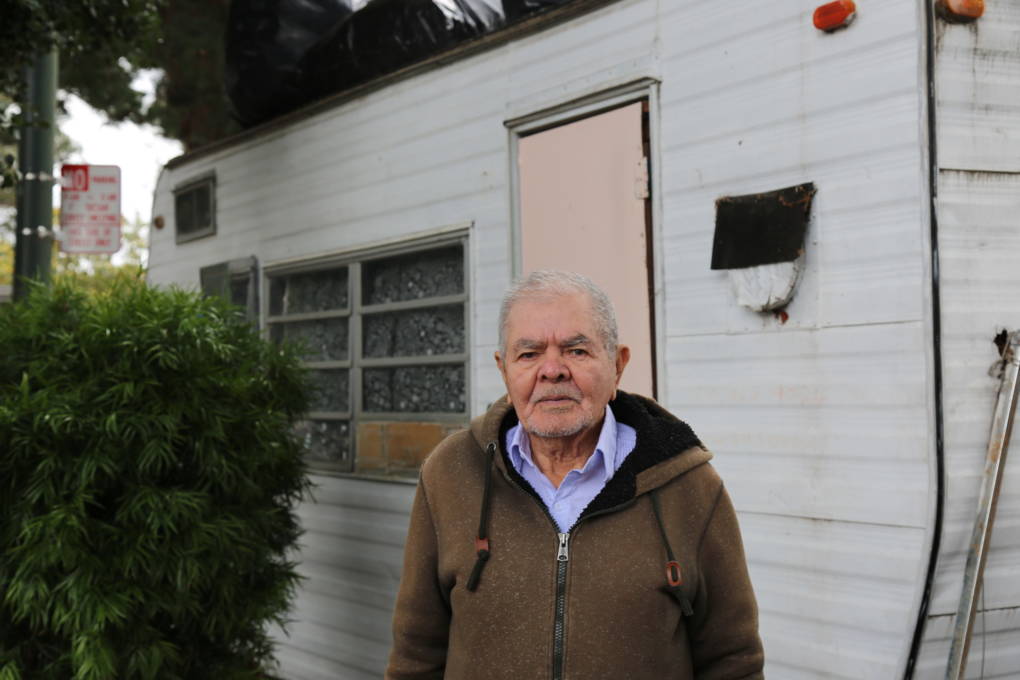
"caption": "Victor Manuel Escobar Rivas used to live in an apartment, but moved into a trailer three years ago.",
"description": "Victor Manuel Escobar Rivas used to live in an apartment, but moved into a trailer three years ago.",
"title": "Victor Rivas Trailer",
"credit": "Isabella Jibilian/KQED",
"status": "inherit",
"isLoading": false,
"fetchFailed": false
},
"news_11755789": {
"type": "attachments",
"id": "news_11755789",
"meta": {
"index": "attachments_1716263798",
"site": "news",
"id": "11755789",
"found": true
},
"parent": 11755513,
"imgSizes": {
"apple_news_ca_landscape_5_5": {
"file": "https://ww2.kqed.org/app/uploads/sites/10/2019/06/RS34444_Fire-Couple-1-qut-1044x783.jpg",
"width": 1044,
"mimeType": "image/jpeg",
"height": 783
},
"apple_news_ca_square_4_0": {
"file": "https://ww2.kqed.org/app/uploads/sites/10/2019/06/RS34444_Fire-Couple-1-qut-470x470.jpg",
"width": 470,
"mimeType": "image/jpeg",
"height": 470
},
"twentyfourteen-full-width": {
"file": "https://ww2.kqed.org/app/uploads/sites/10/2019/06/RS34444_Fire-Couple-1-qut-1038x576.jpg",
"width": 1038,
"mimeType": "image/jpeg",
"height": 576
},
"thumbnail": {
"file": "https://ww2.kqed.org/app/uploads/sites/10/2019/06/RS34444_Fire-Couple-1-qut-160x120.jpg",
"width": 160,
"mimeType": "image/jpeg",
"height": 120
},
"post-thumbnail": {
"file": "https://ww2.kqed.org/app/uploads/sites/10/2019/06/RS34444_Fire-Couple-1-qut-672x372.jpg",
"width": 672,
"mimeType": "image/jpeg",
"height": 372
},
"kqedFullSize": {
"file": "https://ww2.kqed.org/app/uploads/sites/10/2019/06/RS34444_Fire-Couple-1-qut.jpg",
"width": 1920,
"height": 1440
},
"apple_news_ca_landscape_4_7": {
"file": "https://ww2.kqed.org/app/uploads/sites/10/2019/06/RS34444_Fire-Couple-1-qut-632x474.jpg",
"width": 632,
"mimeType": "image/jpeg",
"height": 474
},
"large": {
"file": "https://ww2.kqed.org/app/uploads/sites/10/2019/06/RS34444_Fire-Couple-1-qut-1020x765.jpg",
"width": 1020,
"mimeType": "image/jpeg",
"height": 765
},
"complete_open_graph": {
"file": "https://ww2.kqed.org/app/uploads/sites/10/2019/06/RS34444_Fire-Couple-1-qut-1200x900.jpg",
"width": 1200,
"mimeType": "image/jpeg",
"height": 900
},
"apple_news_ca_landscape_4_0": {
"file": "https://ww2.kqed.org/app/uploads/sites/10/2019/06/RS34444_Fire-Couple-1-qut-536x402.jpg",
"width": 536,
"mimeType": "image/jpeg",
"height": 402
},
"apple_news_ca_portrait_12_9": {
"file": "https://ww2.kqed.org/app/uploads/sites/10/2019/06/RS34444_Fire-Couple-1-qut-1122x1440.jpg",
"width": 1122,
"mimeType": "image/jpeg",
"height": 1440
},
"medium": {
"file": "https://ww2.kqed.org/app/uploads/sites/10/2019/06/RS34444_Fire-Couple-1-qut-800x600.jpg",
"width": 800,
"mimeType": "image/jpeg",
"height": 600
},
"apple_news_ca_portrait_4_0": {
"file": "https://ww2.kqed.org/app/uploads/sites/10/2019/06/RS34444_Fire-Couple-1-qut-354x472.jpg",
"width": 354,
"mimeType": "image/jpeg",
"height": 472
},
"apple_news_ca_portrait_9_7": {
"file": "https://ww2.kqed.org/app/uploads/sites/10/2019/06/RS34444_Fire-Couple-1-qut-840x1120.jpg",
"width": 840,
"mimeType": "image/jpeg",
"height": 1120
},
"apple_news_ca_landscape_12_9": {
"file": "https://ww2.kqed.org/app/uploads/sites/10/2019/06/RS34444_Fire-Couple-1-qut-1832x1374.jpg",
"width": 1832,
"mimeType": "image/jpeg",
"height": 1374
},
"apple_news_ca_square_9_7": {
"file": "https://ww2.kqed.org/app/uploads/sites/10/2019/06/RS34444_Fire-Couple-1-qut-1104x1104.jpg",
"width": 1104,
"mimeType": "image/jpeg",
"height": 1104
},
"apple_news_ca_portrait_4_7": {
"file": "https://ww2.kqed.org/app/uploads/sites/10/2019/06/RS34444_Fire-Couple-1-qut-414x552.jpg",
"width": 414,
"mimeType": "image/jpeg",
"height": 552
},
"apple_news_ca_square_12_9": {
"file": "https://ww2.kqed.org/app/uploads/sites/10/2019/06/RS34444_Fire-Couple-1-qut-1472x1440.jpg",
"width": 1472,
"mimeType": "image/jpeg",
"height": 1440
},
"apple_news_ca_portrait_5_5": {
"file": "https://ww2.kqed.org/app/uploads/sites/10/2019/06/RS34444_Fire-Couple-1-qut-687x916.jpg",
"width": 687,
"mimeType": "image/jpeg",
"height": 916
},
"full-width": {
"file": "https://ww2.kqed.org/app/uploads/sites/10/2019/06/RS34444_Fire-Couple-1-qut-1920x1440.jpg",
"width": 1920,
"mimeType": "image/jpeg",
"height": 1440
},
"apple_news_ca_square_4_7": {
"file": "https://ww2.kqed.org/app/uploads/sites/10/2019/06/RS34444_Fire-Couple-1-qut-550x550.jpg",
"width": 550,
"mimeType": "image/jpeg",
"height": 550
},
"apple_news_ca_landscape_9_7": {
"file": "https://ww2.kqed.org/app/uploads/sites/10/2019/06/RS34444_Fire-Couple-1-qut-1376x1032.jpg",
"width": 1376,
"mimeType": "image/jpeg",
"height": 1032
},
"apple_news_ca_square_5_5": {
"file": "https://ww2.kqed.org/app/uploads/sites/10/2019/06/RS34444_Fire-Couple-1-qut-912x912.jpg",
"width": 912,
"mimeType": "image/jpeg",
"height": 912
}
},
"publishDate": 1560968094,
"modified": 1560983984,
"caption": "Don Clark stands in front of the site where his home in Paradise used to be before it was destroyed by the Camp Fire in November 2018.",
"description": null,
"title": "RS34444_Fire Couple 1-qut",
"credit": "Jeremy Siegel/KQED",
"status": "inherit",
"isLoading": false,
"fetchFailed": false
},
"news_11755619": {
"type": "attachments",
"id": "news_11755619",
"meta": {
"index": "attachments_1716263798",
"site": "news",
"id": "11755619",
"found": true
},
"parent": 11755545,
"imgSizes": {
"apple_news_ca_landscape_5_5": {
"file": "https://ww2.kqed.org/app/uploads/sites/10/2019/06/RS11530_465950115-1044x783.jpg",
"width": 1044,
"mimeType": "image/jpeg",
"height": 783
},
"apple_news_ca_square_4_0": {
"file": "https://ww2.kqed.org/app/uploads/sites/10/2019/06/RS11530_465950115-470x470.jpg",
"width": 470,
"mimeType": "image/jpeg",
"height": 470
},
"twentyfourteen-full-width": {
"file": "https://ww2.kqed.org/app/uploads/sites/10/2019/06/RS11530_465950115-1038x576.jpg",
"width": 1038,
"mimeType": "image/jpeg",
"height": 576
},
"thumbnail": {
"file": "https://ww2.kqed.org/app/uploads/sites/10/2019/06/RS11530_465950115-160x107.jpg",
"width": 160,
"mimeType": "image/jpeg",
"height": 107
},
"post-thumbnail": {
"file": "https://ww2.kqed.org/app/uploads/sites/10/2019/06/RS11530_465950115-672x372.jpg",
"width": 672,
"mimeType": "image/jpeg",
"height": 372
},
"kqedFullSize": {
"file": "https://ww2.kqed.org/app/uploads/sites/10/2019/06/RS11530_465950115.jpg",
"width": 2048,
"height": 1366
},
"apple_news_ca_landscape_4_7": {
"file": "https://ww2.kqed.org/app/uploads/sites/10/2019/06/RS11530_465950115-632x474.jpg",
"width": 632,
"mimeType": "image/jpeg",
"height": 474
},
"large": {
"file": "https://ww2.kqed.org/app/uploads/sites/10/2019/06/RS11530_465950115-1020x680.jpg",
"width": 1020,
"mimeType": "image/jpeg",
"height": 680
},
"complete_open_graph": {
"file": "https://ww2.kqed.org/app/uploads/sites/10/2019/06/RS11530_465950115-1200x800.jpg",
"width": 1200,
"mimeType": "image/jpeg",
"height": 800
},
"apple_news_ca_landscape_4_0": {
"file": "https://ww2.kqed.org/app/uploads/sites/10/2019/06/RS11530_465950115-536x402.jpg",
"width": 536,
"mimeType": "image/jpeg",
"height": 402
},
"apple_news_ca_portrait_12_9": {
"file": "https://ww2.kqed.org/app/uploads/sites/10/2019/06/RS11530_465950115-1122x1496.jpg",
"width": 1122,
"mimeType": "image/jpeg",
"height": 1496
},
"medium": {
"file": "https://ww2.kqed.org/app/uploads/sites/10/2019/06/RS11530_465950115-800x534.jpg",
"width": 800,
"mimeType": "image/jpeg",
"height": 534
},
"apple_news_ca_portrait_4_0": {
"file": "https://ww2.kqed.org/app/uploads/sites/10/2019/06/RS11530_465950115-354x472.jpg",
"width": 354,
"mimeType": "image/jpeg",
"height": 472
},
"apple_news_ca_portrait_9_7": {
"file": "https://ww2.kqed.org/app/uploads/sites/10/2019/06/RS11530_465950115-840x1120.jpg",
"width": 840,
"mimeType": "image/jpeg",
"height": 1120
},
"apple_news_ca_landscape_12_9": {
"file": "https://ww2.kqed.org/app/uploads/sites/10/2019/06/RS11530_465950115-1832x1374.jpg",
"width": 1832,
"mimeType": "image/jpeg",
"height": 1374
},
"apple_news_ca_square_9_7": {
"file": "https://ww2.kqed.org/app/uploads/sites/10/2019/06/RS11530_465950115-1104x1104.jpg",
"width": 1104,
"mimeType": "image/jpeg",
"height": 1104
},
"apple_news_ca_portrait_4_7": {
"file": "https://ww2.kqed.org/app/uploads/sites/10/2019/06/RS11530_465950115-414x552.jpg",
"width": 414,
"mimeType": "image/jpeg",
"height": 552
},
"apple_news_ca_square_12_9": {
"file": "https://ww2.kqed.org/app/uploads/sites/10/2019/06/RS11530_465950115-1472x1472.jpg",
"width": 1472,
"mimeType": "image/jpeg",
"height": 1472
},
"apple_news_ca_portrait_5_5": {
"file": "https://ww2.kqed.org/app/uploads/sites/10/2019/06/RS11530_465950115-687x916.jpg",
"width": 687,
"mimeType": "image/jpeg",
"height": 916
},
"full-width": {
"file": "https://ww2.kqed.org/app/uploads/sites/10/2019/06/RS11530_465950115-1920x1281.jpg",
"width": 1920,
"mimeType": "image/jpeg",
"height": 1281
},
"apple_news_ca_square_4_7": {
"file": "https://ww2.kqed.org/app/uploads/sites/10/2019/06/RS11530_465950115-550x550.jpg",
"width": 550,
"mimeType": "image/jpeg",
"height": 550
},
"apple_news_ca_landscape_9_7": {
"file": "https://ww2.kqed.org/app/uploads/sites/10/2019/06/RS11530_465950115-1376x1032.jpg",
"width": 1376,
"mimeType": "image/jpeg",
"height": 1032
},
"apple_news_ca_square_5_5": {
"file": "https://ww2.kqed.org/app/uploads/sites/10/2019/06/RS11530_465950115-912x912.jpg",
"width": 912,
"mimeType": "image/jpeg",
"height": 912
}
},
"publishDate": 1560902063,
"modified": 1560987210,
"caption": "Google announced a $1 billion commitment to help address the housing crisis in the San Francisco Bay Area. ",
"description": "Google announced a $1 billion commitment to help address the housing crisis in the San Francisco Bay Area. ",
"title": "Google Reports Quarterly Earnings",
"credit": "Justin Sullivan/Getty Images",
"status": "inherit",
"isLoading": false,
"fetchFailed": false
},
"news_11742421": {
"type": "attachments",
"id": "news_11742421",
"meta": {
"index": "attachments_1716263798",
"site": "news",
"id": "11742421",
"found": true
},
"parent": 11741972,
"imgSizes": {
"twentyfourteen-full-width": {
"file": "https://ww2.kqed.org/app/uploads/sites/10/2019/04/Nav_Center-1038x576.jpg",
"width": 1038,
"mimeType": "image/jpeg",
"height": 576
},
"thumbnail": {
"file": "https://ww2.kqed.org/app/uploads/sites/10/2019/04/Nav_Center-160x102.jpg",
"width": 160,
"mimeType": "image/jpeg",
"height": 102
},
"post-thumbnail": {
"file": "https://ww2.kqed.org/app/uploads/sites/10/2019/04/Nav_Center-672x372.jpg",
"width": 672,
"mimeType": "image/jpeg",
"height": 372
},
"kqedFullSize": {
"file": "https://ww2.kqed.org/app/uploads/sites/10/2019/04/Nav_Center.jpg",
"width": 1920,
"height": 1218
},
"large": {
"file": "https://ww2.kqed.org/app/uploads/sites/10/2019/04/Nav_Center-1020x647.jpg",
"width": 1020,
"mimeType": "image/jpeg",
"height": 647
},
"complete_open_graph": {
"file": "https://ww2.kqed.org/app/uploads/sites/10/2019/04/Nav_Center-1200x761.jpg",
"width": 1200,
"mimeType": "image/jpeg",
"height": 761
},
"full-width": {
"file": "https://ww2.kqed.org/app/uploads/sites/10/2019/04/Nav_Center-1920x1218.jpg",
"width": 1920,
"mimeType": "image/jpeg",
"height": 1218
},
"medium": {
"file": "https://ww2.kqed.org/app/uploads/sites/10/2019/04/Nav_Center-800x508.jpg",
"width": 800,
"mimeType": "image/jpeg",
"height": 508
}
},
"publishDate": 1556126475,
"modified": 1560803548,
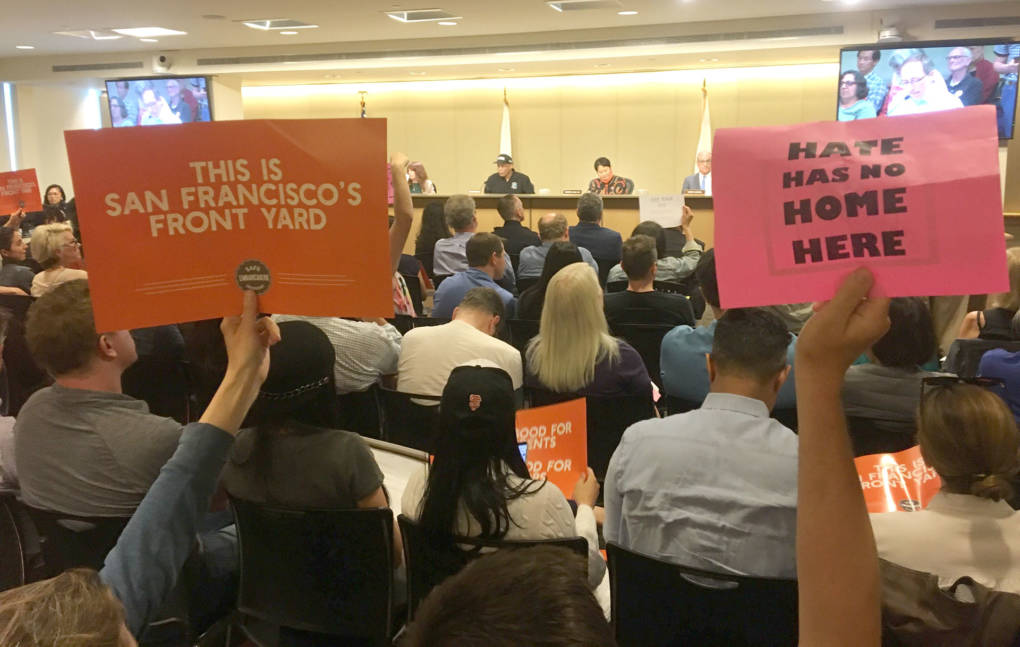
"caption": "Scores of supporters and opponents of the proposed Embarcadero SAFE Navigation Center make themselves heard at a San Francisco Port Commission hearing on Tuesday, April 23, 2019.",
"description": "Scores of supporters and opponents of the proposed Embarcadero SAFE Navigation Center make themselves heard at a San Francisco Port Commission hearing on Tuesday, April 23, 2019.",
"title": "Nav_Center",
"credit": "Matthew Green/KQED",
"status": "inherit",
"isLoading": false,
"fetchFailed": false
},
"news_11754389": {
"type": "attachments",
"id": "news_11754389",
"meta": {
"index": "attachments_1716263798",
"site": "news",
"id": "11754389",
"found": true
},
"title": "TO GO WITH AFP STORY-TECHNOLOGY-US-IT BY",
"publishDate": 1560402382,
"status": "inherit",
"parent": 11754319,
"modified": 1778171771,
"caption": "An aerial view of downtown San Jose.",
"credit": "Helene Labriet-Gross/AFP/Getty Images",
"altTag": null,
"description": null,
"imgSizes": {
"thumbnail": {
"file": "https://cdn.kqed.org/wp-content/uploads/sites/10/2019/06/GettyImages-77152290-160x120.jpg",
"width": 160,
"height": 120,
"mimeType": "image/jpeg"
},
"medium": {
"file": "https://cdn.kqed.org/wp-content/uploads/sites/10/2019/06/GettyImages-77152290-800x600.jpg",
"width": 800,
"height": 600,
"mimeType": "image/jpeg"
},
"large": {
"file": "https://cdn.kqed.org/wp-content/uploads/sites/10/2019/06/GettyImages-77152290-1020x765.jpg",
"width": 1020,
"height": 765,
"mimeType": "image/jpeg"
},
"complete_open_graph": {
"file": "https://cdn.kqed.org/wp-content/uploads/sites/10/2019/06/GettyImages-77152290-1200x900.jpg",
"width": 1200,
"height": 900,
"mimeType": "image/jpeg"
},
"post-thumbnail": {
"file": "https://cdn.kqed.org/wp-content/uploads/sites/10/2019/06/GettyImages-77152290-672x372.jpg",
"width": 672,
"height": 372,
"mimeType": "image/jpeg"
},
"twentyfourteen-full-width": {
"file": "https://cdn.kqed.org/wp-content/uploads/sites/10/2019/06/GettyImages-77152290-1038x576.jpg",
"width": 1038,
"height": 576,
"mimeType": "image/jpeg"
},
"full-width": {
"file": "https://cdn.kqed.org/wp-content/uploads/sites/10/2019/06/GettyImages-77152290-1920x1440.jpg",
"width": 1920,
"height": 1440,
"mimeType": "image/jpeg"
},
"apple_news_ca_landscape_12_9": {
"file": "https://cdn.kqed.org/wp-content/uploads/sites/10/2019/06/GettyImages-77152290-1832x1374.jpg",
"width": 1832,
"height": 1374,
"mimeType": "image/jpeg"
},
"apple_news_ca_landscape_9_7": {
"file": "https://cdn.kqed.org/wp-content/uploads/sites/10/2019/06/GettyImages-77152290-1376x1032.jpg",
"width": 1376,
"height": 1032,
"mimeType": "image/jpeg"
},
"apple_news_ca_landscape_5_5": {
"file": "https://cdn.kqed.org/wp-content/uploads/sites/10/2019/06/GettyImages-77152290-1044x783.jpg",
"width": 1044,
"height": 783,
"mimeType": "image/jpeg"
},
"apple_news_ca_landscape_4_7": {
"file": "https://cdn.kqed.org/wp-content/uploads/sites/10/2019/06/GettyImages-77152290-632x474.jpg",
"width": 632,
"height": 474,
"mimeType": "image/jpeg"
},
"apple_news_ca_landscape_4_0": {
"file": "https://cdn.kqed.org/wp-content/uploads/sites/10/2019/06/GettyImages-77152290-536x402.jpg",
"width": 536,
"height": 402,
"mimeType": "image/jpeg"
},
"apple_news_ca_portrait_12_9": {
"file": "https://cdn.kqed.org/wp-content/uploads/sites/10/2019/06/GettyImages-77152290-1122x1496.jpg",
"width": 1122,
"height": 1496,
"mimeType": "image/jpeg"
},
"apple_news_ca_portrait_9_7": {
"file": "https://cdn.kqed.org/wp-content/uploads/sites/10/2019/06/GettyImages-77152290-840x1120.jpg",
"width": 840,
"height": 1120,
"mimeType": "image/jpeg"
},
"apple_news_ca_portrait_5_5": {
"file": "https://cdn.kqed.org/wp-content/uploads/sites/10/2019/06/GettyImages-77152290-687x916.jpg",
"width": 687,
"height": 916,
"mimeType": "image/jpeg"
},
"apple_news_ca_portrait_4_7": {
"file": "https://cdn.kqed.org/wp-content/uploads/sites/10/2019/06/GettyImages-77152290-414x552.jpg",
"width": 414,
"height": 552,
"mimeType": "image/jpeg"
},
"apple_news_ca_portrait_4_0": {
"file": "https://cdn.kqed.org/wp-content/uploads/sites/10/2019/06/GettyImages-77152290-354x472.jpg",
"width": 354,
"height": 472,
"mimeType": "image/jpeg"
},
"apple_news_ca_square_12_9": {
"file": "https://cdn.kqed.org/wp-content/uploads/sites/10/2019/06/GettyImages-77152290-1472x1472.jpg",
"width": 1472,
"height": 1472,
"mimeType": "image/jpeg"
},
"apple_news_ca_square_9_7": {
"file": "https://cdn.kqed.org/wp-content/uploads/sites/10/2019/06/GettyImages-77152290-1104x1104.jpg",
"width": 1104,
"height": 1104,
"mimeType": "image/jpeg"
},
"apple_news_ca_square_5_5": {
"file": "https://cdn.kqed.org/wp-content/uploads/sites/10/2019/06/GettyImages-77152290-912x912.jpg",
"width": 912,
"height": 912,
"mimeType": "image/jpeg"
},
"apple_news_ca_square_4_7": {
"file": "https://cdn.kqed.org/wp-content/uploads/sites/10/2019/06/GettyImages-77152290-550x550.jpg",
"width": 550,
"height": 550,
"mimeType": "image/jpeg"
},
"apple_news_ca_square_4_0": {
"file": "https://cdn.kqed.org/wp-content/uploads/sites/10/2019/06/GettyImages-77152290-470x470.jpg",
"width": 470,
"height": 470,
"mimeType": "image/jpeg"
},
"kqedFullSize": {
"file": "https://cdn.kqed.org/wp-content/uploads/sites/10/2019/06/GettyImages-77152290-e1560402492305.jpg",
"width": 1920,
"height": 1440
}
},
"isLoading": false,
"fetchFailed": false
},
"news_11754089": {
"type": "attachments",
"id": "news_11754089",
"meta": {
"index": "attachments_1716263798",
"site": "news",
"id": "11754089",
"found": true
},
"parent": 11753881,
"imgSizes": {
"apple_news_ca_landscape_5_5": {
"file": "https://ww2.kqed.org/app/uploads/sites/10/2019/06/contempo-scheme-1080x675-1044x675.jpg",
"width": 1044,
"mimeType": "image/jpeg",
"height": 675
},
"apple_news_ca_square_4_0": {
"file": "https://ww2.kqed.org/app/uploads/sites/10/2019/06/contempo-scheme-1080x675-470x470.jpg",
"width": 470,
"mimeType": "image/jpeg",
"height": 470
},
"twentyfourteen-full-width": {
"file": "https://ww2.kqed.org/app/uploads/sites/10/2019/06/contempo-scheme-1080x675-1038x576.jpg",
"width": 1038,
"mimeType": "image/jpeg",
"height": 576
},
"thumbnail": {
"file": "https://ww2.kqed.org/app/uploads/sites/10/2019/06/contempo-scheme-1080x675-160x100.jpg",
"width": 160,
"mimeType": "image/jpeg",
"height": 100
},
"post-thumbnail": {
"file": "https://ww2.kqed.org/app/uploads/sites/10/2019/06/contempo-scheme-1080x675-672x372.jpg",
"width": 672,
"mimeType": "image/jpeg",
"height": 372
},
"kqedFullSize": {
"file": "https://ww2.kqed.org/app/uploads/sites/10/2019/06/contempo-scheme-1080x675.jpg",
"width": 1080,
"height": 675
},
"apple_news_ca_landscape_4_7": {
"file": "https://ww2.kqed.org/app/uploads/sites/10/2019/06/contempo-scheme-1080x675-632x474.jpg",
"width": 632,
"mimeType": "image/jpeg",
"height": 474
},
"large": {
"file": "https://ww2.kqed.org/app/uploads/sites/10/2019/06/contempo-scheme-1080x675-1020x638.jpg",
"width": 1020,
"mimeType": "image/jpeg",
"height": 638
},
"apple_news_ca_landscape_4_0": {
"file": "https://ww2.kqed.org/app/uploads/sites/10/2019/06/contempo-scheme-1080x675-536x402.jpg",
"width": 536,
"mimeType": "image/jpeg",
"height": 402
},
"medium": {
"file": "https://ww2.kqed.org/app/uploads/sites/10/2019/06/contempo-scheme-1080x675-800x500.jpg",
"width": 800,
"mimeType": "image/jpeg",
"height": 500
},
"apple_news_ca_portrait_4_0": {
"file": "https://ww2.kqed.org/app/uploads/sites/10/2019/06/contempo-scheme-1080x675-354x472.jpg",
"width": 354,
"mimeType": "image/jpeg",
"height": 472
},
"apple_news_ca_portrait_9_7": {
"file": "https://ww2.kqed.org/app/uploads/sites/10/2019/06/contempo-scheme-1080x675-840x675.jpg",
"width": 840,
"mimeType": "image/jpeg",
"height": 675
},
"apple_news_ca_portrait_4_7": {
"file": "https://ww2.kqed.org/app/uploads/sites/10/2019/06/contempo-scheme-1080x675-414x552.jpg",
"width": 414,
"mimeType": "image/jpeg",
"height": 552
},
"apple_news_ca_portrait_5_5": {
"file": "https://ww2.kqed.org/app/uploads/sites/10/2019/06/contempo-scheme-1080x675-687x675.jpg",
"width": 687,
"mimeType": "image/jpeg",
"height": 675
},
"apple_news_ca_square_4_7": {
"file": "https://ww2.kqed.org/app/uploads/sites/10/2019/06/contempo-scheme-1080x675-550x550.jpg",
"width": 550,
"mimeType": "image/jpeg",
"height": 550
},
"apple_news_ca_square_5_5": {
"file": "https://ww2.kqed.org/app/uploads/sites/10/2019/06/contempo-scheme-1080x675-912x675.jpg",
"width": 912,
"mimeType": "image/jpeg",
"height": 675
}
},
"publishDate": 1560317996,
"modified": 1560318314,
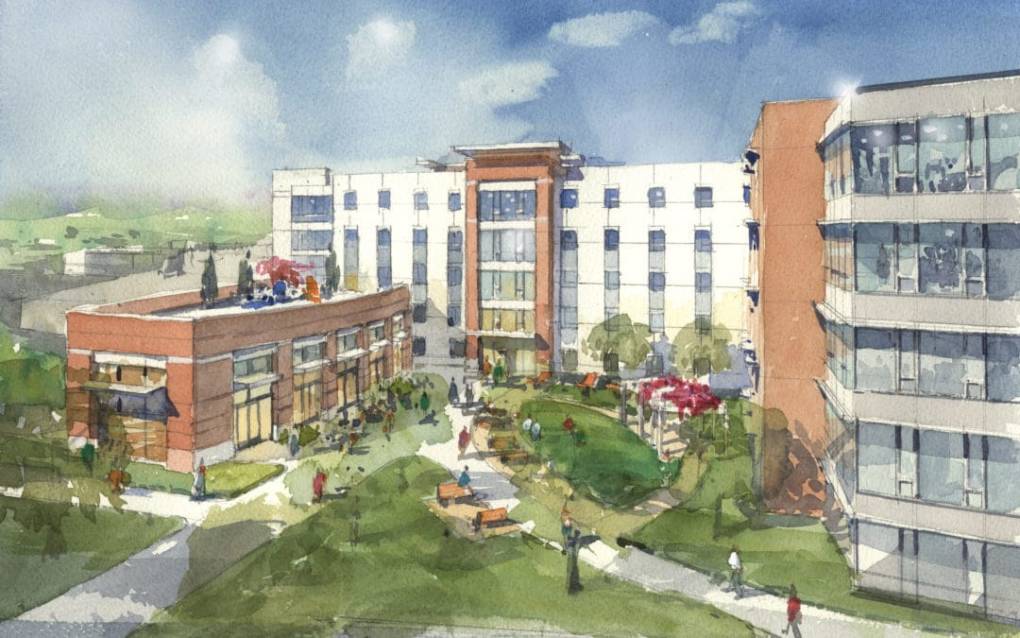
"caption": "A sketch of the five-story housing project planned for Santa Rosa Junior College, which would be located on campus and house 360 students. ",
"description": null,
"title": "contempo-scheme-1080x675",
"credit": "Courtesy of Servitas",
"status": "inherit",
"isLoading": false,
"fetchFailed": false
},
"news_11754028": {
"type": "attachments",
"id": "news_11754028",
"meta": {
"index": "attachments_1716263798",
"site": "news",
"id": "11754028",
"found": true
},
"parent": 11754015,
"imgSizes": {
"apple_news_ca_landscape_5_5": {
"file": "https://ww2.kqed.org/app/uploads/sites/10/2019/06/insurance_061119_final-1044x783.jpg",
"width": 1044,
"mimeType": "image/jpeg",
"height": 783
},
"apple_news_ca_square_4_0": {
"file": "https://ww2.kqed.org/app/uploads/sites/10/2019/06/insurance_061119_final-470x470.jpg",
"width": 470,
"mimeType": "image/jpeg",
"height": 470
},
"twentyfourteen-full-width": {
"file": "https://ww2.kqed.org/app/uploads/sites/10/2019/06/insurance_061119_final-1038x576.jpg",
"width": 1038,
"mimeType": "image/jpeg",
"height": 576
},
"thumbnail": {
"file": "https://ww2.kqed.org/app/uploads/sites/10/2019/06/insurance_061119_final-160x104.jpg",
"width": 160,
"mimeType": "image/jpeg",
"height": 104
},
"post-thumbnail": {
"file": "https://ww2.kqed.org/app/uploads/sites/10/2019/06/insurance_061119_final-672x372.jpg",
"width": 672,
"mimeType": "image/jpeg",
"height": 372
},
"kqedFullSize": {
"file": "https://ww2.kqed.org/app/uploads/sites/10/2019/06/insurance_061119_final.jpg",
"width": 1920,
"height": 1245
},
"apple_news_ca_landscape_4_7": {
"file": "https://ww2.kqed.org/app/uploads/sites/10/2019/06/insurance_061119_final-632x474.jpg",
"width": 632,
"mimeType": "image/jpeg",
"height": 474
},
"large": {
"file": "https://ww2.kqed.org/app/uploads/sites/10/2019/06/insurance_061119_final-1020x661.jpg",
"width": 1020,
"mimeType": "image/jpeg",
"height": 661
},
"complete_open_graph": {
"file": "https://ww2.kqed.org/app/uploads/sites/10/2019/06/insurance_061119_final-1200x778.jpg",
"width": 1200,
"mimeType": "image/jpeg",
"height": 778
},
"apple_news_ca_landscape_4_0": {
"file": "https://ww2.kqed.org/app/uploads/sites/10/2019/06/insurance_061119_final-536x402.jpg",
"width": 536,
"mimeType": "image/jpeg",
"height": 402
},
"apple_news_ca_portrait_12_9": {
"file": "https://ww2.kqed.org/app/uploads/sites/10/2019/06/insurance_061119_final-1122x1245.jpg",
"width": 1122,
"mimeType": "image/jpeg",
"height": 1245
},
"medium": {
"file": "https://ww2.kqed.org/app/uploads/sites/10/2019/06/insurance_061119_final-800x519.jpg",
"width": 800,
"mimeType": "image/jpeg",
"height": 519
},
"apple_news_ca_portrait_4_0": {
"file": "https://ww2.kqed.org/app/uploads/sites/10/2019/06/insurance_061119_final-354x472.jpg",
"width": 354,
"mimeType": "image/jpeg",
"height": 472
},
"apple_news_ca_portrait_9_7": {
"file": "https://ww2.kqed.org/app/uploads/sites/10/2019/06/insurance_061119_final-840x1120.jpg",
"width": 840,
"mimeType": "image/jpeg",
"height": 1120
},
"apple_news_ca_landscape_12_9": {
"file": "https://ww2.kqed.org/app/uploads/sites/10/2019/06/insurance_061119_final-1832x1245.jpg",
"width": 1832,
"mimeType": "image/jpeg",
"height": 1245
},
"apple_news_ca_square_9_7": {
"file": "https://ww2.kqed.org/app/uploads/sites/10/2019/06/insurance_061119_final-1104x1104.jpg",
"width": 1104,
"mimeType": "image/jpeg",
"height": 1104
},
"apple_news_ca_portrait_4_7": {
"file": "https://ww2.kqed.org/app/uploads/sites/10/2019/06/insurance_061119_final-414x552.jpg",
"width": 414,
"mimeType": "image/jpeg",
"height": 552
},
"apple_news_ca_square_12_9": {
"file": "https://ww2.kqed.org/app/uploads/sites/10/2019/06/insurance_061119_final-1472x1245.jpg",
"width": 1472,
"mimeType": "image/jpeg",
"height": 1245
},
"apple_news_ca_portrait_5_5": {
"file": "https://ww2.kqed.org/app/uploads/sites/10/2019/06/insurance_061119_final-687x916.jpg",
"width": 687,
"mimeType": "image/jpeg",
"height": 916
},
"full-width": {
"file": "https://ww2.kqed.org/app/uploads/sites/10/2019/06/insurance_061119_final-1920x1245.jpg",
"width": 1920,
"mimeType": "image/jpeg",
"height": 1245
},
"apple_news_ca_square_4_7": {
"file": "https://ww2.kqed.org/app/uploads/sites/10/2019/06/insurance_061119_final-550x550.jpg",
"width": 550,
"mimeType": "image/jpeg",
"height": 550
},
"apple_news_ca_landscape_9_7": {
"file": "https://ww2.kqed.org/app/uploads/sites/10/2019/06/insurance_061119_final-1376x1032.jpg",
"width": 1376,
"mimeType": "image/jpeg",
"height": 1032
},
"apple_news_ca_square_5_5": {
"file": "https://ww2.kqed.org/app/uploads/sites/10/2019/06/insurance_061119_final-912x912.jpg",
"width": 912,
"mimeType": "image/jpeg",
"height": 912
}
},
"publishDate": 1560292844,
"modified": 1560292882,
"caption": null,
"description": null,
"title": "insurance_061119_final",
"credit": null,
"status": "inherit",
"isLoading": false,
"fetchFailed": false
},
"news_11753244": {
"type": "attachments",
"id": "news_11753244",
"meta": {
"index": "attachments_1716263798",
"site": "news",
"id": "11753244",
"found": true
},
"parent": 11753170,
"imgSizes": {
"apple_news_ca_square_4_0": {
"file": "https://ww2.kqed.org/app/uploads/sites/10/2019/06/RS7013_175333538-sfi-470x360.jpg",
"width": 470,
"mimeType": "image/jpeg",
"height": 360
},
"thumbnail": {
"file": "https://ww2.kqed.org/app/uploads/sites/10/2019/06/RS7013_175333538-sfi-160x107.jpg",
"width": 160,
"mimeType": "image/jpeg",
"height": 107
},
"kqedFullSize": {
"file": "https://ww2.kqed.org/app/uploads/sites/10/2019/06/RS7013_175333538-sfi.jpg",
"width": 538,
"height": 360
},
"apple_news_ca_portrait_4_7": {
"file": "https://ww2.kqed.org/app/uploads/sites/10/2019/06/RS7013_175333538-sfi-414x360.jpg",
"width": 414,
"mimeType": "image/jpeg",
"height": 360
},
"apple_news_ca_landscape_4_0": {
"file": "https://ww2.kqed.org/app/uploads/sites/10/2019/06/RS7013_175333538-sfi-536x360.jpg",
"width": 536,
"mimeType": "image/jpeg",
"height": 360
},
"apple_news_ca_portrait_4_0": {
"file": "https://ww2.kqed.org/app/uploads/sites/10/2019/06/RS7013_175333538-sfi-354x360.jpg",
"width": 354,
"mimeType": "image/jpeg",
"height": 360
}
},
"publishDate": 1559945266,
"modified": 1559945313,
"caption": "A Bay Area Rapid Transit (BART) train pulls away from the Rockridge station on Aug. 2, 2013 in Oakland.",
"description": null,
"title": "RS7013_175333538-sfi",
"credit": "Justin Sullivan/Getty Images",
"status": "inherit",
"isLoading": false,
"fetchFailed": false
},
"news_11752819": {
"type": "attachments",
"id": "news_11752819",
"meta": {
"index": "attachments_1716263798",
"site": "news",
"id": "11752819",
"found": true
},
"parent": 11752804,
"imgSizes": {
"apple_news_ca_square_4_0": {
"file": "https://ww2.kqed.org/app/uploads/sites/10/2019/06/06062019_Clairemont-Lutheran-Church-San-Diego-YIGBY-affordable-housing-qut-470x450.jpg",
"width": 470,
"mimeType": "image/jpeg",
"height": 450
},
"thumbnail": {
"file": "https://ww2.kqed.org/app/uploads/sites/10/2019/06/06062019_Clairemont-Lutheran-Church-San-Diego-YIGBY-affordable-housing-qut-160x90.jpg",
"width": 160,
"mimeType": "image/jpeg",
"height": 90
},
"post-thumbnail": {
"file": "https://ww2.kqed.org/app/uploads/sites/10/2019/06/06062019_Clairemont-Lutheran-Church-San-Diego-YIGBY-affordable-housing-qut-672x372.jpg",
"width": 672,
"mimeType": "image/jpeg",
"height": 372
},
"kqedFullSize": {
"file": "https://ww2.kqed.org/app/uploads/sites/10/2019/06/06062019_Clairemont-Lutheran-Church-San-Diego-YIGBY-affordable-housing-qut.jpg",
"width": 800,
"height": 450
},
"apple_news_ca_landscape_4_7": {
"file": "https://ww2.kqed.org/app/uploads/sites/10/2019/06/06062019_Clairemont-Lutheran-Church-San-Diego-YIGBY-affordable-housing-qut-632x450.jpg",
"width": 632,
"mimeType": "image/jpeg",
"height": 450
},
"apple_news_ca_portrait_4_7": {
"file": "https://ww2.kqed.org/app/uploads/sites/10/2019/06/06062019_Clairemont-Lutheran-Church-San-Diego-YIGBY-affordable-housing-qut-414x450.jpg",
"width": 414,
"mimeType": "image/jpeg",
"height": 450
},
"apple_news_ca_portrait_5_5": {
"file": "https://ww2.kqed.org/app/uploads/sites/10/2019/06/06062019_Clairemont-Lutheran-Church-San-Diego-YIGBY-affordable-housing-qut-687x450.jpg",
"width": 687,
"mimeType": "image/jpeg",
"height": 450
},
"apple_news_ca_square_4_7": {
"file": "https://ww2.kqed.org/app/uploads/sites/10/2019/06/06062019_Clairemont-Lutheran-Church-San-Diego-YIGBY-affordable-housing-qut-550x450.jpg",
"width": 550,
"mimeType": "image/jpeg",
"height": 450
},
"apple_news_ca_landscape_4_0": {
"file": "https://ww2.kqed.org/app/uploads/sites/10/2019/06/06062019_Clairemont-Lutheran-Church-San-Diego-YIGBY-affordable-housing-qut-536x402.jpg",
"width": 536,
"mimeType": "image/jpeg",
"height": 402
},
"medium": {
"file": "https://ww2.kqed.org/app/uploads/sites/10/2019/06/06062019_Clairemont-Lutheran-Church-San-Diego-YIGBY-affordable-housing-qut-800x450.jpg",
"width": 800,
"mimeType": "image/jpeg",
"height": 450
},
"apple_news_ca_portrait_4_0": {
"file": "https://ww2.kqed.org/app/uploads/sites/10/2019/06/06062019_Clairemont-Lutheran-Church-San-Diego-YIGBY-affordable-housing-qut-354x450.jpg",
"width": 354,
"mimeType": "image/jpeg",
"height": 450
}
},
"publishDate": 1559853009,
"modified": 1559853115,
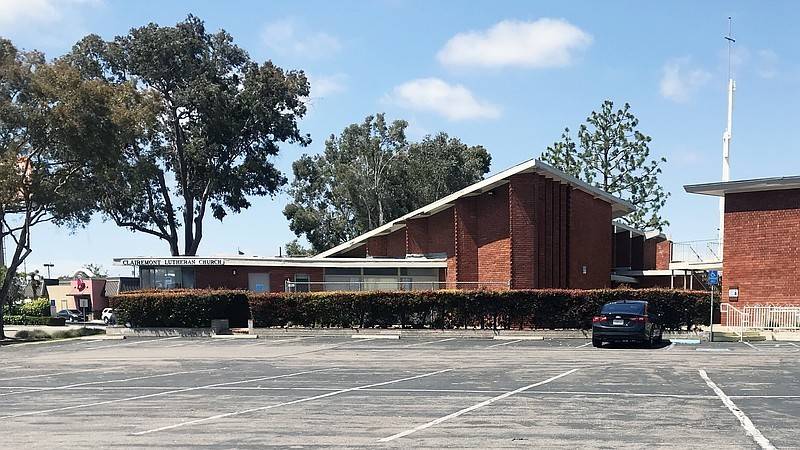
"caption": "The parking lot of Clairemont Lutheran Church, where religious leaders and housing advocates hope to build apartments, on May 28, 2019.",
"description": "The parking lot of Clairemont Lutheran Church, where religious leaders and housing advocates hope to build apartments, on May 28, 2019.",
"title": "06062019_Clairemont Lutheran Church San Diego YIGBY affordable housing-qut",
"credit": "Andrew Bowen/KPBS",
"status": "inherit",
"isLoading": false,
"fetchFailed": false
},
"news_11752737": {
"type": "attachments",
"id": "news_11752737",
"meta": {
"index": "attachments_1716263798",
"site": "news",
"id": "11752737",
"found": true
},
"parent": 11752622,
"imgSizes": {
"apple_news_ca_landscape_5_5": {
"file": "https://ww2.kqed.org/app/uploads/sites/10/2019/06/GettyImages-948234536-1044x783.jpg",
"width": 1044,
"mimeType": "image/jpeg",
"height": 783
},
"apple_news_ca_square_4_0": {
"file": "https://ww2.kqed.org/app/uploads/sites/10/2019/06/GettyImages-948234536-470x470.jpg",
"width": 470,
"mimeType": "image/jpeg",
"height": 470
},
"twentyfourteen-full-width": {
"file": "https://ww2.kqed.org/app/uploads/sites/10/2019/06/GettyImages-948234536-1038x576.jpg",
"width": 1038,
"mimeType": "image/jpeg",
"height": 576
},
"thumbnail": {
"file": "https://ww2.kqed.org/app/uploads/sites/10/2019/06/GettyImages-948234536-160x108.jpg",
"width": 160,
"mimeType": "image/jpeg",
"height": 108
},
"post-thumbnail": {
"file": "https://ww2.kqed.org/app/uploads/sites/10/2019/06/GettyImages-948234536-672x372.jpg",
"width": 672,
"mimeType": "image/jpeg",
"height": 372
},
"kqedFullSize": {
"file": "https://ww2.kqed.org/app/uploads/sites/10/2019/06/GettyImages-948234536-e1559844462433.jpg",
"width": 1920,
"height": 1297
},
"apple_news_ca_landscape_4_7": {
"file": "https://ww2.kqed.org/app/uploads/sites/10/2019/06/GettyImages-948234536-632x474.jpg",
"width": 632,
"mimeType": "image/jpeg",
"height": 474
},
"large": {
"file": "https://ww2.kqed.org/app/uploads/sites/10/2019/06/GettyImages-948234536-1020x689.jpg",
"width": 1020,
"mimeType": "image/jpeg",
"height": 689
},
"complete_open_graph": {
"file": "https://ww2.kqed.org/app/uploads/sites/10/2019/06/GettyImages-948234536-1200x810.jpg",
"width": 1200,
"mimeType": "image/jpeg",
"height": 810
},
"apple_news_ca_landscape_4_0": {
"file": "https://ww2.kqed.org/app/uploads/sites/10/2019/06/GettyImages-948234536-536x402.jpg",
"width": 536,
"mimeType": "image/jpeg",
"height": 402
},
"apple_news_ca_portrait_12_9": {
"file": "https://ww2.kqed.org/app/uploads/sites/10/2019/06/GettyImages-948234536-1122x1496.jpg",
"width": 1122,
"mimeType": "image/jpeg",
"height": 1496
},
"medium": {
"file": "https://ww2.kqed.org/app/uploads/sites/10/2019/06/GettyImages-948234536-800x540.jpg",
"width": 800,
"mimeType": "image/jpeg",
"height": 540
},
"apple_news_ca_portrait_4_0": {
"file": "https://ww2.kqed.org/app/uploads/sites/10/2019/06/GettyImages-948234536-354x472.jpg",
"width": 354,
"mimeType": "image/jpeg",
"height": 472
},
"apple_news_ca_portrait_9_7": {
"file": "https://ww2.kqed.org/app/uploads/sites/10/2019/06/GettyImages-948234536-840x1120.jpg",
"width": 840,
"mimeType": "image/jpeg",
"height": 1120
},
"apple_news_ca_landscape_12_9": {
"file": "https://ww2.kqed.org/app/uploads/sites/10/2019/06/GettyImages-948234536-1832x1374.jpg",
"width": 1832,
"mimeType": "image/jpeg",
"height": 1374
},
"apple_news_ca_square_9_7": {
"file": "https://ww2.kqed.org/app/uploads/sites/10/2019/06/GettyImages-948234536-1104x1104.jpg",
"width": 1104,
"mimeType": "image/jpeg",
"height": 1104
},
"apple_news_ca_portrait_4_7": {
"file": "https://ww2.kqed.org/app/uploads/sites/10/2019/06/GettyImages-948234536-414x552.jpg",
"width": 414,
"mimeType": "image/jpeg",
"height": 552
},
"apple_news_ca_square_12_9": {
"file": "https://ww2.kqed.org/app/uploads/sites/10/2019/06/GettyImages-948234536-1472x1472.jpg",
"width": 1472,
"mimeType": "image/jpeg",
"height": 1472
},
"apple_news_ca_portrait_5_5": {
"file": "https://ww2.kqed.org/app/uploads/sites/10/2019/06/GettyImages-948234536-687x916.jpg",
"width": 687,
"mimeType": "image/jpeg",
"height": 916
},
"full-width": {
"file": "https://ww2.kqed.org/app/uploads/sites/10/2019/06/GettyImages-948234536-1920x1297.jpg",
"width": 1920,
"mimeType": "image/jpeg",
"height": 1297
},
"apple_news_ca_square_4_7": {
"file": "https://ww2.kqed.org/app/uploads/sites/10/2019/06/GettyImages-948234536-550x550.jpg",
"width": 550,
"mimeType": "image/jpeg",
"height": 550
},
"apple_news_ca_landscape_9_7": {
"file": "https://ww2.kqed.org/app/uploads/sites/10/2019/06/GettyImages-948234536-1376x1032.jpg",
"width": 1376,
"mimeType": "image/jpeg",
"height": 1032
},
"apple_news_ca_square_5_5": {
"file": "https://ww2.kqed.org/app/uploads/sites/10/2019/06/GettyImages-948234536-912x912.jpg",
"width": 912,
"mimeType": "image/jpeg",
"height": 912
}
},
"publishDate": 1559844394,
"modified": 1559855337,
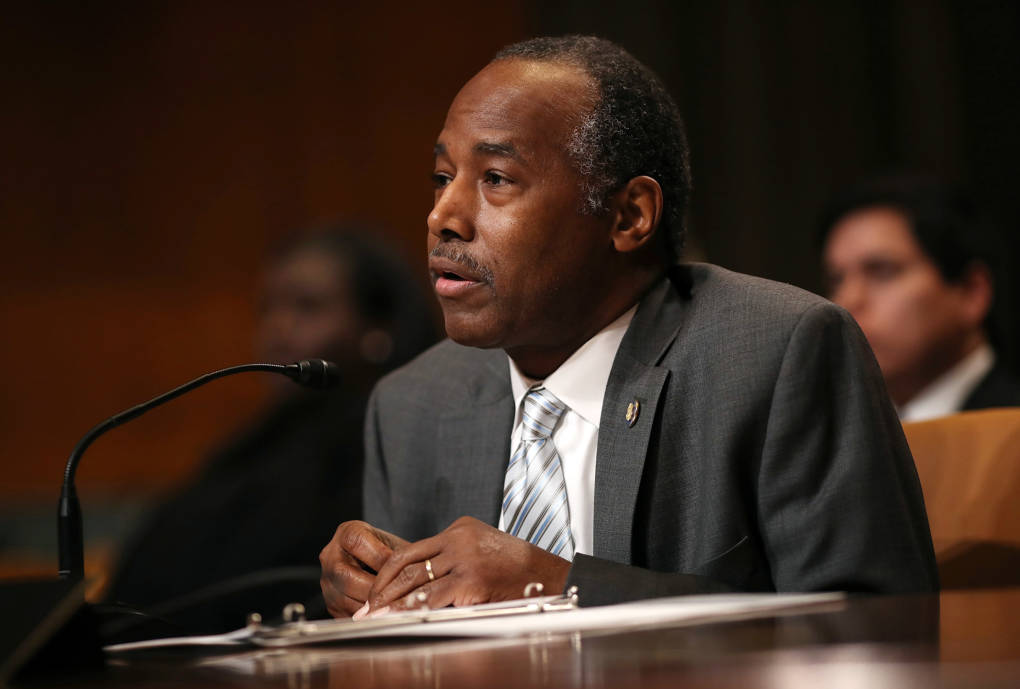
"caption": "HUD Secretary Ben Carson testifies before the Transportation, Housing and Urban Development, and Related Agencies Subcommittee on Capitol Hill April 18, 2018 in Washington, DC.",
"description": "HUD Secretary Ben Carson testifies before the Transportation, Housing and Urban Development, and Related Agencies Subcommittee on Capitol Hill April 18, 2018 in Washington, DC.",
"title": "Housing And Urban Development Secretary Ben Carson Testifies To Senate Committee On Department's Budget",
"credit": "Win McNamee/Getty Images",
"status": "inherit",
"isLoading": false,
"fetchFailed": false
}
},
"audioPlayerReducer": {
"postId": "stream_live",
"isPaused": true,
"isPlaying": false,
"pfsActive": false,
"pledgeModalIsOpen": true,
"playerDrawerIsOpen": false,
"liveAudioPlayStartedAt": 0,
"liveAudioPlayContext": ""
},
"authorsReducer": {
"byline_news_11755975": {
"type": "authors",
"id": "byline_news_11755975",
"meta": {
"override": true
},
"slug": "byline_news_11755975",
"name": "\u003ca href=\"https://twitter.com/Isabella_Jib\">Isabella Jibilian\u003c/a>",
"isLoading": false
},
"byline_news_11753881": {
"type": "authors",
"id": "byline_news_11753881",
"meta": {
"override": true
},
"slug": "byline_news_11753881",
"name": "\u003ca href=\"https://calmatters.org/articles/author/feliciacalmatters-org/\">Felicia Mello\u003c/a>",
"isLoading": false
},
"byline_news_11753170": {
"type": "authors",
"id": "byline_news_11753170",
"meta": {
"override": true
},
"slug": "byline_news_11753170",
"name": "\u003cstrong>Ben Christopher\u003c/strong>",
"isLoading": false
},
"byline_news_11752804": {
"type": "authors",
"id": "byline_news_11752804",
"meta": {
"override": true
},
"slug": "byline_news_11752804",
"name": "\u003cstrong>Andrew Bowen\u003c/strong>",
"isLoading": false
},
"kqed": {
"type": "authors",
"id": "236",
"meta": {
"index": "authors_1716337520",
"id": "236",
"found": true
},
"name": "KQED News Staff",
"firstName": "KQED News Staff",
"lastName": null,
"slug": "kqed",
"email": "faq@kqed.org",
"display_author_email": false,
"staff_mastheads": [],
"title": null,
"bio": null,
"avatar": "https://secure.gravatar.com/avatar/ef0e801a68c4c54afa9180db14084167?s=600&d=blank&r=g",
"twitter": null,
"facebook": null,
"instagram": null,
"linkedin": null,
"sites": [
{
"site": "arts",
"roles": [
"contributor"
]
},
{
"site": "news",
"roles": [
"editor"
]
},
{
"site": "futureofyou",
"roles": [
"author"
]
}
],
"headData": {
"title": "KQED News Staff | KQED",
"description": null,
"ogImgSrc": "https://secure.gravatar.com/avatar/ef0e801a68c4c54afa9180db14084167?s=600&d=blank&r=g",
"twImgSrc": "https://secure.gravatar.com/avatar/ef0e801a68c4c54afa9180db14084167?s=600&d=blank&r=g"
},
"isLoading": false,
"link": "/author/kqed"
},
"rachael-myrow": {
"type": "authors",
"id": "251",
"meta": {
"index": "authors_1716337520",
"id": "251",
"found": true
},
"name": "Rachael Myrow",
"firstName": "Rachael",
"lastName": "Myrow",
"slug": "rachael-myrow",
"email": "rmyrow@kqed.org",
"display_author_email": true,
"staff_mastheads": [
"news"
],
"title": "Senior Editor of KQED's Silicon Valley News Desk",
"bio": "• I write and edit stories about how Silicon Valley power and policies shape everyday life in California. I’m also passionate about making Bay Area history and culture more accessible to a broad public. • I’ve been a journalist for most of my life, starting in high school with The Franklin Press in Los Angeles, where I grew up. While earning my first degree in English at UC Berkeley, I got my start in public radio at KALX-FM. After completing a second degree in journalism at Cal, I landed my first professional job at Marketplace, then moved on to KPCC (now LAist), and then KQED, where I hosted The California Report for more than seven years. • My reporting has appeared on NPR, The World, WBUR’s \u003ci>Here & Now\u003c/i>, and the BBC. I also guest host for KQED’s \u003ci>Forum\u003c/i>, as well as the Commonwealth Club in San Francisco. • I speak periodically on media, democracy and technology issues, and do voiceover work for documentaries and educational video projects. • Outside of the studio, you'll find me hiking Bay Area trails and whipping up Insta-ready meals in my kitchen. • I do not accept gifts, money, or favors from anyone connected to my reporting, I don't pay people for information, and I do not support or donate to political causes. • I strive to treat the people I report on with fairness, honesty, and respect. I also recognize there are often multiple sides to a story and work to verify information through multiple sources and documentation. If I get something wrong, I correct it.",
"avatar": "https://secure.gravatar.com/avatar/3ed8a3c5f26025e4a805ba634cda8cd764906b97438a6d9ce216b044e340da4e?s=600&d=blank&r=g",
"twitter": "rachaelmyrow",
"bluesky": null,
"facebook": null,
"instagram": null,
"linkedin": "https://www.linkedin.com/in/rachaelmyrow/",
"sites": [
{
"site": "arts",
"roles": [
"administrator"
]
},
{
"site": "news",
"roles": [
"edit_others_posts",
"editor"
]
},
{
"site": "futureofyou",
"roles": [
"editor"
]
},
{
"site": "bayareabites",
"roles": [
"editor"
]
},
{
"site": "stateofhealth",
"roles": [
"editor"
]
},
{
"site": "science",
"roles": [
"editor"
]
},
{
"site": "food",
"roles": [
"editor"
]
},
{
"site": "forum",
"roles": [
"editor"
]
},
{
"site": "liveblog",
"roles": [
"author"
]
}
],
"headData": {
"title": "Rachael Myrow | KQED",
"description": "Senior Editor of KQED's Silicon Valley News Desk",
"ogImgSrc": "https://secure.gravatar.com/avatar/3ed8a3c5f26025e4a805ba634cda8cd764906b97438a6d9ce216b044e340da4e?s=600&d=blank&r=g",
"twImgSrc": "https://secure.gravatar.com/avatar/3ed8a3c5f26025e4a805ba634cda8cd764906b97438a6d9ce216b044e340da4e?s=600&d=blank&r=g"
},
"isLoading": false,
"link": "/author/rachael-myrow"
},
"matthewgreen": {
"type": "authors",
"id": "1263",
"meta": {
"index": "authors_1716337520",
"id": "1263",
"found": true
},
"name": "Matthew Green",
"firstName": "Matthew",
"lastName": "Green",
"slug": "matthewgreen",
"email": "mgreen@kqed.org",
"display_author_email": false,
"staff_mastheads": [],
"title": "KQED Editor/Reporter",
"bio": "Matthew Green is a digital media producer for KQED News. He previously produced \u003ca href=\"http://www.kqed.org/lowdown\">The Lowdown\u003c/a>, KQED’s multimedia news education blog. Matthew's written for numerous Bay Area publications, including the Oakland Tribune and San Francisco Chronicle. He also taught journalism classes at Fremont High School in East Oakland.\r\n\r\nEmail: mgreen@kqed.org; Twitter: @MGreenKQED",
"avatar": "https://secure.gravatar.com/avatar/3bf498d1267ca02c8494f33d8cfc575e?s=600&d=blank&r=g",
"twitter": "MGreenKQED",
"facebook": null,
"instagram": null,
"linkedin": null,
"sites": [
{
"site": "news",
"roles": []
},
{
"site": "lowdown",
"roles": []
},
{
"site": "science",
"roles": []
},
{
"site": "education",
"roles": []
},
{
"site": "quest",
"roles": []
},
{
"site": "liveblog",
"roles": []
}
],
"headData": {
"title": "Matthew Green | KQED",
"description": "KQED Editor/Reporter",
"ogImgSrc": "https://secure.gravatar.com/avatar/3bf498d1267ca02c8494f33d8cfc575e?s=600&d=blank&r=g",
"twImgSrc": "https://secure.gravatar.com/avatar/3bf498d1267ca02c8494f33d8cfc575e?s=600&d=blank&r=g"
},
"isLoading": false,
"link": "/author/matthewgreen"
},
"shossaini": {
"type": "authors",
"id": "3214",
"meta": {
"index": "authors_1716337520",
"id": "3214",
"found": true
},
"name": "Sara Hossaini",
"firstName": "Sara",
"lastName": "Hossaini",
"slug": "shossaini",
"email": "shossaini@kqed.org",
"display_author_email": true,
"staff_mastheads": [
"news"
],
"title": "KQED Reporter",
"bio": "Sara Hossaini came to general assignment reporting at KQED in 2013 after two winters reporting at Wyoming Public Radio. She holds a bachelor's degree in broadcast journalism from the University of Nebraska-Lincoln. Her radio romance began after a bitter breakup with documentary film (Ok, maybe it's still complicated). Her first simultaneous jobs in San Francisco were as Associate Producer on a PBS film series through the Center for Asian American Media and as a butler. She likes to trot, plot and make things with her hands.",
"avatar": "https://secure.gravatar.com/avatar/060e9f56b9554e17942e89f413242774?s=600&d=blank&r=g",
"twitter": "mshossaini",
"facebook": null,
"instagram": null,
"linkedin": null,
"sites": [
{
"site": "news",
"roles": [
"author"
]
},
{
"site": "stateofhealth",
"roles": [
"author"
]
}
],
"headData": {
"title": "Sara Hossaini | KQED",
"description": "KQED Reporter",
"ogImgSrc": "https://secure.gravatar.com/avatar/060e9f56b9554e17942e89f413242774?s=600&d=blank&r=g",
"twImgSrc": "https://secure.gravatar.com/avatar/060e9f56b9554e17942e89f413242774?s=600&d=blank&r=g"
},
"isLoading": false,
"link": "/author/shossaini"
},
"markfiore": {
"type": "authors",
"id": "3236",
"meta": {
"index": "authors_1716337520",
"id": "3236",
"found": true
},
"name": "Mark Fiore",
"firstName": "Mark",
"lastName": "Fiore",
"slug": "markfiore",
"email": "mark@markfiore.com",
"display_author_email": false,
"staff_mastheads": [
"news"
],
"title": "KQED News Cartoonist",
"bio": "\u003ca href=\"http://www.MarkFiore.com\">MarkFiore.com\u003c/a> | \u003ca href=\"https://twitter.com/markfiore\">Follow on Twitter\u003c/a> | \u003ca href=\"https://www.facebook.com/pages/Mark-Fiore-Animated-Political-Cartoons/94451707396?ref=bookmarks\">Facebook\u003c/a> | \u003ca href=\"mailto:mark@markfiore.com\">email\u003c/a>\r\n\r\nPulitzer Prize-winner, Mark Fiore, who the Wall Street Journal has called “the undisputed guru of the form,” creates animated political cartoons in San Francisco, where his work has been featured regularly on the San Francisco Chronicle’s web site, SFGate.com. His work has appeared on Newsweek.com, Slate.com, CBSNews.com, MotherJones.com, DailyKos.com and NPR’s web site. Fiore’s political animation has appeared on CNN, Frontline, Bill Moyers Journal, Salon.com and cable and broadcast outlets across the globe.\r\n\r\nBeginning his professional life by drawing traditional political cartoons for newspapers, Fiore’s work appeared in publications ranging from the Washington Post to the Los Angeles Times. In the late 1990s, he began to experiment with animating political cartoons and, after a short stint at the San Jose Mercury News as their staff cartoonist, Fiore devoted all his energies to animation.\r\nGrowing up in California, Fiore also spent a good portion of his life in the backwoods of Idaho. It was this combination that shaped him politically. Mark majored in political science at Colorado College, where, in a perfect send-off for a cartoonist, he received his diploma in 1991 as commencement speaker Dick Cheney smiled approvingly.\r\nMark Fiore was awarded the Pulitzer Prize for political cartooning in 2010, a Robert F. Kennedy Journalism Award in 2004 and has twice received an Online Journalism Award for commentary from the Online News Association (2002, 2008). Fiore has received two awards for his work in new media from the National Cartoonists Society (2001, 2002), and in 2006 received The James Madison Freedom of Information Award from The Society of Professional Journalists.",
"avatar": "https://secure.gravatar.com/avatar/fc4e2a612b15b67bad0c6f0e1db4ca9b?s=600&d=blank&r=g",
"twitter": "MarkFiore",
"facebook": null,
"instagram": "https://www.instagram.com/markfiore/?hl=en",
"linkedin": null,
"sites": [
{
"site": "arts",
"roles": [
"contributor"
]
},
{
"site": "news",
"roles": [
"editor"
]
},
{
"site": "futureofyou",
"roles": [
"editor"
]
},
{
"site": "science",
"roles": [
"editor"
]
}
],
"headData": {
"title": "Mark Fiore | KQED",
"description": "KQED News Cartoonist",
"ogImgSrc": "https://secure.gravatar.com/avatar/fc4e2a612b15b67bad0c6f0e1db4ca9b?s=600&d=blank&r=g",
"twImgSrc": "https://secure.gravatar.com/avatar/fc4e2a612b15b67bad0c6f0e1db4ca9b?s=600&d=blank&r=g"
},
"isLoading": false,
"link": "/author/markfiore"
},
"tcamhi": {
"type": "authors",
"id": "3251",
"meta": {
"index": "authors_1716337520",
"id": "3251",
"found": true
},
"name": "Tiffany Camhi",
"firstName": "Tiffany",
"lastName": "Camhi",
"slug": "tcamhi",
"email": "tiffanycamhi@gmail.com",
"display_author_email": false,
"staff_mastheads": [],
"title": "KQED Contributor",
"bio": null,
"avatar": "https://secure.gravatar.com/avatar/f8204ce351139205d3b3dc1581016a5e30d7d8b38cb2c139348c151ec14b792e?s=600&d=blank&r=g",
"twitter": null,
"bluesky": null,
"facebook": null,
"instagram": null,
"linkedin": null,
"sites": [
{
"site": "arts",
"roles": [
"subscriber"
]
},
{
"site": "news",
"roles": [
"subscriber"
]
}
],
"headData": {
"title": "Tiffany Camhi | KQED",
"description": "KQED Contributor",
"ogImgSrc": "https://secure.gravatar.com/avatar/f8204ce351139205d3b3dc1581016a5e30d7d8b38cb2c139348c151ec14b792e?s=600&d=blank&r=g",
"twImgSrc": "https://secure.gravatar.com/avatar/f8204ce351139205d3b3dc1581016a5e30d7d8b38cb2c139348c151ec14b792e?s=600&d=blank&r=g"
},
"isLoading": false,
"link": "/author/tcamhi"
},
"mleitsinger": {
"type": "authors",
"id": "11310",
"meta": {
"index": "authors_1716337520",
"id": "11310",
"found": true
},
"name": "Miranda Leitsinger",
"firstName": "Miranda",
"lastName": "Leitsinger",
"slug": "mleitsinger",
"email": "mleitsinger@KQED.org",
"display_author_email": false,
"staff_mastheads": [
"news"
],
"title": "KQED Contributor",
"bio": "Miranda Leitsinger has worked in journalism as a reporter and editor since 2000, including seven years at The Associated Press in locales such as Cambodia and Puerto Rico, four years at NBC News Digital in New York and 2.5 years at CNN.com International in Hong Kong. Major stories she has covered included sexual abuse in the yoga community, the rise of women in local politics post-2016 election, the struggle over LGBTQ inclusion in the Boy Scouts, aftermath of the 2004 and 2011 tsunamis, the Aurora movie theater attack, the Newtown school shooting, Superstorm Sandy and the Boston Marathon bombing.",
"avatar": "https://secure.gravatar.com/avatar/cdd00de7be92aab3b7fd3d915e02033d?s=600&d=blank&r=g",
"twitter": "mimileitsinger",
"facebook": null,
"instagram": null,
"linkedin": null,
"sites": [
{
"site": "arts",
"roles": [
"author"
]
},
{
"site": "news",
"roles": [
"subscriber"
]
},
{
"site": "futureofyou",
"roles": [
"editor"
]
},
{
"site": "stateofhealth",
"roles": [
"editor"
]
}
],
"headData": {
"title": "Miranda Leitsinger | KQED",
"description": "KQED Contributor",
"ogImgSrc": "https://secure.gravatar.com/avatar/cdd00de7be92aab3b7fd3d915e02033d?s=600&d=blank&r=g",
"twImgSrc": "https://secure.gravatar.com/avatar/cdd00de7be92aab3b7fd3d915e02033d?s=600&d=blank&r=g"
},
"isLoading": false,
"link": "/author/mleitsinger"
},
"mwiley": {
"type": "authors",
"id": "11526",
"meta": {
"index": "authors_1716337520",
"id": "11526",
"found": true
},
"name": "Michelle Wiley",
"firstName": "Michelle",
"lastName": "Wiley",
"slug": "mwiley",
"email": "mwiley@KQED.org",
"display_author_email": true,
"staff_mastheads": [],
"title": null,
"bio": "Michelle Wiley was the senior editor of weekends.",
"avatar": "https://secure.gravatar.com/avatar/3b897d82a09e8587e8e73fa69fbcc635?s=600&d=blank&r=g",
"twitter": "michelleewiley",
"facebook": null,
"instagram": null,
"linkedin": null,
"sites": [
{
"site": "",
"roles": [
"editor"
]
},
{
"site": "arts",
"roles": [
"editor"
]
},
{
"site": "news",
"roles": [
"subscriber"
]
},
{
"site": "lowdown",
"roles": [
"editor"
]
},
{
"site": "science",
"roles": [
"editor"
]
},
{
"site": "podcasts",
"roles": [
"editor"
]
}
],
"headData": {
"title": "Michelle Wiley | KQED",
"description": null,
"ogImgSrc": "https://secure.gravatar.com/avatar/3b897d82a09e8587e8e73fa69fbcc635?s=600&d=blank&r=g",
"twImgSrc": "https://secure.gravatar.com/avatar/3b897d82a09e8587e8e73fa69fbcc635?s=600&d=blank&r=g"
},
"isLoading": false,
"link": "/author/mwiley"
},
"mmedina": {
"type": "authors",
"id": "11528",
"meta": {
"index": "authors_1716337520",
"id": "11528",
"found": true
},
"name": "Marisol Medina-Cadena",
"firstName": "Marisol",
"lastName": "Medina-Cadena",
"slug": "mmedina",
"email": "mmedina@KQED.org",
"display_author_email": true,
"staff_mastheads": [],
"title": "Producer, Rightnowish Podcast",
"bio": "Marisol Medina-Cadena is a radio reporter and podcast producer. Before working at KQED, she produced for PBS member station, KCET, in Los Angeles. In 2017, Marisol won an Emmy Award for her work on the televised documentary, \u003cem>City Rising\u003c/em>, examining California's affordable housing crisis and the historical roots of gentrification.",
"avatar": "https://secure.gravatar.com/avatar/6c3db46a1cabb5e1fe9a365b5f4e681e?s=600&d=blank&r=g",
"twitter": "marisolreports",
"facebook": null,
"instagram": null,
"linkedin": null,
"sites": [
{
"site": "arts",
"roles": []
},
{
"site": "news",
"roles": [
"edit_others_posts"
]
}
],
"headData": {
"title": "Marisol Medina-Cadena | KQED",
"description": "Producer, Rightnowish Podcast",
"ogImgSrc": "https://secure.gravatar.com/avatar/6c3db46a1cabb5e1fe9a365b5f4e681e?s=600&d=blank&r=g",
"twImgSrc": "https://secure.gravatar.com/avatar/6c3db46a1cabb5e1fe9a365b5f4e681e?s=600&d=blank&r=g"
},
"isLoading": false,
"link": "/author/mmedina"
}
},
"pagesReducer": {
"news_category_housing": {
"type": "terms",
"id": "news_6266",
"meta": {
"index": "terms_1716263798",
"site": "news",
"id": "6266",
"score": 11.039913
},
"featImg": null,
"name": "Housing",
"description": null,
"taxonomy": "category",
"headData": {
"twImgId": null,
"twTitle": null,
"ogTitle": null,
"ogImgId": null,
"twDescription": null,
"description": null,
"title": "Housing Archives | KQED News",
"ogDescription": null
},
"ttid": 6290,
"slug": "housing",
"isLoading": false,
"title": "Housing",
"pageMeta": {
"site": "news",
"WpPageTemplate": "page-topic-editorial",
"currentPage": 99
},
"blocks": [
{
"blockName": "kqed/post-list",
"attrs": {
"layout": "cardArticle2",
"query": "posts/news?category=housing",
"seeMore": false,
"paginated": true,
"page": 99
}
},
{
"blockName": "kqed/ad"
}
]
}
},
"pfsSessionReducer": {},
"postsReducer": {
"stream_live": {
"type": "live",
"id": "stream_live",
"audioUrl": "https://streams.kqed.org/kqedradio",
"title": "Live Stream",
"excerpt": "Live Stream information currently unavailable.",
"link": "/radio",
"featImg": "",
"label": {
"name": "KQED Live",
"link": "/"
}
},
"stream_kqedNewscast": {
"type": "posts",
"id": "stream_kqedNewscast",
"audioUrl": "https://www.kqed.org/.stream/anon/radio/RDnews/newscast.mp3?_=1",
"title": "KQED Newscast",
"featImg": "",
"label": {
"name": "88.5 FM",
"link": "/"
}
},
"news_11756413": {
"type": "posts",
"id": "news_11756413",
"meta": {
"index": "posts_1716263798",
"site": "news",
"id": "11756413",
"score": null,
"sort": [
1561165072000
]
},
"guestAuthors": [],
"slug": "mayor-london-breed-iran-and-democratic-debates-pges-billion-dollar-pledge",
"title": "Mayor London Breed, Iran and Democratic Debates, PG&E’s Billion Dollar Pledge",
"publishDate": 1561165072,
"format": "video",
"headTitle": "Mayor London Breed, Iran and Democratic Debates, PG&E’s Billion Dollar Pledge | KQED",
"labelTerm": {
"term": 7052,
"site": "news"
},
"content": "\u003cp>\u003cb>San Francisco Mayor London Breed\u003cbr>\n\u003c/b>\u003cspan style=\"font-weight: 400\">Last June, London Breed became the first African American woman elected as mayor of San Francisco, following the sudden death of Ed Lee in December 2017. She inherited a number of challenging issues, including the city’s sky-high rents that have heightened concerns about growing income inequality, and homelessness, which has increased by nearly 20 percent since 2017. In March, she unveiled a controversial plan to open the city’s largest homeless navigation center on a lot along the Embarcadero despite opposition from neighborhood residents. Mayor London Breed joins us in the studio for a discussion about the city’s top challenges and her re-election bid in November. \u003c/span>\u003c/p>\n\u003cp>\u003cb>Tensions with Iran and Look Ahead at Democratic Debates\u003cbr>\n\u003c/b>\u003cspan style=\"font-weight: 400\">After a U.S. surveillance drone was shot down near Iran this week, President Trump warned that he “would not stand for it.” The incident comes just days after American officials blamed Iran for recent attacks on foreign shipping tankers near the Strait of Hormuz, a critical waterway where much of the world’s oil is transported. On the domestic front, Democratic presidential candidate Joe Biden is facing calls to apologize after he fondly spoke about what he considered civil working relationships with segregationists in the Senate. Also this week, NBC announced its schedule and placement of 20 of the Democratic presidential candidates for their first debates next Wednesday and Thursday. \u003c/span>\u003c/p>\n\u003cp>\u003cb>Guests:\u003c/b>\u003c/p>\n\u003cul>\n\u003cli style=\"font-weight: 400\">\u003cspan style=\"font-weight: 400\">Sean Walsh, Republican strategist, Wilson Walsh Consulting\u003c/span>\u003c/li>\n\u003cli style=\"font-weight: 400\">\u003cspan style=\"font-weight: 400\">Carla Marinucci, senior political writer, Politico\u003c/span>\u003c/li>\n\u003c/ul>\n\u003cp>\u003cb>PG&E’s Billion-Dollar Pledge to Communities Hurt by Wildfires\u003cbr>\n\u003c/b>\u003cspan style=\"font-weight: 400\">Gov. Gavin Newsom unveiled this week a plan that would set up an insurance fund as large as $21 billion to shield utilities from future wildfire claims, provided they make and certify safety improvements for their operations. Also this week, PG&E agreed to pay $1 billion to local governments after a series of devastating wildfires were linked to its power lines and equipment. The funds are intended to help cover damage spread over 14 cities and counties, including losses from last year’s Camp Fire, which killed 85 people in the town of Paradise. Meanwhile, environmental activists and city officials want San Francisco to look into abandoning the utility, which filed for bankruptcy in January, citing liabilities in the tens of billions of dollars for its role in deadly 2017 and 2018 wildfires. \u003c/span>\u003c/p>\n\u003cp>\u003cb>Guest:\u003c/b>\u003c/p>\n\u003cul>\n\u003cli style=\"font-weight: 400\">\u003cspan style=\"font-weight: 400\"> Lisa Pickoff-White, data journalist, KQED \u003c/span>\u003c/li>\n\u003c/ul>\n\u003cp>[ad fullwidth]\u003c/p>\u003cp>\u003c/p>\n",
"blocks": [],
"excerpt": "We talk with San Francisco Mayor London Breed about the city’s most gripping challenges, from homelessness to affordable housing. ",
"status": "publish",
"parent": 0,
"modified": 1722986956,
"stats": {
"hasAudio": false,
"hasVideo": false,
"hasChartOrMap": false,
"iframeSrcs": [],
"hasGoogleForm": false,
"hasGallery": false,
"hasHearkenModule": false,
"hasPolis": false,
"paragraphCount": 7,
"wordCount": 414
},
"headData": {
"title": "Mayor London Breed, Iran and Democratic Debates, PG&E’s Billion Dollar Pledge | KQED",
"description": "We talk with San Francisco Mayor London Breed about the city’s most gripping challenges, from homelessness to affordable housing. ",
"ogTitle": "",
"ogDescription": "",
"ogImgId": "",
"twTitle": "",
"twDescription": "",
"twImgId": "",
"schema": {
"@context": "https://schema.org",
"@type": "NewsArticle",
"headline": "Mayor London Breed, Iran and Democratic Debates, PG&E’s Billion Dollar Pledge",
"datePublished": "2019-06-21T17:57:52-07:00",
"dateModified": "2024-08-06T16:29:16-07:00",
"image": "https://cdn.kqed.org/wp-content/uploads/2020/02/KQED-OG-Image@1x.png",
"isAccessibleForFree": "True",
"publisher": {
"@type": "NewsMediaOrganization",
"@id": "https://www.kqed.org/#organization",
"name": "KQED",
"logo": "https://cdn.kqed.org/wp-content/uploads/2020/02/KQED-OG-Image@1x.png",
"url": "https://www.kqed.org",
"sameAs": [
"https://www.facebook.com/KQED",
"https://twitter.com/KQED",
"https://www.instagram.com/kqed/",
"https://www.tiktok.com/@kqedofficial",
"https://www.linkedin.com/company/kqed",
"https://www.youtube.com/channel/UCeC0IOo7i1P_61zVUWbJ4nw"
]
}
}
},
"videoEmbed": "https://youtu.be/kPhtu0NXc1I",
"sticky": false,
"path": "/news/11756413/mayor-london-breed-iran-and-democratic-debates-pges-billion-dollar-pledge",
"audioTrackLength": null,
"parsedContent": [
{
"type": "contentString",
"content": "\u003cdiv class=\"post-body\">\u003cp>\u003cp>\u003cb>San Francisco Mayor London Breed\u003cbr>\n\u003c/b>\u003cspan style=\"font-weight: 400\">Last June, London Breed became the first African American woman elected as mayor of San Francisco, following the sudden death of Ed Lee in December 2017. She inherited a number of challenging issues, including the city’s sky-high rents that have heightened concerns about growing income inequality, and homelessness, which has increased by nearly 20 percent since 2017. In March, she unveiled a controversial plan to open the city’s largest homeless navigation center on a lot along the Embarcadero despite opposition from neighborhood residents. Mayor London Breed joins us in the studio for a discussion about the city’s top challenges and her re-election bid in November. \u003c/span>\u003c/p>\n\u003cp>\u003cb>Tensions with Iran and Look Ahead at Democratic Debates\u003cbr>\n\u003c/b>\u003cspan style=\"font-weight: 400\">After a U.S. surveillance drone was shot down near Iran this week, President Trump warned that he “would not stand for it.” The incident comes just days after American officials blamed Iran for recent attacks on foreign shipping tankers near the Strait of Hormuz, a critical waterway where much of the world’s oil is transported. On the domestic front, Democratic presidential candidate Joe Biden is facing calls to apologize after he fondly spoke about what he considered civil working relationships with segregationists in the Senate. Also this week, NBC announced its schedule and placement of 20 of the Democratic presidential candidates for their first debates next Wednesday and Thursday. \u003c/span>\u003c/p>\n\u003cp>\u003cb>Guests:\u003c/b>\u003c/p>\n\u003cul>\n\u003cli style=\"font-weight: 400\">\u003cspan style=\"font-weight: 400\">Sean Walsh, Republican strategist, Wilson Walsh Consulting\u003c/span>\u003c/li>\n\u003cli style=\"font-weight: 400\">\u003cspan style=\"font-weight: 400\">Carla Marinucci, senior political writer, Politico\u003c/span>\u003c/li>\n\u003c/ul>\n\u003cp>\u003cb>PG&E’s Billion-Dollar Pledge to Communities Hurt by Wildfires\u003cbr>\n\u003c/b>\u003cspan style=\"font-weight: 400\">Gov. Gavin Newsom unveiled this week a plan that would set up an insurance fund as large as $21 billion to shield utilities from future wildfire claims, provided they make and certify safety improvements for their operations. Also this week, PG&E agreed to pay $1 billion to local governments after a series of devastating wildfires were linked to its power lines and equipment. The funds are intended to help cover damage spread over 14 cities and counties, including losses from last year’s Camp Fire, which killed 85 people in the town of Paradise. Meanwhile, environmental activists and city officials want San Francisco to look into abandoning the utility, which filed for bankruptcy in January, citing liabilities in the tens of billions of dollars for its role in deadly 2017 and 2018 wildfires. \u003c/span>\u003c/p>\n\u003cp>\u003cb>Guest:\u003c/b>\u003c/p>\n\u003cul>\n\u003cli style=\"font-weight: 400\">\u003cspan style=\"font-weight: 400\"> Lisa Pickoff-White, data journalist, KQED \u003c/span>\u003c/li>\n\u003c/ul>\n\u003cp>\u003c/p>\u003c/div>",
"attributes": {
"named": {},
"numeric": []
}
},
{
"type": "component",
"content": "",
"name": "ad",
"attributes": {
"named": {
"label": "fullwidth"
},
"numeric": [
"fullwidth"
]
}
},
{
"type": "contentString",
"content": "\u003cdiv class=\"post-body\">\u003cp>\u003c/p>\u003cp>\u003c/p>\n\u003c/div>\u003c/p>",
"attributes": {
"named": {},
"numeric": []
}
}
],
"link": "/news/11756413/mayor-london-breed-iran-and-democratic-debates-pges-billion-dollar-pledge",
"authors": [
"236"
],
"programs": [
"news_7052"
],
"categories": [
"news_6266",
"news_6188",
"news_8",
"news_13"
],
"tags": [
"news_3921",
"news_262",
"news_4020",
"news_339",
"news_717",
"news_20297",
"news_19177",
"news_22461",
"news_6931",
"news_140",
"news_38",
"news_20871",
"news_4463"
],
"featImg": "news_11756517",
"label": "news_7052"
},
"news_11756464": {
"type": "posts",
"id": "news_11756464",
"meta": {
"index": "posts_1716263798",
"site": "news",
"id": "11756464",
"score": null,
"sort": [
1561161679000
]
},
"guestAuthors": [],
"slug": "first-parking-site-for-people-living-in-rvs-opens-in-oakland-in-bid-to-ease-housing-crisis",
"title": "First Parking Site for People Living in RVs Opens in Oakland in Bid to Ease Housing Crisis",
"publishDate": 1561161679,
"format": "standard",
"headTitle": "First Parking Site for People Living in RVs Opens in Oakland in Bid to Ease Housing Crisis | KQED",
"labelTerm": {
"site": "news"
},
"content": "\u003cp>Oakland officials opened the first parking site Friday for people living in their RVs, as part of their bid to ease the housing crisis impacting communities throughout the Bay Area.\u003c/p>\n\u003cp>[pullquote size='medium' align='right' citation='Jade Koga, resident at the city's first RV parking site']‘God I couldn’t wait. I think it’s great because it gives us somewhere safe to park.’[/pullquote]City officials say the RV parking program, a six-month pilot, will support between 30 and 50 vehicles. The site, a city-owned lot located next to the Oakland Coliseum, features wash stations, garbage service and a weekly shower van, plus 24-hour security. Residents must be over 18 years old with RVs in driving condition.\u003c/p>\n\u003cp>“We don’t want to wait until we have all the answers to start taking action,” said Mayor Libby Schaaf. “Every day, we must do something to address the absolute frustration and absolute humanitarian need on these streets.”\u003c/p>\n\u003cp>Officials are inviting people with RVs living in an area (Edes and 85th avenues) that has been deeply impacted by the vehicles.\u003c/p>\n\u003cp>“It’s been really a challenge for that Brookfield community,” said Joe DeVries, assistant to the city administrator, who is managing the project. “And so that’s the community that we’re hoping to serve and alleviate first.”\u003c/p>\n\u003cp>Jade Koga was among the first residents asked to join. She moved her RV from Edes Avenue, where she said she often feared for her life and property.\u003c/p>\n\u003cp>“Yeah, they knocked on my door and I was the second person here. God, I couldn’t wait,” she said. “I think it’s great because it gives us somewhere safe to park. From here, I hope to get a job and get back on my feet.”\u003c/p>\n\u003cp>Schaaf said one more RV parking site was under development and another was being considered pending funding.\u003c/p>\n\u003cp>The number of homeless people in Alameda County \u003ca href=\"https://www.apnews.com/41b8393c7a434695985cde2a9852e786\" target=\"_blank\" rel=\"noopener\">grew 43%\u003c/a> over two years, from 2017 to 2019.\u003c/p>\n\u003cp>[aside tag='affordable-housing' label='KQED coverage of affordable housing']RVs line the streets of other cities, especially in Silicon Valley, but communities have taken different approaches to handling them. Mountain View’s City Council \u003ca href=\"https://www.mv-voice.com/news/2019/06/12/council-moves-ahead-with-milder-rv-ban?fbclid=IwAR1EuS1DFtroJCtlQ1vT73ECCjalqCWmXkMyoJuApS-FoqSy_FLdiuPCIog\" target=\"_blank\" rel=\"noopener\">last week backed off a proposed ban\u003c/a>, opting to enact several restrictions, including a ban on large motor homes and trailers throughout the city from 2 a.m. to 6 a.m., beginning Jan. 1, 2020. The city of \u003ca href=\"https://www.kqed.org/news/11735832/berkeley-affirms-ban-on-overnight-rv-parking-once-permit-system-is-in-place\">Berkeley\u003c/a> has banned overnight parking for RVs.\u003c/p>\n\u003cp>In Palo Alto, where campervans and RVs are parked on El Camino Real next to Stanford University, a city rule mandates that people move vehicles on public roads every three days — and at least a half-mile away.\u003c/p>\n\u003cp>[ad fullwidth]\u003c/p>\n\u003cp>\u003c/p>\n",
"blocks": [],
"excerpt": "The six-month pilot program will support between 30 and 50 vehicles on a lot next to the Oakland Coliseum.",
"status": "publish",
"parent": 0,
"modified": 1729028836,
"stats": {
"hasAudio": false,
"hasVideo": false,
"hasChartOrMap": false,
"iframeSrcs": [],
"hasGoogleForm": false,
"hasGallery": false,
"hasHearkenModule": false,
"hasPolis": false,
"paragraphCount": 13,
"wordCount": 476
},
"headData": {
"title": "First Parking Site for People Living in RVs Opens in Oakland in Bid to Ease Housing Crisis | KQED",
"description": "The six-month pilot program will support between 30 and 50 vehicles on a lot next to the Oakland Coliseum.",
"ogTitle": "",
"ogDescription": "",
"ogImgId": "",
"twTitle": "",
"twDescription": "",
"twImgId": "",
"schema": {
"@context": "https://schema.org",
"@type": "NewsArticle",
"headline": "First Parking Site for People Living in RVs Opens in Oakland in Bid to Ease Housing Crisis",
"datePublished": "2019-06-21T17:01:19-07:00",
"dateModified": "2024-10-15T14:47:16-07:00",
"image": "https://cdn.kqed.org/wp-content/uploads/2020/02/KQED-OG-Image@1x.png",
"isAccessibleForFree": "True",
"publisher": {
"@type": "NewsMediaOrganization",
"@id": "https://www.kqed.org/#organization",
"name": "KQED",
"logo": "https://cdn.kqed.org/wp-content/uploads/2020/02/KQED-OG-Image@1x.png",
"url": "https://www.kqed.org",
"sameAs": [
"https://www.facebook.com/KQED",
"https://twitter.com/KQED",
"https://www.instagram.com/kqed/",
"https://www.tiktok.com/@kqedofficial",
"https://www.linkedin.com/company/kqed",
"https://www.youtube.com/channel/UCeC0IOo7i1P_61zVUWbJ4nw"
]
}
}
},
"sticky": false,
"path": "/news/11756464/first-parking-site-for-people-living-in-rvs-opens-in-oakland-in-bid-to-ease-housing-crisis",
"audioTrackLength": null,
"parsedContent": [
{
"type": "contentString",
"content": "\u003cdiv class=\"post-body\">\u003cp>\u003cp>Oakland officials opened the first parking site Friday for people living in their RVs, as part of their bid to ease the housing crisis impacting communities throughout the Bay Area.\u003c/p>\n\u003cp>\u003c/p>\u003c/div>",
"attributes": {
"named": {},
"numeric": []
}
},
{
"type": "component",
"content": "‘God I couldn’t wait. I think it’s great because it gives us somewhere safe to park.’",
"name": "pullquote",
"attributes": {
"named": {
"size": "medium",
"align": "right",
"label": "citation='Jade Koga, resident at the city's first RV parking site'"
},
"numeric": [
"citation='Jade",
"Koga,",
"resident",
"at",
"the",
"city's",
"first",
"RV",
"parking",
"site'"
]
}
},
{
"type": "contentString",
"content": "\u003cdiv class=\"post-body\">\u003cp>City officials say the RV parking program, a six-month pilot, will support between 30 and 50 vehicles. The site, a city-owned lot located next to the Oakland Coliseum, features wash stations, garbage service and a weekly shower van, plus 24-hour security. Residents must be over 18 years old with RVs in driving condition.\u003c/p>\n\u003cp>“We don’t want to wait until we have all the answers to start taking action,” said Mayor Libby Schaaf. “Every day, we must do something to address the absolute frustration and absolute humanitarian need on these streets.”\u003c/p>\n\u003cp>Officials are inviting people with RVs living in an area (Edes and 85th avenues) that has been deeply impacted by the vehicles.\u003c/p>\n\u003cp>“It’s been really a challenge for that Brookfield community,” said Joe DeVries, assistant to the city administrator, who is managing the project. “And so that’s the community that we’re hoping to serve and alleviate first.”\u003c/p>\n\u003cp>Jade Koga was among the first residents asked to join. She moved her RV from Edes Avenue, where she said she often feared for her life and property.\u003c/p>\n\u003cp>“Yeah, they knocked on my door and I was the second person here. God, I couldn’t wait,” she said. “I think it’s great because it gives us somewhere safe to park. From here, I hope to get a job and get back on my feet.”\u003c/p>\n\u003cp>Schaaf said one more RV parking site was under development and another was being considered pending funding.\u003c/p>\n\u003cp>The number of homeless people in Alameda County \u003ca href=\"https://www.apnews.com/41b8393c7a434695985cde2a9852e786\" target=\"_blank\" rel=\"noopener\">grew 43%\u003c/a> over two years, from 2017 to 2019.\u003c/p>\n\u003cp>\u003c/p>\u003c/div>",
"attributes": {
"named": {},
"numeric": []
}
},
{
"type": "component",
"content": "",
"name": "aside",
"attributes": {
"named": {
"tag": "affordable-housing",
"label": "KQED coverage of affordable housing "
},
"numeric": []
}
},
{
"type": "contentString",
"content": "\u003cdiv class=\"post-body\">\u003cp>RVs line the streets of other cities, especially in Silicon Valley, but communities have taken different approaches to handling them. Mountain View’s City Council \u003ca href=\"https://www.mv-voice.com/news/2019/06/12/council-moves-ahead-with-milder-rv-ban?fbclid=IwAR1EuS1DFtroJCtlQ1vT73ECCjalqCWmXkMyoJuApS-FoqSy_FLdiuPCIog\" target=\"_blank\" rel=\"noopener\">last week backed off a proposed ban\u003c/a>, opting to enact several restrictions, including a ban on large motor homes and trailers throughout the city from 2 a.m. to 6 a.m., beginning Jan. 1, 2020. The city of \u003ca href=\"https://www.kqed.org/news/11735832/berkeley-affirms-ban-on-overnight-rv-parking-once-permit-system-is-in-place\">Berkeley\u003c/a> has banned overnight parking for RVs.\u003c/p>\n\u003cp>In Palo Alto, where campervans and RVs are parked on El Camino Real next to Stanford University, a city rule mandates that people move vehicles on public roads every three days — and at least a half-mile away.\u003c/p>\n\u003cp>\u003c/p>\u003c/div>",
"attributes": {
"named": {},
"numeric": []
}
},
{
"type": "component",
"content": "",
"name": "ad",
"attributes": {
"named": {
"label": "fullwidth"
},
"numeric": [
"fullwidth"
]
}
},
{
"type": "contentString",
"content": "\u003cdiv class=\"post-body\">\u003cp>\u003c/p>\n\u003cp>\u003c/p>\n\u003c/div>\u003c/p>",
"attributes": {
"named": {},
"numeric": []
}
}
],
"link": "/news/11756464/first-parking-site-for-people-living-in-rvs-opens-in-oakland-in-bid-to-ease-housing-crisis",
"authors": [
"3214"
],
"categories": [
"news_6266",
"news_8",
"news_248"
],
"tags": [
"news_3921",
"news_93",
"news_638",
"news_803",
"news_24635",
"news_1631"
],
"featImg": "news_11756493",
"label": "news"
},
"news_11755975": {
"type": "posts",
"id": "news_11755975",
"meta": {
"index": "posts_1716263798",
"site": "news",
"id": "11755975",
"score": null,
"sort": [
1561118435000
]
},
"parent": 0,
"labelTerm": {
"site": "news"
},
"blocks": [],
"publishDate": 1561118435,
"format": "standard",
"disqusTitle": "Unconventional Housing, Fear of Eviction Challenge Bay Area Census Efforts",
"title": "Unconventional Housing, Fear of Eviction Challenge Bay Area Census Efforts",
"headTitle": "KQED News",
"content": "\u003cp>For the past three years, Victor Manuel Escobar Rivas has lived in a trailer on a shaded road in Mountain View. His “trailita,” as he calls it, is one of more than 30 mobile homes that extend down the block in a half-mile long line of grey metal.\u003c/p>\n\u003cp>Escobar’s trailer doesn’t have an official address, so he directs people to send letters to a nearby friend. She stops by his trailer to bring him his mail every few days. But while friends and family know to write him at this address, the U.S. Census Bureau doesn’t.\u003c/p>\n\u003cp>Escobar is one of thousands of Bay Area residents who live in “unconventional housing” and are at risk of being missed in the 2020 Census, which is tasked with counting every person in the nation. Since 2010, soaring Bay Area rents have forced residents to live in garages, sheds, mobile homes, or crowded multi-family apartments.\u003c/p>\n\u003cp>That’s not the only new challenge when it comes to counting the Bay Area. Nationally, census forms are going online, the federal government has cut the Census Bureau’s budget, and a citizenship question may be added. Changes like these make counting the Bay Area’s immigrants, non-English speakers, ethnic minorities, and low-income populations even more difficult.\u003c/p>\n\u003cp>[aside label=\"Related Census Coverage\" tag=\"census\"]\u003c/p>\n\u003cp>“California is the hardest state to count,” said Anne Im, a program officer for the Silicon Valley Community Foundation. “We have the highest amount of hard-to-count populations.”\u003c/p>\n\u003cp>Next March, the Census will begin mailing postcards to addresses across the nation, directing people to fill out the census form online. If a household doesn’t respond after multiple mailings, paid enumerators will knock on doors to ask census questions in person.\u003c/p>\n\u003cp>But already, Bay Area counties and non-profit organizations are preparing by canvassing neighborhoods to make address lists more complete and recruiting “trusted messengers” like priests and community organizers to encourage hard-to-count populations to fill out the census.\u003c/p>\n\u003ch2>Impact\u003c/h2>\n\u003cp>An undercount could have serious consequences. For each person missed, a county loses an estimated $2,000 in federal funding annually. Since the 2010 census, San Jose lost out on $200 million in federal money, according to Mayor Sam Liccardo.\u003c/p>\n\u003cp>The census also determines California’s political representation. Though the Public Policy Institute of California predicts that the state's population is on track to keep 53 seats in the U.S. House, an undercount could drop that down to 52 seats.\u003c/p>\n\u003cp>The 1990 census, widely considered to be a flub, missed approximately 4 million people. It cost California $2 billion in federal funding and a seat in Congress, according to the Legislative Analyst’s Office.\u003c/p>\n\u003cp>Census data is used to allocate federal funding for a variety of public programs, and an undercount in California could decrease their budgets.\u003c/p>\n\u003cp>\"Imagine longer waits at the hospital, in the ER waiting room, if there's less funding for hospitals. Imagine less money for Head Start programs. Imagine less money for public housing for the Bay Area, because people are not getting counted,” said Perla Ni, CEO of CommunityConnect Labs, a nonprofit that works with census outreach.\u003c/p>\n\u003cfigure id=\"attachment_11756285\" class=\"wp-caption alignnone\" style=\"max-width: 800px\">\u003cimg class=\"size-medium wp-image-11756285\" src=\"https://ww2.kqed.org/news/wp-content/uploads/sites/10/2019/06/RS37848_RV_9X7A0010-qut-800x533.jpg\" alt=\"More than 30 mobile homes extend down the block near Rengstorff Park in Mountain View.\" width=\"800\" height=\"533\" srcset=\"https://ww2.kqed.org/app/uploads/sites/10/2019/06/RS37848_RV_9X7A0010-qut-800x533.jpg 800w, https://ww2.kqed.org/app/uploads/sites/10/2019/06/RS37848_RV_9X7A0010-qut-160x107.jpg 160w, https://ww2.kqed.org/app/uploads/sites/10/2019/06/RS37848_RV_9X7A0010-qut-1020x680.jpg 1020w, https://ww2.kqed.org/app/uploads/sites/10/2019/06/RS37848_RV_9X7A0010-qut-1200x800.jpg 1200w, https://ww2.kqed.org/app/uploads/sites/10/2019/06/RS37848_RV_9X7A0010-qut.jpg 1920w\" sizes=\"(max-width: 800px) 100vw, 800px\">\u003cfigcaption class=\"wp-caption-text\">More than 30 mobile homes extend down the block near Rengstorff Park in Mountain View. \u003ccite>(Isabella Jibilian/KQED)\u003c/cite>\u003c/figcaption>\u003c/figure>\n\u003ch2>Budget Cuts at the Bureau\u003c/h2>\n\u003cp>Faced with outreach challenges and with federal funding at stake, the California state government has already appropriated $100 million for census outreach. The governor has asked to add another $54 million in funds.\u003c/p>\n\u003cp>This mobilization is partly in reaction to federal budget cuts at the Census Bureau. Transitions to digital tools — like mapping via satellite, or moving the first wave of census responses online, have saved the Bureau money. But these cuts also seek to eliminate expensive field work.\u003c/p>\n\u003cp>“The U.S. Census Bureau funding has been cut significantly and that will impact particularly their ability to do non-response follow-up,” said Im of the Silicon Valley Community Foundation.\u003c/p>\n\u003cp>[pullquote size=\"medium\" align=”right” citation=\"Anne Im, Silicon Valley Community Foundation program officer\"]\"California is the hardest state to count. We have the highest amount of hard-to-count populations.\"[/pullquote]\u003c/p>\n\u003cp>Nonprofit and county staff emphasize that field work is essential to reaching hard-to-count communities, since they may not be able to respond online, may be suspicious of the government, or may fear that their information will be misused.\u003c/p>\n\u003cp>“We’re starting our outreach now, because the Census [Bureau] outreach hasn’t started yet,” said Megan Gosch, census lead for San Mateo County.\u003c/p>\n\u003cp>[ad fullwidth]\u003c/p>\n\u003ch2>Unconventional Housing\u003c/h2>\n\u003cp>Victor Manuel Escobar Rivas is not the only Bay Area resident without a mailbox.\u003c/p>\n\u003cp>“We have a housing crisis, people are renting whatever they can,” said Julio Garcia of Nuestra Casa, a community organization in East Palo Alto.\u003c/p>\n\u003cp>Garcia sees many residents who are shut out of the expensive housing market but are employed in the area. To avoid lengthy commutes, people rent sheds and converted garages. Others get an recreational vehicle and pay to park it in a backyard. Some even rent tents in backyards.\u003c/p>\n\u003cp>“This is the norm now. It’s not the exception,” said Garcia.\u003c/p>\n\u003cp>Recently, Megan Gosch flicked through a powerpoint in a conference room in Redwood City. A white colonial house with a red door came on the screen, captioned, “TRADITIONAL HOUSING.” Another few slides flashed by, and another slide showed a trailer sitting in the backyard of a home, captioned, “NON-TRADITIONAL HOUSING.”\u003c/p>\n\u003cp>In May of 2018, presentations like these were used as part of an effort to canvas neighborhoods for unconventional housing, in order to add them to the master address form. Back in 2018, cities and counties across the nation took part in the Local Update of Census Addresses (LUCA). For cities worried about an undercount, including San Jose, New York City, and Houston, Texas, canvassing can produce addresses not found elsewhere.\u003c/p>\n\u003cp>Throughout May and June of 2018, canvassers in San Mateo and Santa Clara counties targeted neighborhoods deemed “hard to count.”\u003c/p>\n\u003cp>They were taught to spot the difference between a garage and an inhabited garage. They looked for extra doorbells, satellite dishes, or drapes in the windows. From the sidewalk, they checked to see if power lines from the main house extended to the extra unit, or even looked to see if they could see children’s drawings through the windows.\u003c/p>\n\u003cp>In Santa Clara County, canvassers added 3,100 addresses to the list. In San Mateo County, they added 1,915. And in East Palo Alto alone, they found 701 units.\u003c/p>\n\u003cp>But canvassing efforts cannot find all forms of unconventional housing. For one, apartments that seem traditional from the outside might house multiple families.\u003c/p>\n\u003cp>“People are sharing their apartments. I don’t know if those people are going to get counted or not,” said Garcia.\u003c/p>\n\u003cp>Two or three families might share a one-bedroom apartment. That can be about 15 people in an apartment designed for one or two, explained Garcia.\u003c/p>\n\u003cp>And even if a census form arrives in their mailbox, or an enumerator shows up at their door, tenants fear that a landlord could discover their sublease.\u003c/p>\n\u003cp>“The fear is that you are going to get evicted if the landlord finds out how many people are living there,\" said Garcia. \"And then where do you go?”\u003c/p>\n\u003cp>“We need to remind people that Title 13 of the U.S. Code prohibits any other governmental agency from accessing your information, so the local planning department will have zero access to your information,” said Casey Farmer, census lead for Alameda County.\u003c/p>\n\u003cp>[pullquote size=\"medium\" align=”right” citation=\"Text from cards that Nuestra Casa distributes to undocumented immigrants\"]\"NO ABRA LA PUERTA. NO CONTESTE NINGUNA PREGUNTA. (Don’t open the door. Don’t answer any questions.)\"[/pullquote]\u003c/p>\n\u003ch2>Immigrants\u003c/h2>\n\u003cp>In April, Marcos Gutierrez, host of “Hecho in California” on KIQI, a San Francisco Spanish-language radio station, received a tearful call.\u003c/p>\n\u003cp>An older woman told the host she had received a questionnaire in the mail. Between sobs, she explained that she had completed and returned the form. Anxiously, she asked if it was the 2020 Census. “She was concerned that she would be ‘given away,'” said a KIQI staff member. “She was very upset.”\u003c/p>\n\u003cp>In 2017, immigrants comprised more than one-third of the population in San Francisco, San Mateo, Santa Clara, and Alameda counties, according to the American Community Survey.\u003c/p>\n\u003cp>So the threat of a new question asking respondents if they are citizens of the United States looms large for California. Experts say that the question could suppress responses in immigrant communities.\u003c/p>\n\u003cp>A survey conducted by UCLA political scientist Matt Barreto found that 11 to 18% of immigrants said that they would not respond to the census if it included a citizenship question.\u003c/p>\n\u003cp>The fight over whether to include the citizenship question is now in the Supreme Court. But advocates there are already high levels of fear in immigrant and racial-minority communities that could suppress census participation.\u003c/p>\n\u003cp>Anti-immigrant sentiment and press about the citizenship question have caused “unprecedented” levels of fear, according to Julia Marks, attorney for Asian Americans Advancing Justice.\u003c/p>\n\u003cp>“Regardless of whether the citizenship question is on the form or not, the damage has already been done,” said Geraldine Alcid, executive director of Filipino Advocates for Justice.\u003c/p>\n\u003cp>There has also been an uptick in Immigration and Customs Enforcement (ICE) activity over the last few months, according to Hamid Yazdan Panah, Advocacy Director for the California Collaborative for Immigrant Justice. In the Bay Area, “ICE enforcement happens on a daily basis,” said Panah.\u003c/p>\n\u003cp>In response, organizations like Nuestra Casa regularly distribute “red cards” to undocumented immigrants that assert their constitutional rights. The first bullet point on many red cards reads, “NO ABRA LA PUERTA,\" or \"Don’t open the door.\" The second bullet point on many red cards reads, “NO CONTESTE NINGUNA PREGUNTA,” or \"Don’t answer any questions.\"\u003c/p>\n\u003cp>These cards are aimed at undocumented immigrants who fear that ICE is knocking at their door. But if it’s a census enumerator, this advice makes counting near impossible. Nuestra Casa said it encourages immigrants to respond to census mailings, so that enumerators don’t need to come knocking.\u003c/p>\n\u003cp>“It's going to be challenging. It's going to be hard,” said Im. “There's going to have to be a lot of people working together from every sector, from nonprofits and philanthropy to business to the faith communities. This is going to be an all-hands-on-deck effort.”\u003c/p>\n\u003cp>[ad floatright]\u003c/p>\n",
"disqusIdentifier": "11755975 https://ww2.kqed.org/news/?p=11755975",
"disqusUrl": "https://ww2.kqed.org/news/2019/06/21/unconventional-housing-fear-of-eviction-challenge-bay-area-census-efforts/",
"stats": {
"hasVideo": false,
"hasChartOrMap": false,
"hasAudio": false,
"hasPolis": false,
"wordCount": 1835,
"hasGoogleForm": false,
"hasGallery": false,
"hasHearkenModule": false,
"iframeSrcs": [],
"paragraphCount": 49
},
"modified": 1561165765,
"excerpt": "Soaring Bay Area rents have forced residents to live in garages, sheds, mobile homes or crowded multi-family apartments.",
"headData": {
"twImgId": "",
"twTitle": "",
"ogTitle": "",
"ogImgId": "",
"twDescription": "",
"description": "Soaring Bay Area rents have forced residents to live in garages, sheds, mobile homes or crowded multi-family apartments.",
"title": "Unconventional Housing, Fear of Eviction Challenge Bay Area Census Efforts | KQED",
"ogDescription": "",
"schema": {
"@context": "https://schema.org",
"@type": "NewsArticle",
"headline": "Unconventional Housing, Fear of Eviction Challenge Bay Area Census Efforts",
"datePublished": "2019-06-21T05:00:35-07:00",
"dateModified": "2019-06-21T18:09:25-07:00",
"image": "https://cdn.kqed.org/wp-content/uploads/2020/02/KQED-OG-Image@1x.png",
"isAccessibleForFree": "True",
"publisher": {
"@type": "NewsMediaOrganization",
"@id": "https://www.kqed.org/#organization",
"name": "KQED",
"logo": "https://cdn.kqed.org/wp-content/uploads/2020/02/KQED-OG-Image@1x.png",
"url": "https://www.kqed.org",
"sameAs": [
"https://www.facebook.com/KQED",
"https://twitter.com/KQED",
"https://www.instagram.com/kqed/",
"https://www.tiktok.com/@kqedofficial",
"https://www.linkedin.com/company/kqed",
"https://www.youtube.com/channel/UCeC0IOo7i1P_61zVUWbJ4nw"
]
}
}
},
"guestAuthors": [],
"slug": "unconventional-housing-fear-of-eviction-challenge-bay-area-census-efforts",
"status": "publish",
"audioUrl": "https://www.kqed.org/.stream/anon/radio/RDnews/2019/06/WattCensusandHousing.mp3",
"nprByline": "\u003ca href=\"https://twitter.com/Isabella_Jib\">Isabella Jibilian\u003c/a>",
"audioTrackLength": 207,
"path": "/news/11755975/unconventional-housing-fear-of-eviction-challenge-bay-area-census-efforts",
"parsedContent": [
{
"type": "contentString",
"content": "\u003cdiv class=\"post-body\">\u003cp>\u003cp>For the past three years, Victor Manuel Escobar Rivas has lived in a trailer on a shaded road in Mountain View. His “trailita,” as he calls it, is one of more than 30 mobile homes that extend down the block in a half-mile long line of grey metal.\u003c/p>\n\u003cp>Escobar’s trailer doesn’t have an official address, so he directs people to send letters to a nearby friend. She stops by his trailer to bring him his mail every few days. But while friends and family know to write him at this address, the U.S. Census Bureau doesn’t.\u003c/p>\n\u003cp>Escobar is one of thousands of Bay Area residents who live in “unconventional housing” and are at risk of being missed in the 2020 Census, which is tasked with counting every person in the nation. Since 2010, soaring Bay Area rents have forced residents to live in garages, sheds, mobile homes, or crowded multi-family apartments.\u003c/p>\n\u003cp>That’s not the only new challenge when it comes to counting the Bay Area. Nationally, census forms are going online, the federal government has cut the Census Bureau’s budget, and a citizenship question may be added. Changes like these make counting the Bay Area’s immigrants, non-English speakers, ethnic minorities, and low-income populations even more difficult.\u003c/p>\n\u003cp>\u003c/p>\u003c/div>",
"attributes": {
"named": {},
"numeric": []
}
},
{
"type": "component",
"content": "",
"name": "aside",
"attributes": {
"named": {
"label": "Related Census Coverage ",
"tag": "census"
},
"numeric": []
}
},
{
"type": "contentString",
"content": "\u003cdiv class=\"post-body\">\u003cp>\u003c/p>\n\u003cp>“California is the hardest state to count,” said Anne Im, a program officer for the Silicon Valley Community Foundation. “We have the highest amount of hard-to-count populations.”\u003c/p>\n\u003cp>Next March, the Census will begin mailing postcards to addresses across the nation, directing people to fill out the census form online. If a household doesn’t respond after multiple mailings, paid enumerators will knock on doors to ask census questions in person.\u003c/p>\n\u003cp>But already, Bay Area counties and non-profit organizations are preparing by canvassing neighborhoods to make address lists more complete and recruiting “trusted messengers” like priests and community organizers to encourage hard-to-count populations to fill out the census.\u003c/p>\n\u003ch2>Impact\u003c/h2>\n\u003cp>An undercount could have serious consequences. For each person missed, a county loses an estimated $2,000 in federal funding annually. Since the 2010 census, San Jose lost out on $200 million in federal money, according to Mayor Sam Liccardo.\u003c/p>\n\u003cp>The census also determines California’s political representation. Though the Public Policy Institute of California predicts that the state's population is on track to keep 53 seats in the U.S. House, an undercount could drop that down to 52 seats.\u003c/p>\n\u003cp>The 1990 census, widely considered to be a flub, missed approximately 4 million people. It cost California $2 billion in federal funding and a seat in Congress, according to the Legislative Analyst’s Office.\u003c/p>\n\u003cp>Census data is used to allocate federal funding for a variety of public programs, and an undercount in California could decrease their budgets.\u003c/p>\n\u003cp>\"Imagine longer waits at the hospital, in the ER waiting room, if there's less funding for hospitals. Imagine less money for Head Start programs. Imagine less money for public housing for the Bay Area, because people are not getting counted,” said Perla Ni, CEO of CommunityConnect Labs, a nonprofit that works with census outreach.\u003c/p>\n\u003cfigure id=\"attachment_11756285\" class=\"wp-caption alignnone\" style=\"max-width: 800px\">\u003cimg class=\"size-medium wp-image-11756285\" src=\"https://ww2.kqed.org/news/wp-content/uploads/sites/10/2019/06/RS37848_RV_9X7A0010-qut-800x533.jpg\" alt=\"More than 30 mobile homes extend down the block near Rengstorff Park in Mountain View.\" width=\"800\" height=\"533\" srcset=\"https://ww2.kqed.org/app/uploads/sites/10/2019/06/RS37848_RV_9X7A0010-qut-800x533.jpg 800w, https://ww2.kqed.org/app/uploads/sites/10/2019/06/RS37848_RV_9X7A0010-qut-160x107.jpg 160w, https://ww2.kqed.org/app/uploads/sites/10/2019/06/RS37848_RV_9X7A0010-qut-1020x680.jpg 1020w, https://ww2.kqed.org/app/uploads/sites/10/2019/06/RS37848_RV_9X7A0010-qut-1200x800.jpg 1200w, https://ww2.kqed.org/app/uploads/sites/10/2019/06/RS37848_RV_9X7A0010-qut.jpg 1920w\" sizes=\"(max-width: 800px) 100vw, 800px\">\u003cfigcaption class=\"wp-caption-text\">More than 30 mobile homes extend down the block near Rengstorff Park in Mountain View. \u003ccite>(Isabella Jibilian/KQED)\u003c/cite>\u003c/figcaption>\u003c/figure>\n\u003ch2>Budget Cuts at the Bureau\u003c/h2>\n\u003cp>Faced with outreach challenges and with federal funding at stake, the California state government has already appropriated $100 million for census outreach. The governor has asked to add another $54 million in funds.\u003c/p>\n\u003cp>This mobilization is partly in reaction to federal budget cuts at the Census Bureau. Transitions to digital tools — like mapping via satellite, or moving the first wave of census responses online, have saved the Bureau money. But these cuts also seek to eliminate expensive field work.\u003c/p>\n\u003cp>“The U.S. Census Bureau funding has been cut significantly and that will impact particularly their ability to do non-response follow-up,” said Im of the Silicon Valley Community Foundation.\u003c/p>\n\u003cp>\u003c/p>\u003c/div>",
"attributes": {
"named": {},
"numeric": []
}
},
{
"type": "component",
"content": "\"California is the hardest state to count. We have the highest amount of hard-to-count populations.\"",
"name": "pullquote",
"attributes": {
"named": {
"size": "medium",
"align": "”right”",
"citation": "Anne Im, Silicon Valley Community Foundation program officer",
"label": ""
},
"numeric": []
}
},
{
"type": "contentString",
"content": "\u003cdiv class=\"post-body\">\u003cp>\u003c/p>\n\u003cp>Nonprofit and county staff emphasize that field work is essential to reaching hard-to-count communities, since they may not be able to respond online, may be suspicious of the government, or may fear that their information will be misused.\u003c/p>\n\u003cp>“We’re starting our outreach now, because the Census [Bureau] outreach hasn’t started yet,” said Megan Gosch, census lead for San Mateo County.\u003c/p>\n\u003cp>\u003c/p>\u003c/div>",
"attributes": {
"named": {},
"numeric": []
}
},
{
"type": "component",
"content": "",
"name": "ad",
"attributes": {
"named": {
"label": "fullwidth"
},
"numeric": [
"fullwidth"
]
}
},
{
"type": "contentString",
"content": "\u003cdiv class=\"post-body\">\u003cp>\u003c/p>\n\u003ch2>Unconventional Housing\u003c/h2>\n\u003cp>Victor Manuel Escobar Rivas is not the only Bay Area resident without a mailbox.\u003c/p>\n\u003cp>“We have a housing crisis, people are renting whatever they can,” said Julio Garcia of Nuestra Casa, a community organization in East Palo Alto.\u003c/p>\n\u003cp>Garcia sees many residents who are shut out of the expensive housing market but are employed in the area. To avoid lengthy commutes, people rent sheds and converted garages. Others get an recreational vehicle and pay to park it in a backyard. Some even rent tents in backyards.\u003c/p>\n\u003cp>“This is the norm now. It’s not the exception,” said Garcia.\u003c/p>\n\u003cp>Recently, Megan Gosch flicked through a powerpoint in a conference room in Redwood City. A white colonial house with a red door came on the screen, captioned, “TRADITIONAL HOUSING.” Another few slides flashed by, and another slide showed a trailer sitting in the backyard of a home, captioned, “NON-TRADITIONAL HOUSING.”\u003c/p>\n\u003cp>In May of 2018, presentations like these were used as part of an effort to canvas neighborhoods for unconventional housing, in order to add them to the master address form. Back in 2018, cities and counties across the nation took part in the Local Update of Census Addresses (LUCA). For cities worried about an undercount, including San Jose, New York City, and Houston, Texas, canvassing can produce addresses not found elsewhere.\u003c/p>\n\u003cp>Throughout May and June of 2018, canvassers in San Mateo and Santa Clara counties targeted neighborhoods deemed “hard to count.”\u003c/p>\n\u003cp>They were taught to spot the difference between a garage and an inhabited garage. They looked for extra doorbells, satellite dishes, or drapes in the windows. From the sidewalk, they checked to see if power lines from the main house extended to the extra unit, or even looked to see if they could see children’s drawings through the windows.\u003c/p>\n\u003cp>In Santa Clara County, canvassers added 3,100 addresses to the list. In San Mateo County, they added 1,915. And in East Palo Alto alone, they found 701 units.\u003c/p>\n\u003cp>But canvassing efforts cannot find all forms of unconventional housing. For one, apartments that seem traditional from the outside might house multiple families.\u003c/p>\n\u003cp>“People are sharing their apartments. I don’t know if those people are going to get counted or not,” said Garcia.\u003c/p>\n\u003cp>Two or three families might share a one-bedroom apartment. That can be about 15 people in an apartment designed for one or two, explained Garcia.\u003c/p>\n\u003cp>And even if a census form arrives in their mailbox, or an enumerator shows up at their door, tenants fear that a landlord could discover their sublease.\u003c/p>\n\u003cp>“The fear is that you are going to get evicted if the landlord finds out how many people are living there,\" said Garcia. \"And then where do you go?”\u003c/p>\n\u003cp>“We need to remind people that Title 13 of the U.S. Code prohibits any other governmental agency from accessing your information, so the local planning department will have zero access to your information,” said Casey Farmer, census lead for Alameda County.\u003c/p>\n\u003cp>\u003c/p>\u003c/div>",
"attributes": {
"named": {},
"numeric": []
}
},
{
"type": "component",
"content": "\"NO ABRA LA PUERTA. NO CONTESTE NINGUNA PREGUNTA. (Don’t open the door. Don’t answer any questions.)\"",
"name": "pullquote",
"attributes": {
"named": {
"size": "medium",
"align": "”right”",
"citation": "Text from cards that Nuestra Casa distributes to undocumented immigrants",
"label": ""
},
"numeric": []
}
},
{
"type": "contentString",
"content": "\u003cdiv class=\"post-body\">\u003cp>\u003c/p>\n\u003ch2>Immigrants\u003c/h2>\n\u003cp>In April, Marcos Gutierrez, host of “Hecho in California” on KIQI, a San Francisco Spanish-language radio station, received a tearful call.\u003c/p>\n\u003cp>An older woman told the host she had received a questionnaire in the mail. Between sobs, she explained that she had completed and returned the form. Anxiously, she asked if it was the 2020 Census. “She was concerned that she would be ‘given away,'” said a KIQI staff member. “She was very upset.”\u003c/p>\n\u003cp>In 2017, immigrants comprised more than one-third of the population in San Francisco, San Mateo, Santa Clara, and Alameda counties, according to the American Community Survey.\u003c/p>\n\u003cp>So the threat of a new question asking respondents if they are citizens of the United States looms large for California. Experts say that the question could suppress responses in immigrant communities.\u003c/p>\n\u003cp>A survey conducted by UCLA political scientist Matt Barreto found that 11 to 18% of immigrants said that they would not respond to the census if it included a citizenship question.\u003c/p>\n\u003cp>The fight over whether to include the citizenship question is now in the Supreme Court. But advocates there are already high levels of fear in immigrant and racial-minority communities that could suppress census participation.\u003c/p>\n\u003cp>Anti-immigrant sentiment and press about the citizenship question have caused “unprecedented” levels of fear, according to Julia Marks, attorney for Asian Americans Advancing Justice.\u003c/p>\n\u003cp>“Regardless of whether the citizenship question is on the form or not, the damage has already been done,” said Geraldine Alcid, executive director of Filipino Advocates for Justice.\u003c/p>\n\u003cp>There has also been an uptick in Immigration and Customs Enforcement (ICE) activity over the last few months, according to Hamid Yazdan Panah, Advocacy Director for the California Collaborative for Immigrant Justice. In the Bay Area, “ICE enforcement happens on a daily basis,” said Panah.\u003c/p>\n\u003cp>In response, organizations like Nuestra Casa regularly distribute “red cards” to undocumented immigrants that assert their constitutional rights. The first bullet point on many red cards reads, “NO ABRA LA PUERTA,\" or \"Don’t open the door.\" The second bullet point on many red cards reads, “NO CONTESTE NINGUNA PREGUNTA,” or \"Don’t answer any questions.\"\u003c/p>\n\u003cp>These cards are aimed at undocumented immigrants who fear that ICE is knocking at their door. But if it’s a census enumerator, this advice makes counting near impossible. Nuestra Casa said it encourages immigrants to respond to census mailings, so that enumerators don’t need to come knocking.\u003c/p>\n\u003cp>“It's going to be challenging. It's going to be hard,” said Im. “There's going to have to be a lot of people working together from every sector, from nonprofits and philanthropy to business to the faith communities. This is going to be an all-hands-on-deck effort.”\u003c/p>\n\u003cp>\u003c/p>\u003c/div>",
"attributes": {
"named": {},
"numeric": []
}
},
{
"type": "component",
"content": "",
"name": "ad",
"attributes": {
"named": {
"label": "floatright"
},
"numeric": [
"floatright"
]
}
},
{
"type": "contentString",
"content": "\u003cdiv class=\"post-body\">\u003cp>\u003c/p>\n\u003c/div>\u003c/p>",
"attributes": {
"named": {},
"numeric": []
}
}
],
"link": "/news/11755975/unconventional-housing-fear-of-eviction-challenge-bay-area-census-efforts",
"authors": [
"byline_news_11755975"
],
"categories": [
"news_6266",
"news_8"
],
"tags": [
"news_997",
"news_25535",
"news_21883"
],
"featImg": "news_11756283",
"label": "news"
},
"news_11755513": {
"type": "posts",
"id": "news_11755513",
"meta": {
"index": "posts_1716263798",
"site": "news",
"id": "11755513",
"score": null,
"sort": [
1560970998000
]
},
"guestAuthors": [],
"slug": "after-reporting-lower-than-expected-figures-butte-county-considers-new-homeless-count",
"title": "After Reporting Lower-Than-Expected Figures, Butte County Considers New Homeless Count",
"publishDate": 1560970998,
"format": "audio",
"headTitle": "After Reporting Lower-Than-Expected Figures, Butte County Considers New Homeless Count | KQED",
"labelTerm": {
"site": "news"
},
"content": "\u003cp>[aside label=\"Related stories\" tag=\"butte-fire\"]Butte County officials are considering plans to conduct a new homeless count, just a day after releasing the results of the most recent tally, which many see as a significant undercount of the total homeless population.\u003c/p>\n\u003cp>The\u003ca href=\"https://ww2.kqed.org/news/wp-content/uploads/sites/10/2019/06/Final-2019-Point-in-Time-Executive-Summary-Report-Published-on-June-17-2019.pdf\" target=\"_blank\" rel=\"noopener\"> biennial point-in-time (PIT) count\u003c/a> was conducted on a single rainy day in March, just five months after the deadly Camp Fire leveled the town of Paradise. That tally identified 2,304 sheltered and unsheltered homeless people countywide, many of whom were directly impacted by the fire. That’s a 16% increase since 2017.\u003c/p>\n\u003cp>The report acknowledges that the results are likely an undercount “due to ongoing challenges in locating homeless individuals, especially those that are displaced and unhoused due to the Camp Fire.”\u003c/p>\n\u003cp>Officials said the timing of the initial count was also problematic.\u003c/p>\n\u003cp>“At the end of March, Camp Fire survivors were just starting to mentally come out of the haze,” said Jennifer Griggs, Butte County’s homeless coordinator. “So if we were to take this now, I would suspect there would be more Camp Fire survivors who were first-time homeless that are out on our streets.”\u003c/p>\n\u003cfigure id=\"attachment_11755626\" class=\"wp-caption alignnone\" style=\"max-width: 800px\">\u003cimg loading=\"lazy\" decoding=\"async\" class=\"wp-image-11755626 size-medium\" src=\"https://ww2.kqed.org/news/wp-content/uploads/sites/10/2019/06/graph-4-800x359.jpg\" alt=\"A comparison of unsheltered homeless counts over the past decade. 2019 marks the highest number so far. \" width=\"800\" height=\"359\" srcset=\"https://cdn.kqed.org/wp-content/uploads/sites/10/2019/06/graph-4-800x359.jpg 800w, https://cdn.kqed.org/wp-content/uploads/sites/10/2019/06/graph-4-160x72.jpg 160w, https://cdn.kqed.org/wp-content/uploads/sites/10/2019/06/graph-4-1020x458.jpg 1020w, https://cdn.kqed.org/wp-content/uploads/sites/10/2019/06/graph-4-1200x539.jpg 1200w, https://cdn.kqed.org/wp-content/uploads/sites/10/2019/06/graph-4.jpg 1634w\" sizes=\"auto, (max-width: 800px) 100vw, 800px\">\u003cfigcaption class=\"wp-caption-text\">A comparison of the unsheltered homeless population since 2011. 2019 marks the highest number to date, but is still widely considered a significant undercount. \u003ccite>(Courtesy of the Butte Countywide Homeless Continnum of Care )\u003c/cite>\u003c/figcaption>\u003c/figure>\n\u003cp>If approved, the new homeless count would take place in January.\u003c/p>\n\u003cp>The survey found 891 people living in unsheltered conditions (including vehicles without hookups), 420 in sheltered conditions and 993 sheltered with the support of the Federal Emergency Management Agency.\u003c/p>\n\u003cp>Of the 891 people living in unsheltered conditions, 23% reported surviving the Camp Fire and experiencing homelessness for the first time. And 15% said they were homeless before the fire.\u003c/p>\n\u003cp>“That is really our most vulnerable population,” said Griggs, of the longer-term homeless community. “Just like any other Camp Fire survivor, those who were homeless prior lost their community.”\u003c/p>\n\u003cfigure id=\"attachment_11755629\" class=\"wp-caption alignright\" style=\"max-width: 1810px\">\u003ca href=\"https://ww2.kqed.org/news/wp-content/uploads/sites/10/2019/06/graph-1.jpg\">\u003cimg loading=\"lazy\" decoding=\"async\" class=\"size-full wp-image-11755629\" src=\"https://ww2.kqed.org/news/wp-content/uploads/sites/10/2019/06/graph-1.jpg\" alt=\"Of those living unsheltered, 23 percent report being homeless for the first time and survivors of the Camp Fire.\" width=\"1810\" height=\"1084\" srcset=\"https://cdn.kqed.org/wp-content/uploads/sites/10/2019/06/graph-1.jpg 1810w, https://cdn.kqed.org/wp-content/uploads/sites/10/2019/06/graph-1-160x96.jpg 160w, https://cdn.kqed.org/wp-content/uploads/sites/10/2019/06/graph-1-800x479.jpg 800w, https://cdn.kqed.org/wp-content/uploads/sites/10/2019/06/graph-1-1020x611.jpg 1020w, https://cdn.kqed.org/wp-content/uploads/sites/10/2019/06/graph-1-1200x719.jpg 1200w\" sizes=\"auto, (max-width: 1810px) 100vw, 1810px\">\u003c/a>\u003cfigcaption class=\"wp-caption-text\">A breakdown of Butte County’s unsheltered population (self-disclosed). Nearly a quarter of the population reported being homeless for the first time \u003cem>and\u003c/em> survivors of the Camp Fire. \u003ccite>(Courtesy of the Butte Countywide Homeless Continuum of Care)\u003c/cite>\u003c/figcaption>\u003c/figure>\n\u003cp>She added, “They’re no longer in their safe zone, so it’s very difficult for them to engage.”\u003c/p>\n\u003cp>The Camp Fire, which broke out in early November and quickly became the deadliest and most destructive wildfire in California history, wiped out a huge swath of housing stock in a county that was already facing a \u003ca href=\"https://www.kqed.org/news/11706501/camp-fire-worsens-housing-crises-in-butte-county\" target=\"_blank\" rel=\"noopener\">housing crisis\u003c/a>, with a vacancy rate of just 1.5%.\u003c/p>\n\u003cp>Today’s even tighter housing situation has created a kind of hierarchy between those who were homeless before the fire and those who have since become homeless as a result of it, putting the former at an even greater disadvantage, Griggs said.\u003c/p>\n\u003cp>“Chances are they don’t have the best credit,” she said. “Chances are they have some evictions. Their employment may or may not be there anymore. And if a property owner has [another] person who has a full-time job, no evictions … you know who they’re going to take.”\u003c/p>\n\u003cp>To address the shortage, state Assemblyman James Gallagher, R-Yuba City, who represents the district, recently \u003ca href=\"https://leginfo.legislature.ca.gov/faces/billStatusClient.xhtml?bill_id=201920200AB430\" target=\"_blank\" rel=\"noopener\">introduced a bill\u003c/a> to expedite the construction of new housing units in fire-impacted areas. FEMA also plans to offer additional mobile housing units in the nearby town of Gridley in August.\u003c/p>\n\u003cp>[ad fullwidth]\u003c/p>\n\u003cp>\u003c/p>\n",
"blocks": [],
"excerpt": "Just a day after releasing the results of the 2019 homeless count, officials in Butte County say they may need to do another one to get a more accurate tally. ",
"status": "publish",
"parent": 0,
"modified": 1740517465,
"stats": {
"hasAudio": false,
"hasVideo": false,
"hasChartOrMap": false,
"iframeSrcs": [],
"hasGoogleForm": false,
"hasGallery": false,
"hasHearkenModule": false,
"hasPolis": false,
"paragraphCount": 16,
"wordCount": 602
},
"headData": {
"title": "After Reporting Lower-Than-Expected Figures, Butte County Considers New Homeless Count | KQED",
"description": "Just a day after releasing the results of the 2019 homeless count, officials in Butte County say they may need to do another one to get a more accurate tally. ",
"ogTitle": "",
"ogDescription": "",
"ogImgId": "",
"twTitle": "",
"twDescription": "",
"twImgId": "",
"schema": {
"@context": "https://schema.org",
"@type": "NewsArticle",
"headline": "After Reporting Lower-Than-Expected Figures, Butte County Considers New Homeless Count",
"datePublished": "2019-06-19T12:03:18-07:00",
"dateModified": "2025-02-25T13:04:25-08:00",
"image": "https://cdn.kqed.org/wp-content/uploads/2020/02/KQED-OG-Image@1x.png",
"isAccessibleForFree": "True",
"publisher": {
"@type": "NewsMediaOrganization",
"@id": "https://www.kqed.org/#organization",
"name": "KQED",
"logo": "https://cdn.kqed.org/wp-content/uploads/2020/02/KQED-OG-Image@1x.png",
"url": "https://www.kqed.org",
"sameAs": [
"https://www.facebook.com/KQED",
"https://twitter.com/KQED",
"https://www.instagram.com/kqed/",
"https://www.tiktok.com/@kqedofficial",
"https://www.linkedin.com/company/kqed",
"https://www.youtube.com/channel/UCeC0IOo7i1P_61zVUWbJ4nw"
]
}
}
},
"audioUrl": "https://www.kqed.org/.stream/anon/radio/tcr/2019/06/WileyButteHomeless.mp3",
"sticky": false,
"audioTrackLength": 79,
"path": "/news/11755513/after-reporting-lower-than-expected-figures-butte-county-considers-new-homeless-count",
"audioDuration": 79000,
"parsedContent": [
{
"type": "contentString",
"content": "\u003cdiv class=\"post-body\">\u003cp>\u003cp>\u003c/p>\u003c/div>",
"attributes": {
"named": {},
"numeric": []
}
},
{
"type": "component",
"content": "",
"name": "aside",
"attributes": {
"named": {
"label": "Related stories ",
"tag": "butte-fire"
},
"numeric": []
}
},
{
"type": "contentString",
"content": "\u003cdiv class=\"post-body\">\u003cp>Butte County officials are considering plans to conduct a new homeless count, just a day after releasing the results of the most recent tally, which many see as a significant undercount of the total homeless population.\u003c/p>\n\u003cp>The\u003ca href=\"https://ww2.kqed.org/news/wp-content/uploads/sites/10/2019/06/Final-2019-Point-in-Time-Executive-Summary-Report-Published-on-June-17-2019.pdf\" target=\"_blank\" rel=\"noopener\"> biennial point-in-time (PIT) count\u003c/a> was conducted on a single rainy day in March, just five months after the deadly Camp Fire leveled the town of Paradise. That tally identified 2,304 sheltered and unsheltered homeless people countywide, many of whom were directly impacted by the fire. That’s a 16% increase since 2017.\u003c/p>\n\u003cp>The report acknowledges that the results are likely an undercount “due to ongoing challenges in locating homeless individuals, especially those that are displaced and unhoused due to the Camp Fire.”\u003c/p>\n\u003cp>Officials said the timing of the initial count was also problematic.\u003c/p>\n\u003cp>“At the end of March, Camp Fire survivors were just starting to mentally come out of the haze,” said Jennifer Griggs, Butte County’s homeless coordinator. “So if we were to take this now, I would suspect there would be more Camp Fire survivors who were first-time homeless that are out on our streets.”\u003c/p>\n\u003cfigure id=\"attachment_11755626\" class=\"wp-caption alignnone\" style=\"max-width: 800px\">\u003cimg loading=\"lazy\" decoding=\"async\" class=\"wp-image-11755626 size-medium\" src=\"https://ww2.kqed.org/news/wp-content/uploads/sites/10/2019/06/graph-4-800x359.jpg\" alt=\"A comparison of unsheltered homeless counts over the past decade. 2019 marks the highest number so far. \" width=\"800\" height=\"359\" srcset=\"https://cdn.kqed.org/wp-content/uploads/sites/10/2019/06/graph-4-800x359.jpg 800w, https://cdn.kqed.org/wp-content/uploads/sites/10/2019/06/graph-4-160x72.jpg 160w, https://cdn.kqed.org/wp-content/uploads/sites/10/2019/06/graph-4-1020x458.jpg 1020w, https://cdn.kqed.org/wp-content/uploads/sites/10/2019/06/graph-4-1200x539.jpg 1200w, https://cdn.kqed.org/wp-content/uploads/sites/10/2019/06/graph-4.jpg 1634w\" sizes=\"auto, (max-width: 800px) 100vw, 800px\">\u003cfigcaption class=\"wp-caption-text\">A comparison of the unsheltered homeless population since 2011. 2019 marks the highest number to date, but is still widely considered a significant undercount. \u003ccite>(Courtesy of the Butte Countywide Homeless Continnum of Care )\u003c/cite>\u003c/figcaption>\u003c/figure>\n\u003cp>If approved, the new homeless count would take place in January.\u003c/p>\n\u003cp>The survey found 891 people living in unsheltered conditions (including vehicles without hookups), 420 in sheltered conditions and 993 sheltered with the support of the Federal Emergency Management Agency.\u003c/p>\n\u003cp>Of the 891 people living in unsheltered conditions, 23% reported surviving the Camp Fire and experiencing homelessness for the first time. And 15% said they were homeless before the fire.\u003c/p>\n\u003cp>“That is really our most vulnerable population,” said Griggs, of the longer-term homeless community. “Just like any other Camp Fire survivor, those who were homeless prior lost their community.”\u003c/p>\n\u003cfigure id=\"attachment_11755629\" class=\"wp-caption alignright\" style=\"max-width: 1810px\">\u003ca href=\"https://ww2.kqed.org/news/wp-content/uploads/sites/10/2019/06/graph-1.jpg\">\u003cimg loading=\"lazy\" decoding=\"async\" class=\"size-full wp-image-11755629\" src=\"https://ww2.kqed.org/news/wp-content/uploads/sites/10/2019/06/graph-1.jpg\" alt=\"Of those living unsheltered, 23 percent report being homeless for the first time and survivors of the Camp Fire.\" width=\"1810\" height=\"1084\" srcset=\"https://cdn.kqed.org/wp-content/uploads/sites/10/2019/06/graph-1.jpg 1810w, https://cdn.kqed.org/wp-content/uploads/sites/10/2019/06/graph-1-160x96.jpg 160w, https://cdn.kqed.org/wp-content/uploads/sites/10/2019/06/graph-1-800x479.jpg 800w, https://cdn.kqed.org/wp-content/uploads/sites/10/2019/06/graph-1-1020x611.jpg 1020w, https://cdn.kqed.org/wp-content/uploads/sites/10/2019/06/graph-1-1200x719.jpg 1200w\" sizes=\"auto, (max-width: 1810px) 100vw, 1810px\">\u003c/a>\u003cfigcaption class=\"wp-caption-text\">A breakdown of Butte County’s unsheltered population (self-disclosed). Nearly a quarter of the population reported being homeless for the first time \u003cem>and\u003c/em> survivors of the Camp Fire. \u003ccite>(Courtesy of the Butte Countywide Homeless Continuum of Care)\u003c/cite>\u003c/figcaption>\u003c/figure>\n\u003cp>She added, “They’re no longer in their safe zone, so it’s very difficult for them to engage.”\u003c/p>\n\u003cp>The Camp Fire, which broke out in early November and quickly became the deadliest and most destructive wildfire in California history, wiped out a huge swath of housing stock in a county that was already facing a \u003ca href=\"https://www.kqed.org/news/11706501/camp-fire-worsens-housing-crises-in-butte-county\" target=\"_blank\" rel=\"noopener\">housing crisis\u003c/a>, with a vacancy rate of just 1.5%.\u003c/p>\n\u003cp>Today’s even tighter housing situation has created a kind of hierarchy between those who were homeless before the fire and those who have since become homeless as a result of it, putting the former at an even greater disadvantage, Griggs said.\u003c/p>\n\u003cp>“Chances are they don’t have the best credit,” she said. “Chances are they have some evictions. Their employment may or may not be there anymore. And if a property owner has [another] person who has a full-time job, no evictions … you know who they’re going to take.”\u003c/p>\n\u003cp>To address the shortage, state Assemblyman James Gallagher, R-Yuba City, who represents the district, recently \u003ca href=\"https://leginfo.legislature.ca.gov/faces/billStatusClient.xhtml?bill_id=201920200AB430\" target=\"_blank\" rel=\"noopener\">introduced a bill\u003c/a> to expedite the construction of new housing units in fire-impacted areas. FEMA also plans to offer additional mobile housing units in the nearby town of Gridley in August.\u003c/p>\n\u003cp>\u003c/p>\u003c/div>",
"attributes": {
"named": {},
"numeric": []
}
},
{
"type": "component",
"content": "",
"name": "ad",
"attributes": {
"named": {
"label": "fullwidth"
},
"numeric": [
"fullwidth"
]
}
},
{
"type": "contentString",
"content": "\u003cdiv class=\"post-body\">\u003cp>\u003c/p>\n\u003cp>\u003c/p>\n\u003c/div>\u003c/p>",
"attributes": {
"named": {},
"numeric": []
}
}
],
"link": "/news/11755513/after-reporting-lower-than-expected-figures-butte-county-considers-new-homeless-count",
"authors": [
"11526"
],
"categories": [
"news_6266",
"news_8"
],
"tags": [
"news_22754",
"news_24483",
"news_4020",
"news_22753"
],
"featImg": "news_11755789",
"label": "news"
},
"news_11755545": {
"type": "posts",
"id": "news_11755545",
"meta": {
"index": "posts_1716263798",
"site": "news",
"id": "11755545",
"score": null,
"sort": [
1560911500000
]
},
"guestAuthors": [],
"slug": "google-pledges-1-billion-to-help-fight-bay-area-housing-crisis-it-helped-create",
"title": "Google Pledges $1 Billion to Help Fight Bay Area Housing Crisis It Helped Create",
"publishDate": 1560911500,
"format": "standard",
"headTitle": "Google Pledges $1 Billion to Help Fight Bay Area Housing Crisis It Helped Create | KQED",
"labelTerm": {
"site": "news"
},
"content": "\u003cp>Google on Tuesday pledged to spend $1 billion for housing in the San Francisco Bay Area.\u003c/p>\n\u003cp>Unprecedented in size and scope, \u003ca href=\"https://blog.google/inside-google/company-announcements/1-billion-investment-bay-area-housing/\" target=\"_blank\" rel=\"noopener\">the proposal\u003c/a> to create 20,000 new homes is being greeted with wary enthusiasm, as it comes amid a regional housing crisis instigated in part by big technology companies like Google.\u003c/p>\n\u003cp>The tech giant said it will repurpose a minimum of $750 million of its own land over the next 10 years to support the development of at least 15,000 new homes “at all income levels,” including options for middle- and low-income families. That entails rezoning some its ample land holdings from office or commercial space to residential use.\u003c/p>\n\u003cp>The company said it will also create a $250 million fund to provide developers with incentives to build 5,000 affordable housing units throughout the region, and dole out $50 million in grants to help address homelessness and displacement.\u003c/p>\n\u003cp>“Across the region, one issue stands out as particularly urgent and complex: housing,” Google CEO Sundar Pichai said in \u003ca href=\"https://blog.google/inside-google/company-announcements/1-billion-investment-bay-area-housing/\" target=\"_blank\" rel=\"noopener\">a blog post announcing the plan\u003c/a>. “The lack of new supply, combined with the rising cost of living, has resulted in a severe shortage of affordable housing options for long-time middle and low-income residents.”\u003c/p>\n\u003cp>While saying that Google had already invested in “developing housing that meets the needs of these communities,” Pichai acknowledged, “there’s more to do.”\u003c/p>\n\u003cp>[pullquote size='small' align='right' citation='Sundar Pichai, Google CEO']‘As Google grows throughout the Bay Area … we’ve invested in developing housing that meets the needs of these communities. But there’s more to do.’[/pullquote]\u003c/p>\n\u003cp>Some local leaders said the proposal was a sign of Google’s commitment to supporting a region it has so deeply influenced.\u003c/p>\n\u003cp>“This is the antidote to Amazon,” said San Jose Mayor Sam Liccardo, referring to the blowback the Seattle tech giant experienced when it conducted a search last year for its new headquarters, hoping to find a city willing to offer major concessions in exchange for hosting it.\u003c/p>\n\u003cp>Google, Liccardo said, is going in the other direction.\u003c/p>\n\u003cp>“This is a company saying, ‘We get it. There are real impacts from our growth on the affordable housing supply in your cities and we need to do more to help,’ ” he said.\u003c/p>\n\u003cp>Liccardo is also supporting a \u003ca href=\"https://www.kqed.org/forum/2010101860444/google-eyes-san-jose-for-campus-for-20000-employees\" target=\"_blank\" rel=\"noopener\">new Google campus \u003c/a>slated for development in downtown San Jose that would relocate roughly 20,000 employees working around Santa Clara County. According to the company, some 50 percent of those people already live in San Jose. A \u003ca href=\"https://www.kqed.org/news/11754319/without-affordability-safeguards-googles-san-jose-campus-could-trigger-235-million-in-yearly-rent-hikes-report-finds\" target=\"_blank\" rel=\"noopener\">report released last week\u003c/a> by a local labor group found that the project would lead to major rent spikes throughout the city in the absence of strong affordability safeguards.\u003c/p>\n\u003cp>Google wouldn’t comment on the plan beyond what it described in Pichai’s brief blog post.\u003c/p>\n\u003cp>Silicon Valley has the most expensive monthly median housing costs in the nation, according to \u003ca href=\"https://jointventure.org\" target=\"_blank\" rel=\"noopener\">Joint Venture Silicon Valley\u003c/a>: $2,341 in the San Jose‐Sunnyvale‐Santa Clara metro region in 2017, compared to $1,567 in California and $1,048 nationwide.\u003c/p>\n\u003cp>[pullquote size='small' align='right' citation='Sandy Perry, Affordable Housing Network of Santa Clara County']‘Google is suggesting that this donation will compensate for its growth throughout the entire Bay Area. We do not believe it is large enough to do that.’[/pullquote]\u003c/p>\n\u003cp>“We are seeing an increase in the people that are living in RVs or other temporary shelters,” said Rachel Massaro, director of research for Joint Venture, which publishes regular economic surveys of the Bay Area. “There are people that are living with other families. And we’ve also seen an increase in mega-commuters that are commuting into the region more than three hours daily just to work here and then living elsewhere.”\u003c/p>\n\u003cp>The group also reported that affordable housing units represented only a small share of recently approved units in Silicon Valley. While there were more than 8,000 new Silicon Valley housing units permitted in 2018, it found that only 489 of them were affordable to those earning less than 50% of the local median income. (Disclosure: KQED’s president sits on Joint Venture’s board.)\u003c/p>\n\u003cp>[aside tag='affordable-housing' label='More Coverage of the Housing Crisis']Even groups that have long criticized the tech industry for the impact it has had on affordability in Silicon Valley welcomed Google’s pledge — albeit with reservations.\u003c/p>\n\u003cp>“The proposed 20,000 housing units is actually close to what we and other organizations were asking for to offset the impact of Google’s proposed expansion in San Jose,” said Sandy Perry, president of the \u003ca href=\"https://ahnscc.wordpress.com\" target=\"_blank\" rel=\"noopener\">Affordable Housing Network of Santa Clara County\u003c/a>. “Google is suggesting that this donation will compensate for its growth throughout the entire Bay Area. We do not believe it is large enough to do that.”\u003c/p>\n\u003cp>Alex Shoor, co-founder of \u003ca href=\"https://www.catalyzesv.org\" target=\"_blank\" rel=\"noopener\">Catalyze SV\u003c/a>, a nonprofit that advocates for community engagement in development, said every large employer in the region should realize by now that the housing crisis is creating vast inequality.\u003c/p>\n\u003cp>“I hope more tech companies will say that, regardless of bottom line, this is a solution that requires solving, and that the resources can be marshaled and the political will can be built to get there,” he said.\u003c/p>\n\u003cp>[ad fullwidth]\u003c/p>\n\u003cp>\u003c/p>\n",
"blocks": [],
"excerpt": "Google's announcement was being greeted with wary enthusiasm — coming in the midst of a regional housing crisis caused in large part by Big Tech.",
"status": "publish",
"parent": 0,
"modified": 1729028840,
"stats": {
"hasAudio": false,
"hasVideo": false,
"hasChartOrMap": false,
"iframeSrcs": [],
"hasGoogleForm": false,
"hasGallery": false,
"hasHearkenModule": false,
"hasPolis": false,
"paragraphCount": 23,
"wordCount": 924
},
"headData": {
"title": "Google Pledges $1 Billion to Help Fight Bay Area Housing Crisis It Helped Create | KQED",
"description": "Google's announcement was being greeted with wary enthusiasm — coming in the midst of a regional housing crisis caused in large part by Big Tech.",
"ogTitle": "",
"ogDescription": "",
"ogImgId": "",
"twTitle": "",
"twDescription": "",
"twImgId": "",
"schema": {
"@context": "https://schema.org",
"@type": "NewsArticle",
"headline": "Google Pledges $1 Billion to Help Fight Bay Area Housing Crisis It Helped Create",
"datePublished": "2019-06-18T19:31:40-07:00",
"dateModified": "2024-10-15T14:47:20-07:00",
"image": "https://cdn.kqed.org/wp-content/uploads/2020/02/KQED-OG-Image@1x.png",
"isAccessibleForFree": "True",
"publisher": {
"@type": "NewsMediaOrganization",
"@id": "https://www.kqed.org/#organization",
"name": "KQED",
"logo": "https://cdn.kqed.org/wp-content/uploads/2020/02/KQED-OG-Image@1x.png",
"url": "https://www.kqed.org",
"sameAs": [
"https://www.facebook.com/KQED",
"https://twitter.com/KQED",
"https://www.instagram.com/kqed/",
"https://www.tiktok.com/@kqedofficial",
"https://www.linkedin.com/company/kqed",
"https://www.youtube.com/channel/UCeC0IOo7i1P_61zVUWbJ4nw"
]
}
}
},
"audioUrl": "https://www.kqed.org/.stream/anon/radio/RDnews/2019/06/MyrowGoogle.mp3",
"sticky": false,
"audioTrackLength": 64,
"path": "/news/11755545/google-pledges-1-billion-to-help-fight-bay-area-housing-crisis-it-helped-create",
"parsedContent": [
{
"type": "contentString",
"content": "\u003cdiv class=\"post-body\">\u003cp>\u003cp>Google on Tuesday pledged to spend $1 billion for housing in the San Francisco Bay Area.\u003c/p>\n\u003cp>Unprecedented in size and scope, \u003ca href=\"https://blog.google/inside-google/company-announcements/1-billion-investment-bay-area-housing/\" target=\"_blank\" rel=\"noopener\">the proposal\u003c/a> to create 20,000 new homes is being greeted with wary enthusiasm, as it comes amid a regional housing crisis instigated in part by big technology companies like Google.\u003c/p>\n\u003cp>The tech giant said it will repurpose a minimum of $750 million of its own land over the next 10 years to support the development of at least 15,000 new homes “at all income levels,” including options for middle- and low-income families. That entails rezoning some its ample land holdings from office or commercial space to residential use.\u003c/p>\n\u003cp>The company said it will also create a $250 million fund to provide developers with incentives to build 5,000 affordable housing units throughout the region, and dole out $50 million in grants to help address homelessness and displacement.\u003c/p>\n\u003cp>“Across the region, one issue stands out as particularly urgent and complex: housing,” Google CEO Sundar Pichai said in \u003ca href=\"https://blog.google/inside-google/company-announcements/1-billion-investment-bay-area-housing/\" target=\"_blank\" rel=\"noopener\">a blog post announcing the plan\u003c/a>. “The lack of new supply, combined with the rising cost of living, has resulted in a severe shortage of affordable housing options for long-time middle and low-income residents.”\u003c/p>\n\u003cp>While saying that Google had already invested in “developing housing that meets the needs of these communities,” Pichai acknowledged, “there’s more to do.”\u003c/p>\n\u003cp>\u003c/p>\u003c/div>",
"attributes": {
"named": {},
"numeric": []
}
},
{
"type": "component",
"content": "‘As Google grows throughout the Bay Area … we’ve invested in developing housing that meets the needs of these communities. But there’s more to do.’",
"name": "pullquote",
"attributes": {
"named": {
"size": "small",
"align": "right",
"citation": "Sundar Pichai, Google CEO",
"label": ""
},
"numeric": []
}
},
{
"type": "contentString",
"content": "\u003cdiv class=\"post-body\">\u003cp>\u003c/p>\n\u003cp>Some local leaders said the proposal was a sign of Google’s commitment to supporting a region it has so deeply influenced.\u003c/p>\n\u003cp>“This is the antidote to Amazon,” said San Jose Mayor Sam Liccardo, referring to the blowback the Seattle tech giant experienced when it conducted a search last year for its new headquarters, hoping to find a city willing to offer major concessions in exchange for hosting it.\u003c/p>\n\u003cp>Google, Liccardo said, is going in the other direction.\u003c/p>\n\u003cp>“This is a company saying, ‘We get it. There are real impacts from our growth on the affordable housing supply in your cities and we need to do more to help,’ ” he said.\u003c/p>\n\u003cp>Liccardo is also supporting a \u003ca href=\"https://www.kqed.org/forum/2010101860444/google-eyes-san-jose-for-campus-for-20000-employees\" target=\"_blank\" rel=\"noopener\">new Google campus \u003c/a>slated for development in downtown San Jose that would relocate roughly 20,000 employees working around Santa Clara County. According to the company, some 50 percent of those people already live in San Jose. A \u003ca href=\"https://www.kqed.org/news/11754319/without-affordability-safeguards-googles-san-jose-campus-could-trigger-235-million-in-yearly-rent-hikes-report-finds\" target=\"_blank\" rel=\"noopener\">report released last week\u003c/a> by a local labor group found that the project would lead to major rent spikes throughout the city in the absence of strong affordability safeguards.\u003c/p>\n\u003cp>Google wouldn’t comment on the plan beyond what it described in Pichai’s brief blog post.\u003c/p>\n\u003cp>Silicon Valley has the most expensive monthly median housing costs in the nation, according to \u003ca href=\"https://jointventure.org\" target=\"_blank\" rel=\"noopener\">Joint Venture Silicon Valley\u003c/a>: $2,341 in the San Jose‐Sunnyvale‐Santa Clara metro region in 2017, compared to $1,567 in California and $1,048 nationwide.\u003c/p>\n\u003cp>\u003c/p>\u003c/div>",
"attributes": {
"named": {},
"numeric": []
}
},
{
"type": "component",
"content": "‘Google is suggesting that this donation will compensate for its growth throughout the entire Bay Area. We do not believe it is large enough to do that.’",
"name": "pullquote",
"attributes": {
"named": {
"size": "small",
"align": "right",
"citation": "Sandy Perry, Affordable Housing Network of Santa Clara County",
"label": ""
},
"numeric": []
}
},
{
"type": "contentString",
"content": "\u003cdiv class=\"post-body\">\u003cp>\u003c/p>\n\u003cp>“We are seeing an increase in the people that are living in RVs or other temporary shelters,” said Rachel Massaro, director of research for Joint Venture, which publishes regular economic surveys of the Bay Area. “There are people that are living with other families. And we’ve also seen an increase in mega-commuters that are commuting into the region more than three hours daily just to work here and then living elsewhere.”\u003c/p>\n\u003cp>The group also reported that affordable housing units represented only a small share of recently approved units in Silicon Valley. While there were more than 8,000 new Silicon Valley housing units permitted in 2018, it found that only 489 of them were affordable to those earning less than 50% of the local median income. (Disclosure: KQED’s president sits on Joint Venture’s board.)\u003c/p>\n\u003cp>\u003c/p>\u003c/div>",
"attributes": {
"named": {},
"numeric": []
}
},
{
"type": "component",
"content": "",
"name": "aside",
"attributes": {
"named": {
"tag": "affordable-housing",
"label": "More Coverage of the Housing Crisis "
},
"numeric": []
}
},
{
"type": "contentString",
"content": "\u003cdiv class=\"post-body\">\u003cp>Even groups that have long criticized the tech industry for the impact it has had on affordability in Silicon Valley welcomed Google’s pledge — albeit with reservations.\u003c/p>\n\u003cp>“The proposed 20,000 housing units is actually close to what we and other organizations were asking for to offset the impact of Google’s proposed expansion in San Jose,” said Sandy Perry, president of the \u003ca href=\"https://ahnscc.wordpress.com\" target=\"_blank\" rel=\"noopener\">Affordable Housing Network of Santa Clara County\u003c/a>. “Google is suggesting that this donation will compensate for its growth throughout the entire Bay Area. We do not believe it is large enough to do that.”\u003c/p>\n\u003cp>Alex Shoor, co-founder of \u003ca href=\"https://www.catalyzesv.org\" target=\"_blank\" rel=\"noopener\">Catalyze SV\u003c/a>, a nonprofit that advocates for community engagement in development, said every large employer in the region should realize by now that the housing crisis is creating vast inequality.\u003c/p>\n\u003cp>“I hope more tech companies will say that, regardless of bottom line, this is a solution that requires solving, and that the resources can be marshaled and the political will can be built to get there,” he said.\u003c/p>\n\u003cp>\u003c/p>\u003c/div>",
"attributes": {
"named": {},
"numeric": []
}
},
{
"type": "component",
"content": "",
"name": "ad",
"attributes": {
"named": {
"label": "fullwidth"
},
"numeric": [
"fullwidth"
]
}
},
{
"type": "contentString",
"content": "\u003cdiv class=\"post-body\">\u003cp>\u003c/p>\n\u003cp>\u003c/p>\n\u003c/div>\u003c/p>",
"attributes": {
"named": {},
"numeric": []
}
}
],
"link": "/news/11755545/google-pledges-1-billion-to-help-fight-bay-area-housing-crisis-it-helped-create",
"authors": [
"251"
],
"categories": [
"news_1758",
"news_6266",
"news_8",
"news_248"
],
"tags": [
"news_24805",
"news_1702",
"news_249",
"news_93",
"news_1775",
"news_21358",
"news_3952",
"news_638",
"news_2011",
"news_18541",
"news_1631"
],
"featImg": "news_11755619",
"label": "news"
},
"news_11755217": {
"type": "posts",
"id": "news_11755217",
"meta": {
"index": "posts_1716263798",
"site": "news",
"id": "11755217",
"score": null,
"sort": [
1560819071000
]
},
"guestAuthors": [],
"slug": "board-of-supervisors-to-weigh-controversial-s-f-navigation-center-mayor-breed-says",
"title": "Board of Supervisors to Weigh Controversial S.F. Navigation Center, Mayor Breed Says",
"publishDate": 1560819071,
"format": "standard",
"headTitle": "Board of Supervisors to Weigh Controversial S.F. Navigation Center, Mayor Breed Says | KQED",
"labelTerm": {
"site": "news"
},
"content": "\u003cp>The San Francisco Board of Supervisors will hear an appeal next week brought by opponents of a planned multiservice homeless shelter on an Embarcadero lot near the Bay Bridge, Mayor London Breed said Monday.\u003c/p>\n\u003cp>In late April, the San Francisco Port Commission \u003ca href=\"https://www.kqed.org/news/11741972/s-f-port-commission-approves-lease-for-controversial-embarcadero-navigation-center\" target=\"_blank\" rel=\"noopener\">approved\u003c/a> building the navigation center, a move sharply contested by many neighborhood residents. The 200-bed facility, on 2.3 acres, will be the city’s largest navigation center, providing a range of round-the-clock supportive housing and rehabilitative services to the homeless. The port said it still plans to later develop the prime piece of real estate — Seawall Lot 330 — for longer-term, more profitable use.\u003c/p>\n\u003cp>[pullquote]The navigation center elicited a succession of heated, sometimes vitriolic community meetings about the project, attended by staunch advocates for and against the plan.[/pullquote]\u003c/p>\n\u003cp>The city plans to break ground on the center this summer, with hopes of opening it in early fall.\u003c/p>\n\u003cp>Opponents of the center — neighborhood residents represented by \u003ca href=\"https://portsidehoa.com\" target=\"_blank\" rel=\"noopener\">Portside Homeowners Association\u003c/a> and \u003ca href=\"https://www.safeembarcaderoforall.org\">Safe Embarcadero for All\u003c/a> — appealed to the board under the California Environmental Quality Act (CEQA), objecting to an \u003ca href=\"https://sfport.com/sites/default/files/Documents/Item%208A%20SWL%20330%204-18_0.pdf\" target=\"_blank\" rel=\"noopener\">exemption from environmental review\u003c/a> issued by the city’s planning department on April 19, \u003ca href=\"https://sfbos.org/sites/default/files/bag062519_190611_notice.pdf\" target=\"_blank\" rel=\"noopener\">the board said\u003c/a>.\u003c/p>\n\u003cp>Wallace Lee, a member of Safe Embarcadero for All and a stay-at-home dad who lives two blocks from the proposed site for the navigation center, said the exemption to CEQA wasn’t appropriate for the scale of the project. He said the city approved the project under pressure from the mayor.\u003c/p>\n\u003cp>“We think that it was done as a political expediency,” he said, noting how fast the project has moved since it was first proposed, “so that the mayor could meet her goal of … having it open for business by the end of the summer.”\u003c/p>\n\u003cp>During an interview on \u003ca href=\"https://www.kqed.org/forum/2010101871691/san-francisco-mayor-london-breed-reflects-on-homelessness-and-affordability\" target=\"_blank\" rel=\"noopener\">KQED Forum on Monday, Breed said she wanted the community “to give us a chance.”\u003c/a>\u003c/p>\n\u003cp>” … hold us accountable if we’re not doing everything we said we would do,” she said. “If they strike down the appeal, that means we can move forward and get going. If they support the appeal, we won’t be able to move forward.”\u003c/p>\n\u003cp>If the supervisors give the city the OK next Tuesday, they’ll “move full speed ahead,” though there could be other challenges, Breed said.\u003c/p>\n\u003cp>Wallace said he didn’t have a lot of confidence that the Board of Supervisors would side with opponents, and that the group would appeal the decision in court if necessary. On Monday, the city planning department also filed \u003ca href=\"https://sfgov.legistar.com/View.ashx?M=F&ID=7320873&GUID=3894B147-2F39-452D-97C9-9F160C549030\" target=\"_blank\" rel=\"noopener\">its response\u003c/a> to the appeal, saying it found the proposed project was “consistent with the cited exemption.”\u003c/p>\n\u003cp>[aside tag='navigation-center' label='Navigation Centers in San Francisco']The navigation center elicited a succession of heated, sometimes vitriolic community meetings about the project, attended by staunch advocates for and against the plan. The strongest pushback comes from residents of the South Beach, Rincon Hill and Mission Bay neighborhoods, amid concerns that the facility would transform the tourist-heavy neighborhood into a dirty, crime-ridden area and reduce property values.\u003c/p>\n\u003cp>San Francisco opened its first homeless navigation center in 2015 and currently operates six throughout the city. Unlike traditional shelters, the centers allow occupants to bring pets and don’t make them leave in the morning.\u003c/p>\n\u003cp>The proposed Embarcadero SAFE Navigation Center is a critical part of Breed’s campaign pledge to open 1,000 new shelter beds by the end of 2020. The city is leasing the port-owned land for two years for nearly $37,000 a month, and will have the option of renewing for an additional two years if it can demonstrate the center has helped reduce homelessness.\u003c/p>\n\u003cp>[aside postID='forum_2010101871691']\u003c/p>\n\u003cp>First proposed in early March by Breed, controversy over the center erupted weeks later after a group of neighborhood residents started an online fundraiser to challenge the plan in court. That campaign, in turn, provoked a dueling fundraiser among supporters of the proposal, one that quickly eclipsed its rival and got major contributions from several high-profile tech CEOs.\u003c/p>\n\u003cp>The two fundraisers underscore just how divided San Franciscans are on the issue of homelessness and how to address it. Breed said Monday that the city was working on additional locations for navigation centers but wasn’t ready to announce them yet.\u003c/p>\n\u003cp>\u003cem>KQED News’ Matthew Green and Kate Wolffe contributed to this report.\u003c/em>\u003c/p>\n\u003cp>[ad fullwidth]\u003c/p>\n\u003cp>\u003c/p>\n",
"blocks": [],
"excerpt": "In April, the San Francisco Port Commission approved building the navigation center, a move sharply contested by neighborhood residents. The 200-bed facility on 2.3 acres will be the city's largest navigation center.",
"status": "publish",
"parent": 0,
"modified": 1740517471,
"stats": {
"hasAudio": false,
"hasVideo": false,
"hasChartOrMap": false,
"iframeSrcs": [],
"hasGoogleForm": false,
"hasGallery": false,
"hasHearkenModule": false,
"hasPolis": false,
"paragraphCount": 20,
"wordCount": 765
},
"headData": {
"title": "Board of Supervisors to Weigh Controversial S.F. Navigation Center, Mayor Breed Says | KQED",
"description": "In April, the San Francisco Port Commission approved building the navigation center, a move sharply contested by neighborhood residents. The 200-bed facility on 2.3 acres will be the city's largest navigation center.",
"ogTitle": "",
"ogDescription": "",
"ogImgId": "",
"twTitle": "",
"twDescription": "",
"twImgId": "",
"schema": {
"@context": "https://schema.org",
"@type": "NewsArticle",
"headline": "Board of Supervisors to Weigh Controversial S.F. Navigation Center, Mayor Breed Says",
"datePublished": "2019-06-17T17:51:11-07:00",
"dateModified": "2025-02-25T13:04:31-08:00",
"image": "https://cdn.kqed.org/wp-content/uploads/2020/02/KQED-OG-Image@1x.png",
"isAccessibleForFree": "True",
"publisher": {
"@type": "NewsMediaOrganization",
"@id": "https://www.kqed.org/#organization",
"name": "KQED",
"logo": "https://cdn.kqed.org/wp-content/uploads/2020/02/KQED-OG-Image@1x.png",
"url": "https://www.kqed.org",
"sameAs": [
"https://www.facebook.com/KQED",
"https://twitter.com/KQED",
"https://www.instagram.com/kqed/",
"https://www.tiktok.com/@kqedofficial",
"https://www.linkedin.com/company/kqed",
"https://www.youtube.com/channel/UCeC0IOo7i1P_61zVUWbJ4nw"
]
}
}
},
"sticky": false,
"path": "/news/11755217/board-of-supervisors-to-weigh-controversial-s-f-navigation-center-mayor-breed-says",
"audioTrackLength": null,
"parsedContent": [
{
"type": "contentString",
"content": "\u003cdiv class=\"post-body\">\u003cp>\u003cp>The San Francisco Board of Supervisors will hear an appeal next week brought by opponents of a planned multiservice homeless shelter on an Embarcadero lot near the Bay Bridge, Mayor London Breed said Monday.\u003c/p>\n\u003cp>In late April, the San Francisco Port Commission \u003ca href=\"https://www.kqed.org/news/11741972/s-f-port-commission-approves-lease-for-controversial-embarcadero-navigation-center\" target=\"_blank\" rel=\"noopener\">approved\u003c/a> building the navigation center, a move sharply contested by many neighborhood residents. The 200-bed facility, on 2.3 acres, will be the city’s largest navigation center, providing a range of round-the-clock supportive housing and rehabilitative services to the homeless. The port said it still plans to later develop the prime piece of real estate — Seawall Lot 330 — for longer-term, more profitable use.\u003c/p>\n\u003cp>\u003c/p>\u003c/div>",
"attributes": {
"named": {},
"numeric": []
}
},
{
"type": "component",
"content": "The navigation center elicited a succession of heated, sometimes vitriolic community meetings about the project, attended by staunch advocates for and against the plan.",
"name": "pullquote",
"attributes": {
"named": {
"label": ""
},
"numeric": []
}
},
{
"type": "contentString",
"content": "\u003cdiv class=\"post-body\">\u003cp>\u003c/p>\n\u003cp>The city plans to break ground on the center this summer, with hopes of opening it in early fall.\u003c/p>\n\u003cp>Opponents of the center — neighborhood residents represented by \u003ca href=\"https://portsidehoa.com\" target=\"_blank\" rel=\"noopener\">Portside Homeowners Association\u003c/a> and \u003ca href=\"https://www.safeembarcaderoforall.org\">Safe Embarcadero for All\u003c/a> — appealed to the board under the California Environmental Quality Act (CEQA), objecting to an \u003ca href=\"https://sfport.com/sites/default/files/Documents/Item%208A%20SWL%20330%204-18_0.pdf\" target=\"_blank\" rel=\"noopener\">exemption from environmental review\u003c/a> issued by the city’s planning department on April 19, \u003ca href=\"https://sfbos.org/sites/default/files/bag062519_190611_notice.pdf\" target=\"_blank\" rel=\"noopener\">the board said\u003c/a>.\u003c/p>\n\u003cp>Wallace Lee, a member of Safe Embarcadero for All and a stay-at-home dad who lives two blocks from the proposed site for the navigation center, said the exemption to CEQA wasn’t appropriate for the scale of the project. He said the city approved the project under pressure from the mayor.\u003c/p>\n\u003cp>“We think that it was done as a political expediency,” he said, noting how fast the project has moved since it was first proposed, “so that the mayor could meet her goal of … having it open for business by the end of the summer.”\u003c/p>\n\u003cp>During an interview on \u003ca href=\"https://www.kqed.org/forum/2010101871691/san-francisco-mayor-london-breed-reflects-on-homelessness-and-affordability\" target=\"_blank\" rel=\"noopener\">KQED Forum on Monday, Breed said she wanted the community “to give us a chance.”\u003c/a>\u003c/p>\n\u003cp>” … hold us accountable if we’re not doing everything we said we would do,” she said. “If they strike down the appeal, that means we can move forward and get going. If they support the appeal, we won’t be able to move forward.”\u003c/p>\n\u003cp>If the supervisors give the city the OK next Tuesday, they’ll “move full speed ahead,” though there could be other challenges, Breed said.\u003c/p>\n\u003cp>Wallace said he didn’t have a lot of confidence that the Board of Supervisors would side with opponents, and that the group would appeal the decision in court if necessary. On Monday, the city planning department also filed \u003ca href=\"https://sfgov.legistar.com/View.ashx?M=F&ID=7320873&GUID=3894B147-2F39-452D-97C9-9F160C549030\" target=\"_blank\" rel=\"noopener\">its response\u003c/a> to the appeal, saying it found the proposed project was “consistent with the cited exemption.”\u003c/p>\n\u003cp>\u003c/p>\u003c/div>",
"attributes": {
"named": {},
"numeric": []
}
},
{
"type": "component",
"content": "",
"name": "aside",
"attributes": {
"named": {
"tag": "navigation-center",
"label": "Navigation Centers in San Francisco "
},
"numeric": []
}
},
{
"type": "contentString",
"content": "\u003cdiv class=\"post-body\">\u003cp>The navigation center elicited a succession of heated, sometimes vitriolic community meetings about the project, attended by staunch advocates for and against the plan. The strongest pushback comes from residents of the South Beach, Rincon Hill and Mission Bay neighborhoods, amid concerns that the facility would transform the tourist-heavy neighborhood into a dirty, crime-ridden area and reduce property values.\u003c/p>\n\u003cp>San Francisco opened its first homeless navigation center in 2015 and currently operates six throughout the city. Unlike traditional shelters, the centers allow occupants to bring pets and don’t make them leave in the morning.\u003c/p>\n\u003cp>The proposed Embarcadero SAFE Navigation Center is a critical part of Breed’s campaign pledge to open 1,000 new shelter beds by the end of 2020. The city is leasing the port-owned land for two years for nearly $37,000 a month, and will have the option of renewing for an additional two years if it can demonstrate the center has helped reduce homelessness.\u003c/p>\n\u003cp>\u003c/p>\u003c/div>",
"attributes": {
"named": {},
"numeric": []
}
},
{
"type": "component",
"content": "",
"name": "aside",
"attributes": {
"named": {
"postid": "forum_2010101871691",
"label": ""
},
"numeric": []
}
},
{
"type": "contentString",
"content": "\u003cdiv class=\"post-body\">\u003cp>\u003c/p>\n\u003cp>First proposed in early March by Breed, controversy over the center erupted weeks later after a group of neighborhood residents started an online fundraiser to challenge the plan in court. That campaign, in turn, provoked a dueling fundraiser among supporters of the proposal, one that quickly eclipsed its rival and got major contributions from several high-profile tech CEOs.\u003c/p>\n\u003cp>The two fundraisers underscore just how divided San Franciscans are on the issue of homelessness and how to address it. Breed said Monday that the city was working on additional locations for navigation centers but wasn’t ready to announce them yet.\u003c/p>\n\u003cp>\u003cem>KQED News’ Matthew Green and Kate Wolffe contributed to this report.\u003c/em>\u003c/p>\n\u003cp>\u003c/p>\u003c/div>",
"attributes": {
"named": {},
"numeric": []
}
},
{
"type": "component",
"content": "",
"name": "ad",
"attributes": {
"named": {
"label": "fullwidth"
},
"numeric": [
"fullwidth"
]
}
},
{
"type": "contentString",
"content": "\u003cdiv class=\"post-body\">\u003cp>\u003c/p>\n\u003cp>\u003c/p>\n\u003c/div>\u003c/p>",
"attributes": {
"named": {},
"numeric": []
}
}
],
"link": "/news/11755217/board-of-supervisors-to-weigh-controversial-s-f-navigation-center-mayor-breed-says",
"authors": [
"11310"
],
"categories": [
"news_6266",
"news_8",
"news_13"
],
"tags": [
"news_3921",
"news_4020",
"news_6931",
"news_18229",
"news_38"
],
"featImg": "news_11742421",
"label": "news"
},
"news_11754319": {
"type": "posts",
"id": "news_11754319",
"meta": {
"index": "posts_1716263798",
"site": "news",
"id": "11754319",
"score": null,
"sort": [
1560430801000
]
},
"parent": 0,
"labelTerm": {
"site": "news"
},
"blocks": [],
"publishDate": 1560430801,
"format": "audio",
"disqusTitle": "Study: Without Affordability Measures, Google's San Jose Campus Will Jack Up Rents Citywide",
"title": "Study: Without Affordability Measures, Google's San Jose Campus Will Jack Up Rents Citywide",
"headTitle": "KQED News",
"content": "\u003cp>Google’s proposed San Jose campus will need to include thousands of new affordable homes to avoid hitting renters with $235 million each year in higher rents, according to an economic analysis commissioned by a local community advocacy group.\u003c/p>\n\u003cp>\u003ca href=\"https://www.wpusa.org/\" target=\"_blank\" rel=\"noopener\">Working Partnerships USA\u003c/a>, a San Jose-based nonprofit, reported Wednesday that Google would need to build more than 5,000 new affordable homes in San Jose, and more than 12,000 market-rate homes, to avert the rent increase that it says the new development would likely trigger.\u003c/p>\n\u003cp>\u003ca href=\"https://protect-us.mimecast.com/s/-jBVCOYZQzipQYp7hkor9a?domain=act.wpusa.org\" target=\"_blank\" rel=\"noopener\">The report\u003c/a>, which the group hired Los Angeles-based Beacon Economics to conduct, calculates the impact that 20,000 new tech employees and 8,000 service workers would have on housing costs, in what is already one of the most expensive metro areas in the nation.\u003c/p>\n\u003cp>\"As all the higher-income Google workers come into the community, they're going to drive up rents, meaning that lower-income households, who are predominately people of color, are likely to face increased displacement,\" said Jeffrey Buchanan, director of Working Partnerships USA. \"We found that families here in San Jose would really be hit the hardest, paying $816 annually in additional rent only due to Google moving downtown.\"\u003c/p>\n\u003cp>Families in the rest of Santa Clara County would, on average, pay an additional $765 in rent each year, he added.\u003c/p>\n\u003cp>[ad fullwidth]\u003c/p>\n\u003cp>In a \u003ca href=\"https://www.kqed.org/news/11709962/despite-fierce-opposition-san-jose-city-council-unanimously-approves-major-public-land-sale-to-google\" target=\"_blank\" rel=\"noopener\">controversial vote last December\u003c/a>, the San Jose City Council unanimously approved the sale of $110 million of public land to Google. The move, which drew fierce opposition from some community groups fearing increased property values and gentrification, allowed the tech giant to move forward with its plans to develop more than 21 acres of land on several city-owned parcels near Diridon Station, a Caltrain stop, on the outskirts of the city's downtown. It's here that Google wants to create a transit-oriented complex of offices, homes, shops, restaurants and parks.\u003c/p>\n\u003cp>The massive project would take more than a decade to complete and is expected to bring more than 20,000 jobs by 2035. It would make Google the city's largest private employer.\u003c/p>\n\u003caside class=\"alignright\">\n\u003c!-- iframe plugin v.4.3 wordpress.org/plugins/iframe/ -->\u003cbr>\n\u003ciframe width=\"100%\" frameborder=\"0\" src=\"https://www.google.com/maps/d/u/0/embed?mid=1z5Ij3m5oMiJbVDCFzcEC7g_CeG9kdji7\" height=\"500\" scrolling=\"yes\" class=\"iframe-class\">\u003c/iframe>\u003cbr>\n\u003cspan style=\"font-size: small\">\u003cem>Original map created by the Bay Area News Group\u003c/em>\u003c/span>\u003c/aside>\n\u003cp>\"We still don't know exactly what Google plans to do in terms of housing,\" said Buchanan. And although the tech giant has acknowledged that the development will have major impacts on area rents and displacement, he said, \"they've yet to make binding commitments to how they're going to address their impact.\"\u003c/p>\n\u003cp>The research also found that the amount of additional rent that San Jose residents will pay as a result of the new development will be more than five times what the city expects to collect in new property taxes.\u003c/p>\n\u003cp>For its part, Google has pledged to build more affordable housing downtown, but has not offered specifics.\u003c/p>\n\u003cp>“We’re working closely and collaboratively with the city and many community groups on our future development in San Jose,\" Javier Gonzalez, a Google spokesman, said in a statement. \"As we do so, we know that housing is a vital issue and we're committed to invest in new housing in the area, including affordable housing.”\u003c/p>\n\u003cp>The company also noted the multiple contributions it has made to local housing and homeless organizations.\u003c/p>\n\u003cp>Buchanan said that Google's investment in the Mountain View community, where the company is headquartered, shows that it has the capacity to offset the negative impacts of development. San Jose is giving Google a green light to rewrite plans for an incredibly lucrative piece of public land, he added, and the company has an obligation to make sure the community is protected.\u003c/p>\n\u003cp>\"A tremendous amount of public resources are going into supporting Google's efforts around this development,\"Buchanan said. \"Google has an opportunity at this point to be a model for tech development, to develop without displacement and really to set a goal of ensuring that our communities have the freedom to remain and flourish ... and not be displaced by enormous rent increases.\"\u003c/p>\n\u003cp>\u003c/p>\n\u003cp>\u003cem>Correction: An earlier version of this story attributed the report to \"Community Partnerships USA.\" The correct name of the organization is \"Working Partnerships USA.\"\u003c/em>\u003c/p>\n\n",
"disqusIdentifier": "11754319 https://ww2.kqed.org/news/?p=11754319",
"disqusUrl": "https://ww2.kqed.org/news/2019/06/13/without-affordability-safeguards-googles-san-jose-campus-could-trigger-235-million-in-yearly-rent-hikes-report-finds/",
"stats": {
"hasVideo": false,
"hasChartOrMap": false,
"hasAudio": false,
"hasPolis": false,
"wordCount": 698,
"hasGoogleForm": false,
"hasGallery": false,
"hasHearkenModule": false,
"iframeSrcs": [],
"paragraphCount": 17
},
"modified": 1560460535,
"excerpt": "The analysis found that Google would need to build more than 5,000 new affordable homes in San Jose, and more than 12,000 market-rate homes, to avert the rent spikes its new development would likely trigger.",
"headData": {
"twImgId": "",
"twTitle": "",
"ogTitle": "",
"ogImgId": "",
"twDescription": "",
"description": "The analysis found that Google would need to build more than 5,000 new affordable homes in San Jose, and more than 12,000 market-rate homes, to avert the rent spikes its new development would likely trigger.",
"title": "Study: Without Affordability Measures, Google's San Jose Campus Will Jack Up Rents Citywide | KQED",
"ogDescription": "",
"schema": {
"@context": "https://schema.org",
"@type": "NewsArticle",
"headline": "Study: Without Affordability Measures, Google's San Jose Campus Will Jack Up Rents Citywide",
"datePublished": "2019-06-13T06:00:01-07:00",
"dateModified": "2019-06-13T14:15:35-07:00",
"image": "https://cdn.kqed.org/wp-content/uploads/2020/02/KQED-OG-Image@1x.png",
"isAccessibleForFree": "True",
"publisher": {
"@type": "NewsMediaOrganization",
"@id": "https://www.kqed.org/#organization",
"name": "KQED",
"logo": "https://cdn.kqed.org/wp-content/uploads/2020/02/KQED-OG-Image@1x.png",
"url": "https://www.kqed.org",
"sameAs": [
"https://www.facebook.com/KQED",
"https://twitter.com/KQED",
"https://www.instagram.com/kqed/",
"https://www.tiktok.com/@kqedofficial",
"https://www.linkedin.com/company/kqed",
"https://www.youtube.com/channel/UCeC0IOo7i1P_61zVUWbJ4nw"
]
}
}
},
"guestAuthors": [],
"slug": "without-affordability-safeguards-googles-san-jose-campus-could-trigger-235-million-in-yearly-rent-hikes-report-finds",
"status": "publish",
"audioUrl": "https://www.kqed.org/.stream/anon/radio/RDnews/2019/06/CamhiGoogleSJHousing.mp3",
"audioTrackLength": 69,
"path": "/news/11754319/without-affordability-safeguards-googles-san-jose-campus-could-trigger-235-million-in-yearly-rent-hikes-report-finds",
"audioDuration": 69000,
"parsedContent": [
{
"type": "contentString",
"content": "\u003cdiv class=\"post-body\">\u003cp>\u003cp>Google’s proposed San Jose campus will need to include thousands of new affordable homes to avoid hitting renters with $235 million each year in higher rents, according to an economic analysis commissioned by a local community advocacy group.\u003c/p>\n\u003cp>\u003ca href=\"https://www.wpusa.org/\" target=\"_blank\" rel=\"noopener\">Working Partnerships USA\u003c/a>, a San Jose-based nonprofit, reported Wednesday that Google would need to build more than 5,000 new affordable homes in San Jose, and more than 12,000 market-rate homes, to avert the rent increase that it says the new development would likely trigger.\u003c/p>\n\u003cp>\u003ca href=\"https://protect-us.mimecast.com/s/-jBVCOYZQzipQYp7hkor9a?domain=act.wpusa.org\" target=\"_blank\" rel=\"noopener\">The report\u003c/a>, which the group hired Los Angeles-based Beacon Economics to conduct, calculates the impact that 20,000 new tech employees and 8,000 service workers would have on housing costs, in what is already one of the most expensive metro areas in the nation.\u003c/p>\n\u003cp>\"As all the higher-income Google workers come into the community, they're going to drive up rents, meaning that lower-income households, who are predominately people of color, are likely to face increased displacement,\" said Jeffrey Buchanan, director of Working Partnerships USA. \"We found that families here in San Jose would really be hit the hardest, paying $816 annually in additional rent only due to Google moving downtown.\"\u003c/p>\n\u003cp>Families in the rest of Santa Clara County would, on average, pay an additional $765 in rent each year, he added.\u003c/p>\n\u003cp>\u003c/p>\u003c/div>",
"attributes": {
"named": {},
"numeric": []
}
},
{
"type": "component",
"content": "",
"name": "ad",
"attributes": {
"named": {
"label": "fullwidth"
},
"numeric": [
"fullwidth"
]
}
},
{
"type": "contentString",
"content": "\u003cdiv class=\"post-body\">\u003cp>\u003c/p>\n\u003cp>In a \u003ca href=\"https://www.kqed.org/news/11709962/despite-fierce-opposition-san-jose-city-council-unanimously-approves-major-public-land-sale-to-google\" target=\"_blank\" rel=\"noopener\">controversial vote last December\u003c/a>, the San Jose City Council unanimously approved the sale of $110 million of public land to Google. The move, which drew fierce opposition from some community groups fearing increased property values and gentrification, allowed the tech giant to move forward with its plans to develop more than 21 acres of land on several city-owned parcels near Diridon Station, a Caltrain stop, on the outskirts of the city's downtown. It's here that Google wants to create a transit-oriented complex of offices, homes, shops, restaurants and parks.\u003c/p>\n\u003cp>The massive project would take more than a decade to complete and is expected to bring more than 20,000 jobs by 2035. It would make Google the city's largest private employer.\u003c/p>\n\u003caside class=\"alignright\">\n\u003c!-- iframe plugin v.4.3 wordpress.org/plugins/iframe/ -->\u003cbr>\n\u003ciframe width=\"100%\" frameborder=\"0\" src=\"https://www.google.com/maps/d/u/0/embed?mid=1z5Ij3m5oMiJbVDCFzcEC7g_CeG9kdji7\" height=\"500\" scrolling=\"yes\" class=\"iframe-class\">\u003c/iframe>\u003cbr>\n\u003cspan style=\"font-size: small\">\u003cem>Original map created by the Bay Area News Group\u003c/em>\u003c/span>\u003c/aside>\n\u003cp>\"We still don't know exactly what Google plans to do in terms of housing,\" said Buchanan. And although the tech giant has acknowledged that the development will have major impacts on area rents and displacement, he said, \"they've yet to make binding commitments to how they're going to address their impact.\"\u003c/p>\n\u003cp>The research also found that the amount of additional rent that San Jose residents will pay as a result of the new development will be more than five times what the city expects to collect in new property taxes.\u003c/p>\n\u003cp>For its part, Google has pledged to build more affordable housing downtown, but has not offered specifics.\u003c/p>\n\u003cp>“We’re working closely and collaboratively with the city and many community groups on our future development in San Jose,\" Javier Gonzalez, a Google spokesman, said in a statement. \"As we do so, we know that housing is a vital issue and we're committed to invest in new housing in the area, including affordable housing.”\u003c/p>\n\u003cp>The company also noted the multiple contributions it has made to local housing and homeless organizations.\u003c/p>\n\u003cp>Buchanan said that Google's investment in the Mountain View community, where the company is headquartered, shows that it has the capacity to offset the negative impacts of development. San Jose is giving Google a green light to rewrite plans for an incredibly lucrative piece of public land, he added, and the company has an obligation to make sure the community is protected.\u003c/p>\n\u003cp>\"A tremendous amount of public resources are going into supporting Google's efforts around this development,\"Buchanan said. \"Google has an opportunity at this point to be a model for tech development, to develop without displacement and really to set a goal of ensuring that our communities have the freedom to remain and flourish ... and not be displaced by enormous rent increases.\"\u003c/p>\n\u003cp>\u003c/p>\n\u003cp>\u003cem>Correction: An earlier version of this story attributed the report to \"Community Partnerships USA.\" The correct name of the organization is \"Working Partnerships USA.\"\u003c/em>\u003c/p>\n\n\u003c/div>\u003c/p>",
"attributes": {
"named": {},
"numeric": []
}
}
],
"link": "/news/11754319/without-affordability-safeguards-googles-san-jose-campus-could-trigger-235-million-in-yearly-rent-hikes-report-finds",
"authors": [
"3251",
"1263"
],
"categories": [
"news_6266",
"news_8",
"news_248"
],
"tags": [
"news_3921",
"news_19542",
"news_93",
"news_18541"
],
"featImg": "news_11754389",
"label": "news"
},
"news_11753881": {
"type": "posts",
"id": "news_11753881",
"meta": {
"index": "posts_1716263798",
"site": "news",
"id": "11753881",
"score": null,
"sort": [
1560344457000
]
},
"parent": 0,
"labelTerm": {},
"blocks": [],
"publishDate": 1560344457,
"format": "standard",
"disqusTitle": "Should Community Colleges in California Start Building Student Housing?",
"title": "Should Community Colleges in California Start Building Student Housing?",
"headTitle": "The California Report | KQED News",
"content": "\u003cp>Matthew Polamalu was spending 90 minutes each day commuting back and forth to his community college along Southern California’s congested freeways when he decided he’d had enough.\u003c/p>\n\u003cp>He sat down at his computer and googled “community colleges with dorms.”\u003c/p>\n\u003cp>“I was just looking for the full college experience,” said Polamalu, a psychology major. He found it in a residence hall at Sierra College, along a winding, tree-lined road in the Sacramento suburb of Rocklin. Now, Polamalu can easily stroll to the classroom next door for math tutoring, without worrying about competing with other students for parking spaces.\u003c/p>\n\u003cp>\"I’m right near all the resources I need,\" he said.\u003c/p>\n\u003cp>Most of California's 114 community college campuses consist of low-slung buildings and massive parking lots. Only 11 offer on-campus housing. But some of those parking lots could soon become dormitories, as community colleges look to build their own solutions to the state’s affordable housing crisis.\u003c/p>\n\u003cp>[ad fullwidth]\u003c/p>\n\u003cp>An 800-bed student apartment complex is rising on the campus of Orange Coast College, the largest community college in Orange County. At Santa Rosa Junior College, administrators kicked their plans for dorms into high gear after the Tubbs Fire swept through the wine country town in 2017, exacerbating its housing crunch. And the Los Angeles Community College District, where \u003ca href=\"https://calmatters.org/articles/homeless-college-students-california/\" target=\"_blank\" rel=\"noopener\">one student in five is homeless,\u003c/a> is one of several districts studying the feasibility of building on-campus housing.\u003c/p>\n\u003cp>Largely built in rural areas in the 1960s, existing community college dorms were small, intended to serve students from far-flung towns who couldn’t easily commute to class. But the skyrocketing cost of housing has put new pressure on students, adding to potential demand.\u003c/p>\n\u003cp>\"Our thought was to have some housing on campus so our students can just concentrate on learning without worrying so much about, 'Can I make rent?' or 'Where am I going to live?'\" said Juan Gutierrez, public information officer for Orange Coast College.\u003c/p>\n\u003cp>Surveys showed the overwhelming majority of Orange Coast students were interested in living on campus, Gutierrez said. Half of the student body comes from outside Orange County, he said, with many avoiding the area’s steep cost of living by commuting from as far as San Diego or the Inland Empire. The project is set to open in the autumn of 2020.\u003c/p>\n\u003cp>[aside label=\"related stories\" tag=\"community-colleges\"]At Sierra College, just over 100 students live in the no-frills residence hall, with about twice as many on a waiting list to get in. Slots are set aside for athletes, most of whom come from outside the district, as well as international students and former foster-care youth.\u003c/p>\n\u003cp>Students pay $925 per month to share a double or quad room, which includes a meal plan that they can use in the cafeteria and nearby off-campus restaurants.\u003c/p>\n\u003cp>The price was right for Polamalu’s friend Moe Irwin, a natural science major who is visually impaired and uses his disability benefits to pay rent. Cluttered with the typical college student piles of clothes and books, the space he shares with a roommate is just big enough to fit the basics, plus a few sparkly dresses Irwin wears for drag performances.\u003c/p>\n\u003cp>“It’s mainly that we want independence from our parents,” Irwin said. “We love them, but we recognize it’s time to go out on our own.”\u003c/p>\n\u003cp>With rents in the Sacramento area rising, Irwin said, he would likely need to share a one-bedroom apartment with at least two other people if he wanted to live off campus.\u003c/p>\n\u003cfigure id=\"attachment_11754091\" class=\"wp-caption alignnone\" style=\"max-width: 1920px\">\u003ca href=\"https://ww2.kqed.org/news/wp-content/uploads/sites/10/2019/06/community-college-housing-PHOTO-1-e1560318405116.jpg\">\u003cimg class=\"size-full wp-image-11754091\" src=\"https://ww2.kqed.org/news/wp-content/uploads/sites/10/2019/06/community-college-housing-PHOTO-1-e1560318405116.jpg\" alt=\"\" width=\"1920\" height=\"1440\">\u003c/a>\u003cfigcaption class=\"wp-caption-text\">Psychology major Matthew Polamalu chose to attend Sierra College because it offered on-campus housing. \u003ccite>(Felicia Mello/CALmatters)\u003c/cite>\u003c/figcaption>\u003c/figure>\n\u003cp>\u003cstrong>Finding affordable solutions\u003c/strong>\u003c/p>\n\u003cp>Community college students facing similar dilemmas without the option of on-campus housing are increasingly resorting to couch surfing or living in their cars. As state lawmakers debate measures that would \u003ca href=\"https://calmatters.org/articles/california-college-affordability-bill-tracker/\">allow homeless students to park overnight\u003c/a> on campus and receive housing vouchers, building dorms offers an alternate path, one that colleges can pursue on their own.\u003c/p>\n\u003cp>But it also means transforming the character of community college campuses and confronting thorny questions, such as how to actually make the units affordable to students.\u003c/p>\n\u003cp>While Sierra College built, owns and manages its own residence hall, both Orange Coast College and Santa Rosa Junior College have opted for public-private partnerships with Servitas, a developer and The Scion Group, a management and consulting company.\u003c/p>\n\u003cp>Rents for the Santa Rosa project will be under $800 per bed, including utilities, or about 6% below market rate, said Pedro Avila, the school’s vice president of student services. He said the contract prohibits any rent increases without the college’s consent. Working with an experienced developer helped the college respond quickly after enrollment dropped in the wake of the wildfires, he said, as students unable to find housing began moving away.\u003c/p>\n\u003cp>“We were at the point where it didn’t matter that we were able to provide support or vouchers, people were getting pushed out of the area,” said Avila. “We’re trying to do our part and increase the number of units available to our students.”\u003c/p>\n\u003cp>Avila said he also hoped to find donors willing to subsidize rents for low-income students.\u003c/p>\n\u003cp>Colleges can sometimes underestimate the extra expenses that come with building housing, said \u003ca href=\"https://calmatters.org/articles/real-college-california-students-college-costs-food-financial-aid-goldrick-rab-hunger/\" target=\"_blank\" rel=\"noopener\">Sara Goldrick-Rab\u003c/a>, a Temple University researcher who studies homelessness and food insecurity among students.\u003c/p>\n\u003cp>“With housing comes the need to build a whole bunch of other services. If you have students living on or around campus, they want campus dining to be open at different hours and they want libraries open at different hours,” she said. “It becomes a financial expense that is difficult for them to handle and ends up raising their prices even when they thought they wouldn’t be doing that.”\u003c/p>\n\u003cp>Even a building with hundreds of beds might make only a small dent in the housing market on a campus with tens of thousands of students. Traditional dorm-style living doesn’t work for students with families of their own, and community colleges will need to decide which students get priority in applying for the rooms.\u003c/p>\n\u003cp>“That’s probably going to be the most difficult conversation we haven’t had yet,” said Avila.\u003c/p>\n\u003cp>Community opposition can also derail a project. Last month, Ohlone College in Fremont scrapped plans for a mixed-use housing development after neighbors complained that it would worsen traffic.\u003c/p>\n\u003cp>\u003cstrong>Colleges as social service agencies\u003c/strong>\u003c/p>\n\u003cp>Despite the challenges, some advocates say providing housing is simply part of community colleges’ expanding mission. With rampant income inequality darkening the prospects for many young Californians, they say, colleges must play the role of social service agency if they want to remove the obstacles that can prevent students from graduating.\u003c/p>\n\u003cp>That’s the approach taken by Compton College president Keith Curry. The college recently updated its master plan to include 500 beds of student housing. It already provides free breakfast and lunch to students during finals week, and Curry is lobbying to create a free lunch program for community college students statewide.\u003c/p>\n\u003cp>“Our students are struggling; they need housing,” said Curry. “If we don’t do it, who’s going to do it for us? Who’s going to help the underserved? That’s our job.”\u003c/p>\n\u003cp>Early evidence from a project in Washington State indicates that solving community college students’ housing woes can help them graduate. Tacoma Community College partnered with the local housing authority to subsidize housing for students at risk of homelessness. After the first year, 95% of the students who got the assistance remained enrolled in college, according to the housing authority, compared with 24% of applicants on the waitlist.\u003c/p>\n\u003cfigure id=\"attachment_11754092\" class=\"wp-caption alignnone\" style=\"max-width: 1920px\">\u003ca href=\"https://ww2.kqed.org/news/wp-content/uploads/sites/10/2019/06/community-college-housing-PHOTO-2-e1560318521476.jpg\">\u003cimg class=\"size-full wp-image-11754092\" src=\"https://ww2.kqed.org/news/wp-content/uploads/sites/10/2019/06/community-college-housing-PHOTO-2-e1560318521476.jpg\" alt=\"\" width=\"1920\" height=\"1440\">\u003c/a>\u003cfigcaption class=\"wp-caption-text\">“It’s mainly that we want independence from our parents,” says Moe Irwin, whose disability benefits for a visual impairment cover his $925 per month shared dorm at Sierra College. \u003ccite>(Felicia Mello/CALmatters.)\u003c/cite>\u003c/figcaption>\u003c/figure>\n\u003cp>Community colleges have advantages that other affordable housing developers don’t, said Dana Cuff, a professor of architecture and director of UCLA’s CityLab, who is studying opportunities to build housing on Los Angeles Community College District campuses.\u003c/p>\n\u003cp>“Every community college has land, either on their existing surface parking lots or in the air above their temporary classrooms,” she said. “And secondly, the zoning restrictions that apply elsewhere don’t apply.”\u003c/p>\n\u003cp>The student housing of the future, she said, could include a range of options for different types of students: inexpensive hostels for super commuters who only need to stay at school a few nights a week, supportive housing for homeless students and cooperatives where residents reduce their housing costs by pitching in with cleaning and maintenance. Colleges can keep units affordable by developing their own expertise over time or working with non-profit developers, she said.\u003c/p>\n\u003cp>“Affordable housing isn’t an area where optimism reigns; it’s more like a battle,” she said. “But I feel positive that community colleges will make demonstration cases that others will learn from, and we’ll see a tipping point where community colleges will really see the advantages of providing housing for their students.”\u003c/p>\n\u003cp>\u003cem>This story and other higher education coverage are supported by the College Futures Foundation.\u003c/em>\u003c/p>\n\u003cp>[ad floatright]\u003c/p>\n\u003cp>\u003ca href=\"http://calmatters.org/\" target=\"_blank\" rel=\"noopener\">\u003cem>CALmatters.org\u003c/em>\u003c/a>\u003cem> is a nonprofit, nonpartisan media venture explaining California policies and politics.\u003c/em>\u003c/p>\n\n",
"disqusIdentifier": "11753881 https://ww2.kqed.org/news/?p=11753881",
"disqusUrl": "https://ww2.kqed.org/news/2019/06/12/should-community-colleges-in-california-start-building-student-housing/",
"stats": {
"hasVideo": false,
"hasChartOrMap": false,
"hasAudio": false,
"hasPolis": false,
"wordCount": 1620,
"hasGoogleForm": false,
"hasGallery": false,
"hasHearkenModule": false,
"iframeSrcs": [],
"paragraphCount": 39
},
"modified": 1560358880,
"excerpt": "As community college students struggle with the cost of housing, several districts are now considering building their own dorms. ",
"headData": {
"twImgId": "",
"twTitle": "",
"ogTitle": "",
"ogImgId": "",
"twDescription": "",
"description": "As community college students struggle with the cost of housing, several districts are now considering building their own dorms. ",
"title": "Should Community Colleges in California Start Building Student Housing? | KQED",
"ogDescription": "",
"schema": {
"@context": "https://schema.org",
"@type": "NewsArticle",
"headline": "Should Community Colleges in California Start Building Student Housing?",
"datePublished": "2019-06-12T06:00:57-07:00",
"dateModified": "2019-06-12T10:01:20-07:00",
"image": "https://cdn.kqed.org/wp-content/uploads/2020/02/KQED-OG-Image@1x.png",
"isAccessibleForFree": "True",
"publisher": {
"@type": "NewsMediaOrganization",
"@id": "https://www.kqed.org/#organization",
"name": "KQED",
"logo": "https://cdn.kqed.org/wp-content/uploads/2020/02/KQED-OG-Image@1x.png",
"url": "https://www.kqed.org",
"sameAs": [
"https://www.facebook.com/KQED",
"https://twitter.com/KQED",
"https://www.instagram.com/kqed/",
"https://www.tiktok.com/@kqedofficial",
"https://www.linkedin.com/company/kqed",
"https://www.youtube.com/channel/UCeC0IOo7i1P_61zVUWbJ4nw"
]
}
}
},
"guestAuthors": [],
"slug": "should-community-colleges-in-california-start-building-student-housing",
"status": "publish",
"sourceUrl": "https://calmatters.org/",
"nprByline": "\u003ca href=\"https://calmatters.org/articles/author/feliciacalmatters-org/\">Felicia Mello\u003c/a>",
"source": "CALmatters",
"path": "/news/11753881/should-community-colleges-in-california-start-building-student-housing",
"audioTrackLength": null,
"parsedContent": [
{
"type": "contentString",
"content": "\u003cdiv class=\"post-body\">\u003cp>\u003cp>Matthew Polamalu was spending 90 minutes each day commuting back and forth to his community college along Southern California’s congested freeways when he decided he’d had enough.\u003c/p>\n\u003cp>He sat down at his computer and googled “community colleges with dorms.”\u003c/p>\n\u003cp>“I was just looking for the full college experience,” said Polamalu, a psychology major. He found it in a residence hall at Sierra College, along a winding, tree-lined road in the Sacramento suburb of Rocklin. Now, Polamalu can easily stroll to the classroom next door for math tutoring, without worrying about competing with other students for parking spaces.\u003c/p>\n\u003cp>\"I’m right near all the resources I need,\" he said.\u003c/p>\n\u003cp>Most of California's 114 community college campuses consist of low-slung buildings and massive parking lots. Only 11 offer on-campus housing. But some of those parking lots could soon become dormitories, as community colleges look to build their own solutions to the state’s affordable housing crisis.\u003c/p>\n\u003cp>\u003c/p>\u003c/div>",
"attributes": {
"named": {},
"numeric": []
}
},
{
"type": "component",
"content": "",
"name": "ad",
"attributes": {
"named": {
"label": "fullwidth"
},
"numeric": [
"fullwidth"
]
}
},
{
"type": "contentString",
"content": "\u003cdiv class=\"post-body\">\u003cp>\u003c/p>\n\u003cp>An 800-bed student apartment complex is rising on the campus of Orange Coast College, the largest community college in Orange County. At Santa Rosa Junior College, administrators kicked their plans for dorms into high gear after the Tubbs Fire swept through the wine country town in 2017, exacerbating its housing crunch. And the Los Angeles Community College District, where \u003ca href=\"https://calmatters.org/articles/homeless-college-students-california/\" target=\"_blank\" rel=\"noopener\">one student in five is homeless,\u003c/a> is one of several districts studying the feasibility of building on-campus housing.\u003c/p>\n\u003cp>Largely built in rural areas in the 1960s, existing community college dorms were small, intended to serve students from far-flung towns who couldn’t easily commute to class. But the skyrocketing cost of housing has put new pressure on students, adding to potential demand.\u003c/p>\n\u003cp>\"Our thought was to have some housing on campus so our students can just concentrate on learning without worrying so much about, 'Can I make rent?' or 'Where am I going to live?'\" said Juan Gutierrez, public information officer for Orange Coast College.\u003c/p>\n\u003cp>Surveys showed the overwhelming majority of Orange Coast students were interested in living on campus, Gutierrez said. Half of the student body comes from outside Orange County, he said, with many avoiding the area’s steep cost of living by commuting from as far as San Diego or the Inland Empire. The project is set to open in the autumn of 2020.\u003c/p>\n\u003cp>\u003c/p>\u003c/div>",
"attributes": {
"named": {},
"numeric": []
}
},
{
"type": "component",
"content": "",
"name": "aside",
"attributes": {
"named": {
"label": "related stories ",
"tag": "community-colleges"
},
"numeric": []
}
},
{
"type": "contentString",
"content": "\u003cdiv class=\"post-body\">\u003cp>At Sierra College, just over 100 students live in the no-frills residence hall, with about twice as many on a waiting list to get in. Slots are set aside for athletes, most of whom come from outside the district, as well as international students and former foster-care youth.\u003c/p>\n\u003cp>Students pay $925 per month to share a double or quad room, which includes a meal plan that they can use in the cafeteria and nearby off-campus restaurants.\u003c/p>\n\u003cp>The price was right for Polamalu’s friend Moe Irwin, a natural science major who is visually impaired and uses his disability benefits to pay rent. Cluttered with the typical college student piles of clothes and books, the space he shares with a roommate is just big enough to fit the basics, plus a few sparkly dresses Irwin wears for drag performances.\u003c/p>\n\u003cp>“It’s mainly that we want independence from our parents,” Irwin said. “We love them, but we recognize it’s time to go out on our own.”\u003c/p>\n\u003cp>With rents in the Sacramento area rising, Irwin said, he would likely need to share a one-bedroom apartment with at least two other people if he wanted to live off campus.\u003c/p>\n\u003cfigure id=\"attachment_11754091\" class=\"wp-caption alignnone\" style=\"max-width: 1920px\">\u003ca href=\"https://ww2.kqed.org/news/wp-content/uploads/sites/10/2019/06/community-college-housing-PHOTO-1-e1560318405116.jpg\">\u003cimg class=\"size-full wp-image-11754091\" src=\"https://ww2.kqed.org/news/wp-content/uploads/sites/10/2019/06/community-college-housing-PHOTO-1-e1560318405116.jpg\" alt=\"\" width=\"1920\" height=\"1440\">\u003c/a>\u003cfigcaption class=\"wp-caption-text\">Psychology major Matthew Polamalu chose to attend Sierra College because it offered on-campus housing. \u003ccite>(Felicia Mello/CALmatters)\u003c/cite>\u003c/figcaption>\u003c/figure>\n\u003cp>\u003cstrong>Finding affordable solutions\u003c/strong>\u003c/p>\n\u003cp>Community college students facing similar dilemmas without the option of on-campus housing are increasingly resorting to couch surfing or living in their cars. As state lawmakers debate measures that would \u003ca href=\"https://calmatters.org/articles/california-college-affordability-bill-tracker/\">allow homeless students to park overnight\u003c/a> on campus and receive housing vouchers, building dorms offers an alternate path, one that colleges can pursue on their own.\u003c/p>\n\u003cp>But it also means transforming the character of community college campuses and confronting thorny questions, such as how to actually make the units affordable to students.\u003c/p>\n\u003cp>While Sierra College built, owns and manages its own residence hall, both Orange Coast College and Santa Rosa Junior College have opted for public-private partnerships with Servitas, a developer and The Scion Group, a management and consulting company.\u003c/p>\n\u003cp>Rents for the Santa Rosa project will be under $800 per bed, including utilities, or about 6% below market rate, said Pedro Avila, the school’s vice president of student services. He said the contract prohibits any rent increases without the college’s consent. Working with an experienced developer helped the college respond quickly after enrollment dropped in the wake of the wildfires, he said, as students unable to find housing began moving away.\u003c/p>\n\u003cp>“We were at the point where it didn’t matter that we were able to provide support or vouchers, people were getting pushed out of the area,” said Avila. “We’re trying to do our part and increase the number of units available to our students.”\u003c/p>\n\u003cp>Avila said he also hoped to find donors willing to subsidize rents for low-income students.\u003c/p>\n\u003cp>Colleges can sometimes underestimate the extra expenses that come with building housing, said \u003ca href=\"https://calmatters.org/articles/real-college-california-students-college-costs-food-financial-aid-goldrick-rab-hunger/\" target=\"_blank\" rel=\"noopener\">Sara Goldrick-Rab\u003c/a>, a Temple University researcher who studies homelessness and food insecurity among students.\u003c/p>\n\u003cp>“With housing comes the need to build a whole bunch of other services. If you have students living on or around campus, they want campus dining to be open at different hours and they want libraries open at different hours,” she said. “It becomes a financial expense that is difficult for them to handle and ends up raising their prices even when they thought they wouldn’t be doing that.”\u003c/p>\n\u003cp>Even a building with hundreds of beds might make only a small dent in the housing market on a campus with tens of thousands of students. Traditional dorm-style living doesn’t work for students with families of their own, and community colleges will need to decide which students get priority in applying for the rooms.\u003c/p>\n\u003cp>“That’s probably going to be the most difficult conversation we haven’t had yet,” said Avila.\u003c/p>\n\u003cp>Community opposition can also derail a project. Last month, Ohlone College in Fremont scrapped plans for a mixed-use housing development after neighbors complained that it would worsen traffic.\u003c/p>\n\u003cp>\u003cstrong>Colleges as social service agencies\u003c/strong>\u003c/p>\n\u003cp>Despite the challenges, some advocates say providing housing is simply part of community colleges’ expanding mission. With rampant income inequality darkening the prospects for many young Californians, they say, colleges must play the role of social service agency if they want to remove the obstacles that can prevent students from graduating.\u003c/p>\n\u003cp>That’s the approach taken by Compton College president Keith Curry. The college recently updated its master plan to include 500 beds of student housing. It already provides free breakfast and lunch to students during finals week, and Curry is lobbying to create a free lunch program for community college students statewide.\u003c/p>\n\u003cp>“Our students are struggling; they need housing,” said Curry. “If we don’t do it, who’s going to do it for us? Who’s going to help the underserved? That’s our job.”\u003c/p>\n\u003cp>Early evidence from a project in Washington State indicates that solving community college students’ housing woes can help them graduate. Tacoma Community College partnered with the local housing authority to subsidize housing for students at risk of homelessness. After the first year, 95% of the students who got the assistance remained enrolled in college, according to the housing authority, compared with 24% of applicants on the waitlist.\u003c/p>\n\u003cfigure id=\"attachment_11754092\" class=\"wp-caption alignnone\" style=\"max-width: 1920px\">\u003ca href=\"https://ww2.kqed.org/news/wp-content/uploads/sites/10/2019/06/community-college-housing-PHOTO-2-e1560318521476.jpg\">\u003cimg class=\"size-full wp-image-11754092\" src=\"https://ww2.kqed.org/news/wp-content/uploads/sites/10/2019/06/community-college-housing-PHOTO-2-e1560318521476.jpg\" alt=\"\" width=\"1920\" height=\"1440\">\u003c/a>\u003cfigcaption class=\"wp-caption-text\">“It’s mainly that we want independence from our parents,” says Moe Irwin, whose disability benefits for a visual impairment cover his $925 per month shared dorm at Sierra College. \u003ccite>(Felicia Mello/CALmatters.)\u003c/cite>\u003c/figcaption>\u003c/figure>\n\u003cp>Community colleges have advantages that other affordable housing developers don’t, said Dana Cuff, a professor of architecture and director of UCLA’s CityLab, who is studying opportunities to build housing on Los Angeles Community College District campuses.\u003c/p>\n\u003cp>“Every community college has land, either on their existing surface parking lots or in the air above their temporary classrooms,” she said. “And secondly, the zoning restrictions that apply elsewhere don’t apply.”\u003c/p>\n\u003cp>The student housing of the future, she said, could include a range of options for different types of students: inexpensive hostels for super commuters who only need to stay at school a few nights a week, supportive housing for homeless students and cooperatives where residents reduce their housing costs by pitching in with cleaning and maintenance. Colleges can keep units affordable by developing their own expertise over time or working with non-profit developers, she said.\u003c/p>\n\u003cp>“Affordable housing isn’t an area where optimism reigns; it’s more like a battle,” she said. “But I feel positive that community colleges will make demonstration cases that others will learn from, and we’ll see a tipping point where community colleges will really see the advantages of providing housing for their students.”\u003c/p>\n\u003cp>\u003cem>This story and other higher education coverage are supported by the College Futures Foundation.\u003c/em>\u003c/p>\n\u003cp>\u003c/p>\u003c/div>",
"attributes": {
"named": {},
"numeric": []
}
},
{
"type": "component",
"content": "",
"name": "ad",
"attributes": {
"named": {
"label": "floatright"
},
"numeric": [
"floatright"
]
}
},
{
"type": "contentString",
"content": "\u003cdiv class=\"post-body\">\u003cp>\u003c/p>\n\u003cp>\u003ca href=\"http://calmatters.org/\" target=\"_blank\" rel=\"noopener\">\u003cem>CALmatters.org\u003c/em>\u003c/a>\u003cem> is a nonprofit, nonpartisan media venture explaining California policies and politics.\u003c/em>\u003c/p>\n\n\u003c/div>\u003c/p>",
"attributes": {
"named": {},
"numeric": []
}
}
],
"link": "/news/11753881/should-community-colleges-in-california-start-building-student-housing",
"authors": [
"byline_news_11753881"
],
"programs": [
"news_72"
],
"categories": [
"news_18540",
"news_6266",
"news_8"
],
"tags": [
"news_3921",
"news_25365"
],
"featImg": "news_11754089",
"label": "source_news_11753881"
},
"news_11754015": {
"type": "posts",
"id": "news_11754015",
"meta": {
"index": "posts_1716263798",
"site": "news",
"id": "11754015",
"score": null,
"sort": [
1560293417000
]
},
"guestAuthors": [],
"slug": "the-wildland-urban-interface-and-insurance",
"title": "The Wildland Urban Interface . . . and Insurance",
"publishDate": 1560293417,
"format": "standard",
"headTitle": "The Wildland Urban Interface . . . and Insurance | KQED",
"labelTerm": {
"term": 72,
"site": "news"
},
"content": "\u003cp>“Increasingly unavailable and/or unaffordable” is how a state commission described the future of home insurance in\u003ca href=\"http://bit.ly/fiorefireinsurance\" target=\"_blank\" rel=\"noopener\"> areas of high wildfire risk\u003c/a>.\u003c/p>\n\u003cp>The Commission on Catastrophic Wildfire Cost and Recovery warned that making insurance in the wildland-urban interface too easy and affordable would incentivize risky behavior.\u003c/p>\n\u003cp>Between climate change, more frequent fires and expensive (or unattainable) insurance, those beautiful wild places we like to live in sure come with a cost.\u003c/p>\n\u003cp>[ad fullwidth]\u003c/p>\u003cp>\u003c/p>\n",
"blocks": [],
"excerpt": "'Increasingly unavailable and/or unaffordable' is how a state commission described the future of home insurance in areas of high wildfire risk.",
"status": "publish",
"parent": 0,
"modified": 1722640492,
"stats": {
"hasAudio": false,
"hasVideo": false,
"hasChartOrMap": false,
"iframeSrcs": [],
"hasGoogleForm": false,
"hasGallery": false,
"hasHearkenModule": false,
"hasPolis": false,
"paragraphCount": 5,
"wordCount": 76
},
"headData": {
"title": "The Wildland Urban Interface . . . and Insurance | KQED",
"description": "'Increasingly unavailable and/or unaffordable' is how a state commission described the future of home insurance in areas of high wildfire risk.",
"ogTitle": "",
"ogDescription": "",
"ogImgId": "",
"twTitle": "",
"twDescription": "",
"twImgId": "",
"schema": {
"@context": "https://schema.org",
"@type": "NewsArticle",
"headline": "The Wildland Urban Interface . . . and Insurance",
"datePublished": "2019-06-11T15:50:17-07:00",
"dateModified": "2024-08-02T16:14:52-07:00",
"image": "https://cdn.kqed.org/wp-content/uploads/2020/02/KQED-OG-Image@1x.png",
"isAccessibleForFree": "True",
"publisher": {
"@type": "NewsMediaOrganization",
"@id": "https://www.kqed.org/#organization",
"name": "KQED",
"logo": "https://cdn.kqed.org/wp-content/uploads/2020/02/KQED-OG-Image@1x.png",
"url": "https://www.kqed.org",
"sameAs": [
"https://www.facebook.com/KQED",
"https://twitter.com/KQED",
"https://www.instagram.com/kqed/",
"https://www.tiktok.com/@kqedofficial",
"https://www.linkedin.com/company/kqed",
"https://www.youtube.com/channel/UCeC0IOo7i1P_61zVUWbJ4nw"
]
}
}
},
"sticky": false,
"path": "/news/11754015/the-wildland-urban-interface-and-insurance",
"audioTrackLength": null,
"parsedContent": [
{
"type": "contentString",
"content": "\u003cdiv class=\"post-body\">\u003cp>\u003cp>“Increasingly unavailable and/or unaffordable” is how a state commission described the future of home insurance in\u003ca href=\"http://bit.ly/fiorefireinsurance\" target=\"_blank\" rel=\"noopener\"> areas of high wildfire risk\u003c/a>.\u003c/p>\n\u003cp>The Commission on Catastrophic Wildfire Cost and Recovery warned that making insurance in the wildland-urban interface too easy and affordable would incentivize risky behavior.\u003c/p>\n\u003cp>Between climate change, more frequent fires and expensive (or unattainable) insurance, those beautiful wild places we like to live in sure come with a cost.\u003c/p>\n\u003cp>\u003c/p>\u003c/div>",
"attributes": {
"named": {},
"numeric": []
}
},
{
"type": "component",
"content": "",
"name": "ad",
"attributes": {
"named": {
"label": "fullwidth"
},
"numeric": [
"fullwidth"
]
}
},
{
"type": "contentString",
"content": "\u003cdiv class=\"post-body\">\u003cp>\u003c/p>\u003cp>\u003c/p>\n\u003c/div>\u003c/p>",
"attributes": {
"named": {},
"numeric": []
}
}
],
"link": "/news/11754015/the-wildland-urban-interface-and-insurance",
"authors": [
"3236"
],
"programs": [
"news_72"
],
"series": [
"news_18515"
],
"categories": [
"news_19906",
"news_6266",
"news_8",
"news_13"
],
"tags": [
"news_18159",
"news_20949",
"news_4463"
],
"featImg": "news_11754028",
"label": "news_72"
},
"news_11753170": {
"type": "posts",
"id": "news_11753170",
"meta": {
"index": "posts_1716263798",
"site": "news",
"id": "11753170",
"score": null,
"sort": [
1559946383000
]
},
"guestAuthors": [],
"slug": "poll-majority-of-california-voters-back-forcing-local-governments-to-build-housing-near-transit",
"title": "Poll: Majority of California Voters Back Forcing Local Governments to Build Housing Near Transit",
"publishDate": 1559946383,
"format": "standard",
"headTitle": "Poll: Majority of California Voters Back Forcing Local Governments to Build Housing Near Transit | KQED",
"labelTerm": {},
"content": "\u003cp>A majority of California voters want state lawmakers to aggressively address an ever-worsening housing crisis, even if that means strong-arming uncooperative local governments, according to a new poll.\u003c/p>\n\u003cp>But given the Legislature’s recent track record, they’re probably in for a disappointment.\u003c/p>\n\u003cp>A new \u003ca href=\"http://www.ppic.org/publication/ppic-statewide-survey-californians-and-their-government-may-2019/\" target=\"_blank\" rel=\"noopener\">survey\u003c/a> from the Public Policy Institute of California found that 57% of likely voters (and 62% of all adults) favor a policy that would force local governments to allow denser development “near mass transit and job centers.” That includes half of all the homeowners surveyed, a \u003ca href=\"https://calmatters.org/articles/california-renters-lack-power-despite-rare-tenant-win/\" target=\"_blank\" rel=\"noopener\">powerful constituency\u003c/a> in the Capitol who are often presumed to oppose zoning reform.\u003c/p>\n\u003cp>[pullquote size='small' align='right' citation='Mark Baldassare, PPIC president']‘Housing is viewed as a crisis by the public, and they’re looking for bold action. And from the Legislature, so far, they’re getting inaction more than action.’[/pullquote]But the odds of the Legislature meeting that demand this year are virtually non-existent. A bill by to do so by San Francisco’s Sen. Scott Weiner was quietly shelved in the Assembly appropriations committee in May.\u003c/p>\n\u003cp>The poll found similar-sized majorities of Californians want the state to get even tougher: They favor withholding from cities and counties new state transportation dollars raised from a gas tax increase, unless those local governments approve a certain amount of new housing.\u003c/p>\n\u003cp>Gov. Gavin Newsom included that idea in his budget proposal, but so far it’s received a \u003ca href=\"https://www.kqed.org/news/11729288/legislators-push-back-against-newsom-housing-plan\" target=\"_blank\" rel=\"noopener\">chilly reception\u003c/a> from other state lawmakers as well as local governments.\u003c/p>\n\u003cfigure id=\"attachment_11753233\" class=\"wp-caption alignleft\" style=\"max-width: 800px\">\u003cimg loading=\"lazy\" decoding=\"async\" class=\"size-medium wp-image-11753233\" src=\"https://ww2.kqed.org/news/wp-content/uploads/sites/10/2019/06/housing-poll-GRAPHIC--800x1505.jpg\" alt=\"Numbers may not add up to 100 due to rounding. Source: Public Policy Institute of California survey, May 19-28.\" width=\"800\" height=\"1505\" srcset=\"https://cdn.kqed.org/wp-content/uploads/sites/10/2019/06/housing-poll-GRAPHIC--800x1505.jpg 800w, https://cdn.kqed.org/wp-content/uploads/sites/10/2019/06/housing-poll-GRAPHIC--160x301.jpg 160w, https://cdn.kqed.org/wp-content/uploads/sites/10/2019/06/housing-poll-GRAPHIC--1020x1919.jpg 1020w, https://cdn.kqed.org/wp-content/uploads/sites/10/2019/06/housing-poll-GRAPHIC--638x1200.jpg 638w, https://cdn.kqed.org/wp-content/uploads/sites/10/2019/06/housing-poll-GRAPHIC--1920x3613.jpg 1920w, https://cdn.kqed.org/wp-content/uploads/sites/10/2019/06/housing-poll-GRAPHIC-.jpg 1088w\" sizes=\"(max-width: 800px) 100vw, 800px\">\u003cfigcaption class=\"wp-caption-text\">Numbers may not add up to 100 due to rounding. \u003ccite>(Public Policy Institute of California survey, May 19-28..)\u003c/cite>\u003c/figcaption>\u003c/figure>\n\u003cp>“Housing is viewed as a crisis by the public, and they’re looking for bold action,” said Mark Baldassare, president of the institute. “And from the Legislature, so far, they’re getting inaction more than action.”\u003c/p>\n\u003cp>He added that he didn’t “think it’s necessarily a coincidence” that disapproval of the Legislature among likely voters came in at 53% among likely voters, up 10 percentage points from the institute’s January poll.\u003c/p>\n\u003cp>Decisions about how many homes are built, where and under what conditions have traditionally been made by local governments in California. But for decades, the state has failed to produce enough housing to meet demand, which many blame on local obstructionism. As housing costs reach crisis levels, that guiding principle of “local control” seems to be falling out of favor.\u003c/p>\n\u003cp>The League of California Cities, which argues that locally elected officials are still best positioned to make land use decisions for their communities, doesn’t seem worried about the poll result.\u003c/p>\n\u003cp>“Voters overwhelmingly trust and want local elected officials making important decisions about the type and location of housing in their communities,” said Carolyn Coleman, the League’s executive director, in a statement. “Furthermore, voters have told us they want transportation funds dedicated to cities to fixing local roads.”\u003c/p>\n\u003cp>Groups that want the state to take a stronger hand to boost building saw today’s poll as proof that voters are on their side.\u003c/p>\n\u003cp>[pullquote]‘57% of likely voters favor a policy that would force local governments to allow denser development near mass transit and job centers’[/pullquote]Californians “understand that there is a housing shortage, and they understand that the solution to a housing shortage is to build more homes,” said Matthew Lewis, a spokesperson for California YIMBY (the pro-development “Yes In My Backyard” group). “At some point, someone is going to have to (ask) the question: Is it our political leaders who are wrong about the housing crisis or is it the majority of Californians?”\u003c/p>\n\u003cp>One telling data point in the poll may help explain the disconnect. Asked the question “Does the cost of your housing place a financial strain on you and your family today,” 52% of adults said yes. But when the institute included only likely voters, that number dropped to 45%.\u003c/p>\n\u003cp>The poll found a lack of support for loosening the \u003ca href=\"https://calmatters.org/articles/weakling-or-bully-ceqa-environmental-law-california-development-battles/\" target=\"_blank\" rel=\"noopener\">California Environmental Quality Act\u003c/a>, the environmental law that applies to the construction of new buildings and infrastructure, as a way to address the housing shortage. Though every major candidate for governor in 2018 supported at least tinkering with the law, only 39% of likely voters and 47% of adults are on board.\u003c/p>\n\u003cp>[aside tag='affordable-housing' label='Related Coverage']In non-housing related news, the survey reported that two-thirds of Democrats in California believe Congress should begin impeachment proceedings against President Donald Trump. That’s on par with how Democrats across the country feel (60% told a Harvard CAPS / Harris poll that not only should proceedings begin, but that Trump should be removed from office). But it does put them at odds with other California voters. Impeachment proceedings have the backing of just 35% of voters without party affiliation, and a mere 9% of state Republicans.\u003c/p>\n\u003cp>That places Democratic candidates, hoping to appeal both to the party faithful in the newly relevant California primary and the broader electorate, in a tough position, said Baldassare.\u003c/p>\n\u003cp>“It speaks to the challenges of the candidates in this election in trying in some ways to both be Hillary Clinton and Bernie Sanders at the same time,” he said.\u003c/p>\n\u003cp>[ad fullwidth]\u003c/p>\n\u003cp>\u003c/p>\n",
"blocks": [],
"excerpt": "The poll found Californians also favor withholding from cities and counties new dollars raised from a gas tax increase unless those governments OK a certain amount of new housing.",
"status": "publish",
"parent": 0,
"modified": 1721101402,
"stats": {
"hasAudio": false,
"hasVideo": false,
"hasChartOrMap": false,
"iframeSrcs": [],
"hasGoogleForm": false,
"hasGallery": false,
"hasHearkenModule": false,
"hasPolis": false,
"paragraphCount": 20,
"wordCount": 914
},
"headData": {
"title": "Poll: Majority of California Voters Back Forcing Local Governments to Build Housing Near Transit | KQED",
"description": "The poll found Californians also favor withholding from cities and counties new dollars raised from a gas tax increase unless those governments OK a certain amount of new housing.",
"ogTitle": "",
"ogDescription": "",
"ogImgId": "",
"twTitle": "",
"twDescription": "",
"twImgId": "",
"schema": {
"@context": "https://schema.org",
"@type": "NewsArticle",
"headline": "Poll: Majority of California Voters Back Forcing Local Governments to Build Housing Near Transit",
"datePublished": "2019-06-07T15:26:23-07:00",
"dateModified": "2024-07-15T20:43:22-07:00",
"image": "https://cdn.kqed.org/wp-content/uploads/2020/02/KQED-OG-Image@1x.png",
"isAccessibleForFree": "True",
"publisher": {
"@type": "NewsMediaOrganization",
"@id": "https://www.kqed.org/#organization",
"name": "KQED",
"logo": "https://cdn.kqed.org/wp-content/uploads/2020/02/KQED-OG-Image@1x.png",
"url": "https://www.kqed.org",
"sameAs": [
"https://www.facebook.com/KQED",
"https://twitter.com/KQED",
"https://www.instagram.com/kqed/",
"https://www.tiktok.com/@kqedofficial",
"https://www.linkedin.com/company/kqed",
"https://www.youtube.com/channel/UCeC0IOo7i1P_61zVUWbJ4nw"
]
}
}
},
"source": "CALmatters",
"sourceUrl": "https://calmatters.org",
"sticky": false,
"nprByline": "\u003cstrong>Ben Christopher\u003c/strong>",
"path": "/news/11753170/poll-majority-of-california-voters-back-forcing-local-governments-to-build-housing-near-transit",
"audioTrackLength": null,
"parsedContent": [
{
"type": "contentString",
"content": "\u003cdiv class=\"post-body\">\u003cp>\u003cp>A majority of California voters want state lawmakers to aggressively address an ever-worsening housing crisis, even if that means strong-arming uncooperative local governments, according to a new poll.\u003c/p>\n\u003cp>But given the Legislature’s recent track record, they’re probably in for a disappointment.\u003c/p>\n\u003cp>A new \u003ca href=\"http://www.ppic.org/publication/ppic-statewide-survey-californians-and-their-government-may-2019/\" target=\"_blank\" rel=\"noopener\">survey\u003c/a> from the Public Policy Institute of California found that 57% of likely voters (and 62% of all adults) favor a policy that would force local governments to allow denser development “near mass transit and job centers.” That includes half of all the homeowners surveyed, a \u003ca href=\"https://calmatters.org/articles/california-renters-lack-power-despite-rare-tenant-win/\" target=\"_blank\" rel=\"noopener\">powerful constituency\u003c/a> in the Capitol who are often presumed to oppose zoning reform.\u003c/p>\n\u003cp>\u003c/p>\u003c/div>",
"attributes": {
"named": {},
"numeric": []
}
},
{
"type": "component",
"content": "‘Housing is viewed as a crisis by the public, and they’re looking for bold action. And from the Legislature, so far, they’re getting inaction more than action.’",
"name": "pullquote",
"attributes": {
"named": {
"size": "small",
"align": "right",
"citation": "Mark Baldassare, PPIC president",
"label": ""
},
"numeric": []
}
},
{
"type": "contentString",
"content": "\u003cdiv class=\"post-body\">\u003cp>But the odds of the Legislature meeting that demand this year are virtually non-existent. A bill by to do so by San Francisco’s Sen. Scott Weiner was quietly shelved in the Assembly appropriations committee in May.\u003c/p>\n\u003cp>The poll found similar-sized majorities of Californians want the state to get even tougher: They favor withholding from cities and counties new state transportation dollars raised from a gas tax increase, unless those local governments approve a certain amount of new housing.\u003c/p>\n\u003cp>Gov. Gavin Newsom included that idea in his budget proposal, but so far it’s received a \u003ca href=\"https://www.kqed.org/news/11729288/legislators-push-back-against-newsom-housing-plan\" target=\"_blank\" rel=\"noopener\">chilly reception\u003c/a> from other state lawmakers as well as local governments.\u003c/p>\n\u003cfigure id=\"attachment_11753233\" class=\"wp-caption alignleft\" style=\"max-width: 800px\">\u003cimg loading=\"lazy\" decoding=\"async\" class=\"size-medium wp-image-11753233\" src=\"https://ww2.kqed.org/news/wp-content/uploads/sites/10/2019/06/housing-poll-GRAPHIC--800x1505.jpg\" alt=\"Numbers may not add up to 100 due to rounding. Source: Public Policy Institute of California survey, May 19-28.\" width=\"800\" height=\"1505\" srcset=\"https://cdn.kqed.org/wp-content/uploads/sites/10/2019/06/housing-poll-GRAPHIC--800x1505.jpg 800w, https://cdn.kqed.org/wp-content/uploads/sites/10/2019/06/housing-poll-GRAPHIC--160x301.jpg 160w, https://cdn.kqed.org/wp-content/uploads/sites/10/2019/06/housing-poll-GRAPHIC--1020x1919.jpg 1020w, https://cdn.kqed.org/wp-content/uploads/sites/10/2019/06/housing-poll-GRAPHIC--638x1200.jpg 638w, https://cdn.kqed.org/wp-content/uploads/sites/10/2019/06/housing-poll-GRAPHIC--1920x3613.jpg 1920w, https://cdn.kqed.org/wp-content/uploads/sites/10/2019/06/housing-poll-GRAPHIC-.jpg 1088w\" sizes=\"(max-width: 800px) 100vw, 800px\">\u003cfigcaption class=\"wp-caption-text\">Numbers may not add up to 100 due to rounding. \u003ccite>(Public Policy Institute of California survey, May 19-28..)\u003c/cite>\u003c/figcaption>\u003c/figure>\n\u003cp>“Housing is viewed as a crisis by the public, and they’re looking for bold action,” said Mark Baldassare, president of the institute. “And from the Legislature, so far, they’re getting inaction more than action.”\u003c/p>\n\u003cp>He added that he didn’t “think it’s necessarily a coincidence” that disapproval of the Legislature among likely voters came in at 53% among likely voters, up 10 percentage points from the institute’s January poll.\u003c/p>\n\u003cp>Decisions about how many homes are built, where and under what conditions have traditionally been made by local governments in California. But for decades, the state has failed to produce enough housing to meet demand, which many blame on local obstructionism. As housing costs reach crisis levels, that guiding principle of “local control” seems to be falling out of favor.\u003c/p>\n\u003cp>The League of California Cities, which argues that locally elected officials are still best positioned to make land use decisions for their communities, doesn’t seem worried about the poll result.\u003c/p>\n\u003cp>“Voters overwhelmingly trust and want local elected officials making important decisions about the type and location of housing in their communities,” said Carolyn Coleman, the League’s executive director, in a statement. “Furthermore, voters have told us they want transportation funds dedicated to cities to fixing local roads.”\u003c/p>\n\u003cp>Groups that want the state to take a stronger hand to boost building saw today’s poll as proof that voters are on their side.\u003c/p>\n\u003cp>\u003c/p>\u003c/div>",
"attributes": {
"named": {},
"numeric": []
}
},
{
"type": "component",
"content": "‘57% of likely voters favor a policy that would force local governments to allow denser development near mass transit and job centers’",
"name": "pullquote",
"attributes": {
"named": {
"label": ""
},
"numeric": []
}
},
{
"type": "contentString",
"content": "\u003cdiv class=\"post-body\">\u003cp>Californians “understand that there is a housing shortage, and they understand that the solution to a housing shortage is to build more homes,” said Matthew Lewis, a spokesperson for California YIMBY (the pro-development “Yes In My Backyard” group). “At some point, someone is going to have to (ask) the question: Is it our political leaders who are wrong about the housing crisis or is it the majority of Californians?”\u003c/p>\n\u003cp>One telling data point in the poll may help explain the disconnect. Asked the question “Does the cost of your housing place a financial strain on you and your family today,” 52% of adults said yes. But when the institute included only likely voters, that number dropped to 45%.\u003c/p>\n\u003cp>The poll found a lack of support for loosening the \u003ca href=\"https://calmatters.org/articles/weakling-or-bully-ceqa-environmental-law-california-development-battles/\" target=\"_blank\" rel=\"noopener\">California Environmental Quality Act\u003c/a>, the environmental law that applies to the construction of new buildings and infrastructure, as a way to address the housing shortage. Though every major candidate for governor in 2018 supported at least tinkering with the law, only 39% of likely voters and 47% of adults are on board.\u003c/p>\n\u003cp>\u003c/p>\u003c/div>",
"attributes": {
"named": {},
"numeric": []
}
},
{
"type": "component",
"content": "",
"name": "aside",
"attributes": {
"named": {
"tag": "affordable-housing",
"label": "Related Coverage "
},
"numeric": []
}
},
{
"type": "contentString",
"content": "\u003cdiv class=\"post-body\">\u003cp>In non-housing related news, the survey reported that two-thirds of Democrats in California believe Congress should begin impeachment proceedings against President Donald Trump. That’s on par with how Democrats across the country feel (60% told a Harvard CAPS / Harris poll that not only should proceedings begin, but that Trump should be removed from office). But it does put them at odds with other California voters. Impeachment proceedings have the backing of just 35% of voters without party affiliation, and a mere 9% of state Republicans.\u003c/p>\n\u003cp>That places Democratic candidates, hoping to appeal both to the party faithful in the newly relevant California primary and the broader electorate, in a tough position, said Baldassare.\u003c/p>\n\u003cp>“It speaks to the challenges of the candidates in this election in trying in some ways to both be Hillary Clinton and Bernie Sanders at the same time,” he said.\u003c/p>\n\u003cp>\u003c/p>\u003c/div>",
"attributes": {
"named": {},
"numeric": []
}
},
{
"type": "component",
"content": "",
"name": "ad",
"attributes": {
"named": {
"label": "fullwidth"
},
"numeric": [
"fullwidth"
]
}
},
{
"type": "contentString",
"content": "\u003cdiv class=\"post-body\">\u003cp>\u003c/p>\n\u003cp>\u003c/p>\n\u003c/div>\u003c/p>",
"attributes": {
"named": {},
"numeric": []
}
}
],
"link": "/news/11753170/poll-majority-of-california-voters-back-forcing-local-governments-to-build-housing-near-transit",
"authors": [
"byline_news_11753170"
],
"programs": [
"news_72"
],
"categories": [
"news_6266",
"news_8",
"news_13"
],
"tags": [
"news_3921",
"news_18538",
"news_16",
"news_21358",
"news_22362"
],
"featImg": "news_11753244",
"label": "source_news_11753170"
},
"news_11752804": {
"type": "posts",
"id": "news_11752804",
"meta": {
"index": "posts_1716263798",
"site": "news",
"id": "11752804",
"score": null,
"sort": [
1559854131000
]
},
"guestAuthors": [],
"slug": "yes-in-gods-backyard-or-yigby-group-aims-to-build-affordable-housing-on-religious-land",
"title": "‘Yes in God’s Backyard,’ or YIGBY: Group Aims to Build Affordable Housing on Religious Land",
"publishDate": 1559854131,
"format": "standard",
"headTitle": "‘Yes in God’s Backyard,’ or YIGBY: Group Aims to Build Affordable Housing on Religious Land | KQED",
"labelTerm": {},
"content": "\u003cp>Several years ago, the congregation of Clairemont Lutheran Church had an idea: The planned redevelopment of their fellowship hall was slowly moving through San Diego’s approval process. Perhaps they could speed things up if they agreed to include affordable housing.\u003c/p>\n\u003cp>The idea was somewhat unconventional, but the church was hearing city leaders talk more and more about the need for affordable housing and felt they could help.\u003c/p>\n\u003cp>\u003cspan style=\"font-weight: 400;\">[pullquote size='medium' align='right' citation=' Tom Theisen, helping to put together the YIGBY initiative']‘I cannot tell you how many faith communities have come to me and said, ‘What can we do to address homelessness?”[/pullquote]\u003c/span>The redeveloped fellowship hall is now nearing final approval, but the housing is still in the idea phase. Yet church leaders and a small group of advocates are persevering in hopes that the housing can serve as a proof of concept project to be replicated by other faith communities across the county.\u003c/p>\n\u003cp>They are branding their initiative “Yes in God’s Backyard,” or YIGBY — a play on the YIMBY, or “yes in my backyard,” movement.\u003c/p>\n\u003cp>Houses of worship are in a good position to help alleviate the affordable housing shortage, said Jon Doolittle, senior pastor at Clairemont Lutheran Church.\u003c/p>\n\u003cp>[ad fullwidth]\u003c/p>\n\u003cp>“They have the property, they have the ability to provide the space and the place for these kinds of structures to be built,” he said. “Jesus told us to clothe the naked, to provide shelter for the homeless. So here we are doing that in a real tangible way, making sure that our resources are put to good use as part of the ministry for the good of the world.”\u003c/p>\n\u003cp>https://youtu.be/Bnu7eRv4Ubg\u003c/p>\n\u003cp>The plans to build housing on the church’s property have hit several roadblocks, including the city’s parking regulations. The church envisions putting between 16 and 21 apartments on top of its parking lot, which typically sits mostly empty except for a few hours on Sundays.\u003c/p>\n\u003cp>But city code includes a formula dictating how many parking spaces a church needs based on square inches of pew space. City officials told Doolittle even without the loss of parking created by the new homes, the church had a parking deficit and would have to conduct a study to quantify its parking use.\u003c/p>\n\u003cp>For a month, congregants counted all the vacant parking spaces in the church lot and the surrounding neighborhood four times a day. Doolittle said their study determined they had a parking surplus but that city officials still were not satisfied.\u003c/p>\n\u003cp>“It’s been one frustrating meeting after another,” Doolittle said.\u003c/p>\n\u003cp>A few months ago, Clairemont Lutheran Church got help from Tom Theisen and Monica Ball, two housing advocates who had already been putting together a YIGBY initiative. Theisen is a retired attorney and former chair of the \u003ca href=\"https://www.rtfhsd.org/\" target=\"_blank\" rel=\"noopener\">Regional Task Force on the Homeless San Diego\u003c/a>, and Ball is a real estate agent and board member of \u003ca href=\"https://www.upliftsandiego.org/\" target=\"_blank\" rel=\"noopener\">UPLIFT San Diego\u003c/a>, a faith-based nonprofit.\u003c/p>\n\u003cfigure id=\"attachment_11752823\" class=\"wp-caption aligncenter\" style=\"max-width: 600px\">\u003cimg loading=\"lazy\" decoding=\"async\" class=\"size-full wp-image-11752823\" src=\"https://ww2.kqed.org/news/wp-content/uploads/sites/10/2019/06/06062019_Clairemont-Lutheran-Church-San-Diego-YIGBY-affordable-housing-pastor.jpg\" alt=\"\" width=\"600\" height=\"450\" srcset=\"https://cdn.kqed.org/wp-content/uploads/sites/10/2019/06/06062019_Clairemont-Lutheran-Church-San-Diego-YIGBY-affordable-housing-pastor.jpg 600w, https://cdn.kqed.org/wp-content/uploads/sites/10/2019/06/06062019_Clairemont-Lutheran-Church-San-Diego-YIGBY-affordable-housing-pastor-160x120.jpg 160w, https://cdn.kqed.org/wp-content/uploads/sites/10/2019/06/06062019_Clairemont-Lutheran-Church-San-Diego-YIGBY-affordable-housing-pastor-536x402.jpg 536w\" sizes=\"(max-width: 600px) 100vw, 600px\">\u003cfigcaption class=\"wp-caption-text\">Pastor Jon Doolittle stands in the sanctuary of Clairemont Lutheran Church in San Diego on May 28, 2019. \u003ccite>(Andrew Bowen/KPBS)\u003c/cite>\u003c/figcaption>\u003c/figure>\n\u003cp>Theisen said the genesis for YIGBY came from San Diego County Tax Collector Dan McAllister, who had compiled a list of more than 1,100 properties zoned for religious use. Together, they represent more than 2,000 acres of land across the county, much of it also zoned for housing.\u003c/p>\n\u003cp>“I cannot tell you how many faith communities have come to me and said, ‘What can we do to address homelessness?’ ” said Theisen. “And I have a real hard time telling them to go out, hand out blankets or peanut butter and jelly sandwiches or that type of stuff. They’re looking for a way to be relevant and to do something that really makes a difference, and building housing really makes a difference.”\u003c/p>\n\u003cp>\u003cspan style=\"font-weight: 400;\">[pullquote size='medium' align='right' citation='Jon Doolittle, senior pastor, Clairemont Lutheran Church']‘Jesus told us to clothe the naked, to provide shelter for the homeless. So here we are doing that in a real tangible way.’[/pullquote]\u003c/span>To save time and money on construction, the YIGBY team is suggesting faith communities consider modular homes made of recycled shipping containers rather than traditional wood frame housing. And they are exploring private financing models to avoid the difficult and lengthy process of applying for government tax credits.\u003c/p>\n\u003cp>Faith communities could be the perfect test drivers of less conventional construction models that traditional affordable housing developers have been wary of, Ball said.\u003c/p>\n\u003cp>“Should construction delays occur for whatever reason, that could potentially compromise their entire finance structure for the project,” she said. “So that’s too big a risk for the traditional affordable housing developers really to take.”\u003c/p>\n\u003cp>In April, Ball and Theisen presented their YIGBY proposal to the Community Planners Committee, which represents San Diego’s neighborhood planning groups. Wally Wulfeck, of the committee, said the presentation was well received and members were interested in the initiative’s progress.\u003c/p>\n\u003cp>Then last week, Ball and Theisen met with San Diego city staffers to discuss how the city can speed up approval of housing on religious properties. Planning Department director Mike Hansen said in an email that the city welcomes the support of faith leaders in addressing the housing crisis.\u003c/p>\n\u003cp>\u003cspan style=\"font-weight: 400;\">[aside tag='affordable-housing' label='Related Coverage']\u003c/span>“This is a promising concept and the city is in discussions with the YIGBY team as well as other affordable housing stakeholders about how the city can make the process easier, faster and less expensive,” he said.\u003c/p>\n\u003cp>Doolittle hesitated to predict when the housing might be complete, given the number of roadblocks the church has already hit. But he said he is not expecting serious resistance from neighbors, in part because of the small scale of their housing plans and the church’s decades-long relationship with the community.\u003c/p>\n\u003cp>[ad floatright]\u003c/p>\n\u003cp>“It’s our calling, it’s our responsibility to be neighbors to those who are around us and to be neighborly to those who need a hand up,” Doolittle said. “As God always says yes to God’s people, we too need to say yes to those who are in need.”\u003c/p>\n\n",
"blocks": [],
"excerpt": "Church leaders and advocates hope the housing project can serve as a proof of concept to be replicated by other faith communities.",
"status": "publish",
"parent": 0,
"modified": 1721117920,
"stats": {
"hasAudio": false,
"hasVideo": false,
"hasChartOrMap": false,
"iframeSrcs": [],
"hasGoogleForm": false,
"hasGallery": false,
"hasHearkenModule": false,
"hasPolis": false,
"paragraphCount": 23,
"wordCount": 1070
},
"headData": {
"title": "‘Yes in God’s Backyard,’ or YIGBY: Group Aims to Build Affordable Housing on Religious Land | KQED",
"description": "Church leaders and advocates hope the housing project can serve as a proof of concept to be replicated by other faith communities.",
"ogTitle": "",
"ogDescription": "",
"ogImgId": "",
"twTitle": "",
"twDescription": "",
"twImgId": "",
"schema": {
"@context": "https://schema.org",
"@type": "NewsArticle",
"headline": "‘Yes in God’s Backyard,’ or YIGBY: Group Aims to Build Affordable Housing on Religious Land",
"datePublished": "2019-06-06T13:48:51-07:00",
"dateModified": "2024-07-16T01:18:40-07:00",
"image": "https://cdn.kqed.org/wp-content/uploads/2020/02/KQED-OG-Image@1x.png",
"isAccessibleForFree": "True",
"publisher": {
"@type": "NewsMediaOrganization",
"@id": "https://www.kqed.org/#organization",
"name": "KQED",
"logo": "https://cdn.kqed.org/wp-content/uploads/2020/02/KQED-OG-Image@1x.png",
"url": "https://www.kqed.org",
"sameAs": [
"https://www.facebook.com/KQED",
"https://twitter.com/KQED",
"https://www.instagram.com/kqed/",
"https://www.tiktok.com/@kqedofficial",
"https://www.linkedin.com/company/kqed",
"https://www.youtube.com/channel/UCeC0IOo7i1P_61zVUWbJ4nw"
]
}
}
},
"source": "KPBS",
"sourceUrl": "https://www.kpbs.org/",
"sticky": false,
"nprByline": "\u003cstrong>Andrew Bowen\u003c/strong>",
"path": "/news/11752804/yes-in-gods-backyard-or-yigby-group-aims-to-build-affordable-housing-on-religious-land",
"audioTrackLength": null,
"parsedContent": [
{
"type": "contentString",
"content": "\u003cdiv class=\"post-body\">\u003cp>\u003cp>Several years ago, the congregation of Clairemont Lutheran Church had an idea: The planned redevelopment of their fellowship hall was slowly moving through San Diego’s approval process. Perhaps they could speed things up if they agreed to include affordable housing.\u003c/p>\n\u003cp>The idea was somewhat unconventional, but the church was hearing city leaders talk more and more about the need for affordable housing and felt they could help.\u003c/p>\n\u003cp>\u003cspan style=\"font-weight: 400;\">\u003c/p>\u003c/div>",
"attributes": {
"named": {},
"numeric": []
}
},
{
"type": "component",
"content": "‘I cannot tell you how many faith communities have come to me and said, ‘What can we do to address homelessness?”",
"name": "pullquote",
"attributes": {
"named": {
"size": "medium",
"align": "right",
"citation": " Tom Theisen, helping to put together the YIGBY initiative",
"label": ""
},
"numeric": []
}
},
{
"type": "contentString",
"content": "\u003cdiv class=\"post-body\">\u003cp>\u003c/span>The redeveloped fellowship hall is now nearing final approval, but the housing is still in the idea phase. Yet church leaders and a small group of advocates are persevering in hopes that the housing can serve as a proof of concept project to be replicated by other faith communities across the county.\u003c/p>\n\u003cp>They are branding their initiative “Yes in God’s Backyard,” or YIGBY — a play on the YIMBY, or “yes in my backyard,” movement.\u003c/p>\n\u003cp>Houses of worship are in a good position to help alleviate the affordable housing shortage, said Jon Doolittle, senior pastor at Clairemont Lutheran Church.\u003c/p>\n\u003cp>\u003c/p>\u003c/div>",
"attributes": {
"named": {},
"numeric": []
}
},
{
"type": "component",
"content": "",
"name": "ad",
"attributes": {
"named": {
"label": "fullwidth"
},
"numeric": [
"fullwidth"
]
}
},
{
"type": "contentString",
"content": "\u003cdiv class=\"post-body\">\u003cp>\u003c/p>\n\u003cp>“They have the property, they have the ability to provide the space and the place for these kinds of structures to be built,” he said. “Jesus told us to clothe the naked, to provide shelter for the homeless. So here we are doing that in a real tangible way, making sure that our resources are put to good use as part of the ministry for the good of the world.”\u003c/p>\u003c/p>\u003cp>\u003cspan class='utils-parseShortcode-shortcodes-__youtubeShortcode__embedYoutube'>\n \u003cspan class='utils-parseShortcode-shortcodes-__youtubeShortcode__embedYoutubeInside'>\n \u003ciframe\n loading='lazy'\n class='utils-parseShortcode-shortcodes-__youtubeShortcode__youtubePlayer'\n type='text/html'\n src='//www.youtube.com/embed/Bnu7eRv4Ubg'\n title='//www.youtube.com/embed/Bnu7eRv4Ubg'\n allowfullscreen='true'\n style='border:0;'>\u003c/iframe>\n \u003c/span>\n \u003c/span>\u003c/p>\u003cp>\u003cp>The plans to build housing on the church’s property have hit several roadblocks, including the city’s parking regulations. The church envisions putting between 16 and 21 apartments on top of its parking lot, which typically sits mostly empty except for a few hours on Sundays.\u003c/p>\n\u003cp>But city code includes a formula dictating how many parking spaces a church needs based on square inches of pew space. City officials told Doolittle even without the loss of parking created by the new homes, the church had a parking deficit and would have to conduct a study to quantify its parking use.\u003c/p>\n\u003cp>For a month, congregants counted all the vacant parking spaces in the church lot and the surrounding neighborhood four times a day. Doolittle said their study determined they had a parking surplus but that city officials still were not satisfied.\u003c/p>\n\u003cp>“It’s been one frustrating meeting after another,” Doolittle said.\u003c/p>\n\u003cp>A few months ago, Clairemont Lutheran Church got help from Tom Theisen and Monica Ball, two housing advocates who had already been putting together a YIGBY initiative. Theisen is a retired attorney and former chair of the \u003ca href=\"https://www.rtfhsd.org/\" target=\"_blank\" rel=\"noopener\">Regional Task Force on the Homeless San Diego\u003c/a>, and Ball is a real estate agent and board member of \u003ca href=\"https://www.upliftsandiego.org/\" target=\"_blank\" rel=\"noopener\">UPLIFT San Diego\u003c/a>, a faith-based nonprofit.\u003c/p>\n\u003cfigure id=\"attachment_11752823\" class=\"wp-caption aligncenter\" style=\"max-width: 600px\">\u003cimg loading=\"lazy\" decoding=\"async\" class=\"size-full wp-image-11752823\" src=\"https://ww2.kqed.org/news/wp-content/uploads/sites/10/2019/06/06062019_Clairemont-Lutheran-Church-San-Diego-YIGBY-affordable-housing-pastor.jpg\" alt=\"\" width=\"600\" height=\"450\" srcset=\"https://cdn.kqed.org/wp-content/uploads/sites/10/2019/06/06062019_Clairemont-Lutheran-Church-San-Diego-YIGBY-affordable-housing-pastor.jpg 600w, https://cdn.kqed.org/wp-content/uploads/sites/10/2019/06/06062019_Clairemont-Lutheran-Church-San-Diego-YIGBY-affordable-housing-pastor-160x120.jpg 160w, https://cdn.kqed.org/wp-content/uploads/sites/10/2019/06/06062019_Clairemont-Lutheran-Church-San-Diego-YIGBY-affordable-housing-pastor-536x402.jpg 536w\" sizes=\"(max-width: 600px) 100vw, 600px\">\u003cfigcaption class=\"wp-caption-text\">Pastor Jon Doolittle stands in the sanctuary of Clairemont Lutheran Church in San Diego on May 28, 2019. \u003ccite>(Andrew Bowen/KPBS)\u003c/cite>\u003c/figcaption>\u003c/figure>\n\u003cp>Theisen said the genesis for YIGBY came from San Diego County Tax Collector Dan McAllister, who had compiled a list of more than 1,100 properties zoned for religious use. Together, they represent more than 2,000 acres of land across the county, much of it also zoned for housing.\u003c/p>\n\u003cp>“I cannot tell you how many faith communities have come to me and said, ‘What can we do to address homelessness?’ ” said Theisen. “And I have a real hard time telling them to go out, hand out blankets or peanut butter and jelly sandwiches or that type of stuff. They’re looking for a way to be relevant and to do something that really makes a difference, and building housing really makes a difference.”\u003c/p>\n\u003cp>\u003cspan style=\"font-weight: 400;\">\u003c/p>\u003c/div>",
"attributes": {
"named": {},
"numeric": []
}
},
{
"type": "component",
"content": "‘Jesus told us to clothe the naked, to provide shelter for the homeless. So here we are doing that in a real tangible way.’",
"name": "pullquote",
"attributes": {
"named": {
"size": "medium",
"align": "right",
"citation": "Jon Doolittle, senior pastor, Clairemont Lutheran Church",
"label": ""
},
"numeric": []
}
},
{
"type": "contentString",
"content": "\u003cdiv class=\"post-body\">\u003cp>\u003c/span>To save time and money on construction, the YIGBY team is suggesting faith communities consider modular homes made of recycled shipping containers rather than traditional wood frame housing. And they are exploring private financing models to avoid the difficult and lengthy process of applying for government tax credits.\u003c/p>\n\u003cp>Faith communities could be the perfect test drivers of less conventional construction models that traditional affordable housing developers have been wary of, Ball said.\u003c/p>\n\u003cp>“Should construction delays occur for whatever reason, that could potentially compromise their entire finance structure for the project,” she said. “So that’s too big a risk for the traditional affordable housing developers really to take.”\u003c/p>\n\u003cp>In April, Ball and Theisen presented their YIGBY proposal to the Community Planners Committee, which represents San Diego’s neighborhood planning groups. Wally Wulfeck, of the committee, said the presentation was well received and members were interested in the initiative’s progress.\u003c/p>\n\u003cp>Then last week, Ball and Theisen met with San Diego city staffers to discuss how the city can speed up approval of housing on religious properties. Planning Department director Mike Hansen said in an email that the city welcomes the support of faith leaders in addressing the housing crisis.\u003c/p>\n\u003cp>\u003cspan style=\"font-weight: 400;\">\u003c/p>\u003c/div>",
"attributes": {
"named": {},
"numeric": []
}
},
{
"type": "component",
"content": "",
"name": "aside",
"attributes": {
"named": {
"tag": "affordable-housing",
"label": "Related Coverage "
},
"numeric": []
}
},
{
"type": "contentString",
"content": "\u003cdiv class=\"post-body\">\u003cp>\u003c/span>“This is a promising concept and the city is in discussions with the YIGBY team as well as other affordable housing stakeholders about how the city can make the process easier, faster and less expensive,” he said.\u003c/p>\n\u003cp>Doolittle hesitated to predict when the housing might be complete, given the number of roadblocks the church has already hit. But he said he is not expecting serious resistance from neighbors, in part because of the small scale of their housing plans and the church’s decades-long relationship with the community.\u003c/p>\n\u003cp>\u003c/p>\u003c/div>",
"attributes": {
"named": {},
"numeric": []
}
},
{
"type": "component",
"content": "",
"name": "ad",
"attributes": {
"named": {
"label": "floatright"
},
"numeric": [
"floatright"
]
}
},
{
"type": "contentString",
"content": "\u003cdiv class=\"post-body\">\u003cp>\u003c/p>\n\u003cp>“It’s our calling, it’s our responsibility to be neighbors to those who are around us and to be neighborly to those who need a hand up,” Doolittle said. “As God always says yes to God’s people, we too need to say yes to those who are in need.”\u003c/p>\n\n\u003c/div>\u003c/p>",
"attributes": {
"named": {},
"numeric": []
}
}
],
"link": "/news/11752804/yes-in-gods-backyard-or-yigby-group-aims-to-build-affordable-housing-on-religious-land",
"authors": [
"byline_news_11752804"
],
"programs": [
"news_72"
],
"categories": [
"news_6266",
"news_8"
],
"tags": [
"news_3921",
"news_4020",
"news_1775",
"news_4486"
],
"featImg": "news_11752819",
"label": "source_news_11752804"
},
"news_11752622": {
"type": "posts",
"id": "news_11752622",
"meta": {
"index": "posts_1716263798",
"site": "news",
"id": "11752622",
"score": null,
"sort": [
1559845983000
]
},
"guestAuthors": [],
"slug": "bay-area-housing-agencies-condemn-fed-proposal-to-deny-aid-to-households-with-undocumented-residents",
"title": "Local Housing Agencies Rail Against Fed Plan to Deny Aid to Households With Undocumented Residents",
"publishDate": 1559845983,
"format": "standard",
"headTitle": "Local Housing Agencies Rail Against Fed Plan to Deny Aid to Households With Undocumented Residents | KQED",
"labelTerm": {
"site": "news"
},
"content": "\u003cp>\u003ci>This article includes \u003ca href=\"https://www.npr.org/2019/05/10/722173775/proposed-rule-could-evict-55-000-children-from-subsidized-housing\" target=\"_blank\" rel=\"noopener\">previous reporting\u003c/a> by NPR’s Pam Fessler.\u003c/i>\u003c/p>\n\u003cp>Local housing agencies are pushing back against a proposed Trump administration rule that could prevent tens of thousands of households with undocumented family members from receiving housing assistance.\u003c/p>\n\u003cp>[aside label=\"Related Coverage\" tag=\"public-housing\"]\u003c/p>\n\u003cp>While existing law already prohibits undocumented immigrants from receiving federal housing aid, the new rule targets some 25,000 families of “mixed” status, in which at least one member of the household is undocumented. These families, who currently pay higher rents on account of this status, would lose all of their housing aid, including public housing assistance and rental vouchers.\u003c/p>\n\u003cp>“If [there’s] a family that’s currently receiving a subsidy and they have to suddenly go without that subsidy, chances are that family is not going to be able to pay rent and they’re going to end up on the street,” said Katherine Harasz, executive director of Santa Clara County Housing Authority. “And that’s the last thing we need, is more homeless people on the street, of any immigration status.”\u003c/p>\n\u003cp>The proposed rule change is one of several the Trump administration has made that targets immigrants and restricts public assistance.\u003c/p>\n\u003cp>Department of Housing and Urban Development Secretary Ben Carson framed the proposed changes as a way to help low-income Americans who are in dire need of housing assistance and who are stuck on long waitlists.\u003c/p>\n\u003cp>“Our nation faces affordable housing challenges and hundreds of thousands of citizens are waiting for many years on waitlists to get housing assistance,” he tweeted in April.\u003c/p>\n\u003cp>“We need to make certain our scarce public resources help those who are legally entitled to it,” he added in a separate statement.\u003c/p>\n\u003cp>Officials in HUD’s San Francisco regional office declined to comment.\u003c/p>\n\u003cp>https://twitter.com/secretarycarson/status/1126947107154345991?s=21\u003c/p>\n\u003cp>But Harasz said the new rule would do virtually nothing to shorten housing waitlists, while causing a huge amount of distress for mixed-status households.\u003c/p>\n\u003cp>Of the approximately 15,800 households in Santa Clara County that her agency serves, fewer than 125 are considered mixed status, she said.\u003c/p>\n\u003cp>“This rule kind of supports a perception that’s really not grounded in reality, and that is that undocumented immigrants are being served or somehow on the federal welfare system, and it’s simply not true,” she said. Her primary concern, she added, is that many legal residents in need of housing may completely avoid the program out of fear that they would be separated from their undocumented relatives.\u003c/p>\n\u003cp>Eric Johnson, executive director of the Oakland Housing Authority, echoed these concerns.\u003c/p>\n\u003cp>“Why you’d want to break up families or create a level of homelessness in a state that’s already so incredibly impacted by our unsheltered neighbors is something that baffles me,” he said. “And in terms of our view of it, it’s just being mean. There’s no real financial gain … It’s not gonna have a single impact on our waitlist or access to affordable housing in the state of California. It’s only going to have negative concrete consequences.”\u003c/p>\n\u003cp>An \u003ca href=\"https://www.regulations.gov/document?D=HUD-2019-0044-0002\" target=\"_blank\" rel=\"noopener\">impact analysis\u003c/a> by HUD, which would enforce the rule, acknowledges that the change could have a significant impact. It said that nationwide roughly 108,000 people — both legal and undocumented — would be affected. Of those, more than 70% are citizens or legal residents, including more than 55,000 children.\u003c/p>\n\u003cp>“HUD expects that fear of the family being separated would lead to prompt evacuation by most mixed households,” the analysis said, noting that the rule would also likely push some families to split up in order to maintain their eligibility.\u003c/p>\n\u003cp>The agency also estimates that it would need to spend more than $3 million on eviction costs “for those households that required more rigorous enforcement of the regulation.”\u003c/p>\n\u003cp>Housing advocates doubt that families currently waiting for housing aid would benefit. And HUD’s own analysis seems to back that up. It notes that mixed-status families generally receive lower subsidies and would likely be replaced with families who need higher subsidies, meaning that fewer families overall would receive aid.\u003c/p>\n\u003cp>The analysis also predicts that the rule could lead to a reduction in housing assistance overall, and could, in some cases, increase homelessness. “Temporary homelessness could arise for a household, if they are unable to find alternative housing, for example in tight housing markets,” it said.\u003c/p>\n\u003cp>The agency’s report suggests alternative rule changes that could ease the impact on targeted families. One proposal would exempt mixed-status families who currently receive aid and only apply the rule going forward. Another would apply the rule only to households in which the leaseholder is undocumented.\u003c/p>\n\u003cp>“It actually costs, in many ways, the taxpayers more to do this than if the one undocumented person was staying in the unit and we were prorating out the federal assistance,” OHA’s Eric Johnson said. “So it makes no financial sense.”\u003c/p>\n\u003cp>The administration is accepting public comment on the proposed rule until July 9.\u003c/p>\n\u003cp>[ad fullwidth]\u003c/p>\n\u003cp>\u003c/p>\n",
"blocks": [],
"excerpt": "The proposed rule targets some 25,000 families of \"mixed\" status nationwide, in which at least one member of the household is undocumented, including more than 55,000 children. ",
"status": "publish",
"parent": 0,
"modified": 1721121601,
"stats": {
"hasAudio": false,
"hasVideo": false,
"hasChartOrMap": false,
"iframeSrcs": [],
"hasGoogleForm": false,
"hasGallery": false,
"hasHearkenModule": false,
"hasPolis": false,
"paragraphCount": 25,
"wordCount": 886
},
"headData": {
"title": "Local Housing Agencies Rail Against Fed Plan to Deny Aid to Households With Undocumented Residents | KQED",
"description": "The proposed rule targets some 25,000 families of "mixed" status nationwide, in which at least one member of the household is undocumented, including more than 55,000 children. ",
"ogTitle": "",
"ogDescription": "",
"ogImgId": "",
"twTitle": "",
"twDescription": "",
"twImgId": "",
"schema": {
"@context": "https://schema.org",
"@type": "NewsArticle",
"headline": "Local Housing Agencies Rail Against Fed Plan to Deny Aid to Households With Undocumented Residents",
"datePublished": "2019-06-06T11:33:03-07:00",
"dateModified": "2024-07-16T02:20:01-07:00",
"image": "https://cdn.kqed.org/wp-content/uploads/2020/02/KQED-OG-Image@1x.png",
"isAccessibleForFree": "True",
"publisher": {
"@type": "NewsMediaOrganization",
"@id": "https://www.kqed.org/#organization",
"name": "KQED",
"logo": "https://cdn.kqed.org/wp-content/uploads/2020/02/KQED-OG-Image@1x.png",
"url": "https://www.kqed.org",
"sameAs": [
"https://www.facebook.com/KQED",
"https://twitter.com/KQED",
"https://www.instagram.com/kqed/",
"https://www.tiktok.com/@kqedofficial",
"https://www.linkedin.com/company/kqed",
"https://www.youtube.com/channel/UCeC0IOo7i1P_61zVUWbJ4nw"
]
}
}
},
"audioUrl": "https://www.kqed.org/.stream/anon/radio/RDnews/2019/06/HUDImmigrants.mp3",
"sticky": false,
"audioTrackLength": 56,
"path": "/news/11752622/bay-area-housing-agencies-condemn-fed-proposal-to-deny-aid-to-households-with-undocumented-residents",
"audioDuration": 56000,
"parsedContent": [
{
"type": "contentString",
"content": "\u003cdiv class=\"post-body\">\u003cp>\u003cp>\u003ci>This article includes \u003ca href=\"https://www.npr.org/2019/05/10/722173775/proposed-rule-could-evict-55-000-children-from-subsidized-housing\" target=\"_blank\" rel=\"noopener\">previous reporting\u003c/a> by NPR’s Pam Fessler.\u003c/i>\u003c/p>\n\u003cp>Local housing agencies are pushing back against a proposed Trump administration rule that could prevent tens of thousands of households with undocumented family members from receiving housing assistance.\u003c/p>\n\u003cp>\u003c/p>\u003c/div>",
"attributes": {
"named": {},
"numeric": []
}
},
{
"type": "component",
"content": "",
"name": "aside",
"attributes": {
"named": {
"label": "Related Coverage ",
"tag": "public-housing"
},
"numeric": []
}
},
{
"type": "contentString",
"content": "\u003cdiv class=\"post-body\">\u003cp>\u003c/p>\n\u003cp>While existing law already prohibits undocumented immigrants from receiving federal housing aid, the new rule targets some 25,000 families of “mixed” status, in which at least one member of the household is undocumented. These families, who currently pay higher rents on account of this status, would lose all of their housing aid, including public housing assistance and rental vouchers.\u003c/p>\n\u003cp>“If [there’s] a family that’s currently receiving a subsidy and they have to suddenly go without that subsidy, chances are that family is not going to be able to pay rent and they’re going to end up on the street,” said Katherine Harasz, executive director of Santa Clara County Housing Authority. “And that’s the last thing we need, is more homeless people on the street, of any immigration status.”\u003c/p>\n\u003cp>The proposed rule change is one of several the Trump administration has made that targets immigrants and restricts public assistance.\u003c/p>\n\u003cp>Department of Housing and Urban Development Secretary Ben Carson framed the proposed changes as a way to help low-income Americans who are in dire need of housing assistance and who are stuck on long waitlists.\u003c/p>\n\u003cp>“Our nation faces affordable housing challenges and hundreds of thousands of citizens are waiting for many years on waitlists to get housing assistance,” he tweeted in April.\u003c/p>\n\u003cp>“We need to make certain our scarce public resources help those who are legally entitled to it,” he added in a separate statement.\u003c/p>\n\u003cp>Officials in HUD’s San Francisco regional office declined to comment.\u003c/p>\u003c/p>\u003c/div>",
"attributes": {
"named": {},
"numeric": []
}
},
{
"type": "component",
"content": "",
"name": "singleTwitterStatus",
"attributes": {
"named": {
"id": "1126947107154345991"
},
"numeric": []
}
},
{
"type": "contentString",
"content": "\u003cdiv class=\"post-body\">\u003cp>\n\u003cp>But Harasz said the new rule would do virtually nothing to shorten housing waitlists, while causing a huge amount of distress for mixed-status households.\u003c/p>\n\u003cp>Of the approximately 15,800 households in Santa Clara County that her agency serves, fewer than 125 are considered mixed status, she said.\u003c/p>\n\u003cp>“This rule kind of supports a perception that’s really not grounded in reality, and that is that undocumented immigrants are being served or somehow on the federal welfare system, and it’s simply not true,” she said. Her primary concern, she added, is that many legal residents in need of housing may completely avoid the program out of fear that they would be separated from their undocumented relatives.\u003c/p>\n\u003cp>Eric Johnson, executive director of the Oakland Housing Authority, echoed these concerns.\u003c/p>\n\u003cp>“Why you’d want to break up families or create a level of homelessness in a state that’s already so incredibly impacted by our unsheltered neighbors is something that baffles me,” he said. “And in terms of our view of it, it’s just being mean. There’s no real financial gain … It’s not gonna have a single impact on our waitlist or access to affordable housing in the state of California. It’s only going to have negative concrete consequences.”\u003c/p>\n\u003cp>An \u003ca href=\"https://www.regulations.gov/document?D=HUD-2019-0044-0002\" target=\"_blank\" rel=\"noopener\">impact analysis\u003c/a> by HUD, which would enforce the rule, acknowledges that the change could have a significant impact. It said that nationwide roughly 108,000 people — both legal and undocumented — would be affected. Of those, more than 70% are citizens or legal residents, including more than 55,000 children.\u003c/p>\n\u003cp>“HUD expects that fear of the family being separated would lead to prompt evacuation by most mixed households,” the analysis said, noting that the rule would also likely push some families to split up in order to maintain their eligibility.\u003c/p>\n\u003cp>The agency also estimates that it would need to spend more than $3 million on eviction costs “for those households that required more rigorous enforcement of the regulation.”\u003c/p>\n\u003cp>Housing advocates doubt that families currently waiting for housing aid would benefit. And HUD’s own analysis seems to back that up. It notes that mixed-status families generally receive lower subsidies and would likely be replaced with families who need higher subsidies, meaning that fewer families overall would receive aid.\u003c/p>\n\u003cp>The analysis also predicts that the rule could lead to a reduction in housing assistance overall, and could, in some cases, increase homelessness. “Temporary homelessness could arise for a household, if they are unable to find alternative housing, for example in tight housing markets,” it said.\u003c/p>\n\u003cp>The agency’s report suggests alternative rule changes that could ease the impact on targeted families. One proposal would exempt mixed-status families who currently receive aid and only apply the rule going forward. Another would apply the rule only to households in which the leaseholder is undocumented.\u003c/p>\n\u003cp>“It actually costs, in many ways, the taxpayers more to do this than if the one undocumented person was staying in the unit and we were prorating out the federal assistance,” OHA’s Eric Johnson said. “So it makes no financial sense.”\u003c/p>\n\u003cp>The administration is accepting public comment on the proposed rule until July 9.\u003c/p>\n\u003cp>\u003c/p>\u003c/div>",
"attributes": {
"named": {},
"numeric": []
}
},
{
"type": "component",
"content": "",
"name": "ad",
"attributes": {
"named": {
"label": "fullwidth"
},
"numeric": [
"fullwidth"
]
}
},
{
"type": "contentString",
"content": "\u003cdiv class=\"post-body\">\u003cp>\u003c/p>\n\u003cp>\u003c/p>\n\u003c/div>\u003c/p>",
"attributes": {
"named": {},
"numeric": []
}
}
],
"link": "/news/11752622/bay-area-housing-agencies-condemn-fed-proposal-to-deny-aid-to-households-with-undocumented-residents",
"authors": [
"11528"
],
"categories": [
"news_6266",
"news_1169",
"news_8"
],
"tags": [
"news_20453",
"news_1775",
"news_5813",
"news_244",
"news_23943"
],
"featImg": "news_11752737",
"label": "news"
}
},
"podcastsReducer": {
"isFetching": false,
"fetchFailed": false,
"hasFetched": false,
"podcasts": {}
},
"radioProgramsReducer": {
"isFetching": false,
"fetchFailed": false,
"hasFetched": false,
"radioPrograms": {}
},
"radioSearchSegmentsReducer": {},
"programsReducer": {
"all-things-considered": {
"id": "all-things-considered",
"title": "All Things Considered",
"info": "Every weekday, \u003cem>All Things Considered\u003c/em> hosts Robert Siegel, Audie Cornish, Ari Shapiro, and Kelly McEvers present the program's trademark mix of news, interviews, commentaries, reviews, and offbeat features. Michel Martin hosts on the weekends.",
"airtime": "MON-FRI 1pm-2pm, 4:30pm-6:30pm\u003cbr />SAT-SUN 5pm-6pm",
"imageSrc": "https://cdn.kqed.org/wp-content/uploads/2024/04/All-Things-Considered-Podcast-Tile-360x360-1.jpg",
"officialWebsiteLink": "https://www.npr.org/programs/all-things-considered/",
"meta": {
"site": "news",
"source": "npr"
},
"link": "/radio/program/all-things-considered"
},
"american-suburb-podcast": {
"id": "american-suburb-podcast",
"title": "American Suburb: The Podcast",
"tagline": "The flip side of gentrification, told through one town",
"info": "Gentrification is changing cities across America, forcing people from neighborhoods they have long called home. Call them the displaced. Now those priced out of the Bay Area are looking for a better life in an unlikely place. American Suburb follows this migration to one California town along the Delta, 45 miles from San Francisco. But is this once sleepy suburb ready for them?",
"imageSrc": "https://cdn.kqed.org/wp-content/uploads/2024/04/American-Suburb-Podcast-Tile-703x703-1.jpg",
"officialWebsiteLink": "/news/series/american-suburb-podcast",
"meta": {
"site": "news",
"source": "kqed",
"order": 19
},
"link": "/news/series/american-suburb-podcast/",
"subscribe": {
"npr": "https://rpb3r.app.goo.gl/RBrW",
"apple": "https://itunes.apple.com/WebObjects/MZStore.woa/wa/viewPodcast?mt=2&id=1287748328",
"tuneIn": "https://tunein.com/radio/American-Suburb-p1086805/",
"rss": "https://ww2.kqed.org/news/series/american-suburb-podcast/feed/podcast",
"google": "https://podcasts.google.com/feed/aHR0cHM6Ly9mZWVkcy5tZWdhcGhvbmUuZm0vS1FJTkMzMDExODgxNjA5"
}
},
"baycurious": {
"id": "baycurious",
"title": "Bay Curious",
"tagline": "Exploring the Bay Area, one question at a time",
"info": "KQED’s new podcast, Bay Curious, gets to the bottom of the mysteries — both profound and peculiar — that give the Bay Area its unique identity. And we’ll do it with your help! You ask the questions. You decide what Bay Curious investigates. And you join us on the journey to find the answers.",
"imageSrc": "https://cdn.kqed.org/wp-content/uploads/2024/04/Bay-Curious-Podcast-Tile-703x703-1.jpg",
"imageAlt": "KQED Bay Curious",
"officialWebsiteLink": "/news/series/baycurious",
"meta": {
"site": "news",
"source": "kqed",
"order": 3
},
"link": "/podcasts/baycurious",
"subscribe": {
"apple": "https://podcasts.apple.com/us/podcast/bay-curious/id1172473406",
"npr": "https://www.npr.org/podcasts/500557090/bay-curious",
"rss": "https://ww2.kqed.org/news/category/bay-curious-podcast/feed/podcast",
"amazon": "https://music.amazon.com/podcasts/9a90d476-aa04-455d-9a4c-0871ed6216d4/bay-curious",
"stitcher": "https://www.stitcher.com/podcast/kqed/bay-curious",
"spotify": "https://open.spotify.com/show/6O76IdmhixfijmhTZLIJ8k"
}
},
"bbc-world-service": {
"id": "bbc-world-service",
"title": "BBC World Service",
"info": "The day's top stories from BBC News compiled twice daily in the week, once at weekends.",
"airtime": "MON-FRI 9pm-10pm, TUE-FRI 1am-2am",
"imageSrc": "https://cdn.kqed.org/wp-content/uploads/2024/04/BBC-World-Service-Podcast-Tile-360x360-1.jpg",
"officialWebsiteLink": "https://www.bbc.co.uk/sounds/play/live:bbc_world_service",
"meta": {
"site": "news",
"source": "BBC World Service"
},
"link": "/radio/program/bbc-world-service",
"subscribe": {
"apple": "https://itunes.apple.com/us/podcast/global-news-podcast/id135067274?mt=2",
"tuneIn": "https://tunein.com/radio/BBC-World-Service-p455581/",
"rss": "https://podcasts.files.bbci.co.uk/p02nq0gn.rss"
}
},
"californiareport": {
"id": "californiareport",
"title": "The California Report",
"tagline": "California, day by day",
"info": "KQED’s statewide radio news program providing daily coverage of issues, trends and public policy decisions.",
"imageSrc": "https://cdn.kqed.org/wp-content/uploads/2024/04/The-California-Report-Podcast-Tile-703x703-1.jpg",
"imageAlt": "KQED The California Report",
"officialWebsiteLink": "/californiareport",
"meta": {
"site": "news",
"source": "kqed",
"order": 8
},
"link": "/californiareport",
"subscribe": {
"apple": "https://podcasts.apple.com/us/podcast/kqeds-the-california-report/id79681292",
"amazon": "https://music.amazon.com/podcasts/26099305-72af-4542-9dde-ac1807fe36d5/kqed-s-the-california-report",
"npr": "https://www.npr.org/podcasts/432285393/the-california-report",
"stitcher": "https://www.stitcher.com/podcast/kqedfm-kqeds-the-california-report-podcast-8838",
"rss": "https://ww2.kqed.org/news/tag/tcram/feed/podcast"
}
},
"californiareportmagazine": {
"id": "californiareportmagazine",
"title": "The California Report Magazine",
"tagline": "Your state, your stories",
"info": "Every week, The California Report Magazine takes you on a road trip for the ears: to visit the places and meet the people who make California unique. The in-depth storytelling podcast from the California Report.",
"airtime": "FRI 4:30pm-5pm, 6:30pm-7pm, 11pm-11:30pm",
"imageSrc": "https://cdn.kqed.org/wp-content/uploads/2024/04/The-California-Report-Magazine-Podcast-Tile-703x703-1.jpg",
"imageAlt": "KQED The California Report Magazine",
"officialWebsiteLink": "/californiareportmagazine",
"meta": {
"site": "news",
"source": "kqed",
"order": 10
},
"link": "/californiareportmagazine",
"subscribe": {
"apple": "https://podcasts.apple.com/us/podcast/the-california-report-magazine/id1314750545",
"google": "https://podcasts.google.com/feed/aHR0cHM6Ly9mZWVkcy5tZWdhcGhvbmUuZm0vS1FJTkM3NjkwNjk1OTAz",
"npr": "https://www.npr.org/podcasts/564733126/the-california-report-magazine",
"stitcher": "https://www.stitcher.com/podcast/kqed/the-california-report-magazine",
"rss": "https://ww2.kqed.org/news/tag/tcrmag/feed/podcast"
}
},
"city-arts": {
"id": "city-arts",
"title": "City Arts & Lectures",
"info": "A one-hour radio program to hear celebrated writers, artists and thinkers address contemporary ideas and values, often discussing the creative process. Please note: tapes or transcripts are not available",
"imageSrc": "https://ww2.kqed.org/radio/wp-content/uploads/sites/50/2018/05/cityartsandlecture-300x300.jpg",
"officialWebsiteLink": "https://www.cityarts.net/",
"airtime": "SUN 1pm-2pm, TUE 10pm, WED 1am",
"meta": {
"site": "news",
"source": "City Arts & Lectures"
},
"link": "https://www.cityarts.net",
"subscribe": {
"tuneIn": "https://tunein.com/radio/City-Arts-and-Lectures-p692/",
"rss": "https://www.cityarts.net/feed/"
}
},
"closealltabs": {
"id": "closealltabs",
"title": "Close All Tabs",
"tagline": "Your irreverent guide to the trends redefining our world",
"info": "Close All Tabs breaks down how digital culture shapes our world through thoughtful insights and irreverent humor.",
"imageSrc": "https://cdn.kqed.org/wp-content/uploads/2025/02/CAT_2_Tile-scaled.jpg",
"imageAlt": "KQED Close All Tabs",
"officialWebsiteLink": "/podcasts/closealltabs",
"meta": {
"site": "news",
"source": "kqed",
"order": 1
},
"link": "/podcasts/closealltabs",
"subscribe": {
"apple": "https://podcasts.apple.com/us/podcast/close-all-tabs/id214663465",
"rss": "https://feeds.megaphone.fm/KQINC6993880386",
"amazon": "https://music.amazon.com/podcasts/92d9d4ac-67a3-4eed-b10a-fb45d45b1ef2/close-all-tabs",
"spotify": "https://open.spotify.com/show/6LAJFHnGK1pYXYzv6SIol6?si=deb0cae19813417c"
}
},
"code-switch-life-kit": {
"id": "code-switch-life-kit",
"title": "Code Switch / Life Kit",
"info": "\u003cem>Code Switch\u003c/em>, which listeners will hear in the first part of the hour, has fearless and much-needed conversations about race. Hosted by journalists of color, the show tackles the subject of race head-on, exploring how it impacts every part of society — from politics and pop culture to history, sports and more.\u003cbr />\u003cbr />\u003cem>Life Kit\u003c/em>, which will be in the second part of the hour, guides you through spaces and feelings no one prepares you for — from finances to mental health, from workplace microaggressions to imposter syndrome, from relationships to parenting. The show features experts with real world experience and shares their knowledge. Because everyone needs a little help being human.\u003cbr />\u003cbr />\u003ca href=\"https://www.npr.org/podcasts/510312/codeswitch\">\u003cem>Code Switch\u003c/em> offical site and podcast\u003c/a>\u003cbr />\u003ca href=\"https://www.npr.org/lifekit\">\u003cem>Life Kit\u003c/em> offical site and podcast\u003c/a>\u003cbr />",
"airtime": "SUN 9pm-10pm",
"imageSrc": "https://cdn.kqed.org/wp-content/uploads/2024/04/Code-Switch-Life-Kit-Podcast-Tile-360x360-1.jpg",
"meta": {
"site": "radio",
"source": "npr"
},
"link": "/radio/program/code-switch-life-kit",
"subscribe": {
"apple": "https://podcasts.apple.com/podcast/1112190608?mt=2&at=11l79Y&ct=nprdirectory",
"google": "https://podcasts.google.com/feed/aHR0cHM6Ly93d3cubnByLm9yZy9yc3MvcG9kY2FzdC5waHA_aWQ9NTEwMzEy",
"spotify": "https://open.spotify.com/show/3bExJ9JQpkwNhoHvaIIuyV",
"rss": "https://feeds.npr.org/510312/podcast.xml"
}
},
"commonwealth-club": {
"id": "commonwealth-club",
"title": "Commonwealth Club of California Podcast",
"info": "The Commonwealth Club of California is the nation's oldest and largest public affairs forum. As a non-partisan forum, The Club brings to the public airwaves diverse viewpoints on important topics. The Club's weekly radio broadcast - the oldest in the U.S., dating back to 1924 - is carried across the nation on public radio stations and is now podcasting. Our website archive features audio of our recent programs, as well as selected speeches from our long and distinguished history. This podcast feed is usually updated twice a week and is always un-edited.",
"airtime": "THU 10pm, FRI 1am",
"imageSrc": "https://cdn.kqed.org/wp-content/uploads/2024/04/Commonwealth-Club-Podcast-Tile-360x360-1.jpg",
"officialWebsiteLink": "https://www.commonwealthclub.org/podcasts",
"meta": {
"site": "news",
"source": "Commonwealth Club of California"
},
"link": "/radio/program/commonwealth-club",
"subscribe": {
"apple": "https://itunes.apple.com/us/podcast/commonwealth-club-of-california-podcast/id976334034?mt=2",
"google": "https://podcasts.google.com/feed/aHR0cDovL3d3dy5jb21tb253ZWFsdGhjbHViLm9yZy9hdWRpby9wb2RjYXN0L3dlZWtseS54bWw",
"tuneIn": "https://tunein.com/radio/Commonwealth-Club-of-California-p1060/"
}
},
"forum": {
"id": "forum",
"title": "Forum",
"tagline": "The conversation starts here",
"info": "KQED’s live call-in program discussing local, state, national and international issues, as well as in-depth interviews.",
"airtime": "MON-FRI 9am-11am, 10pm-11pm",
"imageSrc": "https://cdn.kqed.org/wp-content/uploads/2024/04/Forum-Podcast-Tile-703x703-1.jpg",
"imageAlt": "KQED Forum with Mina Kim and Alexis Madrigal",
"officialWebsiteLink": "/forum",
"meta": {
"site": "news",
"source": "kqed",
"order": 9
},
"link": "/forum",
"subscribe": {
"apple": "https://podcasts.apple.com/us/podcast/kqeds-forum/id73329719",
"google": "https://podcasts.google.com/feed/aHR0cHM6Ly9mZWVkcy5tZWdhcGhvbmUuZm0vS1FJTkM5NTU3MzgxNjMz",
"npr": "https://www.npr.org/podcasts/432307980/forum",
"stitcher": "https://www.stitcher.com/podcast/kqedfm-kqeds-forum-podcast",
"rss": "https://feeds.megaphone.fm/KQINC9557381633"
}
},
"freakonomics-radio": {
"id": "freakonomics-radio",
"title": "Freakonomics Radio",
"info": "Freakonomics Radio is a one-hour award-winning podcast and public-radio project hosted by Stephen Dubner, with co-author Steve Levitt as a regular guest. It is produced in partnership with WNYC.",
"imageSrc": "https://ww2.kqed.org/news/wp-content/uploads/sites/10/2018/05/freakonomicsRadio.png",
"officialWebsiteLink": "http://freakonomics.com/",
"airtime": "SUN 1am-2am, SAT 3pm-4pm",
"meta": {
"site": "radio",
"source": "WNYC"
},
"link": "/radio/program/freakonomics-radio",
"subscribe": {
"npr": "https://rpb3r.app.goo.gl/4s8b",
"apple": "https://itunes.apple.com/us/podcast/freakonomics-radio/id354668519",
"tuneIn": "https://tunein.com/podcasts/WNYC-Podcasts/Freakonomics-Radio-p272293/",
"rss": "https://feeds.feedburner.com/freakonomicsradio"
}
},
"fresh-air": {
"id": "fresh-air",
"title": "Fresh Air",
"info": "Hosted by Terry Gross, \u003cem>Fresh Air from WHYY\u003c/em> is the Peabody Award-winning weekday magazine of contemporary arts and issues. One of public radio's most popular programs, Fresh Air features intimate conversations with today's biggest luminaries.",
"airtime": "MON-FRI 7pm-8pm",
"imageSrc": "https://cdn.kqed.org/wp-content/uploads/2024/04/Fresh-Air-Podcast-Tile-360x360-1.jpg",
"officialWebsiteLink": "https://www.npr.org/programs/fresh-air/",
"meta": {
"site": "radio",
"source": "npr"
},
"link": "/radio/program/fresh-air",
"subscribe": {
"npr": "https://rpb3r.app.goo.gl/4s8b",
"apple": "https://itunes.apple.com/WebObjects/MZStore.woa/wa/viewPodcast?s=143441&mt=2&id=214089682&at=11l79Y&ct=nprdirectory",
"tuneIn": "https://tunein.com/radio/Fresh-Air-p17/",
"rss": "https://feeds.npr.org/381444908/podcast.xml"
}
},
"here-and-now": {
"id": "here-and-now",
"title": "Here & Now",
"info": "A live production of NPR and WBUR Boston, in collaboration with stations across the country, Here & Now reflects the fluid world of news as it's happening in the middle of the day, with timely, in-depth news, interviews and conversation. Hosted by Robin Young, Jeremy Hobson and Tonya Mosley.",
"airtime": "MON-THU 11am-12pm",
"imageSrc": "https://cdn.kqed.org/wp-content/uploads/2024/04/Here-And-Now-Podcast-Tile-360x360-1.jpg",
"officialWebsiteLink": "http://www.wbur.org/hereandnow",
"meta": {
"site": "news",
"source": "npr"
},
"link": "/radio/program/here-and-now",
"subsdcribe": {
"apple": "https://itunes.apple.com/WebObjects/MZStore.woa/wa/viewPodcast?mt=2&id=426698661",
"tuneIn": "https://tunein.com/radio/Here--Now-p211/",
"rss": "https://feeds.npr.org/510051/podcast.xml"
}
},
"hidden-brain": {
"id": "hidden-brain",
"title": "Hidden Brain",
"info": "Shankar Vedantam uses science and storytelling to reveal the unconscious patterns that drive human behavior, shape our choices and direct our relationships.",
"imageSrc": "https://ww2.kqed.org/radio/wp-content/uploads/sites/50/2018/05/hiddenbrain.jpg",
"officialWebsiteLink": "https://www.npr.org/series/423302056/hidden-brain",
"airtime": "SUN 7pm-8pm",
"meta": {
"site": "news",
"source": "NPR"
},
"link": "/radio/program/hidden-brain",
"subscribe": {
"apple": "https://itunes.apple.com/us/podcast/hidden-brain/id1028908750?mt=2",
"tuneIn": "https://tunein.com/podcasts/Science-Podcasts/Hidden-Brain-p787503/",
"rss": "https://feeds.npr.org/510308/podcast.xml"
}
},
"how-i-built-this": {
"id": "how-i-built-this",
"title": "How I Built This with Guy Raz",
"info": "Guy Raz dives into the stories behind some of the world's best known companies. How I Built This weaves a narrative journey about innovators, entrepreneurs and idealists—and the movements they built.",
"imageSrc": "https://ww2.kqed.org/news/wp-content/uploads/sites/10/2018/05/howIBuiltThis.png",
"officialWebsiteLink": "https://www.npr.org/podcasts/510313/how-i-built-this",
"airtime": "SUN 7:30pm-8pm",
"meta": {
"site": "news",
"source": "npr"
},
"link": "/radio/program/how-i-built-this",
"subscribe": {
"npr": "https://rpb3r.app.goo.gl/3zxy",
"apple": "https://itunes.apple.com/us/podcast/how-i-built-this-with-guy-raz/id1150510297?mt=2",
"tuneIn": "https://tunein.com/podcasts/Arts--Culture-Podcasts/How-I-Built-This-p910896/",
"rss": "https://feeds.npr.org/510313/podcast.xml"
}
},
"hyphenacion": {
"id": "hyphenacion",
"title": "Hyphenación",
"tagline": "Where conversation and cultura meet",
"info": "What kind of no sabo word is Hyphenación? For us, it’s about living within a hyphenation. Like being a third-gen Mexican-American from the Texas border now living that Bay Area Chicano life. Like Xorje! Each week we bring together a couple of hyphenated Latinos to talk all about personal life choices: family, careers, relationships, belonging … everything is on the table. ",
"imageSrc": "https://cdn.kqed.org/wp-content/uploads/2025/03/Hyphenacion_FinalAssets_PodcastTile.png",
"imageAlt": "KQED Hyphenación",
"officialWebsiteLink": "/podcasts/hyphenacion",
"meta": {
"site": "news",
"source": "kqed",
"order": 15
},
"link": "/podcasts/hyphenacion",
"subscribe": {
"apple": "https://podcasts.apple.com/us/podcast/hyphenaci%C3%B3n/id1191591838",
"spotify": "https://open.spotify.com/show/2p3Fifq96nw9BPcmFdIq0o?si=39209f7b25774f38",
"youtube": "https://www.youtube.com/c/kqedarts",
"amazon": "https://music.amazon.com/podcasts/6c3dd23c-93fb-4aab-97ba-1725fa6315f1/hyphenaci%C3%B3n",
"rss": "https://feeds.megaphone.fm/KQINC2275451163"
}
},
"jerrybrown": {
"id": "jerrybrown",
"title": "The Political Mind of Jerry Brown",
"tagline": "Lessons from a lifetime in politics",
"info": "The Political Mind of Jerry Brown brings listeners the wisdom of the former Governor, Mayor, and presidential candidate. Scott Shafer interviewed Brown for more than 40 hours, covering the former governor's life and half-century in the political game – and Brown has some lessons he'd like to share. ",
"imageSrc": "https://cdn.kqed.org/wp-content/uploads/2024/04/The-Political-Mind-of-Jerry-Brown-Podcast-Tile-703x703-1.jpg",
"imageAlt": "KQED The Political Mind of Jerry Brown",
"officialWebsiteLink": "/podcasts/jerrybrown",
"meta": {
"site": "news",
"source": "kqed",
"order": 18
},
"link": "/podcasts/jerrybrown",
"subscribe": {
"npr": "https://www.npr.org/podcasts/790253322/the-political-mind-of-jerry-brown",
"apple": "https://itunes.apple.com/us/podcast/id1492194549",
"rss": "https://ww2.kqed.org/news/series/jerrybrown/feed/podcast/",
"tuneIn": "http://tun.in/pjGcK",
"stitcher": "https://www.stitcher.com/podcast/kqed/the-political-mind-of-jerry-brown",
"spotify": "https://open.spotify.com/show/54C1dmuyFyKMFttY6X2j6r?si=K8SgRCoISNK6ZbjpXrX5-w",
"amazon": "https://music.amazon.com/podcasts/44420f75-3b0e-4301-ab3b-16da6b09e543/the-political-mind-of-jerry-brown"
}
},
"latino-usa": {
"id": "latino-usa",
"title": "Latino USA",
"airtime": "MON 1am-2am, SUN 6pm-7pm",
"info": "Latino USA, the radio journal of news and culture, is the only national, English-language radio program produced from a Latino perspective.",
"imageSrc": "https://ww2.kqed.org/radio/wp-content/uploads/sites/50/2018/04/latinoUsa.jpg",
"officialWebsiteLink": "http://latinousa.org/",
"meta": {
"site": "news",
"source": "npr"
},
"link": "/radio/program/latino-usa",
"subscribe": {
"npr": "https://rpb3r.app.goo.gl/xtTd",
"apple": "https://itunes.apple.com/WebObjects/MZStore.woa/wa/viewPodcast?s=143441&mt=2&id=79681317&at=11l79Y&ct=nprdirectory",
"tuneIn": "https://tunein.com/radio/Latino-USA-p621/",
"rss": "https://feeds.npr.org/510016/podcast.xml"
}
},
"marketplace": {
"id": "marketplace",
"title": "Marketplace",
"info": "Our flagship program, helmed by Kai Ryssdal, examines what the day in money delivered, through stories, conversations, newsworthy numbers and more. Updated Monday through Friday at about 3:30 p.m. PT.",
"airtime": "MON-FRI 4pm-4:30pm, MON-WED 6:30pm-7pm",
"imageSrc": "https://cdn.kqed.org/wp-content/uploads/2024/04/Marketplace-Podcast-Tile-360x360-1.jpg",
"officialWebsiteLink": "https://www.marketplace.org/",
"meta": {
"site": "news",
"source": "American Public Media"
},
"link": "/radio/program/marketplace",
"subscribe": {
"apple": "https://itunes.apple.com/WebObjects/MZStore.woa/wa/viewPodcast?s=143441&mt=2&id=201853034&at=11l79Y&ct=nprdirectory",
"tuneIn": "https://tunein.com/radio/APM-Marketplace-p88/",
"rss": "https://feeds.publicradio.org/public_feeds/marketplace-pm/rss/rss"
}
},
"masters-of-scale": {
"id": "masters-of-scale",
"title": "Masters of Scale",
"info": "Masters of Scale is an original podcast in which LinkedIn co-founder and Greylock Partner Reid Hoffman sets out to describe and prove theories that explain how great entrepreneurs take their companies from zero to a gazillion in ingenious fashion.",
"airtime": "Every other Wednesday June 12 through October 16 at 8pm (repeats Thursdays at 2am)",
"imageSrc": "https://cdn.kqed.org/wp-content/uploads/2024/04/Masters-of-Scale-Podcast-Tile-360x360-1.jpg",
"officialWebsiteLink": "https://mastersofscale.com/",
"meta": {
"site": "radio",
"source": "WaitWhat"
},
"link": "/radio/program/masters-of-scale",
"subscribe": {
"apple": "http://mastersofscale.app.link/",
"rss": "https://rss.art19.com/masters-of-scale"
}
},
"mindshift": {
"id": "mindshift",
"title": "MindShift",
"tagline": "A podcast about the future of learning and how we raise our kids",
"info": "The MindShift podcast explores the innovations in education that are shaping how kids learn. Hosts Ki Sung and Katrina Schwartz introduce listeners to educators, researchers, parents and students who are developing effective ways to improve how kids learn. We cover topics like how fed-up administrators are developing surprising tactics to deal with classroom disruptions; how listening to podcasts are helping kids develop reading skills; the consequences of overparenting; and why interdisciplinary learning can engage students on all ends of the traditional achievement spectrum. This podcast is part of the MindShift education site, a division of KQED News. KQED is an NPR/PBS member station based in San Francisco. You can also visit the MindShift website for episodes and supplemental blog posts or tweet us \u003ca href=\"https://twitter.com/MindShiftKQED\">@MindShiftKQED\u003c/a> or visit us at \u003ca href=\"/mindshift\">MindShift.KQED.org\u003c/a>",
"imageSrc": "https://cdn.kqed.org/wp-content/uploads/2024/04/Mindshift-Podcast-Tile-703x703-1.jpg",
"imageAlt": "KQED MindShift: How We Will Learn",
"officialWebsiteLink": "/mindshift/",
"meta": {
"site": "news",
"source": "kqed",
"order": 12
},
"link": "/podcasts/mindshift",
"subscribe": {
"apple": "https://podcasts.apple.com/us/podcast/mindshift-podcast/id1078765985",
"google": "https://podcasts.google.com/feed/aHR0cHM6Ly9mZWVkcy5tZWdhcGhvbmUuZm0vS1FJTkM1NzY0NjAwNDI5",
"npr": "https://www.npr.org/podcasts/464615685/mind-shift-podcast",
"stitcher": "https://www.stitcher.com/podcast/kqed/stories-teachers-share",
"spotify": "https://open.spotify.com/show/0MxSpNYZKNprFLCl7eEtyx"
}
},
"morning-edition": {
"id": "morning-edition",
"title": "Morning Edition",
"info": "\u003cem>Morning Edition\u003c/em> takes listeners around the country and the world with multi-faceted stories and commentaries every weekday. Hosts Steve Inskeep, David Greene and Rachel Martin bring you the latest breaking news and features to prepare you for the day.",
"airtime": "MON-FRI 3am-9am",
"imageSrc": "https://cdn.kqed.org/wp-content/uploads/2024/04/Morning-Edition-Podcast-Tile-360x360-1.jpg",
"officialWebsiteLink": "https://www.npr.org/programs/morning-edition/",
"meta": {
"site": "news",
"source": "npr"
},
"link": "/radio/program/morning-edition"
},
"onourwatch": {
"id": "onourwatch",
"title": "On Our Watch",
"tagline": "Deeply-reported investigative journalism",
"info": "For decades, the process for how police police themselves has been inconsistent – if not opaque. In some states, like California, these proceedings were completely hidden. After a new police transparency law unsealed scores of internal affairs files, our reporters set out to examine these cases and the shadow world of police discipline. On Our Watch brings listeners into the rooms where officers are questioned and witnesses are interrogated to find out who this system is really protecting. Is it the officers, or the public they've sworn to serve?",
"imageSrc": "https://cdn.kqed.org/wp-content/uploads/2024/04/On-Our-Watch-Podcast-Tile-703x703-1.jpg",
"imageAlt": "On Our Watch from NPR and KQED",
"officialWebsiteLink": "/podcasts/onourwatch",
"meta": {
"site": "news",
"source": "kqed",
"order": 11
},
"link": "/podcasts/onourwatch",
"subscribe": {
"apple": "https://podcasts.apple.com/podcast/id1567098962",
"google": "https://podcasts.google.com/feed/aHR0cHM6Ly9mZWVkcy5ucHIub3JnLzUxMDM2MC9wb2RjYXN0LnhtbD9zYz1nb29nbGVwb2RjYXN0cw",
"npr": "https://rpb3r.app.goo.gl/onourwatch",
"spotify": "https://open.spotify.com/show/0OLWoyizopu6tY1XiuX70x",
"tuneIn": "https://tunein.com/radio/On-Our-Watch-p1436229/",
"stitcher": "https://www.stitcher.com/show/on-our-watch",
"rss": "https://feeds.npr.org/510360/podcast.xml"
}
},
"on-the-media": {
"id": "on-the-media",
"title": "On The Media",
"info": "Our weekly podcast explores how the media 'sausage' is made, casts an incisive eye on fluctuations in the marketplace of ideas, and examines threats to the freedom of information and expression in America and abroad. For one hour a week, the show tries to lift the veil from the process of \"making media,\" especially news media, because it's through that lens that we see the world and the world sees us",
"airtime": "SUN 2pm-3pm, MON 12am-1am",
"imageSrc": "https://ww2.kqed.org/radio/wp-content/uploads/sites/50/2018/04/onTheMedia.png",
"officialWebsiteLink": "https://www.wnycstudios.org/shows/otm",
"meta": {
"site": "news",
"source": "wnyc"
},
"link": "/radio/program/on-the-media",
"subscribe": {
"apple": "https://itunes.apple.com/us/podcast/on-the-media/id73330715?mt=2",
"tuneIn": "https://tunein.com/radio/On-the-Media-p69/",
"rss": "http://feeds.wnyc.org/onthemedia"
}
},
"pbs-newshour": {
"id": "pbs-newshour",
"title": "PBS NewsHour",
"info": "Analysis, background reports and updates from the PBS NewsHour putting today's news in context.",
"airtime": "MON-FRI 3pm-4pm",
"imageSrc": "https://cdn.kqed.org/wp-content/uploads/2024/04/PBS-News-Hour-Podcast-Tile-360x360-1.jpg",
"officialWebsiteLink": "https://www.pbs.org/newshour/",
"meta": {
"site": "news",
"source": "pbs"
},
"link": "/radio/program/pbs-newshour",
"subscribe": {
"apple": "https://itunes.apple.com/us/podcast/pbs-newshour-full-show/id394432287?mt=2",
"tuneIn": "https://tunein.com/radio/PBS-NewsHour---Full-Show-p425698/",
"rss": "https://www.pbs.org/newshour/feeds/rss/podcasts/show"
}
},
"perspectives": {
"id": "perspectives",
"title": "Perspectives",
"tagline": "KQED's series of daily listener commentaries since 1991",
"info": "KQED's series of daily listener commentaries since 1991.",
"imageSrc": "https://cdn.kqed.org/wp-content/uploads/2025/01/Perspectives_Tile_Final.jpg",
"imageAlt": "KQED Perspectives",
"officialWebsiteLink": "/perspectives/",
"meta": {
"site": "radio",
"source": "kqed",
"order": 14
},
"link": "/perspectives",
"subscribe": {
"apple": "https://podcasts.apple.com/us/podcast/id73801135",
"npr": "https://www.npr.org/podcasts/432309616/perspectives",
"rss": "https://ww2.kqed.org/perspectives/category/perspectives/feed/",
"google": "https://podcasts.google.com/feed/aHR0cHM6Ly93dzIua3FlZC5vcmcvcGVyc3BlY3RpdmVzL2NhdGVnb3J5L3BlcnNwZWN0aXZlcy9mZWVkLw"
}
},
"planet-money": {
"id": "planet-money",
"title": "Planet Money",
"info": "The economy explained. Imagine you could call up a friend and say, Meet me at the bar and tell me what's going on with the economy. Now imagine that's actually a fun evening.",
"airtime": "SUN 3pm-4pm",
"imageSrc": "https://ww2.kqed.org/radio/wp-content/uploads/sites/50/2018/04/planetmoney.jpg",
"officialWebsiteLink": "https://www.npr.org/sections/money/",
"meta": {
"site": "news",
"source": "npr"
},
"link": "/radio/program/planet-money",
"subscribe": {
"npr": "https://rpb3r.app.goo.gl/M4f5",
"apple": "https://itunes.apple.com/us/podcast/planet-money/id290783428?mt=2",
"tuneIn": "https://tunein.com/podcasts/Business--Economics-Podcasts/Planet-Money-p164680/",
"rss": "https://feeds.npr.org/510289/podcast.xml"
}
},
"politicalbreakdown": {
"id": "politicalbreakdown",
"title": "Political Breakdown",
"tagline": "Politics from a personal perspective",
"info": "Political Breakdown is a new series that explores the political intersection of California and the nation. Each week hosts Scott Shafer and Marisa Lagos are joined with a new special guest to unpack politics -- with personality — and offer an insider’s glimpse at how politics happens.",
"airtime": "THU 6:30pm-7pm",
"imageSrc": "https://cdn.kqed.org/wp-content/uploads/2024/04/Political-Breakdown-2024-Podcast-Tile-703x703-1.jpg",
"imageAlt": "KQED Political Breakdown",
"officialWebsiteLink": "/podcasts/politicalbreakdown",
"meta": {
"site": "radio",
"source": "kqed",
"order": 5
},
"link": "/podcasts/politicalbreakdown",
"subscribe": {
"apple": "https://podcasts.apple.com/us/podcast/political-breakdown/id1327641087",
"amazon": "https://music.amazon.com/podcasts/e0c2d153-ad36-4c8d-901d-f1da6a724824/political-breakdown",
"npr": "https://www.npr.org/podcasts/572155894/political-breakdown",
"stitcher": "https://www.stitcher.com/podcast/kqed/political-breakdown",
"spotify": "https://open.spotify.com/show/07RVyIjIdk2WDuVehvBMoN",
"rss": "https://ww2.kqed.org/news/tag/political-breakdown/feed/podcast"
}
},
"possible": {
"id": "possible",
"title": "Possible",
"info": "Possible is hosted by entrepreneur Reid Hoffman and writer Aria Finger. Together in Possible, Hoffman and Finger lead enlightening discussions about building a brighter collective future. The show features interviews with visionary guests like Trevor Noah, Sam Altman and Janette Sadik-Khan. Possible paints an optimistic portrait of the world we can create through science, policy, business, art and our shared humanity. It asks: What if everything goes right for once? How can we get there? Each episode also includes a short fiction story generated by advanced AI GPT-4, serving as a thought-provoking springboard to speculate how humanity could leverage technology for good.",
"airtime": "SUN 2pm",
"imageSrc": "https://cdn.kqed.org/wp-content/uploads/2024/04/Possible-Podcast-Tile-360x360-1.jpg",
"officialWebsiteLink": "https://www.possible.fm/",
"meta": {
"site": "news",
"source": "Possible"
},
"link": "/radio/program/possible",
"subscribe": {
"apple": "https://podcasts.apple.com/us/podcast/possible/id1677184070",
"spotify": "https://open.spotify.com/show/730YpdUSNlMyPQwNnyjp4k"
}
},
"pri-the-world": {
"id": "pri-the-world",
"title": "PRI's The World: Latest Edition",
"info": "Each weekday, host Marco Werman and his team of producers bring you the world's most interesting stories in an hour of radio that reminds us just how small our planet really is.",
"airtime": "MON-FRI 2pm-3pm",
"imageSrc": "https://cdn.kqed.org/wp-content/uploads/2024/04/The-World-Podcast-Tile-360x360-1.jpg",
"officialWebsiteLink": "https://www.pri.org/programs/the-world",
"meta": {
"site": "news",
"source": "PRI"
},
"link": "/radio/program/pri-the-world",
"subscribe": {
"apple": "https://itunes.apple.com/us/podcast/pris-the-world-latest-edition/id278196007?mt=2",
"tuneIn": "https://tunein.com/podcasts/News--Politics-Podcasts/PRIs-The-World-p24/",
"rss": "http://feeds.feedburner.com/pri/theworld"
}
},
"radiolab": {
"id": "radiolab",
"title": "Radiolab",
"info": "A two-time Peabody Award-winner, Radiolab is an investigation told through sounds and stories, and centered around one big idea. In the Radiolab world, information sounds like music and science and culture collide. Hosted by Jad Abumrad and Robert Krulwich, the show is designed for listeners who demand skepticism, but appreciate wonder. WNYC Studios is the producer of other leading podcasts including Freakonomics Radio, Death, Sex & Money, On the Media and many more.",
"airtime": "SUN 12am-1am, SAT 2pm-3pm",
"imageSrc": "https://ww2.kqed.org/radio/wp-content/uploads/sites/50/2018/04/radiolab1400.png",
"officialWebsiteLink": "https://www.wnycstudios.org/shows/radiolab/",
"meta": {
"site": "science",
"source": "WNYC"
},
"link": "/radio/program/radiolab",
"subscribe": {
"apple": "https://itunes.apple.com/us/podcast/radiolab/id152249110?mt=2",
"tuneIn": "https://tunein.com/radio/RadioLab-p68032/",
"rss": "https://feeds.wnyc.org/radiolab"
}
},
"reveal": {
"id": "reveal",
"title": "Reveal",
"info": "Created by The Center for Investigative Reporting and PRX, Reveal is public radios first one-hour weekly radio show and podcast dedicated to investigative reporting. Credible, fact based and without a partisan agenda, Reveal combines the power and artistry of driveway moment storytelling with data-rich reporting on critically important issues. The result is stories that inform and inspire, arming our listeners with information to right injustices, hold the powerful accountable and improve lives.Reveal is hosted by Al Letson and showcases the award-winning work of CIR and newsrooms large and small across the nation. In a radio and podcast market crowded with choices, Reveal focuses on important and often surprising stories that illuminate the world for our listeners.",
"airtime": "SAT 4pm-5pm",
"imageSrc": "https://ww2.kqed.org/radio/wp-content/uploads/sites/50/2018/04/reveal300px.png",
"officialWebsiteLink": "https://www.revealnews.org/episodes/",
"meta": {
"site": "news",
"source": "npr"
},
"link": "/radio/program/reveal",
"subscribe": {
"apple": "https://itunes.apple.com/us/podcast/reveal/id886009669",
"tuneIn": "https://tunein.com/radio/Reveal-p679597/",
"rss": "http://feeds.revealradio.org/revealpodcast"
}
},
"rightnowish": {
"id": "rightnowish",
"title": "Rightnowish",
"tagline": "Art is where you find it",
"info": "Rightnowish digs into life in the Bay Area right now… ish. Journalist Pendarvis Harshaw takes us to galleries painted on the sides of liquor stores in West Oakland. We'll dance in warehouses in the Bayview, make smoothies with kids in South Berkeley, and listen to classical music in a 1984 Cutlass Supreme in Richmond. Every week, Pen talks to movers and shakers about how the Bay Area shapes what they create, and how they shape the place we call home.",
"imageSrc": "https://cdn.kqed.org/wp-content/uploads/2024/04/Rightnowish-Podcast-Tile-500x500-1.jpg",
"imageAlt": "KQED Rightnowish with Pendarvis Harshaw",
"officialWebsiteLink": "/podcasts/rightnowish",
"meta": {
"site": "arts",
"source": "kqed",
"order": 16
},
"link": "/podcasts/rightnowish",
"subscribe": {
"npr": "https://www.npr.org/podcasts/721590300/rightnowish",
"rss": "https://ww2.kqed.org/arts/programs/rightnowish/feed/podcast",
"apple": "https://podcasts.apple.com/us/podcast/rightnowish/id1482187648",
"stitcher": "https://www.stitcher.com/podcast/kqed/rightnowish",
"google": "https://podcasts.google.com/feed/aHR0cHM6Ly9mZWVkcy5tZWdhcGhvbmUuZm0vS1FJTkMxMjU5MTY3NDc4",
"spotify": "https://open.spotify.com/show/7kEJuafTzTVan7B78ttz1I"
}
},
"science-friday": {
"id": "science-friday",
"title": "Science Friday",
"info": "Science Friday is a weekly science talk show, broadcast live over public radio stations nationwide. Each week, the show focuses on science topics that are in the news and tries to bring an educated, balanced discussion to bear on the scientific issues at hand. Panels of expert guests join host Ira Flatow, a veteran science journalist, to discuss science and to take questions from listeners during the call-in portion of the program.",
"airtime": "FRI 11am-1pm",
"imageSrc": "https://cdn.kqed.org/wp-content/uploads/2024/04/Science-Friday-Podcast-Tile-360x360-1.jpg",
"officialWebsiteLink": "https://www.wnycstudios.org/shows/science-friday",
"meta": {
"site": "news",
"source": "npr"
},
"link": "/radio/program/science-friday",
"subscribe": {
"apple": "https://itunes.apple.com/WebObjects/MZStore.woa/wa/viewPodcast?s=143441&mt=2&id=73329284&at=11l79Y&ct=nprdirectory",
"tuneIn": "https://tunein.com/radio/Science-Friday-p394/",
"rss": "http://feeds.wnyc.org/science-friday"
}
},
"snap-judgment": {
"id": "snap-judgment",
"title": "Snap Judgment",
"tagline": "Real stories with killer beats",
"info": "The Snap Judgment radio show and podcast mixes real stories with killer beats to produce cinematic, dramatic radio. Snap's musical brand of storytelling dares listeners to see the world through the eyes of another. This is storytelling... with a BEAT!! Snap first aired on public radio stations nationwide in July 2010. Today, Snap Judgment airs on over 450 public radio stations and is brought to the airwaves by KQED & PRX.",
"airtime": "SAT 1pm-2pm, 9pm-10pm",
"imageSrc": "https://cdn.kqed.org/wp-content/uploads/2024/05/Snap-Judgment-Podcast-Tile-703x703-1.jpg",
"imageAlt": "KQED Snap Judgment",
"officialWebsiteLink": "https://snapjudgment.org",
"meta": {
"site": "arts",
"source": "kqed",
"order": 4
},
"link": "https://snapjudgment.org",
"subscribe": {
"apple": "https://podcasts.apple.com/us/podcast/snap-judgment/id283657561",
"npr": "https://www.npr.org/podcasts/449018144/snap-judgment",
"stitcher": "https://www.pandora.com/podcast/snap-judgment/PC:241?source=stitcher-sunset",
"spotify": "https://open.spotify.com/show/3Cct7ZWmxHNAtLgBTqjC5v",
"rss": "https://snap.feed.snapjudgment.org/"
}
},
"soldout": {
"id": "soldout",
"title": "SOLD OUT: Rethinking Housing in America",
"tagline": "A new future for housing",
"info": "Sold Out: Rethinking Housing in America",
"imageSrc": "https://cdn.kqed.org/wp-content/uploads/2024/04/Sold-Out-Podcast-Tile-703x703-1.jpg",
"imageAlt": "KQED Sold Out: Rethinking Housing in America",
"officialWebsiteLink": "/podcasts/soldout",
"meta": {
"site": "news",
"source": "kqed",
"order": 13
},
"link": "/podcasts/soldout",
"subscribe": {
"npr": "https://www.npr.org/podcasts/911586047/s-o-l-d-o-u-t-a-new-future-for-housing",
"apple": "https://podcasts.apple.com/us/podcast/introducing-sold-out-rethinking-housing-in-america/id1531354937",
"rss": "https://feeds.megaphone.fm/soldout",
"spotify": "https://open.spotify.com/show/38dTBSk2ISFoPiyYNoKn1X",
"stitcher": "https://www.stitcher.com/podcast/kqed/sold-out-rethinking-housing-in-america",
"tunein": "https://tunein.com/radio/SOLD-OUT-Rethinking-Housing-in-America-p1365871/"
}
},
"spooked": {
"id": "spooked",
"title": "Spooked",
"tagline": "True-life supernatural stories",
"info": "",
"imageSrc": "https://cdn.kqed.org/wp-content/uploads/2024/10/Spooked-Podcast-Tile-703x703-1.jpg",
"imageAlt": "KQED Spooked",
"officialWebsiteLink": "https://spookedpodcast.org/",
"meta": {
"site": "news",
"source": "kqed",
"order": 7
},
"link": "https://spookedpodcast.org/",
"subscribe": {
"apple": "https://podcasts.apple.com/us/podcast/spooked/id1279361017",
"npr": "https://www.npr.org/podcasts/549547848/snap-judgment-presents-spooked",
"spotify": "https://open.spotify.com/show/76571Rfl3m7PLJQZKQIGCT",
"rss": "https://feeds.simplecast.com/TBotaapn"
}
},
"tech-nation": {
"id": "tech-nation",
"title": "Tech Nation Radio Podcast",
"info": "Tech Nation is a weekly public radio program, hosted by Dr. Moira Gunn. Founded in 1993, it has grown from a simple interview show to a multi-faceted production, featuring conversations with noted technology and science leaders, and a weekly science and technology-related commentary.",
"airtime": "FRI 10pm",
"imageSrc": "https://cdn.kqed.org/wp-content/uploads/2024/04/Tech-Nation-Radio-Podcast-Tile-360x360-1.jpg",
"officialWebsiteLink": "http://technation.podomatic.com/",
"meta": {
"site": "science",
"source": "Tech Nation Media"
},
"link": "/radio/program/tech-nation",
"subscribe": {
"rss": "https://technation.podomatic.com/rss2.xml"
}
},
"ted-radio-hour": {
"id": "ted-radio-hour",
"title": "TED Radio Hour",
"info": "The TED Radio Hour is a journey through fascinating ideas, astonishing inventions, fresh approaches to old problems, and new ways to think and create.",
"airtime": "SUN 3pm-4pm, SAT 10pm-11pm",
"imageSrc": "https://ww2.kqed.org/radio/wp-content/uploads/sites/50/2018/04/tedRadioHour.jpg",
"officialWebsiteLink": "https://www.npr.org/programs/ted-radio-hour/?showDate=2018-06-22",
"meta": {
"site": "news",
"source": "npr"
},
"link": "/radio/program/ted-radio-hour",
"subscribe": {
"npr": "https://rpb3r.app.goo.gl/8vsS",
"apple": "https://itunes.apple.com/WebObjects/MZStore.woa/wa/viewPodcast?s=143441&mt=2&id=523121474&at=11l79Y&ct=nprdirectory",
"tuneIn": "https://tunein.com/radio/TED-Radio-Hour-p418021/",
"rss": "https://feeds.npr.org/510298/podcast.xml"
}
},
"thebay": {
"id": "thebay",
"title": "The Bay",
"tagline": "Local news to keep you rooted",
"info": "Host Devin Katayama walks you through the biggest story of the day with reporters and newsmakers.",
"imageSrc": "https://cdn.kqed.org/wp-content/uploads/2024/04/The-Bay-Podcast-Tile-703x703-1.jpg",
"imageAlt": "KQED The Bay",
"officialWebsiteLink": "/podcasts/thebay",
"meta": {
"site": "radio",
"source": "kqed",
"order": 2
},
"link": "/podcasts/thebay",
"subscribe": {
"apple": "https://podcasts.apple.com/us/podcast/the-bay/id1350043452",
"amazon": "https://music.amazon.com/podcasts/d800ea4c-7a2c-42f2-b861-edaf78a5db0b/the-bay",
"npr": "https://www.npr.org/podcasts/586725995/the-bay",
"stitcher": "https://www.stitcher.com/podcast/kqed/the-bay",
"spotify": "https://open.spotify.com/show/4BIKBKIujizLHlIlBNaAqQ",
"rss": "https://feeds.megaphone.fm/KQINC8259786327"
}
},
"thelatest": {
"id": "thelatest",
"title": "The Latest",
"tagline": "Trusted local news in real time",
"info": "",
"imageSrc": "https://cdn.kqed.org/wp-content/uploads/2025/05/The-Latest-2025-Podcast-Tile-703x703-1.jpg",
"imageAlt": "KQED The Latest",
"officialWebsiteLink": "/thelatest",
"meta": {
"site": "news",
"source": "kqed",
"order": 6
},
"link": "/thelatest",
"subscribe": {
"apple": "https://podcasts.apple.com/us/podcast/the-latest-from-kqed/id1197721799",
"npr": "https://www.npr.org/podcasts/1257949365/the-latest-from-k-q-e-d",
"spotify": "https://open.spotify.com/show/5KIIXMgM9GTi5AepwOYvIZ?si=bd3053fec7244dba",
"rss": "https://feeds.megaphone.fm/KQINC9137121918"
}
},
"theleap": {
"id": "theleap",
"title": "The Leap",
"tagline": "What if you closed your eyes, and jumped?",
"info": "Stories about people making dramatic, risky changes, told by award-winning public radio reporter Judy Campbell.",
"imageSrc": "https://cdn.kqed.org/wp-content/uploads/2024/04/The-Leap-Podcast-Tile-703x703-1.jpg",
"imageAlt": "KQED The Leap",
"officialWebsiteLink": "/podcasts/theleap",
"meta": {
"site": "news",
"source": "kqed",
"order": 17
},
"link": "/podcasts/theleap",
"subscribe": {
"apple": "https://podcasts.apple.com/us/podcast/the-leap/id1046668171",
"npr": "https://www.npr.org/podcasts/447248267/the-leap",
"stitcher": "https://www.stitcher.com/podcast/kqed/the-leap",
"spotify": "https://open.spotify.com/show/3sSlVHHzU0ytLwuGs1SD1U",
"rss": "https://ww2.kqed.org/news/programs/the-leap/feed/podcast"
}
},
"the-moth-radio-hour": {
"id": "the-moth-radio-hour",
"title": "The Moth Radio Hour",
"info": "Since its launch in 1997, The Moth has presented thousands of true stories, told live and without notes, to standing-room-only crowds worldwide. Moth storytellers stand alone, under a spotlight, with only a microphone and a roomful of strangers. The storyteller and the audience embark on a high-wire act of shared experience which is both terrifying and exhilarating. Since 2008, The Moth podcast has featured many of our favorite stories told live on Moth stages around the country. For information on all of our programs and live events, visit themoth.org.",
"airtime": "SAT 8pm-9pm and SUN 11am-12pm",
"imageSrc": "https://ww2.kqed.org/radio/wp-content/uploads/sites/50/2018/04/theMoth.jpg",
"officialWebsiteLink": "https://themoth.org/",
"meta": {
"site": "arts",
"source": "prx"
},
"link": "/radio/program/the-moth-radio-hour",
"subscribe": {
"apple": "https://itunes.apple.com/us/podcast/the-moth-podcast/id275699983?mt=2",
"tuneIn": "https://tunein.com/radio/The-Moth-p273888/",
"rss": "http://feeds.themoth.org/themothpodcast"
}
},
"the-new-yorker-radio-hour": {
"id": "the-new-yorker-radio-hour",
"title": "The New Yorker Radio Hour",
"info": "The New Yorker Radio Hour is a weekly program presented by the magazine's editor, David Remnick, and produced by WNYC Studios and The New Yorker. Each episode features a diverse mix of interviews, profiles, storytelling, and an occasional burst of humor inspired by the magazine, and shaped by its writers, artists, and editors. This isn't a radio version of a magazine, but something all its own, reflecting the rich possibilities of audio storytelling and conversation. Theme music for the show was composed and performed by Merrill Garbus of tUnE-YArDs.",
"airtime": "SAT 10am-11am",
"imageSrc": "https://cdn.kqed.org/wp-content/uploads/2024/04/The-New-Yorker-Podcast-Tile-360x360-1.jpg",
"officialWebsiteLink": "https://www.wnycstudios.org/shows/tnyradiohour",
"meta": {
"site": "arts",
"source": "WNYC"
},
"link": "/radio/program/the-new-yorker-radio-hour",
"subscribe": {
"apple": "https://itunes.apple.com/us/podcast/id1050430296",
"tuneIn": "https://tunein.com/podcasts/WNYC-Podcasts/New-Yorker-Radio-Hour-p803804/",
"rss": "https://feeds.feedburner.com/newyorkerradiohour"
}
},
"the-sam-sanders-show": {
"id": "the-sam-sanders-show",
"title": "The Sam Sanders Show",
"info": "One of public radio's most dynamic voices, Sam Sanders helped launch The NPR Politics Podcast and hosted NPR's hit show It's Been A Minute. Now, the award-winning host returns with something brand new, The Sam Sanders Show. Every week, Sam Sanders and friends dig into the culture that shapes our lives: what's driving the biggest trends, how artists really think, and even the memes you can't stop scrolling past. Sam is beloved for his way of unpacking the world and bringing you up close to fresh currents and engaging conversations. The Sam Sanders Show is smart, funny and always a good time.",
"airtime": "FRI 12-1pm AND SAT 11am-12pm",
"imageSrc": "https://cdn.kqed.org/wp-content/uploads/2025/11/The-Sam-Sanders-Show-Podcast-Tile-400x400-1.jpg",
"officialWebsiteLink": "https://www.kcrw.com/shows/the-sam-sanders-show/latest",
"meta": {
"site": "arts",
"source": "KCRW"
},
"link": "https://www.kcrw.com/shows/the-sam-sanders-show/latest",
"subscribe": {
"rss": "https://feed.cdnstream1.com/zjb/feed/download/ac/28/59/ac28594c-e1d0-4231-8728-61865cdc80e8.xml"
}
},
"the-splendid-table": {
"id": "the-splendid-table",
"title": "The Splendid Table",
"info": "\u003cem>The Splendid Table\u003c/em> hosts our nation's conversations about cooking, sustainability and food culture.",
"imageSrc": "https://cdn.kqed.org/wp-content/uploads/2024/04/The-Splendid-Table-Podcast-Tile-360x360-1.jpg",
"officialWebsiteLink": "https://www.splendidtable.org/",
"airtime": "SUN 10-11 pm",
"meta": {
"site": "radio",
"source": "npr"
},
"link": "/radio/program/the-splendid-table"
},
"this-american-life": {
"id": "this-american-life",
"title": "This American Life",
"info": "This American Life is a weekly public radio show, heard by 2.2 million people on more than 500 stations. Another 2.5 million people download the weekly podcast. It is hosted by Ira Glass, produced in collaboration with Chicago Public Media, delivered to stations by PRX The Public Radio Exchange, and has won all of the major broadcasting awards.",
"airtime": "SAT 12pm-1pm, 7pm-8pm",
"imageSrc": "https://ww2.kqed.org/radio/wp-content/uploads/sites/50/2018/04/thisAmericanLife.png",
"officialWebsiteLink": "https://www.thisamericanlife.org/",
"meta": {
"site": "news",
"source": "wbez"
},
"link": "/radio/program/this-american-life",
"subscribe": {
"apple": "https://itunes.apple.com/WebObjects/MZStore.woa/wa/viewPodcast?s=143441&mt=2&id=201671138&at=11l79Y&ct=nprdirectory",
"rss": "https://www.thisamericanlife.org/podcast/rss.xml"
}
},
"tinydeskradio": {
"id": "tinydeskradio",
"title": "Tiny Desk Radio",
"info": "We're bringing the best of Tiny Desk to the airwaves, only on public radio.",
"airtime": "SUN 8pm and SAT 9pm",
"imageSrc": "https://cdn.kqed.org/wp-content/uploads/2025/04/300x300-For-Member-Station-Logo-Tiny-Desk-Radio-@2x.png",
"officialWebsiteLink": "https://www.npr.org/series/g-s1-52030/tiny-desk-radio",
"meta": {
"site": "news",
"source": "npr"
},
"link": "/radio/program/tinydeskradio",
"subscribe": {
"rss": "https://feeds.npr.org/g-s1-52030/rss.xml"
}
},
"wait-wait-dont-tell-me": {
"id": "wait-wait-dont-tell-me",
"title": "Wait Wait... Don't Tell Me!",
"info": "Peter Sagal and Bill Kurtis host the weekly NPR News quiz show alongside some of the best and brightest news and entertainment personalities.",
"airtime": "SUN 10am-11am, SAT 11am-12pm, SAT 6pm-7pm",
"imageSrc": "https://cdn.kqed.org/wp-content/uploads/2024/04/Wait-Wait-Podcast-Tile-300x300-1.jpg",
"officialWebsiteLink": "https://www.npr.org/programs/wait-wait-dont-tell-me/",
"meta": {
"site": "news",
"source": "npr"
},
"link": "/radio/program/wait-wait-dont-tell-me",
"subscribe": {
"npr": "https://rpb3r.app.goo.gl/Xogv",
"apple": "https://itunes.apple.com/WebObjects/MZStore.woa/wa/viewPodcast?s=143441&mt=2&id=121493804&at=11l79Y&ct=nprdirectory",
"tuneIn": "https://tunein.com/radio/Wait-Wait-Dont-Tell-Me-p46/",
"rss": "https://feeds.npr.org/344098539/podcast.xml"
}
},
"weekend-edition-saturday": {
"id": "weekend-edition-saturday",
"title": "Weekend Edition Saturday",
"info": "Weekend Edition Saturday wraps up the week's news and offers a mix of analysis and features on a wide range of topics, including arts, sports, entertainment, and human interest stories. The two-hour program is hosted by NPR's Peabody Award-winning Scott Simon.",
"airtime": "SAT 5am-10am",
"imageSrc": "https://cdn.kqed.org/wp-content/uploads/2024/04/Weekend-Edition-Podcast-Tile-360x360-1.jpg",
"officialWebsiteLink": "https://www.npr.org/programs/weekend-edition-saturday/",
"meta": {
"site": "news",
"source": "npr"
},
"link": "/radio/program/weekend-edition-saturday"
},
"weekend-edition-sunday": {
"id": "weekend-edition-sunday",
"title": "Weekend Edition Sunday",
"info": "Weekend Edition Sunday features interviews with newsmakers, artists, scientists, politicians, musicians, writers, theologians and historians. The program has covered news events from Nelson Mandela's 1990 release from a South African prison to the capture of Saddam Hussein.",
"airtime": "SUN 5am-10am",
"imageSrc": "https://cdn.kqed.org/wp-content/uploads/2024/04/Weekend-Edition-Podcast-Tile-360x360-1.jpg",
"officialWebsiteLink": "https://www.npr.org/programs/weekend-edition-sunday/",
"meta": {
"site": "news",
"source": "npr"
},
"link": "/radio/program/weekend-edition-sunday"
}
},
"racesReducer": {},
"racesGenElectionReducer": {},
"racesGenElection2026Reducer": {},
"racesGenElection2026PresidentialReducer": {},
"radioSchedulesReducer": {},
"listsReducer": {
"posts/news?category=housing": {
"isFetching": false,
"latestQuery": {
"from": 1176,
"size": 12
},
"vitalsOnly": false,
"totalRequested": 12,
"isLoading": false,
"isLoadingMore": true,
"total": {
"value": 2340,
"relation": "eq"
},
"items": [
"news_11756413",
"news_11756464",
"news_11755975",
"news_11755513",
"news_11755545",
"news_11755217",
"news_11754319",
"news_11753881",
"news_11754015",
"news_11753170",
"news_11752804",
"news_11752622"
],
"complete": true
}
},
"recallGuideReducer": {
"intros": {},
"policy": {},
"candidates": {}
},
"savedArticleReducer": {
"articles": [],
"status": {}
},
"newslettersReducer": {
"isFetching": false,
"fetchFailed": false,
"hasFetched": false,
"newsletters": {},
"isSubscribing": false,
"isUnsubscribing": false,
"subscribedNewsletters": {}
},
"termsReducer": {
"about": {
"name": "About",
"type": "terms",
"id": "about",
"slug": "about",
"link": "/about",
"taxonomy": "site"
},
"arts": {
"name": "Arts & Culture",
"grouping": [
"arts",
"pop",
"trulyca"
],
"description": "KQED Arts provides daily in-depth coverage of the Bay Area's music, art, film, performing arts, literature and arts news, as well as cultural commentary and criticism.",
"type": "terms",
"id": "arts",
"slug": "arts",
"link": "/arts",
"taxonomy": "site"
},
"artschool": {
"name": "Art School",
"parent": "arts",
"type": "terms",
"id": "artschool",
"slug": "artschool",
"link": "/artschool",
"taxonomy": "site"
},
"bayareabites": {
"name": "KQED food",
"grouping": [
"food",
"bayareabites",
"checkplease"
],
"parent": "food",
"type": "terms",
"id": "bayareabites",
"slug": "bayareabites",
"link": "/food",
"taxonomy": "site"
},
"bayareahiphop": {
"name": "Bay Area Hiphop",
"type": "terms",
"id": "bayareahiphop",
"slug": "bayareahiphop",
"link": "/bayareahiphop",
"taxonomy": "site"
},
"campaign21": {
"name": "Campaign 21",
"type": "terms",
"id": "campaign21",
"slug": "campaign21",
"link": "/campaign21",
"taxonomy": "site"
},
"careers": {
"name": "Careers",
"type": "terms",
"id": "careers",
"slug": "careers",
"link": "/careers",
"taxonomy": "site"
},
"checkplease": {
"name": "KQED food",
"grouping": [
"food",
"bayareabites",
"checkplease"
],
"parent": "food",
"type": "terms",
"id": "checkplease",
"slug": "checkplease",
"link": "/food",
"taxonomy": "site"
},
"education": {
"name": "Education",
"grouping": [
"education"
],
"type": "terms",
"id": "education",
"slug": "education",
"link": "/education",
"taxonomy": "site"
},
"elections": {
"name": "Elections",
"type": "terms",
"id": "elections",
"slug": "elections",
"link": "/elections",
"taxonomy": "site"
},
"events": {
"name": "Events",
"type": "terms",
"id": "events",
"slug": "events",
"link": "/events",
"taxonomy": "site"
},
"event": {
"name": "Event",
"alias": "events",
"type": "terms",
"id": "event",
"slug": "event",
"link": "/event",
"taxonomy": "site"
},
"filmschoolshorts": {
"name": "Film School Shorts",
"type": "terms",
"id": "filmschoolshorts",
"slug": "filmschoolshorts",
"link": "/filmschoolshorts",
"taxonomy": "site"
},
"food": {
"name": "KQED food",
"grouping": [
"food",
"bayareabites",
"checkplease"
],
"type": "terms",
"id": "food",
"slug": "food",
"link": "/food",
"taxonomy": "site"
},
"forum": {
"name": "Forum",
"relatedContentQuery": "posts/forum?",
"parent": "news",
"type": "terms",
"id": "forum",
"slug": "forum",
"link": "/forum",
"taxonomy": "site"
},
"futureofyou": {
"name": "Future of You",
"grouping": [
"science",
"futureofyou"
],
"parent": "science",
"type": "terms",
"id": "futureofyou",
"slug": "futureofyou",
"link": "/futureofyou",
"taxonomy": "site"
},
"jpepinheart": {
"name": "KQED food",
"relatedContentQuery": "posts/food,bayareabites,checkplease",
"parent": "food",
"type": "terms",
"id": "jpepinheart",
"slug": "jpepinheart",
"link": "/food",
"taxonomy": "site"
},
"liveblog": {
"name": "Live Blog",
"type": "terms",
"id": "liveblog",
"slug": "liveblog",
"link": "/liveblog",
"taxonomy": "site"
},
"livetv": {
"name": "Live TV",
"parent": "tv",
"type": "terms",
"id": "livetv",
"slug": "livetv",
"link": "/livetv",
"taxonomy": "site"
},
"lowdown": {
"name": "The Lowdown",
"relatedContentQuery": "posts/lowdown?",
"parent": "news",
"type": "terms",
"id": "lowdown",
"slug": "lowdown",
"link": "/lowdown",
"taxonomy": "site"
},
"mindshift": {
"name": "Mindshift",
"parent": "news",
"description": "MindShift explores the future of education by highlighting the innovative – and sometimes counterintuitive – ways educators and parents are helping all children succeed.",
"type": "terms",
"id": "mindshift",
"slug": "mindshift",
"link": "/mindshift",
"taxonomy": "site"
},
"news": {
"name": "News",
"grouping": [
"news",
"forum"
],
"type": "terms",
"id": "news",
"slug": "news",
"link": "/news",
"taxonomy": "site"
},
"newsletters": {
"name": "newsletters",
"type": "terms",
"id": "newsletters",
"slug": "newsletters",
"link": "/newsletters",
"taxonomy": "site"
},
"perspectives": {
"name": "Perspectives",
"parent": "radio",
"type": "terms",
"id": "perspectives",
"slug": "perspectives",
"link": "/perspectives",
"taxonomy": "site"
},
"podcasts": {
"name": "Podcasts",
"type": "terms",
"id": "podcasts",
"slug": "podcasts",
"link": "/podcasts",
"taxonomy": "site"
},
"pop": {
"name": "Pop",
"parent": "arts",
"type": "terms",
"id": "pop",
"slug": "pop",
"link": "/pop",
"taxonomy": "site"
},
"pressroom": {
"name": "Pressroom",
"type": "terms",
"id": "pressroom",
"slug": "pressroom",
"link": "/pressroom",
"taxonomy": "site"
},
"quest": {
"name": "Quest",
"parent": "science",
"type": "terms",
"id": "quest",
"slug": "quest",
"link": "/quest",
"taxonomy": "site"
},
"radio": {
"name": "Radio",
"grouping": [
"forum",
"perspectives"
],
"description": "Listen to KQED Public Radio – home of Forum and The California Report – on 88.5 FM in San Francisco, 89.3 FM in Sacramento, 88.3 FM in Santa Rosa and 88.1 FM in Martinez.",
"type": "terms",
"id": "radio",
"slug": "radio",
"link": "/radio",
"taxonomy": "site"
},
"root": {
"name": "KQED",
"image": "https://ww2.kqed.org/app/uploads/2020/02/KQED-OG-Image@1x.png",
"imageWidth": 1200,
"imageHeight": 630,
"headData": {
"title": "KQED | News, Radio, Podcasts, TV | Public Media for Northern California",
"description": "KQED provides public radio, television, and independent reporting on issues that matter to the Bay Area. We’re the NPR and PBS member station for Northern California."
},
"type": "terms",
"id": "root",
"slug": "root",
"link": "/root",
"taxonomy": "site"
},
"science": {
"name": "Science",
"grouping": [
"science",
"futureofyou"
],
"description": "KQED Science brings you award-winning science and environment coverage from the Bay Area and beyond.",
"type": "terms",
"id": "science",
"slug": "science",
"link": "/science",
"taxonomy": "site"
},
"stateofhealth": {
"name": "State of Health",
"parent": "science",
"type": "terms",
"id": "stateofhealth",
"slug": "stateofhealth",
"link": "/stateofhealth",
"taxonomy": "site"
},
"support": {
"name": "Support",
"type": "terms",
"id": "support",
"slug": "support",
"link": "/support",
"taxonomy": "site"
},
"thedolist": {
"name": "The Do List",
"parent": "arts",
"type": "terms",
"id": "thedolist",
"slug": "thedolist",
"link": "/thedolist",
"taxonomy": "site"
},
"trulyca": {
"name": "Truly CA",
"grouping": [
"arts",
"pop",
"trulyca"
],
"parent": "arts",
"type": "terms",
"id": "trulyca",
"slug": "trulyca",
"link": "/trulyca",
"taxonomy": "site"
},
"tv": {
"name": "TV",
"type": "terms",
"id": "tv",
"slug": "tv",
"link": "/tv",
"taxonomy": "site"
},
"voterguide": {
"name": "Voter Guide",
"parent": "elections",
"alias": "elections",
"type": "terms",
"id": "voterguide",
"slug": "voterguide",
"link": "/voterguide",
"taxonomy": "site"
},
"guiaelectoral": {
"name": "Guia Electoral",
"parent": "elections",
"alias": "elections",
"type": "terms",
"id": "guiaelectoral",
"slug": "guiaelectoral",
"link": "/guiaelectoral",
"taxonomy": "site"
},
"news_category_housing": {
"isLoading": true
},
"news_6266": {
"type": "terms",
"id": "news_6266",
"meta": {
"index": "terms_1716263798",
"site": "news",
"id": "6266",
"found": true
},
"relationships": {},
"featImg": null,
"name": "Housing",
"description": null,
"taxonomy": "category",
"headData": {
"twImgId": null,
"twTitle": null,
"ogTitle": null,
"ogImgId": null,
"twDescription": null,
"description": null,
"title": "Housing Archives | KQED News",
"ogDescription": null
},
"ttid": 6290,
"slug": "housing",
"isLoading": false,
"link": "/news/category/housing"
},
"source_news_11753881": {
"type": "terms",
"id": "source_news_11753881",
"meta": {
"override": true
},
"name": "CALmatters",
"link": "https://calmatters.org/",
"isLoading": false
},
"source_news_11753170": {
"type": "terms",
"id": "source_news_11753170",
"meta": {
"override": true
},
"name": "CALmatters",
"link": "https://calmatters.org",
"isLoading": false
},
"source_news_11752804": {
"type": "terms",
"id": "source_news_11752804",
"meta": {
"override": true
},
"name": "KPBS",
"link": "https://www.kpbs.org/",
"isLoading": false
},
"news_7052": {
"type": "terms",
"id": "news_7052",
"meta": {
"index": "terms_1716263798",
"site": "news",
"id": "7052",
"found": true
},
"relationships": {
"ogImgId": {
"data": {
"type": "attachments",
"id": "news_117396"
}
}
},
"featImg": "https://ww2.kqed.org/app/uploads/sites/10/2014/10/KQED-Newsroom-Logo-Web-Banners-051.png",
"name": "KQED Newsroom",
"description": null,
"taxonomy": "program",
"headData": {
"twImgId": null,
"twTitle": null,
"ogTitle": "KQED Newsroom",
"ogImgId": "news_117396",
"twDescription": null,
"description": "KQED Newsroom airs every Friday on KQED-9",
"title": "KQED Newsroom | KQED Arts",
"ogDescription": "KQED Newsroom is our weekly show highlighting the issues that matter most to the people of Northern California."
},
"ttid": 7078,
"slug": "kqed-newsroom",
"isLoading": false,
"link": "/news/program/kqed-newsroom"
},
"news_6188": {
"type": "terms",
"id": "news_6188",
"meta": {
"index": "terms_1716263798",
"site": "news",
"id": "6188",
"found": true
},
"relationships": {},
"featImg": null,
"name": "Law and Justice",
"description": null,
"taxonomy": "category",
"headData": {
"twImgId": null,
"twTitle": null,
"ogTitle": null,
"ogImgId": null,
"twDescription": null,
"description": null,
"title": "Law and Justice Archives | KQED News",
"ogDescription": null
},
"ttid": 6212,
"slug": "law-and-justice",
"isLoading": false,
"link": "/news/category/law-and-justice"
},
"news_8": {
"type": "terms",
"id": "news_8",
"meta": {
"index": "terms_1716263798",
"site": "news",
"id": "8",
"found": true
},
"relationships": {},
"featImg": null,
"name": "News",
"description": null,
"taxonomy": "category",
"headData": {
"twImgId": null,
"twTitle": null,
"ogTitle": null,
"ogImgId": null,
"twDescription": null,
"description": null,
"title": "News Archives | KQED News",
"ogDescription": null
},
"ttid": 8,
"slug": "news",
"isLoading": false,
"link": "/news/category/news"
},
"news_13": {
"type": "terms",
"id": "news_13",
"meta": {
"index": "terms_1716263798",
"site": "news",
"id": "13",
"found": true
},
"relationships": {},
"name": "Politics",
"slug": "politics",
"taxonomy": "category",
"description": null,
"featImg": null,
"headData": {
"title": "Politics | KQED News",
"description": null,
"ogTitle": null,
"ogDescription": null,
"ogImgId": null,
"twTitle": null,
"twDescription": null,
"twImgId": null
},
"ttid": 13,
"isLoading": false,
"link": "/news/category/politics"
},
"news_3921": {
"type": "terms",
"id": "news_3921",
"meta": {
"index": "terms_1716263798",
"site": "news",
"id": "3921",
"found": true
},
"relationships": {},
"featImg": null,
"name": "affordable housing",
"description": null,
"taxonomy": "tag",
"headData": {
"twImgId": null,
"twTitle": null,
"ogTitle": null,
"ogImgId": null,
"twDescription": null,
"description": null,
"title": "affordable housing Archives | KQED News",
"ogDescription": null
},
"ttid": 3940,
"slug": "affordable-housing",
"isLoading": false,
"link": "/news/tag/affordable-housing"
},
"news_262": {
"type": "terms",
"id": "news_262",
"meta": {
"index": "terms_1716263798",
"site": "news",
"id": "262",
"found": true
},
"relationships": {},
"featImg": null,
"name": "Carla Marinucci",
"description": null,
"taxonomy": "tag",
"headData": {
"twImgId": null,
"twTitle": null,
"ogTitle": null,
"ogImgId": null,
"twDescription": null,
"description": null,
"title": "Carla Marinucci Archives | KQED News",
"ogDescription": null
},
"ttid": 270,
"slug": "carla-marinucci",
"isLoading": false,
"link": "/news/tag/carla-marinucci"
},
"news_4020": {
"type": "terms",
"id": "news_4020",
"meta": {
"index": "terms_1716263798",
"site": "news",
"id": "4020",
"found": true
},
"relationships": {},
"name": "Homelessness",
"slug": "homelessness",
"taxonomy": "tag",
"description": null,
"featImg": null,
"headData": {
"title": "Homelessness | KQED News",
"description": null,
"ogTitle": null,
"ogDescription": null,
"ogImgId": null,
"twTitle": null,
"twDescription": null,
"twImgId": null,
"metaRobotsNoIndex": "index"
},
"ttid": 4039,
"isLoading": false,
"link": "/news/tag/homelessness"
},
"news_339": {
"type": "terms",
"id": "news_339",
"meta": {
"index": "terms_1716263798",
"site": "news",
"id": "339",
"found": true
},
"relationships": {},
"featImg": null,
"name": "Iran",
"description": null,
"taxonomy": "tag",
"headData": {
"twImgId": null,
"twTitle": null,
"ogTitle": null,
"ogImgId": null,
"twDescription": null,
"description": null,
"title": "Iran Archives | KQED News",
"ogDescription": null
},
"ttid": 347,
"slug": "iran",
"isLoading": false,
"link": "/news/tag/iran"
},
"news_717": {
"type": "terms",
"id": "news_717",
"meta": {
"index": "terms_1716263798",
"site": "news",
"id": "717",
"found": true
},
"relationships": {},
"featImg": null,
"name": "Joe Biden",
"description": null,
"taxonomy": "tag",
"headData": {
"twImgId": null,
"twTitle": null,
"ogTitle": null,
"ogImgId": null,
"twDescription": null,
"description": null,
"title": "Joe Biden Archives | KQED News",
"ogDescription": null
},
"ttid": 726,
"slug": "joe-biden",
"isLoading": false,
"link": "/news/tag/joe-biden"
},
"news_20297": {
"type": "terms",
"id": "news_20297",
"meta": {
"index": "terms_1716263798",
"site": "news",
"id": "20297",
"found": true
},
"relationships": {},
"featImg": "https://ww2.kqed.org/app/uploads/sites/10/2014/10/KQED-Newsroom-Logo-Web-Banners-051.png",
"name": "KQED Newsroom Full Episodes",
"description": null,
"taxonomy": "tag",
"headData": {
"twImgId": null,
"twTitle": null,
"ogTitle": null,
"ogImgId": null,
"twDescription": null,
"description": null,
"title": "KQED Newsroom Full Episodes Archives | KQED News",
"ogDescription": null
},
"ttid": 20314,
"slug": "kqed-newsroom-episode",
"isLoading": false,
"link": "/news/tag/kqed-newsroom-episode"
},
"news_19177": {
"type": "terms",
"id": "news_19177",
"meta": {
"index": "terms_1716263798",
"site": "news",
"id": "19177",
"found": true
},
"relationships": {},
"featImg": null,
"name": "kqed-newsroom-featured",
"description": null,
"taxonomy": "tag",
"headData": {
"twImgId": null,
"twTitle": null,
"ogTitle": null,
"ogImgId": null,
"twDescription": null,
"description": null,
"title": "kqed-newsroom-featured Archives | KQED News",
"ogDescription": null
},
"ttid": 19194,
"slug": "kqed-newsroom-featured",
"isLoading": false,
"link": "/news/tag/kqed-newsroom-featured"
},
"news_22461": {
"type": "terms",
"id": "news_22461",
"meta": {
"index": "terms_1716263798",
"site": "news",
"id": "22461",
"found": true
},
"relationships": {},
"featImg": null,
"name": "lisa pickoff-white",
"description": null,
"taxonomy": "tag",
"headData": {
"twImgId": null,
"twTitle": null,
"ogTitle": null,
"ogImgId": null,
"twDescription": null,
"description": null,
"title": "lisa pickoff-white Archives | KQED News",
"ogDescription": null
},
"ttid": 22478,
"slug": "lisa-pickoff-white",
"isLoading": false,
"link": "/news/tag/lisa-pickoff-white"
},
"news_6931": {
"type": "terms",
"id": "news_6931",
"meta": {
"index": "terms_1716263798",
"site": "news",
"id": "6931",
"found": true
},
"relationships": {},
"featImg": null,
"name": "London Breed",
"description": null,
"taxonomy": "tag",
"headData": {
"twImgId": null,
"twTitle": null,
"ogTitle": null,
"ogImgId": null,
"twDescription": null,
"description": null,
"title": "London Breed Archives | KQED News",
"ogDescription": null
},
"ttid": 6955,
"slug": "london-breed",
"isLoading": false,
"link": "/news/tag/london-breed"
},
"news_140": {
"type": "terms",
"id": "news_140",
"meta": {
"index": "terms_1716263798",
"site": "news",
"id": "140",
"found": true
},
"relationships": {},
"featImg": null,
"name": "PG&E",
"description": null,
"taxonomy": "tag",
"headData": {
"twImgId": null,
"twTitle": null,
"ogTitle": null,
"ogImgId": null,
"twDescription": null,
"description": null,
"title": "PG&E Archives | KQED News",
"ogDescription": null
},
"ttid": 144,
"slug": "pge",
"isLoading": false,
"link": "/news/tag/pge"
},
"news_38": {
"type": "terms",
"id": "news_38",
"meta": {
"index": "terms_1716263798",
"site": "news",
"id": "38",
"found": true
},
"relationships": {},
"featImg": null,
"name": "San Francisco",
"description": null,
"taxonomy": "tag",
"headData": {
"twImgId": null,
"twTitle": null,
"ogTitle": null,
"ogImgId": null,
"twDescription": null,
"description": null,
"title": "San Francisco Archives | KQED News",
"ogDescription": null
},
"ttid": 58,
"slug": "san-francisco",
"isLoading": false,
"link": "/news/tag/san-francisco"
},
"news_20871": {
"type": "terms",
"id": "news_20871",
"meta": {
"index": "terms_1716263798",
"site": "news",
"id": "20871",
"found": true
},
"relationships": {},
"featImg": null,
"name": "sean walsh",
"description": null,
"taxonomy": "tag",
"headData": {
"twImgId": null,
"twTitle": null,
"ogTitle": null,
"ogImgId": null,
"twDescription": null,
"description": null,
"title": "sean walsh Archives | KQED News",
"ogDescription": null
},
"ttid": 20888,
"slug": "sean-walsh",
"isLoading": false,
"link": "/news/tag/sean-walsh"
},
"news_4463": {
"type": "terms",
"id": "news_4463",
"meta": {
"index": "terms_1716263798",
"site": "news",
"id": "4463",
"found": true
},
"relationships": {},
"featImg": null,
"name": "wildfires",
"description": null,
"taxonomy": "tag",
"headData": {
"twImgId": null,
"twTitle": null,
"ogTitle": null,
"ogImgId": null,
"twDescription": null,
"description": null,
"title": "wildfires Archives | KQED News",
"ogDescription": null
},
"ttid": 4482,
"slug": "wildfires",
"isLoading": false,
"link": "/news/tag/wildfires"
},
"news_248": {
"type": "terms",
"id": "news_248",
"meta": {
"index": "terms_1716263798",
"site": "news",
"id": "248",
"found": true
},
"relationships": {},
"featImg": null,
"name": "Technology",
"description": null,
"taxonomy": "category",
"headData": {
"twImgId": null,
"twTitle": null,
"ogTitle": null,
"ogImgId": null,
"twDescription": null,
"description": null,
"title": "Technology Archives | KQED News",
"ogDescription": null
},
"ttid": 256,
"slug": "technology",
"isLoading": false,
"link": "/news/category/technology"
},
"news_93": {
"type": "terms",
"id": "news_93",
"meta": {
"index": "terms_1716263798",
"site": "news",
"id": "93",
"found": true
},
"relationships": {},
"featImg": null,
"name": "Google",
"description": null,
"taxonomy": "tag",
"headData": {
"twImgId": null,
"twTitle": null,
"ogTitle": null,
"ogImgId": null,
"twDescription": null,
"description": null,
"title": "Google Archives | KQED News",
"ogDescription": null
},
"ttid": 96,
"slug": "google",
"isLoading": false,
"link": "/news/tag/google"
},
"news_638": {
"type": "terms",
"id": "news_638",
"meta": {
"index": "terms_1716263798",
"site": "news",
"id": "638",
"found": true
},
"relationships": {},
"featImg": null,
"name": "Mountain View",
"description": null,
"taxonomy": "tag",
"headData": {
"twImgId": null,
"twTitle": null,
"ogTitle": null,
"ogImgId": null,
"twDescription": null,
"description": null,
"title": "Mountain View Archives | KQED News",
"ogDescription": null
},
"ttid": 647,
"slug": "mountain-view",
"isLoading": false,
"link": "/news/tag/mountain-view"
},
"news_803": {
"type": "terms",
"id": "news_803",
"meta": {
"index": "terms_1716263798",
"site": "news",
"id": "803",
"found": true
},
"relationships": {},
"featImg": null,
"name": "Palo Alto",
"description": null,
"taxonomy": "tag",
"headData": {
"twImgId": null,
"twTitle": null,
"ogTitle": null,
"ogImgId": null,
"twDescription": null,
"description": null,
"title": "Palo Alto Archives | KQED News",
"ogDescription": null
},
"ttid": 813,
"slug": "palo-alto",
"isLoading": false,
"link": "/news/tag/palo-alto"
},
"news_24635": {
"type": "terms",
"id": "news_24635",
"meta": {
"index": "terms_1716263798",
"site": "news",
"id": "24635",
"found": true
},
"relationships": {},
"featImg": null,
"name": "RVs",
"description": null,
"taxonomy": "tag",
"headData": {
"twImgId": null,
"twTitle": null,
"ogTitle": null,
"ogImgId": null,
"twDescription": null,
"description": null,
"title": "RVs Archives | KQED News",
"ogDescription": null
},
"ttid": 24652,
"slug": "rvs",
"isLoading": false,
"link": "/news/tag/rvs"
},
"news_1631": {
"type": "terms",
"id": "news_1631",
"meta": {
"index": "terms_1716263798",
"site": "news",
"id": "1631",
"found": true
},
"relationships": {},
"name": "Technology",
"slug": "technology",
"taxonomy": "tag",
"description": null,
"featImg": null,
"headData": {
"title": "Technology | KQED News",
"description": null,
"ogTitle": null,
"ogDescription": null,
"ogImgId": null,
"twTitle": null,
"twDescription": null,
"twImgId": null
},
"ttid": 1643,
"isLoading": false,
"link": "/news/tag/technology"
},
"news_997": {
"type": "terms",
"id": "news_997",
"meta": {
"index": "terms_1716263798",
"site": "news",
"id": "997",
"found": true
},
"relationships": {},
"featImg": null,
"name": "Bay Area census",
"description": null,
"taxonomy": "tag",
"headData": {
"twImgId": null,
"twTitle": null,
"ogTitle": null,
"ogImgId": null,
"twDescription": null,
"description": null,
"title": "Bay Area census Archives | KQED News",
"ogDescription": null
},
"ttid": 1007,
"slug": "bay-area-census",
"isLoading": false,
"link": "/news/tag/bay-area-census"
},
"news_25535": {
"type": "terms",
"id": "news_25535",
"meta": {
"index": "terms_1716263798",
"site": "news",
"id": "25535",
"found": true
},
"relationships": {},
"featImg": null,
"name": "Census 2020",
"description": null,
"taxonomy": "tag",
"headData": {
"twImgId": null,
"twTitle": null,
"ogTitle": null,
"ogImgId": null,
"twDescription": null,
"description": null,
"title": "Census 2020 Archives | KQED News",
"ogDescription": null
},
"ttid": 25552,
"slug": "census-2020",
"isLoading": false,
"link": "/news/tag/census-2020"
},
"news_21883": {
"type": "terms",
"id": "news_21883",
"meta": {
"index": "terms_1716263798",
"site": "news",
"id": "21883",
"found": true
},
"relationships": {},
"featImg": null,
"name": "eviction",
"description": null,
"taxonomy": "tag",
"headData": {
"twImgId": null,
"twTitle": null,
"ogTitle": null,
"ogImgId": null,
"twDescription": null,
"description": null,
"title": "eviction Archives | KQED News",
"ogDescription": null
},
"ttid": 21900,
"slug": "eviction",
"isLoading": false,
"link": "/news/tag/eviction"
},
"news_22754": {
"type": "terms",
"id": "news_22754",
"meta": {
"index": "terms_1716263798",
"site": "news",
"id": "22754",
"found": true
},
"relationships": {},
"featImg": null,
"name": "Butte County",
"description": null,
"taxonomy": "tag",
"headData": {
"twImgId": null,
"twTitle": null,
"ogTitle": null,
"ogImgId": null,
"twDescription": null,
"description": null,
"title": "Butte County Archives | KQED News",
"ogDescription": null
},
"ttid": 22771,
"slug": "butte-county",
"isLoading": false,
"link": "/news/tag/butte-county"
},
"news_24483": {
"type": "terms",
"id": "news_24483",
"meta": {
"index": "terms_1716263798",
"site": "news",
"id": "24483",
"found": true
},
"relationships": {},
"featImg": null,
"name": "Camp Fire",
"description": null,
"taxonomy": "tag",
"headData": {
"twImgId": null,
"twTitle": null,
"ogTitle": null,
"ogImgId": null,
"twDescription": null,
"description": null,
"title": "Camp Fire Archives | KQED News",
"ogDescription": null
},
"ttid": 24500,
"slug": "camp-fire",
"isLoading": false,
"link": "/news/tag/camp-fire"
},
"news_22753": {
"type": "terms",
"id": "news_22753",
"meta": {
"index": "terms_1716263798",
"site": "news",
"id": "22753",
"found": true
},
"relationships": {},
"featImg": null,
"name": "Paradise",
"description": null,
"taxonomy": "tag",
"headData": {
"twImgId": null,
"twTitle": null,
"ogTitle": null,
"ogImgId": null,
"twDescription": null,
"description": null,
"title": "Paradise Archives | KQED News",
"ogDescription": null
},
"ttid": 22770,
"slug": "paradise",
"isLoading": false,
"link": "/news/tag/paradise"
},
"news_1758": {
"type": "terms",
"id": "news_1758",
"meta": {
"index": "terms_1716263798",
"site": "news",
"id": "1758",
"found": true
},
"relationships": {},
"featImg": null,
"name": "Economy",
"description": null,
"taxonomy": "category",
"headData": {
"twImgId": null,
"twTitle": null,
"ogTitle": null,
"ogImgId": null,
"twDescription": null,
"description": "Full coverage of the economy",
"title": "Economy Archives | KQED News",
"ogDescription": null
},
"ttid": 2648,
"slug": "economy",
"isLoading": false,
"link": "/news/category/economy"
},
"news_24805": {
"type": "terms",
"id": "news_24805",
"meta": {
"index": "terms_1716263798",
"site": "news",
"id": "24805",
"found": true
},
"relationships": {},
"featImg": null,
"name": "affordable housing crisis",
"description": null,
"taxonomy": "tag",
"headData": {
"twImgId": null,
"twTitle": null,
"ogTitle": null,
"ogImgId": null,
"twDescription": null,
"description": null,
"title": "affordable housing crisis Archives | KQED News",
"ogDescription": null
},
"ttid": 24822,
"slug": "affordable-housing-crisis",
"isLoading": false,
"link": "/news/tag/affordable-housing-crisis"
},
"news_1702": {
"type": "terms",
"id": "news_1702",
"meta": {
"index": "terms_1716263798",
"site": "news",
"id": "1702",
"found": true
},
"relationships": {},
"featImg": null,
"name": "Cisco",
"description": null,
"taxonomy": "tag",
"headData": {
"twImgId": null,
"twTitle": null,
"ogTitle": null,
"ogImgId": null,
"twDescription": null,
"description": null,
"title": "Cisco Archives | KQED News",
"ogDescription": null
},
"ttid": 1714,
"slug": "cisco",
"isLoading": false,
"link": "/news/tag/cisco"
},
"news_249": {
"type": "terms",
"id": "news_249",
"meta": {
"index": "terms_1716263798",
"site": "news",
"id": "249",
"found": true
},
"relationships": {},
"featImg": null,
"name": "Facebook",
"description": null,
"taxonomy": "tag",
"headData": {
"twImgId": null,
"twTitle": null,
"ogTitle": null,
"ogImgId": null,
"twDescription": null,
"description": null,
"title": "Facebook Archives | KQED News",
"ogDescription": null
},
"ttid": 257,
"slug": "facebook",
"isLoading": false,
"link": "/news/tag/facebook"
},
"news_1775": {
"type": "terms",
"id": "news_1775",
"meta": {
"index": "terms_1716263798",
"site": "news",
"id": "1775",
"found": true
},
"relationships": {},
"featImg": null,
"name": "housing",
"description": null,
"taxonomy": "tag",
"headData": {
"twImgId": null,
"twTitle": null,
"ogTitle": null,
"ogImgId": null,
"twDescription": null,
"description": null,
"title": "housing Archives | KQED News",
"ogDescription": null
},
"ttid": 1790,
"slug": "housing",
"isLoading": false,
"link": "/news/tag/housing"
},
"news_21358": {
"type": "terms",
"id": "news_21358",
"meta": {
"index": "terms_1716263798",
"site": "news",
"id": "21358",
"found": true
},
"relationships": {},
"featImg": null,
"name": "housing crisis",
"description": null,
"taxonomy": "tag",
"headData": {
"twImgId": null,
"twTitle": null,
"ogTitle": null,
"ogImgId": null,
"twDescription": null,
"description": null,
"title": "housing crisis Archives | KQED News",
"ogDescription": null
},
"ttid": 21375,
"slug": "housing-crisis",
"isLoading": false,
"link": "/news/tag/housing-crisis"
},
"news_3952": {
"type": "terms",
"id": "news_3952",
"meta": {
"index": "terms_1716263798",
"site": "news",
"id": "3952",
"found": true
},
"relationships": {},
"featImg": null,
"name": "Microsoft",
"description": null,
"taxonomy": "tag",
"headData": {
"twImgId": null,
"twTitle": null,
"ogTitle": null,
"ogImgId": null,
"twDescription": null,
"description": null,
"title": "Microsoft Archives | KQED News",
"ogDescription": null
},
"ttid": 3971,
"slug": "microsoft",
"isLoading": false,
"link": "/news/tag/microsoft"
},
"news_2011": {
"type": "terms",
"id": "news_2011",
"meta": {
"index": "terms_1716263798",
"site": "news",
"id": "2011",
"found": true
},
"relationships": {},
"featImg": null,
"name": "Rachael Myrow",
"description": null,
"taxonomy": "tag",
"headData": {
"twImgId": null,
"twTitle": null,
"ogTitle": null,
"ogImgId": null,
"twDescription": null,
"description": null,
"title": "Rachael Myrow Archives | KQED News",
"ogDescription": null
},
"ttid": 2026,
"slug": "rachael-myrow-2",
"isLoading": false,
"link": "/news/tag/rachael-myrow-2"
},
"news_18541": {
"type": "terms",
"id": "news_18541",
"meta": {
"index": "terms_1716263798",
"site": "news",
"id": "18541",
"found": true
},
"relationships": {},
"featImg": null,
"name": "San Jose",
"description": null,
"taxonomy": "tag",
"headData": {
"twImgId": null,
"twTitle": null,
"ogTitle": null,
"ogImgId": null,
"twDescription": null,
"description": null,
"title": "San Jose Archives | KQED News",
"ogDescription": null
},
"ttid": 91,
"slug": "san-jose",
"isLoading": false,
"link": "/news/tag/san-jose"
},
"news_18229": {
"type": "terms",
"id": "news_18229",
"meta": {
"index": "terms_1716263798",
"site": "news",
"id": "18229",
"found": true
},
"relationships": {},
"featImg": null,
"name": "Navigation Center",
"description": null,
"taxonomy": "tag",
"headData": {
"twImgId": null,
"twTitle": null,
"ogTitle": null,
"ogImgId": null,
"twDescription": null,
"description": null,
"title": "Navigation Center Archives | KQED News",
"ogDescription": null
},
"ttid": 18263,
"slug": "navigation-center",
"isLoading": false,
"link": "/news/tag/navigation-center"
},
"news_19542": {
"type": "terms",
"id": "news_19542",
"meta": {
"index": "terms_1716263798",
"site": "news",
"id": "19542",
"found": true
},
"relationships": {},
"featImg": null,
"name": "featured",
"description": null,
"taxonomy": "tag",
"headData": {
"twImgId": null,
"twTitle": null,
"ogTitle": null,
"ogImgId": null,
"twDescription": null,
"description": null,
"title": "featured Archives | KQED News",
"ogDescription": null
},
"ttid": 19559,
"slug": "featured",
"isLoading": false,
"link": "/news/tag/featured"
},
"news_72": {
"type": "terms",
"id": "news_72",
"meta": {
"index": "terms_1716263798",
"site": "news",
"id": "72",
"found": true
},
"relationships": {},
"featImg": "https://ww2.kqed.org/app/uploads/sites/10/2014/10/TCR-2-Logo-Web-Banners-03.png",
"name": "The California Report",
"description": null,
"taxonomy": "program",
"headData": {
"twImgId": null,
"twTitle": null,
"ogTitle": null,
"ogImgId": null,
"twDescription": null,
"description": null,
"title": "The California Report Archives | KQED News",
"ogDescription": null
},
"ttid": 6969,
"slug": "the-california-report",
"isLoading": false,
"link": "/news/program/the-california-report"
},
"news_18540": {
"type": "terms",
"id": "news_18540",
"meta": {
"index": "terms_1716263798",
"site": "news",
"id": "18540",
"found": true
},
"relationships": {},
"featImg": null,
"name": "Education",
"description": null,
"taxonomy": "category",
"headData": {
"twImgId": null,
"twTitle": null,
"ogTitle": null,
"ogImgId": null,
"twDescription": null,
"description": null,
"title": "Education Archives | KQED News",
"ogDescription": null
},
"ttid": 2595,
"slug": "education",
"isLoading": false,
"link": "/news/category/education"
},
"news_25365": {
"type": "terms",
"id": "news_25365",
"meta": {
"index": "terms_1716263798",
"site": "news",
"id": "25365",
"found": true
},
"relationships": {},
"featImg": null,
"name": "community colleges",
"description": null,
"taxonomy": "tag",
"headData": {
"twImgId": null,
"twTitle": null,
"ogTitle": null,
"ogImgId": null,
"twDescription": null,
"description": null,
"title": "community colleges Archives | KQED News",
"ogDescription": null
},
"ttid": 25382,
"slug": "community-colleges",
"isLoading": false,
"link": "/news/tag/community-colleges"
},
"news_18515": {
"type": "terms",
"id": "news_18515",
"meta": {
"index": "terms_1716263798",
"site": "news",
"id": "18515",
"found": true
},
"relationships": {},
"featImg": "https://ww2.kqed.org/app/uploads/sites/10/2015/09/DrawnBayHeader.jpg",
"name": "Mark Fiore: Drawn to the Bay",
"description": "\"Mark Fiore: Drawn to the Bay\" is a look at the Bay Area through the eyes of a longtime local cartoonist. Sometimes current, sometimes quirky, always interesting and engaging, you can find Drawn to the Bay here and on KQED’s Facebook, Twitter and Instagram feeds Monday through Friday. Mark Fiore is a Pulitzer Prize-winning political animator and cartoonist who hatched in California before the Intertubes were even invented.\r\n",
"taxonomy": "series",
"headData": {
"twImgId": null,
"twTitle": null,
"ogTitle": null,
"ogImgId": null,
"twDescription": null,
"description": "\"Mark Fiore: Drawn to the Bay\" is a look at the Bay Area through the eyes of a longtime local cartoonist. Sometimes current, sometimes quirky, always interesting and engaging, you can find Drawn to the Bay here and on KQED’s Facebook, Twitter and Instagram feeds Monday through Friday. Mark Fiore is a Pulitzer Prize-winning political animator and cartoonist who hatched in California before the Intertubes were even invented.",
"title": "Mark Fiore: Drawn to the Bay Archives | KQED News",
"ogDescription": null
},
"ttid": 18549,
"slug": "mark-fiore-drawn-to-the-bay",
"isLoading": false,
"link": "/news/series/mark-fiore-drawn-to-the-bay"
},
"news_19906": {
"type": "terms",
"id": "news_19906",
"meta": {
"index": "terms_1716263798",
"site": "news",
"id": "19906",
"found": true
},
"relationships": {},
"featImg": null,
"name": "Environment",
"description": null,
"taxonomy": "category",
"headData": {
"twImgId": null,
"twTitle": null,
"ogTitle": null,
"ogImgId": null,
"twDescription": null,
"description": null,
"title": "Environment Archives | KQED News",
"ogDescription": null
},
"ttid": 19923,
"slug": "environment",
"isLoading": false,
"link": "/news/category/environment"
},
"news_18159": {
"type": "terms",
"id": "news_18159",
"meta": {
"index": "terms_1716263798",
"site": "news",
"id": "18159",
"found": true
},
"relationships": {},
"featImg": null,
"name": "insurance",
"description": null,
"taxonomy": "tag",
"headData": {
"twImgId": null,
"twTitle": null,
"ogTitle": null,
"ogImgId": null,
"twDescription": null,
"description": null,
"title": "insurance Archives | KQED News",
"ogDescription": null
},
"ttid": 18193,
"slug": "insurance",
"isLoading": false,
"link": "/news/tag/insurance"
},
"news_20949": {
"type": "terms",
"id": "news_20949",
"meta": {
"index": "terms_1716263798",
"site": "news",
"id": "20949",
"found": true
},
"relationships": {},
"featImg": null,
"name": "mark-fiore-drawn-to-the-bay-featured",
"description": null,
"taxonomy": "tag",
"headData": {
"twImgId": null,
"twTitle": null,
"ogTitle": null,
"ogImgId": null,
"twDescription": null,
"description": null,
"title": "mark-fiore-drawn-to-the-bay-featured Archives | KQED News",
"ogDescription": null
},
"ttid": 20966,
"slug": "mark-fiore-drawn-to-the-bay-featured",
"isLoading": false,
"link": "/news/tag/mark-fiore-drawn-to-the-bay-featured"
},
"news_18538": {
"type": "terms",
"id": "news_18538",
"meta": {
"index": "terms_1716263798",
"site": "news",
"id": "18538",
"found": true
},
"relationships": {},
"featImg": null,
"name": "California",
"description": null,
"taxonomy": "tag",
"headData": {
"twImgId": null,
"twTitle": null,
"ogTitle": null,
"ogImgId": null,
"twDescription": null,
"description": null,
"title": "California Archives | KQED News",
"ogDescription": null
},
"ttid": 31,
"slug": "california",
"isLoading": false,
"link": "/news/tag/california"
},
"news_16": {
"type": "terms",
"id": "news_16",
"meta": {
"index": "terms_1716263798",
"site": "news",
"id": "16",
"found": true
},
"relationships": {},
"featImg": null,
"name": "Gavin Newsom",
"description": null,
"taxonomy": "tag",
"headData": {
"twImgId": null,
"twTitle": null,
"ogTitle": null,
"ogImgId": null,
"twDescription": null,
"description": null,
"title": "Gavin Newsom Archives | KQED News",
"ogDescription": null
},
"ttid": 16,
"slug": "gavin-newsom",
"isLoading": false,
"link": "/news/tag/gavin-newsom"
},
"news_22362": {
"type": "terms",
"id": "news_22362",
"meta": {
"index": "terms_1716263798",
"site": "news",
"id": "22362",
"found": true
},
"relationships": {},
"featImg": null,
"name": "Public Policy Institute of California",
"description": null,
"taxonomy": "tag",
"headData": {
"twImgId": null,
"twTitle": null,
"ogTitle": null,
"ogImgId": null,
"twDescription": null,
"description": null,
"title": "Public Policy Institute of California Archives | KQED News",
"ogDescription": null
},
"ttid": 22379,
"slug": "public-policy-institute-of-california",
"isLoading": false,
"link": "/news/tag/public-policy-institute-of-california"
},
"news_4486": {
"type": "terms",
"id": "news_4486",
"meta": {
"index": "terms_1716263798",
"site": "news",
"id": "4486",
"found": true
},
"relationships": {},
"featImg": null,
"name": "San Diego",
"description": null,
"taxonomy": "tag",
"headData": {
"twImgId": null,
"twTitle": null,
"ogTitle": null,
"ogImgId": null,
"twDescription": null,
"description": null,
"title": "San Diego Archives | KQED News",
"ogDescription": null
},
"ttid": 4505,
"slug": "san-diego",
"isLoading": false,
"link": "/news/tag/san-diego"
},
"news_1169": {
"type": "terms",
"id": "news_1169",
"meta": {
"index": "terms_1716263798",
"site": "news",
"id": "1169",
"found": true
},
"relationships": {},
"featImg": null,
"name": "Immigration",
"description": null,
"taxonomy": "category",
"headData": {
"twImgId": null,
"twTitle": null,
"ogTitle": null,
"ogImgId": null,
"twDescription": null,
"description": null,
"title": "Immigration Archives | KQED News",
"ogDescription": null
},
"ttid": 1180,
"slug": "immigration",
"isLoading": false,
"link": "/news/category/immigration"
},
"news_20453": {
"type": "terms",
"id": "news_20453",
"meta": {
"index": "terms_1716263798",
"site": "news",
"id": "20453",
"found": true
},
"relationships": {},
"featImg": null,
"name": "Ben Carson",
"description": null,
"taxonomy": "tag",
"headData": {
"twImgId": null,
"twTitle": null,
"ogTitle": null,
"ogImgId": null,
"twDescription": null,
"description": null,
"title": "Ben Carson Archives | KQED News",
"ogDescription": null
},
"ttid": 20470,
"slug": "ben-carson",
"isLoading": false,
"link": "/news/tag/ben-carson"
},
"news_5813": {
"type": "terms",
"id": "news_5813",
"meta": {
"index": "terms_1716263798",
"site": "news",
"id": "5813",
"found": true
},
"relationships": {},
"featImg": null,
"name": "Public Housing",
"description": null,
"taxonomy": "tag",
"headData": {
"twImgId": null,
"twTitle": null,
"ogTitle": null,
"ogImgId": null,
"twDescription": null,
"description": null,
"title": "Public Housing Archives | KQED News",
"ogDescription": null
},
"ttid": 5837,
"slug": "public-housing",
"isLoading": false,
"link": "/news/tag/public-housing"
},
"news_244": {
"type": "terms",
"id": "news_244",
"meta": {
"index": "terms_1716263798",
"site": "news",
"id": "244",
"found": true
},
"relationships": {},
"featImg": null,
"name": "undocumented immigrants",
"description": null,
"taxonomy": "tag",
"headData": {
"twImgId": null,
"twTitle": null,
"ogTitle": null,
"ogImgId": null,
"twDescription": null,
"description": null,
"title": "undocumented immigrants Archives | KQED News",
"ogDescription": null
},
"ttid": 252,
"slug": "undocumented-immigrants",
"isLoading": false,
"link": "/news/tag/undocumented-immigrants"
},
"news_23943": {
"type": "terms",
"id": "news_23943",
"meta": {
"index": "terms_1716263798",
"site": "news",
"id": "23943",
"found": true
},
"relationships": {},
"featImg": null,
"name": "US Department of Housing and Urban Development",
"description": null,
"taxonomy": "tag",
"headData": {
"twImgId": null,
"twTitle": null,
"ogTitle": null,
"ogImgId": null,
"twDescription": null,
"description": null,
"title": "US Department of Housing and Urban Development Archives | KQED News",
"ogDescription": null
},
"ttid": 23960,
"slug": "us-department-of-housing-and-urban-development",
"isLoading": false,
"link": "/news/tag/us-department-of-housing-and-urban-development"
}
},
"userPermissionsReducer": {
"wpLoggedIn": false
},
"eventsReducer": {},
"fssReducer": {},
"tvDailyScheduleReducer": {},
"tvWeeklyScheduleReducer": {},
"tvPrimetimeScheduleReducer": {},
"tvMonthlyScheduleReducer": {},
"userAccountReducer": {
"user": {
"email": null,
"emailStatus": "EMAIL_UNVALIDATED",
"loggedStatus": "LOGGED_OUT",
"loggingChecked": false,
"articles": [],
"firstName": null,
"lastName": null,
"phoneNumber": null,
"fetchingMembership": false,
"membershipError": false,
"memberships": [
{
"id": null,
"startDate": null,
"firstName": null,
"lastName": null,
"familyNumber": null,
"memberNumber": null,
"memberSince": null,
"expirationDate": null,
"pfsEligible": false,
"isSustaining": false,
"membershipLevel": "Prospect",
"membershipStatus": "Non Member",
"lastGiftDate": null,
"renewalDate": null,
"lastDonationAmount": null
}
]
},
"authModal": {
"isOpen": false,
"view": "LANDING_VIEW"
},
"error": null
},
"youthMediaReducer": {},
"checkPleaseReducer": {
"filterData": {
"region": {
"key": "Restaurant Region",
"filters": [
"Any Region"
]
},
"cuisine": {
"key": "Restaurant Cuisine",
"filters": [
"Any Cuisine"
]
}
},
"restaurantDataById": {},
"restaurantIdsSorted": [],
"error": null
},
"userAgentReducer": {
"userAgent": "Mozilla/5.0 AppleWebKit/537.36 (KHTML, like Gecko; compatible; ClaudeBot/1.0; +claudebot@anthropic.com)",
"isBot": true
},
"requestOutcomesReducer": {
"notFound": []
}
}