window.__IS_SSR__=true
window.__INITIAL_STATE__={
"attachmentsReducer": {
"audio_0": {
"type": "attachments",
"id": "audio_0",
"imgSizes": {
"kqedFullSize": {
"file": "https://ww2.kqed.org/news/wp-content/themes/KQED-unified/img/audio_bgs/background0.jpg"
}
}
},
"audio_1": {
"type": "attachments",
"id": "audio_1",
"imgSizes": {
"kqedFullSize": {
"file": "https://ww2.kqed.org/news/wp-content/themes/KQED-unified/img/audio_bgs/background1.jpg"
}
}
},
"audio_2": {
"type": "attachments",
"id": "audio_2",
"imgSizes": {
"kqedFullSize": {
"file": "https://ww2.kqed.org/news/wp-content/themes/KQED-unified/img/audio_bgs/background2.jpg"
}
}
},
"audio_3": {
"type": "attachments",
"id": "audio_3",
"imgSizes": {
"kqedFullSize": {
"file": "https://ww2.kqed.org/news/wp-content/themes/KQED-unified/img/audio_bgs/background3.jpg"
}
}
},
"audio_4": {
"type": "attachments",
"id": "audio_4",
"imgSizes": {
"kqedFullSize": {
"file": "https://ww2.kqed.org/news/wp-content/themes/KQED-unified/img/audio_bgs/background4.jpg"
}
}
},
"placeholder": {
"type": "attachments",
"id": "placeholder",
"imgSizes": {
"thumbnail": {
"file": "https://cdn.kqed.org/wp-content/uploads/2024/12/KQED-Default-Image-816638274-2000x1333-1-160x107.jpg",
"width": 160,
"height": 107,
"mimeType": "image/jpeg"
},
"medium": {
"file": "https://cdn.kqed.org/wp-content/uploads/2024/12/KQED-Default-Image-816638274-2000x1333-1-800x533.jpg",
"width": 800,
"height": 533,
"mimeType": "image/jpeg"
},
"medium_large": {
"file": "https://cdn.kqed.org/wp-content/uploads/2024/12/KQED-Default-Image-816638274-2000x1333-1-768x512.jpg",
"width": 768,
"height": 512,
"mimeType": "image/jpeg"
},
"large": {
"file": "https://cdn.kqed.org/wp-content/uploads/2024/12/KQED-Default-Image-816638274-2000x1333-1-1020x680.jpg",
"width": 1020,
"height": 680,
"mimeType": "image/jpeg"
},
"1536x1536": {
"file": "https://cdn.kqed.org/wp-content/uploads/2024/12/KQED-Default-Image-816638274-2000x1333-1-1536x1024.jpg",
"width": 1536,
"height": 1024,
"mimeType": "image/jpeg"
},
"fd-lrg": {
"file": "https://cdn.kqed.org/wp-content/uploads/2024/12/KQED-Default-Image-816638274-2000x1333-1-1536x1024.jpg",
"width": 1536,
"height": 1024,
"mimeType": "image/jpeg"
},
"fd-med": {
"file": "https://cdn.kqed.org/wp-content/uploads/2024/12/KQED-Default-Image-816638274-2000x1333-1-1020x680.jpg",
"width": 1020,
"height": 680,
"mimeType": "image/jpeg"
},
"fd-sm": {
"file": "https://cdn.kqed.org/wp-content/uploads/2024/12/KQED-Default-Image-816638274-2000x1333-1-800x533.jpg",
"width": 800,
"height": 533,
"mimeType": "image/jpeg"
},
"post-thumbnail": {
"file": "https://cdn.kqed.org/wp-content/uploads/2024/12/KQED-Default-Image-816638274-2000x1333-1-672x372.jpg",
"width": 672,
"height": 372,
"mimeType": "image/jpeg"
},
"twentyfourteen-full-width": {
"file": "https://cdn.kqed.org/wp-content/uploads/2024/12/KQED-Default-Image-816638274-2000x1333-1-1038x576.jpg",
"width": 1038,
"height": 576,
"mimeType": "image/jpeg"
},
"xxsmall": {
"file": "https://cdn.kqed.org/wp-content/uploads/2024/12/KQED-Default-Image-816638274-2000x1333-1-160x107.jpg",
"width": 160,
"height": 107,
"mimeType": "image/jpeg"
},
"xsmall": {
"file": "https://cdn.kqed.org/wp-content/uploads/2024/12/KQED-Default-Image-816638274-2000x1333-1-672x372.jpg",
"width": 672,
"height": 372,
"mimeType": "image/jpeg"
},
"small": {
"file": "https://cdn.kqed.org/wp-content/uploads/2024/12/KQED-Default-Image-816638274-2000x1333-1-672x372.jpg",
"width": 672,
"height": 372,
"mimeType": "image/jpeg"
},
"xlarge": {
"file": "https://cdn.kqed.org/wp-content/uploads/2024/12/KQED-Default-Image-816638274-2000x1333-1-1020x680.jpg",
"width": 1020,
"height": 680,
"mimeType": "image/jpeg"
},
"full-width": {
"file": "https://cdn.kqed.org/wp-content/uploads/2024/12/KQED-Default-Image-816638274-2000x1333-1-1920x1280.jpg",
"width": 1920,
"height": 1280,
"mimeType": "image/jpeg"
},
"guest-author-32": {
"file": "https://cdn.kqed.org/wp-content/uploads/2025/01/KQED-Default-Image-816638274-1333x1333-1-160x160.jpg",
"width": 32,
"height": 32,
"mimeType": "image/jpeg"
},
"guest-author-50": {
"file": "https://cdn.kqed.org/wp-content/uploads/2025/01/KQED-Default-Image-816638274-1333x1333-1-160x160.jpg",
"width": 50,
"height": 50,
"mimeType": "image/jpeg"
},
"guest-author-64": {
"file": "https://cdn.kqed.org/wp-content/uploads/2025/01/KQED-Default-Image-816638274-1333x1333-1-160x160.jpg",
"width": 64,
"height": 64,
"mimeType": "image/jpeg"
},
"guest-author-96": {
"file": "https://cdn.kqed.org/wp-content/uploads/2025/01/KQED-Default-Image-816638274-1333x1333-1-160x160.jpg",
"width": 96,
"height": 96,
"mimeType": "image/jpeg"
},
"guest-author-128": {
"file": "https://cdn.kqed.org/wp-content/uploads/2025/01/KQED-Default-Image-816638274-1333x1333-1-160x160.jpg",
"width": 128,
"height": 128,
"mimeType": "image/jpeg"
},
"detail": {
"file": "https://cdn.kqed.org/wp-content/uploads/2025/01/KQED-Default-Image-816638274-1333x1333-1-160x160.jpg",
"width": 160,
"height": 160,
"mimeType": "image/jpeg"
},
"kqedFullSize": {
"file": "https://cdn.kqed.org/wp-content/uploads/2024/12/KQED-Default-Image-816638274-2000x1333-1.jpg",
"width": 2000,
"height": 1333
}
}
},
"news_11928366": {
"type": "attachments",
"id": "news_11928366",
"meta": {
"index": "attachments_1716263798",
"site": "news",
"id": "11928366",
"found": true
},
"parent": 11928262,
"imgSizes": {
"twentyfourteen-full-width": {
"file": "https://ww2.kqed.org/app/uploads/sites/10/2022/10/RS57440_031_KQED_TenderloinHousingClinicStrike_07272022-qut-1038x576.jpg",
"width": 1038,
"mimeType": "image/jpeg",
"height": 576
},
"thumbnail": {
"file": "https://ww2.kqed.org/app/uploads/sites/10/2022/10/RS57440_031_KQED_TenderloinHousingClinicStrike_07272022-qut-160x107.jpg",
"width": 160,
"mimeType": "image/jpeg",
"height": 107
},
"post-thumbnail": {
"file": "https://ww2.kqed.org/app/uploads/sites/10/2022/10/RS57440_031_KQED_TenderloinHousingClinicStrike_07272022-qut-672x372.jpg",
"width": 672,
"mimeType": "image/jpeg",
"height": 372
},
"kqedFullSize": {
"file": "https://ww2.kqed.org/app/uploads/sites/10/2022/10/RS57440_031_KQED_TenderloinHousingClinicStrike_07272022-qut.jpg",
"width": 1920,
"height": 1278
},
"large": {
"file": "https://ww2.kqed.org/app/uploads/sites/10/2022/10/RS57440_031_KQED_TenderloinHousingClinicStrike_07272022-qut-1020x679.jpg",
"width": 1020,
"mimeType": "image/jpeg",
"height": 679
},
"1536x1536": {
"file": "https://ww2.kqed.org/app/uploads/sites/10/2022/10/RS57440_031_KQED_TenderloinHousingClinicStrike_07272022-qut-1536x1022.jpg",
"width": 1536,
"mimeType": "image/jpeg",
"height": 1022
},
"medium": {
"file": "https://ww2.kqed.org/app/uploads/sites/10/2022/10/RS57440_031_KQED_TenderloinHousingClinicStrike_07272022-qut-800x533.jpg",
"width": 800,
"mimeType": "image/jpeg",
"height": 533
}
},
"publishDate": 1665443156,
"modified": 1665543713,
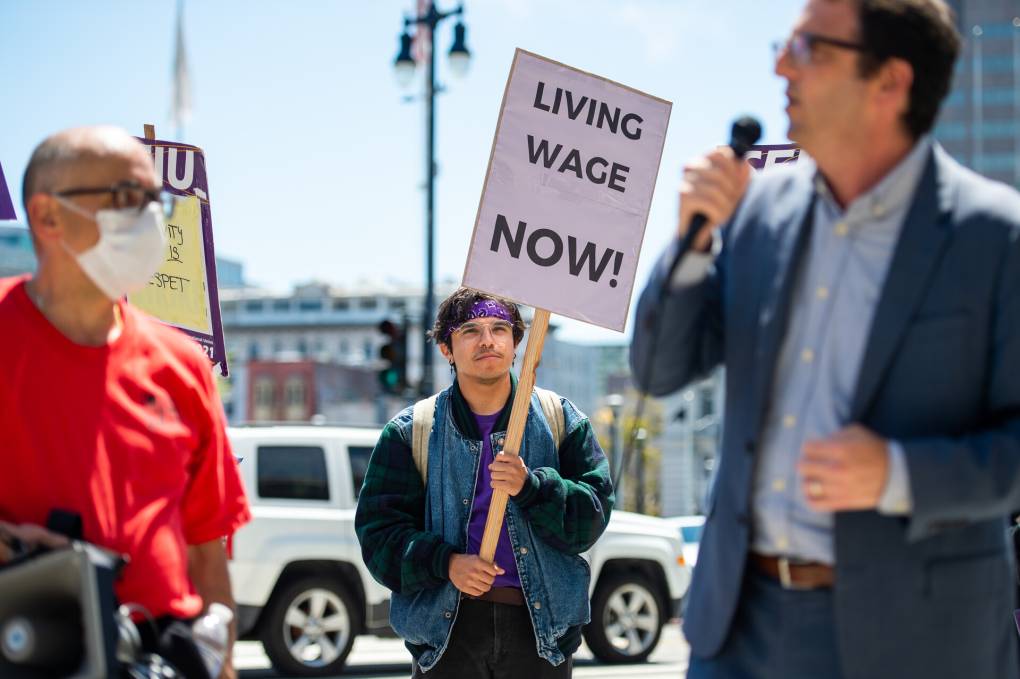
"caption": "Tenderloin Housing Clinic workers rally for a new contract and higher wages in San Francisco on July 27, 2022. The workers support SRO hotels and include caseworkers, janitors, maintenance staff and desk workers.",
"description": null,
"title": "RS57440_031_KQED_TenderloinHousingClinicStrike_07272022-qut",
"credit": "Beth LaBerge/KQED",
"status": "inherit",
"altTag": "three people at a rally, with one holding a sign that reads 'living wage now!' and one speaking into a microphone",
"isLoading": false,
"fetchFailed": false
},
"news_11928418": {
"type": "attachments",
"id": "news_11928418",
"meta": {
"index": "attachments_1716263798",
"site": "news",
"id": "11928418",
"found": true
},
"parent": 11928406,
"imgSizes": {
"twentyfourteen-full-width": {
"file": "https://ww2.kqed.org/app/uploads/sites/10/2022/10/RS59240_IMG_2668-1-1038x576.jpg",
"width": 1038,
"mimeType": "image/jpeg",
"height": 576
},
"thumbnail": {
"file": "https://ww2.kqed.org/app/uploads/sites/10/2022/10/RS59240_IMG_2668-1-160x120.jpg",
"width": 160,
"mimeType": "image/jpeg",
"height": 120
},
"post-thumbnail": {
"file": "https://ww2.kqed.org/app/uploads/sites/10/2022/10/RS59240_IMG_2668-1-672x372.jpg",
"width": 672,
"mimeType": "image/jpeg",
"height": 372
},
"kqedFullSize": {
"file": "https://ww2.kqed.org/app/uploads/sites/10/2022/10/RS59240_IMG_2668-1-scaled.jpg",
"width": 2560,
"height": 1920
},
"2048x2048": {
"file": "https://ww2.kqed.org/app/uploads/sites/10/2022/10/RS59240_IMG_2668-1-2048x1536.jpg",
"width": 2048,
"mimeType": "image/jpeg",
"height": 1536
},
"large": {
"file": "https://ww2.kqed.org/app/uploads/sites/10/2022/10/RS59240_IMG_2668-1-1020x765.jpg",
"width": 1020,
"mimeType": "image/jpeg",
"height": 765
},
"1536x1536": {
"file": "https://ww2.kqed.org/app/uploads/sites/10/2022/10/RS59240_IMG_2668-1-1536x1152.jpg",
"width": 1536,
"mimeType": "image/jpeg",
"height": 1152
},
"full-width": {
"file": "https://ww2.kqed.org/app/uploads/sites/10/2022/10/RS59240_IMG_2668-1-1920x1440.jpg",
"width": 1920,
"mimeType": "image/jpeg",
"height": 1440
},
"medium": {
"file": "https://ww2.kqed.org/app/uploads/sites/10/2022/10/RS59240_IMG_2668-1-800x600.jpg",
"width": 800,
"mimeType": "image/jpeg",
"height": 600
}
},
"publishDate": 1665448748,
"modified": 1665511736,
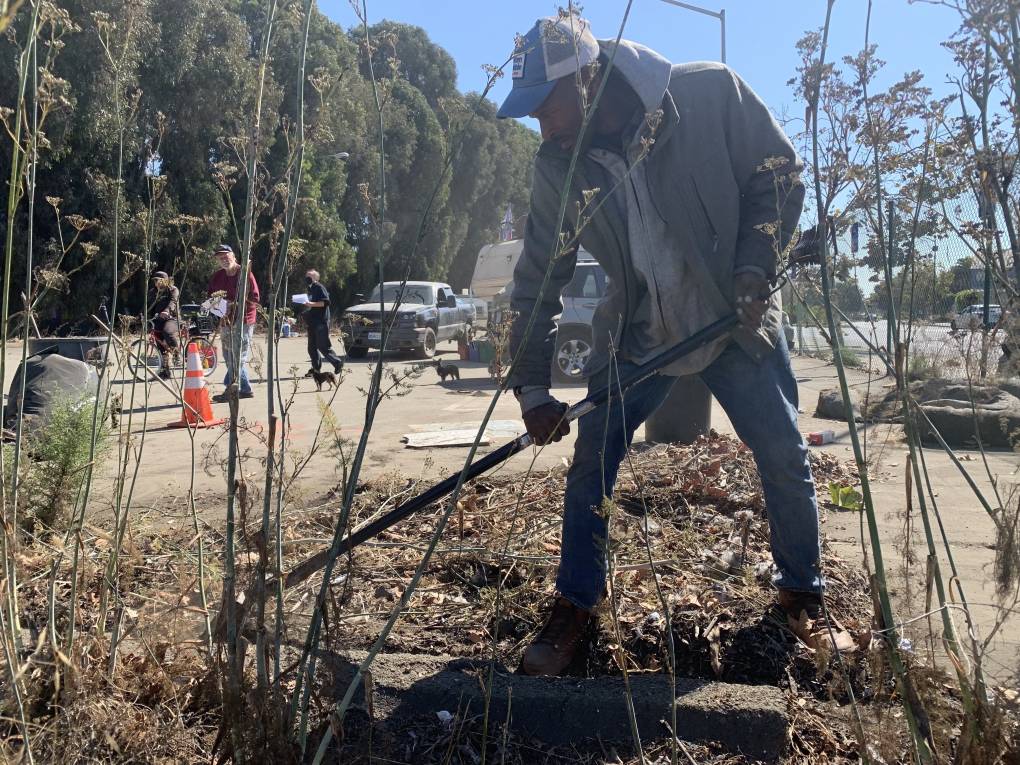
"caption": "LaMonte Ford clears weeds from a vacant lot on 34th Street and Mandela Parkway in West Oakland on Oct. 10, 2022. More than a dozen residents relocated to the lot on Sunday after being displaced from the nearby Wood Street encampment.",
"description": null,
"title": "RS59240_IMG_2668 (1)",
"credit": "Erin Baldassari/KQED",
"status": "inherit",
"altTag": "A man clears weeds in a vacant lot.",
"isLoading": false,
"fetchFailed": false
},
"news_11928107": {
"type": "attachments",
"id": "news_11928107",
"meta": {
"index": "attachments_1716263798",
"site": "news",
"id": "11928107",
"found": true
},
"parent": 11928031,
"imgSizes": {
"twentyfourteen-full-width": {
"file": "https://ww2.kqed.org/app/uploads/sites/10/2022/10/LITERARY-OAKLAND-SWR-IP-ME-2_frame_23609-1038x576.jpeg",
"width": 1038,
"mimeType": "image/jpeg",
"height": 576
},
"thumbnail": {
"file": "https://ww2.kqed.org/app/uploads/sites/10/2022/10/LITERARY-OAKLAND-SWR-IP-ME-2_frame_23609-160x90.jpeg",
"width": 160,
"mimeType": "image/jpeg",
"height": 90
},
"post-thumbnail": {
"file": "https://ww2.kqed.org/app/uploads/sites/10/2022/10/LITERARY-OAKLAND-SWR-IP-ME-2_frame_23609-672x372.jpeg",
"width": 672,
"mimeType": "image/jpeg",
"height": 372
},
"kqedFullSize": {
"file": "https://ww2.kqed.org/app/uploads/sites/10/2022/10/LITERARY-OAKLAND-SWR-IP-ME-2_frame_23609.jpeg",
"width": 1920,
"height": 1080
},
"large": {
"file": "https://ww2.kqed.org/app/uploads/sites/10/2022/10/LITERARY-OAKLAND-SWR-IP-ME-2_frame_23609-1020x574.jpeg",
"width": 1020,
"mimeType": "image/jpeg",
"height": 574
},
"1536x1536": {
"file": "https://ww2.kqed.org/app/uploads/sites/10/2022/10/LITERARY-OAKLAND-SWR-IP-ME-2_frame_23609-1536x864.jpeg",
"width": 1536,
"mimeType": "image/jpeg",
"height": 864
},
"medium": {
"file": "https://ww2.kqed.org/app/uploads/sites/10/2022/10/LITERARY-OAKLAND-SWR-IP-ME-2_frame_23609-800x450.jpeg",
"width": 800,
"mimeType": "image/jpeg",
"height": 450
}
},
"publishDate": 1665179679,
"modified": 1665179679,
"caption": null,
"description": null,
"title": "LITERARY OAKLAND SWR IP ME-2_frame_23609",
"credit": null,
"status": "inherit",
"altTag": null,
"isLoading": false,
"fetchFailed": false
},
"news_11927994": {
"type": "attachments",
"id": "news_11927994",
"meta": {
"index": "attachments_1716263798",
"site": "news",
"id": "11927994",
"found": true
},
"parent": 11927968,
"imgSizes": {
"twentyfourteen-full-width": {
"file": "https://ww2.kqed.org/app/uploads/sites/10/2022/10/Screen-Shot-2022-10-06-at-4.29.48-PM-1038x576.png",
"width": 1038,
"mimeType": "image/png",
"height": 576
},
"thumbnail": {
"file": "https://ww2.kqed.org/app/uploads/sites/10/2022/10/Screen-Shot-2022-10-06-at-4.29.48-PM-160x104.png",
"width": 160,
"mimeType": "image/png",
"height": 104
},
"post-thumbnail": {
"file": "https://ww2.kqed.org/app/uploads/sites/10/2022/10/Screen-Shot-2022-10-06-at-4.29.48-PM-672x372.png",
"width": 672,
"mimeType": "image/png",
"height": 372
},
"kqedFullSize": {
"file": "https://ww2.kqed.org/app/uploads/sites/10/2022/10/Screen-Shot-2022-10-06-at-4.29.48-PM.png",
"width": 2364,
"height": 1534
},
"2048x2048": {
"file": "https://ww2.kqed.org/app/uploads/sites/10/2022/10/Screen-Shot-2022-10-06-at-4.29.48-PM-2048x1329.png",
"width": 2048,
"mimeType": "image/png",
"height": 1329
},
"large": {
"file": "https://ww2.kqed.org/app/uploads/sites/10/2022/10/Screen-Shot-2022-10-06-at-4.29.48-PM-1020x662.png",
"width": 1020,
"mimeType": "image/png",
"height": 662
},
"1536x1536": {
"file": "https://ww2.kqed.org/app/uploads/sites/10/2022/10/Screen-Shot-2022-10-06-at-4.29.48-PM-1536x997.png",
"width": 1536,
"mimeType": "image/png",
"height": 997
},
"full-width": {
"file": "https://ww2.kqed.org/app/uploads/sites/10/2022/10/Screen-Shot-2022-10-06-at-4.29.48-PM-1920x1246.png",
"width": 1920,
"mimeType": "image/png",
"height": 1246
},
"medium": {
"file": "https://ww2.kqed.org/app/uploads/sites/10/2022/10/Screen-Shot-2022-10-06-at-4.29.48-PM-800x519.png",
"width": 800,
"mimeType": "image/png",
"height": 519
}
},
"publishDate": 1665103589,
"modified": 1665167684,
"caption": "Victoria Gonzalez-Gerlach interviews an unhoused person during Sacramento's point-in-time count of the unhoused population in the city on Feb. 24, 2022.",
"description": null,
"title": "Screen Shot 2022-10-06 at 4.29.48 PM",
"credit": "Miguel Gutierrez Jr./CalMatters",
"status": "inherit",
"altTag": "Two people sitting outside. The person on the left is wearing a green jacket, black hoodie and red pants. The person on the right is wearing a purple coat, black mask and black pants.",
"isLoading": false,
"fetchFailed": false
},
"news_11928003": {
"type": "attachments",
"id": "news_11928003",
"meta": {
"index": "attachments_1716263798",
"site": "news",
"id": "11928003",
"found": true
},
"parent": 11927941,
"imgSizes": {
"twentyfourteen-full-width": {
"file": "https://ww2.kqed.org/app/uploads/sites/10/2022/10/RS41395_002_KQED_Housing_MountainView_02192020_3308-qut-1038x576.jpg",
"width": 1038,
"mimeType": "image/jpeg",
"height": 576
},
"thumbnail": {
"file": "https://ww2.kqed.org/app/uploads/sites/10/2022/10/RS41395_002_KQED_Housing_MountainView_02192020_3308-qut-160x107.jpg",
"width": 160,
"mimeType": "image/jpeg",
"height": 107
},
"post-thumbnail": {
"file": "https://ww2.kqed.org/app/uploads/sites/10/2022/10/RS41395_002_KQED_Housing_MountainView_02192020_3308-qut-672x372.jpg",
"width": 672,
"mimeType": "image/jpeg",
"height": 372
},
"kqedFullSize": {
"file": "https://ww2.kqed.org/app/uploads/sites/10/2022/10/RS41395_002_KQED_Housing_MountainView_02192020_3308-qut.jpg",
"width": 1920,
"height": 1280
},
"large": {
"file": "https://ww2.kqed.org/app/uploads/sites/10/2022/10/RS41395_002_KQED_Housing_MountainView_02192020_3308-qut-1020x680.jpg",
"width": 1020,
"mimeType": "image/jpeg",
"height": 680
},
"1536x1536": {
"file": "https://ww2.kqed.org/app/uploads/sites/10/2022/10/RS41395_002_KQED_Housing_MountainView_02192020_3308-qut-1536x1024.jpg",
"width": 1536,
"mimeType": "image/jpeg",
"height": 1024
},
"medium": {
"file": "https://ww2.kqed.org/app/uploads/sites/10/2022/10/RS41395_002_KQED_Housing_MountainView_02192020_3308-qut-800x533.jpg",
"width": 800,
"mimeType": "image/jpeg",
"height": 533
}
},
"publishDate": 1665105667,
"modified": 1665167296,
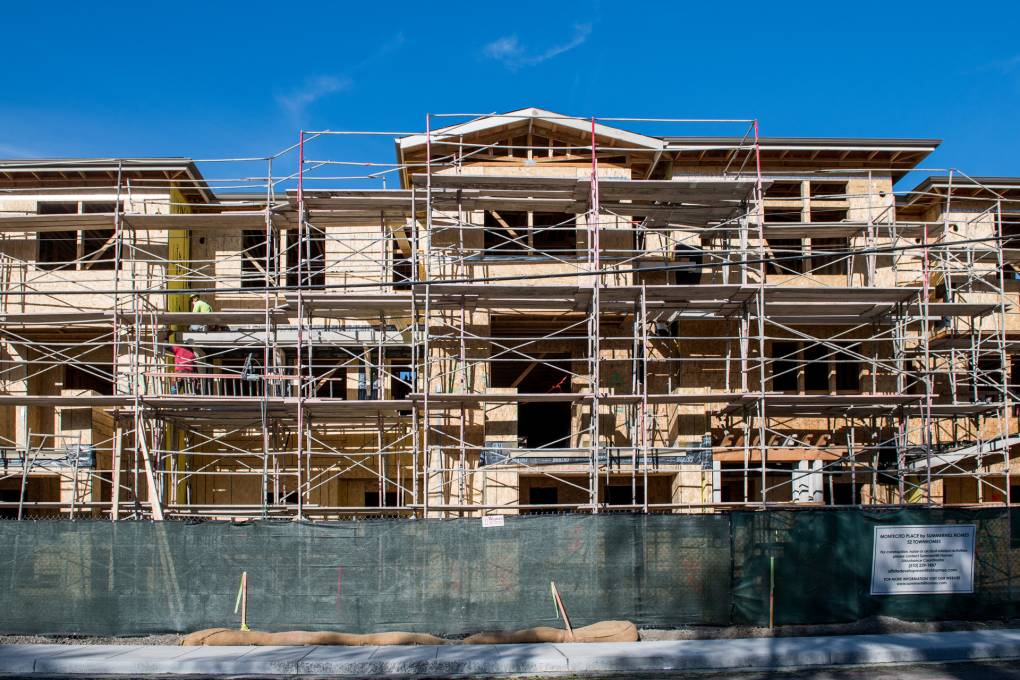
"caption": "In an effort to stanch the flow of teachers leaving and to attract new teachers to the state, California lawmakers passed a suite of housing bills that will allow staff housing to be built on any property owned by a school district without requiring the district to request zoning changes from city or county officials.",
"description": null,
"title": "RS41395_002_KQED_Housing_MountainView_02192020_3308-qut",
"credit": "Beth LaBerge/KQED",
"status": "inherit",
"altTag": "A housing complex under construction with scaffolding and a fence in front of it.",
"isLoading": false,
"fetchFailed": false
},
"news_11927873": {
"type": "attachments",
"id": "news_11927873",
"meta": {
"index": "attachments_1716263798",
"site": "news",
"id": "11927873",
"found": true
},
"parent": 11927871,
"imgSizes": {
"twentyfourteen-full-width": {
"file": "https://ww2.kqed.org/app/uploads/sites/10/2022/10/KQEDLive_MayorBreed-1038x576.jpg",
"width": 1038,
"mimeType": "image/jpeg",
"height": 576
},
"thumbnail": {
"file": "https://ww2.kqed.org/app/uploads/sites/10/2022/10/KQEDLive_MayorBreed-160x106.jpg",
"width": 160,
"mimeType": "image/jpeg",
"height": 106
},
"post-thumbnail": {
"file": "https://ww2.kqed.org/app/uploads/sites/10/2022/10/KQEDLive_MayorBreed-672x372.jpg",
"width": 672,
"mimeType": "image/jpeg",
"height": 372
},
"kqedFullSize": {
"file": "https://ww2.kqed.org/app/uploads/sites/10/2022/10/KQEDLive_MayorBreed.jpg",
"width": 1920,
"height": 1277
},
"large": {
"file": "https://ww2.kqed.org/app/uploads/sites/10/2022/10/KQEDLive_MayorBreed-1020x678.jpg",
"width": 1020,
"mimeType": "image/jpeg",
"height": 678
},
"1536x1536": {
"file": "https://ww2.kqed.org/app/uploads/sites/10/2022/10/KQEDLive_MayorBreed-1536x1022.jpg",
"width": 1536,
"mimeType": "image/jpeg",
"height": 1022
},
"medium": {
"file": "https://ww2.kqed.org/app/uploads/sites/10/2022/10/KQEDLive_MayorBreed-800x532.jpg",
"width": 800,
"mimeType": "image/jpeg",
"height": 532
}
},
"publishDate": 1665033918,
"modified": 1665078831,
"caption": "Mayor London Breed speaks to KQED Political Breakdown hosts Scott Shafer and Marisa Lagos on stage at KQED's live event space, The Commons, on Tuesday, Oct. 5, 2022.",
"description": null,
"title": "KQEDLive_MayorBreed",
"credit": "Alain McLaughlin/KQED",
"status": "inherit",
"altTag": "Mayor London Breed sits in a red chair on a stage, wearing black framed glasses, holding her hand up with her pointer finger up as if to articulate a point. The backs of two chairs can be seen at either side of her, out of focus, in the foreground.",
"isLoading": false,
"fetchFailed": false
},
"news_11927355": {
"type": "attachments",
"id": "news_11927355",
"meta": {
"index": "attachments_1716263798",
"site": "news",
"id": "11927355",
"found": true
},
"parent": 11927352,
"imgSizes": {
"twentyfourteen-full-width": {
"file": "https://ww2.kqed.org/app/uploads/sites/10/2022/09/Sequence_DJI_0362_frame_9417-1038x576.jpeg",
"width": 1038,
"mimeType": "image/jpeg",
"height": 576
},
"thumbnail": {
"file": "https://ww2.kqed.org/app/uploads/sites/10/2022/09/Sequence_DJI_0362_frame_9417-160x90.jpeg",
"width": 160,
"mimeType": "image/jpeg",
"height": 90
},
"post-thumbnail": {
"file": "https://ww2.kqed.org/app/uploads/sites/10/2022/09/Sequence_DJI_0362_frame_9417-672x372.jpeg",
"width": 672,
"mimeType": "image/jpeg",
"height": 372
},
"kqedFullSize": {
"file": "https://ww2.kqed.org/app/uploads/sites/10/2022/09/Sequence_DJI_0362_frame_9417.jpeg",
"width": 1920,
"height": 1080
},
"large": {
"file": "https://ww2.kqed.org/app/uploads/sites/10/2022/09/Sequence_DJI_0362_frame_9417-1020x574.jpeg",
"width": 1020,
"mimeType": "image/jpeg",
"height": 574
},
"1536x1536": {
"file": "https://ww2.kqed.org/app/uploads/sites/10/2022/09/Sequence_DJI_0362_frame_9417-1536x864.jpeg",
"width": 1536,
"mimeType": "image/jpeg",
"height": 864
},
"medium": {
"file": "https://ww2.kqed.org/app/uploads/sites/10/2022/09/Sequence_DJI_0362_frame_9417-800x450.jpeg",
"width": 800,
"mimeType": "image/jpeg",
"height": 450
}
},
"publishDate": 1664572087,
"modified": 1664572087,
"caption": null,
"description": null,
"title": "Sequence_DJI_0362_frame_9417",
"credit": null,
"status": "inherit",
"altTag": null,
"isLoading": false,
"fetchFailed": false
},
"news_11927281": {
"type": "attachments",
"id": "news_11927281",
"meta": {
"index": "attachments_1716263798",
"site": "news",
"id": "11927281",
"found": true
},
"parent": 11927278,
"imgSizes": {
"twentyfourteen-full-width": {
"file": "https://ww2.kqed.org/app/uploads/sites/10/2022/09/RS57928_014_KQED_MountainViewRVs_08172022-qut-1038x576.jpg",
"width": 1038,
"mimeType": "image/jpeg",
"height": 576
},
"thumbnail": {
"file": "https://ww2.kqed.org/app/uploads/sites/10/2022/09/RS57928_014_KQED_MountainViewRVs_08172022-qut-160x107.jpg",
"width": 160,
"mimeType": "image/jpeg",
"height": 107
},
"post-thumbnail": {
"file": "https://ww2.kqed.org/app/uploads/sites/10/2022/09/RS57928_014_KQED_MountainViewRVs_08172022-qut-672x372.jpg",
"width": 672,
"mimeType": "image/jpeg",
"height": 372
},
"kqedFullSize": {
"file": "https://ww2.kqed.org/app/uploads/sites/10/2022/09/RS57928_014_KQED_MountainViewRVs_08172022-qut.jpg",
"width": 1920,
"height": 1280
},
"large": {
"file": "https://ww2.kqed.org/app/uploads/sites/10/2022/09/RS57928_014_KQED_MountainViewRVs_08172022-qut-1020x680.jpg",
"width": 1020,
"mimeType": "image/jpeg",
"height": 680
},
"1536x1536": {
"file": "https://ww2.kqed.org/app/uploads/sites/10/2022/09/RS57928_014_KQED_MountainViewRVs_08172022-qut-1536x1024.jpg",
"width": 1536,
"mimeType": "image/jpeg",
"height": 1024
},
"medium": {
"file": "https://ww2.kqed.org/app/uploads/sites/10/2022/09/RS57928_014_KQED_MountainViewRVs_08172022-qut-800x533.jpg",
"width": 800,
"mimeType": "image/jpeg",
"height": 533
}
},
"publishDate": 1664558587,
"modified": 1664565930,
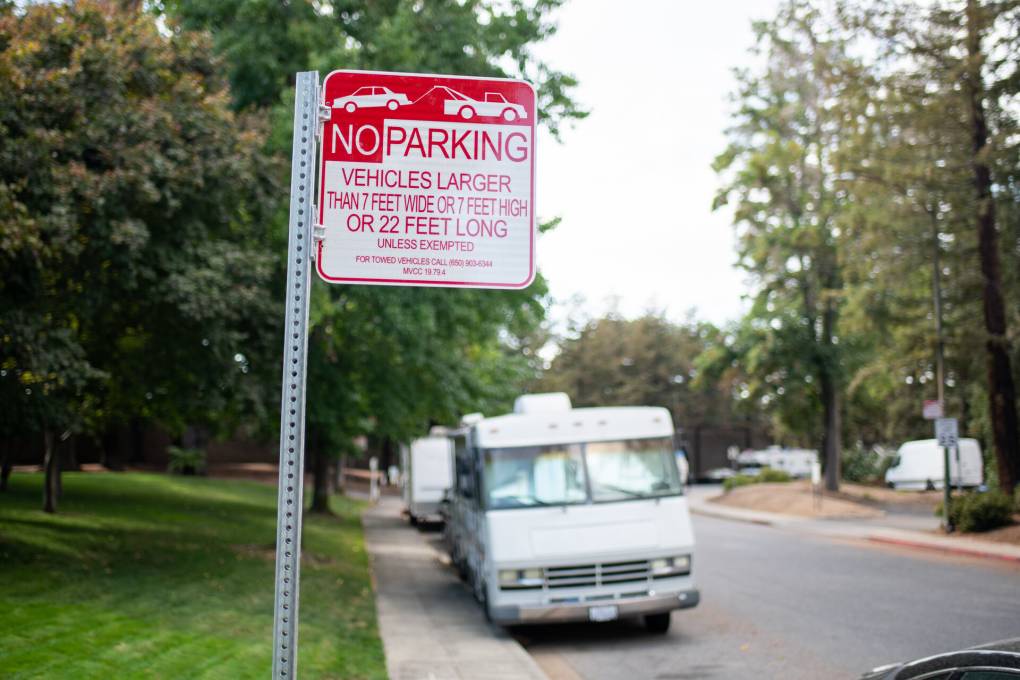
"caption": "A 'No Parking' sign aimed at RVs is posted near RVs parked along Continental Circle in Mountain View on Aug. 17, 2022. A new ordinance goes into effect October 1 further prohibiting where RVs can park in the city.",
"description": null,
"title": "RS57928_014_KQED_MountainViewRVs_08172022-qut",
"credit": "Beth LaBerge/KQED",
"status": "inherit",
"altTag": "a red and white 'no parking' sign is seen on a street where an RV is parked",
"isLoading": false,
"fetchFailed": false
},
"news_11927200": {
"type": "attachments",
"id": "news_11927200",
"meta": {
"index": "attachments_1716263798",
"site": "news",
"id": "11927200",
"found": true
},
"parent": 11927152,
"imgSizes": {
"twentyfourteen-full-width": {
"file": "https://ww2.kqed.org/app/uploads/sites/10/2022/09/RS58147_DSC03479-qut-1038x576.jpg",
"width": 1038,
"mimeType": "image/jpeg",
"height": 576
},
"thumbnail": {
"file": "https://ww2.kqed.org/app/uploads/sites/10/2022/09/RS58147_DSC03479-qut-160x107.jpg",
"width": 160,
"mimeType": "image/jpeg",
"height": 107
},
"post-thumbnail": {
"file": "https://ww2.kqed.org/app/uploads/sites/10/2022/09/RS58147_DSC03479-qut-672x372.jpg",
"width": 672,
"mimeType": "image/jpeg",
"height": 372
},
"kqedFullSize": {
"file": "https://ww2.kqed.org/app/uploads/sites/10/2022/09/RS58147_DSC03479-qut.jpg",
"width": 1920,
"height": 1280
},
"large": {
"file": "https://ww2.kqed.org/app/uploads/sites/10/2022/09/RS58147_DSC03479-qut-1020x680.jpg",
"width": 1020,
"mimeType": "image/jpeg",
"height": 680
},
"1536x1536": {
"file": "https://ww2.kqed.org/app/uploads/sites/10/2022/09/RS58147_DSC03479-qut-1536x1024.jpg",
"width": 1536,
"mimeType": "image/jpeg",
"height": 1024
},
"medium": {
"file": "https://ww2.kqed.org/app/uploads/sites/10/2022/09/RS58147_DSC03479-qut-800x533.jpg",
"width": 800,
"mimeType": "image/jpeg",
"height": 533
}
},
"publishDate": 1664491428,
"modified": 1664493815,
"caption": "For Flor Rodriguez and her two daughters, COVID rent relief came as a lifeline. But now the state is asking her — and thousands of other applicants — to pay back the money.",
"description": "A Latina mother and her two daughters look beseechingly at the camera.",
"title": "RS58147_DSC03479-qut",
"credit": "Aryk Copley/KQED",
"status": "inherit",
"altTag": "A Latina woman holding a 2-year-old daughter next to her 9-year-old daughter looking at the camera in a park with a playground in the background on a sunny day",
"isLoading": false,
"fetchFailed": false
},
"news_11927074": {
"type": "attachments",
"id": "news_11927074",
"meta": {
"index": "attachments_1716263798",
"site": "news",
"id": "11927074",
"found": true
},
"parent": 11927063,
"imgSizes": {
"twentyfourteen-full-width": {
"file": "https://ww2.kqed.org/app/uploads/sites/10/2022/09/Commercial-Lot-Housing-1038x576.jpg",
"width": 1038,
"mimeType": "image/jpeg",
"height": 576
},
"thumbnail": {
"file": "https://ww2.kqed.org/app/uploads/sites/10/2022/09/Commercial-Lot-Housing-160x109.jpg",
"width": 160,
"mimeType": "image/jpeg",
"height": 109
},
"post-thumbnail": {
"file": "https://ww2.kqed.org/app/uploads/sites/10/2022/09/Commercial-Lot-Housing-672x372.jpg",
"width": 672,
"mimeType": "image/jpeg",
"height": 372
},
"kqedFullSize": {
"file": "https://ww2.kqed.org/app/uploads/sites/10/2022/09/Commercial-Lot-Housing.jpg",
"width": 1980,
"height": 1346
},
"large": {
"file": "https://ww2.kqed.org/app/uploads/sites/10/2022/09/Commercial-Lot-Housing-1020x693.jpg",
"width": 1020,
"mimeType": "image/jpeg",
"height": 693
},
"1536x1536": {
"file": "https://ww2.kqed.org/app/uploads/sites/10/2022/09/Commercial-Lot-Housing-1536x1044.jpg",
"width": 1536,
"mimeType": "image/jpeg",
"height": 1044
},
"full-width": {
"file": "https://ww2.kqed.org/app/uploads/sites/10/2022/09/Commercial-Lot-Housing-1920x1305.jpg",
"width": 1920,
"mimeType": "image/jpeg",
"height": 1305
},
"medium": {
"file": "https://ww2.kqed.org/app/uploads/sites/10/2022/09/Commercial-Lot-Housing-800x544.jpg",
"width": 800,
"mimeType": "image/jpeg",
"height": 544
}
},
"publishDate": 1664412441,
"modified": 1664424081,
"caption": "New housing is constructed at Brooklyn Basin in Oakland on Aug. 18, 2022.",
"description": null,
"title": "Commercial Lot Housing",
"credit": "Jane Tyska/Digital First Media/East Bay Times via Getty Images",
"status": "inherit",
"altTag": "An aerial view of a housing development in Oakland. The building is more than a frame but not yet complete, and a crane sticks out from the roof. Far in the background, Oakland's downtown area.",
"isLoading": false,
"fetchFailed": false
},
"news_11850166": {
"type": "attachments",
"id": "news_11850166",
"meta": {
"index": "attachments_1716263798",
"site": "news",
"id": "11850166",
"found": true
},
"parent": 11850145,
"imgSizes": {
"apple_news_ca_landscape_5_5": {
"file": "https://ww2.kqed.org/app/uploads/sites/10/2020/12/RS42473_007_KQED_SanFrancisco_RentStrike_03312020-qut-1044x783.jpg",
"width": 1044,
"mimeType": "image/jpeg",
"height": 783
},
"apple_news_ca_square_4_0": {
"file": "https://ww2.kqed.org/app/uploads/sites/10/2020/12/RS42473_007_KQED_SanFrancisco_RentStrike_03312020-qut-470x470.jpg",
"width": 470,
"mimeType": "image/jpeg",
"height": 470
},
"twentyfourteen-full-width": {
"file": "https://ww2.kqed.org/app/uploads/sites/10/2020/12/RS42473_007_KQED_SanFrancisco_RentStrike_03312020-qut-1038x576.jpg",
"width": 1038,
"mimeType": "image/jpeg",
"height": 576
},
"thumbnail": {
"file": "https://ww2.kqed.org/app/uploads/sites/10/2020/12/RS42473_007_KQED_SanFrancisco_RentStrike_03312020-qut-160x107.jpg",
"width": 160,
"mimeType": "image/jpeg",
"height": 107
},
"post-thumbnail": {
"file": "https://ww2.kqed.org/app/uploads/sites/10/2020/12/RS42473_007_KQED_SanFrancisco_RentStrike_03312020-qut-672x372.jpg",
"width": 672,
"mimeType": "image/jpeg",
"height": 372
},
"kqedFullSize": {
"file": "https://ww2.kqed.org/app/uploads/sites/10/2020/12/RS42473_007_KQED_SanFrancisco_RentStrike_03312020-qut.jpg",
"width": 1920,
"height": 1280
},
"apple_news_ca_landscape_4_7": {
"file": "https://ww2.kqed.org/app/uploads/sites/10/2020/12/RS42473_007_KQED_SanFrancisco_RentStrike_03312020-qut-632x474.jpg",
"width": 632,
"mimeType": "image/jpeg",
"height": 474
},
"large": {
"file": "https://ww2.kqed.org/app/uploads/sites/10/2020/12/RS42473_007_KQED_SanFrancisco_RentStrike_03312020-qut-1020x680.jpg",
"width": 1020,
"mimeType": "image/jpeg",
"height": 680
},
"apple_news_ca_landscape_4_0": {
"file": "https://ww2.kqed.org/app/uploads/sites/10/2020/12/RS42473_007_KQED_SanFrancisco_RentStrike_03312020-qut-536x402.jpg",
"width": 536,
"mimeType": "image/jpeg",
"height": 402
},
"apple_news_ca_portrait_12_9": {
"file": "https://ww2.kqed.org/app/uploads/sites/10/2020/12/RS42473_007_KQED_SanFrancisco_RentStrike_03312020-qut-1122x1280.jpg",
"width": 1122,
"mimeType": "image/jpeg",
"height": 1280
},
"medium": {
"file": "https://ww2.kqed.org/app/uploads/sites/10/2020/12/RS42473_007_KQED_SanFrancisco_RentStrike_03312020-qut-800x533.jpg",
"width": 800,
"mimeType": "image/jpeg",
"height": 533
},
"apple_news_ca_portrait_4_0": {
"file": "https://ww2.kqed.org/app/uploads/sites/10/2020/12/RS42473_007_KQED_SanFrancisco_RentStrike_03312020-qut-354x472.jpg",
"width": 354,
"mimeType": "image/jpeg",
"height": 472
},
"apple_news_ca_portrait_9_7": {
"file": "https://ww2.kqed.org/app/uploads/sites/10/2020/12/RS42473_007_KQED_SanFrancisco_RentStrike_03312020-qut-840x1120.jpg",
"width": 840,
"mimeType": "image/jpeg",
"height": 1120
},
"apple_news_ca_landscape_12_9": {
"file": "https://ww2.kqed.org/app/uploads/sites/10/2020/12/RS42473_007_KQED_SanFrancisco_RentStrike_03312020-qut-1832x1280.jpg",
"width": 1832,
"mimeType": "image/jpeg",
"height": 1280
},
"apple_news_ca_square_9_7": {
"file": "https://ww2.kqed.org/app/uploads/sites/10/2020/12/RS42473_007_KQED_SanFrancisco_RentStrike_03312020-qut-1104x1104.jpg",
"width": 1104,
"mimeType": "image/jpeg",
"height": 1104
},
"1536x1536": {
"file": "https://ww2.kqed.org/app/uploads/sites/10/2020/12/RS42473_007_KQED_SanFrancisco_RentStrike_03312020-qut-1536x1024.jpg",
"width": 1536,
"mimeType": "image/jpeg",
"height": 1024
},
"apple_news_ca_portrait_4_7": {
"file": "https://ww2.kqed.org/app/uploads/sites/10/2020/12/RS42473_007_KQED_SanFrancisco_RentStrike_03312020-qut-414x552.jpg",
"width": 414,
"mimeType": "image/jpeg",
"height": 552
},
"apple_news_ca_square_12_9": {
"file": "https://ww2.kqed.org/app/uploads/sites/10/2020/12/RS42473_007_KQED_SanFrancisco_RentStrike_03312020-qut-1472x1280.jpg",
"width": 1472,
"mimeType": "image/jpeg",
"height": 1280
},
"apple_news_ca_portrait_5_5": {
"file": "https://ww2.kqed.org/app/uploads/sites/10/2020/12/RS42473_007_KQED_SanFrancisco_RentStrike_03312020-qut-687x916.jpg",
"width": 687,
"mimeType": "image/jpeg",
"height": 916
},
"apple_news_ca_square_4_7": {
"file": "https://ww2.kqed.org/app/uploads/sites/10/2020/12/RS42473_007_KQED_SanFrancisco_RentStrike_03312020-qut-550x550.jpg",
"width": 550,
"mimeType": "image/jpeg",
"height": 550
},
"apple_news_ca_landscape_9_7": {
"file": "https://ww2.kqed.org/app/uploads/sites/10/2020/12/RS42473_007_KQED_SanFrancisco_RentStrike_03312020-qut-1376x1032.jpg",
"width": 1376,
"mimeType": "image/jpeg",
"height": 1032
},
"apple_news_ca_square_5_5": {
"file": "https://ww2.kqed.org/app/uploads/sites/10/2020/12/RS42473_007_KQED_SanFrancisco_RentStrike_03312020-qut-912x912.jpg",
"width": 912,
"mimeType": "image/jpeg",
"height": 912
}
},
"publishDate": 1607390993,
"modified": 1664324333,
"caption": "A man walks past a 'Rent Strike!' sign in the Mission District on March 31, 2020.",
"description": null,
"title": "RS42473_007_KQED_SanFrancisco_RentStrike_03312020-qut",
"credit": "Beth LaBerge/KQED",
"status": "inherit",
"altTag": "A banner on a building says 'Rent Strike!'",
"isLoading": false,
"fetchFailed": false
},
"news_11926909": {
"type": "attachments",
"id": "news_11926909",
"meta": {
"index": "attachments_1716263798",
"site": "news",
"id": "11926909",
"found": true
},
"parent": 11926891,
"imgSizes": {
"twentyfourteen-full-width": {
"file": "https://ww2.kqed.org/app/uploads/sites/10/2022/09/RS58870_Toro_Castaño_001-qut-1038x576.jpg",
"width": 1038,
"mimeType": "image/jpeg",
"height": 576
},
"thumbnail": {
"file": "https://ww2.kqed.org/app/uploads/sites/10/2022/09/RS58870_Toro_Castaño_001-qut-160x107.jpg",
"width": 160,
"mimeType": "image/jpeg",
"height": 107
},
"post-thumbnail": {
"file": "https://ww2.kqed.org/app/uploads/sites/10/2022/09/RS58870_Toro_Castaño_001-qut-672x372.jpg",
"width": 672,
"mimeType": "image/jpeg",
"height": 372
},
"kqedFullSize": {
"file": "https://ww2.kqed.org/app/uploads/sites/10/2022/09/RS58870_Toro_Castaño_001-qut.jpg",
"width": 1920,
"height": 1280
},
"large": {
"file": "https://ww2.kqed.org/app/uploads/sites/10/2022/09/RS58870_Toro_Castaño_001-qut-1020x680.jpg",
"width": 1020,
"mimeType": "image/jpeg",
"height": 680
},
"1536x1536": {
"file": "https://ww2.kqed.org/app/uploads/sites/10/2022/09/RS58870_Toro_Castaño_001-qut-1536x1024.jpg",
"width": 1536,
"mimeType": "image/jpeg",
"height": 1024
},
"medium": {
"file": "https://ww2.kqed.org/app/uploads/sites/10/2022/09/RS58870_Toro_Castaño_001-qut-800x533.jpg",
"width": 800,
"mimeType": "image/jpeg",
"height": 533
}
},
"publishDate": 1664319729,
"modified": 1664319809,
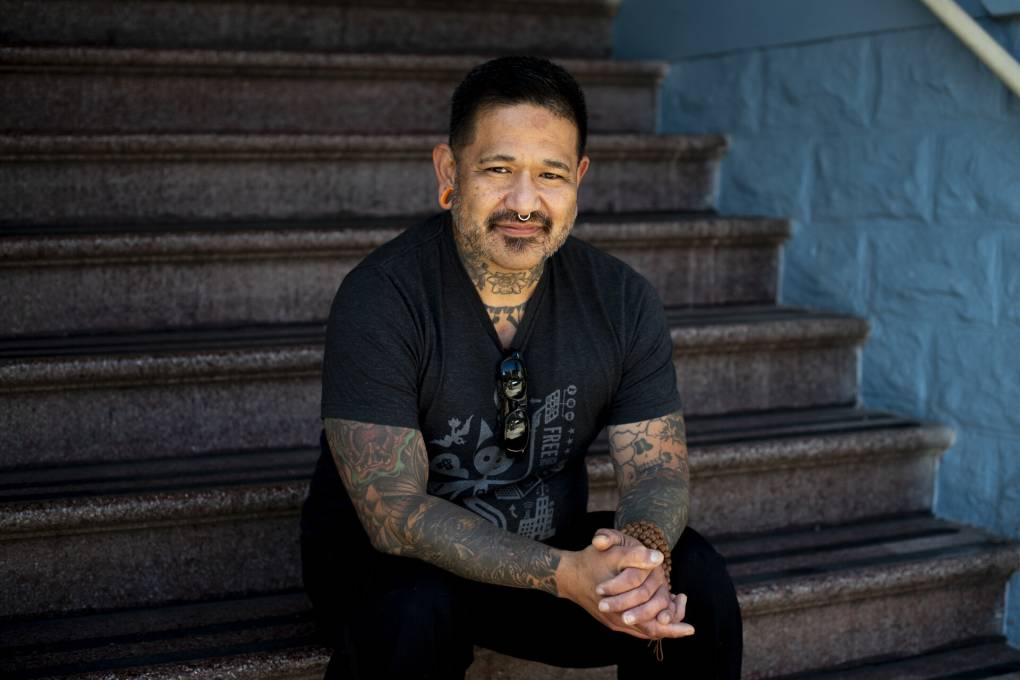
"caption": "Toro Castaño poses for a portrait outside his home in San Francisco on September 27, 2022. Castaño says he was displaced nearly daily when he lived on the streets of the Castro for two years. He's one of seven unhoused or formerly unhoused residents suing the city over forced displacements.",
"description": null,
"title": "KQED_Toro_Portrait",
"credit": "Marlena Sloss/KQED",
"status": "inherit",
"altTag": "A man wearing a short sleeved black shirt with tattoos on his arms and a nose ring sits on steps with his hands together.",
"isLoading": false,
"fetchFailed": false
}
},
"audioPlayerReducer": {
"postId": "stream_live",
"isPaused": true,
"isPlaying": false,
"pfsActive": false,
"pledgeModalIsOpen": true,
"playerDrawerIsOpen": false,
"liveAudioPlayStartedAt": 0,
"liveAudioPlayContext": ""
},
"authorsReducer": {
"byline_news_11927968": {
"type": "authors",
"id": "byline_news_11927968",
"meta": {
"override": true
},
"slug": "byline_news_11927968",
"name": "\u003ca href=\"https://calmatters.org/author/manuela-tobias/\">Manuela Tobias\u003c/a>",
"isLoading": false
},
"byline_news_11927941": {
"type": "authors",
"id": "byline_news_11927941",
"meta": {
"override": true
},
"slug": "byline_news_11927941",
"name": "\u003ca href=\"https://edsource.org/author/dlambert\">Diana Lambert\u003c/a>",
"isLoading": false
},
"byline_news_11927063": {
"type": "authors",
"id": "byline_news_11927063",
"meta": {
"override": true
},
"slug": "byline_news_11927063",
"name": "Adam Beam, Associated Press",
"isLoading": false
},
"kqed": {
"type": "authors",
"id": "236",
"meta": {
"index": "authors_1716337520",
"id": "236",
"found": true
},
"name": "KQED News Staff",
"firstName": "KQED News Staff",
"lastName": null,
"slug": "kqed",
"email": "faq@kqed.org",
"display_author_email": false,
"staff_mastheads": [],
"title": null,
"bio": null,
"avatar": "https://secure.gravatar.com/avatar/ef0e801a68c4c54afa9180db14084167?s=600&d=blank&r=g",
"twitter": null,
"facebook": null,
"instagram": null,
"linkedin": null,
"sites": [
{
"site": "arts",
"roles": [
"contributor"
]
},
{
"site": "news",
"roles": [
"editor"
]
},
{
"site": "futureofyou",
"roles": [
"author"
]
}
],
"headData": {
"title": "KQED News Staff | KQED",
"description": null,
"ogImgSrc": "https://secure.gravatar.com/avatar/ef0e801a68c4c54afa9180db14084167?s=600&d=blank&r=g",
"twImgSrc": "https://secure.gravatar.com/avatar/ef0e801a68c4c54afa9180db14084167?s=600&d=blank&r=g"
},
"isLoading": false,
"link": "/author/kqed"
},
"esilvers": {
"type": "authors",
"id": "7237",
"meta": {
"index": "authors_1716337520",
"id": "7237",
"found": true
},
"name": "Emma Silvers",
"firstName": "Emma",
"lastName": "Silvers",
"slug": "esilvers",
"email": "esilvers@kqed.org",
"display_author_email": false,
"staff_mastheads": [],
"title": "KQED Contributor",
"bio": "Emma Silvers is an editor at KQED Arts and a former digital producer at KQED News. Born and raised in the Bay Area, she has previously been an arts and entertainment editor at the \u003cem>San Francisco Chronicle\u003c/em>, \u003cem>SF Weekly\u003c/em> and the \u003cem>San Francisco Bay Guardian.\u003c/em> \u003ca href=\"https://www.emmasilvers.com\">Her work\u003c/a> has also appeared in \u003cem>Rolling Stone\u003c/em>, Pitchfork and \u003cem>Mother Jones\u003c/em>. In 2017 she was the recipient of the Society of Professional Journalists-Northern California's award for arts and culture reporting. In 1993 she \u003ca href=\"https://www.kqed.org/pop/16759/wait-what-my-coworker-was-a-voice-over-hyperventilator-for-jurassic-park\">hyperventilated in \u003cem>Jurassic Park\u003c/em>\u003c/a>.",
"avatar": "https://secure.gravatar.com/avatar/247beada39b88ea5759db1f51dba05cf?s=600&d=blank&r=g",
"twitter": "emmaruthless",
"facebook": null,
"instagram": null,
"linkedin": null,
"sites": [
{
"site": "arts",
"roles": [
"editor"
]
},
{
"site": "news",
"roles": [
"editor"
]
},
{
"site": "pop",
"roles": [
"contributor"
]
},
{
"site": "bayareabites",
"roles": [
"editor"
]
},
{
"site": "food",
"roles": [
"contributor"
]
},
{
"site": "liveblog",
"roles": [
"editor"
]
}
],
"headData": {
"title": "Emma Silvers | KQED",
"description": "KQED Contributor",
"ogImgSrc": "https://secure.gravatar.com/avatar/247beada39b88ea5759db1f51dba05cf?s=600&d=blank&r=g",
"twImgSrc": "https://secure.gravatar.com/avatar/247beada39b88ea5759db1f51dba05cf?s=600&d=blank&r=g"
},
"isLoading": false,
"link": "/author/esilvers"
},
"vrancano": {
"type": "authors",
"id": "11276",
"meta": {
"index": "authors_1716337520",
"id": "11276",
"found": true
},
"name": "Vanessa Rancaño",
"firstName": "Vanessa",
"lastName": "Rancaño",
"slug": "vrancano",
"email": "vrancano@kqed.org",
"display_author_email": false,
"staff_mastheads": [
"news"
],
"title": "Reporter",
"bio": "Vanessa Rancaño is a features reporter for KQED. She’s also covered homelessness and education for the station and reported from the Central Valley. Her work has aired across public radio, from flagship national news shows to longform narrative podcasts. Before taking up a mic, she worked as a freelance print journalist. She’s been recognized with a number of national and regional awards. Vanessa grew up in California's Central Valley. She's a former NPR Kroc Fellow, and a graduate of the UC Berkeley Graduate School of Journalism.",
"avatar": "https://secure.gravatar.com/avatar/b3a383dfb0e7ee1c17568f2cf067904ab654d6e3de9743fc661f3c788ade1bed?s=600&d=blank&r=g",
"twitter": "vanessarancano",
"bluesky": null,
"facebook": null,
"instagram": null,
"linkedin": null,
"sites": [
{
"site": "arts",
"roles": [
"editor"
]
},
{
"site": "news",
"roles": [
"editor"
]
},
{
"site": "liveblog",
"roles": [
"contributor"
]
}
],
"headData": {
"title": "Vanessa Rancaño | KQED",
"description": "Reporter",
"ogImgSrc": "https://secure.gravatar.com/avatar/b3a383dfb0e7ee1c17568f2cf067904ab654d6e3de9743fc661f3c788ade1bed?s=600&d=blank&r=g",
"twImgSrc": "https://secure.gravatar.com/avatar/b3a383dfb0e7ee1c17568f2cf067904ab654d6e3de9743fc661f3c788ade1bed?s=600&d=blank&r=g"
},
"isLoading": false,
"link": "/author/vrancano"
},
"hmcdede": {
"type": "authors",
"id": "11635",
"meta": {
"index": "authors_1716337520",
"id": "11635",
"found": true
},
"name": "Holly McDede",
"firstName": "Holly",
"lastName": "McDede",
"slug": "hmcdede",
"email": "hmcdede@KQED.org",
"display_author_email": false,
"staff_mastheads": [],
"title": "KQED Contributor",
"bio": null,
"avatar": "https://secure.gravatar.com/avatar/35d1a1f5422c9d266f7ace9348d170f2136671a65fffc90a592e4d7fbf8dc3f6?s=600&d=blank&r=g",
"twitter": null,
"bluesky": null,
"facebook": null,
"instagram": null,
"linkedin": null,
"sites": [
{
"site": "arts",
"roles": [
"editor"
]
},
{
"site": "news",
"roles": [
"edit_others_posts",
"editor"
]
},
{
"site": "science",
"roles": [
"editor"
]
},
{
"site": "forum",
"roles": [
"editor"
]
},
{
"site": "perspectives",
"roles": [
"administrator"
]
}
],
"headData": {
"title": "Holly McDede | KQED",
"description": "KQED Contributor",
"ogImgSrc": "https://secure.gravatar.com/avatar/35d1a1f5422c9d266f7ace9348d170f2136671a65fffc90a592e4d7fbf8dc3f6?s=600&d=blank&r=g",
"twImgSrc": "https://secure.gravatar.com/avatar/35d1a1f5422c9d266f7ace9348d170f2136671a65fffc90a592e4d7fbf8dc3f6?s=600&d=blank&r=g"
},
"isLoading": false,
"link": "/author/hmcdede"
},
"ebaldassari": {
"type": "authors",
"id": "11652",
"meta": {
"index": "authors_1716337520",
"id": "11652",
"found": true
},
"name": "Erin Baldassari",
"firstName": "Erin",
"lastName": "Baldassari",
"slug": "ebaldassari",
"email": "ebaldassari@KQED.org",
"display_author_email": true,
"staff_mastheads": [
"news"
],
"title": "Staff Writer",
"bio": "Erin Baldassari covers housing for KQED. She's a former print journalist and most recently worked as the transportation reporter for the \u003cem>Mercury News\u003c/em> and \u003cem>East Bay Times. \u003c/em>There, she focused on how the Bay Area’s housing shortage has changed the way people move around the region. She also served on the \u003cem>East Bay Times\u003c/em>’ 2017 Pulitzer Prize-winning team for coverage of the Ghost Ship Fire in Oakland. Prior to that, Erin worked as a breaking news and general assignment reporter for a variety of outlets in the Bay Area and the greater Boston area. A Tufts University alumna, Erin grew up in the foothills of the Sierra Nevada mountains and in Sonoma County. She is a life-long KQED listener.",
"avatar": "https://secure.gravatar.com/avatar/5e95cad64a8ca08288082212e199d2b0cbeb4fd8e8ef5339395f361032bbe005?s=600&d=blank&r=g",
"twitter": "e_baldi",
"bluesky": null,
"facebook": null,
"instagram": null,
"linkedin": null,
"sites": [
{
"site": "news",
"roles": [
"edit_others_posts",
"editor"
]
},
{
"site": "science",
"roles": [
"editor"
]
},
{
"site": "liveblog",
"roles": [
"editor"
]
}
],
"headData": {
"title": "Erin Baldassari | KQED",
"description": "Staff Writer",
"ogImgSrc": "https://secure.gravatar.com/avatar/5e95cad64a8ca08288082212e199d2b0cbeb4fd8e8ef5339395f361032bbe005?s=600&d=blank&r=g",
"twImgSrc": "https://secure.gravatar.com/avatar/5e95cad64a8ca08288082212e199d2b0cbeb4fd8e8ef5339395f361032bbe005?s=600&d=blank&r=g"
},
"isLoading": false,
"link": "/author/ebaldassari"
},
"jrodriguez": {
"type": "authors",
"id": "11690",
"meta": {
"index": "authors_1716337520",
"id": "11690",
"found": true
},
"name": "Joe Fitzgerald Rodriguez",
"firstName": "Joe",
"lastName": "Fitzgerald Rodriguez",
"slug": "jrodriguez",
"email": "jrodriguez@kqed.org",
"display_author_email": true,
"staff_mastheads": [
"news"
],
"title": "Reporter and Producer",
"bio": "Joe Fitzgerald Rodriguez is a reporter and digital producer for KQED covering politics. Joe most recently wrote for the \u003cem>San Francisco Examiner\u003c/em> as a political columnist covering The City. He was raised in San Francisco and has spent his reporting career in his beloved, foggy, city by the bay. Joe was 12-years-old when he conducted his first interview in journalism, grilling former San Francisco Mayor Willie Brown for the Marina Middle School newspaper, \u003cem>The Penguin Press, \u003c/em>and he continues to report on the San Francisco Bay Area to this day.",
"avatar": "https://secure.gravatar.com/avatar/2247beb0564c1e9c62228d5649d2edac?s=600&d=blank&r=g",
"twitter": "FitztheReporter",
"facebook": null,
"instagram": "https://www.instagram.com/fitzthereporter/",
"linkedin": null,
"sites": [
{
"site": "",
"roles": [
"editor"
]
},
{
"site": "arts",
"roles": [
"editor"
]
},
{
"site": "news",
"roles": [
"editor"
]
},
{
"site": "science",
"roles": [
"editor"
]
},
{
"site": "elections",
"roles": [
"editor"
]
},
{
"site": "liveblog",
"roles": [
"editor"
]
}
],
"headData": {
"title": "Joe Fitzgerald Rodriguez | KQED",
"description": "Reporter and Producer",
"ogImgSrc": "https://secure.gravatar.com/avatar/2247beb0564c1e9c62228d5649d2edac?s=600&d=blank&r=g",
"twImgSrc": "https://secure.gravatar.com/avatar/2247beb0564c1e9c62228d5649d2edac?s=600&d=blank&r=g"
},
"isLoading": false,
"link": "/author/jrodriguez"
},
"ccabreralomeli": {
"type": "authors",
"id": "11708",
"meta": {
"index": "authors_1716337520",
"id": "11708",
"found": true
},
"name": "Carlos Cabrera-Lomelí",
"firstName": "Carlos",
"lastName": "Cabrera-Lomelí",
"slug": "ccabreralomeli",
"email": "ccabreralomeli@KQED.org",
"display_author_email": true,
"staff_mastheads": [
"news"
],
"title": "Community Reporter",
"bio": "Carlos Cabrera-Lomelí is a community reporter with KQED's digital engagement team. He also reports and co-produces for KQED's bilingual news hub KQED en Español. He grew up in San Francisco's Mission District and has previously worked with Univision, 48 Hills and REFORMA in Mexico City.",
"avatar": "https://secure.gravatar.com/avatar/c309be9665e484f887b818c89e273ecc673004f426f36b24d00a4d813a2e0518?s=600&d=blank&r=g",
"twitter": "@LomeliCabrera",
"bluesky": null,
"facebook": null,
"instagram": null,
"linkedin": null,
"sites": [
{
"site": "arts",
"roles": [
"editor"
]
},
{
"site": "news",
"roles": [
"editor"
]
},
{
"site": "about",
"roles": [
"editor"
]
},
{
"site": "science",
"roles": [
"editor"
]
},
{
"site": "perspectives",
"roles": [
"editor"
]
},
{
"site": "elections",
"roles": [
"editor"
]
},
{
"site": "liveblog",
"roles": [
"contributor"
]
}
],
"headData": {
"title": "Carlos Cabrera-Lomelí | KQED",
"description": "Community Reporter",
"ogImgSrc": "https://secure.gravatar.com/avatar/c309be9665e484f887b818c89e273ecc673004f426f36b24d00a4d813a2e0518?s=600&d=blank&r=g",
"twImgSrc": "https://secure.gravatar.com/avatar/c309be9665e484f887b818c89e273ecc673004f426f36b24d00a4d813a2e0518?s=600&d=blank&r=g"
},
"isLoading": false,
"link": "/author/ccabreralomeli"
}
},
"pagesReducer": {
"news_category_housing": {
"type": "terms",
"id": "news_6266",
"meta": {
"index": "terms_1716263798",
"site": "news",
"id": "6266",
"score": 11.039913
},
"featImg": null,
"name": "Housing",
"description": null,
"taxonomy": "category",
"headData": {
"twImgId": null,
"twTitle": null,
"ogTitle": null,
"ogImgId": null,
"twDescription": null,
"description": null,
"title": "Housing Archives | KQED News",
"ogDescription": null
},
"ttid": 6290,
"slug": "housing",
"isLoading": false,
"title": "Housing",
"pageMeta": {
"site": "news",
"WpPageTemplate": "page-topic-editorial",
"currentPage": 59
},
"blocks": [
{
"blockName": "kqed/post-list",
"attrs": {
"layout": "cardArticle2",
"query": "posts/news?category=housing",
"seeMore": false,
"paginated": true,
"page": 59
}
},
{
"blockName": "kqed/ad"
}
]
}
},
"pfsSessionReducer": {},
"postsReducer": {
"stream_live": {
"type": "live",
"id": "stream_live",
"audioUrl": "https://streams.kqed.org/kqedradio",
"title": "Live Stream",
"excerpt": "Live Stream information currently unavailable.",
"link": "/radio",
"featImg": "",
"label": {
"name": "KQED Live",
"link": "/"
}
},
"stream_kqedNewscast": {
"type": "posts",
"id": "stream_kqedNewscast",
"audioUrl": "https://www.kqed.org/.stream/anon/radio/RDnews/newscast.mp3?_=1",
"title": "KQED Newscast",
"featImg": "",
"label": {
"name": "88.5 FM",
"link": "/"
}
},
"news_11928262": {
"type": "posts",
"id": "news_11928262",
"meta": {
"index": "posts_1716263798",
"site": "news",
"id": "11928262",
"score": null,
"sort": [
1665544114000
]
},
"guestAuthors": [],
"slug": "they-cant-live-on-their-desire-to-serve-others-more-bay-area-nonprofit-workers-are-joining-the-labor-movement",
"title": "'They Can't Live on Their Desire to Serve Others': More Bay Area Nonprofit Workers Are Joining the Labor Movement",
"publishDate": 1665544114,
"format": "standard",
"headTitle": "‘They Can’t Live on Their Desire to Serve Others’: More Bay Area Nonprofit Workers Are Joining the Labor Movement | KQED",
"labelTerm": {
"site": "news"
},
"content": "\u003cp>A growing number of Bay Area nonprofit workers have gone on strike or joined unions in recent months — a surge of labor organizing by the people who serve some of the region’s most marginalized residents.\u003c/p>\n\u003cp>Staff at Glide Foundation last week submitted a letter of intent to management stating that they planned to form a union, becoming the latest in a string of nonprofit employee groups to organize to ensure worker protections and a living wage. In doing so, workers at the nonprofit, which serves San Francisco’s unhoused community, joined their counterparts at Hamilton Families, Impact Justice and Episcopal Community Services, all Bay Area nonprofits that unionized with the Office and Professional Employees International Union (OPEIU) Local 29.\u003c/p>\n\u003cp>[aside label=\"Related Stories\" postID=\"news_11920638,news_11927383,news_11926218\"]Last month, employees of the Tenderloin Housing Clinic — already members of Service Employees International Union (SEIU) Local 1021 — ratified a new contract that included an average 22% pay raise following nine months of bargaining and a first-of-its-kind, \u003ca href=\"https://www.kqed.org/news/11920638/tenderloin-housing-clinic-workers-strike-in-demand-for-higher-wages\">24-hour strike\u003c/a>.\u003c/p>\n\u003cp>Jane Bosio, union representative with OPEIU Local 29, said nonprofit workers have long been underpaid. That’s not only compared with employees in the private sector, she said, but also with city employees with whom these workers often collaborate to serve unhoused and otherwise marginalized populations.\u003c/p>\n\u003cp>The current movement, Bosio said, is a result of nonprofit staff taking a stand against being treated like “second-class employees,” and demanding their employers — and the cities they contract with — pay more attention to the welfare of workers who are providing vital services.\u003c/p>\n\u003cp>“Workers are coming to realize that they’re in this work because they care about it, they care about the community … but they can’t live just on their desire to serve others,” she said. “They have to pay rent. They have to feed their kids. They have to be able to pay for gas and transit to get to work. And so they understand that they need a living wage.”\u003c/p>\n\u003cp>Staff at Glide and other nonprofits have reached out to workers at the San Francisco-Marin Food Bank — who joined OPEIU Local 29 in 2019 — for guidance as they jump-start their own organizing efforts.\u003c/p>\n\u003cp>Emily Citraro, a veteran employee of the food bank who now serves as a union steward, said staff there began to organize following a growing consensus that the organization’s institutional problems were being ignored by management.\u003c/p>\n\u003cp>“People were just burnt out. There was tremendous turnover. It’s one thing when people leave, and it’s another thing when people just sit there and cry,” she said. “It was just such an unstable, unsustainable situation.”\u003c/p>\n\u003cfigure id=\"attachment_11928374\" class=\"wp-caption aligncenter\" style=\"max-width: 800px\">\u003ca href=\"https://ww2.kqed.org/app/uploads/sites/10/2022/10/RS42171_005_KQED_SanFranciscoMarinFoodBank_03182020_9168-qut.jpg\">\u003cimg loading=\"lazy\" decoding=\"async\" class=\"size-medium wp-image-11928374\" src=\"https://ww2.kqed.org/app/uploads/sites/10/2022/10/RS42171_005_KQED_SanFranciscoMarinFoodBank_03182020_9168-qut-800x533.jpg\" alt=\"a volunteer sorts donated food for the SF Marin food bank\" width=\"800\" height=\"533\" srcset=\"https://cdn.kqed.org/wp-content/uploads/sites/10/2022/10/RS42171_005_KQED_SanFranciscoMarinFoodBank_03182020_9168-qut-800x533.jpg 800w, https://cdn.kqed.org/wp-content/uploads/sites/10/2022/10/RS42171_005_KQED_SanFranciscoMarinFoodBank_03182020_9168-qut-1020x680.jpg 1020w, https://cdn.kqed.org/wp-content/uploads/sites/10/2022/10/RS42171_005_KQED_SanFranciscoMarinFoodBank_03182020_9168-qut-160x107.jpg 160w, https://cdn.kqed.org/wp-content/uploads/sites/10/2022/10/RS42171_005_KQED_SanFranciscoMarinFoodBank_03182020_9168-qut-1536x1024.jpg 1536w, https://cdn.kqed.org/wp-content/uploads/sites/10/2022/10/RS42171_005_KQED_SanFranciscoMarinFoodBank_03182020_9168-qut.jpg 1920w\" sizes=\"(max-width: 800px) 100vw, 800px\">\u003c/a>\u003cfigcaption class=\"wp-caption-text\">Volunteers sort donated apples at the San Francisco-Marin Food Bank. The organization’s workers voted to unionize in 2020, winning raises and worker protections, following a growing sense among employees that management was ignoring institutional problems. \u003ccite>(Beth LaBerge/KQED)\u003c/cite>\u003c/figcaption>\u003c/figure>\n\u003cp>Since workers at the food bank ratified their contract, “people are really seeing that they have the ability to bring [an issue] to one of the stewards, and the stewards will escalate it and then they have the full force of the union behind them,” Citraro said. “And you just didn’t have any protection if you tried to do that before. There was always the chance that you would just be retaliated against.”\u003c/p>\n\u003cp>In July, San Francisco approved a budget that includes $27 million in discretionary general fund money to be used for a cost-of-living adjustment for nonprofit workers — including caseworkers, property managers and maintenance workers — and to lower case manager-to-client ratios.\u003c/p>\n\u003cp>[pullquote align=\"right\" size=\"medium\" citation=\"Amy Huntley, case manager, Compass Family Services\"]‘Our workers aren’t getting paid enough … Basically anybody that works at this organization could end up in the situation that our clients end up in.’[/pullquote]But some nonprofit workers said the city’s efforts barely scratch the surface of their needs. Sam Meredith, a social worker with the Tenderloin Housing Clinic, said in July that the raise ranges presented by the city “still don’t really address what we’re fighting for.”\u003c/p>\n\u003cp>He said it took the strike to get the city’s attention and their demands met. The contract that THC workers ratified in September included an average raise of 22%.\u003c/p>\n\u003cp>Employees at Compass Family Services, another nonprofit that helps San Francisco residents find stable housing and economic stability, will vote in November on whether to form a union.\u003c/p>\n\u003cp>“Our workers aren’t getting paid enough [and don’t have] good enough health benefits, child care and all that kind of stuff,” said Amy Huntley, a case manager at the organization. “Basically anybody that works [at] this organization could end up in the situation that our clients end up in.” She added that management has been discouraging workers from voting to unionize, arguing that a union would add an extra layer to the organization and drastically change how the organization works.\u003c/p>\n\u003cp>Saba Mwine, managing director at USC’s Homelessness Policy Research Institute, said many of the people who work in social service nonprofits also have experienced homelessness themselves.\u003c/p>\n\u003cp>“Folks working in this field are already going above and beyond. Just the fact that conditions are such that folks are needing to also organize on top of the work they’re doing is unfortunate for us as a society,” said Mwine. “We ideally would really support their work robustly, because without that community of workers, there’s no way that we’re going to be able to end or even meaningfully address our homelessness crisis.”\u003c/p>\n\u003cfigure id=\"attachment_11928380\" class=\"wp-caption aligncenter\" style=\"max-width: 800px\">\u003ca href=\"https://ww2.kqed.org/app/uploads/sites/10/2022/10/RS4660_homeless-scaled.jpg\">\u003cimg loading=\"lazy\" decoding=\"async\" class=\"size-medium wp-image-11928380\" src=\"https://ww2.kqed.org/app/uploads/sites/10/2022/10/RS4660_homeless-800x533.jpg\" alt=\"A worker in a yellow jacket looks on at an unhoused person sleeping in a cardboard box on the street\" width=\"800\" height=\"533\" srcset=\"https://cdn.kqed.org/wp-content/uploads/sites/10/2022/10/RS4660_homeless-800x533.jpg 800w, https://cdn.kqed.org/wp-content/uploads/sites/10/2022/10/RS4660_homeless-1020x680.jpg 1020w, https://cdn.kqed.org/wp-content/uploads/sites/10/2022/10/RS4660_homeless-160x107.jpg 160w, https://cdn.kqed.org/wp-content/uploads/sites/10/2022/10/RS4660_homeless-1536x1024.jpg 1536w, https://cdn.kqed.org/wp-content/uploads/sites/10/2022/10/RS4660_homeless-2048x1365.jpg 2048w, https://cdn.kqed.org/wp-content/uploads/sites/10/2022/10/RS4660_homeless-1920x1280.jpg 1920w\" sizes=\"(max-width: 800px) 100vw, 800px\">\u003c/a>\u003cfigcaption class=\"wp-caption-text\">A Glide employee tries to speak with a man who fell asleep on the street while waiting in line for a bed at the organization’s shelter in San Francisco. \u003ccite>(Deborah Svoboda/KQED)\u003c/cite>\u003c/figcaption>\u003c/figure>\n\u003cp>People working on the front lines of the homelessness crisis can experience “secondary trauma” from the stories they hear and situations they witness, she added. Many workers also have valid concerns about their own physical safety and “a lack of training, professional development and advancement,” said Mwine, pointing to \u003ca href=\"https://homeforgoodla.org/app/uploads/2022/09/UW-Current-State-Assessment_-Deliverable-2_8.26.22.pdf\">a recent report about conditions and retention issues\u003c/a> at organizations that serve the unhoused population in Los Angeles. “I think there’s a sort of psychic weight, because you feel the weight of the fact that homelessness is increasing despite your everyday efforts.”\u003c/p>\n\u003cp>Locally, nonprofit workers’ efforts align with several recent organized labor actions in the private sector. \u003ca href=\"https://www.kqed.org/news/11928188/mass-janitor-layoffs-at-meta-offices-trigger-open-ended-strike\">J\u003c/a>\u003ca href=\"https://www.kqed.org/news/11928188/mass-janitor-layoffs-at-meta-offices-trigger-open-ended-strike\">anitors at Meta went on strike\u003c/a> last week in response to mass layoffs, while restaurant employees at San Francisco International Airport successfully won a $5 raise and family health care following their \u003ca href=\"https://www.kqed.org/news/11927383/pressure-from-sf-supes-helped-striking-sfo-restaurant-workers-win-a-deal\">three-day strike in September\u003c/a>. At Kaiser Permanente, some mental health care workers are entering Week 9 of \u003ca href=\"https://www.kqed.org/news/11925882/one-month-into-grinding-strike-negotiations-break-down-between-kaiser-permanente-and-mental-health-workers\">an open-ended strike\u003c/a> over what union representatives call an unsustainable workload and unsafe therapist-to-client ratios.\u003c/p>\n\u003cp>Those actions are in line with a resurgence of labor organizing nationwide, including high-profile efforts at major corporations like Amazon and \u003ca href=\"https://www.npr.org/2022/10/02/1124680518/starbucks-union-busting-howard-schultz-nlrb\">Starbucks\u003c/a>. The National Labor Relations Board reported that workers filed more than 2,500 new union representation petitions in 2022 — a 53% spike from the 1,638 petitions filed by workers in 2021 and the highest number since 2016. And a recent Gallup poll found that \u003ca href=\"https://www.npr.org/2022/08/31/1120111276/labor-union-support-in-us\">support for unions in the U.S. is at a 57-year high\u003c/a>, with 71% of Americans stating they support labor unions, up from 64% in 2019.\u003c/p>\n\u003cp>[ad fullwidth]\u003c/p>\n\u003cp>[ad floatright]\u003c/p>\n",
"blocks": [],
"excerpt": "Staff at organizations like Glide, the Tenderloin Housing Clinic and the SF-Marin Food Bank — nonprofits that serve marginalized populations — all have formed unions or gone on strike in recent months, demanding a living wage and better worker protections.",
"status": "publish",
"parent": 0,
"modified": 1725925219,
"stats": {
"hasAudio": false,
"hasVideo": false,
"hasChartOrMap": false,
"iframeSrcs": [],
"hasGoogleForm": false,
"hasGallery": false,
"hasHearkenModule": false,
"hasPolis": false,
"paragraphCount": 22,
"wordCount": 1304
},
"headData": {
"title": "'They Can't Live on Their Desire to Serve Others': More Bay Area Nonprofit Workers Are Joining the Labor Movement | KQED",
"description": "Staff at organizations like Glide, the Tenderloin Housing Clinic and the SF-Marin Food Bank — nonprofits that serve marginalized populations — all have formed unions or gone on strike in recent months, demanding a living wage and better worker protections.",
"ogTitle": "",
"ogDescription": "",
"ogImgId": "",
"twTitle": "",
"twDescription": "",
"twImgId": "",
"schema": {
"@context": "https://schema.org",
"@type": "NewsArticle",
"headline": "'They Can't Live on Their Desire to Serve Others': More Bay Area Nonprofit Workers Are Joining the Labor Movement",
"datePublished": "2022-10-11T20:08:34-07:00",
"dateModified": "2024-09-09T16:40:19-07:00",
"image": "https://cdn.kqed.org/wp-content/uploads/2020/02/KQED-OG-Image@1x.png",
"isAccessibleForFree": "True",
"publisher": {
"@type": "NewsMediaOrganization",
"@id": "https://www.kqed.org/#organization",
"name": "KQED",
"logo": "https://cdn.kqed.org/wp-content/uploads/2020/02/KQED-OG-Image@1x.png",
"url": "https://www.kqed.org",
"sameAs": [
"https://www.facebook.com/KQED",
"https://twitter.com/KQED",
"https://www.instagram.com/kqed/",
"https://www.tiktok.com/@kqedofficial",
"https://www.linkedin.com/company/kqed",
"https://www.youtube.com/channel/UCeC0IOo7i1P_61zVUWbJ4nw"
]
}
}
},
"audioUrl": "https://traffic.omny.fm/d/clips/0af137ef-751e-4b19-a055-aaef00d2d578/ffca7e9f-6831-41c5-bcaf-aaef00f5a073/b30ae41b-11fa-433e-bfc6-af2a0141fbae/audio.mp3",
"sticky": false,
"excludeFromSiteSearch": "Include",
"path": "/news/11928262/they-cant-live-on-their-desire-to-serve-others-more-bay-area-nonprofit-workers-are-joining-the-labor-movement",
"audioTrackLength": null,
"parsedContent": [
{
"type": "contentString",
"content": "\u003cdiv class=\"post-body\">\u003cp>\u003cp>A growing number of Bay Area nonprofit workers have gone on strike or joined unions in recent months — a surge of labor organizing by the people who serve some of the region’s most marginalized residents.\u003c/p>\n\u003cp>Staff at Glide Foundation last week submitted a letter of intent to management stating that they planned to form a union, becoming the latest in a string of nonprofit employee groups to organize to ensure worker protections and a living wage. In doing so, workers at the nonprofit, which serves San Francisco’s unhoused community, joined their counterparts at Hamilton Families, Impact Justice and Episcopal Community Services, all Bay Area nonprofits that unionized with the Office and Professional Employees International Union (OPEIU) Local 29.\u003c/p>\n\u003cp>\u003c/p>\u003c/div>",
"attributes": {
"named": {},
"numeric": []
}
},
{
"type": "component",
"content": "",
"name": "aside",
"attributes": {
"named": {
"label": "Related Stories ",
"postid": "news_11920638,news_11927383,news_11926218"
},
"numeric": []
}
},
{
"type": "contentString",
"content": "\u003cdiv class=\"post-body\">\u003cp>Last month, employees of the Tenderloin Housing Clinic — already members of Service Employees International Union (SEIU) Local 1021 — ratified a new contract that included an average 22% pay raise following nine months of bargaining and a first-of-its-kind, \u003ca href=\"https://www.kqed.org/news/11920638/tenderloin-housing-clinic-workers-strike-in-demand-for-higher-wages\">24-hour strike\u003c/a>.\u003c/p>\n\u003cp>Jane Bosio, union representative with OPEIU Local 29, said nonprofit workers have long been underpaid. That’s not only compared with employees in the private sector, she said, but also with city employees with whom these workers often collaborate to serve unhoused and otherwise marginalized populations.\u003c/p>\n\u003cp>The current movement, Bosio said, is a result of nonprofit staff taking a stand against being treated like “second-class employees,” and demanding their employers — and the cities they contract with — pay more attention to the welfare of workers who are providing vital services.\u003c/p>\n\u003cp>“Workers are coming to realize that they’re in this work because they care about it, they care about the community … but they can’t live just on their desire to serve others,” she said. “They have to pay rent. They have to feed their kids. They have to be able to pay for gas and transit to get to work. And so they understand that they need a living wage.”\u003c/p>\n\u003cp>Staff at Glide and other nonprofits have reached out to workers at the San Francisco-Marin Food Bank — who joined OPEIU Local 29 in 2019 — for guidance as they jump-start their own organizing efforts.\u003c/p>\n\u003cp>Emily Citraro, a veteran employee of the food bank who now serves as a union steward, said staff there began to organize following a growing consensus that the organization’s institutional problems were being ignored by management.\u003c/p>\n\u003cp>“People were just burnt out. There was tremendous turnover. It’s one thing when people leave, and it’s another thing when people just sit there and cry,” she said. “It was just such an unstable, unsustainable situation.”\u003c/p>\n\u003cfigure id=\"attachment_11928374\" class=\"wp-caption aligncenter\" style=\"max-width: 800px\">\u003ca href=\"https://ww2.kqed.org/app/uploads/sites/10/2022/10/RS42171_005_KQED_SanFranciscoMarinFoodBank_03182020_9168-qut.jpg\">\u003cimg loading=\"lazy\" decoding=\"async\" class=\"size-medium wp-image-11928374\" src=\"https://ww2.kqed.org/app/uploads/sites/10/2022/10/RS42171_005_KQED_SanFranciscoMarinFoodBank_03182020_9168-qut-800x533.jpg\" alt=\"a volunteer sorts donated food for the SF Marin food bank\" width=\"800\" height=\"533\" srcset=\"https://cdn.kqed.org/wp-content/uploads/sites/10/2022/10/RS42171_005_KQED_SanFranciscoMarinFoodBank_03182020_9168-qut-800x533.jpg 800w, https://cdn.kqed.org/wp-content/uploads/sites/10/2022/10/RS42171_005_KQED_SanFranciscoMarinFoodBank_03182020_9168-qut-1020x680.jpg 1020w, https://cdn.kqed.org/wp-content/uploads/sites/10/2022/10/RS42171_005_KQED_SanFranciscoMarinFoodBank_03182020_9168-qut-160x107.jpg 160w, https://cdn.kqed.org/wp-content/uploads/sites/10/2022/10/RS42171_005_KQED_SanFranciscoMarinFoodBank_03182020_9168-qut-1536x1024.jpg 1536w, https://cdn.kqed.org/wp-content/uploads/sites/10/2022/10/RS42171_005_KQED_SanFranciscoMarinFoodBank_03182020_9168-qut.jpg 1920w\" sizes=\"(max-width: 800px) 100vw, 800px\">\u003c/a>\u003cfigcaption class=\"wp-caption-text\">Volunteers sort donated apples at the San Francisco-Marin Food Bank. The organization’s workers voted to unionize in 2020, winning raises and worker protections, following a growing sense among employees that management was ignoring institutional problems. \u003ccite>(Beth LaBerge/KQED)\u003c/cite>\u003c/figcaption>\u003c/figure>\n\u003cp>Since workers at the food bank ratified their contract, “people are really seeing that they have the ability to bring [an issue] to one of the stewards, and the stewards will escalate it and then they have the full force of the union behind them,” Citraro said. “And you just didn’t have any protection if you tried to do that before. There was always the chance that you would just be retaliated against.”\u003c/p>\n\u003cp>In July, San Francisco approved a budget that includes $27 million in discretionary general fund money to be used for a cost-of-living adjustment for nonprofit workers — including caseworkers, property managers and maintenance workers — and to lower case manager-to-client ratios.\u003c/p>\n\u003cp>\u003c/p>\u003c/div>",
"attributes": {
"named": {},
"numeric": []
}
},
{
"type": "component",
"content": "‘Our workers aren’t getting paid enough … Basically anybody that works at this organization could end up in the situation that our clients end up in.’",
"name": "pullquote",
"attributes": {
"named": {
"align": "right",
"size": "medium",
"citation": "Amy Huntley, case manager, Compass Family Services",
"label": ""
},
"numeric": []
}
},
{
"type": "contentString",
"content": "\u003cdiv class=\"post-body\">\u003cp>But some nonprofit workers said the city’s efforts barely scratch the surface of their needs. Sam Meredith, a social worker with the Tenderloin Housing Clinic, said in July that the raise ranges presented by the city “still don’t really address what we’re fighting for.”\u003c/p>\n\u003cp>He said it took the strike to get the city’s attention and their demands met. The contract that THC workers ratified in September included an average raise of 22%.\u003c/p>\n\u003cp>Employees at Compass Family Services, another nonprofit that helps San Francisco residents find stable housing and economic stability, will vote in November on whether to form a union.\u003c/p>\n\u003cp>“Our workers aren’t getting paid enough [and don’t have] good enough health benefits, child care and all that kind of stuff,” said Amy Huntley, a case manager at the organization. “Basically anybody that works [at] this organization could end up in the situation that our clients end up in.” She added that management has been discouraging workers from voting to unionize, arguing that a union would add an extra layer to the organization and drastically change how the organization works.\u003c/p>\n\u003cp>Saba Mwine, managing director at USC’s Homelessness Policy Research Institute, said many of the people who work in social service nonprofits also have experienced homelessness themselves.\u003c/p>\n\u003cp>“Folks working in this field are already going above and beyond. Just the fact that conditions are such that folks are needing to also organize on top of the work they’re doing is unfortunate for us as a society,” said Mwine. “We ideally would really support their work robustly, because without that community of workers, there’s no way that we’re going to be able to end or even meaningfully address our homelessness crisis.”\u003c/p>\n\u003cfigure id=\"attachment_11928380\" class=\"wp-caption aligncenter\" style=\"max-width: 800px\">\u003ca href=\"https://ww2.kqed.org/app/uploads/sites/10/2022/10/RS4660_homeless-scaled.jpg\">\u003cimg loading=\"lazy\" decoding=\"async\" class=\"size-medium wp-image-11928380\" src=\"https://ww2.kqed.org/app/uploads/sites/10/2022/10/RS4660_homeless-800x533.jpg\" alt=\"A worker in a yellow jacket looks on at an unhoused person sleeping in a cardboard box on the street\" width=\"800\" height=\"533\" srcset=\"https://cdn.kqed.org/wp-content/uploads/sites/10/2022/10/RS4660_homeless-800x533.jpg 800w, https://cdn.kqed.org/wp-content/uploads/sites/10/2022/10/RS4660_homeless-1020x680.jpg 1020w, https://cdn.kqed.org/wp-content/uploads/sites/10/2022/10/RS4660_homeless-160x107.jpg 160w, https://cdn.kqed.org/wp-content/uploads/sites/10/2022/10/RS4660_homeless-1536x1024.jpg 1536w, https://cdn.kqed.org/wp-content/uploads/sites/10/2022/10/RS4660_homeless-2048x1365.jpg 2048w, https://cdn.kqed.org/wp-content/uploads/sites/10/2022/10/RS4660_homeless-1920x1280.jpg 1920w\" sizes=\"(max-width: 800px) 100vw, 800px\">\u003c/a>\u003cfigcaption class=\"wp-caption-text\">A Glide employee tries to speak with a man who fell asleep on the street while waiting in line for a bed at the organization’s shelter in San Francisco. \u003ccite>(Deborah Svoboda/KQED)\u003c/cite>\u003c/figcaption>\u003c/figure>\n\u003cp>People working on the front lines of the homelessness crisis can experience “secondary trauma” from the stories they hear and situations they witness, she added. Many workers also have valid concerns about their own physical safety and “a lack of training, professional development and advancement,” said Mwine, pointing to \u003ca href=\"https://homeforgoodla.org/app/uploads/2022/09/UW-Current-State-Assessment_-Deliverable-2_8.26.22.pdf\">a recent report about conditions and retention issues\u003c/a> at organizations that serve the unhoused population in Los Angeles. “I think there’s a sort of psychic weight, because you feel the weight of the fact that homelessness is increasing despite your everyday efforts.”\u003c/p>\n\u003cp>Locally, nonprofit workers’ efforts align with several recent organized labor actions in the private sector. \u003ca href=\"https://www.kqed.org/news/11928188/mass-janitor-layoffs-at-meta-offices-trigger-open-ended-strike\">J\u003c/a>\u003ca href=\"https://www.kqed.org/news/11928188/mass-janitor-layoffs-at-meta-offices-trigger-open-ended-strike\">anitors at Meta went on strike\u003c/a> last week in response to mass layoffs, while restaurant employees at San Francisco International Airport successfully won a $5 raise and family health care following their \u003ca href=\"https://www.kqed.org/news/11927383/pressure-from-sf-supes-helped-striking-sfo-restaurant-workers-win-a-deal\">three-day strike in September\u003c/a>. At Kaiser Permanente, some mental health care workers are entering Week 9 of \u003ca href=\"https://www.kqed.org/news/11925882/one-month-into-grinding-strike-negotiations-break-down-between-kaiser-permanente-and-mental-health-workers\">an open-ended strike\u003c/a> over what union representatives call an unsustainable workload and unsafe therapist-to-client ratios.\u003c/p>\n\u003cp>Those actions are in line with a resurgence of labor organizing nationwide, including high-profile efforts at major corporations like Amazon and \u003ca href=\"https://www.npr.org/2022/10/02/1124680518/starbucks-union-busting-howard-schultz-nlrb\">Starbucks\u003c/a>. The National Labor Relations Board reported that workers filed more than 2,500 new union representation petitions in 2022 — a 53% spike from the 1,638 petitions filed by workers in 2021 and the highest number since 2016. And a recent Gallup poll found that \u003ca href=\"https://www.npr.org/2022/08/31/1120111276/labor-union-support-in-us\">support for unions in the U.S. is at a 57-year high\u003c/a>, with 71% of Americans stating they support labor unions, up from 64% in 2019.\u003c/p>\n\u003cp>\u003c/p>\u003c/div>",
"attributes": {
"named": {},
"numeric": []
}
},
{
"type": "component",
"content": "",
"name": "ad",
"attributes": {
"named": {
"label": "fullwidth"
},
"numeric": [
"fullwidth"
]
}
},
{
"type": "contentString",
"content": "\u003cdiv class=\"post-body\">\u003cp>\u003c/p>\n\u003cp>\u003c/p>\u003c/div>",
"attributes": {
"named": {},
"numeric": []
}
},
{
"type": "component",
"content": "",
"name": "ad",
"attributes": {
"named": {
"label": "floatright"
},
"numeric": [
"floatright"
]
}
},
{
"type": "contentString",
"content": "\u003cdiv class=\"post-body\">\u003cp>\u003c/p>\n\u003c/div>\u003c/p>",
"attributes": {
"named": {},
"numeric": []
}
}
],
"link": "/news/11928262/they-cant-live-on-their-desire-to-serve-others-more-bay-area-nonprofit-workers-are-joining-the-labor-movement",
"authors": [
"11635",
"7237"
],
"categories": [
"news_6266",
"news_8"
],
"tags": [
"news_27626",
"news_4020",
"news_19904",
"news_24590",
"news_3424",
"news_794"
],
"featImg": "news_11928366",
"label": "news"
},
"news_11928406": {
"type": "posts",
"id": "news_11928406",
"meta": {
"index": "posts_1716263798",
"site": "news",
"id": "11928406",
"score": null,
"sort": [
1665515818000
]
},
"guestAuthors": [],
"slug": "unhoused-residents-occupy-smaller-west-oakland-property-following-wood-street-evictions",
"title": "Unhoused Residents Forced to Leave Smaller West Oakland Property Following Wood Street Evictions",
"publishDate": 1665515818,
"format": "standard",
"headTitle": "Unhoused Residents Forced to Leave Smaller West Oakland Property Following Wood Street Evictions | KQED",
"labelTerm": {
"site": "news"
},
"content": "\u003cp>\u003cstrong>Update, 5 p.m. Wednesday:\u003c/strong>\u003cbr>\nOn Wednesday, California Highway Patrol officers escorted more than a dozen unhoused people off of a vacant Caltrans lot in West Oakland, just days after they had occupied it. Four activists trying to block officers from entering the lot were arrested and later released. \u003cspan style=\"font-weight: 400;\">Spokespeople for Caltrans \u003c/span>\u003cspan style=\"font-weight: 400;\">and the city of Oakland said they are in talks about using other Caltrans properties as shelter sites, but did not provide specific details.\u003c/span>\u003c/p>\n\u003cp>\u003cstrong>Original story, 11 a.m. Tuesday:\u003c/strong>\u003cbr>\nMore than a dozen unhoused residents this weekend moved to a vacant lot in West Oakland following recent evictions from \u003ca href=\"https://www.kqed.org/news/11925169/residents-activists-decry-evictions-at-oaklands-largest-homeless-encampment\">the Wood Street encampment\u003c/a> — which was, until recently, the city’s largest.\u003c/p>\n\u003cp>The residents are hoping the city of Oakland will lease the lot — at 34th Street and Mandela Parkway — from Caltrans to relieve overcrowding on city streets, where residents have moved following the evictions. But it’s still unclear whether that will happen. On Monday, California Highway Patrol officers informed residents they would have one week to leave the site.\u003c/p>\n\u003cp>“They’re pushing us to nowhere,” said Wood Street resident LaMonte Ford from behind a chain-link fence protecting the site, which residents had locked to bar the officers from entering. “We have nowhere to go.”\u003c/p>\n\u003cp>At its height, the former Wood Street encampment stretched the length of more than 15 city blocks underneath the I-880 overpass in West Oakland, along the Union Pacific and BNSF Railway, on land owned by Caltrans, the city of Oakland, BNSF and private parties.\u003c/p>\n\u003cp>In early September, Caltrans began evicting the estimated 300 people who lived there. The move came after a nearly month-long delay, prompted by a \u003ca href=\"https://www.kqed.org/news/11919941/closure-of-oaklands-largest-homeless-encampment-put-on-hold-for-now\" target=\"_blank\" rel=\"noopener noreferrer\">lawsuit residents filed\u003c/a> against the transportation agency.\u003c/p>\n\u003cp>[aside label=\"related coverage\" tag=\"wood-street\"]A federal judge ultimately lifted the temporary restraining order, citing safety concerns, and ordered Caltrans to work with the city of Oakland and Alameda County to offer alternative housing options to Wood Street residents.\u003c/p>\n\u003cp>As of Monday, 241 people had been offered lodging at Oakland’s community cabin “tuff shed” sites, congregate shelters, transitional housing and RV parking programs, according to Jerri Randrup, spokesperson for the county’s Health Care Services Agency. But only 90 have accepted those offers, she said.\u003c/p>\n\u003cp>Of those who did not, many have relocated elsewhere in the immediate vicinity — either to adjacent side streets or other vacant lots.\u003c/p>\n\u003cfigure id=\"attachment_11925205\" class=\"wp-caption alignnone\" style=\"max-width: 800px\">\u003ca href=\"https://ww2.kqed.org/app/uploads/sites/10/2022/09/RS58525_074_KQED_WoodStreetOaklandCalTrans_09082022-qut.jpg\">\u003cimg loading=\"lazy\" decoding=\"async\" class=\"size-medium wp-image-11925205\" src=\"https://ww2.kqed.org/app/uploads/sites/10/2022/09/RS58525_074_KQED_WoodStreetOaklandCalTrans_09082022-qut-800x533.jpg\" alt=\"A man puts some items onto a truck\" width=\"800\" height=\"533\" srcset=\"https://cdn.kqed.org/wp-content/uploads/sites/10/2022/09/RS58525_074_KQED_WoodStreetOaklandCalTrans_09082022-qut-800x533.jpg 800w, https://cdn.kqed.org/wp-content/uploads/sites/10/2022/09/RS58525_074_KQED_WoodStreetOaklandCalTrans_09082022-qut-1020x680.jpg 1020w, https://cdn.kqed.org/wp-content/uploads/sites/10/2022/09/RS58525_074_KQED_WoodStreetOaklandCalTrans_09082022-qut-160x107.jpg 160w, https://cdn.kqed.org/wp-content/uploads/sites/10/2022/09/RS58525_074_KQED_WoodStreetOaklandCalTrans_09082022-qut-1536x1024.jpg 1536w, https://cdn.kqed.org/wp-content/uploads/sites/10/2022/09/RS58525_074_KQED_WoodStreetOaklandCalTrans_09082022-qut.jpg 1920w\" sizes=\"auto, (max-width: 800px) 100vw, 800px\">\u003c/a>\u003cfigcaption class=\"wp-caption-text\">Ben Murawski fills a truck with his belongings in an attempt to remove the items from an area being cleared by Caltrans at the Wood Street encampment in Oakland on Sept. 8, 2022. \u003ccite>(Beth LaBerge/KQED)\u003c/cite>\u003c/figcaption>\u003c/figure>\n\u003cp>Ben Murawski, 47, who lived in an RV at Wood Street for the past two years, was one of the first to be evicted. He moved a few blocks down the road, before relocating this weekend to the lot at 34th Street.\u003c/p>\n\u003cp>Ford said the idea to move there came from conversations with local city officials. He said he received a handshake agreement from Oakland City Administrator Ed Reiskin, allowing former Wood Street residents to move in.\u003c/p>\n\u003cp>At maximum capacity, Ford said the site could accommodate about 20 to 25 people.\u003c/p>\n\u003cp>“They were already discussing this lot as a possibility for us,” Ford said, adding, “With no place to go and [us] spilling into the streets, we kind of just expedited things, if you will.”\u003c/p>\n\u003cp>A spokesperson for the city did not respond to a request for comment to confirm that agreement. Janis Mara, a spokesperson for Caltrans, said the agency was in talks with the city “regarding leasing available land for people experiencing homelessness,” but she declined to say whether that available land included the lot in question.\u003c/p>\n\u003cfigure id=\"attachment_11928426\" class=\"wp-caption aligncenter\" style=\"max-width: 2048px\">\u003ca href=\"https://ww2.kqed.org/app/uploads/sites/10/2022/10/IMG_2670.jpeg\">\u003cimg loading=\"lazy\" decoding=\"async\" class=\"size-full wp-image-11928426\" src=\"https://ww2.kqed.org/app/uploads/sites/10/2022/10/IMG_2670.jpeg\" alt=\"\" width=\"2048\" height=\"1536\" srcset=\"https://cdn.kqed.org/wp-content/uploads/sites/10/2022/10/IMG_2670.jpeg 2048w, https://cdn.kqed.org/wp-content/uploads/sites/10/2022/10/IMG_2670-800x600.jpeg 800w, https://cdn.kqed.org/wp-content/uploads/sites/10/2022/10/IMG_2670-1020x765.jpeg 1020w, https://cdn.kqed.org/wp-content/uploads/sites/10/2022/10/IMG_2670-160x120.jpeg 160w, https://cdn.kqed.org/wp-content/uploads/sites/10/2022/10/IMG_2670-1536x1152.jpeg 1536w, https://cdn.kqed.org/wp-content/uploads/sites/10/2022/10/IMG_2670-1920x1440.jpeg 1920w\" sizes=\"auto, (max-width: 2048px) 100vw, 2048px\">\u003c/a>\u003cfigcaption class=\"wp-caption-text\">More than a dozen unhoused residents from the former Wood Street encampment moved to a vacant lot in West Oakland, Monday, Oct. 10, 2022. \u003ccite>(Erin Baldassari/KQED)\u003c/cite>\u003c/figcaption>\u003c/figure>\n\u003cp>Some neighbors, however, appeared caught off guard by the move. Kathy Kuhner, who lives in the area and owns an adjacent lot, said she was concerned about the possibilities of fires, noise and trash.\u003c/p>\n\u003cp>“We have a really terrible homeless problem here in Oakland,” she said. “But the solution isn’t to have the homeless people break into other people’s properties. That can’t be the solution.”\u003c/p>\n\u003cp>The Oakland City Council last week directed staff to pursue the option of using 8 acres at the former Oakland Army Base to house up to 300 people, including many of those displaced from the Wood Street encampment. Reiskin is expected to report back to the Council by October 18 on how to clear regulatory hurdles that would enable the city to allow people to live there, despite toxic soil and groundwater conditions.\u003c/p>\n\u003cp>But Ford and other residents say they don’t have the luxury of waiting for the city to make those decisions.\u003c/p>\n\u003cp>“We’re not trying to step on anyone’s toes,” Ford said. “But we are trying to stay safe.”\u003cstrong>\u003cbr>\n\u003c/strong>\u003c/p>\n\u003cp>\u003ci>KQED’s Vanessa Rancaño contributed reporting to this story.\u003c/i>\u003cbr>\n[ad fullwidth]\u003c/p>\n\u003cp>\u003c/p>\n",
"blocks": [],
"excerpt": "The small group of unhoused residents had hoped Oakland would lease the lot from Caltrans on their behalf. But law enforcement officials on Wednesday forced the occupants to leave the site.",
"status": "publish",
"parent": 0,
"modified": 1740516880,
"stats": {
"hasAudio": false,
"hasVideo": false,
"hasChartOrMap": false,
"iframeSrcs": [],
"hasGoogleForm": false,
"hasGallery": false,
"hasHearkenModule": false,
"hasPolis": false,
"paragraphCount": 21,
"wordCount": 870
},
"headData": {
"title": "Unhoused Residents Forced to Leave Smaller West Oakland Property Following Wood Street Evictions | KQED",
"description": "The small group of unhoused residents had hoped Oakland would lease the lot from Caltrans on their behalf. But law enforcement officials on Wednesday forced the occupants to leave the site.",
"ogTitle": "",
"ogDescription": "",
"ogImgId": "",
"twTitle": "",
"twDescription": "",
"twImgId": "",
"schema": {
"@context": "https://schema.org",
"@type": "NewsArticle",
"headline": "Unhoused Residents Forced to Leave Smaller West Oakland Property Following Wood Street Evictions",
"datePublished": "2022-10-11T12:16:58-07:00",
"dateModified": "2025-02-25T12:54:40-08:00",
"image": "https://cdn.kqed.org/wp-content/uploads/2020/02/KQED-OG-Image@1x.png",
"isAccessibleForFree": "True",
"publisher": {
"@type": "NewsMediaOrganization",
"@id": "https://www.kqed.org/#organization",
"name": "KQED",
"logo": "https://cdn.kqed.org/wp-content/uploads/2020/02/KQED-OG-Image@1x.png",
"url": "https://www.kqed.org",
"sameAs": [
"https://www.facebook.com/KQED",
"https://twitter.com/KQED",
"https://www.instagram.com/kqed/",
"https://www.tiktok.com/@kqedofficial",
"https://www.linkedin.com/company/kqed",
"https://www.youtube.com/channel/UCeC0IOo7i1P_61zVUWbJ4nw"
]
}
}
},
"sticky": false,
"excludeFromSiteSearch": "Include",
"path": "/news/11928406/unhoused-residents-occupy-smaller-west-oakland-property-following-wood-street-evictions",
"audioTrackLength": null,
"parsedContent": [
{
"type": "contentString",
"content": "\u003cdiv class=\"post-body\">\u003cp>\u003cp>\u003cstrong>Update, 5 p.m. Wednesday:\u003c/strong>\u003cbr>\nOn Wednesday, California Highway Patrol officers escorted more than a dozen unhoused people off of a vacant Caltrans lot in West Oakland, just days after they had occupied it. Four activists trying to block officers from entering the lot were arrested and later released. \u003cspan style=\"font-weight: 400;\">Spokespeople for Caltrans \u003c/span>\u003cspan style=\"font-weight: 400;\">and the city of Oakland said they are in talks about using other Caltrans properties as shelter sites, but did not provide specific details.\u003c/span>\u003c/p>\n\u003cp>\u003cstrong>Original story, 11 a.m. Tuesday:\u003c/strong>\u003cbr>\nMore than a dozen unhoused residents this weekend moved to a vacant lot in West Oakland following recent evictions from \u003ca href=\"https://www.kqed.org/news/11925169/residents-activists-decry-evictions-at-oaklands-largest-homeless-encampment\">the Wood Street encampment\u003c/a> — which was, until recently, the city’s largest.\u003c/p>\n\u003cp>The residents are hoping the city of Oakland will lease the lot — at 34th Street and Mandela Parkway — from Caltrans to relieve overcrowding on city streets, where residents have moved following the evictions. But it’s still unclear whether that will happen. On Monday, California Highway Patrol officers informed residents they would have one week to leave the site.\u003c/p>\n\u003cp>“They’re pushing us to nowhere,” said Wood Street resident LaMonte Ford from behind a chain-link fence protecting the site, which residents had locked to bar the officers from entering. “We have nowhere to go.”\u003c/p>\n\u003cp>At its height, the former Wood Street encampment stretched the length of more than 15 city blocks underneath the I-880 overpass in West Oakland, along the Union Pacific and BNSF Railway, on land owned by Caltrans, the city of Oakland, BNSF and private parties.\u003c/p>\n\u003cp>In early September, Caltrans began evicting the estimated 300 people who lived there. The move came after a nearly month-long delay, prompted by a \u003ca href=\"https://www.kqed.org/news/11919941/closure-of-oaklands-largest-homeless-encampment-put-on-hold-for-now\" target=\"_blank\" rel=\"noopener noreferrer\">lawsuit residents filed\u003c/a> against the transportation agency.\u003c/p>\n\u003cp>\u003c/p>\u003c/div>",
"attributes": {
"named": {},
"numeric": []
}
},
{
"type": "component",
"content": "",
"name": "aside",
"attributes": {
"named": {
"label": "related coverage ",
"tag": "wood-street"
},
"numeric": []
}
},
{
"type": "contentString",
"content": "\u003cdiv class=\"post-body\">\u003cp>A federal judge ultimately lifted the temporary restraining order, citing safety concerns, and ordered Caltrans to work with the city of Oakland and Alameda County to offer alternative housing options to Wood Street residents.\u003c/p>\n\u003cp>As of Monday, 241 people had been offered lodging at Oakland’s community cabin “tuff shed” sites, congregate shelters, transitional housing and RV parking programs, according to Jerri Randrup, spokesperson for the county’s Health Care Services Agency. But only 90 have accepted those offers, she said.\u003c/p>\n\u003cp>Of those who did not, many have relocated elsewhere in the immediate vicinity — either to adjacent side streets or other vacant lots.\u003c/p>\n\u003cfigure id=\"attachment_11925205\" class=\"wp-caption alignnone\" style=\"max-width: 800px\">\u003ca href=\"https://ww2.kqed.org/app/uploads/sites/10/2022/09/RS58525_074_KQED_WoodStreetOaklandCalTrans_09082022-qut.jpg\">\u003cimg loading=\"lazy\" decoding=\"async\" class=\"size-medium wp-image-11925205\" src=\"https://ww2.kqed.org/app/uploads/sites/10/2022/09/RS58525_074_KQED_WoodStreetOaklandCalTrans_09082022-qut-800x533.jpg\" alt=\"A man puts some items onto a truck\" width=\"800\" height=\"533\" srcset=\"https://cdn.kqed.org/wp-content/uploads/sites/10/2022/09/RS58525_074_KQED_WoodStreetOaklandCalTrans_09082022-qut-800x533.jpg 800w, https://cdn.kqed.org/wp-content/uploads/sites/10/2022/09/RS58525_074_KQED_WoodStreetOaklandCalTrans_09082022-qut-1020x680.jpg 1020w, https://cdn.kqed.org/wp-content/uploads/sites/10/2022/09/RS58525_074_KQED_WoodStreetOaklandCalTrans_09082022-qut-160x107.jpg 160w, https://cdn.kqed.org/wp-content/uploads/sites/10/2022/09/RS58525_074_KQED_WoodStreetOaklandCalTrans_09082022-qut-1536x1024.jpg 1536w, https://cdn.kqed.org/wp-content/uploads/sites/10/2022/09/RS58525_074_KQED_WoodStreetOaklandCalTrans_09082022-qut.jpg 1920w\" sizes=\"auto, (max-width: 800px) 100vw, 800px\">\u003c/a>\u003cfigcaption class=\"wp-caption-text\">Ben Murawski fills a truck with his belongings in an attempt to remove the items from an area being cleared by Caltrans at the Wood Street encampment in Oakland on Sept. 8, 2022. \u003ccite>(Beth LaBerge/KQED)\u003c/cite>\u003c/figcaption>\u003c/figure>\n\u003cp>Ben Murawski, 47, who lived in an RV at Wood Street for the past two years, was one of the first to be evicted. He moved a few blocks down the road, before relocating this weekend to the lot at 34th Street.\u003c/p>\n\u003cp>Ford said the idea to move there came from conversations with local city officials. He said he received a handshake agreement from Oakland City Administrator Ed Reiskin, allowing former Wood Street residents to move in.\u003c/p>\n\u003cp>At maximum capacity, Ford said the site could accommodate about 20 to 25 people.\u003c/p>\n\u003cp>“They were already discussing this lot as a possibility for us,” Ford said, adding, “With no place to go and [us] spilling into the streets, we kind of just expedited things, if you will.”\u003c/p>\n\u003cp>A spokesperson for the city did not respond to a request for comment to confirm that agreement. Janis Mara, a spokesperson for Caltrans, said the agency was in talks with the city “regarding leasing available land for people experiencing homelessness,” but she declined to say whether that available land included the lot in question.\u003c/p>\n\u003cfigure id=\"attachment_11928426\" class=\"wp-caption aligncenter\" style=\"max-width: 2048px\">\u003ca href=\"https://ww2.kqed.org/app/uploads/sites/10/2022/10/IMG_2670.jpeg\">\u003cimg loading=\"lazy\" decoding=\"async\" class=\"size-full wp-image-11928426\" src=\"https://ww2.kqed.org/app/uploads/sites/10/2022/10/IMG_2670.jpeg\" alt=\"\" width=\"2048\" height=\"1536\" srcset=\"https://cdn.kqed.org/wp-content/uploads/sites/10/2022/10/IMG_2670.jpeg 2048w, https://cdn.kqed.org/wp-content/uploads/sites/10/2022/10/IMG_2670-800x600.jpeg 800w, https://cdn.kqed.org/wp-content/uploads/sites/10/2022/10/IMG_2670-1020x765.jpeg 1020w, https://cdn.kqed.org/wp-content/uploads/sites/10/2022/10/IMG_2670-160x120.jpeg 160w, https://cdn.kqed.org/wp-content/uploads/sites/10/2022/10/IMG_2670-1536x1152.jpeg 1536w, https://cdn.kqed.org/wp-content/uploads/sites/10/2022/10/IMG_2670-1920x1440.jpeg 1920w\" sizes=\"auto, (max-width: 2048px) 100vw, 2048px\">\u003c/a>\u003cfigcaption class=\"wp-caption-text\">More than a dozen unhoused residents from the former Wood Street encampment moved to a vacant lot in West Oakland, Monday, Oct. 10, 2022. \u003ccite>(Erin Baldassari/KQED)\u003c/cite>\u003c/figcaption>\u003c/figure>\n\u003cp>Some neighbors, however, appeared caught off guard by the move. Kathy Kuhner, who lives in the area and owns an adjacent lot, said she was concerned about the possibilities of fires, noise and trash.\u003c/p>\n\u003cp>“We have a really terrible homeless problem here in Oakland,” she said. “But the solution isn’t to have the homeless people break into other people’s properties. That can’t be the solution.”\u003c/p>\n\u003cp>The Oakland City Council last week directed staff to pursue the option of using 8 acres at the former Oakland Army Base to house up to 300 people, including many of those displaced from the Wood Street encampment. Reiskin is expected to report back to the Council by October 18 on how to clear regulatory hurdles that would enable the city to allow people to live there, despite toxic soil and groundwater conditions.\u003c/p>\n\u003cp>But Ford and other residents say they don’t have the luxury of waiting for the city to make those decisions.\u003c/p>\n\u003cp>“We’re not trying to step on anyone’s toes,” Ford said. “But we are trying to stay safe.”\u003cstrong>\u003cbr>\n\u003c/strong>\u003c/p>\n\u003cp>\u003ci>KQED’s Vanessa Rancaño contributed reporting to this story.\u003c/i>\u003cbr>\n\u003c/p>\u003c/div>",
"attributes": {
"named": {},
"numeric": []
}
},
{
"type": "component",
"content": "",
"name": "ad",
"attributes": {
"named": {
"label": "fullwidth"
},
"numeric": [
"fullwidth"
]
}
},
{
"type": "contentString",
"content": "\u003cdiv class=\"post-body\">\u003cp>\u003c/p>\n\u003cp>\u003c/p>\n\u003c/div>\u003c/p>",
"attributes": {
"named": {},
"numeric": []
}
}
],
"link": "/news/11928406/unhoused-residents-occupy-smaller-west-oakland-property-following-wood-street-evictions",
"authors": [
"11652"
],
"categories": [
"news_18540",
"news_6266",
"news_8"
],
"tags": [
"news_943",
"news_20013",
"news_4020",
"news_1775",
"news_29607",
"news_31342"
],
"featImg": "news_11928418",
"label": "news"
},
"news_11928031": {
"type": "posts",
"id": "news_11928031",
"meta": {
"index": "posts_1716263798",
"site": "news",
"id": "11928031",
"score": null,
"sort": [
1665184344000
]
},
"guestAuthors": [],
"slug": "oakland-writers-ayodele-nzinga-and-leila-mottley",
"title": "Oakland Writers Ayodele Nzinga and Leila Mottley",
"publishDate": 1665184344,
"format": "video",
"headTitle": "Oakland Writers Ayodele Nzinga and Leila Mottley | KQED",
"labelTerm": {
"term": 7052,
"site": "news"
},
"content": "\u003cp>\u003cb>Oakland Writers Ayodele Nzinga and Leila Mottley\u003c/b>\u003c/p>\n\u003cp>\u003cspan style=\"font-weight: 400\">This week, we welcome two contemporary Oakland authors: Leila Mottley and Dr. Ayodele Nzinga. Mottley is an Oakland Youth Poet Laureate, who at just 19 years old published “Nightcrawling” — an immersive novel and an Oprah’s Book Club selection — based on local events. She’s joined by Oakland’s inaugural Poet Laureate, Dr. Ayodele Nzinga, who shines not only as an author but also as a director, actor and educator. \u003c/span>\u003c/p>\n\u003cp> \u003c/p>\n\u003cp>\u003cspan style=\"font-weight: 400\">Guests:\u003c/span>\u003c/p>\n\u003cul>\n\u003cli style=\"font-weight: 400\">\u003cspan style=\"font-weight: 400\">Leila Mottley, “Nightcrawling” author\u003c/span>\u003c/li>\n\u003cli style=\"font-weight: 400\">\u003cspan style=\"font-weight: 400\">Ayodele Nzinga, Oakland Poet Laureate\u003c/span>\u003c/li>\n\u003c/ul>\n\u003cp> \u003c/p>\n\u003cp>[ad fullwidth]\u003c/p>\n\u003cp>\u003cb>This Week in California News and Politics\u003c/b>\u003c/p>\n\u003cp>\u003cspan style=\"font-weight: 400\">San Francisco Mayor London Breed, together with San Francisco Police Chief Bill Scott and San Francisco District Attorney Brooke Jenkins, announced a renewed push to prosecute drug dealers while also helping people dealing with substance use disorder. We talk with \u003c/span>\u003cb>Scott Shafer,\u003c/b> \u003cb>KQED politics and government senior editor\u003c/b>\u003cspan style=\"font-weight: 400\">, who spoke with Mayor Breed this week.\u003c/span>\u003c/p>\n\u003cp> \u003c/p>\n\u003cp>\u003cb>Something Beautiful: West Oakland Mural Project\u003c/b>\u003c/p>\n\u003cp>\u003c/p>\n\u003cp>\u003cspan style=\"font-weight: 400\">The West Oakland Mural Project highlights the vital role women played in the revolutionary Black Panther Party.\u003c/span>\u003c/p>\n\n",
"blocks": [],
"excerpt": null,
"status": "publish",
"parent": 0,
"modified": 1740520226,
"stats": {
"hasAudio": false,
"hasVideo": false,
"hasChartOrMap": false,
"iframeSrcs": [],
"hasGoogleForm": false,
"hasGallery": false,
"hasHearkenModule": false,
"hasPolis": false,
"paragraphCount": 9,
"wordCount": 187
},
"headData": {
"title": "Oakland Writers Ayodele Nzinga and Leila Mottley | KQED",
"description": "Oakland Writers Ayodele Nzinga and Leila Mottley This week, we welcome two contemporary Oakland authors: Leila Mottley and Dr. Ayodele Nzinga. Mottley is an Oakland Youth Poet Laureate, who at just 19 years old published "Nightcrawling" — an immersive novel and an Oprah's Book Club selection — based on local events. She's joined by Oakland's inaugural Poet Laureate, Dr. Ayodele Nzinga, who shines not only as an author but also as a director, actor and educator. Guests: Leila Mottley, "Nightcrawling" author Ayodele Nzinga, Oakland Poet Laureate This Week in California News and Politics San Francisco Mayor London Breed,",
"ogTitle": "",
"ogDescription": "",
"ogImgId": "",
"twTitle": "",
"twDescription": "",
"twImgId": "",
"schema": {
"@context": "https://schema.org",
"@type": "NewsArticle",
"headline": "Oakland Writers Ayodele Nzinga and Leila Mottley",
"datePublished": "2022-10-07T16:12:24-07:00",
"dateModified": "2025-02-25T13:50:26-08:00",
"image": "https://cdn.kqed.org/wp-content/uploads/2020/02/KQED-OG-Image@1x.png",
"isAccessibleForFree": "True",
"publisher": {
"@type": "NewsMediaOrganization",
"@id": "https://www.kqed.org/#organization",
"name": "KQED",
"logo": "https://cdn.kqed.org/wp-content/uploads/2020/02/KQED-OG-Image@1x.png",
"url": "https://www.kqed.org",
"sameAs": [
"https://www.facebook.com/KQED",
"https://twitter.com/KQED",
"https://www.instagram.com/kqed/",
"https://www.tiktok.com/@kqedofficial",
"https://www.linkedin.com/company/kqed",
"https://www.youtube.com/channel/UCeC0IOo7i1P_61zVUWbJ4nw"
]
}
}
},
"videoEmbed": "https://youtu.be/v-_ee2Q1jFY",
"sticky": false,
"excludeFromSiteSearch": "Include",
"path": "/news/11928031/oakland-writers-ayodele-nzinga-and-leila-mottley",
"audioTrackLength": null,
"parsedContent": [
{
"type": "contentString",
"content": "\u003cdiv class=\"post-body\">\u003cp>\u003cp>\u003cb>Oakland Writers Ayodele Nzinga and Leila Mottley\u003c/b>\u003c/p>\n\u003cp>\u003cspan style=\"font-weight: 400\">This week, we welcome two contemporary Oakland authors: Leila Mottley and Dr. Ayodele Nzinga. Mottley is an Oakland Youth Poet Laureate, who at just 19 years old published “Nightcrawling” — an immersive novel and an Oprah’s Book Club selection — based on local events. She’s joined by Oakland’s inaugural Poet Laureate, Dr. Ayodele Nzinga, who shines not only as an author but also as a director, actor and educator. \u003c/span>\u003c/p>\n\u003cp> \u003c/p>\n\u003cp>\u003cspan style=\"font-weight: 400\">Guests:\u003c/span>\u003c/p>\n\u003cul>\n\u003cli style=\"font-weight: 400\">\u003cspan style=\"font-weight: 400\">Leila Mottley, “Nightcrawling” author\u003c/span>\u003c/li>\n\u003cli style=\"font-weight: 400\">\u003cspan style=\"font-weight: 400\">Ayodele Nzinga, Oakland Poet Laureate\u003c/span>\u003c/li>\n\u003c/ul>\n\u003cp> \u003c/p>\n\u003cp>\u003c/p>\u003c/div>",
"attributes": {
"named": {},
"numeric": []
}
},
{
"type": "component",
"content": "",
"name": "ad",
"attributes": {
"named": {
"label": "fullwidth"
},
"numeric": [
"fullwidth"
]
}
},
{
"type": "contentString",
"content": "\u003cdiv class=\"post-body\">\u003cp>\u003c/p>\n\u003cp>\u003cb>This Week in California News and Politics\u003c/b>\u003c/p>\n\u003cp>\u003cspan style=\"font-weight: 400\">San Francisco Mayor London Breed, together with San Francisco Police Chief Bill Scott and San Francisco District Attorney Brooke Jenkins, announced a renewed push to prosecute drug dealers while also helping people dealing with substance use disorder. We talk with \u003c/span>\u003cb>Scott Shafer,\u003c/b> \u003cb>KQED politics and government senior editor\u003c/b>\u003cspan style=\"font-weight: 400\">, who spoke with Mayor Breed this week.\u003c/span>\u003c/p>\n\u003cp> \u003c/p>\n\u003cp>\u003cb>Something Beautiful: West Oakland Mural Project\u003c/b>\u003c/p>\n\u003cp>\u003c/p>\n\u003cp>\u003cspan style=\"font-weight: 400\">The West Oakland Mural Project highlights the vital role women played in the revolutionary Black Panther Party.\u003c/span>\u003c/p>\n\n\u003c/div>\u003c/p>",
"attributes": {
"named": {},
"numeric": []
}
}
],
"link": "/news/11928031/oakland-writers-ayodele-nzinga-and-leila-mottley",
"authors": [
"236"
],
"programs": [
"news_7052"
],
"categories": [
"news_29992",
"news_223",
"news_1758",
"news_18540",
"news_457",
"news_6266",
"news_6188",
"news_28250",
"news_13"
],
"tags": [
"news_18880",
"news_31336",
"news_20013",
"news_30879",
"news_4020",
"news_1775",
"news_24474",
"news_1222",
"news_17968",
"news_30740",
"news_163"
],
"featImg": "news_11928107",
"label": "news_7052"
},
"news_11927968": {
"type": "posts",
"id": "news_11927968",
"meta": {
"index": "posts_1716263798",
"site": "news",
"id": "11927968",
"score": null,
"sort": [
1665171053000
]
},
"guestAuthors": [],
"slug": "california-unhoused-population-grew-by-more-than-22000-since-start-of-pandemic",
"title": "California Unhoused Population Grew by More Than 22,000 Since Start of Pandemic",
"publishDate": 1665171053,
"format": "standard",
"headTitle": "California Unhoused Population Grew by More Than 22,000 Since Start of Pandemic | KQED",
"labelTerm": {},
"content": "\u003cp>The first statewide snapshot of California’s homelessness crisis since the pandemic hit reveals that the number of people without a stable place to call home increased by at least 22,500 over the past three years, to 173,800.\u003c/p>\n\u003cp>That’s based on a CalMatters analysis of the federal government’s \u003ca href=\"https://calmatters.org/housing/homeless/2020/01/homeless-point-in-time-count-california-inaccurate-politicized-fresno/\">point-in-time count\u003c/a>, a biennial headcount of people sleeping on the streets and in shelters \u003ca href=\"https://calmatters.org/housing/homeless/2022/03/california-homeless-count/\">tallied by California cities and counties earlier this year\u003c/a> for the first time since 2019.\u003c/p>\n\u003cp>[pullquote size=\"medium\" align=\"right\" citation=\"Christopher Weare, president, Center for Homeless Inquiries\"]‘Most people, most politicians, when they talk about homelessness, it’s, ‘We’re going to build X number of shelters.’ It’s shelter, shelter, shelter. Well, all of this construction of shelters doesn’t really change the scope of the problem.’[/pullquote]\u003c/p>\n\u003cp>Homelessness experts mostly attribute the rise to precipitous drops in earnings during the pandemic among Californians already teetering on the edge. They also point to a worsening \u003ca href=\"https://calmatters.org/explainers/housing-costs-high-california/\">housing affordability crisis\u003c/a> that is decades in the making.\u003c/p>\n\u003cp>“We have to solve this rotting core in the center of California, which is that we are a million units short of housing for extremely low-income workers,” said Margot Kushel, director of the \u003ca href=\"https://homelessness.ucsf.edu/\">UCSF Benioff Homelessness and Housing Initiative\u003c/a>.\u003c/p>\n\u003cp>While homelessness grew by 15%, roughly the same pace as in recent years — something experts credit to pandemic-era safety nets like \u003ca href=\"https://calmatters.org/housing/2021/09/california-eviction-moratorium-rent-relief/\">rental assistance\u003c/a>, \u003ca href=\"https://calmatters.org/housing/2021/07/california-eviction-moratorium-tenants/\">eviction moratoria\u003c/a> and \u003ca href=\"https://calmatters.org/california-divide/2021/07/look-up-california-stimulus-golden-state/\">stimulus checks\u003c/a> — the data also indicates the problem has gotten worse for the state’s Latino population.\u003c/p>\n\u003cp>\u003c!-- iframe plugin v.4.3 wordpress.org/plugins/iframe/ -->\u003cbr>\n\u003ciframe loading=\"lazy\" src=\"https://e.infogram.com/1ab9fe6d-c503-4542-a9ff-6f96a49bff05?src=embed\" title=\"California homelessness through 2022\" width=\"800\" height=\"750\" scrolling=\"no\" frameborder=\"0\" style=\"border:none;\" allowfullscreen=\"allowfullscreen\" class=\"iframe-class\">\u003c/iframe>\u003c/p>\n\u003cp>Critics are quick to point out \u003ca href=\"https://calmatters.org/politics/2022/06/california-budget-deal-2/\">the state is spending more than $14 billion on homelessness\u003c/a>. But advocates say its response is just now beginning.\u003c/p>\n\u003cp>“The price tag is bigger now,” said Tomiquia Moss, founder and chief executive of All Home, a San Francisco-based homeless policy organization. “Meanwhile, the inflow is killing us.”\u003c/p>\n\u003cp>The numbers show the state’s investment in shelters is bearing fruit. California created more than 14,000 shelter beds between 2019 and 2021, federal data shows. And local organizations reported this year the number of people staying in emergency and longer-stay shelters ballooned by nearly the same amount, from 42,800 to 57,200 people — a 33% increase since 2019.\u003c/p>\n\u003cp>But there still isn’t nearly enough permanent, affordable housing to bring people indoors for good.\u003c/p>\n\u003cp>“Most people, most politicians, when they talk about homelessness, it’s, ‘We’re going to build X number of shelters.’ It’s shelter, shelter, shelter,” said Christopher Weare, president of the \u003ca href=\"http://homelessinquiries.org/\">Center for Homeless Inquiries\u003c/a>. “Well, all of this construction of shelters doesn’t really change the scope of the problem.”\u003c/p>\n\u003cp>Meanwhile, the unsheltered count, or the number of people staying in tents, tarps, cars and other spaces unfit for human habitation, grew by about 7% between 2019 and 2022, to 116,600 people. That’s a bump, but perhaps not reflective of the growing palpability of the crisis that dominates local headlines, political debates and neighborhood discussions.\u003c/p>\n\u003ch2>\u003cstrong>Can we trust the numbers?\u003c/strong>\u003c/h2>\n\u003cp>Not completely.\u003c/p>\n\u003cp>The unsheltered numbers are collected by volunteers every other year on a given winter’s night, and depend largely on their untrained eyes. That means people who are couch surfing, crouched in less visible spots, or staying in cars without telltale signs of habitation go undetected. The sheltered counts, collected by service providers, are more accurate.\u003c/p>\n\u003cp>The accuracy of the tallies depends largely on how many people show up to count. When local agencies rallied volunteers in the early months of the year, the omicron variant was still tearing through the state. Technical glitches in apps used to count people also threw things off: The unsheltered count in Venice, a postcard example of homelessness in Los Angeles, inexplicably \u003ca href=\"https://www.latimes.com/california/story/2022-09-24/doubts-raised-over-the-los-angeles-homeless-count-is-it-time-for-a-new-way\">dropped from 509 people in 2019 to 0\u003c/a> amid reports of user errors and poor internet connection.\u003c/p>\n\u003cp>“I was surprised that the increase wasn’t larger across the state,” said Arturo Baiocchi, assistant professor of social work at California State University, Sacramento. “Communities reported many more vehicles that are being used for shelter, and larger encampments, and that didn’t necessarily correlate with a larger unsheltered count. For me, I’m going to wait until 2023 before I feel pretty confident about what’s going on across the state.”\u003c/p>\n\u003cp>Baiocchi, who helped conduct Sacramento’s point-in-time count, documented a \u003ca href=\"https://sacramentostepsforward.org/continuum-of-care-point-in-time-pit-count/2022-pit-count/\">startling 67% jump\u003c/a>, or an additional 3,700 people experiencing homelessness in the city and county since 2019.\u003c/p>\n\u003cp>While far from perfect, the count offers the only statewide look at unsheltered homelessness in California, particularly among people who aren’t enrolled in services and therefore overlooked by their \u003ca href=\"https://calmatters.org/explainers/californias-homelessness-crisis-explained/#1ad2adb0-b393-417a-8a20-b581f38e8b50\">tracking metrics\u003c/a>. The federal government also takes it seriously: The numbers help determine how much funding flows where.\u003c/p>\n\u003cp>The feds expect to release their report on the national tally to Congress in early- to mid-December, which gives them time to iron out the kinks presented by the mishmash of local methodologies. The Department of Housing and Urban Development and the state housing department declined to comment on the data, citing pending final results.\u003c/p>\n\u003ch2>Latino homelessness on the rise\u003c/h2>\n\u003cp>More detailed local reports reveal a troubling trend: While \u003ca href=\"https://calmatters.org/california-divide/2019/10/black-people-disproportionately-homeless-in-california/\">Black people continue to be overrepresented\u003c/a> on the street, more and more Latinos are falling into homelessness.[aside postID=\"news_11914346,news_11926519,news_11926891\" label=\"Related Posts\"]The city and county of Los Angeles, for example, saw its total unhoused population rise by 4% from 2020 to 69,000 people, an increase of 2,700 people. But its unhoused Latino population \u003ca href=\"https://www.lahsa.org/documents?id=6545-2022-greater-los-angeles-homeless-count-deck\">spiked by 26%\u003c/a>, or nearly 6,000 folks. Los Angeles is home to 40% of the state’s unhoused population and is seen by experts as a bellwether for homelessness in the state.\u003c/p>\n\u003cp>Latinos were long on the economic brink before being disproportionately sickened, killed and economically devastated by the pandemic, said Melissa Chinchilla, health services specialist and associate investigator at the UCLA Latino Policy and Politics Institute.\u003c/p>\n\u003cp>“I think for a long time, the Latino advocates in homeless services felt that the numbers were actually not reflective of how bad the situation was or how high the need was,” Chinchilla said.\u003c/p>\n\u003cp>When state and local governments implemented pandemic programs to help people stay afloat, many Latinos were shut out, she said. Some people who were paid under the table, like house cleaners or field-workers, may have struggled to qualify for unemployment insurance, while others with informal leases or language barriers ran up against similar problems with \u003ca href=\"https://calmatters.org/housing/2021/10/california-rent-relief-immigrants-barriers/\">rental assistance\u003c/a>.\u003c/p>\n\u003cp>And while California had laws to guard against eviction during the pandemic, \u003ca href=\"https://calmatters.org/housing/2021/07/california-eviction-moratorium-tenants/\">undocumented immigrants were less likely to use them\u003c/a> because of their precarious legal status. Plus, thousands of people \u003ca href=\"https://calmatters.org/housing/2020/08/californians-evicted-coronavirus-pandemic/\">got evicted during the pandemic anyway\u003c/a>.\u003c/p>\n\u003cp>As those \u003ca href=\"https://calmatters.org/housing/2022/07/california-eviction-protection-lifts/\">safety nets dissolve\u003c/a>, experts worry the trend could play out at scale.\u003c/p>\n\u003cp>“Is (the rise in Latino homelessness) a harbinger of what increases could look like in the broader population, as some of these pandemic relief measures fade away? As eviction restrictions are rolled back?” said Alex Visotzky, senior California policy fellow at the National Alliance to End Homelessness.\u003c/p>\n\u003cp>Latinos might be especially leery of turning to the government for help, too, said Juana Velasquez, a single mother of three born to Mexican parents in San José, California. She asked to be identified by her birth name to protect her family’s identity.\u003c/p>\n\u003cp>“Hispanic families, my family for example, they’re like stuck in the past,” she said.\u003c/p>\n\u003cp>Velasquez said she was furloughed by her retail job when the pandemic hit and could no longer afford to pay for the room she had been renting following a divorce. She and her three young kids bounced from their car to relatives’ couches and motels for about a year, making them the type of unhoused family most likely to go unnoticed by official metrics.\u003c/p>\n\u003cfigure id=\"attachment_11927995\" class=\"wp-caption alignnone\" style=\"max-width: 800px\">\u003ca href=\"https://ww2.kqed.org/app/uploads/sites/10/2022/10/Screen-Shot-2022-10-06-at-5.35.16-PM.png\">\u003cimg loading=\"lazy\" decoding=\"async\" class=\"size-medium wp-image-11927995\" src=\"https://ww2.kqed.org/app/uploads/sites/10/2022/10/Screen-Shot-2022-10-06-at-5.35.16-PM-800x528.png\" alt=\"A row of small, white homes.\" width=\"800\" height=\"528\" srcset=\"https://cdn.kqed.org/wp-content/uploads/sites/10/2022/10/Screen-Shot-2022-10-06-at-5.35.16-PM-800x528.png 800w, https://cdn.kqed.org/wp-content/uploads/sites/10/2022/10/Screen-Shot-2022-10-06-at-5.35.16-PM-1020x673.png 1020w, https://cdn.kqed.org/wp-content/uploads/sites/10/2022/10/Screen-Shot-2022-10-06-at-5.35.16-PM-160x106.png 160w, https://cdn.kqed.org/wp-content/uploads/sites/10/2022/10/Screen-Shot-2022-10-06-at-5.35.16-PM-1536x1013.png 1536w, https://cdn.kqed.org/wp-content/uploads/sites/10/2022/10/Screen-Shot-2022-10-06-at-5.35.16-PM.png 1546w\" sizes=\"(max-width: 800px) 100vw, 800px\">\u003c/a>\u003cfigcaption class=\"wp-caption-text\">A tiny home village in Sacramento on Sep. 29, 2022. \u003ccite>(Rahul Lal/CalMatters)\u003c/cite>\u003c/figcaption>\u003c/figure>\n\u003cp>Last summer, they landed a spot in a gated community of \u003ca href=\"https://www.mercurynews.com/2022/09/25/tiny-homes-and-homelessness-what-the-data-shows/\">tiny homes\u003c/a> funded by the city of San José. The spot is not permanent, but instead defined as transitional housing, a form of shelter. Velasquez recognizes that the two-bedroom, 235-square-foot tiny home is not a long-term solution, but calls it a stepping stone as she lingers on multiple waitlists for lower-income apartments.\u003c/p>\n\u003cp>“My unit is nice and clean, it’s colored white,” she said. “It makes it relaxing. My daughter keeps her room clean and she thinks she owns the room for ever and ever. It’s not even like a (full) room, but it’s her side, you know?”\u003c/p>\n\u003cp>She peppers descriptions of the tiny home with words like “safety,” “security,” “doors” and “locks.”\u003c/p>\n\u003cp>“Nobody can walk into my house, just barge in and kind of hurt us,” Velasquez said. “I come from a divorce. That left me a lot of black holes. But somehow I patched them up and now we have security.”\u003c/p>\n\u003ch2>\u003cstrong>‘The housing doesn’t exist’\u003c/strong>\u003c/h2>\n\u003cp>Experts attribute the impressive bump in shelter capacity to \u003ca href=\"https://calmatters.org/housing/2020/06/motel-conversion-homeless-housing-california/\">Project Roomkey\u003c/a>, Gov. Gavin Newsom’s signature program to shelter people most vulnerable to the virus in underutilized hotel and motel rooms during the pandemic. The state secured more than 16,000 rooms at the program’s height in August 2020, which has dwindled to about \u003ca href=\"https://public.tableau.com/views/COVID-19HomelessImpactDashboard/HomelessImpact?:embed=y&:showVizHome=no\">5,000 beds\u003c/a>, according to the state Department of Social Services.\u003c/p>\n\u003cp>“The governor deserves a lot of credit,” said Weare, from the Center for Homeless Inquiries. “They mobilized. The problem is that that’s over.”\u003c/p>\n\u003cp>Project Homekey, Newsom’s longer-term initiative to convert hotels, motels and office buildings, is expected to create \u003ca href=\"https://www.gov.ca.gov/2022/08/24/in-los-angeles-governor-newsom-announces-694-million-in-homekey-awards-to-create-more-than-2500-new-homeless-housing-units-statewide/\">more than 12,000 interim and permanent homeless housing units\u003c/a> in the next few years.\u003c/p>\n\u003cfigure id=\"attachment_11927996\" class=\"wp-caption alignnone\" style=\"max-width: 800px\">\u003ca href=\"https://ww2.kqed.org/app/uploads/sites/10/2022/10/Screen-Shot-2022-10-06-at-5.35.42-PM.png\">\u003cimg loading=\"lazy\" decoding=\"async\" class=\"size-medium wp-image-11927996\" src=\"https://ww2.kqed.org/app/uploads/sites/10/2022/10/Screen-Shot-2022-10-06-at-5.35.42-PM-800x533.png\" alt=\"An outside view of a building.\" width=\"800\" height=\"533\" srcset=\"https://cdn.kqed.org/wp-content/uploads/sites/10/2022/10/Screen-Shot-2022-10-06-at-5.35.42-PM-800x533.png 800w, https://cdn.kqed.org/wp-content/uploads/sites/10/2022/10/Screen-Shot-2022-10-06-at-5.35.42-PM-1020x680.png 1020w, https://cdn.kqed.org/wp-content/uploads/sites/10/2022/10/Screen-Shot-2022-10-06-at-5.35.42-PM-160x107.png 160w, https://cdn.kqed.org/wp-content/uploads/sites/10/2022/10/Screen-Shot-2022-10-06-at-5.35.42-PM-1536x1024.png 1536w, https://cdn.kqed.org/wp-content/uploads/sites/10/2022/10/Screen-Shot-2022-10-06-at-5.35.42-PM.png 1542w\" sizes=\"(max-width: 800px) 100vw, 800px\">\u003c/a>\u003cfigcaption class=\"wp-caption-text\">The Vagabond Inn in Sacramento on Sep. 29, 2022. \u003ccite>(Rahul Lal/CalMatters)\u003c/cite>\u003c/figcaption>\u003c/figure>\n\u003cp>Shana Funderburk, who goes by her middle name, Sunshine, stayed in a Project Roomkey unit in Sacramento when the count was carried out in February. But after they \u003ca href=\"https://www.sacbee.com/news/local/article258230933.html\">shut down her motel\u003c/a> this spring, the 52-year-old woman who has been unhoused for more than 11 years went back to the street.\u003c/p>\n\u003cp>“The protocol is to get us into a shelter and then I guess somebody picks up the ball from there, and then they help you get housing, or something,” she said. “It just seems like we’re being thrown into shelters and then forgotten.”\u003c/p>\n\u003cp>About a fifth, or 12,000 of more than 55,000 people who left Project Roomkey, graduated to permanent housing, while about 9,000 people returned to the street, according to the state Department of Social Services. The majority of participants moved to either congregate shelter, temporary housing, institutions or unknown destinations.\u003c/p>\n\u003cp>Funderburk is now staying in what the city refers to as safe grounds, city-sanctioned camps where people get meals, security and services, like mental health counseling. Her tent is lined up against a chain-link fence, which makes her feel like a zoo exhibit as she brushes her teeth in the morning.\u003c/p>\n\u003cp>“I’m sure it’s not good for the folks that have to drive by and see that, and it’s not exactly comforting for us either,” she said.\u003c/p>\n\u003cp>But the \u003ca href=\"https://calmatters.org/economy/labor/2022/01/california-homeless-worker-shortage/\">caseworkers\u003c/a> — her “Jiminy Crickets” — keep her motivated to treat her PTSD and other health issues and search for housing. Funderburk hopes she can eventually move into an apartment, mainly so she can help other people get indoors. That dream remains elusive.\u003c/p>\n\u003cp>“It’s multiple-year waitlists. It’s having a voucher and you can’t find a place and you have to file extensions,” said Kaylee Hrisoulas, a local social worker who works with Funderburk. “It’s deposits that are just so high. The housing doesn’t exist. That prolongs how long people have to be out here.”\u003cbr>\n[ad fullwidth]\u003c/p>\n\u003cp>[ad floatright]\u003c/p>\n",
"blocks": [],
"excerpt": "The latest point-in-time count of California's unhoused population shows that it increased at roughly the same pace as previous years, although it appears to have disproportionately affected Latinos.",
"status": "publish",
"parent": 0,
"modified": 1725925223,
"stats": {
"hasAudio": false,
"hasVideo": false,
"hasChartOrMap": true,
"iframeSrcs": [
"https://e.infogram.com/1ab9fe6d-c503-4542-a9ff-6f96a49bff05"
],
"hasGoogleForm": false,
"hasGallery": false,
"hasHearkenModule": false,
"hasPolis": false,
"paragraphCount": 45,
"wordCount": 2069
},
"headData": {
"title": "California Unhoused Population Grew by More Than 22,000 Since Start of Pandemic | KQED",
"description": "The latest point-in-time count of California's unhoused population shows that it increased at roughly the same pace as previous years, although it appears to have disproportionately affected Latinos.",
"ogTitle": "",
"ogDescription": "",
"ogImgId": "",
"twTitle": "",
"twDescription": "",
"twImgId": "",
"schema": {
"@context": "https://schema.org",
"@type": "NewsArticle",
"headline": "California Unhoused Population Grew by More Than 22,000 Since Start of Pandemic",
"datePublished": "2022-10-07T12:30:53-07:00",
"dateModified": "2024-09-09T16:40:23-07:00",
"image": "https://cdn.kqed.org/wp-content/uploads/2020/02/KQED-OG-Image@1x.png",
"isAccessibleForFree": "True",
"publisher": {
"@type": "NewsMediaOrganization",
"@id": "https://www.kqed.org/#organization",
"name": "KQED",
"logo": "https://cdn.kqed.org/wp-content/uploads/2020/02/KQED-OG-Image@1x.png",
"url": "https://www.kqed.org",
"sameAs": [
"https://www.facebook.com/KQED",
"https://twitter.com/KQED",
"https://www.instagram.com/kqed/",
"https://www.tiktok.com/@kqedofficial",
"https://www.linkedin.com/company/kqed",
"https://www.youtube.com/channel/UCeC0IOo7i1P_61zVUWbJ4nw"
]
}
}
},
"source": "CalMatters",
"sourceUrl": "https://calmatters.org/",
"sticky": false,
"nprByline": "\u003ca href=\"https://calmatters.org/author/manuela-tobias/\">Manuela Tobias\u003c/a>",
"excludeFromSiteSearch": "Include",
"showOnAuthorArchivePages": "No",
"path": "/news/11927968/california-unhoused-population-grew-by-more-than-22000-since-start-of-pandemic",
"audioTrackLength": null,
"parsedContent": [
{
"type": "contentString",
"content": "\u003cdiv class=\"post-body\">\u003cp>\u003cp>The first statewide snapshot of California’s homelessness crisis since the pandemic hit reveals that the number of people without a stable place to call home increased by at least 22,500 over the past three years, to 173,800.\u003c/p>\n\u003cp>That’s based on a CalMatters analysis of the federal government’s \u003ca href=\"https://calmatters.org/housing/homeless/2020/01/homeless-point-in-time-count-california-inaccurate-politicized-fresno/\">point-in-time count\u003c/a>, a biennial headcount of people sleeping on the streets and in shelters \u003ca href=\"https://calmatters.org/housing/homeless/2022/03/california-homeless-count/\">tallied by California cities and counties earlier this year\u003c/a> for the first time since 2019.\u003c/p>\n\u003cp>\u003c/p>\u003c/div>",
"attributes": {
"named": {},
"numeric": []
}
},
{
"type": "component",
"content": "‘Most people, most politicians, when they talk about homelessness, it’s, ‘We’re going to build X number of shelters.’ It’s shelter, shelter, shelter. Well, all of this construction of shelters doesn’t really change the scope of the problem.’",
"name": "pullquote",
"attributes": {
"named": {
"size": "medium",
"align": "right",
"citation": "Christopher Weare, president, Center for Homeless Inquiries",
"label": ""
},
"numeric": []
}
},
{
"type": "contentString",
"content": "\u003cdiv class=\"post-body\">\u003cp>\u003c/p>\n\u003cp>Homelessness experts mostly attribute the rise to precipitous drops in earnings during the pandemic among Californians already teetering on the edge. They also point to a worsening \u003ca href=\"https://calmatters.org/explainers/housing-costs-high-california/\">housing affordability crisis\u003c/a> that is decades in the making.\u003c/p>\n\u003cp>“We have to solve this rotting core in the center of California, which is that we are a million units short of housing for extremely low-income workers,” said Margot Kushel, director of the \u003ca href=\"https://homelessness.ucsf.edu/\">UCSF Benioff Homelessness and Housing Initiative\u003c/a>.\u003c/p>\n\u003cp>While homelessness grew by 15%, roughly the same pace as in recent years — something experts credit to pandemic-era safety nets like \u003ca href=\"https://calmatters.org/housing/2021/09/california-eviction-moratorium-rent-relief/\">rental assistance\u003c/a>, \u003ca href=\"https://calmatters.org/housing/2021/07/california-eviction-moratorium-tenants/\">eviction moratoria\u003c/a> and \u003ca href=\"https://calmatters.org/california-divide/2021/07/look-up-california-stimulus-golden-state/\">stimulus checks\u003c/a> — the data also indicates the problem has gotten worse for the state’s Latino population.\u003c/p>\n\u003cp>\u003c!-- iframe plugin v.4.3 wordpress.org/plugins/iframe/ -->\u003cbr>\n\u003ciframe loading=\"lazy\" src=\"https://e.infogram.com/1ab9fe6d-c503-4542-a9ff-6f96a49bff05?src=embed\" title=\"California homelessness through 2022\" width=\"800\" height=\"750\" scrolling=\"no\" frameborder=\"0\" style=\"border:none;\" allowfullscreen=\"allowfullscreen\" class=\"iframe-class\">\u003c/iframe>\u003c/p>\n\u003cp>Critics are quick to point out \u003ca href=\"https://calmatters.org/politics/2022/06/california-budget-deal-2/\">the state is spending more than $14 billion on homelessness\u003c/a>. But advocates say its response is just now beginning.\u003c/p>\n\u003cp>“The price tag is bigger now,” said Tomiquia Moss, founder and chief executive of All Home, a San Francisco-based homeless policy organization. “Meanwhile, the inflow is killing us.”\u003c/p>\n\u003cp>The numbers show the state’s investment in shelters is bearing fruit. California created more than 14,000 shelter beds between 2019 and 2021, federal data shows. And local organizations reported this year the number of people staying in emergency and longer-stay shelters ballooned by nearly the same amount, from 42,800 to 57,200 people — a 33% increase since 2019.\u003c/p>\n\u003cp>But there still isn’t nearly enough permanent, affordable housing to bring people indoors for good.\u003c/p>\n\u003cp>“Most people, most politicians, when they talk about homelessness, it’s, ‘We’re going to build X number of shelters.’ It’s shelter, shelter, shelter,” said Christopher Weare, president of the \u003ca href=\"http://homelessinquiries.org/\">Center for Homeless Inquiries\u003c/a>. “Well, all of this construction of shelters doesn’t really change the scope of the problem.”\u003c/p>\n\u003cp>Meanwhile, the unsheltered count, or the number of people staying in tents, tarps, cars and other spaces unfit for human habitation, grew by about 7% between 2019 and 2022, to 116,600 people. That’s a bump, but perhaps not reflective of the growing palpability of the crisis that dominates local headlines, political debates and neighborhood discussions.\u003c/p>\n\u003ch2>\u003cstrong>Can we trust the numbers?\u003c/strong>\u003c/h2>\n\u003cp>Not completely.\u003c/p>\n\u003cp>The unsheltered numbers are collected by volunteers every other year on a given winter’s night, and depend largely on their untrained eyes. That means people who are couch surfing, crouched in less visible spots, or staying in cars without telltale signs of habitation go undetected. The sheltered counts, collected by service providers, are more accurate.\u003c/p>\n\u003cp>The accuracy of the tallies depends largely on how many people show up to count. When local agencies rallied volunteers in the early months of the year, the omicron variant was still tearing through the state. Technical glitches in apps used to count people also threw things off: The unsheltered count in Venice, a postcard example of homelessness in Los Angeles, inexplicably \u003ca href=\"https://www.latimes.com/california/story/2022-09-24/doubts-raised-over-the-los-angeles-homeless-count-is-it-time-for-a-new-way\">dropped from 509 people in 2019 to 0\u003c/a> amid reports of user errors and poor internet connection.\u003c/p>\n\u003cp>“I was surprised that the increase wasn’t larger across the state,” said Arturo Baiocchi, assistant professor of social work at California State University, Sacramento. “Communities reported many more vehicles that are being used for shelter, and larger encampments, and that didn’t necessarily correlate with a larger unsheltered count. For me, I’m going to wait until 2023 before I feel pretty confident about what’s going on across the state.”\u003c/p>\n\u003cp>Baiocchi, who helped conduct Sacramento’s point-in-time count, documented a \u003ca href=\"https://sacramentostepsforward.org/continuum-of-care-point-in-time-pit-count/2022-pit-count/\">startling 67% jump\u003c/a>, or an additional 3,700 people experiencing homelessness in the city and county since 2019.\u003c/p>\n\u003cp>While far from perfect, the count offers the only statewide look at unsheltered homelessness in California, particularly among people who aren’t enrolled in services and therefore overlooked by their \u003ca href=\"https://calmatters.org/explainers/californias-homelessness-crisis-explained/#1ad2adb0-b393-417a-8a20-b581f38e8b50\">tracking metrics\u003c/a>. The federal government also takes it seriously: The numbers help determine how much funding flows where.\u003c/p>\n\u003cp>The feds expect to release their report on the national tally to Congress in early- to mid-December, which gives them time to iron out the kinks presented by the mishmash of local methodologies. The Department of Housing and Urban Development and the state housing department declined to comment on the data, citing pending final results.\u003c/p>\n\u003ch2>Latino homelessness on the rise\u003c/h2>\n\u003cp>More detailed local reports reveal a troubling trend: While \u003ca href=\"https://calmatters.org/california-divide/2019/10/black-people-disproportionately-homeless-in-california/\">Black people continue to be overrepresented\u003c/a> on the street, more and more Latinos are falling into homelessness.\u003c/p>\u003c/div>",
"attributes": {
"named": {},
"numeric": []
}
},
{
"type": "component",
"content": "",
"name": "aside",
"attributes": {
"named": {
"postid": "news_11914346,news_11926519,news_11926891",
"label": "Related Posts "
},
"numeric": []
}
},
{
"type": "contentString",
"content": "\u003cdiv class=\"post-body\">\u003cp>The city and county of Los Angeles, for example, saw its total unhoused population rise by 4% from 2020 to 69,000 people, an increase of 2,700 people. But its unhoused Latino population \u003ca href=\"https://www.lahsa.org/documents?id=6545-2022-greater-los-angeles-homeless-count-deck\">spiked by 26%\u003c/a>, or nearly 6,000 folks. Los Angeles is home to 40% of the state’s unhoused population and is seen by experts as a bellwether for homelessness in the state.\u003c/p>\n\u003cp>Latinos were long on the economic brink before being disproportionately sickened, killed and economically devastated by the pandemic, said Melissa Chinchilla, health services specialist and associate investigator at the UCLA Latino Policy and Politics Institute.\u003c/p>\n\u003cp>“I think for a long time, the Latino advocates in homeless services felt that the numbers were actually not reflective of how bad the situation was or how high the need was,” Chinchilla said.\u003c/p>\n\u003cp>When state and local governments implemented pandemic programs to help people stay afloat, many Latinos were shut out, she said. Some people who were paid under the table, like house cleaners or field-workers, may have struggled to qualify for unemployment insurance, while others with informal leases or language barriers ran up against similar problems with \u003ca href=\"https://calmatters.org/housing/2021/10/california-rent-relief-immigrants-barriers/\">rental assistance\u003c/a>.\u003c/p>\n\u003cp>And while California had laws to guard against eviction during the pandemic, \u003ca href=\"https://calmatters.org/housing/2021/07/california-eviction-moratorium-tenants/\">undocumented immigrants were less likely to use them\u003c/a> because of their precarious legal status. Plus, thousands of people \u003ca href=\"https://calmatters.org/housing/2020/08/californians-evicted-coronavirus-pandemic/\">got evicted during the pandemic anyway\u003c/a>.\u003c/p>\n\u003cp>As those \u003ca href=\"https://calmatters.org/housing/2022/07/california-eviction-protection-lifts/\">safety nets dissolve\u003c/a>, experts worry the trend could play out at scale.\u003c/p>\n\u003cp>“Is (the rise in Latino homelessness) a harbinger of what increases could look like in the broader population, as some of these pandemic relief measures fade away? As eviction restrictions are rolled back?” said Alex Visotzky, senior California policy fellow at the National Alliance to End Homelessness.\u003c/p>\n\u003cp>Latinos might be especially leery of turning to the government for help, too, said Juana Velasquez, a single mother of three born to Mexican parents in San José, California. She asked to be identified by her birth name to protect her family’s identity.\u003c/p>\n\u003cp>“Hispanic families, my family for example, they’re like stuck in the past,” she said.\u003c/p>\n\u003cp>Velasquez said she was furloughed by her retail job when the pandemic hit and could no longer afford to pay for the room she had been renting following a divorce. She and her three young kids bounced from their car to relatives’ couches and motels for about a year, making them the type of unhoused family most likely to go unnoticed by official metrics.\u003c/p>\n\u003cfigure id=\"attachment_11927995\" class=\"wp-caption alignnone\" style=\"max-width: 800px\">\u003ca href=\"https://ww2.kqed.org/app/uploads/sites/10/2022/10/Screen-Shot-2022-10-06-at-5.35.16-PM.png\">\u003cimg loading=\"lazy\" decoding=\"async\" class=\"size-medium wp-image-11927995\" src=\"https://ww2.kqed.org/app/uploads/sites/10/2022/10/Screen-Shot-2022-10-06-at-5.35.16-PM-800x528.png\" alt=\"A row of small, white homes.\" width=\"800\" height=\"528\" srcset=\"https://cdn.kqed.org/wp-content/uploads/sites/10/2022/10/Screen-Shot-2022-10-06-at-5.35.16-PM-800x528.png 800w, https://cdn.kqed.org/wp-content/uploads/sites/10/2022/10/Screen-Shot-2022-10-06-at-5.35.16-PM-1020x673.png 1020w, https://cdn.kqed.org/wp-content/uploads/sites/10/2022/10/Screen-Shot-2022-10-06-at-5.35.16-PM-160x106.png 160w, https://cdn.kqed.org/wp-content/uploads/sites/10/2022/10/Screen-Shot-2022-10-06-at-5.35.16-PM-1536x1013.png 1536w, https://cdn.kqed.org/wp-content/uploads/sites/10/2022/10/Screen-Shot-2022-10-06-at-5.35.16-PM.png 1546w\" sizes=\"(max-width: 800px) 100vw, 800px\">\u003c/a>\u003cfigcaption class=\"wp-caption-text\">A tiny home village in Sacramento on Sep. 29, 2022. \u003ccite>(Rahul Lal/CalMatters)\u003c/cite>\u003c/figcaption>\u003c/figure>\n\u003cp>Last summer, they landed a spot in a gated community of \u003ca href=\"https://www.mercurynews.com/2022/09/25/tiny-homes-and-homelessness-what-the-data-shows/\">tiny homes\u003c/a> funded by the city of San José. The spot is not permanent, but instead defined as transitional housing, a form of shelter. Velasquez recognizes that the two-bedroom, 235-square-foot tiny home is not a long-term solution, but calls it a stepping stone as she lingers on multiple waitlists for lower-income apartments.\u003c/p>\n\u003cp>“My unit is nice and clean, it’s colored white,” she said. “It makes it relaxing. My daughter keeps her room clean and she thinks she owns the room for ever and ever. It’s not even like a (full) room, but it’s her side, you know?”\u003c/p>\n\u003cp>She peppers descriptions of the tiny home with words like “safety,” “security,” “doors” and “locks.”\u003c/p>\n\u003cp>“Nobody can walk into my house, just barge in and kind of hurt us,” Velasquez said. “I come from a divorce. That left me a lot of black holes. But somehow I patched them up and now we have security.”\u003c/p>\n\u003ch2>\u003cstrong>‘The housing doesn’t exist’\u003c/strong>\u003c/h2>\n\u003cp>Experts attribute the impressive bump in shelter capacity to \u003ca href=\"https://calmatters.org/housing/2020/06/motel-conversion-homeless-housing-california/\">Project Roomkey\u003c/a>, Gov. Gavin Newsom’s signature program to shelter people most vulnerable to the virus in underutilized hotel and motel rooms during the pandemic. The state secured more than 16,000 rooms at the program’s height in August 2020, which has dwindled to about \u003ca href=\"https://public.tableau.com/views/COVID-19HomelessImpactDashboard/HomelessImpact?:embed=y&:showVizHome=no\">5,000 beds\u003c/a>, according to the state Department of Social Services.\u003c/p>\n\u003cp>“The governor deserves a lot of credit,” said Weare, from the Center for Homeless Inquiries. “They mobilized. The problem is that that’s over.”\u003c/p>\n\u003cp>Project Homekey, Newsom’s longer-term initiative to convert hotels, motels and office buildings, is expected to create \u003ca href=\"https://www.gov.ca.gov/2022/08/24/in-los-angeles-governor-newsom-announces-694-million-in-homekey-awards-to-create-more-than-2500-new-homeless-housing-units-statewide/\">more than 12,000 interim and permanent homeless housing units\u003c/a> in the next few years.\u003c/p>\n\u003cfigure id=\"attachment_11927996\" class=\"wp-caption alignnone\" style=\"max-width: 800px\">\u003ca href=\"https://ww2.kqed.org/app/uploads/sites/10/2022/10/Screen-Shot-2022-10-06-at-5.35.42-PM.png\">\u003cimg loading=\"lazy\" decoding=\"async\" class=\"size-medium wp-image-11927996\" src=\"https://ww2.kqed.org/app/uploads/sites/10/2022/10/Screen-Shot-2022-10-06-at-5.35.42-PM-800x533.png\" alt=\"An outside view of a building.\" width=\"800\" height=\"533\" srcset=\"https://cdn.kqed.org/wp-content/uploads/sites/10/2022/10/Screen-Shot-2022-10-06-at-5.35.42-PM-800x533.png 800w, https://cdn.kqed.org/wp-content/uploads/sites/10/2022/10/Screen-Shot-2022-10-06-at-5.35.42-PM-1020x680.png 1020w, https://cdn.kqed.org/wp-content/uploads/sites/10/2022/10/Screen-Shot-2022-10-06-at-5.35.42-PM-160x107.png 160w, https://cdn.kqed.org/wp-content/uploads/sites/10/2022/10/Screen-Shot-2022-10-06-at-5.35.42-PM-1536x1024.png 1536w, https://cdn.kqed.org/wp-content/uploads/sites/10/2022/10/Screen-Shot-2022-10-06-at-5.35.42-PM.png 1542w\" sizes=\"(max-width: 800px) 100vw, 800px\">\u003c/a>\u003cfigcaption class=\"wp-caption-text\">The Vagabond Inn in Sacramento on Sep. 29, 2022. \u003ccite>(Rahul Lal/CalMatters)\u003c/cite>\u003c/figcaption>\u003c/figure>\n\u003cp>Shana Funderburk, who goes by her middle name, Sunshine, stayed in a Project Roomkey unit in Sacramento when the count was carried out in February. But after they \u003ca href=\"https://www.sacbee.com/news/local/article258230933.html\">shut down her motel\u003c/a> this spring, the 52-year-old woman who has been unhoused for more than 11 years went back to the street.\u003c/p>\n\u003cp>“The protocol is to get us into a shelter and then I guess somebody picks up the ball from there, and then they help you get housing, or something,” she said. “It just seems like we’re being thrown into shelters and then forgotten.”\u003c/p>\n\u003cp>About a fifth, or 12,000 of more than 55,000 people who left Project Roomkey, graduated to permanent housing, while about 9,000 people returned to the street, according to the state Department of Social Services. The majority of participants moved to either congregate shelter, temporary housing, institutions or unknown destinations.\u003c/p>\n\u003cp>Funderburk is now staying in what the city refers to as safe grounds, city-sanctioned camps where people get meals, security and services, like mental health counseling. Her tent is lined up against a chain-link fence, which makes her feel like a zoo exhibit as she brushes her teeth in the morning.\u003c/p>\n\u003cp>“I’m sure it’s not good for the folks that have to drive by and see that, and it’s not exactly comforting for us either,” she said.\u003c/p>\n\u003cp>But the \u003ca href=\"https://calmatters.org/economy/labor/2022/01/california-homeless-worker-shortage/\">caseworkers\u003c/a> — her “Jiminy Crickets” — keep her motivated to treat her PTSD and other health issues and search for housing. Funderburk hopes she can eventually move into an apartment, mainly so she can help other people get indoors. That dream remains elusive.\u003c/p>\n\u003cp>“It’s multiple-year waitlists. It’s having a voucher and you can’t find a place and you have to file extensions,” said Kaylee Hrisoulas, a local social worker who works with Funderburk. “It’s deposits that are just so high. The housing doesn’t exist. That prolongs how long people have to be out here.”\u003cbr>\n\u003c/p>\u003c/div>",
"attributes": {
"named": {},
"numeric": []
}
},
{
"type": "component",
"content": "",
"name": "ad",
"attributes": {
"named": {
"label": "fullwidth"
},
"numeric": [
"fullwidth"
]
}
},
{
"type": "contentString",
"content": "\u003cdiv class=\"post-body\">\u003cp>\u003c/p>\n\u003cp>\u003c/p>\u003c/div>",
"attributes": {
"named": {},
"numeric": []
}
},
{
"type": "component",
"content": "",
"name": "ad",
"attributes": {
"named": {
"label": "floatright"
},
"numeric": [
"floatright"
]
}
},
{
"type": "contentString",
"content": "\u003cdiv class=\"post-body\">\u003cp>\u003c/p>\n\u003c/div>\u003c/p>",
"attributes": {
"named": {},
"numeric": []
}
}
],
"link": "/news/11927968/california-unhoused-population-grew-by-more-than-22000-since-start-of-pandemic",
"authors": [
"byline_news_11927968"
],
"categories": [
"news_6266",
"news_8"
],
"tags": [
"news_24805",
"news_31774",
"news_4020"
],
"featImg": "news_11927994",
"label": "source_news_11927968"
},
"news_11927941": {
"type": "posts",
"id": "news_11927941",
"meta": {
"index": "posts_1716263798",
"site": "news",
"id": "11927941",
"score": null,
"sort": [
1665107823000
]
},
"guestAuthors": [],
"slug": "california-eases-zoning-laws-to-pave-way-for-affordable-teacher-housing",
"title": "California Eases Zoning Laws to Pave Way for Affordable Teacher Housing",
"publishDate": 1665107823,
"format": "standard",
"headTitle": "California Eases Zoning Laws to Pave Way for Affordable Teacher Housing | KQED",
"labelTerm": {},
"content": "\u003cp>Newly signed legislation loosening zoning requirements will soon make it easier for California school districts to build affordable housing for their teachers and other staff.\u003c/p>\n\u003cp>It is the latest in a series of bills passed by lawmakers over the last seven years to remove hurdles around building teacher housing. The new legislation, part of a suite of 41 housing bills signed by Gov. Gavin Newsom last week, will allow staff housing to be built on any property owned by a school district without requiring the district to request zoning changes from city or county officials.\u003c/p>\n\u003cp>It will be in effect from Jan. 1, 2024, to Jan. 1, 2033.\u003c/p>\n\u003cp>“Teachers and staff are leaving because the skyrocketing cost of living and stagnant salaries make it almost impossible to afford living in the communities where they teach,” said Assemblymember Richard Bloom, D-Santa Monica, author of the legislation. “We are hemorrhaging talented teachers, which ultimately negatively impacts the quality of a public education for our kids. We can do better. AB 2295 gives school districts an essential tool in addressing staffing challenges by utilizing properties they already own.”[aside postID=news_11927544 hero='https://ww2.kqed.org/app/uploads/sites/10/2022/10/GettyImages-1239458034-1020x658.jpg']A 2021 joint study by the Center for Cities and Schools and the Terner Center for Housing Innovation, both at UC Berkeley, along with CityLab at UCLA, found that \u003ca href=\"https://csba.org/workforcehousing\">the state’s school districts own more than 150,000 acres of land and that 75,000 acres could be developed into affordable housing\u003c/a>. At 30 units per acre, there could be 2.3 million units of housing, according to the report.\u003c/p>\n\u003cp>There are \u003ca href=\"https://edsource.org/2019/in-need-of-teacher-housing-more-california-school-districts-building-their-own/611220\">workforce housing developments\u003c/a> in Santa Clara, Los Angeles and \u003ca href=\"https://www.juhsd.net/site/handlers/filedownload.ashx?moduleinstanceid=2482&dataid=2526&FileName=Employee%20Housing%20for%20Staff%20Updated%20Jan2020.pdf\">Daly City\u003c/a>, but more than 40 other districts are considering similar projects, according to the report.\u003c/p>\n\u003cp>On Thursday, Oakland Mayor Libby Schaaf announced the city would contribute $5 million of state funding for a public-private partnership program called Teachers Rooted in Oakland — or TRIO — that supports teacher recruitment and retention and provides stipends and subsidized housing for trainees and teachers of color.\u003c/p>\n\u003cp>Geometry teacher Anthony Ochoa lives in one of these TRIO-subsidized apartments.\u003c/p>\n\u003cp>“Due to the high prices in the Bay Area, I wasn’t going to continue into my credential program after graduating,” said Ochoa. “But once I was accepted into the program and I saw the benefits and how they could help me still live out here, I was able to continue and go into the credential program out here.”\u003c/p>\n\u003cp>TRIO also launched an online housing platform Thursday that connects teachers to property owners offering below-market-rate rents.[pullquote size=\"medium\" align=\"right\" citation=\"Assemblymember Richard Bloom, D-Santa Monica\"]‘We are hemorrhaging talented teachers, which ultimately negatively impacts the quality of a public education for our kids. We can do better. AB 2295 gives school districts an essential tool in addressing staffing challenges by utilizing properties they already own.’[/pullquote]But the added flexibility on zoning requirements comes with restrictions. Housing projects must have at least 10 housing units and be on a vacant parcel in an area that is already largely developed. It also must be adjacent to a parcel that is zoned residential.\u003c/p>\n\u003cp>These housing projects also will be exempt from some federal and state requirements governing the construction and sale of school property, although local building requirements and design standards will still apply as long as they don’t conflict with the housing density and 30-foot height permitted by the bill.\u003c/p>\n\u003cp>The law is meant to keep city and county governments from putting up roadblocks to new projects by adding restrictions over and above the standard zoning, said Troy Flint, spokesperson for the California School Boards Association, which co-sponsored the legislation. Newsom signed the bill on Wednesday.\u003c/p>\n\u003cp>“I am thrilled that Gov. Newsom has signed AB 2295 and demonstrated his support for education workforce housing,” said Vernon M. Billy, executive director of CSBA. “Our members across the state have expressed a strong and growing interest in creative efforts to address the teacher shortage.”\u003c/p>\n\u003cp>High rent and house prices have long made it difficult for teachers, especially those at the bottom of the pay scale, to find affordable homes. \u003ca href=\"https://edsource.org/topic/californias-teacher-housing-crunch\">Even teachers earning average or the highest salaries faced struggles paying the rent\u003c/a>, especially in the high-cost coastal and metro areas, according to a 2019 EdSource analysis of the issue.\u003c/p>\n\u003cp>To address this problem, the bill requires that a majority of the units on the property be affordable to tenants with moderate incomes and at least 30% be affordable to lower-income households. Unrented units can be made available to employees of adjacent school districts and then to public employees living within district boundaries.\u003c/p>\n\u003cp>An \u003ca href=\"https://leginfo.legislature.ca.gov/faces/billAnalysisClient.xhtml?bill_id=202120220AB2295\">Assembly analysis\u003c/a> of the bill says moderate incomes are generally no more than 120% of the area median income, and lower incomes are less than 80% of the area median income.\u003c/p>\n\u003cp>Assembly Bill 2295 is the latest legislation to make it more affordable for teachers to live in California. The \u003ca href=\"https://leginfo.legislature.ca.gov/faces/billNavClient.xhtml?bill_id=201520160SB1413\">Teacher Housing Act of 2016\u003c/a> paved the way for district-provided teacher housing by allowing school districts to provide affordable housing specifically for district employees and their families. Previous state law required that homes or apartments be open to anyone who meets the lower-income requirement if they used state and federal lower-income housing funds or tax credits.\u003c/p>\n\u003cp>\u003ca href=\"https://leginfo.legislature.ca.gov/faces/billTextClient.xhtml?bill_id=201720180AB1157\">Assembly Bill 1157\u003c/a>, approved by Gov. Jerry Brown in 2017, exempted school districts from some requirements related to the sale or lease of property if it will be used for employee housing. Districts no longer have had to convene an advisory committee when they want to sell, lease or rent surplus property because of this piece of legislation. The bill also exempts the district from property tax on the complex.\u003c/p>\n\u003cp>In recent years eight school districts have attempted to pass school bonds or other local propositions to fund housing for school employees. Six passed, according to the Assembly analysis of the bill.\u003c/p>\n\u003cp>Districts see offering housing as a way to give them a competitive edge when competing for teachers and other staff.\u003c/p>\n\u003cp>“School districts are eager to address these issues by converting unused or underutilized property to affordable housing for school staff but are slowed or stymied by current regulations,” according to a statement from the California School Boards Association. “Under existing law, development of surplus school property into education workforce housing can often take seven years to complete. By removing administrative barriers, while still allowing for a robust community engagement process, AB 2295 would shorten that timeline in most cases, making it easier for local educational agencies to build housing on their property.”\u003c/p>\n\u003cp>\u003cem>\u003ca href=\"https://edsource.org/2022/newly-signed-bill-will-make-it-easier-for-california-school-districts-to-build-staff-housing/679095\">The original version of this story was published by EdSource\u003c/a>.\u003c/em>\u003c/p>\n\u003cp>\u003cem>KQED’s E Okobi contributed reporting to this story.\u003c/em>\u003c/p>\n\u003cp>[ad fullwidth]\u003c/p>\n\u003cp>[ad floatright]\u003c/p>\n",
"blocks": [],
"excerpt": "Newly signed legislation loosening zoning requirements will soon make it easier for California school districts to build affordable housing for their teachers and other staff.",
"status": "publish",
"parent": 0,
"modified": 1725922433,
"stats": {
"hasAudio": false,
"hasVideo": false,
"hasChartOrMap": false,
"iframeSrcs": [],
"hasGoogleForm": false,
"hasGallery": false,
"hasHearkenModule": false,
"hasPolis": false,
"paragraphCount": 24,
"wordCount": 1161
},
"headData": {
"title": "California Eases Zoning Laws to Pave Way for Affordable Teacher Housing | KQED",
"description": "Newly signed legislation loosening zoning requirements will soon make it easier for California school districts to build affordable housing for their teachers and other staff.",
"ogTitle": "",
"ogDescription": "",
"ogImgId": "",
"twTitle": "",
"twDescription": "",
"twImgId": "",
"schema": {
"@context": "https://schema.org",
"@type": "NewsArticle",
"headline": "California Eases Zoning Laws to Pave Way for Affordable Teacher Housing",
"datePublished": "2022-10-06T18:57:03-07:00",
"dateModified": "2024-09-09T15:53:53-07:00",
"image": "https://cdn.kqed.org/wp-content/uploads/2020/02/KQED-OG-Image@1x.png",
"isAccessibleForFree": "True",
"publisher": {
"@type": "NewsMediaOrganization",
"@id": "https://www.kqed.org/#organization",
"name": "KQED",
"logo": "https://cdn.kqed.org/wp-content/uploads/2020/02/KQED-OG-Image@1x.png",
"url": "https://www.kqed.org",
"sameAs": [
"https://www.facebook.com/KQED",
"https://twitter.com/KQED",
"https://www.instagram.com/kqed/",
"https://www.tiktok.com/@kqedofficial",
"https://www.linkedin.com/company/kqed",
"https://www.youtube.com/channel/UCeC0IOo7i1P_61zVUWbJ4nw"
]
}
}
},
"source": "EdSource",
"sourceUrl": "https://edsource.org",
"sticky": false,
"nprByline": "\u003ca href=\"https://edsource.org/author/dlambert\">Diana Lambert\u003c/a>",
"excludeFromSiteSearch": "Include",
"showOnAuthorArchivePages": "No",
"path": "/news/11927941/california-eases-zoning-laws-to-pave-way-for-affordable-teacher-housing",
"audioTrackLength": null,
"parsedContent": [
{
"type": "contentString",
"content": "\u003cdiv class=\"post-body\">\u003cp>\u003cp>Newly signed legislation loosening zoning requirements will soon make it easier for California school districts to build affordable housing for their teachers and other staff.\u003c/p>\n\u003cp>It is the latest in a series of bills passed by lawmakers over the last seven years to remove hurdles around building teacher housing. The new legislation, part of a suite of 41 housing bills signed by Gov. Gavin Newsom last week, will allow staff housing to be built on any property owned by a school district without requiring the district to request zoning changes from city or county officials.\u003c/p>\n\u003cp>It will be in effect from Jan. 1, 2024, to Jan. 1, 2033.\u003c/p>\n\u003cp>“Teachers and staff are leaving because the skyrocketing cost of living and stagnant salaries make it almost impossible to afford living in the communities where they teach,” said Assemblymember Richard Bloom, D-Santa Monica, author of the legislation. “We are hemorrhaging talented teachers, which ultimately negatively impacts the quality of a public education for our kids. We can do better. AB 2295 gives school districts an essential tool in addressing staffing challenges by utilizing properties they already own.”\u003c/p>\u003c/div>",
"attributes": {
"named": {},
"numeric": []
}
},
{
"type": "component",
"content": "",
"name": "aside",
"attributes": {
"named": {
"postid": "news_11927544",
"hero": "https://ww2.kqed.org/app/uploads/sites/10/2022/10/GettyImages-1239458034-1020x658.jpg",
"label": ""
},
"numeric": []
}
},
{
"type": "contentString",
"content": "\u003cdiv class=\"post-body\">\u003cp>A 2021 joint study by the Center for Cities and Schools and the Terner Center for Housing Innovation, both at UC Berkeley, along with CityLab at UCLA, found that \u003ca href=\"https://csba.org/workforcehousing\">the state’s school districts own more than 150,000 acres of land and that 75,000 acres could be developed into affordable housing\u003c/a>. At 30 units per acre, there could be 2.3 million units of housing, according to the report.\u003c/p>\n\u003cp>There are \u003ca href=\"https://edsource.org/2019/in-need-of-teacher-housing-more-california-school-districts-building-their-own/611220\">workforce housing developments\u003c/a> in Santa Clara, Los Angeles and \u003ca href=\"https://www.juhsd.net/site/handlers/filedownload.ashx?moduleinstanceid=2482&dataid=2526&FileName=Employee%20Housing%20for%20Staff%20Updated%20Jan2020.pdf\">Daly City\u003c/a>, but more than 40 other districts are considering similar projects, according to the report.\u003c/p>\n\u003cp>On Thursday, Oakland Mayor Libby Schaaf announced the city would contribute $5 million of state funding for a public-private partnership program called Teachers Rooted in Oakland — or TRIO — that supports teacher recruitment and retention and provides stipends and subsidized housing for trainees and teachers of color.\u003c/p>\n\u003cp>Geometry teacher Anthony Ochoa lives in one of these TRIO-subsidized apartments.\u003c/p>\n\u003cp>“Due to the high prices in the Bay Area, I wasn’t going to continue into my credential program after graduating,” said Ochoa. “But once I was accepted into the program and I saw the benefits and how they could help me still live out here, I was able to continue and go into the credential program out here.”\u003c/p>\n\u003cp>TRIO also launched an online housing platform Thursday that connects teachers to property owners offering below-market-rate rents.\u003c/p>\u003c/div>",
"attributes": {
"named": {},
"numeric": []
}
},
{
"type": "component",
"content": "‘We are hemorrhaging talented teachers, which ultimately negatively impacts the quality of a public education for our kids. We can do better. AB 2295 gives school districts an essential tool in addressing staffing challenges by utilizing properties they already own.’",
"name": "pullquote",
"attributes": {
"named": {
"size": "medium",
"align": "right",
"citation": "Assemblymember Richard Bloom, D-Santa Monica",
"label": ""
},
"numeric": []
}
},
{
"type": "contentString",
"content": "\u003cdiv class=\"post-body\">\u003cp>But the added flexibility on zoning requirements comes with restrictions. Housing projects must have at least 10 housing units and be on a vacant parcel in an area that is already largely developed. It also must be adjacent to a parcel that is zoned residential.\u003c/p>\n\u003cp>These housing projects also will be exempt from some federal and state requirements governing the construction and sale of school property, although local building requirements and design standards will still apply as long as they don’t conflict with the housing density and 30-foot height permitted by the bill.\u003c/p>\n\u003cp>The law is meant to keep city and county governments from putting up roadblocks to new projects by adding restrictions over and above the standard zoning, said Troy Flint, spokesperson for the California School Boards Association, which co-sponsored the legislation. Newsom signed the bill on Wednesday.\u003c/p>\n\u003cp>“I am thrilled that Gov. Newsom has signed AB 2295 and demonstrated his support for education workforce housing,” said Vernon M. Billy, executive director of CSBA. “Our members across the state have expressed a strong and growing interest in creative efforts to address the teacher shortage.”\u003c/p>\n\u003cp>High rent and house prices have long made it difficult for teachers, especially those at the bottom of the pay scale, to find affordable homes. \u003ca href=\"https://edsource.org/topic/californias-teacher-housing-crunch\">Even teachers earning average or the highest salaries faced struggles paying the rent\u003c/a>, especially in the high-cost coastal and metro areas, according to a 2019 EdSource analysis of the issue.\u003c/p>\n\u003cp>To address this problem, the bill requires that a majority of the units on the property be affordable to tenants with moderate incomes and at least 30% be affordable to lower-income households. Unrented units can be made available to employees of adjacent school districts and then to public employees living within district boundaries.\u003c/p>\n\u003cp>An \u003ca href=\"https://leginfo.legislature.ca.gov/faces/billAnalysisClient.xhtml?bill_id=202120220AB2295\">Assembly analysis\u003c/a> of the bill says moderate incomes are generally no more than 120% of the area median income, and lower incomes are less than 80% of the area median income.\u003c/p>\n\u003cp>Assembly Bill 2295 is the latest legislation to make it more affordable for teachers to live in California. The \u003ca href=\"https://leginfo.legislature.ca.gov/faces/billNavClient.xhtml?bill_id=201520160SB1413\">Teacher Housing Act of 2016\u003c/a> paved the way for district-provided teacher housing by allowing school districts to provide affordable housing specifically for district employees and their families. Previous state law required that homes or apartments be open to anyone who meets the lower-income requirement if they used state and federal lower-income housing funds or tax credits.\u003c/p>\n\u003cp>\u003ca href=\"https://leginfo.legislature.ca.gov/faces/billTextClient.xhtml?bill_id=201720180AB1157\">Assembly Bill 1157\u003c/a>, approved by Gov. Jerry Brown in 2017, exempted school districts from some requirements related to the sale or lease of property if it will be used for employee housing. Districts no longer have had to convene an advisory committee when they want to sell, lease or rent surplus property because of this piece of legislation. The bill also exempts the district from property tax on the complex.\u003c/p>\n\u003cp>In recent years eight school districts have attempted to pass school bonds or other local propositions to fund housing for school employees. Six passed, according to the Assembly analysis of the bill.\u003c/p>\n\u003cp>Districts see offering housing as a way to give them a competitive edge when competing for teachers and other staff.\u003c/p>\n\u003cp>“School districts are eager to address these issues by converting unused or underutilized property to affordable housing for school staff but are slowed or stymied by current regulations,” according to a statement from the California School Boards Association. “Under existing law, development of surplus school property into education workforce housing can often take seven years to complete. By removing administrative barriers, while still allowing for a robust community engagement process, AB 2295 would shorten that timeline in most cases, making it easier for local educational agencies to build housing on their property.”\u003c/p>\n\u003cp>\u003cem>\u003ca href=\"https://edsource.org/2022/newly-signed-bill-will-make-it-easier-for-california-school-districts-to-build-staff-housing/679095\">The original version of this story was published by EdSource\u003c/a>.\u003c/em>\u003c/p>\n\u003cp>\u003cem>KQED’s E Okobi contributed reporting to this story.\u003c/em>\u003c/p>\n\u003cp>\u003c/p>\u003c/div>",
"attributes": {
"named": {},
"numeric": []
}
},
{
"type": "component",
"content": "",
"name": "ad",
"attributes": {
"named": {
"label": "fullwidth"
},
"numeric": [
"fullwidth"
]
}
},
{
"type": "contentString",
"content": "\u003cdiv class=\"post-body\">\u003cp>\u003c/p>\n\u003cp>\u003c/p>\u003c/div>",
"attributes": {
"named": {},
"numeric": []
}
},
{
"type": "component",
"content": "",
"name": "ad",
"attributes": {
"named": {
"label": "floatright"
},
"numeric": [
"floatright"
]
}
},
{
"type": "contentString",
"content": "\u003cdiv class=\"post-body\">\u003cp>\u003c/p>\n\u003c/div>\u003c/p>",
"attributes": {
"named": {},
"numeric": []
}
}
],
"link": "/news/11927941/california-eases-zoning-laws-to-pave-way-for-affordable-teacher-housing",
"authors": [
"byline_news_11927941"
],
"categories": [
"news_6266",
"news_8"
],
"tags": [
"news_30911",
"news_27626",
"news_1775",
"news_2044"
],
"featImg": "news_11928003",
"label": "source_news_11927941"
},
"news_11927871": {
"type": "posts",
"id": "news_11927871",
"meta": {
"index": "posts_1716263798",
"site": "news",
"id": "11927871",
"score": null,
"sort": [
1665034930000
]
},
"guestAuthors": [],
"slug": "from-fixing-homelessness-to-arresting-fentanyl-dealers-sf-mayor-breed-bemoans-city-halls-red-tape-this-bureaucracy-has-really-tested-my-patience",
"title": "From Fixing Homelessness to Arresting Fentanyl Dealers, SF Mayor Breed Bemoans City Hall Red Tape",
"publishDate": 1665034930,
"format": "standard",
"headTitle": "From Fixing Homelessness to Arresting Fentanyl Dealers, SF Mayor Breed Bemoans City Hall Red Tape | KQED",
"labelTerm": {
"site": "news"
},
"content": "\u003cp>San Francisco needs the ability to more easily place residents with mental illness in restrictive conservatorships, with less red tape, to ease its homelessness crisis.\u003c/p>\n\u003cp>That’s according to San Francisco Mayor London Breed, who joined KQED Political Breakdown hosts Scott Shafer and Marisa Lagos at a KQED Live event Wednesday night.\u003c/p>\n\u003cp>Throughout the night, Breed answered wide-ranging questions covering new policies against drug dealers announced by her district attorney appointee, her own accomplishments on tackling city homelessness, and her much-maligned use of prewritten resignation letters for her city commission appointees.\u003c/p>\n\u003cp>Summing up her time as mayor, Breed said, “This bureaucracy has really tested my patience for getting results.”\u003c/p>\n\u003cp>Breed also dismissed the critiques that requiring her commission appointees to write undated letters of resignation allowed her undue influence over them.\u003c/p>\n\u003cp>[ad fullwidth]\u003c/p>\n\u003cp>‘“This is a real insider political thing,” she said. “The people who care about this are the people who, in most cases, just want to mess with me over something.”\u003c/p>\n\u003cp>The Board of Supervisors are planning \u003ca href=\"https://sfbos.org/sites/default/files/gao101122_agenda.pdf\">a hearing on those letters next Tuesday\u003c/a>.\u003c/p>\n\u003cp>And while Breed isn’t on this year’s ballot in San Francisco, her appointees certainly are up for election: District Attorney Brooke Jenkins, for instance, and District 6 Supervisor Matt Dorsey.\u003c/p>\n\u003cp>So while San Francisco voters won’t weigh in on Breed directly, they’ll certainly vote on her policies.\u003c/p>\n\u003ch2>On Gov. Gavin Newsom’s CARE Court\u003c/h2>\n\u003cp>On stage at KQED’s venue, The Commons, Lagos and Shafer pressed Breed on her view of Gov. Gavin Newsom’s new CARE Court program. The governor signed the Community Assistance, Recovery and Empowerment (CARE) Act into law last month, creating a program of court-ordered treatment plans for people deemed to be suffering from severe mental illness.\u003c/p>\n\u003cp>People with mental disorders who decline those plans could be placed under a conservatorship and ordered to comply. But Breed said that doesn’t go far enough.\u003c/p>\n\u003cp>“I think that the challenge is, we need more and I think we need to be bold,” Breed said. “And we need to have an honest conversation about people, some people who can get help and maybe be stabilized and be better and get OK. And there are others who need to be in a locked mental health facility who sometimes are violent.”\u003c/p>\n\u003cp>Breed said that the complaints about old-style mental health facilities miss that modern society now has more evidence-based treatment of mental illnesses.\u003c/p>\n\u003cp>https://www.youtube.com/watch?v=j_yS_grDCMc\u003c/p>\n\u003cp>\u003cem>Watch the full interview with Mayor London Breed and KQED Political Breakdown hosts Scott Shafer and Marisa Lagos on YouTube. \u003c/em>\u003c/p>\n\u003cp>She also bemoaned \u003ca href=\"https://www.kqed.org/news/11742865/should-s-f-be-able-to-compel-mentally-ill-homeless-people-into-treatment\">a conservatorship law authored by state Sen. Scott Wiener\u003c/a>, which was approved in 2018, as being too onerous. It requires eight psychiatric holds before a person can be conserved by the state.\u003c/p>\n\u003cp>“That threshold needs to be lowered,” Breed said.\u003c/p>\n\u003cp>Changing the city’s approach may even be more useful than the $1 billion annually the city now spends on homelessness.\u003c/p>\n\u003cp>“It’s not about the money,” Breed said (though she did defend the city’s record on homelessness, saying San Francisco saw a 15% reduction in unsheltered homelessness in the past year, and a reduction in homelessness by 3.5%, even as other Bay Area cities saw no reduction).\u003c/p>\n\u003cp>She framed her view in personal terms: A man she knew who was kind to his community, who gave flowers to women he knew and lived in a senior home, began to develop dementia and “get violent,” Breed said. She tried to get him stabilized, to take his medication but, ultimately, could not legally force him to. He’s now homeless on the streets of San Francisco.\u003c/p>\n\u003cp>“So why is that OK to say that he has rights to say ‘I don’t want help’?” she said.\u003c/p>\n\u003cp>“We know he has dementia. We know he’s never been this kind of person before. So he needs to be cared for, differently.”\u003c/p>\n\u003ch2>Breed on prewritten resignation letters for her appointees\u003c/h2>\n\u003cp>Breed has come under fire recently \u003ca href=\"https://sfstandard.com/politics/mayor-breed-to-end-practice-of-making-appointees-sign-undated-resignation-letters-in-face-of-legislative-action/\">after the San Francisco Standard revealed she required prewritten resignation letters\u003c/a> from many of her appointees to city commissions, like the police commission or San Francisco Municipal Transportation Agency board.\u003c/p>\n\u003cp>Since those commissioners are supposed to exercise their independent judgment and expertise, the City Attorney’s Office advised Breed to end the practice, saying the prewritten resignation letters could threaten appointees’ independence and show “undue influence.” The appointees often vote on controversial issues, like the election of a police commission president.\u003c/p>\n\u003cp>Onstage at KQED, Shafer began to introduce the letters situation, when Breed interrupted.\u003c/p>\n\u003cp>“You gonna talk about my letters?” Breed asked Shafer playfully. “Why are we focused on that when there are so many important things to be focused on?”\u003c/p>\n\u003cp>Breed said the practice of having prewritten resignation letters was inspired by a port commissioner, Mel Murphy, \u003ca href=\"https://www.sfchronicle.com/bayarea/matier-ross/article/S-F-Port-Commissioner-Mel-Murphy-pressured-to-6180332.php\">who would not resign when Mayor Ed Lee asked him to\u003c/a>, which affected port commission business. That’s happened to her, she said.\u003c/p>\n\u003cp>That’s “part of why we did what we did, and I take full responsibility for it, because it was my decision. It was not an illegal thing to do. But it was necessary if I ever needed to use it,” Breed said.\u003c/p>\n\u003cp>Breed then turned things around on Shafer and asked him, “Why do you think it’s so important?”\u003c/p>\n\u003cp>Shafer, reflecting the advice from the City Attorney’s Office, said, “Because it implies that you want to have a level of control, when their job is to oversee these departments and be independent.”\u003c/p>\n\u003cp>Breed said, “I do want to have a level of control. That’s not even a question, because I’m held accountable for it.”\u003c/p>\n\u003cp>She later added, “Commissioners aren’t even elected. The buck stops with me.”\u003c/p>\n\u003ch2>Breed on fentanyl dealers\u003c/h2>\n\u003cp>Former DA Chesa Boudin was recalled, in part, for his more progressive approach to prosecutions, sometimes sending those arrested for drug dealing to diversion courts. Still, critics have taken Breed, and new DA Jenkins, to task for \u003ca href=\"https://48hills.org/2022/08/sf-da-seeks-return-to-the-failed-approach-of-the-war-on-drugs/\">their more hard-line approach to drug dealers and drug users\u003c/a>.\u003c/p>\n\u003cp>Speaking to that, Breed told Shafer and Lagos that her lived experience lets her easily shake off critics. She grew up in housing projects in the Fillmore neighborhood, where drug addiction and death touched her family. Other would-be “saviors,” she said, don’t know that life.\u003c/p>\n\u003cp>“A lot of my experiences of who I am shaped my policy. But also how unapologetic I am,” she said. “It’s why I’m not afraid to stand up for what I believe in even if it’s controversial.”\u003c/p>\n\u003cp>In December last year, Breed notoriously complained about the “bullshit that has destroyed our city,” when announcing \u003ca href=\"https://www.sfchronicle.com/bayarea/article/A-month-after-S-F-Mayor-Breed-s-tough-talk-on-16771411.php\">a police crackdown in the Tenderloin, which, debatably, may never have materialized\u003c/a>. Shafer asked Breed about the motivation behind those comments.\u003c/p>\n\u003cp>“I think that came about because I was angry. I was frustrated,” Breed said. She said she made the comments after speaking with immigrant families in the Tenderloin, who told her about violent encounters in the neighborhood through tears.\u003c/p>\n\u003cp>“Why do people who deal drugs have more rights than people who try to get up and go to work every day and take their children to school?” Breed asked. The crowd at KQED applauded.\u003c/p>\n\u003cp>Shafer pushed back and asked, “Do they, though? Have more rights?”\u003c/p>\n\u003cp>Breed said she wanted to talk about “the reality of the situation,” and that there are many people who come from Honduras dealing drugs. The San Francisco Public Defender’s Office, in turn, has argued \u003ca href=\"https://sfstandard.com/criminal-justice/sf-police-chief-defends-officer-accused-of-targeting-latinos-in-tenderloin-drug-busts/\">police are racially profiling by arresting mostly Latino drug dealers\u003c/a>.\u003c/p>\n\u003cp>https://twitter.com/FitzTheReporter/status/1577843894443642880\u003c/p>\n\u003cp>“It’s nothing racial profile about this, we all know it, it’s the reality, it’s what you see, it’s what’s out there,” she said. “So we have people advocating for folks who are selling fentanyl that’s killing people. But what about the kid that got ahold of some fentanyl by accident and died? What about the families?”\u003c/p>\n\u003cp>“So for me, we can’t just, you know, throw our hands up and say, ‘People have rights,’” Breed said.\u003c/p>\n\u003ch2>Breed on SFPD arrest rates\u003c/h2>\n\u003cp>Stories abound in local media about San Francisco Police Department officers \u003ca href=\"https://www.sfchronicle.com/bayarea/article/S-F-supervisor-questions-police-chief-about-16921936.php\">failing to make arrests\u003c/a>. That phenomenon has been blamed on dwindling police staff (which led to \u003ca href=\"https://www.sfchronicle.com/sf/article/S-F-Mayor-Breed-s-14-billion-budget-would-17212579.php\">raises for police in San Francisco’s recent budget\u003c/a>), and low morale under former DA Chesa Boudin.\u003c/p>\n\u003cp>But some critics of the SFPD \u003ca href=\"https://www.sfchronicle.com/sf/bayarea/heatherknight/article/SF-police-crime-16931399.php\">alleged officers were on an unofficial work stoppage\u003c/a> to undermine Boudin and his progressive policies, which police often criticized.\u003c/p>\n\u003cp>Onstage at KQED, Lagos asked Breed, “Do you think the police purposefully undermined the former DA?”\u003c/p>\n\u003cp>“You know, I’m not going to guess what someone did or didn’t do,” Breed said.\u003c/p>\n\u003cp>Even though Boudin sometimes disagreed with the mayor and the police department on prosecution policy, she said, it shouldn’t stop officers from fulfilling their oath.\u003c/p>\n\u003cp>“You swear to serve and protect,” she said, “and if you do that, you can’t deliberately try to undermine someone because you don’t like who that person is. You have to do your responsibility based on the oath that you take. And I think, if that were the case, it’s really unfortunate. And in some cases, some of those people should not be wearing the uniform.”\u003c/p>\n\u003cp>Still, she said, the police department needs support as it’s short more than 500 officers.\u003c/p>\n\u003cp>[ad floatright]\u003c/p>\n\u003cp>“Building up this department is going to take some time,” she said.\u003c/p>\n\n",
"blocks": [],
"excerpt": "In a KQED Live conversation with KQED's Scott Shafer and Melissa Lagos, Breed defended her record on homelessness, fentanyl dealers and prewritten resignation letters for commission appointees, saying, 'This bureaucracy has really tested my patience.'",
"status": "publish",
"parent": 0,
"modified": 1725925226,
"stats": {
"hasAudio": false,
"hasVideo": true,
"hasChartOrMap": false,
"iframeSrcs": [],
"hasGoogleForm": false,
"hasGallery": false,
"hasHearkenModule": false,
"hasPolis": false,
"paragraphCount": 51,
"wordCount": 1711
},
"headData": {
"title": "From Fixing Homelessness to Arresting Fentanyl Dealers, SF Mayor Breed Bemoans City Hall Red Tape | KQED",
"description": "In a KQED Live conversation with KQED's Scott Shafer and Melissa Lagos, Breed defended her record on homelessness, fentanyl dealers and prewritten resignation letters for commission appointees, saying, 'This bureaucracy has really tested my patience.'",
"ogTitle": "",
"ogDescription": "",
"ogImgId": "",
"twTitle": "",
"twDescription": "",
"twImgId": "",
"schema": {
"@context": "https://schema.org",
"@type": "NewsArticle",
"headline": "From Fixing Homelessness to Arresting Fentanyl Dealers, SF Mayor Breed Bemoans City Hall Red Tape",
"datePublished": "2022-10-05T22:42:10-07:00",
"dateModified": "2024-09-09T16:40:26-07:00",
"image": "https://cdn.kqed.org/wp-content/uploads/2020/02/KQED-OG-Image@1x.png",
"isAccessibleForFree": "True",
"publisher": {
"@type": "NewsMediaOrganization",
"@id": "https://www.kqed.org/#organization",
"name": "KQED",
"logo": "https://cdn.kqed.org/wp-content/uploads/2020/02/KQED-OG-Image@1x.png",
"url": "https://www.kqed.org",
"sameAs": [
"https://www.facebook.com/KQED",
"https://twitter.com/KQED",
"https://www.instagram.com/kqed/",
"https://www.tiktok.com/@kqedofficial",
"https://www.linkedin.com/company/kqed",
"https://www.youtube.com/channel/UCeC0IOo7i1P_61zVUWbJ4nw"
]
}
}
},
"sticky": false,
"excludeFromSiteSearch": "Include",
"path": "/news/11927871/from-fixing-homelessness-to-arresting-fentanyl-dealers-sf-mayor-breed-bemoans-city-halls-red-tape-this-bureaucracy-has-really-tested-my-patience",
"audioTrackLength": null,
"parsedContent": [
{
"type": "contentString",
"content": "\u003cdiv class=\"post-body\">\u003cp>\u003cp>San Francisco needs the ability to more easily place residents with mental illness in restrictive conservatorships, with less red tape, to ease its homelessness crisis.\u003c/p>\n\u003cp>That’s according to San Francisco Mayor London Breed, who joined KQED Political Breakdown hosts Scott Shafer and Marisa Lagos at a KQED Live event Wednesday night.\u003c/p>\n\u003cp>Throughout the night, Breed answered wide-ranging questions covering new policies against drug dealers announced by her district attorney appointee, her own accomplishments on tackling city homelessness, and her much-maligned use of prewritten resignation letters for her city commission appointees.\u003c/p>\n\u003cp>Summing up her time as mayor, Breed said, “This bureaucracy has really tested my patience for getting results.”\u003c/p>\n\u003cp>Breed also dismissed the critiques that requiring her commission appointees to write undated letters of resignation allowed her undue influence over them.\u003c/p>\n\u003cp>\u003c/p>\u003c/div>",
"attributes": {
"named": {},
"numeric": []
}
},
{
"type": "component",
"content": "",
"name": "ad",
"attributes": {
"named": {
"label": "fullwidth"
},
"numeric": [
"fullwidth"
]
}
},
{
"type": "contentString",
"content": "\u003cdiv class=\"post-body\">\u003cp>\u003c/p>\n\u003cp>‘“This is a real insider political thing,” she said. “The people who care about this are the people who, in most cases, just want to mess with me over something.”\u003c/p>\n\u003cp>The Board of Supervisors are planning \u003ca href=\"https://sfbos.org/sites/default/files/gao101122_agenda.pdf\">a hearing on those letters next Tuesday\u003c/a>.\u003c/p>\n\u003cp>And while Breed isn’t on this year’s ballot in San Francisco, her appointees certainly are up for election: District Attorney Brooke Jenkins, for instance, and District 6 Supervisor Matt Dorsey.\u003c/p>\n\u003cp>So while San Francisco voters won’t weigh in on Breed directly, they’ll certainly vote on her policies.\u003c/p>\n\u003ch2>On Gov. Gavin Newsom’s CARE Court\u003c/h2>\n\u003cp>On stage at KQED’s venue, The Commons, Lagos and Shafer pressed Breed on her view of Gov. Gavin Newsom’s new CARE Court program. The governor signed the Community Assistance, Recovery and Empowerment (CARE) Act into law last month, creating a program of court-ordered treatment plans for people deemed to be suffering from severe mental illness.\u003c/p>\n\u003cp>People with mental disorders who decline those plans could be placed under a conservatorship and ordered to comply. But Breed said that doesn’t go far enough.\u003c/p>\n\u003cp>“I think that the challenge is, we need more and I think we need to be bold,” Breed said. “And we need to have an honest conversation about people, some people who can get help and maybe be stabilized and be better and get OK. And there are others who need to be in a locked mental health facility who sometimes are violent.”\u003c/p>\n\u003cp>Breed said that the complaints about old-style mental health facilities miss that modern society now has more evidence-based treatment of mental illnesses.\u003c/p>\u003c/p>\u003cp>\u003cspan class='utils-parseShortcode-shortcodes-__youtubeShortcode__embedYoutube'>\n \u003cspan class='utils-parseShortcode-shortcodes-__youtubeShortcode__embedYoutubeInside'>\n \u003ciframe\n loading='lazy'\n class='utils-parseShortcode-shortcodes-__youtubeShortcode__youtubePlayer'\n type='text/html'\n src='//www.youtube.com/embed/j_yS_grDCMc'\n title='//www.youtube.com/embed/j_yS_grDCMc'\n allowfullscreen='true'\n style='border:0;'>\u003c/iframe>\n \u003c/span>\n \u003c/span>\u003c/p>\u003cp>\u003cp>\u003cem>Watch the full interview with Mayor London Breed and KQED Political Breakdown hosts Scott Shafer and Marisa Lagos on YouTube. \u003c/em>\u003c/p>\n\u003cp>She also bemoaned \u003ca href=\"https://www.kqed.org/news/11742865/should-s-f-be-able-to-compel-mentally-ill-homeless-people-into-treatment\">a conservatorship law authored by state Sen. Scott Wiener\u003c/a>, which was approved in 2018, as being too onerous. It requires eight psychiatric holds before a person can be conserved by the state.\u003c/p>\n\u003cp>“That threshold needs to be lowered,” Breed said.\u003c/p>\n\u003cp>Changing the city’s approach may even be more useful than the $1 billion annually the city now spends on homelessness.\u003c/p>\n\u003cp>“It’s not about the money,” Breed said (though she did defend the city’s record on homelessness, saying San Francisco saw a 15% reduction in unsheltered homelessness in the past year, and a reduction in homelessness by 3.5%, even as other Bay Area cities saw no reduction).\u003c/p>\n\u003cp>She framed her view in personal terms: A man she knew who was kind to his community, who gave flowers to women he knew and lived in a senior home, began to develop dementia and “get violent,” Breed said. She tried to get him stabilized, to take his medication but, ultimately, could not legally force him to. He’s now homeless on the streets of San Francisco.\u003c/p>\n\u003cp>“So why is that OK to say that he has rights to say ‘I don’t want help’?” she said.\u003c/p>\n\u003cp>“We know he has dementia. We know he’s never been this kind of person before. So he needs to be cared for, differently.”\u003c/p>\n\u003ch2>Breed on prewritten resignation letters for her appointees\u003c/h2>\n\u003cp>Breed has come under fire recently \u003ca href=\"https://sfstandard.com/politics/mayor-breed-to-end-practice-of-making-appointees-sign-undated-resignation-letters-in-face-of-legislative-action/\">after the San Francisco Standard revealed she required prewritten resignation letters\u003c/a> from many of her appointees to city commissions, like the police commission or San Francisco Municipal Transportation Agency board.\u003c/p>\n\u003cp>Since those commissioners are supposed to exercise their independent judgment and expertise, the City Attorney’s Office advised Breed to end the practice, saying the prewritten resignation letters could threaten appointees’ independence and show “undue influence.” The appointees often vote on controversial issues, like the election of a police commission president.\u003c/p>\n\u003cp>Onstage at KQED, Shafer began to introduce the letters situation, when Breed interrupted.\u003c/p>\n\u003cp>“You gonna talk about my letters?” Breed asked Shafer playfully. “Why are we focused on that when there are so many important things to be focused on?”\u003c/p>\n\u003cp>Breed said the practice of having prewritten resignation letters was inspired by a port commissioner, Mel Murphy, \u003ca href=\"https://www.sfchronicle.com/bayarea/matier-ross/article/S-F-Port-Commissioner-Mel-Murphy-pressured-to-6180332.php\">who would not resign when Mayor Ed Lee asked him to\u003c/a>, which affected port commission business. That’s happened to her, she said.\u003c/p>\n\u003cp>That’s “part of why we did what we did, and I take full responsibility for it, because it was my decision. It was not an illegal thing to do. But it was necessary if I ever needed to use it,” Breed said.\u003c/p>\n\u003cp>Breed then turned things around on Shafer and asked him, “Why do you think it’s so important?”\u003c/p>\n\u003cp>Shafer, reflecting the advice from the City Attorney’s Office, said, “Because it implies that you want to have a level of control, when their job is to oversee these departments and be independent.”\u003c/p>\n\u003cp>Breed said, “I do want to have a level of control. That’s not even a question, because I’m held accountable for it.”\u003c/p>\n\u003cp>She later added, “Commissioners aren’t even elected. The buck stops with me.”\u003c/p>\n\u003ch2>Breed on fentanyl dealers\u003c/h2>\n\u003cp>Former DA Chesa Boudin was recalled, in part, for his more progressive approach to prosecutions, sometimes sending those arrested for drug dealing to diversion courts. Still, critics have taken Breed, and new DA Jenkins, to task for \u003ca href=\"https://48hills.org/2022/08/sf-da-seeks-return-to-the-failed-approach-of-the-war-on-drugs/\">their more hard-line approach to drug dealers and drug users\u003c/a>.\u003c/p>\n\u003cp>Speaking to that, Breed told Shafer and Lagos that her lived experience lets her easily shake off critics. She grew up in housing projects in the Fillmore neighborhood, where drug addiction and death touched her family. Other would-be “saviors,” she said, don’t know that life.\u003c/p>\n\u003cp>“A lot of my experiences of who I am shaped my policy. But also how unapologetic I am,” she said. “It’s why I’m not afraid to stand up for what I believe in even if it’s controversial.”\u003c/p>\n\u003cp>In December last year, Breed notoriously complained about the “bullshit that has destroyed our city,” when announcing \u003ca href=\"https://www.sfchronicle.com/bayarea/article/A-month-after-S-F-Mayor-Breed-s-tough-talk-on-16771411.php\">a police crackdown in the Tenderloin, which, debatably, may never have materialized\u003c/a>. Shafer asked Breed about the motivation behind those comments.\u003c/p>\n\u003cp>“I think that came about because I was angry. I was frustrated,” Breed said. She said she made the comments after speaking with immigrant families in the Tenderloin, who told her about violent encounters in the neighborhood through tears.\u003c/p>\n\u003cp>“Why do people who deal drugs have more rights than people who try to get up and go to work every day and take their children to school?” Breed asked. The crowd at KQED applauded.\u003c/p>\n\u003cp>Shafer pushed back and asked, “Do they, though? Have more rights?”\u003c/p>\n\u003cp>Breed said she wanted to talk about “the reality of the situation,” and that there are many people who come from Honduras dealing drugs. The San Francisco Public Defender’s Office, in turn, has argued \u003ca href=\"https://sfstandard.com/criminal-justice/sf-police-chief-defends-officer-accused-of-targeting-latinos-in-tenderloin-drug-busts/\">police are racially profiling by arresting mostly Latino drug dealers\u003c/a>.\u003c/p>\u003c/p>\u003c/div>",
"attributes": {
"named": {},
"numeric": []
}
},
{
"type": "component",
"content": "",
"name": "singleTwitterStatus",
"attributes": {
"named": {
"id": "1577843894443642880"
},
"numeric": []
}
},
{
"type": "contentString",
"content": "\u003cdiv class=\"post-body\">\u003cp>\n\u003cp>“It’s nothing racial profile about this, we all know it, it’s the reality, it’s what you see, it’s what’s out there,” she said. “So we have people advocating for folks who are selling fentanyl that’s killing people. But what about the kid that got ahold of some fentanyl by accident and died? What about the families?”\u003c/p>\n\u003cp>“So for me, we can’t just, you know, throw our hands up and say, ‘People have rights,’” Breed said.\u003c/p>\n\u003ch2>Breed on SFPD arrest rates\u003c/h2>\n\u003cp>Stories abound in local media about San Francisco Police Department officers \u003ca href=\"https://www.sfchronicle.com/bayarea/article/S-F-supervisor-questions-police-chief-about-16921936.php\">failing to make arrests\u003c/a>. That phenomenon has been blamed on dwindling police staff (which led to \u003ca href=\"https://www.sfchronicle.com/sf/article/S-F-Mayor-Breed-s-14-billion-budget-would-17212579.php\">raises for police in San Francisco’s recent budget\u003c/a>), and low morale under former DA Chesa Boudin.\u003c/p>\n\u003cp>But some critics of the SFPD \u003ca href=\"https://www.sfchronicle.com/sf/bayarea/heatherknight/article/SF-police-crime-16931399.php\">alleged officers were on an unofficial work stoppage\u003c/a> to undermine Boudin and his progressive policies, which police often criticized.\u003c/p>\n\u003cp>Onstage at KQED, Lagos asked Breed, “Do you think the police purposefully undermined the former DA?”\u003c/p>\n\u003cp>“You know, I’m not going to guess what someone did or didn’t do,” Breed said.\u003c/p>\n\u003cp>Even though Boudin sometimes disagreed with the mayor and the police department on prosecution policy, she said, it shouldn’t stop officers from fulfilling their oath.\u003c/p>\n\u003cp>“You swear to serve and protect,” she said, “and if you do that, you can’t deliberately try to undermine someone because you don’t like who that person is. You have to do your responsibility based on the oath that you take. And I think, if that were the case, it’s really unfortunate. And in some cases, some of those people should not be wearing the uniform.”\u003c/p>\n\u003cp>Still, she said, the police department needs support as it’s short more than 500 officers.\u003c/p>\n\u003cp>\u003c/p>\u003c/div>",
"attributes": {
"named": {},
"numeric": []
}
},
{
"type": "component",
"content": "",
"name": "ad",
"attributes": {
"named": {
"label": "floatright"
},
"numeric": [
"floatright"
]
}
},
{
"type": "contentString",
"content": "\u003cdiv class=\"post-body\">\u003cp>\u003c/p>\n\u003cp>“Building up this department is going to take some time,” she said.\u003c/p>\n\n\u003c/div>\u003c/p>",
"attributes": {
"named": {},
"numeric": []
}
}
],
"link": "/news/11927871/from-fixing-homelessness-to-arresting-fentanyl-dealers-sf-mayor-breed-bemoans-city-halls-red-tape-this-bureaucracy-has-really-tested-my-patience",
"authors": [
"11690"
],
"categories": [
"news_6266",
"news_8",
"news_13"
],
"tags": [
"news_31298",
"news_24162",
"news_23051",
"news_4020",
"news_6931",
"news_6553",
"news_17968",
"news_38"
],
"featImg": "news_11927873",
"label": "news"
},
"news_11927352": {
"type": "posts",
"id": "news_11927352",
"meta": {
"index": "posts_1716263798",
"site": "news",
"id": "11927352",
"score": null,
"sort": [
1664575516000
]
},
"guestAuthors": [],
"slug": "wood-street-encampment-2022-midterm-preview",
"title": "Wood Street Encampment | 2022 Midterm Preview",
"publishDate": 1664575516,
"format": "video",
"headTitle": "Wood Street Encampment | 2022 Midterm Preview | KQED",
"labelTerm": {
"term": 7052,
"site": "news"
},
"content": "\u003cp>\u003cb>Oakland’s Wood Street Encampment\u003c/b>\u003c/p>\n\u003cp>\u003cspan style=\"font-weight: 400\">According to The San Francisco Chronicle, the largest tent city in Northern California is the Wood Street encampment in Oakland, stretching more than 25 city blocks. Caltrans is in the process of \u003c/span>\u003ca href=\"https://www.kqed.org/news/11925169/residents-activists-decry-evictions-at-oaklands-largest-homeless-encampment\">\u003cspan style=\"font-weight: 400\">clearing the site\u003c/span>\u003c/a>\u003cspan style=\"font-weight: 400\">, which was home to an estimated 200 residents when evictions began this summer.\u003c/span>\u003c/p>\n\u003cp> \u003c/p>\n\u003cp>\u003cspan style=\"font-weight: 400\">Out of all the states in the nation, California has the highest concentration of people who don’t have a home. The latest count, from two years ago, indicated that 161,000 people in the state were unhoused. The problem is — in part — a serious lack of housing across the state. We talk with \u003c/span>\u003cb>Oakland City Councilmember Carroll Fife (District 3)\u003c/b>\u003cspan style=\"font-weight: 400\">.\u003c/span>\u003c/p>\n\u003cp> \u003c/p>\n\u003cp>[ad fullwidth]\u003c/p>\n\u003cp>\u003cb>Midterm Election 2022 Preview\u003c/b>\u003c/p>\n\u003cp>\u003cspan style=\"font-weight: 400\">New legislation lives and dies this week by a stroke of Gov. Gavin Newsom’s pen. Which bills will he sign into law, and which are getting tossed aside? We talk with KQED’s politics and government team about the important races and ballot measures in the coming midterm election. \u003c/span>\u003c/p>\n\u003cp> \u003c/p>\n\u003cp>\u003cspan style=\"font-weight: 400\">Guests:\u003c/span>\u003c/p>\n\u003cul>\n\u003cli style=\"font-weight: 400\">\u003cspan style=\"font-weight: 400\">Scott Shafer, KQED politics and government senior editor\u003c/span>\u003c/li>\n\u003cli style=\"font-weight: 400\">\u003cspan style=\"font-weight: 400\">Marisa Lagos, KQED politics and government correspondent\u003c/span>\u003c/li>\n\u003cli style=\"font-weight: 400\">\u003cspan style=\"font-weight: 400\">Guy Marzorati, KQED politics and government reporter\u003c/span>\u003c/li>\n\u003c/ul>\n\u003cp> \u003c/p>\n\u003cp>\u003cb>Something Beautiful: Chabot Space and Science Center\u003c/b>\u003c/p>\n\u003cp>\u003c/p>\n\u003cp>\u003cspan style=\"font-weight: 400\">For over a century, Californians have peered into the universe from the telescopes of the Chabot Space and Science Center. After three years, Chabot has reopened its doors to field trips, welcoming the next generation of astronomers, astronauts and dreamers.\u003c/span>\u003c/p>\n\n",
"blocks": [],
"excerpt": null,
"status": "publish",
"parent": 0,
"modified": 1740520229,
"stats": {
"hasAudio": false,
"hasVideo": false,
"hasChartOrMap": false,
"iframeSrcs": [],
"hasGoogleForm": false,
"hasGallery": false,
"hasHearkenModule": false,
"hasPolis": false,
"paragraphCount": 10,
"wordCount": 251
},
"headData": {
"title": "Wood Street Encampment | 2022 Midterm Preview | KQED",
"description": "Oakland's Wood Street Encampment According to The San Francisco Chronicle, the largest tent city in Northern California is the Wood Street encampment in Oakland, stretching more than 25 city blocks. Caltrans is in the process of clearing the site, which was home to an estimated 200 residents when evictions began this summer. Out of all the states in the nation, California has the highest concentration of people who don't have a home. The latest count, from two years ago, indicated that 161,000 people in the state were unhoused. The problem is — in part — a serious lack of",
"ogTitle": "",
"ogDescription": "",
"ogImgId": "",
"twTitle": "",
"twDescription": "",
"twImgId": "",
"schema": {
"@context": "https://schema.org",
"@type": "NewsArticle",
"headline": "Wood Street Encampment | 2022 Midterm Preview",
"datePublished": "2022-09-30T15:05:16-07:00",
"dateModified": "2025-02-25T13:50:29-08:00",
"image": "https://cdn.kqed.org/wp-content/uploads/2020/02/KQED-OG-Image@1x.png",
"isAccessibleForFree": "True",
"publisher": {
"@type": "NewsMediaOrganization",
"@id": "https://www.kqed.org/#organization",
"name": "KQED",
"logo": "https://cdn.kqed.org/wp-content/uploads/2020/02/KQED-OG-Image@1x.png",
"url": "https://www.kqed.org",
"sameAs": [
"https://www.facebook.com/KQED",
"https://twitter.com/KQED",
"https://www.instagram.com/kqed/",
"https://www.tiktok.com/@kqedofficial",
"https://www.linkedin.com/company/kqed",
"https://www.youtube.com/channel/UCeC0IOo7i1P_61zVUWbJ4nw"
]
}
}
},
"videoEmbed": "https://youtu.be/m8tCgPG_8E8",
"sticky": false,
"excludeFromSiteSearch": "Include",
"path": "/news/11927352/wood-street-encampment-2022-midterm-preview",
"audioTrackLength": null,
"parsedContent": [
{
"type": "contentString",
"content": "\u003cdiv class=\"post-body\">\u003cp>\u003cp>\u003cb>Oakland’s Wood Street Encampment\u003c/b>\u003c/p>\n\u003cp>\u003cspan style=\"font-weight: 400\">According to The San Francisco Chronicle, the largest tent city in Northern California is the Wood Street encampment in Oakland, stretching more than 25 city blocks. Caltrans is in the process of \u003c/span>\u003ca href=\"https://www.kqed.org/news/11925169/residents-activists-decry-evictions-at-oaklands-largest-homeless-encampment\">\u003cspan style=\"font-weight: 400\">clearing the site\u003c/span>\u003c/a>\u003cspan style=\"font-weight: 400\">, which was home to an estimated 200 residents when evictions began this summer.\u003c/span>\u003c/p>\n\u003cp> \u003c/p>\n\u003cp>\u003cspan style=\"font-weight: 400\">Out of all the states in the nation, California has the highest concentration of people who don’t have a home. The latest count, from two years ago, indicated that 161,000 people in the state were unhoused. The problem is — in part — a serious lack of housing across the state. We talk with \u003c/span>\u003cb>Oakland City Councilmember Carroll Fife (District 3)\u003c/b>\u003cspan style=\"font-weight: 400\">.\u003c/span>\u003c/p>\n\u003cp> \u003c/p>\n\u003cp>\u003c/p>\u003c/div>",
"attributes": {
"named": {},
"numeric": []
}
},
{
"type": "component",
"content": "",
"name": "ad",
"attributes": {
"named": {
"label": "fullwidth"
},
"numeric": [
"fullwidth"
]
}
},
{
"type": "contentString",
"content": "\u003cdiv class=\"post-body\">\u003cp>\u003c/p>\n\u003cp>\u003cb>Midterm Election 2022 Preview\u003c/b>\u003c/p>\n\u003cp>\u003cspan style=\"font-weight: 400\">New legislation lives and dies this week by a stroke of Gov. Gavin Newsom’s pen. Which bills will he sign into law, and which are getting tossed aside? We talk with KQED’s politics and government team about the important races and ballot measures in the coming midterm election. \u003c/span>\u003c/p>\n\u003cp> \u003c/p>\n\u003cp>\u003cspan style=\"font-weight: 400\">Guests:\u003c/span>\u003c/p>\n\u003cul>\n\u003cli style=\"font-weight: 400\">\u003cspan style=\"font-weight: 400\">Scott Shafer, KQED politics and government senior editor\u003c/span>\u003c/li>\n\u003cli style=\"font-weight: 400\">\u003cspan style=\"font-weight: 400\">Marisa Lagos, KQED politics and government correspondent\u003c/span>\u003c/li>\n\u003cli style=\"font-weight: 400\">\u003cspan style=\"font-weight: 400\">Guy Marzorati, KQED politics and government reporter\u003c/span>\u003c/li>\n\u003c/ul>\n\u003cp> \u003c/p>\n\u003cp>\u003cb>Something Beautiful: Chabot Space and Science Center\u003c/b>\u003c/p>\n\u003cp>\u003c/p>\n\u003cp>\u003cspan style=\"font-weight: 400\">For over a century, Californians have peered into the universe from the telescopes of the Chabot Space and Science Center. After three years, Chabot has reopened its doors to field trips, welcoming the next generation of astronomers, astronauts and dreamers.\u003c/span>\u003c/p>\n\n\u003c/div>\u003c/p>",
"attributes": {
"named": {},
"numeric": []
}
}
],
"link": "/news/11927352/wood-street-encampment-2022-midterm-preview",
"authors": [
"236"
],
"programs": [
"news_7052"
],
"categories": [
"news_1758",
"news_18540",
"news_6266",
"news_6188",
"news_8",
"news_13"
],
"tags": [
"news_24805",
"news_23728",
"news_20013",
"news_30879",
"news_18745",
"news_16",
"news_23289",
"news_21214",
"news_4020",
"news_21358",
"news_20562",
"news_24474",
"news_27233",
"news_17968",
"news_163",
"news_30403",
"news_31342"
],
"featImg": "news_11927355",
"label": "news_7052"
},
"news_11927278": {
"type": "posts",
"id": "news_11927278",
"meta": {
"index": "posts_1716263798",
"site": "news",
"id": "11927278",
"score": null,
"sort": [
1664568183000
]
},
"guestAuthors": [],
"slug": "mountain-view-rv-residents-face-new-parking-restrictions-oct-1-heres-what-to-know",
"title": "Mountain View RV Residents Face New Parking Restrictions Oct. 1. Here's What to Know",
"publishDate": 1664568183,
"format": "standard",
"headTitle": "Mountain View RV Residents Face New Parking Restrictions Oct. 1. Here’s What to Know | KQED",
"labelTerm": {
"site": "news"
},
"content": "\u003cp>On Oct. 1, Mountain View will begin enforcing two parking restrictions: the Narrow Streets Ordinance and the Bike Lane Ordinance. Both measures restrict where oversized vehicles — including RVs and large trucks — can park in the city. This comes a week after the city released the details of \u003ca href=\"https://www.kqed.org/news/11925199/we-are-also-worthy-of-this-place-mountain-view-rv-residents-wait-in-limbo-amid-impending-street-parking-settlement\">a tentative settlement it reached with a group of RV residents\u003c/a> who had sued the city over the parking restrictions.\u003c/p>\n\u003cp>The settlement gives Mountain View authorities the green light to begin fining and towing vehicles that are in violation of the parking rules. Vehicles larger than 22 feet long or 7 feet high can no longer park on streets that are less than 40 feet wide — which represents roughly 90% of Mountain View streets.\u003c/p>\n\u003cp>[aside label=\"Related Stories\" postID=\"news_11925199,news_11848619,news_11889042\"]If an RV parks on one of these “narrow streets” or a street with a bike lane, officials can ticket the vehicle. Owners also can be ticketed again after 72 hours if they do not move or end up parking on another narrow street. Each ticket will come with a fine of $65.\u003c/p>\n\u003cp>If the owner does not move the vehicle after 72 hours, they can be ticketed again. After three citations, the city can immediately tow the vehicle. An RV also can be immediately towed if it’s blocking a driveway or parked in the path of traffic.\u003c/p>\n\u003ch2>What does the settlement mean for RV residents?\u003c/h2>\n\u003cp>According to the settlement, the city must provide at least three miles of “street segments” where people can park their vehicles. The city defines street segments as specific sections of a few streets distributed across the city. The settlement states that street segments “shall have some parking capacity for [oversized vehicles] on both sides of the street.”\u003c/p>\n\u003ch2>So where can RV residents park starting Oct. 1?\u003c/h2>\n\u003cp>Below is a list of the street segments in Mountain View where RVs can park. Keep in mind that streets where many RVs used to park, like Continental Circle and Crisanto Avenue, will be marked as either a narrow street or a bike lane street — meaning off-limits for RVs.\u003c/p>\n\u003cp>[ad fullwidth]\u003c/p>\n\u003cp>Additionally, once an RV owner finds a parking spot where RVs are allowed, they can only stay there for 72 hours max. On Oct. 1, Mountain View will also begin to enforce City Code Section 19.72, which prohibits all vehicles from parking for more than 72 hours anywhere in the city. This rule also requires that when a vehicle moves to find a new parking spot after its 72 hours are up, that new parking spot must be 1,000 feet (or roughly one-fifth of a mile) away from its previous parking spot.\u003c/p>\n\u003cp>If a vehicle doesn’t move to a new parking spot after 72 hours, the city says the owner can receive a warning or citation and/or get towed.\u003c/p>\n\u003ch2>Spaces where RVs and other oversized vehicles can park beginning Oct. 1\u003c/h2>\n\u003cp>KQED created this list based on a map provided by the city. However, always pay close attention to the parking signs you see on the streets because those determine how the city will enforce its rules.\u003c/p>\n\u003ch2>\u003cstrong>North Mountain View\u003c/strong>\u003c/h2>\n\u003cul>\n\u003cli>\u003cstrong>All of Casey Avenue\u003c/strong>\u003c/li>\n\u003cli>\u003cstrong>All of Broderick Way\u003c/strong>\u003c/li>\n\u003cli>\u003cstrong>All of Coast Avenue\u003c/strong>\u003c/li>\n\u003cli>\u003cstrong>All of Marine Way\u003c/strong>\u003c/li>\n\u003cli>\u003cstrong>All of Space Park Way\u003c/strong>\u003c/li>\n\u003cli>\u003cstrong>All of Pear Avenue\u003c/strong>\u003c/li>\n\u003cli>\u003cstrong>All of Armand Drive\u003c/strong>\u003c/li>\n\u003cli>\u003cstrong>Leghorn Street:\u003c/strong> Two blocks between San Antonio Road to Rengstorff Avenue\u003c/li>\n\u003cli>\u003cstrong>Independence Avenue:\u003c/strong> Two blocks from East Charleston Road to Wyandotte Street; southern half of the block between Old Middlefield Way and Wyandotte Street\u003c/li>\n\u003cli>\u003cstrong>Wyandotte Street:\u003c/strong> One block between San Antonio Road and Independence Avenue; eastern half of the block between Independence Avenue and Rengstorff Avenue\u003c/li>\n\u003cli>\u003cstrong>Old Middlefield Way:\u003c/strong> Blocks stretching between San Antonio Road and the eastern end of the street\u003c/li>\n\u003cli>\u003cstrong>Plymouth Street:\u003c/strong> Two blocks between Rengstorff Avenue and Amherst Way\u003c/li>\n\u003cli>\u003cstrong>Colony Street:\u003c/strong> Western portion of the block between Rengstorff Avenue and Sierra Vista Avenue (look for where the parking restriction signs are placed)\u003c/li>\n\u003cli>\u003cstrong>Terra Bella Avenue:\u003c/strong> Blocks stretching from West Middlefield Road to the start of San Leandro Street (in front of Recology Mountain View)\u003c/li>\n\u003cli>\u003cstrong>Linda Vista Avenue:\u003c/strong> Between West Middlefield Road and Moonbeam Drive; and the northern half of the block between Terra Bella Avenue and where Linda Vista Avenue dead-ends\u003c/li>\n\u003c/ul>\n\u003ch2>\u003cstrong>West Mountain View\u003c/strong>\u003c/h2>\n\u003cul>\n\u003cli>\u003cstrong>All of Ortega Avenue\u003c/strong>\u003c/li>\n\u003cli>\u003cstrong>Del Medio Avenue:\u003c/strong> Blocks stretching from California Street to the 100 block\u003c/li>\n\u003cli>\u003cstrong>Del Medio Court:\u003c/strong> Between Del Medio Avenue and the start of the Montelena Court cul-de-sac\u003c/li>\n\u003cli>\u003cstrong>Fayette Drive:\u003c/strong> Between Mayfield Avenue and San Antonio Road\u003c/li>\n\u003cli>\u003cstrong>Pacchetti Way:\u003c/strong> Between California Street and Freedom Lane\u003c/li>\n\u003c/ul>\n\u003ch2>\u003cstrong>East Mountain View\u003c/strong>\u003c/h2>\n\u003cul>\n\u003cli>\u003cstrong>All of Winston Place\u003c/strong> (between Leong Drive and Emily Drive)\u003c/li>\n\u003cli>\u003cstrong>All of National Avenue\u003c/strong>\u003c/li>\n\u003cli>\u003cstrong>All of Pioneer Way\u003c/strong>\u003c/li>\n\u003cli>\u003cstrong>Clyde Court\u003c/strong> (breaks off from Clyde Avenue)\u003c/li>\n\u003cli>\u003cstrong>Logue Avenue:\u003c/strong> Between Maude Avenue and the northern end of the street\u003c/li>\n\u003cli>\u003cstrong>Ravendale Drive:\u003c/strong> Space between where Ravendale Drive turns and North Bernardo Avenue\u003c/li>\n\u003cli>\u003cstrong>North Bernardo Avenue:\u003c/strong> Between East Middlefield Road and the Central Expressway\u003c/li>\n\u003cli>\u003cstrong>Devoto Street:\u003c/strong> Between Borello Way and Muir Drive\u003c/li>\n\u003cli>\u003cstrong>Muir Drive:\u003c/strong> Southern half of the block between Devoto Street and Moraga Drive\u003c/li>\n\u003cli>\u003cstrong>Easy Street:\u003c/strong> Between Creekside Park and ramp to get on Highway 85\u003c/li>\n\u003c/ul>\n\u003ch2>\u003cstrong>Downtown Mountain View\u003c/strong>\u003c/h2>\n\u003cul>\n\u003cli>\u003cstrong>All of Polaris Avenue\u003c/strong>\u003c/li>\n\u003cli>\u003cstrong>All of Gemini Avenue\u003c/strong>\u003c/li>\n\u003cli>\u003cstrong>Stierlin Road:\u003c/strong> Between North Shoreline Boulevard and Windmill Park Lane\u003c/li>\n\u003cli>\u003cstrong>Central Avenue:\u003c/strong> Blocks between Andsbury Avenue and Moffett Boulevard\u003c/li>\n\u003cli>\u003cstrong>Moffett Boulevard:\u003c/strong> Between Jackson Street and Cypress Point Drive\u003c/li>\n\u003cli>\u003cstrong>Wright Avenue:\u003c/strong> Between North Shoreline Boulevard and Granada Drive\u003c/li>\n\u003cli>\u003cstrong>Villa Street:\u003c/strong> Between Escuela Avenue and Higdon Avenue\u003c/li>\n\u003cli>\u003cstrong>California Street:\u003c/strong> Block between Castro Street and Hope Street\u003c/li>\n\u003cli>\u003cstrong>View Street:\u003c/strong> Blocks between Church Street and El Camino Real\u003c/li>\n\u003cli>\u003cstrong>Centre Street:\u003c/strong> Block between CA 237 and Yuba Drive\u003c/li>\n\u003cli>\u003cstrong>Yuba Drive:\u003c/strong> Between El Camino Real and Church Street\u003c/li>\n\u003c/ul>\n\u003ch2>\u003cstrong>South Mountain View\u003c/strong>\u003c/h2>\n\u003cul>\n\u003cli>\u003cstrong>Ernestine Lane:\u003c/strong> Between Dennis Lane and Mountain View Avenue\u003c/li>\n\u003cli>\u003cstrong>Mountain View Avenue:\u003c/strong> Between Ernestine Lane and Vista Grande Avenue\u003c/li>\n\u003cli>\u003cstrong>Miramonte Avenue:\u003c/strong> Between split with Park Drive and Rincon Street\u003c/li>\n\u003cli>\u003cstrong>Camille Court:\u003c/strong> Between Bonita Avenue and Petie Way\u003c/li>\n\u003cli>\u003cstrong>Ednamary Way:\u003c/strong> Between Clark Avenue and El Monte Avenue\u003c/li>\n\u003cli>\u003cstrong>Clark Avenue:\u003c/strong> Between Marich Way and Jardin Drive\u003c/li>\n\u003cli>\u003cstrong>Dale Avenue:\u003c/strong> Short segment in the middle of the block between Continental Circle and Heatherstone Way (look for where the parking restriction signs are placed)\u003c/li>\n\u003c/ul>\n\u003cfigure id=\"attachment_11927290\" class=\"wp-caption aligncenter\" style=\"max-width: 800px\">\u003ca href=\"https://ww2.kqed.org/app/uploads/sites/10/2022/09/ENGLISH-SPANISH_Final-Parking-Restrictions-Map-08242283-1-scaled.jpg\">\u003cimg loading=\"lazy\" decoding=\"async\" class=\"size-medium wp-image-11927290\" src=\"https://ww2.kqed.org/app/uploads/sites/10/2022/09/ENGLISH-SPANISH_Final-Parking-Restrictions-Map-08242283-1-800x1236.jpg\" alt=\"a map of parking spots in Mountain View\" width=\"800\" height=\"1236\" srcset=\"https://cdn.kqed.org/wp-content/uploads/sites/10/2022/09/ENGLISH-SPANISH_Final-Parking-Restrictions-Map-08242283-1-800x1236.jpg 800w, https://cdn.kqed.org/wp-content/uploads/sites/10/2022/09/ENGLISH-SPANISH_Final-Parking-Restrictions-Map-08242283-1-1020x1576.jpg 1020w, https://cdn.kqed.org/wp-content/uploads/sites/10/2022/09/ENGLISH-SPANISH_Final-Parking-Restrictions-Map-08242283-1-160x247.jpg 160w, https://cdn.kqed.org/wp-content/uploads/sites/10/2022/09/ENGLISH-SPANISH_Final-Parking-Restrictions-Map-08242283-1-994x1536.jpg 994w, https://cdn.kqed.org/wp-content/uploads/sites/10/2022/09/ENGLISH-SPANISH_Final-Parking-Restrictions-Map-08242283-1-1325x2048.jpg 1325w, https://cdn.kqed.org/wp-content/uploads/sites/10/2022/09/ENGLISH-SPANISH_Final-Parking-Restrictions-Map-08242283-1-1920x2967.jpg 1920w, https://cdn.kqed.org/wp-content/uploads/sites/10/2022/09/ENGLISH-SPANISH_Final-Parking-Restrictions-Map-08242283-1-scaled.jpg 1656w\" sizes=\"(max-width: 800px) 100vw, 800px\">\u003c/a>\u003cfigcaption class=\"wp-caption-text\">When issuing a ticket, police have to provide a copy of this map so RV residents know where they can and cannot park. The city of Mountain View started distributing these maps in early September. \u003ccite>(Courtesy of the City of Mountain View)\u003c/cite>\u003c/figcaption>\u003c/figure>\n\u003ch2>What will happen to RVs that remain parked on a ‘narrow’ street?\u003c/h2>\n\u003cp>Starting October 1, the Mountain View police can immediately ticket any RV or oversized vehicle they spot parked on a narrow street. If the vehicle stays in the same spot — or moves to another street deemed off-limits for RVs — officials need to wait 72 hours before they can issue another fine. If a vehicle has been ticketed three times and is spotted once again by the police, that vehicle will be towed immediately.\u003c/p>\n\u003cp>It’s important to keep in mind that the city doesn’t need to wait for the third citation to tow a vehicle. The settlement allows Mountain View to tow RVs with at least one ticket, as long as 72 hours have passed since the police issued the first fine. If a vehicle is towed, you can call (650) 903-6344 about retrieving it.\u003c/p>\n\u003cp>However, the settlement also allows police officers the option to grant RV owners more than 72 hours to move their vehicle before calling in the tow truck. This can only happen if the police officer believes there is “good cause.” A “good cause” extension could be granted if there is a mechanical issue that prevents the RV from moving or if the RV owner was not properly notified that their vehicle was violating parking rules. If this is the case, the vehicle owner would have to prove this to the police officer.\u003c/p>\n\u003ch2>How can RV residents prepare for the parking rules?\u003c/h2>\n\u003cp>KQED spoke to former Mountain View Mayor Lenny Siegel to better understand how people living in RVs can prepare for the parking restrictions. He’s an outspoken advocate for RV residents who has closely followed the developments of the Narrow Street Ordinance.\u003c/p>\n\u003cp>“I would advise people not to wait for the last minute to figure out where they would want to move,” he said. “A lot of these streets often have cars parked on them during the day and so they will have to figure out a time when they’re available.”\u003c/p>\n\u003cp>But most importantly, Siegel said, “you have to be prepared for backlash.” He points out that some of the streets where RVs will be allowed to park after October 1 are residential streets that are not used to RVs. Some areas may be more friendly to RVs than others.\u003c/p>\n\u003cp>Another thing to keep in mind is the 72-hour parking limit. Some RV residents said they are considering a strategy to trade parking spots with each other every 72 hours, and that way follow both the Narrow Street Ordinance and the parking limit.\u003c/p>\n\u003ch2>What other housing options are available?\u003c/h2>\n\u003cp>The city of Mountain View has distributed a flyer titled “Other Resources and Information,” listing the contact information of agencies and nonprofits in the South Bay that offer shelter and food.\u003c/p>\n\u003cfigure id=\"attachment_11927297\" class=\"wp-caption alignright\" style=\"max-width: 800px\">\u003ca href=\"https://ww2.kqed.org/app/uploads/sites/10/2022/09/20220817_170205-scaled.jpg\">\u003cimg loading=\"lazy\" decoding=\"async\" class=\"size-medium wp-image-11927297\" src=\"https://ww2.kqed.org/app/uploads/sites/10/2022/09/20220817_170205-800x1421.jpg\" alt=\"a flyer listing resources for residents of RVs\" width=\"800\" height=\"1421\" srcset=\"https://cdn.kqed.org/wp-content/uploads/sites/10/2022/09/20220817_170205-800x1421.jpg 800w, https://cdn.kqed.org/wp-content/uploads/sites/10/2022/09/20220817_170205-1020x1812.jpg 1020w, https://cdn.kqed.org/wp-content/uploads/sites/10/2022/09/20220817_170205-160x284.jpg 160w, https://cdn.kqed.org/wp-content/uploads/sites/10/2022/09/20220817_170205-865x1536.jpg 865w, https://cdn.kqed.org/wp-content/uploads/sites/10/2022/09/20220817_170205-1153x2048.jpg 1153w, https://cdn.kqed.org/wp-content/uploads/sites/10/2022/09/20220817_170205-1920x3410.jpg 1920w, https://cdn.kqed.org/wp-content/uploads/sites/10/2022/09/20220817_170205-scaled.jpg 1441w\" sizes=\"(max-width: 800px) 100vw, 800px\">\u003c/a>\u003cfigcaption class=\"wp-caption-text\">A flyer distributed by the city of Mountain View listing resources for RV residents. \u003ccite>(Carlos Cabrera-Lomelí/KQED)\u003c/cite>\u003c/figcaption>\u003c/figure>\n\u003cp>Only two programs listed offer some sort of housing: \u003ca href=\"https://www.movemv.org/\">MOVE Mountain View\u003c/a> and Santa Clara County’s Here4You hotline. MOVE MV provides free parking lots for people who are living in RVs or other vehicles. These lots include shared bathrooms, hand-washing facilities and security. Residents are required to work with a case manager to find permanent housing, which may not be in Mountain View.\u003c/p>\n\u003cp>There is a waitlist to enter MOVE. To get on the list, go \u003ca href=\"https://www.movemv.org/\">through the program’s website\u003c/a> or call (650) 861-0181. KQED was unable to obtain information on how long the waitlist currently is.\u003c/p>\n\u003cp>The other option is the Here4You hotline, which connects callers to the network of homeless shelters across Santa Clara County. These are congregate shelters, with private rooms and shared restrooms and social spaces, that offer 60-day stays and the assistance of social workers to find long-term housing. There are options available for families as well.\u003c/p>\n\u003cp>Many of these shelters have rules, like a curfew that requires guests to be back at a certain time. But if you work at night and can provide documentation from your employer that confirms your schedule, the shelter can be flexible with this requirement.\u003c/p>\n\u003cp>To reach the hotline, call (408) 385-2400. Callers will be asked to provide some personal information to complete an intake form and start the process to find a shelter.\u003c/p>\n\u003cp>[ad floatright]\u003c/p>\n\u003cp>Several of the RV residents who have spoken to KQED have said that these options are not feasible for them for various reasons, including long wait times to receive assistance or worries that they may lose their RV. KQED will continue researching alternate options for RV residents who may be affected by the parking restrictions and update this guide as we find them.\u003c/p>\n\n",
"blocks": [],
"excerpt": "With two new ordinances restricting where oversized vehicles can park in the city, here's an in-progress guide to resources for people who live in RVs.",
"status": "publish",
"parent": 0,
"modified": 1721120452,
"stats": {
"hasAudio": false,
"hasVideo": false,
"hasChartOrMap": false,
"iframeSrcs": [],
"hasGoogleForm": false,
"hasGallery": false,
"hasHearkenModule": false,
"hasPolis": false,
"paragraphCount": 25,
"wordCount": 1902
},
"headData": {
"title": "Mountain View RV Residents Face New Parking Restrictions Oct. 1. Here's What to Know | KQED",
"description": "With two new ordinances restricting where oversized vehicles can park in the city, here's an in-progress guide to resources for people who live in RVs.",
"ogTitle": "",
"ogDescription": "",
"ogImgId": "",
"twTitle": "",
"twDescription": "",
"twImgId": "",
"schema": {
"@context": "https://schema.org",
"@type": "NewsArticle",
"headline": "Mountain View RV Residents Face New Parking Restrictions Oct. 1. Here's What to Know",
"datePublished": "2022-09-30T13:03:03-07:00",
"dateModified": "2024-07-16T02:00:52-07:00",
"image": "https://cdn.kqed.org/wp-content/uploads/2020/02/KQED-OG-Image@1x.png",
"isAccessibleForFree": "True",
"publisher": {
"@type": "NewsMediaOrganization",
"@id": "https://www.kqed.org/#organization",
"name": "KQED",
"logo": "https://cdn.kqed.org/wp-content/uploads/2020/02/KQED-OG-Image@1x.png",
"url": "https://www.kqed.org",
"sameAs": [
"https://www.facebook.com/KQED",
"https://twitter.com/KQED",
"https://www.instagram.com/kqed/",
"https://www.tiktok.com/@kqedofficial",
"https://www.linkedin.com/company/kqed",
"https://www.youtube.com/channel/UCeC0IOo7i1P_61zVUWbJ4nw"
]
}
}
},
"audioUrl": "https://traffic.omny.fm/d/clips/0af137ef-751e-4b19-a055-aaef00d2d578/ffca7e9f-6831-4[…]/11eeb113-de12-4630-9689-af20011f7085/audio.mp3",
"sticky": false,
"excludeFromSiteSearch": "Include",
"path": "/news/11927278/mountain-view-rv-residents-face-new-parking-restrictions-oct-1-heres-what-to-know",
"audioTrackLength": null,
"parsedContent": [
{
"type": "contentString",
"content": "\u003cdiv class=\"post-body\">\u003cp>\u003cp>On Oct. 1, Mountain View will begin enforcing two parking restrictions: the Narrow Streets Ordinance and the Bike Lane Ordinance. Both measures restrict where oversized vehicles — including RVs and large trucks — can park in the city. This comes a week after the city released the details of \u003ca href=\"https://www.kqed.org/news/11925199/we-are-also-worthy-of-this-place-mountain-view-rv-residents-wait-in-limbo-amid-impending-street-parking-settlement\">a tentative settlement it reached with a group of RV residents\u003c/a> who had sued the city over the parking restrictions.\u003c/p>\n\u003cp>The settlement gives Mountain View authorities the green light to begin fining and towing vehicles that are in violation of the parking rules. Vehicles larger than 22 feet long or 7 feet high can no longer park on streets that are less than 40 feet wide — which represents roughly 90% of Mountain View streets.\u003c/p>\n\u003cp>\u003c/p>\u003c/div>",
"attributes": {
"named": {},
"numeric": []
}
},
{
"type": "component",
"content": "",
"name": "aside",
"attributes": {
"named": {
"label": "Related Stories ",
"postid": "news_11925199,news_11848619,news_11889042"
},
"numeric": []
}
},
{
"type": "contentString",
"content": "\u003cdiv class=\"post-body\">\u003cp>If an RV parks on one of these “narrow streets” or a street with a bike lane, officials can ticket the vehicle. Owners also can be ticketed again after 72 hours if they do not move or end up parking on another narrow street. Each ticket will come with a fine of $65.\u003c/p>\n\u003cp>If the owner does not move the vehicle after 72 hours, they can be ticketed again. After three citations, the city can immediately tow the vehicle. An RV also can be immediately towed if it’s blocking a driveway or parked in the path of traffic.\u003c/p>\n\u003ch2>What does the settlement mean for RV residents?\u003c/h2>\n\u003cp>According to the settlement, the city must provide at least three miles of “street segments” where people can park their vehicles. The city defines street segments as specific sections of a few streets distributed across the city. The settlement states that street segments “shall have some parking capacity for [oversized vehicles] on both sides of the street.”\u003c/p>\n\u003ch2>So where can RV residents park starting Oct. 1?\u003c/h2>\n\u003cp>Below is a list of the street segments in Mountain View where RVs can park. Keep in mind that streets where many RVs used to park, like Continental Circle and Crisanto Avenue, will be marked as either a narrow street or a bike lane street — meaning off-limits for RVs.\u003c/p>\n\u003cp>\u003c/p>\u003c/div>",
"attributes": {
"named": {},
"numeric": []
}
},
{
"type": "component",
"content": "",
"name": "ad",
"attributes": {
"named": {
"label": "fullwidth"
},
"numeric": [
"fullwidth"
]
}
},
{
"type": "contentString",
"content": "\u003cdiv class=\"post-body\">\u003cp>\u003c/p>\n\u003cp>Additionally, once an RV owner finds a parking spot where RVs are allowed, they can only stay there for 72 hours max. On Oct. 1, Mountain View will also begin to enforce City Code Section 19.72, which prohibits all vehicles from parking for more than 72 hours anywhere in the city. This rule also requires that when a vehicle moves to find a new parking spot after its 72 hours are up, that new parking spot must be 1,000 feet (or roughly one-fifth of a mile) away from its previous parking spot.\u003c/p>\n\u003cp>If a vehicle doesn’t move to a new parking spot after 72 hours, the city says the owner can receive a warning or citation and/or get towed.\u003c/p>\n\u003ch2>Spaces where RVs and other oversized vehicles can park beginning Oct. 1\u003c/h2>\n\u003cp>KQED created this list based on a map provided by the city. However, always pay close attention to the parking signs you see on the streets because those determine how the city will enforce its rules.\u003c/p>\n\u003ch2>\u003cstrong>North Mountain View\u003c/strong>\u003c/h2>\n\u003cul>\n\u003cli>\u003cstrong>All of Casey Avenue\u003c/strong>\u003c/li>\n\u003cli>\u003cstrong>All of Broderick Way\u003c/strong>\u003c/li>\n\u003cli>\u003cstrong>All of Coast Avenue\u003c/strong>\u003c/li>\n\u003cli>\u003cstrong>All of Marine Way\u003c/strong>\u003c/li>\n\u003cli>\u003cstrong>All of Space Park Way\u003c/strong>\u003c/li>\n\u003cli>\u003cstrong>All of Pear Avenue\u003c/strong>\u003c/li>\n\u003cli>\u003cstrong>All of Armand Drive\u003c/strong>\u003c/li>\n\u003cli>\u003cstrong>Leghorn Street:\u003c/strong> Two blocks between San Antonio Road to Rengstorff Avenue\u003c/li>\n\u003cli>\u003cstrong>Independence Avenue:\u003c/strong> Two blocks from East Charleston Road to Wyandotte Street; southern half of the block between Old Middlefield Way and Wyandotte Street\u003c/li>\n\u003cli>\u003cstrong>Wyandotte Street:\u003c/strong> One block between San Antonio Road and Independence Avenue; eastern half of the block between Independence Avenue and Rengstorff Avenue\u003c/li>\n\u003cli>\u003cstrong>Old Middlefield Way:\u003c/strong> Blocks stretching between San Antonio Road and the eastern end of the street\u003c/li>\n\u003cli>\u003cstrong>Plymouth Street:\u003c/strong> Two blocks between Rengstorff Avenue and Amherst Way\u003c/li>\n\u003cli>\u003cstrong>Colony Street:\u003c/strong> Western portion of the block between Rengstorff Avenue and Sierra Vista Avenue (look for where the parking restriction signs are placed)\u003c/li>\n\u003cli>\u003cstrong>Terra Bella Avenue:\u003c/strong> Blocks stretching from West Middlefield Road to the start of San Leandro Street (in front of Recology Mountain View)\u003c/li>\n\u003cli>\u003cstrong>Linda Vista Avenue:\u003c/strong> Between West Middlefield Road and Moonbeam Drive; and the northern half of the block between Terra Bella Avenue and where Linda Vista Avenue dead-ends\u003c/li>\n\u003c/ul>\n\u003ch2>\u003cstrong>West Mountain View\u003c/strong>\u003c/h2>\n\u003cul>\n\u003cli>\u003cstrong>All of Ortega Avenue\u003c/strong>\u003c/li>\n\u003cli>\u003cstrong>Del Medio Avenue:\u003c/strong> Blocks stretching from California Street to the 100 block\u003c/li>\n\u003cli>\u003cstrong>Del Medio Court:\u003c/strong> Between Del Medio Avenue and the start of the Montelena Court cul-de-sac\u003c/li>\n\u003cli>\u003cstrong>Fayette Drive:\u003c/strong> Between Mayfield Avenue and San Antonio Road\u003c/li>\n\u003cli>\u003cstrong>Pacchetti Way:\u003c/strong> Between California Street and Freedom Lane\u003c/li>\n\u003c/ul>\n\u003ch2>\u003cstrong>East Mountain View\u003c/strong>\u003c/h2>\n\u003cul>\n\u003cli>\u003cstrong>All of Winston Place\u003c/strong> (between Leong Drive and Emily Drive)\u003c/li>\n\u003cli>\u003cstrong>All of National Avenue\u003c/strong>\u003c/li>\n\u003cli>\u003cstrong>All of Pioneer Way\u003c/strong>\u003c/li>\n\u003cli>\u003cstrong>Clyde Court\u003c/strong> (breaks off from Clyde Avenue)\u003c/li>\n\u003cli>\u003cstrong>Logue Avenue:\u003c/strong> Between Maude Avenue and the northern end of the street\u003c/li>\n\u003cli>\u003cstrong>Ravendale Drive:\u003c/strong> Space between where Ravendale Drive turns and North Bernardo Avenue\u003c/li>\n\u003cli>\u003cstrong>North Bernardo Avenue:\u003c/strong> Between East Middlefield Road and the Central Expressway\u003c/li>\n\u003cli>\u003cstrong>Devoto Street:\u003c/strong> Between Borello Way and Muir Drive\u003c/li>\n\u003cli>\u003cstrong>Muir Drive:\u003c/strong> Southern half of the block between Devoto Street and Moraga Drive\u003c/li>\n\u003cli>\u003cstrong>Easy Street:\u003c/strong> Between Creekside Park and ramp to get on Highway 85\u003c/li>\n\u003c/ul>\n\u003ch2>\u003cstrong>Downtown Mountain View\u003c/strong>\u003c/h2>\n\u003cul>\n\u003cli>\u003cstrong>All of Polaris Avenue\u003c/strong>\u003c/li>\n\u003cli>\u003cstrong>All of Gemini Avenue\u003c/strong>\u003c/li>\n\u003cli>\u003cstrong>Stierlin Road:\u003c/strong> Between North Shoreline Boulevard and Windmill Park Lane\u003c/li>\n\u003cli>\u003cstrong>Central Avenue:\u003c/strong> Blocks between Andsbury Avenue and Moffett Boulevard\u003c/li>\n\u003cli>\u003cstrong>Moffett Boulevard:\u003c/strong> Between Jackson Street and Cypress Point Drive\u003c/li>\n\u003cli>\u003cstrong>Wright Avenue:\u003c/strong> Between North Shoreline Boulevard and Granada Drive\u003c/li>\n\u003cli>\u003cstrong>Villa Street:\u003c/strong> Between Escuela Avenue and Higdon Avenue\u003c/li>\n\u003cli>\u003cstrong>California Street:\u003c/strong> Block between Castro Street and Hope Street\u003c/li>\n\u003cli>\u003cstrong>View Street:\u003c/strong> Blocks between Church Street and El Camino Real\u003c/li>\n\u003cli>\u003cstrong>Centre Street:\u003c/strong> Block between CA 237 and Yuba Drive\u003c/li>\n\u003cli>\u003cstrong>Yuba Drive:\u003c/strong> Between El Camino Real and Church Street\u003c/li>\n\u003c/ul>\n\u003ch2>\u003cstrong>South Mountain View\u003c/strong>\u003c/h2>\n\u003cul>\n\u003cli>\u003cstrong>Ernestine Lane:\u003c/strong> Between Dennis Lane and Mountain View Avenue\u003c/li>\n\u003cli>\u003cstrong>Mountain View Avenue:\u003c/strong> Between Ernestine Lane and Vista Grande Avenue\u003c/li>\n\u003cli>\u003cstrong>Miramonte Avenue:\u003c/strong> Between split with Park Drive and Rincon Street\u003c/li>\n\u003cli>\u003cstrong>Camille Court:\u003c/strong> Between Bonita Avenue and Petie Way\u003c/li>\n\u003cli>\u003cstrong>Ednamary Way:\u003c/strong> Between Clark Avenue and El Monte Avenue\u003c/li>\n\u003cli>\u003cstrong>Clark Avenue:\u003c/strong> Between Marich Way and Jardin Drive\u003c/li>\n\u003cli>\u003cstrong>Dale Avenue:\u003c/strong> Short segment in the middle of the block between Continental Circle and Heatherstone Way (look for where the parking restriction signs are placed)\u003c/li>\n\u003c/ul>\n\u003cfigure id=\"attachment_11927290\" class=\"wp-caption aligncenter\" style=\"max-width: 800px\">\u003ca href=\"https://ww2.kqed.org/app/uploads/sites/10/2022/09/ENGLISH-SPANISH_Final-Parking-Restrictions-Map-08242283-1-scaled.jpg\">\u003cimg loading=\"lazy\" decoding=\"async\" class=\"size-medium wp-image-11927290\" src=\"https://ww2.kqed.org/app/uploads/sites/10/2022/09/ENGLISH-SPANISH_Final-Parking-Restrictions-Map-08242283-1-800x1236.jpg\" alt=\"a map of parking spots in Mountain View\" width=\"800\" height=\"1236\" srcset=\"https://cdn.kqed.org/wp-content/uploads/sites/10/2022/09/ENGLISH-SPANISH_Final-Parking-Restrictions-Map-08242283-1-800x1236.jpg 800w, https://cdn.kqed.org/wp-content/uploads/sites/10/2022/09/ENGLISH-SPANISH_Final-Parking-Restrictions-Map-08242283-1-1020x1576.jpg 1020w, https://cdn.kqed.org/wp-content/uploads/sites/10/2022/09/ENGLISH-SPANISH_Final-Parking-Restrictions-Map-08242283-1-160x247.jpg 160w, https://cdn.kqed.org/wp-content/uploads/sites/10/2022/09/ENGLISH-SPANISH_Final-Parking-Restrictions-Map-08242283-1-994x1536.jpg 994w, https://cdn.kqed.org/wp-content/uploads/sites/10/2022/09/ENGLISH-SPANISH_Final-Parking-Restrictions-Map-08242283-1-1325x2048.jpg 1325w, https://cdn.kqed.org/wp-content/uploads/sites/10/2022/09/ENGLISH-SPANISH_Final-Parking-Restrictions-Map-08242283-1-1920x2967.jpg 1920w, https://cdn.kqed.org/wp-content/uploads/sites/10/2022/09/ENGLISH-SPANISH_Final-Parking-Restrictions-Map-08242283-1-scaled.jpg 1656w\" sizes=\"(max-width: 800px) 100vw, 800px\">\u003c/a>\u003cfigcaption class=\"wp-caption-text\">When issuing a ticket, police have to provide a copy of this map so RV residents know where they can and cannot park. The city of Mountain View started distributing these maps in early September. \u003ccite>(Courtesy of the City of Mountain View)\u003c/cite>\u003c/figcaption>\u003c/figure>\n\u003ch2>What will happen to RVs that remain parked on a ‘narrow’ street?\u003c/h2>\n\u003cp>Starting October 1, the Mountain View police can immediately ticket any RV or oversized vehicle they spot parked on a narrow street. If the vehicle stays in the same spot — or moves to another street deemed off-limits for RVs — officials need to wait 72 hours before they can issue another fine. If a vehicle has been ticketed three times and is spotted once again by the police, that vehicle will be towed immediately.\u003c/p>\n\u003cp>It’s important to keep in mind that the city doesn’t need to wait for the third citation to tow a vehicle. The settlement allows Mountain View to tow RVs with at least one ticket, as long as 72 hours have passed since the police issued the first fine. If a vehicle is towed, you can call (650) 903-6344 about retrieving it.\u003c/p>\n\u003cp>However, the settlement also allows police officers the option to grant RV owners more than 72 hours to move their vehicle before calling in the tow truck. This can only happen if the police officer believes there is “good cause.” A “good cause” extension could be granted if there is a mechanical issue that prevents the RV from moving or if the RV owner was not properly notified that their vehicle was violating parking rules. If this is the case, the vehicle owner would have to prove this to the police officer.\u003c/p>\n\u003ch2>How can RV residents prepare for the parking rules?\u003c/h2>\n\u003cp>KQED spoke to former Mountain View Mayor Lenny Siegel to better understand how people living in RVs can prepare for the parking restrictions. He’s an outspoken advocate for RV residents who has closely followed the developments of the Narrow Street Ordinance.\u003c/p>\n\u003cp>“I would advise people not to wait for the last minute to figure out where they would want to move,” he said. “A lot of these streets often have cars parked on them during the day and so they will have to figure out a time when they’re available.”\u003c/p>\n\u003cp>But most importantly, Siegel said, “you have to be prepared for backlash.” He points out that some of the streets where RVs will be allowed to park after October 1 are residential streets that are not used to RVs. Some areas may be more friendly to RVs than others.\u003c/p>\n\u003cp>Another thing to keep in mind is the 72-hour parking limit. Some RV residents said they are considering a strategy to trade parking spots with each other every 72 hours, and that way follow both the Narrow Street Ordinance and the parking limit.\u003c/p>\n\u003ch2>What other housing options are available?\u003c/h2>\n\u003cp>The city of Mountain View has distributed a flyer titled “Other Resources and Information,” listing the contact information of agencies and nonprofits in the South Bay that offer shelter and food.\u003c/p>\n\u003cfigure id=\"attachment_11927297\" class=\"wp-caption alignright\" style=\"max-width: 800px\">\u003ca href=\"https://ww2.kqed.org/app/uploads/sites/10/2022/09/20220817_170205-scaled.jpg\">\u003cimg loading=\"lazy\" decoding=\"async\" class=\"size-medium wp-image-11927297\" src=\"https://ww2.kqed.org/app/uploads/sites/10/2022/09/20220817_170205-800x1421.jpg\" alt=\"a flyer listing resources for residents of RVs\" width=\"800\" height=\"1421\" srcset=\"https://cdn.kqed.org/wp-content/uploads/sites/10/2022/09/20220817_170205-800x1421.jpg 800w, https://cdn.kqed.org/wp-content/uploads/sites/10/2022/09/20220817_170205-1020x1812.jpg 1020w, https://cdn.kqed.org/wp-content/uploads/sites/10/2022/09/20220817_170205-160x284.jpg 160w, https://cdn.kqed.org/wp-content/uploads/sites/10/2022/09/20220817_170205-865x1536.jpg 865w, https://cdn.kqed.org/wp-content/uploads/sites/10/2022/09/20220817_170205-1153x2048.jpg 1153w, https://cdn.kqed.org/wp-content/uploads/sites/10/2022/09/20220817_170205-1920x3410.jpg 1920w, https://cdn.kqed.org/wp-content/uploads/sites/10/2022/09/20220817_170205-scaled.jpg 1441w\" sizes=\"(max-width: 800px) 100vw, 800px\">\u003c/a>\u003cfigcaption class=\"wp-caption-text\">A flyer distributed by the city of Mountain View listing resources for RV residents. \u003ccite>(Carlos Cabrera-Lomelí/KQED)\u003c/cite>\u003c/figcaption>\u003c/figure>\n\u003cp>Only two programs listed offer some sort of housing: \u003ca href=\"https://www.movemv.org/\">MOVE Mountain View\u003c/a> and Santa Clara County’s Here4You hotline. MOVE MV provides free parking lots for people who are living in RVs or other vehicles. These lots include shared bathrooms, hand-washing facilities and security. Residents are required to work with a case manager to find permanent housing, which may not be in Mountain View.\u003c/p>\n\u003cp>There is a waitlist to enter MOVE. To get on the list, go \u003ca href=\"https://www.movemv.org/\">through the program’s website\u003c/a> or call (650) 861-0181. KQED was unable to obtain information on how long the waitlist currently is.\u003c/p>\n\u003cp>The other option is the Here4You hotline, which connects callers to the network of homeless shelters across Santa Clara County. These are congregate shelters, with private rooms and shared restrooms and social spaces, that offer 60-day stays and the assistance of social workers to find long-term housing. There are options available for families as well.\u003c/p>\n\u003cp>Many of these shelters have rules, like a curfew that requires guests to be back at a certain time. But if you work at night and can provide documentation from your employer that confirms your schedule, the shelter can be flexible with this requirement.\u003c/p>\n\u003cp>To reach the hotline, call (408) 385-2400. Callers will be asked to provide some personal information to complete an intake form and start the process to find a shelter.\u003c/p>\n\u003cp>\u003c/p>\u003c/div>",
"attributes": {
"named": {},
"numeric": []
}
},
{
"type": "component",
"content": "",
"name": "ad",
"attributes": {
"named": {
"label": "floatright"
},
"numeric": [
"floatright"
]
}
},
{
"type": "contentString",
"content": "\u003cdiv class=\"post-body\">\u003cp>\u003c/p>\n\u003cp>Several of the RV residents who have spoken to KQED have said that these options are not feasible for them for various reasons, including long wait times to receive assistance or worries that they may lose their RV. KQED will continue researching alternate options for RV residents who may be affected by the parking restrictions and update this guide as we find them.\u003c/p>\n\n\u003c/div>\u003c/p>",
"attributes": {
"named": {},
"numeric": []
}
}
],
"link": "/news/11927278/mountain-view-rv-residents-face-new-parking-restrictions-oct-1-heres-what-to-know",
"authors": [
"11708"
],
"categories": [
"news_1758",
"news_6266",
"news_28250",
"news_8"
],
"tags": [
"news_3921",
"news_24805",
"news_4020",
"news_1775",
"news_638",
"news_24635"
],
"featImg": "news_11927281",
"label": "news"
},
"news_11927152": {
"type": "posts",
"id": "news_11927152",
"meta": {
"index": "posts_1716263798",
"site": "news",
"id": "11927152",
"score": null,
"sort": [
1664495052000
]
},
"guestAuthors": [],
"slug": "california-tenants-caught-up-in-state-fraud-probe-told-to-return-rent-relief-payments",
"title": "California Tenants Caught Up in State Fraud Probe, Told to Return Rent-Relief Payments",
"publishDate": 1664495052,
"format": "standard",
"headTitle": "California Tenants Caught Up in State Fraud Probe, Told to Return Rent-Relief Payments | KQED",
"labelTerm": {
"site": "news"
},
"content": "\u003cp>\u003cspan style=\"font-weight: 400\">When Flor Rodriguez got a $9,000 rent-relief check in the mail last December, it felt like an answer to her prayers. \u003c/span>\u003c/p>\n\u003cp>\u003cspan style=\"font-weight: 400\">Even before the pandemic started, it was hard for Rodriguez to make rent. She worked in Napa’s vineyards for years, but wildfires put her out of her job picking grapes. Then COVID slashed her hours cleaning houses. \u003c/span>\u003c/p>\n\u003cp>\u003cspan style=\"font-weight: 400\">She struggled to come up with $1,650 a month for the two-bedroom apartment she shares with the 9-year-old and 2-year-old daughters she’s raising on her own. The 39-year-old immigrated from Guatemala four years ago and has an asylum case pending.[pullquote size=\"medium\" align=\"right\" citation=\"Becky Castañeda, case manager, Napa County Recovery Center\"]‘It felt like a stab in the back. What was supposed to be an assistance to get tenants out of debt just put them back in it.’[/pullquote]\u003cspan style=\"font-weight: 400\">She was stressing about the possibility of losing their home when a social worker told Rodriguez about the state’s \u003c/span>\u003ca href=\"https://housing.ca.gov/covid_rr/program_overview.html\">\u003cspan style=\"font-weight: 400\">COVID rent-relief program\u003c/span>\u003c/a>\u003cspan style=\"font-weight: 400\">, which launched in mid-March of 2021 and allowed tenants and landlords to apply for up to 18 months in assistance.\u003c/span>\u003c/span>\u003c/p>\n\u003cp>\u003cspan style=\"font-weight: 400\">Rodriguez got approved and says she used the money to help cover her rental debt. But five months later, in April, the state told her she had to return the money. \u003c/span>\u003c/p>\n\u003cp>\u003cspan style=\"font-weight: 400\">California has \u003c/span>\u003ca href=\"https://housing.ca.gov/covid_rr/dashboard.html\">\u003cspan style=\"font-weight: 400\">handed out more than $4.3 billion\u003c/span>\u003c/a>\u003cspan style=\"font-weight: 400\"> in emergency COVID rent relief since the start of the pandemic. For Rodriguez and many other tenants with lower incomes who fell behind on rent, it’s been a lifeline. \u003c/span>\u003c/p>\n\u003cp>\u003cspan style=\"font-weight: 400\">Now the state is asking thousands of applicants to pay back the money — in most cases, after they received it. \u003c/span>\u003c/p>\n\u003cp>\u003cspan style=\"font-weight: 400\">“How am I going to come up with that money if I don’t have it?” Rodriguez said. \u003c/span>\u003c/p>\n\u003ch2>Who’s caught — and who’s caught up?\u003c/h2>\n\u003cp>\u003cspan style=\"font-weight: 400\">The state has issued almost 19,000 notices to California tenants and landlords who were originally approved for rent relief, saying they actually weren’t eligible. The vast majority of those denials — over 16,500 of them — went to people who’d already received the funds. \u003c/span>\u003c/p>\n\u003cp>\u003cspan style=\"font-weight: 400\">It’s part of an effort to catch fraud, according to the Department of Housing and Community Development.\u003c/span>\u003c/p>\n\u003cp>\u003cspan style=\"font-weight: 400\">“People get really clever. They are very, very smart and they do a lot of things to try to end-run around whatever kind of security you build into your systems,” said Jessica Hayes, who, as federal recovery branch chief for the HCD, manages its rent-relief operation and other federally funded programs.\u003c/span>\u003c/p>\n\u003cp>\u003cspan style=\"font-weight: 400\">With brazen examples of fraud in pandemic-aid programs surfacing around the country, Hayes touts the department’s track record. Administrators had to balance responsibly managing taxpayer money with a mandate from state lawmakers to get the program running quickly, she says.\u003c/span>\u003c/p>\n\u003cp>\u003cspan style=\"font-weight: 400\">“It would have been 100% preferable to have caught every single one of these on the front end,” she said. “But it’s also not possible. There’s no physical way when your goal is to be as open as possible and really help as many people as possible.” \u003c/span>\u003c/p>\n\u003cp>\u003cspan style=\"font-weight: 400\">Hayes wouldn’t disclose specific fraud-protection measures out of concern it would compromise the department’s work.\u003c/span>\u003c/p>\n\u003cp>\u003cspan style=\"font-weight: 400\">But advocates say tenants who desperately needed the assistance have gotten wrongfully caught up.\u003c/span>\u003c/p>\n\u003ch2>A helping hand\u003c/h2>\n\u003cp>\u003cspan style=\"font-weight: 400\">At the Napa County Recovery Center, case workers have been working to help clients like Rodriguez. \u003c/span>\u003c/p>\n\u003cp>\u003cspan style=\"font-weight: 400\">The center was one of many community organizations around the state that got a grant to work with renters in need and help them access the program. \u003c/span>\u003c/p>\n\u003cp>\u003cspan style=\"font-weight: 400\">But out of 147 people who got approved with their help, 35 were later denied. For many of them the news came months after they’d received the money. \u003c/span>\u003c/p>\n\u003cp>\u003cspan style=\"font-weight: 400\">“It felt like a stab in the back,” said Becky Castañeda, 20, one of the case managers in Napa hired to reach out to potential applicants and support them through the process. “What was supposed to be an assistance to get tenants out of debt just put them back in it.”\u003c/span>\u003c/p>\n\u003cfigure id=\"attachment_11927202\" class=\"wp-caption alignnone\" style=\"max-width: 800px\">\u003cimg loading=\"lazy\" decoding=\"async\" class=\"size-medium wp-image-11927202\" src=\"https://ww2.kqed.org/app/uploads/sites/10/2022/09/RS58155_DSC03268-qut-800x533.jpg\" alt=\"A young Latina woman of 20 with long black hair stands with her arms folded in front of a red wooden fence as she looks at the camera with a determined expression.\" width=\"800\" height=\"533\" srcset=\"https://cdn.kqed.org/wp-content/uploads/sites/10/2022/09/RS58155_DSC03268-qut-800x533.jpg 800w, https://cdn.kqed.org/wp-content/uploads/sites/10/2022/09/RS58155_DSC03268-qut-1020x680.jpg 1020w, https://cdn.kqed.org/wp-content/uploads/sites/10/2022/09/RS58155_DSC03268-qut-160x107.jpg 160w, https://cdn.kqed.org/wp-content/uploads/sites/10/2022/09/RS58155_DSC03268-qut-1536x1024.jpg 1536w, https://cdn.kqed.org/wp-content/uploads/sites/10/2022/09/RS58155_DSC03268-qut.jpg 1920w\" sizes=\"auto, (max-width: 800px) 100vw, 800px\">\u003cfigcaption class=\"wp-caption-text\">Becky Castañeda, case manager at Napa County Recovery Center, one of many community organizations around the state that got a grant to work with renters in need and help them access the program. She’s working with a mother of four named Monica who’s being asked to pay back $3,400. \u003ccite>(Aryk Copley/KQED)\u003c/cite>\u003c/figcaption>\u003c/figure>\n\u003cp>\u003cspan style=\"font-weight: 400\">The state does give applicants a chance to appeal before coming to a final decision and sending out a “recapture notice.” But advocates say the appeal process is overly difficult. Many of the denial notices cite “inconsistent or unverifiable information” but offer no specifics.\u003c/span>\u003c/p>\n\u003cp>\u003cspan style=\"font-weight: 400\">“How are they supposed to know what supporting paperwork to provide on their appeal?” Castañeda said. \u003c/span>\u003c/p>\n\u003cp>\u003cspan style=\"font-weight: 400\">She’s working with a mother of four named Monica who’s being asked to pay back $3,400. (We’re not using Monica’s last name to protect her privacy because she’s undocumented.) She says she lost her income when the restaurant where she works closed for a year early in the pandemic. She applied for aid in November, and was approved in mid-February. In March, after receiving a check, she got a notice informing her she’d have to pay it back.\u003c/span>\u003c/p>\n\u003cp>\u003cspan style=\"font-weight: 400\">After reviewing the application, Castañeda and her colleagues couldn’t identify any inaccuracies or unverifiable information, so, like they’ve done with many of these appeals, they sent in the same documents again — PG&E bills, lease agreements, income documentation. They submitted the appeal in early April and are still waiting on a decision, Castañeda says. \u003c/span>\u003c/p>\n\u003cp>\u003cspan style=\"font-weight: 400\">“It would have been better if they were honest from the beginning because now it seems like it was all a trick,” said Monica, 34, who’s desperate for an answer on the appeal. She’s stressed, wondering how the state will collect. She and her husband are back to working part-time now, she says, and while they’re caught up on rent for the time being, they’re still behind on some bills.\u003c/span>\u003c/p>\n\u003ch2>Vague charges, denied appeals\u003c/h2>\n\u003cp>In San Francisco, attorney Ora Prochovnick is representing a tenant who’s been told that her property manager needs to return $31,000 in rent relief they got on her behalf. Prochovnick, director of litigation and policy for the \u003ca href=\"https://evictiondefense.org/\">Eviction Defense Collaborative\u003c/a>, got involved after the client appealed the decision and was denied. She says the reason given for the denial was so vague it didn’t give her client a real chance to defend herself.\u003c/p>\n\u003cp>\u003cspan style=\"font-weight: 400\">Prochovnick says HCD finally provided a detailed list of the alleged problems with the application two months after the notice was issued, and only after she applied pressure. \u003c/span>\u003c/p>\n\u003cp>\u003cspan style=\"font-weight: 400\">“None of them had any merit and it didn’t take a lot of digging to find that,” Prochovnick said. “So it seems that what they did is a very cursory surface investigation and latched on to the easiest opportunity to deny rather than doing any homework so that they could approve.”\u003c/span>\u003c/p>\n\u003cp>\u003cspan style=\"font-weight: 400\">Among the list of issues reviewers flagged was an objection to the quality of her driver’s license photo and the font used on it, Prochovnick says. She has seen the license and calls the implication that it’s fraudulent “one of the craziest accusations I’ve ever read.”\u003c/span>\u003c/p>\n\u003cp>\u003cspan style=\"font-weight: 400\">The tenant is facing eviction, but Prochovnick says the landlord has agreed to put the process on hold while lawyers try to resolve the problem.\u003c/span>\u003c/p>\n\u003cp>\u003cspan style=\"font-weight: 400\">For Prochovnick, the case points to broader equity concerns. \u003c/span>\u003c/p>\n\u003cp>\u003cspan style=\"font-weight: 400\">“I am an experienced attorney who’s been a litigator for more than 35 years and I’m dumbfounded by this process,” she said. “I’m just imagining all of the many tenants who don’t have those types of resources and are just told, ‘Give back the money.’”\u003c/span>\u003c/p>\n\u003cp>\u003cspan style=\"font-weight: 400\">Earlier this summer, tenant advocacy groups \u003c/span>\u003ca href=\"https://publiccounsel.org/wp-content/uploads/2022/06/Petition-for-Writ-of-Mandate_Filed.pdf\">\u003cspan style=\"font-weight: 400\">filed a lawsuit\u003c/span>\u003c/a>\u003cspan style=\"font-weight: 400\"> on behalf of renters who were denied rent relief. A \u003c/span>\u003ca href=\"https://wclp.org/press-release-judge-orders-ca-dept-of-housing-community-development-to-stop-denying-state-rental-assistance-applications-until-further-review/\">\u003cspan style=\"font-weight: 400\">judge has ordered\u003c/span>\u003c/a>\u003cspan style=\"font-weight: 400\"> the state to stop issuing denials while the suit moves forward. For now, HCD officials say demands for repayment are on hold to ensure people have a chance to appeal. \u003c/span>\u003c/p>\n\u003cp>\u003cspan style=\"font-weight: 400\">“We hope the ultimate outcome of our lawsuit is a fairer process to ensure that everyone has an equal opportunity to get the help they need in order to stabilize their housing and not become homeless,” said Lorraine López, senior attorney for the \u003ca href=\"https://wclp.org/\">Western Center on Law and Poverty\u003c/a> who’s working on the case.\u003c/span>\u003c/p>\n\u003cp>\u003cspan style=\"font-weight: 400\">The suit alleges HCD’s denial process doesn’t provide applicants due process, and seeks a more transparent appeals process that grants them access to details about the reasons they were denied. \u003c/span>\u003c/p>\n\u003cp>\u003cspan style=\"font-weight: 400\">Of the 18,871 denials HCD issued after applicants were approved, only 2,503 have been appealed, according to the department, but there’s still time. \u003c/span>\u003c/p>\n\u003cp>\u003cspan style=\"font-weight: 400\">In Napa, case managers at the recovery center have only had seven appeals approved at this point, of the 25 they submitted. \u003c/span>\u003c/p>\n\u003ch2>An uncertain future\u003c/h2>\n\u003cp>\u003cspan style=\"font-weight: 400\">Even as Flor Rodriguez waits on her appeal, she’s preparing to move. \u003c/span>\u003c/p>\n\u003cp>\u003cspan style=\"font-weight: 400\">She’s being evicted by her landlord — not because of her difficulties with the rent-relief program, but because the landlord told Rodriguez she plans to renovate the apartment. \u003c/span>\u003c/p>\n\u003cp>\u003cspan style=\"font-weight: 400\">At home, with her 2-year-old daughter, Carmen, in her arms, Rodriguez is waiting for a ride from a friend to go see another apartment. But the odds aren’t in her favor. The vacancy rate for rental housing in the city of Napa is just 2%, according to the city’s Housing Division. \u003c/span>\u003c/p>\n\u003cp>\u003cspan style=\"font-weight: 400\">After weeks of looking for apartments, Rodriguez still hasn’t found anything. She says her 9-year-old daughter has started to ask what’s going to happen. “She’s worried we’re going to end up on the streets,” Rodriguez said. \u003c/span>\u003c/p>\n\u003cp>\u003cspan style=\"font-weight: 400\">She tells her daughter it will be OK. She’s trying to convince herself, too.\u003c/span>\u003c/p>\n\u003cp>[ad fullwidth]\u003c/p>\n\u003cp>\u003cem>Shortly after KQED published this story, attorney Ora Prochovnick received word from the state Department of Housing and Community Development that her client’s case was resolved and she would be able to keep the rental assistance she already received. \u003c/em>\u003c/p>\n\u003cp>[ad floatright]\u003c/p>\n",
"blocks": [],
"excerpt": "State asks COVID rent relief recipients to return aid but many claim to be wrongfully accused of fraud",
"status": "publish",
"parent": 0,
"modified": 1738785379,
"stats": {
"hasAudio": false,
"hasVideo": false,
"hasChartOrMap": false,
"iframeSrcs": [],
"hasGoogleForm": false,
"hasGallery": false,
"hasHearkenModule": false,
"hasPolis": false,
"paragraphCount": 43,
"wordCount": 1826
},
"headData": {
"title": "California Tenants Caught Up in State Fraud Probe, Told to Return Rent-Relief Payments | KQED",
"description": "State asks COVID rent relief recipients to return aid but many claim to be wrongfully accused of fraud",
"ogTitle": "",
"ogDescription": "",
"ogImgId": "",
"twTitle": "",
"twDescription": "",
"twImgId": "",
"schema": {
"@context": "https://schema.org",
"@type": "NewsArticle",
"headline": "California Tenants Caught Up in State Fraud Probe, Told to Return Rent-Relief Payments",
"datePublished": "2022-09-29T16:44:12-07:00",
"dateModified": "2025-02-05T11:56:19-08:00",
"image": "https://cdn.kqed.org/wp-content/uploads/2020/02/KQED-OG-Image@1x.png",
"isAccessibleForFree": "True",
"publisher": {
"@type": "NewsMediaOrganization",
"@id": "https://www.kqed.org/#organization",
"name": "KQED",
"logo": "https://cdn.kqed.org/wp-content/uploads/2020/02/KQED-OG-Image@1x.png",
"url": "https://www.kqed.org",
"sameAs": [
"https://www.facebook.com/KQED",
"https://twitter.com/KQED",
"https://www.instagram.com/kqed/",
"https://www.tiktok.com/@kqedofficial",
"https://www.linkedin.com/company/kqed",
"https://www.youtube.com/channel/UCeC0IOo7i1P_61zVUWbJ4nw"
]
}
}
},
"audioUrl": "https://traffic.omny.fm/d/clips/0af137ef-751e-4b19-a055-aaef00d2d578/ffca7e9f-6831-4[…]f-aaef00f5a073/3af89145-18d9-4745-a448-af1c011cab65/audio.mp3",
"sticky": false,
"excludeFromSiteSearch": "Include",
"path": "/news/11927152/california-tenants-caught-up-in-state-fraud-probe-told-to-return-rent-relief-payments",
"audioTrackLength": null,
"parsedContent": [
{
"type": "contentString",
"content": "\u003cdiv class=\"post-body\">\u003cp>\u003cp>\u003cspan style=\"font-weight: 400\">When Flor Rodriguez got a $9,000 rent-relief check in the mail last December, it felt like an answer to her prayers. \u003c/span>\u003c/p>\n\u003cp>\u003cspan style=\"font-weight: 400\">Even before the pandemic started, it was hard for Rodriguez to make rent. She worked in Napa’s vineyards for years, but wildfires put her out of her job picking grapes. Then COVID slashed her hours cleaning houses. \u003c/span>\u003c/p>\n\u003cp>\u003cspan style=\"font-weight: 400\">She struggled to come up with $1,650 a month for the two-bedroom apartment she shares with the 9-year-old and 2-year-old daughters she’s raising on her own. The 39-year-old immigrated from Guatemala four years ago and has an asylum case pending.\u003c/p>\u003c/div>",
"attributes": {
"named": {},
"numeric": []
}
},
{
"type": "component",
"content": "‘It felt like a stab in the back. What was supposed to be an assistance to get tenants out of debt just put them back in it.’",
"name": "pullquote",
"attributes": {
"named": {
"size": "medium",
"align": "right",
"citation": "Becky Castañeda, case manager, Napa County Recovery Center",
"label": ""
},
"numeric": []
}
},
{
"type": "contentString",
"content": "\u003cdiv class=\"post-body\">\u003cp>\u003cspan style=\"font-weight: 400\">She was stressing about the possibility of losing their home when a social worker told Rodriguez about the state’s \u003c/span>\u003ca href=\"https://housing.ca.gov/covid_rr/program_overview.html\">\u003cspan style=\"font-weight: 400\">COVID rent-relief program\u003c/span>\u003c/a>\u003cspan style=\"font-weight: 400\">, which launched in mid-March of 2021 and allowed tenants and landlords to apply for up to 18 months in assistance.\u003c/span>\u003c/span>\u003c/p>\n\u003cp>\u003cspan style=\"font-weight: 400\">Rodriguez got approved and says she used the money to help cover her rental debt. But five months later, in April, the state told her she had to return the money. \u003c/span>\u003c/p>\n\u003cp>\u003cspan style=\"font-weight: 400\">California has \u003c/span>\u003ca href=\"https://housing.ca.gov/covid_rr/dashboard.html\">\u003cspan style=\"font-weight: 400\">handed out more than $4.3 billion\u003c/span>\u003c/a>\u003cspan style=\"font-weight: 400\"> in emergency COVID rent relief since the start of the pandemic. For Rodriguez and many other tenants with lower incomes who fell behind on rent, it’s been a lifeline. \u003c/span>\u003c/p>\n\u003cp>\u003cspan style=\"font-weight: 400\">Now the state is asking thousands of applicants to pay back the money — in most cases, after they received it. \u003c/span>\u003c/p>\n\u003cp>\u003cspan style=\"font-weight: 400\">“How am I going to come up with that money if I don’t have it?” Rodriguez said. \u003c/span>\u003c/p>\n\u003ch2>Who’s caught — and who’s caught up?\u003c/h2>\n\u003cp>\u003cspan style=\"font-weight: 400\">The state has issued almost 19,000 notices to California tenants and landlords who were originally approved for rent relief, saying they actually weren’t eligible. The vast majority of those denials — over 16,500 of them — went to people who’d already received the funds. \u003c/span>\u003c/p>\n\u003cp>\u003cspan style=\"font-weight: 400\">It’s part of an effort to catch fraud, according to the Department of Housing and Community Development.\u003c/span>\u003c/p>\n\u003cp>\u003cspan style=\"font-weight: 400\">“People get really clever. They are very, very smart and they do a lot of things to try to end-run around whatever kind of security you build into your systems,” said Jessica Hayes, who, as federal recovery branch chief for the HCD, manages its rent-relief operation and other federally funded programs.\u003c/span>\u003c/p>\n\u003cp>\u003cspan style=\"font-weight: 400\">With brazen examples of fraud in pandemic-aid programs surfacing around the country, Hayes touts the department’s track record. Administrators had to balance responsibly managing taxpayer money with a mandate from state lawmakers to get the program running quickly, she says.\u003c/span>\u003c/p>\n\u003cp>\u003cspan style=\"font-weight: 400\">“It would have been 100% preferable to have caught every single one of these on the front end,” she said. “But it’s also not possible. There’s no physical way when your goal is to be as open as possible and really help as many people as possible.” \u003c/span>\u003c/p>\n\u003cp>\u003cspan style=\"font-weight: 400\">Hayes wouldn’t disclose specific fraud-protection measures out of concern it would compromise the department’s work.\u003c/span>\u003c/p>\n\u003cp>\u003cspan style=\"font-weight: 400\">But advocates say tenants who desperately needed the assistance have gotten wrongfully caught up.\u003c/span>\u003c/p>\n\u003ch2>A helping hand\u003c/h2>\n\u003cp>\u003cspan style=\"font-weight: 400\">At the Napa County Recovery Center, case workers have been working to help clients like Rodriguez. \u003c/span>\u003c/p>\n\u003cp>\u003cspan style=\"font-weight: 400\">The center was one of many community organizations around the state that got a grant to work with renters in need and help them access the program. \u003c/span>\u003c/p>\n\u003cp>\u003cspan style=\"font-weight: 400\">But out of 147 people who got approved with their help, 35 were later denied. For many of them the news came months after they’d received the money. \u003c/span>\u003c/p>\n\u003cp>\u003cspan style=\"font-weight: 400\">“It felt like a stab in the back,” said Becky Castañeda, 20, one of the case managers in Napa hired to reach out to potential applicants and support them through the process. “What was supposed to be an assistance to get tenants out of debt just put them back in it.”\u003c/span>\u003c/p>\n\u003cfigure id=\"attachment_11927202\" class=\"wp-caption alignnone\" style=\"max-width: 800px\">\u003cimg loading=\"lazy\" decoding=\"async\" class=\"size-medium wp-image-11927202\" src=\"https://ww2.kqed.org/app/uploads/sites/10/2022/09/RS58155_DSC03268-qut-800x533.jpg\" alt=\"A young Latina woman of 20 with long black hair stands with her arms folded in front of a red wooden fence as she looks at the camera with a determined expression.\" width=\"800\" height=\"533\" srcset=\"https://cdn.kqed.org/wp-content/uploads/sites/10/2022/09/RS58155_DSC03268-qut-800x533.jpg 800w, https://cdn.kqed.org/wp-content/uploads/sites/10/2022/09/RS58155_DSC03268-qut-1020x680.jpg 1020w, https://cdn.kqed.org/wp-content/uploads/sites/10/2022/09/RS58155_DSC03268-qut-160x107.jpg 160w, https://cdn.kqed.org/wp-content/uploads/sites/10/2022/09/RS58155_DSC03268-qut-1536x1024.jpg 1536w, https://cdn.kqed.org/wp-content/uploads/sites/10/2022/09/RS58155_DSC03268-qut.jpg 1920w\" sizes=\"auto, (max-width: 800px) 100vw, 800px\">\u003cfigcaption class=\"wp-caption-text\">Becky Castañeda, case manager at Napa County Recovery Center, one of many community organizations around the state that got a grant to work with renters in need and help them access the program. She’s working with a mother of four named Monica who’s being asked to pay back $3,400. \u003ccite>(Aryk Copley/KQED)\u003c/cite>\u003c/figcaption>\u003c/figure>\n\u003cp>\u003cspan style=\"font-weight: 400\">The state does give applicants a chance to appeal before coming to a final decision and sending out a “recapture notice.” But advocates say the appeal process is overly difficult. Many of the denial notices cite “inconsistent or unverifiable information” but offer no specifics.\u003c/span>\u003c/p>\n\u003cp>\u003cspan style=\"font-weight: 400\">“How are they supposed to know what supporting paperwork to provide on their appeal?” Castañeda said. \u003c/span>\u003c/p>\n\u003cp>\u003cspan style=\"font-weight: 400\">She’s working with a mother of four named Monica who’s being asked to pay back $3,400. (We’re not using Monica’s last name to protect her privacy because she’s undocumented.) She says she lost her income when the restaurant where she works closed for a year early in the pandemic. She applied for aid in November, and was approved in mid-February. In March, after receiving a check, she got a notice informing her she’d have to pay it back.\u003c/span>\u003c/p>\n\u003cp>\u003cspan style=\"font-weight: 400\">After reviewing the application, Castañeda and her colleagues couldn’t identify any inaccuracies or unverifiable information, so, like they’ve done with many of these appeals, they sent in the same documents again — PG&E bills, lease agreements, income documentation. They submitted the appeal in early April and are still waiting on a decision, Castañeda says. \u003c/span>\u003c/p>\n\u003cp>\u003cspan style=\"font-weight: 400\">“It would have been better if they were honest from the beginning because now it seems like it was all a trick,” said Monica, 34, who’s desperate for an answer on the appeal. She’s stressed, wondering how the state will collect. She and her husband are back to working part-time now, she says, and while they’re caught up on rent for the time being, they’re still behind on some bills.\u003c/span>\u003c/p>\n\u003ch2>Vague charges, denied appeals\u003c/h2>\n\u003cp>In San Francisco, attorney Ora Prochovnick is representing a tenant who’s been told that her property manager needs to return $31,000 in rent relief they got on her behalf. Prochovnick, director of litigation and policy for the \u003ca href=\"https://evictiondefense.org/\">Eviction Defense Collaborative\u003c/a>, got involved after the client appealed the decision and was denied. She says the reason given for the denial was so vague it didn’t give her client a real chance to defend herself.\u003c/p>\n\u003cp>\u003cspan style=\"font-weight: 400\">Prochovnick says HCD finally provided a detailed list of the alleged problems with the application two months after the notice was issued, and only after she applied pressure. \u003c/span>\u003c/p>\n\u003cp>\u003cspan style=\"font-weight: 400\">“None of them had any merit and it didn’t take a lot of digging to find that,” Prochovnick said. “So it seems that what they did is a very cursory surface investigation and latched on to the easiest opportunity to deny rather than doing any homework so that they could approve.”\u003c/span>\u003c/p>\n\u003cp>\u003cspan style=\"font-weight: 400\">Among the list of issues reviewers flagged was an objection to the quality of her driver’s license photo and the font used on it, Prochovnick says. She has seen the license and calls the implication that it’s fraudulent “one of the craziest accusations I’ve ever read.”\u003c/span>\u003c/p>\n\u003cp>\u003cspan style=\"font-weight: 400\">The tenant is facing eviction, but Prochovnick says the landlord has agreed to put the process on hold while lawyers try to resolve the problem.\u003c/span>\u003c/p>\n\u003cp>\u003cspan style=\"font-weight: 400\">For Prochovnick, the case points to broader equity concerns. \u003c/span>\u003c/p>\n\u003cp>\u003cspan style=\"font-weight: 400\">“I am an experienced attorney who’s been a litigator for more than 35 years and I’m dumbfounded by this process,” she said. “I’m just imagining all of the many tenants who don’t have those types of resources and are just told, ‘Give back the money.’”\u003c/span>\u003c/p>\n\u003cp>\u003cspan style=\"font-weight: 400\">Earlier this summer, tenant advocacy groups \u003c/span>\u003ca href=\"https://publiccounsel.org/wp-content/uploads/2022/06/Petition-for-Writ-of-Mandate_Filed.pdf\">\u003cspan style=\"font-weight: 400\">filed a lawsuit\u003c/span>\u003c/a>\u003cspan style=\"font-weight: 400\"> on behalf of renters who were denied rent relief. A \u003c/span>\u003ca href=\"https://wclp.org/press-release-judge-orders-ca-dept-of-housing-community-development-to-stop-denying-state-rental-assistance-applications-until-further-review/\">\u003cspan style=\"font-weight: 400\">judge has ordered\u003c/span>\u003c/a>\u003cspan style=\"font-weight: 400\"> the state to stop issuing denials while the suit moves forward. For now, HCD officials say demands for repayment are on hold to ensure people have a chance to appeal. \u003c/span>\u003c/p>\n\u003cp>\u003cspan style=\"font-weight: 400\">“We hope the ultimate outcome of our lawsuit is a fairer process to ensure that everyone has an equal opportunity to get the help they need in order to stabilize their housing and not become homeless,” said Lorraine López, senior attorney for the \u003ca href=\"https://wclp.org/\">Western Center on Law and Poverty\u003c/a> who’s working on the case.\u003c/span>\u003c/p>\n\u003cp>\u003cspan style=\"font-weight: 400\">The suit alleges HCD’s denial process doesn’t provide applicants due process, and seeks a more transparent appeals process that grants them access to details about the reasons they were denied. \u003c/span>\u003c/p>\n\u003cp>\u003cspan style=\"font-weight: 400\">Of the 18,871 denials HCD issued after applicants were approved, only 2,503 have been appealed, according to the department, but there’s still time. \u003c/span>\u003c/p>\n\u003cp>\u003cspan style=\"font-weight: 400\">In Napa, case managers at the recovery center have only had seven appeals approved at this point, of the 25 they submitted. \u003c/span>\u003c/p>\n\u003ch2>An uncertain future\u003c/h2>\n\u003cp>\u003cspan style=\"font-weight: 400\">Even as Flor Rodriguez waits on her appeal, she’s preparing to move. \u003c/span>\u003c/p>\n\u003cp>\u003cspan style=\"font-weight: 400\">She’s being evicted by her landlord — not because of her difficulties with the rent-relief program, but because the landlord told Rodriguez she plans to renovate the apartment. \u003c/span>\u003c/p>\n\u003cp>\u003cspan style=\"font-weight: 400\">At home, with her 2-year-old daughter, Carmen, in her arms, Rodriguez is waiting for a ride from a friend to go see another apartment. But the odds aren’t in her favor. The vacancy rate for rental housing in the city of Napa is just 2%, according to the city’s Housing Division. \u003c/span>\u003c/p>\n\u003cp>\u003cspan style=\"font-weight: 400\">After weeks of looking for apartments, Rodriguez still hasn’t found anything. She says her 9-year-old daughter has started to ask what’s going to happen. “She’s worried we’re going to end up on the streets,” Rodriguez said. \u003c/span>\u003c/p>\n\u003cp>\u003cspan style=\"font-weight: 400\">She tells her daughter it will be OK. She’s trying to convince herself, too.\u003c/span>\u003c/p>\n\u003cp>\u003c/p>\u003c/div>",
"attributes": {
"named": {},
"numeric": []
}
},
{
"type": "component",
"content": "",
"name": "ad",
"attributes": {
"named": {
"label": "fullwidth"
},
"numeric": [
"fullwidth"
]
}
},
{
"type": "contentString",
"content": "\u003cdiv class=\"post-body\">\u003cp>\u003c/p>\n\u003cp>\u003cem>Shortly after KQED published this story, attorney Ora Prochovnick received word from the state Department of Housing and Community Development that her client’s case was resolved and she would be able to keep the rental assistance she already received. \u003c/em>\u003c/p>\n\u003cp>\u003c/p>\u003c/div>",
"attributes": {
"named": {},
"numeric": []
}
},
{
"type": "component",
"content": "",
"name": "ad",
"attributes": {
"named": {
"label": "floatright"
},
"numeric": [
"floatright"
]
}
},
{
"type": "contentString",
"content": "\u003cdiv class=\"post-body\">\u003cp>\u003c/p>\n\u003c/div>\u003c/p>",
"attributes": {
"named": {},
"numeric": []
}
}
],
"link": "/news/11927152/california-tenants-caught-up-in-state-fraud-probe-told-to-return-rent-relief-payments",
"authors": [
"11276"
],
"categories": [
"news_6266",
"news_6188",
"news_8"
],
"tags": [
"news_27989",
"news_27626",
"news_1775",
"news_20967"
],
"featImg": "news_11927200",
"label": "news"
},
"news_11927063": {
"type": "posts",
"id": "news_11927063",
"meta": {
"index": "posts_1716263798",
"site": "news",
"id": "11927063",
"score": null,
"sort": [
1664415056000
]
},
"parent": 0,
"labelTerm": {
"site": "news"
},
"blocks": [],
"publishDate": 1664415056,
"format": "standard",
"disqusTitle": "California Clears a Path for Housing Developers to Build on Commercial Lots",
"title": "California Clears a Path for Housing Developers to Build on Commercial Lots",
"headTitle": "KQED News",
"content": "\u003cp>They've become a familiar sight along the wide commercial corridors of America: empty buildings once filled by big retailers who have closed their doors, in part because many of their customers shop online.\u003c/p>\n\u003cp>Now, two new laws in California would let developers build housing on that land and largely prevent revenue-hungry local governments from stopping them.\u003c/p>\n\u003cp>Gov. Gavin Newsom signed the two bills into law Wednesday, opening up much of the state’s commercial land for residential development. It’s a long-sought victory for affordable housing advocates, who say such sites are ready-made for apartments because they are often near populated areas and come with ample parking.\u003c/p>\n\u003cp>“This is a moment on a journey to reconcile the original sin of the state of California, and that's the issue of housing and affordability,” Newsom said in San Francisco before the signing. “We need to all be a little bit more accountable to this crisis of affordability.”\u003c/p>\n\u003cp>Newsom also signed dozens of other bills aimed at boosting housing production, including streamlining the process for building accessory dwelling units, commonly referred to as in-law units, as well as requiring local governments to approve or deny certain building permits within a specific time frame to cut down on delays.\u003c/p>\n\u003cp>[aside label=\"Related coverage\" tag=\"housing\"]Local government officials say the laws undermine their authority and upend years of careful planning that reflects community preferences. But there's also a financial consequence, they say, because stores generate more property taxes for local governments than homes do.\u003c/p>\n\u003cp>“It's a concern when state law is going to override these local decisions, particularly when these local decisions are made in a public process with the community as part of a larger housing plan,” said Jason Rhine, assistant director of legislative affairs for the League of California Cities.\u003c/p>\n\u003cp>California, the nation's most populous state with just over 39 million residents, has a housing shortage that has driven up home prices and contributed to a homelessness crisis. State officials say California needs to build about 310,000 new housing units each year over the next eight years, more than 2 1/2 times the number the state normally builds each year.\u003c/p>\n\u003cp>\"Just build housing. It's not even that complicated. It's, you know, Econ. 101,\" Newsom said Wednesday. \"Build more housing. Stop talking about it. Enough processing.\"\u003c/p>\n\u003cp>Lawmakers in the Democratic-controlled state Legislature introduce dozens of bills each year to try to increase housing production, but many of their boldest ideas often fail in the face of opposition from local governments, labor unions and neighborhood groups.\u003c/p>\n\u003cp>One popular idea in recent years has been to override local laws about where housing can be built. Housing advocates complain that local governments are often content to let commercial buildings sit vacant for years — sometimes for decades — hoping for a replacement that will generate more property taxes, rather than change the law to allow housing there.\u003c/p>\n\u003cp>Previous efforts to do so have failed to pass the Legislature, but this year, lawmakers passed two bills, both of which Newsom signed Wednesday.\u003c/p>\n\u003cp>\u003ca href=\"https://leginfo.legislature.ca.gov/faces/billNavClient.xhtml?bill_id=202120220AB2011\">One law\u003c/a> will let developers build housing on some commercial land without having to ask permission from local governments, as long as a certain percentage of the housing is affordable. \u003ca href=\"https://leginfo.legislature.ca.gov/faces/billNavClient.xhtml?bill_id=202120220SB6\">Another law\u003c/a> will let developers build all market-rate housing on some commercial land — which would be more lucrative — but the projects would still have to go through an environmental review process.\u003c/p>\n\u003cp>“Stores are leaving permanently. The Sears, the Toys 'R' Us, the JCPenneys, the Kmarts — they are closing,” said Democratic Sen. Anna Caballero, author of one of the laws. “There is not a thing that is going to take the place here commercially, and so the ability to actually transform the property and to do it in an expedited way ... is invaluable.”\u003c/p>\n\u003cp>When he was running for governor in 2017, \u003ca href=\"https://medium.com/@GavinNewsom/the-california-dream-starts-at-home-9dbb38c51cae\">Newsom pledged to develop 3.5 million new housing units by 2025\u003c/a> — a number the state is likely to fall far short of. Newsom said Wednesday that he's now shooting for 2.5 million new housing units by 2030, saying his original number “was always a stretch goal\" that “in the process of trying to achieve it will allow us to see what's possible.”\u003c/p>\n\u003cp>“We intend to continue to have audacious goals because Californians deserve them,” Newsom said.\u003c/p>\n\u003cp>The new laws reflect a compromise between labor unions and housing developers. Some labor unions, including the powerful State Building and Construction Trades Council of California, had insisted that legislation should require a “skilled and trained” workforce to build the housing. That means a certain percentage of workers would have participated in a state-approved apprenticeship program.\u003c/p>\n\u003cp>But housing developers argue there aren't enough workers available to meet that standard, which would make some projects difficult to complete.\u003c/p>\n\u003cp>The solution was to give homebuilders a choice. The bill that requires affordable housing does not require a skilled and trained workforce, while the bill that doesn't require affordable housing does require one.\u003c/p>\n\u003cp>“Doing anything that is big or consequential in the Legislature isn't easy. And it can be messy. But at the end of the day, all sides came together,\" state Senate Democratic Leader Mike McGuire said.\u003c/p>\n\u003cp>\u003cem>KQED reporter Erin Baldassari contributed to this article. \u003c/em>\u003c/p>\n\u003cp>[ad fullwidth]\u003c/p>\n\u003cp>\u003c/p>\n",
"disqusIdentifier": "11927063 https://ww2.kqed.org/news/?p=11927063",
"disqusUrl": "https://ww2.kqed.org/news/2022/09/28/california-clears-a-path-for-housing-developers-to-build-on-commercial-lots/",
"stats": {
"hasVideo": false,
"hasChartOrMap": false,
"hasAudio": false,
"hasPolis": false,
"wordCount": 920,
"hasGoogleForm": false,
"hasGallery": false,
"hasHearkenModule": false,
"iframeSrcs": [],
"paragraphCount": 23
},
"modified": 1664472260,
"excerpt": "Gov. Gavin Newsom on Wednesday signed two new laws aimed at increasing housing production, by allowing developers to bypass local governments to build housing on commercial land.",
"headData": {
"twImgId": "",
"twTitle": "",
"ogTitle": "",
"ogImgId": "",
"twDescription": "",
"description": "Gov. Gavin Newsom on Wednesday signed two new laws aimed at increasing housing production, by allowing developers to bypass local governments to build housing on commercial land.",
"title": "California Clears a Path for Housing Developers to Build on Commercial Lots | KQED",
"ogDescription": "",
"schema": {
"@context": "https://schema.org",
"@type": "NewsArticle",
"headline": "California Clears a Path for Housing Developers to Build on Commercial Lots",
"datePublished": "2022-09-28T18:30:56-07:00",
"dateModified": "2022-09-29T10:24:20-07:00",
"image": "https://cdn.kqed.org/wp-content/uploads/2020/02/KQED-OG-Image@1x.png",
"isAccessibleForFree": "True",
"publisher": {
"@type": "NewsMediaOrganization",
"@id": "https://www.kqed.org/#organization",
"name": "KQED",
"logo": "https://cdn.kqed.org/wp-content/uploads/2020/02/KQED-OG-Image@1x.png",
"url": "https://www.kqed.org",
"sameAs": [
"https://www.facebook.com/KQED",
"https://twitter.com/KQED",
"https://www.instagram.com/kqed/",
"https://www.tiktok.com/@kqedofficial",
"https://www.linkedin.com/company/kqed",
"https://www.youtube.com/channel/UCeC0IOo7i1P_61zVUWbJ4nw"
]
}
}
},
"guestAuthors": [],
"slug": "california-clears-a-path-for-housing-developers-to-build-on-commercial-lots",
"status": "publish",
"nprByline": "Adam Beam, Associated Press",
"excludeFromSiteSearch": "Include",
"showOnAuthorArchivePages": "No",
"path": "/news/11927063/california-clears-a-path-for-housing-developers-to-build-on-commercial-lots",
"audioTrackLength": null,
"parsedContent": [
{
"type": "contentString",
"content": "\u003cdiv class=\"post-body\">\u003cp>\u003cp>They've become a familiar sight along the wide commercial corridors of America: empty buildings once filled by big retailers who have closed their doors, in part because many of their customers shop online.\u003c/p>\n\u003cp>Now, two new laws in California would let developers build housing on that land and largely prevent revenue-hungry local governments from stopping them.\u003c/p>\n\u003cp>Gov. Gavin Newsom signed the two bills into law Wednesday, opening up much of the state’s commercial land for residential development. It’s a long-sought victory for affordable housing advocates, who say such sites are ready-made for apartments because they are often near populated areas and come with ample parking.\u003c/p>\n\u003cp>“This is a moment on a journey to reconcile the original sin of the state of California, and that's the issue of housing and affordability,” Newsom said in San Francisco before the signing. “We need to all be a little bit more accountable to this crisis of affordability.”\u003c/p>\n\u003cp>Newsom also signed dozens of other bills aimed at boosting housing production, including streamlining the process for building accessory dwelling units, commonly referred to as in-law units, as well as requiring local governments to approve or deny certain building permits within a specific time frame to cut down on delays.\u003c/p>\n\u003cp>\u003c/p>\u003c/div>",
"attributes": {
"named": {},
"numeric": []
}
},
{
"type": "component",
"content": "",
"name": "aside",
"attributes": {
"named": {
"label": "Related coverage ",
"tag": "housing"
},
"numeric": []
}
},
{
"type": "contentString",
"content": "\u003cdiv class=\"post-body\">\u003cp>Local government officials say the laws undermine their authority and upend years of careful planning that reflects community preferences. But there's also a financial consequence, they say, because stores generate more property taxes for local governments than homes do.\u003c/p>\n\u003cp>“It's a concern when state law is going to override these local decisions, particularly when these local decisions are made in a public process with the community as part of a larger housing plan,” said Jason Rhine, assistant director of legislative affairs for the League of California Cities.\u003c/p>\n\u003cp>California, the nation's most populous state with just over 39 million residents, has a housing shortage that has driven up home prices and contributed to a homelessness crisis. State officials say California needs to build about 310,000 new housing units each year over the next eight years, more than 2 1/2 times the number the state normally builds each year.\u003c/p>\n\u003cp>\"Just build housing. It's not even that complicated. It's, you know, Econ. 101,\" Newsom said Wednesday. \"Build more housing. Stop talking about it. Enough processing.\"\u003c/p>\n\u003cp>Lawmakers in the Democratic-controlled state Legislature introduce dozens of bills each year to try to increase housing production, but many of their boldest ideas often fail in the face of opposition from local governments, labor unions and neighborhood groups.\u003c/p>\n\u003cp>One popular idea in recent years has been to override local laws about where housing can be built. Housing advocates complain that local governments are often content to let commercial buildings sit vacant for years — sometimes for decades — hoping for a replacement that will generate more property taxes, rather than change the law to allow housing there.\u003c/p>\n\u003cp>Previous efforts to do so have failed to pass the Legislature, but this year, lawmakers passed two bills, both of which Newsom signed Wednesday.\u003c/p>\n\u003cp>\u003ca href=\"https://leginfo.legislature.ca.gov/faces/billNavClient.xhtml?bill_id=202120220AB2011\">One law\u003c/a> will let developers build housing on some commercial land without having to ask permission from local governments, as long as a certain percentage of the housing is affordable. \u003ca href=\"https://leginfo.legislature.ca.gov/faces/billNavClient.xhtml?bill_id=202120220SB6\">Another law\u003c/a> will let developers build all market-rate housing on some commercial land — which would be more lucrative — but the projects would still have to go through an environmental review process.\u003c/p>\n\u003cp>“Stores are leaving permanently. The Sears, the Toys 'R' Us, the JCPenneys, the Kmarts — they are closing,” said Democratic Sen. Anna Caballero, author of one of the laws. “There is not a thing that is going to take the place here commercially, and so the ability to actually transform the property and to do it in an expedited way ... is invaluable.”\u003c/p>\n\u003cp>When he was running for governor in 2017, \u003ca href=\"https://medium.com/@GavinNewsom/the-california-dream-starts-at-home-9dbb38c51cae\">Newsom pledged to develop 3.5 million new housing units by 2025\u003c/a> — a number the state is likely to fall far short of. Newsom said Wednesday that he's now shooting for 2.5 million new housing units by 2030, saying his original number “was always a stretch goal\" that “in the process of trying to achieve it will allow us to see what's possible.”\u003c/p>\n\u003cp>“We intend to continue to have audacious goals because Californians deserve them,” Newsom said.\u003c/p>\n\u003cp>The new laws reflect a compromise between labor unions and housing developers. Some labor unions, including the powerful State Building and Construction Trades Council of California, had insisted that legislation should require a “skilled and trained” workforce to build the housing. That means a certain percentage of workers would have participated in a state-approved apprenticeship program.\u003c/p>\n\u003cp>But housing developers argue there aren't enough workers available to meet that standard, which would make some projects difficult to complete.\u003c/p>\n\u003cp>The solution was to give homebuilders a choice. The bill that requires affordable housing does not require a skilled and trained workforce, while the bill that doesn't require affordable housing does require one.\u003c/p>\n\u003cp>“Doing anything that is big or consequential in the Legislature isn't easy. And it can be messy. But at the end of the day, all sides came together,\" state Senate Democratic Leader Mike McGuire said.\u003c/p>\n\u003cp>\u003cem>KQED reporter Erin Baldassari contributed to this article. \u003c/em>\u003c/p>\n\u003cp>\u003c/p>\u003c/div>",
"attributes": {
"named": {},
"numeric": []
}
},
{
"type": "component",
"content": "",
"name": "ad",
"attributes": {
"named": {
"label": "fullwidth"
},
"numeric": [
"fullwidth"
]
}
},
{
"type": "contentString",
"content": "\u003cdiv class=\"post-body\">\u003cp>\u003c/p>\n\u003cp>\u003c/p>\n\u003c/div>\u003c/p>",
"attributes": {
"named": {},
"numeric": []
}
}
],
"link": "/news/11927063/california-clears-a-path-for-housing-developers-to-build-on-commercial-lots",
"authors": [
"byline_news_11927063"
],
"categories": [
"news_1758",
"news_6266",
"news_8",
"news_13"
],
"tags": [
"news_3921",
"news_18538",
"news_20472",
"news_16"
],
"featImg": "news_11927074",
"label": "news"
},
"news_11926851": {
"type": "posts",
"id": "news_11926851",
"meta": {
"index": "posts_1716263798",
"site": "news",
"id": "11926851",
"score": null,
"sort": [
1664371238000
]
},
"guestAuthors": [],
"slug": "faced-with-backlog-sf-hits-pause-on-new-applications-for-covid-rent-assistance",
"title": "Faced With Backlog, San Francisco Hits Pause on New Applications for COVID Rent Assistance",
"publishDate": 1664371238,
"format": "standard",
"headTitle": "Faced With Backlog, San Francisco Hits Pause on New Applications for COVID Rent Assistance | KQED",
"labelTerm": {
"site": "news"
},
"content": "\u003cp>San Francisco has abruptly hit pause on a rent-relief initiative that’s been drawing scores of new applications from tenants suffering from pandemic-related financial hardship.\u003c/p>\n\u003cp>The \u003ca href=\"https://sf.gov/renthelp\" target=\"_blank\" rel=\"noopener noreferrer\">San Francisco Emergency Rental Assistance Program\u003c/a> announced last Thursday that it would immediately stop accepting new applications. [aside postID=\"news_11918382,news_11907165,news_11889738\" label=\"Related Posts\"]That’s necessary, officials say, because the effort has been overwhelmed with requests for help since California shut down its statewide rent-relief program on April 1. With tenants filing about 300 new applications a week, the backlog for the city’s program now stands at 4,000 applications.\u003c/p>\n\u003cp>A group of local nonprofits has been helping the city process applications for the program, which offers lower-income tenants as much as $7,500 in rental assistance.\u003c/p>\n\u003cp>The volume of new requests was heavy enough that agencies were “basically barely treading water,” said Ora Prochovnick, director of litigation and policy with the Eviction Defense Collaborative, one of the nonprofits involved. “They were trying to keep up with the new applications and therefore never able to touch the backlog.”\u003c/p>\n\u003cp>Anne Stanley, a spokesperson for Mayor London Breed, said the emergency assistance model the city’s program has been using “is just not sustainable for the level of need that’s being shown.”\u003c/p>\n\u003cp>“What was supposed to be a safety net for people who had been kind of left behind by the state’s [rent-relief program] closure, ended up really being more of what clearly needed to be a ‘steady state’ program,” rather than just an emergency one, said Stanley.\u003c/p>\n\u003cp>She emphasized that the pause on accepting new rental-assistance applications is temporary, and intended to allow agencies to make a dent in the backlog while the city works to revamp and relaunch the effort by the end of the year.\u003c/p>\n\u003cp>Stanley said the city could commit as much as $30 million a year for rental assistance, a huge increase from the $4 million a year it budgeted for direct tenant aid before the pandemic. The city is also consulting with a wide range of housing agencies and advocacy groups to refine eligibility criteria.[pullquote size=\"medium\" align=\"right\" citation=\"Ora Prochovnick, director of litigation and policy, Eviction Defense Collaborative\"]‘I think it’s important to get the message out that this should not frighten people. It doesn’t mean that the funding isn’t there. The city has ample resources and has set aside funds to make sure that this rental assistance becomes available.’[/pullquote]Both Prochovnick and Stanley say the pause in accepting new rental-assistance applications won’t lead to a new wave of evictions because of other protections the city has put in place for tenants who have suffered pandemic-related hardships.\u003c/p>\n\u003cp>Those protections include an ordinance that gives tenants a right to counsel when they face the threat of eviction and a ban on evictions for nonpayment of rent, because of pandemic-related reasons, that was owed on or after July 1, 2022 .\u003c/p>\n\u003cp>“I think it’s important to get the message out that this should not frighten people,” Prochovnick said. “It doesn’t mean that the funding isn’t there. The city has ample resources and has set aside funds to make sure that this rental assistance becomes available.”\u003c/p>\n\u003cp>Even though the rent-relief program is technically closed to new applicants, Prochovnick says, there are still ways for nonprofits to access funds even for tenants who have not yet applied.\u003c/p>\n\u003cp>“If somebody is not already in the backlog and is at risk of imminent eviction, there will be ways the tenant right-to-counsel programs can intercede to make sure that those are still processed,” she said. “So it’s not going to lead to additional evictions, we don’t believe, because of the careful way that the city is trying to do this.”\u003c/p>\n\u003cp>[ad fullwidth]\u003c/p>\n\u003cp>\u003c/p>\n",
"blocks": [],
"excerpt": "With 4,000 requests for emergency rent assistance still unprocessed, San Francisco announced it would stop accepting new applications until later this year.",
"status": "publish",
"parent": 0,
"modified": 1738785386,
"stats": {
"hasAudio": false,
"hasVideo": false,
"hasChartOrMap": false,
"iframeSrcs": [],
"hasGoogleForm": false,
"hasGallery": false,
"hasHearkenModule": false,
"hasPolis": false,
"paragraphCount": 14,
"wordCount": 679
},
"headData": {
"title": "Faced With Backlog, San Francisco Hits Pause on New Applications for COVID Rent Assistance | KQED",
"description": "With 4,000 requests for emergency rent assistance still unprocessed, San Francisco announced it would stop accepting new applications until later this year.",
"ogTitle": "",
"ogDescription": "",
"ogImgId": "",
"twTitle": "",
"twDescription": "",
"twImgId": "",
"schema": {
"@context": "https://schema.org",
"@type": "NewsArticle",
"headline": "Faced With Backlog, San Francisco Hits Pause on New Applications for COVID Rent Assistance",
"datePublished": "2022-09-28T06:20:38-07:00",
"dateModified": "2025-02-05T11:56:26-08:00",
"image": "https://cdn.kqed.org/wp-content/uploads/2020/02/KQED-OG-Image@1x.png",
"isAccessibleForFree": "True",
"publisher": {
"@type": "NewsMediaOrganization",
"@id": "https://www.kqed.org/#organization",
"name": "KQED",
"logo": "https://cdn.kqed.org/wp-content/uploads/2020/02/KQED-OG-Image@1x.png",
"url": "https://www.kqed.org",
"sameAs": [
"https://www.facebook.com/KQED",
"https://twitter.com/KQED",
"https://www.instagram.com/kqed/",
"https://www.tiktok.com/@kqedofficial",
"https://www.linkedin.com/company/kqed",
"https://www.youtube.com/channel/UCeC0IOo7i1P_61zVUWbJ4nw"
]
}
}
},
"sticky": false,
"excludeFromSiteSearch": "Include",
"path": "/news/11926851/faced-with-backlog-sf-hits-pause-on-new-applications-for-covid-rent-assistance",
"audioTrackLength": null,
"parsedContent": [
{
"type": "contentString",
"content": "\u003cdiv class=\"post-body\">\u003cp>\u003cp>San Francisco has abruptly hit pause on a rent-relief initiative that’s been drawing scores of new applications from tenants suffering from pandemic-related financial hardship.\u003c/p>\n\u003cp>The \u003ca href=\"https://sf.gov/renthelp\" target=\"_blank\" rel=\"noopener noreferrer\">San Francisco Emergency Rental Assistance Program\u003c/a> announced last Thursday that it would immediately stop accepting new applications. \u003c/p>\u003c/div>",
"attributes": {
"named": {},
"numeric": []
}
},
{
"type": "component",
"content": "",
"name": "aside",
"attributes": {
"named": {
"postid": "news_11918382,news_11907165,news_11889738",
"label": "Related Posts "
},
"numeric": []
}
},
{
"type": "contentString",
"content": "\u003cdiv class=\"post-body\">\u003cp>That’s necessary, officials say, because the effort has been overwhelmed with requests for help since California shut down its statewide rent-relief program on April 1. With tenants filing about 300 new applications a week, the backlog for the city’s program now stands at 4,000 applications.\u003c/p>\n\u003cp>A group of local nonprofits has been helping the city process applications for the program, which offers lower-income tenants as much as $7,500 in rental assistance.\u003c/p>\n\u003cp>The volume of new requests was heavy enough that agencies were “basically barely treading water,” said Ora Prochovnick, director of litigation and policy with the Eviction Defense Collaborative, one of the nonprofits involved. “They were trying to keep up with the new applications and therefore never able to touch the backlog.”\u003c/p>\n\u003cp>Anne Stanley, a spokesperson for Mayor London Breed, said the emergency assistance model the city’s program has been using “is just not sustainable for the level of need that’s being shown.”\u003c/p>\n\u003cp>“What was supposed to be a safety net for people who had been kind of left behind by the state’s [rent-relief program] closure, ended up really being more of what clearly needed to be a ‘steady state’ program,” rather than just an emergency one, said Stanley.\u003c/p>\n\u003cp>She emphasized that the pause on accepting new rental-assistance applications is temporary, and intended to allow agencies to make a dent in the backlog while the city works to revamp and relaunch the effort by the end of the year.\u003c/p>\n\u003cp>Stanley said the city could commit as much as $30 million a year for rental assistance, a huge increase from the $4 million a year it budgeted for direct tenant aid before the pandemic. The city is also consulting with a wide range of housing agencies and advocacy groups to refine eligibility criteria.\u003c/p>\u003c/div>",
"attributes": {
"named": {},
"numeric": []
}
},
{
"type": "component",
"content": "‘I think it’s important to get the message out that this should not frighten people. It doesn’t mean that the funding isn’t there. The city has ample resources and has set aside funds to make sure that this rental assistance becomes available.’",
"name": "pullquote",
"attributes": {
"named": {
"size": "medium",
"align": "right",
"citation": "Ora Prochovnick, director of litigation and policy, Eviction Defense Collaborative",
"label": ""
},
"numeric": []
}
},
{
"type": "contentString",
"content": "\u003cdiv class=\"post-body\">\u003cp>Both Prochovnick and Stanley say the pause in accepting new rental-assistance applications won’t lead to a new wave of evictions because of other protections the city has put in place for tenants who have suffered pandemic-related hardships.\u003c/p>\n\u003cp>Those protections include an ordinance that gives tenants a right to counsel when they face the threat of eviction and a ban on evictions for nonpayment of rent, because of pandemic-related reasons, that was owed on or after July 1, 2022 .\u003c/p>\n\u003cp>“I think it’s important to get the message out that this should not frighten people,” Prochovnick said. “It doesn’t mean that the funding isn’t there. The city has ample resources and has set aside funds to make sure that this rental assistance becomes available.”\u003c/p>\n\u003cp>Even though the rent-relief program is technically closed to new applicants, Prochovnick says, there are still ways for nonprofits to access funds even for tenants who have not yet applied.\u003c/p>\n\u003cp>“If somebody is not already in the backlog and is at risk of imminent eviction, there will be ways the tenant right-to-counsel programs can intercede to make sure that those are still processed,” she said. “So it’s not going to lead to additional evictions, we don’t believe, because of the careful way that the city is trying to do this.”\u003c/p>\n\u003cp>\u003c/p>\u003c/div>",
"attributes": {
"named": {},
"numeric": []
}
},
{
"type": "component",
"content": "",
"name": "ad",
"attributes": {
"named": {
"label": "fullwidth"
},
"numeric": [
"fullwidth"
]
}
},
{
"type": "contentString",
"content": "\u003cdiv class=\"post-body\">\u003cp>\u003c/p>\n\u003cp>\u003c/p>\n\u003c/div>\u003c/p>",
"attributes": {
"named": {},
"numeric": []
}
}
],
"link": "/news/11926851/faced-with-backlog-sf-hits-pause-on-new-applications-for-covid-rent-assistance",
"authors": [
"11652"
],
"categories": [
"news_6266",
"news_8",
"news_13"
],
"tags": [
"news_27504",
"news_18372",
"news_1775",
"news_20967",
"news_38"
],
"featImg": "news_11850166",
"label": "news"
},
"news_11926891": {
"type": "posts",
"id": "news_11926891",
"meta": {
"index": "posts_1716263798",
"site": "news",
"id": "11926891",
"score": null,
"sort": [
1664324903000
]
},
"guestAuthors": [],
"slug": "unhoused-san-francisco-residents-sue-city-over-displacement-rights-violations",
"title": "Unhoused San Francisco Residents Sue City Over Displacement, Rights Violations",
"publishDate": 1664324903,
"format": "standard",
"headTitle": "Unhoused San Francisco Residents Sue City Over Displacement, Rights Violations | KQED",
"labelTerm": {
"site": "news"
},
"content": "\u003cp>A group of unhoused San Francisco residents is taking the city to court over its sweeps of homeless encampments, arguing that forced displacements and destruction of property violate their constitutional rights.\u003c/p>\n\u003cp>Attorneys for the Lawyers’ Committee for Civil Rights of the San Francisco Bay Area and the ACLU of Northern California filed suit Tuesday evening on behalf of the Coalition on Homelessness and seven city residents who are unhoused or at risk of returning to the streets.[pullquote size=\"medium\" align=\"right\" citation=\"Zal Shroff, senior attorney, Lawyers' Committee For Civil Rights\"]‘You cannot criminalize homelessness. It is both counterproductive and unconstitutional. You have to stop investing in that.’[/pullquote]The lawsuit is asking the court to prevent the city from punishing people for sleeping on public property or seizing their belongings until the city can guarantee the availability of appropriate shelter.\u003c/p>\n\u003cp>“You cannot criminalize homelessness. It is both counterproductive and unconstitutional. You have to stop investing in that,” said Zal Shroff, senior attorney with the Lawyers’ Committee. He said the aim of the suit is to shift away from enforcement toward building affordable housing: “It has to be the city’s first and chief response to homelessness, and at this moment it’s the one thing that the city has simply not gotten its act together to do.”\u003c/p>\n\u003cp>The \u003ca href=\"https://www.documentcloud.org/documents/23070382-filed-complaint-coh-et-al-v-ccsf?responsive=1&title=1\" target=\"_blank\" rel=\"noopener noreferrer\">105-page complaint\u003c/a> draws on research and public records to depict a homelessness crisis shaped by a history of racist and exclusionary housing policies, and stoked by underinvestment in affordable housing and punitive practices.[aside postID=\"news_11922869,news_11914346\" label=\"Related Posts\"]The suit argues the city is “punishing residents who have nowhere to go” in violation of the Eighth Amendment of the U.S. Constitution, which prohibits cruel and unusual punishment. The argument draws on the Ninth Circuit’s 2019 decision in the Martin v. Boise case, which found that people who are homeless can’t be penalized for sleeping on public property, if there is no alternative offered.\u003c/p>\n\u003cp>The suit also alleges violations of the Fourth Amendment’s protection against unreasonable searches and seizures, and the 14th Amendment’s due process requirement.\u003c/p>\n\u003cp>“They would come out at, like, four in the morning, five in the morning. Usually when you’re in the dead of sleep and it’s very, very cold,” said Toro Castaño, 51, one of the plaintiffs in the suit. He was living on the streets of the Castro for two years, until the fall of 2021. “It was very traumatic because it’s very cold outside and a lot of things they’re taking are warm clothes, warm jackets, blankets, things that you need just to survive.”\u003c/p>\n\u003cp>Castaño had his belongings taken from him by the city four times during the pandemic, according to the complaint, and settled a claim against the city for $9,000 after his property was destroyed. He now lives in a co-op in the city.\u003c/p>\n\u003cp>While Castaño was unhoused, he said he was asked to move nearly every day. “It makes you very sleep-deprived, makes it difficult to make decisions, to make appointments, to try to look for work or try to look for jobs — basically to function,” he said.\u003c/p>\n\u003cp>Jennifer Friedenbach, executive director of the Coalition on Homelessness, said the goal of the lawsuit is to stop sweeps, which she said only perpetuate homelessness. “When the city takes folks’ IDs, their cellphones, the things that they need in order to really navigate a very complicated route off the streets, that ends up extending their homelessness,” she said, explaining that people can lose contact with social service providers and miss out on housing opportunities. “What we hear from folks again and again is they feel like they’re starting from scratch.”\u003c/p>\n\u003cp>She argues the city’s enforcement resources would be better spent on housing and treatment programs. “It’s in everyone’s interest to really, truly invest in the permanent solutions we need to solve homelessness,” she said.\u003c/p>\n\u003cp>The suit names the city and county of San Francisco; Mayor London Breed; Director of the Healthy Streets Operation Center Sam Dodge; and several city departments as defendants.\u003c/p>\n\u003cp>Jen Kwart, director of communications for the city attorney’s office, said in a statement, “The City is acutely focused on expanding our temporary shelter and permanent housing options to alleviate our homelessness crisis. Once we are served with the lawsuit, we will review the complaint and respond in court.”\u003c/p>\n\u003cp>\u003ca href=\"https://hsh.sfgov.org/get-involved/2022-pit-count/#:~:text=Since%20the%202019%20PIT%20Count,in%20housing%20and%20shelter%20resources.\">The city’s latest point-in-time count \u003c/a>found a total of about 7,700 people living on the streets or in shelters, a 3.5% decrease since 2019. But, Latinx homelessness spiked 55% and Black people continue to be overrepresented among the unhoused, at 38% of the total homeless population compared to 6% of the general population.\u003c/p>\n\u003cp>Based on the new count, officials now estimate that as many as 20,000 people experience homelessness in a full year.\u003c/p>\n\u003cp>From 2015 to 2022, the city built just 2,067 units of very-low-income housing, just a third of its goal, while far exceeding its goal for market rate housing, \u003ca href=\"https://sfplanning.org/sites/default/files/documents/reports/2020_Housing_Inventory.pdf\">according to the city’s 2020 housing inventory\u003c/a>.\u003c/p>\n\u003cp>Emily Cohen, deputy director of communications for the Department of Homelessness and Supportive Housing, points out that since 2017, the city has nearly doubled the number of housing units dedicated to people leaving homelessness.\u003c/p>\n\u003cp>The lawyers for the plaintiffs have filed \u003ca href=\"https://www.documentcloud.org/documents/23070383-filed-pi-motion-coh-et-al-v-ccsf?responsive=1&title=1\" target=\"_blank\" rel=\"noopener noreferrer\">a motion for a preliminary injunction\u003c/a>, asking the court to ban the city from conducting sweeps or otherwise enforcing ordinances that punish sleeping on public property while the suit proceeds.\u003c/p>\n\u003cp>Castaño said he hopes the suit leads to more affordable housing and better conditions for people experiencing homelessness. “I’m hoping that people on the street will be protected a little more, that the things won’t be taken that they used to survive and to stay warm,” he said. “And there’s a little more compassion.”\u003c/p>\n\u003cp>[ad fullwidth]\u003c/p>\n\u003cp>\u003c/p>\n",
"blocks": [],
"excerpt": "A group of unhoused San Francisco residents is taking the city to court over its sweeps of homeless encampments, arguing that forced displacements and destruction of property violate their constitutional rights.",
"status": "publish",
"parent": 0,
"modified": 1740611661,
"stats": {
"hasAudio": false,
"hasVideo": false,
"hasChartOrMap": false,
"iframeSrcs": [],
"hasGoogleForm": false,
"hasGallery": false,
"hasHearkenModule": false,
"hasPolis": false,
"paragraphCount": 20,
"wordCount": 1043
},
"headData": {
"title": "Unhoused San Francisco Residents Sue City Over Displacement, Rights Violations | KQED",
"description": "A group of unhoused San Francisco residents is taking the city to court over its sweeps of homeless encampments, arguing that forced displacements and destruction of property violate their constitutional rights.",
"ogTitle": "",
"ogDescription": "",
"ogImgId": "",
"twTitle": "",
"twDescription": "",
"twImgId": "",
"schema": {
"@context": "https://schema.org",
"@type": "NewsArticle",
"headline": "Unhoused San Francisco Residents Sue City Over Displacement, Rights Violations",
"datePublished": "2022-09-27T17:28:23-07:00",
"dateModified": "2025-02-26T15:14:21-08:00",
"image": "https://cdn.kqed.org/wp-content/uploads/2020/02/KQED-OG-Image@1x.png",
"isAccessibleForFree": "True",
"publisher": {
"@type": "NewsMediaOrganization",
"@id": "https://www.kqed.org/#organization",
"name": "KQED",
"logo": "https://cdn.kqed.org/wp-content/uploads/2020/02/KQED-OG-Image@1x.png",
"url": "https://www.kqed.org",
"sameAs": [
"https://www.facebook.com/KQED",
"https://twitter.com/KQED",
"https://www.instagram.com/kqed/",
"https://www.tiktok.com/@kqedofficial",
"https://www.linkedin.com/company/kqed",
"https://www.youtube.com/channel/UCeC0IOo7i1P_61zVUWbJ4nw"
]
}
}
},
"sticky": false,
"excludeFromSiteSearch": "Include",
"path": "/news/11926891/unhoused-san-francisco-residents-sue-city-over-displacement-rights-violations",
"audioTrackLength": null,
"parsedContent": [
{
"type": "contentString",
"content": "\u003cdiv class=\"post-body\">\u003cp>\u003cp>A group of unhoused San Francisco residents is taking the city to court over its sweeps of homeless encampments, arguing that forced displacements and destruction of property violate their constitutional rights.\u003c/p>\n\u003cp>Attorneys for the Lawyers’ Committee for Civil Rights of the San Francisco Bay Area and the ACLU of Northern California filed suit Tuesday evening on behalf of the Coalition on Homelessness and seven city residents who are unhoused or at risk of returning to the streets.\u003c/p>\u003c/div>",
"attributes": {
"named": {},
"numeric": []
}
},
{
"type": "component",
"content": "‘You cannot criminalize homelessness. It is both counterproductive and unconstitutional. You have to stop investing in that.’",
"name": "pullquote",
"attributes": {
"named": {
"size": "medium",
"align": "right",
"citation": "Zal Shroff, senior attorney, Lawyers' Committee For Civil Rights",
"label": ""
},
"numeric": []
}
},
{
"type": "contentString",
"content": "\u003cdiv class=\"post-body\">\u003cp>The lawsuit is asking the court to prevent the city from punishing people for sleeping on public property or seizing their belongings until the city can guarantee the availability of appropriate shelter.\u003c/p>\n\u003cp>“You cannot criminalize homelessness. It is both counterproductive and unconstitutional. You have to stop investing in that,” said Zal Shroff, senior attorney with the Lawyers’ Committee. He said the aim of the suit is to shift away from enforcement toward building affordable housing: “It has to be the city’s first and chief response to homelessness, and at this moment it’s the one thing that the city has simply not gotten its act together to do.”\u003c/p>\n\u003cp>The \u003ca href=\"https://www.documentcloud.org/documents/23070382-filed-complaint-coh-et-al-v-ccsf?responsive=1&title=1\" target=\"_blank\" rel=\"noopener noreferrer\">105-page complaint\u003c/a> draws on research and public records to depict a homelessness crisis shaped by a history of racist and exclusionary housing policies, and stoked by underinvestment in affordable housing and punitive practices.\u003c/p>\u003c/div>",
"attributes": {
"named": {},
"numeric": []
}
},
{
"type": "component",
"content": "",
"name": "aside",
"attributes": {
"named": {
"postid": "news_11922869,news_11914346",
"label": "Related Posts "
},
"numeric": []
}
},
{
"type": "contentString",
"content": "\u003cdiv class=\"post-body\">\u003cp>The suit argues the city is “punishing residents who have nowhere to go” in violation of the Eighth Amendment of the U.S. Constitution, which prohibits cruel and unusual punishment. The argument draws on the Ninth Circuit’s 2019 decision in the Martin v. Boise case, which found that people who are homeless can’t be penalized for sleeping on public property, if there is no alternative offered.\u003c/p>\n\u003cp>The suit also alleges violations of the Fourth Amendment’s protection against unreasonable searches and seizures, and the 14th Amendment’s due process requirement.\u003c/p>\n\u003cp>“They would come out at, like, four in the morning, five in the morning. Usually when you’re in the dead of sleep and it’s very, very cold,” said Toro Castaño, 51, one of the plaintiffs in the suit. He was living on the streets of the Castro for two years, until the fall of 2021. “It was very traumatic because it’s very cold outside and a lot of things they’re taking are warm clothes, warm jackets, blankets, things that you need just to survive.”\u003c/p>\n\u003cp>Castaño had his belongings taken from him by the city four times during the pandemic, according to the complaint, and settled a claim against the city for $9,000 after his property was destroyed. He now lives in a co-op in the city.\u003c/p>\n\u003cp>While Castaño was unhoused, he said he was asked to move nearly every day. “It makes you very sleep-deprived, makes it difficult to make decisions, to make appointments, to try to look for work or try to look for jobs — basically to function,” he said.\u003c/p>\n\u003cp>Jennifer Friedenbach, executive director of the Coalition on Homelessness, said the goal of the lawsuit is to stop sweeps, which she said only perpetuate homelessness. “When the city takes folks’ IDs, their cellphones, the things that they need in order to really navigate a very complicated route off the streets, that ends up extending their homelessness,” she said, explaining that people can lose contact with social service providers and miss out on housing opportunities. “What we hear from folks again and again is they feel like they’re starting from scratch.”\u003c/p>\n\u003cp>She argues the city’s enforcement resources would be better spent on housing and treatment programs. “It’s in everyone’s interest to really, truly invest in the permanent solutions we need to solve homelessness,” she said.\u003c/p>\n\u003cp>The suit names the city and county of San Francisco; Mayor London Breed; Director of the Healthy Streets Operation Center Sam Dodge; and several city departments as defendants.\u003c/p>\n\u003cp>Jen Kwart, director of communications for the city attorney’s office, said in a statement, “The City is acutely focused on expanding our temporary shelter and permanent housing options to alleviate our homelessness crisis. Once we are served with the lawsuit, we will review the complaint and respond in court.”\u003c/p>\n\u003cp>\u003ca href=\"https://hsh.sfgov.org/get-involved/2022-pit-count/#:~:text=Since%20the%202019%20PIT%20Count,in%20housing%20and%20shelter%20resources.\">The city’s latest point-in-time count \u003c/a>found a total of about 7,700 people living on the streets or in shelters, a 3.5% decrease since 2019. But, Latinx homelessness spiked 55% and Black people continue to be overrepresented among the unhoused, at 38% of the total homeless population compared to 6% of the general population.\u003c/p>\n\u003cp>Based on the new count, officials now estimate that as many as 20,000 people experience homelessness in a full year.\u003c/p>\n\u003cp>From 2015 to 2022, the city built just 2,067 units of very-low-income housing, just a third of its goal, while far exceeding its goal for market rate housing, \u003ca href=\"https://sfplanning.org/sites/default/files/documents/reports/2020_Housing_Inventory.pdf\">according to the city’s 2020 housing inventory\u003c/a>.\u003c/p>\n\u003cp>Emily Cohen, deputy director of communications for the Department of Homelessness and Supportive Housing, points out that since 2017, the city has nearly doubled the number of housing units dedicated to people leaving homelessness.\u003c/p>\n\u003cp>The lawyers for the plaintiffs have filed \u003ca href=\"https://www.documentcloud.org/documents/23070383-filed-pi-motion-coh-et-al-v-ccsf?responsive=1&title=1\" target=\"_blank\" rel=\"noopener noreferrer\">a motion for a preliminary injunction\u003c/a>, asking the court to ban the city from conducting sweeps or otherwise enforcing ordinances that punish sleeping on public property while the suit proceeds.\u003c/p>\n\u003cp>Castaño said he hopes the suit leads to more affordable housing and better conditions for people experiencing homelessness. “I’m hoping that people on the street will be protected a little more, that the things won’t be taken that they used to survive and to stay warm,” he said. “And there’s a little more compassion.”\u003c/p>\n\u003cp>\u003c/p>\u003c/div>",
"attributes": {
"named": {},
"numeric": []
}
},
{
"type": "component",
"content": "",
"name": "ad",
"attributes": {
"named": {
"label": "fullwidth"
},
"numeric": [
"fullwidth"
]
}
},
{
"type": "contentString",
"content": "\u003cdiv class=\"post-body\">\u003cp>\u003c/p>\n\u003cp>\u003c/p>\n\u003c/div>\u003c/p>",
"attributes": {
"named": {},
"numeric": []
}
}
],
"link": "/news/11926891/unhoused-san-francisco-residents-sue-city-over-displacement-rights-violations",
"authors": [
"11276"
],
"categories": [
"news_6266",
"news_6188",
"news_8"
],
"tags": [
"news_350",
"news_27626",
"news_4020",
"news_1775",
"news_20199",
"news_38",
"news_29607"
],
"featImg": "news_11926909",
"label": "news"
}
},
"podcastsReducer": {
"isFetching": false,
"fetchFailed": false,
"hasFetched": false,
"podcasts": {}
},
"radioProgramsReducer": {
"isFetching": false,
"fetchFailed": false,
"hasFetched": false,
"radioPrograms": {}
},
"radioSearchSegmentsReducer": {},
"programsReducer": {
"all-things-considered": {
"id": "all-things-considered",
"title": "All Things Considered",
"info": "Every weekday, \u003cem>All Things Considered\u003c/em> hosts Robert Siegel, Audie Cornish, Ari Shapiro, and Kelly McEvers present the program's trademark mix of news, interviews, commentaries, reviews, and offbeat features. Michel Martin hosts on the weekends.",
"airtime": "MON-FRI 1pm-2pm, 4:30pm-6:30pm\u003cbr />SAT-SUN 5pm-6pm",
"imageSrc": "https://cdn.kqed.org/wp-content/uploads/2024/04/All-Things-Considered-Podcast-Tile-360x360-1.jpg",
"officialWebsiteLink": "https://www.npr.org/programs/all-things-considered/",
"meta": {
"site": "news",
"source": "npr"
},
"link": "/radio/program/all-things-considered"
},
"american-suburb-podcast": {
"id": "american-suburb-podcast",
"title": "American Suburb: The Podcast",
"tagline": "The flip side of gentrification, told through one town",
"info": "Gentrification is changing cities across America, forcing people from neighborhoods they have long called home. Call them the displaced. Now those priced out of the Bay Area are looking for a better life in an unlikely place. American Suburb follows this migration to one California town along the Delta, 45 miles from San Francisco. But is this once sleepy suburb ready for them?",
"imageSrc": "https://cdn.kqed.org/wp-content/uploads/2024/04/American-Suburb-Podcast-Tile-703x703-1.jpg",
"officialWebsiteLink": "/news/series/american-suburb-podcast",
"meta": {
"site": "news",
"source": "kqed",
"order": 19
},
"link": "/news/series/american-suburb-podcast/",
"subscribe": {
"npr": "https://rpb3r.app.goo.gl/RBrW",
"apple": "https://itunes.apple.com/WebObjects/MZStore.woa/wa/viewPodcast?mt=2&id=1287748328",
"tuneIn": "https://tunein.com/radio/American-Suburb-p1086805/",
"rss": "https://ww2.kqed.org/news/series/american-suburb-podcast/feed/podcast",
"google": "https://podcasts.google.com/feed/aHR0cHM6Ly9mZWVkcy5tZWdhcGhvbmUuZm0vS1FJTkMzMDExODgxNjA5"
}
},
"baycurious": {
"id": "baycurious",
"title": "Bay Curious",
"tagline": "Exploring the Bay Area, one question at a time",
"info": "KQED’s new podcast, Bay Curious, gets to the bottom of the mysteries — both profound and peculiar — that give the Bay Area its unique identity. And we’ll do it with your help! You ask the questions. You decide what Bay Curious investigates. And you join us on the journey to find the answers.",
"imageSrc": "https://cdn.kqed.org/wp-content/uploads/2024/04/Bay-Curious-Podcast-Tile-703x703-1.jpg",
"imageAlt": "KQED Bay Curious",
"officialWebsiteLink": "/news/series/baycurious",
"meta": {
"site": "news",
"source": "kqed",
"order": 3
},
"link": "/podcasts/baycurious",
"subscribe": {
"apple": "https://podcasts.apple.com/us/podcast/bay-curious/id1172473406",
"npr": "https://www.npr.org/podcasts/500557090/bay-curious",
"rss": "https://ww2.kqed.org/news/category/bay-curious-podcast/feed/podcast",
"amazon": "https://music.amazon.com/podcasts/9a90d476-aa04-455d-9a4c-0871ed6216d4/bay-curious",
"stitcher": "https://www.stitcher.com/podcast/kqed/bay-curious",
"spotify": "https://open.spotify.com/show/6O76IdmhixfijmhTZLIJ8k"
}
},
"bbc-world-service": {
"id": "bbc-world-service",
"title": "BBC World Service",
"info": "The day's top stories from BBC News compiled twice daily in the week, once at weekends.",
"airtime": "MON-FRI 9pm-10pm, TUE-FRI 1am-2am",
"imageSrc": "https://cdn.kqed.org/wp-content/uploads/2024/04/BBC-World-Service-Podcast-Tile-360x360-1.jpg",
"officialWebsiteLink": "https://www.bbc.co.uk/sounds/play/live:bbc_world_service",
"meta": {
"site": "news",
"source": "BBC World Service"
},
"link": "/radio/program/bbc-world-service",
"subscribe": {
"apple": "https://itunes.apple.com/us/podcast/global-news-podcast/id135067274?mt=2",
"tuneIn": "https://tunein.com/radio/BBC-World-Service-p455581/",
"rss": "https://podcasts.files.bbci.co.uk/p02nq0gn.rss"
}
},
"californiareport": {
"id": "californiareport",
"title": "The California Report",
"tagline": "California, day by day",
"info": "KQED’s statewide radio news program providing daily coverage of issues, trends and public policy decisions.",
"imageSrc": "https://cdn.kqed.org/wp-content/uploads/2024/04/The-California-Report-Podcast-Tile-703x703-1.jpg",
"imageAlt": "KQED The California Report",
"officialWebsiteLink": "/californiareport",
"meta": {
"site": "news",
"source": "kqed",
"order": 8
},
"link": "/californiareport",
"subscribe": {
"apple": "https://podcasts.apple.com/us/podcast/kqeds-the-california-report/id79681292",
"amazon": "https://music.amazon.com/podcasts/26099305-72af-4542-9dde-ac1807fe36d5/kqed-s-the-california-report",
"npr": "https://www.npr.org/podcasts/432285393/the-california-report",
"stitcher": "https://www.stitcher.com/podcast/kqedfm-kqeds-the-california-report-podcast-8838",
"rss": "https://ww2.kqed.org/news/tag/tcram/feed/podcast"
}
},
"californiareportmagazine": {
"id": "californiareportmagazine",
"title": "The California Report Magazine",
"tagline": "Your state, your stories",
"info": "Every week, The California Report Magazine takes you on a road trip for the ears: to visit the places and meet the people who make California unique. The in-depth storytelling podcast from the California Report.",
"airtime": "FRI 4:30pm-5pm, 6:30pm-7pm, 11pm-11:30pm",
"imageSrc": "https://cdn.kqed.org/wp-content/uploads/2024/04/The-California-Report-Magazine-Podcast-Tile-703x703-1.jpg",
"imageAlt": "KQED The California Report Magazine",
"officialWebsiteLink": "/californiareportmagazine",
"meta": {
"site": "news",
"source": "kqed",
"order": 10
},
"link": "/californiareportmagazine",
"subscribe": {
"apple": "https://podcasts.apple.com/us/podcast/the-california-report-magazine/id1314750545",
"google": "https://podcasts.google.com/feed/aHR0cHM6Ly9mZWVkcy5tZWdhcGhvbmUuZm0vS1FJTkM3NjkwNjk1OTAz",
"npr": "https://www.npr.org/podcasts/564733126/the-california-report-magazine",
"stitcher": "https://www.stitcher.com/podcast/kqed/the-california-report-magazine",
"rss": "https://ww2.kqed.org/news/tag/tcrmag/feed/podcast"
}
},
"city-arts": {
"id": "city-arts",
"title": "City Arts & Lectures",
"info": "A one-hour radio program to hear celebrated writers, artists and thinkers address contemporary ideas and values, often discussing the creative process. Please note: tapes or transcripts are not available",
"imageSrc": "https://ww2.kqed.org/radio/wp-content/uploads/sites/50/2018/05/cityartsandlecture-300x300.jpg",
"officialWebsiteLink": "https://www.cityarts.net/",
"airtime": "SUN 1pm-2pm, TUE 10pm, WED 1am",
"meta": {
"site": "news",
"source": "City Arts & Lectures"
},
"link": "https://www.cityarts.net",
"subscribe": {
"tuneIn": "https://tunein.com/radio/City-Arts-and-Lectures-p692/",
"rss": "https://www.cityarts.net/feed/"
}
},
"closealltabs": {
"id": "closealltabs",
"title": "Close All Tabs",
"tagline": "Your irreverent guide to the trends redefining our world",
"info": "Close All Tabs breaks down how digital culture shapes our world through thoughtful insights and irreverent humor.",
"imageSrc": "https://cdn.kqed.org/wp-content/uploads/2025/02/CAT_2_Tile-scaled.jpg",
"imageAlt": "KQED Close All Tabs",
"officialWebsiteLink": "/podcasts/closealltabs",
"meta": {
"site": "news",
"source": "kqed",
"order": 1
},
"link": "/podcasts/closealltabs",
"subscribe": {
"apple": "https://podcasts.apple.com/us/podcast/close-all-tabs/id214663465",
"rss": "https://feeds.megaphone.fm/KQINC6993880386",
"amazon": "https://music.amazon.com/podcasts/92d9d4ac-67a3-4eed-b10a-fb45d45b1ef2/close-all-tabs",
"spotify": "https://open.spotify.com/show/6LAJFHnGK1pYXYzv6SIol6?si=deb0cae19813417c"
}
},
"code-switch-life-kit": {
"id": "code-switch-life-kit",
"title": "Code Switch / Life Kit",
"info": "\u003cem>Code Switch\u003c/em>, which listeners will hear in the first part of the hour, has fearless and much-needed conversations about race. Hosted by journalists of color, the show tackles the subject of race head-on, exploring how it impacts every part of society — from politics and pop culture to history, sports and more.\u003cbr />\u003cbr />\u003cem>Life Kit\u003c/em>, which will be in the second part of the hour, guides you through spaces and feelings no one prepares you for — from finances to mental health, from workplace microaggressions to imposter syndrome, from relationships to parenting. The show features experts with real world experience and shares their knowledge. Because everyone needs a little help being human.\u003cbr />\u003cbr />\u003ca href=\"https://www.npr.org/podcasts/510312/codeswitch\">\u003cem>Code Switch\u003c/em> offical site and podcast\u003c/a>\u003cbr />\u003ca href=\"https://www.npr.org/lifekit\">\u003cem>Life Kit\u003c/em> offical site and podcast\u003c/a>\u003cbr />",
"airtime": "SUN 9pm-10pm",
"imageSrc": "https://cdn.kqed.org/wp-content/uploads/2024/04/Code-Switch-Life-Kit-Podcast-Tile-360x360-1.jpg",
"meta": {
"site": "radio",
"source": "npr"
},
"link": "/radio/program/code-switch-life-kit",
"subscribe": {
"apple": "https://podcasts.apple.com/podcast/1112190608?mt=2&at=11l79Y&ct=nprdirectory",
"google": "https://podcasts.google.com/feed/aHR0cHM6Ly93d3cubnByLm9yZy9yc3MvcG9kY2FzdC5waHA_aWQ9NTEwMzEy",
"spotify": "https://open.spotify.com/show/3bExJ9JQpkwNhoHvaIIuyV",
"rss": "https://feeds.npr.org/510312/podcast.xml"
}
},
"commonwealth-club": {
"id": "commonwealth-club",
"title": "Commonwealth Club of California Podcast",
"info": "The Commonwealth Club of California is the nation's oldest and largest public affairs forum. As a non-partisan forum, The Club brings to the public airwaves diverse viewpoints on important topics. The Club's weekly radio broadcast - the oldest in the U.S., dating back to 1924 - is carried across the nation on public radio stations and is now podcasting. Our website archive features audio of our recent programs, as well as selected speeches from our long and distinguished history. This podcast feed is usually updated twice a week and is always un-edited.",
"airtime": "THU 10pm, FRI 1am",
"imageSrc": "https://cdn.kqed.org/wp-content/uploads/2024/04/Commonwealth-Club-Podcast-Tile-360x360-1.jpg",
"officialWebsiteLink": "https://www.commonwealthclub.org/podcasts",
"meta": {
"site": "news",
"source": "Commonwealth Club of California"
},
"link": "/radio/program/commonwealth-club",
"subscribe": {
"apple": "https://itunes.apple.com/us/podcast/commonwealth-club-of-california-podcast/id976334034?mt=2",
"google": "https://podcasts.google.com/feed/aHR0cDovL3d3dy5jb21tb253ZWFsdGhjbHViLm9yZy9hdWRpby9wb2RjYXN0L3dlZWtseS54bWw",
"tuneIn": "https://tunein.com/radio/Commonwealth-Club-of-California-p1060/"
}
},
"forum": {
"id": "forum",
"title": "Forum",
"tagline": "The conversation starts here",
"info": "KQED’s live call-in program discussing local, state, national and international issues, as well as in-depth interviews.",
"airtime": "MON-FRI 9am-11am, 10pm-11pm",
"imageSrc": "https://cdn.kqed.org/wp-content/uploads/2024/04/Forum-Podcast-Tile-703x703-1.jpg",
"imageAlt": "KQED Forum with Mina Kim and Alexis Madrigal",
"officialWebsiteLink": "/forum",
"meta": {
"site": "news",
"source": "kqed",
"order": 9
},
"link": "/forum",
"subscribe": {
"apple": "https://podcasts.apple.com/us/podcast/kqeds-forum/id73329719",
"google": "https://podcasts.google.com/feed/aHR0cHM6Ly9mZWVkcy5tZWdhcGhvbmUuZm0vS1FJTkM5NTU3MzgxNjMz",
"npr": "https://www.npr.org/podcasts/432307980/forum",
"stitcher": "https://www.stitcher.com/podcast/kqedfm-kqeds-forum-podcast",
"rss": "https://feeds.megaphone.fm/KQINC9557381633"
}
},
"freakonomics-radio": {
"id": "freakonomics-radio",
"title": "Freakonomics Radio",
"info": "Freakonomics Radio is a one-hour award-winning podcast and public-radio project hosted by Stephen Dubner, with co-author Steve Levitt as a regular guest. It is produced in partnership with WNYC.",
"imageSrc": "https://ww2.kqed.org/news/wp-content/uploads/sites/10/2018/05/freakonomicsRadio.png",
"officialWebsiteLink": "http://freakonomics.com/",
"airtime": "SUN 1am-2am, SAT 3pm-4pm",
"meta": {
"site": "radio",
"source": "WNYC"
},
"link": "/radio/program/freakonomics-radio",
"subscribe": {
"npr": "https://rpb3r.app.goo.gl/4s8b",
"apple": "https://itunes.apple.com/us/podcast/freakonomics-radio/id354668519",
"tuneIn": "https://tunein.com/podcasts/WNYC-Podcasts/Freakonomics-Radio-p272293/",
"rss": "https://feeds.feedburner.com/freakonomicsradio"
}
},
"fresh-air": {
"id": "fresh-air",
"title": "Fresh Air",
"info": "Hosted by Terry Gross, \u003cem>Fresh Air from WHYY\u003c/em> is the Peabody Award-winning weekday magazine of contemporary arts and issues. One of public radio's most popular programs, Fresh Air features intimate conversations with today's biggest luminaries.",
"airtime": "MON-FRI 7pm-8pm",
"imageSrc": "https://cdn.kqed.org/wp-content/uploads/2024/04/Fresh-Air-Podcast-Tile-360x360-1.jpg",
"officialWebsiteLink": "https://www.npr.org/programs/fresh-air/",
"meta": {
"site": "radio",
"source": "npr"
},
"link": "/radio/program/fresh-air",
"subscribe": {
"npr": "https://rpb3r.app.goo.gl/4s8b",
"apple": "https://itunes.apple.com/WebObjects/MZStore.woa/wa/viewPodcast?s=143441&mt=2&id=214089682&at=11l79Y&ct=nprdirectory",
"tuneIn": "https://tunein.com/radio/Fresh-Air-p17/",
"rss": "https://feeds.npr.org/381444908/podcast.xml"
}
},
"here-and-now": {
"id": "here-and-now",
"title": "Here & Now",
"info": "A live production of NPR and WBUR Boston, in collaboration with stations across the country, Here & Now reflects the fluid world of news as it's happening in the middle of the day, with timely, in-depth news, interviews and conversation. Hosted by Robin Young, Jeremy Hobson and Tonya Mosley.",
"airtime": "MON-THU 11am-12pm",
"imageSrc": "https://cdn.kqed.org/wp-content/uploads/2024/04/Here-And-Now-Podcast-Tile-360x360-1.jpg",
"officialWebsiteLink": "http://www.wbur.org/hereandnow",
"meta": {
"site": "news",
"source": "npr"
},
"link": "/radio/program/here-and-now",
"subsdcribe": {
"apple": "https://itunes.apple.com/WebObjects/MZStore.woa/wa/viewPodcast?mt=2&id=426698661",
"tuneIn": "https://tunein.com/radio/Here--Now-p211/",
"rss": "https://feeds.npr.org/510051/podcast.xml"
}
},
"hidden-brain": {
"id": "hidden-brain",
"title": "Hidden Brain",
"info": "Shankar Vedantam uses science and storytelling to reveal the unconscious patterns that drive human behavior, shape our choices and direct our relationships.",
"imageSrc": "https://ww2.kqed.org/radio/wp-content/uploads/sites/50/2018/05/hiddenbrain.jpg",
"officialWebsiteLink": "https://www.npr.org/series/423302056/hidden-brain",
"airtime": "SUN 7pm-8pm",
"meta": {
"site": "news",
"source": "NPR"
},
"link": "/radio/program/hidden-brain",
"subscribe": {
"apple": "https://itunes.apple.com/us/podcast/hidden-brain/id1028908750?mt=2",
"tuneIn": "https://tunein.com/podcasts/Science-Podcasts/Hidden-Brain-p787503/",
"rss": "https://feeds.npr.org/510308/podcast.xml"
}
},
"how-i-built-this": {
"id": "how-i-built-this",
"title": "How I Built This with Guy Raz",
"info": "Guy Raz dives into the stories behind some of the world's best known companies. How I Built This weaves a narrative journey about innovators, entrepreneurs and idealists—and the movements they built.",
"imageSrc": "https://ww2.kqed.org/news/wp-content/uploads/sites/10/2018/05/howIBuiltThis.png",
"officialWebsiteLink": "https://www.npr.org/podcasts/510313/how-i-built-this",
"airtime": "SUN 7:30pm-8pm",
"meta": {
"site": "news",
"source": "npr"
},
"link": "/radio/program/how-i-built-this",
"subscribe": {
"npr": "https://rpb3r.app.goo.gl/3zxy",
"apple": "https://itunes.apple.com/us/podcast/how-i-built-this-with-guy-raz/id1150510297?mt=2",
"tuneIn": "https://tunein.com/podcasts/Arts--Culture-Podcasts/How-I-Built-This-p910896/",
"rss": "https://feeds.npr.org/510313/podcast.xml"
}
},
"hyphenacion": {
"id": "hyphenacion",
"title": "Hyphenación",
"tagline": "Where conversation and cultura meet",
"info": "What kind of no sabo word is Hyphenación? For us, it’s about living within a hyphenation. Like being a third-gen Mexican-American from the Texas border now living that Bay Area Chicano life. Like Xorje! Each week we bring together a couple of hyphenated Latinos to talk all about personal life choices: family, careers, relationships, belonging … everything is on the table. ",
"imageSrc": "https://cdn.kqed.org/wp-content/uploads/2025/03/Hyphenacion_FinalAssets_PodcastTile.png",
"imageAlt": "KQED Hyphenación",
"officialWebsiteLink": "/podcasts/hyphenacion",
"meta": {
"site": "news",
"source": "kqed",
"order": 15
},
"link": "/podcasts/hyphenacion",
"subscribe": {
"apple": "https://podcasts.apple.com/us/podcast/hyphenaci%C3%B3n/id1191591838",
"spotify": "https://open.spotify.com/show/2p3Fifq96nw9BPcmFdIq0o?si=39209f7b25774f38",
"youtube": "https://www.youtube.com/c/kqedarts",
"amazon": "https://music.amazon.com/podcasts/6c3dd23c-93fb-4aab-97ba-1725fa6315f1/hyphenaci%C3%B3n",
"rss": "https://feeds.megaphone.fm/KQINC2275451163"
}
},
"jerrybrown": {
"id": "jerrybrown",
"title": "The Political Mind of Jerry Brown",
"tagline": "Lessons from a lifetime in politics",
"info": "The Political Mind of Jerry Brown brings listeners the wisdom of the former Governor, Mayor, and presidential candidate. Scott Shafer interviewed Brown for more than 40 hours, covering the former governor's life and half-century in the political game – and Brown has some lessons he'd like to share. ",
"imageSrc": "https://cdn.kqed.org/wp-content/uploads/2024/04/The-Political-Mind-of-Jerry-Brown-Podcast-Tile-703x703-1.jpg",
"imageAlt": "KQED The Political Mind of Jerry Brown",
"officialWebsiteLink": "/podcasts/jerrybrown",
"meta": {
"site": "news",
"source": "kqed",
"order": 18
},
"link": "/podcasts/jerrybrown",
"subscribe": {
"npr": "https://www.npr.org/podcasts/790253322/the-political-mind-of-jerry-brown",
"apple": "https://itunes.apple.com/us/podcast/id1492194549",
"rss": "https://ww2.kqed.org/news/series/jerrybrown/feed/podcast/",
"tuneIn": "http://tun.in/pjGcK",
"stitcher": "https://www.stitcher.com/podcast/kqed/the-political-mind-of-jerry-brown",
"spotify": "https://open.spotify.com/show/54C1dmuyFyKMFttY6X2j6r?si=K8SgRCoISNK6ZbjpXrX5-w",
"amazon": "https://music.amazon.com/podcasts/44420f75-3b0e-4301-ab3b-16da6b09e543/the-political-mind-of-jerry-brown"
}
},
"latino-usa": {
"id": "latino-usa",
"title": "Latino USA",
"airtime": "MON 1am-2am, SUN 6pm-7pm",
"info": "Latino USA, the radio journal of news and culture, is the only national, English-language radio program produced from a Latino perspective.",
"imageSrc": "https://ww2.kqed.org/radio/wp-content/uploads/sites/50/2018/04/latinoUsa.jpg",
"officialWebsiteLink": "http://latinousa.org/",
"meta": {
"site": "news",
"source": "npr"
},
"link": "/radio/program/latino-usa",
"subscribe": {
"npr": "https://rpb3r.app.goo.gl/xtTd",
"apple": "https://itunes.apple.com/WebObjects/MZStore.woa/wa/viewPodcast?s=143441&mt=2&id=79681317&at=11l79Y&ct=nprdirectory",
"tuneIn": "https://tunein.com/radio/Latino-USA-p621/",
"rss": "https://feeds.npr.org/510016/podcast.xml"
}
},
"marketplace": {
"id": "marketplace",
"title": "Marketplace",
"info": "Our flagship program, helmed by Kai Ryssdal, examines what the day in money delivered, through stories, conversations, newsworthy numbers and more. Updated Monday through Friday at about 3:30 p.m. PT.",
"airtime": "MON-FRI 4pm-4:30pm, MON-WED 6:30pm-7pm",
"imageSrc": "https://cdn.kqed.org/wp-content/uploads/2024/04/Marketplace-Podcast-Tile-360x360-1.jpg",
"officialWebsiteLink": "https://www.marketplace.org/",
"meta": {
"site": "news",
"source": "American Public Media"
},
"link": "/radio/program/marketplace",
"subscribe": {
"apple": "https://itunes.apple.com/WebObjects/MZStore.woa/wa/viewPodcast?s=143441&mt=2&id=201853034&at=11l79Y&ct=nprdirectory",
"tuneIn": "https://tunein.com/radio/APM-Marketplace-p88/",
"rss": "https://feeds.publicradio.org/public_feeds/marketplace-pm/rss/rss"
}
},
"masters-of-scale": {
"id": "masters-of-scale",
"title": "Masters of Scale",
"info": "Masters of Scale is an original podcast in which LinkedIn co-founder and Greylock Partner Reid Hoffman sets out to describe and prove theories that explain how great entrepreneurs take their companies from zero to a gazillion in ingenious fashion.",
"airtime": "Every other Wednesday June 12 through October 16 at 8pm (repeats Thursdays at 2am)",
"imageSrc": "https://cdn.kqed.org/wp-content/uploads/2024/04/Masters-of-Scale-Podcast-Tile-360x360-1.jpg",
"officialWebsiteLink": "https://mastersofscale.com/",
"meta": {
"site": "radio",
"source": "WaitWhat"
},
"link": "/radio/program/masters-of-scale",
"subscribe": {
"apple": "http://mastersofscale.app.link/",
"rss": "https://rss.art19.com/masters-of-scale"
}
},
"mindshift": {
"id": "mindshift",
"title": "MindShift",
"tagline": "A podcast about the future of learning and how we raise our kids",
"info": "The MindShift podcast explores the innovations in education that are shaping how kids learn. Hosts Ki Sung and Katrina Schwartz introduce listeners to educators, researchers, parents and students who are developing effective ways to improve how kids learn. We cover topics like how fed-up administrators are developing surprising tactics to deal with classroom disruptions; how listening to podcasts are helping kids develop reading skills; the consequences of overparenting; and why interdisciplinary learning can engage students on all ends of the traditional achievement spectrum. This podcast is part of the MindShift education site, a division of KQED News. KQED is an NPR/PBS member station based in San Francisco. You can also visit the MindShift website for episodes and supplemental blog posts or tweet us \u003ca href=\"https://twitter.com/MindShiftKQED\">@MindShiftKQED\u003c/a> or visit us at \u003ca href=\"/mindshift\">MindShift.KQED.org\u003c/a>",
"imageSrc": "https://cdn.kqed.org/wp-content/uploads/2024/04/Mindshift-Podcast-Tile-703x703-1.jpg",
"imageAlt": "KQED MindShift: How We Will Learn",
"officialWebsiteLink": "/mindshift/",
"meta": {
"site": "news",
"source": "kqed",
"order": 12
},
"link": "/podcasts/mindshift",
"subscribe": {
"apple": "https://podcasts.apple.com/us/podcast/mindshift-podcast/id1078765985",
"google": "https://podcasts.google.com/feed/aHR0cHM6Ly9mZWVkcy5tZWdhcGhvbmUuZm0vS1FJTkM1NzY0NjAwNDI5",
"npr": "https://www.npr.org/podcasts/464615685/mind-shift-podcast",
"stitcher": "https://www.stitcher.com/podcast/kqed/stories-teachers-share",
"spotify": "https://open.spotify.com/show/0MxSpNYZKNprFLCl7eEtyx"
}
},
"morning-edition": {
"id": "morning-edition",
"title": "Morning Edition",
"info": "\u003cem>Morning Edition\u003c/em> takes listeners around the country and the world with multi-faceted stories and commentaries every weekday. Hosts Steve Inskeep, David Greene and Rachel Martin bring you the latest breaking news and features to prepare you for the day.",
"airtime": "MON-FRI 3am-9am",
"imageSrc": "https://cdn.kqed.org/wp-content/uploads/2024/04/Morning-Edition-Podcast-Tile-360x360-1.jpg",
"officialWebsiteLink": "https://www.npr.org/programs/morning-edition/",
"meta": {
"site": "news",
"source": "npr"
},
"link": "/radio/program/morning-edition"
},
"onourwatch": {
"id": "onourwatch",
"title": "On Our Watch",
"tagline": "Deeply-reported investigative journalism",
"info": "For decades, the process for how police police themselves has been inconsistent – if not opaque. In some states, like California, these proceedings were completely hidden. After a new police transparency law unsealed scores of internal affairs files, our reporters set out to examine these cases and the shadow world of police discipline. On Our Watch brings listeners into the rooms where officers are questioned and witnesses are interrogated to find out who this system is really protecting. Is it the officers, or the public they've sworn to serve?",
"imageSrc": "https://cdn.kqed.org/wp-content/uploads/2024/04/On-Our-Watch-Podcast-Tile-703x703-1.jpg",
"imageAlt": "On Our Watch from NPR and KQED",
"officialWebsiteLink": "/podcasts/onourwatch",
"meta": {
"site": "news",
"source": "kqed",
"order": 11
},
"link": "/podcasts/onourwatch",
"subscribe": {
"apple": "https://podcasts.apple.com/podcast/id1567098962",
"google": "https://podcasts.google.com/feed/aHR0cHM6Ly9mZWVkcy5ucHIub3JnLzUxMDM2MC9wb2RjYXN0LnhtbD9zYz1nb29nbGVwb2RjYXN0cw",
"npr": "https://rpb3r.app.goo.gl/onourwatch",
"spotify": "https://open.spotify.com/show/0OLWoyizopu6tY1XiuX70x",
"tuneIn": "https://tunein.com/radio/On-Our-Watch-p1436229/",
"stitcher": "https://www.stitcher.com/show/on-our-watch",
"rss": "https://feeds.npr.org/510360/podcast.xml"
}
},
"on-the-media": {
"id": "on-the-media",
"title": "On The Media",
"info": "Our weekly podcast explores how the media 'sausage' is made, casts an incisive eye on fluctuations in the marketplace of ideas, and examines threats to the freedom of information and expression in America and abroad. For one hour a week, the show tries to lift the veil from the process of \"making media,\" especially news media, because it's through that lens that we see the world and the world sees us",
"airtime": "SUN 2pm-3pm, MON 12am-1am",
"imageSrc": "https://ww2.kqed.org/radio/wp-content/uploads/sites/50/2018/04/onTheMedia.png",
"officialWebsiteLink": "https://www.wnycstudios.org/shows/otm",
"meta": {
"site": "news",
"source": "wnyc"
},
"link": "/radio/program/on-the-media",
"subscribe": {
"apple": "https://itunes.apple.com/us/podcast/on-the-media/id73330715?mt=2",
"tuneIn": "https://tunein.com/radio/On-the-Media-p69/",
"rss": "http://feeds.wnyc.org/onthemedia"
}
},
"pbs-newshour": {
"id": "pbs-newshour",
"title": "PBS NewsHour",
"info": "Analysis, background reports and updates from the PBS NewsHour putting today's news in context.",
"airtime": "MON-FRI 3pm-4pm",
"imageSrc": "https://cdn.kqed.org/wp-content/uploads/2024/04/PBS-News-Hour-Podcast-Tile-360x360-1.jpg",
"officialWebsiteLink": "https://www.pbs.org/newshour/",
"meta": {
"site": "news",
"source": "pbs"
},
"link": "/radio/program/pbs-newshour",
"subscribe": {
"apple": "https://itunes.apple.com/us/podcast/pbs-newshour-full-show/id394432287?mt=2",
"tuneIn": "https://tunein.com/radio/PBS-NewsHour---Full-Show-p425698/",
"rss": "https://www.pbs.org/newshour/feeds/rss/podcasts/show"
}
},
"perspectives": {
"id": "perspectives",
"title": "Perspectives",
"tagline": "KQED's series of daily listener commentaries since 1991",
"info": "KQED's series of daily listener commentaries since 1991.",
"imageSrc": "https://cdn.kqed.org/wp-content/uploads/2025/01/Perspectives_Tile_Final.jpg",
"imageAlt": "KQED Perspectives",
"officialWebsiteLink": "/perspectives/",
"meta": {
"site": "radio",
"source": "kqed",
"order": 14
},
"link": "/perspectives",
"subscribe": {
"apple": "https://podcasts.apple.com/us/podcast/id73801135",
"npr": "https://www.npr.org/podcasts/432309616/perspectives",
"rss": "https://ww2.kqed.org/perspectives/category/perspectives/feed/",
"google": "https://podcasts.google.com/feed/aHR0cHM6Ly93dzIua3FlZC5vcmcvcGVyc3BlY3RpdmVzL2NhdGVnb3J5L3BlcnNwZWN0aXZlcy9mZWVkLw"
}
},
"planet-money": {
"id": "planet-money",
"title": "Planet Money",
"info": "The economy explained. Imagine you could call up a friend and say, Meet me at the bar and tell me what's going on with the economy. Now imagine that's actually a fun evening.",
"airtime": "SUN 3pm-4pm",
"imageSrc": "https://ww2.kqed.org/radio/wp-content/uploads/sites/50/2018/04/planetmoney.jpg",
"officialWebsiteLink": "https://www.npr.org/sections/money/",
"meta": {
"site": "news",
"source": "npr"
},
"link": "/radio/program/planet-money",
"subscribe": {
"npr": "https://rpb3r.app.goo.gl/M4f5",
"apple": "https://itunes.apple.com/us/podcast/planet-money/id290783428?mt=2",
"tuneIn": "https://tunein.com/podcasts/Business--Economics-Podcasts/Planet-Money-p164680/",
"rss": "https://feeds.npr.org/510289/podcast.xml"
}
},
"politicalbreakdown": {
"id": "politicalbreakdown",
"title": "Political Breakdown",
"tagline": "Politics from a personal perspective",
"info": "Political Breakdown is a new series that explores the political intersection of California and the nation. Each week hosts Scott Shafer and Marisa Lagos are joined with a new special guest to unpack politics -- with personality — and offer an insider’s glimpse at how politics happens.",
"airtime": "THU 6:30pm-7pm",
"imageSrc": "https://cdn.kqed.org/wp-content/uploads/2024/04/Political-Breakdown-2024-Podcast-Tile-703x703-1.jpg",
"imageAlt": "KQED Political Breakdown",
"officialWebsiteLink": "/podcasts/politicalbreakdown",
"meta": {
"site": "radio",
"source": "kqed",
"order": 5
},
"link": "/podcasts/politicalbreakdown",
"subscribe": {
"apple": "https://podcasts.apple.com/us/podcast/political-breakdown/id1327641087",
"amazon": "https://music.amazon.com/podcasts/e0c2d153-ad36-4c8d-901d-f1da6a724824/political-breakdown",
"npr": "https://www.npr.org/podcasts/572155894/political-breakdown",
"stitcher": "https://www.stitcher.com/podcast/kqed/political-breakdown",
"spotify": "https://open.spotify.com/show/07RVyIjIdk2WDuVehvBMoN",
"rss": "https://ww2.kqed.org/news/tag/political-breakdown/feed/podcast"
}
},
"possible": {
"id": "possible",
"title": "Possible",
"info": "Possible is hosted by entrepreneur Reid Hoffman and writer Aria Finger. Together in Possible, Hoffman and Finger lead enlightening discussions about building a brighter collective future. The show features interviews with visionary guests like Trevor Noah, Sam Altman and Janette Sadik-Khan. Possible paints an optimistic portrait of the world we can create through science, policy, business, art and our shared humanity. It asks: What if everything goes right for once? How can we get there? Each episode also includes a short fiction story generated by advanced AI GPT-4, serving as a thought-provoking springboard to speculate how humanity could leverage technology for good.",
"airtime": "SUN 2pm",
"imageSrc": "https://cdn.kqed.org/wp-content/uploads/2024/04/Possible-Podcast-Tile-360x360-1.jpg",
"officialWebsiteLink": "https://www.possible.fm/",
"meta": {
"site": "news",
"source": "Possible"
},
"link": "/radio/program/possible",
"subscribe": {
"apple": "https://podcasts.apple.com/us/podcast/possible/id1677184070",
"spotify": "https://open.spotify.com/show/730YpdUSNlMyPQwNnyjp4k"
}
},
"pri-the-world": {
"id": "pri-the-world",
"title": "PRI's The World: Latest Edition",
"info": "Each weekday, host Marco Werman and his team of producers bring you the world's most interesting stories in an hour of radio that reminds us just how small our planet really is.",
"airtime": "MON-FRI 2pm-3pm",
"imageSrc": "https://cdn.kqed.org/wp-content/uploads/2024/04/The-World-Podcast-Tile-360x360-1.jpg",
"officialWebsiteLink": "https://www.pri.org/programs/the-world",
"meta": {
"site": "news",
"source": "PRI"
},
"link": "/radio/program/pri-the-world",
"subscribe": {
"apple": "https://itunes.apple.com/us/podcast/pris-the-world-latest-edition/id278196007?mt=2",
"tuneIn": "https://tunein.com/podcasts/News--Politics-Podcasts/PRIs-The-World-p24/",
"rss": "http://feeds.feedburner.com/pri/theworld"
}
},
"radiolab": {
"id": "radiolab",
"title": "Radiolab",
"info": "A two-time Peabody Award-winner, Radiolab is an investigation told through sounds and stories, and centered around one big idea. In the Radiolab world, information sounds like music and science and culture collide. Hosted by Jad Abumrad and Robert Krulwich, the show is designed for listeners who demand skepticism, but appreciate wonder. WNYC Studios is the producer of other leading podcasts including Freakonomics Radio, Death, Sex & Money, On the Media and many more.",
"airtime": "SUN 12am-1am, SAT 2pm-3pm",
"imageSrc": "https://ww2.kqed.org/radio/wp-content/uploads/sites/50/2018/04/radiolab1400.png",
"officialWebsiteLink": "https://www.wnycstudios.org/shows/radiolab/",
"meta": {
"site": "science",
"source": "WNYC"
},
"link": "/radio/program/radiolab",
"subscribe": {
"apple": "https://itunes.apple.com/us/podcast/radiolab/id152249110?mt=2",
"tuneIn": "https://tunein.com/radio/RadioLab-p68032/",
"rss": "https://feeds.wnyc.org/radiolab"
}
},
"reveal": {
"id": "reveal",
"title": "Reveal",
"info": "Created by The Center for Investigative Reporting and PRX, Reveal is public radios first one-hour weekly radio show and podcast dedicated to investigative reporting. Credible, fact based and without a partisan agenda, Reveal combines the power and artistry of driveway moment storytelling with data-rich reporting on critically important issues. The result is stories that inform and inspire, arming our listeners with information to right injustices, hold the powerful accountable and improve lives.Reveal is hosted by Al Letson and showcases the award-winning work of CIR and newsrooms large and small across the nation. In a radio and podcast market crowded with choices, Reveal focuses on important and often surprising stories that illuminate the world for our listeners.",
"airtime": "SAT 4pm-5pm",
"imageSrc": "https://ww2.kqed.org/radio/wp-content/uploads/sites/50/2018/04/reveal300px.png",
"officialWebsiteLink": "https://www.revealnews.org/episodes/",
"meta": {
"site": "news",
"source": "npr"
},
"link": "/radio/program/reveal",
"subscribe": {
"apple": "https://itunes.apple.com/us/podcast/reveal/id886009669",
"tuneIn": "https://tunein.com/radio/Reveal-p679597/",
"rss": "http://feeds.revealradio.org/revealpodcast"
}
},
"rightnowish": {
"id": "rightnowish",
"title": "Rightnowish",
"tagline": "Art is where you find it",
"info": "Rightnowish digs into life in the Bay Area right now… ish. Journalist Pendarvis Harshaw takes us to galleries painted on the sides of liquor stores in West Oakland. We'll dance in warehouses in the Bayview, make smoothies with kids in South Berkeley, and listen to classical music in a 1984 Cutlass Supreme in Richmond. Every week, Pen talks to movers and shakers about how the Bay Area shapes what they create, and how they shape the place we call home.",
"imageSrc": "https://cdn.kqed.org/wp-content/uploads/2024/04/Rightnowish-Podcast-Tile-500x500-1.jpg",
"imageAlt": "KQED Rightnowish with Pendarvis Harshaw",
"officialWebsiteLink": "/podcasts/rightnowish",
"meta": {
"site": "arts",
"source": "kqed",
"order": 16
},
"link": "/podcasts/rightnowish",
"subscribe": {
"npr": "https://www.npr.org/podcasts/721590300/rightnowish",
"rss": "https://ww2.kqed.org/arts/programs/rightnowish/feed/podcast",
"apple": "https://podcasts.apple.com/us/podcast/rightnowish/id1482187648",
"stitcher": "https://www.stitcher.com/podcast/kqed/rightnowish",
"google": "https://podcasts.google.com/feed/aHR0cHM6Ly9mZWVkcy5tZWdhcGhvbmUuZm0vS1FJTkMxMjU5MTY3NDc4",
"spotify": "https://open.spotify.com/show/7kEJuafTzTVan7B78ttz1I"
}
},
"science-friday": {
"id": "science-friday",
"title": "Science Friday",
"info": "Science Friday is a weekly science talk show, broadcast live over public radio stations nationwide. Each week, the show focuses on science topics that are in the news and tries to bring an educated, balanced discussion to bear on the scientific issues at hand. Panels of expert guests join host Ira Flatow, a veteran science journalist, to discuss science and to take questions from listeners during the call-in portion of the program.",
"airtime": "FRI 11am-1pm",
"imageSrc": "https://cdn.kqed.org/wp-content/uploads/2024/04/Science-Friday-Podcast-Tile-360x360-1.jpg",
"officialWebsiteLink": "https://www.wnycstudios.org/shows/science-friday",
"meta": {
"site": "news",
"source": "npr"
},
"link": "/radio/program/science-friday",
"subscribe": {
"apple": "https://itunes.apple.com/WebObjects/MZStore.woa/wa/viewPodcast?s=143441&mt=2&id=73329284&at=11l79Y&ct=nprdirectory",
"tuneIn": "https://tunein.com/radio/Science-Friday-p394/",
"rss": "http://feeds.wnyc.org/science-friday"
}
},
"snap-judgment": {
"id": "snap-judgment",
"title": "Snap Judgment",
"tagline": "Real stories with killer beats",
"info": "The Snap Judgment radio show and podcast mixes real stories with killer beats to produce cinematic, dramatic radio. Snap's musical brand of storytelling dares listeners to see the world through the eyes of another. This is storytelling... with a BEAT!! Snap first aired on public radio stations nationwide in July 2010. Today, Snap Judgment airs on over 450 public radio stations and is brought to the airwaves by KQED & PRX.",
"airtime": "SAT 1pm-2pm, 9pm-10pm",
"imageSrc": "https://cdn.kqed.org/wp-content/uploads/2024/05/Snap-Judgment-Podcast-Tile-703x703-1.jpg",
"imageAlt": "KQED Snap Judgment",
"officialWebsiteLink": "https://snapjudgment.org",
"meta": {
"site": "arts",
"source": "kqed",
"order": 4
},
"link": "https://snapjudgment.org",
"subscribe": {
"apple": "https://podcasts.apple.com/us/podcast/snap-judgment/id283657561",
"npr": "https://www.npr.org/podcasts/449018144/snap-judgment",
"stitcher": "https://www.pandora.com/podcast/snap-judgment/PC:241?source=stitcher-sunset",
"spotify": "https://open.spotify.com/show/3Cct7ZWmxHNAtLgBTqjC5v",
"rss": "https://snap.feed.snapjudgment.org/"
}
},
"soldout": {
"id": "soldout",
"title": "SOLD OUT: Rethinking Housing in America",
"tagline": "A new future for housing",
"info": "Sold Out: Rethinking Housing in America",
"imageSrc": "https://cdn.kqed.org/wp-content/uploads/2024/04/Sold-Out-Podcast-Tile-703x703-1.jpg",
"imageAlt": "KQED Sold Out: Rethinking Housing in America",
"officialWebsiteLink": "/podcasts/soldout",
"meta": {
"site": "news",
"source": "kqed",
"order": 13
},
"link": "/podcasts/soldout",
"subscribe": {
"npr": "https://www.npr.org/podcasts/911586047/s-o-l-d-o-u-t-a-new-future-for-housing",
"apple": "https://podcasts.apple.com/us/podcast/introducing-sold-out-rethinking-housing-in-america/id1531354937",
"rss": "https://feeds.megaphone.fm/soldout",
"spotify": "https://open.spotify.com/show/38dTBSk2ISFoPiyYNoKn1X",
"stitcher": "https://www.stitcher.com/podcast/kqed/sold-out-rethinking-housing-in-america",
"tunein": "https://tunein.com/radio/SOLD-OUT-Rethinking-Housing-in-America-p1365871/"
}
},
"spooked": {
"id": "spooked",
"title": "Spooked",
"tagline": "True-life supernatural stories",
"info": "",
"imageSrc": "https://cdn.kqed.org/wp-content/uploads/2024/10/Spooked-Podcast-Tile-703x703-1.jpg",
"imageAlt": "KQED Spooked",
"officialWebsiteLink": "https://spookedpodcast.org/",
"meta": {
"site": "news",
"source": "kqed",
"order": 7
},
"link": "https://spookedpodcast.org/",
"subscribe": {
"apple": "https://podcasts.apple.com/us/podcast/spooked/id1279361017",
"npr": "https://www.npr.org/podcasts/549547848/snap-judgment-presents-spooked",
"spotify": "https://open.spotify.com/show/76571Rfl3m7PLJQZKQIGCT",
"rss": "https://feeds.simplecast.com/TBotaapn"
}
},
"tech-nation": {
"id": "tech-nation",
"title": "Tech Nation Radio Podcast",
"info": "Tech Nation is a weekly public radio program, hosted by Dr. Moira Gunn. Founded in 1993, it has grown from a simple interview show to a multi-faceted production, featuring conversations with noted technology and science leaders, and a weekly science and technology-related commentary.",
"airtime": "FRI 10pm",
"imageSrc": "https://cdn.kqed.org/wp-content/uploads/2024/04/Tech-Nation-Radio-Podcast-Tile-360x360-1.jpg",
"officialWebsiteLink": "http://technation.podomatic.com/",
"meta": {
"site": "science",
"source": "Tech Nation Media"
},
"link": "/radio/program/tech-nation",
"subscribe": {
"rss": "https://technation.podomatic.com/rss2.xml"
}
},
"ted-radio-hour": {
"id": "ted-radio-hour",
"title": "TED Radio Hour",
"info": "The TED Radio Hour is a journey through fascinating ideas, astonishing inventions, fresh approaches to old problems, and new ways to think and create.",
"airtime": "SUN 3pm-4pm, SAT 10pm-11pm",
"imageSrc": "https://ww2.kqed.org/radio/wp-content/uploads/sites/50/2018/04/tedRadioHour.jpg",
"officialWebsiteLink": "https://www.npr.org/programs/ted-radio-hour/?showDate=2018-06-22",
"meta": {
"site": "news",
"source": "npr"
},
"link": "/radio/program/ted-radio-hour",
"subscribe": {
"npr": "https://rpb3r.app.goo.gl/8vsS",
"apple": "https://itunes.apple.com/WebObjects/MZStore.woa/wa/viewPodcast?s=143441&mt=2&id=523121474&at=11l79Y&ct=nprdirectory",
"tuneIn": "https://tunein.com/radio/TED-Radio-Hour-p418021/",
"rss": "https://feeds.npr.org/510298/podcast.xml"
}
},
"thebay": {
"id": "thebay",
"title": "The Bay",
"tagline": "Local news to keep you rooted",
"info": "Host Devin Katayama walks you through the biggest story of the day with reporters and newsmakers.",
"imageSrc": "https://cdn.kqed.org/wp-content/uploads/2024/04/The-Bay-Podcast-Tile-703x703-1.jpg",
"imageAlt": "KQED The Bay",
"officialWebsiteLink": "/podcasts/thebay",
"meta": {
"site": "radio",
"source": "kqed",
"order": 2
},
"link": "/podcasts/thebay",
"subscribe": {
"apple": "https://podcasts.apple.com/us/podcast/the-bay/id1350043452",
"amazon": "https://music.amazon.com/podcasts/d800ea4c-7a2c-42f2-b861-edaf78a5db0b/the-bay",
"npr": "https://www.npr.org/podcasts/586725995/the-bay",
"stitcher": "https://www.stitcher.com/podcast/kqed/the-bay",
"spotify": "https://open.spotify.com/show/4BIKBKIujizLHlIlBNaAqQ",
"rss": "https://feeds.megaphone.fm/KQINC8259786327"
}
},
"thelatest": {
"id": "thelatest",
"title": "The Latest",
"tagline": "Trusted local news in real time",
"info": "",
"imageSrc": "https://cdn.kqed.org/wp-content/uploads/2025/05/The-Latest-2025-Podcast-Tile-703x703-1.jpg",
"imageAlt": "KQED The Latest",
"officialWebsiteLink": "/thelatest",
"meta": {
"site": "news",
"source": "kqed",
"order": 6
},
"link": "/thelatest",
"subscribe": {
"apple": "https://podcasts.apple.com/us/podcast/the-latest-from-kqed/id1197721799",
"npr": "https://www.npr.org/podcasts/1257949365/the-latest-from-k-q-e-d",
"spotify": "https://open.spotify.com/show/5KIIXMgM9GTi5AepwOYvIZ?si=bd3053fec7244dba",
"rss": "https://feeds.megaphone.fm/KQINC9137121918"
}
},
"theleap": {
"id": "theleap",
"title": "The Leap",
"tagline": "What if you closed your eyes, and jumped?",
"info": "Stories about people making dramatic, risky changes, told by award-winning public radio reporter Judy Campbell.",
"imageSrc": "https://cdn.kqed.org/wp-content/uploads/2024/04/The-Leap-Podcast-Tile-703x703-1.jpg",
"imageAlt": "KQED The Leap",
"officialWebsiteLink": "/podcasts/theleap",
"meta": {
"site": "news",
"source": "kqed",
"order": 17
},
"link": "/podcasts/theleap",
"subscribe": {
"apple": "https://podcasts.apple.com/us/podcast/the-leap/id1046668171",
"npr": "https://www.npr.org/podcasts/447248267/the-leap",
"stitcher": "https://www.stitcher.com/podcast/kqed/the-leap",
"spotify": "https://open.spotify.com/show/3sSlVHHzU0ytLwuGs1SD1U",
"rss": "https://ww2.kqed.org/news/programs/the-leap/feed/podcast"
}
},
"the-moth-radio-hour": {
"id": "the-moth-radio-hour",
"title": "The Moth Radio Hour",
"info": "Since its launch in 1997, The Moth has presented thousands of true stories, told live and without notes, to standing-room-only crowds worldwide. Moth storytellers stand alone, under a spotlight, with only a microphone and a roomful of strangers. The storyteller and the audience embark on a high-wire act of shared experience which is both terrifying and exhilarating. Since 2008, The Moth podcast has featured many of our favorite stories told live on Moth stages around the country. For information on all of our programs and live events, visit themoth.org.",
"airtime": "SAT 8pm-9pm and SUN 11am-12pm",
"imageSrc": "https://ww2.kqed.org/radio/wp-content/uploads/sites/50/2018/04/theMoth.jpg",
"officialWebsiteLink": "https://themoth.org/",
"meta": {
"site": "arts",
"source": "prx"
},
"link": "/radio/program/the-moth-radio-hour",
"subscribe": {
"apple": "https://itunes.apple.com/us/podcast/the-moth-podcast/id275699983?mt=2",
"tuneIn": "https://tunein.com/radio/The-Moth-p273888/",
"rss": "http://feeds.themoth.org/themothpodcast"
}
},
"the-new-yorker-radio-hour": {
"id": "the-new-yorker-radio-hour",
"title": "The New Yorker Radio Hour",
"info": "The New Yorker Radio Hour is a weekly program presented by the magazine's editor, David Remnick, and produced by WNYC Studios and The New Yorker. Each episode features a diverse mix of interviews, profiles, storytelling, and an occasional burst of humor inspired by the magazine, and shaped by its writers, artists, and editors. This isn't a radio version of a magazine, but something all its own, reflecting the rich possibilities of audio storytelling and conversation. Theme music for the show was composed and performed by Merrill Garbus of tUnE-YArDs.",
"airtime": "SAT 10am-11am",
"imageSrc": "https://cdn.kqed.org/wp-content/uploads/2024/04/The-New-Yorker-Podcast-Tile-360x360-1.jpg",
"officialWebsiteLink": "https://www.wnycstudios.org/shows/tnyradiohour",
"meta": {
"site": "arts",
"source": "WNYC"
},
"link": "/radio/program/the-new-yorker-radio-hour",
"subscribe": {
"apple": "https://itunes.apple.com/us/podcast/id1050430296",
"tuneIn": "https://tunein.com/podcasts/WNYC-Podcasts/New-Yorker-Radio-Hour-p803804/",
"rss": "https://feeds.feedburner.com/newyorkerradiohour"
}
},
"the-sam-sanders-show": {
"id": "the-sam-sanders-show",
"title": "The Sam Sanders Show",
"info": "One of public radio's most dynamic voices, Sam Sanders helped launch The NPR Politics Podcast and hosted NPR's hit show It's Been A Minute. Now, the award-winning host returns with something brand new, The Sam Sanders Show. Every week, Sam Sanders and friends dig into the culture that shapes our lives: what's driving the biggest trends, how artists really think, and even the memes you can't stop scrolling past. Sam is beloved for his way of unpacking the world and bringing you up close to fresh currents and engaging conversations. The Sam Sanders Show is smart, funny and always a good time.",
"airtime": "FRI 12-1pm AND SAT 11am-12pm",
"imageSrc": "https://cdn.kqed.org/wp-content/uploads/2025/11/The-Sam-Sanders-Show-Podcast-Tile-400x400-1.jpg",
"officialWebsiteLink": "https://www.kcrw.com/shows/the-sam-sanders-show/latest",
"meta": {
"site": "arts",
"source": "KCRW"
},
"link": "https://www.kcrw.com/shows/the-sam-sanders-show/latest",
"subscribe": {
"rss": "https://feed.cdnstream1.com/zjb/feed/download/ac/28/59/ac28594c-e1d0-4231-8728-61865cdc80e8.xml"
}
},
"the-splendid-table": {
"id": "the-splendid-table",
"title": "The Splendid Table",
"info": "\u003cem>The Splendid Table\u003c/em> hosts our nation's conversations about cooking, sustainability and food culture.",
"imageSrc": "https://cdn.kqed.org/wp-content/uploads/2024/04/The-Splendid-Table-Podcast-Tile-360x360-1.jpg",
"officialWebsiteLink": "https://www.splendidtable.org/",
"airtime": "SUN 10-11 pm",
"meta": {
"site": "radio",
"source": "npr"
},
"link": "/radio/program/the-splendid-table"
},
"this-american-life": {
"id": "this-american-life",
"title": "This American Life",
"info": "This American Life is a weekly public radio show, heard by 2.2 million people on more than 500 stations. Another 2.5 million people download the weekly podcast. It is hosted by Ira Glass, produced in collaboration with Chicago Public Media, delivered to stations by PRX The Public Radio Exchange, and has won all of the major broadcasting awards.",
"airtime": "SAT 12pm-1pm, 7pm-8pm",
"imageSrc": "https://ww2.kqed.org/radio/wp-content/uploads/sites/50/2018/04/thisAmericanLife.png",
"officialWebsiteLink": "https://www.thisamericanlife.org/",
"meta": {
"site": "news",
"source": "wbez"
},
"link": "/radio/program/this-american-life",
"subscribe": {
"apple": "https://itunes.apple.com/WebObjects/MZStore.woa/wa/viewPodcast?s=143441&mt=2&id=201671138&at=11l79Y&ct=nprdirectory",
"rss": "https://www.thisamericanlife.org/podcast/rss.xml"
}
},
"tinydeskradio": {
"id": "tinydeskradio",
"title": "Tiny Desk Radio",
"info": "We're bringing the best of Tiny Desk to the airwaves, only on public radio.",
"airtime": "SUN 8pm and SAT 9pm",
"imageSrc": "https://cdn.kqed.org/wp-content/uploads/2025/04/300x300-For-Member-Station-Logo-Tiny-Desk-Radio-@2x.png",
"officialWebsiteLink": "https://www.npr.org/series/g-s1-52030/tiny-desk-radio",
"meta": {
"site": "news",
"source": "npr"
},
"link": "/radio/program/tinydeskradio",
"subscribe": {
"rss": "https://feeds.npr.org/g-s1-52030/rss.xml"
}
},
"wait-wait-dont-tell-me": {
"id": "wait-wait-dont-tell-me",
"title": "Wait Wait... Don't Tell Me!",
"info": "Peter Sagal and Bill Kurtis host the weekly NPR News quiz show alongside some of the best and brightest news and entertainment personalities.",
"airtime": "SUN 10am-11am, SAT 11am-12pm, SAT 6pm-7pm",
"imageSrc": "https://cdn.kqed.org/wp-content/uploads/2024/04/Wait-Wait-Podcast-Tile-300x300-1.jpg",
"officialWebsiteLink": "https://www.npr.org/programs/wait-wait-dont-tell-me/",
"meta": {
"site": "news",
"source": "npr"
},
"link": "/radio/program/wait-wait-dont-tell-me",
"subscribe": {
"npr": "https://rpb3r.app.goo.gl/Xogv",
"apple": "https://itunes.apple.com/WebObjects/MZStore.woa/wa/viewPodcast?s=143441&mt=2&id=121493804&at=11l79Y&ct=nprdirectory",
"tuneIn": "https://tunein.com/radio/Wait-Wait-Dont-Tell-Me-p46/",
"rss": "https://feeds.npr.org/344098539/podcast.xml"
}
},
"weekend-edition-saturday": {
"id": "weekend-edition-saturday",
"title": "Weekend Edition Saturday",
"info": "Weekend Edition Saturday wraps up the week's news and offers a mix of analysis and features on a wide range of topics, including arts, sports, entertainment, and human interest stories. The two-hour program is hosted by NPR's Peabody Award-winning Scott Simon.",
"airtime": "SAT 5am-10am",
"imageSrc": "https://cdn.kqed.org/wp-content/uploads/2024/04/Weekend-Edition-Podcast-Tile-360x360-1.jpg",
"officialWebsiteLink": "https://www.npr.org/programs/weekend-edition-saturday/",
"meta": {
"site": "news",
"source": "npr"
},
"link": "/radio/program/weekend-edition-saturday"
},
"weekend-edition-sunday": {
"id": "weekend-edition-sunday",
"title": "Weekend Edition Sunday",
"info": "Weekend Edition Sunday features interviews with newsmakers, artists, scientists, politicians, musicians, writers, theologians and historians. The program has covered news events from Nelson Mandela's 1990 release from a South African prison to the capture of Saddam Hussein.",
"airtime": "SUN 5am-10am",
"imageSrc": "https://cdn.kqed.org/wp-content/uploads/2024/04/Weekend-Edition-Podcast-Tile-360x360-1.jpg",
"officialWebsiteLink": "https://www.npr.org/programs/weekend-edition-sunday/",
"meta": {
"site": "news",
"source": "npr"
},
"link": "/radio/program/weekend-edition-sunday"
}
},
"racesReducer": {},
"racesGenElectionReducer": {},
"racesGenElection2026Reducer": {},
"racesGenElection2026PresidentialReducer": {},
"radioSchedulesReducer": {},
"listsReducer": {
"posts/news?category=housing": {
"isFetching": false,
"latestQuery": {
"from": 696,
"size": 12
},
"vitalsOnly": false,
"totalRequested": 12,
"isLoading": false,
"isLoadingMore": true,
"total": {
"value": 2339,
"relation": "eq"
},
"items": [
"news_11928262",
"news_11928406",
"news_11928031",
"news_11927968",
"news_11927941",
"news_11927871",
"news_11927352",
"news_11927278",
"news_11927152",
"news_11927063",
"news_11926851",
"news_11926891"
],
"complete": true
}
},
"recallGuideReducer": {
"intros": {},
"policy": {},
"candidates": {}
},
"savedArticleReducer": {
"articles": [],
"status": {}
},
"newslettersReducer": {
"isFetching": false,
"fetchFailed": false,
"hasFetched": false,
"newsletters": {},
"isSubscribing": false,
"isUnsubscribing": false,
"subscribedNewsletters": {}
},
"termsReducer": {
"about": {
"name": "About",
"type": "terms",
"id": "about",
"slug": "about",
"link": "/about",
"taxonomy": "site"
},
"arts": {
"name": "Arts & Culture",
"grouping": [
"arts",
"pop",
"trulyca"
],
"description": "KQED Arts provides daily in-depth coverage of the Bay Area's music, art, film, performing arts, literature and arts news, as well as cultural commentary and criticism.",
"type": "terms",
"id": "arts",
"slug": "arts",
"link": "/arts",
"taxonomy": "site"
},
"artschool": {
"name": "Art School",
"parent": "arts",
"type": "terms",
"id": "artschool",
"slug": "artschool",
"link": "/artschool",
"taxonomy": "site"
},
"bayareabites": {
"name": "KQED food",
"grouping": [
"food",
"bayareabites",
"checkplease"
],
"parent": "food",
"type": "terms",
"id": "bayareabites",
"slug": "bayareabites",
"link": "/food",
"taxonomy": "site"
},
"bayareahiphop": {
"name": "Bay Area Hiphop",
"type": "terms",
"id": "bayareahiphop",
"slug": "bayareahiphop",
"link": "/bayareahiphop",
"taxonomy": "site"
},
"campaign21": {
"name": "Campaign 21",
"type": "terms",
"id": "campaign21",
"slug": "campaign21",
"link": "/campaign21",
"taxonomy": "site"
},
"careers": {
"name": "Careers",
"type": "terms",
"id": "careers",
"slug": "careers",
"link": "/careers",
"taxonomy": "site"
},
"checkplease": {
"name": "KQED food",
"grouping": [
"food",
"bayareabites",
"checkplease"
],
"parent": "food",
"type": "terms",
"id": "checkplease",
"slug": "checkplease",
"link": "/food",
"taxonomy": "site"
},
"education": {
"name": "Education",
"grouping": [
"education"
],
"type": "terms",
"id": "education",
"slug": "education",
"link": "/education",
"taxonomy": "site"
},
"elections": {
"name": "Elections",
"type": "terms",
"id": "elections",
"slug": "elections",
"link": "/elections",
"taxonomy": "site"
},
"events": {
"name": "Events",
"type": "terms",
"id": "events",
"slug": "events",
"link": "/events",
"taxonomy": "site"
},
"event": {
"name": "Event",
"alias": "events",
"type": "terms",
"id": "event",
"slug": "event",
"link": "/event",
"taxonomy": "site"
},
"filmschoolshorts": {
"name": "Film School Shorts",
"type": "terms",
"id": "filmschoolshorts",
"slug": "filmschoolshorts",
"link": "/filmschoolshorts",
"taxonomy": "site"
},
"food": {
"name": "KQED food",
"grouping": [
"food",
"bayareabites",
"checkplease"
],
"type": "terms",
"id": "food",
"slug": "food",
"link": "/food",
"taxonomy": "site"
},
"forum": {
"name": "Forum",
"relatedContentQuery": "posts/forum?",
"parent": "news",
"type": "terms",
"id": "forum",
"slug": "forum",
"link": "/forum",
"taxonomy": "site"
},
"futureofyou": {
"name": "Future of You",
"grouping": [
"science",
"futureofyou"
],
"parent": "science",
"type": "terms",
"id": "futureofyou",
"slug": "futureofyou",
"link": "/futureofyou",
"taxonomy": "site"
},
"jpepinheart": {
"name": "KQED food",
"relatedContentQuery": "posts/food,bayareabites,checkplease",
"parent": "food",
"type": "terms",
"id": "jpepinheart",
"slug": "jpepinheart",
"link": "/food",
"taxonomy": "site"
},
"liveblog": {
"name": "Live Blog",
"type": "terms",
"id": "liveblog",
"slug": "liveblog",
"link": "/liveblog",
"taxonomy": "site"
},
"livetv": {
"name": "Live TV",
"parent": "tv",
"type": "terms",
"id": "livetv",
"slug": "livetv",
"link": "/livetv",
"taxonomy": "site"
},
"lowdown": {
"name": "The Lowdown",
"relatedContentQuery": "posts/lowdown?",
"parent": "news",
"type": "terms",
"id": "lowdown",
"slug": "lowdown",
"link": "/lowdown",
"taxonomy": "site"
},
"mindshift": {
"name": "Mindshift",
"parent": "news",
"description": "MindShift explores the future of education by highlighting the innovative – and sometimes counterintuitive – ways educators and parents are helping all children succeed.",
"type": "terms",
"id": "mindshift",
"slug": "mindshift",
"link": "/mindshift",
"taxonomy": "site"
},
"news": {
"name": "News",
"grouping": [
"news",
"forum"
],
"type": "terms",
"id": "news",
"slug": "news",
"link": "/news",
"taxonomy": "site"
},
"newsletters": {
"name": "newsletters",
"type": "terms",
"id": "newsletters",
"slug": "newsletters",
"link": "/newsletters",
"taxonomy": "site"
},
"perspectives": {
"name": "Perspectives",
"parent": "radio",
"type": "terms",
"id": "perspectives",
"slug": "perspectives",
"link": "/perspectives",
"taxonomy": "site"
},
"podcasts": {
"name": "Podcasts",
"type": "terms",
"id": "podcasts",
"slug": "podcasts",
"link": "/podcasts",
"taxonomy": "site"
},
"pop": {
"name": "Pop",
"parent": "arts",
"type": "terms",
"id": "pop",
"slug": "pop",
"link": "/pop",
"taxonomy": "site"
},
"pressroom": {
"name": "Pressroom",
"type": "terms",
"id": "pressroom",
"slug": "pressroom",
"link": "/pressroom",
"taxonomy": "site"
},
"quest": {
"name": "Quest",
"parent": "science",
"type": "terms",
"id": "quest",
"slug": "quest",
"link": "/quest",
"taxonomy": "site"
},
"radio": {
"name": "Radio",
"grouping": [
"forum",
"perspectives"
],
"description": "Listen to KQED Public Radio – home of Forum and The California Report – on 88.5 FM in San Francisco, 89.3 FM in Sacramento, 88.3 FM in Santa Rosa and 88.1 FM in Martinez.",
"type": "terms",
"id": "radio",
"slug": "radio",
"link": "/radio",
"taxonomy": "site"
},
"root": {
"name": "KQED",
"image": "https://ww2.kqed.org/app/uploads/2020/02/KQED-OG-Image@1x.png",
"imageWidth": 1200,
"imageHeight": 630,
"headData": {
"title": "KQED | News, Radio, Podcasts, TV | Public Media for Northern California",
"description": "KQED provides public radio, television, and independent reporting on issues that matter to the Bay Area. We’re the NPR and PBS member station for Northern California."
},
"type": "terms",
"id": "root",
"slug": "root",
"link": "/root",
"taxonomy": "site"
},
"science": {
"name": "Science",
"grouping": [
"science",
"futureofyou"
],
"description": "KQED Science brings you award-winning science and environment coverage from the Bay Area and beyond.",
"type": "terms",
"id": "science",
"slug": "science",
"link": "/science",
"taxonomy": "site"
},
"stateofhealth": {
"name": "State of Health",
"parent": "science",
"type": "terms",
"id": "stateofhealth",
"slug": "stateofhealth",
"link": "/stateofhealth",
"taxonomy": "site"
},
"support": {
"name": "Support",
"type": "terms",
"id": "support",
"slug": "support",
"link": "/support",
"taxonomy": "site"
},
"thedolist": {
"name": "The Do List",
"parent": "arts",
"type": "terms",
"id": "thedolist",
"slug": "thedolist",
"link": "/thedolist",
"taxonomy": "site"
},
"trulyca": {
"name": "Truly CA",
"grouping": [
"arts",
"pop",
"trulyca"
],
"parent": "arts",
"type": "terms",
"id": "trulyca",
"slug": "trulyca",
"link": "/trulyca",
"taxonomy": "site"
},
"tv": {
"name": "TV",
"type": "terms",
"id": "tv",
"slug": "tv",
"link": "/tv",
"taxonomy": "site"
},
"voterguide": {
"name": "Voter Guide",
"parent": "elections",
"alias": "elections",
"type": "terms",
"id": "voterguide",
"slug": "voterguide",
"link": "/voterguide",
"taxonomy": "site"
},
"guiaelectoral": {
"name": "Guia Electoral",
"parent": "elections",
"alias": "elections",
"type": "terms",
"id": "guiaelectoral",
"slug": "guiaelectoral",
"link": "/guiaelectoral",
"taxonomy": "site"
},
"news_category_housing": {
"isLoading": true
},
"news_6266": {
"type": "terms",
"id": "news_6266",
"meta": {
"index": "terms_1716263798",
"site": "news",
"id": "6266",
"found": true
},
"relationships": {},
"featImg": null,
"name": "Housing",
"description": null,
"taxonomy": "category",
"headData": {
"twImgId": null,
"twTitle": null,
"ogTitle": null,
"ogImgId": null,
"twDescription": null,
"description": null,
"title": "Housing Archives | KQED News",
"ogDescription": null
},
"ttid": 6290,
"slug": "housing",
"isLoading": false,
"link": "/news/category/housing"
},
"source_news_11927968": {
"type": "terms",
"id": "source_news_11927968",
"meta": {
"override": true
},
"name": "CalMatters",
"link": "https://calmatters.org/",
"isLoading": false
},
"source_news_11927941": {
"type": "terms",
"id": "source_news_11927941",
"meta": {
"override": true
},
"name": "EdSource",
"link": "https://edsource.org",
"isLoading": false
},
"news_8": {
"type": "terms",
"id": "news_8",
"meta": {
"index": "terms_1716263798",
"site": "news",
"id": "8",
"found": true
},
"relationships": {},
"featImg": null,
"name": "News",
"description": null,
"taxonomy": "category",
"headData": {
"twImgId": null,
"twTitle": null,
"ogTitle": null,
"ogImgId": null,
"twDescription": null,
"description": null,
"title": "News Archives | KQED News",
"ogDescription": null
},
"ttid": 8,
"slug": "news",
"isLoading": false,
"link": "/news/category/news"
},
"news_27626": {
"type": "terms",
"id": "news_27626",
"meta": {
"index": "terms_1716263798",
"site": "news",
"id": "27626",
"found": true
},
"relationships": {},
"featImg": null,
"name": "featured-news",
"description": null,
"taxonomy": "tag",
"headData": {
"twImgId": null,
"twTitle": null,
"ogTitle": null,
"ogImgId": null,
"twDescription": null,
"description": null,
"title": "featured-news Archives | KQED News",
"ogDescription": null
},
"ttid": 27643,
"slug": "featured-news",
"isLoading": false,
"link": "/news/tag/featured-news"
},
"news_4020": {
"type": "terms",
"id": "news_4020",
"meta": {
"index": "terms_1716263798",
"site": "news",
"id": "4020",
"found": true
},
"relationships": {},
"name": "Homelessness",
"slug": "homelessness",
"taxonomy": "tag",
"description": null,
"featImg": null,
"headData": {
"title": "Homelessness | KQED News",
"description": null,
"ogTitle": null,
"ogDescription": null,
"ogImgId": null,
"twTitle": null,
"twDescription": null,
"twImgId": null,
"metaRobotsNoIndex": "index"
},
"ttid": 4039,
"isLoading": false,
"link": "/news/tag/homelessness"
},
"news_19904": {
"type": "terms",
"id": "news_19904",
"meta": {
"index": "terms_1716263798",
"site": "news",
"id": "19904",
"found": true
},
"relationships": {},
"name": "Labor",
"slug": "labor",
"taxonomy": "tag",
"description": null,
"featImg": null,
"headData": {
"title": "Labor | KQED News",
"description": null,
"ogTitle": null,
"ogDescription": null,
"ogImgId": null,
"twTitle": null,
"twDescription": null,
"twImgId": null
},
"ttid": 19921,
"isLoading": false,
"link": "/news/tag/labor"
},
"news_24590": {
"type": "terms",
"id": "news_24590",
"meta": {
"index": "terms_1716263798",
"site": "news",
"id": "24590",
"found": true
},
"relationships": {},
"featImg": null,
"name": "labor strikes",
"description": null,
"taxonomy": "tag",
"headData": {
"twImgId": null,
"twTitle": null,
"ogTitle": null,
"ogImgId": null,
"twDescription": null,
"description": null,
"title": "labor strikes Archives | KQED News",
"ogDescription": null
},
"ttid": 24607,
"slug": "labor-strikes",
"isLoading": false,
"link": "/news/tag/labor-strikes"
},
"news_3424": {
"type": "terms",
"id": "news_3424",
"meta": {
"index": "terms_1716263798",
"site": "news",
"id": "3424",
"found": true
},
"relationships": {},
"featImg": null,
"name": "nonprofits",
"description": null,
"taxonomy": "tag",
"headData": {
"twImgId": null,
"twTitle": null,
"ogTitle": null,
"ogImgId": null,
"twDescription": null,
"description": null,
"title": "nonprofits Archives | KQED News",
"ogDescription": null
},
"ttid": 3442,
"slug": "nonprofits",
"isLoading": false,
"link": "/news/tag/nonprofits"
},
"news_794": {
"type": "terms",
"id": "news_794",
"meta": {
"index": "terms_1716263798",
"site": "news",
"id": "794",
"found": true
},
"relationships": {},
"name": "Unions",
"slug": "unions",
"taxonomy": "tag",
"description": null,
"featImg": null,
"headData": {
"title": "Unions | KQED News",
"description": null,
"ogTitle": null,
"ogDescription": null,
"ogImgId": null,
"twTitle": null,
"twDescription": null,
"twImgId": null
},
"ttid": 804,
"isLoading": false,
"link": "/news/tag/unions"
},
"news_18540": {
"type": "terms",
"id": "news_18540",
"meta": {
"index": "terms_1716263798",
"site": "news",
"id": "18540",
"found": true
},
"relationships": {},
"featImg": null,
"name": "Education",
"description": null,
"taxonomy": "category",
"headData": {
"twImgId": null,
"twTitle": null,
"ogTitle": null,
"ogImgId": null,
"twDescription": null,
"description": null,
"title": "Education Archives | KQED News",
"ogDescription": null
},
"ttid": 2595,
"slug": "education",
"isLoading": false,
"link": "/news/category/education"
},
"news_943": {
"type": "terms",
"id": "news_943",
"meta": {
"index": "terms_1716263798",
"site": "news",
"id": "943",
"found": true
},
"relationships": {},
"featImg": null,
"name": "Caltrans",
"description": null,
"taxonomy": "tag",
"headData": {
"twImgId": null,
"twTitle": null,
"ogTitle": null,
"ogImgId": null,
"twDescription": null,
"description": null,
"title": "Caltrans Archives | KQED News",
"ogDescription": null
},
"ttid": 953,
"slug": "caltrans",
"isLoading": false,
"link": "/news/tag/caltrans"
},
"news_20013": {
"type": "terms",
"id": "news_20013",
"meta": {
"index": "terms_1716263798",
"site": "news",
"id": "20013",
"found": true
},
"relationships": {},
"featImg": null,
"name": "education",
"description": null,
"taxonomy": "tag",
"headData": {
"twImgId": null,
"twTitle": null,
"ogTitle": null,
"ogImgId": null,
"twDescription": null,
"description": null,
"title": "education Archives | KQED News",
"ogDescription": null
},
"ttid": 20030,
"slug": "education",
"isLoading": false,
"link": "/news/tag/education"
},
"news_1775": {
"type": "terms",
"id": "news_1775",
"meta": {
"index": "terms_1716263798",
"site": "news",
"id": "1775",
"found": true
},
"relationships": {},
"featImg": null,
"name": "housing",
"description": null,
"taxonomy": "tag",
"headData": {
"twImgId": null,
"twTitle": null,
"ogTitle": null,
"ogImgId": null,
"twDescription": null,
"description": null,
"title": "housing Archives | KQED News",
"ogDescription": null
},
"ttid": 1790,
"slug": "housing",
"isLoading": false,
"link": "/news/tag/housing"
},
"news_29607": {
"type": "terms",
"id": "news_29607",
"meta": {
"index": "terms_1716263798",
"site": "news",
"id": "29607",
"found": true
},
"relationships": {},
"featImg": null,
"name": "unhoused",
"description": null,
"taxonomy": "tag",
"headData": {
"twImgId": null,
"twTitle": null,
"ogTitle": null,
"ogImgId": null,
"twDescription": null,
"description": null,
"title": "unhoused Archives | KQED News",
"ogDescription": null
},
"ttid": 29624,
"slug": "unhoused",
"isLoading": false,
"link": "/news/tag/unhoused"
},
"news_31342": {
"type": "terms",
"id": "news_31342",
"meta": {
"index": "terms_1716263798",
"site": "news",
"id": "31342",
"found": true
},
"relationships": {},
"featImg": null,
"name": "wood street",
"description": null,
"taxonomy": "tag",
"headData": {
"twImgId": null,
"twTitle": null,
"ogTitle": null,
"ogImgId": null,
"twDescription": null,
"description": null,
"title": "wood street Archives | KQED News",
"ogDescription": null
},
"ttid": 31359,
"slug": "wood-street",
"isLoading": false,
"link": "/news/tag/wood-street"
},
"news_7052": {
"type": "terms",
"id": "news_7052",
"meta": {
"index": "terms_1716263798",
"site": "news",
"id": "7052",
"found": true
},
"relationships": {
"ogImgId": {
"data": {
"type": "attachments",
"id": "news_117396"
}
}
},
"featImg": "https://ww2.kqed.org/app/uploads/sites/10/2014/10/KQED-Newsroom-Logo-Web-Banners-051.png",
"name": "KQED Newsroom",
"description": null,
"taxonomy": "program",
"headData": {
"twImgId": null,
"twTitle": null,
"ogTitle": "KQED Newsroom",
"ogImgId": "news_117396",
"twDescription": null,
"description": "KQED Newsroom airs every Friday on KQED-9",
"title": "KQED Newsroom | KQED Arts",
"ogDescription": "KQED Newsroom is our weekly show highlighting the issues that matter most to the people of Northern California."
},
"ttid": 7078,
"slug": "kqed-newsroom",
"isLoading": false,
"link": "/news/program/kqed-newsroom"
},
"news_29992": {
"type": "terms",
"id": "news_29992",
"meta": {
"index": "terms_1716263798",
"site": "news",
"id": "29992",
"found": true
},
"relationships": {},
"featImg": null,
"name": "Arts",
"description": null,
"taxonomy": "category",
"headData": {
"twImgId": null,
"twTitle": null,
"ogTitle": null,
"ogImgId": null,
"twDescription": null,
"description": null,
"title": "Arts Archives | KQED News",
"ogDescription": null
},
"ttid": 30009,
"slug": "arts",
"isLoading": false,
"link": "/news/category/arts"
},
"news_223": {
"type": "terms",
"id": "news_223",
"meta": {
"index": "terms_1716263798",
"site": "news",
"id": "223",
"found": true
},
"relationships": {},
"featImg": null,
"name": "Arts and Culture",
"description": null,
"taxonomy": "category",
"headData": {
"twImgId": null,
"twTitle": null,
"ogTitle": null,
"ogImgId": null,
"twDescription": null,
"description": null,
"title": "Arts and Culture Archives | KQED News",
"ogDescription": null
},
"ttid": 231,
"slug": "arts-and-culture",
"isLoading": false,
"link": "/news/category/arts-and-culture"
},
"news_1758": {
"type": "terms",
"id": "news_1758",
"meta": {
"index": "terms_1716263798",
"site": "news",
"id": "1758",
"found": true
},
"relationships": {},
"featImg": null,
"name": "Economy",
"description": null,
"taxonomy": "category",
"headData": {
"twImgId": null,
"twTitle": null,
"ogTitle": null,
"ogImgId": null,
"twDescription": null,
"description": "Full coverage of the economy",
"title": "Economy Archives | KQED News",
"ogDescription": null
},
"ttid": 2648,
"slug": "economy",
"isLoading": false,
"link": "/news/category/economy"
},
"news_457": {
"type": "terms",
"id": "news_457",
"meta": {
"index": "terms_1716263798",
"site": "news",
"id": "457",
"found": true
},
"relationships": {},
"featImg": null,
"name": "Health",
"description": null,
"taxonomy": "category",
"headData": {
"twImgId": null,
"twTitle": null,
"ogTitle": null,
"ogImgId": null,
"twDescription": null,
"description": null,
"title": "Health Archives | KQED News",
"ogDescription": null
},
"ttid": 16998,
"slug": "health",
"isLoading": false,
"link": "/news/category/health"
},
"news_6188": {
"type": "terms",
"id": "news_6188",
"meta": {
"index": "terms_1716263798",
"site": "news",
"id": "6188",
"found": true
},
"relationships": {},
"featImg": null,
"name": "Law and Justice",
"description": null,
"taxonomy": "category",
"headData": {
"twImgId": null,
"twTitle": null,
"ogTitle": null,
"ogImgId": null,
"twDescription": null,
"description": null,
"title": "Law and Justice Archives | KQED News",
"ogDescription": null
},
"ttid": 6212,
"slug": "law-and-justice",
"isLoading": false,
"link": "/news/category/law-and-justice"
},
"news_28250": {
"type": "terms",
"id": "news_28250",
"meta": {
"index": "terms_1716263798",
"site": "news",
"id": "28250",
"found": true
},
"relationships": {},
"featImg": null,
"name": "Local",
"description": null,
"taxonomy": "category",
"headData": {
"twImgId": null,
"twTitle": null,
"ogTitle": null,
"ogImgId": null,
"twDescription": null,
"description": null,
"title": "Local Archives | KQED News",
"ogDescription": null
},
"ttid": 28267,
"slug": "local",
"isLoading": false,
"link": "/news/category/local"
},
"news_13": {
"type": "terms",
"id": "news_13",
"meta": {
"index": "terms_1716263798",
"site": "news",
"id": "13",
"found": true
},
"relationships": {},
"name": "Politics",
"slug": "politics",
"taxonomy": "category",
"description": null,
"featImg": null,
"headData": {
"title": "Politics | KQED News",
"description": null,
"ogTitle": null,
"ogDescription": null,
"ogImgId": null,
"twTitle": null,
"twDescription": null,
"twImgId": null
},
"ttid": 13,
"isLoading": false,
"link": "/news/category/politics"
},
"news_18880": {
"type": "terms",
"id": "news_18880",
"meta": {
"index": "terms_1716263798",
"site": "news",
"id": "18880",
"found": true
},
"relationships": {},
"featImg": null,
"name": "books",
"description": null,
"taxonomy": "tag",
"headData": {
"twImgId": null,
"twTitle": null,
"ogTitle": null,
"ogImgId": null,
"twDescription": null,
"description": null,
"title": "books Archives | KQED News",
"ogDescription": null
},
"ttid": 18897,
"slug": "books",
"isLoading": false,
"link": "/news/tag/books"
},
"news_31336": {
"type": "terms",
"id": "news_31336",
"meta": {
"index": "terms_1716263798",
"site": "news",
"id": "31336",
"found": true
},
"relationships": {},
"featImg": null,
"name": "CARE court",
"description": null,
"taxonomy": "tag",
"headData": {
"twImgId": null,
"twTitle": null,
"ogTitle": null,
"ogImgId": null,
"twDescription": null,
"description": null,
"title": "CARE court Archives | KQED News",
"ogDescription": null
},
"ttid": 31353,
"slug": "care-court",
"isLoading": false,
"link": "/news/tag/care-court"
},
"news_30879": {
"type": "terms",
"id": "news_30879",
"meta": {
"index": "terms_1716263798",
"site": "news",
"id": "30879",
"found": true
},
"relationships": {},
"name": "Election 2022",
"slug": "election-2022",
"taxonomy": "tag",
"description": null,
"featImg": null,
"headData": {
"title": "Election 2022 | KQED News",
"description": null,
"ogTitle": null,
"ogDescription": null,
"ogImgId": null,
"twTitle": null,
"twDescription": null,
"twImgId": null
},
"ttid": 30896,
"isLoading": false,
"link": "/news/tag/election-2022"
},
"news_24474": {
"type": "terms",
"id": "news_24474",
"meta": {
"index": "terms_1716263798",
"site": "news",
"id": "24474",
"found": true
},
"relationships": {},
"featImg": null,
"name": "midterm election",
"description": null,
"taxonomy": "tag",
"headData": {
"twImgId": null,
"twTitle": null,
"ogTitle": null,
"ogImgId": null,
"twDescription": null,
"description": null,
"title": "midterm election Archives | KQED News",
"ogDescription": null
},
"ttid": 24491,
"slug": "midterm-election",
"isLoading": false,
"link": "/news/tag/midterm-election"
},
"news_1222": {
"type": "terms",
"id": "news_1222",
"meta": {
"index": "terms_1716263798",
"site": "news",
"id": "1222",
"found": true
},
"relationships": {},
"featImg": null,
"name": "poetry",
"description": null,
"taxonomy": "tag",
"headData": {
"twImgId": null,
"twTitle": null,
"ogTitle": null,
"ogImgId": null,
"twDescription": null,
"description": null,
"title": "poetry Archives | KQED News",
"ogDescription": null
},
"ttid": 1234,
"slug": "poetry",
"isLoading": false,
"link": "/news/tag/poetry"
},
"news_17968": {
"type": "terms",
"id": "news_17968",
"meta": {
"index": "terms_1716263798",
"site": "news",
"id": "17968",
"found": true
},
"relationships": {},
"name": "Politics",
"slug": "politics",
"taxonomy": "tag",
"description": null,
"featImg": null,
"headData": {
"title": "Politics | KQED News",
"description": null,
"ogTitle": null,
"ogDescription": null,
"ogImgId": null,
"twTitle": null,
"twDescription": null,
"twImgId": null
},
"ttid": 18002,
"isLoading": false,
"link": "/news/tag/politics"
},
"news_30740": {
"type": "terms",
"id": "news_30740",
"meta": {
"index": "terms_1716263798",
"site": "news",
"id": "30740",
"found": true
},
"relationships": {},
"featImg": null,
"name": "Priya David Clemens",
"description": null,
"taxonomy": "tag",
"headData": {
"twImgId": null,
"twTitle": null,
"ogTitle": null,
"ogImgId": null,
"twDescription": null,
"description": null,
"title": "Priya David Clemens Archives | KQED News",
"ogDescription": null
},
"ttid": 30757,
"slug": "priya-david-clemens",
"isLoading": false,
"link": "/news/tag/priya-david-clemens"
},
"news_163": {
"type": "terms",
"id": "news_163",
"meta": {
"index": "terms_1716263798",
"site": "news",
"id": "163",
"found": true
},
"relationships": {},
"featImg": null,
"name": "Scott Shafer",
"description": null,
"taxonomy": "tag",
"headData": {
"twImgId": null,
"twTitle": null,
"ogTitle": null,
"ogImgId": null,
"twDescription": null,
"description": null,
"title": "Scott Shafer Archives | KQED News",
"ogDescription": null
},
"ttid": 170,
"slug": "scott-shafer",
"isLoading": false,
"link": "/news/tag/scott-shafer"
},
"news_24805": {
"type": "terms",
"id": "news_24805",
"meta": {
"index": "terms_1716263798",
"site": "news",
"id": "24805",
"found": true
},
"relationships": {},
"featImg": null,
"name": "affordable housing crisis",
"description": null,
"taxonomy": "tag",
"headData": {
"twImgId": null,
"twTitle": null,
"ogTitle": null,
"ogImgId": null,
"twDescription": null,
"description": null,
"title": "affordable housing crisis Archives | KQED News",
"ogDescription": null
},
"ttid": 24822,
"slug": "affordable-housing-crisis",
"isLoading": false,
"link": "/news/tag/affordable-housing-crisis"
},
"news_31774": {
"type": "terms",
"id": "news_31774",
"meta": {
"index": "terms_1716263798",
"site": "news",
"id": "31774",
"found": true
},
"relationships": {},
"name": "Department of Housing and Urban Development",
"slug": "department-of-housing-and-urban-development",
"taxonomy": "tag",
"description": null,
"featImg": null,
"headData": {
"title": "Department of Housing and Urban Development | KQED News",
"description": null,
"ogTitle": null,
"ogDescription": null,
"ogImgId": null,
"twTitle": null,
"twDescription": null,
"twImgId": null,
"metaRobotsNoIndex": "noindex"
},
"ttid": 31791,
"isLoading": false,
"link": "/news/tag/department-of-housing-and-urban-development"
},
"news_30911": {
"type": "terms",
"id": "news_30911",
"meta": {
"index": "terms_1716263798",
"site": "news",
"id": "30911",
"found": true
},
"relationships": {},
"featImg": null,
"name": "california schools",
"description": null,
"taxonomy": "tag",
"headData": {
"twImgId": null,
"twTitle": null,
"ogTitle": null,
"ogImgId": null,
"twDescription": null,
"description": null,
"title": "california schools Archives | KQED News",
"ogDescription": null
},
"ttid": 30928,
"slug": "california-schools",
"isLoading": false,
"link": "/news/tag/california-schools"
},
"news_2044": {
"type": "terms",
"id": "news_2044",
"meta": {
"index": "terms_1716263798",
"site": "news",
"id": "2044",
"found": true
},
"relationships": {},
"featImg": null,
"name": "teachers",
"description": null,
"taxonomy": "tag",
"headData": {
"twImgId": null,
"twTitle": null,
"ogTitle": null,
"ogImgId": null,
"twDescription": null,
"description": null,
"title": "teachers Archives | KQED News",
"ogDescription": null
},
"ttid": 2059,
"slug": "teachers",
"isLoading": false,
"link": "/news/tag/teachers"
},
"news_31298": {
"type": "terms",
"id": "news_31298",
"meta": {
"index": "terms_1716263798",
"site": "news",
"id": "31298",
"found": true
},
"relationships": {},
"name": "Brooke Jenkins",
"slug": "brooke-jenkins",
"taxonomy": "tag",
"description": null,
"featImg": null,
"headData": {
"title": "Brooke Jenkins | KQED News",
"description": null,
"ogTitle": null,
"ogDescription": null,
"ogImgId": null,
"twTitle": null,
"twDescription": null,
"twImgId": null,
"metaRobotsNoIndex": "index"
},
"ttid": 31315,
"isLoading": false,
"link": "/news/tag/brooke-jenkins"
},
"news_24162": {
"type": "terms",
"id": "news_24162",
"meta": {
"index": "terms_1716263798",
"site": "news",
"id": "24162",
"found": true
},
"relationships": {},
"featImg": null,
"name": "Chesa Boudin",
"description": null,
"taxonomy": "tag",
"headData": {
"twImgId": null,
"twTitle": null,
"ogTitle": null,
"ogImgId": null,
"twDescription": null,
"description": null,
"title": "Chesa Boudin Archives | KQED News",
"ogDescription": null
},
"ttid": 24179,
"slug": "chesa-boudin",
"isLoading": false,
"link": "/news/tag/chesa-boudin"
},
"news_23051": {
"type": "terms",
"id": "news_23051",
"meta": {
"index": "terms_1716263798",
"site": "news",
"id": "23051",
"found": true
},
"relationships": {},
"featImg": null,
"name": "fentanyl",
"description": null,
"taxonomy": "tag",
"headData": {
"twImgId": null,
"twTitle": null,
"ogTitle": null,
"ogImgId": null,
"twDescription": null,
"description": null,
"title": "fentanyl Archives | KQED News",
"ogDescription": null
},
"ttid": 23068,
"slug": "fentanyl",
"isLoading": false,
"link": "/news/tag/fentanyl"
},
"news_6931": {
"type": "terms",
"id": "news_6931",
"meta": {
"index": "terms_1716263798",
"site": "news",
"id": "6931",
"found": true
},
"relationships": {},
"featImg": null,
"name": "London Breed",
"description": null,
"taxonomy": "tag",
"headData": {
"twImgId": null,
"twTitle": null,
"ogTitle": null,
"ogImgId": null,
"twDescription": null,
"description": null,
"title": "London Breed Archives | KQED News",
"ogDescription": null
},
"ttid": 6955,
"slug": "london-breed",
"isLoading": false,
"link": "/news/tag/london-breed"
},
"news_6553": {
"type": "terms",
"id": "news_6553",
"meta": {
"index": "terms_1716263798",
"site": "news",
"id": "6553",
"found": true
},
"relationships": {},
"featImg": null,
"name": "Matt Dorsey",
"description": null,
"taxonomy": "tag",
"headData": {
"twImgId": null,
"twTitle": null,
"ogTitle": null,
"ogImgId": null,
"twDescription": null,
"description": null,
"title": "Matt Dorsey Archives | KQED News",
"ogDescription": null
},
"ttid": 6577,
"slug": "matt-dorsey",
"isLoading": false,
"link": "/news/tag/matt-dorsey"
},
"news_38": {
"type": "terms",
"id": "news_38",
"meta": {
"index": "terms_1716263798",
"site": "news",
"id": "38",
"found": true
},
"relationships": {},
"featImg": null,
"name": "San Francisco",
"description": null,
"taxonomy": "tag",
"headData": {
"twImgId": null,
"twTitle": null,
"ogTitle": null,
"ogImgId": null,
"twDescription": null,
"description": null,
"title": "San Francisco Archives | KQED News",
"ogDescription": null
},
"ttid": 58,
"slug": "san-francisco",
"isLoading": false,
"link": "/news/tag/san-francisco"
},
"news_23728": {
"type": "terms",
"id": "news_23728",
"meta": {
"index": "terms_1716263798",
"site": "news",
"id": "23728",
"found": true
},
"relationships": {},
"featImg": null,
"name": "Congressional races",
"description": null,
"taxonomy": "tag",
"headData": {
"twImgId": null,
"twTitle": null,
"ogTitle": null,
"ogImgId": null,
"twDescription": null,
"description": null,
"title": "Congressional races Archives | KQED News",
"ogDescription": null
},
"ttid": 23745,
"slug": "congressional-races",
"isLoading": false,
"link": "/news/tag/congressional-races"
},
"news_18745": {
"type": "terms",
"id": "news_18745",
"meta": {
"index": "terms_1716263798",
"site": "news",
"id": "18745",
"found": true
},
"relationships": {},
"featImg": null,
"name": "gambling",
"description": null,
"taxonomy": "tag",
"headData": {
"twImgId": null,
"twTitle": null,
"ogTitle": null,
"ogImgId": null,
"twDescription": null,
"description": null,
"title": "gambling Archives | KQED News",
"ogDescription": null
},
"ttid": 18762,
"slug": "gambling",
"isLoading": false,
"link": "/news/tag/gambling"
},
"news_16": {
"type": "terms",
"id": "news_16",
"meta": {
"index": "terms_1716263798",
"site": "news",
"id": "16",
"found": true
},
"relationships": {},
"featImg": null,
"name": "Gavin Newsom",
"description": null,
"taxonomy": "tag",
"headData": {
"twImgId": null,
"twTitle": null,
"ogTitle": null,
"ogImgId": null,
"twDescription": null,
"description": null,
"title": "Gavin Newsom Archives | KQED News",
"ogDescription": null
},
"ttid": 16,
"slug": "gavin-newsom",
"isLoading": false,
"link": "/news/tag/gavin-newsom"
},
"news_23289": {
"type": "terms",
"id": "news_23289",
"meta": {
"index": "terms_1716263798",
"site": "news",
"id": "23289",
"found": true
},
"relationships": {},
"featImg": null,
"name": "Guy Marzorati",
"description": null,
"taxonomy": "tag",
"headData": {
"twImgId": null,
"twTitle": null,
"ogTitle": null,
"ogImgId": null,
"twDescription": null,
"description": null,
"title": "Guy Marzorati Archives | KQED News",
"ogDescription": null
},
"ttid": 23306,
"slug": "guy-marzorati",
"isLoading": false,
"link": "/news/tag/guy-marzorati"
},
"news_21214": {
"type": "terms",
"id": "news_21214",
"meta": {
"index": "terms_1716263798",
"site": "news",
"id": "21214",
"found": true
},
"relationships": {},
"featImg": null,
"name": "homeless encampments",
"description": null,
"taxonomy": "tag",
"headData": {
"twImgId": null,
"twTitle": null,
"ogTitle": null,
"ogImgId": null,
"twDescription": null,
"description": null,
"title": "homeless encampments Archives | KQED News",
"ogDescription": null
},
"ttid": 21231,
"slug": "homeless-encampments",
"isLoading": false,
"link": "/news/tag/homeless-encampments"
},
"news_21358": {
"type": "terms",
"id": "news_21358",
"meta": {
"index": "terms_1716263798",
"site": "news",
"id": "21358",
"found": true
},
"relationships": {},
"featImg": null,
"name": "housing crisis",
"description": null,
"taxonomy": "tag",
"headData": {
"twImgId": null,
"twTitle": null,
"ogTitle": null,
"ogImgId": null,
"twDescription": null,
"description": null,
"title": "housing crisis Archives | KQED News",
"ogDescription": null
},
"ttid": 21375,
"slug": "housing-crisis",
"isLoading": false,
"link": "/news/tag/housing-crisis"
},
"news_20562": {
"type": "terms",
"id": "news_20562",
"meta": {
"index": "terms_1716263798",
"site": "news",
"id": "20562",
"found": true
},
"relationships": {},
"featImg": null,
"name": "Marisa Lagos",
"description": null,
"taxonomy": "tag",
"headData": {
"twImgId": null,
"twTitle": null,
"ogTitle": null,
"ogImgId": null,
"twDescription": null,
"description": null,
"title": "Marisa Lagos Archives | KQED News",
"ogDescription": null
},
"ttid": 20579,
"slug": "marisa-lagos",
"isLoading": false,
"link": "/news/tag/marisa-lagos"
},
"news_27233": {
"type": "terms",
"id": "news_27233",
"meta": {
"index": "terms_1716263798",
"site": "news",
"id": "27233",
"found": true
},
"relationships": {},
"featImg": null,
"name": "moms 4 housing",
"description": null,
"taxonomy": "tag",
"headData": {
"twImgId": null,
"twTitle": null,
"ogTitle": null,
"ogImgId": null,
"twDescription": null,
"description": null,
"title": "moms 4 housing Archives | KQED News",
"ogDescription": null
},
"ttid": 27250,
"slug": "moms-4-housing",
"isLoading": false,
"link": "/news/tag/moms-4-housing"
},
"news_30403": {
"type": "terms",
"id": "news_30403",
"meta": {
"index": "terms_1716263798",
"site": "news",
"id": "30403",
"found": true
},
"relationships": {},
"featImg": null,
"name": "sports betting",
"description": null,
"taxonomy": "tag",
"headData": {
"twImgId": null,
"twTitle": null,
"ogTitle": null,
"ogImgId": null,
"twDescription": null,
"description": null,
"title": "sports betting Archives | KQED News",
"ogDescription": null
},
"ttid": 30420,
"slug": "sports-betting",
"isLoading": false,
"link": "/news/tag/sports-betting"
},
"news_3921": {
"type": "terms",
"id": "news_3921",
"meta": {
"index": "terms_1716263798",
"site": "news",
"id": "3921",
"found": true
},
"relationships": {},
"featImg": null,
"name": "affordable housing",
"description": null,
"taxonomy": "tag",
"headData": {
"twImgId": null,
"twTitle": null,
"ogTitle": null,
"ogImgId": null,
"twDescription": null,
"description": null,
"title": "affordable housing Archives | KQED News",
"ogDescription": null
},
"ttid": 3940,
"slug": "affordable-housing",
"isLoading": false,
"link": "/news/tag/affordable-housing"
},
"news_638": {
"type": "terms",
"id": "news_638",
"meta": {
"index": "terms_1716263798",
"site": "news",
"id": "638",
"found": true
},
"relationships": {},
"featImg": null,
"name": "Mountain View",
"description": null,
"taxonomy": "tag",
"headData": {
"twImgId": null,
"twTitle": null,
"ogTitle": null,
"ogImgId": null,
"twDescription": null,
"description": null,
"title": "Mountain View Archives | KQED News",
"ogDescription": null
},
"ttid": 647,
"slug": "mountain-view",
"isLoading": false,
"link": "/news/tag/mountain-view"
},
"news_24635": {
"type": "terms",
"id": "news_24635",
"meta": {
"index": "terms_1716263798",
"site": "news",
"id": "24635",
"found": true
},
"relationships": {},
"featImg": null,
"name": "RVs",
"description": null,
"taxonomy": "tag",
"headData": {
"twImgId": null,
"twTitle": null,
"ogTitle": null,
"ogImgId": null,
"twDescription": null,
"description": null,
"title": "RVs Archives | KQED News",
"ogDescription": null
},
"ttid": 24652,
"slug": "rvs",
"isLoading": false,
"link": "/news/tag/rvs"
},
"news_27989": {
"type": "terms",
"id": "news_27989",
"meta": {
"index": "terms_1716263798",
"site": "news",
"id": "27989",
"found": true
},
"relationships": {},
"featImg": null,
"name": "covid",
"description": null,
"taxonomy": "tag",
"headData": {
"twImgId": null,
"twTitle": null,
"ogTitle": null,
"ogImgId": null,
"twDescription": null,
"description": null,
"title": "covid Archives | KQED News",
"ogDescription": null
},
"ttid": 28006,
"slug": "covid",
"isLoading": false,
"link": "/news/tag/covid"
},
"news_20967": {
"type": "terms",
"id": "news_20967",
"meta": {
"index": "terms_1716263798",
"site": "news",
"id": "20967",
"found": true
},
"relationships": {},
"featImg": null,
"name": "Rent",
"description": null,
"taxonomy": "tag",
"headData": {
"twImgId": null,
"twTitle": null,
"ogTitle": null,
"ogImgId": null,
"twDescription": null,
"description": null,
"title": "Rent Archives | KQED News",
"ogDescription": null
},
"ttid": 20984,
"slug": "rent",
"isLoading": false,
"link": "/news/tag/rent"
},
"news_18538": {
"type": "terms",
"id": "news_18538",
"meta": {
"index": "terms_1716263798",
"site": "news",
"id": "18538",
"found": true
},
"relationships": {},
"featImg": null,
"name": "California",
"description": null,
"taxonomy": "tag",
"headData": {
"twImgId": null,
"twTitle": null,
"ogTitle": null,
"ogImgId": null,
"twDescription": null,
"description": null,
"title": "California Archives | KQED News",
"ogDescription": null
},
"ttid": 31,
"slug": "california",
"isLoading": false,
"link": "/news/tag/california"
},
"news_20472": {
"type": "terms",
"id": "news_20472",
"meta": {
"index": "terms_1716263798",
"site": "news",
"id": "20472",
"found": true
},
"relationships": {},
"featImg": null,
"name": "california housing",
"description": null,
"taxonomy": "tag",
"headData": {
"twImgId": null,
"twTitle": null,
"ogTitle": null,
"ogImgId": null,
"twDescription": null,
"description": null,
"title": "california housing Archives | KQED News",
"ogDescription": null
},
"ttid": 20489,
"slug": "california-housing",
"isLoading": false,
"link": "/news/tag/california-housing"
},
"news_27504": {
"type": "terms",
"id": "news_27504",
"meta": {
"index": "terms_1716263798",
"site": "news",
"id": "27504",
"found": true
},
"relationships": {},
"featImg": null,
"name": "covid-19",
"description": null,
"taxonomy": "tag",
"headData": {
"twImgId": null,
"twTitle": null,
"ogTitle": null,
"ogImgId": null,
"twDescription": null,
"description": null,
"title": "covid-19 Archives | KQED News",
"ogDescription": null
},
"ttid": 27521,
"slug": "covid-19",
"isLoading": false,
"link": "/news/tag/covid-19"
},
"news_18372": {
"type": "terms",
"id": "news_18372",
"meta": {
"index": "terms_1716263798",
"site": "news",
"id": "18372",
"found": true
},
"relationships": {},
"featImg": null,
"name": "evictions",
"description": null,
"taxonomy": "tag",
"headData": {
"twImgId": null,
"twTitle": null,
"ogTitle": null,
"ogImgId": null,
"twDescription": null,
"description": null,
"title": "evictions Archives | KQED News",
"ogDescription": null
},
"ttid": 18406,
"slug": "evictions",
"isLoading": false,
"link": "/news/tag/evictions"
},
"news_350": {
"type": "terms",
"id": "news_350",
"meta": {
"index": "terms_1716263798",
"site": "news",
"id": "350",
"found": true
},
"relationships": {},
"featImg": null,
"name": "ACLU",
"description": null,
"taxonomy": "tag",
"headData": {
"twImgId": null,
"twTitle": null,
"ogTitle": null,
"ogImgId": null,
"twDescription": null,
"description": null,
"title": "ACLU Archives | KQED News",
"ogDescription": null
},
"ttid": 358,
"slug": "aclu",
"isLoading": false,
"link": "/news/tag/aclu"
},
"news_20199": {
"type": "terms",
"id": "news_20199",
"meta": {
"index": "terms_1716263798",
"site": "news",
"id": "20199",
"found": true
},
"relationships": {},
"featImg": null,
"name": "lawsuit",
"description": null,
"taxonomy": "tag",
"headData": {
"twImgId": null,
"twTitle": null,
"ogTitle": null,
"ogImgId": null,
"twDescription": null,
"description": null,
"title": "lawsuit Archives | KQED News",
"ogDescription": null
},
"ttid": 20216,
"slug": "lawsuit",
"isLoading": false,
"link": "/news/tag/lawsuit"
}
},
"userPermissionsReducer": {
"wpLoggedIn": false
},
"eventsReducer": {},
"fssReducer": {},
"tvDailyScheduleReducer": {},
"tvWeeklyScheduleReducer": {},
"tvPrimetimeScheduleReducer": {},
"tvMonthlyScheduleReducer": {},
"userAccountReducer": {
"user": {
"email": null,
"emailStatus": "EMAIL_UNVALIDATED",
"loggedStatus": "LOGGED_OUT",
"loggingChecked": false,
"articles": [],
"firstName": null,
"lastName": null,
"phoneNumber": null,
"fetchingMembership": false,
"membershipError": false,
"memberships": [
{
"id": null,
"startDate": null,
"firstName": null,
"lastName": null,
"familyNumber": null,
"memberNumber": null,
"memberSince": null,
"expirationDate": null,
"pfsEligible": false,
"isSustaining": false,
"membershipLevel": "Prospect",
"membershipStatus": "Non Member",
"lastGiftDate": null,
"renewalDate": null,
"lastDonationAmount": null
}
]
},
"authModal": {
"isOpen": false,
"view": "LANDING_VIEW"
},
"error": null
},
"youthMediaReducer": {},
"checkPleaseReducer": {
"filterData": {
"region": {
"key": "Restaurant Region",
"filters": [
"Any Region"
]
},
"cuisine": {
"key": "Restaurant Cuisine",
"filters": [
"Any Cuisine"
]
}
},
"restaurantDataById": {},
"restaurantIdsSorted": [],
"error": null
},
"userAgentReducer": {
"userAgent": "Mozilla/5.0 AppleWebKit/537.36 (KHTML, like Gecko; compatible; ClaudeBot/1.0; +claudebot@anthropic.com)",
"isBot": true
},
"requestOutcomesReducer": {
"notFound": []
}
}