window.__IS_SSR__=true
window.__INITIAL_STATE__={
"attachmentsReducer": {
"audio_0": {
"type": "attachments",
"id": "audio_0",
"imgSizes": {
"kqedFullSize": {
"file": "https://ww2.kqed.org/news/wp-content/themes/KQED-unified/img/audio_bgs/background0.jpg"
}
}
},
"audio_1": {
"type": "attachments",
"id": "audio_1",
"imgSizes": {
"kqedFullSize": {
"file": "https://ww2.kqed.org/news/wp-content/themes/KQED-unified/img/audio_bgs/background1.jpg"
}
}
},
"audio_2": {
"type": "attachments",
"id": "audio_2",
"imgSizes": {
"kqedFullSize": {
"file": "https://ww2.kqed.org/news/wp-content/themes/KQED-unified/img/audio_bgs/background2.jpg"
}
}
},
"audio_3": {
"type": "attachments",
"id": "audio_3",
"imgSizes": {
"kqedFullSize": {
"file": "https://ww2.kqed.org/news/wp-content/themes/KQED-unified/img/audio_bgs/background3.jpg"
}
}
},
"audio_4": {
"type": "attachments",
"id": "audio_4",
"imgSizes": {
"kqedFullSize": {
"file": "https://ww2.kqed.org/news/wp-content/themes/KQED-unified/img/audio_bgs/background4.jpg"
}
}
},
"placeholder": {
"type": "attachments",
"id": "placeholder",
"imgSizes": {
"thumbnail": {
"file": "https://cdn.kqed.org/wp-content/uploads/2024/12/KQED-Default-Image-816638274-2000x1333-1-160x107.jpg",
"width": 160,
"height": 107,
"mimeType": "image/jpeg"
},
"medium": {
"file": "https://cdn.kqed.org/wp-content/uploads/2024/12/KQED-Default-Image-816638274-2000x1333-1-800x533.jpg",
"width": 800,
"height": 533,
"mimeType": "image/jpeg"
},
"medium_large": {
"file": "https://cdn.kqed.org/wp-content/uploads/2024/12/KQED-Default-Image-816638274-2000x1333-1-768x512.jpg",
"width": 768,
"height": 512,
"mimeType": "image/jpeg"
},
"large": {
"file": "https://cdn.kqed.org/wp-content/uploads/2024/12/KQED-Default-Image-816638274-2000x1333-1-1020x680.jpg",
"width": 1020,
"height": 680,
"mimeType": "image/jpeg"
},
"1536x1536": {
"file": "https://cdn.kqed.org/wp-content/uploads/2024/12/KQED-Default-Image-816638274-2000x1333-1-1536x1024.jpg",
"width": 1536,
"height": 1024,
"mimeType": "image/jpeg"
},
"fd-lrg": {
"file": "https://cdn.kqed.org/wp-content/uploads/2024/12/KQED-Default-Image-816638274-2000x1333-1-1536x1024.jpg",
"width": 1536,
"height": 1024,
"mimeType": "image/jpeg"
},
"fd-med": {
"file": "https://cdn.kqed.org/wp-content/uploads/2024/12/KQED-Default-Image-816638274-2000x1333-1-1020x680.jpg",
"width": 1020,
"height": 680,
"mimeType": "image/jpeg"
},
"fd-sm": {
"file": "https://cdn.kqed.org/wp-content/uploads/2024/12/KQED-Default-Image-816638274-2000x1333-1-800x533.jpg",
"width": 800,
"height": 533,
"mimeType": "image/jpeg"
},
"post-thumbnail": {
"file": "https://cdn.kqed.org/wp-content/uploads/2024/12/KQED-Default-Image-816638274-2000x1333-1-672x372.jpg",
"width": 672,
"height": 372,
"mimeType": "image/jpeg"
},
"twentyfourteen-full-width": {
"file": "https://cdn.kqed.org/wp-content/uploads/2024/12/KQED-Default-Image-816638274-2000x1333-1-1038x576.jpg",
"width": 1038,
"height": 576,
"mimeType": "image/jpeg"
},
"xxsmall": {
"file": "https://cdn.kqed.org/wp-content/uploads/2024/12/KQED-Default-Image-816638274-2000x1333-1-160x107.jpg",
"width": 160,
"height": 107,
"mimeType": "image/jpeg"
},
"xsmall": {
"file": "https://cdn.kqed.org/wp-content/uploads/2024/12/KQED-Default-Image-816638274-2000x1333-1-672x372.jpg",
"width": 672,
"height": 372,
"mimeType": "image/jpeg"
},
"small": {
"file": "https://cdn.kqed.org/wp-content/uploads/2024/12/KQED-Default-Image-816638274-2000x1333-1-672x372.jpg",
"width": 672,
"height": 372,
"mimeType": "image/jpeg"
},
"xlarge": {
"file": "https://cdn.kqed.org/wp-content/uploads/2024/12/KQED-Default-Image-816638274-2000x1333-1-1020x680.jpg",
"width": 1020,
"height": 680,
"mimeType": "image/jpeg"
},
"full-width": {
"file": "https://cdn.kqed.org/wp-content/uploads/2024/12/KQED-Default-Image-816638274-2000x1333-1-1920x1280.jpg",
"width": 1920,
"height": 1280,
"mimeType": "image/jpeg"
},
"guest-author-32": {
"file": "https://cdn.kqed.org/wp-content/uploads/2025/01/KQED-Default-Image-816638274-1333x1333-1-160x160.jpg",
"width": 32,
"height": 32,
"mimeType": "image/jpeg"
},
"guest-author-50": {
"file": "https://cdn.kqed.org/wp-content/uploads/2025/01/KQED-Default-Image-816638274-1333x1333-1-160x160.jpg",
"width": 50,
"height": 50,
"mimeType": "image/jpeg"
},
"guest-author-64": {
"file": "https://cdn.kqed.org/wp-content/uploads/2025/01/KQED-Default-Image-816638274-1333x1333-1-160x160.jpg",
"width": 64,
"height": 64,
"mimeType": "image/jpeg"
},
"guest-author-96": {
"file": "https://cdn.kqed.org/wp-content/uploads/2025/01/KQED-Default-Image-816638274-1333x1333-1-160x160.jpg",
"width": 96,
"height": 96,
"mimeType": "image/jpeg"
},
"guest-author-128": {
"file": "https://cdn.kqed.org/wp-content/uploads/2025/01/KQED-Default-Image-816638274-1333x1333-1-160x160.jpg",
"width": 128,
"height": 128,
"mimeType": "image/jpeg"
},
"detail": {
"file": "https://cdn.kqed.org/wp-content/uploads/2025/01/KQED-Default-Image-816638274-1333x1333-1-160x160.jpg",
"width": 160,
"height": 160,
"mimeType": "image/jpeg"
},
"kqedFullSize": {
"file": "https://cdn.kqed.org/wp-content/uploads/2024/12/KQED-Default-Image-816638274-2000x1333-1.jpg",
"width": 2000,
"height": 1333
}
}
},
"news_11932052": {
"type": "attachments",
"id": "news_11932052",
"meta": {
"index": "attachments_1716263798",
"site": "news",
"id": "11932052",
"found": true
},
"parent": 11932051,
"imgSizes": {
"twentyfourteen-full-width": {
"file": "https://ww2.kqed.org/app/uploads/sites/10/2022/11/Tech-1038x576.png",
"width": 1038,
"mimeType": "image/png",
"height": 576
},
"thumbnail": {
"file": "https://ww2.kqed.org/app/uploads/sites/10/2022/11/Tech-160x90.png",
"width": 160,
"mimeType": "image/png",
"height": 90
},
"post-thumbnail": {
"file": "https://ww2.kqed.org/app/uploads/sites/10/2022/11/Tech-672x372.png",
"width": 672,
"mimeType": "image/png",
"height": 372
},
"kqedFullSize": {
"file": "https://ww2.kqed.org/app/uploads/sites/10/2022/11/Tech.png",
"width": 1920,
"height": 1080
},
"large": {
"file": "https://ww2.kqed.org/app/uploads/sites/10/2022/11/Tech-1020x574.png",
"width": 1020,
"mimeType": "image/png",
"height": 574
},
"1536x1536": {
"file": "https://ww2.kqed.org/app/uploads/sites/10/2022/11/Tech-1536x864.png",
"width": 1536,
"mimeType": "image/png",
"height": 864
},
"medium": {
"file": "https://ww2.kqed.org/app/uploads/sites/10/2022/11/Tech-800x450.png",
"width": 800,
"mimeType": "image/png",
"height": 450
}
},
"publishDate": 1668204111,
"modified": 1668204111,
"caption": null,
"description": null,
"title": "Tech",
"credit": null,
"status": "inherit",
"altTag": null,
"isLoading": false,
"fetchFailed": false
},
"news_11927074": {
"type": "attachments",
"id": "news_11927074",
"meta": {
"index": "attachments_1716263798",
"site": "news",
"id": "11927074",
"found": true
},
"parent": 11927063,
"imgSizes": {
"twentyfourteen-full-width": {
"file": "https://ww2.kqed.org/app/uploads/sites/10/2022/09/Commercial-Lot-Housing-1038x576.jpg",
"width": 1038,
"mimeType": "image/jpeg",
"height": 576
},
"thumbnail": {
"file": "https://ww2.kqed.org/app/uploads/sites/10/2022/09/Commercial-Lot-Housing-160x109.jpg",
"width": 160,
"mimeType": "image/jpeg",
"height": 109
},
"post-thumbnail": {
"file": "https://ww2.kqed.org/app/uploads/sites/10/2022/09/Commercial-Lot-Housing-672x372.jpg",
"width": 672,
"mimeType": "image/jpeg",
"height": 372
},
"kqedFullSize": {
"file": "https://ww2.kqed.org/app/uploads/sites/10/2022/09/Commercial-Lot-Housing.jpg",
"width": 1980,
"height": 1346
},
"large": {
"file": "https://ww2.kqed.org/app/uploads/sites/10/2022/09/Commercial-Lot-Housing-1020x693.jpg",
"width": 1020,
"mimeType": "image/jpeg",
"height": 693
},
"1536x1536": {
"file": "https://ww2.kqed.org/app/uploads/sites/10/2022/09/Commercial-Lot-Housing-1536x1044.jpg",
"width": 1536,
"mimeType": "image/jpeg",
"height": 1044
},
"full-width": {
"file": "https://ww2.kqed.org/app/uploads/sites/10/2022/09/Commercial-Lot-Housing-1920x1305.jpg",
"width": 1920,
"mimeType": "image/jpeg",
"height": 1305
},
"medium": {
"file": "https://ww2.kqed.org/app/uploads/sites/10/2022/09/Commercial-Lot-Housing-800x544.jpg",
"width": 800,
"mimeType": "image/jpeg",
"height": 544
}
},
"publishDate": 1664412441,
"modified": 1664424081,
"caption": "New housing is constructed at Brooklyn Basin in Oakland on Aug. 18, 2022.",
"description": null,
"title": "Commercial Lot Housing",
"credit": "Jane Tyska/Digital First Media/East Bay Times via Getty Images",
"status": "inherit",
"altTag": "An aerial view of a housing development in Oakland. The building is more than a frame but not yet complete, and a crane sticks out from the roof. Far in the background, Oakland's downtown area.",
"isLoading": false,
"fetchFailed": false
},
"news_11931088": {
"type": "attachments",
"id": "news_11931088",
"meta": {
"index": "attachments_1716263798",
"site": "news",
"id": "11931088",
"found": true
},
"parent": 11931068,
"imgSizes": {
"twentyfourteen-full-width": {
"file": "https://ww2.kqed.org/app/uploads/sites/10/2022/11/RS59762_003_KQED_CarrollFife_10312022-qut-1038x576.jpg",
"width": 1038,
"mimeType": "image/jpeg",
"height": 576
},
"thumbnail": {
"file": "https://ww2.kqed.org/app/uploads/sites/10/2022/11/RS59762_003_KQED_CarrollFife_10312022-qut-160x107.jpg",
"width": 160,
"mimeType": "image/jpeg",
"height": 107
},
"post-thumbnail": {
"file": "https://ww2.kqed.org/app/uploads/sites/10/2022/11/RS59762_003_KQED_CarrollFife_10312022-qut-672x372.jpg",
"width": 672,
"mimeType": "image/jpeg",
"height": 372
},
"kqedFullSize": {
"file": "https://ww2.kqed.org/app/uploads/sites/10/2022/11/RS59762_003_KQED_CarrollFife_10312022-qut.jpg",
"width": 1920,
"height": 1280
},
"large": {
"file": "https://ww2.kqed.org/app/uploads/sites/10/2022/11/RS59762_003_KQED_CarrollFife_10312022-qut-1020x680.jpg",
"width": 1020,
"mimeType": "image/jpeg",
"height": 680
},
"1536x1536": {
"file": "https://ww2.kqed.org/app/uploads/sites/10/2022/11/RS59762_003_KQED_CarrollFife_10312022-qut-1536x1024.jpg",
"width": 1536,
"mimeType": "image/jpeg",
"height": 1024
},
"medium": {
"file": "https://ww2.kqed.org/app/uploads/sites/10/2022/11/RS59762_003_KQED_CarrollFife_10312022-qut-800x533.jpg",
"width": 800,
"mimeType": "image/jpeg",
"height": 533
}
},
"publishDate": 1667513528,
"modified": 1667521629,
"caption": "Oakland District 3 Councilmember Carroll Fife stands in front of a new market-rate apartment building in Oakland on Oct. 31, 2022.",
"description": null,
"title": "RS59762_003_KQED_CarrollFife_10312022-qut",
"credit": "Beth LaBerge/KQED",
"status": "inherit",
"altTag": "Councilmember Fife stands to the right, looking left across the frame with a serious expression. She wears a large scarf around her neck and a coat. Behind her, slightly out of focus, a large building, perhaps six floors in height.",
"isLoading": false,
"fetchFailed": false
},
"news_11930798": {
"type": "attachments",
"id": "news_11930798",
"meta": {
"index": "attachments_1716263798",
"site": "news",
"id": "11930798",
"found": true
},
"parent": 11930792,
"imgSizes": {
"twentyfourteen-full-width": {
"file": "https://ww2.kqed.org/app/uploads/sites/10/2022/11/RS59690_004_KQED_EmilyRossRichmond_10272022-qut-1038x576.jpg",
"width": 1038,
"mimeType": "image/jpeg",
"height": 576
},
"thumbnail": {
"file": "https://ww2.kqed.org/app/uploads/sites/10/2022/11/RS59690_004_KQED_EmilyRossRichmond_10272022-qut-160x107.jpg",
"width": 160,
"mimeType": "image/jpeg",
"height": 107
},
"post-thumbnail": {
"file": "https://ww2.kqed.org/app/uploads/sites/10/2022/11/RS59690_004_KQED_EmilyRossRichmond_10272022-qut-672x372.jpg",
"width": 672,
"mimeType": "image/jpeg",
"height": 372
},
"kqedFullSize": {
"file": "https://ww2.kqed.org/app/uploads/sites/10/2022/11/RS59690_004_KQED_EmilyRossRichmond_10272022-qut.jpg",
"width": 1920,
"height": 1280
},
"large": {
"file": "https://ww2.kqed.org/app/uploads/sites/10/2022/11/RS59690_004_KQED_EmilyRossRichmond_10272022-qut-1020x680.jpg",
"width": 1020,
"mimeType": "image/jpeg",
"height": 680
},
"1536x1536": {
"file": "https://ww2.kqed.org/app/uploads/sites/10/2022/11/RS59690_004_KQED_EmilyRossRichmond_10272022-qut-1536x1024.jpg",
"width": 1536,
"mimeType": "image/jpeg",
"height": 1024
},
"medium": {
"file": "https://ww2.kqed.org/app/uploads/sites/10/2022/11/RS59690_004_KQED_EmilyRossRichmond_10272022-qut-800x533.jpg",
"width": 800,
"mimeType": "image/jpeg",
"height": 533
}
},
"publishDate": 1667328529,
"modified": 1667335418,
"caption": "Emily Ross has never seen her rent so high in the decade she's lived in Richmond. She initially moved to the city to escape the high rents of the surrounding Bay Area cities. This November, she's voting for Measure P, which would cap rent increases at 3% a year.",
"description": null,
"title": "RS59690_004_KQED_EmilyRossRichmond_10272022-qut",
"credit": "Beth LaBerge/KQED",
"status": "inherit",
"altTag": "a woman sits on a couch working on election canvassing maps",
"isLoading": false,
"fetchFailed": false
},
"news_11930680": {
"type": "attachments",
"id": "news_11930680",
"meta": {
"index": "attachments_1716263798",
"site": "news",
"id": "11930680",
"found": true
},
"parent": 11930679,
"imgSizes": {
"twentyfourteen-full-width": {
"file": "https://ww2.kqed.org/app/uploads/sites/10/2022/10/102722-HOUSING-CONSTRUCTION-SAN-DIEGO-REUTERS-MB-CM_1-2-1038x576.jpg",
"width": 1038,
"mimeType": "image/jpeg",
"height": 576
},
"thumbnail": {
"file": "https://ww2.kqed.org/app/uploads/sites/10/2022/10/102722-HOUSING-CONSTRUCTION-SAN-DIEGO-REUTERS-MB-CM_1-2-160x107.jpg",
"width": 160,
"mimeType": "image/jpeg",
"height": 107
},
"post-thumbnail": {
"file": "https://ww2.kqed.org/app/uploads/sites/10/2022/10/102722-HOUSING-CONSTRUCTION-SAN-DIEGO-REUTERS-MB-CM_1-2-672x372.jpg",
"width": 672,
"mimeType": "image/jpeg",
"height": 372
},
"kqedFullSize": {
"file": "https://ww2.kqed.org/app/uploads/sites/10/2022/10/102722-HOUSING-CONSTRUCTION-SAN-DIEGO-REUTERS-MB-CM_1-2-e1667250015809.jpg",
"width": 1920,
"height": 1281
},
"large": {
"file": "https://ww2.kqed.org/app/uploads/sites/10/2022/10/102722-HOUSING-CONSTRUCTION-SAN-DIEGO-REUTERS-MB-CM_1-2-1020x680.jpg",
"width": 1020,
"mimeType": "image/jpeg",
"height": 680
},
"1536x1536": {
"file": "https://ww2.kqed.org/app/uploads/sites/10/2022/10/102722-HOUSING-CONSTRUCTION-SAN-DIEGO-REUTERS-MB-CM_1-2-1536x1025.jpg",
"width": 1536,
"mimeType": "image/jpeg",
"height": 1025
},
"full-width": {
"file": "https://ww2.kqed.org/app/uploads/sites/10/2022/10/102722-HOUSING-CONSTRUCTION-SAN-DIEGO-REUTERS-MB-CM_1-2-1920x1281.jpg",
"width": 1920,
"mimeType": "image/jpeg",
"height": 1281
},
"medium": {
"file": "https://ww2.kqed.org/app/uploads/sites/10/2022/10/102722-HOUSING-CONSTRUCTION-SAN-DIEGO-REUTERS-MB-CM_1-2-800x534.jpg",
"width": 800,
"mimeType": "image/jpeg",
"height": 534
}
},
"publishDate": 1667246073,
"modified": 1667259404,
"caption": "Residential single-family homes under construction in the community of Valley Center on June 3, 2021.",
"description": "Residential single family homes under construction in the community of Valley Center on June 3, 2021",
"title": "Residential home construction continues as California faces a housing shortage",
"credit": "Mike Blake/Reuters",
"status": "inherit",
"altTag": "newly framed homes without any siding yet on them are shown with two construction workers climbing on them",
"isLoading": false,
"fetchFailed": false
},
"news_11930312": {
"type": "attachments",
"id": "news_11930312",
"meta": {
"index": "attachments_1716263798",
"site": "news",
"id": "11930312",
"found": true
},
"parent": 11930303,
"imgSizes": {
"twentyfourteen-full-width": {
"file": "https://ww2.kqed.org/app/uploads/sites/10/2022/10/RS59672_017_KQED_BerkeleyMeasureM_10262022-qut-1038x576.jpg",
"width": 1038,
"mimeType": "image/jpeg",
"height": 576
},
"thumbnail": {
"file": "https://ww2.kqed.org/app/uploads/sites/10/2022/10/RS59672_017_KQED_BerkeleyMeasureM_10262022-qut-160x107.jpg",
"width": 160,
"mimeType": "image/jpeg",
"height": 107
},
"post-thumbnail": {
"file": "https://ww2.kqed.org/app/uploads/sites/10/2022/10/RS59672_017_KQED_BerkeleyMeasureM_10262022-qut-672x372.jpg",
"width": 672,
"mimeType": "image/jpeg",
"height": 372
},
"kqedFullSize": {
"file": "https://ww2.kqed.org/app/uploads/sites/10/2022/10/RS59672_017_KQED_BerkeleyMeasureM_10262022-qut.jpg",
"width": 1920,
"height": 1280
},
"large": {
"file": "https://ww2.kqed.org/app/uploads/sites/10/2022/10/RS59672_017_KQED_BerkeleyMeasureM_10262022-qut-1020x680.jpg",
"width": 1020,
"mimeType": "image/jpeg",
"height": 680
},
"1536x1536": {
"file": "https://ww2.kqed.org/app/uploads/sites/10/2022/10/RS59672_017_KQED_BerkeleyMeasureM_10262022-qut-1536x1024.jpg",
"width": 1536,
"mimeType": "image/jpeg",
"height": 1024
},
"medium": {
"file": "https://ww2.kqed.org/app/uploads/sites/10/2022/10/RS59672_017_KQED_BerkeleyMeasureM_10262022-qut-800x533.jpg",
"width": 800,
"mimeType": "image/jpeg",
"height": 533
}
},
"publishDate": 1666901407,
"modified": 1666901466,
"caption": "A vacant home in Berkeley on Oct. 26, 2022.",
"description": null,
"title": "A vacant home in Berkeley on Oct. 26, 2022.",
"credit": "Beth LaBerge/KQED",
"status": "inherit",
"altTag": "A building with a sign out front that reads \"Yes on Measure M.\"",
"isLoading": false,
"fetchFailed": false
},
"news_11929911": {
"type": "attachments",
"id": "news_11929911",
"meta": {
"index": "attachments_1716263798",
"site": "news",
"id": "11929911",
"found": true
},
"parent": 11929646,
"imgSizes": {
"twentyfourteen-full-width": {
"file": "https://ww2.kqed.org/app/uploads/sites/10/2023/10/KQEDGovernorDebateDiptych_10232022-1038x576.jpg",
"width": 1038,
"mimeType": "image/jpeg",
"height": 576
},
"thumbnail": {
"file": "https://ww2.kqed.org/app/uploads/sites/10/2023/10/KQEDGovernorDebateDiptych_10232022-160x107.jpg",
"width": 160,
"mimeType": "image/jpeg",
"height": 107
},
"post-thumbnail": {
"file": "https://ww2.kqed.org/app/uploads/sites/10/2023/10/KQEDGovernorDebateDiptych_10232022-672x372.jpg",
"width": 672,
"mimeType": "image/jpeg",
"height": 372
},
"kqedFullSize": {
"file": "https://ww2.kqed.org/app/uploads/sites/10/2023/10/KQEDGovernorDebateDiptych_10232022.jpg",
"width": 1925,
"height": 1283
},
"large": {
"file": "https://ww2.kqed.org/app/uploads/sites/10/2023/10/KQEDGovernorDebateDiptych_10232022-1020x680.jpg",
"width": 1020,
"mimeType": "image/jpeg",
"height": 680
},
"1536x1536": {
"file": "https://ww2.kqed.org/app/uploads/sites/10/2023/10/KQEDGovernorDebateDiptych_10232022-1536x1024.jpg",
"width": 1536,
"mimeType": "image/jpeg",
"height": 1024
},
"full-width": {
"file": "https://ww2.kqed.org/app/uploads/sites/10/2023/10/KQEDGovernorDebateDiptych_10232022-1920x1280.jpg",
"width": 1920,
"mimeType": "image/jpeg",
"height": 1280
},
"medium": {
"file": "https://ww2.kqed.org/app/uploads/sites/10/2023/10/KQEDGovernorDebateDiptych_10232022-800x533.jpg",
"width": 800,
"mimeType": "image/jpeg",
"height": 533
}
},
"publishDate": 1666564516,
"modified": 1666564589,
"caption": "Gov. Gavin Newsom (left) and Republican state Sen. Brian Dahle (right) participate in a gubernatorial debate at KQED in San Francisco on Oct. 23, 2022.",
"description": null,
"title": "KQEDGovernorDebateDiptych_10232022",
"credit": "Aryk Copley/KQED",
"status": "inherit",
"altTag": "Two images of men wearing business suits making hand gestures on stage.",
"isLoading": false,
"fetchFailed": false
},
"news_11929843": {
"type": "attachments",
"id": "news_11929843",
"meta": {
"index": "attachments_1716263798",
"site": "news",
"id": "11929843",
"found": true
},
"parent": 11929833,
"imgSizes": {
"twentyfourteen-full-width": {
"file": "https://ww2.kqed.org/app/uploads/sites/10/2022/10/RS29300_OaklandBerkeleyHOLCmap-MED-qut-1038x576.jpg",
"width": 1038,
"mimeType": "image/jpeg",
"height": 576
},
"thumbnail": {
"file": "https://ww2.kqed.org/app/uploads/sites/10/2022/10/RS29300_OaklandBerkeleyHOLCmap-MED-qut-160x118.jpg",
"width": 160,
"mimeType": "image/jpeg",
"height": 118
},
"post-thumbnail": {
"file": "https://ww2.kqed.org/app/uploads/sites/10/2022/10/RS29300_OaklandBerkeleyHOLCmap-MED-qut-672x372.jpg",
"width": 672,
"mimeType": "image/jpeg",
"height": 372
},
"kqedFullSize": {
"file": "https://ww2.kqed.org/app/uploads/sites/10/2022/10/RS29300_OaklandBerkeleyHOLCmap-MED-qut.jpg",
"width": 1920,
"height": 1417
},
"large": {
"file": "https://ww2.kqed.org/app/uploads/sites/10/2022/10/RS29300_OaklandBerkeleyHOLCmap-MED-qut-1020x753.jpg",
"width": 1020,
"mimeType": "image/jpeg",
"height": 753
},
"1536x1536": {
"file": "https://ww2.kqed.org/app/uploads/sites/10/2022/10/RS29300_OaklandBerkeleyHOLCmap-MED-qut-1536x1134.jpg",
"width": 1536,
"mimeType": "image/jpeg",
"height": 1134
},
"medium": {
"file": "https://ww2.kqed.org/app/uploads/sites/10/2022/10/RS29300_OaklandBerkeleyHOLCmap-MED-qut-800x590.jpg",
"width": 800,
"mimeType": "image/jpeg",
"height": 590
}
},
"publishDate": 1666396889,
"modified": 1666400610,
"caption": "A 1937 Oakland and Berkeley 'residential security map' created by the Home Owners' Loan Corporation.",
"description": null,
"title": "RS29300_OaklandBerkeleyHOLCmap-MED-qut",
"credit": "Courtesy of University of Maryland's T-Races project",
"status": "inherit",
"altTag": null,
"isLoading": false,
"fetchFailed": false
},
"news_11929532": {
"type": "attachments",
"id": "news_11929532",
"meta": {
"index": "attachments_1716263798",
"site": "news",
"id": "11929532",
"found": true
},
"parent": 11929505,
"imgSizes": {
"twentyfourteen-full-width": {
"file": "https://ww2.kqed.org/app/uploads/sites/10/2022/10/RS59452_Menlo-Park-Measure-V_01-qut-1038x576.jpg",
"width": 1038,
"mimeType": "image/jpeg",
"height": 576
},
"thumbnail": {
"file": "https://ww2.kqed.org/app/uploads/sites/10/2022/10/RS59452_Menlo-Park-Measure-V_01-qut-160x107.jpg",
"width": 160,
"mimeType": "image/jpeg",
"height": 107
},
"post-thumbnail": {
"file": "https://ww2.kqed.org/app/uploads/sites/10/2022/10/RS59452_Menlo-Park-Measure-V_01-qut-672x372.jpg",
"width": 672,
"mimeType": "image/jpeg",
"height": 372
},
"kqedFullSize": {
"file": "https://ww2.kqed.org/app/uploads/sites/10/2022/10/RS59452_Menlo-Park-Measure-V_01-qut.jpg",
"width": 1920,
"height": 1280
},
"large": {
"file": "https://ww2.kqed.org/app/uploads/sites/10/2022/10/RS59452_Menlo-Park-Measure-V_01-qut-1020x680.jpg",
"width": 1020,
"mimeType": "image/jpeg",
"height": 680
},
"1536x1536": {
"file": "https://ww2.kqed.org/app/uploads/sites/10/2022/10/RS59452_Menlo-Park-Measure-V_01-qut-1536x1024.jpg",
"width": 1536,
"mimeType": "image/jpeg",
"height": 1024
},
"medium": {
"file": "https://ww2.kqed.org/app/uploads/sites/10/2022/10/RS59452_Menlo-Park-Measure-V_01-qut-800x533.jpg",
"width": 800,
"mimeType": "image/jpeg",
"height": 533
}
},
"publishDate": 1666218000,
"modified": 1666873116,
"caption": null,
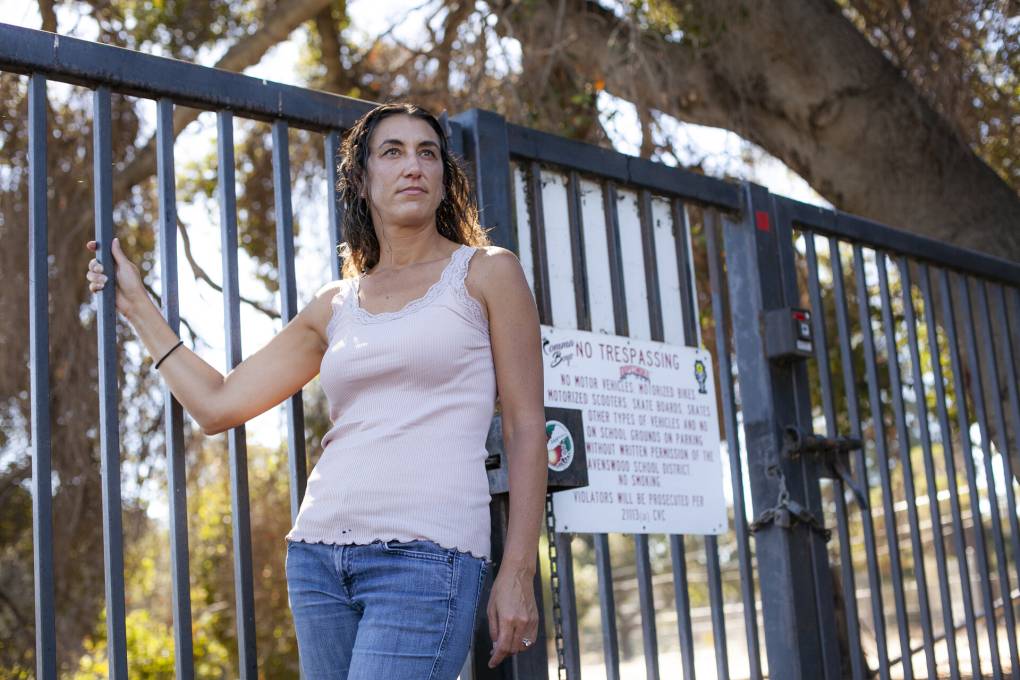
"description": "Suburban Park homeowner Nicole Chessari stands in front of the site of the former James Flood Elementary School, where leaders of the Ravenswood City School District have proposed building 90 units of affordable teacher housing, on Thursday, Sept. 29, 2022. Chessari is co-leading the Yes on Measure V campaign, a ballot initiative that would require a citywide vote to add apartments in single-family neighborhoods throughout Menlo Park.",
"title": "Menlo Park Measure V",
"credit": "Erin Baldassari/KQED",
"status": "inherit",
"altTag": "A woman wearing a light top and blue jeans holds on to a gate outside with one hand.",
"isLoading": false,
"fetchFailed": false
},
"news_11929294": {
"type": "attachments",
"id": "news_11929294",
"meta": {
"index": "attachments_1716263798",
"site": "news",
"id": "11929294",
"found": true
},
"parent": 11929283,
"imgSizes": {
"twentyfourteen-full-width": {
"file": "https://ww2.kqed.org/app/uploads/sites/10/2022/10/RS59318_Miriam_Mora_005-qut-1038x576.jpg",
"width": 1038,
"mimeType": "image/jpeg",
"height": 576
},
"thumbnail": {
"file": "https://ww2.kqed.org/app/uploads/sites/10/2022/10/RS59318_Miriam_Mora_005-qut-160x107.jpg",
"width": 160,
"mimeType": "image/jpeg",
"height": 107
},
"post-thumbnail": {
"file": "https://ww2.kqed.org/app/uploads/sites/10/2022/10/RS59318_Miriam_Mora_005-qut-672x372.jpg",
"width": 672,
"mimeType": "image/jpeg",
"height": 372
},
"kqedFullSize": {
"file": "https://ww2.kqed.org/app/uploads/sites/10/2022/10/RS59318_Miriam_Mora_005-qut.jpg",
"width": 1920,
"height": 1282
},
"large": {
"file": "https://ww2.kqed.org/app/uploads/sites/10/2022/10/RS59318_Miriam_Mora_005-qut-1020x681.jpg",
"width": 1020,
"mimeType": "image/jpeg",
"height": 681
},
"1536x1536": {
"file": "https://ww2.kqed.org/app/uploads/sites/10/2022/10/RS59318_Miriam_Mora_005-qut-1536x1026.jpg",
"width": 1536,
"mimeType": "image/jpeg",
"height": 1026
},
"medium": {
"file": "https://ww2.kqed.org/app/uploads/sites/10/2022/10/RS59318_Miriam_Mora_005-qut-800x534.jpg",
"width": 800,
"mimeType": "image/jpeg",
"height": 534
}
},
"publishDate": 1666050192,
"modified": 1666116196,
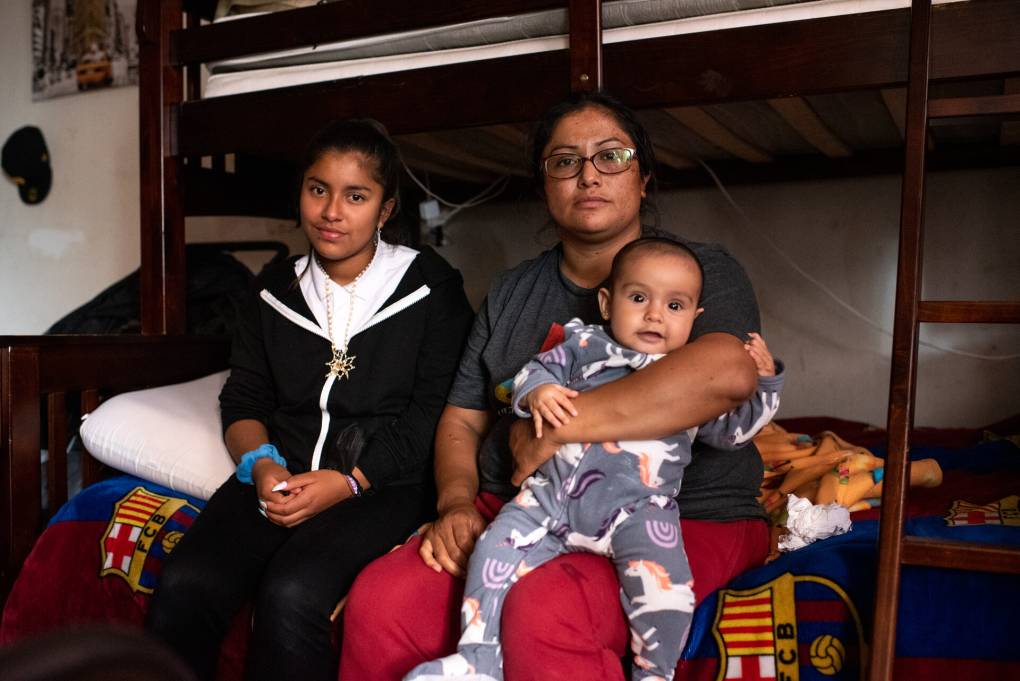
"caption": "Miriam Mora sits for a portrait with her daughters Miriam (5 months) and Julissa (9) at her brother's apartment in the Tenderloin neighborhood in San Francisco on Wednesday, Oct. 12, 2022. Mora lost her job during the pandemic and has been struggling to find affordable housing. Right now, Mora and her three children are staying with her brother, who already has several roommates, in his studio apartment. Latinos now make up 30% of the unhoused people in San Francisco, though they're only 16% of the overall population, according to the city's most recent count.",
"description": null,
"title": "KQED_Latino_Homelessness",
"credit": "Marlena Sloss/KQED",
"status": "inherit",
"altTag": "A woman wearing glasses holds a baby while sitting down next to a girl wearing a black hoodie in a room.",
"isLoading": false,
"fetchFailed": false
},
"news_11929289": {
"type": "attachments",
"id": "news_11929289",
"meta": {
"index": "attachments_1716263798",
"site": "news",
"id": "11929289",
"found": true
},
"parent": 11929285,
"imgSizes": {
"twentyfourteen-full-width": {
"file": "https://ww2.kqed.org/app/uploads/sites/10/2022/10/GettyImages-1243779945-1024x576.jpg",
"width": 1024,
"mimeType": "image/jpeg",
"height": 576
},
"thumbnail": {
"file": "https://ww2.kqed.org/app/uploads/sites/10/2022/10/GettyImages-1243779945-160x107.jpg",
"width": 160,
"mimeType": "image/jpeg",
"height": 107
},
"post-thumbnail": {
"file": "https://ww2.kqed.org/app/uploads/sites/10/2022/10/GettyImages-1243779945-672x372.jpg",
"width": 672,
"mimeType": "image/jpeg",
"height": 372
},
"kqedFullSize": {
"file": "https://ww2.kqed.org/app/uploads/sites/10/2022/10/GettyImages-1243779945.jpg",
"width": 1024,
"height": 683
},
"large": {
"file": "https://ww2.kqed.org/app/uploads/sites/10/2022/10/GettyImages-1243779945-1020x680.jpg",
"width": 1020,
"mimeType": "image/jpeg",
"height": 680
},
"medium": {
"file": "https://ww2.kqed.org/app/uploads/sites/10/2022/10/GettyImages-1243779945-800x534.jpg",
"width": 800,
"mimeType": "image/jpeg",
"height": 534
}
},
"publishDate": 1666049192,
"modified": 1666053433,
"caption": "Gov. Gavin Newsom speaks during a joint climate agreement with other West Coast leaders on Oct. 6, 2022, in San Francisco.",
"description": null,
"title": "California Governor Newsom and West Coast Leaders Sign Climate Agreement",
"credit": "Tayfun Coskun/Anadolu Agency via Getty Images",
"status": "inherit",
"altTag": "Gov. Gavin Newsom giving a speech at a podium.",
"isLoading": false,
"fetchFailed": false
},
"news_11928929": {
"type": "attachments",
"id": "news_11928929",
"meta": {
"index": "attachments_1716263798",
"site": "news",
"id": "11928929",
"found": true
},
"parent": 11928928,
"imgSizes": {
"twentyfourteen-full-width": {
"file": "https://ww2.kqed.org/app/uploads/sites/10/2022/10/Candidates-1038x576.png",
"width": 1038,
"mimeType": "image/png",
"height": 576
},
"thumbnail": {
"file": "https://ww2.kqed.org/app/uploads/sites/10/2022/10/Candidates-160x90.png",
"width": 160,
"mimeType": "image/png",
"height": 90
},
"post-thumbnail": {
"file": "https://ww2.kqed.org/app/uploads/sites/10/2022/10/Candidates-672x372.png",
"width": 672,
"mimeType": "image/png",
"height": 372
},
"kqedFullSize": {
"file": "https://ww2.kqed.org/app/uploads/sites/10/2022/10/Candidates.png",
"width": 1920,
"height": 1080
},
"large": {
"file": "https://ww2.kqed.org/app/uploads/sites/10/2022/10/Candidates-1020x574.png",
"width": 1020,
"mimeType": "image/png",
"height": 574
},
"1536x1536": {
"file": "https://ww2.kqed.org/app/uploads/sites/10/2022/10/Candidates-1536x864.png",
"width": 1536,
"mimeType": "image/png",
"height": 864
},
"medium": {
"file": "https://ww2.kqed.org/app/uploads/sites/10/2022/10/Candidates-800x450.png",
"width": 800,
"mimeType": "image/png",
"height": 450
}
},
"publishDate": 1665774049,
"modified": 1665774049,
"caption": null,
"description": null,
"title": "Candidates",
"credit": null,
"status": "inherit",
"altTag": null,
"isLoading": false,
"fetchFailed": false
}
},
"audioPlayerReducer": {
"postId": "stream_live",
"isPaused": true,
"isPlaying": false,
"pfsActive": false,
"pledgeModalIsOpen": true,
"playerDrawerIsOpen": false,
"liveAudioPlayStartedAt": 0,
"liveAudioPlayContext": ""
},
"authorsReducer": {
"byline_news_11930679": {
"type": "authors",
"id": "byline_news_11930679",
"meta": {
"override": true
},
"slug": "byline_news_11930679",
"name": "\u003ca href=\"https://calmatters.org/author/manuela-tobias/\">Manuela Tobias\u003c/a>",
"isLoading": false
},
"byline_news_11929833": {
"type": "authors",
"id": "byline_news_11929833",
"meta": {
"override": true
},
"slug": "byline_news_11929833",
"name": "\u003ca href=\"https://twitter.com/sophieadanna\">Sophie Austin\u003c/a>, Associated Press",
"isLoading": false
},
"kqed": {
"type": "authors",
"id": "236",
"meta": {
"index": "authors_1716337520",
"id": "236",
"found": true
},
"name": "KQED News Staff",
"firstName": "KQED News Staff",
"lastName": null,
"slug": "kqed",
"email": "faq@kqed.org",
"display_author_email": false,
"staff_mastheads": [],
"title": null,
"bio": null,
"avatar": "https://secure.gravatar.com/avatar/ef0e801a68c4c54afa9180db14084167?s=600&d=blank&r=g",
"twitter": null,
"facebook": null,
"instagram": null,
"linkedin": null,
"sites": [
{
"site": "arts",
"roles": [
"contributor"
]
},
{
"site": "news",
"roles": [
"editor"
]
},
{
"site": "futureofyou",
"roles": [
"author"
]
}
],
"headData": {
"title": "KQED News Staff | KQED",
"description": null,
"ogImgSrc": "https://secure.gravatar.com/avatar/ef0e801a68c4c54afa9180db14084167?s=600&d=blank&r=g",
"twImgSrc": "https://secure.gravatar.com/avatar/ef0e801a68c4c54afa9180db14084167?s=600&d=blank&r=g"
},
"isLoading": false,
"link": "/author/kqed"
},
"kqednewsstaffandwires": {
"type": "authors",
"id": "237",
"meta": {
"index": "authors_1716337520",
"id": "237",
"found": true
},
"name": "KQED News Staff and Wires",
"firstName": "KQED News Staff and Wires",
"lastName": null,
"slug": "kqednewsstaffandwires",
"email": "onlinenewsstaff@kqed.org",
"display_author_email": false,
"staff_mastheads": [],
"title": null,
"bio": null,
"avatar": "https://secure.gravatar.com/avatar/72295af8ebbfbd19a4948f5271285664?s=600&d=blank&r=g",
"twitter": null,
"facebook": null,
"instagram": null,
"linkedin": null,
"sites": [
{
"site": "arts",
"roles": [
"contributor"
]
},
{
"site": "news",
"roles": [
"contributor"
]
},
{
"site": "lowdown",
"roles": [
"author"
]
},
{
"site": "stateofhealth",
"roles": [
"contributor"
]
},
{
"site": "food",
"roles": [
"author"
]
}
],
"headData": {
"title": "KQED News Staff and Wires | KQED",
"description": null,
"ogImgSrc": "https://secure.gravatar.com/avatar/72295af8ebbfbd19a4948f5271285664?s=600&d=blank&r=g",
"twImgSrc": "https://secure.gravatar.com/avatar/72295af8ebbfbd19a4948f5271285664?s=600&d=blank&r=g"
},
"isLoading": false,
"link": "/author/kqednewsstaffandwires"
},
"scottshafer": {
"type": "authors",
"id": "255",
"meta": {
"index": "authors_1716337520",
"id": "255",
"found": true
},
"name": "Scott Shafer",
"firstName": "Scott",
"lastName": "Shafer",
"slug": "scottshafer",
"email": "sshafer@kqed.org",
"display_author_email": false,
"staff_mastheads": [
"news"
],
"title": "KQED Contributor",
"bio": "Scott Shafer is a senior editor with the KQED Politics and Government desk. He is co-host of Political Breakdown, the award-winning radio show and podcast with a personal take on the world of politics. Scott came to KQED in 1998 to host the statewide\u003cem> California Report\u003c/em>. Prior to that he had extended stints in politics and government\u003cem>.\u003c/em> He uses that inside experience at KQED in his, reporting, hosting and analysis for the politics desk. Scott collaborated \u003cem>Political Breakdown a\u003c/em>nd on \u003cem>The Political Mind of Jerry Brown, \u003c/em>an eight-part series about the life and extraordinary political career of the former governor. For fun, he plays water polo with the San Francisco Tsunami.",
"avatar": "https://secure.gravatar.com/avatar/a62ebae45b79d7aed1a39a0e3bf68104?s=600&d=blank&r=g",
"twitter": "scottshafer",
"bluesky": null,
"facebook": null,
"instagram": null,
"linkedin": null,
"sites": [
{
"site": "news",
"roles": [
"editor"
]
},
{
"site": "stateofhealth",
"roles": [
"author"
]
},
{
"site": "science",
"roles": [
"author"
]
},
{
"site": "forum",
"roles": [
"subscriber"
]
},
{
"site": "liveblog",
"roles": [
"author"
]
}
],
"headData": {
"title": "Scott Shafer | KQED",
"description": "KQED Contributor",
"ogImgSrc": "https://secure.gravatar.com/avatar/a62ebae45b79d7aed1a39a0e3bf68104?s=600&d=blank&r=g",
"twImgSrc": "https://secure.gravatar.com/avatar/a62ebae45b79d7aed1a39a0e3bf68104?s=600&d=blank&r=g"
},
"isLoading": false,
"link": "/author/scottshafer"
},
"vrancano": {
"type": "authors",
"id": "11276",
"meta": {
"index": "authors_1716337520",
"id": "11276",
"found": true
},
"name": "Vanessa Rancaño",
"firstName": "Vanessa",
"lastName": "Rancaño",
"slug": "vrancano",
"email": "vrancano@kqed.org",
"display_author_email": false,
"staff_mastheads": [
"news"
],
"title": "Reporter",
"bio": "Vanessa Rancaño is a features reporter for KQED. She’s also covered homelessness and education for the station and reported from the Central Valley. Her work has aired across public radio, from flagship national news shows to longform narrative podcasts. Before taking up a mic, she worked as a freelance print journalist. She’s been recognized with a number of national and regional awards. Vanessa grew up in California's Central Valley. She's a former NPR Kroc Fellow, and a graduate of the UC Berkeley Graduate School of Journalism.",
"avatar": "https://secure.gravatar.com/avatar/b3a383dfb0e7ee1c17568f2cf067904ab654d6e3de9743fc661f3c788ade1bed?s=600&d=blank&r=g",
"twitter": "vanessarancano",
"bluesky": null,
"facebook": null,
"instagram": null,
"linkedin": null,
"sites": [
{
"site": "arts",
"roles": [
"editor"
]
},
{
"site": "news",
"roles": [
"editor"
]
},
{
"site": "liveblog",
"roles": [
"contributor"
]
}
],
"headData": {
"title": "Vanessa Rancaño | KQED",
"description": "Reporter",
"ogImgSrc": "https://secure.gravatar.com/avatar/b3a383dfb0e7ee1c17568f2cf067904ab654d6e3de9743fc661f3c788ade1bed?s=600&d=blank&r=g",
"twImgSrc": "https://secure.gravatar.com/avatar/b3a383dfb0e7ee1c17568f2cf067904ab654d6e3de9743fc661f3c788ade1bed?s=600&d=blank&r=g"
},
"isLoading": false,
"link": "/author/vrancano"
},
"ebaldassari": {
"type": "authors",
"id": "11652",
"meta": {
"index": "authors_1716337520",
"id": "11652",
"found": true
},
"name": "Erin Baldassari",
"firstName": "Erin",
"lastName": "Baldassari",
"slug": "ebaldassari",
"email": "ebaldassari@KQED.org",
"display_author_email": true,
"staff_mastheads": [
"news"
],
"title": "Staff Writer",
"bio": "Erin Baldassari covers housing for KQED. She's a former print journalist and most recently worked as the transportation reporter for the \u003cem>Mercury News\u003c/em> and \u003cem>East Bay Times. \u003c/em>There, she focused on how the Bay Area’s housing shortage has changed the way people move around the region. She also served on the \u003cem>East Bay Times\u003c/em>’ 2017 Pulitzer Prize-winning team for coverage of the Ghost Ship Fire in Oakland. Prior to that, Erin worked as a breaking news and general assignment reporter for a variety of outlets in the Bay Area and the greater Boston area. A Tufts University alumna, Erin grew up in the foothills of the Sierra Nevada mountains and in Sonoma County. She is a life-long KQED listener.",
"avatar": "https://secure.gravatar.com/avatar/5e95cad64a8ca08288082212e199d2b0cbeb4fd8e8ef5339395f361032bbe005?s=600&d=blank&r=g",
"twitter": "e_baldi",
"bluesky": null,
"facebook": null,
"instagram": null,
"linkedin": null,
"sites": [
{
"site": "news",
"roles": [
"edit_others_posts",
"editor"
]
},
{
"site": "science",
"roles": [
"editor"
]
},
{
"site": "liveblog",
"roles": [
"editor"
]
}
],
"headData": {
"title": "Erin Baldassari | KQED",
"description": "Staff Writer",
"ogImgSrc": "https://secure.gravatar.com/avatar/5e95cad64a8ca08288082212e199d2b0cbeb4fd8e8ef5339395f361032bbe005?s=600&d=blank&r=g",
"twImgSrc": "https://secure.gravatar.com/avatar/5e95cad64a8ca08288082212e199d2b0cbeb4fd8e8ef5339395f361032bbe005?s=600&d=blank&r=g"
},
"isLoading": false,
"link": "/author/ebaldassari"
},
"abandlamudi": {
"type": "authors",
"id": "11672",
"meta": {
"index": "authors_1716337520",
"id": "11672",
"found": true
},
"name": "Adhiti Bandlamudi",
"firstName": "Adhiti",
"lastName": "Bandlamudi",
"slug": "abandlamudi",
"email": "abandlamudi@kqed.org",
"display_author_email": false,
"staff_mastheads": [
"news"
],
"title": "KQED Housing Reporter",
"bio": "Adhiti Bandlamudi reports for KQED's Housing desk. She focuses on how housing gets built across the Bay Area. Before joining KQED in 2020, she reported for WUNC in Durham, North Carolina, WABE in Atlanta, Georgia and Capital Public Radio in Sacramento. In 2017, she was awarded a Kroc Fellowship at NPR where she reported on everything from sprinkles to the Golden State Killer's arrest. When she's not reporting, she's baking new recipes in her kitchen or watching movies with friends and family. She's originally from Georgia and has strong opinions about Great British Bake Off.",
"avatar": "https://secure.gravatar.com/avatar/868129c8b257bb99a3500e2c86a65400?s=600&d=mm&r=g",
"twitter": "oddity_adhiti",
"facebook": null,
"instagram": null,
"linkedin": null,
"sites": [
{
"site": "arts",
"roles": [
"author"
]
},
{
"site": "news",
"roles": [
"editor"
]
},
{
"site": "liveblog",
"roles": [
"author"
]
}
],
"headData": {
"title": "Adhiti Bandlamudi | KQED",
"description": "KQED Housing Reporter",
"ogImgSrc": "https://secure.gravatar.com/avatar/868129c8b257bb99a3500e2c86a65400?s=600&d=mm&r=g",
"twImgSrc": "https://secure.gravatar.com/avatar/868129c8b257bb99a3500e2c86a65400?s=600&d=mm&r=g"
},
"isLoading": false,
"link": "/author/abandlamudi"
},
"jrodriguez": {
"type": "authors",
"id": "11690",
"meta": {
"index": "authors_1716337520",
"id": "11690",
"found": true
},
"name": "Joe Fitzgerald Rodriguez",
"firstName": "Joe",
"lastName": "Fitzgerald Rodriguez",
"slug": "jrodriguez",
"email": "jrodriguez@kqed.org",
"display_author_email": true,
"staff_mastheads": [
"news"
],
"title": "Reporter and Producer",
"bio": "Joe Fitzgerald Rodriguez is a reporter and digital producer for KQED covering politics. Joe most recently wrote for the \u003cem>San Francisco Examiner\u003c/em> as a political columnist covering The City. He was raised in San Francisco and has spent his reporting career in his beloved, foggy, city by the bay. Joe was 12-years-old when he conducted his first interview in journalism, grilling former San Francisco Mayor Willie Brown for the Marina Middle School newspaper, \u003cem>The Penguin Press, \u003c/em>and he continues to report on the San Francisco Bay Area to this day.",
"avatar": "https://secure.gravatar.com/avatar/2247beb0564c1e9c62228d5649d2edac?s=600&d=blank&r=g",
"twitter": "FitztheReporter",
"facebook": null,
"instagram": "https://www.instagram.com/fitzthereporter/",
"linkedin": null,
"sites": [
{
"site": "",
"roles": [
"editor"
]
},
{
"site": "arts",
"roles": [
"editor"
]
},
{
"site": "news",
"roles": [
"editor"
]
},
{
"site": "science",
"roles": [
"editor"
]
},
{
"site": "elections",
"roles": [
"editor"
]
},
{
"site": "liveblog",
"roles": [
"editor"
]
}
],
"headData": {
"title": "Joe Fitzgerald Rodriguez | KQED",
"description": "Reporter and Producer",
"ogImgSrc": "https://secure.gravatar.com/avatar/2247beb0564c1e9c62228d5649d2edac?s=600&d=blank&r=g",
"twImgSrc": "https://secure.gravatar.com/avatar/2247beb0564c1e9c62228d5649d2edac?s=600&d=blank&r=g"
},
"isLoading": false,
"link": "/author/jrodriguez"
}
},
"pagesReducer": {
"news_category_housing": {
"type": "terms",
"id": "news_6266",
"meta": {
"index": "terms_1716263798",
"site": "news",
"id": "6266",
"score": 11.039913
},
"featImg": null,
"name": "Housing",
"description": null,
"taxonomy": "category",
"headData": {
"twImgId": null,
"twTitle": null,
"ogTitle": null,
"ogImgId": null,
"twDescription": null,
"description": null,
"title": "Housing Archives | KQED News",
"ogDescription": null
},
"ttid": 6290,
"slug": "housing",
"isLoading": false,
"title": "Housing",
"pageMeta": {
"site": "news",
"WpPageTemplate": "page-topic-editorial",
"currentPage": 58
},
"blocks": [
{
"blockName": "kqed/post-list",
"attrs": {
"layout": "cardArticle2",
"query": "posts/news?category=housing",
"seeMore": false,
"paginated": true,
"page": 58
}
},
{
"blockName": "kqed/ad"
}
]
}
},
"pfsSessionReducer": {},
"postsReducer": {
"stream_live": {
"type": "live",
"id": "stream_live",
"audioUrl": "https://streams.kqed.org/kqedradio",
"title": "Live Stream",
"excerpt": "Live Stream information currently unavailable.",
"link": "/radio",
"featImg": "",
"label": {
"name": "KQED Live",
"link": "/"
}
},
"stream_kqedNewscast": {
"type": "posts",
"id": "stream_kqedNewscast",
"audioUrl": "https://www.kqed.org/.stream/anon/radio/RDnews/newscast.mp3?_=1",
"title": "KQED Newscast",
"featImg": "",
"label": {
"name": "88.5 FM",
"link": "/"
}
},
"news_11932051": {
"type": "posts",
"id": "news_11932051",
"meta": {
"index": "posts_1716263798",
"site": "news",
"id": "11932051",
"score": null,
"sort": [
1668211815000
]
},
"guestAuthors": [],
"slug": "2022-midterm-elections-tech-layoffs",
"title": "2022 Midterm Elections | Tech Layoffs",
"publishDate": 1668211815,
"format": "video",
"headTitle": "2022 Midterm Elections | Tech Layoffs | KQED",
"labelTerm": {
"term": 7052,
"site": "news"
},
"content": "\u003cp>\u003cb>Midterm Elections 2022\u003cbr>\n\u003c/b>\u003cspan style=\"font-weight: 400\">We look at the confirmed winners and losers of California’s election results, and what hangs in the balance as the final votes are counted. Plus, one of the top issues across the state was housing. Which measures passed? Which failed? We breakdown what Californians voted for and what it says about the future of housing in the golden state. \u003c/span>\u003c/p>\n\u003cp>\u003cspan style=\"font-weight: 400\">Guests:\u003c/span>\u003c/p>\n\u003cul>\n\u003cli style=\"font-weight: 400\">\u003cb>Erin Baldassari\u003c/b>\u003cspan style=\"font-weight: 400\">, KQED housing affordability reporter\u003c/span>\u003cspan style=\"font-weight: 400\">\u003cbr>\n\u003c/span>\u003c/li>\n\u003cli style=\"font-weight: 400\">\u003cb>Guy Marzorati\u003c/b>\u003cspan style=\"font-weight: 400\">, KQED politics reporter and producer\u003c/span>\u003c/li>\n\u003c/ul>\n\u003cp>\u003cb>This Week in Tech News\u003cbr>\n\u003c/b>\u003cspan style=\"font-weight: 400\">As massive layoffs hit technology companies, and the crypto finance world implodes, we take a look at our economic outlook with MarketWatch senior reporter \u003c/span>\u003cb>Levi Sumagaysay\u003c/b>\u003cspan style=\"font-weight: 400\">. \u003c/span>\u003c/p>\n\u003cp>\u003cb>Something Beautiful: Lake Merritt\u003cbr>\n\u003c/b>\u003cspan style=\"font-weight: 400\">150 years ago Lake Merritt became the nation’s first wildlife refuge. It is also home to large breeding populations of herons, egrets, geese and ducks. \u003c/span>\u003c/p>\n\u003cp>[ad fullwidth]\u003c/p>\u003cp>\u003c/p>\n",
"blocks": [],
"excerpt": null,
"status": "publish",
"parent": 0,
"modified": 1727130425,
"stats": {
"hasAudio": false,
"hasVideo": false,
"hasChartOrMap": false,
"iframeSrcs": [],
"hasGoogleForm": false,
"hasGallery": false,
"hasHearkenModule": false,
"hasPolis": false,
"paragraphCount": 6,
"wordCount": 146
},
"headData": {
"title": "2022 Midterm Elections | Tech Layoffs | KQED",
"description": "Midterm Elections 2022 We look at the confirmed winners and losers of California’s election results, and what hangs in the balance as the final votes are counted. Plus, one of the top issues across the state was housing. Which measures passed? Which failed? We breakdown what Californians voted for and what it says about the future of housing in the golden state. Guests: Erin Baldassari, KQED housing affordability reporter Guy Marzorati, KQED politics reporter and producer This Week in Tech News As massive layoffs hit technology companies, and the crypto finance world implodes, we take a look at our economic",
"ogTitle": "",
"ogDescription": "",
"ogImgId": "",
"twTitle": "",
"twDescription": "",
"twImgId": "",
"schema": {
"@context": "https://schema.org",
"@type": "NewsArticle",
"headline": "2022 Midterm Elections | Tech Layoffs",
"datePublished": "2022-11-11T16:10:15-08:00",
"dateModified": "2024-09-23T15:27:05-07:00",
"image": "https://cdn.kqed.org/wp-content/uploads/2020/02/KQED-OG-Image@1x.png",
"isAccessibleForFree": "True",
"publisher": {
"@type": "NewsMediaOrganization",
"@id": "https://www.kqed.org/#organization",
"name": "KQED",
"logo": "https://cdn.kqed.org/wp-content/uploads/2020/02/KQED-OG-Image@1x.png",
"url": "https://www.kqed.org",
"sameAs": [
"https://www.facebook.com/KQED",
"https://twitter.com/KQED",
"https://www.instagram.com/kqed/",
"https://www.tiktok.com/@kqedofficial",
"https://www.linkedin.com/company/kqed",
"https://www.youtube.com/channel/UCeC0IOo7i1P_61zVUWbJ4nw"
]
}
}
},
"videoEmbed": "https://youtu.be/82tf6XZqkeM",
"sticky": false,
"excludeFromSiteSearch": "Include",
"path": "/news/11932051/2022-midterm-elections-tech-layoffs",
"audioTrackLength": null,
"parsedContent": [
{
"type": "contentString",
"content": "\u003cdiv class=\"post-body\">\u003cp>\u003cp>\u003cb>Midterm Elections 2022\u003cbr>\n\u003c/b>\u003cspan style=\"font-weight: 400\">We look at the confirmed winners and losers of California’s election results, and what hangs in the balance as the final votes are counted. Plus, one of the top issues across the state was housing. Which measures passed? Which failed? We breakdown what Californians voted for and what it says about the future of housing in the golden state. \u003c/span>\u003c/p>\n\u003cp>\u003cspan style=\"font-weight: 400\">Guests:\u003c/span>\u003c/p>\n\u003cul>\n\u003cli style=\"font-weight: 400\">\u003cb>Erin Baldassari\u003c/b>\u003cspan style=\"font-weight: 400\">, KQED housing affordability reporter\u003c/span>\u003cspan style=\"font-weight: 400\">\u003cbr>\n\u003c/span>\u003c/li>\n\u003cli style=\"font-weight: 400\">\u003cb>Guy Marzorati\u003c/b>\u003cspan style=\"font-weight: 400\">, KQED politics reporter and producer\u003c/span>\u003c/li>\n\u003c/ul>\n\u003cp>\u003cb>This Week in Tech News\u003cbr>\n\u003c/b>\u003cspan style=\"font-weight: 400\">As massive layoffs hit technology companies, and the crypto finance world implodes, we take a look at our economic outlook with MarketWatch senior reporter \u003c/span>\u003cb>Levi Sumagaysay\u003c/b>\u003cspan style=\"font-weight: 400\">. \u003c/span>\u003c/p>\n\u003cp>\u003cb>Something Beautiful: Lake Merritt\u003cbr>\n\u003c/b>\u003cspan style=\"font-weight: 400\">150 years ago Lake Merritt became the nation’s first wildlife refuge. It is also home to large breeding populations of herons, egrets, geese and ducks. \u003c/span>\u003c/p>\n\u003cp>\u003c/p>\u003c/div>",
"attributes": {
"named": {},
"numeric": []
}
},
{
"type": "component",
"content": "",
"name": "ad",
"attributes": {
"named": {
"label": "fullwidth"
},
"numeric": [
"fullwidth"
]
}
},
{
"type": "contentString",
"content": "\u003cdiv class=\"post-body\">\u003cp>\u003c/p>\u003cp>\u003c/p>\n\u003c/div>\u003c/p>",
"attributes": {
"named": {},
"numeric": []
}
}
],
"link": "/news/11932051/2022-midterm-elections-tech-layoffs",
"authors": [
"236"
],
"programs": [
"news_7052"
],
"categories": [
"news_31795",
"news_1758",
"news_6266",
"news_28250",
"news_8",
"news_13",
"news_248"
],
"tags": [
"news_30452",
"news_23394",
"news_23289",
"news_4593",
"news_1604",
"news_31981",
"news_31214",
"news_23969",
"news_30632",
"news_472"
],
"featImg": "news_11932052",
"label": "news_7052"
},
"news_11931327": {
"type": "posts",
"id": "news_11931327",
"meta": {
"index": "posts_1716263798",
"site": "news",
"id": "11931327",
"score": null,
"sort": [
1668025241000
]
},
"guestAuthors": [],
"slug": "heres-every-bay-area-housing-measure-on-the-ballot-tomorrow",
"title": "Here's How Every Bay Area Housing Ballot Measure Fared This Election",
"publishDate": 1668025241,
"format": "standard",
"headTitle": "Here’s How Every Bay Area Housing Ballot Measure Fared This Election | KQED",
"labelTerm": {
"site": "news"
},
"content": "\u003cp>\u003cem>\u003ca href=\"#anchor\">\u003cb>Editor’s Note: This story has been updated to reflect current vote tallies. Click this link to jump to our table of all housing measures and results.\u003c/b>\u003c/a>\u003c/em>\u003c/p>\n\u003cp>Voting returns showed strong support for a bevy of housing measures on Bay Area ballots this year — results that could bode well for potential statewide housing measures in 2024.\u003c/p>\n\u003cp>Of the 52 local ballot initiatives across California related to housing, \u003ca href=\"https://ternercenter.berkeley.edu/research-and-policy/housing-on-the-ballot-2022/\" target=\"_blank\" rel=\"noopener noreferrer\">21 were in the Bay Area, \u003c/a>according to UC Berkeley’s Terner Center for Housing Innovation.\u003c/p>\n\u003cp>“This is a top priority for voters in communities across the state,” said Amie Fishman, executive director of the Non-Profit Housing Association of Northern California. “Local communities are saying, ‘We need these solutions.’ ”\u003c/p>\n\u003cp>Voters were asked to weigh in on a wide range of issues, including measures to tax vacant housing units, strengthen protections for renters, authorize and fund affordable housing, and change how new housing projects get approved.\u003c/p>\n\u003cp>Tomiquia Moss, founder and CEO of the Bay Area affordable housing policy nonprofit All Home, said the measures were aimed at incremental changes, in part because of progress made over the past half decade.\u003c/p>\n\u003cp>In 2016, three Bay Area counties — \u003ca href=\"https://osh.sccgov.org/housing-community-development/2016-measure-affordable-housing-bond#:~:text=In%20November%202016%2C%20Santa%20Clara,%24950%20million%20affordable%20housing%20bond.\">Santa Clara\u003c/a>, \u003ca href=\"https://sf.gov/information/2016-affordable-housing-general-obligation-bond#:~:text=In%20November%20of%202016%2C%20the,protect%20residents%2C%20and%20stabilize%20communities.\">San Francisco\u003c/a> and \u003ca href=\"https://ballotpedia.org/Alameda_County,_California,_Affordable_Housing_Bond_Issue,_Measure_A1_(November_2016)#:~:text=An%20affordable%20housing%20bond%20issue,bonds%20for%20affordable%20local%20housing.\">Alameda\u003c/a> — passed affordable housing bonds. Rounds of state and local ballot measures followed in 2018 and 2020. And state lawmakers approved a \u003ca href=\"https://www.ca.gov/archive/gov39/2017/09/29/news19979/index.html\">historic package of housing legislation\u003c/a> in 2017, with more laws enacted every year since.\u003c/p>\n\u003cp>[aside label=\"related coverage\" tag=\"housing\"]“We’re not starting from scratch,” Moss said. “There have been some really important policy changes that have happened, and now we need to be looking at implementation.”\u003c/p>\n\u003cp>In the last three years, \u003ca href=\"https://chpc.wpenginepowered.com/wp-content/uploads/2022/03/California-Affordable-Housing-Needs-Report-2022.pdf\">California has more than doubled the amount of affordable housing it funds (PDF)\u003c/a> — from just under 7,200 units in 2019 to around 24,600 in 2020, and 19,000 in 2021 — according to the California Housing Partnership. But, the partnership said the state is still woefully short of the nearly 120,000 annual affordable units it estimates the state would need to build to meet residents’ needs.\u003c/p>\n\u003cp>As \u003ca href=\"https://calmatters.org/newsletters/whatmatters/2022/10/california-homeless-population-covid/\">homelessness continues to grow\u003c/a> and \u003ca href=\"https://www.prnewswire.com/news-releases/california-housing-affordability-slides-to-lowest-level-in-nearly-15-years-in-second-quarter-2022-as-home-prices-set-record-highs-and-interest-rates-surge-car-reports-301604141.html\">housing affordability worsens\u003c/a>, residents in disparate communities used this year’s local ballots to put forward additional solutions, said Sarah Karlinsky, senior adviser with SPUR, an urban planning nonprofit.\u003c/p>\n\u003cp>“There’s a lot of anxiety,” she said. On one hand, homeowners are concerned about changes in their neighborhoods; on the other, tenants “are at the whims of the rental market and are experiencing a lot of destabilization,” she said.\u003c/p>\n\u003cp>Here are the housing measures Bay Area voters considered:\u003c/p>\n\u003ch2>Vacancy taxes\u003c/h2>\n\u003cp>Voters in San Francisco and Berkeley supported \u003ca href=\"https://www.kqed.org/news/11930303/should-sf-and-berkeley-tax-empty-homes-following-oaklands-lead\">measures to tax property owners who keep their units empty\u003c/a> for extended periods.\u003c/p>\n\u003cp>In San Francisco, more than 54% of voters approved the measure, compared to 63% in \u003ca href=\"https://www.acgov.org/rovresults/248/\" target=\"_blank\" rel=\"noopener noreferrer\">Berkeley\u003c/a>.\u003c/p>\n\u003cp>The two measures are slightly different, but they spoke to the same frustration: Why should homes and apartments sit vacant as homelessness continues to grow and \u003ca href=\"https://calmatters.org/newsletters/whatmatters/2022/10/california-cost-of-living-2/\">rents continue to soar\u003c/a>?\u003c/p>\n\u003cp>\u003cspan style=\"font-weight: 400\">Berkeley Vice Mayor Kate Harrison, who introduced the measure in her city, said she wasn’t surprised, because the measure is aimed at incentivizing landlords to free up more housing and address blighted properties. \u003c/span>\u003c/p>\n\u003cp>\u003cspan style=\"font-weight: 400\">“People in Berkeley are tired of seeing vacant properties while they see their own children not being able to afford to live here. And they see people lying on the street homeless,” Harrison said. “And, they understand that high housing prices are creating real deprivation for tenants.”\u003c/span>\u003c/p>\n\u003cp>That same message resonated with voters in Oakland in 2018, when \u003ca href=\"https://ballotpedia.org/Oakland,_California,_Measure_W,_Vacant_Property_Tax_(November_2018)\">70% of voters approved a vacancy tax\u003c/a>. That wasn’t the case, however, with a third measure on this year’s ballot in the Bay Area adjacent city of Santa Cruz, where more than 56% percent of voters \u003ca href=\"https://sccounty01.co.santa-cruz.ca.us/ElectionSites/ElectionResults/Results\" target=\"_blank\" rel=\"noopener noreferrer\">rejected a measure\u003c/a> to tax empty homes.\u003c/p>\n\u003cp>David Garcia, policy director for UC Berkeley’s Terner Center, said that might be due to the nature of Santa Cruz as a vacation destination.\u003c/p>\n\u003cp>“You may have a lot of people who have second homes or are Airbnb hosts and things like that, who view this as maybe restricting what they could do with their property,” he said.\u003c/p>\n\u003cp>Either way, he said the results for this year’s empty home taxes could encourage other cities across the state to try for similar measures.\u003c/p>\n\u003cp>“It’ll be interesting to see how the passage or failure of these vacancy measures will impact housing situations in these three cities and the likelihood that we may see other similar measures in other cities in the future,” he said.\u003c/p>\n\u003ch2>Tenant protections\u003c/h2>\n\u003cp>Voters in Oakland and Richmond gave tenants a boost with support for measures that strengthen renter protections.\u003c/p>\n\u003cp>In Richmond, voters appeared to approve a measure that further \u003ca href=\"https://www.kqed.org/news/11930792/richmond-considers-stronger-rent-caps-as-inflation-soars\">limits how much landlords can raise rents each year\u003c/a>. The measure passed with nearly 59% of voters in favor.\u003c/p>\n\u003cp>Aime Ajche, a renter in Richmond, said she was grateful the measure passed, even if it came too late to forestall the rent increase she received in August. The single mom of a 2-year-old son has already given her landlord notice she would be moving out.\u003c/p>\n\u003cp>“If the rent hadn’t gotten so bad, I would have thought to stay here longer,” she said, adding that she’ll be moving into a studio apartment with her son. “[It’s a] few hundred dollars less and something that I know I can afford.”\u003c/p>\n\u003cp>In Oakland, voters were asked whether to approve stricter rules dictating when landlords can evict tenants. The measure passed with nearly 67% of the vote in support.\u003c/p>\n\u003cp>Isaiah Toney, deputy director of campaigns for the East Bay Alliance for a Sustainable Economy, said the results show voters recognize cities need more tools to keep renters stably housed.\u003c/p>\n\u003cp>“It’s definitely not a ‘fix everything’ kind of measure,” he said. “Our hope is that there will be fewer evictions and that folks are able to stay put and anchor themselves in their neighborhoods.”\u003c/p>\n\u003cp>The measures come as \u003ca href=\"https://www.kqed.org/news/11918382/starting-friday-thousands-of-california-tenants-still-waiting-on-rent-relief-can-be-evicted#:~:text=California's%20statewide%20moratorium%20on%20evictions,30%2C%202021.\">statewide and federal eviction protections have lapsed\u003c/a> and \u003ca href=\"https://www.mercurynews.com/2022/10/20/bay-area-sees-eviction-tsunami-as-pandemic-renter-protections-end/\">evictions in the Bay Area are increasing\u003c/a>. Leah Simon-Weisberg, legal director for advocacy organization the Alliance of Californians for Community Empowerment, said there’s still a lot more work to be done statewide.\u003c/p>\n\u003cdiv id=\"1668019272.607699\" class=\"c-virtual_list__item c-virtual_list__item--initial-activeitem\" role=\"listitem\" data-qa=\"virtual-list-item\" data-item-key=\"1668019272.607699\">\n\u003cdiv class=\"c-message_kit__background p-message_pane_message__message c-message_kit__message\" role=\"presentation\" data-qa=\"message_container\" data-qa-unprocessed=\"false\" data-qa-placeholder=\"false\">\n\u003cdiv class=\"c-message_kit__hover\" role=\"document\" data-qa-hover=\"true\">\n\u003cdiv class=\"c-message_kit__actions c-message_kit__actions--default\">\n\u003cdiv class=\"c-message_kit__gutter\">\n\u003cdiv class=\"c-message_kit__gutter__right\" role=\"presentation\" data-qa=\"message_content\">\n\u003cdiv class=\"c-message_kit__blocks c-message_kit__blocks--rich_text\">\n\u003cdiv class=\"c-message__message_blocks c-message__message_blocks--rich_text\" data-qa=\"message-text\">\n\u003cdiv class=\"p-block_kit_renderer\" data-qa=\"block-kit-renderer\">\n\u003cdiv class=\"p-block_kit_renderer__block_wrapper p-block_kit_renderer__block_wrapper--first\">\n\u003cdiv class=\"p-rich_text_block\" dir=\"auto\">\n\u003cdiv class=\"p-rich_text_section\">“We have cities that have no protections, like Fresno,” she said. “We’ve got unincorporated areas that house the most vulnerable parts of our community that have no protections.”\u003c/div>\n\u003cdiv>\u003c/div>\n\u003c/div>\n\u003c/div>\n\u003c/div>\n\u003c/div>\n\u003c/div>\n\u003c/div>\n\u003c/div>\n\u003c/div>\n\u003c/div>\n\u003c/div>\n\u003c/div>\n\u003ch2>Producing more housing\u003c/h2>\n\u003cp>Voters returned mixed results for how they think their cities should approve new housing.\u003c/p>\n\u003cp>In Menlo Park, a ballot measure to require a citywide vote for any changes to what can built in single-family neighborhoods failed by a more than 22-point margin.\u003c/p>\n\u003cp>\u003cspan style=\"font-weight: 400\">Pam Jones, a Menlo Park homeowner opposed to the measure, said it would have only exacerbated racial inequities in the city by \u003ca href=\"https://drive.google.com/file/d/1K57fbpE9qWxsTM-gcXktsQLtK5disgx-/view\">redirecting any new development into areas that already allow denser housing\u003c/a>, which tend to be communities of color. \u003c/span>\u003c/p>\n\u003cp>\u003cspan style=\"font-weight: 400\">“I’m more relieved than excited,” she said, “relieved because this is the Menlo Park that I know we really are.”\u003c/span>\u003c/p>\n\u003cp>In Brentwood, a ballot measure requiring residents to vote on changes to what can be built at \u003ca href=\"https://www.mercurynews.com/2022/09/08/editorial-smart-brentwood-open-space-ballot-measure-deserves-support/\">parks and on golf courses \u003c/a>did pass. Voters approved of the measure with more than 64% in support.\u003c/p>\n\u003cp>Both measures were reactions to proposed housing projects. In Menlo Park, \u003ca href=\"https://www.kqed.org/news/11929505/from-menlo-park-to-laguna-beach-residents-turn-to-ballot-box-to-fight-new-california-housing-mandates\">residents put Measure V on the ballot\u003c/a> after failing to reach consensus on the scale of a 90-unit affordable apartment complex that would give priority to teachers and staff of a neighboring school district. \u003ca href=\"http://brentwoodca.iqm2.com/Citizens/FileOpen.aspx?Type=1&ID=2785&Inline=True\">In Brentwood, Measure Q (PDF)\u003c/a> came after a developer introduced \u003ca href=\"https://www.eastbaytimes.com/2018/07/13/developer-pauses-project-to-combine-brentwood-golf-courses-build-senior-housing/\">a plan to convert a golf course into housing for seniors\u003c/a>.\u003c/p>\n\u003cp>As the \u003ca href=\"https://www.nytimes.com/2022/09/01/business/economy/california-nimbys-housing.html\">state requires cities to build more housing\u003c/a>, these types of reactionary ballot measures to limit growth may become increasingly common, Garcia said.\u003c/p>\n\u003cp>“Maybe you’ll see more in the future,” he said, “as it really kind of sinks in to some communities that there is a significant change in the way projects are zoned and approved because of changes in state law.”\u003c/p>\n\u003cp>In San Francisco, voters considered two competing ballot measures — D and E — that both sought to \u003ca href=\"https://www.sfchronicle.com/bayarea/article/Which-of-two-dueling-S-F-housing-measures-on-the-17536618.php\">streamline approvals\u003c/a> of certain types of affordable housing construction. San Francisco is the slowest city in California when it comes to issuing permits for new housing — a fact that’s prompted state officials to \u003ca href=\"https://www.mercurynews.com/2022/08/09/newsoms-office-targets-san-francisco-in-first-ever-housing-policy-investigation/\">launch an investigation\u003c/a> into the city’s approval process.\u003c/p>\n\u003cp>Proposition D, supported by SPUR and Mayor London Breed, appeared headed toward defeat with 51% of votes opposed. Proposition E, which was supported by a coalition of county supervisors, also failed, with 54% opposed.\u003c/p>\n\u003cp>Fishman said the similarities between the two measures likely confused voters.\u003c/p>\n\u003cp>“When we confuse voters, when there isn’t a community consensus about what to put on the ballot, and then you have two competing measures, voters don’t like that,” she said. “In some ways they’re saying, ‘Go back and do your job, legislators, and come up with some consensus solutions.”\u003c/p>\n\u003ch2>Approving affordable housing\u003c/h2>\n\u003cp>Three Bay Area cities — \u003ca href=\"https://cao-94612.s3.amazonaws.com/documents/RESO-89244-Article-34-filed-materials_2022-07-30-030818_xvqf.pdf\">Oakland (PDF)\u003c/a>, \u003ca href=\"https://berkeleyca.gov/sites/default/files/documents/Measure%20N%20-%20November%208%2C%202022%20Election.pdf\">Berkeley (PDF)\u003c/a> and \u003ca href=\"https://www.ssf.net/home/showpublisheddocument/27256/637952318238800000\">South San Francisco (PDF)\u003c/a> — all got the green light from voters to build affordable housing.\u003c/p>\n\u003cp>The measures were necessary because of a rule added to the state constitution in 1950, called Article 34. Rooted in \u003ca href=\"https://www.kqed.org/news/11931068/in-pushing-affordable-housing-measures-local-leaders-ask-voters-to-contend-with-racist-housing-law\">racist fears\u003c/a>, it requires residents to vote to approve the development of any “low-rent” housing in their communities, an obstacle that has hindered lower-income housing construction for decades, said \u003cspan style=\"font-weight: 400\">Oakland City Councilmember Carroll Fife\u003c/span>. She introduced the measure in Oakland this year.\u003c/p>\n\u003cp>[ad fullwidth]\u003c/p>\n\u003cp>\u003cspan style=\"font-weight: 400\">“Oaklanders want to see more affordable housing developed and more low-rent units developed,” she said, “and want to get rid of this lingering piece of legislation that is blocking affordable housing from being developed.”\u003c/span>\u003c/p>\n\u003cp>\u003cspan style=\"font-weight: 400\">In 2024, California voters will have that chance: State lawmakers approved a bill to put a constitutional amendment on the ballot that would repeal Article 34. Fife said the votes this election may be a bellwether for that future ballot measure. \u003c/span>\u003c/p>\n\u003cp>\u003cspan style=\"font-weight: 400\">“Hopefully, it’s a signal to the rest of California for when this is on the ballot in 2024,” she said. \u003c/span>\u003c/p>\n\u003ch2>Funding affordable housing and homeless services\u003c/h2>\n\u003cp>Eight cities in the Bay Area asked residents to dip into their pockets to pay for a range of city services, including affordable housing and programs to address homelessness — the results of which could indicate support for more potential ballot measures in 2024.\u003c/p>\n\u003cp>Fishman’s organization, along with Moss’ All Home, hope to secure a statewide initiative that would lower the constitutional threshold to approve funding for housing from a two-thirds supermajority to a simple majority. That proposed amendment would likely be tied to some significant regional bond measures across the state, Moss said.\u003c/p>\n\u003cp>In \u003ca href=\"https://oaklandside.org/2022/10/24/election-2022-housing-oakland-ballot-measures-evictions-bond/\">Oakland\u003c/a> and \u003ca href=\"https://www.berkeleyside.org/2022/10/02/berkeley-election-2022-measure-l-infrastructure-streets-paving-affordable-housing\">Berkeley\u003c/a> this election, there were two general obligation bonds on the ballot — but only Oakland’s measure passed, with nearly 74% of the vote.\u003c/p>\n\u003cp>In Berkeley, voters supported the measure 57.5% to 42.5%, but it needed at least 66% of the vote to pass.\u003c/p>\n\u003cp>The results, said Moss, “just amplify the need to really run the state constitutional amendment to lower the voter threshold to a simple majority.”\u003c/p>\n\u003cp>“Given the significance of this issue,” she added, “we just need to make it much easier for jurisdictions to generate revenue to pay for affordable housing.”\u003c/p>\n\u003cp>In six cities — Palo Alto, East Palo Alto, Emeryville, Walnut Creek, Vallejo and Healdsburg — the measures all passed. They levy taxes to feed those cities’ general funds, meaning they aren’t earmarked for any specific purpose and only need a simple majority.\u003c/p>\n\u003cp>Garcia said that, historically, cities have tried to get voter approval by promising to use the tax increases to pay for public safety, fill potholes and improve public facilities.[pullquote align=\"right\" size=\"medium\" citation=\"David Garcia, UC Berkeley's Terner Center for Housing Innovation\"]‘We’ve noticed over the last couple election cycles a huge uptick in language specific to affordable housing and homelessness. So, that really speaks to how ingrained this issue has become to voters.’[/pullquote]“But we’ve noticed over the last couple election cycles a huge uptick in language specific to affordable housing and homelessness,” he said. “So, that really speaks to how ingrained this issue has become to voters.”\u003c/p>\n\u003cp>Heading into the election, Garcia said he thought voters would be fatigued by the constant requests for more additional funding.\u003c/p>\n\u003cp>“We haven’t really seen that; I guess, except for Berkeley,” he said. “In all the other places, the voters continue to support different ways to raise money for affordable housing. So, that’s good news.”\u003cbr>\n\u003ca id=\"anchor\">\u003c/a>\u003c/p>\n\u003cp>\u003cem>KQED’s Erika Kelly, Adhiti Bandlamudi, Vanessa \u003cspan style=\"font-weight: 400\">Rancaño\u003c/span> and Joe Fitzgerald Rodriguez contributed to this story.\u003c/em>\u003c/p>\n\u003cp>\u003c!-- iframe plugin v.4.3 wordpress.org/plugins/iframe/ -->\u003cbr>\n\u003ciframe loading=\"lazy\" src=\"https://flo.uri.sh/visualisation/11703558/embed\" title=\"Interactive or visual content\" class=\"flourish-embed-iframe\" frameborder=\"0\" scrolling=\"no\" style=\"width:100%;height:2000px;\" sandbox=\"allow-same-origin allow-forms allow-scripts allow-downloads allow-popups allow-popups-to-escape-sandbox allow-top-navigation-by-user-activation\" width=\"100%\" height=\"500\">\u003c/iframe>\u003c/p>\n\u003cp>[ad floatright]\u003c/p>\n",
"blocks": [],
"excerpt": "From vacancy taxes to rent control to housing production, voters in cities throughout the Bay Area weighed in on a spate of significant housing-related issues on the ballot. Here's a complete list of the many measures — and a results scorecard to keep track of them all.",
"status": "publish",
"parent": 0,
"modified": 1721130610,
"stats": {
"hasAudio": false,
"hasVideo": false,
"hasChartOrMap": true,
"iframeSrcs": [
"https://flo.uri.sh/visualisation/11703558/embed"
],
"hasGoogleForm": false,
"hasGallery": false,
"hasHearkenModule": false,
"hasPolis": false,
"paragraphCount": 61,
"wordCount": 2247
},
"headData": {
"title": "Here's How Every Bay Area Housing Ballot Measure Fared This Election | KQED",
"description": "From vacancy taxes to rent control to housing production, voters in cities throughout the Bay Area weighed in on a spate of significant housing-related issues on the ballot. Here's a complete list of the many measures — and a results scorecard to keep track of them all.",
"ogTitle": "",
"ogDescription": "",
"ogImgId": "",
"twTitle": "",
"twDescription": "",
"twImgId": "",
"schema": {
"@context": "https://schema.org",
"@type": "NewsArticle",
"headline": "Here's How Every Bay Area Housing Ballot Measure Fared This Election",
"datePublished": "2022-11-09T12:20:41-08:00",
"dateModified": "2024-07-16T04:50:10-07:00",
"image": "https://cdn.kqed.org/wp-content/uploads/2020/02/KQED-OG-Image@1x.png",
"isAccessibleForFree": "True",
"publisher": {
"@type": "NewsMediaOrganization",
"@id": "https://www.kqed.org/#organization",
"name": "KQED",
"logo": "https://cdn.kqed.org/wp-content/uploads/2020/02/KQED-OG-Image@1x.png",
"url": "https://www.kqed.org",
"sameAs": [
"https://www.facebook.com/KQED",
"https://twitter.com/KQED",
"https://www.instagram.com/kqed/",
"https://www.tiktok.com/@kqedofficial",
"https://www.linkedin.com/company/kqed",
"https://www.youtube.com/channel/UCeC0IOo7i1P_61zVUWbJ4nw"
]
}
}
},
"sticky": false,
"excludeFromSiteSearch": "Include",
"path": "/news/11931327/heres-every-bay-area-housing-measure-on-the-ballot-tomorrow",
"audioTrackLength": null,
"parsedContent": [
{
"type": "contentString",
"content": "\u003cdiv class=\"post-body\">\u003cp>\u003cp>\u003cem>\u003ca href=\"#anchor\">\u003cb>Editor’s Note: This story has been updated to reflect current vote tallies. Click this link to jump to our table of all housing measures and results.\u003c/b>\u003c/a>\u003c/em>\u003c/p>\n\u003cp>Voting returns showed strong support for a bevy of housing measures on Bay Area ballots this year — results that could bode well for potential statewide housing measures in 2024.\u003c/p>\n\u003cp>Of the 52 local ballot initiatives across California related to housing, \u003ca href=\"https://ternercenter.berkeley.edu/research-and-policy/housing-on-the-ballot-2022/\" target=\"_blank\" rel=\"noopener noreferrer\">21 were in the Bay Area, \u003c/a>according to UC Berkeley’s Terner Center for Housing Innovation.\u003c/p>\n\u003cp>“This is a top priority for voters in communities across the state,” said Amie Fishman, executive director of the Non-Profit Housing Association of Northern California. “Local communities are saying, ‘We need these solutions.’ ”\u003c/p>\n\u003cp>Voters were asked to weigh in on a wide range of issues, including measures to tax vacant housing units, strengthen protections for renters, authorize and fund affordable housing, and change how new housing projects get approved.\u003c/p>\n\u003cp>Tomiquia Moss, founder and CEO of the Bay Area affordable housing policy nonprofit All Home, said the measures were aimed at incremental changes, in part because of progress made over the past half decade.\u003c/p>\n\u003cp>In 2016, three Bay Area counties — \u003ca href=\"https://osh.sccgov.org/housing-community-development/2016-measure-affordable-housing-bond#:~:text=In%20November%202016%2C%20Santa%20Clara,%24950%20million%20affordable%20housing%20bond.\">Santa Clara\u003c/a>, \u003ca href=\"https://sf.gov/information/2016-affordable-housing-general-obligation-bond#:~:text=In%20November%20of%202016%2C%20the,protect%20residents%2C%20and%20stabilize%20communities.\">San Francisco\u003c/a> and \u003ca href=\"https://ballotpedia.org/Alameda_County,_California,_Affordable_Housing_Bond_Issue,_Measure_A1_(November_2016)#:~:text=An%20affordable%20housing%20bond%20issue,bonds%20for%20affordable%20local%20housing.\">Alameda\u003c/a> — passed affordable housing bonds. Rounds of state and local ballot measures followed in 2018 and 2020. And state lawmakers approved a \u003ca href=\"https://www.ca.gov/archive/gov39/2017/09/29/news19979/index.html\">historic package of housing legislation\u003c/a> in 2017, with more laws enacted every year since.\u003c/p>\n\u003cp>\u003c/p>\u003c/div>",
"attributes": {
"named": {},
"numeric": []
}
},
{
"type": "component",
"content": "",
"name": "aside",
"attributes": {
"named": {
"label": "related coverage ",
"tag": "housing"
},
"numeric": []
}
},
{
"type": "contentString",
"content": "\u003cdiv class=\"post-body\">\u003cp>“We’re not starting from scratch,” Moss said. “There have been some really important policy changes that have happened, and now we need to be looking at implementation.”\u003c/p>\n\u003cp>In the last three years, \u003ca href=\"https://chpc.wpenginepowered.com/wp-content/uploads/2022/03/California-Affordable-Housing-Needs-Report-2022.pdf\">California has more than doubled the amount of affordable housing it funds (PDF)\u003c/a> — from just under 7,200 units in 2019 to around 24,600 in 2020, and 19,000 in 2021 — according to the California Housing Partnership. But, the partnership said the state is still woefully short of the nearly 120,000 annual affordable units it estimates the state would need to build to meet residents’ needs.\u003c/p>\n\u003cp>As \u003ca href=\"https://calmatters.org/newsletters/whatmatters/2022/10/california-homeless-population-covid/\">homelessness continues to grow\u003c/a> and \u003ca href=\"https://www.prnewswire.com/news-releases/california-housing-affordability-slides-to-lowest-level-in-nearly-15-years-in-second-quarter-2022-as-home-prices-set-record-highs-and-interest-rates-surge-car-reports-301604141.html\">housing affordability worsens\u003c/a>, residents in disparate communities used this year’s local ballots to put forward additional solutions, said Sarah Karlinsky, senior adviser with SPUR, an urban planning nonprofit.\u003c/p>\n\u003cp>“There’s a lot of anxiety,” she said. On one hand, homeowners are concerned about changes in their neighborhoods; on the other, tenants “are at the whims of the rental market and are experiencing a lot of destabilization,” she said.\u003c/p>\n\u003cp>Here are the housing measures Bay Area voters considered:\u003c/p>\n\u003ch2>Vacancy taxes\u003c/h2>\n\u003cp>Voters in San Francisco and Berkeley supported \u003ca href=\"https://www.kqed.org/news/11930303/should-sf-and-berkeley-tax-empty-homes-following-oaklands-lead\">measures to tax property owners who keep their units empty\u003c/a> for extended periods.\u003c/p>\n\u003cp>In San Francisco, more than 54% of voters approved the measure, compared to 63% in \u003ca href=\"https://www.acgov.org/rovresults/248/\" target=\"_blank\" rel=\"noopener noreferrer\">Berkeley\u003c/a>.\u003c/p>\n\u003cp>The two measures are slightly different, but they spoke to the same frustration: Why should homes and apartments sit vacant as homelessness continues to grow and \u003ca href=\"https://calmatters.org/newsletters/whatmatters/2022/10/california-cost-of-living-2/\">rents continue to soar\u003c/a>?\u003c/p>\n\u003cp>\u003cspan style=\"font-weight: 400\">Berkeley Vice Mayor Kate Harrison, who introduced the measure in her city, said she wasn’t surprised, because the measure is aimed at incentivizing landlords to free up more housing and address blighted properties. \u003c/span>\u003c/p>\n\u003cp>\u003cspan style=\"font-weight: 400\">“People in Berkeley are tired of seeing vacant properties while they see their own children not being able to afford to live here. And they see people lying on the street homeless,” Harrison said. “And, they understand that high housing prices are creating real deprivation for tenants.”\u003c/span>\u003c/p>\n\u003cp>That same message resonated with voters in Oakland in 2018, when \u003ca href=\"https://ballotpedia.org/Oakland,_California,_Measure_W,_Vacant_Property_Tax_(November_2018)\">70% of voters approved a vacancy tax\u003c/a>. That wasn’t the case, however, with a third measure on this year’s ballot in the Bay Area adjacent city of Santa Cruz, where more than 56% percent of voters \u003ca href=\"https://sccounty01.co.santa-cruz.ca.us/ElectionSites/ElectionResults/Results\" target=\"_blank\" rel=\"noopener noreferrer\">rejected a measure\u003c/a> to tax empty homes.\u003c/p>\n\u003cp>David Garcia, policy director for UC Berkeley’s Terner Center, said that might be due to the nature of Santa Cruz as a vacation destination.\u003c/p>\n\u003cp>“You may have a lot of people who have second homes or are Airbnb hosts and things like that, who view this as maybe restricting what they could do with their property,” he said.\u003c/p>\n\u003cp>Either way, he said the results for this year’s empty home taxes could encourage other cities across the state to try for similar measures.\u003c/p>\n\u003cp>“It’ll be interesting to see how the passage or failure of these vacancy measures will impact housing situations in these three cities and the likelihood that we may see other similar measures in other cities in the future,” he said.\u003c/p>\n\u003ch2>Tenant protections\u003c/h2>\n\u003cp>Voters in Oakland and Richmond gave tenants a boost with support for measures that strengthen renter protections.\u003c/p>\n\u003cp>In Richmond, voters appeared to approve a measure that further \u003ca href=\"https://www.kqed.org/news/11930792/richmond-considers-stronger-rent-caps-as-inflation-soars\">limits how much landlords can raise rents each year\u003c/a>. The measure passed with nearly 59% of voters in favor.\u003c/p>\n\u003cp>Aime Ajche, a renter in Richmond, said she was grateful the measure passed, even if it came too late to forestall the rent increase she received in August. The single mom of a 2-year-old son has already given her landlord notice she would be moving out.\u003c/p>\n\u003cp>“If the rent hadn’t gotten so bad, I would have thought to stay here longer,” she said, adding that she’ll be moving into a studio apartment with her son. “[It’s a] few hundred dollars less and something that I know I can afford.”\u003c/p>\n\u003cp>In Oakland, voters were asked whether to approve stricter rules dictating when landlords can evict tenants. The measure passed with nearly 67% of the vote in support.\u003c/p>\n\u003cp>Isaiah Toney, deputy director of campaigns for the East Bay Alliance for a Sustainable Economy, said the results show voters recognize cities need more tools to keep renters stably housed.\u003c/p>\n\u003cp>“It’s definitely not a ‘fix everything’ kind of measure,” he said. “Our hope is that there will be fewer evictions and that folks are able to stay put and anchor themselves in their neighborhoods.”\u003c/p>\n\u003cp>The measures come as \u003ca href=\"https://www.kqed.org/news/11918382/starting-friday-thousands-of-california-tenants-still-waiting-on-rent-relief-can-be-evicted#:~:text=California's%20statewide%20moratorium%20on%20evictions,30%2C%202021.\">statewide and federal eviction protections have lapsed\u003c/a> and \u003ca href=\"https://www.mercurynews.com/2022/10/20/bay-area-sees-eviction-tsunami-as-pandemic-renter-protections-end/\">evictions in the Bay Area are increasing\u003c/a>. Leah Simon-Weisberg, legal director for advocacy organization the Alliance of Californians for Community Empowerment, said there’s still a lot more work to be done statewide.\u003c/p>\n\u003cdiv id=\"1668019272.607699\" class=\"c-virtual_list__item c-virtual_list__item--initial-activeitem\" role=\"listitem\" data-qa=\"virtual-list-item\" data-item-key=\"1668019272.607699\">\n\u003cdiv class=\"c-message_kit__background p-message_pane_message__message c-message_kit__message\" role=\"presentation\" data-qa=\"message_container\" data-qa-unprocessed=\"false\" data-qa-placeholder=\"false\">\n\u003cdiv class=\"c-message_kit__hover\" role=\"document\" data-qa-hover=\"true\">\n\u003cdiv class=\"c-message_kit__actions c-message_kit__actions--default\">\n\u003cdiv class=\"c-message_kit__gutter\">\n\u003cdiv class=\"c-message_kit__gutter__right\" role=\"presentation\" data-qa=\"message_content\">\n\u003cdiv class=\"c-message_kit__blocks c-message_kit__blocks--rich_text\">\n\u003cdiv class=\"c-message__message_blocks c-message__message_blocks--rich_text\" data-qa=\"message-text\">\n\u003cdiv class=\"p-block_kit_renderer\" data-qa=\"block-kit-renderer\">\n\u003cdiv class=\"p-block_kit_renderer__block_wrapper p-block_kit_renderer__block_wrapper--first\">\n\u003cdiv class=\"p-rich_text_block\" dir=\"auto\">\n\u003cdiv class=\"p-rich_text_section\">“We have cities that have no protections, like Fresno,” she said. “We’ve got unincorporated areas that house the most vulnerable parts of our community that have no protections.”\u003c/div>\n\u003cdiv>\u003c/div>\n\u003c/div>\n\u003c/div>\n\u003c/div>\n\u003c/div>\n\u003c/div>\n\u003c/div>\n\u003c/div>\n\u003c/div>\n\u003c/div>\n\u003c/div>\n\u003c/div>\n\u003ch2>Producing more housing\u003c/h2>\n\u003cp>Voters returned mixed results for how they think their cities should approve new housing.\u003c/p>\n\u003cp>In Menlo Park, a ballot measure to require a citywide vote for any changes to what can built in single-family neighborhoods failed by a more than 22-point margin.\u003c/p>\n\u003cp>\u003cspan style=\"font-weight: 400\">Pam Jones, a Menlo Park homeowner opposed to the measure, said it would have only exacerbated racial inequities in the city by \u003ca href=\"https://drive.google.com/file/d/1K57fbpE9qWxsTM-gcXktsQLtK5disgx-/view\">redirecting any new development into areas that already allow denser housing\u003c/a>, which tend to be communities of color. \u003c/span>\u003c/p>\n\u003cp>\u003cspan style=\"font-weight: 400\">“I’m more relieved than excited,” she said, “relieved because this is the Menlo Park that I know we really are.”\u003c/span>\u003c/p>\n\u003cp>In Brentwood, a ballot measure requiring residents to vote on changes to what can be built at \u003ca href=\"https://www.mercurynews.com/2022/09/08/editorial-smart-brentwood-open-space-ballot-measure-deserves-support/\">parks and on golf courses \u003c/a>did pass. Voters approved of the measure with more than 64% in support.\u003c/p>\n\u003cp>Both measures were reactions to proposed housing projects. In Menlo Park, \u003ca href=\"https://www.kqed.org/news/11929505/from-menlo-park-to-laguna-beach-residents-turn-to-ballot-box-to-fight-new-california-housing-mandates\">residents put Measure V on the ballot\u003c/a> after failing to reach consensus on the scale of a 90-unit affordable apartment complex that would give priority to teachers and staff of a neighboring school district. \u003ca href=\"http://brentwoodca.iqm2.com/Citizens/FileOpen.aspx?Type=1&ID=2785&Inline=True\">In Brentwood, Measure Q (PDF)\u003c/a> came after a developer introduced \u003ca href=\"https://www.eastbaytimes.com/2018/07/13/developer-pauses-project-to-combine-brentwood-golf-courses-build-senior-housing/\">a plan to convert a golf course into housing for seniors\u003c/a>.\u003c/p>\n\u003cp>As the \u003ca href=\"https://www.nytimes.com/2022/09/01/business/economy/california-nimbys-housing.html\">state requires cities to build more housing\u003c/a>, these types of reactionary ballot measures to limit growth may become increasingly common, Garcia said.\u003c/p>\n\u003cp>“Maybe you’ll see more in the future,” he said, “as it really kind of sinks in to some communities that there is a significant change in the way projects are zoned and approved because of changes in state law.”\u003c/p>\n\u003cp>In San Francisco, voters considered two competing ballot measures — D and E — that both sought to \u003ca href=\"https://www.sfchronicle.com/bayarea/article/Which-of-two-dueling-S-F-housing-measures-on-the-17536618.php\">streamline approvals\u003c/a> of certain types of affordable housing construction. San Francisco is the slowest city in California when it comes to issuing permits for new housing — a fact that’s prompted state officials to \u003ca href=\"https://www.mercurynews.com/2022/08/09/newsoms-office-targets-san-francisco-in-first-ever-housing-policy-investigation/\">launch an investigation\u003c/a> into the city’s approval process.\u003c/p>\n\u003cp>Proposition D, supported by SPUR and Mayor London Breed, appeared headed toward defeat with 51% of votes opposed. Proposition E, which was supported by a coalition of county supervisors, also failed, with 54% opposed.\u003c/p>\n\u003cp>Fishman said the similarities between the two measures likely confused voters.\u003c/p>\n\u003cp>“When we confuse voters, when there isn’t a community consensus about what to put on the ballot, and then you have two competing measures, voters don’t like that,” she said. “In some ways they’re saying, ‘Go back and do your job, legislators, and come up with some consensus solutions.”\u003c/p>\n\u003ch2>Approving affordable housing\u003c/h2>\n\u003cp>Three Bay Area cities — \u003ca href=\"https://cao-94612.s3.amazonaws.com/documents/RESO-89244-Article-34-filed-materials_2022-07-30-030818_xvqf.pdf\">Oakland (PDF)\u003c/a>, \u003ca href=\"https://berkeleyca.gov/sites/default/files/documents/Measure%20N%20-%20November%208%2C%202022%20Election.pdf\">Berkeley (PDF)\u003c/a> and \u003ca href=\"https://www.ssf.net/home/showpublisheddocument/27256/637952318238800000\">South San Francisco (PDF)\u003c/a> — all got the green light from voters to build affordable housing.\u003c/p>\n\u003cp>The measures were necessary because of a rule added to the state constitution in 1950, called Article 34. Rooted in \u003ca href=\"https://www.kqed.org/news/11931068/in-pushing-affordable-housing-measures-local-leaders-ask-voters-to-contend-with-racist-housing-law\">racist fears\u003c/a>, it requires residents to vote to approve the development of any “low-rent” housing in their communities, an obstacle that has hindered lower-income housing construction for decades, said \u003cspan style=\"font-weight: 400\">Oakland City Councilmember Carroll Fife\u003c/span>. She introduced the measure in Oakland this year.\u003c/p>\n\u003cp>\u003c/p>\u003c/div>",
"attributes": {
"named": {},
"numeric": []
}
},
{
"type": "component",
"content": "",
"name": "ad",
"attributes": {
"named": {
"label": "fullwidth"
},
"numeric": [
"fullwidth"
]
}
},
{
"type": "contentString",
"content": "\u003cdiv class=\"post-body\">\u003cp>\u003c/p>\n\u003cp>\u003cspan style=\"font-weight: 400\">“Oaklanders want to see more affordable housing developed and more low-rent units developed,” she said, “and want to get rid of this lingering piece of legislation that is blocking affordable housing from being developed.”\u003c/span>\u003c/p>\n\u003cp>\u003cspan style=\"font-weight: 400\">In 2024, California voters will have that chance: State lawmakers approved a bill to put a constitutional amendment on the ballot that would repeal Article 34. Fife said the votes this election may be a bellwether for that future ballot measure. \u003c/span>\u003c/p>\n\u003cp>\u003cspan style=\"font-weight: 400\">“Hopefully, it’s a signal to the rest of California for when this is on the ballot in 2024,” she said. \u003c/span>\u003c/p>\n\u003ch2>Funding affordable housing and homeless services\u003c/h2>\n\u003cp>Eight cities in the Bay Area asked residents to dip into their pockets to pay for a range of city services, including affordable housing and programs to address homelessness — the results of which could indicate support for more potential ballot measures in 2024.\u003c/p>\n\u003cp>Fishman’s organization, along with Moss’ All Home, hope to secure a statewide initiative that would lower the constitutional threshold to approve funding for housing from a two-thirds supermajority to a simple majority. That proposed amendment would likely be tied to some significant regional bond measures across the state, Moss said.\u003c/p>\n\u003cp>In \u003ca href=\"https://oaklandside.org/2022/10/24/election-2022-housing-oakland-ballot-measures-evictions-bond/\">Oakland\u003c/a> and \u003ca href=\"https://www.berkeleyside.org/2022/10/02/berkeley-election-2022-measure-l-infrastructure-streets-paving-affordable-housing\">Berkeley\u003c/a> this election, there were two general obligation bonds on the ballot — but only Oakland’s measure passed, with nearly 74% of the vote.\u003c/p>\n\u003cp>In Berkeley, voters supported the measure 57.5% to 42.5%, but it needed at least 66% of the vote to pass.\u003c/p>\n\u003cp>The results, said Moss, “just amplify the need to really run the state constitutional amendment to lower the voter threshold to a simple majority.”\u003c/p>\n\u003cp>“Given the significance of this issue,” she added, “we just need to make it much easier for jurisdictions to generate revenue to pay for affordable housing.”\u003c/p>\n\u003cp>In six cities — Palo Alto, East Palo Alto, Emeryville, Walnut Creek, Vallejo and Healdsburg — the measures all passed. They levy taxes to feed those cities’ general funds, meaning they aren’t earmarked for any specific purpose and only need a simple majority.\u003c/p>\n\u003cp>Garcia said that, historically, cities have tried to get voter approval by promising to use the tax increases to pay for public safety, fill potholes and improve public facilities.\u003c/p>\u003c/div>",
"attributes": {
"named": {},
"numeric": []
}
},
{
"type": "component",
"content": "‘We’ve noticed over the last couple election cycles a huge uptick in language specific to affordable housing and homelessness. So, that really speaks to how ingrained this issue has become to voters.’",
"name": "pullquote",
"attributes": {
"named": {
"align": "right",
"size": "medium",
"citation": "David Garcia, UC Berkeley's Terner Center for Housing Innovation",
"label": ""
},
"numeric": []
}
},
{
"type": "contentString",
"content": "\u003cdiv class=\"post-body\">\u003cp>“But we’ve noticed over the last couple election cycles a huge uptick in language specific to affordable housing and homelessness,” he said. “So, that really speaks to how ingrained this issue has become to voters.”\u003c/p>\n\u003cp>Heading into the election, Garcia said he thought voters would be fatigued by the constant requests for more additional funding.\u003c/p>\n\u003cp>“We haven’t really seen that; I guess, except for Berkeley,” he said. “In all the other places, the voters continue to support different ways to raise money for affordable housing. So, that’s good news.”\u003cbr>\n\u003ca id=\"anchor\">\u003c/a>\u003c/p>\n\u003cp>\u003cem>KQED’s Erika Kelly, Adhiti Bandlamudi, Vanessa \u003cspan style=\"font-weight: 400\">Rancaño\u003c/span> and Joe Fitzgerald Rodriguez contributed to this story.\u003c/em>\u003c/p>\n\u003cp>\u003c!-- iframe plugin v.4.3 wordpress.org/plugins/iframe/ -->\u003cbr>\n\u003ciframe loading=\"lazy\" src=\"https://flo.uri.sh/visualisation/11703558/embed\" title=\"Interactive or visual content\" class=\"flourish-embed-iframe\" frameborder=\"0\" scrolling=\"no\" style=\"width:100%;height:2000px;\" sandbox=\"allow-same-origin allow-forms allow-scripts allow-downloads allow-popups allow-popups-to-escape-sandbox allow-top-navigation-by-user-activation\" width=\"100%\" height=\"500\">\u003c/iframe>\u003c/p>\n\u003cp>\u003c/p>\u003c/div>",
"attributes": {
"named": {},
"numeric": []
}
},
{
"type": "component",
"content": "",
"name": "ad",
"attributes": {
"named": {
"label": "floatright"
},
"numeric": [
"floatright"
]
}
},
{
"type": "contentString",
"content": "\u003cdiv class=\"post-body\">\u003cp>\u003c/p>\n\u003c/div>\u003c/p>",
"attributes": {
"named": {},
"numeric": []
}
}
],
"link": "/news/11931327/heres-every-bay-area-housing-measure-on-the-ballot-tomorrow",
"authors": [
"11652"
],
"categories": [
"news_6266",
"news_8"
],
"tags": [
"news_30879",
"news_31072",
"news_1775",
"news_24474",
"news_3924"
],
"featImg": "news_11927074",
"label": "news"
},
"news_11931068": {
"type": "posts",
"id": "news_11931068",
"meta": {
"index": "posts_1716263798",
"site": "news",
"id": "11931068",
"score": null,
"sort": [
1667581229000
]
},
"guestAuthors": [],
"slug": "in-pushing-affordable-housing-measures-local-leaders-ask-voters-to-contend-with-racist-housing-law",
"title": "In Pushing Affordable Housing Measures, Local Leaders Ask Voters to Contend With Racist Housing Law",
"publishDate": 1667581229,
"format": "standard",
"headTitle": "In Pushing Affordable Housing Measures, Local Leaders Ask Voters to Contend With Racist Housing Law | KQED",
"labelTerm": {
"site": "news"
},
"content": "\u003cp>Oakland City Councilmember Carroll Fife wants you to know what Article 34 is. She wants you to face it, in all its historical ugliness, and do something about it.\u003c/p>\n\u003cp>The rule, embedded in the state constitution, requires local governments to turn to their voters for approval if they want to build public housing. Californians voted to add it to the constitution in 1950 and it’s been making it harder to build affordable housing since.\u003c/p>\n\u003cp>“There’s still people who don’t know that Article 34 was a direct result of white backlash to civil rights victories and the attempt of President Truman to desegregate housing,” Fife said.\u003c/p>\n\u003cp>It’s why she put \u003ca href=\"https://cao-94612.s3.amazonaws.com/documents/RESO-89244-Article-34-filed-materials_2022-07-30-030818_xvqf.pdf\">Measure Q (PDF)\u003c/a> on the ballot this year. On its face, it’s a wonky bit of housing policy that would grant the city permission under Article 34 to add up to 13,000 low-rent units in Oakland.\u003c/p>\n\u003cp>She wants voters to approve that housing, but she wants more than that from the measure.\u003c/p>\n\u003cp>“I wanted people to know how our racist past in California impacts all of us today,” she said.\u003c/p>\n\u003cp>[ad fullwidth]\u003c/p>\n\u003cp>\u003ca href=\"https://escholarship.org/uc/item/2j08r197\">Oakland’s past is bound up with Article 34’s.\u003c/a> A battle that began in 1949 over a public housing project in the city birthed a juggernaut of real estate and property owners that called itself the Oakland Committee for Home Protection, which went on to play a key role in getting Article 34 on the ballot. The group joined forces with other real estate interests in California, and argued that taxpayers should have greater control over how public money is spent in their communities.\u003c/p>\n\u003cp>The campaign for Article 34 appealed to racist fears about integrating neighborhoods and Cold War anxieties about encroaching communism.\u003c/p>\n\u003cp>“Article 34 was intended to keep neighborhoods segregated,” said Amie Fishman, executive director of the Non-Profit Housing Association of Northern California, which represents affordable housing developers. She says the rule slowed lower-income home construction for decades.[aside label=\"Related Stories\" postID=\"news_11907336,news_11922784,news_11825550\"]“No other type of housing development asks nor requires voter approval in this kind of capacity,” she said.\u003c/p>\n\u003cp>In the Bay Area, \u003ca href=\"https://escholarship.org/uc/item/2j08r197\">Article 34 votes blocked public housing proposals throughout the ’50s and ’60s\u003c/a>, according to a report published by UC Berkeley’s Othering and Belonging Institute. Among them was a 1968 San José project and two 1966 proposals in San Mateo County, where there was no public housing at the time.\u003c/p>\n\u003cp>The rule further stymied lower-income housing by keeping local officials from ever bringing forward new proposals, the report finds, because they understood voters would likely shoot them down.\u003c/p>\n\u003cp>Over the years, the courts \u003ca href=\"https://digitalcommons.law.scu.edu/cgi/viewcontent.cgi?article=1634&context=lawreview\">stripped Article 34 of some of its power (PDF)\u003c/a>, and local lawmakers and developers found ways around it, but it remains a hurdle today.\u003c/p>\n\u003cp>“Every time we build affordable housing, we have to ensure that something meets Article 34 authorization or that there is a workaround,” Fishman said. “And that adds cost, it adds time, it adds burden.”\u003c/p>\n\u003cp>Momentum to scrap Article 34 is building at a time when affordable housing is seen as a primary antidote to rising homelessness.\u003c/p>\n\u003cp>State lawmakers recently voted to put a constitutional amendment on the 2024 ballot that would repeal it. The California Association of Realtors, the group originally behind Article 34, is now a major proponent of the effort. \u003ca href=\"https://www.car.org/aboutus/mediacenter/newsreleases/2022releases/apology\">The group recently apologized\u003c/a> for its role in passing the regulation.\u003c/p>\n\u003cp>But this election, Article 34 is the reason voters in Oakland and two other Bay Area cities are being asked to decide the future of thousands of affordable housing units.\u003c/p>\n\u003cp>\u003ca href=\"https://berkeleyca.gov/sites/default/files/documents/Measure%20N%20-%20November%208%2C%202022%20Election.pdf\">Berkeley’s Measure N (PDF)\u003c/a> would authorize 3,000 units of affordable housing units for residents with lower incomes, and \u003ca href=\"https://www.ssf.net/home/showpublisheddocument/27256/637952318238800000\">South San Francisco’s Measure AA (PDF)\u003c/a> would give the go-ahead for roughly 2,000 units over eight years — up to 1% of the total number of existing units in the city each year.\u003c/p>\n\u003cp>The cities are planning for that lower-income housing as they face pressure to meet state-mandated targets over the next eight years.\u003c/p>\n\u003cp>“This would be completely new to the city of South San Francisco,” said City Councilmember James Coleman, who’s behind Measure AA. In the past that city has turned to private developers or nonprofits to build affordable housing, he said, and this would allow the city to fund and control more of the process themselves. He argues that would expedite things.\u003c/p>\n\u003cp>In Berkeley, this kind of authorization isn’t new. Voters have approved similar measures for decades, but Mayor Jesse Arreguín says the stakes are always high.\u003c/p>\n\u003cp>“The fact that this could, if it doesn’t pass, put a stop to the work that we’re doing in Berkeley to build more affordable housing is unacceptable,” he said.\u003c/p>\n\u003cp>This year, he says, the initiative is facing greater opposition than in years past. In all three cities, resistance centers on the cost to taxpayers.\u003c/p>\n\u003cp>[aside link1=\"https://www.kqed.org/voterguide,Explore KQED's Full 2022 Voter Guide\" hero=\"https://ww2.kqed.org/app/uploads/sites/10/2022/10/RS59253_Early_Voting_013-qut-1020x681.jpg\"]Arreguín is hoping California voters will repeal Article 34 when they get the chance in a couple years. “We should have done it a long time ago,” he said.\u003c/p>\n\u003cp>\u003ca href=\"https://shou.senate.ca.gov/sites/shou.senate.ca.gov/files/3.%20SCA%202%20%28Allen%29%20-%20analysis.pdf\">Three past attempts to repeal or change Article 34 have failed (PDF)\u003c/a>, the last time in 1993. And if this one is going to succeed, it will require a major voter-education push.\u003c/p>\n\u003cp>“Most people don’t have any idea about Article 34,” said state Senator Ben Allen (D-Los Angeles), who’s behind the legislative drive to take the amendment to voters.\u003c/p>\n\u003cp>“Once they get it, most people are actually very interested in repealing the article,” he said. “But until then, folks just don’t have enough information to get behind something like this.”\u003c/p>\n\u003cp>Oakland’s Carroll Fife is hoping to change that by putting Measure Q on the ballot this year.\u003c/p>\n\u003cp>“If I have anything to do with it, then repealing Article 34 will have reverberative effects for what is developed in the state of California and especially in Oakland,” she said, “where we desperately, desperately need to build units that people can afford.”\u003c/p>\n\u003cp>Article 34 is not the biggest barrier to building affordable housing today — political will, limited land and massive construction costs top most experts’ lists. Nor is Article 34 the only way communities can exercise local control — think zoning laws.\u003c/p>\n\u003cp>But scrapping it would mean one less obstacle on a path that’s crowded with them, said Gloria Bruce, executive director of East Bay Housing Organizations. For her, successfully convincing the public Article 34 should go would also represent a foundational change in how Californians think about housing.\u003c/p>\n\u003cp>“It would mean that we’ve found a way to message that creating more homes for our neighbors is way more important than some abstract fear about local control,” she said. “It’s that value shift that’s at the bottom of all of these difficulties.”\u003c/p>\n\u003cp>[ad floatright]\u003c/p>\n",
"blocks": [],
"excerpt": "The rule, embedded in the state constitution, requires local governments to turn to their voters for approval if they want to build public housing. The campaign for Article 34 appealed to racist fears about integrating neighborhoods and Cold War anxieties about encroaching communism.",
"status": "publish",
"parent": 0,
"modified": 1721127604,
"stats": {
"hasAudio": false,
"hasVideo": false,
"hasChartOrMap": false,
"iframeSrcs": [],
"hasGoogleForm": false,
"hasGallery": false,
"hasHearkenModule": false,
"hasPolis": false,
"paragraphCount": 33,
"wordCount": 1236
},
"headData": {
"title": "In Pushing Affordable Housing Measures, Local Leaders Ask Voters to Contend With Racist Housing Law | KQED",
"description": "The rule, embedded in the state constitution, requires local governments to turn to their voters for approval if they want to build public housing. The campaign for Article 34 appealed to racist fears about integrating neighborhoods and Cold War anxieties about encroaching communism.",
"ogTitle": "",
"ogDescription": "",
"ogImgId": "",
"twTitle": "",
"twDescription": "",
"twImgId": "",
"schema": {
"@context": "https://schema.org",
"@type": "NewsArticle",
"headline": "In Pushing Affordable Housing Measures, Local Leaders Ask Voters to Contend With Racist Housing Law",
"datePublished": "2022-11-04T10:00:29-07:00",
"dateModified": "2024-07-16T04:00:04-07:00",
"image": "https://cdn.kqed.org/wp-content/uploads/2020/02/KQED-OG-Image@1x.png",
"isAccessibleForFree": "True",
"publisher": {
"@type": "NewsMediaOrganization",
"@id": "https://www.kqed.org/#organization",
"name": "KQED",
"logo": "https://cdn.kqed.org/wp-content/uploads/2020/02/KQED-OG-Image@1x.png",
"url": "https://www.kqed.org",
"sameAs": [
"https://www.facebook.com/KQED",
"https://twitter.com/KQED",
"https://www.instagram.com/kqed/",
"https://www.tiktok.com/@kqedofficial",
"https://www.linkedin.com/company/kqed",
"https://www.youtube.com/channel/UCeC0IOo7i1P_61zVUWbJ4nw"
]
}
}
},
"sticky": false,
"excludeFromSiteSearch": "Include",
"path": "/news/11931068/in-pushing-affordable-housing-measures-local-leaders-ask-voters-to-contend-with-racist-housing-law",
"audioTrackLength": null,
"parsedContent": [
{
"type": "contentString",
"content": "\u003cdiv class=\"post-body\">\u003cp>\u003cp>Oakland City Councilmember Carroll Fife wants you to know what Article 34 is. She wants you to face it, in all its historical ugliness, and do something about it.\u003c/p>\n\u003cp>The rule, embedded in the state constitution, requires local governments to turn to their voters for approval if they want to build public housing. Californians voted to add it to the constitution in 1950 and it’s been making it harder to build affordable housing since.\u003c/p>\n\u003cp>“There’s still people who don’t know that Article 34 was a direct result of white backlash to civil rights victories and the attempt of President Truman to desegregate housing,” Fife said.\u003c/p>\n\u003cp>It’s why she put \u003ca href=\"https://cao-94612.s3.amazonaws.com/documents/RESO-89244-Article-34-filed-materials_2022-07-30-030818_xvqf.pdf\">Measure Q (PDF)\u003c/a> on the ballot this year. On its face, it’s a wonky bit of housing policy that would grant the city permission under Article 34 to add up to 13,000 low-rent units in Oakland.\u003c/p>\n\u003cp>She wants voters to approve that housing, but she wants more than that from the measure.\u003c/p>\n\u003cp>“I wanted people to know how our racist past in California impacts all of us today,” she said.\u003c/p>\n\u003cp>\u003c/p>\u003c/div>",
"attributes": {
"named": {},
"numeric": []
}
},
{
"type": "component",
"content": "",
"name": "ad",
"attributes": {
"named": {
"label": "fullwidth"
},
"numeric": [
"fullwidth"
]
}
},
{
"type": "contentString",
"content": "\u003cdiv class=\"post-body\">\u003cp>\u003c/p>\n\u003cp>\u003ca href=\"https://escholarship.org/uc/item/2j08r197\">Oakland’s past is bound up with Article 34’s.\u003c/a> A battle that began in 1949 over a public housing project in the city birthed a juggernaut of real estate and property owners that called itself the Oakland Committee for Home Protection, which went on to play a key role in getting Article 34 on the ballot. The group joined forces with other real estate interests in California, and argued that taxpayers should have greater control over how public money is spent in their communities.\u003c/p>\n\u003cp>The campaign for Article 34 appealed to racist fears about integrating neighborhoods and Cold War anxieties about encroaching communism.\u003c/p>\n\u003cp>“Article 34 was intended to keep neighborhoods segregated,” said Amie Fishman, executive director of the Non-Profit Housing Association of Northern California, which represents affordable housing developers. She says the rule slowed lower-income home construction for decades.\u003c/p>\u003c/div>",
"attributes": {
"named": {},
"numeric": []
}
},
{
"type": "component",
"content": "",
"name": "aside",
"attributes": {
"named": {
"label": "Related Stories ",
"postid": "news_11907336,news_11922784,news_11825550"
},
"numeric": []
}
},
{
"type": "contentString",
"content": "\u003cdiv class=\"post-body\">\u003cp>“No other type of housing development asks nor requires voter approval in this kind of capacity,” she said.\u003c/p>\n\u003cp>In the Bay Area, \u003ca href=\"https://escholarship.org/uc/item/2j08r197\">Article 34 votes blocked public housing proposals throughout the ’50s and ’60s\u003c/a>, according to a report published by UC Berkeley’s Othering and Belonging Institute. Among them was a 1968 San José project and two 1966 proposals in San Mateo County, where there was no public housing at the time.\u003c/p>\n\u003cp>The rule further stymied lower-income housing by keeping local officials from ever bringing forward new proposals, the report finds, because they understood voters would likely shoot them down.\u003c/p>\n\u003cp>Over the years, the courts \u003ca href=\"https://digitalcommons.law.scu.edu/cgi/viewcontent.cgi?article=1634&context=lawreview\">stripped Article 34 of some of its power (PDF)\u003c/a>, and local lawmakers and developers found ways around it, but it remains a hurdle today.\u003c/p>\n\u003cp>“Every time we build affordable housing, we have to ensure that something meets Article 34 authorization or that there is a workaround,” Fishman said. “And that adds cost, it adds time, it adds burden.”\u003c/p>\n\u003cp>Momentum to scrap Article 34 is building at a time when affordable housing is seen as a primary antidote to rising homelessness.\u003c/p>\n\u003cp>State lawmakers recently voted to put a constitutional amendment on the 2024 ballot that would repeal it. The California Association of Realtors, the group originally behind Article 34, is now a major proponent of the effort. \u003ca href=\"https://www.car.org/aboutus/mediacenter/newsreleases/2022releases/apology\">The group recently apologized\u003c/a> for its role in passing the regulation.\u003c/p>\n\u003cp>But this election, Article 34 is the reason voters in Oakland and two other Bay Area cities are being asked to decide the future of thousands of affordable housing units.\u003c/p>\n\u003cp>\u003ca href=\"https://berkeleyca.gov/sites/default/files/documents/Measure%20N%20-%20November%208%2C%202022%20Election.pdf\">Berkeley’s Measure N (PDF)\u003c/a> would authorize 3,000 units of affordable housing units for residents with lower incomes, and \u003ca href=\"https://www.ssf.net/home/showpublisheddocument/27256/637952318238800000\">South San Francisco’s Measure AA (PDF)\u003c/a> would give the go-ahead for roughly 2,000 units over eight years — up to 1% of the total number of existing units in the city each year.\u003c/p>\n\u003cp>The cities are planning for that lower-income housing as they face pressure to meet state-mandated targets over the next eight years.\u003c/p>\n\u003cp>“This would be completely new to the city of South San Francisco,” said City Councilmember James Coleman, who’s behind Measure AA. In the past that city has turned to private developers or nonprofits to build affordable housing, he said, and this would allow the city to fund and control more of the process themselves. He argues that would expedite things.\u003c/p>\n\u003cp>In Berkeley, this kind of authorization isn’t new. Voters have approved similar measures for decades, but Mayor Jesse Arreguín says the stakes are always high.\u003c/p>\n\u003cp>“The fact that this could, if it doesn’t pass, put a stop to the work that we’re doing in Berkeley to build more affordable housing is unacceptable,” he said.\u003c/p>\n\u003cp>This year, he says, the initiative is facing greater opposition than in years past. In all three cities, resistance centers on the cost to taxpayers.\u003c/p>\n\u003cp>\u003c/p>\u003c/div>",
"attributes": {
"named": {},
"numeric": []
}
},
{
"type": "component",
"content": "",
"name": "aside",
"attributes": {
"named": {
"link1": "https://www.kqed.org/voterguide,Explore KQED's Full 2022 Voter Guide",
"hero": "https://ww2.kqed.org/app/uploads/sites/10/2022/10/RS59253_Early_Voting_013-qut-1020x681.jpg",
"label": ""
},
"numeric": []
}
},
{
"type": "contentString",
"content": "\u003cdiv class=\"post-body\">\u003cp>Arreguín is hoping California voters will repeal Article 34 when they get the chance in a couple years. “We should have done it a long time ago,” he said.\u003c/p>\n\u003cp>\u003ca href=\"https://shou.senate.ca.gov/sites/shou.senate.ca.gov/files/3.%20SCA%202%20%28Allen%29%20-%20analysis.pdf\">Three past attempts to repeal or change Article 34 have failed (PDF)\u003c/a>, the last time in 1993. And if this one is going to succeed, it will require a major voter-education push.\u003c/p>\n\u003cp>“Most people don’t have any idea about Article 34,” said state Senator Ben Allen (D-Los Angeles), who’s behind the legislative drive to take the amendment to voters.\u003c/p>\n\u003cp>“Once they get it, most people are actually very interested in repealing the article,” he said. “But until then, folks just don’t have enough information to get behind something like this.”\u003c/p>\n\u003cp>Oakland’s Carroll Fife is hoping to change that by putting Measure Q on the ballot this year.\u003c/p>\n\u003cp>“If I have anything to do with it, then repealing Article 34 will have reverberative effects for what is developed in the state of California and especially in Oakland,” she said, “where we desperately, desperately need to build units that people can afford.”\u003c/p>\n\u003cp>Article 34 is not the biggest barrier to building affordable housing today — political will, limited land and massive construction costs top most experts’ lists. Nor is Article 34 the only way communities can exercise local control — think zoning laws.\u003c/p>\n\u003cp>But scrapping it would mean one less obstacle on a path that’s crowded with them, said Gloria Bruce, executive director of East Bay Housing Organizations. For her, successfully convincing the public Article 34 should go would also represent a foundational change in how Californians think about housing.\u003c/p>\n\u003cp>“It would mean that we’ve found a way to message that creating more homes for our neighbors is way more important than some abstract fear about local control,” she said. “It’s that value shift that’s at the bottom of all of these difficulties.”\u003c/p>\n\u003cp>\u003c/p>\u003c/div>",
"attributes": {
"named": {},
"numeric": []
}
},
{
"type": "component",
"content": "",
"name": "ad",
"attributes": {
"named": {
"label": "floatright"
},
"numeric": [
"floatright"
]
}
},
{
"type": "contentString",
"content": "\u003cdiv class=\"post-body\">\u003cp>\u003c/p>\n\u003c/div>\u003c/p>",
"attributes": {
"named": {},
"numeric": []
}
}
],
"link": "/news/11931068/in-pushing-affordable-housing-measures-local-leaders-ask-voters-to-contend-with-racist-housing-law",
"authors": [
"11276"
],
"categories": [
"news_6266",
"news_8",
"news_13"
],
"tags": [
"news_3921",
"news_24805",
"news_20013",
"news_27626",
"news_1775",
"news_17968",
"news_5813",
"news_19216",
"news_28497"
],
"featImg": "news_11931088",
"label": "news"
},
"news_11930792": {
"type": "posts",
"id": "news_11930792",
"meta": {
"index": "posts_1716263798",
"site": "news",
"id": "11930792",
"score": null,
"sort": [
1667335993000
]
},
"guestAuthors": [],
"slug": "richmond-considers-stronger-rent-caps-as-inflation-soars",
"title": "Richmond Considers Stronger Rent Caps as Inflation Soars",
"publishDate": 1667335993,
"format": "standard",
"headTitle": "Richmond Considers Stronger Rent Caps as Inflation Soars | KQED",
"labelTerm": {
"site": "news"
},
"content": "\u003cp>Emily Ross and her partner moved to Richmond together a decade ago. She was working in Napa, her partner was working in San Francisco and they couldn’t find an affordable place to live in either city.\u003c/p>\n\u003cp>“We looked all over the Bay and we wound up getting offered a place in Richmond,” Ross said. “We’d been looking for so long and it was the perfect halfway point.”\u003c/p>\n\u003cp>Ross, 36, fell in love with Richmond as she got involved with local activism centered around racial justice and tenants rights. She worked for an education nonprofit in West Contra Costa County and Oakland schools, but when the pandemic hit, her position was eliminated. Her income dropped as she became an independent contractor, managing political campaigns. Then she and her partner split up, and she had to get her own place. Money got even tighter.[aside label=\"Related Stories\" postID=\"forum_2010101889929,education_535942,forum_2010101890989\"]\u003c/p>\n\u003cp>“Rent is my No. 1 concern when I think about my personal finances. Every time I need a car repair or some unexpected expense comes up, it’s a stressor, you know,” she said. “It’s one of those weird things where I recognize how close I am to the brink of economic disaster.”\u003c/p>\n\u003cp>In August, she received an email from her landlord saying that her rent would increase by 5% to $1472 a month. Ross lives in a rent-controlled apartment, but under Richmond’s existing \u003ca href=\"https://www.ci.richmond.ca.us/DocumentCenter/View/41144/Richmond-Fair-Rent-Just-Cause-for-Eviction-and-Homeowner-Protection-Ordinance\">rent stabilization ordinance (PDF)\u003c/a>, landlords can increase their rents along with the Consumer Price Index, or roughly the rate of inflation. But in years like this one, when \u003ca href=\"https://www.whitehouse.gov/cea/written-materials/2021/07/06/historical-parallels-to-todays-inflationary-episode/\">inflation is soaring to historic levels\u003c/a>, some rents are, too.\u003c/p>\n\u003cp>[ad fullwidth]\u003c/p>\n\u003cp>On this year’s ballot, Richmond voters will get a chance to change that. \u003ca href=\"https://www.ci.richmond.ca.us/DocumentCenter/View/62288/MEASURE-P---RENT-CONTROL---NOVEMBER-2022-ELECTION?bidId=\">Measure P (PDF)\u003c/a> would limit the rent increases landlords can charge tenants to 3% a year.\u003c/p>\n\u003cp>“It would be scary if the measure doesn’t pass,” Ross said. “I think, within a couple years, I would either need a significantly different line of work or I would need to live in a different city and I don’t love any of those options, so I’m going to hope it passes.”\u003c/p>\n\u003cfigure id=\"attachment_11930801\" class=\"wp-caption aligncenter\" style=\"max-width: 800px\">\u003ca href=\"https://ww2.kqed.org/app/uploads/sites/10/2022/11/RS59686_001_KQED_EmilyRossRichmond_10272022-qut.jpg\">\u003cimg loading=\"lazy\" decoding=\"async\" class=\"size-medium wp-image-11930801\" src=\"https://ww2.kqed.org/app/uploads/sites/10/2022/11/RS59686_001_KQED_EmilyRossRichmond_10272022-qut-800x533.jpg\" alt=\"a woman with short hair and glasses stands drinking from a mug by the sink in her apartment kitchen\" width=\"800\" height=\"533\" srcset=\"https://cdn.kqed.org/wp-content/uploads/sites/10/2022/11/RS59686_001_KQED_EmilyRossRichmond_10272022-qut-800x533.jpg 800w, https://cdn.kqed.org/wp-content/uploads/sites/10/2022/11/RS59686_001_KQED_EmilyRossRichmond_10272022-qut-1020x680.jpg 1020w, https://cdn.kqed.org/wp-content/uploads/sites/10/2022/11/RS59686_001_KQED_EmilyRossRichmond_10272022-qut-160x107.jpg 160w, https://cdn.kqed.org/wp-content/uploads/sites/10/2022/11/RS59686_001_KQED_EmilyRossRichmond_10272022-qut-1536x1024.jpg 1536w, https://cdn.kqed.org/wp-content/uploads/sites/10/2022/11/RS59686_001_KQED_EmilyRossRichmond_10272022-qut.jpg 1920w\" sizes=\"auto, (max-width: 800px) 100vw, 800px\">\u003c/a>\u003cfigcaption class=\"wp-caption-text\">Because her rent has increased, Ross forgoes doctor’s appointments and car repairs so she doesn’t get behind on rent. She has built a community here and doesn’t want to get pushed out by the high cost of living. \u003ccite>(Beth LaBerge/KQED)\u003c/cite>\u003c/figcaption>\u003c/figure>\n\u003ch2>Richmond’s years-old fight over rent control\u003c/h2>\n\u003cp>About half of Richmond’s 118,000 residents rent their homes, according to figures from the Richmond Rent Program.\u003c/p>\n\u003cp>“I’m all for homeownership, but some residents are going to rent their whole lives,” said City Councilmember Gayle McLaughlin, who has been fighting for tenants’ rights since joining the council. “I see myself as likely being one of those renters.”\u003c/p>\n\u003cp>Soon after getting elected to Richmond’s City Council in 2005, she introduced the idea of rent control, but was the only vote in favor of it. A decade later, things had changed and the council approved a renter protection measure that included a rent cap and a just-cause eviction ordinance that set rules on when landlords can evict their tenants. Despite opposition from the California Apartment Association and other property owners, Richmond voters approved the measure in 2016. Measure P promises to amend that ordinance to deal with inflation.\u003c/p>\n\u003cp>“I consider Measure P a way to avoid displacement, a way to prevent homelessness, and a way to help our struggling families in Richmond stay in their homes,” said McLaughlin.\u003c/p>\n\u003cp>James Daniels and his wife are among those who have been priced out of Richmond by rising rents. They had been living in a senior living community in Richmond since 2005 and were paying $950 for a two-bedroom apartment. By the time they left Richmond this year, their rent had risen to $1,435.\u003c/p>\n\u003cp>[pullquote align=\"right\" size=\"medium\" citation=\"Gayle McLaughlin, Richmond City Councilmember \"]‘I consider Measure P a way to avoid displacement, a way to prevent homelessness, and a way to help our struggling families in Richmond stay in their homes.’[/pullquote]“The only people that can afford to pay rent there are people who are still working,” said Daniels. “If you’re in retirement and you’re not getting much money from Social Security, you can’t afford to pay it.”\u003c/p>\n\u003cp>They searched for another rental in Richmond, but couldn’t find anything within their price range. So Daniels and his wife joined a waitlist for an apartment in Pinole. When they were finally accepted after four years of waiting, they jumped at the opportunity. Now they pay $993 a month for their two-bedroom apartment, which is bigger than their place in Richmond was.\u003c/p>\n\u003cp>“We love [our apartment in Pinole] — it’s quiet, the people are friendly,” Daniels said. “My wife already adopted some pets, and a lot of birds and butterflies come around here.”\u003c/p>\n\u003cp>He said that some of his friends from Richmond have asked him for an application to live in his apartment complex in Pinole.\u003c/p>\n\u003ch2>Landlords affected by inflation, too\u003c/h2>\n\u003cp>Mike Vasilas owns two buildings in Richmond, one with four units and another with three. His father immigrated from Greece in the early 1970s and worked as a contractor, building homes throughout Richmond. Seventeen years ago, Vasilas inherited the business from his father and also works as a general contractor.\u003c/p>\n\u003cp>“It’s really hands-on, especially for the small guy, small-business style,” said Vasilas. “If someone calls you in the middle of the night, [saying] the water heater blew up, you’re the one going down there and taking care of it.”\u003c/p>\n\u003cp>Like many small landlords, Vasilas, 40, tries to do most of the upkeep for his buildings himself, but the cost of maintenance has risen. According to the \u003ca href=\"https://www.nahb.org/blog/2022/04/building-materials-prices-start-2022-with-8-percent-increase\">National Association of Home Builders\u003c/a>, one of the largest trade associations for contractors and developers, the price of building materials has increased by 33% since the start of the pandemic. Vasilas doesn’t have access to the same resources that large corporate landlords do and worries that more rent restrictions could put smaller landlords out of business.\u003c/p>\n\u003cp>“The market has gone through the roof for construction,” he said. “You can’t get materials, you can’t get a contractor to come out. It costs — all that has just gone through the roof.”\u003c/p>\n\u003cp>Vasilas opposes Measure P because he feels it pinches small landlords the hardest. He’s in favor of capping the rent for a couple years while inflation is high, but he believes landlords should eventually be able to charge their tenants rates that align with inflation so they can make a reasonable profit from their properties.\u003c/p>\n\u003cp>“The costs [to maintain a building] are going to continue to go up, whether or not we have high [inflation],” he said. “The costs are going up but [the amount that] you’re allowed to increase the rent is basically nothing. It makes you feel hopeless.”\u003c/p>\n\u003ch2>Renter protections gain momentum across the state\u003c/h2>\n\u003cp>Richmond is one of many cities throughout the state to consider renter protections this year. \u003ca href=\"https://oaklandside.org/2022/06/01/oakland-rent-control-increases-3/\">Oakland passed a similar rent cap\u003c/a> earlier this year, and this November, voters there \u003ca href=\"https://www.acgov.org/rov_app/measures\">will decide whether to set stricter rules\u003c/a> on why a landlord can evict their tenants. Fairfax, \u003ca href=\"https://www.petaluma360.com/article/news/petaluma-approves-just-cause-ordinance-with-4-2-vote-amid-split-support/\">Petaluma\u003c/a> and \u003ca href=\"https://www.mercurynews.com/2022/09/28/antioch-approves-rent-stabilization-with-rollback-date-new-tenant-protections/\">Antioch\u003c/a> all passed renter protection measures through their city councils. \u003ca href=\"https://laist.com/news/housing-homelessness/rent-control-pasadena-measure-h-november-2022-election-pomona-bell-gardens-california-housing-landlords-tenants-ab1482\">Residents in Pasadena\u003c/a> are getting ready to vote on their own rent control measure.\u003c/p>\n\u003cfigure id=\"attachment_11930813\" class=\"wp-caption aligncenter\" style=\"max-width: 800px\">\u003ca href=\"https://ww2.kqed.org/app/uploads/sites/10/2022/11/GettyImages-1172506414.jpg\">\u003cimg loading=\"lazy\" decoding=\"async\" class=\"size-medium wp-image-11930813\" src=\"https://ww2.kqed.org/app/uploads/sites/10/2022/11/GettyImages-1172506414-800x549.jpg\" alt=\"a woman in a striped shirt speaks at a rally while a person holds a sign that says 'no rent hikes'\" width=\"800\" height=\"549\" srcset=\"https://cdn.kqed.org/wp-content/uploads/sites/10/2022/11/GettyImages-1172506414-800x549.jpg 800w, https://cdn.kqed.org/wp-content/uploads/sites/10/2022/11/GettyImages-1172506414-1020x700.jpg 1020w, https://cdn.kqed.org/wp-content/uploads/sites/10/2022/11/GettyImages-1172506414-160x110.jpg 160w, https://cdn.kqed.org/wp-content/uploads/sites/10/2022/11/GettyImages-1172506414.jpg 1024w\" sizes=\"auto, (max-width: 800px) 100vw, 800px\">\u003c/a>\u003cfigcaption class=\"wp-caption-text\">Leah Simon-Weisberg, now legal director for tenants rights group the Alliance of Californians for Community Empowerment, speaks during a rally in Oakland in 2017. \u003ccite>(Anda Chu/Bay Area News Group/Getty Images)\u003c/cite>\u003c/figcaption>\u003c/figure>\n\u003cp>“Everyone feels anxiety about housing, whether you’re wealthy or not, because your kids can’t move back to your community even if you’re upper-middle-class and your teachers don’t have housing,” said Leah Simon-Weisberg, legal director for the tenants’ rights group the Alliance of Californians for Community Empowerment.\u003c/p>\n\u003cp>Simon-Weisberg said this movement has been gaining momentum since the Great Recession and the pandemic made things worse for most renters. Now as tenants face steep rent hikes along with inflation, they are starting to push back.\u003c/p>\n\u003cp>[ad floatright]\u003c/p>\n\u003cp>“One of the ways you push back is you have to regulate the market, and so rent control, just-cause ordinances and anti-harassment ordinances, those are all ways of basically fighting back,” she said.\u003c/p>\n\n",
"blocks": [],
"excerpt": "With Bay Area tenants facing astronomical rent increases, housing advocates are pushing for more protections to help struggling renters — but landlords say they're struggling, too. Here's how the fight is playing out in one East Bay city.",
"status": "publish",
"parent": 0,
"modified": 1738784553,
"stats": {
"hasAudio": false,
"hasVideo": false,
"hasChartOrMap": false,
"iframeSrcs": [],
"hasGoogleForm": false,
"hasGallery": false,
"hasHearkenModule": false,
"hasPolis": false,
"paragraphCount": 28,
"wordCount": 1488
},
"headData": {
"title": "Richmond Considers Stronger Rent Caps as Inflation Soars | KQED",
"description": "With Bay Area tenants facing astronomical rent increases, housing advocates are pushing for more protections to help struggling renters — but landlords say they're struggling, too. Here's how the fight is playing out in one East Bay city.",
"ogTitle": "",
"ogDescription": "",
"ogImgId": "",
"twTitle": "",
"twDescription": "",
"twImgId": "",
"schema": {
"@context": "https://schema.org",
"@type": "NewsArticle",
"headline": "Richmond Considers Stronger Rent Caps as Inflation Soars",
"datePublished": "2022-11-01T13:53:13-07:00",
"dateModified": "2025-02-05T11:42:33-08:00",
"image": "https://cdn.kqed.org/wp-content/uploads/2020/02/KQED-OG-Image@1x.png",
"isAccessibleForFree": "True",
"publisher": {
"@type": "NewsMediaOrganization",
"@id": "https://www.kqed.org/#organization",
"name": "KQED",
"logo": "https://cdn.kqed.org/wp-content/uploads/2020/02/KQED-OG-Image@1x.png",
"url": "https://www.kqed.org",
"sameAs": [
"https://www.facebook.com/KQED",
"https://twitter.com/KQED",
"https://www.instagram.com/kqed/",
"https://www.tiktok.com/@kqedofficial",
"https://www.linkedin.com/company/kqed",
"https://www.youtube.com/channel/UCeC0IOo7i1P_61zVUWbJ4nw"
]
}
}
},
"audioUrl": "https://traffic.omny.fm/d/clips/0af137ef-751e-4b19-a055-aaef00d2d578/ffca7e9f-6831-41c5-bcaf-aaef00f5a073/d85566b7-03ae-4a20-86b4-af3f012df6bd/audio.mp3?download=true",
"sticky": false,
"excludeFromSiteSearch": "Include",
"path": "/news/11930792/richmond-considers-stronger-rent-caps-as-inflation-soars",
"audioTrackLength": null,
"parsedContent": [
{
"type": "contentString",
"content": "\u003cdiv class=\"post-body\">\u003cp>\u003cp>Emily Ross and her partner moved to Richmond together a decade ago. She was working in Napa, her partner was working in San Francisco and they couldn’t find an affordable place to live in either city.\u003c/p>\n\u003cp>“We looked all over the Bay and we wound up getting offered a place in Richmond,” Ross said. “We’d been looking for so long and it was the perfect halfway point.”\u003c/p>\n\u003cp>Ross, 36, fell in love with Richmond as she got involved with local activism centered around racial justice and tenants rights. She worked for an education nonprofit in West Contra Costa County and Oakland schools, but when the pandemic hit, her position was eliminated. Her income dropped as she became an independent contractor, managing political campaigns. Then she and her partner split up, and she had to get her own place. Money got even tighter.\u003c/p>\u003c/div>",
"attributes": {
"named": {},
"numeric": []
}
},
{
"type": "component",
"content": "",
"name": "aside",
"attributes": {
"named": {
"label": "Related Stories ",
"postid": "forum_2010101889929,education_535942,forum_2010101890989"
},
"numeric": []
}
},
{
"type": "contentString",
"content": "\u003cdiv class=\"post-body\">\u003cp>\u003c/p>\n\u003cp>“Rent is my No. 1 concern when I think about my personal finances. Every time I need a car repair or some unexpected expense comes up, it’s a stressor, you know,” she said. “It’s one of those weird things where I recognize how close I am to the brink of economic disaster.”\u003c/p>\n\u003cp>In August, she received an email from her landlord saying that her rent would increase by 5% to $1472 a month. Ross lives in a rent-controlled apartment, but under Richmond’s existing \u003ca href=\"https://www.ci.richmond.ca.us/DocumentCenter/View/41144/Richmond-Fair-Rent-Just-Cause-for-Eviction-and-Homeowner-Protection-Ordinance\">rent stabilization ordinance (PDF)\u003c/a>, landlords can increase their rents along with the Consumer Price Index, or roughly the rate of inflation. But in years like this one, when \u003ca href=\"https://www.whitehouse.gov/cea/written-materials/2021/07/06/historical-parallels-to-todays-inflationary-episode/\">inflation is soaring to historic levels\u003c/a>, some rents are, too.\u003c/p>\n\u003cp>\u003c/p>\u003c/div>",
"attributes": {
"named": {},
"numeric": []
}
},
{
"type": "component",
"content": "",
"name": "ad",
"attributes": {
"named": {
"label": "fullwidth"
},
"numeric": [
"fullwidth"
]
}
},
{
"type": "contentString",
"content": "\u003cdiv class=\"post-body\">\u003cp>\u003c/p>\n\u003cp>On this year’s ballot, Richmond voters will get a chance to change that. \u003ca href=\"https://www.ci.richmond.ca.us/DocumentCenter/View/62288/MEASURE-P---RENT-CONTROL---NOVEMBER-2022-ELECTION?bidId=\">Measure P (PDF)\u003c/a> would limit the rent increases landlords can charge tenants to 3% a year.\u003c/p>\n\u003cp>“It would be scary if the measure doesn’t pass,” Ross said. “I think, within a couple years, I would either need a significantly different line of work or I would need to live in a different city and I don’t love any of those options, so I’m going to hope it passes.”\u003c/p>\n\u003cfigure id=\"attachment_11930801\" class=\"wp-caption aligncenter\" style=\"max-width: 800px\">\u003ca href=\"https://ww2.kqed.org/app/uploads/sites/10/2022/11/RS59686_001_KQED_EmilyRossRichmond_10272022-qut.jpg\">\u003cimg loading=\"lazy\" decoding=\"async\" class=\"size-medium wp-image-11930801\" src=\"https://ww2.kqed.org/app/uploads/sites/10/2022/11/RS59686_001_KQED_EmilyRossRichmond_10272022-qut-800x533.jpg\" alt=\"a woman with short hair and glasses stands drinking from a mug by the sink in her apartment kitchen\" width=\"800\" height=\"533\" srcset=\"https://cdn.kqed.org/wp-content/uploads/sites/10/2022/11/RS59686_001_KQED_EmilyRossRichmond_10272022-qut-800x533.jpg 800w, https://cdn.kqed.org/wp-content/uploads/sites/10/2022/11/RS59686_001_KQED_EmilyRossRichmond_10272022-qut-1020x680.jpg 1020w, https://cdn.kqed.org/wp-content/uploads/sites/10/2022/11/RS59686_001_KQED_EmilyRossRichmond_10272022-qut-160x107.jpg 160w, https://cdn.kqed.org/wp-content/uploads/sites/10/2022/11/RS59686_001_KQED_EmilyRossRichmond_10272022-qut-1536x1024.jpg 1536w, https://cdn.kqed.org/wp-content/uploads/sites/10/2022/11/RS59686_001_KQED_EmilyRossRichmond_10272022-qut.jpg 1920w\" sizes=\"auto, (max-width: 800px) 100vw, 800px\">\u003c/a>\u003cfigcaption class=\"wp-caption-text\">Because her rent has increased, Ross forgoes doctor’s appointments and car repairs so she doesn’t get behind on rent. She has built a community here and doesn’t want to get pushed out by the high cost of living. \u003ccite>(Beth LaBerge/KQED)\u003c/cite>\u003c/figcaption>\u003c/figure>\n\u003ch2>Richmond’s years-old fight over rent control\u003c/h2>\n\u003cp>About half of Richmond’s 118,000 residents rent their homes, according to figures from the Richmond Rent Program.\u003c/p>\n\u003cp>“I’m all for homeownership, but some residents are going to rent their whole lives,” said City Councilmember Gayle McLaughlin, who has been fighting for tenants’ rights since joining the council. “I see myself as likely being one of those renters.”\u003c/p>\n\u003cp>Soon after getting elected to Richmond’s City Council in 2005, she introduced the idea of rent control, but was the only vote in favor of it. A decade later, things had changed and the council approved a renter protection measure that included a rent cap and a just-cause eviction ordinance that set rules on when landlords can evict their tenants. Despite opposition from the California Apartment Association and other property owners, Richmond voters approved the measure in 2016. Measure P promises to amend that ordinance to deal with inflation.\u003c/p>\n\u003cp>“I consider Measure P a way to avoid displacement, a way to prevent homelessness, and a way to help our struggling families in Richmond stay in their homes,” said McLaughlin.\u003c/p>\n\u003cp>James Daniels and his wife are among those who have been priced out of Richmond by rising rents. They had been living in a senior living community in Richmond since 2005 and were paying $950 for a two-bedroom apartment. By the time they left Richmond this year, their rent had risen to $1,435.\u003c/p>\n\u003cp>\u003c/p>\u003c/div>",
"attributes": {
"named": {},
"numeric": []
}
},
{
"type": "component",
"content": "‘I consider Measure P a way to avoid displacement, a way to prevent homelessness, and a way to help our struggling families in Richmond stay in their homes.’",
"name": "pullquote",
"attributes": {
"named": {
"align": "right",
"size": "medium",
"citation": "Gayle McLaughlin, Richmond City Councilmember ",
"label": ""
},
"numeric": []
}
},
{
"type": "contentString",
"content": "\u003cdiv class=\"post-body\">\u003cp>“The only people that can afford to pay rent there are people who are still working,” said Daniels. “If you’re in retirement and you’re not getting much money from Social Security, you can’t afford to pay it.”\u003c/p>\n\u003cp>They searched for another rental in Richmond, but couldn’t find anything within their price range. So Daniels and his wife joined a waitlist for an apartment in Pinole. When they were finally accepted after four years of waiting, they jumped at the opportunity. Now they pay $993 a month for their two-bedroom apartment, which is bigger than their place in Richmond was.\u003c/p>\n\u003cp>“We love [our apartment in Pinole] — it’s quiet, the people are friendly,” Daniels said. “My wife already adopted some pets, and a lot of birds and butterflies come around here.”\u003c/p>\n\u003cp>He said that some of his friends from Richmond have asked him for an application to live in his apartment complex in Pinole.\u003c/p>\n\u003ch2>Landlords affected by inflation, too\u003c/h2>\n\u003cp>Mike Vasilas owns two buildings in Richmond, one with four units and another with three. His father immigrated from Greece in the early 1970s and worked as a contractor, building homes throughout Richmond. Seventeen years ago, Vasilas inherited the business from his father and also works as a general contractor.\u003c/p>\n\u003cp>“It’s really hands-on, especially for the small guy, small-business style,” said Vasilas. “If someone calls you in the middle of the night, [saying] the water heater blew up, you’re the one going down there and taking care of it.”\u003c/p>\n\u003cp>Like many small landlords, Vasilas, 40, tries to do most of the upkeep for his buildings himself, but the cost of maintenance has risen. According to the \u003ca href=\"https://www.nahb.org/blog/2022/04/building-materials-prices-start-2022-with-8-percent-increase\">National Association of Home Builders\u003c/a>, one of the largest trade associations for contractors and developers, the price of building materials has increased by 33% since the start of the pandemic. Vasilas doesn’t have access to the same resources that large corporate landlords do and worries that more rent restrictions could put smaller landlords out of business.\u003c/p>\n\u003cp>“The market has gone through the roof for construction,” he said. “You can’t get materials, you can’t get a contractor to come out. It costs — all that has just gone through the roof.”\u003c/p>\n\u003cp>Vasilas opposes Measure P because he feels it pinches small landlords the hardest. He’s in favor of capping the rent for a couple years while inflation is high, but he believes landlords should eventually be able to charge their tenants rates that align with inflation so they can make a reasonable profit from their properties.\u003c/p>\n\u003cp>“The costs [to maintain a building] are going to continue to go up, whether or not we have high [inflation],” he said. “The costs are going up but [the amount that] you’re allowed to increase the rent is basically nothing. It makes you feel hopeless.”\u003c/p>\n\u003ch2>Renter protections gain momentum across the state\u003c/h2>\n\u003cp>Richmond is one of many cities throughout the state to consider renter protections this year. \u003ca href=\"https://oaklandside.org/2022/06/01/oakland-rent-control-increases-3/\">Oakland passed a similar rent cap\u003c/a> earlier this year, and this November, voters there \u003ca href=\"https://www.acgov.org/rov_app/measures\">will decide whether to set stricter rules\u003c/a> on why a landlord can evict their tenants. Fairfax, \u003ca href=\"https://www.petaluma360.com/article/news/petaluma-approves-just-cause-ordinance-with-4-2-vote-amid-split-support/\">Petaluma\u003c/a> and \u003ca href=\"https://www.mercurynews.com/2022/09/28/antioch-approves-rent-stabilization-with-rollback-date-new-tenant-protections/\">Antioch\u003c/a> all passed renter protection measures through their city councils. \u003ca href=\"https://laist.com/news/housing-homelessness/rent-control-pasadena-measure-h-november-2022-election-pomona-bell-gardens-california-housing-landlords-tenants-ab1482\">Residents in Pasadena\u003c/a> are getting ready to vote on their own rent control measure.\u003c/p>\n\u003cfigure id=\"attachment_11930813\" class=\"wp-caption aligncenter\" style=\"max-width: 800px\">\u003ca href=\"https://ww2.kqed.org/app/uploads/sites/10/2022/11/GettyImages-1172506414.jpg\">\u003cimg loading=\"lazy\" decoding=\"async\" class=\"size-medium wp-image-11930813\" src=\"https://ww2.kqed.org/app/uploads/sites/10/2022/11/GettyImages-1172506414-800x549.jpg\" alt=\"a woman in a striped shirt speaks at a rally while a person holds a sign that says 'no rent hikes'\" width=\"800\" height=\"549\" srcset=\"https://cdn.kqed.org/wp-content/uploads/sites/10/2022/11/GettyImages-1172506414-800x549.jpg 800w, https://cdn.kqed.org/wp-content/uploads/sites/10/2022/11/GettyImages-1172506414-1020x700.jpg 1020w, https://cdn.kqed.org/wp-content/uploads/sites/10/2022/11/GettyImages-1172506414-160x110.jpg 160w, https://cdn.kqed.org/wp-content/uploads/sites/10/2022/11/GettyImages-1172506414.jpg 1024w\" sizes=\"auto, (max-width: 800px) 100vw, 800px\">\u003c/a>\u003cfigcaption class=\"wp-caption-text\">Leah Simon-Weisberg, now legal director for tenants rights group the Alliance of Californians for Community Empowerment, speaks during a rally in Oakland in 2017. \u003ccite>(Anda Chu/Bay Area News Group/Getty Images)\u003c/cite>\u003c/figcaption>\u003c/figure>\n\u003cp>“Everyone feels anxiety about housing, whether you’re wealthy or not, because your kids can’t move back to your community even if you’re upper-middle-class and your teachers don’t have housing,” said Leah Simon-Weisberg, legal director for the tenants’ rights group the Alliance of Californians for Community Empowerment.\u003c/p>\n\u003cp>Simon-Weisberg said this movement has been gaining momentum since the Great Recession and the pandemic made things worse for most renters. Now as tenants face steep rent hikes along with inflation, they are starting to push back.\u003c/p>\n\u003cp>\u003c/p>\u003c/div>",
"attributes": {
"named": {},
"numeric": []
}
},
{
"type": "component",
"content": "",
"name": "ad",
"attributes": {
"named": {
"label": "floatright"
},
"numeric": [
"floatright"
]
}
},
{
"type": "contentString",
"content": "\u003cdiv class=\"post-body\">\u003cp>\u003c/p>\n\u003cp>“One of the ways you push back is you have to regulate the market, and so rent control, just-cause ordinances and anti-harassment ordinances, those are all ways of basically fighting back,” she said.\u003c/p>\n\n\u003c/div>\u003c/p>",
"attributes": {
"named": {},
"numeric": []
}
}
],
"link": "/news/11930792/richmond-considers-stronger-rent-caps-as-inflation-soars",
"authors": [
"11672"
],
"categories": [
"news_6266",
"news_8"
],
"tags": [
"news_3921",
"news_1467",
"news_30879",
"news_1775",
"news_28957",
"news_23361",
"news_579",
"news_27707"
],
"featImg": "news_11930798",
"label": "news"
},
"news_11930679": {
"type": "posts",
"id": "news_11930679",
"meta": {
"index": "posts_1716263798",
"site": "news",
"id": "11930679",
"score": null,
"sort": [
1667307671000
]
},
"parent": 0,
"labelTerm": {},
"blocks": [],
"publishDate": 1667307671,
"format": "standard",
"disqusTitle": "Newsom Campaigned on Building 3.5 Million Homes. He Hasn't Gotten Even Close",
"title": "Newsom Campaigned on Building 3.5 Million Homes. He Hasn't Gotten Even Close",
"headTitle": "CALmatters | KQED News",
"content": "\u003cp>It’s difficult for housing advocates to criticize Gov. Gavin Newsom because he’s done more to boost production than any other governor in recent memory — but that’s mostly because the bar is so low.\u003c/p>\n\u003cp>Measured against the goal he set for himself, Newsom’s record is less impressive. Just 13% of the 3.5 million homes he campaigned on building have been permitted, let alone built. He’s walked back the goal many times, settling on a new target earlier this year: Cities need to have planned a combined 2.5 million homes by 2030. So, a million fewer homes planned for, not built, and over a longer time frame.\u003c/p>\n\u003cp>Newsom can point to some accomplishments: He signed bills that \u003ca href=\"https://calmatters.org/housing/2019/09/big-rent-hikes-illegal-in-california-heres-what-to-know/\">capped big rent hikes statewide\u003c/a>, \u003ca href=\"https://calmatters.org/housing/2021/09/california-housing-crisis-newsom-signs-bills/\">legalized duplexes and fourplexes\u003c/a> on most developable land and unlocked millions of potential \u003ca href=\"https://calmatters.org/housing/2022/09/california-housing-podcast-ab-2011/\">apartments on empty strip malls\u003c/a>. He \u003ca href=\"https://calmatters.org/housing/2022/10/california-homeless-crisis-latinos/\">sheltered tens of thousands of people experiencing homelessness\u003c/a> amid a pandemic and dedicated more dollars to housing and homelessness than ever before.\u003c/p>\n\u003cp>But as he finalizes his first term and \u003ca href=\"https://calmatters.org/politics/election-2022/2022/10/gavin-newsom-campaign-president/\">coasts into the second\u003c/a>, Newsom finds himself mired in an even deeper housing and \u003ca href=\"https://calmatters.org/housing/2022/10/california-homeless-crisis-latinos/\">homelessness crisis\u003c/a> than the one he inherited.\u003c/p>\n\u003cp>[ad fullwidth]\u003c/p>\n\u003cp>Running for governor in 2017, then-Lt. Gov. Newsom pledged to spur a never-before-seen tsunami of homebuilding in California to bridge the gap between the growing population and shrinking stock of housing driving the affordability crisis.\u003c/p>\n\u003cp>“As Governor, I will lead the effort to develop the 3.5 million new housing units we need by 2025 because our solutions must be as bold as the problem is big,” Newsom \u003ca href=\"https://medium.com/@GavinNewsom/the-california-dream-starts-at-home-9dbb38c51cae\">wrote on Medium\u003c/a>.\u003c/p>\n\u003cp>The goal was true to character: \u003ca href=\"https://calmatters.org/politics/2018/10/gavin-newsom-profile-california-governor-election/\">big, hairy and audacious\u003c/a>. It would have required building an average of 500,000 homes a year in a state that has only surpassed the 300,000 mark \u003ca href=\"https://la.curbed.com/2018/11/8/18073066/california-governor-election-gavin-newsom-housing-plan\">twice in more than 50 years\u003c/a>.\u003c/p>\n\u003cp>Newsom didn’t get even close.\u003c/p>\n\u003cp>In the nearly four years since he took office, California cities are projected to have permitted a total of about 452,000 homes — fewer than Newsom pledged he’d build in one year alone, according to local data collected by the Construction Industry Research Board.\u003c/p>\n\u003cp>\u003c!-- iframe plugin v.4.3 wordpress.org/plugins/iframe/ -->\u003cbr>\n\u003ciframe src=\"https://e.infogram.com/_/Re1mI4JBl1bUtlSDHcnI?src=embed\" title=\"2022 Housing production in California\" width=\"800\" height=\"700\" scrolling=\"no\" frameborder=\"0\" style=\"border:none;\" allowfullscreen=\"allowfullscreen\" class=\"iframe-class\">\u003c/iframe>\u003c/p>\n\u003cp>When asked about his shortcomings at a \u003ca href=\"https://www.youtube.com/watch?v=JSy2VOGkBF8&t=1s\">recent press conference\u003c/a>, Newsom \u003ca href=\"https://www.latimes.com/california/story/2019-10-21/newsom-gavin-affordable-housing-homeless-q-a\">wrote off his original goal\u003c/a> as he has many times before, by paraphrasing Michelangelo.\u003c/p>\n\u003cp>“The biggest risk in life, however one defines risk, is not that we aim too high and miss it. It’s that we aim too low and reach it,” Newsom said. “It was always a stretch goal.”\u003c/p>\n\u003cp>Housing advocates acknowledge that policy change is by nature slow and incremental, and like many other proposals, long-term housing goals took a back seat to the COVID-19 pandemic.\u003c/p>\n\u003cp>But the reality on the ground — that there aren’t enough houses for everyone and the ones that exist are hideously expensive — continues to exasperate \u003ca href=\"https://www.ppic.org/publication/ppic-statewide-survey-californians-and-their-government-may-2022/\">Californians who repeatedly rank housing and homelessness among their top concerns\u003c/a>.\u003c/p>\n\u003cp>State Sen. Brian Dahle, the \u003ca href=\"https://briandahle.com/homelessness/\">Republican candidate for governor\u003c/a>, and other state Republicans have routinely attacked Newsom’s record on housing, including \u003ca href=\"https://republicans.senate.ca.gov/content/legislative-republicans-call-special-session-combat-homeless-crisis-immediately\">calling for a special session\u003c/a> on homelessness.\u003c/p>\n\u003cp>“We need government to treat this the way we treat a natural disaster, because that’s how it’s impacting people’s lives,” said Chione Lucina Muñoz Flegal, executive director of \u003ca href=\"https://www.housingca.org/\">Housing California\u003c/a>, a housing advocacy organization. “And that’s not what we see happening.”\u003c/p>\n\u003ch2 id=\"h-a-marshall-plan-for-housing\">A Marshall Plan for housing?\u003c/h2>\n\u003cp>Housing policy advocates described Newsom’s stated goal of 3.5 million new homes in four years the same way he has: aspirational. They say that’s because the state doesn’t build housing in California — private developers do, with the approval of local governments. So what really grabbed advocates’ attention was the “Marshall Plan for affordable housing” Newsom pledged to launch during his \u003ca href=\"https://calmatters.org/politics/2019/01/gavin-newsom-california-inauguration-speech-policy-highlights/\">inaugural speech\u003c/a>, recalling the multibillion-dollar program to rebuild Western Europe following World War II.\u003c/p>\n\u003cp>“As much as the number was important, the idea of building a streamlined process of building, that was amazing, because that’s really the challenge of California,” said Dan Dunmoyer, president of the California Building Industry Association. He said that dream remains elusive.\u003c/p>\n\u003cp>California has some of the \u003ca href=\"https://calmatters.org/explainers/housing-costs-high-california/\">highest housing costs\u003c/a> in the nation because of how little “marshaling” there is, Dunmoyer said. Land costs are prohibitive, and zoning rules limit much of what can be built. Housing must get approved at the local level, which has ample opportunity for community input. Those communities can then block unpopular projects, such as multifamily or affordable housing. Another culprit: impact fees cities charge to fund infrastructure that can \u003ca href=\"https://ternercenter.berkeley.edu/blog/residential-impact-fees/\">exceed $150,000 a home\u003c/a>, some of the highest in the nation.\u003c/p>\n\u003cp>[pullquote size=\"medium\" align=\"right\" citation=\"Louis Mirante, vice president of public policy, Bay Area Council\"]'To stop a project, you only need one red light. But to make a project go, you need at least 100 green lights. A lot of the legislation the governor has been signing has been those green lights.'[/pullquote]The closest Newsom may have gotten to bulldozing those barriers is \u003ca href=\"https://calmatters.org/housing/2020/11/newsom-pandemic-beat-homelessness/\">Project Homekey\u003c/a>. After COVID-19 hit, the administration scrambled to turn 94 hotels and motels into more than 6,000 shelter units for people experiencing homelessness, which would later become permanent homes, within record-setting months. The projects \u003ca href=\"https://www.politico.com/news/2021/11/04/main-recoverylab-cities-la-sros-518602\">bypassed local land use rules and a marquee environmental law\u003c/a> often blamed for slowing or killing controversial projects. The state has since expanded the $800 million project with more than $2.75 billion in new funding.\u003c/p>\n\u003cp>Newsom signed more than a dozen bills allowing housing types that met certain conditions to skip lengthy approval processes at the local level. Two are expected to have the biggest impact: one that \u003ca href=\"https://calmatters.org/housing/2021/08/california-housing-crisis-zoning-bill/\">legalized duplexes and fourplexes\u003c/a> on the two-thirds of developable land in California \u003ca href=\"https://ternercenter.berkeley.edu/wp-content/uploads/2021/07/SB-9-Brief-July-2021-Final.pdf\">previously zoned for single-family homes\u003c/a>, and another that \u003ca href=\"https://urbanfootprint.com/ab2011-analysis/\">allows apartments\u003c/a> on land previously allotted for \u003ca href=\"https://calmatters.org/housing/2022/05/california-housing-crisis-unions/\">retail centers, parking lots and offices along arterial roads\u003c/a>.\u003c/p>\n\u003cp>While a zoning change doesn’t build housing, it’s a first step to making it legal. Combined, the two laws could open up previously blocked space for more than 2 million housing units.\u003c/p>\n\u003cp>“The effect of legislation is often hard to prove, because it’s only one factor of many in the development process,” said Louis Mirante, vice president of public policy at the \u003ca href=\"https://www.bayareacouncil.org/\">Bay Area Council\u003c/a>. “To stop a project, you only need one red light. But to make a project go, you need at least 100 green lights. A lot of the legislation the governor has been signing has been those green lights.”\u003c/p>\n\u003cp>But yellow and red lights abound, including rising interest rates and prohibitive material costs. While it took political courage to sign a controversial measure like the one streamlining duplex and fourplex construction, Newsom remained largely quiet on those bills until they reached the finish line, and hasn’t championed a more sweeping production policy proposal on his own.\u003c/p>\n\u003cp>“He can step in and resolve the problems if he really wanted to prioritize the issue,” said Chris Martin, policy director at Housing California. “He has the power to do it, but politically, it’s challenging. He’s going to have to make some uncomfortable decisions.”\u003c/p>\n\u003ch2 id=\"h-moving-the-goalposts\">Moving the goalposts\u003c/h2>\n\u003cp>While Newsom has repeatedly called the 3.5 million goal taken from a \u003ca href=\"https://www.mckinsey.com/~/media/mckinsey/industries/public%20and%20social%20sector/our%20insights/closing%20californias%20housing%20gap/closing-californias-housing-gap-full-report.pdf\">2016 McKinsey study\u003c/a> a moon shot, he has put his weight behind another number: 2.5 million. That’s how many homes the Legislature has mandated California cities to plan for by 2030, and Newsom’s team is making sure they do.\u003c/p>\n\u003cp>“Before we can reach our stretch goals, before you can reach the moon, you’ve got to get off the launch pad,” said Jason Elliott, Newsom’s senior counselor on housing and homelessness.\u003c/p>\n\u003cp>[aside label='More Housing Coverage' tag='housing']The planning law has been on the books for decades, but it wasn’t until 2017 that the state Legislature gave the process teeth by creating standards and penalties cities must abide by. The \u003cem>plans\u003c/em> for the housing that those standards and penalties apply to weren’t even due for most cities until this year. And the deadlines are different for different regions. It’s a slow process.\u003c/p>\n\u003cp>Cities now have to zone for more than double the housing they did in previous years, and it has to be on sites where housing could actually be built. And if they don’t do it, they risk \u003ca href=\"https://calmatters.org/housing/2022/03/california-housing-goals/\">losing affordable housing dollars\u003c/a> or even \u003ca href=\"https://calmatters.org/newsletters/whatmatters/2022/10/california-housing-crisis-nimby/\">forgoing housing approval decisions\u003c/a>.\u003c/p>\n\u003cp>But having laws on the books — even if they feature new penalties — doesn’t mean anything unless someone is there to enforce them.\u003c/p>\n\u003cp>To that end, Newsom staffed up a $4.65 million \u003ca href=\"https://calmatters.org/housing/2022/04/california-duplex-housing/\">accountability and enforcement unit\u003c/a> within the housing department, with \u003ca href=\"https://calmatters.org/housing/2022/05/california-housing-podcast-rob-bonta-housing-enforcement/\">reinforcements at the state’s Justice Department\u003c/a>. Cities seem to be paying heed, but it’s all fun and games until actual homes get built.\u003c/p>\n\u003cp>“For many years in California, the Regional Housing Needs [Allocation] process was an afterthought at best,” Elliott said. “It was not taken seriously because there were largely no consequences for local governments failing to meet their responsibilities. And that’s not ancient history, but through a very concerted effort by this governor and the administration in partnership with the Legislature, RHNA is now very serious. And I think communities are taking it seriously.”\u003c/p>\n\u003cp>Still, planning isn’t building, and a recurring complaint about the process from cities is that while it requires a lot of affordable housing to be planned for — 1 million of the 2.5 million units must be affordable to the lowest earners — the state doesn’t provide nearly enough tax credits and other subsidies to build it.\u003c/p>\n\u003cp>“We’re funding a quarter of that, at best,” said Paavo Monkkonen, associate professor of urban planning at UCLA’s Luskin School of Public Affairs. “So that’s an interesting conundrum, where their own goal is unattainable. And there’s not really a Manhattan Project to make that happen.”\u003c/p>\n\u003cp>\u003c!-- iframe plugin v.4.3 wordpress.org/plugins/iframe/ -->\u003cbr>\n\u003ciframe src=\"https://e.infogram.com/9c485c33-4c31-4f78-ae36-07dc50a75dc3?src=embed\" title=\"Affordable housing production\" width=\"800\" height=\"850\" scrolling=\"no\" frameborder=\"0\" style=\"border:none;\" allowfullscreen=\"allowfullscreen\" class=\"iframe-class\">\u003c/iframe>\u003c/p>\n\u003cp>With the Legislature, Newsom has dedicated unprecedented dollars to affordable housing, including \u003ca href=\"https://www.gov.ca.gov/2021/07/19/governor-newsom-signs-historic-housing-and-homelessness-funding-package-as-part-of-100-billion-california-comeback-plan/\">$10.3 billion in 2021\u003c/a>. Funding the current affordable housing need alone, however, would require \u003ca href=\"https://chpc.net/roadmaphome2030/\">nearly $18 billion a year over a decade\u003c/a>, according to a recent estimate from Housing California and California Housing Partnership. And there is no long-term source of funding for housing in California. As budget projections for next year sour, affordable housing advocates worry those funds might dry up.\u003c/p>\n\u003cp>“In these years of good budget outlook, the administration has done a really good job,” said Marina Wiant, vice president of government affairs at the \u003ca href=\"https://calhsng.org/\">California Housing Consortium\u003c/a>, a nonpartisan housing advocacy organization. “It’s going to be interesting to see what they do when they have to make tough budget choices.”\u003c/p>\n\u003cp>[ad floatright]\u003c/p>\n",
"disqusIdentifier": "11930679 https://calmatters.network/?p=294244",
"disqusUrl": "https://ww2.kqed.org/news/2022/11/01/newsom-campaigned-on-building-3-5-million-homes-he-hasnt-gotten-even-close/",
"stats": {
"hasVideo": false,
"hasChartOrMap": true,
"hasAudio": false,
"hasPolis": false,
"wordCount": 1884,
"hasGoogleForm": false,
"hasGallery": false,
"hasHearkenModule": false,
"iframeSrcs": [
"https://e.infogram.com/_/Re1mI4JBl1bUtlSDHcnI",
"https://e.infogram.com/9c485c33-4c31-4f78-ae36-07dc50a75dc3"
],
"paragraphCount": 39
},
"modified": 1667326439,
"excerpt": "Gov. Gavin Newsom campaigned on housing production, an issue important to many Californians. But despite some accomplishments, the housing crisis is worse now than when he took office.",
"headData": {
"twImgId": "",
"twTitle": "",
"ogTitle": "",
"ogImgId": "",
"twDescription": "",
"description": "Gov. Gavin Newsom campaigned on housing production, an issue important to many Californians. But despite some accomplishments, the housing crisis is worse now than when he took office.",
"title": "Newsom Campaigned on Building 3.5 Million Homes. He Hasn't Gotten Even Close | KQED",
"ogDescription": "",
"schema": {
"@context": "https://schema.org",
"@type": "NewsArticle",
"headline": "Newsom Campaigned on Building 3.5 Million Homes. He Hasn't Gotten Even Close",
"datePublished": "2022-11-01T06:01:11-07:00",
"dateModified": "2022-11-01T11:13:59-07:00",
"image": "https://cdn.kqed.org/wp-content/uploads/2020/02/KQED-OG-Image@1x.png",
"isAccessibleForFree": "True",
"publisher": {
"@type": "NewsMediaOrganization",
"@id": "https://www.kqed.org/#organization",
"name": "KQED",
"logo": "https://cdn.kqed.org/wp-content/uploads/2020/02/KQED-OG-Image@1x.png",
"url": "https://www.kqed.org",
"sameAs": [
"https://www.facebook.com/KQED",
"https://twitter.com/KQED",
"https://www.instagram.com/kqed/",
"https://www.tiktok.com/@kqedofficial",
"https://www.linkedin.com/company/kqed",
"https://www.youtube.com/channel/UCeC0IOo7i1P_61zVUWbJ4nw"
]
}
}
},
"guestAuthors": [],
"slug": "newsom-campaigned-on-building-3-5-million-homes-he-hasnt-gotten-even-close",
"status": "publish",
"sourceUrl": "https://calmatters.org/",
"templateType": "standard",
"nprByline": "\u003ca href=\"https://calmatters.org/author/manuela-tobias/\">Manuela Tobias\u003c/a>",
"excludeFromSiteSearch": "Include",
"featuredImageType": "standard",
"source": "CalMatters",
"showOnAuthorArchivePages": "No",
"WpPageTemplate": "default",
"path": "/news/11930679/newsom-campaigned-on-building-3-5-million-homes-he-hasnt-gotten-even-close",
"audioTrackLength": null,
"parsedContent": [
{
"type": "contentString",
"content": "\u003cdiv class=\"post-body\">\u003cp>\u003cp>It’s difficult for housing advocates to criticize Gov. Gavin Newsom because he’s done more to boost production than any other governor in recent memory — but that’s mostly because the bar is so low.\u003c/p>\n\u003cp>Measured against the goal he set for himself, Newsom’s record is less impressive. Just 13% of the 3.5 million homes he campaigned on building have been permitted, let alone built. He’s walked back the goal many times, settling on a new target earlier this year: Cities need to have planned a combined 2.5 million homes by 2030. So, a million fewer homes planned for, not built, and over a longer time frame.\u003c/p>\n\u003cp>Newsom can point to some accomplishments: He signed bills that \u003ca href=\"https://calmatters.org/housing/2019/09/big-rent-hikes-illegal-in-california-heres-what-to-know/\">capped big rent hikes statewide\u003c/a>, \u003ca href=\"https://calmatters.org/housing/2021/09/california-housing-crisis-newsom-signs-bills/\">legalized duplexes and fourplexes\u003c/a> on most developable land and unlocked millions of potential \u003ca href=\"https://calmatters.org/housing/2022/09/california-housing-podcast-ab-2011/\">apartments on empty strip malls\u003c/a>. He \u003ca href=\"https://calmatters.org/housing/2022/10/california-homeless-crisis-latinos/\">sheltered tens of thousands of people experiencing homelessness\u003c/a> amid a pandemic and dedicated more dollars to housing and homelessness than ever before.\u003c/p>\n\u003cp>But as he finalizes his first term and \u003ca href=\"https://calmatters.org/politics/election-2022/2022/10/gavin-newsom-campaign-president/\">coasts into the second\u003c/a>, Newsom finds himself mired in an even deeper housing and \u003ca href=\"https://calmatters.org/housing/2022/10/california-homeless-crisis-latinos/\">homelessness crisis\u003c/a> than the one he inherited.\u003c/p>\n\u003cp>\u003c/p>\u003c/div>",
"attributes": {
"named": {},
"numeric": []
}
},
{
"type": "component",
"content": "",
"name": "ad",
"attributes": {
"named": {
"label": "fullwidth"
},
"numeric": [
"fullwidth"
]
}
},
{
"type": "contentString",
"content": "\u003cdiv class=\"post-body\">\u003cp>\u003c/p>\n\u003cp>Running for governor in 2017, then-Lt. Gov. Newsom pledged to spur a never-before-seen tsunami of homebuilding in California to bridge the gap between the growing population and shrinking stock of housing driving the affordability crisis.\u003c/p>\n\u003cp>“As Governor, I will lead the effort to develop the 3.5 million new housing units we need by 2025 because our solutions must be as bold as the problem is big,” Newsom \u003ca href=\"https://medium.com/@GavinNewsom/the-california-dream-starts-at-home-9dbb38c51cae\">wrote on Medium\u003c/a>.\u003c/p>\n\u003cp>The goal was true to character: \u003ca href=\"https://calmatters.org/politics/2018/10/gavin-newsom-profile-california-governor-election/\">big, hairy and audacious\u003c/a>. It would have required building an average of 500,000 homes a year in a state that has only surpassed the 300,000 mark \u003ca href=\"https://la.curbed.com/2018/11/8/18073066/california-governor-election-gavin-newsom-housing-plan\">twice in more than 50 years\u003c/a>.\u003c/p>\n\u003cp>Newsom didn’t get even close.\u003c/p>\n\u003cp>In the nearly four years since he took office, California cities are projected to have permitted a total of about 452,000 homes — fewer than Newsom pledged he’d build in one year alone, according to local data collected by the Construction Industry Research Board.\u003c/p>\n\u003cp>\u003c!-- iframe plugin v.4.3 wordpress.org/plugins/iframe/ -->\u003cbr>\n\u003ciframe src=\"https://e.infogram.com/_/Re1mI4JBl1bUtlSDHcnI?src=embed\" title=\"2022 Housing production in California\" width=\"800\" height=\"700\" scrolling=\"no\" frameborder=\"0\" style=\"border:none;\" allowfullscreen=\"allowfullscreen\" class=\"iframe-class\">\u003c/iframe>\u003c/p>\n\u003cp>When asked about his shortcomings at a \u003ca href=\"https://www.youtube.com/watch?v=JSy2VOGkBF8&t=1s\">recent press conference\u003c/a>, Newsom \u003ca href=\"https://www.latimes.com/california/story/2019-10-21/newsom-gavin-affordable-housing-homeless-q-a\">wrote off his original goal\u003c/a> as he has many times before, by paraphrasing Michelangelo.\u003c/p>\n\u003cp>“The biggest risk in life, however one defines risk, is not that we aim too high and miss it. It’s that we aim too low and reach it,” Newsom said. “It was always a stretch goal.”\u003c/p>\n\u003cp>Housing advocates acknowledge that policy change is by nature slow and incremental, and like many other proposals, long-term housing goals took a back seat to the COVID-19 pandemic.\u003c/p>\n\u003cp>But the reality on the ground — that there aren’t enough houses for everyone and the ones that exist are hideously expensive — continues to exasperate \u003ca href=\"https://www.ppic.org/publication/ppic-statewide-survey-californians-and-their-government-may-2022/\">Californians who repeatedly rank housing and homelessness among their top concerns\u003c/a>.\u003c/p>\n\u003cp>State Sen. Brian Dahle, the \u003ca href=\"https://briandahle.com/homelessness/\">Republican candidate for governor\u003c/a>, and other state Republicans have routinely attacked Newsom’s record on housing, including \u003ca href=\"https://republicans.senate.ca.gov/content/legislative-republicans-call-special-session-combat-homeless-crisis-immediately\">calling for a special session\u003c/a> on homelessness.\u003c/p>\n\u003cp>“We need government to treat this the way we treat a natural disaster, because that’s how it’s impacting people’s lives,” said Chione Lucina Muñoz Flegal, executive director of \u003ca href=\"https://www.housingca.org/\">Housing California\u003c/a>, a housing advocacy organization. “And that’s not what we see happening.”\u003c/p>\n\u003ch2 id=\"h-a-marshall-plan-for-housing\">A Marshall Plan for housing?\u003c/h2>\n\u003cp>Housing policy advocates described Newsom’s stated goal of 3.5 million new homes in four years the same way he has: aspirational. They say that’s because the state doesn’t build housing in California — private developers do, with the approval of local governments. So what really grabbed advocates’ attention was the “Marshall Plan for affordable housing” Newsom pledged to launch during his \u003ca href=\"https://calmatters.org/politics/2019/01/gavin-newsom-california-inauguration-speech-policy-highlights/\">inaugural speech\u003c/a>, recalling the multibillion-dollar program to rebuild Western Europe following World War II.\u003c/p>\n\u003cp>“As much as the number was important, the idea of building a streamlined process of building, that was amazing, because that’s really the challenge of California,” said Dan Dunmoyer, president of the California Building Industry Association. He said that dream remains elusive.\u003c/p>\n\u003cp>California has some of the \u003ca href=\"https://calmatters.org/explainers/housing-costs-high-california/\">highest housing costs\u003c/a> in the nation because of how little “marshaling” there is, Dunmoyer said. Land costs are prohibitive, and zoning rules limit much of what can be built. Housing must get approved at the local level, which has ample opportunity for community input. Those communities can then block unpopular projects, such as multifamily or affordable housing. Another culprit: impact fees cities charge to fund infrastructure that can \u003ca href=\"https://ternercenter.berkeley.edu/blog/residential-impact-fees/\">exceed $150,000 a home\u003c/a>, some of the highest in the nation.\u003c/p>\n\u003cp>\u003c/p>\u003c/div>",
"attributes": {
"named": {},
"numeric": []
}
},
{
"type": "component",
"content": "'To stop a project, you only need one red light. But to make a project go, you need at least 100 green lights. A lot of the legislation the governor has been signing has been those green lights.'",
"name": "pullquote",
"attributes": {
"named": {
"size": "medium",
"align": "right",
"citation": "Louis Mirante, vice president of public policy, Bay Area Council",
"label": ""
},
"numeric": []
}
},
{
"type": "contentString",
"content": "\u003cdiv class=\"post-body\">\u003cp>The closest Newsom may have gotten to bulldozing those barriers is \u003ca href=\"https://calmatters.org/housing/2020/11/newsom-pandemic-beat-homelessness/\">Project Homekey\u003c/a>. After COVID-19 hit, the administration scrambled to turn 94 hotels and motels into more than 6,000 shelter units for people experiencing homelessness, which would later become permanent homes, within record-setting months. The projects \u003ca href=\"https://www.politico.com/news/2021/11/04/main-recoverylab-cities-la-sros-518602\">bypassed local land use rules and a marquee environmental law\u003c/a> often blamed for slowing or killing controversial projects. The state has since expanded the $800 million project with more than $2.75 billion in new funding.\u003c/p>\n\u003cp>Newsom signed more than a dozen bills allowing housing types that met certain conditions to skip lengthy approval processes at the local level. Two are expected to have the biggest impact: one that \u003ca href=\"https://calmatters.org/housing/2021/08/california-housing-crisis-zoning-bill/\">legalized duplexes and fourplexes\u003c/a> on the two-thirds of developable land in California \u003ca href=\"https://ternercenter.berkeley.edu/wp-content/uploads/2021/07/SB-9-Brief-July-2021-Final.pdf\">previously zoned for single-family homes\u003c/a>, and another that \u003ca href=\"https://urbanfootprint.com/ab2011-analysis/\">allows apartments\u003c/a> on land previously allotted for \u003ca href=\"https://calmatters.org/housing/2022/05/california-housing-crisis-unions/\">retail centers, parking lots and offices along arterial roads\u003c/a>.\u003c/p>\n\u003cp>While a zoning change doesn’t build housing, it’s a first step to making it legal. Combined, the two laws could open up previously blocked space for more than 2 million housing units.\u003c/p>\n\u003cp>“The effect of legislation is often hard to prove, because it’s only one factor of many in the development process,” said Louis Mirante, vice president of public policy at the \u003ca href=\"https://www.bayareacouncil.org/\">Bay Area Council\u003c/a>. “To stop a project, you only need one red light. But to make a project go, you need at least 100 green lights. A lot of the legislation the governor has been signing has been those green lights.”\u003c/p>\n\u003cp>But yellow and red lights abound, including rising interest rates and prohibitive material costs. While it took political courage to sign a controversial measure like the one streamlining duplex and fourplex construction, Newsom remained largely quiet on those bills until they reached the finish line, and hasn’t championed a more sweeping production policy proposal on his own.\u003c/p>\n\u003cp>“He can step in and resolve the problems if he really wanted to prioritize the issue,” said Chris Martin, policy director at Housing California. “He has the power to do it, but politically, it’s challenging. He’s going to have to make some uncomfortable decisions.”\u003c/p>\n\u003ch2 id=\"h-moving-the-goalposts\">Moving the goalposts\u003c/h2>\n\u003cp>While Newsom has repeatedly called the 3.5 million goal taken from a \u003ca href=\"https://www.mckinsey.com/~/media/mckinsey/industries/public%20and%20social%20sector/our%20insights/closing%20californias%20housing%20gap/closing-californias-housing-gap-full-report.pdf\">2016 McKinsey study\u003c/a> a moon shot, he has put his weight behind another number: 2.5 million. That’s how many homes the Legislature has mandated California cities to plan for by 2030, and Newsom’s team is making sure they do.\u003c/p>\n\u003cp>“Before we can reach our stretch goals, before you can reach the moon, you’ve got to get off the launch pad,” said Jason Elliott, Newsom’s senior counselor on housing and homelessness.\u003c/p>\n\u003cp>\u003c/p>\u003c/div>",
"attributes": {
"named": {},
"numeric": []
}
},
{
"type": "component",
"content": "",
"name": "aside",
"attributes": {
"named": {
"label": "More Housing Coverage ",
"tag": "housing"
},
"numeric": []
}
},
{
"type": "contentString",
"content": "\u003cdiv class=\"post-body\">\u003cp>The planning law has been on the books for decades, but it wasn’t until 2017 that the state Legislature gave the process teeth by creating standards and penalties cities must abide by. The \u003cem>plans\u003c/em> for the housing that those standards and penalties apply to weren’t even due for most cities until this year. And the deadlines are different for different regions. It’s a slow process.\u003c/p>\n\u003cp>Cities now have to zone for more than double the housing they did in previous years, and it has to be on sites where housing could actually be built. And if they don’t do it, they risk \u003ca href=\"https://calmatters.org/housing/2022/03/california-housing-goals/\">losing affordable housing dollars\u003c/a> or even \u003ca href=\"https://calmatters.org/newsletters/whatmatters/2022/10/california-housing-crisis-nimby/\">forgoing housing approval decisions\u003c/a>.\u003c/p>\n\u003cp>But having laws on the books — even if they feature new penalties — doesn’t mean anything unless someone is there to enforce them.\u003c/p>\n\u003cp>To that end, Newsom staffed up a $4.65 million \u003ca href=\"https://calmatters.org/housing/2022/04/california-duplex-housing/\">accountability and enforcement unit\u003c/a> within the housing department, with \u003ca href=\"https://calmatters.org/housing/2022/05/california-housing-podcast-rob-bonta-housing-enforcement/\">reinforcements at the state’s Justice Department\u003c/a>. Cities seem to be paying heed, but it’s all fun and games until actual homes get built.\u003c/p>\n\u003cp>“For many years in California, the Regional Housing Needs [Allocation] process was an afterthought at best,” Elliott said. “It was not taken seriously because there were largely no consequences for local governments failing to meet their responsibilities. And that’s not ancient history, but through a very concerted effort by this governor and the administration in partnership with the Legislature, RHNA is now very serious. And I think communities are taking it seriously.”\u003c/p>\n\u003cp>Still, planning isn’t building, and a recurring complaint about the process from cities is that while it requires a lot of affordable housing to be planned for — 1 million of the 2.5 million units must be affordable to the lowest earners — the state doesn’t provide nearly enough tax credits and other subsidies to build it.\u003c/p>\n\u003cp>“We’re funding a quarter of that, at best,” said Paavo Monkkonen, associate professor of urban planning at UCLA’s Luskin School of Public Affairs. “So that’s an interesting conundrum, where their own goal is unattainable. And there’s not really a Manhattan Project to make that happen.”\u003c/p>\n\u003cp>\u003c!-- iframe plugin v.4.3 wordpress.org/plugins/iframe/ -->\u003cbr>\n\u003ciframe src=\"https://e.infogram.com/9c485c33-4c31-4f78-ae36-07dc50a75dc3?src=embed\" title=\"Affordable housing production\" width=\"800\" height=\"850\" scrolling=\"no\" frameborder=\"0\" style=\"border:none;\" allowfullscreen=\"allowfullscreen\" class=\"iframe-class\">\u003c/iframe>\u003c/p>\n\u003cp>With the Legislature, Newsom has dedicated unprecedented dollars to affordable housing, including \u003ca href=\"https://www.gov.ca.gov/2021/07/19/governor-newsom-signs-historic-housing-and-homelessness-funding-package-as-part-of-100-billion-california-comeback-plan/\">$10.3 billion in 2021\u003c/a>. Funding the current affordable housing need alone, however, would require \u003ca href=\"https://chpc.net/roadmaphome2030/\">nearly $18 billion a year over a decade\u003c/a>, according to a recent estimate from Housing California and California Housing Partnership. And there is no long-term source of funding for housing in California. As budget projections for next year sour, affordable housing advocates worry those funds might dry up.\u003c/p>\n\u003cp>“In these years of good budget outlook, the administration has done a really good job,” said Marina Wiant, vice president of government affairs at the \u003ca href=\"https://calhsng.org/\">California Housing Consortium\u003c/a>, a nonpartisan housing advocacy organization. “It’s going to be interesting to see what they do when they have to make tough budget choices.”\u003c/p>\n\u003cp>\u003c/p>\u003c/div>",
"attributes": {
"named": {},
"numeric": []
}
},
{
"type": "component",
"content": "",
"name": "ad",
"attributes": {
"named": {
"label": "floatright"
},
"numeric": [
"floatright"
]
}
},
{
"type": "contentString",
"content": "\u003cdiv class=\"post-body\">\u003cp>\u003c/p>\n\u003c/div>\u003c/p>",
"attributes": {
"named": {},
"numeric": []
}
}
],
"link": "/news/11930679/newsom-campaigned-on-building-3-5-million-homes-he-hasnt-gotten-even-close",
"authors": [
"byline_news_11930679"
],
"categories": [
"news_31795",
"news_1758",
"news_6266",
"news_8"
],
"tags": [
"news_3921",
"news_18538",
"news_16",
"news_1775",
"news_21358",
"news_17968"
],
"affiliates": [
"news_18481"
],
"featImg": "news_11930680",
"label": "source_news_11930679"
},
"news_11930303": {
"type": "posts",
"id": "news_11930303",
"meta": {
"index": "posts_1716263798",
"site": "news",
"id": "11930303",
"score": null,
"sort": [
1666965618000
]
},
"guestAuthors": [],
"slug": "should-sf-and-berkeley-tax-empty-homes-following-oaklands-lead",
"title": "Should SF and Berkeley Tax Empty Homes, Following Oakland's Lead?",
"publishDate": 1666965618,
"format": "standard",
"headTitle": "Should SF and Berkeley Tax Empty Homes, Following Oakland’s Lead? | KQED",
"labelTerm": {
"site": "news"
},
"content": "\u003cp>Housing remains a central issue on Bay Area ballots this year as local governments continue to grapple with the ongoing affordability crisis. In San Francisco and Berkeley, voters will get the chance to weigh in on measures that would tax vacant homes. They’re pitched as tools to help alleviate the housing shortage by incentivizing landlords to rent unoccupied units while raising money for housing programs and other city services. Opponents question whether they’ll have their intended effect and argue they could hurt small landlords.\u003c/p>\n\u003cp>San Francisco and Berkeley are following on the heels of other cities, including Washington, D.C.; Vancouver, British Columbia, Canada; and, locally, Oakland, which adopted the strategy in 2018 and is starting to see some of the results.\u003c/p>\n\u003ch2>San Francisco’s \u003ca href=\"https://sfelections.sfgov.org/measures\">Proposition M\u003c/a>\u003c/h2>\n\u003cp>San Francisco’s Proposition M, called the Empty Homes Tax Ordinance, would apply to residential buildings of at least three units with vacancies of more than about six months. Revenue would fund rental subsidies and affordable housing. [pullquote size=\"medium\" align=\"right\" citation=\"San Francisco Supervisor Dean Preston\"]‘The dramatic increase in two years shows really the dire need for policy intervention to do whatever we can to turn these empty units into places where people can live.’[/pullquote]\u003c/p>\n\u003cp>“The phenomenon of empty homes has got to be part of our discussion of our city’s housing crisis,” said Supervisor Dean Preston at a recent Board of Supervisors meeting. The primary goal of the measure is to prioritize housing people over investment income. “It is a moral issue to have people living unhoused on the streets of our city and then have tens of thousands of units sitting empty,” he said.\u003c/p>\n\u003cp>Preston points to a report he commissioned from the Budget and Legislative Analyst that found the number of\u003ca href=\"https://sfgov.legistar.com/View.ashx?M=F&ID=11348168&GUID=2FE62B48-AB73-4992-A3D9-EB3B6F9C095A\"> vacancies in the city shot up 52% percent since 2019\u003c/a>, to over 60,000 empty units. At 15% percent, San Francisco’s vacancy rate was the highest of any major city in the analysts’ comparison.\u003c/p>\n\u003cp>“The dramatic increase in two years shows really the dire need for policy intervention to do whatever we can to turn these empty units into places where people can live,” Preston said.\u003c/p>\n\u003cp>The BLA made clear that many of those 60,000 vacant units are not immediately available for rental. They might be uninhabitable, for instance, under renovation, or rented before tenants have moved in.\u003c/p>\n\u003cp>Opponents say that, for that reason, the numbers in the report can mislead voters about the impact of the tax. They point to another \u003ca href=\"https://sfcontroller.org/sites/default/files/Documents/Economic%20Analysis/RVT_economic_impact_final.pdf\">analysis from the city controller (PDF)\u003c/a> just last month that estimates only about 4,000 vacant units would actually be subject to the tax.\u003c/p>\n\u003cp>The San Francisco Apartment Association opposes the measure, arguing it would disproportionately hurt small landlords. Charley Goss, the association’s government and community affairs manager, said half of SFAA’s members own between one and four units. “People aren’t intentionally leaving their units vacant,” he said. “There are real market conditions due to COVID and other reasons why a unit might be vacant for a period of time.”[aside postID='news_11925690,news_11927941' label='Related Posts']Goss argues landlords will pass on the burden of the tax to renters. “We have a fear that this will increase living costs in San Francisco in a time where everything’s really expensive already,” he said.\u003c/p>\n\u003cp>Supporters like tenant organizer Shanti Singh hope the tax will curb real estate speculation, and what she calls “speculative evictions,” referring to the displacement of tenants through the Ellis Act.\u003c/p>\n\u003cp>“Housing is being flipped and it’s sitting vacant in the meantime, which is really just adding insult to injury,” said Singh, a member of the San Francisco chapter of the Democratic Socialists of America, which championed the legislation. “That was a huge driving concern for a lot of the tenant organizations who have mobilized around this measure.”\u003c/p>\n\u003cp>The tax would go into effect in 2024 and range from $2,500 to $5,000 per unit, depending on size. Over time, the maximum tax would reach $20,000 annually for owners who keep the same unit vacant for a third consecutive year. The city controller’s best estimate finds that \u003ca href=\"https://sfcontroller.org/sites/default/files/Documents/Economic%20Analysis/RVT_economic_impact_final.pdf\">by 2026 the tax would bring in around $15 million annually (PDF)\u003c/a>.\u003c/p>\n\u003cp>The measure would create a Housing Activation Fund, which would provide rental subsidies for lower-income renters and people over 60 and fund the acquisition, rehabilitation and operation of multiunit buildings for affordable housing.\u003c/p>\n\u003cp>The ordinance exempts vacant single-family homes and duplexes, a decision that could increase support from homeowners but has also drawn criticism.\u003c/p>\n\u003cp>Local urban planning think tank SPUR is encouraging a vote against the measure in part because of its exemptions. Senior policy adviser Sarah Karlinsky said leaving out single-family homes and duplexes weakens the policy. “There are going to be one- and two-unit owners that hold their units off the market,” she said. “From my perspective, there’s no difference between that and larger buildings.”\u003c/p>\n\u003cp>Karlinsky also questions why the measure would fund rental subsidies for all people over 60, regardless of income.\u003c/p>\n\u003ch2>Berkeley \u003ca href=\"https://berkeleyca.gov/sites/default/files/documents/Measure%20M%20-%20November%208%2C%202022%20Election.pdf\">Measure M (PDF)\u003c/a>\u003c/h2>\n\u003cp>Like San Francisco’s measure, Berkeley’s Empty Homes Tax Ordinance would tax property owners who keep a residential unit vacant more than about six months in a year.\u003c/p>\n\u003cp>The 10-year tax put forward by Vice Mayor Kate Harrison is designed to incentivize landlords to rent empty units and is projected to raise between $4 million and $6 million a year.\u003c/p>\n\u003cp>“We do not have enough housing, and housing prices are unbelievably high and yet we have these units that are perpetually vacant,” Harrison said. “Our No. 1 goal here is to get units back on the market.”\u003c/p>\n\u003cp>Harrison estimates about 700 vacant units in the city will be subject to the tax. She’s particularly worried about whole buildings that are sitting empty, which can become derelict and require city-funded maintenance.\u003c/p>\n\u003cp>Krista Gulbransen, executive director of the Berkeley Property Owners Association, which opposes the measure, agrees owners who keep entire large buildings empty should be pressured to bring them to market. “If you have a multiunit building and all the units are vacant, something’s wrong there,” she said.\u003c/p>\n\u003cfigure id=\"attachment_11930306\" class=\"wp-caption aligncenter\" style=\"max-width: 800px\">\u003ca href=\"https://ww2.kqed.org/app/uploads/sites/10/2022/10/RS59646_001_KQED_KristaGulbransenBPOA_10252022-qut.jpg\">\u003cimg loading=\"lazy\" decoding=\"async\" class=\"size-medium wp-image-11930306\" src=\"https://ww2.kqed.org/app/uploads/sites/10/2022/10/RS59646_001_KQED_KristaGulbransenBPOA_10252022-qut-800x533.jpg\" alt=\"A woman wearing glasses and a dark blue/red checkered jacket stands in a doorway.\" width=\"800\" height=\"533\" srcset=\"https://cdn.kqed.org/wp-content/uploads/sites/10/2022/10/RS59646_001_KQED_KristaGulbransenBPOA_10252022-qut-800x533.jpg 800w, https://cdn.kqed.org/wp-content/uploads/sites/10/2022/10/RS59646_001_KQED_KristaGulbransenBPOA_10252022-qut-1020x680.jpg 1020w, https://cdn.kqed.org/wp-content/uploads/sites/10/2022/10/RS59646_001_KQED_KristaGulbransenBPOA_10252022-qut-160x107.jpg 160w, https://cdn.kqed.org/wp-content/uploads/sites/10/2022/10/RS59646_001_KQED_KristaGulbransenBPOA_10252022-qut-1536x1024.jpg 1536w, https://cdn.kqed.org/wp-content/uploads/sites/10/2022/10/RS59646_001_KQED_KristaGulbransenBPOA_10252022-qut.jpg 1920w\" sizes=\"(max-width: 800px) 100vw, 800px\">\u003c/a>\u003cfigcaption class=\"wp-caption-text\">Krista Gulbransen, executive director of the Berkeley Property Owners Association, poses for a portrait at the organization’s offices in Berkeley on Oct. 25, 2022. \u003ccite>(Beth LaBerge/KQED)\u003c/cite>\u003c/figcaption>\u003c/figure>\n\u003cp>Gulbransen opposes the tax because she fears it could hurt small landlords, though the measure includes exemptions designed to protect them. The measure does not apply to owner-occupied properties that are four units or fewer. It would be suspended as long as the COVID moratorium is in place and make exemptions during certain periods, like when permit applications are pending.\u003c/p>\n\u003cp>Still, Gulbransen sees the measure as “a solution looking for a problem.” She said it’s coming at a time of great frustration for property owners, given they’re still bound by the eviction moratorium. “We’re seeing this shift of people just getting really fed up with the increased regulations,” she said. “The sentiment against government officials is pretty bad in housing right now.”\u003c/p>\n\u003cp>Gulbransen said BPOA surveyed its members and 75% of respondents indicated they would take their unit off the rental market if the measure passed.\u003c/p>\n\u003cp>The tax starts at $3,000 a year if an owner has a single vacant property, and $6,000 for any additional vacant units they own. If the property stays vacant for two or more years, the rates double.\u003c/p>\n\u003cfigure id=\"attachment_11930310\" class=\"wp-caption aligncenter\" style=\"max-width: 800px\">\u003ca href=\"https://ww2.kqed.org/app/uploads/sites/10/2022/10/RS59659_004_KQED_BerkeleyMeasureM_10262022-qut.jpg\">\u003cimg loading=\"lazy\" decoding=\"async\" class=\"size-medium wp-image-11930310\" src=\"https://ww2.kqed.org/app/uploads/sites/10/2022/10/RS59659_004_KQED_BerkeleyMeasureM_10262022-qut-800x533.jpg\" alt=\"One woman wearing a red jacket on the left and a woman wearing glasses and blue dress with pumpkins, ghosts and cats look towards a fence.\" width=\"800\" height=\"533\" srcset=\"https://cdn.kqed.org/wp-content/uploads/sites/10/2022/10/RS59659_004_KQED_BerkeleyMeasureM_10262022-qut-800x533.jpg 800w, https://cdn.kqed.org/wp-content/uploads/sites/10/2022/10/RS59659_004_KQED_BerkeleyMeasureM_10262022-qut-1020x680.jpg 1020w, https://cdn.kqed.org/wp-content/uploads/sites/10/2022/10/RS59659_004_KQED_BerkeleyMeasureM_10262022-qut-160x107.jpg 160w, https://cdn.kqed.org/wp-content/uploads/sites/10/2022/10/RS59659_004_KQED_BerkeleyMeasureM_10262022-qut-1536x1024.jpg 1536w, https://cdn.kqed.org/wp-content/uploads/sites/10/2022/10/RS59659_004_KQED_BerkeleyMeasureM_10262022-qut.jpg 1920w\" sizes=\"(max-width: 800px) 100vw, 800px\">\u003c/a>\u003cfigcaption class=\"wp-caption-text\">Berkeley Vice Mayor Kate Harrison speaks with Rent Board Commissioner Paola Laverde in front of a vacant apartment building in Berkeley on Oct. 26, 2022. \u003ccite>(Beth LaBerge/KQED)\u003c/cite>\u003c/figcaption>\u003c/figure>\n\u003cp>As in San Francisco, opponents argue landlords will pass the increased costs on to tenants.\u003c/p>\n\u003cp>They also take issue with the fact that, unlike San Francisco’s proposed tax, revenue from Berkeley’s would not be set aside in a special fund for housing. Instead it would go to the city’s general fund, because Harrison wants it to be available to mitigate any costs associated with vacant properties, like blight.\u003c/p>\n\u003ch2>Oakland’s experience\u003c/h2>\n\u003cp>In 2018, Oakland created \u003ca href=\"https://www.oaklandca.gov/topics/vacantpropertytax\">a similar policy\u003c/a>. “We were the first city in California to contemplate such a thing,” said Oakland City Councilmember Rebecca Kaplan, who brought forward the plan. “The goal of the vacant property tax is to address homelessness from both ends,” she said, referring to the dual aim of opening up more housing while raising money for homelessness services.\u003c/p>\n\u003cp>When all funds are collected, the city expects to bring in a total of nearly $6.5 million the first year of the tax and a little over $8 million the following year.\u003c/p>\n\u003cp>Kaplan says so far the city has used the money to buy dorms and hotels to house unhoused residents, as well as to build some tiny-home villages and fund staff and support services.\u003c/p>\n\u003cp>Implementing the tax hasn’t always gone smoothly. After property owners flooded city council meetings to air grievances, the \u003ca href=\"https://www.mercurynews.com/2019/11/11/most-oakland-vacant-parcel-owners-get-a-tax-break/\">council temporarily slashed the tax\u003c/a> in half for most owners and added a slate of new exemptions.\u003c/p>\n\u003cp>Unlike the San Francisco and Berkeley policies, Oakland’s tax applies to both residential and commercial properties and empty lots. It ranges from $3,000 to $6,000.\u003c/p>\n\u003cp>The number of units taxed dropped from about 1,700 in 2019 to about 1,300 in 2021. Rogers Agaba, Oakland’s revenue and tax administrator, attributes that to a number of factors, including owners putting properties into use, becoming newly eligible for exemptions, or selling or donating their land to the city.\u003c/p>\n\u003cp>Kaplan sees the downward trend as a sign the tax is having its intended effect. “That means those properties are in use serving the community,” she said.\u003c/p>\n\u003cp>[ad fullwidth]\u003c/p>\n\u003cp>[ad floatright]\u003c/p>\n",
"blocks": [],
"excerpt": "Housing remains a central issue on Bay Area ballots this year as local governments continue to grapple with the ongoing affordability crisis. In San Francisco and Berkeley, voters will get the chance to weigh in on measures that would tax vacant homes.",
"status": "publish",
"parent": 0,
"modified": 1725922422,
"stats": {
"hasAudio": false,
"hasVideo": false,
"hasChartOrMap": false,
"iframeSrcs": [],
"hasGoogleForm": false,
"hasGallery": false,
"hasHearkenModule": false,
"hasPolis": false,
"paragraphCount": 36,
"wordCount": 1704
},
"headData": {
"title": "Should SF and Berkeley Tax Empty Homes, Following Oakland's Lead? | KQED",
"description": "Housing remains a central issue on Bay Area ballots this year as local governments continue to grapple with the ongoing affordability crisis. In San Francisco and Berkeley, voters will get the chance to weigh in on measures that would tax vacant homes.",
"ogTitle": "",
"ogDescription": "",
"ogImgId": "",
"twTitle": "",
"twDescription": "",
"twImgId": "",
"schema": {
"@context": "https://schema.org",
"@type": "NewsArticle",
"headline": "Should SF and Berkeley Tax Empty Homes, Following Oakland's Lead?",
"datePublished": "2022-10-28T07:00:18-07:00",
"dateModified": "2024-09-09T15:53:42-07:00",
"image": "https://cdn.kqed.org/wp-content/uploads/2020/02/KQED-OG-Image@1x.png",
"isAccessibleForFree": "True",
"publisher": {
"@type": "NewsMediaOrganization",
"@id": "https://www.kqed.org/#organization",
"name": "KQED",
"logo": "https://cdn.kqed.org/wp-content/uploads/2020/02/KQED-OG-Image@1x.png",
"url": "https://www.kqed.org",
"sameAs": [
"https://www.facebook.com/KQED",
"https://twitter.com/KQED",
"https://www.instagram.com/kqed/",
"https://www.tiktok.com/@kqedofficial",
"https://www.linkedin.com/company/kqed",
"https://www.youtube.com/channel/UCeC0IOo7i1P_61zVUWbJ4nw"
]
}
}
},
"sticky": false,
"excludeFromSiteSearch": "Include",
"path": "/news/11930303/should-sf-and-berkeley-tax-empty-homes-following-oaklands-lead",
"audioTrackLength": null,
"parsedContent": [
{
"type": "contentString",
"content": "\u003cdiv class=\"post-body\">\u003cp>\u003cp>Housing remains a central issue on Bay Area ballots this year as local governments continue to grapple with the ongoing affordability crisis. In San Francisco and Berkeley, voters will get the chance to weigh in on measures that would tax vacant homes. They’re pitched as tools to help alleviate the housing shortage by incentivizing landlords to rent unoccupied units while raising money for housing programs and other city services. Opponents question whether they’ll have their intended effect and argue they could hurt small landlords.\u003c/p>\n\u003cp>San Francisco and Berkeley are following on the heels of other cities, including Washington, D.C.; Vancouver, British Columbia, Canada; and, locally, Oakland, which adopted the strategy in 2018 and is starting to see some of the results.\u003c/p>\n\u003ch2>San Francisco’s \u003ca href=\"https://sfelections.sfgov.org/measures\">Proposition M\u003c/a>\u003c/h2>\n\u003cp>San Francisco’s Proposition M, called the Empty Homes Tax Ordinance, would apply to residential buildings of at least three units with vacancies of more than about six months. Revenue would fund rental subsidies and affordable housing. \u003c/p>\u003c/div>",
"attributes": {
"named": {},
"numeric": []
}
},
{
"type": "component",
"content": "‘The dramatic increase in two years shows really the dire need for policy intervention to do whatever we can to turn these empty units into places where people can live.’",
"name": "pullquote",
"attributes": {
"named": {
"size": "medium",
"align": "right",
"citation": "San Francisco Supervisor Dean Preston",
"label": ""
},
"numeric": []
}
},
{
"type": "contentString",
"content": "\u003cdiv class=\"post-body\">\u003cp>\u003c/p>\n\u003cp>“The phenomenon of empty homes has got to be part of our discussion of our city’s housing crisis,” said Supervisor Dean Preston at a recent Board of Supervisors meeting. The primary goal of the measure is to prioritize housing people over investment income. “It is a moral issue to have people living unhoused on the streets of our city and then have tens of thousands of units sitting empty,” he said.\u003c/p>\n\u003cp>Preston points to a report he commissioned from the Budget and Legislative Analyst that found the number of\u003ca href=\"https://sfgov.legistar.com/View.ashx?M=F&ID=11348168&GUID=2FE62B48-AB73-4992-A3D9-EB3B6F9C095A\"> vacancies in the city shot up 52% percent since 2019\u003c/a>, to over 60,000 empty units. At 15% percent, San Francisco’s vacancy rate was the highest of any major city in the analysts’ comparison.\u003c/p>\n\u003cp>“The dramatic increase in two years shows really the dire need for policy intervention to do whatever we can to turn these empty units into places where people can live,” Preston said.\u003c/p>\n\u003cp>The BLA made clear that many of those 60,000 vacant units are not immediately available for rental. They might be uninhabitable, for instance, under renovation, or rented before tenants have moved in.\u003c/p>\n\u003cp>Opponents say that, for that reason, the numbers in the report can mislead voters about the impact of the tax. They point to another \u003ca href=\"https://sfcontroller.org/sites/default/files/Documents/Economic%20Analysis/RVT_economic_impact_final.pdf\">analysis from the city controller (PDF)\u003c/a> just last month that estimates only about 4,000 vacant units would actually be subject to the tax.\u003c/p>\n\u003cp>The San Francisco Apartment Association opposes the measure, arguing it would disproportionately hurt small landlords. Charley Goss, the association’s government and community affairs manager, said half of SFAA’s members own between one and four units. “People aren’t intentionally leaving their units vacant,” he said. “There are real market conditions due to COVID and other reasons why a unit might be vacant for a period of time.”\u003c/p>\u003c/div>",
"attributes": {
"named": {},
"numeric": []
}
},
{
"type": "component",
"content": "",
"name": "aside",
"attributes": {
"named": {
"postid": "news_11925690,news_11927941",
"label": "Related Posts "
},
"numeric": []
}
},
{
"type": "contentString",
"content": "\u003cdiv class=\"post-body\">\u003cp>Goss argues landlords will pass on the burden of the tax to renters. “We have a fear that this will increase living costs in San Francisco in a time where everything’s really expensive already,” he said.\u003c/p>\n\u003cp>Supporters like tenant organizer Shanti Singh hope the tax will curb real estate speculation, and what she calls “speculative evictions,” referring to the displacement of tenants through the Ellis Act.\u003c/p>\n\u003cp>“Housing is being flipped and it’s sitting vacant in the meantime, which is really just adding insult to injury,” said Singh, a member of the San Francisco chapter of the Democratic Socialists of America, which championed the legislation. “That was a huge driving concern for a lot of the tenant organizations who have mobilized around this measure.”\u003c/p>\n\u003cp>The tax would go into effect in 2024 and range from $2,500 to $5,000 per unit, depending on size. Over time, the maximum tax would reach $20,000 annually for owners who keep the same unit vacant for a third consecutive year. The city controller’s best estimate finds that \u003ca href=\"https://sfcontroller.org/sites/default/files/Documents/Economic%20Analysis/RVT_economic_impact_final.pdf\">by 2026 the tax would bring in around $15 million annually (PDF)\u003c/a>.\u003c/p>\n\u003cp>The measure would create a Housing Activation Fund, which would provide rental subsidies for lower-income renters and people over 60 and fund the acquisition, rehabilitation and operation of multiunit buildings for affordable housing.\u003c/p>\n\u003cp>The ordinance exempts vacant single-family homes and duplexes, a decision that could increase support from homeowners but has also drawn criticism.\u003c/p>\n\u003cp>Local urban planning think tank SPUR is encouraging a vote against the measure in part because of its exemptions. Senior policy adviser Sarah Karlinsky said leaving out single-family homes and duplexes weakens the policy. “There are going to be one- and two-unit owners that hold their units off the market,” she said. “From my perspective, there’s no difference between that and larger buildings.”\u003c/p>\n\u003cp>Karlinsky also questions why the measure would fund rental subsidies for all people over 60, regardless of income.\u003c/p>\n\u003ch2>Berkeley \u003ca href=\"https://berkeleyca.gov/sites/default/files/documents/Measure%20M%20-%20November%208%2C%202022%20Election.pdf\">Measure M (PDF)\u003c/a>\u003c/h2>\n\u003cp>Like San Francisco’s measure, Berkeley’s Empty Homes Tax Ordinance would tax property owners who keep a residential unit vacant more than about six months in a year.\u003c/p>\n\u003cp>The 10-year tax put forward by Vice Mayor Kate Harrison is designed to incentivize landlords to rent empty units and is projected to raise between $4 million and $6 million a year.\u003c/p>\n\u003cp>“We do not have enough housing, and housing prices are unbelievably high and yet we have these units that are perpetually vacant,” Harrison said. “Our No. 1 goal here is to get units back on the market.”\u003c/p>\n\u003cp>Harrison estimates about 700 vacant units in the city will be subject to the tax. She’s particularly worried about whole buildings that are sitting empty, which can become derelict and require city-funded maintenance.\u003c/p>\n\u003cp>Krista Gulbransen, executive director of the Berkeley Property Owners Association, which opposes the measure, agrees owners who keep entire large buildings empty should be pressured to bring them to market. “If you have a multiunit building and all the units are vacant, something’s wrong there,” she said.\u003c/p>\n\u003cfigure id=\"attachment_11930306\" class=\"wp-caption aligncenter\" style=\"max-width: 800px\">\u003ca href=\"https://ww2.kqed.org/app/uploads/sites/10/2022/10/RS59646_001_KQED_KristaGulbransenBPOA_10252022-qut.jpg\">\u003cimg loading=\"lazy\" decoding=\"async\" class=\"size-medium wp-image-11930306\" src=\"https://ww2.kqed.org/app/uploads/sites/10/2022/10/RS59646_001_KQED_KristaGulbransenBPOA_10252022-qut-800x533.jpg\" alt=\"A woman wearing glasses and a dark blue/red checkered jacket stands in a doorway.\" width=\"800\" height=\"533\" srcset=\"https://cdn.kqed.org/wp-content/uploads/sites/10/2022/10/RS59646_001_KQED_KristaGulbransenBPOA_10252022-qut-800x533.jpg 800w, https://cdn.kqed.org/wp-content/uploads/sites/10/2022/10/RS59646_001_KQED_KristaGulbransenBPOA_10252022-qut-1020x680.jpg 1020w, https://cdn.kqed.org/wp-content/uploads/sites/10/2022/10/RS59646_001_KQED_KristaGulbransenBPOA_10252022-qut-160x107.jpg 160w, https://cdn.kqed.org/wp-content/uploads/sites/10/2022/10/RS59646_001_KQED_KristaGulbransenBPOA_10252022-qut-1536x1024.jpg 1536w, https://cdn.kqed.org/wp-content/uploads/sites/10/2022/10/RS59646_001_KQED_KristaGulbransenBPOA_10252022-qut.jpg 1920w\" sizes=\"(max-width: 800px) 100vw, 800px\">\u003c/a>\u003cfigcaption class=\"wp-caption-text\">Krista Gulbransen, executive director of the Berkeley Property Owners Association, poses for a portrait at the organization’s offices in Berkeley on Oct. 25, 2022. \u003ccite>(Beth LaBerge/KQED)\u003c/cite>\u003c/figcaption>\u003c/figure>\n\u003cp>Gulbransen opposes the tax because she fears it could hurt small landlords, though the measure includes exemptions designed to protect them. The measure does not apply to owner-occupied properties that are four units or fewer. It would be suspended as long as the COVID moratorium is in place and make exemptions during certain periods, like when permit applications are pending.\u003c/p>\n\u003cp>Still, Gulbransen sees the measure as “a solution looking for a problem.” She said it’s coming at a time of great frustration for property owners, given they’re still bound by the eviction moratorium. “We’re seeing this shift of people just getting really fed up with the increased regulations,” she said. “The sentiment against government officials is pretty bad in housing right now.”\u003c/p>\n\u003cp>Gulbransen said BPOA surveyed its members and 75% of respondents indicated they would take their unit off the rental market if the measure passed.\u003c/p>\n\u003cp>The tax starts at $3,000 a year if an owner has a single vacant property, and $6,000 for any additional vacant units they own. If the property stays vacant for two or more years, the rates double.\u003c/p>\n\u003cfigure id=\"attachment_11930310\" class=\"wp-caption aligncenter\" style=\"max-width: 800px\">\u003ca href=\"https://ww2.kqed.org/app/uploads/sites/10/2022/10/RS59659_004_KQED_BerkeleyMeasureM_10262022-qut.jpg\">\u003cimg loading=\"lazy\" decoding=\"async\" class=\"size-medium wp-image-11930310\" src=\"https://ww2.kqed.org/app/uploads/sites/10/2022/10/RS59659_004_KQED_BerkeleyMeasureM_10262022-qut-800x533.jpg\" alt=\"One woman wearing a red jacket on the left and a woman wearing glasses and blue dress with pumpkins, ghosts and cats look towards a fence.\" width=\"800\" height=\"533\" srcset=\"https://cdn.kqed.org/wp-content/uploads/sites/10/2022/10/RS59659_004_KQED_BerkeleyMeasureM_10262022-qut-800x533.jpg 800w, https://cdn.kqed.org/wp-content/uploads/sites/10/2022/10/RS59659_004_KQED_BerkeleyMeasureM_10262022-qut-1020x680.jpg 1020w, https://cdn.kqed.org/wp-content/uploads/sites/10/2022/10/RS59659_004_KQED_BerkeleyMeasureM_10262022-qut-160x107.jpg 160w, https://cdn.kqed.org/wp-content/uploads/sites/10/2022/10/RS59659_004_KQED_BerkeleyMeasureM_10262022-qut-1536x1024.jpg 1536w, https://cdn.kqed.org/wp-content/uploads/sites/10/2022/10/RS59659_004_KQED_BerkeleyMeasureM_10262022-qut.jpg 1920w\" sizes=\"(max-width: 800px) 100vw, 800px\">\u003c/a>\u003cfigcaption class=\"wp-caption-text\">Berkeley Vice Mayor Kate Harrison speaks with Rent Board Commissioner Paola Laverde in front of a vacant apartment building in Berkeley on Oct. 26, 2022. \u003ccite>(Beth LaBerge/KQED)\u003c/cite>\u003c/figcaption>\u003c/figure>\n\u003cp>As in San Francisco, opponents argue landlords will pass the increased costs on to tenants.\u003c/p>\n\u003cp>They also take issue with the fact that, unlike San Francisco’s proposed tax, revenue from Berkeley’s would not be set aside in a special fund for housing. Instead it would go to the city’s general fund, because Harrison wants it to be available to mitigate any costs associated with vacant properties, like blight.\u003c/p>\n\u003ch2>Oakland’s experience\u003c/h2>\n\u003cp>In 2018, Oakland created \u003ca href=\"https://www.oaklandca.gov/topics/vacantpropertytax\">a similar policy\u003c/a>. “We were the first city in California to contemplate such a thing,” said Oakland City Councilmember Rebecca Kaplan, who brought forward the plan. “The goal of the vacant property tax is to address homelessness from both ends,” she said, referring to the dual aim of opening up more housing while raising money for homelessness services.\u003c/p>\n\u003cp>When all funds are collected, the city expects to bring in a total of nearly $6.5 million the first year of the tax and a little over $8 million the following year.\u003c/p>\n\u003cp>Kaplan says so far the city has used the money to buy dorms and hotels to house unhoused residents, as well as to build some tiny-home villages and fund staff and support services.\u003c/p>\n\u003cp>Implementing the tax hasn’t always gone smoothly. After property owners flooded city council meetings to air grievances, the \u003ca href=\"https://www.mercurynews.com/2019/11/11/most-oakland-vacant-parcel-owners-get-a-tax-break/\">council temporarily slashed the tax\u003c/a> in half for most owners and added a slate of new exemptions.\u003c/p>\n\u003cp>Unlike the San Francisco and Berkeley policies, Oakland’s tax applies to both residential and commercial properties and empty lots. It ranges from $3,000 to $6,000.\u003c/p>\n\u003cp>The number of units taxed dropped from about 1,700 in 2019 to about 1,300 in 2021. Rogers Agaba, Oakland’s revenue and tax administrator, attributes that to a number of factors, including owners putting properties into use, becoming newly eligible for exemptions, or selling or donating their land to the city.\u003c/p>\n\u003cp>Kaplan sees the downward trend as a sign the tax is having its intended effect. “That means those properties are in use serving the community,” she said.\u003c/p>\n\u003cp>\u003c/p>\u003c/div>",
"attributes": {
"named": {},
"numeric": []
}
},
{
"type": "component",
"content": "",
"name": "ad",
"attributes": {
"named": {
"label": "fullwidth"
},
"numeric": [
"fullwidth"
]
}
},
{
"type": "contentString",
"content": "\u003cdiv class=\"post-body\">\u003cp>\u003c/p>\n\u003cp>\u003c/p>\u003c/div>",
"attributes": {
"named": {},
"numeric": []
}
},
{
"type": "component",
"content": "",
"name": "ad",
"attributes": {
"named": {
"label": "floatright"
},
"numeric": [
"floatright"
]
}
},
{
"type": "contentString",
"content": "\u003cdiv class=\"post-body\">\u003cp>\u003c/p>\n\u003c/div>\u003c/p>",
"attributes": {
"named": {},
"numeric": []
}
}
],
"link": "/news/11930303/should-sf-and-berkeley-tax-empty-homes-following-oaklands-lead",
"authors": [
"11276"
],
"categories": [
"news_6266",
"news_8"
],
"tags": [
"news_30879",
"news_31072",
"news_1775"
],
"featImg": "news_11930312",
"label": "news"
},
"news_11929646": {
"type": "posts",
"id": "news_11929646",
"meta": {
"index": "posts_1716263798",
"site": "news",
"id": "11929646",
"score": null,
"sort": [
1666565049000
]
},
"guestAuthors": [],
"slug": "newsom-dahle-spar-over-abortion-gas-tax-and-crime-in-california-governor-debate",
"title": "Newsom, Dahle Spar Over Abortion, Gas Tax and Crime in California Governor Debate",
"publishDate": 1666565049,
"format": "standard",
"headTitle": "Newsom, Dahle Spar Over Abortion, Gas Tax and Crime in California Governor Debate | KQED",
"labelTerm": {
"site": "news"
},
"content": "\u003cp>\u003cem>\u003cstrong>\u003ca href=\"https://www.youtube.com/watch?v=mx_n3PPEKcw\">Watch the debate here.\u003c/a>\u003c/strong>\u003c/em>\u003c/p>\n\u003cp>Gubernatorial candidates Gov. Gavin Newsom and Sen. Brian Dahle (R-Bieber) sparred over homelessness, abortion access, soaring gas prices and addressing climate change at the first and likely only debate between the two candidates this election.\u003c/p>\n\u003cp>On stage Sunday at KQED headquarters in San Francisco, Newsom and Dahle answered questions from KQED’s Senior Editor for Politics and Government Scott Shafer and Politics Correspondent Marisa Lagos. While Newsom and Dahle at times dug deep into policy disagreements, they also often retreated to more widely held positions by both political parties.\u003c/p>\n\u003cp>\u003cstrong>\u003ca href=\"#prop1\">Jump to: Proposition 1: Reproductive rights\u003c/a>\u003c/strong>\u003cbr>\n\u003cstrong>\u003ca href=\"#gas\">Jump to: Soaring gas prices\u003c/a>\u003c/strong>\u003cbr>\n\u003cstrong>\u003ca href=\"#homeless\">Jump to: Homelessness\u003c/a>\u003c/strong>\u003cbr>\n\u003cstrong>\u003ca href=\"#crime\">Jump to: Crime\u003c/a>\u003c/strong>\u003cbr>\n\u003cstrong>\u003ca href=\"#common\">Jump to: Cutting remarks, finding common ground\u003c/a>\u003c/strong>\u003c/p>\n\u003cp>“He does not support reproductive freedom, does not support reproductive choice, regardless of rape, regardless of incest,” Newsom said of his opponent, Dahle, taking aim at a topic \u003ca href=\"https://www.latimes.com/california/story/2022-08-24/abortion-california-voters-2022-california-election-poll\">top of mind for Californians\u003c/a> at the opening of the debate. “I work[ed] with legislative leaders to get Proposition 1 on the ballot. It’s foundational to the core values to the state of California and is something that I enthusiastically support.”\u003c/p>\n\u003cp>Dahle retorted with a jab at rumors Newsom is mulling a run for president.\u003c/p>\n\u003cp>“I want to start out by thanking the governor for taking time out of his going forward on his dream of being president of the United States and actually coming to California and having a debate,” Dahle said. “I don’t know if he’s been out on the street or if you’ve been on the street talking to people who can’t afford to live in California. People are fleeing California because they can’t afford to live here. He’s driving up the cost of everything in California.”\u003c/p>\n\u003cp>The pair traded barbs on California’s cost of living and Newsom’s record in helping Californians conserve water. Dahle also said Newsom could do more to ease high gas prices for people statewide. Newsom attacked Dahle’s opposition to funding to expand preschool and his stance against abortion access.\u003c/p>\n\u003cfigure id=\"attachment_11929902\" class=\"wp-caption aligncenter\" style=\"max-width: 800px\">\u003ca href=\"https://ww2.kqed.org/app/uploads/sites/10/2023/10/020_KQED_GubernatorialDebate_ArykCopley_10232022.jpg\">\u003cimg loading=\"lazy\" decoding=\"async\" class=\"size-medium wp-image-11929902\" src=\"https://ww2.kqed.org/app/uploads/sites/10/2023/10/020_KQED_GubernatorialDebate_ArykCopley_10232022-800x535.jpg\" alt=\"\" width=\"800\" height=\"535\" srcset=\"https://cdn.kqed.org/wp-content/uploads/sites/10/2023/10/020_KQED_GubernatorialDebate_ArykCopley_10232022-800x535.jpg 800w, https://cdn.kqed.org/wp-content/uploads/sites/10/2023/10/020_KQED_GubernatorialDebate_ArykCopley_10232022-1020x682.jpg 1020w, https://cdn.kqed.org/wp-content/uploads/sites/10/2023/10/020_KQED_GubernatorialDebate_ArykCopley_10232022-160x107.jpg 160w, https://cdn.kqed.org/wp-content/uploads/sites/10/2023/10/020_KQED_GubernatorialDebate_ArykCopley_10232022-1536x1026.jpg 1536w, https://cdn.kqed.org/wp-content/uploads/sites/10/2023/10/020_KQED_GubernatorialDebate_ArykCopley_10232022.jpg 1920w\" sizes=\"(max-width: 800px) 100vw, 800px\">\u003c/a>\u003cfigcaption class=\"wp-caption-text\">From left, Gov. Gavin Newsom and Republican state Sen. Brian Dahle participate in a gubernatorial debate at KQED with Senior Editor for Politics and Government Scott Shafer and Politics Correspondent Marisa Lagos in San Francisco on Oct. 23, 2022. \u003ccite>(KQED/Beth LaBerge)\u003c/cite>\u003c/figcaption>\u003c/figure>\n\u003cp>“Three hundred companies have left California under his watch — in the last three years. These are worldwide companies. Tesla, Oracle, HP, have left California under his watch,” Dahle said.\u003c/p>\n\u003cp>But Newsom responded, “Let me unpack, just on the issue of the economy. California has no peers. The state of California grew at 7.8% GDP last year — outperformed the United States, which was at 5.7%.”\u003c/p>\n\u003cp>Preelection polls — along with voters’ solid rejection of a Newsom recall last year — suggest the outcome is a foregone conclusion. According to \u003ca href=\"https://escholarship.org/uc/item/0456d0gt\">a Berkeley Institute of Governmental Studies survey\u003c/a> released earlier this month, 53% of voters support Newsom while 32% support Dahle.\u003c/p>\n\u003cp>Dahle’s biggest problem, however, might be simple name recognition. The same poll showed that about 52% of likely voters were “unfamiliar” with him.\u003c/p>\n\u003cp>Newsom’s huge advantage in polls and fundraising have allowed him to nearly ignore his opponent, using his campaign cash to air commercials on other ballot topics, supporting Proposition 1 on abortion rights and opposing Proposition 30, which would raise taxes on the wealthy to fund climate goals and fight wildfires.\u003c/p>\n\u003cp>Newsom also raised eyebrows with strategic ad buys in Texas and Florida — highlighting his political differences with two Republican governors who are thought to be weighing a run for president in 2024.\u003c/p>\n\u003cp>Newsom tried to put that matter to rest on Sunday. On stage, Lagos asked Newsom, “I want to ask very clearly, you’re asking voters for four more years. Do you commit to serving all four?”\u003c/p>\n\u003cp>Newsom answered, “Yes.”\u003c/p>\n\u003cp>The pair then moved on to California-specific issues.\u003c/p>\n\u003cp>\u003ca id=\"prop1\">\u003c/a>\u003c/p>\n\u003ch2>Proposition 1: Reproductive rights\u003c/h2>\n\u003cp>In its June decision on Dobbs v. Jackson, the U.S. Supreme Court overturned Roe v. Wade, letting states decide whether to allow abortions. Following those weakened protections, California lawmakers approved placing Proposition 1 on the ballot, which would amend the state constitution to leave no doubt that abortion is a legal right in the state.\u003c/p>\n\u003cfigure id=\"attachment_11929900\" class=\"wp-caption aligncenter\" style=\"max-width: 800px\">\u003ca href=\"https://ww2.kqed.org/app/uploads/sites/10/2023/10/014_KQED_GubernatorialDebate_ArykCopley_10232022.jpg\">\u003cimg loading=\"lazy\" decoding=\"async\" class=\"size-medium wp-image-11929900\" src=\"https://ww2.kqed.org/app/uploads/sites/10/2023/10/014_KQED_GubernatorialDebate_ArykCopley_10232022-800x535.jpg\" alt=\"A man wearing a business suit rests his hand on a desk.\" width=\"800\" height=\"535\" srcset=\"https://cdn.kqed.org/wp-content/uploads/sites/10/2023/10/014_KQED_GubernatorialDebate_ArykCopley_10232022-800x535.jpg 800w, https://cdn.kqed.org/wp-content/uploads/sites/10/2023/10/014_KQED_GubernatorialDebate_ArykCopley_10232022-1020x682.jpg 1020w, https://cdn.kqed.org/wp-content/uploads/sites/10/2023/10/014_KQED_GubernatorialDebate_ArykCopley_10232022-160x107.jpg 160w, https://cdn.kqed.org/wp-content/uploads/sites/10/2023/10/014_KQED_GubernatorialDebate_ArykCopley_10232022-1536x1026.jpg 1536w, https://cdn.kqed.org/wp-content/uploads/sites/10/2023/10/014_KQED_GubernatorialDebate_ArykCopley_10232022.jpg 1920w\" sizes=\"(max-width: 800px) 100vw, 800px\">\u003c/a>\u003cfigcaption class=\"wp-caption-text\">Gov. Gavin Newsom participates in a gubernatorial debate at KQED in San Francisco on Oct. 23, 2022. \u003ccite>(Aryk Copley/KQED)\u003c/cite>\u003c/figcaption>\u003c/figure>\n\u003cp>At the debate, Newsom highlighted Dahle’s opposition to the measure.\u003c/p>\n\u003cp>\u003cb>“\u003c/b>We’re not embarrassed and we don’t apologize for having the back of women and girls all across this country that are fleeing persecution. And fleeing the kind of, well, extreme policies you are promoting,” Newsom said, referencing Dahle. “What my opponent believes is some\u003cem> \u003c/em>10-year-old that’s raped by her father should be forced to bear her brother or sister. His position is extreme. And that is something I hope the people of the state of California consider\u003ci>.”\u003c/i>\u003c/p>\n\u003cp>Dahle shot back that Proposition 1 didn’t allow a statewide debate on how abortion access should be navigated in California, if at all.\u003c/p>\n\u003cp>“You know, he talks about extreme. Extreme is not ever having a conversation,” Dahle said. “It’s just all or nothing. That’s what’s going to happen under this Prop. 1.”\u003c/p>\n\u003cp>Dahle calls himself “pro-life” and voted against putting Proposition 1 before voters to make abortion a constitutional right in California, which Newsom has championed. Throughout his campaign, however, Dahle has not exactly been vocal about his position on abortion — perhaps an acknowledgment of California’s \u003ca href=\"https://www.ppic.org/blog/where-do-californians-stand-on-abortion/\">overwhelming approval of abortion rights\u003c/a>. When asked about \u003ca href=\"https://www.sfchronicle.com/politics/article/california-candidates-opposing-abortion-17263279.php\">his position on abortion rights\u003c/a> by The San Francisco Chronicle earlier this year, Dahle deferred to his voting record instead of answering directly.[aside postID=\"news_11926844,news_11925876,news_11916134\" label=\"Related Post\"]Although he opposes abortion rights, Dahle \u003ca href=\"https://apnews.com/article/abortion-2022-midterm-elections-california-presidential-24979cc4ce5404bcbcb536b13cced595\">voted for a 2021 bill that would have made contraceptives — including the morning-after pill — much cheaper\u003c/a>.\u003cbr>\n\u003ca id=\"gas\">\u003c/a>\u003c/p>\n\u003ch2>Soaring gas prices\u003c/h2>\n\u003cp>Gas prices soared across the nation this summer because of high inflation, Russia’s invasion of Ukraine and ongoing disruptions in the global supply chain.\u003c/p>\n\u003cp>But while gas prices have recovered somewhat nationwide, they have continued to spike in California, hitting an average of $6.39 per gallon earlier this month — $2.58 higher than the national average, according to AAA.\u003c/p>\n\u003cp>On stage at KQED, Shafer asked Dahle, “How do you propose the state bring down the gas price in a meaningful way for consumers?”\u003c/p>\n\u003cfigure id=\"attachment_11929901\" class=\"wp-caption aligncenter\" style=\"max-width: 800px\">\u003ca href=\"https://ww2.kqed.org/app/uploads/sites/10/2023/10/024_KQED_GubernatorialDebate_ArykCopley_10232022.jpg\">\u003cimg loading=\"lazy\" decoding=\"async\" class=\"size-medium wp-image-11929901\" src=\"https://ww2.kqed.org/app/uploads/sites/10/2023/10/024_KQED_GubernatorialDebate_ArykCopley_10232022-800x535.jpg\" alt=\"A man wearing a business suit makes a gesture with his hand.\" width=\"800\" height=\"535\" srcset=\"https://cdn.kqed.org/wp-content/uploads/sites/10/2023/10/024_KQED_GubernatorialDebate_ArykCopley_10232022-800x535.jpg 800w, https://cdn.kqed.org/wp-content/uploads/sites/10/2023/10/024_KQED_GubernatorialDebate_ArykCopley_10232022-1020x682.jpg 1020w, https://cdn.kqed.org/wp-content/uploads/sites/10/2023/10/024_KQED_GubernatorialDebate_ArykCopley_10232022-160x107.jpg 160w, https://cdn.kqed.org/wp-content/uploads/sites/10/2023/10/024_KQED_GubernatorialDebate_ArykCopley_10232022-1536x1026.jpg 1536w, https://cdn.kqed.org/wp-content/uploads/sites/10/2023/10/024_KQED_GubernatorialDebate_ArykCopley_10232022.jpg 1920w\" sizes=\"(max-width: 800px) 100vw, 800px\">\u003c/a>\u003cfigcaption class=\"wp-caption-text\">Republican state Sen. Brian Dahle participates in a gubernatorial debate at KQED in San Francisco on Oct. 23, 2022. \u003ccite>(Aryk Copley/KQED)\u003c/cite>\u003c/figcaption>\u003c/figure>\n\u003cp>Dahle said California needs to grant permits to 1,200 oil wells sitting on the desk of the governor right now.\u003c/p>\n\u003cp>“He prefers not to get those permits out,” Dahle said.\u003c/p>\n\u003cp>Dahle said a gas tax holiday is “the fastest way you can actually help drive down inflation.” His experience with his own trucking business has made the gas pain all too personal, he said, seeing him pay $4,000 monthly for diesel fuel.\u003c/p>\n\u003cp>“That drives up the cost of a gallon of milk, a dozen eggs for every hardworking Californian,” Dahle said. “So if you lower that gas tax across the board, it lowers [the cost of] your food, not only the gas you put in your tank.”\u003c/p>\n\u003cp>California has the second-highest gas tax in the country and other environmental rules that increase the cost of fuel in the nation’s most populous state.\u003c/p>\n\u003cp>But Shafer pressed Dahle, “How do you guarantee that if the tax goes away, that it’s actually going to go to consumers and not just the oil companies?”\u003c/p>\n\u003cp>“Well, we make sure that they do it,” Dahle said.\u003c/p>\n\u003cp>https://www.youtube.com/watch?v=mx_n3PPEKcw\u003c/p>\n\u003cp>\u003cem>Watch the debate in the YouTube video above. \u003c/em>\u003c/p>\n\u003cp>Newsom said other states have moved forward with gas tax reductions — some of which include Maryland, New York and Georgia — and “we haven’t seen the commensurate reduction” in gas prices because “there is no guarantee.” He added that leading economists have said it’s “nothing more than a gimmick.”\u003c/p>\n\u003cp>“These companies are ripping you off and ripping us off. That’s why I want to move forward with a price-gouging penalty to address this abuse,” Newsom said.\u003c/p>\n\u003cp class=\"Component-root-0-2-63 p Component-p-0-2-54\">The state Legislature briefly considered a proposal earlier this year that would have imposed a “windfall profits tax” on oil companies’ gross receipts when the price of a gallon of gasoline was “abnormally high compared to the price of a barrel of oil.”\u003c/p>\n\u003cp class=\"Component-root-0-2-63 p Component-p-0-2-54\">That proposal would have required state regulators to determine the tax rate, making sure it recovered any oil company profit margins that exceeded $0.30 per gallon. The money from the tax would then have been returned to taxpayers via rebates. It’s unclear how closely Newsom’s final proposal will resemble this earlier effort.\u003c/p>\n\u003cp>\u003ca id=\"homeless\">\u003c/a>\u003c/p>\n\u003ch2>Homelessness\u003c/h2>\n\u003cp>Dahle frequently says California spends too much money on homelessness with little to show for it. He has said that, if elected to office, he would declare homelessness a “public health crisis” and “stop the state’s misguided attempt to throw money” at the problem.\u003c/p>\n\u003cp>On stage, Dahle said he would declare a state of emergency over fentanyl in California. Lagos asked what a state of emergency would do.\u003c/p>\n\u003cp>“It would focus on the fact that fentanyl is an issue in California. People on the streets are addicted, to get them off of drugs. That’s the first thing you do to get them on the projection out is get them off of drugs. You fund the counties with the mental health programs that they need and the clinicians, and then drive down the cost of housing in California are the three things that would need to happen for to take care of homelessness,” Dahle said.\u003c/p>\n\u003cp>Newsom, however, said Dahle’s proposal had no meat to it.\u003c/p>\n\u003cp>“Somehow, a ‘state of emergency’ [will be enacted], and we’re going to magically solve fentanyl. That’s what my opponent just said, somehow, [fentanyl] magically will disappear on the basis of a state of emergency,” Newsom said.\u003c/p>\n\u003cp>Newsom has also taken aim at homeless spending in his career. During his time as San Francisco mayor, he said there was nothing “liberal or compassionate” about letting people sleep on the streets, and championed a program called Care Not Cash to end cash subsidies to unhoused people in favor of services.\u003c/p>\n\u003cp>He’s taking that proposal to a statewide scale, saying California will hold local governments accountable. Lagos asked Newsom to respond to Californians who are concerned about the growing number of people living on the state’s streets.\u003c/p>\n\u003cp>“They’re right. This is an outrage,” Newsom said. “We’re not going to hand out money any longer if local governments can’t produce results.”\u003c/p>\n\u003cp>Newsom signed a budget this year that would spend $10 billion on affordable housing and \u003ca href=\"https://www.gov.ca.gov/2021/07/19/governor-newsom-signs-historic-housing-and-homelessness-funding-package-as-part-of-100-billion-california-comeback-plan/\">more than $12 billion — over two years — on the homelessness crisis\u003c/a>. That includes funding toward 42,000 housing units under Homekey, a program to convert motels, hotels and other buildings into housing to address homelessness.\u003c/p>\n\u003cp>Last month, Newsom signed his controversial new program, CARE Court, into law. The Community Assistance, Recovery and Empowerment Act would compel some people with schizophrenia and other psychotic disorders to either accept treatment plans or, if they refuse, be placed under conservatorship.\u003c/p>\n\u003cp>“Of course, my opponent opposed the funding for CARE Court,” Newsom said. “When I got here, there was no homeless strategy, no plan, no resources of any merit. Today, there’s $15.3 billion and there’s a real strategy, real plan, and there’s accountability for the first time.”\u003c/p>\n\u003cp>The number of \u003ca href=\"https://www.kqed.org/news/11927968/california-unhoused-population-grew-by-more-than-22000-since-start-of-pandemic\">Californians without homes grew by at least 22,500 over the last three years\u003c/a>, according to a CalMatters analysis of the federal government’s last point-in-time count. California enacted a number of safeguards against homelessness during the pandemic, from rental assistance to a moratorium on evictions. The rate of homelessness among Californians grew 15% over the last year, on par with steady growth in homelessness from 2015 to today.\u003cbr>\n\u003ca id=\"crime\">\u003c/a>\u003c/p>\n\u003ch2>Crime\u003c/h2>\n\u003cp>In television interviews and on social media, Dahle has echoed Republican criticism of Democrats for being what they call “soft on crime.” Dahle has advocated increasing\u003ca href=\"https://calmatters.org/politics/2022/04/brian-dahle-california-governor/\"> funding to local law enforcement\u003c/a>, according to CalMatters, and weakening Proposition 47, which reduced punishments for some property and drug crimes. Conservatives have long pointed to Proposition 47 as a turning point that lowered consequences and led to rising crime, though \u003ca href=\"https://www.ppic.org/publication/the-impact-of-proposition-47-on-crime-and-recidivism/#:~:text=Did%20Proposition%2047%20increase%20crime,in%20crime%20reporting%20after%202014.\">research has not backed up that claim\u003c/a>.\u003c/p>\n\u003cp>“This issue remains a vexing issue, but Proposition 47 is not the culprit. It’s not the reason why we have seen an increase in crime in the state and or in this country,” Newsom said Sunday.\u003c/p>\n\u003cp>\u003ca href=\"https://www.ppic.org/publication/crime-trends-in-california/\">Crime statewide is lower now than it has been since at least 1992\u003c/a>, according to crime data analyzed by the Public Policy Institute of California. Violent crime and property crime rates did marginally increase between 2020 and 2021, but remain historically low, and even somewhat lower than in 2019.\u003c/p>\n\u003cp>“The narratives don’t fit the facts,” Newsom said, saying California is “average” for felony rates in the United States.\u003c/p>\n\u003cp>California is a uniquely large state, however, and different regions experience crime rates differently: The San Joaquin Valley saw large upticks in violent crime, while the highest rate of property crime in California last year was in the San Francisco Bay Area.\u003c/p>\n\u003cp>Viral videos of smash-and-grab-style burglaries and brazen attacks against Asian and Asian American people have led to fear and outrage in some California cities, including San Francisco. Dahle referenced those disparities in the crimes Californians are seeing rise as a way for Newsom to obscure ugly truths.\u003c/p>\n\u003cp>“Murders went up 40% in the last two years in California,” Dahle said.\u003c/p>\n\u003cp>\u003ca href=\"https://www.ppic.org/publication/crime-trends-in-california/\">Homicides are up in California since 2019\u003c/a>, according to the Public Policy Institute of California.\u003c/p>\n\u003cp>“We believe in commonsense criminal justice reform. The reality is, (Dahle) also opposed our crime reduction plan, a $758 million investment,” Newsom said, which included 1,000 new California Highway Patrol officers.\u003c/p>\n\u003cp>And eight of the top 10 states with the highest murder rates are Republican-led, Newsom claimed. Republicans \u003ca href=\"https://www.washingtonpost.com/opinions/2022/10/19/murder-rates-red-states-myth/\">have pushed back on that frequent Democratic talking point\u003c/a>, saying the crime rate is high in Democratic-led urban areas.\u003c/p>\n\u003cp>“This is an issue that has no political jurisdiction,” Newsom said.\u003c/p>\n\u003cp>Seeking to protect Californians from gun violence, Newsom signed a bevy of bills this legislative session to \u003ca href=\"https://www.gov.ca.gov/2022/07/21/governor-newsom-signs-new-measures-to-protect-californians-from-gun-violence/\">toughen gun-safety laws\u003c/a>. Among them are new laws to conduct inspections of gun dealers, reducing the number of guns a person can manufacture, restricting ghost-gun and prohibiting the sale of firearms on state property.\u003c/p>\n\u003cp>Dahle \u003ca href=\"https://justfacts.votesmart.org/candidate/key-votes/82387/brian-dahle/37/guns\">voted against a slew of firearm-related bills\u003c/a> in the state Senate this session, including AB 1594, a controversial proposal by Newsom to allow people harmed by gun violence to file civil lawsuits against gun manufacturers. Still, Dahle did vote in favor of some gun-reform measures, including \u003ca href=\"https://www.kpbs.org/news/local/2022/07/22/bill-law-decade-ban-gun-ownership-child-elder-abuse\">a bill that would ban anyone convicted of child or elder abuse from possessing firearms for a decade\u003c/a>.\u003cbr>\n\u003ca id=\"common\">\u003c/a>\u003c/p>\n\u003ch2>Cutting remarks, finding common ground\u003c/h2>\n\u003cp>Throughout the debate, Dahle and Newsom took potshots at the other’s policies, frequently relying on party talking points.\u003c/p>\n\u003cp>“We’re in a constant state of crisis under your leadership. Your leadership has not solved one problem. We have fires that you haven’t solved. We have water storage you haven’t solved. We have electricity you haven’t solved. All those things you talk about, but what are the results? Zero,” Dahle said, of Newsom.\u003c/p>\n\u003cp>\u003cb data-stringify-type=\"bold\">“\u003c/b>With respect, you’re not pro-life. You’re pro-government-mandated birth. If you were pro-life, you would support our efforts to provide support for child care and preschool and prenatal programs. You’ve consistently opposed those programs,” Newsom said, of Dahle.\u003c/p>\n\u003cfigure id=\"attachment_11929904\" class=\"wp-caption aligncenter\" style=\"max-width: 800px\">\u003ca href=\"https://ww2.kqed.org/app/uploads/sites/10/2023/10/029_KQED_GubernatorialDebate_ArykCopley_10232022.jpg\">\u003cimg loading=\"lazy\" decoding=\"async\" class=\"size-medium wp-image-11929904\" src=\"https://ww2.kqed.org/app/uploads/sites/10/2023/10/029_KQED_GubernatorialDebate_ArykCopley_10232022-800x535.jpg\" alt=\"Two men wearing business suits shake hands on stage.\" width=\"800\" height=\"535\" srcset=\"https://cdn.kqed.org/wp-content/uploads/sites/10/2023/10/029_KQED_GubernatorialDebate_ArykCopley_10232022-800x535.jpg 800w, https://cdn.kqed.org/wp-content/uploads/sites/10/2023/10/029_KQED_GubernatorialDebate_ArykCopley_10232022-1020x682.jpg 1020w, https://cdn.kqed.org/wp-content/uploads/sites/10/2023/10/029_KQED_GubernatorialDebate_ArykCopley_10232022-160x107.jpg 160w, https://cdn.kqed.org/wp-content/uploads/sites/10/2023/10/029_KQED_GubernatorialDebate_ArykCopley_10232022-1536x1026.jpg 1536w, https://cdn.kqed.org/wp-content/uploads/sites/10/2023/10/029_KQED_GubernatorialDebate_ArykCopley_10232022.jpg 1920w\" sizes=\"(max-width: 800px) 100vw, 800px\">\u003c/a>\u003cfigcaption class=\"wp-caption-text\">Republican state Sen. Brian Dahle and Gov. Gavin Newsom shake hands after participating in a gubernatorial debate at KQED in San Francisco on Oct. 23, 2022. \u003ccite>(Aryk Copley/KQED)\u003c/cite>\u003c/figcaption>\u003c/figure>\n\u003cp>But near the end of the debate, Shafer and Lagos asked each candidate to talk about a time in life when they learned they were wrong, and how they remedied that mistake, a question that set them down the road toward common ground.\u003c/p>\n\u003cp>Newsom spoke about iterating in his life, and about overcoming a significant learning disability and taking speech therapy as a kid. As a result, he said, “I don’t like bullies, I don’t like cruelty, I don’t like people that humiliate other people.” And as a younger person, he said, he did “not learn quickly enough that all of us are unique.”\u003c/p>\n\u003cp>Dahle said he learned a lot about environmentalism earlier on in his political career in a way that “helped me expand on my ability to be able to be very sensitive to the environment.”\u003c/p>\n\u003cp>The pair even found agreement on one issue: reparations. Dahle supported the study to explore paying back Black Californians for injustices of the past and present.\u003c/p>\n\u003cp>\u003cb>“\u003c/b>I think it’s a step in the right [direction] for those people, to those people who were wronged,” Dahle said.\u003c/p>\n\u003cp>Lagos voiced her surprise, saying, “We found one thing you two agree on.”\u003c/p>\n\u003cp>\u003ci>The Associated Press contributed to this report.\u003c/i>\u003c/p>\n\u003cp>[ad fullwidth]\u003c/p>\n\u003cp>[ad floatright]\u003c/p>\n",
"blocks": [],
"excerpt": "Homelessness, soaring gas prices and addressing climate change were among the topics gubernatorial candidates Gov. Gavin Newsom and Sen. Brian Dahle (R-Bieber) sparred over at the debate between the two candidates before this year's gubernatorial election.",
"status": "publish",
"parent": 0,
"modified": 1725925216,
"stats": {
"hasAudio": false,
"hasVideo": true,
"hasChartOrMap": false,
"iframeSrcs": [],
"hasGoogleForm": false,
"hasGallery": false,
"hasHearkenModule": false,
"hasPolis": false,
"paragraphCount": 75,
"wordCount": 3057
},
"headData": {
"title": "Newsom, Dahle Spar Over Abortion, Gas Tax and Crime in California Governor Debate | KQED",
"description": "Homelessness, soaring gas prices and addressing climate change were among the topics gubernatorial candidates Gov. Gavin Newsom and Sen. Brian Dahle (R-Bieber) sparred over at the debate between the two candidates before this year's gubernatorial election.",
"ogTitle": "",
"ogDescription": "",
"ogImgId": "",
"twTitle": "",
"twDescription": "",
"twImgId": "",
"schema": {
"@context": "https://schema.org",
"@type": "NewsArticle",
"headline": "Newsom, Dahle Spar Over Abortion, Gas Tax and Crime in California Governor Debate",
"datePublished": "2022-10-23T15:44:09-07:00",
"dateModified": "2024-09-09T16:40:16-07:00",
"image": "https://cdn.kqed.org/wp-content/uploads/2020/02/KQED-OG-Image@1x.png",
"isAccessibleForFree": "True",
"publisher": {
"@type": "NewsMediaOrganization",
"@id": "https://www.kqed.org/#organization",
"name": "KQED",
"logo": "https://cdn.kqed.org/wp-content/uploads/2020/02/KQED-OG-Image@1x.png",
"url": "https://www.kqed.org",
"sameAs": [
"https://www.facebook.com/KQED",
"https://twitter.com/KQED",
"https://www.instagram.com/kqed/",
"https://www.tiktok.com/@kqedofficial",
"https://www.linkedin.com/company/kqed",
"https://www.youtube.com/channel/UCeC0IOo7i1P_61zVUWbJ4nw"
]
}
}
},
"sticky": false,
"excludeFromSiteSearch": "Include",
"path": "/news/11929646/newsom-dahle-spar-over-abortion-gas-tax-and-crime-in-california-governor-debate",
"audioTrackLength": null,
"parsedContent": [
{
"type": "contentString",
"content": "\u003cdiv class=\"post-body\">\u003cp>\u003cp>\u003cem>\u003cstrong>\u003ca href=\"https://www.youtube.com/watch?v=mx_n3PPEKcw\">Watch the debate here.\u003c/a>\u003c/strong>\u003c/em>\u003c/p>\n\u003cp>Gubernatorial candidates Gov. Gavin Newsom and Sen. Brian Dahle (R-Bieber) sparred over homelessness, abortion access, soaring gas prices and addressing climate change at the first and likely only debate between the two candidates this election.\u003c/p>\n\u003cp>On stage Sunday at KQED headquarters in San Francisco, Newsom and Dahle answered questions from KQED’s Senior Editor for Politics and Government Scott Shafer and Politics Correspondent Marisa Lagos. While Newsom and Dahle at times dug deep into policy disagreements, they also often retreated to more widely held positions by both political parties.\u003c/p>\n\u003cp>\u003cstrong>\u003ca href=\"#prop1\">Jump to: Proposition 1: Reproductive rights\u003c/a>\u003c/strong>\u003cbr>\n\u003cstrong>\u003ca href=\"#gas\">Jump to: Soaring gas prices\u003c/a>\u003c/strong>\u003cbr>\n\u003cstrong>\u003ca href=\"#homeless\">Jump to: Homelessness\u003c/a>\u003c/strong>\u003cbr>\n\u003cstrong>\u003ca href=\"#crime\">Jump to: Crime\u003c/a>\u003c/strong>\u003cbr>\n\u003cstrong>\u003ca href=\"#common\">Jump to: Cutting remarks, finding common ground\u003c/a>\u003c/strong>\u003c/p>\n\u003cp>“He does not support reproductive freedom, does not support reproductive choice, regardless of rape, regardless of incest,” Newsom said of his opponent, Dahle, taking aim at a topic \u003ca href=\"https://www.latimes.com/california/story/2022-08-24/abortion-california-voters-2022-california-election-poll\">top of mind for Californians\u003c/a> at the opening of the debate. “I work[ed] with legislative leaders to get Proposition 1 on the ballot. It’s foundational to the core values to the state of California and is something that I enthusiastically support.”\u003c/p>\n\u003cp>Dahle retorted with a jab at rumors Newsom is mulling a run for president.\u003c/p>\n\u003cp>“I want to start out by thanking the governor for taking time out of his going forward on his dream of being president of the United States and actually coming to California and having a debate,” Dahle said. “I don’t know if he’s been out on the street or if you’ve been on the street talking to people who can’t afford to live in California. People are fleeing California because they can’t afford to live here. He’s driving up the cost of everything in California.”\u003c/p>\n\u003cp>The pair traded barbs on California’s cost of living and Newsom’s record in helping Californians conserve water. Dahle also said Newsom could do more to ease high gas prices for people statewide. Newsom attacked Dahle’s opposition to funding to expand preschool and his stance against abortion access.\u003c/p>\n\u003cfigure id=\"attachment_11929902\" class=\"wp-caption aligncenter\" style=\"max-width: 800px\">\u003ca href=\"https://ww2.kqed.org/app/uploads/sites/10/2023/10/020_KQED_GubernatorialDebate_ArykCopley_10232022.jpg\">\u003cimg loading=\"lazy\" decoding=\"async\" class=\"size-medium wp-image-11929902\" src=\"https://ww2.kqed.org/app/uploads/sites/10/2023/10/020_KQED_GubernatorialDebate_ArykCopley_10232022-800x535.jpg\" alt=\"\" width=\"800\" height=\"535\" srcset=\"https://cdn.kqed.org/wp-content/uploads/sites/10/2023/10/020_KQED_GubernatorialDebate_ArykCopley_10232022-800x535.jpg 800w, https://cdn.kqed.org/wp-content/uploads/sites/10/2023/10/020_KQED_GubernatorialDebate_ArykCopley_10232022-1020x682.jpg 1020w, https://cdn.kqed.org/wp-content/uploads/sites/10/2023/10/020_KQED_GubernatorialDebate_ArykCopley_10232022-160x107.jpg 160w, https://cdn.kqed.org/wp-content/uploads/sites/10/2023/10/020_KQED_GubernatorialDebate_ArykCopley_10232022-1536x1026.jpg 1536w, https://cdn.kqed.org/wp-content/uploads/sites/10/2023/10/020_KQED_GubernatorialDebate_ArykCopley_10232022.jpg 1920w\" sizes=\"(max-width: 800px) 100vw, 800px\">\u003c/a>\u003cfigcaption class=\"wp-caption-text\">From left, Gov. Gavin Newsom and Republican state Sen. Brian Dahle participate in a gubernatorial debate at KQED with Senior Editor for Politics and Government Scott Shafer and Politics Correspondent Marisa Lagos in San Francisco on Oct. 23, 2022. \u003ccite>(KQED/Beth LaBerge)\u003c/cite>\u003c/figcaption>\u003c/figure>\n\u003cp>“Three hundred companies have left California under his watch — in the last three years. These are worldwide companies. Tesla, Oracle, HP, have left California under his watch,” Dahle said.\u003c/p>\n\u003cp>But Newsom responded, “Let me unpack, just on the issue of the economy. California has no peers. The state of California grew at 7.8% GDP last year — outperformed the United States, which was at 5.7%.”\u003c/p>\n\u003cp>Preelection polls — along with voters’ solid rejection of a Newsom recall last year — suggest the outcome is a foregone conclusion. According to \u003ca href=\"https://escholarship.org/uc/item/0456d0gt\">a Berkeley Institute of Governmental Studies survey\u003c/a> released earlier this month, 53% of voters support Newsom while 32% support Dahle.\u003c/p>\n\u003cp>Dahle’s biggest problem, however, might be simple name recognition. The same poll showed that about 52% of likely voters were “unfamiliar” with him.\u003c/p>\n\u003cp>Newsom’s huge advantage in polls and fundraising have allowed him to nearly ignore his opponent, using his campaign cash to air commercials on other ballot topics, supporting Proposition 1 on abortion rights and opposing Proposition 30, which would raise taxes on the wealthy to fund climate goals and fight wildfires.\u003c/p>\n\u003cp>Newsom also raised eyebrows with strategic ad buys in Texas and Florida — highlighting his political differences with two Republican governors who are thought to be weighing a run for president in 2024.\u003c/p>\n\u003cp>Newsom tried to put that matter to rest on Sunday. On stage, Lagos asked Newsom, “I want to ask very clearly, you’re asking voters for four more years. Do you commit to serving all four?”\u003c/p>\n\u003cp>Newsom answered, “Yes.”\u003c/p>\n\u003cp>The pair then moved on to California-specific issues.\u003c/p>\n\u003cp>\u003ca id=\"prop1\">\u003c/a>\u003c/p>\n\u003ch2>Proposition 1: Reproductive rights\u003c/h2>\n\u003cp>In its June decision on Dobbs v. Jackson, the U.S. Supreme Court overturned Roe v. Wade, letting states decide whether to allow abortions. Following those weakened protections, California lawmakers approved placing Proposition 1 on the ballot, which would amend the state constitution to leave no doubt that abortion is a legal right in the state.\u003c/p>\n\u003cfigure id=\"attachment_11929900\" class=\"wp-caption aligncenter\" style=\"max-width: 800px\">\u003ca href=\"https://ww2.kqed.org/app/uploads/sites/10/2023/10/014_KQED_GubernatorialDebate_ArykCopley_10232022.jpg\">\u003cimg loading=\"lazy\" decoding=\"async\" class=\"size-medium wp-image-11929900\" src=\"https://ww2.kqed.org/app/uploads/sites/10/2023/10/014_KQED_GubernatorialDebate_ArykCopley_10232022-800x535.jpg\" alt=\"A man wearing a business suit rests his hand on a desk.\" width=\"800\" height=\"535\" srcset=\"https://cdn.kqed.org/wp-content/uploads/sites/10/2023/10/014_KQED_GubernatorialDebate_ArykCopley_10232022-800x535.jpg 800w, https://cdn.kqed.org/wp-content/uploads/sites/10/2023/10/014_KQED_GubernatorialDebate_ArykCopley_10232022-1020x682.jpg 1020w, https://cdn.kqed.org/wp-content/uploads/sites/10/2023/10/014_KQED_GubernatorialDebate_ArykCopley_10232022-160x107.jpg 160w, https://cdn.kqed.org/wp-content/uploads/sites/10/2023/10/014_KQED_GubernatorialDebate_ArykCopley_10232022-1536x1026.jpg 1536w, https://cdn.kqed.org/wp-content/uploads/sites/10/2023/10/014_KQED_GubernatorialDebate_ArykCopley_10232022.jpg 1920w\" sizes=\"(max-width: 800px) 100vw, 800px\">\u003c/a>\u003cfigcaption class=\"wp-caption-text\">Gov. Gavin Newsom participates in a gubernatorial debate at KQED in San Francisco on Oct. 23, 2022. \u003ccite>(Aryk Copley/KQED)\u003c/cite>\u003c/figcaption>\u003c/figure>\n\u003cp>At the debate, Newsom highlighted Dahle’s opposition to the measure.\u003c/p>\n\u003cp>\u003cb>“\u003c/b>We’re not embarrassed and we don’t apologize for having the back of women and girls all across this country that are fleeing persecution. And fleeing the kind of, well, extreme policies you are promoting,” Newsom said, referencing Dahle. “What my opponent believes is some\u003cem> \u003c/em>10-year-old that’s raped by her father should be forced to bear her brother or sister. His position is extreme. And that is something I hope the people of the state of California consider\u003ci>.”\u003c/i>\u003c/p>\n\u003cp>Dahle shot back that Proposition 1 didn’t allow a statewide debate on how abortion access should be navigated in California, if at all.\u003c/p>\n\u003cp>“You know, he talks about extreme. Extreme is not ever having a conversation,” Dahle said. “It’s just all or nothing. That’s what’s going to happen under this Prop. 1.”\u003c/p>\n\u003cp>Dahle calls himself “pro-life” and voted against putting Proposition 1 before voters to make abortion a constitutional right in California, which Newsom has championed. Throughout his campaign, however, Dahle has not exactly been vocal about his position on abortion — perhaps an acknowledgment of California’s \u003ca href=\"https://www.ppic.org/blog/where-do-californians-stand-on-abortion/\">overwhelming approval of abortion rights\u003c/a>. When asked about \u003ca href=\"https://www.sfchronicle.com/politics/article/california-candidates-opposing-abortion-17263279.php\">his position on abortion rights\u003c/a> by The San Francisco Chronicle earlier this year, Dahle deferred to his voting record instead of answering directly.\u003c/p>\u003c/div>",
"attributes": {
"named": {},
"numeric": []
}
},
{
"type": "component",
"content": "",
"name": "aside",
"attributes": {
"named": {
"postid": "news_11926844,news_11925876,news_11916134",
"label": "Related Post "
},
"numeric": []
}
},
{
"type": "contentString",
"content": "\u003cdiv class=\"post-body\">\u003cp>Although he opposes abortion rights, Dahle \u003ca href=\"https://apnews.com/article/abortion-2022-midterm-elections-california-presidential-24979cc4ce5404bcbcb536b13cced595\">voted for a 2021 bill that would have made contraceptives — including the morning-after pill — much cheaper\u003c/a>.\u003cbr>\n\u003ca id=\"gas\">\u003c/a>\u003c/p>\n\u003ch2>Soaring gas prices\u003c/h2>\n\u003cp>Gas prices soared across the nation this summer because of high inflation, Russia’s invasion of Ukraine and ongoing disruptions in the global supply chain.\u003c/p>\n\u003cp>But while gas prices have recovered somewhat nationwide, they have continued to spike in California, hitting an average of $6.39 per gallon earlier this month — $2.58 higher than the national average, according to AAA.\u003c/p>\n\u003cp>On stage at KQED, Shafer asked Dahle, “How do you propose the state bring down the gas price in a meaningful way for consumers?”\u003c/p>\n\u003cfigure id=\"attachment_11929901\" class=\"wp-caption aligncenter\" style=\"max-width: 800px\">\u003ca href=\"https://ww2.kqed.org/app/uploads/sites/10/2023/10/024_KQED_GubernatorialDebate_ArykCopley_10232022.jpg\">\u003cimg loading=\"lazy\" decoding=\"async\" class=\"size-medium wp-image-11929901\" src=\"https://ww2.kqed.org/app/uploads/sites/10/2023/10/024_KQED_GubernatorialDebate_ArykCopley_10232022-800x535.jpg\" alt=\"A man wearing a business suit makes a gesture with his hand.\" width=\"800\" height=\"535\" srcset=\"https://cdn.kqed.org/wp-content/uploads/sites/10/2023/10/024_KQED_GubernatorialDebate_ArykCopley_10232022-800x535.jpg 800w, https://cdn.kqed.org/wp-content/uploads/sites/10/2023/10/024_KQED_GubernatorialDebate_ArykCopley_10232022-1020x682.jpg 1020w, https://cdn.kqed.org/wp-content/uploads/sites/10/2023/10/024_KQED_GubernatorialDebate_ArykCopley_10232022-160x107.jpg 160w, https://cdn.kqed.org/wp-content/uploads/sites/10/2023/10/024_KQED_GubernatorialDebate_ArykCopley_10232022-1536x1026.jpg 1536w, https://cdn.kqed.org/wp-content/uploads/sites/10/2023/10/024_KQED_GubernatorialDebate_ArykCopley_10232022.jpg 1920w\" sizes=\"(max-width: 800px) 100vw, 800px\">\u003c/a>\u003cfigcaption class=\"wp-caption-text\">Republican state Sen. Brian Dahle participates in a gubernatorial debate at KQED in San Francisco on Oct. 23, 2022. \u003ccite>(Aryk Copley/KQED)\u003c/cite>\u003c/figcaption>\u003c/figure>\n\u003cp>Dahle said California needs to grant permits to 1,200 oil wells sitting on the desk of the governor right now.\u003c/p>\n\u003cp>“He prefers not to get those permits out,” Dahle said.\u003c/p>\n\u003cp>Dahle said a gas tax holiday is “the fastest way you can actually help drive down inflation.” His experience with his own trucking business has made the gas pain all too personal, he said, seeing him pay $4,000 monthly for diesel fuel.\u003c/p>\n\u003cp>“That drives up the cost of a gallon of milk, a dozen eggs for every hardworking Californian,” Dahle said. “So if you lower that gas tax across the board, it lowers [the cost of] your food, not only the gas you put in your tank.”\u003c/p>\n\u003cp>California has the second-highest gas tax in the country and other environmental rules that increase the cost of fuel in the nation’s most populous state.\u003c/p>\n\u003cp>But Shafer pressed Dahle, “How do you guarantee that if the tax goes away, that it’s actually going to go to consumers and not just the oil companies?”\u003c/p>\n\u003cp>“Well, we make sure that they do it,” Dahle said.\u003c/p>\u003c/p>\u003cp>\u003cspan class='utils-parseShortcode-shortcodes-__youtubeShortcode__embedYoutube'>\n \u003cspan class='utils-parseShortcode-shortcodes-__youtubeShortcode__embedYoutubeInside'>\n \u003ciframe\n loading='lazy'\n class='utils-parseShortcode-shortcodes-__youtubeShortcode__youtubePlayer'\n type='text/html'\n src='//www.youtube.com/embed/mx_n3PPEKcw'\n title='//www.youtube.com/embed/mx_n3PPEKcw'\n allowfullscreen='true'\n style='border:0;'>\u003c/iframe>\n \u003c/span>\n \u003c/span>\u003c/p>\u003cp>\u003cp>\u003cem>Watch the debate in the YouTube video above. \u003c/em>\u003c/p>\n\u003cp>Newsom said other states have moved forward with gas tax reductions — some of which include Maryland, New York and Georgia — and “we haven’t seen the commensurate reduction” in gas prices because “there is no guarantee.” He added that leading economists have said it’s “nothing more than a gimmick.”\u003c/p>\n\u003cp>“These companies are ripping you off and ripping us off. That’s why I want to move forward with a price-gouging penalty to address this abuse,” Newsom said.\u003c/p>\n\u003cp class=\"Component-root-0-2-63 p Component-p-0-2-54\">The state Legislature briefly considered a proposal earlier this year that would have imposed a “windfall profits tax” on oil companies’ gross receipts when the price of a gallon of gasoline was “abnormally high compared to the price of a barrel of oil.”\u003c/p>\n\u003cp class=\"Component-root-0-2-63 p Component-p-0-2-54\">That proposal would have required state regulators to determine the tax rate, making sure it recovered any oil company profit margins that exceeded $0.30 per gallon. The money from the tax would then have been returned to taxpayers via rebates. It’s unclear how closely Newsom’s final proposal will resemble this earlier effort.\u003c/p>\n\u003cp>\u003ca id=\"homeless\">\u003c/a>\u003c/p>\n\u003ch2>Homelessness\u003c/h2>\n\u003cp>Dahle frequently says California spends too much money on homelessness with little to show for it. He has said that, if elected to office, he would declare homelessness a “public health crisis” and “stop the state’s misguided attempt to throw money” at the problem.\u003c/p>\n\u003cp>On stage, Dahle said he would declare a state of emergency over fentanyl in California. Lagos asked what a state of emergency would do.\u003c/p>\n\u003cp>“It would focus on the fact that fentanyl is an issue in California. People on the streets are addicted, to get them off of drugs. That’s the first thing you do to get them on the projection out is get them off of drugs. You fund the counties with the mental health programs that they need and the clinicians, and then drive down the cost of housing in California are the three things that would need to happen for to take care of homelessness,” Dahle said.\u003c/p>\n\u003cp>Newsom, however, said Dahle’s proposal had no meat to it.\u003c/p>\n\u003cp>“Somehow, a ‘state of emergency’ [will be enacted], and we’re going to magically solve fentanyl. That’s what my opponent just said, somehow, [fentanyl] magically will disappear on the basis of a state of emergency,” Newsom said.\u003c/p>\n\u003cp>Newsom has also taken aim at homeless spending in his career. During his time as San Francisco mayor, he said there was nothing “liberal or compassionate” about letting people sleep on the streets, and championed a program called Care Not Cash to end cash subsidies to unhoused people in favor of services.\u003c/p>\n\u003cp>He’s taking that proposal to a statewide scale, saying California will hold local governments accountable. Lagos asked Newsom to respond to Californians who are concerned about the growing number of people living on the state’s streets.\u003c/p>\n\u003cp>“They’re right. This is an outrage,” Newsom said. “We’re not going to hand out money any longer if local governments can’t produce results.”\u003c/p>\n\u003cp>Newsom signed a budget this year that would spend $10 billion on affordable housing and \u003ca href=\"https://www.gov.ca.gov/2021/07/19/governor-newsom-signs-historic-housing-and-homelessness-funding-package-as-part-of-100-billion-california-comeback-plan/\">more than $12 billion — over two years — on the homelessness crisis\u003c/a>. That includes funding toward 42,000 housing units under Homekey, a program to convert motels, hotels and other buildings into housing to address homelessness.\u003c/p>\n\u003cp>Last month, Newsom signed his controversial new program, CARE Court, into law. The Community Assistance, Recovery and Empowerment Act would compel some people with schizophrenia and other psychotic disorders to either accept treatment plans or, if they refuse, be placed under conservatorship.\u003c/p>\n\u003cp>“Of course, my opponent opposed the funding for CARE Court,” Newsom said. “When I got here, there was no homeless strategy, no plan, no resources of any merit. Today, there’s $15.3 billion and there’s a real strategy, real plan, and there’s accountability for the first time.”\u003c/p>\n\u003cp>The number of \u003ca href=\"https://www.kqed.org/news/11927968/california-unhoused-population-grew-by-more-than-22000-since-start-of-pandemic\">Californians without homes grew by at least 22,500 over the last three years\u003c/a>, according to a CalMatters analysis of the federal government’s last point-in-time count. California enacted a number of safeguards against homelessness during the pandemic, from rental assistance to a moratorium on evictions. The rate of homelessness among Californians grew 15% over the last year, on par with steady growth in homelessness from 2015 to today.\u003cbr>\n\u003ca id=\"crime\">\u003c/a>\u003c/p>\n\u003ch2>Crime\u003c/h2>\n\u003cp>In television interviews and on social media, Dahle has echoed Republican criticism of Democrats for being what they call “soft on crime.” Dahle has advocated increasing\u003ca href=\"https://calmatters.org/politics/2022/04/brian-dahle-california-governor/\"> funding to local law enforcement\u003c/a>, according to CalMatters, and weakening Proposition 47, which reduced punishments for some property and drug crimes. Conservatives have long pointed to Proposition 47 as a turning point that lowered consequences and led to rising crime, though \u003ca href=\"https://www.ppic.org/publication/the-impact-of-proposition-47-on-crime-and-recidivism/#:~:text=Did%20Proposition%2047%20increase%20crime,in%20crime%20reporting%20after%202014.\">research has not backed up that claim\u003c/a>.\u003c/p>\n\u003cp>“This issue remains a vexing issue, but Proposition 47 is not the culprit. It’s not the reason why we have seen an increase in crime in the state and or in this country,” Newsom said Sunday.\u003c/p>\n\u003cp>\u003ca href=\"https://www.ppic.org/publication/crime-trends-in-california/\">Crime statewide is lower now than it has been since at least 1992\u003c/a>, according to crime data analyzed by the Public Policy Institute of California. Violent crime and property crime rates did marginally increase between 2020 and 2021, but remain historically low, and even somewhat lower than in 2019.\u003c/p>\n\u003cp>“The narratives don’t fit the facts,” Newsom said, saying California is “average” for felony rates in the United States.\u003c/p>\n\u003cp>California is a uniquely large state, however, and different regions experience crime rates differently: The San Joaquin Valley saw large upticks in violent crime, while the highest rate of property crime in California last year was in the San Francisco Bay Area.\u003c/p>\n\u003cp>Viral videos of smash-and-grab-style burglaries and brazen attacks against Asian and Asian American people have led to fear and outrage in some California cities, including San Francisco. Dahle referenced those disparities in the crimes Californians are seeing rise as a way for Newsom to obscure ugly truths.\u003c/p>\n\u003cp>“Murders went up 40% in the last two years in California,” Dahle said.\u003c/p>\n\u003cp>\u003ca href=\"https://www.ppic.org/publication/crime-trends-in-california/\">Homicides are up in California since 2019\u003c/a>, according to the Public Policy Institute of California.\u003c/p>\n\u003cp>“We believe in commonsense criminal justice reform. The reality is, (Dahle) also opposed our crime reduction plan, a $758 million investment,” Newsom said, which included 1,000 new California Highway Patrol officers.\u003c/p>\n\u003cp>And eight of the top 10 states with the highest murder rates are Republican-led, Newsom claimed. Republicans \u003ca href=\"https://www.washingtonpost.com/opinions/2022/10/19/murder-rates-red-states-myth/\">have pushed back on that frequent Democratic talking point\u003c/a>, saying the crime rate is high in Democratic-led urban areas.\u003c/p>\n\u003cp>“This is an issue that has no political jurisdiction,” Newsom said.\u003c/p>\n\u003cp>Seeking to protect Californians from gun violence, Newsom signed a bevy of bills this legislative session to \u003ca href=\"https://www.gov.ca.gov/2022/07/21/governor-newsom-signs-new-measures-to-protect-californians-from-gun-violence/\">toughen gun-safety laws\u003c/a>. Among them are new laws to conduct inspections of gun dealers, reducing the number of guns a person can manufacture, restricting ghost-gun and prohibiting the sale of firearms on state property.\u003c/p>\n\u003cp>Dahle \u003ca href=\"https://justfacts.votesmart.org/candidate/key-votes/82387/brian-dahle/37/guns\">voted against a slew of firearm-related bills\u003c/a> in the state Senate this session, including AB 1594, a controversial proposal by Newsom to allow people harmed by gun violence to file civil lawsuits against gun manufacturers. Still, Dahle did vote in favor of some gun-reform measures, including \u003ca href=\"https://www.kpbs.org/news/local/2022/07/22/bill-law-decade-ban-gun-ownership-child-elder-abuse\">a bill that would ban anyone convicted of child or elder abuse from possessing firearms for a decade\u003c/a>.\u003cbr>\n\u003ca id=\"common\">\u003c/a>\u003c/p>\n\u003ch2>Cutting remarks, finding common ground\u003c/h2>\n\u003cp>Throughout the debate, Dahle and Newsom took potshots at the other’s policies, frequently relying on party talking points.\u003c/p>\n\u003cp>“We’re in a constant state of crisis under your leadership. Your leadership has not solved one problem. We have fires that you haven’t solved. We have water storage you haven’t solved. We have electricity you haven’t solved. All those things you talk about, but what are the results? Zero,” Dahle said, of Newsom.\u003c/p>\n\u003cp>\u003cb data-stringify-type=\"bold\">“\u003c/b>With respect, you’re not pro-life. You’re pro-government-mandated birth. If you were pro-life, you would support our efforts to provide support for child care and preschool and prenatal programs. You’ve consistently opposed those programs,” Newsom said, of Dahle.\u003c/p>\n\u003cfigure id=\"attachment_11929904\" class=\"wp-caption aligncenter\" style=\"max-width: 800px\">\u003ca href=\"https://ww2.kqed.org/app/uploads/sites/10/2023/10/029_KQED_GubernatorialDebate_ArykCopley_10232022.jpg\">\u003cimg loading=\"lazy\" decoding=\"async\" class=\"size-medium wp-image-11929904\" src=\"https://ww2.kqed.org/app/uploads/sites/10/2023/10/029_KQED_GubernatorialDebate_ArykCopley_10232022-800x535.jpg\" alt=\"Two men wearing business suits shake hands on stage.\" width=\"800\" height=\"535\" srcset=\"https://cdn.kqed.org/wp-content/uploads/sites/10/2023/10/029_KQED_GubernatorialDebate_ArykCopley_10232022-800x535.jpg 800w, https://cdn.kqed.org/wp-content/uploads/sites/10/2023/10/029_KQED_GubernatorialDebate_ArykCopley_10232022-1020x682.jpg 1020w, https://cdn.kqed.org/wp-content/uploads/sites/10/2023/10/029_KQED_GubernatorialDebate_ArykCopley_10232022-160x107.jpg 160w, https://cdn.kqed.org/wp-content/uploads/sites/10/2023/10/029_KQED_GubernatorialDebate_ArykCopley_10232022-1536x1026.jpg 1536w, https://cdn.kqed.org/wp-content/uploads/sites/10/2023/10/029_KQED_GubernatorialDebate_ArykCopley_10232022.jpg 1920w\" sizes=\"(max-width: 800px) 100vw, 800px\">\u003c/a>\u003cfigcaption class=\"wp-caption-text\">Republican state Sen. Brian Dahle and Gov. Gavin Newsom shake hands after participating in a gubernatorial debate at KQED in San Francisco on Oct. 23, 2022. \u003ccite>(Aryk Copley/KQED)\u003c/cite>\u003c/figcaption>\u003c/figure>\n\u003cp>But near the end of the debate, Shafer and Lagos asked each candidate to talk about a time in life when they learned they were wrong, and how they remedied that mistake, a question that set them down the road toward common ground.\u003c/p>\n\u003cp>Newsom spoke about iterating in his life, and about overcoming a significant learning disability and taking speech therapy as a kid. As a result, he said, “I don’t like bullies, I don’t like cruelty, I don’t like people that humiliate other people.” And as a younger person, he said, he did “not learn quickly enough that all of us are unique.”\u003c/p>\n\u003cp>Dahle said he learned a lot about environmentalism earlier on in his political career in a way that “helped me expand on my ability to be able to be very sensitive to the environment.”\u003c/p>\n\u003cp>The pair even found agreement on one issue: reparations. Dahle supported the study to explore paying back Black Californians for injustices of the past and present.\u003c/p>\n\u003cp>\u003cb>“\u003c/b>I think it’s a step in the right [direction] for those people, to those people who were wronged,” Dahle said.\u003c/p>\n\u003cp>Lagos voiced her surprise, saying, “We found one thing you two agree on.”\u003c/p>\n\u003cp>\u003ci>The Associated Press contributed to this report.\u003c/i>\u003c/p>\n\u003cp>\u003c/p>\u003c/div>",
"attributes": {
"named": {},
"numeric": []
}
},
{
"type": "component",
"content": "",
"name": "ad",
"attributes": {
"named": {
"label": "fullwidth"
},
"numeric": [
"fullwidth"
]
}
},
{
"type": "contentString",
"content": "\u003cdiv class=\"post-body\">\u003cp>\u003c/p>\n\u003cp>\u003c/p>\u003c/div>",
"attributes": {
"named": {},
"numeric": []
}
},
{
"type": "component",
"content": "",
"name": "ad",
"attributes": {
"named": {
"label": "floatright"
},
"numeric": [
"floatright"
]
}
},
{
"type": "contentString",
"content": "\u003cdiv class=\"post-body\">\u003cp>\u003c/p>\n\u003c/div>\u003c/p>",
"attributes": {
"named": {},
"numeric": []
}
}
],
"link": "/news/11929646/newsom-dahle-spar-over-abortion-gas-tax-and-crime-in-california-governor-debate",
"authors": [
"11690"
],
"categories": [
"news_6266",
"news_8",
"news_13"
],
"tags": [
"news_31642",
"news_17626",
"news_27626",
"news_16",
"news_4020",
"news_17968",
"news_17101",
"news_31046"
],
"featImg": "news_11929911",
"label": "news"
},
"news_11929833": {
"type": "posts",
"id": "news_11929833",
"meta": {
"index": "posts_1716263798",
"site": "news",
"id": "11929833",
"score": null,
"sort": [
1666402080000
]
},
"guestAuthors": [],
"slug": "california-realtors-apologize-for-role-in-racist-housing",
"title": "California Realtors Apologize for Role in Racist Housing Policies",
"publishDate": 1666402080,
"format": "standard",
"headTitle": "California Realtors Apologize for Role in Racist Housing Policies | KQED",
"labelTerm": {
"site": "news"
},
"content": "\u003cp>The California Association of Realtors is apologizing for its role in pushing policies that drove racial segregation in the state, decades after the group put its money behind \u003ca href=\"https://www.latimes.com/politics/la-pol-ca-affordable-housing-constitution-20190203-story.html\">a proposition that overturned the state’s first fair housing law\u003c/a>.\u003c/p>\n\u003cp>During a press conference Friday, leaders of multiple real estate organizations spoke about their next steps, following the association’s apology last week. The realtors’ group is \u003ca href=\"https://www.kqed.org/news/11907336/lawmakers-push-to-repeal-anti-black-housing-law-in-california-constitution\">now backing a bill that would overturn a law that makes it harder for the state to build affordable housing\u003c/a>. The group is partnering with nonprofits focused on expanding homeownership among communities of color. It also pushed for a law requiring implicit-bias training for real estate agents.\u003c/p>\n\u003cp>“This has been a very long time coming,” said Derrick Luckett, chair of the National Association of Real Estate Brokers, an association that has expressed a commitment to expanding intergenerational wealth among Black households.\u003c/p>\n\u003cp>The California Association of Realtors was one of many real estate groups that supported redlining, barriers to affordable housing projects, and other practices of the 20th century that led to more segregated cities across the United States.\u003c/p>\n\u003cp>During the 1930s, the Home Owners’ Loan Corporation, backed by the federal government, created maps that categorized parts of cities into grades based on their purported creditworthiness. The practice, now known as redlining, drove racial segregation and income inequality by preventing residents living in certain neighborhoods from receiving loans.[pullquote size=\"medium\" align=\"right\" citation=\"Matt Lewis, spokesperson, California YIMBY\"]‘An apology is always backward-looking, so it’s important to try to correct the damage you did. But the next step is, so what are you going to do about it?’[/pullquote]The California Association of Realtors, then known as the California Real Estate Association, paid for a campaign to add an amendment to the state constitution in 1950 forcing the government to get voter approval before spending public money on affordable housing. In more recent decades, the group has supported repealing the amendment.\u003c/p>\n\u003cp>In 1964, the association put its money behind \u003ca href=\"https://www.latimes.com/opinion/story/2020-10-21/prop-14-ronald-reagan-la-times-vote-segregation-californias-constitution\">a proposition to invalidate the Rumford Act\u003c/a>, a law aimed at protecting people of color from discrimination while they were searching for a home.\u003c/p>\n\u003cp>In 2020, following the killings of George Floyd, Breonna Taylor and Ahmaud Arbery, which led to global demonstrations against racism and police violence, the National Association of Realtors apologized for its role in housing discrimination. Real estate groups in cities including St. Louis and Minneapolis have recently followed suit.\u003c/p>\n\u003cp>Otto Catrina, president of the California Association of Realtors, said Friday that its apology follows one by the group’s former president in its magazine last year. But this apology is more formal, since it’s gone through the approval of the association’s board.\u003c/p>\n\u003cp>“For many of our members, this apology reflects the organization that we are today and are continuing to work to foster inclusion and belonging for all our members and our communities,” Catrina said.\u003c/p>\n\u003cp>The National Association of Realtors reports that the homeownership rate for Black Americans is 43% compared to 72% for white Americans. Black homeowners also have reported that the value of their home appraisals increases when they strip away any sign of a Black family living there.\u003c/p>\n\u003cfigure id=\"attachment_11929845\" class=\"wp-caption alignright\" style=\"max-width: 614px\">\u003cimg loading=\"lazy\" decoding=\"async\" class=\"size-full wp-image-11929845\" src=\"https://ww2.kqed.org/app/uploads/sites/10/2022/10/RS29302_Oakland-Area-Map-D15-ad0122-qut.jpg\" alt=\"The image of a document from the 1930s.\" width=\"614\" height=\"1008\" srcset=\"https://cdn.kqed.org/wp-content/uploads/sites/10/2022/10/RS29302_Oakland-Area-Map-D15-ad0122-qut.jpg 614w, https://cdn.kqed.org/wp-content/uploads/sites/10/2022/10/RS29302_Oakland-Area-Map-D15-ad0122-qut-160x263.jpg 160w\" sizes=\"(max-width: 614px) 100vw, 614px\">\u003cfigcaption class=\"wp-caption-text\">A 1937 Oakland area description from the Home Owners’ Loan Corporation. Among the ‘detrimental influences’ listed in the document are ‘predominance of foreign elements’ and ‘infiltration by Negroes and Orientals.’ \u003ccite>(Courtesy of University of Maryland's T-Races project)\u003c/cite>\u003c/figcaption>\u003c/figure>\n\u003cp>Eli Knaap, associate director of San Diego State University’s Center for Open Geographical Science, said the apology comes when there’s overwhelming evidence that the legacy of discriminatory housing policies hinders families’ ability to build wealth.\u003c/p>\n\u003cp>“The greatest source of wealth for most families is in their home,” he said.\u003c/p>\n\u003cp>Knaap, who’s studied the lasting impacts of practices like redlining that drove racial segregation, said some local governments now implement what’s known as inclusionary zoning where a portion of units in a residential development need to be affordable for lower-income residents.\u003c/p>\n\u003cp>In June, California’s first-in-the-nation reparations task force released an exhaustive report that listed housing segregation as one of the many harms Black Californians faced long after the abolition of slavery. As the task force deliberates on what form reparations could take, economists are working to put dollar figures on the lasting impacts of these harms.\u003c/p>\n\u003cp>The California Association of Realtors hasn’t taken an official stance on reparations but will review policy recommendations made by the task force, Catrina said Friday.\u003c/p>\n\u003cp>Matt Lewis, spokesperson for housing advocacy group California YIMBY, said it’s important for the realtors’ association to be clear about what steps it will take to address the lingering effects of discriminatory policies it supported.\u003c/p>\n\u003cp>“An apology is always backward-looking, so it’s important to try to correct the damage you did,” Lewis said. “But the next step is, so what are you going to do about it?”\u003c/p>\n\u003cp>[ad fullwidth]\u003c/p>\n\u003cp>\u003c/p>\n",
"blocks": [],
"excerpt": "Redlining drove racial segregation in many cities across the US, with some Black homeowners still reporting that the value of their house went up after erasing any sign that a Black family lives there.",
"status": "publish",
"parent": 0,
"modified": 1725922425,
"stats": {
"hasAudio": false,
"hasVideo": false,
"hasChartOrMap": false,
"iframeSrcs": [],
"hasGoogleForm": false,
"hasGallery": false,
"hasHearkenModule": false,
"hasPolis": false,
"paragraphCount": 19,
"wordCount": 863
},
"headData": {
"title": "California Realtors Apologize for Role in Racist Housing Policies | KQED",
"description": "Redlining drove racial segregation in many cities across the US, with some Black homeowners still reporting that the value of their house went up after erasing any sign that a Black family lives there.",
"ogTitle": "",
"ogDescription": "",
"ogImgId": "",
"twTitle": "",
"twDescription": "",
"twImgId": "",
"schema": {
"@context": "https://schema.org",
"@type": "NewsArticle",
"headline": "California Realtors Apologize for Role in Racist Housing Policies",
"datePublished": "2022-10-21T18:28:00-07:00",
"dateModified": "2024-09-09T15:53:45-07:00",
"image": "https://cdn.kqed.org/wp-content/uploads/2020/02/KQED-OG-Image@1x.png",
"isAccessibleForFree": "True",
"publisher": {
"@type": "NewsMediaOrganization",
"@id": "https://www.kqed.org/#organization",
"name": "KQED",
"logo": "https://cdn.kqed.org/wp-content/uploads/2020/02/KQED-OG-Image@1x.png",
"url": "https://www.kqed.org",
"sameAs": [
"https://www.facebook.com/KQED",
"https://twitter.com/KQED",
"https://www.instagram.com/kqed/",
"https://www.tiktok.com/@kqedofficial",
"https://www.linkedin.com/company/kqed",
"https://www.youtube.com/channel/UCeC0IOo7i1P_61zVUWbJ4nw"
]
}
}
},
"sticky": false,
"nprByline": "\u003ca href=\"https://twitter.com/sophieadanna\">Sophie Austin\u003c/a>, Associated Press",
"excludeFromSiteSearch": "Include",
"showOnAuthorArchivePages": "No",
"path": "/news/11929833/california-realtors-apologize-for-role-in-racist-housing",
"audioTrackLength": null,
"parsedContent": [
{
"type": "contentString",
"content": "\u003cdiv class=\"post-body\">\u003cp>\u003cp>The California Association of Realtors is apologizing for its role in pushing policies that drove racial segregation in the state, decades after the group put its money behind \u003ca href=\"https://www.latimes.com/politics/la-pol-ca-affordable-housing-constitution-20190203-story.html\">a proposition that overturned the state’s first fair housing law\u003c/a>.\u003c/p>\n\u003cp>During a press conference Friday, leaders of multiple real estate organizations spoke about their next steps, following the association’s apology last week. The realtors’ group is \u003ca href=\"https://www.kqed.org/news/11907336/lawmakers-push-to-repeal-anti-black-housing-law-in-california-constitution\">now backing a bill that would overturn a law that makes it harder for the state to build affordable housing\u003c/a>. The group is partnering with nonprofits focused on expanding homeownership among communities of color. It also pushed for a law requiring implicit-bias training for real estate agents.\u003c/p>\n\u003cp>“This has been a very long time coming,” said Derrick Luckett, chair of the National Association of Real Estate Brokers, an association that has expressed a commitment to expanding intergenerational wealth among Black households.\u003c/p>\n\u003cp>The California Association of Realtors was one of many real estate groups that supported redlining, barriers to affordable housing projects, and other practices of the 20th century that led to more segregated cities across the United States.\u003c/p>\n\u003cp>During the 1930s, the Home Owners’ Loan Corporation, backed by the federal government, created maps that categorized parts of cities into grades based on their purported creditworthiness. The practice, now known as redlining, drove racial segregation and income inequality by preventing residents living in certain neighborhoods from receiving loans.\u003c/p>\u003c/div>",
"attributes": {
"named": {},
"numeric": []
}
},
{
"type": "component",
"content": "‘An apology is always backward-looking, so it’s important to try to correct the damage you did. But the next step is, so what are you going to do about it?’",
"name": "pullquote",
"attributes": {
"named": {
"size": "medium",
"align": "right",
"citation": "Matt Lewis, spokesperson, California YIMBY",
"label": ""
},
"numeric": []
}
},
{
"type": "contentString",
"content": "\u003cdiv class=\"post-body\">\u003cp>The California Association of Realtors, then known as the California Real Estate Association, paid for a campaign to add an amendment to the state constitution in 1950 forcing the government to get voter approval before spending public money on affordable housing. In more recent decades, the group has supported repealing the amendment.\u003c/p>\n\u003cp>In 1964, the association put its money behind \u003ca href=\"https://www.latimes.com/opinion/story/2020-10-21/prop-14-ronald-reagan-la-times-vote-segregation-californias-constitution\">a proposition to invalidate the Rumford Act\u003c/a>, a law aimed at protecting people of color from discrimination while they were searching for a home.\u003c/p>\n\u003cp>In 2020, following the killings of George Floyd, Breonna Taylor and Ahmaud Arbery, which led to global demonstrations against racism and police violence, the National Association of Realtors apologized for its role in housing discrimination. Real estate groups in cities including St. Louis and Minneapolis have recently followed suit.\u003c/p>\n\u003cp>Otto Catrina, president of the California Association of Realtors, said Friday that its apology follows one by the group’s former president in its magazine last year. But this apology is more formal, since it’s gone through the approval of the association’s board.\u003c/p>\n\u003cp>“For many of our members, this apology reflects the organization that we are today and are continuing to work to foster inclusion and belonging for all our members and our communities,” Catrina said.\u003c/p>\n\u003cp>The National Association of Realtors reports that the homeownership rate for Black Americans is 43% compared to 72% for white Americans. Black homeowners also have reported that the value of their home appraisals increases when they strip away any sign of a Black family living there.\u003c/p>\n\u003cfigure id=\"attachment_11929845\" class=\"wp-caption alignright\" style=\"max-width: 614px\">\u003cimg loading=\"lazy\" decoding=\"async\" class=\"size-full wp-image-11929845\" src=\"https://ww2.kqed.org/app/uploads/sites/10/2022/10/RS29302_Oakland-Area-Map-D15-ad0122-qut.jpg\" alt=\"The image of a document from the 1930s.\" width=\"614\" height=\"1008\" srcset=\"https://cdn.kqed.org/wp-content/uploads/sites/10/2022/10/RS29302_Oakland-Area-Map-D15-ad0122-qut.jpg 614w, https://cdn.kqed.org/wp-content/uploads/sites/10/2022/10/RS29302_Oakland-Area-Map-D15-ad0122-qut-160x263.jpg 160w\" sizes=\"(max-width: 614px) 100vw, 614px\">\u003cfigcaption class=\"wp-caption-text\">A 1937 Oakland area description from the Home Owners’ Loan Corporation. Among the ‘detrimental influences’ listed in the document are ‘predominance of foreign elements’ and ‘infiltration by Negroes and Orientals.’ \u003ccite>(Courtesy of University of Maryland's T-Races project)\u003c/cite>\u003c/figcaption>\u003c/figure>\n\u003cp>Eli Knaap, associate director of San Diego State University’s Center for Open Geographical Science, said the apology comes when there’s overwhelming evidence that the legacy of discriminatory housing policies hinders families’ ability to build wealth.\u003c/p>\n\u003cp>“The greatest source of wealth for most families is in their home,” he said.\u003c/p>\n\u003cp>Knaap, who’s studied the lasting impacts of practices like redlining that drove racial segregation, said some local governments now implement what’s known as inclusionary zoning where a portion of units in a residential development need to be affordable for lower-income residents.\u003c/p>\n\u003cp>In June, California’s first-in-the-nation reparations task force released an exhaustive report that listed housing segregation as one of the many harms Black Californians faced long after the abolition of slavery. As the task force deliberates on what form reparations could take, economists are working to put dollar figures on the lasting impacts of these harms.\u003c/p>\n\u003cp>The California Association of Realtors hasn’t taken an official stance on reparations but will review policy recommendations made by the task force, Catrina said Friday.\u003c/p>\n\u003cp>Matt Lewis, spokesperson for housing advocacy group California YIMBY, said it’s important for the realtors’ association to be clear about what steps it will take to address the lingering effects of discriminatory policies it supported.\u003c/p>\n\u003cp>“An apology is always backward-looking, so it’s important to try to correct the damage you did,” Lewis said. “But the next step is, so what are you going to do about it?”\u003c/p>\n\u003cp>\u003c/p>\u003c/div>",
"attributes": {
"named": {},
"numeric": []
}
},
{
"type": "component",
"content": "",
"name": "ad",
"attributes": {
"named": {
"label": "fullwidth"
},
"numeric": [
"fullwidth"
]
}
},
{
"type": "contentString",
"content": "\u003cdiv class=\"post-body\">\u003cp>\u003c/p>\n\u003cp>\u003c/p>\n\u003c/div>\u003c/p>",
"attributes": {
"named": {},
"numeric": []
}
}
],
"link": "/news/11929833/california-realtors-apologize-for-role-in-racist-housing",
"authors": [
"byline_news_11929833"
],
"categories": [
"news_1758",
"news_6266",
"news_8"
],
"tags": [
"news_1775",
"news_137",
"news_21028"
],
"featImg": "news_11929843",
"label": "news"
},
"news_11929505": {
"type": "posts",
"id": "news_11929505",
"meta": {
"index": "posts_1716263798",
"site": "news",
"id": "11929505",
"score": null,
"sort": [
1666285200000
]
},
"guestAuthors": [],
"slug": "from-menlo-park-to-laguna-beach-residents-turn-to-ballot-box-to-fight-new-california-housing-mandates",
"title": "From Menlo Park to Laguna Beach, Residents Turn to Ballot Box to Fight New California Housing Mandates",
"publishDate": 1666285200,
"format": "standard",
"headTitle": "From Menlo Park to Laguna Beach, Residents Turn to Ballot Box to Fight New California Housing Mandates | KQED",
"labelTerm": {
"site": "news"
},
"content": "\u003cp>Suburban Park lives up to its bucolic name. The trees are leafy. The lawns are manicured. School-age children glide by on push scooters and bounce basketballs on sun-dappled sidewalks.\u003c/p>\n\u003cp>And it’s here, amid the nearly \u003ca href=\"https://www.redfin.com/neighborhood/9706/CA/Menlo-Park/Suburban-Park-Lorelei-Manr-Flood-Park-Triangle/housing-market\">$2 million single-family homes\u003c/a> in this Menlo Park neighborhood, that a new battleground has emerged in the fight to preserve what some still consider an American ideal: one home for every lot.\u003c/p>\n\u003cp>Outside every fifth house or so are green lawn signs proclaiming “Yes on V,” in support of a \u003ca href=\"https://beta.menlopark.org/Government/Departments/City-Managers-Office/City-Clerk/Elections/November-8-2022-General-Election/Measure-V\">ballot measure\u003c/a> that would make it harder to build apartments throughout the city. The measure would require a vote for any changes to what can be built — but only in single-family neighborhoods.[pullquote size=\"medium\" align=\"right\" citation=\"Chris Elmendorf, law professor, UC Davis\"]‘The state housing agency is no longer treating housing element approvals as a one-and-done proposition.’[/pullquote]\u003c/p>\n\u003cp>“We have no choice,” said Nicole Chessari, a Suburban Park homeowner who is co-leading the Yes on Measure V campaign. “No one was listening to us.”\u003c/p>\n\u003cp>Californians opposed to new development in their neighborhoods have long had local elected leaders on their side. But their power to say no is waning. Faced with a massive housing shortage, state leaders over the past half-dozen years have approved a bevy of new laws to override opposition to new housing and have become more willing to take recalcitrant cities to court.\u003c/p>\n\u003cp>There are new laws to permit backyard apartments, allow duplexes on single-family lots, convert offices and big-box stores to housing and prohibit parking requirements near transit. Central to these changes are new mandates for cities to not only plan for more housing but to do so in a way that reverses racial segregation.\u003c/p>\n\u003cp>So, residents in some California cities are firing back. From Menlo Park to \u003ca href=\"https://www.votescount.us/Home/Elections/November2022CaliforniaGeneralElection/LocalMeasuresNovember2022/S-WATFuture.aspx\">Watsonville\u003c/a> and \u003ca href=\"https://www.lagunabeachindy.com/laguna-residents-form-new-pac-against-measure-q/\">Laguna Beach\u003c/a>, they’re hoping to rely on another time-tested tradition: using the ballot box to restrict growth.\u003c/p>\n\u003ch2>A case study\u003c/h2>\n\u003cp>Menlo Park’s Measure V arose to contest one specific project: ninety units of affordable housing with priority for teachers and staff of the Ravenswood City School District in Suburban Park.\u003c/p>\n\u003cp>The concrete lot is now overrun with weeds. But it was once home to the James Flood Elementary School, which closed in 2011 due to dwindling enrollment. Ravenswood district staff have been searching for a way to reuse the parcel — and generate income for the district — ever since, said William Eger, chief business officer for the district.\u003c/p>\n\u003cp>“When I arrived a couple years ago, the district was in the process of analyzing our overall district footprint, thinking about, ‘How do we address some of these funding inequities?’” Eger said. “How can we use some of the assets we have, including our physical assets, the land that we own, in order to provide for our staff to afford to live in the area?”[aside postID=\"news_11927941,news_11927063,news_11924697\" label=\"Related Posts\"]In January, the district’s board took a step toward building teacher housing on the former school site, when it voted unanimously to enter into \u003ca href=\"https://paloaltoonline.com/news/2022/01/24/developers-propose-affordable-housing-lab-offices-on-ravenswood-land\">an exclusive negotiating agreement\u003c/a> with a developer. And it was around that time that Chessari and her neighbors caught wind of the plan.\u003c/p>\n\u003cp>“When we heard that they wanted to build new housing on [the site], we were actually very excited about that,” she said. “But then we heard the volume, and were like, ‘Whoa, that’s going to transform the neighborhood into a thoroughfare and totally change it and make it unsafe for our kids.’”\u003c/p>\n\u003cfigure id=\"attachment_11929535\" class=\"wp-caption aligncenter\" style=\"max-width: 1920px\">\u003ca href=\"https://ww2.kqed.org/app/uploads/sites/10/2022/10/RS59454_Menlo-Park-Measure-V_07-qut.jpg\">\u003cimg loading=\"lazy\" decoding=\"async\" class=\"wp-image-11929535 size-full\" src=\"https://ww2.kqed.org/app/uploads/sites/10/2022/10/RS59454_Menlo-Park-Measure-V_07-qut.jpg\" alt=\"An outside view stowing a road, trees and house in the distance.\" width=\"1920\" height=\"1280\" srcset=\"https://cdn.kqed.org/wp-content/uploads/sites/10/2022/10/RS59454_Menlo-Park-Measure-V_07-qut.jpg 1920w, https://cdn.kqed.org/wp-content/uploads/sites/10/2022/10/RS59454_Menlo-Park-Measure-V_07-qut-800x533.jpg 800w, https://cdn.kqed.org/wp-content/uploads/sites/10/2022/10/RS59454_Menlo-Park-Measure-V_07-qut-1020x680.jpg 1020w, https://cdn.kqed.org/wp-content/uploads/sites/10/2022/10/RS59454_Menlo-Park-Measure-V_07-qut-160x107.jpg 160w, https://cdn.kqed.org/wp-content/uploads/sites/10/2022/10/RS59454_Menlo-Park-Measure-V_07-qut-1536x1024.jpg 1536w\" sizes=\"(max-width: 1920px) 100vw, 1920px\">\u003c/a>\u003cfigcaption class=\"wp-caption-text\">The site of the former James Flood Elementary School in Menlo Park on Thursday, Sept., 29, 2022. which the Ravenswood City School District has proposed to repurpose as affordable teacher housing, but a proposed ballot initiative, called Measure V, may delay or even potentially block the project. \u003ccite>(Erin Baldassari/KQED)\u003c/cite>\u003c/figcaption>\u003c/figure>\n\u003cp>The former school property is flanked on two sides by Suburban Park and rows of single-family homes. To the east is Highway 101, and to the west is Flood Park, a green space with a baseball diamond and picnic tables.\u003c/p>\n\u003cp>When the school was open, traffic flowed through the park. But in early discussions about housing on the site, the district contemplated routing traffic through the neighborhood instead.\u003c/p>\n\u003cp>What followed was several months of negotiations among some Suburban Park residents, district staff and city council members. Chessari said neighbors opposed to the district’s plans ultimately had three demands: reduce the number of housing units from 90 to 60; guarantee — as opposed to prioritize — 50% of the units would be used for Ravenswood staff; and provide a second egress.\u003c/p>\n\u003cp>She and some residents met with four of the city’s five council members but failed to reach an agreement.\u003c/p>\n\u003cp>[ad fullwidth]\u003c/p>\n\u003cp>If the council didn’t have her and her supporters’ interests in mind, then Chessari thought residents should be able to voice their concerns directly. So, she started gathering signatures for a ballot measure.\u003c/p>\n\u003cp>That way, she said, anytime developers propose projects in single-family neighborhoods across Menlo Park, residents would be able to weigh in. Nearly \u003ca href=\"https://drive.google.com/file/d/1K57fbpE9qWxsTM-gcXktsQLtK5disgx-/view\">80% of the city’s residential land\u003c/a> is zoned for single-family housing.\u003c/p>\n\u003cp>“After seeing what happened in our [neighborhood], it was kind of a case study,” Chessari said. “This can and will happen citywide.”\u003c/p>\n\u003ch2>Will it work?\u003c/h2>\n\u003cp>Since the 1970s, citizen-initiated ballot measures have been a favorite tool to thwart development in California. According to a 2004 doctoral dissertation by Mai Thi Nguyen at UC Irvine, there were more than \u003ca href=\"https://ww2.kqed.org/app/uploads/sites/10/2022/10/2004-Mai-Thi-Nguyen-dissertation.pdf\">140 such measures to control growth approved between 1986 and 1999 (PDF)\u003c/a>, though not all of them were aimed specifically at housing.\u003c/p>\n\u003cp>Those measures, however, have become increasingly at odds with changes to state law, said Chris Elmendorf, law professor at UC Davis.\u003c/p>\n\u003cp>“Ten years ago, this strategy … would have seemed pretty clever,” he said. “But I don’t think it’s necessarily so clever or effective now.”\u003c/p>\n\u003cp>Every eight years, cities produce housing element reports showing how they will rezone areas to meet state-mandated housing goals and — new for this cycle — reduce residential segregation. Local leaders have long written these reports only later to ignore them without consequence.\u003c/p>\n\u003cp>But that’s changed as state leaders have become more willing to hold cities accountable, Elmendorf said.\u003c/p>\n\u003cp>“The state housing agency is no longer treating housing element approvals as a one-and-done proposition,” he said. “It is instead treating the housing elements as an eight-year contract between the state and the city over things the city will do, including rezoning.”\u003c/p>\n\u003cfigure id=\"attachment_11929534\" class=\"wp-caption aligncenter\" style=\"max-width: 1920px\">\u003ca href=\"https://ww2.kqed.org/app/uploads/sites/10/2022/10/RS59450_Menlo-Park-Measure-V_03-qut.jpg\">\u003cimg loading=\"lazy\" decoding=\"async\" class=\"wp-image-11929534 size-full\" src=\"https://ww2.kqed.org/app/uploads/sites/10/2022/10/RS59450_Menlo-Park-Measure-V_03-qut.jpg\" alt=\"A woman wearing a light tank top shirt and blue jeans sits in a chair outside.\" width=\"1920\" height=\"1280\" srcset=\"https://cdn.kqed.org/wp-content/uploads/sites/10/2022/10/RS59450_Menlo-Park-Measure-V_03-qut.jpg 1920w, https://cdn.kqed.org/wp-content/uploads/sites/10/2022/10/RS59450_Menlo-Park-Measure-V_03-qut-800x533.jpg 800w, https://cdn.kqed.org/wp-content/uploads/sites/10/2022/10/RS59450_Menlo-Park-Measure-V_03-qut-1020x680.jpg 1020w, https://cdn.kqed.org/wp-content/uploads/sites/10/2022/10/RS59450_Menlo-Park-Measure-V_03-qut-160x107.jpg 160w, https://cdn.kqed.org/wp-content/uploads/sites/10/2022/10/RS59450_Menlo-Park-Measure-V_03-qut-1536x1024.jpg 1536w\" sizes=\"(max-width: 1920px) 100vw, 1920px\">\u003c/a>\u003cfigcaption class=\"wp-caption-text\">Suburban Park homeowner Nicole Chessari poses for a portrait at her home on Thursday, Sept. 29, 2022. Chessari is co-leading the Yes on Measure V campaign, a ballot initiative that would require a citywide vote to add apartments in single-family neighborhoods throughout Menlo Park. \u003ccite>(Erin Baldassari/KQED)\u003c/cite>\u003c/figcaption>\u003c/figure>\n\u003cp>In Menlo Park, city leaders included plans to rezone the Flood school to allow for 90 affordable housing units in its \u003ca href=\"https://beta.menlopark.org/files/sharedassets/public/community-development/documents/projects/housing-element-update/menlo-park-2023-2031-housing-element-primary-hcd-review-draft.pdf\">draft housing element\u003c/a>. Once a property is rezoned, new state laws prohibit the city from reducing the number of allowed housing units or requiring onerous conditions, like a second road, that might make the project financially infeasible.\u003c/p>\n\u003cp>Then, Chessari said, “It’s out of everybody’s hands. The city has very, very limited ability to control the project.”\u003c/p>\n\u003cp>There are also real consequences now for cities that fail to present housing plans that meet the state’s requirements. When that happens, they may lose control over what gets built there altogether.\u003c/p>\n\u003cp>Such is the case in Redondo Beach, where a developer in August proposed a \u003ca href=\"https://reason.com/2022/09/09/this-renegade-california-developer-wants-to-build-a-2300-unit-megaproject-in-a-nimby-stronghold/\">massive, 2,300-unit housing project\u003c/a> at the site of a defunct power plant, while the city was out of compliance.\u003c/p>\n\u003cp>“As long as that housing element is not compliant, people can come in and build some pretty dense housing,” said Michael Manville, associate professor of urban planning at the UCLA Luskin School of Public Affairs.\u003c/p>\n\u003cp>So, some cities have been ignoring their own voters’ ballot measures if they limit the amount of housing needed to satisfy the state.\u003c/p>\n\u003cp>In Alameda, for instance, residents voted in 1973 to prohibit apartment buildings across the island town. A second measure in 1991 capped densities to one home for every 2,000-square-foot lot.\u003c/p>\n\u003cp>Facing a mandate for 5,353 new housing units, city officials are \u003ca href=\"https://alamedapost.com/news/general-plan-and-draft-housing-element-update-debated/\">overriding those initiatives\u003c/a>, which state officials have called “\u003ca href=\"https://www.hcd.ca.gov/community-development/housing-element/docs/alaalamedacity-ta-112921.pdf\">preempted and unenforceable\u003c/a>,” in their draft housing element.\u003c/p>\n\u003cfigure id=\"attachment_11929536\" class=\"wp-caption aligncenter\" style=\"max-width: 2560px\">\u003ca href=\"https://ww2.kqed.org/app/uploads/sites/10/2022/10/RS59455_Menlo-Park-Measure-V_08-scaled.jpg\">\u003cimg loading=\"lazy\" decoding=\"async\" class=\"wp-image-11929536 size-full\" src=\"https://ww2.kqed.org/app/uploads/sites/10/2022/10/RS59455_Menlo-Park-Measure-V_08-scaled.jpg\" alt='An outdoor view with a green lawn sign and a large brown sign that reads \"Suburban Park.\"' width=\"2560\" height=\"1707\" srcset=\"https://cdn.kqed.org/wp-content/uploads/sites/10/2022/10/RS59455_Menlo-Park-Measure-V_08-scaled.jpg 2560w, https://cdn.kqed.org/wp-content/uploads/sites/10/2022/10/RS59455_Menlo-Park-Measure-V_08-800x533.jpg 800w, https://cdn.kqed.org/wp-content/uploads/sites/10/2022/10/RS59455_Menlo-Park-Measure-V_08-1020x680.jpg 1020w, https://cdn.kqed.org/wp-content/uploads/sites/10/2022/10/RS59455_Menlo-Park-Measure-V_08-160x107.jpg 160w, https://cdn.kqed.org/wp-content/uploads/sites/10/2022/10/RS59455_Menlo-Park-Measure-V_08-1536x1024.jpg 1536w, https://cdn.kqed.org/wp-content/uploads/sites/10/2022/10/RS59455_Menlo-Park-Measure-V_08-2048x1365.jpg 2048w, https://cdn.kqed.org/wp-content/uploads/sites/10/2022/10/RS59455_Menlo-Park-Measure-V_08-1920x1280.jpg 1920w\" sizes=\"(max-width: 2560px) 100vw, 2560px\">\u003c/a>\u003cfigcaption class=\"wp-caption-text\">A lawn sign supporting Measure V stands in front of the entrance to Suburban Park on Thursday, Sept. 29, 2022. The ballot initiative would require a citywide vote to add apartments in single-family neighborhoods throughout Menlo Park. \u003ccite>(Erin Baldassari/KQED)\u003c/cite>\u003c/figcaption>\u003c/figure>\n\u003cp>In the Southern California city of Encinitas, voters need to approve any major changes to what can be built there. City leaders have twice put the entire housing element to a vote only to have residents reject it. So, a judge allowed local leaders to ignore the voters.\u003c/p>\n\u003cp>Elmendorf said the lesson there is that while voter initiatives can clog up — or at least delay — the process for cities to rezone for more housing, they can’t override state law.\u003c/p>\n\u003cp>“There is no authority of the voters of Encinitas or Menlo Park or any other city to do through direct democracy something that the city council cannot do,” Elmendorf said. “Voters can’t exempt themselves from that law by passing a ballot measure.”\u003c/p>\n\u003cp>The question in Menlo Park is whether Measure V will prevent the city from meeting new obligations under the housing element to \u003ca href=\"https://www.hcd.ca.gov/community-development/affh/docs/affh_document_final_4-27-2021.pdf\">undo racial segregation\u003c/a> by requiring cities to site affordable housing in more affluent neighborhoods.\u003c/p>\n\u003ch2>‘Who are we really?’\u003c/h2>\n\u003cp>For many of the opponents of Menlo Park’s Measure V, the ballot initiative is not simply about limiting apartments in single-family neighborhoods: It’s also about whether the city will continue policies that have disproportionately harmed residents of color.\u003c/p>\n\u003cfigure id=\"attachment_11929520\" class=\"wp-caption alignright\" style=\"max-width: 160px\">\u003ca href=\"https://ww2.kqed.org/app/uploads/sites/10/2022/10/Palo-Alto-Daily-Times-Aug-10-1955-Belle-Haven-is-gone.jpg\">\u003cimg loading=\"lazy\" decoding=\"async\" class=\"wp-image-11929520 size-thumbnail\" src=\"https://ww2.kqed.org/app/uploads/sites/10/2022/10/Palo-Alto-Daily-Times-Aug-10-1955-Belle-Haven-is-gone-160x349.jpg\" alt=\"A black and white image of an old news article.\" width=\"160\" height=\"349\" srcset=\"https://cdn.kqed.org/wp-content/uploads/sites/10/2022/10/Palo-Alto-Daily-Times-Aug-10-1955-Belle-Haven-is-gone-160x349.jpg 160w, https://cdn.kqed.org/wp-content/uploads/sites/10/2022/10/Palo-Alto-Daily-Times-Aug-10-1955-Belle-Haven-is-gone.jpg 372w\" sizes=\"(max-width: 160px) 100vw, 160px\">\u003c/a>\u003cfigcaption class=\"wp-caption-text\">An excerpt from the Daily Palo Alto Times describing ‘blockbusting’ in Belle Haven, a real estate practice to scare white homeowners into selling their properties to encourage segregation, on Aug. 10, 1955. \u003ccite>(Courtesy of Pam Jones)\u003c/cite>\u003c/figcaption>\u003c/figure>\n\u003cp>Suburban Park was first established in the 1920s and grew during the post-WWII housing boom. In 1949, Menlo Park annexed it, along with the Belle Haven neighborhood directly to its east. At the time, both were mostly white neighborhoods.\u003c/p>\n\u003cp>But while \u003ca href=\"https://ww2.kqed.org/app/uploads/sites/10/2022/10/Margarita-Mendez-Deed.jpg\">Suburban Park was subject to racial covenants that barred Black residents\u003c/a> and other people of color from living there, Belle Haven became a predominantly Black neighborhood.\u003c/p>\n\u003cp>Real estate agents \u003ca href=\"https://babel.hathitrust.org/cgi/pt?id=mdp.39015018404650&view=1up&seq=510&q1=%22Menlo%20Park%22\">actively recruited\u003c/a> Black homeowners to Belle Haven in a process known as racial steering, and then tried to \u003ca href=\"https://www.menlotogether.org/wp-content/uploads/2021/02/MPCSD-Slides-Color-of-Law.pdf\">scare white homeowners\u003c/a> into selling their properties, a practice called blockbusting.\u003c/p>\n\u003cp>Belle Haven is separated from Suburban Park and the rest of the city by the Bayshore Highway, which was widened in 1956 to \u003ca href=\"http://libraryarchives.metro.net/DPGTL/Californiahighways/chpw_1959_marapr.pdf#page=8\">become Highway 101\u003c/a>. Pam Jones, a longtime Belle Haven resident who grew up in the area, remembers how the highway widening disconnected Belle Haven from the rest of the city.\u003c/p>\n\u003cp>“It changes everything, and it isolates you,” she said. “There was just this sense of being unwelcomed.”\u003c/p>\n\u003cfigure id=\"attachment_11929538\" class=\"wp-caption aligncenter\" style=\"max-width: 2560px\">\u003ca href=\"https://ww2.kqed.org/app/uploads/sites/10/2022/10/RS59439_DSC03495-scaled.jpg\">\u003cimg loading=\"lazy\" decoding=\"async\" class=\"wp-image-11929538 size-full\" src=\"https://ww2.kqed.org/app/uploads/sites/10/2022/10/RS59439_DSC03495-scaled.jpg\" alt=\"A woman wearing a green turtleneck sweater stands outside.\" width=\"2560\" height=\"1707\" srcset=\"https://cdn.kqed.org/wp-content/uploads/sites/10/2022/10/RS59439_DSC03495-scaled.jpg 2560w, https://cdn.kqed.org/wp-content/uploads/sites/10/2022/10/RS59439_DSC03495-800x533.jpg 800w, https://cdn.kqed.org/wp-content/uploads/sites/10/2022/10/RS59439_DSC03495-1020x680.jpg 1020w, https://cdn.kqed.org/wp-content/uploads/sites/10/2022/10/RS59439_DSC03495-160x107.jpg 160w, https://cdn.kqed.org/wp-content/uploads/sites/10/2022/10/RS59439_DSC03495-1536x1024.jpg 1536w, https://cdn.kqed.org/wp-content/uploads/sites/10/2022/10/RS59439_DSC03495-2048x1365.jpg 2048w, https://cdn.kqed.org/wp-content/uploads/sites/10/2022/10/RS59439_DSC03495-1920x1280.jpg 1920w\" sizes=\"(max-width: 2560px) 100vw, 2560px\">\u003c/a>\u003cfigcaption class=\"wp-caption-text\">Longtime Menlo Park resident Pam Jones opposes a ballot measure that would rewrite zoning laws to limit housing developments in the city. \u003ccite>(Aryk Copley/KQED)\u003c/cite>\u003c/figcaption>\u003c/figure>\n\u003cp>Both neighborhoods were originally part of the Ravenswood district, but Suburban Park seceded in 1975, joining the Menlo Park City School District instead. A 1976 lawsuit challenged the racial isolation of students of color at Ravenswood, ultimately resulting in a settlement agreement 10 years later. But Ravenswood continues to serve \u003ca href=\"http://www.ravenswoodschools.org/Choose-Ravenswood/index.html\">almost exclusively students of color\u003c/a>.\u003c/p>\n\u003cp>Of the four elementary school districts in Menlo Park, Ravenswood is one of the \u003ca href=\"https://drive.google.com/file/d/1K57fbpE9qWxsTM-gcXktsQLtK5disgx-/view\">least well-resourced\u003c/a> with the \u003ca href=\"https://drive.google.com/file/d/1r9lNoWauD6f341SPcJIHM3Q-Lupw9UU7/view\">lowest average teacher salaries\u003c/a>. Eger said the proposed housing project would generate roughly $500,000 for the district annually — money that would go to staff salaries.\u003c/p>\n\u003cp>“That’s big money for us,” he said. “We know this is a huge need for our staff, and it’s a huge need for our families.”\u003c/p>\n\u003cfigure id=\"attachment_11929521\" class=\"wp-caption aligncenter\" style=\"max-width: 416px\">\u003ca href=\"https://ww2.kqed.org/app/uploads/sites/10/2022/10/Ravenswood-Attendance-Area-1955.jpg\">\u003cimg loading=\"lazy\" decoding=\"async\" class=\"wp-image-11929521 size-full\" src=\"https://ww2.kqed.org/app/uploads/sites/10/2022/10/Ravenswood-Attendance-Area-1955.jpg\" alt='A black and white maps that reads \"Ravenswood Attendance Areas Set.\"' width=\"416\" height=\"339\" srcset=\"https://cdn.kqed.org/wp-content/uploads/sites/10/2022/10/Ravenswood-Attendance-Area-1955.jpg 416w, https://cdn.kqed.org/wp-content/uploads/sites/10/2022/10/Ravenswood-Attendance-Area-1955-160x130.jpg 160w\" sizes=\"(max-width: 416px) 100vw, 416px\">\u003c/a>\u003cfigcaption class=\"wp-caption-text\">The original Ravenswood City School District included Suburban Park and many other Menlo Park neighborhoods that ultimately seceded from the district, with the exception of Belle Haven. \u003ccite>(Courtesy of Pam Jones)\u003c/cite>\u003c/figcaption>\u003c/figure>\n\u003cp>The disparities between the two neighborhoods transcend educational outcomes, though, and also manifest in the city’s development patterns. Suburban Park has remained relatively unchanged in the past 20 years, but Belle Haven and the adjacent, formerly industrial area now known as the Bayfront, have seen rapid growth.\u003c/p>\n\u003cp>\u003ca href=\"https://www.latimes.com/archives/blogs/technology-blog/story/2011-02-08/facebook-moving-headquarters-from-palo-alto-to-former-sun-microsystems-campus-in-menlo-park#:~:text=Facebook%20is%20moving%20its%20headquarters,Sun%20Microsystems%20in%20Menlo%20Park.&text=David%20Ebersman%2C%20Facebook's%20chief%20financial,57%2Dacre%20Menlo%20Park%20property.\">Meta, Facebook’s parent company, moved its headquarters there\u003c/a> in 2011. Since then, the city has seen a staggering \u003ca href=\"https://beta.menlopark.org/files/sharedassets/public/community-development/documents/projects/housing-element-update/menlo-park-2023-2031-housing-element-primary-hcd-review-draft.pdf\">2,000% increase in tech jobs\u003c/a>, much of it centered in the Bayfront. And in 2016, \u003ca href=\"https://drive.google.com/file/d/1K57fbpE9qWxsTM-gcXktsQLtK5disgx-/view\">the city placed nearly all new development there\u003c/a>, including 4.1 million square feet of commercial development and 5,500 new housing units.\u003c/p>\n\u003cp>During a recent tour, construction cranes loomed in the sky as steel clanked and drills buzzed. Jones said the constant din has made it hard to live there.\u003c/p>\n\u003cp>“The pollution and the traffic are the other big things, and then a sense of, well, ‘You don’t have anyplace else to put it, so you’re dumping it on us,’” she said.\u003c/p>\n\u003cp>And, Jones said, Measure V could mean more of the same. By requiring a popular vote to add denser housing in single-family neighborhoods, city staff concluded \u003ca href=\"https://drive.google.com/file/d/1K57fbpE9qWxsTM-gcXktsQLtK5disgx-/view\">the measure would effectively redirect any new development into areas that are already zoned for denser housing\u003c/a>, which — with the exception of the city’s downtown area — are Belle Haven and Bayfront.\u003c/p>\n\u003cp>“The ballot measure can then be seen to continue the same cycle of putting the highest densities and most affordable units in the area of the community that is predominantly lower income, marginalized, and communities of color,” the \u003ca href=\"https://drive.google.com/file/d/1K57fbpE9qWxsTM-gcXktsQLtK5disgx-/view\">report\u003c/a> reads.\u003c/p>\n\u003cfigure id=\"attachment_11929539\" class=\"wp-caption aligncenter\" style=\"max-width: 2560px\">\u003ca href=\"https://ww2.kqed.org/app/uploads/sites/10/2022/10/RS59432_DSC03459-scaled.jpg\">\u003cimg loading=\"lazy\" decoding=\"async\" class=\"wp-image-11929539 size-full\" src=\"https://ww2.kqed.org/app/uploads/sites/10/2022/10/RS59432_DSC03459-scaled.jpg\" alt=\"A closeup view of a woman wearing a green turtleneck sweater stands outside.\" width=\"2560\" height=\"1707\" srcset=\"https://cdn.kqed.org/wp-content/uploads/sites/10/2022/10/RS59432_DSC03459-scaled.jpg 2560w, https://cdn.kqed.org/wp-content/uploads/sites/10/2022/10/RS59432_DSC03459-800x533.jpg 800w, https://cdn.kqed.org/wp-content/uploads/sites/10/2022/10/RS59432_DSC03459-1020x680.jpg 1020w, https://cdn.kqed.org/wp-content/uploads/sites/10/2022/10/RS59432_DSC03459-160x107.jpg 160w, https://cdn.kqed.org/wp-content/uploads/sites/10/2022/10/RS59432_DSC03459-1536x1024.jpg 1536w, https://cdn.kqed.org/wp-content/uploads/sites/10/2022/10/RS59432_DSC03459-2048x1365.jpg 2048w, https://cdn.kqed.org/wp-content/uploads/sites/10/2022/10/RS59432_DSC03459-1920x1280.jpg 1920w\" sizes=\"(max-width: 2560px) 100vw, 2560px\">\u003c/a>\u003cfigcaption class=\"wp-caption-text\">Longtime Menlo Park resident Pam Jones opposes a ballot measure that would rewrite zoning laws to limit housing developments in the city. \u003ccite>(Aryk Copley/KQED)\u003c/cite>\u003c/figcaption>\u003c/figure>\n\u003cp>For Jones, the intent of Measure V is clear.\u003c/p>\n\u003cp>“It’s really about racism. It’s about classism,” she said. “Whenever you say, ‘You’re going to change my neighborhood, you’re going to blight my neighborhood,’ you are talking about people of color that don’t look like you.”\u003c/p>\n\u003cp>Chessari recoiled at that suggestion.\u003c/p>\n\u003cp>“Honestly, that argument is very offensive to me,” she said. The city could choose to site increased development downtown.\u003c/p>\n\u003cp>Jones and Chessari do agree on one point, though: Measure V is about the future of Menlo Park and who gets the last word on what can be built, and where.\u003c/p>\n\u003cp>“Who are we really?” Jones wondered. “How do we really want to live? How do we want to treat our neighbors?”\u003c/p>\n\u003cp>She added, “We’ll know when all of the ballots are counted.”\u003c/p>\n\u003cp>[ad floatright]\u003c/p>\n",
"blocks": [],
"excerpt": "Local ballot measures to block housing are nothing new in California. It just might not work anymore.",
"status": "publish",
"parent": 0,
"modified": 1721135302,
"stats": {
"hasAudio": false,
"hasVideo": false,
"hasChartOrMap": false,
"iframeSrcs": [],
"hasGoogleForm": false,
"hasGallery": false,
"hasHearkenModule": false,
"hasPolis": false,
"paragraphCount": 60,
"wordCount": 2601
},
"headData": {
"title": "From Menlo Park to Laguna Beach, Residents Turn to Ballot Box to Fight New California Housing Mandates | KQED",
"description": "Local ballot measures to block housing are nothing new in California. It just might not work anymore.",
"ogTitle": "",
"ogDescription": "",
"ogImgId": "",
"twTitle": "",
"twDescription": "",
"twImgId": "",
"schema": {
"@context": "https://schema.org",
"@type": "NewsArticle",
"headline": "From Menlo Park to Laguna Beach, Residents Turn to Ballot Box to Fight New California Housing Mandates",
"datePublished": "2022-10-20T10:00:00-07:00",
"dateModified": "2024-07-16T06:08:22-07:00",
"image": "https://cdn.kqed.org/wp-content/uploads/2020/02/KQED-OG-Image@1x.png",
"isAccessibleForFree": "True",
"publisher": {
"@type": "NewsMediaOrganization",
"@id": "https://www.kqed.org/#organization",
"name": "KQED",
"logo": "https://cdn.kqed.org/wp-content/uploads/2020/02/KQED-OG-Image@1x.png",
"url": "https://www.kqed.org",
"sameAs": [
"https://www.facebook.com/KQED",
"https://twitter.com/KQED",
"https://www.instagram.com/kqed/",
"https://www.tiktok.com/@kqedofficial",
"https://www.linkedin.com/company/kqed",
"https://www.youtube.com/channel/UCeC0IOo7i1P_61zVUWbJ4nw"
]
}
}
},
"sticky": false,
"excludeFromSiteSearch": "Include",
"path": "/news/11929505/from-menlo-park-to-laguna-beach-residents-turn-to-ballot-box-to-fight-new-california-housing-mandates",
"audioTrackLength": null,
"parsedContent": [
{
"type": "contentString",
"content": "\u003cdiv class=\"post-body\">\u003cp>\u003cp>Suburban Park lives up to its bucolic name. The trees are leafy. The lawns are manicured. School-age children glide by on push scooters and bounce basketballs on sun-dappled sidewalks.\u003c/p>\n\u003cp>And it’s here, amid the nearly \u003ca href=\"https://www.redfin.com/neighborhood/9706/CA/Menlo-Park/Suburban-Park-Lorelei-Manr-Flood-Park-Triangle/housing-market\">$2 million single-family homes\u003c/a> in this Menlo Park neighborhood, that a new battleground has emerged in the fight to preserve what some still consider an American ideal: one home for every lot.\u003c/p>\n\u003cp>Outside every fifth house or so are green lawn signs proclaiming “Yes on V,” in support of a \u003ca href=\"https://beta.menlopark.org/Government/Departments/City-Managers-Office/City-Clerk/Elections/November-8-2022-General-Election/Measure-V\">ballot measure\u003c/a> that would make it harder to build apartments throughout the city. The measure would require a vote for any changes to what can be built — but only in single-family neighborhoods.\u003c/p>\u003c/div>",
"attributes": {
"named": {},
"numeric": []
}
},
{
"type": "component",
"content": "‘The state housing agency is no longer treating housing element approvals as a one-and-done proposition.’",
"name": "pullquote",
"attributes": {
"named": {
"size": "medium",
"align": "right",
"citation": "Chris Elmendorf, law professor, UC Davis",
"label": ""
},
"numeric": []
}
},
{
"type": "contentString",
"content": "\u003cdiv class=\"post-body\">\u003cp>\u003c/p>\n\u003cp>“We have no choice,” said Nicole Chessari, a Suburban Park homeowner who is co-leading the Yes on Measure V campaign. “No one was listening to us.”\u003c/p>\n\u003cp>Californians opposed to new development in their neighborhoods have long had local elected leaders on their side. But their power to say no is waning. Faced with a massive housing shortage, state leaders over the past half-dozen years have approved a bevy of new laws to override opposition to new housing and have become more willing to take recalcitrant cities to court.\u003c/p>\n\u003cp>There are new laws to permit backyard apartments, allow duplexes on single-family lots, convert offices and big-box stores to housing and prohibit parking requirements near transit. Central to these changes are new mandates for cities to not only plan for more housing but to do so in a way that reverses racial segregation.\u003c/p>\n\u003cp>So, residents in some California cities are firing back. From Menlo Park to \u003ca href=\"https://www.votescount.us/Home/Elections/November2022CaliforniaGeneralElection/LocalMeasuresNovember2022/S-WATFuture.aspx\">Watsonville\u003c/a> and \u003ca href=\"https://www.lagunabeachindy.com/laguna-residents-form-new-pac-against-measure-q/\">Laguna Beach\u003c/a>, they’re hoping to rely on another time-tested tradition: using the ballot box to restrict growth.\u003c/p>\n\u003ch2>A case study\u003c/h2>\n\u003cp>Menlo Park’s Measure V arose to contest one specific project: ninety units of affordable housing with priority for teachers and staff of the Ravenswood City School District in Suburban Park.\u003c/p>\n\u003cp>The concrete lot is now overrun with weeds. But it was once home to the James Flood Elementary School, which closed in 2011 due to dwindling enrollment. Ravenswood district staff have been searching for a way to reuse the parcel — and generate income for the district — ever since, said William Eger, chief business officer for the district.\u003c/p>\n\u003cp>“When I arrived a couple years ago, the district was in the process of analyzing our overall district footprint, thinking about, ‘How do we address some of these funding inequities?’” Eger said. “How can we use some of the assets we have, including our physical assets, the land that we own, in order to provide for our staff to afford to live in the area?”\u003c/p>\u003c/div>",
"attributes": {
"named": {},
"numeric": []
}
},
{
"type": "component",
"content": "",
"name": "aside",
"attributes": {
"named": {
"postid": "news_11927941,news_11927063,news_11924697",
"label": "Related Posts "
},
"numeric": []
}
},
{
"type": "contentString",
"content": "\u003cdiv class=\"post-body\">\u003cp>In January, the district’s board took a step toward building teacher housing on the former school site, when it voted unanimously to enter into \u003ca href=\"https://paloaltoonline.com/news/2022/01/24/developers-propose-affordable-housing-lab-offices-on-ravenswood-land\">an exclusive negotiating agreement\u003c/a> with a developer. And it was around that time that Chessari and her neighbors caught wind of the plan.\u003c/p>\n\u003cp>“When we heard that they wanted to build new housing on [the site], we were actually very excited about that,” she said. “But then we heard the volume, and were like, ‘Whoa, that’s going to transform the neighborhood into a thoroughfare and totally change it and make it unsafe for our kids.’”\u003c/p>\n\u003cfigure id=\"attachment_11929535\" class=\"wp-caption aligncenter\" style=\"max-width: 1920px\">\u003ca href=\"https://ww2.kqed.org/app/uploads/sites/10/2022/10/RS59454_Menlo-Park-Measure-V_07-qut.jpg\">\u003cimg loading=\"lazy\" decoding=\"async\" class=\"wp-image-11929535 size-full\" src=\"https://ww2.kqed.org/app/uploads/sites/10/2022/10/RS59454_Menlo-Park-Measure-V_07-qut.jpg\" alt=\"An outside view stowing a road, trees and house in the distance.\" width=\"1920\" height=\"1280\" srcset=\"https://cdn.kqed.org/wp-content/uploads/sites/10/2022/10/RS59454_Menlo-Park-Measure-V_07-qut.jpg 1920w, https://cdn.kqed.org/wp-content/uploads/sites/10/2022/10/RS59454_Menlo-Park-Measure-V_07-qut-800x533.jpg 800w, https://cdn.kqed.org/wp-content/uploads/sites/10/2022/10/RS59454_Menlo-Park-Measure-V_07-qut-1020x680.jpg 1020w, https://cdn.kqed.org/wp-content/uploads/sites/10/2022/10/RS59454_Menlo-Park-Measure-V_07-qut-160x107.jpg 160w, https://cdn.kqed.org/wp-content/uploads/sites/10/2022/10/RS59454_Menlo-Park-Measure-V_07-qut-1536x1024.jpg 1536w\" sizes=\"(max-width: 1920px) 100vw, 1920px\">\u003c/a>\u003cfigcaption class=\"wp-caption-text\">The site of the former James Flood Elementary School in Menlo Park on Thursday, Sept., 29, 2022. which the Ravenswood City School District has proposed to repurpose as affordable teacher housing, but a proposed ballot initiative, called Measure V, may delay or even potentially block the project. \u003ccite>(Erin Baldassari/KQED)\u003c/cite>\u003c/figcaption>\u003c/figure>\n\u003cp>The former school property is flanked on two sides by Suburban Park and rows of single-family homes. To the east is Highway 101, and to the west is Flood Park, a green space with a baseball diamond and picnic tables.\u003c/p>\n\u003cp>When the school was open, traffic flowed through the park. But in early discussions about housing on the site, the district contemplated routing traffic through the neighborhood instead.\u003c/p>\n\u003cp>What followed was several months of negotiations among some Suburban Park residents, district staff and city council members. Chessari said neighbors opposed to the district’s plans ultimately had three demands: reduce the number of housing units from 90 to 60; guarantee — as opposed to prioritize — 50% of the units would be used for Ravenswood staff; and provide a second egress.\u003c/p>\n\u003cp>She and some residents met with four of the city’s five council members but failed to reach an agreement.\u003c/p>\n\u003cp>\u003c/p>\u003c/div>",
"attributes": {
"named": {},
"numeric": []
}
},
{
"type": "component",
"content": "",
"name": "ad",
"attributes": {
"named": {
"label": "fullwidth"
},
"numeric": [
"fullwidth"
]
}
},
{
"type": "contentString",
"content": "\u003cdiv class=\"post-body\">\u003cp>\u003c/p>\n\u003cp>If the council didn’t have her and her supporters’ interests in mind, then Chessari thought residents should be able to voice their concerns directly. So, she started gathering signatures for a ballot measure.\u003c/p>\n\u003cp>That way, she said, anytime developers propose projects in single-family neighborhoods across Menlo Park, residents would be able to weigh in. Nearly \u003ca href=\"https://drive.google.com/file/d/1K57fbpE9qWxsTM-gcXktsQLtK5disgx-/view\">80% of the city’s residential land\u003c/a> is zoned for single-family housing.\u003c/p>\n\u003cp>“After seeing what happened in our [neighborhood], it was kind of a case study,” Chessari said. “This can and will happen citywide.”\u003c/p>\n\u003ch2>Will it work?\u003c/h2>\n\u003cp>Since the 1970s, citizen-initiated ballot measures have been a favorite tool to thwart development in California. According to a 2004 doctoral dissertation by Mai Thi Nguyen at UC Irvine, there were more than \u003ca href=\"https://ww2.kqed.org/app/uploads/sites/10/2022/10/2004-Mai-Thi-Nguyen-dissertation.pdf\">140 such measures to control growth approved between 1986 and 1999 (PDF)\u003c/a>, though not all of them were aimed specifically at housing.\u003c/p>\n\u003cp>Those measures, however, have become increasingly at odds with changes to state law, said Chris Elmendorf, law professor at UC Davis.\u003c/p>\n\u003cp>“Ten years ago, this strategy … would have seemed pretty clever,” he said. “But I don’t think it’s necessarily so clever or effective now.”\u003c/p>\n\u003cp>Every eight years, cities produce housing element reports showing how they will rezone areas to meet state-mandated housing goals and — new for this cycle — reduce residential segregation. Local leaders have long written these reports only later to ignore them without consequence.\u003c/p>\n\u003cp>But that’s changed as state leaders have become more willing to hold cities accountable, Elmendorf said.\u003c/p>\n\u003cp>“The state housing agency is no longer treating housing element approvals as a one-and-done proposition,” he said. “It is instead treating the housing elements as an eight-year contract between the state and the city over things the city will do, including rezoning.”\u003c/p>\n\u003cfigure id=\"attachment_11929534\" class=\"wp-caption aligncenter\" style=\"max-width: 1920px\">\u003ca href=\"https://ww2.kqed.org/app/uploads/sites/10/2022/10/RS59450_Menlo-Park-Measure-V_03-qut.jpg\">\u003cimg loading=\"lazy\" decoding=\"async\" class=\"wp-image-11929534 size-full\" src=\"https://ww2.kqed.org/app/uploads/sites/10/2022/10/RS59450_Menlo-Park-Measure-V_03-qut.jpg\" alt=\"A woman wearing a light tank top shirt and blue jeans sits in a chair outside.\" width=\"1920\" height=\"1280\" srcset=\"https://cdn.kqed.org/wp-content/uploads/sites/10/2022/10/RS59450_Menlo-Park-Measure-V_03-qut.jpg 1920w, https://cdn.kqed.org/wp-content/uploads/sites/10/2022/10/RS59450_Menlo-Park-Measure-V_03-qut-800x533.jpg 800w, https://cdn.kqed.org/wp-content/uploads/sites/10/2022/10/RS59450_Menlo-Park-Measure-V_03-qut-1020x680.jpg 1020w, https://cdn.kqed.org/wp-content/uploads/sites/10/2022/10/RS59450_Menlo-Park-Measure-V_03-qut-160x107.jpg 160w, https://cdn.kqed.org/wp-content/uploads/sites/10/2022/10/RS59450_Menlo-Park-Measure-V_03-qut-1536x1024.jpg 1536w\" sizes=\"(max-width: 1920px) 100vw, 1920px\">\u003c/a>\u003cfigcaption class=\"wp-caption-text\">Suburban Park homeowner Nicole Chessari poses for a portrait at her home on Thursday, Sept. 29, 2022. Chessari is co-leading the Yes on Measure V campaign, a ballot initiative that would require a citywide vote to add apartments in single-family neighborhoods throughout Menlo Park. \u003ccite>(Erin Baldassari/KQED)\u003c/cite>\u003c/figcaption>\u003c/figure>\n\u003cp>In Menlo Park, city leaders included plans to rezone the Flood school to allow for 90 affordable housing units in its \u003ca href=\"https://beta.menlopark.org/files/sharedassets/public/community-development/documents/projects/housing-element-update/menlo-park-2023-2031-housing-element-primary-hcd-review-draft.pdf\">draft housing element\u003c/a>. Once a property is rezoned, new state laws prohibit the city from reducing the number of allowed housing units or requiring onerous conditions, like a second road, that might make the project financially infeasible.\u003c/p>\n\u003cp>Then, Chessari said, “It’s out of everybody’s hands. The city has very, very limited ability to control the project.”\u003c/p>\n\u003cp>There are also real consequences now for cities that fail to present housing plans that meet the state’s requirements. When that happens, they may lose control over what gets built there altogether.\u003c/p>\n\u003cp>Such is the case in Redondo Beach, where a developer in August proposed a \u003ca href=\"https://reason.com/2022/09/09/this-renegade-california-developer-wants-to-build-a-2300-unit-megaproject-in-a-nimby-stronghold/\">massive, 2,300-unit housing project\u003c/a> at the site of a defunct power plant, while the city was out of compliance.\u003c/p>\n\u003cp>“As long as that housing element is not compliant, people can come in and build some pretty dense housing,” said Michael Manville, associate professor of urban planning at the UCLA Luskin School of Public Affairs.\u003c/p>\n\u003cp>So, some cities have been ignoring their own voters’ ballot measures if they limit the amount of housing needed to satisfy the state.\u003c/p>\n\u003cp>In Alameda, for instance, residents voted in 1973 to prohibit apartment buildings across the island town. A second measure in 1991 capped densities to one home for every 2,000-square-foot lot.\u003c/p>\n\u003cp>Facing a mandate for 5,353 new housing units, city officials are \u003ca href=\"https://alamedapost.com/news/general-plan-and-draft-housing-element-update-debated/\">overriding those initiatives\u003c/a>, which state officials have called “\u003ca href=\"https://www.hcd.ca.gov/community-development/housing-element/docs/alaalamedacity-ta-112921.pdf\">preempted and unenforceable\u003c/a>,” in their draft housing element.\u003c/p>\n\u003cfigure id=\"attachment_11929536\" class=\"wp-caption aligncenter\" style=\"max-width: 2560px\">\u003ca href=\"https://ww2.kqed.org/app/uploads/sites/10/2022/10/RS59455_Menlo-Park-Measure-V_08-scaled.jpg\">\u003cimg loading=\"lazy\" decoding=\"async\" class=\"wp-image-11929536 size-full\" src=\"https://ww2.kqed.org/app/uploads/sites/10/2022/10/RS59455_Menlo-Park-Measure-V_08-scaled.jpg\" alt='An outdoor view with a green lawn sign and a large brown sign that reads \"Suburban Park.\"' width=\"2560\" height=\"1707\" srcset=\"https://cdn.kqed.org/wp-content/uploads/sites/10/2022/10/RS59455_Menlo-Park-Measure-V_08-scaled.jpg 2560w, https://cdn.kqed.org/wp-content/uploads/sites/10/2022/10/RS59455_Menlo-Park-Measure-V_08-800x533.jpg 800w, https://cdn.kqed.org/wp-content/uploads/sites/10/2022/10/RS59455_Menlo-Park-Measure-V_08-1020x680.jpg 1020w, https://cdn.kqed.org/wp-content/uploads/sites/10/2022/10/RS59455_Menlo-Park-Measure-V_08-160x107.jpg 160w, https://cdn.kqed.org/wp-content/uploads/sites/10/2022/10/RS59455_Menlo-Park-Measure-V_08-1536x1024.jpg 1536w, https://cdn.kqed.org/wp-content/uploads/sites/10/2022/10/RS59455_Menlo-Park-Measure-V_08-2048x1365.jpg 2048w, https://cdn.kqed.org/wp-content/uploads/sites/10/2022/10/RS59455_Menlo-Park-Measure-V_08-1920x1280.jpg 1920w\" sizes=\"(max-width: 2560px) 100vw, 2560px\">\u003c/a>\u003cfigcaption class=\"wp-caption-text\">A lawn sign supporting Measure V stands in front of the entrance to Suburban Park on Thursday, Sept. 29, 2022. The ballot initiative would require a citywide vote to add apartments in single-family neighborhoods throughout Menlo Park. \u003ccite>(Erin Baldassari/KQED)\u003c/cite>\u003c/figcaption>\u003c/figure>\n\u003cp>In the Southern California city of Encinitas, voters need to approve any major changes to what can be built there. City leaders have twice put the entire housing element to a vote only to have residents reject it. So, a judge allowed local leaders to ignore the voters.\u003c/p>\n\u003cp>Elmendorf said the lesson there is that while voter initiatives can clog up — or at least delay — the process for cities to rezone for more housing, they can’t override state law.\u003c/p>\n\u003cp>“There is no authority of the voters of Encinitas or Menlo Park or any other city to do through direct democracy something that the city council cannot do,” Elmendorf said. “Voters can’t exempt themselves from that law by passing a ballot measure.”\u003c/p>\n\u003cp>The question in Menlo Park is whether Measure V will prevent the city from meeting new obligations under the housing element to \u003ca href=\"https://www.hcd.ca.gov/community-development/affh/docs/affh_document_final_4-27-2021.pdf\">undo racial segregation\u003c/a> by requiring cities to site affordable housing in more affluent neighborhoods.\u003c/p>\n\u003ch2>‘Who are we really?’\u003c/h2>\n\u003cp>For many of the opponents of Menlo Park’s Measure V, the ballot initiative is not simply about limiting apartments in single-family neighborhoods: It’s also about whether the city will continue policies that have disproportionately harmed residents of color.\u003c/p>\n\u003cfigure id=\"attachment_11929520\" class=\"wp-caption alignright\" style=\"max-width: 160px\">\u003ca href=\"https://ww2.kqed.org/app/uploads/sites/10/2022/10/Palo-Alto-Daily-Times-Aug-10-1955-Belle-Haven-is-gone.jpg\">\u003cimg loading=\"lazy\" decoding=\"async\" class=\"wp-image-11929520 size-thumbnail\" src=\"https://ww2.kqed.org/app/uploads/sites/10/2022/10/Palo-Alto-Daily-Times-Aug-10-1955-Belle-Haven-is-gone-160x349.jpg\" alt=\"A black and white image of an old news article.\" width=\"160\" height=\"349\" srcset=\"https://cdn.kqed.org/wp-content/uploads/sites/10/2022/10/Palo-Alto-Daily-Times-Aug-10-1955-Belle-Haven-is-gone-160x349.jpg 160w, https://cdn.kqed.org/wp-content/uploads/sites/10/2022/10/Palo-Alto-Daily-Times-Aug-10-1955-Belle-Haven-is-gone.jpg 372w\" sizes=\"(max-width: 160px) 100vw, 160px\">\u003c/a>\u003cfigcaption class=\"wp-caption-text\">An excerpt from the Daily Palo Alto Times describing ‘blockbusting’ in Belle Haven, a real estate practice to scare white homeowners into selling their properties to encourage segregation, on Aug. 10, 1955. \u003ccite>(Courtesy of Pam Jones)\u003c/cite>\u003c/figcaption>\u003c/figure>\n\u003cp>Suburban Park was first established in the 1920s and grew during the post-WWII housing boom. In 1949, Menlo Park annexed it, along with the Belle Haven neighborhood directly to its east. At the time, both were mostly white neighborhoods.\u003c/p>\n\u003cp>But while \u003ca href=\"https://ww2.kqed.org/app/uploads/sites/10/2022/10/Margarita-Mendez-Deed.jpg\">Suburban Park was subject to racial covenants that barred Black residents\u003c/a> and other people of color from living there, Belle Haven became a predominantly Black neighborhood.\u003c/p>\n\u003cp>Real estate agents \u003ca href=\"https://babel.hathitrust.org/cgi/pt?id=mdp.39015018404650&view=1up&seq=510&q1=%22Menlo%20Park%22\">actively recruited\u003c/a> Black homeowners to Belle Haven in a process known as racial steering, and then tried to \u003ca href=\"https://www.menlotogether.org/wp-content/uploads/2021/02/MPCSD-Slides-Color-of-Law.pdf\">scare white homeowners\u003c/a> into selling their properties, a practice called blockbusting.\u003c/p>\n\u003cp>Belle Haven is separated from Suburban Park and the rest of the city by the Bayshore Highway, which was widened in 1956 to \u003ca href=\"http://libraryarchives.metro.net/DPGTL/Californiahighways/chpw_1959_marapr.pdf#page=8\">become Highway 101\u003c/a>. Pam Jones, a longtime Belle Haven resident who grew up in the area, remembers how the highway widening disconnected Belle Haven from the rest of the city.\u003c/p>\n\u003cp>“It changes everything, and it isolates you,” she said. “There was just this sense of being unwelcomed.”\u003c/p>\n\u003cfigure id=\"attachment_11929538\" class=\"wp-caption aligncenter\" style=\"max-width: 2560px\">\u003ca href=\"https://ww2.kqed.org/app/uploads/sites/10/2022/10/RS59439_DSC03495-scaled.jpg\">\u003cimg loading=\"lazy\" decoding=\"async\" class=\"wp-image-11929538 size-full\" src=\"https://ww2.kqed.org/app/uploads/sites/10/2022/10/RS59439_DSC03495-scaled.jpg\" alt=\"A woman wearing a green turtleneck sweater stands outside.\" width=\"2560\" height=\"1707\" srcset=\"https://cdn.kqed.org/wp-content/uploads/sites/10/2022/10/RS59439_DSC03495-scaled.jpg 2560w, https://cdn.kqed.org/wp-content/uploads/sites/10/2022/10/RS59439_DSC03495-800x533.jpg 800w, https://cdn.kqed.org/wp-content/uploads/sites/10/2022/10/RS59439_DSC03495-1020x680.jpg 1020w, https://cdn.kqed.org/wp-content/uploads/sites/10/2022/10/RS59439_DSC03495-160x107.jpg 160w, https://cdn.kqed.org/wp-content/uploads/sites/10/2022/10/RS59439_DSC03495-1536x1024.jpg 1536w, https://cdn.kqed.org/wp-content/uploads/sites/10/2022/10/RS59439_DSC03495-2048x1365.jpg 2048w, https://cdn.kqed.org/wp-content/uploads/sites/10/2022/10/RS59439_DSC03495-1920x1280.jpg 1920w\" sizes=\"(max-width: 2560px) 100vw, 2560px\">\u003c/a>\u003cfigcaption class=\"wp-caption-text\">Longtime Menlo Park resident Pam Jones opposes a ballot measure that would rewrite zoning laws to limit housing developments in the city. \u003ccite>(Aryk Copley/KQED)\u003c/cite>\u003c/figcaption>\u003c/figure>\n\u003cp>Both neighborhoods were originally part of the Ravenswood district, but Suburban Park seceded in 1975, joining the Menlo Park City School District instead. A 1976 lawsuit challenged the racial isolation of students of color at Ravenswood, ultimately resulting in a settlement agreement 10 years later. But Ravenswood continues to serve \u003ca href=\"http://www.ravenswoodschools.org/Choose-Ravenswood/index.html\">almost exclusively students of color\u003c/a>.\u003c/p>\n\u003cp>Of the four elementary school districts in Menlo Park, Ravenswood is one of the \u003ca href=\"https://drive.google.com/file/d/1K57fbpE9qWxsTM-gcXktsQLtK5disgx-/view\">least well-resourced\u003c/a> with the \u003ca href=\"https://drive.google.com/file/d/1r9lNoWauD6f341SPcJIHM3Q-Lupw9UU7/view\">lowest average teacher salaries\u003c/a>. Eger said the proposed housing project would generate roughly $500,000 for the district annually — money that would go to staff salaries.\u003c/p>\n\u003cp>“That’s big money for us,” he said. “We know this is a huge need for our staff, and it’s a huge need for our families.”\u003c/p>\n\u003cfigure id=\"attachment_11929521\" class=\"wp-caption aligncenter\" style=\"max-width: 416px\">\u003ca href=\"https://ww2.kqed.org/app/uploads/sites/10/2022/10/Ravenswood-Attendance-Area-1955.jpg\">\u003cimg loading=\"lazy\" decoding=\"async\" class=\"wp-image-11929521 size-full\" src=\"https://ww2.kqed.org/app/uploads/sites/10/2022/10/Ravenswood-Attendance-Area-1955.jpg\" alt='A black and white maps that reads \"Ravenswood Attendance Areas Set.\"' width=\"416\" height=\"339\" srcset=\"https://cdn.kqed.org/wp-content/uploads/sites/10/2022/10/Ravenswood-Attendance-Area-1955.jpg 416w, https://cdn.kqed.org/wp-content/uploads/sites/10/2022/10/Ravenswood-Attendance-Area-1955-160x130.jpg 160w\" sizes=\"(max-width: 416px) 100vw, 416px\">\u003c/a>\u003cfigcaption class=\"wp-caption-text\">The original Ravenswood City School District included Suburban Park and many other Menlo Park neighborhoods that ultimately seceded from the district, with the exception of Belle Haven. \u003ccite>(Courtesy of Pam Jones)\u003c/cite>\u003c/figcaption>\u003c/figure>\n\u003cp>The disparities between the two neighborhoods transcend educational outcomes, though, and also manifest in the city’s development patterns. Suburban Park has remained relatively unchanged in the past 20 years, but Belle Haven and the adjacent, formerly industrial area now known as the Bayfront, have seen rapid growth.\u003c/p>\n\u003cp>\u003ca href=\"https://www.latimes.com/archives/blogs/technology-blog/story/2011-02-08/facebook-moving-headquarters-from-palo-alto-to-former-sun-microsystems-campus-in-menlo-park#:~:text=Facebook%20is%20moving%20its%20headquarters,Sun%20Microsystems%20in%20Menlo%20Park.&text=David%20Ebersman%2C%20Facebook's%20chief%20financial,57%2Dacre%20Menlo%20Park%20property.\">Meta, Facebook’s parent company, moved its headquarters there\u003c/a> in 2011. Since then, the city has seen a staggering \u003ca href=\"https://beta.menlopark.org/files/sharedassets/public/community-development/documents/projects/housing-element-update/menlo-park-2023-2031-housing-element-primary-hcd-review-draft.pdf\">2,000% increase in tech jobs\u003c/a>, much of it centered in the Bayfront. And in 2016, \u003ca href=\"https://drive.google.com/file/d/1K57fbpE9qWxsTM-gcXktsQLtK5disgx-/view\">the city placed nearly all new development there\u003c/a>, including 4.1 million square feet of commercial development and 5,500 new housing units.\u003c/p>\n\u003cp>During a recent tour, construction cranes loomed in the sky as steel clanked and drills buzzed. Jones said the constant din has made it hard to live there.\u003c/p>\n\u003cp>“The pollution and the traffic are the other big things, and then a sense of, well, ‘You don’t have anyplace else to put it, so you’re dumping it on us,’” she said.\u003c/p>\n\u003cp>And, Jones said, Measure V could mean more of the same. By requiring a popular vote to add denser housing in single-family neighborhoods, city staff concluded \u003ca href=\"https://drive.google.com/file/d/1K57fbpE9qWxsTM-gcXktsQLtK5disgx-/view\">the measure would effectively redirect any new development into areas that are already zoned for denser housing\u003c/a>, which — with the exception of the city’s downtown area — are Belle Haven and Bayfront.\u003c/p>\n\u003cp>“The ballot measure can then be seen to continue the same cycle of putting the highest densities and most affordable units in the area of the community that is predominantly lower income, marginalized, and communities of color,” the \u003ca href=\"https://drive.google.com/file/d/1K57fbpE9qWxsTM-gcXktsQLtK5disgx-/view\">report\u003c/a> reads.\u003c/p>\n\u003cfigure id=\"attachment_11929539\" class=\"wp-caption aligncenter\" style=\"max-width: 2560px\">\u003ca href=\"https://ww2.kqed.org/app/uploads/sites/10/2022/10/RS59432_DSC03459-scaled.jpg\">\u003cimg loading=\"lazy\" decoding=\"async\" class=\"wp-image-11929539 size-full\" src=\"https://ww2.kqed.org/app/uploads/sites/10/2022/10/RS59432_DSC03459-scaled.jpg\" alt=\"A closeup view of a woman wearing a green turtleneck sweater stands outside.\" width=\"2560\" height=\"1707\" srcset=\"https://cdn.kqed.org/wp-content/uploads/sites/10/2022/10/RS59432_DSC03459-scaled.jpg 2560w, https://cdn.kqed.org/wp-content/uploads/sites/10/2022/10/RS59432_DSC03459-800x533.jpg 800w, https://cdn.kqed.org/wp-content/uploads/sites/10/2022/10/RS59432_DSC03459-1020x680.jpg 1020w, https://cdn.kqed.org/wp-content/uploads/sites/10/2022/10/RS59432_DSC03459-160x107.jpg 160w, https://cdn.kqed.org/wp-content/uploads/sites/10/2022/10/RS59432_DSC03459-1536x1024.jpg 1536w, https://cdn.kqed.org/wp-content/uploads/sites/10/2022/10/RS59432_DSC03459-2048x1365.jpg 2048w, https://cdn.kqed.org/wp-content/uploads/sites/10/2022/10/RS59432_DSC03459-1920x1280.jpg 1920w\" sizes=\"(max-width: 2560px) 100vw, 2560px\">\u003c/a>\u003cfigcaption class=\"wp-caption-text\">Longtime Menlo Park resident Pam Jones opposes a ballot measure that would rewrite zoning laws to limit housing developments in the city. \u003ccite>(Aryk Copley/KQED)\u003c/cite>\u003c/figcaption>\u003c/figure>\n\u003cp>For Jones, the intent of Measure V is clear.\u003c/p>\n\u003cp>“It’s really about racism. It’s about classism,” she said. “Whenever you say, ‘You’re going to change my neighborhood, you’re going to blight my neighborhood,’ you are talking about people of color that don’t look like you.”\u003c/p>\n\u003cp>Chessari recoiled at that suggestion.\u003c/p>\n\u003cp>“Honestly, that argument is very offensive to me,” she said. The city could choose to site increased development downtown.\u003c/p>\n\u003cp>Jones and Chessari do agree on one point, though: Measure V is about the future of Menlo Park and who gets the last word on what can be built, and where.\u003c/p>\n\u003cp>“Who are we really?” Jones wondered. “How do we really want to live? How do we want to treat our neighbors?”\u003c/p>\n\u003cp>She added, “We’ll know when all of the ballots are counted.”\u003c/p>\n\u003cp>\u003c/p>\u003c/div>",
"attributes": {
"named": {},
"numeric": []
}
},
{
"type": "component",
"content": "",
"name": "ad",
"attributes": {
"named": {
"label": "floatright"
},
"numeric": [
"floatright"
]
}
},
{
"type": "contentString",
"content": "\u003cdiv class=\"post-body\">\u003cp>\u003c/p>\n\u003c/div>\u003c/p>",
"attributes": {
"named": {},
"numeric": []
}
}
],
"link": "/news/11929505/from-menlo-park-to-laguna-beach-residents-turn-to-ballot-box-to-fight-new-california-housing-mandates",
"authors": [
"11652"
],
"categories": [
"news_6266",
"news_8",
"news_13"
],
"tags": [
"news_3921",
"news_30879",
"news_1775",
"news_480",
"news_17968"
],
"featImg": "news_11929532",
"label": "news"
},
"news_11929283": {
"type": "posts",
"id": "news_11929283",
"meta": {
"index": "posts_1716263798",
"site": "news",
"id": "11929283",
"score": null,
"sort": [
1666108836000
]
},
"guestAuthors": [],
"slug": "whats-driving-the-spike-in-homelessness-for-latinos-in-san-francisco",
"title": "What's Driving the Spike in Homelessness for Latinos in San Francisco?",
"publishDate": 1666108836,
"format": "audio",
"headTitle": "What’s Driving the Spike in Homelessness for Latinos in San Francisco? | KQED",
"labelTerm": {
"site": "news"
},
"content": "\u003cp>Every Tuesday as the sun comes up, dozens of RV residents who call Winston Drive home prepare for a weekly ritual — avoiding the street sweeper. They dislodge their wheel chocks and rumble into the parking lot of a nearby shopping mall to wait out the parking control officer.\u003c/p>\n\u003cp>As the sweeper descends the sloped street, along the northern edge of the San Francisco State University campus, a line of RVs trails behind. One at a time, they lurch back into their designated spots.\u003c/p>\n\u003cp>“See, everyone has their place. We’re a community,” said resident Jose Luis Diaz, 40, in Spanish. With the weekly move done, he stands outside his RV, waiting for his kids to finish getting ready for school.\u003c/p>\n\u003cp>He’s got the spot with the tree because he was the first one out here, he says, about a month into the pandemic.[pullquote size=\"medium\" align=\"right\" citation=\"Miriam Mora, San Francisco resident\"]‘If we can contribute to the economy but we can’t have a safe place to live, it’s not a fair trade.’[/pullquote]\u003c/p>\n\u003cp>Diaz lost his job as a sous-chef in March of 2020. Within a few weeks, he’d moved into the RV with his wife and kids, who are 17 and 12. Later, he says, other families from the apartment building where they were living in Daly City came to scope out their new living arrangement.\u003c/p>\n\u003cp>Now they’re neighbors again out here. They’re among the growing ranks of Latinos living on San Francisco’s streets, or in RVs, cars or city shelters.\u003c/p>\n\u003cp>“There’s just a lot of ways that our community is very vulnerable,” said Laura Valdéz, executive director of Dolores Street Community Services, an organization that works with the Latino community in the Mission.\u003c/p>\n\u003cp>It was clear from the early days of the pandemic that its economic costs weren’t being felt equally, with Latinos being especially hit hard. The service industry jobs available to many Latinos — in the hotel industry, housekeeping or restaurants — were gutted, Valdez says.[aside postID=\"news_11922869,news_11914346,news_11927968\" label=\"Related Posts\"]“So when COVID happened and every single person in the household is losing their job, that really created a very dire situation,” she said.\u003c/p>\n\u003cp>Now the ripple effects are showing up as more people are becoming homeless. Despite measures meant to protect renters, homelessness among Latino residents has spiked around California.\u003c/p>\n\u003cp>In San Francisco, \u003ca href=\"https://hsh.sfgov.org/get-involved/2022-pit-count/#:~:text=Since%20the%202019%20PIT%20Count,in%20housing%20and%20shelter%20resources.\">homelessness among Latino residents is up 55%\u003c/a> since 2019, according to the latest point-in-time count, despite an overall drop in the homeless population. In Alameda County, Latino homelessness rose 73% during the same time period, according to the nonprofit EveryOneHome, which conducts the county’s tally. It \u003ca href=\"https://www.lahsa.org/documents?id=6545-2022-greater-los-angeles-homeless-count-deck\">jumped by 26%\u003c/a> in Los Angeles County and \u003ca href=\"https://bkrhc.org/wp-content/uploads/2021/07/2022-PIT-Report_2022_0426_Final.docx.pdf\">by 19%\u003c/a> in \u003ca href=\"https://bkrhc.org/wp-content/uploads/2020/09/2020-PIT-Count-Report.pdf\">Kern County\u003c/a>, since they did their last counts in 2020.\u003c/p>\n\u003cp>The recent counts also show that Black people continue to be \u003ca href=\"https://calmatters.org/california-divide/2019/10/black-people-disproportionately-homeless-in-california/\">overrepresented on California’s streets\u003c/a>.\u003c/p>\n\u003cp>Surveying his RV neighborhood, Jose Diaz offers one explanation for why more Latinos are becoming homeless.\u003c/p>\n\u003cp>“Remember, Americans get unemployment,” he said. “Most people here, they might be immigrants, they might not have papers, so there’s no help.”\u003c/p>\n\u003cp>It’s not just undocumented Latinos, though. Diaz has a \u003ca href=\"https://www.uscis.gov/humanitarian/victims-of-human-trafficking-and-other-crimes/victims-of-criminal-activity-u-nonimmigrant-status\">U visa\u003c/a> (for victims of crime who work with law enforcement on investigations) that allows him to work legally. But he didn’t apply for rent relief or unemployment because he worried it could hurt his pending application for permanent residency.\u003c/p>\n\u003cp>Earlier this year, UCLA researchers found \u003ca href=\"https://latino.ucla.edu/wp-content/uploads/2022/04/Renters-Report.pdf\">Latinos in California were about half as likely as whites to have applied for and received rent relief\u003c/a>.\u003c/p>\n\u003cp>“Our community is not accessing the homelessness response system,” Valdez said, including rent relief and legal aid. She attributes that in part to fears like Diaz’s, to language and cultural barriers and to the silencing effect of xenophobic political rhetoric.\u003c/p>\n\u003cp>Diaz is now working as a truck driver. He plans to stay in the RV, save money and move away from the city, because he doesn’t see a future here.\u003c/p>\n\u003cp>Before the pandemic, with Diaz and his wife working, he says they’d be left with $150 at the end of the month.\u003c/p>\n\u003cp>“Who can survive on that? Nobody,” he said. “Everyone who ended up out here is just trying to survive.”\u003c/p>\n\u003cp>Latinos now make up 30% of the unhoused people in San Francisco, though they’re only 16% of the overall population, according to the city’s most recent count.\u003c/p>\n\u003cp>As bad as those new numbers are, they don’t account for the homelessness that’s harder to see — the kind Miriam Mora is living.\u003c/p>\n\u003cp>The 32-year-old has been moving place to place for the past few weeks with her three kids, who are 14, 9 and 6 months old. After staying in her car for a stint, they moved into her sister’s living room. Now they’re living at her brother’s Tenderloin studio.\u003c/p>\n\u003cfigure id=\"attachment_11929297\" class=\"wp-caption aligncenter\" style=\"max-width: 800px\">\u003ca href=\"https://ww2.kqed.org/app/uploads/sites/10/2022/10/RS59328_Miriam_Mora_014-qut.jpg\">\u003cimg loading=\"lazy\" decoding=\"async\" class=\"size-medium wp-image-11929297\" src=\"https://ww2.kqed.org/app/uploads/sites/10/2022/10/RS59328_Miriam_Mora_014-qut-800x534.jpg\" alt=\"A woman standing next to a girl pushes a stroller with a baby wrapped in a yellow blanket past a person lying down on the sidewalk.\" width=\"800\" height=\"534\" srcset=\"https://cdn.kqed.org/wp-content/uploads/sites/10/2022/10/RS59328_Miriam_Mora_014-qut-800x534.jpg 800w, https://cdn.kqed.org/wp-content/uploads/sites/10/2022/10/RS59328_Miriam_Mora_014-qut-1020x681.jpg 1020w, https://cdn.kqed.org/wp-content/uploads/sites/10/2022/10/RS59328_Miriam_Mora_014-qut-160x107.jpg 160w, https://cdn.kqed.org/wp-content/uploads/sites/10/2022/10/RS59328_Miriam_Mora_014-qut-1536x1026.jpg 1536w, https://cdn.kqed.org/wp-content/uploads/sites/10/2022/10/RS59328_Miriam_Mora_014-qut.jpg 1920w\" sizes=\"(max-width: 800px) 100vw, 800px\">\u003c/a>\u003cfigcaption class=\"wp-caption-text\">Miriam Mora walks to visit her sister with her daughters Miriam (then 5 months) and Julissa (9), in the Tenderloin neighborhood in San Francisco on Wednesday, Oct. 12, 2022. Mora lost her job during the pandemic and has been struggling to find affordable housing. Right now she is staying with her brother, who already has several roommates in his studio apartment. Latinos now make up 30% of the unhoused people in San Francisco, though they’re only 16% of the overall population, according to the city’s most recent count. Mora said she would prefer to live in a different neighborhood where there are fewer people on the street and less drug use. \u003ccite>(Marlena Sloss/KQED)\u003c/cite>\u003c/figcaption>\u003c/figure>\n\u003cp>He already had five roommates, so it’s 10 of them in one room, sharing bunk beds. Mora says she left her last home, which she shared with roommates in the Excelsior, after her landlord raised the rent, intimidated her and threatened to evict her.\u003c/p>\n\u003cp>“We paid the rent, but the landlord still harassed us,” she said in Spanish.\u003c/p>\n\u003cp>These kinds of self-evictions aren’t officially tracked, but tenant advocates say they have been on the rise since the start of the pandemic, especially among Latino renters.\u003c/p>\n\u003cp>“We’ve got people who tell us their landlords tell them verbally to leave their units every day,” said Lucia Leal, a tenant counselor with Causa Justa/Just Cause. “They don’t want to deal with the harassment,” so they leave, even if they have the right to stay.\u003c/p>\n\u003cp>Latinos are also overrepresented in formal eviction data in San Francisco, even with eviction moratoriums in place during the pandemic. According to data collected by the Eviction Defense Collaborative, 20% of eviction filings between March of 2020 and March of 2022 were against Latino tenants.\u003c/p>\n\u003cp>When tenants don’t know their rights, don’t speak English, have an informal living arrangement without a lease or don’t have legal status, it gives landlords a lot of power, Leal says.\u003c/p>\n\u003cp>Mora lost her job doing hourly gig work at the start of the pandemic, but says her landlord demanded the rent no matter what. “He said, ‘Come rain or thunder, whatever happens, I want my rent on the first of the month,’” Mora said.\u003c/p>\n\u003cfigure id=\"attachment_11929296\" class=\"wp-caption aligncenter\" style=\"max-width: 800px\">\u003ca href=\"https://ww2.kqed.org/app/uploads/sites/10/2022/10/RS59324_Miriam_Mora_010-qut.jpg\">\u003cimg loading=\"lazy\" decoding=\"async\" class=\"size-medium wp-image-11929296\" src=\"https://ww2.kqed.org/app/uploads/sites/10/2022/10/RS59324_Miriam_Mora_010-qut-800x534.jpg\" alt=\"A woman wearing a black t-shirt with the Playstation logo descends the stairs holding a stroller.\" width=\"800\" height=\"534\" srcset=\"https://cdn.kqed.org/wp-content/uploads/sites/10/2022/10/RS59324_Miriam_Mora_010-qut-800x534.jpg 800w, https://cdn.kqed.org/wp-content/uploads/sites/10/2022/10/RS59324_Miriam_Mora_010-qut-1020x681.jpg 1020w, https://cdn.kqed.org/wp-content/uploads/sites/10/2022/10/RS59324_Miriam_Mora_010-qut-160x107.jpg 160w, https://cdn.kqed.org/wp-content/uploads/sites/10/2022/10/RS59324_Miriam_Mora_010-qut-1536x1026.jpg 1536w, https://cdn.kqed.org/wp-content/uploads/sites/10/2022/10/RS59324_Miriam_Mora_010-qut.jpg 1920w\" sizes=\"(max-width: 800px) 100vw, 800px\">\u003c/a>\u003cfigcaption class=\"wp-caption-text\">Miriam Mora walks down the stairs with her daughter, Miriam (then 5 months) at her brother’s apartment in the Tenderloin neighborhood in San Francisco on Wednesday, Oct. 12, 2022. \u003ccite>(Marlena Sloss/KQED)\u003c/cite>\u003c/figcaption>\u003c/figure>\n\u003cp>Mora applied for COVID rent relief, but got denied. She says her landlord wouldn’t cooperate with the application process. So she used her savings and borrowed money from a family member to cover her rent. She’s $21,000 in debt now.\u003c/p>\n\u003cp>After she moved out, Mora says, she tried to get into a family shelter, but was put on a waiting list. She went to Compass Family Services, one of the \u003ca href=\"https://hsh.sfgov.org/services/the-homelessness-response-system/coordinated-entry/family-coordinated-entry/\">access points for the city’s coordinated entry system\u003c/a>.\u003cem> \u003c/em>\u003c/p>\n\u003cp>Under the coordinated entry system, which is required by the federal government, people who are unhoused must go to an access point, meet with a case manager and answer a series of questions about their experiences. They are then ranked according to their level of need, and may or may not get placed in a shelter or other housing.\u003c/p>\n\u003cp>But that system creates its own barriers for Latinos, says Valdez. “If you just look at coordinated entry systems anywhere, not just here in San Francisco, they create structural disparities,” she said.\u003c/p>\n\u003cp>A 2022 city-commissioned report on the coordinated entry system found that \u003ca href=\"https://hsh.sfgov.org/get-involved/coordinated-entry-evaluation-report/\">Latinos were less likely to be prioritized for housing\u003c/a> than other groups and were underrepresented in the system.\u003c/p>\n\u003cp>Meanwhile, the Latino Task Force’s Street Needs Assessment Committee \u003ca href=\"https://www.ltfrespuestalatina.com/_files/ugd/bbc25b_99f10a84713449bd9e24e1ec89bb1c0c.pdf\">surveyed more than 100 unhoused residents\u003c/a> in the Mission earlier this year and found that almost a quarter became homeless during the pandemic, and 83% were not in the coordinated entry system.\u003c/p>\n\u003cp>Larisa Pedroncelli, co-chair of the committee, attributes this to a number of factors: distrust, especially among undocumented immigrants, the lack of access points in the Mission, and a dearth of linguistically and culturally competent service providers.\u003c/p>\n\u003cp>“You are being assessed by somebody you’ve never met and you’re asked to share some of your deepest traumas,” she said, noting that many people feel uncomfortable sharing those experiences, and that’s why they don’t get connected with the housing and services they need.\u003c/p>\n\u003cp>The committee’s report calls for empowering Mission-based organizations to facilitate coordinated entry access. “Because the relationships are there, they know the folks on the street, so it’s much easier for them to share their traumas and to be able to be properly assessed,” Pedroncelli said.\u003c/p>\n\u003cp>Emily Cohen, spokesperson for the Department of Homelessness and Supportive Housing, says the department is ramping up work in the Mission, in part by increasing partnerships with nonprofits that serve the Latino community and opening a new coordinated entry access point in the neighborhood.\u003c/p>\n\u003cp>Mora is also looking for more permanent housing. Every week, she goes to the Mission Economic Development Agency to \u003ca href=\"https://housing.sfgov.org/\">apply for one of the city’s few open affordable apartments\u003c/a>, but her chances of landing a spot are slim. On a visit in September, she’s one of 814 people who’ve applied for a single apartment.\u003c/p>\n\u003cfigure id=\"attachment_11929304\" class=\"wp-caption aligncenter\" style=\"max-width: 800px\">\u003ca href=\"https://ww2.kqed.org/app/uploads/sites/10/2022/10/RS59326_Miriam_Mora_012-qut.jpg\">\u003cimg loading=\"lazy\" decoding=\"async\" class=\"size-medium wp-image-11929304\" src=\"https://ww2.kqed.org/app/uploads/sites/10/2022/10/RS59326_Miriam_Mora_012-qut-800x534.jpg\" alt=\"A woman wearing a black t-shirt holding on to a stroller is next to a girl wearing a black hoodie. To the left of them is a man wearing a colorful tshirt and gray hat. To the right isa man wearing a black jacket and pants.\" width=\"800\" height=\"534\" srcset=\"https://cdn.kqed.org/wp-content/uploads/sites/10/2022/10/RS59326_Miriam_Mora_012-qut-800x534.jpg 800w, https://cdn.kqed.org/wp-content/uploads/sites/10/2022/10/RS59326_Miriam_Mora_012-qut-1020x681.jpg 1020w, https://cdn.kqed.org/wp-content/uploads/sites/10/2022/10/RS59326_Miriam_Mora_012-qut-160x107.jpg 160w, https://cdn.kqed.org/wp-content/uploads/sites/10/2022/10/RS59326_Miriam_Mora_012-qut-1536x1026.jpg 1536w, https://cdn.kqed.org/wp-content/uploads/sites/10/2022/10/RS59326_Miriam_Mora_012-qut.jpg 1920w\" sizes=\"(max-width: 800px) 100vw, 800px\">\u003c/a>\u003cfigcaption class=\"wp-caption-text\">Miriam Mora leaves her brother’s apartment building with her daughters Miriam (then 5 months) and Julissa (9) as two men who were sitting on the steps move aside in the Tenderloin neighborhood in San Francisco on Wednesday, Oct. 12, 2022. \u003ccite>(Marlena Sloss/KQED)\u003c/cite>\u003c/figcaption>\u003c/figure>\n\u003cp>Ultimately, the Latino Task Force says the city needs to focus more on building affordable housing,\u003c/p>\n\u003cp>They are calling for policy changes, like curbing market rate housing development in neighborhoods where residents are \u003ca href=\"https://www.urbandisplacement.org/maps/california-estimated-displacement-risk-model/\">most vulnerable to displacement\u003c/a>.\u003c/p>\n\u003cp>Valdez, who works with the task force, wants to see more efforts to prevent evictions and greater investments in affordable housing. Without them, she says, as the \u003ca href=\"https://medasf.org/what-does-displacement-look-like-part-1-census-2020-and-latinos-in-the-mission/\">Latino population in the city continues to grow\u003c/a>, “We’re just going to see larger and larger numbers of unhoused community members.”\u003c/p>\n\u003cp>Mora has worked service industry jobs since she came to this country alone as a teenager. She was doing gig work when the pandemic started, and when that dried up the state denied her unemployment claim. She says she feels exploited because she’s worked hard and paid taxes and she can’t afford to live here.\u003c/p>\n\u003cp>“If we can contribute to the economy but we can’t have a safe place to live, it’s not a fair trade,” she said.\u003c/p>\n\u003cp>Now, after 15 years in San Francisco, she’s considering going back to her hometown of Puebla in Mexico.\u003c/p>\n\u003cp>[ad fullwidth]\u003c/p>\n\u003cp>[ad floatright]\u003c/p>\n",
"blocks": [],
"excerpt": "In San Francisco, homelessness among Latino residents is up 55% since 2019, according to the latest point-in-time count, despite an overall drop in the unhoused population.",
"status": "publish",
"parent": 0,
"modified": 1725922427,
"stats": {
"hasAudio": false,
"hasVideo": false,
"hasChartOrMap": false,
"iframeSrcs": [],
"hasGoogleForm": false,
"hasGallery": false,
"hasHearkenModule": false,
"hasPolis": false,
"paragraphCount": 48,
"wordCount": 2047
},
"headData": {
"title": "What's Driving the Spike in Homelessness for Latinos in San Francisco? | KQED",
"description": "In San Francisco, homelessness among Latino residents is up 55% since 2019, according to the latest point-in-time count, despite an overall drop in the unhoused population.",
"ogTitle": "",
"ogDescription": "",
"ogImgId": "",
"twTitle": "",
"twDescription": "",
"twImgId": "",
"schema": {
"@context": "https://schema.org",
"@type": "NewsArticle",
"headline": "What's Driving the Spike in Homelessness for Latinos in San Francisco?",
"datePublished": "2022-10-18T09:00:36-07:00",
"dateModified": "2024-09-09T15:53:47-07:00",
"image": "https://cdn.kqed.org/wp-content/uploads/2020/02/KQED-OG-Image@1x.png",
"isAccessibleForFree": "True",
"publisher": {
"@type": "NewsMediaOrganization",
"@id": "https://www.kqed.org/#organization",
"name": "KQED",
"logo": "https://cdn.kqed.org/wp-content/uploads/2020/02/KQED-OG-Image@1x.png",
"url": "https://www.kqed.org",
"sameAs": [
"https://www.facebook.com/KQED",
"https://twitter.com/KQED",
"https://www.instagram.com/kqed/",
"https://www.tiktok.com/@kqedofficial",
"https://www.linkedin.com/company/kqed",
"https://www.youtube.com/channel/UCeC0IOo7i1P_61zVUWbJ4nw"
]
}
}
},
"audioUrl": "https://traffic.omny.fm/d/clips/0af137ef-751e-4b19-a055-aaef00d2d578/ffca7e9f-6831-41c5-bcaf-aaef00f5a073/48d6060e-c165-42c0-a595-b08a0119f34b/audio.mp3",
"sticky": false,
"excludeFromSiteSearch": "Include",
"articleAge": "0",
"path": "/news/11929283/whats-driving-the-spike-in-homelessness-for-latinos-in-san-francisco",
"audioTrackLength": null,
"parsedContent": [
{
"type": "contentString",
"content": "\u003cdiv class=\"post-body\">\u003cp>\u003cp>Every Tuesday as the sun comes up, dozens of RV residents who call Winston Drive home prepare for a weekly ritual — avoiding the street sweeper. They dislodge their wheel chocks and rumble into the parking lot of a nearby shopping mall to wait out the parking control officer.\u003c/p>\n\u003cp>As the sweeper descends the sloped street, along the northern edge of the San Francisco State University campus, a line of RVs trails behind. One at a time, they lurch back into their designated spots.\u003c/p>\n\u003cp>“See, everyone has their place. We’re a community,” said resident Jose Luis Diaz, 40, in Spanish. With the weekly move done, he stands outside his RV, waiting for his kids to finish getting ready for school.\u003c/p>\n\u003cp>He’s got the spot with the tree because he was the first one out here, he says, about a month into the pandemic.\u003c/p>\u003c/div>",
"attributes": {
"named": {},
"numeric": []
}
},
{
"type": "component",
"content": "‘If we can contribute to the economy but we can’t have a safe place to live, it’s not a fair trade.’",
"name": "pullquote",
"attributes": {
"named": {
"size": "medium",
"align": "right",
"citation": "Miriam Mora, San Francisco resident",
"label": ""
},
"numeric": []
}
},
{
"type": "contentString",
"content": "\u003cdiv class=\"post-body\">\u003cp>\u003c/p>\n\u003cp>Diaz lost his job as a sous-chef in March of 2020. Within a few weeks, he’d moved into the RV with his wife and kids, who are 17 and 12. Later, he says, other families from the apartment building where they were living in Daly City came to scope out their new living arrangement.\u003c/p>\n\u003cp>Now they’re neighbors again out here. They’re among the growing ranks of Latinos living on San Francisco’s streets, or in RVs, cars or city shelters.\u003c/p>\n\u003cp>“There’s just a lot of ways that our community is very vulnerable,” said Laura Valdéz, executive director of Dolores Street Community Services, an organization that works with the Latino community in the Mission.\u003c/p>\n\u003cp>It was clear from the early days of the pandemic that its economic costs weren’t being felt equally, with Latinos being especially hit hard. The service industry jobs available to many Latinos — in the hotel industry, housekeeping or restaurants — were gutted, Valdez says.\u003c/p>\u003c/div>",
"attributes": {
"named": {},
"numeric": []
}
},
{
"type": "component",
"content": "",
"name": "aside",
"attributes": {
"named": {
"postid": "news_11922869,news_11914346,news_11927968",
"label": "Related Posts "
},
"numeric": []
}
},
{
"type": "contentString",
"content": "\u003cdiv class=\"post-body\">\u003cp>“So when COVID happened and every single person in the household is losing their job, that really created a very dire situation,” she said.\u003c/p>\n\u003cp>Now the ripple effects are showing up as more people are becoming homeless. Despite measures meant to protect renters, homelessness among Latino residents has spiked around California.\u003c/p>\n\u003cp>In San Francisco, \u003ca href=\"https://hsh.sfgov.org/get-involved/2022-pit-count/#:~:text=Since%20the%202019%20PIT%20Count,in%20housing%20and%20shelter%20resources.\">homelessness among Latino residents is up 55%\u003c/a> since 2019, according to the latest point-in-time count, despite an overall drop in the homeless population. In Alameda County, Latino homelessness rose 73% during the same time period, according to the nonprofit EveryOneHome, which conducts the county’s tally. It \u003ca href=\"https://www.lahsa.org/documents?id=6545-2022-greater-los-angeles-homeless-count-deck\">jumped by 26%\u003c/a> in Los Angeles County and \u003ca href=\"https://bkrhc.org/wp-content/uploads/2021/07/2022-PIT-Report_2022_0426_Final.docx.pdf\">by 19%\u003c/a> in \u003ca href=\"https://bkrhc.org/wp-content/uploads/2020/09/2020-PIT-Count-Report.pdf\">Kern County\u003c/a>, since they did their last counts in 2020.\u003c/p>\n\u003cp>The recent counts also show that Black people continue to be \u003ca href=\"https://calmatters.org/california-divide/2019/10/black-people-disproportionately-homeless-in-california/\">overrepresented on California’s streets\u003c/a>.\u003c/p>\n\u003cp>Surveying his RV neighborhood, Jose Diaz offers one explanation for why more Latinos are becoming homeless.\u003c/p>\n\u003cp>“Remember, Americans get unemployment,” he said. “Most people here, they might be immigrants, they might not have papers, so there’s no help.”\u003c/p>\n\u003cp>It’s not just undocumented Latinos, though. Diaz has a \u003ca href=\"https://www.uscis.gov/humanitarian/victims-of-human-trafficking-and-other-crimes/victims-of-criminal-activity-u-nonimmigrant-status\">U visa\u003c/a> (for victims of crime who work with law enforcement on investigations) that allows him to work legally. But he didn’t apply for rent relief or unemployment because he worried it could hurt his pending application for permanent residency.\u003c/p>\n\u003cp>Earlier this year, UCLA researchers found \u003ca href=\"https://latino.ucla.edu/wp-content/uploads/2022/04/Renters-Report.pdf\">Latinos in California were about half as likely as whites to have applied for and received rent relief\u003c/a>.\u003c/p>\n\u003cp>“Our community is not accessing the homelessness response system,” Valdez said, including rent relief and legal aid. She attributes that in part to fears like Diaz’s, to language and cultural barriers and to the silencing effect of xenophobic political rhetoric.\u003c/p>\n\u003cp>Diaz is now working as a truck driver. He plans to stay in the RV, save money and move away from the city, because he doesn’t see a future here.\u003c/p>\n\u003cp>Before the pandemic, with Diaz and his wife working, he says they’d be left with $150 at the end of the month.\u003c/p>\n\u003cp>“Who can survive on that? Nobody,” he said. “Everyone who ended up out here is just trying to survive.”\u003c/p>\n\u003cp>Latinos now make up 30% of the unhoused people in San Francisco, though they’re only 16% of the overall population, according to the city’s most recent count.\u003c/p>\n\u003cp>As bad as those new numbers are, they don’t account for the homelessness that’s harder to see — the kind Miriam Mora is living.\u003c/p>\n\u003cp>The 32-year-old has been moving place to place for the past few weeks with her three kids, who are 14, 9 and 6 months old. After staying in her car for a stint, they moved into her sister’s living room. Now they’re living at her brother’s Tenderloin studio.\u003c/p>\n\u003cfigure id=\"attachment_11929297\" class=\"wp-caption aligncenter\" style=\"max-width: 800px\">\u003ca href=\"https://ww2.kqed.org/app/uploads/sites/10/2022/10/RS59328_Miriam_Mora_014-qut.jpg\">\u003cimg loading=\"lazy\" decoding=\"async\" class=\"size-medium wp-image-11929297\" src=\"https://ww2.kqed.org/app/uploads/sites/10/2022/10/RS59328_Miriam_Mora_014-qut-800x534.jpg\" alt=\"A woman standing next to a girl pushes a stroller with a baby wrapped in a yellow blanket past a person lying down on the sidewalk.\" width=\"800\" height=\"534\" srcset=\"https://cdn.kqed.org/wp-content/uploads/sites/10/2022/10/RS59328_Miriam_Mora_014-qut-800x534.jpg 800w, https://cdn.kqed.org/wp-content/uploads/sites/10/2022/10/RS59328_Miriam_Mora_014-qut-1020x681.jpg 1020w, https://cdn.kqed.org/wp-content/uploads/sites/10/2022/10/RS59328_Miriam_Mora_014-qut-160x107.jpg 160w, https://cdn.kqed.org/wp-content/uploads/sites/10/2022/10/RS59328_Miriam_Mora_014-qut-1536x1026.jpg 1536w, https://cdn.kqed.org/wp-content/uploads/sites/10/2022/10/RS59328_Miriam_Mora_014-qut.jpg 1920w\" sizes=\"(max-width: 800px) 100vw, 800px\">\u003c/a>\u003cfigcaption class=\"wp-caption-text\">Miriam Mora walks to visit her sister with her daughters Miriam (then 5 months) and Julissa (9), in the Tenderloin neighborhood in San Francisco on Wednesday, Oct. 12, 2022. Mora lost her job during the pandemic and has been struggling to find affordable housing. Right now she is staying with her brother, who already has several roommates in his studio apartment. Latinos now make up 30% of the unhoused people in San Francisco, though they’re only 16% of the overall population, according to the city’s most recent count. Mora said she would prefer to live in a different neighborhood where there are fewer people on the street and less drug use. \u003ccite>(Marlena Sloss/KQED)\u003c/cite>\u003c/figcaption>\u003c/figure>\n\u003cp>He already had five roommates, so it’s 10 of them in one room, sharing bunk beds. Mora says she left her last home, which she shared with roommates in the Excelsior, after her landlord raised the rent, intimidated her and threatened to evict her.\u003c/p>\n\u003cp>“We paid the rent, but the landlord still harassed us,” she said in Spanish.\u003c/p>\n\u003cp>These kinds of self-evictions aren’t officially tracked, but tenant advocates say they have been on the rise since the start of the pandemic, especially among Latino renters.\u003c/p>\n\u003cp>“We’ve got people who tell us their landlords tell them verbally to leave their units every day,” said Lucia Leal, a tenant counselor with Causa Justa/Just Cause. “They don’t want to deal with the harassment,” so they leave, even if they have the right to stay.\u003c/p>\n\u003cp>Latinos are also overrepresented in formal eviction data in San Francisco, even with eviction moratoriums in place during the pandemic. According to data collected by the Eviction Defense Collaborative, 20% of eviction filings between March of 2020 and March of 2022 were against Latino tenants.\u003c/p>\n\u003cp>When tenants don’t know their rights, don’t speak English, have an informal living arrangement without a lease or don’t have legal status, it gives landlords a lot of power, Leal says.\u003c/p>\n\u003cp>Mora lost her job doing hourly gig work at the start of the pandemic, but says her landlord demanded the rent no matter what. “He said, ‘Come rain or thunder, whatever happens, I want my rent on the first of the month,’” Mora said.\u003c/p>\n\u003cfigure id=\"attachment_11929296\" class=\"wp-caption aligncenter\" style=\"max-width: 800px\">\u003ca href=\"https://ww2.kqed.org/app/uploads/sites/10/2022/10/RS59324_Miriam_Mora_010-qut.jpg\">\u003cimg loading=\"lazy\" decoding=\"async\" class=\"size-medium wp-image-11929296\" src=\"https://ww2.kqed.org/app/uploads/sites/10/2022/10/RS59324_Miriam_Mora_010-qut-800x534.jpg\" alt=\"A woman wearing a black t-shirt with the Playstation logo descends the stairs holding a stroller.\" width=\"800\" height=\"534\" srcset=\"https://cdn.kqed.org/wp-content/uploads/sites/10/2022/10/RS59324_Miriam_Mora_010-qut-800x534.jpg 800w, https://cdn.kqed.org/wp-content/uploads/sites/10/2022/10/RS59324_Miriam_Mora_010-qut-1020x681.jpg 1020w, https://cdn.kqed.org/wp-content/uploads/sites/10/2022/10/RS59324_Miriam_Mora_010-qut-160x107.jpg 160w, https://cdn.kqed.org/wp-content/uploads/sites/10/2022/10/RS59324_Miriam_Mora_010-qut-1536x1026.jpg 1536w, https://cdn.kqed.org/wp-content/uploads/sites/10/2022/10/RS59324_Miriam_Mora_010-qut.jpg 1920w\" sizes=\"(max-width: 800px) 100vw, 800px\">\u003c/a>\u003cfigcaption class=\"wp-caption-text\">Miriam Mora walks down the stairs with her daughter, Miriam (then 5 months) at her brother’s apartment in the Tenderloin neighborhood in San Francisco on Wednesday, Oct. 12, 2022. \u003ccite>(Marlena Sloss/KQED)\u003c/cite>\u003c/figcaption>\u003c/figure>\n\u003cp>Mora applied for COVID rent relief, but got denied. She says her landlord wouldn’t cooperate with the application process. So she used her savings and borrowed money from a family member to cover her rent. She’s $21,000 in debt now.\u003c/p>\n\u003cp>After she moved out, Mora says, she tried to get into a family shelter, but was put on a waiting list. She went to Compass Family Services, one of the \u003ca href=\"https://hsh.sfgov.org/services/the-homelessness-response-system/coordinated-entry/family-coordinated-entry/\">access points for the city’s coordinated entry system\u003c/a>.\u003cem> \u003c/em>\u003c/p>\n\u003cp>Under the coordinated entry system, which is required by the federal government, people who are unhoused must go to an access point, meet with a case manager and answer a series of questions about their experiences. They are then ranked according to their level of need, and may or may not get placed in a shelter or other housing.\u003c/p>\n\u003cp>But that system creates its own barriers for Latinos, says Valdez. “If you just look at coordinated entry systems anywhere, not just here in San Francisco, they create structural disparities,” she said.\u003c/p>\n\u003cp>A 2022 city-commissioned report on the coordinated entry system found that \u003ca href=\"https://hsh.sfgov.org/get-involved/coordinated-entry-evaluation-report/\">Latinos were less likely to be prioritized for housing\u003c/a> than other groups and were underrepresented in the system.\u003c/p>\n\u003cp>Meanwhile, the Latino Task Force’s Street Needs Assessment Committee \u003ca href=\"https://www.ltfrespuestalatina.com/_files/ugd/bbc25b_99f10a84713449bd9e24e1ec89bb1c0c.pdf\">surveyed more than 100 unhoused residents\u003c/a> in the Mission earlier this year and found that almost a quarter became homeless during the pandemic, and 83% were not in the coordinated entry system.\u003c/p>\n\u003cp>Larisa Pedroncelli, co-chair of the committee, attributes this to a number of factors: distrust, especially among undocumented immigrants, the lack of access points in the Mission, and a dearth of linguistically and culturally competent service providers.\u003c/p>\n\u003cp>“You are being assessed by somebody you’ve never met and you’re asked to share some of your deepest traumas,” she said, noting that many people feel uncomfortable sharing those experiences, and that’s why they don’t get connected with the housing and services they need.\u003c/p>\n\u003cp>The committee’s report calls for empowering Mission-based organizations to facilitate coordinated entry access. “Because the relationships are there, they know the folks on the street, so it’s much easier for them to share their traumas and to be able to be properly assessed,” Pedroncelli said.\u003c/p>\n\u003cp>Emily Cohen, spokesperson for the Department of Homelessness and Supportive Housing, says the department is ramping up work in the Mission, in part by increasing partnerships with nonprofits that serve the Latino community and opening a new coordinated entry access point in the neighborhood.\u003c/p>\n\u003cp>Mora is also looking for more permanent housing. Every week, she goes to the Mission Economic Development Agency to \u003ca href=\"https://housing.sfgov.org/\">apply for one of the city’s few open affordable apartments\u003c/a>, but her chances of landing a spot are slim. On a visit in September, she’s one of 814 people who’ve applied for a single apartment.\u003c/p>\n\u003cfigure id=\"attachment_11929304\" class=\"wp-caption aligncenter\" style=\"max-width: 800px\">\u003ca href=\"https://ww2.kqed.org/app/uploads/sites/10/2022/10/RS59326_Miriam_Mora_012-qut.jpg\">\u003cimg loading=\"lazy\" decoding=\"async\" class=\"size-medium wp-image-11929304\" src=\"https://ww2.kqed.org/app/uploads/sites/10/2022/10/RS59326_Miriam_Mora_012-qut-800x534.jpg\" alt=\"A woman wearing a black t-shirt holding on to a stroller is next to a girl wearing a black hoodie. To the left of them is a man wearing a colorful tshirt and gray hat. To the right isa man wearing a black jacket and pants.\" width=\"800\" height=\"534\" srcset=\"https://cdn.kqed.org/wp-content/uploads/sites/10/2022/10/RS59326_Miriam_Mora_012-qut-800x534.jpg 800w, https://cdn.kqed.org/wp-content/uploads/sites/10/2022/10/RS59326_Miriam_Mora_012-qut-1020x681.jpg 1020w, https://cdn.kqed.org/wp-content/uploads/sites/10/2022/10/RS59326_Miriam_Mora_012-qut-160x107.jpg 160w, https://cdn.kqed.org/wp-content/uploads/sites/10/2022/10/RS59326_Miriam_Mora_012-qut-1536x1026.jpg 1536w, https://cdn.kqed.org/wp-content/uploads/sites/10/2022/10/RS59326_Miriam_Mora_012-qut.jpg 1920w\" sizes=\"(max-width: 800px) 100vw, 800px\">\u003c/a>\u003cfigcaption class=\"wp-caption-text\">Miriam Mora leaves her brother’s apartment building with her daughters Miriam (then 5 months) and Julissa (9) as two men who were sitting on the steps move aside in the Tenderloin neighborhood in San Francisco on Wednesday, Oct. 12, 2022. \u003ccite>(Marlena Sloss/KQED)\u003c/cite>\u003c/figcaption>\u003c/figure>\n\u003cp>Ultimately, the Latino Task Force says the city needs to focus more on building affordable housing,\u003c/p>\n\u003cp>They are calling for policy changes, like curbing market rate housing development in neighborhoods where residents are \u003ca href=\"https://www.urbandisplacement.org/maps/california-estimated-displacement-risk-model/\">most vulnerable to displacement\u003c/a>.\u003c/p>\n\u003cp>Valdez, who works with the task force, wants to see more efforts to prevent evictions and greater investments in affordable housing. Without them, she says, as the \u003ca href=\"https://medasf.org/what-does-displacement-look-like-part-1-census-2020-and-latinos-in-the-mission/\">Latino population in the city continues to grow\u003c/a>, “We’re just going to see larger and larger numbers of unhoused community members.”\u003c/p>\n\u003cp>Mora has worked service industry jobs since she came to this country alone as a teenager. She was doing gig work when the pandemic started, and when that dried up the state denied her unemployment claim. She says she feels exploited because she’s worked hard and paid taxes and she can’t afford to live here.\u003c/p>\n\u003cp>“If we can contribute to the economy but we can’t have a safe place to live, it’s not a fair trade,” she said.\u003c/p>\n\u003cp>Now, after 15 years in San Francisco, she’s considering going back to her hometown of Puebla in Mexico.\u003c/p>\n\u003cp>\u003c/p>\u003c/div>",
"attributes": {
"named": {},
"numeric": []
}
},
{
"type": "component",
"content": "",
"name": "ad",
"attributes": {
"named": {
"label": "fullwidth"
},
"numeric": [
"fullwidth"
]
}
},
{
"type": "contentString",
"content": "\u003cdiv class=\"post-body\">\u003cp>\u003c/p>\n\u003cp>\u003c/p>\u003c/div>",
"attributes": {
"named": {},
"numeric": []
}
},
{
"type": "component",
"content": "",
"name": "ad",
"attributes": {
"named": {
"label": "floatright"
},
"numeric": [
"floatright"
]
}
},
{
"type": "contentString",
"content": "\u003cdiv class=\"post-body\">\u003cp>\u003c/p>\n\u003c/div>\u003c/p>",
"attributes": {
"named": {},
"numeric": []
}
}
],
"link": "/news/11929283/whats-driving-the-spike-in-homelessness-for-latinos-in-san-francisco",
"authors": [
"11276"
],
"categories": [
"news_6266",
"news_8"
],
"tags": [
"news_27626",
"news_4020",
"news_1775",
"news_20605",
"news_25409",
"news_27660"
],
"featImg": "news_11929294",
"label": "news"
},
"news_11929285": {
"type": "posts",
"id": "news_11929285",
"meta": {
"index": "posts_1716263798",
"site": "news",
"id": "11929285",
"score": null,
"sort": [
1666053633000
]
},
"guestAuthors": [],
"slug": "newsom-to-end-californias-covid-state-of-emergency-in-february",
"title": "Newsom to End California's COVID State of Emergency in February",
"publishDate": 1666053633,
"format": "standard",
"headTitle": "Newsom to End California’s COVID State of Emergency in February | KQED",
"labelTerm": {
"site": "news"
},
"content": "\u003cp>California’s COVID-19 emergency will officially end in February as Gov. Gavin Newsom said the state has enough resources and plans to manage the pandemic without the need for a formal declaration that gives the governor the power to suspend or change laws.\u003c/p>\n\u003cp>His office made the announcement Monday, touting the state’s relatively low transmission and hospitalization rates, and saying the delay until next year will give the state’s health care system any flexibility it still needs for a possible winter surge in cases and hospitalizations, and give everyone enough time to prepare for the phaseout.\u003c/p>\n\u003cp>“Throughout the pandemic, we’ve been guided by the science and data – moving quickly and strategically to save lives. The State of Emergency was an effective and necessary tool that we utilized to protect our state, and we wouldn’t have gotten to this point without it,” Newsom said in a statement. “With the operational preparedness that we’ve built up and the measures that we’ll continue to employ moving forward, California is ready to phase out this tool.”\u003c/p>\n\u003cp>[aside label=\"Related Stories\" postID=\"news_11890715,news_11876747\"]Newsom declared a state of emergency for the coronavirus on March 4, 2020, shortly after an older adult was the first confirmed death from the disease in California — the first of nearly 95,000 deaths in the state to date.\u003c/p>\n\u003cp>Since then, Newsom has used his authority under the emergency declaration to issue 596 orders. Some were small, like delaying deadlines for filing taxes or renewing driver’s licenses. But others were life-changing, including issuing a statewide stay-at-home order.\u003c/p>\n\u003cp>“While the threat of this virus is still real, our preparedness and collective work have helped turn this once crisis emergency into a manageable situation,” California Health and Human Services Secretary Mark Ghaly said in the statement.\u003c/p>\n\u003cp>[ad fullwidth]\u003c/p>\n\u003cp>After the state of emergency is officially over at the end of February, Newsom’s pandemic-related executive orders will no longer be in effect. But this will largely be a symbolic marker for most residents, as the majority of those orders either have already expired or been lifted. As of October, just 27 of Newsom’s orders remain in place, according to the governor’s office.\u003c/p>\n\u003cp>The formal end of the emergency will also not affect public health orders, which are issued and enforced by state and local public health officers. That includes a statewide mandate that schoolchildren be vaccinated against the coronavirus — a requirement that has been delayed until next summer at the earliest.\u003c/p>\n\u003ch2>How ripple effects could affect Bay Area renters and landlords\u003c/h2>\n\u003cp>Still, Newsom’s decision could result in very tangible effects for some Bay Area renters and landlords.\u003c/p>\n\u003cp>While California’s statewide eviction moratorium expired at the beginning of September, renter protections remain in place in some cities and counties.\u003c/p>\n\u003cp>In \u003ca href=\"https://sf.gov/information/covid-19-emergency-tenant-protections#:~:text=AB%2D2179%20permanently%20prohibits%20evictions,rent%20that%20is%20still%20unpaid\">San Francisco\u003c/a>, \u003ca href=\"https://www.acgov.org/cda/hcd/documents/EvictionMoratoriumOrdinanceSummaryFAQ8.11.20.pdf\">Alameda County\u003c/a> and \u003ca href=\"https://cao-94612.s3.amazonaws.com/documents/FAQ-Sheet_Emergency-Moratorium_EN_6.9.22_Final_2022-08-16-215127_pkib.pdf#:~:text=California's%20Eviction%20Moratorium%20expired%20on,Council%20lifts%20the%20local%20emergency\">Oakland\u003c/a>, those protections are tied to local states of emergency. If local leaders follow the governor’s cue and lift those orders, renters in those cities and counties will once again be subject to eviction for nonpayment of rent related to COVID financial hardships.\u003c/p>\n\u003cp>Earlier this month, the \u003ca href=\"https://abc7.com/los-angeles-city-council-covid-eviction-moratorium-la-rent-controlled-apartments-landlord-rights/12294767/\">Los Angeles City Council voted to lift its eviction moratorium starting on February 1\u003c/a>.\u003c/p>\n\u003cp>Meanwhile, Oakland and Alameda County’s eviction moratoriums are facing a court challenge from property owners. A federal judge is expected to determine in the coming weeks whether the lawsuit will move forward.\u003c/p>\n\u003cp>Newsom says he will ask the state Legislature to put two of his other orders into law, making them permanent. One would continue to allow nurses to order and dispense certain COVID-19 medications, and another would allow laboratory workers to continue processing COVID-19 tests.\u003c/p>\n\u003cp>The emergency orders issued by Newsom \u003ca href=\"https://apnews.com/article/health-california-coronavirus-pandemic-7c43d6bbe95927266342fa1ca94662e6\">survived a legal challenge\u003c/a> from key state Republican leaders. The California Supreme Court last year left in place a lower court’s ruling that the governor acted within his authority.\u003c/p>\n\u003cp>\u003cem>This story includes reporting by Adam Beam of The Associated Press and KQED’s Erika Kelly.\u003c/em>\u003c/p>\n\u003cp>\u003c/p>\n",
"blocks": [],
"excerpt": "The governor said the state has enough resources and plans to manage the pandemic without the need for a formal declaration that, since March 2020, has given him the power to suspend or change laws.",
"status": "publish",
"parent": 0,
"modified": 1721157306,
"stats": {
"hasAudio": false,
"hasVideo": false,
"hasChartOrMap": false,
"iframeSrcs": [],
"hasGoogleForm": false,
"hasGallery": false,
"hasHearkenModule": false,
"hasPolis": false,
"paragraphCount": 18,
"wordCount": 697
},
"headData": {
"title": "Newsom to End California's COVID State of Emergency in February | KQED",
"description": "The governor said the state has enough resources and plans to manage the pandemic without the need for a formal declaration that, since March 2020, has given him the power to suspend or change laws.",
"ogTitle": "",
"ogDescription": "",
"ogImgId": "",
"twTitle": "",
"twDescription": "",
"twImgId": "",
"schema": {
"@context": "https://schema.org",
"@type": "NewsArticle",
"headline": "Newsom to End California's COVID State of Emergency in February",
"datePublished": "2022-10-17T17:40:33-07:00",
"dateModified": "2024-07-16T12:15:06-07:00",
"image": "https://cdn.kqed.org/wp-content/uploads/2020/02/KQED-OG-Image@1x.png",
"isAccessibleForFree": "True",
"publisher": {
"@type": "NewsMediaOrganization",
"@id": "https://www.kqed.org/#organization",
"name": "KQED",
"logo": "https://cdn.kqed.org/wp-content/uploads/2020/02/KQED-OG-Image@1x.png",
"url": "https://www.kqed.org",
"sameAs": [
"https://www.facebook.com/KQED",
"https://twitter.com/KQED",
"https://www.instagram.com/kqed/",
"https://www.tiktok.com/@kqedofficial",
"https://www.linkedin.com/company/kqed",
"https://www.youtube.com/channel/UCeC0IOo7i1P_61zVUWbJ4nw"
]
}
}
},
"sticky": false,
"excludeFromSiteSearch": "Include",
"showOnAuthorArchivePages": "No",
"path": "/news/11929285/newsom-to-end-californias-covid-state-of-emergency-in-february",
"audioTrackLength": null,
"parsedContent": [
{
"type": "contentString",
"content": "\u003cdiv class=\"post-body\">\u003cp>\u003cp>California’s COVID-19 emergency will officially end in February as Gov. Gavin Newsom said the state has enough resources and plans to manage the pandemic without the need for a formal declaration that gives the governor the power to suspend or change laws.\u003c/p>\n\u003cp>His office made the announcement Monday, touting the state’s relatively low transmission and hospitalization rates, and saying the delay until next year will give the state’s health care system any flexibility it still needs for a possible winter surge in cases and hospitalizations, and give everyone enough time to prepare for the phaseout.\u003c/p>\n\u003cp>“Throughout the pandemic, we’ve been guided by the science and data – moving quickly and strategically to save lives. The State of Emergency was an effective and necessary tool that we utilized to protect our state, and we wouldn’t have gotten to this point without it,” Newsom said in a statement. “With the operational preparedness that we’ve built up and the measures that we’ll continue to employ moving forward, California is ready to phase out this tool.”\u003c/p>\n\u003cp>\u003c/p>\u003c/div>",
"attributes": {
"named": {},
"numeric": []
}
},
{
"type": "component",
"content": "",
"name": "aside",
"attributes": {
"named": {
"label": "Related Stories ",
"postid": "news_11890715,news_11876747"
},
"numeric": []
}
},
{
"type": "contentString",
"content": "\u003cdiv class=\"post-body\">\u003cp>Newsom declared a state of emergency for the coronavirus on March 4, 2020, shortly after an older adult was the first confirmed death from the disease in California — the first of nearly 95,000 deaths in the state to date.\u003c/p>\n\u003cp>Since then, Newsom has used his authority under the emergency declaration to issue 596 orders. Some were small, like delaying deadlines for filing taxes or renewing driver’s licenses. But others were life-changing, including issuing a statewide stay-at-home order.\u003c/p>\n\u003cp>“While the threat of this virus is still real, our preparedness and collective work have helped turn this once crisis emergency into a manageable situation,” California Health and Human Services Secretary Mark Ghaly said in the statement.\u003c/p>\n\u003cp>\u003c/p>\u003c/div>",
"attributes": {
"named": {},
"numeric": []
}
},
{
"type": "component",
"content": "",
"name": "ad",
"attributes": {
"named": {
"label": "fullwidth"
},
"numeric": [
"fullwidth"
]
}
},
{
"type": "contentString",
"content": "\u003cdiv class=\"post-body\">\u003cp>\u003c/p>\n\u003cp>After the state of emergency is officially over at the end of February, Newsom’s pandemic-related executive orders will no longer be in effect. But this will largely be a symbolic marker for most residents, as the majority of those orders either have already expired or been lifted. As of October, just 27 of Newsom’s orders remain in place, according to the governor’s office.\u003c/p>\n\u003cp>The formal end of the emergency will also not affect public health orders, which are issued and enforced by state and local public health officers. That includes a statewide mandate that schoolchildren be vaccinated against the coronavirus — a requirement that has been delayed until next summer at the earliest.\u003c/p>\n\u003ch2>How ripple effects could affect Bay Area renters and landlords\u003c/h2>\n\u003cp>Still, Newsom’s decision could result in very tangible effects for some Bay Area renters and landlords.\u003c/p>\n\u003cp>While California’s statewide eviction moratorium expired at the beginning of September, renter protections remain in place in some cities and counties.\u003c/p>\n\u003cp>In \u003ca href=\"https://sf.gov/information/covid-19-emergency-tenant-protections#:~:text=AB%2D2179%20permanently%20prohibits%20evictions,rent%20that%20is%20still%20unpaid\">San Francisco\u003c/a>, \u003ca href=\"https://www.acgov.org/cda/hcd/documents/EvictionMoratoriumOrdinanceSummaryFAQ8.11.20.pdf\">Alameda County\u003c/a> and \u003ca href=\"https://cao-94612.s3.amazonaws.com/documents/FAQ-Sheet_Emergency-Moratorium_EN_6.9.22_Final_2022-08-16-215127_pkib.pdf#:~:text=California's%20Eviction%20Moratorium%20expired%20on,Council%20lifts%20the%20local%20emergency\">Oakland\u003c/a>, those protections are tied to local states of emergency. If local leaders follow the governor’s cue and lift those orders, renters in those cities and counties will once again be subject to eviction for nonpayment of rent related to COVID financial hardships.\u003c/p>\n\u003cp>Earlier this month, the \u003ca href=\"https://abc7.com/los-angeles-city-council-covid-eviction-moratorium-la-rent-controlled-apartments-landlord-rights/12294767/\">Los Angeles City Council voted to lift its eviction moratorium starting on February 1\u003c/a>.\u003c/p>\n\u003cp>Meanwhile, Oakland and Alameda County’s eviction moratoriums are facing a court challenge from property owners. A federal judge is expected to determine in the coming weeks whether the lawsuit will move forward.\u003c/p>\n\u003cp>Newsom says he will ask the state Legislature to put two of his other orders into law, making them permanent. One would continue to allow nurses to order and dispense certain COVID-19 medications, and another would allow laboratory workers to continue processing COVID-19 tests.\u003c/p>\n\u003cp>The emergency orders issued by Newsom \u003ca href=\"https://apnews.com/article/health-california-coronavirus-pandemic-7c43d6bbe95927266342fa1ca94662e6\">survived a legal challenge\u003c/a> from key state Republican leaders. The California Supreme Court last year left in place a lower court’s ruling that the governor acted within his authority.\u003c/p>\n\u003cp>\u003cem>This story includes reporting by Adam Beam of The Associated Press and KQED’s Erika Kelly.\u003c/em>\u003c/p>\n\u003cp>\u003c/p>\n\u003c/div>\u003c/p>",
"attributes": {
"named": {},
"numeric": []
}
}
],
"link": "/news/11929285/newsom-to-end-californias-covid-state-of-emergency-in-february",
"authors": [
"237"
],
"categories": [
"news_6266",
"news_8",
"news_13"
],
"tags": [
"news_18538",
"news_27350",
"news_27504",
"news_27701",
"news_18372",
"news_27626",
"news_16",
"news_1775"
],
"featImg": "news_11929289",
"label": "news"
},
"news_11928928": {
"type": "posts",
"id": "news_11928928",
"meta": {
"index": "posts_1716263798",
"site": "news",
"id": "11928928",
"score": null,
"sort": [
1665787465000
]
},
"guestAuthors": [],
"slug": "2022-election-special-ca-controllers-race",
"title": "2022 Election Special: CA Controller's Race",
"publishDate": 1665787465,
"format": "video",
"headTitle": "2022 Election Special: CA Controller’s Race | KQED",
"labelTerm": {
"term": 7052,
"site": "news"
},
"content": "\u003cp>\u003cb>What Does the State Controller Do?\u003cbr>\n\u003c/b>\u003cspan style=\"font-weight: 400\">The state controller acts as an independent financial watchdog over California’s finances. The controller pays the state’s bills and has the power to audit state agencies. The controller also helps administer the state’s pension funds and sits on more than 70 state boards and commissions.\u003c/span>\u003c/p>\n\u003cp>\u003cb>Democratic Candidate Malia Cohen\u003cbr>\n\u003c/b>\u003cspan style=\"font-weight: 400\">Democrat Malia Cohen got her start in public office as a member of the San Francisco Board of Supervisors, where she served for eight years representing Bayview-Hunters Point, Potrero Hill and other neighborhoods on the city’s east side. She currently chairs the State Board of Equalization, an obscure but powerful office that deals with issues related to property taxes and other financial matters. \u003c/span>\u003c/p>\n\u003cp>\u003cb>Republican Candidate Lanhee Chen\u003cbr>\n\u003c/b>\u003cspan style=\"font-weight: 400\">Republican Lanhee Chen is a public policy analyst and fellow at Stanford’s Hoover Institution. This is his first run for office, but in the past he’s advised several presidential candidates, including Mitt Romney and Marco Rubio. He also served in the Obama administration on the bipartisan Social Security Advisory Board. Chen is hoping to do something no Republican has done since 2006: win a statewide election in California.\u003c/span>\u003c/p>\n\u003cp>[ad fullwidth]\u003c/p>\u003cp>\u003c/p>\n",
"blocks": [],
"excerpt": null,
"status": "publish",
"parent": 0,
"modified": 1727130469,
"stats": {
"hasAudio": false,
"hasVideo": false,
"hasChartOrMap": false,
"iframeSrcs": [],
"hasGoogleForm": false,
"hasGallery": false,
"hasHearkenModule": false,
"hasPolis": false,
"paragraphCount": 5,
"wordCount": 206
},
"headData": {
"title": "2022 Election Special: CA Controller's Race | KQED",
"description": "What Does the State Controller Do? The state controller acts as an independent financial watchdog over California's finances. The controller pays the state's bills and has the power to audit state agencies. The controller also helps administer the state's pension funds and sits on more than 70 state boards and commissions. Democratic Candidate Malia Cohen Democrat Malia Cohen got her start in public office as a member of the San Francisco Board of Supervisors, where she served for eight years representing Bayview-Hunters Point, Potrero Hill and other neighborhoods on the city's east side. She currently chairs the State Board of",
"ogTitle": "",
"ogDescription": "",
"ogImgId": "",
"twTitle": "",
"twDescription": "",
"twImgId": "",
"schema": {
"@context": "https://schema.org",
"@type": "NewsArticle",
"headline": "2022 Election Special: CA Controller's Race",
"datePublished": "2022-10-14T15:44:25-07:00",
"dateModified": "2024-09-23T15:27:49-07:00",
"image": "https://cdn.kqed.org/wp-content/uploads/2020/02/KQED-OG-Image@1x.png",
"isAccessibleForFree": "True",
"publisher": {
"@type": "NewsMediaOrganization",
"@id": "https://www.kqed.org/#organization",
"name": "KQED",
"logo": "https://cdn.kqed.org/wp-content/uploads/2020/02/KQED-OG-Image@1x.png",
"url": "https://www.kqed.org",
"sameAs": [
"https://www.facebook.com/KQED",
"https://twitter.com/KQED",
"https://www.instagram.com/kqed/",
"https://www.tiktok.com/@kqedofficial",
"https://www.linkedin.com/company/kqed",
"https://www.youtube.com/channel/UCeC0IOo7i1P_61zVUWbJ4nw"
]
}
}
},
"videoEmbed": "https://youtu.be/2h3LdS9hqeo",
"sticky": false,
"excludeFromSiteSearch": "Include",
"path": "/news/11928928/2022-election-special-ca-controllers-race",
"audioTrackLength": null,
"parsedContent": [
{
"type": "contentString",
"content": "\u003cdiv class=\"post-body\">\u003cp>\u003cp>\u003cb>What Does the State Controller Do?\u003cbr>\n\u003c/b>\u003cspan style=\"font-weight: 400\">The state controller acts as an independent financial watchdog over California’s finances. The controller pays the state’s bills and has the power to audit state agencies. The controller also helps administer the state’s pension funds and sits on more than 70 state boards and commissions.\u003c/span>\u003c/p>\n\u003cp>\u003cb>Democratic Candidate Malia Cohen\u003cbr>\n\u003c/b>\u003cspan style=\"font-weight: 400\">Democrat Malia Cohen got her start in public office as a member of the San Francisco Board of Supervisors, where she served for eight years representing Bayview-Hunters Point, Potrero Hill and other neighborhoods on the city’s east side. She currently chairs the State Board of Equalization, an obscure but powerful office that deals with issues related to property taxes and other financial matters. \u003c/span>\u003c/p>\n\u003cp>\u003cb>Republican Candidate Lanhee Chen\u003cbr>\n\u003c/b>\u003cspan style=\"font-weight: 400\">Republican Lanhee Chen is a public policy analyst and fellow at Stanford’s Hoover Institution. This is his first run for office, but in the past he’s advised several presidential candidates, including Mitt Romney and Marco Rubio. He also served in the Obama administration on the bipartisan Social Security Advisory Board. Chen is hoping to do something no Republican has done since 2006: win a statewide election in California.\u003c/span>\u003c/p>\n\u003cp>\u003c/p>\u003c/div>",
"attributes": {
"named": {},
"numeric": []
}
},
{
"type": "component",
"content": "",
"name": "ad",
"attributes": {
"named": {
"label": "fullwidth"
},
"numeric": [
"fullwidth"
]
}
},
{
"type": "contentString",
"content": "\u003cdiv class=\"post-body\">\u003cp>\u003c/p>\u003cp>\u003c/p>\n\u003c/div>\u003c/p>",
"attributes": {
"named": {},
"numeric": []
}
}
],
"link": "/news/11928928/2022-election-special-ca-controllers-race",
"authors": [
"255",
"236"
],
"programs": [
"news_7052"
],
"categories": [
"news_6266",
"news_28250",
"news_8",
"news_13"
],
"tags": [
"news_30879",
"news_21899",
"news_2819",
"news_17968",
"news_163",
"news_4969"
],
"featImg": "news_11928929",
"label": "news_7052"
}
},
"podcastsReducer": {
"isFetching": false,
"fetchFailed": false,
"hasFetched": false,
"podcasts": {}
},
"radioProgramsReducer": {
"isFetching": false,
"fetchFailed": false,
"hasFetched": false,
"radioPrograms": {}
},
"radioSearchSegmentsReducer": {},
"programsReducer": {
"all-things-considered": {
"id": "all-things-considered",
"title": "All Things Considered",
"info": "Every weekday, \u003cem>All Things Considered\u003c/em> hosts Robert Siegel, Audie Cornish, Ari Shapiro, and Kelly McEvers present the program's trademark mix of news, interviews, commentaries, reviews, and offbeat features. Michel Martin hosts on the weekends.",
"airtime": "MON-FRI 1pm-2pm, 4:30pm-6:30pm\u003cbr />SAT-SUN 5pm-6pm",
"imageSrc": "https://cdn.kqed.org/wp-content/uploads/2024/04/All-Things-Considered-Podcast-Tile-360x360-1.jpg",
"officialWebsiteLink": "https://www.npr.org/programs/all-things-considered/",
"meta": {
"site": "news",
"source": "npr"
},
"link": "/radio/program/all-things-considered"
},
"american-suburb-podcast": {
"id": "american-suburb-podcast",
"title": "American Suburb: The Podcast",
"tagline": "The flip side of gentrification, told through one town",
"info": "Gentrification is changing cities across America, forcing people from neighborhoods they have long called home. Call them the displaced. Now those priced out of the Bay Area are looking for a better life in an unlikely place. American Suburb follows this migration to one California town along the Delta, 45 miles from San Francisco. But is this once sleepy suburb ready for them?",
"imageSrc": "https://cdn.kqed.org/wp-content/uploads/2024/04/American-Suburb-Podcast-Tile-703x703-1.jpg",
"officialWebsiteLink": "/news/series/american-suburb-podcast",
"meta": {
"site": "news",
"source": "kqed",
"order": 19
},
"link": "/news/series/american-suburb-podcast/",
"subscribe": {
"npr": "https://rpb3r.app.goo.gl/RBrW",
"apple": "https://itunes.apple.com/WebObjects/MZStore.woa/wa/viewPodcast?mt=2&id=1287748328",
"tuneIn": "https://tunein.com/radio/American-Suburb-p1086805/",
"rss": "https://ww2.kqed.org/news/series/american-suburb-podcast/feed/podcast",
"google": "https://podcasts.google.com/feed/aHR0cHM6Ly9mZWVkcy5tZWdhcGhvbmUuZm0vS1FJTkMzMDExODgxNjA5"
}
},
"baycurious": {
"id": "baycurious",
"title": "Bay Curious",
"tagline": "Exploring the Bay Area, one question at a time",
"info": "KQED’s new podcast, Bay Curious, gets to the bottom of the mysteries — both profound and peculiar — that give the Bay Area its unique identity. And we’ll do it with your help! You ask the questions. You decide what Bay Curious investigates. And you join us on the journey to find the answers.",
"imageSrc": "https://cdn.kqed.org/wp-content/uploads/2024/04/Bay-Curious-Podcast-Tile-703x703-1.jpg",
"imageAlt": "KQED Bay Curious",
"officialWebsiteLink": "/news/series/baycurious",
"meta": {
"site": "news",
"source": "kqed",
"order": 3
},
"link": "/podcasts/baycurious",
"subscribe": {
"apple": "https://podcasts.apple.com/us/podcast/bay-curious/id1172473406",
"npr": "https://www.npr.org/podcasts/500557090/bay-curious",
"rss": "https://ww2.kqed.org/news/category/bay-curious-podcast/feed/podcast",
"amazon": "https://music.amazon.com/podcasts/9a90d476-aa04-455d-9a4c-0871ed6216d4/bay-curious",
"stitcher": "https://www.stitcher.com/podcast/kqed/bay-curious",
"spotify": "https://open.spotify.com/show/6O76IdmhixfijmhTZLIJ8k"
}
},
"bbc-world-service": {
"id": "bbc-world-service",
"title": "BBC World Service",
"info": "The day's top stories from BBC News compiled twice daily in the week, once at weekends.",
"airtime": "MON-FRI 9pm-10pm, TUE-FRI 1am-2am",
"imageSrc": "https://cdn.kqed.org/wp-content/uploads/2024/04/BBC-World-Service-Podcast-Tile-360x360-1.jpg",
"officialWebsiteLink": "https://www.bbc.co.uk/sounds/play/live:bbc_world_service",
"meta": {
"site": "news",
"source": "BBC World Service"
},
"link": "/radio/program/bbc-world-service",
"subscribe": {
"apple": "https://itunes.apple.com/us/podcast/global-news-podcast/id135067274?mt=2",
"tuneIn": "https://tunein.com/radio/BBC-World-Service-p455581/",
"rss": "https://podcasts.files.bbci.co.uk/p02nq0gn.rss"
}
},
"californiareport": {
"id": "californiareport",
"title": "The California Report",
"tagline": "California, day by day",
"info": "KQED’s statewide radio news program providing daily coverage of issues, trends and public policy decisions.",
"imageSrc": "https://cdn.kqed.org/wp-content/uploads/2024/04/The-California-Report-Podcast-Tile-703x703-1.jpg",
"imageAlt": "KQED The California Report",
"officialWebsiteLink": "/californiareport",
"meta": {
"site": "news",
"source": "kqed",
"order": 8
},
"link": "/californiareport",
"subscribe": {
"apple": "https://podcasts.apple.com/us/podcast/kqeds-the-california-report/id79681292",
"amazon": "https://music.amazon.com/podcasts/26099305-72af-4542-9dde-ac1807fe36d5/kqed-s-the-california-report",
"npr": "https://www.npr.org/podcasts/432285393/the-california-report",
"stitcher": "https://www.stitcher.com/podcast/kqedfm-kqeds-the-california-report-podcast-8838",
"rss": "https://ww2.kqed.org/news/tag/tcram/feed/podcast"
}
},
"californiareportmagazine": {
"id": "californiareportmagazine",
"title": "The California Report Magazine",
"tagline": "Your state, your stories",
"info": "Every week, The California Report Magazine takes you on a road trip for the ears: to visit the places and meet the people who make California unique. The in-depth storytelling podcast from the California Report.",
"airtime": "FRI 4:30pm-5pm, 6:30pm-7pm, 11pm-11:30pm",
"imageSrc": "https://cdn.kqed.org/wp-content/uploads/2024/04/The-California-Report-Magazine-Podcast-Tile-703x703-1.jpg",
"imageAlt": "KQED The California Report Magazine",
"officialWebsiteLink": "/californiareportmagazine",
"meta": {
"site": "news",
"source": "kqed",
"order": 10
},
"link": "/californiareportmagazine",
"subscribe": {
"apple": "https://podcasts.apple.com/us/podcast/the-california-report-magazine/id1314750545",
"google": "https://podcasts.google.com/feed/aHR0cHM6Ly9mZWVkcy5tZWdhcGhvbmUuZm0vS1FJTkM3NjkwNjk1OTAz",
"npr": "https://www.npr.org/podcasts/564733126/the-california-report-magazine",
"stitcher": "https://www.stitcher.com/podcast/kqed/the-california-report-magazine",
"rss": "https://ww2.kqed.org/news/tag/tcrmag/feed/podcast"
}
},
"city-arts": {
"id": "city-arts",
"title": "City Arts & Lectures",
"info": "A one-hour radio program to hear celebrated writers, artists and thinkers address contemporary ideas and values, often discussing the creative process. Please note: tapes or transcripts are not available",
"imageSrc": "https://ww2.kqed.org/radio/wp-content/uploads/sites/50/2018/05/cityartsandlecture-300x300.jpg",
"officialWebsiteLink": "https://www.cityarts.net/",
"airtime": "SUN 1pm-2pm, TUE 10pm, WED 1am",
"meta": {
"site": "news",
"source": "City Arts & Lectures"
},
"link": "https://www.cityarts.net",
"subscribe": {
"tuneIn": "https://tunein.com/radio/City-Arts-and-Lectures-p692/",
"rss": "https://www.cityarts.net/feed/"
}
},
"closealltabs": {
"id": "closealltabs",
"title": "Close All Tabs",
"tagline": "Your irreverent guide to the trends redefining our world",
"info": "Close All Tabs breaks down how digital culture shapes our world through thoughtful insights and irreverent humor.",
"imageSrc": "https://cdn.kqed.org/wp-content/uploads/2025/02/CAT_2_Tile-scaled.jpg",
"imageAlt": "KQED Close All Tabs",
"officialWebsiteLink": "/podcasts/closealltabs",
"meta": {
"site": "news",
"source": "kqed",
"order": 1
},
"link": "/podcasts/closealltabs",
"subscribe": {
"apple": "https://podcasts.apple.com/us/podcast/close-all-tabs/id214663465",
"rss": "https://feeds.megaphone.fm/KQINC6993880386",
"amazon": "https://music.amazon.com/podcasts/92d9d4ac-67a3-4eed-b10a-fb45d45b1ef2/close-all-tabs",
"spotify": "https://open.spotify.com/show/6LAJFHnGK1pYXYzv6SIol6?si=deb0cae19813417c"
}
},
"code-switch-life-kit": {
"id": "code-switch-life-kit",
"title": "Code Switch / Life Kit",
"info": "\u003cem>Code Switch\u003c/em>, which listeners will hear in the first part of the hour, has fearless and much-needed conversations about race. Hosted by journalists of color, the show tackles the subject of race head-on, exploring how it impacts every part of society — from politics and pop culture to history, sports and more.\u003cbr />\u003cbr />\u003cem>Life Kit\u003c/em>, which will be in the second part of the hour, guides you through spaces and feelings no one prepares you for — from finances to mental health, from workplace microaggressions to imposter syndrome, from relationships to parenting. The show features experts with real world experience and shares their knowledge. Because everyone needs a little help being human.\u003cbr />\u003cbr />\u003ca href=\"https://www.npr.org/podcasts/510312/codeswitch\">\u003cem>Code Switch\u003c/em> offical site and podcast\u003c/a>\u003cbr />\u003ca href=\"https://www.npr.org/lifekit\">\u003cem>Life Kit\u003c/em> offical site and podcast\u003c/a>\u003cbr />",
"airtime": "SUN 9pm-10pm",
"imageSrc": "https://cdn.kqed.org/wp-content/uploads/2024/04/Code-Switch-Life-Kit-Podcast-Tile-360x360-1.jpg",
"meta": {
"site": "radio",
"source": "npr"
},
"link": "/radio/program/code-switch-life-kit",
"subscribe": {
"apple": "https://podcasts.apple.com/podcast/1112190608?mt=2&at=11l79Y&ct=nprdirectory",
"google": "https://podcasts.google.com/feed/aHR0cHM6Ly93d3cubnByLm9yZy9yc3MvcG9kY2FzdC5waHA_aWQ9NTEwMzEy",
"spotify": "https://open.spotify.com/show/3bExJ9JQpkwNhoHvaIIuyV",
"rss": "https://feeds.npr.org/510312/podcast.xml"
}
},
"commonwealth-club": {
"id": "commonwealth-club",
"title": "Commonwealth Club of California Podcast",
"info": "The Commonwealth Club of California is the nation's oldest and largest public affairs forum. As a non-partisan forum, The Club brings to the public airwaves diverse viewpoints on important topics. The Club's weekly radio broadcast - the oldest in the U.S., dating back to 1924 - is carried across the nation on public radio stations and is now podcasting. Our website archive features audio of our recent programs, as well as selected speeches from our long and distinguished history. This podcast feed is usually updated twice a week and is always un-edited.",
"airtime": "THU 10pm, FRI 1am",
"imageSrc": "https://cdn.kqed.org/wp-content/uploads/2024/04/Commonwealth-Club-Podcast-Tile-360x360-1.jpg",
"officialWebsiteLink": "https://www.commonwealthclub.org/podcasts",
"meta": {
"site": "news",
"source": "Commonwealth Club of California"
},
"link": "/radio/program/commonwealth-club",
"subscribe": {
"apple": "https://itunes.apple.com/us/podcast/commonwealth-club-of-california-podcast/id976334034?mt=2",
"google": "https://podcasts.google.com/feed/aHR0cDovL3d3dy5jb21tb253ZWFsdGhjbHViLm9yZy9hdWRpby9wb2RjYXN0L3dlZWtseS54bWw",
"tuneIn": "https://tunein.com/radio/Commonwealth-Club-of-California-p1060/"
}
},
"forum": {
"id": "forum",
"title": "Forum",
"tagline": "The conversation starts here",
"info": "KQED’s live call-in program discussing local, state, national and international issues, as well as in-depth interviews.",
"airtime": "MON-FRI 9am-11am, 10pm-11pm",
"imageSrc": "https://cdn.kqed.org/wp-content/uploads/2024/04/Forum-Podcast-Tile-703x703-1.jpg",
"imageAlt": "KQED Forum with Mina Kim and Alexis Madrigal",
"officialWebsiteLink": "/forum",
"meta": {
"site": "news",
"source": "kqed",
"order": 9
},
"link": "/forum",
"subscribe": {
"apple": "https://podcasts.apple.com/us/podcast/kqeds-forum/id73329719",
"google": "https://podcasts.google.com/feed/aHR0cHM6Ly9mZWVkcy5tZWdhcGhvbmUuZm0vS1FJTkM5NTU3MzgxNjMz",
"npr": "https://www.npr.org/podcasts/432307980/forum",
"stitcher": "https://www.stitcher.com/podcast/kqedfm-kqeds-forum-podcast",
"rss": "https://feeds.megaphone.fm/KQINC9557381633"
}
},
"freakonomics-radio": {
"id": "freakonomics-radio",
"title": "Freakonomics Radio",
"info": "Freakonomics Radio is a one-hour award-winning podcast and public-radio project hosted by Stephen Dubner, with co-author Steve Levitt as a regular guest. It is produced in partnership with WNYC.",
"imageSrc": "https://ww2.kqed.org/news/wp-content/uploads/sites/10/2018/05/freakonomicsRadio.png",
"officialWebsiteLink": "http://freakonomics.com/",
"airtime": "SUN 1am-2am, SAT 3pm-4pm",
"meta": {
"site": "radio",
"source": "WNYC"
},
"link": "/radio/program/freakonomics-radio",
"subscribe": {
"npr": "https://rpb3r.app.goo.gl/4s8b",
"apple": "https://itunes.apple.com/us/podcast/freakonomics-radio/id354668519",
"tuneIn": "https://tunein.com/podcasts/WNYC-Podcasts/Freakonomics-Radio-p272293/",
"rss": "https://feeds.feedburner.com/freakonomicsradio"
}
},
"fresh-air": {
"id": "fresh-air",
"title": "Fresh Air",
"info": "Hosted by Terry Gross, \u003cem>Fresh Air from WHYY\u003c/em> is the Peabody Award-winning weekday magazine of contemporary arts and issues. One of public radio's most popular programs, Fresh Air features intimate conversations with today's biggest luminaries.",
"airtime": "MON-FRI 7pm-8pm",
"imageSrc": "https://cdn.kqed.org/wp-content/uploads/2024/04/Fresh-Air-Podcast-Tile-360x360-1.jpg",
"officialWebsiteLink": "https://www.npr.org/programs/fresh-air/",
"meta": {
"site": "radio",
"source": "npr"
},
"link": "/radio/program/fresh-air",
"subscribe": {
"npr": "https://rpb3r.app.goo.gl/4s8b",
"apple": "https://itunes.apple.com/WebObjects/MZStore.woa/wa/viewPodcast?s=143441&mt=2&id=214089682&at=11l79Y&ct=nprdirectory",
"tuneIn": "https://tunein.com/radio/Fresh-Air-p17/",
"rss": "https://feeds.npr.org/381444908/podcast.xml"
}
},
"here-and-now": {
"id": "here-and-now",
"title": "Here & Now",
"info": "A live production of NPR and WBUR Boston, in collaboration with stations across the country, Here & Now reflects the fluid world of news as it's happening in the middle of the day, with timely, in-depth news, interviews and conversation. Hosted by Robin Young, Jeremy Hobson and Tonya Mosley.",
"airtime": "MON-THU 11am-12pm",
"imageSrc": "https://cdn.kqed.org/wp-content/uploads/2024/04/Here-And-Now-Podcast-Tile-360x360-1.jpg",
"officialWebsiteLink": "http://www.wbur.org/hereandnow",
"meta": {
"site": "news",
"source": "npr"
},
"link": "/radio/program/here-and-now",
"subsdcribe": {
"apple": "https://itunes.apple.com/WebObjects/MZStore.woa/wa/viewPodcast?mt=2&id=426698661",
"tuneIn": "https://tunein.com/radio/Here--Now-p211/",
"rss": "https://feeds.npr.org/510051/podcast.xml"
}
},
"hidden-brain": {
"id": "hidden-brain",
"title": "Hidden Brain",
"info": "Shankar Vedantam uses science and storytelling to reveal the unconscious patterns that drive human behavior, shape our choices and direct our relationships.",
"imageSrc": "https://ww2.kqed.org/radio/wp-content/uploads/sites/50/2018/05/hiddenbrain.jpg",
"officialWebsiteLink": "https://www.npr.org/series/423302056/hidden-brain",
"airtime": "SUN 7pm-8pm",
"meta": {
"site": "news",
"source": "NPR"
},
"link": "/radio/program/hidden-brain",
"subscribe": {
"apple": "https://itunes.apple.com/us/podcast/hidden-brain/id1028908750?mt=2",
"tuneIn": "https://tunein.com/podcasts/Science-Podcasts/Hidden-Brain-p787503/",
"rss": "https://feeds.npr.org/510308/podcast.xml"
}
},
"how-i-built-this": {
"id": "how-i-built-this",
"title": "How I Built This with Guy Raz",
"info": "Guy Raz dives into the stories behind some of the world's best known companies. How I Built This weaves a narrative journey about innovators, entrepreneurs and idealists—and the movements they built.",
"imageSrc": "https://ww2.kqed.org/news/wp-content/uploads/sites/10/2018/05/howIBuiltThis.png",
"officialWebsiteLink": "https://www.npr.org/podcasts/510313/how-i-built-this",
"airtime": "SUN 7:30pm-8pm",
"meta": {
"site": "news",
"source": "npr"
},
"link": "/radio/program/how-i-built-this",
"subscribe": {
"npr": "https://rpb3r.app.goo.gl/3zxy",
"apple": "https://itunes.apple.com/us/podcast/how-i-built-this-with-guy-raz/id1150510297?mt=2",
"tuneIn": "https://tunein.com/podcasts/Arts--Culture-Podcasts/How-I-Built-This-p910896/",
"rss": "https://feeds.npr.org/510313/podcast.xml"
}
},
"hyphenacion": {
"id": "hyphenacion",
"title": "Hyphenación",
"tagline": "Where conversation and cultura meet",
"info": "What kind of no sabo word is Hyphenación? For us, it’s about living within a hyphenation. Like being a third-gen Mexican-American from the Texas border now living that Bay Area Chicano life. Like Xorje! Each week we bring together a couple of hyphenated Latinos to talk all about personal life choices: family, careers, relationships, belonging … everything is on the table. ",
"imageSrc": "https://cdn.kqed.org/wp-content/uploads/2025/03/Hyphenacion_FinalAssets_PodcastTile.png",
"imageAlt": "KQED Hyphenación",
"officialWebsiteLink": "/podcasts/hyphenacion",
"meta": {
"site": "news",
"source": "kqed",
"order": 15
},
"link": "/podcasts/hyphenacion",
"subscribe": {
"apple": "https://podcasts.apple.com/us/podcast/hyphenaci%C3%B3n/id1191591838",
"spotify": "https://open.spotify.com/show/2p3Fifq96nw9BPcmFdIq0o?si=39209f7b25774f38",
"youtube": "https://www.youtube.com/c/kqedarts",
"amazon": "https://music.amazon.com/podcasts/6c3dd23c-93fb-4aab-97ba-1725fa6315f1/hyphenaci%C3%B3n",
"rss": "https://feeds.megaphone.fm/KQINC2275451163"
}
},
"jerrybrown": {
"id": "jerrybrown",
"title": "The Political Mind of Jerry Brown",
"tagline": "Lessons from a lifetime in politics",
"info": "The Political Mind of Jerry Brown brings listeners the wisdom of the former Governor, Mayor, and presidential candidate. Scott Shafer interviewed Brown for more than 40 hours, covering the former governor's life and half-century in the political game – and Brown has some lessons he'd like to share. ",
"imageSrc": "https://cdn.kqed.org/wp-content/uploads/2024/04/The-Political-Mind-of-Jerry-Brown-Podcast-Tile-703x703-1.jpg",
"imageAlt": "KQED The Political Mind of Jerry Brown",
"officialWebsiteLink": "/podcasts/jerrybrown",
"meta": {
"site": "news",
"source": "kqed",
"order": 18
},
"link": "/podcasts/jerrybrown",
"subscribe": {
"npr": "https://www.npr.org/podcasts/790253322/the-political-mind-of-jerry-brown",
"apple": "https://itunes.apple.com/us/podcast/id1492194549",
"rss": "https://ww2.kqed.org/news/series/jerrybrown/feed/podcast/",
"tuneIn": "http://tun.in/pjGcK",
"stitcher": "https://www.stitcher.com/podcast/kqed/the-political-mind-of-jerry-brown",
"spotify": "https://open.spotify.com/show/54C1dmuyFyKMFttY6X2j6r?si=K8SgRCoISNK6ZbjpXrX5-w",
"amazon": "https://music.amazon.com/podcasts/44420f75-3b0e-4301-ab3b-16da6b09e543/the-political-mind-of-jerry-brown"
}
},
"latino-usa": {
"id": "latino-usa",
"title": "Latino USA",
"airtime": "MON 1am-2am, SUN 6pm-7pm",
"info": "Latino USA, the radio journal of news and culture, is the only national, English-language radio program produced from a Latino perspective.",
"imageSrc": "https://ww2.kqed.org/radio/wp-content/uploads/sites/50/2018/04/latinoUsa.jpg",
"officialWebsiteLink": "http://latinousa.org/",
"meta": {
"site": "news",
"source": "npr"
},
"link": "/radio/program/latino-usa",
"subscribe": {
"npr": "https://rpb3r.app.goo.gl/xtTd",
"apple": "https://itunes.apple.com/WebObjects/MZStore.woa/wa/viewPodcast?s=143441&mt=2&id=79681317&at=11l79Y&ct=nprdirectory",
"tuneIn": "https://tunein.com/radio/Latino-USA-p621/",
"rss": "https://feeds.npr.org/510016/podcast.xml"
}
},
"marketplace": {
"id": "marketplace",
"title": "Marketplace",
"info": "Our flagship program, helmed by Kai Ryssdal, examines what the day in money delivered, through stories, conversations, newsworthy numbers and more. Updated Monday through Friday at about 3:30 p.m. PT.",
"airtime": "MON-FRI 4pm-4:30pm, MON-WED 6:30pm-7pm",
"imageSrc": "https://cdn.kqed.org/wp-content/uploads/2024/04/Marketplace-Podcast-Tile-360x360-1.jpg",
"officialWebsiteLink": "https://www.marketplace.org/",
"meta": {
"site": "news",
"source": "American Public Media"
},
"link": "/radio/program/marketplace",
"subscribe": {
"apple": "https://itunes.apple.com/WebObjects/MZStore.woa/wa/viewPodcast?s=143441&mt=2&id=201853034&at=11l79Y&ct=nprdirectory",
"tuneIn": "https://tunein.com/radio/APM-Marketplace-p88/",
"rss": "https://feeds.publicradio.org/public_feeds/marketplace-pm/rss/rss"
}
},
"masters-of-scale": {
"id": "masters-of-scale",
"title": "Masters of Scale",
"info": "Masters of Scale is an original podcast in which LinkedIn co-founder and Greylock Partner Reid Hoffman sets out to describe and prove theories that explain how great entrepreneurs take their companies from zero to a gazillion in ingenious fashion.",
"airtime": "Every other Wednesday June 12 through October 16 at 8pm (repeats Thursdays at 2am)",
"imageSrc": "https://cdn.kqed.org/wp-content/uploads/2024/04/Masters-of-Scale-Podcast-Tile-360x360-1.jpg",
"officialWebsiteLink": "https://mastersofscale.com/",
"meta": {
"site": "radio",
"source": "WaitWhat"
},
"link": "/radio/program/masters-of-scale",
"subscribe": {
"apple": "http://mastersofscale.app.link/",
"rss": "https://rss.art19.com/masters-of-scale"
}
},
"mindshift": {
"id": "mindshift",
"title": "MindShift",
"tagline": "A podcast about the future of learning and how we raise our kids",
"info": "The MindShift podcast explores the innovations in education that are shaping how kids learn. Hosts Ki Sung and Katrina Schwartz introduce listeners to educators, researchers, parents and students who are developing effective ways to improve how kids learn. We cover topics like how fed-up administrators are developing surprising tactics to deal with classroom disruptions; how listening to podcasts are helping kids develop reading skills; the consequences of overparenting; and why interdisciplinary learning can engage students on all ends of the traditional achievement spectrum. This podcast is part of the MindShift education site, a division of KQED News. KQED is an NPR/PBS member station based in San Francisco. You can also visit the MindShift website for episodes and supplemental blog posts or tweet us \u003ca href=\"https://twitter.com/MindShiftKQED\">@MindShiftKQED\u003c/a> or visit us at \u003ca href=\"/mindshift\">MindShift.KQED.org\u003c/a>",
"imageSrc": "https://cdn.kqed.org/wp-content/uploads/2024/04/Mindshift-Podcast-Tile-703x703-1.jpg",
"imageAlt": "KQED MindShift: How We Will Learn",
"officialWebsiteLink": "/mindshift/",
"meta": {
"site": "news",
"source": "kqed",
"order": 12
},
"link": "/podcasts/mindshift",
"subscribe": {
"apple": "https://podcasts.apple.com/us/podcast/mindshift-podcast/id1078765985",
"google": "https://podcasts.google.com/feed/aHR0cHM6Ly9mZWVkcy5tZWdhcGhvbmUuZm0vS1FJTkM1NzY0NjAwNDI5",
"npr": "https://www.npr.org/podcasts/464615685/mind-shift-podcast",
"stitcher": "https://www.stitcher.com/podcast/kqed/stories-teachers-share",
"spotify": "https://open.spotify.com/show/0MxSpNYZKNprFLCl7eEtyx"
}
},
"morning-edition": {
"id": "morning-edition",
"title": "Morning Edition",
"info": "\u003cem>Morning Edition\u003c/em> takes listeners around the country and the world with multi-faceted stories and commentaries every weekday. Hosts Steve Inskeep, David Greene and Rachel Martin bring you the latest breaking news and features to prepare you for the day.",
"airtime": "MON-FRI 3am-9am",
"imageSrc": "https://cdn.kqed.org/wp-content/uploads/2024/04/Morning-Edition-Podcast-Tile-360x360-1.jpg",
"officialWebsiteLink": "https://www.npr.org/programs/morning-edition/",
"meta": {
"site": "news",
"source": "npr"
},
"link": "/radio/program/morning-edition"
},
"onourwatch": {
"id": "onourwatch",
"title": "On Our Watch",
"tagline": "Deeply-reported investigative journalism",
"info": "For decades, the process for how police police themselves has been inconsistent – if not opaque. In some states, like California, these proceedings were completely hidden. After a new police transparency law unsealed scores of internal affairs files, our reporters set out to examine these cases and the shadow world of police discipline. On Our Watch brings listeners into the rooms where officers are questioned and witnesses are interrogated to find out who this system is really protecting. Is it the officers, or the public they've sworn to serve?",
"imageSrc": "https://cdn.kqed.org/wp-content/uploads/2024/04/On-Our-Watch-Podcast-Tile-703x703-1.jpg",
"imageAlt": "On Our Watch from NPR and KQED",
"officialWebsiteLink": "/podcasts/onourwatch",
"meta": {
"site": "news",
"source": "kqed",
"order": 11
},
"link": "/podcasts/onourwatch",
"subscribe": {
"apple": "https://podcasts.apple.com/podcast/id1567098962",
"google": "https://podcasts.google.com/feed/aHR0cHM6Ly9mZWVkcy5ucHIub3JnLzUxMDM2MC9wb2RjYXN0LnhtbD9zYz1nb29nbGVwb2RjYXN0cw",
"npr": "https://rpb3r.app.goo.gl/onourwatch",
"spotify": "https://open.spotify.com/show/0OLWoyizopu6tY1XiuX70x",
"tuneIn": "https://tunein.com/radio/On-Our-Watch-p1436229/",
"stitcher": "https://www.stitcher.com/show/on-our-watch",
"rss": "https://feeds.npr.org/510360/podcast.xml"
}
},
"on-the-media": {
"id": "on-the-media",
"title": "On The Media",
"info": "Our weekly podcast explores how the media 'sausage' is made, casts an incisive eye on fluctuations in the marketplace of ideas, and examines threats to the freedom of information and expression in America and abroad. For one hour a week, the show tries to lift the veil from the process of \"making media,\" especially news media, because it's through that lens that we see the world and the world sees us",
"airtime": "SUN 2pm-3pm, MON 12am-1am",
"imageSrc": "https://ww2.kqed.org/radio/wp-content/uploads/sites/50/2018/04/onTheMedia.png",
"officialWebsiteLink": "https://www.wnycstudios.org/shows/otm",
"meta": {
"site": "news",
"source": "wnyc"
},
"link": "/radio/program/on-the-media",
"subscribe": {
"apple": "https://itunes.apple.com/us/podcast/on-the-media/id73330715?mt=2",
"tuneIn": "https://tunein.com/radio/On-the-Media-p69/",
"rss": "http://feeds.wnyc.org/onthemedia"
}
},
"pbs-newshour": {
"id": "pbs-newshour",
"title": "PBS NewsHour",
"info": "Analysis, background reports and updates from the PBS NewsHour putting today's news in context.",
"airtime": "MON-FRI 3pm-4pm",
"imageSrc": "https://cdn.kqed.org/wp-content/uploads/2024/04/PBS-News-Hour-Podcast-Tile-360x360-1.jpg",
"officialWebsiteLink": "https://www.pbs.org/newshour/",
"meta": {
"site": "news",
"source": "pbs"
},
"link": "/radio/program/pbs-newshour",
"subscribe": {
"apple": "https://itunes.apple.com/us/podcast/pbs-newshour-full-show/id394432287?mt=2",
"tuneIn": "https://tunein.com/radio/PBS-NewsHour---Full-Show-p425698/",
"rss": "https://www.pbs.org/newshour/feeds/rss/podcasts/show"
}
},
"perspectives": {
"id": "perspectives",
"title": "Perspectives",
"tagline": "KQED's series of daily listener commentaries since 1991",
"info": "KQED's series of daily listener commentaries since 1991.",
"imageSrc": "https://cdn.kqed.org/wp-content/uploads/2025/01/Perspectives_Tile_Final.jpg",
"imageAlt": "KQED Perspectives",
"officialWebsiteLink": "/perspectives/",
"meta": {
"site": "radio",
"source": "kqed",
"order": 14
},
"link": "/perspectives",
"subscribe": {
"apple": "https://podcasts.apple.com/us/podcast/id73801135",
"npr": "https://www.npr.org/podcasts/432309616/perspectives",
"rss": "https://ww2.kqed.org/perspectives/category/perspectives/feed/",
"google": "https://podcasts.google.com/feed/aHR0cHM6Ly93dzIua3FlZC5vcmcvcGVyc3BlY3RpdmVzL2NhdGVnb3J5L3BlcnNwZWN0aXZlcy9mZWVkLw"
}
},
"planet-money": {
"id": "planet-money",
"title": "Planet Money",
"info": "The economy explained. Imagine you could call up a friend and say, Meet me at the bar and tell me what's going on with the economy. Now imagine that's actually a fun evening.",
"airtime": "SUN 3pm-4pm",
"imageSrc": "https://ww2.kqed.org/radio/wp-content/uploads/sites/50/2018/04/planetmoney.jpg",
"officialWebsiteLink": "https://www.npr.org/sections/money/",
"meta": {
"site": "news",
"source": "npr"
},
"link": "/radio/program/planet-money",
"subscribe": {
"npr": "https://rpb3r.app.goo.gl/M4f5",
"apple": "https://itunes.apple.com/us/podcast/planet-money/id290783428?mt=2",
"tuneIn": "https://tunein.com/podcasts/Business--Economics-Podcasts/Planet-Money-p164680/",
"rss": "https://feeds.npr.org/510289/podcast.xml"
}
},
"politicalbreakdown": {
"id": "politicalbreakdown",
"title": "Political Breakdown",
"tagline": "Politics from a personal perspective",
"info": "Political Breakdown is a new series that explores the political intersection of California and the nation. Each week hosts Scott Shafer and Marisa Lagos are joined with a new special guest to unpack politics -- with personality — and offer an insider’s glimpse at how politics happens.",
"airtime": "THU 6:30pm-7pm",
"imageSrc": "https://cdn.kqed.org/wp-content/uploads/2024/04/Political-Breakdown-2024-Podcast-Tile-703x703-1.jpg",
"imageAlt": "KQED Political Breakdown",
"officialWebsiteLink": "/podcasts/politicalbreakdown",
"meta": {
"site": "radio",
"source": "kqed",
"order": 5
},
"link": "/podcasts/politicalbreakdown",
"subscribe": {
"apple": "https://podcasts.apple.com/us/podcast/political-breakdown/id1327641087",
"amazon": "https://music.amazon.com/podcasts/e0c2d153-ad36-4c8d-901d-f1da6a724824/political-breakdown",
"npr": "https://www.npr.org/podcasts/572155894/political-breakdown",
"stitcher": "https://www.stitcher.com/podcast/kqed/political-breakdown",
"spotify": "https://open.spotify.com/show/07RVyIjIdk2WDuVehvBMoN",
"rss": "https://ww2.kqed.org/news/tag/political-breakdown/feed/podcast"
}
},
"possible": {
"id": "possible",
"title": "Possible",
"info": "Possible is hosted by entrepreneur Reid Hoffman and writer Aria Finger. Together in Possible, Hoffman and Finger lead enlightening discussions about building a brighter collective future. The show features interviews with visionary guests like Trevor Noah, Sam Altman and Janette Sadik-Khan. Possible paints an optimistic portrait of the world we can create through science, policy, business, art and our shared humanity. It asks: What if everything goes right for once? How can we get there? Each episode also includes a short fiction story generated by advanced AI GPT-4, serving as a thought-provoking springboard to speculate how humanity could leverage technology for good.",
"airtime": "SUN 2pm",
"imageSrc": "https://cdn.kqed.org/wp-content/uploads/2024/04/Possible-Podcast-Tile-360x360-1.jpg",
"officialWebsiteLink": "https://www.possible.fm/",
"meta": {
"site": "news",
"source": "Possible"
},
"link": "/radio/program/possible",
"subscribe": {
"apple": "https://podcasts.apple.com/us/podcast/possible/id1677184070",
"spotify": "https://open.spotify.com/show/730YpdUSNlMyPQwNnyjp4k"
}
},
"pri-the-world": {
"id": "pri-the-world",
"title": "PRI's The World: Latest Edition",
"info": "Each weekday, host Marco Werman and his team of producers bring you the world's most interesting stories in an hour of radio that reminds us just how small our planet really is.",
"airtime": "MON-FRI 2pm-3pm",
"imageSrc": "https://cdn.kqed.org/wp-content/uploads/2024/04/The-World-Podcast-Tile-360x360-1.jpg",
"officialWebsiteLink": "https://www.pri.org/programs/the-world",
"meta": {
"site": "news",
"source": "PRI"
},
"link": "/radio/program/pri-the-world",
"subscribe": {
"apple": "https://itunes.apple.com/us/podcast/pris-the-world-latest-edition/id278196007?mt=2",
"tuneIn": "https://tunein.com/podcasts/News--Politics-Podcasts/PRIs-The-World-p24/",
"rss": "http://feeds.feedburner.com/pri/theworld"
}
},
"radiolab": {
"id": "radiolab",
"title": "Radiolab",
"info": "A two-time Peabody Award-winner, Radiolab is an investigation told through sounds and stories, and centered around one big idea. In the Radiolab world, information sounds like music and science and culture collide. Hosted by Jad Abumrad and Robert Krulwich, the show is designed for listeners who demand skepticism, but appreciate wonder. WNYC Studios is the producer of other leading podcasts including Freakonomics Radio, Death, Sex & Money, On the Media and many more.",
"airtime": "SUN 12am-1am, SAT 2pm-3pm",
"imageSrc": "https://ww2.kqed.org/radio/wp-content/uploads/sites/50/2018/04/radiolab1400.png",
"officialWebsiteLink": "https://www.wnycstudios.org/shows/radiolab/",
"meta": {
"site": "science",
"source": "WNYC"
},
"link": "/radio/program/radiolab",
"subscribe": {
"apple": "https://itunes.apple.com/us/podcast/radiolab/id152249110?mt=2",
"tuneIn": "https://tunein.com/radio/RadioLab-p68032/",
"rss": "https://feeds.wnyc.org/radiolab"
}
},
"reveal": {
"id": "reveal",
"title": "Reveal",
"info": "Created by The Center for Investigative Reporting and PRX, Reveal is public radios first one-hour weekly radio show and podcast dedicated to investigative reporting. Credible, fact based and without a partisan agenda, Reveal combines the power and artistry of driveway moment storytelling with data-rich reporting on critically important issues. The result is stories that inform and inspire, arming our listeners with information to right injustices, hold the powerful accountable and improve lives.Reveal is hosted by Al Letson and showcases the award-winning work of CIR and newsrooms large and small across the nation. In a radio and podcast market crowded with choices, Reveal focuses on important and often surprising stories that illuminate the world for our listeners.",
"airtime": "SAT 4pm-5pm",
"imageSrc": "https://ww2.kqed.org/radio/wp-content/uploads/sites/50/2018/04/reveal300px.png",
"officialWebsiteLink": "https://www.revealnews.org/episodes/",
"meta": {
"site": "news",
"source": "npr"
},
"link": "/radio/program/reveal",
"subscribe": {
"apple": "https://itunes.apple.com/us/podcast/reveal/id886009669",
"tuneIn": "https://tunein.com/radio/Reveal-p679597/",
"rss": "http://feeds.revealradio.org/revealpodcast"
}
},
"rightnowish": {
"id": "rightnowish",
"title": "Rightnowish",
"tagline": "Art is where you find it",
"info": "Rightnowish digs into life in the Bay Area right now… ish. Journalist Pendarvis Harshaw takes us to galleries painted on the sides of liquor stores in West Oakland. We'll dance in warehouses in the Bayview, make smoothies with kids in South Berkeley, and listen to classical music in a 1984 Cutlass Supreme in Richmond. Every week, Pen talks to movers and shakers about how the Bay Area shapes what they create, and how they shape the place we call home.",
"imageSrc": "https://cdn.kqed.org/wp-content/uploads/2024/04/Rightnowish-Podcast-Tile-500x500-1.jpg",
"imageAlt": "KQED Rightnowish with Pendarvis Harshaw",
"officialWebsiteLink": "/podcasts/rightnowish",
"meta": {
"site": "arts",
"source": "kqed",
"order": 16
},
"link": "/podcasts/rightnowish",
"subscribe": {
"npr": "https://www.npr.org/podcasts/721590300/rightnowish",
"rss": "https://ww2.kqed.org/arts/programs/rightnowish/feed/podcast",
"apple": "https://podcasts.apple.com/us/podcast/rightnowish/id1482187648",
"stitcher": "https://www.stitcher.com/podcast/kqed/rightnowish",
"google": "https://podcasts.google.com/feed/aHR0cHM6Ly9mZWVkcy5tZWdhcGhvbmUuZm0vS1FJTkMxMjU5MTY3NDc4",
"spotify": "https://open.spotify.com/show/7kEJuafTzTVan7B78ttz1I"
}
},
"science-friday": {
"id": "science-friday",
"title": "Science Friday",
"info": "Science Friday is a weekly science talk show, broadcast live over public radio stations nationwide. Each week, the show focuses on science topics that are in the news and tries to bring an educated, balanced discussion to bear on the scientific issues at hand. Panels of expert guests join host Ira Flatow, a veteran science journalist, to discuss science and to take questions from listeners during the call-in portion of the program.",
"airtime": "FRI 11am-1pm",
"imageSrc": "https://cdn.kqed.org/wp-content/uploads/2024/04/Science-Friday-Podcast-Tile-360x360-1.jpg",
"officialWebsiteLink": "https://www.wnycstudios.org/shows/science-friday",
"meta": {
"site": "news",
"source": "npr"
},
"link": "/radio/program/science-friday",
"subscribe": {
"apple": "https://itunes.apple.com/WebObjects/MZStore.woa/wa/viewPodcast?s=143441&mt=2&id=73329284&at=11l79Y&ct=nprdirectory",
"tuneIn": "https://tunein.com/radio/Science-Friday-p394/",
"rss": "http://feeds.wnyc.org/science-friday"
}
},
"snap-judgment": {
"id": "snap-judgment",
"title": "Snap Judgment",
"tagline": "Real stories with killer beats",
"info": "The Snap Judgment radio show and podcast mixes real stories with killer beats to produce cinematic, dramatic radio. Snap's musical brand of storytelling dares listeners to see the world through the eyes of another. This is storytelling... with a BEAT!! Snap first aired on public radio stations nationwide in July 2010. Today, Snap Judgment airs on over 450 public radio stations and is brought to the airwaves by KQED & PRX.",
"airtime": "SAT 1pm-2pm, 9pm-10pm",
"imageSrc": "https://cdn.kqed.org/wp-content/uploads/2024/05/Snap-Judgment-Podcast-Tile-703x703-1.jpg",
"imageAlt": "KQED Snap Judgment",
"officialWebsiteLink": "https://snapjudgment.org",
"meta": {
"site": "arts",
"source": "kqed",
"order": 4
},
"link": "https://snapjudgment.org",
"subscribe": {
"apple": "https://podcasts.apple.com/us/podcast/snap-judgment/id283657561",
"npr": "https://www.npr.org/podcasts/449018144/snap-judgment",
"stitcher": "https://www.pandora.com/podcast/snap-judgment/PC:241?source=stitcher-sunset",
"spotify": "https://open.spotify.com/show/3Cct7ZWmxHNAtLgBTqjC5v",
"rss": "https://snap.feed.snapjudgment.org/"
}
},
"soldout": {
"id": "soldout",
"title": "SOLD OUT: Rethinking Housing in America",
"tagline": "A new future for housing",
"info": "Sold Out: Rethinking Housing in America",
"imageSrc": "https://cdn.kqed.org/wp-content/uploads/2024/04/Sold-Out-Podcast-Tile-703x703-1.jpg",
"imageAlt": "KQED Sold Out: Rethinking Housing in America",
"officialWebsiteLink": "/podcasts/soldout",
"meta": {
"site": "news",
"source": "kqed",
"order": 13
},
"link": "/podcasts/soldout",
"subscribe": {
"npr": "https://www.npr.org/podcasts/911586047/s-o-l-d-o-u-t-a-new-future-for-housing",
"apple": "https://podcasts.apple.com/us/podcast/introducing-sold-out-rethinking-housing-in-america/id1531354937",
"rss": "https://feeds.megaphone.fm/soldout",
"spotify": "https://open.spotify.com/show/38dTBSk2ISFoPiyYNoKn1X",
"stitcher": "https://www.stitcher.com/podcast/kqed/sold-out-rethinking-housing-in-america",
"tunein": "https://tunein.com/radio/SOLD-OUT-Rethinking-Housing-in-America-p1365871/"
}
},
"spooked": {
"id": "spooked",
"title": "Spooked",
"tagline": "True-life supernatural stories",
"info": "",
"imageSrc": "https://cdn.kqed.org/wp-content/uploads/2024/10/Spooked-Podcast-Tile-703x703-1.jpg",
"imageAlt": "KQED Spooked",
"officialWebsiteLink": "https://spookedpodcast.org/",
"meta": {
"site": "news",
"source": "kqed",
"order": 7
},
"link": "https://spookedpodcast.org/",
"subscribe": {
"apple": "https://podcasts.apple.com/us/podcast/spooked/id1279361017",
"npr": "https://www.npr.org/podcasts/549547848/snap-judgment-presents-spooked",
"spotify": "https://open.spotify.com/show/76571Rfl3m7PLJQZKQIGCT",
"rss": "https://feeds.simplecast.com/TBotaapn"
}
},
"tech-nation": {
"id": "tech-nation",
"title": "Tech Nation Radio Podcast",
"info": "Tech Nation is a weekly public radio program, hosted by Dr. Moira Gunn. Founded in 1993, it has grown from a simple interview show to a multi-faceted production, featuring conversations with noted technology and science leaders, and a weekly science and technology-related commentary.",
"airtime": "FRI 10pm",
"imageSrc": "https://cdn.kqed.org/wp-content/uploads/2024/04/Tech-Nation-Radio-Podcast-Tile-360x360-1.jpg",
"officialWebsiteLink": "http://technation.podomatic.com/",
"meta": {
"site": "science",
"source": "Tech Nation Media"
},
"link": "/radio/program/tech-nation",
"subscribe": {
"rss": "https://technation.podomatic.com/rss2.xml"
}
},
"ted-radio-hour": {
"id": "ted-radio-hour",
"title": "TED Radio Hour",
"info": "The TED Radio Hour is a journey through fascinating ideas, astonishing inventions, fresh approaches to old problems, and new ways to think and create.",
"airtime": "SUN 3pm-4pm, SAT 10pm-11pm",
"imageSrc": "https://ww2.kqed.org/radio/wp-content/uploads/sites/50/2018/04/tedRadioHour.jpg",
"officialWebsiteLink": "https://www.npr.org/programs/ted-radio-hour/?showDate=2018-06-22",
"meta": {
"site": "news",
"source": "npr"
},
"link": "/radio/program/ted-radio-hour",
"subscribe": {
"npr": "https://rpb3r.app.goo.gl/8vsS",
"apple": "https://itunes.apple.com/WebObjects/MZStore.woa/wa/viewPodcast?s=143441&mt=2&id=523121474&at=11l79Y&ct=nprdirectory",
"tuneIn": "https://tunein.com/radio/TED-Radio-Hour-p418021/",
"rss": "https://feeds.npr.org/510298/podcast.xml"
}
},
"thebay": {
"id": "thebay",
"title": "The Bay",
"tagline": "Local news to keep you rooted",
"info": "Host Devin Katayama walks you through the biggest story of the day with reporters and newsmakers.",
"imageSrc": "https://cdn.kqed.org/wp-content/uploads/2024/04/The-Bay-Podcast-Tile-703x703-1.jpg",
"imageAlt": "KQED The Bay",
"officialWebsiteLink": "/podcasts/thebay",
"meta": {
"site": "radio",
"source": "kqed",
"order": 2
},
"link": "/podcasts/thebay",
"subscribe": {
"apple": "https://podcasts.apple.com/us/podcast/the-bay/id1350043452",
"amazon": "https://music.amazon.com/podcasts/d800ea4c-7a2c-42f2-b861-edaf78a5db0b/the-bay",
"npr": "https://www.npr.org/podcasts/586725995/the-bay",
"stitcher": "https://www.stitcher.com/podcast/kqed/the-bay",
"spotify": "https://open.spotify.com/show/4BIKBKIujizLHlIlBNaAqQ",
"rss": "https://feeds.megaphone.fm/KQINC8259786327"
}
},
"thelatest": {
"id": "thelatest",
"title": "The Latest",
"tagline": "Trusted local news in real time",
"info": "",
"imageSrc": "https://cdn.kqed.org/wp-content/uploads/2025/05/The-Latest-2025-Podcast-Tile-703x703-1.jpg",
"imageAlt": "KQED The Latest",
"officialWebsiteLink": "/thelatest",
"meta": {
"site": "news",
"source": "kqed",
"order": 6
},
"link": "/thelatest",
"subscribe": {
"apple": "https://podcasts.apple.com/us/podcast/the-latest-from-kqed/id1197721799",
"npr": "https://www.npr.org/podcasts/1257949365/the-latest-from-k-q-e-d",
"spotify": "https://open.spotify.com/show/5KIIXMgM9GTi5AepwOYvIZ?si=bd3053fec7244dba",
"rss": "https://feeds.megaphone.fm/KQINC9137121918"
}
},
"theleap": {
"id": "theleap",
"title": "The Leap",
"tagline": "What if you closed your eyes, and jumped?",
"info": "Stories about people making dramatic, risky changes, told by award-winning public radio reporter Judy Campbell.",
"imageSrc": "https://cdn.kqed.org/wp-content/uploads/2024/04/The-Leap-Podcast-Tile-703x703-1.jpg",
"imageAlt": "KQED The Leap",
"officialWebsiteLink": "/podcasts/theleap",
"meta": {
"site": "news",
"source": "kqed",
"order": 17
},
"link": "/podcasts/theleap",
"subscribe": {
"apple": "https://podcasts.apple.com/us/podcast/the-leap/id1046668171",
"npr": "https://www.npr.org/podcasts/447248267/the-leap",
"stitcher": "https://www.stitcher.com/podcast/kqed/the-leap",
"spotify": "https://open.spotify.com/show/3sSlVHHzU0ytLwuGs1SD1U",
"rss": "https://ww2.kqed.org/news/programs/the-leap/feed/podcast"
}
},
"the-moth-radio-hour": {
"id": "the-moth-radio-hour",
"title": "The Moth Radio Hour",
"info": "Since its launch in 1997, The Moth has presented thousands of true stories, told live and without notes, to standing-room-only crowds worldwide. Moth storytellers stand alone, under a spotlight, with only a microphone and a roomful of strangers. The storyteller and the audience embark on a high-wire act of shared experience which is both terrifying and exhilarating. Since 2008, The Moth podcast has featured many of our favorite stories told live on Moth stages around the country. For information on all of our programs and live events, visit themoth.org.",
"airtime": "SAT 8pm-9pm and SUN 11am-12pm",
"imageSrc": "https://ww2.kqed.org/radio/wp-content/uploads/sites/50/2018/04/theMoth.jpg",
"officialWebsiteLink": "https://themoth.org/",
"meta": {
"site": "arts",
"source": "prx"
},
"link": "/radio/program/the-moth-radio-hour",
"subscribe": {
"apple": "https://itunes.apple.com/us/podcast/the-moth-podcast/id275699983?mt=2",
"tuneIn": "https://tunein.com/radio/The-Moth-p273888/",
"rss": "http://feeds.themoth.org/themothpodcast"
}
},
"the-new-yorker-radio-hour": {
"id": "the-new-yorker-radio-hour",
"title": "The New Yorker Radio Hour",
"info": "The New Yorker Radio Hour is a weekly program presented by the magazine's editor, David Remnick, and produced by WNYC Studios and The New Yorker. Each episode features a diverse mix of interviews, profiles, storytelling, and an occasional burst of humor inspired by the magazine, and shaped by its writers, artists, and editors. This isn't a radio version of a magazine, but something all its own, reflecting the rich possibilities of audio storytelling and conversation. Theme music for the show was composed and performed by Merrill Garbus of tUnE-YArDs.",
"airtime": "SAT 10am-11am",
"imageSrc": "https://cdn.kqed.org/wp-content/uploads/2024/04/The-New-Yorker-Podcast-Tile-360x360-1.jpg",
"officialWebsiteLink": "https://www.wnycstudios.org/shows/tnyradiohour",
"meta": {
"site": "arts",
"source": "WNYC"
},
"link": "/radio/program/the-new-yorker-radio-hour",
"subscribe": {
"apple": "https://itunes.apple.com/us/podcast/id1050430296",
"tuneIn": "https://tunein.com/podcasts/WNYC-Podcasts/New-Yorker-Radio-Hour-p803804/",
"rss": "https://feeds.feedburner.com/newyorkerradiohour"
}
},
"the-sam-sanders-show": {
"id": "the-sam-sanders-show",
"title": "The Sam Sanders Show",
"info": "One of public radio's most dynamic voices, Sam Sanders helped launch The NPR Politics Podcast and hosted NPR's hit show It's Been A Minute. Now, the award-winning host returns with something brand new, The Sam Sanders Show. Every week, Sam Sanders and friends dig into the culture that shapes our lives: what's driving the biggest trends, how artists really think, and even the memes you can't stop scrolling past. Sam is beloved for his way of unpacking the world and bringing you up close to fresh currents and engaging conversations. The Sam Sanders Show is smart, funny and always a good time.",
"airtime": "FRI 12-1pm AND SAT 11am-12pm",
"imageSrc": "https://cdn.kqed.org/wp-content/uploads/2025/11/The-Sam-Sanders-Show-Podcast-Tile-400x400-1.jpg",
"officialWebsiteLink": "https://www.kcrw.com/shows/the-sam-sanders-show/latest",
"meta": {
"site": "arts",
"source": "KCRW"
},
"link": "https://www.kcrw.com/shows/the-sam-sanders-show/latest",
"subscribe": {
"rss": "https://feed.cdnstream1.com/zjb/feed/download/ac/28/59/ac28594c-e1d0-4231-8728-61865cdc80e8.xml"
}
},
"the-splendid-table": {
"id": "the-splendid-table",
"title": "The Splendid Table",
"info": "\u003cem>The Splendid Table\u003c/em> hosts our nation's conversations about cooking, sustainability and food culture.",
"imageSrc": "https://cdn.kqed.org/wp-content/uploads/2024/04/The-Splendid-Table-Podcast-Tile-360x360-1.jpg",
"officialWebsiteLink": "https://www.splendidtable.org/",
"airtime": "SUN 10-11 pm",
"meta": {
"site": "radio",
"source": "npr"
},
"link": "/radio/program/the-splendid-table"
},
"this-american-life": {
"id": "this-american-life",
"title": "This American Life",
"info": "This American Life is a weekly public radio show, heard by 2.2 million people on more than 500 stations. Another 2.5 million people download the weekly podcast. It is hosted by Ira Glass, produced in collaboration with Chicago Public Media, delivered to stations by PRX The Public Radio Exchange, and has won all of the major broadcasting awards.",
"airtime": "SAT 12pm-1pm, 7pm-8pm",
"imageSrc": "https://ww2.kqed.org/radio/wp-content/uploads/sites/50/2018/04/thisAmericanLife.png",
"officialWebsiteLink": "https://www.thisamericanlife.org/",
"meta": {
"site": "news",
"source": "wbez"
},
"link": "/radio/program/this-american-life",
"subscribe": {
"apple": "https://itunes.apple.com/WebObjects/MZStore.woa/wa/viewPodcast?s=143441&mt=2&id=201671138&at=11l79Y&ct=nprdirectory",
"rss": "https://www.thisamericanlife.org/podcast/rss.xml"
}
},
"tinydeskradio": {
"id": "tinydeskradio",
"title": "Tiny Desk Radio",
"info": "We're bringing the best of Tiny Desk to the airwaves, only on public radio.",
"airtime": "SUN 8pm and SAT 9pm",
"imageSrc": "https://cdn.kqed.org/wp-content/uploads/2025/04/300x300-For-Member-Station-Logo-Tiny-Desk-Radio-@2x.png",
"officialWebsiteLink": "https://www.npr.org/series/g-s1-52030/tiny-desk-radio",
"meta": {
"site": "news",
"source": "npr"
},
"link": "/radio/program/tinydeskradio",
"subscribe": {
"rss": "https://feeds.npr.org/g-s1-52030/rss.xml"
}
},
"wait-wait-dont-tell-me": {
"id": "wait-wait-dont-tell-me",
"title": "Wait Wait... Don't Tell Me!",
"info": "Peter Sagal and Bill Kurtis host the weekly NPR News quiz show alongside some of the best and brightest news and entertainment personalities.",
"airtime": "SUN 10am-11am, SAT 11am-12pm, SAT 6pm-7pm",
"imageSrc": "https://cdn.kqed.org/wp-content/uploads/2024/04/Wait-Wait-Podcast-Tile-300x300-1.jpg",
"officialWebsiteLink": "https://www.npr.org/programs/wait-wait-dont-tell-me/",
"meta": {
"site": "news",
"source": "npr"
},
"link": "/radio/program/wait-wait-dont-tell-me",
"subscribe": {
"npr": "https://rpb3r.app.goo.gl/Xogv",
"apple": "https://itunes.apple.com/WebObjects/MZStore.woa/wa/viewPodcast?s=143441&mt=2&id=121493804&at=11l79Y&ct=nprdirectory",
"tuneIn": "https://tunein.com/radio/Wait-Wait-Dont-Tell-Me-p46/",
"rss": "https://feeds.npr.org/344098539/podcast.xml"
}
},
"weekend-edition-saturday": {
"id": "weekend-edition-saturday",
"title": "Weekend Edition Saturday",
"info": "Weekend Edition Saturday wraps up the week's news and offers a mix of analysis and features on a wide range of topics, including arts, sports, entertainment, and human interest stories. The two-hour program is hosted by NPR's Peabody Award-winning Scott Simon.",
"airtime": "SAT 5am-10am",
"imageSrc": "https://cdn.kqed.org/wp-content/uploads/2024/04/Weekend-Edition-Podcast-Tile-360x360-1.jpg",
"officialWebsiteLink": "https://www.npr.org/programs/weekend-edition-saturday/",
"meta": {
"site": "news",
"source": "npr"
},
"link": "/radio/program/weekend-edition-saturday"
},
"weekend-edition-sunday": {
"id": "weekend-edition-sunday",
"title": "Weekend Edition Sunday",
"info": "Weekend Edition Sunday features interviews with newsmakers, artists, scientists, politicians, musicians, writers, theologians and historians. The program has covered news events from Nelson Mandela's 1990 release from a South African prison to the capture of Saddam Hussein.",
"airtime": "SUN 5am-10am",
"imageSrc": "https://cdn.kqed.org/wp-content/uploads/2024/04/Weekend-Edition-Podcast-Tile-360x360-1.jpg",
"officialWebsiteLink": "https://www.npr.org/programs/weekend-edition-sunday/",
"meta": {
"site": "news",
"source": "npr"
},
"link": "/radio/program/weekend-edition-sunday"
}
},
"racesReducer": {},
"racesGenElectionReducer": {},
"racesGenElection2026Reducer": {},
"racesGenElection2026PresidentialReducer": {},
"radioSchedulesReducer": {},
"listsReducer": {
"posts/news?category=housing": {
"isFetching": false,
"latestQuery": {
"from": 684,
"size": 12
},
"vitalsOnly": false,
"totalRequested": 12,
"isLoading": false,
"isLoadingMore": true,
"total": {
"value": 2339,
"relation": "eq"
},
"items": [
"news_11932051",
"news_11931327",
"news_11931068",
"news_11930792",
"news_11930679",
"news_11930303",
"news_11929646",
"news_11929833",
"news_11929505",
"news_11929283",
"news_11929285",
"news_11928928"
],
"complete": true
}
},
"recallGuideReducer": {
"intros": {},
"policy": {},
"candidates": {}
},
"savedArticleReducer": {
"articles": [],
"status": {}
},
"newslettersReducer": {
"isFetching": false,
"fetchFailed": false,
"hasFetched": false,
"newsletters": {},
"isSubscribing": false,
"isUnsubscribing": false,
"subscribedNewsletters": {}
},
"termsReducer": {
"about": {
"name": "About",
"type": "terms",
"id": "about",
"slug": "about",
"link": "/about",
"taxonomy": "site"
},
"arts": {
"name": "Arts & Culture",
"grouping": [
"arts",
"pop",
"trulyca"
],
"description": "KQED Arts provides daily in-depth coverage of the Bay Area's music, art, film, performing arts, literature and arts news, as well as cultural commentary and criticism.",
"type": "terms",
"id": "arts",
"slug": "arts",
"link": "/arts",
"taxonomy": "site"
},
"artschool": {
"name": "Art School",
"parent": "arts",
"type": "terms",
"id": "artschool",
"slug": "artschool",
"link": "/artschool",
"taxonomy": "site"
},
"bayareabites": {
"name": "KQED food",
"grouping": [
"food",
"bayareabites",
"checkplease"
],
"parent": "food",
"type": "terms",
"id": "bayareabites",
"slug": "bayareabites",
"link": "/food",
"taxonomy": "site"
},
"bayareahiphop": {
"name": "Bay Area Hiphop",
"type": "terms",
"id": "bayareahiphop",
"slug": "bayareahiphop",
"link": "/bayareahiphop",
"taxonomy": "site"
},
"campaign21": {
"name": "Campaign 21",
"type": "terms",
"id": "campaign21",
"slug": "campaign21",
"link": "/campaign21",
"taxonomy": "site"
},
"careers": {
"name": "Careers",
"type": "terms",
"id": "careers",
"slug": "careers",
"link": "/careers",
"taxonomy": "site"
},
"checkplease": {
"name": "KQED food",
"grouping": [
"food",
"bayareabites",
"checkplease"
],
"parent": "food",
"type": "terms",
"id": "checkplease",
"slug": "checkplease",
"link": "/food",
"taxonomy": "site"
},
"education": {
"name": "Education",
"grouping": [
"education"
],
"type": "terms",
"id": "education",
"slug": "education",
"link": "/education",
"taxonomy": "site"
},
"elections": {
"name": "Elections",
"type": "terms",
"id": "elections",
"slug": "elections",
"link": "/elections",
"taxonomy": "site"
},
"events": {
"name": "Events",
"type": "terms",
"id": "events",
"slug": "events",
"link": "/events",
"taxonomy": "site"
},
"event": {
"name": "Event",
"alias": "events",
"type": "terms",
"id": "event",
"slug": "event",
"link": "/event",
"taxonomy": "site"
},
"filmschoolshorts": {
"name": "Film School Shorts",
"type": "terms",
"id": "filmschoolshorts",
"slug": "filmschoolshorts",
"link": "/filmschoolshorts",
"taxonomy": "site"
},
"food": {
"name": "KQED food",
"grouping": [
"food",
"bayareabites",
"checkplease"
],
"type": "terms",
"id": "food",
"slug": "food",
"link": "/food",
"taxonomy": "site"
},
"forum": {
"name": "Forum",
"relatedContentQuery": "posts/forum?",
"parent": "news",
"type": "terms",
"id": "forum",
"slug": "forum",
"link": "/forum",
"taxonomy": "site"
},
"futureofyou": {
"name": "Future of You",
"grouping": [
"science",
"futureofyou"
],
"parent": "science",
"type": "terms",
"id": "futureofyou",
"slug": "futureofyou",
"link": "/futureofyou",
"taxonomy": "site"
},
"jpepinheart": {
"name": "KQED food",
"relatedContentQuery": "posts/food,bayareabites,checkplease",
"parent": "food",
"type": "terms",
"id": "jpepinheart",
"slug": "jpepinheart",
"link": "/food",
"taxonomy": "site"
},
"liveblog": {
"name": "Live Blog",
"type": "terms",
"id": "liveblog",
"slug": "liveblog",
"link": "/liveblog",
"taxonomy": "site"
},
"livetv": {
"name": "Live TV",
"parent": "tv",
"type": "terms",
"id": "livetv",
"slug": "livetv",
"link": "/livetv",
"taxonomy": "site"
},
"lowdown": {
"name": "The Lowdown",
"relatedContentQuery": "posts/lowdown?",
"parent": "news",
"type": "terms",
"id": "lowdown",
"slug": "lowdown",
"link": "/lowdown",
"taxonomy": "site"
},
"mindshift": {
"name": "Mindshift",
"parent": "news",
"description": "MindShift explores the future of education by highlighting the innovative – and sometimes counterintuitive – ways educators and parents are helping all children succeed.",
"type": "terms",
"id": "mindshift",
"slug": "mindshift",
"link": "/mindshift",
"taxonomy": "site"
},
"news": {
"name": "News",
"grouping": [
"news",
"forum"
],
"type": "terms",
"id": "news",
"slug": "news",
"link": "/news",
"taxonomy": "site"
},
"newsletters": {
"name": "newsletters",
"type": "terms",
"id": "newsletters",
"slug": "newsletters",
"link": "/newsletters",
"taxonomy": "site"
},
"perspectives": {
"name": "Perspectives",
"parent": "radio",
"type": "terms",
"id": "perspectives",
"slug": "perspectives",
"link": "/perspectives",
"taxonomy": "site"
},
"podcasts": {
"name": "Podcasts",
"type": "terms",
"id": "podcasts",
"slug": "podcasts",
"link": "/podcasts",
"taxonomy": "site"
},
"pop": {
"name": "Pop",
"parent": "arts",
"type": "terms",
"id": "pop",
"slug": "pop",
"link": "/pop",
"taxonomy": "site"
},
"pressroom": {
"name": "Pressroom",
"type": "terms",
"id": "pressroom",
"slug": "pressroom",
"link": "/pressroom",
"taxonomy": "site"
},
"quest": {
"name": "Quest",
"parent": "science",
"type": "terms",
"id": "quest",
"slug": "quest",
"link": "/quest",
"taxonomy": "site"
},
"radio": {
"name": "Radio",
"grouping": [
"forum",
"perspectives"
],
"description": "Listen to KQED Public Radio – home of Forum and The California Report – on 88.5 FM in San Francisco, 89.3 FM in Sacramento, 88.3 FM in Santa Rosa and 88.1 FM in Martinez.",
"type": "terms",
"id": "radio",
"slug": "radio",
"link": "/radio",
"taxonomy": "site"
},
"root": {
"name": "KQED",
"image": "https://ww2.kqed.org/app/uploads/2020/02/KQED-OG-Image@1x.png",
"imageWidth": 1200,
"imageHeight": 630,
"headData": {
"title": "KQED | News, Radio, Podcasts, TV | Public Media for Northern California",
"description": "KQED provides public radio, television, and independent reporting on issues that matter to the Bay Area. We’re the NPR and PBS member station for Northern California."
},
"type": "terms",
"id": "root",
"slug": "root",
"link": "/root",
"taxonomy": "site"
},
"science": {
"name": "Science",
"grouping": [
"science",
"futureofyou"
],
"description": "KQED Science brings you award-winning science and environment coverage from the Bay Area and beyond.",
"type": "terms",
"id": "science",
"slug": "science",
"link": "/science",
"taxonomy": "site"
},
"stateofhealth": {
"name": "State of Health",
"parent": "science",
"type": "terms",
"id": "stateofhealth",
"slug": "stateofhealth",
"link": "/stateofhealth",
"taxonomy": "site"
},
"support": {
"name": "Support",
"type": "terms",
"id": "support",
"slug": "support",
"link": "/support",
"taxonomy": "site"
},
"thedolist": {
"name": "The Do List",
"parent": "arts",
"type": "terms",
"id": "thedolist",
"slug": "thedolist",
"link": "/thedolist",
"taxonomy": "site"
},
"trulyca": {
"name": "Truly CA",
"grouping": [
"arts",
"pop",
"trulyca"
],
"parent": "arts",
"type": "terms",
"id": "trulyca",
"slug": "trulyca",
"link": "/trulyca",
"taxonomy": "site"
},
"tv": {
"name": "TV",
"type": "terms",
"id": "tv",
"slug": "tv",
"link": "/tv",
"taxonomy": "site"
},
"voterguide": {
"name": "Voter Guide",
"parent": "elections",
"alias": "elections",
"type": "terms",
"id": "voterguide",
"slug": "voterguide",
"link": "/voterguide",
"taxonomy": "site"
},
"guiaelectoral": {
"name": "Guia Electoral",
"parent": "elections",
"alias": "elections",
"type": "terms",
"id": "guiaelectoral",
"slug": "guiaelectoral",
"link": "/guiaelectoral",
"taxonomy": "site"
},
"news_category_housing": {
"isLoading": true
},
"news_6266": {
"type": "terms",
"id": "news_6266",
"meta": {
"index": "terms_1716263798",
"site": "news",
"id": "6266",
"found": true
},
"relationships": {},
"featImg": null,
"name": "Housing",
"description": null,
"taxonomy": "category",
"headData": {
"twImgId": null,
"twTitle": null,
"ogTitle": null,
"ogImgId": null,
"twDescription": null,
"description": null,
"title": "Housing Archives | KQED News",
"ogDescription": null
},
"ttid": 6290,
"slug": "housing",
"isLoading": false,
"link": "/news/category/housing"
},
"source_news_11930679": {
"type": "terms",
"id": "source_news_11930679",
"meta": {
"override": true
},
"name": "CalMatters",
"link": "https://calmatters.org/",
"isLoading": false
},
"news_7052": {
"type": "terms",
"id": "news_7052",
"meta": {
"index": "terms_1716263798",
"site": "news",
"id": "7052",
"found": true
},
"relationships": {
"ogImgId": {
"data": {
"type": "attachments",
"id": "news_117396"
}
}
},
"featImg": "https://ww2.kqed.org/app/uploads/sites/10/2014/10/KQED-Newsroom-Logo-Web-Banners-051.png",
"name": "KQED Newsroom",
"description": null,
"taxonomy": "program",
"headData": {
"twImgId": null,
"twTitle": null,
"ogTitle": "KQED Newsroom",
"ogImgId": "news_117396",
"twDescription": null,
"description": "KQED Newsroom airs every Friday on KQED-9",
"title": "KQED Newsroom | KQED Arts",
"ogDescription": "KQED Newsroom is our weekly show highlighting the issues that matter most to the people of Northern California."
},
"ttid": 7078,
"slug": "kqed-newsroom",
"isLoading": false,
"link": "/news/program/kqed-newsroom"
},
"news_31795": {
"type": "terms",
"id": "news_31795",
"meta": {
"index": "terms_1716263798",
"site": "news",
"id": "31795",
"found": true
},
"relationships": {},
"featImg": null,
"name": "California",
"description": null,
"taxonomy": "category",
"headData": {
"twImgId": null,
"twTitle": null,
"ogTitle": null,
"ogImgId": null,
"twDescription": null,
"description": null,
"title": "California Archives | KQED News",
"ogDescription": null
},
"ttid": 31812,
"slug": "california",
"isLoading": false,
"link": "/news/category/california"
},
"news_1758": {
"type": "terms",
"id": "news_1758",
"meta": {
"index": "terms_1716263798",
"site": "news",
"id": "1758",
"found": true
},
"relationships": {},
"featImg": null,
"name": "Economy",
"description": null,
"taxonomy": "category",
"headData": {
"twImgId": null,
"twTitle": null,
"ogTitle": null,
"ogImgId": null,
"twDescription": null,
"description": "Full coverage of the economy",
"title": "Economy Archives | KQED News",
"ogDescription": null
},
"ttid": 2648,
"slug": "economy",
"isLoading": false,
"link": "/news/category/economy"
},
"news_28250": {
"type": "terms",
"id": "news_28250",
"meta": {
"index": "terms_1716263798",
"site": "news",
"id": "28250",
"found": true
},
"relationships": {},
"featImg": null,
"name": "Local",
"description": null,
"taxonomy": "category",
"headData": {
"twImgId": null,
"twTitle": null,
"ogTitle": null,
"ogImgId": null,
"twDescription": null,
"description": null,
"title": "Local Archives | KQED News",
"ogDescription": null
},
"ttid": 28267,
"slug": "local",
"isLoading": false,
"link": "/news/category/local"
},
"news_8": {
"type": "terms",
"id": "news_8",
"meta": {
"index": "terms_1716263798",
"site": "news",
"id": "8",
"found": true
},
"relationships": {},
"featImg": null,
"name": "News",
"description": null,
"taxonomy": "category",
"headData": {
"twImgId": null,
"twTitle": null,
"ogTitle": null,
"ogImgId": null,
"twDescription": null,
"description": null,
"title": "News Archives | KQED News",
"ogDescription": null
},
"ttid": 8,
"slug": "news",
"isLoading": false,
"link": "/news/category/news"
},
"news_13": {
"type": "terms",
"id": "news_13",
"meta": {
"index": "terms_1716263798",
"site": "news",
"id": "13",
"found": true
},
"relationships": {},
"name": "Politics",
"slug": "politics",
"taxonomy": "category",
"description": null,
"featImg": null,
"headData": {
"title": "Politics | KQED News",
"description": null,
"ogTitle": null,
"ogDescription": null,
"ogImgId": null,
"twTitle": null,
"twDescription": null,
"twImgId": null
},
"ttid": 13,
"isLoading": false,
"link": "/news/category/politics"
},
"news_248": {
"type": "terms",
"id": "news_248",
"meta": {
"index": "terms_1716263798",
"site": "news",
"id": "248",
"found": true
},
"relationships": {},
"featImg": null,
"name": "Technology",
"description": null,
"taxonomy": "category",
"headData": {
"twImgId": null,
"twTitle": null,
"ogTitle": null,
"ogImgId": null,
"twDescription": null,
"description": null,
"title": "Technology Archives | KQED News",
"ogDescription": null
},
"ttid": 256,
"slug": "technology",
"isLoading": false,
"link": "/news/category/technology"
},
"news_30452": {
"type": "terms",
"id": "news_30452",
"meta": {
"index": "terms_1716263798",
"site": "news",
"id": "30452",
"found": true
},
"relationships": {},
"name": "2022",
"slug": "2022",
"taxonomy": "tag",
"description": null,
"featImg": null,
"headData": {
"title": "2022 | KQED News",
"description": null,
"ogTitle": null,
"ogDescription": null,
"ogImgId": null,
"twTitle": null,
"twDescription": null,
"twImgId": null,
"metaRobotsNoIndex": "noindex"
},
"ttid": 30469,
"isLoading": false,
"link": "/news/tag/2022"
},
"news_23394": {
"type": "terms",
"id": "news_23394",
"meta": {
"index": "terms_1716263798",
"site": "news",
"id": "23394",
"found": true
},
"relationships": {},
"featImg": null,
"name": "elections",
"description": null,
"taxonomy": "tag",
"headData": {
"twImgId": null,
"twTitle": null,
"ogTitle": null,
"ogImgId": null,
"twDescription": null,
"description": null,
"title": "elections Archives | KQED News",
"ogDescription": null
},
"ttid": 23411,
"slug": "elections",
"isLoading": false,
"link": "/news/tag/elections"
},
"news_23289": {
"type": "terms",
"id": "news_23289",
"meta": {
"index": "terms_1716263798",
"site": "news",
"id": "23289",
"found": true
},
"relationships": {},
"featImg": null,
"name": "Guy Marzorati",
"description": null,
"taxonomy": "tag",
"headData": {
"twImgId": null,
"twTitle": null,
"ogTitle": null,
"ogImgId": null,
"twDescription": null,
"description": null,
"title": "Guy Marzorati Archives | KQED News",
"ogDescription": null
},
"ttid": 23306,
"slug": "guy-marzorati",
"isLoading": false,
"link": "/news/tag/guy-marzorati"
},
"news_4593": {
"type": "terms",
"id": "news_4593",
"meta": {
"index": "terms_1716263798",
"site": "news",
"id": "4593",
"found": true
},
"relationships": {},
"featImg": null,
"name": "KQED newsroom",
"description": null,
"taxonomy": "tag",
"headData": {
"twImgId": null,
"twTitle": null,
"ogTitle": null,
"ogImgId": null,
"twDescription": null,
"description": null,
"title": "KQED newsroom Archives | KQED News",
"ogDescription": null
},
"ttid": 4612,
"slug": "newsroom-kqed",
"isLoading": false,
"link": "/news/tag/newsroom-kqed"
},
"news_1604": {
"type": "terms",
"id": "news_1604",
"meta": {
"index": "terms_1716263798",
"site": "news",
"id": "1604",
"found": true
},
"relationships": {},
"featImg": null,
"name": "Lake Merritt",
"description": null,
"taxonomy": "tag",
"headData": {
"twImgId": null,
"twTitle": null,
"ogTitle": null,
"ogImgId": null,
"twDescription": null,
"description": null,
"title": "Lake Merritt Archives | KQED News",
"ogDescription": null
},
"ttid": 1616,
"slug": "lake-merritt",
"isLoading": false,
"link": "/news/tag/lake-merritt"
},
"news_31981": {
"type": "terms",
"id": "news_31981",
"meta": {
"index": "terms_1716263798",
"site": "news",
"id": "31981",
"found": true
},
"relationships": {},
"name": "Levi Sumagaysay",
"slug": "levi-sumagaysay",
"taxonomy": "tag",
"description": null,
"featImg": null,
"headData": {
"title": "Levi Sumagaysay | KQED News",
"description": null,
"ogTitle": null,
"ogDescription": null,
"ogImgId": null,
"twTitle": null,
"twDescription": null,
"twImgId": null,
"metaRobotsNoIndex": "noindex"
},
"ttid": 31998,
"isLoading": false,
"link": "/news/tag/levi-sumagaysay"
},
"news_31214": {
"type": "terms",
"id": "news_31214",
"meta": {
"index": "terms_1716263798",
"site": "news",
"id": "31214",
"found": true
},
"relationships": {},
"featImg": null,
"name": "MarketWatch",
"description": null,
"taxonomy": "tag",
"headData": {
"twImgId": null,
"twTitle": null,
"ogTitle": null,
"ogImgId": null,
"twDescription": null,
"description": null,
"title": "MarketWatch Archives | KQED News",
"ogDescription": null
},
"ttid": 31231,
"slug": "marketwatch",
"isLoading": false,
"link": "/news/tag/marketwatch"
},
"news_23969": {
"type": "terms",
"id": "news_23969",
"meta": {
"index": "terms_1716263798",
"site": "news",
"id": "23969",
"found": true
},
"relationships": {},
"featImg": null,
"name": "midterms",
"description": null,
"taxonomy": "tag",
"headData": {
"twImgId": null,
"twTitle": null,
"ogTitle": null,
"ogImgId": null,
"twDescription": null,
"description": null,
"title": "midterms Archives | KQED News",
"ogDescription": null
},
"ttid": 23986,
"slug": "midterms",
"isLoading": false,
"link": "/news/tag/midterms"
},
"news_30632": {
"type": "terms",
"id": "news_30632",
"meta": {
"index": "terms_1716263798",
"site": "news",
"id": "30632",
"found": true
},
"relationships": {},
"featImg": null,
"name": "Something Beautiful",
"description": null,
"taxonomy": "tag",
"headData": {
"twImgId": null,
"twTitle": null,
"ogTitle": null,
"ogImgId": null,
"twDescription": null,
"description": null,
"title": "Something Beautiful Archives | KQED News",
"ogDescription": null
},
"ttid": 30649,
"slug": "something-beautiful",
"isLoading": false,
"link": "/news/tag/something-beautiful"
},
"news_472": {
"type": "terms",
"id": "news_472",
"meta": {
"index": "terms_1716263798",
"site": "news",
"id": "472",
"found": true
},
"relationships": {},
"featImg": null,
"name": "television",
"description": null,
"taxonomy": "tag",
"headData": {
"twImgId": null,
"twTitle": null,
"ogTitle": null,
"ogImgId": null,
"twDescription": null,
"description": null,
"title": "television Archives | KQED News",
"ogDescription": null
},
"ttid": 481,
"slug": "television",
"isLoading": false,
"link": "/news/tag/television"
},
"news_30879": {
"type": "terms",
"id": "news_30879",
"meta": {
"index": "terms_1716263798",
"site": "news",
"id": "30879",
"found": true
},
"relationships": {},
"name": "Election 2022",
"slug": "election-2022",
"taxonomy": "tag",
"description": null,
"featImg": null,
"headData": {
"title": "Election 2022 | KQED News",
"description": null,
"ogTitle": null,
"ogDescription": null,
"ogImgId": null,
"twTitle": null,
"twDescription": null,
"twImgId": null
},
"ttid": 30896,
"isLoading": false,
"link": "/news/tag/election-2022"
},
"news_31072": {
"type": "terms",
"id": "news_31072",
"meta": {
"index": "terms_1716263798",
"site": "news",
"id": "31072",
"found": true
},
"relationships": {},
"featImg": null,
"name": "election 2022 featured",
"description": null,
"taxonomy": "tag",
"headData": {
"twImgId": null,
"twTitle": null,
"ogTitle": null,
"ogImgId": null,
"twDescription": null,
"description": null,
"title": "election 2022 featured Archives | KQED News",
"ogDescription": null
},
"ttid": 31089,
"slug": "election-2022-featured",
"isLoading": false,
"link": "/news/tag/election-2022-featured"
},
"news_1775": {
"type": "terms",
"id": "news_1775",
"meta": {
"index": "terms_1716263798",
"site": "news",
"id": "1775",
"found": true
},
"relationships": {},
"featImg": null,
"name": "housing",
"description": null,
"taxonomy": "tag",
"headData": {
"twImgId": null,
"twTitle": null,
"ogTitle": null,
"ogImgId": null,
"twDescription": null,
"description": null,
"title": "housing Archives | KQED News",
"ogDescription": null
},
"ttid": 1790,
"slug": "housing",
"isLoading": false,
"link": "/news/tag/housing"
},
"news_24474": {
"type": "terms",
"id": "news_24474",
"meta": {
"index": "terms_1716263798",
"site": "news",
"id": "24474",
"found": true
},
"relationships": {},
"featImg": null,
"name": "midterm election",
"description": null,
"taxonomy": "tag",
"headData": {
"twImgId": null,
"twTitle": null,
"ogTitle": null,
"ogImgId": null,
"twDescription": null,
"description": null,
"title": "midterm election Archives | KQED News",
"ogDescription": null
},
"ttid": 24491,
"slug": "midterm-election",
"isLoading": false,
"link": "/news/tag/midterm-election"
},
"news_3924": {
"type": "terms",
"id": "news_3924",
"meta": {
"index": "terms_1716263798",
"site": "news",
"id": "3924",
"found": true
},
"relationships": {},
"name": "Rent Control",
"slug": "rent-control",
"taxonomy": "tag",
"description": null,
"featImg": null,
"headData": {
"title": "Rent Control | KQED News",
"description": null,
"ogTitle": null,
"ogDescription": null,
"ogImgId": null,
"twTitle": null,
"twDescription": null,
"twImgId": null
},
"ttid": 3943,
"isLoading": false,
"link": "/news/tag/rent-control"
},
"news_3921": {
"type": "terms",
"id": "news_3921",
"meta": {
"index": "terms_1716263798",
"site": "news",
"id": "3921",
"found": true
},
"relationships": {},
"featImg": null,
"name": "affordable housing",
"description": null,
"taxonomy": "tag",
"headData": {
"twImgId": null,
"twTitle": null,
"ogTitle": null,
"ogImgId": null,
"twDescription": null,
"description": null,
"title": "affordable housing Archives | KQED News",
"ogDescription": null
},
"ttid": 3940,
"slug": "affordable-housing",
"isLoading": false,
"link": "/news/tag/affordable-housing"
},
"news_24805": {
"type": "terms",
"id": "news_24805",
"meta": {
"index": "terms_1716263798",
"site": "news",
"id": "24805",
"found": true
},
"relationships": {},
"featImg": null,
"name": "affordable housing crisis",
"description": null,
"taxonomy": "tag",
"headData": {
"twImgId": null,
"twTitle": null,
"ogTitle": null,
"ogImgId": null,
"twDescription": null,
"description": null,
"title": "affordable housing crisis Archives | KQED News",
"ogDescription": null
},
"ttid": 24822,
"slug": "affordable-housing-crisis",
"isLoading": false,
"link": "/news/tag/affordable-housing-crisis"
},
"news_20013": {
"type": "terms",
"id": "news_20013",
"meta": {
"index": "terms_1716263798",
"site": "news",
"id": "20013",
"found": true
},
"relationships": {},
"featImg": null,
"name": "education",
"description": null,
"taxonomy": "tag",
"headData": {
"twImgId": null,
"twTitle": null,
"ogTitle": null,
"ogImgId": null,
"twDescription": null,
"description": null,
"title": "education Archives | KQED News",
"ogDescription": null
},
"ttid": 20030,
"slug": "education",
"isLoading": false,
"link": "/news/tag/education"
},
"news_27626": {
"type": "terms",
"id": "news_27626",
"meta": {
"index": "terms_1716263798",
"site": "news",
"id": "27626",
"found": true
},
"relationships": {},
"featImg": null,
"name": "featured-news",
"description": null,
"taxonomy": "tag",
"headData": {
"twImgId": null,
"twTitle": null,
"ogTitle": null,
"ogImgId": null,
"twDescription": null,
"description": null,
"title": "featured-news Archives | KQED News",
"ogDescription": null
},
"ttid": 27643,
"slug": "featured-news",
"isLoading": false,
"link": "/news/tag/featured-news"
},
"news_17968": {
"type": "terms",
"id": "news_17968",
"meta": {
"index": "terms_1716263798",
"site": "news",
"id": "17968",
"found": true
},
"relationships": {},
"name": "Politics",
"slug": "politics",
"taxonomy": "tag",
"description": null,
"featImg": null,
"headData": {
"title": "Politics | KQED News",
"description": null,
"ogTitle": null,
"ogDescription": null,
"ogImgId": null,
"twTitle": null,
"twDescription": null,
"twImgId": null
},
"ttid": 18002,
"isLoading": false,
"link": "/news/tag/politics"
},
"news_5813": {
"type": "terms",
"id": "news_5813",
"meta": {
"index": "terms_1716263798",
"site": "news",
"id": "5813",
"found": true
},
"relationships": {},
"featImg": null,
"name": "Public Housing",
"description": null,
"taxonomy": "tag",
"headData": {
"twImgId": null,
"twTitle": null,
"ogTitle": null,
"ogImgId": null,
"twDescription": null,
"description": null,
"title": "Public Housing Archives | KQED News",
"ogDescription": null
},
"ttid": 5837,
"slug": "public-housing",
"isLoading": false,
"link": "/news/tag/public-housing"
},
"news_19216": {
"type": "terms",
"id": "news_19216",
"meta": {
"index": "terms_1716263798",
"site": "news",
"id": "19216",
"found": true
},
"relationships": {},
"featImg": null,
"name": "racism",
"description": null,
"taxonomy": "tag",
"headData": {
"twImgId": null,
"twTitle": null,
"ogTitle": null,
"ogImgId": null,
"twDescription": null,
"description": null,
"title": "racism Archives | KQED News",
"ogDescription": null
},
"ttid": 19233,
"slug": "racism",
"isLoading": false,
"link": "/news/tag/racism"
},
"news_28497": {
"type": "terms",
"id": "news_28497",
"meta": {
"index": "terms_1716263798",
"site": "news",
"id": "28497",
"found": true
},
"relationships": {},
"featImg": null,
"name": "systemic racism",
"description": null,
"taxonomy": "tag",
"headData": {
"twImgId": null,
"twTitle": null,
"ogTitle": null,
"ogImgId": null,
"twDescription": null,
"description": null,
"title": "systemic racism Archives | KQED News",
"ogDescription": null
},
"ttid": 28514,
"slug": "systemic-racism",
"isLoading": false,
"link": "/news/tag/systemic-racism"
},
"news_1467": {
"type": "terms",
"id": "news_1467",
"meta": {
"index": "terms_1716263798",
"site": "news",
"id": "1467",
"found": true
},
"relationships": {},
"featImg": null,
"name": "Contra Costa County",
"description": null,
"taxonomy": "tag",
"headData": {
"twImgId": null,
"twTitle": null,
"ogTitle": null,
"ogImgId": null,
"twDescription": null,
"description": null,
"title": "Contra Costa County Archives | KQED News",
"ogDescription": null
},
"ttid": 1479,
"slug": "contra-costa-county",
"isLoading": false,
"link": "/news/tag/contra-costa-county"
},
"news_28957": {
"type": "terms",
"id": "news_28957",
"meta": {
"index": "terms_1716263798",
"site": "news",
"id": "28957",
"found": true
},
"relationships": {},
"featImg": null,
"name": "landlords",
"description": null,
"taxonomy": "tag",
"headData": {
"twImgId": null,
"twTitle": null,
"ogTitle": null,
"ogImgId": null,
"twDescription": null,
"description": null,
"title": "landlords Archives | KQED News",
"ogDescription": null
},
"ttid": 28974,
"slug": "landlords",
"isLoading": false,
"link": "/news/tag/landlords"
},
"news_23361": {
"type": "terms",
"id": "news_23361",
"meta": {
"index": "terms_1716263798",
"site": "news",
"id": "23361",
"found": true
},
"relationships": {},
"featImg": null,
"name": "measure p",
"description": null,
"taxonomy": "tag",
"headData": {
"twImgId": null,
"twTitle": null,
"ogTitle": null,
"ogImgId": null,
"twDescription": null,
"description": null,
"title": "measure p Archives | KQED News",
"ogDescription": null
},
"ttid": 23378,
"slug": "measure-p",
"isLoading": false,
"link": "/news/tag/measure-p"
},
"news_579": {
"type": "terms",
"id": "news_579",
"meta": {
"index": "terms_1716263798",
"site": "news",
"id": "579",
"found": true
},
"relationships": {},
"featImg": null,
"name": "Richmond",
"description": null,
"taxonomy": "tag",
"headData": {
"twImgId": null,
"twTitle": null,
"ogTitle": null,
"ogImgId": null,
"twDescription": null,
"description": null,
"title": "Richmond Archives | KQED News",
"ogDescription": null
},
"ttid": 2717,
"slug": "richmond",
"isLoading": false,
"link": "/news/tag/richmond"
},
"news_27707": {
"type": "terms",
"id": "news_27707",
"meta": {
"index": "terms_1716263798",
"site": "news",
"id": "27707",
"found": true
},
"relationships": {},
"featImg": null,
"name": "tenants",
"description": null,
"taxonomy": "tag",
"headData": {
"twImgId": null,
"twTitle": null,
"ogTitle": null,
"ogImgId": null,
"twDescription": null,
"description": null,
"title": "tenants Archives | KQED News",
"ogDescription": null
},
"ttid": 27724,
"slug": "tenants",
"isLoading": false,
"link": "/news/tag/tenants"
},
"news_18538": {
"type": "terms",
"id": "news_18538",
"meta": {
"index": "terms_1716263798",
"site": "news",
"id": "18538",
"found": true
},
"relationships": {},
"featImg": null,
"name": "California",
"description": null,
"taxonomy": "tag",
"headData": {
"twImgId": null,
"twTitle": null,
"ogTitle": null,
"ogImgId": null,
"twDescription": null,
"description": null,
"title": "California Archives | KQED News",
"ogDescription": null
},
"ttid": 31,
"slug": "california",
"isLoading": false,
"link": "/news/tag/california"
},
"news_16": {
"type": "terms",
"id": "news_16",
"meta": {
"index": "terms_1716263798",
"site": "news",
"id": "16",
"found": true
},
"relationships": {},
"featImg": null,
"name": "Gavin Newsom",
"description": null,
"taxonomy": "tag",
"headData": {
"twImgId": null,
"twTitle": null,
"ogTitle": null,
"ogImgId": null,
"twDescription": null,
"description": null,
"title": "Gavin Newsom Archives | KQED News",
"ogDescription": null
},
"ttid": 16,
"slug": "gavin-newsom",
"isLoading": false,
"link": "/news/tag/gavin-newsom"
},
"news_21358": {
"type": "terms",
"id": "news_21358",
"meta": {
"index": "terms_1716263798",
"site": "news",
"id": "21358",
"found": true
},
"relationships": {},
"featImg": null,
"name": "housing crisis",
"description": null,
"taxonomy": "tag",
"headData": {
"twImgId": null,
"twTitle": null,
"ogTitle": null,
"ogImgId": null,
"twDescription": null,
"description": null,
"title": "housing crisis Archives | KQED News",
"ogDescription": null
},
"ttid": 21375,
"slug": "housing-crisis",
"isLoading": false,
"link": "/news/tag/housing-crisis"
},
"news_18481": {
"type": "terms",
"id": "news_18481",
"meta": {
"index": "terms_1716263798",
"site": "news",
"id": "18481",
"found": true
},
"relationships": {},
"featImg": null,
"name": "CALmatters",
"description": null,
"taxonomy": "affiliate",
"headData": {
"twImgId": null,
"twTitle": null,
"ogTitle": null,
"ogImgId": null,
"twDescription": null,
"description": null,
"title": "CALmatters Archives | KQED Arts",
"ogDescription": null
},
"ttid": 18515,
"slug": "calmatters",
"isLoading": false,
"link": "/news/affiliate/calmatters"
},
"news_31642": {
"type": "terms",
"id": "news_31642",
"meta": {
"index": "terms_1716263798",
"site": "news",
"id": "31642",
"found": true
},
"relationships": {},
"featImg": null,
"name": "brian dahle",
"description": null,
"taxonomy": "tag",
"headData": {
"twImgId": null,
"twTitle": null,
"ogTitle": null,
"ogImgId": null,
"twDescription": null,
"description": null,
"title": "brian dahle Archives | KQED News",
"ogDescription": null
},
"ttid": 31659,
"slug": "brian-dahle",
"isLoading": false,
"link": "/news/tag/brian-dahle"
},
"news_17626": {
"type": "terms",
"id": "news_17626",
"meta": {
"index": "terms_1716263798",
"site": "news",
"id": "17626",
"found": true
},
"relationships": {},
"featImg": null,
"name": "crime",
"description": null,
"taxonomy": "tag",
"headData": {
"twImgId": null,
"twTitle": null,
"ogTitle": null,
"ogImgId": null,
"twDescription": null,
"description": null,
"title": "crime Archives | KQED News",
"ogDescription": null
},
"ttid": 17660,
"slug": "crime",
"isLoading": false,
"link": "/news/tag/crime"
},
"news_4020": {
"type": "terms",
"id": "news_4020",
"meta": {
"index": "terms_1716263798",
"site": "news",
"id": "4020",
"found": true
},
"relationships": {},
"name": "Homelessness",
"slug": "homelessness",
"taxonomy": "tag",
"description": null,
"featImg": null,
"headData": {
"title": "Homelessness | KQED News",
"description": null,
"ogTitle": null,
"ogDescription": null,
"ogImgId": null,
"twTitle": null,
"twDescription": null,
"twImgId": null,
"metaRobotsNoIndex": "index"
},
"ttid": 4039,
"isLoading": false,
"link": "/news/tag/homelessness"
},
"news_17101": {
"type": "terms",
"id": "news_17101",
"meta": {
"index": "terms_1716263798",
"site": "news",
"id": "17101",
"found": true
},
"relationships": {},
"featImg": null,
"name": "Proposition 1",
"description": null,
"taxonomy": "tag",
"headData": {
"twImgId": null,
"twTitle": null,
"ogTitle": null,
"ogImgId": null,
"twDescription": null,
"description": null,
"title": "Proposition 1 Archives | KQED News",
"ogDescription": null
},
"ttid": 17130,
"slug": "proposition-1",
"isLoading": false,
"link": "/news/tag/proposition-1"
},
"news_31046": {
"type": "terms",
"id": "news_31046",
"meta": {
"index": "terms_1716263798",
"site": "news",
"id": "31046",
"found": true
},
"relationships": {},
"featImg": null,
"name": "reproductive rights",
"description": null,
"taxonomy": "tag",
"headData": {
"twImgId": null,
"twTitle": null,
"ogTitle": null,
"ogImgId": null,
"twDescription": null,
"description": null,
"title": "reproductive rights Archives | KQED News",
"ogDescription": null
},
"ttid": 31063,
"slug": "reproductive-rights",
"isLoading": false,
"link": "/news/tag/reproductive-rights"
},
"news_137": {
"type": "terms",
"id": "news_137",
"meta": {
"index": "terms_1716263798",
"site": "news",
"id": "137",
"found": true
},
"relationships": {},
"featImg": null,
"name": "real estate",
"description": null,
"taxonomy": "tag",
"headData": {
"twImgId": null,
"twTitle": null,
"ogTitle": null,
"ogImgId": null,
"twDescription": null,
"description": null,
"title": "real estate Archives | KQED News",
"ogDescription": null
},
"ttid": 141,
"slug": "real-estate",
"isLoading": false,
"link": "/news/tag/real-estate"
},
"news_21028": {
"type": "terms",
"id": "news_21028",
"meta": {
"index": "terms_1716263798",
"site": "news",
"id": "21028",
"found": true
},
"relationships": {},
"featImg": null,
"name": "redlining",
"description": null,
"taxonomy": "tag",
"headData": {
"twImgId": null,
"twTitle": null,
"ogTitle": null,
"ogImgId": null,
"twDescription": null,
"description": null,
"title": "redlining Archives | KQED News",
"ogDescription": null
},
"ttid": 21045,
"slug": "redlining",
"isLoading": false,
"link": "/news/tag/redlining"
},
"news_480": {
"type": "terms",
"id": "news_480",
"meta": {
"index": "terms_1716263798",
"site": "news",
"id": "480",
"found": true
},
"relationships": {},
"featImg": null,
"name": "Menlo Park",
"description": null,
"taxonomy": "tag",
"headData": {
"twImgId": null,
"twTitle": null,
"ogTitle": null,
"ogImgId": null,
"twDescription": null,
"description": null,
"title": "Menlo Park Archives | KQED News",
"ogDescription": null
},
"ttid": 489,
"slug": "menlo-park",
"isLoading": false,
"link": "/news/tag/menlo-park"
},
"news_20605": {
"type": "terms",
"id": "news_20605",
"meta": {
"index": "terms_1716263798",
"site": "news",
"id": "20605",
"found": true
},
"relationships": {},
"featImg": null,
"name": "Latino",
"description": null,
"taxonomy": "tag",
"headData": {
"twImgId": null,
"twTitle": null,
"ogTitle": null,
"ogImgId": null,
"twDescription": null,
"description": null,
"title": "Latino Archives | KQED News",
"ogDescription": null
},
"ttid": 20622,
"slug": "latino",
"isLoading": false,
"link": "/news/tag/latino"
},
"news_25409": {
"type": "terms",
"id": "news_25409",
"meta": {
"index": "terms_1716263798",
"site": "news",
"id": "25409",
"found": true
},
"relationships": {},
"featImg": null,
"name": "Latinx",
"description": null,
"taxonomy": "tag",
"headData": {
"twImgId": null,
"twTitle": null,
"ogTitle": null,
"ogImgId": null,
"twDescription": null,
"description": null,
"title": "Latinx Archives | KQED News",
"ogDescription": null
},
"ttid": 25426,
"slug": "latinx",
"isLoading": false,
"link": "/news/tag/latinx"
},
"news_27660": {
"type": "terms",
"id": "news_27660",
"meta": {
"index": "terms_1716263798",
"site": "news",
"id": "27660",
"found": true
},
"relationships": {},
"featImg": null,
"name": "pandemic",
"description": null,
"taxonomy": "tag",
"headData": {
"twImgId": null,
"twTitle": null,
"ogTitle": null,
"ogImgId": null,
"twDescription": null,
"description": null,
"title": "pandemic Archives | KQED News",
"ogDescription": null
},
"ttid": 27677,
"slug": "pandemic",
"isLoading": false,
"link": "/news/tag/pandemic"
},
"news_27350": {
"type": "terms",
"id": "news_27350",
"meta": {
"index": "terms_1716263798",
"site": "news",
"id": "27350",
"found": true
},
"relationships": {},
"featImg": null,
"name": "coronavirus",
"description": null,
"taxonomy": "tag",
"headData": {
"twImgId": null,
"twTitle": null,
"ogTitle": null,
"ogImgId": null,
"twDescription": null,
"description": null,
"title": "coronavirus Archives | KQED News",
"ogDescription": null
},
"ttid": 27367,
"slug": "coronavirus",
"isLoading": false,
"link": "/news/tag/coronavirus"
},
"news_27504": {
"type": "terms",
"id": "news_27504",
"meta": {
"index": "terms_1716263798",
"site": "news",
"id": "27504",
"found": true
},
"relationships": {},
"featImg": null,
"name": "covid-19",
"description": null,
"taxonomy": "tag",
"headData": {
"twImgId": null,
"twTitle": null,
"ogTitle": null,
"ogImgId": null,
"twDescription": null,
"description": null,
"title": "covid-19 Archives | KQED News",
"ogDescription": null
},
"ttid": 27521,
"slug": "covid-19",
"isLoading": false,
"link": "/news/tag/covid-19"
},
"news_27701": {
"type": "terms",
"id": "news_27701",
"meta": {
"index": "terms_1716263798",
"site": "news",
"id": "27701",
"found": true
},
"relationships": {},
"featImg": null,
"name": "eviction moratorium",
"description": null,
"taxonomy": "tag",
"headData": {
"twImgId": null,
"twTitle": null,
"ogTitle": null,
"ogImgId": null,
"twDescription": null,
"description": null,
"title": "eviction moratorium Archives | KQED News",
"ogDescription": null
},
"ttid": 27718,
"slug": "eviction-moratorium",
"isLoading": false,
"link": "/news/tag/eviction-moratorium"
},
"news_18372": {
"type": "terms",
"id": "news_18372",
"meta": {
"index": "terms_1716263798",
"site": "news",
"id": "18372",
"found": true
},
"relationships": {},
"featImg": null,
"name": "evictions",
"description": null,
"taxonomy": "tag",
"headData": {
"twImgId": null,
"twTitle": null,
"ogTitle": null,
"ogImgId": null,
"twDescription": null,
"description": null,
"title": "evictions Archives | KQED News",
"ogDescription": null
},
"ttid": 18406,
"slug": "evictions",
"isLoading": false,
"link": "/news/tag/evictions"
},
"news_21899": {
"type": "terms",
"id": "news_21899",
"meta": {
"index": "terms_1716263798",
"site": "news",
"id": "21899",
"found": true
},
"relationships": {},
"featImg": null,
"name": "Lanhee Chen",
"description": null,
"taxonomy": "tag",
"headData": {
"twImgId": null,
"twTitle": null,
"ogTitle": null,
"ogImgId": null,
"twDescription": null,
"description": null,
"title": "Lanhee Chen Archives | KQED News",
"ogDescription": null
},
"ttid": 21916,
"slug": "lanhee-chen",
"isLoading": false,
"link": "/news/tag/lanhee-chen"
},
"news_2819": {
"type": "terms",
"id": "news_2819",
"meta": {
"index": "terms_1716263798",
"site": "news",
"id": "2819",
"found": true
},
"relationships": {},
"featImg": null,
"name": "Malia Cohen",
"description": null,
"taxonomy": "tag",
"headData": {
"twImgId": null,
"twTitle": null,
"ogTitle": null,
"ogImgId": null,
"twDescription": null,
"description": null,
"title": "Malia Cohen Archives | KQED News",
"ogDescription": null
},
"ttid": 2837,
"slug": "malia-cohen",
"isLoading": false,
"link": "/news/tag/malia-cohen"
},
"news_163": {
"type": "terms",
"id": "news_163",
"meta": {
"index": "terms_1716263798",
"site": "news",
"id": "163",
"found": true
},
"relationships": {},
"featImg": null,
"name": "Scott Shafer",
"description": null,
"taxonomy": "tag",
"headData": {
"twImgId": null,
"twTitle": null,
"ogTitle": null,
"ogImgId": null,
"twDescription": null,
"description": null,
"title": "Scott Shafer Archives | KQED News",
"ogDescription": null
},
"ttid": 170,
"slug": "scott-shafer",
"isLoading": false,
"link": "/news/tag/scott-shafer"
},
"news_4969": {
"type": "terms",
"id": "news_4969",
"meta": {
"index": "terms_1716263798",
"site": "news",
"id": "4969",
"found": true
},
"relationships": {},
"featImg": null,
"name": "state controller",
"description": null,
"taxonomy": "tag",
"headData": {
"twImgId": null,
"twTitle": null,
"ogTitle": null,
"ogImgId": null,
"twDescription": null,
"description": null,
"title": "state controller Archives | KQED News",
"ogDescription": null
},
"ttid": 4988,
"slug": "state-controller",
"isLoading": false,
"link": "/news/tag/state-controller"
}
},
"userPermissionsReducer": {
"wpLoggedIn": false
},
"eventsReducer": {},
"fssReducer": {},
"tvDailyScheduleReducer": {},
"tvWeeklyScheduleReducer": {},
"tvPrimetimeScheduleReducer": {},
"tvMonthlyScheduleReducer": {},
"userAccountReducer": {
"user": {
"email": null,
"emailStatus": "EMAIL_UNVALIDATED",
"loggedStatus": "LOGGED_OUT",
"loggingChecked": false,
"articles": [],
"firstName": null,
"lastName": null,
"phoneNumber": null,
"fetchingMembership": false,
"membershipError": false,
"memberships": [
{
"id": null,
"startDate": null,
"firstName": null,
"lastName": null,
"familyNumber": null,
"memberNumber": null,
"memberSince": null,
"expirationDate": null,
"pfsEligible": false,
"isSustaining": false,
"membershipLevel": "Prospect",
"membershipStatus": "Non Member",
"lastGiftDate": null,
"renewalDate": null,
"lastDonationAmount": null
}
]
},
"authModal": {
"isOpen": false,
"view": "LANDING_VIEW"
},
"error": null
},
"youthMediaReducer": {},
"checkPleaseReducer": {
"filterData": {
"region": {
"key": "Restaurant Region",
"filters": [
"Any Region"
]
},
"cuisine": {
"key": "Restaurant Cuisine",
"filters": [
"Any Cuisine"
]
}
},
"restaurantDataById": {},
"restaurantIdsSorted": [],
"error": null
},
"userAgentReducer": {
"userAgent": "Mozilla/5.0 AppleWebKit/537.36 (KHTML, like Gecko; compatible; ClaudeBot/1.0; +claudebot@anthropic.com)",
"isBot": true
},
"requestOutcomesReducer": {
"notFound": []
}
}