window.__IS_SSR__=true
window.__INITIAL_STATE__={
"attachmentsReducer": {
"audio_0": {
"type": "attachments",
"id": "audio_0",
"imgSizes": {
"kqedFullSize": {
"file": "https://ww2.kqed.org/news/wp-content/themes/KQED-unified/img/audio_bgs/background0.jpg"
}
}
},
"audio_1": {
"type": "attachments",
"id": "audio_1",
"imgSizes": {
"kqedFullSize": {
"file": "https://ww2.kqed.org/news/wp-content/themes/KQED-unified/img/audio_bgs/background1.jpg"
}
}
},
"audio_2": {
"type": "attachments",
"id": "audio_2",
"imgSizes": {
"kqedFullSize": {
"file": "https://ww2.kqed.org/news/wp-content/themes/KQED-unified/img/audio_bgs/background2.jpg"
}
}
},
"audio_3": {
"type": "attachments",
"id": "audio_3",
"imgSizes": {
"kqedFullSize": {
"file": "https://ww2.kqed.org/news/wp-content/themes/KQED-unified/img/audio_bgs/background3.jpg"
}
}
},
"audio_4": {
"type": "attachments",
"id": "audio_4",
"imgSizes": {
"kqedFullSize": {
"file": "https://ww2.kqed.org/news/wp-content/themes/KQED-unified/img/audio_bgs/background4.jpg"
}
}
},
"placeholder": {
"type": "attachments",
"id": "placeholder",
"imgSizes": {
"thumbnail": {
"file": "https://cdn.kqed.org/wp-content/uploads/2024/12/KQED-Default-Image-816638274-2000x1333-1-160x107.jpg",
"width": 160,
"height": 107,
"mimeType": "image/jpeg"
},
"medium": {
"file": "https://cdn.kqed.org/wp-content/uploads/2024/12/KQED-Default-Image-816638274-2000x1333-1-800x533.jpg",
"width": 800,
"height": 533,
"mimeType": "image/jpeg"
},
"medium_large": {
"file": "https://cdn.kqed.org/wp-content/uploads/2024/12/KQED-Default-Image-816638274-2000x1333-1-768x512.jpg",
"width": 768,
"height": 512,
"mimeType": "image/jpeg"
},
"large": {
"file": "https://cdn.kqed.org/wp-content/uploads/2024/12/KQED-Default-Image-816638274-2000x1333-1-1020x680.jpg",
"width": 1020,
"height": 680,
"mimeType": "image/jpeg"
},
"1536x1536": {
"file": "https://cdn.kqed.org/wp-content/uploads/2024/12/KQED-Default-Image-816638274-2000x1333-1-1536x1024.jpg",
"width": 1536,
"height": 1024,
"mimeType": "image/jpeg"
},
"fd-lrg": {
"file": "https://cdn.kqed.org/wp-content/uploads/2024/12/KQED-Default-Image-816638274-2000x1333-1-1536x1024.jpg",
"width": 1536,
"height": 1024,
"mimeType": "image/jpeg"
},
"fd-med": {
"file": "https://cdn.kqed.org/wp-content/uploads/2024/12/KQED-Default-Image-816638274-2000x1333-1-1020x680.jpg",
"width": 1020,
"height": 680,
"mimeType": "image/jpeg"
},
"fd-sm": {
"file": "https://cdn.kqed.org/wp-content/uploads/2024/12/KQED-Default-Image-816638274-2000x1333-1-800x533.jpg",
"width": 800,
"height": 533,
"mimeType": "image/jpeg"
},
"post-thumbnail": {
"file": "https://cdn.kqed.org/wp-content/uploads/2024/12/KQED-Default-Image-816638274-2000x1333-1-672x372.jpg",
"width": 672,
"height": 372,
"mimeType": "image/jpeg"
},
"twentyfourteen-full-width": {
"file": "https://cdn.kqed.org/wp-content/uploads/2024/12/KQED-Default-Image-816638274-2000x1333-1-1038x576.jpg",
"width": 1038,
"height": 576,
"mimeType": "image/jpeg"
},
"xxsmall": {
"file": "https://cdn.kqed.org/wp-content/uploads/2024/12/KQED-Default-Image-816638274-2000x1333-1-160x107.jpg",
"width": 160,
"height": 107,
"mimeType": "image/jpeg"
},
"xsmall": {
"file": "https://cdn.kqed.org/wp-content/uploads/2024/12/KQED-Default-Image-816638274-2000x1333-1-672x372.jpg",
"width": 672,
"height": 372,
"mimeType": "image/jpeg"
},
"small": {
"file": "https://cdn.kqed.org/wp-content/uploads/2024/12/KQED-Default-Image-816638274-2000x1333-1-672x372.jpg",
"width": 672,
"height": 372,
"mimeType": "image/jpeg"
},
"xlarge": {
"file": "https://cdn.kqed.org/wp-content/uploads/2024/12/KQED-Default-Image-816638274-2000x1333-1-1020x680.jpg",
"width": 1020,
"height": 680,
"mimeType": "image/jpeg"
},
"full-width": {
"file": "https://cdn.kqed.org/wp-content/uploads/2024/12/KQED-Default-Image-816638274-2000x1333-1-1920x1280.jpg",
"width": 1920,
"height": 1280,
"mimeType": "image/jpeg"
},
"guest-author-32": {
"file": "https://cdn.kqed.org/wp-content/uploads/2025/01/KQED-Default-Image-816638274-1333x1333-1-160x160.jpg",
"width": 32,
"height": 32,
"mimeType": "image/jpeg"
},
"guest-author-50": {
"file": "https://cdn.kqed.org/wp-content/uploads/2025/01/KQED-Default-Image-816638274-1333x1333-1-160x160.jpg",
"width": 50,
"height": 50,
"mimeType": "image/jpeg"
},
"guest-author-64": {
"file": "https://cdn.kqed.org/wp-content/uploads/2025/01/KQED-Default-Image-816638274-1333x1333-1-160x160.jpg",
"width": 64,
"height": 64,
"mimeType": "image/jpeg"
},
"guest-author-96": {
"file": "https://cdn.kqed.org/wp-content/uploads/2025/01/KQED-Default-Image-816638274-1333x1333-1-160x160.jpg",
"width": 96,
"height": 96,
"mimeType": "image/jpeg"
},
"guest-author-128": {
"file": "https://cdn.kqed.org/wp-content/uploads/2025/01/KQED-Default-Image-816638274-1333x1333-1-160x160.jpg",
"width": 128,
"height": 128,
"mimeType": "image/jpeg"
},
"detail": {
"file": "https://cdn.kqed.org/wp-content/uploads/2025/01/KQED-Default-Image-816638274-1333x1333-1-160x160.jpg",
"width": 160,
"height": 160,
"mimeType": "image/jpeg"
},
"kqedFullSize": {
"file": "https://cdn.kqed.org/wp-content/uploads/2024/12/KQED-Default-Image-816638274-2000x1333-1.jpg",
"width": 2000,
"height": 1333
}
}
},
"news_11937083": {
"type": "attachments",
"id": "news_11937083",
"meta": {
"index": "attachments_1716263798",
"site": "news",
"id": "11937083",
"found": true
},
"parent": 11937069,
"imgSizes": {
"twentyfourteen-full-width": {
"file": "https://ww2.kqed.org/app/uploads/sites/10/2023/01/RS59613_DSC07248-qut-1038x576.jpg",
"width": 1038,
"mimeType": "image/jpeg",
"height": 576
},
"thumbnail": {
"file": "https://ww2.kqed.org/app/uploads/sites/10/2023/01/RS59613_DSC07248-qut-160x107.jpg",
"width": 160,
"mimeType": "image/jpeg",
"height": 107
},
"post-thumbnail": {
"file": "https://ww2.kqed.org/app/uploads/sites/10/2023/01/RS59613_DSC07248-qut-672x372.jpg",
"width": 672,
"mimeType": "image/jpeg",
"height": 372
},
"kqedFullSize": {
"file": "https://ww2.kqed.org/app/uploads/sites/10/2023/01/RS59613_DSC07248-qut.jpg",
"width": 1920,
"height": 1280
},
"large": {
"file": "https://ww2.kqed.org/app/uploads/sites/10/2023/01/RS59613_DSC07248-qut-1020x680.jpg",
"width": 1020,
"mimeType": "image/jpeg",
"height": 680
},
"1536x1536": {
"file": "https://ww2.kqed.org/app/uploads/sites/10/2023/01/RS59613_DSC07248-qut-1536x1024.jpg",
"width": 1536,
"mimeType": "image/jpeg",
"height": 1024
},
"medium": {
"file": "https://ww2.kqed.org/app/uploads/sites/10/2023/01/RS59613_DSC07248-qut-800x533.jpg",
"width": 800,
"mimeType": "image/jpeg",
"height": 533
}
},
"publishDate": 1672962167,
"modified": 1673387133,
"caption": "Gov. Gavin Newsom answers questions for the press following a debate against Republican state Sen. Brian Dahle at KQED in San Francisco on Oct. 23, 2022.",
"description": null,
"title": "RS59613_DSC07248-qut",
"credit": "Aryk Copley/KQED",
"status": "inherit",
"altTag": "A man wearing a black business suit and tie stands inside a building.",
"isLoading": false,
"fetchFailed": false
},
"news_11937463": {
"type": "attachments",
"id": "news_11937463",
"meta": {
"index": "attachments_1716263798",
"site": "news",
"id": "11937463",
"found": true
},
"parent": 11937459,
"imgSizes": {
"twentyfourteen-full-width": {
"file": "https://ww2.kqed.org/app/uploads/sites/10/2023/01/GettyImages-1246115067-1024x576.jpg",
"width": 1024,
"mimeType": "image/jpeg",
"height": 576
},
"thumbnail": {
"file": "https://ww2.kqed.org/app/uploads/sites/10/2023/01/GettyImages-1246115067-160x105.jpg",
"width": 160,
"mimeType": "image/jpeg",
"height": 105
},
"post-thumbnail": {
"file": "https://ww2.kqed.org/app/uploads/sites/10/2023/01/GettyImages-1246115067-672x372.jpg",
"width": 672,
"mimeType": "image/jpeg",
"height": 372
},
"kqedFullSize": {
"file": "https://ww2.kqed.org/app/uploads/sites/10/2023/01/GettyImages-1246115067.jpg",
"width": 1024,
"height": 671
},
"large": {
"file": "https://ww2.kqed.org/app/uploads/sites/10/2023/01/GettyImages-1246115067-1020x668.jpg",
"width": 1020,
"mimeType": "image/jpeg",
"height": 668
},
"medium": {
"file": "https://ww2.kqed.org/app/uploads/sites/10/2023/01/GettyImages-1246115067-800x524.jpg",
"width": 800,
"mimeType": "image/jpeg",
"height": 524
}
},
"publishDate": 1673298676,
"modified": 1673363621,
"caption": null,
"description": "A man assesses damage to his home in Felton on Jan. 9, 2023.",
"title": null,
"credit": "Josh Edelson/AFP via Getty Images",
"status": "inherit",
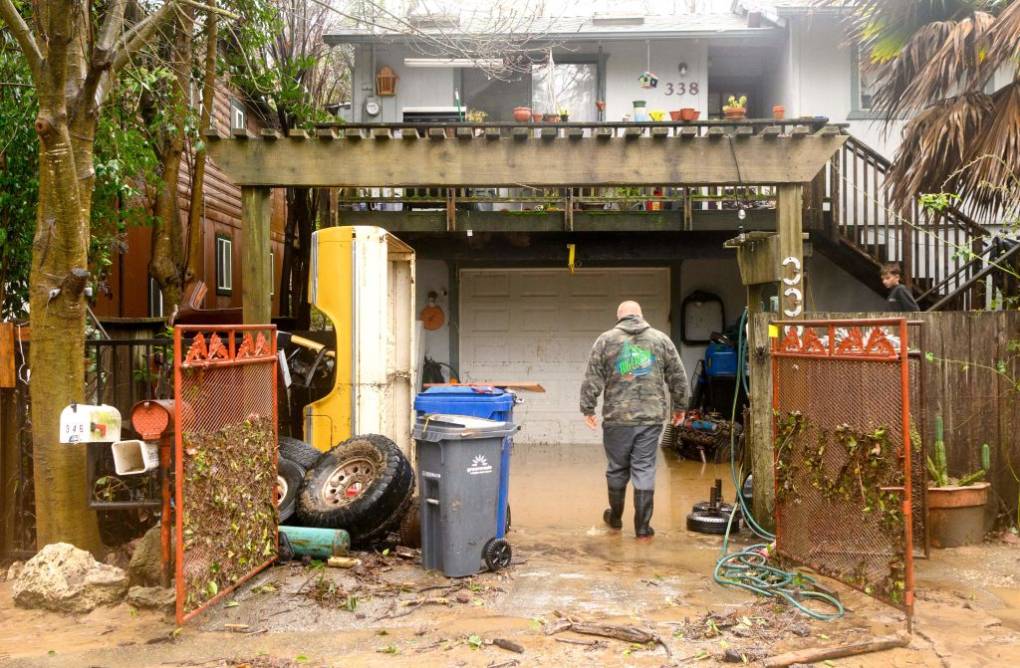
"altTag": "A man faces a home dressed in rain boots, grey pants and a camouflage hoodie surrounded by debris, tires, trash bins and muddy water.",
"isLoading": false,
"fetchFailed": false
},
"news_11937435": {
"type": "attachments",
"id": "news_11937435",
"meta": {
"index": "attachments_1716263798",
"site": "news",
"id": "11937435",
"found": true
},
"parent": 11937426,
"imgSizes": {
"twentyfourteen-full-width": {
"file": "https://ww2.kqed.org/app/uploads/sites/10/2023/01/Screen-Shot-2023-01-09-at-10.25.53-AM-1038x576.png",
"width": 1038,
"mimeType": "image/png",
"height": 576
},
"thumbnail": {
"file": "https://ww2.kqed.org/app/uploads/sites/10/2023/01/Screen-Shot-2023-01-09-at-10.25.53-AM-160x100.png",
"width": 160,
"mimeType": "image/png",
"height": 100
},
"post-thumbnail": {
"file": "https://ww2.kqed.org/app/uploads/sites/10/2023/01/Screen-Shot-2023-01-09-at-10.25.53-AM-672x372.png",
"width": 672,
"mimeType": "image/png",
"height": 372
},
"kqedFullSize": {
"file": "https://ww2.kqed.org/app/uploads/sites/10/2023/01/Screen-Shot-2023-01-09-at-10.25.53-AM.png",
"width": 2124,
"height": 1324
},
"2048x2048": {
"file": "https://ww2.kqed.org/app/uploads/sites/10/2023/01/Screen-Shot-2023-01-09-at-10.25.53-AM-2048x1277.png",
"width": 2048,
"mimeType": "image/png",
"height": 1277
},
"large": {
"file": "https://ww2.kqed.org/app/uploads/sites/10/2023/01/Screen-Shot-2023-01-09-at-10.25.53-AM-1020x636.png",
"width": 1020,
"mimeType": "image/png",
"height": 636
},
"1536x1536": {
"file": "https://ww2.kqed.org/app/uploads/sites/10/2023/01/Screen-Shot-2023-01-09-at-10.25.53-AM-1536x957.png",
"width": 1536,
"mimeType": "image/png",
"height": 957
},
"full-width": {
"file": "https://ww2.kqed.org/app/uploads/sites/10/2023/01/Screen-Shot-2023-01-09-at-10.25.53-AM-1920x1197.png",
"width": 1920,
"mimeType": "image/png",
"height": 1197
},
"medium": {
"file": "https://ww2.kqed.org/app/uploads/sites/10/2023/01/Screen-Shot-2023-01-09-at-10.25.53-AM-800x499.png",
"width": 800,
"mimeType": "image/png",
"height": 499
}
},
"publishDate": 1673292066,
"modified": 1673308842,
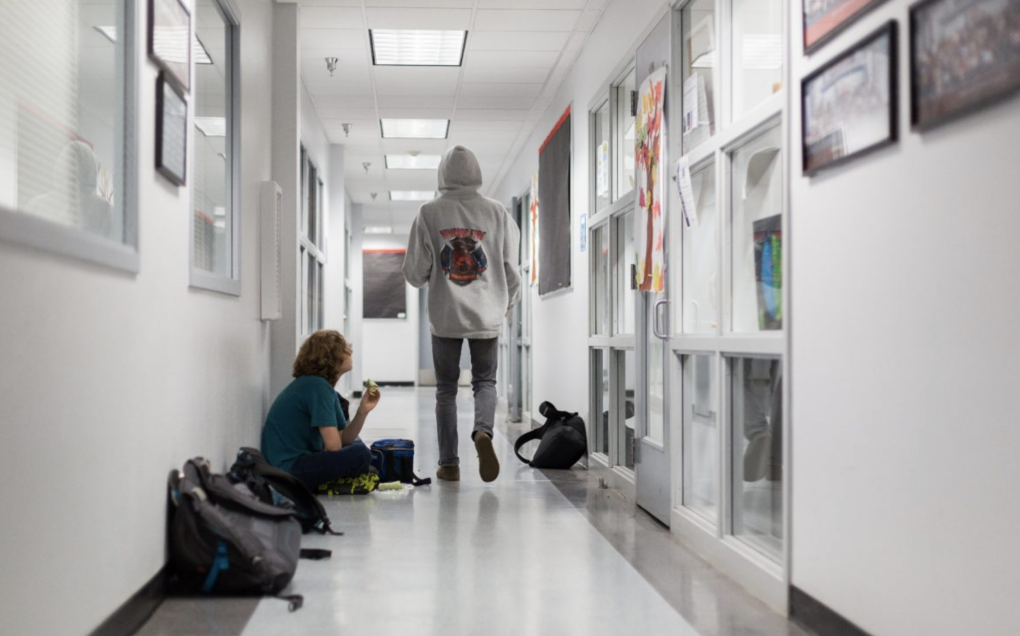
"caption": "All public schools are required to identify and help unhoused students under the McKinney-Vento Homeless Assistance Act.",
"description": null,
"title": "Screen Shot 2023-01-09 at 10.25.53 AM",
"credit": "Julie Leopo/EdSource",
"status": "inherit",
"altTag": "A young person walking down a hallway with a hood over their head while other young people sit down next to backpacks.",
"isLoading": false,
"fetchFailed": false
},
"news_11937202": {
"type": "attachments",
"id": "news_11937202",
"meta": {
"index": "attachments_1716263798",
"site": "news",
"id": "11937202",
"found": true
},
"parent": 11937183,
"imgSizes": {
"twentyfourteen-full-width": {
"file": "https://ww2.kqed.org/app/uploads/sites/10/2023/01/KNR1011_Liccardo_VR-2_frame_16481-1038x576.jpeg",
"width": 1038,
"mimeType": "image/jpeg",
"height": 576
},
"thumbnail": {
"file": "https://ww2.kqed.org/app/uploads/sites/10/2023/01/KNR1011_Liccardo_VR-2_frame_16481-160x90.jpeg",
"width": 160,
"mimeType": "image/jpeg",
"height": 90
},
"post-thumbnail": {
"file": "https://ww2.kqed.org/app/uploads/sites/10/2023/01/KNR1011_Liccardo_VR-2_frame_16481-672x372.jpeg",
"width": 672,
"mimeType": "image/jpeg",
"height": 372
},
"kqedFullSize": {
"file": "https://ww2.kqed.org/app/uploads/sites/10/2023/01/KNR1011_Liccardo_VR-2_frame_16481.jpeg",
"width": 1920,
"height": 1080
},
"large": {
"file": "https://ww2.kqed.org/app/uploads/sites/10/2023/01/KNR1011_Liccardo_VR-2_frame_16481-1020x574.jpeg",
"width": 1020,
"mimeType": "image/jpeg",
"height": 574
},
"1536x1536": {
"file": "https://ww2.kqed.org/app/uploads/sites/10/2023/01/KNR1011_Liccardo_VR-2_frame_16481-1536x864.jpeg",
"width": 1536,
"mimeType": "image/jpeg",
"height": 864
},
"medium": {
"file": "https://ww2.kqed.org/app/uploads/sites/10/2023/01/KNR1011_Liccardo_VR-2_frame_16481-800x450.jpeg",
"width": 800,
"mimeType": "image/jpeg",
"height": 450
}
},
"publishDate": 1673044303,
"modified": 1673044303,
"caption": null,
"description": null,
"title": "KNR1011_Liccardo_VR 2_frame_16481",
"credit": null,
"status": "inherit",
"altTag": null,
"isLoading": false,
"fetchFailed": false
},
"news_11936258": {
"type": "attachments",
"id": "news_11936258",
"meta": {
"index": "attachments_1716263798",
"site": "news",
"id": "11936258",
"found": true
},
"parent": 11936245,
"imgSizes": {
"twentyfourteen-full-width": {
"file": "https://ww2.kqed.org/app/uploads/sites/10/2022/12/RS61718_008_KQED_TaqwaaBonner_12162022-qut-1038x576.jpg",
"width": 1038,
"mimeType": "image/jpeg",
"height": 576
},
"thumbnail": {
"file": "https://ww2.kqed.org/app/uploads/sites/10/2022/12/RS61718_008_KQED_TaqwaaBonner_12162022-qut-160x107.jpg",
"width": 160,
"mimeType": "image/jpeg",
"height": 107
},
"post-thumbnail": {
"file": "https://ww2.kqed.org/app/uploads/sites/10/2022/12/RS61718_008_KQED_TaqwaaBonner_12162022-qut-672x372.jpg",
"width": 672,
"mimeType": "image/jpeg",
"height": 372
},
"kqedFullSize": {
"file": "https://ww2.kqed.org/app/uploads/sites/10/2022/12/RS61718_008_KQED_TaqwaaBonner_12162022-qut.jpg",
"width": 1920,
"height": 1280
},
"large": {
"file": "https://ww2.kqed.org/app/uploads/sites/10/2022/12/RS61718_008_KQED_TaqwaaBonner_12162022-qut-1020x680.jpg",
"width": 1020,
"mimeType": "image/jpeg",
"height": 680
},
"1536x1536": {
"file": "https://ww2.kqed.org/app/uploads/sites/10/2022/12/RS61718_008_KQED_TaqwaaBonner_12162022-qut-1536x1024.jpg",
"width": 1536,
"mimeType": "image/jpeg",
"height": 1024
},
"medium": {
"file": "https://ww2.kqed.org/app/uploads/sites/10/2022/12/RS61718_008_KQED_TaqwaaBonner_12162022-qut-800x533.jpg",
"width": 800,
"mimeType": "image/jpeg",
"height": 533
}
},
"publishDate": 1671753321,
"modified": 1671758780,
"caption": "Taqwaa Bonner (right), housing advocate for All of Us or None, speaks with his colleagues outside their offices in Oakland on Dec. 16, 2022.",
"description": null,
"title": "RS61718_008_KQED_TaqwaaBonner_12162022-qut",
"credit": "Beth LaBerge/KQED",
"status": "inherit",
"altTag": "Two Black men talk on a neighborhood street.",
"isLoading": false,
"fetchFailed": false
},
"news_11904436": {
"type": "attachments",
"id": "news_11904436",
"meta": {
"index": "attachments_1716263798",
"site": "news",
"id": "11904436",
"found": true
},
"parent": 11904356,
"imgSizes": {
"twentyfourteen-full-width": {
"file": "https://ww2.kqed.org/app/uploads/sites/10/2022/02/GettyImages-1236267426-1038x576.jpg",
"width": 1038,
"mimeType": "image/jpeg",
"height": 576
},
"thumbnail": {
"file": "https://ww2.kqed.org/app/uploads/sites/10/2022/02/GettyImages-1236267426-160x107.jpg",
"width": 160,
"mimeType": "image/jpeg",
"height": 107
},
"post-thumbnail": {
"file": "https://ww2.kqed.org/app/uploads/sites/10/2022/02/GettyImages-1236267426-672x372.jpg",
"width": 672,
"mimeType": "image/jpeg",
"height": 372
},
"kqedFullSize": {
"file": "https://ww2.kqed.org/app/uploads/sites/10/2022/02/GettyImages-1236267426-scaled-e1652820336498.jpg",
"width": 1920,
"height": 1280
},
"2048x2048": {
"file": "https://ww2.kqed.org/app/uploads/sites/10/2022/02/GettyImages-1236267426-2048x1365.jpg",
"width": 2048,
"mimeType": "image/jpeg",
"height": 1365
},
"large": {
"file": "https://ww2.kqed.org/app/uploads/sites/10/2022/02/GettyImages-1236267426-1020x680.jpg",
"width": 1020,
"mimeType": "image/jpeg",
"height": 680
},
"1536x1536": {
"file": "https://ww2.kqed.org/app/uploads/sites/10/2022/02/GettyImages-1236267426-1536x1024.jpg",
"width": 1536,
"mimeType": "image/jpeg",
"height": 1024
},
"full-width": {
"file": "https://ww2.kqed.org/app/uploads/sites/10/2022/02/GettyImages-1236267426-1920x1280.jpg",
"width": 1920,
"mimeType": "image/jpeg",
"height": 1280
},
"medium": {
"file": "https://ww2.kqed.org/app/uploads/sites/10/2022/02/GettyImages-1236267426-800x533.jpg",
"width": 800,
"mimeType": "image/jpeg",
"height": 533
}
},
"publishDate": 1644288136,
"modified": 1671482744,
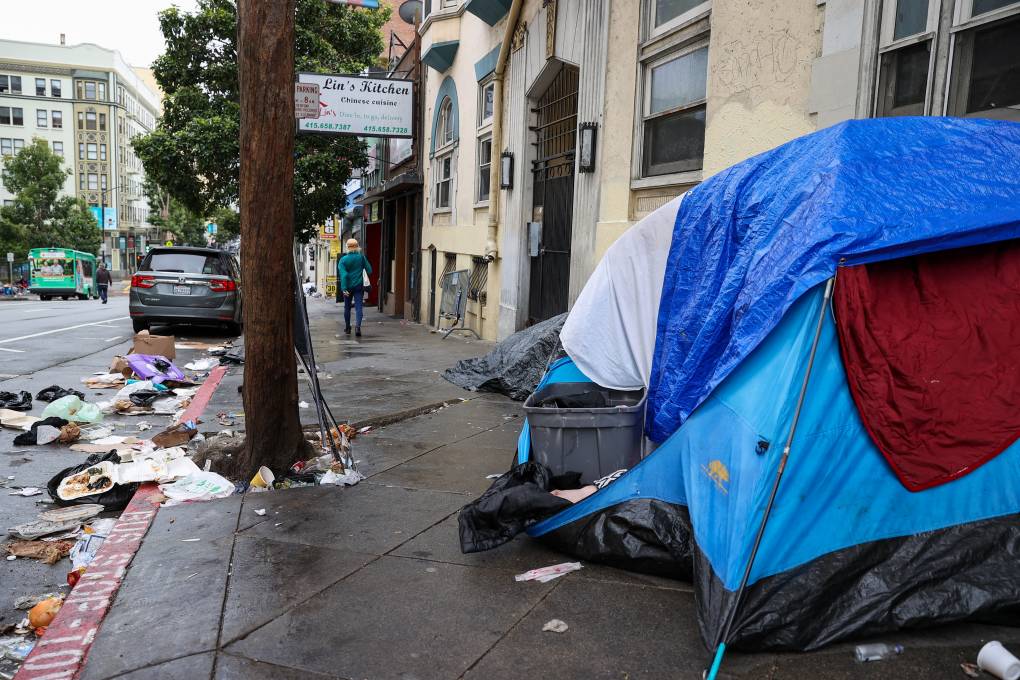
"caption": "An encampment of unhoused people on the streets of the Tenderloin in San Francisco on Oct. 30, 2021. The Biden administration has announced a new federal initiative to combat homelessness.",
"description": "An encampment of unhoused people on the streets of the Tenderloin in San Francisco on October 30, 2021.",
"title": "Homelessness in San Francisco",
"credit": "Tayfun Coskun/Anadolu Agency via Getty Images",
"status": "inherit",
"altTag": "A blue tent has been set up along the wall of a building on a rainy sidewalk on a busy city street. The parking spaces nearest the tent are filled with trash – plastic bags, open takeout containers full of food, a paper cup – and additional trash is piled at the base of a tree next to the tent. In the background, a person in a green jacket walks away down the street.",
"isLoading": false,
"fetchFailed": false
},
"news_11935668": {
"type": "attachments",
"id": "news_11935668",
"meta": {
"index": "attachments_1716263798",
"site": "news",
"id": "11935668",
"found": true
},
"parent": 11935667,
"imgSizes": {
"twentyfourteen-full-width": {
"file": "https://ww2.kqed.org/app/uploads/sites/10/2022/12/IMG_3011-1038x576.jpg",
"width": 1038,
"mimeType": "image/jpeg",
"height": 576
},
"thumbnail": {
"file": "https://ww2.kqed.org/app/uploads/sites/10/2022/12/IMG_3011-160x120.jpg",
"width": 160,
"mimeType": "image/jpeg",
"height": 120
},
"post-thumbnail": {
"file": "https://ww2.kqed.org/app/uploads/sites/10/2022/12/IMG_3011-672x372.jpg",
"width": 672,
"mimeType": "image/jpeg",
"height": 372
},
"kqedFullSize": {
"file": "https://ww2.kqed.org/app/uploads/sites/10/2022/12/IMG_3011-scaled.jpg",
"width": 2560,
"height": 1920
},
"2048x2048": {
"file": "https://ww2.kqed.org/app/uploads/sites/10/2022/12/IMG_3011-2048x1536.jpg",
"width": 2048,
"mimeType": "image/jpeg",
"height": 1536
},
"large": {
"file": "https://ww2.kqed.org/app/uploads/sites/10/2022/12/IMG_3011-1020x765.jpg",
"width": 1020,
"mimeType": "image/jpeg",
"height": 765
},
"1536x1536": {
"file": "https://ww2.kqed.org/app/uploads/sites/10/2022/12/IMG_3011-1536x1152.jpg",
"width": 1536,
"mimeType": "image/jpeg",
"height": 1152
},
"full-width": {
"file": "https://ww2.kqed.org/app/uploads/sites/10/2022/12/IMG_3011-1920x1440.jpg",
"width": 1920,
"mimeType": "image/jpeg",
"height": 1440
},
"medium": {
"file": "https://ww2.kqed.org/app/uploads/sites/10/2022/12/IMG_3011-800x600.jpg",
"width": 800,
"mimeType": "image/jpeg",
"height": 600
}
},
"publishDate": 1671242184,
"modified": 1671242184,
"caption": null,
"description": null,
"title": "IMG_3011",
"credit": null,
"status": "inherit",
"altTag": null,
"isLoading": false,
"fetchFailed": false
},
"news_11934657": {
"type": "attachments",
"id": "news_11934657",
"meta": {
"index": "attachments_1716263798",
"site": "news",
"id": "11934657",
"found": true
},
"parent": 11934624,
"imgSizes": {
"twentyfourteen-full-width": {
"file": "https://ww2.kqed.org/app/uploads/sites/10/2022/12/GettyImages-1244095544-1024x576.jpg",
"width": 1024,
"mimeType": "image/jpeg",
"height": 576
},
"thumbnail": {
"file": "https://ww2.kqed.org/app/uploads/sites/10/2022/12/GettyImages-1244095544-160x97.jpg",
"width": 160,
"mimeType": "image/jpeg",
"height": 97
},
"post-thumbnail": {
"file": "https://ww2.kqed.org/app/uploads/sites/10/2022/12/GettyImages-1244095544-672x372.jpg",
"width": 672,
"mimeType": "image/jpeg",
"height": 372
},
"kqedFullSize": {
"file": "https://ww2.kqed.org/app/uploads/sites/10/2022/12/GettyImages-1244095544.jpg",
"width": 1024,
"height": 621
},
"large": {
"file": "https://ww2.kqed.org/app/uploads/sites/10/2022/12/GettyImages-1244095544-1020x619.jpg",
"width": 1020,
"mimeType": "image/jpeg",
"height": 619
},
"medium": {
"file": "https://ww2.kqed.org/app/uploads/sites/10/2022/12/GettyImages-1244095544-800x485.jpg",
"width": 800,
"mimeType": "image/jpeg",
"height": 485
}
},
"publishDate": 1670534271,
"modified": 1681912523,
"caption": null,
"description": "A 'for rent' sign is posted in South Pasadena in Los Angeles County on Oct. 19, 2022. The Tenant Protections online tool will enable renters in California to easily check the legality of rent increases by landlords.",
"title": "US-ECONOMY-HOUSING-RENT",
"credit": "Photo by: Frederic J. Brown/AFP via Getty Images",
"status": "inherit",
"altTag": "A sign that says \"Apartment For Rent\" with someone walking by.",
"isLoading": false,
"fetchFailed": false
},
"news_11933917": {
"type": "attachments",
"id": "news_11933917",
"meta": {
"index": "attachments_1716263798",
"site": "news",
"id": "11933917",
"found": true
},
"parent": 11933908,
"imgSizes": {
"twentyfourteen-full-width": {
"file": "https://ww2.kqed.org/app/uploads/sites/10/2022/12/HateSpeech-1-1038x576.png",
"width": 1038,
"mimeType": "image/png",
"height": 576
},
"thumbnail": {
"file": "https://ww2.kqed.org/app/uploads/sites/10/2022/12/HateSpeech-1-160x90.png",
"width": 160,
"mimeType": "image/png",
"height": 90
},
"post-thumbnail": {
"file": "https://ww2.kqed.org/app/uploads/sites/10/2022/12/HateSpeech-1-672x372.png",
"width": 672,
"mimeType": "image/png",
"height": 372
},
"kqedFullSize": {
"file": "https://ww2.kqed.org/app/uploads/sites/10/2022/12/HateSpeech-1.png",
"width": 1920,
"height": 1080
},
"large": {
"file": "https://ww2.kqed.org/app/uploads/sites/10/2022/12/HateSpeech-1-1020x574.png",
"width": 1020,
"mimeType": "image/png",
"height": 574
},
"1536x1536": {
"file": "https://ww2.kqed.org/app/uploads/sites/10/2022/12/HateSpeech-1-1536x864.png",
"width": 1536,
"mimeType": "image/png",
"height": 864
},
"medium": {
"file": "https://ww2.kqed.org/app/uploads/sites/10/2022/12/HateSpeech-1-800x450.png",
"width": 800,
"mimeType": "image/png",
"height": 450
}
},
"publishDate": 1670019762,
"modified": 1670019762,
"caption": null,
"description": null,
"title": "HateSpeech",
"credit": null,
"status": "inherit",
"altTag": null,
"isLoading": false,
"fetchFailed": false
},
"news_11932907": {
"type": "attachments",
"id": "news_11932907",
"meta": {
"index": "attachments_1716263798",
"site": "news",
"id": "11932907",
"found": true
},
"parent": 11932895,
"imgSizes": {
"twentyfourteen-full-width": {
"file": "https://ww2.kqed.org/app/uploads/sites/10/2022/11/Screen-Shot-2022-11-21-at-10.00.27-AM-1038x576.png",
"width": 1038,
"mimeType": "image/png",
"height": 576
},
"thumbnail": {
"file": "https://ww2.kqed.org/app/uploads/sites/10/2022/11/Screen-Shot-2022-11-21-at-10.00.27-AM-160x103.png",
"width": 160,
"mimeType": "image/png",
"height": 103
},
"post-thumbnail": {
"file": "https://ww2.kqed.org/app/uploads/sites/10/2022/11/Screen-Shot-2022-11-21-at-10.00.27-AM-672x372.png",
"width": 672,
"mimeType": "image/png",
"height": 372
},
"kqedFullSize": {
"file": "https://ww2.kqed.org/app/uploads/sites/10/2022/11/Screen-Shot-2022-11-21-at-10.00.27-AM.png",
"width": 2368,
"height": 1528
},
"2048x2048": {
"file": "https://ww2.kqed.org/app/uploads/sites/10/2022/11/Screen-Shot-2022-11-21-at-10.00.27-AM-2048x1322.png",
"width": 2048,
"mimeType": "image/png",
"height": 1322
},
"large": {
"file": "https://ww2.kqed.org/app/uploads/sites/10/2022/11/Screen-Shot-2022-11-21-at-10.00.27-AM-1020x658.png",
"width": 1020,
"mimeType": "image/png",
"height": 658
},
"1536x1536": {
"file": "https://ww2.kqed.org/app/uploads/sites/10/2022/11/Screen-Shot-2022-11-21-at-10.00.27-AM-1536x991.png",
"width": 1536,
"mimeType": "image/png",
"height": 991
},
"full-width": {
"file": "https://ww2.kqed.org/app/uploads/sites/10/2022/11/Screen-Shot-2022-11-21-at-10.00.27-AM-1920x1239.png",
"width": 1920,
"mimeType": "image/png",
"height": 1239
},
"medium": {
"file": "https://ww2.kqed.org/app/uploads/sites/10/2022/11/Screen-Shot-2022-11-21-at-10.00.27-AM-800x516.png",
"width": 800,
"mimeType": "image/png",
"height": 516
}
},
"publishDate": 1669055580,
"modified": 1669077299,
"caption": "Gov. Gavin Newsom explains why he withheld, then released, $1 billion for local governments to reduce California homelessness, in Sacramento on Nov. 18, 2022.",
"description": null,
"title": "Screen Shot 2022-11-21 at 10.00.27 AM",
"credit": "Rahul Lal/CalMatters",
"status": "inherit",
"altTag": "A man wearing a business suit stands in front of several people holding microphones toward him inside a building.",
"isLoading": false,
"fetchFailed": false
},
"news_11932470": {
"type": "attachments",
"id": "news_11932470",
"meta": {
"index": "attachments_1716263798",
"site": "news",
"id": "11932470",
"found": true
},
"title": "RS59970_010_KQED_CityHallSFVoting_11082022-qut",
"publishDate": 1668636898,
"status": "inherit",
"parent": 11932419,
"modified": 1777660023,
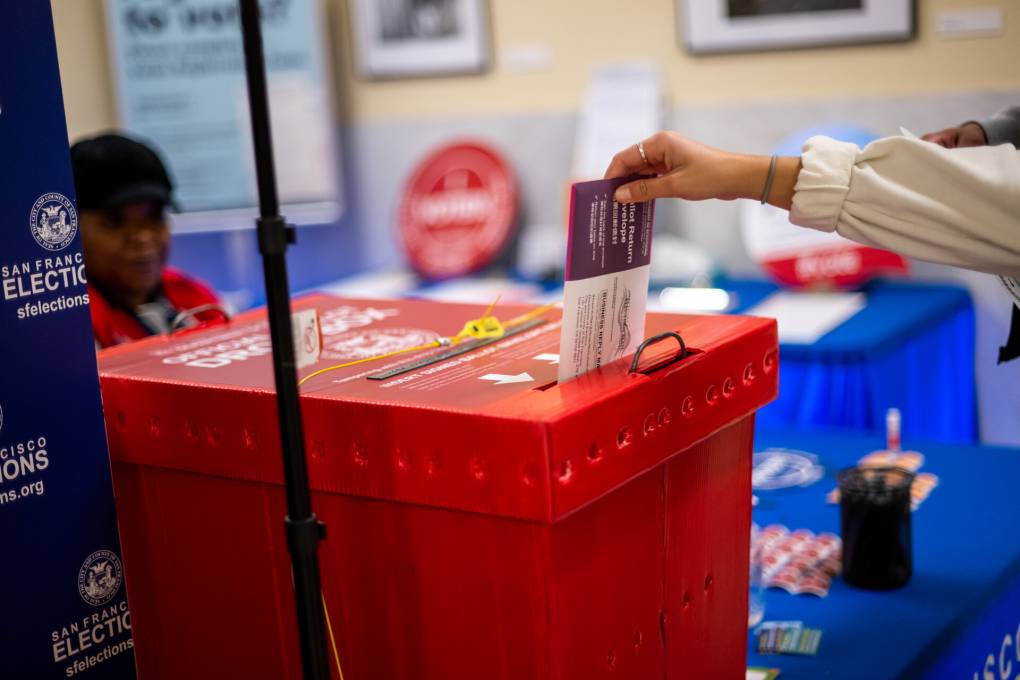
"caption": "A voter drops off a ballot at the City Hall Voting Center in San Francisco on Election Day, Nov. 8, 2022. ",
"credit": "Beth LaBerge/KQED",
"altTag": "A voter seen dropping off a ballot.",
"description": null,
"imgSizes": {
"medium": {
"file": "https://cdn.kqed.org/wp-content/uploads/sites/10/2022/11/RS59970_010_KQED_CityHallSFVoting_11082022-qut-800x533.jpg",
"width": 800,
"height": 533,
"mimeType": "image/jpeg"
},
"large": {
"file": "https://cdn.kqed.org/wp-content/uploads/sites/10/2022/11/RS59970_010_KQED_CityHallSFVoting_11082022-qut-1020x680.jpg",
"width": 1020,
"height": 680,
"mimeType": "image/jpeg"
},
"thumbnail": {
"file": "https://cdn.kqed.org/wp-content/uploads/sites/10/2022/11/RS59970_010_KQED_CityHallSFVoting_11082022-qut-160x107.jpg",
"width": 160,
"height": 107,
"mimeType": "image/jpeg"
},
"1536x1536": {
"file": "https://cdn.kqed.org/wp-content/uploads/sites/10/2022/11/RS59970_010_KQED_CityHallSFVoting_11082022-qut-1536x1024.jpg",
"width": 1536,
"height": 1024,
"mimeType": "image/jpeg"
},
"post-thumbnail": {
"file": "https://cdn.kqed.org/wp-content/uploads/sites/10/2022/11/RS59970_010_KQED_CityHallSFVoting_11082022-qut-672x372.jpg",
"width": 672,
"height": 372,
"mimeType": "image/jpeg"
},
"twentyfourteen-full-width": {
"file": "https://cdn.kqed.org/wp-content/uploads/sites/10/2022/11/RS59970_010_KQED_CityHallSFVoting_11082022-qut-1038x576.jpg",
"width": 1038,
"height": 576,
"mimeType": "image/jpeg"
},
"kqedFullSize": {
"file": "https://cdn.kqed.org/wp-content/uploads/sites/10/2022/11/RS59970_010_KQED_CityHallSFVoting_11082022-qut.jpg",
"width": 1920,
"height": 1280
}
},
"isLoading": false,
"fetchFailed": false
},
"news_11932065": {
"type": "attachments",
"id": "news_11932065",
"meta": {
"index": "attachments_1716263798",
"site": "news",
"id": "11932065",
"found": true
},
"parent": 11932057,
"imgSizes": {
"twentyfourteen-full-width": {
"file": "https://ww2.kqed.org/app/uploads/sites/10/2022/11/49240467171_e53092cf91_b-1-1038x576.jpg",
"width": 1038,
"mimeType": "image/jpeg",
"height": 576
},
"thumbnail": {
"file": "https://ww2.kqed.org/app/uploads/sites/10/2022/11/49240467171_e53092cf91_b-1-160x107.jpg",
"width": 160,
"mimeType": "image/jpeg",
"height": 107
},
"post-thumbnail": {
"file": "https://ww2.kqed.org/app/uploads/sites/10/2022/11/49240467171_e53092cf91_b-1-672x372.jpg",
"width": 672,
"mimeType": "image/jpeg",
"height": 372
},
"kqedFullSize": {
"file": "https://ww2.kqed.org/app/uploads/sites/10/2022/11/49240467171_e53092cf91_b-1.jpg",
"width": 1920,
"height": 1281
},
"large": {
"file": "https://ww2.kqed.org/app/uploads/sites/10/2022/11/49240467171_e53092cf91_b-1-1020x681.jpg",
"width": 1020,
"mimeType": "image/jpeg",
"height": 681
},
"1536x1536": {
"file": "https://ww2.kqed.org/app/uploads/sites/10/2022/11/49240467171_e53092cf91_b-1-1536x1025.jpg",
"width": 1536,
"mimeType": "image/jpeg",
"height": 1025
},
"medium": {
"file": "https://ww2.kqed.org/app/uploads/sites/10/2022/11/49240467171_e53092cf91_b-1-800x534.jpg",
"width": 800,
"mimeType": "image/jpeg",
"height": 534
}
},
"publishDate": 1668219176,
"modified": 1668453907,
"caption": "Twitter employees cater food to veterans at an annual luncheon co-hosted by Swords to Plowshares and Del Seymour, director of Code Tenderloin, in 2019.",
"description": null,
"title": "49240467171_e53092cf91_b (1)",
"credit": "Courtesy of Swords to Plowshares",
"status": "inherit",
"altTag": "People stand in two lines facing each other with a table in the middle. On the left, three people stand holding paper plates in front of them. One wears a Santa Claus hat. On the right, three people scoop food onto the outstretched plates.",
"isLoading": false,
"fetchFailed": false
}
},
"audioPlayerReducer": {
"postId": "stream_live",
"isPaused": true,
"isPlaying": false,
"pfsActive": false,
"pledgeModalIsOpen": true,
"playerDrawerIsOpen": false,
"liveAudioPlayStartedAt": 0,
"liveAudioPlayContext": ""
},
"authorsReducer": {
"byline_news_11937426": {
"type": "authors",
"id": "byline_news_11937426",
"meta": {
"override": true
},
"slug": "byline_news_11937426",
"name": "Betty Márquez Rosales",
"isLoading": false
},
"byline_news_11932895": {
"type": "authors",
"id": "byline_news_11932895",
"meta": {
"override": true
},
"slug": "byline_news_11932895",
"name": "Manuela Tobias",
"isLoading": false
},
"byline_news_11932419": {
"type": "authors",
"id": "byline_news_11932419",
"meta": {
"override": true
},
"slug": "byline_news_11932419",
"name": "The Associated Press and KQED News Staff",
"isLoading": false
},
"kqed": {
"type": "authors",
"id": "236",
"meta": {
"index": "authors_1716337520",
"id": "236",
"found": true
},
"name": "KQED News Staff",
"firstName": "KQED News Staff",
"lastName": null,
"slug": "kqed",
"email": "faq@kqed.org",
"display_author_email": false,
"staff_mastheads": [],
"title": null,
"bio": null,
"avatar": "https://secure.gravatar.com/avatar/ef0e801a68c4c54afa9180db14084167?s=600&d=blank&r=g",
"twitter": null,
"facebook": null,
"instagram": null,
"linkedin": null,
"sites": [
{
"site": "arts",
"roles": [
"contributor"
]
},
{
"site": "news",
"roles": [
"editor"
]
},
{
"site": "futureofyou",
"roles": [
"author"
]
}
],
"headData": {
"title": "KQED News Staff | KQED",
"description": null,
"ogImgSrc": "https://secure.gravatar.com/avatar/ef0e801a68c4c54afa9180db14084167?s=600&d=blank&r=g",
"twImgSrc": "https://secure.gravatar.com/avatar/ef0e801a68c4c54afa9180db14084167?s=600&d=blank&r=g"
},
"isLoading": false,
"link": "/author/kqed"
},
"kqednewsstaffandwires": {
"type": "authors",
"id": "237",
"meta": {
"index": "authors_1716337520",
"id": "237",
"found": true
},
"name": "KQED News Staff and Wires",
"firstName": "KQED News Staff and Wires",
"lastName": null,
"slug": "kqednewsstaffandwires",
"email": "onlinenewsstaff@kqed.org",
"display_author_email": false,
"staff_mastheads": [],
"title": null,
"bio": null,
"avatar": "https://secure.gravatar.com/avatar/72295af8ebbfbd19a4948f5271285664?s=600&d=blank&r=g",
"twitter": null,
"facebook": null,
"instagram": null,
"linkedin": null,
"sites": [
{
"site": "arts",
"roles": [
"contributor"
]
},
{
"site": "news",
"roles": [
"contributor"
]
},
{
"site": "lowdown",
"roles": [
"author"
]
},
{
"site": "stateofhealth",
"roles": [
"contributor"
]
},
{
"site": "food",
"roles": [
"author"
]
}
],
"headData": {
"title": "KQED News Staff and Wires | KQED",
"description": null,
"ogImgSrc": "https://secure.gravatar.com/avatar/72295af8ebbfbd19a4948f5271285664?s=600&d=blank&r=g",
"twImgSrc": "https://secure.gravatar.com/avatar/72295af8ebbfbd19a4948f5271285664?s=600&d=blank&r=g"
},
"isLoading": false,
"link": "/author/kqednewsstaffandwires"
},
"mlagos": {
"type": "authors",
"id": "3239",
"meta": {
"index": "authors_1716337520",
"id": "3239",
"found": true
},
"name": "Marisa Lagos",
"firstName": "Marisa",
"lastName": "Lagos",
"slug": "mlagos",
"email": "mlagos@kqed.org",
"display_author_email": false,
"staff_mastheads": [
"news"
],
"title": "KQED Contributor",
"bio": "Marisa Lagos is a correspondent for KQED’s California Politics and Government Desk and co-hosts the award-winning show and podcast, Political Breakdown. At KQED, Lagos also conducts reporting, analysis and investigations into state, local and national politics for radio, TV, online and onstage. In 2022, she and co-host, Scott Shafer, moderated the only gubernatorial debate in California. In 2020, the \u003ci>Washington Post\u003c/i> named her one of the top political journalists in California; she was nominated for a Peabody and won several other awards for her work investigating the 2017 California wildfires. She has worked at the \u003ci>San Francisco Chronicle\u003c/i>, \u003ci>San Francisco Examiner\u003c/i> and \u003ci>Los Angeles Times\u003c/i>. A UC Santa Barbara graduate, she lives in San Francisco with her two sons and husband.",
"avatar": "https://secure.gravatar.com/avatar/a261a0d3696fc066871ef96b85b5e7d2?s=600&d=blank&r=g",
"twitter": "@mlagos",
"facebook": null,
"instagram": null,
"linkedin": null,
"sites": [
{
"site": "arts",
"roles": [
"author"
]
},
{
"site": "news",
"roles": [
"editor"
]
},
{
"site": "science",
"roles": [
"editor"
]
},
{
"site": "forum",
"roles": [
"author"
]
},
{
"site": "liveblog",
"roles": [
"author"
]
}
],
"headData": {
"title": "Marisa Lagos | KQED",
"description": "KQED Contributor",
"ogImgSrc": "https://secure.gravatar.com/avatar/a261a0d3696fc066871ef96b85b5e7d2?s=600&d=blank&r=g",
"twImgSrc": "https://secure.gravatar.com/avatar/a261a0d3696fc066871ef96b85b5e7d2?s=600&d=blank&r=g"
},
"isLoading": false,
"link": "/author/mlagos"
},
"bwatt": {
"type": "authors",
"id": "11238",
"meta": {
"index": "authors_1716337520",
"id": "11238",
"found": true
},
"name": "Brian Watt",
"firstName": "Brian",
"lastName": "Watt",
"slug": "bwatt",
"email": "bwatt@KQED.org",
"display_author_email": false,
"staff_mastheads": [
"news"
],
"title": "Morning News Anchor",
"bio": "Brian Watt is KQED's morning radio news anchor. He joined the KQED News team in April of 2016. Prior to that, he worked as a Reporter for KPCC in Los Angeles and a producer at \u003cem>Marketplace.\u003c/em>\r\n\r\nDuring eight years at KPCC, Brian covered business and economics, and his work won several awards. In 2008, he won the Los Angeles Press Club’s first-place award for Business and Financial Reporting, Broadcast. He’s also received honorable mention and been first runner up for the Press Club’s Radio Journalist of the Year. He won two Golden Mike awards from the Radio and TV News Association of Southern California.\r\n\r\nBrian holds degrees in theater from Yale University and the Sorbonne, and has worked as an actor in France, Italy, Brazil, Hungary and . . . Hollywood. He appeared in a few television shows, including \u003cem>The West Wing, Judging Amy\u003c/em> and \u003cem>The District.\u003c/em>\r\n\r\nEmail: bwatt@KQED.org Twitter: @RadioBWatt",
"avatar": "https://secure.gravatar.com/avatar/55393ff57ed34e2be773ba4789dd6a19?s=600&d=blank&r=g",
"twitter": "@RadioBWatt",
"facebook": null,
"instagram": null,
"linkedin": null,
"sites": [
{
"site": "arts",
"roles": [
"contributor"
]
},
{
"site": "news",
"roles": [
"editor"
]
}
],
"headData": {
"title": "Brian Watt | KQED",
"description": "Morning News Anchor",
"ogImgSrc": "https://secure.gravatar.com/avatar/55393ff57ed34e2be773ba4789dd6a19?s=600&d=blank&r=g",
"twImgSrc": "https://secure.gravatar.com/avatar/55393ff57ed34e2be773ba4789dd6a19?s=600&d=blank&r=g"
},
"isLoading": false,
"link": "/author/bwatt"
},
"vrancano": {
"type": "authors",
"id": "11276",
"meta": {
"index": "authors_1716337520",
"id": "11276",
"found": true
},
"name": "Vanessa Rancaño",
"firstName": "Vanessa",
"lastName": "Rancaño",
"slug": "vrancano",
"email": "vrancano@kqed.org",
"display_author_email": false,
"staff_mastheads": [
"news"
],
"title": "Reporter",
"bio": "Vanessa Rancaño is a features reporter for KQED. She’s also covered homelessness and education for the station and reported from the Central Valley. Her work has aired across public radio, from flagship national news shows to longform narrative podcasts. Before taking up a mic, she worked as a freelance print journalist. She’s been recognized with a number of national and regional awards. Vanessa grew up in California's Central Valley. She's a former NPR Kroc Fellow, and a graduate of the UC Berkeley Graduate School of Journalism.",
"avatar": "https://secure.gravatar.com/avatar/b3a383dfb0e7ee1c17568f2cf067904ab654d6e3de9743fc661f3c788ade1bed?s=600&d=blank&r=g",
"twitter": "vanessarancano",
"bluesky": null,
"facebook": null,
"instagram": null,
"linkedin": null,
"sites": [
{
"site": "arts",
"roles": [
"editor"
]
},
{
"site": "news",
"roles": [
"editor"
]
},
{
"site": "liveblog",
"roles": [
"contributor"
]
}
],
"headData": {
"title": "Vanessa Rancaño | KQED",
"description": "Reporter",
"ogImgSrc": "https://secure.gravatar.com/avatar/b3a383dfb0e7ee1c17568f2cf067904ab654d6e3de9743fc661f3c788ade1bed?s=600&d=blank&r=g",
"twImgSrc": "https://secure.gravatar.com/avatar/b3a383dfb0e7ee1c17568f2cf067904ab654d6e3de9743fc661f3c788ade1bed?s=600&d=blank&r=g"
},
"isLoading": false,
"link": "/author/vrancano"
},
"jrodriguez": {
"type": "authors",
"id": "11690",
"meta": {
"index": "authors_1716337520",
"id": "11690",
"found": true
},
"name": "Joe Fitzgerald Rodriguez",
"firstName": "Joe",
"lastName": "Fitzgerald Rodriguez",
"slug": "jrodriguez",
"email": "jrodriguez@kqed.org",
"display_author_email": true,
"staff_mastheads": [
"news"
],
"title": "Reporter and Producer",
"bio": "Joe Fitzgerald Rodriguez is a reporter and digital producer for KQED covering politics. Joe most recently wrote for the \u003cem>San Francisco Examiner\u003c/em> as a political columnist covering The City. He was raised in San Francisco and has spent his reporting career in his beloved, foggy, city by the bay. Joe was 12-years-old when he conducted his first interview in journalism, grilling former San Francisco Mayor Willie Brown for the Marina Middle School newspaper, \u003cem>The Penguin Press, \u003c/em>and he continues to report on the San Francisco Bay Area to this day.",
"avatar": "https://secure.gravatar.com/avatar/2247beb0564c1e9c62228d5649d2edac?s=600&d=blank&r=g",
"twitter": "FitztheReporter",
"facebook": null,
"instagram": "https://www.instagram.com/fitzthereporter/",
"linkedin": null,
"sites": [
{
"site": "",
"roles": [
"editor"
]
},
{
"site": "arts",
"roles": [
"editor"
]
},
{
"site": "news",
"roles": [
"editor"
]
},
{
"site": "science",
"roles": [
"editor"
]
},
{
"site": "elections",
"roles": [
"editor"
]
},
{
"site": "liveblog",
"roles": [
"editor"
]
}
],
"headData": {
"title": "Joe Fitzgerald Rodriguez | KQED",
"description": "Reporter and Producer",
"ogImgSrc": "https://secure.gravatar.com/avatar/2247beb0564c1e9c62228d5649d2edac?s=600&d=blank&r=g",
"twImgSrc": "https://secure.gravatar.com/avatar/2247beb0564c1e9c62228d5649d2edac?s=600&d=blank&r=g"
},
"isLoading": false,
"link": "/author/jrodriguez"
},
"swhitney": {
"type": "authors",
"id": "11784",
"meta": {
"index": "authors_1716337520",
"id": "11784",
"found": true
},
"name": "Spencer Whitney",
"firstName": "Spencer",
"lastName": "Whitney",
"slug": "swhitney",
"email": "swhitney@kqed.org",
"display_author_email": false,
"staff_mastheads": [],
"title": "KQED Digital Editor",
"bio": "Spencer Whitney is currently a Digital Editor for KQED News. Prior to joining KQED News, Spencer worked as the Multimedia Editor at the Oakland Post and an Assistant Editor in the Editorial department at the San Francisco Chronicle. He attended Howard University as an undergraduate and interned with SiriusXM. He also attended UC Berkeley's Graduate School of Journalism and had the opportunity to write for the hyperlocal news sites Richmond Confidential and Oakland North.",
"avatar": "https://secure.gravatar.com/avatar/e33ff4fd8b8f0d2796f36472fb32607ca8fc46ef5e537dcfdbdee688d8ea5b80?s=600&d=mm&r=g",
"twitter": null,
"bluesky": null,
"facebook": null,
"instagram": null,
"linkedin": null,
"sites": [
{
"site": "arts",
"roles": [
"editor"
]
},
{
"site": "news",
"roles": [
"editor"
]
},
{
"site": "science",
"roles": [
"editor"
]
},
{
"site": "perspectives",
"roles": [
"editor"
]
}
],
"headData": {
"title": "Spencer Whitney | KQED",
"description": "KQED Digital Editor",
"ogImgSrc": "https://secure.gravatar.com/avatar/e33ff4fd8b8f0d2796f36472fb32607ca8fc46ef5e537dcfdbdee688d8ea5b80?s=600&d=mm&r=g",
"twImgSrc": "https://secure.gravatar.com/avatar/e33ff4fd8b8f0d2796f36472fb32607ca8fc46ef5e537dcfdbdee688d8ea5b80?s=600&d=mm&r=g"
},
"isLoading": false,
"link": "/author/swhitney"
}
},
"pagesReducer": {
"news_category_housing": {
"type": "terms",
"id": "news_6266",
"meta": {
"index": "terms_1716263798",
"site": "news",
"id": "6266",
"score": 11.03987
},
"featImg": null,
"name": "Housing",
"description": null,
"taxonomy": "category",
"headData": {
"twImgId": null,
"twTitle": null,
"ogTitle": null,
"ogImgId": null,
"twDescription": null,
"description": null,
"title": "Housing Archives | KQED News",
"ogDescription": null
},
"ttid": 6290,
"slug": "housing",
"isLoading": false,
"title": "Housing",
"pageMeta": {
"site": "news",
"WpPageTemplate": "page-topic-editorial",
"currentPage": 57
},
"blocks": [
{
"blockName": "kqed/post-list",
"attrs": {
"layout": "cardArticle2",
"query": "posts/news?category=housing",
"seeMore": false,
"paginated": true,
"page": 57
}
},
{
"blockName": "kqed/ad"
}
]
}
},
"pfsSessionReducer": {},
"postsReducer": {
"stream_live": {
"type": "live",
"id": "stream_live",
"audioUrl": "https://streams.kqed.org/kqedradio",
"title": "Live Stream",
"excerpt": "Live Stream information currently unavailable.",
"link": "/radio",
"featImg": "",
"label": {
"name": "KQED Live",
"link": "/"
}
},
"stream_kqedNewscast": {
"type": "posts",
"id": "stream_kqedNewscast",
"audioUrl": "https://www.kqed.org/.stream/anon/radio/RDnews/newscast.mp3?_=1",
"title": "KQED Newscast",
"featImg": "",
"label": {
"name": "88.5 FM",
"link": "/"
}
},
"news_11937658": {
"type": "posts",
"id": "news_11937658",
"meta": {
"index": "posts_1716263798",
"site": "news",
"id": "11937658",
"score": null,
"sort": [
1673384280000
]
},
"guestAuthors": [],
"slug": "newsoms-297-billion-budget-trims-spending-avoids-using-reserves-yet",
"title": "Newsom's $297 Billion Budget Trims Spending, Avoids Using Reserves — So Far",
"publishDate": 1673384280,
"format": "standard",
"headTitle": "Newsom’s $297 Billion Budget Trims Spending, Avoids Using Reserves — So Far | KQED",
"labelTerm": {
"site": "news"
},
"content": "\u003cp>California is in a “strong position” to weather a projected $22.5 billion budget shortfall over the next fiscal year, Gov. Gavin Newsom said Tuesday as he unveiled his $297 billion spending proposal for the fiscal year that begins in July.\u003c/p>\n\u003cp>The first budget proposal of Newsom’s second term is a sharp departure from the \u003ca href=\"https://www.kqed.org/news/11901253/flush-with-cash-governor-newsom-wants-to-invest-in-pandemic-response-universal-health-access-fighting-inequality\">flush, surplus-driven spending plans\u003c/a> of his first four years; gone are the ambitious policy proposals that aimed to drastically expand government programs.[pullquote size=\"medium\" align=\"right\" citation=\"Gov. Gavin Newsom\"]‘This budget is resilient, because we have provided a framework over, l would argue, the last nine or 10 years, for this investment in historic reserves.’[/pullquote]\u003c/p>\n\u003cp>But Newsom insisted that the state will not retreat from its commitments, including investing in education, fighting homelessness and expanding health care access to all Californians, regardless of immigration status.\u003c/p>\n\u003cp>“We are keeping our promises, despite this modest shortfall,” Newsom declared at a Sacramento news conference, where he stressed the importance of the state’s reserves, including its rainy day fund.\u003c/p>\n\u003cp>This year, those reserves total more than $35 billion, more than the projected shortfall. That deficit is largely driven by an expected sharp dip in capital gains taxes on the wealthiest Californians, a hallmark of the state’s progressive tax structure.\u003c/p>\n\u003cp>But the governor said his budget does not propose using those reserves yet. Rather, he wants to close the deficit through a combination of delaying some spending by spreading it over multiple years; pulling back on some planned spending; and laying out some “trigger reductions” if revenues fall short. That includes potential cuts to spending on climate and transportation spending, housing, parks and workforce training.[aside postID=\"news_11936184,news_11937161\" label=\"Related Posts\"]“This budget is resilient, because we have provided a framework over, l would argue, the last nine or 10 years, for this investment in historic reserves,” he said, noting that his administration also began holding the line on spending last year, when it became clear that the state would be facing a fiscal downturn.\u003c/p>\n\u003cp>“We are in this position today because we were not profligate when it comes to ongoing spending,” Newsom added.\u003c/p>\n\u003cp>Newsom’s administration has framed this new term as an opportunity to execute on many of the ambitious plans the governor rolled out during his first four years. On Tuesday, he highlighted several of those, including his commitment to battling homelessness.\u003c/p>\n\u003cp>He noted that since he took office, the state has increased homelessness spending dramatically.\u003c/p>\n\u003cp>This year, Newsom is proposing $3.4 billion in homeless spending from the state’s general fund.\u003c/p>\n\u003cp>“There are no cuts,” he said. “We continue to make big investments — historic, unprecedented investments.”\u003c/p>\n\u003cp>Included in those investments are $400 million in new money to help cities and counties clean up homeless encampments, and an additional $1 billion for local grants to counties. He warned, though, that with the additional money comes state oversight to ensure local governments are actually tackling the problem.\u003c/p>\n\u003cp>“People have just had it. They are done, fed up,” Newsom said of homeless encampments across the state. “We want to see these encampments cleaned up.”\u003c/p>\n\u003cp>Newsom also said that while K–12 education spending will decrease modestly — by about $1.5 billion, to $108 billion — per-pupil spending will remain at near record highs, for a total of $23,000 per pupil.\u003c/p>\n\u003cp>The governor noted that the per pupil amount has more than doubled over the past decade and pledged to continue to invest in education. Still, the decline is sure to worry school districts already dealing with declining enrollment and the ongoing impacts of the COVID-19 pandemic on learning.\u003c/p>\n\u003cp>Other areas the governor highlighted include billions of dollars in investments aimed at stemming some of the effects of climate change, including $2.7 billion for wildfire and forest resilience and $8.6 billion to tackle water and drought issues, including safe drinking water, flood protection and habitat and watershed investments.\u003c/p>\n\u003cp>The governor is also proposing $97 million in new investments to fight the opioid and fentanyl crisis, which claimed more than 6,800 lives in the state in 2021, including hundreds of teenagers. Newsom wants to spend $79 million to distribute drugs to treat people who are overdosing, and another $3.5 million specifically to make overdose medication available to middle and high schools throughout the state.\u003c/p>\n\u003cp>“This is a top priority,” he said. “There’s not a parent out there that doesn’t understand the seriousness of this fentanyl crisis.”\u003c/p>\n\u003cp>[ad fullwidth]\u003c/p>\n\u003cp>\u003c/p>\n",
"blocks": [],
"excerpt": "California is in a 'strong position' to weather a projected $22.5 billion budget shortfall over the next fiscal year, Gov. Gavin Newsom said Tuesday as he unveiled his $297 billion spending proposal for the fiscal year that begins in July. ",
"status": "publish",
"parent": 0,
"modified": 1725925201,
"stats": {
"hasAudio": false,
"hasVideo": false,
"hasChartOrMap": false,
"iframeSrcs": [],
"hasGoogleForm": false,
"hasGallery": false,
"hasHearkenModule": false,
"hasPolis": false,
"paragraphCount": 20,
"wordCount": 790
},
"headData": {
"title": "Newsom's $297 Billion Budget Trims Spending, Avoids Using Reserves — So Far | KQED",
"description": "California is in a 'strong position' to weather a projected $22.5 billion budget shortfall over the next fiscal year, Gov. Gavin Newsom said Tuesday as he unveiled his $297 billion spending proposal for the fiscal year that begins in July. ",
"ogTitle": "",
"ogDescription": "",
"ogImgId": "",
"twTitle": "",
"twDescription": "",
"twImgId": "",
"schema": {
"@context": "https://schema.org",
"@type": "NewsArticle",
"headline": "Newsom's $297 Billion Budget Trims Spending, Avoids Using Reserves — So Far",
"datePublished": "2023-01-10T12:58:00-08:00",
"dateModified": "2024-09-09T16:40:01-07:00",
"image": "https://cdn.kqed.org/wp-content/uploads/2020/02/KQED-OG-Image@1x.png",
"isAccessibleForFree": "True",
"publisher": {
"@type": "NewsMediaOrganization",
"@id": "https://www.kqed.org/#organization",
"name": "KQED",
"logo": "https://cdn.kqed.org/wp-content/uploads/2020/02/KQED-OG-Image@1x.png",
"url": "https://www.kqed.org",
"sameAs": [
"https://www.facebook.com/KQED",
"https://twitter.com/KQED",
"https://www.instagram.com/kqed/",
"https://www.tiktok.com/@kqedofficial",
"https://www.linkedin.com/company/kqed",
"https://www.youtube.com/channel/UCeC0IOo7i1P_61zVUWbJ4nw"
]
}
}
},
"sticky": false,
"excludeFromSiteSearch": "Include",
"articleAge": "0",
"path": "/news/11937658/newsoms-297-billion-budget-trims-spending-avoids-using-reserves-yet",
"audioTrackLength": null,
"parsedContent": [
{
"type": "contentString",
"content": "\u003cdiv class=\"post-body\">\u003cp>\u003cp>California is in a “strong position” to weather a projected $22.5 billion budget shortfall over the next fiscal year, Gov. Gavin Newsom said Tuesday as he unveiled his $297 billion spending proposal for the fiscal year that begins in July.\u003c/p>\n\u003cp>The first budget proposal of Newsom’s second term is a sharp departure from the \u003ca href=\"https://www.kqed.org/news/11901253/flush-with-cash-governor-newsom-wants-to-invest-in-pandemic-response-universal-health-access-fighting-inequality\">flush, surplus-driven spending plans\u003c/a> of his first four years; gone are the ambitious policy proposals that aimed to drastically expand government programs.\u003c/p>\u003c/div>",
"attributes": {
"named": {},
"numeric": []
}
},
{
"type": "component",
"content": "‘This budget is resilient, because we have provided a framework over, l would argue, the last nine or 10 years, for this investment in historic reserves.’",
"name": "pullquote",
"attributes": {
"named": {
"size": "medium",
"align": "right",
"citation": "Gov. Gavin Newsom",
"label": ""
},
"numeric": []
}
},
{
"type": "contentString",
"content": "\u003cdiv class=\"post-body\">\u003cp>\u003c/p>\n\u003cp>But Newsom insisted that the state will not retreat from its commitments, including investing in education, fighting homelessness and expanding health care access to all Californians, regardless of immigration status.\u003c/p>\n\u003cp>“We are keeping our promises, despite this modest shortfall,” Newsom declared at a Sacramento news conference, where he stressed the importance of the state’s reserves, including its rainy day fund.\u003c/p>\n\u003cp>This year, those reserves total more than $35 billion, more than the projected shortfall. That deficit is largely driven by an expected sharp dip in capital gains taxes on the wealthiest Californians, a hallmark of the state’s progressive tax structure.\u003c/p>\n\u003cp>But the governor said his budget does not propose using those reserves yet. Rather, he wants to close the deficit through a combination of delaying some spending by spreading it over multiple years; pulling back on some planned spending; and laying out some “trigger reductions” if revenues fall short. That includes potential cuts to spending on climate and transportation spending, housing, parks and workforce training.\u003c/p>\u003c/div>",
"attributes": {
"named": {},
"numeric": []
}
},
{
"type": "component",
"content": "",
"name": "aside",
"attributes": {
"named": {
"postid": "news_11936184,news_11937161",
"label": "Related Posts "
},
"numeric": []
}
},
{
"type": "contentString",
"content": "\u003cdiv class=\"post-body\">\u003cp>“This budget is resilient, because we have provided a framework over, l would argue, the last nine or 10 years, for this investment in historic reserves,” he said, noting that his administration also began holding the line on spending last year, when it became clear that the state would be facing a fiscal downturn.\u003c/p>\n\u003cp>“We are in this position today because we were not profligate when it comes to ongoing spending,” Newsom added.\u003c/p>\n\u003cp>Newsom’s administration has framed this new term as an opportunity to execute on many of the ambitious plans the governor rolled out during his first four years. On Tuesday, he highlighted several of those, including his commitment to battling homelessness.\u003c/p>\n\u003cp>He noted that since he took office, the state has increased homelessness spending dramatically.\u003c/p>\n\u003cp>This year, Newsom is proposing $3.4 billion in homeless spending from the state’s general fund.\u003c/p>\n\u003cp>“There are no cuts,” he said. “We continue to make big investments — historic, unprecedented investments.”\u003c/p>\n\u003cp>Included in those investments are $400 million in new money to help cities and counties clean up homeless encampments, and an additional $1 billion for local grants to counties. He warned, though, that with the additional money comes state oversight to ensure local governments are actually tackling the problem.\u003c/p>\n\u003cp>“People have just had it. They are done, fed up,” Newsom said of homeless encampments across the state. “We want to see these encampments cleaned up.”\u003c/p>\n\u003cp>Newsom also said that while K–12 education spending will decrease modestly — by about $1.5 billion, to $108 billion — per-pupil spending will remain at near record highs, for a total of $23,000 per pupil.\u003c/p>\n\u003cp>The governor noted that the per pupil amount has more than doubled over the past decade and pledged to continue to invest in education. Still, the decline is sure to worry school districts already dealing with declining enrollment and the ongoing impacts of the COVID-19 pandemic on learning.\u003c/p>\n\u003cp>Other areas the governor highlighted include billions of dollars in investments aimed at stemming some of the effects of climate change, including $2.7 billion for wildfire and forest resilience and $8.6 billion to tackle water and drought issues, including safe drinking water, flood protection and habitat and watershed investments.\u003c/p>\n\u003cp>The governor is also proposing $97 million in new investments to fight the opioid and fentanyl crisis, which claimed more than 6,800 lives in the state in 2021, including hundreds of teenagers. Newsom wants to spend $79 million to distribute drugs to treat people who are overdosing, and another $3.5 million specifically to make overdose medication available to middle and high schools throughout the state.\u003c/p>\n\u003cp>“This is a top priority,” he said. “There’s not a parent out there that doesn’t understand the seriousness of this fentanyl crisis.”\u003c/p>\n\u003cp>\u003c/p>\u003c/div>",
"attributes": {
"named": {},
"numeric": []
}
},
{
"type": "component",
"content": "",
"name": "ad",
"attributes": {
"named": {
"label": "fullwidth"
},
"numeric": [
"fullwidth"
]
}
},
{
"type": "contentString",
"content": "\u003cdiv class=\"post-body\">\u003cp>\u003c/p>\n\u003cp>\u003c/p>\n\u003c/div>\u003c/p>",
"attributes": {
"named": {},
"numeric": []
}
}
],
"link": "/news/11937658/newsoms-297-billion-budget-trims-spending-avoids-using-reserves-yet",
"authors": [
"3239"
],
"categories": [
"news_6266",
"news_8"
],
"tags": [
"news_16",
"news_4020"
],
"featImg": "news_11937083",
"label": "news"
},
"news_11937459": {
"type": "posts",
"id": "news_11937459",
"meta": {
"index": "posts_1716263798",
"site": "news",
"id": "11937459",
"score": null,
"sort": [
1673314680000
]
},
"guestAuthors": [],
"slug": "does-your-insurance-plan-cover-flood-and-storm-damage",
"title": "Does Your Insurance Plan Cover Flood and Storm Damage?",
"publishDate": 1673314680,
"format": "standard",
"headTitle": "Does Your Insurance Plan Cover Flood and Storm Damage? | KQED",
"labelTerm": {
"site": "news"
},
"content": "\u003cp>Amid a relentless series of powerful and destructive storms that continue to simultaneously drench and wind-blast the Bay Area and much of the rest of California, scores of residents are now beginning the complicated process of filing insurance claims and assessing damage to their property.\u003c/p>\n\u003cp>While many home insurance plans cover rain and wind damage, damages from floods are \u003cem>not\u003c/em> covered under homeowners and renters policies. And unlike areas along coastlines and rivers where flood insurance is a requirement, homeowners who live farther inland where flooding is less common — but who have been hit hard this week — are unlikely to have similar coverage. Only a specific flood insurance policy will cover home flood-related losses.\u003c/p>\n\u003cp>Most flood insurance is administered through the federal government and policies can be purchased from a private insurer under contract with the Federal Emergency Management Agency. Coverage plans for the structure and content of homes are sold separately with maximum amounts capped at $250,000 (structure) and $100,000 (content).\u003c/p>\n\u003cp>And remember, flood insurance requires a waiting period of 30 days before a policy takes effect (to prevent people from buying it at the last minute, as the storm clouds are rolling in).\u003c/p>\n\u003cp>\u003ca href=\"https://www.floodsmart.gov/\">Click here for more information from FEMA about flood insurance and additional tips on how to prepare for and recover from a flood.\u003c/a>\u003c/p>\n\u003cp>KQED’s Brian Watt on Monday spoke to Janet Ruiz, director of strategic communication for the \u003ca href=\"https://www.iii.org/\">Insurance Information Institute\u003c/a>, an industry group, about how residents can manage risks and get the appropriate type of insurance to best protect their property and recover.\u003c/p>\n\u003cp>\u003cem>This interview has been edited for brevity and clarity.\u003c/em>\u003c/p>\n\u003cp>\u003cstrong>Brian Watt: So in a general sense, how do you mitigate risk for storms like the ones we’ve been seeing in the Bay Area and across California? \u003c/strong>\u003c/p>\n\u003cp>\u003cstrong>Janet Ruiz:\u003c/strong> We really encouraged people to use the sandbags. Take advantage of those. Most cities and counties are offering them. Clear your gutters, do all of the things that you can around your house, like look for things that would blow around and could cause damage to your home or your car. Move things to higher ground.\u003c/p>\n\u003cp>\u003cstrong>And for people who are renting homes, what do you advise? \u003c/strong>\u003c/p>\n\u003cp>If you’re renting and you have renters insurance or flood-renters insurance, then that would cover your belongings. It’s always important to remember that your landlord is not responsible for your belongings.\u003c/p>\n\u003cp>\u003cstrong>If my neighbor’s tree falls on my car or home, how does insurance handle this? \u003c/strong>\u003c/p>\n\u003cp>Then the neighbor’s insurance coverage would respond and pay for the damages.\u003c/p>\n\u003cp>\u003cstrong>What happens, for example, from an insurance perspective if your car gets flooded? \u003c/strong>\u003c/p>\n\u003cp>If your car gets flooded and you have comprehensive coverage on your car insurance, then that will be taken care of by your insurance company as soon as you put a claim in.\u003c/p>\n\u003cp>\u003cstrong>Let’s talk about small businesses. They really get hurt by these storms. What can insurance cover? \u003c/strong>\u003c/p>\n\u003cp>So small-business owners have a variety of insurance coverages that they can pick and choose from. And we always recommend that they get business-interruption insurance because that can really help them if they have to close down due to any type of catastrophe that’s covered under their policy.\u003c/p>\n\u003cp>\u003cstrong>How about the San Franciscans we’ve been hearing about whose sewers are backed up. Who is liable there? \u003c/strong>\u003c/p>\n\u003cp>When you have homeowners insurance, you can get extra coverage called backup of sewer and drain. It’s very important coverage to have because it can happen to anybody.\u003c/p>\n\u003cp>\u003cstrong>We both live in California. We have earthquakes, fires, flooding, mudslides. We kind of see it all here. Is it worth the risk of living here? \u003c/strong>\u003c/p>\n\u003cp>Well, I think those of us who live in California will answer yes. There’s so many wonderful aspects to living in California, and it’s hard to find anywhere in the U.S. where there’s no risk. So the important thing is to manage the risks that you have in your particular area. We have very good building codes in California for floods, earthquakes and wildfires. So we are a good state to live in. We have so much to offer, and it’s a beautiful state.\u003c/p>\n\u003cp>[ad fullwidth]\u003c/p>\n\u003cp>\u003c/p>\n",
"blocks": [],
"excerpt": "Damages from floods are generally not covered under homeowners' and renters' policies. Only flood insurance usually covers the cost of rebuilding after a flood.",
"status": "publish",
"parent": 0,
"modified": 1725922415,
"stats": {
"hasAudio": false,
"hasVideo": false,
"hasChartOrMap": false,
"iframeSrcs": [],
"hasGoogleForm": false,
"hasGallery": false,
"hasHearkenModule": false,
"hasPolis": false,
"paragraphCount": 23,
"wordCount": 728
},
"headData": {
"title": "Does Your Insurance Plan Cover Flood and Storm Damage? | KQED",
"description": "Damages from floods are generally not covered under homeowners' and renters' policies. Only flood insurance usually covers the cost of rebuilding after a flood.",
"ogTitle": "",
"ogDescription": "",
"ogImgId": "",
"twTitle": "",
"twDescription": "",
"twImgId": "",
"schema": {
"@context": "https://schema.org",
"@type": "NewsArticle",
"headline": "Does Your Insurance Plan Cover Flood and Storm Damage?",
"datePublished": "2023-01-09T17:38:00-08:00",
"dateModified": "2024-09-09T15:53:35-07:00",
"image": "https://cdn.kqed.org/wp-content/uploads/2020/02/KQED-OG-Image@1x.png",
"isAccessibleForFree": "True",
"publisher": {
"@type": "NewsMediaOrganization",
"@id": "https://www.kqed.org/#organization",
"name": "KQED",
"logo": "https://cdn.kqed.org/wp-content/uploads/2020/02/KQED-OG-Image@1x.png",
"url": "https://www.kqed.org",
"sameAs": [
"https://www.facebook.com/KQED",
"https://twitter.com/KQED",
"https://www.instagram.com/kqed/",
"https://www.tiktok.com/@kqedofficial",
"https://www.linkedin.com/company/kqed",
"https://www.youtube.com/channel/UCeC0IOo7i1P_61zVUWbJ4nw"
]
}
}
},
"audioUrl": "https://traffic.omny.fm/d/clips/0af137ef-751e-4b19-a055-aaef00d2d578/ffca7e9f-6831-4[…]f-aaef00f5a073/2f00543d-4c2b-4656-864e-af8501501d58/audio.mp3",
"sticky": false,
"excludeFromSiteSearch": "Include",
"articleAge": "0",
"path": "/news/11937459/does-your-insurance-plan-cover-flood-and-storm-damage",
"audioTrackLength": null,
"parsedContent": [
{
"type": "contentString",
"content": "\u003cdiv class=\"post-body\">\u003cp>\u003cp>Amid a relentless series of powerful and destructive storms that continue to simultaneously drench and wind-blast the Bay Area and much of the rest of California, scores of residents are now beginning the complicated process of filing insurance claims and assessing damage to their property.\u003c/p>\n\u003cp>While many home insurance plans cover rain and wind damage, damages from floods are \u003cem>not\u003c/em> covered under homeowners and renters policies. And unlike areas along coastlines and rivers where flood insurance is a requirement, homeowners who live farther inland where flooding is less common — but who have been hit hard this week — are unlikely to have similar coverage. Only a specific flood insurance policy will cover home flood-related losses.\u003c/p>\n\u003cp>Most flood insurance is administered through the federal government and policies can be purchased from a private insurer under contract with the Federal Emergency Management Agency. Coverage plans for the structure and content of homes are sold separately with maximum amounts capped at $250,000 (structure) and $100,000 (content).\u003c/p>\n\u003cp>And remember, flood insurance requires a waiting period of 30 days before a policy takes effect (to prevent people from buying it at the last minute, as the storm clouds are rolling in).\u003c/p>\n\u003cp>\u003ca href=\"https://www.floodsmart.gov/\">Click here for more information from FEMA about flood insurance and additional tips on how to prepare for and recover from a flood.\u003c/a>\u003c/p>\n\u003cp>KQED’s Brian Watt on Monday spoke to Janet Ruiz, director of strategic communication for the \u003ca href=\"https://www.iii.org/\">Insurance Information Institute\u003c/a>, an industry group, about how residents can manage risks and get the appropriate type of insurance to best protect their property and recover.\u003c/p>\n\u003cp>\u003cem>This interview has been edited for brevity and clarity.\u003c/em>\u003c/p>\n\u003cp>\u003cstrong>Brian Watt: So in a general sense, how do you mitigate risk for storms like the ones we’ve been seeing in the Bay Area and across California? \u003c/strong>\u003c/p>\n\u003cp>\u003cstrong>Janet Ruiz:\u003c/strong> We really encouraged people to use the sandbags. Take advantage of those. Most cities and counties are offering them. Clear your gutters, do all of the things that you can around your house, like look for things that would blow around and could cause damage to your home or your car. Move things to higher ground.\u003c/p>\n\u003cp>\u003cstrong>And for people who are renting homes, what do you advise? \u003c/strong>\u003c/p>\n\u003cp>If you’re renting and you have renters insurance or flood-renters insurance, then that would cover your belongings. It’s always important to remember that your landlord is not responsible for your belongings.\u003c/p>\n\u003cp>\u003cstrong>If my neighbor’s tree falls on my car or home, how does insurance handle this? \u003c/strong>\u003c/p>\n\u003cp>Then the neighbor’s insurance coverage would respond and pay for the damages.\u003c/p>\n\u003cp>\u003cstrong>What happens, for example, from an insurance perspective if your car gets flooded? \u003c/strong>\u003c/p>\n\u003cp>If your car gets flooded and you have comprehensive coverage on your car insurance, then that will be taken care of by your insurance company as soon as you put a claim in.\u003c/p>\n\u003cp>\u003cstrong>Let’s talk about small businesses. They really get hurt by these storms. What can insurance cover? \u003c/strong>\u003c/p>\n\u003cp>So small-business owners have a variety of insurance coverages that they can pick and choose from. And we always recommend that they get business-interruption insurance because that can really help them if they have to close down due to any type of catastrophe that’s covered under their policy.\u003c/p>\n\u003cp>\u003cstrong>How about the San Franciscans we’ve been hearing about whose sewers are backed up. Who is liable there? \u003c/strong>\u003c/p>\n\u003cp>When you have homeowners insurance, you can get extra coverage called backup of sewer and drain. It’s very important coverage to have because it can happen to anybody.\u003c/p>\n\u003cp>\u003cstrong>We both live in California. We have earthquakes, fires, flooding, mudslides. We kind of see it all here. Is it worth the risk of living here? \u003c/strong>\u003c/p>\n\u003cp>Well, I think those of us who live in California will answer yes. There’s so many wonderful aspects to living in California, and it’s hard to find anywhere in the U.S. where there’s no risk. So the important thing is to manage the risks that you have in your particular area. We have very good building codes in California for floods, earthquakes and wildfires. So we are a good state to live in. We have so much to offer, and it’s a beautiful state.\u003c/p>\n\u003cp>\u003c/p>\u003c/div>",
"attributes": {
"named": {},
"numeric": []
}
},
{
"type": "component",
"content": "",
"name": "ad",
"attributes": {
"named": {
"label": "fullwidth"
},
"numeric": [
"fullwidth"
]
}
},
{
"type": "contentString",
"content": "\u003cdiv class=\"post-body\">\u003cp>\u003c/p>\n\u003cp>\u003c/p>\n\u003c/div>\u003c/p>",
"attributes": {
"named": {},
"numeric": []
}
}
],
"link": "/news/11937459/does-your-insurance-plan-cover-flood-and-storm-damage",
"authors": [
"11784",
"11238"
],
"categories": [
"news_6266",
"news_8"
],
"tags": [
"news_1775",
"news_18159",
"news_1143",
"news_3"
],
"featImg": "news_11937463",
"label": "news"
},
"news_11937426": {
"type": "posts",
"id": "news_11937426",
"meta": {
"index": "posts_1716263798",
"site": "news",
"id": "11937426",
"score": null,
"sort": [
1673301397000
]
},
"guestAuthors": [],
"slug": "quick-guide-most-unhoused-students-are-doubled-up-heres-what-that-means-and-how-to-help",
"title": "Quick Guide: Most Unhoused Students Are Doubled-Up. Here's What That Means and How to Help",
"publishDate": 1673301397,
"format": "standard",
"headTitle": "Quick Guide: Most Unhoused Students Are Doubled-Up. Here’s What That Means and How to Help | KQED",
"labelTerm": {},
"content": "\u003cp>Public schools across the U.S. have found that \u003ca href=\"https://eddataexpress.ed.gov/dashboard/homeless/2020-2021?sy=2781&s=1035\">around one million children are experiencing homelessness\u003c/a>, according to the U.S. Department of Education.\u003c/p>\n\u003cp>Not all those students, however, live in homeless shelters or are on the streets — most of them are “doubled-up,” a term used to describe children and youth ages 21 and under living in shared housing, such as with another family or friends, due to various crises.\u003c/p>\n\u003cp>In California, doubled-up numbers are high. Public schools counted \u003ca href=\"https://www.cde.ca.gov/ds/sg/homelessyouth.asp\">183,312 students as unhoused\u003c/a> during the 2020–21 school year by the annual Census Day, which is the first Wednesday in October. Over 85% of those students were doubled-up, according to federal statistics. That’s higher than the national percentage of 76.8% for the same academic year.\u003c/p>\n\u003cp>This quick guide explains what doubled-up means, plus some of the services these children and families are entitled to.\u003c/p>\n\u003cp>\u003cstrong>How many students in California are doubled-up, and are the numbers rising?\u003c/strong>\u003c/p>\n\u003cp>The actual numbers are hard to pin down for sure.\u003ca href=\"https://ww2.kqed.org/app/uploads/sites/10/2023/01/Screen-Shot-2023-01-09-at-12.19.06-PM.png\">\u003cimg loading=\"lazy\" decoding=\"async\" class=\"alignright wp-image-11937448 \" src=\"https://ww2.kqed.org/app/uploads/sites/10/2023/01/Screen-Shot-2023-01-09-at-12.19.06-PM-160x167.png\" alt=\"\" width=\"246\" height=\"257\" srcset=\"https://cdn.kqed.org/wp-content/uploads/sites/10/2023/01/Screen-Shot-2023-01-09-at-12.19.06-PM-160x167.png 160w, https://cdn.kqed.org/wp-content/uploads/sites/10/2023/01/Screen-Shot-2023-01-09-at-12.19.06-PM.png 758w\" sizes=\"auto, (max-width: 246px) 100vw, 246px\">\u003c/a>\u003c/p>\n\u003cp>\u003ca href=\"https://www.cde.ca.gov/ds/sg/homelessyouth.asp\">Unhoused students are counted by the California Department of Education\u003c/a>, but the state does not provide separate statistics on how many of those are doubled-up. However, relying on somewhat different counts, the \u003ca href=\"https://profiles.nche.seiservices.com/StateProfile.aspx?StateID=6\">National Center for Homeless Education\u003c/a>, which is the technical assistance center for the U.S. Department of Education, does provide percentages for the share of unhoused students who live doubled-up.\u003c/p>\n\u003cp>So if those two separate measurements are used and combined in an unscientific manner, the estimate would show that about 155,815 California students might have been doubled-up during the 2020–21 school year.\u003c/p>\n\u003cp>The percentage of students has remained consistent in recent years, even as California school districts have identified fewer students as unhoused.[aside postID=\"news_11932895,news_11927968,news_11926891\" label=\"Related Posts\"]Using the same data sources, 194,709 unhoused students were identified during the 2019–20 school year, and 85.4% were doubled-up. The year before that, 83.3% of the 207,677 students identified were doubled-up.\u003c/p>\n\u003cp>But some experts say these numbers might not be accurate or fully reflect reality. For example, despite the Census Day headcounts, the California Department of Education has estimated that the \u003ca href=\"https://oshi-la.org/wp-content/uploads/2021/03/cts-state-of-crisis-report.pdf\">more accurate number of unhoused students is closer to 269,000 (PDF)\u003c/a>, and researchers at the UCLA Center for the Transformation of Schools have agreed.\u003c/p>\n\u003cp>“I don’t think anybody would say that we’re identifying all students who qualify, whether they’re doubled-up or in any other living situation,” said Jan Moore, director of technical assistance at the National Center for Homeless Education. “I don’t think anybody would say that we’re catching them all.”\u003c/p>\n\u003cp>\u003ca href=\"https://ww2.kqed.org/app/uploads/sites/10/2023/01/Screen-Shot-2023-01-09-at-10.25.06-AM.png\">\u003cimg loading=\"lazy\" decoding=\"async\" class=\"aligncenter size-medium wp-image-11937434\" src=\"https://ww2.kqed.org/app/uploads/sites/10/2023/01/Screen-Shot-2023-01-09-at-10.25.06-AM-800x793.png\" alt=\"A graphic showing students how many identified as homeless\" width=\"800\" height=\"793\" srcset=\"https://cdn.kqed.org/wp-content/uploads/sites/10/2023/01/Screen-Shot-2023-01-09-at-10.25.06-AM-800x793.png 800w, https://cdn.kqed.org/wp-content/uploads/sites/10/2023/01/Screen-Shot-2023-01-09-at-10.25.06-AM-160x159.png 160w, https://cdn.kqed.org/wp-content/uploads/sites/10/2023/01/Screen-Shot-2023-01-09-at-10.25.06-AM.png 862w\" sizes=\"auto, (max-width: 800px) 100vw, 800px\">\u003c/a>\u003c/p>\n\u003cp>\u003cstrong>Why does it matter that California officials know that the vast majority of the state’s unhoused students are doubled-up?\u003c/strong>\u003c/p>\n\u003cp>Identifying California’s unhoused students begins with understanding where they live and why they live there. A great challenge for schools is accurately counting all students who are unhoused, and learning that the majority are doubled-up can help guide the conversations they have with students. Plus, this information can help officials and liaisons seek resources specific to doubled-up students.\u003c/p>\n\u003cp>\u003cstrong>What is the McKinney-Vento Homeless Assistance Act, and why does it matter for doubled-up students?\u003c/strong>\u003c/p>\n\u003cp>The \u003ca href=\"https://nche.ed.gov/legislation/mckinney-vento/\">McKinney-Vento Homeless Assistance Act\u003c/a> is a federal law that requires every public school to count the number of students who are living on the street, in shelters, in motels, in cars, doubled-up with other families or moving among friends’ and relatives’ homes. It mandates that every school district, county office of education and charter school hire a local liaison who must ensure that unhoused youth are identified and coordinate education services to increase their chances of succeeding academically.\u003c/p>\n\u003cp>This law defines unhoused students, in part, as “children and youths who are sharing the housing of other persons due to loss of housing, economic hardship, or a similar reason; are living in motels, hotels, trailer parks, or camping grounds due to the lack of alternative adequate accommodations; are living in emergency or transitional shelters; or are abandoned in hospitals.”\u003c/p>\n\u003cp>As a result, doubled-up students can receive McKinney-Vento resources and support to help continue their education as they face housing insecurity.\u003c/p>\n\u003cp>\u003cstrong>What resources are students eligible for if they are identified as unhoused under McKinney-Vento?\u003c/strong>\u003c/p>\n\u003cp>These students can remain enrolled in their “school of origin” and get state-funded transportation, if it’s decided that’s in their best interest, for the entire time they remain unhoused and through the end of the academic year during which they secure permanent housing. The “school of origin” includes schools that:\u003c/p>\n\u003cul>\n\u003cli>The student attended when permanently housed.\u003c/li>\n\u003cli>The student was last enrolled in when they became unhoused.\u003c/li>\n\u003cli>The student has had some sort of connection to within the last 15 months.\u003c/li>\n\u003c/ul>\n\u003cp>If a student is not already enrolled in school, they must be enrolled immediately even if they do not have the typically required documents or if they missed an application deadline.\u003c/p>\n\u003cp>Additional resources can include replacement identification cards or birth certificates, free access to after-school programs and referrals to free immunizations. The goal is to ensure that unhoused students do not face challenges in completing coursework that would make them eligible to apply for college, in remaining enrolled in school, and in accessing extracurricular activities, among other things.\u003c/p>\n\u003cp>\u003cstrong>What are some of the challenges in identifying doubled-up students?\u003c/strong>\u003c/p>\n\u003cp>Homelessness is defined differently across various laws. A primary challenge for school staff is understanding the differences between how the McKinney-Vento law and the Department of Housing and Urban Development \u003ca href=\"https://www.law.cornell.edu/uscode/text/42/11302\">define homelessness\u003c/a>. McKinney-Vento makes it easier to include doubled-up students as unhoused.\u003c/p>\n\u003cp>Moore said that some of the most common questions she receives from school staff are about whether a student might be doubled-up or not.\u003c/p>\n\u003cp>“We try to listen to each individual scenario because it is a case-by-case determination, and there are always little nuances that you have to listen really carefully to determine whether the student is eligible or not,” said Moore, whose team \u003ca href=\"https://nche.ed.gov/resources/\">regularly hosts webinars\u003c/a> to help school staff better understand student homelessness.\u003c/p>\n\u003cp>Often, it comes down to whether a student’s loss of housing was the result of a sudden crisis or a planned event. But learning those details highlights another challenge: gaining the trust of students and their guardians.\u003c/p>\n\u003cp>That trust is critical for a student and their guardian to feel comfortable disclosing their housing situation. While a liaison or other school staff member might notice red flags that could indicate homelessness, this isn’t always possible, leaving the student to self-identify.\u003c/p>\n\u003cp>Plus, the school staff member who gained that trust might leave their position.\u003c/p>\n\u003cp>“One of the problems that we’re seeing across the country is there has been a tremendous amount of turnover among liaisons and among state coordinators,” Moore said. She recommends that liaisons share with colleagues strategies for identifying and supporting students to lessen the impact of staff turnover.\u003c/p>\n\u003cp>\u003cstrong>How can schools and staff support students they think might be doubled-up?\u003c/strong>\u003c/p>\n\u003cp>An initial step is understanding what doubled-up means and sharing that information with students and families, said Moore.\u003c/p>\n\u003cp>Even once students are identified, however, McKinney-Vento has been found to fall short of fully supporting unhoused students. A 2020 UCLA report found that just 9% of school districts in California “received federal funding from the McKinney-Vento Act to meet the mandates of the law.” This means that \u003ca href=\"https://oshi-la.org/wp-content/uploads/2021/03/cts-state-of-crisis-report.pdf\">only 1 in 3 unhoused students are attending schools with dedicated funding to support their education (PDF)\u003c/a>, which could include transportation to get them to their school of origin, providing ongoing basic needs such as food and toiletries, and the funding needed to hire a school liaison full-time (\u003ca href=\"https://edsource.org/2022/liaisons-play-pivotal-role-in-connecting-california-homeless-children-to-services/667682\">liaisons typically do this work in addition to another staff role\u003c/a> on their campus).\u003c/p>\n\u003cp>Some \u003ca href=\"https://schoolhouseconnection.org/wp-content/uploads/2022/06/FINAL-FY23-RHYA-EHCY-Letter.pdf\">federal lawmakers have called for increases in dedicated funding (PDF)\u003c/a>, but those efforts are stalled in Congress.\u003c/p>\n\u003cp>\u003cstrong>Is a student always considered unhoused if living in shared housing?\u003c/strong>\u003c/p>\n\u003cp>No. If two families are living under the same roof due to mutual benefit, they likely will not be considered unhoused. This is sometimes the case with multigenerational homes. But if that mutual benefit occurs due to a loss of housing, economic hardship or similar crisis, then they would be identified as unhoused. Understanding those nuances poses a challenge for liaisons.\u003c/p>\n\u003cp>[ad fullwidth]\u003c/p>\n\u003cp>[ad floatright]\u003c/p>\n",
"blocks": [],
"excerpt": "Public schools across the US have found that around one million children are experiencing homelessness, according to the US Department of Education. Most of them are 'doubled-up,' meaning they are living in shared housing, due to various crises.",
"status": "publish",
"parent": 0,
"modified": 1740529863,
"stats": {
"hasAudio": false,
"hasVideo": false,
"hasChartOrMap": false,
"iframeSrcs": [],
"hasGoogleForm": false,
"hasGallery": false,
"hasHearkenModule": false,
"hasPolis": false,
"paragraphCount": 38,
"wordCount": 1451
},
"headData": {
"title": "Quick Guide: Most Unhoused Students Are Doubled-Up. Here's What That Means and How to Help | KQED",
"description": "Public schools across the US have found that around one million children are experiencing homelessness, according to the US Department of Education. Most of them are 'doubled-up,' meaning they are living in shared housing, due to various crises.",
"ogTitle": "",
"ogDescription": "",
"ogImgId": "",
"twTitle": "",
"twDescription": "",
"twImgId": "",
"schema": {
"@context": "https://schema.org",
"@type": "NewsArticle",
"headline": "Quick Guide: Most Unhoused Students Are Doubled-Up. Here's What That Means and How to Help",
"datePublished": "2023-01-09T13:56:37-08:00",
"dateModified": "2025-02-25T16:31:03-08:00",
"image": "https://cdn.kqed.org/wp-content/uploads/2020/02/KQED-OG-Image@1x.png",
"isAccessibleForFree": "True",
"publisher": {
"@type": "NewsMediaOrganization",
"@id": "https://www.kqed.org/#organization",
"name": "KQED",
"logo": "https://cdn.kqed.org/wp-content/uploads/2020/02/KQED-OG-Image@1x.png",
"url": "https://www.kqed.org",
"sameAs": [
"https://www.facebook.com/KQED",
"https://twitter.com/KQED",
"https://www.instagram.com/kqed/",
"https://www.tiktok.com/@kqedofficial",
"https://www.linkedin.com/company/kqed",
"https://www.youtube.com/channel/UCeC0IOo7i1P_61zVUWbJ4nw"
]
}
}
},
"source": "EdSource",
"sourceUrl": "https://edsource.org/",
"sticky": false,
"nprByline": "Betty Márquez Rosales",
"excludeFromSiteSearch": "Include",
"showOnAuthorArchivePages": "No",
"articleAge": "0",
"path": "/news/11937426/quick-guide-most-unhoused-students-are-doubled-up-heres-what-that-means-and-how-to-help",
"audioTrackLength": null,
"parsedContent": [
{
"type": "contentString",
"content": "\u003cdiv class=\"post-body\">\u003cp>\u003cp>Public schools across the U.S. have found that \u003ca href=\"https://eddataexpress.ed.gov/dashboard/homeless/2020-2021?sy=2781&s=1035\">around one million children are experiencing homelessness\u003c/a>, according to the U.S. Department of Education.\u003c/p>\n\u003cp>Not all those students, however, live in homeless shelters or are on the streets — most of them are “doubled-up,” a term used to describe children and youth ages 21 and under living in shared housing, such as with another family or friends, due to various crises.\u003c/p>\n\u003cp>In California, doubled-up numbers are high. Public schools counted \u003ca href=\"https://www.cde.ca.gov/ds/sg/homelessyouth.asp\">183,312 students as unhoused\u003c/a> during the 2020–21 school year by the annual Census Day, which is the first Wednesday in October. Over 85% of those students were doubled-up, according to federal statistics. That’s higher than the national percentage of 76.8% for the same academic year.\u003c/p>\n\u003cp>This quick guide explains what doubled-up means, plus some of the services these children and families are entitled to.\u003c/p>\n\u003cp>\u003cstrong>How many students in California are doubled-up, and are the numbers rising?\u003c/strong>\u003c/p>\n\u003cp>The actual numbers are hard to pin down for sure.\u003ca href=\"https://ww2.kqed.org/app/uploads/sites/10/2023/01/Screen-Shot-2023-01-09-at-12.19.06-PM.png\">\u003cimg loading=\"lazy\" decoding=\"async\" class=\"alignright wp-image-11937448 \" src=\"https://ww2.kqed.org/app/uploads/sites/10/2023/01/Screen-Shot-2023-01-09-at-12.19.06-PM-160x167.png\" alt=\"\" width=\"246\" height=\"257\" srcset=\"https://cdn.kqed.org/wp-content/uploads/sites/10/2023/01/Screen-Shot-2023-01-09-at-12.19.06-PM-160x167.png 160w, https://cdn.kqed.org/wp-content/uploads/sites/10/2023/01/Screen-Shot-2023-01-09-at-12.19.06-PM.png 758w\" sizes=\"auto, (max-width: 246px) 100vw, 246px\">\u003c/a>\u003c/p>\n\u003cp>\u003ca href=\"https://www.cde.ca.gov/ds/sg/homelessyouth.asp\">Unhoused students are counted by the California Department of Education\u003c/a>, but the state does not provide separate statistics on how many of those are doubled-up. However, relying on somewhat different counts, the \u003ca href=\"https://profiles.nche.seiservices.com/StateProfile.aspx?StateID=6\">National Center for Homeless Education\u003c/a>, which is the technical assistance center for the U.S. Department of Education, does provide percentages for the share of unhoused students who live doubled-up.\u003c/p>\n\u003cp>So if those two separate measurements are used and combined in an unscientific manner, the estimate would show that about 155,815 California students might have been doubled-up during the 2020–21 school year.\u003c/p>\n\u003cp>The percentage of students has remained consistent in recent years, even as California school districts have identified fewer students as unhoused.\u003c/p>\u003c/div>",
"attributes": {
"named": {},
"numeric": []
}
},
{
"type": "component",
"content": "",
"name": "aside",
"attributes": {
"named": {
"postid": "news_11932895,news_11927968,news_11926891",
"label": "Related Posts "
},
"numeric": []
}
},
{
"type": "contentString",
"content": "\u003cdiv class=\"post-body\">\u003cp>Using the same data sources, 194,709 unhoused students were identified during the 2019–20 school year, and 85.4% were doubled-up. The year before that, 83.3% of the 207,677 students identified were doubled-up.\u003c/p>\n\u003cp>But some experts say these numbers might not be accurate or fully reflect reality. For example, despite the Census Day headcounts, the California Department of Education has estimated that the \u003ca href=\"https://oshi-la.org/wp-content/uploads/2021/03/cts-state-of-crisis-report.pdf\">more accurate number of unhoused students is closer to 269,000 (PDF)\u003c/a>, and researchers at the UCLA Center for the Transformation of Schools have agreed.\u003c/p>\n\u003cp>“I don’t think anybody would say that we’re identifying all students who qualify, whether they’re doubled-up or in any other living situation,” said Jan Moore, director of technical assistance at the National Center for Homeless Education. “I don’t think anybody would say that we’re catching them all.”\u003c/p>\n\u003cp>\u003ca href=\"https://ww2.kqed.org/app/uploads/sites/10/2023/01/Screen-Shot-2023-01-09-at-10.25.06-AM.png\">\u003cimg loading=\"lazy\" decoding=\"async\" class=\"aligncenter size-medium wp-image-11937434\" src=\"https://ww2.kqed.org/app/uploads/sites/10/2023/01/Screen-Shot-2023-01-09-at-10.25.06-AM-800x793.png\" alt=\"A graphic showing students how many identified as homeless\" width=\"800\" height=\"793\" srcset=\"https://cdn.kqed.org/wp-content/uploads/sites/10/2023/01/Screen-Shot-2023-01-09-at-10.25.06-AM-800x793.png 800w, https://cdn.kqed.org/wp-content/uploads/sites/10/2023/01/Screen-Shot-2023-01-09-at-10.25.06-AM-160x159.png 160w, https://cdn.kqed.org/wp-content/uploads/sites/10/2023/01/Screen-Shot-2023-01-09-at-10.25.06-AM.png 862w\" sizes=\"auto, (max-width: 800px) 100vw, 800px\">\u003c/a>\u003c/p>\n\u003cp>\u003cstrong>Why does it matter that California officials know that the vast majority of the state’s unhoused students are doubled-up?\u003c/strong>\u003c/p>\n\u003cp>Identifying California’s unhoused students begins with understanding where they live and why they live there. A great challenge for schools is accurately counting all students who are unhoused, and learning that the majority are doubled-up can help guide the conversations they have with students. Plus, this information can help officials and liaisons seek resources specific to doubled-up students.\u003c/p>\n\u003cp>\u003cstrong>What is the McKinney-Vento Homeless Assistance Act, and why does it matter for doubled-up students?\u003c/strong>\u003c/p>\n\u003cp>The \u003ca href=\"https://nche.ed.gov/legislation/mckinney-vento/\">McKinney-Vento Homeless Assistance Act\u003c/a> is a federal law that requires every public school to count the number of students who are living on the street, in shelters, in motels, in cars, doubled-up with other families or moving among friends’ and relatives’ homes. It mandates that every school district, county office of education and charter school hire a local liaison who must ensure that unhoused youth are identified and coordinate education services to increase their chances of succeeding academically.\u003c/p>\n\u003cp>This law defines unhoused students, in part, as “children and youths who are sharing the housing of other persons due to loss of housing, economic hardship, or a similar reason; are living in motels, hotels, trailer parks, or camping grounds due to the lack of alternative adequate accommodations; are living in emergency or transitional shelters; or are abandoned in hospitals.”\u003c/p>\n\u003cp>As a result, doubled-up students can receive McKinney-Vento resources and support to help continue their education as they face housing insecurity.\u003c/p>\n\u003cp>\u003cstrong>What resources are students eligible for if they are identified as unhoused under McKinney-Vento?\u003c/strong>\u003c/p>\n\u003cp>These students can remain enrolled in their “school of origin” and get state-funded transportation, if it’s decided that’s in their best interest, for the entire time they remain unhoused and through the end of the academic year during which they secure permanent housing. The “school of origin” includes schools that:\u003c/p>\n\u003cul>\n\u003cli>The student attended when permanently housed.\u003c/li>\n\u003cli>The student was last enrolled in when they became unhoused.\u003c/li>\n\u003cli>The student has had some sort of connection to within the last 15 months.\u003c/li>\n\u003c/ul>\n\u003cp>If a student is not already enrolled in school, they must be enrolled immediately even if they do not have the typically required documents or if they missed an application deadline.\u003c/p>\n\u003cp>Additional resources can include replacement identification cards or birth certificates, free access to after-school programs and referrals to free immunizations. The goal is to ensure that unhoused students do not face challenges in completing coursework that would make them eligible to apply for college, in remaining enrolled in school, and in accessing extracurricular activities, among other things.\u003c/p>\n\u003cp>\u003cstrong>What are some of the challenges in identifying doubled-up students?\u003c/strong>\u003c/p>\n\u003cp>Homelessness is defined differently across various laws. A primary challenge for school staff is understanding the differences between how the McKinney-Vento law and the Department of Housing and Urban Development \u003ca href=\"https://www.law.cornell.edu/uscode/text/42/11302\">define homelessness\u003c/a>. McKinney-Vento makes it easier to include doubled-up students as unhoused.\u003c/p>\n\u003cp>Moore said that some of the most common questions she receives from school staff are about whether a student might be doubled-up or not.\u003c/p>\n\u003cp>“We try to listen to each individual scenario because it is a case-by-case determination, and there are always little nuances that you have to listen really carefully to determine whether the student is eligible or not,” said Moore, whose team \u003ca href=\"https://nche.ed.gov/resources/\">regularly hosts webinars\u003c/a> to help school staff better understand student homelessness.\u003c/p>\n\u003cp>Often, it comes down to whether a student’s loss of housing was the result of a sudden crisis or a planned event. But learning those details highlights another challenge: gaining the trust of students and their guardians.\u003c/p>\n\u003cp>That trust is critical for a student and their guardian to feel comfortable disclosing their housing situation. While a liaison or other school staff member might notice red flags that could indicate homelessness, this isn’t always possible, leaving the student to self-identify.\u003c/p>\n\u003cp>Plus, the school staff member who gained that trust might leave their position.\u003c/p>\n\u003cp>“One of the problems that we’re seeing across the country is there has been a tremendous amount of turnover among liaisons and among state coordinators,” Moore said. She recommends that liaisons share with colleagues strategies for identifying and supporting students to lessen the impact of staff turnover.\u003c/p>\n\u003cp>\u003cstrong>How can schools and staff support students they think might be doubled-up?\u003c/strong>\u003c/p>\n\u003cp>An initial step is understanding what doubled-up means and sharing that information with students and families, said Moore.\u003c/p>\n\u003cp>Even once students are identified, however, McKinney-Vento has been found to fall short of fully supporting unhoused students. A 2020 UCLA report found that just 9% of school districts in California “received federal funding from the McKinney-Vento Act to meet the mandates of the law.” This means that \u003ca href=\"https://oshi-la.org/wp-content/uploads/2021/03/cts-state-of-crisis-report.pdf\">only 1 in 3 unhoused students are attending schools with dedicated funding to support their education (PDF)\u003c/a>, which could include transportation to get them to their school of origin, providing ongoing basic needs such as food and toiletries, and the funding needed to hire a school liaison full-time (\u003ca href=\"https://edsource.org/2022/liaisons-play-pivotal-role-in-connecting-california-homeless-children-to-services/667682\">liaisons typically do this work in addition to another staff role\u003c/a> on their campus).\u003c/p>\n\u003cp>Some \u003ca href=\"https://schoolhouseconnection.org/wp-content/uploads/2022/06/FINAL-FY23-RHYA-EHCY-Letter.pdf\">federal lawmakers have called for increases in dedicated funding (PDF)\u003c/a>, but those efforts are stalled in Congress.\u003c/p>\n\u003cp>\u003cstrong>Is a student always considered unhoused if living in shared housing?\u003c/strong>\u003c/p>\n\u003cp>No. If two families are living under the same roof due to mutual benefit, they likely will not be considered unhoused. This is sometimes the case with multigenerational homes. But if that mutual benefit occurs due to a loss of housing, economic hardship or similar crisis, then they would be identified as unhoused. Understanding those nuances poses a challenge for liaisons.\u003c/p>\n\u003cp>\u003c/p>\u003c/div>",
"attributes": {
"named": {},
"numeric": []
}
},
{
"type": "component",
"content": "",
"name": "ad",
"attributes": {
"named": {
"label": "fullwidth"
},
"numeric": [
"fullwidth"
]
}
},
{
"type": "contentString",
"content": "\u003cdiv class=\"post-body\">\u003cp>\u003c/p>\n\u003cp>\u003c/p>\u003c/div>",
"attributes": {
"named": {},
"numeric": []
}
},
{
"type": "component",
"content": "",
"name": "ad",
"attributes": {
"named": {
"label": "floatright"
},
"numeric": [
"floatright"
]
}
},
{
"type": "contentString",
"content": "\u003cdiv class=\"post-body\">\u003cp>\u003c/p>\n\u003c/div>\u003c/p>",
"attributes": {
"named": {},
"numeric": []
}
}
],
"link": "/news/11937426/quick-guide-most-unhoused-students-are-doubled-up-heres-what-that-means-and-how-to-help",
"authors": [
"byline_news_11937426"
],
"categories": [
"news_6266",
"news_8"
],
"tags": [
"news_4020",
"news_29607"
],
"featImg": "news_11937435",
"label": "source_news_11937426"
},
"news_11937183": {
"type": "posts",
"id": "news_11937183",
"meta": {
"index": "posts_1716263798",
"site": "news",
"id": "11937183",
"score": null,
"sort": [
1673046323000
]
},
"guestAuthors": [],
"slug": "former-mayor-sam-liccardo-gridlock-in-d-c",
"title": "Former Mayor Sam Liccardo | Gridlock in D.C.",
"publishDate": 1673046323,
"format": "video",
"headTitle": "Former Mayor Sam Liccardo | Gridlock in D.C. | KQED",
"labelTerm": {
"term": 7052,
"site": "news"
},
"content": "\u003cp>\u003cb>Gridlock in DC\u003c/b>\u003c/p>\n\u003cp>\u003cspan style=\"font-weight: 400\">A slim majority of ultraconservatives are holding Washington, D.C., hostage. So what’s the outlook for the 118th Congress and its ability to govern? \u003c/span>\u003cb>Representative Ro Khanna\u003c/b>\u003cspan style=\"font-weight: 400\"> joins us to share the latest on the almost unprecedented gridlock on Capitol Hill. Plus a look at the January 6th Select Committee findings and the future of California’s U.S. Senate seat.\u003c/span>\u003c/p>\n\u003cp> \u003c/p>\n\u003cp>\u003cb>Former San Jos\u003c/b>\u003cb>é\u003c/b>\u003cb> Mayor Sam Liccardo\u003c/b>\u003c/p>\n\u003cp>\u003cspan style=\"font-weight: 400\">After two terms in office, \u003c/span>\u003cb>Sam Liccardo\u003c/b>\u003cspan style=\"font-weight: 400\"> stepped down as mayor of San Jos\u003c/span>\u003cspan style=\"font-weight: 400\">é\u003c/span>\u003cspan style=\"font-weight: 400\">, the 10th largest city in the country. During that time he led the city through pension reform, new housing development, a mass shooting at the Valley Transportation Railyard, and a spike in homelessness. We talk with him about his legacy and lessons learned from his time in office. \u003c/span>\u003c/p>\n\u003cp>[ad fullwidth]\u003c/p>\n\u003cp>\u003cb>Something Beautiful: San Francisco Ferry Building\u003c/b>\u003c/p>\n\u003cp>\u003cspan style=\"font-weight: 400\">San Francisco’s Ferry Building opened in 1898 as a transportation hub for anyone arriving to the city by train. For many years, the ferry was the only way travelers and commuters could reach the East Bay and Marin. The building survived both the 1906 and 1989 earthquakes and it’s this week’s look at Something Beautiful.\u003c/span>\u003c/p>\n\u003cp>\u003c/p>\n\u003cp> \u003c/p>\n\n",
"blocks": [],
"excerpt": null,
"status": "publish",
"parent": 0,
"modified": 1729027583,
"stats": {
"hasAudio": false,
"hasVideo": false,
"hasChartOrMap": false,
"iframeSrcs": [],
"hasGoogleForm": false,
"hasGallery": false,
"hasHearkenModule": false,
"hasPolis": false,
"paragraphCount": 8,
"wordCount": 209
},
"headData": {
"title": "Former Mayor Sam Liccardo | Gridlock in D.C. | KQED",
"description": "Gridlock in DC A slim majority of ultraconservatives are holding Washington, D.C., hostage. So what's the outlook for the 118th Congress and its ability to govern? Representative Ro Khanna joins us to share the latest on the almost unprecedented gridlock on Capitol Hill. Plus a look at the January 6th Select Committee findings and the future of California's U.S. Senate seat. Former San José Mayor Sam Liccardo After two terms in office, Sam Liccardo stepped down as mayor of San José, the 10th largest city in the country. During that time he led the city through pension reform, new",
"ogTitle": "",
"ogDescription": "",
"ogImgId": "",
"twTitle": "",
"twDescription": "",
"twImgId": "",
"schema": {
"@context": "https://schema.org",
"@type": "NewsArticle",
"headline": "Former Mayor Sam Liccardo | Gridlock in D.C.",
"datePublished": "2023-01-06T15:05:23-08:00",
"dateModified": "2024-10-15T14:26:23-07:00",
"image": "https://cdn.kqed.org/wp-content/uploads/2020/02/KQED-OG-Image@1x.png",
"isAccessibleForFree": "True",
"publisher": {
"@type": "NewsMediaOrganization",
"@id": "https://www.kqed.org/#organization",
"name": "KQED",
"logo": "https://cdn.kqed.org/wp-content/uploads/2020/02/KQED-OG-Image@1x.png",
"url": "https://www.kqed.org",
"sameAs": [
"https://www.facebook.com/KQED",
"https://twitter.com/KQED",
"https://www.instagram.com/kqed/",
"https://www.tiktok.com/@kqedofficial",
"https://www.linkedin.com/company/kqed",
"https://www.youtube.com/channel/UCeC0IOo7i1P_61zVUWbJ4nw"
]
}
}
},
"videoEmbed": "https://youtu.be/jx3Tv2wY0hc",
"sticky": false,
"excludeFromSiteSearch": "Include",
"articleAge": "0",
"path": "/news/11937183/former-mayor-sam-liccardo-gridlock-in-d-c",
"audioTrackLength": null,
"parsedContent": [
{
"type": "contentString",
"content": "\u003cdiv class=\"post-body\">\u003cp>\u003cp>\u003cb>Gridlock in DC\u003c/b>\u003c/p>\n\u003cp>\u003cspan style=\"font-weight: 400\">A slim majority of ultraconservatives are holding Washington, D.C., hostage. So what’s the outlook for the 118th Congress and its ability to govern? \u003c/span>\u003cb>Representative Ro Khanna\u003c/b>\u003cspan style=\"font-weight: 400\"> joins us to share the latest on the almost unprecedented gridlock on Capitol Hill. Plus a look at the January 6th Select Committee findings and the future of California’s U.S. Senate seat.\u003c/span>\u003c/p>\n\u003cp> \u003c/p>\n\u003cp>\u003cb>Former San Jos\u003c/b>\u003cb>é\u003c/b>\u003cb> Mayor Sam Liccardo\u003c/b>\u003c/p>\n\u003cp>\u003cspan style=\"font-weight: 400\">After two terms in office, \u003c/span>\u003cb>Sam Liccardo\u003c/b>\u003cspan style=\"font-weight: 400\"> stepped down as mayor of San Jos\u003c/span>\u003cspan style=\"font-weight: 400\">é\u003c/span>\u003cspan style=\"font-weight: 400\">, the 10th largest city in the country. During that time he led the city through pension reform, new housing development, a mass shooting at the Valley Transportation Railyard, and a spike in homelessness. We talk with him about his legacy and lessons learned from his time in office. \u003c/span>\u003c/p>\n\u003cp>\u003c/p>\u003c/div>",
"attributes": {
"named": {},
"numeric": []
}
},
{
"type": "component",
"content": "",
"name": "ad",
"attributes": {
"named": {
"label": "fullwidth"
},
"numeric": [
"fullwidth"
]
}
},
{
"type": "contentString",
"content": "\u003cdiv class=\"post-body\">\u003cp>\u003c/p>\n\u003cp>\u003cb>Something Beautiful: San Francisco Ferry Building\u003c/b>\u003c/p>\n\u003cp>\u003cspan style=\"font-weight: 400\">San Francisco’s Ferry Building opened in 1898 as a transportation hub for anyone arriving to the city by train. For many years, the ferry was the only way travelers and commuters could reach the East Bay and Marin. The building survived both the 1906 and 1989 earthquakes and it’s this week’s look at Something Beautiful.\u003c/span>\u003c/p>\n\u003cp>\u003c/p>\n\u003cp> \u003c/p>\n\n\u003c/div>\u003c/p>",
"attributes": {
"named": {},
"numeric": []
}
}
],
"link": "/news/11937183/former-mayor-sam-liccardo-gridlock-in-d-c",
"authors": [
"236"
],
"programs": [
"news_7052"
],
"categories": [
"news_31795",
"news_34167",
"news_1758",
"news_6266",
"news_6188",
"news_28250",
"news_13",
"news_248"
],
"tags": [
"news_6417",
"news_17725",
"news_1323",
"news_4020",
"news_1891",
"news_17968",
"news_6238",
"news_6413",
"news_18541",
"news_21285",
"news_1631",
"news_387",
"news_29553"
],
"featImg": "news_11937202",
"label": "news_7052"
},
"news_11936245": {
"type": "posts",
"id": "news_11936245",
"meta": {
"index": "posts_1716263798",
"site": "news",
"id": "11936245",
"score": null,
"sort": [
1671811255000
]
},
"guestAuthors": [],
"slug": "alameda-county-bans-criminal-background-checks-on-tenants-in-move-to-fight-homelessness",
"title": "Alameda County Bans Criminal Background Checks on Tenants in Move to Fight Homelessness",
"publishDate": 1671811255,
"format": "standard",
"headTitle": "Alameda County Bans Criminal Background Checks on Tenants in Move to Fight Homelessness | KQED",
"labelTerm": {
"site": "news"
},
"content": "\u003cp>\u003cstrong>Update, March 20:\u003c/strong> The Alameda County Board of Supervisors \u003ca href=\"https://www.kqed.org/news/11943467/landlord-backlash-prompts-return-to-pre-pandemic-rules-in-alameda-county\" target=\"_blank\" rel=\"noopener\">reversed course and rejected the Fair Chance ordinance\u003c/a> on its second reading on Feb. 28, 2023. Second readings are normally considered a formality, but in this case the makeup of the board changed significantly between the first and second readings because of the deaths of two pro-tenant supervisors: Wilma Chan (replaced by Lena Tam) and Richard Valle. The board voted 2-0-2, with two supervisors voting in favor, none opposed, and Supervisors Tam and David Haubert abstaining, effectively killing the proposal for now. \u003c/p>\n\u003cp>Board President Nate Wiley told KQED there is a possibility the proposal could come back to the board, though there is no estimation of when that might happen.\u003c/p>\n\u003cp>\u003cstrong>Original story, Dec. 23, 2022:\u003c/strong> Taqwaa Bonner didn’t have a hard time getting a job when he got out of prison in 2016, after serving 30 years. Getting a car and a girlfriend wasn’t a problem either. The challenge was finding a place to live.\u003c/p>\n\u003cp>He applied for apartment after apartment around the East Bay without success. Property owners asked about his criminal history, and Bonner, 56, suspects that revealing his felony conviction landed his applications in the trash.\u003c/p>\n\u003cp>He had family in the area, but couldn’t live with any of them because they all had rules in their leases that prohibited someone with a felony from moving in.\u003c/p>\n\u003cp>“That forced me to be homeless,” he says. For months Bonner slept in his car, sneaking into his girlfriend’s apartment when he could.[pullquote align=\"right\" size=\"medium\" citation=\"Margaretta Lin, executive director, Just Cities\"]‘All we’re asking for is to judge people based on the merits of who they are today. Period.’[/pullquote]“There is a direct pipeline from prison into homelessness,” says Margaretta Lin, executive director of Just Cities, a policy group focused on social justice, and a researcher with UC Berkeley’s Goldman School of Public Policy. She worked on a survey of more than 100 people living in Oakland’s homeless encampments and found that 73% had criminal records. National research has found that \u003ca href=\"https://www.prisonpolicy.org/reports/housing.html\">formerly incarcerated people are almost 10 times more likely to experience homelessness\u003c/a> than the general public.\u003c/p>\n\u003cp>Formerly incarcerated people face barriers to living in all forms of housing, including private rental housing, nonprofit housing and the Section 8 voucher program, Lin says: “So where can people live?”\u003c/p>\n\u003cp>In an effort to reduce those barriers, Alameda County has become the first in the country to ban landlords from doing criminal background checks for potential tenants. Lin championed the plan after helping to pass similar \u003ca href=\"https://www.nhlp.org/nhlp-publications/fair-chance-ordinances-an-advocates-toolkit/\">“fair chance” housing policies\u003c/a> two years ago in \u003ca href=\"https://berkeley.municipal.codes/BMC/13.106.030\">Berkeley\u003c/a> and \u003ca href=\"https://www.oaklandca.gov/news/2020/oakland-now-has-the-states-strongest-fair-chance-housing-law\">Oakland\u003c/a>. The three are among the strongest rules in the country because they allow for few exceptions. Seattle, Portland, Detroit, Minneapolis, Washington, D.C., Cook County in Illinois and other localities also place some limits on the use of criminal background checks, as does the state of New Jersey. Locally, Richmond and San Francisco also have laws in place, though they’re far more narrow.\u003c/p>\n\u003cp>\u003ca href=\"http://www.acgov.org/board/bos_calendar/documents/DocsAgendaReg_12_06_22/GENERAL%20ADMINISTRATION/Set%20Matter%20Calendar/CDA_341608.pdf\">Alameda County’s plan (PDF)\u003c/a> only applies to unincorporated parts of the county. It doesn’t cover properties of four units or fewer if the landlord lives on site, or tenants who are subletting their space. Landlords will still be able to check sex offender registries and comply with federal laws that bar people convicted of certain drug and sex offenses from publicly funded properties.\u003c/p>\n\u003cfigure id=\"attachment_11936260\" class=\"wp-caption alignright\" style=\"max-width: 1920px\">\u003cimg loading=\"lazy\" decoding=\"async\" class=\"size-full wp-image-11936260\" src=\"https://ww2.kqed.org/app/uploads/sites/10/2022/12/RS61712_002_KQED_TaqwaaBonner_12162022-qut.jpg\" alt=\"A Black man and a Latino man talk as they study a document in an office.\" width=\"1920\" height=\"1280\" srcset=\"https://cdn.kqed.org/wp-content/uploads/sites/10/2022/12/RS61712_002_KQED_TaqwaaBonner_12162022-qut.jpg 1920w, https://cdn.kqed.org/wp-content/uploads/sites/10/2022/12/RS61712_002_KQED_TaqwaaBonner_12162022-qut-800x533.jpg 800w, https://cdn.kqed.org/wp-content/uploads/sites/10/2022/12/RS61712_002_KQED_TaqwaaBonner_12162022-qut-1020x680.jpg 1020w, https://cdn.kqed.org/wp-content/uploads/sites/10/2022/12/RS61712_002_KQED_TaqwaaBonner_12162022-qut-160x107.jpg 160w, https://cdn.kqed.org/wp-content/uploads/sites/10/2022/12/RS61712_002_KQED_TaqwaaBonner_12162022-qut-1536x1024.jpg 1536w\" sizes=\"(max-width: 1920px) 100vw, 1920px\">\u003cfigcaption class=\"wp-caption-text\">Taqwaa Bonner (right) speaks with Legal Services for Prisoners With Children program manager Errol Veron at their offices in Oakland on Dec. 16, 2022. \u003ccite>(Beth LaBerge/KQED)\u003c/cite>\u003c/figcaption>\u003c/figure>\n\u003cp>“All we’re asking for is to judge people based on the merits of who they are today. Period,” Lin says.\u003c/p>\n\u003cp>Bonner says that’s what it took for him to finally secure an apartment. As a housing advocate for \u003ca href=\"https://prisonerswithchildren.org/all-of-us-or-none/\">All of Us or None\u003c/a>, a project of Legal Services for Prisoners With Children, he became an outspoken champion of these policies locally and says a landlord offered him a spot after recognizing him from the news.\u003c/p>\n\u003cp>“They took on the moral courage and said, ‘It’s OK.’ And so for the first time in my life, 50 years old, I had a lease of my own,” says Bonner, who now lives in Dublin with his wife.\u003c/p>\n\u003cp>Not all property owners have been as receptive. Many landlords have voiced fears about endangering other tenants.\u003c/p>\n\u003cp>“We have such a responsibility to maintain the safety, peace and tranquility for the living enjoyment of the people that are paying rents in the Bay Area,” says Elizabeth Moreno, who owns apartment buildings in unincorporated areas of San Leandro and Hayward. She says landlords need every tool at their disposal to ensure a sound community for tenants, including background checks.\u003c/p>\n\u003cp>In Oakland, where a fair chance ordinance is already in place, property owners have raised concerns about the confluence of the rule with other local laws that make it tough to oust tenants, like the city and county eviction moratoriums and recently strengthened just cause protections.\u003c/p>\n\u003cp>“If we do make a mistake, we can’t just say, OK, we made a mistake, this didn’t work out. You can’t really get rid of them,” says Carmen Madden, who owns a 30-unit building down the street from where she grew up in East Oakland, near Mills College.\u003c/p>\n\u003cp>Today, she says, the stakes feel especially high, with six tenants who she says haven’t been paying rent under the moratorium and owe around $100,000. Property owners around the county raised similar concerns. That led supervisors to amend the plan, delaying implementation until the county moratorium expires, which could come at the end of April.\u003c/p>\n\u003cp>Madden and others have also raised concerns about the law’s unintended consequences. In the absence of background checks, Madden says landlords find other ways to screen tenants, some of which she worries could worsen discrimination. Since Oakland increased protections for renters, she’s stopped looking at criminal records, but now she pays more attention to employment history.\u003c/p>\n\u003cp>Researcher Lin is currently studying the effects of Oakland and Berkeley’s fair chance policies in what she calls the nation’s first impact evaluation of such a law. Lin says preliminary results from a survey of 41 formerly incarcerated people found that about a third said they’d benefited directly from the ordinances. Final study findings won’t be out for a few years.\u003c/p>\n\u003cfigure id=\"attachment_11936259\" class=\"wp-caption alignright\" style=\"max-width: 1920px\">\u003cimg loading=\"lazy\" decoding=\"async\" class=\"size-full wp-image-11936259\" src=\"https://ww2.kqed.org/app/uploads/sites/10/2022/12/RS61754_025_KQED_KatieDixon_12162022-qut.jpg\" alt='A Black woman with a white shirt that reads \"All of Us or None\" and sunglasses with her house reflected in the lenses, wearing a blue cap and smiling.' width=\"1920\" height=\"1280\" srcset=\"https://cdn.kqed.org/wp-content/uploads/sites/10/2022/12/RS61754_025_KQED_KatieDixon_12162022-qut.jpg 1920w, https://cdn.kqed.org/wp-content/uploads/sites/10/2022/12/RS61754_025_KQED_KatieDixon_12162022-qut-800x533.jpg 800w, https://cdn.kqed.org/wp-content/uploads/sites/10/2022/12/RS61754_025_KQED_KatieDixon_12162022-qut-1020x680.jpg 1020w, https://cdn.kqed.org/wp-content/uploads/sites/10/2022/12/RS61754_025_KQED_KatieDixon_12162022-qut-160x107.jpg 160w, https://cdn.kqed.org/wp-content/uploads/sites/10/2022/12/RS61754_025_KQED_KatieDixon_12162022-qut-1536x1024.jpg 1536w\" sizes=\"(max-width: 1920px) 100vw, 1920px\">\u003cfigcaption class=\"wp-caption-text\">The reflection of Katie Dixon’s apartment building can be seen in her sunglasses in the backyard of her home in Oakland on Dec. 16, 2022. \u003ccite>(Beth LaBerge/KQED)\u003c/cite>\u003c/figcaption>\u003c/figure>\n\u003cp>Among those eagerly awaiting them is the Alameda County Probation Department, which is helping to fund the work, says Shauna Conner, the department’s community reentry and outreach director.\u003c/p>\n\u003cp>She says stable housing is essential for the clients she works with. “It’s difficult to get people to participate in other services if they’re not housed,” she says. “You’re dealing with not only potential recidivism due to homelessness, but also interruption to their ability to adjust to the reentry process.”\u003c/p>\n\u003cp>For Katie Dixon, finding an apartment after years of homelessness changed everything. “In the two years that I’ve had stable housing, the whole quality of my life has improved,” says Dixon, who spent more than a decade going in and out of juvenile detention facilities, jails and prisons.\u003c/p>\n\u003cp>Studies have shown that stable housing reduces the likelihood of recidivism. One of the best regarded among the studies \u003ca href=\"https://www.urban.org/sites/default/files/publication/25716/412632-Supportive-Housing-for-Returning-Prisoners-Outcomes-and-Impacts-of-the-Returning-Home-Ohio-Pilot-Project.PDF\">examined the Returning Home–Ohio Pilot Program (PDF)\u003c/a>, which provided permanent supportive housing to formerly incarcerated people with a history or risk of homelessness. Researchers found that participants were 40% less likely to be rearrested and 61% less likely to be reincarcerated than a comparison group.\u003c/p>\n\u003cp>To Dixon the reasons are obvious: Without a stable place to live, someone on probation might be forced into destructive choices, like crashing with friends who are involved in criminal activities, which could lead to a probation violation, or staying in an abusive relationship that exacerbates mental health issues just to keep a roof over their head.\u003c/p>\n\u003cp>Since Dixon got her own place, she’s been able to exercise, eat healthier food and meditate. Having a private space and reliable internet connection also allowed her to complete a virtual policy training program she credits for her current job as an organizer with the ACLU of Northern California.[aside label=\"Related Stories\" postID=\"news_11935806,news_11927968,news_11932895\"]Oakland property owner Madden has one vacancy to fill at the moment. One potential applicant recently got out of jail, a fact she learned from a local pastor who referred the man. Over the years she’s rented to a few people with criminal records. What the experience has shown her, more than anything, is that people reentering the community don’t get the support they need. If landlords are going to do their part, she says, the government should do its part, too, and make sure people leaving prisons and jails can succeed.\u003c/p>\n\u003cp>“What I found from those programs is that after they get them in, they leave them. So all their counseling stops, everything stops. And once it all stops, they stop,” she says. “So I get very nervous about that.”\u003c/p>\n\u003cp>Avoiding this “cliff” is something the probation department’s Conner thinks a lot about. She says the agency has been expanding its transition services, in part by doubling down on case management, life skills training and discharge planning.\u003c/p>\n\u003cp>None of that solves the biggest problem she sees when it comes to housing: affording it.\u003c/p>\n\u003cp>Conner sees fair chance ordinances as an important step, but, she says, “Even once we get people access, there’s still a limited pool of things that they can actually rent.”\u003c/p>\n\u003cp>As part of a study set to be released early next year, the Council of State Governments Justice Center asked state departments of correction across the country to identify \u003ca href=\"https://csgjusticecenter.org/people/charles-francis/\">the biggest barriers to reentry housing success\u003c/a>. According to the Center’s Charles Francis, 84% named discrimination and stigma as a top concern, while 74% named restrictive policies on the part of housing providers. The top barrier, identified by 95% of respondents, was a lack of affordable housing.\u003c/p>\n\u003cp>[ad fullwidth]\u003c/p>\n\u003cp>[ad floatright]\u003c/p>\n",
"blocks": [],
"excerpt": "With research showing formerly incarcerated people almost 10 times more likely to experience homelessness than the general public, Alameda County has become the first in the country to ban landlords from doing criminal background checks for potential tenants.",
"status": "publish",
"parent": 0,
"modified": 1725925207,
"stats": {
"hasAudio": false,
"hasVideo": false,
"hasChartOrMap": false,
"iframeSrcs": [],
"hasGoogleForm": false,
"hasGallery": false,
"hasHearkenModule": false,
"hasPolis": false,
"paragraphCount": 32,
"wordCount": 1785
},
"headData": {
"title": "Alameda County Bans Criminal Background Checks on Tenants in Move to Fight Homelessness | KQED",
"description": "With research showing formerly incarcerated people almost 10 times more likely to experience homelessness than the general public, Alameda County has become the first in the country to ban landlords from doing criminal background checks for potential tenants.",
"ogTitle": "",
"ogDescription": "",
"ogImgId": "",
"twTitle": "",
"twDescription": "",
"twImgId": "",
"schema": {
"@context": "https://schema.org",
"@type": "NewsArticle",
"headline": "Alameda County Bans Criminal Background Checks on Tenants in Move to Fight Homelessness",
"datePublished": "2022-12-23T08:00:55-08:00",
"dateModified": "2024-09-09T16:40:07-07:00",
"image": "https://cdn.kqed.org/wp-content/uploads/2020/02/KQED-OG-Image@1x.png",
"isAccessibleForFree": "True",
"publisher": {
"@type": "NewsMediaOrganization",
"@id": "https://www.kqed.org/#organization",
"name": "KQED",
"logo": "https://cdn.kqed.org/wp-content/uploads/2020/02/KQED-OG-Image@1x.png",
"url": "https://www.kqed.org",
"sameAs": [
"https://www.facebook.com/KQED",
"https://twitter.com/KQED",
"https://www.instagram.com/kqed/",
"https://www.tiktok.com/@kqedofficial",
"https://www.linkedin.com/company/kqed",
"https://www.youtube.com/channel/UCeC0IOo7i1P_61zVUWbJ4nw"
]
}
}
},
"sticky": false,
"excludeFromSiteSearch": "Include",
"articleAge": "0",
"path": "/news/11936245/alameda-county-bans-criminal-background-checks-on-tenants-in-move-to-fight-homelessness",
"audioTrackLength": null,
"parsedContent": [
{
"type": "contentString",
"content": "\u003cdiv class=\"post-body\">\u003cp>\u003cp>\u003cstrong>Update, March 20:\u003c/strong> The Alameda County Board of Supervisors \u003ca href=\"https://www.kqed.org/news/11943467/landlord-backlash-prompts-return-to-pre-pandemic-rules-in-alameda-county\" target=\"_blank\" rel=\"noopener\">reversed course and rejected the Fair Chance ordinance\u003c/a> on its second reading on Feb. 28, 2023. Second readings are normally considered a formality, but in this case the makeup of the board changed significantly between the first and second readings because of the deaths of two pro-tenant supervisors: Wilma Chan (replaced by Lena Tam) and Richard Valle. The board voted 2-0-2, with two supervisors voting in favor, none opposed, and Supervisors Tam and David Haubert abstaining, effectively killing the proposal for now. \u003c/p>\n\u003cp>Board President Nate Wiley told KQED there is a possibility the proposal could come back to the board, though there is no estimation of when that might happen.\u003c/p>\n\u003cp>\u003cstrong>Original story, Dec. 23, 2022:\u003c/strong> Taqwaa Bonner didn’t have a hard time getting a job when he got out of prison in 2016, after serving 30 years. Getting a car and a girlfriend wasn’t a problem either. The challenge was finding a place to live.\u003c/p>\n\u003cp>He applied for apartment after apartment around the East Bay without success. Property owners asked about his criminal history, and Bonner, 56, suspects that revealing his felony conviction landed his applications in the trash.\u003c/p>\n\u003cp>He had family in the area, but couldn’t live with any of them because they all had rules in their leases that prohibited someone with a felony from moving in.\u003c/p>\n\u003cp>“That forced me to be homeless,” he says. For months Bonner slept in his car, sneaking into his girlfriend’s apartment when he could.\u003c/p>\u003c/div>",
"attributes": {
"named": {},
"numeric": []
}
},
{
"type": "component",
"content": "‘All we’re asking for is to judge people based on the merits of who they are today. Period.’",
"name": "pullquote",
"attributes": {
"named": {
"align": "right",
"size": "medium",
"citation": "Margaretta Lin, executive director, Just Cities",
"label": ""
},
"numeric": []
}
},
{
"type": "contentString",
"content": "\u003cdiv class=\"post-body\">\u003cp>“There is a direct pipeline from prison into homelessness,” says Margaretta Lin, executive director of Just Cities, a policy group focused on social justice, and a researcher with UC Berkeley’s Goldman School of Public Policy. She worked on a survey of more than 100 people living in Oakland’s homeless encampments and found that 73% had criminal records. National research has found that \u003ca href=\"https://www.prisonpolicy.org/reports/housing.html\">formerly incarcerated people are almost 10 times more likely to experience homelessness\u003c/a> than the general public.\u003c/p>\n\u003cp>Formerly incarcerated people face barriers to living in all forms of housing, including private rental housing, nonprofit housing and the Section 8 voucher program, Lin says: “So where can people live?”\u003c/p>\n\u003cp>In an effort to reduce those barriers, Alameda County has become the first in the country to ban landlords from doing criminal background checks for potential tenants. Lin championed the plan after helping to pass similar \u003ca href=\"https://www.nhlp.org/nhlp-publications/fair-chance-ordinances-an-advocates-toolkit/\">“fair chance” housing policies\u003c/a> two years ago in \u003ca href=\"https://berkeley.municipal.codes/BMC/13.106.030\">Berkeley\u003c/a> and \u003ca href=\"https://www.oaklandca.gov/news/2020/oakland-now-has-the-states-strongest-fair-chance-housing-law\">Oakland\u003c/a>. The three are among the strongest rules in the country because they allow for few exceptions. Seattle, Portland, Detroit, Minneapolis, Washington, D.C., Cook County in Illinois and other localities also place some limits on the use of criminal background checks, as does the state of New Jersey. Locally, Richmond and San Francisco also have laws in place, though they’re far more narrow.\u003c/p>\n\u003cp>\u003ca href=\"http://www.acgov.org/board/bos_calendar/documents/DocsAgendaReg_12_06_22/GENERAL%20ADMINISTRATION/Set%20Matter%20Calendar/CDA_341608.pdf\">Alameda County’s plan (PDF)\u003c/a> only applies to unincorporated parts of the county. It doesn’t cover properties of four units or fewer if the landlord lives on site, or tenants who are subletting their space. Landlords will still be able to check sex offender registries and comply with federal laws that bar people convicted of certain drug and sex offenses from publicly funded properties.\u003c/p>\n\u003cfigure id=\"attachment_11936260\" class=\"wp-caption alignright\" style=\"max-width: 1920px\">\u003cimg loading=\"lazy\" decoding=\"async\" class=\"size-full wp-image-11936260\" src=\"https://ww2.kqed.org/app/uploads/sites/10/2022/12/RS61712_002_KQED_TaqwaaBonner_12162022-qut.jpg\" alt=\"A Black man and a Latino man talk as they study a document in an office.\" width=\"1920\" height=\"1280\" srcset=\"https://cdn.kqed.org/wp-content/uploads/sites/10/2022/12/RS61712_002_KQED_TaqwaaBonner_12162022-qut.jpg 1920w, https://cdn.kqed.org/wp-content/uploads/sites/10/2022/12/RS61712_002_KQED_TaqwaaBonner_12162022-qut-800x533.jpg 800w, https://cdn.kqed.org/wp-content/uploads/sites/10/2022/12/RS61712_002_KQED_TaqwaaBonner_12162022-qut-1020x680.jpg 1020w, https://cdn.kqed.org/wp-content/uploads/sites/10/2022/12/RS61712_002_KQED_TaqwaaBonner_12162022-qut-160x107.jpg 160w, https://cdn.kqed.org/wp-content/uploads/sites/10/2022/12/RS61712_002_KQED_TaqwaaBonner_12162022-qut-1536x1024.jpg 1536w\" sizes=\"(max-width: 1920px) 100vw, 1920px\">\u003cfigcaption class=\"wp-caption-text\">Taqwaa Bonner (right) speaks with Legal Services for Prisoners With Children program manager Errol Veron at their offices in Oakland on Dec. 16, 2022. \u003ccite>(Beth LaBerge/KQED)\u003c/cite>\u003c/figcaption>\u003c/figure>\n\u003cp>“All we’re asking for is to judge people based on the merits of who they are today. Period,” Lin says.\u003c/p>\n\u003cp>Bonner says that’s what it took for him to finally secure an apartment. As a housing advocate for \u003ca href=\"https://prisonerswithchildren.org/all-of-us-or-none/\">All of Us or None\u003c/a>, a project of Legal Services for Prisoners With Children, he became an outspoken champion of these policies locally and says a landlord offered him a spot after recognizing him from the news.\u003c/p>\n\u003cp>“They took on the moral courage and said, ‘It’s OK.’ And so for the first time in my life, 50 years old, I had a lease of my own,” says Bonner, who now lives in Dublin with his wife.\u003c/p>\n\u003cp>Not all property owners have been as receptive. Many landlords have voiced fears about endangering other tenants.\u003c/p>\n\u003cp>“We have such a responsibility to maintain the safety, peace and tranquility for the living enjoyment of the people that are paying rents in the Bay Area,” says Elizabeth Moreno, who owns apartment buildings in unincorporated areas of San Leandro and Hayward. She says landlords need every tool at their disposal to ensure a sound community for tenants, including background checks.\u003c/p>\n\u003cp>In Oakland, where a fair chance ordinance is already in place, property owners have raised concerns about the confluence of the rule with other local laws that make it tough to oust tenants, like the city and county eviction moratoriums and recently strengthened just cause protections.\u003c/p>\n\u003cp>“If we do make a mistake, we can’t just say, OK, we made a mistake, this didn’t work out. You can’t really get rid of them,” says Carmen Madden, who owns a 30-unit building down the street from where she grew up in East Oakland, near Mills College.\u003c/p>\n\u003cp>Today, she says, the stakes feel especially high, with six tenants who she says haven’t been paying rent under the moratorium and owe around $100,000. Property owners around the county raised similar concerns. That led supervisors to amend the plan, delaying implementation until the county moratorium expires, which could come at the end of April.\u003c/p>\n\u003cp>Madden and others have also raised concerns about the law’s unintended consequences. In the absence of background checks, Madden says landlords find other ways to screen tenants, some of which she worries could worsen discrimination. Since Oakland increased protections for renters, she’s stopped looking at criminal records, but now she pays more attention to employment history.\u003c/p>\n\u003cp>Researcher Lin is currently studying the effects of Oakland and Berkeley’s fair chance policies in what she calls the nation’s first impact evaluation of such a law. Lin says preliminary results from a survey of 41 formerly incarcerated people found that about a third said they’d benefited directly from the ordinances. Final study findings won’t be out for a few years.\u003c/p>\n\u003cfigure id=\"attachment_11936259\" class=\"wp-caption alignright\" style=\"max-width: 1920px\">\u003cimg loading=\"lazy\" decoding=\"async\" class=\"size-full wp-image-11936259\" src=\"https://ww2.kqed.org/app/uploads/sites/10/2022/12/RS61754_025_KQED_KatieDixon_12162022-qut.jpg\" alt='A Black woman with a white shirt that reads \"All of Us or None\" and sunglasses with her house reflected in the lenses, wearing a blue cap and smiling.' width=\"1920\" height=\"1280\" srcset=\"https://cdn.kqed.org/wp-content/uploads/sites/10/2022/12/RS61754_025_KQED_KatieDixon_12162022-qut.jpg 1920w, https://cdn.kqed.org/wp-content/uploads/sites/10/2022/12/RS61754_025_KQED_KatieDixon_12162022-qut-800x533.jpg 800w, https://cdn.kqed.org/wp-content/uploads/sites/10/2022/12/RS61754_025_KQED_KatieDixon_12162022-qut-1020x680.jpg 1020w, https://cdn.kqed.org/wp-content/uploads/sites/10/2022/12/RS61754_025_KQED_KatieDixon_12162022-qut-160x107.jpg 160w, https://cdn.kqed.org/wp-content/uploads/sites/10/2022/12/RS61754_025_KQED_KatieDixon_12162022-qut-1536x1024.jpg 1536w\" sizes=\"(max-width: 1920px) 100vw, 1920px\">\u003cfigcaption class=\"wp-caption-text\">The reflection of Katie Dixon’s apartment building can be seen in her sunglasses in the backyard of her home in Oakland on Dec. 16, 2022. \u003ccite>(Beth LaBerge/KQED)\u003c/cite>\u003c/figcaption>\u003c/figure>\n\u003cp>Among those eagerly awaiting them is the Alameda County Probation Department, which is helping to fund the work, says Shauna Conner, the department’s community reentry and outreach director.\u003c/p>\n\u003cp>She says stable housing is essential for the clients she works with. “It’s difficult to get people to participate in other services if they’re not housed,” she says. “You’re dealing with not only potential recidivism due to homelessness, but also interruption to their ability to adjust to the reentry process.”\u003c/p>\n\u003cp>For Katie Dixon, finding an apartment after years of homelessness changed everything. “In the two years that I’ve had stable housing, the whole quality of my life has improved,” says Dixon, who spent more than a decade going in and out of juvenile detention facilities, jails and prisons.\u003c/p>\n\u003cp>Studies have shown that stable housing reduces the likelihood of recidivism. One of the best regarded among the studies \u003ca href=\"https://www.urban.org/sites/default/files/publication/25716/412632-Supportive-Housing-for-Returning-Prisoners-Outcomes-and-Impacts-of-the-Returning-Home-Ohio-Pilot-Project.PDF\">examined the Returning Home–Ohio Pilot Program (PDF)\u003c/a>, which provided permanent supportive housing to formerly incarcerated people with a history or risk of homelessness. Researchers found that participants were 40% less likely to be rearrested and 61% less likely to be reincarcerated than a comparison group.\u003c/p>\n\u003cp>To Dixon the reasons are obvious: Without a stable place to live, someone on probation might be forced into destructive choices, like crashing with friends who are involved in criminal activities, which could lead to a probation violation, or staying in an abusive relationship that exacerbates mental health issues just to keep a roof over their head.\u003c/p>\n\u003cp>Since Dixon got her own place, she’s been able to exercise, eat healthier food and meditate. Having a private space and reliable internet connection also allowed her to complete a virtual policy training program she credits for her current job as an organizer with the ACLU of Northern California.\u003c/p>\u003c/div>",
"attributes": {
"named": {},
"numeric": []
}
},
{
"type": "component",
"content": "",
"name": "aside",
"attributes": {
"named": {
"label": "Related Stories ",
"postid": "news_11935806,news_11927968,news_11932895"
},
"numeric": []
}
},
{
"type": "contentString",
"content": "\u003cdiv class=\"post-body\">\u003cp>Oakland property owner Madden has one vacancy to fill at the moment. One potential applicant recently got out of jail, a fact she learned from a local pastor who referred the man. Over the years she’s rented to a few people with criminal records. What the experience has shown her, more than anything, is that people reentering the community don’t get the support they need. If landlords are going to do their part, she says, the government should do its part, too, and make sure people leaving prisons and jails can succeed.\u003c/p>\n\u003cp>“What I found from those programs is that after they get them in, they leave them. So all their counseling stops, everything stops. And once it all stops, they stop,” she says. “So I get very nervous about that.”\u003c/p>\n\u003cp>Avoiding this “cliff” is something the probation department’s Conner thinks a lot about. She says the agency has been expanding its transition services, in part by doubling down on case management, life skills training and discharge planning.\u003c/p>\n\u003cp>None of that solves the biggest problem she sees when it comes to housing: affording it.\u003c/p>\n\u003cp>Conner sees fair chance ordinances as an important step, but, she says, “Even once we get people access, there’s still a limited pool of things that they can actually rent.”\u003c/p>\n\u003cp>As part of a study set to be released early next year, the Council of State Governments Justice Center asked state departments of correction across the country to identify \u003ca href=\"https://csgjusticecenter.org/people/charles-francis/\">the biggest barriers to reentry housing success\u003c/a>. According to the Center’s Charles Francis, 84% named discrimination and stigma as a top concern, while 74% named restrictive policies on the part of housing providers. The top barrier, identified by 95% of respondents, was a lack of affordable housing.\u003c/p>\n\u003cp>\u003c/p>\u003c/div>",
"attributes": {
"named": {},
"numeric": []
}
},
{
"type": "component",
"content": "",
"name": "ad",
"attributes": {
"named": {
"label": "fullwidth"
},
"numeric": [
"fullwidth"
]
}
},
{
"type": "contentString",
"content": "\u003cdiv class=\"post-body\">\u003cp>\u003c/p>\n\u003cp>\u003c/p>\u003c/div>",
"attributes": {
"named": {},
"numeric": []
}
},
{
"type": "component",
"content": "",
"name": "ad",
"attributes": {
"named": {
"label": "floatright"
},
"numeric": [
"floatright"
]
}
},
{
"type": "contentString",
"content": "\u003cdiv class=\"post-body\">\u003cp>\u003c/p>\n\u003c/div>\u003c/p>",
"attributes": {
"named": {},
"numeric": []
}
}
],
"link": "/news/11936245/alameda-county-bans-criminal-background-checks-on-tenants-in-move-to-fight-homelessness",
"authors": [
"11276"
],
"categories": [
"news_6266",
"news_6188",
"news_8"
],
"tags": [
"news_260",
"news_32212",
"news_4020"
],
"featImg": "news_11936258",
"label": "news"
},
"news_11935806": {
"type": "posts",
"id": "news_11935806",
"meta": {
"index": "posts_1716263798",
"site": "news",
"id": "11935806",
"score": null,
"sort": [
1671482990000
]
},
"guestAuthors": [],
"slug": "biden-administration-announces-plan-to-cut-homelessness-by-25-by-2025",
"title": "Biden Administration Announces Plan to Cut Homelessness by 25% by 2025",
"publishDate": 1671482990,
"format": "standard",
"headTitle": "Biden Administration Announces Plan to Cut Homelessness by 25% by 2025 | KQED",
"labelTerm": {
"site": "news"
},
"content": "\u003cp>President Joe Biden’s administration announced Monday that it is ramping up efforts to help house people now sleeping on sidewalks and in tents and cars as a new federal report confirms what’s obvious to people in many cities: Homelessness is persisting despite increased local efforts.\u003c/p>\n\u003cp>The U.S. Department of Housing and Urban Development said that in federally required tallies taken across the country earlier this year, about 582,000 people were counted as unhoused — a number that misses some people and does not include those staying with friends or family because they do not have a place of their own.\u003c/p>\n\u003cp>The figure was nearly the same as it was in a survey conducted in early 2020, just before the coronavirus pandemic hit the nation hard. It was up by about 2,000 people — an increase of less than 1%.[aside label=\"Related Stories\" postID=\"news_11929283,news_11914346,news_11927968\"]\u003c/p>\n\u003cp>The administration aims to lower that by 25% by 2025.\u003c/p>\n\u003cp>“My plan offers a roadmap for not only getting people into housing but also ensuring that they have access to the support, services, and income that allow them to thrive,” Biden said in a statement.\u003c/p>\n\u003cp>The \u003ca href=\"https://www.whitehouse.gov/briefing-room/statements-releases/2022/12/19/fact-sheet-biden-harris-administration-announces-plan-to-prevent-and-end-homelessness/\">2022 All In strategy\u003c/a> made public Monday follows a 2010 effort called Opening Doors, which was the nation’s first comprehensive strategy seeking to prevent and end homelessness.\u003c/p>\n\u003cp>Ann Oliva, CEO of the National Alliance to End Homelessness and a former HUD executive who worked on the first road map, said the federal government can influence local action with financial incentives, streamlined processes and strong policies.\u003c/p>\n\u003cp>Homelessness among veterans, for example, has plummeted as a result of federal leadership, and the country also has made inroads among youth, she said.\u003c/p>\n\u003cp>“What they’re trying to do here is to show, as a federal government, we are going to work across agencies, we’re going to break down silos, we’re going to lead with equity, we are going to talk about upstream prevention and work on those issues,” Oliva said.\u003c/p>\n\u003cp>The federal plan highlights racial and other disparities that have led to inequity in homelessness. It seeks to expand the supply of affordable housing and improve on ways to prevent people from experiencing homelessness in the first place. Potential steps include a campaign to encourage more landlords to accept government housing vouchers and encourage local governments to build more apartment complexes that are affordable for working families.\u003c/p>\n\u003cp>The administration also announced a program to have federal agencies work with local officials to reduce unsheltered homelessness in select cities that have not yet been named.\u003c/p>\n\u003cp>In the Bay Area, where already strikingly high rates of homelessness \u003ca href=\"https://www.kqed.org/news/11914346/more-people-became-unhoused-across-the-bay-area-over-last-3-years-except-in-sf\">increased in every county except San Francisco\u003c/a> since 2019, the initial response to the announcement from advocates who work with unhoused people was cautiously optimistic. Still, some noted the lack of detail about what types of federal funds would be distributed to local jurisdictions and agencies.\u003c/p>\n\u003cp>“We can’t talk about policy goals without revenue goals,” said Tomiquia Moss, founder and CEO of the Bay Area advocacy group All Home. “And I think that this was not explicit about where the money’s going to come from.”\u003c/p>\n\u003cp>Some advocates pointed to the impact of Project Roomkey, a 2020 initiative to temporarily lease thousands of California hotel rooms as emergency shelters, which was shown to be effective at getting people into permanent housing — but shuttered earlier this year \u003ca href=\"https://www.kqed.org/news/11921155/last-days-at-the-radisson-as-state-shelter-program-shutters-formerly-unhoused-residents-in-oakland-brace-for-next-steps\">when federal funding dried up\u003c/a>.\u003c/p>\n\u003cp>“I’m hoping that this is signaling not only commitment,” said Moss of Biden’s new plan, “but [an understanding] that in order to espouse the comprehensive strategy, you have to pay for it … One of the things that I think is going to be important for the feds to commit to is flexible resources, more abundant resources, that really allow this kind of audacious goal to be met. You can’t just have policy direction and not invest in the solutions.”\u003c/p>\n\u003cp>[pullquote align=\"right\" size=\"medium\" citation=\"Tomiquia Moss, founder and CEO, All Home\"]‘One of the things that I think is going to be important for the feds to commit to is flexible resources … that really allow this kind of audacious goal to be met. You can’t just have policy direction and not invest in the solutions.’[/pullquote]Homelessness has become a major political issue, especially in the nation’s biggest cities and on the West Coast.\u003c/p>\n\u003cp>The new survey finds that Los Angeles has overtaken New York as the city with the largest unhoused population. In New York, where most people experiencing homelessness are in shelters, the total number declined to less than 62,000 this year from nearly 78,000 in 2020. Homelessness grew more slowly in Los Angeles, but still edged up to more than 65,000 from under 64,000 two years earlier.\u003c/p>\n\u003cp>Los Angeles Mayor Karen Bass took office this month and promptly declared a state of emergency. New York Mayor Eric Adams last month announced a plan to treat mentally ill people and remove them from the streets and subways, even against their will. And in California, Gov. Gavin Newsom in September signed the controversial Community Assistance, Recovery and Empowerment Act, which allows courts to order treatment plans of up to two years for unhoused people with severe mental health disorders.\u003c/p>\n\u003cp>This year’s point-in-time survey reflected a balancing of opposing forces. The pandemic brought massive job losses, particularly for lower-income people, and higher rents. It also spurred an eviction moratorium and temporary federal aid, including tax credits for families that helped keep people housed.\u003c/p>\n\u003cp>The count found that homelessness declined among veterans, families, children and young adults. Most were staying in shelters, though the number of those sleeping in places not intended for habitation rose. More people had been unhoused for more than a year. Black people continued to be disproportionately likely to experience homelessness.\u003c/p>\n\u003cp>The new count was heavily anticipated because the 2021 survey was incomplete due to the pandemic. This year’s survey wasn’t a full return to normal, however. While the individual tallies normally take place in late January, many were pushed back to February or March because of the pandemic. The local reports compiled into the national data showed that the numbers rose in some places and fell in others.\u003c/p>\n\u003cp>[ad fullwidth]\u003c/p>\n\u003cp>[ad floatright]\u003c/p>\n",
"blocks": [],
"excerpt": "Following a study that showed about 582,000 people were unhoused in 2022, the Biden administration has announced a new federal initiative to drive that number down significantly over the next three years.",
"status": "publish",
"parent": 0,
"modified": 1740520901,
"stats": {
"hasAudio": false,
"hasVideo": false,
"hasChartOrMap": false,
"iframeSrcs": [],
"hasGoogleForm": false,
"hasGallery": false,
"hasHearkenModule": false,
"hasPolis": false,
"paragraphCount": 23,
"wordCount": 1091
},
"headData": {
"title": "Biden Administration Announces Plan to Cut Homelessness by 25% by 2025 | KQED",
"description": "Following a study that showed about 582,000 people were unhoused in 2022, the Biden administration has announced a new federal initiative to drive that number down significantly over the next three years.",
"ogTitle": "",
"ogDescription": "",
"ogImgId": "",
"twTitle": "",
"twDescription": "",
"twImgId": "",
"schema": {
"@context": "https://schema.org",
"@type": "NewsArticle",
"headline": "Biden Administration Announces Plan to Cut Homelessness by 25% by 2025",
"datePublished": "2022-12-19T12:49:50-08:00",
"dateModified": "2025-02-25T14:01:41-08:00",
"image": "https://cdn.kqed.org/wp-content/uploads/2020/02/KQED-OG-Image@1x.png",
"isAccessibleForFree": "True",
"publisher": {
"@type": "NewsMediaOrganization",
"@id": "https://www.kqed.org/#organization",
"name": "KQED",
"logo": "https://cdn.kqed.org/wp-content/uploads/2020/02/KQED-OG-Image@1x.png",
"url": "https://www.kqed.org",
"sameAs": [
"https://www.facebook.com/KQED",
"https://twitter.com/KQED",
"https://www.instagram.com/kqed/",
"https://www.tiktok.com/@kqedofficial",
"https://www.linkedin.com/company/kqed",
"https://www.youtube.com/channel/UCeC0IOo7i1P_61zVUWbJ4nw"
]
}
}
},
"sticky": false,
"excludeFromSiteSearch": "Include",
"showOnAuthorArchivePages": "No",
"articleAge": "0",
"path": "/news/11935806/biden-administration-announces-plan-to-cut-homelessness-by-25-by-2025",
"audioTrackLength": null,
"parsedContent": [
{
"type": "contentString",
"content": "\u003cdiv class=\"post-body\">\u003cp>\u003cp>President Joe Biden’s administration announced Monday that it is ramping up efforts to help house people now sleeping on sidewalks and in tents and cars as a new federal report confirms what’s obvious to people in many cities: Homelessness is persisting despite increased local efforts.\u003c/p>\n\u003cp>The U.S. Department of Housing and Urban Development said that in federally required tallies taken across the country earlier this year, about 582,000 people were counted as unhoused — a number that misses some people and does not include those staying with friends or family because they do not have a place of their own.\u003c/p>\n\u003cp>The figure was nearly the same as it was in a survey conducted in early 2020, just before the coronavirus pandemic hit the nation hard. It was up by about 2,000 people — an increase of less than 1%.\u003c/p>\u003c/div>",
"attributes": {
"named": {},
"numeric": []
}
},
{
"type": "component",
"content": "",
"name": "aside",
"attributes": {
"named": {
"label": "Related Stories ",
"postid": "news_11929283,news_11914346,news_11927968"
},
"numeric": []
}
},
{
"type": "contentString",
"content": "\u003cdiv class=\"post-body\">\u003cp>\u003c/p>\n\u003cp>The administration aims to lower that by 25% by 2025.\u003c/p>\n\u003cp>“My plan offers a roadmap for not only getting people into housing but also ensuring that they have access to the support, services, and income that allow them to thrive,” Biden said in a statement.\u003c/p>\n\u003cp>The \u003ca href=\"https://www.whitehouse.gov/briefing-room/statements-releases/2022/12/19/fact-sheet-biden-harris-administration-announces-plan-to-prevent-and-end-homelessness/\">2022 All In strategy\u003c/a> made public Monday follows a 2010 effort called Opening Doors, which was the nation’s first comprehensive strategy seeking to prevent and end homelessness.\u003c/p>\n\u003cp>Ann Oliva, CEO of the National Alliance to End Homelessness and a former HUD executive who worked on the first road map, said the federal government can influence local action with financial incentives, streamlined processes and strong policies.\u003c/p>\n\u003cp>Homelessness among veterans, for example, has plummeted as a result of federal leadership, and the country also has made inroads among youth, she said.\u003c/p>\n\u003cp>“What they’re trying to do here is to show, as a federal government, we are going to work across agencies, we’re going to break down silos, we’re going to lead with equity, we are going to talk about upstream prevention and work on those issues,” Oliva said.\u003c/p>\n\u003cp>The federal plan highlights racial and other disparities that have led to inequity in homelessness. It seeks to expand the supply of affordable housing and improve on ways to prevent people from experiencing homelessness in the first place. Potential steps include a campaign to encourage more landlords to accept government housing vouchers and encourage local governments to build more apartment complexes that are affordable for working families.\u003c/p>\n\u003cp>The administration also announced a program to have federal agencies work with local officials to reduce unsheltered homelessness in select cities that have not yet been named.\u003c/p>\n\u003cp>In the Bay Area, where already strikingly high rates of homelessness \u003ca href=\"https://www.kqed.org/news/11914346/more-people-became-unhoused-across-the-bay-area-over-last-3-years-except-in-sf\">increased in every county except San Francisco\u003c/a> since 2019, the initial response to the announcement from advocates who work with unhoused people was cautiously optimistic. Still, some noted the lack of detail about what types of federal funds would be distributed to local jurisdictions and agencies.\u003c/p>\n\u003cp>“We can’t talk about policy goals without revenue goals,” said Tomiquia Moss, founder and CEO of the Bay Area advocacy group All Home. “And I think that this was not explicit about where the money’s going to come from.”\u003c/p>\n\u003cp>Some advocates pointed to the impact of Project Roomkey, a 2020 initiative to temporarily lease thousands of California hotel rooms as emergency shelters, which was shown to be effective at getting people into permanent housing — but shuttered earlier this year \u003ca href=\"https://www.kqed.org/news/11921155/last-days-at-the-radisson-as-state-shelter-program-shutters-formerly-unhoused-residents-in-oakland-brace-for-next-steps\">when federal funding dried up\u003c/a>.\u003c/p>\n\u003cp>“I’m hoping that this is signaling not only commitment,” said Moss of Biden’s new plan, “but [an understanding] that in order to espouse the comprehensive strategy, you have to pay for it … One of the things that I think is going to be important for the feds to commit to is flexible resources, more abundant resources, that really allow this kind of audacious goal to be met. You can’t just have policy direction and not invest in the solutions.”\u003c/p>\n\u003cp>\u003c/p>\u003c/div>",
"attributes": {
"named": {},
"numeric": []
}
},
{
"type": "component",
"content": "‘One of the things that I think is going to be important for the feds to commit to is flexible resources … that really allow this kind of audacious goal to be met. You can’t just have policy direction and not invest in the solutions.’",
"name": "pullquote",
"attributes": {
"named": {
"align": "right",
"size": "medium",
"citation": "Tomiquia Moss, founder and CEO, All Home",
"label": ""
},
"numeric": []
}
},
{
"type": "contentString",
"content": "\u003cdiv class=\"post-body\">\u003cp>Homelessness has become a major political issue, especially in the nation’s biggest cities and on the West Coast.\u003c/p>\n\u003cp>The new survey finds that Los Angeles has overtaken New York as the city with the largest unhoused population. In New York, where most people experiencing homelessness are in shelters, the total number declined to less than 62,000 this year from nearly 78,000 in 2020. Homelessness grew more slowly in Los Angeles, but still edged up to more than 65,000 from under 64,000 two years earlier.\u003c/p>\n\u003cp>Los Angeles Mayor Karen Bass took office this month and promptly declared a state of emergency. New York Mayor Eric Adams last month announced a plan to treat mentally ill people and remove them from the streets and subways, even against their will. And in California, Gov. Gavin Newsom in September signed the controversial Community Assistance, Recovery and Empowerment Act, which allows courts to order treatment plans of up to two years for unhoused people with severe mental health disorders.\u003c/p>\n\u003cp>This year’s point-in-time survey reflected a balancing of opposing forces. The pandemic brought massive job losses, particularly for lower-income people, and higher rents. It also spurred an eviction moratorium and temporary federal aid, including tax credits for families that helped keep people housed.\u003c/p>\n\u003cp>The count found that homelessness declined among veterans, families, children and young adults. Most were staying in shelters, though the number of those sleeping in places not intended for habitation rose. More people had been unhoused for more than a year. Black people continued to be disproportionately likely to experience homelessness.\u003c/p>\n\u003cp>The new count was heavily anticipated because the 2021 survey was incomplete due to the pandemic. This year’s survey wasn’t a full return to normal, however. While the individual tallies normally take place in late January, many were pushed back to February or March because of the pandemic. The local reports compiled into the national data showed that the numbers rose in some places and fell in others.\u003c/p>\n\u003cp>\u003c/p>\u003c/div>",
"attributes": {
"named": {},
"numeric": []
}
},
{
"type": "component",
"content": "",
"name": "ad",
"attributes": {
"named": {
"label": "fullwidth"
},
"numeric": [
"fullwidth"
]
}
},
{
"type": "contentString",
"content": "\u003cdiv class=\"post-body\">\u003cp>\u003c/p>\n\u003cp>\u003c/p>\u003c/div>",
"attributes": {
"named": {},
"numeric": []
}
},
{
"type": "component",
"content": "",
"name": "ad",
"attributes": {
"named": {
"label": "floatright"
},
"numeric": [
"floatright"
]
}
},
{
"type": "contentString",
"content": "\u003cdiv class=\"post-body\">\u003cp>\u003c/p>\n\u003c/div>\u003c/p>",
"attributes": {
"named": {},
"numeric": []
}
}
],
"link": "/news/11935806/biden-administration-announces-plan-to-cut-homelessness-by-25-by-2025",
"authors": [
"237"
],
"categories": [
"news_6266",
"news_8"
],
"tags": [
"news_29052",
"news_27626",
"news_4020",
"news_1775",
"news_4",
"news_28146",
"news_29607"
],
"featImg": "news_11904436",
"label": "news"
},
"news_11935667": {
"type": "posts",
"id": "news_11935667",
"meta": {
"index": "posts_1716263798",
"site": "news",
"id": "11935667",
"score": null,
"sort": [
1671243762000
]
},
"guestAuthors": [],
"slug": "mayor-libby-schaaf-fusion-ignition",
"title": "Mayor Libby Schaaf | Fusion Ignition",
"publishDate": 1671243762,
"format": "video",
"headTitle": "Mayor Libby Schaaf | Fusion Ignition | KQED",
"labelTerm": {
"term": 7052,
"site": "news"
},
"content": "\u003cp>\u003cb>Mayor Libby Schaaf\u003c/b>\u003c/p>\n\u003cp>\u003cspan style=\"font-weight: 400\">After eight years at the head of Oakland’s city government,\u003c/span>\u003cb> Mayor Libby Schaaf\u003c/b>\u003cspan style=\"font-weight: 400\">‘s tenure is coming to an end. With over two decades of experience in East Bay politics, what has she learned about Oakland? Schaaf joins us in the studio for some \u003c/span>\u003ci>\u003cspan style=\"font-weight: 400\">town business\u003c/span>\u003c/i>\u003cspan style=\"font-weight: 400\">.\u003c/span>\u003c/p>\n\u003cp> \u003c/p>\n\u003cp>\u003cb>Fusion Ignition\u003c/b>\u003c/p>\n\u003cp>\u003cspan style=\"font-weight: 400\">On Tuesday, the U.S. Department of Energy announced that the Lawrence Livermore National Lab had achieved nuclear fusion ignition. We take a look at the scientific breakthrough that could someday revolutionize energy systems around the globe. Is it the key to solving climate change? We discuss the initial findings with San Jose Mercury News science and research reporter\u003c/span>\u003cb> Lisa Krieger\u003c/b>\u003cspan style=\"font-weight: 400\">.\u003c/span>\u003c/p>\n\u003cp>[ad fullwidth]\u003c/p>\n\u003cp> \u003c/p>\n\u003cp>\u003cb>Something Beautiful: 2022: A Year in Photos\u003c/b>\u003c/p>\n\u003cp>\u003c/p>\n\u003cp>\u003cspan style=\"font-weight: 400\">We look back at the incredible work of KQED photographer Beth LaBerge and her team for this week’s Something Beautiful.\u003c/span>\u003c/p>\n\n",
"blocks": [],
"excerpt": null,
"status": "publish",
"parent": 0,
"modified": 1740517999,
"stats": {
"hasAudio": false,
"hasVideo": false,
"hasChartOrMap": false,
"iframeSrcs": [],
"hasGoogleForm": false,
"hasGallery": false,
"hasHearkenModule": false,
"hasPolis": false,
"paragraphCount": 8,
"wordCount": 148
},
"headData": {
"title": "Mayor Libby Schaaf | Fusion Ignition | KQED",
"description": "Mayor Libby Schaaf After eight years at the head of Oakland's city government, Mayor Libby Schaaf's tenure is coming to an end. With over two decades of experience in East Bay politics, what has she learned about Oakland? Schaaf joins us in the studio for some town business. Fusion Ignition On Tuesday, the U.S. Department of Energy announced that the Lawrence Livermore National Lab had achieved nuclear fusion ignition. We take a look at the scientific breakthrough that could someday revolutionize energy systems around the globe. Is it the key to solving climate change? We discuss the initial findings",
"ogTitle": "",
"ogDescription": "",
"ogImgId": "",
"twTitle": "",
"twDescription": "",
"twImgId": "",
"schema": {
"@context": "https://schema.org",
"@type": "NewsArticle",
"headline": "Mayor Libby Schaaf | Fusion Ignition",
"datePublished": "2022-12-16T18:22:42-08:00",
"dateModified": "2025-02-25T13:13:19-08:00",
"image": "https://cdn.kqed.org/wp-content/uploads/2020/02/KQED-OG-Image@1x.png",
"isAccessibleForFree": "True",
"publisher": {
"@type": "NewsMediaOrganization",
"@id": "https://www.kqed.org/#organization",
"name": "KQED",
"logo": "https://cdn.kqed.org/wp-content/uploads/2020/02/KQED-OG-Image@1x.png",
"url": "https://www.kqed.org",
"sameAs": [
"https://www.facebook.com/KQED",
"https://twitter.com/KQED",
"https://www.instagram.com/kqed/",
"https://www.tiktok.com/@kqedofficial",
"https://www.linkedin.com/company/kqed",
"https://www.youtube.com/channel/UCeC0IOo7i1P_61zVUWbJ4nw"
]
}
}
},
"videoEmbed": "https://youtu.be/1beTjEXCayM",
"sticky": false,
"excludeFromSiteSearch": "Include",
"articleAge": "0",
"path": "/news/11935667/mayor-libby-schaaf-fusion-ignition",
"audioTrackLength": null,
"parsedContent": [
{
"type": "contentString",
"content": "\u003cdiv class=\"post-body\">\u003cp>\u003cp>\u003cb>Mayor Libby Schaaf\u003c/b>\u003c/p>\n\u003cp>\u003cspan style=\"font-weight: 400\">After eight years at the head of Oakland’s city government,\u003c/span>\u003cb> Mayor Libby Schaaf\u003c/b>\u003cspan style=\"font-weight: 400\">‘s tenure is coming to an end. With over two decades of experience in East Bay politics, what has she learned about Oakland? Schaaf joins us in the studio for some \u003c/span>\u003ci>\u003cspan style=\"font-weight: 400\">town business\u003c/span>\u003c/i>\u003cspan style=\"font-weight: 400\">.\u003c/span>\u003c/p>\n\u003cp> \u003c/p>\n\u003cp>\u003cb>Fusion Ignition\u003c/b>\u003c/p>\n\u003cp>\u003cspan style=\"font-weight: 400\">On Tuesday, the U.S. Department of Energy announced that the Lawrence Livermore National Lab had achieved nuclear fusion ignition. We take a look at the scientific breakthrough that could someday revolutionize energy systems around the globe. Is it the key to solving climate change? We discuss the initial findings with San Jose Mercury News science and research reporter\u003c/span>\u003cb> Lisa Krieger\u003c/b>\u003cspan style=\"font-weight: 400\">.\u003c/span>\u003c/p>\n\u003cp>\u003c/p>\u003c/div>",
"attributes": {
"named": {},
"numeric": []
}
},
{
"type": "component",
"content": "",
"name": "ad",
"attributes": {
"named": {
"label": "fullwidth"
},
"numeric": [
"fullwidth"
]
}
},
{
"type": "contentString",
"content": "\u003cdiv class=\"post-body\">\u003cp>\u003c/p>\n\u003cp> \u003c/p>\n\u003cp>\u003cb>Something Beautiful: 2022: A Year in Photos\u003c/b>\u003c/p>\n\u003cp>\u003c/p>\n\u003cp>\u003cspan style=\"font-weight: 400\">We look back at the incredible work of KQED photographer Beth LaBerge and her team for this week’s Something Beautiful.\u003c/span>\u003c/p>\n\n\u003c/div>\u003c/p>",
"attributes": {
"named": {},
"numeric": []
}
}
],
"link": "/news/11935667/mayor-libby-schaaf-fusion-ignition",
"authors": [
"236"
],
"programs": [
"news_7052"
],
"categories": [
"news_31795",
"news_1758",
"news_18540",
"news_19906",
"news_6266",
"news_1169",
"news_8",
"news_13",
"news_10"
],
"tags": [
"news_17626",
"news_1323",
"news_18352",
"news_20013",
"news_1103",
"news_4020",
"news_6905",
"news_1069",
"news_161",
"news_116",
"news_3187",
"news_29607"
],
"featImg": "news_11935668",
"label": "news_7052"
},
"news_11934624": {
"type": "posts",
"id": "news_11934624",
"meta": {
"index": "posts_1716263798",
"site": "news",
"id": "11934624",
"score": null,
"sort": [
1670538974000
]
},
"guestAuthors": [],
"slug": "how-much-can-your-landlord-legally-raise-your-rent-this-tool-will-tell-you",
"title": "How Much Can Your Landlord Legally Raise Your Rent? This Tool Will Tell You",
"publishDate": 1670538974,
"format": "standard",
"headTitle": "How Much Can Your Landlord Legally Raise Your Rent? This Tool Will Tell You | KQED",
"labelTerm": {
"site": "news"
},
"content": "\u003cp>Starting this week, California renters can use a new online tool to check their eligibility for state and local rent protections based on their ZIP code. The idea is to make it easy to figure out how much your landlord can legally raise your rent each year, since rent caps vary from city to city. No need to read through your local rent control ordinance — now renters can just follow a simple set of prompts at \u003ca href=\"https://tenantprotections.org/\">tenantprotections.org\u003c/a> and get an answer.\u003c/p>\n\u003cp>“As our state has blossomed with lots of local rent stabilization ordinances, this really provides a one-stop shop where tenants can go to find out what their rent increases can be,” says Leah Simon-Weisberg, legal director for the Alliance of Californians for Community Empowerment, or ACCE.\u003c/p>\n\u003cp>Santa Ana, Pomona, Bell Gardens, Pasadena, Richmond, Santa Monica and other cities around the state enacted or strengthened rent control policies this year.[aside label=\"Related Stories\" postID=\"news_11932419,news_11930792\"]\u003c/p>\n\u003cp>The calculator is a collaboration between ACCE and TechEquity Collaborative, and has been in the works since 2020. It allows renters to calculate their maximum allowable rent increase under the state’s \u003ca href=\"https://leginfo.legislature.ca.gov/faces/billTextClient.xhtml?bill_id=201920200AB1482\">Tenant Protection Act of 2019\u003c/a> and their local rules. It also provides resources for legal aid and tenant advocacy. “Accurate information obviously is the most crucial first step towards enforcement of tenant protections,” Simon-Weisberg says.\u003c/p>\n\u003cp>In Antioch, where city leaders recently put in place \u003ca href=\"https://www.antiochca.gov/rent-program/\">a rent control measure that caps rent increases at 3%\u003c/a>, ACCE community organizer Devin Williams says most tenants he works with aren’t aware of the new protections.\u003c/p>\n\u003cp>“A lot of folks are not informed and the city has not done a good job at that at all,” he says, noting that the ordinance went into effect in November but applies to rent increases on or after August 23. “It’s December and I’ve gotten phone calls from folks and have gotten notices saying that they have to renew their lease by the end of the month or the rent is going to go up 19.6%. People just don’t know what’s right, what’s wrong.”\u003c/p>\n\u003cp>He’s hoping the online calculator makes it easier for residents to take advantage of the city’s new protections.\u003c/p>\n\u003cp>“We’re going to start door-knocking and passing out literature, but we can only reach so many doors,” he says, adding that he’d like to see the city step up to educate people. But that appears unlikely for now.[pullquote align=\"right\" size=\"medium\" citation=\"Leah Simon-Weisberg, legal director, ACCE\"]‘As our state has blossomed with lots of local rent stabilization ordinances, this really provides a one-stop shop where tenants can go to find out what their rent increases can be.’[/pullquote]“We’ve been very transparent about [the fact] that even if we passed these protections, the infrastructure didn’t necessarily exist to implement any of it,” says Antioch Mayor Lamar Thorpe, who put forward the rent control measure.\u003c/p>\n\u003cp>For now, Thorpe says, the city is contracting outside legal help to address claims made under the ordinance. To boost public awareness, he says the city may enclose information about the rent cap in renters’ water bills and launch a social media campaign. Still, he acknowledges, “a lot of this will be on the renter.”\u003c/p>\n\u003cp>As more and more cities around California put rent stabilization measures in place, advocates want to empower tenants with the information they need to stand up for their rights.\u003c/p>\n\u003cp>“We have made a lot of significant progress in passing new laws over the last five years that help address the housing crisis, but we haven’t done as good of a job on the implementation side,” says Catherine Bracy, founder and CEO of TechEquity Collaborative. “This tool is an effort to make sure that the policies we pass are easily accessible in people’s lives.”\u003c/p>\n\u003cp>[ad fullwidth]\u003c/p>\n\u003cp>\u003c/p>\n",
"blocks": [],
"excerpt": "The tool enables residents to easily check eligibility for state and local rent protection and how much landlords can legally raise rents in their city, but boosting public awareness of the tool remains a challenge.",
"status": "publish",
"parent": 0,
"modified": 1725922418,
"stats": {
"hasAudio": false,
"hasVideo": false,
"hasChartOrMap": false,
"iframeSrcs": [],
"hasGoogleForm": false,
"hasGallery": false,
"hasHearkenModule": false,
"hasPolis": false,
"paragraphCount": 13,
"wordCount": 689
},
"headData": {
"title": "How Much Can Your Landlord Legally Raise Your Rent? This Tool Will Tell You | KQED",
"description": "The tool enables residents to easily check eligibility for state and local rent protection and how much landlords can legally raise rents in their city, but boosting public awareness of the tool remains a challenge.",
"ogTitle": "",
"ogDescription": "",
"ogImgId": "",
"twTitle": "",
"twDescription": "",
"twImgId": "",
"schema": {
"@context": "https://schema.org",
"@type": "NewsArticle",
"headline": "How Much Can Your Landlord Legally Raise Your Rent? This Tool Will Tell You",
"datePublished": "2022-12-08T14:36:14-08:00",
"dateModified": "2024-09-09T15:53:38-07:00",
"image": "https://cdn.kqed.org/wp-content/uploads/2020/02/KQED-OG-Image@1x.png",
"isAccessibleForFree": "True",
"publisher": {
"@type": "NewsMediaOrganization",
"@id": "https://www.kqed.org/#organization",
"name": "KQED",
"logo": "https://cdn.kqed.org/wp-content/uploads/2020/02/KQED-OG-Image@1x.png",
"url": "https://www.kqed.org",
"sameAs": [
"https://www.facebook.com/KQED",
"https://twitter.com/KQED",
"https://www.instagram.com/kqed/",
"https://www.tiktok.com/@kqedofficial",
"https://www.linkedin.com/company/kqed",
"https://www.youtube.com/channel/UCeC0IOo7i1P_61zVUWbJ4nw"
]
}
}
},
"sticky": false,
"excludeFromSiteSearch": "Include",
"path": "/news/11934624/how-much-can-your-landlord-legally-raise-your-rent-this-tool-will-tell-you",
"audioTrackLength": null,
"parsedContent": [
{
"type": "contentString",
"content": "\u003cdiv class=\"post-body\">\u003cp>\u003cp>Starting this week, California renters can use a new online tool to check their eligibility for state and local rent protections based on their ZIP code. The idea is to make it easy to figure out how much your landlord can legally raise your rent each year, since rent caps vary from city to city. No need to read through your local rent control ordinance — now renters can just follow a simple set of prompts at \u003ca href=\"https://tenantprotections.org/\">tenantprotections.org\u003c/a> and get an answer.\u003c/p>\n\u003cp>“As our state has blossomed with lots of local rent stabilization ordinances, this really provides a one-stop shop where tenants can go to find out what their rent increases can be,” says Leah Simon-Weisberg, legal director for the Alliance of Californians for Community Empowerment, or ACCE.\u003c/p>\n\u003cp>Santa Ana, Pomona, Bell Gardens, Pasadena, Richmond, Santa Monica and other cities around the state enacted or strengthened rent control policies this year.\u003c/p>\u003c/div>",
"attributes": {
"named": {},
"numeric": []
}
},
{
"type": "component",
"content": "",
"name": "aside",
"attributes": {
"named": {
"label": "Related Stories ",
"postid": "news_11932419,news_11930792"
},
"numeric": []
}
},
{
"type": "contentString",
"content": "\u003cdiv class=\"post-body\">\u003cp>\u003c/p>\n\u003cp>The calculator is a collaboration between ACCE and TechEquity Collaborative, and has been in the works since 2020. It allows renters to calculate their maximum allowable rent increase under the state’s \u003ca href=\"https://leginfo.legislature.ca.gov/faces/billTextClient.xhtml?bill_id=201920200AB1482\">Tenant Protection Act of 2019\u003c/a> and their local rules. It also provides resources for legal aid and tenant advocacy. “Accurate information obviously is the most crucial first step towards enforcement of tenant protections,” Simon-Weisberg says.\u003c/p>\n\u003cp>In Antioch, where city leaders recently put in place \u003ca href=\"https://www.antiochca.gov/rent-program/\">a rent control measure that caps rent increases at 3%\u003c/a>, ACCE community organizer Devin Williams says most tenants he works with aren’t aware of the new protections.\u003c/p>\n\u003cp>“A lot of folks are not informed and the city has not done a good job at that at all,” he says, noting that the ordinance went into effect in November but applies to rent increases on or after August 23. “It’s December and I’ve gotten phone calls from folks and have gotten notices saying that they have to renew their lease by the end of the month or the rent is going to go up 19.6%. People just don’t know what’s right, what’s wrong.”\u003c/p>\n\u003cp>He’s hoping the online calculator makes it easier for residents to take advantage of the city’s new protections.\u003c/p>\n\u003cp>“We’re going to start door-knocking and passing out literature, but we can only reach so many doors,” he says, adding that he’d like to see the city step up to educate people. But that appears unlikely for now.\u003c/p>\u003c/div>",
"attributes": {
"named": {},
"numeric": []
}
},
{
"type": "component",
"content": "‘As our state has blossomed with lots of local rent stabilization ordinances, this really provides a one-stop shop where tenants can go to find out what their rent increases can be.’",
"name": "pullquote",
"attributes": {
"named": {
"align": "right",
"size": "medium",
"citation": "Leah Simon-Weisberg, legal director, ACCE",
"label": ""
},
"numeric": []
}
},
{
"type": "contentString",
"content": "\u003cdiv class=\"post-body\">\u003cp>“We’ve been very transparent about [the fact] that even if we passed these protections, the infrastructure didn’t necessarily exist to implement any of it,” says Antioch Mayor Lamar Thorpe, who put forward the rent control measure.\u003c/p>\n\u003cp>For now, Thorpe says, the city is contracting outside legal help to address claims made under the ordinance. To boost public awareness, he says the city may enclose information about the rent cap in renters’ water bills and launch a social media campaign. Still, he acknowledges, “a lot of this will be on the renter.”\u003c/p>\n\u003cp>As more and more cities around California put rent stabilization measures in place, advocates want to empower tenants with the information they need to stand up for their rights.\u003c/p>\n\u003cp>“We have made a lot of significant progress in passing new laws over the last five years that help address the housing crisis, but we haven’t done as good of a job on the implementation side,” says Catherine Bracy, founder and CEO of TechEquity Collaborative. “This tool is an effort to make sure that the policies we pass are easily accessible in people’s lives.”\u003c/p>\n\u003cp>\u003c/p>\u003c/div>",
"attributes": {
"named": {},
"numeric": []
}
},
{
"type": "component",
"content": "",
"name": "ad",
"attributes": {
"named": {
"label": "fullwidth"
},
"numeric": [
"fullwidth"
]
}
},
{
"type": "contentString",
"content": "\u003cdiv class=\"post-body\">\u003cp>\u003c/p>\n\u003cp>\u003c/p>\n\u003c/div>\u003c/p>",
"attributes": {
"named": {},
"numeric": []
}
}
],
"link": "/news/11934624/how-much-can-your-landlord-legally-raise-your-rent-this-tool-will-tell-you",
"authors": [
"11276"
],
"categories": [
"news_6266",
"news_8",
"news_248"
],
"tags": [
"news_1775"
],
"featImg": "news_11934657",
"label": "news"
},
"news_11933908": {
"type": "posts",
"id": "news_11933908",
"meta": {
"index": "posts_1716263798",
"site": "news",
"id": "11933908",
"score": null,
"sort": [
1670019795000
]
},
"parent": 0,
"labelTerm": {
"site": "news",
"term": 7052
},
"blocks": [],
"publishDate": 1670019795,
"format": "video",
"title": "Senator Wiener on LGBTQ+ Hate | Tripledemic ",
"headTitle": "KQED Newsroom | KQED News",
"content": "\u003cp>\u003cb>Tripledemic\u003c/b>\u003cb>\u003cbr>\n\u003c/b>\u003cspan style=\"font-weight: 400\">Last winter, we faced the twindemic of COVID and flu cases. This year doctors say there's a possible \"tripledemic\" of illnesses from COVID, flu and RSV, the respiratory virus overwhelming children's hospitals. \u003c/span>\u003cb>Dr. Peter Chin-Hong\u003c/b>\u003cspan style=\"font-weight: 400\">, UCSF professor and infectious disease specialist, joins us to discuss the winter surge and how to handle holiday gatherings.\u003c/span>\u003c/p>\n\u003cp>\u003cb>Senator Wiener on LGBTQ+ Hate\u003c/b>\u003cb>\u003cbr>\n\u003c/b>\u003cspan style=\"font-weight: 400\">Partisan division, domestic terrorism and hate speech continue to rise. We explore the change in tenor over how we communicate with each other, in person and online. California state Senator \u003c/span>\u003cb>Scott Wiener \u003c/b>\u003cspan style=\"font-weight: 400\">(D-San Francisco) joins us in the studio to discuss his thoughts on Twitter, his recent encounters with hate speech and more.\u003c/span>\u003c/p>\n\u003cp>\u003cb>Something Beautiful: Filoli Historic House and Garden\u003c/b>\u003cb>\u003cbr>\n\u003c/b>\u003cspan style=\"font-weight: 400\">Nestled along the slopes of California's coastal range lies a 654-acre destination of vibrant beauty. This week's Something Beautiful is a holiday visit to the Filoli Historic House and Garden.\u003c/span>\u003c/p>\n\u003cp>[ad fullwidth]\u003c/p>\u003cp>\u003c/p>\n",
"stats": {
"hasVideo": false,
"hasChartOrMap": false,
"hasAudio": false,
"hasPolis": false,
"wordCount": 159,
"hasGoogleForm": false,
"hasGallery": false,
"hasHearkenModule": false,
"iframeSrcs": [],
"paragraphCount": 5
},
"modified": 1670019795,
"excerpt": null,
"headData": {
"twImgId": "",
"twTitle": "",
"ogTitle": "",
"ogImgId": "",
"twDescription": "",
"description": "Tripledemic Last winter, we faced the twindemic of COVID and flu cases. This year doctors say there's a possible "tripledemic" of illnesses from COVID, flu and RSV, the respiratory virus overwhelming children's hospitals. Dr. Peter Chin-Hong, UCSF professor and infectious disease specialist, joins us to discuss the winter surge and how to handle holiday gatherings.",
"title": "Senator Wiener on LGBTQ+ Hate | Tripledemic | KQED",
"ogDescription": "",
"schema": {
"@context": "https://schema.org",
"@type": "NewsArticle",
"headline": "Senator Wiener on LGBTQ+ Hate | Tripledemic ",
"datePublished": "2022-12-02T14:23:15-08:00",
"dateModified": "2022-12-02T14:23:15-08:00",
"image": "https://cdn.kqed.org/wp-content/uploads/2020/02/KQED-OG-Image@1x.png",
"isAccessibleForFree": "True",
"publisher": {
"@type": "NewsMediaOrganization",
"@id": "https://www.kqed.org/#organization",
"name": "KQED",
"logo": "https://cdn.kqed.org/wp-content/uploads/2020/02/KQED-OG-Image@1x.png",
"url": "https://www.kqed.org",
"sameAs": [
"https://www.facebook.com/KQED",
"https://twitter.com/KQED",
"https://www.instagram.com/kqed/",
"https://www.tiktok.com/@kqedofficial",
"https://www.linkedin.com/company/kqed",
"https://www.youtube.com/channel/UCeC0IOo7i1P_61zVUWbJ4nw"
]
}
}
},
"guestAuthors": [],
"slug": "senator-wiener-on-lgbtq-hate-tripledemic",
"status": "publish",
"videoEmbed": "https://youtu.be/nrFG9PFygc0",
"excludeFromSiteSearch": "Include",
"path": "/news/11933908/senator-wiener-on-lgbtq-hate-tripledemic",
"audioTrackLength": null,
"parsedContent": [
{
"type": "contentString",
"content": "\u003cdiv class=\"post-body\">\u003cp>\u003cp>\u003cb>Tripledemic\u003c/b>\u003cb>\u003cbr>\n\u003c/b>\u003cspan style=\"font-weight: 400\">Last winter, we faced the twindemic of COVID and flu cases. This year doctors say there's a possible \"tripledemic\" of illnesses from COVID, flu and RSV, the respiratory virus overwhelming children's hospitals. \u003c/span>\u003cb>Dr. Peter Chin-Hong\u003c/b>\u003cspan style=\"font-weight: 400\">, UCSF professor and infectious disease specialist, joins us to discuss the winter surge and how to handle holiday gatherings.\u003c/span>\u003c/p>\n\u003cp>\u003cb>Senator Wiener on LGBTQ+ Hate\u003c/b>\u003cb>\u003cbr>\n\u003c/b>\u003cspan style=\"font-weight: 400\">Partisan division, domestic terrorism and hate speech continue to rise. We explore the change in tenor over how we communicate with each other, in person and online. California state Senator \u003c/span>\u003cb>Scott Wiener \u003c/b>\u003cspan style=\"font-weight: 400\">(D-San Francisco) joins us in the studio to discuss his thoughts on Twitter, his recent encounters with hate speech and more.\u003c/span>\u003c/p>\n\u003cp>\u003cb>Something Beautiful: Filoli Historic House and Garden\u003c/b>\u003cb>\u003cbr>\n\u003c/b>\u003cspan style=\"font-weight: 400\">Nestled along the slopes of California's coastal range lies a 654-acre destination of vibrant beauty. This week's Something Beautiful is a holiday visit to the Filoli Historic House and Garden.\u003c/span>\u003c/p>\n\u003cp>\u003c/p>\u003c/div>",
"attributes": {
"named": {},
"numeric": []
}
},
{
"type": "component",
"content": "",
"name": "ad",
"attributes": {
"named": {
"label": "fullwidth"
},
"numeric": [
"fullwidth"
]
}
},
{
"type": "contentString",
"content": "\u003cdiv class=\"post-body\">\u003cp>\u003c/p>\u003cp>\u003c/p>\n\u003c/div>\u003c/p>",
"attributes": {
"named": {},
"numeric": []
}
}
],
"link": "/news/11933908/senator-wiener-on-lgbtq-hate-tripledemic",
"authors": [
"236"
],
"programs": [
"news_7052"
],
"categories": [
"news_31795",
"news_457",
"news_6266",
"news_6188",
"news_13"
],
"featImg": "news_11933917",
"label": "news_7052"
},
"news_11932895": {
"type": "posts",
"id": "news_11932895",
"meta": {
"index": "posts_1716263798",
"site": "news",
"id": "11932895",
"score": null,
"sort": [
1669079018000
]
},
"guestAuthors": [],
"slug": "newsom-relents-agrees-to-release-1-billion-in-homelessness-funding-despite-lackluster-local-plans",
"title": "Newsom Relents, Agrees to Release $1 Billion in Homelessness Funding Despite Lackluster Local Plans",
"publishDate": 1669079018,
"format": "standard",
"headTitle": "Newsom Relents, Agrees to Release $1 Billion in Homelessness Funding Despite Lackluster Local Plans | KQED",
"labelTerm": {},
"content": "\u003cp>Two weeks after \u003ca href=\"https://calmatters.org/newsletters/whatmatters/2022/11/california-homelessness-newsom-mayors/\">withholding $1 billion in homelessness funding\u003c/a> over lackluster local plans, Gov. Gavin Newsom announced Friday that most cities and counties would get the funds as early as next week anyway — as long as in the next round, they commit to more aggressive plans to reduce street homelessness.\u003c/p>\n\u003cp>But it’s been a whiplash-inducing couple of weeks, triggered by a funding process that frustrated both the governor and the locals. Newsom dissed local applicants for seeming too complacent about a \u003ca href=\"https://calmatters.org/explainers/californias-homelessness-crisis-explained/\">dire California problem\u003c/a>, while the applicants retorted that the Newsom administration sent conflicting signals — and that in any case, state lawmakers had inadvertently given them a financial motive to lowball their goals.\u003c/p>\n\u003cp>More than 100 local mayors and county officials gathered virtually and in person in a sleek downtown Sacramento government building Friday afternoon to broadly discuss how better to tackle the state’s most pernicious crisis.[pullquote size=\"medium\" align=\"right\" citation=\"Gov. Gavin Newsom\"]‘It’s imperfect at the moment, and over the years … I hope we can evolve and consider different strategies. Now what I see is what I see on the streets. And that’s a challenge.’[/pullquote]\u003c/p>\n\u003cp>“It was nice to hear their progress, and it was nice to hear their recognition that we have to get to another level,” Newsom told reporters following the over-two-hour-long private meeting.\u003c/p>\n\u003cp>It was a quick reversal some local leaders and advocates saw as a political stunt: The episode gave everyone a chance to air their grievances, but landed on no specific targets, while briefly risking the continuity of services for people experiencing homelessness.\u003c/p>\n\u003cp>“If you asked me what emerged from the meeting, I don’t know. I did not hear any specific policy changes,” said Sam Liccardo, mayor of San José. But, he added, “Nobody’s going to criticize the state or the governor at a time when it’s critical to get resources to bring people out of the cold. Lives depend on this.”\u003c/p>\n\u003cp>Other local leaders said they welcomed the prodding.\u003c/p>\n\u003cp>“Sometimes, you have to provoke,” said Darrell Steinberg, mayor of Sacramento. “And then gather around a table like we did today, and actually talk about what it’s going to take to provide a further jolt to this problem.”[aside postID=\"news_11926519,news_11929283,news_11927968\" label=\"Related Posts\"]The governor sent shock waves through the state two weeks ago, just days before Election Day, when he \u003ca href=\"https://www.latimes.com/california/story/2022-11-03/column-newsom-rejects-every-local-homeless-plan-in-state-demanding-more-ambition\">summarily rejected every local homeless action plan\u003c/a>. On the line: nearly $1 billion in homelessness funding. The plans, altogether, promised to reduce visible street homelessness by 2% between 2020 and 2024, or 2,000 fewer people statewide — which Newsom had called “simply unacceptable.”\u003c/p>\n\u003cp>His move triggered chaos among many of the 13 largest cities, 58 counties and 44 homeless service providers who went through the process. Many of them thought they had been approved after workshopping the plans with Newsom’s own homelessness agency, only to learn of their rejection en masse.\u003c/p>\n\u003cp>But local governments didn’t have much of an incentive to shoot for the stars in their plans, either, because of the way the governor and Legislature \u003ca href=\"https://leginfo.legislature.ca.gov/faces/billTextClient.xhtml?bill_id=202120220AB140\">wrote the grant\u003c/a>: In the name of accountability, they tied nearly a fifth of the $1 billion to local governments meeting their own targets. With more people falling into homelessness than they can catch, many felt ambition might set them up for failure.\u003c/p>\n\u003cp>That criticism came up during the meeting, Newsom told reporters, holding up yellow pages ripped from a notepad.\u003c/p>\n\u003cp>“We worked with 120 members of the Legislature to put this forward,” he chuckled. “And now we’re working with 75 jurisdictions on these plans … In fact, literally right here, the recommendations: ‘What specifically do you want to change in terms of these metrics and plans?’ And that’s exactly what this conversation was about going forward.”\u003c/p>\n\u003cp>As soon as applicants sign a pledge to submit more ambitious targets and try harder in their plans for the next $1 billion grant — the final round of flexible local homelessness funding approved in the 2021 budget — the state will start cutting checks for this round, according to Jason Elliott, Newsom’s deputy chief of staff. Those new plans are due Nov. 29. A handful of local governments will have to work with the state to adjust their current plans before seeing the funding, although Elliott declined to name which ones.\u003c/p>\n\u003ch2>Punishing the emergency room\u003c/h2>\n\u003cp>During the pandemic, homelessness only spiked, and experts expect to continue to see its fallout on the streets in the coming years as \u003ca href=\"https://calmatters.org/housing/2022/07/california-eviction-protection-lifts/\">rental assistance\u003c/a> and \u003ca href=\"https://www.latimes.com/homeless-housing/story/2022-10-04/la-end-covid-eviction-protections-february\">eviction bans end\u003c/a>. Between 2019 and 2022, \u003ca href=\"https://calmatters.org/housing/2022/10/california-homeless-crisis-latinos/\">homelessness increased by at least 22,500\u003c/a>, to 173,800 people statewide, according to a CalMatters analysis of local point-in-time counts. Nearly 70% of those people were sleeping outdoors or in vehicles, while the rest stayed in shelters and transitional housing. (These biennial visual head counts on a given night \u003ca href=\"https://calmatters.org/housing/homeless/2020/01/homeless-point-in-time-count-california-inaccurate-politicized-fresno/\">often are criticized for their inaccuracies\u003c/a>.)\u003c/p>\n\u003cp>Yet the state asked cities and counties to calculate their 2024 goals based on their lower, pre-pandemic counts of homeless people. At the time the application was due this summer, most localities simply figured they couldn’t promise to make homelessness that much better when it had already grown so much worse, and was on track to keep worsening. And being too ambitious risked failure to meet their targets and losing any shot at the bonus money.\u003c/p>\n\u003cp>Newsom saw what they did and cried foul. He \u003ca href=\"https://www.sacbee.com/news/politics-government/capitol-alert/article268732512.html?ac_cid=DM726120&ac_bid=1382323104\">called out the Sacramento region\u003c/a> in particular — though not by name — for its lack of ambition: Instead of promising a reduction, the local governments and service providers foresaw a 71% hike in homelessness in their report. Why? That’s exactly how much homelessness had already risen in the capital city this year. It’s also the latest data that would be available by the time communities were evaluated on their progress to qualify for \u003ca class=\"c-link\" href=\"https://leginfo.legislature.ca.gov/faces/billTextClient.xhtml?bill_id=202120220AB140\" target=\"_blank\" rel=\"noopener noreferrer\" data-stringify-link=\"https://leginfo.legislature.ca.gov/faces/billTextClient.xhtml?bill_id=202120220AB140\" data-sk=\"tooltip_parent\" data-remove-tab-index=\"true\">$180 million in bonus funding\u003c/a> statewide.\u003c/p>\n\u003cp>Comparing the relatively current 2022 numbers with the 2024 goals, communities had really signed up for a 4%, or 5,000-person, reduction, according to a CalMatters analysis — which if achieved would be better than the state has done in years. Since 2015, homelessness has only \u003cem>increased\u003c/em> in California, by an average of 7% a year, or about 8,300 people.\u003c/p>\n\u003cp>After the turmoil of the past couple of weeks, Steinberg said Sacramento has now put forth a new goal, promising a reduction of 15%, or 1,000 fewer unsheltered people, by 2024. How progress might be measured differently remains unclear.\u003c/p>\n\u003cp>The Los Angeles Homeless Services Authority, which promised a 10% decline, or 4,600 fewer unsheltered people between 2020 and 2024, took a similar approach.\u003c/p>\n\u003cp>“If the [count] alone can mean that we receive 0% of the bonus funding, of course we’re going to approach it conservatively,” said Molly Rysman, the authority’s chief program officer.\u003c/p>\n\u003cp>Still, Newsom had a point: Some regions had set targets that would represent more than 30% growth between 2022 and their 2024 goals. Bakersfield, for example, initially promised to lower street homelessness by 1%. But after a big fall in unsheltered homelessness this year, their new goal would represent a hike of 37%, or 266 people.\u003c/p>\n\u003cp>\u003c!-- iframe plugin v.4.3 wordpress.org/plugins/iframe/ -->\u003cbr>\n\u003ciframe loading=\"lazy\" src=\"https://e.infogram.com/1ab9fe6d-c503-4542-a9ff-6f96a49bff05?src=embed\" width=\"800\" height=\"750\" scrolling=\"yes\" class=\"iframe-class\" frameborder=\"0\">\u003c/iframe>\u003c/p>\n\u003cp>The U.S. Department of Housing and Urban Development — which mandates the homeless count — has often advised against tying it to funding because shooting for a certain number could influence its accuracy. Still, the point-in-time count remains the only uniform way to measure the number of people sleeping on the streets.\u003c/p>\n\u003cp>“It’s imperfect at the moment, and over the years … I hope we can evolve and consider different strategies,” Newsom said, suggesting the count can miss unhoused people who are less visible. “Now what I see is what I see on the streets. And that’s a challenge.”\u003c/p>\n\u003cp>The federal department instead advises measuring success using the count in conjunction with other outcomes, like higher placements into permanent housing or fewer returns to homelessness.\u003c/p>\n\u003cp>“If I see positive trends in those other areas, and either stagnation or maybe just a slight downturn in the [count], that’s actually probably a positive thing,” a HUD spokesperson who would only speak anonymously told CalMatters.\u003c/p>\n\u003cp>California, like many other states, has seen a massive jump in homelessness since 2015, “way beyond the great work that many communities are doing to house people,” the spokesperson added. The driver: a \u003ca href=\"https://calmatters.org/explainers/housing-costs-high-california/\">housing shortage\u003c/a> propelling skyrocketing rents.\u003c/p>\n\u003cfigure id=\"attachment_11932908\" class=\"wp-caption aligncenter\" style=\"max-width: 800px\">\u003ca href=\"https://ww2.kqed.org/app/uploads/sites/10/2022/11/Screen-Shot-2022-11-21-at-10.32.36-AM.png\">\u003cimg loading=\"lazy\" decoding=\"async\" class=\"size-medium wp-image-11932908\" src=\"https://ww2.kqed.org/app/uploads/sites/10/2022/11/Screen-Shot-2022-11-21-at-10.32.36-AM-800x526.png\" alt=\"A man sitting down outside leans over a fire.\" width=\"800\" height=\"526\" srcset=\"https://cdn.kqed.org/wp-content/uploads/sites/10/2022/11/Screen-Shot-2022-11-21-at-10.32.36-AM-800x526.png 800w, https://cdn.kqed.org/wp-content/uploads/sites/10/2022/11/Screen-Shot-2022-11-21-at-10.32.36-AM-1020x670.png 1020w, https://cdn.kqed.org/wp-content/uploads/sites/10/2022/11/Screen-Shot-2022-11-21-at-10.32.36-AM-160x105.png 160w, https://cdn.kqed.org/wp-content/uploads/sites/10/2022/11/Screen-Shot-2022-11-21-at-10.32.36-AM-1536x1009.png 1536w, https://cdn.kqed.org/wp-content/uploads/sites/10/2022/11/Screen-Shot-2022-11-21-at-10.32.36-AM.png 1546w\" sizes=\"(max-width: 800px) 100vw, 800px\">\u003c/a>\u003cfigcaption class=\"wp-caption-text\">Muhammad, who declined to provide his last name, warms his hand at a fire near his tent in Sacramento. \u003ccite>(Miguel Gutierrez Jr./CalMatters)\u003c/cite>\u003c/figcaption>\u003c/figure>\n\u003cp>Newsom himself promised to abate that shortage when he first ran for governor, vowing to oversee the building of 3.5 million homes. He’s \u003ca href=\"https://calmatters.org/housing/2022/10/newsom-california-housing-crisis/\">fallen dramatically short of his goals\u003c/a>.\u003c/p>\n\u003cp>Local service providers felt unfairly stung by Newsom’s criticism because they have no control over housing unaffordability and the other system failures that cause homelessness. And while they are getting more state funds than ever before, their resources don’t match demand. Funding the current affordable housing need alone would require \u003ca href=\"https://chpc.net/roadmaphome2030/\">nearly $18 billion a year\u003c/a>, according to an analysis from Housing California and California Housing Partnership, two affordable housing policy advocacy groups.\u003c/p>\n\u003cp>“This would be like the governor saying, ‘I’m going to hold funding to emergency departments because the number of car accidents in your community hasn’t gone down,'” said Anna Laven, executive director of the Bakersfield Kern Regional Homeless Collaborative. The collaborative is one of 44 “continuums of care” in California that oversee the region’s homelessness response and applied for the grants in conjunction with city and county governments.\u003c/p>\n\u003ch2>‘He surprised everyone’\u003c/h2>\n\u003cp>When Newsom withheld the funds earlier this month, service providers were aghast.\u003c/p>\n\u003cp>“He surprised everyone, up and down the state,” said Stephen Simon, interim executive director of the Los Angeles Homeless Services Authority, another continuum of care.\u003c/p>\n\u003cp>Laven, from Bakersfield, shared with CalMatters a Sept. 1 email from the California Interagency Council on Homelessness — which ultimately reports to Newsom — saying their application had been “moved forward for final review in preparation for the award and disbursement process.” She thought it had been approved. But when she asked for a contract and check, it never came. Instead, they got additional questions about their application weeks later, which she thought was a mistake. Then came Newsom’s announcement that he was yanking the money.\u003c/p>\n\u003cp>“We were all feeling pretty blindsided and, you know, sort of reeling,” she said.\u003c/p>\n\u003cp>The council “conducted intensive technical assistance over a six-month period” with all applicants, grants director Victor Duron reported during a Nov. 10 meeting. The Los Angeles Homeless Services Authority said its own meetings with the council had gone so well, it had already struck contracts, including one to fund more than 1,000 interim housing beds, with its $84 million share.\u003c/p>\n\u003cp>“They wanted to see impact as soon as possible, and so we followed that guidance and allocated all of the dollars,” said the authority’s Rysman.\u003c/p>\n\u003cp>The state had approved none of the applications before requesting additional information, according to Lourdes Castro Ramírez, secretary of the Business, Consumer Services and Housing Agency, which directly oversees the council. She told CalMatters “there was no conflicting communication” from her agency and the governor’s office.\u003c/p>\n\u003cp>“At the end of the day we all have the same goal,” said Laven of Bakersfield. “I just wish we were working together.”\u003c/p>\n\u003cp>[ad fullwidth]\u003c/p>\n\u003cp>[ad floatright]\u003c/p>\n",
"blocks": [],
"excerpt": "The governor threw communities into disarray two weeks ago by withholding $1 billion in homelessness funding for plans he saw as unambitious. But local officials said the assignment itself discouraged ambition. Now Newsom is yielding.",
"status": "publish",
"parent": 0,
"modified": 1725925210,
"stats": {
"hasAudio": false,
"hasVideo": false,
"hasChartOrMap": true,
"iframeSrcs": [
"https://e.infogram.com/1ab9fe6d-c503-4542-a9ff-6f96a49bff05"
],
"hasGoogleForm": false,
"hasGallery": false,
"hasHearkenModule": false,
"hasPolis": false,
"paragraphCount": 40,
"wordCount": 2015
},
"headData": {
"title": "Newsom Relents, Agrees to Release $1 Billion in Homelessness Funding Despite Lackluster Local Plans | KQED",
"description": "The governor threw communities into disarray two weeks ago by withholding $1 billion in homelessness funding for plans he saw as unambitious. But local officials said the assignment itself discouraged ambition. Now Newsom is yielding.",
"ogTitle": "",
"ogDescription": "",
"ogImgId": "",
"twTitle": "",
"twDescription": "",
"twImgId": "",
"schema": {
"@context": "https://schema.org",
"@type": "NewsArticle",
"headline": "Newsom Relents, Agrees to Release $1 Billion in Homelessness Funding Despite Lackluster Local Plans",
"datePublished": "2022-11-21T17:03:38-08:00",
"dateModified": "2024-09-09T16:40:10-07:00",
"image": "https://cdn.kqed.org/wp-content/uploads/2020/02/KQED-OG-Image@1x.png",
"isAccessibleForFree": "True",
"publisher": {
"@type": "NewsMediaOrganization",
"@id": "https://www.kqed.org/#organization",
"name": "KQED",
"logo": "https://cdn.kqed.org/wp-content/uploads/2020/02/KQED-OG-Image@1x.png",
"url": "https://www.kqed.org",
"sameAs": [
"https://www.facebook.com/KQED",
"https://twitter.com/KQED",
"https://www.instagram.com/kqed/",
"https://www.tiktok.com/@kqedofficial",
"https://www.linkedin.com/company/kqed",
"https://www.youtube.com/channel/UCeC0IOo7i1P_61zVUWbJ4nw"
]
}
}
},
"source": "CalMatters",
"sourceUrl": "https://calmatters.org",
"sticky": false,
"nprByline": "Manuela Tobias",
"excludeFromSiteSearch": "Include",
"showOnAuthorArchivePages": "No",
"path": "/news/11932895/newsom-relents-agrees-to-release-1-billion-in-homelessness-funding-despite-lackluster-local-plans",
"audioTrackLength": null,
"parsedContent": [
{
"type": "contentString",
"content": "\u003cdiv class=\"post-body\">\u003cp>\u003cp>Two weeks after \u003ca href=\"https://calmatters.org/newsletters/whatmatters/2022/11/california-homelessness-newsom-mayors/\">withholding $1 billion in homelessness funding\u003c/a> over lackluster local plans, Gov. Gavin Newsom announced Friday that most cities and counties would get the funds as early as next week anyway — as long as in the next round, they commit to more aggressive plans to reduce street homelessness.\u003c/p>\n\u003cp>But it’s been a whiplash-inducing couple of weeks, triggered by a funding process that frustrated both the governor and the locals. Newsom dissed local applicants for seeming too complacent about a \u003ca href=\"https://calmatters.org/explainers/californias-homelessness-crisis-explained/\">dire California problem\u003c/a>, while the applicants retorted that the Newsom administration sent conflicting signals — and that in any case, state lawmakers had inadvertently given them a financial motive to lowball their goals.\u003c/p>\n\u003cp>More than 100 local mayors and county officials gathered virtually and in person in a sleek downtown Sacramento government building Friday afternoon to broadly discuss how better to tackle the state’s most pernicious crisis.\u003c/p>\u003c/div>",
"attributes": {
"named": {},
"numeric": []
}
},
{
"type": "component",
"content": "‘It’s imperfect at the moment, and over the years … I hope we can evolve and consider different strategies. Now what I see is what I see on the streets. And that’s a challenge.’",
"name": "pullquote",
"attributes": {
"named": {
"size": "medium",
"align": "right",
"citation": "Gov. Gavin Newsom",
"label": ""
},
"numeric": []
}
},
{
"type": "contentString",
"content": "\u003cdiv class=\"post-body\">\u003cp>\u003c/p>\n\u003cp>“It was nice to hear their progress, and it was nice to hear their recognition that we have to get to another level,” Newsom told reporters following the over-two-hour-long private meeting.\u003c/p>\n\u003cp>It was a quick reversal some local leaders and advocates saw as a political stunt: The episode gave everyone a chance to air their grievances, but landed on no specific targets, while briefly risking the continuity of services for people experiencing homelessness.\u003c/p>\n\u003cp>“If you asked me what emerged from the meeting, I don’t know. I did not hear any specific policy changes,” said Sam Liccardo, mayor of San José. But, he added, “Nobody’s going to criticize the state or the governor at a time when it’s critical to get resources to bring people out of the cold. Lives depend on this.”\u003c/p>\n\u003cp>Other local leaders said they welcomed the prodding.\u003c/p>\n\u003cp>“Sometimes, you have to provoke,” said Darrell Steinberg, mayor of Sacramento. “And then gather around a table like we did today, and actually talk about what it’s going to take to provide a further jolt to this problem.”\u003c/p>\u003c/div>",
"attributes": {
"named": {},
"numeric": []
}
},
{
"type": "component",
"content": "",
"name": "aside",
"attributes": {
"named": {
"postid": "news_11926519,news_11929283,news_11927968",
"label": "Related Posts "
},
"numeric": []
}
},
{
"type": "contentString",
"content": "\u003cdiv class=\"post-body\">\u003cp>The governor sent shock waves through the state two weeks ago, just days before Election Day, when he \u003ca href=\"https://www.latimes.com/california/story/2022-11-03/column-newsom-rejects-every-local-homeless-plan-in-state-demanding-more-ambition\">summarily rejected every local homeless action plan\u003c/a>. On the line: nearly $1 billion in homelessness funding. The plans, altogether, promised to reduce visible street homelessness by 2% between 2020 and 2024, or 2,000 fewer people statewide — which Newsom had called “simply unacceptable.”\u003c/p>\n\u003cp>His move triggered chaos among many of the 13 largest cities, 58 counties and 44 homeless service providers who went through the process. Many of them thought they had been approved after workshopping the plans with Newsom’s own homelessness agency, only to learn of their rejection en masse.\u003c/p>\n\u003cp>But local governments didn’t have much of an incentive to shoot for the stars in their plans, either, because of the way the governor and Legislature \u003ca href=\"https://leginfo.legislature.ca.gov/faces/billTextClient.xhtml?bill_id=202120220AB140\">wrote the grant\u003c/a>: In the name of accountability, they tied nearly a fifth of the $1 billion to local governments meeting their own targets. With more people falling into homelessness than they can catch, many felt ambition might set them up for failure.\u003c/p>\n\u003cp>That criticism came up during the meeting, Newsom told reporters, holding up yellow pages ripped from a notepad.\u003c/p>\n\u003cp>“We worked with 120 members of the Legislature to put this forward,” he chuckled. “And now we’re working with 75 jurisdictions on these plans … In fact, literally right here, the recommendations: ‘What specifically do you want to change in terms of these metrics and plans?’ And that’s exactly what this conversation was about going forward.”\u003c/p>\n\u003cp>As soon as applicants sign a pledge to submit more ambitious targets and try harder in their plans for the next $1 billion grant — the final round of flexible local homelessness funding approved in the 2021 budget — the state will start cutting checks for this round, according to Jason Elliott, Newsom’s deputy chief of staff. Those new plans are due Nov. 29. A handful of local governments will have to work with the state to adjust their current plans before seeing the funding, although Elliott declined to name which ones.\u003c/p>\n\u003ch2>Punishing the emergency room\u003c/h2>\n\u003cp>During the pandemic, homelessness only spiked, and experts expect to continue to see its fallout on the streets in the coming years as \u003ca href=\"https://calmatters.org/housing/2022/07/california-eviction-protection-lifts/\">rental assistance\u003c/a> and \u003ca href=\"https://www.latimes.com/homeless-housing/story/2022-10-04/la-end-covid-eviction-protections-february\">eviction bans end\u003c/a>. Between 2019 and 2022, \u003ca href=\"https://calmatters.org/housing/2022/10/california-homeless-crisis-latinos/\">homelessness increased by at least 22,500\u003c/a>, to 173,800 people statewide, according to a CalMatters analysis of local point-in-time counts. Nearly 70% of those people were sleeping outdoors or in vehicles, while the rest stayed in shelters and transitional housing. (These biennial visual head counts on a given night \u003ca href=\"https://calmatters.org/housing/homeless/2020/01/homeless-point-in-time-count-california-inaccurate-politicized-fresno/\">often are criticized for their inaccuracies\u003c/a>.)\u003c/p>\n\u003cp>Yet the state asked cities and counties to calculate their 2024 goals based on their lower, pre-pandemic counts of homeless people. At the time the application was due this summer, most localities simply figured they couldn’t promise to make homelessness that much better when it had already grown so much worse, and was on track to keep worsening. And being too ambitious risked failure to meet their targets and losing any shot at the bonus money.\u003c/p>\n\u003cp>Newsom saw what they did and cried foul. He \u003ca href=\"https://www.sacbee.com/news/politics-government/capitol-alert/article268732512.html?ac_cid=DM726120&ac_bid=1382323104\">called out the Sacramento region\u003c/a> in particular — though not by name — for its lack of ambition: Instead of promising a reduction, the local governments and service providers foresaw a 71% hike in homelessness in their report. Why? That’s exactly how much homelessness had already risen in the capital city this year. It’s also the latest data that would be available by the time communities were evaluated on their progress to qualify for \u003ca class=\"c-link\" href=\"https://leginfo.legislature.ca.gov/faces/billTextClient.xhtml?bill_id=202120220AB140\" target=\"_blank\" rel=\"noopener noreferrer\" data-stringify-link=\"https://leginfo.legislature.ca.gov/faces/billTextClient.xhtml?bill_id=202120220AB140\" data-sk=\"tooltip_parent\" data-remove-tab-index=\"true\">$180 million in bonus funding\u003c/a> statewide.\u003c/p>\n\u003cp>Comparing the relatively current 2022 numbers with the 2024 goals, communities had really signed up for a 4%, or 5,000-person, reduction, according to a CalMatters analysis — which if achieved would be better than the state has done in years. Since 2015, homelessness has only \u003cem>increased\u003c/em> in California, by an average of 7% a year, or about 8,300 people.\u003c/p>\n\u003cp>After the turmoil of the past couple of weeks, Steinberg said Sacramento has now put forth a new goal, promising a reduction of 15%, or 1,000 fewer unsheltered people, by 2024. How progress might be measured differently remains unclear.\u003c/p>\n\u003cp>The Los Angeles Homeless Services Authority, which promised a 10% decline, or 4,600 fewer unsheltered people between 2020 and 2024, took a similar approach.\u003c/p>\n\u003cp>“If the [count] alone can mean that we receive 0% of the bonus funding, of course we’re going to approach it conservatively,” said Molly Rysman, the authority’s chief program officer.\u003c/p>\n\u003cp>Still, Newsom had a point: Some regions had set targets that would represent more than 30% growth between 2022 and their 2024 goals. Bakersfield, for example, initially promised to lower street homelessness by 1%. But after a big fall in unsheltered homelessness this year, their new goal would represent a hike of 37%, or 266 people.\u003c/p>\n\u003cp>\u003c!-- iframe plugin v.4.3 wordpress.org/plugins/iframe/ -->\u003cbr>\n\u003ciframe loading=\"lazy\" src=\"https://e.infogram.com/1ab9fe6d-c503-4542-a9ff-6f96a49bff05?src=embed\" width=\"800\" height=\"750\" scrolling=\"yes\" class=\"iframe-class\" frameborder=\"0\">\u003c/iframe>\u003c/p>\n\u003cp>The U.S. Department of Housing and Urban Development — which mandates the homeless count — has often advised against tying it to funding because shooting for a certain number could influence its accuracy. Still, the point-in-time count remains the only uniform way to measure the number of people sleeping on the streets.\u003c/p>\n\u003cp>“It’s imperfect at the moment, and over the years … I hope we can evolve and consider different strategies,” Newsom said, suggesting the count can miss unhoused people who are less visible. “Now what I see is what I see on the streets. And that’s a challenge.”\u003c/p>\n\u003cp>The federal department instead advises measuring success using the count in conjunction with other outcomes, like higher placements into permanent housing or fewer returns to homelessness.\u003c/p>\n\u003cp>“If I see positive trends in those other areas, and either stagnation or maybe just a slight downturn in the [count], that’s actually probably a positive thing,” a HUD spokesperson who would only speak anonymously told CalMatters.\u003c/p>\n\u003cp>California, like many other states, has seen a massive jump in homelessness since 2015, “way beyond the great work that many communities are doing to house people,” the spokesperson added. The driver: a \u003ca href=\"https://calmatters.org/explainers/housing-costs-high-california/\">housing shortage\u003c/a> propelling skyrocketing rents.\u003c/p>\n\u003cfigure id=\"attachment_11932908\" class=\"wp-caption aligncenter\" style=\"max-width: 800px\">\u003ca href=\"https://ww2.kqed.org/app/uploads/sites/10/2022/11/Screen-Shot-2022-11-21-at-10.32.36-AM.png\">\u003cimg loading=\"lazy\" decoding=\"async\" class=\"size-medium wp-image-11932908\" src=\"https://ww2.kqed.org/app/uploads/sites/10/2022/11/Screen-Shot-2022-11-21-at-10.32.36-AM-800x526.png\" alt=\"A man sitting down outside leans over a fire.\" width=\"800\" height=\"526\" srcset=\"https://cdn.kqed.org/wp-content/uploads/sites/10/2022/11/Screen-Shot-2022-11-21-at-10.32.36-AM-800x526.png 800w, https://cdn.kqed.org/wp-content/uploads/sites/10/2022/11/Screen-Shot-2022-11-21-at-10.32.36-AM-1020x670.png 1020w, https://cdn.kqed.org/wp-content/uploads/sites/10/2022/11/Screen-Shot-2022-11-21-at-10.32.36-AM-160x105.png 160w, https://cdn.kqed.org/wp-content/uploads/sites/10/2022/11/Screen-Shot-2022-11-21-at-10.32.36-AM-1536x1009.png 1536w, https://cdn.kqed.org/wp-content/uploads/sites/10/2022/11/Screen-Shot-2022-11-21-at-10.32.36-AM.png 1546w\" sizes=\"(max-width: 800px) 100vw, 800px\">\u003c/a>\u003cfigcaption class=\"wp-caption-text\">Muhammad, who declined to provide his last name, warms his hand at a fire near his tent in Sacramento. \u003ccite>(Miguel Gutierrez Jr./CalMatters)\u003c/cite>\u003c/figcaption>\u003c/figure>\n\u003cp>Newsom himself promised to abate that shortage when he first ran for governor, vowing to oversee the building of 3.5 million homes. He’s \u003ca href=\"https://calmatters.org/housing/2022/10/newsom-california-housing-crisis/\">fallen dramatically short of his goals\u003c/a>.\u003c/p>\n\u003cp>Local service providers felt unfairly stung by Newsom’s criticism because they have no control over housing unaffordability and the other system failures that cause homelessness. And while they are getting more state funds than ever before, their resources don’t match demand. Funding the current affordable housing need alone would require \u003ca href=\"https://chpc.net/roadmaphome2030/\">nearly $18 billion a year\u003c/a>, according to an analysis from Housing California and California Housing Partnership, two affordable housing policy advocacy groups.\u003c/p>\n\u003cp>“This would be like the governor saying, ‘I’m going to hold funding to emergency departments because the number of car accidents in your community hasn’t gone down,'” said Anna Laven, executive director of the Bakersfield Kern Regional Homeless Collaborative. The collaborative is one of 44 “continuums of care” in California that oversee the region’s homelessness response and applied for the grants in conjunction with city and county governments.\u003c/p>\n\u003ch2>‘He surprised everyone’\u003c/h2>\n\u003cp>When Newsom withheld the funds earlier this month, service providers were aghast.\u003c/p>\n\u003cp>“He surprised everyone, up and down the state,” said Stephen Simon, interim executive director of the Los Angeles Homeless Services Authority, another continuum of care.\u003c/p>\n\u003cp>Laven, from Bakersfield, shared with CalMatters a Sept. 1 email from the California Interagency Council on Homelessness — which ultimately reports to Newsom — saying their application had been “moved forward for final review in preparation for the award and disbursement process.” She thought it had been approved. But when she asked for a contract and check, it never came. Instead, they got additional questions about their application weeks later, which she thought was a mistake. Then came Newsom’s announcement that he was yanking the money.\u003c/p>\n\u003cp>“We were all feeling pretty blindsided and, you know, sort of reeling,” she said.\u003c/p>\n\u003cp>The council “conducted intensive technical assistance over a six-month period” with all applicants, grants director Victor Duron reported during a Nov. 10 meeting. The Los Angeles Homeless Services Authority said its own meetings with the council had gone so well, it had already struck contracts, including one to fund more than 1,000 interim housing beds, with its $84 million share.\u003c/p>\n\u003cp>“They wanted to see impact as soon as possible, and so we followed that guidance and allocated all of the dollars,” said the authority’s Rysman.\u003c/p>\n\u003cp>The state had approved none of the applications before requesting additional information, according to Lourdes Castro Ramírez, secretary of the Business, Consumer Services and Housing Agency, which directly oversees the council. She told CalMatters “there was no conflicting communication” from her agency and the governor’s office.\u003c/p>\n\u003cp>“At the end of the day we all have the same goal,” said Laven of Bakersfield. “I just wish we were working together.”\u003c/p>\n\u003cp>\u003c/p>\u003c/div>",
"attributes": {
"named": {},
"numeric": []
}
},
{
"type": "component",
"content": "",
"name": "ad",
"attributes": {
"named": {
"label": "fullwidth"
},
"numeric": [
"fullwidth"
]
}
},
{
"type": "contentString",
"content": "\u003cdiv class=\"post-body\">\u003cp>\u003c/p>\n\u003cp>\u003c/p>\u003c/div>",
"attributes": {
"named": {},
"numeric": []
}
},
{
"type": "component",
"content": "",
"name": "ad",
"attributes": {
"named": {
"label": "floatright"
},
"numeric": [
"floatright"
]
}
},
{
"type": "contentString",
"content": "\u003cdiv class=\"post-body\">\u003cp>\u003c/p>\n\u003c/div>\u003c/p>",
"attributes": {
"named": {},
"numeric": []
}
}
],
"link": "/news/11932895/newsom-relents-agrees-to-release-1-billion-in-homelessness-funding-despite-lackluster-local-plans",
"authors": [
"byline_news_11932895"
],
"categories": [
"news_6266",
"news_8"
],
"tags": [
"news_4020"
],
"featImg": "news_11932907",
"label": "source_news_11932895"
},
"news_11932419": {
"type": "posts",
"id": "news_11932419",
"meta": {
"index": "posts_1716263798",
"site": "news",
"id": "11932419",
"score": null,
"sort": [
1668645095000
]
},
"guestAuthors": [],
"slug": "rent-stabilization-and-affordable-housing-measures-do-well-in-us-midterm-elections",
"title": "Rent Stabilization and Affordable Housing Measures Do Well in US Midterm Elections",
"publishDate": 1668645095,
"format": "standard",
"headTitle": "Rent Stabilization and Affordable Housing Measures Do Well in US Midterm Elections | KQED",
"labelTerm": {
"site": "news"
},
"content": "\u003cp>Ballot measures to build more affordable housing and protect tenants from soaring rent increases were plentiful and fared well in last week’s midterm elections both in the Bay Area and across the U.S., a sign of growing angst over record-high rents exacerbated by inflation and a dearth of available homes.\u003c/p>\n\u003cp>Voters approved capping rent increases at below inflation in three U.S. cities: Portland, Maine, and Richmond and Santa Monica in California. Another measure was leading in the vote count in Pasadena outside Los Angeles. In Florida, voters in Orange County, which includes Orlando, overwhelmingly passed a rent-stabilization measure, although a court ruling means it’s unlikely to go into force.\u003c/p>\n\u003cp>Most states preempt cities and counties from enacting rent stabilization, the result of lobbying by the real estate industry in the 1970s. Still, in cities accustomed to rent regulation, voters approved stronger rent caps and more tenant protections.[aside label='Related Articles' tag='housing']A measure in Richmond to limit how much landlords can raise the rent each year was approved by a 14-point margin: Measure P caps rent increases at 3% annually, or 60% of the local consumer price index (CPI), whichever is lower, building off the city’s existing rent-stabilization ordinance that was passed in 2016.\u003c/p>\n\u003cp>Gayle McLaughlin, a City Council member who backed the measure, said soaring inflation and an impending recession made the issue of rent control more salient for Richmond voters.\u003c/p>\n\u003cp>“Our tenant community has a lot of low-income renters, and we need to protect them,” she said. “So this cap on future rent increases … will really give our renters a sense of security, so that they won’t worry about being thrown out on the streets.”\u003c/p>\n\u003cp>But there were also considerable dissenting voices in Richmond, with nearly 43% of voters opposing Measure P. Derek Barnes, CEO of the East Bay Rental Housing Association, said inflation is hurting landlords, too — especially smaller landlords who don’t have deep pockets.\u003c/p>\n\u003cp>“Things like this [measure] really do make it difficult for owner-operators to run rental properties,” he said. “The rent increase cap just makes it extremely difficult to run a business, especially when expenses have increased exponentially.”\u003c/p>\n\u003cp>There were also dozens of proposals nationwide on the Nov. 8 ballot raising money for and authorizing construction of affordable housing, said Diane Yentel, president and CEO of the National Low Income Housing Coalition. Many passed.\u003c/p>\n\u003cp>“Housing is a winning campaign issue. It’s one that voters show up for and it’s one that should cause policymakers at all levels to act,” said Yentel, adding that even a loss can be a win.\u003c/p>\n\u003cp>“The act of organizing itself builds strength, it builds power, and it builds connections and it builds momentum,” she said.\u003c/p>\n\u003cp>In Oakland, more than 73% of voters approved and passed Measure U for the issuance of $850 million in general obligation bonds, of which $350 million would be used for the purchase, renovation or construction of affordable housing. Oakland voters also approved Measure V, which expands eviction protections for tenants in RVs and new units and removes failure to execute a new lease as a just cause for eviction, while also prohibiting the eviction of educators and children during the academic school year. That measure passed with a 66% majority.\u003c/p>\n\u003cp>But not all ballot measures passed in the Bay Area. In Berkeley, Measure L — which would have issued $650 million in general obligation bonds to fund city services, including $200 million for affordable housing — didn’t get the necessary two-thirds vote needed to pass, even though 57% of voters did approve the measure.\u003c/p>\n\u003cp>Calls for more affordable homes and policies to keep tenants housed have been growing as homelessness increases even in places outside coastal urban centers such as San Francisco and Los Angeles. Moreover, teachers, police officers and other public servants say they cannot afford to live in the places where they work, resulting in nightmare commutes and staffing shortages.[pullquote align=\"right\" size=\"medium\" citation=\"Diane Yentel, president and CEO, National Low Income Housing Coalition\"]‘Housing is a winning campaign issue. It’s one that voters show up for and it’s one that should cause policymakers at all levels to act.’[/pullquote]Backers say \u003ca href=\"https://apnews.com/article/2022-midterm-elections-florida-san-francisco-pasadena-c5119510b99f75bba8a9530aa8475c96\">rent control policies are needed to curb sharp increases\u003c/a> that put tenants at risk of eviction. They say protections are especially needed now as \u003ca href=\"https://apnews.com/article/2022-midterm-elections-california-race-and-ethnicity-san-francisco-529b630af101faf35ff400c674b6e2b1\">more corporations snap up rental housing for profit\u003c/a>. As of 2018, the U.S. Census Bureau found businesses owned nearly half of rental units.\u003c/p>\n\u003cp>“The market is out of whack. The government needs to step in and regulate it so there can be stability,” said Leah Simon-Weisberg, a tenants rights attorney and chair of the rent board in Berkeley.\u003c/p>\n\u003cp>Opponents nationwide say rent control increases costs for landlords, the majority of whom are mom-and-pop operations with a handful of units each. Restricting rents will spur disinvestment in rental stock and discourage construction of affordable housing.\u003c/p>\n\u003cp>“Decades of empirical research have shown this policy does not help the underlying cause of the housing shortage that we have now. If anything, it makes the housing challenge more acute,” said Ben Harrold, public policy manager at the National Apartment Association.\u003c/p>\n\u003cp>In Portland, Maine, 55% of voters approved a measure to slim down an existing rent cap, from 100% of the consumer price index to 70%. The proposal also dictates a host of other tenant protections, such as limiting security deposits to one month’s rent and requiring 90 days’ notice for a rent increase or lease termination.\u003c/p>\n\u003cp>A ballot measure in Pasadena to cap annual rent increases at 75% of the consumer price index had more than 52% of the vote late Tuesday, and the campaign declared victory. The campaign’s finance coordinator, Ryan Bell, said organizers went all-out to reach voters, but also, the timing was right.\u003c/p>\n\u003cp>“The pandemic really made it clear that people who are renting their housing are insecure by definition. Their housing could be taken away from them in some cities for no cause, and a massive rent increase is functionally an eviction,” he said. “There’s just more and more stories.”\u003c/p>\n\u003cp>Meanwhile, the rent cap overwhelmingly approved by voters in Orange County, Florida, is on hold. A court ruled it didn’t meet what it acknowledged was an “extremely high bar” set by a state law that requires a housing emergency be identified before a rent cap can be put in place.\u003c/p>\n\u003cp>Nearly 60% of voters approved the measure after rents that jumped 25% between 2020 and 2021 and another double-digit increase this year. The Board of County Commissioners in Orange County was scheduled to meet Thursday to decide whether to appeal.\u003c/p>\n\u003cp>Tenant advocates and landlords do agree on the need for more affordable housing, and cities and counties in Arizona, Maryland, Missouri, North Carolina, Texas and Ohio were among those that approved bond measures for more units, according to the National Low Income Housing Coalition.\u003c/p>\n\u003cp>\u003ca href=\"https://apnews.com/article/business-colorado-legislature-2bae5eaf93322850ef83af7a01c80e73\">In Colorado, voters approved a sweeping measure to set aside roughly $300 million\u003c/a> a year for programs that curb homelessness and promote affordable housing. But in Denver, where Zillow data shows that median rental prices jumped $600 in two years, 58% of voters rejected a $12 million proposal to expand free legal counsel for all tenants facing eviction.\u003c/p>\n\u003cp>The eviction fund would have been financed by a $75 annual fee on landlords.\u003c/p>\n\u003cp>For Drew Hamrick, vice president of government affairs for the Apartment Association of Metro Denver, the opposing argument “that resonated the most was that this $12 million tax was going to end up being paid for by the consumer regardless of what political outlook you have.”\u003c/p>\n\u003cp>[ad fullwidth]\u003c/p>\n\u003cp>[ad floatright]\u003c/p>\n",
"blocks": [],
"excerpt": "Amid growing angst over record-high rents exacerbated by inflation and a dearth of homes, 3 US cities approved capping rent increases at below inflation with a measure in a fourth city leading in the vote count.",
"status": "publish",
"parent": 0,
"modified": 1725927290,
"stats": {
"hasAudio": false,
"hasVideo": false,
"hasChartOrMap": false,
"iframeSrcs": [],
"hasGoogleForm": false,
"hasGallery": false,
"hasHearkenModule": false,
"hasPolis": false,
"paragraphCount": 27,
"wordCount": 1338
},
"headData": {
"title": "Rent Stabilization and Affordable Housing Measures Do Well in US Midterm Elections | KQED",
"description": "Amid growing angst over record-high rents exacerbated by inflation and a dearth of homes, 3 US cities approved capping rent increases at below inflation with a measure in a fourth city leading in the vote count.",
"ogTitle": "",
"ogDescription": "",
"ogImgId": "",
"twTitle": "",
"twDescription": "",
"twImgId": "",
"schema": {
"@context": "https://schema.org",
"@type": "NewsArticle",
"headline": "Rent Stabilization and Affordable Housing Measures Do Well in US Midterm Elections",
"datePublished": "2022-11-16T16:31:35-08:00",
"dateModified": "2024-09-09T17:14:50-07:00",
"image": "https://cdn.kqed.org/wp-content/uploads/2020/02/KQED-OG-Image@1x.png",
"isAccessibleForFree": "True",
"publisher": {
"@type": "NewsMediaOrganization",
"@id": "https://www.kqed.org/#organization",
"name": "KQED",
"logo": "https://cdn.kqed.org/wp-content/uploads/2020/02/KQED-OG-Image@1x.png",
"url": "https://www.kqed.org",
"sameAs": [
"https://www.facebook.com/KQED",
"https://twitter.com/KQED",
"https://www.instagram.com/kqed/",
"https://www.tiktok.com/@kqedofficial",
"https://www.linkedin.com/company/kqed",
"https://www.youtube.com/channel/UCeC0IOo7i1P_61zVUWbJ4nw"
]
}
}
},
"sticky": false,
"nprByline": "The Associated Press and KQED News Staff",
"excludeFromSiteSearch": "Include",
"showOnAuthorArchivePages": "No",
"path": "/news/11932419/rent-stabilization-and-affordable-housing-measures-do-well-in-us-midterm-elections",
"audioTrackLength": null,
"parsedContent": [
{
"type": "contentString",
"content": "\u003cdiv class=\"post-body\">\u003cp>\u003cp>Ballot measures to build more affordable housing and protect tenants from soaring rent increases were plentiful and fared well in last week’s midterm elections both in the Bay Area and across the U.S., a sign of growing angst over record-high rents exacerbated by inflation and a dearth of available homes.\u003c/p>\n\u003cp>Voters approved capping rent increases at below inflation in three U.S. cities: Portland, Maine, and Richmond and Santa Monica in California. Another measure was leading in the vote count in Pasadena outside Los Angeles. In Florida, voters in Orange County, which includes Orlando, overwhelmingly passed a rent-stabilization measure, although a court ruling means it’s unlikely to go into force.\u003c/p>\n\u003cp>Most states preempt cities and counties from enacting rent stabilization, the result of lobbying by the real estate industry in the 1970s. Still, in cities accustomed to rent regulation, voters approved stronger rent caps and more tenant protections.\u003c/p>\u003c/div>",
"attributes": {
"named": {},
"numeric": []
}
},
{
"type": "component",
"content": "",
"name": "aside",
"attributes": {
"named": {
"label": "Related Articles ",
"tag": "housing"
},
"numeric": []
}
},
{
"type": "contentString",
"content": "\u003cdiv class=\"post-body\">\u003cp>A measure in Richmond to limit how much landlords can raise the rent each year was approved by a 14-point margin: Measure P caps rent increases at 3% annually, or 60% of the local consumer price index (CPI), whichever is lower, building off the city’s existing rent-stabilization ordinance that was passed in 2016.\u003c/p>\n\u003cp>Gayle McLaughlin, a City Council member who backed the measure, said soaring inflation and an impending recession made the issue of rent control more salient for Richmond voters.\u003c/p>\n\u003cp>“Our tenant community has a lot of low-income renters, and we need to protect them,” she said. “So this cap on future rent increases … will really give our renters a sense of security, so that they won’t worry about being thrown out on the streets.”\u003c/p>\n\u003cp>But there were also considerable dissenting voices in Richmond, with nearly 43% of voters opposing Measure P. Derek Barnes, CEO of the East Bay Rental Housing Association, said inflation is hurting landlords, too — especially smaller landlords who don’t have deep pockets.\u003c/p>\n\u003cp>“Things like this [measure] really do make it difficult for owner-operators to run rental properties,” he said. “The rent increase cap just makes it extremely difficult to run a business, especially when expenses have increased exponentially.”\u003c/p>\n\u003cp>There were also dozens of proposals nationwide on the Nov. 8 ballot raising money for and authorizing construction of affordable housing, said Diane Yentel, president and CEO of the National Low Income Housing Coalition. Many passed.\u003c/p>\n\u003cp>“Housing is a winning campaign issue. It’s one that voters show up for and it’s one that should cause policymakers at all levels to act,” said Yentel, adding that even a loss can be a win.\u003c/p>\n\u003cp>“The act of organizing itself builds strength, it builds power, and it builds connections and it builds momentum,” she said.\u003c/p>\n\u003cp>In Oakland, more than 73% of voters approved and passed Measure U for the issuance of $850 million in general obligation bonds, of which $350 million would be used for the purchase, renovation or construction of affordable housing. Oakland voters also approved Measure V, which expands eviction protections for tenants in RVs and new units and removes failure to execute a new lease as a just cause for eviction, while also prohibiting the eviction of educators and children during the academic school year. That measure passed with a 66% majority.\u003c/p>\n\u003cp>But not all ballot measures passed in the Bay Area. In Berkeley, Measure L — which would have issued $650 million in general obligation bonds to fund city services, including $200 million for affordable housing — didn’t get the necessary two-thirds vote needed to pass, even though 57% of voters did approve the measure.\u003c/p>\n\u003cp>Calls for more affordable homes and policies to keep tenants housed have been growing as homelessness increases even in places outside coastal urban centers such as San Francisco and Los Angeles. Moreover, teachers, police officers and other public servants say they cannot afford to live in the places where they work, resulting in nightmare commutes and staffing shortages.\u003c/p>\u003c/div>",
"attributes": {
"named": {},
"numeric": []
}
},
{
"type": "component",
"content": "‘Housing is a winning campaign issue. It’s one that voters show up for and it’s one that should cause policymakers at all levels to act.’",
"name": "pullquote",
"attributes": {
"named": {
"align": "right",
"size": "medium",
"citation": "Diane Yentel, president and CEO, National Low Income Housing Coalition",
"label": ""
},
"numeric": []
}
},
{
"type": "contentString",
"content": "\u003cdiv class=\"post-body\">\u003cp>Backers say \u003ca href=\"https://apnews.com/article/2022-midterm-elections-florida-san-francisco-pasadena-c5119510b99f75bba8a9530aa8475c96\">rent control policies are needed to curb sharp increases\u003c/a> that put tenants at risk of eviction. They say protections are especially needed now as \u003ca href=\"https://apnews.com/article/2022-midterm-elections-california-race-and-ethnicity-san-francisco-529b630af101faf35ff400c674b6e2b1\">more corporations snap up rental housing for profit\u003c/a>. As of 2018, the U.S. Census Bureau found businesses owned nearly half of rental units.\u003c/p>\n\u003cp>“The market is out of whack. The government needs to step in and regulate it so there can be stability,” said Leah Simon-Weisberg, a tenants rights attorney and chair of the rent board in Berkeley.\u003c/p>\n\u003cp>Opponents nationwide say rent control increases costs for landlords, the majority of whom are mom-and-pop operations with a handful of units each. Restricting rents will spur disinvestment in rental stock and discourage construction of affordable housing.\u003c/p>\n\u003cp>“Decades of empirical research have shown this policy does not help the underlying cause of the housing shortage that we have now. If anything, it makes the housing challenge more acute,” said Ben Harrold, public policy manager at the National Apartment Association.\u003c/p>\n\u003cp>In Portland, Maine, 55% of voters approved a measure to slim down an existing rent cap, from 100% of the consumer price index to 70%. The proposal also dictates a host of other tenant protections, such as limiting security deposits to one month’s rent and requiring 90 days’ notice for a rent increase or lease termination.\u003c/p>\n\u003cp>A ballot measure in Pasadena to cap annual rent increases at 75% of the consumer price index had more than 52% of the vote late Tuesday, and the campaign declared victory. The campaign’s finance coordinator, Ryan Bell, said organizers went all-out to reach voters, but also, the timing was right.\u003c/p>\n\u003cp>“The pandemic really made it clear that people who are renting their housing are insecure by definition. Their housing could be taken away from them in some cities for no cause, and a massive rent increase is functionally an eviction,” he said. “There’s just more and more stories.”\u003c/p>\n\u003cp>Meanwhile, the rent cap overwhelmingly approved by voters in Orange County, Florida, is on hold. A court ruled it didn’t meet what it acknowledged was an “extremely high bar” set by a state law that requires a housing emergency be identified before a rent cap can be put in place.\u003c/p>\n\u003cp>Nearly 60% of voters approved the measure after rents that jumped 25% between 2020 and 2021 and another double-digit increase this year. The Board of County Commissioners in Orange County was scheduled to meet Thursday to decide whether to appeal.\u003c/p>\n\u003cp>Tenant advocates and landlords do agree on the need for more affordable housing, and cities and counties in Arizona, Maryland, Missouri, North Carolina, Texas and Ohio were among those that approved bond measures for more units, according to the National Low Income Housing Coalition.\u003c/p>\n\u003cp>\u003ca href=\"https://apnews.com/article/business-colorado-legislature-2bae5eaf93322850ef83af7a01c80e73\">In Colorado, voters approved a sweeping measure to set aside roughly $300 million\u003c/a> a year for programs that curb homelessness and promote affordable housing. But in Denver, where Zillow data shows that median rental prices jumped $600 in two years, 58% of voters rejected a $12 million proposal to expand free legal counsel for all tenants facing eviction.\u003c/p>\n\u003cp>The eviction fund would have been financed by a $75 annual fee on landlords.\u003c/p>\n\u003cp>For Drew Hamrick, vice president of government affairs for the Apartment Association of Metro Denver, the opposing argument “that resonated the most was that this $12 million tax was going to end up being paid for by the consumer regardless of what political outlook you have.”\u003c/p>\n\u003cp>\u003c/p>\u003c/div>",
"attributes": {
"named": {},
"numeric": []
}
},
{
"type": "component",
"content": "",
"name": "ad",
"attributes": {
"named": {
"label": "fullwidth"
},
"numeric": [
"fullwidth"
]
}
},
{
"type": "contentString",
"content": "\u003cdiv class=\"post-body\">\u003cp>\u003c/p>\n\u003cp>\u003c/p>\u003c/div>",
"attributes": {
"named": {},
"numeric": []
}
},
{
"type": "component",
"content": "",
"name": "ad",
"attributes": {
"named": {
"label": "floatright"
},
"numeric": [
"floatright"
]
}
},
{
"type": "contentString",
"content": "\u003cdiv class=\"post-body\">\u003cp>\u003c/p>\n\u003c/div>\u003c/p>",
"attributes": {
"named": {},
"numeric": []
}
}
],
"link": "/news/11932419/rent-stabilization-and-affordable-housing-measures-do-well-in-us-midterm-elections",
"authors": [
"byline_news_11932419"
],
"categories": [
"news_6266",
"news_8",
"news_13"
],
"tags": [
"news_3921",
"news_23361",
"news_17968"
],
"featImg": "news_11932470",
"label": "news"
},
"news_11932057": {
"type": "posts",
"id": "news_11932057",
"meta": {
"index": "posts_1716263798",
"site": "news",
"id": "11932057",
"score": null,
"sort": [
1668268806000
]
},
"guestAuthors": [],
"slug": "thousands-of-dollars-in-grants-to-veterans-homeless-may-be-the-latest-victims-of-elon-musks-twitter-takeover",
"title": "Thousands of Dollars in Donations to Veterans, Unhoused People May Be the Latest Victims of Elon Musk's Twitter Takeover",
"publishDate": 1668268806,
"format": "standard",
"headTitle": "Thousands of Dollars in Donations to Veterans, Unhoused People May Be the Latest Victims of Elon Musk’s Twitter Takeover | KQED",
"labelTerm": {
"site": "news"
},
"content": "\u003cp>Twitter’s speedy implosion under the leadership of new CEO Elon Musk has affected people across the globe, from investors in \u003ca href=\"https://www.investors.com/news/technology/lly-stock-dives-taking-novo-sanofi-with-it-after-fake-twitter-account-promises-free-insulin/#:~:text=Eli%20Lilly%20Dives%20After%20Fake,Novo%20Nordisk%2C%20Sanofi%20With%20It&text=Elon%20Musk's%20new%20pay%2Dfor,%22insulin%20is%20free%20now.%22\">the plummeting stocks of pharmaceutical companies who have been impersonated on the platform, to the thousands of company staff he laid off\u003c/a>.\u003c/p>\n\u003cp>Now one more group can be added to the list: veterans.\u003c/p>\n\u003cp>Just two days before Veterans Day, Twitter emailed San Francisco-based nonprofit Swords to Plowshares to tell them they’d no longer be sending a $10,000 donation they’d pledged to give “until the new leadership provides guidance,” KQED has learned.[pullquote size=\"medium\" align=\"right\" citation=\"Colleen Murakami, chief development officer, Swords to Plowshares\"]‘This is a first and it just feels unethical and wrong. And that’s why we wanted to raise the issue, not because we care about the $10,000.’[/pullquote]\u003c/p>\n\u003cp>Twitter has “paused indefinitely” all of its donations, according to the email.\u003c/p>\n\u003cp>That could affect as many as 30 organizations, primarily in San Francisco, but also across the Bay Area. One group serving unhoused people is in the dark over whether a $175,000 program to help families learn digital skills will move forward.\u003c/p>\n\u003cp>While the total amount Twitter donates to local nonprofits currently isn’t known, \u003ca href=\"https://blog.twitter.com/en_us/a/2015/our-commitment-to-san-francisco\">a 2015 Twitter blog post projected donations of more than $900,000 annually by 2018\u003c/a>.\u003c/p>\n\u003cp>Twitter has publicly committed to being a good neighbor in San Francisco, concentrating both philanthropy and volunteerism on people who live in, and groups serving, the Tenderloin and South of Market neighborhoods.\u003c/p>\n\u003cp>Colleen Murakami, chief development officer of Swords to Plowshares, said their organization has the financial means to take the $10,000 hit, \u003ca href=\"https://www.globenewswire.com/news-release/2022/11/08/2551246/0/en/Swords-to-Plowshares-Hosts-26th-Annual-Veterans-Day-Concert-Reception.html\">which was intended to help pay for a Veterans Day gala this week\u003c/a>. But, she said, she’s never seen an abrupt cancellation of a sizable donation in her years of nonprofit work — even during the Great Recession.\u003c/p>\n\u003cp>“This is a first and it just feels unethical and wrong. And that’s why we wanted to raise the issue, not because we care about the $10,000,” she said.\u003c/p>\n\u003cp>There are \u003ca href=\"https://hsh.sfgov.org/wp-content/uploads/2022/08/PIT-Key-Findings-Briefing-Deck-web.pdf\">605 unhoused veterans in San Francisco (PDF)\u003c/a>, according to the latest annual point-in-time count.\u003c/p>\n\u003cp>https://twitter.com/vetshelpingvets/status/1590800711834832896\u003c/p>\n\u003cp>Murakami said their organization honored Twitter for their donation at a Veterans Day gala on Wednesday. San Francisco Mayor London Breed spoke at the event, and more than $400,000 was raised to \u003ca href=\"https://www.sfchronicle.com/sf/article/homeless-veterans-apartments-17575222.php\">further the organization’s efforts to house and comfort veterans, particularly unhoused veterans\u003c/a>.\u003c/p>\n\u003cp>The next day, the organization received this email from a member of the Twitter for Good team describing an “indefinite pause”:\u003c/p>\n\u003cp style=\"padding-left: 40px\">\u003cem>I hope this email finds you well. I am so glad to hear that yesterday’s event went well. I wish I could have been with you all.\u003c/em>\u003c/p>\n\u003cp style=\"padding-left: 40px\">\u003cem>I am very sorry to share that all Twitter philanthropic activities are paused indefinitely until the new leadership provides guidance.\u003c/em>\u003c/p>\n\u003cp style=\"padding-left: 40px\">\u003cem>Unfortunately, this includes the $10K donation we were trying to process prior the official change of hands. I am sorry.\u003c/em>\u003c/p>\n\u003cp style=\"padding-left: 40px\">\u003cem>Thank you for your understanding and commitment to the community in the work that you and your team do everyday.\u003c/em>\u003c/p>\n\u003cp style=\"padding-left: 40px\">\u003cem>Wishing you and the team all the best. Happy Veterans Day.\u003c/em>\u003c/p>\n\u003cp>In another email, Twitter referred to the action as a “cancellation notice.”\u003c/p>\n\u003cp>Twitter did not return a request for comment, nor did they clarify whether the cessation of the $10,000 donation is temporary or permanent.\u003c/p>\n\u003cp>\u003ca href=\"https://www.theverge.com/2022/11/4/23439790/elon-musk-twitter-layoffs-trust-and-safety-teams-severance\">Twitter has laid off most, if not all, of its communications team\u003c/a>, according to news reports. The philanthropy-focused Twitter for Good team itself may also be gone, save for its lead, according to multiple nonprofit organizations who have spoken to former employees.\u003c/p>\n\u003cp>Twitter did not confirm those layoffs.\u003c/p>\n\u003cp>https://twitter.com/TwitterForGood/status/1578209835350269953\u003c/p>\n\u003cp>Tesla founder Elon Musk completed his purchase of Twitter in late October to much fanfare and worry. While Musk promised to make Twitter a bastion of free speech, the platform was quickly met with mounting woes: wary advertisers backing away from the company, mass layoffs, and concern from President Joe Biden that Musk’s takeover is “worthy of being looked at” \u003ca href=\"https://sfstandard.com/business/musks-twitter-buyout-could-be-looked-at-as-national-security-risk-says-biden/\">as a national security risk\u003c/a>.\u003c/p>\n\u003cp>But while Twitter’s new boss has generated international ripples, the epicenter of the disruption is in San Francisco, where it is headquartered.\u003c/p>\n\u003cp>Some of San Francisco’s most impoverished people live in the proverbial shadow of the Twitter building in the mid-Market neighborhood, and the neighborhoods around it. And now Musk’s new direction for the company may imperil funds meant to help them.\u003c/p>\n\u003cp>Organizations tackling homelessness to those training marginalized youth in tech-sector skills have all been past recipients of Twitter help. These include Compass Family Services, Glide, Dev/Mission, Catholic Charities, Code Tenderloin, the Bay Area Video Coalition and the San Francisco General Hospital Foundation.\u003c/p>\n\u003cp>https://twitter.com/satanjeev/status/997531639327612929?ref_src=twsrc%5Etfw%7Ctwcamp%5Etweetembed%7Ctwterm%5E997531639327612929%7Ctwgr%5E6c8761003561ed85fc5551c3ac4e13c194d04b26%7Ctwcon%5Es1_&ref_url=https%3A%2F%2Fwww.glide.org%2Fdata-for-good-glide-and-twitter-team-up-on-a-skills-based-volunteering-journey%2F\u003c/p>\n\u003cp>Swords to Plowshares’ Murakami is worried that other San Francisco groups may see their donations from Twitter evaporate, since the email sent to her organization from Twitter mentioned additional donations being affected, as well.\u003c/p>\n\u003cp>\u003cspan style=\"font-weight: 400\">“I’m concerned about all the other agreements that Twitter has with the community, particularly those in the Tenderloin and, you know, all the housing providers,” Murakami said. \u003c/span>\u003c/p>\n\u003cp>\u003cspan style=\"font-weight: 400\">Compass Family services is one such group. The mission of the more-than-100-year-old organization is to help unhoused and housing-insecure families, and with Twitter they did so through an annual “Twitter NeighborNest” program. \u003c/span>\u003c/p>\n\u003cp>Families have made over 17,000 visits to the program since 2015, according to Compass, learning technology skills like digital literacy in both English and Spanish. Child care was provided, and parents at risk of losing their housing were also taught how to search for much-needed housing online.\u003c/p>\n\u003cp>It was also a way for the technology workers of Twitter to reach out and interact with their neighbors, some of whom could use their help, said Madeleine Lemos, a spokesperson for Compass Family Services.\u003c/p>\n\u003cp>“Every Twitter employee that I’ve ever talked to after a volunteer event told me how much they loved getting to meet our families, getting to meet our children and getting to take part in that,” she said. “So in addition to just the actual tangible skills and technology access it gave our family, it really was a place of community for everyone.”\u003c/p>\n\u003cp>\u003cspan style=\"font-weight: 400\">On hiatus since the pandemic, \u003c/span>\u003ca href=\"https://www.compass-sf.org/neighbornest\">\u003cspan style=\"font-weight: 400\">Twitter NeighborNest\u003c/span>\u003c/a>\u003cspan style=\"font-weight: 400\"> was slated to reopen next week. Now, the $175,000 program — not counting Twitter’s in-kind donations of a facility and staff volunteer hours — is in limbo. \u003c/span>\u003c/p>\n\u003cp>The Twitter staff who normally communicate with Compass Family Services on the program have apparently been laid off, and no one else has reached out in their place. Lemos said the organization has been grateful to Twitter for its past support.\u003c/p>\n\u003cp>“As of now, we aren’t really sure who to have a conversation with about the future of the nest,” Lemos said. “We are really hoping that this program can continue, that it can serve our families as both a space where they can have computer access, workforce development and job training, as well as child care. It’s a really wonderful space for our clients and our families to be able to use. And we’d love to see a good future with Twitter in the space.”\u003c/p>\n\u003cp>She added, “As of now, unfortunately, we don’t know what that future is.”\u003c/p>\n\u003cp>\u003cspan style=\"font-weight: 400\">At least one other recent event was affected: an annual holiday lunch for veterans held in mid-December, which has served the Tenderloin, Mission and South of Market areas for about 40 years. It’s co-hosted by Del Seymour, the noted executive director of \u003ca href=\"https://www.codetenderloin.org/team\">Code Tenderloin\u003c/a>, in conjunction with Swords to Plowshares.\u003c/span>\u003c/p>\n\u003cp>Twitter was set to pay for catering the event, but now that commitment is in question.\u003c/p>\n\u003cp>“It’s unfortunate,” Seymour said. “The holiday time is when veterans suffer the most, where all our unhoused people suffer the most. These vets look forward to the event. We do it every year.”\u003c/p>\n\u003cp>\u003cspan style=\"font-weight: 400\">Not every organization has seen a direct impact to their bottom line yet. Just a week ago, Leo Sosa, founder of Dev/Mission, \u003ca href=\"https://twitter.com/TwitterForGood/status/1585738824830722048\">handed out laptops\u003c/a> to San Francisco families that were donated by Twitter for Good. \u003c/span>\u003c/p>\n\u003cp>\u003cspan style=\"font-weight: 400\">But that event was October 27, a week before the staffing layoffs, and subsequent maelstrom, hit Twitter.\u003c/span>\u003c/p>\n\u003cfigure id=\"attachment_11932066\" class=\"wp-caption alignnone\" style=\"max-width: 1920px\">\u003cimg loading=\"lazy\" decoding=\"async\" class=\"wp-image-11932066 size-full\" src=\"https://ww2.kqed.org/app/uploads/sites/10/2022/11/52353533308_f8bb634a2b_k.jpg\" alt=\"A group of people almost all wearing black stand behind a long counter preparing food to serve. \" width=\"1920\" height=\"1280\" srcset=\"https://cdn.kqed.org/wp-content/uploads/sites/10/2022/11/52353533308_f8bb634a2b_k.jpg 1920w, https://cdn.kqed.org/wp-content/uploads/sites/10/2022/11/52353533308_f8bb634a2b_k-800x533.jpg 800w, https://cdn.kqed.org/wp-content/uploads/sites/10/2022/11/52353533308_f8bb634a2b_k-1020x680.jpg 1020w, https://cdn.kqed.org/wp-content/uploads/sites/10/2022/11/52353533308_f8bb634a2b_k-160x107.jpg 160w, https://cdn.kqed.org/wp-content/uploads/sites/10/2022/11/52353533308_f8bb634a2b_k-1536x1024.jpg 1536w\" sizes=\"auto, (max-width: 1920px) 100vw, 1920px\">\u003cfigcaption class=\"wp-caption-text\">Twitter employees cater food to veterans at the Edwin M. Lee Apartments with Swords to Plowshares in September this year. \u003ccite>(Courtesy of Swords to Plowshares)\u003c/cite>\u003c/figcaption>\u003c/figure>\n\u003cp>\u003cspan style=\"font-weight: 400\">Seymour said Tw\u003c/span>\u003cspan style=\"font-weight: 400\">itter is usually a generous neighbor. Twitter co-founder Jack Dorsey gave Seymour $1 million, which Seymour will use to help buy a building for the organization. \u003c/span>\u003c/p>\n\u003cp>“Twitter has been a wonderful community partner,” he said.\u003c/p>\n\u003cp>That track record may end under the recent Musk takeover, however.\u003c/p>\n\u003cp>Seymour, who is a veteran himself, put Twitter’s lack of follow-through on philanthropic donations this way: “Whether it’s a dollar or a million dollars, I think it’s pretty chickenshit.”\u003c/p>\n\u003cp>[ad fullwidth]\u003c/p>\n\u003cp>[ad floatright]\u003c/p>\n",
"blocks": [],
"excerpt": "A San Francisco-based nonprofit honored Twitter for their donation at a Veterans Day gala on Wednesday, a member of the organization said. The next day, they saw an email from a member of the Twitter for Good team describing an 'indefinite pause.'",
"status": "publish",
"parent": 0,
"modified": 1740516726,
"stats": {
"hasAudio": false,
"hasVideo": false,
"hasChartOrMap": false,
"iframeSrcs": [],
"hasGoogleForm": false,
"hasGallery": false,
"hasHearkenModule": false,
"hasPolis": false,
"paragraphCount": 41,
"wordCount": 1608
},
"headData": {
"title": "Thousands of Dollars in Donations to Veterans, Unhoused People May Be the Latest Victims of Elon Musk's Twitter Takeover | KQED",
"description": "A San Francisco-based nonprofit honored Twitter for their donation at a Veterans Day gala on Wednesday, a member of the organization said. The next day, they saw an email from a member of the Twitter for Good team describing an 'indefinite pause.'",
"ogTitle": "",
"ogDescription": "",
"ogImgId": "",
"twTitle": "",
"twDescription": "",
"twImgId": "",
"schema": {
"@context": "https://schema.org",
"@type": "NewsArticle",
"headline": "Thousands of Dollars in Donations to Veterans, Unhoused People May Be the Latest Victims of Elon Musk's Twitter Takeover",
"datePublished": "2022-11-12T08:00:06-08:00",
"dateModified": "2025-02-25T12:52:06-08:00",
"image": "https://cdn.kqed.org/wp-content/uploads/2020/02/KQED-OG-Image@1x.png",
"isAccessibleForFree": "True",
"publisher": {
"@type": "NewsMediaOrganization",
"@id": "https://www.kqed.org/#organization",
"name": "KQED",
"logo": "https://cdn.kqed.org/wp-content/uploads/2020/02/KQED-OG-Image@1x.png",
"url": "https://www.kqed.org",
"sameAs": [
"https://www.facebook.com/KQED",
"https://twitter.com/KQED",
"https://www.instagram.com/kqed/",
"https://www.tiktok.com/@kqedofficial",
"https://www.linkedin.com/company/kqed",
"https://www.youtube.com/channel/UCeC0IOo7i1P_61zVUWbJ4nw"
]
}
}
},
"sticky": false,
"excludeFromSiteSearch": "Include",
"path": "/news/11932057/thousands-of-dollars-in-grants-to-veterans-homeless-may-be-the-latest-victims-of-elon-musks-twitter-takeover",
"audioTrackLength": null,
"parsedContent": [
{
"type": "contentString",
"content": "\u003cdiv class=\"post-body\">\u003cp>\u003cp>Twitter’s speedy implosion under the leadership of new CEO Elon Musk has affected people across the globe, from investors in \u003ca href=\"https://www.investors.com/news/technology/lly-stock-dives-taking-novo-sanofi-with-it-after-fake-twitter-account-promises-free-insulin/#:~:text=Eli%20Lilly%20Dives%20After%20Fake,Novo%20Nordisk%2C%20Sanofi%20With%20It&text=Elon%20Musk's%20new%20pay%2Dfor,%22insulin%20is%20free%20now.%22\">the plummeting stocks of pharmaceutical companies who have been impersonated on the platform, to the thousands of company staff he laid off\u003c/a>.\u003c/p>\n\u003cp>Now one more group can be added to the list: veterans.\u003c/p>\n\u003cp>Just two days before Veterans Day, Twitter emailed San Francisco-based nonprofit Swords to Plowshares to tell them they’d no longer be sending a $10,000 donation they’d pledged to give “until the new leadership provides guidance,” KQED has learned.\u003c/p>\u003c/div>",
"attributes": {
"named": {},
"numeric": []
}
},
{
"type": "component",
"content": "‘This is a first and it just feels unethical and wrong. And that’s why we wanted to raise the issue, not because we care about the $10,000.’",
"name": "pullquote",
"attributes": {
"named": {
"size": "medium",
"align": "right",
"citation": "Colleen Murakami, chief development officer, Swords to Plowshares",
"label": ""
},
"numeric": []
}
},
{
"type": "contentString",
"content": "\u003cdiv class=\"post-body\">\u003cp>\u003c/p>\n\u003cp>Twitter has “paused indefinitely” all of its donations, according to the email.\u003c/p>\n\u003cp>That could affect as many as 30 organizations, primarily in San Francisco, but also across the Bay Area. One group serving unhoused people is in the dark over whether a $175,000 program to help families learn digital skills will move forward.\u003c/p>\n\u003cp>While the total amount Twitter donates to local nonprofits currently isn’t known, \u003ca href=\"https://blog.twitter.com/en_us/a/2015/our-commitment-to-san-francisco\">a 2015 Twitter blog post projected donations of more than $900,000 annually by 2018\u003c/a>.\u003c/p>\n\u003cp>Twitter has publicly committed to being a good neighbor in San Francisco, concentrating both philanthropy and volunteerism on people who live in, and groups serving, the Tenderloin and South of Market neighborhoods.\u003c/p>\n\u003cp>Colleen Murakami, chief development officer of Swords to Plowshares, said their organization has the financial means to take the $10,000 hit, \u003ca href=\"https://www.globenewswire.com/news-release/2022/11/08/2551246/0/en/Swords-to-Plowshares-Hosts-26th-Annual-Veterans-Day-Concert-Reception.html\">which was intended to help pay for a Veterans Day gala this week\u003c/a>. But, she said, she’s never seen an abrupt cancellation of a sizable donation in her years of nonprofit work — even during the Great Recession.\u003c/p>\n\u003cp>“This is a first and it just feels unethical and wrong. And that’s why we wanted to raise the issue, not because we care about the $10,000,” she said.\u003c/p>\n\u003cp>There are \u003ca href=\"https://hsh.sfgov.org/wp-content/uploads/2022/08/PIT-Key-Findings-Briefing-Deck-web.pdf\">605 unhoused veterans in San Francisco (PDF)\u003c/a>, according to the latest annual point-in-time count.\u003c/p>\u003c/p>\u003c/div>",
"attributes": {
"named": {},
"numeric": []
}
},
{
"type": "component",
"content": "",
"name": "singleTwitterStatus",
"attributes": {
"named": {
"id": "1590800711834832896"
},
"numeric": []
}
},
{
"type": "contentString",
"content": "\u003cdiv class=\"post-body\">\u003cp>\n\u003cp>Murakami said their organization honored Twitter for their donation at a Veterans Day gala on Wednesday. San Francisco Mayor London Breed spoke at the event, and more than $400,000 was raised to \u003ca href=\"https://www.sfchronicle.com/sf/article/homeless-veterans-apartments-17575222.php\">further the organization’s efforts to house and comfort veterans, particularly unhoused veterans\u003c/a>.\u003c/p>\n\u003cp>The next day, the organization received this email from a member of the Twitter for Good team describing an “indefinite pause”:\u003c/p>\n\u003cp style=\"padding-left: 40px\">\u003cem>I hope this email finds you well. I am so glad to hear that yesterday’s event went well. I wish I could have been with you all.\u003c/em>\u003c/p>\n\u003cp style=\"padding-left: 40px\">\u003cem>I am very sorry to share that all Twitter philanthropic activities are paused indefinitely until the new leadership provides guidance.\u003c/em>\u003c/p>\n\u003cp style=\"padding-left: 40px\">\u003cem>Unfortunately, this includes the $10K donation we were trying to process prior the official change of hands. I am sorry.\u003c/em>\u003c/p>\n\u003cp style=\"padding-left: 40px\">\u003cem>Thank you for your understanding and commitment to the community in the work that you and your team do everyday.\u003c/em>\u003c/p>\n\u003cp style=\"padding-left: 40px\">\u003cem>Wishing you and the team all the best. Happy Veterans Day.\u003c/em>\u003c/p>\n\u003cp>In another email, Twitter referred to the action as a “cancellation notice.”\u003c/p>\n\u003cp>Twitter did not return a request for comment, nor did they clarify whether the cessation of the $10,000 donation is temporary or permanent.\u003c/p>\n\u003cp>\u003ca href=\"https://www.theverge.com/2022/11/4/23439790/elon-musk-twitter-layoffs-trust-and-safety-teams-severance\">Twitter has laid off most, if not all, of its communications team\u003c/a>, according to news reports. The philanthropy-focused Twitter for Good team itself may also be gone, save for its lead, according to multiple nonprofit organizations who have spoken to former employees.\u003c/p>\n\u003cp>Twitter did not confirm those layoffs.\u003c/p>\u003c/p>\u003c/div>",
"attributes": {
"named": {},
"numeric": []
}
},
{
"type": "component",
"content": "",
"name": "singleTwitterStatus",
"attributes": {
"named": {
"id": "1578209835350269953"
},
"numeric": []
}
},
{
"type": "contentString",
"content": "\u003cdiv class=\"post-body\">\u003cp>\n\u003cp>Tesla founder Elon Musk completed his purchase of Twitter in late October to much fanfare and worry. While Musk promised to make Twitter a bastion of free speech, the platform was quickly met with mounting woes: wary advertisers backing away from the company, mass layoffs, and concern from President Joe Biden that Musk’s takeover is “worthy of being looked at” \u003ca href=\"https://sfstandard.com/business/musks-twitter-buyout-could-be-looked-at-as-national-security-risk-says-biden/\">as a national security risk\u003c/a>.\u003c/p>\n\u003cp>But while Twitter’s new boss has generated international ripples, the epicenter of the disruption is in San Francisco, where it is headquartered.\u003c/p>\n\u003cp>Some of San Francisco’s most impoverished people live in the proverbial shadow of the Twitter building in the mid-Market neighborhood, and the neighborhoods around it. And now Musk’s new direction for the company may imperil funds meant to help them.\u003c/p>\n\u003cp>Organizations tackling homelessness to those training marginalized youth in tech-sector skills have all been past recipients of Twitter help. These include Compass Family Services, Glide, Dev/Mission, Catholic Charities, Code Tenderloin, the Bay Area Video Coalition and the San Francisco General Hospital Foundation.\u003c/p>\u003c/p>\u003c/div>",
"attributes": {
"named": {},
"numeric": []
}
},
{
"type": "component",
"content": "",
"name": "singleTwitterStatus",
"attributes": {
"named": {
"id": "997531639327612929"
},
"numeric": []
}
},
{
"type": "contentString",
"content": "\u003cdiv class=\"post-body\">\u003cp>\n\u003cp>Swords to Plowshares’ Murakami is worried that other San Francisco groups may see their donations from Twitter evaporate, since the email sent to her organization from Twitter mentioned additional donations being affected, as well.\u003c/p>\n\u003cp>\u003cspan style=\"font-weight: 400\">“I’m concerned about all the other agreements that Twitter has with the community, particularly those in the Tenderloin and, you know, all the housing providers,” Murakami said. \u003c/span>\u003c/p>\n\u003cp>\u003cspan style=\"font-weight: 400\">Compass Family services is one such group. The mission of the more-than-100-year-old organization is to help unhoused and housing-insecure families, and with Twitter they did so through an annual “Twitter NeighborNest” program. \u003c/span>\u003c/p>\n\u003cp>Families have made over 17,000 visits to the program since 2015, according to Compass, learning technology skills like digital literacy in both English and Spanish. Child care was provided, and parents at risk of losing their housing were also taught how to search for much-needed housing online.\u003c/p>\n\u003cp>It was also a way for the technology workers of Twitter to reach out and interact with their neighbors, some of whom could use their help, said Madeleine Lemos, a spokesperson for Compass Family Services.\u003c/p>\n\u003cp>“Every Twitter employee that I’ve ever talked to after a volunteer event told me how much they loved getting to meet our families, getting to meet our children and getting to take part in that,” she said. “So in addition to just the actual tangible skills and technology access it gave our family, it really was a place of community for everyone.”\u003c/p>\n\u003cp>\u003cspan style=\"font-weight: 400\">On hiatus since the pandemic, \u003c/span>\u003ca href=\"https://www.compass-sf.org/neighbornest\">\u003cspan style=\"font-weight: 400\">Twitter NeighborNest\u003c/span>\u003c/a>\u003cspan style=\"font-weight: 400\"> was slated to reopen next week. Now, the $175,000 program — not counting Twitter’s in-kind donations of a facility and staff volunteer hours — is in limbo. \u003c/span>\u003c/p>\n\u003cp>The Twitter staff who normally communicate with Compass Family Services on the program have apparently been laid off, and no one else has reached out in their place. Lemos said the organization has been grateful to Twitter for its past support.\u003c/p>\n\u003cp>“As of now, we aren’t really sure who to have a conversation with about the future of the nest,” Lemos said. “We are really hoping that this program can continue, that it can serve our families as both a space where they can have computer access, workforce development and job training, as well as child care. It’s a really wonderful space for our clients and our families to be able to use. And we’d love to see a good future with Twitter in the space.”\u003c/p>\n\u003cp>She added, “As of now, unfortunately, we don’t know what that future is.”\u003c/p>\n\u003cp>\u003cspan style=\"font-weight: 400\">At least one other recent event was affected: an annual holiday lunch for veterans held in mid-December, which has served the Tenderloin, Mission and South of Market areas for about 40 years. It’s co-hosted by Del Seymour, the noted executive director of \u003ca href=\"https://www.codetenderloin.org/team\">Code Tenderloin\u003c/a>, in conjunction with Swords to Plowshares.\u003c/span>\u003c/p>\n\u003cp>Twitter was set to pay for catering the event, but now that commitment is in question.\u003c/p>\n\u003cp>“It’s unfortunate,” Seymour said. “The holiday time is when veterans suffer the most, where all our unhoused people suffer the most. These vets look forward to the event. We do it every year.”\u003c/p>\n\u003cp>\u003cspan style=\"font-weight: 400\">Not every organization has seen a direct impact to their bottom line yet. Just a week ago, Leo Sosa, founder of Dev/Mission, \u003ca href=\"https://twitter.com/TwitterForGood/status/1585738824830722048\">handed out laptops\u003c/a> to San Francisco families that were donated by Twitter for Good. \u003c/span>\u003c/p>\n\u003cp>\u003cspan style=\"font-weight: 400\">But that event was October 27, a week before the staffing layoffs, and subsequent maelstrom, hit Twitter.\u003c/span>\u003c/p>\n\u003cfigure id=\"attachment_11932066\" class=\"wp-caption alignnone\" style=\"max-width: 1920px\">\u003cimg loading=\"lazy\" decoding=\"async\" class=\"wp-image-11932066 size-full\" src=\"https://ww2.kqed.org/app/uploads/sites/10/2022/11/52353533308_f8bb634a2b_k.jpg\" alt=\"A group of people almost all wearing black stand behind a long counter preparing food to serve. \" width=\"1920\" height=\"1280\" srcset=\"https://cdn.kqed.org/wp-content/uploads/sites/10/2022/11/52353533308_f8bb634a2b_k.jpg 1920w, https://cdn.kqed.org/wp-content/uploads/sites/10/2022/11/52353533308_f8bb634a2b_k-800x533.jpg 800w, https://cdn.kqed.org/wp-content/uploads/sites/10/2022/11/52353533308_f8bb634a2b_k-1020x680.jpg 1020w, https://cdn.kqed.org/wp-content/uploads/sites/10/2022/11/52353533308_f8bb634a2b_k-160x107.jpg 160w, https://cdn.kqed.org/wp-content/uploads/sites/10/2022/11/52353533308_f8bb634a2b_k-1536x1024.jpg 1536w\" sizes=\"auto, (max-width: 1920px) 100vw, 1920px\">\u003cfigcaption class=\"wp-caption-text\">Twitter employees cater food to veterans at the Edwin M. Lee Apartments with Swords to Plowshares in September this year. \u003ccite>(Courtesy of Swords to Plowshares)\u003c/cite>\u003c/figcaption>\u003c/figure>\n\u003cp>\u003cspan style=\"font-weight: 400\">Seymour said Tw\u003c/span>\u003cspan style=\"font-weight: 400\">itter is usually a generous neighbor. Twitter co-founder Jack Dorsey gave Seymour $1 million, which Seymour will use to help buy a building for the organization. \u003c/span>\u003c/p>\n\u003cp>“Twitter has been a wonderful community partner,” he said.\u003c/p>\n\u003cp>That track record may end under the recent Musk takeover, however.\u003c/p>\n\u003cp>Seymour, who is a veteran himself, put Twitter’s lack of follow-through on philanthropic donations this way: “Whether it’s a dollar or a million dollars, I think it’s pretty chickenshit.”\u003c/p>\n\u003cp>\u003c/p>\u003c/div>",
"attributes": {
"named": {},
"numeric": []
}
},
{
"type": "component",
"content": "",
"name": "ad",
"attributes": {
"named": {
"label": "fullwidth"
},
"numeric": [
"fullwidth"
]
}
},
{
"type": "contentString",
"content": "\u003cdiv class=\"post-body\">\u003cp>\u003c/p>\n\u003cp>\u003c/p>\u003c/div>",
"attributes": {
"named": {},
"numeric": []
}
},
{
"type": "component",
"content": "",
"name": "ad",
"attributes": {
"named": {
"label": "floatright"
},
"numeric": [
"floatright"
]
}
},
{
"type": "contentString",
"content": "\u003cdiv class=\"post-body\">\u003cp>\u003c/p>\n\u003c/div>\u003c/p>",
"attributes": {
"named": {},
"numeric": []
}
}
],
"link": "/news/11932057/thousands-of-dollars-in-grants-to-veterans-homeless-may-be-the-latest-victims-of-elon-musks-twitter-takeover",
"authors": [
"11690"
],
"categories": [
"news_1758",
"news_6266",
"news_28250",
"news_8"
],
"tags": [
"news_3897",
"news_27626",
"news_4020",
"news_3424",
"news_346",
"news_29607"
],
"featImg": "news_11932065",
"label": "news"
}
},
"podcastsReducer": {
"isFetching": false,
"fetchFailed": false,
"hasFetched": false,
"podcasts": {}
},
"radioProgramsReducer": {
"isFetching": false,
"fetchFailed": false,
"hasFetched": false,
"radioPrograms": {}
},
"radioSearchSegmentsReducer": {},
"programsReducer": {
"all-things-considered": {
"id": "all-things-considered",
"title": "All Things Considered",
"info": "Every weekday, \u003cem>All Things Considered\u003c/em> hosts Robert Siegel, Audie Cornish, Ari Shapiro, and Kelly McEvers present the program's trademark mix of news, interviews, commentaries, reviews, and offbeat features. Michel Martin hosts on the weekends.",
"airtime": "MON-FRI 1pm-2pm, 4:30pm-6:30pm\u003cbr />SAT-SUN 5pm-6pm",
"imageSrc": "https://cdn.kqed.org/wp-content/uploads/2024/04/All-Things-Considered-Podcast-Tile-360x360-1.jpg",
"officialWebsiteLink": "https://www.npr.org/programs/all-things-considered/",
"meta": {
"site": "news",
"source": "npr"
},
"link": "/radio/program/all-things-considered"
},
"american-suburb-podcast": {
"id": "american-suburb-podcast",
"title": "American Suburb: The Podcast",
"tagline": "The flip side of gentrification, told through one town",
"info": "Gentrification is changing cities across America, forcing people from neighborhoods they have long called home. Call them the displaced. Now those priced out of the Bay Area are looking for a better life in an unlikely place. American Suburb follows this migration to one California town along the Delta, 45 miles from San Francisco. But is this once sleepy suburb ready for them?",
"imageSrc": "https://cdn.kqed.org/wp-content/uploads/2024/04/American-Suburb-Podcast-Tile-703x703-1.jpg",
"officialWebsiteLink": "/news/series/american-suburb-podcast",
"meta": {
"site": "news",
"source": "kqed",
"order": 19
},
"link": "/news/series/american-suburb-podcast/",
"subscribe": {
"npr": "https://rpb3r.app.goo.gl/RBrW",
"apple": "https://itunes.apple.com/WebObjects/MZStore.woa/wa/viewPodcast?mt=2&id=1287748328",
"tuneIn": "https://tunein.com/radio/American-Suburb-p1086805/",
"rss": "https://ww2.kqed.org/news/series/american-suburb-podcast/feed/podcast",
"google": "https://podcasts.google.com/feed/aHR0cHM6Ly9mZWVkcy5tZWdhcGhvbmUuZm0vS1FJTkMzMDExODgxNjA5"
}
},
"baycurious": {
"id": "baycurious",
"title": "Bay Curious",
"tagline": "Exploring the Bay Area, one question at a time",
"info": "KQED’s new podcast, Bay Curious, gets to the bottom of the mysteries — both profound and peculiar — that give the Bay Area its unique identity. And we’ll do it with your help! You ask the questions. You decide what Bay Curious investigates. And you join us on the journey to find the answers.",
"imageSrc": "https://cdn.kqed.org/wp-content/uploads/2024/04/Bay-Curious-Podcast-Tile-703x703-1.jpg",
"imageAlt": "KQED Bay Curious",
"officialWebsiteLink": "/news/series/baycurious",
"meta": {
"site": "news",
"source": "kqed",
"order": 3
},
"link": "/podcasts/baycurious",
"subscribe": {
"apple": "https://podcasts.apple.com/us/podcast/bay-curious/id1172473406",
"npr": "https://www.npr.org/podcasts/500557090/bay-curious",
"rss": "https://ww2.kqed.org/news/category/bay-curious-podcast/feed/podcast",
"amazon": "https://music.amazon.com/podcasts/9a90d476-aa04-455d-9a4c-0871ed6216d4/bay-curious",
"stitcher": "https://www.stitcher.com/podcast/kqed/bay-curious",
"spotify": "https://open.spotify.com/show/6O76IdmhixfijmhTZLIJ8k"
}
},
"bbc-world-service": {
"id": "bbc-world-service",
"title": "BBC World Service",
"info": "The day's top stories from BBC News compiled twice daily in the week, once at weekends.",
"airtime": "MON-FRI 9pm-10pm, TUE-FRI 1am-2am",
"imageSrc": "https://cdn.kqed.org/wp-content/uploads/2024/04/BBC-World-Service-Podcast-Tile-360x360-1.jpg",
"officialWebsiteLink": "https://www.bbc.co.uk/sounds/play/live:bbc_world_service",
"meta": {
"site": "news",
"source": "BBC World Service"
},
"link": "/radio/program/bbc-world-service",
"subscribe": {
"apple": "https://itunes.apple.com/us/podcast/global-news-podcast/id135067274?mt=2",
"tuneIn": "https://tunein.com/radio/BBC-World-Service-p455581/",
"rss": "https://podcasts.files.bbci.co.uk/p02nq0gn.rss"
}
},
"californiareport": {
"id": "californiareport",
"title": "The California Report",
"tagline": "California, day by day",
"info": "KQED’s statewide radio news program providing daily coverage of issues, trends and public policy decisions.",
"imageSrc": "https://cdn.kqed.org/wp-content/uploads/2024/04/The-California-Report-Podcast-Tile-703x703-1.jpg",
"imageAlt": "KQED The California Report",
"officialWebsiteLink": "/californiareport",
"meta": {
"site": "news",
"source": "kqed",
"order": 8
},
"link": "/californiareport",
"subscribe": {
"apple": "https://podcasts.apple.com/us/podcast/kqeds-the-california-report/id79681292",
"amazon": "https://music.amazon.com/podcasts/26099305-72af-4542-9dde-ac1807fe36d5/kqed-s-the-california-report",
"npr": "https://www.npr.org/podcasts/432285393/the-california-report",
"stitcher": "https://www.stitcher.com/podcast/kqedfm-kqeds-the-california-report-podcast-8838",
"rss": "https://ww2.kqed.org/news/tag/tcram/feed/podcast"
}
},
"californiareportmagazine": {
"id": "californiareportmagazine",
"title": "The California Report Magazine",
"tagline": "Your state, your stories",
"info": "Every week, The California Report Magazine takes you on a road trip for the ears: to visit the places and meet the people who make California unique. The in-depth storytelling podcast from the California Report.",
"airtime": "FRI 4:30pm-5pm, 6:30pm-7pm, 11pm-11:30pm",
"imageSrc": "https://cdn.kqed.org/wp-content/uploads/2024/04/The-California-Report-Magazine-Podcast-Tile-703x703-1.jpg",
"imageAlt": "KQED The California Report Magazine",
"officialWebsiteLink": "/californiareportmagazine",
"meta": {
"site": "news",
"source": "kqed",
"order": 10
},
"link": "/californiareportmagazine",
"subscribe": {
"apple": "https://podcasts.apple.com/us/podcast/the-california-report-magazine/id1314750545",
"google": "https://podcasts.google.com/feed/aHR0cHM6Ly9mZWVkcy5tZWdhcGhvbmUuZm0vS1FJTkM3NjkwNjk1OTAz",
"npr": "https://www.npr.org/podcasts/564733126/the-california-report-magazine",
"stitcher": "https://www.stitcher.com/podcast/kqed/the-california-report-magazine",
"rss": "https://ww2.kqed.org/news/tag/tcrmag/feed/podcast"
}
},
"city-arts": {
"id": "city-arts",
"title": "City Arts & Lectures",
"info": "A one-hour radio program to hear celebrated writers, artists and thinkers address contemporary ideas and values, often discussing the creative process. Please note: tapes or transcripts are not available",
"imageSrc": "https://ww2.kqed.org/radio/wp-content/uploads/sites/50/2018/05/cityartsandlecture-300x300.jpg",
"officialWebsiteLink": "https://www.cityarts.net/",
"airtime": "SUN 1pm-2pm, TUE 10pm, WED 1am",
"meta": {
"site": "news",
"source": "City Arts & Lectures"
},
"link": "https://www.cityarts.net",
"subscribe": {
"tuneIn": "https://tunein.com/radio/City-Arts-and-Lectures-p692/",
"rss": "https://www.cityarts.net/feed/"
}
},
"closealltabs": {
"id": "closealltabs",
"title": "Close All Tabs",
"tagline": "Your irreverent guide to the trends redefining our world",
"info": "Close All Tabs breaks down how digital culture shapes our world through thoughtful insights and irreverent humor.",
"imageSrc": "https://cdn.kqed.org/wp-content/uploads/2025/02/CAT_2_Tile-scaled.jpg",
"imageAlt": "KQED Close All Tabs",
"officialWebsiteLink": "/podcasts/closealltabs",
"meta": {
"site": "news",
"source": "kqed",
"order": 1
},
"link": "/podcasts/closealltabs",
"subscribe": {
"apple": "https://podcasts.apple.com/us/podcast/close-all-tabs/id214663465",
"rss": "https://feeds.megaphone.fm/KQINC6993880386",
"amazon": "https://music.amazon.com/podcasts/92d9d4ac-67a3-4eed-b10a-fb45d45b1ef2/close-all-tabs",
"spotify": "https://open.spotify.com/show/6LAJFHnGK1pYXYzv6SIol6?si=deb0cae19813417c"
}
},
"code-switch-life-kit": {
"id": "code-switch-life-kit",
"title": "Code Switch / Life Kit",
"info": "\u003cem>Code Switch\u003c/em>, which listeners will hear in the first part of the hour, has fearless and much-needed conversations about race. Hosted by journalists of color, the show tackles the subject of race head-on, exploring how it impacts every part of society — from politics and pop culture to history, sports and more.\u003cbr />\u003cbr />\u003cem>Life Kit\u003c/em>, which will be in the second part of the hour, guides you through spaces and feelings no one prepares you for — from finances to mental health, from workplace microaggressions to imposter syndrome, from relationships to parenting. The show features experts with real world experience and shares their knowledge. Because everyone needs a little help being human.\u003cbr />\u003cbr />\u003ca href=\"https://www.npr.org/podcasts/510312/codeswitch\">\u003cem>Code Switch\u003c/em> offical site and podcast\u003c/a>\u003cbr />\u003ca href=\"https://www.npr.org/lifekit\">\u003cem>Life Kit\u003c/em> offical site and podcast\u003c/a>\u003cbr />",
"airtime": "SUN 9pm-10pm",
"imageSrc": "https://cdn.kqed.org/wp-content/uploads/2024/04/Code-Switch-Life-Kit-Podcast-Tile-360x360-1.jpg",
"meta": {
"site": "radio",
"source": "npr"
},
"link": "/radio/program/code-switch-life-kit",
"subscribe": {
"apple": "https://podcasts.apple.com/podcast/1112190608?mt=2&at=11l79Y&ct=nprdirectory",
"google": "https://podcasts.google.com/feed/aHR0cHM6Ly93d3cubnByLm9yZy9yc3MvcG9kY2FzdC5waHA_aWQ9NTEwMzEy",
"spotify": "https://open.spotify.com/show/3bExJ9JQpkwNhoHvaIIuyV",
"rss": "https://feeds.npr.org/510312/podcast.xml"
}
},
"commonwealth-club": {
"id": "commonwealth-club",
"title": "Commonwealth Club of California Podcast",
"info": "The Commonwealth Club of California is the nation's oldest and largest public affairs forum. As a non-partisan forum, The Club brings to the public airwaves diverse viewpoints on important topics. The Club's weekly radio broadcast - the oldest in the U.S., dating back to 1924 - is carried across the nation on public radio stations and is now podcasting. Our website archive features audio of our recent programs, as well as selected speeches from our long and distinguished history. This podcast feed is usually updated twice a week and is always un-edited.",
"airtime": "THU 10pm, FRI 1am",
"imageSrc": "https://cdn.kqed.org/wp-content/uploads/2024/04/Commonwealth-Club-Podcast-Tile-360x360-1.jpg",
"officialWebsiteLink": "https://www.commonwealthclub.org/podcasts",
"meta": {
"site": "news",
"source": "Commonwealth Club of California"
},
"link": "/radio/program/commonwealth-club",
"subscribe": {
"apple": "https://itunes.apple.com/us/podcast/commonwealth-club-of-california-podcast/id976334034?mt=2",
"google": "https://podcasts.google.com/feed/aHR0cDovL3d3dy5jb21tb253ZWFsdGhjbHViLm9yZy9hdWRpby9wb2RjYXN0L3dlZWtseS54bWw",
"tuneIn": "https://tunein.com/radio/Commonwealth-Club-of-California-p1060/"
}
},
"forum": {
"id": "forum",
"title": "Forum",
"tagline": "The conversation starts here",
"info": "KQED’s live call-in program discussing local, state, national and international issues, as well as in-depth interviews.",
"airtime": "MON-FRI 9am-11am, 10pm-11pm",
"imageSrc": "https://cdn.kqed.org/wp-content/uploads/2024/04/Forum-Podcast-Tile-703x703-1.jpg",
"imageAlt": "KQED Forum with Mina Kim and Alexis Madrigal",
"officialWebsiteLink": "/forum",
"meta": {
"site": "news",
"source": "kqed",
"order": 9
},
"link": "/forum",
"subscribe": {
"apple": "https://podcasts.apple.com/us/podcast/kqeds-forum/id73329719",
"google": "https://podcasts.google.com/feed/aHR0cHM6Ly9mZWVkcy5tZWdhcGhvbmUuZm0vS1FJTkM5NTU3MzgxNjMz",
"npr": "https://www.npr.org/podcasts/432307980/forum",
"stitcher": "https://www.stitcher.com/podcast/kqedfm-kqeds-forum-podcast",
"rss": "https://feeds.megaphone.fm/KQINC9557381633"
}
},
"freakonomics-radio": {
"id": "freakonomics-radio",
"title": "Freakonomics Radio",
"info": "Freakonomics Radio is a one-hour award-winning podcast and public-radio project hosted by Stephen Dubner, with co-author Steve Levitt as a regular guest. It is produced in partnership with WNYC.",
"imageSrc": "https://ww2.kqed.org/news/wp-content/uploads/sites/10/2018/05/freakonomicsRadio.png",
"officialWebsiteLink": "http://freakonomics.com/",
"airtime": "SUN 1am-2am, SAT 3pm-4pm",
"meta": {
"site": "radio",
"source": "WNYC"
},
"link": "/radio/program/freakonomics-radio",
"subscribe": {
"npr": "https://rpb3r.app.goo.gl/4s8b",
"apple": "https://itunes.apple.com/us/podcast/freakonomics-radio/id354668519",
"tuneIn": "https://tunein.com/podcasts/WNYC-Podcasts/Freakonomics-Radio-p272293/",
"rss": "https://feeds.feedburner.com/freakonomicsradio"
}
},
"fresh-air": {
"id": "fresh-air",
"title": "Fresh Air",
"info": "Hosted by Terry Gross, \u003cem>Fresh Air from WHYY\u003c/em> is the Peabody Award-winning weekday magazine of contemporary arts and issues. One of public radio's most popular programs, Fresh Air features intimate conversations with today's biggest luminaries.",
"airtime": "MON-FRI 7pm-8pm",
"imageSrc": "https://cdn.kqed.org/wp-content/uploads/2024/04/Fresh-Air-Podcast-Tile-360x360-1.jpg",
"officialWebsiteLink": "https://www.npr.org/programs/fresh-air/",
"meta": {
"site": "radio",
"source": "npr"
},
"link": "/radio/program/fresh-air",
"subscribe": {
"npr": "https://rpb3r.app.goo.gl/4s8b",
"apple": "https://itunes.apple.com/WebObjects/MZStore.woa/wa/viewPodcast?s=143441&mt=2&id=214089682&at=11l79Y&ct=nprdirectory",
"tuneIn": "https://tunein.com/radio/Fresh-Air-p17/",
"rss": "https://feeds.npr.org/381444908/podcast.xml"
}
},
"here-and-now": {
"id": "here-and-now",
"title": "Here & Now",
"info": "A live production of NPR and WBUR Boston, in collaboration with stations across the country, Here & Now reflects the fluid world of news as it's happening in the middle of the day, with timely, in-depth news, interviews and conversation. Hosted by Robin Young, Jeremy Hobson and Tonya Mosley.",
"airtime": "MON-THU 11am-12pm",
"imageSrc": "https://cdn.kqed.org/wp-content/uploads/2024/04/Here-And-Now-Podcast-Tile-360x360-1.jpg",
"officialWebsiteLink": "http://www.wbur.org/hereandnow",
"meta": {
"site": "news",
"source": "npr"
},
"link": "/radio/program/here-and-now",
"subsdcribe": {
"apple": "https://itunes.apple.com/WebObjects/MZStore.woa/wa/viewPodcast?mt=2&id=426698661",
"tuneIn": "https://tunein.com/radio/Here--Now-p211/",
"rss": "https://feeds.npr.org/510051/podcast.xml"
}
},
"hidden-brain": {
"id": "hidden-brain",
"title": "Hidden Brain",
"info": "Shankar Vedantam uses science and storytelling to reveal the unconscious patterns that drive human behavior, shape our choices and direct our relationships.",
"imageSrc": "https://ww2.kqed.org/radio/wp-content/uploads/sites/50/2018/05/hiddenbrain.jpg",
"officialWebsiteLink": "https://www.npr.org/series/423302056/hidden-brain",
"airtime": "SUN 7pm-8pm",
"meta": {
"site": "news",
"source": "NPR"
},
"link": "/radio/program/hidden-brain",
"subscribe": {
"apple": "https://itunes.apple.com/us/podcast/hidden-brain/id1028908750?mt=2",
"tuneIn": "https://tunein.com/podcasts/Science-Podcasts/Hidden-Brain-p787503/",
"rss": "https://feeds.npr.org/510308/podcast.xml"
}
},
"how-i-built-this": {
"id": "how-i-built-this",
"title": "How I Built This with Guy Raz",
"info": "Guy Raz dives into the stories behind some of the world's best known companies. How I Built This weaves a narrative journey about innovators, entrepreneurs and idealists—and the movements they built.",
"imageSrc": "https://ww2.kqed.org/news/wp-content/uploads/sites/10/2018/05/howIBuiltThis.png",
"officialWebsiteLink": "https://www.npr.org/podcasts/510313/how-i-built-this",
"airtime": "SUN 7:30pm-8pm",
"meta": {
"site": "news",
"source": "npr"
},
"link": "/radio/program/how-i-built-this",
"subscribe": {
"npr": "https://rpb3r.app.goo.gl/3zxy",
"apple": "https://itunes.apple.com/us/podcast/how-i-built-this-with-guy-raz/id1150510297?mt=2",
"tuneIn": "https://tunein.com/podcasts/Arts--Culture-Podcasts/How-I-Built-This-p910896/",
"rss": "https://feeds.npr.org/510313/podcast.xml"
}
},
"hyphenacion": {
"id": "hyphenacion",
"title": "Hyphenación",
"tagline": "Where conversation and cultura meet",
"info": "What kind of no sabo word is Hyphenación? For us, it’s about living within a hyphenation. Like being a third-gen Mexican-American from the Texas border now living that Bay Area Chicano life. Like Xorje! Each week we bring together a couple of hyphenated Latinos to talk all about personal life choices: family, careers, relationships, belonging … everything is on the table. ",
"imageSrc": "https://cdn.kqed.org/wp-content/uploads/2025/03/Hyphenacion_FinalAssets_PodcastTile.png",
"imageAlt": "KQED Hyphenación",
"officialWebsiteLink": "/podcasts/hyphenacion",
"meta": {
"site": "news",
"source": "kqed",
"order": 15
},
"link": "/podcasts/hyphenacion",
"subscribe": {
"apple": "https://podcasts.apple.com/us/podcast/hyphenaci%C3%B3n/id1191591838",
"spotify": "https://open.spotify.com/show/2p3Fifq96nw9BPcmFdIq0o?si=39209f7b25774f38",
"youtube": "https://www.youtube.com/c/kqedarts",
"amazon": "https://music.amazon.com/podcasts/6c3dd23c-93fb-4aab-97ba-1725fa6315f1/hyphenaci%C3%B3n",
"rss": "https://feeds.megaphone.fm/KQINC2275451163"
}
},
"jerrybrown": {
"id": "jerrybrown",
"title": "The Political Mind of Jerry Brown",
"tagline": "Lessons from a lifetime in politics",
"info": "The Political Mind of Jerry Brown brings listeners the wisdom of the former Governor, Mayor, and presidential candidate. Scott Shafer interviewed Brown for more than 40 hours, covering the former governor's life and half-century in the political game – and Brown has some lessons he'd like to share. ",
"imageSrc": "https://cdn.kqed.org/wp-content/uploads/2024/04/The-Political-Mind-of-Jerry-Brown-Podcast-Tile-703x703-1.jpg",
"imageAlt": "KQED The Political Mind of Jerry Brown",
"officialWebsiteLink": "/podcasts/jerrybrown",
"meta": {
"site": "news",
"source": "kqed",
"order": 18
},
"link": "/podcasts/jerrybrown",
"subscribe": {
"npr": "https://www.npr.org/podcasts/790253322/the-political-mind-of-jerry-brown",
"apple": "https://itunes.apple.com/us/podcast/id1492194549",
"rss": "https://ww2.kqed.org/news/series/jerrybrown/feed/podcast/",
"tuneIn": "http://tun.in/pjGcK",
"stitcher": "https://www.stitcher.com/podcast/kqed/the-political-mind-of-jerry-brown",
"spotify": "https://open.spotify.com/show/54C1dmuyFyKMFttY6X2j6r?si=K8SgRCoISNK6ZbjpXrX5-w",
"amazon": "https://music.amazon.com/podcasts/44420f75-3b0e-4301-ab3b-16da6b09e543/the-political-mind-of-jerry-brown"
}
},
"latino-usa": {
"id": "latino-usa",
"title": "Latino USA",
"airtime": "MON 1am-2am, SUN 6pm-7pm",
"info": "Latino USA, the radio journal of news and culture, is the only national, English-language radio program produced from a Latino perspective.",
"imageSrc": "https://ww2.kqed.org/radio/wp-content/uploads/sites/50/2018/04/latinoUsa.jpg",
"officialWebsiteLink": "http://latinousa.org/",
"meta": {
"site": "news",
"source": "npr"
},
"link": "/radio/program/latino-usa",
"subscribe": {
"npr": "https://rpb3r.app.goo.gl/xtTd",
"apple": "https://itunes.apple.com/WebObjects/MZStore.woa/wa/viewPodcast?s=143441&mt=2&id=79681317&at=11l79Y&ct=nprdirectory",
"tuneIn": "https://tunein.com/radio/Latino-USA-p621/",
"rss": "https://feeds.npr.org/510016/podcast.xml"
}
},
"marketplace": {
"id": "marketplace",
"title": "Marketplace",
"info": "Our flagship program, helmed by Kai Ryssdal, examines what the day in money delivered, through stories, conversations, newsworthy numbers and more. Updated Monday through Friday at about 3:30 p.m. PT.",
"airtime": "MON-FRI 4pm-4:30pm, MON-WED 6:30pm-7pm",
"imageSrc": "https://cdn.kqed.org/wp-content/uploads/2024/04/Marketplace-Podcast-Tile-360x360-1.jpg",
"officialWebsiteLink": "https://www.marketplace.org/",
"meta": {
"site": "news",
"source": "American Public Media"
},
"link": "/radio/program/marketplace",
"subscribe": {
"apple": "https://itunes.apple.com/WebObjects/MZStore.woa/wa/viewPodcast?s=143441&mt=2&id=201853034&at=11l79Y&ct=nprdirectory",
"tuneIn": "https://tunein.com/radio/APM-Marketplace-p88/",
"rss": "https://feeds.publicradio.org/public_feeds/marketplace-pm/rss/rss"
}
},
"masters-of-scale": {
"id": "masters-of-scale",
"title": "Masters of Scale",
"info": "Masters of Scale is an original podcast in which LinkedIn co-founder and Greylock Partner Reid Hoffman sets out to describe and prove theories that explain how great entrepreneurs take their companies from zero to a gazillion in ingenious fashion.",
"airtime": "Every other Wednesday June 12 through October 16 at 8pm (repeats Thursdays at 2am)",
"imageSrc": "https://cdn.kqed.org/wp-content/uploads/2024/04/Masters-of-Scale-Podcast-Tile-360x360-1.jpg",
"officialWebsiteLink": "https://mastersofscale.com/",
"meta": {
"site": "radio",
"source": "WaitWhat"
},
"link": "/radio/program/masters-of-scale",
"subscribe": {
"apple": "http://mastersofscale.app.link/",
"rss": "https://rss.art19.com/masters-of-scale"
}
},
"mindshift": {
"id": "mindshift",
"title": "MindShift",
"tagline": "A podcast about the future of learning and how we raise our kids",
"info": "The MindShift podcast explores the innovations in education that are shaping how kids learn. Hosts Ki Sung and Katrina Schwartz introduce listeners to educators, researchers, parents and students who are developing effective ways to improve how kids learn. We cover topics like how fed-up administrators are developing surprising tactics to deal with classroom disruptions; how listening to podcasts are helping kids develop reading skills; the consequences of overparenting; and why interdisciplinary learning can engage students on all ends of the traditional achievement spectrum. This podcast is part of the MindShift education site, a division of KQED News. KQED is an NPR/PBS member station based in San Francisco. You can also visit the MindShift website for episodes and supplemental blog posts or tweet us \u003ca href=\"https://twitter.com/MindShiftKQED\">@MindShiftKQED\u003c/a> or visit us at \u003ca href=\"/mindshift\">MindShift.KQED.org\u003c/a>",
"imageSrc": "https://cdn.kqed.org/wp-content/uploads/2024/04/Mindshift-Podcast-Tile-703x703-1.jpg",
"imageAlt": "KQED MindShift: How We Will Learn",
"officialWebsiteLink": "/mindshift/",
"meta": {
"site": "news",
"source": "kqed",
"order": 12
},
"link": "/podcasts/mindshift",
"subscribe": {
"apple": "https://podcasts.apple.com/us/podcast/mindshift-podcast/id1078765985",
"google": "https://podcasts.google.com/feed/aHR0cHM6Ly9mZWVkcy5tZWdhcGhvbmUuZm0vS1FJTkM1NzY0NjAwNDI5",
"npr": "https://www.npr.org/podcasts/464615685/mind-shift-podcast",
"stitcher": "https://www.stitcher.com/podcast/kqed/stories-teachers-share",
"spotify": "https://open.spotify.com/show/0MxSpNYZKNprFLCl7eEtyx"
}
},
"morning-edition": {
"id": "morning-edition",
"title": "Morning Edition",
"info": "\u003cem>Morning Edition\u003c/em> takes listeners around the country and the world with multi-faceted stories and commentaries every weekday. Hosts Steve Inskeep, David Greene and Rachel Martin bring you the latest breaking news and features to prepare you for the day.",
"airtime": "MON-FRI 3am-9am",
"imageSrc": "https://cdn.kqed.org/wp-content/uploads/2024/04/Morning-Edition-Podcast-Tile-360x360-1.jpg",
"officialWebsiteLink": "https://www.npr.org/programs/morning-edition/",
"meta": {
"site": "news",
"source": "npr"
},
"link": "/radio/program/morning-edition"
},
"onourwatch": {
"id": "onourwatch",
"title": "On Our Watch",
"tagline": "Deeply-reported investigative journalism",
"info": "For decades, the process for how police police themselves has been inconsistent – if not opaque. In some states, like California, these proceedings were completely hidden. After a new police transparency law unsealed scores of internal affairs files, our reporters set out to examine these cases and the shadow world of police discipline. On Our Watch brings listeners into the rooms where officers are questioned and witnesses are interrogated to find out who this system is really protecting. Is it the officers, or the public they've sworn to serve?",
"imageSrc": "https://cdn.kqed.org/wp-content/uploads/2024/04/On-Our-Watch-Podcast-Tile-703x703-1.jpg",
"imageAlt": "On Our Watch from NPR and KQED",
"officialWebsiteLink": "/podcasts/onourwatch",
"meta": {
"site": "news",
"source": "kqed",
"order": 11
},
"link": "/podcasts/onourwatch",
"subscribe": {
"apple": "https://podcasts.apple.com/podcast/id1567098962",
"google": "https://podcasts.google.com/feed/aHR0cHM6Ly9mZWVkcy5ucHIub3JnLzUxMDM2MC9wb2RjYXN0LnhtbD9zYz1nb29nbGVwb2RjYXN0cw",
"npr": "https://rpb3r.app.goo.gl/onourwatch",
"spotify": "https://open.spotify.com/show/0OLWoyizopu6tY1XiuX70x",
"tuneIn": "https://tunein.com/radio/On-Our-Watch-p1436229/",
"stitcher": "https://www.stitcher.com/show/on-our-watch",
"rss": "https://feeds.npr.org/510360/podcast.xml"
}
},
"on-the-media": {
"id": "on-the-media",
"title": "On The Media",
"info": "Our weekly podcast explores how the media 'sausage' is made, casts an incisive eye on fluctuations in the marketplace of ideas, and examines threats to the freedom of information and expression in America and abroad. For one hour a week, the show tries to lift the veil from the process of \"making media,\" especially news media, because it's through that lens that we see the world and the world sees us",
"airtime": "SUN 2pm-3pm, MON 12am-1am",
"imageSrc": "https://ww2.kqed.org/radio/wp-content/uploads/sites/50/2018/04/onTheMedia.png",
"officialWebsiteLink": "https://www.wnycstudios.org/shows/otm",
"meta": {
"site": "news",
"source": "wnyc"
},
"link": "/radio/program/on-the-media",
"subscribe": {
"apple": "https://itunes.apple.com/us/podcast/on-the-media/id73330715?mt=2",
"tuneIn": "https://tunein.com/radio/On-the-Media-p69/",
"rss": "http://feeds.wnyc.org/onthemedia"
}
},
"pbs-newshour": {
"id": "pbs-newshour",
"title": "PBS NewsHour",
"info": "Analysis, background reports and updates from the PBS NewsHour putting today's news in context.",
"airtime": "MON-FRI 3pm-4pm",
"imageSrc": "https://cdn.kqed.org/wp-content/uploads/2024/04/PBS-News-Hour-Podcast-Tile-360x360-1.jpg",
"officialWebsiteLink": "https://www.pbs.org/newshour/",
"meta": {
"site": "news",
"source": "pbs"
},
"link": "/radio/program/pbs-newshour",
"subscribe": {
"apple": "https://itunes.apple.com/us/podcast/pbs-newshour-full-show/id394432287?mt=2",
"tuneIn": "https://tunein.com/radio/PBS-NewsHour---Full-Show-p425698/",
"rss": "https://www.pbs.org/newshour/feeds/rss/podcasts/show"
}
},
"perspectives": {
"id": "perspectives",
"title": "Perspectives",
"tagline": "KQED's series of daily listener commentaries since 1991",
"info": "KQED's series of daily listener commentaries since 1991.",
"imageSrc": "https://cdn.kqed.org/wp-content/uploads/2025/01/Perspectives_Tile_Final.jpg",
"imageAlt": "KQED Perspectives",
"officialWebsiteLink": "/perspectives/",
"meta": {
"site": "radio",
"source": "kqed",
"order": 14
},
"link": "/perspectives",
"subscribe": {
"apple": "https://podcasts.apple.com/us/podcast/id73801135",
"npr": "https://www.npr.org/podcasts/432309616/perspectives",
"rss": "https://ww2.kqed.org/perspectives/category/perspectives/feed/",
"google": "https://podcasts.google.com/feed/aHR0cHM6Ly93dzIua3FlZC5vcmcvcGVyc3BlY3RpdmVzL2NhdGVnb3J5L3BlcnNwZWN0aXZlcy9mZWVkLw"
}
},
"planet-money": {
"id": "planet-money",
"title": "Planet Money",
"info": "The economy explained. Imagine you could call up a friend and say, Meet me at the bar and tell me what's going on with the economy. Now imagine that's actually a fun evening.",
"airtime": "SUN 3pm-4pm",
"imageSrc": "https://ww2.kqed.org/radio/wp-content/uploads/sites/50/2018/04/planetmoney.jpg",
"officialWebsiteLink": "https://www.npr.org/sections/money/",
"meta": {
"site": "news",
"source": "npr"
},
"link": "/radio/program/planet-money",
"subscribe": {
"npr": "https://rpb3r.app.goo.gl/M4f5",
"apple": "https://itunes.apple.com/us/podcast/planet-money/id290783428?mt=2",
"tuneIn": "https://tunein.com/podcasts/Business--Economics-Podcasts/Planet-Money-p164680/",
"rss": "https://feeds.npr.org/510289/podcast.xml"
}
},
"politicalbreakdown": {
"id": "politicalbreakdown",
"title": "Political Breakdown",
"tagline": "Politics from a personal perspective",
"info": "Political Breakdown is a new series that explores the political intersection of California and the nation. Each week hosts Scott Shafer and Marisa Lagos are joined with a new special guest to unpack politics -- with personality — and offer an insider’s glimpse at how politics happens.",
"airtime": "THU 6:30pm-7pm",
"imageSrc": "https://cdn.kqed.org/wp-content/uploads/2024/04/Political-Breakdown-2024-Podcast-Tile-703x703-1.jpg",
"imageAlt": "KQED Political Breakdown",
"officialWebsiteLink": "/podcasts/politicalbreakdown",
"meta": {
"site": "radio",
"source": "kqed",
"order": 5
},
"link": "/podcasts/politicalbreakdown",
"subscribe": {
"apple": "https://podcasts.apple.com/us/podcast/political-breakdown/id1327641087",
"amazon": "https://music.amazon.com/podcasts/e0c2d153-ad36-4c8d-901d-f1da6a724824/political-breakdown",
"npr": "https://www.npr.org/podcasts/572155894/political-breakdown",
"stitcher": "https://www.stitcher.com/podcast/kqed/political-breakdown",
"spotify": "https://open.spotify.com/show/07RVyIjIdk2WDuVehvBMoN",
"rss": "https://ww2.kqed.org/news/tag/political-breakdown/feed/podcast"
}
},
"possible": {
"id": "possible",
"title": "Possible",
"info": "Possible is hosted by entrepreneur Reid Hoffman and writer Aria Finger. Together in Possible, Hoffman and Finger lead enlightening discussions about building a brighter collective future. The show features interviews with visionary guests like Trevor Noah, Sam Altman and Janette Sadik-Khan. Possible paints an optimistic portrait of the world we can create through science, policy, business, art and our shared humanity. It asks: What if everything goes right for once? How can we get there? Each episode also includes a short fiction story generated by advanced AI GPT-4, serving as a thought-provoking springboard to speculate how humanity could leverage technology for good.",
"airtime": "SUN 2pm",
"imageSrc": "https://cdn.kqed.org/wp-content/uploads/2024/04/Possible-Podcast-Tile-360x360-1.jpg",
"officialWebsiteLink": "https://www.possible.fm/",
"meta": {
"site": "news",
"source": "Possible"
},
"link": "/radio/program/possible",
"subscribe": {
"apple": "https://podcasts.apple.com/us/podcast/possible/id1677184070",
"spotify": "https://open.spotify.com/show/730YpdUSNlMyPQwNnyjp4k"
}
},
"pri-the-world": {
"id": "pri-the-world",
"title": "PRI's The World: Latest Edition",
"info": "Each weekday, host Marco Werman and his team of producers bring you the world's most interesting stories in an hour of radio that reminds us just how small our planet really is.",
"airtime": "MON-FRI 2pm-3pm",
"imageSrc": "https://cdn.kqed.org/wp-content/uploads/2024/04/The-World-Podcast-Tile-360x360-1.jpg",
"officialWebsiteLink": "https://www.pri.org/programs/the-world",
"meta": {
"site": "news",
"source": "PRI"
},
"link": "/radio/program/pri-the-world",
"subscribe": {
"apple": "https://itunes.apple.com/us/podcast/pris-the-world-latest-edition/id278196007?mt=2",
"tuneIn": "https://tunein.com/podcasts/News--Politics-Podcasts/PRIs-The-World-p24/",
"rss": "http://feeds.feedburner.com/pri/theworld"
}
},
"radiolab": {
"id": "radiolab",
"title": "Radiolab",
"info": "A two-time Peabody Award-winner, Radiolab is an investigation told through sounds and stories, and centered around one big idea. In the Radiolab world, information sounds like music and science and culture collide. Hosted by Jad Abumrad and Robert Krulwich, the show is designed for listeners who demand skepticism, but appreciate wonder. WNYC Studios is the producer of other leading podcasts including Freakonomics Radio, Death, Sex & Money, On the Media and many more.",
"airtime": "SUN 12am-1am, SAT 2pm-3pm",
"imageSrc": "https://ww2.kqed.org/radio/wp-content/uploads/sites/50/2018/04/radiolab1400.png",
"officialWebsiteLink": "https://www.wnycstudios.org/shows/radiolab/",
"meta": {
"site": "science",
"source": "WNYC"
},
"link": "/radio/program/radiolab",
"subscribe": {
"apple": "https://itunes.apple.com/us/podcast/radiolab/id152249110?mt=2",
"tuneIn": "https://tunein.com/radio/RadioLab-p68032/",
"rss": "https://feeds.wnyc.org/radiolab"
}
},
"reveal": {
"id": "reveal",
"title": "Reveal",
"info": "Created by The Center for Investigative Reporting and PRX, Reveal is public radios first one-hour weekly radio show and podcast dedicated to investigative reporting. Credible, fact based and without a partisan agenda, Reveal combines the power and artistry of driveway moment storytelling with data-rich reporting on critically important issues. The result is stories that inform and inspire, arming our listeners with information to right injustices, hold the powerful accountable and improve lives.Reveal is hosted by Al Letson and showcases the award-winning work of CIR and newsrooms large and small across the nation. In a radio and podcast market crowded with choices, Reveal focuses on important and often surprising stories that illuminate the world for our listeners.",
"airtime": "SAT 4pm-5pm",
"imageSrc": "https://ww2.kqed.org/radio/wp-content/uploads/sites/50/2018/04/reveal300px.png",
"officialWebsiteLink": "https://www.revealnews.org/episodes/",
"meta": {
"site": "news",
"source": "npr"
},
"link": "/radio/program/reveal",
"subscribe": {
"apple": "https://itunes.apple.com/us/podcast/reveal/id886009669",
"tuneIn": "https://tunein.com/radio/Reveal-p679597/",
"rss": "http://feeds.revealradio.org/revealpodcast"
}
},
"rightnowish": {
"id": "rightnowish",
"title": "Rightnowish",
"tagline": "Art is where you find it",
"info": "Rightnowish digs into life in the Bay Area right now… ish. Journalist Pendarvis Harshaw takes us to galleries painted on the sides of liquor stores in West Oakland. We'll dance in warehouses in the Bayview, make smoothies with kids in South Berkeley, and listen to classical music in a 1984 Cutlass Supreme in Richmond. Every week, Pen talks to movers and shakers about how the Bay Area shapes what they create, and how they shape the place we call home.",
"imageSrc": "https://cdn.kqed.org/wp-content/uploads/2024/04/Rightnowish-Podcast-Tile-500x500-1.jpg",
"imageAlt": "KQED Rightnowish with Pendarvis Harshaw",
"officialWebsiteLink": "/podcasts/rightnowish",
"meta": {
"site": "arts",
"source": "kqed",
"order": 16
},
"link": "/podcasts/rightnowish",
"subscribe": {
"npr": "https://www.npr.org/podcasts/721590300/rightnowish",
"rss": "https://ww2.kqed.org/arts/programs/rightnowish/feed/podcast",
"apple": "https://podcasts.apple.com/us/podcast/rightnowish/id1482187648",
"stitcher": "https://www.stitcher.com/podcast/kqed/rightnowish",
"google": "https://podcasts.google.com/feed/aHR0cHM6Ly9mZWVkcy5tZWdhcGhvbmUuZm0vS1FJTkMxMjU5MTY3NDc4",
"spotify": "https://open.spotify.com/show/7kEJuafTzTVan7B78ttz1I"
}
},
"science-friday": {
"id": "science-friday",
"title": "Science Friday",
"info": "Science Friday is a weekly science talk show, broadcast live over public radio stations nationwide. Each week, the show focuses on science topics that are in the news and tries to bring an educated, balanced discussion to bear on the scientific issues at hand. Panels of expert guests join host Ira Flatow, a veteran science journalist, to discuss science and to take questions from listeners during the call-in portion of the program.",
"airtime": "FRI 11am-1pm",
"imageSrc": "https://cdn.kqed.org/wp-content/uploads/2024/04/Science-Friday-Podcast-Tile-360x360-1.jpg",
"officialWebsiteLink": "https://www.wnycstudios.org/shows/science-friday",
"meta": {
"site": "news",
"source": "npr"
},
"link": "/radio/program/science-friday",
"subscribe": {
"apple": "https://itunes.apple.com/WebObjects/MZStore.woa/wa/viewPodcast?s=143441&mt=2&id=73329284&at=11l79Y&ct=nprdirectory",
"tuneIn": "https://tunein.com/radio/Science-Friday-p394/",
"rss": "http://feeds.wnyc.org/science-friday"
}
},
"snap-judgment": {
"id": "snap-judgment",
"title": "Snap Judgment",
"tagline": "Real stories with killer beats",
"info": "The Snap Judgment radio show and podcast mixes real stories with killer beats to produce cinematic, dramatic radio. Snap's musical brand of storytelling dares listeners to see the world through the eyes of another. This is storytelling... with a BEAT!! Snap first aired on public radio stations nationwide in July 2010. Today, Snap Judgment airs on over 450 public radio stations and is brought to the airwaves by KQED & PRX.",
"airtime": "SAT 1pm-2pm, 9pm-10pm",
"imageSrc": "https://cdn.kqed.org/wp-content/uploads/2024/05/Snap-Judgment-Podcast-Tile-703x703-1.jpg",
"imageAlt": "KQED Snap Judgment",
"officialWebsiteLink": "https://snapjudgment.org",
"meta": {
"site": "arts",
"source": "kqed",
"order": 4
},
"link": "https://snapjudgment.org",
"subscribe": {
"apple": "https://podcasts.apple.com/us/podcast/snap-judgment/id283657561",
"npr": "https://www.npr.org/podcasts/449018144/snap-judgment",
"stitcher": "https://www.pandora.com/podcast/snap-judgment/PC:241?source=stitcher-sunset",
"spotify": "https://open.spotify.com/show/3Cct7ZWmxHNAtLgBTqjC5v",
"rss": "https://snap.feed.snapjudgment.org/"
}
},
"soldout": {
"id": "soldout",
"title": "SOLD OUT: Rethinking Housing in America",
"tagline": "A new future for housing",
"info": "Sold Out: Rethinking Housing in America",
"imageSrc": "https://cdn.kqed.org/wp-content/uploads/2024/04/Sold-Out-Podcast-Tile-703x703-1.jpg",
"imageAlt": "KQED Sold Out: Rethinking Housing in America",
"officialWebsiteLink": "/podcasts/soldout",
"meta": {
"site": "news",
"source": "kqed",
"order": 13
},
"link": "/podcasts/soldout",
"subscribe": {
"npr": "https://www.npr.org/podcasts/911586047/s-o-l-d-o-u-t-a-new-future-for-housing",
"apple": "https://podcasts.apple.com/us/podcast/introducing-sold-out-rethinking-housing-in-america/id1531354937",
"rss": "https://feeds.megaphone.fm/soldout",
"spotify": "https://open.spotify.com/show/38dTBSk2ISFoPiyYNoKn1X",
"stitcher": "https://www.stitcher.com/podcast/kqed/sold-out-rethinking-housing-in-america",
"tunein": "https://tunein.com/radio/SOLD-OUT-Rethinking-Housing-in-America-p1365871/"
}
},
"spooked": {
"id": "spooked",
"title": "Spooked",
"tagline": "True-life supernatural stories",
"info": "",
"imageSrc": "https://cdn.kqed.org/wp-content/uploads/2024/10/Spooked-Podcast-Tile-703x703-1.jpg",
"imageAlt": "KQED Spooked",
"officialWebsiteLink": "https://spookedpodcast.org/",
"meta": {
"site": "news",
"source": "kqed",
"order": 7
},
"link": "https://spookedpodcast.org/",
"subscribe": {
"apple": "https://podcasts.apple.com/us/podcast/spooked/id1279361017",
"npr": "https://www.npr.org/podcasts/549547848/snap-judgment-presents-spooked",
"spotify": "https://open.spotify.com/show/76571Rfl3m7PLJQZKQIGCT",
"rss": "https://feeds.simplecast.com/TBotaapn"
}
},
"tech-nation": {
"id": "tech-nation",
"title": "Tech Nation Radio Podcast",
"info": "Tech Nation is a weekly public radio program, hosted by Dr. Moira Gunn. Founded in 1993, it has grown from a simple interview show to a multi-faceted production, featuring conversations with noted technology and science leaders, and a weekly science and technology-related commentary.",
"airtime": "FRI 10pm",
"imageSrc": "https://cdn.kqed.org/wp-content/uploads/2024/04/Tech-Nation-Radio-Podcast-Tile-360x360-1.jpg",
"officialWebsiteLink": "http://technation.podomatic.com/",
"meta": {
"site": "science",
"source": "Tech Nation Media"
},
"link": "/radio/program/tech-nation",
"subscribe": {
"rss": "https://technation.podomatic.com/rss2.xml"
}
},
"ted-radio-hour": {
"id": "ted-radio-hour",
"title": "TED Radio Hour",
"info": "The TED Radio Hour is a journey through fascinating ideas, astonishing inventions, fresh approaches to old problems, and new ways to think and create.",
"airtime": "SUN 3pm-4pm, SAT 10pm-11pm",
"imageSrc": "https://ww2.kqed.org/radio/wp-content/uploads/sites/50/2018/04/tedRadioHour.jpg",
"officialWebsiteLink": "https://www.npr.org/programs/ted-radio-hour/?showDate=2018-06-22",
"meta": {
"site": "news",
"source": "npr"
},
"link": "/radio/program/ted-radio-hour",
"subscribe": {
"npr": "https://rpb3r.app.goo.gl/8vsS",
"apple": "https://itunes.apple.com/WebObjects/MZStore.woa/wa/viewPodcast?s=143441&mt=2&id=523121474&at=11l79Y&ct=nprdirectory",
"tuneIn": "https://tunein.com/radio/TED-Radio-Hour-p418021/",
"rss": "https://feeds.npr.org/510298/podcast.xml"
}
},
"thebay": {
"id": "thebay",
"title": "The Bay",
"tagline": "Local news to keep you rooted",
"info": "Host Devin Katayama walks you through the biggest story of the day with reporters and newsmakers.",
"imageSrc": "https://cdn.kqed.org/wp-content/uploads/2024/04/The-Bay-Podcast-Tile-703x703-1.jpg",
"imageAlt": "KQED The Bay",
"officialWebsiteLink": "/podcasts/thebay",
"meta": {
"site": "radio",
"source": "kqed",
"order": 2
},
"link": "/podcasts/thebay",
"subscribe": {
"apple": "https://podcasts.apple.com/us/podcast/the-bay/id1350043452",
"amazon": "https://music.amazon.com/podcasts/d800ea4c-7a2c-42f2-b861-edaf78a5db0b/the-bay",
"npr": "https://www.npr.org/podcasts/586725995/the-bay",
"stitcher": "https://www.stitcher.com/podcast/kqed/the-bay",
"spotify": "https://open.spotify.com/show/4BIKBKIujizLHlIlBNaAqQ",
"rss": "https://feeds.megaphone.fm/KQINC8259786327"
}
},
"thelatest": {
"id": "thelatest",
"title": "The Latest",
"tagline": "Trusted local news in real time",
"info": "",
"imageSrc": "https://cdn.kqed.org/wp-content/uploads/2025/05/The-Latest-2025-Podcast-Tile-703x703-1.jpg",
"imageAlt": "KQED The Latest",
"officialWebsiteLink": "/thelatest",
"meta": {
"site": "news",
"source": "kqed",
"order": 6
},
"link": "/thelatest",
"subscribe": {
"apple": "https://podcasts.apple.com/us/podcast/the-latest-from-kqed/id1197721799",
"npr": "https://www.npr.org/podcasts/1257949365/the-latest-from-k-q-e-d",
"spotify": "https://open.spotify.com/show/5KIIXMgM9GTi5AepwOYvIZ?si=bd3053fec7244dba",
"rss": "https://feeds.megaphone.fm/KQINC9137121918"
}
},
"theleap": {
"id": "theleap",
"title": "The Leap",
"tagline": "What if you closed your eyes, and jumped?",
"info": "Stories about people making dramatic, risky changes, told by award-winning public radio reporter Judy Campbell.",
"imageSrc": "https://cdn.kqed.org/wp-content/uploads/2024/04/The-Leap-Podcast-Tile-703x703-1.jpg",
"imageAlt": "KQED The Leap",
"officialWebsiteLink": "/podcasts/theleap",
"meta": {
"site": "news",
"source": "kqed",
"order": 17
},
"link": "/podcasts/theleap",
"subscribe": {
"apple": "https://podcasts.apple.com/us/podcast/the-leap/id1046668171",
"npr": "https://www.npr.org/podcasts/447248267/the-leap",
"stitcher": "https://www.stitcher.com/podcast/kqed/the-leap",
"spotify": "https://open.spotify.com/show/3sSlVHHzU0ytLwuGs1SD1U",
"rss": "https://ww2.kqed.org/news/programs/the-leap/feed/podcast"
}
},
"the-moth-radio-hour": {
"id": "the-moth-radio-hour",
"title": "The Moth Radio Hour",
"info": "Since its launch in 1997, The Moth has presented thousands of true stories, told live and without notes, to standing-room-only crowds worldwide. Moth storytellers stand alone, under a spotlight, with only a microphone and a roomful of strangers. The storyteller and the audience embark on a high-wire act of shared experience which is both terrifying and exhilarating. Since 2008, The Moth podcast has featured many of our favorite stories told live on Moth stages around the country. For information on all of our programs and live events, visit themoth.org.",
"airtime": "SAT 8pm-9pm and SUN 11am-12pm",
"imageSrc": "https://ww2.kqed.org/radio/wp-content/uploads/sites/50/2018/04/theMoth.jpg",
"officialWebsiteLink": "https://themoth.org/",
"meta": {
"site": "arts",
"source": "prx"
},
"link": "/radio/program/the-moth-radio-hour",
"subscribe": {
"apple": "https://itunes.apple.com/us/podcast/the-moth-podcast/id275699983?mt=2",
"tuneIn": "https://tunein.com/radio/The-Moth-p273888/",
"rss": "http://feeds.themoth.org/themothpodcast"
}
},
"the-new-yorker-radio-hour": {
"id": "the-new-yorker-radio-hour",
"title": "The New Yorker Radio Hour",
"info": "The New Yorker Radio Hour is a weekly program presented by the magazine's editor, David Remnick, and produced by WNYC Studios and The New Yorker. Each episode features a diverse mix of interviews, profiles, storytelling, and an occasional burst of humor inspired by the magazine, and shaped by its writers, artists, and editors. This isn't a radio version of a magazine, but something all its own, reflecting the rich possibilities of audio storytelling and conversation. Theme music for the show was composed and performed by Merrill Garbus of tUnE-YArDs.",
"airtime": "SAT 10am-11am",
"imageSrc": "https://cdn.kqed.org/wp-content/uploads/2024/04/The-New-Yorker-Podcast-Tile-360x360-1.jpg",
"officialWebsiteLink": "https://www.wnycstudios.org/shows/tnyradiohour",
"meta": {
"site": "arts",
"source": "WNYC"
},
"link": "/radio/program/the-new-yorker-radio-hour",
"subscribe": {
"apple": "https://itunes.apple.com/us/podcast/id1050430296",
"tuneIn": "https://tunein.com/podcasts/WNYC-Podcasts/New-Yorker-Radio-Hour-p803804/",
"rss": "https://feeds.feedburner.com/newyorkerradiohour"
}
},
"the-sam-sanders-show": {
"id": "the-sam-sanders-show",
"title": "The Sam Sanders Show",
"info": "One of public radio's most dynamic voices, Sam Sanders helped launch The NPR Politics Podcast and hosted NPR's hit show It's Been A Minute. Now, the award-winning host returns with something brand new, The Sam Sanders Show. Every week, Sam Sanders and friends dig into the culture that shapes our lives: what's driving the biggest trends, how artists really think, and even the memes you can't stop scrolling past. Sam is beloved for his way of unpacking the world and bringing you up close to fresh currents and engaging conversations. The Sam Sanders Show is smart, funny and always a good time.",
"airtime": "FRI 12-1pm AND SAT 11am-12pm",
"imageSrc": "https://cdn.kqed.org/wp-content/uploads/2025/11/The-Sam-Sanders-Show-Podcast-Tile-400x400-1.jpg",
"officialWebsiteLink": "https://www.kcrw.com/shows/the-sam-sanders-show/latest",
"meta": {
"site": "arts",
"source": "KCRW"
},
"link": "https://www.kcrw.com/shows/the-sam-sanders-show/latest",
"subscribe": {
"rss": "https://feed.cdnstream1.com/zjb/feed/download/ac/28/59/ac28594c-e1d0-4231-8728-61865cdc80e8.xml"
}
},
"the-splendid-table": {
"id": "the-splendid-table",
"title": "The Splendid Table",
"info": "\u003cem>The Splendid Table\u003c/em> hosts our nation's conversations about cooking, sustainability and food culture.",
"imageSrc": "https://cdn.kqed.org/wp-content/uploads/2024/04/The-Splendid-Table-Podcast-Tile-360x360-1.jpg",
"officialWebsiteLink": "https://www.splendidtable.org/",
"airtime": "SUN 10-11 pm",
"meta": {
"site": "radio",
"source": "npr"
},
"link": "/radio/program/the-splendid-table"
},
"this-american-life": {
"id": "this-american-life",
"title": "This American Life",
"info": "This American Life is a weekly public radio show, heard by 2.2 million people on more than 500 stations. Another 2.5 million people download the weekly podcast. It is hosted by Ira Glass, produced in collaboration with Chicago Public Media, delivered to stations by PRX The Public Radio Exchange, and has won all of the major broadcasting awards.",
"airtime": "SAT 12pm-1pm, 7pm-8pm",
"imageSrc": "https://ww2.kqed.org/radio/wp-content/uploads/sites/50/2018/04/thisAmericanLife.png",
"officialWebsiteLink": "https://www.thisamericanlife.org/",
"meta": {
"site": "news",
"source": "wbez"
},
"link": "/radio/program/this-american-life",
"subscribe": {
"apple": "https://itunes.apple.com/WebObjects/MZStore.woa/wa/viewPodcast?s=143441&mt=2&id=201671138&at=11l79Y&ct=nprdirectory",
"rss": "https://www.thisamericanlife.org/podcast/rss.xml"
}
},
"tinydeskradio": {
"id": "tinydeskradio",
"title": "Tiny Desk Radio",
"info": "We're bringing the best of Tiny Desk to the airwaves, only on public radio.",
"airtime": "SUN 8pm and SAT 9pm",
"imageSrc": "https://cdn.kqed.org/wp-content/uploads/2025/04/300x300-For-Member-Station-Logo-Tiny-Desk-Radio-@2x.png",
"officialWebsiteLink": "https://www.npr.org/series/g-s1-52030/tiny-desk-radio",
"meta": {
"site": "news",
"source": "npr"
},
"link": "/radio/program/tinydeskradio",
"subscribe": {
"rss": "https://feeds.npr.org/g-s1-52030/rss.xml"
}
},
"wait-wait-dont-tell-me": {
"id": "wait-wait-dont-tell-me",
"title": "Wait Wait... Don't Tell Me!",
"info": "Peter Sagal and Bill Kurtis host the weekly NPR News quiz show alongside some of the best and brightest news and entertainment personalities.",
"airtime": "SUN 10am-11am, SAT 11am-12pm, SAT 6pm-7pm",
"imageSrc": "https://cdn.kqed.org/wp-content/uploads/2024/04/Wait-Wait-Podcast-Tile-300x300-1.jpg",
"officialWebsiteLink": "https://www.npr.org/programs/wait-wait-dont-tell-me/",
"meta": {
"site": "news",
"source": "npr"
},
"link": "/radio/program/wait-wait-dont-tell-me",
"subscribe": {
"npr": "https://rpb3r.app.goo.gl/Xogv",
"apple": "https://itunes.apple.com/WebObjects/MZStore.woa/wa/viewPodcast?s=143441&mt=2&id=121493804&at=11l79Y&ct=nprdirectory",
"tuneIn": "https://tunein.com/radio/Wait-Wait-Dont-Tell-Me-p46/",
"rss": "https://feeds.npr.org/344098539/podcast.xml"
}
},
"weekend-edition-saturday": {
"id": "weekend-edition-saturday",
"title": "Weekend Edition Saturday",
"info": "Weekend Edition Saturday wraps up the week's news and offers a mix of analysis and features on a wide range of topics, including arts, sports, entertainment, and human interest stories. The two-hour program is hosted by NPR's Peabody Award-winning Scott Simon.",
"airtime": "SAT 5am-10am",
"imageSrc": "https://cdn.kqed.org/wp-content/uploads/2024/04/Weekend-Edition-Podcast-Tile-360x360-1.jpg",
"officialWebsiteLink": "https://www.npr.org/programs/weekend-edition-saturday/",
"meta": {
"site": "news",
"source": "npr"
},
"link": "/radio/program/weekend-edition-saturday"
},
"weekend-edition-sunday": {
"id": "weekend-edition-sunday",
"title": "Weekend Edition Sunday",
"info": "Weekend Edition Sunday features interviews with newsmakers, artists, scientists, politicians, musicians, writers, theologians and historians. The program has covered news events from Nelson Mandela's 1990 release from a South African prison to the capture of Saddam Hussein.",
"airtime": "SUN 5am-10am",
"imageSrc": "https://cdn.kqed.org/wp-content/uploads/2024/04/Weekend-Edition-Podcast-Tile-360x360-1.jpg",
"officialWebsiteLink": "https://www.npr.org/programs/weekend-edition-sunday/",
"meta": {
"site": "news",
"source": "npr"
},
"link": "/radio/program/weekend-edition-sunday"
}
},
"racesReducer": {},
"racesGenElectionReducer": {},
"racesGenElection2026Reducer": {},
"racesGenElection2026PresidentialReducer": {},
"radioSchedulesReducer": {},
"listsReducer": {
"posts/news?category=housing": {
"isFetching": false,
"latestQuery": {
"from": 672,
"size": 12
},
"vitalsOnly": false,
"totalRequested": 12,
"isLoading": false,
"isLoadingMore": true,
"total": {
"value": 2339,
"relation": "eq"
},
"items": [
"news_11937658",
"news_11937459",
"news_11937426",
"news_11937183",
"news_11936245",
"news_11935806",
"news_11935667",
"news_11934624",
"news_11933908",
"news_11932895",
"news_11932419",
"news_11932057"
],
"complete": true
}
},
"recallGuideReducer": {
"intros": {},
"policy": {},
"candidates": {}
},
"savedArticleReducer": {
"articles": [],
"status": {}
},
"newslettersReducer": {
"isFetching": false,
"fetchFailed": false,
"hasFetched": false,
"newsletters": {},
"isSubscribing": false,
"isUnsubscribing": false,
"subscribedNewsletters": {}
},
"termsReducer": {
"about": {
"name": "About",
"type": "terms",
"id": "about",
"slug": "about",
"link": "/about",
"taxonomy": "site"
},
"arts": {
"name": "Arts & Culture",
"grouping": [
"arts",
"pop",
"trulyca"
],
"description": "KQED Arts provides daily in-depth coverage of the Bay Area's music, art, film, performing arts, literature and arts news, as well as cultural commentary and criticism.",
"type": "terms",
"id": "arts",
"slug": "arts",
"link": "/arts",
"taxonomy": "site"
},
"artschool": {
"name": "Art School",
"parent": "arts",
"type": "terms",
"id": "artschool",
"slug": "artschool",
"link": "/artschool",
"taxonomy": "site"
},
"bayareabites": {
"name": "KQED food",
"grouping": [
"food",
"bayareabites",
"checkplease"
],
"parent": "food",
"type": "terms",
"id": "bayareabites",
"slug": "bayareabites",
"link": "/food",
"taxonomy": "site"
},
"bayareahiphop": {
"name": "Bay Area Hiphop",
"type": "terms",
"id": "bayareahiphop",
"slug": "bayareahiphop",
"link": "/bayareahiphop",
"taxonomy": "site"
},
"campaign21": {
"name": "Campaign 21",
"type": "terms",
"id": "campaign21",
"slug": "campaign21",
"link": "/campaign21",
"taxonomy": "site"
},
"careers": {
"name": "Careers",
"type": "terms",
"id": "careers",
"slug": "careers",
"link": "/careers",
"taxonomy": "site"
},
"checkplease": {
"name": "KQED food",
"grouping": [
"food",
"bayareabites",
"checkplease"
],
"parent": "food",
"type": "terms",
"id": "checkplease",
"slug": "checkplease",
"link": "/food",
"taxonomy": "site"
},
"education": {
"name": "Education",
"grouping": [
"education"
],
"type": "terms",
"id": "education",
"slug": "education",
"link": "/education",
"taxonomy": "site"
},
"elections": {
"name": "Elections",
"type": "terms",
"id": "elections",
"slug": "elections",
"link": "/elections",
"taxonomy": "site"
},
"events": {
"name": "Events",
"type": "terms",
"id": "events",
"slug": "events",
"link": "/events",
"taxonomy": "site"
},
"event": {
"name": "Event",
"alias": "events",
"type": "terms",
"id": "event",
"slug": "event",
"link": "/event",
"taxonomy": "site"
},
"filmschoolshorts": {
"name": "Film School Shorts",
"type": "terms",
"id": "filmschoolshorts",
"slug": "filmschoolshorts",
"link": "/filmschoolshorts",
"taxonomy": "site"
},
"food": {
"name": "KQED food",
"grouping": [
"food",
"bayareabites",
"checkplease"
],
"type": "terms",
"id": "food",
"slug": "food",
"link": "/food",
"taxonomy": "site"
},
"forum": {
"name": "Forum",
"relatedContentQuery": "posts/forum?",
"parent": "news",
"type": "terms",
"id": "forum",
"slug": "forum",
"link": "/forum",
"taxonomy": "site"
},
"futureofyou": {
"name": "Future of You",
"grouping": [
"science",
"futureofyou"
],
"parent": "science",
"type": "terms",
"id": "futureofyou",
"slug": "futureofyou",
"link": "/futureofyou",
"taxonomy": "site"
},
"jpepinheart": {
"name": "KQED food",
"relatedContentQuery": "posts/food,bayareabites,checkplease",
"parent": "food",
"type": "terms",
"id": "jpepinheart",
"slug": "jpepinheart",
"link": "/food",
"taxonomy": "site"
},
"liveblog": {
"name": "Live Blog",
"type": "terms",
"id": "liveblog",
"slug": "liveblog",
"link": "/liveblog",
"taxonomy": "site"
},
"livetv": {
"name": "Live TV",
"parent": "tv",
"type": "terms",
"id": "livetv",
"slug": "livetv",
"link": "/livetv",
"taxonomy": "site"
},
"lowdown": {
"name": "The Lowdown",
"relatedContentQuery": "posts/lowdown?",
"parent": "news",
"type": "terms",
"id": "lowdown",
"slug": "lowdown",
"link": "/lowdown",
"taxonomy": "site"
},
"mindshift": {
"name": "Mindshift",
"parent": "news",
"description": "MindShift explores the future of education by highlighting the innovative – and sometimes counterintuitive – ways educators and parents are helping all children succeed.",
"type": "terms",
"id": "mindshift",
"slug": "mindshift",
"link": "/mindshift",
"taxonomy": "site"
},
"news": {
"name": "News",
"grouping": [
"news",
"forum"
],
"type": "terms",
"id": "news",
"slug": "news",
"link": "/news",
"taxonomy": "site"
},
"newsletters": {
"name": "newsletters",
"type": "terms",
"id": "newsletters",
"slug": "newsletters",
"link": "/newsletters",
"taxonomy": "site"
},
"perspectives": {
"name": "Perspectives",
"parent": "radio",
"type": "terms",
"id": "perspectives",
"slug": "perspectives",
"link": "/perspectives",
"taxonomy": "site"
},
"podcasts": {
"name": "Podcasts",
"type": "terms",
"id": "podcasts",
"slug": "podcasts",
"link": "/podcasts",
"taxonomy": "site"
},
"pop": {
"name": "Pop",
"parent": "arts",
"type": "terms",
"id": "pop",
"slug": "pop",
"link": "/pop",
"taxonomy": "site"
},
"pressroom": {
"name": "Pressroom",
"type": "terms",
"id": "pressroom",
"slug": "pressroom",
"link": "/pressroom",
"taxonomy": "site"
},
"quest": {
"name": "Quest",
"parent": "science",
"type": "terms",
"id": "quest",
"slug": "quest",
"link": "/quest",
"taxonomy": "site"
},
"radio": {
"name": "Radio",
"grouping": [
"forum",
"perspectives"
],
"description": "Listen to KQED Public Radio – home of Forum and The California Report – on 88.5 FM in San Francisco, 89.3 FM in Sacramento, 88.3 FM in Santa Rosa and 88.1 FM in Martinez.",
"type": "terms",
"id": "radio",
"slug": "radio",
"link": "/radio",
"taxonomy": "site"
},
"root": {
"name": "KQED",
"image": "https://ww2.kqed.org/app/uploads/2020/02/KQED-OG-Image@1x.png",
"imageWidth": 1200,
"imageHeight": 630,
"headData": {
"title": "KQED | News, Radio, Podcasts, TV | Public Media for Northern California",
"description": "KQED provides public radio, television, and independent reporting on issues that matter to the Bay Area. We’re the NPR and PBS member station for Northern California."
},
"type": "terms",
"id": "root",
"slug": "root",
"link": "/root",
"taxonomy": "site"
},
"science": {
"name": "Science",
"grouping": [
"science",
"futureofyou"
],
"description": "KQED Science brings you award-winning science and environment coverage from the Bay Area and beyond.",
"type": "terms",
"id": "science",
"slug": "science",
"link": "/science",
"taxonomy": "site"
},
"stateofhealth": {
"name": "State of Health",
"parent": "science",
"type": "terms",
"id": "stateofhealth",
"slug": "stateofhealth",
"link": "/stateofhealth",
"taxonomy": "site"
},
"support": {
"name": "Support",
"type": "terms",
"id": "support",
"slug": "support",
"link": "/support",
"taxonomy": "site"
},
"thedolist": {
"name": "The Do List",
"parent": "arts",
"type": "terms",
"id": "thedolist",
"slug": "thedolist",
"link": "/thedolist",
"taxonomy": "site"
},
"trulyca": {
"name": "Truly CA",
"grouping": [
"arts",
"pop",
"trulyca"
],
"parent": "arts",
"type": "terms",
"id": "trulyca",
"slug": "trulyca",
"link": "/trulyca",
"taxonomy": "site"
},
"tv": {
"name": "TV",
"type": "terms",
"id": "tv",
"slug": "tv",
"link": "/tv",
"taxonomy": "site"
},
"voterguide": {
"name": "Voter Guide",
"parent": "elections",
"alias": "elections",
"type": "terms",
"id": "voterguide",
"slug": "voterguide",
"link": "/voterguide",
"taxonomy": "site"
},
"guiaelectoral": {
"name": "Guia Electoral",
"parent": "elections",
"alias": "elections",
"type": "terms",
"id": "guiaelectoral",
"slug": "guiaelectoral",
"link": "/guiaelectoral",
"taxonomy": "site"
},
"news_category_housing": {
"isLoading": true
},
"news_6266": {
"type": "terms",
"id": "news_6266",
"meta": {
"index": "terms_1716263798",
"site": "news",
"id": "6266",
"found": true
},
"relationships": {},
"featImg": null,
"name": "Housing",
"description": null,
"taxonomy": "category",
"headData": {
"twImgId": null,
"twTitle": null,
"ogTitle": null,
"ogImgId": null,
"twDescription": null,
"description": null,
"title": "Housing Archives | KQED News",
"ogDescription": null
},
"ttid": 6290,
"slug": "housing",
"isLoading": false,
"link": "/news/category/housing"
},
"source_news_11937426": {
"type": "terms",
"id": "source_news_11937426",
"meta": {
"override": true
},
"name": "EdSource",
"link": "https://edsource.org/",
"isLoading": false
},
"source_news_11932895": {
"type": "terms",
"id": "source_news_11932895",
"meta": {
"override": true
},
"name": "CalMatters",
"link": "https://calmatters.org",
"isLoading": false
},
"news_8": {
"type": "terms",
"id": "news_8",
"meta": {
"index": "terms_1716263798",
"site": "news",
"id": "8",
"found": true
},
"relationships": {},
"featImg": null,
"name": "News",
"description": null,
"taxonomy": "category",
"headData": {
"twImgId": null,
"twTitle": null,
"ogTitle": null,
"ogImgId": null,
"twDescription": null,
"description": null,
"title": "News Archives | KQED News",
"ogDescription": null
},
"ttid": 8,
"slug": "news",
"isLoading": false,
"link": "/news/category/news"
},
"news_16": {
"type": "terms",
"id": "news_16",
"meta": {
"index": "terms_1716263798",
"site": "news",
"id": "16",
"found": true
},
"relationships": {},
"featImg": null,
"name": "Gavin Newsom",
"description": null,
"taxonomy": "tag",
"headData": {
"twImgId": null,
"twTitle": null,
"ogTitle": null,
"ogImgId": null,
"twDescription": null,
"description": null,
"title": "Gavin Newsom Archives | KQED News",
"ogDescription": null
},
"ttid": 16,
"slug": "gavin-newsom",
"isLoading": false,
"link": "/news/tag/gavin-newsom"
},
"news_4020": {
"type": "terms",
"id": "news_4020",
"meta": {
"index": "terms_1716263798",
"site": "news",
"id": "4020",
"found": true
},
"relationships": {},
"name": "Homelessness",
"slug": "homelessness",
"taxonomy": "tag",
"description": null,
"featImg": null,
"headData": {
"title": "Homelessness | KQED News",
"description": null,
"ogTitle": null,
"ogDescription": null,
"ogImgId": null,
"twTitle": null,
"twDescription": null,
"twImgId": null,
"metaRobotsNoIndex": "index"
},
"ttid": 4039,
"isLoading": false,
"link": "/news/tag/homelessness"
},
"news_1775": {
"type": "terms",
"id": "news_1775",
"meta": {
"index": "terms_1716263798",
"site": "news",
"id": "1775",
"found": true
},
"relationships": {},
"featImg": null,
"name": "housing",
"description": null,
"taxonomy": "tag",
"headData": {
"twImgId": null,
"twTitle": null,
"ogTitle": null,
"ogImgId": null,
"twDescription": null,
"description": null,
"title": "housing Archives | KQED News",
"ogDescription": null
},
"ttid": 1790,
"slug": "housing",
"isLoading": false,
"link": "/news/tag/housing"
},
"news_18159": {
"type": "terms",
"id": "news_18159",
"meta": {
"index": "terms_1716263798",
"site": "news",
"id": "18159",
"found": true
},
"relationships": {},
"featImg": null,
"name": "insurance",
"description": null,
"taxonomy": "tag",
"headData": {
"twImgId": null,
"twTitle": null,
"ogTitle": null,
"ogImgId": null,
"twDescription": null,
"description": null,
"title": "insurance Archives | KQED News",
"ogDescription": null
},
"ttid": 18193,
"slug": "insurance",
"isLoading": false,
"link": "/news/tag/insurance"
},
"news_1143": {
"type": "terms",
"id": "news_1143",
"meta": {
"index": "terms_1716263798",
"site": "news",
"id": "1143",
"found": true
},
"relationships": {},
"featImg": null,
"name": "mudslides",
"description": null,
"taxonomy": "tag",
"headData": {
"twImgId": null,
"twTitle": null,
"ogTitle": null,
"ogImgId": null,
"twDescription": null,
"description": null,
"title": "mudslides Archives | KQED News",
"ogDescription": null
},
"ttid": 1154,
"slug": "mudslides",
"isLoading": false,
"link": "/news/tag/mudslides"
},
"news_3": {
"type": "terms",
"id": "news_3",
"meta": {
"index": "terms_1716263798",
"site": "news",
"id": "3",
"found": true
},
"relationships": {},
"featImg": null,
"name": "weather",
"description": null,
"taxonomy": "tag",
"headData": {
"twImgId": null,
"twTitle": null,
"ogTitle": null,
"ogImgId": null,
"twDescription": null,
"description": null,
"title": "weather Archives | KQED News",
"ogDescription": null
},
"ttid": 3,
"slug": "weather",
"isLoading": false,
"link": "/news/tag/weather"
},
"news_29607": {
"type": "terms",
"id": "news_29607",
"meta": {
"index": "terms_1716263798",
"site": "news",
"id": "29607",
"found": true
},
"relationships": {},
"featImg": null,
"name": "unhoused",
"description": null,
"taxonomy": "tag",
"headData": {
"twImgId": null,
"twTitle": null,
"ogTitle": null,
"ogImgId": null,
"twDescription": null,
"description": null,
"title": "unhoused Archives | KQED News",
"ogDescription": null
},
"ttid": 29624,
"slug": "unhoused",
"isLoading": false,
"link": "/news/tag/unhoused"
},
"news_7052": {
"type": "terms",
"id": "news_7052",
"meta": {
"index": "terms_1716263798",
"site": "news",
"id": "7052",
"found": true
},
"relationships": {
"ogImgId": {
"data": {
"type": "attachments",
"id": "news_117396"
}
}
},
"featImg": "https://ww2.kqed.org/app/uploads/sites/10/2014/10/KQED-Newsroom-Logo-Web-Banners-051.png",
"name": "KQED Newsroom",
"description": null,
"taxonomy": "program",
"headData": {
"twImgId": null,
"twTitle": null,
"ogTitle": "KQED Newsroom",
"ogImgId": "news_117396",
"twDescription": null,
"description": "KQED Newsroom airs every Friday on KQED-9",
"title": "KQED Newsroom | KQED Arts",
"ogDescription": "KQED Newsroom is our weekly show highlighting the issues that matter most to the people of Northern California."
},
"ttid": 7078,
"slug": "kqed-newsroom",
"isLoading": false,
"link": "/news/program/kqed-newsroom"
},
"news_31795": {
"type": "terms",
"id": "news_31795",
"meta": {
"index": "terms_1716263798",
"site": "news",
"id": "31795",
"found": true
},
"relationships": {},
"featImg": null,
"name": "California",
"description": null,
"taxonomy": "category",
"headData": {
"twImgId": null,
"twTitle": null,
"ogTitle": null,
"ogImgId": null,
"twDescription": null,
"description": null,
"title": "California Archives | KQED News",
"ogDescription": null
},
"ttid": 31812,
"slug": "california",
"isLoading": false,
"link": "/news/category/california"
},
"news_34167": {
"type": "terms",
"id": "news_34167",
"meta": {
"index": "terms_1716263798",
"site": "news",
"id": "34167",
"found": true
},
"relationships": {},
"name": "Criminal Justice",
"slug": "criminal-justice",
"taxonomy": "category",
"description": null,
"featImg": null,
"headData": {
"title": "Criminal Justice Archives | KQED News",
"description": null,
"ogTitle": null,
"ogDescription": null,
"ogImgId": null,
"twTitle": null,
"twDescription": null,
"twImgId": null
},
"ttid": 34184,
"isLoading": false,
"link": "/news/category/criminal-justice"
},
"news_1758": {
"type": "terms",
"id": "news_1758",
"meta": {
"index": "terms_1716263798",
"site": "news",
"id": "1758",
"found": true
},
"relationships": {},
"featImg": null,
"name": "Economy",
"description": null,
"taxonomy": "category",
"headData": {
"twImgId": null,
"twTitle": null,
"ogTitle": null,
"ogImgId": null,
"twDescription": null,
"description": "Full coverage of the economy",
"title": "Economy Archives | KQED News",
"ogDescription": null
},
"ttid": 2648,
"slug": "economy",
"isLoading": false,
"link": "/news/category/economy"
},
"news_6188": {
"type": "terms",
"id": "news_6188",
"meta": {
"index": "terms_1716263798",
"site": "news",
"id": "6188",
"found": true
},
"relationships": {},
"featImg": null,
"name": "Law and Justice",
"description": null,
"taxonomy": "category",
"headData": {
"twImgId": null,
"twTitle": null,
"ogTitle": null,
"ogImgId": null,
"twDescription": null,
"description": null,
"title": "Law and Justice Archives | KQED News",
"ogDescription": null
},
"ttid": 6212,
"slug": "law-and-justice",
"isLoading": false,
"link": "/news/category/law-and-justice"
},
"news_28250": {
"type": "terms",
"id": "news_28250",
"meta": {
"index": "terms_1716263798",
"site": "news",
"id": "28250",
"found": true
},
"relationships": {},
"featImg": null,
"name": "Local",
"description": null,
"taxonomy": "category",
"headData": {
"twImgId": null,
"twTitle": null,
"ogTitle": null,
"ogImgId": null,
"twDescription": null,
"description": null,
"title": "Local Archives | KQED News",
"ogDescription": null
},
"ttid": 28267,
"slug": "local",
"isLoading": false,
"link": "/news/category/local"
},
"news_13": {
"type": "terms",
"id": "news_13",
"meta": {
"index": "terms_1716263798",
"site": "news",
"id": "13",
"found": true
},
"relationships": {},
"name": "Politics",
"slug": "politics",
"taxonomy": "category",
"description": null,
"featImg": null,
"headData": {
"title": "Politics | KQED News",
"description": null,
"ogTitle": null,
"ogDescription": null,
"ogImgId": null,
"twTitle": null,
"twDescription": null,
"twImgId": null
},
"ttid": 13,
"isLoading": false,
"link": "/news/category/politics"
},
"news_248": {
"type": "terms",
"id": "news_248",
"meta": {
"index": "terms_1716263798",
"site": "news",
"id": "248",
"found": true
},
"relationships": {},
"featImg": null,
"name": "Technology",
"description": null,
"taxonomy": "category",
"headData": {
"twImgId": null,
"twTitle": null,
"ogTitle": null,
"ogImgId": null,
"twDescription": null,
"description": null,
"title": "Technology Archives | KQED News",
"ogDescription": null
},
"ttid": 256,
"slug": "technology",
"isLoading": false,
"link": "/news/category/technology"
},
"news_6417": {
"type": "terms",
"id": "news_6417",
"meta": {
"index": "terms_1716263798",
"site": "news",
"id": "6417",
"found": true
},
"relationships": {},
"featImg": null,
"name": "17th Congressional District",
"description": null,
"taxonomy": "tag",
"headData": {
"twImgId": null,
"twTitle": null,
"ogTitle": null,
"ogImgId": null,
"twDescription": null,
"description": null,
"title": "17th Congressional District Archives | KQED News",
"ogDescription": null
},
"ttid": 6441,
"slug": "17th-congressional-district",
"isLoading": false,
"link": "/news/tag/17th-congressional-district"
},
"news_17725": {
"type": "terms",
"id": "news_17725",
"meta": {
"index": "terms_1716263798",
"site": "news",
"id": "17725",
"found": true
},
"relationships": {},
"featImg": null,
"name": "criminal justice",
"description": null,
"taxonomy": "tag",
"headData": {
"twImgId": null,
"twTitle": null,
"ogTitle": null,
"ogImgId": null,
"twDescription": null,
"description": null,
"title": "criminal justice Archives | KQED News",
"ogDescription": null
},
"ttid": 17759,
"slug": "criminal-justice",
"isLoading": false,
"link": "/news/tag/criminal-justice"
},
"news_1323": {
"type": "terms",
"id": "news_1323",
"meta": {
"index": "terms_1716263798",
"site": "news",
"id": "1323",
"found": true
},
"relationships": {},
"featImg": null,
"name": "Donald Trump",
"description": null,
"taxonomy": "tag",
"headData": {
"twImgId": null,
"twTitle": null,
"ogTitle": null,
"ogImgId": null,
"twDescription": null,
"description": null,
"title": "Donald Trump Archives | KQED News",
"ogDescription": null
},
"ttid": 1335,
"slug": "donald-trump",
"isLoading": false,
"link": "/news/tag/donald-trump"
},
"news_1891": {
"type": "terms",
"id": "news_1891",
"meta": {
"index": "terms_1716263798",
"site": "news",
"id": "1891",
"found": true
},
"relationships": {},
"featImg": null,
"name": "Kevin McCarthy",
"description": null,
"taxonomy": "tag",
"headData": {
"twImgId": null,
"twTitle": null,
"ogTitle": null,
"ogImgId": null,
"twDescription": null,
"description": null,
"title": "Kevin McCarthy Archives | KQED News",
"ogDescription": null
},
"ttid": 1906,
"slug": "kevin-mccarthy",
"isLoading": false,
"link": "/news/tag/kevin-mccarthy"
},
"news_17968": {
"type": "terms",
"id": "news_17968",
"meta": {
"index": "terms_1716263798",
"site": "news",
"id": "17968",
"found": true
},
"relationships": {},
"name": "Politics",
"slug": "politics",
"taxonomy": "tag",
"description": null,
"featImg": null,
"headData": {
"title": "Politics | KQED News",
"description": null,
"ogTitle": null,
"ogDescription": null,
"ogImgId": null,
"twTitle": null,
"twDescription": null,
"twImgId": null
},
"ttid": 18002,
"isLoading": false,
"link": "/news/tag/politics"
},
"news_6238": {
"type": "terms",
"id": "news_6238",
"meta": {
"index": "terms_1716263798",
"site": "news",
"id": "6238",
"found": true
},
"relationships": {},
"featImg": null,
"name": "Ro Khanna",
"description": null,
"taxonomy": "tag",
"headData": {
"twImgId": null,
"twTitle": null,
"ogTitle": null,
"ogImgId": null,
"twDescription": null,
"description": null,
"title": "Ro Khanna Archives | KQED News",
"ogDescription": null
},
"ttid": 6262,
"slug": "ro-khanna",
"isLoading": false,
"link": "/news/tag/ro-khanna"
},
"news_6413": {
"type": "terms",
"id": "news_6413",
"meta": {
"index": "terms_1716263798",
"site": "news",
"id": "6413",
"found": true
},
"relationships": {},
"featImg": null,
"name": "Sam Liccardo",
"description": null,
"taxonomy": "tag",
"headData": {
"twImgId": null,
"twTitle": null,
"ogTitle": null,
"ogImgId": null,
"twDescription": null,
"description": null,
"title": "Sam Liccardo Archives | KQED News",
"ogDescription": null
},
"ttid": 6437,
"slug": "sam-liccardo",
"isLoading": false,
"link": "/news/tag/sam-liccardo"
},
"news_18541": {
"type": "terms",
"id": "news_18541",
"meta": {
"index": "terms_1716263798",
"site": "news",
"id": "18541",
"found": true
},
"relationships": {},
"featImg": null,
"name": "San Jose",
"description": null,
"taxonomy": "tag",
"headData": {
"twImgId": null,
"twTitle": null,
"ogTitle": null,
"ogImgId": null,
"twDescription": null,
"description": null,
"title": "San Jose Archives | KQED News",
"ogDescription": null
},
"ttid": 91,
"slug": "san-jose",
"isLoading": false,
"link": "/news/tag/san-jose"
},
"news_21285": {
"type": "terms",
"id": "news_21285",
"meta": {
"index": "terms_1716263798",
"site": "news",
"id": "21285",
"found": true
},
"relationships": {},
"featImg": null,
"name": "South Bay",
"description": null,
"taxonomy": "tag",
"headData": {
"twImgId": null,
"twTitle": null,
"ogTitle": null,
"ogImgId": null,
"twDescription": null,
"description": null,
"title": "South Bay Archives | KQED News",
"ogDescription": null
},
"ttid": 21302,
"slug": "south-bay",
"isLoading": false,
"link": "/news/tag/south-bay"
},
"news_1631": {
"type": "terms",
"id": "news_1631",
"meta": {
"index": "terms_1716263798",
"site": "news",
"id": "1631",
"found": true
},
"relationships": {},
"name": "Technology",
"slug": "technology",
"taxonomy": "tag",
"description": null,
"featImg": null,
"headData": {
"title": "Technology | KQED News",
"description": null,
"ogTitle": null,
"ogDescription": null,
"ogImgId": null,
"twTitle": null,
"twDescription": null,
"twImgId": null
},
"ttid": 1643,
"isLoading": false,
"link": "/news/tag/technology"
},
"news_387": {
"type": "terms",
"id": "news_387",
"meta": {
"index": "terms_1716263798",
"site": "news",
"id": "387",
"found": true
},
"relationships": {},
"featImg": null,
"name": "U.S. House of Representatives",
"description": null,
"taxonomy": "tag",
"headData": {
"twImgId": null,
"twTitle": null,
"ogTitle": null,
"ogImgId": null,
"twDescription": null,
"description": null,
"title": "U.S. House of Representatives Archives | KQED News",
"ogDescription": null
},
"ttid": 395,
"slug": "u-s-house-of-representatives",
"isLoading": false,
"link": "/news/tag/u-s-house-of-representatives"
},
"news_29553": {
"type": "terms",
"id": "news_29553",
"meta": {
"index": "terms_1716263798",
"site": "news",
"id": "29553",
"found": true
},
"relationships": {},
"featImg": null,
"name": "VTA shooting",
"description": null,
"taxonomy": "tag",
"headData": {
"twImgId": null,
"twTitle": null,
"ogTitle": null,
"ogImgId": null,
"twDescription": null,
"description": null,
"title": "VTA shooting Archives | KQED News",
"ogDescription": null
},
"ttid": 29570,
"slug": "vta-shooting",
"isLoading": false,
"link": "/news/tag/vta-shooting"
},
"news_260": {
"type": "terms",
"id": "news_260",
"meta": {
"index": "terms_1716263798",
"site": "news",
"id": "260",
"found": true
},
"relationships": {},
"featImg": null,
"name": "Alameda County",
"description": null,
"taxonomy": "tag",
"headData": {
"twImgId": null,
"twTitle": null,
"ogTitle": null,
"ogImgId": null,
"twDescription": null,
"description": null,
"title": "Alameda County Archives | KQED News",
"ogDescription": null
},
"ttid": 268,
"slug": "alameda-county",
"isLoading": false,
"link": "/news/tag/alameda-county"
},
"news_32212": {
"type": "terms",
"id": "news_32212",
"meta": {
"index": "terms_1716263798",
"site": "news",
"id": "32212",
"found": true
},
"relationships": {},
"featImg": null,
"name": "formerly incarcerated",
"description": null,
"taxonomy": "tag",
"headData": {
"twImgId": null,
"twTitle": null,
"ogTitle": null,
"ogImgId": null,
"twDescription": null,
"description": null,
"title": "formerly incarcerated Archives | KQED News",
"ogDescription": null
},
"ttid": 32229,
"slug": "formerly-incarcerated",
"isLoading": false,
"link": "/news/tag/formerly-incarcerated"
},
"news_29052": {
"type": "terms",
"id": "news_29052",
"meta": {
"index": "terms_1716263798",
"site": "news",
"id": "29052",
"found": true
},
"relationships": {},
"featImg": null,
"name": "biden administration",
"description": null,
"taxonomy": "tag",
"headData": {
"twImgId": null,
"twTitle": null,
"ogTitle": null,
"ogImgId": null,
"twDescription": null,
"description": null,
"title": "biden administration Archives | KQED News",
"ogDescription": null
},
"ttid": 29069,
"slug": "biden-administration",
"isLoading": false,
"link": "/news/tag/biden-administration"
},
"news_27626": {
"type": "terms",
"id": "news_27626",
"meta": {
"index": "terms_1716263798",
"site": "news",
"id": "27626",
"found": true
},
"relationships": {},
"featImg": null,
"name": "featured-news",
"description": null,
"taxonomy": "tag",
"headData": {
"twImgId": null,
"twTitle": null,
"ogTitle": null,
"ogImgId": null,
"twDescription": null,
"description": null,
"title": "featured-news Archives | KQED News",
"ogDescription": null
},
"ttid": 27643,
"slug": "featured-news",
"isLoading": false,
"link": "/news/tag/featured-news"
},
"news_4": {
"type": "terms",
"id": "news_4",
"meta": {
"index": "terms_1716263798",
"site": "news",
"id": "4",
"found": true
},
"relationships": {},
"featImg": null,
"name": "los angeles",
"description": null,
"taxonomy": "tag",
"headData": {
"twImgId": null,
"twTitle": null,
"ogTitle": null,
"ogImgId": null,
"twDescription": null,
"description": null,
"title": "los angeles Archives | KQED News",
"ogDescription": null
},
"ttid": 4,
"slug": "los-angeles",
"isLoading": false,
"link": "/news/tag/los-angeles"
},
"news_28146": {
"type": "terms",
"id": "news_28146",
"meta": {
"index": "terms_1716263798",
"site": "news",
"id": "28146",
"found": true
},
"relationships": {},
"featImg": null,
"name": "project roomkey",
"description": null,
"taxonomy": "tag",
"headData": {
"twImgId": null,
"twTitle": null,
"ogTitle": null,
"ogImgId": null,
"twDescription": null,
"description": null,
"title": "project roomkey Archives | KQED News",
"ogDescription": null
},
"ttid": 28163,
"slug": "project-roomkey",
"isLoading": false,
"link": "/news/tag/project-roomkey"
},
"news_18540": {
"type": "terms",
"id": "news_18540",
"meta": {
"index": "terms_1716263798",
"site": "news",
"id": "18540",
"found": true
},
"relationships": {},
"featImg": null,
"name": "Education",
"description": null,
"taxonomy": "category",
"headData": {
"twImgId": null,
"twTitle": null,
"ogTitle": null,
"ogImgId": null,
"twDescription": null,
"description": null,
"title": "Education Archives | KQED News",
"ogDescription": null
},
"ttid": 2595,
"slug": "education",
"isLoading": false,
"link": "/news/category/education"
},
"news_19906": {
"type": "terms",
"id": "news_19906",
"meta": {
"index": "terms_1716263798",
"site": "news",
"id": "19906",
"found": true
},
"relationships": {},
"featImg": null,
"name": "Environment",
"description": null,
"taxonomy": "category",
"headData": {
"twImgId": null,
"twTitle": null,
"ogTitle": null,
"ogImgId": null,
"twDescription": null,
"description": null,
"title": "Environment Archives | KQED News",
"ogDescription": null
},
"ttid": 19923,
"slug": "environment",
"isLoading": false,
"link": "/news/category/environment"
},
"news_1169": {
"type": "terms",
"id": "news_1169",
"meta": {
"index": "terms_1716263798",
"site": "news",
"id": "1169",
"found": true
},
"relationships": {},
"featImg": null,
"name": "Immigration",
"description": null,
"taxonomy": "category",
"headData": {
"twImgId": null,
"twTitle": null,
"ogTitle": null,
"ogImgId": null,
"twDescription": null,
"description": null,
"title": "Immigration Archives | KQED News",
"ogDescription": null
},
"ttid": 1180,
"slug": "immigration",
"isLoading": false,
"link": "/news/category/immigration"
},
"news_10": {
"type": "terms",
"id": "news_10",
"meta": {
"index": "terms_1716263798",
"site": "news",
"id": "10",
"found": true
},
"relationships": {},
"featImg": null,
"name": "Sports",
"description": null,
"taxonomy": "category",
"headData": {
"twImgId": null,
"twTitle": null,
"ogTitle": null,
"ogImgId": null,
"twDescription": null,
"description": null,
"title": "Sports Archives | KQED News",
"ogDescription": null
},
"ttid": 10,
"slug": "sports",
"isLoading": false,
"link": "/news/category/sports"
},
"news_17626": {
"type": "terms",
"id": "news_17626",
"meta": {
"index": "terms_1716263798",
"site": "news",
"id": "17626",
"found": true
},
"relationships": {},
"featImg": null,
"name": "crime",
"description": null,
"taxonomy": "tag",
"headData": {
"twImgId": null,
"twTitle": null,
"ogTitle": null,
"ogImgId": null,
"twDescription": null,
"description": null,
"title": "crime Archives | KQED News",
"ogDescription": null
},
"ttid": 17660,
"slug": "crime",
"isLoading": false,
"link": "/news/tag/crime"
},
"news_18352": {
"type": "terms",
"id": "news_18352",
"meta": {
"index": "terms_1716263798",
"site": "news",
"id": "18352",
"found": true
},
"relationships": {},
"featImg": null,
"name": "East Bay",
"description": null,
"taxonomy": "tag",
"headData": {
"twImgId": null,
"twTitle": null,
"ogTitle": null,
"ogImgId": null,
"twDescription": null,
"description": null,
"title": "East Bay Archives | KQED News",
"ogDescription": null
},
"ttid": 18386,
"slug": "east-bay",
"isLoading": false,
"link": "/news/tag/east-bay"
},
"news_20013": {
"type": "terms",
"id": "news_20013",
"meta": {
"index": "terms_1716263798",
"site": "news",
"id": "20013",
"found": true
},
"relationships": {},
"featImg": null,
"name": "education",
"description": null,
"taxonomy": "tag",
"headData": {
"twImgId": null,
"twTitle": null,
"ogTitle": null,
"ogImgId": null,
"twDescription": null,
"description": null,
"title": "education Archives | KQED News",
"ogDescription": null
},
"ttid": 20030,
"slug": "education",
"isLoading": false,
"link": "/news/tag/education"
},
"news_1103": {
"type": "terms",
"id": "news_1103",
"meta": {
"index": "terms_1716263798",
"site": "news",
"id": "1103",
"found": true
},
"relationships": {},
"featImg": null,
"name": "guns",
"description": null,
"taxonomy": "tag",
"headData": {
"twImgId": null,
"twTitle": null,
"ogTitle": null,
"ogImgId": null,
"twDescription": null,
"description": null,
"title": "guns Archives | KQED News",
"ogDescription": null
},
"ttid": 1114,
"slug": "guns",
"isLoading": false,
"link": "/news/tag/guns"
},
"news_6905": {
"type": "terms",
"id": "news_6905",
"meta": {
"index": "terms_1716263798",
"site": "news",
"id": "6905",
"found": true
},
"relationships": {},
"featImg": null,
"name": "Libby Schaaf",
"description": null,
"taxonomy": "tag",
"headData": {
"twImgId": null,
"twTitle": null,
"ogTitle": null,
"ogImgId": null,
"twDescription": null,
"description": null,
"title": "Libby Schaaf Archives | KQED News",
"ogDescription": null
},
"ttid": 6929,
"slug": "libby-schaaf",
"isLoading": false,
"link": "/news/tag/libby-schaaf"
},
"news_1069": {
"type": "terms",
"id": "news_1069",
"meta": {
"index": "terms_1716263798",
"site": "news",
"id": "1069",
"found": true
},
"relationships": {},
"featImg": null,
"name": "nuclear power",
"description": null,
"taxonomy": "tag",
"headData": {
"twImgId": null,
"twTitle": null,
"ogTitle": null,
"ogImgId": null,
"twDescription": null,
"description": null,
"title": "nuclear power Archives | KQED News",
"ogDescription": null
},
"ttid": 1080,
"slug": "nuclear-power",
"isLoading": false,
"link": "/news/tag/nuclear-power"
},
"news_161": {
"type": "terms",
"id": "news_161",
"meta": {
"index": "terms_1716263798",
"site": "news",
"id": "161",
"found": true
},
"relationships": {},
"name": "Oakland As",
"slug": "oakland-as",
"taxonomy": "tag",
"description": null,
"featImg": null,
"headData": {
"title": "Oakland As | KQED News",
"description": null,
"ogTitle": null,
"ogDescription": null,
"ogImgId": null,
"twTitle": null,
"twDescription": null,
"twImgId": null
},
"ttid": 168,
"isLoading": false,
"link": "/news/tag/oakland-as"
},
"news_116": {
"type": "terms",
"id": "news_116",
"meta": {
"index": "terms_1716263798",
"site": "news",
"id": "116",
"found": true
},
"relationships": {},
"featImg": null,
"name": "police",
"description": null,
"taxonomy": "tag",
"headData": {
"twImgId": null,
"twTitle": null,
"ogTitle": null,
"ogImgId": null,
"twDescription": null,
"description": null,
"title": "police Archives | KQED News",
"ogDescription": null
},
"ttid": 120,
"slug": "police",
"isLoading": false,
"link": "/news/tag/police"
},
"news_3187": {
"type": "terms",
"id": "news_3187",
"meta": {
"index": "terms_1716263798",
"site": "news",
"id": "3187",
"found": true
},
"relationships": {},
"featImg": null,
"name": "science",
"description": null,
"taxonomy": "tag",
"headData": {
"twImgId": null,
"twTitle": null,
"ogTitle": null,
"ogImgId": null,
"twDescription": null,
"description": null,
"title": "science Archives | KQED News",
"ogDescription": null
},
"ttid": 3205,
"slug": "science-2",
"isLoading": false,
"link": "/news/tag/science-2"
},
"news_457": {
"type": "terms",
"id": "news_457",
"meta": {
"index": "terms_1716263798",
"site": "news",
"id": "457",
"found": true
},
"relationships": {},
"featImg": null,
"name": "Health",
"description": null,
"taxonomy": "category",
"headData": {
"twImgId": null,
"twTitle": null,
"ogTitle": null,
"ogImgId": null,
"twDescription": null,
"description": null,
"title": "Health Archives | KQED News",
"ogDescription": null
},
"ttid": 16998,
"slug": "health",
"isLoading": false,
"link": "/news/category/health"
},
"news_3921": {
"type": "terms",
"id": "news_3921",
"meta": {
"index": "terms_1716263798",
"site": "news",
"id": "3921",
"found": true
},
"relationships": {},
"featImg": null,
"name": "affordable housing",
"description": null,
"taxonomy": "tag",
"headData": {
"twImgId": null,
"twTitle": null,
"ogTitle": null,
"ogImgId": null,
"twDescription": null,
"description": null,
"title": "affordable housing Archives | KQED News",
"ogDescription": null
},
"ttid": 3940,
"slug": "affordable-housing",
"isLoading": false,
"link": "/news/tag/affordable-housing"
},
"news_23361": {
"type": "terms",
"id": "news_23361",
"meta": {
"index": "terms_1716263798",
"site": "news",
"id": "23361",
"found": true
},
"relationships": {},
"featImg": null,
"name": "measure p",
"description": null,
"taxonomy": "tag",
"headData": {
"twImgId": null,
"twTitle": null,
"ogTitle": null,
"ogImgId": null,
"twDescription": null,
"description": null,
"title": "measure p Archives | KQED News",
"ogDescription": null
},
"ttid": 23378,
"slug": "measure-p",
"isLoading": false,
"link": "/news/tag/measure-p"
},
"news_3897": {
"type": "terms",
"id": "news_3897",
"meta": {
"index": "terms_1716263798",
"site": "news",
"id": "3897",
"found": true
},
"relationships": {},
"featImg": null,
"name": "Elon Musk",
"description": null,
"taxonomy": "tag",
"headData": {
"twImgId": null,
"twTitle": null,
"ogTitle": null,
"ogImgId": null,
"twDescription": null,
"description": null,
"title": "Elon Musk Archives | KQED News",
"ogDescription": null
},
"ttid": 3916,
"slug": "elon-musk",
"isLoading": false,
"link": "/news/tag/elon-musk"
},
"news_3424": {
"type": "terms",
"id": "news_3424",
"meta": {
"index": "terms_1716263798",
"site": "news",
"id": "3424",
"found": true
},
"relationships": {},
"featImg": null,
"name": "nonprofits",
"description": null,
"taxonomy": "tag",
"headData": {
"twImgId": null,
"twTitle": null,
"ogTitle": null,
"ogImgId": null,
"twDescription": null,
"description": null,
"title": "nonprofits Archives | KQED News",
"ogDescription": null
},
"ttid": 3442,
"slug": "nonprofits",
"isLoading": false,
"link": "/news/tag/nonprofits"
},
"news_346": {
"type": "terms",
"id": "news_346",
"meta": {
"index": "terms_1716263798",
"site": "news",
"id": "346",
"found": true
},
"relationships": {},
"featImg": null,
"name": "Twitter",
"description": null,
"taxonomy": "tag",
"headData": {
"twImgId": null,
"twTitle": null,
"ogTitle": null,
"ogImgId": null,
"twDescription": null,
"description": null,
"title": "Twitter Archives | KQED News",
"ogDescription": null
},
"ttid": 354,
"slug": "twitter",
"isLoading": false,
"link": "/news/tag/twitter"
}
},
"userPermissionsReducer": {
"wpLoggedIn": false
},
"eventsReducer": {},
"fssReducer": {},
"tvDailyScheduleReducer": {},
"tvWeeklyScheduleReducer": {},
"tvPrimetimeScheduleReducer": {},
"tvMonthlyScheduleReducer": {},
"userAccountReducer": {
"user": {
"email": null,
"emailStatus": "EMAIL_UNVALIDATED",
"loggedStatus": "LOGGED_OUT",
"loggingChecked": false,
"articles": [],
"firstName": null,
"lastName": null,
"phoneNumber": null,
"fetchingMembership": false,
"membershipError": false,
"memberships": [
{
"id": null,
"startDate": null,
"firstName": null,
"lastName": null,
"familyNumber": null,
"memberNumber": null,
"memberSince": null,
"expirationDate": null,
"pfsEligible": false,
"isSustaining": false,
"membershipLevel": "Prospect",
"membershipStatus": "Non Member",
"lastGiftDate": null,
"renewalDate": null,
"lastDonationAmount": null
}
]
},
"authModal": {
"isOpen": false,
"view": "LANDING_VIEW"
},
"error": null
},
"youthMediaReducer": {},
"checkPleaseReducer": {
"filterData": {
"region": {
"key": "Restaurant Region",
"filters": [
"Any Region"
]
},
"cuisine": {
"key": "Restaurant Cuisine",
"filters": [
"Any Cuisine"
]
}
},
"restaurantDataById": {},
"restaurantIdsSorted": [],
"error": null
},
"userAgentReducer": {
"userAgent": "Mozilla/5.0 AppleWebKit/537.36 (KHTML, like Gecko; compatible; ClaudeBot/1.0; +claudebot@anthropic.com)",
"isBot": true
},
"requestOutcomesReducer": {
"notFound": []
}
}