window.__IS_SSR__=true
window.__INITIAL_STATE__={
"attachmentsReducer": {
"audio_0": {
"type": "attachments",
"id": "audio_0",
"imgSizes": {
"kqedFullSize": {
"file": "https://ww2.kqed.org/news/wp-content/themes/KQED-unified/img/audio_bgs/background0.jpg"
}
}
},
"audio_1": {
"type": "attachments",
"id": "audio_1",
"imgSizes": {
"kqedFullSize": {
"file": "https://ww2.kqed.org/news/wp-content/themes/KQED-unified/img/audio_bgs/background1.jpg"
}
}
},
"audio_2": {
"type": "attachments",
"id": "audio_2",
"imgSizes": {
"kqedFullSize": {
"file": "https://ww2.kqed.org/news/wp-content/themes/KQED-unified/img/audio_bgs/background2.jpg"
}
}
},
"audio_3": {
"type": "attachments",
"id": "audio_3",
"imgSizes": {
"kqedFullSize": {
"file": "https://ww2.kqed.org/news/wp-content/themes/KQED-unified/img/audio_bgs/background3.jpg"
}
}
},
"audio_4": {
"type": "attachments",
"id": "audio_4",
"imgSizes": {
"kqedFullSize": {
"file": "https://ww2.kqed.org/news/wp-content/themes/KQED-unified/img/audio_bgs/background4.jpg"
}
}
},
"placeholder": {
"type": "attachments",
"id": "placeholder",
"imgSizes": {
"thumbnail": {
"file": "https://cdn.kqed.org/wp-content/uploads/2024/12/KQED-Default-Image-816638274-2000x1333-1-160x107.jpg",
"width": 160,
"height": 107,
"mimeType": "image/jpeg"
},
"medium": {
"file": "https://cdn.kqed.org/wp-content/uploads/2024/12/KQED-Default-Image-816638274-2000x1333-1-800x533.jpg",
"width": 800,
"height": 533,
"mimeType": "image/jpeg"
},
"medium_large": {
"file": "https://cdn.kqed.org/wp-content/uploads/2024/12/KQED-Default-Image-816638274-2000x1333-1-768x512.jpg",
"width": 768,
"height": 512,
"mimeType": "image/jpeg"
},
"large": {
"file": "https://cdn.kqed.org/wp-content/uploads/2024/12/KQED-Default-Image-816638274-2000x1333-1-1020x680.jpg",
"width": 1020,
"height": 680,
"mimeType": "image/jpeg"
},
"1536x1536": {
"file": "https://cdn.kqed.org/wp-content/uploads/2024/12/KQED-Default-Image-816638274-2000x1333-1-1536x1024.jpg",
"width": 1536,
"height": 1024,
"mimeType": "image/jpeg"
},
"fd-lrg": {
"file": "https://cdn.kqed.org/wp-content/uploads/2024/12/KQED-Default-Image-816638274-2000x1333-1-1536x1024.jpg",
"width": 1536,
"height": 1024,
"mimeType": "image/jpeg"
},
"fd-med": {
"file": "https://cdn.kqed.org/wp-content/uploads/2024/12/KQED-Default-Image-816638274-2000x1333-1-1020x680.jpg",
"width": 1020,
"height": 680,
"mimeType": "image/jpeg"
},
"fd-sm": {
"file": "https://cdn.kqed.org/wp-content/uploads/2024/12/KQED-Default-Image-816638274-2000x1333-1-800x533.jpg",
"width": 800,
"height": 533,
"mimeType": "image/jpeg"
},
"post-thumbnail": {
"file": "https://cdn.kqed.org/wp-content/uploads/2024/12/KQED-Default-Image-816638274-2000x1333-1-672x372.jpg",
"width": 672,
"height": 372,
"mimeType": "image/jpeg"
},
"twentyfourteen-full-width": {
"file": "https://cdn.kqed.org/wp-content/uploads/2024/12/KQED-Default-Image-816638274-2000x1333-1-1038x576.jpg",
"width": 1038,
"height": 576,
"mimeType": "image/jpeg"
},
"xxsmall": {
"file": "https://cdn.kqed.org/wp-content/uploads/2024/12/KQED-Default-Image-816638274-2000x1333-1-160x107.jpg",
"width": 160,
"height": 107,
"mimeType": "image/jpeg"
},
"xsmall": {
"file": "https://cdn.kqed.org/wp-content/uploads/2024/12/KQED-Default-Image-816638274-2000x1333-1-672x372.jpg",
"width": 672,
"height": 372,
"mimeType": "image/jpeg"
},
"small": {
"file": "https://cdn.kqed.org/wp-content/uploads/2024/12/KQED-Default-Image-816638274-2000x1333-1-672x372.jpg",
"width": 672,
"height": 372,
"mimeType": "image/jpeg"
},
"xlarge": {
"file": "https://cdn.kqed.org/wp-content/uploads/2024/12/KQED-Default-Image-816638274-2000x1333-1-1020x680.jpg",
"width": 1020,
"height": 680,
"mimeType": "image/jpeg"
},
"full-width": {
"file": "https://cdn.kqed.org/wp-content/uploads/2024/12/KQED-Default-Image-816638274-2000x1333-1-1920x1280.jpg",
"width": 1920,
"height": 1280,
"mimeType": "image/jpeg"
},
"guest-author-32": {
"file": "https://cdn.kqed.org/wp-content/uploads/2025/01/KQED-Default-Image-816638274-1333x1333-1-160x160.jpg",
"width": 32,
"height": 32,
"mimeType": "image/jpeg"
},
"guest-author-50": {
"file": "https://cdn.kqed.org/wp-content/uploads/2025/01/KQED-Default-Image-816638274-1333x1333-1-160x160.jpg",
"width": 50,
"height": 50,
"mimeType": "image/jpeg"
},
"guest-author-64": {
"file": "https://cdn.kqed.org/wp-content/uploads/2025/01/KQED-Default-Image-816638274-1333x1333-1-160x160.jpg",
"width": 64,
"height": 64,
"mimeType": "image/jpeg"
},
"guest-author-96": {
"file": "https://cdn.kqed.org/wp-content/uploads/2025/01/KQED-Default-Image-816638274-1333x1333-1-160x160.jpg",
"width": 96,
"height": 96,
"mimeType": "image/jpeg"
},
"guest-author-128": {
"file": "https://cdn.kqed.org/wp-content/uploads/2025/01/KQED-Default-Image-816638274-1333x1333-1-160x160.jpg",
"width": 128,
"height": 128,
"mimeType": "image/jpeg"
},
"detail": {
"file": "https://cdn.kqed.org/wp-content/uploads/2025/01/KQED-Default-Image-816638274-1333x1333-1-160x160.jpg",
"width": 160,
"height": 160,
"mimeType": "image/jpeg"
},
"kqedFullSize": {
"file": "https://cdn.kqed.org/wp-content/uploads/2024/12/KQED-Default-Image-816638274-2000x1333-1.jpg",
"width": 2000,
"height": 1333
}
}
},
"news_11861639": {
"type": "attachments",
"id": "news_11861639",
"meta": {
"index": "attachments_1716263798",
"site": "news",
"id": "11861639",
"found": true
},
"parent": 11861466,
"imgSizes": {
"apple_news_ca_landscape_5_5": {
"file": "https://ww2.kqed.org/app/uploads/sites/10/2021/02/RS46599_017_KQED_Berkeley_SchoolSitIn_01132021-qut-1-1044x783.jpg",
"width": 1044,
"mimeType": "image/jpeg",
"height": 783
},
"apple_news_ca_square_4_0": {
"file": "https://ww2.kqed.org/app/uploads/sites/10/2021/02/RS46599_017_KQED_Berkeley_SchoolSitIn_01132021-qut-1-470x470.jpg",
"width": 470,
"mimeType": "image/jpeg",
"height": 470
},
"twentyfourteen-full-width": {
"file": "https://ww2.kqed.org/app/uploads/sites/10/2021/02/RS46599_017_KQED_Berkeley_SchoolSitIn_01132021-qut-1-1038x576.jpg",
"width": 1038,
"mimeType": "image/jpeg",
"height": 576
},
"thumbnail": {
"file": "https://ww2.kqed.org/app/uploads/sites/10/2021/02/RS46599_017_KQED_Berkeley_SchoolSitIn_01132021-qut-1-160x107.jpg",
"width": 160,
"mimeType": "image/jpeg",
"height": 107
},
"post-thumbnail": {
"file": "https://ww2.kqed.org/app/uploads/sites/10/2021/02/RS46599_017_KQED_Berkeley_SchoolSitIn_01132021-qut-1-672x372.jpg",
"width": 672,
"mimeType": "image/jpeg",
"height": 372
},
"kqedFullSize": {
"file": "https://ww2.kqed.org/app/uploads/sites/10/2021/02/RS46599_017_KQED_Berkeley_SchoolSitIn_01132021-qut-1.jpg",
"width": 1920,
"height": 1282
},
"apple_news_ca_landscape_4_7": {
"file": "https://ww2.kqed.org/app/uploads/sites/10/2021/02/RS46599_017_KQED_Berkeley_SchoolSitIn_01132021-qut-1-632x474.jpg",
"width": 632,
"mimeType": "image/jpeg",
"height": 474
},
"large": {
"file": "https://ww2.kqed.org/app/uploads/sites/10/2021/02/RS46599_017_KQED_Berkeley_SchoolSitIn_01132021-qut-1-1020x681.jpg",
"width": 1020,
"mimeType": "image/jpeg",
"height": 681
},
"apple_news_ca_landscape_4_0": {
"file": "https://ww2.kqed.org/app/uploads/sites/10/2021/02/RS46599_017_KQED_Berkeley_SchoolSitIn_01132021-qut-1-536x402.jpg",
"width": 536,
"mimeType": "image/jpeg",
"height": 402
},
"apple_news_ca_portrait_12_9": {
"file": "https://ww2.kqed.org/app/uploads/sites/10/2021/02/RS46599_017_KQED_Berkeley_SchoolSitIn_01132021-qut-1-1122x1282.jpg",
"width": 1122,
"mimeType": "image/jpeg",
"height": 1282
},
"medium": {
"file": "https://ww2.kqed.org/app/uploads/sites/10/2021/02/RS46599_017_KQED_Berkeley_SchoolSitIn_01132021-qut-1-800x534.jpg",
"width": 800,
"mimeType": "image/jpeg",
"height": 534
},
"apple_news_ca_portrait_4_0": {
"file": "https://ww2.kqed.org/app/uploads/sites/10/2021/02/RS46599_017_KQED_Berkeley_SchoolSitIn_01132021-qut-1-354x472.jpg",
"width": 354,
"mimeType": "image/jpeg",
"height": 472
},
"apple_news_ca_portrait_9_7": {
"file": "https://ww2.kqed.org/app/uploads/sites/10/2021/02/RS46599_017_KQED_Berkeley_SchoolSitIn_01132021-qut-1-840x1120.jpg",
"width": 840,
"mimeType": "image/jpeg",
"height": 1120
},
"apple_news_ca_landscape_12_9": {
"file": "https://ww2.kqed.org/app/uploads/sites/10/2021/02/RS46599_017_KQED_Berkeley_SchoolSitIn_01132021-qut-1-1832x1282.jpg",
"width": 1832,
"mimeType": "image/jpeg",
"height": 1282
},
"apple_news_ca_square_9_7": {
"file": "https://ww2.kqed.org/app/uploads/sites/10/2021/02/RS46599_017_KQED_Berkeley_SchoolSitIn_01132021-qut-1-1104x1104.jpg",
"width": 1104,
"mimeType": "image/jpeg",
"height": 1104
},
"1536x1536": {
"file": "https://ww2.kqed.org/app/uploads/sites/10/2021/02/RS46599_017_KQED_Berkeley_SchoolSitIn_01132021-qut-1-1536x1026.jpg",
"width": 1536,
"mimeType": "image/jpeg",
"height": 1026
},
"apple_news_ca_portrait_4_7": {
"file": "https://ww2.kqed.org/app/uploads/sites/10/2021/02/RS46599_017_KQED_Berkeley_SchoolSitIn_01132021-qut-1-414x552.jpg",
"width": 414,
"mimeType": "image/jpeg",
"height": 552
},
"apple_news_ca_square_12_9": {
"file": "https://ww2.kqed.org/app/uploads/sites/10/2021/02/RS46599_017_KQED_Berkeley_SchoolSitIn_01132021-qut-1-1472x1282.jpg",
"width": 1472,
"mimeType": "image/jpeg",
"height": 1282
},
"apple_news_ca_portrait_5_5": {
"file": "https://ww2.kqed.org/app/uploads/sites/10/2021/02/RS46599_017_KQED_Berkeley_SchoolSitIn_01132021-qut-1-687x916.jpg",
"width": 687,
"mimeType": "image/jpeg",
"height": 916
},
"apple_news_ca_square_4_7": {
"file": "https://ww2.kqed.org/app/uploads/sites/10/2021/02/RS46599_017_KQED_Berkeley_SchoolSitIn_01132021-qut-1-550x550.jpg",
"width": 550,
"mimeType": "image/jpeg",
"height": 550
},
"apple_news_ca_landscape_9_7": {
"file": "https://ww2.kqed.org/app/uploads/sites/10/2021/02/RS46599_017_KQED_Berkeley_SchoolSitIn_01132021-qut-1-1376x1032.jpg",
"width": 1376,
"mimeType": "image/jpeg",
"height": 1032
},
"apple_news_ca_square_5_5": {
"file": "https://ww2.kqed.org/app/uploads/sites/10/2021/02/RS46599_017_KQED_Berkeley_SchoolSitIn_01132021-qut-1-912x912.jpg",
"width": 912,
"mimeType": "image/jpeg",
"height": 912
}
},
"publishDate": 1614095166,
"modified": 1614124095,
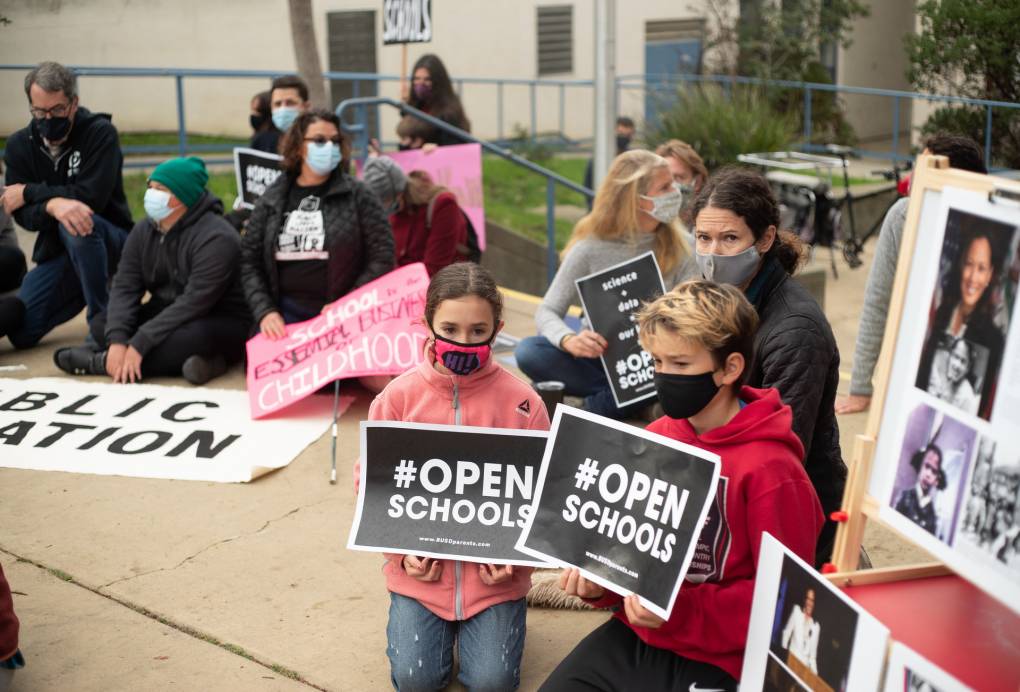
"caption": "Parents and students hold up signs in support of reopening schools at Thousand Oaks Elementary School in Berkeley. Parents and students staged a sit-in for equity in school reopening on Jan. 13, 2021.",
"description": null,
"title": "RS46599_017_KQED_Berkeley_SchoolSitIn_01132021-qut",
"credit": "Anna Vignet/KQED",
"status": "inherit",
"altTag": null,
"isLoading": false,
"fetchFailed": false
},
"news_11861561": {
"type": "attachments",
"id": "news_11861561",
"meta": {
"index": "attachments_1716263798",
"site": "news",
"id": "11861561",
"found": true
},
"parent": 11861556,
"imgSizes": {
"apple_news_ca_landscape_5_5": {
"file": "https://ww2.kqed.org/app/uploads/sites/10/2021/02/mistakes_022221_final-1044x783.png",
"width": 1044,
"mimeType": "image/png",
"height": 783
},
"apple_news_ca_square_4_0": {
"file": "https://ww2.kqed.org/app/uploads/sites/10/2021/02/mistakes_022221_final-470x470.png",
"width": 470,
"mimeType": "image/png",
"height": 470
},
"twentyfourteen-full-width": {
"file": "https://ww2.kqed.org/app/uploads/sites/10/2021/02/mistakes_022221_final-1038x576.png",
"width": 1038,
"mimeType": "image/png",
"height": 576
},
"thumbnail": {
"file": "https://ww2.kqed.org/app/uploads/sites/10/2021/02/mistakes_022221_final-160x108.png",
"width": 160,
"mimeType": "image/png",
"height": 108
},
"post-thumbnail": {
"file": "https://ww2.kqed.org/app/uploads/sites/10/2021/02/mistakes_022221_final-672x372.png",
"width": 672,
"mimeType": "image/png",
"height": 372
},
"kqedFullSize": {
"file": "https://ww2.kqed.org/app/uploads/sites/10/2021/02/mistakes_022221_final.png",
"width": 1920,
"height": 1298
},
"apple_news_ca_landscape_4_7": {
"file": "https://ww2.kqed.org/app/uploads/sites/10/2021/02/mistakes_022221_final-632x474.png",
"width": 632,
"mimeType": "image/png",
"height": 474
},
"large": {
"file": "https://ww2.kqed.org/app/uploads/sites/10/2021/02/mistakes_022221_final-1020x690.png",
"width": 1020,
"mimeType": "image/png",
"height": 690
},
"apple_news_ca_landscape_4_0": {
"file": "https://ww2.kqed.org/app/uploads/sites/10/2021/02/mistakes_022221_final-536x402.png",
"width": 536,
"mimeType": "image/png",
"height": 402
},
"apple_news_ca_portrait_12_9": {
"file": "https://ww2.kqed.org/app/uploads/sites/10/2021/02/mistakes_022221_final-1122x1298.png",
"width": 1122,
"mimeType": "image/png",
"height": 1298
},
"medium": {
"file": "https://ww2.kqed.org/app/uploads/sites/10/2021/02/mistakes_022221_final-800x541.png",
"width": 800,
"mimeType": "image/png",
"height": 541
},
"apple_news_ca_portrait_4_0": {
"file": "https://ww2.kqed.org/app/uploads/sites/10/2021/02/mistakes_022221_final-354x472.png",
"width": 354,
"mimeType": "image/png",
"height": 472
},
"apple_news_ca_portrait_9_7": {
"file": "https://ww2.kqed.org/app/uploads/sites/10/2021/02/mistakes_022221_final-840x1120.png",
"width": 840,
"mimeType": "image/png",
"height": 1120
},
"apple_news_ca_landscape_12_9": {
"file": "https://ww2.kqed.org/app/uploads/sites/10/2021/02/mistakes_022221_final-1832x1298.png",
"width": 1832,
"mimeType": "image/png",
"height": 1298
},
"apple_news_ca_square_9_7": {
"file": "https://ww2.kqed.org/app/uploads/sites/10/2021/02/mistakes_022221_final-1104x1104.png",
"width": 1104,
"mimeType": "image/png",
"height": 1104
},
"1536x1536": {
"file": "https://ww2.kqed.org/app/uploads/sites/10/2021/02/mistakes_022221_final-1536x1038.png",
"width": 1536,
"mimeType": "image/png",
"height": 1038
},
"apple_news_ca_portrait_4_7": {
"file": "https://ww2.kqed.org/app/uploads/sites/10/2021/02/mistakes_022221_final-414x552.png",
"width": 414,
"mimeType": "image/png",
"height": 552
},
"apple_news_ca_square_12_9": {
"file": "https://ww2.kqed.org/app/uploads/sites/10/2021/02/mistakes_022221_final-1472x1298.png",
"width": 1472,
"mimeType": "image/png",
"height": 1298
},
"apple_news_ca_portrait_5_5": {
"file": "https://ww2.kqed.org/app/uploads/sites/10/2021/02/mistakes_022221_final-687x916.png",
"width": 687,
"mimeType": "image/png",
"height": 916
},
"apple_news_ca_square_4_7": {
"file": "https://ww2.kqed.org/app/uploads/sites/10/2021/02/mistakes_022221_final-550x550.png",
"width": 550,
"mimeType": "image/png",
"height": 550
},
"apple_news_ca_landscape_9_7": {
"file": "https://ww2.kqed.org/app/uploads/sites/10/2021/02/mistakes_022221_final-1376x1032.png",
"width": 1376,
"mimeType": "image/png",
"height": 1032
},
"apple_news_ca_square_5_5": {
"file": "https://ww2.kqed.org/app/uploads/sites/10/2021/02/mistakes_022221_final-912x912.png",
"width": 912,
"mimeType": "image/png",
"height": 912
}
},
"publishDate": 1614032959,
"modified": 1614033028,
"caption": null,
"description": null,
"title": "mistakes_022221_final",
"credit": null,
"status": "inherit",
"altTag": "A Mark Fiore cartoon about the San Francisco school board showing historic figures (and Dianne Feinstein) tossed in the dumpster with the school board president saying \"mistakes were made.\"",
"isLoading": false,
"fetchFailed": false
},
"news_11861385": {
"type": "attachments",
"id": "news_11861385",
"meta": {
"index": "attachments_1716263798",
"site": "news",
"id": "11861385",
"found": true
},
"parent": 11860883,
"imgSizes": {
"apple_news_ca_landscape_5_5": {
"file": "https://ww2.kqed.org/app/uploads/sites/10/2021/02/SanJose_COVIDTesting-1044x783.jpg",
"width": 1044,
"mimeType": "image/jpeg",
"height": 783
},
"apple_news_ca_square_4_0": {
"file": "https://ww2.kqed.org/app/uploads/sites/10/2021/02/SanJose_COVIDTesting-470x470.jpg",
"width": 470,
"mimeType": "image/jpeg",
"height": 470
},
"twentyfourteen-full-width": {
"file": "https://ww2.kqed.org/app/uploads/sites/10/2021/02/SanJose_COVIDTesting-1038x576.jpg",
"width": 1038,
"mimeType": "image/jpeg",
"height": 576
},
"thumbnail": {
"file": "https://ww2.kqed.org/app/uploads/sites/10/2021/02/SanJose_COVIDTesting-160x107.jpg",
"width": 160,
"mimeType": "image/jpeg",
"height": 107
},
"post-thumbnail": {
"file": "https://ww2.kqed.org/app/uploads/sites/10/2021/02/SanJose_COVIDTesting-672x372.jpg",
"width": 672,
"mimeType": "image/jpeg",
"height": 372
},
"kqedFullSize": {
"file": "https://ww2.kqed.org/app/uploads/sites/10/2021/02/SanJose_COVIDTesting.jpg",
"width": 1920,
"height": 1280
},
"apple_news_ca_landscape_4_7": {
"file": "https://ww2.kqed.org/app/uploads/sites/10/2021/02/SanJose_COVIDTesting-632x474.jpg",
"width": 632,
"mimeType": "image/jpeg",
"height": 474
},
"large": {
"file": "https://ww2.kqed.org/app/uploads/sites/10/2021/02/SanJose_COVIDTesting-1020x680.jpg",
"width": 1020,
"mimeType": "image/jpeg",
"height": 680
},
"apple_news_ca_landscape_4_0": {
"file": "https://ww2.kqed.org/app/uploads/sites/10/2021/02/SanJose_COVIDTesting-536x402.jpg",
"width": 536,
"mimeType": "image/jpeg",
"height": 402
},
"apple_news_ca_portrait_12_9": {
"file": "https://ww2.kqed.org/app/uploads/sites/10/2021/02/SanJose_COVIDTesting-1122x1280.jpg",
"width": 1122,
"mimeType": "image/jpeg",
"height": 1280
},
"medium": {
"file": "https://ww2.kqed.org/app/uploads/sites/10/2021/02/SanJose_COVIDTesting-800x533.jpg",
"width": 800,
"mimeType": "image/jpeg",
"height": 533
},
"apple_news_ca_portrait_4_0": {
"file": "https://ww2.kqed.org/app/uploads/sites/10/2021/02/SanJose_COVIDTesting-354x472.jpg",
"width": 354,
"mimeType": "image/jpeg",
"height": 472
},
"apple_news_ca_portrait_9_7": {
"file": "https://ww2.kqed.org/app/uploads/sites/10/2021/02/SanJose_COVIDTesting-840x1120.jpg",
"width": 840,
"mimeType": "image/jpeg",
"height": 1120
},
"apple_news_ca_landscape_12_9": {
"file": "https://ww2.kqed.org/app/uploads/sites/10/2021/02/SanJose_COVIDTesting-1832x1280.jpg",
"width": 1832,
"mimeType": "image/jpeg",
"height": 1280
},
"apple_news_ca_square_9_7": {
"file": "https://ww2.kqed.org/app/uploads/sites/10/2021/02/SanJose_COVIDTesting-1104x1104.jpg",
"width": 1104,
"mimeType": "image/jpeg",
"height": 1104
},
"1536x1536": {
"file": "https://ww2.kqed.org/app/uploads/sites/10/2021/02/SanJose_COVIDTesting-1536x1024.jpg",
"width": 1536,
"mimeType": "image/jpeg",
"height": 1024
},
"apple_news_ca_portrait_4_7": {
"file": "https://ww2.kqed.org/app/uploads/sites/10/2021/02/SanJose_COVIDTesting-414x552.jpg",
"width": 414,
"mimeType": "image/jpeg",
"height": 552
},
"apple_news_ca_square_12_9": {
"file": "https://ww2.kqed.org/app/uploads/sites/10/2021/02/SanJose_COVIDTesting-1472x1280.jpg",
"width": 1472,
"mimeType": "image/jpeg",
"height": 1280
},
"apple_news_ca_portrait_5_5": {
"file": "https://ww2.kqed.org/app/uploads/sites/10/2021/02/SanJose_COVIDTesting-687x916.jpg",
"width": 687,
"mimeType": "image/jpeg",
"height": 916
},
"apple_news_ca_square_4_7": {
"file": "https://ww2.kqed.org/app/uploads/sites/10/2021/02/SanJose_COVIDTesting-550x550.jpg",
"width": 550,
"mimeType": "image/jpeg",
"height": 550
},
"apple_news_ca_landscape_9_7": {
"file": "https://ww2.kqed.org/app/uploads/sites/10/2021/02/SanJose_COVIDTesting-1376x1032.jpg",
"width": 1376,
"mimeType": "image/jpeg",
"height": 1032
},
"apple_news_ca_square_5_5": {
"file": "https://ww2.kqed.org/app/uploads/sites/10/2021/02/SanJose_COVIDTesting-912x912.jpg",
"width": 912,
"mimeType": "image/jpeg",
"height": 912
}
},
"publishDate": 1613783481,
"modified": 1613783613,
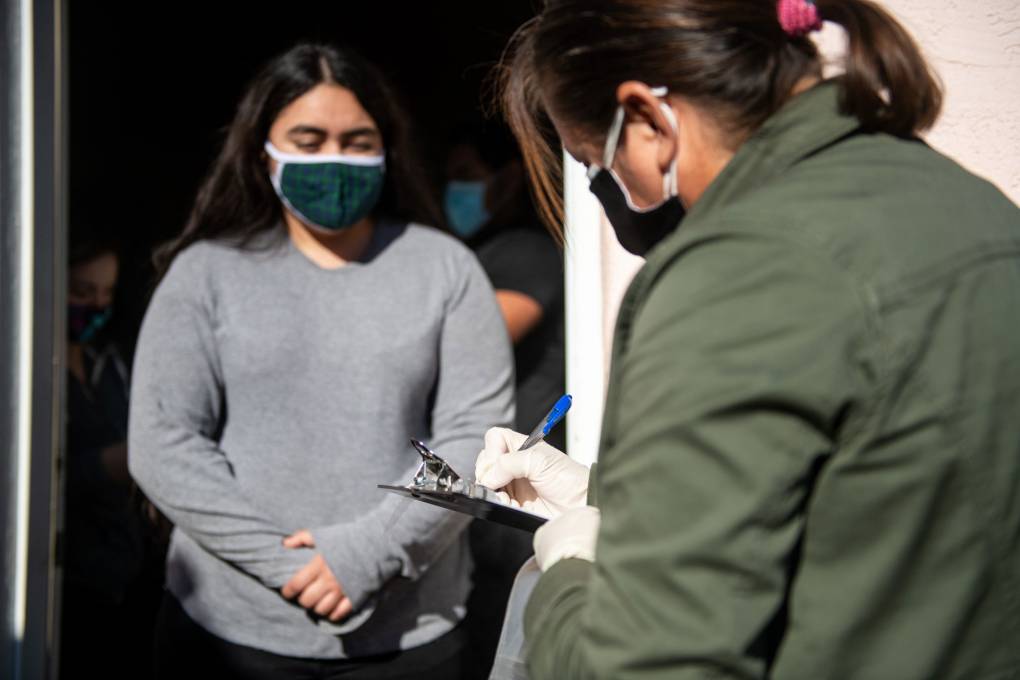
"caption": "The Orona Franco family receives a COVID-19 home testing visit from Santa Clara County health workers in San Jose on Feb. 3, 2021. The county has partnered with a group of promotoras from META, a community nonprofit based in East San Jose, to offer home testing and information about the coronavirus vaccine in one of the county's worst-affected areas.",
"description": "The Orona Franco family receives a COVID-19 home testing visit from Santa Clara County health workers in San Jose on Feb. 3, 2021. The county has partnered with a group of promotoras from META, a community nonprofit based in East San Jose, to offer home testing and information about the coronavirus vaccine in one of the county's worst-affected areas.",
"title": "SanJose_COVIDTesting",
"credit": "Beth LaBerge/KQED",
"status": "inherit",
"altTag": null,
"isLoading": false,
"fetchFailed": false
},
"news_11861205": {
"type": "attachments",
"id": "news_11861205",
"meta": {
"index": "attachments_1716263798",
"site": "news",
"id": "11861205",
"found": true
},
"parent": 11861142,
"imgSizes": {
"apple_news_ca_landscape_5_5": {
"file": "https://ww2.kqed.org/app/uploads/sites/10/2021/02/RS47159_032_Oakland_SkylineHSFootballPractice_02032021-qut-1044x783.jpg",
"width": 1044,
"mimeType": "image/jpeg",
"height": 783
},
"apple_news_ca_square_4_0": {
"file": "https://ww2.kqed.org/app/uploads/sites/10/2021/02/RS47159_032_Oakland_SkylineHSFootballPractice_02032021-qut-470x470.jpg",
"width": 470,
"mimeType": "image/jpeg",
"height": 470
},
"twentyfourteen-full-width": {
"file": "https://ww2.kqed.org/app/uploads/sites/10/2021/02/RS47159_032_Oakland_SkylineHSFootballPractice_02032021-qut-1038x576.jpg",
"width": 1038,
"mimeType": "image/jpeg",
"height": 576
},
"thumbnail": {
"file": "https://ww2.kqed.org/app/uploads/sites/10/2021/02/RS47159_032_Oakland_SkylineHSFootballPractice_02032021-qut-160x107.jpg",
"width": 160,
"mimeType": "image/jpeg",
"height": 107
},
"post-thumbnail": {
"file": "https://ww2.kqed.org/app/uploads/sites/10/2021/02/RS47159_032_Oakland_SkylineHSFootballPractice_02032021-qut-672x372.jpg",
"width": 672,
"mimeType": "image/jpeg",
"height": 372
},
"kqedFullSize": {
"file": "https://ww2.kqed.org/app/uploads/sites/10/2021/02/RS47159_032_Oakland_SkylineHSFootballPractice_02032021-qut.jpg",
"width": 1920,
"height": 1278
},
"apple_news_ca_landscape_4_7": {
"file": "https://ww2.kqed.org/app/uploads/sites/10/2021/02/RS47159_032_Oakland_SkylineHSFootballPractice_02032021-qut-632x474.jpg",
"width": 632,
"mimeType": "image/jpeg",
"height": 474
},
"large": {
"file": "https://ww2.kqed.org/app/uploads/sites/10/2021/02/RS47159_032_Oakland_SkylineHSFootballPractice_02032021-qut-1020x679.jpg",
"width": 1020,
"mimeType": "image/jpeg",
"height": 679
},
"apple_news_ca_landscape_4_0": {
"file": "https://ww2.kqed.org/app/uploads/sites/10/2021/02/RS47159_032_Oakland_SkylineHSFootballPractice_02032021-qut-536x402.jpg",
"width": 536,
"mimeType": "image/jpeg",
"height": 402
},
"apple_news_ca_portrait_12_9": {
"file": "https://ww2.kqed.org/app/uploads/sites/10/2021/02/RS47159_032_Oakland_SkylineHSFootballPractice_02032021-qut-1122x1278.jpg",
"width": 1122,
"mimeType": "image/jpeg",
"height": 1278
},
"medium": {
"file": "https://ww2.kqed.org/app/uploads/sites/10/2021/02/RS47159_032_Oakland_SkylineHSFootballPractice_02032021-qut-800x533.jpg",
"width": 800,
"mimeType": "image/jpeg",
"height": 533
},
"apple_news_ca_portrait_4_0": {
"file": "https://ww2.kqed.org/app/uploads/sites/10/2021/02/RS47159_032_Oakland_SkylineHSFootballPractice_02032021-qut-354x472.jpg",
"width": 354,
"mimeType": "image/jpeg",
"height": 472
},
"apple_news_ca_portrait_9_7": {
"file": "https://ww2.kqed.org/app/uploads/sites/10/2021/02/RS47159_032_Oakland_SkylineHSFootballPractice_02032021-qut-840x1120.jpg",
"width": 840,
"mimeType": "image/jpeg",
"height": 1120
},
"apple_news_ca_landscape_12_9": {
"file": "https://ww2.kqed.org/app/uploads/sites/10/2021/02/RS47159_032_Oakland_SkylineHSFootballPractice_02032021-qut-1832x1278.jpg",
"width": 1832,
"mimeType": "image/jpeg",
"height": 1278
},
"apple_news_ca_square_9_7": {
"file": "https://ww2.kqed.org/app/uploads/sites/10/2021/02/RS47159_032_Oakland_SkylineHSFootballPractice_02032021-qut-1104x1104.jpg",
"width": 1104,
"mimeType": "image/jpeg",
"height": 1104
},
"1536x1536": {
"file": "https://ww2.kqed.org/app/uploads/sites/10/2021/02/RS47159_032_Oakland_SkylineHSFootballPractice_02032021-qut-1536x1022.jpg",
"width": 1536,
"mimeType": "image/jpeg",
"height": 1022
},
"apple_news_ca_portrait_4_7": {
"file": "https://ww2.kqed.org/app/uploads/sites/10/2021/02/RS47159_032_Oakland_SkylineHSFootballPractice_02032021-qut-414x552.jpg",
"width": 414,
"mimeType": "image/jpeg",
"height": 552
},
"apple_news_ca_square_12_9": {
"file": "https://ww2.kqed.org/app/uploads/sites/10/2021/02/RS47159_032_Oakland_SkylineHSFootballPractice_02032021-qut-1472x1278.jpg",
"width": 1472,
"mimeType": "image/jpeg",
"height": 1278
},
"apple_news_ca_portrait_5_5": {
"file": "https://ww2.kqed.org/app/uploads/sites/10/2021/02/RS47159_032_Oakland_SkylineHSFootballPractice_02032021-qut-687x916.jpg",
"width": 687,
"mimeType": "image/jpeg",
"height": 916
},
"apple_news_ca_square_4_7": {
"file": "https://ww2.kqed.org/app/uploads/sites/10/2021/02/RS47159_032_Oakland_SkylineHSFootballPractice_02032021-qut-550x550.jpg",
"width": 550,
"mimeType": "image/jpeg",
"height": 550
},
"apple_news_ca_landscape_9_7": {
"file": "https://ww2.kqed.org/app/uploads/sites/10/2021/02/RS47159_032_Oakland_SkylineHSFootballPractice_02032021-qut-1376x1032.jpg",
"width": 1376,
"mimeType": "image/jpeg",
"height": 1032
},
"apple_news_ca_square_5_5": {
"file": "https://ww2.kqed.org/app/uploads/sites/10/2021/02/RS47159_032_Oakland_SkylineHSFootballPractice_02032021-qut-912x912.jpg",
"width": 912,
"mimeType": "image/jpeg",
"height": 912
}
},
"publishDate": 1613764969,
"modified": 1613765841,
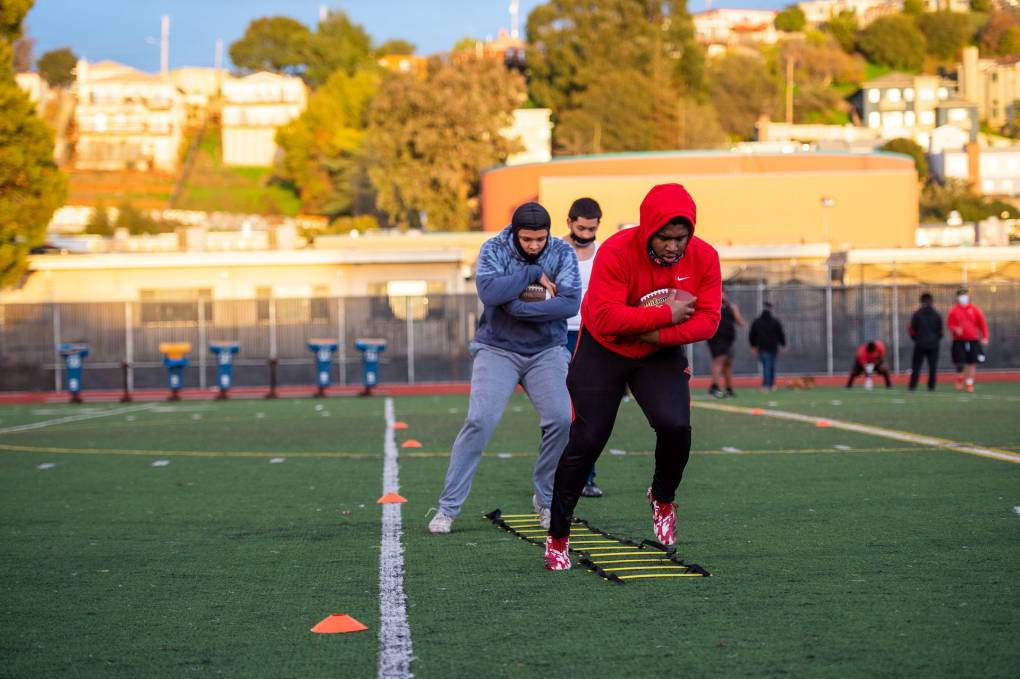
"caption": "Members of Oakland's Skyline High School football team — the Titans — do conditioning drills on Feb. 3, 2021.",
"description": null,
"title": "RS47159_032_Oakland_SkylineHSFootballPractice_02032021-qut",
"credit": "Beth LaBerge/KQED",
"status": "inherit",
"altTag": null,
"isLoading": false,
"fetchFailed": false
},
"news_11861106": {
"type": "attachments",
"id": "news_11861106",
"meta": {
"index": "attachments_1716263798",
"site": "news",
"id": "11861106",
"found": true
},
"parent": 11860986,
"imgSizes": {
"apple_news_ca_landscape_5_5": {
"file": "https://ww2.kqed.org/app/uploads/sites/10/2021/02/RS47278_025_SanFrancisco_ClarendonSchoolReopeningRally_02182021-qut-1044x783.jpg",
"width": 1044,
"mimeType": "image/jpeg",
"height": 783
},
"apple_news_ca_square_4_0": {
"file": "https://ww2.kqed.org/app/uploads/sites/10/2021/02/RS47278_025_SanFrancisco_ClarendonSchoolReopeningRally_02182021-qut-470x470.jpg",
"width": 470,
"mimeType": "image/jpeg",
"height": 470
},
"twentyfourteen-full-width": {
"file": "https://ww2.kqed.org/app/uploads/sites/10/2021/02/RS47278_025_SanFrancisco_ClarendonSchoolReopeningRally_02182021-qut-1038x576.jpg",
"width": 1038,
"mimeType": "image/jpeg",
"height": 576
},
"thumbnail": {
"file": "https://ww2.kqed.org/app/uploads/sites/10/2021/02/RS47278_025_SanFrancisco_ClarendonSchoolReopeningRally_02182021-qut-160x107.jpg",
"width": 160,
"mimeType": "image/jpeg",
"height": 107
},
"post-thumbnail": {
"file": "https://ww2.kqed.org/app/uploads/sites/10/2021/02/RS47278_025_SanFrancisco_ClarendonSchoolReopeningRally_02182021-qut-672x372.jpg",
"width": 672,
"mimeType": "image/jpeg",
"height": 372
},
"kqedFullSize": {
"file": "https://ww2.kqed.org/app/uploads/sites/10/2021/02/RS47278_025_SanFrancisco_ClarendonSchoolReopeningRally_02182021-qut.jpg",
"width": 1920,
"height": 1280
},
"apple_news_ca_landscape_4_7": {
"file": "https://ww2.kqed.org/app/uploads/sites/10/2021/02/RS47278_025_SanFrancisco_ClarendonSchoolReopeningRally_02182021-qut-632x474.jpg",
"width": 632,
"mimeType": "image/jpeg",
"height": 474
},
"large": {
"file": "https://ww2.kqed.org/app/uploads/sites/10/2021/02/RS47278_025_SanFrancisco_ClarendonSchoolReopeningRally_02182021-qut-1020x680.jpg",
"width": 1020,
"mimeType": "image/jpeg",
"height": 680
},
"apple_news_ca_landscape_4_0": {
"file": "https://ww2.kqed.org/app/uploads/sites/10/2021/02/RS47278_025_SanFrancisco_ClarendonSchoolReopeningRally_02182021-qut-536x402.jpg",
"width": 536,
"mimeType": "image/jpeg",
"height": 402
},
"apple_news_ca_portrait_12_9": {
"file": "https://ww2.kqed.org/app/uploads/sites/10/2021/02/RS47278_025_SanFrancisco_ClarendonSchoolReopeningRally_02182021-qut-1122x1280.jpg",
"width": 1122,
"mimeType": "image/jpeg",
"height": 1280
},
"medium": {
"file": "https://ww2.kqed.org/app/uploads/sites/10/2021/02/RS47278_025_SanFrancisco_ClarendonSchoolReopeningRally_02182021-qut-800x533.jpg",
"width": 800,
"mimeType": "image/jpeg",
"height": 533
},
"apple_news_ca_portrait_4_0": {
"file": "https://ww2.kqed.org/app/uploads/sites/10/2021/02/RS47278_025_SanFrancisco_ClarendonSchoolReopeningRally_02182021-qut-354x472.jpg",
"width": 354,
"mimeType": "image/jpeg",
"height": 472
},
"apple_news_ca_portrait_9_7": {
"file": "https://ww2.kqed.org/app/uploads/sites/10/2021/02/RS47278_025_SanFrancisco_ClarendonSchoolReopeningRally_02182021-qut-840x1120.jpg",
"width": 840,
"mimeType": "image/jpeg",
"height": 1120
},
"apple_news_ca_landscape_12_9": {
"file": "https://ww2.kqed.org/app/uploads/sites/10/2021/02/RS47278_025_SanFrancisco_ClarendonSchoolReopeningRally_02182021-qut-1832x1280.jpg",
"width": 1832,
"mimeType": "image/jpeg",
"height": 1280
},
"apple_news_ca_square_9_7": {
"file": "https://ww2.kqed.org/app/uploads/sites/10/2021/02/RS47278_025_SanFrancisco_ClarendonSchoolReopeningRally_02182021-qut-1104x1104.jpg",
"width": 1104,
"mimeType": "image/jpeg",
"height": 1104
},
"1536x1536": {
"file": "https://ww2.kqed.org/app/uploads/sites/10/2021/02/RS47278_025_SanFrancisco_ClarendonSchoolReopeningRally_02182021-qut-1536x1024.jpg",
"width": 1536,
"mimeType": "image/jpeg",
"height": 1024
},
"apple_news_ca_portrait_4_7": {
"file": "https://ww2.kqed.org/app/uploads/sites/10/2021/02/RS47278_025_SanFrancisco_ClarendonSchoolReopeningRally_02182021-qut-414x552.jpg",
"width": 414,
"mimeType": "image/jpeg",
"height": 552
},
"apple_news_ca_square_12_9": {
"file": "https://ww2.kqed.org/app/uploads/sites/10/2021/02/RS47278_025_SanFrancisco_ClarendonSchoolReopeningRally_02182021-qut-1472x1280.jpg",
"width": 1472,
"mimeType": "image/jpeg",
"height": 1280
},
"apple_news_ca_portrait_5_5": {
"file": "https://ww2.kqed.org/app/uploads/sites/10/2021/02/RS47278_025_SanFrancisco_ClarendonSchoolReopeningRally_02182021-qut-687x916.jpg",
"width": 687,
"mimeType": "image/jpeg",
"height": 916
},
"apple_news_ca_square_4_7": {
"file": "https://ww2.kqed.org/app/uploads/sites/10/2021/02/RS47278_025_SanFrancisco_ClarendonSchoolReopeningRally_02182021-qut-550x550.jpg",
"width": 550,
"mimeType": "image/jpeg",
"height": 550
},
"apple_news_ca_landscape_9_7": {
"file": "https://ww2.kqed.org/app/uploads/sites/10/2021/02/RS47278_025_SanFrancisco_ClarendonSchoolReopeningRally_02182021-qut-1376x1032.jpg",
"width": 1376,
"mimeType": "image/jpeg",
"height": 1032
},
"apple_news_ca_square_5_5": {
"file": "https://ww2.kqed.org/app/uploads/sites/10/2021/02/RS47278_025_SanFrancisco_ClarendonSchoolReopeningRally_02182021-qut-912x912.jpg",
"width": 912,
"mimeType": "image/jpeg",
"height": 912
}
},
"publishDate": 1613704560,
"modified": 1613704594,
"caption": "Students attend distance learning Zoom classes across from Clarendon Elementary School in San Francisco on Feb. 18, 2021. Students and parents in support of school reopening rallied outside of the closed elementary school.",
"description": null,
"title": "RS47278_025_SanFrancisco_ClarendonSchoolReopeningRally_02182021-qut",
"credit": "Beth LaBerge/KQED",
"status": "inherit",
"altTag": null,
"isLoading": false,
"fetchFailed": false
},
"news_11860512": {
"type": "attachments",
"id": "news_11860512",
"meta": {
"index": "attachments_1716263798",
"site": "news",
"id": "11860512",
"found": true
},
"parent": 11860455,
"imgSizes": {
"apple_news_ca_landscape_5_5": {
"file": "https://ww2.kqed.org/app/uploads/sites/10/2021/02/032-Horton-Family-Photo-1044x783.jpeg",
"width": 1044,
"mimeType": "image/jpeg",
"height": 783
},
"apple_news_ca_square_4_0": {
"file": "https://ww2.kqed.org/app/uploads/sites/10/2021/02/032-Horton-Family-Photo-470x470.jpeg",
"width": 470,
"mimeType": "image/jpeg",
"height": 470
},
"twentyfourteen-full-width": {
"file": "https://ww2.kqed.org/app/uploads/sites/10/2021/02/032-Horton-Family-Photo-1038x576.jpeg",
"width": 1038,
"mimeType": "image/jpeg",
"height": 576
},
"thumbnail": {
"file": "https://ww2.kqed.org/app/uploads/sites/10/2021/02/032-Horton-Family-Photo-160x107.jpeg",
"width": 160,
"mimeType": "image/jpeg",
"height": 107
},
"post-thumbnail": {
"file": "https://ww2.kqed.org/app/uploads/sites/10/2021/02/032-Horton-Family-Photo-672x372.jpeg",
"width": 672,
"mimeType": "image/jpeg",
"height": 372
},
"kqedFullSize": {
"file": "https://ww2.kqed.org/app/uploads/sites/10/2021/02/032-Horton-Family-Photo.jpeg",
"width": 2021,
"height": 1346
},
"apple_news_ca_landscape_4_7": {
"file": "https://ww2.kqed.org/app/uploads/sites/10/2021/02/032-Horton-Family-Photo-632x474.jpeg",
"width": 632,
"mimeType": "image/jpeg",
"height": 474
},
"large": {
"file": "https://ww2.kqed.org/app/uploads/sites/10/2021/02/032-Horton-Family-Photo-1020x679.jpeg",
"width": 1020,
"mimeType": "image/jpeg",
"height": 679
},
"apple_news_ca_landscape_4_0": {
"file": "https://ww2.kqed.org/app/uploads/sites/10/2021/02/032-Horton-Family-Photo-536x402.jpeg",
"width": 536,
"mimeType": "image/jpeg",
"height": 402
},
"apple_news_ca_portrait_12_9": {
"file": "https://ww2.kqed.org/app/uploads/sites/10/2021/02/032-Horton-Family-Photo-1122x1346.jpeg",
"width": 1122,
"mimeType": "image/jpeg",
"height": 1346
},
"medium": {
"file": "https://ww2.kqed.org/app/uploads/sites/10/2021/02/032-Horton-Family-Photo-800x533.jpeg",
"width": 800,
"mimeType": "image/jpeg",
"height": 533
},
"apple_news_ca_portrait_4_0": {
"file": "https://ww2.kqed.org/app/uploads/sites/10/2021/02/032-Horton-Family-Photo-354x472.jpeg",
"width": 354,
"mimeType": "image/jpeg",
"height": 472
},
"apple_news_ca_portrait_9_7": {
"file": "https://ww2.kqed.org/app/uploads/sites/10/2021/02/032-Horton-Family-Photo-840x1120.jpeg",
"width": 840,
"mimeType": "image/jpeg",
"height": 1120
},
"apple_news_ca_landscape_12_9": {
"file": "https://ww2.kqed.org/app/uploads/sites/10/2021/02/032-Horton-Family-Photo-1832x1346.jpeg",
"width": 1832,
"mimeType": "image/jpeg",
"height": 1346
},
"apple_news_ca_square_9_7": {
"file": "https://ww2.kqed.org/app/uploads/sites/10/2021/02/032-Horton-Family-Photo-1104x1104.jpeg",
"width": 1104,
"mimeType": "image/jpeg",
"height": 1104
},
"1536x1536": {
"file": "https://ww2.kqed.org/app/uploads/sites/10/2021/02/032-Horton-Family-Photo-1536x1023.jpeg",
"width": 1536,
"mimeType": "image/jpeg",
"height": 1023
},
"apple_news_ca_portrait_4_7": {
"file": "https://ww2.kqed.org/app/uploads/sites/10/2021/02/032-Horton-Family-Photo-414x552.jpeg",
"width": 414,
"mimeType": "image/jpeg",
"height": 552
},
"apple_news_ca_square_12_9": {
"file": "https://ww2.kqed.org/app/uploads/sites/10/2021/02/032-Horton-Family-Photo-1472x1346.jpeg",
"width": 1472,
"mimeType": "image/jpeg",
"height": 1346
},
"apple_news_ca_portrait_5_5": {
"file": "https://ww2.kqed.org/app/uploads/sites/10/2021/02/032-Horton-Family-Photo-687x916.jpeg",
"width": 687,
"mimeType": "image/jpeg",
"height": 916
},
"full-width": {
"file": "https://ww2.kqed.org/app/uploads/sites/10/2021/02/032-Horton-Family-Photo-1920x1279.jpeg",
"width": 1920,
"mimeType": "image/jpeg",
"height": 1279
},
"apple_news_ca_square_4_7": {
"file": "https://ww2.kqed.org/app/uploads/sites/10/2021/02/032-Horton-Family-Photo-550x550.jpeg",
"width": 550,
"mimeType": "image/jpeg",
"height": 550
},
"apple_news_ca_landscape_9_7": {
"file": "https://ww2.kqed.org/app/uploads/sites/10/2021/02/032-Horton-Family-Photo-1376x1032.jpeg",
"width": 1376,
"mimeType": "image/jpeg",
"height": 1032
},
"apple_news_ca_square_5_5": {
"file": "https://ww2.kqed.org/app/uploads/sites/10/2021/02/032-Horton-Family-Photo-912x912.jpeg",
"width": 912,
"mimeType": "image/jpeg",
"height": 912
}
},
"publishDate": 1613504606,
"modified": 1613679483,
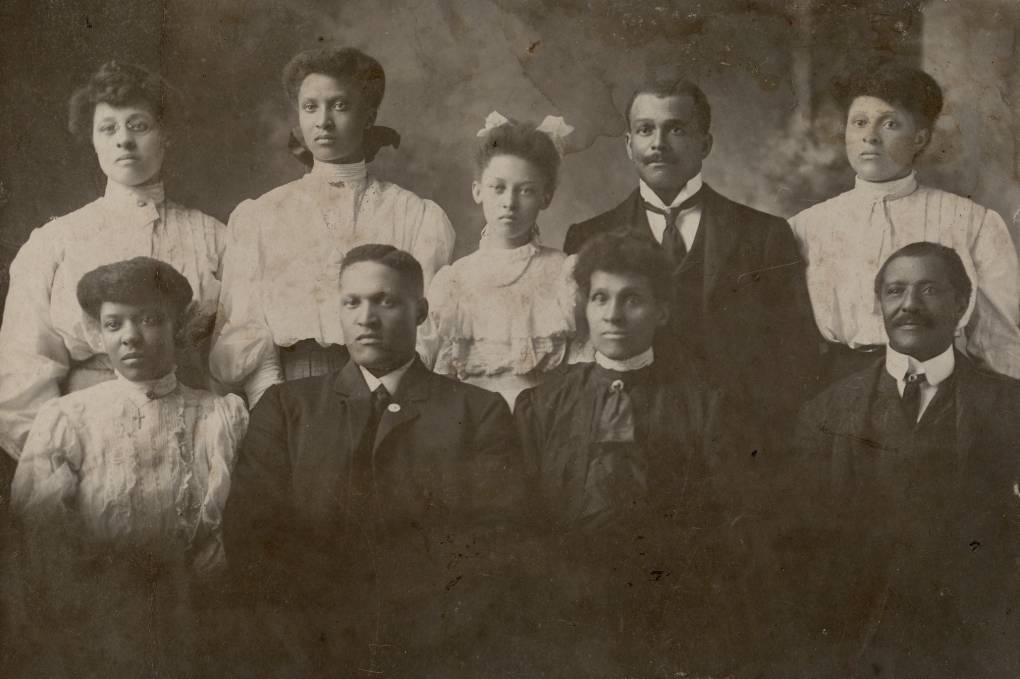
"caption": "The Horton family of San Jose. For her latest book about African Americans in Santa Clara County, Jan Batiste Adkins talked to families whose presence in the South Bay dates back several generations.",
"description": "The Horton family of San Jose. For her latest book about African Americans in Santa Clara County, Jan Batiste Adkins talked to families whose presence in the South Bay dates back several generations.",
"title": "#032-Horton Family Photo",
"credit": "Courtesy of Sourisseau Academy/San Jose State University",
"status": "inherit",
"altTag": "The Horton family of San Jose. For her latest book about African Americans in Santa Clara County, Jan Batiste Adkins talked to families whose presence in the South Bay dates back several generations.",
"isLoading": false,
"fetchFailed": false
},
"news_11860610": {
"type": "attachments",
"id": "news_11860610",
"meta": {
"index": "attachments_1716263798",
"site": "news",
"id": "11860610",
"found": true
},
"parent": 11860599,
"imgSizes": {
"apple_news_ca_landscape_5_5": {
"file": "https://ww2.kqed.org/app/uploads/sites/10/2021/02/schoolcolors_021621_final-1044x783.png",
"width": 1044,
"mimeType": "image/png",
"height": 783
},
"apple_news_ca_square_4_0": {
"file": "https://ww2.kqed.org/app/uploads/sites/10/2021/02/schoolcolors_021621_final-470x470.png",
"width": 470,
"mimeType": "image/png",
"height": 470
},
"twentyfourteen-full-width": {
"file": "https://ww2.kqed.org/app/uploads/sites/10/2021/02/schoolcolors_021621_final-1038x576.png",
"width": 1038,
"mimeType": "image/png",
"height": 576
},
"thumbnail": {
"file": "https://ww2.kqed.org/app/uploads/sites/10/2021/02/schoolcolors_021621_final-160x112.png",
"width": 160,
"mimeType": "image/png",
"height": 112
},
"post-thumbnail": {
"file": "https://ww2.kqed.org/app/uploads/sites/10/2021/02/schoolcolors_021621_final-672x372.png",
"width": 672,
"mimeType": "image/png",
"height": 372
},
"kqedFullSize": {
"file": "https://ww2.kqed.org/app/uploads/sites/10/2021/02/schoolcolors_021621_final.png",
"width": 1920,
"height": 1342
},
"apple_news_ca_landscape_4_7": {
"file": "https://ww2.kqed.org/app/uploads/sites/10/2021/02/schoolcolors_021621_final-632x474.png",
"width": 632,
"mimeType": "image/png",
"height": 474
},
"large": {
"file": "https://ww2.kqed.org/app/uploads/sites/10/2021/02/schoolcolors_021621_final-1020x713.png",
"width": 1020,
"mimeType": "image/png",
"height": 713
},
"apple_news_ca_landscape_4_0": {
"file": "https://ww2.kqed.org/app/uploads/sites/10/2021/02/schoolcolors_021621_final-536x402.png",
"width": 536,
"mimeType": "image/png",
"height": 402
},
"apple_news_ca_portrait_12_9": {
"file": "https://ww2.kqed.org/app/uploads/sites/10/2021/02/schoolcolors_021621_final-1122x1342.png",
"width": 1122,
"mimeType": "image/png",
"height": 1342
},
"medium": {
"file": "https://ww2.kqed.org/app/uploads/sites/10/2021/02/schoolcolors_021621_final-800x559.png",
"width": 800,
"mimeType": "image/png",
"height": 559
},
"apple_news_ca_portrait_4_0": {
"file": "https://ww2.kqed.org/app/uploads/sites/10/2021/02/schoolcolors_021621_final-354x472.png",
"width": 354,
"mimeType": "image/png",
"height": 472
},
"apple_news_ca_portrait_9_7": {
"file": "https://ww2.kqed.org/app/uploads/sites/10/2021/02/schoolcolors_021621_final-840x1120.png",
"width": 840,
"mimeType": "image/png",
"height": 1120
},
"apple_news_ca_landscape_12_9": {
"file": "https://ww2.kqed.org/app/uploads/sites/10/2021/02/schoolcolors_021621_final-1832x1342.png",
"width": 1832,
"mimeType": "image/png",
"height": 1342
},
"apple_news_ca_square_9_7": {
"file": "https://ww2.kqed.org/app/uploads/sites/10/2021/02/schoolcolors_021621_final-1104x1104.png",
"width": 1104,
"mimeType": "image/png",
"height": 1104
},
"1536x1536": {
"file": "https://ww2.kqed.org/app/uploads/sites/10/2021/02/schoolcolors_021621_final-1536x1074.png",
"width": 1536,
"mimeType": "image/png",
"height": 1074
},
"apple_news_ca_portrait_4_7": {
"file": "https://ww2.kqed.org/app/uploads/sites/10/2021/02/schoolcolors_021621_final-414x552.png",
"width": 414,
"mimeType": "image/png",
"height": 552
},
"apple_news_ca_square_12_9": {
"file": "https://ww2.kqed.org/app/uploads/sites/10/2021/02/schoolcolors_021621_final-1472x1342.png",
"width": 1472,
"mimeType": "image/png",
"height": 1342
},
"apple_news_ca_portrait_5_5": {
"file": "https://ww2.kqed.org/app/uploads/sites/10/2021/02/schoolcolors_021621_final-687x916.png",
"width": 687,
"mimeType": "image/png",
"height": 916
},
"apple_news_ca_square_4_7": {
"file": "https://ww2.kqed.org/app/uploads/sites/10/2021/02/schoolcolors_021621_final-550x550.png",
"width": 550,
"mimeType": "image/png",
"height": 550
},
"apple_news_ca_landscape_9_7": {
"file": "https://ww2.kqed.org/app/uploads/sites/10/2021/02/schoolcolors_021621_final-1376x1032.png",
"width": 1376,
"mimeType": "image/png",
"height": 1032
},
"apple_news_ca_square_5_5": {
"file": "https://ww2.kqed.org/app/uploads/sites/10/2021/02/schoolcolors_021621_final-912x912.png",
"width": 912,
"mimeType": "image/png",
"height": 912
}
},
"publishDate": 1613520246,
"modified": 1613520352,
"caption": null,
"description": null,
"title": "schoolcolors_021621_final",
"credit": null,
"status": "inherit",
"altTag": "A Mark Fiore cartoon showing different color tiers for reopening schools, starting with Zombie Blue (online school), then In-Person Green (private schools), then Slow-for-Vaccine Yellow (cautious teachers), then We-Can't-Take-This-Anymore Red for fed up parents.",
"isLoading": false,
"fetchFailed": false
},
"news_11860306": {
"type": "attachments",
"id": "news_11860306",
"meta": {
"index": "attachments_1716263798",
"site": "news",
"id": "11860306",
"found": true
},
"parent": 11860304,
"imgSizes": {
"apple_news_ca_landscape_5_5": {
"file": "https://ww2.kqed.org/app/uploads/sites/10/2021/02/RS46593_011_KQED_Berkeley_SchoolSitIn_01132021-qut-1044x783.jpg",
"width": 1044,
"mimeType": "image/jpeg",
"height": 783
},
"apple_news_ca_square_4_0": {
"file": "https://ww2.kqed.org/app/uploads/sites/10/2021/02/RS46593_011_KQED_Berkeley_SchoolSitIn_01132021-qut-470x470.jpg",
"width": 470,
"mimeType": "image/jpeg",
"height": 470
},
"twentyfourteen-full-width": {
"file": "https://ww2.kqed.org/app/uploads/sites/10/2021/02/RS46593_011_KQED_Berkeley_SchoolSitIn_01132021-qut-1038x576.jpg",
"width": 1038,
"mimeType": "image/jpeg",
"height": 576
},
"thumbnail": {
"file": "https://ww2.kqed.org/app/uploads/sites/10/2021/02/RS46593_011_KQED_Berkeley_SchoolSitIn_01132021-qut-160x109.jpg",
"width": 160,
"mimeType": "image/jpeg",
"height": 109
},
"post-thumbnail": {
"file": "https://ww2.kqed.org/app/uploads/sites/10/2021/02/RS46593_011_KQED_Berkeley_SchoolSitIn_01132021-qut-672x372.jpg",
"width": 672,
"mimeType": "image/jpeg",
"height": 372
},
"kqedFullSize": {
"file": "https://ww2.kqed.org/app/uploads/sites/10/2021/02/RS46593_011_KQED_Berkeley_SchoolSitIn_01132021-qut.jpg",
"width": 1920,
"height": 1303
},
"apple_news_ca_landscape_4_7": {
"file": "https://ww2.kqed.org/app/uploads/sites/10/2021/02/RS46593_011_KQED_Berkeley_SchoolSitIn_01132021-qut-632x474.jpg",
"width": 632,
"mimeType": "image/jpeg",
"height": 474
},
"large": {
"file": "https://ww2.kqed.org/app/uploads/sites/10/2021/02/RS46593_011_KQED_Berkeley_SchoolSitIn_01132021-qut-1020x692.jpg",
"width": 1020,
"mimeType": "image/jpeg",
"height": 692
},
"apple_news_ca_landscape_4_0": {
"file": "https://ww2.kqed.org/app/uploads/sites/10/2021/02/RS46593_011_KQED_Berkeley_SchoolSitIn_01132021-qut-536x402.jpg",
"width": 536,
"mimeType": "image/jpeg",
"height": 402
},
"apple_news_ca_portrait_12_9": {
"file": "https://ww2.kqed.org/app/uploads/sites/10/2021/02/RS46593_011_KQED_Berkeley_SchoolSitIn_01132021-qut-1122x1303.jpg",
"width": 1122,
"mimeType": "image/jpeg",
"height": 1303
},
"medium": {
"file": "https://ww2.kqed.org/app/uploads/sites/10/2021/02/RS46593_011_KQED_Berkeley_SchoolSitIn_01132021-qut-800x543.jpg",
"width": 800,
"mimeType": "image/jpeg",
"height": 543
},
"apple_news_ca_portrait_4_0": {
"file": "https://ww2.kqed.org/app/uploads/sites/10/2021/02/RS46593_011_KQED_Berkeley_SchoolSitIn_01132021-qut-354x472.jpg",
"width": 354,
"mimeType": "image/jpeg",
"height": 472
},
"apple_news_ca_portrait_9_7": {
"file": "https://ww2.kqed.org/app/uploads/sites/10/2021/02/RS46593_011_KQED_Berkeley_SchoolSitIn_01132021-qut-840x1120.jpg",
"width": 840,
"mimeType": "image/jpeg",
"height": 1120
},
"apple_news_ca_landscape_12_9": {
"file": "https://ww2.kqed.org/app/uploads/sites/10/2021/02/RS46593_011_KQED_Berkeley_SchoolSitIn_01132021-qut-1832x1303.jpg",
"width": 1832,
"mimeType": "image/jpeg",
"height": 1303
},
"apple_news_ca_square_9_7": {
"file": "https://ww2.kqed.org/app/uploads/sites/10/2021/02/RS46593_011_KQED_Berkeley_SchoolSitIn_01132021-qut-1104x1104.jpg",
"width": 1104,
"mimeType": "image/jpeg",
"height": 1104
},
"1536x1536": {
"file": "https://ww2.kqed.org/app/uploads/sites/10/2021/02/RS46593_011_KQED_Berkeley_SchoolSitIn_01132021-qut-1536x1042.jpg",
"width": 1536,
"mimeType": "image/jpeg",
"height": 1042
},
"apple_news_ca_portrait_4_7": {
"file": "https://ww2.kqed.org/app/uploads/sites/10/2021/02/RS46593_011_KQED_Berkeley_SchoolSitIn_01132021-qut-414x552.jpg",
"width": 414,
"mimeType": "image/jpeg",
"height": 552
},
"apple_news_ca_square_12_9": {
"file": "https://ww2.kqed.org/app/uploads/sites/10/2021/02/RS46593_011_KQED_Berkeley_SchoolSitIn_01132021-qut-1472x1303.jpg",
"width": 1472,
"mimeType": "image/jpeg",
"height": 1303
},
"apple_news_ca_portrait_5_5": {
"file": "https://ww2.kqed.org/app/uploads/sites/10/2021/02/RS46593_011_KQED_Berkeley_SchoolSitIn_01132021-qut-687x916.jpg",
"width": 687,
"mimeType": "image/jpeg",
"height": 916
},
"apple_news_ca_square_4_7": {
"file": "https://ww2.kqed.org/app/uploads/sites/10/2021/02/RS46593_011_KQED_Berkeley_SchoolSitIn_01132021-qut-550x550.jpg",
"width": 550,
"mimeType": "image/jpeg",
"height": 550
},
"apple_news_ca_landscape_9_7": {
"file": "https://ww2.kqed.org/app/uploads/sites/10/2021/02/RS46593_011_KQED_Berkeley_SchoolSitIn_01132021-qut-1376x1032.jpg",
"width": 1376,
"mimeType": "image/jpeg",
"height": 1032
},
"apple_news_ca_square_5_5": {
"file": "https://ww2.kqed.org/app/uploads/sites/10/2021/02/RS46593_011_KQED_Berkeley_SchoolSitIn_01132021-qut-912x912.jpg",
"width": 912,
"mimeType": "image/jpeg",
"height": 912
}
},
"publishDate": 1613173122,
"modified": 1613173174,
"caption": "Parents and students hold up signs in support of reopening schools at Thousand Oaks Elementary School in Berkeley on Jan. 13, 2021.",
"description": "Parents and students hold up signs in support of reopening schools at Thousand Oaks Elementary School in Berkeley on Jan. 13, 2021.",
"title": "RS46593_011_KQED_Berkeley_SchoolSitIn_01132021-qut",
"credit": "Anna Vignet/KQED",
"status": "inherit",
"altTag": null,
"isLoading": false,
"fetchFailed": false
},
"news_11859403": {
"type": "attachments",
"id": "news_11859403",
"meta": {
"index": "attachments_1716263798",
"site": "news",
"id": "11859403",
"found": true
},
"parent": 11859164,
"imgSizes": {
"apple_news_ca_landscape_5_5": {
"file": "https://ww2.kqed.org/app/uploads/sites/10/2021/02/RS46527_003_SanFrancisco_LowellHS_01092021-qut-1044x783.jpg",
"width": 1044,
"mimeType": "image/jpeg",
"height": 783
},
"apple_news_ca_square_4_0": {
"file": "https://ww2.kqed.org/app/uploads/sites/10/2021/02/RS46527_003_SanFrancisco_LowellHS_01092021-qut-470x470.jpg",
"width": 470,
"mimeType": "image/jpeg",
"height": 470
},
"twentyfourteen-full-width": {
"file": "https://ww2.kqed.org/app/uploads/sites/10/2021/02/RS46527_003_SanFrancisco_LowellHS_01092021-qut-1038x576.jpg",
"width": 1038,
"mimeType": "image/jpeg",
"height": 576
},
"thumbnail": {
"file": "https://ww2.kqed.org/app/uploads/sites/10/2021/02/RS46527_003_SanFrancisco_LowellHS_01092021-qut-160x107.jpg",
"width": 160,
"mimeType": "image/jpeg",
"height": 107
},
"post-thumbnail": {
"file": "https://ww2.kqed.org/app/uploads/sites/10/2021/02/RS46527_003_SanFrancisco_LowellHS_01092021-qut-672x372.jpg",
"width": 672,
"mimeType": "image/jpeg",
"height": 372
},
"kqedFullSize": {
"file": "https://ww2.kqed.org/app/uploads/sites/10/2021/02/RS46527_003_SanFrancisco_LowellHS_01092021-qut.jpg",
"width": 1920,
"height": 1280
},
"apple_news_ca_landscape_4_7": {
"file": "https://ww2.kqed.org/app/uploads/sites/10/2021/02/RS46527_003_SanFrancisco_LowellHS_01092021-qut-632x474.jpg",
"width": 632,
"mimeType": "image/jpeg",
"height": 474
},
"large": {
"file": "https://ww2.kqed.org/app/uploads/sites/10/2021/02/RS46527_003_SanFrancisco_LowellHS_01092021-qut-1020x680.jpg",
"width": 1020,
"mimeType": "image/jpeg",
"height": 680
},
"apple_news_ca_landscape_4_0": {
"file": "https://ww2.kqed.org/app/uploads/sites/10/2021/02/RS46527_003_SanFrancisco_LowellHS_01092021-qut-536x402.jpg",
"width": 536,
"mimeType": "image/jpeg",
"height": 402
},
"apple_news_ca_portrait_12_9": {
"file": "https://ww2.kqed.org/app/uploads/sites/10/2021/02/RS46527_003_SanFrancisco_LowellHS_01092021-qut-1122x1280.jpg",
"width": 1122,
"mimeType": "image/jpeg",
"height": 1280
},
"medium": {
"file": "https://ww2.kqed.org/app/uploads/sites/10/2021/02/RS46527_003_SanFrancisco_LowellHS_01092021-qut-800x533.jpg",
"width": 800,
"mimeType": "image/jpeg",
"height": 533
},
"apple_news_ca_portrait_4_0": {
"file": "https://ww2.kqed.org/app/uploads/sites/10/2021/02/RS46527_003_SanFrancisco_LowellHS_01092021-qut-354x472.jpg",
"width": 354,
"mimeType": "image/jpeg",
"height": 472
},
"apple_news_ca_portrait_9_7": {
"file": "https://ww2.kqed.org/app/uploads/sites/10/2021/02/RS46527_003_SanFrancisco_LowellHS_01092021-qut-840x1120.jpg",
"width": 840,
"mimeType": "image/jpeg",
"height": 1120
},
"apple_news_ca_landscape_12_9": {
"file": "https://ww2.kqed.org/app/uploads/sites/10/2021/02/RS46527_003_SanFrancisco_LowellHS_01092021-qut-1832x1280.jpg",
"width": 1832,
"mimeType": "image/jpeg",
"height": 1280
},
"apple_news_ca_square_9_7": {
"file": "https://ww2.kqed.org/app/uploads/sites/10/2021/02/RS46527_003_SanFrancisco_LowellHS_01092021-qut-1104x1104.jpg",
"width": 1104,
"mimeType": "image/jpeg",
"height": 1104
},
"1536x1536": {
"file": "https://ww2.kqed.org/app/uploads/sites/10/2021/02/RS46527_003_SanFrancisco_LowellHS_01092021-qut-1536x1024.jpg",
"width": 1536,
"mimeType": "image/jpeg",
"height": 1024
},
"apple_news_ca_portrait_4_7": {
"file": "https://ww2.kqed.org/app/uploads/sites/10/2021/02/RS46527_003_SanFrancisco_LowellHS_01092021-qut-414x552.jpg",
"width": 414,
"mimeType": "image/jpeg",
"height": 552
},
"apple_news_ca_square_12_9": {
"file": "https://ww2.kqed.org/app/uploads/sites/10/2021/02/RS46527_003_SanFrancisco_LowellHS_01092021-qut-1472x1280.jpg",
"width": 1472,
"mimeType": "image/jpeg",
"height": 1280
},
"apple_news_ca_portrait_5_5": {
"file": "https://ww2.kqed.org/app/uploads/sites/10/2021/02/RS46527_003_SanFrancisco_LowellHS_01092021-qut-687x916.jpg",
"width": 687,
"mimeType": "image/jpeg",
"height": 916
},
"apple_news_ca_square_4_7": {
"file": "https://ww2.kqed.org/app/uploads/sites/10/2021/02/RS46527_003_SanFrancisco_LowellHS_01092021-qut-550x550.jpg",
"width": 550,
"mimeType": "image/jpeg",
"height": 550
},
"apple_news_ca_landscape_9_7": {
"file": "https://ww2.kqed.org/app/uploads/sites/10/2021/02/RS46527_003_SanFrancisco_LowellHS_01092021-qut-1376x1032.jpg",
"width": 1376,
"mimeType": "image/jpeg",
"height": 1032
},
"apple_news_ca_square_5_5": {
"file": "https://ww2.kqed.org/app/uploads/sites/10/2021/02/RS46527_003_SanFrancisco_LowellHS_01092021-qut-912x912.jpg",
"width": 912,
"mimeType": "image/jpeg",
"height": 912
}
},
"publishDate": 1612900286,
"modified": 1612900592,
"caption": "A former student of Lowell High School in San Francisco who graduated in 2015 submitted testimony in a Title IX complaint against a teacher over the summer.",
"description": null,
"title": "RS46527_003_SanFrancisco_LowellHS_01092021-qut",
"credit": "Beth LaBerge/KQED",
"status": "inherit",
"altTag": null,
"isLoading": false,
"fetchFailed": false
},
"news_11859797": {
"type": "attachments",
"id": "news_11859797",
"meta": {
"index": "attachments_1716263798",
"site": "news",
"id": "11859797",
"found": true
},
"parent": 11859773,
"imgSizes": {
"apple_news_ca_landscape_5_5": {
"file": "https://ww2.kqed.org/app/uploads/sites/10/2021/02/RS46599_017_KQED_Berkeley_SchoolSitIn_01132021-qut-1044x783.jpg",
"width": 1044,
"mimeType": "image/jpeg",
"height": 783
},
"apple_news_ca_square_4_0": {
"file": "https://ww2.kqed.org/app/uploads/sites/10/2021/02/RS46599_017_KQED_Berkeley_SchoolSitIn_01132021-qut-470x470.jpg",
"width": 470,
"mimeType": "image/jpeg",
"height": 470
},
"twentyfourteen-full-width": {
"file": "https://ww2.kqed.org/app/uploads/sites/10/2021/02/RS46599_017_KQED_Berkeley_SchoolSitIn_01132021-qut-1038x576.jpg",
"width": 1038,
"mimeType": "image/jpeg",
"height": 576
},
"thumbnail": {
"file": "https://ww2.kqed.org/app/uploads/sites/10/2021/02/RS46599_017_KQED_Berkeley_SchoolSitIn_01132021-qut-160x107.jpg",
"width": 160,
"mimeType": "image/jpeg",
"height": 107
},
"post-thumbnail": {
"file": "https://ww2.kqed.org/app/uploads/sites/10/2021/02/RS46599_017_KQED_Berkeley_SchoolSitIn_01132021-qut-672x372.jpg",
"width": 672,
"mimeType": "image/jpeg",
"height": 372
},
"kqedFullSize": {
"file": "https://ww2.kqed.org/app/uploads/sites/10/2021/02/RS46599_017_KQED_Berkeley_SchoolSitIn_01132021-qut.jpg",
"width": 1920,
"height": 1282
},
"apple_news_ca_landscape_4_7": {
"file": "https://ww2.kqed.org/app/uploads/sites/10/2021/02/RS46599_017_KQED_Berkeley_SchoolSitIn_01132021-qut-632x474.jpg",
"width": 632,
"mimeType": "image/jpeg",
"height": 474
},
"large": {
"file": "https://ww2.kqed.org/app/uploads/sites/10/2021/02/RS46599_017_KQED_Berkeley_SchoolSitIn_01132021-qut-1020x681.jpg",
"width": 1020,
"mimeType": "image/jpeg",
"height": 681
},
"apple_news_ca_landscape_4_0": {
"file": "https://ww2.kqed.org/app/uploads/sites/10/2021/02/RS46599_017_KQED_Berkeley_SchoolSitIn_01132021-qut-536x402.jpg",
"width": 536,
"mimeType": "image/jpeg",
"height": 402
},
"apple_news_ca_portrait_12_9": {
"file": "https://ww2.kqed.org/app/uploads/sites/10/2021/02/RS46599_017_KQED_Berkeley_SchoolSitIn_01132021-qut-1122x1282.jpg",
"width": 1122,
"mimeType": "image/jpeg",
"height": 1282
},
"medium": {
"file": "https://ww2.kqed.org/app/uploads/sites/10/2021/02/RS46599_017_KQED_Berkeley_SchoolSitIn_01132021-qut-800x534.jpg",
"width": 800,
"mimeType": "image/jpeg",
"height": 534
},
"apple_news_ca_portrait_4_0": {
"file": "https://ww2.kqed.org/app/uploads/sites/10/2021/02/RS46599_017_KQED_Berkeley_SchoolSitIn_01132021-qut-354x472.jpg",
"width": 354,
"mimeType": "image/jpeg",
"height": 472
},
"apple_news_ca_portrait_9_7": {
"file": "https://ww2.kqed.org/app/uploads/sites/10/2021/02/RS46599_017_KQED_Berkeley_SchoolSitIn_01132021-qut-840x1120.jpg",
"width": 840,
"mimeType": "image/jpeg",
"height": 1120
},
"apple_news_ca_landscape_12_9": {
"file": "https://ww2.kqed.org/app/uploads/sites/10/2021/02/RS46599_017_KQED_Berkeley_SchoolSitIn_01132021-qut-1832x1282.jpg",
"width": 1832,
"mimeType": "image/jpeg",
"height": 1282
},
"apple_news_ca_square_9_7": {
"file": "https://ww2.kqed.org/app/uploads/sites/10/2021/02/RS46599_017_KQED_Berkeley_SchoolSitIn_01132021-qut-1104x1104.jpg",
"width": 1104,
"mimeType": "image/jpeg",
"height": 1104
},
"1536x1536": {
"file": "https://ww2.kqed.org/app/uploads/sites/10/2021/02/RS46599_017_KQED_Berkeley_SchoolSitIn_01132021-qut-1536x1026.jpg",
"width": 1536,
"mimeType": "image/jpeg",
"height": 1026
},
"apple_news_ca_portrait_4_7": {
"file": "https://ww2.kqed.org/app/uploads/sites/10/2021/02/RS46599_017_KQED_Berkeley_SchoolSitIn_01132021-qut-414x552.jpg",
"width": 414,
"mimeType": "image/jpeg",
"height": 552
},
"apple_news_ca_square_12_9": {
"file": "https://ww2.kqed.org/app/uploads/sites/10/2021/02/RS46599_017_KQED_Berkeley_SchoolSitIn_01132021-qut-1472x1282.jpg",
"width": 1472,
"mimeType": "image/jpeg",
"height": 1282
},
"apple_news_ca_portrait_5_5": {
"file": "https://ww2.kqed.org/app/uploads/sites/10/2021/02/RS46599_017_KQED_Berkeley_SchoolSitIn_01132021-qut-687x916.jpg",
"width": 687,
"mimeType": "image/jpeg",
"height": 916
},
"apple_news_ca_square_4_7": {
"file": "https://ww2.kqed.org/app/uploads/sites/10/2021/02/RS46599_017_KQED_Berkeley_SchoolSitIn_01132021-qut-550x550.jpg",
"width": 550,
"mimeType": "image/jpeg",
"height": 550
},
"apple_news_ca_landscape_9_7": {
"file": "https://ww2.kqed.org/app/uploads/sites/10/2021/02/RS46599_017_KQED_Berkeley_SchoolSitIn_01132021-qut-1376x1032.jpg",
"width": 1376,
"mimeType": "image/jpeg",
"height": 1032
},
"apple_news_ca_square_5_5": {
"file": "https://ww2.kqed.org/app/uploads/sites/10/2021/02/RS46599_017_KQED_Berkeley_SchoolSitIn_01132021-qut-912x912.jpg",
"width": 912,
"mimeType": "image/jpeg",
"height": 912
}
},
"publishDate": 1613003185,
"modified": 1613003216,
"caption": "Parents and students hold up signs in support of reopening schools at Thousand Oaks Elementary School in Berkeley, CA. Parents and students staged a sit-in for equity in school reopening on January 13, 2021.",
"description": null,
"title": "RS46599_017_KQED_Berkeley_SchoolSitIn_01132021-qut",
"credit": "Anna Vignet/KQED",
"status": "inherit",
"altTag": null,
"isLoading": false,
"fetchFailed": false
},
"news_11859486": {
"type": "attachments",
"id": "news_11859486",
"meta": {
"index": "attachments_1716263798",
"site": "news",
"id": "11859486",
"found": true
},
"parent": 11859477,
"imgSizes": {
"apple_news_ca_landscape_5_5": {
"file": "https://ww2.kqed.org/app/uploads/sites/10/2021/02/plans_020921_final-1044x783.png",
"width": 1044,
"mimeType": "image/png",
"height": 783
},
"apple_news_ca_square_4_0": {
"file": "https://ww2.kqed.org/app/uploads/sites/10/2021/02/plans_020921_final-470x470.png",
"width": 470,
"mimeType": "image/png",
"height": 470
},
"twentyfourteen-full-width": {
"file": "https://ww2.kqed.org/app/uploads/sites/10/2021/02/plans_020921_final-1038x576.png",
"width": 1038,
"mimeType": "image/png",
"height": 576
},
"thumbnail": {
"file": "https://ww2.kqed.org/app/uploads/sites/10/2021/02/plans_020921_final-160x111.png",
"width": 160,
"mimeType": "image/png",
"height": 111
},
"post-thumbnail": {
"file": "https://ww2.kqed.org/app/uploads/sites/10/2021/02/plans_020921_final-672x372.png",
"width": 672,
"mimeType": "image/png",
"height": 372
},
"kqedFullSize": {
"file": "https://ww2.kqed.org/app/uploads/sites/10/2021/02/plans_020921_final.png",
"width": 1920,
"height": 1336
},
"apple_news_ca_landscape_4_7": {
"file": "https://ww2.kqed.org/app/uploads/sites/10/2021/02/plans_020921_final-632x474.png",
"width": 632,
"mimeType": "image/png",
"height": 474
},
"large": {
"file": "https://ww2.kqed.org/app/uploads/sites/10/2021/02/plans_020921_final-1020x710.png",
"width": 1020,
"mimeType": "image/png",
"height": 710
},
"apple_news_ca_landscape_4_0": {
"file": "https://ww2.kqed.org/app/uploads/sites/10/2021/02/plans_020921_final-536x402.png",
"width": 536,
"mimeType": "image/png",
"height": 402
},
"apple_news_ca_portrait_12_9": {
"file": "https://ww2.kqed.org/app/uploads/sites/10/2021/02/plans_020921_final-1122x1336.png",
"width": 1122,
"mimeType": "image/png",
"height": 1336
},
"medium": {
"file": "https://ww2.kqed.org/app/uploads/sites/10/2021/02/plans_020921_final-800x557.png",
"width": 800,
"mimeType": "image/png",
"height": 557
},
"apple_news_ca_portrait_4_0": {
"file": "https://ww2.kqed.org/app/uploads/sites/10/2021/02/plans_020921_final-354x472.png",
"width": 354,
"mimeType": "image/png",
"height": 472
},
"apple_news_ca_portrait_9_7": {
"file": "https://ww2.kqed.org/app/uploads/sites/10/2021/02/plans_020921_final-840x1120.png",
"width": 840,
"mimeType": "image/png",
"height": 1120
},
"apple_news_ca_landscape_12_9": {
"file": "https://ww2.kqed.org/app/uploads/sites/10/2021/02/plans_020921_final-1832x1336.png",
"width": 1832,
"mimeType": "image/png",
"height": 1336
},
"apple_news_ca_square_9_7": {
"file": "https://ww2.kqed.org/app/uploads/sites/10/2021/02/plans_020921_final-1104x1104.png",
"width": 1104,
"mimeType": "image/png",
"height": 1104
},
"1536x1536": {
"file": "https://ww2.kqed.org/app/uploads/sites/10/2021/02/plans_020921_final-1536x1069.png",
"width": 1536,
"mimeType": "image/png",
"height": 1069
},
"apple_news_ca_portrait_4_7": {
"file": "https://ww2.kqed.org/app/uploads/sites/10/2021/02/plans_020921_final-414x552.png",
"width": 414,
"mimeType": "image/png",
"height": 552
},
"apple_news_ca_square_12_9": {
"file": "https://ww2.kqed.org/app/uploads/sites/10/2021/02/plans_020921_final-1472x1336.png",
"width": 1472,
"mimeType": "image/png",
"height": 1336
},
"apple_news_ca_portrait_5_5": {
"file": "https://ww2.kqed.org/app/uploads/sites/10/2021/02/plans_020921_final-687x916.png",
"width": 687,
"mimeType": "image/png",
"height": 916
},
"apple_news_ca_square_4_7": {
"file": "https://ww2.kqed.org/app/uploads/sites/10/2021/02/plans_020921_final-550x550.png",
"width": 550,
"mimeType": "image/png",
"height": 550
},
"apple_news_ca_landscape_9_7": {
"file": "https://ww2.kqed.org/app/uploads/sites/10/2021/02/plans_020921_final-1376x1032.png",
"width": 1376,
"mimeType": "image/png",
"height": 1032
},
"apple_news_ca_square_5_5": {
"file": "https://ww2.kqed.org/app/uploads/sites/10/2021/02/plans_020921_final-912x912.png",
"width": 912,
"mimeType": "image/png",
"height": 912
}
},
"publishDate": 1612912212,
"modified": 1612912294,
"caption": null,
"description": null,
"title": "plans_020921_final",
"credit": null,
"status": "inherit",
"altTag": "A Mark Fiore cartoon featuring the plans for reopening schools. Plan A is multiple layers of a flow chart with online education, hybrid, public and private, while Plan B is the vaccine.",
"isLoading": false,
"fetchFailed": false
},
"news_11859067": {
"type": "attachments",
"id": "news_11859067",
"meta": {
"index": "attachments_1716263798",
"site": "news",
"id": "11859067",
"found": true
},
"parent": 11859065,
"imgSizes": {
"apple_news_ca_landscape_5_5": {
"file": "https://ww2.kqed.org/app/uploads/sites/10/2021/02/1920_Lowell-1044x783.jpg",
"width": 1044,
"mimeType": "image/jpeg",
"height": 783
},
"apple_news_ca_square_4_0": {
"file": "https://ww2.kqed.org/app/uploads/sites/10/2021/02/1920_Lowell-470x470.jpg",
"width": 470,
"mimeType": "image/jpeg",
"height": 470
},
"twentyfourteen-full-width": {
"file": "https://ww2.kqed.org/app/uploads/sites/10/2021/02/1920_Lowell-1038x576.jpg",
"width": 1038,
"mimeType": "image/jpeg",
"height": 576
},
"thumbnail": {
"file": "https://ww2.kqed.org/app/uploads/sites/10/2021/02/1920_Lowell-160x90.jpg",
"width": 160,
"mimeType": "image/jpeg",
"height": 90
},
"post-thumbnail": {
"file": "https://ww2.kqed.org/app/uploads/sites/10/2021/02/1920_Lowell-672x372.jpg",
"width": 672,
"mimeType": "image/jpeg",
"height": 372
},
"kqedFullSize": {
"file": "https://ww2.kqed.org/app/uploads/sites/10/2021/02/1920_Lowell.jpg",
"width": 1552,
"height": 873
},
"apple_news_ca_landscape_4_7": {
"file": "https://ww2.kqed.org/app/uploads/sites/10/2021/02/1920_Lowell-632x474.jpg",
"width": 632,
"mimeType": "image/jpeg",
"height": 474
},
"large": {
"file": "https://ww2.kqed.org/app/uploads/sites/10/2021/02/1920_Lowell-1020x574.jpg",
"width": 1020,
"mimeType": "image/jpeg",
"height": 574
},
"apple_news_ca_landscape_4_0": {
"file": "https://ww2.kqed.org/app/uploads/sites/10/2021/02/1920_Lowell-536x402.jpg",
"width": 536,
"mimeType": "image/jpeg",
"height": 402
},
"apple_news_ca_portrait_12_9": {
"file": "https://ww2.kqed.org/app/uploads/sites/10/2021/02/1920_Lowell-1122x873.jpg",
"width": 1122,
"mimeType": "image/jpeg",
"height": 873
},
"medium": {
"file": "https://ww2.kqed.org/app/uploads/sites/10/2021/02/1920_Lowell-800x450.jpg",
"width": 800,
"mimeType": "image/jpeg",
"height": 450
},
"apple_news_ca_portrait_4_0": {
"file": "https://ww2.kqed.org/app/uploads/sites/10/2021/02/1920_Lowell-354x472.jpg",
"width": 354,
"mimeType": "image/jpeg",
"height": 472
},
"apple_news_ca_portrait_9_7": {
"file": "https://ww2.kqed.org/app/uploads/sites/10/2021/02/1920_Lowell-840x873.jpg",
"width": 840,
"mimeType": "image/jpeg",
"height": 873
},
"apple_news_ca_square_9_7": {
"file": "https://ww2.kqed.org/app/uploads/sites/10/2021/02/1920_Lowell-1104x873.jpg",
"width": 1104,
"mimeType": "image/jpeg",
"height": 873
},
"1536x1536": {
"file": "https://ww2.kqed.org/app/uploads/sites/10/2021/02/1920_Lowell-1536x864.jpg",
"width": 1536,
"mimeType": "image/jpeg",
"height": 864
},
"apple_news_ca_portrait_4_7": {
"file": "https://ww2.kqed.org/app/uploads/sites/10/2021/02/1920_Lowell-414x552.jpg",
"width": 414,
"mimeType": "image/jpeg",
"height": 552
},
"apple_news_ca_square_12_9": {
"file": "https://ww2.kqed.org/app/uploads/sites/10/2021/02/1920_Lowell-1472x873.jpg",
"width": 1472,
"mimeType": "image/jpeg",
"height": 873
},
"apple_news_ca_portrait_5_5": {
"file": "https://ww2.kqed.org/app/uploads/sites/10/2021/02/1920_Lowell-687x873.jpg",
"width": 687,
"mimeType": "image/jpeg",
"height": 873
},
"apple_news_ca_square_4_7": {
"file": "https://ww2.kqed.org/app/uploads/sites/10/2021/02/1920_Lowell-550x550.jpg",
"width": 550,
"mimeType": "image/jpeg",
"height": 550
},
"apple_news_ca_landscape_9_7": {
"file": "https://ww2.kqed.org/app/uploads/sites/10/2021/02/1920_Lowell-1376x873.jpg",
"width": 1376,
"mimeType": "image/jpeg",
"height": 873
},
"apple_news_ca_square_5_5": {
"file": "https://ww2.kqed.org/app/uploads/sites/10/2021/02/1920_Lowell-912x873.jpg",
"width": 912,
"mimeType": "image/jpeg",
"height": 873
}
},
"publishDate": 1612628339,
"modified": 1612812130,
"caption": "The Lowell Black Student Union holds a Black Students Matter rally at Lowell High School in San Francisco on Feb. 5, 2021 in response to a recent racist incident at the school.",
"description": null,
"title": "1920_Lowell",
"credit": "Beth LaBerge/KQED",
"status": "inherit",
"altTag": null,
"isLoading": false,
"fetchFailed": false
}
},
"audioPlayerReducer": {
"postId": "stream_live",
"isPaused": true,
"isPlaying": false,
"pfsActive": false,
"pledgeModalIsOpen": true,
"playerDrawerIsOpen": false,
"liveAudioPlayStartedAt": 0,
"liveAudioPlayContext": ""
},
"authorsReducer": {
"byline_news_11860304": {
"type": "authors",
"id": "byline_news_11860304",
"meta": {
"override": true
},
"slug": "byline_news_11860304",
"name": "\u003ca href=\"https://edsource.org/author/lfreedberg\">Louis Freedberg\u003c/a>\u003cbr>\u003ca href=\"https://edsource.org/\">EdSource\u003c/a>",
"isLoading": false
},
"gmarzorati": {
"type": "authors",
"id": "227",
"meta": {
"index": "authors_1716337520",
"id": "227",
"found": true
},
"name": "Guy Marzorati",
"firstName": "Guy",
"lastName": "Marzorati",
"slug": "gmarzorati",
"email": "gmarzorati@KQED.org",
"display_author_email": true,
"staff_mastheads": [
"news"
],
"title": "Correspondent",
"bio": "Guy Marzorati is a correspondent on KQED's California Politics and Government Desk, based in San Jose. A graduate of Santa Clara University, Guy joined KQED in 2013. He reports on state and local politics and produces KQED's digital voter guide.",
"avatar": "https://secure.gravatar.com/avatar/e7038b8dbfd55b104369b76b1cd0b9de?s=600&d=blank&r=g",
"twitter": "guymarzorati",
"facebook": null,
"instagram": null,
"linkedin": null,
"sites": [
{
"site": "",
"roles": [
"editor"
]
},
{
"site": "news",
"roles": [
"editor"
]
},
{
"site": "science",
"roles": [
"editor"
]
},
{
"site": "forum",
"roles": [
"editor"
]
},
{
"site": "elections",
"roles": [
"editor"
]
},
{
"site": "liveblog",
"roles": [
"editor"
]
}
],
"headData": {
"title": "Guy Marzorati | KQED",
"description": "Correspondent",
"ogImgSrc": "https://secure.gravatar.com/avatar/e7038b8dbfd55b104369b76b1cd0b9de?s=600&d=blank&r=g",
"twImgSrc": "https://secure.gravatar.com/avatar/e7038b8dbfd55b104369b76b1cd0b9de?s=600&d=blank&r=g"
},
"isLoading": false,
"link": "/author/gmarzorati"
},
"katrinaschwartz": {
"type": "authors",
"id": "234",
"meta": {
"index": "authors_1716337520",
"id": "234",
"found": true
},
"name": "Katrina Schwartz",
"firstName": "Katrina",
"lastName": "Schwartz",
"slug": "katrinaschwartz",
"email": "kschwartz@kqed.org",
"display_author_email": false,
"staff_mastheads": [
"news"
],
"title": "Producer",
"bio": "Katrina Schwartz is a journalist based in San Francisco. She's worked at KPCC public radio in LA and has reported on air and online for KQED since 2010. She covered how teaching and learning is changing for MindShift between 2012 and 2020. She is the co-host of the MindShift podcast and now produces KQED's Bay Curious podcast.",
"avatar": "https://secure.gravatar.com/avatar/edb4ee79070447a018538c9aae6eeecf28786515b8a0c30e43b6b7dce5aa44c8?s=600&d=blank&r=g",
"twitter": "kschwart",
"bluesky": null,
"facebook": null,
"instagram": null,
"linkedin": null,
"sites": [
{
"site": "",
"roles": [
"editor"
]
},
{
"site": "news",
"roles": [
"editor"
]
},
{
"site": "mindshift",
"roles": [
"administrator"
]
},
{
"site": "stateofhealth",
"roles": [
"author"
]
},
{
"site": "science",
"roles": [
"editor"
]
}
],
"headData": {
"title": "Katrina Schwartz | KQED",
"description": "Producer",
"ogImgSrc": "https://secure.gravatar.com/avatar/edb4ee79070447a018538c9aae6eeecf28786515b8a0c30e43b6b7dce5aa44c8?s=600&d=blank&r=g",
"twImgSrc": "https://secure.gravatar.com/avatar/edb4ee79070447a018538c9aae6eeecf28786515b8a0c30e43b6b7dce5aa44c8?s=600&d=blank&r=g"
},
"isLoading": false,
"link": "/author/katrinaschwartz"
},
"rachael-myrow": {
"type": "authors",
"id": "251",
"meta": {
"index": "authors_1716337520",
"id": "251",
"found": true
},
"name": "Rachael Myrow",
"firstName": "Rachael",
"lastName": "Myrow",
"slug": "rachael-myrow",
"email": "rmyrow@kqed.org",
"display_author_email": true,
"staff_mastheads": [
"news"
],
"title": "Senior Editor of KQED's Silicon Valley News Desk",
"bio": "• I write and edit stories about how Silicon Valley power and policies shape everyday life in California. I’m also passionate about making Bay Area history and culture more accessible to a broad public. • I’ve been a journalist for most of my life, starting in high school with The Franklin Press in Los Angeles, where I grew up. While earning my first degree in English at UC Berkeley, I got my start in public radio at KALX-FM. After completing a second degree in journalism at Cal, I landed my first professional job at Marketplace, then moved on to KPCC (now LAist), and then KQED, where I hosted The California Report for more than seven years. • My reporting has appeared on NPR, The World, WBUR’s \u003ci>Here & Now\u003c/i>, and the BBC. I also guest host for KQED’s \u003ci>Forum\u003c/i>, as well as the Commonwealth Club in San Francisco. • I speak periodically on media, democracy and technology issues, and do voiceover work for documentaries and educational video projects. • Outside of the studio, you'll find me hiking Bay Area trails and whipping up Insta-ready meals in my kitchen. • I do not accept gifts, money, or favors from anyone connected to my reporting, I don't pay people for information, and I do not support or donate to political causes. • I strive to treat the people I report on with fairness, honesty, and respect. I also recognize there are often multiple sides to a story and work to verify information through multiple sources and documentation. If I get something wrong, I correct it.",
"avatar": "https://secure.gravatar.com/avatar/3ed8a3c5f26025e4a805ba634cda8cd764906b97438a6d9ce216b044e340da4e?s=600&d=blank&r=g",
"twitter": "rachaelmyrow",
"bluesky": null,
"facebook": null,
"instagram": null,
"linkedin": "https://www.linkedin.com/in/rachaelmyrow/",
"sites": [
{
"site": "arts",
"roles": [
"administrator"
]
},
{
"site": "news",
"roles": [
"edit_others_posts",
"editor"
]
},
{
"site": "futureofyou",
"roles": [
"editor"
]
},
{
"site": "bayareabites",
"roles": [
"editor"
]
},
{
"site": "stateofhealth",
"roles": [
"editor"
]
},
{
"site": "science",
"roles": [
"editor"
]
},
{
"site": "food",
"roles": [
"editor"
]
},
{
"site": "forum",
"roles": [
"editor"
]
},
{
"site": "liveblog",
"roles": [
"author"
]
}
],
"headData": {
"title": "Rachael Myrow | KQED",
"description": "Senior Editor of KQED's Silicon Valley News Desk",
"ogImgSrc": "https://secure.gravatar.com/avatar/3ed8a3c5f26025e4a805ba634cda8cd764906b97438a6d9ce216b044e340da4e?s=600&d=blank&r=g",
"twImgSrc": "https://secure.gravatar.com/avatar/3ed8a3c5f26025e4a805ba634cda8cd764906b97438a6d9ce216b044e340da4e?s=600&d=blank&r=g"
},
"isLoading": false,
"link": "/author/rachael-myrow"
},
"markfiore": {
"type": "authors",
"id": "3236",
"meta": {
"index": "authors_1716337520",
"id": "3236",
"found": true
},
"name": "Mark Fiore",
"firstName": "Mark",
"lastName": "Fiore",
"slug": "markfiore",
"email": "mark@markfiore.com",
"display_author_email": false,
"staff_mastheads": [
"news"
],
"title": "KQED News Cartoonist",
"bio": "\u003ca href=\"http://www.MarkFiore.com\">MarkFiore.com\u003c/a> | \u003ca href=\"https://twitter.com/markfiore\">Follow on Twitter\u003c/a> | \u003ca href=\"https://www.facebook.com/pages/Mark-Fiore-Animated-Political-Cartoons/94451707396?ref=bookmarks\">Facebook\u003c/a> | \u003ca href=\"mailto:mark@markfiore.com\">email\u003c/a>\r\n\r\nPulitzer Prize-winner, Mark Fiore, who the Wall Street Journal has called “the undisputed guru of the form,” creates animated political cartoons in San Francisco, where his work has been featured regularly on the San Francisco Chronicle’s web site, SFGate.com. His work has appeared on Newsweek.com, Slate.com, CBSNews.com, MotherJones.com, DailyKos.com and NPR’s web site. Fiore’s political animation has appeared on CNN, Frontline, Bill Moyers Journal, Salon.com and cable and broadcast outlets across the globe.\r\n\r\nBeginning his professional life by drawing traditional political cartoons for newspapers, Fiore’s work appeared in publications ranging from the Washington Post to the Los Angeles Times. In the late 1990s, he began to experiment with animating political cartoons and, after a short stint at the San Jose Mercury News as their staff cartoonist, Fiore devoted all his energies to animation.\r\nGrowing up in California, Fiore also spent a good portion of his life in the backwoods of Idaho. It was this combination that shaped him politically. Mark majored in political science at Colorado College, where, in a perfect send-off for a cartoonist, he received his diploma in 1991 as commencement speaker Dick Cheney smiled approvingly.\r\nMark Fiore was awarded the Pulitzer Prize for political cartooning in 2010, a Robert F. Kennedy Journalism Award in 2004 and has twice received an Online Journalism Award for commentary from the Online News Association (2002, 2008). Fiore has received two awards for his work in new media from the National Cartoonists Society (2001, 2002), and in 2006 received The James Madison Freedom of Information Award from The Society of Professional Journalists.",
"avatar": "https://secure.gravatar.com/avatar/fc4e2a612b15b67bad0c6f0e1db4ca9b?s=600&d=blank&r=g",
"twitter": "MarkFiore",
"facebook": null,
"instagram": "https://www.instagram.com/markfiore/?hl=en",
"linkedin": null,
"sites": [
{
"site": "arts",
"roles": [
"contributor"
]
},
{
"site": "news",
"roles": [
"editor"
]
},
{
"site": "futureofyou",
"roles": [
"editor"
]
},
{
"site": "science",
"roles": [
"editor"
]
}
],
"headData": {
"title": "Mark Fiore | KQED",
"description": "KQED News Cartoonist",
"ogImgSrc": "https://secure.gravatar.com/avatar/fc4e2a612b15b67bad0c6f0e1db4ca9b?s=600&d=blank&r=g",
"twImgSrc": "https://secure.gravatar.com/avatar/fc4e2a612b15b67bad0c6f0e1db4ca9b?s=600&d=blank&r=g"
},
"isLoading": false,
"link": "/author/markfiore"
},
"vrancano": {
"type": "authors",
"id": "11276",
"meta": {
"index": "authors_1716337520",
"id": "11276",
"found": true
},
"name": "Vanessa Rancaño",
"firstName": "Vanessa",
"lastName": "Rancaño",
"slug": "vrancano",
"email": "vrancano@kqed.org",
"display_author_email": false,
"staff_mastheads": [
"news"
],
"title": "Reporter",
"bio": "Vanessa Rancaño is a features reporter for KQED. She’s also covered homelessness and education for the station and reported from the Central Valley. Her work has aired across public radio, from flagship national news shows to longform narrative podcasts. Before taking up a mic, she worked as a freelance print journalist. She’s been recognized with a number of national and regional awards. Vanessa grew up in California's Central Valley. She's a former NPR Kroc Fellow, and a graduate of the UC Berkeley Graduate School of Journalism.",
"avatar": "https://secure.gravatar.com/avatar/b3a383dfb0e7ee1c17568f2cf067904ab654d6e3de9743fc661f3c788ade1bed?s=600&d=blank&r=g",
"twitter": "vanessarancano",
"bluesky": null,
"facebook": null,
"instagram": null,
"linkedin": null,
"sites": [
{
"site": "arts",
"roles": [
"editor"
]
},
{
"site": "news",
"roles": [
"editor"
]
},
{
"site": "liveblog",
"roles": [
"contributor"
]
}
],
"headData": {
"title": "Vanessa Rancaño | KQED",
"description": "Reporter",
"ogImgSrc": "https://secure.gravatar.com/avatar/b3a383dfb0e7ee1c17568f2cf067904ab654d6e3de9743fc661f3c788ade1bed?s=600&d=blank&r=g",
"twImgSrc": "https://secure.gravatar.com/avatar/b3a383dfb0e7ee1c17568f2cf067904ab654d6e3de9743fc661f3c788ade1bed?s=600&d=blank&r=g"
},
"isLoading": false,
"link": "/author/vrancano"
},
"lsarah": {
"type": "authors",
"id": "11626",
"meta": {
"index": "authors_1716337520",
"id": "11626",
"found": true
},
"name": "Lakshmi Sarah",
"firstName": "Lakshmi",
"lastName": "Sarah",
"slug": "lsarah",
"email": "lsarah@kqed.org",
"display_author_email": false,
"staff_mastheads": [],
"title": "Digital Producer",
"bio": "Lakshmi Sarah is an educator, author and journalist with a focus on innovative storytelling. She has worked with newspapers, radio and magazines from Ahmedabad, India to Los Angeles, California. She has written and produced for Die Zeit, Global Voices, AJ+, KQED, Fusion Media Group and the New York Times.",
"avatar": "https://secure.gravatar.com/avatar/652dcaecd8b28826fc17a8b2d6bb4e93?s=600&d=blank&r=g",
"twitter": "lakitalki",
"facebook": null,
"instagram": "https://www.instagram.com/laki.talki/",
"linkedin": "https://www.linkedin.com/in/lakisarah/",
"sites": [
{
"site": "arts",
"roles": []
},
{
"site": "news",
"roles": []
},
{
"site": "bayareabites",
"roles": []
},
{
"site": "science",
"roles": []
}
],
"headData": {
"title": "Lakshmi Sarah | KQED",
"description": "Digital Producer",
"ogImgSrc": "https://secure.gravatar.com/avatar/652dcaecd8b28826fc17a8b2d6bb4e93?s=600&d=blank&r=g",
"twImgSrc": "https://secure.gravatar.com/avatar/652dcaecd8b28826fc17a8b2d6bb4e93?s=600&d=blank&r=g"
},
"isLoading": false,
"link": "/author/lsarah"
},
"hmcdede": {
"type": "authors",
"id": "11635",
"meta": {
"index": "authors_1716337520",
"id": "11635",
"found": true
},
"name": "Holly McDede",
"firstName": "Holly",
"lastName": "McDede",
"slug": "hmcdede",
"email": "hmcdede@KQED.org",
"display_author_email": false,
"staff_mastheads": [],
"title": "KQED Contributor",
"bio": null,
"avatar": "https://secure.gravatar.com/avatar/35d1a1f5422c9d266f7ace9348d170f2136671a65fffc90a592e4d7fbf8dc3f6?s=600&d=blank&r=g",
"twitter": null,
"bluesky": null,
"facebook": null,
"instagram": null,
"linkedin": null,
"sites": [
{
"site": "arts",
"roles": [
"editor"
]
},
{
"site": "news",
"roles": [
"edit_others_posts",
"editor"
]
},
{
"site": "science",
"roles": [
"editor"
]
},
{
"site": "forum",
"roles": [
"editor"
]
},
{
"site": "perspectives",
"roles": [
"administrator"
]
}
],
"headData": {
"title": "Holly McDede | KQED",
"description": "KQED Contributor",
"ogImgSrc": "https://secure.gravatar.com/avatar/35d1a1f5422c9d266f7ace9348d170f2136671a65fffc90a592e4d7fbf8dc3f6?s=600&d=blank&r=g",
"twImgSrc": "https://secure.gravatar.com/avatar/35d1a1f5422c9d266f7ace9348d170f2136671a65fffc90a592e4d7fbf8dc3f6?s=600&d=blank&r=g"
},
"isLoading": false,
"link": "/author/hmcdede"
},
"mgonzalessiler": {
"type": "authors",
"id": "11657",
"meta": {
"index": "authors_1716337520",
"id": "11657",
"found": true
},
"name": "Marco Siler-Gonzales",
"firstName": "Marco",
"lastName": "Siler-Gonzales",
"slug": "mgonzalessiler",
"email": "mgonzalessiler@kqed.org",
"display_author_email": false,
"staff_mastheads": [],
"title": "KQED Contributor",
"bio": null,
"avatar": "https://secure.gravatar.com/avatar/e960972bbaa44ee0e051b1f68c97753c?s=600&d=blank&r=g",
"twitter": null,
"facebook": null,
"instagram": null,
"linkedin": null,
"sites": [
{
"site": "news",
"roles": [
"author"
]
}
],
"headData": {
"title": "Marco Siler-Gonzales | KQED",
"description": "KQED Contributor",
"ogImgSrc": "https://secure.gravatar.com/avatar/e960972bbaa44ee0e051b1f68c97753c?s=600&d=blank&r=g",
"twImgSrc": "https://secure.gravatar.com/avatar/e960972bbaa44ee0e051b1f68c97753c?s=600&d=blank&r=g"
},
"isLoading": false,
"link": "/author/mgonzalessiler"
},
"blaberge": {
"type": "authors",
"id": "11667",
"meta": {
"index": "authors_1716337520",
"id": "11667",
"found": true
},
"name": "Beth LaBerge",
"firstName": "Beth",
"lastName": "LaBerge",
"slug": "blaberge",
"email": "blaberge@KQED.org",
"display_author_email": true,
"staff_mastheads": [
"news"
],
"title": "Photographer, News",
"bio": "Beth LaBerge is a visual journalist for \u003ca href=\"https://www.kqed.org/news\">KQED News\u003c/a>.",
"avatar": "https://secure.gravatar.com/avatar/ce49ecd7a1306685637b45a1f6f5dedfc4ae9481966eb596fea5160466dd6319?s=600&d=blank&r=g",
"twitter": null,
"bluesky": null,
"facebook": null,
"instagram": "https://www.instagram.com/bethlaberge/",
"linkedin": null,
"sites": [
{
"site": "arts",
"roles": [
"editor",
"manage_categories"
]
},
{
"site": "news",
"roles": [
"editor",
"edit_plugins",
"manage_categories"
]
},
{
"site": "science",
"roles": [
"editor",
"contributor",
"author",
"manage_categories"
]
},
{
"site": "perspectives",
"roles": [
"editor"
]
},
{
"site": "liveblog",
"roles": [
"editor"
]
}
],
"headData": {
"title": "Beth LaBerge | KQED",
"description": "Photographer, News",
"ogImgSrc": "https://secure.gravatar.com/avatar/ce49ecd7a1306685637b45a1f6f5dedfc4ae9481966eb596fea5160466dd6319?s=600&d=blank&r=g",
"twImgSrc": "https://secure.gravatar.com/avatar/ce49ecd7a1306685637b45a1f6f5dedfc4ae9481966eb596fea5160466dd6319?s=600&d=blank&r=g"
},
"isLoading": false,
"link": "/author/blaberge"
},
"ccabreralomeli": {
"type": "authors",
"id": "11708",
"meta": {
"index": "authors_1716337520",
"id": "11708",
"found": true
},
"name": "Carlos Cabrera-Lomelí",
"firstName": "Carlos",
"lastName": "Cabrera-Lomelí",
"slug": "ccabreralomeli",
"email": "ccabreralomeli@KQED.org",
"display_author_email": true,
"staff_mastheads": [
"news"
],
"title": "Community Reporter",
"bio": "Carlos Cabrera-Lomelí is a community reporter with KQED's digital engagement team. He also reports and co-produces for KQED's bilingual news hub KQED en Español. He grew up in San Francisco's Mission District and has previously worked with Univision, 48 Hills and REFORMA in Mexico City.",
"avatar": "https://secure.gravatar.com/avatar/c309be9665e484f887b818c89e273ecc673004f426f36b24d00a4d813a2e0518?s=600&d=blank&r=g",
"twitter": "@LomeliCabrera",
"bluesky": null,
"facebook": null,
"instagram": null,
"linkedin": null,
"sites": [
{
"site": "arts",
"roles": [
"editor"
]
},
{
"site": "news",
"roles": [
"editor"
]
},
{
"site": "about",
"roles": [
"editor"
]
},
{
"site": "science",
"roles": [
"editor"
]
},
{
"site": "perspectives",
"roles": [
"editor"
]
},
{
"site": "elections",
"roles": [
"editor"
]
},
{
"site": "liveblog",
"roles": [
"contributor"
]
}
],
"headData": {
"title": "Carlos Cabrera-Lomelí | KQED",
"description": "Community Reporter",
"ogImgSrc": "https://secure.gravatar.com/avatar/c309be9665e484f887b818c89e273ecc673004f426f36b24d00a4d813a2e0518?s=600&d=blank&r=g",
"twImgSrc": "https://secure.gravatar.com/avatar/c309be9665e484f887b818c89e273ecc673004f426f36b24d00a4d813a2e0518?s=600&d=blank&r=g"
},
"isLoading": false,
"link": "/author/ccabreralomeli"
},
"gfrenes": {
"type": "authors",
"id": "11732",
"meta": {
"index": "authors_1716337520",
"id": "11732",
"found": true
},
"name": "Gabriella Frenes",
"firstName": "Gabriella",
"lastName": "Frenes",
"slug": "gfrenes",
"email": "gfrenes@kqed.org",
"display_author_email": false,
"staff_mastheads": [],
"title": "KQED Contributor",
"bio": null,
"avatar": "https://secure.gravatar.com/avatar/2c29f711ce960d0ec5d504b68e28e419?s=600&d=blank&r=g",
"twitter": null,
"facebook": null,
"instagram": null,
"linkedin": null,
"sites": [
{
"site": "arts",
"roles": [
"author"
]
},
{
"site": "news",
"roles": [
"author"
]
}
],
"headData": {
"title": "Gabriella Frenes | KQED",
"description": "KQED Contributor",
"ogImgSrc": "https://secure.gravatar.com/avatar/2c29f711ce960d0ec5d504b68e28e419?s=600&d=blank&r=g",
"twImgSrc": "https://secure.gravatar.com/avatar/2c29f711ce960d0ec5d504b68e28e419?s=600&d=blank&r=g"
},
"isLoading": false,
"link": "/author/gfrenes"
}
},
"pagesReducer": {
"news_category_education": {
"type": "terms",
"id": "news_18540",
"meta": {
"index": "terms_1716263798",
"site": "news",
"id": "18540",
"score": 10.973221
},
"featImg": null,
"name": "Education",
"description": null,
"taxonomy": "category",
"headData": {
"twImgId": null,
"twTitle": null,
"ogTitle": null,
"ogImgId": null,
"twDescription": null,
"description": null,
"title": "Education Archives | KQED News",
"ogDescription": null
},
"ttid": 2595,
"slug": "education",
"isLoading": false,
"title": "Education",
"pageMeta": {
"site": "news",
"WpPageTemplate": "page-topic-editorial",
"currentPage": 87
},
"blocks": [
{
"blockName": "kqed/post-list",
"attrs": {
"layout": "cardArticle2",
"query": "posts/news?category=education",
"seeMore": false,
"paginated": true,
"page": 87
}
},
{
"blockName": "kqed/ad"
}
]
}
},
"pfsSessionReducer": {},
"postsReducer": {
"stream_live": {
"type": "live",
"id": "stream_live",
"audioUrl": "https://streams.kqed.org/kqedradio",
"title": "Live Stream",
"excerpt": "Live Stream information currently unavailable.",
"link": "/radio",
"featImg": "",
"label": {
"name": "KQED Live",
"link": "/"
}
},
"stream_kqedNewscast": {
"type": "posts",
"id": "stream_kqedNewscast",
"audioUrl": "https://www.kqed.org/.stream/anon/radio/RDnews/newscast.mp3?_=1",
"title": "KQED Newscast",
"featImg": "",
"label": {
"name": "88.5 FM",
"link": "/"
}
},
"news_11861466": {
"type": "posts",
"id": "news_11861466",
"meta": {
"index": "posts_1716263798",
"site": "news",
"id": "11861466",
"score": null,
"sort": [
1614120029000
]
},
"guestAuthors": [],
"slug": "sfusd-isnt-alone-escalating-pressures-facing-lawmakers-in-school-reopening-debate-across-bay-area",
"title": "SFUSD Isn’t Alone: Escalating Pressures Facing Lawmakers in School Reopening Debate Across Bay Area",
"publishDate": 1614120029,
"format": "audio",
"headTitle": "SFUSD Isn’t Alone: Escalating Pressures Facing Lawmakers in School Reopening Debate Across Bay Area | KQED",
"labelTerm": {
"site": "news"
},
"content": "\u003cp>At a recent meeting of the Fremont Unified School District Board of Education, Superintendent CJ Cammack presented the results of a self-selecting survey of parents, asking their feelings about continuing remote learning across the district’s 42 schools.\u003c/p>\n\u003cp>The survey results should have provided a level of comfort for the elected board to stay the course: 63% of the nearly 11,000 parents who responded said they preferred to have their child remain in distance learning for the rest of the school year.\u003c/p>\n\u003cp>Then the public comment period began.\u003c/p>\n\u003cp>For nearly an hour, parents called in to levy their frustrations at the board, urging its members to produce a plan to reopen classrooms in the Bay Area’s third largest school district.\u003c/p>\n\u003cp>“What about the 36% of the district? Are they not important?” asked Irene Shen, a district parent. “Not every parent will come here to speak but everyone will vote with their feet.”\u003c/p>\n\u003cp>[ad fullwidth]\u003c/p>\n\u003cp>The status of public schools in California has remained largely static in the year since the pandemic began: Most \u003ca href=\"https://maps.schools.covid19.ca.gov/public.html\" target=\"_blank\" rel=\"noopener noreferrer\">remain shuttered, \u003c/a>and large Bay Area districts like San Francisco, Oakland and Fremont have been in distance learning throughout the pandemic.\u003c/p>\n\u003cp>But the political landscape is shifting rapidly as local and state officials attempt to chart the course for a potential return to class. Finding a consensus among parents on such an emotionally charged issue is proving impossible, with surveys and polling providing limited guidance.\u003c/p>\n\u003cp>Meanwhile, increasingly organized groups of parents advocating for an immediate return to class are emerging as a potent political counterweight to teachers unions that have so far resisted those calls \u003ca href=\"https://www.kqed.org/news/11858457/as-battle-over-reopening-san-francisco-schools-turns-ugly-equity-emerges-as-fault-line\">until members are vaccinated\u003c/a>. In San Francisco and the East Bay suburb of San Ramon, parent groups \u003ca href=\"https://www.sfchronicle.com/bayarea/article/Effort-launched-to-recall-three-S-F-school-board-15968429.php\">have vowed to derail the political careers of board members\u003c/a> standing in the way of reopening. [aside postID=\"news_11860986\" label=\"More on the state legislature and schools\"]\u003c/p>\n\u003cp>The only sure thing in the debate over reopening schools, Cammack said, is that, “Any return to on-campus learning will not be fast enough for some, and far too soon for others.”\u003c/p>\n\u003ch3>A ‘Politically Fragile’ Issue\u003c/h3>\n\u003cp>That’s no solace to policymakers who prefer to operate with more well-defined levels of public opinion.\u003c/p>\n\u003cp>Local districts looking for guidance from the state Legislature have so far found gridlock, as Democratic lawmakers and Gov. Gavin Newsom \u003ca href=\"https://www.kqed.org/news/11860986/democratic-state-legislators-split-with-newsom-on-school-reopening\" target=\"_blank\" rel=\"noopener noreferrer\">have yet to agree\u003c/a> on a plan to return students to class.\u003c/p>\n\u003cp>A proposal unveiled last week by Democrats in the state Senate and Assembly would send billions of dollars to local districts to bring back grades K-6 by April 15 — if coronavirus case rates drop below 7 cases per 100,000 residents (the state’s “red” tier) and teachers are offered vaccines.\u003c/p>\n\u003cp>Newsom has argued that guidance from the \u003ca href=\"https://www.cdc.gov/coronavirus/2019-ncov/community/schools-childcare/operation-strategy.html\" target=\"_blank\" rel=\"noopener noreferrer\">Centers for Disease Control and Prevention\u003c/a> makes it clear that schools can reopen immediately with the proper mitigation measures, and that teacher vaccinations are not a necessary prerequisite.\u003c/p>\n\u003cp>Facing the pressure of a potential recall election, Newsom has grown bolder in his pronouncements that union intransigence could leave students out of classrooms until the fall. Labor leaders, who heavily supported Newsom in his 2018 run for governor, have responded by \u003ca href=\"https://youtu.be/tKm7Iry5brA?t=999\" target=\"_blank\" rel=\"noopener noreferrer\">singling him out for criticism\u003c/a> and launching their own ad campaign to promote a reopening strategy that includes vaccinations.\u003c/p>\n\u003cp>“I don’t think there’s an easy solution to any of this,” said former state Assemblywoman Joan Buchanan, D-Alamo, who chaired the Assembly Education Committee.\u003c/p>\n\u003cp>https://twitter.com/GuyMarzorati/status/1364288846213443587\u003c/p>\n\u003cp>Buchanan said education policy has always been a politically fragile issue. During her days in the state Legislature, she said, few lawmakers showed interest in sitting on education committees.\u003c/p>\n\u003cp>“No one wanted to serve on the Education Committee unless that was your passion, because it had more bills than any other committee and the meetings were longer,” Buchanan remembered. “And the reason they were longer is because it’s a very emotional issue.”\u003c/p>\n\u003cp>“When you’re dealing with people’s children, that’s their most precious gift and they care about them and they want to do what’s best for them,” she said.\u003c/p>\n\u003cp>But finding a statewide consensus among parents about what is best for kids has been futile. And public polling has offered lawmakers little counsel, with conflicting results that indicate support for in-person learning but little agreement on what a safe return to it looks like.\u003c/p>\n\u003cp>“It is difficult to identify the signal in the noise of all of the polling data,” said Martin West, professor of education at the Harvard Graduate School of Education. “Exactly what question you pose to parents matters a huge deal.”\u003c/p>\n\u003ch3>What the Data Says, and Doesn’t\u003c/h3>\n\u003cp>Education Next, a research journal run by West, \u003ca href=\"https://www.educationnext.org/pandemic-parent-survey-finds-perverse-pattern-students-more-likely-to-be-attending-school-in-person-where-covid-is-spreading-more-rapidly/\" target=\"_blank\" rel=\"noopener noreferrer\">surveyed parents around the country\u003c/a> toward the end of 2020 and found that parents of 60% of students believe their kids are learning less during the pandemic. But parents of 74% of students still expressed satisfaction with the instruction and activities provided at their child’s school, and views of teachers unions remained at pre-pandemic levels.\u003c/p>\n\u003cp>Likewise, a \u003ca href=\"https://www.huffpost.com/entry/teachers-unions-schools-reopen-covid_n_60218ee6c5b6173dd2f89ceb\" target=\"_blank\" rel=\"noopener noreferrer\">February poll from HuffPost/YouGov\u003c/a> found Americans strongly support the bargaining position of teachers unions, but just 41% believe the risk of reopening schools outweighs the consequence of keeping them closed.\u003c/p>\n\u003cp>Without hard data on their constituent’s views, state lawmakers, including Newsom, have drawn on their own experiences as parents to empathize with public frustration.[pullquote size=\"medium\" align=\"right\" citation=\"Padma Gopalakrishnan, Fremont parent\"]“Equity requires meeting the needs of the most marginalized students. Distanced learning has widened the opportunity and performance gap.”[/pullquote]\u003c/p>\n\u003cp>During a Monday hearing on a reopening bill, legislators representing predominately Black and Latino communities shared stories of residents for whom a reopening of schools would come with a new set of anxieties and challenges.\u003c/p>\n\u003cp>“As a [former] teacher, and all my friends are teachers, they’re ready to go back to the classroom, they know the importance of that,” said Assemblywoman Cristina Garcia, D-Bell Gardens. “But they are afraid when they see the rates of infection in Bell Gardens.”\u003c/p>\n\u003cp>In practice, California’s state government has largely kicked school reopening decisions to the local level. Both Newsom and legislative Democrats have language in their latest proposals that would require a collective bargaining agreement between local districts and unions on reopening safety protocols — essentially ensuring that political battle over reopening will play out one by one in the hundreds of districts across the state.\u003c/p>\n\u003cp>And at the local level, piecing together a consensus from surveys, interest group lobbying and parental outrage — while identifying which voices are missing from the conversation — has been just as difficult, particularly for elected board members promising to keep equity at the center of the reopening debate.\u003c/p>\n\u003cfigure id=\"attachment_11861641\" class=\"wp-caption alignnone\" style=\"max-width: 800px\">\u003cimg loading=\"lazy\" decoding=\"async\" class=\"size-medium wp-image-11861641\" src=\"https://ww2.kqed.org/app/uploads/sites/10/2021/02/RS47103_033_SanFrancisco_LowellBSURally_02052021-qut-800x533.jpg\" alt=\"\" width=\"800\" height=\"533\" srcset=\"https://cdn.kqed.org/wp-content/uploads/sites/10/2021/02/RS47103_033_SanFrancisco_LowellBSURally_02052021-qut-800x533.jpg 800w, https://cdn.kqed.org/wp-content/uploads/sites/10/2021/02/RS47103_033_SanFrancisco_LowellBSURally_02052021-qut-1020x679.jpg 1020w, https://cdn.kqed.org/wp-content/uploads/sites/10/2021/02/RS47103_033_SanFrancisco_LowellBSURally_02052021-qut-160x107.jpg 160w, https://cdn.kqed.org/wp-content/uploads/sites/10/2021/02/RS47103_033_SanFrancisco_LowellBSURally_02052021-qut-1536x1022.jpg 1536w, https://cdn.kqed.org/wp-content/uploads/sites/10/2021/02/RS47103_033_SanFrancisco_LowellBSURally_02052021-qut.jpg 1920w\" sizes=\"(max-width: 800px) 100vw, 800px\">\u003cfigcaption class=\"wp-caption-text\">SFUSD Board of Education President Gabriela López speaking during a rally at Lowell High School on Feb. 5, 2021, is facing a recall campaign. \u003ccite>(Beth LaBerge/KQED)\u003c/cite>\u003c/figcaption>\u003c/figure>\n\u003cp>In the Oakland Unified School District, \u003ca href=\"https://dashboards.ousd.org/views/2020FallFamilySurvey/Intro?%3Aembed=y\" target=\"_blank\" rel=\"noopener noreferrer\">a fall 2020 survey found\u003c/a> 41% of parents planned to send their child back to school if classrooms reopened, compared to 27% who said they would not, and 31% who were “unsure.”\u003c/p>\n\u003cp>But among Black parents, the split was 35% to 33% against returning, with Latino parents responding with a similar 36% to 32% divide.\u003c/p>\n\u003cp>A survey of \u003ca href=\"https://drive.google.com/file/d/1FgRX68QeYT7C01jyfNfEXeIloxJgtZAd/view\" target=\"_blank\" rel=\"noopener noreferrer\">San Francisco Unified School District\u003c/a> parents found that 57% of respondents planned to return their children to in-person learning — with wide gaps between white (80%), Black (57%), Latino (61%) and Asian (36%) respondents.\u003c/p>\n\u003ch3>Equity Emerges as a Fault Line\u003c/h3>\n\u003cp>Many supporters of reopening classrooms have rallied around the call of equity, with some trumpeting the disproportionate effects of distance learning that have left low-income, Black and Latino children \u003ca href=\"https://www.ppic.org/publication/who-is-losing-ground-with-distance-learning-in-california/\" target=\"_blank\" rel=\"noopener noreferrer\">less access to live instruction and internet-connected\u003c/a> learning. But there is no agreed-upon definition of equity, and it’s not always members of the Black and Latino communities making those calls.\u003c/p>\n\u003cp>“Equity requires meeting the needs of the most marginalized students. Distanced learning has widened the opportunity and performance gap,” said Padma Gopalakrishnan, a parent who weighed in at the Fremont Unified board meeting. “The survey did not identify these students. We need to help them … so we need to open our schools.”[aside postID=\"news_11858457\" label=\"More on equity in school reopening\"]\u003c/p>\n\u003cp>Paul Fong, a former state assemblyman who until recently led the faculty union at the San Jose-Evergreen Community College District, said he wouldn’t give added weight to vocal parents “just because they’re squeaking louder.”\u003c/p>\n\u003cp>“I really feel for the school board members right now because they’re the ones that are on the front lines of this, getting the heat from the community,” Fong added.\u003c/p>\n\u003cp>But the white-hot light of the school reopening debate has exposed the political naivete of many officials serving on local school boards — positions long considered a first step toward higher office.\u003c/p>\n\u003cp>In Contra Costa County, the entire Oakley Union Elementary School District Board \u003ca href=\"https://www.mercurynews.com/2021/02/19/entire-oakley-school-board-resigns-over-embarrassing-hot-mic-moment-during-public-meeting/\" target=\"_blank\" rel=\"noopener noreferrer\">resigned last week\u003c/a> after making derogatory comments on a live video stream about parents who had pushed to reopen schools.\u003c/p>\n\u003cp>And in San Francisco, board members made national headlines for embarking on a quixotic mission \u003ca href=\"https://www.kqed.org/coronavirusliveupdates\">to rename dozens of (still empty) public schools\u003c/a>, in some cases relying on flawed research to render judgment on whether a name was connected to enslavement, oppression or racism.\u003c/p>\n\u003cfigure id=\"attachment_11861638\" class=\"wp-caption alignnone\" style=\"max-width: 800px\">\u003cimg loading=\"lazy\" decoding=\"async\" class=\"size-medium wp-image-11861638\" src=\"https://ww2.kqed.org/app/uploads/sites/10/2021/02/RS47274_021_SanFrancisco_ClarendonSchoolReopeningRally_02182021-qut-800x533.jpg\" alt=\"\" width=\"800\" height=\"533\" srcset=\"https://cdn.kqed.org/wp-content/uploads/sites/10/2021/02/RS47274_021_SanFrancisco_ClarendonSchoolReopeningRally_02182021-qut-800x533.jpg 800w, https://cdn.kqed.org/wp-content/uploads/sites/10/2021/02/RS47274_021_SanFrancisco_ClarendonSchoolReopeningRally_02182021-qut-1020x680.jpg 1020w, https://cdn.kqed.org/wp-content/uploads/sites/10/2021/02/RS47274_021_SanFrancisco_ClarendonSchoolReopeningRally_02182021-qut-160x107.jpg 160w, https://cdn.kqed.org/wp-content/uploads/sites/10/2021/02/RS47274_021_SanFrancisco_ClarendonSchoolReopeningRally_02182021-qut-1536x1024.jpg 1536w, https://cdn.kqed.org/wp-content/uploads/sites/10/2021/02/RS47274_021_SanFrancisco_ClarendonSchoolReopeningRally_02182021-qut.jpg 1920w\" sizes=\"(max-width: 800px) 100vw, 800px\">\u003cfigcaption class=\"wp-caption-text\">A sign says “Please Reopen Our Schools” at a park across from Clarendon Elementary School in San Francisco on Feb. 18, 2021, where students and parents rallied in support of reopening schools. \u003ccite>(Beth LaBerge/KQED)\u003c/cite>\u003c/figcaption>\u003c/figure>\n\u003cp>Now, groups of irate parents have progressed from survey responses and public comment periods to a more menacing form of political feedback: a vow to recall or challenge school board members who don’t reopen schools.\u003c/p>\n\u003cp>A political action committee called The Campaign for Better Public Schools \u003ca href=\"https://www.kqed.org/coronavirusliveupdates/news/11861151/new-pac-targets-san-francisco-school-board-over-reopening\" target=\"_blank\" rel=\"noopener noreferrer\">launched in San Francisco last week\u003c/a>, backed by parents with the goal of shaking up a board that they believe has been incompetent and recalcitrant, with little to show for months of discussion and millions in federal and state relief dollars.\u003c/p>\n\u003cp>The committee may pursue a direct recall of sitting board members, challenge them in future elections or work to change how members are selected — either by breaking the board into districts or handing appointment power to the mayor, said Seeyew Mo, the group’s executive director.\u003c/p>\n\u003cp>“The whole point of my organization is to give voices to those who are not represented, so we welcome everyone and we will continue to work to make sure that diverse voices are represented,” Mo said. “And I don’t think there is any commissioner on the board or any of the organizations out there that can claim that they represent everybody.”\u003c/p>\n\u003cp>Short of actually recalling commissioners, supporters of the San Francisco campaign don’t have to look far for examples of payoff: The San Ramon Valley Unified School District welcomed back elementary school students in early February, weeks after three board members were targeted with a recall campaign in response to their decision to postpone an earlier reopening.\u003c/p>\n\u003cp>Organizers of “Parent Power” in San Ramon \u003ca href=\"https://www.mercurynews.com/2021/02/10/san-ramon-unified-opens-some-schools-for-in-person-learning/\" target=\"_blank\" rel=\"noopener noreferrer\">told the Mercury News\u003c/a> that they plan to continue gathering signatures to force a recall election for the three board members in the future.\u003c/p>\n\u003ch3>Parent Groups a ‘Major Force,’ but for Whom?\u003c/h3>\n\u003cp>For school board officials, the organization of parents railing against school closures offers a rare political counterweight to the clout of local teachers unions, said former San Francisco Mayor Art Agnos.\u003c/p>\n\u003cp>“The sad part about the school board elections is that there is only one dominant, overwhelming power, and that is the teachers union,” said Agnos.\u003c/p>\n\u003cp>But others view the reopening advocates, with their finely written press releases announcing camera-friendly protests in front of shuttered schools, as just the latest example of wealthy constituents finding a way to elevate their own concerns — not those of the broader community.[pullquote size=\"large\" align=\"right\" citation=\"Joan Buchanan, former state assemblywoman\"]“When you’re dealing with people’s children, that’s their most precious gift and they care about them and they want to do what’s best for them.”[/pullquote]\u003c/p>\n\u003cp>“The folks who are the most persistent in communicating with [elected] offices are almost always the more affluent, connected people in the district,” said Jim Stearns, a San Francisco political consultant, who is currently advising the United Educators of San Francisco teachers union. “They almost always have an outsized voice in issues like this, and I do think that’s the same here.”\u003c/p>\n\u003cp>The question for local and state politicians is how high the heat from the reopening debate will rise.\u003c/p>\n\u003cp>Perhaps the state’s improving COVID-19 outlook will result in the reopening of classrooms and a cooling of tensions. Maybe the local recall campaigns will turn more nakedly partisan, potentially turning off liberals who support teachers unions and don’t have an immediate stake in the issue.\u003c/p>\n\u003cp>But the potential for local school issues to escalate politically should not be underestimated. In the early 1970s, San Francisco lawyer Quentin Kopp launched a decades-long political career with his opposition to the city’s school desegregation plan — channeling the anger that white and Chinese parents held towards busing into a successful run for supervisor in 1971. Kopp’s career would take him to the state senate and a superior court judgeship.\u003c/p>\n\u003cp>A few years later, parent activist Bobbi Fiedler organized tens of thousands of parents in the San Fernando Valley against desegregation busing, and, in 1977, she toppled the president of the Los Angeles school board. Three years later, Fiedler was in Congress, after riding the same issue to knock off 10-term U.S. Rep. James Corman.\u003c/p>\n\u003cp>Already, national Republicans are \u003ca href=\"https://www.nbcnews.com/politics/elections/openourschools-gop-targets-teachers-unions-bid-retake-suburbs-n1257899\" target=\"_blank\" rel=\"noopener noreferrer\">eyeing the school reopening debate\u003c/a> as a political winner to gain back ground in suburban House districts in 2022. And many California families may already be “voting with their feet” and leaving public schools — although the data on the state’s record pandemic \u003ca href=\"https://calmatters.org/education/2021/01/california-schools-record-enrollment-drop/\" target=\"_blank\" rel=\"noopener noreferrer\">enrollment drop is still noisy\u003c/a>.\u003c/p>\n\u003cp>While the movement’s breakout potential might be limited by time and the region’s liberal leanings, Agnos says parent groups are just in their “embryonic stage.”\u003c/p>\n\u003cp>[ad floatright]\u003c/p>\n\u003cp>“If there is no balanced response from the school district in general and the school board in particular, I think this movement could grow into a major force,” he said.\u003c/p>\n\n",
"blocks": [],
"excerpt": "With little consensus in surveys, policymakers are facing a rising tide of parent anger to weigh against the wishes of teachers unions.",
"status": "publish",
"parent": 0,
"modified": 1721128677,
"stats": {
"hasAudio": false,
"hasVideo": false,
"hasChartOrMap": false,
"iframeSrcs": [],
"hasGoogleForm": false,
"hasGallery": false,
"hasHearkenModule": false,
"hasPolis": false,
"paragraphCount": 56,
"wordCount": 2509
},
"headData": {
"title": "SFUSD Isn’t Alone: Escalating Pressures Facing Lawmakers in School Reopening Debate Across Bay Area | KQED",
"description": "With little consensus in surveys, policymakers are facing a rising tide of parent anger to weigh against the wishes of teachers unions.",
"ogTitle": "",
"ogDescription": "",
"ogImgId": "",
"twTitle": "",
"twDescription": "",
"twImgId": "",
"schema": {
"@context": "https://schema.org",
"@type": "NewsArticle",
"headline": "SFUSD Isn’t Alone: Escalating Pressures Facing Lawmakers in School Reopening Debate Across Bay Area",
"datePublished": "2021-02-23T14:40:29-08:00",
"dateModified": "2024-07-16T04:17:57-07:00",
"image": "https://cdn.kqed.org/wp-content/uploads/2020/02/KQED-OG-Image@1x.png",
"isAccessibleForFree": "True",
"publisher": {
"@type": "NewsMediaOrganization",
"@id": "https://www.kqed.org/#organization",
"name": "KQED",
"logo": "https://cdn.kqed.org/wp-content/uploads/2020/02/KQED-OG-Image@1x.png",
"url": "https://www.kqed.org",
"sameAs": [
"https://www.facebook.com/KQED",
"https://twitter.com/KQED",
"https://www.instagram.com/kqed/",
"https://www.tiktok.com/@kqedofficial",
"https://www.linkedin.com/company/kqed",
"https://www.youtube.com/channel/UCeC0IOo7i1P_61zVUWbJ4nw"
]
}
}
},
"audioUrl": "https://traffic.omny.fm/d/clips/0af137ef-751e-4b19-a055-aaef00d2d578/ffca7e9f-6831-41c5-bcaf-aaef00f5a073/42df5913-8aca-4fa2-aeea-acd900fd2072/audio.mp3",
"sticky": false,
"path": "/news/11861466/sfusd-isnt-alone-escalating-pressures-facing-lawmakers-in-school-reopening-debate-across-bay-area",
"audioDuration": 244000,
"audioTrackLength": null,
"parsedContent": [
{
"type": "contentString",
"content": "\u003cdiv class=\"post-body\">\u003cp>\u003cp>At a recent meeting of the Fremont Unified School District Board of Education, Superintendent CJ Cammack presented the results of a self-selecting survey of parents, asking their feelings about continuing remote learning across the district’s 42 schools.\u003c/p>\n\u003cp>The survey results should have provided a level of comfort for the elected board to stay the course: 63% of the nearly 11,000 parents who responded said they preferred to have their child remain in distance learning for the rest of the school year.\u003c/p>\n\u003cp>Then the public comment period began.\u003c/p>\n\u003cp>For nearly an hour, parents called in to levy their frustrations at the board, urging its members to produce a plan to reopen classrooms in the Bay Area’s third largest school district.\u003c/p>\n\u003cp>“What about the 36% of the district? Are they not important?” asked Irene Shen, a district parent. “Not every parent will come here to speak but everyone will vote with their feet.”\u003c/p>\n\u003cp>\u003c/p>\u003c/div>",
"attributes": {
"named": {},
"numeric": []
}
},
{
"type": "component",
"content": "",
"name": "ad",
"attributes": {
"named": {
"label": "fullwidth"
},
"numeric": [
"fullwidth"
]
}
},
{
"type": "contentString",
"content": "\u003cdiv class=\"post-body\">\u003cp>\u003c/p>\n\u003cp>The status of public schools in California has remained largely static in the year since the pandemic began: Most \u003ca href=\"https://maps.schools.covid19.ca.gov/public.html\" target=\"_blank\" rel=\"noopener noreferrer\">remain shuttered, \u003c/a>and large Bay Area districts like San Francisco, Oakland and Fremont have been in distance learning throughout the pandemic.\u003c/p>\n\u003cp>But the political landscape is shifting rapidly as local and state officials attempt to chart the course for a potential return to class. Finding a consensus among parents on such an emotionally charged issue is proving impossible, with surveys and polling providing limited guidance.\u003c/p>\n\u003cp>Meanwhile, increasingly organized groups of parents advocating for an immediate return to class are emerging as a potent political counterweight to teachers unions that have so far resisted those calls \u003ca href=\"https://www.kqed.org/news/11858457/as-battle-over-reopening-san-francisco-schools-turns-ugly-equity-emerges-as-fault-line\">until members are vaccinated\u003c/a>. In San Francisco and the East Bay suburb of San Ramon, parent groups \u003ca href=\"https://www.sfchronicle.com/bayarea/article/Effort-launched-to-recall-three-S-F-school-board-15968429.php\">have vowed to derail the political careers of board members\u003c/a> standing in the way of reopening. \u003c/p>\u003c/div>",
"attributes": {
"named": {},
"numeric": []
}
},
{
"type": "component",
"content": "",
"name": "aside",
"attributes": {
"named": {
"postid": "news_11860986",
"label": "More on the state legislature and schools "
},
"numeric": []
}
},
{
"type": "contentString",
"content": "\u003cdiv class=\"post-body\">\u003cp>\u003c/p>\n\u003cp>The only sure thing in the debate over reopening schools, Cammack said, is that, “Any return to on-campus learning will not be fast enough for some, and far too soon for others.”\u003c/p>\n\u003ch3>A ‘Politically Fragile’ Issue\u003c/h3>\n\u003cp>That’s no solace to policymakers who prefer to operate with more well-defined levels of public opinion.\u003c/p>\n\u003cp>Local districts looking for guidance from the state Legislature have so far found gridlock, as Democratic lawmakers and Gov. Gavin Newsom \u003ca href=\"https://www.kqed.org/news/11860986/democratic-state-legislators-split-with-newsom-on-school-reopening\" target=\"_blank\" rel=\"noopener noreferrer\">have yet to agree\u003c/a> on a plan to return students to class.\u003c/p>\n\u003cp>A proposal unveiled last week by Democrats in the state Senate and Assembly would send billions of dollars to local districts to bring back grades K-6 by April 15 — if coronavirus case rates drop below 7 cases per 100,000 residents (the state’s “red” tier) and teachers are offered vaccines.\u003c/p>\n\u003cp>Newsom has argued that guidance from the \u003ca href=\"https://www.cdc.gov/coronavirus/2019-ncov/community/schools-childcare/operation-strategy.html\" target=\"_blank\" rel=\"noopener noreferrer\">Centers for Disease Control and Prevention\u003c/a> makes it clear that schools can reopen immediately with the proper mitigation measures, and that teacher vaccinations are not a necessary prerequisite.\u003c/p>\n\u003cp>Facing the pressure of a potential recall election, Newsom has grown bolder in his pronouncements that union intransigence could leave students out of classrooms until the fall. Labor leaders, who heavily supported Newsom in his 2018 run for governor, have responded by \u003ca href=\"https://youtu.be/tKm7Iry5brA?t=999\" target=\"_blank\" rel=\"noopener noreferrer\">singling him out for criticism\u003c/a> and launching their own ad campaign to promote a reopening strategy that includes vaccinations.\u003c/p>\n\u003cp>“I don’t think there’s an easy solution to any of this,” said former state Assemblywoman Joan Buchanan, D-Alamo, who chaired the Assembly Education Committee.\u003c/p>\u003c/p>\u003c/div>",
"attributes": {
"named": {},
"numeric": []
}
},
{
"type": "component",
"content": "",
"name": "singleTwitterStatus",
"attributes": {
"named": {
"id": "1364288846213443587"
},
"numeric": []
}
},
{
"type": "contentString",
"content": "\u003cdiv class=\"post-body\">\u003cp>\n\u003cp>Buchanan said education policy has always been a politically fragile issue. During her days in the state Legislature, she said, few lawmakers showed interest in sitting on education committees.\u003c/p>\n\u003cp>“No one wanted to serve on the Education Committee unless that was your passion, because it had more bills than any other committee and the meetings were longer,” Buchanan remembered. “And the reason they were longer is because it’s a very emotional issue.”\u003c/p>\n\u003cp>“When you’re dealing with people’s children, that’s their most precious gift and they care about them and they want to do what’s best for them,” she said.\u003c/p>\n\u003cp>But finding a statewide consensus among parents about what is best for kids has been futile. And public polling has offered lawmakers little counsel, with conflicting results that indicate support for in-person learning but little agreement on what a safe return to it looks like.\u003c/p>\n\u003cp>“It is difficult to identify the signal in the noise of all of the polling data,” said Martin West, professor of education at the Harvard Graduate School of Education. “Exactly what question you pose to parents matters a huge deal.”\u003c/p>\n\u003ch3>What the Data Says, and Doesn’t\u003c/h3>\n\u003cp>Education Next, a research journal run by West, \u003ca href=\"https://www.educationnext.org/pandemic-parent-survey-finds-perverse-pattern-students-more-likely-to-be-attending-school-in-person-where-covid-is-spreading-more-rapidly/\" target=\"_blank\" rel=\"noopener noreferrer\">surveyed parents around the country\u003c/a> toward the end of 2020 and found that parents of 60% of students believe their kids are learning less during the pandemic. But parents of 74% of students still expressed satisfaction with the instruction and activities provided at their child’s school, and views of teachers unions remained at pre-pandemic levels.\u003c/p>\n\u003cp>Likewise, a \u003ca href=\"https://www.huffpost.com/entry/teachers-unions-schools-reopen-covid_n_60218ee6c5b6173dd2f89ceb\" target=\"_blank\" rel=\"noopener noreferrer\">February poll from HuffPost/YouGov\u003c/a> found Americans strongly support the bargaining position of teachers unions, but just 41% believe the risk of reopening schools outweighs the consequence of keeping them closed.\u003c/p>\n\u003cp>Without hard data on their constituent’s views, state lawmakers, including Newsom, have drawn on their own experiences as parents to empathize with public frustration.\u003c/p>\u003c/div>",
"attributes": {
"named": {},
"numeric": []
}
},
{
"type": "component",
"content": "“Equity requires meeting the needs of the most marginalized students. Distanced learning has widened the opportunity and performance gap.”",
"name": "pullquote",
"attributes": {
"named": {
"size": "medium",
"align": "right",
"citation": "Padma Gopalakrishnan, Fremont parent",
"label": ""
},
"numeric": []
}
},
{
"type": "contentString",
"content": "\u003cdiv class=\"post-body\">\u003cp>\u003c/p>\n\u003cp>During a Monday hearing on a reopening bill, legislators representing predominately Black and Latino communities shared stories of residents for whom a reopening of schools would come with a new set of anxieties and challenges.\u003c/p>\n\u003cp>“As a [former] teacher, and all my friends are teachers, they’re ready to go back to the classroom, they know the importance of that,” said Assemblywoman Cristina Garcia, D-Bell Gardens. “But they are afraid when they see the rates of infection in Bell Gardens.”\u003c/p>\n\u003cp>In practice, California’s state government has largely kicked school reopening decisions to the local level. Both Newsom and legislative Democrats have language in their latest proposals that would require a collective bargaining agreement between local districts and unions on reopening safety protocols — essentially ensuring that political battle over reopening will play out one by one in the hundreds of districts across the state.\u003c/p>\n\u003cp>And at the local level, piecing together a consensus from surveys, interest group lobbying and parental outrage — while identifying which voices are missing from the conversation — has been just as difficult, particularly for elected board members promising to keep equity at the center of the reopening debate.\u003c/p>\n\u003cfigure id=\"attachment_11861641\" class=\"wp-caption alignnone\" style=\"max-width: 800px\">\u003cimg loading=\"lazy\" decoding=\"async\" class=\"size-medium wp-image-11861641\" src=\"https://ww2.kqed.org/app/uploads/sites/10/2021/02/RS47103_033_SanFrancisco_LowellBSURally_02052021-qut-800x533.jpg\" alt=\"\" width=\"800\" height=\"533\" srcset=\"https://cdn.kqed.org/wp-content/uploads/sites/10/2021/02/RS47103_033_SanFrancisco_LowellBSURally_02052021-qut-800x533.jpg 800w, https://cdn.kqed.org/wp-content/uploads/sites/10/2021/02/RS47103_033_SanFrancisco_LowellBSURally_02052021-qut-1020x679.jpg 1020w, https://cdn.kqed.org/wp-content/uploads/sites/10/2021/02/RS47103_033_SanFrancisco_LowellBSURally_02052021-qut-160x107.jpg 160w, https://cdn.kqed.org/wp-content/uploads/sites/10/2021/02/RS47103_033_SanFrancisco_LowellBSURally_02052021-qut-1536x1022.jpg 1536w, https://cdn.kqed.org/wp-content/uploads/sites/10/2021/02/RS47103_033_SanFrancisco_LowellBSURally_02052021-qut.jpg 1920w\" sizes=\"(max-width: 800px) 100vw, 800px\">\u003cfigcaption class=\"wp-caption-text\">SFUSD Board of Education President Gabriela López speaking during a rally at Lowell High School on Feb. 5, 2021, is facing a recall campaign. \u003ccite>(Beth LaBerge/KQED)\u003c/cite>\u003c/figcaption>\u003c/figure>\n\u003cp>In the Oakland Unified School District, \u003ca href=\"https://dashboards.ousd.org/views/2020FallFamilySurvey/Intro?%3Aembed=y\" target=\"_blank\" rel=\"noopener noreferrer\">a fall 2020 survey found\u003c/a> 41% of parents planned to send their child back to school if classrooms reopened, compared to 27% who said they would not, and 31% who were “unsure.”\u003c/p>\n\u003cp>But among Black parents, the split was 35% to 33% against returning, with Latino parents responding with a similar 36% to 32% divide.\u003c/p>\n\u003cp>A survey of \u003ca href=\"https://drive.google.com/file/d/1FgRX68QeYT7C01jyfNfEXeIloxJgtZAd/view\" target=\"_blank\" rel=\"noopener noreferrer\">San Francisco Unified School District\u003c/a> parents found that 57% of respondents planned to return their children to in-person learning — with wide gaps between white (80%), Black (57%), Latino (61%) and Asian (36%) respondents.\u003c/p>\n\u003ch3>Equity Emerges as a Fault Line\u003c/h3>\n\u003cp>Many supporters of reopening classrooms have rallied around the call of equity, with some trumpeting the disproportionate effects of distance learning that have left low-income, Black and Latino children \u003ca href=\"https://www.ppic.org/publication/who-is-losing-ground-with-distance-learning-in-california/\" target=\"_blank\" rel=\"noopener noreferrer\">less access to live instruction and internet-connected\u003c/a> learning. But there is no agreed-upon definition of equity, and it’s not always members of the Black and Latino communities making those calls.\u003c/p>\n\u003cp>“Equity requires meeting the needs of the most marginalized students. Distanced learning has widened the opportunity and performance gap,” said Padma Gopalakrishnan, a parent who weighed in at the Fremont Unified board meeting. “The survey did not identify these students. We need to help them … so we need to open our schools.”\u003c/p>\u003c/div>",
"attributes": {
"named": {},
"numeric": []
}
},
{
"type": "component",
"content": "",
"name": "aside",
"attributes": {
"named": {
"postid": "news_11858457",
"label": "More on equity in school reopening "
},
"numeric": []
}
},
{
"type": "contentString",
"content": "\u003cdiv class=\"post-body\">\u003cp>\u003c/p>\n\u003cp>Paul Fong, a former state assemblyman who until recently led the faculty union at the San Jose-Evergreen Community College District, said he wouldn’t give added weight to vocal parents “just because they’re squeaking louder.”\u003c/p>\n\u003cp>“I really feel for the school board members right now because they’re the ones that are on the front lines of this, getting the heat from the community,” Fong added.\u003c/p>\n\u003cp>But the white-hot light of the school reopening debate has exposed the political naivete of many officials serving on local school boards — positions long considered a first step toward higher office.\u003c/p>\n\u003cp>In Contra Costa County, the entire Oakley Union Elementary School District Board \u003ca href=\"https://www.mercurynews.com/2021/02/19/entire-oakley-school-board-resigns-over-embarrassing-hot-mic-moment-during-public-meeting/\" target=\"_blank\" rel=\"noopener noreferrer\">resigned last week\u003c/a> after making derogatory comments on a live video stream about parents who had pushed to reopen schools.\u003c/p>\n\u003cp>And in San Francisco, board members made national headlines for embarking on a quixotic mission \u003ca href=\"https://www.kqed.org/coronavirusliveupdates\">to rename dozens of (still empty) public schools\u003c/a>, in some cases relying on flawed research to render judgment on whether a name was connected to enslavement, oppression or racism.\u003c/p>\n\u003cfigure id=\"attachment_11861638\" class=\"wp-caption alignnone\" style=\"max-width: 800px\">\u003cimg loading=\"lazy\" decoding=\"async\" class=\"size-medium wp-image-11861638\" src=\"https://ww2.kqed.org/app/uploads/sites/10/2021/02/RS47274_021_SanFrancisco_ClarendonSchoolReopeningRally_02182021-qut-800x533.jpg\" alt=\"\" width=\"800\" height=\"533\" srcset=\"https://cdn.kqed.org/wp-content/uploads/sites/10/2021/02/RS47274_021_SanFrancisco_ClarendonSchoolReopeningRally_02182021-qut-800x533.jpg 800w, https://cdn.kqed.org/wp-content/uploads/sites/10/2021/02/RS47274_021_SanFrancisco_ClarendonSchoolReopeningRally_02182021-qut-1020x680.jpg 1020w, https://cdn.kqed.org/wp-content/uploads/sites/10/2021/02/RS47274_021_SanFrancisco_ClarendonSchoolReopeningRally_02182021-qut-160x107.jpg 160w, https://cdn.kqed.org/wp-content/uploads/sites/10/2021/02/RS47274_021_SanFrancisco_ClarendonSchoolReopeningRally_02182021-qut-1536x1024.jpg 1536w, https://cdn.kqed.org/wp-content/uploads/sites/10/2021/02/RS47274_021_SanFrancisco_ClarendonSchoolReopeningRally_02182021-qut.jpg 1920w\" sizes=\"(max-width: 800px) 100vw, 800px\">\u003cfigcaption class=\"wp-caption-text\">A sign says “Please Reopen Our Schools” at a park across from Clarendon Elementary School in San Francisco on Feb. 18, 2021, where students and parents rallied in support of reopening schools. \u003ccite>(Beth LaBerge/KQED)\u003c/cite>\u003c/figcaption>\u003c/figure>\n\u003cp>Now, groups of irate parents have progressed from survey responses and public comment periods to a more menacing form of political feedback: a vow to recall or challenge school board members who don’t reopen schools.\u003c/p>\n\u003cp>A political action committee called The Campaign for Better Public Schools \u003ca href=\"https://www.kqed.org/coronavirusliveupdates/news/11861151/new-pac-targets-san-francisco-school-board-over-reopening\" target=\"_blank\" rel=\"noopener noreferrer\">launched in San Francisco last week\u003c/a>, backed by parents with the goal of shaking up a board that they believe has been incompetent and recalcitrant, with little to show for months of discussion and millions in federal and state relief dollars.\u003c/p>\n\u003cp>The committee may pursue a direct recall of sitting board members, challenge them in future elections or work to change how members are selected — either by breaking the board into districts or handing appointment power to the mayor, said Seeyew Mo, the group’s executive director.\u003c/p>\n\u003cp>“The whole point of my organization is to give voices to those who are not represented, so we welcome everyone and we will continue to work to make sure that diverse voices are represented,” Mo said. “And I don’t think there is any commissioner on the board or any of the organizations out there that can claim that they represent everybody.”\u003c/p>\n\u003cp>Short of actually recalling commissioners, supporters of the San Francisco campaign don’t have to look far for examples of payoff: The San Ramon Valley Unified School District welcomed back elementary school students in early February, weeks after three board members were targeted with a recall campaign in response to their decision to postpone an earlier reopening.\u003c/p>\n\u003cp>Organizers of “Parent Power” in San Ramon \u003ca href=\"https://www.mercurynews.com/2021/02/10/san-ramon-unified-opens-some-schools-for-in-person-learning/\" target=\"_blank\" rel=\"noopener noreferrer\">told the Mercury News\u003c/a> that they plan to continue gathering signatures to force a recall election for the three board members in the future.\u003c/p>\n\u003ch3>Parent Groups a ‘Major Force,’ but for Whom?\u003c/h3>\n\u003cp>For school board officials, the organization of parents railing against school closures offers a rare political counterweight to the clout of local teachers unions, said former San Francisco Mayor Art Agnos.\u003c/p>\n\u003cp>“The sad part about the school board elections is that there is only one dominant, overwhelming power, and that is the teachers union,” said Agnos.\u003c/p>\n\u003cp>But others view the reopening advocates, with their finely written press releases announcing camera-friendly protests in front of shuttered schools, as just the latest example of wealthy constituents finding a way to elevate their own concerns — not those of the broader community.\u003c/p>\u003c/div>",
"attributes": {
"named": {},
"numeric": []
}
},
{
"type": "component",
"content": "“When you’re dealing with people’s children, that’s their most precious gift and they care about them and they want to do what’s best for them.”",
"name": "pullquote",
"attributes": {
"named": {
"size": "large",
"align": "right",
"citation": "Joan Buchanan, former state assemblywoman",
"label": ""
},
"numeric": []
}
},
{
"type": "contentString",
"content": "\u003cdiv class=\"post-body\">\u003cp>\u003c/p>\n\u003cp>“The folks who are the most persistent in communicating with [elected] offices are almost always the more affluent, connected people in the district,” said Jim Stearns, a San Francisco political consultant, who is currently advising the United Educators of San Francisco teachers union. “They almost always have an outsized voice in issues like this, and I do think that’s the same here.”\u003c/p>\n\u003cp>The question for local and state politicians is how high the heat from the reopening debate will rise.\u003c/p>\n\u003cp>Perhaps the state’s improving COVID-19 outlook will result in the reopening of classrooms and a cooling of tensions. Maybe the local recall campaigns will turn more nakedly partisan, potentially turning off liberals who support teachers unions and don’t have an immediate stake in the issue.\u003c/p>\n\u003cp>But the potential for local school issues to escalate politically should not be underestimated. In the early 1970s, San Francisco lawyer Quentin Kopp launched a decades-long political career with his opposition to the city’s school desegregation plan — channeling the anger that white and Chinese parents held towards busing into a successful run for supervisor in 1971. Kopp’s career would take him to the state senate and a superior court judgeship.\u003c/p>\n\u003cp>A few years later, parent activist Bobbi Fiedler organized tens of thousands of parents in the San Fernando Valley against desegregation busing, and, in 1977, she toppled the president of the Los Angeles school board. Three years later, Fiedler was in Congress, after riding the same issue to knock off 10-term U.S. Rep. James Corman.\u003c/p>\n\u003cp>Already, national Republicans are \u003ca href=\"https://www.nbcnews.com/politics/elections/openourschools-gop-targets-teachers-unions-bid-retake-suburbs-n1257899\" target=\"_blank\" rel=\"noopener noreferrer\">eyeing the school reopening debate\u003c/a> as a political winner to gain back ground in suburban House districts in 2022. And many California families may already be “voting with their feet” and leaving public schools — although the data on the state’s record pandemic \u003ca href=\"https://calmatters.org/education/2021/01/california-schools-record-enrollment-drop/\" target=\"_blank\" rel=\"noopener noreferrer\">enrollment drop is still noisy\u003c/a>.\u003c/p>\n\u003cp>While the movement’s breakout potential might be limited by time and the region’s liberal leanings, Agnos says parent groups are just in their “embryonic stage.”\u003c/p>\n\u003cp>\u003c/p>\u003c/div>",
"attributes": {
"named": {},
"numeric": []
}
},
{
"type": "component",
"content": "",
"name": "ad",
"attributes": {
"named": {
"label": "floatright"
},
"numeric": [
"floatright"
]
}
},
{
"type": "contentString",
"content": "\u003cdiv class=\"post-body\">\u003cp>\u003c/p>\n\u003cp>“If there is no balanced response from the school district in general and the school board in particular, I think this movement could grow into a major force,” he said.\u003c/p>\n\n\u003c/div>\u003c/p>",
"attributes": {
"named": {},
"numeric": []
}
}
],
"link": "/news/11861466/sfusd-isnt-alone-escalating-pressures-facing-lawmakers-in-school-reopening-debate-across-bay-area",
"authors": [
"227"
],
"categories": [
"news_18540",
"news_8"
],
"tags": [
"news_27350",
"news_27504",
"news_20013",
"news_27626",
"news_28373",
"news_17968",
"news_21509",
"news_27881",
"news_28267",
"news_1290"
],
"featImg": "news_11861639",
"label": "news"
},
"news_11861556": {
"type": "posts",
"id": "news_11861556",
"meta": {
"index": "posts_1716263798",
"site": "news",
"id": "11861556",
"score": null,
"sort": [
1614039431000
]
},
"parent": 0,
"labelTerm": {
"site": "news",
"term": 18515
},
"blocks": [],
"publishDate": 1614039431,
"format": "standard",
"disqusTitle": "Reopening First, Renaming Second",
"title": "Reopening First, Renaming Second",
"headTitle": "Mark Fiore: Drawn to the Bay | KQED News",
"content": "\u003cp>The San Francisco school board is \u003ca href=\"http://bit.ly/fioreschoolrenamebacktrack\">pausing its much-criticized plan\u003c/a> to rename 44 schools, and will instead focus on reopening classrooms.\u003c/p>\n\u003cp>San Francisco Board of Education President Gabriela López announced that \"mistakes were made\" and that she would not discuss renaming any schools until the city's schools were reopened.\u003c/p>\n\u003cp>That seems like a pretty solid first step that should have been taken quite a while ago.\u003c/p>\n\u003cp>I'm in full agreement that some historic figures \u003ca href=\"http://www.markfiore.com/april-june-2020/2020/6/24/preserve-the-racist-statues\">shouldn't be honored\u003c/a>, but I sure hope the school board will \u003ca href=\"https://missionlocal.org/2021/01/the-san-francisco-school-districts-renaming-debacle-has-been-a-historic-travesty/\">include actual historians\u003c/a> in their next renaming go-round and won't rely solely on Wikipedia and the History Channel.\u003c/p>\n\u003cp>[ad fullwidth]\u003c/p>\n\u003cp>\u003c/p>\n",
"disqusIdentifier": "11861556 https://ww2.kqed.org/news/?p=11861556",
"disqusUrl": "https://ww2.kqed.org/news/2021/02/22/reopening-first-renaming-second/",
"stats": {
"hasVideo": false,
"hasChartOrMap": false,
"hasAudio": false,
"hasPolis": false,
"wordCount": 113,
"hasGoogleForm": false,
"hasGallery": false,
"hasHearkenModule": false,
"iframeSrcs": [],
"paragraphCount": 6
},
"modified": 1614041000,
"excerpt": "The San Francisco school board is pausing its much-criticized plan to rename 44 schools and will instead focus on reopening classrooms. ",
"headData": {
"twImgId": "",
"twTitle": "",
"ogTitle": "",
"ogImgId": "",
"twDescription": "",
"description": "The San Francisco school board is pausing its much-criticized plan to rename 44 schools and will instead focus on reopening classrooms. ",
"title": "Reopening First, Renaming Second | KQED",
"ogDescription": "",
"schema": {
"@context": "https://schema.org",
"@type": "NewsArticle",
"headline": "Reopening First, Renaming Second",
"datePublished": "2021-02-22T16:17:11-08:00",
"dateModified": "2021-02-22T16:43:20-08:00",
"image": "https://cdn.kqed.org/wp-content/uploads/2020/02/KQED-OG-Image@1x.png",
"isAccessibleForFree": "True",
"publisher": {
"@type": "NewsMediaOrganization",
"@id": "https://www.kqed.org/#organization",
"name": "KQED",
"logo": "https://cdn.kqed.org/wp-content/uploads/2020/02/KQED-OG-Image@1x.png",
"url": "https://www.kqed.org",
"sameAs": [
"https://www.facebook.com/KQED",
"https://twitter.com/KQED",
"https://www.instagram.com/kqed/",
"https://www.tiktok.com/@kqedofficial",
"https://www.linkedin.com/company/kqed",
"https://www.youtube.com/channel/UCeC0IOo7i1P_61zVUWbJ4nw"
]
}
}
},
"guestAuthors": [],
"slug": "reopening-first-renaming-second",
"status": "publish",
"path": "/news/11861556/reopening-first-renaming-second",
"audioTrackLength": null,
"parsedContent": [
{
"type": "contentString",
"content": "\u003cdiv class=\"post-body\">\u003cp>\u003cp>The San Francisco school board is \u003ca href=\"http://bit.ly/fioreschoolrenamebacktrack\">pausing its much-criticized plan\u003c/a> to rename 44 schools, and will instead focus on reopening classrooms.\u003c/p>\n\u003cp>San Francisco Board of Education President Gabriela López announced that \"mistakes were made\" and that she would not discuss renaming any schools until the city's schools were reopened.\u003c/p>\n\u003cp>That seems like a pretty solid first step that should have been taken quite a while ago.\u003c/p>\n\u003cp>I'm in full agreement that some historic figures \u003ca href=\"http://www.markfiore.com/april-june-2020/2020/6/24/preserve-the-racist-statues\">shouldn't be honored\u003c/a>, but I sure hope the school board will \u003ca href=\"https://missionlocal.org/2021/01/the-san-francisco-school-districts-renaming-debacle-has-been-a-historic-travesty/\">include actual historians\u003c/a> in their next renaming go-round and won't rely solely on Wikipedia and the History Channel.\u003c/p>\n\u003cp>\u003c/p>\u003c/div>",
"attributes": {
"named": {},
"numeric": []
}
},
{
"type": "component",
"content": "",
"name": "ad",
"attributes": {
"named": {
"label": "fullwidth"
},
"numeric": [
"fullwidth"
]
}
},
{
"type": "contentString",
"content": "\u003cdiv class=\"post-body\">\u003cp>\u003c/p>\n\u003cp>\u003c/p>\n\u003c/div>\u003c/p>",
"attributes": {
"named": {},
"numeric": []
}
}
],
"link": "/news/11861556/reopening-first-renaming-second",
"authors": [
"3236"
],
"series": [
"news_18515"
],
"categories": [
"news_18540",
"news_13"
],
"tags": [
"news_27350",
"news_27504",
"news_20949",
"news_27660",
"news_27881",
"news_3946",
"news_28267",
"news_1290"
],
"featImg": "news_11861561",
"label": "news_18515"
},
"news_11860883": {
"type": "posts",
"id": "news_11860883",
"meta": {
"index": "posts_1716263798",
"site": "news",
"id": "11860883",
"score": null,
"sort": [
1613995304000
]
},
"guestAuthors": [],
"slug": "trusted-leaders-are-fighting-covid-19-vaccine-fears-in-black-and-latino-communities",
"title": "Trusted Leaders Are Fighting COVID-19 Vaccine Fears in Black and Latino Communities",
"publishDate": 1613995304,
"format": "image",
"headTitle": "Trusted Leaders Are Fighting COVID-19 Vaccine Fears in Black and Latino Communities | KQED",
"labelTerm": {
"site": "news"
},
"content": "\u003cp>\u003ca href=\"https://www.kqed.org/news/11863146/puerta-por-puerta-como-lideres-de-la-comunidad-afroamericana-y-latina-luchan-contra-la-desconfianza-por-la-vacuna-del-coronavirus\">\u003cem>Leer en español\u003c/em>\u003c/a>\u003c/p>\n\u003cp>[dropcap]L[/dropcap]uz María Abonce arrived in San Jose more than 15 years ago. Over time, she’s been to graduations, quinceañeras, workshops and made dozens of friends throughout the eastern part of the city. Now she gets to see many of those neighbors and friends again when she knocks at their door.\u003c/p>\n\u003cp>“We go out into the streets, eager to knock on some doors. Sometimes they open the door for us, sometimes they don’t. But there we are, offering what we have, COVID-19 tests and information,” she said in Spanish.\u003c/p>\n\u003cp>Abonce is a promotora, a community outreach health worker with META, Mujeres Emprendedoras Tomando Acción (Entrepreneurial Women Taking Action) and SOMOS Mayfair, two nonprofit organizations that have partnered with Santa Clara County’s public health department.\u003c/p>\n\u003cp>“Promotoras are trusted leaders in the community,” said Analilia García, racial and health equity senior manager for Santa Clara County. “They have the trust and the relationships we as a county do not.”\u003c/p>\n\u003cp>[pullquote align=\"right\" size=\"medium\" citation=\"Janet Franco Orona, San Jose resident\"]‘When community comes together, they will open their doors to one of their own.’[/pullquote]Latinos \u003ca href=\"https://www.sccgov.org/sites/covid19/Pages/dashboard-demographics-of-cases-and-deaths.aspx\">account for 51% of COVID-19 cases\u003c/a> in Santa Clara County, despite only making up 25.8% of the county’s population. ZIP codes with predominantly Latino residents in East San Jose and Gilroy have \u003ca href=\"https://www.sccgov.org/sites/covid19/Pages/dashboard-cases-by-zip-code-and-city.aspx\">reported some of the county’s highest infection rates\u003c/a>.\u003c/p>\n\u003cp>As of Feb. 19, \u003ca href=\"https://www.sccgov.org/sites/covid19/Pages/dashboard-vaccine-CAIR2.aspx?mc_cid=fe1c613fca&mc_eid=555c140dcd\">according to county data\u003c/a>, 249,442 residents of Santa Clara County have now received at least one dose of the coronavirus vaccine. Just over 20% of those people are Latinos, a number that falls below the proportion of Latinos who have either been infected or died to COVID-19-related complications.\u003c/p>\n\u003cp>Health officials have expanded testing centers and pop-up vaccination sites \u003ca href=\"https://www.sccgov.org/sites/covid19/Pages/press-release-2-11-2021-SCC-launches-drop-in-vaccine-clinic-expand-in-areas-hardest-hit.aspx\">in highly impacted areas\u003c/a>, close to well-known neighborhood spots like La Placita Tropicana shopping center and in the Mexican Heritage Plaza in East San Jose, and the Gilroy Senior Center.\u003c/p>\n\u003cp>But the county acknowledges that opening up a pop-up in a hard-hit area does not necessarily result in more of its residents getting tested or vaccinated.\u003c/p>\n\u003cp>“For some people, it can be a digital divide. For others, it can be a matter of time because of work schedules or not feeling comfortable going to a location,” García explained.\u003c/p>\n\u003cp>The promotora program closes the gap that more traditional public health can’t reach.\u003c/p>\n\u003cfigure id=\"attachment_11860906\" class=\"wp-caption aligncenter\" style=\"max-width: 1920px\">\u003cimg loading=\"lazy\" decoding=\"async\" class=\"wp-image-11860906 size-full\" src=\"https://ww2.kqed.org/app/uploads/sites/10/2021/02/RS47058_026_SanJose_COVIDTesting_02032021-qut.jpg\" alt=\"\" width=\"1920\" height=\"1280\" srcset=\"https://cdn.kqed.org/wp-content/uploads/sites/10/2021/02/RS47058_026_SanJose_COVIDTesting_02032021-qut.jpg 1920w, https://cdn.kqed.org/wp-content/uploads/sites/10/2021/02/RS47058_026_SanJose_COVIDTesting_02032021-qut-800x533.jpg 800w, https://cdn.kqed.org/wp-content/uploads/sites/10/2021/02/RS47058_026_SanJose_COVIDTesting_02032021-qut-1020x680.jpg 1020w, https://cdn.kqed.org/wp-content/uploads/sites/10/2021/02/RS47058_026_SanJose_COVIDTesting_02032021-qut-160x107.jpg 160w, https://cdn.kqed.org/wp-content/uploads/sites/10/2021/02/RS47058_026_SanJose_COVIDTesting_02032021-qut-1536x1024.jpg 1536w\" sizes=\"auto, (max-width: 1920px) 100vw, 1920px\">\u003cfigcaption class=\"wp-caption-text\">Santa Clara County public health worker Rocío Ramos prepares a nose swab for Antonio Orona for a self-administered COVID-19 test at his home in San Jose on Feb. 3, 2021. The county hopes the personal relationships built during door-to-door testing can become a source of reliable information about COVID-19 and thus limit the impact of disinformation about the virus and the vaccine. \u003ccite>(Beth LaBerge/KQED)\u003c/cite>\u003c/figcaption>\u003c/figure>\n\u003cp>García points out that promotoras form personal relationships with the families they meet, something that doesn’t really happen on the county’s online testing portal. Quite frequently, promotoras end up testing entire families at once. One of those families was that of Janet Franco Orona, resident of East San Jose. She lives with her husband, mother-in-law and 1-year-old baby.\u003c/p>\n\u003cp>While she’s gotten tested before, she’s felt a bit hesitant to take her mother-in-law, a senior, to public testing spots. “Will there be a lot of people who are already infected? Will they charge? All these things worry us when we plan on leaving the house.” she said.\u003c/p>\n\u003cp>But the promotora who knocked at Franco Orona’s door turned out to be an old friend and former neighbor of her mother-in-law.\u003c/p>\n\u003cp>“When community comes together, they will open their doors to one of their own,” she said.\u003c/p>\n\u003cp>Along with Abonce, eight bilingual promotoras go knocking door-to-door across East San Jose, offering residents in some of the worst-affected areas in the city the chance to get tested for COVID-19 at their doorstep through a self-swab test.\u003c/p>\n\u003cp>While Abonce waits as residents get tested, she answers any questions they may have. Many want to know about the new strains of the virus or what help the county can provide if they test positive. But now she’s getting more questions about the COVID-19 vaccine.\u003c/p>\n\u003cp>[ad fullwidth]\u003c/p>\n\u003cp>“We hear so many things that we really wonder where these ideas come from,” she explained. “Folks tell us things like, ‘I’m not going to get vaccinated because it was released so quickly,’ ‘they told me that the vaccine is just water,’ or ‘the vaccine has a chip in it.’ ”\u003c/p>\n\u003cp>Abonce worries that these beliefs may seriously reduce the number of people who get vaccinated in the communities that need immunity the most, places where her friends and loved ones live.\u003c/p>\n\u003cp>Relying on the relationships and trust she’s built over the years, Abonce has managed to convince many neighbors to let go of these anxieties. But there are still those who refuse the vaccine, regardless of what they hear.\u003c/p>\n\u003cp>“We say that these are simply myths, that when pandemics or sicknesses spread, myths also tend to spread. Sometimes people make up these myths to create fear,” she said. “So we try to resolve those fears but sometimes we just can’t.”\u003c/p>\n\u003cp>In these cases, “The best we can do is give them the information we have,” she said.\u003c/p>\n\u003cfigure id=\"attachment_11860907\" class=\"wp-caption aligncenter\" style=\"max-width: 1920px\">\u003cimg loading=\"lazy\" decoding=\"async\" class=\"size-full wp-image-11860907\" src=\"https://ww2.kqed.org/app/uploads/sites/10/2021/02/RS47056_024_SanJose_COVIDTesting_02032021-qut.jpg\" alt=\"\" width=\"1920\" height=\"1280\" srcset=\"https://cdn.kqed.org/wp-content/uploads/sites/10/2021/02/RS47056_024_SanJose_COVIDTesting_02032021-qut.jpg 1920w, https://cdn.kqed.org/wp-content/uploads/sites/10/2021/02/RS47056_024_SanJose_COVIDTesting_02032021-qut-800x533.jpg 800w, https://cdn.kqed.org/wp-content/uploads/sites/10/2021/02/RS47056_024_SanJose_COVIDTesting_02032021-qut-1020x680.jpg 1020w, https://cdn.kqed.org/wp-content/uploads/sites/10/2021/02/RS47056_024_SanJose_COVIDTesting_02032021-qut-160x107.jpg 160w, https://cdn.kqed.org/wp-content/uploads/sites/10/2021/02/RS47056_024_SanJose_COVIDTesting_02032021-qut-1536x1024.jpg 1536w\" sizes=\"auto, (max-width: 1920px) 100vw, 1920px\">\u003cfigcaption class=\"wp-caption-text\">After getting their COVID-19 test, residents can ask promotoras questions about the virus or resources the county offers for those who test positive. However, promotoras are now hearing more fears and disinformation from residents about the coronavirus vaccine. \u003ccite>(Beth LaBerge/KQED)\u003c/cite>\u003c/figcaption>\u003c/figure>\n\u003ch3>‘I Would Take It but I Do Not Trust It’: History and Vaccine Anxiety\u003c/h3>\n\u003cp>Days before a COVID-19 vaccine received emergency authorization from the FDA, \u003ca href=\"https://www.kqed.org/news/11849892/california-may-consider-historical-injustice-in-deciding-how-to-allocate-coronavirus-vaccine\">advocates advised state authorities\u003c/a> that a vaccine distribution plan should take into account both the immediate impact the pandemic has had on Black and Latino communities in California and the lessons learned from coronavirus testing outreach in those populations.\u003c/p>\n\u003cp>While state authorities \u003ca href=\"https://www.kqed.org/news/11849892/california-may-consider-historical-injustice-in-deciding-how-to-allocate-coronavirus-vaccine\">acknowledged the need to include equity\u003c/a> in distribution plans, the latest vaccination data suggests that vaccines are reaching Black and Latino residents at rates lower than the impact the pandemic has had on those communities.\u003c/p>\n\u003cp>Out of the 6.7 million vaccine doses the state \u003ca href=\"https://covid19.ca.gov/vaccines/#California-vaccines-dashboard\">has administered so far\u003c/a>, 2.9% of those who’ve received at least one shot identify as Black, while this group accounts for 6.2% of the state’s total \u003ca href=\"https://covid19.ca.gov/state-dashboard/\">COVID-19-related deaths\u003c/a>. Latinos represent 46.2% of COVID-19 related deaths in California, but have received just 16% of vaccinations so far.\u003c/p>\n\u003cp>[aside postID=\"news_11855623\" hero=\"https://ww2.kqed.org/app/uploads/sites/10/2021/01/GettyImages-1230603226-1020x605.jpg\"]\u003ca href=\"https://www.kqed.org/news/11855623/where-can-i-get-a-covid-19-vaccine-in-the-bay-area-your-questions-answered\">Sudden changes in California’s vaccination plan\u003c/a> have resulted in confusion among residents statewide, and low dosage supply has limited the impact of massive vaccination centers, and may make it even harder for the vaccines to reach hard-hit populations.\u003c/p>\n\u003cp>Maurice Foster and Paula Petty, a married couple living in Oakland, fear getting sick and have done all they can to avoid exposing themselves to COVID-19. They said California’s vaccine rollout process has eroded the little trust they have in state and federal authorities to provide a safe vaccine.\u003c/p>\n\u003cp>“I would take it but I do not trust it,” Foster said. “I do not trust the government. I’ve seen the president and the first lady take it but still. I will take it because I don’t want to die, not because I trust it.”\u003c/p>\n\u003cp>He believes the vaccine research process was not transparent, and is concerned it may have been rushed by the Trump administration for political motives.\u003c/p>\n\u003cp>“I don’t think Black people are more vulnerable to COVID-19,” he added. “I think the government is more prejudiced towards Black people.”\u003c/p>\n\u003cfigure id=\"attachment_11860909\" class=\"wp-caption aligncenter\" style=\"max-width: 1973px\">\u003cimg loading=\"lazy\" decoding=\"async\" class=\"size-full wp-image-11860909\" src=\"https://ww2.kqed.org/app/uploads/sites/10/2021/02/152258286_756817738286257_6296328330243481974_n.jpg\" alt=\"\" width=\"1973\" height=\"1482\" srcset=\"https://cdn.kqed.org/wp-content/uploads/sites/10/2021/02/152258286_756817738286257_6296328330243481974_n.jpg 1973w, https://cdn.kqed.org/wp-content/uploads/sites/10/2021/02/152258286_756817738286257_6296328330243481974_n-800x601.jpg 800w, https://cdn.kqed.org/wp-content/uploads/sites/10/2021/02/152258286_756817738286257_6296328330243481974_n-1020x766.jpg 1020w, https://cdn.kqed.org/wp-content/uploads/sites/10/2021/02/152258286_756817738286257_6296328330243481974_n-160x120.jpg 160w, https://cdn.kqed.org/wp-content/uploads/sites/10/2021/02/152258286_756817738286257_6296328330243481974_n-1536x1154.jpg 1536w, https://cdn.kqed.org/wp-content/uploads/sites/10/2021/02/152258286_756817738286257_6296328330243481974_n-1920x1442.jpg 1920w, https://cdn.kqed.org/wp-content/uploads/sites/10/2021/02/152258286_756817738286257_6296328330243481974_n-1044x783.jpg 1044w, https://cdn.kqed.org/wp-content/uploads/sites/10/2021/02/152258286_756817738286257_6296328330243481974_n-632x474.jpg 632w, https://cdn.kqed.org/wp-content/uploads/sites/10/2021/02/152258286_756817738286257_6296328330243481974_n-536x402.jpg 536w\" sizes=\"auto, (max-width: 1973px) 100vw, 1973px\">\u003cfigcaption class=\"wp-caption-text\">Paula Petty, left, and Maurice Foster, Oakland residents, have done all they can to avoid getting COVID-19. They consider taking the vaccine a necessary but dangerous risk. \u003ccite>(Carlos Cabrera-Lomelí/KQED)\u003c/cite>\u003c/figcaption>\u003c/figure>\n\u003cp>In San Francisco, high school senior Dara Montejo Chel has learned about incidents of medical malpractice in communities of color, especially cases of unethical sterilizations among Black and Latina women.\u003c/p>\n\u003cp>When Dawn Wooten, a nurse at a migrant detention center in Georgia, \u003ca href=\"https://www.bbc.com/news/world-us-canada-54160638\">filed a whistleblower complaint\u003c/a> last September claiming that hysterectomies were being performed on detained migrant women without their fully informed consent, Montejo Chel felt her anxiety shoot up.\u003c/p>\n\u003cp>She knows the COVID-19 vaccine is not a sterilization tool and strongly believes in the science of immunity – but she said the history she’s learning weighs heavy on her mind.\u003c/p>\n\u003cp>“When it comes to medical research, we people of color are usually the ones put at greater risk,” she said. “For a long time, medicine has not shown it cares about us.”\u003c/p>\n\u003cp>[pullquote size=\"medium\" align=\"right\" citation=\"Dr. Alicia Fernández, UCSF\"]‘I acknowledge that there are many reasons patients have to not trust doctors with these sorts of issues. The history of health care abuses both in Puerto Rico, in the Dominican Republic and other places comes up.’[/pullquote]\u003ca href=\"https://profiles.ucsf.edu/alicia.fernandez\">Dr. Alicia Fernández\u003c/a>, professor of medicine at UCSF, has heard similar hesitations from her patients. Her research looks at expanding access to primary health care in immigrant and Latino communities, and she’s part of the \u003ca href=\"https://unitedinhealth.org/\">Unidos en Salud initiative\u003c/a> that’s brought COVID-19 testing into San Francisco’s Mission District and the Fruitvale District in Oakland.\u003c/p>\n\u003cp>Vaccine hesitancy, she points out, while present across different demographics, differs based on access to adequate medical information and lived experiences. She’s identified a couple broad categories so she can address these anxieties more effectively.\u003c/p>\n\u003cp>“The first bucket is misinformation,” she said. Misinformation includes believing that the vaccine has dangerous side effects (like infertility or mutations), or that it was developed too quickly.\u003c/p>\n\u003cp>The second bucket consists of what Fernández refers to as alternate health beliefs: deeply held ideas about professional medicine or different types of care that make it difficult for an individual to go out and seek immunization. Alternative understandings of wellness can sometimes come from family traditions or a desire to provide care when hospitals are inaccessible due to lack of coverage or language.\u003c/p>\n\u003cp>“These beliefs may include never getting a vaccination, never putting anything into their body,” she said.\u003c/p>\n\u003cp>Then there’s everything else, but Fernández explained that an overarching feeling of worry relating to health and receiving care explains many of these experiences.\u003c/p>\n\u003cp>“What I try to do is sort out what people are feeling. I acknowledge that there are many reasons patients have to not trust doctors with these sorts of issues,” she said. “The history of health care abuses both in Puerto Rico, in the Dominican Republic and other places comes up.”\u003c/p>\n\u003cp>[aside label ='Related Coverage' tag='vaccines']Throughout the mid-20th century, the Eugenics Board of Puerto Rico \u003ca href=\"https://www.pbs.org/independentlens/blog/unwanted-sterilization-and-eugenics-programs-in-the-united-states/\">encouraged and oversaw hundreds of thousands of sterilizations\u003c/a> of women on the island as a population-control mechanism. Many of these women were not properly informed by physicians about the procedure and believed that the operation was easily reversible.\u003c/p>\n\u003cp>One-to-one conversations between doctor and patient are critical, Fernández explains, because that is when physicians can meet their patients where they are.\u003c/p>\n\u003cp>“If the doctor is comfortable with it, it’s important to share a little bit of our own stories of why we came to take the vaccine,” she said.\u003c/p>\n\u003cp>Talking about his own vaccine experience has been effective for Dr. Adrian James, chief medical officer at the \u003ca href=\"https://westoaklandhealth.org/\">West Oakland Health Council\u003c/a>, who has cleared up vaccine worries not just with his patients but also with his staff.\u003c/p>\n\u003cp>WOHC sees almost 8,000 patients every year, many of them Black East Bay residents. Last December, WOHC announced a partnership with Covered California to tackle vaccine hesitancy among Black communities in the state.\u003c/p>\n\u003cp>“I let folks know that this is a community problem,” James said. “This is everyone. This is not the Tuskegee experiment, only dealing with African American men. This is a community issue, we’re asking everyone to get the vaccine.”\u003c/p>\n\u003cp>[pullquote align=\"right\" size=\"medium\" citation=\"Dr. Adrian James, chief medical officer, West Oakland Health Council\"]‘We as a people do have a reason to be hesitant. But this is not the time. There are too many people dying.’[/pullquote]James makes reference to a 1932 study conducted by the U.S. Public Health Service and the Tuskegee Institute on Black men working as sharecroppers in Alabama. These men were informed that they were signing up to receive free medical care – they weren’t told they would be part of a study looking at the effects of untreated syphilis.\u003c/p>\n\u003cp>When details of the experiment were leaked to the press 40 years later, hundreds of participants had died never knowing they had the disease or ever received treatment. Now, \u003ca href=\"https://www.npr.org/2021/02/16/967011614/in-tuskegee-painful-history-shadows-efforts-to-vaccinate-african-americans\">Black community leaders and health workers in Alabama\u003c/a> are organizing to regain the trust of residents who immediately think of the Tuskegee experiment when they hear about the COVID-19 vaccine.\u003c/p>\n\u003cp>“We as a people do have a reason to be hesitant,” James said. “But this is not the time. There are too many people dying.”\u003c/p>\n\u003ch3>‘I Want to Be One of Those People Taking the Vaccine’\u003c/h3>\n\u003cp>For the past nine months, the Latino Task Force, a coalition made up of dozens of community-based organizations, has partnered with the San Francisco Department of Public Health and UCSF’s Unidos en Salud to provide weekly pop-up COVID-19 testing sites.\u003c/p>\n\u003cp>During that time, Jon Jacobo, health chair of the task force, has been able to talk to the hundreds of Latino and immigrant residents while they wait in line to get tested for coronavirus or get their flu shot. He’s noticed that feelings about getting vaccinated, whether that is for the flu or COVID-19, can differ based on generation and immigration experience.\u003c/p>\n\u003cp>“When we had the pop-up for flu shots back in September, the folks that would be coming in to get vaccinated were predominantly monolingual Spanish speakers,” he said.\u003c/p>\n\u003cp>According to Jacobo, recently arrived immigrants in line were very enthusiastic.\u003c/p>\n\u003cp>“In our home countries, maybe you don’t have access to free quality health care. And so now that you’re in the U.S., and this is available, it could be very advantageous,” Jacobo explained.\u003c/p>\n\u003cp>[pullquote align=\"right\" size=\"medium\" citation=\"Jon Jacobo, health chair, Latino Task Force\"]‘I don’t think that any of us want to go back to ignoring the inequities and the painful, glaring realities lived by the have-nots in the city.’[/pullquote]On the other hand, it’s been among second-generation immigrants and younger residents where he’s noticed a cooler reception towards the COVID-19 vaccine.\u003c/p>\n\u003cp>“For folks who were born here and grew up here, a lot of misinformation is present on social media,” said Jacobo.\u003c/p>\n\u003cp>However, he points out that overall, these feelings are a lot less common than expected. While the results have not been released yet, the Latino Task Force managed to poll over 6,000 people at its testing site on the corner of Mission and 24th streets last month. Jacobo estimates that over 80% of those surveyed had a very favorable opinion of the vaccine.\u003c/p>\n\u003cp>He hopes his team can publish all the data from the survey in the coming months, but according to Jacobo, the initial findings signal that those surveyed trust local and state governments a lot less than physicians and community initiatives like the Latino Task Force.\u003c/p>\n\u003cp>“I think the city needs to learn that it’s OK to not have all the answers at the moment,” he said. “Sometimes we just don’t have an answer at the moment. And we need to be comfortable with saying, ‘We are working on it and we will get it.’ ”\u003c/p>\n\u003cp>Confusion about where vaccinations are offered and lack of accessibility to these places can end up sowing distrust for the vaccine when there wasn’t distrust before, he added.\u003c/p>\n\u003cp>The first neighborhood vaccination site in San Francisco opened up in the Mission District \u003ca href=\"https://www.kqed.org/coronavirusliveupdates/news/11858171/san-francisco-opens-mission-district-vaccine-site\">on Feb. 2\u003c/a>, thanks in part to the advocacy of the Latino Task Force, who sought to bring a vaccination center into the heart of the Mission and a block away from the 24th Street BART station, where COVID-19 tests are offered every week.\u003c/p>\n\u003cp>Community organizers need care providers and public health authorities as much as the latter needs the former to provide trust and credibility to vaccination efforts, Jacobo said. This coalition is effective when community members lead and shape the outreach while the other two partners actively follow and fund this work.\u003c/p>\n\u003cp>“As an academic physician, it’s really helped me to work more closely with community-based organizations,” said Dr. Fernández of UCSF. She thinks that the model built to combat the pandemic and provide access to the vaccine can be replicated to confront other health crises that disproportionately affect communities of color, like diabetes or obesity.\u003c/p>\n\u003cp>“We’re going to need a lot of structural change, a lot of changing the social determinants of health, and that’s going to require all of us to work together,” she said.\u003c/p>\n\u003cp>As for the coalition, that shouldn’t fall apart after the pandemic ends, Jacobo said. “I know that from here on out, we are going to be working in this city towards a new normal.”\u003c/p>\n\u003cp>He added, “I don’t think that any of us want to go back to ignoring the inequities and the painful, glaring realities lived by the have-nots in the city.”\u003c/p>\n\u003cfigure id=\"attachment_11861163\" class=\"wp-caption aligncenter\" style=\"max-width: 1920px\">\u003cimg loading=\"lazy\" decoding=\"async\" class=\"size-full wp-image-11861163\" src=\"https://ww2.kqed.org/app/uploads/sites/10/2021/02/151211137_785673258823087_7892150034492824497_n-e1613784176552.jpg\" alt=\"\" width=\"1920\" height=\"1280\">\u003cfigcaption class=\"wp-caption-text\">Esteban Torres, a first-year student at City College of San Francisco, volunteers each week at the Mission Food Hub, where he’s heard from older community members how excited they are to get the vaccine. But it wasn’t until he saw task force members get vaccinated that he felt fully ready himself (when that’s an option for him). \u003ccite>(Carlos Cabrera-Lomelí/KQED)\u003c/cite>\u003c/figcaption>\u003c/figure>\n\u003cp>Back in January, Jacobo, along with a few other members of the Latino Task Force involved in testing efforts, were vaccinated. Some volunteers got to see the moment firsthand. Among those present was Esteban Torres, a freshman at City College of San Francisco.\u003c/p>\n\u003cp>Torres had felt unsure about taking the vaccine for a few weeks. But when he saw some of his friends and older relatives take the chance, he felt a flood of relief. But also a sense of responsibility.\u003c/p>\n\u003cp>“When I saw that, I told myself I want to be part of that. I want to be one of those people taking the vaccine, doing it for everyone in my family and doing the most I can for anyone in my community,” he said.\u003c/p>\n\u003chr>\n\u003cp>\u003cem>KQED has brought together information on how and where to get vaccinated for COVID-19 in the Bay Area and is answering questions you may have about the process. Check out our guide, available in \u003ca class=\"c-link\" href=\"https://www.kqed.org/news/11855623/where-can-i-get-a-covid-19-vaccine-in-the-bay-area-your-questions-answered\" target=\"_blank\" rel=\"noopener noreferrer\" data-stringify-link=\"https://www.kqed.org/news/11855623/where-can-i-get-a-covid-19-vaccine-in-the-bay-area-your-questions-answered\" data-sk=\"tooltip_parent\">English\u003c/a> and \u003ca class=\"c-link\" href=\"https://www.kqed.org/news/11856006/cuando-y-donde-puede-vacunarse-contra-covid-19-en-el-area-de-la-bahia-aqui-tiene-las-respuestas\" target=\"_blank\" rel=\"noopener noreferrer\" data-stringify-link=\"https://www.kqed.org/news/11856006/cuando-y-donde-puede-vacunarse-contra-covid-19-en-el-area-de-la-bahia-aqui-tiene-las-respuestas\" data-sk=\"tooltip_parent\">Spanish\u003c/a> here.\u003c/em>\u003cbr>\n[ad fullwidth]\u003c/p>\n\u003cp>[ad floatright]\u003c/p>\n",
"blocks": [],
"excerpt": "From outreach workers in Santa Clara County to doctors in West Oakland, community leaders are helping battle misinformation as well as address mistrust founded on histories of abuse.",
"status": "publish",
"parent": 0,
"modified": 1740699701,
"stats": {
"hasAudio": false,
"hasVideo": false,
"hasChartOrMap": false,
"iframeSrcs": [],
"hasGoogleForm": false,
"hasGallery": false,
"hasHearkenModule": false,
"hasPolis": false,
"paragraphCount": 73,
"wordCount": 3372
},
"headData": {
"title": "Trusted Leaders Are Fighting COVID-19 Vaccine Fears in Black and Latino Communities | KQED",
"description": "From outreach workers in Santa Clara County to doctors in West Oakland, community leaders are helping battle misinformation as well as address mistrust founded on histories of abuse.",
"ogTitle": "",
"ogDescription": "",
"ogImgId": "",
"twTitle": "",
"twDescription": "",
"twImgId": "",
"schema": {
"@context": "https://schema.org",
"@type": "NewsArticle",
"headline": "Trusted Leaders Are Fighting COVID-19 Vaccine Fears in Black and Latino Communities",
"datePublished": "2021-02-22T04:01:44-08:00",
"dateModified": "2025-02-27T15:41:41-08:00",
"image": "https://cdn.kqed.org/wp-content/uploads/2020/02/KQED-OG-Image@1x.png",
"isAccessibleForFree": "True",
"publisher": {
"@type": "NewsMediaOrganization",
"@id": "https://www.kqed.org/#organization",
"name": "KQED",
"logo": "https://cdn.kqed.org/wp-content/uploads/2020/02/KQED-OG-Image@1x.png",
"url": "https://www.kqed.org",
"sameAs": [
"https://www.facebook.com/KQED",
"https://twitter.com/KQED",
"https://www.instagram.com/kqed/",
"https://www.tiktok.com/@kqedofficial",
"https://www.linkedin.com/company/kqed",
"https://www.youtube.com/channel/UCeC0IOo7i1P_61zVUWbJ4nw"
]
}
}
},
"audioUrl": "https://traffic.omny.fm/d/clips/0af137ef-751e-4b19-a055-aaef00d2d578/ffca7e9f-6831-41c5-bcaf-aaef00f5a073/6a7df85e-d55c-49d3-9a4d-acd900fce52c/audio.mp3",
"sticky": false,
"path": "/news/11860883/trusted-leaders-are-fighting-covid-19-vaccine-fears-in-black-and-latino-communities",
"audioTrackLength": null,
"parsedContent": [
{
"type": "contentString",
"content": "\u003cdiv class=\"post-body\">\u003cp>\u003cp>\u003ca href=\"https://www.kqed.org/news/11863146/puerta-por-puerta-como-lideres-de-la-comunidad-afroamericana-y-latina-luchan-contra-la-desconfianza-por-la-vacuna-del-coronavirus\">\u003cem>Leer en español\u003c/em>\u003c/a>\u003c/p>\n\u003cp>\u003c/p>\u003cp>\u003cspan class=\"utils-parseShortcode-shortcodes-__dropcapShortcode__dropcap\">L\u003c/span>\u003c/p>\u003cp>uz María Abonce arrived in San Jose more than 15 years ago. Over time, she’s been to graduations, quinceañeras, workshops and made dozens of friends throughout the eastern part of the city. Now she gets to see many of those neighbors and friends again when she knocks at their door.\u003c/p>\n\u003cp>“We go out into the streets, eager to knock on some doors. Sometimes they open the door for us, sometimes they don’t. But there we are, offering what we have, COVID-19 tests and information,” she said in Spanish.\u003c/p>\n\u003cp>Abonce is a promotora, a community outreach health worker with META, Mujeres Emprendedoras Tomando Acción (Entrepreneurial Women Taking Action) and SOMOS Mayfair, two nonprofit organizations that have partnered with Santa Clara County’s public health department.\u003c/p>\n\u003cp>“Promotoras are trusted leaders in the community,” said Analilia García, racial and health equity senior manager for Santa Clara County. “They have the trust and the relationships we as a county do not.”\u003c/p>\n\u003cp>\u003c/p>\u003c/div>",
"attributes": {
"named": {},
"numeric": []
}
},
{
"type": "component",
"content": "‘When community comes together, they will open their doors to one of their own.’",
"name": "pullquote",
"attributes": {
"named": {
"align": "right",
"size": "medium",
"citation": "Janet Franco Orona, San Jose resident",
"label": ""
},
"numeric": []
}
},
{
"type": "contentString",
"content": "\u003cdiv class=\"post-body\">\u003cp>Latinos \u003ca href=\"https://www.sccgov.org/sites/covid19/Pages/dashboard-demographics-of-cases-and-deaths.aspx\">account for 51% of COVID-19 cases\u003c/a> in Santa Clara County, despite only making up 25.8% of the county’s population. ZIP codes with predominantly Latino residents in East San Jose and Gilroy have \u003ca href=\"https://www.sccgov.org/sites/covid19/Pages/dashboard-cases-by-zip-code-and-city.aspx\">reported some of the county’s highest infection rates\u003c/a>.\u003c/p>\n\u003cp>As of Feb. 19, \u003ca href=\"https://www.sccgov.org/sites/covid19/Pages/dashboard-vaccine-CAIR2.aspx?mc_cid=fe1c613fca&mc_eid=555c140dcd\">according to county data\u003c/a>, 249,442 residents of Santa Clara County have now received at least one dose of the coronavirus vaccine. Just over 20% of those people are Latinos, a number that falls below the proportion of Latinos who have either been infected or died to COVID-19-related complications.\u003c/p>\n\u003cp>Health officials have expanded testing centers and pop-up vaccination sites \u003ca href=\"https://www.sccgov.org/sites/covid19/Pages/press-release-2-11-2021-SCC-launches-drop-in-vaccine-clinic-expand-in-areas-hardest-hit.aspx\">in highly impacted areas\u003c/a>, close to well-known neighborhood spots like La Placita Tropicana shopping center and in the Mexican Heritage Plaza in East San Jose, and the Gilroy Senior Center.\u003c/p>\n\u003cp>But the county acknowledges that opening up a pop-up in a hard-hit area does not necessarily result in more of its residents getting tested or vaccinated.\u003c/p>\n\u003cp>“For some people, it can be a digital divide. For others, it can be a matter of time because of work schedules or not feeling comfortable going to a location,” García explained.\u003c/p>\n\u003cp>The promotora program closes the gap that more traditional public health can’t reach.\u003c/p>\n\u003cfigure id=\"attachment_11860906\" class=\"wp-caption aligncenter\" style=\"max-width: 1920px\">\u003cimg loading=\"lazy\" decoding=\"async\" class=\"wp-image-11860906 size-full\" src=\"https://ww2.kqed.org/app/uploads/sites/10/2021/02/RS47058_026_SanJose_COVIDTesting_02032021-qut.jpg\" alt=\"\" width=\"1920\" height=\"1280\" srcset=\"https://cdn.kqed.org/wp-content/uploads/sites/10/2021/02/RS47058_026_SanJose_COVIDTesting_02032021-qut.jpg 1920w, https://cdn.kqed.org/wp-content/uploads/sites/10/2021/02/RS47058_026_SanJose_COVIDTesting_02032021-qut-800x533.jpg 800w, https://cdn.kqed.org/wp-content/uploads/sites/10/2021/02/RS47058_026_SanJose_COVIDTesting_02032021-qut-1020x680.jpg 1020w, https://cdn.kqed.org/wp-content/uploads/sites/10/2021/02/RS47058_026_SanJose_COVIDTesting_02032021-qut-160x107.jpg 160w, https://cdn.kqed.org/wp-content/uploads/sites/10/2021/02/RS47058_026_SanJose_COVIDTesting_02032021-qut-1536x1024.jpg 1536w\" sizes=\"auto, (max-width: 1920px) 100vw, 1920px\">\u003cfigcaption class=\"wp-caption-text\">Santa Clara County public health worker Rocío Ramos prepares a nose swab for Antonio Orona for a self-administered COVID-19 test at his home in San Jose on Feb. 3, 2021. The county hopes the personal relationships built during door-to-door testing can become a source of reliable information about COVID-19 and thus limit the impact of disinformation about the virus and the vaccine. \u003ccite>(Beth LaBerge/KQED)\u003c/cite>\u003c/figcaption>\u003c/figure>\n\u003cp>García points out that promotoras form personal relationships with the families they meet, something that doesn’t really happen on the county’s online testing portal. Quite frequently, promotoras end up testing entire families at once. One of those families was that of Janet Franco Orona, resident of East San Jose. She lives with her husband, mother-in-law and 1-year-old baby.\u003c/p>\n\u003cp>While she’s gotten tested before, she’s felt a bit hesitant to take her mother-in-law, a senior, to public testing spots. “Will there be a lot of people who are already infected? Will they charge? All these things worry us when we plan on leaving the house.” she said.\u003c/p>\n\u003cp>But the promotora who knocked at Franco Orona’s door turned out to be an old friend and former neighbor of her mother-in-law.\u003c/p>\n\u003cp>“When community comes together, they will open their doors to one of their own,” she said.\u003c/p>\n\u003cp>Along with Abonce, eight bilingual promotoras go knocking door-to-door across East San Jose, offering residents in some of the worst-affected areas in the city the chance to get tested for COVID-19 at their doorstep through a self-swab test.\u003c/p>\n\u003cp>While Abonce waits as residents get tested, she answers any questions they may have. Many want to know about the new strains of the virus or what help the county can provide if they test positive. But now she’s getting more questions about the COVID-19 vaccine.\u003c/p>\n\u003cp>\u003c/p>\u003c/div>",
"attributes": {
"named": {},
"numeric": []
}
},
{
"type": "component",
"content": "",
"name": "ad",
"attributes": {
"named": {
"label": "fullwidth"
},
"numeric": [
"fullwidth"
]
}
},
{
"type": "contentString",
"content": "\u003cdiv class=\"post-body\">\u003cp>\u003c/p>\n\u003cp>“We hear so many things that we really wonder where these ideas come from,” she explained. “Folks tell us things like, ‘I’m not going to get vaccinated because it was released so quickly,’ ‘they told me that the vaccine is just water,’ or ‘the vaccine has a chip in it.’ ”\u003c/p>\n\u003cp>Abonce worries that these beliefs may seriously reduce the number of people who get vaccinated in the communities that need immunity the most, places where her friends and loved ones live.\u003c/p>\n\u003cp>Relying on the relationships and trust she’s built over the years, Abonce has managed to convince many neighbors to let go of these anxieties. But there are still those who refuse the vaccine, regardless of what they hear.\u003c/p>\n\u003cp>“We say that these are simply myths, that when pandemics or sicknesses spread, myths also tend to spread. Sometimes people make up these myths to create fear,” she said. “So we try to resolve those fears but sometimes we just can’t.”\u003c/p>\n\u003cp>In these cases, “The best we can do is give them the information we have,” she said.\u003c/p>\n\u003cfigure id=\"attachment_11860907\" class=\"wp-caption aligncenter\" style=\"max-width: 1920px\">\u003cimg loading=\"lazy\" decoding=\"async\" class=\"size-full wp-image-11860907\" src=\"https://ww2.kqed.org/app/uploads/sites/10/2021/02/RS47056_024_SanJose_COVIDTesting_02032021-qut.jpg\" alt=\"\" width=\"1920\" height=\"1280\" srcset=\"https://cdn.kqed.org/wp-content/uploads/sites/10/2021/02/RS47056_024_SanJose_COVIDTesting_02032021-qut.jpg 1920w, https://cdn.kqed.org/wp-content/uploads/sites/10/2021/02/RS47056_024_SanJose_COVIDTesting_02032021-qut-800x533.jpg 800w, https://cdn.kqed.org/wp-content/uploads/sites/10/2021/02/RS47056_024_SanJose_COVIDTesting_02032021-qut-1020x680.jpg 1020w, https://cdn.kqed.org/wp-content/uploads/sites/10/2021/02/RS47056_024_SanJose_COVIDTesting_02032021-qut-160x107.jpg 160w, https://cdn.kqed.org/wp-content/uploads/sites/10/2021/02/RS47056_024_SanJose_COVIDTesting_02032021-qut-1536x1024.jpg 1536w\" sizes=\"auto, (max-width: 1920px) 100vw, 1920px\">\u003cfigcaption class=\"wp-caption-text\">After getting their COVID-19 test, residents can ask promotoras questions about the virus or resources the county offers for those who test positive. However, promotoras are now hearing more fears and disinformation from residents about the coronavirus vaccine. \u003ccite>(Beth LaBerge/KQED)\u003c/cite>\u003c/figcaption>\u003c/figure>\n\u003ch3>‘I Would Take It but I Do Not Trust It’: History and Vaccine Anxiety\u003c/h3>\n\u003cp>Days before a COVID-19 vaccine received emergency authorization from the FDA, \u003ca href=\"https://www.kqed.org/news/11849892/california-may-consider-historical-injustice-in-deciding-how-to-allocate-coronavirus-vaccine\">advocates advised state authorities\u003c/a> that a vaccine distribution plan should take into account both the immediate impact the pandemic has had on Black and Latino communities in California and the lessons learned from coronavirus testing outreach in those populations.\u003c/p>\n\u003cp>While state authorities \u003ca href=\"https://www.kqed.org/news/11849892/california-may-consider-historical-injustice-in-deciding-how-to-allocate-coronavirus-vaccine\">acknowledged the need to include equity\u003c/a> in distribution plans, the latest vaccination data suggests that vaccines are reaching Black and Latino residents at rates lower than the impact the pandemic has had on those communities.\u003c/p>\n\u003cp>Out of the 6.7 million vaccine doses the state \u003ca href=\"https://covid19.ca.gov/vaccines/#California-vaccines-dashboard\">has administered so far\u003c/a>, 2.9% of those who’ve received at least one shot identify as Black, while this group accounts for 6.2% of the state’s total \u003ca href=\"https://covid19.ca.gov/state-dashboard/\">COVID-19-related deaths\u003c/a>. Latinos represent 46.2% of COVID-19 related deaths in California, but have received just 16% of vaccinations so far.\u003c/p>\n\u003cp>\u003c/p>\u003c/div>",
"attributes": {
"named": {},
"numeric": []
}
},
{
"type": "component",
"content": "",
"name": "aside",
"attributes": {
"named": {
"postid": "news_11855623",
"hero": "https://ww2.kqed.org/app/uploads/sites/10/2021/01/GettyImages-1230603226-1020x605.jpg",
"label": ""
},
"numeric": []
}
},
{
"type": "contentString",
"content": "\u003cdiv class=\"post-body\">\u003cp>\u003ca href=\"https://www.kqed.org/news/11855623/where-can-i-get-a-covid-19-vaccine-in-the-bay-area-your-questions-answered\">Sudden changes in California’s vaccination plan\u003c/a> have resulted in confusion among residents statewide, and low dosage supply has limited the impact of massive vaccination centers, and may make it even harder for the vaccines to reach hard-hit populations.\u003c/p>\n\u003cp>Maurice Foster and Paula Petty, a married couple living in Oakland, fear getting sick and have done all they can to avoid exposing themselves to COVID-19. They said California’s vaccine rollout process has eroded the little trust they have in state and federal authorities to provide a safe vaccine.\u003c/p>\n\u003cp>“I would take it but I do not trust it,” Foster said. “I do not trust the government. I’ve seen the president and the first lady take it but still. I will take it because I don’t want to die, not because I trust it.”\u003c/p>\n\u003cp>He believes the vaccine research process was not transparent, and is concerned it may have been rushed by the Trump administration for political motives.\u003c/p>\n\u003cp>“I don’t think Black people are more vulnerable to COVID-19,” he added. “I think the government is more prejudiced towards Black people.”\u003c/p>\n\u003cfigure id=\"attachment_11860909\" class=\"wp-caption aligncenter\" style=\"max-width: 1973px\">\u003cimg loading=\"lazy\" decoding=\"async\" class=\"size-full wp-image-11860909\" src=\"https://ww2.kqed.org/app/uploads/sites/10/2021/02/152258286_756817738286257_6296328330243481974_n.jpg\" alt=\"\" width=\"1973\" height=\"1482\" srcset=\"https://cdn.kqed.org/wp-content/uploads/sites/10/2021/02/152258286_756817738286257_6296328330243481974_n.jpg 1973w, https://cdn.kqed.org/wp-content/uploads/sites/10/2021/02/152258286_756817738286257_6296328330243481974_n-800x601.jpg 800w, https://cdn.kqed.org/wp-content/uploads/sites/10/2021/02/152258286_756817738286257_6296328330243481974_n-1020x766.jpg 1020w, https://cdn.kqed.org/wp-content/uploads/sites/10/2021/02/152258286_756817738286257_6296328330243481974_n-160x120.jpg 160w, https://cdn.kqed.org/wp-content/uploads/sites/10/2021/02/152258286_756817738286257_6296328330243481974_n-1536x1154.jpg 1536w, https://cdn.kqed.org/wp-content/uploads/sites/10/2021/02/152258286_756817738286257_6296328330243481974_n-1920x1442.jpg 1920w, https://cdn.kqed.org/wp-content/uploads/sites/10/2021/02/152258286_756817738286257_6296328330243481974_n-1044x783.jpg 1044w, https://cdn.kqed.org/wp-content/uploads/sites/10/2021/02/152258286_756817738286257_6296328330243481974_n-632x474.jpg 632w, https://cdn.kqed.org/wp-content/uploads/sites/10/2021/02/152258286_756817738286257_6296328330243481974_n-536x402.jpg 536w\" sizes=\"auto, (max-width: 1973px) 100vw, 1973px\">\u003cfigcaption class=\"wp-caption-text\">Paula Petty, left, and Maurice Foster, Oakland residents, have done all they can to avoid getting COVID-19. They consider taking the vaccine a necessary but dangerous risk. \u003ccite>(Carlos Cabrera-Lomelí/KQED)\u003c/cite>\u003c/figcaption>\u003c/figure>\n\u003cp>In San Francisco, high school senior Dara Montejo Chel has learned about incidents of medical malpractice in communities of color, especially cases of unethical sterilizations among Black and Latina women.\u003c/p>\n\u003cp>When Dawn Wooten, a nurse at a migrant detention center in Georgia, \u003ca href=\"https://www.bbc.com/news/world-us-canada-54160638\">filed a whistleblower complaint\u003c/a> last September claiming that hysterectomies were being performed on detained migrant women without their fully informed consent, Montejo Chel felt her anxiety shoot up.\u003c/p>\n\u003cp>She knows the COVID-19 vaccine is not a sterilization tool and strongly believes in the science of immunity – but she said the history she’s learning weighs heavy on her mind.\u003c/p>\n\u003cp>“When it comes to medical research, we people of color are usually the ones put at greater risk,” she said. “For a long time, medicine has not shown it cares about us.”\u003c/p>\n\u003cp>\u003c/p>\u003c/div>",
"attributes": {
"named": {},
"numeric": []
}
},
{
"type": "component",
"content": "‘I acknowledge that there are many reasons patients have to not trust doctors with these sorts of issues. The history of health care abuses both in Puerto Rico, in the Dominican Republic and other places comes up.’",
"name": "pullquote",
"attributes": {
"named": {
"size": "medium",
"align": "right",
"citation": "Dr. Alicia Fernández, UCSF",
"label": ""
},
"numeric": []
}
},
{
"type": "contentString",
"content": "\u003cdiv class=\"post-body\">\u003cp>\u003ca href=\"https://profiles.ucsf.edu/alicia.fernandez\">Dr. Alicia Fernández\u003c/a>, professor of medicine at UCSF, has heard similar hesitations from her patients. Her research looks at expanding access to primary health care in immigrant and Latino communities, and she’s part of the \u003ca href=\"https://unitedinhealth.org/\">Unidos en Salud initiative\u003c/a> that’s brought COVID-19 testing into San Francisco’s Mission District and the Fruitvale District in Oakland.\u003c/p>\n\u003cp>Vaccine hesitancy, she points out, while present across different demographics, differs based on access to adequate medical information and lived experiences. She’s identified a couple broad categories so she can address these anxieties more effectively.\u003c/p>\n\u003cp>“The first bucket is misinformation,” she said. Misinformation includes believing that the vaccine has dangerous side effects (like infertility or mutations), or that it was developed too quickly.\u003c/p>\n\u003cp>The second bucket consists of what Fernández refers to as alternate health beliefs: deeply held ideas about professional medicine or different types of care that make it difficult for an individual to go out and seek immunization. Alternative understandings of wellness can sometimes come from family traditions or a desire to provide care when hospitals are inaccessible due to lack of coverage or language.\u003c/p>\n\u003cp>“These beliefs may include never getting a vaccination, never putting anything into their body,” she said.\u003c/p>\n\u003cp>Then there’s everything else, but Fernández explained that an overarching feeling of worry relating to health and receiving care explains many of these experiences.\u003c/p>\n\u003cp>“What I try to do is sort out what people are feeling. I acknowledge that there are many reasons patients have to not trust doctors with these sorts of issues,” she said. “The history of health care abuses both in Puerto Rico, in the Dominican Republic and other places comes up.”\u003c/p>\n\u003cp>\u003c/p>\u003c/div>",
"attributes": {
"named": {},
"numeric": []
}
},
{
"type": "component",
"content": "",
"name": "aside",
"attributes": {
"named": {
"label": "Related Coverage ",
"tag": "vaccines"
},
"numeric": []
}
},
{
"type": "contentString",
"content": "\u003cdiv class=\"post-body\">\u003cp>Throughout the mid-20th century, the Eugenics Board of Puerto Rico \u003ca href=\"https://www.pbs.org/independentlens/blog/unwanted-sterilization-and-eugenics-programs-in-the-united-states/\">encouraged and oversaw hundreds of thousands of sterilizations\u003c/a> of women on the island as a population-control mechanism. Many of these women were not properly informed by physicians about the procedure and believed that the operation was easily reversible.\u003c/p>\n\u003cp>One-to-one conversations between doctor and patient are critical, Fernández explains, because that is when physicians can meet their patients where they are.\u003c/p>\n\u003cp>“If the doctor is comfortable with it, it’s important to share a little bit of our own stories of why we came to take the vaccine,” she said.\u003c/p>\n\u003cp>Talking about his own vaccine experience has been effective for Dr. Adrian James, chief medical officer at the \u003ca href=\"https://westoaklandhealth.org/\">West Oakland Health Council\u003c/a>, who has cleared up vaccine worries not just with his patients but also with his staff.\u003c/p>\n\u003cp>WOHC sees almost 8,000 patients every year, many of them Black East Bay residents. Last December, WOHC announced a partnership with Covered California to tackle vaccine hesitancy among Black communities in the state.\u003c/p>\n\u003cp>“I let folks know that this is a community problem,” James said. “This is everyone. This is not the Tuskegee experiment, only dealing with African American men. This is a community issue, we’re asking everyone to get the vaccine.”\u003c/p>\n\u003cp>\u003c/p>\u003c/div>",
"attributes": {
"named": {},
"numeric": []
}
},
{
"type": "component",
"content": "‘We as a people do have a reason to be hesitant. But this is not the time. There are too many people dying.’",
"name": "pullquote",
"attributes": {
"named": {
"align": "right",
"size": "medium",
"citation": "Dr. Adrian James, chief medical officer, West Oakland Health Council",
"label": ""
},
"numeric": []
}
},
{
"type": "contentString",
"content": "\u003cdiv class=\"post-body\">\u003cp>James makes reference to a 1932 study conducted by the U.S. Public Health Service and the Tuskegee Institute on Black men working as sharecroppers in Alabama. These men were informed that they were signing up to receive free medical care – they weren’t told they would be part of a study looking at the effects of untreated syphilis.\u003c/p>\n\u003cp>When details of the experiment were leaked to the press 40 years later, hundreds of participants had died never knowing they had the disease or ever received treatment. Now, \u003ca href=\"https://www.npr.org/2021/02/16/967011614/in-tuskegee-painful-history-shadows-efforts-to-vaccinate-african-americans\">Black community leaders and health workers in Alabama\u003c/a> are organizing to regain the trust of residents who immediately think of the Tuskegee experiment when they hear about the COVID-19 vaccine.\u003c/p>\n\u003cp>“We as a people do have a reason to be hesitant,” James said. “But this is not the time. There are too many people dying.”\u003c/p>\n\u003ch3>‘I Want to Be One of Those People Taking the Vaccine’\u003c/h3>\n\u003cp>For the past nine months, the Latino Task Force, a coalition made up of dozens of community-based organizations, has partnered with the San Francisco Department of Public Health and UCSF’s Unidos en Salud to provide weekly pop-up COVID-19 testing sites.\u003c/p>\n\u003cp>During that time, Jon Jacobo, health chair of the task force, has been able to talk to the hundreds of Latino and immigrant residents while they wait in line to get tested for coronavirus or get their flu shot. He’s noticed that feelings about getting vaccinated, whether that is for the flu or COVID-19, can differ based on generation and immigration experience.\u003c/p>\n\u003cp>“When we had the pop-up for flu shots back in September, the folks that would be coming in to get vaccinated were predominantly monolingual Spanish speakers,” he said.\u003c/p>\n\u003cp>According to Jacobo, recently arrived immigrants in line were very enthusiastic.\u003c/p>\n\u003cp>“In our home countries, maybe you don’t have access to free quality health care. And so now that you’re in the U.S., and this is available, it could be very advantageous,” Jacobo explained.\u003c/p>\n\u003cp>\u003c/p>\u003c/div>",
"attributes": {
"named": {},
"numeric": []
}
},
{
"type": "component",
"content": "‘I don’t think that any of us want to go back to ignoring the inequities and the painful, glaring realities lived by the have-nots in the city.’",
"name": "pullquote",
"attributes": {
"named": {
"align": "right",
"size": "medium",
"citation": "Jon Jacobo, health chair, Latino Task Force",
"label": ""
},
"numeric": []
}
},
{
"type": "contentString",
"content": "\u003cdiv class=\"post-body\">\u003cp>On the other hand, it’s been among second-generation immigrants and younger residents where he’s noticed a cooler reception towards the COVID-19 vaccine.\u003c/p>\n\u003cp>“For folks who were born here and grew up here, a lot of misinformation is present on social media,” said Jacobo.\u003c/p>\n\u003cp>However, he points out that overall, these feelings are a lot less common than expected. While the results have not been released yet, the Latino Task Force managed to poll over 6,000 people at its testing site on the corner of Mission and 24th streets last month. Jacobo estimates that over 80% of those surveyed had a very favorable opinion of the vaccine.\u003c/p>\n\u003cp>He hopes his team can publish all the data from the survey in the coming months, but according to Jacobo, the initial findings signal that those surveyed trust local and state governments a lot less than physicians and community initiatives like the Latino Task Force.\u003c/p>\n\u003cp>“I think the city needs to learn that it’s OK to not have all the answers at the moment,” he said. “Sometimes we just don’t have an answer at the moment. And we need to be comfortable with saying, ‘We are working on it and we will get it.’ ”\u003c/p>\n\u003cp>Confusion about where vaccinations are offered and lack of accessibility to these places can end up sowing distrust for the vaccine when there wasn’t distrust before, he added.\u003c/p>\n\u003cp>The first neighborhood vaccination site in San Francisco opened up in the Mission District \u003ca href=\"https://www.kqed.org/coronavirusliveupdates/news/11858171/san-francisco-opens-mission-district-vaccine-site\">on Feb. 2\u003c/a>, thanks in part to the advocacy of the Latino Task Force, who sought to bring a vaccination center into the heart of the Mission and a block away from the 24th Street BART station, where COVID-19 tests are offered every week.\u003c/p>\n\u003cp>Community organizers need care providers and public health authorities as much as the latter needs the former to provide trust and credibility to vaccination efforts, Jacobo said. This coalition is effective when community members lead and shape the outreach while the other two partners actively follow and fund this work.\u003c/p>\n\u003cp>“As an academic physician, it’s really helped me to work more closely with community-based organizations,” said Dr. Fernández of UCSF. She thinks that the model built to combat the pandemic and provide access to the vaccine can be replicated to confront other health crises that disproportionately affect communities of color, like diabetes or obesity.\u003c/p>\n\u003cp>“We’re going to need a lot of structural change, a lot of changing the social determinants of health, and that’s going to require all of us to work together,” she said.\u003c/p>\n\u003cp>As for the coalition, that shouldn’t fall apart after the pandemic ends, Jacobo said. “I know that from here on out, we are going to be working in this city towards a new normal.”\u003c/p>\n\u003cp>He added, “I don’t think that any of us want to go back to ignoring the inequities and the painful, glaring realities lived by the have-nots in the city.”\u003c/p>\n\u003cfigure id=\"attachment_11861163\" class=\"wp-caption aligncenter\" style=\"max-width: 1920px\">\u003cimg loading=\"lazy\" decoding=\"async\" class=\"size-full wp-image-11861163\" src=\"https://ww2.kqed.org/app/uploads/sites/10/2021/02/151211137_785673258823087_7892150034492824497_n-e1613784176552.jpg\" alt=\"\" width=\"1920\" height=\"1280\">\u003cfigcaption class=\"wp-caption-text\">Esteban Torres, a first-year student at City College of San Francisco, volunteers each week at the Mission Food Hub, where he’s heard from older community members how excited they are to get the vaccine. But it wasn’t until he saw task force members get vaccinated that he felt fully ready himself (when that’s an option for him). \u003ccite>(Carlos Cabrera-Lomelí/KQED)\u003c/cite>\u003c/figcaption>\u003c/figure>\n\u003cp>Back in January, Jacobo, along with a few other members of the Latino Task Force involved in testing efforts, were vaccinated. Some volunteers got to see the moment firsthand. Among those present was Esteban Torres, a freshman at City College of San Francisco.\u003c/p>\n\u003cp>Torres had felt unsure about taking the vaccine for a few weeks. But when he saw some of his friends and older relatives take the chance, he felt a flood of relief. But also a sense of responsibility.\u003c/p>\n\u003cp>“When I saw that, I told myself I want to be part of that. I want to be one of those people taking the vaccine, doing it for everyone in my family and doing the most I can for anyone in my community,” he said.\u003c/p>\n\u003chr>\n\u003cp>\u003cem>KQED has brought together information on how and where to get vaccinated for COVID-19 in the Bay Area and is answering questions you may have about the process. Check out our guide, available in \u003ca class=\"c-link\" href=\"https://www.kqed.org/news/11855623/where-can-i-get-a-covid-19-vaccine-in-the-bay-area-your-questions-answered\" target=\"_blank\" rel=\"noopener noreferrer\" data-stringify-link=\"https://www.kqed.org/news/11855623/where-can-i-get-a-covid-19-vaccine-in-the-bay-area-your-questions-answered\" data-sk=\"tooltip_parent\">English\u003c/a> and \u003ca class=\"c-link\" href=\"https://www.kqed.org/news/11856006/cuando-y-donde-puede-vacunarse-contra-covid-19-en-el-area-de-la-bahia-aqui-tiene-las-respuestas\" target=\"_blank\" rel=\"noopener noreferrer\" data-stringify-link=\"https://www.kqed.org/news/11856006/cuando-y-donde-puede-vacunarse-contra-covid-19-en-el-area-de-la-bahia-aqui-tiene-las-respuestas\" data-sk=\"tooltip_parent\">Spanish\u003c/a> here.\u003c/em>\u003cbr>\n\u003c/p>\u003c/div>",
"attributes": {
"named": {},
"numeric": []
}
},
{
"type": "component",
"content": "",
"name": "ad",
"attributes": {
"named": {
"label": "fullwidth"
},
"numeric": [
"fullwidth"
]
}
},
{
"type": "contentString",
"content": "\u003cdiv class=\"post-body\">\u003cp>\u003c/p>\n\u003cp>\u003c/p>\u003c/div>",
"attributes": {
"named": {},
"numeric": []
}
},
{
"type": "component",
"content": "",
"name": "ad",
"attributes": {
"named": {
"label": "floatright"
},
"numeric": [
"floatright"
]
}
},
{
"type": "contentString",
"content": "\u003cdiv class=\"post-body\">\u003cp>\u003c/p>\n\u003c/div>\u003c/p>",
"attributes": {
"named": {},
"numeric": []
}
}
],
"link": "/news/11860883/trusted-leaders-are-fighting-covid-19-vaccine-fears-in-black-and-latino-communities",
"authors": [
"11708"
],
"categories": [
"news_18540",
"news_457",
"news_8"
],
"tags": [
"news_27350",
"news_28801",
"news_20013",
"news_27626",
"news_20605",
"news_38",
"news_18541",
"news_18188",
"news_981"
],
"featImg": "news_11861385",
"label": "news"
},
"news_11861142": {
"type": "posts",
"id": "news_11861142",
"meta": {
"index": "posts_1716263798",
"site": "news",
"id": "11861142",
"score": null,
"sort": [
1613769855000
]
},
"guestAuthors": [],
"slug": "hed-still-be-here-today-in-oakland-a-push-to-resume-school-sports-to-stem-rising-violence",
"title": "‘He'd Still Be Here Today’: In Oakland, a Push to Resume School Sports to Stem Rising Violence",
"publishDate": 1613769855,
"format": "standard",
"headTitle": "‘He’d Still Be Here Today’: In Oakland, a Push to Resume School Sports to Stem Rising Violence | KQED",
"labelTerm": {
"site": "news"
},
"content": "\u003cp>In early February, the Oakland Unified School District allowed school sports teams to resume workouts for the first time in nearly a year.\u003c/p>\n\u003cp>For Joe Bates, the head football coach at Skyline High School, that means being able to coach his team for the first time since March.\u003c/p>\n\u003cp>“I’m excited to see the boys. I’m excited, man.” Bates said, while recently greeting players as they streamed into the parking lot at Castlemont High School, where the Skyline team will be holding workouts for the next few weeks.\u003c/p>\n\u003cp>But this is no normal practice: There are no balls, no pads and definitely no contact. State and county guidelines have until now only allowed for “outdoor conditioning,” where students can maintain 6 feet of distance from each other. Skyline defensive coach Kerry Griffin says the important thing is just getting the kids back on the field.\u003c/p>\n\u003cp>“So that way they’re not all cooped up in the house or running the streets,” he said.\u003c/p>\n\u003cfigure id=\"attachment_11861207\" class=\"wp-caption aligncenter\" style=\"max-width: 1920px\">\u003ca href=\"https://ww2.kqed.org/app/uploads/sites/10/2021/02/RS47139_003_Oakland_SkylineHSFootballPractice_02032021-qut.jpg\">\u003cimg loading=\"lazy\" decoding=\"async\" class=\"size-full wp-image-11861207\" src=\"https://ww2.kqed.org/app/uploads/sites/10/2021/02/RS47139_003_Oakland_SkylineHSFootballPractice_02032021-qut.jpg\" alt=\"\" width=\"1920\" height=\"1280\" srcset=\"https://cdn.kqed.org/wp-content/uploads/sites/10/2021/02/RS47139_003_Oakland_SkylineHSFootballPractice_02032021-qut.jpg 1920w, https://cdn.kqed.org/wp-content/uploads/sites/10/2021/02/RS47139_003_Oakland_SkylineHSFootballPractice_02032021-qut-800x533.jpg 800w, https://cdn.kqed.org/wp-content/uploads/sites/10/2021/02/RS47139_003_Oakland_SkylineHSFootballPractice_02032021-qut-1020x680.jpg 1020w, https://cdn.kqed.org/wp-content/uploads/sites/10/2021/02/RS47139_003_Oakland_SkylineHSFootballPractice_02032021-qut-160x107.jpg 160w, https://cdn.kqed.org/wp-content/uploads/sites/10/2021/02/RS47139_003_Oakland_SkylineHSFootballPractice_02032021-qut-1536x1024.jpg 1536w\" sizes=\"(max-width: 1920px) 100vw, 1920px\">\u003c/a>\u003cfigcaption class=\"wp-caption-text\">Skyline High School football coach Joe Bates greets members of the team as they arrive for practice on Feb. 3, 2021. \u003ccite>(Beth LaBerge/KQED)\u003c/cite>\u003c/figcaption>\u003c/figure>\n\u003ch3>Uptick in Violence\u003c/h3>\n\u003cp>Lower-income Black and Latino communities have been hit particularly hard by the COVID-19 pandemic, where rates of both infection and violence have simultaneously soared. Many \u003ca href=\"https://www.kqed.org/news/11857555/gun-violence-in-the-bay-was-decreasing-then-the-pandemic-happened\">community advocates\u003c/a> attribute that rise in violent crime to the abrupt disappearance of most in-person youth programs, like sports teams and other resources, leaving many vulnerable kids more exposed to crime and gun violence.\u003c/p>\n\u003cp>Before the pandemic took hold, Oakland’s violent crime rate had been on the decline. But in 2020, the murder rate shot up by 36%. Of the 102 people killed in the city last year, 12 were students and recent graduates from Oakland schools, according to the district.\u003c/p>\n\u003cfigure id=\"attachment_11861224\" class=\"wp-caption aligncenter\" style=\"max-width: 1920px\">\u003ca href=\"https://ww2.kqed.org/app/uploads/sites/10/2021/02/RS47184_075_Oakland_SkylineHSFootballPractice_02032021-qut.jpg\">\u003cimg loading=\"lazy\" decoding=\"async\" class=\"size-full wp-image-11861224\" src=\"https://ww2.kqed.org/app/uploads/sites/10/2021/02/RS47184_075_Oakland_SkylineHSFootballPractice_02032021-qut.jpg\" alt=\"\" width=\"1920\" height=\"1280\" srcset=\"https://cdn.kqed.org/wp-content/uploads/sites/10/2021/02/RS47184_075_Oakland_SkylineHSFootballPractice_02032021-qut.jpg 1920w, https://cdn.kqed.org/wp-content/uploads/sites/10/2021/02/RS47184_075_Oakland_SkylineHSFootballPractice_02032021-qut-800x533.jpg 800w, https://cdn.kqed.org/wp-content/uploads/sites/10/2021/02/RS47184_075_Oakland_SkylineHSFootballPractice_02032021-qut-1020x680.jpg 1020w, https://cdn.kqed.org/wp-content/uploads/sites/10/2021/02/RS47184_075_Oakland_SkylineHSFootballPractice_02032021-qut-160x107.jpg 160w, https://cdn.kqed.org/wp-content/uploads/sites/10/2021/02/RS47184_075_Oakland_SkylineHSFootballPractice_02032021-qut-1536x1024.jpg 1536w\" sizes=\"(max-width: 1920px) 100vw, 1920px\">\u003c/a>\u003cfigcaption class=\"wp-caption-text\">Devynn Trahan, a defensive tackle for the Skyline High School football team, after practice in Oakland on Feb. 3, 2021.\u003c/figcaption>\u003c/figure>\n\u003cp>“It’s way more shootings than it used to be,” said Devynn Trahan, a defensive tackle in his senior year at Skyline. Trahan lives just down the street from Castlemont, where he says shootings have become a near daily occurrence.\u003c/p>\n\u003cp>“Honestly, I’m so used to it and I would hear it and I’d be like damn, that’s another life taken,” he said.[pullquote align=\"right\" size=\"medium\" citation=\"Taijuan Pryor\"]‘If corona never would have hit, I think my son would have still been here, for sure. … That was my number 1 guy. I was his number 1 fan.’[/pullquote]One of last year’s casualties was Aaron Pryor, an up-and-coming running back at Skyline, who was shot and killed in September, just after turning 16.\u003c/p>\n\u003cp>“If corona never would have hit, I think my son would have still been here, for sure. There’s no if and buts about it, he would have still been here,” said Taijuan Pryor, Aaron’s father.\u003c/p>\n\u003ch3>‘My Number 1 Guy’\u003c/h3>\n\u003cp>On a recent Friday, Taijuan was sitting with friends and family members outside of his small house in East Oakland, where he lives with his mom and two kids. He was wearing a black long-sleeve shirt with a blown-up picture of him with his son.\u003c/p>\n\u003cp>“That was my number 1 guy, I was his number 1 fan,” Taijuan said.\u003c/p>\n\u003cp>Aaron’s football career started at a young age, when Taijuan put him in a Pop Warner youth league.\u003c/p>\n\u003cfigure id=\"attachment_11861201\" class=\"wp-caption aligncenter\" style=\"max-width: 1920px\">\u003ca href=\"https://ww2.kqed.org/app/uploads/sites/10/2021/02/RS47127_010_Oakland_TaijuanPryor_02052021-qut.jpg\">\u003cimg loading=\"lazy\" decoding=\"async\" class=\"size-full wp-image-11861201\" src=\"https://ww2.kqed.org/app/uploads/sites/10/2021/02/RS47127_010_Oakland_TaijuanPryor_02052021-qut.jpg\" alt=\"\" width=\"1920\" height=\"1280\" srcset=\"https://cdn.kqed.org/wp-content/uploads/sites/10/2021/02/RS47127_010_Oakland_TaijuanPryor_02052021-qut.jpg 1920w, https://cdn.kqed.org/wp-content/uploads/sites/10/2021/02/RS47127_010_Oakland_TaijuanPryor_02052021-qut-800x533.jpg 800w, https://cdn.kqed.org/wp-content/uploads/sites/10/2021/02/RS47127_010_Oakland_TaijuanPryor_02052021-qut-1020x680.jpg 1020w, https://cdn.kqed.org/wp-content/uploads/sites/10/2021/02/RS47127_010_Oakland_TaijuanPryor_02052021-qut-160x107.jpg 160w, https://cdn.kqed.org/wp-content/uploads/sites/10/2021/02/RS47127_010_Oakland_TaijuanPryor_02052021-qut-1536x1024.jpg 1536w\" sizes=\"(max-width: 1920px) 100vw, 1920px\">\u003c/a>\u003cfigcaption class=\"wp-caption-text\">Taijuan Pryor outside of his home in East Oakland on Feb. 5, 2021. Pryor’s son, Aaron, a Skyline High School football player (pictured on his shirt), was shot to death in September. \u003ccite>(Beth LaBerge/KQED)\u003c/cite>\u003c/figcaption>\u003c/figure>\n\u003cp>“He had some awesome talent, bro. He was MVP for like two years in a row, feel me. Aaron was running back all four years,” Taijuan said.\u003c/p>\n\u003cp>Taijuan moved to Las Vegas when Aaron was 13, leaving him with his mom. But she worked long hours. And that’s when he started getting into trouble, Taijuan says. Aaron was arrested for robbery when he was 14 years old, and spent nine months in juvenile hall. And that’s when he had a big wake up call, his father says.\u003c/p>\n\u003cp>“He was like, ‘Damn dad, I should be playing football right now.’ And that really hurt him, that he couldn’t play,” Taijuan said.\u003c/p>\n\u003cp>After Aaron’s release, Taijuan moved back to Oakland to keep a closer eye on his son, and took him to meet Bates.\u003c/p>\n\u003cp>“Coach Bates was like, ‘Damn bro, he’s big and stocky. Where did he come from? He’s hella fast,’ ” Taijuan said.\u003c/p>\n\u003cp>Aaron started to meet with teammates for unofficial workouts in the park last spring. But just as he was falling into rhythm with his team, the pandemic intensified and those workouts happened much less frequently. That’s when Aaron fell back into his old habits on the streets, his father says.\u003c/p>\n\u003cfigure id=\"attachment_11861209\" class=\"wp-caption aligncenter\" style=\"max-width: 1920px\">\u003ca href=\"https://ww2.kqed.org/app/uploads/sites/10/2021/02/RS47166_044_Oakland_SkylineHSFootballPractice_02032021-qut.jpg\">\u003cimg loading=\"lazy\" decoding=\"async\" class=\"size-full wp-image-11861209\" src=\"https://ww2.kqed.org/app/uploads/sites/10/2021/02/RS47166_044_Oakland_SkylineHSFootballPractice_02032021-qut.jpg\" alt=\"\" width=\"1920\" height=\"1278\" srcset=\"https://cdn.kqed.org/wp-content/uploads/sites/10/2021/02/RS47166_044_Oakland_SkylineHSFootballPractice_02032021-qut.jpg 1920w, https://cdn.kqed.org/wp-content/uploads/sites/10/2021/02/RS47166_044_Oakland_SkylineHSFootballPractice_02032021-qut-800x533.jpg 800w, https://cdn.kqed.org/wp-content/uploads/sites/10/2021/02/RS47166_044_Oakland_SkylineHSFootballPractice_02032021-qut-1020x679.jpg 1020w, https://cdn.kqed.org/wp-content/uploads/sites/10/2021/02/RS47166_044_Oakland_SkylineHSFootballPractice_02032021-qut-160x107.jpg 160w, https://cdn.kqed.org/wp-content/uploads/sites/10/2021/02/RS47166_044_Oakland_SkylineHSFootballPractice_02032021-qut-1536x1022.jpg 1536w\" sizes=\"(max-width: 1920px) 100vw, 1920px\">\u003c/a>\u003cfigcaption class=\"wp-caption-text\">Members of the Skyline High School football team doing conditioning drills on Feb. 3, 2021. \u003ccite>(Beth LaBerge/KQED)\u003c/cite>\u003c/figcaption>\u003c/figure>\n\u003cp>“If you don’t get away, or if you don’t really be focused, then Oakland is just one big old trap, man. For certain kids. And my son was one of ‘em,” Taijuan said.\u003c/p>\n\u003cp>Aaron was shot on Sept. 27, just outside of his mom’s apartment. Taijuan goes regularly to visit his grave.\u003c/p>\n\u003cp>“I go like every two days, just sit up there,” he said. “That was my first-born child. I can’t ever get that back.”\u003c/p>\n\u003ch3>\u003cstrong>Harm Reduction\u003c/strong>\u003c/h3>\n\u003cp>Bates has joined a growing chorus of advocates around the state calling for Gov. Gavin Newsom to further ease pandemic-related restrictions on youth sports. He’s among over 60,000 people in a Facebook group called “\u003ca href=\"https://www.facebook.com/groups/850089599174086/\">Let Them Play CA\u003c/a>.”\u003c/p>\n\u003cp>State health agencies have allowed some sports programs to resume, based on the color-coded, four-tier system that California uses to assess COVID-19 transmission risk.\u003c/p>\n\u003cp>Almost all of California, including every Bay Area county, is in Tier 1, or purple, indicating widespread transmission risk. For nearly a year, that’s allowed for only limited-contact sports like tennis, track and field, and swimming. In July, state health officials said outdoor conditioning could also resume, although OUSD and many other school districts declined to allow it.\u003c/p>\n\u003cfigure id=\"attachment_11861211\" class=\"wp-caption aligncenter\" style=\"max-width: 1920px\">\u003ca href=\"https://ww2.kqed.org/app/uploads/sites/10/2021/02/RS47148_017_Oakland_SkylineHSFootballPractice_02032021-qut.jpg\">\u003cimg loading=\"lazy\" decoding=\"async\" class=\"size-full wp-image-11861211\" src=\"https://ww2.kqed.org/app/uploads/sites/10/2021/02/RS47148_017_Oakland_SkylineHSFootballPractice_02032021-qut.jpg\" alt=\"\" width=\"1920\" height=\"1280\" srcset=\"https://cdn.kqed.org/wp-content/uploads/sites/10/2021/02/RS47148_017_Oakland_SkylineHSFootballPractice_02032021-qut.jpg 1920w, https://cdn.kqed.org/wp-content/uploads/sites/10/2021/02/RS47148_017_Oakland_SkylineHSFootballPractice_02032021-qut-800x533.jpg 800w, https://cdn.kqed.org/wp-content/uploads/sites/10/2021/02/RS47148_017_Oakland_SkylineHSFootballPractice_02032021-qut-1020x680.jpg 1020w, https://cdn.kqed.org/wp-content/uploads/sites/10/2021/02/RS47148_017_Oakland_SkylineHSFootballPractice_02032021-qut-160x107.jpg 160w, https://cdn.kqed.org/wp-content/uploads/sites/10/2021/02/RS47148_017_Oakland_SkylineHSFootballPractice_02032021-qut-1536x1024.jpg 1536w\" sizes=\"(max-width: 1920px) 100vw, 1920px\">\u003c/a>\u003cfigcaption class=\"wp-caption-text\">Members of the Skyline High School football team head onto the field for practice on the grounds of Castlemont High School in Oakland on Feb. 3, 2021. \u003ccite>(Beth LaBerge/KQED)\u003c/cite>\u003c/figcaption>\u003c/figure>\n\u003cp>On Friday, Feb. 19, however, the California Department of Public Health \u003ca href=\"https://www.cdph.ca.gov/Programs/CID/DCDC/Pages/COVID-19/outdoor-indoor-recreational-sports.aspx\">released updated guidance\u003c/a> for organized youth and adult sports, allowing outdoor high-contact and moderate-contact sport competitions to resume in the 27 counties where COVID-19 case rates are at or below 14 per 100,000. That includes sports programs throughout Alameda County, along with most other Bay Area counties (with the exception of Contra Costa and Solano counties, where rates are just above that threshold).\u003c/p>\n\u003cp>[aside label=\"related coverage\" tag=\"school-reopening\"]The new guidelines include weekly testing requirements for athletes playing high-contact sports like football, rugby and water polo.\u003c/p>\n\u003cp>“There’s a lot of benefits for these kids, psychological. And maybe even keeping them off the streets in more dangerous circumstances,” said Dr. John Swartzberg, a professor at UC Berkeley’s School of Public Health. While the virus remains a very real threat, Swartzberg says it has to be weighed against other public health concerns like gun violence.\u003c/p>\n\u003cp>It’s a matter of harm reduction, according to Swartzberg. It’s unrealistic to expect kids to stay indoors all day, he notes, so the city or county could provide an outdoor space where kids can stay safe from the virus and out of harm’s way.\u003c/p>\n\u003cp>“The harm reduction would be to say, ‘Yes there would be a risk to doing that, but the good that comes from it is better, and it’s going to help obviate them from doing other things,’ ” Swartzberg said.\u003c/p>\n\u003cfigure id=\"attachment_11861210\" class=\"wp-caption aligncenter\" style=\"max-width: 1920px\">\u003ca href=\"https://ww2.kqed.org/app/uploads/sites/10/2021/02/RS47176_063_Oakland_SkylineHSFootballPractice_02032021-qut.jpg\">\u003cimg loading=\"lazy\" decoding=\"async\" class=\"size-full wp-image-11861210\" src=\"https://ww2.kqed.org/app/uploads/sites/10/2021/02/RS47176_063_Oakland_SkylineHSFootballPractice_02032021-qut.jpg\" alt=\"\" width=\"1920\" height=\"1280\" srcset=\"https://cdn.kqed.org/wp-content/uploads/sites/10/2021/02/RS47176_063_Oakland_SkylineHSFootballPractice_02032021-qut.jpg 1920w, https://cdn.kqed.org/wp-content/uploads/sites/10/2021/02/RS47176_063_Oakland_SkylineHSFootballPractice_02032021-qut-800x533.jpg 800w, https://cdn.kqed.org/wp-content/uploads/sites/10/2021/02/RS47176_063_Oakland_SkylineHSFootballPractice_02032021-qut-1020x680.jpg 1020w, https://cdn.kqed.org/wp-content/uploads/sites/10/2021/02/RS47176_063_Oakland_SkylineHSFootballPractice_02032021-qut-160x107.jpg 160w, https://cdn.kqed.org/wp-content/uploads/sites/10/2021/02/RS47176_063_Oakland_SkylineHSFootballPractice_02032021-qut-1536x1024.jpg 1536w\" sizes=\"(max-width: 1920px) 100vw, 1920px\">\u003c/a>\u003cfigcaption class=\"wp-caption-text\">The Skyline High School football team practices at Castlemont High School in Oakland on Feb. 3, 2021. \u003ccite>(Beth LaBerge/KQED)\u003c/cite>\u003c/figcaption>\u003c/figure>\n\u003cp>Unlike opening schools for in-person learning — which can be costly — offering outdoor conditioning programs is relatively inexpensive.\u003c/p>\n\u003cp>“Costs for masks, and probably the cost of moving the equipment,” Swartzberg said.\u003c/p>\n\u003cp>John Sasaki, an OUSD spokesman, acknowledged that the absence of sports is detrimental to students, but the district has been more focused on reopening classrooms — which hasn’t happened yet.\u003c/p>\n\u003cp>“We’ve certainly learned an enormous amount about how to operate in the middle of a pandemic in the 10 months since we’ve closed up shop,” Sasaki said. “I would say certainly if we ever face a situation like this again, we might handle it a bit differently to start.”\u003c/p>\n\u003cfigure id=\"attachment_11861203\" class=\"wp-caption aligncenter\" style=\"max-width: 1920px\">\u003ca href=\"https://ww2.kqed.org/app/uploads/sites/10/2021/02/RS47174_059_Oakland_SkylineHSFootballPractice_02032021-qut.jpg\">\u003cimg loading=\"lazy\" decoding=\"async\" class=\"size-full wp-image-11861203\" src=\"https://ww2.kqed.org/app/uploads/sites/10/2021/02/RS47174_059_Oakland_SkylineHSFootballPractice_02032021-qut.jpg\" alt=\"\" width=\"1920\" height=\"1280\" srcset=\"https://cdn.kqed.org/wp-content/uploads/sites/10/2021/02/RS47174_059_Oakland_SkylineHSFootballPractice_02032021-qut.jpg 1920w, https://cdn.kqed.org/wp-content/uploads/sites/10/2021/02/RS47174_059_Oakland_SkylineHSFootballPractice_02032021-qut-800x533.jpg 800w, https://cdn.kqed.org/wp-content/uploads/sites/10/2021/02/RS47174_059_Oakland_SkylineHSFootballPractice_02032021-qut-1020x680.jpg 1020w, https://cdn.kqed.org/wp-content/uploads/sites/10/2021/02/RS47174_059_Oakland_SkylineHSFootballPractice_02032021-qut-160x107.jpg 160w, https://cdn.kqed.org/wp-content/uploads/sites/10/2021/02/RS47174_059_Oakland_SkylineHSFootballPractice_02032021-qut-1536x1024.jpg 1536w\" sizes=\"(max-width: 1920px) 100vw, 1920px\">\u003c/a>\u003cfigcaption class=\"wp-caption-text\">The Skyline High School football team during conditioning practice on Feb. 3, 2021. \u003ccite>(Beth LaBerge/KQED)\u003c/cite>\u003c/figcaption>\u003c/figure>\n\u003ch3>Matter of Life and Death\u003c/h3>\n\u003cp>Bates believes if the district had allowed outdoor conditioning to resume back in July — as it could have — Aaron might still be alive.\u003c/p>\n\u003cp>“If we were doing what we are doing now back then … I’m close to 100% sure that he would still be here today with us,” he said.\u003c/p>\n\u003cp>Bates says he tried to keep tabs on Aaron, but in the end, the only way he was able to keep him off the streets was through football.\u003c/p>\n\u003cp>[ad fullwidth]\u003c/p>\n\u003cp>“And when it happened, we felt broken because we felt a responsibility to a certain extent … and we failed,” he said.\u003c/p>\n\u003cp>Since the pandemic hit, three students on the team have dropped out, and 22 others are falling behind in their classes, says Bates.\u003c/p>\n\u003cp>But for the time being, the coaches at Skyline are just happy to have their boys back on the field.\u003c/p>\n\u003cp>[ad floatright]\u003c/p>\n",
"blocks": [],
"excerpt": "A growing chorus of community advocates in California are pushing for school districts to resume sports programs, which they consider a lifeline for many vulnerable students.",
"status": "publish",
"parent": 0,
"modified": 1721108999,
"stats": {
"hasAudio": false,
"hasVideo": false,
"hasChartOrMap": false,
"iframeSrcs": [],
"hasGoogleForm": false,
"hasGallery": false,
"hasHearkenModule": false,
"hasPolis": false,
"paragraphCount": 42,
"wordCount": 1723
},
"headData": {
"title": "‘He'd Still Be Here Today’: In Oakland, a Push to Resume School Sports to Stem Rising Violence | KQED",
"description": "A growing chorus of community advocates in California are pushing for school districts to resume sports programs, which they consider a lifeline for many vulnerable students.",
"ogTitle": "",
"ogDescription": "",
"ogImgId": "",
"twTitle": "",
"twDescription": "",
"twImgId": "",
"schema": {
"@context": "https://schema.org",
"@type": "NewsArticle",
"headline": "‘He'd Still Be Here Today’: In Oakland, a Push to Resume School Sports to Stem Rising Violence",
"datePublished": "2021-02-19T13:24:15-08:00",
"dateModified": "2024-07-15T22:49:59-07:00",
"image": "https://cdn.kqed.org/wp-content/uploads/2020/02/KQED-OG-Image@1x.png",
"isAccessibleForFree": "True",
"publisher": {
"@type": "NewsMediaOrganization",
"@id": "https://www.kqed.org/#organization",
"name": "KQED",
"logo": "https://cdn.kqed.org/wp-content/uploads/2020/02/KQED-OG-Image@1x.png",
"url": "https://www.kqed.org",
"sameAs": [
"https://www.facebook.com/KQED",
"https://twitter.com/KQED",
"https://www.instagram.com/kqed/",
"https://www.tiktok.com/@kqedofficial",
"https://www.linkedin.com/company/kqed",
"https://www.youtube.com/channel/UCeC0IOo7i1P_61zVUWbJ4nw"
]
}
}
},
"audioUrl": "https://traffic.omny.fm/d/clips/0af137ef-751e-4b19-a055-aaef00d2d578/ffca7e9f-6831-41c5-bcaf-aaef00f5a073/412ffd6e-8e59-4a7e-898b-acd40135706c/audio.mp3",
"sticky": false,
"path": "/news/11861142/hed-still-be-here-today-in-oakland-a-push-to-resume-school-sports-to-stem-rising-violence",
"audioTrackLength": null,
"parsedContent": [
{
"type": "contentString",
"content": "\u003cdiv class=\"post-body\">\u003cp>\u003cp>In early February, the Oakland Unified School District allowed school sports teams to resume workouts for the first time in nearly a year.\u003c/p>\n\u003cp>For Joe Bates, the head football coach at Skyline High School, that means being able to coach his team for the first time since March.\u003c/p>\n\u003cp>“I’m excited to see the boys. I’m excited, man.” Bates said, while recently greeting players as they streamed into the parking lot at Castlemont High School, where the Skyline team will be holding workouts for the next few weeks.\u003c/p>\n\u003cp>But this is no normal practice: There are no balls, no pads and definitely no contact. State and county guidelines have until now only allowed for “outdoor conditioning,” where students can maintain 6 feet of distance from each other. Skyline defensive coach Kerry Griffin says the important thing is just getting the kids back on the field.\u003c/p>\n\u003cp>“So that way they’re not all cooped up in the house or running the streets,” he said.\u003c/p>\n\u003cfigure id=\"attachment_11861207\" class=\"wp-caption aligncenter\" style=\"max-width: 1920px\">\u003ca href=\"https://ww2.kqed.org/app/uploads/sites/10/2021/02/RS47139_003_Oakland_SkylineHSFootballPractice_02032021-qut.jpg\">\u003cimg loading=\"lazy\" decoding=\"async\" class=\"size-full wp-image-11861207\" src=\"https://ww2.kqed.org/app/uploads/sites/10/2021/02/RS47139_003_Oakland_SkylineHSFootballPractice_02032021-qut.jpg\" alt=\"\" width=\"1920\" height=\"1280\" srcset=\"https://cdn.kqed.org/wp-content/uploads/sites/10/2021/02/RS47139_003_Oakland_SkylineHSFootballPractice_02032021-qut.jpg 1920w, https://cdn.kqed.org/wp-content/uploads/sites/10/2021/02/RS47139_003_Oakland_SkylineHSFootballPractice_02032021-qut-800x533.jpg 800w, https://cdn.kqed.org/wp-content/uploads/sites/10/2021/02/RS47139_003_Oakland_SkylineHSFootballPractice_02032021-qut-1020x680.jpg 1020w, https://cdn.kqed.org/wp-content/uploads/sites/10/2021/02/RS47139_003_Oakland_SkylineHSFootballPractice_02032021-qut-160x107.jpg 160w, https://cdn.kqed.org/wp-content/uploads/sites/10/2021/02/RS47139_003_Oakland_SkylineHSFootballPractice_02032021-qut-1536x1024.jpg 1536w\" sizes=\"(max-width: 1920px) 100vw, 1920px\">\u003c/a>\u003cfigcaption class=\"wp-caption-text\">Skyline High School football coach Joe Bates greets members of the team as they arrive for practice on Feb. 3, 2021. \u003ccite>(Beth LaBerge/KQED)\u003c/cite>\u003c/figcaption>\u003c/figure>\n\u003ch3>Uptick in Violence\u003c/h3>\n\u003cp>Lower-income Black and Latino communities have been hit particularly hard by the COVID-19 pandemic, where rates of both infection and violence have simultaneously soared. Many \u003ca href=\"https://www.kqed.org/news/11857555/gun-violence-in-the-bay-was-decreasing-then-the-pandemic-happened\">community advocates\u003c/a> attribute that rise in violent crime to the abrupt disappearance of most in-person youth programs, like sports teams and other resources, leaving many vulnerable kids more exposed to crime and gun violence.\u003c/p>\n\u003cp>Before the pandemic took hold, Oakland’s violent crime rate had been on the decline. But in 2020, the murder rate shot up by 36%. Of the 102 people killed in the city last year, 12 were students and recent graduates from Oakland schools, according to the district.\u003c/p>\n\u003cfigure id=\"attachment_11861224\" class=\"wp-caption aligncenter\" style=\"max-width: 1920px\">\u003ca href=\"https://ww2.kqed.org/app/uploads/sites/10/2021/02/RS47184_075_Oakland_SkylineHSFootballPractice_02032021-qut.jpg\">\u003cimg loading=\"lazy\" decoding=\"async\" class=\"size-full wp-image-11861224\" src=\"https://ww2.kqed.org/app/uploads/sites/10/2021/02/RS47184_075_Oakland_SkylineHSFootballPractice_02032021-qut.jpg\" alt=\"\" width=\"1920\" height=\"1280\" srcset=\"https://cdn.kqed.org/wp-content/uploads/sites/10/2021/02/RS47184_075_Oakland_SkylineHSFootballPractice_02032021-qut.jpg 1920w, https://cdn.kqed.org/wp-content/uploads/sites/10/2021/02/RS47184_075_Oakland_SkylineHSFootballPractice_02032021-qut-800x533.jpg 800w, https://cdn.kqed.org/wp-content/uploads/sites/10/2021/02/RS47184_075_Oakland_SkylineHSFootballPractice_02032021-qut-1020x680.jpg 1020w, https://cdn.kqed.org/wp-content/uploads/sites/10/2021/02/RS47184_075_Oakland_SkylineHSFootballPractice_02032021-qut-160x107.jpg 160w, https://cdn.kqed.org/wp-content/uploads/sites/10/2021/02/RS47184_075_Oakland_SkylineHSFootballPractice_02032021-qut-1536x1024.jpg 1536w\" sizes=\"(max-width: 1920px) 100vw, 1920px\">\u003c/a>\u003cfigcaption class=\"wp-caption-text\">Devynn Trahan, a defensive tackle for the Skyline High School football team, after practice in Oakland on Feb. 3, 2021.\u003c/figcaption>\u003c/figure>\n\u003cp>“It’s way more shootings than it used to be,” said Devynn Trahan, a defensive tackle in his senior year at Skyline. Trahan lives just down the street from Castlemont, where he says shootings have become a near daily occurrence.\u003c/p>\n\u003cp>“Honestly, I’m so used to it and I would hear it and I’d be like damn, that’s another life taken,” he said.\u003c/p>\u003c/div>",
"attributes": {
"named": {},
"numeric": []
}
},
{
"type": "component",
"content": "‘If corona never would have hit, I think my son would have still been here, for sure. … That was my number 1 guy. I was his number 1 fan.’",
"name": "pullquote",
"attributes": {
"named": {
"align": "right",
"size": "medium",
"citation": "Taijuan Pryor",
"label": ""
},
"numeric": []
}
},
{
"type": "contentString",
"content": "\u003cdiv class=\"post-body\">\u003cp>One of last year’s casualties was Aaron Pryor, an up-and-coming running back at Skyline, who was shot and killed in September, just after turning 16.\u003c/p>\n\u003cp>“If corona never would have hit, I think my son would have still been here, for sure. There’s no if and buts about it, he would have still been here,” said Taijuan Pryor, Aaron’s father.\u003c/p>\n\u003ch3>‘My Number 1 Guy’\u003c/h3>\n\u003cp>On a recent Friday, Taijuan was sitting with friends and family members outside of his small house in East Oakland, where he lives with his mom and two kids. He was wearing a black long-sleeve shirt with a blown-up picture of him with his son.\u003c/p>\n\u003cp>“That was my number 1 guy, I was his number 1 fan,” Taijuan said.\u003c/p>\n\u003cp>Aaron’s football career started at a young age, when Taijuan put him in a Pop Warner youth league.\u003c/p>\n\u003cfigure id=\"attachment_11861201\" class=\"wp-caption aligncenter\" style=\"max-width: 1920px\">\u003ca href=\"https://ww2.kqed.org/app/uploads/sites/10/2021/02/RS47127_010_Oakland_TaijuanPryor_02052021-qut.jpg\">\u003cimg loading=\"lazy\" decoding=\"async\" class=\"size-full wp-image-11861201\" src=\"https://ww2.kqed.org/app/uploads/sites/10/2021/02/RS47127_010_Oakland_TaijuanPryor_02052021-qut.jpg\" alt=\"\" width=\"1920\" height=\"1280\" srcset=\"https://cdn.kqed.org/wp-content/uploads/sites/10/2021/02/RS47127_010_Oakland_TaijuanPryor_02052021-qut.jpg 1920w, https://cdn.kqed.org/wp-content/uploads/sites/10/2021/02/RS47127_010_Oakland_TaijuanPryor_02052021-qut-800x533.jpg 800w, https://cdn.kqed.org/wp-content/uploads/sites/10/2021/02/RS47127_010_Oakland_TaijuanPryor_02052021-qut-1020x680.jpg 1020w, https://cdn.kqed.org/wp-content/uploads/sites/10/2021/02/RS47127_010_Oakland_TaijuanPryor_02052021-qut-160x107.jpg 160w, https://cdn.kqed.org/wp-content/uploads/sites/10/2021/02/RS47127_010_Oakland_TaijuanPryor_02052021-qut-1536x1024.jpg 1536w\" sizes=\"(max-width: 1920px) 100vw, 1920px\">\u003c/a>\u003cfigcaption class=\"wp-caption-text\">Taijuan Pryor outside of his home in East Oakland on Feb. 5, 2021. Pryor’s son, Aaron, a Skyline High School football player (pictured on his shirt), was shot to death in September. \u003ccite>(Beth LaBerge/KQED)\u003c/cite>\u003c/figcaption>\u003c/figure>\n\u003cp>“He had some awesome talent, bro. He was MVP for like two years in a row, feel me. Aaron was running back all four years,” Taijuan said.\u003c/p>\n\u003cp>Taijuan moved to Las Vegas when Aaron was 13, leaving him with his mom. But she worked long hours. And that’s when he started getting into trouble, Taijuan says. Aaron was arrested for robbery when he was 14 years old, and spent nine months in juvenile hall. And that’s when he had a big wake up call, his father says.\u003c/p>\n\u003cp>“He was like, ‘Damn dad, I should be playing football right now.’ And that really hurt him, that he couldn’t play,” Taijuan said.\u003c/p>\n\u003cp>After Aaron’s release, Taijuan moved back to Oakland to keep a closer eye on his son, and took him to meet Bates.\u003c/p>\n\u003cp>“Coach Bates was like, ‘Damn bro, he’s big and stocky. Where did he come from? He’s hella fast,’ ” Taijuan said.\u003c/p>\n\u003cp>Aaron started to meet with teammates for unofficial workouts in the park last spring. But just as he was falling into rhythm with his team, the pandemic intensified and those workouts happened much less frequently. That’s when Aaron fell back into his old habits on the streets, his father says.\u003c/p>\n\u003cfigure id=\"attachment_11861209\" class=\"wp-caption aligncenter\" style=\"max-width: 1920px\">\u003ca href=\"https://ww2.kqed.org/app/uploads/sites/10/2021/02/RS47166_044_Oakland_SkylineHSFootballPractice_02032021-qut.jpg\">\u003cimg loading=\"lazy\" decoding=\"async\" class=\"size-full wp-image-11861209\" src=\"https://ww2.kqed.org/app/uploads/sites/10/2021/02/RS47166_044_Oakland_SkylineHSFootballPractice_02032021-qut.jpg\" alt=\"\" width=\"1920\" height=\"1278\" srcset=\"https://cdn.kqed.org/wp-content/uploads/sites/10/2021/02/RS47166_044_Oakland_SkylineHSFootballPractice_02032021-qut.jpg 1920w, https://cdn.kqed.org/wp-content/uploads/sites/10/2021/02/RS47166_044_Oakland_SkylineHSFootballPractice_02032021-qut-800x533.jpg 800w, https://cdn.kqed.org/wp-content/uploads/sites/10/2021/02/RS47166_044_Oakland_SkylineHSFootballPractice_02032021-qut-1020x679.jpg 1020w, https://cdn.kqed.org/wp-content/uploads/sites/10/2021/02/RS47166_044_Oakland_SkylineHSFootballPractice_02032021-qut-160x107.jpg 160w, https://cdn.kqed.org/wp-content/uploads/sites/10/2021/02/RS47166_044_Oakland_SkylineHSFootballPractice_02032021-qut-1536x1022.jpg 1536w\" sizes=\"(max-width: 1920px) 100vw, 1920px\">\u003c/a>\u003cfigcaption class=\"wp-caption-text\">Members of the Skyline High School football team doing conditioning drills on Feb. 3, 2021. \u003ccite>(Beth LaBerge/KQED)\u003c/cite>\u003c/figcaption>\u003c/figure>\n\u003cp>“If you don’t get away, or if you don’t really be focused, then Oakland is just one big old trap, man. For certain kids. And my son was one of ‘em,” Taijuan said.\u003c/p>\n\u003cp>Aaron was shot on Sept. 27, just outside of his mom’s apartment. Taijuan goes regularly to visit his grave.\u003c/p>\n\u003cp>“I go like every two days, just sit up there,” he said. “That was my first-born child. I can’t ever get that back.”\u003c/p>\n\u003ch3>\u003cstrong>Harm Reduction\u003c/strong>\u003c/h3>\n\u003cp>Bates has joined a growing chorus of advocates around the state calling for Gov. Gavin Newsom to further ease pandemic-related restrictions on youth sports. He’s among over 60,000 people in a Facebook group called “\u003ca href=\"https://www.facebook.com/groups/850089599174086/\">Let Them Play CA\u003c/a>.”\u003c/p>\n\u003cp>State health agencies have allowed some sports programs to resume, based on the color-coded, four-tier system that California uses to assess COVID-19 transmission risk.\u003c/p>\n\u003cp>Almost all of California, including every Bay Area county, is in Tier 1, or purple, indicating widespread transmission risk. For nearly a year, that’s allowed for only limited-contact sports like tennis, track and field, and swimming. In July, state health officials said outdoor conditioning could also resume, although OUSD and many other school districts declined to allow it.\u003c/p>\n\u003cfigure id=\"attachment_11861211\" class=\"wp-caption aligncenter\" style=\"max-width: 1920px\">\u003ca href=\"https://ww2.kqed.org/app/uploads/sites/10/2021/02/RS47148_017_Oakland_SkylineHSFootballPractice_02032021-qut.jpg\">\u003cimg loading=\"lazy\" decoding=\"async\" class=\"size-full wp-image-11861211\" src=\"https://ww2.kqed.org/app/uploads/sites/10/2021/02/RS47148_017_Oakland_SkylineHSFootballPractice_02032021-qut.jpg\" alt=\"\" width=\"1920\" height=\"1280\" srcset=\"https://cdn.kqed.org/wp-content/uploads/sites/10/2021/02/RS47148_017_Oakland_SkylineHSFootballPractice_02032021-qut.jpg 1920w, https://cdn.kqed.org/wp-content/uploads/sites/10/2021/02/RS47148_017_Oakland_SkylineHSFootballPractice_02032021-qut-800x533.jpg 800w, https://cdn.kqed.org/wp-content/uploads/sites/10/2021/02/RS47148_017_Oakland_SkylineHSFootballPractice_02032021-qut-1020x680.jpg 1020w, https://cdn.kqed.org/wp-content/uploads/sites/10/2021/02/RS47148_017_Oakland_SkylineHSFootballPractice_02032021-qut-160x107.jpg 160w, https://cdn.kqed.org/wp-content/uploads/sites/10/2021/02/RS47148_017_Oakland_SkylineHSFootballPractice_02032021-qut-1536x1024.jpg 1536w\" sizes=\"(max-width: 1920px) 100vw, 1920px\">\u003c/a>\u003cfigcaption class=\"wp-caption-text\">Members of the Skyline High School football team head onto the field for practice on the grounds of Castlemont High School in Oakland on Feb. 3, 2021. \u003ccite>(Beth LaBerge/KQED)\u003c/cite>\u003c/figcaption>\u003c/figure>\n\u003cp>On Friday, Feb. 19, however, the California Department of Public Health \u003ca href=\"https://www.cdph.ca.gov/Programs/CID/DCDC/Pages/COVID-19/outdoor-indoor-recreational-sports.aspx\">released updated guidance\u003c/a> for organized youth and adult sports, allowing outdoor high-contact and moderate-contact sport competitions to resume in the 27 counties where COVID-19 case rates are at or below 14 per 100,000. That includes sports programs throughout Alameda County, along with most other Bay Area counties (with the exception of Contra Costa and Solano counties, where rates are just above that threshold).\u003c/p>\n\u003cp>\u003c/p>\u003c/div>",
"attributes": {
"named": {},
"numeric": []
}
},
{
"type": "component",
"content": "",
"name": "aside",
"attributes": {
"named": {
"label": "related coverage ",
"tag": "school-reopening"
},
"numeric": []
}
},
{
"type": "contentString",
"content": "\u003cdiv class=\"post-body\">\u003cp>The new guidelines include weekly testing requirements for athletes playing high-contact sports like football, rugby and water polo.\u003c/p>\n\u003cp>“There’s a lot of benefits for these kids, psychological. And maybe even keeping them off the streets in more dangerous circumstances,” said Dr. John Swartzberg, a professor at UC Berkeley’s School of Public Health. While the virus remains a very real threat, Swartzberg says it has to be weighed against other public health concerns like gun violence.\u003c/p>\n\u003cp>It’s a matter of harm reduction, according to Swartzberg. It’s unrealistic to expect kids to stay indoors all day, he notes, so the city or county could provide an outdoor space where kids can stay safe from the virus and out of harm’s way.\u003c/p>\n\u003cp>“The harm reduction would be to say, ‘Yes there would be a risk to doing that, but the good that comes from it is better, and it’s going to help obviate them from doing other things,’ ” Swartzberg said.\u003c/p>\n\u003cfigure id=\"attachment_11861210\" class=\"wp-caption aligncenter\" style=\"max-width: 1920px\">\u003ca href=\"https://ww2.kqed.org/app/uploads/sites/10/2021/02/RS47176_063_Oakland_SkylineHSFootballPractice_02032021-qut.jpg\">\u003cimg loading=\"lazy\" decoding=\"async\" class=\"size-full wp-image-11861210\" src=\"https://ww2.kqed.org/app/uploads/sites/10/2021/02/RS47176_063_Oakland_SkylineHSFootballPractice_02032021-qut.jpg\" alt=\"\" width=\"1920\" height=\"1280\" srcset=\"https://cdn.kqed.org/wp-content/uploads/sites/10/2021/02/RS47176_063_Oakland_SkylineHSFootballPractice_02032021-qut.jpg 1920w, https://cdn.kqed.org/wp-content/uploads/sites/10/2021/02/RS47176_063_Oakland_SkylineHSFootballPractice_02032021-qut-800x533.jpg 800w, https://cdn.kqed.org/wp-content/uploads/sites/10/2021/02/RS47176_063_Oakland_SkylineHSFootballPractice_02032021-qut-1020x680.jpg 1020w, https://cdn.kqed.org/wp-content/uploads/sites/10/2021/02/RS47176_063_Oakland_SkylineHSFootballPractice_02032021-qut-160x107.jpg 160w, https://cdn.kqed.org/wp-content/uploads/sites/10/2021/02/RS47176_063_Oakland_SkylineHSFootballPractice_02032021-qut-1536x1024.jpg 1536w\" sizes=\"(max-width: 1920px) 100vw, 1920px\">\u003c/a>\u003cfigcaption class=\"wp-caption-text\">The Skyline High School football team practices at Castlemont High School in Oakland on Feb. 3, 2021. \u003ccite>(Beth LaBerge/KQED)\u003c/cite>\u003c/figcaption>\u003c/figure>\n\u003cp>Unlike opening schools for in-person learning — which can be costly — offering outdoor conditioning programs is relatively inexpensive.\u003c/p>\n\u003cp>“Costs for masks, and probably the cost of moving the equipment,” Swartzberg said.\u003c/p>\n\u003cp>John Sasaki, an OUSD spokesman, acknowledged that the absence of sports is detrimental to students, but the district has been more focused on reopening classrooms — which hasn’t happened yet.\u003c/p>\n\u003cp>“We’ve certainly learned an enormous amount about how to operate in the middle of a pandemic in the 10 months since we’ve closed up shop,” Sasaki said. “I would say certainly if we ever face a situation like this again, we might handle it a bit differently to start.”\u003c/p>\n\u003cfigure id=\"attachment_11861203\" class=\"wp-caption aligncenter\" style=\"max-width: 1920px\">\u003ca href=\"https://ww2.kqed.org/app/uploads/sites/10/2021/02/RS47174_059_Oakland_SkylineHSFootballPractice_02032021-qut.jpg\">\u003cimg loading=\"lazy\" decoding=\"async\" class=\"size-full wp-image-11861203\" src=\"https://ww2.kqed.org/app/uploads/sites/10/2021/02/RS47174_059_Oakland_SkylineHSFootballPractice_02032021-qut.jpg\" alt=\"\" width=\"1920\" height=\"1280\" srcset=\"https://cdn.kqed.org/wp-content/uploads/sites/10/2021/02/RS47174_059_Oakland_SkylineHSFootballPractice_02032021-qut.jpg 1920w, https://cdn.kqed.org/wp-content/uploads/sites/10/2021/02/RS47174_059_Oakland_SkylineHSFootballPractice_02032021-qut-800x533.jpg 800w, https://cdn.kqed.org/wp-content/uploads/sites/10/2021/02/RS47174_059_Oakland_SkylineHSFootballPractice_02032021-qut-1020x680.jpg 1020w, https://cdn.kqed.org/wp-content/uploads/sites/10/2021/02/RS47174_059_Oakland_SkylineHSFootballPractice_02032021-qut-160x107.jpg 160w, https://cdn.kqed.org/wp-content/uploads/sites/10/2021/02/RS47174_059_Oakland_SkylineHSFootballPractice_02032021-qut-1536x1024.jpg 1536w\" sizes=\"(max-width: 1920px) 100vw, 1920px\">\u003c/a>\u003cfigcaption class=\"wp-caption-text\">The Skyline High School football team during conditioning practice on Feb. 3, 2021. \u003ccite>(Beth LaBerge/KQED)\u003c/cite>\u003c/figcaption>\u003c/figure>\n\u003ch3>Matter of Life and Death\u003c/h3>\n\u003cp>Bates believes if the district had allowed outdoor conditioning to resume back in July — as it could have — Aaron might still be alive.\u003c/p>\n\u003cp>“If we were doing what we are doing now back then … I’m close to 100% sure that he would still be here today with us,” he said.\u003c/p>\n\u003cp>Bates says he tried to keep tabs on Aaron, but in the end, the only way he was able to keep him off the streets was through football.\u003c/p>\n\u003cp>\u003c/p>\u003c/div>",
"attributes": {
"named": {},
"numeric": []
}
},
{
"type": "component",
"content": "",
"name": "ad",
"attributes": {
"named": {
"label": "fullwidth"
},
"numeric": [
"fullwidth"
]
}
},
{
"type": "contentString",
"content": "\u003cdiv class=\"post-body\">\u003cp>\u003c/p>\n\u003cp>“And when it happened, we felt broken because we felt a responsibility to a certain extent … and we failed,” he said.\u003c/p>\n\u003cp>Since the pandemic hit, three students on the team have dropped out, and 22 others are falling behind in their classes, says Bates.\u003c/p>\n\u003cp>But for the time being, the coaches at Skyline are just happy to have their boys back on the field.\u003c/p>\n\u003cp>\u003c/p>\u003c/div>",
"attributes": {
"named": {},
"numeric": []
}
},
{
"type": "component",
"content": "",
"name": "ad",
"attributes": {
"named": {
"label": "floatright"
},
"numeric": [
"floatright"
]
}
},
{
"type": "contentString",
"content": "\u003cdiv class=\"post-body\">\u003cp>\u003c/p>\n\u003c/div>\u003c/p>",
"attributes": {
"named": {},
"numeric": []
}
}
],
"link": "/news/11861142/hed-still-be-here-today-in-oakland-a-push-to-resume-school-sports-to-stem-rising-violence",
"authors": [
"11657"
],
"categories": [
"news_18540",
"news_8",
"news_10"
],
"tags": [
"news_20013",
"news_28267",
"news_29184",
"news_1442",
"news_34078"
],
"featImg": "news_11861205",
"label": "news"
},
"news_11860986": {
"type": "posts",
"id": "news_11860986",
"meta": {
"index": "posts_1716263798",
"site": "news",
"id": "11860986",
"score": null,
"sort": [
1613709620000
]
},
"parent": 0,
"labelTerm": {
"site": "news"
},
"blocks": [],
"publishDate": 1613709620,
"format": "standard",
"disqusTitle": "Democratic State Legislators Split With Newsom on School Reopening",
"title": "Democratic State Legislators Split With Newsom on School Reopening",
"headTitle": "KQED News",
"content": "\u003cp>Democratic state lawmakers split with Gov. Gavin Newsom on Thursday over the reopening of California public schools, offering a plan to resume in-person learning in April if coronavirus infection rates drop and teachers are offered vaccines.\u003c/p>\n\u003cp>With the spread of COVID-19 slowing, political pressure has \u003ca href=\"https://www.kqed.org/news/11859494/the-messy-path-towards-re-opening-bay-area-schools\" target=\"_blank\" rel=\"noopener noreferrer\">mounted on lawmakers\u003c/a> to bring California's youngest students back into classrooms. The legislative plan, Senate Bill 86, offers schools $6.6 billion to prepare classrooms and boost student learning after months of remote instruction.\u003c/p>\n\u003cp>“This is a major step, but it is not cause for taking a victory lap,\" said Assembly Speaker Anthony Rendon, D-Lakewood, in a statement. \"This legislation moves us closer to our common goal of getting each student safely into an optimal learning situation. It provides a plan and it provides funding — both for safe school opening and for extra attention to learning recovery.\"\u003c/p>\n\u003cp>But the proposal was rebuffed by Newsom, who has pushed to reopen schools without requirements around vaccines.\u003c/p>\n\u003cp>\"While the Legislature’s proposal represents a step in the right direction, it doesn’t go far enough or fast enough,\" Newsom said, in a statement. \"I look forward to building on the growing momentum to get our schools open and continuing discussions with the Legislature to get our kids back in school as safely and quickly as possible.\"\u003c/p>\n\u003cp>Nevertheless, lawmakers are moving toward a Monday afternoon vote on the plan, which lays out guidance for schools to resume in-person instruction by April 15.\u003c/p>\n\u003cp>Students needing extra academic support, including foster and homeless youth, as well as chronically absent students, would be allowed to return under the state's strictest, \"purple\" coronavirus tier, which all but six counties are currently in.\u003c/p>\n\u003cp>Schools located in counties that fall under the state's \"red\" tier, which requires fewer than eight new daily cases per 100,000 residents, will be allowed to open their doors to grades K-6.\u003c/p>\n\u003cp>Falling infection rates could qualify more counties for the red tier in the coming weeks.\u003c/p>\n\u003cp>\"We think with these elements in place, plus the fact that the counties are leaving the purple tier, going to the red tier and the yellow, that this is the right opportunity,\" said Assemblymember Kevin McCarty, D-Sacramento, who chairs the Assembly's budget subcommittee focused on education. \"Frankly, it's time to get kids back learning.\"\u003c/p>\n\u003cp>[ad fullwidth]\u003c/p>\n\u003cp>The California Teachers Association, the state's powerful union representing educators, said it was still reviewing the plan, but praised the bill's requirements for testing and prioritization of vaccines for school staff.\u003c/p>\n\u003cp>\"This will help stop the yo-yo effect of schools opening and closing, and ensure stability for students, educators and their families,\" the union said in a statement. \"We also strongly appreciate the Legislature’s focus on supporting students who need extra help coming out of this pandemic.\"\u003c/p>\n\u003cp>Though infections are on the decline in the state, school reopenings face a plethora of hurdles, including stipulations on vaccines, testing and requirements for collective bargaining on the district level.\u003c/p>\n\u003cp>The Legislature's plan requires local health departments to make vaccines available for employees working on-site in schools that have reopened to students.\u003c/p>\n\u003cp>Assembly Budget Committee Chair Phil Ting, D-San Francisco, said the plan offers a long enough runway before reopening to allow any staff who wants a vaccine to get one.\u003c/p>\n\u003cp>\"We do believe that we can find a way to vaccinate hundreds of thousands of school employees who want to go back before school begins,\" Ting said.\u003c/p>\n\u003cp>[aside label='Related Coverage' tag='school-reopening']The vaccine language is sure to provide a test for some lawmakers over whether to break with the governor. For weeks, Newsom has echoed guidance from the Centers for Disease Control and Prevention that schools can safely reopen without vaccinating all staff.\u003c/p>\n\u003cp>\"Prioritizing teachers is important, but it should not hold up our progress,\" said state Sen. Bill Dodd, D-Napa, in a statement Thursday after the plan was announced. \"Allowing our children to continue their education is essential for their well-being, to achieve equity and for the overall economy.\"\u003c/p>\n\u003cp>Republicans, who have made school reopenings a central theme of their effort to \u003ca href=\"https://www.kqed.org/news/tag/newsom-recall\" target=\"_blank\" rel=\"noopener noreferrer\">recall Newsom from office\u003c/a>, are likely to agree with the governor that the Legislature's plan puts too much emphasis on inoculations.\u003c/p>\n\u003cp>\"The data and science recommends that we open schools without delay,\" said Asm. Kevin Kiley, R-Rocklin, the top Republican on the Assembly Education Committee, in a statement. \"Any proposal to open classrooms should guarantee that every child in California has the option to receive in-person instruction immediately.\"\u003c/p>\n\u003cp>Requirements in SB 86 for collective bargaining agreements between districts and local unions could also prove to be a hurdle for reopening, said Kevin Gordon, president of Capitol Advisors Group, which represents hundreds of school districts across the state.\u003c/p>\n\u003cp>\"We've heard that's potentially a big problem,\" he said.\u003c/p>\n\u003cp>Districts will also have to weigh whether the funding coming from the state will be enough to institute a strict testing regime of asymptomatic teachers and students.\u003c/p>\n\u003cp>If school districts choose to remain in distance learning, they will not be able to access the $2 billion in reopening funds, and they won't be able to spend their portion of the $4.6 billion reserved for \"learning recovery\" until their doors open.\u003c/p>\n\u003cp>The plan also includes $6 billion in school reopening aid previously approved by the federal government.\u003c/p>\n\u003cp>\u003c/p>\n",
"disqusIdentifier": "11860986 https://ww2.kqed.org/news/?p=11860986",
"disqusUrl": "https://ww2.kqed.org/news/2021/02/18/democratic-state-legislators-split-with-newsom-on-school-reopening/",
"stats": {
"hasVideo": false,
"hasChartOrMap": false,
"hasAudio": false,
"hasPolis": false,
"wordCount": 911,
"hasGoogleForm": false,
"hasGallery": false,
"hasHearkenModule": false,
"iframeSrcs": [],
"paragraphCount": 27
},
"modified": 1613766439,
"excerpt": "Legislative leaders want to offer vaccines to teachers before reopening, setting up a clash with Gov. Gavin Newsom.",
"headData": {
"twImgId": "",
"twTitle": "",
"ogTitle": "",
"ogImgId": "",
"twDescription": "",
"description": "Legislative leaders want to offer vaccines to teachers before reopening, setting up a clash with Gov. Gavin Newsom.",
"title": "Democratic State Legislators Split With Newsom on School Reopening | KQED",
"ogDescription": "",
"schema": {
"@context": "https://schema.org",
"@type": "NewsArticle",
"headline": "Democratic State Legislators Split With Newsom on School Reopening",
"datePublished": "2021-02-18T20:40:20-08:00",
"dateModified": "2021-02-19T12:27:19-08:00",
"image": "https://cdn.kqed.org/wp-content/uploads/2020/02/KQED-OG-Image@1x.png",
"isAccessibleForFree": "True",
"publisher": {
"@type": "NewsMediaOrganization",
"@id": "https://www.kqed.org/#organization",
"name": "KQED",
"logo": "https://cdn.kqed.org/wp-content/uploads/2020/02/KQED-OG-Image@1x.png",
"url": "https://www.kqed.org",
"sameAs": [
"https://www.facebook.com/KQED",
"https://twitter.com/KQED",
"https://www.instagram.com/kqed/",
"https://www.tiktok.com/@kqedofficial",
"https://www.linkedin.com/company/kqed",
"https://www.youtube.com/channel/UCeC0IOo7i1P_61zVUWbJ4nw"
]
}
}
},
"guestAuthors": [],
"slug": "democratic-state-legislators-split-with-newsom-on-school-reopening",
"status": "publish",
"path": "/news/11860986/democratic-state-legislators-split-with-newsom-on-school-reopening",
"audioTrackLength": null,
"parsedContent": [
{
"type": "contentString",
"content": "\u003cdiv class=\"post-body\">\u003cp>\u003cp>Democratic state lawmakers split with Gov. Gavin Newsom on Thursday over the reopening of California public schools, offering a plan to resume in-person learning in April if coronavirus infection rates drop and teachers are offered vaccines.\u003c/p>\n\u003cp>With the spread of COVID-19 slowing, political pressure has \u003ca href=\"https://www.kqed.org/news/11859494/the-messy-path-towards-re-opening-bay-area-schools\" target=\"_blank\" rel=\"noopener noreferrer\">mounted on lawmakers\u003c/a> to bring California's youngest students back into classrooms. The legislative plan, Senate Bill 86, offers schools $6.6 billion to prepare classrooms and boost student learning after months of remote instruction.\u003c/p>\n\u003cp>“This is a major step, but it is not cause for taking a victory lap,\" said Assembly Speaker Anthony Rendon, D-Lakewood, in a statement. \"This legislation moves us closer to our common goal of getting each student safely into an optimal learning situation. It provides a plan and it provides funding — both for safe school opening and for extra attention to learning recovery.\"\u003c/p>\n\u003cp>But the proposal was rebuffed by Newsom, who has pushed to reopen schools without requirements around vaccines.\u003c/p>\n\u003cp>\"While the Legislature’s proposal represents a step in the right direction, it doesn’t go far enough or fast enough,\" Newsom said, in a statement. \"I look forward to building on the growing momentum to get our schools open and continuing discussions with the Legislature to get our kids back in school as safely and quickly as possible.\"\u003c/p>\n\u003cp>Nevertheless, lawmakers are moving toward a Monday afternoon vote on the plan, which lays out guidance for schools to resume in-person instruction by April 15.\u003c/p>\n\u003cp>Students needing extra academic support, including foster and homeless youth, as well as chronically absent students, would be allowed to return under the state's strictest, \"purple\" coronavirus tier, which all but six counties are currently in.\u003c/p>\n\u003cp>Schools located in counties that fall under the state's \"red\" tier, which requires fewer than eight new daily cases per 100,000 residents, will be allowed to open their doors to grades K-6.\u003c/p>\n\u003cp>Falling infection rates could qualify more counties for the red tier in the coming weeks.\u003c/p>\n\u003cp>\"We think with these elements in place, plus the fact that the counties are leaving the purple tier, going to the red tier and the yellow, that this is the right opportunity,\" said Assemblymember Kevin McCarty, D-Sacramento, who chairs the Assembly's budget subcommittee focused on education. \"Frankly, it's time to get kids back learning.\"\u003c/p>\n\u003cp>\u003c/p>\u003c/div>",
"attributes": {
"named": {},
"numeric": []
}
},
{
"type": "component",
"content": "",
"name": "ad",
"attributes": {
"named": {
"label": "fullwidth"
},
"numeric": [
"fullwidth"
]
}
},
{
"type": "contentString",
"content": "\u003cdiv class=\"post-body\">\u003cp>\u003c/p>\n\u003cp>The California Teachers Association, the state's powerful union representing educators, said it was still reviewing the plan, but praised the bill's requirements for testing and prioritization of vaccines for school staff.\u003c/p>\n\u003cp>\"This will help stop the yo-yo effect of schools opening and closing, and ensure stability for students, educators and their families,\" the union said in a statement. \"We also strongly appreciate the Legislature’s focus on supporting students who need extra help coming out of this pandemic.\"\u003c/p>\n\u003cp>Though infections are on the decline in the state, school reopenings face a plethora of hurdles, including stipulations on vaccines, testing and requirements for collective bargaining on the district level.\u003c/p>\n\u003cp>The Legislature's plan requires local health departments to make vaccines available for employees working on-site in schools that have reopened to students.\u003c/p>\n\u003cp>Assembly Budget Committee Chair Phil Ting, D-San Francisco, said the plan offers a long enough runway before reopening to allow any staff who wants a vaccine to get one.\u003c/p>\n\u003cp>\"We do believe that we can find a way to vaccinate hundreds of thousands of school employees who want to go back before school begins,\" Ting said.\u003c/p>\n\u003cp>\u003c/p>\u003c/div>",
"attributes": {
"named": {},
"numeric": []
}
},
{
"type": "component",
"content": "",
"name": "aside",
"attributes": {
"named": {
"label": "Related Coverage ",
"tag": "school-reopening"
},
"numeric": []
}
},
{
"type": "contentString",
"content": "\u003cdiv class=\"post-body\">\u003cp>The vaccine language is sure to provide a test for some lawmakers over whether to break with the governor. For weeks, Newsom has echoed guidance from the Centers for Disease Control and Prevention that schools can safely reopen without vaccinating all staff.\u003c/p>\n\u003cp>\"Prioritizing teachers is important, but it should not hold up our progress,\" said state Sen. Bill Dodd, D-Napa, in a statement Thursday after the plan was announced. \"Allowing our children to continue their education is essential for their well-being, to achieve equity and for the overall economy.\"\u003c/p>\n\u003cp>Republicans, who have made school reopenings a central theme of their effort to \u003ca href=\"https://www.kqed.org/news/tag/newsom-recall\" target=\"_blank\" rel=\"noopener noreferrer\">recall Newsom from office\u003c/a>, are likely to agree with the governor that the Legislature's plan puts too much emphasis on inoculations.\u003c/p>\n\u003cp>\"The data and science recommends that we open schools without delay,\" said Asm. Kevin Kiley, R-Rocklin, the top Republican on the Assembly Education Committee, in a statement. \"Any proposal to open classrooms should guarantee that every child in California has the option to receive in-person instruction immediately.\"\u003c/p>\n\u003cp>Requirements in SB 86 for collective bargaining agreements between districts and local unions could also prove to be a hurdle for reopening, said Kevin Gordon, president of Capitol Advisors Group, which represents hundreds of school districts across the state.\u003c/p>\n\u003cp>\"We've heard that's potentially a big problem,\" he said.\u003c/p>\n\u003cp>Districts will also have to weigh whether the funding coming from the state will be enough to institute a strict testing regime of asymptomatic teachers and students.\u003c/p>\n\u003cp>If school districts choose to remain in distance learning, they will not be able to access the $2 billion in reopening funds, and they won't be able to spend their portion of the $4.6 billion reserved for \"learning recovery\" until their doors open.\u003c/p>\n\u003cp>The plan also includes $6 billion in school reopening aid previously approved by the federal government.\u003c/p>\n\u003cp>\u003c/p>\n\u003c/div>\u003c/p>",
"attributes": {
"named": {},
"numeric": []
}
}
],
"link": "/news/11860986/democratic-state-legislators-split-with-newsom-on-school-reopening",
"authors": [
"227",
"11276"
],
"categories": [
"news_18540",
"news_8",
"news_13"
],
"tags": [
"news_20013",
"news_16",
"news_17968",
"news_28267",
"news_2998"
],
"featImg": "news_11861106",
"label": "news"
},
"news_11860455": {
"type": "posts",
"id": "news_11860455",
"meta": {
"index": "posts_1716263798",
"site": "news",
"id": "11860455",
"score": null,
"sort": [
1613676958000
]
},
"guestAuthors": [],
"slug": "since-before-the-beginning-the-black-pioneers-of-the-south-bay",
"title": "'Since Before the Beginning': The Black Pioneers of the South Bay",
"publishDate": 1613676958,
"format": "standard",
"headTitle": "‘Since Before the Beginning’: The Black Pioneers of the South Bay | KQED",
"labelTerm": {
"site": "news"
},
"content": "\u003cp>In 1777, five families of mixed Mexican and African heritage arrived in Alta California with the Spanish to help establish \u003ca href=\"https://artsandculture.google.com/exhibit/a-year-in-the-life-of-a-spanish-colonial-pueblo-san-jos%C3%A9%C2%A0de-guadalupe-in-1809-history-san-jose/qgJCEgJtbqBZLw?hl=en\" target=\"_blank\" rel=\"noopener noreferrer\">El Pueblo de San José de Guadalupe\u003c/a>.\u003c/p>\n\u003cp>“They grew the food for the presidios, the military installations in the Bay Area,” explains local historian Jan Batiste Adkins, who’s written \u003ca href=\"https://www.africanamericanhistories.com/\">three books\u003c/a> on the history of African Americans in the Bay Area. Adkins says those are the first Black families in the South Bay she’s found records for.\u003c/p>\n\u003cp>She notes there have historically been very few African Americans who have lived on the Peninsula and in the South Bay. This explains the relative lack of awareness of their cultural and economic contributions to those areas, particularly compared to those of the much larger Black communities in San Francisco and Oakland. But that’s not to say the South Bay’s Black communities have not been influential, from “since before the beginning,” she says.\u003c/p>\n\u003cp>Mexico abolished slavery in 1829, but it took the United States until 1865 to officially do so. And although California was admitted to the Union in 1850 as a “free state,” the experience of Black residents here was complicated. There was even a \u003ca href=\"https://www.kcet.org/shows/lost-la/los-angeles-1850s-slave-market-is-now-the-site-of-a-federal-courthouse\" target=\"_blank\" rel=\"noopener noreferrer\">slave market\u003c/a> in Los Angeles. Some Southerners who came to California after the Gold Rush brought slaves with them, and a number of them subsequently sued to secure their freedom.\u003c/p>\n\u003cfigure id=\"attachment_11860514\" class=\"wp-caption aligncenter\" style=\"max-width: 1280px\">\u003cimg loading=\"lazy\" decoding=\"async\" class=\"size-full wp-image-11860514\" src=\"https://ww2.kqed.org/app/uploads/sites/10/2021/02/040-Pop-Harris-new-adj.jpeg\" alt=\"James Williams was brought to California as a slave to mine in Sacramento Valley. Once he earned enough money, Williams was able to buy his freedom and moved to Murphy Ranch in Milpitas in 1852. Later he started his own business and operated freight teams between Hollister and San Francisco.\" width=\"1280\" height=\"865\" srcset=\"https://cdn.kqed.org/wp-content/uploads/sites/10/2021/02/040-Pop-Harris-new-adj.jpeg 1280w, https://cdn.kqed.org/wp-content/uploads/sites/10/2021/02/040-Pop-Harris-new-adj-800x541.jpeg 800w, https://cdn.kqed.org/wp-content/uploads/sites/10/2021/02/040-Pop-Harris-new-adj-1020x689.jpeg 1020w, https://cdn.kqed.org/wp-content/uploads/sites/10/2021/02/040-Pop-Harris-new-adj-160x108.jpeg 160w\" sizes=\"(max-width: 1280px) 100vw, 1280px\">\u003cfigcaption class=\"wp-caption-text\">James Williams was brought to California as a slave to mine for gold in the Sacramento Valley. Once he earned enough money, Williams was able to buy his freedom and moved in 1852 to Murphy Ranch in Milpitas. Later he started his own business and operated freight teams between Hollister and San Francisco. \u003ccite>(Courtesy of Santa Clara City Library)\u003c/cite>\u003c/figcaption>\u003c/figure>\n\u003cp>“Many of the families that came here came as freed men and women from the East Coast. Many of them [also] came as slaves, and found freedom here in California,” Adkins says.\u003c/p>\n\u003ch2>First Draft of Black History\u003c/h2>\n\u003cp>In the mid-19th century, a number of Black newspapers, like the \u003ca href=\"https://cdnc.ucr.edu/?a=cl&cl=CL1&sp=PA\" target=\"_blank\" rel=\"noopener noreferrer\">Pacific Appeal\u003c/a>, \u003ca href=\"https://www.loc.gov/item/sn83027100/\" target=\"_blank\" rel=\"noopener noreferrer\">Mirror of the Times \u003c/a>and the \u003ca href=\"https://cdnc.ucr.edu/?a=cl&cl=CL1&sp=EL&\" target=\"_blank\" rel=\"noopener noreferrer\">Elevator\u003c/a>, emerged in San Francisco. Today, they remain a treasure trove of tidbits of early Black history in the region.\u003c/p>\n\u003cp>Consider this plea for subscriptions in the very first issue of the Pacific Appeal, in April 1862:\u003c/p>\n\u003cblockquote>\u003cp>Reader! Our first number is before you. Will you sustain us in our infant enterprise? We have engaged in an undertaking which requires pecuniary outlay, energy, perseverance and ability. We have “Set our boat before the blast, Our breast before the gun,” and while there is a breeze to swell our canvas we will continue our voyage; — while we have a hand to wield a weapon (the pen,) we will battle against oppression and injustice. Will you support us?\u003c/p>\u003c/blockquote>\n\u003cp>“I just fell in love with reading about the history of African Americans,” Adkins said. “Those newspapers were published in San Francisco, and those newspapers carried the stories of local pioneers, not only in San Francisco, but in the entire Bay Area.”\u003c/p>\n\u003cp>African Americans in the South Bay built homes, \u003ca href=\"https://www.mercurynews.com/2018/07/28/san-joses-historic-antioch-baptist-church-marks-a-milestone/\" target=\"_blank\" rel=\"noopener noreferrer\">churches\u003c/a> and schools. They were \u003ca href=\"https://www.aclunc.org/sites/goldchains/explore/archy-lee.html\" target=\"_blank\" rel=\"noopener noreferrer\">abolitionists\u003c/a> before the Civil War, and sued for civil rights afterward. But the community was tiny, less than 100 people through much of the 19th century, according to Adkins.\u003c/p>\n\u003cp>[aside label=\"related coverage\" tag=\"tommie-smith\"]That changed with the Great Migration beginning in the early 20th century, as African Americans from southern and midwestern states seeking new economic opportunities were drawn to cities like San Jose, Palo Alto and Milpitas.\u003c/p>\n\u003cp>After World War II, some African Americans who had first arrived elsewhere in the Bay Area for military manufacturing jobs, later moved to the South Bay and the Peninsula for other industrial work, especially at \u003ca href=\"https://milpitashistoricalsociety.org/milpitas-history/milpitas-street-names/gross-street/\" target=\"_blank\" rel=\"noopener noreferrer\">Ford Motor Company\u003c/a> in Milpitas. A number of large technology companies, like IBM, were also hiring, as were local \u003ca href=\"https://www.paloaltoonline.com/news/2017/02/23/city-to-honor-distinguished-african-american-leaders\" target=\"_blank\" rel=\"noopener noreferrer\">governments\u003c/a> and universities.\u003c/p>\n\u003cp>But newly arrived African Americans quickly discovered they were shut out from living in most South Bay neighborhoods due to “\u003ca href=\"https://www.kqed.org/lowdown/18486/redlining\" target=\"_blank\" rel=\"noopener noreferrer\">redlining\u003c/a>” and other discriminatory local housing policies.\u003c/p>\n\u003cp>There were some exceptions, however, although few and far between. Adkins says some companies, like IBM, built worker housing where Black employees and their families could stay. And legendary Bay Area real estate developer \u003ca href=\"https://www.kqed.org/news/11635574/how-joseph-eichler-introduced-stylish-housing-for-the-masses\" target=\"_blank\" rel=\"noopener noreferrer\">Joseph Eichler\u003c/a> famously did not discriminate.\u003c/p>\n\u003cfigure id=\"attachment_11860517\" class=\"wp-caption aligncenter\" style=\"max-width: 1259px\">\u003cimg loading=\"lazy\" decoding=\"async\" class=\"wp-image-11860517 size-full\" src=\"https://ww2.kqed.org/app/uploads/sites/10/2021/02/037-jordanellington_0005.jpeg\" alt=\"The Jordan family poses for a photo in 1948. John Jordan settled in North San Jose in 1909, and was a leader in of the city's Antioch Baptist Church, itself established in 1893. \" width=\"1259\" height=\"960\" srcset=\"https://cdn.kqed.org/wp-content/uploads/sites/10/2021/02/037-jordanellington_0005.jpeg 1259w, https://cdn.kqed.org/wp-content/uploads/sites/10/2021/02/037-jordanellington_0005-800x610.jpeg 800w, https://cdn.kqed.org/wp-content/uploads/sites/10/2021/02/037-jordanellington_0005-1020x778.jpeg 1020w, https://cdn.kqed.org/wp-content/uploads/sites/10/2021/02/037-jordanellington_0005-160x122.jpeg 160w\" sizes=\"(max-width: 1259px) 100vw, 1259px\">\u003cfigcaption class=\"wp-caption-text\">The Jordan family poses for a photo in 1948. John Jordan settled in North San Jose in 1909 and was a leader in the city’s Antioch Baptist Church, which was established in 1893. \u003ccite>(Courtesy of Robert Ellington)\u003c/cite>\u003c/figcaption>\u003c/figure>\n\u003cp>In 1967, \u003ca href=\"https://www.kqed.org/news/tag/harry-edwards\" target=\"_blank\" rel=\"noopener noreferrer\">Harry Edwards\u003c/a>, a young San Jose State University faculty member and former student athlete, organized a demonstration on the first day of fall semester to protest the lack of student housing available to Black football players.\u003c/p>\n\u003cp>Former KQED host Belva Davis, then with KPIX, \u003ca href=\"https://diva.sfsu.edu/collections/sfbatv/bundles/230943\" target=\"_blank\" rel=\"noopener noreferrer\">reported\u003c/a>, “Protesting groups have given the administration until 11 a.m. Friday to do something about the situation, or else they say they’ll stop the coming weekend football game.”\u003c/p>\n\u003cp>[ad fullwidth]The president of the university ultimately canceled that game, and campus activism for racial equality continued to grow throughout the late 1960s. Most famously, San Jose State sprinters Tommie Smith and John Carlos \u003ca href=\"https://www.kqed.org/news/11711644/black-power-the-1968-olympics-and-the-san-jose-state-students-who-shook-the-world\" target=\"_blank\" rel=\"noopener noreferrer\">raised their clenched fists\u003c/a> in a Black Power salute while receiving their medals during the 1968 Summer Olympics in Mexico City — a protest against racial discrimination back home.\u003c/p>\n\u003cp>Today, though, the explosive growth of Silicon Valley and the concurrent explosion in real estate prices have driven many Black residents out of the South Bay. Roughly 55,000 African Americans now live in Santa Clara County, \u003ca href=\"https://www.census.gov/quickfacts/santaclaracountycalifornia\">less than 3%\u003c/a> of the total population, according to U.S. census figures.\u003c/p>\n\u003cp>Adkins says her research into the local history of African Americans has convinced her there are many more fascinating stories hidden in the state’s archives and family attics that must be discovered and told.\u003c/p>\n\u003cp>“My feeling,” she says, “is if we do not write our history, if we do not document our history, who will?”\u003c/p>\n\u003cp>\u003c/p>\n",
"blocks": [],
"excerpt": "Despite their relatively small population, the history of African Americans in the South Bay has been long and influential.",
"status": "publish",
"parent": 0,
"modified": 1729027944,
"stats": {
"hasAudio": false,
"hasVideo": false,
"hasChartOrMap": false,
"iframeSrcs": [],
"hasGoogleForm": false,
"hasGallery": false,
"hasHearkenModule": false,
"hasPolis": false,
"paragraphCount": 21,
"wordCount": 1026
},
"headData": {
"title": "'Since Before the Beginning': The Black Pioneers of the South Bay | KQED",
"description": "Despite their relatively small population, the history of African Americans in the South Bay has been long and influential.",
"ogTitle": "",
"ogDescription": "",
"ogImgId": "",
"twTitle": "",
"twDescription": "",
"twImgId": "",
"schema": {
"@context": "https://schema.org",
"@type": "NewsArticle",
"headline": "'Since Before the Beginning': The Black Pioneers of the South Bay",
"datePublished": "2021-02-18T11:35:58-08:00",
"dateModified": "2024-10-15T14:32:24-07:00",
"image": "https://cdn.kqed.org/wp-content/uploads/2020/02/KQED-OG-Image@1x.png",
"isAccessibleForFree": "True",
"publisher": {
"@type": "NewsMediaOrganization",
"@id": "https://www.kqed.org/#organization",
"name": "KQED",
"logo": "https://cdn.kqed.org/wp-content/uploads/2020/02/KQED-OG-Image@1x.png",
"url": "https://www.kqed.org",
"sameAs": [
"https://www.facebook.com/KQED",
"https://twitter.com/KQED",
"https://www.instagram.com/kqed/",
"https://www.tiktok.com/@kqedofficial",
"https://www.linkedin.com/company/kqed",
"https://www.youtube.com/channel/UCeC0IOo7i1P_61zVUWbJ4nw"
]
}
}
},
"audioUrl": "https://traffic.omny.fm/d/clips/0af137ef-751e-4b19-a055-aaef00d2d578/ffca7e9f-6831-4[…]f-aaef00f5a073/d8318e89-b1e3-49dc-b12e-acd20135d7c0/audio.mp3",
"sticky": false,
"path": "/news/11860455/since-before-the-beginning-the-black-pioneers-of-the-south-bay",
"audioTrackLength": null,
"parsedContent": [
{
"type": "contentString",
"content": "\u003cdiv class=\"post-body\">\u003cp>\u003cp>In 1777, five families of mixed Mexican and African heritage arrived in Alta California with the Spanish to help establish \u003ca href=\"https://artsandculture.google.com/exhibit/a-year-in-the-life-of-a-spanish-colonial-pueblo-san-jos%C3%A9%C2%A0de-guadalupe-in-1809-history-san-jose/qgJCEgJtbqBZLw?hl=en\" target=\"_blank\" rel=\"noopener noreferrer\">El Pueblo de San José de Guadalupe\u003c/a>.\u003c/p>\n\u003cp>“They grew the food for the presidios, the military installations in the Bay Area,” explains local historian Jan Batiste Adkins, who’s written \u003ca href=\"https://www.africanamericanhistories.com/\">three books\u003c/a> on the history of African Americans in the Bay Area. Adkins says those are the first Black families in the South Bay she’s found records for.\u003c/p>\n\u003cp>She notes there have historically been very few African Americans who have lived on the Peninsula and in the South Bay. This explains the relative lack of awareness of their cultural and economic contributions to those areas, particularly compared to those of the much larger Black communities in San Francisco and Oakland. But that’s not to say the South Bay’s Black communities have not been influential, from “since before the beginning,” she says.\u003c/p>\n\u003cp>Mexico abolished slavery in 1829, but it took the United States until 1865 to officially do so. And although California was admitted to the Union in 1850 as a “free state,” the experience of Black residents here was complicated. There was even a \u003ca href=\"https://www.kcet.org/shows/lost-la/los-angeles-1850s-slave-market-is-now-the-site-of-a-federal-courthouse\" target=\"_blank\" rel=\"noopener noreferrer\">slave market\u003c/a> in Los Angeles. Some Southerners who came to California after the Gold Rush brought slaves with them, and a number of them subsequently sued to secure their freedom.\u003c/p>\n\u003cfigure id=\"attachment_11860514\" class=\"wp-caption aligncenter\" style=\"max-width: 1280px\">\u003cimg loading=\"lazy\" decoding=\"async\" class=\"size-full wp-image-11860514\" src=\"https://ww2.kqed.org/app/uploads/sites/10/2021/02/040-Pop-Harris-new-adj.jpeg\" alt=\"James Williams was brought to California as a slave to mine in Sacramento Valley. Once he earned enough money, Williams was able to buy his freedom and moved to Murphy Ranch in Milpitas in 1852. Later he started his own business and operated freight teams between Hollister and San Francisco.\" width=\"1280\" height=\"865\" srcset=\"https://cdn.kqed.org/wp-content/uploads/sites/10/2021/02/040-Pop-Harris-new-adj.jpeg 1280w, https://cdn.kqed.org/wp-content/uploads/sites/10/2021/02/040-Pop-Harris-new-adj-800x541.jpeg 800w, https://cdn.kqed.org/wp-content/uploads/sites/10/2021/02/040-Pop-Harris-new-adj-1020x689.jpeg 1020w, https://cdn.kqed.org/wp-content/uploads/sites/10/2021/02/040-Pop-Harris-new-adj-160x108.jpeg 160w\" sizes=\"(max-width: 1280px) 100vw, 1280px\">\u003cfigcaption class=\"wp-caption-text\">James Williams was brought to California as a slave to mine for gold in the Sacramento Valley. Once he earned enough money, Williams was able to buy his freedom and moved in 1852 to Murphy Ranch in Milpitas. Later he started his own business and operated freight teams between Hollister and San Francisco. \u003ccite>(Courtesy of Santa Clara City Library)\u003c/cite>\u003c/figcaption>\u003c/figure>\n\u003cp>“Many of the families that came here came as freed men and women from the East Coast. Many of them [also] came as slaves, and found freedom here in California,” Adkins says.\u003c/p>\n\u003ch2>First Draft of Black History\u003c/h2>\n\u003cp>In the mid-19th century, a number of Black newspapers, like the \u003ca href=\"https://cdnc.ucr.edu/?a=cl&cl=CL1&sp=PA\" target=\"_blank\" rel=\"noopener noreferrer\">Pacific Appeal\u003c/a>, \u003ca href=\"https://www.loc.gov/item/sn83027100/\" target=\"_blank\" rel=\"noopener noreferrer\">Mirror of the Times \u003c/a>and the \u003ca href=\"https://cdnc.ucr.edu/?a=cl&cl=CL1&sp=EL&\" target=\"_blank\" rel=\"noopener noreferrer\">Elevator\u003c/a>, emerged in San Francisco. Today, they remain a treasure trove of tidbits of early Black history in the region.\u003c/p>\n\u003cp>Consider this plea for subscriptions in the very first issue of the Pacific Appeal, in April 1862:\u003c/p>\n\u003cblockquote>\u003cp>Reader! Our first number is before you. Will you sustain us in our infant enterprise? We have engaged in an undertaking which requires pecuniary outlay, energy, perseverance and ability. We have “Set our boat before the blast, Our breast before the gun,” and while there is a breeze to swell our canvas we will continue our voyage; — while we have a hand to wield a weapon (the pen,) we will battle against oppression and injustice. Will you support us?\u003c/p>\u003c/blockquote>\n\u003cp>“I just fell in love with reading about the history of African Americans,” Adkins said. “Those newspapers were published in San Francisco, and those newspapers carried the stories of local pioneers, not only in San Francisco, but in the entire Bay Area.”\u003c/p>\n\u003cp>African Americans in the South Bay built homes, \u003ca href=\"https://www.mercurynews.com/2018/07/28/san-joses-historic-antioch-baptist-church-marks-a-milestone/\" target=\"_blank\" rel=\"noopener noreferrer\">churches\u003c/a> and schools. They were \u003ca href=\"https://www.aclunc.org/sites/goldchains/explore/archy-lee.html\" target=\"_blank\" rel=\"noopener noreferrer\">abolitionists\u003c/a> before the Civil War, and sued for civil rights afterward. But the community was tiny, less than 100 people through much of the 19th century, according to Adkins.\u003c/p>\n\u003cp>\u003c/p>\u003c/div>",
"attributes": {
"named": {},
"numeric": []
}
},
{
"type": "component",
"content": "",
"name": "aside",
"attributes": {
"named": {
"label": "related coverage ",
"tag": "tommie-smith"
},
"numeric": []
}
},
{
"type": "contentString",
"content": "\u003cdiv class=\"post-body\">\u003cp>That changed with the Great Migration beginning in the early 20th century, as African Americans from southern and midwestern states seeking new economic opportunities were drawn to cities like San Jose, Palo Alto and Milpitas.\u003c/p>\n\u003cp>After World War II, some African Americans who had first arrived elsewhere in the Bay Area for military manufacturing jobs, later moved to the South Bay and the Peninsula for other industrial work, especially at \u003ca href=\"https://milpitashistoricalsociety.org/milpitas-history/milpitas-street-names/gross-street/\" target=\"_blank\" rel=\"noopener noreferrer\">Ford Motor Company\u003c/a> in Milpitas. A number of large technology companies, like IBM, were also hiring, as were local \u003ca href=\"https://www.paloaltoonline.com/news/2017/02/23/city-to-honor-distinguished-african-american-leaders\" target=\"_blank\" rel=\"noopener noreferrer\">governments\u003c/a> and universities.\u003c/p>\n\u003cp>But newly arrived African Americans quickly discovered they were shut out from living in most South Bay neighborhoods due to “\u003ca href=\"https://www.kqed.org/lowdown/18486/redlining\" target=\"_blank\" rel=\"noopener noreferrer\">redlining\u003c/a>” and other discriminatory local housing policies.\u003c/p>\n\u003cp>There were some exceptions, however, although few and far between. Adkins says some companies, like IBM, built worker housing where Black employees and their families could stay. And legendary Bay Area real estate developer \u003ca href=\"https://www.kqed.org/news/11635574/how-joseph-eichler-introduced-stylish-housing-for-the-masses\" target=\"_blank\" rel=\"noopener noreferrer\">Joseph Eichler\u003c/a> famously did not discriminate.\u003c/p>\n\u003cfigure id=\"attachment_11860517\" class=\"wp-caption aligncenter\" style=\"max-width: 1259px\">\u003cimg loading=\"lazy\" decoding=\"async\" class=\"wp-image-11860517 size-full\" src=\"https://ww2.kqed.org/app/uploads/sites/10/2021/02/037-jordanellington_0005.jpeg\" alt=\"The Jordan family poses for a photo in 1948. John Jordan settled in North San Jose in 1909, and was a leader in of the city's Antioch Baptist Church, itself established in 1893. \" width=\"1259\" height=\"960\" srcset=\"https://cdn.kqed.org/wp-content/uploads/sites/10/2021/02/037-jordanellington_0005.jpeg 1259w, https://cdn.kqed.org/wp-content/uploads/sites/10/2021/02/037-jordanellington_0005-800x610.jpeg 800w, https://cdn.kqed.org/wp-content/uploads/sites/10/2021/02/037-jordanellington_0005-1020x778.jpeg 1020w, https://cdn.kqed.org/wp-content/uploads/sites/10/2021/02/037-jordanellington_0005-160x122.jpeg 160w\" sizes=\"(max-width: 1259px) 100vw, 1259px\">\u003cfigcaption class=\"wp-caption-text\">The Jordan family poses for a photo in 1948. John Jordan settled in North San Jose in 1909 and was a leader in the city’s Antioch Baptist Church, which was established in 1893. \u003ccite>(Courtesy of Robert Ellington)\u003c/cite>\u003c/figcaption>\u003c/figure>\n\u003cp>In 1967, \u003ca href=\"https://www.kqed.org/news/tag/harry-edwards\" target=\"_blank\" rel=\"noopener noreferrer\">Harry Edwards\u003c/a>, a young San Jose State University faculty member and former student athlete, organized a demonstration on the first day of fall semester to protest the lack of student housing available to Black football players.\u003c/p>\n\u003cp>Former KQED host Belva Davis, then with KPIX, \u003ca href=\"https://diva.sfsu.edu/collections/sfbatv/bundles/230943\" target=\"_blank\" rel=\"noopener noreferrer\">reported\u003c/a>, “Protesting groups have given the administration until 11 a.m. Friday to do something about the situation, or else they say they’ll stop the coming weekend football game.”\u003c/p>\n\u003cp>\u003c/p>\u003c/div>",
"attributes": {
"named": {},
"numeric": []
}
},
{
"type": "component",
"content": "",
"name": "ad",
"attributes": {
"named": {
"label": "fullwidth"
},
"numeric": [
"fullwidth"
]
}
},
{
"type": "contentString",
"content": "\u003cdiv class=\"post-body\">\u003cp>The president of the university ultimately canceled that game, and campus activism for racial equality continued to grow throughout the late 1960s. Most famously, San Jose State sprinters Tommie Smith and John Carlos \u003ca href=\"https://www.kqed.org/news/11711644/black-power-the-1968-olympics-and-the-san-jose-state-students-who-shook-the-world\" target=\"_blank\" rel=\"noopener noreferrer\">raised their clenched fists\u003c/a> in a Black Power salute while receiving their medals during the 1968 Summer Olympics in Mexico City — a protest against racial discrimination back home.\u003c/p>\n\u003cp>Today, though, the explosive growth of Silicon Valley and the concurrent explosion in real estate prices have driven many Black residents out of the South Bay. Roughly 55,000 African Americans now live in Santa Clara County, \u003ca href=\"https://www.census.gov/quickfacts/santaclaracountycalifornia\">less than 3%\u003c/a> of the total population, according to U.S. census figures.\u003c/p>\n\u003cp>Adkins says her research into the local history of African Americans has convinced her there are many more fascinating stories hidden in the state’s archives and family attics that must be discovered and told.\u003c/p>\n\u003cp>“My feeling,” she says, “is if we do not write our history, if we do not document our history, who will?”\u003c/p>\n\u003cp>\u003c/p>\n\u003c/div>\u003c/p>",
"attributes": {
"named": {},
"numeric": []
}
}
],
"link": "/news/11860455/since-before-the-beginning-the-black-pioneers-of-the-south-bay",
"authors": [
"251"
],
"categories": [
"news_223",
"news_1758",
"news_18540",
"news_1169",
"news_8",
"news_248"
],
"tags": [
"news_1698",
"news_18541",
"news_1405",
"news_1394",
"news_1631"
],
"featImg": "news_11860512",
"label": "news"
},
"news_11860599": {
"type": "posts",
"id": "news_11860599",
"meta": {
"index": "posts_1716263798",
"site": "news",
"id": "11860599",
"score": null,
"sort": [
1613521482000
]
},
"guestAuthors": [],
"slug": "the-covid-19-color-palette",
"title": "The COVID-19 Color Palette",
"publishDate": 1613521482,
"format": "standard",
"headTitle": "The COVID-19 Color Palette | KQED",
"labelTerm": {
"term": 18515,
"site": "news"
},
"content": "\u003cp>Add a new \u003ca href=\"http://bit.ly/fiorecolortierschools\">color-coded guide\u003c/a> from the Centers for Disease Control and Prevention to the long and convoluted list of tips, recommendations and demands for reopening California’s schools.\u003c/p>\n\u003cp>Never mind that the \u003ca href=\"https://www.cdc.gov/coronavirus/2019-ncov/downloads/community/schools-childcare/Operational-Strategy-for-K-12-Schools-through-Phased-Mitigation.pdf\">CDC’s color tiers\u003c/a> are different from California’s similarly colorful \u003ca href=\"https://covid19.ca.gov/safer-economy/\">statewide tiers\u003c/a> for reopening.\u003c/p>\n\u003cp>It’s hard to boil down all the issues \u003ca href=\"https://www.kqed.org/news/11858457/as-battle-over-reopening-san-francisco-schools-turns-ugly-equity-emerges-as-fault-line\">swirling around reopening schools\u003c/a> into just four colors.\u003c/p>\n\u003cp>At least we don’t have wildfire danger and air quality color coding to worry about right now … fingers crossed.\u003c/p>\n\u003cp>[ad fullwidth]\u003c/p>\n\u003cp>\u003c/p>\n",
"blocks": [],
"excerpt": "Add a new color-coded guide from the Centers for Disease Control and Prevention to the long and convoluted list of tips, recommendations and demands for reopening California's schools. ",
"status": "publish",
"parent": 0,
"modified": 1721156916,
"stats": {
"hasAudio": false,
"hasVideo": false,
"hasChartOrMap": false,
"iframeSrcs": [],
"hasGoogleForm": false,
"hasGallery": false,
"hasHearkenModule": false,
"hasPolis": false,
"paragraphCount": 6,
"wordCount": 94
},
"headData": {
"title": "The COVID-19 Color Palette | KQED",
"description": "Add a new color-coded guide from the Centers for Disease Control and Prevention to the long and convoluted list of tips, recommendations and demands for reopening California's schools. ",
"ogTitle": "",
"ogDescription": "",
"ogImgId": "",
"twTitle": "",
"twDescription": "",
"twImgId": "",
"schema": {
"@context": "https://schema.org",
"@type": "NewsArticle",
"headline": "The COVID-19 Color Palette",
"datePublished": "2021-02-16T16:24:42-08:00",
"dateModified": "2024-07-16T12:08:36-07:00",
"image": "https://cdn.kqed.org/wp-content/uploads/2020/02/KQED-OG-Image@1x.png",
"isAccessibleForFree": "True",
"publisher": {
"@type": "NewsMediaOrganization",
"@id": "https://www.kqed.org/#organization",
"name": "KQED",
"logo": "https://cdn.kqed.org/wp-content/uploads/2020/02/KQED-OG-Image@1x.png",
"url": "https://www.kqed.org",
"sameAs": [
"https://www.facebook.com/KQED",
"https://twitter.com/KQED",
"https://www.instagram.com/kqed/",
"https://www.tiktok.com/@kqedofficial",
"https://www.linkedin.com/company/kqed",
"https://www.youtube.com/channel/UCeC0IOo7i1P_61zVUWbJ4nw"
]
}
}
},
"sticky": false,
"path": "/news/11860599/the-covid-19-color-palette",
"audioTrackLength": null,
"parsedContent": [
{
"type": "contentString",
"content": "\u003cdiv class=\"post-body\">\u003cp>\u003cp>Add a new \u003ca href=\"http://bit.ly/fiorecolortierschools\">color-coded guide\u003c/a> from the Centers for Disease Control and Prevention to the long and convoluted list of tips, recommendations and demands for reopening California’s schools.\u003c/p>\n\u003cp>Never mind that the \u003ca href=\"https://www.cdc.gov/coronavirus/2019-ncov/downloads/community/schools-childcare/Operational-Strategy-for-K-12-Schools-through-Phased-Mitigation.pdf\">CDC’s color tiers\u003c/a> are different from California’s similarly colorful \u003ca href=\"https://covid19.ca.gov/safer-economy/\">statewide tiers\u003c/a> for reopening.\u003c/p>\n\u003cp>It’s hard to boil down all the issues \u003ca href=\"https://www.kqed.org/news/11858457/as-battle-over-reopening-san-francisco-schools-turns-ugly-equity-emerges-as-fault-line\">swirling around reopening schools\u003c/a> into just four colors.\u003c/p>\n\u003cp>At least we don’t have wildfire danger and air quality color coding to worry about right now … fingers crossed.\u003c/p>\n\u003cp>\u003c/p>\u003c/div>",
"attributes": {
"named": {},
"numeric": []
}
},
{
"type": "component",
"content": "",
"name": "ad",
"attributes": {
"named": {
"label": "fullwidth"
},
"numeric": [
"fullwidth"
]
}
},
{
"type": "contentString",
"content": "\u003cdiv class=\"post-body\">\u003cp>\u003c/p>\n\u003cp>\u003c/p>\n\u003c/div>\u003c/p>",
"attributes": {
"named": {},
"numeric": []
}
}
],
"link": "/news/11860599/the-covid-19-color-palette",
"authors": [
"3236"
],
"series": [
"news_18515"
],
"categories": [
"news_1758",
"news_18540",
"news_457"
],
"tags": [
"news_22221",
"news_23099",
"news_27350",
"news_27504",
"news_20949",
"news_27660",
"news_27881",
"news_28267"
],
"featImg": "news_11860610",
"label": "news_18515"
},
"news_11860304": {
"type": "posts",
"id": "news_11860304",
"meta": {
"index": "posts_1716263798",
"site": "news",
"id": "11860304",
"score": null,
"sort": [
1613178979000
]
},
"parent": 0,
"labelTerm": {},
"blocks": [],
"publishDate": 1613178979,
"format": "standard",
"disqusTitle": "CDC's New Color-Coded Guide for School Reopening Could Create More Confusion in California",
"title": "CDC's New Color-Coded Guide for School Reopening Could Create More Confusion in California",
"headTitle": "KQED News",
"content": "\u003cp>As educators around California await further guidance from Sacramento on school reopening, the Centers for Disease Control and Prevention issued a \u003ca href=\"https://www.cdc.gov/coronavirus/2019-ncov/downloads/community/schools-childcare/Operational-Strategy-for-K-12-Schools-through-Phased-Mitigation.pdf\">color-coded guide \u003c/a>to help school districts decide under what conditions they could offer in-person instruction.\u003c/p>\n\u003cp>The CDC guidance for schools bears a striking resemblance to what California already has in place in regard to its \u003ca href=\"https://covid19.ca.gov/safer-economy/\">much broader tiered system\u003c/a> of reopening guidelines for businesses and activities. But the CDC's guidance could generate more confusion because the color codes it has in mind don’t match California’s four-tier system.\u003c/p>\n\u003cp>In one of the strongest statements on this topic yet from the CDC, the guidance states that “K-12 schools should be the last settings to close after all other mitigation measures in the community have been employed, and the first to reopen when they can do so safely. Schools should be prioritized for reopening and remaining open for in-person instruction over nonessential businesses and activities.”\u003c/p>\n\u003cp>Despite this strong statement, the new guidance leaves crucial decisions around vaccinations and testing as voluntary strategies that could be implemented at the discretion of local communities.\u003c/p>\n\u003cp>Reinforcing what Gov. Gavin Newsom has been saying, the CDC says vaccinations “should not be considered a condition for reopening schools for in-person instruction.” It also does not require schools to do asymptomatic testing of staff and students, although it says that schools “may elect” to do so “as a strategy to identify cases and prevent secondary transmission.”\u003c/p>\n\u003cp>[ad fullwidth]\u003c/p>\n\u003cp>While California educators try to digest the \u003ca href=\"https://www.cdc.gov/coronavirus/2019-ncov/downloads/community/schools-childcare/K-12-Operational-Strategy-2021-2-12.pdf\">new, lengthy CDC guidelines\u003c/a>, they are also awaiting the outcome of negotiations between Gov. Newson and the Legislature regarding efforts to come up with a more robust school reopening plan. Key elements of Newsom’s “Safe Schools for All” plan are in limbo, after coming under intense criticism from a range of sources.\u003c/p>\n\u003cp>A week ago, Newsom indicated that a revised strategy would be issued within days. But sources say that the negotiations have been intense, and difficult. As of 1 p.m Friday, no announcement had been made, and none appears to be forthcoming today.\u003c/p>\n\u003cp>The new CDC guidance for school reopening envisions a phased-in approach based on red, orange, yellow and blue tiers. In contrast, California’s tiers are purple, red, orange and yellow. Unlike California’s tiers, in which purple is the most restrictive category, and red somewhat less restrictive, red would be the most restrictive level under the CDC strategy.\u003c/p>\n\u003cp>[aside label='Related Coverage' tag='education']Under the CDC plan, schools in the blue and yellow tiers could open for “full-in person instruction,” along with sports and extracurricular activities, as long as strict social distancing and masking practices are followed. In the orange tier, K-12 schools could also open, but in a more restricted way — either by having hybrid instruction, with some classes offered via distance learning, and others in person, or through what the CDC calls “reduced attendance.”\u003c/p>\n\u003cp>In the red tier, middle and high school students would have to remain in a distance learning mode, unless schools “can strictly implement all mitigation strategies.” All sports and extracurricular activities would have to be carried out virtually.\u003c/p>\n\u003cp>It will take time and effort to sort out the differences in how the CDC and California define their various color codes.\u003c/p>\n\u003cp>The CDC uses similar measures to California in determining what color a district is assigned — the average rate of new infections and the test positivity rate. But the CDC’s definitions are slightly different. The CDC, for example, takes into account the weekly rate of new cases, while California looks at daily cases. A school would be in the CDC’s red tier, equivalent to California’s purple tier, if a community has more than 100 weekly new cases per 100,000, and a positive rate of over 10 percent. Under California’s system, a school is in the purple zone if there are more than seven new cases per day, and a positivity rating of 8%.\u003c/p>\n\u003cp>In another significant development, the California Department of Public Health has \u003ca href=\"https://maps.schools.covid19.ca.gov/public.html\">issued long-awaited information\u003c/a> on the extent to which local districts are offering in-person or remote instruction. The maps show that many districts are offering in-person instruction, but far fewer are doing so for middle schools, and even fewer for high school students.\u003c/p>\n\u003cp>\u003c/p>\n",
"disqusIdentifier": "11860304 https://ww2.kqed.org/news/?p=11860304",
"disqusUrl": "https://ww2.kqed.org/news/2021/02/12/cdcs-new-color-coded-guide-for-school-reopening-could-create-more-confusion-in-california/",
"stats": {
"hasVideo": false,
"hasChartOrMap": false,
"hasAudio": false,
"hasPolis": false,
"wordCount": 752,
"hasGoogleForm": false,
"hasGallery": false,
"hasHearkenModule": false,
"iframeSrcs": [],
"paragraphCount": 15
},
"modified": 1613521380,
"excerpt": "New national guidance bears a striking resemblance to what California already has in place. But it could generate more confusion because the color codes it has in mind don’t match California’s four-tier system.",
"headData": {
"twImgId": "",
"twTitle": "",
"ogTitle": "",
"ogImgId": "",
"twDescription": "",
"description": "New national guidance bears a striking resemblance to what California already has in place. But it could generate more confusion because the color codes it has in mind don’t match California’s four-tier system.",
"title": "CDC's New Color-Coded Guide for School Reopening Could Create More Confusion in California | KQED",
"ogDescription": "",
"schema": {
"@context": "https://schema.org",
"@type": "NewsArticle",
"headline": "CDC's New Color-Coded Guide for School Reopening Could Create More Confusion in California",
"datePublished": "2021-02-12T17:16:19-08:00",
"dateModified": "2021-02-16T16:23:00-08:00",
"image": "https://cdn.kqed.org/wp-content/uploads/2020/02/KQED-OG-Image@1x.png",
"isAccessibleForFree": "True",
"publisher": {
"@type": "NewsMediaOrganization",
"@id": "https://www.kqed.org/#organization",
"name": "KQED",
"logo": "https://cdn.kqed.org/wp-content/uploads/2020/02/KQED-OG-Image@1x.png",
"url": "https://www.kqed.org",
"sameAs": [
"https://www.facebook.com/KQED",
"https://twitter.com/KQED",
"https://www.instagram.com/kqed/",
"https://www.tiktok.com/@kqedofficial",
"https://www.linkedin.com/company/kqed",
"https://www.youtube.com/channel/UCeC0IOo7i1P_61zVUWbJ4nw"
]
}
}
},
"guestAuthors": [],
"slug": "cdcs-new-color-coded-guide-for-school-reopening-could-create-more-confusion-in-california",
"status": "publish",
"sourceUrl": "https://edsource.org/",
"nprByline": "\u003ca href=\"https://edsource.org/author/lfreedberg\">Louis Freedberg\u003c/a>\u003cbr>\u003ca href=\"https://edsource.org/\">EdSource\u003c/a>",
"source": "EdSource",
"path": "/news/11860304/cdcs-new-color-coded-guide-for-school-reopening-could-create-more-confusion-in-california",
"audioTrackLength": null,
"parsedContent": [
{
"type": "contentString",
"content": "\u003cdiv class=\"post-body\">\u003cp>\u003cp>As educators around California await further guidance from Sacramento on school reopening, the Centers for Disease Control and Prevention issued a \u003ca href=\"https://www.cdc.gov/coronavirus/2019-ncov/downloads/community/schools-childcare/Operational-Strategy-for-K-12-Schools-through-Phased-Mitigation.pdf\">color-coded guide \u003c/a>to help school districts decide under what conditions they could offer in-person instruction.\u003c/p>\n\u003cp>The CDC guidance for schools bears a striking resemblance to what California already has in place in regard to its \u003ca href=\"https://covid19.ca.gov/safer-economy/\">much broader tiered system\u003c/a> of reopening guidelines for businesses and activities. But the CDC's guidance could generate more confusion because the color codes it has in mind don’t match California’s four-tier system.\u003c/p>\n\u003cp>In one of the strongest statements on this topic yet from the CDC, the guidance states that “K-12 schools should be the last settings to close after all other mitigation measures in the community have been employed, and the first to reopen when they can do so safely. Schools should be prioritized for reopening and remaining open for in-person instruction over nonessential businesses and activities.”\u003c/p>\n\u003cp>Despite this strong statement, the new guidance leaves crucial decisions around vaccinations and testing as voluntary strategies that could be implemented at the discretion of local communities.\u003c/p>\n\u003cp>Reinforcing what Gov. Gavin Newsom has been saying, the CDC says vaccinations “should not be considered a condition for reopening schools for in-person instruction.” It also does not require schools to do asymptomatic testing of staff and students, although it says that schools “may elect” to do so “as a strategy to identify cases and prevent secondary transmission.”\u003c/p>\n\u003cp>\u003c/p>\u003c/div>",
"attributes": {
"named": {},
"numeric": []
}
},
{
"type": "component",
"content": "",
"name": "ad",
"attributes": {
"named": {
"label": "fullwidth"
},
"numeric": [
"fullwidth"
]
}
},
{
"type": "contentString",
"content": "\u003cdiv class=\"post-body\">\u003cp>\u003c/p>\n\u003cp>While California educators try to digest the \u003ca href=\"https://www.cdc.gov/coronavirus/2019-ncov/downloads/community/schools-childcare/K-12-Operational-Strategy-2021-2-12.pdf\">new, lengthy CDC guidelines\u003c/a>, they are also awaiting the outcome of negotiations between Gov. Newson and the Legislature regarding efforts to come up with a more robust school reopening plan. Key elements of Newsom’s “Safe Schools for All” plan are in limbo, after coming under intense criticism from a range of sources.\u003c/p>\n\u003cp>A week ago, Newsom indicated that a revised strategy would be issued within days. But sources say that the negotiations have been intense, and difficult. As of 1 p.m Friday, no announcement had been made, and none appears to be forthcoming today.\u003c/p>\n\u003cp>The new CDC guidance for school reopening envisions a phased-in approach based on red, orange, yellow and blue tiers. In contrast, California’s tiers are purple, red, orange and yellow. Unlike California’s tiers, in which purple is the most restrictive category, and red somewhat less restrictive, red would be the most restrictive level under the CDC strategy.\u003c/p>\n\u003cp>\u003c/p>\u003c/div>",
"attributes": {
"named": {},
"numeric": []
}
},
{
"type": "component",
"content": "",
"name": "aside",
"attributes": {
"named": {
"label": "Related Coverage ",
"tag": "education"
},
"numeric": []
}
},
{
"type": "contentString",
"content": "\u003cdiv class=\"post-body\">\u003cp>Under the CDC plan, schools in the blue and yellow tiers could open for “full-in person instruction,” along with sports and extracurricular activities, as long as strict social distancing and masking practices are followed. In the orange tier, K-12 schools could also open, but in a more restricted way — either by having hybrid instruction, with some classes offered via distance learning, and others in person, or through what the CDC calls “reduced attendance.”\u003c/p>\n\u003cp>In the red tier, middle and high school students would have to remain in a distance learning mode, unless schools “can strictly implement all mitigation strategies.” All sports and extracurricular activities would have to be carried out virtually.\u003c/p>\n\u003cp>It will take time and effort to sort out the differences in how the CDC and California define their various color codes.\u003c/p>\n\u003cp>The CDC uses similar measures to California in determining what color a district is assigned — the average rate of new infections and the test positivity rate. But the CDC’s definitions are slightly different. The CDC, for example, takes into account the weekly rate of new cases, while California looks at daily cases. A school would be in the CDC’s red tier, equivalent to California’s purple tier, if a community has more than 100 weekly new cases per 100,000, and a positive rate of over 10 percent. Under California’s system, a school is in the purple zone if there are more than seven new cases per day, and a positivity rating of 8%.\u003c/p>\n\u003cp>In another significant development, the California Department of Public Health has \u003ca href=\"https://maps.schools.covid19.ca.gov/public.html\">issued long-awaited information\u003c/a> on the extent to which local districts are offering in-person or remote instruction. The maps show that many districts are offering in-person instruction, but far fewer are doing so for middle schools, and even fewer for high school students.\u003c/p>\n\u003cp>\u003c/p>\n\u003c/div>\u003c/p>",
"attributes": {
"named": {},
"numeric": []
}
}
],
"link": "/news/11860304/cdcs-new-color-coded-guide-for-school-reopening-could-create-more-confusion-in-california",
"authors": [
"byline_news_11860304"
],
"categories": [
"news_18540",
"news_457",
"news_8"
],
"tags": [
"news_18538",
"news_22221",
"news_6456",
"news_27350",
"news_27504",
"news_20013",
"news_27881",
"news_28267"
],
"featImg": "news_11860306",
"label": "source_news_11860304"
},
"news_11859164": {
"type": "posts",
"id": "news_11859164",
"meta": {
"index": "posts_1716263798",
"site": "news",
"id": "11859164",
"score": null,
"sort": [
1613052056000
]
},
"guestAuthors": [],
"slug": "lowell-students-say-metoo-sexual-abuse-allegations-spark-reckoning-at-sf-high-school",
"title": "Lowell Students Say #MeToo. Sexual Abuse Allegations Spark Reckoning at SF High School",
"publishDate": 1613052056,
"format": "image",
"headTitle": "Lowell Students Say #MeToo. Sexual Abuse Allegations Spark Reckoning at SF High School | KQED",
"labelTerm": {
"site": "news"
},
"content": "\u003cp>Jessica Weiss, a 24-year-old Wall Street analyst, was scrolling through Twitter on a break while working from home in New York this summer when she saw the smiling image of a former Lowell High School classmate, Raymond Lang. She was shocked as she read through the growing series of posts accusing him of rape and other sexual abuse.\u003c/p>\n\u003cp>At the time, Lang, 25, was facing felony rape and other criminal charges in Alameda County related to one of those allegations, the violent assault of a woman he’d met via an online dating app in 2018. He’d later accept a plea deal that dismissed all but the less serious charge of assault with a deadly weapon — with the sentence deferred over a five-year probation term.[pullquote size=\"medium\" align=\"right\" citation=\"Jessica Weiss, 2014 Lowell High School graduate\"]‘I think a lot of me wanting to speak out about this comes from just guilt of being silent back then.’[/pullquote]\u003c/p>\n\u003cp>Efforts to reach Lang for comment were not successful.\u003c/p>\n\u003cp>Weiss didn’t know it at the time, but those posts would help trigger a new reckoning in the #MeToo movement focused in part on San Francisco’s prestigious Lowell High School. The effort empowered current and former students to call for systemic change while curating and promoting allegations on social media.\u003c/p>\n\u003cp>Advocates and survivors nationwide had spontaneously created accounts over the summer to share hundreds of stories of abuse experienced while they were in high school. Many of the people behind these grassroots efforts say the COVID-19 pandemic left them with more time and space to reflect on trauma they had experienced as teenagers. And remote learning added a sense of security, separating students from alleged abusers.\u003c/p>\n\u003ch3>Painful Memories From High School\u003c/h3>\n\u003cp>Weiss, who graduated from Lowell in 2014, said seeing her former classmate publicly accused pushed her and others in her Lowell alumni community to reckon with painful memories from high school.\u003c/p>\n\u003cp>[ad fullwidth]\u003c/p>\n\u003cp>She said a different Lowell alum, Hiromi Fujita, sexually harassed her in high school, and she’d heard other allegations about him from several friends.\u003c/p>\n\u003cp>“I think a lot of me wanting to speak out about this comes from just guilt of being silent back then,” Weiss said.\u003c/p>\n\u003cp>She eventually connected with three other women who anonymously posted allegations on June 7 that Fujita had abused or assaulted them in high school and college, prompting another woman to come forward with a similar story.\u003c/p>\n\u003cfigure id=\"attachment_11859411\" class=\"wp-caption alignnone\" style=\"max-width: 1920px\">\u003cimg loading=\"lazy\" decoding=\"async\" class=\"size-full wp-image-11859411\" src=\"https://ww2.kqed.org/app/uploads/sites/10/2021/02/Jessica-Weiss.jpg\" alt=\"\" width=\"1920\" height=\"1254\" srcset=\"https://cdn.kqed.org/wp-content/uploads/sites/10/2021/02/Jessica-Weiss.jpg 1920w, https://cdn.kqed.org/wp-content/uploads/sites/10/2021/02/Jessica-Weiss-800x523.jpg 800w, https://cdn.kqed.org/wp-content/uploads/sites/10/2021/02/Jessica-Weiss-1020x666.jpg 1020w, https://cdn.kqed.org/wp-content/uploads/sites/10/2021/02/Jessica-Weiss-160x105.jpg 160w, https://cdn.kqed.org/wp-content/uploads/sites/10/2021/02/Jessica-Weiss-1536x1003.jpg 1536w\" sizes=\"(max-width: 1920px) 100vw, 1920px\">\u003cfigcaption class=\"wp-caption-text\">Jessica Weiss, who graduated from Lowell High School in 2014, says a social media post last summer about a former classmate brought back painful memories. \u003ccite>(Courtesy of Jessica Weiss)\u003c/cite>\u003c/figcaption>\u003c/figure>\n\u003cp>A total of nine former Lowell students told KQED that he was abusive or inappropriate to young women when he was in high school and college.\u003c/p>\n\u003cp>Two former students said they saw Fujita assault a female classmate on school grounds.\u003c/p>\n\u003cp>But Fujita, who graduated in 2013, was popular with administrators and students. He was on the football team, involved in student government and close to the dean and principal, according to several former students.\u003c/p>\n\u003cp>The school district declined to comment on specific allegations against Fujita, and Lowell Principal Dacotah Swett said the school couldn’t locate records of any reported incidents.\u003c/p>\n\u003cp>When asked about the allegations, Ray Cordoba, the dean of Lowell while Fujita was a student, said, “Any reports of assault are reported and dealt with accordingly.”\u003c/p>\n\u003cfigure id=\"attachment_11859413\" class=\"wp-caption alignright\" style=\"max-width: 800px\">\u003cimg loading=\"lazy\" decoding=\"async\" class=\"size-medium wp-image-11859413\" src=\"https://ww2.kqed.org/app/uploads/sites/10/2021/02/EZ8poNBVcAE-KnI-800x738.jpeg\" alt=\"\" width=\"800\" height=\"738\" srcset=\"https://cdn.kqed.org/wp-content/uploads/sites/10/2021/02/EZ8poNBVcAE-KnI-800x738.jpeg 800w, https://cdn.kqed.org/wp-content/uploads/sites/10/2021/02/EZ8poNBVcAE-KnI-1020x941.jpeg 1020w, https://cdn.kqed.org/wp-content/uploads/sites/10/2021/02/EZ8poNBVcAE-KnI-160x148.jpeg 160w, https://cdn.kqed.org/wp-content/uploads/sites/10/2021/02/EZ8poNBVcAE-KnI-1122x1037.jpeg 1122w, https://cdn.kqed.org/wp-content/uploads/sites/10/2021/02/EZ8poNBVcAE-KnI.jpeg 1124w\" sizes=\"(max-width: 800px) 100vw, 800px\">\u003cfigcaption class=\"wp-caption-text\">Hiromi Fujita posted a series of tweets in early June from a now deactivated account acknowledging the allegations made against him. \u003ccite>(Via Twitter)\u003c/cite>\u003c/figcaption>\u003c/figure>\n\u003cp>Fujita did not respond to multiple requests for comment, but he appears to have tweeted an apparent response the day the posts about him went up: “Sexual assault is not okay. The fact is that I was and have been part of the problem, especially by not speaking out for my bad actions sooner. I have sought counseling and therapy for a lot of my issues, such as control and anger.”\u003c/p>\n\u003cp>One woman, who graduated from Lowell in 2014, spoke on the condition of anonymity over fears that she or her family may be physically harmed in retaliation. She said Fujita sexually assaulted her in his car when she was a junior, and she felt waves of anxiety for years just seeing cars that looked like his.\u003c/p>\n\u003cp>Sharing her experience on social media made her feel less alone.\u003c/p>\n\u003cp>“I almost felt relieved. Maybe there was no real reason to be scared,” she said. “Hopefully we can head towards a future where we don’t have to call someone out because it’s normal now to not rape and assault people. And I hate that it has to come to this. But I think these changes need to happen.”\u003c/p>\n\u003ch3>More Students Speak Out\u003c/h3>\n\u003cp>Several alumni who spoke with KQED said the elite reputation of Lowell contributed to an environment where students did not trust administrators to take their allegations seriously.\u003c/p>\n\u003cp>“We are a top-tier public school in the state of California. We exist in progressive, liberal San Francisco. That definitely led to a culture where students who experience these issues weren’t comfortable coming forward,” Weiss said. “We were a school that was very concerned with reputation.”\u003c/p>\n\u003cp>Hours after the allegations against Fujita were posted, more alumni began posting about their experiences at Lowell. Shavonne Hines-Foster, a senior at Lowell, said that soon opened the floodgates for current San Francisco students to speak out on Twitter and Instagram.\u003c/p>\n\u003cp>“That served as a catalyst for everything else,” she said. “Students came forward about their experiences with racism, sexual assault, harassment and mental health at Lowell.”\u003c/p>\n\u003cfigure id=\"attachment_11859782\" class=\"wp-caption aligncenter\" style=\"max-width: 1920px\">\u003cimg loading=\"lazy\" decoding=\"async\" class=\"size-full wp-image-11859782\" src=\"https://ww2.kqed.org/app/uploads/sites/10/2021/02/Shavonne-Hines-Foster-1.jpg\" alt=\"Shavonne Hines-Foster poses for a photo at Lowell High School in San Francisco on Jan. 29, 2021.\" width=\"1920\" height=\"1280\" srcset=\"https://cdn.kqed.org/wp-content/uploads/sites/10/2021/02/Shavonne-Hines-Foster-1.jpg 1920w, https://cdn.kqed.org/wp-content/uploads/sites/10/2021/02/Shavonne-Hines-Foster-1-800x533.jpg 800w, https://cdn.kqed.org/wp-content/uploads/sites/10/2021/02/Shavonne-Hines-Foster-1-1020x680.jpg 1020w, https://cdn.kqed.org/wp-content/uploads/sites/10/2021/02/Shavonne-Hines-Foster-1-160x107.jpg 160w, https://cdn.kqed.org/wp-content/uploads/sites/10/2021/02/Shavonne-Hines-Foster-1-1536x1024.jpg 1536w\" sizes=\"(max-width: 1920px) 100vw, 1920px\">\u003cfigcaption class=\"wp-caption-text\">Shavonne Hines-Foster poses for a photo at Lowell High School in San Francisco on Jan. 29, 2021. \u003ccite>(Beth LaBerge/KQED)\u003c/cite>\u003c/figcaption>\u003c/figure>\n\u003cp>At least four current San Francisco students, 12 alumni, two teachers and a former dean have been accused online of sexual misconduct since the summer. Hines-Foster used her Instagram account to share and amplify students’ stories, and her role as a San Francisco Unified School District student delegate to bring these posts to the district’s attention.\u003c/p>\n\u003cp>Lowell Principal Swett said she reached out to students who posted online when possible, and also offered students who had faced allegations counseling services and support.\u003c/p>\n\u003cp>“As an educator who deeply cares for all students, I am very saddened that these things take place to begin with,” Swett said. “There are limits to what I can reveal to people because of privacy acts and things like that. My main concern is to make sure that our students are getting the resources they need to heal and be supported and making sure that students aren’t ever put in these positions in the first place.”\u003c/p>\n\u003cp>Swett said the allegations made online were mostly made anonymously or by people who had not experienced the abuse firsthand and were difficult to substantiate. She said no current students at Lowell had been punished for allegations made on social media.\u003c/p>\n\u003cp>Hines-Foster said the pandemic made it easier for people to share their stories without needing to worry about confronting classmates or their friends in person. Some students said they turned to social media because they didn’t feel taken seriously when they reported harassment or other abuse to administrators.\u003c/p>\n\u003ch3>Administrators Grapple With Allegations\u003c/h3>\n\u003cp>“What I hear in young people going to social media to tell their stories is that the system has failed them, that they don’t see it as a system that’s going to support them,” said Emma Mayerson, executive director of Oakland-based Alliance for Girls. “They’re saying, ‘You are not helping me, so I’m going to get my voice heard one way or another.’ And social media is a way to do that.”\u003c/p>\n\u003cp>Reported incidents of sexual violence in K-12 schools around the country increased by about 55% from the 2015-2016 to 2017-2018 school years, according to \u003ca href=\"https://www2.ed.gov/about/offices/list/ocr/docs/sexual-violence.pdf?utm_content=&utm_medium=email&utm_name=&utm_source=govdelivery&utm_term=\" target=\"_blank\" rel=\"noopener noreferrer\">survey data\u003c/a> released in October by the U.S Department of Education’s Office for Civil Rights. That same data shows California has the ninth highest rates of reported incidents of rape or attempted rape in schools nationwide.\u003c/p>\n\u003cp>“The increase in reported allegations may reflect under-reporting in 2015-16, an increased sensitivity to this issue in 2017-18, or an actual increase in incidents of sexual violence from 2015-16 to 2017-18,” the report says, noting that while overall rates of alleged sexual assault are low, “the seriousness of this violence merits attention.”\u003c/p>\n\u003cp>Terence Abad, executive director of the Lowell Alumni Association, says he received nearly 60 emails over a matter of days this summer from alumni and others asking the school to respond to the online allegations. District officials declined an interview request, but SFUSD spokesperson Laura Dudnick issued a statement that said, “SFUSD wants all students to feel like their concerns are taken seriously. The Office of Equity monitored the online activity all summer, and beyond, and made efforts to reach out to every student who had posted.”\u003c/p>\n\u003cp>[pullquote size=\"medium\" align=\"right\" citation=\"A 2014 Lowell graduate who spoke under the condition of anonymity and said she was sexually assaulted while in high school\"]‘Hopefully we can head towards a future where we don’t have to call someone out because it’s normal now to not rape and assault people. And I hate that it has to come to this. But I think these changes need to happen.’[/pullquote]Dudnick also wrote that the district can only investigate when the incident occurs in connection to the school, or significantly disrupts school programs or activities. She said some of the allegations posted online this summer referenced incidents off campus.\u003c/p>\n\u003ch3>The Complications of Social Media Campaigns\u003c/h3>\n\u003cp>Creating and maintaining unofficial platforms for posting accusations has also proven complicated for the young people taking on this issue themselves. There has been trolling and threats of retaliation. Others collecting stories of abuse struggled to vet the influx of allegations sent their way.\u003c/p>\n\u003cp>The Instagram account, @dearSFUSD, was set up in June for students to share their experiences anonymously until posts were taken down over concerns about false allegations and defamation lawsuits.\u003c/p>\n\u003cp>“Sadly, some people have seen the posts of survivors speaking out as an opportunity to use the court of public opinion for their own personal agenda,” a June 19 statement from the account said, which also encouraged people to believe what survivors are posting. “Their experiences ARE valid.”\u003c/p>\n\u003cp>Posting allegations online can spread awareness about abuse and inspire solidarity, but there are also drawbacks to bypassing official systems, said Deborah Tuerkheimer, a law professor at Northwestern University who has \u003ca href=\"https://papers.ssrn.com/sol3/papers.cfm?abstract_id=3366126\" target=\"_blank\" rel=\"noopener noreferrer\">studied\u003c/a> the impact of using social media to report abuse in the wake of the #MeToo movement.\u003c/p>\n\u003cp>“Informal reporting doesn’t provide process for the people accused,” she said. “That can be overstated as a worry and weaponized by people who want accusers to remain silent. At the same time, process has value. When these allegations are brought only in informal channels and only in the court of public opinion, I think something important is lost.”\u003c/p>\n\u003ch3>Pushing for Structural Change\u003c/h3>\n\u003cp>Justine Orgel, a senior at Lowell, said her focus is less about targeting perpetrators and more about showing support for victims. She said she was sexually assaulted by a student a few years ago, and that’s part of the reason she felt motivated to speak out on behalf of her peers. After she saw allegations posted online about a current student she knew, she felt obligated to push for action from the school district.\u003c/p>\n\u003cp>She began drafting emails to high school and college administrators. She researched Title IX and the district’s policy around harassment and assault. In these emails, she defined sexual harassment, referenced board policies and Title IX, and argued that allowing people with “predatory habits” to “roam campus unscathed is a safety risk.” She called on schools to keep a record of the allegations and consider consequences for perpetrators, like suspension or barring them from sports.\u003c/p>\n\u003cfigure id=\"attachment_11859418\" class=\"wp-caption alignnone\" style=\"max-width: 1920px\">\u003cimg loading=\"lazy\" decoding=\"async\" class=\"size-full wp-image-11859418\" src=\"https://ww2.kqed.org/app/uploads/sites/10/2021/02/RS46522_012_SanFrancisco_LowellHS_Justine_01092021-qut.jpg\" alt=\"\" width=\"1920\" height=\"1280\" srcset=\"https://cdn.kqed.org/wp-content/uploads/sites/10/2021/02/RS46522_012_SanFrancisco_LowellHS_Justine_01092021-qut.jpg 1920w, https://cdn.kqed.org/wp-content/uploads/sites/10/2021/02/RS46522_012_SanFrancisco_LowellHS_Justine_01092021-qut-800x533.jpg 800w, https://cdn.kqed.org/wp-content/uploads/sites/10/2021/02/RS46522_012_SanFrancisco_LowellHS_Justine_01092021-qut-1020x680.jpg 1020w, https://cdn.kqed.org/wp-content/uploads/sites/10/2021/02/RS46522_012_SanFrancisco_LowellHS_Justine_01092021-qut-160x107.jpg 160w, https://cdn.kqed.org/wp-content/uploads/sites/10/2021/02/RS46522_012_SanFrancisco_LowellHS_Justine_01092021-qut-1536x1024.jpg 1536w\" sizes=\"(max-width: 1920px) 100vw, 1920px\">\u003cfigcaption class=\"wp-caption-text\">Justine Orgel poses for a portrait at Lowell High School in San Francisco on Jan. 9, 2020. \u003ccite>(Beth LaBerge/KQED)\u003c/cite>\u003c/figcaption>\u003c/figure>\n\u003cp>But many of those allegations, Orgel acknowledged, were outside the school district’s ability to address. Some concerned alleged off-campus assaults, and most emails to the district about these incidents were sent by people without firsthand knowledge of the alleged incidents, according to Dudnick.\u003c/p>\n\u003cp>“It sucks to say this, but there’s very little the school districts can do,” Orgel said. “But I want structural change. I want people to find peace, and I want them to have faith that their communities believe them.”\u003c/p>\n\u003cp>Orgel posted the email template on her Instagram page so that other students could email it to administrators as well. Then she went to sleep, waking up a few hours later to a barrage of messages.\u003c/p>\n\u003cp>“My Instagram was just super flooded,” Orgel said. She’d received hundreds of messages of thanks. “I’m the type of person where I hate not getting something done, especially when someone is counting on me. I just felt like such a sense of urgency.”\u003c/p>\n\u003cp>Over the summer, Lowell Principal Swett sent an email to students that outlined steps the school had taken to educate and prevent sexual harassment on campus, such as awareness campaigns, training for teachers and programs to educate students about healthy relationships.\u003c/p>\n\u003cp>“I wish that I had as much power as kids think I have,” Swett said. “I am very sorry that anyone has ever been hurt. It’s not fair, and we do our best to try to mitigate all of that. I have spent a tremendous amount of my time simply responding to people’s bad behavior.”\u003c/p>\n\u003ch3>Finding Support Online\u003c/h3>\n\u003cp>Even if the school district is unable to do anything about it, some students say sharing their stories and finding support online has helped them in other ways. Xufei Zhao, who graduated from Galileo Academy of Science and Technology in San Francisco last spring, said a few years ago she was sexually assaulted by a family member, a student at Lowell High School. She had no idea what to do.\u003c/p>\n\u003cp>“When it happened, a lot was going on in my mind. I was like, what do I do? Am I supposed to talk to him first? Am I supposed to tell my parents? Am I supposed to file a report? Am I supposed to … hide it from everybody until I die?” she said, remembering the shame she felt at the time. She bought a lock for her bedroom door so she could hide when the relative came over for family gatherings.\u003c/p>\n\u003cfigure id=\"attachment_11859421\" class=\"wp-caption alignnone\" style=\"max-width: 1920px\">\u003cimg loading=\"lazy\" decoding=\"async\" class=\"size-full wp-image-11859421\" src=\"https://ww2.kqed.org/app/uploads/sites/10/2021/02/144581126_177955346994097_8481618358854499444_n.jpg\" alt=\"\" width=\"1920\" height=\"1280\" srcset=\"https://cdn.kqed.org/wp-content/uploads/sites/10/2021/02/144581126_177955346994097_8481618358854499444_n.jpg 1920w, https://cdn.kqed.org/wp-content/uploads/sites/10/2021/02/144581126_177955346994097_8481618358854499444_n-800x533.jpg 800w, https://cdn.kqed.org/wp-content/uploads/sites/10/2021/02/144581126_177955346994097_8481618358854499444_n-1020x680.jpg 1020w, https://cdn.kqed.org/wp-content/uploads/sites/10/2021/02/144581126_177955346994097_8481618358854499444_n-160x107.jpg 160w, https://cdn.kqed.org/wp-content/uploads/sites/10/2021/02/144581126_177955346994097_8481618358854499444_n-1536x1024.jpg 1536w\" sizes=\"(max-width: 1920px) 100vw, 1920px\">\u003cfigcaption class=\"wp-caption-text\">Xufei Zhao, a recent graduate of the Galileo Academy of Science and Technology high school in San Francisco, says it felt like a weight had been lifted after she posted about her experience of assault online. \u003ccite>(Courtesy of Xufei Zhao)\u003c/cite>\u003c/figcaption>\u003c/figure>\n\u003cp>KQED is unable to verify the allegations and is not naming the alleged perpetrator. He did not respond to requests for comment.\u003c/p>\n\u003cp>After Zhao posted about her experience online, she opened up to her parents about the alleged abuse, and was put in touch with a hotline for sexual assault survivors. San Francisco police reached out to her on Instagram, and she considered filing a police report. But she says she decided against it because she already felt drained, and was skeptical filing a report would lead to a conviction.\u003c/p>\n\u003ch3>When Teachers Are Accused\u003c/h3>\n\u003cp>But the school district did complete at least two investigations against Lowell teachers after allegations were posted on social media, according to disciplinary documents provided to KQED in response to a public records request.\u003c/p>\n\u003cp>Physical education teacher Thomas Geren was accused last summer of demonstrating patterns of inappropriate behavior, including unwelcome touching, staring and catcalling.\u003c/p>\n\u003cp>The school found that Geren had used terms of endearment to describe students, pointed out a student’s hickies and “touched a student’s shoulders in what was an unwelcome gesture,” according to a counselling memo. Principal Swett directed Geren to refrain from physical contact with students and familiarize himself with district policies and employee codes of conduct.\u003c/p>\n\u003cp>Geren and his attorney did not comment on the allegations or the discipline.\u003c/p>\n\u003cp>In a separate case, a student posted allegations of harassment against social studies teacher Adam Michels on Instagram in June. She wrote that she had reported his behavior during the school year.\u003c/p>\n\u003cp>[aside postID=\"news_11858202,news_11859065,news_13891866\" label=\"More on San Francisco’s Lowell High School\"]“I received radio silence the moment my classes were switched, with no idea if this man even knew what he did was wrong,” the student, who declined to be interviewed, wrote in the post. “Please listen to me. A class and subject that I was so eagerly looking forward to taking has been tainted and ruined for me. I don’t want that for anybody else.”\u003c/p>\n\u003cp>Others had also reported Michels to administrators before the post went up, according to a memorandum written by school officials in December 2019. An unnamed colleague had complained that Michels made her uncomfortable and affected her ability to work in the same classroom as him. An unspecified number of students also complained about the teacher’s behavior that fall, which they alleged ranged from sarcasm to intimidation, condescending remarks and use of sexual innuendo, according to the memo.\u003c/p>\n\u003cp>Michels “appeared responsive” according to the December 2019 memo, which says he received a verbal reprimand. But less than a year later, he would again face discipline for similar behavior.\u003c/p>\n\u003cp>In an Aug. 11, 2020 interview with administrators, Michels admitted to following several of his current students on social media, according to a follow-up disciplinary memo. He also tried to contact a student who’d posted about him via social media through another student, despite being directed not to do so. He’d used a picture of a student in his class without permission, unnecessarily touched students, teased them and made unwelcome comments about a student’s appearance, according to the memo. This time, Michels received a written reprimand.\u003c/p>\n\u003cp>Over two phone interviews and a series of emails, Michels denied ever harassing or inappropriately touching students. He said he had used students’ photos in presentations for years without any complaints until the last school year.\u003c/p>\n\u003cp>He said he now has a good working relationship with the colleague who complained, which he said stemmed from a dispute over music. He also said the school should have told the student who turned to Instagram over the summer the outcome of her original complaint.\u003c/p>\n\u003cp>“She felt like she wasn’t heard by me or the administration, that it had just been swept under the rug, and it’s not true,” Michels said. “I almost feel as though the whole post could have been avoided if there had been some process where she felt some completion or resolution.”\u003c/p>\n\u003cp>[pullquote size=\"medium\" align=\"right\" citation=\"Emma Mayerson, executive director of Oakland-based Alliance for Girls\"]‘What I hear in young people going to social media to tell their stories is that the system has failed them, that they don’t see it as a system that’s going to support them.’[/pullquote]\u003c/p>\n\u003cp>Principal Swett said the school was able to inform the student her concerns had been addressed after Michels’ inappropriate behavior had continued.\u003c/p>\n\u003cp>After seeing the Instagram post, an alum who graduated in 2015 wrote in a testimony for the district’s investigation that Michels also harassed her in class and online. She included embedded screenshots in the testimony, which she shared with KQED, that show Michels complimenting her appearance and expressing doubt about her intellect.\u003c/p>\n\u003cp>She said he told her she did not fit the stereotype of Asian girls at Lowell.\u003c/p>\n\u003cp>“Throughout … my studies, I felt a constant pressure to defy norms imposed on Asian women and prove the worthiness of my accomplishments,” the student wrote in the testimony. She asked not to be named over concerns being identified could put her career at risk or lead to retaliation by the teacher.\u003c/p>\n\u003cp>Michels said he could not remember making the comments, which he said may be taken out of context, and that referencing a stereotype does not mean he believes it to be true. He said he would usually only message a student online if they were teaching assistants or if they had already graduated.\u003c/p>\n\u003cp>After he was interviewed for this story, Michels sent over a dozen emails describing the reprimand as unfair to him and criticizing so-called cancel culture and what he called “a culture of heightened sensitivity.”\u003c/p>\n\u003cp>[aside postID=\"news_11801840,news_11754307,news_11643771\" label=\"More on the #MeToo movement\"]\u003c/p>\n\u003cp>In an interview, Principal Swett said it was very clear to her that Michels had violated professional conduct standards.\u003c/p>\n\u003cp>“I’m a little concerned that your article might spread the falsehood that I sexually harass students in class. I do not,” Michels wrote in one email in November. “Even presenting the story as if it is an open question is completely unfair. I don’t meet with students outside of class. I compliment students and I tease them sometimes, but it is in front of 35 other students, and I have never sexually harassed anyone.”\u003c/p>\n\u003cp>Three Lowell students and alumni told KQED that while they enjoyed his class and thought Michels did not intend to cause harm, they could also understand how some would find his sense of humor inappropriate. One said they never saw Michels inappropriately touch anyone. Another student described him as a “very professional” teacher.\u003c/p>\n\u003cp>The alum who testified against Michels said she was disappointed in the outcome.\u003c/p>\n\u003cp>“The outcome that happened was absolutely disheartening,” she said. “It’s just so hard. These systems protect perpetrators more than they ever will victims. I’m emotionally exhausted.”\u003c/p>\n\u003cp>\u003cem>Julie Chang and Teresa Cotsirilos contributed to this report.\u003c/em>\u003c/p>\n\u003cp>[ad floatright]\u003c/p>\n\u003cp>\u003cem>This article was produced as a project for the \u003ca href=\"https://centerforhealthjournalism.org\" target=\"_blank\" rel=\"noopener noreferrer\">USC Annenberg Center for Health Journalism\u003c/a> Impact Fund.\u003c/em>\u003c/p>\n\n",
"blocks": [],
"excerpt": "Students and alumni from San Francisco's Lowell High School seek accountability through social media posts alleging abuse and harassment.",
"status": "publish",
"parent": 0,
"modified": 1721113172,
"stats": {
"hasAudio": false,
"hasVideo": false,
"hasChartOrMap": false,
"iframeSrcs": [],
"hasGoogleForm": false,
"hasGallery": false,
"hasHearkenModule": false,
"hasPolis": false,
"paragraphCount": 78,
"wordCount": 3800
},
"headData": {
"title": "Lowell Students Say #MeToo. Sexual Abuse Allegations Spark Reckoning at SF High School | KQED",
"description": "Students and alumni from San Francisco's Lowell High School seek accountability through social media posts alleging abuse and harassment.",
"ogTitle": "",
"ogDescription": "",
"ogImgId": "",
"twTitle": "",
"twDescription": "",
"twImgId": "",
"schema": {
"@context": "https://schema.org",
"@type": "NewsArticle",
"headline": "Lowell Students Say #MeToo. Sexual Abuse Allegations Spark Reckoning at SF High School",
"datePublished": "2021-02-11T06:00:56-08:00",
"dateModified": "2024-07-15T23:59:32-07:00",
"image": "https://cdn.kqed.org/wp-content/uploads/2020/02/KQED-OG-Image@1x.png",
"isAccessibleForFree": "True",
"publisher": {
"@type": "NewsMediaOrganization",
"@id": "https://www.kqed.org/#organization",
"name": "KQED",
"logo": "https://cdn.kqed.org/wp-content/uploads/2020/02/KQED-OG-Image@1x.png",
"url": "https://www.kqed.org",
"sameAs": [
"https://www.facebook.com/KQED",
"https://twitter.com/KQED",
"https://www.instagram.com/kqed/",
"https://www.tiktok.com/@kqedofficial",
"https://www.linkedin.com/company/kqed",
"https://www.youtube.com/channel/UCeC0IOo7i1P_61zVUWbJ4nw"
]
}
}
},
"audioUrl": "https://traffic.omny.fm/d/clips/0af137ef-751e-4b19-a055-aaef00d2d578/ffca7e9f-6831-41c5-bcaf-aaef00f5a073/77050ce3-e047-4cd2-b299-accb01364c42/audio.mp3",
"sticky": false,
"path": "/news/11859164/lowell-students-say-metoo-sexual-abuse-allegations-spark-reckoning-at-sf-high-school",
"audioDuration": 430000,
"audioTrackLength": null,
"parsedContent": [
{
"type": "contentString",
"content": "\u003cdiv class=\"post-body\">\u003cp>\u003cp>Jessica Weiss, a 24-year-old Wall Street analyst, was scrolling through Twitter on a break while working from home in New York this summer when she saw the smiling image of a former Lowell High School classmate, Raymond Lang. She was shocked as she read through the growing series of posts accusing him of rape and other sexual abuse.\u003c/p>\n\u003cp>At the time, Lang, 25, was facing felony rape and other criminal charges in Alameda County related to one of those allegations, the violent assault of a woman he’d met via an online dating app in 2018. He’d later accept a plea deal that dismissed all but the less serious charge of assault with a deadly weapon — with the sentence deferred over a five-year probation term.\u003c/p>\u003c/div>",
"attributes": {
"named": {},
"numeric": []
}
},
{
"type": "component",
"content": "‘I think a lot of me wanting to speak out about this comes from just guilt of being silent back then.’",
"name": "pullquote",
"attributes": {
"named": {
"size": "medium",
"align": "right",
"citation": "Jessica Weiss, 2014 Lowell High School graduate",
"label": ""
},
"numeric": []
}
},
{
"type": "contentString",
"content": "\u003cdiv class=\"post-body\">\u003cp>\u003c/p>\n\u003cp>Efforts to reach Lang for comment were not successful.\u003c/p>\n\u003cp>Weiss didn’t know it at the time, but those posts would help trigger a new reckoning in the #MeToo movement focused in part on San Francisco’s prestigious Lowell High School. The effort empowered current and former students to call for systemic change while curating and promoting allegations on social media.\u003c/p>\n\u003cp>Advocates and survivors nationwide had spontaneously created accounts over the summer to share hundreds of stories of abuse experienced while they were in high school. Many of the people behind these grassroots efforts say the COVID-19 pandemic left them with more time and space to reflect on trauma they had experienced as teenagers. And remote learning added a sense of security, separating students from alleged abusers.\u003c/p>\n\u003ch3>Painful Memories From High School\u003c/h3>\n\u003cp>Weiss, who graduated from Lowell in 2014, said seeing her former classmate publicly accused pushed her and others in her Lowell alumni community to reckon with painful memories from high school.\u003c/p>\n\u003cp>\u003c/p>\u003c/div>",
"attributes": {
"named": {},
"numeric": []
}
},
{
"type": "component",
"content": "",
"name": "ad",
"attributes": {
"named": {
"label": "fullwidth"
},
"numeric": [
"fullwidth"
]
}
},
{
"type": "contentString",
"content": "\u003cdiv class=\"post-body\">\u003cp>\u003c/p>\n\u003cp>She said a different Lowell alum, Hiromi Fujita, sexually harassed her in high school, and she’d heard other allegations about him from several friends.\u003c/p>\n\u003cp>“I think a lot of me wanting to speak out about this comes from just guilt of being silent back then,” Weiss said.\u003c/p>\n\u003cp>She eventually connected with three other women who anonymously posted allegations on June 7 that Fujita had abused or assaulted them in high school and college, prompting another woman to come forward with a similar story.\u003c/p>\n\u003cfigure id=\"attachment_11859411\" class=\"wp-caption alignnone\" style=\"max-width: 1920px\">\u003cimg loading=\"lazy\" decoding=\"async\" class=\"size-full wp-image-11859411\" src=\"https://ww2.kqed.org/app/uploads/sites/10/2021/02/Jessica-Weiss.jpg\" alt=\"\" width=\"1920\" height=\"1254\" srcset=\"https://cdn.kqed.org/wp-content/uploads/sites/10/2021/02/Jessica-Weiss.jpg 1920w, https://cdn.kqed.org/wp-content/uploads/sites/10/2021/02/Jessica-Weiss-800x523.jpg 800w, https://cdn.kqed.org/wp-content/uploads/sites/10/2021/02/Jessica-Weiss-1020x666.jpg 1020w, https://cdn.kqed.org/wp-content/uploads/sites/10/2021/02/Jessica-Weiss-160x105.jpg 160w, https://cdn.kqed.org/wp-content/uploads/sites/10/2021/02/Jessica-Weiss-1536x1003.jpg 1536w\" sizes=\"(max-width: 1920px) 100vw, 1920px\">\u003cfigcaption class=\"wp-caption-text\">Jessica Weiss, who graduated from Lowell High School in 2014, says a social media post last summer about a former classmate brought back painful memories. \u003ccite>(Courtesy of Jessica Weiss)\u003c/cite>\u003c/figcaption>\u003c/figure>\n\u003cp>A total of nine former Lowell students told KQED that he was abusive or inappropriate to young women when he was in high school and college.\u003c/p>\n\u003cp>Two former students said they saw Fujita assault a female classmate on school grounds.\u003c/p>\n\u003cp>But Fujita, who graduated in 2013, was popular with administrators and students. He was on the football team, involved in student government and close to the dean and principal, according to several former students.\u003c/p>\n\u003cp>The school district declined to comment on specific allegations against Fujita, and Lowell Principal Dacotah Swett said the school couldn’t locate records of any reported incidents.\u003c/p>\n\u003cp>When asked about the allegations, Ray Cordoba, the dean of Lowell while Fujita was a student, said, “Any reports of assault are reported and dealt with accordingly.”\u003c/p>\n\u003cfigure id=\"attachment_11859413\" class=\"wp-caption alignright\" style=\"max-width: 800px\">\u003cimg loading=\"lazy\" decoding=\"async\" class=\"size-medium wp-image-11859413\" src=\"https://ww2.kqed.org/app/uploads/sites/10/2021/02/EZ8poNBVcAE-KnI-800x738.jpeg\" alt=\"\" width=\"800\" height=\"738\" srcset=\"https://cdn.kqed.org/wp-content/uploads/sites/10/2021/02/EZ8poNBVcAE-KnI-800x738.jpeg 800w, https://cdn.kqed.org/wp-content/uploads/sites/10/2021/02/EZ8poNBVcAE-KnI-1020x941.jpeg 1020w, https://cdn.kqed.org/wp-content/uploads/sites/10/2021/02/EZ8poNBVcAE-KnI-160x148.jpeg 160w, https://cdn.kqed.org/wp-content/uploads/sites/10/2021/02/EZ8poNBVcAE-KnI-1122x1037.jpeg 1122w, https://cdn.kqed.org/wp-content/uploads/sites/10/2021/02/EZ8poNBVcAE-KnI.jpeg 1124w\" sizes=\"(max-width: 800px) 100vw, 800px\">\u003cfigcaption class=\"wp-caption-text\">Hiromi Fujita posted a series of tweets in early June from a now deactivated account acknowledging the allegations made against him. \u003ccite>(Via Twitter)\u003c/cite>\u003c/figcaption>\u003c/figure>\n\u003cp>Fujita did not respond to multiple requests for comment, but he appears to have tweeted an apparent response the day the posts about him went up: “Sexual assault is not okay. The fact is that I was and have been part of the problem, especially by not speaking out for my bad actions sooner. I have sought counseling and therapy for a lot of my issues, such as control and anger.”\u003c/p>\n\u003cp>One woman, who graduated from Lowell in 2014, spoke on the condition of anonymity over fears that she or her family may be physically harmed in retaliation. She said Fujita sexually assaulted her in his car when she was a junior, and she felt waves of anxiety for years just seeing cars that looked like his.\u003c/p>\n\u003cp>Sharing her experience on social media made her feel less alone.\u003c/p>\n\u003cp>“I almost felt relieved. Maybe there was no real reason to be scared,” she said. “Hopefully we can head towards a future where we don’t have to call someone out because it’s normal now to not rape and assault people. And I hate that it has to come to this. But I think these changes need to happen.”\u003c/p>\n\u003ch3>More Students Speak Out\u003c/h3>\n\u003cp>Several alumni who spoke with KQED said the elite reputation of Lowell contributed to an environment where students did not trust administrators to take their allegations seriously.\u003c/p>\n\u003cp>“We are a top-tier public school in the state of California. We exist in progressive, liberal San Francisco. That definitely led to a culture where students who experience these issues weren’t comfortable coming forward,” Weiss said. “We were a school that was very concerned with reputation.”\u003c/p>\n\u003cp>Hours after the allegations against Fujita were posted, more alumni began posting about their experiences at Lowell. Shavonne Hines-Foster, a senior at Lowell, said that soon opened the floodgates for current San Francisco students to speak out on Twitter and Instagram.\u003c/p>\n\u003cp>“That served as a catalyst for everything else,” she said. “Students came forward about their experiences with racism, sexual assault, harassment and mental health at Lowell.”\u003c/p>\n\u003cfigure id=\"attachment_11859782\" class=\"wp-caption aligncenter\" style=\"max-width: 1920px\">\u003cimg loading=\"lazy\" decoding=\"async\" class=\"size-full wp-image-11859782\" src=\"https://ww2.kqed.org/app/uploads/sites/10/2021/02/Shavonne-Hines-Foster-1.jpg\" alt=\"Shavonne Hines-Foster poses for a photo at Lowell High School in San Francisco on Jan. 29, 2021.\" width=\"1920\" height=\"1280\" srcset=\"https://cdn.kqed.org/wp-content/uploads/sites/10/2021/02/Shavonne-Hines-Foster-1.jpg 1920w, https://cdn.kqed.org/wp-content/uploads/sites/10/2021/02/Shavonne-Hines-Foster-1-800x533.jpg 800w, https://cdn.kqed.org/wp-content/uploads/sites/10/2021/02/Shavonne-Hines-Foster-1-1020x680.jpg 1020w, https://cdn.kqed.org/wp-content/uploads/sites/10/2021/02/Shavonne-Hines-Foster-1-160x107.jpg 160w, https://cdn.kqed.org/wp-content/uploads/sites/10/2021/02/Shavonne-Hines-Foster-1-1536x1024.jpg 1536w\" sizes=\"(max-width: 1920px) 100vw, 1920px\">\u003cfigcaption class=\"wp-caption-text\">Shavonne Hines-Foster poses for a photo at Lowell High School in San Francisco on Jan. 29, 2021. \u003ccite>(Beth LaBerge/KQED)\u003c/cite>\u003c/figcaption>\u003c/figure>\n\u003cp>At least four current San Francisco students, 12 alumni, two teachers and a former dean have been accused online of sexual misconduct since the summer. Hines-Foster used her Instagram account to share and amplify students’ stories, and her role as a San Francisco Unified School District student delegate to bring these posts to the district’s attention.\u003c/p>\n\u003cp>Lowell Principal Swett said she reached out to students who posted online when possible, and also offered students who had faced allegations counseling services and support.\u003c/p>\n\u003cp>“As an educator who deeply cares for all students, I am very saddened that these things take place to begin with,” Swett said. “There are limits to what I can reveal to people because of privacy acts and things like that. My main concern is to make sure that our students are getting the resources they need to heal and be supported and making sure that students aren’t ever put in these positions in the first place.”\u003c/p>\n\u003cp>Swett said the allegations made online were mostly made anonymously or by people who had not experienced the abuse firsthand and were difficult to substantiate. She said no current students at Lowell had been punished for allegations made on social media.\u003c/p>\n\u003cp>Hines-Foster said the pandemic made it easier for people to share their stories without needing to worry about confronting classmates or their friends in person. Some students said they turned to social media because they didn’t feel taken seriously when they reported harassment or other abuse to administrators.\u003c/p>\n\u003ch3>Administrators Grapple With Allegations\u003c/h3>\n\u003cp>“What I hear in young people going to social media to tell their stories is that the system has failed them, that they don’t see it as a system that’s going to support them,” said Emma Mayerson, executive director of Oakland-based Alliance for Girls. “They’re saying, ‘You are not helping me, so I’m going to get my voice heard one way or another.’ And social media is a way to do that.”\u003c/p>\n\u003cp>Reported incidents of sexual violence in K-12 schools around the country increased by about 55% from the 2015-2016 to 2017-2018 school years, according to \u003ca href=\"https://www2.ed.gov/about/offices/list/ocr/docs/sexual-violence.pdf?utm_content=&utm_medium=email&utm_name=&utm_source=govdelivery&utm_term=\" target=\"_blank\" rel=\"noopener noreferrer\">survey data\u003c/a> released in October by the U.S Department of Education’s Office for Civil Rights. That same data shows California has the ninth highest rates of reported incidents of rape or attempted rape in schools nationwide.\u003c/p>\n\u003cp>“The increase in reported allegations may reflect under-reporting in 2015-16, an increased sensitivity to this issue in 2017-18, or an actual increase in incidents of sexual violence from 2015-16 to 2017-18,” the report says, noting that while overall rates of alleged sexual assault are low, “the seriousness of this violence merits attention.”\u003c/p>\n\u003cp>Terence Abad, executive director of the Lowell Alumni Association, says he received nearly 60 emails over a matter of days this summer from alumni and others asking the school to respond to the online allegations. District officials declined an interview request, but SFUSD spokesperson Laura Dudnick issued a statement that said, “SFUSD wants all students to feel like their concerns are taken seriously. The Office of Equity monitored the online activity all summer, and beyond, and made efforts to reach out to every student who had posted.”\u003c/p>\n\u003cp>\u003c/p>\u003c/div>",
"attributes": {
"named": {},
"numeric": []
}
},
{
"type": "component",
"content": "‘Hopefully we can head towards a future where we don’t have to call someone out because it’s normal now to not rape and assault people. And I hate that it has to come to this. But I think these changes need to happen.’",
"name": "pullquote",
"attributes": {
"named": {
"size": "medium",
"align": "right",
"citation": "A 2014 Lowell graduate who spoke under the condition of anonymity and said she was sexually assaulted while in high school",
"label": ""
},
"numeric": []
}
},
{
"type": "contentString",
"content": "\u003cdiv class=\"post-body\">\u003cp>Dudnick also wrote that the district can only investigate when the incident occurs in connection to the school, or significantly disrupts school programs or activities. She said some of the allegations posted online this summer referenced incidents off campus.\u003c/p>\n\u003ch3>The Complications of Social Media Campaigns\u003c/h3>\n\u003cp>Creating and maintaining unofficial platforms for posting accusations has also proven complicated for the young people taking on this issue themselves. There has been trolling and threats of retaliation. Others collecting stories of abuse struggled to vet the influx of allegations sent their way.\u003c/p>\n\u003cp>The Instagram account, @dearSFUSD, was set up in June for students to share their experiences anonymously until posts were taken down over concerns about false allegations and defamation lawsuits.\u003c/p>\n\u003cp>“Sadly, some people have seen the posts of survivors speaking out as an opportunity to use the court of public opinion for their own personal agenda,” a June 19 statement from the account said, which also encouraged people to believe what survivors are posting. “Their experiences ARE valid.”\u003c/p>\n\u003cp>Posting allegations online can spread awareness about abuse and inspire solidarity, but there are also drawbacks to bypassing official systems, said Deborah Tuerkheimer, a law professor at Northwestern University who has \u003ca href=\"https://papers.ssrn.com/sol3/papers.cfm?abstract_id=3366126\" target=\"_blank\" rel=\"noopener noreferrer\">studied\u003c/a> the impact of using social media to report abuse in the wake of the #MeToo movement.\u003c/p>\n\u003cp>“Informal reporting doesn’t provide process for the people accused,” she said. “That can be overstated as a worry and weaponized by people who want accusers to remain silent. At the same time, process has value. When these allegations are brought only in informal channels and only in the court of public opinion, I think something important is lost.”\u003c/p>\n\u003ch3>Pushing for Structural Change\u003c/h3>\n\u003cp>Justine Orgel, a senior at Lowell, said her focus is less about targeting perpetrators and more about showing support for victims. She said she was sexually assaulted by a student a few years ago, and that’s part of the reason she felt motivated to speak out on behalf of her peers. After she saw allegations posted online about a current student she knew, she felt obligated to push for action from the school district.\u003c/p>\n\u003cp>She began drafting emails to high school and college administrators. She researched Title IX and the district’s policy around harassment and assault. In these emails, she defined sexual harassment, referenced board policies and Title IX, and argued that allowing people with “predatory habits” to “roam campus unscathed is a safety risk.” She called on schools to keep a record of the allegations and consider consequences for perpetrators, like suspension or barring them from sports.\u003c/p>\n\u003cfigure id=\"attachment_11859418\" class=\"wp-caption alignnone\" style=\"max-width: 1920px\">\u003cimg loading=\"lazy\" decoding=\"async\" class=\"size-full wp-image-11859418\" src=\"https://ww2.kqed.org/app/uploads/sites/10/2021/02/RS46522_012_SanFrancisco_LowellHS_Justine_01092021-qut.jpg\" alt=\"\" width=\"1920\" height=\"1280\" srcset=\"https://cdn.kqed.org/wp-content/uploads/sites/10/2021/02/RS46522_012_SanFrancisco_LowellHS_Justine_01092021-qut.jpg 1920w, https://cdn.kqed.org/wp-content/uploads/sites/10/2021/02/RS46522_012_SanFrancisco_LowellHS_Justine_01092021-qut-800x533.jpg 800w, https://cdn.kqed.org/wp-content/uploads/sites/10/2021/02/RS46522_012_SanFrancisco_LowellHS_Justine_01092021-qut-1020x680.jpg 1020w, https://cdn.kqed.org/wp-content/uploads/sites/10/2021/02/RS46522_012_SanFrancisco_LowellHS_Justine_01092021-qut-160x107.jpg 160w, https://cdn.kqed.org/wp-content/uploads/sites/10/2021/02/RS46522_012_SanFrancisco_LowellHS_Justine_01092021-qut-1536x1024.jpg 1536w\" sizes=\"(max-width: 1920px) 100vw, 1920px\">\u003cfigcaption class=\"wp-caption-text\">Justine Orgel poses for a portrait at Lowell High School in San Francisco on Jan. 9, 2020. \u003ccite>(Beth LaBerge/KQED)\u003c/cite>\u003c/figcaption>\u003c/figure>\n\u003cp>But many of those allegations, Orgel acknowledged, were outside the school district’s ability to address. Some concerned alleged off-campus assaults, and most emails to the district about these incidents were sent by people without firsthand knowledge of the alleged incidents, according to Dudnick.\u003c/p>\n\u003cp>“It sucks to say this, but there’s very little the school districts can do,” Orgel said. “But I want structural change. I want people to find peace, and I want them to have faith that their communities believe them.”\u003c/p>\n\u003cp>Orgel posted the email template on her Instagram page so that other students could email it to administrators as well. Then she went to sleep, waking up a few hours later to a barrage of messages.\u003c/p>\n\u003cp>“My Instagram was just super flooded,” Orgel said. She’d received hundreds of messages of thanks. “I’m the type of person where I hate not getting something done, especially when someone is counting on me. I just felt like such a sense of urgency.”\u003c/p>\n\u003cp>Over the summer, Lowell Principal Swett sent an email to students that outlined steps the school had taken to educate and prevent sexual harassment on campus, such as awareness campaigns, training for teachers and programs to educate students about healthy relationships.\u003c/p>\n\u003cp>“I wish that I had as much power as kids think I have,” Swett said. “I am very sorry that anyone has ever been hurt. It’s not fair, and we do our best to try to mitigate all of that. I have spent a tremendous amount of my time simply responding to people’s bad behavior.”\u003c/p>\n\u003ch3>Finding Support Online\u003c/h3>\n\u003cp>Even if the school district is unable to do anything about it, some students say sharing their stories and finding support online has helped them in other ways. Xufei Zhao, who graduated from Galileo Academy of Science and Technology in San Francisco last spring, said a few years ago she was sexually assaulted by a family member, a student at Lowell High School. She had no idea what to do.\u003c/p>\n\u003cp>“When it happened, a lot was going on in my mind. I was like, what do I do? Am I supposed to talk to him first? Am I supposed to tell my parents? Am I supposed to file a report? Am I supposed to … hide it from everybody until I die?” she said, remembering the shame she felt at the time. She bought a lock for her bedroom door so she could hide when the relative came over for family gatherings.\u003c/p>\n\u003cfigure id=\"attachment_11859421\" class=\"wp-caption alignnone\" style=\"max-width: 1920px\">\u003cimg loading=\"lazy\" decoding=\"async\" class=\"size-full wp-image-11859421\" src=\"https://ww2.kqed.org/app/uploads/sites/10/2021/02/144581126_177955346994097_8481618358854499444_n.jpg\" alt=\"\" width=\"1920\" height=\"1280\" srcset=\"https://cdn.kqed.org/wp-content/uploads/sites/10/2021/02/144581126_177955346994097_8481618358854499444_n.jpg 1920w, https://cdn.kqed.org/wp-content/uploads/sites/10/2021/02/144581126_177955346994097_8481618358854499444_n-800x533.jpg 800w, https://cdn.kqed.org/wp-content/uploads/sites/10/2021/02/144581126_177955346994097_8481618358854499444_n-1020x680.jpg 1020w, https://cdn.kqed.org/wp-content/uploads/sites/10/2021/02/144581126_177955346994097_8481618358854499444_n-160x107.jpg 160w, https://cdn.kqed.org/wp-content/uploads/sites/10/2021/02/144581126_177955346994097_8481618358854499444_n-1536x1024.jpg 1536w\" sizes=\"(max-width: 1920px) 100vw, 1920px\">\u003cfigcaption class=\"wp-caption-text\">Xufei Zhao, a recent graduate of the Galileo Academy of Science and Technology high school in San Francisco, says it felt like a weight had been lifted after she posted about her experience of assault online. \u003ccite>(Courtesy of Xufei Zhao)\u003c/cite>\u003c/figcaption>\u003c/figure>\n\u003cp>KQED is unable to verify the allegations and is not naming the alleged perpetrator. He did not respond to requests for comment.\u003c/p>\n\u003cp>After Zhao posted about her experience online, she opened up to her parents about the alleged abuse, and was put in touch with a hotline for sexual assault survivors. San Francisco police reached out to her on Instagram, and she considered filing a police report. But she says she decided against it because she already felt drained, and was skeptical filing a report would lead to a conviction.\u003c/p>\n\u003ch3>When Teachers Are Accused\u003c/h3>\n\u003cp>But the school district did complete at least two investigations against Lowell teachers after allegations were posted on social media, according to disciplinary documents provided to KQED in response to a public records request.\u003c/p>\n\u003cp>Physical education teacher Thomas Geren was accused last summer of demonstrating patterns of inappropriate behavior, including unwelcome touching, staring and catcalling.\u003c/p>\n\u003cp>The school found that Geren had used terms of endearment to describe students, pointed out a student’s hickies and “touched a student’s shoulders in what was an unwelcome gesture,” according to a counselling memo. Principal Swett directed Geren to refrain from physical contact with students and familiarize himself with district policies and employee codes of conduct.\u003c/p>\n\u003cp>Geren and his attorney did not comment on the allegations or the discipline.\u003c/p>\n\u003cp>In a separate case, a student posted allegations of harassment against social studies teacher Adam Michels on Instagram in June. She wrote that she had reported his behavior during the school year.\u003c/p>\n\u003cp>\u003c/p>\u003c/div>",
"attributes": {
"named": {},
"numeric": []
}
},
{
"type": "component",
"content": "",
"name": "aside",
"attributes": {
"named": {
"postid": "news_11858202,news_11859065,news_13891866",
"label": "More on San Franciscos Lowell High School "
},
"numeric": []
}
},
{
"type": "contentString",
"content": "\u003cdiv class=\"post-body\">\u003cp>“I received radio silence the moment my classes were switched, with no idea if this man even knew what he did was wrong,” the student, who declined to be interviewed, wrote in the post. “Please listen to me. A class and subject that I was so eagerly looking forward to taking has been tainted and ruined for me. I don’t want that for anybody else.”\u003c/p>\n\u003cp>Others had also reported Michels to administrators before the post went up, according to a memorandum written by school officials in December 2019. An unnamed colleague had complained that Michels made her uncomfortable and affected her ability to work in the same classroom as him. An unspecified number of students also complained about the teacher’s behavior that fall, which they alleged ranged from sarcasm to intimidation, condescending remarks and use of sexual innuendo, according to the memo.\u003c/p>\n\u003cp>Michels “appeared responsive” according to the December 2019 memo, which says he received a verbal reprimand. But less than a year later, he would again face discipline for similar behavior.\u003c/p>\n\u003cp>In an Aug. 11, 2020 interview with administrators, Michels admitted to following several of his current students on social media, according to a follow-up disciplinary memo. He also tried to contact a student who’d posted about him via social media through another student, despite being directed not to do so. He’d used a picture of a student in his class without permission, unnecessarily touched students, teased them and made unwelcome comments about a student’s appearance, according to the memo. This time, Michels received a written reprimand.\u003c/p>\n\u003cp>Over two phone interviews and a series of emails, Michels denied ever harassing or inappropriately touching students. He said he had used students’ photos in presentations for years without any complaints until the last school year.\u003c/p>\n\u003cp>He said he now has a good working relationship with the colleague who complained, which he said stemmed from a dispute over music. He also said the school should have told the student who turned to Instagram over the summer the outcome of her original complaint.\u003c/p>\n\u003cp>“She felt like she wasn’t heard by me or the administration, that it had just been swept under the rug, and it’s not true,” Michels said. “I almost feel as though the whole post could have been avoided if there had been some process where she felt some completion or resolution.”\u003c/p>\n\u003cp>\u003c/p>\u003c/div>",
"attributes": {
"named": {},
"numeric": []
}
},
{
"type": "component",
"content": "‘What I hear in young people going to social media to tell their stories is that the system has failed them, that they don’t see it as a system that’s going to support them.’",
"name": "pullquote",
"attributes": {
"named": {
"size": "medium",
"align": "right",
"citation": "Emma Mayerson, executive director of Oakland-based Alliance for Girls",
"label": ""
},
"numeric": []
}
},
{
"type": "contentString",
"content": "\u003cdiv class=\"post-body\">\u003cp>\u003c/p>\n\u003cp>Principal Swett said the school was able to inform the student her concerns had been addressed after Michels’ inappropriate behavior had continued.\u003c/p>\n\u003cp>After seeing the Instagram post, an alum who graduated in 2015 wrote in a testimony for the district’s investigation that Michels also harassed her in class and online. She included embedded screenshots in the testimony, which she shared with KQED, that show Michels complimenting her appearance and expressing doubt about her intellect.\u003c/p>\n\u003cp>She said he told her she did not fit the stereotype of Asian girls at Lowell.\u003c/p>\n\u003cp>“Throughout … my studies, I felt a constant pressure to defy norms imposed on Asian women and prove the worthiness of my accomplishments,” the student wrote in the testimony. She asked not to be named over concerns being identified could put her career at risk or lead to retaliation by the teacher.\u003c/p>\n\u003cp>Michels said he could not remember making the comments, which he said may be taken out of context, and that referencing a stereotype does not mean he believes it to be true. He said he would usually only message a student online if they were teaching assistants or if they had already graduated.\u003c/p>\n\u003cp>After he was interviewed for this story, Michels sent over a dozen emails describing the reprimand as unfair to him and criticizing so-called cancel culture and what he called “a culture of heightened sensitivity.”\u003c/p>\n\u003cp>\u003c/p>\u003c/div>",
"attributes": {
"named": {},
"numeric": []
}
},
{
"type": "component",
"content": "",
"name": "aside",
"attributes": {
"named": {
"postid": "news_11801840,news_11754307,news_11643771",
"label": "More on the #MeToo movement "
},
"numeric": []
}
},
{
"type": "contentString",
"content": "\u003cdiv class=\"post-body\">\u003cp>\u003c/p>\n\u003cp>In an interview, Principal Swett said it was very clear to her that Michels had violated professional conduct standards.\u003c/p>\n\u003cp>“I’m a little concerned that your article might spread the falsehood that I sexually harass students in class. I do not,” Michels wrote in one email in November. “Even presenting the story as if it is an open question is completely unfair. I don’t meet with students outside of class. I compliment students and I tease them sometimes, but it is in front of 35 other students, and I have never sexually harassed anyone.”\u003c/p>\n\u003cp>Three Lowell students and alumni told KQED that while they enjoyed his class and thought Michels did not intend to cause harm, they could also understand how some would find his sense of humor inappropriate. One said they never saw Michels inappropriately touch anyone. Another student described him as a “very professional” teacher.\u003c/p>\n\u003cp>The alum who testified against Michels said she was disappointed in the outcome.\u003c/p>\n\u003cp>“The outcome that happened was absolutely disheartening,” she said. “It’s just so hard. These systems protect perpetrators more than they ever will victims. I’m emotionally exhausted.”\u003c/p>\n\u003cp>\u003cem>Julie Chang and Teresa Cotsirilos contributed to this report.\u003c/em>\u003c/p>\n\u003cp>\u003c/p>\u003c/div>",
"attributes": {
"named": {},
"numeric": []
}
},
{
"type": "component",
"content": "",
"name": "ad",
"attributes": {
"named": {
"label": "floatright"
},
"numeric": [
"floatright"
]
}
},
{
"type": "contentString",
"content": "\u003cdiv class=\"post-body\">\u003cp>\u003c/p>\n\u003cp>\u003cem>This article was produced as a project for the \u003ca href=\"https://centerforhealthjournalism.org\" target=\"_blank\" rel=\"noopener noreferrer\">USC Annenberg Center for Health Journalism\u003c/a> Impact Fund.\u003c/em>\u003c/p>\n\n\u003c/div>\u003c/p>",
"attributes": {
"named": {},
"numeric": []
}
}
],
"link": "/news/11859164/lowell-students-say-metoo-sexual-abuse-allegations-spark-reckoning-at-sf-high-school",
"authors": [
"11635"
],
"categories": [
"news_18540",
"news_8"
],
"tags": [
"news_17725",
"news_20013",
"news_27626",
"news_29127",
"news_21804",
"news_38",
"news_1527",
"news_1089"
],
"featImg": "news_11859403",
"label": "news"
},
"news_11859773": {
"type": "posts",
"id": "news_11859773",
"meta": {
"index": "posts_1716263798",
"site": "news",
"id": "11859773",
"score": null,
"sort": [
1613041313000
]
},
"parent": 0,
"labelTerm": {},
"blocks": [],
"publishDate": 1613041313,
"format": "standard",
"title": "How Will a Year of Pandemic Learning Impact Bay Area Schools Long Term?",
"headTitle": "How Will a Year of Pandemic Learning Impact Bay Area Schools Long Term? | KQED",
"content": "\u003cp>Parents have come to understand their child’s school day — and what it’s like to be a teacher — more intimately than they ever wanted.\u003c/p>\n\u003cp>Last spring, social media was filled with memes featuring tired parents applauding their children’s teachers. Everyone wanted to \u003ca href=\"https://edsource.org/2020/parents-appreciation-for-teachers-grow-but-sentiments-are-simpler/631083\">celebrate teachers’ heroic work\u003c/a> and their resilience as they adapted to difficult conditions.\u003c/p>\n\u003cblockquote class=\"twitter-tweet\">\n\u003cp dir=\"ltr\" lang=\"en\">Anyone working from home with kids still think teachers are paid appropriately? \u003ca href=\"https://t.co/vqA0fsRp9s\">pic.twitter.com/vqA0fsRp9s\u003c/a>\u003c/p>\n\u003cp>— James DeVaney (@DeVaneyGoBlue) \u003ca href=\"https://twitter.com/DeVaneyGoBlue/status/1239893700836315141?ref_src=twsrc%5Etfw\">March 17, 2020\u003c/a>\u003c/p>\u003c/blockquote>\n\u003cp>“It’s been interesting to see the empathy arc develop since the start of the pandemic and shelter in place last spring,” says \u003ca href=\"https://gse.berkeley.edu/janelle-scott\">Janelle Scott\u003c/a>, a professor at the UC Berkeley Graduate School of Education.\u003c/p>\n\u003cp>“We saw a kind of immediate outpouring of public empathy for teachers, but also this \u003ca href=\"https://hechingerreport.org/after-coronavirus-subsides-we-must-pay-teachers-more/\">groundswell \u003c/a>of ‘pay teachers whatever they want.’ And that we’ve been woefully under-compensating them for what they do.”\u003c/p>\n\u003cp>Scott says that empathy has been tested recently as \u003ca href=\"https://www.kqed.org/news/11857557/parents-unite-from-all-over-california-to-press-for-schools-reopening-unions-are-pushing-back\">many parents call for schools to reopen for in-person learning\u003c/a>. Some families and many teachers fear their going back to in-person school will expose them to COVID-19. School administrators have been caught in the middle, trying to meet the needs of all parties.\u003c/p>\n\u003cp>[baycuriouspodcastinfo]\u003c/p>\n\u003cp>“One of the more critical challenges in front of us in the next few years is to restore some two-way empathy between families and schools,” says Scott. “And to really appreciate that teachers and school leaders and district leaders are bound up in the same kind of destiny that families are.”\u003c/p>\n\u003cp>That includes devastating personal losses, mental health challenges, the lasting health effects from COVID-19 and economic hardship.\u003c/p>\n\u003cp>Even after it’s safe for schools to reopen for in-person learning, Scott says, \u003ca href=\"https://www.kqed.org/mindshift/57343/child-psychiatrists-warn-that-the-pandemic-may-be-driving-up-kids-suicide-risk\">schools do not exist in a silo\u003c/a> — and they’ll be affected by all the inequalities and hardships of the pandemic.\u003c/p>\n\u003cp>“The concentration of illness in Black and Latino and poor communities in California is important because it means that some communities, given our segregation, have no idea of the scale of loss and devastation,” says Scott.\u003c/p>\n\u003cp>[aside postID=\"news_11859494\"]\u003c/p>\n\u003cp>She herself has two kids: one in middle school, the other in high school. Scott understands how challenging learning online and at home has been for families like hers.\u003c/p>\n\u003cp>She’s also teaching university classes online. In both cases, she has tried to prioritize the mental health and well-being of her children and her students, knowing that they can pick up their school work once those fundamental needs are met.\u003c/p>\n\u003cp>\u003ca href=\"https://www.nytimes.com/2020/10/05/us/teachers-covid-schools-pandemic.html\">It has been a long, frustrating year\u003c/a>. Teachers are as tired as families. Many educators were not trained to teach online, and have had to learn new tools and techniques — while balancing the needs of their \u003cem>own\u003c/em> kids and families.\u003c/p>\n\u003cp>[ad fullwidth]\u003c/p>\n\u003cp>“None of us would prefer to be doing it this way,” says Scott. “And yet the conditions require it.”\u003c/p>\n\u003cp>“I think about the over 400,000 people who have died and I just remind myself how fortunate we are to be frustrated by not being able to get into the Zoom room,” she says.\u003c/p>\n\u003cp>Scott also points out that not only are Black and Latino families experiencing higher COVID-19 infection rates, proportionately, but their \u003ca href=\"https://www.cdc.gov/coronavirus/2019-ncov/community/health-equity/racial-ethnic-disparities/disparities-deaths.html\">rates of severe illness and death \u003c/a>are much higher as well. Some families have lost multiple loved ones, and haven’t even been able to grieve for them in the usual ways. She says these disparities are likely \u003ca href=\"https://www.kqed.org/news/11858457/as-battle-over-reopening-san-francisco-schools-turns-ugly-equity-emerges-as-fault-line\">contributing to the racial divide between parents\u003c/a> calling for a return to in-person learning, and those who are more cautious.\u003c/p>\n\u003cp>“In cities like New York and Chicago, where in-person learning has been offered, Black and Latino families are much less likely to elect to return to in-person learning,” says Scott.\u003c/p>\n\u003cp>One long-term effect on education in the Bay Area she sees may be higher private school enrollment, as wealthier parents opt out of the public school system, frustrated at what they perceive as a slow return.\u003c/p>\n\u003cp>“Part of the political chaos of the last year has meant that there is a lot of very conflicting and confusing information about what constitutes a safe school reopening. And I think the problem is that we have not centralized that information,” says Scott.\u003c/p>\n\u003cp>Scott points out that the pandemic is not the only big news from this year. The nation — and its schools — have been grappling with institutionalized racism, a contentious election and a violent mob of pro-Trump supporters \u003ca href=\"https://www.kqed.org/mindshift/57205/how-to-talk-to-kids-about-the-riots-at-the-u-s-capitol\">taking over the U.S. Capitol building\u003c/a> on Jan. 6.\u003c/p>\n\u003cp>“Teachers and school leaders and children and families have been at the nexus of all of those things,” Scott says. “I am actually encouraged by the conversations that I have been a part of in my local community, about really wanting education to be more holistic, to be more humane — to really help students make sense of their world and to become informed democratic citizens.”\u003c/p>\n\u003cp>Scott says she hopes that as we emerge from this pandemic, we don’t forget that all the economic, healthf and emotional difficulties of this year will still be with teachers, kids and families. They are going to need support — and help weathering a storm that will continue long after everyone has been vaccinated.\u003c/p>\n\u003cp>[baycuriousquestion]\u003c/p>\n\u003cp>\u003c/p>\n",
"stats": {
"hasVideo": false,
"hasChartOrMap": false,
"hasAudio": false,
"hasPolis": false,
"wordCount": 923,
"hasGoogleForm": false,
"hasGallery": false,
"hasHearkenModule": true,
"iframeSrcs": [],
"paragraphCount": 27
},
"modified": 1700588872,
"excerpt": "Teaching and learning during the coronavirus pandemic have been difficult for everyone involved. Now that we're starting to have conversations about safely reopening schools, it's clear that the inequitable effects of the pandemic on families will be felt by schools long into the future.",
"headData": {
"twImgId": "",
"twTitle": "",
"ogTitle": "",
"ogImgId": "",
"twDescription": "",
"description": "Teaching and learning during the coronavirus pandemic have been difficult for everyone involved. Now that we're starting to have conversations about safely reopening schools, it's clear that the inequitable effects of the pandemic on families will be felt by schools long into the future.",
"title": "How Will a Year of Pandemic Learning Impact Bay Area Schools Long Term? | KQED",
"ogDescription": "",
"schema": {
"@context": "https://schema.org",
"@type": "NewsArticle",
"headline": "How Will a Year of Pandemic Learning Impact Bay Area Schools Long Term?",
"datePublished": "2021-02-11T03:01:53-08:00",
"dateModified": "2023-11-21T09:47:52-08:00",
"image": "https://cdn.kqed.org/wp-content/uploads/2020/02/KQED-OG-Image@1x.png",
"isAccessibleForFree": "True",
"publisher": {
"@type": "NewsMediaOrganization",
"@id": "https://www.kqed.org/#organization",
"name": "KQED",
"logo": "https://cdn.kqed.org/wp-content/uploads/2020/02/KQED-OG-Image@1x.png",
"url": "https://www.kqed.org",
"sameAs": [
"https://www.facebook.com/KQED",
"https://twitter.com/KQED",
"https://www.instagram.com/kqed/",
"https://www.tiktok.com/@kqedofficial",
"https://www.linkedin.com/company/kqed",
"https://www.youtube.com/channel/UCeC0IOo7i1P_61zVUWbJ4nw"
]
}
}
},
"guestAuthors": [],
"slug": "how-will-a-year-of-pandemic-learning-impact-bay-area-schools-long-term",
"status": "publish",
"sourceUrl": "https://www.kqed.org/podcasts/baycurious",
"audioUrl": "https://www.podtrac.com/pts/redirect.mp3/traffic.megaphone.fm/KQINC3754423400.mp3?updated=1612999833",
"source": "Bay Curious",
"path": "/news/11859773/how-will-a-year-of-pandemic-learning-impact-bay-area-schools-long-term",
"audioTrackLength": null,
"parsedContent": [
{
"type": "contentString",
"content": "\u003cdiv class=\"post-body\">\u003cp>\u003cp>Parents have come to understand their child’s school day — and what it’s like to be a teacher — more intimately than they ever wanted.\u003c/p>\n\u003cp>Last spring, social media was filled with memes featuring tired parents applauding their children’s teachers. Everyone wanted to \u003ca href=\"https://edsource.org/2020/parents-appreciation-for-teachers-grow-but-sentiments-are-simpler/631083\">celebrate teachers’ heroic work\u003c/a> and their resilience as they adapted to difficult conditions.\u003c/p>\n\u003cblockquote class=\"twitter-tweet\">\n\u003cp dir=\"ltr\" lang=\"en\">Anyone working from home with kids still think teachers are paid appropriately? \u003ca href=\"https://t.co/vqA0fsRp9s\">pic.twitter.com/vqA0fsRp9s\u003c/a>\u003c/p>\n\u003cp>— James DeVaney (@DeVaneyGoBlue) \u003ca href=\"https://twitter.com/DeVaneyGoBlue/status/1239893700836315141?ref_src=twsrc%5Etfw\">March 17, 2020\u003c/a>\u003c/p>\u003c/blockquote>\n\u003cp>“It’s been interesting to see the empathy arc develop since the start of the pandemic and shelter in place last spring,” says \u003ca href=\"https://gse.berkeley.edu/janelle-scott\">Janelle Scott\u003c/a>, a professor at the UC Berkeley Graduate School of Education.\u003c/p>\n\u003cp>“We saw a kind of immediate outpouring of public empathy for teachers, but also this \u003ca href=\"https://hechingerreport.org/after-coronavirus-subsides-we-must-pay-teachers-more/\">groundswell \u003c/a>of ‘pay teachers whatever they want.’ And that we’ve been woefully under-compensating them for what they do.”\u003c/p>\n\u003cp>Scott says that empathy has been tested recently as \u003ca href=\"https://www.kqed.org/news/11857557/parents-unite-from-all-over-california-to-press-for-schools-reopening-unions-are-pushing-back\">many parents call for schools to reopen for in-person learning\u003c/a>. Some families and many teachers fear their going back to in-person school will expose them to COVID-19. School administrators have been caught in the middle, trying to meet the needs of all parties.\u003c/p>\n\u003cp>\u003c/p>\u003cp>\u003caside class=\"alignleft utils-parseShortcode-shortcodes-__bayCuriousPodcastShortcode__bayCurious\">\u003cimg src=https://cdn.kqed.org/wp-content/uploads/2023/02/bayCuriousLogo.png alt=\"Bay Curious Podcast\" loading=\"lazy\" />\n \u003ca href=\"/news/series/baycurious\">Bay Curious\u003c/a> is a podcast that answers your questions about the Bay Area.\n Subscribe on \u003ca href=\"https://itunes.apple.com/us/podcast/bay-curious/id1172473406\" target=\"_blank\" rel=\"noopener noreferrer\">Apple Podcasts\u003c/a>,\n \u003ca href=\"http://www.npr.org/podcasts/500557090/bay-curious\" target=\"_blank\" rel=\"noopener noreferrer\">NPR One\u003c/a> or your favorite podcast platform.\u003c/aside>\u003c/p>\u003cp>\u003c/p>\n\u003cp>“One of the more critical challenges in front of us in the next few years is to restore some two-way empathy between families and schools,” says Scott. “And to really appreciate that teachers and school leaders and district leaders are bound up in the same kind of destiny that families are.”\u003c/p>\n\u003cp>That includes devastating personal losses, mental health challenges, the lasting health effects from COVID-19 and economic hardship.\u003c/p>\n\u003cp>Even after it’s safe for schools to reopen for in-person learning, Scott says, \u003ca href=\"https://www.kqed.org/mindshift/57343/child-psychiatrists-warn-that-the-pandemic-may-be-driving-up-kids-suicide-risk\">schools do not exist in a silo\u003c/a> — and they’ll be affected by all the inequalities and hardships of the pandemic.\u003c/p>\n\u003cp>“The concentration of illness in Black and Latino and poor communities in California is important because it means that some communities, given our segregation, have no idea of the scale of loss and devastation,” says Scott.\u003c/p>\n\u003cp>\u003c/p>\u003c/div>",
"attributes": {
"named": {},
"numeric": []
}
},
{
"type": "component",
"content": "",
"name": "aside",
"attributes": {
"named": {
"postid": "news_11859494",
"label": ""
},
"numeric": []
}
},
{
"type": "contentString",
"content": "\u003cdiv class=\"post-body\">\u003cp>\u003c/p>\n\u003cp>She herself has two kids: one in middle school, the other in high school. Scott understands how challenging learning online and at home has been for families like hers.\u003c/p>\n\u003cp>She’s also teaching university classes online. In both cases, she has tried to prioritize the mental health and well-being of her children and her students, knowing that they can pick up their school work once those fundamental needs are met.\u003c/p>\n\u003cp>\u003ca href=\"https://www.nytimes.com/2020/10/05/us/teachers-covid-schools-pandemic.html\">It has been a long, frustrating year\u003c/a>. Teachers are as tired as families. Many educators were not trained to teach online, and have had to learn new tools and techniques — while balancing the needs of their \u003cem>own\u003c/em> kids and families.\u003c/p>\n\u003cp>\u003c/p>\u003c/div>",
"attributes": {
"named": {},
"numeric": []
}
},
{
"type": "component",
"content": "",
"name": "ad",
"attributes": {
"named": {
"label": "fullwidth"
},
"numeric": [
"fullwidth"
]
}
},
{
"type": "contentString",
"content": "\u003cdiv class=\"post-body\">\u003cp>\u003c/p>\n\u003cp>“None of us would prefer to be doing it this way,” says Scott. “And yet the conditions require it.”\u003c/p>\n\u003cp>“I think about the over 400,000 people who have died and I just remind myself how fortunate we are to be frustrated by not being able to get into the Zoom room,” she says.\u003c/p>\n\u003cp>Scott also points out that not only are Black and Latino families experiencing higher COVID-19 infection rates, proportionately, but their \u003ca href=\"https://www.cdc.gov/coronavirus/2019-ncov/community/health-equity/racial-ethnic-disparities/disparities-deaths.html\">rates of severe illness and death \u003c/a>are much higher as well. Some families have lost multiple loved ones, and haven’t even been able to grieve for them in the usual ways. She says these disparities are likely \u003ca href=\"https://www.kqed.org/news/11858457/as-battle-over-reopening-san-francisco-schools-turns-ugly-equity-emerges-as-fault-line\">contributing to the racial divide between parents\u003c/a> calling for a return to in-person learning, and those who are more cautious.\u003c/p>\n\u003cp>“In cities like New York and Chicago, where in-person learning has been offered, Black and Latino families are much less likely to elect to return to in-person learning,” says Scott.\u003c/p>\n\u003cp>One long-term effect on education in the Bay Area she sees may be higher private school enrollment, as wealthier parents opt out of the public school system, frustrated at what they perceive as a slow return.\u003c/p>\n\u003cp>“Part of the political chaos of the last year has meant that there is a lot of very conflicting and confusing information about what constitutes a safe school reopening. And I think the problem is that we have not centralized that information,” says Scott.\u003c/p>\n\u003cp>Scott points out that the pandemic is not the only big news from this year. The nation — and its schools — have been grappling with institutionalized racism, a contentious election and a violent mob of pro-Trump supporters \u003ca href=\"https://www.kqed.org/mindshift/57205/how-to-talk-to-kids-about-the-riots-at-the-u-s-capitol\">taking over the U.S. Capitol building\u003c/a> on Jan. 6.\u003c/p>\n\u003cp>“Teachers and school leaders and children and families have been at the nexus of all of those things,” Scott says. “I am actually encouraged by the conversations that I have been a part of in my local community, about really wanting education to be more holistic, to be more humane — to really help students make sense of their world and to become informed democratic citizens.”\u003c/p>\n\u003cp>Scott says she hopes that as we emerge from this pandemic, we don’t forget that all the economic, healthf and emotional difficulties of this year will still be with teachers, kids and families. They are going to need support — and help weathering a storm that will continue long after everyone has been vaccinated.\u003c/p>\n\u003cp>\u003c/p>\u003c/div>",
"attributes": {
"named": {},
"numeric": []
}
},
{
"type": "component",
"content": "",
"name": "baycuriousquestion",
"attributes": {
"named": {
"label": ""
},
"numeric": []
}
},
{
"type": "contentString",
"content": "\u003cdiv class=\"post-body\">\u003cp>\u003c/p>\n\u003cp>\u003c/p>\n\u003c/div>\u003c/p>",
"attributes": {
"named": {},
"numeric": []
}
}
],
"link": "/news/11859773/how-will-a-year-of-pandemic-learning-impact-bay-area-schools-long-term",
"authors": [
"234"
],
"programs": [
"news_33523"
],
"series": [
"news_17986"
],
"categories": [
"news_18540",
"news_33520"
],
"tags": [
"news_27350",
"news_27504",
"news_28515",
"news_28267"
],
"featImg": "news_11859797",
"label": "source_news_11859773"
},
"news_11859477": {
"type": "posts",
"id": "news_11859477",
"meta": {
"index": "posts_1716263798",
"site": "news",
"id": "11859477",
"score": null,
"sort": [
1612913748000
]
},
"guestAuthors": [],
"slug": "recalibrating-reopening",
"title": "Recalibrating Reopening",
"publishDate": 1612913748,
"format": "standard",
"headTitle": "Recalibrating Reopening | KQED",
"labelTerm": {
"term": 18515,
"site": "news"
},
"content": "\u003cp>Vaccines may speed school reopenings and are an important part of a \u003ca href=\"https://www.kqed.org/coronavirusliveupdates/news/11859162/san-francisco-school-district-unions-reach-tentative-agreement-on-reopening-classrooms\">deal between the San Francisco Unified School District and labor unions\u003c/a>, but \u003ca href=\"http://bit.ly/fiorelevisvaccination\">getting enough vaccine supply\u003c/a> is a different story.\u003c/p>\n\u003cp>\u003ca href=\"https://www.kqed.org/news/11858457/as-battle-over-reopening-san-francisco-schools-turns-ugly-equity-emerges-as-fault-line\">A multitude of overlapping issues\u003c/a> of equity, labor relations and privilege have managed to slow school reopenings to a crawl.\u003c/p>\n\u003cp>Though not quite a miracle solution, if all of California’s teachers were vaccinated, the reopening flow chart would definitely become much simpler.\u003c/p>\n\u003cp>[ad fullwidth]\u003c/p>\u003cp>\u003c/p>\n",
"blocks": [],
"excerpt": "Vaccines may speed school reopenings and are an important part of a deal between San Francisco Unified School District and teachers unions, but getting enough vaccine supply is a different story.",
"status": "publish",
"parent": 0,
"modified": 1721120735,
"stats": {
"hasAudio": false,
"hasVideo": false,
"hasChartOrMap": false,
"iframeSrcs": [],
"hasGoogleForm": false,
"hasGallery": false,
"hasHearkenModule": false,
"hasPolis": false,
"paragraphCount": 5,
"wordCount": 78
},
"headData": {
"title": "Recalibrating Reopening | KQED",
"description": "Vaccines may speed school reopenings and are an important part of a deal between San Francisco Unified School District and teachers unions, but getting enough vaccine supply is a different story.",
"ogTitle": "",
"ogDescription": "",
"ogImgId": "",
"twTitle": "",
"twDescription": "",
"twImgId": "",
"schema": {
"@context": "https://schema.org",
"@type": "NewsArticle",
"headline": "Recalibrating Reopening",
"datePublished": "2021-02-09T15:35:48-08:00",
"dateModified": "2024-07-16T02:05:35-07:00",
"image": "https://cdn.kqed.org/wp-content/uploads/2020/02/KQED-OG-Image@1x.png",
"isAccessibleForFree": "True",
"publisher": {
"@type": "NewsMediaOrganization",
"@id": "https://www.kqed.org/#organization",
"name": "KQED",
"logo": "https://cdn.kqed.org/wp-content/uploads/2020/02/KQED-OG-Image@1x.png",
"url": "https://www.kqed.org",
"sameAs": [
"https://www.facebook.com/KQED",
"https://twitter.com/KQED",
"https://www.instagram.com/kqed/",
"https://www.tiktok.com/@kqedofficial",
"https://www.linkedin.com/company/kqed",
"https://www.youtube.com/channel/UCeC0IOo7i1P_61zVUWbJ4nw"
]
}
}
},
"sticky": false,
"path": "/news/11859477/recalibrating-reopening",
"audioTrackLength": null,
"parsedContent": [
{
"type": "contentString",
"content": "\u003cdiv class=\"post-body\">\u003cp>\u003cp>Vaccines may speed school reopenings and are an important part of a \u003ca href=\"https://www.kqed.org/coronavirusliveupdates/news/11859162/san-francisco-school-district-unions-reach-tentative-agreement-on-reopening-classrooms\">deal between the San Francisco Unified School District and labor unions\u003c/a>, but \u003ca href=\"http://bit.ly/fiorelevisvaccination\">getting enough vaccine supply\u003c/a> is a different story.\u003c/p>\n\u003cp>\u003ca href=\"https://www.kqed.org/news/11858457/as-battle-over-reopening-san-francisco-schools-turns-ugly-equity-emerges-as-fault-line\">A multitude of overlapping issues\u003c/a> of equity, labor relations and privilege have managed to slow school reopenings to a crawl.\u003c/p>\n\u003cp>Though not quite a miracle solution, if all of California’s teachers were vaccinated, the reopening flow chart would definitely become much simpler.\u003c/p>\n\u003cp>\u003c/p>\u003c/div>",
"attributes": {
"named": {},
"numeric": []
}
},
{
"type": "component",
"content": "",
"name": "ad",
"attributes": {
"named": {
"label": "fullwidth"
},
"numeric": [
"fullwidth"
]
}
},
{
"type": "contentString",
"content": "\u003cdiv class=\"post-body\">\u003cp>\u003c/p>\u003cp>\u003c/p>\n\u003c/div>\u003c/p>",
"attributes": {
"named": {},
"numeric": []
}
}
],
"link": "/news/11859477/recalibrating-reopening",
"authors": [
"3236"
],
"series": [
"news_18515"
],
"categories": [
"news_18540",
"news_6188",
"news_13"
],
"tags": [
"news_27350",
"news_27504",
"news_20949",
"news_27660",
"news_3946",
"news_28267",
"news_2998",
"news_1290",
"news_2044",
"news_794"
],
"featImg": "news_11859486",
"label": "news_18515"
},
"news_11859065": {
"type": "posts",
"id": "news_11859065",
"meta": {
"index": "posts_1716263798",
"site": "news",
"id": "11859065",
"score": null,
"sort": [
1612646532000
]
},
"guestAuthors": [],
"slug": "black-student-union-aims-to-hold-lowell-high-school-accountable",
"title": "Black Student Union Aims to Hold Lowell High School Accountable",
"publishDate": 1612646532,
"format": "standard",
"headTitle": "Black Student Union Aims to Hold Lowell High School Accountable | KQED",
"labelTerm": {
"site": "news"
},
"content": "\u003cp>Students and faculty across San Francisco Unified School District rallied outside Lowell High School on Friday in response to Lowell students posting racist and pornographic messages on a schoolwide digital platform, Padlet, during a virtual lesson on anti-racism. [aside postID=\"news_11858202\"]\u003c/p>\n\u003cp>The Black Student Union organized the rally and press conference in an effort to hold the administration accountable for the most recent events, which they said was one moment in a long history of systemic racism.\u003c/p>\n\u003cfigure id=\"attachment_11859101\" class=\"wp-caption alignnone\" style=\"max-width: 800px\">\u003cimg loading=\"lazy\" decoding=\"async\" class=\"size-medium wp-image-11859101\" src=\"https://ww2.kqed.org/app/uploads/sites/10/2021/02/005_SanFrancisco_LowellHSRally_02052021-800x533.jpg\" alt=\"Lowell Black Student Union co-president Shavonne Hines-Foster speaks during a rally held at Lowell High School on Feb. 5, 2021, to address recent racist incidents at the school.\" width=\"800\" height=\"533\" srcset=\"https://cdn.kqed.org/wp-content/uploads/sites/10/2021/02/005_SanFrancisco_LowellHSRally_02052021-800x533.jpg 800w, https://cdn.kqed.org/wp-content/uploads/sites/10/2021/02/005_SanFrancisco_LowellHSRally_02052021-1020x679.jpg 1020w, https://cdn.kqed.org/wp-content/uploads/sites/10/2021/02/005_SanFrancisco_LowellHSRally_02052021-160x107.jpg 160w, https://cdn.kqed.org/wp-content/uploads/sites/10/2021/02/005_SanFrancisco_LowellHSRally_02052021-1536x1022.jpg 1536w, https://cdn.kqed.org/wp-content/uploads/sites/10/2021/02/005_SanFrancisco_LowellHSRally_02052021.jpg 1920w\" sizes=\"auto, (max-width: 800px) 100vw, 800px\">\u003cfigcaption class=\"wp-caption-text\">Lowell Black Student Union co-president Shavonne Hines-Foster speaks during a rally held at Lowell High School on Feb. 5, 2021, to address recent racist incidents at the school. \u003ccite>(Beth LaBerge/KQED)\u003c/cite>\u003c/figcaption>\u003c/figure>\n\u003cp>“We are here today to not only denounce the attacks made on our Black and Jewish communities two weeks ago, but also to denounce Lowell High School’s long-standing history of upholding the effects of systemic racism,” said student body Secretary Viviana Ojeda. “The Lowell administration efforts have been largely performative, to say the least.” [pullquote size=\"medium\" align=\"right\" citation=\"Kathya Correa Almanza, student\"]‘When these walls opened in the 1800s they were only open for white students. Now, those same doors exist except they call it an admissions policy.’[/pullquote]\u003c/p>\n\u003cp>When the racist and pornographic messages bombarded the virtual classroom in late January, Lowell administrators initially wrote an email to parents and students saying that the lesson had been hacked – but in a later statement changed course, saying it was “highly likely” the posts were made by a student.\u003c/p>\n\u003cp>In 2016, Tsia Blacksher, then BSU co-president, led a walkout in protest of similar racist attacks. “These countless stories of racism we have heard from students and alumni have dated decades back. And it’s about time we demand change now,” said student speaker Agnes Liang.\u003c/p>\n\u003cfigure id=\"attachment_11859102\" class=\"wp-caption alignnone\" style=\"max-width: 800px\">\u003cimg loading=\"lazy\" decoding=\"async\" class=\"size-medium wp-image-11859102\" src=\"https://ww2.kqed.org/app/uploads/sites/10/2021/02/010_SanFrancisco_LowellHSRally_02052021-800x533.jpg\" alt=\"Student delegate Kathya Correa Almanza speaks during a rally at Lowell High School on Feb. 5, 2021, against recent racist incidents at the school.\" width=\"800\" height=\"533\" srcset=\"https://cdn.kqed.org/wp-content/uploads/sites/10/2021/02/010_SanFrancisco_LowellHSRally_02052021-800x533.jpg 800w, https://cdn.kqed.org/wp-content/uploads/sites/10/2021/02/010_SanFrancisco_LowellHSRally_02052021-1020x679.jpg 1020w, https://cdn.kqed.org/wp-content/uploads/sites/10/2021/02/010_SanFrancisco_LowellHSRally_02052021-160x107.jpg 160w, https://cdn.kqed.org/wp-content/uploads/sites/10/2021/02/010_SanFrancisco_LowellHSRally_02052021-1536x1022.jpg 1536w, https://cdn.kqed.org/wp-content/uploads/sites/10/2021/02/010_SanFrancisco_LowellHSRally_02052021.jpg 1920w\" sizes=\"auto, (max-width: 800px) 100vw, 800px\">\u003cfigcaption class=\"wp-caption-text\">Student delegate Kathya Correa Almanza speaks during a rally at Lowell High School on Feb. 5, 2021 against recent racist incidents at the school. \u003ccite>(Beth LaBerge/KQED)\u003c/cite>\u003c/figcaption>\u003c/figure>\n\u003cp>CJ Lu Sing, a fellow Lowell student in the Multicultural Club said that despite BSU’s efforts and demands in 2016, “there has been minimal progress fulfilled with promises made.”\u003c/p>\n\u003cp>[ad fullwidth]\u003c/p>\n\u003cp>BSU members also voiced support for a plan to eliminate the current admissions process, which is based on grades and test scores — in favor of a lottery system. The school board will vote Tuesday on the proposal.\u003c/p>\n\u003cp>“History is not a thing of the past. It’s something that lives among us,” said student Kathya Correa Almanza, “Waiting for someone with courage to call it out. When these walls opened in the 1800s they were only open for white students. Now, those same doors exist, except they call it an admissions policy.” Correa-Almanza highlighted the lack of representation for Black students. \u003ca href=\"https://www.sfusd.edu/sites/default/files/2021-01/sarc2020-Lowell%20HS-697_English.pdf\" target=\"_blank\" rel=\"noopener noreferrer\">At Lowell\u003c/a> there are close to 3,000 students, made up of 2% Black student (districtwide there are 8% Black students), 11% Hispanic/Latino, 18% white and 50% Asian.[aside tag=\"education\" label=\"More Related Stories\"]\u003c/p>\n\u003cp>With roughly 100 students, teachers and alumni in the crowd, Shavonne Hines-Foster, Lowell High School senior and BSU leader, pointed out that only one administrator came out to the press conference, but quickly left in the middle of the event. \u003c/p>\n\u003cp>“Oftentimes when we hold these events talking about race they [the administration] don’t show up,” Hines-Foster said. “Or if they do show up they’re quietly in the back which doesn’t show active engagement in dealing with this issue.”\u003c/p>\n\u003cp>\u003c/p>\n\u003cp>“Our children are hurting. And as their parents we are, too,” said one member of the SFUSD African American Parent Advisory Council.\u003c/p>\n\n",
"blocks": [],
"excerpt": "'The Lowell administration efforts have been largely performative to say the least,' said one student speaking at an event in front of Lowell High School. Students posted racist messages on a schoolwide digital platform during a virtual lesson on anti-racism.",
"status": "publish",
"parent": 0,
"modified": 1740613028,
"stats": {
"hasAudio": false,
"hasVideo": false,
"hasChartOrMap": false,
"iframeSrcs": [],
"hasGoogleForm": false,
"hasGallery": false,
"hasHearkenModule": false,
"hasPolis": false,
"paragraphCount": 13,
"wordCount": 633
},
"headData": {
"title": "Black Student Union Aims to Hold Lowell High School Accountable | KQED",
"description": "'The Lowell administration efforts have been largely performative to say the least,' said one student speaking at an event in front of Lowell High School. Students posted racist messages on a schoolwide digital platform during a virtual lesson on anti-racism.",
"ogTitle": "",
"ogDescription": "",
"ogImgId": "",
"twTitle": "",
"twDescription": "",
"twImgId": "",
"schema": {
"@context": "https://schema.org",
"@type": "NewsArticle",
"headline": "Black Student Union Aims to Hold Lowell High School Accountable",
"datePublished": "2021-02-06T13:22:12-08:00",
"dateModified": "2025-02-26T15:37:08-08:00",
"image": "https://cdn.kqed.org/wp-content/uploads/2020/02/KQED-OG-Image@1x.png",
"isAccessibleForFree": "True",
"publisher": {
"@type": "NewsMediaOrganization",
"@id": "https://www.kqed.org/#organization",
"name": "KQED",
"logo": "https://cdn.kqed.org/wp-content/uploads/2020/02/KQED-OG-Image@1x.png",
"url": "https://www.kqed.org",
"sameAs": [
"https://www.facebook.com/KQED",
"https://twitter.com/KQED",
"https://www.instagram.com/kqed/",
"https://www.tiktok.com/@kqedofficial",
"https://www.linkedin.com/company/kqed",
"https://www.youtube.com/channel/UCeC0IOo7i1P_61zVUWbJ4nw"
]
}
}
},
"sticky": false,
"path": "/news/11859065/black-student-union-aims-to-hold-lowell-high-school-accountable",
"audioTrackLength": null,
"parsedContent": [
{
"type": "contentString",
"content": "\u003cdiv class=\"post-body\">\u003cp>\u003cp>Students and faculty across San Francisco Unified School District rallied outside Lowell High School on Friday in response to Lowell students posting racist and pornographic messages on a schoolwide digital platform, Padlet, during a virtual lesson on anti-racism. \u003c/p>\u003c/div>",
"attributes": {
"named": {},
"numeric": []
}
},
{
"type": "component",
"content": "",
"name": "aside",
"attributes": {
"named": {
"postid": "news_11858202",
"label": ""
},
"numeric": []
}
},
{
"type": "contentString",
"content": "\u003cdiv class=\"post-body\">\u003cp>\u003c/p>\n\u003cp>The Black Student Union organized the rally and press conference in an effort to hold the administration accountable for the most recent events, which they said was one moment in a long history of systemic racism.\u003c/p>\n\u003cfigure id=\"attachment_11859101\" class=\"wp-caption alignnone\" style=\"max-width: 800px\">\u003cimg loading=\"lazy\" decoding=\"async\" class=\"size-medium wp-image-11859101\" src=\"https://ww2.kqed.org/app/uploads/sites/10/2021/02/005_SanFrancisco_LowellHSRally_02052021-800x533.jpg\" alt=\"Lowell Black Student Union co-president Shavonne Hines-Foster speaks during a rally held at Lowell High School on Feb. 5, 2021, to address recent racist incidents at the school.\" width=\"800\" height=\"533\" srcset=\"https://cdn.kqed.org/wp-content/uploads/sites/10/2021/02/005_SanFrancisco_LowellHSRally_02052021-800x533.jpg 800w, https://cdn.kqed.org/wp-content/uploads/sites/10/2021/02/005_SanFrancisco_LowellHSRally_02052021-1020x679.jpg 1020w, https://cdn.kqed.org/wp-content/uploads/sites/10/2021/02/005_SanFrancisco_LowellHSRally_02052021-160x107.jpg 160w, https://cdn.kqed.org/wp-content/uploads/sites/10/2021/02/005_SanFrancisco_LowellHSRally_02052021-1536x1022.jpg 1536w, https://cdn.kqed.org/wp-content/uploads/sites/10/2021/02/005_SanFrancisco_LowellHSRally_02052021.jpg 1920w\" sizes=\"auto, (max-width: 800px) 100vw, 800px\">\u003cfigcaption class=\"wp-caption-text\">Lowell Black Student Union co-president Shavonne Hines-Foster speaks during a rally held at Lowell High School on Feb. 5, 2021, to address recent racist incidents at the school. \u003ccite>(Beth LaBerge/KQED)\u003c/cite>\u003c/figcaption>\u003c/figure>\n\u003cp>“We are here today to not only denounce the attacks made on our Black and Jewish communities two weeks ago, but also to denounce Lowell High School’s long-standing history of upholding the effects of systemic racism,” said student body Secretary Viviana Ojeda. “The Lowell administration efforts have been largely performative, to say the least.” \u003c/p>\u003c/div>",
"attributes": {
"named": {},
"numeric": []
}
},
{
"type": "component",
"content": "‘When these walls opened in the 1800s they were only open for white students. Now, those same doors exist except they call it an admissions policy.’",
"name": "pullquote",
"attributes": {
"named": {
"size": "medium",
"align": "right",
"citation": "Kathya Correa Almanza, student",
"label": ""
},
"numeric": []
}
},
{
"type": "contentString",
"content": "\u003cdiv class=\"post-body\">\u003cp>\u003c/p>\n\u003cp>When the racist and pornographic messages bombarded the virtual classroom in late January, Lowell administrators initially wrote an email to parents and students saying that the lesson had been hacked – but in a later statement changed course, saying it was “highly likely” the posts were made by a student.\u003c/p>\n\u003cp>In 2016, Tsia Blacksher, then BSU co-president, led a walkout in protest of similar racist attacks. “These countless stories of racism we have heard from students and alumni have dated decades back. And it’s about time we demand change now,” said student speaker Agnes Liang.\u003c/p>\n\u003cfigure id=\"attachment_11859102\" class=\"wp-caption alignnone\" style=\"max-width: 800px\">\u003cimg loading=\"lazy\" decoding=\"async\" class=\"size-medium wp-image-11859102\" src=\"https://ww2.kqed.org/app/uploads/sites/10/2021/02/010_SanFrancisco_LowellHSRally_02052021-800x533.jpg\" alt=\"Student delegate Kathya Correa Almanza speaks during a rally at Lowell High School on Feb. 5, 2021, against recent racist incidents at the school.\" width=\"800\" height=\"533\" srcset=\"https://cdn.kqed.org/wp-content/uploads/sites/10/2021/02/010_SanFrancisco_LowellHSRally_02052021-800x533.jpg 800w, https://cdn.kqed.org/wp-content/uploads/sites/10/2021/02/010_SanFrancisco_LowellHSRally_02052021-1020x679.jpg 1020w, https://cdn.kqed.org/wp-content/uploads/sites/10/2021/02/010_SanFrancisco_LowellHSRally_02052021-160x107.jpg 160w, https://cdn.kqed.org/wp-content/uploads/sites/10/2021/02/010_SanFrancisco_LowellHSRally_02052021-1536x1022.jpg 1536w, https://cdn.kqed.org/wp-content/uploads/sites/10/2021/02/010_SanFrancisco_LowellHSRally_02052021.jpg 1920w\" sizes=\"auto, (max-width: 800px) 100vw, 800px\">\u003cfigcaption class=\"wp-caption-text\">Student delegate Kathya Correa Almanza speaks during a rally at Lowell High School on Feb. 5, 2021 against recent racist incidents at the school. \u003ccite>(Beth LaBerge/KQED)\u003c/cite>\u003c/figcaption>\u003c/figure>\n\u003cp>CJ Lu Sing, a fellow Lowell student in the Multicultural Club said that despite BSU’s efforts and demands in 2016, “there has been minimal progress fulfilled with promises made.”\u003c/p>\n\u003cp>\u003c/p>\u003c/div>",
"attributes": {
"named": {},
"numeric": []
}
},
{
"type": "component",
"content": "",
"name": "ad",
"attributes": {
"named": {
"label": "fullwidth"
},
"numeric": [
"fullwidth"
]
}
},
{
"type": "contentString",
"content": "\u003cdiv class=\"post-body\">\u003cp>\u003c/p>\n\u003cp>BSU members also voiced support for a plan to eliminate the current admissions process, which is based on grades and test scores — in favor of a lottery system. The school board will vote Tuesday on the proposal.\u003c/p>\n\u003cp>“History is not a thing of the past. It’s something that lives among us,” said student Kathya Correa Almanza, “Waiting for someone with courage to call it out. When these walls opened in the 1800s they were only open for white students. Now, those same doors exist, except they call it an admissions policy.” Correa-Almanza highlighted the lack of representation for Black students. \u003ca href=\"https://www.sfusd.edu/sites/default/files/2021-01/sarc2020-Lowell%20HS-697_English.pdf\" target=\"_blank\" rel=\"noopener noreferrer\">At Lowell\u003c/a> there are close to 3,000 students, made up of 2% Black student (districtwide there are 8% Black students), 11% Hispanic/Latino, 18% white and 50% Asian.\u003c/p>\u003c/div>",
"attributes": {
"named": {},
"numeric": []
}
},
{
"type": "component",
"content": "",
"name": "aside",
"attributes": {
"named": {
"tag": "education",
"label": "More Related Stories "
},
"numeric": []
}
},
{
"type": "contentString",
"content": "\u003cdiv class=\"post-body\">\u003cp>\u003c/p>\n\u003cp>With roughly 100 students, teachers and alumni in the crowd, Shavonne Hines-Foster, Lowell High School senior and BSU leader, pointed out that only one administrator came out to the press conference, but quickly left in the middle of the event. \u003c/p>\n\u003cp>“Oftentimes when we hold these events talking about race they [the administration] don’t show up,” Hines-Foster said. “Or if they do show up they’re quietly in the back which doesn’t show active engagement in dealing with this issue.”\u003c/p>\n\u003cp>\u003c/p>\n\u003cp>“Our children are hurting. And as their parents we are, too,” said one member of the SFUSD African American Parent Advisory Council.\u003c/p>\n\n\u003c/div>\u003c/p>",
"attributes": {
"named": {},
"numeric": []
}
}
],
"link": "/news/11859065/black-student-union-aims-to-hold-lowell-high-school-accountable",
"authors": [
"11732",
"11667",
"11626"
],
"categories": [
"news_18540",
"news_28250",
"news_8"
],
"tags": [
"news_20013",
"news_29127",
"news_28289",
"news_19216",
"news_38",
"news_22602",
"news_1290",
"news_3457"
],
"featImg": "news_11859067",
"label": "news"
}
},
"podcastsReducer": {
"isFetching": false,
"fetchFailed": false,
"hasFetched": false,
"podcasts": {}
},
"radioProgramsReducer": {
"isFetching": false,
"fetchFailed": false,
"hasFetched": false,
"radioPrograms": {}
},
"radioSearchSegmentsReducer": {},
"programsReducer": {
"all-things-considered": {
"id": "all-things-considered",
"title": "All Things Considered",
"info": "Every weekday, \u003cem>All Things Considered\u003c/em> hosts Robert Siegel, Audie Cornish, Ari Shapiro, and Kelly McEvers present the program's trademark mix of news, interviews, commentaries, reviews, and offbeat features. Michel Martin hosts on the weekends.",
"airtime": "MON-FRI 1pm-2pm, 4:30pm-6:30pm\u003cbr />SAT-SUN 5pm-6pm",
"imageSrc": "https://cdn.kqed.org/wp-content/uploads/2024/04/All-Things-Considered-Podcast-Tile-360x360-1.jpg",
"officialWebsiteLink": "https://www.npr.org/programs/all-things-considered/",
"meta": {
"site": "news",
"source": "npr"
},
"link": "/radio/program/all-things-considered"
},
"american-suburb-podcast": {
"id": "american-suburb-podcast",
"title": "American Suburb: The Podcast",
"tagline": "The flip side of gentrification, told through one town",
"info": "Gentrification is changing cities across America, forcing people from neighborhoods they have long called home. Call them the displaced. Now those priced out of the Bay Area are looking for a better life in an unlikely place. American Suburb follows this migration to one California town along the Delta, 45 miles from San Francisco. But is this once sleepy suburb ready for them?",
"imageSrc": "https://cdn.kqed.org/wp-content/uploads/2024/04/American-Suburb-Podcast-Tile-703x703-1.jpg",
"officialWebsiteLink": "/news/series/american-suburb-podcast",
"meta": {
"site": "news",
"source": "kqed",
"order": 19
},
"link": "/news/series/american-suburb-podcast/",
"subscribe": {
"npr": "https://rpb3r.app.goo.gl/RBrW",
"apple": "https://itunes.apple.com/WebObjects/MZStore.woa/wa/viewPodcast?mt=2&id=1287748328",
"tuneIn": "https://tunein.com/radio/American-Suburb-p1086805/",
"rss": "https://ww2.kqed.org/news/series/american-suburb-podcast/feed/podcast",
"google": "https://podcasts.google.com/feed/aHR0cHM6Ly9mZWVkcy5tZWdhcGhvbmUuZm0vS1FJTkMzMDExODgxNjA5"
}
},
"baycurious": {
"id": "baycurious",
"title": "Bay Curious",
"tagline": "Exploring the Bay Area, one question at a time",
"info": "KQED’s new podcast, Bay Curious, gets to the bottom of the mysteries — both profound and peculiar — that give the Bay Area its unique identity. And we’ll do it with your help! You ask the questions. You decide what Bay Curious investigates. And you join us on the journey to find the answers.",
"imageSrc": "https://cdn.kqed.org/wp-content/uploads/2024/04/Bay-Curious-Podcast-Tile-703x703-1.jpg",
"imageAlt": "KQED Bay Curious",
"officialWebsiteLink": "/news/series/baycurious",
"meta": {
"site": "news",
"source": "kqed",
"order": 3
},
"link": "/podcasts/baycurious",
"subscribe": {
"apple": "https://podcasts.apple.com/us/podcast/bay-curious/id1172473406",
"npr": "https://www.npr.org/podcasts/500557090/bay-curious",
"rss": "https://ww2.kqed.org/news/category/bay-curious-podcast/feed/podcast",
"amazon": "https://music.amazon.com/podcasts/9a90d476-aa04-455d-9a4c-0871ed6216d4/bay-curious",
"stitcher": "https://www.stitcher.com/podcast/kqed/bay-curious",
"spotify": "https://open.spotify.com/show/6O76IdmhixfijmhTZLIJ8k"
}
},
"bbc-world-service": {
"id": "bbc-world-service",
"title": "BBC World Service",
"info": "The day's top stories from BBC News compiled twice daily in the week, once at weekends.",
"airtime": "MON-FRI 9pm-10pm, TUE-FRI 1am-2am",
"imageSrc": "https://cdn.kqed.org/wp-content/uploads/2024/04/BBC-World-Service-Podcast-Tile-360x360-1.jpg",
"officialWebsiteLink": "https://www.bbc.co.uk/sounds/play/live:bbc_world_service",
"meta": {
"site": "news",
"source": "BBC World Service"
},
"link": "/radio/program/bbc-world-service",
"subscribe": {
"apple": "https://itunes.apple.com/us/podcast/global-news-podcast/id135067274?mt=2",
"tuneIn": "https://tunein.com/radio/BBC-World-Service-p455581/",
"rss": "https://podcasts.files.bbci.co.uk/p02nq0gn.rss"
}
},
"californiareport": {
"id": "californiareport",
"title": "The California Report",
"tagline": "California, day by day",
"info": "KQED’s statewide radio news program providing daily coverage of issues, trends and public policy decisions.",
"imageSrc": "https://cdn.kqed.org/wp-content/uploads/2024/04/The-California-Report-Podcast-Tile-703x703-1.jpg",
"imageAlt": "KQED The California Report",
"officialWebsiteLink": "/californiareport",
"meta": {
"site": "news",
"source": "kqed",
"order": 8
},
"link": "/californiareport",
"subscribe": {
"apple": "https://podcasts.apple.com/us/podcast/kqeds-the-california-report/id79681292",
"amazon": "https://music.amazon.com/podcasts/26099305-72af-4542-9dde-ac1807fe36d5/kqed-s-the-california-report",
"npr": "https://www.npr.org/podcasts/432285393/the-california-report",
"stitcher": "https://www.stitcher.com/podcast/kqedfm-kqeds-the-california-report-podcast-8838",
"rss": "https://ww2.kqed.org/news/tag/tcram/feed/podcast"
}
},
"californiareportmagazine": {
"id": "californiareportmagazine",
"title": "The California Report Magazine",
"tagline": "Your state, your stories",
"info": "Every week, The California Report Magazine takes you on a road trip for the ears: to visit the places and meet the people who make California unique. The in-depth storytelling podcast from the California Report.",
"airtime": "FRI 4:30pm-5pm, 6:30pm-7pm, 11pm-11:30pm",
"imageSrc": "https://cdn.kqed.org/wp-content/uploads/2024/04/The-California-Report-Magazine-Podcast-Tile-703x703-1.jpg",
"imageAlt": "KQED The California Report Magazine",
"officialWebsiteLink": "/californiareportmagazine",
"meta": {
"site": "news",
"source": "kqed",
"order": 10
},
"link": "/californiareportmagazine",
"subscribe": {
"apple": "https://podcasts.apple.com/us/podcast/the-california-report-magazine/id1314750545",
"google": "https://podcasts.google.com/feed/aHR0cHM6Ly9mZWVkcy5tZWdhcGhvbmUuZm0vS1FJTkM3NjkwNjk1OTAz",
"npr": "https://www.npr.org/podcasts/564733126/the-california-report-magazine",
"stitcher": "https://www.stitcher.com/podcast/kqed/the-california-report-magazine",
"rss": "https://ww2.kqed.org/news/tag/tcrmag/feed/podcast"
}
},
"city-arts": {
"id": "city-arts",
"title": "City Arts & Lectures",
"info": "A one-hour radio program to hear celebrated writers, artists and thinkers address contemporary ideas and values, often discussing the creative process. Please note: tapes or transcripts are not available",
"imageSrc": "https://ww2.kqed.org/radio/wp-content/uploads/sites/50/2018/05/cityartsandlecture-300x300.jpg",
"officialWebsiteLink": "https://www.cityarts.net/",
"airtime": "SUN 1pm-2pm, TUE 10pm, WED 1am",
"meta": {
"site": "news",
"source": "City Arts & Lectures"
},
"link": "https://www.cityarts.net",
"subscribe": {
"tuneIn": "https://tunein.com/radio/City-Arts-and-Lectures-p692/",
"rss": "https://www.cityarts.net/feed/"
}
},
"closealltabs": {
"id": "closealltabs",
"title": "Close All Tabs",
"tagline": "Your irreverent guide to the trends redefining our world",
"info": "Close All Tabs breaks down how digital culture shapes our world through thoughtful insights and irreverent humor.",
"imageSrc": "https://cdn.kqed.org/wp-content/uploads/2025/02/CAT_2_Tile-scaled.jpg",
"imageAlt": "KQED Close All Tabs",
"officialWebsiteLink": "/podcasts/closealltabs",
"meta": {
"site": "news",
"source": "kqed",
"order": 1
},
"link": "/podcasts/closealltabs",
"subscribe": {
"apple": "https://podcasts.apple.com/us/podcast/close-all-tabs/id214663465",
"rss": "https://feeds.megaphone.fm/KQINC6993880386",
"amazon": "https://music.amazon.com/podcasts/92d9d4ac-67a3-4eed-b10a-fb45d45b1ef2/close-all-tabs",
"spotify": "https://open.spotify.com/show/6LAJFHnGK1pYXYzv6SIol6?si=deb0cae19813417c"
}
},
"code-switch-life-kit": {
"id": "code-switch-life-kit",
"title": "Code Switch / Life Kit",
"info": "\u003cem>Code Switch\u003c/em>, which listeners will hear in the first part of the hour, has fearless and much-needed conversations about race. Hosted by journalists of color, the show tackles the subject of race head-on, exploring how it impacts every part of society — from politics and pop culture to history, sports and more.\u003cbr />\u003cbr />\u003cem>Life Kit\u003c/em>, which will be in the second part of the hour, guides you through spaces and feelings no one prepares you for — from finances to mental health, from workplace microaggressions to imposter syndrome, from relationships to parenting. The show features experts with real world experience and shares their knowledge. Because everyone needs a little help being human.\u003cbr />\u003cbr />\u003ca href=\"https://www.npr.org/podcasts/510312/codeswitch\">\u003cem>Code Switch\u003c/em> offical site and podcast\u003c/a>\u003cbr />\u003ca href=\"https://www.npr.org/lifekit\">\u003cem>Life Kit\u003c/em> offical site and podcast\u003c/a>\u003cbr />",
"airtime": "SUN 9pm-10pm",
"imageSrc": "https://cdn.kqed.org/wp-content/uploads/2024/04/Code-Switch-Life-Kit-Podcast-Tile-360x360-1.jpg",
"meta": {
"site": "radio",
"source": "npr"
},
"link": "/radio/program/code-switch-life-kit",
"subscribe": {
"apple": "https://podcasts.apple.com/podcast/1112190608?mt=2&at=11l79Y&ct=nprdirectory",
"google": "https://podcasts.google.com/feed/aHR0cHM6Ly93d3cubnByLm9yZy9yc3MvcG9kY2FzdC5waHA_aWQ9NTEwMzEy",
"spotify": "https://open.spotify.com/show/3bExJ9JQpkwNhoHvaIIuyV",
"rss": "https://feeds.npr.org/510312/podcast.xml"
}
},
"commonwealth-club": {
"id": "commonwealth-club",
"title": "Commonwealth Club of California Podcast",
"info": "The Commonwealth Club of California is the nation's oldest and largest public affairs forum. As a non-partisan forum, The Club brings to the public airwaves diverse viewpoints on important topics. The Club's weekly radio broadcast - the oldest in the U.S., dating back to 1924 - is carried across the nation on public radio stations and is now podcasting. Our website archive features audio of our recent programs, as well as selected speeches from our long and distinguished history. This podcast feed is usually updated twice a week and is always un-edited.",
"airtime": "THU 10pm, FRI 1am",
"imageSrc": "https://cdn.kqed.org/wp-content/uploads/2024/04/Commonwealth-Club-Podcast-Tile-360x360-1.jpg",
"officialWebsiteLink": "https://www.commonwealthclub.org/podcasts",
"meta": {
"site": "news",
"source": "Commonwealth Club of California"
},
"link": "/radio/program/commonwealth-club",
"subscribe": {
"apple": "https://itunes.apple.com/us/podcast/commonwealth-club-of-california-podcast/id976334034?mt=2",
"google": "https://podcasts.google.com/feed/aHR0cDovL3d3dy5jb21tb253ZWFsdGhjbHViLm9yZy9hdWRpby9wb2RjYXN0L3dlZWtseS54bWw",
"tuneIn": "https://tunein.com/radio/Commonwealth-Club-of-California-p1060/"
}
},
"forum": {
"id": "forum",
"title": "Forum",
"tagline": "The conversation starts here",
"info": "KQED’s live call-in program discussing local, state, national and international issues, as well as in-depth interviews.",
"airtime": "MON-FRI 9am-11am, 10pm-11pm",
"imageSrc": "https://cdn.kqed.org/wp-content/uploads/2024/04/Forum-Podcast-Tile-703x703-1.jpg",
"imageAlt": "KQED Forum with Mina Kim and Alexis Madrigal",
"officialWebsiteLink": "/forum",
"meta": {
"site": "news",
"source": "kqed",
"order": 9
},
"link": "/forum",
"subscribe": {
"apple": "https://podcasts.apple.com/us/podcast/kqeds-forum/id73329719",
"google": "https://podcasts.google.com/feed/aHR0cHM6Ly9mZWVkcy5tZWdhcGhvbmUuZm0vS1FJTkM5NTU3MzgxNjMz",
"npr": "https://www.npr.org/podcasts/432307980/forum",
"stitcher": "https://www.stitcher.com/podcast/kqedfm-kqeds-forum-podcast",
"rss": "https://feeds.megaphone.fm/KQINC9557381633"
}
},
"freakonomics-radio": {
"id": "freakonomics-radio",
"title": "Freakonomics Radio",
"info": "Freakonomics Radio is a one-hour award-winning podcast and public-radio project hosted by Stephen Dubner, with co-author Steve Levitt as a regular guest. It is produced in partnership with WNYC.",
"imageSrc": "https://ww2.kqed.org/news/wp-content/uploads/sites/10/2018/05/freakonomicsRadio.png",
"officialWebsiteLink": "http://freakonomics.com/",
"airtime": "SUN 1am-2am, SAT 3pm-4pm",
"meta": {
"site": "radio",
"source": "WNYC"
},
"link": "/radio/program/freakonomics-radio",
"subscribe": {
"npr": "https://rpb3r.app.goo.gl/4s8b",
"apple": "https://itunes.apple.com/us/podcast/freakonomics-radio/id354668519",
"tuneIn": "https://tunein.com/podcasts/WNYC-Podcasts/Freakonomics-Radio-p272293/",
"rss": "https://feeds.feedburner.com/freakonomicsradio"
}
},
"fresh-air": {
"id": "fresh-air",
"title": "Fresh Air",
"info": "Hosted by Terry Gross, \u003cem>Fresh Air from WHYY\u003c/em> is the Peabody Award-winning weekday magazine of contemporary arts and issues. One of public radio's most popular programs, Fresh Air features intimate conversations with today's biggest luminaries.",
"airtime": "MON-FRI 7pm-8pm",
"imageSrc": "https://cdn.kqed.org/wp-content/uploads/2024/04/Fresh-Air-Podcast-Tile-360x360-1.jpg",
"officialWebsiteLink": "https://www.npr.org/programs/fresh-air/",
"meta": {
"site": "radio",
"source": "npr"
},
"link": "/radio/program/fresh-air",
"subscribe": {
"npr": "https://rpb3r.app.goo.gl/4s8b",
"apple": "https://itunes.apple.com/WebObjects/MZStore.woa/wa/viewPodcast?s=143441&mt=2&id=214089682&at=11l79Y&ct=nprdirectory",
"tuneIn": "https://tunein.com/radio/Fresh-Air-p17/",
"rss": "https://feeds.npr.org/381444908/podcast.xml"
}
},
"here-and-now": {
"id": "here-and-now",
"title": "Here & Now",
"info": "A live production of NPR and WBUR Boston, in collaboration with stations across the country, Here & Now reflects the fluid world of news as it's happening in the middle of the day, with timely, in-depth news, interviews and conversation. Hosted by Robin Young, Jeremy Hobson and Tonya Mosley.",
"airtime": "MON-THU 11am-12pm",
"imageSrc": "https://cdn.kqed.org/wp-content/uploads/2024/04/Here-And-Now-Podcast-Tile-360x360-1.jpg",
"officialWebsiteLink": "http://www.wbur.org/hereandnow",
"meta": {
"site": "news",
"source": "npr"
},
"link": "/radio/program/here-and-now",
"subsdcribe": {
"apple": "https://itunes.apple.com/WebObjects/MZStore.woa/wa/viewPodcast?mt=2&id=426698661",
"tuneIn": "https://tunein.com/radio/Here--Now-p211/",
"rss": "https://feeds.npr.org/510051/podcast.xml"
}
},
"hidden-brain": {
"id": "hidden-brain",
"title": "Hidden Brain",
"info": "Shankar Vedantam uses science and storytelling to reveal the unconscious patterns that drive human behavior, shape our choices and direct our relationships.",
"imageSrc": "https://ww2.kqed.org/radio/wp-content/uploads/sites/50/2018/05/hiddenbrain.jpg",
"officialWebsiteLink": "https://www.npr.org/series/423302056/hidden-brain",
"airtime": "SUN 7pm-8pm",
"meta": {
"site": "news",
"source": "NPR"
},
"link": "/radio/program/hidden-brain",
"subscribe": {
"apple": "https://itunes.apple.com/us/podcast/hidden-brain/id1028908750?mt=2",
"tuneIn": "https://tunein.com/podcasts/Science-Podcasts/Hidden-Brain-p787503/",
"rss": "https://feeds.npr.org/510308/podcast.xml"
}
},
"how-i-built-this": {
"id": "how-i-built-this",
"title": "How I Built This with Guy Raz",
"info": "Guy Raz dives into the stories behind some of the world's best known companies. How I Built This weaves a narrative journey about innovators, entrepreneurs and idealists—and the movements they built.",
"imageSrc": "https://ww2.kqed.org/news/wp-content/uploads/sites/10/2018/05/howIBuiltThis.png",
"officialWebsiteLink": "https://www.npr.org/podcasts/510313/how-i-built-this",
"airtime": "SUN 7:30pm-8pm",
"meta": {
"site": "news",
"source": "npr"
},
"link": "/radio/program/how-i-built-this",
"subscribe": {
"npr": "https://rpb3r.app.goo.gl/3zxy",
"apple": "https://itunes.apple.com/us/podcast/how-i-built-this-with-guy-raz/id1150510297?mt=2",
"tuneIn": "https://tunein.com/podcasts/Arts--Culture-Podcasts/How-I-Built-This-p910896/",
"rss": "https://feeds.npr.org/510313/podcast.xml"
}
},
"hyphenacion": {
"id": "hyphenacion",
"title": "Hyphenación",
"tagline": "Where conversation and cultura meet",
"info": "What kind of no sabo word is Hyphenación? For us, it’s about living within a hyphenation. Like being a third-gen Mexican-American from the Texas border now living that Bay Area Chicano life. Like Xorje! Each week we bring together a couple of hyphenated Latinos to talk all about personal life choices: family, careers, relationships, belonging … everything is on the table. ",
"imageSrc": "https://cdn.kqed.org/wp-content/uploads/2025/03/Hyphenacion_FinalAssets_PodcastTile.png",
"imageAlt": "KQED Hyphenación",
"officialWebsiteLink": "/podcasts/hyphenacion",
"meta": {
"site": "news",
"source": "kqed",
"order": 15
},
"link": "/podcasts/hyphenacion",
"subscribe": {
"apple": "https://podcasts.apple.com/us/podcast/hyphenaci%C3%B3n/id1191591838",
"spotify": "https://open.spotify.com/show/2p3Fifq96nw9BPcmFdIq0o?si=39209f7b25774f38",
"youtube": "https://www.youtube.com/c/kqedarts",
"amazon": "https://music.amazon.com/podcasts/6c3dd23c-93fb-4aab-97ba-1725fa6315f1/hyphenaci%C3%B3n",
"rss": "https://feeds.megaphone.fm/KQINC2275451163"
}
},
"jerrybrown": {
"id": "jerrybrown",
"title": "The Political Mind of Jerry Brown",
"tagline": "Lessons from a lifetime in politics",
"info": "The Political Mind of Jerry Brown brings listeners the wisdom of the former Governor, Mayor, and presidential candidate. Scott Shafer interviewed Brown for more than 40 hours, covering the former governor's life and half-century in the political game – and Brown has some lessons he'd like to share. ",
"imageSrc": "https://cdn.kqed.org/wp-content/uploads/2024/04/The-Political-Mind-of-Jerry-Brown-Podcast-Tile-703x703-1.jpg",
"imageAlt": "KQED The Political Mind of Jerry Brown",
"officialWebsiteLink": "/podcasts/jerrybrown",
"meta": {
"site": "news",
"source": "kqed",
"order": 18
},
"link": "/podcasts/jerrybrown",
"subscribe": {
"npr": "https://www.npr.org/podcasts/790253322/the-political-mind-of-jerry-brown",
"apple": "https://itunes.apple.com/us/podcast/id1492194549",
"rss": "https://ww2.kqed.org/news/series/jerrybrown/feed/podcast/",
"tuneIn": "http://tun.in/pjGcK",
"stitcher": "https://www.stitcher.com/podcast/kqed/the-political-mind-of-jerry-brown",
"spotify": "https://open.spotify.com/show/54C1dmuyFyKMFttY6X2j6r?si=K8SgRCoISNK6ZbjpXrX5-w",
"amazon": "https://music.amazon.com/podcasts/44420f75-3b0e-4301-ab3b-16da6b09e543/the-political-mind-of-jerry-brown"
}
},
"latino-usa": {
"id": "latino-usa",
"title": "Latino USA",
"airtime": "MON 1am-2am, SUN 6pm-7pm",
"info": "Latino USA, the radio journal of news and culture, is the only national, English-language radio program produced from a Latino perspective.",
"imageSrc": "https://ww2.kqed.org/radio/wp-content/uploads/sites/50/2018/04/latinoUsa.jpg",
"officialWebsiteLink": "http://latinousa.org/",
"meta": {
"site": "news",
"source": "npr"
},
"link": "/radio/program/latino-usa",
"subscribe": {
"npr": "https://rpb3r.app.goo.gl/xtTd",
"apple": "https://itunes.apple.com/WebObjects/MZStore.woa/wa/viewPodcast?s=143441&mt=2&id=79681317&at=11l79Y&ct=nprdirectory",
"tuneIn": "https://tunein.com/radio/Latino-USA-p621/",
"rss": "https://feeds.npr.org/510016/podcast.xml"
}
},
"marketplace": {
"id": "marketplace",
"title": "Marketplace",
"info": "Our flagship program, helmed by Kai Ryssdal, examines what the day in money delivered, through stories, conversations, newsworthy numbers and more. Updated Monday through Friday at about 3:30 p.m. PT.",
"airtime": "MON-FRI 4pm-4:30pm, MON-WED 6:30pm-7pm",
"imageSrc": "https://cdn.kqed.org/wp-content/uploads/2024/04/Marketplace-Podcast-Tile-360x360-1.jpg",
"officialWebsiteLink": "https://www.marketplace.org/",
"meta": {
"site": "news",
"source": "American Public Media"
},
"link": "/radio/program/marketplace",
"subscribe": {
"apple": "https://itunes.apple.com/WebObjects/MZStore.woa/wa/viewPodcast?s=143441&mt=2&id=201853034&at=11l79Y&ct=nprdirectory",
"tuneIn": "https://tunein.com/radio/APM-Marketplace-p88/",
"rss": "https://feeds.publicradio.org/public_feeds/marketplace-pm/rss/rss"
}
},
"masters-of-scale": {
"id": "masters-of-scale",
"title": "Masters of Scale",
"info": "Masters of Scale is an original podcast in which LinkedIn co-founder and Greylock Partner Reid Hoffman sets out to describe and prove theories that explain how great entrepreneurs take their companies from zero to a gazillion in ingenious fashion.",
"airtime": "Every other Wednesday June 12 through October 16 at 8pm (repeats Thursdays at 2am)",
"imageSrc": "https://cdn.kqed.org/wp-content/uploads/2024/04/Masters-of-Scale-Podcast-Tile-360x360-1.jpg",
"officialWebsiteLink": "https://mastersofscale.com/",
"meta": {
"site": "radio",
"source": "WaitWhat"
},
"link": "/radio/program/masters-of-scale",
"subscribe": {
"apple": "http://mastersofscale.app.link/",
"rss": "https://rss.art19.com/masters-of-scale"
}
},
"mindshift": {
"id": "mindshift",
"title": "MindShift",
"tagline": "A podcast about the future of learning and how we raise our kids",
"info": "The MindShift podcast explores the innovations in education that are shaping how kids learn. Hosts Ki Sung and Katrina Schwartz introduce listeners to educators, researchers, parents and students who are developing effective ways to improve how kids learn. We cover topics like how fed-up administrators are developing surprising tactics to deal with classroom disruptions; how listening to podcasts are helping kids develop reading skills; the consequences of overparenting; and why interdisciplinary learning can engage students on all ends of the traditional achievement spectrum. This podcast is part of the MindShift education site, a division of KQED News. KQED is an NPR/PBS member station based in San Francisco. You can also visit the MindShift website for episodes and supplemental blog posts or tweet us \u003ca href=\"https://twitter.com/MindShiftKQED\">@MindShiftKQED\u003c/a> or visit us at \u003ca href=\"/mindshift\">MindShift.KQED.org\u003c/a>",
"imageSrc": "https://cdn.kqed.org/wp-content/uploads/2024/04/Mindshift-Podcast-Tile-703x703-1.jpg",
"imageAlt": "KQED MindShift: How We Will Learn",
"officialWebsiteLink": "/mindshift/",
"meta": {
"site": "news",
"source": "kqed",
"order": 12
},
"link": "/podcasts/mindshift",
"subscribe": {
"apple": "https://podcasts.apple.com/us/podcast/mindshift-podcast/id1078765985",
"google": "https://podcasts.google.com/feed/aHR0cHM6Ly9mZWVkcy5tZWdhcGhvbmUuZm0vS1FJTkM1NzY0NjAwNDI5",
"npr": "https://www.npr.org/podcasts/464615685/mind-shift-podcast",
"stitcher": "https://www.stitcher.com/podcast/kqed/stories-teachers-share",
"spotify": "https://open.spotify.com/show/0MxSpNYZKNprFLCl7eEtyx"
}
},
"morning-edition": {
"id": "morning-edition",
"title": "Morning Edition",
"info": "\u003cem>Morning Edition\u003c/em> takes listeners around the country and the world with multi-faceted stories and commentaries every weekday. Hosts Steve Inskeep, David Greene and Rachel Martin bring you the latest breaking news and features to prepare you for the day.",
"airtime": "MON-FRI 3am-9am",
"imageSrc": "https://cdn.kqed.org/wp-content/uploads/2024/04/Morning-Edition-Podcast-Tile-360x360-1.jpg",
"officialWebsiteLink": "https://www.npr.org/programs/morning-edition/",
"meta": {
"site": "news",
"source": "npr"
},
"link": "/radio/program/morning-edition"
},
"onourwatch": {
"id": "onourwatch",
"title": "On Our Watch",
"tagline": "Deeply-reported investigative journalism",
"info": "For decades, the process for how police police themselves has been inconsistent – if not opaque. In some states, like California, these proceedings were completely hidden. After a new police transparency law unsealed scores of internal affairs files, our reporters set out to examine these cases and the shadow world of police discipline. On Our Watch brings listeners into the rooms where officers are questioned and witnesses are interrogated to find out who this system is really protecting. Is it the officers, or the public they've sworn to serve?",
"imageSrc": "https://cdn.kqed.org/wp-content/uploads/2024/04/On-Our-Watch-Podcast-Tile-703x703-1.jpg",
"imageAlt": "On Our Watch from NPR and KQED",
"officialWebsiteLink": "/podcasts/onourwatch",
"meta": {
"site": "news",
"source": "kqed",
"order": 11
},
"link": "/podcasts/onourwatch",
"subscribe": {
"apple": "https://podcasts.apple.com/podcast/id1567098962",
"google": "https://podcasts.google.com/feed/aHR0cHM6Ly9mZWVkcy5ucHIub3JnLzUxMDM2MC9wb2RjYXN0LnhtbD9zYz1nb29nbGVwb2RjYXN0cw",
"npr": "https://rpb3r.app.goo.gl/onourwatch",
"spotify": "https://open.spotify.com/show/0OLWoyizopu6tY1XiuX70x",
"tuneIn": "https://tunein.com/radio/On-Our-Watch-p1436229/",
"stitcher": "https://www.stitcher.com/show/on-our-watch",
"rss": "https://feeds.npr.org/510360/podcast.xml"
}
},
"on-the-media": {
"id": "on-the-media",
"title": "On The Media",
"info": "Our weekly podcast explores how the media 'sausage' is made, casts an incisive eye on fluctuations in the marketplace of ideas, and examines threats to the freedom of information and expression in America and abroad. For one hour a week, the show tries to lift the veil from the process of \"making media,\" especially news media, because it's through that lens that we see the world and the world sees us",
"airtime": "SUN 2pm-3pm, MON 12am-1am",
"imageSrc": "https://ww2.kqed.org/radio/wp-content/uploads/sites/50/2018/04/onTheMedia.png",
"officialWebsiteLink": "https://www.wnycstudios.org/shows/otm",
"meta": {
"site": "news",
"source": "wnyc"
},
"link": "/radio/program/on-the-media",
"subscribe": {
"apple": "https://itunes.apple.com/us/podcast/on-the-media/id73330715?mt=2",
"tuneIn": "https://tunein.com/radio/On-the-Media-p69/",
"rss": "http://feeds.wnyc.org/onthemedia"
}
},
"pbs-newshour": {
"id": "pbs-newshour",
"title": "PBS NewsHour",
"info": "Analysis, background reports and updates from the PBS NewsHour putting today's news in context.",
"airtime": "MON-FRI 3pm-4pm",
"imageSrc": "https://cdn.kqed.org/wp-content/uploads/2024/04/PBS-News-Hour-Podcast-Tile-360x360-1.jpg",
"officialWebsiteLink": "https://www.pbs.org/newshour/",
"meta": {
"site": "news",
"source": "pbs"
},
"link": "/radio/program/pbs-newshour",
"subscribe": {
"apple": "https://itunes.apple.com/us/podcast/pbs-newshour-full-show/id394432287?mt=2",
"tuneIn": "https://tunein.com/radio/PBS-NewsHour---Full-Show-p425698/",
"rss": "https://www.pbs.org/newshour/feeds/rss/podcasts/show"
}
},
"perspectives": {
"id": "perspectives",
"title": "Perspectives",
"tagline": "KQED's series of daily listener commentaries since 1991",
"info": "KQED's series of daily listener commentaries since 1991.",
"imageSrc": "https://cdn.kqed.org/wp-content/uploads/2025/01/Perspectives_Tile_Final.jpg",
"imageAlt": "KQED Perspectives",
"officialWebsiteLink": "/perspectives/",
"meta": {
"site": "radio",
"source": "kqed",
"order": 14
},
"link": "/perspectives",
"subscribe": {
"apple": "https://podcasts.apple.com/us/podcast/id73801135",
"npr": "https://www.npr.org/podcasts/432309616/perspectives",
"rss": "https://ww2.kqed.org/perspectives/category/perspectives/feed/",
"google": "https://podcasts.google.com/feed/aHR0cHM6Ly93dzIua3FlZC5vcmcvcGVyc3BlY3RpdmVzL2NhdGVnb3J5L3BlcnNwZWN0aXZlcy9mZWVkLw"
}
},
"planet-money": {
"id": "planet-money",
"title": "Planet Money",
"info": "The economy explained. Imagine you could call up a friend and say, Meet me at the bar and tell me what's going on with the economy. Now imagine that's actually a fun evening.",
"airtime": "SUN 3pm-4pm",
"imageSrc": "https://ww2.kqed.org/radio/wp-content/uploads/sites/50/2018/04/planetmoney.jpg",
"officialWebsiteLink": "https://www.npr.org/sections/money/",
"meta": {
"site": "news",
"source": "npr"
},
"link": "/radio/program/planet-money",
"subscribe": {
"npr": "https://rpb3r.app.goo.gl/M4f5",
"apple": "https://itunes.apple.com/us/podcast/planet-money/id290783428?mt=2",
"tuneIn": "https://tunein.com/podcasts/Business--Economics-Podcasts/Planet-Money-p164680/",
"rss": "https://feeds.npr.org/510289/podcast.xml"
}
},
"politicalbreakdown": {
"id": "politicalbreakdown",
"title": "Political Breakdown",
"tagline": "Politics from a personal perspective",
"info": "Political Breakdown is a new series that explores the political intersection of California and the nation. Each week hosts Scott Shafer and Marisa Lagos are joined with a new special guest to unpack politics -- with personality — and offer an insider’s glimpse at how politics happens.",
"airtime": "THU 6:30pm-7pm",
"imageSrc": "https://cdn.kqed.org/wp-content/uploads/2024/04/Political-Breakdown-2024-Podcast-Tile-703x703-1.jpg",
"imageAlt": "KQED Political Breakdown",
"officialWebsiteLink": "/podcasts/politicalbreakdown",
"meta": {
"site": "radio",
"source": "kqed",
"order": 5
},
"link": "/podcasts/politicalbreakdown",
"subscribe": {
"apple": "https://podcasts.apple.com/us/podcast/political-breakdown/id1327641087",
"amazon": "https://music.amazon.com/podcasts/e0c2d153-ad36-4c8d-901d-f1da6a724824/political-breakdown",
"npr": "https://www.npr.org/podcasts/572155894/political-breakdown",
"stitcher": "https://www.stitcher.com/podcast/kqed/political-breakdown",
"spotify": "https://open.spotify.com/show/07RVyIjIdk2WDuVehvBMoN",
"rss": "https://ww2.kqed.org/news/tag/political-breakdown/feed/podcast"
}
},
"possible": {
"id": "possible",
"title": "Possible",
"info": "Possible is hosted by entrepreneur Reid Hoffman and writer Aria Finger. Together in Possible, Hoffman and Finger lead enlightening discussions about building a brighter collective future. The show features interviews with visionary guests like Trevor Noah, Sam Altman and Janette Sadik-Khan. Possible paints an optimistic portrait of the world we can create through science, policy, business, art and our shared humanity. It asks: What if everything goes right for once? How can we get there? Each episode also includes a short fiction story generated by advanced AI GPT-4, serving as a thought-provoking springboard to speculate how humanity could leverage technology for good.",
"airtime": "SUN 2pm",
"imageSrc": "https://cdn.kqed.org/wp-content/uploads/2024/04/Possible-Podcast-Tile-360x360-1.jpg",
"officialWebsiteLink": "https://www.possible.fm/",
"meta": {
"site": "news",
"source": "Possible"
},
"link": "/radio/program/possible",
"subscribe": {
"apple": "https://podcasts.apple.com/us/podcast/possible/id1677184070",
"spotify": "https://open.spotify.com/show/730YpdUSNlMyPQwNnyjp4k"
}
},
"pri-the-world": {
"id": "pri-the-world",
"title": "PRI's The World: Latest Edition",
"info": "Each weekday, host Marco Werman and his team of producers bring you the world's most interesting stories in an hour of radio that reminds us just how small our planet really is.",
"airtime": "MON-FRI 2pm-3pm",
"imageSrc": "https://cdn.kqed.org/wp-content/uploads/2024/04/The-World-Podcast-Tile-360x360-1.jpg",
"officialWebsiteLink": "https://www.pri.org/programs/the-world",
"meta": {
"site": "news",
"source": "PRI"
},
"link": "/radio/program/pri-the-world",
"subscribe": {
"apple": "https://itunes.apple.com/us/podcast/pris-the-world-latest-edition/id278196007?mt=2",
"tuneIn": "https://tunein.com/podcasts/News--Politics-Podcasts/PRIs-The-World-p24/",
"rss": "http://feeds.feedburner.com/pri/theworld"
}
},
"radiolab": {
"id": "radiolab",
"title": "Radiolab",
"info": "A two-time Peabody Award-winner, Radiolab is an investigation told through sounds and stories, and centered around one big idea. In the Radiolab world, information sounds like music and science and culture collide. Hosted by Jad Abumrad and Robert Krulwich, the show is designed for listeners who demand skepticism, but appreciate wonder. WNYC Studios is the producer of other leading podcasts including Freakonomics Radio, Death, Sex & Money, On the Media and many more.",
"airtime": "SUN 12am-1am, SAT 2pm-3pm",
"imageSrc": "https://ww2.kqed.org/radio/wp-content/uploads/sites/50/2018/04/radiolab1400.png",
"officialWebsiteLink": "https://www.wnycstudios.org/shows/radiolab/",
"meta": {
"site": "science",
"source": "WNYC"
},
"link": "/radio/program/radiolab",
"subscribe": {
"apple": "https://itunes.apple.com/us/podcast/radiolab/id152249110?mt=2",
"tuneIn": "https://tunein.com/radio/RadioLab-p68032/",
"rss": "https://feeds.wnyc.org/radiolab"
}
},
"reveal": {
"id": "reveal",
"title": "Reveal",
"info": "Created by The Center for Investigative Reporting and PRX, Reveal is public radios first one-hour weekly radio show and podcast dedicated to investigative reporting. Credible, fact based and without a partisan agenda, Reveal combines the power and artistry of driveway moment storytelling with data-rich reporting on critically important issues. The result is stories that inform and inspire, arming our listeners with information to right injustices, hold the powerful accountable and improve lives.Reveal is hosted by Al Letson and showcases the award-winning work of CIR and newsrooms large and small across the nation. In a radio and podcast market crowded with choices, Reveal focuses on important and often surprising stories that illuminate the world for our listeners.",
"airtime": "SAT 4pm-5pm",
"imageSrc": "https://ww2.kqed.org/radio/wp-content/uploads/sites/50/2018/04/reveal300px.png",
"officialWebsiteLink": "https://www.revealnews.org/episodes/",
"meta": {
"site": "news",
"source": "npr"
},
"link": "/radio/program/reveal",
"subscribe": {
"apple": "https://itunes.apple.com/us/podcast/reveal/id886009669",
"tuneIn": "https://tunein.com/radio/Reveal-p679597/",
"rss": "http://feeds.revealradio.org/revealpodcast"
}
},
"rightnowish": {
"id": "rightnowish",
"title": "Rightnowish",
"tagline": "Art is where you find it",
"info": "Rightnowish digs into life in the Bay Area right now… ish. Journalist Pendarvis Harshaw takes us to galleries painted on the sides of liquor stores in West Oakland. We'll dance in warehouses in the Bayview, make smoothies with kids in South Berkeley, and listen to classical music in a 1984 Cutlass Supreme in Richmond. Every week, Pen talks to movers and shakers about how the Bay Area shapes what they create, and how they shape the place we call home.",
"imageSrc": "https://cdn.kqed.org/wp-content/uploads/2024/04/Rightnowish-Podcast-Tile-500x500-1.jpg",
"imageAlt": "KQED Rightnowish with Pendarvis Harshaw",
"officialWebsiteLink": "/podcasts/rightnowish",
"meta": {
"site": "arts",
"source": "kqed",
"order": 16
},
"link": "/podcasts/rightnowish",
"subscribe": {
"npr": "https://www.npr.org/podcasts/721590300/rightnowish",
"rss": "https://ww2.kqed.org/arts/programs/rightnowish/feed/podcast",
"apple": "https://podcasts.apple.com/us/podcast/rightnowish/id1482187648",
"stitcher": "https://www.stitcher.com/podcast/kqed/rightnowish",
"google": "https://podcasts.google.com/feed/aHR0cHM6Ly9mZWVkcy5tZWdhcGhvbmUuZm0vS1FJTkMxMjU5MTY3NDc4",
"spotify": "https://open.spotify.com/show/7kEJuafTzTVan7B78ttz1I"
}
},
"science-friday": {
"id": "science-friday",
"title": "Science Friday",
"info": "Science Friday is a weekly science talk show, broadcast live over public radio stations nationwide. Each week, the show focuses on science topics that are in the news and tries to bring an educated, balanced discussion to bear on the scientific issues at hand. Panels of expert guests join host Ira Flatow, a veteran science journalist, to discuss science and to take questions from listeners during the call-in portion of the program.",
"airtime": "FRI 11am-1pm",
"imageSrc": "https://cdn.kqed.org/wp-content/uploads/2024/04/Science-Friday-Podcast-Tile-360x360-1.jpg",
"officialWebsiteLink": "https://www.wnycstudios.org/shows/science-friday",
"meta": {
"site": "news",
"source": "npr"
},
"link": "/radio/program/science-friday",
"subscribe": {
"apple": "https://itunes.apple.com/WebObjects/MZStore.woa/wa/viewPodcast?s=143441&mt=2&id=73329284&at=11l79Y&ct=nprdirectory",
"tuneIn": "https://tunein.com/radio/Science-Friday-p394/",
"rss": "http://feeds.wnyc.org/science-friday"
}
},
"snap-judgment": {
"id": "snap-judgment",
"title": "Snap Judgment",
"tagline": "Real stories with killer beats",
"info": "The Snap Judgment radio show and podcast mixes real stories with killer beats to produce cinematic, dramatic radio. Snap's musical brand of storytelling dares listeners to see the world through the eyes of another. This is storytelling... with a BEAT!! Snap first aired on public radio stations nationwide in July 2010. Today, Snap Judgment airs on over 450 public radio stations and is brought to the airwaves by KQED & PRX.",
"airtime": "SAT 1pm-2pm, 9pm-10pm",
"imageSrc": "https://cdn.kqed.org/wp-content/uploads/2024/05/Snap-Judgment-Podcast-Tile-703x703-1.jpg",
"imageAlt": "KQED Snap Judgment",
"officialWebsiteLink": "https://snapjudgment.org",
"meta": {
"site": "arts",
"source": "kqed",
"order": 4
},
"link": "https://snapjudgment.org",
"subscribe": {
"apple": "https://podcasts.apple.com/us/podcast/snap-judgment/id283657561",
"npr": "https://www.npr.org/podcasts/449018144/snap-judgment",
"stitcher": "https://www.pandora.com/podcast/snap-judgment/PC:241?source=stitcher-sunset",
"spotify": "https://open.spotify.com/show/3Cct7ZWmxHNAtLgBTqjC5v",
"rss": "https://snap.feed.snapjudgment.org/"
}
},
"soldout": {
"id": "soldout",
"title": "SOLD OUT: Rethinking Housing in America",
"tagline": "A new future for housing",
"info": "Sold Out: Rethinking Housing in America",
"imageSrc": "https://cdn.kqed.org/wp-content/uploads/2024/04/Sold-Out-Podcast-Tile-703x703-1.jpg",
"imageAlt": "KQED Sold Out: Rethinking Housing in America",
"officialWebsiteLink": "/podcasts/soldout",
"meta": {
"site": "news",
"source": "kqed",
"order": 13
},
"link": "/podcasts/soldout",
"subscribe": {
"npr": "https://www.npr.org/podcasts/911586047/s-o-l-d-o-u-t-a-new-future-for-housing",
"apple": "https://podcasts.apple.com/us/podcast/introducing-sold-out-rethinking-housing-in-america/id1531354937",
"rss": "https://feeds.megaphone.fm/soldout",
"spotify": "https://open.spotify.com/show/38dTBSk2ISFoPiyYNoKn1X",
"stitcher": "https://www.stitcher.com/podcast/kqed/sold-out-rethinking-housing-in-america",
"tunein": "https://tunein.com/radio/SOLD-OUT-Rethinking-Housing-in-America-p1365871/"
}
},
"spooked": {
"id": "spooked",
"title": "Spooked",
"tagline": "True-life supernatural stories",
"info": "",
"imageSrc": "https://cdn.kqed.org/wp-content/uploads/2024/10/Spooked-Podcast-Tile-703x703-1.jpg",
"imageAlt": "KQED Spooked",
"officialWebsiteLink": "https://spookedpodcast.org/",
"meta": {
"site": "news",
"source": "kqed",
"order": 7
},
"link": "https://spookedpodcast.org/",
"subscribe": {
"apple": "https://podcasts.apple.com/us/podcast/spooked/id1279361017",
"npr": "https://www.npr.org/podcasts/549547848/snap-judgment-presents-spooked",
"spotify": "https://open.spotify.com/show/76571Rfl3m7PLJQZKQIGCT",
"rss": "https://feeds.simplecast.com/TBotaapn"
}
},
"tech-nation": {
"id": "tech-nation",
"title": "Tech Nation Radio Podcast",
"info": "Tech Nation is a weekly public radio program, hosted by Dr. Moira Gunn. Founded in 1993, it has grown from a simple interview show to a multi-faceted production, featuring conversations with noted technology and science leaders, and a weekly science and technology-related commentary.",
"airtime": "FRI 10pm",
"imageSrc": "https://cdn.kqed.org/wp-content/uploads/2024/04/Tech-Nation-Radio-Podcast-Tile-360x360-1.jpg",
"officialWebsiteLink": "http://technation.podomatic.com/",
"meta": {
"site": "science",
"source": "Tech Nation Media"
},
"link": "/radio/program/tech-nation",
"subscribe": {
"rss": "https://technation.podomatic.com/rss2.xml"
}
},
"ted-radio-hour": {
"id": "ted-radio-hour",
"title": "TED Radio Hour",
"info": "The TED Radio Hour is a journey through fascinating ideas, astonishing inventions, fresh approaches to old problems, and new ways to think and create.",
"airtime": "SUN 3pm-4pm, SAT 10pm-11pm",
"imageSrc": "https://ww2.kqed.org/radio/wp-content/uploads/sites/50/2018/04/tedRadioHour.jpg",
"officialWebsiteLink": "https://www.npr.org/programs/ted-radio-hour/?showDate=2018-06-22",
"meta": {
"site": "news",
"source": "npr"
},
"link": "/radio/program/ted-radio-hour",
"subscribe": {
"npr": "https://rpb3r.app.goo.gl/8vsS",
"apple": "https://itunes.apple.com/WebObjects/MZStore.woa/wa/viewPodcast?s=143441&mt=2&id=523121474&at=11l79Y&ct=nprdirectory",
"tuneIn": "https://tunein.com/radio/TED-Radio-Hour-p418021/",
"rss": "https://feeds.npr.org/510298/podcast.xml"
}
},
"thebay": {
"id": "thebay",
"title": "The Bay",
"tagline": "Local news to keep you rooted",
"info": "Host Devin Katayama walks you through the biggest story of the day with reporters and newsmakers.",
"imageSrc": "https://cdn.kqed.org/wp-content/uploads/2024/04/The-Bay-Podcast-Tile-703x703-1.jpg",
"imageAlt": "KQED The Bay",
"officialWebsiteLink": "/podcasts/thebay",
"meta": {
"site": "radio",
"source": "kqed",
"order": 2
},
"link": "/podcasts/thebay",
"subscribe": {
"apple": "https://podcasts.apple.com/us/podcast/the-bay/id1350043452",
"amazon": "https://music.amazon.com/podcasts/d800ea4c-7a2c-42f2-b861-edaf78a5db0b/the-bay",
"npr": "https://www.npr.org/podcasts/586725995/the-bay",
"stitcher": "https://www.stitcher.com/podcast/kqed/the-bay",
"spotify": "https://open.spotify.com/show/4BIKBKIujizLHlIlBNaAqQ",
"rss": "https://feeds.megaphone.fm/KQINC8259786327"
}
},
"thelatest": {
"id": "thelatest",
"title": "The Latest",
"tagline": "Trusted local news in real time",
"info": "",
"imageSrc": "https://cdn.kqed.org/wp-content/uploads/2025/05/The-Latest-2025-Podcast-Tile-703x703-1.jpg",
"imageAlt": "KQED The Latest",
"officialWebsiteLink": "/thelatest",
"meta": {
"site": "news",
"source": "kqed",
"order": 6
},
"link": "/thelatest",
"subscribe": {
"apple": "https://podcasts.apple.com/us/podcast/the-latest-from-kqed/id1197721799",
"npr": "https://www.npr.org/podcasts/1257949365/the-latest-from-k-q-e-d",
"spotify": "https://open.spotify.com/show/5KIIXMgM9GTi5AepwOYvIZ?si=bd3053fec7244dba",
"rss": "https://feeds.megaphone.fm/KQINC9137121918"
}
},
"theleap": {
"id": "theleap",
"title": "The Leap",
"tagline": "What if you closed your eyes, and jumped?",
"info": "Stories about people making dramatic, risky changes, told by award-winning public radio reporter Judy Campbell.",
"imageSrc": "https://cdn.kqed.org/wp-content/uploads/2024/04/The-Leap-Podcast-Tile-703x703-1.jpg",
"imageAlt": "KQED The Leap",
"officialWebsiteLink": "/podcasts/theleap",
"meta": {
"site": "news",
"source": "kqed",
"order": 17
},
"link": "/podcasts/theleap",
"subscribe": {
"apple": "https://podcasts.apple.com/us/podcast/the-leap/id1046668171",
"npr": "https://www.npr.org/podcasts/447248267/the-leap",
"stitcher": "https://www.stitcher.com/podcast/kqed/the-leap",
"spotify": "https://open.spotify.com/show/3sSlVHHzU0ytLwuGs1SD1U",
"rss": "https://ww2.kqed.org/news/programs/the-leap/feed/podcast"
}
},
"the-moth-radio-hour": {
"id": "the-moth-radio-hour",
"title": "The Moth Radio Hour",
"info": "Since its launch in 1997, The Moth has presented thousands of true stories, told live and without notes, to standing-room-only crowds worldwide. Moth storytellers stand alone, under a spotlight, with only a microphone and a roomful of strangers. The storyteller and the audience embark on a high-wire act of shared experience which is both terrifying and exhilarating. Since 2008, The Moth podcast has featured many of our favorite stories told live on Moth stages around the country. For information on all of our programs and live events, visit themoth.org.",
"airtime": "SAT 8pm-9pm and SUN 11am-12pm",
"imageSrc": "https://ww2.kqed.org/radio/wp-content/uploads/sites/50/2018/04/theMoth.jpg",
"officialWebsiteLink": "https://themoth.org/",
"meta": {
"site": "arts",
"source": "prx"
},
"link": "/radio/program/the-moth-radio-hour",
"subscribe": {
"apple": "https://itunes.apple.com/us/podcast/the-moth-podcast/id275699983?mt=2",
"tuneIn": "https://tunein.com/radio/The-Moth-p273888/",
"rss": "http://feeds.themoth.org/themothpodcast"
}
},
"the-new-yorker-radio-hour": {
"id": "the-new-yorker-radio-hour",
"title": "The New Yorker Radio Hour",
"info": "The New Yorker Radio Hour is a weekly program presented by the magazine's editor, David Remnick, and produced by WNYC Studios and The New Yorker. Each episode features a diverse mix of interviews, profiles, storytelling, and an occasional burst of humor inspired by the magazine, and shaped by its writers, artists, and editors. This isn't a radio version of a magazine, but something all its own, reflecting the rich possibilities of audio storytelling and conversation. Theme music for the show was composed and performed by Merrill Garbus of tUnE-YArDs.",
"airtime": "SAT 10am-11am",
"imageSrc": "https://cdn.kqed.org/wp-content/uploads/2024/04/The-New-Yorker-Podcast-Tile-360x360-1.jpg",
"officialWebsiteLink": "https://www.wnycstudios.org/shows/tnyradiohour",
"meta": {
"site": "arts",
"source": "WNYC"
},
"link": "/radio/program/the-new-yorker-radio-hour",
"subscribe": {
"apple": "https://itunes.apple.com/us/podcast/id1050430296",
"tuneIn": "https://tunein.com/podcasts/WNYC-Podcasts/New-Yorker-Radio-Hour-p803804/",
"rss": "https://feeds.feedburner.com/newyorkerradiohour"
}
},
"the-sam-sanders-show": {
"id": "the-sam-sanders-show",
"title": "The Sam Sanders Show",
"info": "One of public radio's most dynamic voices, Sam Sanders helped launch The NPR Politics Podcast and hosted NPR's hit show It's Been A Minute. Now, the award-winning host returns with something brand new, The Sam Sanders Show. Every week, Sam Sanders and friends dig into the culture that shapes our lives: what's driving the biggest trends, how artists really think, and even the memes you can't stop scrolling past. Sam is beloved for his way of unpacking the world and bringing you up close to fresh currents and engaging conversations. The Sam Sanders Show is smart, funny and always a good time.",
"airtime": "FRI 12-1pm AND SAT 11am-12pm",
"imageSrc": "https://cdn.kqed.org/wp-content/uploads/2025/11/The-Sam-Sanders-Show-Podcast-Tile-400x400-1.jpg",
"officialWebsiteLink": "https://www.kcrw.com/shows/the-sam-sanders-show/latest",
"meta": {
"site": "arts",
"source": "KCRW"
},
"link": "https://www.kcrw.com/shows/the-sam-sanders-show/latest",
"subscribe": {
"rss": "https://feed.cdnstream1.com/zjb/feed/download/ac/28/59/ac28594c-e1d0-4231-8728-61865cdc80e8.xml"
}
},
"the-splendid-table": {
"id": "the-splendid-table",
"title": "The Splendid Table",
"info": "\u003cem>The Splendid Table\u003c/em> hosts our nation's conversations about cooking, sustainability and food culture.",
"imageSrc": "https://cdn.kqed.org/wp-content/uploads/2024/04/The-Splendid-Table-Podcast-Tile-360x360-1.jpg",
"officialWebsiteLink": "https://www.splendidtable.org/",
"airtime": "SUN 10-11 pm",
"meta": {
"site": "radio",
"source": "npr"
},
"link": "/radio/program/the-splendid-table"
},
"this-american-life": {
"id": "this-american-life",
"title": "This American Life",
"info": "This American Life is a weekly public radio show, heard by 2.2 million people on more than 500 stations. Another 2.5 million people download the weekly podcast. It is hosted by Ira Glass, produced in collaboration with Chicago Public Media, delivered to stations by PRX The Public Radio Exchange, and has won all of the major broadcasting awards.",
"airtime": "SAT 12pm-1pm, 7pm-8pm",
"imageSrc": "https://ww2.kqed.org/radio/wp-content/uploads/sites/50/2018/04/thisAmericanLife.png",
"officialWebsiteLink": "https://www.thisamericanlife.org/",
"meta": {
"site": "news",
"source": "wbez"
},
"link": "/radio/program/this-american-life",
"subscribe": {
"apple": "https://itunes.apple.com/WebObjects/MZStore.woa/wa/viewPodcast?s=143441&mt=2&id=201671138&at=11l79Y&ct=nprdirectory",
"rss": "https://www.thisamericanlife.org/podcast/rss.xml"
}
},
"tinydeskradio": {
"id": "tinydeskradio",
"title": "Tiny Desk Radio",
"info": "We're bringing the best of Tiny Desk to the airwaves, only on public radio.",
"airtime": "SUN 8pm and SAT 9pm",
"imageSrc": "https://cdn.kqed.org/wp-content/uploads/2025/04/300x300-For-Member-Station-Logo-Tiny-Desk-Radio-@2x.png",
"officialWebsiteLink": "https://www.npr.org/series/g-s1-52030/tiny-desk-radio",
"meta": {
"site": "news",
"source": "npr"
},
"link": "/radio/program/tinydeskradio",
"subscribe": {
"rss": "https://feeds.npr.org/g-s1-52030/rss.xml"
}
},
"wait-wait-dont-tell-me": {
"id": "wait-wait-dont-tell-me",
"title": "Wait Wait... Don't Tell Me!",
"info": "Peter Sagal and Bill Kurtis host the weekly NPR News quiz show alongside some of the best and brightest news and entertainment personalities.",
"airtime": "SUN 10am-11am, SAT 11am-12pm, SAT 6pm-7pm",
"imageSrc": "https://cdn.kqed.org/wp-content/uploads/2024/04/Wait-Wait-Podcast-Tile-300x300-1.jpg",
"officialWebsiteLink": "https://www.npr.org/programs/wait-wait-dont-tell-me/",
"meta": {
"site": "news",
"source": "npr"
},
"link": "/radio/program/wait-wait-dont-tell-me",
"subscribe": {
"npr": "https://rpb3r.app.goo.gl/Xogv",
"apple": "https://itunes.apple.com/WebObjects/MZStore.woa/wa/viewPodcast?s=143441&mt=2&id=121493804&at=11l79Y&ct=nprdirectory",
"tuneIn": "https://tunein.com/radio/Wait-Wait-Dont-Tell-Me-p46/",
"rss": "https://feeds.npr.org/344098539/podcast.xml"
}
},
"weekend-edition-saturday": {
"id": "weekend-edition-saturday",
"title": "Weekend Edition Saturday",
"info": "Weekend Edition Saturday wraps up the week's news and offers a mix of analysis and features on a wide range of topics, including arts, sports, entertainment, and human interest stories. The two-hour program is hosted by NPR's Peabody Award-winning Scott Simon.",
"airtime": "SAT 5am-10am",
"imageSrc": "https://cdn.kqed.org/wp-content/uploads/2024/04/Weekend-Edition-Podcast-Tile-360x360-1.jpg",
"officialWebsiteLink": "https://www.npr.org/programs/weekend-edition-saturday/",
"meta": {
"site": "news",
"source": "npr"
},
"link": "/radio/program/weekend-edition-saturday"
},
"weekend-edition-sunday": {
"id": "weekend-edition-sunday",
"title": "Weekend Edition Sunday",
"info": "Weekend Edition Sunday features interviews with newsmakers, artists, scientists, politicians, musicians, writers, theologians and historians. The program has covered news events from Nelson Mandela's 1990 release from a South African prison to the capture of Saddam Hussein.",
"airtime": "SUN 5am-10am",
"imageSrc": "https://cdn.kqed.org/wp-content/uploads/2024/04/Weekend-Edition-Podcast-Tile-360x360-1.jpg",
"officialWebsiteLink": "https://www.npr.org/programs/weekend-edition-sunday/",
"meta": {
"site": "news",
"source": "npr"
},
"link": "/radio/program/weekend-edition-sunday"
}
},
"racesReducer": {},
"racesGenElectionReducer": {},
"racesGenElection2026Reducer": {},
"racesGenElection2026PresidentialReducer": {},
"radioSchedulesReducer": {},
"listsReducer": {
"posts/news?category=education": {
"isFetching": false,
"latestQuery": {
"from": 1032,
"size": 12
},
"vitalsOnly": false,
"totalRequested": 12,
"isLoading": false,
"isLoadingMore": true,
"total": {
"value": 2621,
"relation": "eq"
},
"items": [
"news_11861466",
"news_11861556",
"news_11860883",
"news_11861142",
"news_11860986",
"news_11860455",
"news_11860599",
"news_11860304",
"news_11859164",
"news_11859773",
"news_11859477",
"news_11859065"
],
"complete": true
}
},
"recallGuideReducer": {
"intros": {},
"policy": {},
"candidates": {}
},
"savedArticleReducer": {
"articles": [],
"status": {}
},
"newslettersReducer": {
"isFetching": false,
"fetchFailed": false,
"hasFetched": false,
"newsletters": {},
"isSubscribing": false,
"isUnsubscribing": false,
"subscribedNewsletters": {}
},
"termsReducer": {
"about": {
"name": "About",
"type": "terms",
"id": "about",
"slug": "about",
"link": "/about",
"taxonomy": "site"
},
"arts": {
"name": "Arts & Culture",
"grouping": [
"arts",
"pop",
"trulyca"
],
"description": "KQED Arts provides daily in-depth coverage of the Bay Area's music, art, film, performing arts, literature and arts news, as well as cultural commentary and criticism.",
"type": "terms",
"id": "arts",
"slug": "arts",
"link": "/arts",
"taxonomy": "site"
},
"artschool": {
"name": "Art School",
"parent": "arts",
"type": "terms",
"id": "artschool",
"slug": "artschool",
"link": "/artschool",
"taxonomy": "site"
},
"bayareabites": {
"name": "KQED food",
"grouping": [
"food",
"bayareabites",
"checkplease"
],
"parent": "food",
"type": "terms",
"id": "bayareabites",
"slug": "bayareabites",
"link": "/food",
"taxonomy": "site"
},
"bayareahiphop": {
"name": "Bay Area Hiphop",
"type": "terms",
"id": "bayareahiphop",
"slug": "bayareahiphop",
"link": "/bayareahiphop",
"taxonomy": "site"
},
"campaign21": {
"name": "Campaign 21",
"type": "terms",
"id": "campaign21",
"slug": "campaign21",
"link": "/campaign21",
"taxonomy": "site"
},
"careers": {
"name": "Careers",
"type": "terms",
"id": "careers",
"slug": "careers",
"link": "/careers",
"taxonomy": "site"
},
"checkplease": {
"name": "KQED food",
"grouping": [
"food",
"bayareabites",
"checkplease"
],
"parent": "food",
"type": "terms",
"id": "checkplease",
"slug": "checkplease",
"link": "/food",
"taxonomy": "site"
},
"education": {
"name": "Education",
"grouping": [
"education"
],
"type": "terms",
"id": "education",
"slug": "education",
"link": "/education",
"taxonomy": "site"
},
"elections": {
"name": "Elections",
"type": "terms",
"id": "elections",
"slug": "elections",
"link": "/elections",
"taxonomy": "site"
},
"events": {
"name": "Events",
"type": "terms",
"id": "events",
"slug": "events",
"link": "/events",
"taxonomy": "site"
},
"event": {
"name": "Event",
"alias": "events",
"type": "terms",
"id": "event",
"slug": "event",
"link": "/event",
"taxonomy": "site"
},
"filmschoolshorts": {
"name": "Film School Shorts",
"type": "terms",
"id": "filmschoolshorts",
"slug": "filmschoolshorts",
"link": "/filmschoolshorts",
"taxonomy": "site"
},
"food": {
"name": "KQED food",
"grouping": [
"food",
"bayareabites",
"checkplease"
],
"type": "terms",
"id": "food",
"slug": "food",
"link": "/food",
"taxonomy": "site"
},
"forum": {
"name": "Forum",
"relatedContentQuery": "posts/forum?",
"parent": "news",
"type": "terms",
"id": "forum",
"slug": "forum",
"link": "/forum",
"taxonomy": "site"
},
"futureofyou": {
"name": "Future of You",
"grouping": [
"science",
"futureofyou"
],
"parent": "science",
"type": "terms",
"id": "futureofyou",
"slug": "futureofyou",
"link": "/futureofyou",
"taxonomy": "site"
},
"jpepinheart": {
"name": "KQED food",
"relatedContentQuery": "posts/food,bayareabites,checkplease",
"parent": "food",
"type": "terms",
"id": "jpepinheart",
"slug": "jpepinheart",
"link": "/food",
"taxonomy": "site"
},
"liveblog": {
"name": "Live Blog",
"type": "terms",
"id": "liveblog",
"slug": "liveblog",
"link": "/liveblog",
"taxonomy": "site"
},
"livetv": {
"name": "Live TV",
"parent": "tv",
"type": "terms",
"id": "livetv",
"slug": "livetv",
"link": "/livetv",
"taxonomy": "site"
},
"lowdown": {
"name": "The Lowdown",
"relatedContentQuery": "posts/lowdown?",
"parent": "news",
"type": "terms",
"id": "lowdown",
"slug": "lowdown",
"link": "/lowdown",
"taxonomy": "site"
},
"mindshift": {
"name": "Mindshift",
"parent": "news",
"description": "MindShift explores the future of education by highlighting the innovative – and sometimes counterintuitive – ways educators and parents are helping all children succeed.",
"type": "terms",
"id": "mindshift",
"slug": "mindshift",
"link": "/mindshift",
"taxonomy": "site"
},
"news": {
"name": "News",
"grouping": [
"news",
"forum"
],
"type": "terms",
"id": "news",
"slug": "news",
"link": "/news",
"taxonomy": "site"
},
"newsletters": {
"name": "newsletters",
"type": "terms",
"id": "newsletters",
"slug": "newsletters",
"link": "/newsletters",
"taxonomy": "site"
},
"perspectives": {
"name": "Perspectives",
"parent": "radio",
"type": "terms",
"id": "perspectives",
"slug": "perspectives",
"link": "/perspectives",
"taxonomy": "site"
},
"podcasts": {
"name": "Podcasts",
"type": "terms",
"id": "podcasts",
"slug": "podcasts",
"link": "/podcasts",
"taxonomy": "site"
},
"pop": {
"name": "Pop",
"parent": "arts",
"type": "terms",
"id": "pop",
"slug": "pop",
"link": "/pop",
"taxonomy": "site"
},
"pressroom": {
"name": "Pressroom",
"type": "terms",
"id": "pressroom",
"slug": "pressroom",
"link": "/pressroom",
"taxonomy": "site"
},
"quest": {
"name": "Quest",
"parent": "science",
"type": "terms",
"id": "quest",
"slug": "quest",
"link": "/quest",
"taxonomy": "site"
},
"radio": {
"name": "Radio",
"grouping": [
"forum",
"perspectives"
],
"description": "Listen to KQED Public Radio – home of Forum and The California Report – on 88.5 FM in San Francisco, 89.3 FM in Sacramento, 88.3 FM in Santa Rosa and 88.1 FM in Martinez.",
"type": "terms",
"id": "radio",
"slug": "radio",
"link": "/radio",
"taxonomy": "site"
},
"root": {
"name": "KQED",
"image": "https://ww2.kqed.org/app/uploads/2020/02/KQED-OG-Image@1x.png",
"imageWidth": 1200,
"imageHeight": 630,
"headData": {
"title": "KQED | News, Radio, Podcasts, TV | Public Media for Northern California",
"description": "KQED provides public radio, television, and independent reporting on issues that matter to the Bay Area. We’re the NPR and PBS member station for Northern California."
},
"type": "terms",
"id": "root",
"slug": "root",
"link": "/root",
"taxonomy": "site"
},
"science": {
"name": "Science",
"grouping": [
"science",
"futureofyou"
],
"description": "KQED Science brings you award-winning science and environment coverage from the Bay Area and beyond.",
"type": "terms",
"id": "science",
"slug": "science",
"link": "/science",
"taxonomy": "site"
},
"stateofhealth": {
"name": "State of Health",
"parent": "science",
"type": "terms",
"id": "stateofhealth",
"slug": "stateofhealth",
"link": "/stateofhealth",
"taxonomy": "site"
},
"support": {
"name": "Support",
"type": "terms",
"id": "support",
"slug": "support",
"link": "/support",
"taxonomy": "site"
},
"thedolist": {
"name": "The Do List",
"parent": "arts",
"type": "terms",
"id": "thedolist",
"slug": "thedolist",
"link": "/thedolist",
"taxonomy": "site"
},
"trulyca": {
"name": "Truly CA",
"grouping": [
"arts",
"pop",
"trulyca"
],
"parent": "arts",
"type": "terms",
"id": "trulyca",
"slug": "trulyca",
"link": "/trulyca",
"taxonomy": "site"
},
"tv": {
"name": "TV",
"type": "terms",
"id": "tv",
"slug": "tv",
"link": "/tv",
"taxonomy": "site"
},
"voterguide": {
"name": "Voter Guide",
"parent": "elections",
"alias": "elections",
"type": "terms",
"id": "voterguide",
"slug": "voterguide",
"link": "/voterguide",
"taxonomy": "site"
},
"guiaelectoral": {
"name": "Guia Electoral",
"parent": "elections",
"alias": "elections",
"type": "terms",
"id": "guiaelectoral",
"slug": "guiaelectoral",
"link": "/guiaelectoral",
"taxonomy": "site"
},
"news_category_education": {
"isLoading": true
},
"news_18540": {
"type": "terms",
"id": "news_18540",
"meta": {
"index": "terms_1716263798",
"site": "news",
"id": "18540",
"found": true
},
"relationships": {},
"featImg": null,
"name": "Education",
"description": null,
"taxonomy": "category",
"headData": {
"twImgId": null,
"twTitle": null,
"ogTitle": null,
"ogImgId": null,
"twDescription": null,
"description": null,
"title": "Education Archives | KQED News",
"ogDescription": null
},
"ttid": 2595,
"slug": "education",
"isLoading": false,
"link": "/news/category/education"
},
"source_news_11860304": {
"type": "terms",
"id": "source_news_11860304",
"meta": {
"override": true
},
"name": "EdSource",
"link": "https://edsource.org/",
"isLoading": false
},
"source_news_11859773": {
"type": "terms",
"id": "source_news_11859773",
"meta": {
"override": true
},
"name": "Bay Curious",
"link": "https://www.kqed.org/podcasts/baycurious",
"isLoading": false
},
"news_8": {
"type": "terms",
"id": "news_8",
"meta": {
"index": "terms_1716263798",
"site": "news",
"id": "8",
"found": true
},
"relationships": {},
"featImg": null,
"name": "News",
"description": null,
"taxonomy": "category",
"headData": {
"twImgId": null,
"twTitle": null,
"ogTitle": null,
"ogImgId": null,
"twDescription": null,
"description": null,
"title": "News Archives | KQED News",
"ogDescription": null
},
"ttid": 8,
"slug": "news",
"isLoading": false,
"link": "/news/category/news"
},
"news_27350": {
"type": "terms",
"id": "news_27350",
"meta": {
"index": "terms_1716263798",
"site": "news",
"id": "27350",
"found": true
},
"relationships": {},
"featImg": null,
"name": "coronavirus",
"description": null,
"taxonomy": "tag",
"headData": {
"twImgId": null,
"twTitle": null,
"ogTitle": null,
"ogImgId": null,
"twDescription": null,
"description": null,
"title": "coronavirus Archives | KQED News",
"ogDescription": null
},
"ttid": 27367,
"slug": "coronavirus",
"isLoading": false,
"link": "/news/tag/coronavirus"
},
"news_27504": {
"type": "terms",
"id": "news_27504",
"meta": {
"index": "terms_1716263798",
"site": "news",
"id": "27504",
"found": true
},
"relationships": {},
"featImg": null,
"name": "covid-19",
"description": null,
"taxonomy": "tag",
"headData": {
"twImgId": null,
"twTitle": null,
"ogTitle": null,
"ogImgId": null,
"twDescription": null,
"description": null,
"title": "covid-19 Archives | KQED News",
"ogDescription": null
},
"ttid": 27521,
"slug": "covid-19",
"isLoading": false,
"link": "/news/tag/covid-19"
},
"news_20013": {
"type": "terms",
"id": "news_20013",
"meta": {
"index": "terms_1716263798",
"site": "news",
"id": "20013",
"found": true
},
"relationships": {},
"featImg": null,
"name": "education",
"description": null,
"taxonomy": "tag",
"headData": {
"twImgId": null,
"twTitle": null,
"ogTitle": null,
"ogImgId": null,
"twDescription": null,
"description": null,
"title": "education Archives | KQED News",
"ogDescription": null
},
"ttid": 20030,
"slug": "education",
"isLoading": false,
"link": "/news/tag/education"
},
"news_27626": {
"type": "terms",
"id": "news_27626",
"meta": {
"index": "terms_1716263798",
"site": "news",
"id": "27626",
"found": true
},
"relationships": {},
"featImg": null,
"name": "featured-news",
"description": null,
"taxonomy": "tag",
"headData": {
"twImgId": null,
"twTitle": null,
"ogTitle": null,
"ogImgId": null,
"twDescription": null,
"description": null,
"title": "featured-news Archives | KQED News",
"ogDescription": null
},
"ttid": 27643,
"slug": "featured-news",
"isLoading": false,
"link": "/news/tag/featured-news"
},
"news_28373": {
"type": "terms",
"id": "news_28373",
"meta": {
"index": "terms_1716263798",
"site": "news",
"id": "28373",
"found": true
},
"relationships": {},
"featImg": null,
"name": "parents",
"description": null,
"taxonomy": "tag",
"headData": {
"twImgId": null,
"twTitle": null,
"ogTitle": null,
"ogImgId": null,
"twDescription": null,
"description": null,
"title": "parents Archives | KQED News",
"ogDescription": null
},
"ttid": 28390,
"slug": "parents",
"isLoading": false,
"link": "/news/tag/parents"
},
"news_17968": {
"type": "terms",
"id": "news_17968",
"meta": {
"index": "terms_1716263798",
"site": "news",
"id": "17968",
"found": true
},
"relationships": {},
"name": "Politics",
"slug": "politics",
"taxonomy": "tag",
"description": null,
"featImg": null,
"headData": {
"title": "Politics | KQED News",
"description": null,
"ogTitle": null,
"ogDescription": null,
"ogImgId": null,
"twTitle": null,
"twDescription": null,
"twImgId": null
},
"ttid": 18002,
"isLoading": false,
"link": "/news/tag/politics"
},
"news_21509": {
"type": "terms",
"id": "news_21509",
"meta": {
"index": "terms_1716263798",
"site": "news",
"id": "21509",
"found": true
},
"relationships": {},
"featImg": null,
"name": "recall",
"description": null,
"taxonomy": "tag",
"headData": {
"twImgId": null,
"twTitle": null,
"ogTitle": null,
"ogImgId": null,
"twDescription": null,
"description": null,
"title": "recall Archives | KQED News",
"ogDescription": null
},
"ttid": 21526,
"slug": "recall",
"isLoading": false,
"link": "/news/tag/recall"
},
"news_27881": {
"type": "terms",
"id": "news_27881",
"meta": {
"index": "terms_1716263798",
"site": "news",
"id": "27881",
"found": true
},
"relationships": {},
"featImg": null,
"name": "reopening",
"description": null,
"taxonomy": "tag",
"headData": {
"twImgId": null,
"twTitle": null,
"ogTitle": null,
"ogImgId": null,
"twDescription": null,
"description": null,
"title": "reopening Archives | KQED News",
"ogDescription": null
},
"ttid": 27898,
"slug": "reopening",
"isLoading": false,
"link": "/news/tag/reopening"
},
"news_28267": {
"type": "terms",
"id": "news_28267",
"meta": {
"index": "terms_1716263798",
"site": "news",
"id": "28267",
"found": true
},
"relationships": {},
"featImg": null,
"name": "school reopening",
"description": null,
"taxonomy": "tag",
"headData": {
"twImgId": null,
"twTitle": null,
"ogTitle": null,
"ogImgId": null,
"twDescription": null,
"description": null,
"title": "school reopening Archives | KQED News",
"ogDescription": null
},
"ttid": 28284,
"slug": "school-reopening",
"isLoading": false,
"link": "/news/tag/school-reopening"
},
"news_1290": {
"type": "terms",
"id": "news_1290",
"meta": {
"index": "terms_1716263798",
"site": "news",
"id": "1290",
"found": true
},
"relationships": {},
"featImg": null,
"name": "SFUSD",
"description": null,
"taxonomy": "tag",
"headData": {
"twImgId": null,
"twTitle": null,
"ogTitle": null,
"ogImgId": null,
"twDescription": null,
"description": null,
"title": "SFUSD Archives | KQED News",
"ogDescription": null
},
"ttid": 1302,
"slug": "sfusd",
"isLoading": false,
"link": "/news/tag/sfusd"
},
"news_18515": {
"type": "terms",
"id": "news_18515",
"meta": {
"index": "terms_1716263798",
"site": "news",
"id": "18515",
"found": true
},
"relationships": {},
"featImg": "https://ww2.kqed.org/app/uploads/sites/10/2015/09/DrawnBayHeader.jpg",
"name": "Mark Fiore: Drawn to the Bay",
"description": "\"Mark Fiore: Drawn to the Bay\" is a look at the Bay Area through the eyes of a longtime local cartoonist. Sometimes current, sometimes quirky, always interesting and engaging, you can find Drawn to the Bay here and on KQED’s Facebook, Twitter and Instagram feeds Monday through Friday. Mark Fiore is a Pulitzer Prize-winning political animator and cartoonist who hatched in California before the Intertubes were even invented.\r\n",
"taxonomy": "series",
"headData": {
"twImgId": null,
"twTitle": null,
"ogTitle": null,
"ogImgId": null,
"twDescription": null,
"description": "\"Mark Fiore: Drawn to the Bay\" is a look at the Bay Area through the eyes of a longtime local cartoonist. Sometimes current, sometimes quirky, always interesting and engaging, you can find Drawn to the Bay here and on KQED’s Facebook, Twitter and Instagram feeds Monday through Friday. Mark Fiore is a Pulitzer Prize-winning political animator and cartoonist who hatched in California before the Intertubes were even invented.",
"title": "Mark Fiore: Drawn to the Bay Archives | KQED News",
"ogDescription": null
},
"ttid": 18549,
"slug": "mark-fiore-drawn-to-the-bay",
"isLoading": false,
"link": "/news/series/mark-fiore-drawn-to-the-bay"
},
"news_13": {
"type": "terms",
"id": "news_13",
"meta": {
"index": "terms_1716263798",
"site": "news",
"id": "13",
"found": true
},
"relationships": {},
"name": "Politics",
"slug": "politics",
"taxonomy": "category",
"description": null,
"featImg": null,
"headData": {
"title": "Politics | KQED News",
"description": null,
"ogTitle": null,
"ogDescription": null,
"ogImgId": null,
"twTitle": null,
"twDescription": null,
"twImgId": null
},
"ttid": 13,
"isLoading": false,
"link": "/news/category/politics"
},
"news_20949": {
"type": "terms",
"id": "news_20949",
"meta": {
"index": "terms_1716263798",
"site": "news",
"id": "20949",
"found": true
},
"relationships": {},
"featImg": null,
"name": "mark-fiore-drawn-to-the-bay-featured",
"description": null,
"taxonomy": "tag",
"headData": {
"twImgId": null,
"twTitle": null,
"ogTitle": null,
"ogImgId": null,
"twDescription": null,
"description": null,
"title": "mark-fiore-drawn-to-the-bay-featured Archives | KQED News",
"ogDescription": null
},
"ttid": 20966,
"slug": "mark-fiore-drawn-to-the-bay-featured",
"isLoading": false,
"link": "/news/tag/mark-fiore-drawn-to-the-bay-featured"
},
"news_27660": {
"type": "terms",
"id": "news_27660",
"meta": {
"index": "terms_1716263798",
"site": "news",
"id": "27660",
"found": true
},
"relationships": {},
"featImg": null,
"name": "pandemic",
"description": null,
"taxonomy": "tag",
"headData": {
"twImgId": null,
"twTitle": null,
"ogTitle": null,
"ogImgId": null,
"twDescription": null,
"description": null,
"title": "pandemic Archives | KQED News",
"ogDescription": null
},
"ttid": 27677,
"slug": "pandemic",
"isLoading": false,
"link": "/news/tag/pandemic"
},
"news_3946": {
"type": "terms",
"id": "news_3946",
"meta": {
"index": "terms_1716263798",
"site": "news",
"id": "3946",
"found": true
},
"relationships": {},
"featImg": null,
"name": "San Francisco Unified School District",
"description": null,
"taxonomy": "tag",
"headData": {
"twImgId": null,
"twTitle": null,
"ogTitle": null,
"ogImgId": null,
"twDescription": null,
"description": null,
"title": "San Francisco Unified School District Archives | KQED News",
"ogDescription": null
},
"ttid": 3965,
"slug": "san-francisco-unified-school-district",
"isLoading": false,
"link": "/news/tag/san-francisco-unified-school-district"
},
"news_457": {
"type": "terms",
"id": "news_457",
"meta": {
"index": "terms_1716263798",
"site": "news",
"id": "457",
"found": true
},
"relationships": {},
"featImg": null,
"name": "Health",
"description": null,
"taxonomy": "category",
"headData": {
"twImgId": null,
"twTitle": null,
"ogTitle": null,
"ogImgId": null,
"twDescription": null,
"description": null,
"title": "Health Archives | KQED News",
"ogDescription": null
},
"ttid": 16998,
"slug": "health",
"isLoading": false,
"link": "/news/category/health"
},
"news_28801": {
"type": "terms",
"id": "news_28801",
"meta": {
"index": "terms_1716263798",
"site": "news",
"id": "28801",
"found": true
},
"relationships": {},
"name": "COVID vaccines",
"slug": "covid-vaccines",
"taxonomy": "tag",
"description": null,
"featImg": null,
"headData": {
"title": "COVID vaccines | KQED News",
"description": null,
"ogTitle": null,
"ogDescription": null,
"ogImgId": null,
"twTitle": null,
"twDescription": null,
"twImgId": null
},
"ttid": 28818,
"isLoading": false,
"link": "/news/tag/covid-vaccines"
},
"news_20605": {
"type": "terms",
"id": "news_20605",
"meta": {
"index": "terms_1716263798",
"site": "news",
"id": "20605",
"found": true
},
"relationships": {},
"featImg": null,
"name": "Latino",
"description": null,
"taxonomy": "tag",
"headData": {
"twImgId": null,
"twTitle": null,
"ogTitle": null,
"ogImgId": null,
"twDescription": null,
"description": null,
"title": "Latino Archives | KQED News",
"ogDescription": null
},
"ttid": 20622,
"slug": "latino",
"isLoading": false,
"link": "/news/tag/latino"
},
"news_38": {
"type": "terms",
"id": "news_38",
"meta": {
"index": "terms_1716263798",
"site": "news",
"id": "38",
"found": true
},
"relationships": {},
"featImg": null,
"name": "San Francisco",
"description": null,
"taxonomy": "tag",
"headData": {
"twImgId": null,
"twTitle": null,
"ogTitle": null,
"ogImgId": null,
"twDescription": null,
"description": null,
"title": "San Francisco Archives | KQED News",
"ogDescription": null
},
"ttid": 58,
"slug": "san-francisco",
"isLoading": false,
"link": "/news/tag/san-francisco"
},
"news_18541": {
"type": "terms",
"id": "news_18541",
"meta": {
"index": "terms_1716263798",
"site": "news",
"id": "18541",
"found": true
},
"relationships": {},
"featImg": null,
"name": "San Jose",
"description": null,
"taxonomy": "tag",
"headData": {
"twImgId": null,
"twTitle": null,
"ogTitle": null,
"ogImgId": null,
"twDescription": null,
"description": null,
"title": "San Jose Archives | KQED News",
"ogDescription": null
},
"ttid": 91,
"slug": "san-jose",
"isLoading": false,
"link": "/news/tag/san-jose"
},
"news_18188": {
"type": "terms",
"id": "news_18188",
"meta": {
"index": "terms_1716263798",
"site": "news",
"id": "18188",
"found": true
},
"relationships": {},
"featImg": null,
"name": "Santa Clara County",
"description": null,
"taxonomy": "tag",
"headData": {
"twImgId": null,
"twTitle": null,
"ogTitle": null,
"ogImgId": null,
"twDescription": null,
"description": null,
"title": "Santa Clara County Archives | KQED News",
"ogDescription": null
},
"ttid": 18222,
"slug": "santa-clara-county",
"isLoading": false,
"link": "/news/tag/santa-clara-county"
},
"news_981": {
"type": "terms",
"id": "news_981",
"meta": {
"index": "terms_1716263798",
"site": "news",
"id": "981",
"found": true
},
"relationships": {},
"name": "Vaccines",
"slug": "vaccines",
"taxonomy": "tag",
"description": null,
"featImg": null,
"headData": {
"title": "Vaccines | KQED News",
"description": null,
"ogTitle": null,
"ogDescription": null,
"ogImgId": null,
"twTitle": null,
"twDescription": null,
"twImgId": null
},
"ttid": 991,
"isLoading": false,
"link": "/news/tag/vaccines"
},
"news_10": {
"type": "terms",
"id": "news_10",
"meta": {
"index": "terms_1716263798",
"site": "news",
"id": "10",
"found": true
},
"relationships": {},
"featImg": null,
"name": "Sports",
"description": null,
"taxonomy": "category",
"headData": {
"twImgId": null,
"twTitle": null,
"ogTitle": null,
"ogImgId": null,
"twDescription": null,
"description": null,
"title": "Sports Archives | KQED News",
"ogDescription": null
},
"ttid": 10,
"slug": "sports",
"isLoading": false,
"link": "/news/category/sports"
},
"news_29184": {
"type": "terms",
"id": "news_29184",
"meta": {
"index": "terms_1716263798",
"site": "news",
"id": "29184",
"found": true
},
"relationships": {},
"name": "school sports",
"slug": "school-sports",
"taxonomy": "tag",
"description": null,
"featImg": null,
"headData": {
"title": "school sports | KQED News",
"description": null,
"ogTitle": null,
"ogDescription": null,
"ogImgId": null,
"twTitle": null,
"twDescription": null,
"twImgId": null,
"metaRobotsNoIndex": "noindex"
},
"ttid": 29201,
"isLoading": false,
"link": "/news/tag/school-sports"
},
"news_1442": {
"type": "terms",
"id": "news_1442",
"meta": {
"index": "terms_1716263798",
"site": "news",
"id": "1442",
"found": true
},
"relationships": {},
"name": "Skyline High School",
"slug": "skyline-high-school",
"taxonomy": "tag",
"description": null,
"featImg": null,
"headData": {
"title": "Skyline High School | KQED News",
"description": null,
"ogTitle": null,
"ogDescription": null,
"ogImgId": null,
"twTitle": null,
"twDescription": null,
"twImgId": null,
"metaRobotsNoIndex": "noindex"
},
"ttid": 1454,
"isLoading": false,
"link": "/news/tag/skyline-high-school"
},
"news_34078": {
"type": "terms",
"id": "news_34078",
"meta": {
"index": "terms_1716263798",
"site": "news",
"id": "34078",
"found": true
},
"relationships": {},
"featImg": null,
"name": "sports",
"description": null,
"taxonomy": "tag",
"headData": {
"twImgId": null,
"twTitle": null,
"ogTitle": null,
"ogImgId": null,
"twDescription": null,
"description": null,
"title": "sports Archives | KQED News",
"ogDescription": null
},
"ttid": 34095,
"slug": "sports",
"isLoading": false,
"link": "/news/tag/sports"
},
"news_16": {
"type": "terms",
"id": "news_16",
"meta": {
"index": "terms_1716263798",
"site": "news",
"id": "16",
"found": true
},
"relationships": {},
"featImg": null,
"name": "Gavin Newsom",
"description": null,
"taxonomy": "tag",
"headData": {
"twImgId": null,
"twTitle": null,
"ogTitle": null,
"ogImgId": null,
"twDescription": null,
"description": null,
"title": "Gavin Newsom Archives | KQED News",
"ogDescription": null
},
"ttid": 16,
"slug": "gavin-newsom",
"isLoading": false,
"link": "/news/tag/gavin-newsom"
},
"news_2998": {
"type": "terms",
"id": "news_2998",
"meta": {
"index": "terms_1716263798",
"site": "news",
"id": "2998",
"found": true
},
"relationships": {},
"featImg": null,
"name": "schools",
"description": null,
"taxonomy": "tag",
"headData": {
"twImgId": null,
"twTitle": null,
"ogTitle": null,
"ogImgId": null,
"twDescription": null,
"description": null,
"title": "schools Archives | KQED News",
"ogDescription": null
},
"ttid": 3016,
"slug": "schools",
"isLoading": false,
"link": "/news/tag/schools"
},
"news_223": {
"type": "terms",
"id": "news_223",
"meta": {
"index": "terms_1716263798",
"site": "news",
"id": "223",
"found": true
},
"relationships": {},
"featImg": null,
"name": "Arts and Culture",
"description": null,
"taxonomy": "category",
"headData": {
"twImgId": null,
"twTitle": null,
"ogTitle": null,
"ogImgId": null,
"twDescription": null,
"description": null,
"title": "Arts and Culture Archives | KQED News",
"ogDescription": null
},
"ttid": 231,
"slug": "arts-and-culture",
"isLoading": false,
"link": "/news/category/arts-and-culture"
},
"news_1758": {
"type": "terms",
"id": "news_1758",
"meta": {
"index": "terms_1716263798",
"site": "news",
"id": "1758",
"found": true
},
"relationships": {},
"featImg": null,
"name": "Economy",
"description": null,
"taxonomy": "category",
"headData": {
"twImgId": null,
"twTitle": null,
"ogTitle": null,
"ogImgId": null,
"twDescription": null,
"description": "Full coverage of the economy",
"title": "Economy Archives | KQED News",
"ogDescription": null
},
"ttid": 2648,
"slug": "economy",
"isLoading": false,
"link": "/news/category/economy"
},
"news_1169": {
"type": "terms",
"id": "news_1169",
"meta": {
"index": "terms_1716263798",
"site": "news",
"id": "1169",
"found": true
},
"relationships": {},
"featImg": null,
"name": "Immigration",
"description": null,
"taxonomy": "category",
"headData": {
"twImgId": null,
"twTitle": null,
"ogTitle": null,
"ogImgId": null,
"twDescription": null,
"description": null,
"title": "Immigration Archives | KQED News",
"ogDescription": null
},
"ttid": 1180,
"slug": "immigration",
"isLoading": false,
"link": "/news/category/immigration"
},
"news_248": {
"type": "terms",
"id": "news_248",
"meta": {
"index": "terms_1716263798",
"site": "news",
"id": "248",
"found": true
},
"relationships": {},
"featImg": null,
"name": "Technology",
"description": null,
"taxonomy": "category",
"headData": {
"twImgId": null,
"twTitle": null,
"ogTitle": null,
"ogImgId": null,
"twDescription": null,
"description": null,
"title": "Technology Archives | KQED News",
"ogDescription": null
},
"ttid": 256,
"slug": "technology",
"isLoading": false,
"link": "/news/category/technology"
},
"news_1698": {
"type": "terms",
"id": "news_1698",
"meta": {
"index": "terms_1716263798",
"site": "news",
"id": "1698",
"found": true
},
"relationships": {},
"featImg": null,
"name": "Belva Davis",
"description": null,
"taxonomy": "tag",
"headData": {
"twImgId": null,
"twTitle": null,
"ogTitle": null,
"ogImgId": null,
"twDescription": null,
"description": null,
"title": "Belva Davis Archives | KQED News",
"ogDescription": null
},
"ttid": 1710,
"slug": "belva-davis",
"isLoading": false,
"link": "/news/tag/belva-davis"
},
"news_1405": {
"type": "terms",
"id": "news_1405",
"meta": {
"index": "terms_1716263798",
"site": "news",
"id": "1405",
"found": true
},
"relationships": {},
"featImg": null,
"name": "San Jose State",
"description": null,
"taxonomy": "tag",
"headData": {
"twImgId": null,
"twTitle": null,
"ogTitle": null,
"ogImgId": null,
"twDescription": null,
"description": null,
"title": "San Jose State Archives | KQED News",
"ogDescription": null
},
"ttid": 1417,
"slug": "san-jose-state",
"isLoading": false,
"link": "/news/tag/san-jose-state"
},
"news_1394": {
"type": "terms",
"id": "news_1394",
"meta": {
"index": "terms_1716263798",
"site": "news",
"id": "1394",
"found": true
},
"relationships": {},
"featImg": null,
"name": "SJSU",
"description": null,
"taxonomy": "tag",
"headData": {
"twImgId": null,
"twTitle": null,
"ogTitle": null,
"ogImgId": null,
"twDescription": null,
"description": null,
"title": "SJSU Archives | KQED News",
"ogDescription": null
},
"ttid": 1406,
"slug": "sjsu",
"isLoading": false,
"link": "/news/tag/sjsu"
},
"news_1631": {
"type": "terms",
"id": "news_1631",
"meta": {
"index": "terms_1716263798",
"site": "news",
"id": "1631",
"found": true
},
"relationships": {},
"name": "Technology",
"slug": "technology",
"taxonomy": "tag",
"description": null,
"featImg": null,
"headData": {
"title": "Technology | KQED News",
"description": null,
"ogTitle": null,
"ogDescription": null,
"ogImgId": null,
"twTitle": null,
"twDescription": null,
"twImgId": null
},
"ttid": 1643,
"isLoading": false,
"link": "/news/tag/technology"
},
"news_22221": {
"type": "terms",
"id": "news_22221",
"meta": {
"index": "terms_1716263798",
"site": "news",
"id": "22221",
"found": true
},
"relationships": {},
"featImg": null,
"name": "cdc",
"description": null,
"taxonomy": "tag",
"headData": {
"twImgId": null,
"twTitle": null,
"ogTitle": null,
"ogImgId": null,
"twDescription": null,
"description": null,
"title": "cdc Archives | KQED News",
"ogDescription": null
},
"ttid": 22238,
"slug": "cdc",
"isLoading": false,
"link": "/news/tag/cdc"
},
"news_23099": {
"type": "terms",
"id": "news_23099",
"meta": {
"index": "terms_1716263798",
"site": "news",
"id": "23099",
"found": true
},
"relationships": {},
"featImg": null,
"name": "Centers for Disease Control and Prevention",
"description": null,
"taxonomy": "tag",
"headData": {
"twImgId": null,
"twTitle": null,
"ogTitle": null,
"ogImgId": null,
"twDescription": null,
"description": null,
"title": "Centers for Disease Control and Prevention Archives | KQED News",
"ogDescription": null
},
"ttid": 23116,
"slug": "centers-for-disease-control-and-prevention",
"isLoading": false,
"link": "/news/tag/centers-for-disease-control-and-prevention"
},
"news_18538": {
"type": "terms",
"id": "news_18538",
"meta": {
"index": "terms_1716263798",
"site": "news",
"id": "18538",
"found": true
},
"relationships": {},
"featImg": null,
"name": "California",
"description": null,
"taxonomy": "tag",
"headData": {
"twImgId": null,
"twTitle": null,
"ogTitle": null,
"ogImgId": null,
"twDescription": null,
"description": null,
"title": "California Archives | KQED News",
"ogDescription": null
},
"ttid": 31,
"slug": "california",
"isLoading": false,
"link": "/news/tag/california"
},
"news_6456": {
"type": "terms",
"id": "news_6456",
"meta": {
"index": "terms_1716263798",
"site": "news",
"id": "6456",
"found": true
},
"relationships": {},
"featImg": null,
"name": "CDPH",
"description": null,
"taxonomy": "tag",
"headData": {
"twImgId": null,
"twTitle": null,
"ogTitle": null,
"ogImgId": null,
"twDescription": null,
"description": null,
"title": "CDPH Archives | KQED News",
"ogDescription": null
},
"ttid": 6480,
"slug": "cdph",
"isLoading": false,
"link": "/news/tag/cdph"
},
"news_17725": {
"type": "terms",
"id": "news_17725",
"meta": {
"index": "terms_1716263798",
"site": "news",
"id": "17725",
"found": true
},
"relationships": {},
"featImg": null,
"name": "criminal justice",
"description": null,
"taxonomy": "tag",
"headData": {
"twImgId": null,
"twTitle": null,
"ogTitle": null,
"ogImgId": null,
"twDescription": null,
"description": null,
"title": "criminal justice Archives | KQED News",
"ogDescription": null
},
"ttid": 17759,
"slug": "criminal-justice",
"isLoading": false,
"link": "/news/tag/criminal-justice"
},
"news_29127": {
"type": "terms",
"id": "news_29127",
"meta": {
"index": "terms_1716263798",
"site": "news",
"id": "29127",
"found": true
},
"relationships": {},
"featImg": null,
"name": "lowell high school",
"description": null,
"taxonomy": "tag",
"headData": {
"twImgId": null,
"twTitle": null,
"ogTitle": null,
"ogImgId": null,
"twDescription": null,
"description": null,
"title": "lowell high school Archives | KQED News",
"ogDescription": null
},
"ttid": 29144,
"slug": "lowell-high-school",
"isLoading": false,
"link": "/news/tag/lowell-high-school"
},
"news_21804": {
"type": "terms",
"id": "news_21804",
"meta": {
"index": "terms_1716263798",
"site": "news",
"id": "21804",
"found": true
},
"relationships": {},
"featImg": null,
"name": "MeToo",
"description": null,
"taxonomy": "tag",
"headData": {
"twImgId": null,
"twTitle": null,
"ogTitle": null,
"ogImgId": null,
"twDescription": null,
"description": null,
"title": "MeToo Archives | KQED News",
"ogDescription": null
},
"ttid": 21821,
"slug": "metoo",
"isLoading": false,
"link": "/news/tag/metoo"
},
"news_1527": {
"type": "terms",
"id": "news_1527",
"meta": {
"index": "terms_1716263798",
"site": "news",
"id": "1527",
"found": true
},
"relationships": {},
"featImg": null,
"name": "sexual assault",
"description": null,
"taxonomy": "tag",
"headData": {
"twImgId": null,
"twTitle": null,
"ogTitle": null,
"ogImgId": null,
"twDescription": null,
"description": null,
"title": "sexual assault Archives | KQED News",
"ogDescription": null
},
"ttid": 1539,
"slug": "sexual-assault",
"isLoading": false,
"link": "/news/tag/sexual-assault"
},
"news_1089": {
"type": "terms",
"id": "news_1089",
"meta": {
"index": "terms_1716263798",
"site": "news",
"id": "1089",
"found": true
},
"relationships": {},
"featImg": null,
"name": "social media",
"description": null,
"taxonomy": "tag",
"headData": {
"twImgId": null,
"twTitle": null,
"ogTitle": null,
"ogImgId": null,
"twDescription": null,
"description": null,
"title": "social media Archives | KQED News",
"ogDescription": null
},
"ttid": 1100,
"slug": "social-media",
"isLoading": false,
"link": "/news/tag/social-media"
},
"news_33523": {
"type": "terms",
"id": "news_33523",
"meta": {
"index": "terms_1716263798",
"site": "news",
"id": "33523",
"found": true
},
"relationships": {},
"featImg": null,
"name": "Bay Curious",
"description": null,
"taxonomy": "program",
"headData": {
"twImgId": null,
"twTitle": null,
"ogTitle": null,
"ogImgId": null,
"twDescription": null,
"description": null,
"title": "Bay Curious Archives | KQED News",
"ogDescription": null
},
"ttid": 33540,
"slug": "bay-curious",
"isLoading": false,
"link": "/news/program/bay-curious"
},
"news_17986": {
"type": "terms",
"id": "news_17986",
"meta": {
"index": "terms_1716263798",
"site": "news",
"id": "17986",
"found": true
},
"relationships": {},
"featImg": "https://ww2.kqed.org/app/uploads/sites/10/2016/11/BayCuriousLogoFinal01-e1493662037229.png",
"name": "Bay Curious",
"description": "\u003ch2>A podcast exploring the Bay Area one question at a time\u003c/h2>\r\n\r\n\u003caside>\r\n\u003cdiv style=\"width: 100%; padding-right: 20px;\">\r\n\r\nKQED’s \u003cstrong>Bay Curious\u003c/strong> gets to the bottom of the mysteries — both profound and peculiar — that give the Bay Area its unique identity. And we’ll do it with your help! You ask the questions. You decide what Bay Curious investigates. And you join us on the journey to find the answers.\r\n\u003cbr />\r\n\u003cspan class=\"alignleft\">\u003ca href=\"https://itunes.apple.com/us/podcast/id1172473406\">\u003cimg width=\"75px\" src=\"https://ww2.kqed.org/news/wp-content/uploads/sites/10/2016/11/DownloadOniTunes_100x100.png\">\u003c/a> \u003ca href=\"https://goo.gl/app/playmusic?ibi=com.google.PlayMusic&isi=691797987&ius=googleplaymusic&link=https://play.google.com/music/m/Ipi2mc5aqfen4nr2daayiziiyuy?t%3DBay_Curious\">\u003cimg width=\"75px\" src=\"https://ww2.kqed.org/news/wp-content/uploads/sites/10/2016/11/Google_Play_100x100.png\">\u003c/a>\u003c/span>\u003c/div>\r\n\u003c/aside> \r\n\u003ch2>What's your question?\u003c/h2>\r\n\u003cdiv id=\"huxq6\" class=\"curiosity-module\" data-pym-src=\"//modules.wearehearken.com/kqed/curiosity_modules/133\">\u003c/div>\r\n\u003cscript src=\"//assets.wearehearken.com/production/thirdparty/p.m.js\">\u003c/script>\r\n\u003ch2>Bay Curious monthly newsletter\u003c/h2>\r\nWe're launching it soon! \u003ca href=\"https://docs.google.com/forms/d/e/1FAIpQLSdEtzbyNbSQkRHCCAkKhoGiAl3Bd0zWxhk0ZseJ1KH_o_ZDjQ/viewform\" target=\"_blank\">Sign up\u003c/a> so you don't miss it when it drops.\r\n",
"taxonomy": "series",
"headData": {
"twImgId": null,
"twTitle": null,
"ogTitle": null,
"ogImgId": null,
"twDescription": null,
"description": "A podcast exploring the Bay Area one question at a time KQED’s Bay Curious gets to the bottom of the mysteries — both profound and peculiar — that give the Bay Area its unique identity. And we’ll do it with your help! You ask the questions. You decide what Bay Curious investigates. And you join us on the journey to find the answers. What's your question? Bay Curious monthly newsletter We're launching it soon! Sign up so you don't miss it when it drops.",
"title": "Bay Curious Archives | KQED News",
"ogDescription": null
},
"ttid": 18020,
"slug": "baycurious",
"isLoading": false,
"link": "/news/series/baycurious"
},
"news_33520": {
"type": "terms",
"id": "news_33520",
"meta": {
"index": "terms_1716263798",
"site": "news",
"id": "33520",
"found": true
},
"relationships": {},
"featImg": null,
"name": "Podcast",
"description": null,
"taxonomy": "category",
"headData": {
"twImgId": null,
"twTitle": null,
"ogTitle": null,
"ogImgId": null,
"twDescription": null,
"description": null,
"title": "Podcast Archives | KQED News",
"ogDescription": null
},
"ttid": 33537,
"slug": "podcast",
"isLoading": false,
"link": "/news/category/podcast"
},
"news_28515": {
"type": "terms",
"id": "news_28515",
"meta": {
"index": "terms_1716263798",
"site": "news",
"id": "28515",
"found": true
},
"relationships": {},
"featImg": null,
"name": "remote learning",
"description": null,
"taxonomy": "tag",
"headData": {
"twImgId": null,
"twTitle": null,
"ogTitle": null,
"ogImgId": null,
"twDescription": null,
"description": null,
"title": "remote learning Archives | KQED News",
"ogDescription": null
},
"ttid": 28532,
"slug": "remote-learning",
"isLoading": false,
"link": "/news/tag/remote-learning"
},
"news_6188": {
"type": "terms",
"id": "news_6188",
"meta": {
"index": "terms_1716263798",
"site": "news",
"id": "6188",
"found": true
},
"relationships": {},
"featImg": null,
"name": "Law and Justice",
"description": null,
"taxonomy": "category",
"headData": {
"twImgId": null,
"twTitle": null,
"ogTitle": null,
"ogImgId": null,
"twDescription": null,
"description": null,
"title": "Law and Justice Archives | KQED News",
"ogDescription": null
},
"ttid": 6212,
"slug": "law-and-justice",
"isLoading": false,
"link": "/news/category/law-and-justice"
},
"news_2044": {
"type": "terms",
"id": "news_2044",
"meta": {
"index": "terms_1716263798",
"site": "news",
"id": "2044",
"found": true
},
"relationships": {},
"featImg": null,
"name": "teachers",
"description": null,
"taxonomy": "tag",
"headData": {
"twImgId": null,
"twTitle": null,
"ogTitle": null,
"ogImgId": null,
"twDescription": null,
"description": null,
"title": "teachers Archives | KQED News",
"ogDescription": null
},
"ttid": 2059,
"slug": "teachers",
"isLoading": false,
"link": "/news/tag/teachers"
},
"news_794": {
"type": "terms",
"id": "news_794",
"meta": {
"index": "terms_1716263798",
"site": "news",
"id": "794",
"found": true
},
"relationships": {},
"name": "Unions",
"slug": "unions",
"taxonomy": "tag",
"description": null,
"featImg": null,
"headData": {
"title": "Unions | KQED News",
"description": null,
"ogTitle": null,
"ogDescription": null,
"ogImgId": null,
"twTitle": null,
"twDescription": null,
"twImgId": null
},
"ttid": 804,
"isLoading": false,
"link": "/news/tag/unions"
},
"news_28250": {
"type": "terms",
"id": "news_28250",
"meta": {
"index": "terms_1716263798",
"site": "news",
"id": "28250",
"found": true
},
"relationships": {},
"featImg": null,
"name": "Local",
"description": null,
"taxonomy": "category",
"headData": {
"twImgId": null,
"twTitle": null,
"ogTitle": null,
"ogImgId": null,
"twDescription": null,
"description": null,
"title": "Local Archives | KQED News",
"ogDescription": null
},
"ttid": 28267,
"slug": "local",
"isLoading": false,
"link": "/news/category/local"
},
"news_28289": {
"type": "terms",
"id": "news_28289",
"meta": {
"index": "terms_1716263798",
"site": "news",
"id": "28289",
"found": true
},
"relationships": {},
"featImg": null,
"name": "racial reckoning",
"description": null,
"taxonomy": "tag",
"headData": {
"twImgId": null,
"twTitle": null,
"ogTitle": null,
"ogImgId": null,
"twDescription": null,
"description": null,
"title": "racial reckoning Archives | KQED News",
"ogDescription": null
},
"ttid": 28306,
"slug": "racial-reckoning",
"isLoading": false,
"link": "/news/tag/racial-reckoning"
},
"news_19216": {
"type": "terms",
"id": "news_19216",
"meta": {
"index": "terms_1716263798",
"site": "news",
"id": "19216",
"found": true
},
"relationships": {},
"featImg": null,
"name": "racism",
"description": null,
"taxonomy": "tag",
"headData": {
"twImgId": null,
"twTitle": null,
"ogTitle": null,
"ogImgId": null,
"twDescription": null,
"description": null,
"title": "racism Archives | KQED News",
"ogDescription": null
},
"ttid": 19233,
"slug": "racism",
"isLoading": false,
"link": "/news/tag/racism"
},
"news_22602": {
"type": "terms",
"id": "news_22602",
"meta": {
"index": "terms_1716263798",
"site": "news",
"id": "22602",
"found": true
},
"relationships": {},
"featImg": null,
"name": "school",
"description": null,
"taxonomy": "tag",
"headData": {
"twImgId": null,
"twTitle": null,
"ogTitle": null,
"ogImgId": null,
"twDescription": null,
"description": null,
"title": "school Archives | KQED News",
"ogDescription": null
},
"ttid": 22619,
"slug": "school",
"isLoading": false,
"link": "/news/tag/school"
},
"news_3457": {
"type": "terms",
"id": "news_3457",
"meta": {
"index": "terms_1716263798",
"site": "news",
"id": "3457",
"found": true
},
"relationships": {},
"name": "Students",
"slug": "students",
"taxonomy": "tag",
"description": null,
"featImg": null,
"headData": {
"title": "Students | KQED News",
"description": null,
"ogTitle": null,
"ogDescription": null,
"ogImgId": null,
"twTitle": null,
"twDescription": null,
"twImgId": null
},
"ttid": 3475,
"isLoading": false,
"link": "/news/tag/students"
}
},
"userPermissionsReducer": {
"wpLoggedIn": false
},
"eventsReducer": {},
"fssReducer": {},
"tvDailyScheduleReducer": {},
"tvWeeklyScheduleReducer": {},
"tvPrimetimeScheduleReducer": {},
"tvMonthlyScheduleReducer": {},
"userAccountReducer": {
"user": {
"email": null,
"emailStatus": "EMAIL_UNVALIDATED",
"loggedStatus": "LOGGED_OUT",
"loggingChecked": false,
"articles": [],
"firstName": null,
"lastName": null,
"phoneNumber": null,
"fetchingMembership": false,
"membershipError": false,
"memberships": [
{
"id": null,
"startDate": null,
"firstName": null,
"lastName": null,
"familyNumber": null,
"memberNumber": null,
"memberSince": null,
"expirationDate": null,
"pfsEligible": false,
"isSustaining": false,
"membershipLevel": "Prospect",
"membershipStatus": "Non Member",
"lastGiftDate": null,
"renewalDate": null,
"lastDonationAmount": null
}
]
},
"authModal": {
"isOpen": false,
"view": "LANDING_VIEW"
},
"error": null
},
"youthMediaReducer": {},
"checkPleaseReducer": {
"filterData": {
"region": {
"key": "Restaurant Region",
"filters": [
"Any Region"
]
},
"cuisine": {
"key": "Restaurant Cuisine",
"filters": [
"Any Cuisine"
]
}
},
"restaurantDataById": {},
"restaurantIdsSorted": [],
"error": null
},
"userAgentReducer": {
"userAgent": "Mozilla/5.0 AppleWebKit/537.36 (KHTML, like Gecko; compatible; ClaudeBot/1.0; +claudebot@anthropic.com)",
"isBot": true
},
"requestOutcomesReducer": {
"notFound": []
}
}