window.__IS_SSR__=true
window.__INITIAL_STATE__={
"attachmentsReducer": {
"audio_0": {
"type": "attachments",
"id": "audio_0",
"imgSizes": {
"kqedFullSize": {
"file": "https://ww2.kqed.org/news/wp-content/themes/KQED-unified/img/audio_bgs/background0.jpg"
}
}
},
"audio_1": {
"type": "attachments",
"id": "audio_1",
"imgSizes": {
"kqedFullSize": {
"file": "https://ww2.kqed.org/news/wp-content/themes/KQED-unified/img/audio_bgs/background1.jpg"
}
}
},
"audio_2": {
"type": "attachments",
"id": "audio_2",
"imgSizes": {
"kqedFullSize": {
"file": "https://ww2.kqed.org/news/wp-content/themes/KQED-unified/img/audio_bgs/background2.jpg"
}
}
},
"audio_3": {
"type": "attachments",
"id": "audio_3",
"imgSizes": {
"kqedFullSize": {
"file": "https://ww2.kqed.org/news/wp-content/themes/KQED-unified/img/audio_bgs/background3.jpg"
}
}
},
"audio_4": {
"type": "attachments",
"id": "audio_4",
"imgSizes": {
"kqedFullSize": {
"file": "https://ww2.kqed.org/news/wp-content/themes/KQED-unified/img/audio_bgs/background4.jpg"
}
}
},
"placeholder": {
"type": "attachments",
"id": "placeholder",
"imgSizes": {
"thumbnail": {
"file": "https://cdn.kqed.org/wp-content/uploads/2024/12/KQED-Default-Image-816638274-2000x1333-1-160x107.jpg",
"width": 160,
"height": 107,
"mimeType": "image/jpeg"
},
"medium": {
"file": "https://cdn.kqed.org/wp-content/uploads/2024/12/KQED-Default-Image-816638274-2000x1333-1-800x533.jpg",
"width": 800,
"height": 533,
"mimeType": "image/jpeg"
},
"medium_large": {
"file": "https://cdn.kqed.org/wp-content/uploads/2024/12/KQED-Default-Image-816638274-2000x1333-1-768x512.jpg",
"width": 768,
"height": 512,
"mimeType": "image/jpeg"
},
"large": {
"file": "https://cdn.kqed.org/wp-content/uploads/2024/12/KQED-Default-Image-816638274-2000x1333-1-1020x680.jpg",
"width": 1020,
"height": 680,
"mimeType": "image/jpeg"
},
"1536x1536": {
"file": "https://cdn.kqed.org/wp-content/uploads/2024/12/KQED-Default-Image-816638274-2000x1333-1-1536x1024.jpg",
"width": 1536,
"height": 1024,
"mimeType": "image/jpeg"
},
"fd-lrg": {
"file": "https://cdn.kqed.org/wp-content/uploads/2024/12/KQED-Default-Image-816638274-2000x1333-1-1536x1024.jpg",
"width": 1536,
"height": 1024,
"mimeType": "image/jpeg"
},
"fd-med": {
"file": "https://cdn.kqed.org/wp-content/uploads/2024/12/KQED-Default-Image-816638274-2000x1333-1-1020x680.jpg",
"width": 1020,
"height": 680,
"mimeType": "image/jpeg"
},
"fd-sm": {
"file": "https://cdn.kqed.org/wp-content/uploads/2024/12/KQED-Default-Image-816638274-2000x1333-1-800x533.jpg",
"width": 800,
"height": 533,
"mimeType": "image/jpeg"
},
"post-thumbnail": {
"file": "https://cdn.kqed.org/wp-content/uploads/2024/12/KQED-Default-Image-816638274-2000x1333-1-672x372.jpg",
"width": 672,
"height": 372,
"mimeType": "image/jpeg"
},
"twentyfourteen-full-width": {
"file": "https://cdn.kqed.org/wp-content/uploads/2024/12/KQED-Default-Image-816638274-2000x1333-1-1038x576.jpg",
"width": 1038,
"height": 576,
"mimeType": "image/jpeg"
},
"xxsmall": {
"file": "https://cdn.kqed.org/wp-content/uploads/2024/12/KQED-Default-Image-816638274-2000x1333-1-160x107.jpg",
"width": 160,
"height": 107,
"mimeType": "image/jpeg"
},
"xsmall": {
"file": "https://cdn.kqed.org/wp-content/uploads/2024/12/KQED-Default-Image-816638274-2000x1333-1-672x372.jpg",
"width": 672,
"height": 372,
"mimeType": "image/jpeg"
},
"small": {
"file": "https://cdn.kqed.org/wp-content/uploads/2024/12/KQED-Default-Image-816638274-2000x1333-1-672x372.jpg",
"width": 672,
"height": 372,
"mimeType": "image/jpeg"
},
"xlarge": {
"file": "https://cdn.kqed.org/wp-content/uploads/2024/12/KQED-Default-Image-816638274-2000x1333-1-1020x680.jpg",
"width": 1020,
"height": 680,
"mimeType": "image/jpeg"
},
"full-width": {
"file": "https://cdn.kqed.org/wp-content/uploads/2024/12/KQED-Default-Image-816638274-2000x1333-1-1920x1280.jpg",
"width": 1920,
"height": 1280,
"mimeType": "image/jpeg"
},
"guest-author-32": {
"file": "https://cdn.kqed.org/wp-content/uploads/2025/01/KQED-Default-Image-816638274-1333x1333-1-160x160.jpg",
"width": 32,
"height": 32,
"mimeType": "image/jpeg"
},
"guest-author-50": {
"file": "https://cdn.kqed.org/wp-content/uploads/2025/01/KQED-Default-Image-816638274-1333x1333-1-160x160.jpg",
"width": 50,
"height": 50,
"mimeType": "image/jpeg"
},
"guest-author-64": {
"file": "https://cdn.kqed.org/wp-content/uploads/2025/01/KQED-Default-Image-816638274-1333x1333-1-160x160.jpg",
"width": 64,
"height": 64,
"mimeType": "image/jpeg"
},
"guest-author-96": {
"file": "https://cdn.kqed.org/wp-content/uploads/2025/01/KQED-Default-Image-816638274-1333x1333-1-160x160.jpg",
"width": 96,
"height": 96,
"mimeType": "image/jpeg"
},
"guest-author-128": {
"file": "https://cdn.kqed.org/wp-content/uploads/2025/01/KQED-Default-Image-816638274-1333x1333-1-160x160.jpg",
"width": 128,
"height": 128,
"mimeType": "image/jpeg"
},
"detail": {
"file": "https://cdn.kqed.org/wp-content/uploads/2025/01/KQED-Default-Image-816638274-1333x1333-1-160x160.jpg",
"width": 160,
"height": 160,
"mimeType": "image/jpeg"
},
"kqedFullSize": {
"file": "https://cdn.kqed.org/wp-content/uploads/2024/12/KQED-Default-Image-816638274-2000x1333-1.jpg",
"width": 2000,
"height": 1333
}
}
},
"news_11907956": {
"type": "attachments",
"id": "news_11907956",
"meta": {
"index": "attachments_1716263798",
"site": "news",
"id": "11907956",
"found": true
},
"parent": 11907943,
"imgSizes": {
"twentyfourteen-full-width": {
"file": "https://ww2.kqed.org/app/uploads/sites/10/2022/03/delgado_031122_final-1038x576.png",
"width": 1038,
"mimeType": "image/png",
"height": 576
},
"thumbnail": {
"file": "https://ww2.kqed.org/app/uploads/sites/10/2022/03/delgado_031122_final-160x113.png",
"width": 160,
"mimeType": "image/png",
"height": 113
},
"post-thumbnail": {
"file": "https://ww2.kqed.org/app/uploads/sites/10/2022/03/delgado_031122_final-672x372.png",
"width": 672,
"mimeType": "image/png",
"height": 372
},
"kqedFullSize": {
"file": "https://ww2.kqed.org/app/uploads/sites/10/2022/03/delgado_031122_final.png",
"width": 1920,
"height": 1357
},
"large": {
"file": "https://ww2.kqed.org/app/uploads/sites/10/2022/03/delgado_031122_final-1020x721.png",
"width": 1020,
"mimeType": "image/png",
"height": 721
},
"1536x1536": {
"file": "https://ww2.kqed.org/app/uploads/sites/10/2022/03/delgado_031122_final-1536x1086.png",
"width": 1536,
"mimeType": "image/png",
"height": 1086
},
"medium": {
"file": "https://ww2.kqed.org/app/uploads/sites/10/2022/03/delgado_031122_final-800x565.png",
"width": 800,
"mimeType": "image/png",
"height": 565
}
},
"publishDate": 1647037957,
"modified": 1647038030,
"caption": null,
"description": null,
"title": "delgado_031122_final",
"credit": null,
"status": "inherit",
"altTag": "Cartoon: Sesame Street characters singing \"canta de cosas buenas no malas\" next to funeral flowers with a banner that reads, \"Emilio Delgado, 1940-2022.\"",
"isLoading": false,
"fetchFailed": false
},
"news_11907750": {
"type": "attachments",
"id": "news_11907750",
"meta": {
"index": "attachments_1716263798",
"site": "news",
"id": "11907750",
"found": true
},
"parent": 11907019,
"imgSizes": {
"twentyfourteen-full-width": {
"file": "https://ww2.kqed.org/app/uploads/sites/10/2022/03/RS54110_rocio-and-katie-qut-1-1-1038x576.jpg",
"width": 1038,
"mimeType": "image/jpeg",
"height": 576
},
"thumbnail": {
"file": "https://ww2.kqed.org/app/uploads/sites/10/2022/03/RS54110_rocio-and-katie-qut-1-1-160x120.jpg",
"width": 160,
"mimeType": "image/jpeg",
"height": 120
},
"post-thumbnail": {
"file": "https://ww2.kqed.org/app/uploads/sites/10/2022/03/RS54110_rocio-and-katie-qut-1-1-672x372.jpg",
"width": 672,
"mimeType": "image/jpeg",
"height": 372
},
"kqedFullSize": {
"file": "https://ww2.kqed.org/app/uploads/sites/10/2022/03/RS54110_rocio-and-katie-qut-1-1.jpg",
"width": 1920,
"height": 1440
},
"large": {
"file": "https://ww2.kqed.org/app/uploads/sites/10/2022/03/RS54110_rocio-and-katie-qut-1-1-1020x765.jpg",
"width": 1020,
"mimeType": "image/jpeg",
"height": 765
},
"1536x1536": {
"file": "https://ww2.kqed.org/app/uploads/sites/10/2022/03/RS54110_rocio-and-katie-qut-1-1-1536x1152.jpg",
"width": 1536,
"mimeType": "image/jpeg",
"height": 1152
},
"medium": {
"file": "https://ww2.kqed.org/app/uploads/sites/10/2022/03/RS54110_rocio-and-katie-qut-1-1-800x600.jpg",
"width": 800,
"mimeType": "image/jpeg",
"height": 600
}
},
"publishDate": 1646942592,
"modified": 1646952635,
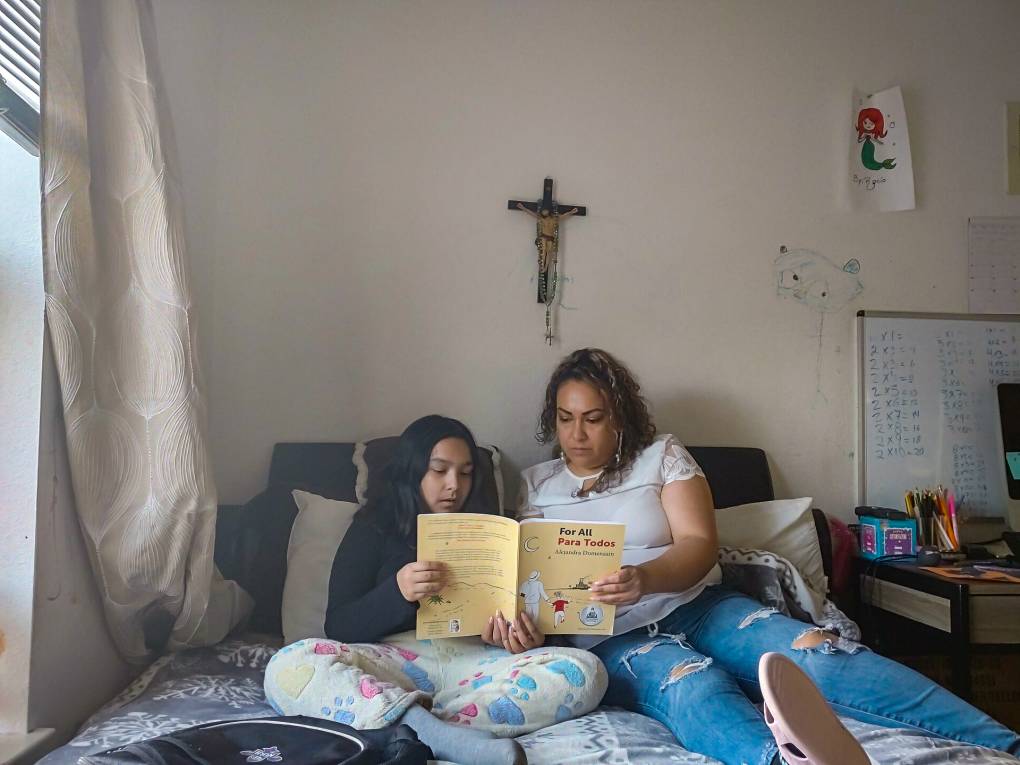
"caption": "Ten-year-old Katie Noriega and her mom, Rocio Gonzalez, read 'Para Todos/For All' by Alejandra Domenzain at their home in San José.",
"description": null,
"title": "RS54110_rocio-and-katie-qut-1",
"credit": "Courtesy of Rocio Gonzalez",
"status": "inherit",
"altTag": "A mother and her young daughter read a book together on a bed, with a crucifix on the wall behind them.",
"isLoading": false,
"fetchFailed": false
},
"news_11907233": {
"type": "attachments",
"id": "news_11907233",
"meta": {
"index": "attachments_1716263798",
"site": "news",
"id": "11907233",
"found": true
},
"parent": 11907214,
"imgSizes": {
"twentyfourteen-full-width": {
"file": "https://ww2.kqed.org/app/uploads/sites/10/2022/03/DSC_2055_OstapKorkuna_web-1038x576.jpg",
"width": 1038,
"mimeType": "image/jpeg",
"height": 576
},
"thumbnail": {
"file": "https://ww2.kqed.org/app/uploads/sites/10/2022/03/DSC_2055_OstapKorkuna_web-160x107.jpg",
"width": 160,
"mimeType": "image/jpeg",
"height": 107
},
"post-thumbnail": {
"file": "https://ww2.kqed.org/app/uploads/sites/10/2022/03/DSC_2055_OstapKorkuna_web-672x372.jpg",
"width": 672,
"mimeType": "image/jpeg",
"height": 372
},
"kqedFullSize": {
"file": "https://ww2.kqed.org/app/uploads/sites/10/2022/03/DSC_2055_OstapKorkuna_web.jpg",
"width": 1920,
"height": 1278
},
"large": {
"file": "https://ww2.kqed.org/app/uploads/sites/10/2022/03/DSC_2055_OstapKorkuna_web-1020x679.jpg",
"width": 1020,
"mimeType": "image/jpeg",
"height": 679
},
"1536x1536": {
"file": "https://ww2.kqed.org/app/uploads/sites/10/2022/03/DSC_2055_OstapKorkuna_web-1536x1022.jpg",
"width": 1536,
"mimeType": "image/jpeg",
"height": 1022
},
"medium": {
"file": "https://ww2.kqed.org/app/uploads/sites/10/2022/03/DSC_2055_OstapKorkuna_web-800x533.jpg",
"width": 800,
"mimeType": "image/jpeg",
"height": 533
}
},
"publishDate": 1646428054,
"modified": 1646428054,
"caption": null,
"description": null,
"title": "DSC_2055_OstapKorkuna_web",
"credit": null,
"status": "inherit",
"altTag": null,
"isLoading": false,
"fetchFailed": false
},
"news_11906095": {
"type": "attachments",
"id": "news_11906095",
"meta": {
"index": "attachments_1716263798",
"site": "news",
"id": "11906095",
"found": true
},
"parent": 11906026,
"imgSizes": {
"twentyfourteen-full-width": {
"file": "https://ww2.kqed.org/app/uploads/sites/10/2022/02/Sabaa-Tahir-BW_credit_Ayesha-Ahmad-Photography-1038x576.png",
"width": 1038,
"mimeType": "image/png",
"height": 576
},
"thumbnail": {
"file": "https://ww2.kqed.org/app/uploads/sites/10/2022/02/Sabaa-Tahir-BW_credit_Ayesha-Ahmad-Photography-160x107.png",
"width": 160,
"mimeType": "image/png",
"height": 107
},
"post-thumbnail": {
"file": "https://ww2.kqed.org/app/uploads/sites/10/2022/02/Sabaa-Tahir-BW_credit_Ayesha-Ahmad-Photography-672x372.png",
"width": 672,
"mimeType": "image/png",
"height": 372
},
"kqedFullSize": {
"file": "https://ww2.kqed.org/app/uploads/sites/10/2022/02/Sabaa-Tahir-BW_credit_Ayesha-Ahmad-Photography.png",
"width": 1920,
"height": 1280
},
"large": {
"file": "https://ww2.kqed.org/app/uploads/sites/10/2022/02/Sabaa-Tahir-BW_credit_Ayesha-Ahmad-Photography-1020x680.png",
"width": 1020,
"mimeType": "image/png",
"height": 680
},
"1536x1536": {
"file": "https://ww2.kqed.org/app/uploads/sites/10/2022/02/Sabaa-Tahir-BW_credit_Ayesha-Ahmad-Photography-1536x1024.png",
"width": 1536,
"mimeType": "image/png",
"height": 1024
},
"medium": {
"file": "https://ww2.kqed.org/app/uploads/sites/10/2022/02/Sabaa-Tahir-BW_credit_Ayesha-Ahmad-Photography-800x533.png",
"width": 800,
"mimeType": "image/png",
"height": 533
}
},
"publishDate": 1645568128,
"modified": 1645850255,
"caption": "Young adult novelist Sabaa Tahir.",
"description": null,
"title": "Sabaa Tahir BW_credit_Ayesha Ahmad Photography",
"credit": "Ayesha Ahmad Photography",
"status": "inherit",
"altTag": "A woman in a t-shirt posing.",
"isLoading": false,
"fetchFailed": false
},
"news_11905858": {
"type": "attachments",
"id": "news_11905858",
"meta": {
"index": "attachments_1716263798",
"site": "news",
"id": "11905858",
"found": true
},
"parent": 11905761,
"imgSizes": {
"twentyfourteen-full-width": {
"file": "https://ww2.kqed.org/app/uploads/sites/10/2022/02/SantiagoCornejo-1-1038x576.jpg",
"width": 1038,
"mimeType": "image/jpeg",
"height": 576
},
"thumbnail": {
"file": "https://ww2.kqed.org/app/uploads/sites/10/2022/02/SantiagoCornejo-1-160x90.jpg",
"width": 160,
"mimeType": "image/jpeg",
"height": 90
},
"post-thumbnail": {
"file": "https://ww2.kqed.org/app/uploads/sites/10/2022/02/SantiagoCornejo-1-672x372.jpg",
"width": 672,
"mimeType": "image/jpeg",
"height": 372
},
"kqedFullSize": {
"file": "https://ww2.kqed.org/app/uploads/sites/10/2022/02/SantiagoCornejo-1.jpg",
"width": 2048,
"height": 1152
},
"large": {
"file": "https://ww2.kqed.org/app/uploads/sites/10/2022/02/SantiagoCornejo-1-1020x574.jpg",
"width": 1020,
"mimeType": "image/jpeg",
"height": 574
},
"1536x1536": {
"file": "https://ww2.kqed.org/app/uploads/sites/10/2022/02/SantiagoCornejo-1-1536x864.jpg",
"width": 1536,
"mimeType": "image/jpeg",
"height": 864
},
"full-width": {
"file": "https://ww2.kqed.org/app/uploads/sites/10/2022/02/SantiagoCornejo-1-1920x1080.jpg",
"width": 1920,
"mimeType": "image/jpeg",
"height": 1080
},
"medium": {
"file": "https://ww2.kqed.org/app/uploads/sites/10/2022/02/SantiagoCornejo-1-800x450.jpg",
"width": 800,
"mimeType": "image/jpeg",
"height": 450
}
},
"publishDate": 1645227858,
"modified": 1645227858,
"caption": null,
"description": null,
"title": "SantiagoCornejo (1)",
"credit": null,
"status": "inherit",
"altTag": null,
"isLoading": false,
"fetchFailed": false
},
"news_11905623": {
"type": "attachments",
"id": "news_11905623",
"meta": {
"index": "attachments_1716263798",
"site": "news",
"id": "11905623",
"found": true
},
"parent": 11904680,
"imgSizes": {
"twentyfourteen-full-width": {
"file": "https://ww2.kqed.org/app/uploads/sites/10/2023/02/RS53673_067_SanFrancisco_YauKungMoonPerformance_01302022-qut-1038x576.jpg",
"width": 1038,
"mimeType": "image/jpeg",
"height": 576
},
"thumbnail": {
"file": "https://ww2.kqed.org/app/uploads/sites/10/2023/02/RS53673_067_SanFrancisco_YauKungMoonPerformance_01302022-qut-160x107.jpg",
"width": 160,
"mimeType": "image/jpeg",
"height": 107
},
"post-thumbnail": {
"file": "https://ww2.kqed.org/app/uploads/sites/10/2023/02/RS53673_067_SanFrancisco_YauKungMoonPerformance_01302022-qut-672x372.jpg",
"width": 672,
"mimeType": "image/jpeg",
"height": 372
},
"kqedFullSize": {
"file": "https://ww2.kqed.org/app/uploads/sites/10/2023/02/RS53673_067_SanFrancisco_YauKungMoonPerformance_01302022-qut.jpg",
"width": 1920,
"height": 1278
},
"large": {
"file": "https://ww2.kqed.org/app/uploads/sites/10/2023/02/RS53673_067_SanFrancisco_YauKungMoonPerformance_01302022-qut-1020x679.jpg",
"width": 1020,
"mimeType": "image/jpeg",
"height": 679
},
"1536x1536": {
"file": "https://ww2.kqed.org/app/uploads/sites/10/2023/02/RS53673_067_SanFrancisco_YauKungMoonPerformance_01302022-qut-1536x1022.jpg",
"width": 1536,
"mimeType": "image/jpeg",
"height": 1022
},
"medium": {
"file": "https://ww2.kqed.org/app/uploads/sites/10/2023/02/RS53673_067_SanFrancisco_YauKungMoonPerformance_01302022-qut-800x533.jpg",
"width": 800,
"mimeType": "image/jpeg",
"height": 533
}
},
"publishDate": 1645138666,
"modified": 1671478072,
"caption": "The Yau Kung Moon School's Matthew Wong walks back to the studio with students after their performance at the Chinese New Year Flower Market Fair in Chinatown, San Francisco, on Jan. 30, 2022.",
"description": null,
"title": "RS53673_067_SanFrancisco_YauKungMoonPerformance_01302022-qut",
"credit": "Beth LaBerge/KQED",
"status": "inherit",
"altTag": "An Asian man carrying a large yellow dragon head, wearing green leggings with gold trim, walks with a young boy carrying a staff outside in Chinatown",
"isLoading": false,
"fetchFailed": false
},
"news_11904542": {
"type": "attachments",
"id": "news_11904542",
"meta": {
"index": "attachments_1716263798",
"site": "news",
"id": "11904542",
"found": true
},
"parent": 11904539,
"imgSizes": {
"twentyfourteen-full-width": {
"file": "https://ww2.kqed.org/app/uploads/sites/10/2022/02/Chalino-master-1038x576.jpg",
"width": 1038,
"mimeType": "image/jpeg",
"height": 576
},
"thumbnail": {
"file": "https://ww2.kqed.org/app/uploads/sites/10/2022/02/Chalino-master-160x90.jpg",
"width": 160,
"mimeType": "image/jpeg",
"height": 90
},
"post-thumbnail": {
"file": "https://ww2.kqed.org/app/uploads/sites/10/2022/02/Chalino-master-672x372.jpg",
"width": 672,
"mimeType": "image/jpeg",
"height": 372
},
"kqedFullSize": {
"file": "https://ww2.kqed.org/app/uploads/sites/10/2022/02/Chalino-master.jpg",
"width": 1920,
"height": 1080
},
"large": {
"file": "https://ww2.kqed.org/app/uploads/sites/10/2022/02/Chalino-master-1020x574.jpg",
"width": 1020,
"mimeType": "image/jpeg",
"height": 574
},
"1536x1536": {
"file": "https://ww2.kqed.org/app/uploads/sites/10/2022/02/Chalino-master-1536x864.jpg",
"width": 1536,
"mimeType": "image/jpeg",
"height": 864
},
"medium": {
"file": "https://ww2.kqed.org/app/uploads/sites/10/2022/02/Chalino-master-800x450.jpg",
"width": 800,
"mimeType": "image/jpeg",
"height": 450
}
},
"publishDate": 1644368575,
"modified": 1644534932,
"caption": "Artwork for Idolo: The Ballad of Chalino Sánchez, an eight-part podcast released Feb. 1 that dives into the legacy and murder of the slain corrido singer.",
"description": null,
"title": "Chalino master",
"credit": "Courtesy of Sonoro Media and Futuro Media",
"status": "inherit",
"altTag": "An illustration with the title 'IDOLO,' of a man wearing a cowboy hat, surrounded by dollar bills.",
"isLoading": false,
"fetchFailed": false
},
"news_11903775": {
"type": "attachments",
"id": "news_11903775",
"meta": {
"index": "attachments_1716263798",
"site": "news",
"id": "11903775",
"found": true
},
"parent": 11903772,
"imgSizes": {
"twentyfourteen-full-width": {
"file": "https://ww2.kqed.org/app/uploads/sites/10/2022/02/young-waj-e1643843942952-1038x576.jpeg",
"width": 1038,
"mimeType": "image/jpeg",
"height": 576
},
"thumbnail": {
"file": "https://ww2.kqed.org/app/uploads/sites/10/2022/02/young-waj-e1643843942952-160x116.jpeg",
"width": 160,
"mimeType": "image/jpeg",
"height": 116
},
"post-thumbnail": {
"file": "https://ww2.kqed.org/app/uploads/sites/10/2022/02/young-waj-e1643843942952-672x372.jpeg",
"width": 672,
"mimeType": "image/jpeg",
"height": 372
},
"kqedFullSize": {
"file": "https://ww2.kqed.org/app/uploads/sites/10/2022/02/young-waj-e1643843942952.jpeg",
"width": 1418,
"height": 1026
},
"large": {
"file": "https://ww2.kqed.org/app/uploads/sites/10/2022/02/young-waj-e1643843942952-1020x738.jpeg",
"width": 1020,
"mimeType": "image/jpeg",
"height": 738
},
"medium": {
"file": "https://ww2.kqed.org/app/uploads/sites/10/2022/02/young-waj-e1643843942952-800x579.jpeg",
"width": 800,
"mimeType": "image/jpeg",
"height": 579
}
},
"publishDate": 1643842101,
"modified": 1650654309,
"caption": "A young Wajahat Ali at his family's home in Fremont.",
"description": null,
"title": "young waj",
"credit": "Courtesy Wajahat Ali",
"status": "inherit",
"altTag": "family photograph of young boy riding toy horse, tinted yellow, reads like a photo from the early 80s",
"isLoading": false,
"fetchFailed": false
},
"news_11904090": {
"type": "attachments",
"id": "news_11904090",
"meta": {
"index": "attachments_1716263798",
"site": "news",
"id": "11904090",
"found": true
},
"parent": 11904089,
"imgSizes": {
"twentyfourteen-full-width": {
"file": "https://ww2.kqed.org/app/uploads/sites/10/2022/02/image1-1038x576.jpg",
"width": 1038,
"mimeType": "image/jpeg",
"height": 576
},
"thumbnail": {
"file": "https://ww2.kqed.org/app/uploads/sites/10/2022/02/image1-160x107.jpg",
"width": 160,
"mimeType": "image/jpeg",
"height": 107
},
"post-thumbnail": {
"file": "https://ww2.kqed.org/app/uploads/sites/10/2022/02/image1-672x372.jpg",
"width": 672,
"mimeType": "image/jpeg",
"height": 372
},
"kqedFullSize": {
"file": "https://ww2.kqed.org/app/uploads/sites/10/2022/02/image1.jpg",
"width": 1920,
"height": 1278
},
"large": {
"file": "https://ww2.kqed.org/app/uploads/sites/10/2022/02/image1-1020x679.jpg",
"width": 1020,
"mimeType": "image/jpeg",
"height": 679
},
"1536x1536": {
"file": "https://ww2.kqed.org/app/uploads/sites/10/2022/02/image1-1536x1022.jpg",
"width": 1536,
"mimeType": "image/jpeg",
"height": 1022
},
"medium": {
"file": "https://ww2.kqed.org/app/uploads/sites/10/2022/02/image1-800x533.jpg",
"width": 800,
"mimeType": "image/jpeg",
"height": 533
}
},
"publishDate": 1644007352,
"modified": 1644007352,
"caption": null,
"description": null,
"title": "image1",
"credit": null,
"status": "inherit",
"altTag": null,
"isLoading": false,
"fetchFailed": false
},
"news_11902354": {
"type": "attachments",
"id": "news_11902354",
"meta": {
"index": "attachments_1716263798",
"site": "news",
"id": "11902354",
"found": true
},
"parent": 11902321,
"imgSizes": {
"twentyfourteen-full-width": {
"file": "https://ww2.kqed.org/app/uploads/sites/10/2022/01/On-the-bench_Early-1990s_Credit-to-LaDoris-Cordell-1038x576.jpg",
"width": 1038,
"mimeType": "image/jpeg",
"height": 576
},
"thumbnail": {
"file": "https://ww2.kqed.org/app/uploads/sites/10/2022/01/On-the-bench_Early-1990s_Credit-to-LaDoris-Cordell-160x98.jpg",
"width": 160,
"mimeType": "image/jpeg",
"height": 98
},
"post-thumbnail": {
"file": "https://ww2.kqed.org/app/uploads/sites/10/2022/01/On-the-bench_Early-1990s_Credit-to-LaDoris-Cordell-672x372.jpg",
"width": 672,
"mimeType": "image/jpeg",
"height": 372
},
"kqedFullSize": {
"file": "https://ww2.kqed.org/app/uploads/sites/10/2022/01/On-the-bench_Early-1990s_Credit-to-LaDoris-Cordell-scaled.jpg",
"width": 2560,
"height": 1560
},
"2048x2048": {
"file": "https://ww2.kqed.org/app/uploads/sites/10/2022/01/On-the-bench_Early-1990s_Credit-to-LaDoris-Cordell-2048x1248.jpg",
"width": 2048,
"mimeType": "image/jpeg",
"height": 1248
},
"large": {
"file": "https://ww2.kqed.org/app/uploads/sites/10/2022/01/On-the-bench_Early-1990s_Credit-to-LaDoris-Cordell-1020x622.jpg",
"width": 1020,
"mimeType": "image/jpeg",
"height": 622
},
"1536x1536": {
"file": "https://ww2.kqed.org/app/uploads/sites/10/2022/01/On-the-bench_Early-1990s_Credit-to-LaDoris-Cordell-1536x936.jpg",
"width": 1536,
"mimeType": "image/jpeg",
"height": 936
},
"full-width": {
"file": "https://ww2.kqed.org/app/uploads/sites/10/2022/01/On-the-bench_Early-1990s_Credit-to-LaDoris-Cordell-1920x1170.jpg",
"width": 1920,
"mimeType": "image/jpeg",
"height": 1170
},
"medium": {
"file": "https://ww2.kqed.org/app/uploads/sites/10/2022/01/On-the-bench_Early-1990s_Credit-to-LaDoris-Cordell-800x488.jpg",
"width": 800,
"mimeType": "image/jpeg",
"height": 488
}
},
"publishDate": 1642800741,
"modified": 1642800741,
"caption": null,
"description": null,
"title": "On the bench_Early 1990s_Credit to LaDoris Cordell",
"credit": null,
"status": "inherit",
"altTag": null,
"isLoading": false,
"fetchFailed": false
},
"news_11901743": {
"type": "attachments",
"id": "news_11901743",
"meta": {
"index": "attachments_1716263798",
"site": "news",
"id": "11901743",
"found": true
},
"parent": 11901478,
"imgSizes": {
"twentyfourteen-full-width": {
"file": "https://ww2.kqed.org/app/uploads/sites/10/2022/01/RS53003_IMG_2338-2-qut-1038x576.jpg",
"width": 1038,
"mimeType": "image/jpeg",
"height": 576
},
"thumbnail": {
"file": "https://ww2.kqed.org/app/uploads/sites/10/2022/01/RS53003_IMG_2338-2-qut-160x120.jpg",
"width": 160,
"mimeType": "image/jpeg",
"height": 120
},
"post-thumbnail": {
"file": "https://ww2.kqed.org/app/uploads/sites/10/2022/01/RS53003_IMG_2338-2-qut-672x372.jpg",
"width": 672,
"mimeType": "image/jpeg",
"height": 372
},
"kqedFullSize": {
"file": "https://ww2.kqed.org/app/uploads/sites/10/2022/01/RS53003_IMG_2338-2-qut.jpg",
"width": 1920,
"height": 1440
},
"large": {
"file": "https://ww2.kqed.org/app/uploads/sites/10/2022/01/RS53003_IMG_2338-2-qut-1020x765.jpg",
"width": 1020,
"mimeType": "image/jpeg",
"height": 765
},
"1536x1536": {
"file": "https://ww2.kqed.org/app/uploads/sites/10/2022/01/RS53003_IMG_2338-2-qut-1536x1152.jpg",
"width": 1536,
"mimeType": "image/jpeg",
"height": 1152
},
"medium": {
"file": "https://ww2.kqed.org/app/uploads/sites/10/2022/01/RS53003_IMG_2338-2-qut-800x600.jpg",
"width": 800,
"mimeType": "image/jpeg",
"height": 600
}
},
"publishDate": 1642187223,
"modified": 1642187246,
"caption": "Celebrating the Tu Bishvat holiday includes eating fruits and nuts indigenous to the Holy Land. From the Mother Lode Jewish Community's 2020 gathering.",
"description": null,
"title": "RS53003_IMG_2338 (2)-qut",
"credit": "Lisa Morehouse",
"status": "inherit",
"altTag": null,
"isLoading": false,
"fetchFailed": false
},
"news_11901201": {
"type": "attachments",
"id": "news_11901201",
"meta": {
"index": "attachments_1716263798",
"site": "news",
"id": "11901201",
"found": true
},
"parent": 11901198,
"imgSizes": {
"twentyfourteen-full-width": {
"file": "https://ww2.kqed.org/app/uploads/sites/10/2022/01/Mushrooms_-_Flickr_-_Joe_Parks-1038x576.jpeg",
"width": 1038,
"mimeType": "image/jpeg",
"height": 576
},
"thumbnail": {
"file": "https://ww2.kqed.org/app/uploads/sites/10/2022/01/Mushrooms_-_Flickr_-_Joe_Parks-160x107.jpeg",
"width": 160,
"mimeType": "image/jpeg",
"height": 107
},
"post-thumbnail": {
"file": "https://ww2.kqed.org/app/uploads/sites/10/2022/01/Mushrooms_-_Flickr_-_Joe_Parks-672x372.jpeg",
"width": 672,
"mimeType": "image/jpeg",
"height": 372
},
"kqedFullSize": {
"file": "https://ww2.kqed.org/app/uploads/sites/10/2022/01/Mushrooms_-_Flickr_-_Joe_Parks-scaled.jpeg",
"width": 2560,
"height": 1706
},
"2048x2048": {
"file": "https://ww2.kqed.org/app/uploads/sites/10/2022/01/Mushrooms_-_Flickr_-_Joe_Parks-2048x1365.jpeg",
"width": 2048,
"mimeType": "image/jpeg",
"height": 1365
},
"large": {
"file": "https://ww2.kqed.org/app/uploads/sites/10/2022/01/Mushrooms_-_Flickr_-_Joe_Parks-1020x680.jpeg",
"width": 1020,
"mimeType": "image/jpeg",
"height": 680
},
"1536x1536": {
"file": "https://ww2.kqed.org/app/uploads/sites/10/2022/01/Mushrooms_-_Flickr_-_Joe_Parks-1536x1024.jpeg",
"width": 1536,
"mimeType": "image/jpeg",
"height": 1024
},
"full-width": {
"file": "https://ww2.kqed.org/app/uploads/sites/10/2022/01/Mushrooms_-_Flickr_-_Joe_Parks-1920x1280.jpeg",
"width": 1920,
"mimeType": "image/jpeg",
"height": 1280
},
"medium": {
"file": "https://ww2.kqed.org/app/uploads/sites/10/2022/01/Mushrooms_-_Flickr_-_Joe_Parks-800x533.jpeg",
"width": 800,
"mimeType": "image/jpeg",
"height": 533
}
},
"publishDate": 1641673801,
"modified": 1641843087,
"caption": "Mushrooms spring from the ground in the Berkeley hills following a series of storms that drenched the Bay in December 2012.",
"description": null,
"title": "Mushrooms_-_Flickr_-_Joe_Parks",
"credit": "Joe Parks/Flickr CC via Wikimedia Commons",
"status": "inherit",
"altTag": "Several mushrooms to the right of the frame peaking through green grass.",
"isLoading": false,
"fetchFailed": false
}
},
"audioPlayerReducer": {
"postId": "stream_live",
"isPaused": true,
"isPlaying": false,
"pfsActive": false,
"pledgeModalIsOpen": true,
"playerDrawerIsOpen": false,
"liveAudioPlayStartedAt": 0,
"liveAudioPlayContext": ""
},
"authorsReducer": {
"kqed": {
"type": "authors",
"id": "236",
"meta": {
"index": "authors_1716337520",
"id": "236",
"found": true
},
"name": "KQED News Staff",
"firstName": "KQED News Staff",
"lastName": null,
"slug": "kqed",
"email": "faq@kqed.org",
"display_author_email": false,
"staff_mastheads": [],
"title": null,
"bio": null,
"avatar": "https://secure.gravatar.com/avatar/ef0e801a68c4c54afa9180db14084167?s=600&d=blank&r=g",
"twitter": null,
"facebook": null,
"instagram": null,
"linkedin": null,
"sites": [
{
"site": "arts",
"roles": [
"contributor"
]
},
{
"site": "news",
"roles": [
"editor"
]
},
{
"site": "futureofyou",
"roles": [
"author"
]
}
],
"headData": {
"title": "KQED News Staff | KQED",
"description": null,
"ogImgSrc": "https://secure.gravatar.com/avatar/ef0e801a68c4c54afa9180db14084167?s=600&d=blank&r=g",
"twImgSrc": "https://secure.gravatar.com/avatar/ef0e801a68c4c54afa9180db14084167?s=600&d=blank&r=g"
},
"isLoading": false,
"link": "/author/kqed"
},
"sasha-khokha": {
"type": "authors",
"id": "254",
"meta": {
"index": "authors_1716337520",
"id": "254",
"found": true
},
"name": "Sasha Khokha",
"firstName": "Sasha",
"lastName": "Khokha",
"slug": "sasha-khokha",
"email": "skhokha@kqed.org",
"display_author_email": true,
"staff_mastheads": [
"news"
],
"title": "Host, The California Report Magazine",
"bio": "Sasha Khokha is the host of \u003cem>The California Report's \u003c/em> weekly magazine program, which takes listeners on sound-rich excursions to meet the people that make the Golden State unique -- through audio documentaries and long-form stories. As \u003cem>The California Report's\u003c/em> Central Valley Bureau Chief based in Fresno for nearly a dozen years, Sasha brought the lives and concerns of rural Californians to listeners around the state. Her reporting helped expose the hidden price immigrant women janitors and farmworkers may pay to keep their jobs: sexual assault at work. It inspired two new California laws to protect them from sexual harassment. She was a key member of the reporting team for the Frontline film \u003cem>Rape on the Night Shift, \u003c/em>which was nominated for two national Emmys. Sasha has also won a national Edward R. Murrow and a national PRNDI award for investigative reporting, as well as multiple prizes from the Society for Professional Journalists. Sasha is a proud alum of the UC Berkeley Graduate School of Journalism and Brown University and a member of the South Asian Journalists Association.",
"avatar": "https://secure.gravatar.com/avatar/e4b5e1541aaeea2aa356aa1fb2a68950?s=600&d=blank&r=g",
"twitter": "KQEDSashaKhokha",
"facebook": null,
"instagram": null,
"linkedin": null,
"sites": [
{
"site": "news",
"roles": [
"editor"
]
},
{
"site": "stateofhealth",
"roles": [
"author"
]
},
{
"site": "science",
"roles": [
"author"
]
},
{
"site": "quest",
"roles": [
"subscriber"
]
}
],
"headData": {
"title": "Sasha Khokha | KQED",
"description": "Host, The California Report Magazine",
"ogImgSrc": "https://secure.gravatar.com/avatar/e4b5e1541aaeea2aa356aa1fb2a68950?s=600&d=blank&r=g",
"twImgSrc": "https://secure.gravatar.com/avatar/e4b5e1541aaeea2aa356aa1fb2a68950?s=600&d=blank&r=g"
},
"isLoading": false,
"link": "/author/sasha-khokha"
},
"markfiore": {
"type": "authors",
"id": "3236",
"meta": {
"index": "authors_1716337520",
"id": "3236",
"found": true
},
"name": "Mark Fiore",
"firstName": "Mark",
"lastName": "Fiore",
"slug": "markfiore",
"email": "mark@markfiore.com",
"display_author_email": false,
"staff_mastheads": [
"news"
],
"title": "KQED News Cartoonist",
"bio": "\u003ca href=\"http://www.MarkFiore.com\">MarkFiore.com\u003c/a> | \u003ca href=\"https://twitter.com/markfiore\">Follow on Twitter\u003c/a> | \u003ca href=\"https://www.facebook.com/pages/Mark-Fiore-Animated-Political-Cartoons/94451707396?ref=bookmarks\">Facebook\u003c/a> | \u003ca href=\"mailto:mark@markfiore.com\">email\u003c/a>\r\n\r\nPulitzer Prize-winner, Mark Fiore, who the Wall Street Journal has called “the undisputed guru of the form,” creates animated political cartoons in San Francisco, where his work has been featured regularly on the San Francisco Chronicle’s web site, SFGate.com. His work has appeared on Newsweek.com, Slate.com, CBSNews.com, MotherJones.com, DailyKos.com and NPR’s web site. Fiore’s political animation has appeared on CNN, Frontline, Bill Moyers Journal, Salon.com and cable and broadcast outlets across the globe.\r\n\r\nBeginning his professional life by drawing traditional political cartoons for newspapers, Fiore’s work appeared in publications ranging from the Washington Post to the Los Angeles Times. In the late 1990s, he began to experiment with animating political cartoons and, after a short stint at the San Jose Mercury News as their staff cartoonist, Fiore devoted all his energies to animation.\r\nGrowing up in California, Fiore also spent a good portion of his life in the backwoods of Idaho. It was this combination that shaped him politically. Mark majored in political science at Colorado College, where, in a perfect send-off for a cartoonist, he received his diploma in 1991 as commencement speaker Dick Cheney smiled approvingly.\r\nMark Fiore was awarded the Pulitzer Prize for political cartooning in 2010, a Robert F. Kennedy Journalism Award in 2004 and has twice received an Online Journalism Award for commentary from the Online News Association (2002, 2008). Fiore has received two awards for his work in new media from the National Cartoonists Society (2001, 2002), and in 2006 received The James Madison Freedom of Information Award from The Society of Professional Journalists.",
"avatar": "https://secure.gravatar.com/avatar/fc4e2a612b15b67bad0c6f0e1db4ca9b?s=600&d=blank&r=g",
"twitter": "MarkFiore",
"facebook": null,
"instagram": "https://www.instagram.com/markfiore/?hl=en",
"linkedin": null,
"sites": [
{
"site": "arts",
"roles": [
"contributor"
]
},
{
"site": "news",
"roles": [
"editor"
]
},
{
"site": "futureofyou",
"roles": [
"editor"
]
},
{
"site": "science",
"roles": [
"editor"
]
}
],
"headData": {
"title": "Mark Fiore | KQED",
"description": "KQED News Cartoonist",
"ogImgSrc": "https://secure.gravatar.com/avatar/fc4e2a612b15b67bad0c6f0e1db4ca9b?s=600&d=blank&r=g",
"twImgSrc": "https://secure.gravatar.com/avatar/fc4e2a612b15b67bad0c6f0e1db4ca9b?s=600&d=blank&r=g"
},
"isLoading": false,
"link": "/author/markfiore"
},
"cveltman": {
"type": "authors",
"id": "8608",
"meta": {
"index": "authors_1716337520",
"id": "8608",
"found": true
},
"name": "Chloe Veltman",
"firstName": "Chloe",
"lastName": "Veltman",
"slug": "cveltman",
"email": "cveltman@kqed.org",
"display_author_email": true,
"staff_mastheads": [],
"title": "Arts and Culture Reporter",
"bio": "Chloe Veltman is a former arts and culture reporter for KQED. Prior to joining the organization, she launched and led the arts bureau at Colorado Public Radio, served as the Bay Area's culture columnist for the New York Times, and was the founder, host and executive producer of VoiceBox, a national award-winning weekly podcast/radio show and live events series all about the human voice. Chloe is the recipient of numerous prizes, grants and fellowships including a Webby Award for her work on interactive storytelling, both the John S Knight Journalism Fellowship and Humanities Center Fellowship at Stanford University, the Sundance Arts Writing Fellowship and a Library of Congress Research Fellowship. She is the author of the book \"On Acting\" and has appeared as a guest lecturer at Yale University and the San Francisco Conservatory of Music among other institutions. She holds a BA in english literature from King's College, Cambridge, and a Masters in Dramaturgy from the Central School of Speech and Drama/Harvard Institute for Advanced Theater Training.\r\n\u003ca href=\"https://www.chloeveltman.com\">www.chloeveltman.com\u003c/a>",
"avatar": "https://secure.gravatar.com/avatar/55403394b00a1ddab683952c2eb2cf85?s=600&d=blank&r=g",
"twitter": "chloeveltman",
"facebook": null,
"instagram": null,
"linkedin": null,
"sites": [
{
"site": "arts",
"roles": []
},
{
"site": "news",
"roles": [
"author"
]
},
{
"site": "pop",
"roles": [
"editor"
]
},
{
"site": "science",
"roles": []
}
],
"headData": {
"title": "Chloe Veltman | KQED",
"description": "Arts and Culture Reporter",
"ogImgSrc": "https://secure.gravatar.com/avatar/55403394b00a1ddab683952c2eb2cf85?s=600&d=blank&r=g",
"twImgSrc": "https://secure.gravatar.com/avatar/55403394b00a1ddab683952c2eb2cf85?s=600&d=blank&r=g"
},
"isLoading": false,
"link": "/author/cveltman"
},
"afont": {
"type": "authors",
"id": "8637",
"meta": {
"index": "authors_1716337520",
"id": "8637",
"found": true
},
"name": "Amanda Font",
"firstName": "Amanda",
"lastName": "Font",
"slug": "afont",
"email": "afont@kqed.org",
"display_author_email": false,
"staff_mastheads": [],
"title": "KQED Contributor",
"bio": "Amanda Font is a producer on \u003cem>The Latest\u003c/em> podcast, and the host and co-producer of the series \u003cem>Audible Cosmos\u003c/em>. She has previously worked as a producer and reporter on the \u003cem>Bay Curious\u003c/em> podcast, and director of \u003cem>The California Report Magazine\u003c/em>. She grew up in the deserts of Southern California and moved north for the trees. Amanda earned a B.A. from the BECA program at San Francisco State, where she worked in the university's radio station. Amanda Font is represented by SAG-AFTRA.",
"avatar": "https://secure.gravatar.com/avatar/d9e81cf0117d5849b9cfb7ab4b1422f1?s=600&d=blank&r=g",
"twitter": null,
"facebook": null,
"instagram": null,
"linkedin": null,
"sites": [
{
"site": "news",
"roles": [
"add_users",
"create_users"
]
},
{
"site": "science",
"roles": []
},
{
"site": "forum",
"roles": [
"administrator"
]
},
{
"site": "perspectives",
"roles": [
"administrator"
]
},
{
"site": "radio",
"roles": [
"administrator"
]
}
],
"headData": {
"title": "Amanda Font | KQED",
"description": "KQED Contributor",
"ogImgSrc": "https://secure.gravatar.com/avatar/d9e81cf0117d5849b9cfb7ab4b1422f1?s=600&d=blank&r=g",
"twImgSrc": "https://secure.gravatar.com/avatar/d9e81cf0117d5849b9cfb7ab4b1422f1?s=600&d=blank&r=g"
},
"isLoading": false,
"link": "/author/afont"
},
"lsarah": {
"type": "authors",
"id": "11626",
"meta": {
"index": "authors_1716337520",
"id": "11626",
"found": true
},
"name": "Lakshmi Sarah",
"firstName": "Lakshmi",
"lastName": "Sarah",
"slug": "lsarah",
"email": "lsarah@kqed.org",
"display_author_email": false,
"staff_mastheads": [],
"title": "Digital Producer",
"bio": "Lakshmi Sarah is an educator, author and journalist with a focus on innovative storytelling. She has worked with newspapers, radio and magazines from Ahmedabad, India to Los Angeles, California. She has written and produced for Die Zeit, Global Voices, AJ+, KQED, Fusion Media Group and the New York Times.",
"avatar": "https://secure.gravatar.com/avatar/652dcaecd8b28826fc17a8b2d6bb4e93?s=600&d=blank&r=g",
"twitter": "lakitalki",
"facebook": null,
"instagram": "https://www.instagram.com/laki.talki/",
"linkedin": "https://www.linkedin.com/in/lakisarah/",
"sites": [
{
"site": "arts",
"roles": []
},
{
"site": "news",
"roles": []
},
{
"site": "bayareabites",
"roles": []
},
{
"site": "science",
"roles": []
}
],
"headData": {
"title": "Lakshmi Sarah | KQED",
"description": "Digital Producer",
"ogImgSrc": "https://secure.gravatar.com/avatar/652dcaecd8b28826fc17a8b2d6bb4e93?s=600&d=blank&r=g",
"twImgSrc": "https://secure.gravatar.com/avatar/652dcaecd8b28826fc17a8b2d6bb4e93?s=600&d=blank&r=g"
},
"isLoading": false,
"link": "/author/lsarah"
},
"btorres": {
"type": "authors",
"id": "11666",
"meta": {
"index": "authors_1716337520",
"id": "11666",
"found": true
},
"name": "Blanca Torres",
"firstName": "Blanca",
"lastName": "Torres",
"slug": "btorres",
"email": "btorres@kqed.org",
"display_author_email": true,
"staff_mastheads": [
"news"
],
"title": "Producer, Forum",
"bio": "Blanca Torres brings sharp news judgement and keen sense of lively conversation to her work as producer for Forum. She loves producing shows that leave listeners feeling like they heard distinctive voices, learned something new and gained a fresh perspective.\r\n\r\nShe joined KQED in January of 2020 after 16 years of working as a newspaper reporter most recently at the \u003cem>San Francisco Business Times,\u003c/em> where she wrote about real estate and economic development. Before that, she covered a variety of beats including crime, education, retail, workplace, the economy, consumer issues, and small business for the \u003cem>Contra Costa Times, Baltimore Sun\u003c/em> and\u003cem> The Seattle Times\u003c/em>. In addition to reporting, she worked as an editorial writer and columnist for the \u003cem>Seattle Times\u003c/em>. From 2017 to 2020, Blanca won a total of ten awards from the National Association of Real Estate Editors and won first place for land use reporting from the California News Publishers Association two years in a row. She is also a member and former board member for the National Association of Hispanic Journalists.\r\n\r\nA native of the Pacific Northwest, Blanca earned her bachelor's degree from Vanderbilt University in Nashville and a master's in fine arts in creative writing at Mills College. She lives in the East Bay with her family.",
"avatar": "https://secure.gravatar.com/avatar/50b49d19b14a1eed34f26ebf4681152cdd81574ed21851100871ccd29e578cdc?s=600&d=blank&r=g",
"twitter": "@blancawrites",
"bluesky": null,
"facebook": null,
"instagram": null,
"linkedin": null,
"sites": [
{
"site": "arts",
"roles": [
"editor"
]
},
{
"site": "news",
"roles": [
"editor"
]
},
{
"site": "forum",
"roles": [
"editor"
]
}
],
"headData": {
"title": "Blanca Torres | KQED",
"description": "Producer, Forum",
"ogImgSrc": "https://secure.gravatar.com/avatar/50b49d19b14a1eed34f26ebf4681152cdd81574ed21851100871ccd29e578cdc?s=600&d=blank&r=g",
"twImgSrc": "https://secure.gravatar.com/avatar/50b49d19b14a1eed34f26ebf4681152cdd81574ed21851100871ccd29e578cdc?s=600&d=blank&r=g"
},
"isLoading": false,
"link": "/author/btorres"
},
"blaberge": {
"type": "authors",
"id": "11667",
"meta": {
"index": "authors_1716337520",
"id": "11667",
"found": true
},
"name": "Beth LaBerge",
"firstName": "Beth",
"lastName": "LaBerge",
"slug": "blaberge",
"email": "blaberge@KQED.org",
"display_author_email": true,
"staff_mastheads": [
"news"
],
"title": "Photographer, News",
"bio": "Beth LaBerge is a visual journalist for \u003ca href=\"https://www.kqed.org/news\">KQED News\u003c/a>.",
"avatar": "https://secure.gravatar.com/avatar/ce49ecd7a1306685637b45a1f6f5dedfc4ae9481966eb596fea5160466dd6319?s=600&d=blank&r=g",
"twitter": null,
"bluesky": null,
"facebook": null,
"instagram": "https://www.instagram.com/bethlaberge/",
"linkedin": null,
"sites": [
{
"site": "arts",
"roles": [
"editor",
"manage_categories"
]
},
{
"site": "news",
"roles": [
"editor",
"edit_plugins",
"manage_categories"
]
},
{
"site": "science",
"roles": [
"editor",
"contributor",
"author",
"manage_categories"
]
},
{
"site": "perspectives",
"roles": [
"editor"
]
},
{
"site": "liveblog",
"roles": [
"editor"
]
}
],
"headData": {
"title": "Beth LaBerge | KQED",
"description": "Photographer, News",
"ogImgSrc": "https://secure.gravatar.com/avatar/ce49ecd7a1306685637b45a1f6f5dedfc4ae9481966eb596fea5160466dd6319?s=600&d=blank&r=g",
"twImgSrc": "https://secure.gravatar.com/avatar/ce49ecd7a1306685637b45a1f6f5dedfc4ae9481966eb596fea5160466dd6319?s=600&d=blank&r=g"
},
"isLoading": false,
"link": "/author/blaberge"
},
"amadrigal": {
"type": "authors",
"id": "11757",
"meta": {
"index": "authors_1716337520",
"id": "11757",
"found": true
},
"name": "Alexis Madrigal",
"firstName": "Alexis",
"lastName": "Madrigal",
"slug": "amadrigal",
"email": "amadrigal@kqed.org",
"display_author_email": true,
"staff_mastheads": [],
"title": "Co-Host Forum",
"bio": "Alexis Madrigal is the co-host of Forum. He is also a contributing writer at \u003cem>The Atlantic \u003c/em>and the co-founder of the COVID Tracking Project. He's the creator of the podcast, \u003cem>Containers\u003c/em>, and has been a staff writer at \u003cem>Wired. \u003c/em>He was a visiting scholar at UC Berkeley's Information School, and is working on a book about Oakland and the Bay Area's revolutionary ideas.",
"avatar": "https://secure.gravatar.com/avatar/ffeee1fe99a3e31957381f377ca63502bdcc0c3dbccaaa701e579a10aa0c5e1f?s=600&d=blank&r=g",
"twitter": "alexismadrigal",
"bluesky": null,
"facebook": null,
"instagram": null,
"linkedin": null,
"sites": [
{
"site": "arts",
"roles": [
"editor"
]
},
{
"site": "news",
"roles": [
"editor"
]
},
{
"site": "forum",
"roles": [
"editor"
]
}
],
"headData": {
"title": "Alexis Madrigal | KQED",
"description": "Co-Host Forum",
"ogImgSrc": "https://secure.gravatar.com/avatar/ffeee1fe99a3e31957381f377ca63502bdcc0c3dbccaaa701e579a10aa0c5e1f?s=600&d=blank&r=g",
"twImgSrc": "https://secure.gravatar.com/avatar/ffeee1fe99a3e31957381f377ca63502bdcc0c3dbccaaa701e579a10aa0c5e1f?s=600&d=blank&r=g"
},
"isLoading": false,
"link": "/author/amadrigal"
},
"swhitney": {
"type": "authors",
"id": "11784",
"meta": {
"index": "authors_1716337520",
"id": "11784",
"found": true
},
"name": "Spencer Whitney",
"firstName": "Spencer",
"lastName": "Whitney",
"slug": "swhitney",
"email": "swhitney@kqed.org",
"display_author_email": false,
"staff_mastheads": [],
"title": "KQED Digital Editor",
"bio": "Spencer Whitney is currently a Digital Editor for KQED News. Prior to joining KQED News, Spencer worked as the Multimedia Editor at the Oakland Post and an Assistant Editor in the Editorial department at the San Francisco Chronicle. He attended Howard University as an undergraduate and interned with SiriusXM. He also attended UC Berkeley's Graduate School of Journalism and had the opportunity to write for the hyperlocal news sites Richmond Confidential and Oakland North.",
"avatar": "https://secure.gravatar.com/avatar/e33ff4fd8b8f0d2796f36472fb32607ca8fc46ef5e537dcfdbdee688d8ea5b80?s=600&d=mm&r=g",
"twitter": null,
"bluesky": null,
"facebook": null,
"instagram": null,
"linkedin": null,
"sites": [
{
"site": "arts",
"roles": [
"editor"
]
},
{
"site": "news",
"roles": [
"editor"
]
},
{
"site": "science",
"roles": [
"editor"
]
},
{
"site": "perspectives",
"roles": [
"editor"
]
}
],
"headData": {
"title": "Spencer Whitney | KQED",
"description": "KQED Digital Editor",
"ogImgSrc": "https://secure.gravatar.com/avatar/e33ff4fd8b8f0d2796f36472fb32607ca8fc46ef5e537dcfdbdee688d8ea5b80?s=600&d=mm&r=g",
"twImgSrc": "https://secure.gravatar.com/avatar/e33ff4fd8b8f0d2796f36472fb32607ca8fc46ef5e537dcfdbdee688d8ea5b80?s=600&d=mm&r=g"
},
"isLoading": false,
"link": "/author/swhitney"
}
},
"pagesReducer": {
"news_category_arts-and-culture": {
"type": "terms",
"id": "news_223",
"meta": {
"index": "terms_1716263798",
"site": "news",
"id": "223",
"score": 11.241959
},
"featImg": null,
"name": "Arts and Culture",
"description": null,
"taxonomy": "category",
"headData": {
"twImgId": null,
"twTitle": null,
"ogTitle": null,
"ogImgId": null,
"twDescription": null,
"description": null,
"title": "Arts and Culture Archives | KQED News",
"ogDescription": null
},
"ttid": 231,
"slug": "arts-and-culture",
"isLoading": false,
"title": "Arts and Culture",
"pageMeta": {
"site": "news",
"WpPageTemplate": "page-topic-editorial",
"currentPage": 32
},
"blocks": [
{
"blockName": "kqed/post-list",
"attrs": {
"layout": "cardArticle2",
"query": "posts/news?category=arts-and-culture",
"seeMore": false,
"paginated": true,
"page": 32
}
},
{
"blockName": "kqed/ad"
}
]
}
},
"pfsSessionReducer": {},
"postsReducer": {
"stream_live": {
"type": "live",
"id": "stream_live",
"audioUrl": "https://streams.kqed.org/kqedradio",
"title": "Live Stream",
"excerpt": "Live Stream information currently unavailable.",
"link": "/radio",
"featImg": "",
"label": {
"name": "KQED Live",
"link": "/"
}
},
"stream_kqedNewscast": {
"type": "posts",
"id": "stream_kqedNewscast",
"audioUrl": "https://www.kqed.org/.stream/anon/radio/RDnews/newscast.mp3?_=1",
"title": "KQED Newscast",
"featImg": "",
"label": {
"name": "88.5 FM",
"link": "/"
}
},
"news_11907943": {
"type": "posts",
"id": "news_11907943",
"meta": {
"index": "posts_1716263798",
"site": "news",
"id": "11907943",
"score": null,
"sort": [
1647038850000
]
},
"parent": 0,
"labelTerm": {
"site": "news",
"term": 18515
},
"blocks": [],
"publishDate": 1647038850,
"format": "aside",
"disqusTitle": "Sing a Song for Emilio Delgado",
"title": "Sing a Song for Emilio Delgado",
"headTitle": "Mark Fiore: Drawn to the Bay | KQED News",
"content": "\u003cp>\u003ca href=\"https://ww2.kqed.org/app/uploads/sites/10/2022/03/delgado_031122_final.png\">\u003cimg class=\"alignnone size-full wp-image-11907956\" src=\"https://ww2.kqed.org/app/uploads/sites/10/2022/03/delgado_031122_final.png\" alt='Cartoon: Sesame Street characters singing \"canta de cosas buenas no malas\" next to funeral flowers with a banner that reads, \"Emilio Delgado, 1940-2022.\"' width=\"1920\" height=\"1357\" srcset=\"https://ww2.kqed.org/app/uploads/sites/10/2022/03/delgado_031122_final.png 1920w, https://ww2.kqed.org/app/uploads/sites/10/2022/03/delgado_031122_final-800x565.png 800w, https://ww2.kqed.org/app/uploads/sites/10/2022/03/delgado_031122_final-1020x721.png 1020w, https://ww2.kqed.org/app/uploads/sites/10/2022/03/delgado_031122_final-160x113.png 160w, https://ww2.kqed.org/app/uploads/sites/10/2022/03/delgado_031122_final-1536x1086.png 1536w\" sizes=\"(max-width: 1920px) 100vw, 1920px\">\u003c/a>Emilio Delgado, an actor born in the California border town of Calexico who played \u003ca href=\"https://bit.ly/fioreemiliodelgadoluis\">Luis the handyman on \"Sesame Street\" for over 40 years, died on Thursday at the age of 81\u003c/a>.\u003c/p>\n\u003cp>Delgado's Luis owned and operated the \"Fix-It Shop\" and helped bring diversity to television screens \u003ca href=\"https://www.youtube.com/watch?v=K5StTXQofqs\">in a time when there just wasn't much of it\u003c/a>.\u003c/p>\n\u003cp>Here's a heartwarming version of Delgado singing the classic \"Sesame Street\" song \"Sing\" in Spanish, which includes the line, \"Canta de cosas buenas, no malas,” or \"Sing of good things, not bad.\"\u003c/p>\n\u003cp>https://www.youtube.com/watch?v=QxOft5QZjDI&t=112s\u003c/p>\n\u003cp>[ad fullwidth]\u003c/p>\n\u003cp>\u003c/p>\n",
"disqusIdentifier": "11907943 https://ww2.kqed.org/news/?p=11907943",
"disqusUrl": "https://ww2.kqed.org/news/2022/03/11/sing-a-song-for-emilio-delgado/",
"stats": {
"hasVideo": true,
"hasChartOrMap": false,
"hasAudio": false,
"hasPolis": false,
"wordCount": 106,
"hasGoogleForm": false,
"hasGallery": false,
"hasHearkenModule": false,
"iframeSrcs": [],
"paragraphCount": 5
},
"modified": 1647042670,
"excerpt": "Emilio Delgado, who played the character Luis the handyman on \"Sesame Street\" for over 40 years, died on Thursday at the age of 81. ",
"headData": {
"twImgId": "",
"twTitle": "",
"ogTitle": "",
"ogImgId": "",
"twDescription": "",
"description": "Emilio Delgado, who played the character Luis the handyman on "Sesame Street" for over 40 years, died on Thursday at the age of 81. ",
"title": "Sing a Song for Emilio Delgado | KQED",
"ogDescription": "",
"schema": {
"@context": "https://schema.org",
"@type": "NewsArticle",
"headline": "Sing a Song for Emilio Delgado",
"datePublished": "2022-03-11T14:47:30-08:00",
"dateModified": "2022-03-11T15:51:10-08:00",
"image": "https://cdn.kqed.org/wp-content/uploads/2020/02/KQED-OG-Image@1x.png",
"isAccessibleForFree": "True",
"publisher": {
"@type": "NewsMediaOrganization",
"@id": "https://www.kqed.org/#organization",
"name": "KQED",
"logo": "https://cdn.kqed.org/wp-content/uploads/2020/02/KQED-OG-Image@1x.png",
"url": "https://www.kqed.org",
"sameAs": [
"https://www.facebook.com/KQED",
"https://twitter.com/KQED",
"https://www.instagram.com/kqed/",
"https://www.tiktok.com/@kqedofficial",
"https://www.linkedin.com/company/kqed",
"https://www.youtube.com/channel/UCeC0IOo7i1P_61zVUWbJ4nw"
]
}
}
},
"guestAuthors": [],
"slug": "sing-a-song-for-emilio-delgado",
"status": "publish",
"excludeFromSiteSearch": "Include",
"path": "/news/11907943/sing-a-song-for-emilio-delgado",
"audioTrackLength": null,
"parsedContent": [
{
"type": "contentString",
"content": "\u003cdiv class=\"post-body\">\u003cp>\u003cp>\u003ca href=\"https://ww2.kqed.org/app/uploads/sites/10/2022/03/delgado_031122_final.png\">\u003cimg class=\"alignnone size-full wp-image-11907956\" src=\"https://ww2.kqed.org/app/uploads/sites/10/2022/03/delgado_031122_final.png\" alt='Cartoon: Sesame Street characters singing \"canta de cosas buenas no malas\" next to funeral flowers with a banner that reads, \"Emilio Delgado, 1940-2022.\"' width=\"1920\" height=\"1357\" srcset=\"https://ww2.kqed.org/app/uploads/sites/10/2022/03/delgado_031122_final.png 1920w, https://ww2.kqed.org/app/uploads/sites/10/2022/03/delgado_031122_final-800x565.png 800w, https://ww2.kqed.org/app/uploads/sites/10/2022/03/delgado_031122_final-1020x721.png 1020w, https://ww2.kqed.org/app/uploads/sites/10/2022/03/delgado_031122_final-160x113.png 160w, https://ww2.kqed.org/app/uploads/sites/10/2022/03/delgado_031122_final-1536x1086.png 1536w\" sizes=\"(max-width: 1920px) 100vw, 1920px\">\u003c/a>Emilio Delgado, an actor born in the California border town of Calexico who played \u003ca href=\"https://bit.ly/fioreemiliodelgadoluis\">Luis the handyman on \"Sesame Street\" for over 40 years, died on Thursday at the age of 81\u003c/a>.\u003c/p>\n\u003cp>Delgado's Luis owned and operated the \"Fix-It Shop\" and helped bring diversity to television screens \u003ca href=\"https://www.youtube.com/watch?v=K5StTXQofqs\">in a time when there just wasn't much of it\u003c/a>.\u003c/p>\n\u003cp>Here's a heartwarming version of Delgado singing the classic \"Sesame Street\" song \"Sing\" in Spanish, which includes the line, \"Canta de cosas buenas, no malas,” or \"Sing of good things, not bad.\"\u003c/p>\u003c/p>\u003cp>\u003cspan class='utils-parseShortcode-shortcodes-__youtubeShortcode__embedYoutube'>\n \u003cspan class='utils-parseShortcode-shortcodes-__youtubeShortcode__embedYoutubeInside'>\n \u003ciframe\n loading='lazy'\n class='utils-parseShortcode-shortcodes-__youtubeShortcode__youtubePlayer'\n type='text/html'\n src='//www.youtube.com/embed/QxOft5QZjDI'\n title='//www.youtube.com/embed/QxOft5QZjDI'\n allowfullscreen='true'\n style='border:0;'>\u003c/iframe>\n \u003c/span>\n \u003c/span>\u003c/p>\u003cp>\u003cp>\u003c/p>\u003c/div>",
"attributes": {
"named": {},
"numeric": []
}
},
{
"type": "component",
"content": "",
"name": "ad",
"attributes": {
"named": {
"label": "fullwidth"
},
"numeric": [
"fullwidth"
]
}
},
{
"type": "contentString",
"content": "\u003cdiv class=\"post-body\">\u003cp>\u003c/p>\n\u003cp>\u003c/p>\n\u003c/div>\u003c/p>",
"attributes": {
"named": {},
"numeric": []
}
}
],
"link": "/news/11907943/sing-a-song-for-emilio-delgado",
"authors": [
"3236"
],
"series": [
"news_18515"
],
"categories": [
"news_223",
"news_18540",
"news_8"
],
"tags": [
"news_17687",
"news_2968",
"news_20605",
"news_25409",
"news_20949",
"news_3284"
],
"featImg": "news_11907956",
"label": "news_18515"
},
"news_11907019": {
"type": "posts",
"id": "news_11907019",
"meta": {
"index": "posts_1716263798",
"site": "news",
"id": "11907019",
"score": null,
"sort": [
1646947032000
]
},
"guestAuthors": [],
"slug": "our-own-journeys-the-growing-push-for-more-bilingual-childrens-books-in-schools-and-libraries",
"title": "'Our Own Journeys': The Growing Push for More Bilingual Children's Books in Schools and Libraries",
"publishDate": 1646947032,
"format": "audio",
"headTitle": "‘Our Own Journeys’: The Growing Push for More Bilingual Children’s Books in Schools and Libraries | KQED",
"labelTerm": {
"site": "news"
},
"content": "\u003cp>On a recent evening, 10-year-old Katie Noriega and her mom snuggled up together to read a story at their home in San José. The bilingual book in Spanish and English they dove into, “\u003ca href=\"https://www.forall-paratodos.net/\">Para Todos/For All\u003c/a>,” by Bay Area-based author Alejandra Domenzain, tells the story of the struggles of a young girl named Flor and her father, who are forced to flee their homeland and look for opportunity in a new country.\u003c/p>\n\u003cp>“‘Are we going to the land that we see on TV? Will we fly in a plane? Will there be more toys for me?’” Katie read aloud to her mom. “‘Her dad forced a smile and put on a brave face. It won’t be so easy to get to that place.’”\u003c/p>\n\u003cp>Katie’s mom, Rocio Gonzalez, read the same lines, in Spanish:\u003c/p>\n\u003cp>“‘¿Vamos a ese lugar que vemos en la tele? ¿Iremos en avión? ¿Tendré muchos juguetes? Su papa sonrió a medias y se armó de valor. No será fácil llegar.’”\u003c/p>\n\u003cfigure id=\"attachment_11907427\" class=\"wp-caption aligncenter\" style=\"max-width: 357px\">\u003cimg loading=\"lazy\" decoding=\"async\" class=\"wp-image-11907427\" src=\"https://ww2.kqed.org/app/uploads/sites/10/2022/03/RS54107_Cover-with-logo-10_26-qut-800x1002.jpg\" alt=\"A children's book cover: "For All/Para Todos"\" width=\"357\" height=\"447\" srcset=\"https://cdn.kqed.org/wp-content/uploads/sites/10/2022/03/RS54107_Cover-with-logo-10_26-qut-800x1002.jpg 800w, https://cdn.kqed.org/wp-content/uploads/sites/10/2022/03/RS54107_Cover-with-logo-10_26-qut-1020x1277.jpg 1020w, https://cdn.kqed.org/wp-content/uploads/sites/10/2022/03/RS54107_Cover-with-logo-10_26-qut-160x200.jpg 160w, https://cdn.kqed.org/wp-content/uploads/sites/10/2022/03/RS54107_Cover-with-logo-10_26-qut-1227x1536.jpg 1227w, https://cdn.kqed.org/wp-content/uploads/sites/10/2022/03/RS54107_Cover-with-logo-10_26-qut.jpg 1617w\" sizes=\"(max-width: 357px) 100vw, 357px\">\u003cfigcaption class=\"wp-caption-text\">The cover of ‘Para Todos/For All,’ a bilingual book by Alejandra Domenzain, with illustrations by Katherine Loh. \u003ccite>(Courtesy Hard Ball Press)\u003c/cite>\u003c/figcaption>\u003c/figure>\n\u003cp>Katie has lived in the U.S. her entire life. She understands Spanish and speaks it a little bit, but feels more comfortable reading in English. The opposite is true for Rocio, who spent her formative years in Mexico.\u003c/p>\n\u003cp>[ad fullwidth]\u003c/p>\n\u003cp>Even though they’re reading in different languages, Katie and Rocio said they get a lot out of reading this book together. Katie responded to Flor’s courage and tenacity.\u003c/p>\n\u003cp>“I think she’s a strong person because she never gave up,” Katie said. “She just kept going.”\u003c/p>\n\u003cp>Rocio said books like “Para Todos” help connect the dots between what she has — and has not — yet told her daughter about her own complex immigration journey, when she moved to California from Jalisco, Mexico, in her late teens.\u003c/p>\n\u003cp>“By bringing in these types of books, we can connect them with what we’ve already talked — or not talked — about regarding our own journeys,” Rocio said in Spanish.\u003c/p>\n\u003ch2>‘Heard and validated’\u003c/h2>\n\u003cp>A growing number of children’s book authors and literacy activists have been pushing for more bilingual books for kids, like “Para Todos.” That objective resonates with many bilingual households, particularly in California, where more than a quarter of residents speak Spanish as a first language.\u003c/p>\n\u003cp>A number of academic studies in recent years have shown that \u003ca href=\"https://scholarship.depauw.edu/cgi/viewcontent.cgi?article=1078&context=studentresearch\">bilingual books help improve literacy levels\u003c/a> among immigrant families where English is not spoken at home, especially when the stories highlight diverse characters.\u003c/p>\n\u003cp>“Having access to books where you feel represented or you feel heard and validated is a great thing to have at such a young age,” said Belen Delgado, education policy program associate at the\u003ca href=\"https://doloreshuerta.org/\"> Dolores Huerta Foundation\u003c/a>, a grassroots activism hub with several chapters in California.\u003c/p>\n\u003cp>A small but growing number of bilingual children’s titles are taking that model a step further, by not only centering Latinx characters, but also making them powerful agents of change.\u003c/p>\n\u003cp>In “Para Todos,” for instance, the main character, Flor, becomes an immigrant rights activist.\u003c/p>\n\u003cp>“It’s not just about, ‘Let’s have diverse characters and diverse stories,’” said author Domenzain, who lives in Foster City. “It’s, ‘Let’s look at the structural systems that are causing the injustice and have on-ramps for young people to question them and know that it’s possible to make structural changes.’”\u003c/p>\n\u003cp>[pullquote align=\"right\" size=\"medium\" citation=\"Belen Delgado, Dolores Huerta Foundation\"]‘Having access to books where you feel represented or you feel heard and validated is a great thing to have at such a young age.’[/pullquote]Other bilingual children’s book writers agree.\u003c/p>\n\u003cp>Ann Berlak is the Oakland-based author of “\u003ca href=\"https://bookshop.org/books/joelito-s-big-decision-la-gran-decision-de-joelito/9780986240096\">La Gran Decisión de Joelito/Joelito’s Big Decision\u003c/a>,” a 2015 book about an 11-year-old boy who must decide whether to eat a hamburger at his favorite restaurant or join his best friend and his friend’s father on the picket line to fight for higher wages for lower-income workers.\u003c/p>\n\u003cp>“I decided to write ‘Joelito’ as an example of how people can not only know that there’s an alternative, but fight for an alternative,” Berlak said.\u003c/p>\n\u003cp>\u003ca href=\"http://www.monicabrown.net/\">Mónica Brown\u003c/a>, who grew up in the Bay Area, has written a slew of bilingual children’s titles focusing on famous activists from history, including “\u003ca href=\"https://www.harpercollins.com/products/side-by-sidelado-a-lado-monica-brown\">Lado a Lado/Side by Side\u003c/a>,” her book about Dolores Huerta and Cesar Chavez.\u003c/p>\n\u003cfigure id=\"attachment_11907762\" class=\"wp-caption aligncenter\" style=\"max-width: 800px\">\u003ca href=\"https://ww2.kqed.org/app/uploads/sites/10/2022/03/RS54109_Monica-Brown-with-kids-qut-800x531-1.jpeg\">\u003cimg loading=\"lazy\" decoding=\"async\" class=\"wp-image-11907762 size-full\" src=\"https://ww2.kqed.org/app/uploads/sites/10/2022/03/RS54109_Monica-Brown-with-kids-qut-800x531-1.jpeg\" alt=\"A woman reads to a group of young children.\" width=\"800\" height=\"531\" srcset=\"https://cdn.kqed.org/wp-content/uploads/sites/10/2022/03/RS54109_Monica-Brown-with-kids-qut-800x531-1.jpeg 800w, https://cdn.kqed.org/wp-content/uploads/sites/10/2022/03/RS54109_Monica-Brown-with-kids-qut-800x531-1-160x106.jpeg 160w\" sizes=\"(max-width: 800px) 100vw, 800px\">\u003c/a>\u003cfigcaption class=\"wp-caption-text\">Author Mónica Brown reads to a group of children. \u003ccite>(Courtesy of Mónica Brown)\u003c/cite>\u003c/figcaption>\u003c/figure>\n\u003cp>“They imagined great things and believed in themselves, and with community support were able to accomplish extraordinary things,” said Brown of her protagonists. “And I want each child to think they can, too.”\u003c/p>\n\u003cp>Meanwhile, Leticia Hernández-Linares’s new book, “\u003ca href=\"https://risehomestories.com/alejandria/home/\">La Lucha de Alejandria!/¡Alejandria Fights Back!\u003c/a>,” tackles the issue of eviction, something the San Francisco mother of two said she once faced.\u003c/p>\n\u003cp>“Our children — my children — have been and continue to be exposed to these things,” said Hernández-Linares, who wrote the book as part of \u003ca href=\"https://risehomestories.com/\">Rise-Home Stories\u003c/a>, a national storytelling project about housing, land rights and racial justice.\u003c/p>\n\u003cp>“Teachers and parents have been very grateful and excited about this book as a vehicle to open up discussion around hard things with their kids,” she said.\u003c/p>\n\u003ch2>\u003cstrong>Barriers to access\u003c/strong>\u003c/h2>\n\u003cp>Despite the positive reception, it’s been challenging for these authors to get their books into the hands of families that may need them most.\u003c/p>\n\u003cp>For one thing, there simply aren’t enough of these books available yet.\u003c/p>\n\u003cp>According to data from the University of Wisconsin-Madison School of Education, which tracks diversity in children’s literature, \u003ca href=\"https://ccbc.education.wisc.edu/literature-resources/ccbc-diversity-statistics/books-by-about-poc-fnn/\">books with Latinx protagonists made up only around 7%\u003c/a> of the U.S. children’s book publishing industry last year. There were \u003ca href=\"https://www.slj.com/story/an-updated-look-at-diversity-in-childrens-books\">almost twice as many titles \u003c/a>with Black characters.\u003c/p>\n\u003cp>“If you go to a progressive bookstore, you’ll see a very small Spanish-language section, then you see a tiny bilingual,” said Timothy Sheard, who runs \u003ca href=\"https://www.hardballpress.com/index.html\">Hard Ball Press\u003c/a>, the small indie publisher of “Para Todos,” “La Gran Decisión de Joelito” and other bilingual social justice books for children. “The bilingual is not as common in bookstores as it could be, given the population.”[aside label=\"Related Stories\" postID=\"arts_13900685,arts_13877896,arts_13874840\"]NJ Mvondo is a media diversity advocate who spent years working in an independent bookstore in Palo Alto, before founding\u003ca href=\"https://multiculturalism.rocks/author/multiculturalismrocks/\"> Multiculturalism Rocks\u003c/a>, an online platform that advocates for cultural diversity in media, especially in children’s content.\u003c/p>\n\u003cp>“Something I observed was that many families came in asking for these books, and they had trouble finding them,” she said. “But when these books would be on the floor, they would sell quickly. They would usually sell out.”\u003c/p>\n\u003cp>And when bookstores do stock these books, an added barrier is their cost, Mvondo noted.\u003c/p>\n\u003cp>“Some of the families that really need those books don’t have enough of a budget for them,” she said. “They’re focused on buying food, paying rent and taking the kids to school and all that.”\u003c/p>\n\u003cp>Many libraries also are struggling to acquire bilingual children’s books.\u003c/p>\n\u003cp>“People see a book and they’re like, ‘Well, I saw it on Amazon. How come you can’t just order it?’ And we really wish it was that easy,” said Elizabeth Perez, a children’s librarian at San Francisco Public Library.\u003c/p>\n\u003cp>Most bilingual titles are self-published or put out by indie presses, Perez said, which makes them hard to find on the approved-vendor lists the library uses to purchase books.\u003c/p>\n\u003cp>“Sometimes our own hands are tied,” she said.\u003c/p>\n\u003ch2>\u003cstrong>Changing times \u003c/strong>\u003c/h2>\n\u003cp>It doesn’t help matters that California voters in 1986\u003ca href=\"https://ballotpedia.org/California_Proposition_63,_English_is_the_Official_Language_Amendment_(1986)\"> declared English the state’s “official language”\u003c/a> with the overwhelming passage of Proposition 63. That was followed 12 years later by \u003ca href=\"https://lao.ca.gov/ballot/1998/227_06_1998.htm#:~:text=This%20proposition%20significantly%20changes%20the,bilingual%22%20classes%20in%20most%20cases.\">Proposition 227\u003c/a>, which significantly restricted bilingual education in the state’s public schools.\u003c/p>\n\u003cp>However, since Prop 227’s repeal in 2016, the California Department of Education has worked to increase\u003ca href=\"https://edsource.org/2021/california-bilingual-programs-ready-to-grow-after-slowing-during-pandemic/655455#:~:text=Under%20the%20California%20Department%20of,or%20more%20languages%20by%202040.\"> bilingual programs\u003c/a>. Mvondo said together with this effort, she’s starting to see more bilingual titles with diverse protagonists addressing social justice themes. “It’s growing,” she said. “The No. 1 factor has been mobilization from children’s authors, illustrators and publishers.”\u003c/p>\n\u003cfigure id=\"attachment_11907764\" class=\"wp-caption alignright\" style=\"max-width: 692px\">\u003ca href=\"https://ww2.kqed.org/app/uploads/sites/10/2022/03/Picture4.jpg\">\u003cimg loading=\"lazy\" decoding=\"async\" class=\"wp-image-11907764 size-full\" src=\"https://ww2.kqed.org/app/uploads/sites/10/2022/03/Picture4.jpg\" alt=\"A woman reads a storybook to a large classroom of young children.\" width=\"692\" height=\"535\" srcset=\"https://cdn.kqed.org/wp-content/uploads/sites/10/2022/03/Picture4.jpg 692w, https://cdn.kqed.org/wp-content/uploads/sites/10/2022/03/Picture4-160x124.jpg 160w\" sizes=\"(max-width: 692px) 100vw, 692px\">\u003c/a>\u003cfigcaption class=\"wp-caption-text\">A volunteer from the ‘Jeepney of Hope’ project reads a storybook to an elementary school classroom in the Philippines. \u003ccite>(Courtesy of Ana Maria Bacudio)\u003c/cite>\u003c/figcaption>\u003c/figure>\n\u003cp>She added, “These books for kids are one of those very rare things in literacy that bring a whole family or community together.”\u003c/p>\n\u003ch2>\u003cstrong>Inspiring real-world change\u003c/strong>\u003c/h2>\n\u003cp>Such is the case with Mónica Brown’s “\u003ca href=\"http://www.monicabrown.net/books/biblioburro.html\">Waiting for the Biblioburro\u003c/a>” — or “Esperando el Biblioburro” — which tells the story of a mobile library that travels throughout rural Colombia bringing books to children.\u003c/p>\n\u003cp>Brown said she was recently contacted by an educator in the Philippines who was deeply inspired by the story.\u003c/p>\n\u003cp>“When I read that book, it gave me an idea that I could replicate that,” said Ana Maria Bacudio, a medical technologist in the Philippines.\u003c/p>\n\u003cp>A few years ago, Bacudio launched a roving literary service for kids in underserved communities around her country. There are no burros in the Philippines, she said, so she started out on a motorcycle and eventually upgraded to a jeep, calling it the “\u003ca href=\"https://www.facebook.com/JeepofHope/\">Jeepney of Hope\u003c/a>.”\u003c/p>\n\u003cp>Bacudio said her mobile library features many bilingual books on social justice themes. When children from poor, rural communities get their hands on these books, they become aware of their rights, and start to dream, she said.\u003c/p>\n\u003cp>“It brings children joy, the joy of reading,” Bacudio said. “Most of all, it brings them hope.”\u003c/p>\n\u003cp>[ad floatright]\u003c/p>\n\u003cp>\u003cem>Thanks to KQED’s Carlos Cabrera-Lomelí for help with translations.\u003c/em>\u003c/p>\n\n",
"blocks": [],
"excerpt": "An increasing number of children's book authors and activists have been writing and advocating for more bilingual children's books that address social justice issues.",
"status": "publish",
"parent": 0,
"modified": 1721157576,
"stats": {
"hasAudio": false,
"hasVideo": false,
"hasChartOrMap": false,
"iframeSrcs": [],
"hasGoogleForm": false,
"hasGallery": false,
"hasHearkenModule": false,
"hasPolis": false,
"paragraphCount": 46,
"wordCount": 1801
},
"headData": {
"title": "'Our Own Journeys': The Growing Push for More Bilingual Children's Books in Schools and Libraries | KQED",
"description": "An increasing number of children's book authors and activists have been writing and advocating for more bilingual children's books that address social justice issues.",
"ogTitle": "",
"ogDescription": "",
"ogImgId": "",
"twTitle": "",
"twDescription": "",
"twImgId": "",
"schema": {
"@context": "https://schema.org",
"@type": "NewsArticle",
"headline": "'Our Own Journeys': The Growing Push for More Bilingual Children's Books in Schools and Libraries",
"datePublished": "2022-03-10T13:17:12-08:00",
"dateModified": "2024-07-16T12:19:36-07:00",
"image": "https://cdn.kqed.org/wp-content/uploads/2020/02/KQED-OG-Image@1x.png",
"isAccessibleForFree": "True",
"publisher": {
"@type": "NewsMediaOrganization",
"@id": "https://www.kqed.org/#organization",
"name": "KQED",
"logo": "https://cdn.kqed.org/wp-content/uploads/2020/02/KQED-OG-Image@1x.png",
"url": "https://www.kqed.org",
"sameAs": [
"https://www.facebook.com/KQED",
"https://twitter.com/KQED",
"https://www.instagram.com/kqed/",
"https://www.tiktok.com/@kqedofficial",
"https://www.linkedin.com/company/kqed",
"https://www.youtube.com/channel/UCeC0IOo7i1P_61zVUWbJ4nw"
]
}
}
},
"audioUrl": "https://traffic.omny.fm/d/clips/0af137ef-751e-4b19-a055-aaef00d2d578/ffca7e9f-6831-4[…]f-aaef00f5a073/431b157e-c0c0-4959-889c-ae600133b3ab/audio.mp3",
"sticky": false,
"excludeFromSiteSearch": "Include",
"path": "/news/11907019/our-own-journeys-the-growing-push-for-more-bilingual-childrens-books-in-schools-and-libraries",
"audioTrackLength": null,
"parsedContent": [
{
"type": "contentString",
"content": "\u003cdiv class=\"post-body\">\u003cp>\u003cp>On a recent evening, 10-year-old Katie Noriega and her mom snuggled up together to read a story at their home in San José. The bilingual book in Spanish and English they dove into, “\u003ca href=\"https://www.forall-paratodos.net/\">Para Todos/For All\u003c/a>,” by Bay Area-based author Alejandra Domenzain, tells the story of the struggles of a young girl named Flor and her father, who are forced to flee their homeland and look for opportunity in a new country.\u003c/p>\n\u003cp>“‘Are we going to the land that we see on TV? Will we fly in a plane? Will there be more toys for me?’” Katie read aloud to her mom. “‘Her dad forced a smile and put on a brave face. It won’t be so easy to get to that place.’”\u003c/p>\n\u003cp>Katie’s mom, Rocio Gonzalez, read the same lines, in Spanish:\u003c/p>\n\u003cp>“‘¿Vamos a ese lugar que vemos en la tele? ¿Iremos en avión? ¿Tendré muchos juguetes? Su papa sonrió a medias y se armó de valor. No será fácil llegar.’”\u003c/p>\n\u003cfigure id=\"attachment_11907427\" class=\"wp-caption aligncenter\" style=\"max-width: 357px\">\u003cimg loading=\"lazy\" decoding=\"async\" class=\"wp-image-11907427\" src=\"https://ww2.kqed.org/app/uploads/sites/10/2022/03/RS54107_Cover-with-logo-10_26-qut-800x1002.jpg\" alt=\"A children's book cover: "For All/Para Todos"\" width=\"357\" height=\"447\" srcset=\"https://cdn.kqed.org/wp-content/uploads/sites/10/2022/03/RS54107_Cover-with-logo-10_26-qut-800x1002.jpg 800w, https://cdn.kqed.org/wp-content/uploads/sites/10/2022/03/RS54107_Cover-with-logo-10_26-qut-1020x1277.jpg 1020w, https://cdn.kqed.org/wp-content/uploads/sites/10/2022/03/RS54107_Cover-with-logo-10_26-qut-160x200.jpg 160w, https://cdn.kqed.org/wp-content/uploads/sites/10/2022/03/RS54107_Cover-with-logo-10_26-qut-1227x1536.jpg 1227w, https://cdn.kqed.org/wp-content/uploads/sites/10/2022/03/RS54107_Cover-with-logo-10_26-qut.jpg 1617w\" sizes=\"(max-width: 357px) 100vw, 357px\">\u003cfigcaption class=\"wp-caption-text\">The cover of ‘Para Todos/For All,’ a bilingual book by Alejandra Domenzain, with illustrations by Katherine Loh. \u003ccite>(Courtesy Hard Ball Press)\u003c/cite>\u003c/figcaption>\u003c/figure>\n\u003cp>Katie has lived in the U.S. her entire life. She understands Spanish and speaks it a little bit, but feels more comfortable reading in English. The opposite is true for Rocio, who spent her formative years in Mexico.\u003c/p>\n\u003cp>\u003c/p>\u003c/div>",
"attributes": {
"named": {},
"numeric": []
}
},
{
"type": "component",
"content": "",
"name": "ad",
"attributes": {
"named": {
"label": "fullwidth"
},
"numeric": [
"fullwidth"
]
}
},
{
"type": "contentString",
"content": "\u003cdiv class=\"post-body\">\u003cp>\u003c/p>\n\u003cp>Even though they’re reading in different languages, Katie and Rocio said they get a lot out of reading this book together. Katie responded to Flor’s courage and tenacity.\u003c/p>\n\u003cp>“I think she’s a strong person because she never gave up,” Katie said. “She just kept going.”\u003c/p>\n\u003cp>Rocio said books like “Para Todos” help connect the dots between what she has — and has not — yet told her daughter about her own complex immigration journey, when she moved to California from Jalisco, Mexico, in her late teens.\u003c/p>\n\u003cp>“By bringing in these types of books, we can connect them with what we’ve already talked — or not talked — about regarding our own journeys,” Rocio said in Spanish.\u003c/p>\n\u003ch2>‘Heard and validated’\u003c/h2>\n\u003cp>A growing number of children’s book authors and literacy activists have been pushing for more bilingual books for kids, like “Para Todos.” That objective resonates with many bilingual households, particularly in California, where more than a quarter of residents speak Spanish as a first language.\u003c/p>\n\u003cp>A number of academic studies in recent years have shown that \u003ca href=\"https://scholarship.depauw.edu/cgi/viewcontent.cgi?article=1078&context=studentresearch\">bilingual books help improve literacy levels\u003c/a> among immigrant families where English is not spoken at home, especially when the stories highlight diverse characters.\u003c/p>\n\u003cp>“Having access to books where you feel represented or you feel heard and validated is a great thing to have at such a young age,” said Belen Delgado, education policy program associate at the\u003ca href=\"https://doloreshuerta.org/\"> Dolores Huerta Foundation\u003c/a>, a grassroots activism hub with several chapters in California.\u003c/p>\n\u003cp>A small but growing number of bilingual children’s titles are taking that model a step further, by not only centering Latinx characters, but also making them powerful agents of change.\u003c/p>\n\u003cp>In “Para Todos,” for instance, the main character, Flor, becomes an immigrant rights activist.\u003c/p>\n\u003cp>“It’s not just about, ‘Let’s have diverse characters and diverse stories,’” said author Domenzain, who lives in Foster City. “It’s, ‘Let’s look at the structural systems that are causing the injustice and have on-ramps for young people to question them and know that it’s possible to make structural changes.’”\u003c/p>\n\u003cp>\u003c/p>\u003c/div>",
"attributes": {
"named": {},
"numeric": []
}
},
{
"type": "component",
"content": "‘Having access to books where you feel represented or you feel heard and validated is a great thing to have at such a young age.’",
"name": "pullquote",
"attributes": {
"named": {
"align": "right",
"size": "medium",
"citation": "Belen Delgado, Dolores Huerta Foundation",
"label": ""
},
"numeric": []
}
},
{
"type": "contentString",
"content": "\u003cdiv class=\"post-body\">\u003cp>Other bilingual children’s book writers agree.\u003c/p>\n\u003cp>Ann Berlak is the Oakland-based author of “\u003ca href=\"https://bookshop.org/books/joelito-s-big-decision-la-gran-decision-de-joelito/9780986240096\">La Gran Decisión de Joelito/Joelito’s Big Decision\u003c/a>,” a 2015 book about an 11-year-old boy who must decide whether to eat a hamburger at his favorite restaurant or join his best friend and his friend’s father on the picket line to fight for higher wages for lower-income workers.\u003c/p>\n\u003cp>“I decided to write ‘Joelito’ as an example of how people can not only know that there’s an alternative, but fight for an alternative,” Berlak said.\u003c/p>\n\u003cp>\u003ca href=\"http://www.monicabrown.net/\">Mónica Brown\u003c/a>, who grew up in the Bay Area, has written a slew of bilingual children’s titles focusing on famous activists from history, including “\u003ca href=\"https://www.harpercollins.com/products/side-by-sidelado-a-lado-monica-brown\">Lado a Lado/Side by Side\u003c/a>,” her book about Dolores Huerta and Cesar Chavez.\u003c/p>\n\u003cfigure id=\"attachment_11907762\" class=\"wp-caption aligncenter\" style=\"max-width: 800px\">\u003ca href=\"https://ww2.kqed.org/app/uploads/sites/10/2022/03/RS54109_Monica-Brown-with-kids-qut-800x531-1.jpeg\">\u003cimg loading=\"lazy\" decoding=\"async\" class=\"wp-image-11907762 size-full\" src=\"https://ww2.kqed.org/app/uploads/sites/10/2022/03/RS54109_Monica-Brown-with-kids-qut-800x531-1.jpeg\" alt=\"A woman reads to a group of young children.\" width=\"800\" height=\"531\" srcset=\"https://cdn.kqed.org/wp-content/uploads/sites/10/2022/03/RS54109_Monica-Brown-with-kids-qut-800x531-1.jpeg 800w, https://cdn.kqed.org/wp-content/uploads/sites/10/2022/03/RS54109_Monica-Brown-with-kids-qut-800x531-1-160x106.jpeg 160w\" sizes=\"(max-width: 800px) 100vw, 800px\">\u003c/a>\u003cfigcaption class=\"wp-caption-text\">Author Mónica Brown reads to a group of children. \u003ccite>(Courtesy of Mónica Brown)\u003c/cite>\u003c/figcaption>\u003c/figure>\n\u003cp>“They imagined great things and believed in themselves, and with community support were able to accomplish extraordinary things,” said Brown of her protagonists. “And I want each child to think they can, too.”\u003c/p>\n\u003cp>Meanwhile, Leticia Hernández-Linares’s new book, “\u003ca href=\"https://risehomestories.com/alejandria/home/\">La Lucha de Alejandria!/¡Alejandria Fights Back!\u003c/a>,” tackles the issue of eviction, something the San Francisco mother of two said she once faced.\u003c/p>\n\u003cp>“Our children — my children — have been and continue to be exposed to these things,” said Hernández-Linares, who wrote the book as part of \u003ca href=\"https://risehomestories.com/\">Rise-Home Stories\u003c/a>, a national storytelling project about housing, land rights and racial justice.\u003c/p>\n\u003cp>“Teachers and parents have been very grateful and excited about this book as a vehicle to open up discussion around hard things with their kids,” she said.\u003c/p>\n\u003ch2>\u003cstrong>Barriers to access\u003c/strong>\u003c/h2>\n\u003cp>Despite the positive reception, it’s been challenging for these authors to get their books into the hands of families that may need them most.\u003c/p>\n\u003cp>For one thing, there simply aren’t enough of these books available yet.\u003c/p>\n\u003cp>According to data from the University of Wisconsin-Madison School of Education, which tracks diversity in children’s literature, \u003ca href=\"https://ccbc.education.wisc.edu/literature-resources/ccbc-diversity-statistics/books-by-about-poc-fnn/\">books with Latinx protagonists made up only around 7%\u003c/a> of the U.S. children’s book publishing industry last year. There were \u003ca href=\"https://www.slj.com/story/an-updated-look-at-diversity-in-childrens-books\">almost twice as many titles \u003c/a>with Black characters.\u003c/p>\n\u003cp>“If you go to a progressive bookstore, you’ll see a very small Spanish-language section, then you see a tiny bilingual,” said Timothy Sheard, who runs \u003ca href=\"https://www.hardballpress.com/index.html\">Hard Ball Press\u003c/a>, the small indie publisher of “Para Todos,” “La Gran Decisión de Joelito” and other bilingual social justice books for children. “The bilingual is not as common in bookstores as it could be, given the population.”\u003c/p>\u003c/div>",
"attributes": {
"named": {},
"numeric": []
}
},
{
"type": "component",
"content": "",
"name": "aside",
"attributes": {
"named": {
"label": "Related Stories ",
"postid": "arts_13900685,arts_13877896,arts_13874840"
},
"numeric": []
}
},
{
"type": "contentString",
"content": "\u003cdiv class=\"post-body\">\u003cp>NJ Mvondo is a media diversity advocate who spent years working in an independent bookstore in Palo Alto, before founding\u003ca href=\"https://multiculturalism.rocks/author/multiculturalismrocks/\"> Multiculturalism Rocks\u003c/a>, an online platform that advocates for cultural diversity in media, especially in children’s content.\u003c/p>\n\u003cp>“Something I observed was that many families came in asking for these books, and they had trouble finding them,” she said. “But when these books would be on the floor, they would sell quickly. They would usually sell out.”\u003c/p>\n\u003cp>And when bookstores do stock these books, an added barrier is their cost, Mvondo noted.\u003c/p>\n\u003cp>“Some of the families that really need those books don’t have enough of a budget for them,” she said. “They’re focused on buying food, paying rent and taking the kids to school and all that.”\u003c/p>\n\u003cp>Many libraries also are struggling to acquire bilingual children’s books.\u003c/p>\n\u003cp>“People see a book and they’re like, ‘Well, I saw it on Amazon. How come you can’t just order it?’ And we really wish it was that easy,” said Elizabeth Perez, a children’s librarian at San Francisco Public Library.\u003c/p>\n\u003cp>Most bilingual titles are self-published or put out by indie presses, Perez said, which makes them hard to find on the approved-vendor lists the library uses to purchase books.\u003c/p>\n\u003cp>“Sometimes our own hands are tied,” she said.\u003c/p>\n\u003ch2>\u003cstrong>Changing times \u003c/strong>\u003c/h2>\n\u003cp>It doesn’t help matters that California voters in 1986\u003ca href=\"https://ballotpedia.org/California_Proposition_63,_English_is_the_Official_Language_Amendment_(1986)\"> declared English the state’s “official language”\u003c/a> with the overwhelming passage of Proposition 63. That was followed 12 years later by \u003ca href=\"https://lao.ca.gov/ballot/1998/227_06_1998.htm#:~:text=This%20proposition%20significantly%20changes%20the,bilingual%22%20classes%20in%20most%20cases.\">Proposition 227\u003c/a>, which significantly restricted bilingual education in the state’s public schools.\u003c/p>\n\u003cp>However, since Prop 227’s repeal in 2016, the California Department of Education has worked to increase\u003ca href=\"https://edsource.org/2021/california-bilingual-programs-ready-to-grow-after-slowing-during-pandemic/655455#:~:text=Under%20the%20California%20Department%20of,or%20more%20languages%20by%202040.\"> bilingual programs\u003c/a>. Mvondo said together with this effort, she’s starting to see more bilingual titles with diverse protagonists addressing social justice themes. “It’s growing,” she said. “The No. 1 factor has been mobilization from children’s authors, illustrators and publishers.”\u003c/p>\n\u003cfigure id=\"attachment_11907764\" class=\"wp-caption alignright\" style=\"max-width: 692px\">\u003ca href=\"https://ww2.kqed.org/app/uploads/sites/10/2022/03/Picture4.jpg\">\u003cimg loading=\"lazy\" decoding=\"async\" class=\"wp-image-11907764 size-full\" src=\"https://ww2.kqed.org/app/uploads/sites/10/2022/03/Picture4.jpg\" alt=\"A woman reads a storybook to a large classroom of young children.\" width=\"692\" height=\"535\" srcset=\"https://cdn.kqed.org/wp-content/uploads/sites/10/2022/03/Picture4.jpg 692w, https://cdn.kqed.org/wp-content/uploads/sites/10/2022/03/Picture4-160x124.jpg 160w\" sizes=\"(max-width: 692px) 100vw, 692px\">\u003c/a>\u003cfigcaption class=\"wp-caption-text\">A volunteer from the ‘Jeepney of Hope’ project reads a storybook to an elementary school classroom in the Philippines. \u003ccite>(Courtesy of Ana Maria Bacudio)\u003c/cite>\u003c/figcaption>\u003c/figure>\n\u003cp>She added, “These books for kids are one of those very rare things in literacy that bring a whole family or community together.”\u003c/p>\n\u003ch2>\u003cstrong>Inspiring real-world change\u003c/strong>\u003c/h2>\n\u003cp>Such is the case with Mónica Brown’s “\u003ca href=\"http://www.monicabrown.net/books/biblioburro.html\">Waiting for the Biblioburro\u003c/a>” — or “Esperando el Biblioburro” — which tells the story of a mobile library that travels throughout rural Colombia bringing books to children.\u003c/p>\n\u003cp>Brown said she was recently contacted by an educator in the Philippines who was deeply inspired by the story.\u003c/p>\n\u003cp>“When I read that book, it gave me an idea that I could replicate that,” said Ana Maria Bacudio, a medical technologist in the Philippines.\u003c/p>\n\u003cp>A few years ago, Bacudio launched a roving literary service for kids in underserved communities around her country. There are no burros in the Philippines, she said, so she started out on a motorcycle and eventually upgraded to a jeep, calling it the “\u003ca href=\"https://www.facebook.com/JeepofHope/\">Jeepney of Hope\u003c/a>.”\u003c/p>\n\u003cp>Bacudio said her mobile library features many bilingual books on social justice themes. When children from poor, rural communities get their hands on these books, they become aware of their rights, and start to dream, she said.\u003c/p>\n\u003cp>“It brings children joy, the joy of reading,” Bacudio said. “Most of all, it brings them hope.”\u003c/p>\n\u003cp>\u003c/p>\u003c/div>",
"attributes": {
"named": {},
"numeric": []
}
},
{
"type": "component",
"content": "",
"name": "ad",
"attributes": {
"named": {
"label": "floatright"
},
"numeric": [
"floatright"
]
}
},
{
"type": "contentString",
"content": "\u003cdiv class=\"post-body\">\u003cp>\u003c/p>\n\u003cp>\u003cem>Thanks to KQED’s Carlos Cabrera-Lomelí for help with translations.\u003c/em>\u003c/p>\n\n\u003c/div>\u003c/p>",
"attributes": {
"named": {},
"numeric": []
}
}
],
"link": "/news/11907019/our-own-journeys-the-growing-push-for-more-bilingual-childrens-books-in-schools-and-libraries",
"authors": [
"8608"
],
"categories": [
"news_223",
"news_8"
],
"tags": [
"news_18177",
"news_20013"
],
"featImg": "news_11907750",
"label": "news"
},
"news_11907214": {
"type": "posts",
"id": "news_11907214",
"meta": {
"index": "posts_1716263798",
"site": "news",
"id": "11907214",
"score": null,
"sort": [
1646440357000
]
},
"guestAuthors": [],
"slug": "nova-ukraine-former-sen-barbara-boxer-this-week-in-california-news",
"title": "Nova Ukraine | Former Sen. Barbara Boxer | This Week in California News",
"publishDate": 1646440357,
"format": "video",
"headTitle": "Nova Ukraine | Former Sen. Barbara Boxer | This Week in California News | KQED",
"labelTerm": {
"term": 7052,
"site": "news"
},
"content": "\u003cp>\u003cb>Nova Ukraine\u003cbr>\n\u003c/b>\u003cspan style=\"font-weight: 400\">Ostap Korkuna has a full-time job in tech, but since the Russian invasion of Ukraine on Feb. 24, he’s been spending most of his time coordinating humanitarian aid to his home country. Korkuna is the co-chair and director of Nova Ukraine, a non-profit run entirely by volunteers. Right now, he said, they are trying to secure planes to transport medical supplies for injured civilians and soldiers in Ukraine.\u003c/span>\u003c/p>\n\u003cp>\u003cb>Former Sen. Barbara Boxer\u003cbr>\n\u003c/b>\u003cspan style=\"font-weight: 400\">“My heart is breaking as I watch this war unfold,” said \u003c/span>\u003cb>former Sen. Barbara Boxer,\u003c/b>\u003cspan style=\"font-weight: 400\"> D-CA (1993-2017). As the second week of Russia’s war on Ukraine unfolds, American and Californian support for Ukraine grew. Boxer shares her perspective on the war, sanctions against Russia, and whether Russian President Vladimir Putin can prevail. \u003c/span>\u003c/p>\n\u003cp>\u003cb>This Week in California News and Politics\u003c/b>\u003cspan style=\"font-weight: 400\">\u003cbr>\n\u003c/span>\u003cspan style=\"font-weight: 400\">This week, President Biden gave his first State of the Union, which was heavily focused on the crisis in Ukraine as well as plans for learning to live with COVID. We analyze what Biden’s priorities mean for California in addition to other news of the week\u003c/span>\u003c/p>\n\u003cp>\u003cspan style=\"font-weight: 400\">Guests:\u003c/span>\u003c/p>\n\u003cul>\n\u003cli style=\"font-weight: 400\">\u003cspan style=\"font-weight: 400\">Saul Gonzalez, KQED’s The California Report co-host\u003c/span>\u003c/li>\n\u003cli style=\"font-weight: 400\">\u003cspan style=\"font-weight: 400\">Scott Shafer, KQED politics and government senior editor\u003c/span>\u003c/li>\n\u003c/ul>\n\u003cp>\u003cb>Something Beautiful: West Oakland Mural Project\u003cbr>\n\u003c/b>\u003cspan style=\"font-weight: 400\">This week’s look at Something Beautiful is a public art installation by the West Oakland Mural Project which highlights the vital role women played in the revolutionary Black Panther Party. \u003c/span>\u003c/p>\n\u003cp>[ad fullwidth]\u003c/p>\u003cp>\u003c/p>\n",
"blocks": [],
"excerpt": null,
"status": "publish",
"parent": 0,
"modified": 1722645005,
"stats": {
"hasAudio": false,
"hasVideo": false,
"hasChartOrMap": false,
"iframeSrcs": [],
"hasGoogleForm": false,
"hasGallery": false,
"hasHearkenModule": false,
"hasPolis": false,
"paragraphCount": 7,
"wordCount": 252
},
"headData": {
"title": "Nova Ukraine | Former Sen. Barbara Boxer | This Week in California News | KQED",
"description": "Nova Ukraine Ostap Korkuna has a full-time job in tech, but since the Russian invasion of Ukraine on Feb. 24, he’s been spending most of his time coordinating humanitarian aid to his home country. Korkuna is the co-chair and director of Nova Ukraine, a non-profit run entirely by volunteers. Right now, he said, they are trying to secure planes to transport medical supplies for injured civilians and soldiers in Ukraine. Former Sen. Barbara Boxer “My heart is breaking as I watch this war unfold,” said former Sen. Barbara Boxer, D-CA (1993-2017). As the second week of Russia’s war on Ukraine",
"ogTitle": "",
"ogDescription": "",
"ogImgId": "",
"twTitle": "",
"twDescription": "",
"twImgId": "",
"schema": {
"@context": "https://schema.org",
"@type": "NewsArticle",
"headline": "Nova Ukraine | Former Sen. Barbara Boxer | This Week in California News",
"datePublished": "2022-03-04T16:32:37-08:00",
"dateModified": "2024-08-02T17:30:05-07:00",
"image": "https://cdn.kqed.org/wp-content/uploads/2020/02/KQED-OG-Image@1x.png",
"isAccessibleForFree": "True",
"publisher": {
"@type": "NewsMediaOrganization",
"@id": "https://www.kqed.org/#organization",
"name": "KQED",
"logo": "https://cdn.kqed.org/wp-content/uploads/2020/02/KQED-OG-Image@1x.png",
"url": "https://www.kqed.org",
"sameAs": [
"https://www.facebook.com/KQED",
"https://twitter.com/KQED",
"https://www.instagram.com/kqed/",
"https://www.tiktok.com/@kqedofficial",
"https://www.linkedin.com/company/kqed",
"https://www.youtube.com/channel/UCeC0IOo7i1P_61zVUWbJ4nw"
]
}
}
},
"videoEmbed": "https://youtu.be/KHxIF5SdhkI",
"sticky": false,
"excludeFromSiteSearch": "Include",
"path": "/news/11907214/nova-ukraine-former-sen-barbara-boxer-this-week-in-california-news",
"audioTrackLength": null,
"parsedContent": [
{
"type": "contentString",
"content": "\u003cdiv class=\"post-body\">\u003cp>\u003cp>\u003cb>Nova Ukraine\u003cbr>\n\u003c/b>\u003cspan style=\"font-weight: 400\">Ostap Korkuna has a full-time job in tech, but since the Russian invasion of Ukraine on Feb. 24, he’s been spending most of his time coordinating humanitarian aid to his home country. Korkuna is the co-chair and director of Nova Ukraine, a non-profit run entirely by volunteers. Right now, he said, they are trying to secure planes to transport medical supplies for injured civilians and soldiers in Ukraine.\u003c/span>\u003c/p>\n\u003cp>\u003cb>Former Sen. Barbara Boxer\u003cbr>\n\u003c/b>\u003cspan style=\"font-weight: 400\">“My heart is breaking as I watch this war unfold,” said \u003c/span>\u003cb>former Sen. Barbara Boxer,\u003c/b>\u003cspan style=\"font-weight: 400\"> D-CA (1993-2017). As the second week of Russia’s war on Ukraine unfolds, American and Californian support for Ukraine grew. Boxer shares her perspective on the war, sanctions against Russia, and whether Russian President Vladimir Putin can prevail. \u003c/span>\u003c/p>\n\u003cp>\u003cb>This Week in California News and Politics\u003c/b>\u003cspan style=\"font-weight: 400\">\u003cbr>\n\u003c/span>\u003cspan style=\"font-weight: 400\">This week, President Biden gave his first State of the Union, which was heavily focused on the crisis in Ukraine as well as plans for learning to live with COVID. We analyze what Biden’s priorities mean for California in addition to other news of the week\u003c/span>\u003c/p>\n\u003cp>\u003cspan style=\"font-weight: 400\">Guests:\u003c/span>\u003c/p>\n\u003cul>\n\u003cli style=\"font-weight: 400\">\u003cspan style=\"font-weight: 400\">Saul Gonzalez, KQED’s The California Report co-host\u003c/span>\u003c/li>\n\u003cli style=\"font-weight: 400\">\u003cspan style=\"font-weight: 400\">Scott Shafer, KQED politics and government senior editor\u003c/span>\u003c/li>\n\u003c/ul>\n\u003cp>\u003cb>Something Beautiful: West Oakland Mural Project\u003cbr>\n\u003c/b>\u003cspan style=\"font-weight: 400\">This week’s look at Something Beautiful is a public art installation by the West Oakland Mural Project which highlights the vital role women played in the revolutionary Black Panther Party. \u003c/span>\u003c/p>\n\u003cp>\u003c/p>\u003c/div>",
"attributes": {
"named": {},
"numeric": []
}
},
{
"type": "component",
"content": "",
"name": "ad",
"attributes": {
"named": {
"label": "fullwidth"
},
"numeric": [
"fullwidth"
]
}
},
{
"type": "contentString",
"content": "\u003cdiv class=\"post-body\">\u003cp>\u003c/p>\u003cp>\u003c/p>\n\u003c/div>\u003c/p>",
"attributes": {
"named": {},
"numeric": []
}
}
],
"link": "/news/11907214/nova-ukraine-former-sen-barbara-boxer-this-week-in-california-news",
"authors": [
"236"
],
"programs": [
"news_7052"
],
"categories": [
"news_223",
"news_18540",
"news_1169",
"news_6188",
"news_8",
"news_13"
],
"tags": [
"news_34",
"news_22590",
"news_18538",
"news_27989",
"news_16",
"news_717",
"news_9",
"news_4593",
"news_20297",
"news_19177",
"news_34054",
"news_30740",
"news_20279",
"news_163",
"news_30632",
"news_716",
"news_20851",
"news_346",
"news_26723"
],
"featImg": "news_11907233",
"label": "news_7052"
},
"news_11906026": {
"type": "posts",
"id": "news_11906026",
"meta": {
"index": "posts_1716263798",
"site": "news",
"id": "11906026",
"score": null,
"sort": [
1645884037000
]
},
"guestAuthors": [],
"slug": "all-my-rage-a-story-of-love-loss-and-forgiveness-in-the-mojave-desert",
"title": "'All My Rage': A Story of Love, Loss and Forgiveness in the Mojave Desert",
"publishDate": 1645884037,
"format": "audio",
"headTitle": "‘All My Rage’: A Story of Love, Loss and Forgiveness in the Mojave Desert | KQED",
"labelTerm": {
"term": 26731,
"site": "news"
},
"content": "\u003cp>In her new young adult novel, “\u003ca href=\"https://www.penguinrandomhouse.com/books/625057/all-my-rage-by-sabaa-tahir/\">All My Rage\u003c/a>,” author \u003ca href=\"https://sabaatahir.com/\">Sabaa Tahir\u003c/a> tells a story of cultural identity and growing up through the eyes of two teenage best friends. Noor and Salahudin are both Pakistani American, living in the small fictional town of Juniper, in California’s Mojave Desert. Noor wants nothing more than to go away to college and leave behind their rural town.\u003c/p>\n\u003cfigure id=\"attachment_11906203\" class=\"wp-caption alignright\" style=\"max-width: 250px\">\u003ca href=\"https://ww2.kqed.org/app/uploads/sites/10/2023/02/All-My-Rage-COVER.jpg\">\u003cimg loading=\"lazy\" decoding=\"async\" class=\"wp-image-11906203\" src=\"https://ww2.kqed.org/app/uploads/sites/10/2023/02/All-My-Rage-COVER-160x242.jpg\" alt=\"\" width=\"250\" height=\"378\" srcset=\"https://cdn.kqed.org/wp-content/uploads/sites/10/2023/02/All-My-Rage-COVER-160x242.jpg 160w, https://cdn.kqed.org/wp-content/uploads/sites/10/2023/02/All-My-Rage-COVER-800x1209.jpg 800w, https://cdn.kqed.org/wp-content/uploads/sites/10/2023/02/All-My-Rage-COVER-1020x1542.jpg 1020w, https://cdn.kqed.org/wp-content/uploads/sites/10/2023/02/All-My-Rage-COVER-1016x1536.jpg 1016w, https://cdn.kqed.org/wp-content/uploads/sites/10/2023/02/All-My-Rage-COVER.jpg 1278w\" sizes=\"(max-width: 250px) 100vw, 250px\">\u003c/a>\u003cfigcaption class=\"wp-caption-text\">Courtesy of Penguin Random House\u003c/figcaption>\u003c/figure>\n\u003cp>Tahir is the bestselling author of the young adult fantasy series “\u003ca href=\"https://www.goodreads.com/series/153986-an-ember-in-the-ashes\">An Ember in the Ashes\u003c/a>,” which features a young woman of color as the hero fighting back against an oppressive empire. In contrast to her fantasy novels, Tahir mines her own experiences in her most recent book. Like her main character, Salahudin, she is the child of Pakistani immigrants who grew up in a rural town in the Mojave Desert, in her parents’ 18-room motel.\u003c/p>\n\u003cp>Tahir recently spoke with The California Report Magazine’s Sasha Khokha.\u003c/p>\n\u003cp>\u003cem>(Excerpts of this interview have been edited for length and clarity.)\u003c/em>\u003c/p>\n\u003ch2>On being shaped by the experience of growing up in her family’s motel\u003c/h2>\n\u003cp>I think the thing that I remember the most are all the different types of people who would come through. Everything I learned, from how to curse, to the different ways that people expressed kindness. We had a tenant once who paid us with a bird because I think he didn’t have enough money to make rent. But he had all these birds that he loved, that he kept in the room. We had a tenant once who [damaged] the room, [making] a hole in the wall or something, and he left without saying anything about it. But my parents found money in the room, and they assumed that that was his way of saying, “Hey, sorry about this. I hope this will pay for it.”\u003c/p>\n\u003cp>[ad fullwidth]\u003c/p>\n\u003cp>But we also had people who wouldn’t pay rent, who ruined the rooms, who called us names, who were abusive. It really was an experience of extremes. I was quiet, I loved reading. I was in my head a lot. And I think that there was so much more going on inside than I ever really expressed. So I would lose myself in books and reading and writing stories.\u003c/p>\n\u003cfigure id=\"attachment_11906170\" class=\"wp-caption alignnone\" style=\"max-width: 800px\">\u003ca href=\"https://ww2.kqed.org/app/uploads/sites/10/2023/02/Little-Sabaa-scaled.jpg\">\u003cimg loading=\"lazy\" decoding=\"async\" class=\"size-medium wp-image-11906170\" src=\"https://ww2.kqed.org/app/uploads/sites/10/2023/02/Little-Sabaa-800x600.jpg\" alt=\"A young Pakistani-American girls stands on the grass smiling at the camera. She is wearing a pink dress with a white collar, and her hair pulled back with a headband. \" width=\"800\" height=\"600\" srcset=\"https://cdn.kqed.org/wp-content/uploads/sites/10/2023/02/Little-Sabaa-800x600.jpg 800w, https://cdn.kqed.org/wp-content/uploads/sites/10/2023/02/Little-Sabaa-1020x765.jpg 1020w, https://cdn.kqed.org/wp-content/uploads/sites/10/2023/02/Little-Sabaa-160x120.jpg 160w, https://cdn.kqed.org/wp-content/uploads/sites/10/2023/02/Little-Sabaa-1536x1152.jpg 1536w, https://cdn.kqed.org/wp-content/uploads/sites/10/2023/02/Little-Sabaa-2048x1536.jpg 2048w, https://cdn.kqed.org/wp-content/uploads/sites/10/2023/02/Little-Sabaa-1920x1440.jpg 1920w\" sizes=\"(max-width: 800px) 100vw, 800px\">\u003c/a>\u003cfigcaption class=\"wp-caption-text\">Author Sabaa Tahir as a child. \u003ccite>(Courtesy of Sabaa Tahir)\u003c/cite>\u003c/figcaption>\u003c/figure>\n\u003ch2>On writing for young adults\u003c/h2>\n\u003cp>I feel like 14 to 22 is an age of such change and such growth. So much of story is about the arc, about the change and the growth within a character. So to me, it seems like a natural fit to write about young adults. I love writing for children who are at a vulnerable time in their life and to write stories that are, in my mind, realistic but that also offer hope. Because as a young person myself, I really, really needed to see hope in the books that I read.[pullquote align=\"right\" size=\"medium\" citation=\"Sabaa Tahir\"]‘I love writing for children who are at a vulnerable time in their life and to write stories that are, in my mind, realistic but that also offer hope.’[/pullquote]I think honesty is really important, showing the messy reality of these kids’ lives, both in the struggle but also in the beauty and in the humor — in allowing for a lack of resolution, or a resolution that is perhaps a little bit more ambiguous. Because the truth is that trauma doesn’t always leave us. We can heal from it. Sometimes we can shed it, but not always. I wanted to portray that realistically for young people because I don’t think young people are always taught how to deal with trauma. And yet young people go through immense amounts of trauma, whether adults want to admit it or not.\u003c/p>\n\u003ch2>On using music to express Noor’s emotions\u003c/h2>\n\u003cp>One of the songs that means so much to Noor is “\u003ca href=\"https://www.youtube.com/watch?v=8-r-V0uK4u0&ab_channel=SmashingPumpkinsVEVO\">Bullet with Butterfly Wings\u003c/a>” by [The] Smashing Pumpkins. And I think people who know the song will recognize the title of this book. It’s this ’90s anthem and it really encompasses this sense of rage that Noor feels that is buried very deep. Another song that Noor loves is by Masuma Anwar called “\u003ca href=\"https://www.youtube.com/watch?v=bEPenI-2WsA&ab_channel=GaaneShaane\">Tainu Ghul Gayaan\u003c/a>.” Anwar has this really deep voice and this incredible range.\u003c/p>\n\u003cp>Noor really struggles to express her feelings. When she speaks out loud, she ends up using short sentences, really having a hard time saying what she means. So one of the reasons why she loves Masuma Anwar so much is because this woman puts so much feeling into a single word.\u003c/p>\n\u003cp>Anna Leone’s song “Once” comes up on Noor’s playlist as Noor and Salahudin are driving together, and they’ve just shared some deep secrets with each other. This is a song that is all about regret and the past:\u003c/p>\n\u003cblockquote>\u003cp>I close my eyes and lean my head back. The road is smooth beneath the wheels. The window cool against the bruise on my cheek, and Anna Leone sings “Once” about what it means to move on from the past.\u003c/p>\n\u003cp>“Sometimes, Salahudin,” I say, “it feels like too much. I think about the shit we’ve read in school. Those books all about one problem. A kid who’s bullied. A kid who’s beaten. A kid who’s poor. And I think of us and how we won the shit-luck lottery. We have all the problems.”\u003c/p>\n\u003cp>“Nazar seh bachau.” He utters Auntie Misbah’s oath against the evil eye so fervently that I laugh.\u003c/p>\n\u003cp>\u003cem>Famine comes when you lament the flood.\u003c/em> I hear Auntie Misbah say in my head. \u003cem>It could always be worse.\u003c/em>\u003c/p>\n\u003cp>“Do you think our adulthoods will make up for everything we had to deal with as kids?” I ask him.\u003c/p>\n\u003cp>“Like, we get out of here and you go to med school and I become a writer and our lives will be amazing?”\u003c/p>\n\u003cp>“They don’t have to be amazing. Just not…” My face throbs, “Not this.”\u003c/p>\n\u003cp>“You’re going to escape this place, Noor.” He looks over at me. “You’re going to become a doctor. Your adulthood is going to make up for all of it.”\u003c/p>\u003c/blockquote>\n\u003cp>https://youtu.be/sNp5WDG7NlE\u003c/p>\n\u003ch2>On what is bringing her joy right now\u003c/h2>\n\u003cp>I think there’s so much wonderful art being created. There are so many wonderful books out in the world right now. There’s so much fantastic music that’s being created.\u003c/p>\n\u003cp>I also take great joy from the young people in my own life. I’ve been so amazed by my kids and my nieces and nephews. Their positivity despite everything they’ve gone through in the past two years. How laughter is something that is just a part of their daily, hourly, a part of their life. There are times when I’m stressing over something, and in the background, I will hear my kids just busting up over something ridiculous. And it’s just this wonderful reminder to get out of my head and to put away some of these worries and to just let myself laugh.\u003c/p>\n\u003cp>That’s also a part of “All My Rage,” that there is so much hope there. There is humor. There is light in this story of some really difficult things, because that is often how we get through the most difficult parts of our life, with humor and friendship and hope.\u003c/p>\n\u003cp>[ad floatright]\u003c/p>\n\u003cp>\u003cem>Sabaa Tahir’s novel “\u003ca href=\"https://www.penguinrandomhouse.com/books/625057/all-my-rage-by-sabaa-tahir/\">All My Rage\u003c/a>” comes out on March 1. \u003c/em>\u003c/p>\n\n",
"blocks": [],
"excerpt": "Sabaa Tahir's new young adult novel is told through the eyes of two Pakistani American teenagers growing up and discovering themselves in the middle of the Southern California desert.",
"status": "publish",
"parent": 0,
"modified": 1721158395,
"stats": {
"hasAudio": false,
"hasVideo": false,
"hasChartOrMap": false,
"iframeSrcs": [],
"hasGoogleForm": false,
"hasGallery": false,
"hasHearkenModule": false,
"hasPolis": false,
"paragraphCount": 24,
"wordCount": 1332
},
"headData": {
"title": "'All My Rage': A Story of Love, Loss and Forgiveness in the Mojave Desert | KQED",
"description": "Sabaa Tahir's new young adult novel is told through the eyes of two Pakistani American teenagers growing up and discovering themselves in the middle of the Southern California desert.",
"ogTitle": "",
"ogDescription": "",
"ogImgId": "",
"twTitle": "",
"twDescription": "",
"twImgId": "",
"schema": {
"@context": "https://schema.org",
"@type": "NewsArticle",
"headline": "'All My Rage': A Story of Love, Loss and Forgiveness in the Mojave Desert",
"datePublished": "2022-02-26T06:00:37-08:00",
"dateModified": "2024-07-16T12:33:15-07:00",
"image": "https://cdn.kqed.org/wp-content/uploads/2020/02/KQED-OG-Image@1x.png",
"isAccessibleForFree": "True",
"publisher": {
"@type": "NewsMediaOrganization",
"@id": "https://www.kqed.org/#organization",
"name": "KQED",
"logo": "https://cdn.kqed.org/wp-content/uploads/2020/02/KQED-OG-Image@1x.png",
"url": "https://www.kqed.org",
"sameAs": [
"https://www.facebook.com/KQED",
"https://twitter.com/KQED",
"https://www.instagram.com/kqed/",
"https://www.tiktok.com/@kqedofficial",
"https://www.linkedin.com/company/kqed",
"https://www.youtube.com/channel/UCeC0IOo7i1P_61zVUWbJ4nw"
]
}
}
},
"audioUrl": "https://traffic.omny.fm/d/clips/0af137ef-751e-4b19-a055-aaef00d2d578/ffca7e9f-6831-41c5-bcaf-aaef00f5a073/5760c755-49d8-45ed-b3f3-ae46017de639/audio.mp3",
"sticky": false,
"excludeFromSiteSearch": "Include",
"path": "/news/11906026/all-my-rage-a-story-of-love-loss-and-forgiveness-in-the-mojave-desert",
"audioTrackLength": null,
"parsedContent": [
{
"type": "contentString",
"content": "\u003cdiv class=\"post-body\">\u003cp>\u003cp>In her new young adult novel, “\u003ca href=\"https://www.penguinrandomhouse.com/books/625057/all-my-rage-by-sabaa-tahir/\">All My Rage\u003c/a>,” author \u003ca href=\"https://sabaatahir.com/\">Sabaa Tahir\u003c/a> tells a story of cultural identity and growing up through the eyes of two teenage best friends. Noor and Salahudin are both Pakistani American, living in the small fictional town of Juniper, in California’s Mojave Desert. Noor wants nothing more than to go away to college and leave behind their rural town.\u003c/p>\n\u003cfigure id=\"attachment_11906203\" class=\"wp-caption alignright\" style=\"max-width: 250px\">\u003ca href=\"https://ww2.kqed.org/app/uploads/sites/10/2023/02/All-My-Rage-COVER.jpg\">\u003cimg loading=\"lazy\" decoding=\"async\" class=\"wp-image-11906203\" src=\"https://ww2.kqed.org/app/uploads/sites/10/2023/02/All-My-Rage-COVER-160x242.jpg\" alt=\"\" width=\"250\" height=\"378\" srcset=\"https://cdn.kqed.org/wp-content/uploads/sites/10/2023/02/All-My-Rage-COVER-160x242.jpg 160w, https://cdn.kqed.org/wp-content/uploads/sites/10/2023/02/All-My-Rage-COVER-800x1209.jpg 800w, https://cdn.kqed.org/wp-content/uploads/sites/10/2023/02/All-My-Rage-COVER-1020x1542.jpg 1020w, https://cdn.kqed.org/wp-content/uploads/sites/10/2023/02/All-My-Rage-COVER-1016x1536.jpg 1016w, https://cdn.kqed.org/wp-content/uploads/sites/10/2023/02/All-My-Rage-COVER.jpg 1278w\" sizes=\"(max-width: 250px) 100vw, 250px\">\u003c/a>\u003cfigcaption class=\"wp-caption-text\">Courtesy of Penguin Random House\u003c/figcaption>\u003c/figure>\n\u003cp>Tahir is the bestselling author of the young adult fantasy series “\u003ca href=\"https://www.goodreads.com/series/153986-an-ember-in-the-ashes\">An Ember in the Ashes\u003c/a>,” which features a young woman of color as the hero fighting back against an oppressive empire. In contrast to her fantasy novels, Tahir mines her own experiences in her most recent book. Like her main character, Salahudin, she is the child of Pakistani immigrants who grew up in a rural town in the Mojave Desert, in her parents’ 18-room motel.\u003c/p>\n\u003cp>Tahir recently spoke with The California Report Magazine’s Sasha Khokha.\u003c/p>\n\u003cp>\u003cem>(Excerpts of this interview have been edited for length and clarity.)\u003c/em>\u003c/p>\n\u003ch2>On being shaped by the experience of growing up in her family’s motel\u003c/h2>\n\u003cp>I think the thing that I remember the most are all the different types of people who would come through. Everything I learned, from how to curse, to the different ways that people expressed kindness. We had a tenant once who paid us with a bird because I think he didn’t have enough money to make rent. But he had all these birds that he loved, that he kept in the room. We had a tenant once who [damaged] the room, [making] a hole in the wall or something, and he left without saying anything about it. But my parents found money in the room, and they assumed that that was his way of saying, “Hey, sorry about this. I hope this will pay for it.”\u003c/p>\n\u003cp>\u003c/p>\u003c/div>",
"attributes": {
"named": {},
"numeric": []
}
},
{
"type": "component",
"content": "",
"name": "ad",
"attributes": {
"named": {
"label": "fullwidth"
},
"numeric": [
"fullwidth"
]
}
},
{
"type": "contentString",
"content": "\u003cdiv class=\"post-body\">\u003cp>\u003c/p>\n\u003cp>But we also had people who wouldn’t pay rent, who ruined the rooms, who called us names, who were abusive. It really was an experience of extremes. I was quiet, I loved reading. I was in my head a lot. And I think that there was so much more going on inside than I ever really expressed. So I would lose myself in books and reading and writing stories.\u003c/p>\n\u003cfigure id=\"attachment_11906170\" class=\"wp-caption alignnone\" style=\"max-width: 800px\">\u003ca href=\"https://ww2.kqed.org/app/uploads/sites/10/2023/02/Little-Sabaa-scaled.jpg\">\u003cimg loading=\"lazy\" decoding=\"async\" class=\"size-medium wp-image-11906170\" src=\"https://ww2.kqed.org/app/uploads/sites/10/2023/02/Little-Sabaa-800x600.jpg\" alt=\"A young Pakistani-American girls stands on the grass smiling at the camera. She is wearing a pink dress with a white collar, and her hair pulled back with a headband. \" width=\"800\" height=\"600\" srcset=\"https://cdn.kqed.org/wp-content/uploads/sites/10/2023/02/Little-Sabaa-800x600.jpg 800w, https://cdn.kqed.org/wp-content/uploads/sites/10/2023/02/Little-Sabaa-1020x765.jpg 1020w, https://cdn.kqed.org/wp-content/uploads/sites/10/2023/02/Little-Sabaa-160x120.jpg 160w, https://cdn.kqed.org/wp-content/uploads/sites/10/2023/02/Little-Sabaa-1536x1152.jpg 1536w, https://cdn.kqed.org/wp-content/uploads/sites/10/2023/02/Little-Sabaa-2048x1536.jpg 2048w, https://cdn.kqed.org/wp-content/uploads/sites/10/2023/02/Little-Sabaa-1920x1440.jpg 1920w\" sizes=\"(max-width: 800px) 100vw, 800px\">\u003c/a>\u003cfigcaption class=\"wp-caption-text\">Author Sabaa Tahir as a child. \u003ccite>(Courtesy of Sabaa Tahir)\u003c/cite>\u003c/figcaption>\u003c/figure>\n\u003ch2>On writing for young adults\u003c/h2>\n\u003cp>I feel like 14 to 22 is an age of such change and such growth. So much of story is about the arc, about the change and the growth within a character. So to me, it seems like a natural fit to write about young adults. I love writing for children who are at a vulnerable time in their life and to write stories that are, in my mind, realistic but that also offer hope. Because as a young person myself, I really, really needed to see hope in the books that I read.\u003c/p>\u003c/div>",
"attributes": {
"named": {},
"numeric": []
}
},
{
"type": "component",
"content": "‘I love writing for children who are at a vulnerable time in their life and to write stories that are, in my mind, realistic but that also offer hope.’",
"name": "pullquote",
"attributes": {
"named": {
"align": "right",
"size": "medium",
"citation": "Sabaa Tahir",
"label": ""
},
"numeric": []
}
},
{
"type": "contentString",
"content": "\u003cdiv class=\"post-body\">\u003cp>I think honesty is really important, showing the messy reality of these kids’ lives, both in the struggle but also in the beauty and in the humor — in allowing for a lack of resolution, or a resolution that is perhaps a little bit more ambiguous. Because the truth is that trauma doesn’t always leave us. We can heal from it. Sometimes we can shed it, but not always. I wanted to portray that realistically for young people because I don’t think young people are always taught how to deal with trauma. And yet young people go through immense amounts of trauma, whether adults want to admit it or not.\u003c/p>\n\u003ch2>On using music to express Noor’s emotions\u003c/h2>\n\u003cp>One of the songs that means so much to Noor is “\u003ca href=\"https://www.youtube.com/watch?v=8-r-V0uK4u0&ab_channel=SmashingPumpkinsVEVO\">Bullet with Butterfly Wings\u003c/a>” by [The] Smashing Pumpkins. And I think people who know the song will recognize the title of this book. It’s this ’90s anthem and it really encompasses this sense of rage that Noor feels that is buried very deep. Another song that Noor loves is by Masuma Anwar called “\u003ca href=\"https://www.youtube.com/watch?v=bEPenI-2WsA&ab_channel=GaaneShaane\">Tainu Ghul Gayaan\u003c/a>.” Anwar has this really deep voice and this incredible range.\u003c/p>\n\u003cp>Noor really struggles to express her feelings. When she speaks out loud, she ends up using short sentences, really having a hard time saying what she means. So one of the reasons why she loves Masuma Anwar so much is because this woman puts so much feeling into a single word.\u003c/p>\n\u003cp>Anna Leone’s song “Once” comes up on Noor’s playlist as Noor and Salahudin are driving together, and they’ve just shared some deep secrets with each other. This is a song that is all about regret and the past:\u003c/p>\n\u003cblockquote>\u003cp>I close my eyes and lean my head back. The road is smooth beneath the wheels. The window cool against the bruise on my cheek, and Anna Leone sings “Once” about what it means to move on from the past.\u003c/p>\n\u003cp>“Sometimes, Salahudin,” I say, “it feels like too much. I think about the shit we’ve read in school. Those books all about one problem. A kid who’s bullied. A kid who’s beaten. A kid who’s poor. And I think of us and how we won the shit-luck lottery. We have all the problems.”\u003c/p>\n\u003cp>“Nazar seh bachau.” He utters Auntie Misbah’s oath against the evil eye so fervently that I laugh.\u003c/p>\n\u003cp>\u003cem>Famine comes when you lament the flood.\u003c/em> I hear Auntie Misbah say in my head. \u003cem>It could always be worse.\u003c/em>\u003c/p>\n\u003cp>“Do you think our adulthoods will make up for everything we had to deal with as kids?” I ask him.\u003c/p>\n\u003cp>“Like, we get out of here and you go to med school and I become a writer and our lives will be amazing?”\u003c/p>\n\u003cp>“They don’t have to be amazing. Just not…” My face throbs, “Not this.”\u003c/p>\n\u003cp>“You’re going to escape this place, Noor.” He looks over at me. “You’re going to become a doctor. Your adulthood is going to make up for all of it.”\u003c/p>\u003c/blockquote>\u003c/p>\u003cp>\u003cspan class='utils-parseShortcode-shortcodes-__youtubeShortcode__embedYoutube'>\n \u003cspan class='utils-parseShortcode-shortcodes-__youtubeShortcode__embedYoutubeInside'>\n \u003ciframe\n loading='lazy'\n class='utils-parseShortcode-shortcodes-__youtubeShortcode__youtubePlayer'\n type='text/html'\n src='//www.youtube.com/embed/sNp5WDG7NlE'\n title='//www.youtube.com/embed/sNp5WDG7NlE'\n allowfullscreen='true'\n style='border:0;'>\u003c/iframe>\n \u003c/span>\n \u003c/span>\u003c/p>\u003cp>\u003ch2>On what is bringing her joy right now\u003c/h2>\n\u003cp>I think there’s so much wonderful art being created. There are so many wonderful books out in the world right now. There’s so much fantastic music that’s being created.\u003c/p>\n\u003cp>I also take great joy from the young people in my own life. I’ve been so amazed by my kids and my nieces and nephews. Their positivity despite everything they’ve gone through in the past two years. How laughter is something that is just a part of their daily, hourly, a part of their life. There are times when I’m stressing over something, and in the background, I will hear my kids just busting up over something ridiculous. And it’s just this wonderful reminder to get out of my head and to put away some of these worries and to just let myself laugh.\u003c/p>\n\u003cp>That’s also a part of “All My Rage,” that there is so much hope there. There is humor. There is light in this story of some really difficult things, because that is often how we get through the most difficult parts of our life, with humor and friendship and hope.\u003c/p>\n\u003cp>\u003c/p>\u003c/div>",
"attributes": {
"named": {},
"numeric": []
}
},
{
"type": "component",
"content": "",
"name": "ad",
"attributes": {
"named": {
"label": "floatright"
},
"numeric": [
"floatright"
]
}
},
{
"type": "contentString",
"content": "\u003cdiv class=\"post-body\">\u003cp>\u003c/p>\n\u003cp>\u003cem>Sabaa Tahir’s novel “\u003ca href=\"https://www.penguinrandomhouse.com/books/625057/all-my-rage-by-sabaa-tahir/\">All My Rage\u003c/a>” comes out on March 1. \u003c/em>\u003c/p>\n\n\u003c/div>\u003c/p>",
"attributes": {
"named": {},
"numeric": []
}
}
],
"link": "/news/11906026/all-my-rage-a-story-of-love-loss-and-forgiveness-in-the-mojave-desert",
"authors": [
"8637"
],
"programs": [
"news_72",
"news_26731"
],
"categories": [
"news_29992",
"news_223",
"news_8"
],
"tags": [
"news_30705",
"news_17708",
"news_20732",
"news_1425",
"news_4272",
"news_18355"
],
"featImg": "news_11906095",
"label": "news_26731"
},
"news_11905761": {
"type": "posts",
"id": "news_11905761",
"meta": {
"index": "posts_1716263798",
"site": "news",
"id": "11905761",
"score": null,
"sort": [
1645229836000
]
},
"guestAuthors": [],
"slug": "amazon-oil-this-week-in-california-news",
"title": "Amazon Oil | This Week in California News",
"publishDate": 1645229836,
"format": "video",
"headTitle": "Amazon Oil | This Week in California News | KQED",
"labelTerm": {
"term": 7052,
"site": "news"
},
"content": "\u003cp>\u003cb>California and Oil From the Amazon\u003cbr>\n\u003c/b>\u003cspan style=\"font-weight: 400\">A quarter of the crude oil that California imports comes from the Amazon region. In fact, California imports more oil from Ecuador than from Saudi Arabia or Iraq, and the state is the world’s largest consumer of Ecuadorian oil, according to a \u003c/span>\u003ca href=\"https://www.stand.earth/LinkedFates\">\u003cspan style=\"font-weight: 400\">recent report\u003c/span>\u003c/a>\u003cspan style=\"font-weight: 400\">. The study, released by Amazon Watch and Stand.earth, also examines how fossil fuel extraction is affecting the communities and environment of the Ecuadorian rainforest.\u003c/span>\u003c/p>\n\u003cp>\u003cspan style=\"font-weight: 400\">Guests:\u003c/span>\u003c/p>\n\u003cul>\n\u003cli style=\"font-weight: 400\">\u003cspan style=\"font-weight: 400\">Kevin Koenig, Amazon Watch climate and energy director\u003c/span>\u003c/li>\n\u003cli style=\"font-weight: 400\">\u003cspan style=\"font-weight: 400\">Tyson Miller, Stand.earth Amazon program director\u003c/span>\u003c/li>\n\u003c/ul>\n\u003cp>\u003cb>This Week in California News and Politics\u003cbr>\n\u003c/b>\u003cspan style=\"font-weight: 400\">This week, Gov. Gavin Newsom released his long-term plan for living with COVID-19 as the virus eventually becomes endemic. Meanwhile, a new \u003c/span>\u003ca href=\"https://escholarship.org/uc/item/6ft4h17c\">\u003cspan style=\"font-weight: 400\">poll\u003c/span>\u003c/a>\u003cspan style=\"font-weight: 400\"> by the Institute of Governmental Studies finds that Californians are increasingly concerned about rising crime. We also chew on the latest political news, including legislation that aims to control the wild pig population, the run-off election for the state Assembly seat recently vacated by David Chiu, and what San Francisco District Attorney Chesa Boudin can do about the Asian American community’s concern about hate crimes.\u003c/span>\u003c/p>\n\u003cp>\u003cspan style=\"font-weight: 400\">Guests:\u003c/span>\u003c/p>\n\u003cul>\n\u003cli style=\"font-weight: 400\">\u003cspan style=\"font-weight: 400\">Joe Fitzgerald Rodriguez, KQED reporter and digital producer\u003c/span>\u003c/li>\n\u003cli style=\"font-weight: 400\">\u003cspan style=\"font-weight: 400\">Marisa Lagos, KQED politics and government correspondent\u003c/span>\u003c/li>\n\u003c/ul>\n\u003cp>\u003cb>Something Beautiful: Lands End Exhibit\u003cbr>\n\u003c/b>\u003cspan style=\"font-weight: 400\">This week’s Something Beautiful features a new art exhibit titled “Lands End,” which examines humanity’s relationship with the environment. The exhibit is organized by the FOR-SITE Foundation and runs through March 22. You can read our review of the show \u003c/span>\u003ca href=\"https://www.kqed.org/arts/13906957/lands-end-for-site-cliff-house-review\">\u003cspan style=\"font-weight: 400\">here\u003c/span>\u003c/a>\u003cspan style=\"font-weight: 400\">.\u003c/span>\u003c/p>\n\u003cp>[ad fullwidth]\u003c/p>\u003cp>\u003c/p>\n",
"blocks": [],
"excerpt": null,
"status": "publish",
"parent": 0,
"modified": 1722644373,
"stats": {
"hasAudio": false,
"hasVideo": false,
"hasChartOrMap": false,
"iframeSrcs": [],
"hasGoogleForm": false,
"hasGallery": false,
"hasHearkenModule": false,
"hasPolis": false,
"paragraphCount": 7,
"wordCount": 264
},
"headData": {
"title": "Amazon Oil | This Week in California News | KQED",
"description": "California and Oil From the Amazon A quarter of the crude oil that California imports comes from the Amazon region. In fact, California imports more oil from Ecuador than from Saudi Arabia or Iraq, and the state is the world's largest consumer of Ecuadorian oil, according to a recent report. The study, released by Amazon Watch and Stand.earth, also examines how fossil fuel extraction is affecting the communities and environment of the Ecuadorian rainforest. Guests: Kevin Koenig, Amazon Watch climate and energy director Tyson Miller, Stand.earth Amazon program director This Week in California News and Politics This week, Gov. Gavin",
"ogTitle": "",
"ogDescription": "",
"ogImgId": "",
"twTitle": "",
"twDescription": "",
"twImgId": "",
"schema": {
"@context": "https://schema.org",
"@type": "NewsArticle",
"headline": "Amazon Oil | This Week in California News",
"datePublished": "2022-02-18T16:17:16-08:00",
"dateModified": "2024-08-02T17:19:33-07:00",
"image": "https://cdn.kqed.org/wp-content/uploads/2020/02/KQED-OG-Image@1x.png",
"isAccessibleForFree": "True",
"publisher": {
"@type": "NewsMediaOrganization",
"@id": "https://www.kqed.org/#organization",
"name": "KQED",
"logo": "https://cdn.kqed.org/wp-content/uploads/2020/02/KQED-OG-Image@1x.png",
"url": "https://www.kqed.org",
"sameAs": [
"https://www.facebook.com/KQED",
"https://twitter.com/KQED",
"https://www.instagram.com/kqed/",
"https://www.tiktok.com/@kqedofficial",
"https://www.linkedin.com/company/kqed",
"https://www.youtube.com/channel/UCeC0IOo7i1P_61zVUWbJ4nw"
]
}
}
},
"videoEmbed": "https://youtu.be/0NwOsTsL2FE",
"sticky": false,
"excludeFromSiteSearch": "Include",
"path": "/news/11905761/amazon-oil-this-week-in-california-news",
"audioTrackLength": null,
"parsedContent": [
{
"type": "contentString",
"content": "\u003cdiv class=\"post-body\">\u003cp>\u003cp>\u003cb>California and Oil From the Amazon\u003cbr>\n\u003c/b>\u003cspan style=\"font-weight: 400\">A quarter of the crude oil that California imports comes from the Amazon region. In fact, California imports more oil from Ecuador than from Saudi Arabia or Iraq, and the state is the world’s largest consumer of Ecuadorian oil, according to a \u003c/span>\u003ca href=\"https://www.stand.earth/LinkedFates\">\u003cspan style=\"font-weight: 400\">recent report\u003c/span>\u003c/a>\u003cspan style=\"font-weight: 400\">. The study, released by Amazon Watch and Stand.earth, also examines how fossil fuel extraction is affecting the communities and environment of the Ecuadorian rainforest.\u003c/span>\u003c/p>\n\u003cp>\u003cspan style=\"font-weight: 400\">Guests:\u003c/span>\u003c/p>\n\u003cul>\n\u003cli style=\"font-weight: 400\">\u003cspan style=\"font-weight: 400\">Kevin Koenig, Amazon Watch climate and energy director\u003c/span>\u003c/li>\n\u003cli style=\"font-weight: 400\">\u003cspan style=\"font-weight: 400\">Tyson Miller, Stand.earth Amazon program director\u003c/span>\u003c/li>\n\u003c/ul>\n\u003cp>\u003cb>This Week in California News and Politics\u003cbr>\n\u003c/b>\u003cspan style=\"font-weight: 400\">This week, Gov. Gavin Newsom released his long-term plan for living with COVID-19 as the virus eventually becomes endemic. Meanwhile, a new \u003c/span>\u003ca href=\"https://escholarship.org/uc/item/6ft4h17c\">\u003cspan style=\"font-weight: 400\">poll\u003c/span>\u003c/a>\u003cspan style=\"font-weight: 400\"> by the Institute of Governmental Studies finds that Californians are increasingly concerned about rising crime. We also chew on the latest political news, including legislation that aims to control the wild pig population, the run-off election for the state Assembly seat recently vacated by David Chiu, and what San Francisco District Attorney Chesa Boudin can do about the Asian American community’s concern about hate crimes.\u003c/span>\u003c/p>\n\u003cp>\u003cspan style=\"font-weight: 400\">Guests:\u003c/span>\u003c/p>\n\u003cul>\n\u003cli style=\"font-weight: 400\">\u003cspan style=\"font-weight: 400\">Joe Fitzgerald Rodriguez, KQED reporter and digital producer\u003c/span>\u003c/li>\n\u003cli style=\"font-weight: 400\">\u003cspan style=\"font-weight: 400\">Marisa Lagos, KQED politics and government correspondent\u003c/span>\u003c/li>\n\u003c/ul>\n\u003cp>\u003cb>Something Beautiful: Lands End Exhibit\u003cbr>\n\u003c/b>\u003cspan style=\"font-weight: 400\">This week’s Something Beautiful features a new art exhibit titled “Lands End,” which examines humanity’s relationship with the environment. The exhibit is organized by the FOR-SITE Foundation and runs through March 22. You can read our review of the show \u003c/span>\u003ca href=\"https://www.kqed.org/arts/13906957/lands-end-for-site-cliff-house-review\">\u003cspan style=\"font-weight: 400\">here\u003c/span>\u003c/a>\u003cspan style=\"font-weight: 400\">.\u003c/span>\u003c/p>\n\u003cp>\u003c/p>\u003c/div>",
"attributes": {
"named": {},
"numeric": []
}
},
{
"type": "component",
"content": "",
"name": "ad",
"attributes": {
"named": {
"label": "fullwidth"
},
"numeric": [
"fullwidth"
]
}
},
{
"type": "contentString",
"content": "\u003cdiv class=\"post-body\">\u003cp>\u003c/p>\u003cp>\u003c/p>\n\u003c/div>\u003c/p>",
"attributes": {
"named": {},
"numeric": []
}
}
],
"link": "/news/11905761/amazon-oil-this-week-in-california-news",
"authors": [
"236"
],
"programs": [
"news_7052"
],
"categories": [
"news_223",
"news_19906",
"news_457",
"news_6188",
"news_13",
"news_356"
],
"tags": [
"news_1611",
"news_18538",
"news_27504",
"news_843",
"news_16",
"news_9",
"news_20297",
"news_19177",
"news_3833",
"news_20562",
"news_23749",
"news_30632"
],
"featImg": "news_11905858",
"label": "news_7052"
},
"news_11904680": {
"type": "posts",
"id": "news_11904680",
"meta": {
"index": "posts_1716263798",
"site": "news",
"id": "11904680",
"score": null,
"sort": [
1645192891000
]
},
"guestAuthors": [],
"slug": "yau-kung-moon-school-brings-joy-to-chinatown-with-lunar-new-year-performances",
"title": "'Hope for Community': Storied Chinatown Kung Fu School Gears Up for First Lunar New Year Parade Since Pandemic Began",
"publishDate": 1645192891,
"format": "standard",
"headTitle": "‘Hope for Community’: Storied Chinatown Kung Fu School Gears Up for First Lunar New Year Parade Since Pandemic Began | KQED",
"labelTerm": {
"site": "news"
},
"content": "\u003cp>On a recent sunny Saturday morning, children and parents filed into the Yau Kung Moon School in San Francisco’s Chinatown to practice their martial arts techniques, train with traditional weapons and practice lion dancing ahead of their performance in this weekend’s \u003ca href=\"https://chineseparade.com/\">Chinese New Year Parade on Feb. 19\u003c/a>.\u003c/p>\n\u003cp>The Yau Kung Moon School — named for the southern Shaolin kung fu style it teaches — has a practice room in a building on Waverly Place just off Clay Street filled with trophies, honors and banners. Spears, staffs and swords are placed neatly in the corner behind the yellow-and-red-colored dragon costumes the school is known for. Performers wear yellow shirts, yellow pants, a red sash and traditional, striped red-and-gold leggings.\u003c/p>\n\u003cp>Led by Richard Ow (referred to as “sifu,” meaning teacher), students learn the fundamentals of the Yau Kung Moon style, and the Nam Si Buk Mo lion dance style. Ow currently teaches 50 students and has trained 300 students since he became a sifu in 2000.\u003c/p>\n\u003cp>[pullquote size=\"medium\" align=\"right\" citation=\"Sifu Richard Ow, Yau Kung Moon School\"]‘The Lunar New Year parade is about bringing out positivity and hope for community. We bring in members that have been with us for 22 years, and it’s like a family gathering again.’[/pullquote]“Sifu has a more in-depth meaning than ‘teacher,’” said Ow. “So first it’s like a coach. There’s a Chinese saying: ‘The student will watch the teacher and the teacher will watch the student.’ You’ll see in three to six years if the student is dedicated or worth your time. In the old-school way of thinking, the sifu doesn’t waste time. They let their younger instructors teach.”\u003c/p>\n\u003cp>The school has been in San Francisco for more than 50 years, and has participated in 36 Lunar New Year parades. Students’ ages range from 4 to 40 years old. The youngest students and beginners will march in the New Year parade, while students who have practiced kung fu will perform short sets for the crowd. Intermediate and advanced students will perform the lion dancing and help the younger students.\u003c/p>\n\u003cfigure id=\"attachment_11904684\" class=\"wp-caption aligncenter\" style=\"max-width: 1920px\">\u003cimg loading=\"lazy\" decoding=\"async\" class=\"size-full wp-image-11904684\" src=\"https://ww2.kqed.org/app/uploads/sites/10/2022/02/RS53565_004_SanFrancisco_YauKungMoonPractice_01292022-qut.jpg\" alt=\"Kung fu instructor holds blocking pad while young girl student punches inside a kung fu studio\" width=\"1920\" height=\"1280\" srcset=\"https://cdn.kqed.org/wp-content/uploads/sites/10/2022/02/RS53565_004_SanFrancisco_YauKungMoonPractice_01292022-qut.jpg 1920w, https://cdn.kqed.org/wp-content/uploads/sites/10/2022/02/RS53565_004_SanFrancisco_YauKungMoonPractice_01292022-qut-800x533.jpg 800w, https://cdn.kqed.org/wp-content/uploads/sites/10/2022/02/RS53565_004_SanFrancisco_YauKungMoonPractice_01292022-qut-1020x680.jpg 1020w, https://cdn.kqed.org/wp-content/uploads/sites/10/2022/02/RS53565_004_SanFrancisco_YauKungMoonPractice_01292022-qut-160x107.jpg 160w, https://cdn.kqed.org/wp-content/uploads/sites/10/2022/02/RS53565_004_SanFrancisco_YauKungMoonPractice_01292022-qut-1536x1024.jpg 1536w\" sizes=\"(max-width: 1920px) 100vw, 1920px\">\u003cfigcaption class=\"wp-caption-text\">Richard Ow teaches a beginners martial arts class at Yau Kung Moon, a southern Shaolin kung fu studio, in Chinatown, San Francisco, on Jan. 29, 2022. \u003ccite>(Beth LaBerge/KQED)\u003c/cite>\u003c/figcaption>\u003c/figure>\n\u003cp>Ow was born and raised in San Francisco in a traditional Chinese household.\u003c/p>\n\u003cp>“My dad had a bakery on Washington Street in Chinatown and would work for over 12 hours regularly,” he said. “My sisters and I also helped with the business.”\u003c/p>\n\u003cp>Ow remembers vendors putting posters of martial arts movies on the window of the bakery and handing his father free movie tickets. His father would take him to see the films, and Ow grew up idolizing martial artists like Bruce Lee and Jackie Chan.\u003c/p>\n\u003cp>“Growing up, I was a skinny, weak kid so the films were a big inspiration,” said Ow.\u003c/p>\n\u003cp>[ad fullwidth]\u003c/p>\n\u003cp>When Ow was 11 years old, his father’s friend recommended taking him to visit the Yau Kung Moon School. Ow instantly fell in love with the school and became a devoted student who prided himself on being the first one to practice and the last one to leave.\u003c/p>\n\u003cp>He studied under Sifu Lok Sang Lee beginning in 1987, worked hard, and within two years had entered his first national kung fu competition in San Francisco. He won first place using Yau Kung Moon’s broadsword form for short weapons and the “Ying Ching” hand form. By the time he was 15, he was helping to instruct other students.\u003c/p>\n\u003cfigure id=\"attachment_11905615\" class=\"wp-caption aligncenter\" style=\"max-width: 1920px\">\u003cimg loading=\"lazy\" decoding=\"async\" class=\"size-full wp-image-11905615\" src=\"https://ww2.kqed.org/app/uploads/sites/10/2023/02/RS53582_025_SanFrancisco_YauKungMoonPractice_01292022-qut.jpg\" alt=\"instructor and student, both wearing masks, practice a hand form with arms symmetrically raised\" width=\"1920\" height=\"1280\" srcset=\"https://cdn.kqed.org/wp-content/uploads/sites/10/2023/02/RS53582_025_SanFrancisco_YauKungMoonPractice_01292022-qut.jpg 1920w, https://cdn.kqed.org/wp-content/uploads/sites/10/2023/02/RS53582_025_SanFrancisco_YauKungMoonPractice_01292022-qut-800x533.jpg 800w, https://cdn.kqed.org/wp-content/uploads/sites/10/2023/02/RS53582_025_SanFrancisco_YauKungMoonPractice_01292022-qut-1020x680.jpg 1020w, https://cdn.kqed.org/wp-content/uploads/sites/10/2023/02/RS53582_025_SanFrancisco_YauKungMoonPractice_01292022-qut-160x107.jpg 160w, https://cdn.kqed.org/wp-content/uploads/sites/10/2023/02/RS53582_025_SanFrancisco_YauKungMoonPractice_01292022-qut-1536x1024.jpg 1536w\" sizes=\"(max-width: 1920px) 100vw, 1920px\">\u003cfigcaption class=\"wp-caption-text\">Rebecca Lee, 23, a senior instructor, helps Pandora, 9, during an intermediate martial arts class at Yau Kung Moon School in Chinatown on Jan. 29, 2022. \u003ccite>(Beth LaBerge/KQED)\u003c/cite>\u003c/figcaption>\u003c/figure>\n\u003ch2>‘Bringing out positivity and hope for community’\u003c/h2>\n\u003cp>The last Lunar New Year parade took place two years ago, just before the pandemic shut down many activities that would normally be happening throughout the month. This year, excitement has been building as the parade — the biggest Lunar New Year parade outside Asia — prepares to roar back in the Year of the Tiger.\u003c/p>\n\u003cp>Folk dancers, marching bands, stilt walkers and Chinese acrobats will join martial arts schools such as Yau Kung Moon, the Tat Wong Kung Fu Academy and Leung’s White Crane school, which performs at the parade’s finale.\u003c/p>\n\u003cp>“The Lunar New Year parade is about bringing out positivity and hope for community,” said Ow. “For the performance, we bring in members that have been with us for 22 years, and it’s like a family gathering again. People still come out rain or shine. We represent our community positively in Chinatown.”\u003c/p>\n\u003cp>Vincent Lau, a resident of South San Francisco, brought his two children to practice at Yau Kung Moon School on Saturday morning. His children are 8 and 10 years old.\u003c/p>\n\u003cp>“They saw their cousin performing and decided they wanted to give it a try,” said Lau. “They’ve been participating since last year in May.”\u003c/p>\n\u003cfigure id=\"attachment_11905619\" class=\"wp-caption aligncenter\" style=\"max-width: 1920px\">\u003cimg loading=\"lazy\" decoding=\"async\" class=\"size-full wp-image-11905619\" src=\"https://ww2.kqed.org/app/uploads/sites/10/2023/02/026_KQED_YauKungMoonChinatownPerformance_01302022-1.jpg\" alt=\"young children wearing white Yau Kung Moon shirts and gold leggings with red sashes hold onto a railing while looking toward an outdoor stage\" width=\"1920\" height=\"1278\" srcset=\"https://cdn.kqed.org/wp-content/uploads/sites/10/2023/02/026_KQED_YauKungMoonChinatownPerformance_01302022-1.jpg 1920w, https://cdn.kqed.org/wp-content/uploads/sites/10/2023/02/026_KQED_YauKungMoonChinatownPerformance_01302022-1-800x533.jpg 800w, https://cdn.kqed.org/wp-content/uploads/sites/10/2023/02/026_KQED_YauKungMoonChinatownPerformance_01302022-1-1020x679.jpg 1020w, https://cdn.kqed.org/wp-content/uploads/sites/10/2023/02/026_KQED_YauKungMoonChinatownPerformance_01302022-1-160x107.jpg 160w, https://cdn.kqed.org/wp-content/uploads/sites/10/2023/02/026_KQED_YauKungMoonChinatownPerformance_01302022-1-1536x1022.jpg 1536w\" sizes=\"(max-width: 1920px) 100vw, 1920px\">\u003cfigcaption class=\"wp-caption-text\">Young Yau Kung Moon students prepare to take the stage to perform at the Chinese New Year Flower Market Fair in Chinatown, San Francisco, on Jan. 30, 2022. \u003ccite>(Beth LaBerge/KQED)\u003c/cite>\u003c/figcaption>\u003c/figure>\n\u003cp>Lau has been going to see the Lunar New Year parade for years and would watch it on TV when he got older. He watches his children practice with Ow and commends him for his dedication.\u003c/p>\n\u003cp>“I can tell Sifu [Ow] really likes teaching and working with the community,” said Lau.\u003c/p>\n\u003cp>Lau said the decision to get his children involved with the Yau Kung Moon School was partly influenced by news of ongoing violent attacks and hate targeting Asian and Asian American people across the United States.\u003c/p>\n\u003cp>Stop AAPI Hate — a project based out of San Francisco State University that, among other efforts, asks members of Asian American and Pacific Islander communities across the nation to self-report acts of hate and discrimination — \u003ca href=\"https://stopaapihate.org/national-report-through-september-2021/\">found that there were more than 10,000 incidents of anti-Asian hate from March 2020 through September 2021\u003c/a>. \u003ca href=\"https://stopaapihate.org/wp-content/uploads/2021/11/21-SAH-NationalReport2-v2.pdf\">California ranked first out of 20 states\u003c/a> with the largest percentage of hate incident reports at 37.8%.\u003c/p>\n\u003cp>[aside postID=news_11876061 hero='https://ww2.kqed.org/app/uploads/sites/10/2021/05/RS48125_003_SanFrancisco_RiseUpRally_03262021-qut-1020x680.jpeg']“My wife has that fear of bad things might happen, and this program is a way to help our kids protect themselves,” said Lau.\u003c/p>\n\u003cp>Brandon Wong, a 25-year-old from Daly City, is one of Yau Kung Moon School’s senior instructors and has been training and performing since he was in middle school. He’s been working with Sifu Richard Ow for more than 14 years.\u003c/p>\n\u003cp>“My mother knew one of the instructors and he would see me around town and egged me on to learn,” said Wong. “I decided to give it a try and fell in love with it. I started coming out every Saturday and Sunday to practice. It’s nice to exercise, but learning lion dancing and martial arts helped build my confidence. Learning and practicing with other people from the community was nice.”\u003c/p>\n\u003cp>When Wong first started practicing, there weren’t as many kids involved, so all the participants (around 20 people) trained together, no matter their skill level. The program has since grown, and classes are now separated by skill level: beginner, intermediate and advanced. Wong has participated in at least 12 parade performances, and he’s also a part of the street fair performances held on Sundays in Chinatown. There’s a stage set up where students are encouraged to perform their moves with a demonstration of fighting techniques using weapons, hand-to-hand combat and lion dancing.\u003c/p>\n\u003cfigure id=\"attachment_11904687\" class=\"wp-caption aligncenter\" style=\"max-width: 1920px\">\u003cimg loading=\"lazy\" decoding=\"async\" class=\"size-full wp-image-11904687\" src=\"https://ww2.kqed.org/app/uploads/sites/10/2022/02/RS53654_047_SanFrancisco_YauKungMoonPerformance_01302022-qut.jpg\" alt=\"three adult Yau Kung Moon members wearing white shirts with green leggings stand outside near a stage\" width=\"1920\" height=\"1278\" srcset=\"https://cdn.kqed.org/wp-content/uploads/sites/10/2022/02/RS53654_047_SanFrancisco_YauKungMoonPerformance_01302022-qut.jpg 1920w, https://cdn.kqed.org/wp-content/uploads/sites/10/2022/02/RS53654_047_SanFrancisco_YauKungMoonPerformance_01302022-qut-800x533.jpg 800w, https://cdn.kqed.org/wp-content/uploads/sites/10/2022/02/RS53654_047_SanFrancisco_YauKungMoonPerformance_01302022-qut-1020x679.jpg 1020w, https://cdn.kqed.org/wp-content/uploads/sites/10/2022/02/RS53654_047_SanFrancisco_YauKungMoonPerformance_01302022-qut-160x107.jpg 160w, https://cdn.kqed.org/wp-content/uploads/sites/10/2022/02/RS53654_047_SanFrancisco_YauKungMoonPerformance_01302022-qut-1536x1022.jpg 1536w\" sizes=\"(max-width: 1920px) 100vw, 1920px\">\u003cfigcaption class=\"wp-caption-text\">A Yau Kung Moon lion dance team talks before performing at the Chinese New Year Flower Market Fair in Chinatown, San Francisco, on Jan. 30, 2022. \u003ccite>(Beth LaBerge/KQED)\u003c/cite>\u003c/figcaption>\u003c/figure>\n\u003cp>Wong remembers the adrenaline rush he felt the first time he performed in the parade.\u003c/p>\n\u003cp>“The idea of being on TV as a kid was cool,” said Wong. “Overall, it was a really fun experience. After around three years of performing, my sisters got involved so it became a family thing. My older sister assists with the online classes.”\u003c/p>\n\u003cp>When the pandemic shut down in-person practice, Ow and his instructors switched to teaching online through Zoom classes.\u003c/p>\n\u003cp>“We still want to make sure everyone’s comfortable, so we still offer online classes,” said Wong. “Online classes make teaching a little more difficult when there’s only one view from a webcam — and correcting stances, posture and techniques is important.”\u003c/p>\n\u003cp>Wong helps out with performances and in-person practice. With a 1-year-old son at home, Wong says his involvement with the program has shifted slightly but he makes time when Ow needs assistance. He helps teach three days a week at every skill level.\u003c/p>\n\u003cfigure id=\"attachment_11905611\" class=\"wp-caption aligncenter\" style=\"max-width: 1920px\">\u003cimg loading=\"lazy\" decoding=\"async\" class=\"size-full wp-image-11905611\" src=\"https://ww2.kqed.org/app/uploads/sites/10/2023/02/RS53657_050_SanFrancisco_YauKungMoonPerformance_01302022-qut.jpg\" alt=\"man wearing white and red shirt, traditional bright yellow and red leggings, performs a kung fu form on an outdoor stage\" width=\"1920\" height=\"1278\" srcset=\"https://cdn.kqed.org/wp-content/uploads/sites/10/2023/02/RS53657_050_SanFrancisco_YauKungMoonPerformance_01302022-qut.jpg 1920w, https://cdn.kqed.org/wp-content/uploads/sites/10/2023/02/RS53657_050_SanFrancisco_YauKungMoonPerformance_01302022-qut-800x533.jpg 800w, https://cdn.kqed.org/wp-content/uploads/sites/10/2023/02/RS53657_050_SanFrancisco_YauKungMoonPerformance_01302022-qut-1020x679.jpg 1020w, https://cdn.kqed.org/wp-content/uploads/sites/10/2023/02/RS53657_050_SanFrancisco_YauKungMoonPerformance_01302022-qut-160x107.jpg 160w, https://cdn.kqed.org/wp-content/uploads/sites/10/2023/02/RS53657_050_SanFrancisco_YauKungMoonPerformance_01302022-qut-1536x1022.jpg 1536w\" sizes=\"(max-width: 1920px) 100vw, 1920px\">\u003cfigcaption class=\"wp-caption-text\">Brandon Wong, 25, a senior instructor at Yau Kung Moon, performs at the Chinese New Year Flower Market Fair in Chinatown, San Francisco, on Jan. 30, 2022. \u003ccite>(Beth LaBerge/KQED)\u003c/cite>\u003c/figcaption>\u003c/figure>\n\u003cp>Ow implemented a new system of distinguishing different skill levels by introducing colored sashes to his students modeled after the colors used in the Chinese zodiac. There are 10 levels and colors; beginners wear gray sashes around their waists and work their way up to red sashes, which instructors wear.\u003c/p>\n\u003cp>“In the old-school way, there wasn’t this type of structured system and there was no way for students to gauge how they were improving,” said Ow. “Now, it’s set up for a student to be able to learn the system and pass it on to future generations.”\u003c/p>\n\u003cp>[pullquote size=\"medium\" align=\"right\" citation=\"Rebecca Lee, senior instructor, Yau Kung Moon School\"]‘It was captivating to see the costumes and how people were able to move the lion’s head in such a way that it looked realistic.’[/pullquote]Yau Kung Moon was introduced to the public in China in 1924 by founding Grandmaster Ha Han Hong — but its rich history extends back to the Tang dynasty. Ha was taught by a Shaolin monk and began establishing schools at the monk’s request. Prior to that, the style was primarily practiced in secret at southern Shaolin temples and villages, with monks selecting one worthy disciple to teach and pass along to the next generation. Much of the history of Yau Kung Moon was kept alive through word of mouth rather than written texts.\u003c/p>\n\u003cp>Wong says while everyone comes into practice at different skill levels, it took him about a year of practice before he started performing. His first performance was lion dancing at the Chinatown weekend street fair. Being in sync and practicing with a partner takes time and at least a few years of practice, depending on the complexity of the performance, Wong said.\u003c/p>\n\u003cp>Rebecca Lee started coming to the Yau Kung Moon school when she was 6 years old. She remembers being excited to see the lion dance performances and people practicing kung fu.\u003c/p>\n\u003cp>“It was captivating to see the costumes and how people were able to move the lion’s head in such a way that it looked realistic,” said Lee.\u003c/p>\n\u003cfigure id=\"attachment_11904685\" class=\"wp-caption aligncenter\" style=\"max-width: 800px\">\u003ca href=\"https://ww2.kqed.org/app/uploads/sites/10/2022/02/RS53569_007_SanFrancisco_YauKungMoonPractice_01292022-qut.jpg\">\u003cimg loading=\"lazy\" decoding=\"async\" class=\"size-medium wp-image-11904685\" src=\"https://ww2.kqed.org/app/uploads/sites/10/2022/02/RS53569_007_SanFrancisco_YauKungMoonPractice_01292022-qut-800x533.jpg\" alt=\"\" width=\"800\" height=\"533\" srcset=\"https://cdn.kqed.org/wp-content/uploads/sites/10/2022/02/RS53569_007_SanFrancisco_YauKungMoonPractice_01292022-qut-800x533.jpg 800w, https://cdn.kqed.org/wp-content/uploads/sites/10/2022/02/RS53569_007_SanFrancisco_YauKungMoonPractice_01292022-qut-1020x680.jpg 1020w, https://cdn.kqed.org/wp-content/uploads/sites/10/2022/02/RS53569_007_SanFrancisco_YauKungMoonPractice_01292022-qut-160x107.jpg 160w, https://cdn.kqed.org/wp-content/uploads/sites/10/2022/02/RS53569_007_SanFrancisco_YauKungMoonPractice_01292022-qut-1536x1024.jpg 1536w, https://cdn.kqed.org/wp-content/uploads/sites/10/2022/02/RS53569_007_SanFrancisco_YauKungMoonPractice_01292022-qut.jpg 1920w\" sizes=\"(max-width: 800px) 100vw, 800px\">\u003c/a>\u003cfigcaption class=\"wp-caption-text\">Rebecca Lee, 23, a senior instructor, helps students practice martial arts during a beginner class at Yau Kung Moon, a southern Shaolin kung fu studio, in Chinatown, San Francisco, on Jan. 29, 2022. \u003ccite>(Beth LaBerge/KQED)\u003c/cite>\u003c/figcaption>\u003c/figure>\n\u003cp>Lee’s father brought her to the school one day, and after some convincing, she agreed to join and start learning. Lee is now 23 and has been a senior instructor since 2016. She primarily helps the younger children who need more assistance with their coordination and fundamentals. Lee said she’s glad to see more women getting involved in what’s been seen as a male-dominated activity.\u003c/p>\n\u003cp>The Yau Kung Moon School has a great reputation among other martial arts schools as being strong competitors and among the community at large for their performances. Ow encourages people who aren’t familiar with the Lunar New Year holiday to participate in festivities and come see the parade.\u003c/p>\n\u003cp>As for the school, he says the important thing to remember when practicing is to remain humble and open to learning. Ow is planning a Kung Fu Day event on March 19, where he will invite sifus from all over the Bay Area to perform and showcase their styles in an exhibition as a sign of solidarity.\u003c/p>\n\u003cp>“I don’t consider myself a master,” said Ow. “Even though it’s been 35 years, I still have more to learn. I tell my instructors that as long as you are teaching someone, it doesn’t matter if it’s one person or 10 people. What’s important is keeping the culture, tradition and style alive.”\u003c/p>\n\u003cp>[ad floatright]\u003c/p>\n",
"blocks": [],
"excerpt": "Excitement is building for SF's first Lunar New Year parade since 2020 — and performers and students from Chinatown institution Yau Kung Moon School will be at the center of the celebration.",
"status": "publish",
"parent": 0,
"modified": 1718404340,
"stats": {
"hasAudio": false,
"hasVideo": false,
"hasChartOrMap": false,
"iframeSrcs": [],
"hasGoogleForm": false,
"hasGallery": false,
"hasHearkenModule": false,
"hasPolis": false,
"paragraphCount": 41,
"wordCount": 2239
},
"headData": {
"title": "'Hope for Community': Storied Chinatown Kung Fu School Gears Up for First Lunar New Year Parade Since Pandemic Began | KQED",
"description": "Excitement is building for SF's first Lunar New Year parade since 2020 — and performers and students from Chinatown institution Yau Kung Moon School will be at the center of the celebration.",
"ogTitle": "",
"ogDescription": "",
"ogImgId": "",
"twTitle": "",
"twDescription": "",
"twImgId": "",
"schema": {
"@context": "https://schema.org",
"@type": "NewsArticle",
"headline": "'Hope for Community': Storied Chinatown Kung Fu School Gears Up for First Lunar New Year Parade Since Pandemic Began",
"datePublished": "2022-02-18T06:01:31-08:00",
"dateModified": "2024-06-14T15:32:20-07:00",
"image": "https://cdn.kqed.org/wp-content/uploads/2020/02/KQED-OG-Image@1x.png",
"isAccessibleForFree": "True",
"publisher": {
"@type": "NewsMediaOrganization",
"@id": "https://www.kqed.org/#organization",
"name": "KQED",
"logo": "https://cdn.kqed.org/wp-content/uploads/2020/02/KQED-OG-Image@1x.png",
"url": "https://www.kqed.org",
"sameAs": [
"https://www.facebook.com/KQED",
"https://twitter.com/KQED",
"https://www.instagram.com/kqed/",
"https://www.tiktok.com/@kqedofficial",
"https://www.linkedin.com/company/kqed",
"https://www.youtube.com/channel/UCeC0IOo7i1P_61zVUWbJ4nw"
]
}
}
},
"sticky": false,
"excludeFromSiteSearch": "Include",
"articleAge": "0",
"path": "/news/11904680/yau-kung-moon-school-brings-joy-to-chinatown-with-lunar-new-year-performances",
"audioTrackLength": null,
"parsedContent": [
{
"type": "contentString",
"content": "\u003cdiv class=\"post-body\">\u003cp>\u003cp>On a recent sunny Saturday morning, children and parents filed into the Yau Kung Moon School in San Francisco’s Chinatown to practice their martial arts techniques, train with traditional weapons and practice lion dancing ahead of their performance in this weekend’s \u003ca href=\"https://chineseparade.com/\">Chinese New Year Parade on Feb. 19\u003c/a>.\u003c/p>\n\u003cp>The Yau Kung Moon School — named for the southern Shaolin kung fu style it teaches — has a practice room in a building on Waverly Place just off Clay Street filled with trophies, honors and banners. Spears, staffs and swords are placed neatly in the corner behind the yellow-and-red-colored dragon costumes the school is known for. Performers wear yellow shirts, yellow pants, a red sash and traditional, striped red-and-gold leggings.\u003c/p>\n\u003cp>Led by Richard Ow (referred to as “sifu,” meaning teacher), students learn the fundamentals of the Yau Kung Moon style, and the Nam Si Buk Mo lion dance style. Ow currently teaches 50 students and has trained 300 students since he became a sifu in 2000.\u003c/p>\n\u003cp>\u003c/p>\u003c/div>",
"attributes": {
"named": {},
"numeric": []
}
},
{
"type": "component",
"content": "‘The Lunar New Year parade is about bringing out positivity and hope for community. We bring in members that have been with us for 22 years, and it’s like a family gathering again.’",
"name": "pullquote",
"attributes": {
"named": {
"size": "medium",
"align": "right",
"citation": "Sifu Richard Ow, Yau Kung Moon School",
"label": ""
},
"numeric": []
}
},
{
"type": "contentString",
"content": "\u003cdiv class=\"post-body\">\u003cp>“Sifu has a more in-depth meaning than ‘teacher,’” said Ow. “So first it’s like a coach. There’s a Chinese saying: ‘The student will watch the teacher and the teacher will watch the student.’ You’ll see in three to six years if the student is dedicated or worth your time. In the old-school way of thinking, the sifu doesn’t waste time. They let their younger instructors teach.”\u003c/p>\n\u003cp>The school has been in San Francisco for more than 50 years, and has participated in 36 Lunar New Year parades. Students’ ages range from 4 to 40 years old. The youngest students and beginners will march in the New Year parade, while students who have practiced kung fu will perform short sets for the crowd. Intermediate and advanced students will perform the lion dancing and help the younger students.\u003c/p>\n\u003cfigure id=\"attachment_11904684\" class=\"wp-caption aligncenter\" style=\"max-width: 1920px\">\u003cimg loading=\"lazy\" decoding=\"async\" class=\"size-full wp-image-11904684\" src=\"https://ww2.kqed.org/app/uploads/sites/10/2022/02/RS53565_004_SanFrancisco_YauKungMoonPractice_01292022-qut.jpg\" alt=\"Kung fu instructor holds blocking pad while young girl student punches inside a kung fu studio\" width=\"1920\" height=\"1280\" srcset=\"https://cdn.kqed.org/wp-content/uploads/sites/10/2022/02/RS53565_004_SanFrancisco_YauKungMoonPractice_01292022-qut.jpg 1920w, https://cdn.kqed.org/wp-content/uploads/sites/10/2022/02/RS53565_004_SanFrancisco_YauKungMoonPractice_01292022-qut-800x533.jpg 800w, https://cdn.kqed.org/wp-content/uploads/sites/10/2022/02/RS53565_004_SanFrancisco_YauKungMoonPractice_01292022-qut-1020x680.jpg 1020w, https://cdn.kqed.org/wp-content/uploads/sites/10/2022/02/RS53565_004_SanFrancisco_YauKungMoonPractice_01292022-qut-160x107.jpg 160w, https://cdn.kqed.org/wp-content/uploads/sites/10/2022/02/RS53565_004_SanFrancisco_YauKungMoonPractice_01292022-qut-1536x1024.jpg 1536w\" sizes=\"(max-width: 1920px) 100vw, 1920px\">\u003cfigcaption class=\"wp-caption-text\">Richard Ow teaches a beginners martial arts class at Yau Kung Moon, a southern Shaolin kung fu studio, in Chinatown, San Francisco, on Jan. 29, 2022. \u003ccite>(Beth LaBerge/KQED)\u003c/cite>\u003c/figcaption>\u003c/figure>\n\u003cp>Ow was born and raised in San Francisco in a traditional Chinese household.\u003c/p>\n\u003cp>“My dad had a bakery on Washington Street in Chinatown and would work for over 12 hours regularly,” he said. “My sisters and I also helped with the business.”\u003c/p>\n\u003cp>Ow remembers vendors putting posters of martial arts movies on the window of the bakery and handing his father free movie tickets. His father would take him to see the films, and Ow grew up idolizing martial artists like Bruce Lee and Jackie Chan.\u003c/p>\n\u003cp>“Growing up, I was a skinny, weak kid so the films were a big inspiration,” said Ow.\u003c/p>\n\u003cp>\u003c/p>\u003c/div>",
"attributes": {
"named": {},
"numeric": []
}
},
{
"type": "component",
"content": "",
"name": "ad",
"attributes": {
"named": {
"label": "fullwidth"
},
"numeric": [
"fullwidth"
]
}
},
{
"type": "contentString",
"content": "\u003cdiv class=\"post-body\">\u003cp>\u003c/p>\n\u003cp>When Ow was 11 years old, his father’s friend recommended taking him to visit the Yau Kung Moon School. Ow instantly fell in love with the school and became a devoted student who prided himself on being the first one to practice and the last one to leave.\u003c/p>\n\u003cp>He studied under Sifu Lok Sang Lee beginning in 1987, worked hard, and within two years had entered his first national kung fu competition in San Francisco. He won first place using Yau Kung Moon’s broadsword form for short weapons and the “Ying Ching” hand form. By the time he was 15, he was helping to instruct other students.\u003c/p>\n\u003cfigure id=\"attachment_11905615\" class=\"wp-caption aligncenter\" style=\"max-width: 1920px\">\u003cimg loading=\"lazy\" decoding=\"async\" class=\"size-full wp-image-11905615\" src=\"https://ww2.kqed.org/app/uploads/sites/10/2023/02/RS53582_025_SanFrancisco_YauKungMoonPractice_01292022-qut.jpg\" alt=\"instructor and student, both wearing masks, practice a hand form with arms symmetrically raised\" width=\"1920\" height=\"1280\" srcset=\"https://cdn.kqed.org/wp-content/uploads/sites/10/2023/02/RS53582_025_SanFrancisco_YauKungMoonPractice_01292022-qut.jpg 1920w, https://cdn.kqed.org/wp-content/uploads/sites/10/2023/02/RS53582_025_SanFrancisco_YauKungMoonPractice_01292022-qut-800x533.jpg 800w, https://cdn.kqed.org/wp-content/uploads/sites/10/2023/02/RS53582_025_SanFrancisco_YauKungMoonPractice_01292022-qut-1020x680.jpg 1020w, https://cdn.kqed.org/wp-content/uploads/sites/10/2023/02/RS53582_025_SanFrancisco_YauKungMoonPractice_01292022-qut-160x107.jpg 160w, https://cdn.kqed.org/wp-content/uploads/sites/10/2023/02/RS53582_025_SanFrancisco_YauKungMoonPractice_01292022-qut-1536x1024.jpg 1536w\" sizes=\"(max-width: 1920px) 100vw, 1920px\">\u003cfigcaption class=\"wp-caption-text\">Rebecca Lee, 23, a senior instructor, helps Pandora, 9, during an intermediate martial arts class at Yau Kung Moon School in Chinatown on Jan. 29, 2022. \u003ccite>(Beth LaBerge/KQED)\u003c/cite>\u003c/figcaption>\u003c/figure>\n\u003ch2>‘Bringing out positivity and hope for community’\u003c/h2>\n\u003cp>The last Lunar New Year parade took place two years ago, just before the pandemic shut down many activities that would normally be happening throughout the month. This year, excitement has been building as the parade — the biggest Lunar New Year parade outside Asia — prepares to roar back in the Year of the Tiger.\u003c/p>\n\u003cp>Folk dancers, marching bands, stilt walkers and Chinese acrobats will join martial arts schools such as Yau Kung Moon, the Tat Wong Kung Fu Academy and Leung’s White Crane school, which performs at the parade’s finale.\u003c/p>\n\u003cp>“The Lunar New Year parade is about bringing out positivity and hope for community,” said Ow. “For the performance, we bring in members that have been with us for 22 years, and it’s like a family gathering again. People still come out rain or shine. We represent our community positively in Chinatown.”\u003c/p>\n\u003cp>Vincent Lau, a resident of South San Francisco, brought his two children to practice at Yau Kung Moon School on Saturday morning. His children are 8 and 10 years old.\u003c/p>\n\u003cp>“They saw their cousin performing and decided they wanted to give it a try,” said Lau. “They’ve been participating since last year in May.”\u003c/p>\n\u003cfigure id=\"attachment_11905619\" class=\"wp-caption aligncenter\" style=\"max-width: 1920px\">\u003cimg loading=\"lazy\" decoding=\"async\" class=\"size-full wp-image-11905619\" src=\"https://ww2.kqed.org/app/uploads/sites/10/2023/02/026_KQED_YauKungMoonChinatownPerformance_01302022-1.jpg\" alt=\"young children wearing white Yau Kung Moon shirts and gold leggings with red sashes hold onto a railing while looking toward an outdoor stage\" width=\"1920\" height=\"1278\" srcset=\"https://cdn.kqed.org/wp-content/uploads/sites/10/2023/02/026_KQED_YauKungMoonChinatownPerformance_01302022-1.jpg 1920w, https://cdn.kqed.org/wp-content/uploads/sites/10/2023/02/026_KQED_YauKungMoonChinatownPerformance_01302022-1-800x533.jpg 800w, https://cdn.kqed.org/wp-content/uploads/sites/10/2023/02/026_KQED_YauKungMoonChinatownPerformance_01302022-1-1020x679.jpg 1020w, https://cdn.kqed.org/wp-content/uploads/sites/10/2023/02/026_KQED_YauKungMoonChinatownPerformance_01302022-1-160x107.jpg 160w, https://cdn.kqed.org/wp-content/uploads/sites/10/2023/02/026_KQED_YauKungMoonChinatownPerformance_01302022-1-1536x1022.jpg 1536w\" sizes=\"(max-width: 1920px) 100vw, 1920px\">\u003cfigcaption class=\"wp-caption-text\">Young Yau Kung Moon students prepare to take the stage to perform at the Chinese New Year Flower Market Fair in Chinatown, San Francisco, on Jan. 30, 2022. \u003ccite>(Beth LaBerge/KQED)\u003c/cite>\u003c/figcaption>\u003c/figure>\n\u003cp>Lau has been going to see the Lunar New Year parade for years and would watch it on TV when he got older. He watches his children practice with Ow and commends him for his dedication.\u003c/p>\n\u003cp>“I can tell Sifu [Ow] really likes teaching and working with the community,” said Lau.\u003c/p>\n\u003cp>Lau said the decision to get his children involved with the Yau Kung Moon School was partly influenced by news of ongoing violent attacks and hate targeting Asian and Asian American people across the United States.\u003c/p>\n\u003cp>Stop AAPI Hate — a project based out of San Francisco State University that, among other efforts, asks members of Asian American and Pacific Islander communities across the nation to self-report acts of hate and discrimination — \u003ca href=\"https://stopaapihate.org/national-report-through-september-2021/\">found that there were more than 10,000 incidents of anti-Asian hate from March 2020 through September 2021\u003c/a>. \u003ca href=\"https://stopaapihate.org/wp-content/uploads/2021/11/21-SAH-NationalReport2-v2.pdf\">California ranked first out of 20 states\u003c/a> with the largest percentage of hate incident reports at 37.8%.\u003c/p>\n\u003cp>\u003c/p>\u003c/div>",
"attributes": {
"named": {},
"numeric": []
}
},
{
"type": "component",
"content": "",
"name": "aside",
"attributes": {
"named": {
"postid": "news_11876061",
"hero": "https://ww2.kqed.org/app/uploads/sites/10/2021/05/RS48125_003_SanFrancisco_RiseUpRally_03262021-qut-1020x680.jpeg",
"label": ""
},
"numeric": []
}
},
{
"type": "contentString",
"content": "\u003cdiv class=\"post-body\">\u003cp>“My wife has that fear of bad things might happen, and this program is a way to help our kids protect themselves,” said Lau.\u003c/p>\n\u003cp>Brandon Wong, a 25-year-old from Daly City, is one of Yau Kung Moon School’s senior instructors and has been training and performing since he was in middle school. He’s been working with Sifu Richard Ow for more than 14 years.\u003c/p>\n\u003cp>“My mother knew one of the instructors and he would see me around town and egged me on to learn,” said Wong. “I decided to give it a try and fell in love with it. I started coming out every Saturday and Sunday to practice. It’s nice to exercise, but learning lion dancing and martial arts helped build my confidence. Learning and practicing with other people from the community was nice.”\u003c/p>\n\u003cp>When Wong first started practicing, there weren’t as many kids involved, so all the participants (around 20 people) trained together, no matter their skill level. The program has since grown, and classes are now separated by skill level: beginner, intermediate and advanced. Wong has participated in at least 12 parade performances, and he’s also a part of the street fair performances held on Sundays in Chinatown. There’s a stage set up where students are encouraged to perform their moves with a demonstration of fighting techniques using weapons, hand-to-hand combat and lion dancing.\u003c/p>\n\u003cfigure id=\"attachment_11904687\" class=\"wp-caption aligncenter\" style=\"max-width: 1920px\">\u003cimg loading=\"lazy\" decoding=\"async\" class=\"size-full wp-image-11904687\" src=\"https://ww2.kqed.org/app/uploads/sites/10/2022/02/RS53654_047_SanFrancisco_YauKungMoonPerformance_01302022-qut.jpg\" alt=\"three adult Yau Kung Moon members wearing white shirts with green leggings stand outside near a stage\" width=\"1920\" height=\"1278\" srcset=\"https://cdn.kqed.org/wp-content/uploads/sites/10/2022/02/RS53654_047_SanFrancisco_YauKungMoonPerformance_01302022-qut.jpg 1920w, https://cdn.kqed.org/wp-content/uploads/sites/10/2022/02/RS53654_047_SanFrancisco_YauKungMoonPerformance_01302022-qut-800x533.jpg 800w, https://cdn.kqed.org/wp-content/uploads/sites/10/2022/02/RS53654_047_SanFrancisco_YauKungMoonPerformance_01302022-qut-1020x679.jpg 1020w, https://cdn.kqed.org/wp-content/uploads/sites/10/2022/02/RS53654_047_SanFrancisco_YauKungMoonPerformance_01302022-qut-160x107.jpg 160w, https://cdn.kqed.org/wp-content/uploads/sites/10/2022/02/RS53654_047_SanFrancisco_YauKungMoonPerformance_01302022-qut-1536x1022.jpg 1536w\" sizes=\"(max-width: 1920px) 100vw, 1920px\">\u003cfigcaption class=\"wp-caption-text\">A Yau Kung Moon lion dance team talks before performing at the Chinese New Year Flower Market Fair in Chinatown, San Francisco, on Jan. 30, 2022. \u003ccite>(Beth LaBerge/KQED)\u003c/cite>\u003c/figcaption>\u003c/figure>\n\u003cp>Wong remembers the adrenaline rush he felt the first time he performed in the parade.\u003c/p>\n\u003cp>“The idea of being on TV as a kid was cool,” said Wong. “Overall, it was a really fun experience. After around three years of performing, my sisters got involved so it became a family thing. My older sister assists with the online classes.”\u003c/p>\n\u003cp>When the pandemic shut down in-person practice, Ow and his instructors switched to teaching online through Zoom classes.\u003c/p>\n\u003cp>“We still want to make sure everyone’s comfortable, so we still offer online classes,” said Wong. “Online classes make teaching a little more difficult when there’s only one view from a webcam — and correcting stances, posture and techniques is important.”\u003c/p>\n\u003cp>Wong helps out with performances and in-person practice. With a 1-year-old son at home, Wong says his involvement with the program has shifted slightly but he makes time when Ow needs assistance. He helps teach three days a week at every skill level.\u003c/p>\n\u003cfigure id=\"attachment_11905611\" class=\"wp-caption aligncenter\" style=\"max-width: 1920px\">\u003cimg loading=\"lazy\" decoding=\"async\" class=\"size-full wp-image-11905611\" src=\"https://ww2.kqed.org/app/uploads/sites/10/2023/02/RS53657_050_SanFrancisco_YauKungMoonPerformance_01302022-qut.jpg\" alt=\"man wearing white and red shirt, traditional bright yellow and red leggings, performs a kung fu form on an outdoor stage\" width=\"1920\" height=\"1278\" srcset=\"https://cdn.kqed.org/wp-content/uploads/sites/10/2023/02/RS53657_050_SanFrancisco_YauKungMoonPerformance_01302022-qut.jpg 1920w, https://cdn.kqed.org/wp-content/uploads/sites/10/2023/02/RS53657_050_SanFrancisco_YauKungMoonPerformance_01302022-qut-800x533.jpg 800w, https://cdn.kqed.org/wp-content/uploads/sites/10/2023/02/RS53657_050_SanFrancisco_YauKungMoonPerformance_01302022-qut-1020x679.jpg 1020w, https://cdn.kqed.org/wp-content/uploads/sites/10/2023/02/RS53657_050_SanFrancisco_YauKungMoonPerformance_01302022-qut-160x107.jpg 160w, https://cdn.kqed.org/wp-content/uploads/sites/10/2023/02/RS53657_050_SanFrancisco_YauKungMoonPerformance_01302022-qut-1536x1022.jpg 1536w\" sizes=\"(max-width: 1920px) 100vw, 1920px\">\u003cfigcaption class=\"wp-caption-text\">Brandon Wong, 25, a senior instructor at Yau Kung Moon, performs at the Chinese New Year Flower Market Fair in Chinatown, San Francisco, on Jan. 30, 2022. \u003ccite>(Beth LaBerge/KQED)\u003c/cite>\u003c/figcaption>\u003c/figure>\n\u003cp>Ow implemented a new system of distinguishing different skill levels by introducing colored sashes to his students modeled after the colors used in the Chinese zodiac. There are 10 levels and colors; beginners wear gray sashes around their waists and work their way up to red sashes, which instructors wear.\u003c/p>\n\u003cp>“In the old-school way, there wasn’t this type of structured system and there was no way for students to gauge how they were improving,” said Ow. “Now, it’s set up for a student to be able to learn the system and pass it on to future generations.”\u003c/p>\n\u003cp>\u003c/p>\u003c/div>",
"attributes": {
"named": {},
"numeric": []
}
},
{
"type": "component",
"content": "‘It was captivating to see the costumes and how people were able to move the lion’s head in such a way that it looked realistic.’",
"name": "pullquote",
"attributes": {
"named": {
"size": "medium",
"align": "right",
"citation": "Rebecca Lee, senior instructor, Yau Kung Moon School",
"label": ""
},
"numeric": []
}
},
{
"type": "contentString",
"content": "\u003cdiv class=\"post-body\">\u003cp>Yau Kung Moon was introduced to the public in China in 1924 by founding Grandmaster Ha Han Hong — but its rich history extends back to the Tang dynasty. Ha was taught by a Shaolin monk and began establishing schools at the monk’s request. Prior to that, the style was primarily practiced in secret at southern Shaolin temples and villages, with monks selecting one worthy disciple to teach and pass along to the next generation. Much of the history of Yau Kung Moon was kept alive through word of mouth rather than written texts.\u003c/p>\n\u003cp>Wong says while everyone comes into practice at different skill levels, it took him about a year of practice before he started performing. His first performance was lion dancing at the Chinatown weekend street fair. Being in sync and practicing with a partner takes time and at least a few years of practice, depending on the complexity of the performance, Wong said.\u003c/p>\n\u003cp>Rebecca Lee started coming to the Yau Kung Moon school when she was 6 years old. She remembers being excited to see the lion dance performances and people practicing kung fu.\u003c/p>\n\u003cp>“It was captivating to see the costumes and how people were able to move the lion’s head in such a way that it looked realistic,” said Lee.\u003c/p>\n\u003cfigure id=\"attachment_11904685\" class=\"wp-caption aligncenter\" style=\"max-width: 800px\">\u003ca href=\"https://ww2.kqed.org/app/uploads/sites/10/2022/02/RS53569_007_SanFrancisco_YauKungMoonPractice_01292022-qut.jpg\">\u003cimg loading=\"lazy\" decoding=\"async\" class=\"size-medium wp-image-11904685\" src=\"https://ww2.kqed.org/app/uploads/sites/10/2022/02/RS53569_007_SanFrancisco_YauKungMoonPractice_01292022-qut-800x533.jpg\" alt=\"\" width=\"800\" height=\"533\" srcset=\"https://cdn.kqed.org/wp-content/uploads/sites/10/2022/02/RS53569_007_SanFrancisco_YauKungMoonPractice_01292022-qut-800x533.jpg 800w, https://cdn.kqed.org/wp-content/uploads/sites/10/2022/02/RS53569_007_SanFrancisco_YauKungMoonPractice_01292022-qut-1020x680.jpg 1020w, https://cdn.kqed.org/wp-content/uploads/sites/10/2022/02/RS53569_007_SanFrancisco_YauKungMoonPractice_01292022-qut-160x107.jpg 160w, https://cdn.kqed.org/wp-content/uploads/sites/10/2022/02/RS53569_007_SanFrancisco_YauKungMoonPractice_01292022-qut-1536x1024.jpg 1536w, https://cdn.kqed.org/wp-content/uploads/sites/10/2022/02/RS53569_007_SanFrancisco_YauKungMoonPractice_01292022-qut.jpg 1920w\" sizes=\"(max-width: 800px) 100vw, 800px\">\u003c/a>\u003cfigcaption class=\"wp-caption-text\">Rebecca Lee, 23, a senior instructor, helps students practice martial arts during a beginner class at Yau Kung Moon, a southern Shaolin kung fu studio, in Chinatown, San Francisco, on Jan. 29, 2022. \u003ccite>(Beth LaBerge/KQED)\u003c/cite>\u003c/figcaption>\u003c/figure>\n\u003cp>Lee’s father brought her to the school one day, and after some convincing, she agreed to join and start learning. Lee is now 23 and has been a senior instructor since 2016. She primarily helps the younger children who need more assistance with their coordination and fundamentals. Lee said she’s glad to see more women getting involved in what’s been seen as a male-dominated activity.\u003c/p>\n\u003cp>The Yau Kung Moon School has a great reputation among other martial arts schools as being strong competitors and among the community at large for their performances. Ow encourages people who aren’t familiar with the Lunar New Year holiday to participate in festivities and come see the parade.\u003c/p>\n\u003cp>As for the school, he says the important thing to remember when practicing is to remain humble and open to learning. Ow is planning a Kung Fu Day event on March 19, where he will invite sifus from all over the Bay Area to perform and showcase their styles in an exhibition as a sign of solidarity.\u003c/p>\n\u003cp>“I don’t consider myself a master,” said Ow. “Even though it’s been 35 years, I still have more to learn. I tell my instructors that as long as you are teaching someone, it doesn’t matter if it’s one person or 10 people. What’s important is keeping the culture, tradition and style alive.”\u003c/p>\n\u003cp>\u003c/p>\u003c/div>",
"attributes": {
"named": {},
"numeric": []
}
},
{
"type": "component",
"content": "",
"name": "ad",
"attributes": {
"named": {
"label": "floatright"
},
"numeric": [
"floatright"
]
}
},
{
"type": "contentString",
"content": "\u003cdiv class=\"post-body\">\u003cp>\u003c/p>\n\u003c/div>\u003c/p>",
"attributes": {
"named": {},
"numeric": []
}
}
],
"link": "/news/11904680/yau-kung-moon-school-brings-joy-to-chinatown-with-lunar-new-year-performances",
"authors": [
"11784",
"11667"
],
"categories": [
"news_223",
"news_8"
],
"tags": [
"news_19133",
"news_27626",
"news_24932",
"news_2672"
],
"featImg": "news_11905623",
"label": "news"
},
"news_11904539": {
"type": "posts",
"id": "news_11904539",
"meta": {
"index": "posts_1716263798",
"site": "news",
"id": "11904539",
"score": null,
"sort": [
1644528506000
]
},
"guestAuthors": [],
"slug": "idolo-why-singer-chalino-sanchez-is-still-a-legend-30-years-after-his-unsolved-murder",
"title": "'Idolo': Why Singer Chalino Sánchez Is Still a Legend 30 Years After His Unsolved Murder",
"publishDate": 1644528506,
"format": "standard",
"headTitle": "‘Idolo’: Why Singer Chalino Sánchez Is Still a Legend 30 Years After His Unsolved Murder | KQED",
"labelTerm": {
"site": "news"
},
"content": "\u003cp>A young Chalino Sánchez, clad in Western wear and a cowboy hat tilted to one side, could be found selling tapes of his corridos at swap meets or entertaining guests at quinceañeras and baptism parties throughout Southern California in the 1980s.\u003c/p>\n\u003cp>He was just another Mexican immigrant hustling to survive. But within a few years he became a bestselling singer whose music flowed from California to Mexico, mesmerizing fans with his songs about outlaws and drug traffickers.\u003c/p>\n\u003cp>His rise to superstardom, however, was cut short by his still unsolved murder in 1992. Sánchez’s remarkable story takes on new life in \u003ca href=\"https://www.futuromediagroup.org/chalinosanchez/\">Idolo: The Ballad of Chalino Sánchez\u003c/a>, an eight-part podcast co-produced by Futuro Media and Sonoro that dropped onto streaming platforms on Feb. 1.\u003c/p>\n\u003cp>Sánchez is considered the king of narcocorridos, a musical genre that some critics say glamorizes the crime, violence and misogyny that has plagued Mexico for decades.\u003c/p>\n\u003cp>[pullquote align=\"right\" size=\"medium\" citation=\"Cati V. de los Ríos, assistant professor, UC Berkeley Graduate School of Education\"]‘Corridos remind you of what your abuelitos listened to, what your parents or your tíos and tías listened to. And, it is a form of literacy. It’s a form of reading and writing.’[/pullquote]Still, something about the raw sound of his voice, his rags-to-riches story and his swagger continue to capture fans. You’ve probably heard his tunes even if you only casually listen to Mexican music. Thirty years after his death, the deeply reported Idolo takes a personal look at the singer who was only 31 when he was found shot to death in an irrigation canal the morning after a concert in his home state of Sinaloa.\u003c/p>\n\u003cp>The podcast comes in two versions, with host Erick Galindo telling the story in English, from California, and host Alejandro Mendoza telling it from Mexico, in Spanish.\u003c/p>\n\u003cp>“I’ve been trying to tell this story professionally in mainstream media for like 10 years,” said Galindo, a writer, producer and host for LAist Studios. “[Sánchez] represented so much across cultures. He gave recent immigrants something nostalgic from their ranchos back home, and at the same time helped their children connect with their parents’ culture.”\u003c/p>\n\u003cp>The history of corridos in Mexico goes back centuries, but the genre has evolved, according to Jorge Herrera, an ethnomusicologist and expert on Mexican music who teaches at California State University, Fullerton. In the past, a corrido would summarize or use figurative language to describe crimes or violence, whereas Sánchez used graphic details in his tales of valientes, or brave men, often desperados trying to avoid capture.\u003c/p>\n\u003cfigure id=\"attachment_11904546\" class=\"wp-caption aligncenter\" style=\"max-width: 960px\">\u003ca href=\"https://ww2.kqed.org/app/uploads/sites/10/2022/02/Galindo-Headshot_By-Oscar-Rodriguez-Zapata-courtesy-of-Sin-Miedo-Productions-2.jpg\">\u003cimg loading=\"lazy\" decoding=\"async\" class=\"size-full wp-image-11904546\" src=\"https://ww2.kqed.org/app/uploads/sites/10/2022/02/Galindo-Headshot_By-Oscar-Rodriguez-Zapata-courtesy-of-Sin-Miedo-Productions-2.jpg\" alt=\"A young man with a beard wearing a 'Sinaloa' baseball cap.\" width=\"960\" height=\"1200\" srcset=\"https://cdn.kqed.org/wp-content/uploads/sites/10/2022/02/Galindo-Headshot_By-Oscar-Rodriguez-Zapata-courtesy-of-Sin-Miedo-Productions-2.jpg 960w, https://cdn.kqed.org/wp-content/uploads/sites/10/2022/02/Galindo-Headshot_By-Oscar-Rodriguez-Zapata-courtesy-of-Sin-Miedo-Productions-2-800x1000.jpg 800w, https://cdn.kqed.org/wp-content/uploads/sites/10/2022/02/Galindo-Headshot_By-Oscar-Rodriguez-Zapata-courtesy-of-Sin-Miedo-Productions-2-160x200.jpg 160w\" sizes=\"(max-width: 960px) 100vw, 960px\">\u003c/a>\u003cfigcaption class=\"wp-caption-text\">Erick Galindo, a Southern California journalist, reported, produced and hosted the English version of the Idolo podcast through his company, Sin Miedo Productions. \u003ccite>(Courtesy of Oscar Rodriguez Zapata)\u003c/cite>\u003c/figcaption>\u003c/figure>\n\u003cp>Generations of young Mexican Americans have found “a piece of their dignity in his voice, a piece of their story and their family story in his songs,” said Cati V. de los Ríos, an assistant professor at the UC Berkeley Graduate School of Education, who has researched how students of Mexican descent relate to corridos.\u003c/p>\n\u003cp>“Corridos remind you of what your abuelitos listened to, what your parents or your tíos and tías listened to,” she said. “And, it is a form of literacy. It’s a form of reading and writing. It’s through corridos that a lot of young people learn allegory, hyperboles, similes and metaphors.”\u003c/p>\n\u003cp>Galindo, whose parents are from Sinaloa, was focused on telling Sánchez’s story in a way that would appeal to other Mexican Americans who also grew up idolizing the singer. The podcast also probes some of the unanswered questions surrounding the singer’s mysterious death.\u003c/p>\n\u003cp>“Everybody can find something that they like in this story,” said Jasmine Romero, head of development at Sonoro. “It’s a music story. It’s a true-crime story. It’s a murder mystery. It’s got all of those different elements that make it appealing to all kinds of people.”\u003c/p>\n\u003cp>Sánchez’s songs, which have hundreds of millions of streams on online music platforms, continue to bump from home stereos. He is often compared to hip-hop artists whose music chronicles the stories of struggling people resorting to crime to get by.\u003c/p>\n\u003cfigure id=\"attachment_11904545\" class=\"wp-caption aligncenter\" style=\"max-width: 2560px\">\u003ca href=\"https://ww2.kqed.org/app/uploads/sites/10/2022/02/Alejandro_Chalino-scaled.jpeg\">\u003cimg loading=\"lazy\" decoding=\"async\" class=\"size-full wp-image-11904545\" src=\"https://ww2.kqed.org/app/uploads/sites/10/2022/02/Alejandro_Chalino-scaled.jpeg\" alt=\"Anman wearing a hats sits cross-legged on a couch.\" width=\"2560\" height=\"1707\" srcset=\"https://cdn.kqed.org/wp-content/uploads/sites/10/2022/02/Alejandro_Chalino-scaled.jpeg 2560w, https://cdn.kqed.org/wp-content/uploads/sites/10/2022/02/Alejandro_Chalino-800x533.jpeg 800w, https://cdn.kqed.org/wp-content/uploads/sites/10/2022/02/Alejandro_Chalino-1020x680.jpeg 1020w, https://cdn.kqed.org/wp-content/uploads/sites/10/2022/02/Alejandro_Chalino-160x107.jpeg 160w, https://cdn.kqed.org/wp-content/uploads/sites/10/2022/02/Alejandro_Chalino-1536x1024.jpeg 1536w, https://cdn.kqed.org/wp-content/uploads/sites/10/2022/02/Alejandro_Chalino-2048x1365.jpeg 2048w, https://cdn.kqed.org/wp-content/uploads/sites/10/2022/02/Alejandro_Chalino-1920x1280.jpeg 1920w\" sizes=\"(max-width: 2560px) 100vw, 2560px\">\u003c/a>\u003cfigcaption class=\"wp-caption-text\">Alejandro Mendoza reported from Mexico and hosted the Spanish version of the Idolo podcast. \u003ccite>(Felipe David Campos/Sonoro)\u003c/cite>\u003c/figcaption>\u003c/figure>\n\u003cp>“Chalino is Mexican, but then goes to LA and is so influential and iconic on both sides of the border,” Romero said. “His career took off because of mixtapes that came out of swap meets in LA. That is, in essence, how he got discovered and how he blew up. I think people underestimate the influence of word-of-mouth in the Mexican American community.”\u003c/p>\n\u003cp>The podcast delves into how Sánchez became a successful performer despite not being a trained singer, or even a particularly talented one.\u003c/p>\n\u003cp>“Chalino couldn’t have been famous in Mexico,” said Galindo, whose independent production company, Sin Miedo Productions, also co-produced Idolo. “There’s too many great singers in Mexico. There’s too many people who already represent what he represented for millions of immigrants in Los Angeles and in the Bay Area and in Central California.”\u003c/p>\n\u003cp>[ad fullwidth]\u003c/p>\n\u003cp>But what set Sánchez apart was a singing style he himself referred to as “barking,” and that Galindo describes as “raw and rugged.”\u003c/p>\n\u003cp>“His fans felt like outsiders,” said Galindo. “It’s the idea that you’re in this country, and you don’t feel like you belong. And here’s a guy who definitely does not sound like he belongs on stage. And he’s doing it anyway.”\u003c/p>\n\u003cp>[aside label=\"Related Stories\" postID=\"arts_13863441,arts_13900272,arts_13900041\"]Sánchez’s first corrido was about his brother, who immigrated with him to California, and was later killed back in Mexico. The song, “Armando Sánchez,” offers details about the slaying, describing a valiant man who was shot seven times on Dec. 5 at the Santa Rita Hotel in Tijuana by a coward who didn’t give him the chance to react. (The song doesn’t reveal the year of his brother’s death.) Sánchez’s penchant for specificity and paying homage were trademarks of his compositions. (\u003ca href=\"https://www.latinousa.org/2017/11/01/10-best-corridos-chalino-sanchez/\">Check out this primer\u003c/a> on some of his most well-known corridos.)\u003c/p>\n\u003cp>As Idolo details, Sánchez spent time in La Mesa prison in Tijuana following his brother’s death. It was there that he honed his songwriting and storytelling skills, earning money by composing tunes for fellow inmates who wanted to be immortalized in a song.\u003c/p>\n\u003cp>The Idolo production team decided a podcast about Sánchez needed its own corrido, so a group of musicians and vocalists were assembled to evoke Sánchez’s style. The verses include the refrain, “Ni las ballas pudieron matarlo/Su legado aún sigue vivo tanto aquí como en el otro lado” (“Not even the bullets could kill him/His legacy lives on here just like on the other side”).\u003c/p>\n\u003cp>The podcast digs into the question of whether Sánchez normalized narco culture. Sánchez weaved tales of narco activity, but his songs preceded an explosion of cartel violence in Mexico that has spurred the murder of tens of thousands of people in the last decade alone. The violence has become part of people’s everyday lives, especially in places like Sinaloa, where Sánchez came from.\u003c/p>\n\u003cp>“Musicians are singing about what’s going on in Mexico, and you cannot blame that on a corrido,” Herrera, the ethnomusicologist, said. “The narco war, the drugs — all that came first and the music is just a reflection of what’s happening.”\u003c/p>\n\u003cp>Galindo said his goal was to discuss Sánchez in all his complexity.\u003c/p>\n\u003cp>“He told stories of complicated men, bad guys, sometimes good guys, but oftentimes criminals and violent men,” he said. “But he did tell it in a way that gave them context and dignity. And hopefully, we did that for him.”\u003c/p>\n\u003cp>[ad floatright]\u003c/p>\n",
"blocks": [],
"excerpt": "A new bilingual podcast, produced in LA and Mexico, explores the life and death of the man considered the king of narcocorridos, a musical genre focused on songs about outlaws and drug traffickers.",
"status": "publish",
"parent": 0,
"modified": 1721156401,
"stats": {
"hasAudio": false,
"hasVideo": false,
"hasChartOrMap": false,
"iframeSrcs": [],
"hasGoogleForm": false,
"hasGallery": false,
"hasHearkenModule": false,
"hasPolis": false,
"paragraphCount": 27,
"wordCount": 1452
},
"headData": {
"title": "'Idolo': Why Singer Chalino Sánchez Is Still a Legend 30 Years After His Unsolved Murder | KQED",
"description": "A new bilingual podcast, produced in LA and Mexico, explores the life and death of the man considered the king of narcocorridos, a musical genre focused on songs about outlaws and drug traffickers.",
"ogTitle": "",
"ogDescription": "",
"ogImgId": "",
"twTitle": "",
"twDescription": "",
"twImgId": "",
"schema": {
"@context": "https://schema.org",
"@type": "NewsArticle",
"headline": "'Idolo': Why Singer Chalino Sánchez Is Still a Legend 30 Years After His Unsolved Murder",
"datePublished": "2022-02-10T13:28:26-08:00",
"dateModified": "2024-07-16T12:00:01-07:00",
"image": "https://cdn.kqed.org/wp-content/uploads/2020/02/KQED-OG-Image@1x.png",
"isAccessibleForFree": "True",
"publisher": {
"@type": "NewsMediaOrganization",
"@id": "https://www.kqed.org/#organization",
"name": "KQED",
"logo": "https://cdn.kqed.org/wp-content/uploads/2020/02/KQED-OG-Image@1x.png",
"url": "https://www.kqed.org",
"sameAs": [
"https://www.facebook.com/KQED",
"https://twitter.com/KQED",
"https://www.instagram.com/kqed/",
"https://www.tiktok.com/@kqedofficial",
"https://www.linkedin.com/company/kqed",
"https://www.youtube.com/channel/UCeC0IOo7i1P_61zVUWbJ4nw"
]
}
}
},
"audioUrl": "https://omny.fm/shows/kqed-segmented-audio/new-podcast-follows-story-of-chalino-sanchez/embed",
"sticky": false,
"excludeFromSiteSearch": "Include",
"showOnAuthorArchivePages": "No",
"path": "/news/11904539/idolo-why-singer-chalino-sanchez-is-still-a-legend-30-years-after-his-unsolved-murder",
"audioTrackLength": null,
"parsedContent": [
{
"type": "contentString",
"content": "\u003cdiv class=\"post-body\">\u003cp>\u003cp>A young Chalino Sánchez, clad in Western wear and a cowboy hat tilted to one side, could be found selling tapes of his corridos at swap meets or entertaining guests at quinceañeras and baptism parties throughout Southern California in the 1980s.\u003c/p>\n\u003cp>He was just another Mexican immigrant hustling to survive. But within a few years he became a bestselling singer whose music flowed from California to Mexico, mesmerizing fans with his songs about outlaws and drug traffickers.\u003c/p>\n\u003cp>His rise to superstardom, however, was cut short by his still unsolved murder in 1992. Sánchez’s remarkable story takes on new life in \u003ca href=\"https://www.futuromediagroup.org/chalinosanchez/\">Idolo: The Ballad of Chalino Sánchez\u003c/a>, an eight-part podcast co-produced by Futuro Media and Sonoro that dropped onto streaming platforms on Feb. 1.\u003c/p>\n\u003cp>Sánchez is considered the king of narcocorridos, a musical genre that some critics say glamorizes the crime, violence and misogyny that has plagued Mexico for decades.\u003c/p>\n\u003cp>\u003c/p>\u003c/div>",
"attributes": {
"named": {},
"numeric": []
}
},
{
"type": "component",
"content": "‘Corridos remind you of what your abuelitos listened to, what your parents or your tíos and tías listened to. And, it is a form of literacy. It’s a form of reading and writing.’",
"name": "pullquote",
"attributes": {
"named": {
"align": "right",
"size": "medium",
"citation": "Cati V. de los Ríos, assistant professor, UC Berkeley Graduate School of Education",
"label": ""
},
"numeric": []
}
},
{
"type": "contentString",
"content": "\u003cdiv class=\"post-body\">\u003cp>Still, something about the raw sound of his voice, his rags-to-riches story and his swagger continue to capture fans. You’ve probably heard his tunes even if you only casually listen to Mexican music. Thirty years after his death, the deeply reported Idolo takes a personal look at the singer who was only 31 when he was found shot to death in an irrigation canal the morning after a concert in his home state of Sinaloa.\u003c/p>\n\u003cp>The podcast comes in two versions, with host Erick Galindo telling the story in English, from California, and host Alejandro Mendoza telling it from Mexico, in Spanish.\u003c/p>\n\u003cp>“I’ve been trying to tell this story professionally in mainstream media for like 10 years,” said Galindo, a writer, producer and host for LAist Studios. “[Sánchez] represented so much across cultures. He gave recent immigrants something nostalgic from their ranchos back home, and at the same time helped their children connect with their parents’ culture.”\u003c/p>\n\u003cp>The history of corridos in Mexico goes back centuries, but the genre has evolved, according to Jorge Herrera, an ethnomusicologist and expert on Mexican music who teaches at California State University, Fullerton. In the past, a corrido would summarize or use figurative language to describe crimes or violence, whereas Sánchez used graphic details in his tales of valientes, or brave men, often desperados trying to avoid capture.\u003c/p>\n\u003cfigure id=\"attachment_11904546\" class=\"wp-caption aligncenter\" style=\"max-width: 960px\">\u003ca href=\"https://ww2.kqed.org/app/uploads/sites/10/2022/02/Galindo-Headshot_By-Oscar-Rodriguez-Zapata-courtesy-of-Sin-Miedo-Productions-2.jpg\">\u003cimg loading=\"lazy\" decoding=\"async\" class=\"size-full wp-image-11904546\" src=\"https://ww2.kqed.org/app/uploads/sites/10/2022/02/Galindo-Headshot_By-Oscar-Rodriguez-Zapata-courtesy-of-Sin-Miedo-Productions-2.jpg\" alt=\"A young man with a beard wearing a 'Sinaloa' baseball cap.\" width=\"960\" height=\"1200\" srcset=\"https://cdn.kqed.org/wp-content/uploads/sites/10/2022/02/Galindo-Headshot_By-Oscar-Rodriguez-Zapata-courtesy-of-Sin-Miedo-Productions-2.jpg 960w, https://cdn.kqed.org/wp-content/uploads/sites/10/2022/02/Galindo-Headshot_By-Oscar-Rodriguez-Zapata-courtesy-of-Sin-Miedo-Productions-2-800x1000.jpg 800w, https://cdn.kqed.org/wp-content/uploads/sites/10/2022/02/Galindo-Headshot_By-Oscar-Rodriguez-Zapata-courtesy-of-Sin-Miedo-Productions-2-160x200.jpg 160w\" sizes=\"(max-width: 960px) 100vw, 960px\">\u003c/a>\u003cfigcaption class=\"wp-caption-text\">Erick Galindo, a Southern California journalist, reported, produced and hosted the English version of the Idolo podcast through his company, Sin Miedo Productions. \u003ccite>(Courtesy of Oscar Rodriguez Zapata)\u003c/cite>\u003c/figcaption>\u003c/figure>\n\u003cp>Generations of young Mexican Americans have found “a piece of their dignity in his voice, a piece of their story and their family story in his songs,” said Cati V. de los Ríos, an assistant professor at the UC Berkeley Graduate School of Education, who has researched how students of Mexican descent relate to corridos.\u003c/p>\n\u003cp>“Corridos remind you of what your abuelitos listened to, what your parents or your tíos and tías listened to,” she said. “And, it is a form of literacy. It’s a form of reading and writing. It’s through corridos that a lot of young people learn allegory, hyperboles, similes and metaphors.”\u003c/p>\n\u003cp>Galindo, whose parents are from Sinaloa, was focused on telling Sánchez’s story in a way that would appeal to other Mexican Americans who also grew up idolizing the singer. The podcast also probes some of the unanswered questions surrounding the singer’s mysterious death.\u003c/p>\n\u003cp>“Everybody can find something that they like in this story,” said Jasmine Romero, head of development at Sonoro. “It’s a music story. It’s a true-crime story. It’s a murder mystery. It’s got all of those different elements that make it appealing to all kinds of people.”\u003c/p>\n\u003cp>Sánchez’s songs, which have hundreds of millions of streams on online music platforms, continue to bump from home stereos. He is often compared to hip-hop artists whose music chronicles the stories of struggling people resorting to crime to get by.\u003c/p>\n\u003cfigure id=\"attachment_11904545\" class=\"wp-caption aligncenter\" style=\"max-width: 2560px\">\u003ca href=\"https://ww2.kqed.org/app/uploads/sites/10/2022/02/Alejandro_Chalino-scaled.jpeg\">\u003cimg loading=\"lazy\" decoding=\"async\" class=\"size-full wp-image-11904545\" src=\"https://ww2.kqed.org/app/uploads/sites/10/2022/02/Alejandro_Chalino-scaled.jpeg\" alt=\"Anman wearing a hats sits cross-legged on a couch.\" width=\"2560\" height=\"1707\" srcset=\"https://cdn.kqed.org/wp-content/uploads/sites/10/2022/02/Alejandro_Chalino-scaled.jpeg 2560w, https://cdn.kqed.org/wp-content/uploads/sites/10/2022/02/Alejandro_Chalino-800x533.jpeg 800w, https://cdn.kqed.org/wp-content/uploads/sites/10/2022/02/Alejandro_Chalino-1020x680.jpeg 1020w, https://cdn.kqed.org/wp-content/uploads/sites/10/2022/02/Alejandro_Chalino-160x107.jpeg 160w, https://cdn.kqed.org/wp-content/uploads/sites/10/2022/02/Alejandro_Chalino-1536x1024.jpeg 1536w, https://cdn.kqed.org/wp-content/uploads/sites/10/2022/02/Alejandro_Chalino-2048x1365.jpeg 2048w, https://cdn.kqed.org/wp-content/uploads/sites/10/2022/02/Alejandro_Chalino-1920x1280.jpeg 1920w\" sizes=\"(max-width: 2560px) 100vw, 2560px\">\u003c/a>\u003cfigcaption class=\"wp-caption-text\">Alejandro Mendoza reported from Mexico and hosted the Spanish version of the Idolo podcast. \u003ccite>(Felipe David Campos/Sonoro)\u003c/cite>\u003c/figcaption>\u003c/figure>\n\u003cp>“Chalino is Mexican, but then goes to LA and is so influential and iconic on both sides of the border,” Romero said. “His career took off because of mixtapes that came out of swap meets in LA. That is, in essence, how he got discovered and how he blew up. I think people underestimate the influence of word-of-mouth in the Mexican American community.”\u003c/p>\n\u003cp>The podcast delves into how Sánchez became a successful performer despite not being a trained singer, or even a particularly talented one.\u003c/p>\n\u003cp>“Chalino couldn’t have been famous in Mexico,” said Galindo, whose independent production company, Sin Miedo Productions, also co-produced Idolo. “There’s too many great singers in Mexico. There’s too many people who already represent what he represented for millions of immigrants in Los Angeles and in the Bay Area and in Central California.”\u003c/p>\n\u003cp>\u003c/p>\u003c/div>",
"attributes": {
"named": {},
"numeric": []
}
},
{
"type": "component",
"content": "",
"name": "ad",
"attributes": {
"named": {
"label": "fullwidth"
},
"numeric": [
"fullwidth"
]
}
},
{
"type": "contentString",
"content": "\u003cdiv class=\"post-body\">\u003cp>\u003c/p>\n\u003cp>But what set Sánchez apart was a singing style he himself referred to as “barking,” and that Galindo describes as “raw and rugged.”\u003c/p>\n\u003cp>“His fans felt like outsiders,” said Galindo. “It’s the idea that you’re in this country, and you don’t feel like you belong. And here’s a guy who definitely does not sound like he belongs on stage. And he’s doing it anyway.”\u003c/p>\n\u003cp>\u003c/p>\u003c/div>",
"attributes": {
"named": {},
"numeric": []
}
},
{
"type": "component",
"content": "",
"name": "aside",
"attributes": {
"named": {
"label": "Related Stories ",
"postid": "arts_13863441,arts_13900272,arts_13900041"
},
"numeric": []
}
},
{
"type": "contentString",
"content": "\u003cdiv class=\"post-body\">\u003cp>Sánchez’s first corrido was about his brother, who immigrated with him to California, and was later killed back in Mexico. The song, “Armando Sánchez,” offers details about the slaying, describing a valiant man who was shot seven times on Dec. 5 at the Santa Rita Hotel in Tijuana by a coward who didn’t give him the chance to react. (The song doesn’t reveal the year of his brother’s death.) Sánchez’s penchant for specificity and paying homage were trademarks of his compositions. (\u003ca href=\"https://www.latinousa.org/2017/11/01/10-best-corridos-chalino-sanchez/\">Check out this primer\u003c/a> on some of his most well-known corridos.)\u003c/p>\n\u003cp>As Idolo details, Sánchez spent time in La Mesa prison in Tijuana following his brother’s death. It was there that he honed his songwriting and storytelling skills, earning money by composing tunes for fellow inmates who wanted to be immortalized in a song.\u003c/p>\n\u003cp>The Idolo production team decided a podcast about Sánchez needed its own corrido, so a group of musicians and vocalists were assembled to evoke Sánchez’s style. The verses include the refrain, “Ni las ballas pudieron matarlo/Su legado aún sigue vivo tanto aquí como en el otro lado” (“Not even the bullets could kill him/His legacy lives on here just like on the other side”).\u003c/p>\n\u003cp>The podcast digs into the question of whether Sánchez normalized narco culture. Sánchez weaved tales of narco activity, but his songs preceded an explosion of cartel violence in Mexico that has spurred the murder of tens of thousands of people in the last decade alone. The violence has become part of people’s everyday lives, especially in places like Sinaloa, where Sánchez came from.\u003c/p>\n\u003cp>“Musicians are singing about what’s going on in Mexico, and you cannot blame that on a corrido,” Herrera, the ethnomusicologist, said. “The narco war, the drugs — all that came first and the music is just a reflection of what’s happening.”\u003c/p>\n\u003cp>Galindo said his goal was to discuss Sánchez in all his complexity.\u003c/p>\n\u003cp>“He told stories of complicated men, bad guys, sometimes good guys, but oftentimes criminals and violent men,” he said. “But he did tell it in a way that gave them context and dignity. And hopefully, we did that for him.”\u003c/p>\n\u003cp>\u003c/p>\u003c/div>",
"attributes": {
"named": {},
"numeric": []
}
},
{
"type": "component",
"content": "",
"name": "ad",
"attributes": {
"named": {
"label": "floatright"
},
"numeric": [
"floatright"
]
}
},
{
"type": "contentString",
"content": "\u003cdiv class=\"post-body\">\u003cp>\u003c/p>\n\u003c/div>\u003c/p>",
"attributes": {
"named": {},
"numeric": []
}
}
],
"link": "/news/11904539/idolo-why-singer-chalino-sanchez-is-still-a-legend-30-years-after-his-unsolved-murder",
"authors": [
"11666"
],
"categories": [
"news_223",
"news_8"
],
"tags": [
"news_18538",
"news_20397",
"news_23121",
"news_1425"
],
"featImg": "news_11904542",
"label": "news"
},
"news_11903772": {
"type": "posts",
"id": "news_11903772",
"meta": {
"index": "posts_1716263798",
"site": "news",
"id": "11903772",
"score": null,
"sort": [
1644069697000
]
},
"guestAuthors": [],
"slug": "wajahat-ali-on-his-new-memoir-and-the-merits-of-investing-in-joy",
"title": "Wajahat Ali on His New Memoir and the Merits of Investing in Joy",
"publishDate": 1644069697,
"format": "audio",
"headTitle": "Wajahat Ali on His New Memoir and the Merits of Investing in Joy | KQED",
"labelTerm": {
"term": 26731,
"site": "news"
},
"content": "\u003cp>“Go back to where you came from.”\u003c/p>\n\u003cp>It’s an insult that, unfortunately, many of us have heard. For writer, playwright and political commentator Wajahat Ali, \u003ca href=\"https://www.npr.org/2022/01/25/1075283913/wajahat-alis-go-back-to-where-you-came-from-is-biting-and-funny-and-full-of-hear\">it’s also the title of his new book\u003c/a> — a memoir he calls “a love letter to a country that doesn’t love us back.”\u003c/p>\n\u003cp>The book traces Ali’s childhood in Fremont through his activism as a UC Berkeley student after 9/11, and the challenges he’s faced as a son, a father and a writer. It chronicles his near-death from a heart condition, his young daughter getting cancer and his parents going to jail. The book is also, somehow, hysterically funny.\u003c/p>\n\u003cp>Ali shared some of his reflections about Islamophobia, humor and resilience with The California Report Magazine host Sasha Khokha.\u003c/p>\n\u003cp>\u003cem>Interview excerpts have been edited for brevity and clarity.\u003c/em>\u003c/p>\n\u003cp>[ad fullwidth]\u003c/p>\n\u003ch2>On representations of South Asians and Muslims in pop culture\u003c/h2>\n\u003cp>Growing up as a child of the ’80s and ’90s, I inhaled American pop culture. Growing up, you don’t sit there and go, “I am a Muslim Pakistani son of immigrants. I am left-handed and wearing Husky pants.” You’re like, “I’m just a kid and I’m an American.”\u003c/p>\n\u003cp>But you internalize being the other. You see movies where you are either the sidekick, the villain or you’re completely invisible. Like action movies where Chuck Norris used to go to Middle Eastern countries and just blow up swaths of brown people all the time. He was the hero and you’re rooting for him. Or you’re watching that movie “Indiana Jones and the Temple of Doom.” Even then, as a 5-year-old, I’m like, “This is not how my people are. We don’t eat chilled monkey brains or drink eyeball soup.”\u003c/p>\n\u003cp>But then you don’t realize, oh, the joke’s on me. I’m the bad guy. What does that do to your sense of self-worth, your self-esteem, your image of beauty? When you look at yourself in the mirror, do you love yourself or do you hate yourself? Are you taught to hate the color of your skin, the shape of your nose, your ethnic last name? Many people, without ever really thinking about it, internalize these images, for the rest of their lives.\u003c/p>\n\u003cp>\u003cem>An excerpt from “Go Back to Where You Came From”:\u003c/em>\u003c/p>\n\u003cblockquote>\u003cp>I’m about as American as chicken korma, apple pie, and chai, but even after forty years, I’m still told to “go back.”\u003c/p>\n\u003cp>Where, exactly?\u003c/p>\n\u003cp>In America, who (and what) are you when you’re both “us” and “them”? When I’m a native but seen as a foreigner? When I’m a citizen but also seen as a perpetual suspect? When I’m your neighbor but also seen as an invader? When I’m a cultural creator but also seen as an eraser of white identity and European civilization?\u003c/p>\n\u003cp>According to mainstream code, I will never be “ordinary” or “a real American” from the “Rust Belt” (unless you consider California the heartland which, let’s face it, no one does). My parents are seen by some as potential terrorists because they’re from Pakistan, even though they’ve lived in this country for over forty years.\u003c/p>\n\u003cp>Can I be a “real” American when I’m not white no matter how much Fair & Lovely cream I slather on my skin? The answer in 2022 is “Yes, but with conditions.”\u003c/p>\n\u003cp>But I don’t want conditional love. I want more from America and my fellow Americans.\u003c/p>\u003c/blockquote>\n\u003cfigure id=\"attachment_11903778\" class=\"wp-caption aligncenter\" style=\"max-width: 832px\">\u003cimg loading=\"lazy\" decoding=\"async\" class=\"wp-image-11903778 size-full\" src=\"https://ww2.kqed.org/app/uploads/sites/10/2022/02/young-waj-fam-e1643842585110.jpeg\" alt=\"group family photo of 5 people\" width=\"832\" height=\"652\" srcset=\"https://cdn.kqed.org/wp-content/uploads/sites/10/2022/02/young-waj-fam-e1643842585110.jpeg 832w, https://cdn.kqed.org/wp-content/uploads/sites/10/2022/02/young-waj-fam-e1643842585110-800x627.jpeg 800w, https://cdn.kqed.org/wp-content/uploads/sites/10/2022/02/young-waj-fam-e1643842585110-160x125.jpeg 160w\" sizes=\"(max-width: 832px) 100vw, 832px\">\u003cfigcaption class=\"wp-caption-text\">A young Wajahat Ali (far left) with family, including his parents and grandmother. \u003ccite>(Courtesy Wajahat Ali)\u003c/cite>\u003c/figcaption>\u003c/figure>\n\u003ch2>On life as a young Muslim in post-9/11 America\u003c/h2>\n\u003cp>I was liberal in college and was, I guess you could say, an accidental activist. But a lot of it was book learning. Let me be blunt, and some people might not like to hear this, but a lot of those kids are good, well-intentioned kids who haven’t lived those experiences.\u003c/p>\n\u003cp>They read about poverty. They haven’t tasted poverty. They read about oppression. They’ve never been oppressed. They’re like cul-de-sac social justice warriors, right? Their heart is in the right place. Their mind is in the right place. I was like that, but I didn’t really taste it. My [immigrant] parents tasted it. But they protected me. So I was kind of in a suburban, protected shell living the American dream. A kid who was at UC Berkeley and was thinking about going to law school.\u003c/p>\n\u003cp>Then 9/11 happened, and overnight we became citizens and suspects. Overnight, we became terrorists. The American story had a remake, and tag, Muslims were it.\u003c/p>\n\u003cfigure id=\"attachment_11903780\" class=\"wp-caption alignright\" style=\"max-width: 980px\">\u003cimg loading=\"lazy\" decoding=\"async\" class=\"size-full wp-image-11903780\" src=\"https://ww2.kqed.org/app/uploads/sites/10/2022/02/9780393867978.jpg\" alt=\"\" width=\"980\" height=\"1480\" srcset=\"https://cdn.kqed.org/wp-content/uploads/sites/10/2022/02/9780393867978.jpg 980w, https://cdn.kqed.org/wp-content/uploads/sites/10/2022/02/9780393867978-800x1208.jpg 800w, https://cdn.kqed.org/wp-content/uploads/sites/10/2022/02/9780393867978-160x242.jpg 160w\" sizes=\"(max-width: 980px) 100vw, 980px\">\u003cfigcaption class=\"wp-caption-text\">Wajahat Ali’s new memoir transforms a painful phrase into a hilarious exploration of Islamophobia and racism. \u003ccite>(Courtesy W.W. Norton and Co.)\u003c/cite>\u003c/figcaption>\u003c/figure>\n\u003cp>We were the villains. Not just Muslims, but those who look Muslim-y. All of a sudden the entire target was on our back. This country went mad after 9/11. This country went so crazy, we renamed french fries as freedom fries. This country went so nuts that they canceled Susan Sontag. They canceled the Dixie Chicks, who are like the whitest women on Earth.\u003c/p>\n\u003cp>So what do you think they were doing to Muslims? They were surveilling us. They were entrapping us. They went after our organizations. They went after our charities. What is the type of effect that has on Muslims? A chilling effect. Fear. There were hate crimes against Muslim women.\u003c/p>\n\u003cp>All this was happening as I was a student at UC Berkeley. Overnight I became this accidental activist and this representative of this thing called “Islam” and “Muslims.”\u003c/p>\n\u003cp>I learned then that we would have to be something called the “moderate Muslim” in order to be accepted by America. That meant condemning violent acts done by people we’ve never met. Even if we condemned violent acts, and no matter how nice and shiny, we were still seen as suspects. That’s what happened, and we realized, “Oh crap, we’re not white. We’re actually, for a brief moment, living the Black experience in America.”\u003c/p>\n\u003ch2>On ‘actively investing’ in joy and humor\u003c/h2>\n\u003cp>I think humor is important for us to simply have catharsis, to have joy. For people of color to have joy.\u003c/p>\n\u003cp>The two things that have surprised people most about the book is that people didn’t expect it to be so funny, and people didn’t expect it to end on such a hopeful note, and they needed that hope. The hope that I try to give in the book is an earned hope, not a Hollywood Hallmark hope, where they tie on a bow at the end to make you feel better, like cotton candy. It tastes good for the moment, but afterwards you feel really bad and you get angry, right?\u003c/p>\n\u003cfigure id=\"attachment_11903781\" class=\"wp-caption aligncenter\" style=\"max-width: 1920px\">\u003cimg loading=\"lazy\" decoding=\"async\" class=\"size-full wp-image-11903781\" src=\"https://ww2.kqed.org/app/uploads/sites/10/2022/02/Wajahat-Ali-author-photo-scaled-e1644023476196.jpg\" alt=\"profile headshot with bright pink background\" width=\"1920\" height=\"1282\">\u003cfigcaption class=\"wp-caption-text\">Author Wajahat Ali has written for The Atlantic, The Washington Post and The New York Times and appeared as a political commentator on CNN. \u003ccite>(Danin Dahlen/HuffPost)\u003c/cite>\u003c/figcaption>\u003c/figure>\n\u003cp>Earned hope is confronting the demons, acknowledging them. Walking through the [forest] of horrors and then coming out with the scars and the wounds, but still standing. The journey of horrors, which is the life of so many Americans who still haven’t tasted the American dream. They’ve lived the American nightmare. And this pandemic, which has flattened us but flattened us unequally and revealed the wonderful X-ray of this country — all of its goodness and badness — perfectly laid bare.\u003c/p>\n\u003cp>As so many are suffering, I have made the decision in life to actively invest in joy. You have to actively invest in it like exercise. You have to make the intention and then you have to develop the discipline, because for so many of us, we don’t get joy, we don’t get to laugh. Instead, the narrative that we were taught was suffer, but suffer well. Suffer but suffer proud. Suffer, but suffer silently. Smile, even though you’re crying inside.\u003c/p>\n\u003cp>When [our then-2-year-old daughter] Nusayba was diagnosed with cancer, my wife and I could have easily gone to this mental quicksand of, “Why us? Why us? Why, God?” You’ll never receive an answer to that. That whisper eats away and destroys you. But instead, we said, “This is life. Life happens.” There’s good and there’s bad. Bad things happen to good people. Good things happen to bad people. It’s how we choose to confront it.\u003c/p>\n\u003cfigure id=\"attachment_11903779\" class=\"wp-caption aligncenter\" style=\"max-width: 960px\">\u003cimg loading=\"lazy\" decoding=\"async\" class=\"size-full wp-image-11903779\" src=\"https://ww2.kqed.org/app/uploads/sites/10/2022/02/sleeping-dad-2015.jpeg\" alt=\"\" width=\"960\" height=\"956\" srcset=\"https://cdn.kqed.org/wp-content/uploads/sites/10/2022/02/sleeping-dad-2015.jpeg 960w, https://cdn.kqed.org/wp-content/uploads/sites/10/2022/02/sleeping-dad-2015-800x797.jpeg 800w, https://cdn.kqed.org/wp-content/uploads/sites/10/2022/02/sleeping-dad-2015-160x159.jpeg 160w\" sizes=\"(max-width: 960px) 100vw, 960px\">\u003cfigcaption class=\"wp-caption-text\">Wajahat Ali, a tired dad, in 2015. \u003ccite>(Courtesy Wajahat Ali)\u003c/cite>\u003c/figcaption>\u003c/figure>\n\u003cp>I remember I used to sit there at night after my kids went to sleep during my daughter’s stage-four cancer, where we didn’t know if she’d survive. I imagined burying her. I imagined her dying. I imagined [calling her grandparents], saying she died, because I had to prepare myself as the father. But then I made the choice of imagining her alive and healthy, wearing her “Encanto” Isabella dress, full of life. I chose to invest in that story.\u003c/p>\n\u003cp>Even though it feels like you’re on the edge of the cliff and the cliff is falling, you know, you never know, sometimes the page turns and brings with it a plot twist, and it leads to a better story. And [after being diagnosed with a serious heart condition], I should be dead. Literally, I should be dead. But here I am talking to you. Still alive. My daughter is still alive. So how can I not invest in hope?\u003c/p>\n\u003cp>[ad floatright]\u003c/p>\n",
"blocks": [],
"excerpt": "In 'Go Back to Where You Came From,' South Bay author Wajahat Ali chronicles Islamophobia and family tragedy, but also gives a sense of hope he calls 'earned hope, not a Hollywood Hallmark hope.'",
"status": "publish",
"parent": 0,
"modified": 1726005790,
"stats": {
"hasAudio": false,
"hasVideo": false,
"hasChartOrMap": false,
"iframeSrcs": [],
"hasGoogleForm": false,
"hasGallery": false,
"hasHearkenModule": false,
"hasPolis": false,
"paragraphCount": 31,
"wordCount": 1714
},
"headData": {
"title": "Wajahat Ali on His New Memoir and the Merits of Investing in Joy | KQED",
"description": "In 'Go Back to Where You Came From,' South Bay author Wajahat Ali chronicles Islamophobia and family tragedy, but also gives a sense of hope he calls 'earned hope, not a Hollywood Hallmark hope.'",
"ogTitle": "",
"ogDescription": "",
"ogImgId": "",
"twTitle": "",
"twDescription": "",
"twImgId": "",
"schema": {
"@context": "https://schema.org",
"@type": "NewsArticle",
"headline": "Wajahat Ali on His New Memoir and the Merits of Investing in Joy",
"datePublished": "2022-02-05T06:01:37-08:00",
"dateModified": "2024-09-10T15:03:10-07:00",
"image": "https://cdn.kqed.org/wp-content/uploads/2020/02/KQED-OG-Image@1x.png",
"isAccessibleForFree": "True",
"publisher": {
"@type": "NewsMediaOrganization",
"@id": "https://www.kqed.org/#organization",
"name": "KQED",
"logo": "https://cdn.kqed.org/wp-content/uploads/2020/02/KQED-OG-Image@1x.png",
"url": "https://www.kqed.org",
"sameAs": [
"https://www.facebook.com/KQED",
"https://twitter.com/KQED",
"https://www.instagram.com/kqed/",
"https://www.tiktok.com/@kqedofficial",
"https://www.linkedin.com/company/kqed",
"https://www.youtube.com/channel/UCeC0IOo7i1P_61zVUWbJ4nw"
]
}
}
},
"audioUrl": "https://traffic.omny.fm/d/clips/0af137ef-751e-4b19-a055-aaef00d2d578/ffca7e9f-6831-41c5-bcaf-aaef00f5a073/f6a81d8b-84ef-4e26-aa2c-ae32016472f1/audio.mp3",
"sticky": false,
"excludeFromSiteSearch": "Include",
"path": "/news/11903772/wajahat-ali-on-his-new-memoir-and-the-merits-of-investing-in-joy",
"audioTrackLength": null,
"parsedContent": [
{
"type": "contentString",
"content": "\u003cdiv class=\"post-body\">\u003cp>\u003cp>“Go back to where you came from.”\u003c/p>\n\u003cp>It’s an insult that, unfortunately, many of us have heard. For writer, playwright and political commentator Wajahat Ali, \u003ca href=\"https://www.npr.org/2022/01/25/1075283913/wajahat-alis-go-back-to-where-you-came-from-is-biting-and-funny-and-full-of-hear\">it’s also the title of his new book\u003c/a> — a memoir he calls “a love letter to a country that doesn’t love us back.”\u003c/p>\n\u003cp>The book traces Ali’s childhood in Fremont through his activism as a UC Berkeley student after 9/11, and the challenges he’s faced as a son, a father and a writer. It chronicles his near-death from a heart condition, his young daughter getting cancer and his parents going to jail. The book is also, somehow, hysterically funny.\u003c/p>\n\u003cp>Ali shared some of his reflections about Islamophobia, humor and resilience with The California Report Magazine host Sasha Khokha.\u003c/p>\n\u003cp>\u003cem>Interview excerpts have been edited for brevity and clarity.\u003c/em>\u003c/p>\n\u003cp>\u003c/p>\u003c/div>",
"attributes": {
"named": {},
"numeric": []
}
},
{
"type": "component",
"content": "",
"name": "ad",
"attributes": {
"named": {
"label": "fullwidth"
},
"numeric": [
"fullwidth"
]
}
},
{
"type": "contentString",
"content": "\u003cdiv class=\"post-body\">\u003cp>\u003c/p>\n\u003ch2>On representations of South Asians and Muslims in pop culture\u003c/h2>\n\u003cp>Growing up as a child of the ’80s and ’90s, I inhaled American pop culture. Growing up, you don’t sit there and go, “I am a Muslim Pakistani son of immigrants. I am left-handed and wearing Husky pants.” You’re like, “I’m just a kid and I’m an American.”\u003c/p>\n\u003cp>But you internalize being the other. You see movies where you are either the sidekick, the villain or you’re completely invisible. Like action movies where Chuck Norris used to go to Middle Eastern countries and just blow up swaths of brown people all the time. He was the hero and you’re rooting for him. Or you’re watching that movie “Indiana Jones and the Temple of Doom.” Even then, as a 5-year-old, I’m like, “This is not how my people are. We don’t eat chilled monkey brains or drink eyeball soup.”\u003c/p>\n\u003cp>But then you don’t realize, oh, the joke’s on me. I’m the bad guy. What does that do to your sense of self-worth, your self-esteem, your image of beauty? When you look at yourself in the mirror, do you love yourself or do you hate yourself? Are you taught to hate the color of your skin, the shape of your nose, your ethnic last name? Many people, without ever really thinking about it, internalize these images, for the rest of their lives.\u003c/p>\n\u003cp>\u003cem>An excerpt from “Go Back to Where You Came From”:\u003c/em>\u003c/p>\n\u003cblockquote>\u003cp>I’m about as American as chicken korma, apple pie, and chai, but even after forty years, I’m still told to “go back.”\u003c/p>\n\u003cp>Where, exactly?\u003c/p>\n\u003cp>In America, who (and what) are you when you’re both “us” and “them”? When I’m a native but seen as a foreigner? When I’m a citizen but also seen as a perpetual suspect? When I’m your neighbor but also seen as an invader? When I’m a cultural creator but also seen as an eraser of white identity and European civilization?\u003c/p>\n\u003cp>According to mainstream code, I will never be “ordinary” or “a real American” from the “Rust Belt” (unless you consider California the heartland which, let’s face it, no one does). My parents are seen by some as potential terrorists because they’re from Pakistan, even though they’ve lived in this country for over forty years.\u003c/p>\n\u003cp>Can I be a “real” American when I’m not white no matter how much Fair & Lovely cream I slather on my skin? The answer in 2022 is “Yes, but with conditions.”\u003c/p>\n\u003cp>But I don’t want conditional love. I want more from America and my fellow Americans.\u003c/p>\u003c/blockquote>\n\u003cfigure id=\"attachment_11903778\" class=\"wp-caption aligncenter\" style=\"max-width: 832px\">\u003cimg loading=\"lazy\" decoding=\"async\" class=\"wp-image-11903778 size-full\" src=\"https://ww2.kqed.org/app/uploads/sites/10/2022/02/young-waj-fam-e1643842585110.jpeg\" alt=\"group family photo of 5 people\" width=\"832\" height=\"652\" srcset=\"https://cdn.kqed.org/wp-content/uploads/sites/10/2022/02/young-waj-fam-e1643842585110.jpeg 832w, https://cdn.kqed.org/wp-content/uploads/sites/10/2022/02/young-waj-fam-e1643842585110-800x627.jpeg 800w, https://cdn.kqed.org/wp-content/uploads/sites/10/2022/02/young-waj-fam-e1643842585110-160x125.jpeg 160w\" sizes=\"(max-width: 832px) 100vw, 832px\">\u003cfigcaption class=\"wp-caption-text\">A young Wajahat Ali (far left) with family, including his parents and grandmother. \u003ccite>(Courtesy Wajahat Ali)\u003c/cite>\u003c/figcaption>\u003c/figure>\n\u003ch2>On life as a young Muslim in post-9/11 America\u003c/h2>\n\u003cp>I was liberal in college and was, I guess you could say, an accidental activist. But a lot of it was book learning. Let me be blunt, and some people might not like to hear this, but a lot of those kids are good, well-intentioned kids who haven’t lived those experiences.\u003c/p>\n\u003cp>They read about poverty. They haven’t tasted poverty. They read about oppression. They’ve never been oppressed. They’re like cul-de-sac social justice warriors, right? Their heart is in the right place. Their mind is in the right place. I was like that, but I didn’t really taste it. My [immigrant] parents tasted it. But they protected me. So I was kind of in a suburban, protected shell living the American dream. A kid who was at UC Berkeley and was thinking about going to law school.\u003c/p>\n\u003cp>Then 9/11 happened, and overnight we became citizens and suspects. Overnight, we became terrorists. The American story had a remake, and tag, Muslims were it.\u003c/p>\n\u003cfigure id=\"attachment_11903780\" class=\"wp-caption alignright\" style=\"max-width: 980px\">\u003cimg loading=\"lazy\" decoding=\"async\" class=\"size-full wp-image-11903780\" src=\"https://ww2.kqed.org/app/uploads/sites/10/2022/02/9780393867978.jpg\" alt=\"\" width=\"980\" height=\"1480\" srcset=\"https://cdn.kqed.org/wp-content/uploads/sites/10/2022/02/9780393867978.jpg 980w, https://cdn.kqed.org/wp-content/uploads/sites/10/2022/02/9780393867978-800x1208.jpg 800w, https://cdn.kqed.org/wp-content/uploads/sites/10/2022/02/9780393867978-160x242.jpg 160w\" sizes=\"(max-width: 980px) 100vw, 980px\">\u003cfigcaption class=\"wp-caption-text\">Wajahat Ali’s new memoir transforms a painful phrase into a hilarious exploration of Islamophobia and racism. \u003ccite>(Courtesy W.W. Norton and Co.)\u003c/cite>\u003c/figcaption>\u003c/figure>\n\u003cp>We were the villains. Not just Muslims, but those who look Muslim-y. All of a sudden the entire target was on our back. This country went mad after 9/11. This country went so crazy, we renamed french fries as freedom fries. This country went so nuts that they canceled Susan Sontag. They canceled the Dixie Chicks, who are like the whitest women on Earth.\u003c/p>\n\u003cp>So what do you think they were doing to Muslims? They were surveilling us. They were entrapping us. They went after our organizations. They went after our charities. What is the type of effect that has on Muslims? A chilling effect. Fear. There were hate crimes against Muslim women.\u003c/p>\n\u003cp>All this was happening as I was a student at UC Berkeley. Overnight I became this accidental activist and this representative of this thing called “Islam” and “Muslims.”\u003c/p>\n\u003cp>I learned then that we would have to be something called the “moderate Muslim” in order to be accepted by America. That meant condemning violent acts done by people we’ve never met. Even if we condemned violent acts, and no matter how nice and shiny, we were still seen as suspects. That’s what happened, and we realized, “Oh crap, we’re not white. We’re actually, for a brief moment, living the Black experience in America.”\u003c/p>\n\u003ch2>On ‘actively investing’ in joy and humor\u003c/h2>\n\u003cp>I think humor is important for us to simply have catharsis, to have joy. For people of color to have joy.\u003c/p>\n\u003cp>The two things that have surprised people most about the book is that people didn’t expect it to be so funny, and people didn’t expect it to end on such a hopeful note, and they needed that hope. The hope that I try to give in the book is an earned hope, not a Hollywood Hallmark hope, where they tie on a bow at the end to make you feel better, like cotton candy. It tastes good for the moment, but afterwards you feel really bad and you get angry, right?\u003c/p>\n\u003cfigure id=\"attachment_11903781\" class=\"wp-caption aligncenter\" style=\"max-width: 1920px\">\u003cimg loading=\"lazy\" decoding=\"async\" class=\"size-full wp-image-11903781\" src=\"https://ww2.kqed.org/app/uploads/sites/10/2022/02/Wajahat-Ali-author-photo-scaled-e1644023476196.jpg\" alt=\"profile headshot with bright pink background\" width=\"1920\" height=\"1282\">\u003cfigcaption class=\"wp-caption-text\">Author Wajahat Ali has written for The Atlantic, The Washington Post and The New York Times and appeared as a political commentator on CNN. \u003ccite>(Danin Dahlen/HuffPost)\u003c/cite>\u003c/figcaption>\u003c/figure>\n\u003cp>Earned hope is confronting the demons, acknowledging them. Walking through the [forest] of horrors and then coming out with the scars and the wounds, but still standing. The journey of horrors, which is the life of so many Americans who still haven’t tasted the American dream. They’ve lived the American nightmare. And this pandemic, which has flattened us but flattened us unequally and revealed the wonderful X-ray of this country — all of its goodness and badness — perfectly laid bare.\u003c/p>\n\u003cp>As so many are suffering, I have made the decision in life to actively invest in joy. You have to actively invest in it like exercise. You have to make the intention and then you have to develop the discipline, because for so many of us, we don’t get joy, we don’t get to laugh. Instead, the narrative that we were taught was suffer, but suffer well. Suffer but suffer proud. Suffer, but suffer silently. Smile, even though you’re crying inside.\u003c/p>\n\u003cp>When [our then-2-year-old daughter] Nusayba was diagnosed with cancer, my wife and I could have easily gone to this mental quicksand of, “Why us? Why us? Why, God?” You’ll never receive an answer to that. That whisper eats away and destroys you. But instead, we said, “This is life. Life happens.” There’s good and there’s bad. Bad things happen to good people. Good things happen to bad people. It’s how we choose to confront it.\u003c/p>\n\u003cfigure id=\"attachment_11903779\" class=\"wp-caption aligncenter\" style=\"max-width: 960px\">\u003cimg loading=\"lazy\" decoding=\"async\" class=\"size-full wp-image-11903779\" src=\"https://ww2.kqed.org/app/uploads/sites/10/2022/02/sleeping-dad-2015.jpeg\" alt=\"\" width=\"960\" height=\"956\" srcset=\"https://cdn.kqed.org/wp-content/uploads/sites/10/2022/02/sleeping-dad-2015.jpeg 960w, https://cdn.kqed.org/wp-content/uploads/sites/10/2022/02/sleeping-dad-2015-800x797.jpeg 800w, https://cdn.kqed.org/wp-content/uploads/sites/10/2022/02/sleeping-dad-2015-160x159.jpeg 160w\" sizes=\"(max-width: 960px) 100vw, 960px\">\u003cfigcaption class=\"wp-caption-text\">Wajahat Ali, a tired dad, in 2015. \u003ccite>(Courtesy Wajahat Ali)\u003c/cite>\u003c/figcaption>\u003c/figure>\n\u003cp>I remember I used to sit there at night after my kids went to sleep during my daughter’s stage-four cancer, where we didn’t know if she’d survive. I imagined burying her. I imagined her dying. I imagined [calling her grandparents], saying she died, because I had to prepare myself as the father. But then I made the choice of imagining her alive and healthy, wearing her “Encanto” Isabella dress, full of life. I chose to invest in that story.\u003c/p>\n\u003cp>Even though it feels like you’re on the edge of the cliff and the cliff is falling, you know, you never know, sometimes the page turns and brings with it a plot twist, and it leads to a better story. And [after being diagnosed with a serious heart condition], I should be dead. Literally, I should be dead. But here I am talking to you. Still alive. My daughter is still alive. So how can I not invest in hope?\u003c/p>\n\u003cp>\u003c/p>\u003c/div>",
"attributes": {
"named": {},
"numeric": []
}
},
{
"type": "component",
"content": "",
"name": "ad",
"attributes": {
"named": {
"label": "floatright"
},
"numeric": [
"floatright"
]
}
},
{
"type": "contentString",
"content": "\u003cdiv class=\"post-body\">\u003cp>\u003c/p>\n\u003c/div>\u003c/p>",
"attributes": {
"named": {},
"numeric": []
}
}
],
"link": "/news/11903772/wajahat-ali-on-his-new-memoir-and-the-merits-of-investing-in-joy",
"authors": [
"254",
"8637"
],
"programs": [
"news_26731"
],
"categories": [
"news_223",
"news_457",
"news_1169",
"news_8"
],
"tags": [
"news_1849",
"news_17725",
"news_27626",
"news_66",
"news_18543",
"news_205",
"news_17597"
],
"featImg": "news_11903775",
"label": "news_26731"
},
"news_11904089": {
"type": "posts",
"id": "news_11904089",
"meta": {
"index": "posts_1716263798",
"site": "news",
"id": "11904089",
"score": null,
"sort": [
1644021381000
]
},
"guestAuthors": [],
"slug": "oakland-mayor-libby-schaaf-this-week-in-california-news",
"title": "Oakland Mayor Libby Schaaf | This Week in California News",
"publishDate": 1644021381,
"format": "video",
"headTitle": "Oakland Mayor Libby Schaaf | This Week in California News | KQED",
"labelTerm": {
"term": 7052,
"site": "news"
},
"content": "\u003cp>\u003cb>Oakland Mayor Libby Schaaf\u003cbr>\n\u003c/b>\u003cspan style=\"font-weight: 400\">We talk with Oakland Mayor Libby Schaaf about the latest news, including plans to end the city’s Safe Oakland Streets, recent developments on the Oakland A’s proposed new stadium at Howard Terminal, her support of the Oakland Unified School District board’s plan to close or merge 15 schools, and whether the culture of Oakland’s police department has improved enough.\u003c/span>\u003c/p>\n\u003cp>\u003cspan style=\"font-weight: 400\">Guest:\u003c/span>\u003c/p>\n\u003cul>\n\u003cli style=\"font-weight: 400\">\u003cspan style=\"font-weight: 400\">Mayor Libby Schaaf, D-Oakland\u003c/span>\u003c/li>\n\u003c/ul>\n\u003cp>\u003cb>This Week in California News and Politics\u003cbr>\n\u003c/b>\u003cspan style=\"font-weight: 400\">Gov. Gavin Newsom is facing criticism after photos surfaced of him and other politicians, including San Francisco Mayor London Breed, without masks at the NFC Championship game in Los Angeles last Sunday, in violation of SoFi Stadium rules. We also talk about the end of death row at San Quentin State Prison, a new study that finds that alleviating poverty can help a baby’s brain development, and a contentious recall in Shasta County that is pitting Republicans against Republicans.\u003c/span>\u003c/p>\n\u003cp>\u003cspan style=\"font-weight: 400\">Guests:\u003c/span>\u003c/p>\n\u003cul>\n\u003cli style=\"font-weight: 400\">\u003cspan style=\"font-weight: 400\">Scott Shafer, KQED politics and government senior editor\u003c/span>\u003c/li>\n\u003cli style=\"font-weight: 400\">\u003cspan style=\"font-weight: 400\">Alexis Madrigal, KQED Forum co-host\u003c/span>\u003c/li>\n\u003c/ul>\n\u003cp>\u003cb>Something Beautiful: Oakland Zoo’s Glowfari\u003cbr>\n\u003c/b>\u003cspan style=\"font-weight: 400\">This week’s Something Beautiful is the Oakland Zoo’s annual Glowfari, where larger-than-life animal lanterns prowl the grounds alongside the zoo’s usual critters.\u003c/span>\u003c/p>\n\u003cp>[ad fullwidth]\u003c/p>\u003cp>\u003c/p>\n",
"blocks": [],
"excerpt": null,
"status": "publish",
"parent": 0,
"modified": 1723498596,
"stats": {
"hasAudio": false,
"hasVideo": false,
"hasChartOrMap": false,
"iframeSrcs": [],
"hasGoogleForm": false,
"hasGallery": false,
"hasHearkenModule": false,
"hasPolis": false,
"paragraphCount": 7,
"wordCount": 219
},
"headData": {
"title": "Oakland Mayor Libby Schaaf | This Week in California News | KQED",
"description": "Oakland Mayor Libby Schaaf We talk with Oakland Mayor Libby Schaaf about the latest news, including plans to end the city's Safe Oakland Streets, recent developments on the Oakland A's proposed new stadium at Howard Terminal, her support of the Oakland Unified School District board's plan to close or merge 15 schools, and whether the culture of Oakland's police department has improved enough. Guest: Mayor Libby Schaaf, D-Oakland This Week in California News and Politics Gov. Gavin Newsom is facing criticism after photos surfaced of him and other politicians, including San Francisco Mayor London Breed, without masks at the NFC",
"ogTitle": "",
"ogDescription": "",
"ogImgId": "",
"twTitle": "",
"twDescription": "",
"twImgId": "",
"schema": {
"@context": "https://schema.org",
"@type": "NewsArticle",
"headline": "Oakland Mayor Libby Schaaf | This Week in California News",
"datePublished": "2022-02-04T16:36:21-08:00",
"dateModified": "2024-08-12T14:36:36-07:00",
"image": "https://cdn.kqed.org/wp-content/uploads/2020/02/KQED-OG-Image@1x.png",
"isAccessibleForFree": "True",
"publisher": {
"@type": "NewsMediaOrganization",
"@id": "https://www.kqed.org/#organization",
"name": "KQED",
"logo": "https://cdn.kqed.org/wp-content/uploads/2020/02/KQED-OG-Image@1x.png",
"url": "https://www.kqed.org",
"sameAs": [
"https://www.facebook.com/KQED",
"https://twitter.com/KQED",
"https://www.instagram.com/kqed/",
"https://www.tiktok.com/@kqedofficial",
"https://www.linkedin.com/company/kqed",
"https://www.youtube.com/channel/UCeC0IOo7i1P_61zVUWbJ4nw"
]
}
}
},
"videoEmbed": "https://youtu.be/-9xrlBjyfc0",
"sticky": false,
"excludeFromSiteSearch": "Include",
"path": "/news/11904089/oakland-mayor-libby-schaaf-this-week-in-california-news",
"audioTrackLength": null,
"parsedContent": [
{
"type": "contentString",
"content": "\u003cdiv class=\"post-body\">\u003cp>\u003cp>\u003cb>Oakland Mayor Libby Schaaf\u003cbr>\n\u003c/b>\u003cspan style=\"font-weight: 400\">We talk with Oakland Mayor Libby Schaaf about the latest news, including plans to end the city’s Safe Oakland Streets, recent developments on the Oakland A’s proposed new stadium at Howard Terminal, her support of the Oakland Unified School District board’s plan to close or merge 15 schools, and whether the culture of Oakland’s police department has improved enough.\u003c/span>\u003c/p>\n\u003cp>\u003cspan style=\"font-weight: 400\">Guest:\u003c/span>\u003c/p>\n\u003cul>\n\u003cli style=\"font-weight: 400\">\u003cspan style=\"font-weight: 400\">Mayor Libby Schaaf, D-Oakland\u003c/span>\u003c/li>\n\u003c/ul>\n\u003cp>\u003cb>This Week in California News and Politics\u003cbr>\n\u003c/b>\u003cspan style=\"font-weight: 400\">Gov. Gavin Newsom is facing criticism after photos surfaced of him and other politicians, including San Francisco Mayor London Breed, without masks at the NFC Championship game in Los Angeles last Sunday, in violation of SoFi Stadium rules. We also talk about the end of death row at San Quentin State Prison, a new study that finds that alleviating poverty can help a baby’s brain development, and a contentious recall in Shasta County that is pitting Republicans against Republicans.\u003c/span>\u003c/p>\n\u003cp>\u003cspan style=\"font-weight: 400\">Guests:\u003c/span>\u003c/p>\n\u003cul>\n\u003cli style=\"font-weight: 400\">\u003cspan style=\"font-weight: 400\">Scott Shafer, KQED politics and government senior editor\u003c/span>\u003c/li>\n\u003cli style=\"font-weight: 400\">\u003cspan style=\"font-weight: 400\">Alexis Madrigal, KQED Forum co-host\u003c/span>\u003c/li>\n\u003c/ul>\n\u003cp>\u003cb>Something Beautiful: Oakland Zoo’s Glowfari\u003cbr>\n\u003c/b>\u003cspan style=\"font-weight: 400\">This week’s Something Beautiful is the Oakland Zoo’s annual Glowfari, where larger-than-life animal lanterns prowl the grounds alongside the zoo’s usual critters.\u003c/span>\u003c/p>\n\u003cp>\u003c/p>\u003c/div>",
"attributes": {
"named": {},
"numeric": []
}
},
{
"type": "component",
"content": "",
"name": "ad",
"attributes": {
"named": {
"label": "fullwidth"
},
"numeric": [
"fullwidth"
]
}
},
{
"type": "contentString",
"content": "\u003cdiv class=\"post-body\">\u003cp>\u003c/p>\u003cp>\u003c/p>\n\u003c/div>\u003c/p>",
"attributes": {
"named": {},
"numeric": []
}
}
],
"link": "/news/11904089/oakland-mayor-libby-schaaf-this-week-in-california-news",
"authors": [
"236"
],
"programs": [
"news_7052"
],
"categories": [
"news_223",
"news_1758",
"news_6188",
"news_8",
"news_13",
"news_356"
],
"tags": [
"news_18538",
"news_20013",
"news_16",
"news_9",
"news_5946",
"news_6905",
"news_6931",
"news_4",
"news_1353",
"news_38",
"news_163",
"news_30632",
"news_34078"
],
"featImg": "news_11904090",
"label": "news_7052"
},
"news_11902321": {
"type": "posts",
"id": "news_11902321",
"meta": {
"index": "posts_1716263798",
"site": "news",
"id": "11902321",
"score": null,
"sort": [
1642815158000
]
},
"guestAuthors": [],
"slug": "covid-19-judge-ladoris-cordell-this-week-in-california",
"title": "COVID-19 | Judge LaDoris Cordell | This Week in California",
"publishDate": 1642815158,
"format": "video",
"headTitle": "COVID-19 | Judge LaDoris Cordell | This Week in California | KQED",
"labelTerm": {
"term": 7052,
"site": "news"
},
"content": "\u003cp>\u003cb>COVID-19 Update\u003cbr>\n\u003c/b>\u003cspan style=\"font-weight: 400\">This week, California logged 7 million cases of the coronavirus since the beginning of the pandemic – adding 1 million cases in just one week. Still, there are signs that the omicron surge is starting to climb down from its peak, as test positivity rates dropped from a high of 23% to 20%. But hospitals are still scrambling and death rates are still nearly double what they were a month ago.\u003c/span>\u003c/p>\n\u003cp>\u003cspan style=\"font-weight: 400\">Guest:\u003c/span>\u003c/p>\n\u003cul>\n\u003cli style=\"font-weight: 400\">\u003cspan style=\"font-weight: 400\">Dr. Matt Willis, Marin County public health officer\u003c/span>\u003c/li>\n\u003c/ul>\n\u003cp>\u003cb>Judge LaDoris Cordell’s “Her Honor”\u003cbr>\n\u003c/b>\u003cspan style=\"font-weight: 400\">Judge LaDoris Hazzard Cordell shattered glass ceilings when she became the first African American female judge in Northern California. Cordell, now retired, is calling out America’s criminal justice system for racial and ethnic bias, which study after study has also highlighted. She says the courts regularly and unfairly punish people of color more severely than white people and she has plenty of ideas for how to fix the system. Cordell shares her insights in her recent book, “\u003c/span>\u003cspan style=\"font-weight: 400\">Her Honor: My Life on the Bench… What Works, What’s Broken, and How to Change It.”\u003c/span>\u003c/p>\n\u003cp>\u003cspan style=\"font-weight: 400\">Guest:\u003c/span>\u003c/p>\n\u003cul>\n\u003cli style=\"font-weight: 400\">\u003cspan style=\"font-weight: 400\">Judge LaDoris Cordell, author, “Her Honor” \u003c/span>\u003c/li>\n\u003c/ul>\n\u003cp>\u003cb>This Week in California News & Politics\u003cbr>\n\u003c/b>\u003cspan style=\"font-weight: 400\">Despite the good news that COVID cases may be declining, the impact of the pandemic continues to be felt everywhere. Gov. Gavin Newsom and some lawmakers are looking to ramp up work-place COVID vaccine mandates and even remove the personal belief exemption. The issue of whether or not to require vaccination is also playing a role in the state Assembly race for David Chiu’s seat, which he vacated to take the job of San Francisco’s City Attorney.\u003c/span>\u003c/p>\n\u003cp>[ad fullwidth]\u003c/p>\n\u003cp>\u003cspan style=\"font-weight: 400\">Guests:\u003c/span>\u003c/p>\n\u003cul>\n\u003cli style=\"font-weight: 400\">\u003cspan style=\"font-weight: 400\">Guy Marzorati, KQED politics and government reporter\u003c/span>\u003c/li>\n\u003cli style=\"font-weight: 400\">\u003cspan style=\"font-weight: 400\">Brian Watt, KQED morning edition host\u003c/span>\u003c/li>\n\u003c/ul>\n\u003cp>\u003c/p>\n\u003cp>\u003cb>Something Beautiful: Art of the Brick\u003cbr>\n\u003c/b>\u003cspan style=\"font-weight: 400\">This week’s look at Something Beautiful is the “Art of the Brick,” an exhibition featuring more than 70 sculptures made from more than 1 million LEGO bricks by artist Nathan\u003c/span> \u003cspan style=\"font-weight: 400\">Sawaya.\u003c/span>\u003c/p>\n\n",
"blocks": [],
"excerpt": null,
"status": "publish",
"parent": 0,
"modified": 1722644400,
"stats": {
"hasAudio": false,
"hasVideo": false,
"hasChartOrMap": false,
"iframeSrcs": [],
"hasGoogleForm": false,
"hasGallery": false,
"hasHearkenModule": false,
"hasPolis": false,
"paragraphCount": 9,
"wordCount": 348
},
"headData": {
"title": "COVID-19 | Judge LaDoris Cordell | This Week in California | KQED",
"description": "COVID-19 Update This week, California logged 7 million cases of the coronavirus since the beginning of the pandemic – adding 1 million cases in just one week. Still, there are signs that the omicron surge is starting to climb down from its peak, as test positivity rates dropped from a high of 23% to 20%. But hospitals are still scrambling and death rates are still nearly double what they were a month ago. Guest: Dr. Matt Willis, Marin County public health officer Judge LaDoris Cordell’s “Her Honor” Judge LaDoris Hazzard Cordell shattered glass ceilings when she became the first African",
"ogTitle": "",
"ogDescription": "",
"ogImgId": "",
"twTitle": "",
"twDescription": "",
"twImgId": "",
"schema": {
"@context": "https://schema.org",
"@type": "NewsArticle",
"headline": "COVID-19 | Judge LaDoris Cordell | This Week in California",
"datePublished": "2022-01-21T17:32:38-08:00",
"dateModified": "2024-08-02T17:20:00-07:00",
"image": "https://cdn.kqed.org/wp-content/uploads/2020/02/KQED-OG-Image@1x.png",
"isAccessibleForFree": "True",
"publisher": {
"@type": "NewsMediaOrganization",
"@id": "https://www.kqed.org/#organization",
"name": "KQED",
"logo": "https://cdn.kqed.org/wp-content/uploads/2020/02/KQED-OG-Image@1x.png",
"url": "https://www.kqed.org",
"sameAs": [
"https://www.facebook.com/KQED",
"https://twitter.com/KQED",
"https://www.instagram.com/kqed/",
"https://www.tiktok.com/@kqedofficial",
"https://www.linkedin.com/company/kqed",
"https://www.youtube.com/channel/UCeC0IOo7i1P_61zVUWbJ4nw"
]
}
}
},
"videoEmbed": "https://youtu.be/Dm5za6vkMI0",
"sticky": false,
"excludeFromSiteSearch": "Include",
"path": "/news/11902321/covid-19-judge-ladoris-cordell-this-week-in-california",
"audioTrackLength": null,
"parsedContent": [
{
"type": "contentString",
"content": "\u003cdiv class=\"post-body\">\u003cp>\u003cp>\u003cb>COVID-19 Update\u003cbr>\n\u003c/b>\u003cspan style=\"font-weight: 400\">This week, California logged 7 million cases of the coronavirus since the beginning of the pandemic – adding 1 million cases in just one week. Still, there are signs that the omicron surge is starting to climb down from its peak, as test positivity rates dropped from a high of 23% to 20%. But hospitals are still scrambling and death rates are still nearly double what they were a month ago.\u003c/span>\u003c/p>\n\u003cp>\u003cspan style=\"font-weight: 400\">Guest:\u003c/span>\u003c/p>\n\u003cul>\n\u003cli style=\"font-weight: 400\">\u003cspan style=\"font-weight: 400\">Dr. Matt Willis, Marin County public health officer\u003c/span>\u003c/li>\n\u003c/ul>\n\u003cp>\u003cb>Judge LaDoris Cordell’s “Her Honor”\u003cbr>\n\u003c/b>\u003cspan style=\"font-weight: 400\">Judge LaDoris Hazzard Cordell shattered glass ceilings when she became the first African American female judge in Northern California. Cordell, now retired, is calling out America’s criminal justice system for racial and ethnic bias, which study after study has also highlighted. She says the courts regularly and unfairly punish people of color more severely than white people and she has plenty of ideas for how to fix the system. Cordell shares her insights in her recent book, “\u003c/span>\u003cspan style=\"font-weight: 400\">Her Honor: My Life on the Bench… What Works, What’s Broken, and How to Change It.”\u003c/span>\u003c/p>\n\u003cp>\u003cspan style=\"font-weight: 400\">Guest:\u003c/span>\u003c/p>\n\u003cul>\n\u003cli style=\"font-weight: 400\">\u003cspan style=\"font-weight: 400\">Judge LaDoris Cordell, author, “Her Honor” \u003c/span>\u003c/li>\n\u003c/ul>\n\u003cp>\u003cb>This Week in California News & Politics\u003cbr>\n\u003c/b>\u003cspan style=\"font-weight: 400\">Despite the good news that COVID cases may be declining, the impact of the pandemic continues to be felt everywhere. Gov. Gavin Newsom and some lawmakers are looking to ramp up work-place COVID vaccine mandates and even remove the personal belief exemption. The issue of whether or not to require vaccination is also playing a role in the state Assembly race for David Chiu’s seat, which he vacated to take the job of San Francisco’s City Attorney.\u003c/span>\u003c/p>\n\u003cp>\u003c/p>\u003c/div>",
"attributes": {
"named": {},
"numeric": []
}
},
{
"type": "component",
"content": "",
"name": "ad",
"attributes": {
"named": {
"label": "fullwidth"
},
"numeric": [
"fullwidth"
]
}
},
{
"type": "contentString",
"content": "\u003cdiv class=\"post-body\">\u003cp>\u003c/p>\n\u003cp>\u003cspan style=\"font-weight: 400\">Guests:\u003c/span>\u003c/p>\n\u003cul>\n\u003cli style=\"font-weight: 400\">\u003cspan style=\"font-weight: 400\">Guy Marzorati, KQED politics and government reporter\u003c/span>\u003c/li>\n\u003cli style=\"font-weight: 400\">\u003cspan style=\"font-weight: 400\">Brian Watt, KQED morning edition host\u003c/span>\u003c/li>\n\u003c/ul>\n\u003cp>\u003c/p>\n\u003cp>\u003cb>Something Beautiful: Art of the Brick\u003cbr>\n\u003c/b>\u003cspan style=\"font-weight: 400\">This week’s look at Something Beautiful is the “Art of the Brick,” an exhibition featuring more than 70 sculptures made from more than 1 million LEGO bricks by artist Nathan\u003c/span> \u003cspan style=\"font-weight: 400\">Sawaya.\u003c/span>\u003c/p>\n\n\u003c/div>\u003c/p>",
"attributes": {
"named": {},
"numeric": []
}
}
],
"link": "/news/11902321/covid-19-judge-ladoris-cordell-this-week-in-california",
"authors": [
"236"
],
"programs": [
"news_7052"
],
"categories": [
"news_223",
"news_1758",
"news_457",
"news_6188",
"news_13",
"news_356"
],
"tags": [
"news_17681",
"news_26437",
"news_18538",
"news_27504",
"news_167",
"news_16",
"news_23289",
"news_3729",
"news_5930",
"news_30305"
],
"featImg": "news_11902354",
"label": "news_7052"
},
"news_11901736": {
"type": "posts",
"id": "news_11901736",
"meta": {
"index": "posts_1716263798",
"site": "news",
"id": "11901736",
"score": null,
"sort": [
1642203503000
]
},
"parent": 0,
"labelTerm": {},
"blocks": [],
"publishDate": 1642203503,
"format": "standard",
"disqusTitle": "A World of Humor, Queerness, and Tenderness in a Farmworker Camp; This ‘Jewish Arbor Day’, COVID Makes Connection Difficult for Gold Country Community",
"title": "A World of Humor, Queerness, and Tenderness in a Farmworker Camp; This ‘Jewish Arbor Day’, COVID Makes Connection Difficult for Gold Country Community",
"headTitle": "The California Report Magazine | KQED News",
"content": "\u003cp>\u003cem>\u003ca href=\"http://itunes.apple.com/us/podcast/the-california-report-magazine/id1314750545?mt=2\" target=\"_blank\" rel=\"noopener noreferrer\">Listen to this and more in-depth storytelling by subscribing to The California Report Magazine podcast.\u003c/a>\u003c/em>\u003c/p>\n\u003ch2>Jaime Cortez’s \"Gordo\": A World of Humor, Queerness, and Tenderness, in a Farmworker Camp\u003c/h2>\n\u003cp class=\"p1\">Host Sasha Khokha talks to author Jaime Cortez about his new book of short stories, “Gordo.” The collection is set in the Central Coast farmworker camps he grew up in near Watsonville and San Juan Bautista. By the time he was 10, Jaime was a veteran of the annual garlic and potato harvests. The book, which he says is “semi-autobiographical,” is a journey of queer self-discovery and complex identities that don’t fit the usual stereotypes of Steinbeck country.\u003c/p>\n\u003ch2>Covid Makes Connection Difficult for \"Jewish Arbor Day\"\u003c/h2>\n\u003cp class=\"p1\">This weekend is the Jewish holiday Tu BiShvat, a time to gather around food, and honor trees and the harvest. In February 2020, for her series California Foodways, reporter Lisa Morehouse joined a Tu BiShvat celebration in Tuolumne County. No one knew then that just weeks later, the COVID pandemic would stop many in-person gatherings like these, and create some tensions so many communities are still navigating.\u003c/p>\n\u003cp>[ad fullwidth]\u003c/p>\n\u003cp>\u003c/p>\n",
"disqusIdentifier": "11901736 https://ww2.kqed.org/news/?p=11901736",
"disqusUrl": "https://ww2.kqed.org/news/2022/01/14/a-world-of-humor-queerness-and-tenderness-in-a-farmworker-camp-celebrating-jewish-arbor-day-in-gold-country/",
"stats": {
"hasVideo": false,
"hasChartOrMap": false,
"hasAudio": false,
"hasPolis": false,
"wordCount": 197,
"hasGoogleForm": false,
"hasGallery": false,
"hasHearkenModule": false,
"iframeSrcs": [],
"paragraphCount": 3
},
"modified": 1642205860,
"excerpt": null,
"headData": {
"twImgId": "",
"twTitle": "",
"ogTitle": "",
"ogImgId": "",
"twDescription": "",
"description": "Listen to this and more in-depth storytelling by subscribing to The California Report Magazine podcast. Jaime Cortez’s "Gordo": A World of Humor, Queerness, and Tenderness, in a Farmworker Camp Host Sasha Khokha talks to author Jaime Cortez about his new book of short stories, “Gordo.” The collection is set in the Central Coast farmworker camps",
"title": "A World of Humor, Queerness, and Tenderness in a Farmworker Camp; This ‘Jewish Arbor Day’, COVID Makes Connection Difficult for Gold Country Community | KQED",
"ogDescription": "",
"schema": {
"@context": "https://schema.org",
"@type": "NewsArticle",
"headline": "A World of Humor, Queerness, and Tenderness in a Farmworker Camp; This ‘Jewish Arbor Day’, COVID Makes Connection Difficult for Gold Country Community",
"datePublished": "2022-01-14T15:38:23-08:00",
"dateModified": "2022-01-14T16:17:40-08:00",
"image": "https://cdn.kqed.org/wp-content/uploads/2020/02/KQED-OG-Image@1x.png",
"isAccessibleForFree": "True",
"publisher": {
"@type": "NewsMediaOrganization",
"@id": "https://www.kqed.org/#organization",
"name": "KQED",
"logo": "https://cdn.kqed.org/wp-content/uploads/2020/02/KQED-OG-Image@1x.png",
"url": "https://www.kqed.org",
"sameAs": [
"https://www.facebook.com/KQED",
"https://twitter.com/KQED",
"https://www.instagram.com/kqed/",
"https://www.tiktok.com/@kqedofficial",
"https://www.linkedin.com/company/kqed",
"https://www.youtube.com/channel/UCeC0IOo7i1P_61zVUWbJ4nw"
]
}
}
},
"guestAuthors": [],
"slug": "a-world-of-humor-queerness-and-tenderness-in-a-farmworker-camp-celebrating-jewish-arbor-day-in-gold-country",
"status": "publish",
"sourceUrl": "https://www.kqed.org/news/tag/tcrmag/ ",
"audioUrl": "https://www.podtrac.com/pts/redirect.mp3/traffic.megaphone.fm/KQINC8684669489.mp3?updated=1642201532",
"excludeFromSiteSearch": "Include",
"source": "The California Report Magazine",
"path": "/news/11901736/a-world-of-humor-queerness-and-tenderness-in-a-farmworker-camp-celebrating-jewish-arbor-day-in-gold-country",
"audioTrackLength": null,
"parsedContent": [
{
"type": "contentString",
"content": "\u003cdiv class=\"post-body\">\u003cp>\u003cp>\u003cem>\u003ca href=\"http://itunes.apple.com/us/podcast/the-california-report-magazine/id1314750545?mt=2\" target=\"_blank\" rel=\"noopener noreferrer\">Listen to this and more in-depth storytelling by subscribing to The California Report Magazine podcast.\u003c/a>\u003c/em>\u003c/p>\n\u003ch2>Jaime Cortez’s \"Gordo\": A World of Humor, Queerness, and Tenderness, in a Farmworker Camp\u003c/h2>\n\u003cp class=\"p1\">Host Sasha Khokha talks to author Jaime Cortez about his new book of short stories, “Gordo.” The collection is set in the Central Coast farmworker camps he grew up in near Watsonville and San Juan Bautista. By the time he was 10, Jaime was a veteran of the annual garlic and potato harvests. The book, which he says is “semi-autobiographical,” is a journey of queer self-discovery and complex identities that don’t fit the usual stereotypes of Steinbeck country.\u003c/p>\n\u003ch2>Covid Makes Connection Difficult for \"Jewish Arbor Day\"\u003c/h2>\n\u003cp class=\"p1\">This weekend is the Jewish holiday Tu BiShvat, a time to gather around food, and honor trees and the harvest. In February 2020, for her series California Foodways, reporter Lisa Morehouse joined a Tu BiShvat celebration in Tuolumne County. No one knew then that just weeks later, the COVID pandemic would stop many in-person gatherings like these, and create some tensions so many communities are still navigating.\u003c/p>\n\u003cp>\u003c/p>\u003c/div>",
"attributes": {
"named": {},
"numeric": []
}
},
{
"type": "component",
"content": "",
"name": "ad",
"attributes": {
"named": {
"label": "fullwidth"
},
"numeric": [
"fullwidth"
]
}
},
{
"type": "contentString",
"content": "\u003cdiv class=\"post-body\">\u003cp>\u003c/p>\n\u003cp>\u003c/p>\n\u003c/div>\u003c/p>",
"attributes": {
"named": {},
"numeric": []
}
}
],
"link": "/news/11901736/a-world-of-humor-queerness-and-tenderness-in-a-farmworker-camp-celebrating-jewish-arbor-day-in-gold-country",
"authors": [
"236"
],
"programs": [
"news_72",
"news_26731"
],
"categories": [
"news_223",
"news_8"
],
"featImg": "news_11901743",
"label": "source_news_11901736"
},
"news_11901198": {
"type": "posts",
"id": "news_11901198",
"meta": {
"index": "posts_1716263798",
"site": "news",
"id": "11901198",
"score": null,
"sort": [
1641676260000
]
},
"guestAuthors": [],
"slug": "through-the-mushroom-portal-why-mushrooms-are-popping-in-the-bay-area-and-tips-for-fungi-foraging",
"title": "Through the Mushroom Portal: Why Mushrooms Are Popping in the Bay Area and Tips for Fungi Foraging",
"publishDate": 1641676260,
"format": "standard",
"headTitle": "Through the Mushroom Portal: Why Mushrooms Are Popping in the Bay Area and Tips for Fungi Foraging | KQED",
"labelTerm": {
"site": "news"
},
"content": "\u003cp>In the past few weeks, the Bay Area has received a deluge of rain. In addition to replenishing groundwater and aquifers, the rain has allowed a particular species to prosper — the mushroom, our tiny little fungal friend. Mushrooms have been springing up in forests and backyards, potted plants and dark corners.\u003c/p>\n\u003cp>With all that’s going on in the world, it might be easier to ignore the humble mushroom, but KQED Forum took the time to discuss finding and foraging mushrooms in the Bay Area.\u003c/p>\n\u003cp>KQED’s Alexis Madrigal spoke with Tony Alvarez, a member of the North American Mycological Association and leader of group foraging sessions called \u003ca href=\"https://www.instagram.com/shroomywalkabout/\" target=\"_blank\" rel=\"noopener noreferrer\">Shroomy Walkabouts\u003c/a>, and \u003ca href=\"https://paulstamets.com/\" target=\"_blank\" rel=\"noopener noreferrer\">Paul Stamets\u003c/a>, a renowned advocate for the ingenuity and utility of fungi.\u003c/p>\n\u003cp>\u003cem>The following excerpts have been edited for length and clarity.\u003c/em>\u003c/p>\n\u003cp>\u003cstrong>Alexis Madrigal: You do a lot of your work here in the Bay Area, and my assumption is that the rain has made this an absolutely banner year for mushrooms. What’s going on out there in the mushroom world?\u003c/strong>\u003c/p>\n\u003cp>\u003cstrong>Tony Alvarez\u003c/strong>: The rain has really set off the bloom. Honestly, like I’ve never seen before in other years. I don’t know if it’s because of the fires, the cleaning of a lot of the forest floors of debris. I’m not exactly sure what’s causing it — but the blooms have been astounding.\u003c/p>\n\u003cp>I’m actually seeing some mushrooms that I’ve never seen in the Bay Area. I’ve only seen them up north — and I’m just seeing them in abundance.\u003c/p>\n\u003cp>It’s been really, really beautiful to see these things at work and all playing their part in this beautiful ecosystem.\u003c/p>\n\u003cp>\u003cstrong>Paul Stamets, you have found and worked with thousands of mushrooms. Can you remember how you started your career? When did you decide that these were marvelous creatures and organisms?\u003c/strong>\u003c/p>\n\u003cp>\u003cstrong>Paul Stamets\u003c/strong>: My earliest memory was when I was about 5 years old. I was pelting my twin brother with puffballs [a mushroom] and they kind of explode with this brown cloud of spores. I remember my mother coming out saying, “Don’t throw puff balls … The spores will make him blind!” That actually is not true — spores won’t make you blind, but that’s my earliest memory.\u003c/p>\n\u003cp>Children are constantly playing, and to get them in contact with nature through mushrooms — the mushroom portal, so to speak — has been a very valuable way of getting a new generation of biologists inspired about nature and protecting the ecosystem.\u003c/p>\n\u003cp>\u003cstrong>Tony, how did you go “through the mushroom portal”? How did you end up being someone who is now part of the North American Mycological Association?\u003c/strong>\u003c/p>\n\u003cp>\u003cstrong>Tony Alvarez\u003c/strong>: I’ve always spent time in nature. I spent a lot of time alone when I was very young, so I was left to my own devices picking up rocks, turning over rocks, finding little mushrooms and whatnot. When I was in my teen years and I was gifted some magic mushrooms — that is how I went through my portal, and the connection with the mushrooms was so strong from that moment on.\u003c/p>\n\u003cp>I was very passionate about it when I was young, and kind of lost touch with it. And then I took a foraging course, and it just brought me back and I was just overwhelmed with joy, overwhelmed with love for these beautiful creatures that do so much for us.\u003c/p>\n\u003cp>https://www.instagram.com/p/CXpqvUXrhy3/\u003c/p>\n\u003cp>\u003cstrong>What advice do you have for young people interested in getting more involved in the field of mycology?\u003c/strong>\u003c/p>\n\u003cp>\u003cstrong>Paul Stamets\u003c/strong>: I would recommend that you join a mycology society. You’ve got four or five really good mycology societies here in the Bay Area.\u003c/p>\n\u003cp>There’s the \u003ca href=\"https://www.mssf.org/\">Mycological\u003c/a> \u003ca href=\"https://www.mssf.org/\" target=\"_blank\" rel=\"noopener noreferrer\">Society of San Francisco\u003c/a>, the \u003ca href=\"http://bayareamushrooms.org/\" target=\"_blank\" rel=\"noopener noreferrer\">Bay Area Mycological Association\u003c/a> up north, \u003ca href=\"https://www.somamushrooms.org/\" target=\"_blank\" rel=\"noopener noreferrer\">Sonoma County Mycological Association\u003c/a>, the \u003ca href=\"https://www.mendocinocoastmushroomclub.org/\" target=\"_blank\" rel=\"noopener noreferrer\">Mendocino Coast Mushroom Club\u003c/a>, and the [\u003ca href=\"https://ffsc.us/\" target=\"_blank\" rel=\"noopener noreferrer\">Fungus Federation of Santa Cruz\u003c/a>].\u003c/p>\n\u003cp>We oftentimes say it’s like an adult Easter egg hunt. But children are closer to the ground. You cannot be poisoned by a mushroom by touching it. However, the caution that all of us mycologists want to give you — there are deadly poison species out there, so do not randomly go out and pick mushrooms.\u003c/p>\n\u003cp>I’ve been involved in the mycological society since I was about 15 years old, and I highly recommend that you be surrounded by others who have this knowledge. I’d be remiss not mentioning, I think the most prominent mushroom field guide is “\u003ca href=\"http://bayareamushrooms.org/education/california_mushrooms_book_review.html\" target=\"_blank\" rel=\"noopener noreferrer\">California Mushrooms: [The Comprehensive] Identification Guide\u003c/a>” by Dennis E. Desjardin, Michael G. Wood and Frederick A. Stevens and then “\u003ca href=\"https://www.shroomsupply.com/books-videos/mushrooms-demystified\" target=\"_blank\" rel=\"noopener noreferrer\">Mushrooms Demystified\u003c/a>” by David Arora.\u003c/p>\n\u003cp>\u003cstrong>Are there any movements or thoughts in the mushroom community about how to best harvest mushrooms? How do we ensure that we haven’t harvested 100% of the mushrooms as foraging gains popularity? \u003c/strong>\u003c/p>\n\u003cp>\u003cstrong>Paul Stamets\u003c/strong>: Fantastic question. I don’t have a good answer for you because I very much believe that you should leave no trace.\u003c/p>\n\u003cp>The adage among many of us is not to pick more than 10% of the mushrooms. And with the chanterelle, we know they come up in twins. So we cut one of them rather than pull them, because when you pull them, you can abort one of the twins.\u003c/p>\n\u003cp>[pullquote size=\"medium\" align=\"right\" citation=\"Tony Alvarez, member, North American Mycological Association\"]‘When we go out, there’s a bag for mushrooms, and there’s a bag for garbage. When we’re stewarding the land, as we’re finding these goodies, all of us should do our part to clean up.’[/pullquote]\u003c/p>\n\u003cp>It’s a great question without a clear answer. Conservation is really important. Unfortunately, some of these mushrooms are viewed as dollar bills in the ground by commercial harvesters. That being said, subsistence foraging of mushrooms is a long held tradition in Indigenous cultures all around the world.\u003c/p>\n\u003cp>\u003ca href=\"http://davidarora.com/Home_Page.php\" target=\"_blank\" rel=\"noopener noreferrer\">David Arora\u003c/a> studied this extensively, and it’s really debatable. When you pick a mushroom, and [you’re] carrying it, it’s like fairy dust, you leave spore trails. And so as you carry the mushroom you’re extending the habitat of those mushrooms. You can make the argument that harvesting mushrooms actually [spreads] their spores, and you can make the counterargument if you harvest, there’s less spores there to spread. So the jury is out on this.\u003c/p>\n\u003cp>\u003cstrong>What’s the relationship between fire and soil — especially as fire in California has been changing so quickly?\u003c/strong>\u003c/p>\n\u003cp>\u003cstrong>Paul Stamets\u003c/strong>: I would defer to \u003ca href=\"https://biology.sfsu.edu/faculty/desjardin\" target=\"_blank\" rel=\"noopener noreferrer\">Dennis Desjardins\u003c/a>, who studied this as a professor at San Francisco State University. Fires are a natural part of the ecosystem, the evolution of ecosystems where there is not natural human habitation.\u003c/p>\n\u003cp>You have this natural conflict between a natural system versus an “unnatural system,” albeit we can make the argument that humans are native to all the environments where we live.\u003c/p>\n\u003cp>In fire habitats, one of the first mushrooms to come up are \u003ca href=\"http://bayareamushrooms.org/mushroommonth/index.html\" target=\"_blank\" rel=\"noopener noreferrer\">morels\u003c/a> — and morels seem to be everywhere in the forest. And they’re very fragrant, so they attract animals that come in because they’re fragrant. And then because these other animals eat the mushrooms, then they’re attracted into these ecologically devastated ecosystems. They drop pellets to drop seeds, etcetera. So these are the harbingers of ecological recovery.\u003c/p>\n\u003cp>I think the morels are the first appearance of an edible food for wild animals. Thus, they bring the wild animals that bring in seeds, and lead to ecological recovery. [aside tag=\"mushrooms, mycology\" label=\"More Related Stories\"]\u003c/p>\n\u003cp>\u003cstrong> What are your thoughts on green burials and the ability to break down all matter? Have you thought about green burials for yourself whenever that time comes?\u003c/strong>\u003c/p>\n\u003cp>\u003cstrong>Paul Stamets\u003c/strong>: Yeah, I want to be entombed in mycelium. We have to embrace decomposition. We’re all going to get there. So the phrase I use a lot is: Let it rot. We have this sort of view of nature, making it all clean and the yards spick and span. But it’s that neighbor who has a chaotic environment that has all these debris, fields and brushes and all these highly fractalized environments that give these habitats all these organisms.\u003c/p>\n\u003cp>The concept here is — we all decompose into soil, and this speaks to Indigenous knowledge and the belief that the soil is a living organism.\u003c/p>\n\u003cp>\u003cstrong>Last thing, kind of a funny one. [KQED listener] Pete tweets, “Did the ‘Star Trek: Discovery’ writers, the show, name the mycelial network navigator after you, Paul Stamets?” \u003cem>Editor’s note\u003c/em>: “Star Trek: Discovery” is the newest iteration of the show “Star Trek,” which premiered in 2017 and has a science officer named Commander Paul Stamets, played by Anthony Rapp, who helps starships travel along interdimensional pathways made of fungus.\u003c/strong>\u003c/p>\n\u003cp>\u003cstrong>Paul Stamets\u003c/strong>: Yes. Yes, they did. The writers of “Star Trek” literally called me up saying, We’re in the dungeon. We saw your TED talk. We’re stuck. Do you have any ideas? And I said, Turn on your tape recorders, and they take me for about two hours and I talk about the mycelium.\u003c/p>\n\u003cp>This universal structure we see in nature neurons, the computer, internet, mycelium, dark matter — this is a continuum of the fact that networks reward themselves. And I told them I always wanted to become the first astro-mycologist. And they said, “Astro-mycologist! Oh, my gosh, we can use that.” And so they consulted with me as recently as last week, and I’m really honored. Anthony Rapp portrays me. And, I gave them the spores for this idea, but they germinated in these writers’ minds. Of course, they get 99.9% percent of the credit for this. But yeah, I’m greatly honored. I’ve been a “Star Trek” fan since I was a kid. So it’s … I’m greatly surprised and honored that they named the character after me.\u003c/p>\n\u003cp>https://twitter.com/TrekCore/status/1458868668276912135\u003c/p>\n\u003cp>\u003cstrong>How can people make sure that they do this respectfully, just as we close up the show? [Avoiding] negative impacts on our parklands and wildlands by foragers who go off trail?\u003c/strong>\u003c/p>\n\u003cp>\u003cstrong>Tony Alvarez\u003c/strong>: I would say this is partly stewardship. When we go out, there’s a bag for mushrooms, and there’s a bag for garbage. When we’re stewarding the land, as we’re finding these goodies, all of us should do our part to clean up.\u003c/p>\n\u003cp>We should make sure that we leave minimal to no traces that we were ever there, and love the earth like it loves us.\u003c/p>\n\u003cp>[ad fullwidth]\u003c/p>\n\u003cp>\u003cem>Listen to the full episode of \u003ca href=\"https://www.kqed.org/forum/2010101887174/a-beginners-guide-to-bay-area-mushroom-foraging\" target=\"_blank\" rel=\"noopener noreferrer\">KQED Forum here\u003c/a>.\u003c/em>\u003c/p>\n\u003cp>[ad floatright]\u003c/p>\n",
"blocks": [],
"excerpt": "It's mushroom time! Read about why this is a banner year for mushrooms, how you can get involved in the field of mycology, and how to practice ecological stewardship when foraging.",
"status": "publish",
"parent": 0,
"modified": 1721153382,
"stats": {
"hasAudio": false,
"hasVideo": false,
"hasChartOrMap": false,
"iframeSrcs": [],
"hasGoogleForm": false,
"hasGallery": false,
"hasHearkenModule": false,
"hasPolis": false,
"paragraphCount": 42,
"wordCount": 1865
},
"headData": {
"title": "Through the Mushroom Portal: Why Mushrooms Are Popping in the Bay Area and Tips for Fungi Foraging | KQED",
"description": "It's mushroom time! Read about why this is a banner year for mushrooms, how you can get involved in the field of mycology, and how to practice ecological stewardship when foraging.",
"ogTitle": "",
"ogDescription": "",
"ogImgId": "",
"twTitle": "",
"twDescription": "",
"twImgId": "",
"schema": {
"@context": "https://schema.org",
"@type": "NewsArticle",
"headline": "Through the Mushroom Portal: Why Mushrooms Are Popping in the Bay Area and Tips for Fungi Foraging",
"datePublished": "2022-01-08T13:11:00-08:00",
"dateModified": "2024-07-16T11:09:42-07:00",
"image": "https://cdn.kqed.org/wp-content/uploads/2020/02/KQED-OG-Image@1x.png",
"isAccessibleForFree": "True",
"publisher": {
"@type": "NewsMediaOrganization",
"@id": "https://www.kqed.org/#organization",
"name": "KQED",
"logo": "https://cdn.kqed.org/wp-content/uploads/2020/02/KQED-OG-Image@1x.png",
"url": "https://www.kqed.org",
"sameAs": [
"https://www.facebook.com/KQED",
"https://twitter.com/KQED",
"https://www.instagram.com/kqed/",
"https://www.tiktok.com/@kqedofficial",
"https://www.linkedin.com/company/kqed",
"https://www.youtube.com/channel/UCeC0IOo7i1P_61zVUWbJ4nw"
]
}
}
},
"sticky": false,
"excludeFromSiteSearch": "Include",
"path": "/news/11901198/through-the-mushroom-portal-why-mushrooms-are-popping-in-the-bay-area-and-tips-for-fungi-foraging",
"audioTrackLength": null,
"parsedContent": [
{
"type": "contentString",
"content": "\u003cdiv class=\"post-body\">\u003cp>\u003cp>In the past few weeks, the Bay Area has received a deluge of rain. In addition to replenishing groundwater and aquifers, the rain has allowed a particular species to prosper — the mushroom, our tiny little fungal friend. Mushrooms have been springing up in forests and backyards, potted plants and dark corners.\u003c/p>\n\u003cp>With all that’s going on in the world, it might be easier to ignore the humble mushroom, but KQED Forum took the time to discuss finding and foraging mushrooms in the Bay Area.\u003c/p>\n\u003cp>KQED’s Alexis Madrigal spoke with Tony Alvarez, a member of the North American Mycological Association and leader of group foraging sessions called \u003ca href=\"https://www.instagram.com/shroomywalkabout/\" target=\"_blank\" rel=\"noopener noreferrer\">Shroomy Walkabouts\u003c/a>, and \u003ca href=\"https://paulstamets.com/\" target=\"_blank\" rel=\"noopener noreferrer\">Paul Stamets\u003c/a>, a renowned advocate for the ingenuity and utility of fungi.\u003c/p>\n\u003cp>\u003cem>The following excerpts have been edited for length and clarity.\u003c/em>\u003c/p>\n\u003cp>\u003cstrong>Alexis Madrigal: You do a lot of your work here in the Bay Area, and my assumption is that the rain has made this an absolutely banner year for mushrooms. What’s going on out there in the mushroom world?\u003c/strong>\u003c/p>\n\u003cp>\u003cstrong>Tony Alvarez\u003c/strong>: The rain has really set off the bloom. Honestly, like I’ve never seen before in other years. I don’t know if it’s because of the fires, the cleaning of a lot of the forest floors of debris. I’m not exactly sure what’s causing it — but the blooms have been astounding.\u003c/p>\n\u003cp>I’m actually seeing some mushrooms that I’ve never seen in the Bay Area. I’ve only seen them up north — and I’m just seeing them in abundance.\u003c/p>\n\u003cp>It’s been really, really beautiful to see these things at work and all playing their part in this beautiful ecosystem.\u003c/p>\n\u003cp>\u003cstrong>Paul Stamets, you have found and worked with thousands of mushrooms. Can you remember how you started your career? When did you decide that these were marvelous creatures and organisms?\u003c/strong>\u003c/p>\n\u003cp>\u003cstrong>Paul Stamets\u003c/strong>: My earliest memory was when I was about 5 years old. I was pelting my twin brother with puffballs [a mushroom] and they kind of explode with this brown cloud of spores. I remember my mother coming out saying, “Don’t throw puff balls … The spores will make him blind!” That actually is not true — spores won’t make you blind, but that’s my earliest memory.\u003c/p>\n\u003cp>Children are constantly playing, and to get them in contact with nature through mushrooms — the mushroom portal, so to speak — has been a very valuable way of getting a new generation of biologists inspired about nature and protecting the ecosystem.\u003c/p>\n\u003cp>\u003cstrong>Tony, how did you go “through the mushroom portal”? How did you end up being someone who is now part of the North American Mycological Association?\u003c/strong>\u003c/p>\n\u003cp>\u003cstrong>Tony Alvarez\u003c/strong>: I’ve always spent time in nature. I spent a lot of time alone when I was very young, so I was left to my own devices picking up rocks, turning over rocks, finding little mushrooms and whatnot. When I was in my teen years and I was gifted some magic mushrooms — that is how I went through my portal, and the connection with the mushrooms was so strong from that moment on.\u003c/p>\n\u003cp>I was very passionate about it when I was young, and kind of lost touch with it. And then I took a foraging course, and it just brought me back and I was just overwhelmed with joy, overwhelmed with love for these beautiful creatures that do so much for us.\u003c/p>\u003c/p>\u003c/div>",
"attributes": {
"named": {},
"numeric": []
}
},
{
"type": "component",
"content": "",
"name": "instagramLink",
"attributes": {
"named": {
"instagramUrl": "https://www.instagram.com/p/CXpqvUXrhy3/"
},
"numeric": []
}
},
{
"type": "contentString",
"content": "\u003cdiv class=\"post-body\">\u003cp>\u003cp>\u003cstrong>What advice do you have for young people interested in getting more involved in the field of mycology?\u003c/strong>\u003c/p>\n\u003cp>\u003cstrong>Paul Stamets\u003c/strong>: I would recommend that you join a mycology society. You’ve got four or five really good mycology societies here in the Bay Area.\u003c/p>\n\u003cp>There’s the \u003ca href=\"https://www.mssf.org/\">Mycological\u003c/a> \u003ca href=\"https://www.mssf.org/\" target=\"_blank\" rel=\"noopener noreferrer\">Society of San Francisco\u003c/a>, the \u003ca href=\"http://bayareamushrooms.org/\" target=\"_blank\" rel=\"noopener noreferrer\">Bay Area Mycological Association\u003c/a> up north, \u003ca href=\"https://www.somamushrooms.org/\" target=\"_blank\" rel=\"noopener noreferrer\">Sonoma County Mycological Association\u003c/a>, the \u003ca href=\"https://www.mendocinocoastmushroomclub.org/\" target=\"_blank\" rel=\"noopener noreferrer\">Mendocino Coast Mushroom Club\u003c/a>, and the [\u003ca href=\"https://ffsc.us/\" target=\"_blank\" rel=\"noopener noreferrer\">Fungus Federation of Santa Cruz\u003c/a>].\u003c/p>\n\u003cp>We oftentimes say it’s like an adult Easter egg hunt. But children are closer to the ground. You cannot be poisoned by a mushroom by touching it. However, the caution that all of us mycologists want to give you — there are deadly poison species out there, so do not randomly go out and pick mushrooms.\u003c/p>\n\u003cp>I’ve been involved in the mycological society since I was about 15 years old, and I highly recommend that you be surrounded by others who have this knowledge. I’d be remiss not mentioning, I think the most prominent mushroom field guide is “\u003ca href=\"http://bayareamushrooms.org/education/california_mushrooms_book_review.html\" target=\"_blank\" rel=\"noopener noreferrer\">California Mushrooms: [The Comprehensive] Identification Guide\u003c/a>” by Dennis E. Desjardin, Michael G. Wood and Frederick A. Stevens and then “\u003ca href=\"https://www.shroomsupply.com/books-videos/mushrooms-demystified\" target=\"_blank\" rel=\"noopener noreferrer\">Mushrooms Demystified\u003c/a>” by David Arora.\u003c/p>\n\u003cp>\u003cstrong>Are there any movements or thoughts in the mushroom community about how to best harvest mushrooms? How do we ensure that we haven’t harvested 100% of the mushrooms as foraging gains popularity? \u003c/strong>\u003c/p>\n\u003cp>\u003cstrong>Paul Stamets\u003c/strong>: Fantastic question. I don’t have a good answer for you because I very much believe that you should leave no trace.\u003c/p>\n\u003cp>The adage among many of us is not to pick more than 10% of the mushrooms. And with the chanterelle, we know they come up in twins. So we cut one of them rather than pull them, because when you pull them, you can abort one of the twins.\u003c/p>\n\u003cp>\u003c/p>\u003c/div>",
"attributes": {
"named": {},
"numeric": []
}
},
{
"type": "component",
"content": "‘When we go out, there’s a bag for mushrooms, and there’s a bag for garbage. When we’re stewarding the land, as we’re finding these goodies, all of us should do our part to clean up.’",
"name": "pullquote",
"attributes": {
"named": {
"size": "medium",
"align": "right",
"citation": "Tony Alvarez, member, North American Mycological Association",
"label": ""
},
"numeric": []
}
},
{
"type": "contentString",
"content": "\u003cdiv class=\"post-body\">\u003cp>\u003c/p>\n\u003cp>It’s a great question without a clear answer. Conservation is really important. Unfortunately, some of these mushrooms are viewed as dollar bills in the ground by commercial harvesters. That being said, subsistence foraging of mushrooms is a long held tradition in Indigenous cultures all around the world.\u003c/p>\n\u003cp>\u003ca href=\"http://davidarora.com/Home_Page.php\" target=\"_blank\" rel=\"noopener noreferrer\">David Arora\u003c/a> studied this extensively, and it’s really debatable. When you pick a mushroom, and [you’re] carrying it, it’s like fairy dust, you leave spore trails. And so as you carry the mushroom you’re extending the habitat of those mushrooms. You can make the argument that harvesting mushrooms actually [spreads] their spores, and you can make the counterargument if you harvest, there’s less spores there to spread. So the jury is out on this.\u003c/p>\n\u003cp>\u003cstrong>What’s the relationship between fire and soil — especially as fire in California has been changing so quickly?\u003c/strong>\u003c/p>\n\u003cp>\u003cstrong>Paul Stamets\u003c/strong>: I would defer to \u003ca href=\"https://biology.sfsu.edu/faculty/desjardin\" target=\"_blank\" rel=\"noopener noreferrer\">Dennis Desjardins\u003c/a>, who studied this as a professor at San Francisco State University. Fires are a natural part of the ecosystem, the evolution of ecosystems where there is not natural human habitation.\u003c/p>\n\u003cp>You have this natural conflict between a natural system versus an “unnatural system,” albeit we can make the argument that humans are native to all the environments where we live.\u003c/p>\n\u003cp>In fire habitats, one of the first mushrooms to come up are \u003ca href=\"http://bayareamushrooms.org/mushroommonth/index.html\" target=\"_blank\" rel=\"noopener noreferrer\">morels\u003c/a> — and morels seem to be everywhere in the forest. And they’re very fragrant, so they attract animals that come in because they’re fragrant. And then because these other animals eat the mushrooms, then they’re attracted into these ecologically devastated ecosystems. They drop pellets to drop seeds, etcetera. So these are the harbingers of ecological recovery.\u003c/p>\n\u003cp>I think the morels are the first appearance of an edible food for wild animals. Thus, they bring the wild animals that bring in seeds, and lead to ecological recovery. \u003c/p>\u003c/div>",
"attributes": {
"named": {},
"numeric": []
}
},
{
"type": "component",
"content": "",
"name": "aside",
"attributes": {
"named": {
"tag": "mushrooms, mycology",
"label": "More Related Stories "
},
"numeric": []
}
},
{
"type": "contentString",
"content": "\u003cdiv class=\"post-body\">\u003cp>\u003c/p>\n\u003cp>\u003cstrong> What are your thoughts on green burials and the ability to break down all matter? Have you thought about green burials for yourself whenever that time comes?\u003c/strong>\u003c/p>\n\u003cp>\u003cstrong>Paul Stamets\u003c/strong>: Yeah, I want to be entombed in mycelium. We have to embrace decomposition. We’re all going to get there. So the phrase I use a lot is: Let it rot. We have this sort of view of nature, making it all clean and the yards spick and span. But it’s that neighbor who has a chaotic environment that has all these debris, fields and brushes and all these highly fractalized environments that give these habitats all these organisms.\u003c/p>\n\u003cp>The concept here is — we all decompose into soil, and this speaks to Indigenous knowledge and the belief that the soil is a living organism.\u003c/p>\n\u003cp>\u003cstrong>Last thing, kind of a funny one. [KQED listener] Pete tweets, “Did the ‘Star Trek: Discovery’ writers, the show, name the mycelial network navigator after you, Paul Stamets?” \u003cem>Editor’s note\u003c/em>: “Star Trek: Discovery” is the newest iteration of the show “Star Trek,” which premiered in 2017 and has a science officer named Commander Paul Stamets, played by Anthony Rapp, who helps starships travel along interdimensional pathways made of fungus.\u003c/strong>\u003c/p>\n\u003cp>\u003cstrong>Paul Stamets\u003c/strong>: Yes. Yes, they did. The writers of “Star Trek” literally called me up saying, We’re in the dungeon. We saw your TED talk. We’re stuck. Do you have any ideas? And I said, Turn on your tape recorders, and they take me for about two hours and I talk about the mycelium.\u003c/p>\n\u003cp>This universal structure we see in nature neurons, the computer, internet, mycelium, dark matter — this is a continuum of the fact that networks reward themselves. And I told them I always wanted to become the first astro-mycologist. And they said, “Astro-mycologist! Oh, my gosh, we can use that.” And so they consulted with me as recently as last week, and I’m really honored. Anthony Rapp portrays me. And, I gave them the spores for this idea, but they germinated in these writers’ minds. Of course, they get 99.9% percent of the credit for this. But yeah, I’m greatly honored. I’ve been a “Star Trek” fan since I was a kid. So it’s … I’m greatly surprised and honored that they named the character after me.\u003c/p>\u003c/p>\u003c/div>",
"attributes": {
"named": {},
"numeric": []
}
},
{
"type": "component",
"content": "",
"name": "singleTwitterStatus",
"attributes": {
"named": {
"id": "1458868668276912135"
},
"numeric": []
}
},
{
"type": "contentString",
"content": "\u003cdiv class=\"post-body\">\u003cp>\n\u003cp>\u003cstrong>How can people make sure that they do this respectfully, just as we close up the show? [Avoiding] negative impacts on our parklands and wildlands by foragers who go off trail?\u003c/strong>\u003c/p>\n\u003cp>\u003cstrong>Tony Alvarez\u003c/strong>: I would say this is partly stewardship. When we go out, there’s a bag for mushrooms, and there’s a bag for garbage. When we’re stewarding the land, as we’re finding these goodies, all of us should do our part to clean up.\u003c/p>\n\u003cp>We should make sure that we leave minimal to no traces that we were ever there, and love the earth like it loves us.\u003c/p>\n\u003cp>\u003c/p>\u003c/div>",
"attributes": {
"named": {},
"numeric": []
}
},
{
"type": "component",
"content": "",
"name": "ad",
"attributes": {
"named": {
"label": "fullwidth"
},
"numeric": [
"fullwidth"
]
}
},
{
"type": "contentString",
"content": "\u003cdiv class=\"post-body\">\u003cp>\u003c/p>\n\u003cp>\u003cem>Listen to the full episode of \u003ca href=\"https://www.kqed.org/forum/2010101887174/a-beginners-guide-to-bay-area-mushroom-foraging\" target=\"_blank\" rel=\"noopener noreferrer\">KQED Forum here\u003c/a>.\u003c/em>\u003c/p>\n\u003cp>\u003c/p>\u003c/div>",
"attributes": {
"named": {},
"numeric": []
}
},
{
"type": "component",
"content": "",
"name": "ad",
"attributes": {
"named": {
"label": "floatright"
},
"numeric": [
"floatright"
]
}
},
{
"type": "contentString",
"content": "\u003cdiv class=\"post-body\">\u003cp>\u003c/p>\n\u003c/div>\u003c/p>",
"attributes": {
"named": {},
"numeric": []
}
}
],
"link": "/news/11901198/through-the-mushroom-portal-why-mushrooms-are-popping-in-the-bay-area-and-tips-for-fungi-foraging",
"authors": [
"11757",
"11626"
],
"categories": [
"news_223",
"news_19906",
"news_8",
"news_356"
],
"tags": [
"news_17601",
"news_787",
"news_483"
],
"featImg": "news_11901201",
"label": "news"
}
},
"podcastsReducer": {
"isFetching": false,
"fetchFailed": false,
"hasFetched": false,
"podcasts": {}
},
"radioProgramsReducer": {
"isFetching": false,
"fetchFailed": false,
"hasFetched": false,
"radioPrograms": {}
},
"radioSearchSegmentsReducer": {},
"programsReducer": {
"all-things-considered": {
"id": "all-things-considered",
"title": "All Things Considered",
"info": "Every weekday, \u003cem>All Things Considered\u003c/em> hosts Robert Siegel, Audie Cornish, Ari Shapiro, and Kelly McEvers present the program's trademark mix of news, interviews, commentaries, reviews, and offbeat features. Michel Martin hosts on the weekends.",
"airtime": "MON-FRI 1pm-2pm, 4:30pm-6:30pm\u003cbr />SAT-SUN 5pm-6pm",
"imageSrc": "https://cdn.kqed.org/wp-content/uploads/2024/04/All-Things-Considered-Podcast-Tile-360x360-1.jpg",
"officialWebsiteLink": "https://www.npr.org/programs/all-things-considered/",
"meta": {
"site": "news",
"source": "npr"
},
"link": "/radio/program/all-things-considered"
},
"american-suburb-podcast": {
"id": "american-suburb-podcast",
"title": "American Suburb: The Podcast",
"tagline": "The flip side of gentrification, told through one town",
"info": "Gentrification is changing cities across America, forcing people from neighborhoods they have long called home. Call them the displaced. Now those priced out of the Bay Area are looking for a better life in an unlikely place. American Suburb follows this migration to one California town along the Delta, 45 miles from San Francisco. But is this once sleepy suburb ready for them?",
"imageSrc": "https://cdn.kqed.org/wp-content/uploads/2024/04/American-Suburb-Podcast-Tile-703x703-1.jpg",
"officialWebsiteLink": "/news/series/american-suburb-podcast",
"meta": {
"site": "news",
"source": "kqed",
"order": 19
},
"link": "/news/series/american-suburb-podcast/",
"subscribe": {
"npr": "https://rpb3r.app.goo.gl/RBrW",
"apple": "https://itunes.apple.com/WebObjects/MZStore.woa/wa/viewPodcast?mt=2&id=1287748328",
"tuneIn": "https://tunein.com/radio/American-Suburb-p1086805/",
"rss": "https://ww2.kqed.org/news/series/american-suburb-podcast/feed/podcast",
"google": "https://podcasts.google.com/feed/aHR0cHM6Ly9mZWVkcy5tZWdhcGhvbmUuZm0vS1FJTkMzMDExODgxNjA5"
}
},
"baycurious": {
"id": "baycurious",
"title": "Bay Curious",
"tagline": "Exploring the Bay Area, one question at a time",
"info": "KQED’s new podcast, Bay Curious, gets to the bottom of the mysteries — both profound and peculiar — that give the Bay Area its unique identity. And we’ll do it with your help! You ask the questions. You decide what Bay Curious investigates. And you join us on the journey to find the answers.",
"imageSrc": "https://cdn.kqed.org/wp-content/uploads/2024/04/Bay-Curious-Podcast-Tile-703x703-1.jpg",
"imageAlt": "KQED Bay Curious",
"officialWebsiteLink": "/news/series/baycurious",
"meta": {
"site": "news",
"source": "kqed",
"order": 3
},
"link": "/podcasts/baycurious",
"subscribe": {
"apple": "https://podcasts.apple.com/us/podcast/bay-curious/id1172473406",
"npr": "https://www.npr.org/podcasts/500557090/bay-curious",
"rss": "https://ww2.kqed.org/news/category/bay-curious-podcast/feed/podcast",
"amazon": "https://music.amazon.com/podcasts/9a90d476-aa04-455d-9a4c-0871ed6216d4/bay-curious",
"stitcher": "https://www.stitcher.com/podcast/kqed/bay-curious",
"spotify": "https://open.spotify.com/show/6O76IdmhixfijmhTZLIJ8k"
}
},
"bbc-world-service": {
"id": "bbc-world-service",
"title": "BBC World Service",
"info": "The day's top stories from BBC News compiled twice daily in the week, once at weekends.",
"airtime": "MON-FRI 9pm-10pm, TUE-FRI 1am-2am",
"imageSrc": "https://cdn.kqed.org/wp-content/uploads/2024/04/BBC-World-Service-Podcast-Tile-360x360-1.jpg",
"officialWebsiteLink": "https://www.bbc.co.uk/sounds/play/live:bbc_world_service",
"meta": {
"site": "news",
"source": "BBC World Service"
},
"link": "/radio/program/bbc-world-service",
"subscribe": {
"apple": "https://itunes.apple.com/us/podcast/global-news-podcast/id135067274?mt=2",
"tuneIn": "https://tunein.com/radio/BBC-World-Service-p455581/",
"rss": "https://podcasts.files.bbci.co.uk/p02nq0gn.rss"
}
},
"californiareport": {
"id": "californiareport",
"title": "The California Report",
"tagline": "California, day by day",
"info": "KQED’s statewide radio news program providing daily coverage of issues, trends and public policy decisions.",
"imageSrc": "https://cdn.kqed.org/wp-content/uploads/2024/04/The-California-Report-Podcast-Tile-703x703-1.jpg",
"imageAlt": "KQED The California Report",
"officialWebsiteLink": "/californiareport",
"meta": {
"site": "news",
"source": "kqed",
"order": 8
},
"link": "/californiareport",
"subscribe": {
"apple": "https://podcasts.apple.com/us/podcast/kqeds-the-california-report/id79681292",
"amazon": "https://music.amazon.com/podcasts/26099305-72af-4542-9dde-ac1807fe36d5/kqed-s-the-california-report",
"npr": "https://www.npr.org/podcasts/432285393/the-california-report",
"stitcher": "https://www.stitcher.com/podcast/kqedfm-kqeds-the-california-report-podcast-8838",
"rss": "https://ww2.kqed.org/news/tag/tcram/feed/podcast"
}
},
"californiareportmagazine": {
"id": "californiareportmagazine",
"title": "The California Report Magazine",
"tagline": "Your state, your stories",
"info": "Every week, The California Report Magazine takes you on a road trip for the ears: to visit the places and meet the people who make California unique. The in-depth storytelling podcast from the California Report.",
"airtime": "FRI 4:30pm-5pm, 6:30pm-7pm, 11pm-11:30pm",
"imageSrc": "https://cdn.kqed.org/wp-content/uploads/2024/04/The-California-Report-Magazine-Podcast-Tile-703x703-1.jpg",
"imageAlt": "KQED The California Report Magazine",
"officialWebsiteLink": "/californiareportmagazine",
"meta": {
"site": "news",
"source": "kqed",
"order": 10
},
"link": "/californiareportmagazine",
"subscribe": {
"apple": "https://podcasts.apple.com/us/podcast/the-california-report-magazine/id1314750545",
"google": "https://podcasts.google.com/feed/aHR0cHM6Ly9mZWVkcy5tZWdhcGhvbmUuZm0vS1FJTkM3NjkwNjk1OTAz",
"npr": "https://www.npr.org/podcasts/564733126/the-california-report-magazine",
"stitcher": "https://www.stitcher.com/podcast/kqed/the-california-report-magazine",
"rss": "https://ww2.kqed.org/news/tag/tcrmag/feed/podcast"
}
},
"city-arts": {
"id": "city-arts",
"title": "City Arts & Lectures",
"info": "A one-hour radio program to hear celebrated writers, artists and thinkers address contemporary ideas and values, often discussing the creative process. Please note: tapes or transcripts are not available",
"imageSrc": "https://ww2.kqed.org/radio/wp-content/uploads/sites/50/2018/05/cityartsandlecture-300x300.jpg",
"officialWebsiteLink": "https://www.cityarts.net/",
"airtime": "SUN 1pm-2pm, TUE 10pm, WED 1am",
"meta": {
"site": "news",
"source": "City Arts & Lectures"
},
"link": "https://www.cityarts.net",
"subscribe": {
"tuneIn": "https://tunein.com/radio/City-Arts-and-Lectures-p692/",
"rss": "https://www.cityarts.net/feed/"
}
},
"closealltabs": {
"id": "closealltabs",
"title": "Close All Tabs",
"tagline": "Your irreverent guide to the trends redefining our world",
"info": "Close All Tabs breaks down how digital culture shapes our world through thoughtful insights and irreverent humor.",
"imageSrc": "https://cdn.kqed.org/wp-content/uploads/2025/02/CAT_2_Tile-scaled.jpg",
"imageAlt": "KQED Close All Tabs",
"officialWebsiteLink": "/podcasts/closealltabs",
"meta": {
"site": "news",
"source": "kqed",
"order": 1
},
"link": "/podcasts/closealltabs",
"subscribe": {
"apple": "https://podcasts.apple.com/us/podcast/close-all-tabs/id214663465",
"rss": "https://feeds.megaphone.fm/KQINC6993880386",
"amazon": "https://music.amazon.com/podcasts/92d9d4ac-67a3-4eed-b10a-fb45d45b1ef2/close-all-tabs",
"spotify": "https://open.spotify.com/show/6LAJFHnGK1pYXYzv6SIol6?si=deb0cae19813417c"
}
},
"code-switch-life-kit": {
"id": "code-switch-life-kit",
"title": "Code Switch / Life Kit",
"info": "\u003cem>Code Switch\u003c/em>, which listeners will hear in the first part of the hour, has fearless and much-needed conversations about race. Hosted by journalists of color, the show tackles the subject of race head-on, exploring how it impacts every part of society — from politics and pop culture to history, sports and more.\u003cbr />\u003cbr />\u003cem>Life Kit\u003c/em>, which will be in the second part of the hour, guides you through spaces and feelings no one prepares you for — from finances to mental health, from workplace microaggressions to imposter syndrome, from relationships to parenting. The show features experts with real world experience and shares their knowledge. Because everyone needs a little help being human.\u003cbr />\u003cbr />\u003ca href=\"https://www.npr.org/podcasts/510312/codeswitch\">\u003cem>Code Switch\u003c/em> offical site and podcast\u003c/a>\u003cbr />\u003ca href=\"https://www.npr.org/lifekit\">\u003cem>Life Kit\u003c/em> offical site and podcast\u003c/a>\u003cbr />",
"airtime": "SUN 9pm-10pm",
"imageSrc": "https://cdn.kqed.org/wp-content/uploads/2024/04/Code-Switch-Life-Kit-Podcast-Tile-360x360-1.jpg",
"meta": {
"site": "radio",
"source": "npr"
},
"link": "/radio/program/code-switch-life-kit",
"subscribe": {
"apple": "https://podcasts.apple.com/podcast/1112190608?mt=2&at=11l79Y&ct=nprdirectory",
"google": "https://podcasts.google.com/feed/aHR0cHM6Ly93d3cubnByLm9yZy9yc3MvcG9kY2FzdC5waHA_aWQ9NTEwMzEy",
"spotify": "https://open.spotify.com/show/3bExJ9JQpkwNhoHvaIIuyV",
"rss": "https://feeds.npr.org/510312/podcast.xml"
}
},
"commonwealth-club": {
"id": "commonwealth-club",
"title": "Commonwealth Club of California Podcast",
"info": "The Commonwealth Club of California is the nation's oldest and largest public affairs forum. As a non-partisan forum, The Club brings to the public airwaves diverse viewpoints on important topics. The Club's weekly radio broadcast - the oldest in the U.S., dating back to 1924 - is carried across the nation on public radio stations and is now podcasting. Our website archive features audio of our recent programs, as well as selected speeches from our long and distinguished history. This podcast feed is usually updated twice a week and is always un-edited.",
"airtime": "THU 10pm, FRI 1am",
"imageSrc": "https://cdn.kqed.org/wp-content/uploads/2024/04/Commonwealth-Club-Podcast-Tile-360x360-1.jpg",
"officialWebsiteLink": "https://www.commonwealthclub.org/podcasts",
"meta": {
"site": "news",
"source": "Commonwealth Club of California"
},
"link": "/radio/program/commonwealth-club",
"subscribe": {
"apple": "https://itunes.apple.com/us/podcast/commonwealth-club-of-california-podcast/id976334034?mt=2",
"google": "https://podcasts.google.com/feed/aHR0cDovL3d3dy5jb21tb253ZWFsdGhjbHViLm9yZy9hdWRpby9wb2RjYXN0L3dlZWtseS54bWw",
"tuneIn": "https://tunein.com/radio/Commonwealth-Club-of-California-p1060/"
}
},
"forum": {
"id": "forum",
"title": "Forum",
"tagline": "The conversation starts here",
"info": "KQED’s live call-in program discussing local, state, national and international issues, as well as in-depth interviews.",
"airtime": "MON-FRI 9am-11am, 10pm-11pm",
"imageSrc": "https://cdn.kqed.org/wp-content/uploads/2024/04/Forum-Podcast-Tile-703x703-1.jpg",
"imageAlt": "KQED Forum with Mina Kim and Alexis Madrigal",
"officialWebsiteLink": "/forum",
"meta": {
"site": "news",
"source": "kqed",
"order": 9
},
"link": "/forum",
"subscribe": {
"apple": "https://podcasts.apple.com/us/podcast/kqeds-forum/id73329719",
"google": "https://podcasts.google.com/feed/aHR0cHM6Ly9mZWVkcy5tZWdhcGhvbmUuZm0vS1FJTkM5NTU3MzgxNjMz",
"npr": "https://www.npr.org/podcasts/432307980/forum",
"stitcher": "https://www.stitcher.com/podcast/kqedfm-kqeds-forum-podcast",
"rss": "https://feeds.megaphone.fm/KQINC9557381633"
}
},
"freakonomics-radio": {
"id": "freakonomics-radio",
"title": "Freakonomics Radio",
"info": "Freakonomics Radio is a one-hour award-winning podcast and public-radio project hosted by Stephen Dubner, with co-author Steve Levitt as a regular guest. It is produced in partnership with WNYC.",
"imageSrc": "https://ww2.kqed.org/news/wp-content/uploads/sites/10/2018/05/freakonomicsRadio.png",
"officialWebsiteLink": "http://freakonomics.com/",
"airtime": "SUN 1am-2am, SAT 3pm-4pm",
"meta": {
"site": "radio",
"source": "WNYC"
},
"link": "/radio/program/freakonomics-radio",
"subscribe": {
"npr": "https://rpb3r.app.goo.gl/4s8b",
"apple": "https://itunes.apple.com/us/podcast/freakonomics-radio/id354668519",
"tuneIn": "https://tunein.com/podcasts/WNYC-Podcasts/Freakonomics-Radio-p272293/",
"rss": "https://feeds.feedburner.com/freakonomicsradio"
}
},
"fresh-air": {
"id": "fresh-air",
"title": "Fresh Air",
"info": "Hosted by Terry Gross, \u003cem>Fresh Air from WHYY\u003c/em> is the Peabody Award-winning weekday magazine of contemporary arts and issues. One of public radio's most popular programs, Fresh Air features intimate conversations with today's biggest luminaries.",
"airtime": "MON-FRI 7pm-8pm",
"imageSrc": "https://cdn.kqed.org/wp-content/uploads/2024/04/Fresh-Air-Podcast-Tile-360x360-1.jpg",
"officialWebsiteLink": "https://www.npr.org/programs/fresh-air/",
"meta": {
"site": "radio",
"source": "npr"
},
"link": "/radio/program/fresh-air",
"subscribe": {
"npr": "https://rpb3r.app.goo.gl/4s8b",
"apple": "https://itunes.apple.com/WebObjects/MZStore.woa/wa/viewPodcast?s=143441&mt=2&id=214089682&at=11l79Y&ct=nprdirectory",
"tuneIn": "https://tunein.com/radio/Fresh-Air-p17/",
"rss": "https://feeds.npr.org/381444908/podcast.xml"
}
},
"here-and-now": {
"id": "here-and-now",
"title": "Here & Now",
"info": "A live production of NPR and WBUR Boston, in collaboration with stations across the country, Here & Now reflects the fluid world of news as it's happening in the middle of the day, with timely, in-depth news, interviews and conversation. Hosted by Robin Young, Jeremy Hobson and Tonya Mosley.",
"airtime": "MON-THU 11am-12pm",
"imageSrc": "https://cdn.kqed.org/wp-content/uploads/2024/04/Here-And-Now-Podcast-Tile-360x360-1.jpg",
"officialWebsiteLink": "http://www.wbur.org/hereandnow",
"meta": {
"site": "news",
"source": "npr"
},
"link": "/radio/program/here-and-now",
"subsdcribe": {
"apple": "https://itunes.apple.com/WebObjects/MZStore.woa/wa/viewPodcast?mt=2&id=426698661",
"tuneIn": "https://tunein.com/radio/Here--Now-p211/",
"rss": "https://feeds.npr.org/510051/podcast.xml"
}
},
"hidden-brain": {
"id": "hidden-brain",
"title": "Hidden Brain",
"info": "Shankar Vedantam uses science and storytelling to reveal the unconscious patterns that drive human behavior, shape our choices and direct our relationships.",
"imageSrc": "https://ww2.kqed.org/radio/wp-content/uploads/sites/50/2018/05/hiddenbrain.jpg",
"officialWebsiteLink": "https://www.npr.org/series/423302056/hidden-brain",
"airtime": "SUN 7pm-8pm",
"meta": {
"site": "news",
"source": "NPR"
},
"link": "/radio/program/hidden-brain",
"subscribe": {
"apple": "https://itunes.apple.com/us/podcast/hidden-brain/id1028908750?mt=2",
"tuneIn": "https://tunein.com/podcasts/Science-Podcasts/Hidden-Brain-p787503/",
"rss": "https://feeds.npr.org/510308/podcast.xml"
}
},
"how-i-built-this": {
"id": "how-i-built-this",
"title": "How I Built This with Guy Raz",
"info": "Guy Raz dives into the stories behind some of the world's best known companies. How I Built This weaves a narrative journey about innovators, entrepreneurs and idealists—and the movements they built.",
"imageSrc": "https://ww2.kqed.org/news/wp-content/uploads/sites/10/2018/05/howIBuiltThis.png",
"officialWebsiteLink": "https://www.npr.org/podcasts/510313/how-i-built-this",
"airtime": "SUN 7:30pm-8pm",
"meta": {
"site": "news",
"source": "npr"
},
"link": "/radio/program/how-i-built-this",
"subscribe": {
"npr": "https://rpb3r.app.goo.gl/3zxy",
"apple": "https://itunes.apple.com/us/podcast/how-i-built-this-with-guy-raz/id1150510297?mt=2",
"tuneIn": "https://tunein.com/podcasts/Arts--Culture-Podcasts/How-I-Built-This-p910896/",
"rss": "https://feeds.npr.org/510313/podcast.xml"
}
},
"hyphenacion": {
"id": "hyphenacion",
"title": "Hyphenación",
"tagline": "Where conversation and cultura meet",
"info": "What kind of no sabo word is Hyphenación? For us, it’s about living within a hyphenation. Like being a third-gen Mexican-American from the Texas border now living that Bay Area Chicano life. Like Xorje! Each week we bring together a couple of hyphenated Latinos to talk all about personal life choices: family, careers, relationships, belonging … everything is on the table. ",
"imageSrc": "https://cdn.kqed.org/wp-content/uploads/2025/03/Hyphenacion_FinalAssets_PodcastTile.png",
"imageAlt": "KQED Hyphenación",
"officialWebsiteLink": "/podcasts/hyphenacion",
"meta": {
"site": "news",
"source": "kqed",
"order": 15
},
"link": "/podcasts/hyphenacion",
"subscribe": {
"apple": "https://podcasts.apple.com/us/podcast/hyphenaci%C3%B3n/id1191591838",
"spotify": "https://open.spotify.com/show/2p3Fifq96nw9BPcmFdIq0o?si=39209f7b25774f38",
"youtube": "https://www.youtube.com/c/kqedarts",
"amazon": "https://music.amazon.com/podcasts/6c3dd23c-93fb-4aab-97ba-1725fa6315f1/hyphenaci%C3%B3n",
"rss": "https://feeds.megaphone.fm/KQINC2275451163"
}
},
"jerrybrown": {
"id": "jerrybrown",
"title": "The Political Mind of Jerry Brown",
"tagline": "Lessons from a lifetime in politics",
"info": "The Political Mind of Jerry Brown brings listeners the wisdom of the former Governor, Mayor, and presidential candidate. Scott Shafer interviewed Brown for more than 40 hours, covering the former governor's life and half-century in the political game – and Brown has some lessons he'd like to share. ",
"imageSrc": "https://cdn.kqed.org/wp-content/uploads/2024/04/The-Political-Mind-of-Jerry-Brown-Podcast-Tile-703x703-1.jpg",
"imageAlt": "KQED The Political Mind of Jerry Brown",
"officialWebsiteLink": "/podcasts/jerrybrown",
"meta": {
"site": "news",
"source": "kqed",
"order": 18
},
"link": "/podcasts/jerrybrown",
"subscribe": {
"npr": "https://www.npr.org/podcasts/790253322/the-political-mind-of-jerry-brown",
"apple": "https://itunes.apple.com/us/podcast/id1492194549",
"rss": "https://ww2.kqed.org/news/series/jerrybrown/feed/podcast/",
"tuneIn": "http://tun.in/pjGcK",
"stitcher": "https://www.stitcher.com/podcast/kqed/the-political-mind-of-jerry-brown",
"spotify": "https://open.spotify.com/show/54C1dmuyFyKMFttY6X2j6r?si=K8SgRCoISNK6ZbjpXrX5-w",
"amazon": "https://music.amazon.com/podcasts/44420f75-3b0e-4301-ab3b-16da6b09e543/the-political-mind-of-jerry-brown"
}
},
"latino-usa": {
"id": "latino-usa",
"title": "Latino USA",
"airtime": "MON 1am-2am, SUN 6pm-7pm",
"info": "Latino USA, the radio journal of news and culture, is the only national, English-language radio program produced from a Latino perspective.",
"imageSrc": "https://ww2.kqed.org/radio/wp-content/uploads/sites/50/2018/04/latinoUsa.jpg",
"officialWebsiteLink": "http://latinousa.org/",
"meta": {
"site": "news",
"source": "npr"
},
"link": "/radio/program/latino-usa",
"subscribe": {
"npr": "https://rpb3r.app.goo.gl/xtTd",
"apple": "https://itunes.apple.com/WebObjects/MZStore.woa/wa/viewPodcast?s=143441&mt=2&id=79681317&at=11l79Y&ct=nprdirectory",
"tuneIn": "https://tunein.com/radio/Latino-USA-p621/",
"rss": "https://feeds.npr.org/510016/podcast.xml"
}
},
"marketplace": {
"id": "marketplace",
"title": "Marketplace",
"info": "Our flagship program, helmed by Kai Ryssdal, examines what the day in money delivered, through stories, conversations, newsworthy numbers and more. Updated Monday through Friday at about 3:30 p.m. PT.",
"airtime": "MON-FRI 4pm-4:30pm, MON-WED 6:30pm-7pm",
"imageSrc": "https://cdn.kqed.org/wp-content/uploads/2024/04/Marketplace-Podcast-Tile-360x360-1.jpg",
"officialWebsiteLink": "https://www.marketplace.org/",
"meta": {
"site": "news",
"source": "American Public Media"
},
"link": "/radio/program/marketplace",
"subscribe": {
"apple": "https://itunes.apple.com/WebObjects/MZStore.woa/wa/viewPodcast?s=143441&mt=2&id=201853034&at=11l79Y&ct=nprdirectory",
"tuneIn": "https://tunein.com/radio/APM-Marketplace-p88/",
"rss": "https://feeds.publicradio.org/public_feeds/marketplace-pm/rss/rss"
}
},
"masters-of-scale": {
"id": "masters-of-scale",
"title": "Masters of Scale",
"info": "Masters of Scale is an original podcast in which LinkedIn co-founder and Greylock Partner Reid Hoffman sets out to describe and prove theories that explain how great entrepreneurs take their companies from zero to a gazillion in ingenious fashion.",
"airtime": "Every other Wednesday June 12 through October 16 at 8pm (repeats Thursdays at 2am)",
"imageSrc": "https://cdn.kqed.org/wp-content/uploads/2024/04/Masters-of-Scale-Podcast-Tile-360x360-1.jpg",
"officialWebsiteLink": "https://mastersofscale.com/",
"meta": {
"site": "radio",
"source": "WaitWhat"
},
"link": "/radio/program/masters-of-scale",
"subscribe": {
"apple": "http://mastersofscale.app.link/",
"rss": "https://rss.art19.com/masters-of-scale"
}
},
"mindshift": {
"id": "mindshift",
"title": "MindShift",
"tagline": "A podcast about the future of learning and how we raise our kids",
"info": "The MindShift podcast explores the innovations in education that are shaping how kids learn. Hosts Ki Sung and Katrina Schwartz introduce listeners to educators, researchers, parents and students who are developing effective ways to improve how kids learn. We cover topics like how fed-up administrators are developing surprising tactics to deal with classroom disruptions; how listening to podcasts are helping kids develop reading skills; the consequences of overparenting; and why interdisciplinary learning can engage students on all ends of the traditional achievement spectrum. This podcast is part of the MindShift education site, a division of KQED News. KQED is an NPR/PBS member station based in San Francisco. You can also visit the MindShift website for episodes and supplemental blog posts or tweet us \u003ca href=\"https://twitter.com/MindShiftKQED\">@MindShiftKQED\u003c/a> or visit us at \u003ca href=\"/mindshift\">MindShift.KQED.org\u003c/a>",
"imageSrc": "https://cdn.kqed.org/wp-content/uploads/2024/04/Mindshift-Podcast-Tile-703x703-1.jpg",
"imageAlt": "KQED MindShift: How We Will Learn",
"officialWebsiteLink": "/mindshift/",
"meta": {
"site": "news",
"source": "kqed",
"order": 12
},
"link": "/podcasts/mindshift",
"subscribe": {
"apple": "https://podcasts.apple.com/us/podcast/mindshift-podcast/id1078765985",
"google": "https://podcasts.google.com/feed/aHR0cHM6Ly9mZWVkcy5tZWdhcGhvbmUuZm0vS1FJTkM1NzY0NjAwNDI5",
"npr": "https://www.npr.org/podcasts/464615685/mind-shift-podcast",
"stitcher": "https://www.stitcher.com/podcast/kqed/stories-teachers-share",
"spotify": "https://open.spotify.com/show/0MxSpNYZKNprFLCl7eEtyx"
}
},
"morning-edition": {
"id": "morning-edition",
"title": "Morning Edition",
"info": "\u003cem>Morning Edition\u003c/em> takes listeners around the country and the world with multi-faceted stories and commentaries every weekday. Hosts Steve Inskeep, David Greene and Rachel Martin bring you the latest breaking news and features to prepare you for the day.",
"airtime": "MON-FRI 3am-9am",
"imageSrc": "https://cdn.kqed.org/wp-content/uploads/2024/04/Morning-Edition-Podcast-Tile-360x360-1.jpg",
"officialWebsiteLink": "https://www.npr.org/programs/morning-edition/",
"meta": {
"site": "news",
"source": "npr"
},
"link": "/radio/program/morning-edition"
},
"onourwatch": {
"id": "onourwatch",
"title": "On Our Watch",
"tagline": "Deeply-reported investigative journalism",
"info": "For decades, the process for how police police themselves has been inconsistent – if not opaque. In some states, like California, these proceedings were completely hidden. After a new police transparency law unsealed scores of internal affairs files, our reporters set out to examine these cases and the shadow world of police discipline. On Our Watch brings listeners into the rooms where officers are questioned and witnesses are interrogated to find out who this system is really protecting. Is it the officers, or the public they've sworn to serve?",
"imageSrc": "https://cdn.kqed.org/wp-content/uploads/2024/04/On-Our-Watch-Podcast-Tile-703x703-1.jpg",
"imageAlt": "On Our Watch from NPR and KQED",
"officialWebsiteLink": "/podcasts/onourwatch",
"meta": {
"site": "news",
"source": "kqed",
"order": 11
},
"link": "/podcasts/onourwatch",
"subscribe": {
"apple": "https://podcasts.apple.com/podcast/id1567098962",
"google": "https://podcasts.google.com/feed/aHR0cHM6Ly9mZWVkcy5ucHIub3JnLzUxMDM2MC9wb2RjYXN0LnhtbD9zYz1nb29nbGVwb2RjYXN0cw",
"npr": "https://rpb3r.app.goo.gl/onourwatch",
"spotify": "https://open.spotify.com/show/0OLWoyizopu6tY1XiuX70x",
"tuneIn": "https://tunein.com/radio/On-Our-Watch-p1436229/",
"stitcher": "https://www.stitcher.com/show/on-our-watch",
"rss": "https://feeds.npr.org/510360/podcast.xml"
}
},
"on-the-media": {
"id": "on-the-media",
"title": "On The Media",
"info": "Our weekly podcast explores how the media 'sausage' is made, casts an incisive eye on fluctuations in the marketplace of ideas, and examines threats to the freedom of information and expression in America and abroad. For one hour a week, the show tries to lift the veil from the process of \"making media,\" especially news media, because it's through that lens that we see the world and the world sees us",
"airtime": "SUN 2pm-3pm, MON 12am-1am",
"imageSrc": "https://ww2.kqed.org/radio/wp-content/uploads/sites/50/2018/04/onTheMedia.png",
"officialWebsiteLink": "https://www.wnycstudios.org/shows/otm",
"meta": {
"site": "news",
"source": "wnyc"
},
"link": "/radio/program/on-the-media",
"subscribe": {
"apple": "https://itunes.apple.com/us/podcast/on-the-media/id73330715?mt=2",
"tuneIn": "https://tunein.com/radio/On-the-Media-p69/",
"rss": "http://feeds.wnyc.org/onthemedia"
}
},
"pbs-newshour": {
"id": "pbs-newshour",
"title": "PBS NewsHour",
"info": "Analysis, background reports and updates from the PBS NewsHour putting today's news in context.",
"airtime": "MON-FRI 3pm-4pm",
"imageSrc": "https://cdn.kqed.org/wp-content/uploads/2024/04/PBS-News-Hour-Podcast-Tile-360x360-1.jpg",
"officialWebsiteLink": "https://www.pbs.org/newshour/",
"meta": {
"site": "news",
"source": "pbs"
},
"link": "/radio/program/pbs-newshour",
"subscribe": {
"apple": "https://itunes.apple.com/us/podcast/pbs-newshour-full-show/id394432287?mt=2",
"tuneIn": "https://tunein.com/radio/PBS-NewsHour---Full-Show-p425698/",
"rss": "https://www.pbs.org/newshour/feeds/rss/podcasts/show"
}
},
"perspectives": {
"id": "perspectives",
"title": "Perspectives",
"tagline": "KQED's series of daily listener commentaries since 1991",
"info": "KQED's series of daily listener commentaries since 1991.",
"imageSrc": "https://cdn.kqed.org/wp-content/uploads/2025/01/Perspectives_Tile_Final.jpg",
"imageAlt": "KQED Perspectives",
"officialWebsiteLink": "/perspectives/",
"meta": {
"site": "radio",
"source": "kqed",
"order": 14
},
"link": "/perspectives",
"subscribe": {
"apple": "https://podcasts.apple.com/us/podcast/id73801135",
"npr": "https://www.npr.org/podcasts/432309616/perspectives",
"rss": "https://ww2.kqed.org/perspectives/category/perspectives/feed/",
"google": "https://podcasts.google.com/feed/aHR0cHM6Ly93dzIua3FlZC5vcmcvcGVyc3BlY3RpdmVzL2NhdGVnb3J5L3BlcnNwZWN0aXZlcy9mZWVkLw"
}
},
"planet-money": {
"id": "planet-money",
"title": "Planet Money",
"info": "The economy explained. Imagine you could call up a friend and say, Meet me at the bar and tell me what's going on with the economy. Now imagine that's actually a fun evening.",
"airtime": "SUN 3pm-4pm",
"imageSrc": "https://ww2.kqed.org/radio/wp-content/uploads/sites/50/2018/04/planetmoney.jpg",
"officialWebsiteLink": "https://www.npr.org/sections/money/",
"meta": {
"site": "news",
"source": "npr"
},
"link": "/radio/program/planet-money",
"subscribe": {
"npr": "https://rpb3r.app.goo.gl/M4f5",
"apple": "https://itunes.apple.com/us/podcast/planet-money/id290783428?mt=2",
"tuneIn": "https://tunein.com/podcasts/Business--Economics-Podcasts/Planet-Money-p164680/",
"rss": "https://feeds.npr.org/510289/podcast.xml"
}
},
"politicalbreakdown": {
"id": "politicalbreakdown",
"title": "Political Breakdown",
"tagline": "Politics from a personal perspective",
"info": "Political Breakdown is a new series that explores the political intersection of California and the nation. Each week hosts Scott Shafer and Marisa Lagos are joined with a new special guest to unpack politics -- with personality — and offer an insider’s glimpse at how politics happens.",
"airtime": "THU 6:30pm-7pm",
"imageSrc": "https://cdn.kqed.org/wp-content/uploads/2024/04/Political-Breakdown-2024-Podcast-Tile-703x703-1.jpg",
"imageAlt": "KQED Political Breakdown",
"officialWebsiteLink": "/podcasts/politicalbreakdown",
"meta": {
"site": "radio",
"source": "kqed",
"order": 5
},
"link": "/podcasts/politicalbreakdown",
"subscribe": {
"apple": "https://podcasts.apple.com/us/podcast/political-breakdown/id1327641087",
"amazon": "https://music.amazon.com/podcasts/e0c2d153-ad36-4c8d-901d-f1da6a724824/political-breakdown",
"npr": "https://www.npr.org/podcasts/572155894/political-breakdown",
"stitcher": "https://www.stitcher.com/podcast/kqed/political-breakdown",
"spotify": "https://open.spotify.com/show/07RVyIjIdk2WDuVehvBMoN",
"rss": "https://ww2.kqed.org/news/tag/political-breakdown/feed/podcast"
}
},
"possible": {
"id": "possible",
"title": "Possible",
"info": "Possible is hosted by entrepreneur Reid Hoffman and writer Aria Finger. Together in Possible, Hoffman and Finger lead enlightening discussions about building a brighter collective future. The show features interviews with visionary guests like Trevor Noah, Sam Altman and Janette Sadik-Khan. Possible paints an optimistic portrait of the world we can create through science, policy, business, art and our shared humanity. It asks: What if everything goes right for once? How can we get there? Each episode also includes a short fiction story generated by advanced AI GPT-4, serving as a thought-provoking springboard to speculate how humanity could leverage technology for good.",
"airtime": "SUN 2pm",
"imageSrc": "https://cdn.kqed.org/wp-content/uploads/2024/04/Possible-Podcast-Tile-360x360-1.jpg",
"officialWebsiteLink": "https://www.possible.fm/",
"meta": {
"site": "news",
"source": "Possible"
},
"link": "/radio/program/possible",
"subscribe": {
"apple": "https://podcasts.apple.com/us/podcast/possible/id1677184070",
"spotify": "https://open.spotify.com/show/730YpdUSNlMyPQwNnyjp4k"
}
},
"pri-the-world": {
"id": "pri-the-world",
"title": "PRI's The World: Latest Edition",
"info": "Each weekday, host Marco Werman and his team of producers bring you the world's most interesting stories in an hour of radio that reminds us just how small our planet really is.",
"airtime": "MON-FRI 2pm-3pm",
"imageSrc": "https://cdn.kqed.org/wp-content/uploads/2024/04/The-World-Podcast-Tile-360x360-1.jpg",
"officialWebsiteLink": "https://www.pri.org/programs/the-world",
"meta": {
"site": "news",
"source": "PRI"
},
"link": "/radio/program/pri-the-world",
"subscribe": {
"apple": "https://itunes.apple.com/us/podcast/pris-the-world-latest-edition/id278196007?mt=2",
"tuneIn": "https://tunein.com/podcasts/News--Politics-Podcasts/PRIs-The-World-p24/",
"rss": "http://feeds.feedburner.com/pri/theworld"
}
},
"radiolab": {
"id": "radiolab",
"title": "Radiolab",
"info": "A two-time Peabody Award-winner, Radiolab is an investigation told through sounds and stories, and centered around one big idea. In the Radiolab world, information sounds like music and science and culture collide. Hosted by Jad Abumrad and Robert Krulwich, the show is designed for listeners who demand skepticism, but appreciate wonder. WNYC Studios is the producer of other leading podcasts including Freakonomics Radio, Death, Sex & Money, On the Media and many more.",
"airtime": "SUN 12am-1am, SAT 2pm-3pm",
"imageSrc": "https://ww2.kqed.org/radio/wp-content/uploads/sites/50/2018/04/radiolab1400.png",
"officialWebsiteLink": "https://www.wnycstudios.org/shows/radiolab/",
"meta": {
"site": "science",
"source": "WNYC"
},
"link": "/radio/program/radiolab",
"subscribe": {
"apple": "https://itunes.apple.com/us/podcast/radiolab/id152249110?mt=2",
"tuneIn": "https://tunein.com/radio/RadioLab-p68032/",
"rss": "https://feeds.wnyc.org/radiolab"
}
},
"reveal": {
"id": "reveal",
"title": "Reveal",
"info": "Created by The Center for Investigative Reporting and PRX, Reveal is public radios first one-hour weekly radio show and podcast dedicated to investigative reporting. Credible, fact based and without a partisan agenda, Reveal combines the power and artistry of driveway moment storytelling with data-rich reporting on critically important issues. The result is stories that inform and inspire, arming our listeners with information to right injustices, hold the powerful accountable and improve lives.Reveal is hosted by Al Letson and showcases the award-winning work of CIR and newsrooms large and small across the nation. In a radio and podcast market crowded with choices, Reveal focuses on important and often surprising stories that illuminate the world for our listeners.",
"airtime": "SAT 4pm-5pm",
"imageSrc": "https://ww2.kqed.org/radio/wp-content/uploads/sites/50/2018/04/reveal300px.png",
"officialWebsiteLink": "https://www.revealnews.org/episodes/",
"meta": {
"site": "news",
"source": "npr"
},
"link": "/radio/program/reveal",
"subscribe": {
"apple": "https://itunes.apple.com/us/podcast/reveal/id886009669",
"tuneIn": "https://tunein.com/radio/Reveal-p679597/",
"rss": "http://feeds.revealradio.org/revealpodcast"
}
},
"rightnowish": {
"id": "rightnowish",
"title": "Rightnowish",
"tagline": "Art is where you find it",
"info": "Rightnowish digs into life in the Bay Area right now… ish. Journalist Pendarvis Harshaw takes us to galleries painted on the sides of liquor stores in West Oakland. We'll dance in warehouses in the Bayview, make smoothies with kids in South Berkeley, and listen to classical music in a 1984 Cutlass Supreme in Richmond. Every week, Pen talks to movers and shakers about how the Bay Area shapes what they create, and how they shape the place we call home.",
"imageSrc": "https://cdn.kqed.org/wp-content/uploads/2024/04/Rightnowish-Podcast-Tile-500x500-1.jpg",
"imageAlt": "KQED Rightnowish with Pendarvis Harshaw",
"officialWebsiteLink": "/podcasts/rightnowish",
"meta": {
"site": "arts",
"source": "kqed",
"order": 16
},
"link": "/podcasts/rightnowish",
"subscribe": {
"npr": "https://www.npr.org/podcasts/721590300/rightnowish",
"rss": "https://ww2.kqed.org/arts/programs/rightnowish/feed/podcast",
"apple": "https://podcasts.apple.com/us/podcast/rightnowish/id1482187648",
"stitcher": "https://www.stitcher.com/podcast/kqed/rightnowish",
"google": "https://podcasts.google.com/feed/aHR0cHM6Ly9mZWVkcy5tZWdhcGhvbmUuZm0vS1FJTkMxMjU5MTY3NDc4",
"spotify": "https://open.spotify.com/show/7kEJuafTzTVan7B78ttz1I"
}
},
"science-friday": {
"id": "science-friday",
"title": "Science Friday",
"info": "Science Friday is a weekly science talk show, broadcast live over public radio stations nationwide. Each week, the show focuses on science topics that are in the news and tries to bring an educated, balanced discussion to bear on the scientific issues at hand. Panels of expert guests join host Ira Flatow, a veteran science journalist, to discuss science and to take questions from listeners during the call-in portion of the program.",
"airtime": "FRI 11am-1pm",
"imageSrc": "https://cdn.kqed.org/wp-content/uploads/2024/04/Science-Friday-Podcast-Tile-360x360-1.jpg",
"officialWebsiteLink": "https://www.wnycstudios.org/shows/science-friday",
"meta": {
"site": "news",
"source": "npr"
},
"link": "/radio/program/science-friday",
"subscribe": {
"apple": "https://itunes.apple.com/WebObjects/MZStore.woa/wa/viewPodcast?s=143441&mt=2&id=73329284&at=11l79Y&ct=nprdirectory",
"tuneIn": "https://tunein.com/radio/Science-Friday-p394/",
"rss": "http://feeds.wnyc.org/science-friday"
}
},
"snap-judgment": {
"id": "snap-judgment",
"title": "Snap Judgment",
"tagline": "Real stories with killer beats",
"info": "The Snap Judgment radio show and podcast mixes real stories with killer beats to produce cinematic, dramatic radio. Snap's musical brand of storytelling dares listeners to see the world through the eyes of another. This is storytelling... with a BEAT!! Snap first aired on public radio stations nationwide in July 2010. Today, Snap Judgment airs on over 450 public radio stations and is brought to the airwaves by KQED & PRX.",
"airtime": "SAT 1pm-2pm, 9pm-10pm",
"imageSrc": "https://cdn.kqed.org/wp-content/uploads/2024/05/Snap-Judgment-Podcast-Tile-703x703-1.jpg",
"imageAlt": "KQED Snap Judgment",
"officialWebsiteLink": "https://snapjudgment.org",
"meta": {
"site": "arts",
"source": "kqed",
"order": 4
},
"link": "https://snapjudgment.org",
"subscribe": {
"apple": "https://podcasts.apple.com/us/podcast/snap-judgment/id283657561",
"npr": "https://www.npr.org/podcasts/449018144/snap-judgment",
"stitcher": "https://www.pandora.com/podcast/snap-judgment/PC:241?source=stitcher-sunset",
"spotify": "https://open.spotify.com/show/3Cct7ZWmxHNAtLgBTqjC5v",
"rss": "https://snap.feed.snapjudgment.org/"
}
},
"soldout": {
"id": "soldout",
"title": "SOLD OUT: Rethinking Housing in America",
"tagline": "A new future for housing",
"info": "Sold Out: Rethinking Housing in America",
"imageSrc": "https://cdn.kqed.org/wp-content/uploads/2024/04/Sold-Out-Podcast-Tile-703x703-1.jpg",
"imageAlt": "KQED Sold Out: Rethinking Housing in America",
"officialWebsiteLink": "/podcasts/soldout",
"meta": {
"site": "news",
"source": "kqed",
"order": 13
},
"link": "/podcasts/soldout",
"subscribe": {
"npr": "https://www.npr.org/podcasts/911586047/s-o-l-d-o-u-t-a-new-future-for-housing",
"apple": "https://podcasts.apple.com/us/podcast/introducing-sold-out-rethinking-housing-in-america/id1531354937",
"rss": "https://feeds.megaphone.fm/soldout",
"spotify": "https://open.spotify.com/show/38dTBSk2ISFoPiyYNoKn1X",
"stitcher": "https://www.stitcher.com/podcast/kqed/sold-out-rethinking-housing-in-america",
"tunein": "https://tunein.com/radio/SOLD-OUT-Rethinking-Housing-in-America-p1365871/"
}
},
"spooked": {
"id": "spooked",
"title": "Spooked",
"tagline": "True-life supernatural stories",
"info": "",
"imageSrc": "https://cdn.kqed.org/wp-content/uploads/2024/10/Spooked-Podcast-Tile-703x703-1.jpg",
"imageAlt": "KQED Spooked",
"officialWebsiteLink": "https://spookedpodcast.org/",
"meta": {
"site": "news",
"source": "kqed",
"order": 7
},
"link": "https://spookedpodcast.org/",
"subscribe": {
"apple": "https://podcasts.apple.com/us/podcast/spooked/id1279361017",
"npr": "https://www.npr.org/podcasts/549547848/snap-judgment-presents-spooked",
"spotify": "https://open.spotify.com/show/76571Rfl3m7PLJQZKQIGCT",
"rss": "https://feeds.simplecast.com/TBotaapn"
}
},
"tech-nation": {
"id": "tech-nation",
"title": "Tech Nation Radio Podcast",
"info": "Tech Nation is a weekly public radio program, hosted by Dr. Moira Gunn. Founded in 1993, it has grown from a simple interview show to a multi-faceted production, featuring conversations with noted technology and science leaders, and a weekly science and technology-related commentary.",
"airtime": "FRI 10pm",
"imageSrc": "https://cdn.kqed.org/wp-content/uploads/2024/04/Tech-Nation-Radio-Podcast-Tile-360x360-1.jpg",
"officialWebsiteLink": "http://technation.podomatic.com/",
"meta": {
"site": "science",
"source": "Tech Nation Media"
},
"link": "/radio/program/tech-nation",
"subscribe": {
"rss": "https://technation.podomatic.com/rss2.xml"
}
},
"ted-radio-hour": {
"id": "ted-radio-hour",
"title": "TED Radio Hour",
"info": "The TED Radio Hour is a journey through fascinating ideas, astonishing inventions, fresh approaches to old problems, and new ways to think and create.",
"airtime": "SUN 3pm-4pm, SAT 10pm-11pm",
"imageSrc": "https://ww2.kqed.org/radio/wp-content/uploads/sites/50/2018/04/tedRadioHour.jpg",
"officialWebsiteLink": "https://www.npr.org/programs/ted-radio-hour/?showDate=2018-06-22",
"meta": {
"site": "news",
"source": "npr"
},
"link": "/radio/program/ted-radio-hour",
"subscribe": {
"npr": "https://rpb3r.app.goo.gl/8vsS",
"apple": "https://itunes.apple.com/WebObjects/MZStore.woa/wa/viewPodcast?s=143441&mt=2&id=523121474&at=11l79Y&ct=nprdirectory",
"tuneIn": "https://tunein.com/radio/TED-Radio-Hour-p418021/",
"rss": "https://feeds.npr.org/510298/podcast.xml"
}
},
"thebay": {
"id": "thebay",
"title": "The Bay",
"tagline": "Local news to keep you rooted",
"info": "Host Devin Katayama walks you through the biggest story of the day with reporters and newsmakers.",
"imageSrc": "https://cdn.kqed.org/wp-content/uploads/2024/04/The-Bay-Podcast-Tile-703x703-1.jpg",
"imageAlt": "KQED The Bay",
"officialWebsiteLink": "/podcasts/thebay",
"meta": {
"site": "radio",
"source": "kqed",
"order": 2
},
"link": "/podcasts/thebay",
"subscribe": {
"apple": "https://podcasts.apple.com/us/podcast/the-bay/id1350043452",
"amazon": "https://music.amazon.com/podcasts/d800ea4c-7a2c-42f2-b861-edaf78a5db0b/the-bay",
"npr": "https://www.npr.org/podcasts/586725995/the-bay",
"stitcher": "https://www.stitcher.com/podcast/kqed/the-bay",
"spotify": "https://open.spotify.com/show/4BIKBKIujizLHlIlBNaAqQ",
"rss": "https://feeds.megaphone.fm/KQINC8259786327"
}
},
"thelatest": {
"id": "thelatest",
"title": "The Latest",
"tagline": "Trusted local news in real time",
"info": "",
"imageSrc": "https://cdn.kqed.org/wp-content/uploads/2025/05/The-Latest-2025-Podcast-Tile-703x703-1.jpg",
"imageAlt": "KQED The Latest",
"officialWebsiteLink": "/thelatest",
"meta": {
"site": "news",
"source": "kqed",
"order": 6
},
"link": "/thelatest",
"subscribe": {
"apple": "https://podcasts.apple.com/us/podcast/the-latest-from-kqed/id1197721799",
"npr": "https://www.npr.org/podcasts/1257949365/the-latest-from-k-q-e-d",
"spotify": "https://open.spotify.com/show/5KIIXMgM9GTi5AepwOYvIZ?si=bd3053fec7244dba",
"rss": "https://feeds.megaphone.fm/KQINC9137121918"
}
},
"theleap": {
"id": "theleap",
"title": "The Leap",
"tagline": "What if you closed your eyes, and jumped?",
"info": "Stories about people making dramatic, risky changes, told by award-winning public radio reporter Judy Campbell.",
"imageSrc": "https://cdn.kqed.org/wp-content/uploads/2024/04/The-Leap-Podcast-Tile-703x703-1.jpg",
"imageAlt": "KQED The Leap",
"officialWebsiteLink": "/podcasts/theleap",
"meta": {
"site": "news",
"source": "kqed",
"order": 17
},
"link": "/podcasts/theleap",
"subscribe": {
"apple": "https://podcasts.apple.com/us/podcast/the-leap/id1046668171",
"npr": "https://www.npr.org/podcasts/447248267/the-leap",
"stitcher": "https://www.stitcher.com/podcast/kqed/the-leap",
"spotify": "https://open.spotify.com/show/3sSlVHHzU0ytLwuGs1SD1U",
"rss": "https://ww2.kqed.org/news/programs/the-leap/feed/podcast"
}
},
"the-moth-radio-hour": {
"id": "the-moth-radio-hour",
"title": "The Moth Radio Hour",
"info": "Since its launch in 1997, The Moth has presented thousands of true stories, told live and without notes, to standing-room-only crowds worldwide. Moth storytellers stand alone, under a spotlight, with only a microphone and a roomful of strangers. The storyteller and the audience embark on a high-wire act of shared experience which is both terrifying and exhilarating. Since 2008, The Moth podcast has featured many of our favorite stories told live on Moth stages around the country. For information on all of our programs and live events, visit themoth.org.",
"airtime": "SAT 8pm-9pm and SUN 11am-12pm",
"imageSrc": "https://ww2.kqed.org/radio/wp-content/uploads/sites/50/2018/04/theMoth.jpg",
"officialWebsiteLink": "https://themoth.org/",
"meta": {
"site": "arts",
"source": "prx"
},
"link": "/radio/program/the-moth-radio-hour",
"subscribe": {
"apple": "https://itunes.apple.com/us/podcast/the-moth-podcast/id275699983?mt=2",
"tuneIn": "https://tunein.com/radio/The-Moth-p273888/",
"rss": "http://feeds.themoth.org/themothpodcast"
}
},
"the-new-yorker-radio-hour": {
"id": "the-new-yorker-radio-hour",
"title": "The New Yorker Radio Hour",
"info": "The New Yorker Radio Hour is a weekly program presented by the magazine's editor, David Remnick, and produced by WNYC Studios and The New Yorker. Each episode features a diverse mix of interviews, profiles, storytelling, and an occasional burst of humor inspired by the magazine, and shaped by its writers, artists, and editors. This isn't a radio version of a magazine, but something all its own, reflecting the rich possibilities of audio storytelling and conversation. Theme music for the show was composed and performed by Merrill Garbus of tUnE-YArDs.",
"airtime": "SAT 10am-11am",
"imageSrc": "https://cdn.kqed.org/wp-content/uploads/2024/04/The-New-Yorker-Podcast-Tile-360x360-1.jpg",
"officialWebsiteLink": "https://www.wnycstudios.org/shows/tnyradiohour",
"meta": {
"site": "arts",
"source": "WNYC"
},
"link": "/radio/program/the-new-yorker-radio-hour",
"subscribe": {
"apple": "https://itunes.apple.com/us/podcast/id1050430296",
"tuneIn": "https://tunein.com/podcasts/WNYC-Podcasts/New-Yorker-Radio-Hour-p803804/",
"rss": "https://feeds.feedburner.com/newyorkerradiohour"
}
},
"the-sam-sanders-show": {
"id": "the-sam-sanders-show",
"title": "The Sam Sanders Show",
"info": "One of public radio's most dynamic voices, Sam Sanders helped launch The NPR Politics Podcast and hosted NPR's hit show It's Been A Minute. Now, the award-winning host returns with something brand new, The Sam Sanders Show. Every week, Sam Sanders and friends dig into the culture that shapes our lives: what's driving the biggest trends, how artists really think, and even the memes you can't stop scrolling past. Sam is beloved for his way of unpacking the world and bringing you up close to fresh currents and engaging conversations. The Sam Sanders Show is smart, funny and always a good time.",
"airtime": "FRI 12-1pm AND SAT 11am-12pm",
"imageSrc": "https://cdn.kqed.org/wp-content/uploads/2025/11/The-Sam-Sanders-Show-Podcast-Tile-400x400-1.jpg",
"officialWebsiteLink": "https://www.kcrw.com/shows/the-sam-sanders-show/latest",
"meta": {
"site": "arts",
"source": "KCRW"
},
"link": "https://www.kcrw.com/shows/the-sam-sanders-show/latest",
"subscribe": {
"rss": "https://feed.cdnstream1.com/zjb/feed/download/ac/28/59/ac28594c-e1d0-4231-8728-61865cdc80e8.xml"
}
},
"the-splendid-table": {
"id": "the-splendid-table",
"title": "The Splendid Table",
"info": "\u003cem>The Splendid Table\u003c/em> hosts our nation's conversations about cooking, sustainability and food culture.",
"imageSrc": "https://cdn.kqed.org/wp-content/uploads/2024/04/The-Splendid-Table-Podcast-Tile-360x360-1.jpg",
"officialWebsiteLink": "https://www.splendidtable.org/",
"airtime": "SUN 10-11 pm",
"meta": {
"site": "radio",
"source": "npr"
},
"link": "/radio/program/the-splendid-table"
},
"this-american-life": {
"id": "this-american-life",
"title": "This American Life",
"info": "This American Life is a weekly public radio show, heard by 2.2 million people on more than 500 stations. Another 2.5 million people download the weekly podcast. It is hosted by Ira Glass, produced in collaboration with Chicago Public Media, delivered to stations by PRX The Public Radio Exchange, and has won all of the major broadcasting awards.",
"airtime": "SAT 12pm-1pm, 7pm-8pm",
"imageSrc": "https://ww2.kqed.org/radio/wp-content/uploads/sites/50/2018/04/thisAmericanLife.png",
"officialWebsiteLink": "https://www.thisamericanlife.org/",
"meta": {
"site": "news",
"source": "wbez"
},
"link": "/radio/program/this-american-life",
"subscribe": {
"apple": "https://itunes.apple.com/WebObjects/MZStore.woa/wa/viewPodcast?s=143441&mt=2&id=201671138&at=11l79Y&ct=nprdirectory",
"rss": "https://www.thisamericanlife.org/podcast/rss.xml"
}
},
"tinydeskradio": {
"id": "tinydeskradio",
"title": "Tiny Desk Radio",
"info": "We're bringing the best of Tiny Desk to the airwaves, only on public radio.",
"airtime": "SUN 8pm and SAT 9pm",
"imageSrc": "https://cdn.kqed.org/wp-content/uploads/2025/04/300x300-For-Member-Station-Logo-Tiny-Desk-Radio-@2x.png",
"officialWebsiteLink": "https://www.npr.org/series/g-s1-52030/tiny-desk-radio",
"meta": {
"site": "news",
"source": "npr"
},
"link": "/radio/program/tinydeskradio",
"subscribe": {
"rss": "https://feeds.npr.org/g-s1-52030/rss.xml"
}
},
"wait-wait-dont-tell-me": {
"id": "wait-wait-dont-tell-me",
"title": "Wait Wait... Don't Tell Me!",
"info": "Peter Sagal and Bill Kurtis host the weekly NPR News quiz show alongside some of the best and brightest news and entertainment personalities.",
"airtime": "SUN 10am-11am, SAT 11am-12pm, SAT 6pm-7pm",
"imageSrc": "https://cdn.kqed.org/wp-content/uploads/2024/04/Wait-Wait-Podcast-Tile-300x300-1.jpg",
"officialWebsiteLink": "https://www.npr.org/programs/wait-wait-dont-tell-me/",
"meta": {
"site": "news",
"source": "npr"
},
"link": "/radio/program/wait-wait-dont-tell-me",
"subscribe": {
"npr": "https://rpb3r.app.goo.gl/Xogv",
"apple": "https://itunes.apple.com/WebObjects/MZStore.woa/wa/viewPodcast?s=143441&mt=2&id=121493804&at=11l79Y&ct=nprdirectory",
"tuneIn": "https://tunein.com/radio/Wait-Wait-Dont-Tell-Me-p46/",
"rss": "https://feeds.npr.org/344098539/podcast.xml"
}
},
"weekend-edition-saturday": {
"id": "weekend-edition-saturday",
"title": "Weekend Edition Saturday",
"info": "Weekend Edition Saturday wraps up the week's news and offers a mix of analysis and features on a wide range of topics, including arts, sports, entertainment, and human interest stories. The two-hour program is hosted by NPR's Peabody Award-winning Scott Simon.",
"airtime": "SAT 5am-10am",
"imageSrc": "https://cdn.kqed.org/wp-content/uploads/2024/04/Weekend-Edition-Podcast-Tile-360x360-1.jpg",
"officialWebsiteLink": "https://www.npr.org/programs/weekend-edition-saturday/",
"meta": {
"site": "news",
"source": "npr"
},
"link": "/radio/program/weekend-edition-saturday"
},
"weekend-edition-sunday": {
"id": "weekend-edition-sunday",
"title": "Weekend Edition Sunday",
"info": "Weekend Edition Sunday features interviews with newsmakers, artists, scientists, politicians, musicians, writers, theologians and historians. The program has covered news events from Nelson Mandela's 1990 release from a South African prison to the capture of Saddam Hussein.",
"airtime": "SUN 5am-10am",
"imageSrc": "https://cdn.kqed.org/wp-content/uploads/2024/04/Weekend-Edition-Podcast-Tile-360x360-1.jpg",
"officialWebsiteLink": "https://www.npr.org/programs/weekend-edition-sunday/",
"meta": {
"site": "news",
"source": "npr"
},
"link": "/radio/program/weekend-edition-sunday"
}
},
"racesReducer": {},
"racesGenElectionReducer": {},
"racesGenElection2026Reducer": {},
"radioSchedulesReducer": {},
"listsReducer": {
"posts/news?category=arts-and-culture": {
"isFetching": false,
"latestQuery": {
"from": 372,
"size": 12
},
"vitalsOnly": false,
"totalRequested": 12,
"isLoading": false,
"isLoadingMore": true,
"total": {
"value": 2196,
"relation": "eq"
},
"items": [
"news_11907943",
"news_11907019",
"news_11907214",
"news_11906026",
"news_11905761",
"news_11904680",
"news_11904539",
"news_11903772",
"news_11904089",
"news_11902321",
"news_11901736",
"news_11901198"
],
"complete": true
}
},
"recallGuideReducer": {
"intros": {},
"policy": {},
"candidates": {}
},
"savedArticleReducer": {
"articles": [],
"status": {}
},
"newslettersReducer": {
"isFetching": false,
"fetchFailed": false,
"hasFetched": false,
"newsletters": {},
"isSubscribing": false,
"isUnsubscribing": false,
"subscribedNewsletters": {}
},
"termsReducer": {
"about": {
"name": "About",
"type": "terms",
"id": "about",
"slug": "about",
"link": "/about",
"taxonomy": "site"
},
"arts": {
"name": "Arts & Culture",
"grouping": [
"arts",
"pop",
"trulyca"
],
"description": "KQED Arts provides daily in-depth coverage of the Bay Area's music, art, film, performing arts, literature and arts news, as well as cultural commentary and criticism.",
"type": "terms",
"id": "arts",
"slug": "arts",
"link": "/arts",
"taxonomy": "site"
},
"artschool": {
"name": "Art School",
"parent": "arts",
"type": "terms",
"id": "artschool",
"slug": "artschool",
"link": "/artschool",
"taxonomy": "site"
},
"bayareabites": {
"name": "KQED food",
"grouping": [
"food",
"bayareabites",
"checkplease"
],
"parent": "food",
"type": "terms",
"id": "bayareabites",
"slug": "bayareabites",
"link": "/food",
"taxonomy": "site"
},
"bayareahiphop": {
"name": "Bay Area Hiphop",
"type": "terms",
"id": "bayareahiphop",
"slug": "bayareahiphop",
"link": "/bayareahiphop",
"taxonomy": "site"
},
"campaign21": {
"name": "Campaign 21",
"type": "terms",
"id": "campaign21",
"slug": "campaign21",
"link": "/campaign21",
"taxonomy": "site"
},
"careers": {
"name": "Careers",
"type": "terms",
"id": "careers",
"slug": "careers",
"link": "/careers",
"taxonomy": "site"
},
"checkplease": {
"name": "KQED food",
"grouping": [
"food",
"bayareabites",
"checkplease"
],
"parent": "food",
"type": "terms",
"id": "checkplease",
"slug": "checkplease",
"link": "/food",
"taxonomy": "site"
},
"education": {
"name": "Education",
"grouping": [
"education"
],
"type": "terms",
"id": "education",
"slug": "education",
"link": "/education",
"taxonomy": "site"
},
"elections": {
"name": "Elections",
"type": "terms",
"id": "elections",
"slug": "elections",
"link": "/elections",
"taxonomy": "site"
},
"events": {
"name": "Events",
"type": "terms",
"id": "events",
"slug": "events",
"link": "/events",
"taxonomy": "site"
},
"event": {
"name": "Event",
"alias": "events",
"type": "terms",
"id": "event",
"slug": "event",
"link": "/event",
"taxonomy": "site"
},
"filmschoolshorts": {
"name": "Film School Shorts",
"type": "terms",
"id": "filmschoolshorts",
"slug": "filmschoolshorts",
"link": "/filmschoolshorts",
"taxonomy": "site"
},
"food": {
"name": "KQED food",
"grouping": [
"food",
"bayareabites",
"checkplease"
],
"type": "terms",
"id": "food",
"slug": "food",
"link": "/food",
"taxonomy": "site"
},
"forum": {
"name": "Forum",
"relatedContentQuery": "posts/forum?",
"parent": "news",
"type": "terms",
"id": "forum",
"slug": "forum",
"link": "/forum",
"taxonomy": "site"
},
"futureofyou": {
"name": "Future of You",
"grouping": [
"science",
"futureofyou"
],
"parent": "science",
"type": "terms",
"id": "futureofyou",
"slug": "futureofyou",
"link": "/futureofyou",
"taxonomy": "site"
},
"jpepinheart": {
"name": "KQED food",
"relatedContentQuery": "posts/food,bayareabites,checkplease",
"parent": "food",
"type": "terms",
"id": "jpepinheart",
"slug": "jpepinheart",
"link": "/food",
"taxonomy": "site"
},
"liveblog": {
"name": "Live Blog",
"type": "terms",
"id": "liveblog",
"slug": "liveblog",
"link": "/liveblog",
"taxonomy": "site"
},
"livetv": {
"name": "Live TV",
"parent": "tv",
"type": "terms",
"id": "livetv",
"slug": "livetv",
"link": "/livetv",
"taxonomy": "site"
},
"lowdown": {
"name": "The Lowdown",
"relatedContentQuery": "posts/lowdown?",
"parent": "news",
"type": "terms",
"id": "lowdown",
"slug": "lowdown",
"link": "/lowdown",
"taxonomy": "site"
},
"mindshift": {
"name": "Mindshift",
"parent": "news",
"description": "MindShift explores the future of education by highlighting the innovative – and sometimes counterintuitive – ways educators and parents are helping all children succeed.",
"type": "terms",
"id": "mindshift",
"slug": "mindshift",
"link": "/mindshift",
"taxonomy": "site"
},
"news": {
"name": "News",
"grouping": [
"news",
"forum"
],
"type": "terms",
"id": "news",
"slug": "news",
"link": "/news",
"taxonomy": "site"
},
"newsletters": {
"name": "newsletters",
"type": "terms",
"id": "newsletters",
"slug": "newsletters",
"link": "/newsletters",
"taxonomy": "site"
},
"perspectives": {
"name": "Perspectives",
"parent": "radio",
"type": "terms",
"id": "perspectives",
"slug": "perspectives",
"link": "/perspectives",
"taxonomy": "site"
},
"podcasts": {
"name": "Podcasts",
"type": "terms",
"id": "podcasts",
"slug": "podcasts",
"link": "/podcasts",
"taxonomy": "site"
},
"pop": {
"name": "Pop",
"parent": "arts",
"type": "terms",
"id": "pop",
"slug": "pop",
"link": "/pop",
"taxonomy": "site"
},
"pressroom": {
"name": "Pressroom",
"type": "terms",
"id": "pressroom",
"slug": "pressroom",
"link": "/pressroom",
"taxonomy": "site"
},
"quest": {
"name": "Quest",
"parent": "science",
"type": "terms",
"id": "quest",
"slug": "quest",
"link": "/quest",
"taxonomy": "site"
},
"radio": {
"name": "Radio",
"grouping": [
"forum",
"perspectives"
],
"description": "Listen to KQED Public Radio – home of Forum and The California Report – on 88.5 FM in San Francisco, 89.3 FM in Sacramento, 88.3 FM in Santa Rosa and 88.1 FM in Martinez.",
"type": "terms",
"id": "radio",
"slug": "radio",
"link": "/radio",
"taxonomy": "site"
},
"root": {
"name": "KQED",
"image": "https://ww2.kqed.org/app/uploads/2020/02/KQED-OG-Image@1x.png",
"imageWidth": 1200,
"imageHeight": 630,
"headData": {
"title": "KQED | News, Radio, Podcasts, TV | Public Media for Northern California",
"description": "KQED provides public radio, television, and independent reporting on issues that matter to the Bay Area. We’re the NPR and PBS member station for Northern California."
},
"type": "terms",
"id": "root",
"slug": "root",
"link": "/root",
"taxonomy": "site"
},
"science": {
"name": "Science",
"grouping": [
"science",
"futureofyou"
],
"description": "KQED Science brings you award-winning science and environment coverage from the Bay Area and beyond.",
"type": "terms",
"id": "science",
"slug": "science",
"link": "/science",
"taxonomy": "site"
},
"stateofhealth": {
"name": "State of Health",
"parent": "science",
"type": "terms",
"id": "stateofhealth",
"slug": "stateofhealth",
"link": "/stateofhealth",
"taxonomy": "site"
},
"support": {
"name": "Support",
"type": "terms",
"id": "support",
"slug": "support",
"link": "/support",
"taxonomy": "site"
},
"thedolist": {
"name": "The Do List",
"parent": "arts",
"type": "terms",
"id": "thedolist",
"slug": "thedolist",
"link": "/thedolist",
"taxonomy": "site"
},
"trulyca": {
"name": "Truly CA",
"grouping": [
"arts",
"pop",
"trulyca"
],
"parent": "arts",
"type": "terms",
"id": "trulyca",
"slug": "trulyca",
"link": "/trulyca",
"taxonomy": "site"
},
"tv": {
"name": "TV",
"type": "terms",
"id": "tv",
"slug": "tv",
"link": "/tv",
"taxonomy": "site"
},
"voterguide": {
"name": "Voter Guide",
"parent": "elections",
"alias": "elections",
"type": "terms",
"id": "voterguide",
"slug": "voterguide",
"link": "/voterguide",
"taxonomy": "site"
},
"guiaelectoral": {
"name": "Guia Electoral",
"parent": "elections",
"alias": "elections",
"type": "terms",
"id": "guiaelectoral",
"slug": "guiaelectoral",
"link": "/guiaelectoral",
"taxonomy": "site"
},
"news_category_arts-and-culture": {
"isLoading": true
},
"news_223": {
"type": "terms",
"id": "news_223",
"meta": {
"index": "terms_1716263798",
"site": "news",
"id": "223",
"found": true
},
"relationships": {},
"featImg": null,
"name": "Arts and Culture",
"description": null,
"taxonomy": "category",
"headData": {
"twImgId": null,
"twTitle": null,
"ogTitle": null,
"ogImgId": null,
"twDescription": null,
"description": null,
"title": "Arts and Culture Archives | KQED News",
"ogDescription": null
},
"ttid": 231,
"slug": "arts-and-culture",
"isLoading": false,
"link": "/news/category/arts-and-culture"
},
"source_news_11901736": {
"type": "terms",
"id": "source_news_11901736",
"meta": {
"override": true
},
"name": "The California Report Magazine",
"link": "https://www.kqed.org/news/tag/tcrmag/ ",
"isLoading": false
},
"news_18515": {
"type": "terms",
"id": "news_18515",
"meta": {
"index": "terms_1716263798",
"site": "news",
"id": "18515",
"found": true
},
"relationships": {},
"featImg": "https://ww2.kqed.org/app/uploads/sites/10/2015/09/DrawnBayHeader.jpg",
"name": "Mark Fiore: Drawn to the Bay",
"description": "\"Mark Fiore: Drawn to the Bay\" is a look at the Bay Area through the eyes of a longtime local cartoonist. Sometimes current, sometimes quirky, always interesting and engaging, you can find Drawn to the Bay here and on KQED’s Facebook, Twitter and Instagram feeds Monday through Friday. Mark Fiore is a Pulitzer Prize-winning political animator and cartoonist who hatched in California before the Intertubes were even invented.\r\n",
"taxonomy": "series",
"headData": {
"twImgId": null,
"twTitle": null,
"ogTitle": null,
"ogImgId": null,
"twDescription": null,
"description": "\"Mark Fiore: Drawn to the Bay\" is a look at the Bay Area through the eyes of a longtime local cartoonist. Sometimes current, sometimes quirky, always interesting and engaging, you can find Drawn to the Bay here and on KQED’s Facebook, Twitter and Instagram feeds Monday through Friday. Mark Fiore is a Pulitzer Prize-winning political animator and cartoonist who hatched in California before the Intertubes were even invented.",
"title": "Mark Fiore: Drawn to the Bay Archives | KQED News",
"ogDescription": null
},
"ttid": 18549,
"slug": "mark-fiore-drawn-to-the-bay",
"isLoading": false,
"link": "/news/series/mark-fiore-drawn-to-the-bay"
},
"news_18540": {
"type": "terms",
"id": "news_18540",
"meta": {
"index": "terms_1716263798",
"site": "news",
"id": "18540",
"found": true
},
"relationships": {},
"featImg": null,
"name": "Education",
"description": null,
"taxonomy": "category",
"headData": {
"twImgId": null,
"twTitle": null,
"ogTitle": null,
"ogImgId": null,
"twDescription": null,
"description": null,
"title": "Education Archives | KQED News",
"ogDescription": null
},
"ttid": 2595,
"slug": "education",
"isLoading": false,
"link": "/news/category/education"
},
"news_8": {
"type": "terms",
"id": "news_8",
"meta": {
"index": "terms_1716263798",
"site": "news",
"id": "8",
"found": true
},
"relationships": {},
"featImg": null,
"name": "News",
"description": null,
"taxonomy": "category",
"headData": {
"twImgId": null,
"twTitle": null,
"ogTitle": null,
"ogImgId": null,
"twDescription": null,
"description": null,
"title": "News Archives | KQED News",
"ogDescription": null
},
"ttid": 8,
"slug": "news",
"isLoading": false,
"link": "/news/category/news"
},
"news_17687": {
"type": "terms",
"id": "news_17687",
"meta": {
"index": "terms_1716263798",
"site": "news",
"id": "17687",
"found": true
},
"relationships": {},
"featImg": null,
"name": "diversity",
"description": null,
"taxonomy": "tag",
"headData": {
"twImgId": null,
"twTitle": null,
"ogTitle": null,
"ogImgId": null,
"twDescription": null,
"description": null,
"title": "diversity Archives | KQED News",
"ogDescription": null
},
"ttid": 17721,
"slug": "diversity",
"isLoading": false,
"link": "/news/tag/diversity"
},
"news_2968": {
"type": "terms",
"id": "news_2968",
"meta": {
"index": "terms_1716263798",
"site": "news",
"id": "2968",
"found": true
},
"relationships": {},
"name": "Hispanic",
"slug": "hispanic",
"taxonomy": "tag",
"description": null,
"featImg": null,
"headData": {
"title": "Hispanic | KQED News",
"description": null,
"ogTitle": null,
"ogDescription": null,
"ogImgId": null,
"twTitle": null,
"twDescription": null,
"twImgId": null,
"metaRobotsNoIndex": "noindex"
},
"ttid": 2986,
"isLoading": false,
"link": "/news/tag/hispanic"
},
"news_20605": {
"type": "terms",
"id": "news_20605",
"meta": {
"index": "terms_1716263798",
"site": "news",
"id": "20605",
"found": true
},
"relationships": {},
"featImg": null,
"name": "Latino",
"description": null,
"taxonomy": "tag",
"headData": {
"twImgId": null,
"twTitle": null,
"ogTitle": null,
"ogImgId": null,
"twDescription": null,
"description": null,
"title": "Latino Archives | KQED News",
"ogDescription": null
},
"ttid": 20622,
"slug": "latino",
"isLoading": false,
"link": "/news/tag/latino"
},
"news_25409": {
"type": "terms",
"id": "news_25409",
"meta": {
"index": "terms_1716263798",
"site": "news",
"id": "25409",
"found": true
},
"relationships": {},
"featImg": null,
"name": "Latinx",
"description": null,
"taxonomy": "tag",
"headData": {
"twImgId": null,
"twTitle": null,
"ogTitle": null,
"ogImgId": null,
"twDescription": null,
"description": null,
"title": "Latinx Archives | KQED News",
"ogDescription": null
},
"ttid": 25426,
"slug": "latinx",
"isLoading": false,
"link": "/news/tag/latinx"
},
"news_20949": {
"type": "terms",
"id": "news_20949",
"meta": {
"index": "terms_1716263798",
"site": "news",
"id": "20949",
"found": true
},
"relationships": {},
"featImg": null,
"name": "mark-fiore-drawn-to-the-bay-featured",
"description": null,
"taxonomy": "tag",
"headData": {
"twImgId": null,
"twTitle": null,
"ogTitle": null,
"ogImgId": null,
"twDescription": null,
"description": null,
"title": "mark-fiore-drawn-to-the-bay-featured Archives | KQED News",
"ogDescription": null
},
"ttid": 20966,
"slug": "mark-fiore-drawn-to-the-bay-featured",
"isLoading": false,
"link": "/news/tag/mark-fiore-drawn-to-the-bay-featured"
},
"news_3284": {
"type": "terms",
"id": "news_3284",
"meta": {
"index": "terms_1716263798",
"site": "news",
"id": "3284",
"found": true
},
"relationships": {},
"name": "Sesame Street",
"slug": "sesame-street",
"taxonomy": "tag",
"description": null,
"featImg": null,
"headData": {
"title": "Sesame Street | KQED News",
"description": null,
"ogTitle": null,
"ogDescription": null,
"ogImgId": null,
"twTitle": null,
"twDescription": null,
"twImgId": null,
"metaRobotsNoIndex": "noindex"
},
"ttid": 3302,
"isLoading": false,
"link": "/news/tag/sesame-street"
},
"news_18177": {
"type": "terms",
"id": "news_18177",
"meta": {
"index": "terms_1716263798",
"site": "news",
"id": "18177",
"found": true
},
"relationships": {},
"featImg": null,
"name": "bilingual",
"description": null,
"taxonomy": "tag",
"headData": {
"twImgId": null,
"twTitle": null,
"ogTitle": null,
"ogImgId": null,
"twDescription": null,
"description": null,
"title": "bilingual Archives | KQED News",
"ogDescription": null
},
"ttid": 18211,
"slug": "bilingual",
"isLoading": false,
"link": "/news/tag/bilingual"
},
"news_20013": {
"type": "terms",
"id": "news_20013",
"meta": {
"index": "terms_1716263798",
"site": "news",
"id": "20013",
"found": true
},
"relationships": {},
"featImg": null,
"name": "education",
"description": null,
"taxonomy": "tag",
"headData": {
"twImgId": null,
"twTitle": null,
"ogTitle": null,
"ogImgId": null,
"twDescription": null,
"description": null,
"title": "education Archives | KQED News",
"ogDescription": null
},
"ttid": 20030,
"slug": "education",
"isLoading": false,
"link": "/news/tag/education"
},
"news_7052": {
"type": "terms",
"id": "news_7052",
"meta": {
"index": "terms_1716263798",
"site": "news",
"id": "7052",
"found": true
},
"relationships": {
"ogImgId": {
"data": {
"type": "attachments",
"id": "news_117396"
}
}
},
"featImg": "https://ww2.kqed.org/app/uploads/sites/10/2014/10/KQED-Newsroom-Logo-Web-Banners-051.png",
"name": "KQED Newsroom",
"description": null,
"taxonomy": "program",
"headData": {
"twImgId": null,
"twTitle": null,
"ogTitle": "KQED Newsroom",
"ogImgId": "news_117396",
"twDescription": null,
"description": "KQED Newsroom airs every Friday on KQED-9",
"title": "KQED Newsroom | KQED Arts",
"ogDescription": "KQED Newsroom is our weekly show highlighting the issues that matter most to the people of Northern California."
},
"ttid": 7078,
"slug": "kqed-newsroom",
"isLoading": false,
"link": "/news/program/kqed-newsroom"
},
"news_1169": {
"type": "terms",
"id": "news_1169",
"meta": {
"index": "terms_1716263798",
"site": "news",
"id": "1169",
"found": true
},
"relationships": {},
"featImg": null,
"name": "Immigration",
"description": null,
"taxonomy": "category",
"headData": {
"twImgId": null,
"twTitle": null,
"ogTitle": null,
"ogImgId": null,
"twDescription": null,
"description": null,
"title": "Immigration Archives | KQED News",
"ogDescription": null
},
"ttid": 1180,
"slug": "immigration",
"isLoading": false,
"link": "/news/category/immigration"
},
"news_6188": {
"type": "terms",
"id": "news_6188",
"meta": {
"index": "terms_1716263798",
"site": "news",
"id": "6188",
"found": true
},
"relationships": {},
"featImg": null,
"name": "Law and Justice",
"description": null,
"taxonomy": "category",
"headData": {
"twImgId": null,
"twTitle": null,
"ogTitle": null,
"ogImgId": null,
"twDescription": null,
"description": null,
"title": "Law and Justice Archives | KQED News",
"ogDescription": null
},
"ttid": 6212,
"slug": "law-and-justice",
"isLoading": false,
"link": "/news/category/law-and-justice"
},
"news_13": {
"type": "terms",
"id": "news_13",
"meta": {
"index": "terms_1716263798",
"site": "news",
"id": "13",
"found": true
},
"relationships": {},
"name": "Politics",
"slug": "politics",
"taxonomy": "category",
"description": null,
"featImg": null,
"headData": {
"title": "Politics | KQED News",
"description": null,
"ogTitle": null,
"ogDescription": null,
"ogImgId": null,
"twTitle": null,
"twDescription": null,
"twImgId": null
},
"ttid": 13,
"isLoading": false,
"link": "/news/category/politics"
},
"news_34": {
"type": "terms",
"id": "news_34",
"meta": {
"index": "terms_1716263798",
"site": "news",
"id": "34",
"found": true
},
"relationships": {},
"featImg": null,
"name": "Barbara Boxer",
"description": null,
"taxonomy": "tag",
"headData": {
"twImgId": null,
"twTitle": null,
"ogTitle": null,
"ogImgId": null,
"twDescription": null,
"description": null,
"title": "Barbara Boxer Archives | KQED News",
"ogDescription": null
},
"ttid": 34,
"slug": "barbara-boxer",
"isLoading": false,
"link": "/news/tag/barbara-boxer"
},
"news_22590": {
"type": "terms",
"id": "news_22590",
"meta": {
"index": "terms_1716263798",
"site": "news",
"id": "22590",
"found": true
},
"relationships": {},
"featImg": null,
"name": "Black Panther Party",
"description": null,
"taxonomy": "tag",
"headData": {
"twImgId": null,
"twTitle": null,
"ogTitle": null,
"ogImgId": null,
"twDescription": null,
"description": null,
"title": "Black Panther Party Archives | KQED News",
"ogDescription": null
},
"ttid": 22607,
"slug": "black-panther-party",
"isLoading": false,
"link": "/news/tag/black-panther-party"
},
"news_18538": {
"type": "terms",
"id": "news_18538",
"meta": {
"index": "terms_1716263798",
"site": "news",
"id": "18538",
"found": true
},
"relationships": {},
"featImg": null,
"name": "California",
"description": null,
"taxonomy": "tag",
"headData": {
"twImgId": null,
"twTitle": null,
"ogTitle": null,
"ogImgId": null,
"twDescription": null,
"description": null,
"title": "California Archives | KQED News",
"ogDescription": null
},
"ttid": 31,
"slug": "california",
"isLoading": false,
"link": "/news/tag/california"
},
"news_27989": {
"type": "terms",
"id": "news_27989",
"meta": {
"index": "terms_1716263798",
"site": "news",
"id": "27989",
"found": true
},
"relationships": {},
"featImg": null,
"name": "covid",
"description": null,
"taxonomy": "tag",
"headData": {
"twImgId": null,
"twTitle": null,
"ogTitle": null,
"ogImgId": null,
"twDescription": null,
"description": null,
"title": "covid Archives | KQED News",
"ogDescription": null
},
"ttid": 28006,
"slug": "covid",
"isLoading": false,
"link": "/news/tag/covid"
},
"news_16": {
"type": "terms",
"id": "news_16",
"meta": {
"index": "terms_1716263798",
"site": "news",
"id": "16",
"found": true
},
"relationships": {},
"featImg": null,
"name": "Gavin Newsom",
"description": null,
"taxonomy": "tag",
"headData": {
"twImgId": null,
"twTitle": null,
"ogTitle": null,
"ogImgId": null,
"twDescription": null,
"description": null,
"title": "Gavin Newsom Archives | KQED News",
"ogDescription": null
},
"ttid": 16,
"slug": "gavin-newsom",
"isLoading": false,
"link": "/news/tag/gavin-newsom"
},
"news_717": {
"type": "terms",
"id": "news_717",
"meta": {
"index": "terms_1716263798",
"site": "news",
"id": "717",
"found": true
},
"relationships": {},
"featImg": null,
"name": "Joe Biden",
"description": null,
"taxonomy": "tag",
"headData": {
"twImgId": null,
"twTitle": null,
"ogTitle": null,
"ogImgId": null,
"twDescription": null,
"description": null,
"title": "Joe Biden Archives | KQED News",
"ogDescription": null
},
"ttid": 726,
"slug": "joe-biden",
"isLoading": false,
"link": "/news/tag/joe-biden"
},
"news_9": {
"type": "terms",
"id": "news_9",
"meta": {
"index": "terms_1716263798",
"site": "news",
"id": "9",
"found": true
},
"relationships": {},
"featImg": null,
"name": "KQED",
"description": null,
"taxonomy": "tag",
"headData": {
"twImgId": null,
"twTitle": null,
"ogTitle": null,
"ogImgId": null,
"twDescription": null,
"description": null,
"title": "KQED Archives | KQED News",
"ogDescription": null
},
"ttid": 150,
"slug": "kqed",
"isLoading": false,
"link": "/news/tag/kqed"
},
"news_4593": {
"type": "terms",
"id": "news_4593",
"meta": {
"index": "terms_1716263798",
"site": "news",
"id": "4593",
"found": true
},
"relationships": {},
"featImg": null,
"name": "KQED newsroom",
"description": null,
"taxonomy": "tag",
"headData": {
"twImgId": null,
"twTitle": null,
"ogTitle": null,
"ogImgId": null,
"twDescription": null,
"description": null,
"title": "KQED newsroom Archives | KQED News",
"ogDescription": null
},
"ttid": 4612,
"slug": "newsroom-kqed",
"isLoading": false,
"link": "/news/tag/newsroom-kqed"
},
"news_20297": {
"type": "terms",
"id": "news_20297",
"meta": {
"index": "terms_1716263798",
"site": "news",
"id": "20297",
"found": true
},
"relationships": {},
"featImg": "https://ww2.kqed.org/app/uploads/sites/10/2014/10/KQED-Newsroom-Logo-Web-Banners-051.png",
"name": "KQED Newsroom Full Episodes",
"description": null,
"taxonomy": "tag",
"headData": {
"twImgId": null,
"twTitle": null,
"ogTitle": null,
"ogImgId": null,
"twDescription": null,
"description": null,
"title": "KQED Newsroom Full Episodes Archives | KQED News",
"ogDescription": null
},
"ttid": 20314,
"slug": "kqed-newsroom-episode",
"isLoading": false,
"link": "/news/tag/kqed-newsroom-episode"
},
"news_19177": {
"type": "terms",
"id": "news_19177",
"meta": {
"index": "terms_1716263798",
"site": "news",
"id": "19177",
"found": true
},
"relationships": {},
"featImg": null,
"name": "kqed-newsroom-featured",
"description": null,
"taxonomy": "tag",
"headData": {
"twImgId": null,
"twTitle": null,
"ogTitle": null,
"ogImgId": null,
"twDescription": null,
"description": null,
"title": "kqed-newsroom-featured Archives | KQED News",
"ogDescription": null
},
"ttid": 19194,
"slug": "kqed-newsroom-featured",
"isLoading": false,
"link": "/news/tag/kqed-newsroom-featured"
},
"news_34054": {
"type": "terms",
"id": "news_34054",
"meta": {
"index": "terms_1716263798",
"site": "news",
"id": "34054",
"found": true
},
"relationships": {},
"featImg": null,
"name": "oakland",
"description": null,
"taxonomy": "tag",
"headData": {
"twImgId": null,
"twTitle": null,
"ogTitle": null,
"ogImgId": null,
"twDescription": null,
"description": null,
"title": "oakland Archives | KQED News",
"ogDescription": null
},
"ttid": 34071,
"slug": "oakland",
"isLoading": false,
"link": "/news/tag/oakland"
},
"news_30740": {
"type": "terms",
"id": "news_30740",
"meta": {
"index": "terms_1716263798",
"site": "news",
"id": "30740",
"found": true
},
"relationships": {},
"featImg": null,
"name": "Priya David Clemens",
"description": null,
"taxonomy": "tag",
"headData": {
"twImgId": null,
"twTitle": null,
"ogTitle": null,
"ogImgId": null,
"twDescription": null,
"description": null,
"title": "Priya David Clemens Archives | KQED News",
"ogDescription": null
},
"ttid": 30757,
"slug": "priya-david-clemens",
"isLoading": false,
"link": "/news/tag/priya-david-clemens"
},
"news_20279": {
"type": "terms",
"id": "news_20279",
"meta": {
"index": "terms_1716263798",
"site": "news",
"id": "20279",
"found": true
},
"relationships": {},
"featImg": null,
"name": "Russia",
"description": null,
"taxonomy": "tag",
"headData": {
"twImgId": null,
"twTitle": null,
"ogTitle": null,
"ogImgId": null,
"twDescription": null,
"description": null,
"title": "Russia Archives | KQED News",
"ogDescription": null
},
"ttid": 20296,
"slug": "russia",
"isLoading": false,
"link": "/news/tag/russia"
},
"news_163": {
"type": "terms",
"id": "news_163",
"meta": {
"index": "terms_1716263798",
"site": "news",
"id": "163",
"found": true
},
"relationships": {},
"featImg": null,
"name": "Scott Shafer",
"description": null,
"taxonomy": "tag",
"headData": {
"twImgId": null,
"twTitle": null,
"ogTitle": null,
"ogImgId": null,
"twDescription": null,
"description": null,
"title": "Scott Shafer Archives | KQED News",
"ogDescription": null
},
"ttid": 170,
"slug": "scott-shafer",
"isLoading": false,
"link": "/news/tag/scott-shafer"
},
"news_30632": {
"type": "terms",
"id": "news_30632",
"meta": {
"index": "terms_1716263798",
"site": "news",
"id": "30632",
"found": true
},
"relationships": {},
"featImg": null,
"name": "Something Beautiful",
"description": null,
"taxonomy": "tag",
"headData": {
"twImgId": null,
"twTitle": null,
"ogTitle": null,
"ogImgId": null,
"twDescription": null,
"description": null,
"title": "Something Beautiful Archives | KQED News",
"ogDescription": null
},
"ttid": 30649,
"slug": "something-beautiful",
"isLoading": false,
"link": "/news/tag/something-beautiful"
},
"news_716": {
"type": "terms",
"id": "news_716",
"meta": {
"index": "terms_1716263798",
"site": "news",
"id": "716",
"found": true
},
"relationships": {},
"featImg": null,
"name": "State of the Union",
"description": null,
"taxonomy": "tag",
"headData": {
"twImgId": null,
"twTitle": null,
"ogTitle": null,
"ogImgId": null,
"twDescription": null,
"description": null,
"title": "State of the Union Archives | KQED News",
"ogDescription": null
},
"ttid": 725,
"slug": "state-of-the-union",
"isLoading": false,
"link": "/news/tag/state-of-the-union"
},
"news_20851": {
"type": "terms",
"id": "news_20851",
"meta": {
"index": "terms_1716263798",
"site": "news",
"id": "20851",
"found": true
},
"relationships": {},
"featImg": null,
"name": "The California Report",
"description": null,
"taxonomy": "tag",
"headData": {
"twImgId": null,
"twTitle": null,
"ogTitle": null,
"ogImgId": null,
"twDescription": null,
"description": null,
"title": "The California Report Archives | KQED News",
"ogDescription": null
},
"ttid": 20868,
"slug": "the-california-report",
"isLoading": false,
"link": "/news/tag/the-california-report"
},
"news_346": {
"type": "terms",
"id": "news_346",
"meta": {
"index": "terms_1716263798",
"site": "news",
"id": "346",
"found": true
},
"relationships": {},
"featImg": null,
"name": "Twitter",
"description": null,
"taxonomy": "tag",
"headData": {
"twImgId": null,
"twTitle": null,
"ogTitle": null,
"ogImgId": null,
"twDescription": null,
"description": null,
"title": "Twitter Archives | KQED News",
"ogDescription": null
},
"ttid": 354,
"slug": "twitter",
"isLoading": false,
"link": "/news/tag/twitter"
},
"news_26723": {
"type": "terms",
"id": "news_26723",
"meta": {
"index": "terms_1716263798",
"site": "news",
"id": "26723",
"found": true
},
"relationships": {},
"featImg": null,
"name": "ukraine",
"description": null,
"taxonomy": "tag",
"headData": {
"twImgId": null,
"twTitle": null,
"ogTitle": null,
"ogImgId": null,
"twDescription": null,
"description": null,
"title": "ukraine Archives | KQED News",
"ogDescription": null
},
"ttid": 26740,
"slug": "ukraine",
"isLoading": false,
"link": "/news/tag/ukraine"
},
"news_72": {
"type": "terms",
"id": "news_72",
"meta": {
"index": "terms_1716263798",
"site": "news",
"id": "72",
"found": true
},
"relationships": {},
"featImg": "https://ww2.kqed.org/app/uploads/sites/10/2014/10/TCR-2-Logo-Web-Banners-03.png",
"name": "The California Report",
"description": null,
"taxonomy": "program",
"headData": {
"twImgId": null,
"twTitle": null,
"ogTitle": null,
"ogImgId": null,
"twDescription": null,
"description": null,
"title": "The California Report Archives | KQED News",
"ogDescription": null
},
"ttid": 6969,
"slug": "the-california-report",
"isLoading": false,
"link": "/news/program/the-california-report"
},
"news_26731": {
"type": "terms",
"id": "news_26731",
"meta": {
"index": "terms_1716263798",
"site": "news",
"id": "26731",
"found": true
},
"relationships": {},
"featImg": null,
"name": "The California Report Magazine",
"description": null,
"taxonomy": "program",
"headData": {
"twImgId": null,
"twTitle": null,
"ogTitle": null,
"ogImgId": null,
"twDescription": null,
"description": null,
"title": "The California Report Magazine Archives | KQED News",
"ogDescription": null
},
"ttid": 26748,
"slug": "the-california-report-magazine",
"isLoading": false,
"link": "/news/program/the-california-report-magazine"
},
"news_29992": {
"type": "terms",
"id": "news_29992",
"meta": {
"index": "terms_1716263798",
"site": "news",
"id": "29992",
"found": true
},
"relationships": {},
"featImg": null,
"name": "Arts",
"description": null,
"taxonomy": "category",
"headData": {
"twImgId": null,
"twTitle": null,
"ogTitle": null,
"ogImgId": null,
"twDescription": null,
"description": null,
"title": "Arts Archives | KQED News",
"ogDescription": null
},
"ttid": 30009,
"slug": "arts",
"isLoading": false,
"link": "/news/category/arts"
},
"news_30705": {
"type": "terms",
"id": "news_30705",
"meta": {
"index": "terms_1716263798",
"site": "news",
"id": "30705",
"found": true
},
"relationships": {},
"name": "fiction",
"slug": "fiction",
"taxonomy": "tag",
"description": null,
"featImg": null,
"headData": {
"title": "fiction | KQED News",
"description": null,
"ogTitle": null,
"ogDescription": null,
"ogImgId": null,
"twTitle": null,
"twDescription": null,
"twImgId": null,
"metaRobotsNoIndex": "noindex"
},
"ttid": 30722,
"isLoading": false,
"link": "/news/tag/fiction"
},
"news_17708": {
"type": "terms",
"id": "news_17708",
"meta": {
"index": "terms_1716263798",
"site": "news",
"id": "17708",
"found": true
},
"relationships": {},
"featImg": null,
"name": "immigrants",
"description": null,
"taxonomy": "tag",
"headData": {
"twImgId": null,
"twTitle": null,
"ogTitle": null,
"ogImgId": null,
"twDescription": null,
"description": null,
"title": "immigrants Archives | KQED News",
"ogDescription": null
},
"ttid": 17742,
"slug": "immigrants",
"isLoading": false,
"link": "/news/tag/immigrants"
},
"news_20732": {
"type": "terms",
"id": "news_20732",
"meta": {
"index": "terms_1716263798",
"site": "news",
"id": "20732",
"found": true
},
"relationships": {},
"featImg": null,
"name": "Mojave Desert",
"description": null,
"taxonomy": "tag",
"headData": {
"twImgId": null,
"twTitle": null,
"ogTitle": null,
"ogImgId": null,
"twDescription": null,
"description": null,
"title": "Mojave Desert Archives | KQED News",
"ogDescription": null
},
"ttid": 20749,
"slug": "mojave-desert",
"isLoading": false,
"link": "/news/tag/mojave-desert"
},
"news_1425": {
"type": "terms",
"id": "news_1425",
"meta": {
"index": "terms_1716263798",
"site": "news",
"id": "1425",
"found": true
},
"relationships": {},
"featImg": null,
"name": "music",
"description": null,
"taxonomy": "tag",
"headData": {
"twImgId": null,
"twTitle": null,
"ogTitle": null,
"ogImgId": null,
"twDescription": null,
"description": null,
"title": "music Archives | KQED News",
"ogDescription": null
},
"ttid": 1437,
"slug": "music",
"isLoading": false,
"link": "/news/tag/music"
},
"news_4272": {
"type": "terms",
"id": "news_4272",
"meta": {
"index": "terms_1716263798",
"site": "news",
"id": "4272",
"found": true
},
"relationships": {},
"featImg": null,
"name": "Muslims",
"description": null,
"taxonomy": "tag",
"headData": {
"twImgId": null,
"twTitle": null,
"ogTitle": null,
"ogImgId": null,
"twDescription": null,
"description": null,
"title": "Muslims Archives | KQED News",
"ogDescription": null
},
"ttid": 4291,
"slug": "muslims",
"isLoading": false,
"link": "/news/tag/muslims"
},
"news_18355": {
"type": "terms",
"id": "news_18355",
"meta": {
"index": "terms_1716263798",
"site": "news",
"id": "18355",
"found": true
},
"relationships": {},
"featImg": null,
"name": "Southern California",
"description": null,
"taxonomy": "tag",
"headData": {
"twImgId": null,
"twTitle": null,
"ogTitle": null,
"ogImgId": null,
"twDescription": null,
"description": null,
"title": "Southern California Archives | KQED News",
"ogDescription": null
},
"ttid": 18389,
"slug": "southern-california",
"isLoading": false,
"link": "/news/tag/southern-california"
},
"news_19906": {
"type": "terms",
"id": "news_19906",
"meta": {
"index": "terms_1716263798",
"site": "news",
"id": "19906",
"found": true
},
"relationships": {},
"featImg": null,
"name": "Environment",
"description": null,
"taxonomy": "category",
"headData": {
"twImgId": null,
"twTitle": null,
"ogTitle": null,
"ogImgId": null,
"twDescription": null,
"description": null,
"title": "Environment Archives | KQED News",
"ogDescription": null
},
"ttid": 19923,
"slug": "environment",
"isLoading": false,
"link": "/news/category/environment"
},
"news_457": {
"type": "terms",
"id": "news_457",
"meta": {
"index": "terms_1716263798",
"site": "news",
"id": "457",
"found": true
},
"relationships": {},
"featImg": null,
"name": "Health",
"description": null,
"taxonomy": "category",
"headData": {
"twImgId": null,
"twTitle": null,
"ogTitle": null,
"ogImgId": null,
"twDescription": null,
"description": null,
"title": "Health Archives | KQED News",
"ogDescription": null
},
"ttid": 16998,
"slug": "health",
"isLoading": false,
"link": "/news/category/health"
},
"news_356": {
"type": "terms",
"id": "news_356",
"meta": {
"index": "terms_1716263798",
"site": "news",
"id": "356",
"found": true
},
"relationships": {},
"featImg": null,
"name": "Science",
"description": null,
"taxonomy": "category",
"headData": {
"twImgId": null,
"twTitle": null,
"ogTitle": null,
"ogImgId": null,
"twDescription": null,
"description": null,
"title": "Science Archives | KQED News",
"ogDescription": null
},
"ttid": 364,
"slug": "science",
"isLoading": false,
"link": "/news/category/science"
},
"news_1611": {
"type": "terms",
"id": "news_1611",
"meta": {
"index": "terms_1716263798",
"site": "news",
"id": "1611",
"found": true
},
"relationships": {},
"featImg": null,
"name": "Amazon",
"description": null,
"taxonomy": "tag",
"headData": {
"twImgId": null,
"twTitle": null,
"ogTitle": null,
"ogImgId": null,
"twDescription": null,
"description": null,
"title": "Amazon Archives | KQED News",
"ogDescription": null
},
"ttid": 1623,
"slug": "amazon",
"isLoading": false,
"link": "/news/tag/amazon"
},
"news_27504": {
"type": "terms",
"id": "news_27504",
"meta": {
"index": "terms_1716263798",
"site": "news",
"id": "27504",
"found": true
},
"relationships": {},
"featImg": null,
"name": "covid-19",
"description": null,
"taxonomy": "tag",
"headData": {
"twImgId": null,
"twTitle": null,
"ogTitle": null,
"ogImgId": null,
"twDescription": null,
"description": null,
"title": "covid-19 Archives | KQED News",
"ogDescription": null
},
"ttid": 27521,
"slug": "covid-19",
"isLoading": false,
"link": "/news/tag/covid-19"
},
"news_843": {
"type": "terms",
"id": "news_843",
"meta": {
"index": "terms_1716263798",
"site": "news",
"id": "843",
"found": true
},
"relationships": {},
"featImg": null,
"name": "Ecuador",
"description": null,
"taxonomy": "tag",
"headData": {
"twImgId": null,
"twTitle": null,
"ogTitle": null,
"ogImgId": null,
"twDescription": null,
"description": null,
"title": "Ecuador Archives | KQED News",
"ogDescription": null
},
"ttid": 853,
"slug": "ecuador",
"isLoading": false,
"link": "/news/tag/ecuador"
},
"news_3833": {
"type": "terms",
"id": "news_3833",
"meta": {
"index": "terms_1716263798",
"site": "news",
"id": "3833",
"found": true
},
"relationships": {},
"name": "Lands End",
"slug": "lands-end",
"taxonomy": "tag",
"description": null,
"featImg": null,
"headData": {
"title": "Lands End | KQED News",
"description": null,
"ogTitle": null,
"ogDescription": null,
"ogImgId": null,
"twTitle": null,
"twDescription": null,
"twImgId": null,
"metaRobotsNoIndex": "noindex"
},
"ttid": 3852,
"isLoading": false,
"link": "/news/tag/lands-end"
},
"news_20562": {
"type": "terms",
"id": "news_20562",
"meta": {
"index": "terms_1716263798",
"site": "news",
"id": "20562",
"found": true
},
"relationships": {},
"featImg": null,
"name": "Marisa Lagos",
"description": null,
"taxonomy": "tag",
"headData": {
"twImgId": null,
"twTitle": null,
"ogTitle": null,
"ogImgId": null,
"twDescription": null,
"description": null,
"title": "Marisa Lagos Archives | KQED News",
"ogDescription": null
},
"ttid": 20579,
"slug": "marisa-lagos",
"isLoading": false,
"link": "/news/tag/marisa-lagos"
},
"news_23749": {
"type": "terms",
"id": "news_23749",
"meta": {
"index": "terms_1716263798",
"site": "news",
"id": "23749",
"found": true
},
"relationships": {},
"featImg": null,
"name": "Saudi Arabia",
"description": null,
"taxonomy": "tag",
"headData": {
"twImgId": null,
"twTitle": null,
"ogTitle": null,
"ogImgId": null,
"twDescription": null,
"description": null,
"title": "Saudi Arabia Archives | KQED News",
"ogDescription": null
},
"ttid": 23766,
"slug": "saudi-arabia",
"isLoading": false,
"link": "/news/tag/saudi-arabia"
},
"news_19133": {
"type": "terms",
"id": "news_19133",
"meta": {
"index": "terms_1716263798",
"site": "news",
"id": "19133",
"found": true
},
"relationships": {},
"featImg": null,
"name": "Arts",
"description": null,
"taxonomy": "tag",
"headData": {
"twImgId": null,
"twTitle": null,
"ogTitle": null,
"ogImgId": null,
"twDescription": null,
"description": null,
"title": "Arts Archives | KQED News",
"ogDescription": null
},
"ttid": 19150,
"slug": "arts",
"isLoading": false,
"link": "/news/tag/arts"
},
"news_27626": {
"type": "terms",
"id": "news_27626",
"meta": {
"index": "terms_1716263798",
"site": "news",
"id": "27626",
"found": true
},
"relationships": {},
"featImg": null,
"name": "featured-news",
"description": null,
"taxonomy": "tag",
"headData": {
"twImgId": null,
"twTitle": null,
"ogTitle": null,
"ogImgId": null,
"twDescription": null,
"description": null,
"title": "featured-news Archives | KQED News",
"ogDescription": null
},
"ttid": 27643,
"slug": "featured-news",
"isLoading": false,
"link": "/news/tag/featured-news"
},
"news_24932": {
"type": "terms",
"id": "news_24932",
"meta": {
"index": "terms_1716263798",
"site": "news",
"id": "24932",
"found": true
},
"relationships": {},
"featImg": null,
"name": "Lunar new year",
"description": null,
"taxonomy": "tag",
"headData": {
"twImgId": null,
"twTitle": null,
"ogTitle": null,
"ogImgId": null,
"twDescription": null,
"description": null,
"title": "Lunar new year Archives | KQED News",
"ogDescription": null
},
"ttid": 24949,
"slug": "lunar-new-year",
"isLoading": false,
"link": "/news/tag/lunar-new-year"
},
"news_2672": {
"type": "terms",
"id": "news_2672",
"meta": {
"index": "terms_1716263798",
"site": "news",
"id": "2672",
"found": true
},
"relationships": {},
"featImg": null,
"name": "Photography",
"description": "Witness the Bay Area through captivating images and compelling narratives. Explore the latest visually-driven storytelling by KQED and immerse yourself in the heart of our community.",
"taxonomy": "tag",
"headData": {
"twImgId": null,
"twTitle": null,
"ogTitle": null,
"ogImgId": null,
"twDescription": null,
"description": "Witness the Bay Area through captivating images and compelling narratives. Explore the latest visually-driven storytelling by KQED and immerse yourself in the heart of our community.",
"title": "Photography Archives | KQED News",
"ogDescription": null
},
"ttid": 2689,
"slug": "photography",
"isLoading": false,
"link": "/news/tag/photography"
},
"news_20397": {
"type": "terms",
"id": "news_20397",
"meta": {
"index": "terms_1716263798",
"site": "news",
"id": "20397",
"found": true
},
"relationships": {},
"featImg": null,
"name": "California history",
"description": null,
"taxonomy": "tag",
"headData": {
"twImgId": null,
"twTitle": null,
"ogTitle": null,
"ogImgId": null,
"twDescription": null,
"description": null,
"title": "California history Archives | KQED News",
"ogDescription": null
},
"ttid": 20414,
"slug": "california-history",
"isLoading": false,
"link": "/news/tag/california-history"
},
"news_23121": {
"type": "terms",
"id": "news_23121",
"meta": {
"index": "terms_1716263798",
"site": "news",
"id": "23121",
"found": true
},
"relationships": {},
"featImg": null,
"name": "Mexican Americans",
"description": null,
"taxonomy": "tag",
"headData": {
"twImgId": null,
"twTitle": null,
"ogTitle": null,
"ogImgId": null,
"twDescription": null,
"description": null,
"title": "Mexican Americans Archives | KQED News",
"ogDescription": null
},
"ttid": 23138,
"slug": "mexican-americans",
"isLoading": false,
"link": "/news/tag/mexican-americans"
},
"news_1849": {
"type": "terms",
"id": "news_1849",
"meta": {
"index": "terms_1716263798",
"site": "news",
"id": "1849",
"found": true
},
"relationships": {},
"featImg": null,
"name": "9/11",
"description": null,
"taxonomy": "tag",
"headData": {
"twImgId": null,
"twTitle": null,
"ogTitle": null,
"ogImgId": null,
"twDescription": null,
"description": null,
"title": "9/11 Archives | KQED News",
"ogDescription": null
},
"ttid": 1864,
"slug": "911",
"isLoading": false,
"link": "/news/tag/911"
},
"news_17725": {
"type": "terms",
"id": "news_17725",
"meta": {
"index": "terms_1716263798",
"site": "news",
"id": "17725",
"found": true
},
"relationships": {},
"featImg": null,
"name": "criminal justice",
"description": null,
"taxonomy": "tag",
"headData": {
"twImgId": null,
"twTitle": null,
"ogTitle": null,
"ogImgId": null,
"twDescription": null,
"description": null,
"title": "criminal justice Archives | KQED News",
"ogDescription": null
},
"ttid": 17759,
"slug": "criminal-justice",
"isLoading": false,
"link": "/news/tag/criminal-justice"
},
"news_66": {
"type": "terms",
"id": "news_66",
"meta": {
"index": "terms_1716263798",
"site": "news",
"id": "66",
"found": true
},
"relationships": {},
"featImg": null,
"name": "Fremont",
"description": null,
"taxonomy": "tag",
"headData": {
"twImgId": null,
"twTitle": null,
"ogTitle": null,
"ogImgId": null,
"twDescription": null,
"description": null,
"title": "Fremont Archives | KQED News",
"ogDescription": null
},
"ttid": 67,
"slug": "fremont",
"isLoading": false,
"link": "/news/tag/fremont"
},
"news_18543": {
"type": "terms",
"id": "news_18543",
"meta": {
"index": "terms_1716263798",
"site": "news",
"id": "18543",
"found": true
},
"relationships": {},
"featImg": null,
"name": "Health",
"description": null,
"taxonomy": "tag",
"headData": {
"twImgId": null,
"twTitle": null,
"ogTitle": null,
"ogImgId": null,
"twDescription": null,
"description": null,
"title": "Health Archives | KQED News",
"ogDescription": null
},
"ttid": 466,
"slug": "health",
"isLoading": false,
"link": "/news/tag/health"
},
"news_205": {
"type": "terms",
"id": "news_205",
"meta": {
"index": "terms_1716263798",
"site": "news",
"id": "205",
"found": true
},
"relationships": {},
"featImg": null,
"name": "Media",
"description": null,
"taxonomy": "tag",
"headData": {
"twImgId": null,
"twTitle": null,
"ogTitle": null,
"ogImgId": null,
"twDescription": null,
"description": null,
"title": "Media Archives | KQED News",
"ogDescription": null
},
"ttid": 213,
"slug": "media",
"isLoading": false,
"link": "/news/tag/media"
},
"news_17597": {
"type": "terms",
"id": "news_17597",
"meta": {
"index": "terms_1716263798",
"site": "news",
"id": "17597",
"found": true
},
"relationships": {},
"featImg": null,
"name": "UC Berkeley",
"description": null,
"taxonomy": "tag",
"headData": {
"twImgId": null,
"twTitle": null,
"ogTitle": null,
"ogImgId": null,
"twDescription": null,
"description": null,
"title": "UC Berkeley Archives | KQED News",
"ogDescription": null
},
"ttid": 17631,
"slug": "uc-berkeley",
"isLoading": false,
"link": "/news/tag/uc-berkeley"
},
"news_1758": {
"type": "terms",
"id": "news_1758",
"meta": {
"index": "terms_1716263798",
"site": "news",
"id": "1758",
"found": true
},
"relationships": {},
"featImg": null,
"name": "Economy",
"description": null,
"taxonomy": "category",
"headData": {
"twImgId": null,
"twTitle": null,
"ogTitle": null,
"ogImgId": null,
"twDescription": null,
"description": "Full coverage of the economy",
"title": "Economy Archives | KQED News",
"ogDescription": null
},
"ttid": 2648,
"slug": "economy",
"isLoading": false,
"link": "/news/category/economy"
},
"news_5946": {
"type": "terms",
"id": "news_5946",
"meta": {
"index": "terms_1716263798",
"site": "news",
"id": "5946",
"found": true
},
"relationships": {},
"featImg": null,
"name": "KQED Forum",
"description": null,
"taxonomy": "tag",
"headData": {
"twImgId": null,
"twTitle": null,
"ogTitle": null,
"ogImgId": null,
"twDescription": null,
"description": null,
"title": "KQED Forum Archives | KQED News",
"ogDescription": null
},
"ttid": 5970,
"slug": "kqed-forum",
"isLoading": false,
"link": "/news/tag/kqed-forum"
},
"news_6905": {
"type": "terms",
"id": "news_6905",
"meta": {
"index": "terms_1716263798",
"site": "news",
"id": "6905",
"found": true
},
"relationships": {},
"featImg": null,
"name": "Libby Schaaf",
"description": null,
"taxonomy": "tag",
"headData": {
"twImgId": null,
"twTitle": null,
"ogTitle": null,
"ogImgId": null,
"twDescription": null,
"description": null,
"title": "Libby Schaaf Archives | KQED News",
"ogDescription": null
},
"ttid": 6929,
"slug": "libby-schaaf",
"isLoading": false,
"link": "/news/tag/libby-schaaf"
},
"news_6931": {
"type": "terms",
"id": "news_6931",
"meta": {
"index": "terms_1716263798",
"site": "news",
"id": "6931",
"found": true
},
"relationships": {},
"featImg": null,
"name": "London Breed",
"description": null,
"taxonomy": "tag",
"headData": {
"twImgId": null,
"twTitle": null,
"ogTitle": null,
"ogImgId": null,
"twDescription": null,
"description": null,
"title": "London Breed Archives | KQED News",
"ogDescription": null
},
"ttid": 6955,
"slug": "london-breed",
"isLoading": false,
"link": "/news/tag/london-breed"
},
"news_4": {
"type": "terms",
"id": "news_4",
"meta": {
"index": "terms_1716263798",
"site": "news",
"id": "4",
"found": true
},
"relationships": {},
"featImg": null,
"name": "los angeles",
"description": null,
"taxonomy": "tag",
"headData": {
"twImgId": null,
"twTitle": null,
"ogTitle": null,
"ogImgId": null,
"twDescription": null,
"description": null,
"title": "los angeles Archives | KQED News",
"ogDescription": null
},
"ttid": 4,
"slug": "los-angeles",
"isLoading": false,
"link": "/news/tag/los-angeles"
},
"news_1353": {
"type": "terms",
"id": "news_1353",
"meta": {
"index": "terms_1716263798",
"site": "news",
"id": "1353",
"found": true
},
"relationships": {},
"featImg": null,
"name": "Oakland Zoo",
"description": null,
"taxonomy": "tag",
"headData": {
"twImgId": null,
"twTitle": null,
"ogTitle": null,
"ogImgId": null,
"twDescription": null,
"description": null,
"title": "Oakland Zoo Archives | KQED News",
"ogDescription": null
},
"ttid": 1365,
"slug": "oakland-zoo",
"isLoading": false,
"link": "/news/tag/oakland-zoo"
},
"news_38": {
"type": "terms",
"id": "news_38",
"meta": {
"index": "terms_1716263798",
"site": "news",
"id": "38",
"found": true
},
"relationships": {},
"featImg": null,
"name": "San Francisco",
"description": null,
"taxonomy": "tag",
"headData": {
"twImgId": null,
"twTitle": null,
"ogTitle": null,
"ogImgId": null,
"twDescription": null,
"description": null,
"title": "San Francisco Archives | KQED News",
"ogDescription": null
},
"ttid": 58,
"slug": "san-francisco",
"isLoading": false,
"link": "/news/tag/san-francisco"
},
"news_34078": {
"type": "terms",
"id": "news_34078",
"meta": {
"index": "terms_1716263798",
"site": "news",
"id": "34078",
"found": true
},
"relationships": {},
"featImg": null,
"name": "sports",
"description": null,
"taxonomy": "tag",
"headData": {
"twImgId": null,
"twTitle": null,
"ogTitle": null,
"ogImgId": null,
"twDescription": null,
"description": null,
"title": "sports Archives | KQED News",
"ogDescription": null
},
"ttid": 34095,
"slug": "sports",
"isLoading": false,
"link": "/news/tag/sports"
},
"news_17681": {
"type": "terms",
"id": "news_17681",
"meta": {
"index": "terms_1716263798",
"site": "news",
"id": "17681",
"found": true
},
"relationships": {},
"name": "49ers",
"slug": "49ers",
"taxonomy": "tag",
"description": null,
"featImg": null,
"headData": {
"title": "49ers | KQED News",
"description": null,
"ogTitle": null,
"ogDescription": null,
"ogImgId": null,
"twTitle": null,
"twDescription": null,
"twImgId": null
},
"ttid": 17715,
"isLoading": false,
"link": "/news/tag/49ers"
},
"news_26437": {
"type": "terms",
"id": "news_26437",
"meta": {
"index": "terms_1716263798",
"site": "news",
"id": "26437",
"found": true
},
"relationships": {},
"featImg": null,
"name": "Brian Watt",
"description": null,
"taxonomy": "tag",
"headData": {
"twImgId": null,
"twTitle": null,
"ogTitle": null,
"ogImgId": null,
"twDescription": null,
"description": null,
"title": "Brian Watt Archives | KQED News",
"ogDescription": null
},
"ttid": 26454,
"slug": "brian-watt",
"isLoading": false,
"link": "/news/tag/brian-watt"
},
"news_167": {
"type": "terms",
"id": "news_167",
"meta": {
"index": "terms_1716263798",
"site": "news",
"id": "167",
"found": true
},
"relationships": {},
"featImg": null,
"name": "David Chiu",
"description": null,
"taxonomy": "tag",
"headData": {
"twImgId": null,
"twTitle": null,
"ogTitle": null,
"ogImgId": null,
"twDescription": null,
"description": null,
"title": "David Chiu Archives | KQED News",
"ogDescription": null
},
"ttid": 174,
"slug": "david-chiu",
"isLoading": false,
"link": "/news/tag/david-chiu"
},
"news_23289": {
"type": "terms",
"id": "news_23289",
"meta": {
"index": "terms_1716263798",
"site": "news",
"id": "23289",
"found": true
},
"relationships": {},
"featImg": null,
"name": "Guy Marzorati",
"description": null,
"taxonomy": "tag",
"headData": {
"twImgId": null,
"twTitle": null,
"ogTitle": null,
"ogImgId": null,
"twDescription": null,
"description": null,
"title": "Guy Marzorati Archives | KQED News",
"ogDescription": null
},
"ttid": 23306,
"slug": "guy-marzorati",
"isLoading": false,
"link": "/news/tag/guy-marzorati"
},
"news_3729": {
"type": "terms",
"id": "news_3729",
"meta": {
"index": "terms_1716263798",
"site": "news",
"id": "3729",
"found": true
},
"relationships": {},
"featImg": null,
"name": "Marin County",
"description": null,
"taxonomy": "tag",
"headData": {
"twImgId": null,
"twTitle": null,
"ogTitle": null,
"ogImgId": null,
"twDescription": null,
"description": null,
"title": "Marin County Archives | KQED News",
"ogDescription": null
},
"ttid": 3747,
"slug": "marin-county",
"isLoading": false,
"link": "/news/tag/marin-county"
},
"news_5930": {
"type": "terms",
"id": "news_5930",
"meta": {
"index": "terms_1716263798",
"site": "news",
"id": "5930",
"found": true
},
"relationships": {},
"featImg": null,
"name": "Northern California",
"description": null,
"taxonomy": "tag",
"headData": {
"twImgId": null,
"twTitle": null,
"ogTitle": null,
"ogImgId": null,
"twDescription": null,
"description": null,
"title": "Northern California Archives | KQED News",
"ogDescription": null
},
"ttid": 5954,
"slug": "northern-california",
"isLoading": false,
"link": "/news/tag/northern-california"
},
"news_30305": {
"type": "terms",
"id": "news_30305",
"meta": {
"index": "terms_1716263798",
"site": "news",
"id": "30305",
"found": true
},
"relationships": {},
"featImg": null,
"name": "omicron",
"description": null,
"taxonomy": "tag",
"headData": {
"twImgId": null,
"twTitle": null,
"ogTitle": null,
"ogImgId": null,
"twDescription": null,
"description": null,
"title": "omicron Archives | KQED News",
"ogDescription": null
},
"ttid": 30322,
"slug": "omicron",
"isLoading": false,
"link": "/news/tag/omicron"
},
"news_17601": {
"type": "terms",
"id": "news_17601",
"meta": {
"index": "terms_1716263798",
"site": "news",
"id": "17601",
"found": true
},
"relationships": {},
"featImg": null,
"name": "Drought",
"description": null,
"taxonomy": "tag",
"headData": {
"twImgId": null,
"twTitle": null,
"ogTitle": null,
"ogImgId": null,
"twDescription": null,
"description": null,
"title": "Drought Archives | KQED News",
"ogDescription": null
},
"ttid": 17635,
"slug": "drought",
"isLoading": false,
"link": "/news/tag/drought"
},
"news_787": {
"type": "terms",
"id": "news_787",
"meta": {
"index": "terms_1716263798",
"site": "news",
"id": "787",
"found": true
},
"relationships": {},
"featImg": null,
"name": "fire",
"description": null,
"taxonomy": "tag",
"headData": {
"twImgId": null,
"twTitle": null,
"ogTitle": null,
"ogImgId": null,
"twDescription": null,
"description": null,
"title": "fire Archives | KQED News",
"ogDescription": null
},
"ttid": 797,
"slug": "fire-2",
"isLoading": false,
"link": "/news/tag/fire-2"
},
"news_483": {
"type": "terms",
"id": "news_483",
"meta": {
"index": "terms_1716263798",
"site": "news",
"id": "483",
"found": true
},
"relationships": {},
"featImg": null,
"name": "water",
"description": null,
"taxonomy": "tag",
"headData": {
"twImgId": null,
"twTitle": null,
"ogTitle": null,
"ogImgId": null,
"twDescription": null,
"description": null,
"title": "water Archives | KQED News",
"ogDescription": null
},
"ttid": 492,
"slug": "water-2",
"isLoading": false,
"link": "/news/tag/water-2"
}
},
"userPermissionsReducer": {
"wpLoggedIn": false
},
"eventsReducer": {},
"fssReducer": {},
"tvDailyScheduleReducer": {},
"tvWeeklyScheduleReducer": {},
"tvPrimetimeScheduleReducer": {},
"tvMonthlyScheduleReducer": {},
"userAccountReducer": {
"user": {
"email": null,
"emailStatus": "EMAIL_UNVALIDATED",
"loggedStatus": "LOGGED_OUT",
"loggingChecked": false,
"articles": [],
"firstName": null,
"lastName": null,
"phoneNumber": null,
"fetchingMembership": false,
"membershipError": false,
"memberships": [
{
"id": null,
"startDate": null,
"firstName": null,
"lastName": null,
"familyNumber": null,
"memberNumber": null,
"memberSince": null,
"expirationDate": null,
"pfsEligible": false,
"isSustaining": false,
"membershipLevel": "Prospect",
"membershipStatus": "Non Member",
"lastGiftDate": null,
"renewalDate": null,
"lastDonationAmount": null
}
]
},
"authModal": {
"isOpen": false,
"view": "LANDING_VIEW"
},
"error": null
},
"youthMediaReducer": {},
"checkPleaseReducer": {
"filterData": {
"region": {
"key": "Restaurant Region",
"filters": [
"Any Region"
]
},
"cuisine": {
"key": "Restaurant Cuisine",
"filters": [
"Any Cuisine"
]
}
},
"restaurantDataById": {},
"restaurantIdsSorted": [],
"error": null
},
"userAgentReducer": {
"userAgent": "Mozilla/5.0 AppleWebKit/537.36 (KHTML, like Gecko; compatible; ClaudeBot/1.0; +claudebot@anthropic.com)",
"isBot": true
},
"requestOutcomesReducer": {
"notFound": []
}
}