window.__IS_SSR__=true
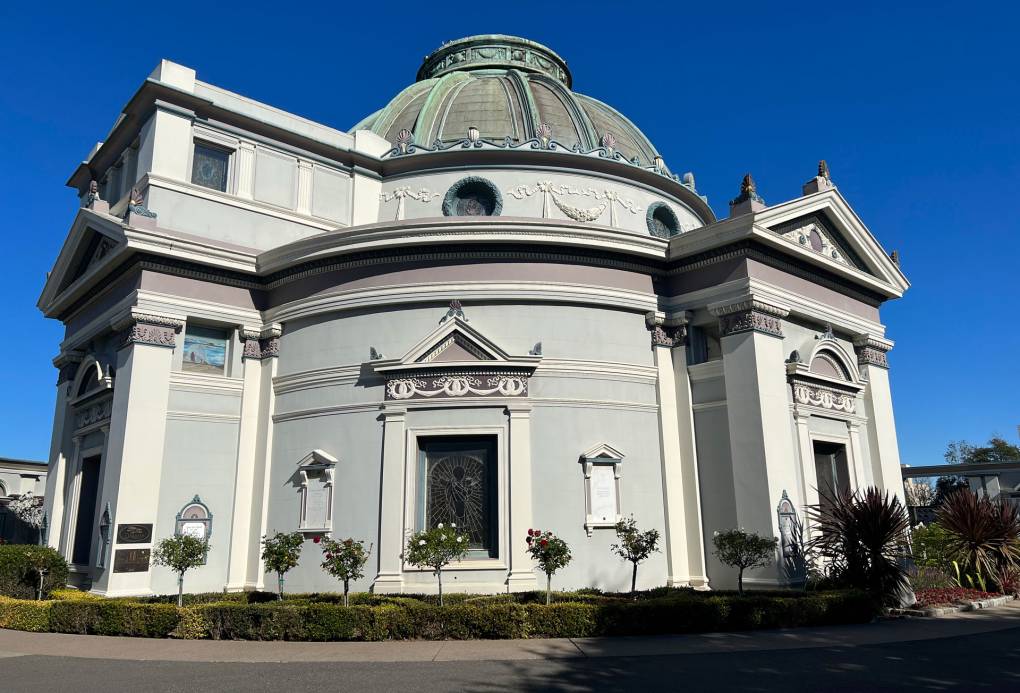
window.__INITIAL_STATE__={
"attachmentsReducer": {
"audio_0": {
"type": "attachments",
"id": "audio_0",
"imgSizes": {
"kqedFullSize": {
"file": "https://ww2.kqed.org/news/wp-content/themes/KQED-unified/img/audio_bgs/background0.jpg"
}
}
},
"audio_1": {
"type": "attachments",
"id": "audio_1",
"imgSizes": {
"kqedFullSize": {
"file": "https://ww2.kqed.org/news/wp-content/themes/KQED-unified/img/audio_bgs/background1.jpg"
}
}
},
"audio_2": {
"type": "attachments",
"id": "audio_2",
"imgSizes": {
"kqedFullSize": {
"file": "https://ww2.kqed.org/news/wp-content/themes/KQED-unified/img/audio_bgs/background2.jpg"
}
}
},
"audio_3": {
"type": "attachments",
"id": "audio_3",
"imgSizes": {
"kqedFullSize": {
"file": "https://ww2.kqed.org/news/wp-content/themes/KQED-unified/img/audio_bgs/background3.jpg"
}
}
},
"audio_4": {
"type": "attachments",
"id": "audio_4",
"imgSizes": {
"kqedFullSize": {
"file": "https://ww2.kqed.org/news/wp-content/themes/KQED-unified/img/audio_bgs/background4.jpg"
}
}
},
"placeholder": {
"type": "attachments",
"id": "placeholder",
"imgSizes": {
"thumbnail": {
"file": "https://cdn.kqed.org/wp-content/uploads/2024/12/KQED-Default-Image-816638274-2000x1333-1-160x107.jpg",
"width": 160,
"height": 107,
"mimeType": "image/jpeg"
},
"medium": {
"file": "https://cdn.kqed.org/wp-content/uploads/2024/12/KQED-Default-Image-816638274-2000x1333-1-800x533.jpg",
"width": 800,
"height": 533,
"mimeType": "image/jpeg"
},
"medium_large": {
"file": "https://cdn.kqed.org/wp-content/uploads/2024/12/KQED-Default-Image-816638274-2000x1333-1-768x512.jpg",
"width": 768,
"height": 512,
"mimeType": "image/jpeg"
},
"large": {
"file": "https://cdn.kqed.org/wp-content/uploads/2024/12/KQED-Default-Image-816638274-2000x1333-1-1020x680.jpg",
"width": 1020,
"height": 680,
"mimeType": "image/jpeg"
},
"1536x1536": {
"file": "https://cdn.kqed.org/wp-content/uploads/2024/12/KQED-Default-Image-816638274-2000x1333-1-1536x1024.jpg",
"width": 1536,
"height": 1024,
"mimeType": "image/jpeg"
},
"fd-lrg": {
"file": "https://cdn.kqed.org/wp-content/uploads/2024/12/KQED-Default-Image-816638274-2000x1333-1-1536x1024.jpg",
"width": 1536,
"height": 1024,
"mimeType": "image/jpeg"
},
"fd-med": {
"file": "https://cdn.kqed.org/wp-content/uploads/2024/12/KQED-Default-Image-816638274-2000x1333-1-1020x680.jpg",
"width": 1020,
"height": 680,
"mimeType": "image/jpeg"
},
"fd-sm": {
"file": "https://cdn.kqed.org/wp-content/uploads/2024/12/KQED-Default-Image-816638274-2000x1333-1-800x533.jpg",
"width": 800,
"height": 533,
"mimeType": "image/jpeg"
},
"post-thumbnail": {
"file": "https://cdn.kqed.org/wp-content/uploads/2024/12/KQED-Default-Image-816638274-2000x1333-1-672x372.jpg",
"width": 672,
"height": 372,
"mimeType": "image/jpeg"
},
"twentyfourteen-full-width": {
"file": "https://cdn.kqed.org/wp-content/uploads/2024/12/KQED-Default-Image-816638274-2000x1333-1-1038x576.jpg",
"width": 1038,
"height": 576,
"mimeType": "image/jpeg"
},
"xxsmall": {
"file": "https://cdn.kqed.org/wp-content/uploads/2024/12/KQED-Default-Image-816638274-2000x1333-1-160x107.jpg",
"width": 160,
"height": 107,
"mimeType": "image/jpeg"
},
"xsmall": {
"file": "https://cdn.kqed.org/wp-content/uploads/2024/12/KQED-Default-Image-816638274-2000x1333-1-672x372.jpg",
"width": 672,
"height": 372,
"mimeType": "image/jpeg"
},
"small": {
"file": "https://cdn.kqed.org/wp-content/uploads/2024/12/KQED-Default-Image-816638274-2000x1333-1-672x372.jpg",
"width": 672,
"height": 372,
"mimeType": "image/jpeg"
},
"xlarge": {
"file": "https://cdn.kqed.org/wp-content/uploads/2024/12/KQED-Default-Image-816638274-2000x1333-1-1020x680.jpg",
"width": 1020,
"height": 680,
"mimeType": "image/jpeg"
},
"full-width": {
"file": "https://cdn.kqed.org/wp-content/uploads/2024/12/KQED-Default-Image-816638274-2000x1333-1-1920x1280.jpg",
"width": 1920,
"height": 1280,
"mimeType": "image/jpeg"
},
"guest-author-32": {
"file": "https://cdn.kqed.org/wp-content/uploads/2025/01/KQED-Default-Image-816638274-1333x1333-1-160x160.jpg",
"width": 32,
"height": 32,
"mimeType": "image/jpeg"
},
"guest-author-50": {
"file": "https://cdn.kqed.org/wp-content/uploads/2025/01/KQED-Default-Image-816638274-1333x1333-1-160x160.jpg",
"width": 50,
"height": 50,
"mimeType": "image/jpeg"
},
"guest-author-64": {
"file": "https://cdn.kqed.org/wp-content/uploads/2025/01/KQED-Default-Image-816638274-1333x1333-1-160x160.jpg",
"width": 64,
"height": 64,
"mimeType": "image/jpeg"
},
"guest-author-96": {
"file": "https://cdn.kqed.org/wp-content/uploads/2025/01/KQED-Default-Image-816638274-1333x1333-1-160x160.jpg",
"width": 96,
"height": 96,
"mimeType": "image/jpeg"
},
"guest-author-128": {
"file": "https://cdn.kqed.org/wp-content/uploads/2025/01/KQED-Default-Image-816638274-1333x1333-1-160x160.jpg",
"width": 128,
"height": 128,
"mimeType": "image/jpeg"
},
"detail": {
"file": "https://cdn.kqed.org/wp-content/uploads/2025/01/KQED-Default-Image-816638274-1333x1333-1-160x160.jpg",
"width": 160,
"height": 160,
"mimeType": "image/jpeg"
},
"kqedFullSize": {
"file": "https://cdn.kqed.org/wp-content/uploads/2024/12/KQED-Default-Image-816638274-2000x1333-1.jpg",
"width": 2000,
"height": 1333
}
}
},
"news_11914179": {
"type": "attachments",
"id": "news_11914179",
"meta": {
"index": "attachments_1716263798",
"site": "news",
"id": "11914179",
"found": true
},
"parent": 11914175,
"imgSizes": {
"twentyfourteen-full-width": {
"file": "https://ww2.kqed.org/app/uploads/sites/10/2022/05/SFColumbariumMain-1038x576.jpg",
"width": 1038,
"mimeType": "image/jpeg",
"height": 576
},
"thumbnail": {
"file": "https://ww2.kqed.org/app/uploads/sites/10/2022/05/SFColumbariumMain-160x109.jpg",
"width": 160,
"mimeType": "image/jpeg",
"height": 109
},
"post-thumbnail": {
"file": "https://ww2.kqed.org/app/uploads/sites/10/2022/05/SFColumbariumMain-672x372.jpg",
"width": 672,
"mimeType": "image/jpeg",
"height": 372
},
"kqedFullSize": {
"file": "https://ww2.kqed.org/app/uploads/sites/10/2022/05/SFColumbariumMain.jpg",
"width": 1920,
"height": 1304
},
"large": {
"file": "https://ww2.kqed.org/app/uploads/sites/10/2022/05/SFColumbariumMain-1020x693.jpg",
"width": 1020,
"mimeType": "image/jpeg",
"height": 693
},
"1536x1536": {
"file": "https://ww2.kqed.org/app/uploads/sites/10/2022/05/SFColumbariumMain-1536x1043.jpg",
"width": 1536,
"mimeType": "image/jpeg",
"height": 1043
},
"medium": {
"file": "https://ww2.kqed.org/app/uploads/sites/10/2022/05/SFColumbariumMain-800x543.jpg",
"width": 800,
"mimeType": "image/jpeg",
"height": 543
}
},
"publishDate": 1652555475,
"modified": 1652555725,
"caption": "The exterior of the San Francisco Columbarium, a neoclassical building constructed in 1898 in the city's Inner Richmond district.",
"description": null,
"title": "SFColumbariumMain",
"credit": "Julie Zigoris/KQED",
"status": "inherit",
"altTag": null,
"isLoading": false,
"fetchFailed": false
},
"news_11914104": {
"type": "attachments",
"id": "news_11914104",
"meta": {
"index": "attachments_1716263798",
"site": "news",
"id": "11914104",
"found": true
},
"parent": 11914102,
"imgSizes": {
"twentyfourteen-full-width": {
"file": "https://ww2.kqed.org/app/uploads/sites/10/2022/05/image1-1038x576.png",
"width": 1038,
"mimeType": "image/png",
"height": 576
},
"thumbnail": {
"file": "https://ww2.kqed.org/app/uploads/sites/10/2022/05/image1-160x90.png",
"width": 160,
"mimeType": "image/png",
"height": 90
},
"post-thumbnail": {
"file": "https://ww2.kqed.org/app/uploads/sites/10/2022/05/image1-672x372.png",
"width": 672,
"mimeType": "image/png",
"height": 372
},
"kqedFullSize": {
"file": "https://ww2.kqed.org/app/uploads/sites/10/2022/05/image1.png",
"width": 1920,
"height": 1080
},
"large": {
"file": "https://ww2.kqed.org/app/uploads/sites/10/2022/05/image1-1020x574.png",
"width": 1020,
"mimeType": "image/png",
"height": 574
},
"1536x1536": {
"file": "https://ww2.kqed.org/app/uploads/sites/10/2022/05/image1-1536x864.png",
"width": 1536,
"mimeType": "image/png",
"height": 864
},
"medium": {
"file": "https://ww2.kqed.org/app/uploads/sites/10/2022/05/image1-800x450.png",
"width": 800,
"mimeType": "image/png",
"height": 450
}
},
"publishDate": 1652479614,
"modified": 1652479614,
"caption": null,
"description": null,
"title": "image1",
"credit": null,
"status": "inherit",
"altTag": null,
"isLoading": false,
"fetchFailed": false
},
"news_11914058": {
"type": "attachments",
"id": "news_11914058",
"meta": {
"index": "attachments_1716263798",
"site": "news",
"id": "11914058",
"found": true
},
"parent": 11913155,
"imgSizes": {
"twentyfourteen-full-width": {
"file": "https://ww2.kqed.org/app/uploads/sites/10/2022/05/RS55739_IMG_6585-qut-1020x765-1-1038x576.jpg",
"width": 1038,
"mimeType": "image/jpeg",
"height": 576
},
"thumbnail": {
"file": "https://ww2.kqed.org/app/uploads/sites/10/2022/05/RS55739_IMG_6585-qut-1020x765-1-160x120.jpg",
"width": 160,
"mimeType": "image/jpeg",
"height": 120
},
"post-thumbnail": {
"file": "https://ww2.kqed.org/app/uploads/sites/10/2022/05/RS55739_IMG_6585-qut-1020x765-1-672x372.jpg",
"width": 672,
"mimeType": "image/jpeg",
"height": 372
},
"kqedFullSize": {
"file": "https://ww2.kqed.org/app/uploads/sites/10/2022/05/RS55739_IMG_6585-qut-1020x765-1.jpg",
"width": 1920,
"height": 1440
},
"large": {
"file": "https://ww2.kqed.org/app/uploads/sites/10/2022/05/RS55739_IMG_6585-qut-1020x765-1-1020x765.jpg",
"width": 1020,
"mimeType": "image/jpeg",
"height": 765
},
"1536x1536": {
"file": "https://ww2.kqed.org/app/uploads/sites/10/2022/05/RS55739_IMG_6585-qut-1020x765-1-1536x1152.jpg",
"width": 1536,
"mimeType": "image/jpeg",
"height": 1152
},
"medium": {
"file": "https://ww2.kqed.org/app/uploads/sites/10/2022/05/RS55739_IMG_6585-qut-1020x765-1-800x600.jpg",
"width": 800,
"mimeType": "image/jpeg",
"height": 600
}
},
"publishDate": 1652466905,
"modified": 1652466939,
"caption": "At 78 years old, Jane Sorensen manages two popular cover bands in Sonoma County and sings with a third. ",
"description": null,
"title": "RS55739_IMG_6585-qut-1020x765",
"credit": "Chloe Veltman/KQED",
"status": "inherit",
"altTag": "A woman stands outside with purplish hair and wearing a black jacket with a necklace.",
"isLoading": false,
"fetchFailed": false
},
"news_11913945": {
"type": "attachments",
"id": "news_11913945",
"meta": {
"index": "attachments_1716263798",
"site": "news",
"id": "11913945",
"found": true
},
"parent": 0,
"imgSizes": {
"twentyfourteen-full-width": {
"file": "https://ww2.kqed.org/app/uploads/sites/10/2022/05/stutter2-1-1038x576.jpg",
"width": 1038,
"mimeType": "image/jpeg",
"height": 576
},
"thumbnail": {
"file": "https://ww2.kqed.org/app/uploads/sites/10/2022/05/stutter2-1-160x83.jpg",
"width": 160,
"mimeType": "image/jpeg",
"height": 83
},
"post-thumbnail": {
"file": "https://ww2.kqed.org/app/uploads/sites/10/2022/05/stutter2-1-672x372.jpg",
"width": 672,
"mimeType": "image/jpeg",
"height": 372
},
"kqedFullSize": {
"file": "https://ww2.kqed.org/app/uploads/sites/10/2022/05/stutter2-1.jpg",
"width": 1526,
"height": 791
},
"large": {
"file": "https://ww2.kqed.org/app/uploads/sites/10/2022/05/stutter2-1-1020x529.jpg",
"width": 1020,
"mimeType": "image/jpeg",
"height": 529
},
"medium": {
"file": "https://ww2.kqed.org/app/uploads/sites/10/2022/05/stutter2-1-800x415.jpg",
"width": 800,
"mimeType": "image/jpeg",
"height": 415
}
},
"publishDate": 1652319273,
"modified": 1652319309,
"caption": "Nina G (left), Maya Chupkov and Gina Chin-Davis are Bay Area artists working to get more representation for people in media and entertainment fields who stutter.",
"description": null,
"title": "stutter2",
"credit": "Chloe Veltman/KQED",
"status": "inherit",
"altTag": "A triptych of three women in front of microphones in a recording booth.",
"isLoading": false,
"fetchFailed": false
},
"news_11913502": {
"type": "attachments",
"id": "news_11913502",
"meta": {
"index": "attachments_1716263798",
"site": "news",
"id": "11913502",
"found": true
},
"parent": 11913434,
"imgSizes": {
"twentyfourteen-full-width": {
"file": "https://ww2.kqed.org/app/uploads/sites/10/2022/05/931-MARQUEE-1038x576.jpg",
"width": 1038,
"mimeType": "image/jpeg",
"height": 576
},
"thumbnail": {
"file": "https://ww2.kqed.org/app/uploads/sites/10/2022/05/931-MARQUEE-160x106.jpg",
"width": 160,
"mimeType": "image/jpeg",
"height": 106
},
"post-thumbnail": {
"file": "https://ww2.kqed.org/app/uploads/sites/10/2022/05/931-MARQUEE-672x372.jpg",
"width": 672,
"mimeType": "image/jpeg",
"height": 372
},
"kqedFullSize": {
"file": "https://ww2.kqed.org/app/uploads/sites/10/2022/05/931-MARQUEE-scaled.jpg",
"width": 2560,
"height": 1704
},
"2048x2048": {
"file": "https://ww2.kqed.org/app/uploads/sites/10/2022/05/931-MARQUEE-2048x1363.jpg",
"width": 2048,
"mimeType": "image/jpeg",
"height": 1363
},
"large": {
"file": "https://ww2.kqed.org/app/uploads/sites/10/2022/05/931-MARQUEE-1020x679.jpg",
"width": 1020,
"mimeType": "image/jpeg",
"height": 679
},
"1536x1536": {
"file": "https://ww2.kqed.org/app/uploads/sites/10/2022/05/931-MARQUEE-1536x1022.jpg",
"width": 1536,
"mimeType": "image/jpeg",
"height": 1022
},
"full-width": {
"file": "https://ww2.kqed.org/app/uploads/sites/10/2022/05/931-MARQUEE-1920x1278.jpg",
"width": 1920,
"mimeType": "image/jpeg",
"height": 1278
},
"medium": {
"file": "https://ww2.kqed.org/app/uploads/sites/10/2022/05/931-MARQUEE-800x532.jpg",
"width": 800,
"mimeType": "image/jpeg",
"height": 532
}
},
"publishDate": 1651881241,
"modified": 1651881273,
"caption": "(Beth LaBerge / KQED)",
"description": null,
"title": "931 MARQUEE",
"credit": null,
"status": "inherit",
"altTag": "(Beth LaBerge / KQED)",
"isLoading": false,
"fetchFailed": false
},
"news_11913112": {
"type": "attachments",
"id": "news_11913112",
"meta": {
"index": "attachments_1716263798",
"site": "news",
"id": "11913112",
"found": true
},
"parent": 11913103,
"imgSizes": {
"twentyfourteen-full-width": {
"file": "https://ww2.kqed.org/app/uploads/sites/10/2022/05/Image-from-iOS-3-1038x576.jpg",
"width": 1038,
"mimeType": "image/jpeg",
"height": 576
},
"thumbnail": {
"file": "https://ww2.kqed.org/app/uploads/sites/10/2022/05/Image-from-iOS-3-160x107.jpg",
"width": 160,
"mimeType": "image/jpeg",
"height": 107
},
"post-thumbnail": {
"file": "https://ww2.kqed.org/app/uploads/sites/10/2022/05/Image-from-iOS-3-672x372.jpg",
"width": 672,
"mimeType": "image/jpeg",
"height": 372
},
"kqedFullSize": {
"file": "https://ww2.kqed.org/app/uploads/sites/10/2022/05/Image-from-iOS-3.jpg",
"width": 1429,
"height": 953
},
"large": {
"file": "https://ww2.kqed.org/app/uploads/sites/10/2022/05/Image-from-iOS-3-1020x680.jpg",
"width": 1020,
"mimeType": "image/jpeg",
"height": 680
},
"medium": {
"file": "https://ww2.kqed.org/app/uploads/sites/10/2022/05/Image-from-iOS-3-800x534.jpg",
"width": 800,
"mimeType": "image/jpeg",
"height": 534
}
},
"publishDate": 1651632223,
"modified": 1651774063,
"caption": "Anyssa Jeske (left, foreground) and Taelor Seaton cheer along with a speaker during a rally outside the Phillip Burton Federal Building in San Francisco on May 3, 2022, in support of abortion rights.",
"description": null,
"title": "Image from iOS (3)",
"credit": "Beth LaBerge/KQED",
"status": "inherit",
"altTag": "A large group of people hold multicolored signs at a protest.",
"isLoading": false,
"fetchFailed": false
},
"news_11911827": {
"type": "attachments",
"id": "news_11911827",
"meta": {
"index": "attachments_1716263798",
"site": "news",
"id": "11911827",
"found": true
},
"parent": 11911817,
"imgSizes": {
"twentyfourteen-full-width": {
"file": "https://ww2.kqed.org/app/uploads/sites/10/2022/04/DMC_healthcare-workers-1038x576.jpeg",
"width": 1038,
"mimeType": "image/jpeg",
"height": 576
},
"thumbnail": {
"file": "https://ww2.kqed.org/app/uploads/sites/10/2022/04/DMC_healthcare-workers-160x120.jpeg",
"width": 160,
"mimeType": "image/jpeg",
"height": 120
},
"post-thumbnail": {
"file": "https://ww2.kqed.org/app/uploads/sites/10/2022/04/DMC_healthcare-workers-672x372.jpeg",
"width": 672,
"mimeType": "image/jpeg",
"height": 372
},
"kqedFullSize": {
"file": "https://ww2.kqed.org/app/uploads/sites/10/2022/04/DMC_healthcare-workers-scaled-e1650673785288.jpeg",
"width": 1920,
"height": 1440
},
"2048x2048": {
"file": "https://ww2.kqed.org/app/uploads/sites/10/2022/04/DMC_healthcare-workers-2048x1536.jpeg",
"width": 2048,
"mimeType": "image/jpeg",
"height": 1536
},
"large": {
"file": "https://ww2.kqed.org/app/uploads/sites/10/2022/04/DMC_healthcare-workers-1020x765.jpeg",
"width": 1020,
"mimeType": "image/jpeg",
"height": 765
},
"1536x1536": {
"file": "https://ww2.kqed.org/app/uploads/sites/10/2022/04/DMC_healthcare-workers-1536x1152.jpeg",
"width": 1536,
"mimeType": "image/jpeg",
"height": 1152
},
"full-width": {
"file": "https://ww2.kqed.org/app/uploads/sites/10/2022/04/DMC_healthcare-workers-1920x1440.jpeg",
"width": 1920,
"mimeType": "image/jpeg",
"height": 1440
},
"medium": {
"file": "https://ww2.kqed.org/app/uploads/sites/10/2022/04/DMC_healthcare-workers-800x600.jpeg",
"width": 800,
"mimeType": "image/jpeg",
"height": 600
}
},
"publishDate": 1650564548,
"modified": 1650676600,
"caption": "Frontline health care workers gather at Te Kwe A'naa Warep farm on Jan. 30, 2022, to help remove invasive ivy from the riparian corridor. 'It helps compost our grief, to doctor each other around what we've seen and witnessed during the pandemic, and to reconnect to land as a source of healing,' said Rupa Marya, a project organizer.",
"description": null,
"title": "DMC_healthcare workers",
"credit": "Courtesy of Rupa Marya",
"status": "inherit",
"altTag": "A group of people dig and turn over a large compost pile.",
"isLoading": false,
"fetchFailed": false
},
"news_11912024": {
"type": "attachments",
"id": "news_11912024",
"meta": {
"index": "attachments_1716263798",
"site": "news",
"id": "11912024",
"found": true
},
"parent": 11911968,
"imgSizes": {
"twentyfourteen-full-width": {
"file": "https://ww2.kqed.org/app/uploads/sites/10/2022/04/image1-1-1038x576.jpg",
"width": 1038,
"mimeType": "image/jpeg",
"height": 576
},
"thumbnail": {
"file": "https://ww2.kqed.org/app/uploads/sites/10/2022/04/image1-1-160x107.jpg",
"width": 160,
"mimeType": "image/jpeg",
"height": 107
},
"post-thumbnail": {
"file": "https://ww2.kqed.org/app/uploads/sites/10/2022/04/image1-1-672x372.jpg",
"width": 672,
"mimeType": "image/jpeg",
"height": 372
},
"kqedFullSize": {
"file": "https://ww2.kqed.org/app/uploads/sites/10/2022/04/image1-1.jpg",
"width": 1920,
"height": 1278
},
"large": {
"file": "https://ww2.kqed.org/app/uploads/sites/10/2022/04/image1-1-1020x679.jpg",
"width": 1020,
"mimeType": "image/jpeg",
"height": 679
},
"1536x1536": {
"file": "https://ww2.kqed.org/app/uploads/sites/10/2022/04/image1-1-1536x1022.jpg",
"width": 1536,
"mimeType": "image/jpeg",
"height": 1022
},
"medium": {
"file": "https://ww2.kqed.org/app/uploads/sites/10/2022/04/image1-1-800x533.jpg",
"width": 800,
"mimeType": "image/jpeg",
"height": 533
}
},
"publishDate": 1650664699,
"modified": 1650664699,
"caption": null,
"description": null,
"title": "image1",
"credit": null,
"status": "inherit",
"altTag": null,
"isLoading": false,
"fetchFailed": false
},
"news_11909216": {
"type": "attachments",
"id": "news_11909216",
"meta": {
"index": "attachments_1716263798",
"site": "news",
"id": "11909216",
"found": true
},
"parent": 11909169,
"imgSizes": {
"thumbnail": {
"file": "https://ww2.kqed.org/app/uploads/sites/10/2022/03/Phuong-Tam-album-collage-45s-FEATURE-1038x576-1-160x89.png",
"width": 160,
"mimeType": "image/png",
"height": 89
},
"post-thumbnail": {
"file": "https://ww2.kqed.org/app/uploads/sites/10/2022/03/Phuong-Tam-album-collage-45s-FEATURE-1038x576-1-672x372.png",
"width": 672,
"mimeType": "image/png",
"height": 372
},
"kqedFullSize": {
"file": "https://ww2.kqed.org/app/uploads/sites/10/2022/03/Phuong-Tam-album-collage-45s-FEATURE-1038x576-1.png",
"width": 1038,
"height": 576
},
"large": {
"file": "https://ww2.kqed.org/app/uploads/sites/10/2022/03/Phuong-Tam-album-collage-45s-FEATURE-1038x576-1-1020x566.png",
"width": 1020,
"mimeType": "image/png",
"height": 566
},
"medium": {
"file": "https://ww2.kqed.org/app/uploads/sites/10/2022/03/Phuong-Tam-album-collage-45s-FEATURE-1038x576-1-800x444.png",
"width": 800,
"mimeType": "image/png",
"height": 444
}
},
"publishDate": 1648161702,
"modified": 1648161728,
"caption": "Phương Tâm",
"description": null,
"title": "Phuong-Tam-album-collage-45s-FEATURE-1038x576",
"credit": "Mark Gergis",
"status": "inherit",
"altTag": null,
"isLoading": false,
"fetchFailed": false
},
"news_11886254": {
"type": "attachments",
"id": "news_11886254",
"meta": {
"index": "attachments_1716263798",
"site": "news",
"id": "11886254",
"found": true
},
"parent": 11882522,
"imgSizes": {
"twentyfourteen-full-width": {
"file": "https://ww2.kqed.org/app/uploads/sites/10/2021/08/RS51137_IMG_3259-qut-1038x576.jpg",
"width": 1038,
"mimeType": "image/jpeg",
"height": 576
},
"thumbnail": {
"file": "https://ww2.kqed.org/app/uploads/sites/10/2021/08/RS51137_IMG_3259-qut-160x120.jpg",
"width": 160,
"mimeType": "image/jpeg",
"height": 120
},
"post-thumbnail": {
"file": "https://ww2.kqed.org/app/uploads/sites/10/2021/08/RS51137_IMG_3259-qut-672x372.jpg",
"width": 672,
"mimeType": "image/jpeg",
"height": 372
},
"kqedFullSize": {
"file": "https://ww2.kqed.org/app/uploads/sites/10/2021/08/RS51137_IMG_3259-qut.jpg",
"width": 1920,
"height": 1440
},
"large": {
"file": "https://ww2.kqed.org/app/uploads/sites/10/2021/08/RS51137_IMG_3259-qut-1020x765.jpg",
"width": 1020,
"mimeType": "image/jpeg",
"height": 765
},
"1536x1536": {
"file": "https://ww2.kqed.org/app/uploads/sites/10/2021/08/RS51137_IMG_3259-qut-1536x1152.jpg",
"width": 1536,
"mimeType": "image/jpeg",
"height": 1152
},
"medium": {
"file": "https://ww2.kqed.org/app/uploads/sites/10/2021/08/RS51137_IMG_3259-qut-800x600.jpg",
"width": 800,
"mimeType": "image/jpeg",
"height": 600
}
},
"publishDate": 1629912180,
"modified": 1629912339,
"caption": "Beauty Bubble is covered with vintage ephemera from floor to ceiling. ",
"description": null,
"title": "RS51137_IMG_3259-qut",
"credit": "Peter Gilstrap",
"status": "inherit",
"altTag": null,
"isLoading": false,
"fetchFailed": false
},
"news_11909328": {
"type": "attachments",
"id": "news_11909328",
"meta": {
"index": "attachments_1716263798",
"site": "news",
"id": "11909328",
"found": true
},
"parent": 11909316,
"imgSizes": {
"twentyfourteen-full-width": {
"file": "https://ww2.kqed.org/app/uploads/sites/10/2022/03/RS54668_Sarahbeth-Maney-qut-1038x576.jpg",
"width": 1038,
"mimeType": "image/jpeg",
"height": 576
},
"thumbnail": {
"file": "https://ww2.kqed.org/app/uploads/sites/10/2022/03/RS54668_Sarahbeth-Maney-qut-160x107.jpg",
"width": 160,
"mimeType": "image/jpeg",
"height": 107
},
"post-thumbnail": {
"file": "https://ww2.kqed.org/app/uploads/sites/10/2022/03/RS54668_Sarahbeth-Maney-qut-672x372.jpg",
"width": 672,
"mimeType": "image/jpeg",
"height": 372
},
"kqedFullSize": {
"file": "https://ww2.kqed.org/app/uploads/sites/10/2022/03/RS54668_Sarahbeth-Maney-qut.jpg",
"width": 1170,
"height": 780
},
"large": {
"file": "https://ww2.kqed.org/app/uploads/sites/10/2022/03/RS54668_Sarahbeth-Maney-qut-1020x680.jpg",
"width": 1020,
"mimeType": "image/jpeg",
"height": 680
},
"medium": {
"file": "https://ww2.kqed.org/app/uploads/sites/10/2022/03/RS54668_Sarahbeth-Maney-qut-800x533.jpg",
"width": 800,
"mimeType": "image/jpeg",
"height": 533
}
},
"publishDate": 1648240227,
"modified": 1648252932,
"caption": "Sarahbeth Maney, photography fellow in the Washington, D.C., bureau of The New York Times, pictured on the job photographing Judge Ketanji Brown Jackson's confirmation hearing to the Supreme Court.",
"description": null,
"title": "RS54668_Sarahbeth Maney-qut",
"credit": "Michael McCoy/Bloomberg",
"status": "inherit",
"altTag": null,
"isLoading": false,
"fetchFailed": false
},
"news_11908604": {
"type": "attachments",
"id": "news_11908604",
"meta": {
"index": "attachments_1716263798",
"site": "news",
"id": "11908604",
"found": true
},
"parent": 11908086,
"imgSizes": {
"twentyfourteen-full-width": {
"file": "https://ww2.kqed.org/app/uploads/sites/10/2022/03/Neda-Now-1038x576.jpg",
"width": 1038,
"mimeType": "image/jpeg",
"height": 576
},
"thumbnail": {
"file": "https://ww2.kqed.org/app/uploads/sites/10/2022/03/Neda-Now-160x128.jpg",
"width": 160,
"mimeType": "image/jpeg",
"height": 128
},
"post-thumbnail": {
"file": "https://ww2.kqed.org/app/uploads/sites/10/2022/03/Neda-Now-672x372.jpg",
"width": 672,
"mimeType": "image/jpeg",
"height": 372
},
"kqedFullSize": {
"file": "https://ww2.kqed.org/app/uploads/sites/10/2022/03/Neda-Now.jpg",
"width": 1920,
"height": 1532
},
"large": {
"file": "https://ww2.kqed.org/app/uploads/sites/10/2022/03/Neda-Now-1020x814.jpg",
"width": 1020,
"mimeType": "image/jpeg",
"height": 814
},
"1536x1536": {
"file": "https://ww2.kqed.org/app/uploads/sites/10/2022/03/Neda-Now-1536x1226.jpg",
"width": 1536,
"mimeType": "image/jpeg",
"height": 1226
},
"medium": {
"file": "https://ww2.kqed.org/app/uploads/sites/10/2022/03/Neda-Now-800x638.jpg",
"width": 800,
"mimeType": "image/jpeg",
"height": 638
}
},
"publishDate": 1647628564,
"modified": 1647628643,
"caption": "Author Neda Toloui-Semnani's new book is a journey to understand her parents' choices as radical activists influenced by the 1960s culture of Berkeley. ",
"description": null,
"title": "Neda-Now",
"credit": "Courtesy Nilo Tabrizy",
"status": "inherit",
"altTag": "A woman standing outside wearing a dark sleeveless shirt.",
"isLoading": false,
"fetchFailed": false
}
},
"audioPlayerReducer": {
"postId": "stream_live",
"isPaused": true,
"isPlaying": false,
"pfsActive": false,
"pledgeModalIsOpen": true,
"playerDrawerIsOpen": false,
"liveAudioPlayStartedAt": 0,
"liveAudioPlayContext": ""
},
"authorsReducer": {
"byline_news_11914175": {
"type": "authors",
"id": "byline_news_11914175",
"meta": {
"override": true
},
"slug": "byline_news_11914175",
"name": "\u003ca href=\"https://twitter.com/jzigoris\">Julie Zigoris\u003c/a>",
"isLoading": false
},
"byline_news_11909169": {
"type": "authors",
"id": "byline_news_11909169",
"meta": {
"override": true
},
"slug": "byline_news_11909169",
"name": "\u003ca href=\"https://twitter.com/christinenguyen\">Christine Nguyen\u003c/a> and Sheila Ngoc Pham",
"isLoading": false
},
"kqed": {
"type": "authors",
"id": "236",
"meta": {
"index": "authors_1716337520",
"id": "236",
"found": true
},
"name": "KQED News Staff",
"firstName": "KQED News Staff",
"lastName": null,
"slug": "kqed",
"email": "faq@kqed.org",
"display_author_email": false,
"staff_mastheads": [],
"title": null,
"bio": null,
"avatar": "https://secure.gravatar.com/avatar/ef0e801a68c4c54afa9180db14084167?s=600&d=blank&r=g",
"twitter": null,
"facebook": null,
"instagram": null,
"linkedin": null,
"sites": [
{
"site": "arts",
"roles": [
"contributor"
]
},
{
"site": "news",
"roles": [
"editor"
]
},
{
"site": "futureofyou",
"roles": [
"author"
]
}
],
"headData": {
"title": "KQED News Staff | KQED",
"description": null,
"ogImgSrc": "https://secure.gravatar.com/avatar/ef0e801a68c4c54afa9180db14084167?s=600&d=blank&r=g",
"twImgSrc": "https://secure.gravatar.com/avatar/ef0e801a68c4c54afa9180db14084167?s=600&d=blank&r=g"
},
"isLoading": false,
"link": "/author/kqed"
},
"sasha-khokha": {
"type": "authors",
"id": "254",
"meta": {
"index": "authors_1716337520",
"id": "254",
"found": true
},
"name": "Sasha Khokha",
"firstName": "Sasha",
"lastName": "Khokha",
"slug": "sasha-khokha",
"email": "skhokha@kqed.org",
"display_author_email": true,
"staff_mastheads": [
"news"
],
"title": "Host, The California Report Magazine",
"bio": "Sasha Khokha is the host of \u003cem>The California Report's \u003c/em> weekly magazine program, which takes listeners on sound-rich excursions to meet the people that make the Golden State unique -- through audio documentaries and long-form stories. As \u003cem>The California Report's\u003c/em> Central Valley Bureau Chief based in Fresno for nearly a dozen years, Sasha brought the lives and concerns of rural Californians to listeners around the state. Her reporting helped expose the hidden price immigrant women janitors and farmworkers may pay to keep their jobs: sexual assault at work. It inspired two new California laws to protect them from sexual harassment. She was a key member of the reporting team for the Frontline film \u003cem>Rape on the Night Shift, \u003c/em>which was nominated for two national Emmys. Sasha has also won a national Edward R. Murrow and a national PRNDI award for investigative reporting, as well as multiple prizes from the Society for Professional Journalists. Sasha is a proud alum of the UC Berkeley Graduate School of Journalism and Brown University and a member of the South Asian Journalists Association.",
"avatar": "https://secure.gravatar.com/avatar/e4b5e1541aaeea2aa356aa1fb2a68950?s=600&d=blank&r=g",
"twitter": "KQEDSashaKhokha",
"facebook": null,
"instagram": null,
"linkedin": null,
"sites": [
{
"site": "news",
"roles": [
"editor"
]
},
{
"site": "stateofhealth",
"roles": [
"author"
]
},
{
"site": "science",
"roles": [
"author"
]
},
{
"site": "quest",
"roles": [
"subscriber"
]
}
],
"headData": {
"title": "Sasha Khokha | KQED",
"description": "Host, The California Report Magazine",
"ogImgSrc": "https://secure.gravatar.com/avatar/e4b5e1541aaeea2aa356aa1fb2a68950?s=600&d=blank&r=g",
"twImgSrc": "https://secure.gravatar.com/avatar/e4b5e1541aaeea2aa356aa1fb2a68950?s=600&d=blank&r=g"
},
"isLoading": false,
"link": "/author/sasha-khokha"
},
"tarasiler": {
"type": "authors",
"id": "257",
"meta": {
"index": "authors_1716337520",
"id": "257",
"found": true
},
"name": "Tara Siler",
"firstName": "Tara",
"lastName": "Siler",
"slug": "tarasiler",
"email": "tsiler@kqed.org",
"display_author_email": false,
"staff_mastheads": [
"news"
],
"title": "KQED Contributor",
"bio": "Tara reports and anchors for KQED news. She covers a range of issues from community-police relations to local politics. Tara started out in community radio in the Bay Area, where she was raised. She eventually moved to Washington DC where she covered Congress for eight years for Pacifica and Monitor Radio. Her stories have also been heard on NPR's All Things Considered, Morning Edition and The World.\r\n\r\nTara lives with her husband in Oakland-- where they raised their two sons. She enjoys spending time with her family, gardening and hiking in the Oakland hills... and keeping up with the news.",
"avatar": "https://secure.gravatar.com/avatar/99802f9746fb80b65fd8ec6c57954450?s=600&d=blank&r=g",
"twitter": null,
"facebook": null,
"instagram": null,
"linkedin": null,
"sites": [
{
"site": "news",
"roles": [
"contributor",
"edit_others_posts"
]
},
{
"site": "stateofhealth",
"roles": [
"author"
]
}
],
"headData": {
"title": "Tara Siler | KQED",
"description": "KQED Contributor",
"ogImgSrc": "https://secure.gravatar.com/avatar/99802f9746fb80b65fd8ec6c57954450?s=600&d=blank&r=g",
"twImgSrc": "https://secure.gravatar.com/avatar/99802f9746fb80b65fd8ec6c57954450?s=600&d=blank&r=g"
},
"isLoading": false,
"link": "/author/tarasiler"
},
"carlysevern": {
"type": "authors",
"id": "3243",
"meta": {
"index": "authors_1716337520",
"id": "3243",
"found": true
},
"name": "Carly Severn",
"firstName": "Carly",
"lastName": "Severn",
"slug": "carlysevern",
"email": "csevern@kqed.org",
"display_author_email": false,
"staff_mastheads": [
"news"
],
"title": "Senior Editor, Audience News ",
"bio": "Carly is KQED's Senior Editor of Audience News on the Digital News team, and has reported for the California Report Magazine, Bay Curious and KQED Arts. She's formerly the host of \u003ca href=\"http://ww2.kqed.org/pop/category/the-cooler/\" rel=\"noopener noreferrer\">The Cooler\u003c/a> podcast.",
"avatar": "https://secure.gravatar.com/avatar/54037bf5c128fe678f0ef26cec97a93f2e7f220a22d7285703328f12c42c1b1d?s=600&d=blank&r=g",
"twitter": "teacupinthebay",
"bluesky": null,
"facebook": null,
"instagram": null,
"linkedin": null,
"sites": [
{
"site": "",
"roles": [
"editor"
]
},
{
"site": "arts",
"roles": [
"editor"
]
},
{
"site": "news",
"roles": [
"administrator"
]
},
{
"site": "pop",
"roles": [
"editor"
]
},
{
"site": "futureofyou",
"roles": [
"editor"
]
},
{
"site": "about",
"roles": [
"administrator"
]
},
{
"site": "mindshift",
"roles": [
"editor"
]
},
{
"site": "bayareabites",
"roles": [
"editor"
]
},
{
"site": "stateofhealth",
"roles": [
"editor"
]
},
{
"site": "science",
"roles": [
"editor"
]
},
{
"site": "food",
"roles": [
"contributor"
]
},
{
"site": "forum",
"roles": [
"editor"
]
},
{
"site": "perspectives",
"roles": [
"administrator"
]
},
{
"site": "liveblog",
"roles": [
"editor"
]
}
],
"headData": {
"title": "Carly Severn | KQED",
"description": "Senior Editor, Audience News ",
"ogImgSrc": "https://secure.gravatar.com/avatar/54037bf5c128fe678f0ef26cec97a93f2e7f220a22d7285703328f12c42c1b1d?s=600&d=blank&r=g",
"twImgSrc": "https://secure.gravatar.com/avatar/54037bf5c128fe678f0ef26cec97a93f2e7f220a22d7285703328f12c42c1b1d?s=600&d=blank&r=g"
},
"isLoading": false,
"link": "/author/carlysevern"
},
"cveltman": {
"type": "authors",
"id": "8608",
"meta": {
"index": "authors_1716337520",
"id": "8608",
"found": true
},
"name": "Chloe Veltman",
"firstName": "Chloe",
"lastName": "Veltman",
"slug": "cveltman",
"email": "cveltman@kqed.org",
"display_author_email": true,
"staff_mastheads": [],
"title": "Arts and Culture Reporter",
"bio": "Chloe Veltman is a former arts and culture reporter for KQED. Prior to joining the organization, she launched and led the arts bureau at Colorado Public Radio, served as the Bay Area's culture columnist for the New York Times, and was the founder, host and executive producer of VoiceBox, a national award-winning weekly podcast/radio show and live events series all about the human voice. Chloe is the recipient of numerous prizes, grants and fellowships including a Webby Award for her work on interactive storytelling, both the John S Knight Journalism Fellowship and Humanities Center Fellowship at Stanford University, the Sundance Arts Writing Fellowship and a Library of Congress Research Fellowship. She is the author of the book \"On Acting\" and has appeared as a guest lecturer at Yale University and the San Francisco Conservatory of Music among other institutions. She holds a BA in english literature from King's College, Cambridge, and a Masters in Dramaturgy from the Central School of Speech and Drama/Harvard Institute for Advanced Theater Training.\r\n\u003ca href=\"https://www.chloeveltman.com\">www.chloeveltman.com\u003c/a>",
"avatar": "https://secure.gravatar.com/avatar/55403394b00a1ddab683952c2eb2cf85?s=600&d=blank&r=g",
"twitter": "chloeveltman",
"facebook": null,
"instagram": null,
"linkedin": null,
"sites": [
{
"site": "arts",
"roles": []
},
{
"site": "news",
"roles": [
"author"
]
},
{
"site": "pop",
"roles": [
"editor"
]
},
{
"site": "science",
"roles": []
}
],
"headData": {
"title": "Chloe Veltman | KQED",
"description": "Arts and Culture Reporter",
"ogImgSrc": "https://secure.gravatar.com/avatar/55403394b00a1ddab683952c2eb2cf85?s=600&d=blank&r=g",
"twImgSrc": "https://secure.gravatar.com/avatar/55403394b00a1ddab683952c2eb2cf85?s=600&d=blank&r=g"
},
"isLoading": false,
"link": "/author/cveltman"
},
"ibloom": {
"type": "authors",
"id": "11805",
"meta": {
"index": "authors_1716337520",
"id": "11805",
"found": true
},
"name": "Izzy Bloom",
"firstName": "Izzy",
"lastName": "Bloom",
"slug": "ibloom",
"email": "ibloom@kqed.org",
"display_author_email": false,
"staff_mastheads": [],
"title": "KQED Reporter & Producer",
"bio": "Izzy is a reporter and producer on KQED's California Politics & Government Desk. She joined the desk in 2024 to produce Political Breakdown, covering local and national elections and attending the RNC and DNC in Milwaukee and Chicago. \r\n\r\nBefore that, Izzy was a producer on The California Report and reported long-form stories for The California Report Magazine. She was a finalist for the Third Coast/Richard H. Driehaus Foundation Competition and was awarded for her reporting on indigenous land back by the Society of Professional Journalists. Izzy received her master's in journalism from the University of California, Berkeley.",
"avatar": "https://secure.gravatar.com/avatar/cc4d272ca430783ee1a8efac470a6b1e0fdd082c3beb61da019801d0ff751c8c?s=600&d=blank&r=g",
"twitter": null,
"bluesky": null,
"facebook": null,
"instagram": null,
"linkedin": null,
"sites": [
{
"site": "news",
"roles": [
"editor"
]
},
{
"site": "perspectives",
"roles": [
"editor"
]
}
],
"headData": {
"title": "Izzy Bloom | KQED",
"description": "KQED Reporter & Producer",
"ogImgSrc": "https://secure.gravatar.com/avatar/cc4d272ca430783ee1a8efac470a6b1e0fdd082c3beb61da019801d0ff751c8c?s=600&d=blank&r=g",
"twImgSrc": "https://secure.gravatar.com/avatar/cc4d272ca430783ee1a8efac470a6b1e0fdd082c3beb61da019801d0ff751c8c?s=600&d=blank&r=g"
},
"isLoading": false,
"link": "/author/ibloom"
}
},
"pagesReducer": {
"news_category_arts-and-culture": {
"type": "terms",
"id": "news_223",
"meta": {
"index": "terms_1716263798",
"site": "news",
"id": "223",
"score": 11.242002
},
"featImg": null,
"name": "Arts and Culture",
"description": null,
"taxonomy": "category",
"headData": {
"twImgId": null,
"twTitle": null,
"ogTitle": null,
"ogImgId": null,
"twDescription": null,
"description": null,
"title": "Arts and Culture Archives | KQED News",
"ogDescription": null
},
"ttid": 231,
"slug": "arts-and-culture",
"isLoading": false,
"title": "Arts and Culture",
"pageMeta": {
"site": "news",
"WpPageTemplate": "page-topic-editorial",
"currentPage": 31
},
"blocks": [
{
"blockName": "kqed/post-list",
"attrs": {
"layout": "cardArticle2",
"query": "posts/news?category=arts-and-culture",
"seeMore": false,
"paginated": true,
"page": 31
}
},
{
"blockName": "kqed/ad"
}
]
}
},
"pfsSessionReducer": {},
"postsReducer": {
"stream_live": {
"type": "live",
"id": "stream_live",
"audioUrl": "https://streams.kqed.org/kqedradio",
"title": "Live Stream",
"excerpt": "Live Stream information currently unavailable.",
"link": "/radio",
"featImg": "",
"label": {
"name": "KQED Live",
"link": "/"
}
},
"stream_kqedNewscast": {
"type": "posts",
"id": "stream_kqedNewscast",
"audioUrl": "https://www.kqed.org/.stream/anon/radio/RDnews/newscast.mp3?_=1",
"title": "KQED Newscast",
"featImg": "",
"label": {
"name": "88.5 FM",
"link": "/"
}
},
"news_11914175": {
"type": "posts",
"id": "news_11914175",
"meta": {
"index": "posts_1716263798",
"site": "news",
"id": "11914175",
"score": null,
"sort": [
1652565937000
]
},
"parent": 0,
"labelTerm": {},
"blocks": [],
"publishDate": 1652565937,
"format": "image",
"disqusTitle": "The Only Place You Can Leave Your Heart Forever in San Francisco: The Inner Richmond's Palace of Ashes",
"title": "The Only Place You Can Leave Your Heart Forever in San Francisco: The Inner Richmond's Palace of Ashes",
"headTitle": "KQED News",
"content": "\u003cp>[dropcap]F[/dropcap]uneral director Brian Kestenblatt stepped up to the microphone last October with a glass of red wine in his hand and a top hat on his head. “Happy Halloween,” he said dryly to the audience, the four tiers of the San Francisco Columbarium rising up around him like a wizard’s tower. Beside him stood a table decorated with real pieces of tombstone – and copies of the book “Silent Cities: San Francisco,” ready to be signed by author Jessica Ferri. Urns full of candy stood like sentries by the entry at the Halloween-themed book event, one of many types of public gatherings that take place at the columbarium. The crowd, some dressed as skeletons and vampires, milled about with plates of cheese and fruit, their conversations drifting up the neoclassical rotunda where thousands of cremains rest.\u003c/p>\n\u003cp>The elegant columbarium — officially the San Francisco Columbarium and Funeral Home, owned and operated by Dignity Memorial — occupies its corner of San Francisco’s Richmond District with a stoic beauty, its verdigris dome poking out from graceful hedges, trickling fountains and rose-draped trellises. The building was constructed in 1898 as a centerpiece for the Odd Fellows Cemetery, one of the “Big Four” burial grounds that stretched across San Francisco.\u003c/p>\n\u003cp>It used to have a grand entrance with steps leading up to it from Geary Boulevard just east of Arguello Boulevard; now it's only accessible from Loraine Court. Tucked away in the pocket of a dead-end street, the columbarium is one of the most famous San Francisco places you’ve probably never heard of.\u003c/p>\n\u003cp>[pullquote size=\"medium\" align=\"right\" citation=\"Heather Cann, former columbarium office manager\"]'You feel San Francisco in these walls. The rich history of its beginnings, the eccentricity of its residents and the passion for this city that binds it all together.'[/pullquote]\"I hear it every day,\" Kestenblatt told KQED. \"Someone comes in and says they've lived in the city their whole life and never knew about this place.\"\u003c/p>\n\u003cp>The columbarium has rooms named after mythological winds and constellations, and an addition called “The Hall of Olympians” to continue with the classical theme. A 1899 Odd Fellows publication describes it as “without exception the most beautiful and elaborate building in the world, used exclusively as a repository for the ashes of the dead.”\u003c/p>\n\u003cp>[ad fullwidth]\u003c/p>\n\u003cp>In January 1914, the Board of Supervisors passed an ordinance to remove all human remains from the city. This led to a long and complicated process to relocate bodies to the necropolis of Colma, where the dead outnumber the living 999 to 1. The cemeteries were gone, but the columbarium and its ashes — now a designated historic landmark — remained.\u003c/p>\n\u003cp>[aside postID=news_10779164 hero='https://ww2.kqed.org/app/uploads/sites/10/2026/12/exhume-1440x1218.jpg']The columbarium, the only place where anyone can leave their heart forever in San Francisco, is a nesting doll of stories. There are the stories of the people whose ashes line the walls of the rotunda, people like \u003ca href=\"https://dante-the-magician.com/\">Dante the Magician\u003c/a> (1883-1955) who performed for kings, and \u003ca href=\"https://www.lindahall.org/dorothea-klumpke-roberts/\">Dorothea Klumpke Roberts\u003c/a> (1861-1942), a groundbreaking astronomer who has two asteroids named after her. There are also the stories of the stewards of this place — celebrants and caretakers, funeral directors and managers — characters who bring creativity and humor to conducting the business of death in a most unusual place.\u003c/p>\n\u003cp>The tales of the columbarium’s forever tenants don’t stay behind the glass-fronted doors of the niches that contain their cremains. They float through the four tiers of the golden rotunda, haunting the stewards charged with their care.\u003c/p>\n\u003cp>The stewards of the columbarium not only take care of the building and memorials; they protect its residents’ stories.\u003c/p>\n\u003cp>“I don’t do tours, I tell stories,” Crystal Hoffman said, her dark eyes flashing.\u003c/p>\n\u003cp>Hoffman moved from China to San Francisco in 2003 and has been working as a family service counselor at the columbarium for eight years, a job she can’t seem to quit. Hoffman organizes events where those who have purchased a niche can meet their future forever neighbors — people who have purchased adjoining or nearby niches. The event, usually held in the summer, was suspended for the past two years because of the pandemic.\u003c/p>\n\u003cfigure id=\"attachment_11914181\" class=\"wp-caption aligncenter\" style=\"max-width: 1920px\">\u003cimg class=\"size-full wp-image-11914181\" src=\"https://ww2.kqed.org/app/uploads/sites/10/2022/05/HoffmanColumbarium.jpg\" alt=\"\" width=\"1920\" height=\"1745\" srcset=\"https://ww2.kqed.org/app/uploads/sites/10/2022/05/HoffmanColumbarium.jpg 1920w, https://ww2.kqed.org/app/uploads/sites/10/2022/05/HoffmanColumbarium-800x727.jpg 800w, https://ww2.kqed.org/app/uploads/sites/10/2022/05/HoffmanColumbarium-1020x927.jpg 1020w, https://ww2.kqed.org/app/uploads/sites/10/2022/05/HoffmanColumbarium-160x145.jpg 160w, https://ww2.kqed.org/app/uploads/sites/10/2022/05/HoffmanColumbarium-1536x1396.jpg 1536w\" sizes=\"(max-width: 1920px) 100vw, 1920px\">\u003cfigcaption class=\"wp-caption-text\">Crystal Hoffman, family service counselor at the San Francisco Columbarium. \u003ccite>(Julie Zigoris/KQED)\u003c/cite>\u003c/figcaption>\u003c/figure>\n\u003cp>Hoffman acknowledged the difficulty of her line of work but also the great rewards. Tears sprang to her eyes when she told the story of a man who died one week before he was supposed to get married. “His wedding became a funeral,” she said, gesturing to his niche, which contained a bundle of letters tied with pink fluorescent yarn, photographs, miniature black-and-white Nikes, and a Casio watch. It was still ticking.\u003c/p>\n\u003cp>Celebrant Paul Harpring, who described his job at the columbarium as half emcee, half minister or rabbi, loves telling the stories of people who have died.\u003c/p>\n\u003cp>“It’s the little details that bring someone back, not the biographical facts of their life,” he said. When preparing for a service, he talks to as many people as possible to get the full spectrum of someone’s history. “Everyone has their own unique relationship to the person who passed. The same person can be a different person to kids, friends, colleagues,” he said. He likens his work at the columbarium to a weighted blanket — heavy, but also grounding.\u003c/p>\n\u003cp>The most haunting story for Hoffman is about a young woman from China, an immigrant who reminds her of herself, who worked night and day to take care of her family. The woman looked young in her photograph, but when Hoffman saw her body at an open-casket ceremony, she seemed old and shriveled. While the columbarium holds only ashes, many families choose to have an open casket funeral on-site and then do a smaller placement ceremony once the ashes return from an off-site crematorium.\u003c/p>\n\u003cp>Hoffman couldn’t get the image out of her mind. The night after the young woman’s funeral, Hoffman saw her ghost.\u003c/p>\n\u003cp>“She was sitting next to me with long hair, touching my head very gently, telling me not to work so hard,” she said.\u003c/p>\n\u003cfigure id=\"attachment_11914194\" class=\"wp-caption alignright\" style=\"max-width: 1920px\">\u003cimg class=\"size-full wp-image-11914194\" src=\"https://ww2.kqed.org/app/uploads/sites/10/2022/05/ColumbariumRotunda.jpg\" alt=\"\" width=\"1920\" height=\"2445\" srcset=\"https://ww2.kqed.org/app/uploads/sites/10/2022/05/ColumbariumRotunda.jpg 1920w, https://ww2.kqed.org/app/uploads/sites/10/2022/05/ColumbariumRotunda-800x1019.jpg 800w, https://ww2.kqed.org/app/uploads/sites/10/2022/05/ColumbariumRotunda-1020x1299.jpg 1020w, https://ww2.kqed.org/app/uploads/sites/10/2022/05/ColumbariumRotunda-160x204.jpg 160w, https://ww2.kqed.org/app/uploads/sites/10/2022/05/ColumbariumRotunda-1206x1536.jpg 1206w, https://ww2.kqed.org/app/uploads/sites/10/2022/05/ColumbariumRotunda-1608x2048.jpg 1608w\" sizes=\"(max-width: 1920px) 100vw, 1920px\">\u003cfigcaption class=\"wp-caption-text\">The interior rotunda of the San Francisco Columbarium. \u003ccite>(Julie Zigoris/KQED)\u003c/cite>\u003c/figcaption>\u003c/figure>\n\u003cp>The intense demands of the funerary profession — “people don’t die nine to five” and “there’s no holidays in this business” are sayings within the industry — lead many to see it as a service position akin to a firefighter, teacher or police officer. It’s a calling, not a career, and it’s one that often feels preordained.\u003c/p>\n\u003cp>A high school aptitude test suggested funeral director as a job for both Harpring and Kestenblatt. After shadowing a funeral director in his native Rochester, New York, Kestenblatt became so enamored with the work that he ran home and told his dad what he wanted to do with the rest of his life. “Couldn’t you pick something a little more lively?” his dad asked.\u003c/p>\n\u003cp>Those working in the funerary profession have been on the front lines of the pandemic, though they are often not recognized in the way that grocery clerks, mail carriers and doctors have been.\u003c/p>\n\u003cp>“We are essential workers,” Harpring said, “and we never stopped working during the pandemic.”\u003c/p>\n\u003cp>Jessica Ferri, author of “Silent Cities: San Francisco,” agreed.\u003c/p>\n\u003cp>“Funeral directors are the best people. They remind me of teachers — they wouldn’t do it if they didn’t love it,” she said.\u003c/p>\n\u003cp>Alongside the intense challenges come deep rewards. Kestenblatt, who has mentored numerous people for careers in the funerary profession, is always trying to find more people to work in the field.\u003c/p>\n\u003cp>“It’s so rewarding when you get a letter from a family saying, we couldn’t have gotten through this without you,” he said. “That’s more rewarding than any paycheck.”\u003c/p>\n\u003cp>Despite the rigorous demands of the job, funeral directors have learned how to imbue levity into their profession, in what is perhaps a necessary survival technique. “They take their work seriously but also have a great sense of humor,” Ferri said. Kestenblatt served coffee in a mug that said “Embalming Fluid (concentrated)” and Hoffman joked that her “neighbors” who have niches next to hers can’t die until they pay off their “forever apartment.” Hoffman, who bought her own niche years ago, proudly shows it off to other potential customers.\u003c/p>\n\u003cp>Harpring loves to make people laugh during services and tries to get stories from family members that will elicit giggles. “You get the full emotional spectrum at a service,” he said.\u003c/p>\n\u003cp>“I love the creativity and the freedom I have here,” said Kim Rifredi, caretaker of the columbarium. She organized the Halloween book signing and has photoshopped the landmark’s dome pink for Breast Cancer Awareness Month. The families who choose the columbarium tend to be creative as well, according to Rifredi. “I often find myself thinking, gee, I wish I knew that person,” she said.\u003c/p>\n\u003cfigure id=\"attachment_11914183\" class=\"wp-caption aligncenter\" style=\"max-width: 1920px\">\u003cimg class=\"size-full wp-image-11914183\" src=\"https://ww2.kqed.org/app/uploads/sites/10/2022/05/RefridiColumbarium.jpg\" alt=\"\" width=\"1920\" height=\"1750\" srcset=\"https://ww2.kqed.org/app/uploads/sites/10/2022/05/RefridiColumbarium.jpg 1920w, https://ww2.kqed.org/app/uploads/sites/10/2022/05/RefridiColumbarium-800x729.jpg 800w, https://ww2.kqed.org/app/uploads/sites/10/2022/05/RefridiColumbarium-1020x930.jpg 1020w, https://ww2.kqed.org/app/uploads/sites/10/2022/05/RefridiColumbarium-160x146.jpg 160w, https://ww2.kqed.org/app/uploads/sites/10/2022/05/RefridiColumbarium-1536x1400.jpg 1536w\" sizes=\"(max-width: 1920px) 100vw, 1920px\">\u003cfigcaption class=\"wp-caption-text\">Kim Rifredi, caretaker of the San Francisco Columbarium. \u003ccite>(Julie Zigoris/KQED)\u003c/cite>\u003c/figcaption>\u003c/figure>\n\u003cp>Creativity, perhaps, is baked into the funerary profession. During the training for his funeral director license, Harpring did an activity in which he and a partner pulled three characteristics of a death — who died, where and how — from a bowl full of options. They then had to use their imagination to devise a service appropriate to the person.\u003c/p>\n\u003cp>The columbarium is a crucible of creativity, “every niche a poem, every room a novel,” as Bob Yount from Green Street Mortuary said. Yet perhaps the biggest tale the historical landmark is trying to tell is one of San Francisco itself.\u003c/p>\n\u003cp>“The columbarium is a love letter to San Francisco,” said Serena Brockelman, a former family service counselor at the columbarium.\u003c/p>\n\u003cp>“It’s a beautiful piece of San Francisco history,” Harpring agreed.\u003c/p>\n\u003cfigure id=\"attachment_11914199\" class=\"wp-caption aligncenter\" style=\"max-width: 1920px\">\u003cimg class=\"size-full wp-image-11914199\" src=\"https://ww2.kqed.org/app/uploads/sites/10/2022/05/CoitTowerFountain.jpg\" alt=\"\" width=\"1920\" height=\"1558\" srcset=\"https://ww2.kqed.org/app/uploads/sites/10/2022/05/CoitTowerFountain.jpg 1920w, https://ww2.kqed.org/app/uploads/sites/10/2022/05/CoitTowerFountain-800x649.jpg 800w, https://ww2.kqed.org/app/uploads/sites/10/2022/05/CoitTowerFountain-1020x828.jpg 1020w, https://ww2.kqed.org/app/uploads/sites/10/2022/05/CoitTowerFountain-160x130.jpg 160w, https://ww2.kqed.org/app/uploads/sites/10/2022/05/CoitTowerFountain-1536x1246.jpg 1536w\" sizes=\"(max-width: 1920px) 100vw, 1920px\">\u003cfigcaption class=\"wp-caption-text\">A Coit Tower-shaped fountain adorns the grounds of the San Francisco Columbarium. \u003ccite>(Julie Zigoris/KQED)\u003c/cite>\u003c/figcaption>\u003c/figure>\n\u003cp>With a Coit Tower-shaped fountain on the grounds, urns in the form of the painted ladies of Alamo Square and a longstanding embrace of the queer community, the columbarium and its tenants embody the spirit of the city.\u003c/p>\n\u003cp>An array of characters inhabit its walls — people like Harry August Jansen, a Danish-born professional magician known as Dante the Magician, who traveled the world in the early 1900s and invented the famous catchphrase “Sim, Sala, Bim.” Dante the Magician and a grocery store owner are forever neighbors.\u003c/p>\n\u003cp>“It’s somewhat random, but it just feels right,” Harpring said.\u003c/p>\n\u003cfigure id=\"attachment_11914186\" class=\"wp-caption aligncenter\" style=\"max-width: 1920px\">\u003cimg class=\"size-full wp-image-11914186\" src=\"https://ww2.kqed.org/app/uploads/sites/10/2022/05/HarveyMilkNiche.jpg\" alt=\"\" width=\"1920\" height=\"1265\" srcset=\"https://ww2.kqed.org/app/uploads/sites/10/2022/05/HarveyMilkNiche.jpg 1920w, https://ww2.kqed.org/app/uploads/sites/10/2022/05/HarveyMilkNiche-800x527.jpg 800w, https://ww2.kqed.org/app/uploads/sites/10/2022/05/HarveyMilkNiche-1020x672.jpg 1020w, https://ww2.kqed.org/app/uploads/sites/10/2022/05/HarveyMilkNiche-160x105.jpg 160w, https://ww2.kqed.org/app/uploads/sites/10/2022/05/HarveyMilkNiche-1536x1012.jpg 1536w\" sizes=\"(max-width: 1920px) 100vw, 1920px\">\u003cfigcaption class=\"wp-caption-text\">A niche at the columbarium pays tribute to slain San Francisco supervisor Harvey Milk. Milk's ashes no longer reside in the building, but his family kept the niche in his honor. \u003ccite>(Julie Zigoris/KQED)\u003c/cite>\u003c/figcaption>\u003c/figure>\n\u003cp>There are also San Francisco celebrities: Harvey Milk, influential political powerbroker Rose Pak, and the father of Carlos Santana. Milk’s family has since decided to move his ashes elsewhere, but they kept the memorial niche in his honor.\u003c/p>\n\u003cp>Anchor Steam brewery founders Otto Schinkel and Ernst Baruth are side by side in the Notus room, Schinkel having died the most San Francisco of deaths — he was thrown from a streetcar that had slammed on its brakes — after making what would become the most San Francisco of beverages.\u003c/p>\n\u003cp>What do you have left when you die? The stories others tell about you. We spend our lives trying to accomplish and obtain, trying to live within the parameters of what looks good. But in the end it’s often the flaws and foibles, the anecdotes, that live on forever.\u003c/p>\n\u003cp>“You feel San Francisco in these walls,” said Heather Cann, a former office manager at the columbarium. “The rich history of its beginnings, the eccentricity of its residents and the passion for this city that binds it all together.”\u003c/p>\n\u003cp>[ad floatright]\u003c/p>\n",
"disqusIdentifier": "11914175 https://ww2.kqed.org/news/?p=11914175",
"disqusUrl": "https://ww2.kqed.org/news/2022/05/14/the-only-place-you-can-leave-your-heart-forever-in-san-francisco-the-inner-richmonds-palace-of-ashes/",
"stats": {
"hasVideo": false,
"hasChartOrMap": false,
"hasAudio": false,
"hasPolis": false,
"wordCount": 2084,
"hasGoogleForm": false,
"hasGallery": false,
"hasHearkenModule": false,
"iframeSrcs": [],
"paragraphCount": 41
},
"modified": 1652814243,
"excerpt": "'You feel San Francisco in these walls,' said a former manager at the SF Columbarium. Tucked away in the pocket of a dead-end street, it's one of the city's most famous places you've probably never heard of.",
"headData": {
"twImgId": "",
"twTitle": "",
"ogTitle": "",
"ogImgId": "",
"twDescription": "",
"description": "'You feel San Francisco in these walls,' said a former manager at the SF Columbarium. Tucked away in the pocket of a dead-end street, it's one of the city's most famous places you've probably never heard of.",
"title": "The Only Place You Can Leave Your Heart Forever in San Francisco: The Inner Richmond's Palace of Ashes | KQED",
"ogDescription": "",
"schema": {
"@context": "https://schema.org",
"@type": "NewsArticle",
"headline": "The Only Place You Can Leave Your Heart Forever in San Francisco: The Inner Richmond's Palace of Ashes",
"datePublished": "2022-05-14T15:05:37-07:00",
"dateModified": "2022-05-17T12:04:03-07:00",
"image": "https://cdn.kqed.org/wp-content/uploads/2020/02/KQED-OG-Image@1x.png",
"isAccessibleForFree": "True",
"publisher": {
"@type": "NewsMediaOrganization",
"@id": "https://www.kqed.org/#organization",
"name": "KQED",
"logo": "https://cdn.kqed.org/wp-content/uploads/2020/02/KQED-OG-Image@1x.png",
"url": "https://www.kqed.org",
"sameAs": [
"https://www.facebook.com/KQED",
"https://twitter.com/KQED",
"https://www.instagram.com/kqed/",
"https://www.tiktok.com/@kqedofficial",
"https://www.linkedin.com/company/kqed",
"https://www.youtube.com/channel/UCeC0IOo7i1P_61zVUWbJ4nw"
]
}
}
},
"guestAuthors": [],
"slug": "the-only-place-you-can-leave-your-heart-forever-in-san-francisco-the-inner-richmonds-palace-of-ashes",
"status": "publish",
"sourceUrl": "https://www.ccsf.edu/degrees-certificates/journalism",
"nprByline": "\u003ca href=\"https://twitter.com/jzigoris\">Julie Zigoris\u003c/a>",
"excludeFromSiteSearch": "Include",
"source": "City College of San Francisco Journalism Department",
"showOnAuthorArchivePages": "No",
"path": "/news/11914175/the-only-place-you-can-leave-your-heart-forever-in-san-francisco-the-inner-richmonds-palace-of-ashes",
"audioTrackLength": null,
"parsedContent": [
{
"type": "contentString",
"content": "\u003cdiv class=\"post-body\">\u003cp>\u003cp>\u003c/p>\u003cp>\u003cspan class=\"utils-parseShortcode-shortcodes-__dropcapShortcode__dropcap\">F\u003c/span>\u003c/p>\u003cp>uneral director Brian Kestenblatt stepped up to the microphone last October with a glass of red wine in his hand and a top hat on his head. “Happy Halloween,” he said dryly to the audience, the four tiers of the San Francisco Columbarium rising up around him like a wizard’s tower. Beside him stood a table decorated with real pieces of tombstone – and copies of the book “Silent Cities: San Francisco,” ready to be signed by author Jessica Ferri. Urns full of candy stood like sentries by the entry at the Halloween-themed book event, one of many types of public gatherings that take place at the columbarium. The crowd, some dressed as skeletons and vampires, milled about with plates of cheese and fruit, their conversations drifting up the neoclassical rotunda where thousands of cremains rest.\u003c/p>\n\u003cp>The elegant columbarium — officially the San Francisco Columbarium and Funeral Home, owned and operated by Dignity Memorial — occupies its corner of San Francisco’s Richmond District with a stoic beauty, its verdigris dome poking out from graceful hedges, trickling fountains and rose-draped trellises. The building was constructed in 1898 as a centerpiece for the Odd Fellows Cemetery, one of the “Big Four” burial grounds that stretched across San Francisco.\u003c/p>\n\u003cp>It used to have a grand entrance with steps leading up to it from Geary Boulevard just east of Arguello Boulevard; now it's only accessible from Loraine Court. Tucked away in the pocket of a dead-end street, the columbarium is one of the most famous San Francisco places you’ve probably never heard of.\u003c/p>\n\u003cp>\u003c/p>\u003c/div>",
"attributes": {
"named": {},
"numeric": []
}
},
{
"type": "component",
"content": "'You feel San Francisco in these walls. The rich history of its beginnings, the eccentricity of its residents and the passion for this city that binds it all together.'",
"name": "pullquote",
"attributes": {
"named": {
"size": "medium",
"align": "right",
"citation": "Heather Cann, former columbarium office manager",
"label": ""
},
"numeric": []
}
},
{
"type": "contentString",
"content": "\u003cdiv class=\"post-body\">\u003cp>\"I hear it every day,\" Kestenblatt told KQED. \"Someone comes in and says they've lived in the city their whole life and never knew about this place.\"\u003c/p>\n\u003cp>The columbarium has rooms named after mythological winds and constellations, and an addition called “The Hall of Olympians” to continue with the classical theme. A 1899 Odd Fellows publication describes it as “without exception the most beautiful and elaborate building in the world, used exclusively as a repository for the ashes of the dead.”\u003c/p>\n\u003cp>\u003c/p>\u003c/div>",
"attributes": {
"named": {},
"numeric": []
}
},
{
"type": "component",
"content": "",
"name": "ad",
"attributes": {
"named": {
"label": "fullwidth"
},
"numeric": [
"fullwidth"
]
}
},
{
"type": "contentString",
"content": "\u003cdiv class=\"post-body\">\u003cp>\u003c/p>\n\u003cp>In January 1914, the Board of Supervisors passed an ordinance to remove all human remains from the city. This led to a long and complicated process to relocate bodies to the necropolis of Colma, where the dead outnumber the living 999 to 1. The cemeteries were gone, but the columbarium and its ashes — now a designated historic landmark — remained.\u003c/p>\n\u003cp>\u003c/p>\u003c/div>",
"attributes": {
"named": {},
"numeric": []
}
},
{
"type": "component",
"content": "",
"name": "aside",
"attributes": {
"named": {
"postid": "news_10779164",
"hero": "https://ww2.kqed.org/app/uploads/sites/10/2026/12/exhume-1440x1218.jpg",
"label": ""
},
"numeric": []
}
},
{
"type": "contentString",
"content": "\u003cdiv class=\"post-body\">\u003cp>The columbarium, the only place where anyone can leave their heart forever in San Francisco, is a nesting doll of stories. There are the stories of the people whose ashes line the walls of the rotunda, people like \u003ca href=\"https://dante-the-magician.com/\">Dante the Magician\u003c/a> (1883-1955) who performed for kings, and \u003ca href=\"https://www.lindahall.org/dorothea-klumpke-roberts/\">Dorothea Klumpke Roberts\u003c/a> (1861-1942), a groundbreaking astronomer who has two asteroids named after her. There are also the stories of the stewards of this place — celebrants and caretakers, funeral directors and managers — characters who bring creativity and humor to conducting the business of death in a most unusual place.\u003c/p>\n\u003cp>The tales of the columbarium’s forever tenants don’t stay behind the glass-fronted doors of the niches that contain their cremains. They float through the four tiers of the golden rotunda, haunting the stewards charged with their care.\u003c/p>\n\u003cp>The stewards of the columbarium not only take care of the building and memorials; they protect its residents’ stories.\u003c/p>\n\u003cp>“I don’t do tours, I tell stories,” Crystal Hoffman said, her dark eyes flashing.\u003c/p>\n\u003cp>Hoffman moved from China to San Francisco in 2003 and has been working as a family service counselor at the columbarium for eight years, a job she can’t seem to quit. Hoffman organizes events where those who have purchased a niche can meet their future forever neighbors — people who have purchased adjoining or nearby niches. The event, usually held in the summer, was suspended for the past two years because of the pandemic.\u003c/p>\n\u003cfigure id=\"attachment_11914181\" class=\"wp-caption aligncenter\" style=\"max-width: 1920px\">\u003cimg class=\"size-full wp-image-11914181\" src=\"https://ww2.kqed.org/app/uploads/sites/10/2022/05/HoffmanColumbarium.jpg\" alt=\"\" width=\"1920\" height=\"1745\" srcset=\"https://ww2.kqed.org/app/uploads/sites/10/2022/05/HoffmanColumbarium.jpg 1920w, https://ww2.kqed.org/app/uploads/sites/10/2022/05/HoffmanColumbarium-800x727.jpg 800w, https://ww2.kqed.org/app/uploads/sites/10/2022/05/HoffmanColumbarium-1020x927.jpg 1020w, https://ww2.kqed.org/app/uploads/sites/10/2022/05/HoffmanColumbarium-160x145.jpg 160w, https://ww2.kqed.org/app/uploads/sites/10/2022/05/HoffmanColumbarium-1536x1396.jpg 1536w\" sizes=\"(max-width: 1920px) 100vw, 1920px\">\u003cfigcaption class=\"wp-caption-text\">Crystal Hoffman, family service counselor at the San Francisco Columbarium. \u003ccite>(Julie Zigoris/KQED)\u003c/cite>\u003c/figcaption>\u003c/figure>\n\u003cp>Hoffman acknowledged the difficulty of her line of work but also the great rewards. Tears sprang to her eyes when she told the story of a man who died one week before he was supposed to get married. “His wedding became a funeral,” she said, gesturing to his niche, which contained a bundle of letters tied with pink fluorescent yarn, photographs, miniature black-and-white Nikes, and a Casio watch. It was still ticking.\u003c/p>\n\u003cp>Celebrant Paul Harpring, who described his job at the columbarium as half emcee, half minister or rabbi, loves telling the stories of people who have died.\u003c/p>\n\u003cp>“It’s the little details that bring someone back, not the biographical facts of their life,” he said. When preparing for a service, he talks to as many people as possible to get the full spectrum of someone’s history. “Everyone has their own unique relationship to the person who passed. The same person can be a different person to kids, friends, colleagues,” he said. He likens his work at the columbarium to a weighted blanket — heavy, but also grounding.\u003c/p>\n\u003cp>The most haunting story for Hoffman is about a young woman from China, an immigrant who reminds her of herself, who worked night and day to take care of her family. The woman looked young in her photograph, but when Hoffman saw her body at an open-casket ceremony, she seemed old and shriveled. While the columbarium holds only ashes, many families choose to have an open casket funeral on-site and then do a smaller placement ceremony once the ashes return from an off-site crematorium.\u003c/p>\n\u003cp>Hoffman couldn’t get the image out of her mind. The night after the young woman’s funeral, Hoffman saw her ghost.\u003c/p>\n\u003cp>“She was sitting next to me with long hair, touching my head very gently, telling me not to work so hard,” she said.\u003c/p>\n\u003cfigure id=\"attachment_11914194\" class=\"wp-caption alignright\" style=\"max-width: 1920px\">\u003cimg class=\"size-full wp-image-11914194\" src=\"https://ww2.kqed.org/app/uploads/sites/10/2022/05/ColumbariumRotunda.jpg\" alt=\"\" width=\"1920\" height=\"2445\" srcset=\"https://ww2.kqed.org/app/uploads/sites/10/2022/05/ColumbariumRotunda.jpg 1920w, https://ww2.kqed.org/app/uploads/sites/10/2022/05/ColumbariumRotunda-800x1019.jpg 800w, https://ww2.kqed.org/app/uploads/sites/10/2022/05/ColumbariumRotunda-1020x1299.jpg 1020w, https://ww2.kqed.org/app/uploads/sites/10/2022/05/ColumbariumRotunda-160x204.jpg 160w, https://ww2.kqed.org/app/uploads/sites/10/2022/05/ColumbariumRotunda-1206x1536.jpg 1206w, https://ww2.kqed.org/app/uploads/sites/10/2022/05/ColumbariumRotunda-1608x2048.jpg 1608w\" sizes=\"(max-width: 1920px) 100vw, 1920px\">\u003cfigcaption class=\"wp-caption-text\">The interior rotunda of the San Francisco Columbarium. \u003ccite>(Julie Zigoris/KQED)\u003c/cite>\u003c/figcaption>\u003c/figure>\n\u003cp>The intense demands of the funerary profession — “people don’t die nine to five” and “there’s no holidays in this business” are sayings within the industry — lead many to see it as a service position akin to a firefighter, teacher or police officer. It’s a calling, not a career, and it’s one that often feels preordained.\u003c/p>\n\u003cp>A high school aptitude test suggested funeral director as a job for both Harpring and Kestenblatt. After shadowing a funeral director in his native Rochester, New York, Kestenblatt became so enamored with the work that he ran home and told his dad what he wanted to do with the rest of his life. “Couldn’t you pick something a little more lively?” his dad asked.\u003c/p>\n\u003cp>Those working in the funerary profession have been on the front lines of the pandemic, though they are often not recognized in the way that grocery clerks, mail carriers and doctors have been.\u003c/p>\n\u003cp>“We are essential workers,” Harpring said, “and we never stopped working during the pandemic.”\u003c/p>\n\u003cp>Jessica Ferri, author of “Silent Cities: San Francisco,” agreed.\u003c/p>\n\u003cp>“Funeral directors are the best people. They remind me of teachers — they wouldn’t do it if they didn’t love it,” she said.\u003c/p>\n\u003cp>Alongside the intense challenges come deep rewards. Kestenblatt, who has mentored numerous people for careers in the funerary profession, is always trying to find more people to work in the field.\u003c/p>\n\u003cp>“It’s so rewarding when you get a letter from a family saying, we couldn’t have gotten through this without you,” he said. “That’s more rewarding than any paycheck.”\u003c/p>\n\u003cp>Despite the rigorous demands of the job, funeral directors have learned how to imbue levity into their profession, in what is perhaps a necessary survival technique. “They take their work seriously but also have a great sense of humor,” Ferri said. Kestenblatt served coffee in a mug that said “Embalming Fluid (concentrated)” and Hoffman joked that her “neighbors” who have niches next to hers can’t die until they pay off their “forever apartment.” Hoffman, who bought her own niche years ago, proudly shows it off to other potential customers.\u003c/p>\n\u003cp>Harpring loves to make people laugh during services and tries to get stories from family members that will elicit giggles. “You get the full emotional spectrum at a service,” he said.\u003c/p>\n\u003cp>“I love the creativity and the freedom I have here,” said Kim Rifredi, caretaker of the columbarium. She organized the Halloween book signing and has photoshopped the landmark’s dome pink for Breast Cancer Awareness Month. The families who choose the columbarium tend to be creative as well, according to Rifredi. “I often find myself thinking, gee, I wish I knew that person,” she said.\u003c/p>\n\u003cfigure id=\"attachment_11914183\" class=\"wp-caption aligncenter\" style=\"max-width: 1920px\">\u003cimg class=\"size-full wp-image-11914183\" src=\"https://ww2.kqed.org/app/uploads/sites/10/2022/05/RefridiColumbarium.jpg\" alt=\"\" width=\"1920\" height=\"1750\" srcset=\"https://ww2.kqed.org/app/uploads/sites/10/2022/05/RefridiColumbarium.jpg 1920w, https://ww2.kqed.org/app/uploads/sites/10/2022/05/RefridiColumbarium-800x729.jpg 800w, https://ww2.kqed.org/app/uploads/sites/10/2022/05/RefridiColumbarium-1020x930.jpg 1020w, https://ww2.kqed.org/app/uploads/sites/10/2022/05/RefridiColumbarium-160x146.jpg 160w, https://ww2.kqed.org/app/uploads/sites/10/2022/05/RefridiColumbarium-1536x1400.jpg 1536w\" sizes=\"(max-width: 1920px) 100vw, 1920px\">\u003cfigcaption class=\"wp-caption-text\">Kim Rifredi, caretaker of the San Francisco Columbarium. \u003ccite>(Julie Zigoris/KQED)\u003c/cite>\u003c/figcaption>\u003c/figure>\n\u003cp>Creativity, perhaps, is baked into the funerary profession. During the training for his funeral director license, Harpring did an activity in which he and a partner pulled three characteristics of a death — who died, where and how — from a bowl full of options. They then had to use their imagination to devise a service appropriate to the person.\u003c/p>\n\u003cp>The columbarium is a crucible of creativity, “every niche a poem, every room a novel,” as Bob Yount from Green Street Mortuary said. Yet perhaps the biggest tale the historical landmark is trying to tell is one of San Francisco itself.\u003c/p>\n\u003cp>“The columbarium is a love letter to San Francisco,” said Serena Brockelman, a former family service counselor at the columbarium.\u003c/p>\n\u003cp>“It’s a beautiful piece of San Francisco history,” Harpring agreed.\u003c/p>\n\u003cfigure id=\"attachment_11914199\" class=\"wp-caption aligncenter\" style=\"max-width: 1920px\">\u003cimg class=\"size-full wp-image-11914199\" src=\"https://ww2.kqed.org/app/uploads/sites/10/2022/05/CoitTowerFountain.jpg\" alt=\"\" width=\"1920\" height=\"1558\" srcset=\"https://ww2.kqed.org/app/uploads/sites/10/2022/05/CoitTowerFountain.jpg 1920w, https://ww2.kqed.org/app/uploads/sites/10/2022/05/CoitTowerFountain-800x649.jpg 800w, https://ww2.kqed.org/app/uploads/sites/10/2022/05/CoitTowerFountain-1020x828.jpg 1020w, https://ww2.kqed.org/app/uploads/sites/10/2022/05/CoitTowerFountain-160x130.jpg 160w, https://ww2.kqed.org/app/uploads/sites/10/2022/05/CoitTowerFountain-1536x1246.jpg 1536w\" sizes=\"(max-width: 1920px) 100vw, 1920px\">\u003cfigcaption class=\"wp-caption-text\">A Coit Tower-shaped fountain adorns the grounds of the San Francisco Columbarium. \u003ccite>(Julie Zigoris/KQED)\u003c/cite>\u003c/figcaption>\u003c/figure>\n\u003cp>With a Coit Tower-shaped fountain on the grounds, urns in the form of the painted ladies of Alamo Square and a longstanding embrace of the queer community, the columbarium and its tenants embody the spirit of the city.\u003c/p>\n\u003cp>An array of characters inhabit its walls — people like Harry August Jansen, a Danish-born professional magician known as Dante the Magician, who traveled the world in the early 1900s and invented the famous catchphrase “Sim, Sala, Bim.” Dante the Magician and a grocery store owner are forever neighbors.\u003c/p>\n\u003cp>“It’s somewhat random, but it just feels right,” Harpring said.\u003c/p>\n\u003cfigure id=\"attachment_11914186\" class=\"wp-caption aligncenter\" style=\"max-width: 1920px\">\u003cimg class=\"size-full wp-image-11914186\" src=\"https://ww2.kqed.org/app/uploads/sites/10/2022/05/HarveyMilkNiche.jpg\" alt=\"\" width=\"1920\" height=\"1265\" srcset=\"https://ww2.kqed.org/app/uploads/sites/10/2022/05/HarveyMilkNiche.jpg 1920w, https://ww2.kqed.org/app/uploads/sites/10/2022/05/HarveyMilkNiche-800x527.jpg 800w, https://ww2.kqed.org/app/uploads/sites/10/2022/05/HarveyMilkNiche-1020x672.jpg 1020w, https://ww2.kqed.org/app/uploads/sites/10/2022/05/HarveyMilkNiche-160x105.jpg 160w, https://ww2.kqed.org/app/uploads/sites/10/2022/05/HarveyMilkNiche-1536x1012.jpg 1536w\" sizes=\"(max-width: 1920px) 100vw, 1920px\">\u003cfigcaption class=\"wp-caption-text\">A niche at the columbarium pays tribute to slain San Francisco supervisor Harvey Milk. Milk's ashes no longer reside in the building, but his family kept the niche in his honor. \u003ccite>(Julie Zigoris/KQED)\u003c/cite>\u003c/figcaption>\u003c/figure>\n\u003cp>There are also San Francisco celebrities: Harvey Milk, influential political powerbroker Rose Pak, and the father of Carlos Santana. Milk’s family has since decided to move his ashes elsewhere, but they kept the memorial niche in his honor.\u003c/p>\n\u003cp>Anchor Steam brewery founders Otto Schinkel and Ernst Baruth are side by side in the Notus room, Schinkel having died the most San Francisco of deaths — he was thrown from a streetcar that had slammed on its brakes — after making what would become the most San Francisco of beverages.\u003c/p>\n\u003cp>What do you have left when you die? The stories others tell about you. We spend our lives trying to accomplish and obtain, trying to live within the parameters of what looks good. But in the end it’s often the flaws and foibles, the anecdotes, that live on forever.\u003c/p>\n\u003cp>“You feel San Francisco in these walls,” said Heather Cann, a former office manager at the columbarium. “The rich history of its beginnings, the eccentricity of its residents and the passion for this city that binds it all together.”\u003c/p>\n\u003cp>\u003c/p>\u003c/div>",
"attributes": {
"named": {},
"numeric": []
}
},
{
"type": "component",
"content": "",
"name": "ad",
"attributes": {
"named": {
"label": "floatright"
},
"numeric": [
"floatright"
]
}
},
{
"type": "contentString",
"content": "\u003cdiv class=\"post-body\">\u003cp>\u003c/p>\n\u003c/div>\u003c/p>",
"attributes": {
"named": {},
"numeric": []
}
}
],
"link": "/news/11914175/the-only-place-you-can-leave-your-heart-forever-in-san-francisco-the-inner-richmonds-palace-of-ashes",
"authors": [
"byline_news_11914175"
],
"categories": [
"news_223",
"news_8"
],
"tags": [
"news_31105",
"news_22434",
"news_160",
"news_38",
"news_6627"
],
"featImg": "news_11914179",
"label": "source_news_11914175"
},
"news_11914102": {
"type": "posts",
"id": "news_11914102",
"meta": {
"index": "posts_1716263798",
"site": "news",
"id": "11914102",
"score": null,
"sort": [
1652484957000
]
},
"guestAuthors": [],
"slug": "covid-19-update-pandemic-inc-this-week-in-ca-news",
"title": "COVID-19 Update | \"Pandemic, Inc.\" | This Week in CA News",
"publishDate": 1652484957,
"format": "video",
"headTitle": "COVID-19 Update | “Pandemic, Inc.” | This Week in CA News | KQED",
"labelTerm": {
"term": 7052,
"site": "news"
},
"content": "\u003cp>\u003cb>COVID-19 Uptick in California\u003cbr>\n\u003c/b>\u003cspan style=\"font-weight: 400\">Coronavirus cases are climbing again, with May’s case rates about double that of early April. Counties in the San Francisco Bay Area are showing some of the highest levels of infections in the entire state, according to The New York Times. UCSF Department of Medicine\u003c/span> \u003cspan style=\"font-weight: 400\">Chair \u003c/span>\u003cb>Dr. Bob Wachter\u003c/b>\u003cspan style=\"font-weight: 400\"> gives us an update on COVID-19 cases and talks about his own close call with the virus.\u003c/span>\u003c/p>\n\u003cp>\u003cb>“Pandemic, Inc.”\u003cbr>\n\u003c/b>\u003cb>J. David McSwane\u003c/b>\u003cspan>, ProPublica investigative reporter and author of “Pandemic, Inc.: Chasing the Capitalists and Thieves Who Got Rich While We Got Sick,” shares his probe into how certain companies made huge profits off the COVID-19 pandemic.\u003c/span>\u003c/p>\n\u003cp>\u003cb>This Week in California News and Politics\u003cbr>\n\u003c/b>\u003cspan style=\"font-weight: 400\">We look at how California continues to respond to the potential fall of Roe v. Wade and how the leaked U.S. Supreme Court draft ruling could affect midterm elections, as well as what’s in the revised state budget that boasts a whopping $97 billion surplus.\u003c/span>\u003c/p>\n\u003cp>\u003cspan style=\"font-weight: 400\">Guests: \u003c/span>\u003c/p>\n\u003cul>\n\u003cli style=\"font-weight: 400\">\u003cspan style=\"font-weight: 400\">Guy Marzorati, KQED politics and government reporter\u003c/span>\u003c/li>\n\u003cli style=\"font-weight: 400\">\u003cspan style=\"font-weight: 400\">Seema Mehta, Los Angeles Times political writer\u003c/span>\u003c/li>\n\u003c/ul>\n\u003cp>\u003cb>Something Beautiful: East Bay Depot for Creative Reuse\u003cbr>\n\u003c/b>\u003cspan style=\"font-weight: 400\">The East Bay Depot for Creative Reuse was started by two teachers in 1977 and, to this day, works to keep solid waste out of landfills by turning castoffs into a treasure trove of materials for arts, crafts and other projects. \u003c/span>\u003c/p>\n\u003cp>[ad fullwidth]\u003c/p>\u003cp>\u003c/p>\n",
"blocks": [],
"excerpt": null,
"status": "publish",
"parent": 0,
"modified": 1726005726,
"stats": {
"hasAudio": false,
"hasVideo": false,
"hasChartOrMap": false,
"iframeSrcs": [],
"hasGoogleForm": false,
"hasGallery": false,
"hasHearkenModule": false,
"hasPolis": false,
"paragraphCount": 7,
"wordCount": 240
},
"headData": {
"title": "COVID-19 Update | \"Pandemic, Inc.\" | This Week in CA News | KQED",
"description": "COVID-19 Uptick in California Coronavirus cases are climbing again, with May’s case rates about double that of early April. Counties in the San Francisco Bay Area are showing some of the highest levels of infections in the entire state, according to The New York Times. UCSF Department of Medicine Chair Dr. Bob Wachter gives us an update on COVID-19 cases and talks about his own close call with the virus. “Pandemic, Inc.” J. David McSwane, ProPublica investigative reporter and author of “Pandemic, Inc.: Chasing the Capitalists and Thieves Who Got Rich While We Got Sick,” shares his probe into how",
"ogTitle": "",
"ogDescription": "",
"ogImgId": "",
"twTitle": "",
"twDescription": "",
"twImgId": "",
"schema": {
"@context": "https://schema.org",
"@type": "NewsArticle",
"headline": "COVID-19 Update | \"Pandemic, Inc.\" | This Week in CA News",
"datePublished": "2022-05-13T16:35:57-07:00",
"dateModified": "2024-09-10T15:02:06-07:00",
"image": "https://cdn.kqed.org/wp-content/uploads/2020/02/KQED-OG-Image@1x.png",
"isAccessibleForFree": "True",
"publisher": {
"@type": "NewsMediaOrganization",
"@id": "https://www.kqed.org/#organization",
"name": "KQED",
"logo": "https://cdn.kqed.org/wp-content/uploads/2020/02/KQED-OG-Image@1x.png",
"url": "https://www.kqed.org",
"sameAs": [
"https://www.facebook.com/KQED",
"https://twitter.com/KQED",
"https://www.instagram.com/kqed/",
"https://www.tiktok.com/@kqedofficial",
"https://www.linkedin.com/company/kqed",
"https://www.youtube.com/channel/UCeC0IOo7i1P_61zVUWbJ4nw"
]
}
}
},
"videoEmbed": "https://youtu.be/Ao7UeFssE6g",
"sticky": false,
"excludeFromSiteSearch": "Include",
"path": "/news/11914102/covid-19-update-pandemic-inc-this-week-in-ca-news",
"audioTrackLength": null,
"parsedContent": [
{
"type": "contentString",
"content": "\u003cdiv class=\"post-body\">\u003cp>\u003cp>\u003cb>COVID-19 Uptick in California\u003cbr>\n\u003c/b>\u003cspan style=\"font-weight: 400\">Coronavirus cases are climbing again, with May’s case rates about double that of early April. Counties in the San Francisco Bay Area are showing some of the highest levels of infections in the entire state, according to The New York Times. UCSF Department of Medicine\u003c/span> \u003cspan style=\"font-weight: 400\">Chair \u003c/span>\u003cb>Dr. Bob Wachter\u003c/b>\u003cspan style=\"font-weight: 400\"> gives us an update on COVID-19 cases and talks about his own close call with the virus.\u003c/span>\u003c/p>\n\u003cp>\u003cb>“Pandemic, Inc.”\u003cbr>\n\u003c/b>\u003cb>J. David McSwane\u003c/b>\u003cspan>, ProPublica investigative reporter and author of “Pandemic, Inc.: Chasing the Capitalists and Thieves Who Got Rich While We Got Sick,” shares his probe into how certain companies made huge profits off the COVID-19 pandemic.\u003c/span>\u003c/p>\n\u003cp>\u003cb>This Week in California News and Politics\u003cbr>\n\u003c/b>\u003cspan style=\"font-weight: 400\">We look at how California continues to respond to the potential fall of Roe v. Wade and how the leaked U.S. Supreme Court draft ruling could affect midterm elections, as well as what’s in the revised state budget that boasts a whopping $97 billion surplus.\u003c/span>\u003c/p>\n\u003cp>\u003cspan style=\"font-weight: 400\">Guests: \u003c/span>\u003c/p>\n\u003cul>\n\u003cli style=\"font-weight: 400\">\u003cspan style=\"font-weight: 400\">Guy Marzorati, KQED politics and government reporter\u003c/span>\u003c/li>\n\u003cli style=\"font-weight: 400\">\u003cspan style=\"font-weight: 400\">Seema Mehta, Los Angeles Times political writer\u003c/span>\u003c/li>\n\u003c/ul>\n\u003cp>\u003cb>Something Beautiful: East Bay Depot for Creative Reuse\u003cbr>\n\u003c/b>\u003cspan style=\"font-weight: 400\">The East Bay Depot for Creative Reuse was started by two teachers in 1977 and, to this day, works to keep solid waste out of landfills by turning castoffs into a treasure trove of materials for arts, crafts and other projects. \u003c/span>\u003c/p>\n\u003cp>\u003c/p>\u003c/div>",
"attributes": {
"named": {},
"numeric": []
}
},
{
"type": "component",
"content": "",
"name": "ad",
"attributes": {
"named": {
"label": "fullwidth"
},
"numeric": [
"fullwidth"
]
}
},
{
"type": "contentString",
"content": "\u003cdiv class=\"post-body\">\u003cp>\u003c/p>\u003cp>\u003c/p>\n\u003c/div>\u003c/p>",
"attributes": {
"named": {},
"numeric": []
}
}
],
"link": "/news/11914102/covid-19-update-pandemic-inc-this-week-in-ca-news",
"authors": [
"236"
],
"programs": [
"news_7052"
],
"categories": [
"news_223",
"news_457",
"news_13"
],
"tags": [
"news_18538",
"news_27504",
"news_16",
"news_23289",
"news_18543",
"news_20297",
"news_19177",
"news_4052",
"news_23688",
"news_26089",
"news_922"
],
"featImg": "news_11914104",
"label": "news_7052"
},
"news_11913155": {
"type": "posts",
"id": "news_11913155",
"meta": {
"index": "posts_1716263798",
"site": "news",
"id": "11913155",
"score": null,
"sort": [
1652468031000
]
},
"parent": 0,
"labelTerm": {},
"blocks": [],
"publishDate": 1652468031,
"format": "standard",
"disqusTitle": "How a Santa Rosa Psych Ward Nurse Became One of the Bay Area's Most Unique Bandleaders",
"title": "How a Santa Rosa Psych Ward Nurse Became One of the Bay Area's Most Unique Bandleaders",
"headTitle": "The California Report Magazine | KQED News",
"content": "\u003cp>When Jane Sorensen was a kid growing up in small-town Pennsylvania in the 1940s and '50s, she loved to sing.\u003c/p>\n\u003cp>\"When I was young, my mom taught me all the World War II songs,\" said Sorensen. \"And then all the romantic songs from that era.\"\u003c/p>\n\u003cp>She dreamt about singing professionally — maybe even on Broadway. So at the age of 11, Sorensen's parents took their daughter to see a voice coach for advice.\u003c/p>\n\u003cp>\"[My parents] said, 'Does she have any talent?' And so I did some singing for him,\" said Sorensen. \"And he said, 'Unfortunately, no, she does not.'\"\u003c/p>\n\u003cfigure id=\"attachment_11913319\" class=\"wp-caption aligncenter\" style=\"max-width: 800px\">\u003cimg class=\"size-medium wp-image-11913319\" src=\"https://ww2.kqed.org/app/uploads/sites/10/2022/05/RS55743_20220505_123440-qut-800x600.jpg\" alt=\"\" width=\"800\" height=\"600\" srcset=\"https://ww2.kqed.org/app/uploads/sites/10/2022/05/RS55743_20220505_123440-qut-800x600.jpg 800w, https://ww2.kqed.org/app/uploads/sites/10/2022/05/RS55743_20220505_123440-qut-1020x765.jpg 1020w, https://ww2.kqed.org/app/uploads/sites/10/2022/05/RS55743_20220505_123440-qut-160x120.jpg 160w, https://ww2.kqed.org/app/uploads/sites/10/2022/05/RS55743_20220505_123440-qut-1536x1152.jpg 1536w, https://ww2.kqed.org/app/uploads/sites/10/2022/05/RS55743_20220505_123440-qut.jpg 1920w\" sizes=\"(max-width: 800px) 100vw, 800px\">\u003cfigcaption class=\"wp-caption-text\">Jane Sorensen (left) at the age of 11 or 12 with her sisters and the family dog. \u003ccite>(Courtesy of Jane Sorensen)\u003c/cite>\u003c/figcaption>\u003c/figure>\n\u003cp>Now 78, Sorensen is a bandleader and vocalist in two popular retro-rock cover bands in Sonoma County: \u003ca href=\"http://www.psband.net/main.htm\" target=\"_blank\" rel=\"noopener noreferrer\">The Poyntlyss Sistars Rockin' Show Band\u003c/a> and Suzi's Last Resort. She also sings in a third group, \u003ca href=\"https://www.memorylanecombo.com/\" target=\"_blank\" rel=\"noopener noreferrer\">Memory Lane Combo\u003c/a>.\u003c/p>\n\u003cp>The Poyntlyss Sistars have won numerous awards from the local press, and their appearances at events and venues like the annual Citrus Fair in Cloverdale and the Main Street Bistro in Guerneville have earned them a loyal fan base. Even if oldies like The Beatles' \"Here Comes the Sun\" and The Chiffons' \"One Fine Day\" aren't your jam, it's hard not to feel inspired by the group’s infectious sense of fun. They sound tight. They have coordinated dance moves and coordinated outfits. \u003c/p>\n\u003cp>In short, they make you want to bop along. [pullquote size=\"medium\" align=\"right\" citation=\"Jane Sorensen, bandleader, The Poyntlyss Sistars Rockin' Show Band\"]'That's the success of a band. If you have a dance floor full of people who are happy, you know you did it. That's why we do it. That's what you want to do.'[/pullquote]\u003c/p>\n\u003cp>All of this is remarkable when you consider the fact that the bandleader's career got off to such an inauspicious start.\u003c/p>\n\u003cp>\"I just kept singing, albeit mostly to myself,\" Sorensen said, as we sat talking at her bass player’s airy, knick-knack-filled garage in Santa Rosa, where the Poyntlyss Sistars rehearse on Monday nights. The petite, smiling bandleader rocked hip purple highlights in her pixie-cut gray hair.\u003c/p>\n\u003cp>https://www.youtube.com/embed/77CUZPuY3RI\u003c/p>\n\u003cp>\u003cem>Find more on the band's music \u003ca href=\"http://www.psband.net/videos/videos.htm\">here\u003c/a>.\u003c/em>\u003c/p>\n\u003cp>Sorensen said that, as a young woman, she particularly enjoyed harmonizing with whatever song was playing on the radio while driving in her car.\u003c/p>\n\u003cp>\"From 'Wake Up Little Susie' to 'Hound Dog,' I harmonized to everything,\" said Sorensen. \"That's how I trained myself to sing backups, which I must tell you is more difficult than singing leads.\" She mostly sings harmony parts with her bands to this day.\u003c/p>\n\u003cp>In the 1960s, Sorensen flew across the country with her former husband, a doctor, to start a new life in California. She was a trained nurse and got a job at the now-defunct \u003ca href=\"https://www.pressdemocrat.com/article/news/sutters-psychiatric-unit-to-close-in-2008/\" target=\"_blank\" rel=\"noopener noreferrer\">Norton Center \u003c/a>psychiatric unit in Santa Rosa.\u003c/p>\n\u003cp>She and her spouse were rock music fans and had friends in the music industry. Sorensen said they attended many live concerts. They even moonlighted as medical staff for big live music events, like the infamous \u003ca href=\"https://en.wikipedia.org/wiki/Altamont_Free_Concert\" target=\"_blank\" rel=\"noopener noreferrer\">Altamont Speedway Free Festival\u003c/a> held in Livermore in December 1969. Sorensen was a nurse at the event, which most people remember today for its descent into chaos and violence.\u003c/p>\n\u003cp>\"When someone came in in bad shape, I was to calm them down, and then see what I could tell the doctor about their situation,\" Sorensen said.\u003cem> \u003c/em>\u003c/p>\n\u003cp>For years, Sorensen's passion for music remained a hobby. She said her day job on the psych ward was all-consuming. She had gotten divorced and remarried. And she was raising two kids. (Sorensen also had a son from her first marriage who mostly lived with his father after the divorce. She added that all three of her sons remained close.)\u003c/p>\n\u003cp>One day in the early 1980s, when Sorensen was nearly 40 years old, things started to change for the music-loving mother and nurse.\u003c/p>\n\u003cp>Sorensen said she was in the nurse’s station on the psych ward in Santa Rosa, filling out her end-of-shift charts as usual, when the radio started playing one of her favorite songs: The Shirelles' “Will You Love Me Tomorrow.\"\u003c/p>\n\u003cp>https://www.youtube.com/embed/cbxxkwBQk_o\u003c/p>\n\u003cp>Sorensen said she started singing along. \"And the next thing I know, someone is singing behind me in a harmony part,\" she said.\u003c/p>\n\u003cp>She turned around and saw it was one of her colleagues from the ward. \"And then there's a third voice and a fourth,\" she said.\u003c/p>\n\u003cp>Now there was a quartet of hospital workers singing along to The Shirelles in four-part harmony, completely off the cuff.\u003c/p>\n\u003cp>\"And so we have this little chorus going on,\" Sorensen said.\u003c/p>\n\u003cp>Just then, a male colleague walked by.\u003c/p>\n\u003cp>\"He said, 'Oh, it's the Pointless Sisters!' — you know, making a joke about how we're not The Pointer Sisters, we're just The Pointless Sisters,\" Sorensen said. \"And we said, 'Right! We are! And we're pretty good!'\"\u003c/p>\n\u003cp>Little did that wisecracking colleague know how seriously Sorensen would take his joke. \"I said, 'How about we get together and do something with this?'\" she recalled.\u003c/p>\n\u003cp>And thus the Poyntlyss Sistars were born. (\"We spelled it with Y's to make it pretty,\" Sorensen said.)\u003c/p>\n\u003cp>The original lineup consisted of three psych ward techs and a nurse, plus, after about 18 months, a backing band led by one of Sorensen's medical interns.\u003c/p>\n\u003cp>It wasn’t long before the Sistars started performing occasional benefit gigs around Sonoma County to raise money for causes like a local women's shelter and the AIDS crisis. Sorensen said it was exciting to get to sing on stage in public instead of in her car, just to herself.\u003c/p>\n\u003cp>\"It was a dream,\" she said. \"It was really a dream when I look back at those days.\"\u003c/p>\n\u003cp>Even so, right from the start Sorensen faced setbacks.\u003c/p>\n\u003cp>The first one came after just a few shows, when the Sistars’ backing band quit. \"They got tired of us,\" Sorensen said.\u003c/p>\n\u003cp>The singers went their separate ways. But Sorensen wasn’t ready to give up. She found new vocalists. And deciding she didn’t need a band, she bought backing tracks from a local karaoke studio, loaded them onto cassette tapes and started gigging again: just the singers and a boombox.\u003c/p>\n\u003cfigure id=\"attachment_11914059\" class=\"wp-caption aligncenter\" style=\"max-width: 1920px\">\u003cimg src=\"https://ww2.kqed.org/app/uploads/sites/10/2022/05/RS55735_IMG_0621-qut-1020x765-1.jpg\" alt=\"\" width=\"1920\" height=\"1440\" class=\"size-full wp-image-11914059\" srcset=\"https://ww2.kqed.org/app/uploads/sites/10/2022/05/RS55735_IMG_0621-qut-1020x765-1.jpg 1920w, https://ww2.kqed.org/app/uploads/sites/10/2022/05/RS55735_IMG_0621-qut-1020x765-1-800x600.jpg 800w, https://ww2.kqed.org/app/uploads/sites/10/2022/05/RS55735_IMG_0621-qut-1020x765-1-1020x765.jpg 1020w, https://ww2.kqed.org/app/uploads/sites/10/2022/05/RS55735_IMG_0621-qut-1020x765-1-160x120.jpg 160w, https://ww2.kqed.org/app/uploads/sites/10/2022/05/RS55735_IMG_0621-qut-1020x765-1-1536x1152.jpg 1536w\" sizes=\"(max-width: 1920px) 100vw, 1920px\">\u003cfigcaption class=\"wp-caption-text\">The Poyntlyss Sistars pictured during their \"Karaoke period\". Jane Sorensen wears the blue vest, second from left. \u003ccite>(Courtesy of Jane Sorensen)\u003c/cite>\u003c/figcaption>\u003c/figure>\n\u003cp>\"We didn't have CDs yet,\" Sorensen said of her karaoke days. \"And so when you started the cassette tape, you couldn't say, 'Well, let's jump to this song or that one.' No, you had to keep going.\"\u003c/p>\n\u003cp>Eventually the Sistars managed to find a great new live band to play with, The Simplistics. Their charismatic leader, who passed away in 2006, went by the stage name of \u003ca href=\"https://www.legacy.com/us/obituaries/pressdemocrat/name/michael-rivinius-obituary?id=15824729\" target=\"_blank\" rel=\"noopener noreferrer\">Muddy Rivers\u003c/a>.\u003c/p>\n\u003cp>Sorensen said they got to open for some well-known musical acts like The Drifters and The Coasters. \"That was big-time for us,\" she said.\u003c/p>\n\u003cp>Unfortunately, Sorensen said, Rivers wasn’t very reliable. He had a tendency to treat his singers like amateurs.\u003c/p>\n\u003cp>\"Muddy, I loved him so much,\" Sorensen said. \"But when it came to paying the singers, there was no money left.\"\u003c/p>\n\u003cp>When the vocalists eventually started to receive their long overdue checks, Sorensen said they all bounced.\u003c/p>\n\u003cp>\"And that was that,\" she said.\u003c/p>\n\u003cp>Sorensen said she and the other singers walked. And much to her surprise —\u003cspan style=\"font-weight: 400\"> \u003c/span>to say nothing of Rivers' \u003cspan style=\"font-weight: 400\">—\u003c/span> so did all the instrumentalists. \"They said, 'We're going to support the women in this band,'\" said Sorensen of the walkout. \"So his whole band followed me.\"\u003c/p>\n\u003cp>Longtime former Poyntlyss Sistars' guitarist and music director Davey Go was a member of The Simplistics at that time. He said he didn't have firsthand knowledge of how Rivers treated his vocalists. But he said Sorensen's story makes sense. \"The \u003cspan style=\"font-weight: 400\">money was funny with Muddy sometimes,\" he said. \"So I would not be surprised if that happened. We started a group without him and made sure Jane was the leader and handled the money.\"\u003c/span>\u003c/p>\n\u003cfigure id=\"attachment_11914060\" class=\"wp-caption aligncenter\" style=\"max-width: 1920px\">\u003cimg src=\"https://ww2.kqed.org/app/uploads/sites/10/2022/05/RS55736_IMG_0620-qut-1020x765-1.jpg\" alt=\"\" width=\"1920\" height=\"1440\" class=\"size-full wp-image-11914060\" srcset=\"https://ww2.kqed.org/app/uploads/sites/10/2022/05/RS55736_IMG_0620-qut-1020x765-1.jpg 1920w, https://ww2.kqed.org/app/uploads/sites/10/2022/05/RS55736_IMG_0620-qut-1020x765-1-800x600.jpg 800w, https://ww2.kqed.org/app/uploads/sites/10/2022/05/RS55736_IMG_0620-qut-1020x765-1-1020x765.jpg 1020w, https://ww2.kqed.org/app/uploads/sites/10/2022/05/RS55736_IMG_0620-qut-1020x765-1-160x120.jpg 160w, https://ww2.kqed.org/app/uploads/sites/10/2022/05/RS55736_IMG_0620-qut-1020x765-1-1536x1152.jpg 1536w\" sizes=\"(max-width: 1920px) 100vw, 1920px\">\u003cfigcaption class=\"wp-caption-text\">The Poyntlyss Sistars pose for a publicity shot in the mid 1990s. Jane Sorensen is in the front row on the left. \u003ccite>(Courtesy of Jane Sorensen)\u003c/cite>\u003c/figcaption>\u003c/figure>\n\u003cp>It was the mid 1990s. Sorensen was not only singing in a professional show band, but now also running it. Plus, she was a mom and working a full-time job at the hospital. She said running a psych ward made her uniquely qualified to manage a group of musicians.\u003c/p>\n\u003cp>\"Having a background in mental health, particularly on a locked psych unit for all those years, really prepared me to lead a band,\" she said, with a chuckle.\u003c/p>\n\u003cp>Musicians who’ve worked with Sorensen over the years said the bandleader has always done right by them.\u003c/p>\n\u003cp>\"She would — and she \u003cem>has\u003c/em> — done it for no money,\" said lead vocalist Cathy Slack, who joined the Poyntlyss Sistars 12 years ago. \"She will forgo her compensation to make sure that the rest of the band gets compensated in a fair manner.\"\u003c/p>\n\u003cp>Slack also admires Sorensen's professionalism and powers of organization.\u003c/p>\n\u003cp>\"In January, she had to do all the 1099s,\" she said. \"She's got to herd all of us kittens.\"\u003c/p>\n\u003cfigure id=\"attachment_11913183\" class=\"wp-caption aligncenter\" style=\"max-width: 800px\">\u003cimg class=\"size-medium wp-image-11913183\" src=\"https://ww2.kqed.org/app/uploads/sites/10/2022/05/RS55740_IMG_6593-qut-800x600.jpg\" alt=\"\" width=\"800\" height=\"600\" srcset=\"https://ww2.kqed.org/app/uploads/sites/10/2022/05/RS55740_IMG_6593-qut-800x600.jpg 800w, https://ww2.kqed.org/app/uploads/sites/10/2022/05/RS55740_IMG_6593-qut-1020x765.jpg 1020w, https://ww2.kqed.org/app/uploads/sites/10/2022/05/RS55740_IMG_6593-qut-160x120.jpg 160w, https://ww2.kqed.org/app/uploads/sites/10/2022/05/RS55740_IMG_6593-qut-1536x1152.jpg 1536w, https://ww2.kqed.org/app/uploads/sites/10/2022/05/RS55740_IMG_6593-qut.jpg 1920w\" sizes=\"(max-width: 800px) 100vw, 800px\">\u003cfigcaption class=\"wp-caption-text\">A Poyntlyss Sistars rehearsal in Santa Rosa, April 2022. Pictured left to right: Shay Jones, Jane Sorensen, Susan Copperman. \u003ccite>(Chloe Veltman/KQED)\u003c/cite>\u003c/figcaption>\u003c/figure>\n\u003cp>Fellow Poyntlyss Sistars lead vocalist and music director Shay Jones, whose relationship with the band goes back to the mid-1990s, said Sorensen pays attention to all the details.\u003c/p>\n\u003cp>\"She tells us how to dance. She tells us what to wear,\" Jones said, laughing. \"She tells me what to say or what not to say.\"\u003c/p>\n\u003cp>\u003cspan style=\"font-weight: 400\">While Sorensen said she thrived under all the pressure, she also said \u003c/span>\u003cspan style=\"font-weight: 400\">her musical activities took a toll on her family life. “Looking back,” she wrote in an email, “I have regrets about how I balanced both jobs and family responsibilities.” \u003c/span>\u003cspan style=\"font-weight: 400\">None of her grown-up children wanted to be interviewed for this story. Sorensen's\u003c/span>\u003cspan style=\"font-weight: 400\"> husband, John Sorensen, said \u003c/span>\u003cspan style=\"font-weight: 400\">he realized early on in their marriage that he’d have to go along with his wife’s musical ambitions. So he became her sound engineer. \u003c/span>\u003c/p>\n\u003cp>\"I was either going to get on board or the train was going to leave without me,\" he said.\u003c/p>\n\u003cp>Sorensen has long had a way of rallying people. A recent example occurred during the COVID-19 pandemic when local restaurateur and music promoter Suzi Feehery was in the middle of a musical emergency.\u003c/p>\n\u003cp>It was a spring morning in 2021, and a band was scheduled to appear at the venue Feehery owns, the \u003ca href=\"http://www.mainststation.com/\" target=\"_blank\" rel=\"noopener noreferrer\">Main Street Bistro\u003c/a> in Guerneville. After three musicians tested positive for COVID-19, they had to cancel just hours before showtime.\u003c/p>\n\u003cfigure id=\"attachment_11913191\" class=\"wp-caption aligncenter\" style=\"max-width: 800px\">\u003cimg class=\"size-medium wp-image-11913191\" src=\"https://ww2.kqed.org/app/uploads/sites/10/2022/05/RS55741_IMG_6630-qut-800x600.jpg\" alt=\"\" width=\"800\" height=\"600\" srcset=\"https://ww2.kqed.org/app/uploads/sites/10/2022/05/RS55741_IMG_6630-qut-800x600.jpg 800w, https://ww2.kqed.org/app/uploads/sites/10/2022/05/RS55741_IMG_6630-qut-1020x765.jpg 1020w, https://ww2.kqed.org/app/uploads/sites/10/2022/05/RS55741_IMG_6630-qut-160x120.jpg 160w, https://ww2.kqed.org/app/uploads/sites/10/2022/05/RS55741_IMG_6630-qut-1536x1152.jpg 1536w, https://ww2.kqed.org/app/uploads/sites/10/2022/05/RS55741_IMG_6630-qut.jpg 1920w\" sizes=\"(max-width: 800px) 100vw, 800px\">\u003cfigcaption class=\"wp-caption-text\">Main Street Bistro owner Suzi Feehery. \u003ccite>(Chloe Veltman/KQED)\u003c/cite>\u003c/figcaption>\u003c/figure>\n\u003cp>\"Having something last-minute, especially if it's a full band, is almost impossible to find,\" Feehery said. \"I'd be lucky to get a guy coming in here to play guitar.\"\u003c/p>\n\u003cp>Feehery was desperate. And Sorensen was on her list of local musical contacts. So the restaurateur gave the bandleader a call.\u003c/p>\n\u003cp>\"I was just so thrilled that she said, 'Well, let me see what I can do,'\" said Feehery.\u003c/p>\n\u003cp>Somehow, Sorensen managed to rustle up a handful of her colleagues from the Poyntlyss Sistars to perform at the Main Street Bistro with just a few hours' notice.\u003c/p>\n\u003cp>When the band's guitarist went up to the mic and introduced the band as the Poyntlyss Sistars, Sorensen thought she’d have a bit of fun. It had, after all, been a stressful day.\u003c/p>\n\u003cp>\"So I get to the microphone and say, 'We're not the Poyntlyss Sistars,'\" Sorensen recalled. \"'We are Suzi's Last Resort!'\"\u003c/p>\n\u003cp>\u003cb>\u003c/b>She went on to explain to the crowd that night: \"'It's because Suzi Feehery called me this morning and asked me to put something together. We were her absolute last resort!'\"\u003c/p>\n\u003cfigure id=\"attachment_11913272\" class=\"wp-caption aligncenter\" style=\"max-width: 800px\">\u003cimg class=\"size-medium wp-image-11913272\" src=\"https://ww2.kqed.org/app/uploads/sites/10/2022/05/RS55742_IMG_6176-qut-800x600.jpg\" alt=\"\" width=\"800\" height=\"600\" srcset=\"https://ww2.kqed.org/app/uploads/sites/10/2022/05/RS55742_IMG_6176-qut-800x600.jpg 800w, https://ww2.kqed.org/app/uploads/sites/10/2022/05/RS55742_IMG_6176-qut-1020x765.jpg 1020w, https://ww2.kqed.org/app/uploads/sites/10/2022/05/RS55742_IMG_6176-qut-160x120.jpg 160w, https://ww2.kqed.org/app/uploads/sites/10/2022/05/RS55742_IMG_6176-qut-1536x1152.jpg 1536w, https://ww2.kqed.org/app/uploads/sites/10/2022/05/RS55742_IMG_6176-qut.jpg 1920w\" sizes=\"(max-width: 800px) 100vw, 800px\">\u003cfigcaption class=\"wp-caption-text\">Suzi's Last Resort performing at the Main Street Bistro in Guerneville, Dec. 10, 2021. \u003ccite>(Chloe Veltman/KQED)\u003c/cite>\u003c/figcaption>\u003c/figure>\n\u003cp>Feehery was tickled by the fact the band was named after her. She said the show was a hit.\u003c/p>\n\u003cp>\"They came in and they just blew the house down,\" she said. \"Everybody just loved them, and I have them as regulars now.\"\u003c/p>\n\u003cp>Sorensen decided to launch Suzi’s Last Resort as a new band — a more compact version of the Poyntlyss Sistars. They perform at the Bistro once a month, usually on Sundays. For now, both groups play the same retro-rock songs, more or less. But the bandleader said she's working on developing a distinct repertoire for each.\u003c/p>\n\u003cp>Over the years, Sorensen said she's seen many musicians come and go. Some have passed away. Of the original Sistars lineup, she’s the only one left.\u003c/p>\n\u003cp>\"Both Judy and Elizabeth passed on from cancer years ago. Cindy died, too. She was in an accident,\" Sorensen said of her original bandmates. \"In my house I have photos of them everywhere, memories, and I love them so much. We were really close. We had so much fun.\"\u003c/p>\n\u003cp>The COVID-19 pandemic was one of the roughest periods Sorensen faced in her long showbiz career. Many venues where her bands normally played shut down. She and several other musicians got sick.\u003c/p>\n\u003cp>\"The pandemic really threw us for a horrible loop,\" she said. \"In 2020, I had 56 gigs on the books. We did one.\"\u003c/p>\n\u003cp>And then in 2021, when vaccines offered the opportunity for live music to start up again, Sorensen had to grapple with health and safety issues.\u003c/p>\n\u003cp>\"There were some reluctant vaxxers in my band and I couldn't really deal with that,\" said Sorensen.\u003c/p>\n\u003cp>In recent months, Sorensen's been working on getting the schedule filled again. It’s been tough to find musicians and venues for all the gigs she’d like to book. And she's mourning the loss of her lead guitarist and music director, Davey Go, who moved to the East Coast at the start of this year to be with his partner after nearly three decades with the band.\u003c/p>\n\u003cfigure id=\"attachment_11913184\" class=\"wp-caption aligncenter\" style=\"max-width: 800px\">\u003cimg class=\"size-medium wp-image-11913184\" src=\"https://ww2.kqed.org/app/uploads/sites/10/2022/05/RS55737_IMG_3611-qut-800x600.jpg\" alt=\"\" width=\"800\" height=\"600\" srcset=\"https://ww2.kqed.org/app/uploads/sites/10/2022/05/RS55737_IMG_3611-qut-800x600.jpg 800w, https://ww2.kqed.org/app/uploads/sites/10/2022/05/RS55737_IMG_3611-qut-1020x765.jpg 1020w, https://ww2.kqed.org/app/uploads/sites/10/2022/05/RS55737_IMG_3611-qut-160x120.jpg 160w, https://ww2.kqed.org/app/uploads/sites/10/2022/05/RS55737_IMG_3611-qut-1536x1152.jpg 1536w, https://ww2.kqed.org/app/uploads/sites/10/2022/05/RS55737_IMG_3611-qut.jpg 1920w\" sizes=\"(max-width: 800px) 100vw, 800px\">\u003cfigcaption class=\"wp-caption-text\">The Poyntlyss Sistars Rockin' Show Band pictured at the Citrus Fair in Cloverdale, April 23, 2022. \u003ccite>(Courtesy of Jane Sorensen)\u003c/cite>\u003c/figcaption>\u003c/figure>\n\u003cp>But figuring out this stuff is just part of the deal for this go-getting bandleader. And she’s showing no signs of slowing down. In addition to all of her musical activities, Sorensen said she also runs a private counseling practice, and volunteers with a couple of animal nonprofits: \u003ca href=\"https://saveturtles.org/\" target=\"_blank\" rel=\"noopener noreferrer\">Save the Turtles\u003c/a>, and the \u003ca href=\"https://redwoodempirevma.org/\" target=\"_blank\" rel=\"noopener noreferrer\">Redwood Empire Veterinary Medical Association\u003c/a>.\u003c/p>\n\u003cp>\"It's a wonderful group,\" she said of the latter, a local pet-loss support organization. \"I've been doing it for 32 years every week.\"\u003c/p>\n\u003cp>And although she’s technically retired from her longtime job as a psych ward nurse for Sonoma County Mental Health, Sorensen said she also keeps her nursing license active. Just in case.\u003c/p>\n\u003cp>Sorensen said her mother lived to nearly 102. So she feels like she still has plenty of musical years ahead.\u003c/p>\n\u003cp>\"I'm just a girl who's trying to bring this all together and make people smile and laugh and have fun,\" Sorensen said. \"That's the success of a band. If you have a dance floor full of people who are happy, you know you did it. That's why we do it. That's what you want to do.\"\u003c/p>\n\u003cp>[ad fullwidth]\u003c/p>\n\u003cp>[ad floatright]\u003c/p>\n",
"disqusIdentifier": "11913155 https://ww2.kqed.org/news/?p=11913155",
"disqusUrl": "https://ww2.kqed.org/news/2022/05/13/how-a-santa-rosa-psych-ward-nurse-became-one-of-the-bay-areas-most-unique-bandleaders/",
"stats": {
"hasVideo": true,
"hasChartOrMap": false,
"hasAudio": false,
"hasPolis": false,
"wordCount": 2654,
"hasGoogleForm": false,
"hasGallery": false,
"hasHearkenModule": false,
"iframeSrcs": [],
"paragraphCount": 77
},
"modified": 1652468031,
"excerpt": "At the age of 78, Jane Sorensen manages and sings in two popular retro-rock cover bands in Sonoma County: The Poyntlyss Sistars Rockin' Show Band and Suzi's Last Resort.",
"headData": {
"twImgId": "",
"twTitle": "",
"ogTitle": "",
"ogImgId": "",
"twDescription": "",
"description": "At the age of 78, Jane Sorensen manages and sings in two popular retro-rock cover bands in Sonoma County: The Poyntlyss Sistars Rockin' Show Band and Suzi's Last Resort.",
"title": "How a Santa Rosa Psych Ward Nurse Became One of the Bay Area's Most Unique Bandleaders | KQED",
"ogDescription": "",
"schema": {
"@context": "https://schema.org",
"@type": "NewsArticle",
"headline": "How a Santa Rosa Psych Ward Nurse Became One of the Bay Area's Most Unique Bandleaders",
"datePublished": "2022-05-13T11:53:51-07:00",
"dateModified": "2022-05-13T11:53:51-07:00",
"image": "https://cdn.kqed.org/wp-content/uploads/2020/02/KQED-OG-Image@1x.png",
"isAccessibleForFree": "True",
"publisher": {
"@type": "NewsMediaOrganization",
"@id": "https://www.kqed.org/#organization",
"name": "KQED",
"logo": "https://cdn.kqed.org/wp-content/uploads/2020/02/KQED-OG-Image@1x.png",
"url": "https://www.kqed.org",
"sameAs": [
"https://www.facebook.com/KQED",
"https://twitter.com/KQED",
"https://www.instagram.com/kqed/",
"https://www.tiktok.com/@kqedofficial",
"https://www.linkedin.com/company/kqed",
"https://www.youtube.com/channel/UCeC0IOo7i1P_61zVUWbJ4nw"
]
}
}
},
"guestAuthors": [],
"slug": "how-a-santa-rosa-psych-ward-nurse-became-one-of-the-bay-areas-most-unique-bandleaders",
"status": "publish",
"sourceUrl": "https://www.kqed.org/californiareportmagazine",
"audioUrl": "https://traffic.omny.fm/d/clips/0af137ef-751e-4b19-a055-aaef00d2d578/ffca7e9f-6831-41c5-bcaf-aaef00f5a073/66667105-696e-4a11-a002-ae930182ed63/audio.mp3",
"excludeFromSiteSearch": "Include",
"source": "The California Report Magazine",
"path": "/news/11913155/how-a-santa-rosa-psych-ward-nurse-became-one-of-the-bay-areas-most-unique-bandleaders",
"audioTrackLength": null,
"parsedContent": [
{
"type": "contentString",
"content": "\u003cdiv class=\"post-body\">\u003cp>\u003cp>When Jane Sorensen was a kid growing up in small-town Pennsylvania in the 1940s and '50s, she loved to sing.\u003c/p>\n\u003cp>\"When I was young, my mom taught me all the World War II songs,\" said Sorensen. \"And then all the romantic songs from that era.\"\u003c/p>\n\u003cp>She dreamt about singing professionally — maybe even on Broadway. So at the age of 11, Sorensen's parents took their daughter to see a voice coach for advice.\u003c/p>\n\u003cp>\"[My parents] said, 'Does she have any talent?' And so I did some singing for him,\" said Sorensen. \"And he said, 'Unfortunately, no, she does not.'\"\u003c/p>\n\u003cfigure id=\"attachment_11913319\" class=\"wp-caption aligncenter\" style=\"max-width: 800px\">\u003cimg class=\"size-medium wp-image-11913319\" src=\"https://ww2.kqed.org/app/uploads/sites/10/2022/05/RS55743_20220505_123440-qut-800x600.jpg\" alt=\"\" width=\"800\" height=\"600\" srcset=\"https://ww2.kqed.org/app/uploads/sites/10/2022/05/RS55743_20220505_123440-qut-800x600.jpg 800w, https://ww2.kqed.org/app/uploads/sites/10/2022/05/RS55743_20220505_123440-qut-1020x765.jpg 1020w, https://ww2.kqed.org/app/uploads/sites/10/2022/05/RS55743_20220505_123440-qut-160x120.jpg 160w, https://ww2.kqed.org/app/uploads/sites/10/2022/05/RS55743_20220505_123440-qut-1536x1152.jpg 1536w, https://ww2.kqed.org/app/uploads/sites/10/2022/05/RS55743_20220505_123440-qut.jpg 1920w\" sizes=\"(max-width: 800px) 100vw, 800px\">\u003cfigcaption class=\"wp-caption-text\">Jane Sorensen (left) at the age of 11 or 12 with her sisters and the family dog. \u003ccite>(Courtesy of Jane Sorensen)\u003c/cite>\u003c/figcaption>\u003c/figure>\n\u003cp>Now 78, Sorensen is a bandleader and vocalist in two popular retro-rock cover bands in Sonoma County: \u003ca href=\"http://www.psband.net/main.htm\" target=\"_blank\" rel=\"noopener noreferrer\">The Poyntlyss Sistars Rockin' Show Band\u003c/a> and Suzi's Last Resort. She also sings in a third group, \u003ca href=\"https://www.memorylanecombo.com/\" target=\"_blank\" rel=\"noopener noreferrer\">Memory Lane Combo\u003c/a>.\u003c/p>\n\u003cp>The Poyntlyss Sistars have won numerous awards from the local press, and their appearances at events and venues like the annual Citrus Fair in Cloverdale and the Main Street Bistro in Guerneville have earned them a loyal fan base. Even if oldies like The Beatles' \"Here Comes the Sun\" and The Chiffons' \"One Fine Day\" aren't your jam, it's hard not to feel inspired by the group’s infectious sense of fun. They sound tight. They have coordinated dance moves and coordinated outfits. \u003c/p>\n\u003cp>In short, they make you want to bop along. \u003c/p>\u003c/div>",
"attributes": {
"named": {},
"numeric": []
}
},
{
"type": "component",
"content": "'That's the success of a band. If you have a dance floor full of people who are happy, you know you did it. That's why we do it. That's what you want to do.'",
"name": "pullquote",
"attributes": {
"named": {
"size": "medium",
"align": "right",
"citation": "Jane Sorensen, bandleader, The Poyntlyss Sistars Rockin' Show Band",
"label": ""
},
"numeric": []
}
},
{
"type": "contentString",
"content": "\u003cdiv class=\"post-body\">\u003cp>\u003c/p>\n\u003cp>All of this is remarkable when you consider the fact that the bandleader's career got off to such an inauspicious start.\u003c/p>\n\u003cp>\"I just kept singing, albeit mostly to myself,\" Sorensen said, as we sat talking at her bass player’s airy, knick-knack-filled garage in Santa Rosa, where the Poyntlyss Sistars rehearse on Monday nights. The petite, smiling bandleader rocked hip purple highlights in her pixie-cut gray hair.\u003c/p>\u003c/p>\u003cp>\u003cspan class='utils-parseShortcode-shortcodes-__youtubeShortcode__embedYoutube'>\n \u003cspan class='utils-parseShortcode-shortcodes-__youtubeShortcode__embedYoutubeInside'>\n \u003ciframe\n loading='lazy'\n class='utils-parseShortcode-shortcodes-__youtubeShortcode__youtubePlayer'\n type='text/html'\n src='//www.youtube.com/embed/77CUZPuY3RI'\n title='//www.youtube.com/embed/77CUZPuY3RI'\n allowfullscreen='true'\n style='border:0;'>\u003c/iframe>\n \u003c/span>\n \u003c/span>\u003c/p>\u003cp>\u003cp>\u003cem>Find more on the band's music \u003ca href=\"http://www.psband.net/videos/videos.htm\">here\u003c/a>.\u003c/em>\u003c/p>\n\u003cp>Sorensen said that, as a young woman, she particularly enjoyed harmonizing with whatever song was playing on the radio while driving in her car.\u003c/p>\n\u003cp>\"From 'Wake Up Little Susie' to 'Hound Dog,' I harmonized to everything,\" said Sorensen. \"That's how I trained myself to sing backups, which I must tell you is more difficult than singing leads.\" She mostly sings harmony parts with her bands to this day.\u003c/p>\n\u003cp>In the 1960s, Sorensen flew across the country with her former husband, a doctor, to start a new life in California. She was a trained nurse and got a job at the now-defunct \u003ca href=\"https://www.pressdemocrat.com/article/news/sutters-psychiatric-unit-to-close-in-2008/\" target=\"_blank\" rel=\"noopener noreferrer\">Norton Center \u003c/a>psychiatric unit in Santa Rosa.\u003c/p>\n\u003cp>She and her spouse were rock music fans and had friends in the music industry. Sorensen said they attended many live concerts. They even moonlighted as medical staff for big live music events, like the infamous \u003ca href=\"https://en.wikipedia.org/wiki/Altamont_Free_Concert\" target=\"_blank\" rel=\"noopener noreferrer\">Altamont Speedway Free Festival\u003c/a> held in Livermore in December 1969. Sorensen was a nurse at the event, which most people remember today for its descent into chaos and violence.\u003c/p>\n\u003cp>\"When someone came in in bad shape, I was to calm them down, and then see what I could tell the doctor about their situation,\" Sorensen said.\u003cem> \u003c/em>\u003c/p>\n\u003cp>For years, Sorensen's passion for music remained a hobby. She said her day job on the psych ward was all-consuming. She had gotten divorced and remarried. And she was raising two kids. (Sorensen also had a son from her first marriage who mostly lived with his father after the divorce. She added that all three of her sons remained close.)\u003c/p>\n\u003cp>One day in the early 1980s, when Sorensen was nearly 40 years old, things started to change for the music-loving mother and nurse.\u003c/p>\n\u003cp>Sorensen said she was in the nurse’s station on the psych ward in Santa Rosa, filling out her end-of-shift charts as usual, when the radio started playing one of her favorite songs: The Shirelles' “Will You Love Me Tomorrow.\"\u003c/p>\u003c/p>\u003cp>\u003cspan class='utils-parseShortcode-shortcodes-__youtubeShortcode__embedYoutube'>\n \u003cspan class='utils-parseShortcode-shortcodes-__youtubeShortcode__embedYoutubeInside'>\n \u003ciframe\n loading='lazy'\n class='utils-parseShortcode-shortcodes-__youtubeShortcode__youtubePlayer'\n type='text/html'\n src='//www.youtube.com/embed/cbxxkwBQk_o'\n title='//www.youtube.com/embed/cbxxkwBQk_o'\n allowfullscreen='true'\n style='border:0;'>\u003c/iframe>\n \u003c/span>\n \u003c/span>\u003c/p>\u003cp>\u003cp>Sorensen said she started singing along. \"And the next thing I know, someone is singing behind me in a harmony part,\" she said.\u003c/p>\n\u003cp>She turned around and saw it was one of her colleagues from the ward. \"And then there's a third voice and a fourth,\" she said.\u003c/p>\n\u003cp>Now there was a quartet of hospital workers singing along to The Shirelles in four-part harmony, completely off the cuff.\u003c/p>\n\u003cp>\"And so we have this little chorus going on,\" Sorensen said.\u003c/p>\n\u003cp>Just then, a male colleague walked by.\u003c/p>\n\u003cp>\"He said, 'Oh, it's the Pointless Sisters!' — you know, making a joke about how we're not The Pointer Sisters, we're just The Pointless Sisters,\" Sorensen said. \"And we said, 'Right! We are! And we're pretty good!'\"\u003c/p>\n\u003cp>Little did that wisecracking colleague know how seriously Sorensen would take his joke. \"I said, 'How about we get together and do something with this?'\" she recalled.\u003c/p>\n\u003cp>And thus the Poyntlyss Sistars were born. (\"We spelled it with Y's to make it pretty,\" Sorensen said.)\u003c/p>\n\u003cp>The original lineup consisted of three psych ward techs and a nurse, plus, after about 18 months, a backing band led by one of Sorensen's medical interns.\u003c/p>\n\u003cp>It wasn’t long before the Sistars started performing occasional benefit gigs around Sonoma County to raise money for causes like a local women's shelter and the AIDS crisis. Sorensen said it was exciting to get to sing on stage in public instead of in her car, just to herself.\u003c/p>\n\u003cp>\"It was a dream,\" she said. \"It was really a dream when I look back at those days.\"\u003c/p>\n\u003cp>Even so, right from the start Sorensen faced setbacks.\u003c/p>\n\u003cp>The first one came after just a few shows, when the Sistars’ backing band quit. \"They got tired of us,\" Sorensen said.\u003c/p>\n\u003cp>The singers went their separate ways. But Sorensen wasn’t ready to give up. She found new vocalists. And deciding she didn’t need a band, she bought backing tracks from a local karaoke studio, loaded them onto cassette tapes and started gigging again: just the singers and a boombox.\u003c/p>\n\u003cfigure id=\"attachment_11914059\" class=\"wp-caption aligncenter\" style=\"max-width: 1920px\">\u003cimg src=\"https://ww2.kqed.org/app/uploads/sites/10/2022/05/RS55735_IMG_0621-qut-1020x765-1.jpg\" alt=\"\" width=\"1920\" height=\"1440\" class=\"size-full wp-image-11914059\" srcset=\"https://ww2.kqed.org/app/uploads/sites/10/2022/05/RS55735_IMG_0621-qut-1020x765-1.jpg 1920w, https://ww2.kqed.org/app/uploads/sites/10/2022/05/RS55735_IMG_0621-qut-1020x765-1-800x600.jpg 800w, https://ww2.kqed.org/app/uploads/sites/10/2022/05/RS55735_IMG_0621-qut-1020x765-1-1020x765.jpg 1020w, https://ww2.kqed.org/app/uploads/sites/10/2022/05/RS55735_IMG_0621-qut-1020x765-1-160x120.jpg 160w, https://ww2.kqed.org/app/uploads/sites/10/2022/05/RS55735_IMG_0621-qut-1020x765-1-1536x1152.jpg 1536w\" sizes=\"(max-width: 1920px) 100vw, 1920px\">\u003cfigcaption class=\"wp-caption-text\">The Poyntlyss Sistars pictured during their \"Karaoke period\". Jane Sorensen wears the blue vest, second from left. \u003ccite>(Courtesy of Jane Sorensen)\u003c/cite>\u003c/figcaption>\u003c/figure>\n\u003cp>\"We didn't have CDs yet,\" Sorensen said of her karaoke days. \"And so when you started the cassette tape, you couldn't say, 'Well, let's jump to this song or that one.' No, you had to keep going.\"\u003c/p>\n\u003cp>Eventually the Sistars managed to find a great new live band to play with, The Simplistics. Their charismatic leader, who passed away in 2006, went by the stage name of \u003ca href=\"https://www.legacy.com/us/obituaries/pressdemocrat/name/michael-rivinius-obituary?id=15824729\" target=\"_blank\" rel=\"noopener noreferrer\">Muddy Rivers\u003c/a>.\u003c/p>\n\u003cp>Sorensen said they got to open for some well-known musical acts like The Drifters and The Coasters. \"That was big-time for us,\" she said.\u003c/p>\n\u003cp>Unfortunately, Sorensen said, Rivers wasn’t very reliable. He had a tendency to treat his singers like amateurs.\u003c/p>\n\u003cp>\"Muddy, I loved him so much,\" Sorensen said. \"But when it came to paying the singers, there was no money left.\"\u003c/p>\n\u003cp>When the vocalists eventually started to receive their long overdue checks, Sorensen said they all bounced.\u003c/p>\n\u003cp>\"And that was that,\" she said.\u003c/p>\n\u003cp>Sorensen said she and the other singers walked. And much to her surprise —\u003cspan style=\"font-weight: 400\"> \u003c/span>to say nothing of Rivers' \u003cspan style=\"font-weight: 400\">—\u003c/span> so did all the instrumentalists. \"They said, 'We're going to support the women in this band,'\" said Sorensen of the walkout. \"So his whole band followed me.\"\u003c/p>\n\u003cp>Longtime former Poyntlyss Sistars' guitarist and music director Davey Go was a member of The Simplistics at that time. He said he didn't have firsthand knowledge of how Rivers treated his vocalists. But he said Sorensen's story makes sense. \"The \u003cspan style=\"font-weight: 400\">money was funny with Muddy sometimes,\" he said. \"So I would not be surprised if that happened. We started a group without him and made sure Jane was the leader and handled the money.\"\u003c/span>\u003c/p>\n\u003cfigure id=\"attachment_11914060\" class=\"wp-caption aligncenter\" style=\"max-width: 1920px\">\u003cimg src=\"https://ww2.kqed.org/app/uploads/sites/10/2022/05/RS55736_IMG_0620-qut-1020x765-1.jpg\" alt=\"\" width=\"1920\" height=\"1440\" class=\"size-full wp-image-11914060\" srcset=\"https://ww2.kqed.org/app/uploads/sites/10/2022/05/RS55736_IMG_0620-qut-1020x765-1.jpg 1920w, https://ww2.kqed.org/app/uploads/sites/10/2022/05/RS55736_IMG_0620-qut-1020x765-1-800x600.jpg 800w, https://ww2.kqed.org/app/uploads/sites/10/2022/05/RS55736_IMG_0620-qut-1020x765-1-1020x765.jpg 1020w, https://ww2.kqed.org/app/uploads/sites/10/2022/05/RS55736_IMG_0620-qut-1020x765-1-160x120.jpg 160w, https://ww2.kqed.org/app/uploads/sites/10/2022/05/RS55736_IMG_0620-qut-1020x765-1-1536x1152.jpg 1536w\" sizes=\"(max-width: 1920px) 100vw, 1920px\">\u003cfigcaption class=\"wp-caption-text\">The Poyntlyss Sistars pose for a publicity shot in the mid 1990s. Jane Sorensen is in the front row on the left. \u003ccite>(Courtesy of Jane Sorensen)\u003c/cite>\u003c/figcaption>\u003c/figure>\n\u003cp>It was the mid 1990s. Sorensen was not only singing in a professional show band, but now also running it. Plus, she was a mom and working a full-time job at the hospital. She said running a psych ward made her uniquely qualified to manage a group of musicians.\u003c/p>\n\u003cp>\"Having a background in mental health, particularly on a locked psych unit for all those years, really prepared me to lead a band,\" she said, with a chuckle.\u003c/p>\n\u003cp>Musicians who’ve worked with Sorensen over the years said the bandleader has always done right by them.\u003c/p>\n\u003cp>\"She would — and she \u003cem>has\u003c/em> — done it for no money,\" said lead vocalist Cathy Slack, who joined the Poyntlyss Sistars 12 years ago. \"She will forgo her compensation to make sure that the rest of the band gets compensated in a fair manner.\"\u003c/p>\n\u003cp>Slack also admires Sorensen's professionalism and powers of organization.\u003c/p>\n\u003cp>\"In January, she had to do all the 1099s,\" she said. \"She's got to herd all of us kittens.\"\u003c/p>\n\u003cfigure id=\"attachment_11913183\" class=\"wp-caption aligncenter\" style=\"max-width: 800px\">\u003cimg class=\"size-medium wp-image-11913183\" src=\"https://ww2.kqed.org/app/uploads/sites/10/2022/05/RS55740_IMG_6593-qut-800x600.jpg\" alt=\"\" width=\"800\" height=\"600\" srcset=\"https://ww2.kqed.org/app/uploads/sites/10/2022/05/RS55740_IMG_6593-qut-800x600.jpg 800w, https://ww2.kqed.org/app/uploads/sites/10/2022/05/RS55740_IMG_6593-qut-1020x765.jpg 1020w, https://ww2.kqed.org/app/uploads/sites/10/2022/05/RS55740_IMG_6593-qut-160x120.jpg 160w, https://ww2.kqed.org/app/uploads/sites/10/2022/05/RS55740_IMG_6593-qut-1536x1152.jpg 1536w, https://ww2.kqed.org/app/uploads/sites/10/2022/05/RS55740_IMG_6593-qut.jpg 1920w\" sizes=\"(max-width: 800px) 100vw, 800px\">\u003cfigcaption class=\"wp-caption-text\">A Poyntlyss Sistars rehearsal in Santa Rosa, April 2022. Pictured left to right: Shay Jones, Jane Sorensen, Susan Copperman. \u003ccite>(Chloe Veltman/KQED)\u003c/cite>\u003c/figcaption>\u003c/figure>\n\u003cp>Fellow Poyntlyss Sistars lead vocalist and music director Shay Jones, whose relationship with the band goes back to the mid-1990s, said Sorensen pays attention to all the details.\u003c/p>\n\u003cp>\"She tells us how to dance. She tells us what to wear,\" Jones said, laughing. \"She tells me what to say or what not to say.\"\u003c/p>\n\u003cp>\u003cspan style=\"font-weight: 400\">While Sorensen said she thrived under all the pressure, she also said \u003c/span>\u003cspan style=\"font-weight: 400\">her musical activities took a toll on her family life. “Looking back,” she wrote in an email, “I have regrets about how I balanced both jobs and family responsibilities.” \u003c/span>\u003cspan style=\"font-weight: 400\">None of her grown-up children wanted to be interviewed for this story. Sorensen's\u003c/span>\u003cspan style=\"font-weight: 400\"> husband, John Sorensen, said \u003c/span>\u003cspan style=\"font-weight: 400\">he realized early on in their marriage that he’d have to go along with his wife’s musical ambitions. So he became her sound engineer. \u003c/span>\u003c/p>\n\u003cp>\"I was either going to get on board or the train was going to leave without me,\" he said.\u003c/p>\n\u003cp>Sorensen has long had a way of rallying people. A recent example occurred during the COVID-19 pandemic when local restaurateur and music promoter Suzi Feehery was in the middle of a musical emergency.\u003c/p>\n\u003cp>It was a spring morning in 2021, and a band was scheduled to appear at the venue Feehery owns, the \u003ca href=\"http://www.mainststation.com/\" target=\"_blank\" rel=\"noopener noreferrer\">Main Street Bistro\u003c/a> in Guerneville. After three musicians tested positive for COVID-19, they had to cancel just hours before showtime.\u003c/p>\n\u003cfigure id=\"attachment_11913191\" class=\"wp-caption aligncenter\" style=\"max-width: 800px\">\u003cimg class=\"size-medium wp-image-11913191\" src=\"https://ww2.kqed.org/app/uploads/sites/10/2022/05/RS55741_IMG_6630-qut-800x600.jpg\" alt=\"\" width=\"800\" height=\"600\" srcset=\"https://ww2.kqed.org/app/uploads/sites/10/2022/05/RS55741_IMG_6630-qut-800x600.jpg 800w, https://ww2.kqed.org/app/uploads/sites/10/2022/05/RS55741_IMG_6630-qut-1020x765.jpg 1020w, https://ww2.kqed.org/app/uploads/sites/10/2022/05/RS55741_IMG_6630-qut-160x120.jpg 160w, https://ww2.kqed.org/app/uploads/sites/10/2022/05/RS55741_IMG_6630-qut-1536x1152.jpg 1536w, https://ww2.kqed.org/app/uploads/sites/10/2022/05/RS55741_IMG_6630-qut.jpg 1920w\" sizes=\"(max-width: 800px) 100vw, 800px\">\u003cfigcaption class=\"wp-caption-text\">Main Street Bistro owner Suzi Feehery. \u003ccite>(Chloe Veltman/KQED)\u003c/cite>\u003c/figcaption>\u003c/figure>\n\u003cp>\"Having something last-minute, especially if it's a full band, is almost impossible to find,\" Feehery said. \"I'd be lucky to get a guy coming in here to play guitar.\"\u003c/p>\n\u003cp>Feehery was desperate. And Sorensen was on her list of local musical contacts. So the restaurateur gave the bandleader a call.\u003c/p>\n\u003cp>\"I was just so thrilled that she said, 'Well, let me see what I can do,'\" said Feehery.\u003c/p>\n\u003cp>Somehow, Sorensen managed to rustle up a handful of her colleagues from the Poyntlyss Sistars to perform at the Main Street Bistro with just a few hours' notice.\u003c/p>\n\u003cp>When the band's guitarist went up to the mic and introduced the band as the Poyntlyss Sistars, Sorensen thought she’d have a bit of fun. It had, after all, been a stressful day.\u003c/p>\n\u003cp>\"So I get to the microphone and say, 'We're not the Poyntlyss Sistars,'\" Sorensen recalled. \"'We are Suzi's Last Resort!'\"\u003c/p>\n\u003cp>\u003cb>\u003c/b>She went on to explain to the crowd that night: \"'It's because Suzi Feehery called me this morning and asked me to put something together. We were her absolute last resort!'\"\u003c/p>\n\u003cfigure id=\"attachment_11913272\" class=\"wp-caption aligncenter\" style=\"max-width: 800px\">\u003cimg class=\"size-medium wp-image-11913272\" src=\"https://ww2.kqed.org/app/uploads/sites/10/2022/05/RS55742_IMG_6176-qut-800x600.jpg\" alt=\"\" width=\"800\" height=\"600\" srcset=\"https://ww2.kqed.org/app/uploads/sites/10/2022/05/RS55742_IMG_6176-qut-800x600.jpg 800w, https://ww2.kqed.org/app/uploads/sites/10/2022/05/RS55742_IMG_6176-qut-1020x765.jpg 1020w, https://ww2.kqed.org/app/uploads/sites/10/2022/05/RS55742_IMG_6176-qut-160x120.jpg 160w, https://ww2.kqed.org/app/uploads/sites/10/2022/05/RS55742_IMG_6176-qut-1536x1152.jpg 1536w, https://ww2.kqed.org/app/uploads/sites/10/2022/05/RS55742_IMG_6176-qut.jpg 1920w\" sizes=\"(max-width: 800px) 100vw, 800px\">\u003cfigcaption class=\"wp-caption-text\">Suzi's Last Resort performing at the Main Street Bistro in Guerneville, Dec. 10, 2021. \u003ccite>(Chloe Veltman/KQED)\u003c/cite>\u003c/figcaption>\u003c/figure>\n\u003cp>Feehery was tickled by the fact the band was named after her. She said the show was a hit.\u003c/p>\n\u003cp>\"They came in and they just blew the house down,\" she said. \"Everybody just loved them, and I have them as regulars now.\"\u003c/p>\n\u003cp>Sorensen decided to launch Suzi’s Last Resort as a new band — a more compact version of the Poyntlyss Sistars. They perform at the Bistro once a month, usually on Sundays. For now, both groups play the same retro-rock songs, more or less. But the bandleader said she's working on developing a distinct repertoire for each.\u003c/p>\n\u003cp>Over the years, Sorensen said she's seen many musicians come and go. Some have passed away. Of the original Sistars lineup, she’s the only one left.\u003c/p>\n\u003cp>\"Both Judy and Elizabeth passed on from cancer years ago. Cindy died, too. She was in an accident,\" Sorensen said of her original bandmates. \"In my house I have photos of them everywhere, memories, and I love them so much. We were really close. We had so much fun.\"\u003c/p>\n\u003cp>The COVID-19 pandemic was one of the roughest periods Sorensen faced in her long showbiz career. Many venues where her bands normally played shut down. She and several other musicians got sick.\u003c/p>\n\u003cp>\"The pandemic really threw us for a horrible loop,\" she said. \"In 2020, I had 56 gigs on the books. We did one.\"\u003c/p>\n\u003cp>And then in 2021, when vaccines offered the opportunity for live music to start up again, Sorensen had to grapple with health and safety issues.\u003c/p>\n\u003cp>\"There were some reluctant vaxxers in my band and I couldn't really deal with that,\" said Sorensen.\u003c/p>\n\u003cp>In recent months, Sorensen's been working on getting the schedule filled again. It’s been tough to find musicians and venues for all the gigs she’d like to book. And she's mourning the loss of her lead guitarist and music director, Davey Go, who moved to the East Coast at the start of this year to be with his partner after nearly three decades with the band.\u003c/p>\n\u003cfigure id=\"attachment_11913184\" class=\"wp-caption aligncenter\" style=\"max-width: 800px\">\u003cimg class=\"size-medium wp-image-11913184\" src=\"https://ww2.kqed.org/app/uploads/sites/10/2022/05/RS55737_IMG_3611-qut-800x600.jpg\" alt=\"\" width=\"800\" height=\"600\" srcset=\"https://ww2.kqed.org/app/uploads/sites/10/2022/05/RS55737_IMG_3611-qut-800x600.jpg 800w, https://ww2.kqed.org/app/uploads/sites/10/2022/05/RS55737_IMG_3611-qut-1020x765.jpg 1020w, https://ww2.kqed.org/app/uploads/sites/10/2022/05/RS55737_IMG_3611-qut-160x120.jpg 160w, https://ww2.kqed.org/app/uploads/sites/10/2022/05/RS55737_IMG_3611-qut-1536x1152.jpg 1536w, https://ww2.kqed.org/app/uploads/sites/10/2022/05/RS55737_IMG_3611-qut.jpg 1920w\" sizes=\"(max-width: 800px) 100vw, 800px\">\u003cfigcaption class=\"wp-caption-text\">The Poyntlyss Sistars Rockin' Show Band pictured at the Citrus Fair in Cloverdale, April 23, 2022. \u003ccite>(Courtesy of Jane Sorensen)\u003c/cite>\u003c/figcaption>\u003c/figure>\n\u003cp>But figuring out this stuff is just part of the deal for this go-getting bandleader. And she’s showing no signs of slowing down. In addition to all of her musical activities, Sorensen said she also runs a private counseling practice, and volunteers with a couple of animal nonprofits: \u003ca href=\"https://saveturtles.org/\" target=\"_blank\" rel=\"noopener noreferrer\">Save the Turtles\u003c/a>, and the \u003ca href=\"https://redwoodempirevma.org/\" target=\"_blank\" rel=\"noopener noreferrer\">Redwood Empire Veterinary Medical Association\u003c/a>.\u003c/p>\n\u003cp>\"It's a wonderful group,\" she said of the latter, a local pet-loss support organization. \"I've been doing it for 32 years every week.\"\u003c/p>\n\u003cp>And although she’s technically retired from her longtime job as a psych ward nurse for Sonoma County Mental Health, Sorensen said she also keeps her nursing license active. Just in case.\u003c/p>\n\u003cp>Sorensen said her mother lived to nearly 102. So she feels like she still has plenty of musical years ahead.\u003c/p>\n\u003cp>\"I'm just a girl who's trying to bring this all together and make people smile and laugh and have fun,\" Sorensen said. \"That's the success of a band. If you have a dance floor full of people who are happy, you know you did it. That's why we do it. That's what you want to do.\"\u003c/p>\n\u003cp>\u003c/p>\u003c/div>",
"attributes": {
"named": {},
"numeric": []
}
},
{
"type": "component",
"content": "",
"name": "ad",
"attributes": {
"named": {
"label": "fullwidth"
},
"numeric": [
"fullwidth"
]
}
},
{
"type": "contentString",
"content": "\u003cdiv class=\"post-body\">\u003cp>\u003c/p>\n\u003cp>\u003c/p>\u003c/div>",
"attributes": {
"named": {},
"numeric": []
}
},
{
"type": "component",
"content": "",
"name": "ad",
"attributes": {
"named": {
"label": "floatright"
},
"numeric": [
"floatright"
]
}
},
{
"type": "contentString",
"content": "\u003cdiv class=\"post-body\">\u003cp>\u003c/p>\n\u003c/div>\u003c/p>",
"attributes": {
"named": {},
"numeric": []
}
}
],
"link": "/news/11913155/how-a-santa-rosa-psych-ward-nurse-became-one-of-the-bay-areas-most-unique-bandleaders",
"authors": [
"8608"
],
"programs": [
"news_26731"
],
"categories": [
"news_223",
"news_8"
],
"tags": [
"news_31081",
"news_31083",
"news_31082"
],
"featImg": "news_11914058",
"label": "source_news_11913155"
},
"news_11913691": {
"type": "posts",
"id": "news_11913691",
"meta": {
"index": "posts_1716263798",
"site": "news",
"id": "11913691",
"score": null,
"sort": [
1652299786000
]
},
"guestAuthors": [],
"slug": "meet-three-bay-area-artists-working-to-amplify-the-voices-of-people-who-stutter",
"title": "Meet Three Bay Area Artists Working to Amplify the Voices of People Who Stutter",
"publishDate": 1652299786,
"format": "standard",
"headTitle": "Meet Three Bay Area Artists Working to Amplify the Voices of People Who Stutter | KQED",
"labelTerm": {
"site": "news"
},
"content": "\u003cp>This week is San Francisco’s inaugural \u003ca href=\"https://sfgov.legistar.com/View.ashx?M=F&ID=10871781&GUID=1DB8E88D-525C-4CD9-9119-24879D4CF643\" target=\"_blank\" rel=\"noopener noreferrer\">Stuttering Awareness Week\u003c/a>. The annual event, created by a resolution passed by the city’s Board of Supervisors at a meeting Tuesday, is the first of its kind in the state, and one among very few in the country.\u003c/p>\n\u003cp>A group of creative Bay Area women is leading the effort to help draw attention to the needs of the more than 3 million adults in this country — and roughly 70 million worldwide — who’ve faced bullying and discrimination because of the way they speak. The women also are seeking to make more room for verbal diversity.\u003c/p>\n\u003cp>\u003cem>Editor’s note: All the people who stutter quoted in this story asked for their written speech to be presented in standard written English, meaning without disfluencies. A disfluency is any break or disruption that occurs in the flow of speech.\u003c/em>\u003c/p>\n\u003ch2>Stand-up comedian Nina G: On a mission to destigmatize stuttering through humor\u003c/h2>\n\u003cp>\u003ca href=\"https://www.ninagcomedian.com/\" target=\"_blank\" rel=\"noopener noreferrer\">Nina G\u003c/a> doesn’t only make jokes about stuttering. The Oakland-based comedian said these jokes are a relatively small part of her act. But when she does make stuttering jokes, they get a big reaction.\u003c/p>\n\u003cp>“The other thing I get when I perform is people think that I’ve been faking it, that I’m fake stuttering,” said the 47-year-old comedian during a recent set, eliciting an outburst of laughter from the audience. “But if I were faking it, I would be the Meryl Streep of stuttering. You can’t fake it this good.”\u003c/p>\n\u003cp>https://youtu.be/fEU9M-Y-NXk\u003c/p>\n\u003cp>G said that, even as a little kid growing up in Alameda, she wanted to be a stand-up comedian. But she didn’t think she could.\u003c/p>\n\u003cp>“Growing up, my one role model was a cartoon pig who didn’t wear pants,” she told KQED, alluding to Porky Pig, the vintage Looney Tunes animated character who had a marked stutter.\u003c/p>\n\u003cp>So for decades, G put aside her dream of making people laugh.\u003c/p>\n\u003cp>“I didn’t think that it would be possible for anyone who stuttered,” she said. “I thought that I would have to be fluent in order to be a comic.” “By “fluent,” G means speaking fluidly.\u003c/p>\n\u003cp>The turning point for G, who said she started stuttering at the age of 8, didn’t come until she was in her mid-30s and\u003cspan style=\"font-weight: 400\"> attended a \u003ca href=\"https://westutter.org/\" target=\"_blank\" rel=\"noopener noreferrer\">National Stuttering Association\u003c/a> (NSA) conference in 2009. \u003c/span>\u003c/p>\n\u003cp>\u003cspan style=\"font-weight: 400\">“\u003c/span>\u003cb>\u003c/b>When you stutter, you’re interrupted all the time,” said G, who went on to write a \u003ca href=\"https://www.amazon.com/dp/B07L8WYDW9/ref=dp-kindle-redirect?_encoding=UTF8&btkr=1\" target=\"_blank\" rel=\"noopener noreferrer\">memoir about stuttering\u003c/a>, as well as a \u003ca href=\"https://www.amazon.com/gp/product/B09RVGY6DF/ref=dbs_a_def_rwt_bibl_vppi_i1\" target=\"_blank\" rel=\"noopener noreferrer\">book about the Bay Area comedy scene\u003c/a>. \u003cspan style=\"font-weight: 400\">“Being at that conference helped me understand how much I was interrupting myself in my wants and my desires and my dreams.”\u003c/span>[pullquote size=\"medium\" align=\"right\" citation=\"Dr. Heather Grossman, speech language pathologist\"]‘We live in a world now where we’re trying to be so inclusive of people of any demographic, yet people who stutter aren’t really part of that movement. They’re still very much misunderstood.’[/pullquote]\u003c/p>\n\u003cp>\u003cspan style=\"font-weight: 400\">She decided to make several changes in her life. “\u003c/span>One of those changes was starting stand-up comedy, because I was like, ‘What are the things I’ve always wanted to do?’ and stand-up was the No. 1 thing on that list,” she said.\u003c/p>\n\u003ch2>‘Still very much misunderstood’\u003c/h2>\n\u003cp>Despite the fact that the U.S. currently has a president who stutters and, since the late 1980s, an annual \u003ca href=\"https://westutter.org/what-is-stuttering/national-stuttering-awareness-week-nsaw/?cmpn=Non-Brand%7CUSA%7CDSA&device=c&kw=&adpos=&gclid=Cj0KCQjwmuiTBhDoARIsAPiv6L-XsL3IBg2Mk3ydE0VRJSnebvidP6Xzp1Bi0CS6HjET8AfLU9p6dggaAjArEALw_wcB\" target=\"_blank\" rel=\"noopener noreferrer\">National Stuttering Awareness Week\u003c/a> every May to draw attention to the issue, public awareness around stuttering remains scant, at best.\u003c/p>\n\u003cp>“We live in a world now where we’re trying to be so inclusive of people of any demographic,” said Dr. Heather Grossman, a speech language pathologist who specializes in working with people who stutter, and the director of the \u003ca href=\"https://www.stutteringtreatment.org/\" target=\"_blank\" rel=\"noopener noreferrer\">American Institute for Stuttering\u003c/a>. “Yet people who stutter aren’t really part of that movement. They’re still very much misunderstood.”[aside postID=\"perspectives_201601140195\" label=\"Related Post\"]Grossman said there are many myths surrounding stuttering. “One is that nervousness causes stuttering,” she said. “Another is that if you would just breathe, or just slow down, or just relax, it would go away.”\u003c/p>\n\u003cp>The stigma attached to stuttering can cause people to live lives of isolation and silence.\u003c/p>\n\u003cp>“Having this overall feeling that you have to be fluent to be a voice that’s worth hearing, that’s not a good feeling, and it’s not a good thing,” said NSA board chair Kristine Short. “So the more voices that we hear that stutter, the more that we make place for disfluent voices, the more inclusive our community will be.”\u003c/p>\n\u003cp>Nina G is one of several local artists who stutter working toward that goal. A group of them, including podcaster \u003ca href=\"https://www.proudstutter.com/about\" target=\"_blank\" rel=\"noopener noreferrer\">Maya Chupkov\u003c/a>, appeared on the steps of City Hall recently to help present San Francisco’s Stuttering Awareness Week.\u003c/p>\n\u003ch2>Podcaster Maya Chupkov: Bringing more verbally diverse voices to the media landscape\u003c/h2>\n\u003cp>Chupkov, who said she began stuttering around the age of 4 or 5, has a background in local politics. She led the charge in getting the local version of Stuttering Awareness Week on the Board of Supervisors’ radar.\u003c/p>\n\u003cp>“I want to thank you, Supervisor Dean Preston, for introducing this resolution that will help spread more awareness about stuttering so we feel more safe to be openly ourselves,” said Chupkov, referring to the supervisor responsible for championing her proposal with the board.\u003c/p>\n\u003cfigure id=\"attachment_11913743\" class=\"wp-caption alignright\" style=\"max-width: 726px\">\u003cimg loading=\"lazy\" decoding=\"async\" class=\"size-full wp-image-11913743\" src=\"https://ww2.kqed.org/app/uploads/sites/10/2022/05/RS55856_Screen-Shot-2022-05-03-at-10.17.43-qut.jpg\" alt=\"\" width=\"726\" height=\"558\" srcset=\"https://cdn.kqed.org/wp-content/uploads/sites/10/2022/05/RS55856_Screen-Shot-2022-05-03-at-10.17.43-qut.jpg 726w, https://cdn.kqed.org/wp-content/uploads/sites/10/2022/05/RS55856_Screen-Shot-2022-05-03-at-10.17.43-qut-160x123.jpg 160w\" sizes=\"(max-width: 726px) 100vw, 726px\">\u003cfigcaption class=\"wp-caption-text\">Podcaster and activist Maya Chupkov helps launch the legislation for San Francisco’s inaugural Stuttering Awareness Week in front of City Hall. \u003ccite>(Chloe Veltman/KQED)\u003c/cite>\u003c/figcaption>\u003c/figure>\n\u003cp>For years, Chupkov said, she didn’t see herself as capable of doing something as scary as speaking in public.\u003c/p>\n\u003cp>“When I was growing up, I didn’t know anyone else who stuttered,” she said. “It was just very lonely, and I just felt that no one understood me, and I was just constantly hiding a big part of myself.”\u003c/p>\n\u003cp>Then, last fall, the 29-year-old San Francisco resident was inspired by a suggestion from her fiancé to launch a podcast for and about the stuttering community.\u003c/p>\n\u003cp>“As soon as he said it, a light bulb just went off in my head,” Chupkov said. “I realized that I needed to do this because there are so many people who stutter out there, especially young people that don’t know anyone else that stutters. Having a show that they can listen to on a consistent basis I think will really do wonders in helping people who stutter feel less alone and feel more confident.”\u003c/p>\n\u003cp>Chupkov launched her series, “\u003ca href=\"https://www.proudstutter.com/\" target=\"_blank\" rel=\"noopener noreferrer\">Proud Stutter\u003c/a>,” on October 22, 2021 — \u003ca href=\"https://westutter.org/what-is-stuttering/international-stuttering-awareness-day/?cmpn=Non-Brand%7CUSA%7CDSA&device=c&kw=&adpos=&gclid=Cj0KCQjwmuiTBhDoARIsAPiv6L9eAG59D0JG0jpoPHVNBp1gBL96fmUIF9pMSjFMzGejPoY9VnhyFlMaAoUWEALw_wcB\" target=\"_blank\" rel=\"noopener noreferrer\">International Stuttering Awareness Day\u003c/a>. She originally co-hosted the project with her friend Cynthia Chin, a nonstuttering ally, but now hosts solo. The \u003ca href=\"https://www.proudstutter.com/season-1\" target=\"_blank\" rel=\"noopener noreferrer\">first season\u003c/a>, which included an interview with Nina G, has already racked up more than 11,000 downloads. Chupkov said she’s gearing up to produce a second season.\u003c/p>\n\u003cp>Chupkov said making the podcast has made her more self-confident. In addition to doing things like public speaking in front of city officials, she’s also hosting several events as part of San Francisco’s Stuttering Awareness Week.\u003c/p>\n\u003cp>“Before I started the podcast, I didn’t really consider myself as a creative person. And then I realized I just wasn’t nurturing that part of myself,” said Chupkov. “As soon as I started the podcast and I was tapping into my creative side more, that’s when I was introduced to this completely new Maya that had this creative side that I just never nurtured before.”\u003c/p>\n\u003cp>Chupkov said it makes sense for San Francisco to be at the forefront of activism around stuttering today, because of the city’s long history of advocating for this issue. The NSA was founded as the National Stuttering Project in San Francisco in 1977. \u003cspan style=\"font-weight: 400\">Its members were instrumental in establishing National Stuttering Awareness Week in 1988\u003c/span>. “There is a big community of people who stutter here,” she said.\u003c/p>\n\u003cp>The podcaster is hoping the passing of the Stuttering Awareness Week resolution in San Francisco will inspire other cities around the country to do the same, and has even produced a \u003ca href=\"https://www.proudstutter.com/s/PASSING-A-StUTTERING-AWARENESS-WEEK.pdf\" target=\"_blank\" rel=\"noopener noreferrer\">digital toolkit\u003c/a> to help legislators and advocates in this effort.\u003c/p>\n\u003ch2>Filmmaker and writer Gina Chin-Davis: Advocating for stuttering to be part of everyday life\u003c/h2>\n\u003cp>Thirty-seven-year-old Gina Chin-Davis is a filmmaker and writer in Richmond. She said she started stuttering at the age of 4, and worked to hide her stutter for many years. These days, Chin-Davis identifies as a “mostly covert stutterer.”\u003c/p>\n\u003cp>“This means \u003cb>\u003c/b>that I can kind of pass, and a lot of people are surprised when they hear or I tell them that I stutter, but I do,” Chin-Davis said.\u003c/p>\n\u003cp>She said trying to tamp down her stutter was exhausting.\u003c/p>\n\u003cp>“I felt like I had to put on this performance for people and convince them that I’m a person who doesn’t stutter,” she said.\u003c/p>\n\u003cp>Chin-Davis said she leaned away from situations that would force her to reveal her true self. Things changed when she started “avoidance reduction therapy,” a form of therapy that asks the patient to confront and lean into their discomfort. She said her learning was put to the test when, in 2018, she decided to direct her first feature-length film, “\u003ca href=\"http://www.icantsleepmovie.com\" target=\"_blank\" rel=\"noopener noreferrer\">I Can’t Sleep\u003c/a>.”\u003c/p>\n\u003cp>“Being put into this kind of leadership role as a director, I had to use my voice more,” she said. “It definitely brought up my stuff around it.\u003ci>“\u003c/i>\u003c/p>\n\u003cp>https://www.youtube.com/watch?v=I2NEkPwVPx8\u003c/p>\n\u003cp>Chin-Davis said her micro-budget, self-financed movie proved to be a life-changing experience for her.\u003c/p>\n\u003cp>\u003cb>\u003c/b>\u003cem>“\u003c/em>Everything that I said, I would always ask myself, ‘Is it worth saying? Should I say this?’ And yet it was like, ‘I am directing it and I wrote it, and so I need to say it.’ I really put it on myself to say what I was thinking,” said Chin-Davis of the directing process for “I Can’t Sleep.” “That wasn’t always easy. And sometimes you get pushback.”\u003c/p>\n\u003cp>Things were tough on the film set. Chin-Davis said she had to replace her crew after they acted disrespectfully. But she found a new crew and completed the production process. Her movie came out in 2020.\u003c/p>\n\u003cp>“I\u003cb>\u003c/b> remember feeling very nervous and scared. People were yelling at me. And yet I just said what I had to say, stutter or not,” Chin-Davis said. “I felt good about the decision afterwards. I was proud of myself that I did speak up and I did put my foot down verbally and I guess metaphorically.”\u003c/p>\n\u003cp>Although Chin-Davis’s first film didn’t include any stuttering characters, she said it does have parallels to her own life, in that it tells the story of a young woman battling supernatural forces while trying to get a creative project finished.\u003c/p>\n\u003cp>\u003cb>\u003c/b>\u003ci>“\u003c/i>She is going through this process of feeling insecure about her ability to connect with people and have a message that resonates with them,” Chin-Davis said. “But she does feel compelled to share it anyway.”\u003c/p>\n\u003cp>Chin-Davis tackled the subject of stuttering head-on in a humorous video she made with longtime friend Nina G. It pokes fun at the way ignorant fluent people love to dispense advice to people who stutter. The two-minute piece, which has garnered almost 50,000 views on YouTube, toggles between the two artists as they say things like, “I used to stutter, too. But then I grew out of it. Thank God,” and “Have you ever considered eating a live canary?”\u003c/p>\n\u003cp>https://www.youtube.com/watch?v=stCCXC4KYPc\u003c/p>\n\u003cp>Chin-Davis says she likes using her art to challenge people’s assumptions. “It’s kind of our job as artists who stutter to really put our voices out there and define things ourselves,” she said.\u003c/p>\n\u003cp>Chin-Davis said people who stutter are still underrepresented in movies and TV, though she thinks Leonardo DiCaprio did a decent job playing a character with an occasional stutter in “\u003ca href=\"https://www.imdb.com/title/tt7131622/\" target=\"_blank\" rel=\"noopener noreferrer\">Once Upon a Time in Hollywood.\u003c/a>”\u003c/p>\n\u003cp>She particularly likes the fact that Quentin Tarantino’s 2019 film didn’t make a big deal of the character’s stutter.\u003c/p>\n\u003cp>“I want characters who stutter just to be there, just to be on the screen,” she said. “It’s not about the fact that they stutter. In fact, maybe nobody mentions it, even. It’s just an accepted thing.”\u003c/p>\n\u003cp>\u003cem>San Francisco’s first-ever Stuttering Awareness Week runs through May 14, 2022.\u003c/em>\u003c/p>\n\u003cp>[ad fullwidth]\u003c/p>\n\u003cp>[ad floatright]\u003c/p>\n",
"blocks": [],
"excerpt": "Stuttering Awareness Week in San Francisco is drawing attention to the growing group of creative Bay Area women who are proudly stuttering in stand-up, podcasting and film.",
"status": "publish",
"parent": 0,
"modified": 1721155103,
"stats": {
"hasAudio": false,
"hasVideo": true,
"hasChartOrMap": false,
"iframeSrcs": [],
"hasGoogleForm": false,
"hasGallery": false,
"hasHearkenModule": false,
"hasPolis": false,
"paragraphCount": 48,
"wordCount": 2255
},
"headData": {
"title": "Meet Three Bay Area Artists Working to Amplify the Voices of People Who Stutter | KQED",
"description": "Stuttering Awareness Week in San Francisco is drawing attention to the growing group of creative Bay Area women who are proudly stuttering in stand-up, podcasting and film.",
"ogTitle": "",
"ogDescription": "",
"ogImgId": "",
"twTitle": "",
"twDescription": "",
"twImgId": "",
"schema": {
"@context": "https://schema.org",
"@type": "NewsArticle",
"headline": "Meet Three Bay Area Artists Working to Amplify the Voices of People Who Stutter",
"datePublished": "2022-05-11T13:09:46-07:00",
"dateModified": "2024-07-16T11:38:23-07:00",
"image": "https://cdn.kqed.org/wp-content/uploads/2020/02/KQED-OG-Image@1x.png",
"isAccessibleForFree": "True",
"publisher": {
"@type": "NewsMediaOrganization",
"@id": "https://www.kqed.org/#organization",
"name": "KQED",
"logo": "https://cdn.kqed.org/wp-content/uploads/2020/02/KQED-OG-Image@1x.png",
"url": "https://www.kqed.org",
"sameAs": [
"https://www.facebook.com/KQED",
"https://twitter.com/KQED",
"https://www.instagram.com/kqed/",
"https://www.tiktok.com/@kqedofficial",
"https://www.linkedin.com/company/kqed",
"https://www.youtube.com/channel/UCeC0IOo7i1P_61zVUWbJ4nw"
]
}
}
},
"audioUrl": "https://traffic.omny.fm/d/clips/0af137ef-751e-4b19-a055-aaef00d2d578/ffca7e9f-6831-4[…]f-aaef00f5a073/e18d181d-9a9a-44ef-94ba-ae92011e3aea/audio.mp3",
"sticky": false,
"excludeFromSiteSearch": "Include",
"path": "/news/11913691/meet-three-bay-area-artists-working-to-amplify-the-voices-of-people-who-stutter",
"audioTrackLength": null,
"parsedContent": [
{
"type": "contentString",
"content": "\u003cdiv class=\"post-body\">\u003cp>\u003cp>This week is San Francisco’s inaugural \u003ca href=\"https://sfgov.legistar.com/View.ashx?M=F&ID=10871781&GUID=1DB8E88D-525C-4CD9-9119-24879D4CF643\" target=\"_blank\" rel=\"noopener noreferrer\">Stuttering Awareness Week\u003c/a>. The annual event, created by a resolution passed by the city’s Board of Supervisors at a meeting Tuesday, is the first of its kind in the state, and one among very few in the country.\u003c/p>\n\u003cp>A group of creative Bay Area women is leading the effort to help draw attention to the needs of the more than 3 million adults in this country — and roughly 70 million worldwide — who’ve faced bullying and discrimination because of the way they speak. The women also are seeking to make more room for verbal diversity.\u003c/p>\n\u003cp>\u003cem>Editor’s note: All the people who stutter quoted in this story asked for their written speech to be presented in standard written English, meaning without disfluencies. A disfluency is any break or disruption that occurs in the flow of speech.\u003c/em>\u003c/p>\n\u003ch2>Stand-up comedian Nina G: On a mission to destigmatize stuttering through humor\u003c/h2>\n\u003cp>\u003ca href=\"https://www.ninagcomedian.com/\" target=\"_blank\" rel=\"noopener noreferrer\">Nina G\u003c/a> doesn’t only make jokes about stuttering. The Oakland-based comedian said these jokes are a relatively small part of her act. But when she does make stuttering jokes, they get a big reaction.\u003c/p>\n\u003cp>“The other thing I get when I perform is people think that I’ve been faking it, that I’m fake stuttering,” said the 47-year-old comedian during a recent set, eliciting an outburst of laughter from the audience. “But if I were faking it, I would be the Meryl Streep of stuttering. You can’t fake it this good.”\u003c/p>\u003c/p>\u003cp>\u003cspan class='utils-parseShortcode-shortcodes-__youtubeShortcode__embedYoutube'>\n \u003cspan class='utils-parseShortcode-shortcodes-__youtubeShortcode__embedYoutubeInside'>\n \u003ciframe\n loading='lazy'\n class='utils-parseShortcode-shortcodes-__youtubeShortcode__youtubePlayer'\n type='text/html'\n src='//www.youtube.com/embed/fEU9M-Y-NXk'\n title='//www.youtube.com/embed/fEU9M-Y-NXk'\n allowfullscreen='true'\n style='border:0;'>\u003c/iframe>\n \u003c/span>\n \u003c/span>\u003c/p>\u003cp>\u003cp>G said that, even as a little kid growing up in Alameda, she wanted to be a stand-up comedian. But she didn’t think she could.\u003c/p>\n\u003cp>“Growing up, my one role model was a cartoon pig who didn’t wear pants,” she told KQED, alluding to Porky Pig, the vintage Looney Tunes animated character who had a marked stutter.\u003c/p>\n\u003cp>So for decades, G put aside her dream of making people laugh.\u003c/p>\n\u003cp>“I didn’t think that it would be possible for anyone who stuttered,” she said. “I thought that I would have to be fluent in order to be a comic.” “By “fluent,” G means speaking fluidly.\u003c/p>\n\u003cp>The turning point for G, who said she started stuttering at the age of 8, didn’t come until she was in her mid-30s and\u003cspan style=\"font-weight: 400\"> attended a \u003ca href=\"https://westutter.org/\" target=\"_blank\" rel=\"noopener noreferrer\">National Stuttering Association\u003c/a> (NSA) conference in 2009. \u003c/span>\u003c/p>\n\u003cp>\u003cspan style=\"font-weight: 400\">“\u003c/span>\u003cb>\u003c/b>When you stutter, you’re interrupted all the time,” said G, who went on to write a \u003ca href=\"https://www.amazon.com/dp/B07L8WYDW9/ref=dp-kindle-redirect?_encoding=UTF8&btkr=1\" target=\"_blank\" rel=\"noopener noreferrer\">memoir about stuttering\u003c/a>, as well as a \u003ca href=\"https://www.amazon.com/gp/product/B09RVGY6DF/ref=dbs_a_def_rwt_bibl_vppi_i1\" target=\"_blank\" rel=\"noopener noreferrer\">book about the Bay Area comedy scene\u003c/a>. \u003cspan style=\"font-weight: 400\">“Being at that conference helped me understand how much I was interrupting myself in my wants and my desires and my dreams.”\u003c/span>\u003c/p>\u003c/div>",
"attributes": {
"named": {},
"numeric": []
}
},
{
"type": "component",
"content": "‘We live in a world now where we’re trying to be so inclusive of people of any demographic, yet people who stutter aren’t really part of that movement. They’re still very much misunderstood.’",
"name": "pullquote",
"attributes": {
"named": {
"size": "medium",
"align": "right",
"citation": "Dr. Heather Grossman, speech language pathologist",
"label": ""
},
"numeric": []
}
},
{
"type": "contentString",
"content": "\u003cdiv class=\"post-body\">\u003cp>\u003c/p>\n\u003cp>\u003cspan style=\"font-weight: 400\">She decided to make several changes in her life. “\u003c/span>One of those changes was starting stand-up comedy, because I was like, ‘What are the things I’ve always wanted to do?’ and stand-up was the No. 1 thing on that list,” she said.\u003c/p>\n\u003ch2>‘Still very much misunderstood’\u003c/h2>\n\u003cp>Despite the fact that the U.S. currently has a president who stutters and, since the late 1980s, an annual \u003ca href=\"https://westutter.org/what-is-stuttering/national-stuttering-awareness-week-nsaw/?cmpn=Non-Brand%7CUSA%7CDSA&device=c&kw=&adpos=&gclid=Cj0KCQjwmuiTBhDoARIsAPiv6L-XsL3IBg2Mk3ydE0VRJSnebvidP6Xzp1Bi0CS6HjET8AfLU9p6dggaAjArEALw_wcB\" target=\"_blank\" rel=\"noopener noreferrer\">National Stuttering Awareness Week\u003c/a> every May to draw attention to the issue, public awareness around stuttering remains scant, at best.\u003c/p>\n\u003cp>“We live in a world now where we’re trying to be so inclusive of people of any demographic,” said Dr. Heather Grossman, a speech language pathologist who specializes in working with people who stutter, and the director of the \u003ca href=\"https://www.stutteringtreatment.org/\" target=\"_blank\" rel=\"noopener noreferrer\">American Institute for Stuttering\u003c/a>. “Yet people who stutter aren’t really part of that movement. They’re still very much misunderstood.”\u003c/p>\u003c/div>",
"attributes": {
"named": {},
"numeric": []
}
},
{
"type": "component",
"content": "",
"name": "aside",
"attributes": {
"named": {
"postid": "perspectives_201601140195",
"label": "Related Post "
},
"numeric": []
}
},
{
"type": "contentString",
"content": "\u003cdiv class=\"post-body\">\u003cp>Grossman said there are many myths surrounding stuttering. “One is that nervousness causes stuttering,” she said. “Another is that if you would just breathe, or just slow down, or just relax, it would go away.”\u003c/p>\n\u003cp>The stigma attached to stuttering can cause people to live lives of isolation and silence.\u003c/p>\n\u003cp>“Having this overall feeling that you have to be fluent to be a voice that’s worth hearing, that’s not a good feeling, and it’s not a good thing,” said NSA board chair Kristine Short. “So the more voices that we hear that stutter, the more that we make place for disfluent voices, the more inclusive our community will be.”\u003c/p>\n\u003cp>Nina G is one of several local artists who stutter working toward that goal. A group of them, including podcaster \u003ca href=\"https://www.proudstutter.com/about\" target=\"_blank\" rel=\"noopener noreferrer\">Maya Chupkov\u003c/a>, appeared on the steps of City Hall recently to help present San Francisco’s Stuttering Awareness Week.\u003c/p>\n\u003ch2>Podcaster Maya Chupkov: Bringing more verbally diverse voices to the media landscape\u003c/h2>\n\u003cp>Chupkov, who said she began stuttering around the age of 4 or 5, has a background in local politics. She led the charge in getting the local version of Stuttering Awareness Week on the Board of Supervisors’ radar.\u003c/p>\n\u003cp>“I want to thank you, Supervisor Dean Preston, for introducing this resolution that will help spread more awareness about stuttering so we feel more safe to be openly ourselves,” said Chupkov, referring to the supervisor responsible for championing her proposal with the board.\u003c/p>\n\u003cfigure id=\"attachment_11913743\" class=\"wp-caption alignright\" style=\"max-width: 726px\">\u003cimg loading=\"lazy\" decoding=\"async\" class=\"size-full wp-image-11913743\" src=\"https://ww2.kqed.org/app/uploads/sites/10/2022/05/RS55856_Screen-Shot-2022-05-03-at-10.17.43-qut.jpg\" alt=\"\" width=\"726\" height=\"558\" srcset=\"https://cdn.kqed.org/wp-content/uploads/sites/10/2022/05/RS55856_Screen-Shot-2022-05-03-at-10.17.43-qut.jpg 726w, https://cdn.kqed.org/wp-content/uploads/sites/10/2022/05/RS55856_Screen-Shot-2022-05-03-at-10.17.43-qut-160x123.jpg 160w\" sizes=\"(max-width: 726px) 100vw, 726px\">\u003cfigcaption class=\"wp-caption-text\">Podcaster and activist Maya Chupkov helps launch the legislation for San Francisco’s inaugural Stuttering Awareness Week in front of City Hall. \u003ccite>(Chloe Veltman/KQED)\u003c/cite>\u003c/figcaption>\u003c/figure>\n\u003cp>For years, Chupkov said, she didn’t see herself as capable of doing something as scary as speaking in public.\u003c/p>\n\u003cp>“When I was growing up, I didn’t know anyone else who stuttered,” she said. “It was just very lonely, and I just felt that no one understood me, and I was just constantly hiding a big part of myself.”\u003c/p>\n\u003cp>Then, last fall, the 29-year-old San Francisco resident was inspired by a suggestion from her fiancé to launch a podcast for and about the stuttering community.\u003c/p>\n\u003cp>“As soon as he said it, a light bulb just went off in my head,” Chupkov said. “I realized that I needed to do this because there are so many people who stutter out there, especially young people that don’t know anyone else that stutters. Having a show that they can listen to on a consistent basis I think will really do wonders in helping people who stutter feel less alone and feel more confident.”\u003c/p>\n\u003cp>Chupkov launched her series, “\u003ca href=\"https://www.proudstutter.com/\" target=\"_blank\" rel=\"noopener noreferrer\">Proud Stutter\u003c/a>,” on October 22, 2021 — \u003ca href=\"https://westutter.org/what-is-stuttering/international-stuttering-awareness-day/?cmpn=Non-Brand%7CUSA%7CDSA&device=c&kw=&adpos=&gclid=Cj0KCQjwmuiTBhDoARIsAPiv6L9eAG59D0JG0jpoPHVNBp1gBL96fmUIF9pMSjFMzGejPoY9VnhyFlMaAoUWEALw_wcB\" target=\"_blank\" rel=\"noopener noreferrer\">International Stuttering Awareness Day\u003c/a>. She originally co-hosted the project with her friend Cynthia Chin, a nonstuttering ally, but now hosts solo. The \u003ca href=\"https://www.proudstutter.com/season-1\" target=\"_blank\" rel=\"noopener noreferrer\">first season\u003c/a>, which included an interview with Nina G, has already racked up more than 11,000 downloads. Chupkov said she’s gearing up to produce a second season.\u003c/p>\n\u003cp>Chupkov said making the podcast has made her more self-confident. In addition to doing things like public speaking in front of city officials, she’s also hosting several events as part of San Francisco’s Stuttering Awareness Week.\u003c/p>\n\u003cp>“Before I started the podcast, I didn’t really consider myself as a creative person. And then I realized I just wasn’t nurturing that part of myself,” said Chupkov. “As soon as I started the podcast and I was tapping into my creative side more, that’s when I was introduced to this completely new Maya that had this creative side that I just never nurtured before.”\u003c/p>\n\u003cp>Chupkov said it makes sense for San Francisco to be at the forefront of activism around stuttering today, because of the city’s long history of advocating for this issue. The NSA was founded as the National Stuttering Project in San Francisco in 1977. \u003cspan style=\"font-weight: 400\">Its members were instrumental in establishing National Stuttering Awareness Week in 1988\u003c/span>. “There is a big community of people who stutter here,” she said.\u003c/p>\n\u003cp>The podcaster is hoping the passing of the Stuttering Awareness Week resolution in San Francisco will inspire other cities around the country to do the same, and has even produced a \u003ca href=\"https://www.proudstutter.com/s/PASSING-A-StUTTERING-AWARENESS-WEEK.pdf\" target=\"_blank\" rel=\"noopener noreferrer\">digital toolkit\u003c/a> to help legislators and advocates in this effort.\u003c/p>\n\u003ch2>Filmmaker and writer Gina Chin-Davis: Advocating for stuttering to be part of everyday life\u003c/h2>\n\u003cp>Thirty-seven-year-old Gina Chin-Davis is a filmmaker and writer in Richmond. She said she started stuttering at the age of 4, and worked to hide her stutter for many years. These days, Chin-Davis identifies as a “mostly covert stutterer.”\u003c/p>\n\u003cp>“This means \u003cb>\u003c/b>that I can kind of pass, and a lot of people are surprised when they hear or I tell them that I stutter, but I do,” Chin-Davis said.\u003c/p>\n\u003cp>She said trying to tamp down her stutter was exhausting.\u003c/p>\n\u003cp>“I felt like I had to put on this performance for people and convince them that I’m a person who doesn’t stutter,” she said.\u003c/p>\n\u003cp>Chin-Davis said she leaned away from situations that would force her to reveal her true self. Things changed when she started “avoidance reduction therapy,” a form of therapy that asks the patient to confront and lean into their discomfort. She said her learning was put to the test when, in 2018, she decided to direct her first feature-length film, “\u003ca href=\"http://www.icantsleepmovie.com\" target=\"_blank\" rel=\"noopener noreferrer\">I Can’t Sleep\u003c/a>.”\u003c/p>\n\u003cp>“Being put into this kind of leadership role as a director, I had to use my voice more,” she said. “It definitely brought up my stuff around it.\u003ci>“\u003c/i>\u003c/p>\u003c/p>\u003cp>\u003cspan class='utils-parseShortcode-shortcodes-__youtubeShortcode__embedYoutube'>\n \u003cspan class='utils-parseShortcode-shortcodes-__youtubeShortcode__embedYoutubeInside'>\n \u003ciframe\n loading='lazy'\n class='utils-parseShortcode-shortcodes-__youtubeShortcode__youtubePlayer'\n type='text/html'\n src='//www.youtube.com/embed/I2NEkPwVPx8'\n title='//www.youtube.com/embed/I2NEkPwVPx8'\n allowfullscreen='true'\n style='border:0;'>\u003c/iframe>\n \u003c/span>\n \u003c/span>\u003c/p>\u003cp>\u003cp>Chin-Davis said her micro-budget, self-financed movie proved to be a life-changing experience for her.\u003c/p>\n\u003cp>\u003cb>\u003c/b>\u003cem>“\u003c/em>Everything that I said, I would always ask myself, ‘Is it worth saying? Should I say this?’ And yet it was like, ‘I am directing it and I wrote it, and so I need to say it.’ I really put it on myself to say what I was thinking,” said Chin-Davis of the directing process for “I Can’t Sleep.” “That wasn’t always easy. And sometimes you get pushback.”\u003c/p>\n\u003cp>Things were tough on the film set. Chin-Davis said she had to replace her crew after they acted disrespectfully. But she found a new crew and completed the production process. Her movie came out in 2020.\u003c/p>\n\u003cp>“I\u003cb>\u003c/b> remember feeling very nervous and scared. People were yelling at me. And yet I just said what I had to say, stutter or not,” Chin-Davis said. “I felt good about the decision afterwards. I was proud of myself that I did speak up and I did put my foot down verbally and I guess metaphorically.”\u003c/p>\n\u003cp>Although Chin-Davis’s first film didn’t include any stuttering characters, she said it does have parallels to her own life, in that it tells the story of a young woman battling supernatural forces while trying to get a creative project finished.\u003c/p>\n\u003cp>\u003cb>\u003c/b>\u003ci>“\u003c/i>She is going through this process of feeling insecure about her ability to connect with people and have a message that resonates with them,” Chin-Davis said. “But she does feel compelled to share it anyway.”\u003c/p>\n\u003cp>Chin-Davis tackled the subject of stuttering head-on in a humorous video she made with longtime friend Nina G. It pokes fun at the way ignorant fluent people love to dispense advice to people who stutter. The two-minute piece, which has garnered almost 50,000 views on YouTube, toggles between the two artists as they say things like, “I used to stutter, too. But then I grew out of it. Thank God,” and “Have you ever considered eating a live canary?”\u003c/p>\u003c/p>\u003cp>\u003cspan class='utils-parseShortcode-shortcodes-__youtubeShortcode__embedYoutube'>\n \u003cspan class='utils-parseShortcode-shortcodes-__youtubeShortcode__embedYoutubeInside'>\n \u003ciframe\n loading='lazy'\n class='utils-parseShortcode-shortcodes-__youtubeShortcode__youtubePlayer'\n type='text/html'\n src='//www.youtube.com/embed/stCCXC4KYPc'\n title='//www.youtube.com/embed/stCCXC4KYPc'\n allowfullscreen='true'\n style='border:0;'>\u003c/iframe>\n \u003c/span>\n \u003c/span>\u003c/p>\u003cp>\u003cp>Chin-Davis says she likes using her art to challenge people’s assumptions. “It’s kind of our job as artists who stutter to really put our voices out there and define things ourselves,” she said.\u003c/p>\n\u003cp>Chin-Davis said people who stutter are still underrepresented in movies and TV, though she thinks Leonardo DiCaprio did a decent job playing a character with an occasional stutter in “\u003ca href=\"https://www.imdb.com/title/tt7131622/\" target=\"_blank\" rel=\"noopener noreferrer\">Once Upon a Time in Hollywood.\u003c/a>”\u003c/p>\n\u003cp>She particularly likes the fact that Quentin Tarantino’s 2019 film didn’t make a big deal of the character’s stutter.\u003c/p>\n\u003cp>“I want characters who stutter just to be there, just to be on the screen,” she said. “It’s not about the fact that they stutter. In fact, maybe nobody mentions it, even. It’s just an accepted thing.”\u003c/p>\n\u003cp>\u003cem>San Francisco’s first-ever Stuttering Awareness Week runs through May 14, 2022.\u003c/em>\u003c/p>\n\u003cp>\u003c/p>\u003c/div>",
"attributes": {
"named": {},
"numeric": []
}
},
{
"type": "component",
"content": "",
"name": "ad",
"attributes": {
"named": {
"label": "fullwidth"
},
"numeric": [
"fullwidth"
]
}
},
{
"type": "contentString",
"content": "\u003cdiv class=\"post-body\">\u003cp>\u003c/p>\n\u003cp>\u003c/p>\u003c/div>",
"attributes": {
"named": {},
"numeric": []
}
},
{
"type": "component",
"content": "",
"name": "ad",
"attributes": {
"named": {
"label": "floatright"
},
"numeric": [
"floatright"
]
}
},
{
"type": "contentString",
"content": "\u003cdiv class=\"post-body\">\u003cp>\u003c/p>\n\u003c/div>\u003c/p>",
"attributes": {
"named": {},
"numeric": []
}
}
],
"link": "/news/11913691/meet-three-bay-area-artists-working-to-amplify-the-voices-of-people-who-stutter",
"authors": [
"8608"
],
"categories": [
"news_223",
"news_8"
],
"tags": [
"news_27626",
"news_31089"
],
"featImg": "news_11913945",
"label": "news"
},
"news_11913434": {
"type": "posts",
"id": "news_11913434",
"meta": {
"index": "posts_1716263798",
"site": "news",
"id": "11913434",
"score": null,
"sort": [
1651872740000
]
},
"guestAuthors": [],
"slug": "__trashed-14",
"title": "CA Defends Access to Abortion | Anna Malaika Tubbs and Michael Tubbs",
"publishDate": 1651872740,
"format": "video",
"headTitle": "CA Defends Access to Abortion | Anna Malaika Tubbs and Michael Tubbs | KQED",
"labelTerm": {
"term": 7052,
"site": "news"
},
"content": "\u003cp>\u003cb>California Defends Access to Abortion\u003cbr>\n\u003c/b>\u003cspan style=\"font-weight: 400\">A leaked draft opinion written by Judge Samuel Alito for a conservative majority of the U.S. Supreme Court indicates that the court intends to reverse Roe v. Wade, the 1973 ruling that protects the liberty to get an abortion. In response, California leaders and many health care agencies say they want to expand access to abortion services for patients who may travel here from other states. Legislators and advocates also are looking to harden state laws to protect the right to have an abortion in California. \u003c/span>\u003c/p>\n\u003cp>\u003cspan style=\"font-weight: 400\">Guests: \u003c/span>\u003c/p>\n\u003cul>\n\u003cli style=\"font-weight: 400\">\u003cspan style=\"font-weight: 400\">U.S. Rep. Jackie Speier, D-Calif.\u003c/span>\u003c/li>\n\u003cli style=\"font-weight: 400\">\u003cspan style=\"font-weight: 400\">Jodi Hicks, Planned Parenthood Affiliates of California, CEO and president\u003c/span>\u003c/li>\n\u003cli style=\"font-weight: 400\">\u003cspan style=\"font-weight: 400\">Prof. Margaret M. Russell, Santa Clara University School of Law\u003c/span>\u003c/li>\n\u003c/ul>\n\u003cp>\u003cb>Celebrating Mother’s Day: Anna Malaika Tubbs and Michael Tubbs\u003cbr>\n\u003c/b>\u003cspan style=\"font-weight: 400\">Motherhood has often been undervalued, and multitudes of mother’s voices, stories and contributions have been lost to history. \u003c/span>\u003cb>Anna Malaika Tubbs\u003c/b>\u003cspan style=\"font-weight: 400\"> wants to uplift the mothers of some of our best known civil rights leaders in her book “Three Mothers: \u003c/span>\u003cspan style=\"font-weight: 400\">How the Mothers of Martin Luther King, Jr., Malcolm X, and James Baldwin Shaped a Nation.”\u003c/span>\u003c/p>\n\u003cp>\u003cspan style=\"font-weight: 400\">Her husband, \u003c/span>\u003cb>Michael Tubbs\u003c/b>\u003cspan style=\"font-weight: 400\">, is an advocate for ending poverty and is the former mayor of Stockton. He’s also written a book about three important women, “The Deeper the Roots,” which highlights the power of his mother, aunt and grandmother, all of whom raised him. \u003c/span>\u003c/p>\n\u003cp> \u003c/p>\n\u003cp>[ad fullwidth]\u003c/p>\n\u003cp>\u003c/p>\n\u003cp>\u003cb>Something Beautiful: Farmers Markets\u003cbr>\n\u003c/b>\u003cspan style=\"font-weight: 400\">Apples, asparagus, apricots and more are in season this spring, and this rainbow of produce is this week’s Something Beautiful. Farmers markets in Alameda and Berkeley brighten the streets as locals peruse booths bursting with delicious regional flavors. \u003c/span>\u003c/p>\n\n",
"blocks": [],
"excerpt": null,
"status": "publish",
"parent": 0,
"modified": 1721158709,
"stats": {
"hasAudio": false,
"hasVideo": false,
"hasChartOrMap": false,
"iframeSrcs": [],
"hasGoogleForm": false,
"hasGallery": false,
"hasHearkenModule": false,
"hasPolis": false,
"paragraphCount": 7,
"wordCount": 290
},
"headData": {
"title": "CA Defends Access to Abortion | Anna Malaika Tubbs and Michael Tubbs | KQED",
"description": "California Defends Access to Abortion A leaked draft opinion written by Judge Samuel Alito for a conservative majority of the U.S. Supreme Court indicates that the court intends to reverse Roe v. Wade, the 1973 ruling that protects the liberty to get an abortion. In response, California leaders and many health care agencies say they",
"ogTitle": "",
"ogDescription": "",
"ogImgId": "",
"twTitle": "",
"twDescription": "",
"twImgId": "",
"schema": {
"@context": "https://schema.org",
"@type": "NewsArticle",
"headline": "CA Defends Access to Abortion | Anna Malaika Tubbs and Michael Tubbs",
"datePublished": "2022-05-06T14:32:20-07:00",
"dateModified": "2024-07-16T12:38:29-07:00",
"image": "https://cdn.kqed.org/wp-content/uploads/2020/02/KQED-OG-Image@1x.png",
"isAccessibleForFree": "True",
"publisher": {
"@type": "NewsMediaOrganization",
"@id": "https://www.kqed.org/#organization",
"name": "KQED",
"logo": "https://cdn.kqed.org/wp-content/uploads/2020/02/KQED-OG-Image@1x.png",
"url": "https://www.kqed.org",
"sameAs": [
"https://www.facebook.com/KQED",
"https://twitter.com/KQED",
"https://www.instagram.com/kqed/",
"https://www.tiktok.com/@kqedofficial",
"https://www.linkedin.com/company/kqed",
"https://www.youtube.com/channel/UCeC0IOo7i1P_61zVUWbJ4nw"
]
}
}
},
"videoEmbed": "https://youtu.be/T5nigNFaxdo",
"sticky": false,
"excludeFromSiteSearch": "Include",
"path": "/news/11913434/__trashed-14",
"audioTrackLength": null,
"parsedContent": [
{
"type": "contentString",
"content": "\u003cdiv class=\"post-body\">\u003cp>\u003cp>\u003cb>California Defends Access to Abortion\u003cbr>\n\u003c/b>\u003cspan style=\"font-weight: 400\">A leaked draft opinion written by Judge Samuel Alito for a conservative majority of the U.S. Supreme Court indicates that the court intends to reverse Roe v. Wade, the 1973 ruling that protects the liberty to get an abortion. In response, California leaders and many health care agencies say they want to expand access to abortion services for patients who may travel here from other states. Legislators and advocates also are looking to harden state laws to protect the right to have an abortion in California. \u003c/span>\u003c/p>\n\u003cp>\u003cspan style=\"font-weight: 400\">Guests: \u003c/span>\u003c/p>\n\u003cul>\n\u003cli style=\"font-weight: 400\">\u003cspan style=\"font-weight: 400\">U.S. Rep. Jackie Speier, D-Calif.\u003c/span>\u003c/li>\n\u003cli style=\"font-weight: 400\">\u003cspan style=\"font-weight: 400\">Jodi Hicks, Planned Parenthood Affiliates of California, CEO and president\u003c/span>\u003c/li>\n\u003cli style=\"font-weight: 400\">\u003cspan style=\"font-weight: 400\">Prof. Margaret M. Russell, Santa Clara University School of Law\u003c/span>\u003c/li>\n\u003c/ul>\n\u003cp>\u003cb>Celebrating Mother’s Day: Anna Malaika Tubbs and Michael Tubbs\u003cbr>\n\u003c/b>\u003cspan style=\"font-weight: 400\">Motherhood has often been undervalued, and multitudes of mother’s voices, stories and contributions have been lost to history. \u003c/span>\u003cb>Anna Malaika Tubbs\u003c/b>\u003cspan style=\"font-weight: 400\"> wants to uplift the mothers of some of our best known civil rights leaders in her book “Three Mothers: \u003c/span>\u003cspan style=\"font-weight: 400\">How the Mothers of Martin Luther King, Jr., Malcolm X, and James Baldwin Shaped a Nation.”\u003c/span>\u003c/p>\n\u003cp>\u003cspan style=\"font-weight: 400\">Her husband, \u003c/span>\u003cb>Michael Tubbs\u003c/b>\u003cspan style=\"font-weight: 400\">, is an advocate for ending poverty and is the former mayor of Stockton. He’s also written a book about three important women, “The Deeper the Roots,” which highlights the power of his mother, aunt and grandmother, all of whom raised him. \u003c/span>\u003c/p>\n\u003cp> \u003c/p>\n\u003cp>\u003c/p>\u003c/div>",
"attributes": {
"named": {},
"numeric": []
}
},
{
"type": "component",
"content": "",
"name": "ad",
"attributes": {
"named": {
"label": "fullwidth"
},
"numeric": [
"fullwidth"
]
}
},
{
"type": "contentString",
"content": "\u003cdiv class=\"post-body\">\u003cp>\u003c/p>\n\u003cp>\u003c/p>\n\u003cp>\u003cb>Something Beautiful: Farmers Markets\u003cbr>\n\u003c/b>\u003cspan style=\"font-weight: 400\">Apples, asparagus, apricots and more are in season this spring, and this rainbow of produce is this week’s Something Beautiful. Farmers markets in Alameda and Berkeley brighten the streets as locals peruse booths bursting with delicious regional flavors. \u003c/span>\u003c/p>\n\n\u003c/div>\u003c/p>",
"attributes": {
"named": {},
"numeric": []
}
}
],
"link": "/news/11913434/__trashed-14",
"authors": [
"236"
],
"programs": [
"news_7052"
],
"categories": [
"news_223",
"news_457",
"news_6188"
],
"tags": [
"news_866",
"news_18848",
"news_19133",
"news_129",
"news_18538",
"news_17725",
"news_602",
"news_20755",
"news_20903",
"news_20942",
"news_20296",
"news_23688",
"news_30632",
"news_784"
],
"featImg": "news_11913502",
"label": "news_7052"
},
"news_11913144": {
"type": "posts",
"id": "news_11913144",
"meta": {
"index": "posts_1716263798",
"site": "news",
"id": "11913144",
"score": null,
"sort": [
1651699609000
]
},
"parent": 0,
"labelTerm": {
"site": "news"
},
"blocks": [],
"publishDate": 1651699609,
"format": "standard",
"disqusTitle": "'Slammed Back to the Dark Ages': Abortion-Rights Advocates Denounce Potential Overturn of Roe v. Wade in SF Protest",
"title": "'Slammed Back to the Dark Ages': Abortion-Rights Advocates Denounce Potential Overturn of Roe v. Wade in SF Protest",
"headTitle": "KQED News",
"content": "\u003cp>More than 1,000 protesters marched through the streets of downtown San Francisco on Tuesday in opposition to the leaked draft Supreme Court opinion that suggests justices will overturn Roe v. Wade, the 1973 ruling that guaranteed the federal constitutional right to an abortion.\u003c/p>\n\u003cp>If Roe v. Wade is overturned, 26 states could immediately ban or severely limit abortions — making California the closest no-ban state within driving distance for millions of people.\u003c/p>\n\u003cp>Many at Tuesday’s action expressed their solidarity with those who may lose access to abortions.\u003c/p>\n\u003cp>[pullquote size=\"medium\" align=\"right\" citation=\"Jordan Elliott, San Francisco resident\"]'What's to come? Is same-sex marriage next? Is interracial marriage next? If women's rights are at stake, then everyone's rights are at stake.'[/pullquote]\"I can understand the safety and feeling of comfort that comes with living in a state like California,” said Caroline Hannon, a 31-year-old San Francisco resident who has worked in organizing efforts to make abortions more widely available across the country.\u003c/p>\n\u003cp>“But it's not enough to just rest on that comfort and allow people all over the country to really be slammed back to the dark ages with [the] reversal of Roe v. Wade.”\u003c/p>\n\u003cfigure id=\"attachment_11913107\" class=\"wp-caption aligncenter\" style=\"max-width: 2560px\">\u003cimg class=\"size-full wp-image-11913107\" src=\"https://ww2.kqed.org/app/uploads/sites/10/2022/05/Image-from-iOS-8-scaled.jpg\" alt=\"\" width=\"2560\" height=\"1704\" srcset=\"https://ww2.kqed.org/app/uploads/sites/10/2022/05/Image-from-iOS-8-scaled.jpg 2560w, https://ww2.kqed.org/app/uploads/sites/10/2022/05/Image-from-iOS-8-800x532.jpg 800w, https://ww2.kqed.org/app/uploads/sites/10/2022/05/Image-from-iOS-8-1020x679.jpg 1020w, https://ww2.kqed.org/app/uploads/sites/10/2022/05/Image-from-iOS-8-160x106.jpg 160w, https://ww2.kqed.org/app/uploads/sites/10/2022/05/Image-from-iOS-8-1536x1022.jpg 1536w, https://ww2.kqed.org/app/uploads/sites/10/2022/05/Image-from-iOS-8-2048x1363.jpg 2048w, https://ww2.kqed.org/app/uploads/sites/10/2022/05/Image-from-iOS-8-1920x1278.jpg 1920w\" sizes=\"(max-width: 2560px) 100vw, 2560px\">\u003cfigcaption class=\"wp-caption-text\">San Francisco Mayor London Breed speaks during a rally for abortion rights outside the Phillip Burton Federal Building in San Francisco on May 3, 2022. \u003ccite>(Beth LaBerge/KQED)\u003c/cite>\u003c/figcaption>\u003c/figure>\n\u003cp>Others at Tuesday's protest shared their anxiety about what legal precedents the high court's draft opinion could establish.\u003c/p>\n\u003cp>“What’s to come? Is same-sex marriage next? Is interracial marriage next? If women’s rights are at stake, then everyone’s rights are at stake,” said Jordan Elliott, a 23-year-old San Francisco resident.\u003c/p>\n\u003cp>[aside postID=\"news_11913033,news_11913011,news_11912134\" label=\"Related Posts\"]Michelle Whitney, also a 23-year-old San Francisco resident, questioned why abortion rights was a focus for the government when there are other issues of major concern.\u003c/p>\n\u003cp>“Why are we focusing on this?\" asked Whitney. \"There are so many other things that need to be worked on: climate change, the poor, I don't even know where to begin. But the fact that we're attacking women's rights is just ridiculous in my eyes.\"\u003c/p>\n\u003cp>Before the march began, protesters gathered outside the Phillip Burton Federal Building on Golden Gate Avenue, where politicians like California Attorney General Rob Bonta and San Francisco Mayor London Breed also expressed their opposition to the draft opinion.\u003c/p>\n\u003cp>State officials are pushing to make California a “sanctuary” for out-of-state patients seeking abortion, including helping cover the cost of the procedure, transportation, lodging, child care, food and lost wages.\u003c/p>\n\u003cfigure id=\"attachment_11913113\" class=\"wp-caption aligncenter\" style=\"max-width: 800px\">\u003ca href=\"https://ww2.kqed.org/app/uploads/sites/10/2022/05/Image-from-iOS-12.jpg\">\u003cimg class=\"size-medium wp-image-11913113\" src=\"https://ww2.kqed.org/app/uploads/sites/10/2022/05/Image-from-iOS-12-800x533.jpg\" alt='A woman wearing sun glasses holds a sign that reads \"Abortion is a Civil Right\" among a crowd of people.' width=\"800\" height=\"533\" srcset=\"https://ww2.kqed.org/app/uploads/sites/10/2022/05/Image-from-iOS-12-800x533.jpg 800w, https://ww2.kqed.org/app/uploads/sites/10/2022/05/Image-from-iOS-12-1020x680.jpg 1020w, https://ww2.kqed.org/app/uploads/sites/10/2022/05/Image-from-iOS-12-160x107.jpg 160w, https://ww2.kqed.org/app/uploads/sites/10/2022/05/Image-from-iOS-12.jpg 1172w\" sizes=\"(max-width: 800px) 100vw, 800px\">\u003c/a>\u003cfigcaption class=\"wp-caption-text\">Priyanka Patel holds a sign that says 'Abortion Is a Civil Right' during a rally for abortion rights outside the Phillip Burton Federal Building in San Francisco on May 3, 2022. \u003ccite>(Beth LaBerge/KQED)\u003c/cite>\u003c/figcaption>\u003c/figure>\n\u003cp>Shannon Olivieri Hovis, director of NARAL Pro-Choice California, told KQED in an interview earlier Tuesday how overturning Roe v. Wade could affect California and have larger implications for women and pregnant people around the country.\u003c/p>\n\u003cp>\"The reality is that if the right to legal abortion falls in more than half of the United States, millions and millions of women and pregnant people are going to find themselves in need of care and they are going to be searching and seeking out states like ours that can provide these safe havens for them to access that care,\" said Hovis.\u003c/p>\n\u003cfigure id=\"attachment_11913108\" class=\"wp-caption aligncenter\" style=\"max-width: 2560px\">\u003cimg class=\"size-full wp-image-11913108\" src=\"https://ww2.kqed.org/app/uploads/sites/10/2022/05/Image-from-iOS-7-scaled.jpg\" alt=\"\" width=\"2560\" height=\"1704\" srcset=\"https://ww2.kqed.org/app/uploads/sites/10/2022/05/Image-from-iOS-7-scaled.jpg 2560w, https://ww2.kqed.org/app/uploads/sites/10/2022/05/Image-from-iOS-7-800x532.jpg 800w, https://ww2.kqed.org/app/uploads/sites/10/2022/05/Image-from-iOS-7-1020x679.jpg 1020w, https://ww2.kqed.org/app/uploads/sites/10/2022/05/Image-from-iOS-7-160x106.jpg 160w, https://ww2.kqed.org/app/uploads/sites/10/2022/05/Image-from-iOS-7-1536x1022.jpg 1536w, https://ww2.kqed.org/app/uploads/sites/10/2022/05/Image-from-iOS-7-2048x1363.jpg 2048w, https://ww2.kqed.org/app/uploads/sites/10/2022/05/Image-from-iOS-7-1920x1278.jpg 1920w\" sizes=\"(max-width: 2560px) 100vw, 2560px\">\u003cfigcaption class=\"wp-caption-text\">A demonstrator holds a sign that says 'There's Blood on Your Gavels' during a rally for abortion rights outside the Phillip Burton Federal Building in San Francisco on May 3, 2022. \u003ccite>(Beth LaBerge/KQED)\u003c/cite>\u003c/figcaption>\u003c/figure>\n\u003cp>According to Hovis, California already has seen a significant increase in out-of-state patients seeking abortion — and those who cannot afford to travel outside states with abortion restrictions may be forced to carry a pregnancy to term against their will. She says the state must ramp up providing practical, direct support to patients seeking abortion care by fixing cost barriers, ensuring that California's provider shortage is addressed and having legal protections in place for anybody who would help somebody access abortion care.\u003c/p>\n\u003cp>\"We've been able to provide care for Californians,\" she said. \"And now we have to be prepared to provide care for anyone throughout the country who may need to access care within our state.\"\u003c/p>\n\u003cp>Gov. Gavin Newsom and the Democratic leaders of the state Legislature \u003ca href=\"https://www.kqed.org/news/11913011/california-will-fight-like-hell-to-protect-abortion-rights-if-roe-v-wade-overturned-newsom-says\">have announced plans to introduce an amendment\u003c/a> “to enshrine the right to choose in our state constitution so that there is no doubt as to the right to abortion in this state.”\u003c/p>\n\u003cfigure id=\"attachment_11913214\" class=\"wp-caption aligncenter\" style=\"max-width: 1920px\">\u003cimg class=\"size-full wp-image-11913214\" src=\"https://ww2.kqed.org/app/uploads/sites/10/2022/05/RS55732_087_KQED_AbortionRallySF_05032022-qut.jpg\" alt=\"\" width=\"1920\" height=\"1280\" srcset=\"https://ww2.kqed.org/app/uploads/sites/10/2022/05/RS55732_087_KQED_AbortionRallySF_05032022-qut.jpg 1920w, https://ww2.kqed.org/app/uploads/sites/10/2022/05/RS55732_087_KQED_AbortionRallySF_05032022-qut-800x533.jpg 800w, https://ww2.kqed.org/app/uploads/sites/10/2022/05/RS55732_087_KQED_AbortionRallySF_05032022-qut-1020x680.jpg 1020w, https://ww2.kqed.org/app/uploads/sites/10/2022/05/RS55732_087_KQED_AbortionRallySF_05032022-qut-160x107.jpg 160w, https://ww2.kqed.org/app/uploads/sites/10/2022/05/RS55732_087_KQED_AbortionRallySF_05032022-qut-1536x1024.jpg 1536w\" sizes=\"(max-width: 1920px) 100vw, 1920px\">\u003cfigcaption class=\"wp-caption-text\">Demonstrators march on Market Street in San Francisco on May 3, 2022, during a rally for abortion rights. \u003ccite>(Beth LaBerge/KQED)\u003c/cite>\u003c/figcaption>\u003c/figure>\n\u003cp>Laura Jiménez, head of the nonprofit California Latinas for Reproductive Justice, told KQED in an interview Tuesday that the Supreme Court potentially overturning the constitutional right to an abortion would increase the wait times for Californians seeking access to care as well as intensify the need for more funding and providers.\u003c/p>\n\u003cp>If Roe v. Wade is overturned, that would make California the closest no-ban state within driving distance for as many as 1.4 million people, a nearly 3,000% increase from current levels, \u003ca href=\"https://states.guttmacher.org/#california\">according to reproductive justice organization the Guttmacher Institute\u003c/a>.\u003c/p>\n\u003cfigure id=\"attachment_11913216\" class=\"wp-caption aligncenter\" style=\"max-width: 1920px\">\u003cimg class=\"size-full wp-image-11913216\" src=\"https://ww2.kqed.org/app/uploads/sites/10/2022/05/RS55716_056_KQED_AbortionRallySF_05032022-qut.jpg\" alt=\"\" width=\"1920\" height=\"1280\" srcset=\"https://ww2.kqed.org/app/uploads/sites/10/2022/05/RS55716_056_KQED_AbortionRallySF_05032022-qut.jpg 1920w, https://ww2.kqed.org/app/uploads/sites/10/2022/05/RS55716_056_KQED_AbortionRallySF_05032022-qut-800x533.jpg 800w, https://ww2.kqed.org/app/uploads/sites/10/2022/05/RS55716_056_KQED_AbortionRallySF_05032022-qut-1020x680.jpg 1020w, https://ww2.kqed.org/app/uploads/sites/10/2022/05/RS55716_056_KQED_AbortionRallySF_05032022-qut-160x107.jpg 160w, https://ww2.kqed.org/app/uploads/sites/10/2022/05/RS55716_056_KQED_AbortionRallySF_05032022-qut-1536x1024.jpg 1536w\" sizes=\"(max-width: 1920px) 100vw, 1920px\">\u003cfigcaption class=\"wp-caption-text\">Nyajal Taylor, 21, marches from the Federal Building to Market Street in San Francisco on May 3, 2022, during a rally for abortion rights. \u003ccite>(Beth LaBerge/KQED)\u003c/cite>\u003c/figcaption>\u003c/figure>\n\u003cp>For Jiménez, keeping the Latino population informed is a major focus.\u003c/p>\n\u003cp>\"Once you hear that this draft of a decision is out there, people start to get scared and don't even try to seek the services they need,\" said Jiménez. \"So I think that having the correct information provided to folks in Spanish and English and other languages that other communities need is really important.\"\u003c/p>\n\u003cfigure id=\"attachment_11913105\" class=\"wp-caption aligncenter\" style=\"max-width: 800px\">\u003ca href=\"https://ww2.kqed.org/app/uploads/sites/10/2022/05/Image-from-iOS-10-1-scaled-e1651632494388.jpg\">\u003cimg class=\"size-medium wp-image-11913105\" src=\"https://ww2.kqed.org/app/uploads/sites/10/2022/05/Image-from-iOS-10-1-800x532.jpg\" alt='A woman holds a sign that reads \"We need parents by choice\" in a crowd of people.' width=\"800\" height=\"532\">\u003c/a>\u003cfigcaption class=\"wp-caption-text\">A demonstrator holds a sign that says 'We Need Parents by Choice' during a rally for abortion rights outside the Phillip Burton Federal Building in San Francisco on May 3, 2022. \u003ccite>(Beth LaBerge/KQED News)\u003c/cite>\u003c/figcaption>\u003c/figure>\n\u003cp>Jiménez says California Latinas for Reproductive Justice is coordinating efforts with their partners at the National Latina Institute for Reproductive Justice, who have been working in the Rio Grande Valley.\u003c/p>\n\u003cp>\"Along all those western border checkpoints, folks that are maybe Latino, maybe undocumented, will have difficulty even attempting to get to another place for an abortion,\" said Jiménez. \"That's important because it has implications on what we're doing with immigration law.\"\u003c/p>\n\u003cp>\u003cem>This story includes reporting from KQED's Spencer Whitney, Keith Mizuguchi, Natalia Navarro, Alex Emslie and Carlos Cabrera-Lomelí.\u003c/em>\u003c/p>\n\u003cp>[ad fullwidth]\u003c/p>\n\u003cp>[ad floatright]\u003c/p>\n",
"disqusIdentifier": "11913144 https://ww2.kqed.org/news/?p=11913144",
"disqusUrl": "https://ww2.kqed.org/news/2022/05/04/slammed-back-to-the-dark-ages-abortion-rights-advocates-denounce-potential-overturn-of-roe-v-wade-in-sf-protest/",
"stats": {
"hasVideo": false,
"hasChartOrMap": false,
"hasAudio": false,
"hasPolis": false,
"wordCount": 1139,
"hasGoogleForm": false,
"hasGallery": false,
"hasHearkenModule": false,
"iframeSrcs": [],
"paragraphCount": 25
},
"modified": 1657661076,
"excerpt": "Reproductive rights advocates, lawmakers and protesters voiced their opposition to the draft Supreme Court opinion that indicates the court is likely to overturn Roe v. Wade, the 1973 ruling that guaranteed the federal constitutional right to an abortion.",
"headData": {
"twImgId": "",
"twTitle": "",
"ogTitle": "",
"ogImgId": "",
"twDescription": "",
"description": "Reproductive rights advocates, lawmakers and protesters voiced their opposition to the draft Supreme Court opinion that indicates the court is likely to overturn Roe v. Wade, the 1973 ruling that guaranteed the federal constitutional right to an abortion.",
"title": "'Slammed Back to the Dark Ages': Abortion-Rights Advocates Denounce Potential Overturn of Roe v. Wade in SF Protest | KQED",
"ogDescription": "",
"schema": {
"@context": "https://schema.org",
"@type": "NewsArticle",
"headline": "'Slammed Back to the Dark Ages': Abortion-Rights Advocates Denounce Potential Overturn of Roe v. Wade in SF Protest",
"datePublished": "2022-05-04T14:26:49-07:00",
"dateModified": "2022-07-12T14:24:36-07:00",
"image": "https://cdn.kqed.org/wp-content/uploads/2020/02/KQED-OG-Image@1x.png",
"isAccessibleForFree": "True",
"publisher": {
"@type": "NewsMediaOrganization",
"@id": "https://www.kqed.org/#organization",
"name": "KQED",
"logo": "https://cdn.kqed.org/wp-content/uploads/2020/02/KQED-OG-Image@1x.png",
"url": "https://www.kqed.org",
"sameAs": [
"https://www.facebook.com/KQED",
"https://twitter.com/KQED",
"https://www.instagram.com/kqed/",
"https://www.tiktok.com/@kqedofficial",
"https://www.linkedin.com/company/kqed",
"https://www.youtube.com/channel/UCeC0IOo7i1P_61zVUWbJ4nw"
]
}
}
},
"guestAuthors": [],
"slug": "slammed-back-to-the-dark-ages-abortion-rights-advocates-denounce-potential-overturn-of-roe-v-wade-in-sf-protest",
"status": "publish",
"templateType": "standard",
"excludeFromSiteSearch": "Include",
"featuredImageType": "standard",
"path": "/news/11913144/slammed-back-to-the-dark-ages-abortion-rights-advocates-denounce-potential-overturn-of-roe-v-wade-in-sf-protest",
"audioTrackLength": null,
"parsedContent": [
{
"type": "contentString",
"content": "\u003cdiv class=\"post-body\">\u003cp>\u003cp>More than 1,000 protesters marched through the streets of downtown San Francisco on Tuesday in opposition to the leaked draft Supreme Court opinion that suggests justices will overturn Roe v. Wade, the 1973 ruling that guaranteed the federal constitutional right to an abortion.\u003c/p>\n\u003cp>If Roe v. Wade is overturned, 26 states could immediately ban or severely limit abortions — making California the closest no-ban state within driving distance for millions of people.\u003c/p>\n\u003cp>Many at Tuesday’s action expressed their solidarity with those who may lose access to abortions.\u003c/p>\n\u003cp>\u003c/p>\u003c/div>",
"attributes": {
"named": {},
"numeric": []
}
},
{
"type": "component",
"content": "'What's to come? Is same-sex marriage next? Is interracial marriage next? If women's rights are at stake, then everyone's rights are at stake.'",
"name": "pullquote",
"attributes": {
"named": {
"size": "medium",
"align": "right",
"citation": "Jordan Elliott, San Francisco resident",
"label": ""
},
"numeric": []
}
},
{
"type": "contentString",
"content": "\u003cdiv class=\"post-body\">\u003cp>\"I can understand the safety and feeling of comfort that comes with living in a state like California,” said Caroline Hannon, a 31-year-old San Francisco resident who has worked in organizing efforts to make abortions more widely available across the country.\u003c/p>\n\u003cp>“But it's not enough to just rest on that comfort and allow people all over the country to really be slammed back to the dark ages with [the] reversal of Roe v. Wade.”\u003c/p>\n\u003cfigure id=\"attachment_11913107\" class=\"wp-caption aligncenter\" style=\"max-width: 2560px\">\u003cimg class=\"size-full wp-image-11913107\" src=\"https://ww2.kqed.org/app/uploads/sites/10/2022/05/Image-from-iOS-8-scaled.jpg\" alt=\"\" width=\"2560\" height=\"1704\" srcset=\"https://ww2.kqed.org/app/uploads/sites/10/2022/05/Image-from-iOS-8-scaled.jpg 2560w, https://ww2.kqed.org/app/uploads/sites/10/2022/05/Image-from-iOS-8-800x532.jpg 800w, https://ww2.kqed.org/app/uploads/sites/10/2022/05/Image-from-iOS-8-1020x679.jpg 1020w, https://ww2.kqed.org/app/uploads/sites/10/2022/05/Image-from-iOS-8-160x106.jpg 160w, https://ww2.kqed.org/app/uploads/sites/10/2022/05/Image-from-iOS-8-1536x1022.jpg 1536w, https://ww2.kqed.org/app/uploads/sites/10/2022/05/Image-from-iOS-8-2048x1363.jpg 2048w, https://ww2.kqed.org/app/uploads/sites/10/2022/05/Image-from-iOS-8-1920x1278.jpg 1920w\" sizes=\"(max-width: 2560px) 100vw, 2560px\">\u003cfigcaption class=\"wp-caption-text\">San Francisco Mayor London Breed speaks during a rally for abortion rights outside the Phillip Burton Federal Building in San Francisco on May 3, 2022. \u003ccite>(Beth LaBerge/KQED)\u003c/cite>\u003c/figcaption>\u003c/figure>\n\u003cp>Others at Tuesday's protest shared their anxiety about what legal precedents the high court's draft opinion could establish.\u003c/p>\n\u003cp>“What’s to come? Is same-sex marriage next? Is interracial marriage next? If women’s rights are at stake, then everyone’s rights are at stake,” said Jordan Elliott, a 23-year-old San Francisco resident.\u003c/p>\n\u003cp>\u003c/p>\u003c/div>",
"attributes": {
"named": {},
"numeric": []
}
},
{
"type": "component",
"content": "",
"name": "aside",
"attributes": {
"named": {
"postid": "news_11913033,news_11913011,news_11912134",
"label": "Related Posts "
},
"numeric": []
}
},
{
"type": "contentString",
"content": "\u003cdiv class=\"post-body\">\u003cp>Michelle Whitney, also a 23-year-old San Francisco resident, questioned why abortion rights was a focus for the government when there are other issues of major concern.\u003c/p>\n\u003cp>“Why are we focusing on this?\" asked Whitney. \"There are so many other things that need to be worked on: climate change, the poor, I don't even know where to begin. But the fact that we're attacking women's rights is just ridiculous in my eyes.\"\u003c/p>\n\u003cp>Before the march began, protesters gathered outside the Phillip Burton Federal Building on Golden Gate Avenue, where politicians like California Attorney General Rob Bonta and San Francisco Mayor London Breed also expressed their opposition to the draft opinion.\u003c/p>\n\u003cp>State officials are pushing to make California a “sanctuary” for out-of-state patients seeking abortion, including helping cover the cost of the procedure, transportation, lodging, child care, food and lost wages.\u003c/p>\n\u003cfigure id=\"attachment_11913113\" class=\"wp-caption aligncenter\" style=\"max-width: 800px\">\u003ca href=\"https://ww2.kqed.org/app/uploads/sites/10/2022/05/Image-from-iOS-12.jpg\">\u003cimg class=\"size-medium wp-image-11913113\" src=\"https://ww2.kqed.org/app/uploads/sites/10/2022/05/Image-from-iOS-12-800x533.jpg\" alt='A woman wearing sun glasses holds a sign that reads \"Abortion is a Civil Right\" among a crowd of people.' width=\"800\" height=\"533\" srcset=\"https://ww2.kqed.org/app/uploads/sites/10/2022/05/Image-from-iOS-12-800x533.jpg 800w, https://ww2.kqed.org/app/uploads/sites/10/2022/05/Image-from-iOS-12-1020x680.jpg 1020w, https://ww2.kqed.org/app/uploads/sites/10/2022/05/Image-from-iOS-12-160x107.jpg 160w, https://ww2.kqed.org/app/uploads/sites/10/2022/05/Image-from-iOS-12.jpg 1172w\" sizes=\"(max-width: 800px) 100vw, 800px\">\u003c/a>\u003cfigcaption class=\"wp-caption-text\">Priyanka Patel holds a sign that says 'Abortion Is a Civil Right' during a rally for abortion rights outside the Phillip Burton Federal Building in San Francisco on May 3, 2022. \u003ccite>(Beth LaBerge/KQED)\u003c/cite>\u003c/figcaption>\u003c/figure>\n\u003cp>Shannon Olivieri Hovis, director of NARAL Pro-Choice California, told KQED in an interview earlier Tuesday how overturning Roe v. Wade could affect California and have larger implications for women and pregnant people around the country.\u003c/p>\n\u003cp>\"The reality is that if the right to legal abortion falls in more than half of the United States, millions and millions of women and pregnant people are going to find themselves in need of care and they are going to be searching and seeking out states like ours that can provide these safe havens for them to access that care,\" said Hovis.\u003c/p>\n\u003cfigure id=\"attachment_11913108\" class=\"wp-caption aligncenter\" style=\"max-width: 2560px\">\u003cimg class=\"size-full wp-image-11913108\" src=\"https://ww2.kqed.org/app/uploads/sites/10/2022/05/Image-from-iOS-7-scaled.jpg\" alt=\"\" width=\"2560\" height=\"1704\" srcset=\"https://ww2.kqed.org/app/uploads/sites/10/2022/05/Image-from-iOS-7-scaled.jpg 2560w, https://ww2.kqed.org/app/uploads/sites/10/2022/05/Image-from-iOS-7-800x532.jpg 800w, https://ww2.kqed.org/app/uploads/sites/10/2022/05/Image-from-iOS-7-1020x679.jpg 1020w, https://ww2.kqed.org/app/uploads/sites/10/2022/05/Image-from-iOS-7-160x106.jpg 160w, https://ww2.kqed.org/app/uploads/sites/10/2022/05/Image-from-iOS-7-1536x1022.jpg 1536w, https://ww2.kqed.org/app/uploads/sites/10/2022/05/Image-from-iOS-7-2048x1363.jpg 2048w, https://ww2.kqed.org/app/uploads/sites/10/2022/05/Image-from-iOS-7-1920x1278.jpg 1920w\" sizes=\"(max-width: 2560px) 100vw, 2560px\">\u003cfigcaption class=\"wp-caption-text\">A demonstrator holds a sign that says 'There's Blood on Your Gavels' during a rally for abortion rights outside the Phillip Burton Federal Building in San Francisco on May 3, 2022. \u003ccite>(Beth LaBerge/KQED)\u003c/cite>\u003c/figcaption>\u003c/figure>\n\u003cp>According to Hovis, California already has seen a significant increase in out-of-state patients seeking abortion — and those who cannot afford to travel outside states with abortion restrictions may be forced to carry a pregnancy to term against their will. She says the state must ramp up providing practical, direct support to patients seeking abortion care by fixing cost barriers, ensuring that California's provider shortage is addressed and having legal protections in place for anybody who would help somebody access abortion care.\u003c/p>\n\u003cp>\"We've been able to provide care for Californians,\" she said. \"And now we have to be prepared to provide care for anyone throughout the country who may need to access care within our state.\"\u003c/p>\n\u003cp>Gov. Gavin Newsom and the Democratic leaders of the state Legislature \u003ca href=\"https://www.kqed.org/news/11913011/california-will-fight-like-hell-to-protect-abortion-rights-if-roe-v-wade-overturned-newsom-says\">have announced plans to introduce an amendment\u003c/a> “to enshrine the right to choose in our state constitution so that there is no doubt as to the right to abortion in this state.”\u003c/p>\n\u003cfigure id=\"attachment_11913214\" class=\"wp-caption aligncenter\" style=\"max-width: 1920px\">\u003cimg class=\"size-full wp-image-11913214\" src=\"https://ww2.kqed.org/app/uploads/sites/10/2022/05/RS55732_087_KQED_AbortionRallySF_05032022-qut.jpg\" alt=\"\" width=\"1920\" height=\"1280\" srcset=\"https://ww2.kqed.org/app/uploads/sites/10/2022/05/RS55732_087_KQED_AbortionRallySF_05032022-qut.jpg 1920w, https://ww2.kqed.org/app/uploads/sites/10/2022/05/RS55732_087_KQED_AbortionRallySF_05032022-qut-800x533.jpg 800w, https://ww2.kqed.org/app/uploads/sites/10/2022/05/RS55732_087_KQED_AbortionRallySF_05032022-qut-1020x680.jpg 1020w, https://ww2.kqed.org/app/uploads/sites/10/2022/05/RS55732_087_KQED_AbortionRallySF_05032022-qut-160x107.jpg 160w, https://ww2.kqed.org/app/uploads/sites/10/2022/05/RS55732_087_KQED_AbortionRallySF_05032022-qut-1536x1024.jpg 1536w\" sizes=\"(max-width: 1920px) 100vw, 1920px\">\u003cfigcaption class=\"wp-caption-text\">Demonstrators march on Market Street in San Francisco on May 3, 2022, during a rally for abortion rights. \u003ccite>(Beth LaBerge/KQED)\u003c/cite>\u003c/figcaption>\u003c/figure>\n\u003cp>Laura Jiménez, head of the nonprofit California Latinas for Reproductive Justice, told KQED in an interview Tuesday that the Supreme Court potentially overturning the constitutional right to an abortion would increase the wait times for Californians seeking access to care as well as intensify the need for more funding and providers.\u003c/p>\n\u003cp>If Roe v. Wade is overturned, that would make California the closest no-ban state within driving distance for as many as 1.4 million people, a nearly 3,000% increase from current levels, \u003ca href=\"https://states.guttmacher.org/#california\">according to reproductive justice organization the Guttmacher Institute\u003c/a>.\u003c/p>\n\u003cfigure id=\"attachment_11913216\" class=\"wp-caption aligncenter\" style=\"max-width: 1920px\">\u003cimg class=\"size-full wp-image-11913216\" src=\"https://ww2.kqed.org/app/uploads/sites/10/2022/05/RS55716_056_KQED_AbortionRallySF_05032022-qut.jpg\" alt=\"\" width=\"1920\" height=\"1280\" srcset=\"https://ww2.kqed.org/app/uploads/sites/10/2022/05/RS55716_056_KQED_AbortionRallySF_05032022-qut.jpg 1920w, https://ww2.kqed.org/app/uploads/sites/10/2022/05/RS55716_056_KQED_AbortionRallySF_05032022-qut-800x533.jpg 800w, https://ww2.kqed.org/app/uploads/sites/10/2022/05/RS55716_056_KQED_AbortionRallySF_05032022-qut-1020x680.jpg 1020w, https://ww2.kqed.org/app/uploads/sites/10/2022/05/RS55716_056_KQED_AbortionRallySF_05032022-qut-160x107.jpg 160w, https://ww2.kqed.org/app/uploads/sites/10/2022/05/RS55716_056_KQED_AbortionRallySF_05032022-qut-1536x1024.jpg 1536w\" sizes=\"(max-width: 1920px) 100vw, 1920px\">\u003cfigcaption class=\"wp-caption-text\">Nyajal Taylor, 21, marches from the Federal Building to Market Street in San Francisco on May 3, 2022, during a rally for abortion rights. \u003ccite>(Beth LaBerge/KQED)\u003c/cite>\u003c/figcaption>\u003c/figure>\n\u003cp>For Jiménez, keeping the Latino population informed is a major focus.\u003c/p>\n\u003cp>\"Once you hear that this draft of a decision is out there, people start to get scared and don't even try to seek the services they need,\" said Jiménez. \"So I think that having the correct information provided to folks in Spanish and English and other languages that other communities need is really important.\"\u003c/p>\n\u003cfigure id=\"attachment_11913105\" class=\"wp-caption aligncenter\" style=\"max-width: 800px\">\u003ca href=\"https://ww2.kqed.org/app/uploads/sites/10/2022/05/Image-from-iOS-10-1-scaled-e1651632494388.jpg\">\u003cimg class=\"size-medium wp-image-11913105\" src=\"https://ww2.kqed.org/app/uploads/sites/10/2022/05/Image-from-iOS-10-1-800x532.jpg\" alt='A woman holds a sign that reads \"We need parents by choice\" in a crowd of people.' width=\"800\" height=\"532\">\u003c/a>\u003cfigcaption class=\"wp-caption-text\">A demonstrator holds a sign that says 'We Need Parents by Choice' during a rally for abortion rights outside the Phillip Burton Federal Building in San Francisco on May 3, 2022. \u003ccite>(Beth LaBerge/KQED News)\u003c/cite>\u003c/figcaption>\u003c/figure>\n\u003cp>Jiménez says California Latinas for Reproductive Justice is coordinating efforts with their partners at the National Latina Institute for Reproductive Justice, who have been working in the Rio Grande Valley.\u003c/p>\n\u003cp>\"Along all those western border checkpoints, folks that are maybe Latino, maybe undocumented, will have difficulty even attempting to get to another place for an abortion,\" said Jiménez. \"That's important because it has implications on what we're doing with immigration law.\"\u003c/p>\n\u003cp>\u003cem>This story includes reporting from KQED's Spencer Whitney, Keith Mizuguchi, Natalia Navarro, Alex Emslie and Carlos Cabrera-Lomelí.\u003c/em>\u003c/p>\n\u003cp>\u003c/p>\u003c/div>",
"attributes": {
"named": {},
"numeric": []
}
},
{
"type": "component",
"content": "",
"name": "ad",
"attributes": {
"named": {
"label": "fullwidth"
},
"numeric": [
"fullwidth"
]
}
},
{
"type": "contentString",
"content": "\u003cdiv class=\"post-body\">\u003cp>\u003c/p>\n\u003cp>\u003c/p>\u003c/div>",
"attributes": {
"named": {},
"numeric": []
}
},
{
"type": "component",
"content": "",
"name": "ad",
"attributes": {
"named": {
"label": "floatright"
},
"numeric": [
"floatright"
]
}
},
{
"type": "contentString",
"content": "\u003cdiv class=\"post-body\">\u003cp>\u003c/p>\n\u003c/div>\u003c/p>",
"attributes": {
"named": {},
"numeric": []
}
}
],
"link": "/news/11913144/slammed-back-to-the-dark-ages-abortion-rights-advocates-denounce-potential-overturn-of-roe-v-wade-in-sf-protest",
"authors": [
"236"
],
"categories": [
"news_29992",
"news_223",
"news_457",
"news_8"
],
"tags": [
"news_866",
"news_30251",
"news_22880",
"news_18538",
"news_30275",
"news_31044",
"news_27626",
"news_17968",
"news_31043",
"news_23490",
"news_23688",
"news_38",
"news_201",
"news_1172"
],
"featImg": "news_11913112",
"label": "news"
},
"news_11911817": {
"type": "posts",
"id": "news_11911817",
"meta": {
"index": "posts_1716263798",
"site": "news",
"id": "11911817",
"score": null,
"sort": [
1650718824000
]
},
"guestAuthors": [],
"slug": "meet-the-three-women-behind-an-indigenous-land-back-effort-to-reclaim-an-sf-peninsula-farm",
"title": "Meet Three of the Women Behind an Indigenous Land Back Effort to Reclaim an SF Peninsula Farm",
"publishDate": 1650718824,
"format": "standard",
"headTitle": "Meet Three of the Women Behind an Indigenous Land Back Effort to Reclaim an SF Peninsula Farm | KQED",
"labelTerm": {},
"content": "\u003cp>\u003cem>The California Report Magazine’s Sasha Khokha and Izzy Bloom visited a 38-acre farm in San Gregorio, 40 miles west of San José, to follow a new project aimed at returning land to the Ramaytush, the Indigenous people of the San Francisco Peninsula. The project is spearheaded by \u003ca href=\"https://www.deepmedicinecircle.org/\">Deep Medicine Circle\u003c/a>, a nonprofit group led by women of color, whose goal, according to its founder Rupa Marya, is to “heal the wounds of colonialism through food, medicine, story, learning and restoration.”\u003c/em>\u003c/p>\n\u003cp>\u003cem>We spoke with three of the women leading this land back effort.\u003c/em>\u003c/p>\n\u003cfigure id=\"attachment_11911820\" class=\"wp-caption alignnone\" style=\"max-width: 800px\">\u003cimg loading=\"lazy\" decoding=\"async\" class=\"wp-image-11911820 size-medium\" src=\"https://ww2.kqed.org/app/uploads/sites/10/2022/04/IMG_6204-800x1067.jpg\" alt=\"A woman holding a flat stick standing in field, behind the skull of an elk.\" width=\"800\" height=\"1067\" srcset=\"https://cdn.kqed.org/wp-content/uploads/sites/10/2022/04/IMG_6204-800x1067.jpg 800w, https://cdn.kqed.org/wp-content/uploads/sites/10/2022/04/IMG_6204-1020x1360.jpg 1020w, https://cdn.kqed.org/wp-content/uploads/sites/10/2022/04/IMG_6204-160x213.jpg 160w, https://cdn.kqed.org/wp-content/uploads/sites/10/2022/04/IMG_6204-1152x1536.jpg 1152w, https://cdn.kqed.org/wp-content/uploads/sites/10/2022/04/IMG_6204-1536x2048.jpg 1536w, https://cdn.kqed.org/wp-content/uploads/sites/10/2022/04/IMG_6204-scaled.jpg 1920w\" sizes=\"(max-width: 800px) 100vw, 800px\">\u003cfigcaption class=\"wp-caption-text\">Ramaytush elder Cata Gomes on the Te Kwe A’naa Warep farm in San Gregorio on Feb. 13, 2022. \u003ccite>(Sasha Khokha/KQED)\u003c/cite>\u003c/figcaption>\u003c/figure>\n\u003ch3>Catalina Gomes: Ramaytush Indigenous elder\u003c/h3>\n\u003cp>When Catalina Gomes was growing up in San José, she knew very little about her Indigenous roots. Gomes said her mother and grandmother wanted to protect her from the “trauma that we’ve suffered in the last 400 years,” so they didn’t speak about their heritage. The only thing they told her when she was a child was that she was a 12th-generation Californian. But Gomes said she always had a strong intuition that this wasn’t the full story.\u003c/p>\n\u003cp>As a young adult, Gomes learned she was descended from the Salinan Tribe, from the Salinas Valley and the Santa Lucia coastal range. Then, four years ago, Gomes’s cousin unearthed records from the Spanish missions that revealed their family also has Ramaytush ancestry\u003cem>.\u003c/em> In those records, they discovered an ancestor named Muchia Te’. The Spanish recorded her baptismal date as Oct. 2, 1782, when she was about 50 years old.\u003c/p>\n\u003cp>Gomes said she feels lucky to know Muchia Te’s Indigenous name, because it was common for the Spanish to record only the baptismal names of Indigenous people. Gomes is now creating a land trust, called the “Muchia Te’ Indigenous Land Trust,” named after her ancestors. The 38 acres of farmland, which are currently being held by \u003ca href=\"http://openspacetrust.org\">Peninsula Open Space Trust\u003c/a>, will soon be returned to Gomes and the Ramaytush.\u003c/p>\n\u003cfigure id=\"attachment_11911825\" class=\"wp-caption alignnone\" style=\"max-width: 1920px\">\u003ca href=\"https://ww2.kqed.org/app/uploads/sites/10/2022/04/DMC_doctors--scaled-e1650672672633.jpeg\">\u003cimg loading=\"lazy\" decoding=\"async\" class=\"wp-image-11911825 size-full\" src=\"https://ww2.kqed.org/app/uploads/sites/10/2022/04/DMC_doctors--scaled-e1650672672633.jpeg\" alt=\"People gather in a farm structure, next to boxes of potatoes.\" width=\"1920\" height=\"1276\">\u003c/a>\u003cfigcaption class=\"wp-caption-text\">UCSF pediatricians-in-training learn about Indigenous foods from farm director Jibril Kyser at the Ramaytush Te Kwe A’naa Warep farm, on Jan. 30, 2022. \u003ccite>(Courtesy of Rupa Marya)\u003c/cite>\u003c/figcaption>\u003c/figure>\n\u003cp>On May 1, Deep Medicine Circle will officially rename the farm Te Kwe A’naa Warep, which means “honoring Mother Earth” in the Ramaytush language.\u003c/p>\n\u003cp>[ad fullwidth]\u003c/p>\n\u003cp>Plans for the farm include harvesting traditional indigenous herbs and medicines, setting up an herbal apothecary, and farming nutritious, organic food that will be available, for free, to communities in need.\u003c/p>\n\u003cp>\u003cstrong>What she hopes this project will achieve\u003c/strong>:\u003cstrong>\u003cbr>\n\u003c/strong>“We’re here to heal the land, and the land is here to heal us. So it’s a copacetic relationship that we have with the land and the creatures here, the creek, the plants. We’re all here working together, struggling to bring forward a better future than what we’ve been exposed to. … We’re hoping to grow this project and expand and get other land to hopefully get another property that we could open a health center and have an alternative approach to healing our bodies that have been so traumatized after the last 400 years.”\u003c/p>\n\u003cp>\u003cstrong>What brings her joy\u003c/strong>:\u003cbr>\n“It is bringing me great joy to have a positive goal to look forward to. … It’s been a complete change of my mindset to go from COVID being the focus, to focusing on this land, healing the land and having the land heal us.”\u003c/p>\n\u003cfigure id=\"attachment_11911821\" class=\"wp-caption alignnone\" style=\"max-width: 800px\">\u003cimg loading=\"lazy\" decoding=\"async\" class=\"wp-image-11911821 size-medium\" src=\"https://ww2.kqed.org/app/uploads/sites/10/2022/04/DMC_rupa-with-guitar-800x1071.jpeg\" alt=\"A woman with long hair in what looks like a wooden barn playing guitar.\" width=\"800\" height=\"1071\" srcset=\"https://cdn.kqed.org/wp-content/uploads/sites/10/2022/04/DMC_rupa-with-guitar-800x1071.jpeg 800w, https://cdn.kqed.org/wp-content/uploads/sites/10/2022/04/DMC_rupa-with-guitar-1020x1365.jpeg 1020w, https://cdn.kqed.org/wp-content/uploads/sites/10/2022/04/DMC_rupa-with-guitar-160x214.jpeg 160w, https://cdn.kqed.org/wp-content/uploads/sites/10/2022/04/DMC_rupa-with-guitar-1148x1536.jpeg 1148w, https://cdn.kqed.org/wp-content/uploads/sites/10/2022/04/DMC_rupa-with-guitar-1530x2048.jpeg 1530w, https://cdn.kqed.org/wp-content/uploads/sites/10/2022/04/DMC_rupa-with-guitar-1920x2570.jpeg 1920w, https://cdn.kqed.org/wp-content/uploads/sites/10/2022/04/DMC_rupa-with-guitar-scaled.jpeg 1913w\" sizes=\"(max-width: 800px) 100vw, 800px\">\u003cfigcaption class=\"wp-caption-text\">Musician, physician and farmer Rupa Marya sowing seeds and songs in the barn at Te Kwe A’naa Warep farm. \u003ccite>(Bija Milagro)\u003c/cite>\u003c/figcaption>\u003c/figure>\n\u003ch2>Rupa Marya: executive instigator and founder of Deep Medicine Circle\u003c/h2>\n\u003cp>When Rupa Marya was 5 years old, she told her kindergarten teacher that she wanted to be “a ballerina and a surgeon.” Even then, she had a strong desire to heal. Art, she said, was a way for her to process and digest her experiences. Through art, everything made sense to her.\u003c/p>\n\u003cp>Marya’s career path didn’t veer too far from the one she imagined for herself as a child: She’s now an activist, physician and musician — the lead singer of \u003ca href=\"https://www.theaprilfishes.com/\">Rupa and the April Fishes\u003c/a>. The polyglot band performs original songs in French, Spanish, English and Hindi, ranging in genre from jazz to punk to reggae. Their music also highlights Indigenous rights and social justice issues, like police violence and racism in the medical system.\u003c/p>\n\u003cp>About 15 years ago, Marya, who also is an \u003ca href=\"https://profiles.ucsf.edu/rupa.marya\">associate professor of medicine\u003c/a> at UCSF, noticed many young people coming to see her with stomach problems, and she became fascinated with stool cultures. She made the connection between inflammation of the human gut and the way the soil and earth’s systems are “inflamed.” Marya sought to reject capitalist food systems by growing nutritious food to give away to oppressed groups, an effort that led her to create the nonprofit Deep Medicine Circle, which is managing the farm and oversees the Land Back Solidarity Project.\u003c/p>\n\u003cp>[aside label=\"related coverage\" tag=\"land-back\"]The group is focused on \u003ca href=\"https://www.deepmedicinecircle.org/restore\">growing organic, nutritious food\u003c/a> using a blend of agroecology and Indigenous traditional ecological knowledge. It’s also \u003ca href=\"https://www.deepmedicinecircle.org/nourish\">decommodifying food\u003c/a> by giving away what it grows to marginalized communities, partnering with organizations like the American Indian Cultural District and Tenderloin Neighborhood Development Corporation in San Francisco. The group also \u003ca href=\"https://www.deepmedicinecircle.org/heal\">invites health care workers\u003c/a> to visit the farm and heal from the trauma of the pandemic.\u003c/p>\n\u003cp>Marya also co-authored the book “\u003ca href=\"https://bookshop.org/books/inflamed-deep-medicine-and-the-anatomy-of-injustice/9780374602512\">Inflamed: Deep Medicine and the Anatomy of Injustice\u003c/a>” with economist Raj Patel, exploring how the earth’s gut — our soil — is causing diseases in the human gut and affecting community health.\u003c/p>\n\u003cp>\u003cstrong>What she hopes this project will achieve\u003c/strong>:\u003cbr>\n“I would like to turn around and look at these hills and see tule elk grazing. I would love to see beaver back on the land, and the creek full of salmon, and the creek healthy. I would love to know that that whole valley and watershed has eliminated all the synthetic pesticides and fertilizers that are harmful to the soil. I would love to see young people learning this work, and people from many different cultures coming together to learn about Ramaytush heritage and culture and land stewardship and this model of farming. I would love to see people coming there to participate in growing food for our communities.”\u003c/p>\n\u003cp>\u003cb>What brings her joy\u003c/b>:\u003cbr>\n“Knowing that I’m participating with my family in a great awakening and a great healing. My children aren’t waiting until they’re 20 to learn the truth about what happened to these lands, and they’re actively engaged in participating in that healing work. … Being together in this work in community is probably one of the best feelings I’ve had in a long time.”\u003c/p>\n\u003cfigure id=\"attachment_11911822\" class=\"wp-caption alignnone\" style=\"max-width: 1920px\">\u003ca href=\"https://ww2.kqed.org/app/uploads/sites/10/2022/04/IMG_6196-scaled.jpg\">\u003cimg loading=\"lazy\" decoding=\"async\" class=\"wp-image-11911822 size-full\" src=\"https://ww2.kqed.org/app/uploads/sites/10/2022/04/IMG_6196-scaled.jpg\" alt=\"A women with a cap standing outside next to a barn, and wearing a t-shirt that says 'Phenomenally Indigenous.'\" width=\"1920\" height=\"2560\" srcset=\"https://cdn.kqed.org/wp-content/uploads/sites/10/2022/04/IMG_6196-scaled.jpg 1920w, https://cdn.kqed.org/wp-content/uploads/sites/10/2022/04/IMG_6196-800x1067.jpg 800w, https://cdn.kqed.org/wp-content/uploads/sites/10/2022/04/IMG_6196-1020x1360.jpg 1020w, https://cdn.kqed.org/wp-content/uploads/sites/10/2022/04/IMG_6196-160x213.jpg 160w, https://cdn.kqed.org/wp-content/uploads/sites/10/2022/04/IMG_6196-1152x1536.jpg 1152w, https://cdn.kqed.org/wp-content/uploads/sites/10/2022/04/IMG_6196-1536x2048.jpg 1536w\" sizes=\"(max-width: 1920px) 100vw, 1920px\">\u003c/a>\u003cfigcaption class=\"wp-caption-text\">Sage La Pena, Deep Medicine Circle’s director of traditional ecological knowledge and an Indigenous plant medicine doctor, at the Te Kwe A’naa Warep farm on Feb. 13, 2022. \u003ccite>(Sasha Khokha/KQED)\u003c/cite>\u003c/figcaption>\u003c/figure>\n\u003ch2>Sage La Pena: Nomtipom Wintu ethnobotanist and certified medicinal herbalist\u003c/h2>\n\u003cp>When she was a child, Sage La Pena began working with and learning from Mabel McKay, a \u003ca href=\"https://www.californiamuseum.org/inductee/mabel-mckay\">globally respected doctor and basket weaver \u003c/a>from the Pomo and Wintun tribes of Northern California. La Pena later discovered that what McKay had taught her also is considered “ethnobotany,” the study of traditional customs, and the medicinal, religious and other uses of plants, and went on to teach at the \u003ca href=\"https://cshs.com/\">California School of Herbal Studies\u003c/a>, founded by herbalist Rosemary Gladstar.\u003c/p>\n\u003cp>“They told me I was an herbalist, and I didn’t know what an herbalist was,” La Pena said. “I thought the knowledge that was given and passes through me now was the norm.”\u003c/p>\n\u003cp>La Pena now works with Deep Medicine Circle to preserve and pass on traditional ecological knowledge. She’s an expert in the medicinal uses of native plants, like elderberry and stinging nettle, which are grown and harvested on the farm.\u003c/p>\n\u003cp>\u003cb>What she hopes this project will achieve\u003c/b>:\u003cb>\u003cbr>\n\u003c/b>“I feel a very close affinity to the plant life and the people, in turn. … We want beaver here and elk to participate in these landscapes. That is their birthright. And they’ve been kept from these places. So if there’s something that as a two-legged I can do to help that process, that is as it should be with balance, then that’s why I’m here. To do that.”\u003c/p>\n\u003cp>[ad floatright]\u003c/p>\n\u003cp>\u003cb>What brings her joy\u003c/b>:\u003cb>\u003cbr>\n\u003c/b>“My daughter Roxy, who’s my youngest birth child of five, and my grandchildren. I see within these generations, open minds that are often clouded in adults. … Just seeing how they’re so open and willing to learn. The vitality that they share with us, it’s very joyful.”\u003c/p>\n\n",
"blocks": [],
"excerpt": "The 38-acre farm project in San Gregorio is aimed at returning land to the Ramaytush, the Indigenous people of the San Francisco Peninsula.",
"status": "publish",
"parent": 0,
"modified": 1721133107,
"stats": {
"hasAudio": false,
"hasVideo": false,
"hasChartOrMap": false,
"iframeSrcs": [],
"hasGoogleForm": false,
"hasGallery": false,
"hasHearkenModule": false,
"hasPolis": false,
"paragraphCount": 23,
"wordCount": 1554
},
"headData": {
"title": "Meet Three of the Women Behind an Indigenous Land Back Effort to Reclaim an SF Peninsula Farm | KQED",
"description": "The 38-acre farm project in San Gregorio is aimed at returning land to the Ramaytush, the Indigenous people of the San Francisco Peninsula.",
"ogTitle": "",
"ogDescription": "",
"ogImgId": "",
"twTitle": "",
"twDescription": "",
"twImgId": "",
"schema": {
"@context": "https://schema.org",
"@type": "NewsArticle",
"headline": "Meet Three of the Women Behind an Indigenous Land Back Effort to Reclaim an SF Peninsula Farm",
"datePublished": "2022-04-23T06:00:24-07:00",
"dateModified": "2024-07-16T05:31:47-07:00",
"image": "https://cdn.kqed.org/wp-content/uploads/2020/02/KQED-OG-Image@1x.png",
"isAccessibleForFree": "True",
"publisher": {
"@type": "NewsMediaOrganization",
"@id": "https://www.kqed.org/#organization",
"name": "KQED",
"logo": "https://cdn.kqed.org/wp-content/uploads/2020/02/KQED-OG-Image@1x.png",
"url": "https://www.kqed.org",
"sameAs": [
"https://www.facebook.com/KQED",
"https://twitter.com/KQED",
"https://www.instagram.com/kqed/",
"https://www.tiktok.com/@kqedofficial",
"https://www.linkedin.com/company/kqed",
"https://www.youtube.com/channel/UCeC0IOo7i1P_61zVUWbJ4nw"
]
}
}
},
"source": "Food",
"sourceUrl": "/food/",
"audioUrl": "https://traffic.omny.fm/d/clips/0af137ef-751e-4b19-a055-aaef00d2d578/ffca7e9f-6831-4[…]f-aaef00f5a073/456beb77-29b7-4e73-8322-ae7f013da0d6/audio.mp3",
"sticky": false,
"excludeFromSiteSearch": "Include",
"showOnAuthorArchivePages": "No",
"articleAge": "0",
"path": "/news/11911817/meet-the-three-women-behind-an-indigenous-land-back-effort-to-reclaim-an-sf-peninsula-farm",
"audioTrackLength": null,
"parsedContent": [
{
"type": "contentString",
"content": "\u003cdiv class=\"post-body\">\u003cp>\u003cp>\u003cem>The California Report Magazine’s Sasha Khokha and Izzy Bloom visited a 38-acre farm in San Gregorio, 40 miles west of San José, to follow a new project aimed at returning land to the Ramaytush, the Indigenous people of the San Francisco Peninsula. The project is spearheaded by \u003ca href=\"https://www.deepmedicinecircle.org/\">Deep Medicine Circle\u003c/a>, a nonprofit group led by women of color, whose goal, according to its founder Rupa Marya, is to “heal the wounds of colonialism through food, medicine, story, learning and restoration.”\u003c/em>\u003c/p>\n\u003cp>\u003cem>We spoke with three of the women leading this land back effort.\u003c/em>\u003c/p>\n\u003cfigure id=\"attachment_11911820\" class=\"wp-caption alignnone\" style=\"max-width: 800px\">\u003cimg loading=\"lazy\" decoding=\"async\" class=\"wp-image-11911820 size-medium\" src=\"https://ww2.kqed.org/app/uploads/sites/10/2022/04/IMG_6204-800x1067.jpg\" alt=\"A woman holding a flat stick standing in field, behind the skull of an elk.\" width=\"800\" height=\"1067\" srcset=\"https://cdn.kqed.org/wp-content/uploads/sites/10/2022/04/IMG_6204-800x1067.jpg 800w, https://cdn.kqed.org/wp-content/uploads/sites/10/2022/04/IMG_6204-1020x1360.jpg 1020w, https://cdn.kqed.org/wp-content/uploads/sites/10/2022/04/IMG_6204-160x213.jpg 160w, https://cdn.kqed.org/wp-content/uploads/sites/10/2022/04/IMG_6204-1152x1536.jpg 1152w, https://cdn.kqed.org/wp-content/uploads/sites/10/2022/04/IMG_6204-1536x2048.jpg 1536w, https://cdn.kqed.org/wp-content/uploads/sites/10/2022/04/IMG_6204-scaled.jpg 1920w\" sizes=\"(max-width: 800px) 100vw, 800px\">\u003cfigcaption class=\"wp-caption-text\">Ramaytush elder Cata Gomes on the Te Kwe A’naa Warep farm in San Gregorio on Feb. 13, 2022. \u003ccite>(Sasha Khokha/KQED)\u003c/cite>\u003c/figcaption>\u003c/figure>\n\u003ch3>Catalina Gomes: Ramaytush Indigenous elder\u003c/h3>\n\u003cp>When Catalina Gomes was growing up in San José, she knew very little about her Indigenous roots. Gomes said her mother and grandmother wanted to protect her from the “trauma that we’ve suffered in the last 400 years,” so they didn’t speak about their heritage. The only thing they told her when she was a child was that she was a 12th-generation Californian. But Gomes said she always had a strong intuition that this wasn’t the full story.\u003c/p>\n\u003cp>As a young adult, Gomes learned she was descended from the Salinan Tribe, from the Salinas Valley and the Santa Lucia coastal range. Then, four years ago, Gomes’s cousin unearthed records from the Spanish missions that revealed their family also has Ramaytush ancestry\u003cem>.\u003c/em> In those records, they discovered an ancestor named Muchia Te’. The Spanish recorded her baptismal date as Oct. 2, 1782, when she was about 50 years old.\u003c/p>\n\u003cp>Gomes said she feels lucky to know Muchia Te’s Indigenous name, because it was common for the Spanish to record only the baptismal names of Indigenous people. Gomes is now creating a land trust, called the “Muchia Te’ Indigenous Land Trust,” named after her ancestors. The 38 acres of farmland, which are currently being held by \u003ca href=\"http://openspacetrust.org\">Peninsula Open Space Trust\u003c/a>, will soon be returned to Gomes and the Ramaytush.\u003c/p>\n\u003cfigure id=\"attachment_11911825\" class=\"wp-caption alignnone\" style=\"max-width: 1920px\">\u003ca href=\"https://ww2.kqed.org/app/uploads/sites/10/2022/04/DMC_doctors--scaled-e1650672672633.jpeg\">\u003cimg loading=\"lazy\" decoding=\"async\" class=\"wp-image-11911825 size-full\" src=\"https://ww2.kqed.org/app/uploads/sites/10/2022/04/DMC_doctors--scaled-e1650672672633.jpeg\" alt=\"People gather in a farm structure, next to boxes of potatoes.\" width=\"1920\" height=\"1276\">\u003c/a>\u003cfigcaption class=\"wp-caption-text\">UCSF pediatricians-in-training learn about Indigenous foods from farm director Jibril Kyser at the Ramaytush Te Kwe A’naa Warep farm, on Jan. 30, 2022. \u003ccite>(Courtesy of Rupa Marya)\u003c/cite>\u003c/figcaption>\u003c/figure>\n\u003cp>On May 1, Deep Medicine Circle will officially rename the farm Te Kwe A’naa Warep, which means “honoring Mother Earth” in the Ramaytush language.\u003c/p>\n\u003cp>\u003c/p>\u003c/div>",
"attributes": {
"named": {},
"numeric": []
}
},
{
"type": "component",
"content": "",
"name": "ad",
"attributes": {
"named": {
"label": "fullwidth"
},
"numeric": [
"fullwidth"
]
}
},
{
"type": "contentString",
"content": "\u003cdiv class=\"post-body\">\u003cp>\u003c/p>\n\u003cp>Plans for the farm include harvesting traditional indigenous herbs and medicines, setting up an herbal apothecary, and farming nutritious, organic food that will be available, for free, to communities in need.\u003c/p>\n\u003cp>\u003cstrong>What she hopes this project will achieve\u003c/strong>:\u003cstrong>\u003cbr>\n\u003c/strong>“We’re here to heal the land, and the land is here to heal us. So it’s a copacetic relationship that we have with the land and the creatures here, the creek, the plants. We’re all here working together, struggling to bring forward a better future than what we’ve been exposed to. … We’re hoping to grow this project and expand and get other land to hopefully get another property that we could open a health center and have an alternative approach to healing our bodies that have been so traumatized after the last 400 years.”\u003c/p>\n\u003cp>\u003cstrong>What brings her joy\u003c/strong>:\u003cbr>\n“It is bringing me great joy to have a positive goal to look forward to. … It’s been a complete change of my mindset to go from COVID being the focus, to focusing on this land, healing the land and having the land heal us.”\u003c/p>\n\u003cfigure id=\"attachment_11911821\" class=\"wp-caption alignnone\" style=\"max-width: 800px\">\u003cimg loading=\"lazy\" decoding=\"async\" class=\"wp-image-11911821 size-medium\" src=\"https://ww2.kqed.org/app/uploads/sites/10/2022/04/DMC_rupa-with-guitar-800x1071.jpeg\" alt=\"A woman with long hair in what looks like a wooden barn playing guitar.\" width=\"800\" height=\"1071\" srcset=\"https://cdn.kqed.org/wp-content/uploads/sites/10/2022/04/DMC_rupa-with-guitar-800x1071.jpeg 800w, https://cdn.kqed.org/wp-content/uploads/sites/10/2022/04/DMC_rupa-with-guitar-1020x1365.jpeg 1020w, https://cdn.kqed.org/wp-content/uploads/sites/10/2022/04/DMC_rupa-with-guitar-160x214.jpeg 160w, https://cdn.kqed.org/wp-content/uploads/sites/10/2022/04/DMC_rupa-with-guitar-1148x1536.jpeg 1148w, https://cdn.kqed.org/wp-content/uploads/sites/10/2022/04/DMC_rupa-with-guitar-1530x2048.jpeg 1530w, https://cdn.kqed.org/wp-content/uploads/sites/10/2022/04/DMC_rupa-with-guitar-1920x2570.jpeg 1920w, https://cdn.kqed.org/wp-content/uploads/sites/10/2022/04/DMC_rupa-with-guitar-scaled.jpeg 1913w\" sizes=\"(max-width: 800px) 100vw, 800px\">\u003cfigcaption class=\"wp-caption-text\">Musician, physician and farmer Rupa Marya sowing seeds and songs in the barn at Te Kwe A’naa Warep farm. \u003ccite>(Bija Milagro)\u003c/cite>\u003c/figcaption>\u003c/figure>\n\u003ch2>Rupa Marya: executive instigator and founder of Deep Medicine Circle\u003c/h2>\n\u003cp>When Rupa Marya was 5 years old, she told her kindergarten teacher that she wanted to be “a ballerina and a surgeon.” Even then, she had a strong desire to heal. Art, she said, was a way for her to process and digest her experiences. Through art, everything made sense to her.\u003c/p>\n\u003cp>Marya’s career path didn’t veer too far from the one she imagined for herself as a child: She’s now an activist, physician and musician — the lead singer of \u003ca href=\"https://www.theaprilfishes.com/\">Rupa and the April Fishes\u003c/a>. The polyglot band performs original songs in French, Spanish, English and Hindi, ranging in genre from jazz to punk to reggae. Their music also highlights Indigenous rights and social justice issues, like police violence and racism in the medical system.\u003c/p>\n\u003cp>About 15 years ago, Marya, who also is an \u003ca href=\"https://profiles.ucsf.edu/rupa.marya\">associate professor of medicine\u003c/a> at UCSF, noticed many young people coming to see her with stomach problems, and she became fascinated with stool cultures. She made the connection between inflammation of the human gut and the way the soil and earth’s systems are “inflamed.” Marya sought to reject capitalist food systems by growing nutritious food to give away to oppressed groups, an effort that led her to create the nonprofit Deep Medicine Circle, which is managing the farm and oversees the Land Back Solidarity Project.\u003c/p>\n\u003cp>\u003c/p>\u003c/div>",
"attributes": {
"named": {},
"numeric": []
}
},
{
"type": "component",
"content": "",
"name": "aside",
"attributes": {
"named": {
"label": "related coverage ",
"tag": "land-back"
},
"numeric": []
}
},
{
"type": "contentString",
"content": "\u003cdiv class=\"post-body\">\u003cp>The group is focused on \u003ca href=\"https://www.deepmedicinecircle.org/restore\">growing organic, nutritious food\u003c/a> using a blend of agroecology and Indigenous traditional ecological knowledge. It’s also \u003ca href=\"https://www.deepmedicinecircle.org/nourish\">decommodifying food\u003c/a> by giving away what it grows to marginalized communities, partnering with organizations like the American Indian Cultural District and Tenderloin Neighborhood Development Corporation in San Francisco. The group also \u003ca href=\"https://www.deepmedicinecircle.org/heal\">invites health care workers\u003c/a> to visit the farm and heal from the trauma of the pandemic.\u003c/p>\n\u003cp>Marya also co-authored the book “\u003ca href=\"https://bookshop.org/books/inflamed-deep-medicine-and-the-anatomy-of-injustice/9780374602512\">Inflamed: Deep Medicine and the Anatomy of Injustice\u003c/a>” with economist Raj Patel, exploring how the earth’s gut — our soil — is causing diseases in the human gut and affecting community health.\u003c/p>\n\u003cp>\u003cstrong>What she hopes this project will achieve\u003c/strong>:\u003cbr>\n“I would like to turn around and look at these hills and see tule elk grazing. I would love to see beaver back on the land, and the creek full of salmon, and the creek healthy. I would love to know that that whole valley and watershed has eliminated all the synthetic pesticides and fertilizers that are harmful to the soil. I would love to see young people learning this work, and people from many different cultures coming together to learn about Ramaytush heritage and culture and land stewardship and this model of farming. I would love to see people coming there to participate in growing food for our communities.”\u003c/p>\n\u003cp>\u003cb>What brings her joy\u003c/b>:\u003cbr>\n“Knowing that I’m participating with my family in a great awakening and a great healing. My children aren’t waiting until they’re 20 to learn the truth about what happened to these lands, and they’re actively engaged in participating in that healing work. … Being together in this work in community is probably one of the best feelings I’ve had in a long time.”\u003c/p>\n\u003cfigure id=\"attachment_11911822\" class=\"wp-caption alignnone\" style=\"max-width: 1920px\">\u003ca href=\"https://ww2.kqed.org/app/uploads/sites/10/2022/04/IMG_6196-scaled.jpg\">\u003cimg loading=\"lazy\" decoding=\"async\" class=\"wp-image-11911822 size-full\" src=\"https://ww2.kqed.org/app/uploads/sites/10/2022/04/IMG_6196-scaled.jpg\" alt=\"A women with a cap standing outside next to a barn, and wearing a t-shirt that says 'Phenomenally Indigenous.'\" width=\"1920\" height=\"2560\" srcset=\"https://cdn.kqed.org/wp-content/uploads/sites/10/2022/04/IMG_6196-scaled.jpg 1920w, https://cdn.kqed.org/wp-content/uploads/sites/10/2022/04/IMG_6196-800x1067.jpg 800w, https://cdn.kqed.org/wp-content/uploads/sites/10/2022/04/IMG_6196-1020x1360.jpg 1020w, https://cdn.kqed.org/wp-content/uploads/sites/10/2022/04/IMG_6196-160x213.jpg 160w, https://cdn.kqed.org/wp-content/uploads/sites/10/2022/04/IMG_6196-1152x1536.jpg 1152w, https://cdn.kqed.org/wp-content/uploads/sites/10/2022/04/IMG_6196-1536x2048.jpg 1536w\" sizes=\"(max-width: 1920px) 100vw, 1920px\">\u003c/a>\u003cfigcaption class=\"wp-caption-text\">Sage La Pena, Deep Medicine Circle’s director of traditional ecological knowledge and an Indigenous plant medicine doctor, at the Te Kwe A’naa Warep farm on Feb. 13, 2022. \u003ccite>(Sasha Khokha/KQED)\u003c/cite>\u003c/figcaption>\u003c/figure>\n\u003ch2>Sage La Pena: Nomtipom Wintu ethnobotanist and certified medicinal herbalist\u003c/h2>\n\u003cp>When she was a child, Sage La Pena began working with and learning from Mabel McKay, a \u003ca href=\"https://www.californiamuseum.org/inductee/mabel-mckay\">globally respected doctor and basket weaver \u003c/a>from the Pomo and Wintun tribes of Northern California. La Pena later discovered that what McKay had taught her also is considered “ethnobotany,” the study of traditional customs, and the medicinal, religious and other uses of plants, and went on to teach at the \u003ca href=\"https://cshs.com/\">California School of Herbal Studies\u003c/a>, founded by herbalist Rosemary Gladstar.\u003c/p>\n\u003cp>“They told me I was an herbalist, and I didn’t know what an herbalist was,” La Pena said. “I thought the knowledge that was given and passes through me now was the norm.”\u003c/p>\n\u003cp>La Pena now works with Deep Medicine Circle to preserve and pass on traditional ecological knowledge. She’s an expert in the medicinal uses of native plants, like elderberry and stinging nettle, which are grown and harvested on the farm.\u003c/p>\n\u003cp>\u003cb>What she hopes this project will achieve\u003c/b>:\u003cb>\u003cbr>\n\u003c/b>“I feel a very close affinity to the plant life and the people, in turn. … We want beaver here and elk to participate in these landscapes. That is their birthright. And they’ve been kept from these places. So if there’s something that as a two-legged I can do to help that process, that is as it should be with balance, then that’s why I’m here. To do that.”\u003c/p>\n\u003cp>\u003c/p>\u003c/div>",
"attributes": {
"named": {},
"numeric": []
}
},
{
"type": "component",
"content": "",
"name": "ad",
"attributes": {
"named": {
"label": "floatright"
},
"numeric": [
"floatright"
]
}
},
{
"type": "contentString",
"content": "\u003cdiv class=\"post-body\">\u003cp>\u003c/p>\n\u003cp>\u003cb>What brings her joy\u003c/b>:\u003cb>\u003cbr>\n\u003c/b>“My daughter Roxy, who’s my youngest birth child of five, and my grandchildren. I see within these generations, open minds that are often clouded in adults. … Just seeing how they’re so open and willing to learn. The vitality that they share with us, it’s very joyful.”\u003c/p>\n\n\u003c/div>\u003c/p>",
"attributes": {
"named": {},
"numeric": []
}
}
],
"link": "/news/11911817/meet-the-three-women-behind-an-indigenous-land-back-effort-to-reclaim-an-sf-peninsula-farm",
"authors": [
"11805"
],
"programs": [
"news_72",
"news_26731"
],
"categories": [
"news_223",
"news_19906",
"news_24114",
"news_457",
"news_8"
],
"tags": [
"news_30976",
"news_333",
"news_24939",
"news_1425",
"news_1262",
"news_27660",
"news_551"
],
"featImg": "news_11911827",
"label": "source_news_11911817"
},
"news_11911968": {
"type": "posts",
"id": "news_11911968",
"meta": {
"index": "posts_1716263798",
"site": "news",
"id": "11911968",
"score": null,
"sort": [
1650670799000
]
},
"guestAuthors": [],
"slug": "earth-day-special-cas-water-explained-jared-blumenfeld-sustainable-wine",
"title": "Earth Day Special: CA's Water Explained | Jared Blumenfeld | Sustainable Wine",
"publishDate": 1650670799,
"format": "video",
"headTitle": "Earth Day Special: CA’s Water Explained | Jared Blumenfeld | Sustainable Wine | KQED",
"labelTerm": {
"term": 7052,
"site": "news"
},
"content": "\u003cp>\u003cb>California’s Water Explained\u003cbr>\n\u003c/b>\u003cspan style=\"font-weight: 400\">California works hard to provide water throughout the state — through major aqueduct projects, dams and reservoirs. Still, the supply of water never seems to quench our increasing thirst. Why is that? \u003c/span>\u003cspan style=\"font-weight: 400\">KQED reporters Katherine Shok and Ezra David Romero teamed up with graphic designers \u003c/span>\u003cspan style=\"font-weight: 400\">Kelly Heigert and Rebecca Kao to explain.\u003c/span>\u003c/p>\n\u003cp> \u003c/p>\n\u003cp>\u003cb>CalEPA Secretary Jared Blumenfeld\u003cbr>\n\u003c/b>\u003cspan style=\"font-weight: 400\">Earlier this month, the California Legislative Analyst’s Office released a six-part report updating the impacts of climate change on the state. We talk to the head of the state’s environmental protection agency, Jared Blumenfeld, about how the state is addressing our most urgent problems.\u003c/span>\u003c/p>\n\u003cp>\u003cspan style=\"font-weight: 400\">Guest: Jared Blumenfeld, California secretary for environmental protection\u003c/span>\u003c/p>\n\u003cp> \u003c/p>\n\u003cp>[ad fullwidth]\u003c/p>\n\u003cp>\u003cb>Sonoma County’s Sustainable Vineyards\u003cbr>\n\u003c/b>\u003cspan style=\"font-weight: 400\">Sonoma County, known for its fine wines, has become a leader in sustainable agriculture. Ninety-nine percent of the county’s wine grapes have been certified as grown under sustainable practices, through an innovative program launched by Karissa Kruse, president of Sonoma County Winegrowers. \u003c/span>\u003c/p>\n\u003cp>\u003cspan style=\"font-weight: 400\">Guest: Karissa Kruse, Sonoma County Winegrowers president\u003c/span>\u003c/p>\n\u003cp> \u003c/p>\n\u003cp>\u003c/p>\n\u003cp>\u003cb>Something Beautiful: Hayward Japanese Gardens\u003cbr>\n\u003c/b>\u003cspan style=\"font-weight: 400\">This week’s Something Beautiful is a visit to a serene garden nestled in the East Bay. The Hayward Japanese Gardens follows traditional design principles while using California native stone and plants to create its manicured gardens and sculpted trees.\u003c/span>\u003c/p>\n\n",
"blocks": [],
"excerpt": null,
"status": "publish",
"parent": 0,
"modified": 1721157839,
"stats": {
"hasAudio": false,
"hasVideo": false,
"hasChartOrMap": false,
"iframeSrcs": [],
"hasGoogleForm": false,
"hasGallery": false,
"hasHearkenModule": false,
"hasPolis": false,
"paragraphCount": 8,
"wordCount": 228
},
"headData": {
"title": "Earth Day Special: CA's Water Explained | Jared Blumenfeld | Sustainable Wine | KQED",
"description": "California’s Water Explained California works hard to provide water throughout the state — through major aqueduct projects, dams and reservoirs. Still, the supply of water never seems to quench our increasing thirst. Why is that? KQED reporters Katherine Shok and Ezra David Romero teamed up with graphic designers Kelly Heigert and Rebecca Kao to explain.",
"ogTitle": "",
"ogDescription": "",
"ogImgId": "",
"twTitle": "",
"twDescription": "",
"twImgId": "",
"schema": {
"@context": "https://schema.org",
"@type": "NewsArticle",
"headline": "Earth Day Special: CA's Water Explained | Jared Blumenfeld | Sustainable Wine",
"datePublished": "2022-04-22T16:39:59-07:00",
"dateModified": "2024-07-16T12:23:59-07:00",
"image": "https://cdn.kqed.org/wp-content/uploads/2020/02/KQED-OG-Image@1x.png",
"isAccessibleForFree": "True",
"publisher": {
"@type": "NewsMediaOrganization",
"@id": "https://www.kqed.org/#organization",
"name": "KQED",
"logo": "https://cdn.kqed.org/wp-content/uploads/2020/02/KQED-OG-Image@1x.png",
"url": "https://www.kqed.org",
"sameAs": [
"https://www.facebook.com/KQED",
"https://twitter.com/KQED",
"https://www.instagram.com/kqed/",
"https://www.tiktok.com/@kqedofficial",
"https://www.linkedin.com/company/kqed",
"https://www.youtube.com/channel/UCeC0IOo7i1P_61zVUWbJ4nw"
]
}
}
},
"videoEmbed": "https://youtu.be/qgcX_9517iA",
"sticky": false,
"excludeFromSiteSearch": "Include",
"path": "/news/11911968/earth-day-special-cas-water-explained-jared-blumenfeld-sustainable-wine",
"audioTrackLength": null,
"parsedContent": [
{
"type": "contentString",
"content": "\u003cdiv class=\"post-body\">\u003cp>\u003cp>\u003cb>California’s Water Explained\u003cbr>\n\u003c/b>\u003cspan style=\"font-weight: 400\">California works hard to provide water throughout the state — through major aqueduct projects, dams and reservoirs. Still, the supply of water never seems to quench our increasing thirst. Why is that? \u003c/span>\u003cspan style=\"font-weight: 400\">KQED reporters Katherine Shok and Ezra David Romero teamed up with graphic designers \u003c/span>\u003cspan style=\"font-weight: 400\">Kelly Heigert and Rebecca Kao to explain.\u003c/span>\u003c/p>\n\u003cp> \u003c/p>\n\u003cp>\u003cb>CalEPA Secretary Jared Blumenfeld\u003cbr>\n\u003c/b>\u003cspan style=\"font-weight: 400\">Earlier this month, the California Legislative Analyst’s Office released a six-part report updating the impacts of climate change on the state. We talk to the head of the state’s environmental protection agency, Jared Blumenfeld, about how the state is addressing our most urgent problems.\u003c/span>\u003c/p>\n\u003cp>\u003cspan style=\"font-weight: 400\">Guest: Jared Blumenfeld, California secretary for environmental protection\u003c/span>\u003c/p>\n\u003cp> \u003c/p>\n\u003cp>\u003c/p>\u003c/div>",
"attributes": {
"named": {},
"numeric": []
}
},
{
"type": "component",
"content": "",
"name": "ad",
"attributes": {
"named": {
"label": "fullwidth"
},
"numeric": [
"fullwidth"
]
}
},
{
"type": "contentString",
"content": "\u003cdiv class=\"post-body\">\u003cp>\u003c/p>\n\u003cp>\u003cb>Sonoma County’s Sustainable Vineyards\u003cbr>\n\u003c/b>\u003cspan style=\"font-weight: 400\">Sonoma County, known for its fine wines, has become a leader in sustainable agriculture. Ninety-nine percent of the county’s wine grapes have been certified as grown under sustainable practices, through an innovative program launched by Karissa Kruse, president of Sonoma County Winegrowers. \u003c/span>\u003c/p>\n\u003cp>\u003cspan style=\"font-weight: 400\">Guest: Karissa Kruse, Sonoma County Winegrowers president\u003c/span>\u003c/p>\n\u003cp> \u003c/p>\n\u003cp>\u003c/p>\n\u003cp>\u003cb>Something Beautiful: Hayward Japanese Gardens\u003cbr>\n\u003c/b>\u003cspan style=\"font-weight: 400\">This week’s Something Beautiful is a visit to a serene garden nestled in the East Bay. The Hayward Japanese Gardens follows traditional design principles while using California native stone and plants to create its manicured gardens and sculpted trees.\u003c/span>\u003c/p>\n\n\u003c/div>\u003c/p>",
"attributes": {
"named": {},
"numeric": []
}
}
],
"link": "/news/11911968/earth-day-special-cas-water-explained-jared-blumenfeld-sustainable-wine",
"authors": [
"236"
],
"programs": [
"news_7052"
],
"categories": [
"news_223",
"news_19906",
"news_13",
"news_356"
],
"tags": [
"news_1386",
"news_18538",
"news_18352",
"news_9",
"news_20297",
"news_19177",
"news_30632",
"news_4981"
],
"featImg": "news_11912024",
"label": "news_7052"
},
"news_11909169": {
"type": "posts",
"id": "news_11909169",
"meta": {
"index": "posts_1716263798",
"site": "news",
"id": "11909169",
"score": null,
"sort": [
1650306013000
]
},
"guestAuthors": [],
"slug": "phuong-tam-ngoi-sao-nhac-rock",
"title": "Phương Tâm ngôi sao nhạc Rock",
"publishDate": 1650306013,
"format": "image",
"headTitle": "Phương Tâm ngôi sao nhạc Rock | KQED",
"labelTerm": {
"term": 26731,
"site": "news"
},
"content": "\u003cp>\u003cem>Editor’s note: The following is a Vietnamese translation of a story KQED originally published on March 11, 2022. Because KQED serves the Bay Area, home to one of the largest Vietnamese communities outside of Vietnam, we wanted to ensure this multimedia story on music and history was accessible to audiences both in Vietnam and across the diaspora.\u003c/em>\u003c/p>\n\u003cp>\u003cem>Thank you to Trần Đình Thanh Lam and Nguyễn Sĩ Hạnh for the translation.\u003c/em>\u003c/p>\n\u003cp>\u003cem>\u003ca href=\"https://www.kqed.org/news/11907898/phuong-tam-sixties-star-of-vietnam-surf-rock-reclaims-her-legacy-at-77\">Read in English.\u003c/a>\u003c/em>\u003c/p>\n\u003cp>Vào những năm đầu thập niên 1960 ở Sài Gòn, ca sĩ Phương Tâm xuất hiện trên sân khấu các phòng trà và hộp đêm sôi động của thành phố. Cô thể hiện tinh hoa của một thiếu nữ trẻ, với mái tóc đen dài buông thẳng và tà áo dài trắng thanh lịch.\u003c/p>\n\u003cp>Phương Tâm nổi bật từ năm 1964 cho đến 1966. Nhưng sau thời gian đó, cô ấy biến mất trên 50 năm nay. Vì sao?\u003c/p>\n\u003cp>[ad fullwidth]\u003c/p>\n\u003cp>https://youtu.be/W1rDLliHJGc\u003c/p>\n\u003cp>Bây giờ đã 77 tuổi, Phương Tâm sống ở ngoại ô thành phố San Jose. Trước năm 2019, Tâm không kể lại quá khứ âm nhạc của mình cho ba đứa con nghe. Thực sự, câu chuyện này gần như không thể tin được.\u003c/p>\n\u003ch2>Quá khứ của Phương Tâm\u003c/h2>\n\u003cp>Lớn lên ở Hóc Môn gần Sài Gòn phồn hoa vào thập niên 1950, gia đình của Nguyễn Thị Tâm ít khi nghe nhạc, nên Tâm thường lắng nghe nhạc ở sau vườn được phát ra từ cái radio của người hàng xóm, họ nghe nhạc thịnh hành của Mỹ.\u003c/p>\n\u003cp>Một thầy bói đã nói rằng Tâm sẽ là người nổi tiếng trong tương lai. Nhưng khi 14 tuổi, Tâm là một học sinh trung bình. Tại sao cô ấy không quan tâm đến việc học, vì cô đã có âm nhạc.\u003c/p>\n\u003cp>Ở Sài Gòn năm 1961, Nguyễn Thị Tâm thi tuyển vào Biệt đoàn Văn nghệ, một đoàn văn hóa nghệ thuật miền Nam Việt Nam: chương trình của chính phủ chiêu mộ các nghệ sĩ biểu diễn tham gia quân đội.\u003c/p>\n\u003cp>Sau một năm, cô đã tìm thấy những người cố vấn có chung niềm yêu thích với âm nhạc phương Tây. Cô ca sĩ lấy nghệ danh là ‘Phương Tâm’, tên nghe có vẻ nữ tính hơn. Một nhạc sĩ nổi tiếng, Nguyễn Văn Xuân, đã nhận cô ấy là một học sinh riêng của mình.\u003c/p>\n\u003cp>Phương Tâm tìm nhiều cơ hội biểu diễn trong các phòng trà và hộp đêm. Ban ngày cô tập dượt và ban đêm cô biểu diễn cho khán giả người Việt và nước ngoài.\u003c/p>\n\u003cfigure id=\"attachment_11909171\" class=\"wp-caption aligncenter\" style=\"max-width: 1920px\">\u003cimg loading=\"lazy\" decoding=\"async\" class=\"size-full wp-image-11909171\" src=\"https://ww2.kqed.org/app/uploads/sites/10/2022/03/RS54217_Tam-in-ao-dai-band-at-Miss-Viet-Nam-pageant-1965-qut.jpeg\" alt=\"\" width=\"1920\" height=\"1418\" srcset=\"https://cdn.kqed.org/wp-content/uploads/sites/10/2022/03/RS54217_Tam-in-ao-dai-band-at-Miss-Viet-Nam-pageant-1965-qut.jpeg 1920w, https://cdn.kqed.org/wp-content/uploads/sites/10/2022/03/RS54217_Tam-in-ao-dai-band-at-Miss-Viet-Nam-pageant-1965-qut-800x591.jpeg 800w, https://cdn.kqed.org/wp-content/uploads/sites/10/2022/03/RS54217_Tam-in-ao-dai-band-at-Miss-Viet-Nam-pageant-1965-qut-1020x753.jpeg 1020w, https://cdn.kqed.org/wp-content/uploads/sites/10/2022/03/RS54217_Tam-in-ao-dai-band-at-Miss-Viet-Nam-pageant-1965-qut-160x118.jpeg 160w, https://cdn.kqed.org/wp-content/uploads/sites/10/2022/03/RS54217_Tam-in-ao-dai-band-at-Miss-Viet-Nam-pageant-1965-qut-1536x1134.jpeg 1536w\" sizes=\"(max-width: 1920px) 100vw, 1920px\">\u003cfigcaption class=\"wp-caption-text\">Phương Tâm trình diễn với ban nhạc Khánh Băng trong đại nhạc hội Hoa Hậu Việt Nam, 1965. \u003ccite>(Nguyễn Ánh 9)\u003c/cite>\u003c/figcaption>\u003c/figure>\n\u003cp>Cô ấy cũng ‘chạy sô’ như những nghệ sĩ biểu diễn khác: 5 giờ chiều tại Căn cứ Không quân Tân Sơn Nhất, 7 giờ tối, tại An Đông, 8 p.m. tại \u003ca href=\"https://www.google.com/url?q=http://taybui.blogspot.com/2015/10/nhac-saigon-ban-em-1963.html&sa=D&source=docs&ust=1648145467898163&usg=AOvVaw2OxcODgSgNn5AlrbFQFsmy\">Capriccio Bar\u003c/a> – sau đó đến \u003ca href=\"https://www.google.com/url?q=https://nhacvangbolero.com/nhung-con-duong-sai-gon-xua-phan-3-duong-catinat-tu-do-tap-2/&sa=D&source=docs&ust=1648145467899061&usg=AOvVaw2o-mGX0dk1oQRQ7x9e2XmJ\">Tự Do\u003c/a>. Và cứ thế, mỗi giờ, ba bài hát cho mỗi địa điểm. Vào lúc nửa đêm, cô ấy đã hoàn thành một tập kéo dài một giờ tại Olympia.\u003c/p>\n\u003cp>Trong một bài phê bình về âm nhạc, nhà văn \u003ca href=\"https://www.google.com/url?q=https://vi.wikipedia.org/wiki/Mai_Th%25E1%25BA%25A3o&sa=D&source=docs&ust=1648145467897480&usg=AOvVaw1xNt_E2OTts1FScKu4zwmB\">Mai Thảo\u003c/a> đã viết về sức hút của người thiếu nữ bận trang phục khiêm tốn nầy:\u003c/p>\n\u003cblockquote>\u003cp>“Nhưng đến khi Phương Tâm cất tiếng hát, cái cảm tưởng về đứa nhỏ hiền lành lạc giữa bầy thú dữ ở ta không còn nữa. Đôi mắt long lanh, bàn tay vỗ nhịp. Phương Tâm lùi lùi, tiến tiến trước máy ghi âm, thoát chốc đã hiện hình trong một vóc dáng mới, cái vóc dáng bây giờ được vẽ bằng những đường lửa cháy, như một trái non đã chín dần dưới ánh nắng mặt trời.”\u003c/p>\u003c/blockquote>\n\u003cfigure id=\"attachment_11909174\" class=\"wp-caption aligncenter\" style=\"max-width: 1920px\">\u003cimg loading=\"lazy\" decoding=\"async\" class=\"size-full wp-image-11909174\" src=\"https://ww2.kqed.org/app/uploads/sites/10/2022/03/ALBUM-COVER-%E2%80%9CTWIST-SURF-BEGUINE-ROCK-1-USE-THIS-1.png\" alt=\"\" width=\"1920\" height=\"1942\" srcset=\"https://cdn.kqed.org/wp-content/uploads/sites/10/2022/03/ALBUM-COVER-“TWIST-SURF-BEGUINE-ROCK-1-USE-THIS-1.png 1920w, https://cdn.kqed.org/wp-content/uploads/sites/10/2022/03/ALBUM-COVER-“TWIST-SURF-BEGUINE-ROCK-1-USE-THIS-1-800x809.png 800w, https://cdn.kqed.org/wp-content/uploads/sites/10/2022/03/ALBUM-COVER-“TWIST-SURF-BEGUINE-ROCK-1-USE-THIS-1-1020x1032.png 1020w, https://cdn.kqed.org/wp-content/uploads/sites/10/2022/03/ALBUM-COVER-“TWIST-SURF-BEGUINE-ROCK-1-USE-THIS-1-160x162.png 160w, https://cdn.kqed.org/wp-content/uploads/sites/10/2022/03/ALBUM-COVER-“TWIST-SURF-BEGUINE-ROCK-1-USE-THIS-1-1519x1536.png 1519w\" sizes=\"(max-width: 1920px) 100vw, 1920px\">\u003cfigcaption class=\"wp-caption-text\">Qua diã nhạc “Twist surf beguine rock” mà Phương Tâm đã hát những tác phẩm của người khác, Phương Tâm học những bản này rất nhanh, thu âm chỉ một lần thôi. Không cần đến hai lần. \u003ccite>(Continental)\u003c/cite>\u003c/figcaption>\u003c/figure>\n\u003cp>Phương Tâm được nhiều nơi mời trình diễn, và nhiều nhạc sĩ nổi tiếng như \u003ca href=\"https://www.google.com/url?q=https://vi.wikipedia.org/wiki/Kh%25C3%25A1nh_B%25C4%2583ng&sa=D&source=docs&ust=1648145467896820&usg=AOvVaw2NoJA8x59xkxQagCaSfxxN\">Khánh Băng\u003c/a> thường tập dượt với Tâm trước khi vào phòng thu để thu âm. Những bài hát rock này nhìn chung là những biểu hiện lạc quan và trẻ trung của tình yêu, đan xen với nỗi cô đơn và mất mát, với những ca từ như “chia ly là một phần của cuộc sống” và “chiến đấu trong một cuộc chiến không mong muốn.”\u003c/p>\n\u003ch2>Cô ca sĩ gặp một người hâm mộ\u003c/h2>\n\u003cfigure id=\"attachment_11909184\" class=\"wp-caption aligncenter\" style=\"max-width: 1853px\">\u003cimg loading=\"lazy\" decoding=\"async\" class=\"size-full wp-image-11909184\" src=\"https://ww2.kqed.org/app/uploads/sites/10/2022/03/RS54222_Phuong-Tam-wearing-pink-Dep-Magazine-cover-qut-scaled-1.jpeg\" alt=\"\" width=\"1853\" height=\"2560\" srcset=\"https://cdn.kqed.org/wp-content/uploads/sites/10/2022/03/RS54222_Phuong-Tam-wearing-pink-Dep-Magazine-cover-qut-scaled-1.jpeg 1853w, https://cdn.kqed.org/wp-content/uploads/sites/10/2022/03/RS54222_Phuong-Tam-wearing-pink-Dep-Magazine-cover-qut-scaled-1-800x1105.jpeg 800w, https://cdn.kqed.org/wp-content/uploads/sites/10/2022/03/RS54222_Phuong-Tam-wearing-pink-Dep-Magazine-cover-qut-scaled-1-1020x1409.jpeg 1020w, https://cdn.kqed.org/wp-content/uploads/sites/10/2022/03/RS54222_Phuong-Tam-wearing-pink-Dep-Magazine-cover-qut-scaled-1-160x221.jpeg 160w, https://cdn.kqed.org/wp-content/uploads/sites/10/2022/03/RS54222_Phuong-Tam-wearing-pink-Dep-Magazine-cover-qut-scaled-1-1112x1536.jpeg 1112w, https://cdn.kqed.org/wp-content/uploads/sites/10/2022/03/RS54222_Phuong-Tam-wearing-pink-Dep-Magazine-cover-qut-scaled-1-1482x2048.jpeg 1482w\" sizes=\"(max-width: 1853px) 100vw, 1853px\">\u003cfigcaption class=\"wp-caption-text\">Phương Tâm, hình bài tạp chí Đẹp, Sài Gòn 1965. \u003ccite>(Phương Tâm)\u003c/cite>\u003c/figcaption>\u003c/figure>\n\u003cp>Tâm có một người hâm mộ, một sĩ quan đã theo cô từ lúc cô hoạt động từ Phi Trường Tân Sơn Nhất đến những phòng trà như Paramount và Olympia. Một đêm nọ, người sĩ quan này dắt theo một bác sĩ quân đội mới. Lúc đó Hà Xuân Du còn trẻ.\u003c/p>\n\u003cp>Sau ba năm kết hôn, sự kết hợp giữa một ca sĩ và người con trai của một gia đình quyền lực gây xôn xao dư luận. Cha mẹ của Du không đến dự lễ cưới.\u003c/p>\n\u003cp>Tâm nói điều này không thành vấn đề. Con gái lớn nhất của Tâm, Hannah, nói lúc đó họ đắm đuối yêu nhau. Nhưng trước khi trở thành vợ, Tâm đã là một ngôi sao rồi.\u003c/p>\n\u003ch2>Một cuộc sống mới bắt đầu\u003c/h2>\n\u003cp>Khi mới vừa lên đỉnh danh vọng, sau năm 1966, Phương Tâm ngừng đi hát và cũng không có chuyến lưu diễn từ biệt, hoặc một cuộc phỏng vấn cuối cùng. Đến lúc chiến tranh tàn khốc, cô ấy đã có ba đứa con. Hannah nhớ lại kỷ niệm trốn tránh bom đạn.\u003c/p>\n\u003cp>Khi Sài Gòn thất thủ năm 1975, cả gia đình di tản bằng máy bay chuyên chở hàng hoá. Họ đã đến được nam Cali. Ở nơi đó, Tâm tìm được việc làm, đa số là may áo quần.\u003c/p>\n\u003cp>Trong khi đó chồng cô đã đi học để lấy lại bằng y sĩ. Cuộc sống vây lúc đầu quanh những đứa con, và dần dần lại hướng về hỗ trợ cho phòng mạch bác sĩ nhi đồng của Du ở thành phố San Jose.\u003c/p>\n\u003cfigure id=\"attachment_11909196\" class=\"wp-caption aligncenter\" style=\"max-width: 1616px\">\u003cimg loading=\"lazy\" decoding=\"async\" class=\"size-full wp-image-11909196\" src=\"https://ww2.kqed.org/app/uploads/sites/10/2022/03/RS54219_Hannah-and-Tam-Photo-Courtesy-Le-My-qut.jpeg\" alt=\"\" width=\"1616\" height=\"1080\" srcset=\"https://cdn.kqed.org/wp-content/uploads/sites/10/2022/03/RS54219_Hannah-and-Tam-Photo-Courtesy-Le-My-qut.jpeg 1616w, https://cdn.kqed.org/wp-content/uploads/sites/10/2022/03/RS54219_Hannah-and-Tam-Photo-Courtesy-Le-My-qut-800x535.jpeg 800w, https://cdn.kqed.org/wp-content/uploads/sites/10/2022/03/RS54219_Hannah-and-Tam-Photo-Courtesy-Le-My-qut-1020x682.jpeg 1020w, https://cdn.kqed.org/wp-content/uploads/sites/10/2022/03/RS54219_Hannah-and-Tam-Photo-Courtesy-Le-My-qut-160x107.jpeg 160w, https://cdn.kqed.org/wp-content/uploads/sites/10/2022/03/RS54219_Hannah-and-Tam-Photo-Courtesy-Le-My-qut-1536x1027.jpeg 1536w\" sizes=\"(max-width: 1616px) 100vw, 1616px\">\u003cfigcaption class=\"wp-caption-text\">Phương Tâm (bên phải) với con gái Hannah Hà. \u003ccite>(Lê Mỷ)\u003c/cite>\u003c/figcaption>\u003c/figure>\n\u003cp>Hannah cũng là bác sĩ như cha của cô. Trên thực tế, tất cả ba đứa con của Tâm đều là bác sĩ. Mặc dầu các con không có khiếu về âm nhạc, cha mẹ của họ vẫn yêu thích âm nhạc. m nhạc là thứ đã đưa họ đến với nhau tại Việt Nam, và nó tiếp tục đóng một vai trò quan trọng trong mối quan hệ của họ tại Hoa Kỳ.\u003c/p>\n\u003cp>Quá khứ ca sĩ của Tâm cũng giống như là một bí mật được công khai. Cô không phủ nhận, nhưng cô vẫn hát những bài của người khác chứ không hát những bài tủ của mình. Khi chồng cô dùng Google để tìm cô trên trang mạng thì ông đã tìm ra được nhiều video của những \u003ca href=\"https://www.google.com/url?q=https://www.facebook.com/watch/?v%3D1408772159206973%26ref%3Dsharing&sa=D&source=docs&ust=1648145467893628&usg=AOvVaw26tHHtAGykpSxm7_UVmF3b\">phụ nữ khác tự xưng mình là Phương Tâm\u003c/a>.\u003c/p>\n\u003cp>Năm 2019, chồng của Tâm đã qua đời sau khi đấu tranh với bịnh tình lâu dài.\u003c/p>\n\u003cp>Cái chết của ông là một cột mốc của đời của Tâm và Hannah. Hannah đã đi lùng kiếm tài liệu về quá khứ của mẹ mình. Hannah tiếp tục phát hiện được rất nhiều Phương Tâm giả trên YouTube.\u003c/p>\n\u003cp>Hannah có ý định lập ra một sưu tập của những bản nhạc của Phương Tâm thật, pha trộn tất cả các phiên bản cũ mà cô tìm được, và có thể tải lên YouTube. Nhưng với sự giúp đỡ của nhà sản xuất Mark Gergis và nhờ những mối quan hệ của ông ấy trên toàn thế giới, cuối cùng cô có được một tác phẩm đầy tham vọng hơn. Họ tìm được những ghi âm nguyên bản hiếm có và nhiều cuộn thu âm, sửa lại những bài nhạc, và họ đã tạo ra một an-bum có chất lượng của phòng thu âm: \u003ca href=\"https://www.google.com/url?q=https://sublime-frequencies.bandcamp.com/album/magical-nights-saigon-surf-twist-soul-1964-1966&sa=D&source=docs&ust=1648145467900044&usg=AOvVaw2s-ucyIziueS1QwXcAD-3_\">Magical Nights\u003c/a>.\u003c/p>\n\u003cfigure id=\"attachment_11909200\" class=\"wp-caption aligncenter\" style=\"max-width: 1920px\">\u003cimg loading=\"lazy\" decoding=\"async\" class=\"size-full wp-image-11909200\" src=\"https://ww2.kqed.org/app/uploads/sites/10/2022/03/RS54223_Magical-Nights-Album-Cover-qut.jpeg\" alt=\"\" width=\"1920\" height=\"1920\" srcset=\"https://cdn.kqed.org/wp-content/uploads/sites/10/2022/03/RS54223_Magical-Nights-Album-Cover-qut.jpeg 1920w, https://cdn.kqed.org/wp-content/uploads/sites/10/2022/03/RS54223_Magical-Nights-Album-Cover-qut-800x800.jpeg 800w, https://cdn.kqed.org/wp-content/uploads/sites/10/2022/03/RS54223_Magical-Nights-Album-Cover-qut-1020x1020.jpeg 1020w, https://cdn.kqed.org/wp-content/uploads/sites/10/2022/03/RS54223_Magical-Nights-Album-Cover-qut-160x160.jpeg 160w, https://cdn.kqed.org/wp-content/uploads/sites/10/2022/03/RS54223_Magical-Nights-Album-Cover-qut-1536x1536.jpeg 1536w\" sizes=\"(max-width: 1920px) 100vw, 1920px\">\u003cfigcaption class=\"wp-caption-text\">Magical Nights: Saigon Surf Twist and Soul 1964-1966. \u003ccite>(Sublime Frequencies)\u003c/cite>\u003c/figcaption>\u003c/figure>\n\u003cp>Lần đầu tiên Tâm nghe những bản nhạc mới được sửa chữa lại, ví dụ như “\u003ca href=\"https://www.google.com/url?q=https://sublime-frequencies.bandcamp.com/track/nh-ng-ng-y-qua-bygone-twisted-days&sa=D&source=docs&ust=1648145467894558&usg=AOvVaw1OuwLS2QiswX-lgddQ6-pz\">Những Ngày Qua\u003c/a>” từ năm 1965, Tâm đã khóc. Cô chưa được nghe những bản nhạc này trong 50 năm qua và hầu như đã quên đi chúng. Nhưng khi Hannah tìm ra chúng thì Tâm đã nhớ lại.\u003c/p>\n\u003cp>Tâm nhớ là ai đã chơi bàn phím, ai chơi ghi-ta. Cô nhớ đến tình thân thiết trong buổi điểm tâm sau một đêm hát hò. Cô ước gì chồng của cô, người đã ở bên cạnh cô lúc danh vọng lên ngôi, có thể nghe lại những bài hát này.\u003c/p>\n\u003cp>Tâm vẫn còn hát ở những buổi tiệc karaoke, và có khi trình diễn tại nhà hàng xóm ở thành phố San Jose. Trong quá khứ Tâm thường hay núp sau bóng của chồng cô, nhưng giờ thì Tâm hát một mình và đầy hảnh diện.\u003c/p>\n\u003cp>Cô có một ban nhạc dự bị gồm các nhạc sĩ nghiệp dư Việt Nam đã nghỉ hưu. Cô ấy chủ yếu hát các bài hát của người khác, nhưng bây giờ cô ấy muốn đề cập đến an-bum mới của mình.\u003c/p>\n\u003cp>Những người khách ở những buổi tiệc này rất thích thú. Một ông nọ đã dự tiệc nầy, ông ấy đã nói rằng dòng nhạc đã đem ông ta trở lại với thời thơ ấu, trước sự tàn khóc của chiến tranh Việt Nam.\u003c/p>\n\u003cp>Khi nhà Sản Xuất Gergis xem Tâm trình diễn, ông nói “Đây chính là người phụ nữ trong dĩa nhạc. Đây là chính người phụ nữ của thời đại đó. Đây là một người tràn đầy ánh sáng và tính chất đàn hồi, bà ấy vẫn còn một giọng hát rất hay, rất mạnh mẽ và lòng khát khao để hát nhạc. m nhạc ở trong máu của bà.\u003c/p>\n\u003cp>Hannah nói: “Tôi không nghĩ rằng mẹ tôi tuyệt vời chút nào. “Và bây giờ, mẹ rất là nóng bỏng!”\u003c/p>\n\u003cp>Và đang sẵn sàng cho chuyến lưu diễn đầy chiến thắng của mình.\u003c/p>\n\u003ch2>Đọc thêm\u003c/h2>\n\u003cp>\u003cem>\u003ca href=\"https://www.kqed.org/news/11907898/phuong-tam-sixties-star-of-vietnam-surf-rock-reclaims-her-legacy-at-77\">Bài tiếng Anh ở trang mạng KQED của Christine Nguyen\u003c/a>.\u003c/em>\u003c/p>\n\u003cp>\u003cem>\u003ca href=\"https://www.theguardian.com/music/2021/oct/28/saigon-twist-meet-phuong-tam-vietnam-first-rocknroll-star\">Bài tiếng Anh đăng trên báo The Guardian của Sheila Ngoc Pham.\u003c/a>\u003c/em>\u003c/p>\n\u003cp>[ad floatright]\u003c/p>\n\u003cp>\u003cem>\u003ca href=\"https://quenoi.com/phuong-tam-ca-si-rocknroll-dau-tien-cua-viet-nam\">Phỏng dịch bài của Sheila Ngoc Pham bởi Nguyễn Sĩ Hạnh.\u003c/a>\u003c/em>\u003c/p>\n\n",
"blocks": [],
"excerpt": "Ở Sài Gòn vào thập niên 60, Phương Tâm theo phong trào của dòng nhạc tiền phong ảnh hưởng bởi âm nhạc của những người trượt sóng ở vùng Cali. Bây giờ, với tuổi 77, Phương Tâm ẫn còn hát - ở thành phố San Jose.",
"status": "publish",
"parent": 0,
"modified": 1721153542,
"stats": {
"hasAudio": false,
"hasVideo": false,
"hasChartOrMap": false,
"iframeSrcs": [],
"hasGoogleForm": false,
"hasGallery": false,
"hasHearkenModule": false,
"hasPolis": false,
"paragraphCount": 39,
"wordCount": 4199
},
"headData": {
"title": "Phương Tâm ngôi sao nhạc Rock | KQED",
"description": "Ở Sài Gòn vào thập niên 60, Phương Tâm theo phong trào của dòng nhạc tiền phong ảnh hưởng bởi âm nhạc của những người trượt sóng ở vùng Cali. Bây giờ, với tuổi 77, Phương Tâm ẫn còn hát - ở thành phố San Jose.",
"ogTitle": "",
"ogDescription": "",
"ogImgId": "",
"twTitle": "",
"twDescription": "",
"twImgId": "",
"schema": {
"@context": "https://schema.org",
"@type": "NewsArticle",
"headline": "Phương Tâm ngôi sao nhạc Rock",
"datePublished": "2022-04-18T11:20:13-07:00",
"dateModified": "2024-07-16T11:12:22-07:00",
"image": "https://cdn.kqed.org/wp-content/uploads/2020/02/KQED-OG-Image@1x.png",
"isAccessibleForFree": "True",
"publisher": {
"@type": "NewsMediaOrganization",
"@id": "https://www.kqed.org/#organization",
"name": "KQED",
"logo": "https://cdn.kqed.org/wp-content/uploads/2020/02/KQED-OG-Image@1x.png",
"url": "https://www.kqed.org",
"sameAs": [
"https://www.facebook.com/KQED",
"https://twitter.com/KQED",
"https://www.instagram.com/kqed/",
"https://www.tiktok.com/@kqedofficial",
"https://www.linkedin.com/company/kqed",
"https://www.youtube.com/channel/UCeC0IOo7i1P_61zVUWbJ4nw"
]
}
}
},
"audioUrl": "https://traffic.omny.fm/d/clips/0af137ef-751e-4b19-a055-aaef00d2d578/ffca7e9f-6831-41c5-bcaf-aaef00f5a073/a2e12227-c968-449f-bc36-ae6f0185d00a/audio.mp3",
"sticky": false,
"nprByline": "\u003ca href=\"https://twitter.com/christinenguyen\">Christine Nguyen\u003c/a> and Sheila Ngoc Pham",
"excludeFromSiteSearch": "Include",
"showOnAuthorArchivePages": "No",
"path": "/news/11909169/phuong-tam-ngoi-sao-nhac-rock",
"audioTrackLength": null,
"parsedContent": [
{
"type": "contentString",
"content": "\u003cdiv class=\"post-body\">\u003cp>\u003cp>\u003cem>Editor’s note: The following is a Vietnamese translation of a story KQED originally published on March 11, 2022. Because KQED serves the Bay Area, home to one of the largest Vietnamese communities outside of Vietnam, we wanted to ensure this multimedia story on music and history was accessible to audiences both in Vietnam and across the diaspora.\u003c/em>\u003c/p>\n\u003cp>\u003cem>Thank you to Trần Đình Thanh Lam and Nguyễn Sĩ Hạnh for the translation.\u003c/em>\u003c/p>\n\u003cp>\u003cem>\u003ca href=\"https://www.kqed.org/news/11907898/phuong-tam-sixties-star-of-vietnam-surf-rock-reclaims-her-legacy-at-77\">Read in English.\u003c/a>\u003c/em>\u003c/p>\n\u003cp>Vào những năm đầu thập niên 1960 ở Sài Gòn, ca sĩ Phương Tâm xuất hiện trên sân khấu các phòng trà và hộp đêm sôi động của thành phố. Cô thể hiện tinh hoa của một thiếu nữ trẻ, với mái tóc đen dài buông thẳng và tà áo dài trắng thanh lịch.\u003c/p>\n\u003cp>Phương Tâm nổi bật từ năm 1964 cho đến 1966. Nhưng sau thời gian đó, cô ấy biến mất trên 50 năm nay. Vì sao?\u003c/p>\n\u003cp>\u003c/p>\u003c/div>",
"attributes": {
"named": {},
"numeric": []
}
},
{
"type": "component",
"content": "",
"name": "ad",
"attributes": {
"named": {
"label": "fullwidth"
},
"numeric": [
"fullwidth"
]
}
},
{
"type": "contentString",
"content": "\u003cdiv class=\"post-body\">\u003cp>\u003c/p>\u003c/p>\u003cp>\u003cspan class='utils-parseShortcode-shortcodes-__youtubeShortcode__embedYoutube'>\n \u003cspan class='utils-parseShortcode-shortcodes-__youtubeShortcode__embedYoutubeInside'>\n \u003ciframe\n loading='lazy'\n class='utils-parseShortcode-shortcodes-__youtubeShortcode__youtubePlayer'\n type='text/html'\n src='//www.youtube.com/embed/W1rDLliHJGc'\n title='//www.youtube.com/embed/W1rDLliHJGc'\n allowfullscreen='true'\n style='border:0;'>\u003c/iframe>\n \u003c/span>\n \u003c/span>\u003c/p>\u003cp>\u003cp>Bây giờ đã 77 tuổi, Phương Tâm sống ở ngoại ô thành phố San Jose. Trước năm 2019, Tâm không kể lại quá khứ âm nhạc của mình cho ba đứa con nghe. Thực sự, câu chuyện này gần như không thể tin được.\u003c/p>\n\u003ch2>Quá khứ của Phương Tâm\u003c/h2>\n\u003cp>Lớn lên ở Hóc Môn gần Sài Gòn phồn hoa vào thập niên 1950, gia đình của Nguyễn Thị Tâm ít khi nghe nhạc, nên Tâm thường lắng nghe nhạc ở sau vườn được phát ra từ cái radio của người hàng xóm, họ nghe nhạc thịnh hành của Mỹ.\u003c/p>\n\u003cp>Một thầy bói đã nói rằng Tâm sẽ là người nổi tiếng trong tương lai. Nhưng khi 14 tuổi, Tâm là một học sinh trung bình. Tại sao cô ấy không quan tâm đến việc học, vì cô đã có âm nhạc.\u003c/p>\n\u003cp>Ở Sài Gòn năm 1961, Nguyễn Thị Tâm thi tuyển vào Biệt đoàn Văn nghệ, một đoàn văn hóa nghệ thuật miền Nam Việt Nam: chương trình của chính phủ chiêu mộ các nghệ sĩ biểu diễn tham gia quân đội.\u003c/p>\n\u003cp>Sau một năm, cô đã tìm thấy những người cố vấn có chung niềm yêu thích với âm nhạc phương Tây. Cô ca sĩ lấy nghệ danh là ‘Phương Tâm’, tên nghe có vẻ nữ tính hơn. Một nhạc sĩ nổi tiếng, Nguyễn Văn Xuân, đã nhận cô ấy là một học sinh riêng của mình.\u003c/p>\n\u003cp>Phương Tâm tìm nhiều cơ hội biểu diễn trong các phòng trà và hộp đêm. Ban ngày cô tập dượt và ban đêm cô biểu diễn cho khán giả người Việt và nước ngoài.\u003c/p>\n\u003cfigure id=\"attachment_11909171\" class=\"wp-caption aligncenter\" style=\"max-width: 1920px\">\u003cimg loading=\"lazy\" decoding=\"async\" class=\"size-full wp-image-11909171\" src=\"https://ww2.kqed.org/app/uploads/sites/10/2022/03/RS54217_Tam-in-ao-dai-band-at-Miss-Viet-Nam-pageant-1965-qut.jpeg\" alt=\"\" width=\"1920\" height=\"1418\" srcset=\"https://cdn.kqed.org/wp-content/uploads/sites/10/2022/03/RS54217_Tam-in-ao-dai-band-at-Miss-Viet-Nam-pageant-1965-qut.jpeg 1920w, https://cdn.kqed.org/wp-content/uploads/sites/10/2022/03/RS54217_Tam-in-ao-dai-band-at-Miss-Viet-Nam-pageant-1965-qut-800x591.jpeg 800w, https://cdn.kqed.org/wp-content/uploads/sites/10/2022/03/RS54217_Tam-in-ao-dai-band-at-Miss-Viet-Nam-pageant-1965-qut-1020x753.jpeg 1020w, https://cdn.kqed.org/wp-content/uploads/sites/10/2022/03/RS54217_Tam-in-ao-dai-band-at-Miss-Viet-Nam-pageant-1965-qut-160x118.jpeg 160w, https://cdn.kqed.org/wp-content/uploads/sites/10/2022/03/RS54217_Tam-in-ao-dai-band-at-Miss-Viet-Nam-pageant-1965-qut-1536x1134.jpeg 1536w\" sizes=\"(max-width: 1920px) 100vw, 1920px\">\u003cfigcaption class=\"wp-caption-text\">Phương Tâm trình diễn với ban nhạc Khánh Băng trong đại nhạc hội Hoa Hậu Việt Nam, 1965. \u003ccite>(Nguyễn Ánh 9)\u003c/cite>\u003c/figcaption>\u003c/figure>\n\u003cp>Cô ấy cũng ‘chạy sô’ như những nghệ sĩ biểu diễn khác: 5 giờ chiều tại Căn cứ Không quân Tân Sơn Nhất, 7 giờ tối, tại An Đông, 8 p.m. tại \u003ca href=\"https://www.google.com/url?q=http://taybui.blogspot.com/2015/10/nhac-saigon-ban-em-1963.html&sa=D&source=docs&ust=1648145467898163&usg=AOvVaw2OxcODgSgNn5AlrbFQFsmy\">Capriccio Bar\u003c/a> – sau đó đến \u003ca href=\"https://www.google.com/url?q=https://nhacvangbolero.com/nhung-con-duong-sai-gon-xua-phan-3-duong-catinat-tu-do-tap-2/&sa=D&source=docs&ust=1648145467899061&usg=AOvVaw2o-mGX0dk1oQRQ7x9e2XmJ\">Tự Do\u003c/a>. Và cứ thế, mỗi giờ, ba bài hát cho mỗi địa điểm. Vào lúc nửa đêm, cô ấy đã hoàn thành một tập kéo dài một giờ tại Olympia.\u003c/p>\n\u003cp>Trong một bài phê bình về âm nhạc, nhà văn \u003ca href=\"https://www.google.com/url?q=https://vi.wikipedia.org/wiki/Mai_Th%25E1%25BA%25A3o&sa=D&source=docs&ust=1648145467897480&usg=AOvVaw1xNt_E2OTts1FScKu4zwmB\">Mai Thảo\u003c/a> đã viết về sức hút của người thiếu nữ bận trang phục khiêm tốn nầy:\u003c/p>\n\u003cblockquote>\u003cp>“Nhưng đến khi Phương Tâm cất tiếng hát, cái cảm tưởng về đứa nhỏ hiền lành lạc giữa bầy thú dữ ở ta không còn nữa. Đôi mắt long lanh, bàn tay vỗ nhịp. Phương Tâm lùi lùi, tiến tiến trước máy ghi âm, thoát chốc đã hiện hình trong một vóc dáng mới, cái vóc dáng bây giờ được vẽ bằng những đường lửa cháy, như một trái non đã chín dần dưới ánh nắng mặt trời.”\u003c/p>\u003c/blockquote>\n\u003cfigure id=\"attachment_11909174\" class=\"wp-caption aligncenter\" style=\"max-width: 1920px\">\u003cimg loading=\"lazy\" decoding=\"async\" class=\"size-full wp-image-11909174\" src=\"https://ww2.kqed.org/app/uploads/sites/10/2022/03/ALBUM-COVER-%E2%80%9CTWIST-SURF-BEGUINE-ROCK-1-USE-THIS-1.png\" alt=\"\" width=\"1920\" height=\"1942\" srcset=\"https://cdn.kqed.org/wp-content/uploads/sites/10/2022/03/ALBUM-COVER-“TWIST-SURF-BEGUINE-ROCK-1-USE-THIS-1.png 1920w, https://cdn.kqed.org/wp-content/uploads/sites/10/2022/03/ALBUM-COVER-“TWIST-SURF-BEGUINE-ROCK-1-USE-THIS-1-800x809.png 800w, https://cdn.kqed.org/wp-content/uploads/sites/10/2022/03/ALBUM-COVER-“TWIST-SURF-BEGUINE-ROCK-1-USE-THIS-1-1020x1032.png 1020w, https://cdn.kqed.org/wp-content/uploads/sites/10/2022/03/ALBUM-COVER-“TWIST-SURF-BEGUINE-ROCK-1-USE-THIS-1-160x162.png 160w, https://cdn.kqed.org/wp-content/uploads/sites/10/2022/03/ALBUM-COVER-“TWIST-SURF-BEGUINE-ROCK-1-USE-THIS-1-1519x1536.png 1519w\" sizes=\"(max-width: 1920px) 100vw, 1920px\">\u003cfigcaption class=\"wp-caption-text\">Qua diã nhạc “Twist surf beguine rock” mà Phương Tâm đã hát những tác phẩm của người khác, Phương Tâm học những bản này rất nhanh, thu âm chỉ một lần thôi. Không cần đến hai lần. \u003ccite>(Continental)\u003c/cite>\u003c/figcaption>\u003c/figure>\n\u003cp>Phương Tâm được nhiều nơi mời trình diễn, và nhiều nhạc sĩ nổi tiếng như \u003ca href=\"https://www.google.com/url?q=https://vi.wikipedia.org/wiki/Kh%25C3%25A1nh_B%25C4%2583ng&sa=D&source=docs&ust=1648145467896820&usg=AOvVaw2NoJA8x59xkxQagCaSfxxN\">Khánh Băng\u003c/a> thường tập dượt với Tâm trước khi vào phòng thu để thu âm. Những bài hát rock này nhìn chung là những biểu hiện lạc quan và trẻ trung của tình yêu, đan xen với nỗi cô đơn và mất mát, với những ca từ như “chia ly là một phần của cuộc sống” và “chiến đấu trong một cuộc chiến không mong muốn.”\u003c/p>\n\u003ch2>Cô ca sĩ gặp một người hâm mộ\u003c/h2>\n\u003cfigure id=\"attachment_11909184\" class=\"wp-caption aligncenter\" style=\"max-width: 1853px\">\u003cimg loading=\"lazy\" decoding=\"async\" class=\"size-full wp-image-11909184\" src=\"https://ww2.kqed.org/app/uploads/sites/10/2022/03/RS54222_Phuong-Tam-wearing-pink-Dep-Magazine-cover-qut-scaled-1.jpeg\" alt=\"\" width=\"1853\" height=\"2560\" srcset=\"https://cdn.kqed.org/wp-content/uploads/sites/10/2022/03/RS54222_Phuong-Tam-wearing-pink-Dep-Magazine-cover-qut-scaled-1.jpeg 1853w, https://cdn.kqed.org/wp-content/uploads/sites/10/2022/03/RS54222_Phuong-Tam-wearing-pink-Dep-Magazine-cover-qut-scaled-1-800x1105.jpeg 800w, https://cdn.kqed.org/wp-content/uploads/sites/10/2022/03/RS54222_Phuong-Tam-wearing-pink-Dep-Magazine-cover-qut-scaled-1-1020x1409.jpeg 1020w, https://cdn.kqed.org/wp-content/uploads/sites/10/2022/03/RS54222_Phuong-Tam-wearing-pink-Dep-Magazine-cover-qut-scaled-1-160x221.jpeg 160w, https://cdn.kqed.org/wp-content/uploads/sites/10/2022/03/RS54222_Phuong-Tam-wearing-pink-Dep-Magazine-cover-qut-scaled-1-1112x1536.jpeg 1112w, https://cdn.kqed.org/wp-content/uploads/sites/10/2022/03/RS54222_Phuong-Tam-wearing-pink-Dep-Magazine-cover-qut-scaled-1-1482x2048.jpeg 1482w\" sizes=\"(max-width: 1853px) 100vw, 1853px\">\u003cfigcaption class=\"wp-caption-text\">Phương Tâm, hình bài tạp chí Đẹp, Sài Gòn 1965. \u003ccite>(Phương Tâm)\u003c/cite>\u003c/figcaption>\u003c/figure>\n\u003cp>Tâm có một người hâm mộ, một sĩ quan đã theo cô từ lúc cô hoạt động từ Phi Trường Tân Sơn Nhất đến những phòng trà như Paramount và Olympia. Một đêm nọ, người sĩ quan này dắt theo một bác sĩ quân đội mới. Lúc đó Hà Xuân Du còn trẻ.\u003c/p>\n\u003cp>Sau ba năm kết hôn, sự kết hợp giữa một ca sĩ và người con trai của một gia đình quyền lực gây xôn xao dư luận. Cha mẹ của Du không đến dự lễ cưới.\u003c/p>\n\u003cp>Tâm nói điều này không thành vấn đề. Con gái lớn nhất của Tâm, Hannah, nói lúc đó họ đắm đuối yêu nhau. Nhưng trước khi trở thành vợ, Tâm đã là một ngôi sao rồi.\u003c/p>\n\u003ch2>Một cuộc sống mới bắt đầu\u003c/h2>\n\u003cp>Khi mới vừa lên đỉnh danh vọng, sau năm 1966, Phương Tâm ngừng đi hát và cũng không có chuyến lưu diễn từ biệt, hoặc một cuộc phỏng vấn cuối cùng. Đến lúc chiến tranh tàn khốc, cô ấy đã có ba đứa con. Hannah nhớ lại kỷ niệm trốn tránh bom đạn.\u003c/p>\n\u003cp>Khi Sài Gòn thất thủ năm 1975, cả gia đình di tản bằng máy bay chuyên chở hàng hoá. Họ đã đến được nam Cali. Ở nơi đó, Tâm tìm được việc làm, đa số là may áo quần.\u003c/p>\n\u003cp>Trong khi đó chồng cô đã đi học để lấy lại bằng y sĩ. Cuộc sống vây lúc đầu quanh những đứa con, và dần dần lại hướng về hỗ trợ cho phòng mạch bác sĩ nhi đồng của Du ở thành phố San Jose.\u003c/p>\n\u003cfigure id=\"attachment_11909196\" class=\"wp-caption aligncenter\" style=\"max-width: 1616px\">\u003cimg loading=\"lazy\" decoding=\"async\" class=\"size-full wp-image-11909196\" src=\"https://ww2.kqed.org/app/uploads/sites/10/2022/03/RS54219_Hannah-and-Tam-Photo-Courtesy-Le-My-qut.jpeg\" alt=\"\" width=\"1616\" height=\"1080\" srcset=\"https://cdn.kqed.org/wp-content/uploads/sites/10/2022/03/RS54219_Hannah-and-Tam-Photo-Courtesy-Le-My-qut.jpeg 1616w, https://cdn.kqed.org/wp-content/uploads/sites/10/2022/03/RS54219_Hannah-and-Tam-Photo-Courtesy-Le-My-qut-800x535.jpeg 800w, https://cdn.kqed.org/wp-content/uploads/sites/10/2022/03/RS54219_Hannah-and-Tam-Photo-Courtesy-Le-My-qut-1020x682.jpeg 1020w, https://cdn.kqed.org/wp-content/uploads/sites/10/2022/03/RS54219_Hannah-and-Tam-Photo-Courtesy-Le-My-qut-160x107.jpeg 160w, https://cdn.kqed.org/wp-content/uploads/sites/10/2022/03/RS54219_Hannah-and-Tam-Photo-Courtesy-Le-My-qut-1536x1027.jpeg 1536w\" sizes=\"(max-width: 1616px) 100vw, 1616px\">\u003cfigcaption class=\"wp-caption-text\">Phương Tâm (bên phải) với con gái Hannah Hà. \u003ccite>(Lê Mỷ)\u003c/cite>\u003c/figcaption>\u003c/figure>\n\u003cp>Hannah cũng là bác sĩ như cha của cô. Trên thực tế, tất cả ba đứa con của Tâm đều là bác sĩ. Mặc dầu các con không có khiếu về âm nhạc, cha mẹ của họ vẫn yêu thích âm nhạc. m nhạc là thứ đã đưa họ đến với nhau tại Việt Nam, và nó tiếp tục đóng một vai trò quan trọng trong mối quan hệ của họ tại Hoa Kỳ.\u003c/p>\n\u003cp>Quá khứ ca sĩ của Tâm cũng giống như là một bí mật được công khai. Cô không phủ nhận, nhưng cô vẫn hát những bài của người khác chứ không hát những bài tủ của mình. Khi chồng cô dùng Google để tìm cô trên trang mạng thì ông đã tìm ra được nhiều video của những \u003ca href=\"https://www.google.com/url?q=https://www.facebook.com/watch/?v%3D1408772159206973%26ref%3Dsharing&sa=D&source=docs&ust=1648145467893628&usg=AOvVaw26tHHtAGykpSxm7_UVmF3b\">phụ nữ khác tự xưng mình là Phương Tâm\u003c/a>.\u003c/p>\n\u003cp>Năm 2019, chồng của Tâm đã qua đời sau khi đấu tranh với bịnh tình lâu dài.\u003c/p>\n\u003cp>Cái chết của ông là một cột mốc của đời của Tâm và Hannah. Hannah đã đi lùng kiếm tài liệu về quá khứ của mẹ mình. Hannah tiếp tục phát hiện được rất nhiều Phương Tâm giả trên YouTube.\u003c/p>\n\u003cp>Hannah có ý định lập ra một sưu tập của những bản nhạc của Phương Tâm thật, pha trộn tất cả các phiên bản cũ mà cô tìm được, và có thể tải lên YouTube. Nhưng với sự giúp đỡ của nhà sản xuất Mark Gergis và nhờ những mối quan hệ của ông ấy trên toàn thế giới, cuối cùng cô có được một tác phẩm đầy tham vọng hơn. Họ tìm được những ghi âm nguyên bản hiếm có và nhiều cuộn thu âm, sửa lại những bài nhạc, và họ đã tạo ra một an-bum có chất lượng của phòng thu âm: \u003ca href=\"https://www.google.com/url?q=https://sublime-frequencies.bandcamp.com/album/magical-nights-saigon-surf-twist-soul-1964-1966&sa=D&source=docs&ust=1648145467900044&usg=AOvVaw2s-ucyIziueS1QwXcAD-3_\">Magical Nights\u003c/a>.\u003c/p>\n\u003cfigure id=\"attachment_11909200\" class=\"wp-caption aligncenter\" style=\"max-width: 1920px\">\u003cimg loading=\"lazy\" decoding=\"async\" class=\"size-full wp-image-11909200\" src=\"https://ww2.kqed.org/app/uploads/sites/10/2022/03/RS54223_Magical-Nights-Album-Cover-qut.jpeg\" alt=\"\" width=\"1920\" height=\"1920\" srcset=\"https://cdn.kqed.org/wp-content/uploads/sites/10/2022/03/RS54223_Magical-Nights-Album-Cover-qut.jpeg 1920w, https://cdn.kqed.org/wp-content/uploads/sites/10/2022/03/RS54223_Magical-Nights-Album-Cover-qut-800x800.jpeg 800w, https://cdn.kqed.org/wp-content/uploads/sites/10/2022/03/RS54223_Magical-Nights-Album-Cover-qut-1020x1020.jpeg 1020w, https://cdn.kqed.org/wp-content/uploads/sites/10/2022/03/RS54223_Magical-Nights-Album-Cover-qut-160x160.jpeg 160w, https://cdn.kqed.org/wp-content/uploads/sites/10/2022/03/RS54223_Magical-Nights-Album-Cover-qut-1536x1536.jpeg 1536w\" sizes=\"(max-width: 1920px) 100vw, 1920px\">\u003cfigcaption class=\"wp-caption-text\">Magical Nights: Saigon Surf Twist and Soul 1964-1966. \u003ccite>(Sublime Frequencies)\u003c/cite>\u003c/figcaption>\u003c/figure>\n\u003cp>Lần đầu tiên Tâm nghe những bản nhạc mới được sửa chữa lại, ví dụ như “\u003ca href=\"https://www.google.com/url?q=https://sublime-frequencies.bandcamp.com/track/nh-ng-ng-y-qua-bygone-twisted-days&sa=D&source=docs&ust=1648145467894558&usg=AOvVaw1OuwLS2QiswX-lgddQ6-pz\">Những Ngày Qua\u003c/a>” từ năm 1965, Tâm đã khóc. Cô chưa được nghe những bản nhạc này trong 50 năm qua và hầu như đã quên đi chúng. Nhưng khi Hannah tìm ra chúng thì Tâm đã nhớ lại.\u003c/p>\n\u003cp>Tâm nhớ là ai đã chơi bàn phím, ai chơi ghi-ta. Cô nhớ đến tình thân thiết trong buổi điểm tâm sau một đêm hát hò. Cô ước gì chồng của cô, người đã ở bên cạnh cô lúc danh vọng lên ngôi, có thể nghe lại những bài hát này.\u003c/p>\n\u003cp>Tâm vẫn còn hát ở những buổi tiệc karaoke, và có khi trình diễn tại nhà hàng xóm ở thành phố San Jose. Trong quá khứ Tâm thường hay núp sau bóng của chồng cô, nhưng giờ thì Tâm hát một mình và đầy hảnh diện.\u003c/p>\n\u003cp>Cô có một ban nhạc dự bị gồm các nhạc sĩ nghiệp dư Việt Nam đã nghỉ hưu. Cô ấy chủ yếu hát các bài hát của người khác, nhưng bây giờ cô ấy muốn đề cập đến an-bum mới của mình.\u003c/p>\n\u003cp>Những người khách ở những buổi tiệc này rất thích thú. Một ông nọ đã dự tiệc nầy, ông ấy đã nói rằng dòng nhạc đã đem ông ta trở lại với thời thơ ấu, trước sự tàn khóc của chiến tranh Việt Nam.\u003c/p>\n\u003cp>Khi nhà Sản Xuất Gergis xem Tâm trình diễn, ông nói “Đây chính là người phụ nữ trong dĩa nhạc. Đây là chính người phụ nữ của thời đại đó. Đây là một người tràn đầy ánh sáng và tính chất đàn hồi, bà ấy vẫn còn một giọng hát rất hay, rất mạnh mẽ và lòng khát khao để hát nhạc. m nhạc ở trong máu của bà.\u003c/p>\n\u003cp>Hannah nói: “Tôi không nghĩ rằng mẹ tôi tuyệt vời chút nào. “Và bây giờ, mẹ rất là nóng bỏng!”\u003c/p>\n\u003cp>Và đang sẵn sàng cho chuyến lưu diễn đầy chiến thắng của mình.\u003c/p>\n\u003ch2>Đọc thêm\u003c/h2>\n\u003cp>\u003cem>\u003ca href=\"https://www.kqed.org/news/11907898/phuong-tam-sixties-star-of-vietnam-surf-rock-reclaims-her-legacy-at-77\">Bài tiếng Anh ở trang mạng KQED của Christine Nguyen\u003c/a>.\u003c/em>\u003c/p>\n\u003cp>\u003cem>\u003ca href=\"https://www.theguardian.com/music/2021/oct/28/saigon-twist-meet-phuong-tam-vietnam-first-rocknroll-star\">Bài tiếng Anh đăng trên báo The Guardian của Sheila Ngoc Pham.\u003c/a>\u003c/em>\u003c/p>\n\u003cp>\u003c/p>\u003c/div>",
"attributes": {
"named": {},
"numeric": []
}
},
{
"type": "component",
"content": "",
"name": "ad",
"attributes": {
"named": {
"label": "floatright"
},
"numeric": [
"floatright"
]
}
},
{
"type": "contentString",
"content": "\u003cdiv class=\"post-body\">\u003cp>\u003c/p>\n\u003cp>\u003cem>\u003ca href=\"https://quenoi.com/phuong-tam-ca-si-rocknroll-dau-tien-cua-viet-nam\">Phỏng dịch bài của Sheila Ngoc Pham bởi Nguyễn Sĩ Hạnh.\u003c/a>\u003c/em>\u003c/p>\n\n\u003c/div>\u003c/p>",
"attributes": {
"named": {},
"numeric": []
}
}
],
"link": "/news/11909169/phuong-tam-ngoi-sao-nhac-rock",
"authors": [
"byline_news_11909169"
],
"programs": [
"news_26731"
],
"categories": [
"news_223",
"news_8"
],
"tags": [
"news_235",
"news_21633"
],
"featImg": "news_11909216",
"label": "news_26731"
},
"news_11910454": {
"type": "posts",
"id": "news_11910454",
"meta": {
"index": "posts_1716263798",
"site": "news",
"id": "11910454",
"score": null,
"sort": [
1649451630000
]
},
"guestAuthors": [],
"slug": "revisiting-some-of-our-favorite-hidden-gems-a-journey-through-californias-best-kept-secrets",
"title": "Revisiting Some of Our Favorite Hidden Gems: A Journey Through California's Best Kept Secrets",
"publishDate": 1649451630,
"format": "standard",
"headTitle": "Revisiting Some of Our Favorite Hidden Gems: A Journey Through California’s Best Kept Secrets | KQED",
"labelTerm": {
"term": 26731,
"site": "news"
},
"content": "\u003cp>\u003cem>\u003ca href=\"http://itunes.apple.com/us/podcast/the-california-report-magazine/id1314750545?mt=2\" target=\"_blank\" rel=\"noopener noreferrer\">Listen to this and more in-depth storytelling by subscribing to The California Report Magazine podcast.\u003c/a>\u003c/em>\u003c/p>\n\u003cp>\u003cspan style=\"font-weight: 400\">The California Magazine’s host, Sasha Khokha, is away this week, so we’re reprising our 2021 Hidden Gems show, where we go from a coveted food truck in the Central Valley to remote corners of Humboldt County. \u003c/span>\u003c/p>\n\u003ch2 class=\"routes-Site-routes-Post-components-Post-components-PostTitle-___PostTitle__title\">\u003ca href=\"https://www.kqed.org/news/11886264/fern-canyon-humboldts-soaring-emerald-palace\">Fern Canyon: Humboldt’s Soaring Emerald Palace\u003c/a>\u003c/h2>\n\u003cp>\u003cspan style=\"font-weight: 400\">In the heart of Humboldt County lies a canyon exploding in bright green ferns — it’s easy to imagine a dinosaur popping up from behind the densest thickets. California Report Magazine host Sasha Khokha introduces us to a corner of California that feels more like Jurassic Park than the Golden State.\u003c/span>\u003c/p>\n\u003ch2>\u003ca href=\"https://www.kqed.org/news/11882522/the-beauty-bubble-brings-vintage-style-to-the-high-desert\">\u003cb>Finding More than Natural Beauty in Joshua Tree\u003c/b>\u003c/a>\u003c/h2>\n\u003cp>\u003cspan style=\"font-weight: 400\">Landscapes, vistas, and knotted trees abound in Joshua Tree National Park. But those natural stunners are not the only beauty game in town. Reporter Peter Gilstrap takes us to the Beauty Bubble — a cool refuge from the desert sun, and a snapshot of another era.\u003c/span>\u003c/p>\n\u003ch2>\u003ca href=\"https://www.kqed.org/news/11889331/whats-behind-one-of-californias-most-ubiquitous-bumper-stickers\">\u003cb>The Truth Behind One of the State’s Most Ubiquitous Bumper Stickers\u003c/b>\u003c/a>\u003c/h2>\n\u003cp>\u003cspan style=\"font-weight: 400\">We’ve all seen them before — the bright yellow bumper stickers that read “Mystery Spot” in black lettering. But what, actually, happens at the Mystery Spot? Reporter Amanda Font follows the story to the heart of the Santa Cruz mountains, to a place where perception appears to bend reality.\u003c/span>\u003c/p>\n\u003ch2 class=\"routes-Site-routes-Post-components-Post-components-PostTitle-___PostTitle__title\">\u003ca href=\"https://www.kqed.org/news/11886880/how-shuei-do-manju-shop-in-san-jose-inspires-a-cult-following-with-its-soft-pillowy-mochi\">How Shuei-Do Manju Shop in San José Inspires a Cult Following With Its Soft, Pillowy Mochi\u003c/a>\u003c/h2>\n\u003cp>\u003cspan style=\"font-weight: 400\">The Shuei-Do Manju secret has been out for decades now. The San Jose shop makes mochi so soft one Instagram follower described them as “baby cheeks.” There’s almost always a line out the door at the tiny shop. KQED’s Rachael Myrow stopped by to sample\u003c/span>\u003c/p>\n\u003ch2>\u003ca href=\"https://www.kqed.org/news/11889482/coming-back-for-more-at-lady-chicken-rice\">\u003cb>Coming Back for More at Lady Chicken and Rice\u003c/b>\u003c/a>\u003c/h2>\n\u003cp>\u003cspan style=\"font-weight: 400\">Tucked away among the warehouses and farm supply stores that dot Highway 99 between Fresno and Bakersfield sits a jewel of a joint. Reporter Alice Daniel takes us to a food truck in Goshen, California featuring Lao cuisine, and a reputation that extends far beyond the local community. \u003c/span>\u003c/p>\n\u003ch2 class=\"routes-Site-routes-Post-components-Post-components-PostTitle-___PostTitle__title\">\u003ca href=\"https://www.kqed.org/news/11885803/ca-hidden-gems-chasing-waterfalls-at-californias-second-oldest-state-park\">Chasing Waterfalls at California’s Second-Oldest State Park\u003c/a>\u003c/h2>\n\u003cp>\u003cspan style=\"font-weight: 400\">McArthur-Burney Falls Memorial State Park in Shasta County is the second oldest state park in California. The waterfall it’s named for might not be the largest in the state — but the California Report’s intern Hector Arzate thinks it might be the most beautiful.\u003c/span>\u003c/p>\n\u003cp>[ad fullwidth]\u003c/p>\n\u003cp>\u003c/p>\n",
"blocks": [],
"excerpt": "We revisit our 2021 \"Road Trip for Your Ears\" to secret spots even longtime Californians might not know about. ",
"status": "publish",
"parent": 0,
"modified": 1721157793,
"stats": {
"hasAudio": false,
"hasVideo": false,
"hasChartOrMap": false,
"iframeSrcs": [],
"hasGoogleForm": false,
"hasGallery": false,
"hasHearkenModule": false,
"hasPolis": false,
"paragraphCount": 10,
"wordCount": 429
},
"headData": {
"title": "Revisiting Some of Our Favorite Hidden Gems: A Journey Through California's Best Kept Secrets | KQED",
"description": "We revisit our 2021 "Road Trip for Your Ears" to secret spots even longtime Californians might not know about. ",
"ogTitle": "",
"ogDescription": "",
"ogImgId": "",
"twTitle": "",
"twDescription": "",
"twImgId": "",
"schema": {
"@context": "https://schema.org",
"@type": "NewsArticle",
"headline": "Revisiting Some of Our Favorite Hidden Gems: A Journey Through California's Best Kept Secrets",
"datePublished": "2022-04-08T14:00:30-07:00",
"dateModified": "2024-07-16T12:23:13-07:00",
"image": "https://cdn.kqed.org/wp-content/uploads/2020/02/KQED-OG-Image@1x.png",
"isAccessibleForFree": "True",
"publisher": {
"@type": "NewsMediaOrganization",
"@id": "https://www.kqed.org/#organization",
"name": "KQED",
"logo": "https://cdn.kqed.org/wp-content/uploads/2020/02/KQED-OG-Image@1x.png",
"url": "https://www.kqed.org",
"sameAs": [
"https://www.facebook.com/KQED",
"https://twitter.com/KQED",
"https://www.instagram.com/kqed/",
"https://www.tiktok.com/@kqedofficial",
"https://www.linkedin.com/company/kqed",
"https://www.youtube.com/channel/UCeC0IOo7i1P_61zVUWbJ4nw"
]
}
}
},
"audioUrl": "https://www.podtrac.com/pts/redirect.mp3/traffic.megaphone.fm/KQINC2265632051.mp3?updated=1649276143",
"sticky": false,
"excludeFromSiteSearch": "Include",
"path": "/news/11910454/revisiting-some-of-our-favorite-hidden-gems-a-journey-through-californias-best-kept-secrets",
"audioTrackLength": null,
"parsedContent": [
{
"type": "contentString",
"content": "\u003cdiv class=\"post-body\">\u003cp>\u003cp>\u003cem>\u003ca href=\"http://itunes.apple.com/us/podcast/the-california-report-magazine/id1314750545?mt=2\" target=\"_blank\" rel=\"noopener noreferrer\">Listen to this and more in-depth storytelling by subscribing to The California Report Magazine podcast.\u003c/a>\u003c/em>\u003c/p>\n\u003cp>\u003cspan style=\"font-weight: 400\">The California Magazine’s host, Sasha Khokha, is away this week, so we’re reprising our 2021 Hidden Gems show, where we go from a coveted food truck in the Central Valley to remote corners of Humboldt County. \u003c/span>\u003c/p>\n\u003ch2 class=\"routes-Site-routes-Post-components-Post-components-PostTitle-___PostTitle__title\">\u003ca href=\"https://www.kqed.org/news/11886264/fern-canyon-humboldts-soaring-emerald-palace\">Fern Canyon: Humboldt’s Soaring Emerald Palace\u003c/a>\u003c/h2>\n\u003cp>\u003cspan style=\"font-weight: 400\">In the heart of Humboldt County lies a canyon exploding in bright green ferns — it’s easy to imagine a dinosaur popping up from behind the densest thickets. California Report Magazine host Sasha Khokha introduces us to a corner of California that feels more like Jurassic Park than the Golden State.\u003c/span>\u003c/p>\n\u003ch2>\u003ca href=\"https://www.kqed.org/news/11882522/the-beauty-bubble-brings-vintage-style-to-the-high-desert\">\u003cb>Finding More than Natural Beauty in Joshua Tree\u003c/b>\u003c/a>\u003c/h2>\n\u003cp>\u003cspan style=\"font-weight: 400\">Landscapes, vistas, and knotted trees abound in Joshua Tree National Park. But those natural stunners are not the only beauty game in town. Reporter Peter Gilstrap takes us to the Beauty Bubble — a cool refuge from the desert sun, and a snapshot of another era.\u003c/span>\u003c/p>\n\u003ch2>\u003ca href=\"https://www.kqed.org/news/11889331/whats-behind-one-of-californias-most-ubiquitous-bumper-stickers\">\u003cb>The Truth Behind One of the State’s Most Ubiquitous Bumper Stickers\u003c/b>\u003c/a>\u003c/h2>\n\u003cp>\u003cspan style=\"font-weight: 400\">We’ve all seen them before — the bright yellow bumper stickers that read “Mystery Spot” in black lettering. But what, actually, happens at the Mystery Spot? Reporter Amanda Font follows the story to the heart of the Santa Cruz mountains, to a place where perception appears to bend reality.\u003c/span>\u003c/p>\n\u003ch2 class=\"routes-Site-routes-Post-components-Post-components-PostTitle-___PostTitle__title\">\u003ca href=\"https://www.kqed.org/news/11886880/how-shuei-do-manju-shop-in-san-jose-inspires-a-cult-following-with-its-soft-pillowy-mochi\">How Shuei-Do Manju Shop in San José Inspires a Cult Following With Its Soft, Pillowy Mochi\u003c/a>\u003c/h2>\n\u003cp>\u003cspan style=\"font-weight: 400\">The Shuei-Do Manju secret has been out for decades now. The San Jose shop makes mochi so soft one Instagram follower described them as “baby cheeks.” There’s almost always a line out the door at the tiny shop. KQED’s Rachael Myrow stopped by to sample\u003c/span>\u003c/p>\n\u003ch2>\u003ca href=\"https://www.kqed.org/news/11889482/coming-back-for-more-at-lady-chicken-rice\">\u003cb>Coming Back for More at Lady Chicken and Rice\u003c/b>\u003c/a>\u003c/h2>\n\u003cp>\u003cspan style=\"font-weight: 400\">Tucked away among the warehouses and farm supply stores that dot Highway 99 between Fresno and Bakersfield sits a jewel of a joint. Reporter Alice Daniel takes us to a food truck in Goshen, California featuring Lao cuisine, and a reputation that extends far beyond the local community. \u003c/span>\u003c/p>\n\u003ch2 class=\"routes-Site-routes-Post-components-Post-components-PostTitle-___PostTitle__title\">\u003ca href=\"https://www.kqed.org/news/11885803/ca-hidden-gems-chasing-waterfalls-at-californias-second-oldest-state-park\">Chasing Waterfalls at California’s Second-Oldest State Park\u003c/a>\u003c/h2>\n\u003cp>\u003cspan style=\"font-weight: 400\">McArthur-Burney Falls Memorial State Park in Shasta County is the second oldest state park in California. The waterfall it’s named for might not be the largest in the state — but the California Report’s intern Hector Arzate thinks it might be the most beautiful.\u003c/span>\u003c/p>\n\u003cp>\u003c/p>\u003c/div>",
"attributes": {
"named": {},
"numeric": []
}
},
{
"type": "component",
"content": "",
"name": "ad",
"attributes": {
"named": {
"label": "fullwidth"
},
"numeric": [
"fullwidth"
]
}
},
{
"type": "contentString",
"content": "\u003cdiv class=\"post-body\">\u003cp>\u003c/p>\n\u003cp>\u003c/p>\n\u003c/div>\u003c/p>",
"attributes": {
"named": {},
"numeric": []
}
}
],
"link": "/news/11910454/revisiting-some-of-our-favorite-hidden-gems-a-journey-through-californias-best-kept-secrets",
"authors": [
"236"
],
"programs": [
"news_72",
"news_26731"
],
"series": [
"news_29825"
],
"categories": [
"news_223",
"news_8"
],
"tags": [
"news_20023",
"news_19623",
"news_5923",
"news_18541",
"news_721",
"news_21801",
"news_22895",
"news_29941"
],
"featImg": "news_11886254",
"label": "news_26731"
},
"news_11909316": {
"type": "posts",
"id": "news_11909316",
"meta": {
"index": "posts_1716263798",
"site": "news",
"id": "11909316",
"score": null,
"sort": [
1648297837000
]
},
"guestAuthors": [],
"slug": "i-shoot-what-it-feels-like-oaklands-sarahbeth-maney-on-her-iconic-photo-of-ketanji-brown-jacksons-family",
"title": "'I Shoot What It Feels Like': Oakland's Sarahbeth Maney on Her Iconic Photo of Ketanji Brown Jackson's Family",
"publishDate": 1648297837,
"format": "audio",
"headTitle": "‘I Shoot What It Feels Like’: Oakland’s Sarahbeth Maney on Her Iconic Photo of Ketanji Brown Jackson’s Family | KQED",
"labelTerm": {
"site": "news"
},
"content": "\u003cp>The photo was instantly iconic: Supreme Court nominee Judge Ketanji Brown Jackson sits at her confirmation hearing, smiling broadly. Her husband, Patrick Jackson, sits behind her.\u003c/p>\n\u003cp>But the camera’s focus is on the person next to \u003cem>him\u003c/em>: Jackson’s daughter Leila Jackson, who gazes at her mother with a smile and a look of intense admiration and pride.\u003c/p>\n\u003cfigure id=\"attachment_11909329\" class=\"wp-caption aligncenter\" style=\"max-width: 1920px\">\u003cimg loading=\"lazy\" decoding=\"async\" class=\"size-full wp-image-11909329\" src=\"https://ww2.kqed.org/app/uploads/sites/10/2022/03/RS54667_NYTSCOTUS2_SBM_061-qut.jpg\" alt=\"\" width=\"1920\" height=\"1280\" srcset=\"https://cdn.kqed.org/wp-content/uploads/sites/10/2022/03/RS54667_NYTSCOTUS2_SBM_061-qut.jpg 1920w, https://cdn.kqed.org/wp-content/uploads/sites/10/2022/03/RS54667_NYTSCOTUS2_SBM_061-qut-800x533.jpg 800w, https://cdn.kqed.org/wp-content/uploads/sites/10/2022/03/RS54667_NYTSCOTUS2_SBM_061-qut-1020x680.jpg 1020w, https://cdn.kqed.org/wp-content/uploads/sites/10/2022/03/RS54667_NYTSCOTUS2_SBM_061-qut-160x107.jpg 160w, https://cdn.kqed.org/wp-content/uploads/sites/10/2022/03/RS54667_NYTSCOTUS2_SBM_061-qut-1536x1024.jpg 1536w\" sizes=\"(max-width: 1920px) 100vw, 1920px\">\u003cfigcaption class=\"wp-caption-text\">Patrick Jackson, left, husband of Supreme Court nominee Ketanji Brown Jackson, center, and daughter Leila Jackson, right, listen during Day One of Jackson’s confirmation hearings at the Hart Senate Office Building in Washington, D.C., on Monday, March 21, 2022. \u003ccite>(Courtesy Sarahbeth Maney/The New York Times)\u003c/cite>\u003c/figcaption>\u003c/figure>\n\u003cp>The photographer who captured that image — which traveled swiftly around the world — is Oakland’s own \u003ca href=\"https://sbmaneyphoto.com/\">Sarahbeth Maney\u003c/a>, photography fellow at The New York Times’ Washington, D.C. bureau. If her name and talent are familiar to you, you may have seen her featured in \u003ca href=\"https://www.kqed.org/arts/13901252/a-global-network-for-black-women-photographers-is-changing-the-industry\">KQED Arts and Culture’s 2021 story about the Black Women Photographers network\u003c/a>.\u003c/p>\n\u003cp>KQED’s Tara Siler spoke with Maney about the logistics of capturing the scene, the weight of covering Jackson’s confirmation hearings and the journey from the Bay Area to covering Washington, D.C.\u003c/p>\n\u003cp>\u003cem>This interview has been lightly edited for length and clarity.\u003c/em>\u003c/p>\n\u003ch2>The moment the photo was captured\u003c/h2>\n\u003cp>I was on the sidelines of the room and I was standing on top of the steps or peeking over the wall, and I had a really good view of the front row and the people, the family members sitting in the front row. And during that time, there were senators making comments to Judge Jackson and mostly comments of praise and admiration of her.\u003c/p>\n\u003cp>I immediately looked towards her daughter, who was seated behind her, and I noticed this expression. And it was one of just pure admiration for her mother — and excitement. And it really made me feel just a sense of pride to be in the room and share that moment as well, as a Black woman. [pullquote size='medium' align='right' citation=\"Sarahbeth Maney, photographer\"]‘It really made me feel just a sense of pride to be in the room and share that moment as well, as a Black woman.’[/pullquote]\u003c/p>\n\u003cp>Whenever I’m making photos, I try to document moments from my experience as a Black woman photographer. So I really saw that moment as an opportunity to make something that could provide just an intimate scene into this hearing that’s very public — and just show a moment that’s different than what we had been seeing already.\u003c/p>\n\u003ch2>The experience of going viral on social media\u003c/h2>\n\u003cp>I’ve been covering the hearings all week. I’ve been working long, 12-hour days.\u003c/p>\n\u003cp>I covered Judge Jackson’s meeting with senators for the past three weeks, and also the official nomination by President Biden. And so the hearing was a very big deal: I had photographed all of the things leading up to this moment.\u003c/p>\n\u003cp>When I left work [on Wednesday night] I checked my phone and I had a text from a New York Times reporter who told me, “Hey, you better tweet out that photo that you took on Monday, because it’s going viral and you need to get photo credit for it.” And I was honestly sort of on the fence about tweeting it because it had already gained so much attention from other people who had tweeted it.\u003c/p>\n\u003cp>I just decided to go for it. I’m like, “I don’t know what’s going to come out of this, but I’ll tweet it and see what happens.” And it was just like a thunderstorm.\u003c/p>\n\u003cp>https://twitter.com/BerniceKing/status/1506846444296278019\u003c/p>\n\u003cp>From there, I was getting thousands of notifications. I tried to keep up in the beginning, but then I just, I couldn’t keep up anymore. But the comments I was reading were so powerful, they just brought me to tears. There are a lot of women saying that that’s how their daughters look at them, or they \u003cem>hope\u003c/em> their daughters look at them that way. Or that this photo shows that this young girl, she knows that she can do anything now.\u003c/p>\n\u003cp>And that’s sort of the message that I was hoping it would send.\u003c/p>\n\u003cp>[ad fullwidth]\u003c/p>\n\u003ch2>How it felt to be in that room\u003c/h2>\n\u003cp>It was a roller coaster to witness that moment in history. For myself, I was just thinking about my own experiences. And I just sort of allowed my coverage to be informed by my perspective.\u003c/p>\n\u003cp>[aside postID=arts_13901252 hero='https://ww2.kqed.org/app/uploads/sites/2/2021/08/pollyirungu3-1020x680.jpg']That’s sort of what I try to do. Whenever I’m making photographs, I look for things that make me feel something — and I have this thing that, I don’t shoot what it looks like, I shoot what it \u003cem>feels\u003c/em> like. And so that’s what I went in with the goal of doing.\u003c/p>\n\u003cp>This was also the first time in my career where I had worked in a room alongside more than one Black photographer. Which was a major deal for me, and for the other photographers in the room, because we were sort of able to understand where the other person was at.\u003c/p>\n\u003cp>And also just how significant it is for us to be in the room, and document history from our own perspectives, and provide this cultural nuance — when historically we have not seen ourselves represented in those spaces.\u003c/p>\n\u003cp>[pullquote size='medium' align='right' citation=\"Sarahbeth Maney, photographer\"]‘I don’t shoot what it looks like, I shoot what it \u003cem>feels\u003c/em> like.’[/pullquote]I worked very hard to get where I am in my career. Also it just felt like a very proud moment, to be witnessing that moment.\u003c/p>\n\u003ch2>The journey from Oakland to The New York Times\u003c/h2>\n\u003cp>[Oakland is] my hometown, and I love documenting news happening there. But I felt like it was time for me to take a leap and try something new. This is a goal that I’ve always had for myself: to end up in D.C. one day and cover politics. And luckily, it happened a lot sooner than I expected.\u003c/p>\n\u003cp>My first internship was with The San Francisco Examiner, and then from there I went on to intern in Flint, Michigan. And then after that, I went to the [San Francisco] Chronicle.\u003c/p>\n\u003cp>In between there \u003ca href=\"https://sbmaneyphoto.com/black-lives-matter-the-movement\">I was covering a lot of the Black Lives Matter protests in 2020\u003c/a>. So that experience sort of prepared me for what it feels like to have an image go viral unexpectedly, because that happened to me during those protests.\u003c/p>\n\u003cp>https://twitter.com/pollyirungu/status/1507163680387092481\u003c/p>\n\u003cp>This was the third time that I applied to the New York Times Fellowship, and I got it this time. So it’s really been an honor to be here, and document what’s happening on Capitol Hill and in the White House.\u003c/p>\n\u003cp>I am actually the first D.C. fellow \u003cem>and\u003c/em> also the first Black New York Times fellow. So it’s just a very exciting moment for me to be able to do this work.\u003c/p>\n\u003cp>[ad floatright]\u003c/p>\n",
"blocks": [],
"excerpt": "Oakland photographer Sarahbeth Maney on how she captured her instantly memorable shot from Ketanji Brown Jackson's confirmation hearing, and what it took to get there.",
"status": "publish",
"parent": 0,
"modified": 1718402853,
"stats": {
"hasAudio": false,
"hasVideo": false,
"hasChartOrMap": false,
"iframeSrcs": [],
"hasGoogleForm": false,
"hasGallery": false,
"hasHearkenModule": false,
"hasPolis": false,
"paragraphCount": 26,
"wordCount": 1245
},
"headData": {
"title": "'I Shoot What It Feels Like': Oakland's Sarahbeth Maney on Her Iconic Photo of Ketanji Brown Jackson's Family | KQED",
"description": "Oakland photographer Sarahbeth Maney on how she captured her instantly memorable shot from Ketanji Brown Jackson's confirmation hearing, and what it took to get there.",
"ogTitle": "",
"ogDescription": "",
"ogImgId": "",
"twTitle": "",
"twDescription": "",
"twImgId": "",
"schema": {
"@context": "https://schema.org",
"@type": "NewsArticle",
"headline": "'I Shoot What It Feels Like': Oakland's Sarahbeth Maney on Her Iconic Photo of Ketanji Brown Jackson's Family",
"datePublished": "2022-03-26T05:30:37-07:00",
"dateModified": "2024-06-14T15:07:33-07:00",
"image": "https://cdn.kqed.org/wp-content/uploads/2020/02/KQED-OG-Image@1x.png",
"isAccessibleForFree": "True",
"publisher": {
"@type": "NewsMediaOrganization",
"@id": "https://www.kqed.org/#organization",
"name": "KQED",
"logo": "https://cdn.kqed.org/wp-content/uploads/2020/02/KQED-OG-Image@1x.png",
"url": "https://www.kqed.org",
"sameAs": [
"https://www.facebook.com/KQED",
"https://twitter.com/KQED",
"https://www.instagram.com/kqed/",
"https://www.tiktok.com/@kqedofficial",
"https://www.linkedin.com/company/kqed",
"https://www.youtube.com/channel/UCeC0IOo7i1P_61zVUWbJ4nw"
]
}
}
},
"audioUrl": "https://traffic.omny.fm/d/clips/0af137ef-751e-4b19-a055-aaef00d2d578/ffca7e9f-6831-41c5-bcaf-aaef00f5a073/37a9f02d-a91a-48d9-b5e6-ae62018957b0/audio.mp3",
"sticky": false,
"excludeFromSiteSearch": "Include",
"articleAge": "0",
"path": "/news/11909316/i-shoot-what-it-feels-like-oaklands-sarahbeth-maney-on-her-iconic-photo-of-ketanji-brown-jacksons-family",
"audioTrackLength": null,
"parsedContent": [
{
"type": "contentString",
"content": "\u003cdiv class=\"post-body\">\u003cp>\u003cp>The photo was instantly iconic: Supreme Court nominee Judge Ketanji Brown Jackson sits at her confirmation hearing, smiling broadly. Her husband, Patrick Jackson, sits behind her.\u003c/p>\n\u003cp>But the camera’s focus is on the person next to \u003cem>him\u003c/em>: Jackson’s daughter Leila Jackson, who gazes at her mother with a smile and a look of intense admiration and pride.\u003c/p>\n\u003cfigure id=\"attachment_11909329\" class=\"wp-caption aligncenter\" style=\"max-width: 1920px\">\u003cimg loading=\"lazy\" decoding=\"async\" class=\"size-full wp-image-11909329\" src=\"https://ww2.kqed.org/app/uploads/sites/10/2022/03/RS54667_NYTSCOTUS2_SBM_061-qut.jpg\" alt=\"\" width=\"1920\" height=\"1280\" srcset=\"https://cdn.kqed.org/wp-content/uploads/sites/10/2022/03/RS54667_NYTSCOTUS2_SBM_061-qut.jpg 1920w, https://cdn.kqed.org/wp-content/uploads/sites/10/2022/03/RS54667_NYTSCOTUS2_SBM_061-qut-800x533.jpg 800w, https://cdn.kqed.org/wp-content/uploads/sites/10/2022/03/RS54667_NYTSCOTUS2_SBM_061-qut-1020x680.jpg 1020w, https://cdn.kqed.org/wp-content/uploads/sites/10/2022/03/RS54667_NYTSCOTUS2_SBM_061-qut-160x107.jpg 160w, https://cdn.kqed.org/wp-content/uploads/sites/10/2022/03/RS54667_NYTSCOTUS2_SBM_061-qut-1536x1024.jpg 1536w\" sizes=\"(max-width: 1920px) 100vw, 1920px\">\u003cfigcaption class=\"wp-caption-text\">Patrick Jackson, left, husband of Supreme Court nominee Ketanji Brown Jackson, center, and daughter Leila Jackson, right, listen during Day One of Jackson’s confirmation hearings at the Hart Senate Office Building in Washington, D.C., on Monday, March 21, 2022. \u003ccite>(Courtesy Sarahbeth Maney/The New York Times)\u003c/cite>\u003c/figcaption>\u003c/figure>\n\u003cp>The photographer who captured that image — which traveled swiftly around the world — is Oakland’s own \u003ca href=\"https://sbmaneyphoto.com/\">Sarahbeth Maney\u003c/a>, photography fellow at The New York Times’ Washington, D.C. bureau. If her name and talent are familiar to you, you may have seen her featured in \u003ca href=\"https://www.kqed.org/arts/13901252/a-global-network-for-black-women-photographers-is-changing-the-industry\">KQED Arts and Culture’s 2021 story about the Black Women Photographers network\u003c/a>.\u003c/p>\n\u003cp>KQED’s Tara Siler spoke with Maney about the logistics of capturing the scene, the weight of covering Jackson’s confirmation hearings and the journey from the Bay Area to covering Washington, D.C.\u003c/p>\n\u003cp>\u003cem>This interview has been lightly edited for length and clarity.\u003c/em>\u003c/p>\n\u003ch2>The moment the photo was captured\u003c/h2>\n\u003cp>I was on the sidelines of the room and I was standing on top of the steps or peeking over the wall, and I had a really good view of the front row and the people, the family members sitting in the front row. And during that time, there were senators making comments to Judge Jackson and mostly comments of praise and admiration of her.\u003c/p>\n\u003cp>I immediately looked towards her daughter, who was seated behind her, and I noticed this expression. And it was one of just pure admiration for her mother — and excitement. And it really made me feel just a sense of pride to be in the room and share that moment as well, as a Black woman. \u003c/p>\u003c/div>",
"attributes": {
"named": {},
"numeric": []
}
},
{
"type": "component",
"content": "‘It really made me feel just a sense of pride to be in the room and share that moment as well, as a Black woman.’",
"name": "pullquote",
"attributes": {
"named": {
"size": "medium",
"align": "right",
"citation": "Sarahbeth Maney, photographer",
"label": ""
},
"numeric": []
}
},
{
"type": "contentString",
"content": "\u003cdiv class=\"post-body\">\u003cp>\u003c/p>\n\u003cp>Whenever I’m making photos, I try to document moments from my experience as a Black woman photographer. So I really saw that moment as an opportunity to make something that could provide just an intimate scene into this hearing that’s very public — and just show a moment that’s different than what we had been seeing already.\u003c/p>\n\u003ch2>The experience of going viral on social media\u003c/h2>\n\u003cp>I’ve been covering the hearings all week. I’ve been working long, 12-hour days.\u003c/p>\n\u003cp>I covered Judge Jackson’s meeting with senators for the past three weeks, and also the official nomination by President Biden. And so the hearing was a very big deal: I had photographed all of the things leading up to this moment.\u003c/p>\n\u003cp>When I left work [on Wednesday night] I checked my phone and I had a text from a New York Times reporter who told me, “Hey, you better tweet out that photo that you took on Monday, because it’s going viral and you need to get photo credit for it.” And I was honestly sort of on the fence about tweeting it because it had already gained so much attention from other people who had tweeted it.\u003c/p>\n\u003cp>I just decided to go for it. I’m like, “I don’t know what’s going to come out of this, but I’ll tweet it and see what happens.” And it was just like a thunderstorm.\u003c/p>\u003c/p>\u003c/div>",
"attributes": {
"named": {},
"numeric": []
}
},
{
"type": "component",
"content": "",
"name": "singleTwitterStatus",
"attributes": {
"named": {
"id": "1506846444296278019"
},
"numeric": []
}
},
{
"type": "contentString",
"content": "\u003cdiv class=\"post-body\">\u003cp>\n\u003cp>From there, I was getting thousands of notifications. I tried to keep up in the beginning, but then I just, I couldn’t keep up anymore. But the comments I was reading were so powerful, they just brought me to tears. There are a lot of women saying that that’s how their daughters look at them, or they \u003cem>hope\u003c/em> their daughters look at them that way. Or that this photo shows that this young girl, she knows that she can do anything now.\u003c/p>\n\u003cp>And that’s sort of the message that I was hoping it would send.\u003c/p>\n\u003cp>\u003c/p>\u003c/div>",
"attributes": {
"named": {},
"numeric": []
}
},
{
"type": "component",
"content": "",
"name": "ad",
"attributes": {
"named": {
"label": "fullwidth"
},
"numeric": [
"fullwidth"
]
}
},
{
"type": "contentString",
"content": "\u003cdiv class=\"post-body\">\u003cp>\u003c/p>\n\u003ch2>How it felt to be in that room\u003c/h2>\n\u003cp>It was a roller coaster to witness that moment in history. For myself, I was just thinking about my own experiences. And I just sort of allowed my coverage to be informed by my perspective.\u003c/p>\n\u003cp>\u003c/p>\u003c/div>",
"attributes": {
"named": {},
"numeric": []
}
},
{
"type": "component",
"content": "",
"name": "aside",
"attributes": {
"named": {
"postid": "arts_13901252",
"hero": "https://ww2.kqed.org/app/uploads/sites/2/2021/08/pollyirungu3-1020x680.jpg",
"label": ""
},
"numeric": []
}
},
{
"type": "contentString",
"content": "\u003cdiv class=\"post-body\">\u003cp>That’s sort of what I try to do. Whenever I’m making photographs, I look for things that make me feel something — and I have this thing that, I don’t shoot what it looks like, I shoot what it \u003cem>feels\u003c/em> like. And so that’s what I went in with the goal of doing.\u003c/p>\n\u003cp>This was also the first time in my career where I had worked in a room alongside more than one Black photographer. Which was a major deal for me, and for the other photographers in the room, because we were sort of able to understand where the other person was at.\u003c/p>\n\u003cp>And also just how significant it is for us to be in the room, and document history from our own perspectives, and provide this cultural nuance — when historically we have not seen ourselves represented in those spaces.\u003c/p>\n\u003cp>\u003c/p>\u003c/div>",
"attributes": {
"named": {},
"numeric": []
}
},
{
"type": "component",
"content": "‘I don’t shoot what it looks like, I shoot what it \u003cem>feels\u003c/em> like.’",
"name": "pullquote",
"attributes": {
"named": {
"size": "medium",
"align": "right",
"citation": "Sarahbeth Maney, photographer",
"label": ""
},
"numeric": []
}
},
{
"type": "contentString",
"content": "\u003cdiv class=\"post-body\">\u003cp>I worked very hard to get where I am in my career. Also it just felt like a very proud moment, to be witnessing that moment.\u003c/p>\n\u003ch2>The journey from Oakland to The New York Times\u003c/h2>\n\u003cp>[Oakland is] my hometown, and I love documenting news happening there. But I felt like it was time for me to take a leap and try something new. This is a goal that I’ve always had for myself: to end up in D.C. one day and cover politics. And luckily, it happened a lot sooner than I expected.\u003c/p>\n\u003cp>My first internship was with The San Francisco Examiner, and then from there I went on to intern in Flint, Michigan. And then after that, I went to the [San Francisco] Chronicle.\u003c/p>\n\u003cp>In between there \u003ca href=\"https://sbmaneyphoto.com/black-lives-matter-the-movement\">I was covering a lot of the Black Lives Matter protests in 2020\u003c/a>. So that experience sort of prepared me for what it feels like to have an image go viral unexpectedly, because that happened to me during those protests.\u003c/p>\u003c/p>\u003c/div>",
"attributes": {
"named": {},
"numeric": []
}
},
{
"type": "component",
"content": "",
"name": "singleTwitterStatus",
"attributes": {
"named": {
"id": "1507163680387092481"
},
"numeric": []
}
},
{
"type": "contentString",
"content": "\u003cdiv class=\"post-body\">\u003cp>\n\u003cp>This was the third time that I applied to the New York Times Fellowship, and I got it this time. So it’s really been an honor to be here, and document what’s happening on Capitol Hill and in the White House.\u003c/p>\n\u003cp>I am actually the first D.C. fellow \u003cem>and\u003c/em> also the first Black New York Times fellow. So it’s just a very exciting moment for me to be able to do this work.\u003c/p>\n\u003cp>\u003c/p>\u003c/div>",
"attributes": {
"named": {},
"numeric": []
}
},
{
"type": "component",
"content": "",
"name": "ad",
"attributes": {
"named": {
"label": "floatright"
},
"numeric": [
"floatright"
]
}
},
{
"type": "contentString",
"content": "\u003cdiv class=\"post-body\">\u003cp>\u003c/p>\n\u003c/div>\u003c/p>",
"attributes": {
"named": {},
"numeric": []
}
}
],
"link": "/news/11909316/i-shoot-what-it-feels-like-oaklands-sarahbeth-maney-on-her-iconic-photo-of-ketanji-brown-jacksons-family",
"authors": [
"3243",
"257"
],
"categories": [
"news_223",
"news_8"
],
"tags": [
"news_27626",
"news_2672",
"news_201"
],
"featImg": "news_11909328",
"label": "news"
},
"news_11908086": {
"type": "posts",
"id": "news_11908086",
"meta": {
"index": "posts_1716263798",
"site": "news",
"id": "11908086",
"score": null,
"sort": [
1647626462000
]
},
"guestAuthors": [],
"slug": "author-excavates-her-parents-revolutionary-past-from-berkeley-to-iran",
"title": "Author Excavates Her Parents' Revolutionary Past, From Berkeley to Iran",
"publishDate": 1647626462,
"format": "audio",
"headTitle": "Author Excavates Her Parents’ Revolutionary Past, From Berkeley to Iran | KQED",
"labelTerm": {
"term": 26731,
"site": "news"
},
"content": "\u003cp>Neda Toloui-Semnani is an Emmy Award-winning writer and producer who’s written for Vice News and The Washington Post. She’s just released her first book, a memoir, “\u003ca href=\"https://www.nedasemnani.com/book\">They Said They Wanted Revolution: A Memoir of My Parents.\u003c/a>”\u003c/p>\n\u003cp>It’s pieced together from interviews, diaries and archives, and dives deep into her family’s history, both in the U.S. and Iran, starting with her grandfather’s decision in the 1920s to choose a surname for his family, and tracing her parents’ return to Iran to support the revolution after they were radicalized as Marxists in the leftist climate of Berkeley in the late 1960s.\u003c/p>\n\u003cp>\u003cem>Toloui-Semnani spoke with The California Report Magazine’s host, Sasha Khokha. Excerpts of this interview have been edited for length and clarity.\u003c/em>\u003c/p>\n\u003cp>\u003ca href=\"https://ww2.kqed.org/app/uploads/sites/10/2022/03/Neda-Book-Cover.jpg\">\u003cimg loading=\"lazy\" decoding=\"async\" class=\"alignleft size-thumbnail wp-image-11908364\" src=\"https://ww2.kqed.org/app/uploads/sites/10/2022/03/Neda-Book-Cover-160x240.jpg\" alt=\"\" width=\"160\" height=\"240\" srcset=\"https://cdn.kqed.org/wp-content/uploads/sites/10/2022/03/Neda-Book-Cover-160x240.jpg 160w, https://cdn.kqed.org/wp-content/uploads/sites/10/2022/03/Neda-Book-Cover-800x1200.jpg 800w, https://cdn.kqed.org/wp-content/uploads/sites/10/2022/03/Neda-Book-Cover-1020x1530.jpg 1020w, https://cdn.kqed.org/wp-content/uploads/sites/10/2022/03/Neda-Book-Cover-1024x1536.jpg 1024w, https://cdn.kqed.org/wp-content/uploads/sites/10/2022/03/Neda-Book-Cover-1365x2048.jpg 1365w, https://cdn.kqed.org/wp-content/uploads/sites/10/2022/03/Neda-Book-Cover.jpg 1650w\" sizes=\"(max-width: 160px) 100vw, 160px\">\u003c/a>\u003c/p>\n\u003ch2>On Iranian students and radical 1960s Berkeley\u003c/h2>\n\u003cp>Whether it’s immigration, or even something as simple as where you go to college, the moment that you touch down someplace can set you on your course. It’s one of the reasons why I spent so much time researching the time and the place, digging into what Berkeley was like in 1969 versus 1965 versus 1972 to get a sense of how Berkeley was changing — how the students within the university, but also the people within the city, were changing.\u003c/p>\n\u003cp>Iranian students [like my parents] were becoming more political and certainly more militant, looking around at groups like the Black Panthers to see how they were doing it. They were very aware of SDS [\u003ca href=\"https://www.smithsonianmag.com/history/what-was-protest-group-students-democratic-society-five-questions-answered-180963138/\">Students for a Democratic Society\u003c/a>]. In fact, some of them were members of both SDS and the Iranian student movement. So these weren’t separate groups. The Iranian students very much influenced those groups and were influenced by them in return. For young people who were feeling that drive to change, there was one part of the spectrum that was drawn to the more militant, radical side of political activism.\u003c/p>\n\u003cfigure id=\"attachment_11908091\" class=\"wp-caption aligncenter\" style=\"max-width: 800px\">\u003ca href=\"https://ww2.kqed.org/app/uploads/sites/10/2022/03/Neda-Parents.png\">\u003cimg loading=\"lazy\" decoding=\"async\" class=\"wp-image-11908091 size-medium\" src=\"https://ww2.kqed.org/app/uploads/sites/10/2022/03/Neda-Parents-800x764.png\" alt=\"A man and a woman are sitting on grass outside. The man is wearing a black shirt and jeans and the woman is wearing a light colored shirt and jeans.\" width=\"800\" height=\"764\" srcset=\"https://cdn.kqed.org/wp-content/uploads/sites/10/2022/03/Neda-Parents-800x764.png 800w, https://cdn.kqed.org/wp-content/uploads/sites/10/2022/03/Neda-Parents-1020x974.png 1020w, https://cdn.kqed.org/wp-content/uploads/sites/10/2022/03/Neda-Parents-160x153.png 160w, https://cdn.kqed.org/wp-content/uploads/sites/10/2022/03/Neda-Parents.png 1068w\" sizes=\"(max-width: 800px) 100vw, 800px\">\u003c/a>\u003cfigcaption class=\"wp-caption-text\">Neda Toloui-Semnani’s parents, Farahnaz Ebrahimi and Faramarz Toloui-Semnani, at Tilden Park, circa 1973.\u003c/figcaption>\u003c/figure>\n\u003cblockquote>\u003cp>On that first day in Berkeley, she walked hurriedly down Telegraph Avenue. She had a quick, funny gait: heels in and toes out. It pitched her hips back and forth in a way that was a little tomboyish and a little suggestive. She found the sublet, which belonged to a young couple who were visiting Iran for a few months. The apartment was essentially a small room, but my mother took it to share with another Iranian girl I’ll call Naz, who was a few years younger than she, the little sister of a friend.\u003c/p>\n\u003cp>The girls moved into the studio with a love seat, milk crates, a phone, and a turntable. They slapped fat psychedelic-flower decals on the wall and pulled down the Murphy bed to share. That summer, their apartment was where everyone gathered on their way to the Iran house, the meeting place for all the ISA \u003cem>[\u003c/em>\u003cem>Iranian Student Association]\u003c/em> chapters in Northern California, a couple of blocks away.\u003c/p>\u003c/blockquote>\n\u003cp>My mother and my father were part of the Iranian student movement, which was an anti-Shah movement. There were various different factions of that. The one thing that really unified them is that they didn’t want the Shah of Iran to be in power anymore. My parents were on the left. They started as Marxist-Leninists, and as Berkeley tracked towards Maoism, which it was wont to do in the early 1970s, so [did] my parents also go further and further to the left.\u003c/p>\n\u003cp>As the Iranian student movement, the anti-Shah movement, was really becoming established — after the \u003ca href=\"https://diva.sfsu.edu/collections/sfbatv/bundles/238287\">takeover of the Iranian consulate\u003c/a> [in San Francisco in 1970], for example — it became illegal to be part of what they call “the confederation,” the Iranian student movement. So then people were starting to cover their faces [at protests]. Looking at old newspaper clippings and \u003ca href=\"https://diva.sfsu.edu/collections/sfbatv/bundles/189745\">video from protests\u003c/a>, you’ll see that often they’re wearing masks or hats and sunglasses. And as the ’70s went on, these became full-face coverings. They were very aware that they were being watched [by both the Shah’s secret police and, potentially, the FBI].\u003c/p>\n\u003cp>[ad fullwidth]\u003c/p>\n\u003ch2>On the promise of the revolution failing for her parents\u003c/h2>\n\u003cp>The planes going back into Iran [after the revolution] were filled with these young, idealistic activists who had been working for so long towards this revolution. One of the stories that people told me was that people filling these planes were singing revolutionary anthems. Both the leftists and, obviously, the Islamists, who were also part of this revolutionary fervor.\u003c/p>\n\u003cp>At first, this group of the leftist student movement joined up with the Ayatollah and the Islamic wing trying to overthrow the Shah. This was a coalition movement, really. It was a pragmatic choice, one might say. As soon as the goal [of deposing the Shah] was achieved, then questions were brought to the fore, like, “How do we govern?” “Who gets to govern?” “Who takes power?” It became clear that the revolution wasn’t going to pan out the way that the students certainly had hoped, or my parents had hoped.\u003c/p>\n\u003cfigure id=\"attachment_11908354\" class=\"wp-caption aligncenter\" style=\"max-width: 800px\">\u003ca href=\"https://ww2.kqed.org/app/uploads/sites/10/2022/03/Neda-Family-Edit.jpg\">\u003cimg loading=\"lazy\" decoding=\"async\" class=\"wp-image-11908354 size-medium\" src=\"https://ww2.kqed.org/app/uploads/sites/10/2022/03/Neda-Family-Edit-800x733.jpg\" alt=\"Four people are seen in a family photo with two women, a man and a small child.\" width=\"800\" height=\"733\" srcset=\"https://cdn.kqed.org/wp-content/uploads/sites/10/2022/03/Neda-Family-Edit-800x733.jpg 800w, https://cdn.kqed.org/wp-content/uploads/sites/10/2022/03/Neda-Family-Edit-1020x934.jpg 1020w, https://cdn.kqed.org/wp-content/uploads/sites/10/2022/03/Neda-Family-Edit-160x147.jpg 160w, https://cdn.kqed.org/wp-content/uploads/sites/10/2022/03/Neda-Family-Edit-1536x1406.jpg 1536w, https://cdn.kqed.org/wp-content/uploads/sites/10/2022/03/Neda-Family-Edit.jpg 1920w\" sizes=\"(max-width: 800px) 100vw, 800px\">\u003c/a>\u003cfigcaption class=\"wp-caption-text\">Neda Toloui-Semnani’s mother, aunt and uncle packing as they prepare to escape Iran, a harrowing journey that would take them by horseback into Turkey. \u003ccite>(Courtesy Neda Toloui-Semnani)\u003c/cite>\u003c/figcaption>\u003c/figure>\n\u003ch2>On her harrowing escape from Iran on horseback as a toddler\u003c/h2>\n\u003cp>I have very vague memories of Iran. I remember feeling part of a family. My mother was heavily pregnant with my brother when we escaped. When you’re a kid and you’re preverbal, it’s like all of your memories are trapped in your body somehow there, and feelings or sensations.\u003c/p>\n\u003cfigure id=\"attachment_11908114\" class=\"wp-caption alignright\" style=\"max-width: 800px\">\u003ca href=\"https://ww2.kqed.org/app/uploads/sites/10/2022/03/Neda-Toloui-Semnani-Baby.jpg\">\u003cimg loading=\"lazy\" decoding=\"async\" class=\"wp-image-11908114 size-medium\" src=\"https://ww2.kqed.org/app/uploads/sites/10/2022/03/Neda-Toloui-Semnani-Baby-800x930.jpg\" alt=\"A black and white photo of a small child.\" width=\"800\" height=\"930\" srcset=\"https://cdn.kqed.org/wp-content/uploads/sites/10/2022/03/Neda-Toloui-Semnani-Baby-800x930.jpg 800w, https://cdn.kqed.org/wp-content/uploads/sites/10/2022/03/Neda-Toloui-Semnani-Baby-1020x1186.jpg 1020w, https://cdn.kqed.org/wp-content/uploads/sites/10/2022/03/Neda-Toloui-Semnani-Baby-160x186.jpg 160w, https://cdn.kqed.org/wp-content/uploads/sites/10/2022/03/Neda-Toloui-Semnani-Baby-1321x1536.jpg 1321w, https://cdn.kqed.org/wp-content/uploads/sites/10/2022/03/Neda-Toloui-Semnani-Baby-1761x2048.jpg 1761w, https://cdn.kqed.org/wp-content/uploads/sites/10/2022/03/Neda-Toloui-Semnani-Baby.jpg 1920w\" sizes=\"(max-width: 800px) 100vw, 800px\">\u003c/a>\u003cfigcaption class=\"wp-caption-text\">Neda Toloui-Semnani’s passport photo, taken in Istanbul, 1982.\u003c/figcaption>\u003c/figure>\n\u003cblockquote>\u003cp>I remember nearly nothing from the journey. I do remember wanting my mother that night. I remember that when she told me I couldn’t be with her, I was confused and wondered if I were in trouble. I didn’t understand that there wasn’t enough room for me on her horse. I didn’t understand that she was too big, the horse too small, and the trail too dangerous.\u003c/p>\n\u003cp>Now I also wonder if the last thing my mother would have wanted just then was a child pressed up against her. To be strong for me, she needed space for me. I was given my own horse and my own mustachioed smuggler. He scared me […]\u003c/p>\n\u003cp>It grew later still. The horse swayed beneath me. I fell asleep against the smuggler. In my sleep, my fingers loosen their grip on my windbreaker. I woke up when it fell from my hand, floating down the mountainside. I begged the smugglers, my mother, aunts, and uncle to stop the horses and go back and find it. My smuggler went back and tried, but he didn’t see it.\u003c/p>\n\u003cp>I know where it is, I told him. I can find it.\u003c/p>\n\u003cp>But it was dark and late. We had to keep moving. The moment they stopped looking for my jacket, I filled up with a fear so profound, the rest of me shrank to nothing.\u003c/p>\n\u003cp>The world is unfair and I am washed away. I remember that feeling clearly.\u003c/p>\u003c/blockquote>\n\u003ch2>On trying to learn who her father was, after he was executed by the Ayatollah in 1983\u003c/h2>\n\u003cp>[When I was reporting this book,] people would give me these little kind of crumbs of [who] my father [was]. He would bite part of his hand when he was thinking, or he would click a pen when he was talking, or his voice when he would laugh, or how he would respond when he got annoyed. All of a sudden, there was a texture to him that had been missing before. Someone even recently sent me a picture where my dad’s laughing. I had never seen a picture of him laughing before. The only image I’d ever seen of my father speaking was in his trial, which I found online.\u003c/p>\n\u003cp>So it was these kinds of ways that I was able to patchwork him together from an idea into something that was more textured, more human and flawed, and kind of beautiful. When I was reflecting on it, I realized that’s actually how we get to know who people are. We feel like we know the fullness of them. I started working on this book after my mother had passed away. So there was a lot of comfort in feeling like I was able to spend time with my father.\u003c/p>\n\u003ch2>On hearing a \u003ca href=\"https://storycorps.org/the-unedited-interview-farah-ebrahimi-and-rose-elizabeth-gorman/\">StoryCorps interview\u003c/a> with her mother, three years after her death from cancer\u003c/h2>\n\u003cp>I was kind of frozen in place. I hadn’t heard my mother’s voice for so many years at that point, and she and I were really close. All of a sudden, it was actually a really beautiful moment of being parented. She just showed me that she had seen me all those years growing up. When I thought no one understood, my mom had seen what was happening, how lost I had felt, and how much I was grieving my dad, and how I was trying to make sense of everything.\u003c/p>\n\u003cp>The way I took that moment was that she had given me space all these years, to take my time and find my way through this story and make my own peace with it.\u003c/p>\n\u003ch2>On what she hopes this story will mean for her son someday\u003c/h2>\n\u003cp>I hope that this is where my son could go when he needs his mom. I wanted to be able to be with him. Anytime he needs me. You know, I started writing this book many years before he was born, so I didn’t start this project with him in mind. After he was born, it changed what the project meant to me. I hope my son has something to hold on to after I’m gone.\u003c/p>\n\u003cp>\u003cem>Neda Toloui-Semnani will talk with The California Report Magazine’s Sasha Khokha in a \u003ca href=\"https://www.commonwealthclub.org/events/2022-03-23/neda-toloui-semnani-they-said-they-wanted-revolution-memoir-my-iranian-parents\">free, virtual conversation with the Commonwealth Club\u003c/a> on March 23.\u003c/em>\u003c/p>\n\u003cp>[ad floatright]\u003c/p>\n",
"blocks": [],
"excerpt": "Emmy Award-winning writer Neda Toloui-Semnani joins The California Report Magazine to discuss her first book, 'They Said They Wanted Revolution: A Memoir of My Parents,' which dives deep into her family's history, both in the U.S. and Iran.",
"status": "publish",
"parent": 0,
"modified": 1721158550,
"stats": {
"hasAudio": false,
"hasVideo": false,
"hasChartOrMap": false,
"iframeSrcs": [],
"hasGoogleForm": false,
"hasGallery": false,
"hasHearkenModule": false,
"hasPolis": false,
"paragraphCount": 27,
"wordCount": 1739
},
"headData": {
"title": "Author Excavates Her Parents' Revolutionary Past, From Berkeley to Iran | KQED",
"description": "Emmy Award-winning writer Neda Toloui-Semnani joins The California Report Magazine to discuss her first book, 'They Said They Wanted Revolution: A Memoir of My Parents,' which dives deep into her family's history, both in the U.S. and Iran.",
"ogTitle": "",
"ogDescription": "",
"ogImgId": "",
"twTitle": "",
"twDescription": "",
"twImgId": "",
"schema": {
"@context": "https://schema.org",
"@type": "NewsArticle",
"headline": "Author Excavates Her Parents' Revolutionary Past, From Berkeley to Iran",
"datePublished": "2022-03-18T11:01:02-07:00",
"dateModified": "2024-07-16T12:35:50-07:00",
"image": "https://cdn.kqed.org/wp-content/uploads/2020/02/KQED-OG-Image@1x.png",
"isAccessibleForFree": "True",
"publisher": {
"@type": "NewsMediaOrganization",
"@id": "https://www.kqed.org/#organization",
"name": "KQED",
"logo": "https://cdn.kqed.org/wp-content/uploads/2020/02/KQED-OG-Image@1x.png",
"url": "https://www.kqed.org",
"sameAs": [
"https://www.facebook.com/KQED",
"https://twitter.com/KQED",
"https://www.instagram.com/kqed/",
"https://www.tiktok.com/@kqedofficial",
"https://www.linkedin.com/company/kqed",
"https://www.youtube.com/channel/UCeC0IOo7i1P_61zVUWbJ4nw"
]
}
}
},
"audioUrl": "https://traffic.omny.fm/d/clips/0af137ef-751e-4b19-a055-aaef00d2d578/ffca7e9f-6831-41c5-bcaf-aaef00f5a073/6e4e72be-c80f-4938-8a97-ae5c012c15aa/audio.mp3",
"guestFields": "1",
"sticky": false,
"excludeFromSiteSearch": "Include",
"path": "/news/11908086/author-excavates-her-parents-revolutionary-past-from-berkeley-to-iran",
"audioTrackLength": null,
"parsedContent": [
{
"type": "contentString",
"content": "\u003cdiv class=\"post-body\">\u003cp>\u003cp>Neda Toloui-Semnani is an Emmy Award-winning writer and producer who’s written for Vice News and The Washington Post. She’s just released her first book, a memoir, “\u003ca href=\"https://www.nedasemnani.com/book\">They Said They Wanted Revolution: A Memoir of My Parents.\u003c/a>”\u003c/p>\n\u003cp>It’s pieced together from interviews, diaries and archives, and dives deep into her family’s history, both in the U.S. and Iran, starting with her grandfather’s decision in the 1920s to choose a surname for his family, and tracing her parents’ return to Iran to support the revolution after they were radicalized as Marxists in the leftist climate of Berkeley in the late 1960s.\u003c/p>\n\u003cp>\u003cem>Toloui-Semnani spoke with The California Report Magazine’s host, Sasha Khokha. Excerpts of this interview have been edited for length and clarity.\u003c/em>\u003c/p>\n\u003cp>\u003ca href=\"https://ww2.kqed.org/app/uploads/sites/10/2022/03/Neda-Book-Cover.jpg\">\u003cimg loading=\"lazy\" decoding=\"async\" class=\"alignleft size-thumbnail wp-image-11908364\" src=\"https://ww2.kqed.org/app/uploads/sites/10/2022/03/Neda-Book-Cover-160x240.jpg\" alt=\"\" width=\"160\" height=\"240\" srcset=\"https://cdn.kqed.org/wp-content/uploads/sites/10/2022/03/Neda-Book-Cover-160x240.jpg 160w, https://cdn.kqed.org/wp-content/uploads/sites/10/2022/03/Neda-Book-Cover-800x1200.jpg 800w, https://cdn.kqed.org/wp-content/uploads/sites/10/2022/03/Neda-Book-Cover-1020x1530.jpg 1020w, https://cdn.kqed.org/wp-content/uploads/sites/10/2022/03/Neda-Book-Cover-1024x1536.jpg 1024w, https://cdn.kqed.org/wp-content/uploads/sites/10/2022/03/Neda-Book-Cover-1365x2048.jpg 1365w, https://cdn.kqed.org/wp-content/uploads/sites/10/2022/03/Neda-Book-Cover.jpg 1650w\" sizes=\"(max-width: 160px) 100vw, 160px\">\u003c/a>\u003c/p>\n\u003ch2>On Iranian students and radical 1960s Berkeley\u003c/h2>\n\u003cp>Whether it’s immigration, or even something as simple as where you go to college, the moment that you touch down someplace can set you on your course. It’s one of the reasons why I spent so much time researching the time and the place, digging into what Berkeley was like in 1969 versus 1965 versus 1972 to get a sense of how Berkeley was changing — how the students within the university, but also the people within the city, were changing.\u003c/p>\n\u003cp>Iranian students [like my parents] were becoming more political and certainly more militant, looking around at groups like the Black Panthers to see how they were doing it. They were very aware of SDS [\u003ca href=\"https://www.smithsonianmag.com/history/what-was-protest-group-students-democratic-society-five-questions-answered-180963138/\">Students for a Democratic Society\u003c/a>]. In fact, some of them were members of both SDS and the Iranian student movement. So these weren’t separate groups. The Iranian students very much influenced those groups and were influenced by them in return. For young people who were feeling that drive to change, there was one part of the spectrum that was drawn to the more militant, radical side of political activism.\u003c/p>\n\u003cfigure id=\"attachment_11908091\" class=\"wp-caption aligncenter\" style=\"max-width: 800px\">\u003ca href=\"https://ww2.kqed.org/app/uploads/sites/10/2022/03/Neda-Parents.png\">\u003cimg loading=\"lazy\" decoding=\"async\" class=\"wp-image-11908091 size-medium\" src=\"https://ww2.kqed.org/app/uploads/sites/10/2022/03/Neda-Parents-800x764.png\" alt=\"A man and a woman are sitting on grass outside. The man is wearing a black shirt and jeans and the woman is wearing a light colored shirt and jeans.\" width=\"800\" height=\"764\" srcset=\"https://cdn.kqed.org/wp-content/uploads/sites/10/2022/03/Neda-Parents-800x764.png 800w, https://cdn.kqed.org/wp-content/uploads/sites/10/2022/03/Neda-Parents-1020x974.png 1020w, https://cdn.kqed.org/wp-content/uploads/sites/10/2022/03/Neda-Parents-160x153.png 160w, https://cdn.kqed.org/wp-content/uploads/sites/10/2022/03/Neda-Parents.png 1068w\" sizes=\"(max-width: 800px) 100vw, 800px\">\u003c/a>\u003cfigcaption class=\"wp-caption-text\">Neda Toloui-Semnani’s parents, Farahnaz Ebrahimi and Faramarz Toloui-Semnani, at Tilden Park, circa 1973.\u003c/figcaption>\u003c/figure>\n\u003cblockquote>\u003cp>On that first day in Berkeley, she walked hurriedly down Telegraph Avenue. She had a quick, funny gait: heels in and toes out. It pitched her hips back and forth in a way that was a little tomboyish and a little suggestive. She found the sublet, which belonged to a young couple who were visiting Iran for a few months. The apartment was essentially a small room, but my mother took it to share with another Iranian girl I’ll call Naz, who was a few years younger than she, the little sister of a friend.\u003c/p>\n\u003cp>The girls moved into the studio with a love seat, milk crates, a phone, and a turntable. They slapped fat psychedelic-flower decals on the wall and pulled down the Murphy bed to share. That summer, their apartment was where everyone gathered on their way to the Iran house, the meeting place for all the ISA \u003cem>[\u003c/em>\u003cem>Iranian Student Association]\u003c/em> chapters in Northern California, a couple of blocks away.\u003c/p>\u003c/blockquote>\n\u003cp>My mother and my father were part of the Iranian student movement, which was an anti-Shah movement. There were various different factions of that. The one thing that really unified them is that they didn’t want the Shah of Iran to be in power anymore. My parents were on the left. They started as Marxist-Leninists, and as Berkeley tracked towards Maoism, which it was wont to do in the early 1970s, so [did] my parents also go further and further to the left.\u003c/p>\n\u003cp>As the Iranian student movement, the anti-Shah movement, was really becoming established — after the \u003ca href=\"https://diva.sfsu.edu/collections/sfbatv/bundles/238287\">takeover of the Iranian consulate\u003c/a> [in San Francisco in 1970], for example — it became illegal to be part of what they call “the confederation,” the Iranian student movement. So then people were starting to cover their faces [at protests]. Looking at old newspaper clippings and \u003ca href=\"https://diva.sfsu.edu/collections/sfbatv/bundles/189745\">video from protests\u003c/a>, you’ll see that often they’re wearing masks or hats and sunglasses. And as the ’70s went on, these became full-face coverings. They were very aware that they were being watched [by both the Shah’s secret police and, potentially, the FBI].\u003c/p>\n\u003cp>\u003c/p>\u003c/div>",
"attributes": {
"named": {},
"numeric": []
}
},
{
"type": "component",
"content": "",
"name": "ad",
"attributes": {
"named": {
"label": "fullwidth"
},
"numeric": [
"fullwidth"
]
}
},
{
"type": "contentString",
"content": "\u003cdiv class=\"post-body\">\u003cp>\u003c/p>\n\u003ch2>On the promise of the revolution failing for her parents\u003c/h2>\n\u003cp>The planes going back into Iran [after the revolution] were filled with these young, idealistic activists who had been working for so long towards this revolution. One of the stories that people told me was that people filling these planes were singing revolutionary anthems. Both the leftists and, obviously, the Islamists, who were also part of this revolutionary fervor.\u003c/p>\n\u003cp>At first, this group of the leftist student movement joined up with the Ayatollah and the Islamic wing trying to overthrow the Shah. This was a coalition movement, really. It was a pragmatic choice, one might say. As soon as the goal [of deposing the Shah] was achieved, then questions were brought to the fore, like, “How do we govern?” “Who gets to govern?” “Who takes power?” It became clear that the revolution wasn’t going to pan out the way that the students certainly had hoped, or my parents had hoped.\u003c/p>\n\u003cfigure id=\"attachment_11908354\" class=\"wp-caption aligncenter\" style=\"max-width: 800px\">\u003ca href=\"https://ww2.kqed.org/app/uploads/sites/10/2022/03/Neda-Family-Edit.jpg\">\u003cimg loading=\"lazy\" decoding=\"async\" class=\"wp-image-11908354 size-medium\" src=\"https://ww2.kqed.org/app/uploads/sites/10/2022/03/Neda-Family-Edit-800x733.jpg\" alt=\"Four people are seen in a family photo with two women, a man and a small child.\" width=\"800\" height=\"733\" srcset=\"https://cdn.kqed.org/wp-content/uploads/sites/10/2022/03/Neda-Family-Edit-800x733.jpg 800w, https://cdn.kqed.org/wp-content/uploads/sites/10/2022/03/Neda-Family-Edit-1020x934.jpg 1020w, https://cdn.kqed.org/wp-content/uploads/sites/10/2022/03/Neda-Family-Edit-160x147.jpg 160w, https://cdn.kqed.org/wp-content/uploads/sites/10/2022/03/Neda-Family-Edit-1536x1406.jpg 1536w, https://cdn.kqed.org/wp-content/uploads/sites/10/2022/03/Neda-Family-Edit.jpg 1920w\" sizes=\"(max-width: 800px) 100vw, 800px\">\u003c/a>\u003cfigcaption class=\"wp-caption-text\">Neda Toloui-Semnani’s mother, aunt and uncle packing as they prepare to escape Iran, a harrowing journey that would take them by horseback into Turkey. \u003ccite>(Courtesy Neda Toloui-Semnani)\u003c/cite>\u003c/figcaption>\u003c/figure>\n\u003ch2>On her harrowing escape from Iran on horseback as a toddler\u003c/h2>\n\u003cp>I have very vague memories of Iran. I remember feeling part of a family. My mother was heavily pregnant with my brother when we escaped. When you’re a kid and you’re preverbal, it’s like all of your memories are trapped in your body somehow there, and feelings or sensations.\u003c/p>\n\u003cfigure id=\"attachment_11908114\" class=\"wp-caption alignright\" style=\"max-width: 800px\">\u003ca href=\"https://ww2.kqed.org/app/uploads/sites/10/2022/03/Neda-Toloui-Semnani-Baby.jpg\">\u003cimg loading=\"lazy\" decoding=\"async\" class=\"wp-image-11908114 size-medium\" src=\"https://ww2.kqed.org/app/uploads/sites/10/2022/03/Neda-Toloui-Semnani-Baby-800x930.jpg\" alt=\"A black and white photo of a small child.\" width=\"800\" height=\"930\" srcset=\"https://cdn.kqed.org/wp-content/uploads/sites/10/2022/03/Neda-Toloui-Semnani-Baby-800x930.jpg 800w, https://cdn.kqed.org/wp-content/uploads/sites/10/2022/03/Neda-Toloui-Semnani-Baby-1020x1186.jpg 1020w, https://cdn.kqed.org/wp-content/uploads/sites/10/2022/03/Neda-Toloui-Semnani-Baby-160x186.jpg 160w, https://cdn.kqed.org/wp-content/uploads/sites/10/2022/03/Neda-Toloui-Semnani-Baby-1321x1536.jpg 1321w, https://cdn.kqed.org/wp-content/uploads/sites/10/2022/03/Neda-Toloui-Semnani-Baby-1761x2048.jpg 1761w, https://cdn.kqed.org/wp-content/uploads/sites/10/2022/03/Neda-Toloui-Semnani-Baby.jpg 1920w\" sizes=\"(max-width: 800px) 100vw, 800px\">\u003c/a>\u003cfigcaption class=\"wp-caption-text\">Neda Toloui-Semnani’s passport photo, taken in Istanbul, 1982.\u003c/figcaption>\u003c/figure>\n\u003cblockquote>\u003cp>I remember nearly nothing from the journey. I do remember wanting my mother that night. I remember that when she told me I couldn’t be with her, I was confused and wondered if I were in trouble. I didn’t understand that there wasn’t enough room for me on her horse. I didn’t understand that she was too big, the horse too small, and the trail too dangerous.\u003c/p>\n\u003cp>Now I also wonder if the last thing my mother would have wanted just then was a child pressed up against her. To be strong for me, she needed space for me. I was given my own horse and my own mustachioed smuggler. He scared me […]\u003c/p>\n\u003cp>It grew later still. The horse swayed beneath me. I fell asleep against the smuggler. In my sleep, my fingers loosen their grip on my windbreaker. I woke up when it fell from my hand, floating down the mountainside. I begged the smugglers, my mother, aunts, and uncle to stop the horses and go back and find it. My smuggler went back and tried, but he didn’t see it.\u003c/p>\n\u003cp>I know where it is, I told him. I can find it.\u003c/p>\n\u003cp>But it was dark and late. We had to keep moving. The moment they stopped looking for my jacket, I filled up with a fear so profound, the rest of me shrank to nothing.\u003c/p>\n\u003cp>The world is unfair and I am washed away. I remember that feeling clearly.\u003c/p>\u003c/blockquote>\n\u003ch2>On trying to learn who her father was, after he was executed by the Ayatollah in 1983\u003c/h2>\n\u003cp>[When I was reporting this book,] people would give me these little kind of crumbs of [who] my father [was]. He would bite part of his hand when he was thinking, or he would click a pen when he was talking, or his voice when he would laugh, or how he would respond when he got annoyed. All of a sudden, there was a texture to him that had been missing before. Someone even recently sent me a picture where my dad’s laughing. I had never seen a picture of him laughing before. The only image I’d ever seen of my father speaking was in his trial, which I found online.\u003c/p>\n\u003cp>So it was these kinds of ways that I was able to patchwork him together from an idea into something that was more textured, more human and flawed, and kind of beautiful. When I was reflecting on it, I realized that’s actually how we get to know who people are. We feel like we know the fullness of them. I started working on this book after my mother had passed away. So there was a lot of comfort in feeling like I was able to spend time with my father.\u003c/p>\n\u003ch2>On hearing a \u003ca href=\"https://storycorps.org/the-unedited-interview-farah-ebrahimi-and-rose-elizabeth-gorman/\">StoryCorps interview\u003c/a> with her mother, three years after her death from cancer\u003c/h2>\n\u003cp>I was kind of frozen in place. I hadn’t heard my mother’s voice for so many years at that point, and she and I were really close. All of a sudden, it was actually a really beautiful moment of being parented. She just showed me that she had seen me all those years growing up. When I thought no one understood, my mom had seen what was happening, how lost I had felt, and how much I was grieving my dad, and how I was trying to make sense of everything.\u003c/p>\n\u003cp>The way I took that moment was that she had given me space all these years, to take my time and find my way through this story and make my own peace with it.\u003c/p>\n\u003ch2>On what she hopes this story will mean for her son someday\u003c/h2>\n\u003cp>I hope that this is where my son could go when he needs his mom. I wanted to be able to be with him. Anytime he needs me. You know, I started writing this book many years before he was born, so I didn’t start this project with him in mind. After he was born, it changed what the project meant to me. I hope my son has something to hold on to after I’m gone.\u003c/p>\n\u003cp>\u003cem>Neda Toloui-Semnani will talk with The California Report Magazine’s Sasha Khokha in a \u003ca href=\"https://www.commonwealthclub.org/events/2022-03-23/neda-toloui-semnani-they-said-they-wanted-revolution-memoir-my-iranian-parents\">free, virtual conversation with the Commonwealth Club\u003c/a> on March 23.\u003c/em>\u003c/p>\n\u003cp>\u003c/p>\u003c/div>",
"attributes": {
"named": {},
"numeric": []
}
},
{
"type": "component",
"content": "",
"name": "ad",
"attributes": {
"named": {
"label": "floatright"
},
"numeric": [
"floatright"
]
}
},
{
"type": "contentString",
"content": "\u003cdiv class=\"post-body\">\u003cp>\u003c/p>\n\u003c/div>\u003c/p>",
"attributes": {
"named": {},
"numeric": []
}
}
],
"link": "/news/11908086/author-excavates-her-parents-revolutionary-past-from-berkeley-to-iran",
"authors": [
"254"
],
"programs": [
"news_72",
"news_26731"
],
"categories": [
"news_223",
"news_8"
],
"tags": [
"news_129",
"news_339",
"news_28373",
"news_745"
],
"featImg": "news_11908604",
"label": "news_26731"
}
},
"podcastsReducer": {
"isFetching": false,
"fetchFailed": false,
"hasFetched": false,
"podcasts": {}
},
"radioProgramsReducer": {
"isFetching": false,
"fetchFailed": false,
"hasFetched": false,
"radioPrograms": {}
},
"radioSearchSegmentsReducer": {},
"programsReducer": {
"all-things-considered": {
"id": "all-things-considered",
"title": "All Things Considered",
"info": "Every weekday, \u003cem>All Things Considered\u003c/em> hosts Robert Siegel, Audie Cornish, Ari Shapiro, and Kelly McEvers present the program's trademark mix of news, interviews, commentaries, reviews, and offbeat features. Michel Martin hosts on the weekends.",
"airtime": "MON-FRI 1pm-2pm, 4:30pm-6:30pm\u003cbr />SAT-SUN 5pm-6pm",
"imageSrc": "https://cdn.kqed.org/wp-content/uploads/2024/04/All-Things-Considered-Podcast-Tile-360x360-1.jpg",
"officialWebsiteLink": "https://www.npr.org/programs/all-things-considered/",
"meta": {
"site": "news",
"source": "npr"
},
"link": "/radio/program/all-things-considered"
},
"american-suburb-podcast": {
"id": "american-suburb-podcast",
"title": "American Suburb: The Podcast",
"tagline": "The flip side of gentrification, told through one town",
"info": "Gentrification is changing cities across America, forcing people from neighborhoods they have long called home. Call them the displaced. Now those priced out of the Bay Area are looking for a better life in an unlikely place. American Suburb follows this migration to one California town along the Delta, 45 miles from San Francisco. But is this once sleepy suburb ready for them?",
"imageSrc": "https://cdn.kqed.org/wp-content/uploads/2024/04/American-Suburb-Podcast-Tile-703x703-1.jpg",
"officialWebsiteLink": "/news/series/american-suburb-podcast",
"meta": {
"site": "news",
"source": "kqed",
"order": 19
},
"link": "/news/series/american-suburb-podcast/",
"subscribe": {
"npr": "https://rpb3r.app.goo.gl/RBrW",
"apple": "https://itunes.apple.com/WebObjects/MZStore.woa/wa/viewPodcast?mt=2&id=1287748328",
"tuneIn": "https://tunein.com/radio/American-Suburb-p1086805/",
"rss": "https://ww2.kqed.org/news/series/american-suburb-podcast/feed/podcast",
"google": "https://podcasts.google.com/feed/aHR0cHM6Ly9mZWVkcy5tZWdhcGhvbmUuZm0vS1FJTkMzMDExODgxNjA5"
}
},
"baycurious": {
"id": "baycurious",
"title": "Bay Curious",
"tagline": "Exploring the Bay Area, one question at a time",
"info": "KQED’s new podcast, Bay Curious, gets to the bottom of the mysteries — both profound and peculiar — that give the Bay Area its unique identity. And we’ll do it with your help! You ask the questions. You decide what Bay Curious investigates. And you join us on the journey to find the answers.",
"imageSrc": "https://cdn.kqed.org/wp-content/uploads/2024/04/Bay-Curious-Podcast-Tile-703x703-1.jpg",
"imageAlt": "KQED Bay Curious",
"officialWebsiteLink": "/news/series/baycurious",
"meta": {
"site": "news",
"source": "kqed",
"order": 3
},
"link": "/podcasts/baycurious",
"subscribe": {
"apple": "https://podcasts.apple.com/us/podcast/bay-curious/id1172473406",
"npr": "https://www.npr.org/podcasts/500557090/bay-curious",
"rss": "https://ww2.kqed.org/news/category/bay-curious-podcast/feed/podcast",
"amazon": "https://music.amazon.com/podcasts/9a90d476-aa04-455d-9a4c-0871ed6216d4/bay-curious",
"stitcher": "https://www.stitcher.com/podcast/kqed/bay-curious",
"spotify": "https://open.spotify.com/show/6O76IdmhixfijmhTZLIJ8k"
}
},
"bbc-world-service": {
"id": "bbc-world-service",
"title": "BBC World Service",
"info": "The day's top stories from BBC News compiled twice daily in the week, once at weekends.",
"airtime": "MON-FRI 9pm-10pm, TUE-FRI 1am-2am",
"imageSrc": "https://cdn.kqed.org/wp-content/uploads/2024/04/BBC-World-Service-Podcast-Tile-360x360-1.jpg",
"officialWebsiteLink": "https://www.bbc.co.uk/sounds/play/live:bbc_world_service",
"meta": {
"site": "news",
"source": "BBC World Service"
},
"link": "/radio/program/bbc-world-service",
"subscribe": {
"apple": "https://itunes.apple.com/us/podcast/global-news-podcast/id135067274?mt=2",
"tuneIn": "https://tunein.com/radio/BBC-World-Service-p455581/",
"rss": "https://podcasts.files.bbci.co.uk/p02nq0gn.rss"
}
},
"californiareport": {
"id": "californiareport",
"title": "The California Report",
"tagline": "California, day by day",
"info": "KQED’s statewide radio news program providing daily coverage of issues, trends and public policy decisions.",
"imageSrc": "https://cdn.kqed.org/wp-content/uploads/2024/04/The-California-Report-Podcast-Tile-703x703-1.jpg",
"imageAlt": "KQED The California Report",
"officialWebsiteLink": "/californiareport",
"meta": {
"site": "news",
"source": "kqed",
"order": 8
},
"link": "/californiareport",
"subscribe": {
"apple": "https://podcasts.apple.com/us/podcast/kqeds-the-california-report/id79681292",
"amazon": "https://music.amazon.com/podcasts/26099305-72af-4542-9dde-ac1807fe36d5/kqed-s-the-california-report",
"npr": "https://www.npr.org/podcasts/432285393/the-california-report",
"stitcher": "https://www.stitcher.com/podcast/kqedfm-kqeds-the-california-report-podcast-8838",
"rss": "https://ww2.kqed.org/news/tag/tcram/feed/podcast"
}
},
"californiareportmagazine": {
"id": "californiareportmagazine",
"title": "The California Report Magazine",
"tagline": "Your state, your stories",
"info": "Every week, The California Report Magazine takes you on a road trip for the ears: to visit the places and meet the people who make California unique. The in-depth storytelling podcast from the California Report.",
"airtime": "FRI 4:30pm-5pm, 6:30pm-7pm, 11pm-11:30pm",
"imageSrc": "https://cdn.kqed.org/wp-content/uploads/2024/04/The-California-Report-Magazine-Podcast-Tile-703x703-1.jpg",
"imageAlt": "KQED The California Report Magazine",
"officialWebsiteLink": "/californiareportmagazine",
"meta": {
"site": "news",
"source": "kqed",
"order": 10
},
"link": "/californiareportmagazine",
"subscribe": {
"apple": "https://podcasts.apple.com/us/podcast/the-california-report-magazine/id1314750545",
"google": "https://podcasts.google.com/feed/aHR0cHM6Ly9mZWVkcy5tZWdhcGhvbmUuZm0vS1FJTkM3NjkwNjk1OTAz",
"npr": "https://www.npr.org/podcasts/564733126/the-california-report-magazine",
"stitcher": "https://www.stitcher.com/podcast/kqed/the-california-report-magazine",
"rss": "https://ww2.kqed.org/news/tag/tcrmag/feed/podcast"
}
},
"city-arts": {
"id": "city-arts",
"title": "City Arts & Lectures",
"info": "A one-hour radio program to hear celebrated writers, artists and thinkers address contemporary ideas and values, often discussing the creative process. Please note: tapes or transcripts are not available",
"imageSrc": "https://ww2.kqed.org/radio/wp-content/uploads/sites/50/2018/05/cityartsandlecture-300x300.jpg",
"officialWebsiteLink": "https://www.cityarts.net/",
"airtime": "SUN 1pm-2pm, TUE 10pm, WED 1am",
"meta": {
"site": "news",
"source": "City Arts & Lectures"
},
"link": "https://www.cityarts.net",
"subscribe": {
"tuneIn": "https://tunein.com/radio/City-Arts-and-Lectures-p692/",
"rss": "https://www.cityarts.net/feed/"
}
},
"closealltabs": {
"id": "closealltabs",
"title": "Close All Tabs",
"tagline": "Your irreverent guide to the trends redefining our world",
"info": "Close All Tabs breaks down how digital culture shapes our world through thoughtful insights and irreverent humor.",
"imageSrc": "https://cdn.kqed.org/wp-content/uploads/2025/02/CAT_2_Tile-scaled.jpg",
"imageAlt": "KQED Close All Tabs",
"officialWebsiteLink": "/podcasts/closealltabs",
"meta": {
"site": "news",
"source": "kqed",
"order": 1
},
"link": "/podcasts/closealltabs",
"subscribe": {
"apple": "https://podcasts.apple.com/us/podcast/close-all-tabs/id214663465",
"rss": "https://feeds.megaphone.fm/KQINC6993880386",
"amazon": "https://music.amazon.com/podcasts/92d9d4ac-67a3-4eed-b10a-fb45d45b1ef2/close-all-tabs",
"spotify": "https://open.spotify.com/show/6LAJFHnGK1pYXYzv6SIol6?si=deb0cae19813417c"
}
},
"code-switch-life-kit": {
"id": "code-switch-life-kit",
"title": "Code Switch / Life Kit",
"info": "\u003cem>Code Switch\u003c/em>, which listeners will hear in the first part of the hour, has fearless and much-needed conversations about race. Hosted by journalists of color, the show tackles the subject of race head-on, exploring how it impacts every part of society — from politics and pop culture to history, sports and more.\u003cbr />\u003cbr />\u003cem>Life Kit\u003c/em>, which will be in the second part of the hour, guides you through spaces and feelings no one prepares you for — from finances to mental health, from workplace microaggressions to imposter syndrome, from relationships to parenting. The show features experts with real world experience and shares their knowledge. Because everyone needs a little help being human.\u003cbr />\u003cbr />\u003ca href=\"https://www.npr.org/podcasts/510312/codeswitch\">\u003cem>Code Switch\u003c/em> offical site and podcast\u003c/a>\u003cbr />\u003ca href=\"https://www.npr.org/lifekit\">\u003cem>Life Kit\u003c/em> offical site and podcast\u003c/a>\u003cbr />",
"airtime": "SUN 9pm-10pm",
"imageSrc": "https://cdn.kqed.org/wp-content/uploads/2024/04/Code-Switch-Life-Kit-Podcast-Tile-360x360-1.jpg",
"meta": {
"site": "radio",
"source": "npr"
},
"link": "/radio/program/code-switch-life-kit",
"subscribe": {
"apple": "https://podcasts.apple.com/podcast/1112190608?mt=2&at=11l79Y&ct=nprdirectory",
"google": "https://podcasts.google.com/feed/aHR0cHM6Ly93d3cubnByLm9yZy9yc3MvcG9kY2FzdC5waHA_aWQ9NTEwMzEy",
"spotify": "https://open.spotify.com/show/3bExJ9JQpkwNhoHvaIIuyV",
"rss": "https://feeds.npr.org/510312/podcast.xml"
}
},
"commonwealth-club": {
"id": "commonwealth-club",
"title": "Commonwealth Club of California Podcast",
"info": "The Commonwealth Club of California is the nation's oldest and largest public affairs forum. As a non-partisan forum, The Club brings to the public airwaves diverse viewpoints on important topics. The Club's weekly radio broadcast - the oldest in the U.S., dating back to 1924 - is carried across the nation on public radio stations and is now podcasting. Our website archive features audio of our recent programs, as well as selected speeches from our long and distinguished history. This podcast feed is usually updated twice a week and is always un-edited.",
"airtime": "THU 10pm, FRI 1am",
"imageSrc": "https://cdn.kqed.org/wp-content/uploads/2024/04/Commonwealth-Club-Podcast-Tile-360x360-1.jpg",
"officialWebsiteLink": "https://www.commonwealthclub.org/podcasts",
"meta": {
"site": "news",
"source": "Commonwealth Club of California"
},
"link": "/radio/program/commonwealth-club",
"subscribe": {
"apple": "https://itunes.apple.com/us/podcast/commonwealth-club-of-california-podcast/id976334034?mt=2",
"google": "https://podcasts.google.com/feed/aHR0cDovL3d3dy5jb21tb253ZWFsdGhjbHViLm9yZy9hdWRpby9wb2RjYXN0L3dlZWtseS54bWw",
"tuneIn": "https://tunein.com/radio/Commonwealth-Club-of-California-p1060/"
}
},
"forum": {
"id": "forum",
"title": "Forum",
"tagline": "The conversation starts here",
"info": "KQED’s live call-in program discussing local, state, national and international issues, as well as in-depth interviews.",
"airtime": "MON-FRI 9am-11am, 10pm-11pm",
"imageSrc": "https://cdn.kqed.org/wp-content/uploads/2024/04/Forum-Podcast-Tile-703x703-1.jpg",
"imageAlt": "KQED Forum with Mina Kim and Alexis Madrigal",
"officialWebsiteLink": "/forum",
"meta": {
"site": "news",
"source": "kqed",
"order": 9
},
"link": "/forum",
"subscribe": {
"apple": "https://podcasts.apple.com/us/podcast/kqeds-forum/id73329719",
"google": "https://podcasts.google.com/feed/aHR0cHM6Ly9mZWVkcy5tZWdhcGhvbmUuZm0vS1FJTkM5NTU3MzgxNjMz",
"npr": "https://www.npr.org/podcasts/432307980/forum",
"stitcher": "https://www.stitcher.com/podcast/kqedfm-kqeds-forum-podcast",
"rss": "https://feeds.megaphone.fm/KQINC9557381633"
}
},
"freakonomics-radio": {
"id": "freakonomics-radio",
"title": "Freakonomics Radio",
"info": "Freakonomics Radio is a one-hour award-winning podcast and public-radio project hosted by Stephen Dubner, with co-author Steve Levitt as a regular guest. It is produced in partnership with WNYC.",
"imageSrc": "https://ww2.kqed.org/news/wp-content/uploads/sites/10/2018/05/freakonomicsRadio.png",
"officialWebsiteLink": "http://freakonomics.com/",
"airtime": "SUN 1am-2am, SAT 3pm-4pm",
"meta": {
"site": "radio",
"source": "WNYC"
},
"link": "/radio/program/freakonomics-radio",
"subscribe": {
"npr": "https://rpb3r.app.goo.gl/4s8b",
"apple": "https://itunes.apple.com/us/podcast/freakonomics-radio/id354668519",
"tuneIn": "https://tunein.com/podcasts/WNYC-Podcasts/Freakonomics-Radio-p272293/",
"rss": "https://feeds.feedburner.com/freakonomicsradio"
}
},
"fresh-air": {
"id": "fresh-air",
"title": "Fresh Air",
"info": "Hosted by Terry Gross, \u003cem>Fresh Air from WHYY\u003c/em> is the Peabody Award-winning weekday magazine of contemporary arts and issues. One of public radio's most popular programs, Fresh Air features intimate conversations with today's biggest luminaries.",
"airtime": "MON-FRI 7pm-8pm",
"imageSrc": "https://cdn.kqed.org/wp-content/uploads/2024/04/Fresh-Air-Podcast-Tile-360x360-1.jpg",
"officialWebsiteLink": "https://www.npr.org/programs/fresh-air/",
"meta": {
"site": "radio",
"source": "npr"
},
"link": "/radio/program/fresh-air",
"subscribe": {
"npr": "https://rpb3r.app.goo.gl/4s8b",
"apple": "https://itunes.apple.com/WebObjects/MZStore.woa/wa/viewPodcast?s=143441&mt=2&id=214089682&at=11l79Y&ct=nprdirectory",
"tuneIn": "https://tunein.com/radio/Fresh-Air-p17/",
"rss": "https://feeds.npr.org/381444908/podcast.xml"
}
},
"here-and-now": {
"id": "here-and-now",
"title": "Here & Now",
"info": "A live production of NPR and WBUR Boston, in collaboration with stations across the country, Here & Now reflects the fluid world of news as it's happening in the middle of the day, with timely, in-depth news, interviews and conversation. Hosted by Robin Young, Jeremy Hobson and Tonya Mosley.",
"airtime": "MON-THU 11am-12pm",
"imageSrc": "https://cdn.kqed.org/wp-content/uploads/2024/04/Here-And-Now-Podcast-Tile-360x360-1.jpg",
"officialWebsiteLink": "http://www.wbur.org/hereandnow",
"meta": {
"site": "news",
"source": "npr"
},
"link": "/radio/program/here-and-now",
"subsdcribe": {
"apple": "https://itunes.apple.com/WebObjects/MZStore.woa/wa/viewPodcast?mt=2&id=426698661",
"tuneIn": "https://tunein.com/radio/Here--Now-p211/",
"rss": "https://feeds.npr.org/510051/podcast.xml"
}
},
"hidden-brain": {
"id": "hidden-brain",
"title": "Hidden Brain",
"info": "Shankar Vedantam uses science and storytelling to reveal the unconscious patterns that drive human behavior, shape our choices and direct our relationships.",
"imageSrc": "https://ww2.kqed.org/radio/wp-content/uploads/sites/50/2018/05/hiddenbrain.jpg",
"officialWebsiteLink": "https://www.npr.org/series/423302056/hidden-brain",
"airtime": "SUN 7pm-8pm",
"meta": {
"site": "news",
"source": "NPR"
},
"link": "/radio/program/hidden-brain",
"subscribe": {
"apple": "https://itunes.apple.com/us/podcast/hidden-brain/id1028908750?mt=2",
"tuneIn": "https://tunein.com/podcasts/Science-Podcasts/Hidden-Brain-p787503/",
"rss": "https://feeds.npr.org/510308/podcast.xml"
}
},
"how-i-built-this": {
"id": "how-i-built-this",
"title": "How I Built This with Guy Raz",
"info": "Guy Raz dives into the stories behind some of the world's best known companies. How I Built This weaves a narrative journey about innovators, entrepreneurs and idealists—and the movements they built.",
"imageSrc": "https://ww2.kqed.org/news/wp-content/uploads/sites/10/2018/05/howIBuiltThis.png",
"officialWebsiteLink": "https://www.npr.org/podcasts/510313/how-i-built-this",
"airtime": "SUN 7:30pm-8pm",
"meta": {
"site": "news",
"source": "npr"
},
"link": "/radio/program/how-i-built-this",
"subscribe": {
"npr": "https://rpb3r.app.goo.gl/3zxy",
"apple": "https://itunes.apple.com/us/podcast/how-i-built-this-with-guy-raz/id1150510297?mt=2",
"tuneIn": "https://tunein.com/podcasts/Arts--Culture-Podcasts/How-I-Built-This-p910896/",
"rss": "https://feeds.npr.org/510313/podcast.xml"
}
},
"hyphenacion": {
"id": "hyphenacion",
"title": "Hyphenación",
"tagline": "Where conversation and cultura meet",
"info": "What kind of no sabo word is Hyphenación? For us, it’s about living within a hyphenation. Like being a third-gen Mexican-American from the Texas border now living that Bay Area Chicano life. Like Xorje! Each week we bring together a couple of hyphenated Latinos to talk all about personal life choices: family, careers, relationships, belonging … everything is on the table. ",
"imageSrc": "https://cdn.kqed.org/wp-content/uploads/2025/03/Hyphenacion_FinalAssets_PodcastTile.png",
"imageAlt": "KQED Hyphenación",
"officialWebsiteLink": "/podcasts/hyphenacion",
"meta": {
"site": "news",
"source": "kqed",
"order": 15
},
"link": "/podcasts/hyphenacion",
"subscribe": {
"apple": "https://podcasts.apple.com/us/podcast/hyphenaci%C3%B3n/id1191591838",
"spotify": "https://open.spotify.com/show/2p3Fifq96nw9BPcmFdIq0o?si=39209f7b25774f38",
"youtube": "https://www.youtube.com/c/kqedarts",
"amazon": "https://music.amazon.com/podcasts/6c3dd23c-93fb-4aab-97ba-1725fa6315f1/hyphenaci%C3%B3n",
"rss": "https://feeds.megaphone.fm/KQINC2275451163"
}
},
"jerrybrown": {
"id": "jerrybrown",
"title": "The Political Mind of Jerry Brown",
"tagline": "Lessons from a lifetime in politics",
"info": "The Political Mind of Jerry Brown brings listeners the wisdom of the former Governor, Mayor, and presidential candidate. Scott Shafer interviewed Brown for more than 40 hours, covering the former governor's life and half-century in the political game – and Brown has some lessons he'd like to share. ",
"imageSrc": "https://cdn.kqed.org/wp-content/uploads/2024/04/The-Political-Mind-of-Jerry-Brown-Podcast-Tile-703x703-1.jpg",
"imageAlt": "KQED The Political Mind of Jerry Brown",
"officialWebsiteLink": "/podcasts/jerrybrown",
"meta": {
"site": "news",
"source": "kqed",
"order": 18
},
"link": "/podcasts/jerrybrown",
"subscribe": {
"npr": "https://www.npr.org/podcasts/790253322/the-political-mind-of-jerry-brown",
"apple": "https://itunes.apple.com/us/podcast/id1492194549",
"rss": "https://ww2.kqed.org/news/series/jerrybrown/feed/podcast/",
"tuneIn": "http://tun.in/pjGcK",
"stitcher": "https://www.stitcher.com/podcast/kqed/the-political-mind-of-jerry-brown",
"spotify": "https://open.spotify.com/show/54C1dmuyFyKMFttY6X2j6r?si=K8SgRCoISNK6ZbjpXrX5-w",
"amazon": "https://music.amazon.com/podcasts/44420f75-3b0e-4301-ab3b-16da6b09e543/the-political-mind-of-jerry-brown"
}
},
"latino-usa": {
"id": "latino-usa",
"title": "Latino USA",
"airtime": "MON 1am-2am, SUN 6pm-7pm",
"info": "Latino USA, the radio journal of news and culture, is the only national, English-language radio program produced from a Latino perspective.",
"imageSrc": "https://ww2.kqed.org/radio/wp-content/uploads/sites/50/2018/04/latinoUsa.jpg",
"officialWebsiteLink": "http://latinousa.org/",
"meta": {
"site": "news",
"source": "npr"
},
"link": "/radio/program/latino-usa",
"subscribe": {
"npr": "https://rpb3r.app.goo.gl/xtTd",
"apple": "https://itunes.apple.com/WebObjects/MZStore.woa/wa/viewPodcast?s=143441&mt=2&id=79681317&at=11l79Y&ct=nprdirectory",
"tuneIn": "https://tunein.com/radio/Latino-USA-p621/",
"rss": "https://feeds.npr.org/510016/podcast.xml"
}
},
"marketplace": {
"id": "marketplace",
"title": "Marketplace",
"info": "Our flagship program, helmed by Kai Ryssdal, examines what the day in money delivered, through stories, conversations, newsworthy numbers and more. Updated Monday through Friday at about 3:30 p.m. PT.",
"airtime": "MON-FRI 4pm-4:30pm, MON-WED 6:30pm-7pm",
"imageSrc": "https://cdn.kqed.org/wp-content/uploads/2024/04/Marketplace-Podcast-Tile-360x360-1.jpg",
"officialWebsiteLink": "https://www.marketplace.org/",
"meta": {
"site": "news",
"source": "American Public Media"
},
"link": "/radio/program/marketplace",
"subscribe": {
"apple": "https://itunes.apple.com/WebObjects/MZStore.woa/wa/viewPodcast?s=143441&mt=2&id=201853034&at=11l79Y&ct=nprdirectory",
"tuneIn": "https://tunein.com/radio/APM-Marketplace-p88/",
"rss": "https://feeds.publicradio.org/public_feeds/marketplace-pm/rss/rss"
}
},
"masters-of-scale": {
"id": "masters-of-scale",
"title": "Masters of Scale",
"info": "Masters of Scale is an original podcast in which LinkedIn co-founder and Greylock Partner Reid Hoffman sets out to describe and prove theories that explain how great entrepreneurs take their companies from zero to a gazillion in ingenious fashion.",
"airtime": "Every other Wednesday June 12 through October 16 at 8pm (repeats Thursdays at 2am)",
"imageSrc": "https://cdn.kqed.org/wp-content/uploads/2024/04/Masters-of-Scale-Podcast-Tile-360x360-1.jpg",
"officialWebsiteLink": "https://mastersofscale.com/",
"meta": {
"site": "radio",
"source": "WaitWhat"
},
"link": "/radio/program/masters-of-scale",
"subscribe": {
"apple": "http://mastersofscale.app.link/",
"rss": "https://rss.art19.com/masters-of-scale"
}
},
"mindshift": {
"id": "mindshift",
"title": "MindShift",
"tagline": "A podcast about the future of learning and how we raise our kids",
"info": "The MindShift podcast explores the innovations in education that are shaping how kids learn. Hosts Ki Sung and Katrina Schwartz introduce listeners to educators, researchers, parents and students who are developing effective ways to improve how kids learn. We cover topics like how fed-up administrators are developing surprising tactics to deal with classroom disruptions; how listening to podcasts are helping kids develop reading skills; the consequences of overparenting; and why interdisciplinary learning can engage students on all ends of the traditional achievement spectrum. This podcast is part of the MindShift education site, a division of KQED News. KQED is an NPR/PBS member station based in San Francisco. You can also visit the MindShift website for episodes and supplemental blog posts or tweet us \u003ca href=\"https://twitter.com/MindShiftKQED\">@MindShiftKQED\u003c/a> or visit us at \u003ca href=\"/mindshift\">MindShift.KQED.org\u003c/a>",
"imageSrc": "https://cdn.kqed.org/wp-content/uploads/2024/04/Mindshift-Podcast-Tile-703x703-1.jpg",
"imageAlt": "KQED MindShift: How We Will Learn",
"officialWebsiteLink": "/mindshift/",
"meta": {
"site": "news",
"source": "kqed",
"order": 12
},
"link": "/podcasts/mindshift",
"subscribe": {
"apple": "https://podcasts.apple.com/us/podcast/mindshift-podcast/id1078765985",
"google": "https://podcasts.google.com/feed/aHR0cHM6Ly9mZWVkcy5tZWdhcGhvbmUuZm0vS1FJTkM1NzY0NjAwNDI5",
"npr": "https://www.npr.org/podcasts/464615685/mind-shift-podcast",
"stitcher": "https://www.stitcher.com/podcast/kqed/stories-teachers-share",
"spotify": "https://open.spotify.com/show/0MxSpNYZKNprFLCl7eEtyx"
}
},
"morning-edition": {
"id": "morning-edition",
"title": "Morning Edition",
"info": "\u003cem>Morning Edition\u003c/em> takes listeners around the country and the world with multi-faceted stories and commentaries every weekday. Hosts Steve Inskeep, David Greene and Rachel Martin bring you the latest breaking news and features to prepare you for the day.",
"airtime": "MON-FRI 3am-9am",
"imageSrc": "https://cdn.kqed.org/wp-content/uploads/2024/04/Morning-Edition-Podcast-Tile-360x360-1.jpg",
"officialWebsiteLink": "https://www.npr.org/programs/morning-edition/",
"meta": {
"site": "news",
"source": "npr"
},
"link": "/radio/program/morning-edition"
},
"onourwatch": {
"id": "onourwatch",
"title": "On Our Watch",
"tagline": "Deeply-reported investigative journalism",
"info": "For decades, the process for how police police themselves has been inconsistent – if not opaque. In some states, like California, these proceedings were completely hidden. After a new police transparency law unsealed scores of internal affairs files, our reporters set out to examine these cases and the shadow world of police discipline. On Our Watch brings listeners into the rooms where officers are questioned and witnesses are interrogated to find out who this system is really protecting. Is it the officers, or the public they've sworn to serve?",
"imageSrc": "https://cdn.kqed.org/wp-content/uploads/2024/04/On-Our-Watch-Podcast-Tile-703x703-1.jpg",
"imageAlt": "On Our Watch from NPR and KQED",
"officialWebsiteLink": "/podcasts/onourwatch",
"meta": {
"site": "news",
"source": "kqed",
"order": 11
},
"link": "/podcasts/onourwatch",
"subscribe": {
"apple": "https://podcasts.apple.com/podcast/id1567098962",
"google": "https://podcasts.google.com/feed/aHR0cHM6Ly9mZWVkcy5ucHIub3JnLzUxMDM2MC9wb2RjYXN0LnhtbD9zYz1nb29nbGVwb2RjYXN0cw",
"npr": "https://rpb3r.app.goo.gl/onourwatch",
"spotify": "https://open.spotify.com/show/0OLWoyizopu6tY1XiuX70x",
"tuneIn": "https://tunein.com/radio/On-Our-Watch-p1436229/",
"stitcher": "https://www.stitcher.com/show/on-our-watch",
"rss": "https://feeds.npr.org/510360/podcast.xml"
}
},
"on-the-media": {
"id": "on-the-media",
"title": "On The Media",
"info": "Our weekly podcast explores how the media 'sausage' is made, casts an incisive eye on fluctuations in the marketplace of ideas, and examines threats to the freedom of information and expression in America and abroad. For one hour a week, the show tries to lift the veil from the process of \"making media,\" especially news media, because it's through that lens that we see the world and the world sees us",
"airtime": "SUN 2pm-3pm, MON 12am-1am",
"imageSrc": "https://ww2.kqed.org/radio/wp-content/uploads/sites/50/2018/04/onTheMedia.png",
"officialWebsiteLink": "https://www.wnycstudios.org/shows/otm",
"meta": {
"site": "news",
"source": "wnyc"
},
"link": "/radio/program/on-the-media",
"subscribe": {
"apple": "https://itunes.apple.com/us/podcast/on-the-media/id73330715?mt=2",
"tuneIn": "https://tunein.com/radio/On-the-Media-p69/",
"rss": "http://feeds.wnyc.org/onthemedia"
}
},
"pbs-newshour": {
"id": "pbs-newshour",
"title": "PBS NewsHour",
"info": "Analysis, background reports and updates from the PBS NewsHour putting today's news in context.",
"airtime": "MON-FRI 3pm-4pm",
"imageSrc": "https://cdn.kqed.org/wp-content/uploads/2024/04/PBS-News-Hour-Podcast-Tile-360x360-1.jpg",
"officialWebsiteLink": "https://www.pbs.org/newshour/",
"meta": {
"site": "news",
"source": "pbs"
},
"link": "/radio/program/pbs-newshour",
"subscribe": {
"apple": "https://itunes.apple.com/us/podcast/pbs-newshour-full-show/id394432287?mt=2",
"tuneIn": "https://tunein.com/radio/PBS-NewsHour---Full-Show-p425698/",
"rss": "https://www.pbs.org/newshour/feeds/rss/podcasts/show"
}
},
"perspectives": {
"id": "perspectives",
"title": "Perspectives",
"tagline": "KQED's series of daily listener commentaries since 1991",
"info": "KQED's series of daily listener commentaries since 1991.",
"imageSrc": "https://cdn.kqed.org/wp-content/uploads/2025/01/Perspectives_Tile_Final.jpg",
"imageAlt": "KQED Perspectives",
"officialWebsiteLink": "/perspectives/",
"meta": {
"site": "radio",
"source": "kqed",
"order": 14
},
"link": "/perspectives",
"subscribe": {
"apple": "https://podcasts.apple.com/us/podcast/id73801135",
"npr": "https://www.npr.org/podcasts/432309616/perspectives",
"rss": "https://ww2.kqed.org/perspectives/category/perspectives/feed/",
"google": "https://podcasts.google.com/feed/aHR0cHM6Ly93dzIua3FlZC5vcmcvcGVyc3BlY3RpdmVzL2NhdGVnb3J5L3BlcnNwZWN0aXZlcy9mZWVkLw"
}
},
"planet-money": {
"id": "planet-money",
"title": "Planet Money",
"info": "The economy explained. Imagine you could call up a friend and say, Meet me at the bar and tell me what's going on with the economy. Now imagine that's actually a fun evening.",
"airtime": "SUN 3pm-4pm",
"imageSrc": "https://ww2.kqed.org/radio/wp-content/uploads/sites/50/2018/04/planetmoney.jpg",
"officialWebsiteLink": "https://www.npr.org/sections/money/",
"meta": {
"site": "news",
"source": "npr"
},
"link": "/radio/program/planet-money",
"subscribe": {
"npr": "https://rpb3r.app.goo.gl/M4f5",
"apple": "https://itunes.apple.com/us/podcast/planet-money/id290783428?mt=2",
"tuneIn": "https://tunein.com/podcasts/Business--Economics-Podcasts/Planet-Money-p164680/",
"rss": "https://feeds.npr.org/510289/podcast.xml"
}
},
"politicalbreakdown": {
"id": "politicalbreakdown",
"title": "Political Breakdown",
"tagline": "Politics from a personal perspective",
"info": "Political Breakdown is a new series that explores the political intersection of California and the nation. Each week hosts Scott Shafer and Marisa Lagos are joined with a new special guest to unpack politics -- with personality — and offer an insider’s glimpse at how politics happens.",
"airtime": "THU 6:30pm-7pm",
"imageSrc": "https://cdn.kqed.org/wp-content/uploads/2024/04/Political-Breakdown-2024-Podcast-Tile-703x703-1.jpg",
"imageAlt": "KQED Political Breakdown",
"officialWebsiteLink": "/podcasts/politicalbreakdown",
"meta": {
"site": "radio",
"source": "kqed",
"order": 5
},
"link": "/podcasts/politicalbreakdown",
"subscribe": {
"apple": "https://podcasts.apple.com/us/podcast/political-breakdown/id1327641087",
"amazon": "https://music.amazon.com/podcasts/e0c2d153-ad36-4c8d-901d-f1da6a724824/political-breakdown",
"npr": "https://www.npr.org/podcasts/572155894/political-breakdown",
"stitcher": "https://www.stitcher.com/podcast/kqed/political-breakdown",
"spotify": "https://open.spotify.com/show/07RVyIjIdk2WDuVehvBMoN",
"rss": "https://ww2.kqed.org/news/tag/political-breakdown/feed/podcast"
}
},
"possible": {
"id": "possible",
"title": "Possible",
"info": "Possible is hosted by entrepreneur Reid Hoffman and writer Aria Finger. Together in Possible, Hoffman and Finger lead enlightening discussions about building a brighter collective future. The show features interviews with visionary guests like Trevor Noah, Sam Altman and Janette Sadik-Khan. Possible paints an optimistic portrait of the world we can create through science, policy, business, art and our shared humanity. It asks: What if everything goes right for once? How can we get there? Each episode also includes a short fiction story generated by advanced AI GPT-4, serving as a thought-provoking springboard to speculate how humanity could leverage technology for good.",
"airtime": "SUN 2pm",
"imageSrc": "https://cdn.kqed.org/wp-content/uploads/2024/04/Possible-Podcast-Tile-360x360-1.jpg",
"officialWebsiteLink": "https://www.possible.fm/",
"meta": {
"site": "news",
"source": "Possible"
},
"link": "/radio/program/possible",
"subscribe": {
"apple": "https://podcasts.apple.com/us/podcast/possible/id1677184070",
"spotify": "https://open.spotify.com/show/730YpdUSNlMyPQwNnyjp4k"
}
},
"pri-the-world": {
"id": "pri-the-world",
"title": "PRI's The World: Latest Edition",
"info": "Each weekday, host Marco Werman and his team of producers bring you the world's most interesting stories in an hour of radio that reminds us just how small our planet really is.",
"airtime": "MON-FRI 2pm-3pm",
"imageSrc": "https://cdn.kqed.org/wp-content/uploads/2024/04/The-World-Podcast-Tile-360x360-1.jpg",
"officialWebsiteLink": "https://www.pri.org/programs/the-world",
"meta": {
"site": "news",
"source": "PRI"
},
"link": "/radio/program/pri-the-world",
"subscribe": {
"apple": "https://itunes.apple.com/us/podcast/pris-the-world-latest-edition/id278196007?mt=2",
"tuneIn": "https://tunein.com/podcasts/News--Politics-Podcasts/PRIs-The-World-p24/",
"rss": "http://feeds.feedburner.com/pri/theworld"
}
},
"radiolab": {
"id": "radiolab",
"title": "Radiolab",
"info": "A two-time Peabody Award-winner, Radiolab is an investigation told through sounds and stories, and centered around one big idea. In the Radiolab world, information sounds like music and science and culture collide. Hosted by Jad Abumrad and Robert Krulwich, the show is designed for listeners who demand skepticism, but appreciate wonder. WNYC Studios is the producer of other leading podcasts including Freakonomics Radio, Death, Sex & Money, On the Media and many more.",
"airtime": "SUN 12am-1am, SAT 2pm-3pm",
"imageSrc": "https://ww2.kqed.org/radio/wp-content/uploads/sites/50/2018/04/radiolab1400.png",
"officialWebsiteLink": "https://www.wnycstudios.org/shows/radiolab/",
"meta": {
"site": "science",
"source": "WNYC"
},
"link": "/radio/program/radiolab",
"subscribe": {
"apple": "https://itunes.apple.com/us/podcast/radiolab/id152249110?mt=2",
"tuneIn": "https://tunein.com/radio/RadioLab-p68032/",
"rss": "https://feeds.wnyc.org/radiolab"
}
},
"reveal": {
"id": "reveal",
"title": "Reveal",
"info": "Created by The Center for Investigative Reporting and PRX, Reveal is public radios first one-hour weekly radio show and podcast dedicated to investigative reporting. Credible, fact based and without a partisan agenda, Reveal combines the power and artistry of driveway moment storytelling with data-rich reporting on critically important issues. The result is stories that inform and inspire, arming our listeners with information to right injustices, hold the powerful accountable and improve lives.Reveal is hosted by Al Letson and showcases the award-winning work of CIR and newsrooms large and small across the nation. In a radio and podcast market crowded with choices, Reveal focuses on important and often surprising stories that illuminate the world for our listeners.",
"airtime": "SAT 4pm-5pm",
"imageSrc": "https://ww2.kqed.org/radio/wp-content/uploads/sites/50/2018/04/reveal300px.png",
"officialWebsiteLink": "https://www.revealnews.org/episodes/",
"meta": {
"site": "news",
"source": "npr"
},
"link": "/radio/program/reveal",
"subscribe": {
"apple": "https://itunes.apple.com/us/podcast/reveal/id886009669",
"tuneIn": "https://tunein.com/radio/Reveal-p679597/",
"rss": "http://feeds.revealradio.org/revealpodcast"
}
},
"rightnowish": {
"id": "rightnowish",
"title": "Rightnowish",
"tagline": "Art is where you find it",
"info": "Rightnowish digs into life in the Bay Area right now… ish. Journalist Pendarvis Harshaw takes us to galleries painted on the sides of liquor stores in West Oakland. We'll dance in warehouses in the Bayview, make smoothies with kids in South Berkeley, and listen to classical music in a 1984 Cutlass Supreme in Richmond. Every week, Pen talks to movers and shakers about how the Bay Area shapes what they create, and how they shape the place we call home.",
"imageSrc": "https://cdn.kqed.org/wp-content/uploads/2024/04/Rightnowish-Podcast-Tile-500x500-1.jpg",
"imageAlt": "KQED Rightnowish with Pendarvis Harshaw",
"officialWebsiteLink": "/podcasts/rightnowish",
"meta": {
"site": "arts",
"source": "kqed",
"order": 16
},
"link": "/podcasts/rightnowish",
"subscribe": {
"npr": "https://www.npr.org/podcasts/721590300/rightnowish",
"rss": "https://ww2.kqed.org/arts/programs/rightnowish/feed/podcast",
"apple": "https://podcasts.apple.com/us/podcast/rightnowish/id1482187648",
"stitcher": "https://www.stitcher.com/podcast/kqed/rightnowish",
"google": "https://podcasts.google.com/feed/aHR0cHM6Ly9mZWVkcy5tZWdhcGhvbmUuZm0vS1FJTkMxMjU5MTY3NDc4",
"spotify": "https://open.spotify.com/show/7kEJuafTzTVan7B78ttz1I"
}
},
"science-friday": {
"id": "science-friday",
"title": "Science Friday",
"info": "Science Friday is a weekly science talk show, broadcast live over public radio stations nationwide. Each week, the show focuses on science topics that are in the news and tries to bring an educated, balanced discussion to bear on the scientific issues at hand. Panels of expert guests join host Ira Flatow, a veteran science journalist, to discuss science and to take questions from listeners during the call-in portion of the program.",
"airtime": "FRI 11am-1pm",
"imageSrc": "https://cdn.kqed.org/wp-content/uploads/2024/04/Science-Friday-Podcast-Tile-360x360-1.jpg",
"officialWebsiteLink": "https://www.wnycstudios.org/shows/science-friday",
"meta": {
"site": "news",
"source": "npr"
},
"link": "/radio/program/science-friday",
"subscribe": {
"apple": "https://itunes.apple.com/WebObjects/MZStore.woa/wa/viewPodcast?s=143441&mt=2&id=73329284&at=11l79Y&ct=nprdirectory",
"tuneIn": "https://tunein.com/radio/Science-Friday-p394/",
"rss": "http://feeds.wnyc.org/science-friday"
}
},
"snap-judgment": {
"id": "snap-judgment",
"title": "Snap Judgment",
"tagline": "Real stories with killer beats",
"info": "The Snap Judgment radio show and podcast mixes real stories with killer beats to produce cinematic, dramatic radio. Snap's musical brand of storytelling dares listeners to see the world through the eyes of another. This is storytelling... with a BEAT!! Snap first aired on public radio stations nationwide in July 2010. Today, Snap Judgment airs on over 450 public radio stations and is brought to the airwaves by KQED & PRX.",
"airtime": "SAT 1pm-2pm, 9pm-10pm",
"imageSrc": "https://cdn.kqed.org/wp-content/uploads/2024/05/Snap-Judgment-Podcast-Tile-703x703-1.jpg",
"imageAlt": "KQED Snap Judgment",
"officialWebsiteLink": "https://snapjudgment.org",
"meta": {
"site": "arts",
"source": "kqed",
"order": 4
},
"link": "https://snapjudgment.org",
"subscribe": {
"apple": "https://podcasts.apple.com/us/podcast/snap-judgment/id283657561",
"npr": "https://www.npr.org/podcasts/449018144/snap-judgment",
"stitcher": "https://www.pandora.com/podcast/snap-judgment/PC:241?source=stitcher-sunset",
"spotify": "https://open.spotify.com/show/3Cct7ZWmxHNAtLgBTqjC5v",
"rss": "https://snap.feed.snapjudgment.org/"
}
},
"soldout": {
"id": "soldout",
"title": "SOLD OUT: Rethinking Housing in America",
"tagline": "A new future for housing",
"info": "Sold Out: Rethinking Housing in America",
"imageSrc": "https://cdn.kqed.org/wp-content/uploads/2024/04/Sold-Out-Podcast-Tile-703x703-1.jpg",
"imageAlt": "KQED Sold Out: Rethinking Housing in America",
"officialWebsiteLink": "/podcasts/soldout",
"meta": {
"site": "news",
"source": "kqed",
"order": 13
},
"link": "/podcasts/soldout",
"subscribe": {
"npr": "https://www.npr.org/podcasts/911586047/s-o-l-d-o-u-t-a-new-future-for-housing",
"apple": "https://podcasts.apple.com/us/podcast/introducing-sold-out-rethinking-housing-in-america/id1531354937",
"rss": "https://feeds.megaphone.fm/soldout",
"spotify": "https://open.spotify.com/show/38dTBSk2ISFoPiyYNoKn1X",
"stitcher": "https://www.stitcher.com/podcast/kqed/sold-out-rethinking-housing-in-america",
"tunein": "https://tunein.com/radio/SOLD-OUT-Rethinking-Housing-in-America-p1365871/"
}
},
"spooked": {
"id": "spooked",
"title": "Spooked",
"tagline": "True-life supernatural stories",
"info": "",
"imageSrc": "https://cdn.kqed.org/wp-content/uploads/2024/10/Spooked-Podcast-Tile-703x703-1.jpg",
"imageAlt": "KQED Spooked",
"officialWebsiteLink": "https://spookedpodcast.org/",
"meta": {
"site": "news",
"source": "kqed",
"order": 7
},
"link": "https://spookedpodcast.org/",
"subscribe": {
"apple": "https://podcasts.apple.com/us/podcast/spooked/id1279361017",
"npr": "https://www.npr.org/podcasts/549547848/snap-judgment-presents-spooked",
"spotify": "https://open.spotify.com/show/76571Rfl3m7PLJQZKQIGCT",
"rss": "https://feeds.simplecast.com/TBotaapn"
}
},
"tech-nation": {
"id": "tech-nation",
"title": "Tech Nation Radio Podcast",
"info": "Tech Nation is a weekly public radio program, hosted by Dr. Moira Gunn. Founded in 1993, it has grown from a simple interview show to a multi-faceted production, featuring conversations with noted technology and science leaders, and a weekly science and technology-related commentary.",
"airtime": "FRI 10pm",
"imageSrc": "https://cdn.kqed.org/wp-content/uploads/2024/04/Tech-Nation-Radio-Podcast-Tile-360x360-1.jpg",
"officialWebsiteLink": "http://technation.podomatic.com/",
"meta": {
"site": "science",
"source": "Tech Nation Media"
},
"link": "/radio/program/tech-nation",
"subscribe": {
"rss": "https://technation.podomatic.com/rss2.xml"
}
},
"ted-radio-hour": {
"id": "ted-radio-hour",
"title": "TED Radio Hour",
"info": "The TED Radio Hour is a journey through fascinating ideas, astonishing inventions, fresh approaches to old problems, and new ways to think and create.",
"airtime": "SUN 3pm-4pm, SAT 10pm-11pm",
"imageSrc": "https://ww2.kqed.org/radio/wp-content/uploads/sites/50/2018/04/tedRadioHour.jpg",
"officialWebsiteLink": "https://www.npr.org/programs/ted-radio-hour/?showDate=2018-06-22",
"meta": {
"site": "news",
"source": "npr"
},
"link": "/radio/program/ted-radio-hour",
"subscribe": {
"npr": "https://rpb3r.app.goo.gl/8vsS",
"apple": "https://itunes.apple.com/WebObjects/MZStore.woa/wa/viewPodcast?s=143441&mt=2&id=523121474&at=11l79Y&ct=nprdirectory",
"tuneIn": "https://tunein.com/radio/TED-Radio-Hour-p418021/",
"rss": "https://feeds.npr.org/510298/podcast.xml"
}
},
"thebay": {
"id": "thebay",
"title": "The Bay",
"tagline": "Local news to keep you rooted",
"info": "Host Devin Katayama walks you through the biggest story of the day with reporters and newsmakers.",
"imageSrc": "https://cdn.kqed.org/wp-content/uploads/2024/04/The-Bay-Podcast-Tile-703x703-1.jpg",
"imageAlt": "KQED The Bay",
"officialWebsiteLink": "/podcasts/thebay",
"meta": {
"site": "radio",
"source": "kqed",
"order": 2
},
"link": "/podcasts/thebay",
"subscribe": {
"apple": "https://podcasts.apple.com/us/podcast/the-bay/id1350043452",
"amazon": "https://music.amazon.com/podcasts/d800ea4c-7a2c-42f2-b861-edaf78a5db0b/the-bay",
"npr": "https://www.npr.org/podcasts/586725995/the-bay",
"stitcher": "https://www.stitcher.com/podcast/kqed/the-bay",
"spotify": "https://open.spotify.com/show/4BIKBKIujizLHlIlBNaAqQ",
"rss": "https://feeds.megaphone.fm/KQINC8259786327"
}
},
"thelatest": {
"id": "thelatest",
"title": "The Latest",
"tagline": "Trusted local news in real time",
"info": "",
"imageSrc": "https://cdn.kqed.org/wp-content/uploads/2025/05/The-Latest-2025-Podcast-Tile-703x703-1.jpg",
"imageAlt": "KQED The Latest",
"officialWebsiteLink": "/thelatest",
"meta": {
"site": "news",
"source": "kqed",
"order": 6
},
"link": "/thelatest",
"subscribe": {
"apple": "https://podcasts.apple.com/us/podcast/the-latest-from-kqed/id1197721799",
"npr": "https://www.npr.org/podcasts/1257949365/the-latest-from-k-q-e-d",
"spotify": "https://open.spotify.com/show/5KIIXMgM9GTi5AepwOYvIZ?si=bd3053fec7244dba",
"rss": "https://feeds.megaphone.fm/KQINC9137121918"
}
},
"theleap": {
"id": "theleap",
"title": "The Leap",
"tagline": "What if you closed your eyes, and jumped?",
"info": "Stories about people making dramatic, risky changes, told by award-winning public radio reporter Judy Campbell.",
"imageSrc": "https://cdn.kqed.org/wp-content/uploads/2024/04/The-Leap-Podcast-Tile-703x703-1.jpg",
"imageAlt": "KQED The Leap",
"officialWebsiteLink": "/podcasts/theleap",
"meta": {
"site": "news",
"source": "kqed",
"order": 17
},
"link": "/podcasts/theleap",
"subscribe": {
"apple": "https://podcasts.apple.com/us/podcast/the-leap/id1046668171",
"npr": "https://www.npr.org/podcasts/447248267/the-leap",
"stitcher": "https://www.stitcher.com/podcast/kqed/the-leap",
"spotify": "https://open.spotify.com/show/3sSlVHHzU0ytLwuGs1SD1U",
"rss": "https://ww2.kqed.org/news/programs/the-leap/feed/podcast"
}
},
"the-moth-radio-hour": {
"id": "the-moth-radio-hour",
"title": "The Moth Radio Hour",
"info": "Since its launch in 1997, The Moth has presented thousands of true stories, told live and without notes, to standing-room-only crowds worldwide. Moth storytellers stand alone, under a spotlight, with only a microphone and a roomful of strangers. The storyteller and the audience embark on a high-wire act of shared experience which is both terrifying and exhilarating. Since 2008, The Moth podcast has featured many of our favorite stories told live on Moth stages around the country. For information on all of our programs and live events, visit themoth.org.",
"airtime": "SAT 8pm-9pm and SUN 11am-12pm",
"imageSrc": "https://ww2.kqed.org/radio/wp-content/uploads/sites/50/2018/04/theMoth.jpg",
"officialWebsiteLink": "https://themoth.org/",
"meta": {
"site": "arts",
"source": "prx"
},
"link": "/radio/program/the-moth-radio-hour",
"subscribe": {
"apple": "https://itunes.apple.com/us/podcast/the-moth-podcast/id275699983?mt=2",
"tuneIn": "https://tunein.com/radio/The-Moth-p273888/",
"rss": "http://feeds.themoth.org/themothpodcast"
}
},
"the-new-yorker-radio-hour": {
"id": "the-new-yorker-radio-hour",
"title": "The New Yorker Radio Hour",
"info": "The New Yorker Radio Hour is a weekly program presented by the magazine's editor, David Remnick, and produced by WNYC Studios and The New Yorker. Each episode features a diverse mix of interviews, profiles, storytelling, and an occasional burst of humor inspired by the magazine, and shaped by its writers, artists, and editors. This isn't a radio version of a magazine, but something all its own, reflecting the rich possibilities of audio storytelling and conversation. Theme music for the show was composed and performed by Merrill Garbus of tUnE-YArDs.",
"airtime": "SAT 10am-11am",
"imageSrc": "https://cdn.kqed.org/wp-content/uploads/2024/04/The-New-Yorker-Podcast-Tile-360x360-1.jpg",
"officialWebsiteLink": "https://www.wnycstudios.org/shows/tnyradiohour",
"meta": {
"site": "arts",
"source": "WNYC"
},
"link": "/radio/program/the-new-yorker-radio-hour",
"subscribe": {
"apple": "https://itunes.apple.com/us/podcast/id1050430296",
"tuneIn": "https://tunein.com/podcasts/WNYC-Podcasts/New-Yorker-Radio-Hour-p803804/",
"rss": "https://feeds.feedburner.com/newyorkerradiohour"
}
},
"the-sam-sanders-show": {
"id": "the-sam-sanders-show",
"title": "The Sam Sanders Show",
"info": "One of public radio's most dynamic voices, Sam Sanders helped launch The NPR Politics Podcast and hosted NPR's hit show It's Been A Minute. Now, the award-winning host returns with something brand new, The Sam Sanders Show. Every week, Sam Sanders and friends dig into the culture that shapes our lives: what's driving the biggest trends, how artists really think, and even the memes you can't stop scrolling past. Sam is beloved for his way of unpacking the world and bringing you up close to fresh currents and engaging conversations. The Sam Sanders Show is smart, funny and always a good time.",
"airtime": "FRI 12-1pm AND SAT 11am-12pm",
"imageSrc": "https://cdn.kqed.org/wp-content/uploads/2025/11/The-Sam-Sanders-Show-Podcast-Tile-400x400-1.jpg",
"officialWebsiteLink": "https://www.kcrw.com/shows/the-sam-sanders-show/latest",
"meta": {
"site": "arts",
"source": "KCRW"
},
"link": "https://www.kcrw.com/shows/the-sam-sanders-show/latest",
"subscribe": {
"rss": "https://feed.cdnstream1.com/zjb/feed/download/ac/28/59/ac28594c-e1d0-4231-8728-61865cdc80e8.xml"
}
},
"the-splendid-table": {
"id": "the-splendid-table",
"title": "The Splendid Table",
"info": "\u003cem>The Splendid Table\u003c/em> hosts our nation's conversations about cooking, sustainability and food culture.",
"imageSrc": "https://cdn.kqed.org/wp-content/uploads/2024/04/The-Splendid-Table-Podcast-Tile-360x360-1.jpg",
"officialWebsiteLink": "https://www.splendidtable.org/",
"airtime": "SUN 10-11 pm",
"meta": {
"site": "radio",
"source": "npr"
},
"link": "/radio/program/the-splendid-table"
},
"this-american-life": {
"id": "this-american-life",
"title": "This American Life",
"info": "This American Life is a weekly public radio show, heard by 2.2 million people on more than 500 stations. Another 2.5 million people download the weekly podcast. It is hosted by Ira Glass, produced in collaboration with Chicago Public Media, delivered to stations by PRX The Public Radio Exchange, and has won all of the major broadcasting awards.",
"airtime": "SAT 12pm-1pm, 7pm-8pm",
"imageSrc": "https://ww2.kqed.org/radio/wp-content/uploads/sites/50/2018/04/thisAmericanLife.png",
"officialWebsiteLink": "https://www.thisamericanlife.org/",
"meta": {
"site": "news",
"source": "wbez"
},
"link": "/radio/program/this-american-life",
"subscribe": {
"apple": "https://itunes.apple.com/WebObjects/MZStore.woa/wa/viewPodcast?s=143441&mt=2&id=201671138&at=11l79Y&ct=nprdirectory",
"rss": "https://www.thisamericanlife.org/podcast/rss.xml"
}
},
"tinydeskradio": {
"id": "tinydeskradio",
"title": "Tiny Desk Radio",
"info": "We're bringing the best of Tiny Desk to the airwaves, only on public radio.",
"airtime": "SUN 8pm and SAT 9pm",
"imageSrc": "https://cdn.kqed.org/wp-content/uploads/2025/04/300x300-For-Member-Station-Logo-Tiny-Desk-Radio-@2x.png",
"officialWebsiteLink": "https://www.npr.org/series/g-s1-52030/tiny-desk-radio",
"meta": {
"site": "news",
"source": "npr"
},
"link": "/radio/program/tinydeskradio",
"subscribe": {
"rss": "https://feeds.npr.org/g-s1-52030/rss.xml"
}
},
"wait-wait-dont-tell-me": {
"id": "wait-wait-dont-tell-me",
"title": "Wait Wait... Don't Tell Me!",
"info": "Peter Sagal and Bill Kurtis host the weekly NPR News quiz show alongside some of the best and brightest news and entertainment personalities.",
"airtime": "SUN 10am-11am, SAT 11am-12pm, SAT 6pm-7pm",
"imageSrc": "https://cdn.kqed.org/wp-content/uploads/2024/04/Wait-Wait-Podcast-Tile-300x300-1.jpg",
"officialWebsiteLink": "https://www.npr.org/programs/wait-wait-dont-tell-me/",
"meta": {
"site": "news",
"source": "npr"
},
"link": "/radio/program/wait-wait-dont-tell-me",
"subscribe": {
"npr": "https://rpb3r.app.goo.gl/Xogv",
"apple": "https://itunes.apple.com/WebObjects/MZStore.woa/wa/viewPodcast?s=143441&mt=2&id=121493804&at=11l79Y&ct=nprdirectory",
"tuneIn": "https://tunein.com/radio/Wait-Wait-Dont-Tell-Me-p46/",
"rss": "https://feeds.npr.org/344098539/podcast.xml"
}
},
"weekend-edition-saturday": {
"id": "weekend-edition-saturday",
"title": "Weekend Edition Saturday",
"info": "Weekend Edition Saturday wraps up the week's news and offers a mix of analysis and features on a wide range of topics, including arts, sports, entertainment, and human interest stories. The two-hour program is hosted by NPR's Peabody Award-winning Scott Simon.",
"airtime": "SAT 5am-10am",
"imageSrc": "https://cdn.kqed.org/wp-content/uploads/2024/04/Weekend-Edition-Podcast-Tile-360x360-1.jpg",
"officialWebsiteLink": "https://www.npr.org/programs/weekend-edition-saturday/",
"meta": {
"site": "news",
"source": "npr"
},
"link": "/radio/program/weekend-edition-saturday"
},
"weekend-edition-sunday": {
"id": "weekend-edition-sunday",
"title": "Weekend Edition Sunday",
"info": "Weekend Edition Sunday features interviews with newsmakers, artists, scientists, politicians, musicians, writers, theologians and historians. The program has covered news events from Nelson Mandela's 1990 release from a South African prison to the capture of Saddam Hussein.",
"airtime": "SUN 5am-10am",
"imageSrc": "https://cdn.kqed.org/wp-content/uploads/2024/04/Weekend-Edition-Podcast-Tile-360x360-1.jpg",
"officialWebsiteLink": "https://www.npr.org/programs/weekend-edition-sunday/",
"meta": {
"site": "news",
"source": "npr"
},
"link": "/radio/program/weekend-edition-sunday"
}
},
"racesReducer": {},
"racesGenElectionReducer": {},
"racesGenElection2026Reducer": {},
"radioSchedulesReducer": {},
"listsReducer": {
"posts/news?category=arts-and-culture": {
"isFetching": false,
"latestQuery": {
"from": 360,
"size": 12
},
"vitalsOnly": false,
"totalRequested": 12,
"isLoading": false,
"isLoadingMore": true,
"total": {
"value": 2196,
"relation": "eq"
},
"items": [
"news_11914175",
"news_11914102",
"news_11913155",
"news_11913691",
"news_11913434",
"news_11913144",
"news_11911817",
"news_11911968",
"news_11909169",
"news_11910454",
"news_11909316",
"news_11908086"
],
"complete": true
}
},
"recallGuideReducer": {
"intros": {},
"policy": {},
"candidates": {}
},
"savedArticleReducer": {
"articles": [],
"status": {}
},
"newslettersReducer": {
"isFetching": false,
"fetchFailed": false,
"hasFetched": false,
"newsletters": {},
"isSubscribing": false,
"isUnsubscribing": false,
"subscribedNewsletters": {}
},
"termsReducer": {
"about": {
"name": "About",
"type": "terms",
"id": "about",
"slug": "about",
"link": "/about",
"taxonomy": "site"
},
"arts": {
"name": "Arts & Culture",
"grouping": [
"arts",
"pop",
"trulyca"
],
"description": "KQED Arts provides daily in-depth coverage of the Bay Area's music, art, film, performing arts, literature and arts news, as well as cultural commentary and criticism.",
"type": "terms",
"id": "arts",
"slug": "arts",
"link": "/arts",
"taxonomy": "site"
},
"artschool": {
"name": "Art School",
"parent": "arts",
"type": "terms",
"id": "artschool",
"slug": "artschool",
"link": "/artschool",
"taxonomy": "site"
},
"bayareabites": {
"name": "KQED food",
"grouping": [
"food",
"bayareabites",
"checkplease"
],
"parent": "food",
"type": "terms",
"id": "bayareabites",
"slug": "bayareabites",
"link": "/food",
"taxonomy": "site"
},
"bayareahiphop": {
"name": "Bay Area Hiphop",
"type": "terms",
"id": "bayareahiphop",
"slug": "bayareahiphop",
"link": "/bayareahiphop",
"taxonomy": "site"
},
"campaign21": {
"name": "Campaign 21",
"type": "terms",
"id": "campaign21",
"slug": "campaign21",
"link": "/campaign21",
"taxonomy": "site"
},
"careers": {
"name": "Careers",
"type": "terms",
"id": "careers",
"slug": "careers",
"link": "/careers",
"taxonomy": "site"
},
"checkplease": {
"name": "KQED food",
"grouping": [
"food",
"bayareabites",
"checkplease"
],
"parent": "food",
"type": "terms",
"id": "checkplease",
"slug": "checkplease",
"link": "/food",
"taxonomy": "site"
},
"education": {
"name": "Education",
"grouping": [
"education"
],
"type": "terms",
"id": "education",
"slug": "education",
"link": "/education",
"taxonomy": "site"
},
"elections": {
"name": "Elections",
"type": "terms",
"id": "elections",
"slug": "elections",
"link": "/elections",
"taxonomy": "site"
},
"events": {
"name": "Events",
"type": "terms",
"id": "events",
"slug": "events",
"link": "/events",
"taxonomy": "site"
},
"event": {
"name": "Event",
"alias": "events",
"type": "terms",
"id": "event",
"slug": "event",
"link": "/event",
"taxonomy": "site"
},
"filmschoolshorts": {
"name": "Film School Shorts",
"type": "terms",
"id": "filmschoolshorts",
"slug": "filmschoolshorts",
"link": "/filmschoolshorts",
"taxonomy": "site"
},
"food": {
"name": "KQED food",
"grouping": [
"food",
"bayareabites",
"checkplease"
],
"type": "terms",
"id": "food",
"slug": "food",
"link": "/food",
"taxonomy": "site"
},
"forum": {
"name": "Forum",
"relatedContentQuery": "posts/forum?",
"parent": "news",
"type": "terms",
"id": "forum",
"slug": "forum",
"link": "/forum",
"taxonomy": "site"
},
"futureofyou": {
"name": "Future of You",
"grouping": [
"science",
"futureofyou"
],
"parent": "science",
"type": "terms",
"id": "futureofyou",
"slug": "futureofyou",
"link": "/futureofyou",
"taxonomy": "site"
},
"jpepinheart": {
"name": "KQED food",
"relatedContentQuery": "posts/food,bayareabites,checkplease",
"parent": "food",
"type": "terms",
"id": "jpepinheart",
"slug": "jpepinheart",
"link": "/food",
"taxonomy": "site"
},
"liveblog": {
"name": "Live Blog",
"type": "terms",
"id": "liveblog",
"slug": "liveblog",
"link": "/liveblog",
"taxonomy": "site"
},
"livetv": {
"name": "Live TV",
"parent": "tv",
"type": "terms",
"id": "livetv",
"slug": "livetv",
"link": "/livetv",
"taxonomy": "site"
},
"lowdown": {
"name": "The Lowdown",
"relatedContentQuery": "posts/lowdown?",
"parent": "news",
"type": "terms",
"id": "lowdown",
"slug": "lowdown",
"link": "/lowdown",
"taxonomy": "site"
},
"mindshift": {
"name": "Mindshift",
"parent": "news",
"description": "MindShift explores the future of education by highlighting the innovative – and sometimes counterintuitive – ways educators and parents are helping all children succeed.",
"type": "terms",
"id": "mindshift",
"slug": "mindshift",
"link": "/mindshift",
"taxonomy": "site"
},
"news": {
"name": "News",
"grouping": [
"news",
"forum"
],
"type": "terms",
"id": "news",
"slug": "news",
"link": "/news",
"taxonomy": "site"
},
"newsletters": {
"name": "newsletters",
"type": "terms",
"id": "newsletters",
"slug": "newsletters",
"link": "/newsletters",
"taxonomy": "site"
},
"perspectives": {
"name": "Perspectives",
"parent": "radio",
"type": "terms",
"id": "perspectives",
"slug": "perspectives",
"link": "/perspectives",
"taxonomy": "site"
},
"podcasts": {
"name": "Podcasts",
"type": "terms",
"id": "podcasts",
"slug": "podcasts",
"link": "/podcasts",
"taxonomy": "site"
},
"pop": {
"name": "Pop",
"parent": "arts",
"type": "terms",
"id": "pop",
"slug": "pop",
"link": "/pop",
"taxonomy": "site"
},
"pressroom": {
"name": "Pressroom",
"type": "terms",
"id": "pressroom",
"slug": "pressroom",
"link": "/pressroom",
"taxonomy": "site"
},
"quest": {
"name": "Quest",
"parent": "science",
"type": "terms",
"id": "quest",
"slug": "quest",
"link": "/quest",
"taxonomy": "site"
},
"radio": {
"name": "Radio",
"grouping": [
"forum",
"perspectives"
],
"description": "Listen to KQED Public Radio – home of Forum and The California Report – on 88.5 FM in San Francisco, 89.3 FM in Sacramento, 88.3 FM in Santa Rosa and 88.1 FM in Martinez.",
"type": "terms",
"id": "radio",
"slug": "radio",
"link": "/radio",
"taxonomy": "site"
},
"root": {
"name": "KQED",
"image": "https://ww2.kqed.org/app/uploads/2020/02/KQED-OG-Image@1x.png",
"imageWidth": 1200,
"imageHeight": 630,
"headData": {
"title": "KQED | News, Radio, Podcasts, TV | Public Media for Northern California",
"description": "KQED provides public radio, television, and independent reporting on issues that matter to the Bay Area. We’re the NPR and PBS member station for Northern California."
},
"type": "terms",
"id": "root",
"slug": "root",
"link": "/root",
"taxonomy": "site"
},
"science": {
"name": "Science",
"grouping": [
"science",
"futureofyou"
],
"description": "KQED Science brings you award-winning science and environment coverage from the Bay Area and beyond.",
"type": "terms",
"id": "science",
"slug": "science",
"link": "/science",
"taxonomy": "site"
},
"stateofhealth": {
"name": "State of Health",
"parent": "science",
"type": "terms",
"id": "stateofhealth",
"slug": "stateofhealth",
"link": "/stateofhealth",
"taxonomy": "site"
},
"support": {
"name": "Support",
"type": "terms",
"id": "support",
"slug": "support",
"link": "/support",
"taxonomy": "site"
},
"thedolist": {
"name": "The Do List",
"parent": "arts",
"type": "terms",
"id": "thedolist",
"slug": "thedolist",
"link": "/thedolist",
"taxonomy": "site"
},
"trulyca": {
"name": "Truly CA",
"grouping": [
"arts",
"pop",
"trulyca"
],
"parent": "arts",
"type": "terms",
"id": "trulyca",
"slug": "trulyca",
"link": "/trulyca",
"taxonomy": "site"
},
"tv": {
"name": "TV",
"type": "terms",
"id": "tv",
"slug": "tv",
"link": "/tv",
"taxonomy": "site"
},
"voterguide": {
"name": "Voter Guide",
"parent": "elections",
"alias": "elections",
"type": "terms",
"id": "voterguide",
"slug": "voterguide",
"link": "/voterguide",
"taxonomy": "site"
},
"guiaelectoral": {
"name": "Guia Electoral",
"parent": "elections",
"alias": "elections",
"type": "terms",
"id": "guiaelectoral",
"slug": "guiaelectoral",
"link": "/guiaelectoral",
"taxonomy": "site"
},
"news_category_arts-and-culture": {
"isLoading": true
},
"news_223": {
"type": "terms",
"id": "news_223",
"meta": {
"index": "terms_1716263798",
"site": "news",
"id": "223",
"found": true
},
"relationships": {},
"featImg": null,
"name": "Arts and Culture",
"description": null,
"taxonomy": "category",
"headData": {
"twImgId": null,
"twTitle": null,
"ogTitle": null,
"ogImgId": null,
"twDescription": null,
"description": null,
"title": "Arts and Culture Archives | KQED News",
"ogDescription": null
},
"ttid": 231,
"slug": "arts-and-culture",
"isLoading": false,
"link": "/news/category/arts-and-culture"
},
"source_news_11914175": {
"type": "terms",
"id": "source_news_11914175",
"meta": {
"override": true
},
"name": "City College of San Francisco Journalism Department",
"link": "https://www.ccsf.edu/degrees-certificates/journalism",
"isLoading": false
},
"source_news_11913155": {
"type": "terms",
"id": "source_news_11913155",
"meta": {
"override": true
},
"name": "The California Report Magazine",
"link": "https://www.kqed.org/californiareportmagazine",
"isLoading": false
},
"source_news_11911817": {
"type": "terms",
"id": "source_news_11911817",
"meta": {
"override": true
},
"name": "Food",
"link": "/food/",
"isLoading": false
},
"news_8": {
"type": "terms",
"id": "news_8",
"meta": {
"index": "terms_1716263798",
"site": "news",
"id": "8",
"found": true
},
"relationships": {},
"featImg": null,
"name": "News",
"description": null,
"taxonomy": "category",
"headData": {
"twImgId": null,
"twTitle": null,
"ogTitle": null,
"ogImgId": null,
"twDescription": null,
"description": null,
"title": "News Archives | KQED News",
"ogDescription": null
},
"ttid": 8,
"slug": "news",
"isLoading": false,
"link": "/news/category/news"
},
"news_22434": {
"type": "terms",
"id": "news_22434",
"meta": {
"index": "terms_1716263798",
"site": "news",
"id": "22434",
"found": true
},
"relationships": {},
"featImg": null,
"name": "death",
"description": null,
"taxonomy": "tag",
"headData": {
"twImgId": null,
"twTitle": null,
"ogTitle": null,
"ogImgId": null,
"twDescription": null,
"description": null,
"title": "death Archives | KQED News",
"ogDescription": null
},
"ttid": 22451,
"slug": "death",
"isLoading": false,
"link": "/news/tag/death"
},
"news_160": {
"type": "terms",
"id": "news_160",
"meta": {
"index": "terms_1716263798",
"site": "news",
"id": "160",
"found": true
},
"relationships": {},
"featImg": null,
"name": "history",
"description": null,
"taxonomy": "tag",
"headData": {
"twImgId": null,
"twTitle": null,
"ogTitle": null,
"ogImgId": null,
"twDescription": null,
"description": null,
"title": "history Archives | KQED News",
"ogDescription": null
},
"ttid": 167,
"slug": "history",
"isLoading": false,
"link": "/news/tag/history"
},
"news_38": {
"type": "terms",
"id": "news_38",
"meta": {
"index": "terms_1716263798",
"site": "news",
"id": "38",
"found": true
},
"relationships": {},
"featImg": null,
"name": "San Francisco",
"description": null,
"taxonomy": "tag",
"headData": {
"twImgId": null,
"twTitle": null,
"ogTitle": null,
"ogImgId": null,
"twDescription": null,
"description": null,
"title": "San Francisco Archives | KQED News",
"ogDescription": null
},
"ttid": 58,
"slug": "san-francisco",
"isLoading": false,
"link": "/news/tag/san-francisco"
},
"news_6627": {
"type": "terms",
"id": "news_6627",
"meta": {
"index": "terms_1716263798",
"site": "news",
"id": "6627",
"found": true
},
"relationships": {},
"featImg": null,
"name": "San Francisco history",
"description": null,
"taxonomy": "tag",
"headData": {
"twImgId": null,
"twTitle": null,
"ogTitle": null,
"ogImgId": null,
"twDescription": null,
"description": null,
"title": "San Francisco history Archives | KQED News",
"ogDescription": null
},
"ttid": 6651,
"slug": "san-francisco-history",
"isLoading": false,
"link": "/news/tag/san-francisco-history"
},
"news_7052": {
"type": "terms",
"id": "news_7052",
"meta": {
"index": "terms_1716263798",
"site": "news",
"id": "7052",
"found": true
},
"relationships": {
"ogImgId": {
"data": {
"type": "attachments",
"id": "news_117396"
}
}
},
"featImg": "https://ww2.kqed.org/app/uploads/sites/10/2014/10/KQED-Newsroom-Logo-Web-Banners-051.png",
"name": "KQED Newsroom",
"description": null,
"taxonomy": "program",
"headData": {
"twImgId": null,
"twTitle": null,
"ogTitle": "KQED Newsroom",
"ogImgId": "news_117396",
"twDescription": null,
"description": "KQED Newsroom airs every Friday on KQED-9",
"title": "KQED Newsroom | KQED Arts",
"ogDescription": "KQED Newsroom is our weekly show highlighting the issues that matter most to the people of Northern California."
},
"ttid": 7078,
"slug": "kqed-newsroom",
"isLoading": false,
"link": "/news/program/kqed-newsroom"
},
"news_457": {
"type": "terms",
"id": "news_457",
"meta": {
"index": "terms_1716263798",
"site": "news",
"id": "457",
"found": true
},
"relationships": {},
"featImg": null,
"name": "Health",
"description": null,
"taxonomy": "category",
"headData": {
"twImgId": null,
"twTitle": null,
"ogTitle": null,
"ogImgId": null,
"twDescription": null,
"description": null,
"title": "Health Archives | KQED News",
"ogDescription": null
},
"ttid": 16998,
"slug": "health",
"isLoading": false,
"link": "/news/category/health"
},
"news_13": {
"type": "terms",
"id": "news_13",
"meta": {
"index": "terms_1716263798",
"site": "news",
"id": "13",
"found": true
},
"relationships": {},
"name": "Politics",
"slug": "politics",
"taxonomy": "category",
"description": null,
"featImg": null,
"headData": {
"title": "Politics | KQED News",
"description": null,
"ogTitle": null,
"ogDescription": null,
"ogImgId": null,
"twTitle": null,
"twDescription": null,
"twImgId": null
},
"ttid": 13,
"isLoading": false,
"link": "/news/category/politics"
},
"news_18538": {
"type": "terms",
"id": "news_18538",
"meta": {
"index": "terms_1716263798",
"site": "news",
"id": "18538",
"found": true
},
"relationships": {},
"featImg": null,
"name": "California",
"description": null,
"taxonomy": "tag",
"headData": {
"twImgId": null,
"twTitle": null,
"ogTitle": null,
"ogImgId": null,
"twDescription": null,
"description": null,
"title": "California Archives | KQED News",
"ogDescription": null
},
"ttid": 31,
"slug": "california",
"isLoading": false,
"link": "/news/tag/california"
},
"news_27504": {
"type": "terms",
"id": "news_27504",
"meta": {
"index": "terms_1716263798",
"site": "news",
"id": "27504",
"found": true
},
"relationships": {},
"featImg": null,
"name": "covid-19",
"description": null,
"taxonomy": "tag",
"headData": {
"twImgId": null,
"twTitle": null,
"ogTitle": null,
"ogImgId": null,
"twDescription": null,
"description": null,
"title": "covid-19 Archives | KQED News",
"ogDescription": null
},
"ttid": 27521,
"slug": "covid-19",
"isLoading": false,
"link": "/news/tag/covid-19"
},
"news_16": {
"type": "terms",
"id": "news_16",
"meta": {
"index": "terms_1716263798",
"site": "news",
"id": "16",
"found": true
},
"relationships": {},
"featImg": null,
"name": "Gavin Newsom",
"description": null,
"taxonomy": "tag",
"headData": {
"twImgId": null,
"twTitle": null,
"ogTitle": null,
"ogImgId": null,
"twDescription": null,
"description": null,
"title": "Gavin Newsom Archives | KQED News",
"ogDescription": null
},
"ttid": 16,
"slug": "gavin-newsom",
"isLoading": false,
"link": "/news/tag/gavin-newsom"
},
"news_23289": {
"type": "terms",
"id": "news_23289",
"meta": {
"index": "terms_1716263798",
"site": "news",
"id": "23289",
"found": true
},
"relationships": {},
"featImg": null,
"name": "Guy Marzorati",
"description": null,
"taxonomy": "tag",
"headData": {
"twImgId": null,
"twTitle": null,
"ogTitle": null,
"ogImgId": null,
"twDescription": null,
"description": null,
"title": "Guy Marzorati Archives | KQED News",
"ogDescription": null
},
"ttid": 23306,
"slug": "guy-marzorati",
"isLoading": false,
"link": "/news/tag/guy-marzorati"
},
"news_18543": {
"type": "terms",
"id": "news_18543",
"meta": {
"index": "terms_1716263798",
"site": "news",
"id": "18543",
"found": true
},
"relationships": {},
"featImg": null,
"name": "Health",
"description": null,
"taxonomy": "tag",
"headData": {
"twImgId": null,
"twTitle": null,
"ogTitle": null,
"ogImgId": null,
"twDescription": null,
"description": null,
"title": "Health Archives | KQED News",
"ogDescription": null
},
"ttid": 466,
"slug": "health",
"isLoading": false,
"link": "/news/tag/health"
},
"news_20297": {
"type": "terms",
"id": "news_20297",
"meta": {
"index": "terms_1716263798",
"site": "news",
"id": "20297",
"found": true
},
"relationships": {},
"featImg": "https://ww2.kqed.org/app/uploads/sites/10/2014/10/KQED-Newsroom-Logo-Web-Banners-051.png",
"name": "KQED Newsroom Full Episodes",
"description": null,
"taxonomy": "tag",
"headData": {
"twImgId": null,
"twTitle": null,
"ogTitle": null,
"ogImgId": null,
"twDescription": null,
"description": null,
"title": "KQED Newsroom Full Episodes Archives | KQED News",
"ogDescription": null
},
"ttid": 20314,
"slug": "kqed-newsroom-episode",
"isLoading": false,
"link": "/news/tag/kqed-newsroom-episode"
},
"news_19177": {
"type": "terms",
"id": "news_19177",
"meta": {
"index": "terms_1716263798",
"site": "news",
"id": "19177",
"found": true
},
"relationships": {},
"featImg": null,
"name": "kqed-newsroom-featured",
"description": null,
"taxonomy": "tag",
"headData": {
"twImgId": null,
"twTitle": null,
"ogTitle": null,
"ogImgId": null,
"twDescription": null,
"description": null,
"title": "kqed-newsroom-featured Archives | KQED News",
"ogDescription": null
},
"ttid": 19194,
"slug": "kqed-newsroom-featured",
"isLoading": false,
"link": "/news/tag/kqed-newsroom-featured"
},
"news_4052": {
"type": "terms",
"id": "news_4052",
"meta": {
"index": "terms_1716263798",
"site": "news",
"id": "4052",
"found": true
},
"relationships": {},
"featImg": null,
"name": "Los Angeles Times",
"description": null,
"taxonomy": "tag",
"headData": {
"twImgId": null,
"twTitle": null,
"ogTitle": null,
"ogImgId": null,
"twDescription": null,
"description": null,
"title": "Los Angeles Times Archives | KQED News",
"ogDescription": null
},
"ttid": 4071,
"slug": "los-angeles-times",
"isLoading": false,
"link": "/news/tag/los-angeles-times"
},
"news_23688": {
"type": "terms",
"id": "news_23688",
"meta": {
"index": "terms_1716263798",
"site": "news",
"id": "23688",
"found": true
},
"relationships": {},
"featImg": null,
"name": "roe v. wade",
"description": null,
"taxonomy": "tag",
"headData": {
"twImgId": null,
"twTitle": null,
"ogTitle": null,
"ogImgId": null,
"twDescription": null,
"description": null,
"title": "roe v. wade Archives | KQED News",
"ogDescription": null
},
"ttid": 23705,
"slug": "roe-v-wade",
"isLoading": false,
"link": "/news/tag/roe-v-wade"
},
"news_26089": {
"type": "terms",
"id": "news_26089",
"meta": {
"index": "terms_1716263798",
"site": "news",
"id": "26089",
"found": true
},
"relationships": {},
"name": "seema mehta",
"slug": "seema-mehta",
"taxonomy": "tag",
"description": null,
"featImg": null,
"headData": {
"title": "seema mehta | KQED News",
"description": null,
"ogTitle": null,
"ogDescription": null,
"ogImgId": null,
"twTitle": null,
"twDescription": null,
"twImgId": null,
"metaRobotsNoIndex": "noindex"
},
"ttid": 26106,
"isLoading": false,
"link": "/news/tag/seema-mehta"
},
"news_922": {
"type": "terms",
"id": "news_922",
"meta": {
"index": "terms_1716263798",
"site": "news",
"id": "922",
"found": true
},
"relationships": {},
"featImg": null,
"name": "ucsf",
"description": null,
"taxonomy": "tag",
"headData": {
"twImgId": null,
"twTitle": null,
"ogTitle": null,
"ogImgId": null,
"twDescription": null,
"description": null,
"title": "ucsf Archives | KQED News",
"ogDescription": null
},
"ttid": 932,
"slug": "ucsf",
"isLoading": false,
"link": "/news/tag/ucsf"
},
"news_26731": {
"type": "terms",
"id": "news_26731",
"meta": {
"index": "terms_1716263798",
"site": "news",
"id": "26731",
"found": true
},
"relationships": {},
"featImg": null,
"name": "The California Report Magazine",
"description": null,
"taxonomy": "program",
"headData": {
"twImgId": null,
"twTitle": null,
"ogTitle": null,
"ogImgId": null,
"twDescription": null,
"description": null,
"title": "The California Report Magazine Archives | KQED News",
"ogDescription": null
},
"ttid": 26748,
"slug": "the-california-report-magazine",
"isLoading": false,
"link": "/news/program/the-california-report-magazine"
},
"news_27626": {
"type": "terms",
"id": "news_27626",
"meta": {
"index": "terms_1716263798",
"site": "news",
"id": "27626",
"found": true
},
"relationships": {},
"featImg": null,
"name": "featured-news",
"description": null,
"taxonomy": "tag",
"headData": {
"twImgId": null,
"twTitle": null,
"ogTitle": null,
"ogImgId": null,
"twDescription": null,
"description": null,
"title": "featured-news Archives | KQED News",
"ogDescription": null
},
"ttid": 27643,
"slug": "featured-news",
"isLoading": false,
"link": "/news/tag/featured-news"
},
"news_31089": {
"type": "terms",
"id": "news_31089",
"meta": {
"index": "terms_1716263798",
"site": "news",
"id": "31089",
"found": true
},
"relationships": {},
"name": "stuttering",
"slug": "stuttering",
"taxonomy": "tag",
"description": null,
"featImg": null,
"headData": {
"title": "stuttering | KQED News",
"description": null,
"ogTitle": null,
"ogDescription": null,
"ogImgId": null,
"twTitle": null,
"twDescription": null,
"twImgId": null,
"metaRobotsNoIndex": "noindex"
},
"ttid": 31106,
"isLoading": false,
"link": "/news/tag/stuttering"
},
"news_6188": {
"type": "terms",
"id": "news_6188",
"meta": {
"index": "terms_1716263798",
"site": "news",
"id": "6188",
"found": true
},
"relationships": {},
"featImg": null,
"name": "Law and Justice",
"description": null,
"taxonomy": "category",
"headData": {
"twImgId": null,
"twTitle": null,
"ogTitle": null,
"ogImgId": null,
"twDescription": null,
"description": null,
"title": "Law and Justice Archives | KQED News",
"ogDescription": null
},
"ttid": 6212,
"slug": "law-and-justice",
"isLoading": false,
"link": "/news/category/law-and-justice"
},
"news_866": {
"type": "terms",
"id": "news_866",
"meta": {
"index": "terms_1716263798",
"site": "news",
"id": "866",
"found": true
},
"relationships": {},
"featImg": null,
"name": "abortion",
"description": null,
"taxonomy": "tag",
"headData": {
"twImgId": null,
"twTitle": null,
"ogTitle": null,
"ogImgId": null,
"twDescription": null,
"description": null,
"title": "abortion Archives | KQED News",
"ogDescription": null
},
"ttid": 876,
"slug": "abortion",
"isLoading": false,
"link": "/news/tag/abortion"
},
"news_18848": {
"type": "terms",
"id": "news_18848",
"meta": {
"index": "terms_1716263798",
"site": "news",
"id": "18848",
"found": true
},
"relationships": {},
"featImg": null,
"name": "Alameda",
"description": null,
"taxonomy": "tag",
"headData": {
"twImgId": null,
"twTitle": null,
"ogTitle": null,
"ogImgId": null,
"twDescription": null,
"description": null,
"title": "Alameda Archives | KQED News",
"ogDescription": null
},
"ttid": 18865,
"slug": "alameda",
"isLoading": false,
"link": "/news/tag/alameda"
},
"news_19133": {
"type": "terms",
"id": "news_19133",
"meta": {
"index": "terms_1716263798",
"site": "news",
"id": "19133",
"found": true
},
"relationships": {},
"featImg": null,
"name": "Arts",
"description": null,
"taxonomy": "tag",
"headData": {
"twImgId": null,
"twTitle": null,
"ogTitle": null,
"ogImgId": null,
"twDescription": null,
"description": null,
"title": "Arts Archives | KQED News",
"ogDescription": null
},
"ttid": 19150,
"slug": "arts",
"isLoading": false,
"link": "/news/tag/arts"
},
"news_129": {
"type": "terms",
"id": "news_129",
"meta": {
"index": "terms_1716263798",
"site": "news",
"id": "129",
"found": true
},
"relationships": {},
"featImg": null,
"name": "Berkeley",
"description": null,
"taxonomy": "tag",
"headData": {
"twImgId": null,
"twTitle": null,
"ogTitle": null,
"ogImgId": null,
"twDescription": null,
"description": null,
"title": "Berkeley Archives | KQED News",
"ogDescription": null
},
"ttid": 133,
"slug": "berkeley",
"isLoading": false,
"link": "/news/tag/berkeley"
},
"news_17725": {
"type": "terms",
"id": "news_17725",
"meta": {
"index": "terms_1716263798",
"site": "news",
"id": "17725",
"found": true
},
"relationships": {},
"featImg": null,
"name": "criminal justice",
"description": null,
"taxonomy": "tag",
"headData": {
"twImgId": null,
"twTitle": null,
"ogTitle": null,
"ogImgId": null,
"twDescription": null,
"description": null,
"title": "criminal justice Archives | KQED News",
"ogDescription": null
},
"ttid": 17759,
"slug": "criminal-justice",
"isLoading": false,
"link": "/news/tag/criminal-justice"
},
"news_602": {
"type": "terms",
"id": "news_602",
"meta": {
"index": "terms_1716263798",
"site": "news",
"id": "602",
"found": true
},
"relationships": {},
"featImg": null,
"name": "Jackie Speier",
"description": null,
"taxonomy": "tag",
"headData": {
"twImgId": null,
"twTitle": null,
"ogTitle": null,
"ogImgId": null,
"twDescription": null,
"description": null,
"title": "Jackie Speier Archives | KQED News",
"ogDescription": null
},
"ttid": 611,
"slug": "jackie-speier",
"isLoading": false,
"link": "/news/tag/jackie-speier"
},
"news_20755": {
"type": "terms",
"id": "news_20755",
"meta": {
"index": "terms_1716263798",
"site": "news",
"id": "20755",
"found": true
},
"relationships": {},
"featImg": null,
"name": "Martin Luther King Jr.",
"description": null,
"taxonomy": "tag",
"headData": {
"twImgId": null,
"twTitle": null,
"ogTitle": null,
"ogImgId": null,
"twDescription": null,
"description": null,
"title": "Martin Luther King Jr. Archives | KQED News",
"ogDescription": null
},
"ttid": 20772,
"slug": "martin-luther-king-jr",
"isLoading": false,
"link": "/news/tag/martin-luther-king-jr"
},
"news_20903": {
"type": "terms",
"id": "news_20903",
"meta": {
"index": "terms_1716263798",
"site": "news",
"id": "20903",
"found": true
},
"relationships": {},
"featImg": null,
"name": "Michael Tubbs",
"description": null,
"taxonomy": "tag",
"headData": {
"twImgId": null,
"twTitle": null,
"ogTitle": null,
"ogImgId": null,
"twDescription": null,
"description": null,
"title": "Michael Tubbs Archives | KQED News",
"ogDescription": null
},
"ttid": 20920,
"slug": "michael-tubbs",
"isLoading": false,
"link": "/news/tag/michael-tubbs"
},
"news_20942": {
"type": "terms",
"id": "news_20942",
"meta": {
"index": "terms_1716263798",
"site": "news",
"id": "20942",
"found": true
},
"relationships": {},
"featImg": null,
"name": "Mother's Day",
"description": null,
"taxonomy": "tag",
"headData": {
"twImgId": null,
"twTitle": null,
"ogTitle": null,
"ogImgId": null,
"twDescription": null,
"description": null,
"title": "Mother's Day Archives | KQED News",
"ogDescription": null
},
"ttid": 20959,
"slug": "mothers-day",
"isLoading": false,
"link": "/news/tag/mothers-day"
},
"news_20296": {
"type": "terms",
"id": "news_20296",
"meta": {
"index": "terms_1716263798",
"site": "news",
"id": "20296",
"found": true
},
"relationships": {},
"featImg": null,
"name": "planned parenthood",
"description": null,
"taxonomy": "tag",
"headData": {
"twImgId": null,
"twTitle": null,
"ogTitle": null,
"ogImgId": null,
"twDescription": null,
"description": null,
"title": "planned parenthood Archives | KQED News",
"ogDescription": null
},
"ttid": 20313,
"slug": "planned-parenthood",
"isLoading": false,
"link": "/news/tag/planned-parenthood"
},
"news_30632": {
"type": "terms",
"id": "news_30632",
"meta": {
"index": "terms_1716263798",
"site": "news",
"id": "30632",
"found": true
},
"relationships": {},
"featImg": null,
"name": "Something Beautiful",
"description": null,
"taxonomy": "tag",
"headData": {
"twImgId": null,
"twTitle": null,
"ogTitle": null,
"ogImgId": null,
"twDescription": null,
"description": null,
"title": "Something Beautiful Archives | KQED News",
"ogDescription": null
},
"ttid": 30649,
"slug": "something-beautiful",
"isLoading": false,
"link": "/news/tag/something-beautiful"
},
"news_784": {
"type": "terms",
"id": "news_784",
"meta": {
"index": "terms_1716263798",
"site": "news",
"id": "784",
"found": true
},
"relationships": {},
"featImg": null,
"name": "Stockton",
"description": null,
"taxonomy": "tag",
"headData": {
"twImgId": null,
"twTitle": null,
"ogTitle": null,
"ogImgId": null,
"twDescription": null,
"description": null,
"title": "Stockton Archives | KQED News",
"ogDescription": null
},
"ttid": 794,
"slug": "stockton",
"isLoading": false,
"link": "/news/tag/stockton"
},
"news_29992": {
"type": "terms",
"id": "news_29992",
"meta": {
"index": "terms_1716263798",
"site": "news",
"id": "29992",
"found": true
},
"relationships": {},
"featImg": null,
"name": "Arts",
"description": null,
"taxonomy": "category",
"headData": {
"twImgId": null,
"twTitle": null,
"ogTitle": null,
"ogImgId": null,
"twDescription": null,
"description": null,
"title": "Arts Archives | KQED News",
"ogDescription": null
},
"ttid": 30009,
"slug": "arts",
"isLoading": false,
"link": "/news/category/arts"
},
"news_30251": {
"type": "terms",
"id": "news_30251",
"meta": {
"index": "terms_1716263798",
"site": "news",
"id": "30251",
"found": true
},
"relationships": {},
"featImg": null,
"name": "abortion access",
"description": null,
"taxonomy": "tag",
"headData": {
"twImgId": null,
"twTitle": null,
"ogTitle": null,
"ogImgId": null,
"twDescription": null,
"description": null,
"title": "abortion access Archives | KQED News",
"ogDescription": null
},
"ttid": 30268,
"slug": "abortion-access",
"isLoading": false,
"link": "/news/tag/abortion-access"
},
"news_22880": {
"type": "terms",
"id": "news_22880",
"meta": {
"index": "terms_1716263798",
"site": "news",
"id": "22880",
"found": true
},
"relationships": {},
"featImg": null,
"name": "abortion rights",
"description": null,
"taxonomy": "tag",
"headData": {
"twImgId": null,
"twTitle": null,
"ogTitle": null,
"ogImgId": null,
"twDescription": null,
"description": null,
"title": "abortion rights Archives | KQED News",
"ogDescription": null
},
"ttid": 22897,
"slug": "abortion-rights",
"isLoading": false,
"link": "/news/tag/abortion-rights"
},
"news_30275": {
"type": "terms",
"id": "news_30275",
"meta": {
"index": "terms_1716263798",
"site": "news",
"id": "30275",
"found": true
},
"relationships": {},
"featImg": null,
"name": "California abortion laws",
"description": null,
"taxonomy": "tag",
"headData": {
"twImgId": null,
"twTitle": null,
"ogTitle": null,
"ogImgId": null,
"twDescription": null,
"description": null,
"title": "California abortion laws Archives | KQED News",
"ogDescription": null
},
"ttid": 30292,
"slug": "california-abortion-laws",
"isLoading": false,
"link": "/news/tag/california-abortion-laws"
},
"news_17968": {
"type": "terms",
"id": "news_17968",
"meta": {
"index": "terms_1716263798",
"site": "news",
"id": "17968",
"found": true
},
"relationships": {},
"name": "Politics",
"slug": "politics",
"taxonomy": "tag",
"description": null,
"featImg": null,
"headData": {
"title": "Politics | KQED News",
"description": null,
"ogTitle": null,
"ogDescription": null,
"ogImgId": null,
"twTitle": null,
"twDescription": null,
"twImgId": null
},
"ttid": 18002,
"isLoading": false,
"link": "/news/tag/politics"
},
"news_23490": {
"type": "terms",
"id": "news_23490",
"meta": {
"index": "terms_1716263798",
"site": "news",
"id": "23490",
"found": true
},
"relationships": {},
"featImg": null,
"name": "reproductive health",
"description": null,
"taxonomy": "tag",
"headData": {
"twImgId": null,
"twTitle": null,
"ogTitle": null,
"ogImgId": null,
"twDescription": null,
"description": null,
"title": "reproductive health Archives | KQED News",
"ogDescription": null
},
"ttid": 23507,
"slug": "reproductive-health",
"isLoading": false,
"link": "/news/tag/reproductive-health"
},
"news_201": {
"type": "terms",
"id": "news_201",
"meta": {
"index": "terms_1716263798",
"site": "news",
"id": "201",
"found": true
},
"relationships": {},
"featImg": null,
"name": "SCOTUS",
"description": null,
"taxonomy": "tag",
"headData": {
"twImgId": null,
"twTitle": null,
"ogTitle": null,
"ogImgId": null,
"twDescription": null,
"description": null,
"title": "SCOTUS Archives | KQED News",
"ogDescription": null
},
"ttid": 209,
"slug": "scotus",
"isLoading": false,
"link": "/news/tag/scotus"
},
"news_1172": {
"type": "terms",
"id": "news_1172",
"meta": {
"index": "terms_1716263798",
"site": "news",
"id": "1172",
"found": true
},
"relationships": {},
"featImg": null,
"name": "U.S. Supreme Court",
"description": null,
"taxonomy": "tag",
"headData": {
"twImgId": null,
"twTitle": null,
"ogTitle": null,
"ogImgId": null,
"twDescription": null,
"description": null,
"title": "U.S. Supreme Court Archives | KQED News",
"ogDescription": null
},
"ttid": 1183,
"slug": "u-s-supreme-court",
"isLoading": false,
"link": "/news/tag/u-s-supreme-court"
},
"news_72": {
"type": "terms",
"id": "news_72",
"meta": {
"index": "terms_1716263798",
"site": "news",
"id": "72",
"found": true
},
"relationships": {},
"featImg": "https://ww2.kqed.org/app/uploads/sites/10/2014/10/TCR-2-Logo-Web-Banners-03.png",
"name": "The California Report",
"description": null,
"taxonomy": "program",
"headData": {
"twImgId": null,
"twTitle": null,
"ogTitle": null,
"ogImgId": null,
"twDescription": null,
"description": null,
"title": "The California Report Archives | KQED News",
"ogDescription": null
},
"ttid": 6969,
"slug": "the-california-report",
"isLoading": false,
"link": "/news/program/the-california-report"
},
"news_19906": {
"type": "terms",
"id": "news_19906",
"meta": {
"index": "terms_1716263798",
"site": "news",
"id": "19906",
"found": true
},
"relationships": {},
"featImg": null,
"name": "Environment",
"description": null,
"taxonomy": "category",
"headData": {
"twImgId": null,
"twTitle": null,
"ogTitle": null,
"ogImgId": null,
"twDescription": null,
"description": null,
"title": "Environment Archives | KQED News",
"ogDescription": null
},
"ttid": 19923,
"slug": "environment",
"isLoading": false,
"link": "/news/category/environment"
},
"news_24114": {
"type": "terms",
"id": "news_24114",
"meta": {
"index": "terms_1716263798",
"site": "news",
"id": "24114",
"found": true
},
"relationships": {},
"featImg": null,
"name": "Food",
"description": null,
"taxonomy": "category",
"headData": {
"twImgId": null,
"twTitle": null,
"ogTitle": null,
"ogImgId": null,
"twDescription": null,
"description": null,
"title": "Food Archives | KQED News",
"ogDescription": null
},
"ttid": 24131,
"slug": "food",
"isLoading": false,
"link": "/news/category/food"
},
"news_30976": {
"type": "terms",
"id": "news_30976",
"meta": {
"index": "terms_1716263798",
"site": "news",
"id": "30976",
"found": true
},
"relationships": {},
"name": "farmland",
"slug": "farmland",
"taxonomy": "tag",
"description": null,
"featImg": null,
"headData": {
"title": "farmland | KQED News",
"description": null,
"ogTitle": null,
"ogDescription": null,
"ogImgId": null,
"twTitle": null,
"twDescription": null,
"twImgId": null,
"metaRobotsNoIndex": "noindex"
},
"ttid": 30993,
"isLoading": false,
"link": "/news/tag/farmland"
},
"news_333": {
"type": "terms",
"id": "news_333",
"meta": {
"index": "terms_1716263798",
"site": "news",
"id": "333",
"found": true
},
"relationships": {},
"featImg": null,
"name": "Food",
"description": null,
"taxonomy": "tag",
"headData": {
"twImgId": null,
"twTitle": null,
"ogTitle": null,
"ogImgId": null,
"twDescription": null,
"description": null,
"title": "Food Archives | KQED News",
"ogDescription": null
},
"ttid": 341,
"slug": "food",
"isLoading": false,
"link": "/news/tag/food"
},
"news_24939": {
"type": "terms",
"id": "news_24939",
"meta": {
"index": "terms_1716263798",
"site": "news",
"id": "24939",
"found": true
},
"relationships": {},
"featImg": null,
"name": "health care workers",
"description": null,
"taxonomy": "tag",
"headData": {
"twImgId": null,
"twTitle": null,
"ogTitle": null,
"ogImgId": null,
"twDescription": null,
"description": null,
"title": "health care workers Archives | KQED News",
"ogDescription": null
},
"ttid": 24956,
"slug": "health-care-workers",
"isLoading": false,
"link": "/news/tag/health-care-workers"
},
"news_1425": {
"type": "terms",
"id": "news_1425",
"meta": {
"index": "terms_1716263798",
"site": "news",
"id": "1425",
"found": true
},
"relationships": {},
"featImg": null,
"name": "music",
"description": null,
"taxonomy": "tag",
"headData": {
"twImgId": null,
"twTitle": null,
"ogTitle": null,
"ogImgId": null,
"twDescription": null,
"description": null,
"title": "music Archives | KQED News",
"ogDescription": null
},
"ttid": 1437,
"slug": "music",
"isLoading": false,
"link": "/news/tag/music"
},
"news_1262": {
"type": "terms",
"id": "news_1262",
"meta": {
"index": "terms_1716263798",
"site": "news",
"id": "1262",
"found": true
},
"relationships": {},
"featImg": null,
"name": "native americans",
"description": null,
"taxonomy": "tag",
"headData": {
"twImgId": null,
"twTitle": null,
"ogTitle": null,
"ogImgId": null,
"twDescription": null,
"description": null,
"title": "native americans Archives | KQED News",
"ogDescription": null
},
"ttid": 1274,
"slug": "native-americans",
"isLoading": false,
"link": "/news/tag/native-americans"
},
"news_27660": {
"type": "terms",
"id": "news_27660",
"meta": {
"index": "terms_1716263798",
"site": "news",
"id": "27660",
"found": true
},
"relationships": {},
"featImg": null,
"name": "pandemic",
"description": null,
"taxonomy": "tag",
"headData": {
"twImgId": null,
"twTitle": null,
"ogTitle": null,
"ogImgId": null,
"twDescription": null,
"description": null,
"title": "pandemic Archives | KQED News",
"ogDescription": null
},
"ttid": 27677,
"slug": "pandemic",
"isLoading": false,
"link": "/news/tag/pandemic"
},
"news_551": {
"type": "terms",
"id": "news_551",
"meta": {
"index": "terms_1716263798",
"site": "news",
"id": "551",
"found": true
},
"relationships": {},
"featImg": null,
"name": "San Mateo County",
"description": null,
"taxonomy": "tag",
"headData": {
"twImgId": null,
"twTitle": null,
"ogTitle": null,
"ogImgId": null,
"twDescription": null,
"description": null,
"title": "San Mateo County Archives | KQED News",
"ogDescription": null
},
"ttid": 560,
"slug": "san-mateo-county",
"isLoading": false,
"link": "/news/tag/san-mateo-county"
},
"news_356": {
"type": "terms",
"id": "news_356",
"meta": {
"index": "terms_1716263798",
"site": "news",
"id": "356",
"found": true
},
"relationships": {},
"featImg": null,
"name": "Science",
"description": null,
"taxonomy": "category",
"headData": {
"twImgId": null,
"twTitle": null,
"ogTitle": null,
"ogImgId": null,
"twDescription": null,
"description": null,
"title": "Science Archives | KQED News",
"ogDescription": null
},
"ttid": 364,
"slug": "science",
"isLoading": false,
"link": "/news/category/science"
},
"news_1386": {
"type": "terms",
"id": "news_1386",
"meta": {
"index": "terms_1716263798",
"site": "news",
"id": "1386",
"found": true
},
"relationships": {},
"featImg": null,
"name": "Bay Area",
"description": null,
"taxonomy": "tag",
"headData": {
"twImgId": null,
"twTitle": null,
"ogTitle": null,
"ogImgId": null,
"twDescription": null,
"description": null,
"title": "Bay Area Archives | KQED News",
"ogDescription": null
},
"ttid": 1398,
"slug": "bay-area",
"isLoading": false,
"link": "/news/tag/bay-area"
},
"news_18352": {
"type": "terms",
"id": "news_18352",
"meta": {
"index": "terms_1716263798",
"site": "news",
"id": "18352",
"found": true
},
"relationships": {},
"featImg": null,
"name": "East Bay",
"description": null,
"taxonomy": "tag",
"headData": {
"twImgId": null,
"twTitle": null,
"ogTitle": null,
"ogImgId": null,
"twDescription": null,
"description": null,
"title": "East Bay Archives | KQED News",
"ogDescription": null
},
"ttid": 18386,
"slug": "east-bay",
"isLoading": false,
"link": "/news/tag/east-bay"
},
"news_9": {
"type": "terms",
"id": "news_9",
"meta": {
"index": "terms_1716263798",
"site": "news",
"id": "9",
"found": true
},
"relationships": {},
"featImg": null,
"name": "KQED",
"description": null,
"taxonomy": "tag",
"headData": {
"twImgId": null,
"twTitle": null,
"ogTitle": null,
"ogImgId": null,
"twDescription": null,
"description": null,
"title": "KQED Archives | KQED News",
"ogDescription": null
},
"ttid": 150,
"slug": "kqed",
"isLoading": false,
"link": "/news/tag/kqed"
},
"news_4981": {
"type": "terms",
"id": "news_4981",
"meta": {
"index": "terms_1716263798",
"site": "news",
"id": "4981",
"found": true
},
"relationships": {},
"featImg": null,
"name": "Sonoma County",
"description": null,
"taxonomy": "tag",
"headData": {
"twImgId": null,
"twTitle": null,
"ogTitle": null,
"ogImgId": null,
"twDescription": null,
"description": null,
"title": "Sonoma County Archives | KQED News",
"ogDescription": null
},
"ttid": 5000,
"slug": "sonoma-county",
"isLoading": false,
"link": "/news/tag/sonoma-county"
},
"news_235": {
"type": "terms",
"id": "news_235",
"meta": {
"index": "terms_1716263798",
"site": "news",
"id": "235",
"found": true
},
"relationships": {},
"featImg": null,
"name": "Vietnam",
"description": null,
"taxonomy": "tag",
"headData": {
"twImgId": null,
"twTitle": null,
"ogTitle": null,
"ogImgId": null,
"twDescription": null,
"description": null,
"title": "Vietnam Archives | KQED News",
"ogDescription": null
},
"ttid": 243,
"slug": "vietnam",
"isLoading": false,
"link": "/news/tag/vietnam"
},
"news_21633": {
"type": "terms",
"id": "news_21633",
"meta": {
"index": "terms_1716263798",
"site": "news",
"id": "21633",
"found": true
},
"relationships": {},
"featImg": null,
"name": "Vietnam stories",
"description": null,
"taxonomy": "tag",
"headData": {
"twImgId": null,
"twTitle": null,
"ogTitle": null,
"ogImgId": null,
"twDescription": null,
"description": null,
"title": "Vietnam stories Archives | KQED News",
"ogDescription": null
},
"ttid": 21650,
"slug": "vietnam-stories",
"isLoading": false,
"link": "/news/tag/vietnam-stories"
},
"news_29825": {
"type": "terms",
"id": "news_29825",
"meta": {
"index": "terms_1716263798",
"site": "news",
"id": "29825",
"found": true
},
"relationships": {},
"featImg": null,
"name": "Hidden Gems",
"description": null,
"taxonomy": "series",
"headData": {
"twImgId": null,
"twTitle": null,
"ogTitle": null,
"ogImgId": null,
"twDescription": null,
"description": null,
"title": "Hidden Gems Archives | KQED News",
"ogDescription": null
},
"ttid": 29842,
"slug": "hidden-gems",
"isLoading": false,
"link": "/news/series/hidden-gems"
},
"news_20023": {
"type": "terms",
"id": "news_20023",
"meta": {
"index": "terms_1716263798",
"site": "news",
"id": "20023",
"found": true
},
"relationships": {},
"featImg": null,
"name": "environment",
"description": null,
"taxonomy": "tag",
"headData": {
"twImgId": null,
"twTitle": null,
"ogTitle": null,
"ogImgId": null,
"twDescription": null,
"description": null,
"title": "environment Archives | KQED News",
"ogDescription": null
},
"ttid": 20040,
"slug": "environment",
"isLoading": false,
"link": "/news/tag/environment"
},
"news_19623": {
"type": "terms",
"id": "news_19623",
"meta": {
"index": "terms_1716263798",
"site": "news",
"id": "19623",
"found": true
},
"relationships": {},
"featImg": "https://ww2.kqed.org/app/uploads/sites/10/2016/07/Ten-Commandments.jpg",
"name": "Hidden Gems",
"description": "A roller skating rink in a church, a Prohibition-era bowling alley, and a movie set tucked into dunes along the Central Coast. We’ve put together a list of hidden gems in California. ",
"taxonomy": "tag",
"headData": {
"twImgId": null,
"twTitle": null,
"ogTitle": null,
"ogImgId": null,
"twDescription": null,
"description": "A roller skating rink in a church, a Prohibition-era bowling alley, and a movie set tucked into dunes along the Central Coast. We’ve put together a list of hidden gems in California.",
"title": "Hidden Gems Archives | KQED News",
"ogDescription": null
},
"ttid": 19640,
"slug": "hidden-gems",
"isLoading": false,
"link": "/news/tag/hidden-gems"
},
"news_5923": {
"type": "terms",
"id": "news_5923",
"meta": {
"index": "terms_1716263798",
"site": "news",
"id": "5923",
"found": true
},
"relationships": {},
"featImg": null,
"name": "Humboldt County",
"description": null,
"taxonomy": "tag",
"headData": {
"twImgId": null,
"twTitle": null,
"ogTitle": null,
"ogImgId": null,
"twDescription": null,
"description": null,
"title": "Humboldt County Archives | KQED News",
"ogDescription": null
},
"ttid": 5947,
"slug": "humboldt-county",
"isLoading": false,
"link": "/news/tag/humboldt-county"
},
"news_18541": {
"type": "terms",
"id": "news_18541",
"meta": {
"index": "terms_1716263798",
"site": "news",
"id": "18541",
"found": true
},
"relationships": {},
"featImg": null,
"name": "San Jose",
"description": null,
"taxonomy": "tag",
"headData": {
"twImgId": null,
"twTitle": null,
"ogTitle": null,
"ogImgId": null,
"twDescription": null,
"description": null,
"title": "San Jose Archives | KQED News",
"ogDescription": null
},
"ttid": 91,
"slug": "san-jose",
"isLoading": false,
"link": "/news/tag/san-jose"
},
"news_721": {
"type": "terms",
"id": "news_721",
"meta": {
"index": "terms_1716263798",
"site": "news",
"id": "721",
"found": true
},
"relationships": {},
"featImg": null,
"name": "Santa Cruz",
"description": null,
"taxonomy": "tag",
"headData": {
"twImgId": null,
"twTitle": null,
"ogTitle": null,
"ogImgId": null,
"twDescription": null,
"description": null,
"title": "Santa Cruz Archives | KQED News",
"ogDescription": null
},
"ttid": 730,
"slug": "santa-cruz",
"isLoading": false,
"link": "/news/tag/santa-cruz"
},
"news_21801": {
"type": "terms",
"id": "news_21801",
"meta": {
"index": "terms_1716263798",
"site": "news",
"id": "21801",
"found": true
},
"relationships": {},
"featImg": null,
"name": "Santa Cruz Mountains",
"description": null,
"taxonomy": "tag",
"headData": {
"twImgId": null,
"twTitle": null,
"ogTitle": null,
"ogImgId": null,
"twDescription": null,
"description": null,
"title": "Santa Cruz Mountains Archives | KQED News",
"ogDescription": null
},
"ttid": 21818,
"slug": "santa-cruz-mountains",
"isLoading": false,
"link": "/news/tag/santa-cruz-mountains"
},
"news_22895": {
"type": "terms",
"id": "news_22895",
"meta": {
"index": "terms_1716263798",
"site": "news",
"id": "22895",
"found": true
},
"relationships": {},
"featImg": null,
"name": "Shasta County",
"description": null,
"taxonomy": "tag",
"headData": {
"twImgId": null,
"twTitle": null,
"ogTitle": null,
"ogImgId": null,
"twDescription": null,
"description": null,
"title": "Shasta County Archives | KQED News",
"ogDescription": null
},
"ttid": 22912,
"slug": "shasta-county",
"isLoading": false,
"link": "/news/tag/shasta-county"
},
"news_29941": {
"type": "terms",
"id": "news_29941",
"meta": {
"index": "terms_1716263798",
"site": "news",
"id": "29941",
"found": true
},
"relationships": {},
"featImg": null,
"name": "Tulare County",
"description": null,
"taxonomy": "tag",
"headData": {
"twImgId": null,
"twTitle": null,
"ogTitle": null,
"ogImgId": null,
"twDescription": null,
"description": null,
"title": "Tulare County Archives | KQED News",
"ogDescription": null
},
"ttid": 29958,
"slug": "tulare-county",
"isLoading": false,
"link": "/news/tag/tulare-county"
},
"news_2672": {
"type": "terms",
"id": "news_2672",
"meta": {
"index": "terms_1716263798",
"site": "news",
"id": "2672",
"found": true
},
"relationships": {},
"featImg": null,
"name": "Photography",
"description": "Witness the Bay Area through captivating images and compelling narratives. Explore the latest visually-driven storytelling by KQED and immerse yourself in the heart of our community.",
"taxonomy": "tag",
"headData": {
"twImgId": null,
"twTitle": null,
"ogTitle": null,
"ogImgId": null,
"twDescription": null,
"description": "Witness the Bay Area through captivating images and compelling narratives. Explore the latest visually-driven storytelling by KQED and immerse yourself in the heart of our community.",
"title": "Photography Archives | KQED News",
"ogDescription": null
},
"ttid": 2689,
"slug": "photography",
"isLoading": false,
"link": "/news/tag/photography"
},
"news_339": {
"type": "terms",
"id": "news_339",
"meta": {
"index": "terms_1716263798",
"site": "news",
"id": "339",
"found": true
},
"relationships": {},
"featImg": null,
"name": "Iran",
"description": null,
"taxonomy": "tag",
"headData": {
"twImgId": null,
"twTitle": null,
"ogTitle": null,
"ogImgId": null,
"twDescription": null,
"description": null,
"title": "Iran Archives | KQED News",
"ogDescription": null
},
"ttid": 347,
"slug": "iran",
"isLoading": false,
"link": "/news/tag/iran"
},
"news_28373": {
"type": "terms",
"id": "news_28373",
"meta": {
"index": "terms_1716263798",
"site": "news",
"id": "28373",
"found": true
},
"relationships": {},
"featImg": null,
"name": "parents",
"description": null,
"taxonomy": "tag",
"headData": {
"twImgId": null,
"twTitle": null,
"ogTitle": null,
"ogImgId": null,
"twDescription": null,
"description": null,
"title": "parents Archives | KQED News",
"ogDescription": null
},
"ttid": 28390,
"slug": "parents",
"isLoading": false,
"link": "/news/tag/parents"
},
"news_745": {
"type": "terms",
"id": "news_745",
"meta": {
"index": "terms_1716263798",
"site": "news",
"id": "745",
"found": true
},
"relationships": {},
"featImg": null,
"name": "protests",
"description": null,
"taxonomy": "tag",
"headData": {
"twImgId": null,
"twTitle": null,
"ogTitle": null,
"ogImgId": null,
"twDescription": null,
"description": null,
"title": "protests Archives | KQED News",
"ogDescription": null
},
"ttid": 754,
"slug": "protests",
"isLoading": false,
"link": "/news/tag/protests"
}
},
"userPermissionsReducer": {
"wpLoggedIn": false
},
"eventsReducer": {},
"fssReducer": {},
"tvDailyScheduleReducer": {},
"tvWeeklyScheduleReducer": {},
"tvPrimetimeScheduleReducer": {},
"tvMonthlyScheduleReducer": {},
"userAccountReducer": {
"user": {
"email": null,
"emailStatus": "EMAIL_UNVALIDATED",
"loggedStatus": "LOGGED_OUT",
"loggingChecked": false,
"articles": [],
"firstName": null,
"lastName": null,
"phoneNumber": null,
"fetchingMembership": false,
"membershipError": false,
"memberships": [
{
"id": null,
"startDate": null,
"firstName": null,
"lastName": null,
"familyNumber": null,
"memberNumber": null,
"memberSince": null,
"expirationDate": null,
"pfsEligible": false,
"isSustaining": false,
"membershipLevel": "Prospect",
"membershipStatus": "Non Member",
"lastGiftDate": null,
"renewalDate": null,
"lastDonationAmount": null
}
]
},
"authModal": {
"isOpen": false,
"view": "LANDING_VIEW"
},
"error": null
},
"youthMediaReducer": {},
"checkPleaseReducer": {
"filterData": {
"region": {
"key": "Restaurant Region",
"filters": [
"Any Region"
]
},
"cuisine": {
"key": "Restaurant Cuisine",
"filters": [
"Any Cuisine"
]
}
},
"restaurantDataById": {},
"restaurantIdsSorted": [],
"error": null
},
"userAgentReducer": {
"userAgent": "Mozilla/5.0 AppleWebKit/537.36 (KHTML, like Gecko; compatible; ClaudeBot/1.0; +claudebot@anthropic.com)",
"isBot": true
},
"requestOutcomesReducer": {
"notFound": []
}
}