window.__IS_SSR__=true
window.__INITIAL_STATE__={
"attachmentsReducer": {
"audio_0": {
"type": "attachments",
"id": "audio_0",
"imgSizes": {
"kqedFullSize": {
"file": "https://ww2.kqed.org/news/wp-content/themes/KQED-unified/img/audio_bgs/background0.jpg"
}
}
},
"audio_1": {
"type": "attachments",
"id": "audio_1",
"imgSizes": {
"kqedFullSize": {
"file": "https://ww2.kqed.org/news/wp-content/themes/KQED-unified/img/audio_bgs/background1.jpg"
}
}
},
"audio_2": {
"type": "attachments",
"id": "audio_2",
"imgSizes": {
"kqedFullSize": {
"file": "https://ww2.kqed.org/news/wp-content/themes/KQED-unified/img/audio_bgs/background2.jpg"
}
}
},
"audio_3": {
"type": "attachments",
"id": "audio_3",
"imgSizes": {
"kqedFullSize": {
"file": "https://ww2.kqed.org/news/wp-content/themes/KQED-unified/img/audio_bgs/background3.jpg"
}
}
},
"audio_4": {
"type": "attachments",
"id": "audio_4",
"imgSizes": {
"kqedFullSize": {
"file": "https://ww2.kqed.org/news/wp-content/themes/KQED-unified/img/audio_bgs/background4.jpg"
}
}
},
"placeholder": {
"type": "attachments",
"id": "placeholder",
"imgSizes": {
"thumbnail": {
"file": "https://cdn.kqed.org/wp-content/uploads/2024/12/KQED-Default-Image-816638274-2000x1333-1-160x107.jpg",
"width": 160,
"height": 107,
"mimeType": "image/jpeg"
},
"medium": {
"file": "https://cdn.kqed.org/wp-content/uploads/2024/12/KQED-Default-Image-816638274-2000x1333-1-800x533.jpg",
"width": 800,
"height": 533,
"mimeType": "image/jpeg"
},
"medium_large": {
"file": "https://cdn.kqed.org/wp-content/uploads/2024/12/KQED-Default-Image-816638274-2000x1333-1-768x512.jpg",
"width": 768,
"height": 512,
"mimeType": "image/jpeg"
},
"large": {
"file": "https://cdn.kqed.org/wp-content/uploads/2024/12/KQED-Default-Image-816638274-2000x1333-1-1020x680.jpg",
"width": 1020,
"height": 680,
"mimeType": "image/jpeg"
},
"1536x1536": {
"file": "https://cdn.kqed.org/wp-content/uploads/2024/12/KQED-Default-Image-816638274-2000x1333-1-1536x1024.jpg",
"width": 1536,
"height": 1024,
"mimeType": "image/jpeg"
},
"fd-lrg": {
"file": "https://cdn.kqed.org/wp-content/uploads/2024/12/KQED-Default-Image-816638274-2000x1333-1-1536x1024.jpg",
"width": 1536,
"height": 1024,
"mimeType": "image/jpeg"
},
"fd-med": {
"file": "https://cdn.kqed.org/wp-content/uploads/2024/12/KQED-Default-Image-816638274-2000x1333-1-1020x680.jpg",
"width": 1020,
"height": 680,
"mimeType": "image/jpeg"
},
"fd-sm": {
"file": "https://cdn.kqed.org/wp-content/uploads/2024/12/KQED-Default-Image-816638274-2000x1333-1-800x533.jpg",
"width": 800,
"height": 533,
"mimeType": "image/jpeg"
},
"post-thumbnail": {
"file": "https://cdn.kqed.org/wp-content/uploads/2024/12/KQED-Default-Image-816638274-2000x1333-1-672x372.jpg",
"width": 672,
"height": 372,
"mimeType": "image/jpeg"
},
"twentyfourteen-full-width": {
"file": "https://cdn.kqed.org/wp-content/uploads/2024/12/KQED-Default-Image-816638274-2000x1333-1-1038x576.jpg",
"width": 1038,
"height": 576,
"mimeType": "image/jpeg"
},
"xxsmall": {
"file": "https://cdn.kqed.org/wp-content/uploads/2024/12/KQED-Default-Image-816638274-2000x1333-1-160x107.jpg",
"width": 160,
"height": 107,
"mimeType": "image/jpeg"
},
"xsmall": {
"file": "https://cdn.kqed.org/wp-content/uploads/2024/12/KQED-Default-Image-816638274-2000x1333-1-672x372.jpg",
"width": 672,
"height": 372,
"mimeType": "image/jpeg"
},
"small": {
"file": "https://cdn.kqed.org/wp-content/uploads/2024/12/KQED-Default-Image-816638274-2000x1333-1-672x372.jpg",
"width": 672,
"height": 372,
"mimeType": "image/jpeg"
},
"xlarge": {
"file": "https://cdn.kqed.org/wp-content/uploads/2024/12/KQED-Default-Image-816638274-2000x1333-1-1020x680.jpg",
"width": 1020,
"height": 680,
"mimeType": "image/jpeg"
},
"full-width": {
"file": "https://cdn.kqed.org/wp-content/uploads/2024/12/KQED-Default-Image-816638274-2000x1333-1-1920x1280.jpg",
"width": 1920,
"height": 1280,
"mimeType": "image/jpeg"
},
"guest-author-32": {
"file": "https://cdn.kqed.org/wp-content/uploads/2025/01/KQED-Default-Image-816638274-1333x1333-1-160x160.jpg",
"width": 32,
"height": 32,
"mimeType": "image/jpeg"
},
"guest-author-50": {
"file": "https://cdn.kqed.org/wp-content/uploads/2025/01/KQED-Default-Image-816638274-1333x1333-1-160x160.jpg",
"width": 50,
"height": 50,
"mimeType": "image/jpeg"
},
"guest-author-64": {
"file": "https://cdn.kqed.org/wp-content/uploads/2025/01/KQED-Default-Image-816638274-1333x1333-1-160x160.jpg",
"width": 64,
"height": 64,
"mimeType": "image/jpeg"
},
"guest-author-96": {
"file": "https://cdn.kqed.org/wp-content/uploads/2025/01/KQED-Default-Image-816638274-1333x1333-1-160x160.jpg",
"width": 96,
"height": 96,
"mimeType": "image/jpeg"
},
"guest-author-128": {
"file": "https://cdn.kqed.org/wp-content/uploads/2025/01/KQED-Default-Image-816638274-1333x1333-1-160x160.jpg",
"width": 128,
"height": 128,
"mimeType": "image/jpeg"
},
"detail": {
"file": "https://cdn.kqed.org/wp-content/uploads/2025/01/KQED-Default-Image-816638274-1333x1333-1-160x160.jpg",
"width": 160,
"height": 160,
"mimeType": "image/jpeg"
},
"kqedFullSize": {
"file": "https://cdn.kqed.org/wp-content/uploads/2024/12/KQED-Default-Image-816638274-2000x1333-1.jpg",
"width": 2000,
"height": 1333
}
}
},
"news_11948076": {
"type": "attachments",
"id": "news_11948076",
"meta": {
"index": "attachments_1716263798",
"site": "news",
"id": "11948076",
"found": true
},
"parent": 11948072,
"imgSizes": {
"twentyfourteen-full-width": {
"file": "https://ww2.kqed.org/app/uploads/sites/10/2023/04/AIDS_LifeCycle-1038x576.png",
"width": 1038,
"mimeType": "image/png",
"height": 576
},
"thumbnail": {
"file": "https://ww2.kqed.org/app/uploads/sites/10/2023/04/AIDS_LifeCycle-160x90.png",
"width": 160,
"mimeType": "image/png",
"height": 90
},
"post-thumbnail": {
"file": "https://ww2.kqed.org/app/uploads/sites/10/2023/04/AIDS_LifeCycle-672x372.png",
"width": 672,
"mimeType": "image/png",
"height": 372
},
"kqedFullSize": {
"file": "https://ww2.kqed.org/app/uploads/sites/10/2023/04/AIDS_LifeCycle.png",
"width": 1920,
"height": 1080
},
"large": {
"file": "https://ww2.kqed.org/app/uploads/sites/10/2023/04/AIDS_LifeCycle-1020x574.png",
"width": 1020,
"mimeType": "image/png",
"height": 574
},
"1536x1536": {
"file": "https://ww2.kqed.org/app/uploads/sites/10/2023/04/AIDS_LifeCycle-1536x864.png",
"width": 1536,
"mimeType": "image/png",
"height": 864
},
"medium": {
"file": "https://ww2.kqed.org/app/uploads/sites/10/2023/04/AIDS_LifeCycle-800x450.png",
"width": 800,
"mimeType": "image/png",
"height": 450
}
},
"publishDate": 1682719914,
"modified": 1682719914,
"caption": null,
"description": null,
"title": "AIDS_LifeCycle",
"credit": null,
"status": "inherit",
"altTag": null,
"isLoading": false,
"fetchFailed": false
},
"news_11947385": {
"type": "attachments",
"id": "news_11947385",
"meta": {
"index": "attachments_1716263798",
"site": "news",
"id": "11947385",
"found": true
},
"parent": 11947380,
"imgSizes": {
"twentyfourteen-full-width": {
"file": "https://ww2.kqed.org/app/uploads/sites/10/2023/04/Rally2-1038x576.jpg",
"width": 1038,
"mimeType": "image/jpeg",
"height": 576
},
"thumbnail": {
"file": "https://ww2.kqed.org/app/uploads/sites/10/2023/04/Rally2-160x59.jpg",
"width": 160,
"mimeType": "image/jpeg",
"height": 59
},
"post-thumbnail": {
"file": "https://ww2.kqed.org/app/uploads/sites/10/2023/04/Rally2-672x372.jpg",
"width": 672,
"mimeType": "image/jpeg",
"height": 372
},
"kqedFullSize": {
"file": "https://ww2.kqed.org/app/uploads/sites/10/2023/04/Rally2.jpg",
"width": 1867,
"height": 687
},
"large": {
"file": "https://ww2.kqed.org/app/uploads/sites/10/2023/04/Rally2-1020x375.jpg",
"width": 1020,
"mimeType": "image/jpeg",
"height": 375
},
"1536x1536": {
"file": "https://ww2.kqed.org/app/uploads/sites/10/2023/04/Rally2-1536x565.jpg",
"width": 1536,
"mimeType": "image/jpeg",
"height": 565
},
"medium": {
"file": "https://ww2.kqed.org/app/uploads/sites/10/2023/04/Rally2-800x294.jpg",
"width": 800,
"mimeType": "image/jpeg",
"height": 294
}
},
"publishDate": 1682216967,
"modified": 1682218284,
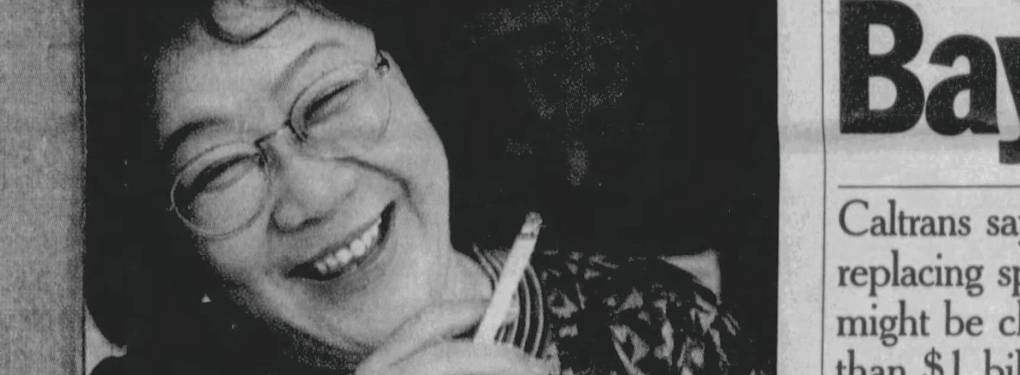
"caption": "A newspaper clipping of Rose Pak in a snippet from the film 'Rally.'",
"description": null,
"title": "Rally2",
"credit": "Courtesy Rally",
"status": "inherit",
"altTag": "A newspaper clipping with a Chinese woman smiling as she holds a cigarette in her fingers.",
"isLoading": false,
"fetchFailed": false
},
"news_11947354": {
"type": "attachments",
"id": "news_11947354",
"meta": {
"index": "attachments_1716263798",
"site": "news",
"id": "11947354",
"found": true
},
"parent": 11946171,
"imgSizes": {
"twentyfourteen-full-width": {
"file": "https://ww2.kqed.org/app/uploads/sites/10/2023/04/Sunday-Poetry-drop-1920-×-1080-px-1-1038x576.jpg",
"width": 1038,
"mimeType": "image/jpeg",
"height": 576
},
"thumbnail": {
"file": "https://ww2.kqed.org/app/uploads/sites/10/2023/04/Sunday-Poetry-drop-1920-×-1080-px-1-160x90.jpg",
"width": 160,
"mimeType": "image/jpeg",
"height": 90
},
"post-thumbnail": {
"file": "https://ww2.kqed.org/app/uploads/sites/10/2023/04/Sunday-Poetry-drop-1920-×-1080-px-1-672x372.jpg",
"width": 672,
"mimeType": "image/jpeg",
"height": 372
},
"kqedFullSize": {
"file": "https://ww2.kqed.org/app/uploads/sites/10/2023/04/Sunday-Poetry-drop-1920-×-1080-px-1.jpg",
"width": 1920,
"height": 1080
},
"large": {
"file": "https://ww2.kqed.org/app/uploads/sites/10/2023/04/Sunday-Poetry-drop-1920-×-1080-px-1-1020x574.jpg",
"width": 1020,
"mimeType": "image/jpeg",
"height": 574
},
"1536x1536": {
"file": "https://ww2.kqed.org/app/uploads/sites/10/2023/04/Sunday-Poetry-drop-1920-×-1080-px-1-1536x864.jpg",
"width": 1536,
"mimeType": "image/jpeg",
"height": 864
},
"medium": {
"file": "https://ww2.kqed.org/app/uploads/sites/10/2023/04/Sunday-Poetry-drop-1920-×-1080-px-1-800x450.jpg",
"width": 800,
"mimeType": "image/jpeg",
"height": 450
}
},
"publishDate": 1682183002,
"modified": 1682183136,
"caption": "Poet Antmen Pimentel Mendoza with the first two lines of text from his poem. ",
"description": null,
"title": "Sunday Poetry drop (1920 × 1080 px) (1)",
"credit": "Courtesy of Antmen Pimentel Mendoza/ Collage by Lakshmi Sarah of KQED",
"status": "inherit",
"altTag": "A collage of poet Antmen Pimentel Mendoza with the first two lines of text from his poem.",
"isLoading": false,
"fetchFailed": false
},
"news_11946132": {
"type": "attachments",
"id": "news_11946132",
"meta": {
"index": "attachments_1716263798",
"site": "news",
"id": "11946132",
"found": true
},
"parent": 0,
"imgSizes": {
"twentyfourteen-full-width": {
"file": "https://ww2.kqed.org/app/uploads/sites/10/2023/04/D7A7080-1038x576.jpg",
"width": 1038,
"mimeType": "image/jpeg",
"height": 576
},
"thumbnail": {
"file": "https://ww2.kqed.org/app/uploads/sites/10/2023/04/D7A7080-160x107.jpg",
"width": 160,
"mimeType": "image/jpeg",
"height": 107
},
"post-thumbnail": {
"file": "https://ww2.kqed.org/app/uploads/sites/10/2023/04/D7A7080-672x372.jpg",
"width": 672,
"mimeType": "image/jpeg",
"height": 372
},
"kqedFullSize": {
"file": "https://ww2.kqed.org/app/uploads/sites/10/2023/04/D7A7080.jpg",
"width": 1620,
"height": 1080
},
"large": {
"file": "https://ww2.kqed.org/app/uploads/sites/10/2023/04/D7A7080-1020x680.jpg",
"width": 1020,
"mimeType": "image/jpeg",
"height": 680
},
"1536x1536": {
"file": "https://ww2.kqed.org/app/uploads/sites/10/2023/04/D7A7080-1536x1024.jpg",
"width": 1536,
"mimeType": "image/jpeg",
"height": 1024
},
"medium": {
"file": "https://ww2.kqed.org/app/uploads/sites/10/2023/04/D7A7080-800x533.jpg",
"width": 800,
"mimeType": "image/jpeg",
"height": 533
}
},
"publishDate": 1681001427,
"modified": 1681150259,
"caption": "The 'Drag Up! Fight Back!' organizers and friends lead the march to Union Square in San Francisco on Saturday, April 8, 2023.",
"description": "The Drag Up! Fight Back! organizers and friends lead the march to Union Square in San Francisco on Saturday, April 8, 2023.",
"title": "The Drag Up! Fight Back! organizers and friends lead the march to Union Square in San Francisco on Saturday, April 8, 2023.",
"credit": "Estefany Gonzalez/KQED",
"status": "inherit",
"altTag": "A crowd of people hold a banner that reads \"Drag Up! Fight Back!\"",
"isLoading": false,
"fetchFailed": false
},
"news_11945648": {
"type": "attachments",
"id": "news_11945648",
"meta": {
"index": "attachments_1716263798",
"site": "news",
"id": "11945648",
"found": true
},
"parent": 11945533,
"imgSizes": {
"twentyfourteen-full-width": {
"file": "https://ww2.kqed.org/app/uploads/sites/10/2023/04/RS64115_012_KQED_InternetArchiveOffices_03242023-qut-1038x576.jpg",
"width": 1038,
"mimeType": "image/jpeg",
"height": 576
},
"thumbnail": {
"file": "https://ww2.kqed.org/app/uploads/sites/10/2023/04/RS64115_012_KQED_InternetArchiveOffices_03242023-qut-160x107.jpg",
"width": 160,
"mimeType": "image/jpeg",
"height": 107
},
"post-thumbnail": {
"file": "https://ww2.kqed.org/app/uploads/sites/10/2023/04/RS64115_012_KQED_InternetArchiveOffices_03242023-qut-672x372.jpg",
"width": 672,
"mimeType": "image/jpeg",
"height": 372
},
"kqedFullSize": {
"file": "https://ww2.kqed.org/app/uploads/sites/10/2023/04/RS64115_012_KQED_InternetArchiveOffices_03242023-qut.jpg",
"width": 1920,
"height": 1280
},
"large": {
"file": "https://ww2.kqed.org/app/uploads/sites/10/2023/04/RS64115_012_KQED_InternetArchiveOffices_03242023-qut-1020x680.jpg",
"width": 1020,
"mimeType": "image/jpeg",
"height": 680
},
"1536x1536": {
"file": "https://ww2.kqed.org/app/uploads/sites/10/2023/04/RS64115_012_KQED_InternetArchiveOffices_03242023-qut-1536x1024.jpg",
"width": 1536,
"mimeType": "image/jpeg",
"height": 1024
},
"medium": {
"file": "https://ww2.kqed.org/app/uploads/sites/10/2023/04/RS64115_012_KQED_InternetArchiveOffices_03242023-qut-800x533.jpg",
"width": 800,
"mimeType": "image/jpeg",
"height": 533
}
},
"publishDate": 1680635149,
"modified": 1680636124,
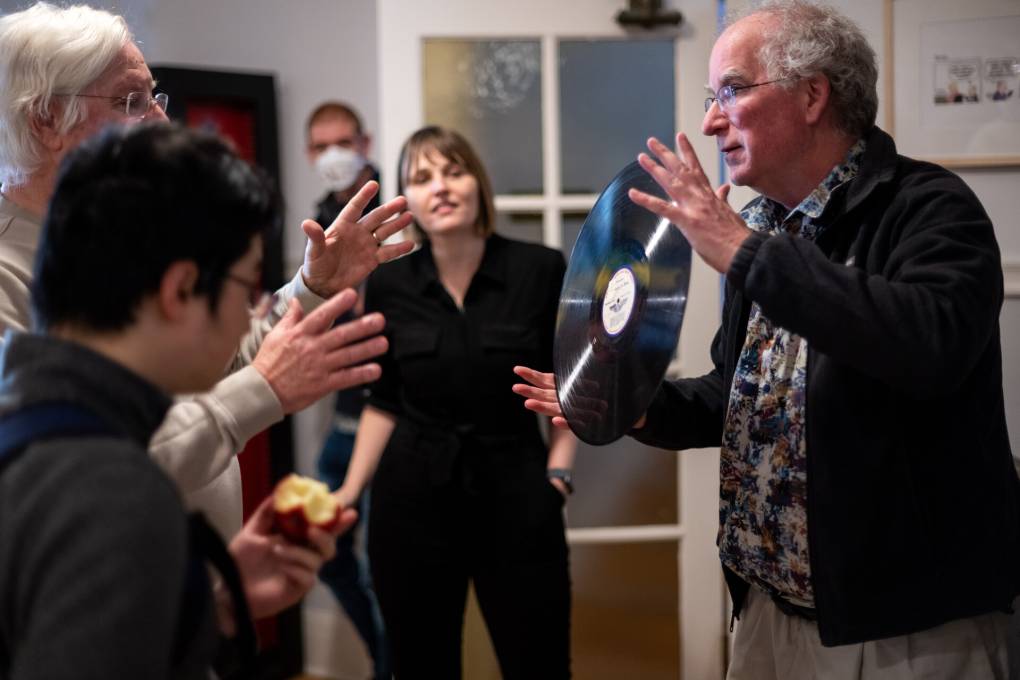
"caption": "Internet Archive founder Brewster Kahle (right) speaks to guests, volunteers and staff at one of the Archive's public lunches at its location in San Francisco's Richmond District on March 24.",
"description": null,
"title": "RS64115_012_KQED_InternetArchiveOffices_03242023-qut",
"credit": "Beth LaBerge/KQED",
"status": "inherit",
"altTag": "A middle-aged white man wearing glasses and an intense expression holds up a vinyl record while engaging in what appears to be an intense conversation with another man who is gesturing with his hands, while in the distance a white woman wearing a black dress looks on - others whose faces aren't visible are gathered around",
"isLoading": false,
"fetchFailed": false
},
"news_11947352": {
"type": "attachments",
"id": "news_11947352",
"meta": {
"index": "attachments_1716263798",
"site": "news",
"id": "11947352",
"found": true
},
"parent": 11945454,
"imgSizes": {
"twentyfourteen-full-width": {
"file": "https://ww2.kqed.org/app/uploads/sites/10/2023/04/Sunday-Poetry-drop-1920-×-1080-px-1038x576.jpg",
"width": 1038,
"mimeType": "image/jpeg",
"height": 576
},
"thumbnail": {
"file": "https://ww2.kqed.org/app/uploads/sites/10/2023/04/Sunday-Poetry-drop-1920-×-1080-px-160x90.jpg",
"width": 160,
"mimeType": "image/jpeg",
"height": 90
},
"post-thumbnail": {
"file": "https://ww2.kqed.org/app/uploads/sites/10/2023/04/Sunday-Poetry-drop-1920-×-1080-px-672x372.jpg",
"width": 672,
"mimeType": "image/jpeg",
"height": 372
},
"kqedFullSize": {
"file": "https://ww2.kqed.org/app/uploads/sites/10/2023/04/Sunday-Poetry-drop-1920-×-1080-px.jpg",
"width": 1920,
"height": 1080
},
"large": {
"file": "https://ww2.kqed.org/app/uploads/sites/10/2023/04/Sunday-Poetry-drop-1920-×-1080-px-1020x574.jpg",
"width": 1020,
"mimeType": "image/jpeg",
"height": 574
},
"1536x1536": {
"file": "https://ww2.kqed.org/app/uploads/sites/10/2023/04/Sunday-Poetry-drop-1920-×-1080-px-1536x864.jpg",
"width": 1536,
"mimeType": "image/jpeg",
"height": 864
},
"medium": {
"file": "https://ww2.kqed.org/app/uploads/sites/10/2023/04/Sunday-Poetry-drop-1920-×-1080-px-800x450.jpg",
"width": 800,
"mimeType": "image/jpeg",
"height": 450
}
},
"publishDate": 1682181369,
"modified": 1682181558,
"caption": "Collage of East Oakland poet D'mani Thomas with the first two lines of text from his poem.",
"description": null,
"title": "Sunday Poetry drop (1920 × 1080 px)",
"credit": "Courtesy D'mani Thomas / Collage by Lakshmi Sarah of KQED",
"status": "inherit",
"altTag": "Collage of a photo of East Oakland poet D'mani Thomas on the left with two lines of text from his poem: \" I heard we come from stardust & at one point / pluto wasn't a planet\"",
"isLoading": false,
"fetchFailed": false
},
"news_11944847": {
"type": "attachments",
"id": "news_11944847",
"meta": {
"index": "attachments_1716263798",
"site": "news",
"id": "11944847",
"found": true
},
"parent": 11944846,
"imgSizes": {
"twentyfourteen-full-width": {
"file": "https://ww2.kqed.org/app/uploads/sites/10/2023/03/Sunday-Music-Drop-Photo-Collages-4-e1679869749500-1038x576.png",
"width": 1038,
"mimeType": "image/png",
"height": 576
},
"thumbnail": {
"file": "https://ww2.kqed.org/app/uploads/sites/10/2023/03/Sunday-Music-Drop-Photo-Collages-4-e1679869749500-160x128.png",
"width": 160,
"mimeType": "image/png",
"height": 128
},
"post-thumbnail": {
"file": "https://ww2.kqed.org/app/uploads/sites/10/2023/03/Sunday-Music-Drop-Photo-Collages-4-e1679869749500-672x372.png",
"width": 672,
"mimeType": "image/png",
"height": 372
},
"kqedFullSize": {
"file": "https://ww2.kqed.org/app/uploads/sites/10/2023/03/Sunday-Music-Drop-Photo-Collages-4-e1679869749500.png",
"width": 1500,
"height": 1200
},
"large": {
"file": "https://ww2.kqed.org/app/uploads/sites/10/2023/03/Sunday-Music-Drop-Photo-Collages-4-e1679869749500-1020x816.png",
"width": 1020,
"mimeType": "image/png",
"height": 816
},
"1536x1536": {
"file": "https://ww2.kqed.org/app/uploads/sites/10/2023/03/Sunday-Music-Drop-Photo-Collages-4-e1679869686751-1536x1229.png",
"width": 1536,
"mimeType": "image/png",
"height": 1229
},
"full-width": {
"file": "https://ww2.kqed.org/app/uploads/sites/10/2023/03/Sunday-Music-Drop-Photo-Collages-4-1920x1536.png",
"width": 1920,
"mimeType": "image/png",
"height": 1536
},
"medium": {
"file": "https://ww2.kqed.org/app/uploads/sites/10/2023/03/Sunday-Music-Drop-Photo-Collages-4-e1679869749500-800x640.png",
"width": 800,
"mimeType": "image/png",
"height": 640
}
},
"publishDate": 1679869405,
"modified": 1679945426,
"caption": "Murvyns band members (left to right) Gabe Monnot on guitar, Anthony Franceschi on drums and James Miranda on bass.",
"description": null,
"title": "Sunday Music Drop Photo Collages-4",
"credit": "Photo courtesy of Emily O'Brien Miranda/Collage by Spencer Whitney of KQED",
"status": "inherit",
"altTag": "A photo collage with the main image displaying three men playing a guitar, bass and drums on a stage with reddish images of the band on the borders of the picture.",
"isLoading": false,
"fetchFailed": false
},
"news_11944231": {
"type": "attachments",
"id": "news_11944231",
"meta": {
"index": "attachments_1716263798",
"site": "news",
"id": "11944231",
"found": true
},
"parent": 0,
"imgSizes": {
"twentyfourteen-full-width": {
"file": "https://ww2.kqed.org/app/uploads/sites/10/2023/03/Tai_horiznotal-1038x576.png",
"width": 1038,
"mimeType": "image/png",
"height": 576
},
"thumbnail": {
"file": "https://ww2.kqed.org/app/uploads/sites/10/2023/03/Tai_horiznotal-160x105.png",
"width": 160,
"mimeType": "image/png",
"height": 105
},
"post-thumbnail": {
"file": "https://ww2.kqed.org/app/uploads/sites/10/2023/03/Tai_horiznotal-672x372.png",
"width": 672,
"mimeType": "image/png",
"height": 372
},
"kqedFullSize": {
"file": "https://ww2.kqed.org/app/uploads/sites/10/2023/03/Tai_horiznotal.png",
"width": 2299,
"height": 1503
},
"2048x2048": {
"file": "https://ww2.kqed.org/app/uploads/sites/10/2023/03/Tai_horiznotal-2048x1339.png",
"width": 2048,
"mimeType": "image/png",
"height": 1339
},
"large": {
"file": "https://ww2.kqed.org/app/uploads/sites/10/2023/03/Tai_horiznotal-1020x667.png",
"width": 1020,
"mimeType": "image/png",
"height": 667
},
"1536x1536": {
"file": "https://ww2.kqed.org/app/uploads/sites/10/2023/03/Tai_horiznotal-1536x1004.png",
"width": 1536,
"mimeType": "image/png",
"height": 1004
},
"full-width": {
"file": "https://ww2.kqed.org/app/uploads/sites/10/2023/03/Tai_horiznotal-1920x1255.png",
"width": 1920,
"mimeType": "image/png",
"height": 1255
},
"medium": {
"file": "https://ww2.kqed.org/app/uploads/sites/10/2023/03/Tai_horiznotal-800x523.png",
"width": 800,
"mimeType": "image/png",
"height": 523
}
},
"publishDate": 1679421597,
"modified": 1679511531,
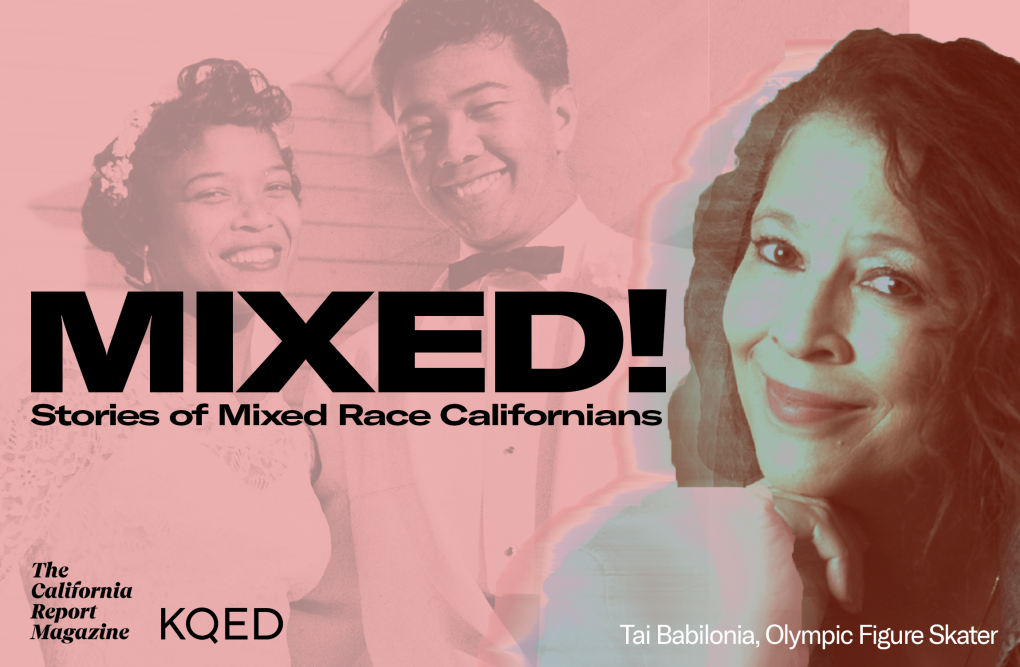
"caption": "Tai Babilonia, a World Champion figure skater who also competed in the Olympics during the 1980s, spoke about being raised by her father, who is Filipino and Hopi Indian, and her mother, who is Black, in Southern California. Babilonia first rose to fame as a child in the 1970s, breaking into the white world of figure skating.",
"description": null,
"title": "Tai_horiznotal",
"credit": "Photo by Michael Sparks Keegan/Illustration by Kelly Ma of KQED",
"status": "inherit",
"altTag": "A photo collage of Tai Babilonia, a professional figure skater, in the foreground smiling. A photo of her parents on their wedding day is juxtaposed in the background. The word \"Mixed\" is in black letters in the center.",
"isLoading": false,
"fetchFailed": false
},
"news_11944066": {
"type": "attachments",
"id": "news_11944066",
"meta": {
"index": "attachments_1716263798",
"site": "news",
"id": "11944066",
"found": true
},
"parent": 11944064,
"imgSizes": {
"twentyfourteen-full-width": {
"file": "https://ww2.kqed.org/app/uploads/sites/10/2023/03/Sunday-Music-Drop-Photo-Collages-1920-×-1080-px-1038x576.png",
"width": 1038,
"mimeType": "image/png",
"height": 576
},
"thumbnail": {
"file": "https://ww2.kqed.org/app/uploads/sites/10/2023/03/Sunday-Music-Drop-Photo-Collages-1920-×-1080-px-160x90.png",
"width": 160,
"mimeType": "image/png",
"height": 90
},
"post-thumbnail": {
"file": "https://ww2.kqed.org/app/uploads/sites/10/2023/03/Sunday-Music-Drop-Photo-Collages-1920-×-1080-px-672x372.png",
"width": 672,
"mimeType": "image/png",
"height": 372
},
"kqedFullSize": {
"file": "https://ww2.kqed.org/app/uploads/sites/10/2023/03/Sunday-Music-Drop-Photo-Collages-1920-×-1080-px.png",
"width": 1920,
"height": 1080
},
"large": {
"file": "https://ww2.kqed.org/app/uploads/sites/10/2023/03/Sunday-Music-Drop-Photo-Collages-1920-×-1080-px-1020x574.png",
"width": 1020,
"mimeType": "image/png",
"height": 574
},
"1536x1536": {
"file": "https://ww2.kqed.org/app/uploads/sites/10/2023/03/Sunday-Music-Drop-Photo-Collages-1920-×-1080-px-1536x864.png",
"width": 1536,
"mimeType": "image/png",
"height": 864
},
"medium": {
"file": "https://ww2.kqed.org/app/uploads/sites/10/2023/03/Sunday-Music-Drop-Photo-Collages-1920-×-1080-px-800x450.png",
"width": 800,
"mimeType": "image/png",
"height": 450
}
},
"publishDate": 1679253145,
"modified": 1679597729,
"caption": "Cardboard People band members Genesis Valentine, Yunoka Berry, Jim Greer and Rhonda Kinard (left to right).",
"description": null,
"title": "Sunday Music Drop Photo Collages (1920 × 1080 px)",
"credit": "Courtesy of Cardboard People/Collage by Lakshmi Sarah of KQED",
"status": "inherit",
"altTag": "Collage of band members of Cardboard People.",
"isLoading": false,
"fetchFailed": false
},
"news_11943517": {
"type": "attachments",
"id": "news_11943517",
"meta": {
"index": "attachments_1716263798",
"site": "news",
"id": "11943517",
"found": true
},
"parent": 0,
"imgSizes": {
"twentyfourteen-full-width": {
"file": "https://ww2.kqed.org/app/uploads/sites/10/2023/03/Guap_horizontal-1038x576.png",
"width": 1038,
"mimeType": "image/png",
"height": 576
},
"thumbnail": {
"file": "https://ww2.kqed.org/app/uploads/sites/10/2023/03/Guap_horizontal-160x105.png",
"width": 160,
"mimeType": "image/png",
"height": 105
},
"post-thumbnail": {
"file": "https://ww2.kqed.org/app/uploads/sites/10/2023/03/Guap_horizontal-672x372.png",
"width": 672,
"mimeType": "image/png",
"height": 372
},
"kqedFullSize": {
"file": "https://ww2.kqed.org/app/uploads/sites/10/2023/03/Guap_horizontal.png",
"width": 2299,
"height": 1503
},
"2048x2048": {
"file": "https://ww2.kqed.org/app/uploads/sites/10/2023/03/Guap_horizontal-2048x1339.png",
"width": 2048,
"mimeType": "image/png",
"height": 1339
},
"large": {
"file": "https://ww2.kqed.org/app/uploads/sites/10/2023/03/Guap_horizontal-1020x667.png",
"width": 1020,
"mimeType": "image/png",
"height": 667
},
"1536x1536": {
"file": "https://ww2.kqed.org/app/uploads/sites/10/2023/03/Guap_horizontal-1536x1004.png",
"width": 1536,
"mimeType": "image/png",
"height": 1004
},
"full-width": {
"file": "https://ww2.kqed.org/app/uploads/sites/10/2023/03/Guap_horizontal-1920x1255.png",
"width": 1920,
"mimeType": "image/png",
"height": 1255
},
"medium": {
"file": "https://ww2.kqed.org/app/uploads/sites/10/2023/03/Guap_horizontal-800x523.png",
"width": 800,
"mimeType": "image/png",
"height": 523
}
},
"publishDate": 1678835693,
"modified": 1678903348,
"caption": "Rapper Guap (formerly Guapdad 4000) was raised by his Filipina grandmother in West Oakland. He's fiercely proud of his Black and Filipino roots, and has been embraced by audiences from Manila to California.",
"description": null,
"title": "Guap_horizontal",
"credit": "Photos by Paul Middleton/Illustration by Kelly Ma of KQED",
"status": "inherit",
"altTag": "A photo collage of a musician holding a microphone in one hand in the foreground, while the same musician is seen hugging his grandmother with earrings and tinted glasses in the background.",
"isLoading": false,
"fetchFailed": false
},
"news_11943373": {
"type": "attachments",
"id": "news_11943373",
"meta": {
"index": "attachments_1716263798",
"site": "news",
"id": "11943373",
"found": true
},
"parent": 11943340,
"imgSizes": {
"twentyfourteen-full-width": {
"file": "https://ww2.kqed.org/app/uploads/sites/10/2023/03/RS63601_Sunday-Music-Drop-Photo-Collages-1920-×-1080-px-qut-1038x576.jpg",
"width": 1038,
"mimeType": "image/jpeg",
"height": 576
},
"thumbnail": {
"file": "https://ww2.kqed.org/app/uploads/sites/10/2023/03/RS63601_Sunday-Music-Drop-Photo-Collages-1920-×-1080-px-qut-160x90.jpg",
"width": 160,
"mimeType": "image/jpeg",
"height": 90
},
"post-thumbnail": {
"file": "https://ww2.kqed.org/app/uploads/sites/10/2023/03/RS63601_Sunday-Music-Drop-Photo-Collages-1920-×-1080-px-qut-672x372.jpg",
"width": 672,
"mimeType": "image/jpeg",
"height": 372
},
"kqedFullSize": {
"file": "https://ww2.kqed.org/app/uploads/sites/10/2023/03/RS63601_Sunday-Music-Drop-Photo-Collages-1920-×-1080-px-qut.jpg",
"width": 1920,
"height": 1080
},
"large": {
"file": "https://ww2.kqed.org/app/uploads/sites/10/2023/03/RS63601_Sunday-Music-Drop-Photo-Collages-1920-×-1080-px-qut-1020x574.jpg",
"width": 1020,
"mimeType": "image/jpeg",
"height": 574
},
"1536x1536": {
"file": "https://ww2.kqed.org/app/uploads/sites/10/2023/03/RS63601_Sunday-Music-Drop-Photo-Collages-1920-×-1080-px-qut-1536x864.jpg",
"width": 1536,
"mimeType": "image/jpeg",
"height": 864
},
"medium": {
"file": "https://ww2.kqed.org/app/uploads/sites/10/2023/03/RS63601_Sunday-Music-Drop-Photo-Collages-1920-×-1080-px-qut-800x450.jpg",
"width": 800,
"mimeType": "image/jpeg",
"height": 450
}
},
"publishDate": 1678652118,
"modified": 1678735073,
"caption": "Mahesh Kale performing during the finale of 'Sur Nava Dhyas Nava' (Colors Marathi TV, Viacom 18). ",
"description": null,
"title": "RS63601_Sunday Music Drop Photo Collages (1920 × 1080 px)-qut",
"credit": "Courtesy of ICMA Foundation/Collage by Lakshmi Sarah of KQED",
"status": "inherit",
"altTag": "A collage of a photo of singer sitting in a turquoise kurta and singing into a mic.",
"isLoading": false,
"fetchFailed": false
},
"news_11943289": {
"type": "attachments",
"id": "news_11943289",
"meta": {
"index": "attachments_1716263798",
"site": "news",
"id": "11943289",
"found": true
},
"parent": 11943288,
"imgSizes": {
"twentyfourteen-full-width": {
"file": "https://ww2.kqed.org/app/uploads/sites/10/2023/03/SWR-PGM_frame_158-1-1038x576.jpeg",
"width": 1038,
"mimeType": "image/jpeg",
"height": 576
},
"thumbnail": {
"file": "https://ww2.kqed.org/app/uploads/sites/10/2023/03/SWR-PGM_frame_158-1-160x90.jpeg",
"width": 160,
"mimeType": "image/jpeg",
"height": 90
},
"post-thumbnail": {
"file": "https://ww2.kqed.org/app/uploads/sites/10/2023/03/SWR-PGM_frame_158-1-672x372.jpeg",
"width": 672,
"mimeType": "image/jpeg",
"height": 372
},
"kqedFullSize": {
"file": "https://ww2.kqed.org/app/uploads/sites/10/2023/03/SWR-PGM_frame_158-1.jpeg",
"width": 1920,
"height": 1080
},
"large": {
"file": "https://ww2.kqed.org/app/uploads/sites/10/2023/03/SWR-PGM_frame_158-1-1020x574.jpeg",
"width": 1020,
"mimeType": "image/jpeg",
"height": 574
},
"1536x1536": {
"file": "https://ww2.kqed.org/app/uploads/sites/10/2023/03/SWR-PGM_frame_158-1-1536x864.jpeg",
"width": 1536,
"mimeType": "image/jpeg",
"height": 864
},
"medium": {
"file": "https://ww2.kqed.org/app/uploads/sites/10/2023/03/SWR-PGM_frame_158-1-800x450.jpeg",
"width": 800,
"mimeType": "image/jpeg",
"height": 450
}
},
"publishDate": 1678488908,
"modified": 1678488908,
"caption": null,
"description": null,
"title": "SWR PGM_frame_158 (1)",
"credit": null,
"status": "inherit",
"altTag": null,
"isLoading": false,
"fetchFailed": false
}
},
"audioPlayerReducer": {
"postId": "stream_live",
"isPaused": true,
"isPlaying": false,
"pfsActive": false,
"pledgeModalIsOpen": true,
"playerDrawerIsOpen": false,
"liveAudioPlayStartedAt": 0,
"liveAudioPlayContext": ""
},
"authorsReducer": {
"byline_news_11944064": {
"type": "authors",
"id": "byline_news_11944064",
"meta": {
"override": true
},
"slug": "byline_news_11944064",
"name": "Lakshmi Sarah, Annelise Finney",
"isLoading": false
},
"byline_news_11943512": {
"type": "authors",
"id": "byline_news_11943512",
"meta": {
"override": true
},
"slug": "byline_news_11943512",
"name": "\u003ca href=\"https://www.kqed.org/author/jessicakariisa\">Jessica Kariisa\u003c/a> ",
"isLoading": false
},
"katrinaschwartz": {
"type": "authors",
"id": "234",
"meta": {
"index": "authors_1716337520",
"id": "234",
"found": true
},
"name": "Katrina Schwartz",
"firstName": "Katrina",
"lastName": "Schwartz",
"slug": "katrinaschwartz",
"email": "kschwartz@kqed.org",
"display_author_email": false,
"staff_mastheads": [
"news"
],
"title": "Producer",
"bio": "Katrina Schwartz is a journalist based in San Francisco. She's worked at KPCC public radio in LA and has reported on air and online for KQED since 2010. She covered how teaching and learning is changing for MindShift between 2012 and 2020. She is the co-host of the MindShift podcast and now produces KQED's Bay Curious podcast.",
"avatar": "https://secure.gravatar.com/avatar/edb4ee79070447a018538c9aae6eeecf28786515b8a0c30e43b6b7dce5aa44c8?s=600&d=blank&r=g",
"twitter": "kschwart",
"bluesky": null,
"facebook": null,
"instagram": null,
"linkedin": null,
"sites": [
{
"site": "",
"roles": [
"editor"
]
},
{
"site": "news",
"roles": [
"editor"
]
},
{
"site": "mindshift",
"roles": [
"administrator"
]
},
{
"site": "stateofhealth",
"roles": [
"author"
]
},
{
"site": "science",
"roles": [
"editor"
]
}
],
"headData": {
"title": "Katrina Schwartz | KQED",
"description": "Producer",
"ogImgSrc": "https://secure.gravatar.com/avatar/edb4ee79070447a018538c9aae6eeecf28786515b8a0c30e43b6b7dce5aa44c8?s=600&d=blank&r=g",
"twImgSrc": "https://secure.gravatar.com/avatar/edb4ee79070447a018538c9aae6eeecf28786515b8a0c30e43b6b7dce5aa44c8?s=600&d=blank&r=g"
},
"isLoading": false,
"link": "/author/katrinaschwartz"
},
"kqed": {
"type": "authors",
"id": "236",
"meta": {
"index": "authors_1716337520",
"id": "236",
"found": true
},
"name": "KQED News Staff",
"firstName": "KQED News Staff",
"lastName": null,
"slug": "kqed",
"email": "faq@kqed.org",
"display_author_email": false,
"staff_mastheads": [],
"title": null,
"bio": null,
"avatar": "https://secure.gravatar.com/avatar/ef0e801a68c4c54afa9180db14084167?s=600&d=blank&r=g",
"twitter": null,
"facebook": null,
"instagram": null,
"linkedin": null,
"sites": [
{
"site": "arts",
"roles": [
"contributor"
]
},
{
"site": "news",
"roles": [
"editor"
]
},
{
"site": "futureofyou",
"roles": [
"author"
]
}
],
"headData": {
"title": "KQED News Staff | KQED",
"description": null,
"ogImgSrc": "https://secure.gravatar.com/avatar/ef0e801a68c4c54afa9180db14084167?s=600&d=blank&r=g",
"twImgSrc": "https://secure.gravatar.com/avatar/ef0e801a68c4c54afa9180db14084167?s=600&d=blank&r=g"
},
"isLoading": false,
"link": "/author/kqed"
},
"sasha-khokha": {
"type": "authors",
"id": "254",
"meta": {
"index": "authors_1716337520",
"id": "254",
"found": true
},
"name": "Sasha Khokha",
"firstName": "Sasha",
"lastName": "Khokha",
"slug": "sasha-khokha",
"email": "skhokha@kqed.org",
"display_author_email": true,
"staff_mastheads": [
"news"
],
"title": "Host, The California Report Magazine",
"bio": "Sasha Khokha is the host of \u003cem>The California Report's \u003c/em> weekly magazine program, which takes listeners on sound-rich excursions to meet the people that make the Golden State unique -- through audio documentaries and long-form stories. As \u003cem>The California Report's\u003c/em> Central Valley Bureau Chief based in Fresno for nearly a dozen years, Sasha brought the lives and concerns of rural Californians to listeners around the state. Her reporting helped expose the hidden price immigrant women janitors and farmworkers may pay to keep their jobs: sexual assault at work. It inspired two new California laws to protect them from sexual harassment. She was a key member of the reporting team for the Frontline film \u003cem>Rape on the Night Shift, \u003c/em>which was nominated for two national Emmys. Sasha has also won a national Edward R. Murrow and a national PRNDI award for investigative reporting, as well as multiple prizes from the Society for Professional Journalists. Sasha is a proud alum of the UC Berkeley Graduate School of Journalism and Brown University and a member of the South Asian Journalists Association.",
"avatar": "https://secure.gravatar.com/avatar/e4b5e1541aaeea2aa356aa1fb2a68950?s=600&d=blank&r=g",
"twitter": "KQEDSashaKhokha",
"facebook": null,
"instagram": null,
"linkedin": null,
"sites": [
{
"site": "news",
"roles": [
"editor"
]
},
{
"site": "stateofhealth",
"roles": [
"author"
]
},
{
"site": "science",
"roles": [
"author"
]
},
{
"site": "quest",
"roles": [
"subscriber"
]
}
],
"headData": {
"title": "Sasha Khokha | KQED",
"description": "Host, The California Report Magazine",
"ogImgSrc": "https://secure.gravatar.com/avatar/e4b5e1541aaeea2aa356aa1fb2a68950?s=600&d=blank&r=g",
"twImgSrc": "https://secure.gravatar.com/avatar/e4b5e1541aaeea2aa356aa1fb2a68950?s=600&d=blank&r=g"
},
"isLoading": false,
"link": "/author/sasha-khokha"
},
"mlagos": {
"type": "authors",
"id": "3239",
"meta": {
"index": "authors_1716337520",
"id": "3239",
"found": true
},
"name": "Marisa Lagos",
"firstName": "Marisa",
"lastName": "Lagos",
"slug": "mlagos",
"email": "mlagos@kqed.org",
"display_author_email": false,
"staff_mastheads": [
"news"
],
"title": "KQED Contributor",
"bio": "Marisa Lagos is a correspondent for KQED’s California Politics and Government Desk and co-hosts the award-winning show and podcast, Political Breakdown. At KQED, Lagos also conducts reporting, analysis and investigations into state, local and national politics for radio, TV, online and onstage. In 2022, she and co-host, Scott Shafer, moderated the only gubernatorial debate in California. In 2020, the \u003ci>Washington Post\u003c/i> named her one of the top political journalists in California; she was nominated for a Peabody and won several other awards for her work investigating the 2017 California wildfires. She has worked at the \u003ci>San Francisco Chronicle\u003c/i>, \u003ci>San Francisco Examiner\u003c/i> and \u003ci>Los Angeles Times\u003c/i>. A UC Santa Barbara graduate, she lives in San Francisco with her two sons and husband.",
"avatar": "https://secure.gravatar.com/avatar/a261a0d3696fc066871ef96b85b5e7d2?s=600&d=blank&r=g",
"twitter": "@mlagos",
"facebook": null,
"instagram": null,
"linkedin": null,
"sites": [
{
"site": "arts",
"roles": [
"author"
]
},
{
"site": "news",
"roles": [
"editor"
]
},
{
"site": "science",
"roles": [
"editor"
]
},
{
"site": "forum",
"roles": [
"author"
]
},
{
"site": "liveblog",
"roles": [
"author"
]
}
],
"headData": {
"title": "Marisa Lagos | KQED",
"description": "KQED Contributor",
"ogImgSrc": "https://secure.gravatar.com/avatar/a261a0d3696fc066871ef96b85b5e7d2?s=600&d=blank&r=g",
"twImgSrc": "https://secure.gravatar.com/avatar/a261a0d3696fc066871ef96b85b5e7d2?s=600&d=blank&r=g"
},
"isLoading": false,
"link": "/author/mlagos"
},
"cmorizono": {
"type": "authors",
"id": "11503",
"meta": {
"index": "authors_1716337520",
"id": "11503",
"found": true
},
"name": "Chloe Morizono",
"firstName": "Chloe",
"lastName": "Morizono",
"slug": "cmorizono",
"email": "cmorizono@kqed.org",
"display_author_email": false,
"staff_mastheads": [],
"title": "KQED Contributor",
"bio": null,
"avatar": "https://secure.gravatar.com/avatar/589de970d4696c868de7f4dc180e0289?s=600&d=blank&r=g",
"twitter": null,
"facebook": null,
"instagram": null,
"linkedin": null,
"sites": [
{
"site": "news",
"roles": []
},
{
"site": "perspectives",
"roles": [
"editor"
]
}
],
"headData": {
"title": "Chloe Morizono | KQED",
"description": "KQED Contributor",
"ogImgSrc": "https://secure.gravatar.com/avatar/589de970d4696c868de7f4dc180e0289?s=600&d=blank&r=g",
"twImgSrc": "https://secure.gravatar.com/avatar/589de970d4696c868de7f4dc180e0289?s=600&d=blank&r=g"
},
"isLoading": false,
"link": "/author/cmorizono"
},
"lsarah": {
"type": "authors",
"id": "11626",
"meta": {
"index": "authors_1716337520",
"id": "11626",
"found": true
},
"name": "Lakshmi Sarah",
"firstName": "Lakshmi",
"lastName": "Sarah",
"slug": "lsarah",
"email": "lsarah@kqed.org",
"display_author_email": false,
"staff_mastheads": [],
"title": "Digital Producer",
"bio": "Lakshmi Sarah is an educator, author and journalist with a focus on innovative storytelling. She has worked with newspapers, radio and magazines from Ahmedabad, India to Los Angeles, California. She has written and produced for Die Zeit, Global Voices, AJ+, KQED, Fusion Media Group and the New York Times.",
"avatar": "https://secure.gravatar.com/avatar/652dcaecd8b28826fc17a8b2d6bb4e93?s=600&d=blank&r=g",
"twitter": "lakitalki",
"facebook": null,
"instagram": "https://www.instagram.com/laki.talki/",
"linkedin": "https://www.linkedin.com/in/lakisarah/",
"sites": [
{
"site": "arts",
"roles": []
},
{
"site": "news",
"roles": []
},
{
"site": "bayareabites",
"roles": []
},
{
"site": "science",
"roles": []
}
],
"headData": {
"title": "Lakshmi Sarah | KQED",
"description": "Digital Producer",
"ogImgSrc": "https://secure.gravatar.com/avatar/652dcaecd8b28826fc17a8b2d6bb4e93?s=600&d=blank&r=g",
"twImgSrc": "https://secure.gravatar.com/avatar/652dcaecd8b28826fc17a8b2d6bb4e93?s=600&d=blank&r=g"
},
"isLoading": false,
"link": "/author/lsarah"
},
"jrodriguez": {
"type": "authors",
"id": "11690",
"meta": {
"index": "authors_1716337520",
"id": "11690",
"found": true
},
"name": "Joe Fitzgerald Rodriguez",
"firstName": "Joe",
"lastName": "Fitzgerald Rodriguez",
"slug": "jrodriguez",
"email": "jrodriguez@kqed.org",
"display_author_email": true,
"staff_mastheads": [
"news"
],
"title": "Reporter and Producer",
"bio": "Joe Fitzgerald Rodriguez is a reporter and digital producer for KQED covering politics. Joe most recently wrote for the \u003cem>San Francisco Examiner\u003c/em> as a political columnist covering The City. He was raised in San Francisco and has spent his reporting career in his beloved, foggy, city by the bay. Joe was 12-years-old when he conducted his first interview in journalism, grilling former San Francisco Mayor Willie Brown for the Marina Middle School newspaper, \u003cem>The Penguin Press, \u003c/em>and he continues to report on the San Francisco Bay Area to this day.",
"avatar": "https://secure.gravatar.com/avatar/2247beb0564c1e9c62228d5649d2edac?s=600&d=blank&r=g",
"twitter": "FitztheReporter",
"facebook": null,
"instagram": "https://www.instagram.com/fitzthereporter/",
"linkedin": null,
"sites": [
{
"site": "",
"roles": [
"editor"
]
},
{
"site": "arts",
"roles": [
"editor"
]
},
{
"site": "news",
"roles": [
"editor"
]
},
{
"site": "science",
"roles": [
"editor"
]
},
{
"site": "elections",
"roles": [
"editor"
]
},
{
"site": "liveblog",
"roles": [
"editor"
]
}
],
"headData": {
"title": "Joe Fitzgerald Rodriguez | KQED",
"description": "Reporter and Producer",
"ogImgSrc": "https://secure.gravatar.com/avatar/2247beb0564c1e9c62228d5649d2edac?s=600&d=blank&r=g",
"twImgSrc": "https://secure.gravatar.com/avatar/2247beb0564c1e9c62228d5649d2edac?s=600&d=blank&r=g"
},
"isLoading": false,
"link": "/author/jrodriguez"
},
"afinney": {
"type": "authors",
"id": "11772",
"meta": {
"index": "authors_1716337520",
"id": "11772",
"found": true
},
"name": "Annelise Finney",
"firstName": "Annelise",
"lastName": "Finney",
"slug": "afinney",
"email": "afinney@kqed.org",
"display_author_email": true,
"staff_mastheads": [
"news"
],
"title": "Reporter",
"bio": "Annelise reports on reparations in California and East Bay politics. She co-produced the Sunday Music Drop, a limited-term radio series featuring Bay Area musicians that aired between Sept 2022 and Oct 2024. She joined KQED in 2021 as a general assignment reporter and is an alumna of KALW's Audio Academy. She was born and raised in the East Bay. She is currently away from KQED completing a year-long reporting project in Berlin, Germany as a Alexander Von Humboldt German Chancellor Fellow.",
"avatar": "https://secure.gravatar.com/avatar/5fded66cae47704cdfc5021cde0f3aa4?s=600&d=blank&r=g",
"twitter": null,
"facebook": null,
"instagram": null,
"linkedin": null,
"sites": [
{
"site": "news",
"roles": [
"editor"
]
},
{
"site": "liveblog",
"roles": [
"author"
]
}
],
"headData": {
"title": "Annelise Finney | KQED",
"description": "Reporter",
"ogImgSrc": "https://secure.gravatar.com/avatar/5fded66cae47704cdfc5021cde0f3aa4?s=600&d=blank&r=g",
"twImgSrc": "https://secure.gravatar.com/avatar/5fded66cae47704cdfc5021cde0f3aa4?s=600&d=blank&r=g"
},
"isLoading": false,
"link": "/author/afinney"
},
"swhitney": {
"type": "authors",
"id": "11784",
"meta": {
"index": "authors_1716337520",
"id": "11784",
"found": true
},
"name": "Spencer Whitney",
"firstName": "Spencer",
"lastName": "Whitney",
"slug": "swhitney",
"email": "swhitney@kqed.org",
"display_author_email": false,
"staff_mastheads": [],
"title": "KQED Digital Editor",
"bio": "Spencer Whitney is currently a Digital Editor for KQED News. Prior to joining KQED News, Spencer worked as the Multimedia Editor at the Oakland Post and an Assistant Editor in the Editorial department at the San Francisco Chronicle. He attended Howard University as an undergraduate and interned with SiriusXM. He also attended UC Berkeley's Graduate School of Journalism and had the opportunity to write for the hyperlocal news sites Richmond Confidential and Oakland North.",
"avatar": "https://secure.gravatar.com/avatar/e33ff4fd8b8f0d2796f36472fb32607ca8fc46ef5e537dcfdbdee688d8ea5b80?s=600&d=mm&r=g",
"twitter": null,
"bluesky": null,
"facebook": null,
"instagram": null,
"linkedin": null,
"sites": [
{
"site": "arts",
"roles": [
"editor"
]
},
{
"site": "news",
"roles": [
"editor"
]
},
{
"site": "science",
"roles": [
"editor"
]
},
{
"site": "perspectives",
"roles": [
"editor"
]
}
],
"headData": {
"title": "Spencer Whitney | KQED",
"description": "KQED Digital Editor",
"ogImgSrc": "https://secure.gravatar.com/avatar/e33ff4fd8b8f0d2796f36472fb32607ca8fc46ef5e537dcfdbdee688d8ea5b80?s=600&d=mm&r=g",
"twImgSrc": "https://secure.gravatar.com/avatar/e33ff4fd8b8f0d2796f36472fb32607ca8fc46ef5e537dcfdbdee688d8ea5b80?s=600&d=mm&r=g"
},
"isLoading": false,
"link": "/author/swhitney"
},
"mesquinca": {
"type": "authors",
"id": "11802",
"meta": {
"index": "authors_1716337520",
"id": "11802",
"found": true
},
"name": "Maria Esquinca",
"firstName": "Maria",
"lastName": "Esquinca",
"slug": "mesquinca",
"email": "mesquinca@kqed.org",
"display_author_email": false,
"staff_mastheads": [],
"title": "Producer, The Bay",
"bio": "María Esquinca is a producer of The Bay. Before that, she was a New York Women’s Foundation IGNITE Fellow at Latino USA. She worked at Radio Bilingue where she covered the San Joaquin Valley. Maria has interned at WLRN, News 21, The New York Times Student Journalism Institute and at Crain’s Detroit Business as a Dow Jones News Fund Business Reporting Intern. She is an MFA graduate from the University of Miami. In 2017, she graduated from the Walter Cronkite School of Journalism and Mass Communication with a Master of Mass Communication. A fronteriza, she was born in Ciudad Juárez, Chihuahua, Mexico and grew up in El Paso, Texas.",
"avatar": "https://secure.gravatar.com/avatar/77cedba18aae91da775038ba06dcd8d0?s=600&d=blank&r=g",
"twitter": "@m_esquinca",
"facebook": null,
"instagram": null,
"linkedin": null,
"sites": [
{
"site": "news",
"roles": []
}
],
"headData": {
"title": "Maria Esquinca | KQED",
"description": "Producer, The Bay",
"ogImgSrc": "https://secure.gravatar.com/avatar/77cedba18aae91da775038ba06dcd8d0?s=600&d=blank&r=g",
"twImgSrc": "https://secure.gravatar.com/avatar/77cedba18aae91da775038ba06dcd8d0?s=600&d=blank&r=g"
},
"isLoading": false,
"link": "/author/mesquinca"
},
"sjohnson": {
"type": "authors",
"id": "11840",
"meta": {
"index": "authors_1716337520",
"id": "11840",
"found": true
},
"name": "Sydney Johnson",
"firstName": "Sydney",
"lastName": "Johnson",
"slug": "sjohnson",
"email": "sjohnson@kqed.org",
"display_author_email": false,
"staff_mastheads": [
"news"
],
"title": "KQED Reporter",
"bio": "Sydney Johnson is a general assignment reporter at KQED. She previously reported on public health and city government at the San Francisco Examiner, and before that, she covered statewide education policy for EdSource. Her reporting has won multiple local, state and national awards. Sydney is a graduate of the University of California, Berkeley and lives in San Francisco.",
"avatar": "https://secure.gravatar.com/avatar/97855f2719b72ad6190b7c535fe642c8?s=600&d=blank&r=g",
"twitter": "sydneyfjohnson",
"facebook": null,
"instagram": null,
"linkedin": null,
"sites": [
{
"site": "news",
"roles": [
"editor"
]
}
],
"headData": {
"title": "Sydney Johnson | KQED",
"description": "KQED Reporter",
"ogImgSrc": "https://secure.gravatar.com/avatar/97855f2719b72ad6190b7c535fe642c8?s=600&d=blank&r=g",
"twImgSrc": "https://secure.gravatar.com/avatar/97855f2719b72ad6190b7c535fe642c8?s=600&d=blank&r=g"
},
"isLoading": false,
"link": "/author/sjohnson"
}
},
"pagesReducer": {
"news_category_arts-and-culture": {
"type": "terms",
"id": "news_223",
"meta": {
"index": "terms_1716263798",
"site": "news",
"id": "223",
"score": 11.241959
},
"featImg": null,
"name": "Arts and Culture",
"description": null,
"taxonomy": "category",
"headData": {
"twImgId": null,
"twTitle": null,
"ogTitle": null,
"ogImgId": null,
"twDescription": null,
"description": null,
"title": "Arts and Culture Archives | KQED News",
"ogDescription": null
},
"ttid": 231,
"slug": "arts-and-culture",
"isLoading": false,
"title": "Arts and Culture",
"pageMeta": {
"site": "news",
"WpPageTemplate": "page-topic-editorial",
"currentPage": 26
},
"blocks": [
{
"blockName": "kqed/post-list",
"attrs": {
"layout": "cardArticle2",
"query": "posts/news?category=arts-and-culture",
"seeMore": false,
"paginated": true,
"page": 26
}
},
{
"blockName": "kqed/ad"
}
]
}
},
"pfsSessionReducer": {},
"postsReducer": {
"stream_live": {
"type": "live",
"id": "stream_live",
"audioUrl": "https://streams.kqed.org/kqedradio",
"title": "Live Stream",
"excerpt": "Live Stream information currently unavailable.",
"link": "/radio",
"featImg": "",
"label": {
"name": "KQED Live",
"link": "/"
}
},
"stream_kqedNewscast": {
"type": "posts",
"id": "stream_kqedNewscast",
"audioUrl": "https://www.kqed.org/.stream/anon/radio/RDnews/newscast.mp3?_=1",
"title": "KQED Newscast",
"featImg": "",
"label": {
"name": "88.5 FM",
"link": "/"
}
},
"news_11948072": {
"type": "posts",
"id": "news_11948072",
"meta": {
"index": "posts_1716263798",
"site": "news",
"id": "11948072",
"score": null,
"sort": [
1682726204000
]
},
"guestAuthors": [],
"slug": "preparing-for-californias-big-melt-aids-lifecycle",
"title": "Preparing for California's 'Big Melt' | AIDS/LifeCycle",
"publishDate": 1682726204,
"format": "video",
"headTitle": "Preparing for California’s ‘Big Melt’ | AIDS/LifeCycle | KQED",
"labelTerm": {
"term": 7052,
"site": "news"
},
"content": "\u003cp>\u003cb>Preparing for California’s ‘Big Melt’\u003c/b>\u003c/p>\n\u003cp>\u003cspan style=\"font-weight: 400\">This past winter saw waves of atmospheric river storms unleash nearly unprecedented levels of rain on California. And while the storms left a multibillion-dollar trail of damage in their wake, they also finally brought about the end of a years-long drought that had gripped the Golden State. Now as we head toward summer, the water from those same winter storms is gearing up for its next act: “The Big Melt.” \u003c/span>\u003c/p>\n\u003cp>\u003cspan style=\"font-weight: 400\">Guests:\u003c/span>\u003c/p>\n\u003cul>\n\u003cli style=\"font-weight: 400\">\u003cspan style=\"font-weight: 400\">Dan Brekke, KQED editor and reporter\u003c/span>\u003c/li>\n\u003cli style=\"font-weight: 400\">\u003cspan style=\"font-weight: 400\">Gerry D\u003c/span>\u003cspan style=\"font-weight: 400\">í\u003c/span>\u003cspan style=\"font-weight: 400\">az, \u003c/span>\u003ci>\u003cspan style=\"font-weight: 400\">San Francisco Chronicle\u003c/span>\u003c/i>\u003cspan style=\"font-weight: 400\"> newsroom meteorologist \u003c/span>\u003c/li>\n\u003c/ul>\n\u003cp>\u003cb>AIDS/LifeCycle Race\u003c/b>\u003c/p>\n\u003cp>\u003cspan style=\"font-weight: 400\">The AIDS/LifeCycle kicks off this June, and this year participants will travel from San Francisco to Santa Monica in a seven-day, 545-mile bicycle ride. We talk about the event’s history and why it has long been billed as much more than a race.\u003c/span>\u003c/p>\n\u003cp>[ad fullwidth]\u003c/p>\n\u003cp>\u003cspan style=\"font-weight: 400\">Guests:\u003c/span>\u003c/p>\n\u003cul>\n\u003cli style=\"font-weight: 400\">\u003cspan style=\"font-weight: 400\">Tracy Evans, AIDS/LifeCycle senior director\u003c/span>\u003c/li>\n\u003cli style=\"font-weight: 400\">\u003cspan style=\"font-weight: 400\">Tyler TerMeer, San Francisco AIDS Foundation CEO\u003c/span>\u003c/li>\n\u003c/ul>\n\u003cp>\u003cb>Something Beautiful: Youth Takeover and Mount Diablo\u003c/b>\u003c/p>\n\u003cp>\u003cspan style=\"font-weight: 400\">This week, we have a guest host: a high schooler who is a member of KQED’s Youth Advisory Board. All week, KQED has been including young people in our programming, as part of our commitment to education and engaging with our community. \u003c/span>\u003c/p>\n\u003cp>\u003c/p>\n\u003cp>\u003cspan style=\"font-weight: 400\">This week’s look at Something Beautiful is Mount Diablo, which is visible from most of the Bay Area. Once there, visitors can opt to picnic at the summit or hike through Rock City. Several Indigenous tribes including the Ohlone, Nisenan, and Miwok consider it sacred ground.\u003c/span>\u003c/p>\n\n",
"blocks": [],
"excerpt": null,
"status": "publish",
"parent": 0,
"modified": 1738793934,
"stats": {
"hasAudio": false,
"hasVideo": false,
"hasChartOrMap": false,
"iframeSrcs": [],
"hasGoogleForm": false,
"hasGallery": false,
"hasHearkenModule": false,
"hasPolis": false,
"paragraphCount": 11,
"wordCount": 268
},
"headData": {
"title": "Preparing for California's 'Big Melt' | AIDS/LifeCycle | KQED",
"description": "Preparing for California's 'Big Melt' This past winter saw waves of atmospheric river storms unleash nearly unprecedented levels of rain on California. And while the storms left a multibillion-dollar trail of damage in their wake, they also finally brought about the end of a years-long drought that had gripped the Golden State. Now as we head toward summer, the water from those same winter storms is gearing up for its next act: "The Big Melt." Guests: Dan Brekke, KQED editor and reporter Gerry Díaz, San Francisco Chronicle newsroom meteorologist AIDS/LifeCycle Race The AIDS/LifeCycle kicks off this June, and this year",
"ogTitle": "",
"ogDescription": "",
"ogImgId": "",
"twTitle": "",
"twDescription": "",
"twImgId": "",
"schema": {
"@context": "https://schema.org",
"@type": "NewsArticle",
"headline": "Preparing for California's 'Big Melt' | AIDS/LifeCycle",
"datePublished": "2023-04-28T16:56:44-07:00",
"dateModified": "2025-02-05T14:18:54-08:00",
"image": "https://cdn.kqed.org/wp-content/uploads/2020/02/KQED-OG-Image@1x.png",
"isAccessibleForFree": "True",
"publisher": {
"@type": "NewsMediaOrganization",
"@id": "https://www.kqed.org/#organization",
"name": "KQED",
"logo": "https://cdn.kqed.org/wp-content/uploads/2020/02/KQED-OG-Image@1x.png",
"url": "https://www.kqed.org",
"sameAs": [
"https://www.facebook.com/KQED",
"https://twitter.com/KQED",
"https://www.instagram.com/kqed/",
"https://www.tiktok.com/@kqedofficial",
"https://www.linkedin.com/company/kqed",
"https://www.youtube.com/channel/UCeC0IOo7i1P_61zVUWbJ4nw"
]
}
}
},
"videoEmbed": "https://youtu.be/yLQNXL3-pMQ",
"sticky": false,
"excludeFromSiteSearch": "Include",
"articleAge": "0",
"path": "/news/11948072/preparing-for-californias-big-melt-aids-lifecycle",
"audioTrackLength": null,
"parsedContent": [
{
"type": "contentString",
"content": "\u003cdiv class=\"post-body\">\u003cp>\u003cp>\u003cb>Preparing for California’s ‘Big Melt’\u003c/b>\u003c/p>\n\u003cp>\u003cspan style=\"font-weight: 400\">This past winter saw waves of atmospheric river storms unleash nearly unprecedented levels of rain on California. And while the storms left a multibillion-dollar trail of damage in their wake, they also finally brought about the end of a years-long drought that had gripped the Golden State. Now as we head toward summer, the water from those same winter storms is gearing up for its next act: “The Big Melt.” \u003c/span>\u003c/p>\n\u003cp>\u003cspan style=\"font-weight: 400\">Guests:\u003c/span>\u003c/p>\n\u003cul>\n\u003cli style=\"font-weight: 400\">\u003cspan style=\"font-weight: 400\">Dan Brekke, KQED editor and reporter\u003c/span>\u003c/li>\n\u003cli style=\"font-weight: 400\">\u003cspan style=\"font-weight: 400\">Gerry D\u003c/span>\u003cspan style=\"font-weight: 400\">í\u003c/span>\u003cspan style=\"font-weight: 400\">az, \u003c/span>\u003ci>\u003cspan style=\"font-weight: 400\">San Francisco Chronicle\u003c/span>\u003c/i>\u003cspan style=\"font-weight: 400\"> newsroom meteorologist \u003c/span>\u003c/li>\n\u003c/ul>\n\u003cp>\u003cb>AIDS/LifeCycle Race\u003c/b>\u003c/p>\n\u003cp>\u003cspan style=\"font-weight: 400\">The AIDS/LifeCycle kicks off this June, and this year participants will travel from San Francisco to Santa Monica in a seven-day, 545-mile bicycle ride. We talk about the event’s history and why it has long been billed as much more than a race.\u003c/span>\u003c/p>\n\u003cp>\u003c/p>\u003c/div>",
"attributes": {
"named": {},
"numeric": []
}
},
{
"type": "component",
"content": "",
"name": "ad",
"attributes": {
"named": {
"label": "fullwidth"
},
"numeric": [
"fullwidth"
]
}
},
{
"type": "contentString",
"content": "\u003cdiv class=\"post-body\">\u003cp>\u003c/p>\n\u003cp>\u003cspan style=\"font-weight: 400\">Guests:\u003c/span>\u003c/p>\n\u003cul>\n\u003cli style=\"font-weight: 400\">\u003cspan style=\"font-weight: 400\">Tracy Evans, AIDS/LifeCycle senior director\u003c/span>\u003c/li>\n\u003cli style=\"font-weight: 400\">\u003cspan style=\"font-weight: 400\">Tyler TerMeer, San Francisco AIDS Foundation CEO\u003c/span>\u003c/li>\n\u003c/ul>\n\u003cp>\u003cb>Something Beautiful: Youth Takeover and Mount Diablo\u003c/b>\u003c/p>\n\u003cp>\u003cspan style=\"font-weight: 400\">This week, we have a guest host: a high schooler who is a member of KQED’s Youth Advisory Board. All week, KQED has been including young people in our programming, as part of our commitment to education and engaging with our community. \u003c/span>\u003c/p>\n\u003cp>\u003c/p>\n\u003cp>\u003cspan style=\"font-weight: 400\">This week’s look at Something Beautiful is Mount Diablo, which is visible from most of the Bay Area. Once there, visitors can opt to picnic at the summit or hike through Rock City. Several Indigenous tribes including the Ohlone, Nisenan, and Miwok consider it sacred ground.\u003c/span>\u003c/p>\n\n\u003c/div>\u003c/p>",
"attributes": {
"named": {},
"numeric": []
}
}
],
"link": "/news/11948072/preparing-for-californias-big-melt-aids-lifecycle",
"authors": [
"236"
],
"programs": [
"news_7052"
],
"categories": [
"news_223",
"news_31795",
"news_19906",
"news_457",
"news_8",
"news_356",
"news_25641"
],
"tags": [
"news_20447",
"news_311",
"news_24620",
"news_20023",
"news_3431",
"news_32298",
"news_29548",
"news_4794",
"news_21950",
"news_312",
"news_467",
"news_23013"
],
"featImg": "news_11948076",
"label": "news_7052"
},
"news_11947380": {
"type": "posts",
"id": "news_11947380",
"meta": {
"index": "posts_1716263798",
"site": "news",
"id": "11947380",
"score": null,
"sort": [
1682262038000
]
},
"guestAuthors": [],
"slug": "rose-pak-film-rally-explores-the-community-legacy-of-a-power-broker",
"title": "Rose Pak Film 'Rally' Explores the Community Legacy of a 'Power Broker'",
"publishDate": 1682262038,
"format": "standard",
"headTitle": "Rose Pak Film ‘Rally’ Explores the Community Legacy of a ‘Power Broker’ | KQED",
"labelTerm": {
"site": "news"
},
"content": "\u003cp>Was Rose Pak a \u003ca href=\"https://www.sfchronicle.com/opinion/editorials/article/Rose-Pak-the-ultimate-power-broker-9233068.php\">power broker\u003c/a>? Demonstrably yes.\u003c/p>\n\u003cp>Was she also a \u003ca href=\"https://www.kqed.org/forum/201303211000/first-person-rose-pak\">kingmaker\u003c/a>? Arguably so.\u003c/p>\n\u003cp>And in Pak’s last days before her death, was she a “\u003ca href=\"https://www.sfgate.com/bayarea/article/A-gravely-ill-Rose-Pak-on-life-death-and-her-6456189.php\">lion in winter\u003c/a>,” as \u003cem>San Francisco Magazine\u003c/em> dubbed her, leading a pride of politicos she had long mentored through a final campaign struggle? Perhaps inspiringly, yes.\u003c/p>\n\u003cp>But the film about her life, \u003cem>Rally\u003c/em>, which premiered Friday at the 2023 San Francisco International Film Festival, manages to show the thread that binds all of those efforts, and the motivation behind the decades Pak spent shaping San Francisco political life.\u003c/p>\n\u003cp>“At the end of the day, everything she did, every person she talked to, it was about enhancing the community and making the community better, and she was very vocal about that,” San Francisco Police Department Commander Paul Yep told me, standing among Pak’s friends at an after-party celebrating the film.\u003c/p>\n\u003cfigure id=\"attachment_11947386\" class=\"wp-caption alignnone\" style=\"max-width: 1403px\">\u003cimg loading=\"lazy\" decoding=\"async\" class=\"wp-image-11947386 size-full\" src=\"https://ww2.kqed.org/app/uploads/sites/10/2023/04/Rally1.jpg\" alt=\"A Chinese woman wearing large, '80s-style glasses, a bright blue dress, and a long strand of pearls, with chin-length black hair, smiles broadly, while others around her, all white, also smile, in a government office in front of a bank of microphones.\" width=\"1403\" height=\"692\" srcset=\"https://cdn.kqed.org/wp-content/uploads/sites/10/2023/04/Rally1.jpg 1403w, https://cdn.kqed.org/wp-content/uploads/sites/10/2023/04/Rally1-800x395.jpg 800w, https://cdn.kqed.org/wp-content/uploads/sites/10/2023/04/Rally1-1020x503.jpg 1020w, https://cdn.kqed.org/wp-content/uploads/sites/10/2023/04/Rally1-160x79.jpg 160w\" sizes=\"(max-width: 1403px) 100vw, 1403px\">\u003cfigcaption class=\"wp-caption-text\">Former San Francisco Mayor Art Agnos and Rose Pak at a press conference in a screenshot from the film ‘Rally.’ \u003ccite>(Courtesy Rally)\u003c/cite>\u003c/figcaption>\u003c/figure>\n\u003cp>Pak, who was born in China, came to San Francisco in the 1960s to work for the \u003cem>San Francisco Chronicle\u003c/em>. She would eventually become one of the city’s most influential political figures, channeling the Chinese community to lift people into power, who would in turn fulfill promises to Pak to help Chinese San Franciscans.\u003c/p>\n\u003cp>Yep remembers Pak’s care for Chinatown well. At their first meeting, Pak told him, “If you’re about the community, then I’m there for you.”\u003c/p>\n\u003cp>That’s a lesson that’s obvious to her friends, many of whom were in attendance for \u003cem>Rally\u003c/em>’s premiere at the CGV San Francisco 14 cinema on 1000 Van Ness Avenue on Friday night. Yet somehow it was a message lost on many San Franciscans over the years.\u003c/p>\n\u003cp>In the film, news clips spanning decades repeatedly describe Pak as a “powerful influencer” behind the scenes, a “shadowy figure” pulling the puppet strings of San Francisco’s power structure. She would often describe the term “power broker” as racist, musing, If she were white, wouldn’t they say “civic leader”?\u003c/p>\n\u003cp>[ad fullwidth]\u003c/p>\n\u003cp>Of course, those news clips never talked about \u003cem>why \u003c/em>she pulled those strings. But seeing Pak’s accomplishments all in the span of an hour and a half (give or take), the missing \u003cem>why \u003c/em>is as blindingly obvious as the idea that the Golden Gate Bridge ain’t golden:\u003c/p>\n\u003cp>Pak saved Chinese Hospital from closure. Pak defended access to Chinatown businesses by fighting the Embarcadero Freeway closure, and after she lost that fight, she advocated for the Central Subway to ensure people had access to Chinatown. She helped elect Mayor Art Agnos, who, at Pak’s urging, went on to appoint Chinese people into the upper echelons of City Hall for the first time.\u003c/p>\n\u003cp>And in 2011, she applied pressure to the Board of Supervisors to appoint Ed Lee interim mayor, later propelling him to victory in his \u003ca href=\"https://www.youtube.com/watch?v=fbdd_Fasz0k\">campaign to become San Francisco’s first Chinese mayor\u003c/a>.\u003c/p>\n\u003cp>Pak wasn’t a saintly figure, and it’s a strength of the film that it doesn’t shy away from showing her as crass, rude and loud, in all the ways that made her charming. The movie also showcases her losses, like the teardown of the Embarcadero Freeway, and Ed Lee’s eventual shifting allegiance toward San Francisco’s tech elite, like “Godfather of Silicon Valley” \u003ca href=\"https://www.sfexaminer.com/news/ron-conway-big-tech-drop-thousands-into-sleepy-sf-election/article_00342725-0356-5f79-a4c4-9e4a025a5d35.html\">Ron Conway\u003c/a>.[pullquote align=\"right\" size=\"medium\" citation=\"Cmdr. Paul Yep, San Francisco Police Department\"]‘At the end of the day, everything she did, every person she talked to, it was about enhancing the community and making the community better, and she was very vocal about that.’[/pullquote]The movie even \u003cem>begins \u003c/em>with accusations that she was an operative of the Chinese Communist Party — that’s gutsy.\u003c/p>\n\u003cp>Showing Pak in an honest way, warts and all, was by design, the film’s director Rooth Tang told KQED.\u003c/p>\n\u003cp>“Part of Rose’s story, I think, is a universal one, is that change is messy,” Tang said. Even in a city that’s dominated by Democrats, change takes a fight and “it’s not going to be simple or clean,” he said.\u003c/p>\n\u003cp>But showing Pak’s imperfections had another importance, Tang said, because the Asian American community, in his experience, struggles with the concept of, “How much should you do to fit in?”\u003c/p>\n\u003cp>“That’s another thing I really admired about Rose,” he said. “She didn’t worry about fitting in, ever. It was more of, ‘Hey, I’m here. You guys got to make room.’”\u003c/p>\n\u003cp>Pak exemplified that even when faced with racism early on in her tenure at the \u003cem>San Francisco Chronicle\u003c/em>. She tells the tale in an old interview unearthed for the film.\u003c/p>\n\u003cp>“They think, you hired a Chinese, so we’ve covered all our Asians. That’s the mentality they had. They always asked me, ‘Rose, you tell us, what is the difference between the Koreans, the Chinese, and the Japanese?’ I was so fed up,” she said.\u003c/p>\n\u003cfigure id=\"attachment_11947390\" class=\"wp-caption alignnone\" style=\"max-width: 1901px\">\u003cimg loading=\"lazy\" decoding=\"async\" class=\"wp-image-11947390 size-full\" src=\"https://ww2.kqed.org/app/uploads/sites/10/2023/04/Rally4.jpg\" alt=\"A Chinese woman, a white man and a white woman walk together in the middle of a crowd in the middle of a street, the women talking to each other across the man, in a black-and-white photo.\" width=\"1901\" height=\"693\" srcset=\"https://cdn.kqed.org/wp-content/uploads/sites/10/2023/04/Rally4.jpg 1901w, https://cdn.kqed.org/wp-content/uploads/sites/10/2023/04/Rally4-800x292.jpg 800w, https://cdn.kqed.org/wp-content/uploads/sites/10/2023/04/Rally4-1020x372.jpg 1020w, https://cdn.kqed.org/wp-content/uploads/sites/10/2023/04/Rally4-160x58.jpg 160w, https://cdn.kqed.org/wp-content/uploads/sites/10/2023/04/Rally4-1536x560.jpg 1536w\" sizes=\"(max-width: 1901px) 100vw, 1901px\">\u003cfigcaption class=\"wp-caption-text\">Rose Pak with Dianne Feinstein in a snippet from ‘Rally.’ \u003ccite>(Courtesy Rally)\u003c/cite>\u003c/figcaption>\u003c/figure>\n\u003cp>“I said, ‘Guys, you listen once and for all.’ And they all kept quiet. ‘Just remember, the Koreans, their eyes slant down.’ And you can see all their faces trying to remember, ‘Koreans eyes slant down.’ ‘And the Japanese, their eyes slant up.’ And then they’re all thinking, ‘Right?’ ‘And the Chinese, one go each way.’ And then I just left. It was so insulting, you know, but that was the mentality.”\u003c/p>\n\u003cp>The mechanics of how she achieved these feats is showcased in the film. But in a soft critique, one has to read between the lines a bit to see how her wins were truly achieved.\u003c/p>\n\u003cp>Standing in the theater just after the film, Jane Kim, a former protégé of Pak’s and now director of the state Working Families Party, spelled out Pak’s power a bit more directly.\u003c/p>\n\u003cp>“When you think of a power broker, you think of someone who’s wielding that power, at least a little bit, for themselves,” Kim said. “And part of Rose’s power was actually that she didn’t want anything, so she never had anything to lose.”\u003c/p>\n\u003cp>The film reveals this in a particularly touching moment, just after her death, when loved ones gather outside her small apartment next to Chinese Hospital. It’s not the kind of building you’d imagine a true “power broker” to live in — a far cry from the tony neighborhoods some San Francisco politicos call home.\u003c/p>\n\u003cp>“I do think that was part of why she was so difficult to take down,” Kim said. “There was nothing to take away from her.”\u003c/p>\n\u003cp>[ad floatright]\u003c/p>\n",
"blocks": [],
"excerpt": "'At the end of the day, everything she did, every person she talked to, it was about enhancing the community and making the community better,' said San Francisco Police Department Commander Paul Yep of Rose Pak.",
"status": "publish",
"parent": 0,
"modified": 1721127471,
"stats": {
"hasAudio": false,
"hasVideo": false,
"hasChartOrMap": false,
"iframeSrcs": [],
"hasGoogleForm": false,
"hasGallery": false,
"hasHearkenModule": false,
"hasPolis": false,
"paragraphCount": 27,
"wordCount": 1226
},
"headData": {
"title": "Rose Pak Film 'Rally' Explores the Community Legacy of a 'Power Broker' | KQED",
"description": "'At the end of the day, everything she did, every person she talked to, it was about enhancing the community and making the community better,' said San Francisco Police Department Commander Paul Yep of Rose Pak.",
"ogTitle": "",
"ogDescription": "",
"ogImgId": "",
"twTitle": "",
"twDescription": "",
"twImgId": "",
"schema": {
"@context": "https://schema.org",
"@type": "NewsArticle",
"headline": "Rose Pak Film 'Rally' Explores the Community Legacy of a 'Power Broker'",
"datePublished": "2023-04-23T08:00:38-07:00",
"dateModified": "2024-07-16T03:57:51-07:00",
"image": "https://cdn.kqed.org/wp-content/uploads/2020/02/KQED-OG-Image@1x.png",
"isAccessibleForFree": "True",
"publisher": {
"@type": "NewsMediaOrganization",
"@id": "https://www.kqed.org/#organization",
"name": "KQED",
"logo": "https://cdn.kqed.org/wp-content/uploads/2020/02/KQED-OG-Image@1x.png",
"url": "https://www.kqed.org",
"sameAs": [
"https://www.facebook.com/KQED",
"https://twitter.com/KQED",
"https://www.instagram.com/kqed/",
"https://www.tiktok.com/@kqedofficial",
"https://www.linkedin.com/company/kqed",
"https://www.youtube.com/channel/UCeC0IOo7i1P_61zVUWbJ4nw"
]
}
}
},
"sticky": false,
"excludeFromSiteSearch": "Include",
"articleAge": "0",
"path": "/news/11947380/rose-pak-film-rally-explores-the-community-legacy-of-a-power-broker",
"audioTrackLength": null,
"parsedContent": [
{
"type": "contentString",
"content": "\u003cdiv class=\"post-body\">\u003cp>\u003cp>Was Rose Pak a \u003ca href=\"https://www.sfchronicle.com/opinion/editorials/article/Rose-Pak-the-ultimate-power-broker-9233068.php\">power broker\u003c/a>? Demonstrably yes.\u003c/p>\n\u003cp>Was she also a \u003ca href=\"https://www.kqed.org/forum/201303211000/first-person-rose-pak\">kingmaker\u003c/a>? Arguably so.\u003c/p>\n\u003cp>And in Pak’s last days before her death, was she a “\u003ca href=\"https://www.sfgate.com/bayarea/article/A-gravely-ill-Rose-Pak-on-life-death-and-her-6456189.php\">lion in winter\u003c/a>,” as \u003cem>San Francisco Magazine\u003c/em> dubbed her, leading a pride of politicos she had long mentored through a final campaign struggle? Perhaps inspiringly, yes.\u003c/p>\n\u003cp>But the film about her life, \u003cem>Rally\u003c/em>, which premiered Friday at the 2023 San Francisco International Film Festival, manages to show the thread that binds all of those efforts, and the motivation behind the decades Pak spent shaping San Francisco political life.\u003c/p>\n\u003cp>“At the end of the day, everything she did, every person she talked to, it was about enhancing the community and making the community better, and she was very vocal about that,” San Francisco Police Department Commander Paul Yep told me, standing among Pak’s friends at an after-party celebrating the film.\u003c/p>\n\u003cfigure id=\"attachment_11947386\" class=\"wp-caption alignnone\" style=\"max-width: 1403px\">\u003cimg loading=\"lazy\" decoding=\"async\" class=\"wp-image-11947386 size-full\" src=\"https://ww2.kqed.org/app/uploads/sites/10/2023/04/Rally1.jpg\" alt=\"A Chinese woman wearing large, '80s-style glasses, a bright blue dress, and a long strand of pearls, with chin-length black hair, smiles broadly, while others around her, all white, also smile, in a government office in front of a bank of microphones.\" width=\"1403\" height=\"692\" srcset=\"https://cdn.kqed.org/wp-content/uploads/sites/10/2023/04/Rally1.jpg 1403w, https://cdn.kqed.org/wp-content/uploads/sites/10/2023/04/Rally1-800x395.jpg 800w, https://cdn.kqed.org/wp-content/uploads/sites/10/2023/04/Rally1-1020x503.jpg 1020w, https://cdn.kqed.org/wp-content/uploads/sites/10/2023/04/Rally1-160x79.jpg 160w\" sizes=\"(max-width: 1403px) 100vw, 1403px\">\u003cfigcaption class=\"wp-caption-text\">Former San Francisco Mayor Art Agnos and Rose Pak at a press conference in a screenshot from the film ‘Rally.’ \u003ccite>(Courtesy Rally)\u003c/cite>\u003c/figcaption>\u003c/figure>\n\u003cp>Pak, who was born in China, came to San Francisco in the 1960s to work for the \u003cem>San Francisco Chronicle\u003c/em>. She would eventually become one of the city’s most influential political figures, channeling the Chinese community to lift people into power, who would in turn fulfill promises to Pak to help Chinese San Franciscans.\u003c/p>\n\u003cp>Yep remembers Pak’s care for Chinatown well. At their first meeting, Pak told him, “If you’re about the community, then I’m there for you.”\u003c/p>\n\u003cp>That’s a lesson that’s obvious to her friends, many of whom were in attendance for \u003cem>Rally\u003c/em>’s premiere at the CGV San Francisco 14 cinema on 1000 Van Ness Avenue on Friday night. Yet somehow it was a message lost on many San Franciscans over the years.\u003c/p>\n\u003cp>In the film, news clips spanning decades repeatedly describe Pak as a “powerful influencer” behind the scenes, a “shadowy figure” pulling the puppet strings of San Francisco’s power structure. She would often describe the term “power broker” as racist, musing, If she were white, wouldn’t they say “civic leader”?\u003c/p>\n\u003cp>\u003c/p>\u003c/div>",
"attributes": {
"named": {},
"numeric": []
}
},
{
"type": "component",
"content": "",
"name": "ad",
"attributes": {
"named": {
"label": "fullwidth"
},
"numeric": [
"fullwidth"
]
}
},
{
"type": "contentString",
"content": "\u003cdiv class=\"post-body\">\u003cp>\u003c/p>\n\u003cp>Of course, those news clips never talked about \u003cem>why \u003c/em>she pulled those strings. But seeing Pak’s accomplishments all in the span of an hour and a half (give or take), the missing \u003cem>why \u003c/em>is as blindingly obvious as the idea that the Golden Gate Bridge ain’t golden:\u003c/p>\n\u003cp>Pak saved Chinese Hospital from closure. Pak defended access to Chinatown businesses by fighting the Embarcadero Freeway closure, and after she lost that fight, she advocated for the Central Subway to ensure people had access to Chinatown. She helped elect Mayor Art Agnos, who, at Pak’s urging, went on to appoint Chinese people into the upper echelons of City Hall for the first time.\u003c/p>\n\u003cp>And in 2011, she applied pressure to the Board of Supervisors to appoint Ed Lee interim mayor, later propelling him to victory in his \u003ca href=\"https://www.youtube.com/watch?v=fbdd_Fasz0k\">campaign to become San Francisco’s first Chinese mayor\u003c/a>.\u003c/p>\n\u003cp>Pak wasn’t a saintly figure, and it’s a strength of the film that it doesn’t shy away from showing her as crass, rude and loud, in all the ways that made her charming. The movie also showcases her losses, like the teardown of the Embarcadero Freeway, and Ed Lee’s eventual shifting allegiance toward San Francisco’s tech elite, like “Godfather of Silicon Valley” \u003ca href=\"https://www.sfexaminer.com/news/ron-conway-big-tech-drop-thousands-into-sleepy-sf-election/article_00342725-0356-5f79-a4c4-9e4a025a5d35.html\">Ron Conway\u003c/a>.\u003c/p>\u003c/div>",
"attributes": {
"named": {},
"numeric": []
}
},
{
"type": "component",
"content": "‘At the end of the day, everything she did, every person she talked to, it was about enhancing the community and making the community better, and she was very vocal about that.’",
"name": "pullquote",
"attributes": {
"named": {
"align": "right",
"size": "medium",
"citation": "Cmdr. Paul Yep, San Francisco Police Department",
"label": ""
},
"numeric": []
}
},
{
"type": "contentString",
"content": "\u003cdiv class=\"post-body\">\u003cp>The movie even \u003cem>begins \u003c/em>with accusations that she was an operative of the Chinese Communist Party — that’s gutsy.\u003c/p>\n\u003cp>Showing Pak in an honest way, warts and all, was by design, the film’s director Rooth Tang told KQED.\u003c/p>\n\u003cp>“Part of Rose’s story, I think, is a universal one, is that change is messy,” Tang said. Even in a city that’s dominated by Democrats, change takes a fight and “it’s not going to be simple or clean,” he said.\u003c/p>\n\u003cp>But showing Pak’s imperfections had another importance, Tang said, because the Asian American community, in his experience, struggles with the concept of, “How much should you do to fit in?”\u003c/p>\n\u003cp>“That’s another thing I really admired about Rose,” he said. “She didn’t worry about fitting in, ever. It was more of, ‘Hey, I’m here. You guys got to make room.’”\u003c/p>\n\u003cp>Pak exemplified that even when faced with racism early on in her tenure at the \u003cem>San Francisco Chronicle\u003c/em>. She tells the tale in an old interview unearthed for the film.\u003c/p>\n\u003cp>“They think, you hired a Chinese, so we’ve covered all our Asians. That’s the mentality they had. They always asked me, ‘Rose, you tell us, what is the difference between the Koreans, the Chinese, and the Japanese?’ I was so fed up,” she said.\u003c/p>\n\u003cfigure id=\"attachment_11947390\" class=\"wp-caption alignnone\" style=\"max-width: 1901px\">\u003cimg loading=\"lazy\" decoding=\"async\" class=\"wp-image-11947390 size-full\" src=\"https://ww2.kqed.org/app/uploads/sites/10/2023/04/Rally4.jpg\" alt=\"A Chinese woman, a white man and a white woman walk together in the middle of a crowd in the middle of a street, the women talking to each other across the man, in a black-and-white photo.\" width=\"1901\" height=\"693\" srcset=\"https://cdn.kqed.org/wp-content/uploads/sites/10/2023/04/Rally4.jpg 1901w, https://cdn.kqed.org/wp-content/uploads/sites/10/2023/04/Rally4-800x292.jpg 800w, https://cdn.kqed.org/wp-content/uploads/sites/10/2023/04/Rally4-1020x372.jpg 1020w, https://cdn.kqed.org/wp-content/uploads/sites/10/2023/04/Rally4-160x58.jpg 160w, https://cdn.kqed.org/wp-content/uploads/sites/10/2023/04/Rally4-1536x560.jpg 1536w\" sizes=\"(max-width: 1901px) 100vw, 1901px\">\u003cfigcaption class=\"wp-caption-text\">Rose Pak with Dianne Feinstein in a snippet from ‘Rally.’ \u003ccite>(Courtesy Rally)\u003c/cite>\u003c/figcaption>\u003c/figure>\n\u003cp>“I said, ‘Guys, you listen once and for all.’ And they all kept quiet. ‘Just remember, the Koreans, their eyes slant down.’ And you can see all their faces trying to remember, ‘Koreans eyes slant down.’ ‘And the Japanese, their eyes slant up.’ And then they’re all thinking, ‘Right?’ ‘And the Chinese, one go each way.’ And then I just left. It was so insulting, you know, but that was the mentality.”\u003c/p>\n\u003cp>The mechanics of how she achieved these feats is showcased in the film. But in a soft critique, one has to read between the lines a bit to see how her wins were truly achieved.\u003c/p>\n\u003cp>Standing in the theater just after the film, Jane Kim, a former protégé of Pak’s and now director of the state Working Families Party, spelled out Pak’s power a bit more directly.\u003c/p>\n\u003cp>“When you think of a power broker, you think of someone who’s wielding that power, at least a little bit, for themselves,” Kim said. “And part of Rose’s power was actually that she didn’t want anything, so she never had anything to lose.”\u003c/p>\n\u003cp>The film reveals this in a particularly touching moment, just after her death, when loved ones gather outside her small apartment next to Chinese Hospital. It’s not the kind of building you’d imagine a true “power broker” to live in — a far cry from the tony neighborhoods some San Francisco politicos call home.\u003c/p>\n\u003cp>“I do think that was part of why she was so difficult to take down,” Kim said. “There was nothing to take away from her.”\u003c/p>\n\u003cp>\u003c/p>\u003c/div>",
"attributes": {
"named": {},
"numeric": []
}
},
{
"type": "component",
"content": "",
"name": "ad",
"attributes": {
"named": {
"label": "floatright"
},
"numeric": [
"floatright"
]
}
},
{
"type": "contentString",
"content": "\u003cdiv class=\"post-body\">\u003cp>\u003c/p>\n\u003c/div>\u003c/p>",
"attributes": {
"named": {},
"numeric": []
}
}
],
"link": "/news/11947380/rose-pak-film-rally-explores-the-community-legacy-of-a-power-broker",
"authors": [
"11690"
],
"categories": [
"news_29992",
"news_223",
"news_31795",
"news_8",
"news_13"
],
"tags": [
"news_19133",
"news_32662",
"news_393",
"news_745",
"news_562",
"news_38"
],
"featImg": "news_11947385",
"label": "news"
},
"news_11946171": {
"type": "posts",
"id": "news_11946171",
"meta": {
"index": "posts_1716263798",
"site": "news",
"id": "11946171",
"score": null,
"sort": [
1681086635000
]
},
"guestAuthors": [],
"slug": "antmen-pimentel-mendoza-eau-dbedroom-dancing-i-learn-from-you",
"title": "Antmen Pimentel Mendoza: 'Eau D'Bedroom Dancing (I Learn From You)'",
"publishDate": 1681086635,
"format": "standard",
"headTitle": "Antmen Pimentel Mendoza: ‘Eau D’Bedroom Dancing (I Learn From You)’ | KQED",
"labelTerm": {
"term": 34370,
"site": "news"
},
"content": "\u003cp>\u003cem>\u003ca href=\"https://www.kqed.org/sundaymusicdrop\">The Sunday Music Drop is a weekly radio series hosted by the KQED weekend news team.\u003c/a> In each segment, we feature a song from a local musician or band with an upcoming show and hear about what inspires their music.\u003c/em>\u003c/p>\n\u003cp>\u003cem>Throughout April we are mixing it up in honor of National Poetry Month. We’ll be bringing you one poem each week from a Bay Area poet with an upcoming reading.\u003c/em>\u003c/p>\n\u003cp>Oakland-based poet Antmen Pimentel Mendoza says for him, poetry as an orientation to the world is really earnest.\u003c/p>\n\u003cp>“That’s like asking me to spend time with something,” said Mendoza. “Spend enough of my limited time on this Earth with something that I sit down and write about it and not just write about it, but think about sound and image. So if I’m doing that, I want it to be worth it.”\u003c/p>\n\u003cp>He experienced a difficult breakup at the end of last summer and lately has become interested in writing romantic poetry. His poem “Eau D’Bedroom Dancing (I Learn From You)” was \u003ca href=\"http://diodepoetry.com/mendoza_antmen-pimentel/\">originally published\u003c/a> in Diode Poetry Journal.\u003c/p>\n\u003cp>[ad fullwidth]\u003c/p>\n\u003cp>“In the time since, I’ve been exploring what it looks like to be connected with folks actually, not just connect with people connected to romance,” said Mendoza.\u003c/p>\n\u003cp>Mendoza identifies as a queer and trans Filipinx American who is also a pop culture enthusiast.\u003c/p>\n\u003cp>“I think about queerness [in] the way that I love,” said Mendoza. “And queerness as the way that I present myself in public, because that is how I’m signaling how I’d like to be loved and how I hope to love. Queerness is the only framework through which I understand love at this point.”\u003c/p>\n\u003cp>\u003c/p>\n\u003cp>Mendoza will be reading his poetry live at \u003ca href=\"https://medicinefornightmares.com/events\">Medicine for Nightmares Bookstore and Gallery\u003c/a> in San Francisco on April 15 at 7:30 p.m.\u003c/p>\n\n",
"blocks": [],
"excerpt": "Oakland-based poet Antmen Pimentel Mendoza says after experiencing a difficult breakup last summer, he's become more interested in writing romantic poetry. His poem 'Eau D’Bedroom Dancing (I Learn from You)' explores a relationship.",
"status": "publish",
"parent": 0,
"modified": 1727137163,
"stats": {
"hasAudio": false,
"hasVideo": false,
"hasChartOrMap": false,
"iframeSrcs": [],
"hasGoogleForm": false,
"hasGallery": false,
"hasHearkenModule": false,
"hasPolis": false,
"paragraphCount": 11,
"wordCount": 330
},
"headData": {
"title": "Antmen Pimentel Mendoza: 'Eau D'Bedroom Dancing (I Learn From You)' | KQED",
"description": "Oakland-based poet Antmen Pimentel Mendoza says after experiencing a difficult breakup last summer, he's become more interested in writing romantic poetry. His poem 'Eau D’Bedroom Dancing (I Learn from You)' explores a relationship.",
"ogTitle": "",
"ogDescription": "",
"ogImgId": "",
"twTitle": "",
"twDescription": "",
"twImgId": "",
"schema": {
"@context": "https://schema.org",
"@type": "NewsArticle",
"headline": "Antmen Pimentel Mendoza: 'Eau D'Bedroom Dancing (I Learn From You)'",
"datePublished": "2023-04-09T17:30:35-07:00",
"dateModified": "2024-09-23T17:19:23-07:00",
"image": "https://cdn.kqed.org/wp-content/uploads/2020/02/KQED-OG-Image@1x.png",
"isAccessibleForFree": "True",
"publisher": {
"@type": "NewsMediaOrganization",
"@id": "https://www.kqed.org/#organization",
"name": "KQED",
"logo": "https://cdn.kqed.org/wp-content/uploads/2020/02/KQED-OG-Image@1x.png",
"url": "https://www.kqed.org",
"sameAs": [
"https://www.facebook.com/KQED",
"https://twitter.com/KQED",
"https://www.instagram.com/kqed/",
"https://www.tiktok.com/@kqedofficial",
"https://www.linkedin.com/company/kqed",
"https://www.youtube.com/channel/UCeC0IOo7i1P_61zVUWbJ4nw"
]
}
}
},
"audioUrl": "https://ww2.kqed.org/app/uploads/sites/10/2023/04/SPD_Antman-_-ME_230408.mp3",
"sticky": false,
"excludeFromSiteSearch": "Include",
"articleAge": "0",
"path": "/news/11946171/antmen-pimentel-mendoza-eau-dbedroom-dancing-i-learn-from-you",
"audioTrackLength": null,
"parsedContent": [
{
"type": "contentString",
"content": "\u003cdiv class=\"post-body\">\u003cp>\u003cp>\u003cem>\u003ca href=\"https://www.kqed.org/sundaymusicdrop\">The Sunday Music Drop is a weekly radio series hosted by the KQED weekend news team.\u003c/a> In each segment, we feature a song from a local musician or band with an upcoming show and hear about what inspires their music.\u003c/em>\u003c/p>\n\u003cp>\u003cem>Throughout April we are mixing it up in honor of National Poetry Month. We’ll be bringing you one poem each week from a Bay Area poet with an upcoming reading.\u003c/em>\u003c/p>\n\u003cp>Oakland-based poet Antmen Pimentel Mendoza says for him, poetry as an orientation to the world is really earnest.\u003c/p>\n\u003cp>“That’s like asking me to spend time with something,” said Mendoza. “Spend enough of my limited time on this Earth with something that I sit down and write about it and not just write about it, but think about sound and image. So if I’m doing that, I want it to be worth it.”\u003c/p>\n\u003cp>He experienced a difficult breakup at the end of last summer and lately has become interested in writing romantic poetry. His poem “Eau D’Bedroom Dancing (I Learn From You)” was \u003ca href=\"http://diodepoetry.com/mendoza_antmen-pimentel/\">originally published\u003c/a> in Diode Poetry Journal.\u003c/p>\n\u003cp>\u003c/p>\u003c/div>",
"attributes": {
"named": {},
"numeric": []
}
},
{
"type": "component",
"content": "",
"name": "ad",
"attributes": {
"named": {
"label": "fullwidth"
},
"numeric": [
"fullwidth"
]
}
},
{
"type": "contentString",
"content": "\u003cdiv class=\"post-body\">\u003cp>\u003c/p>\n\u003cp>“In the time since, I’ve been exploring what it looks like to be connected with folks actually, not just connect with people connected to romance,” said Mendoza.\u003c/p>\n\u003cp>Mendoza identifies as a queer and trans Filipinx American who is also a pop culture enthusiast.\u003c/p>\n\u003cp>“I think about queerness [in] the way that I love,” said Mendoza. “And queerness as the way that I present myself in public, because that is how I’m signaling how I’d like to be loved and how I hope to love. Queerness is the only framework through which I understand love at this point.”\u003c/p>\n\u003cp>\u003c/p>\n\u003cp>Mendoza will be reading his poetry live at \u003ca href=\"https://medicinefornightmares.com/events\">Medicine for Nightmares Bookstore and Gallery\u003c/a> in San Francisco on April 15 at 7:30 p.m.\u003c/p>\n\n\u003c/div>\u003c/p>",
"attributes": {
"named": {},
"numeric": []
}
}
],
"link": "/news/11946171/antmen-pimentel-mendoza-eau-dbedroom-dancing-i-learn-from-you",
"authors": [
"11784",
"11802"
],
"programs": [
"news_34370"
],
"categories": [
"news_29992",
"news_223",
"news_8",
"news_33520"
],
"tags": [
"news_31662",
"news_31663"
],
"featImg": "news_11947354",
"label": "news_34370"
},
"news_11946030": {
"type": "posts",
"id": "news_11946030",
"meta": {
"index": "posts_1716263798",
"site": "news",
"id": "11946030",
"score": null,
"sort": [
1681006210000
]
},
"guestAuthors": [],
"slug": "were-gonna-fight-back-drag-artists-activists-rally-in-sf-against-anti-lgbtq-bills-nationwide",
"title": "'We're Gonna Fight Back': Drag Artists, Activists Rally in SF Against Anti-LGBTQ+ Bills Nationwide",
"publishDate": 1681006210,
"format": "standard",
"headTitle": "‘We’re Gonna Fight Back’: Drag Artists, Activists Rally in SF Against Anti-LGBTQ+ Bills Nationwide | KQED",
"labelTerm": {
"site": "news"
},
"content": "\u003cp>Drag performers and activists gathered at the “Drag Up! Fight Back!” rally in San Francisco on Saturday to protest recent anti-drag and anti-trans legislation as well as increased attacks against LGBTQ+ rights across the country.\u003c/p>\n\u003cp>“We wanted to show the whole world that San Francisco isn’t standing still, that Oakland isn’t standing still, that the Bay Area is not standing still, period,” said LGBTQ+ rights activist and drag king Alex U. Inn. “They come after everything I am. They come after my Black books, they come after my nonbinary books, they come after me being a woman in my womb, they come after me being transidentified. And what does that leave me? So f— them.”\u003c/p>\n\u003cfigure id=\"attachment_11946131\" class=\"wp-caption alignnone\" style=\"max-width: 800px\">\u003cimg loading=\"lazy\" decoding=\"async\" class=\"size-medium wp-image-11946131\" src=\"https://ww2.kqed.org/app/uploads/sites/10/2023/04/D7A7432-800x533.jpg\" alt=\"Four people on stage, all dressed in drag, waving and clapping to the crowd.\" width=\"800\" height=\"533\" srcset=\"https://cdn.kqed.org/wp-content/uploads/sites/10/2023/04/D7A7432-800x533.jpg 800w, https://cdn.kqed.org/wp-content/uploads/sites/10/2023/04/D7A7432-1020x680.jpg 1020w, https://cdn.kqed.org/wp-content/uploads/sites/10/2023/04/D7A7432-160x107.jpg 160w, https://cdn.kqed.org/wp-content/uploads/sites/10/2023/04/D7A7432-1536x1024.jpg 1536w, https://cdn.kqed.org/wp-content/uploads/sites/10/2023/04/D7A7432.jpg 1620w\" sizes=\"(max-width: 800px) 100vw, 800px\">\u003cfigcaption class=\"wp-caption-text\">From left, Alex U. Inn, Juanita MORE!, Sister Roma and Honey Mahogany speak at the ‘Drag Up! Fight Back!’ rally at Union Square in San Francisco on Saturday, April 8, 2023. \u003ccite>(Estefany Gonzalez/KQED)\u003c/cite>\u003c/figcaption>\u003c/figure>\n\u003cp>Activist, politician, drag performer and singer Honey Mahogany, who was one of the organizers of the rally, hailed the LGBTQ+ community’s long history of struggle and defiance that goes back to the 1966 Compton’s Cafeteria riot in San Francisco, where drag queens and trans women, fed up with police harassment, fought back when an officer grabbed a trans woman’s arm. That rebellion, along with the Stonewall riots in New York three years later, set the stage for the modern-day LGBTQ+ rights movement.\u003c/p>\n\u003cp>https://www.instagram.com/p/Cq1JHAKPpuh/?hl=en\u003c/p>\n\u003cp>“We have fought so hard for equal rights for the LGBTQ community, and we’ve made a lot of progress, but right now, we’re really facing an unprecedented level of attacks,” said Mahogany. “We have a duty to stand up for those who cannot do that for themselves, who may be less safe in doing that, across the country. We have a lot of great organizations like Southern Equality, the NCLR, the ACLU and many others who are litigating these laws when they are passed, making sure that they are not implemented. It’s really important that we join them in this fight because today it’s them, but tomorrow it could be right here in California.”\u003c/p>\n\u003cfigure id=\"attachment_11946118\" class=\"wp-caption alignnone\" style=\"max-width: 800px\">\u003cimg loading=\"lazy\" decoding=\"async\" class=\"size-medium wp-image-11946118\" src=\"https://ww2.kqed.org/app/uploads/sites/10/2023/04/Protesters-march-to-Union-Square-at-the-Drag-Up-Fight-Back-march-in-San-Francisco-on-Saturday-April-8-2023-2-800x533.jpg\" alt=\"A crowd of LGBTQ+ rights supporters young and old march waving rainbow flags and holding signs. \" width=\"800\" height=\"533\" srcset=\"https://cdn.kqed.org/wp-content/uploads/sites/10/2023/04/Protesters-march-to-Union-Square-at-the-Drag-Up-Fight-Back-march-in-San-Francisco-on-Saturday-April-8-2023-2-800x533.jpg 800w, https://cdn.kqed.org/wp-content/uploads/sites/10/2023/04/Protesters-march-to-Union-Square-at-the-Drag-Up-Fight-Back-march-in-San-Francisco-on-Saturday-April-8-2023-2-1020x680.jpg 1020w, https://cdn.kqed.org/wp-content/uploads/sites/10/2023/04/Protesters-march-to-Union-Square-at-the-Drag-Up-Fight-Back-march-in-San-Francisco-on-Saturday-April-8-2023-2-160x107.jpg 160w, https://cdn.kqed.org/wp-content/uploads/sites/10/2023/04/Protesters-march-to-Union-Square-at-the-Drag-Up-Fight-Back-march-in-San-Francisco-on-Saturday-April-8-2023-2-1536x1024.jpg 1536w, https://cdn.kqed.org/wp-content/uploads/sites/10/2023/04/Protesters-march-to-Union-Square-at-the-Drag-Up-Fight-Back-march-in-San-Francisco-on-Saturday-April-8-2023-2.jpg 1620w\" sizes=\"(max-width: 800px) 100vw, 800px\">\u003cfigcaption class=\"wp-caption-text\">Protesters march to Union Square at the ‘Drag Up! Fight Back!’ march in San Francisco on Saturday, April 8, 2023. \u003ccite>(Estefany Gonzalez/KQED)\u003c/cite>\u003c/figcaption>\u003c/figure>\n\u003cp>State Sen. Scott Wiener referred to the “vicious attacks” on trans people, drag queens and the LGBTQ+ community in states across the country as “unacceptable” and “un-American” and said he considered it a form of “gender policing,” which, he added, has a long history in the United States.\u003c/p>\n\u003cfigure id=\"attachment_11946126\" class=\"wp-caption alignnone\" style=\"max-width: 800px\">\u003cimg loading=\"lazy\" decoding=\"async\" class=\"size-medium wp-image-11946126\" src=\"https://ww2.kqed.org/app/uploads/sites/10/2023/04/D7A7487-800x533.jpg\" alt=\"A white man speaks into a microphone.\" width=\"800\" height=\"533\" srcset=\"https://cdn.kqed.org/wp-content/uploads/sites/10/2023/04/D7A7487-800x533.jpg 800w, https://cdn.kqed.org/wp-content/uploads/sites/10/2023/04/D7A7487-1020x680.jpg 1020w, https://cdn.kqed.org/wp-content/uploads/sites/10/2023/04/D7A7487-160x107.jpg 160w, https://cdn.kqed.org/wp-content/uploads/sites/10/2023/04/D7A7487-1536x1024.jpg 1536w, https://cdn.kqed.org/wp-content/uploads/sites/10/2023/04/D7A7487.jpg 1620w\" sizes=\"(max-width: 800px) 100vw, 800px\">\u003cfigcaption class=\"wp-caption-text\">State Sen. Scott Wiener speaks at the ‘Drag Up! Fight Back!’ rally at Union Square in San Francisco on Saturday, April 8, 2023. \u003ccite>(Estefany Gonzalez/KQED)\u003c/cite>\u003c/figcaption>\u003c/figure>\n\u003cp>“This is straight-up homophobia and transphobia,” said Wiener, in an interview with KQED prior to the rally. “They dress it up as other things and pretend it’s about the safety of children. These laws are often [drafted] in ways that go towards adults as well. They’re now trying to ban gender-affirming care for anyone under the age of 26, not just children. So this is a broader attack against all LGBTQ people. They want to take us back to the 1950s — or maybe the 1850s. It’s terrifying and we’re gonna fight it hard.”\u003c/p>\n\u003cfigure id=\"attachment_11946119\" class=\"wp-caption alignnone\" style=\"max-width: 800px\">\u003cimg loading=\"lazy\" decoding=\"async\" class=\"size-medium wp-image-11946119\" src=\"https://ww2.kqed.org/app/uploads/sites/10/2023/04/Protesters-march-to-Union-Square-at-the-Drag-Up-Fight-Back-march-in-San-Francisco-on-Saturday-April-8-2023-3-800x533.jpg\" alt=\"Protesters march, some in drag, with rainbow colored flags and signs.\" width=\"800\" height=\"533\" srcset=\"https://cdn.kqed.org/wp-content/uploads/sites/10/2023/04/Protesters-march-to-Union-Square-at-the-Drag-Up-Fight-Back-march-in-San-Francisco-on-Saturday-April-8-2023-3-800x533.jpg 800w, https://cdn.kqed.org/wp-content/uploads/sites/10/2023/04/Protesters-march-to-Union-Square-at-the-Drag-Up-Fight-Back-march-in-San-Francisco-on-Saturday-April-8-2023-3-1020x680.jpg 1020w, https://cdn.kqed.org/wp-content/uploads/sites/10/2023/04/Protesters-march-to-Union-Square-at-the-Drag-Up-Fight-Back-march-in-San-Francisco-on-Saturday-April-8-2023-3-160x107.jpg 160w, https://cdn.kqed.org/wp-content/uploads/sites/10/2023/04/Protesters-march-to-Union-Square-at-the-Drag-Up-Fight-Back-march-in-San-Francisco-on-Saturday-April-8-2023-3-1536x1024.jpg 1536w, https://cdn.kqed.org/wp-content/uploads/sites/10/2023/04/Protesters-march-to-Union-Square-at-the-Drag-Up-Fight-Back-march-in-San-Francisco-on-Saturday-April-8-2023-3.jpg 1620w\" sizes=\"(max-width: 800px) 100vw, 800px\">\u003cfigcaption class=\"wp-caption-text\">Protesters march to Union Square at the ‘Drag Up! Fight Back!’ march in San Francisco on Saturday, April 8, 2023. \u003ccite>(Estefany Gonzalez)\u003c/cite>\u003c/figcaption>\u003c/figure>\n\u003cp>The “Drag Up! Fight Back!” rally and march was organized by a coalition of drag activists that included Mahogany, Inn, drag icon \u003ca href=\"https://www.kqed.org/arts/13919897/san-francisco-arts-commission-juanita-more-30-years\">Juanita MORE!\u003c/a>, Oasis nightclub owner D’Arcy Drollinger and Sister Roma of the Sisters of Perpetual Indulgence. The protest kicked off at San Francisco City Hall before heading to Union Square, where there were performances. It came just days after the \u003ca href=\"https://www.kqed.org/arts/13927233/heklina-dies-drag-legend-san-francsico\">untimely death\u003c/a> of San Francisco drag icon Heklina.\u003c/p>\n\u003cp>“We’re going to pay a tribute to Heklina when we get to Union Square,” said MORE! at the start of the rally. “I’ve known Heklina since ’94 or ’95. We’ve done a lot of things together that were so much fun and so crazy, and I was part of T-Shack the whole time that she ran it. I loved her very much.”\u003c/p>\n\u003cfigure id=\"attachment_11946115\" class=\"wp-caption alignnone\" style=\"max-width: 800px\">\u003cimg loading=\"lazy\" decoding=\"async\" class=\"size-medium wp-image-11946115\" src=\"https://ww2.kqed.org/app/uploads/sites/10/2023/04/Michael-Chua-center-chats-with-friends-at-San-Francisco-City-Hall-on-Saturday-April-8-2023.-Chua-is-the-elected-reigning-emperor-of-the-Imperial-Council-of-San-Francisco-800x533.jpg\" alt=\"A person in a suit and with a beard smiles at the camera surrounded by fellow ralliers. \" width=\"800\" height=\"533\" srcset=\"https://cdn.kqed.org/wp-content/uploads/sites/10/2023/04/Michael-Chua-center-chats-with-friends-at-San-Francisco-City-Hall-on-Saturday-April-8-2023.-Chua-is-the-elected-reigning-emperor-of-the-Imperial-Council-of-San-Francisco-800x533.jpg 800w, https://cdn.kqed.org/wp-content/uploads/sites/10/2023/04/Michael-Chua-center-chats-with-friends-at-San-Francisco-City-Hall-on-Saturday-April-8-2023.-Chua-is-the-elected-reigning-emperor-of-the-Imperial-Council-of-San-Francisco-1020x680.jpg 1020w, https://cdn.kqed.org/wp-content/uploads/sites/10/2023/04/Michael-Chua-center-chats-with-friends-at-San-Francisco-City-Hall-on-Saturday-April-8-2023.-Chua-is-the-elected-reigning-emperor-of-the-Imperial-Council-of-San-Francisco-160x107.jpg 160w, https://cdn.kqed.org/wp-content/uploads/sites/10/2023/04/Michael-Chua-center-chats-with-friends-at-San-Francisco-City-Hall-on-Saturday-April-8-2023.-Chua-is-the-elected-reigning-emperor-of-the-Imperial-Council-of-San-Francisco-1536x1024.jpg 1536w, https://cdn.kqed.org/wp-content/uploads/sites/10/2023/04/Michael-Chua-center-chats-with-friends-at-San-Francisco-City-Hall-on-Saturday-April-8-2023.-Chua-is-the-elected-reigning-emperor-of-the-Imperial-Council-of-San-Francisco.jpg 1620w\" sizes=\"(max-width: 800px) 100vw, 800px\">\u003cfigcaption class=\"wp-caption-text\">Michael Chua (center) chats with friends at San Francisco City Hall on Saturday, April 8, 2023. Chua is the elected reigning emperor of the Imperial Council of San Francisco. \u003ccite>(Estefany Gonzalez/KQED)\u003c/cite>\u003c/figcaption>\u003c/figure>\n\u003cp>According to the ACLU, statehouses nationwide have seen a record \u003ca href=\"https://www.aclu.org/legislative-attacks-on-lgbtq-rights\">452 anti-LGBTQ+ bills\u003c/a> this year alone, many of them targeting drag performances, trans people’s access to medical care and other rights. A greater threat, LGBTQ+ rights supporters point out, is the prospect that backers of these bills in state legislatures are intent on taking their efforts to the federal level. News of \u003ca href=\"https://www.kqed.org/news/11946073/texas-judge-halts-fda-approval-of-abortion-pill-mifepristone-newsom-slams-ruling\">a Texas federal judge ordering a hold on federal approval of a widely used and effective abortion pill\u003c/a> on Friday added to the sense of urgency Saturday.\u003c/p>\n\u003cp>“They’ve already introduced bills in Congress to attack LGBTQ people to replicate what they’re doing in red states,” said Wiener. “Those bills currently are not gonna go anywhere, because we control the Senate and the White House. But if the Republicans take over both the Congress and the presidency in the future, they will absolutely pass these laws into effect nationally. And so they are coming at us here in California. We’re already seeing this with abortion, that they’re trying to effectively ban abortion pills nationwide. They will do the same with respect to LGBTQ people. This is our fight, and it’s our fight everywhere.”\u003c/p>\n\u003cfigure id=\"attachment_11946116\" class=\"wp-caption alignnone\" style=\"max-width: 800px\">\u003cimg loading=\"lazy\" decoding=\"async\" class=\"size-medium wp-image-11946116\" src=\"https://ww2.kqed.org/app/uploads/sites/10/2023/04/Mickey-Skinner-center-holds-a-sign-reading-22If-it-werent-for-the-drag-queen-who-raised-me-I-would-be-dead22-at-the-Drag-Up-Fight-Back-march-in-San-Francisco-on-Saturday-April-8-2023._-800x533.jpg\" alt=\"Protesters hold signs as they march.\" width=\"800\" height=\"533\" srcset=\"https://cdn.kqed.org/wp-content/uploads/sites/10/2023/04/Mickey-Skinner-center-holds-a-sign-reading-22If-it-werent-for-the-drag-queen-who-raised-me-I-would-be-dead22-at-the-Drag-Up-Fight-Back-march-in-San-Francisco-on-Saturday-April-8-2023._-800x533.jpg 800w, https://cdn.kqed.org/wp-content/uploads/sites/10/2023/04/Mickey-Skinner-center-holds-a-sign-reading-22If-it-werent-for-the-drag-queen-who-raised-me-I-would-be-dead22-at-the-Drag-Up-Fight-Back-march-in-San-Francisco-on-Saturday-April-8-2023._-1020x680.jpg 1020w, https://cdn.kqed.org/wp-content/uploads/sites/10/2023/04/Mickey-Skinner-center-holds-a-sign-reading-22If-it-werent-for-the-drag-queen-who-raised-me-I-would-be-dead22-at-the-Drag-Up-Fight-Back-march-in-San-Francisco-on-Saturday-April-8-2023._-160x107.jpg 160w, https://cdn.kqed.org/wp-content/uploads/sites/10/2023/04/Mickey-Skinner-center-holds-a-sign-reading-22If-it-werent-for-the-drag-queen-who-raised-me-I-would-be-dead22-at-the-Drag-Up-Fight-Back-march-in-San-Francisco-on-Saturday-April-8-2023._-1536x1024.jpg 1536w, https://cdn.kqed.org/wp-content/uploads/sites/10/2023/04/Mickey-Skinner-center-holds-a-sign-reading-22If-it-werent-for-the-drag-queen-who-raised-me-I-would-be-dead22-at-the-Drag-Up-Fight-Back-march-in-San-Francisco-on-Saturday-April-8-2023._.jpg 1620w\" sizes=\"(max-width: 800px) 100vw, 800px\">\u003cfigcaption class=\"wp-caption-text\">Mickey Skinner (center) holds a sign reading, ‘If it weren’t for the drag queens who raised me, I would be dead,’ at the ‘Drag Up! Fight Back!’ march in San Francisco on Saturday, April 8, 2023. \u003ccite>(Estefany Gonzalez)\u003c/cite>\u003c/figcaption>\u003c/figure>\n\u003cp>“We have different states who are bringing legislation because they feel threatened against people who are in drag or people who are trans,” said rally attendee and transgender rights supporter Stanley Wong. “There needs to be more visibility and more activism to educate people that we are in this community and not a threat. Guns are more of a threat to us than people wearing attire.”\u003c/p>\n\u003cfigure id=\"attachment_11946133\" class=\"wp-caption alignnone\" style=\"max-width: 800px\">\u003cimg loading=\"lazy\" decoding=\"async\" class=\"size-medium wp-image-11946133\" src=\"https://ww2.kqed.org/app/uploads/sites/10/2023/04/D7A6840-800x533.jpg\" alt=\"An Asian man smiles at the camera wearing a yellow fluorescent vest and a bus in the background.\" width=\"800\" height=\"533\" srcset=\"https://cdn.kqed.org/wp-content/uploads/sites/10/2023/04/D7A6840-800x533.jpg 800w, https://cdn.kqed.org/wp-content/uploads/sites/10/2023/04/D7A6840-1020x680.jpg 1020w, https://cdn.kqed.org/wp-content/uploads/sites/10/2023/04/D7A6840-160x107.jpg 160w, https://cdn.kqed.org/wp-content/uploads/sites/10/2023/04/D7A6840-1536x1024.jpg 1536w, https://cdn.kqed.org/wp-content/uploads/sites/10/2023/04/D7A6840.jpg 1620w\" sizes=\"(max-width: 800px) 100vw, 800px\">\u003cfigcaption class=\"wp-caption-text\">Stanley Wong at San Francisco City Hall on Saturday, April 8, 2023. ‘Drag queens are not the people you should be worried about. In fact, they’re probably the people who are going to stand up,’ said Wong. ‘Look at what happened in Stonewall or before that at Compton’s Cafeteria here in San Francisco. There’s been a history of the drag community being very vocal and not taking it. So the march today also symbolizes that, that we aren’t going to just stand by and take it and be threatened by any of this.’ \u003ccite>(Estefany Gonzalez/KQED)\u003c/cite>\u003c/figcaption>\u003c/figure>\n\u003cp>“I just think that I need to be out here to support my drag sisters and my transgender brothers and sisters, and I just see what’s going on in so many states, and there’s even an anti-trans bill here in California that was introduced,” said rally attendee Brian Harradine. “People aren’t realizing how serious the attacks are. I’m hoping that this march and me participating in this march will encourage more people to wake up and take action.”\u003c/p>\n\u003cfigure id=\"attachment_11946112\" class=\"wp-caption alignnone\" style=\"max-width: 800px\">\u003cimg loading=\"lazy\" decoding=\"async\" class=\"size-medium wp-image-11946112\" src=\"https://ww2.kqed.org/app/uploads/sites/10/2023/04/Brian-Harradine-holds-a-22Drag-is-not-a-crime22-sign-at-San-Francisco-City-Hall-on-Saturday-April-8-2023_-800x533.jpg\" alt=\"A white man holds a sign that reads 'Drag is not a crime.'\" width=\"800\" height=\"533\" srcset=\"https://cdn.kqed.org/wp-content/uploads/sites/10/2023/04/Brian-Harradine-holds-a-22Drag-is-not-a-crime22-sign-at-San-Francisco-City-Hall-on-Saturday-April-8-2023_-800x533.jpg 800w, https://cdn.kqed.org/wp-content/uploads/sites/10/2023/04/Brian-Harradine-holds-a-22Drag-is-not-a-crime22-sign-at-San-Francisco-City-Hall-on-Saturday-April-8-2023_-1020x680.jpg 1020w, https://cdn.kqed.org/wp-content/uploads/sites/10/2023/04/Brian-Harradine-holds-a-22Drag-is-not-a-crime22-sign-at-San-Francisco-City-Hall-on-Saturday-April-8-2023_-160x107.jpg 160w, https://cdn.kqed.org/wp-content/uploads/sites/10/2023/04/Brian-Harradine-holds-a-22Drag-is-not-a-crime22-sign-at-San-Francisco-City-Hall-on-Saturday-April-8-2023_-1536x1024.jpg 1536w, https://cdn.kqed.org/wp-content/uploads/sites/10/2023/04/Brian-Harradine-holds-a-22Drag-is-not-a-crime22-sign-at-San-Francisco-City-Hall-on-Saturday-April-8-2023_.jpg 1620w\" sizes=\"(max-width: 800px) 100vw, 800px\">\u003cfigcaption class=\"wp-caption-text\">Rally attendee Brian Harradine holds a ‘Drag is not a crime’ sign at San Francisco City Hall on Saturday, April 8, 2023. ‘When I’m feeling really down, I know I can go to a drag performance and feel better,’ said Harradine. ‘When I feel the world is against me. I can go to a drag performance and just feel that I’m safe. I’m welcome.’ \u003ccite>(Estefany Gonzalez/KQED)\u003c/cite>\u003c/figcaption>\u003c/figure>\n\u003cp>“I think all of the movements are connected and the true fight is always intersectional,” said rally attendee Rose Tinani. “When you’re fighting for human rights, you’re fighting for all human rights. You are fighting for Black people, you are fighting for people of color, you’re fighting against anti-trans and anti-queer rights. You’re fighting for all of them, for our right to live as we deem appropriate, not as some white cis men deem appropriate.”\u003c/p>\n\u003cfigure id=\"attachment_11946110\" class=\"wp-caption alignnone\" style=\"max-width: 800px\">\u003cimg loading=\"lazy\" decoding=\"async\" class=\"size-medium wp-image-11946110\" src=\"https://ww2.kqed.org/app/uploads/sites/10/2023/04/From-left-Celine-Nghiem-Rose-Tinani-and-Tahoe-Roe-gather-for-the-Drag-Up-Fight-Back-march-at-San-Francisco-City-Hall-on-Saturday-April-8-2023.-_-800x533.jpg\" alt=\"An Asian woman with a face mask, a south Asian woman and an Asian man smiles for the camera with people behind them.\" width=\"800\" height=\"533\" srcset=\"https://cdn.kqed.org/wp-content/uploads/sites/10/2023/04/From-left-Celine-Nghiem-Rose-Tinani-and-Tahoe-Roe-gather-for-the-Drag-Up-Fight-Back-march-at-San-Francisco-City-Hall-on-Saturday-April-8-2023.-_-800x533.jpg 800w, https://cdn.kqed.org/wp-content/uploads/sites/10/2023/04/From-left-Celine-Nghiem-Rose-Tinani-and-Tahoe-Roe-gather-for-the-Drag-Up-Fight-Back-march-at-San-Francisco-City-Hall-on-Saturday-April-8-2023.-_-1020x680.jpg 1020w, https://cdn.kqed.org/wp-content/uploads/sites/10/2023/04/From-left-Celine-Nghiem-Rose-Tinani-and-Tahoe-Roe-gather-for-the-Drag-Up-Fight-Back-march-at-San-Francisco-City-Hall-on-Saturday-April-8-2023.-_-160x107.jpg 160w, https://cdn.kqed.org/wp-content/uploads/sites/10/2023/04/From-left-Celine-Nghiem-Rose-Tinani-and-Tahoe-Roe-gather-for-the-Drag-Up-Fight-Back-march-at-San-Francisco-City-Hall-on-Saturday-April-8-2023.-_-1536x1024.jpg 1536w, https://cdn.kqed.org/wp-content/uploads/sites/10/2023/04/From-left-Celine-Nghiem-Rose-Tinani-and-Tahoe-Roe-gather-for-the-Drag-Up-Fight-Back-march-at-San-Francisco-City-Hall-on-Saturday-April-8-2023.-_.jpg 1620w\" sizes=\"(max-width: 800px) 100vw, 800px\">\u003cfigcaption class=\"wp-caption-text\">From left, Celine Nghiem, Rose Tinani and Tahoe Roe gather for the ‘Drag Up! Fight Back!’ march at San Francisco City Hall on Saturday, April 8, 2023. ‘I’m here because we need queer people and queer allies to be showing up and fighting and knowing that this is a fight that will be fought at the ballot box, but it’s not going to end at the ballot box,’ said Tahoe Roe. ‘And so we all need to be here and ready to fight.’ \u003ccite>(Estefany Gonzalez/KQED)\u003c/cite>\u003c/figcaption>\u003c/figure>\n\u003cp>“What’s bringing me to this rally today? I think it’s ridiculous that people who have positions of power are utilizing it to diminish the humanity of the queer community as a whole,” said Shane Zaldivar, who identifies as both a drag queen and a trans woman. There are people out there just trying to make other people’s lives harder when it’s hard enough … It feels like lives are at stake.”\u003c/p>\n\u003cfigure id=\"attachment_11946145\" class=\"wp-caption alignnone\" style=\"max-width: 800px\">\u003cimg loading=\"lazy\" decoding=\"async\" class=\"size-medium wp-image-11946145\" src=\"https://ww2.kqed.org/app/uploads/sites/10/2023/04/Shane-Zaldivar-performs-as-the-Pop-Up-Drag-Queen-at-the-Drag-Up-Fight-Back-rally-at-Union-Square-in-San-Francisco-on-Saturday-April-8-2023.-800x533.jpg\" alt=\"A trans person on stage performs in drag with rainbow wings.\" width=\"800\" height=\"533\" srcset=\"https://cdn.kqed.org/wp-content/uploads/sites/10/2023/04/Shane-Zaldivar-performs-as-the-Pop-Up-Drag-Queen-at-the-Drag-Up-Fight-Back-rally-at-Union-Square-in-San-Francisco-on-Saturday-April-8-2023.-800x533.jpg 800w, https://cdn.kqed.org/wp-content/uploads/sites/10/2023/04/Shane-Zaldivar-performs-as-the-Pop-Up-Drag-Queen-at-the-Drag-Up-Fight-Back-rally-at-Union-Square-in-San-Francisco-on-Saturday-April-8-2023.-1020x680.jpg 1020w, https://cdn.kqed.org/wp-content/uploads/sites/10/2023/04/Shane-Zaldivar-performs-as-the-Pop-Up-Drag-Queen-at-the-Drag-Up-Fight-Back-rally-at-Union-Square-in-San-Francisco-on-Saturday-April-8-2023.-160x107.jpg 160w, https://cdn.kqed.org/wp-content/uploads/sites/10/2023/04/Shane-Zaldivar-performs-as-the-Pop-Up-Drag-Queen-at-the-Drag-Up-Fight-Back-rally-at-Union-Square-in-San-Francisco-on-Saturday-April-8-2023.-1536x1024.jpg 1536w, https://cdn.kqed.org/wp-content/uploads/sites/10/2023/04/Shane-Zaldivar-performs-as-the-Pop-Up-Drag-Queen-at-the-Drag-Up-Fight-Back-rally-at-Union-Square-in-San-Francisco-on-Saturday-April-8-2023..jpg 1620w\" sizes=\"(max-width: 800px) 100vw, 800px\">\u003cfigcaption class=\"wp-caption-text\">Shane Zaldivar performs as the Pop Up Drag Queen at the ‘Drag Up! Fight Back!’ rally at Union Square in San Francisco on Saturday, April 8, 2023. ‘I’ve been performing publicly on the streets of San Francisco for maybe seven years now,’ said Zaldivar. ‘I like to just show joy. I like to engage with people … to show that drag and gender expression is not something that needs to be feared. It can be beautiful, it can be joyful, it can be silly.’ \u003ccite>(Estefany Gonzalez/KQED)\u003c/cite>\u003c/figcaption>\u003c/figure>\n\u003cp>“[This] march is to show the country and the world that the LGBTQ community is not taking this lying down and that drag queens will not be silenced and we will not go back into the closet,” said Mahogany in a previous interview with KQED. “We will not be relegated to just the back of a dark room in a club. We are here as a part of the community, we’re here to stay, and we’re gonna fight back.”\u003c/p>\n\u003cfigure id=\"attachment_11946129\" class=\"wp-caption alignnone\" style=\"max-width: 800px\">\u003cimg loading=\"lazy\" decoding=\"async\" class=\"size-medium wp-image-11946129\" src=\"https://ww2.kqed.org/app/uploads/sites/10/2023/04/D7A7310-800x533.jpg\" alt=\"A Black trans woman with a black top hat and black dress speaks into a microphone.\" width=\"800\" height=\"533\" srcset=\"https://cdn.kqed.org/wp-content/uploads/sites/10/2023/04/D7A7310-800x533.jpg 800w, https://cdn.kqed.org/wp-content/uploads/sites/10/2023/04/D7A7310-1020x680.jpg 1020w, https://cdn.kqed.org/wp-content/uploads/sites/10/2023/04/D7A7310-160x107.jpg 160w, https://cdn.kqed.org/wp-content/uploads/sites/10/2023/04/D7A7310-1536x1024.jpg 1536w, https://cdn.kqed.org/wp-content/uploads/sites/10/2023/04/D7A7310.jpg 1620w\" sizes=\"(max-width: 800px) 100vw, 800px\">\u003cfigcaption class=\"wp-caption-text\">Honey Mahogany speaks at the ‘Drag Up! Fight Back!’ rally at Union Square in San Francisco on Saturday, April 8, 2023. \u003ccite>(Estefany Gonzalez/KQED)\u003c/cite>\u003c/figcaption>\u003c/figure>\n\u003cp>\u003cem>This story includes reporting by Attila Pelit, \u003ca href=\"https://www.kqed.org/author/nvoynovskaya\">Nastia Voynovskaya\u003c/a> and \u003ca href=\"https://www.kqed.org/author/afinney\">Annelise Finney\u003c/a> of KQED with photos by Estefany Gonzalez.\u003c/em>\u003c/p>\n\u003cp>[ad fullwidth]\u003c/p>\n\u003cp>[ad floatright]\u003c/p>\n",
"blocks": [],
"excerpt": "The 'Drag Up! Fight Back!' rally and march saw hundreds turn out to denounce the slew of state legislative bills targeting LGBTQ+ rights across the country.",
"status": "publish",
"parent": 0,
"modified": 1721135386,
"stats": {
"hasAudio": false,
"hasVideo": false,
"hasChartOrMap": false,
"iframeSrcs": [],
"hasGoogleForm": false,
"hasGallery": false,
"hasHearkenModule": false,
"hasPolis": false,
"paragraphCount": 18,
"wordCount": 1913
},
"headData": {
"title": "'We're Gonna Fight Back': Drag Artists, Activists Rally in SF Against Anti-LGBTQ+ Bills Nationwide | KQED",
"description": "The 'Drag Up! Fight Back!' rally and march saw hundreds turn out to denounce the slew of state legislative bills targeting LGBTQ+ rights across the country.",
"ogTitle": "",
"ogDescription": "",
"ogImgId": "",
"twTitle": "",
"twDescription": "",
"twImgId": "",
"schema": {
"@context": "https://schema.org",
"@type": "NewsArticle",
"headline": "'We're Gonna Fight Back': Drag Artists, Activists Rally in SF Against Anti-LGBTQ+ Bills Nationwide",
"datePublished": "2023-04-08T19:10:10-07:00",
"dateModified": "2024-07-16T06:09:46-07:00",
"image": "https://cdn.kqed.org/wp-content/uploads/2020/02/KQED-OG-Image@1x.png",
"isAccessibleForFree": "True",
"publisher": {
"@type": "NewsMediaOrganization",
"@id": "https://www.kqed.org/#organization",
"name": "KQED",
"logo": "https://cdn.kqed.org/wp-content/uploads/2020/02/KQED-OG-Image@1x.png",
"url": "https://www.kqed.org",
"sameAs": [
"https://www.facebook.com/KQED",
"https://twitter.com/KQED",
"https://www.instagram.com/kqed/",
"https://www.tiktok.com/@kqedofficial",
"https://www.linkedin.com/company/kqed",
"https://www.youtube.com/channel/UCeC0IOo7i1P_61zVUWbJ4nw"
]
}
}
},
"audioUrl": "https://traffic.omny.fm/d/clips/0af137ef-751e-4b19-a055-aaef00d2d578/ffca7e9f-6831-4[…]f-aaef00f5a073/1740543b-4edc-4d40-a144-afe0014d6ba3/audio.mp3",
"sticky": false,
"excludeFromSiteSearch": "Include",
"articleAge": "0",
"path": "/news/11946030/were-gonna-fight-back-drag-artists-activists-rally-in-sf-against-anti-lgbtq-bills-nationwide",
"audioTrackLength": null,
"parsedContent": [
{
"type": "contentString",
"content": "\u003cdiv class=\"post-body\">\u003cp>\u003cp>Drag performers and activists gathered at the “Drag Up! Fight Back!” rally in San Francisco on Saturday to protest recent anti-drag and anti-trans legislation as well as increased attacks against LGBTQ+ rights across the country.\u003c/p>\n\u003cp>“We wanted to show the whole world that San Francisco isn’t standing still, that Oakland isn’t standing still, that the Bay Area is not standing still, period,” said LGBTQ+ rights activist and drag king Alex U. Inn. “They come after everything I am. They come after my Black books, they come after my nonbinary books, they come after me being a woman in my womb, they come after me being transidentified. And what does that leave me? So f— them.”\u003c/p>\n\u003cfigure id=\"attachment_11946131\" class=\"wp-caption alignnone\" style=\"max-width: 800px\">\u003cimg loading=\"lazy\" decoding=\"async\" class=\"size-medium wp-image-11946131\" src=\"https://ww2.kqed.org/app/uploads/sites/10/2023/04/D7A7432-800x533.jpg\" alt=\"Four people on stage, all dressed in drag, waving and clapping to the crowd.\" width=\"800\" height=\"533\" srcset=\"https://cdn.kqed.org/wp-content/uploads/sites/10/2023/04/D7A7432-800x533.jpg 800w, https://cdn.kqed.org/wp-content/uploads/sites/10/2023/04/D7A7432-1020x680.jpg 1020w, https://cdn.kqed.org/wp-content/uploads/sites/10/2023/04/D7A7432-160x107.jpg 160w, https://cdn.kqed.org/wp-content/uploads/sites/10/2023/04/D7A7432-1536x1024.jpg 1536w, https://cdn.kqed.org/wp-content/uploads/sites/10/2023/04/D7A7432.jpg 1620w\" sizes=\"(max-width: 800px) 100vw, 800px\">\u003cfigcaption class=\"wp-caption-text\">From left, Alex U. Inn, Juanita MORE!, Sister Roma and Honey Mahogany speak at the ‘Drag Up! Fight Back!’ rally at Union Square in San Francisco on Saturday, April 8, 2023. \u003ccite>(Estefany Gonzalez/KQED)\u003c/cite>\u003c/figcaption>\u003c/figure>\n\u003cp>Activist, politician, drag performer and singer Honey Mahogany, who was one of the organizers of the rally, hailed the LGBTQ+ community’s long history of struggle and defiance that goes back to the 1966 Compton’s Cafeteria riot in San Francisco, where drag queens and trans women, fed up with police harassment, fought back when an officer grabbed a trans woman’s arm. That rebellion, along with the Stonewall riots in New York three years later, set the stage for the modern-day LGBTQ+ rights movement.\u003c/p>\u003c/p>\u003c/div>",
"attributes": {
"named": {},
"numeric": []
}
},
{
"type": "component",
"content": "",
"name": "instagramLink",
"attributes": {
"named": {
"instagramUrl": "https://www.instagram.com/p/Cq1JHAKPpuh/?hl=en"
},
"numeric": []
}
},
{
"type": "contentString",
"content": "\u003cdiv class=\"post-body\">\u003cp>\u003cp>“We have fought so hard for equal rights for the LGBTQ community, and we’ve made a lot of progress, but right now, we’re really facing an unprecedented level of attacks,” said Mahogany. “We have a duty to stand up for those who cannot do that for themselves, who may be less safe in doing that, across the country. We have a lot of great organizations like Southern Equality, the NCLR, the ACLU and many others who are litigating these laws when they are passed, making sure that they are not implemented. It’s really important that we join them in this fight because today it’s them, but tomorrow it could be right here in California.”\u003c/p>\n\u003cfigure id=\"attachment_11946118\" class=\"wp-caption alignnone\" style=\"max-width: 800px\">\u003cimg loading=\"lazy\" decoding=\"async\" class=\"size-medium wp-image-11946118\" src=\"https://ww2.kqed.org/app/uploads/sites/10/2023/04/Protesters-march-to-Union-Square-at-the-Drag-Up-Fight-Back-march-in-San-Francisco-on-Saturday-April-8-2023-2-800x533.jpg\" alt=\"A crowd of LGBTQ+ rights supporters young and old march waving rainbow flags and holding signs. \" width=\"800\" height=\"533\" srcset=\"https://cdn.kqed.org/wp-content/uploads/sites/10/2023/04/Protesters-march-to-Union-Square-at-the-Drag-Up-Fight-Back-march-in-San-Francisco-on-Saturday-April-8-2023-2-800x533.jpg 800w, https://cdn.kqed.org/wp-content/uploads/sites/10/2023/04/Protesters-march-to-Union-Square-at-the-Drag-Up-Fight-Back-march-in-San-Francisco-on-Saturday-April-8-2023-2-1020x680.jpg 1020w, https://cdn.kqed.org/wp-content/uploads/sites/10/2023/04/Protesters-march-to-Union-Square-at-the-Drag-Up-Fight-Back-march-in-San-Francisco-on-Saturday-April-8-2023-2-160x107.jpg 160w, https://cdn.kqed.org/wp-content/uploads/sites/10/2023/04/Protesters-march-to-Union-Square-at-the-Drag-Up-Fight-Back-march-in-San-Francisco-on-Saturday-April-8-2023-2-1536x1024.jpg 1536w, https://cdn.kqed.org/wp-content/uploads/sites/10/2023/04/Protesters-march-to-Union-Square-at-the-Drag-Up-Fight-Back-march-in-San-Francisco-on-Saturday-April-8-2023-2.jpg 1620w\" sizes=\"(max-width: 800px) 100vw, 800px\">\u003cfigcaption class=\"wp-caption-text\">Protesters march to Union Square at the ‘Drag Up! Fight Back!’ march in San Francisco on Saturday, April 8, 2023. \u003ccite>(Estefany Gonzalez/KQED)\u003c/cite>\u003c/figcaption>\u003c/figure>\n\u003cp>State Sen. Scott Wiener referred to the “vicious attacks” on trans people, drag queens and the LGBTQ+ community in states across the country as “unacceptable” and “un-American” and said he considered it a form of “gender policing,” which, he added, has a long history in the United States.\u003c/p>\n\u003cfigure id=\"attachment_11946126\" class=\"wp-caption alignnone\" style=\"max-width: 800px\">\u003cimg loading=\"lazy\" decoding=\"async\" class=\"size-medium wp-image-11946126\" src=\"https://ww2.kqed.org/app/uploads/sites/10/2023/04/D7A7487-800x533.jpg\" alt=\"A white man speaks into a microphone.\" width=\"800\" height=\"533\" srcset=\"https://cdn.kqed.org/wp-content/uploads/sites/10/2023/04/D7A7487-800x533.jpg 800w, https://cdn.kqed.org/wp-content/uploads/sites/10/2023/04/D7A7487-1020x680.jpg 1020w, https://cdn.kqed.org/wp-content/uploads/sites/10/2023/04/D7A7487-160x107.jpg 160w, https://cdn.kqed.org/wp-content/uploads/sites/10/2023/04/D7A7487-1536x1024.jpg 1536w, https://cdn.kqed.org/wp-content/uploads/sites/10/2023/04/D7A7487.jpg 1620w\" sizes=\"(max-width: 800px) 100vw, 800px\">\u003cfigcaption class=\"wp-caption-text\">State Sen. Scott Wiener speaks at the ‘Drag Up! Fight Back!’ rally at Union Square in San Francisco on Saturday, April 8, 2023. \u003ccite>(Estefany Gonzalez/KQED)\u003c/cite>\u003c/figcaption>\u003c/figure>\n\u003cp>“This is straight-up homophobia and transphobia,” said Wiener, in an interview with KQED prior to the rally. “They dress it up as other things and pretend it’s about the safety of children. These laws are often [drafted] in ways that go towards adults as well. They’re now trying to ban gender-affirming care for anyone under the age of 26, not just children. So this is a broader attack against all LGBTQ people. They want to take us back to the 1950s — or maybe the 1850s. It’s terrifying and we’re gonna fight it hard.”\u003c/p>\n\u003cfigure id=\"attachment_11946119\" class=\"wp-caption alignnone\" style=\"max-width: 800px\">\u003cimg loading=\"lazy\" decoding=\"async\" class=\"size-medium wp-image-11946119\" src=\"https://ww2.kqed.org/app/uploads/sites/10/2023/04/Protesters-march-to-Union-Square-at-the-Drag-Up-Fight-Back-march-in-San-Francisco-on-Saturday-April-8-2023-3-800x533.jpg\" alt=\"Protesters march, some in drag, with rainbow colored flags and signs.\" width=\"800\" height=\"533\" srcset=\"https://cdn.kqed.org/wp-content/uploads/sites/10/2023/04/Protesters-march-to-Union-Square-at-the-Drag-Up-Fight-Back-march-in-San-Francisco-on-Saturday-April-8-2023-3-800x533.jpg 800w, https://cdn.kqed.org/wp-content/uploads/sites/10/2023/04/Protesters-march-to-Union-Square-at-the-Drag-Up-Fight-Back-march-in-San-Francisco-on-Saturday-April-8-2023-3-1020x680.jpg 1020w, https://cdn.kqed.org/wp-content/uploads/sites/10/2023/04/Protesters-march-to-Union-Square-at-the-Drag-Up-Fight-Back-march-in-San-Francisco-on-Saturday-April-8-2023-3-160x107.jpg 160w, https://cdn.kqed.org/wp-content/uploads/sites/10/2023/04/Protesters-march-to-Union-Square-at-the-Drag-Up-Fight-Back-march-in-San-Francisco-on-Saturday-April-8-2023-3-1536x1024.jpg 1536w, https://cdn.kqed.org/wp-content/uploads/sites/10/2023/04/Protesters-march-to-Union-Square-at-the-Drag-Up-Fight-Back-march-in-San-Francisco-on-Saturday-April-8-2023-3.jpg 1620w\" sizes=\"(max-width: 800px) 100vw, 800px\">\u003cfigcaption class=\"wp-caption-text\">Protesters march to Union Square at the ‘Drag Up! Fight Back!’ march in San Francisco on Saturday, April 8, 2023. \u003ccite>(Estefany Gonzalez)\u003c/cite>\u003c/figcaption>\u003c/figure>\n\u003cp>The “Drag Up! Fight Back!” rally and march was organized by a coalition of drag activists that included Mahogany, Inn, drag icon \u003ca href=\"https://www.kqed.org/arts/13919897/san-francisco-arts-commission-juanita-more-30-years\">Juanita MORE!\u003c/a>, Oasis nightclub owner D’Arcy Drollinger and Sister Roma of the Sisters of Perpetual Indulgence. The protest kicked off at San Francisco City Hall before heading to Union Square, where there were performances. It came just days after the \u003ca href=\"https://www.kqed.org/arts/13927233/heklina-dies-drag-legend-san-francsico\">untimely death\u003c/a> of San Francisco drag icon Heklina.\u003c/p>\n\u003cp>“We’re going to pay a tribute to Heklina when we get to Union Square,” said MORE! at the start of the rally. “I’ve known Heklina since ’94 or ’95. We’ve done a lot of things together that were so much fun and so crazy, and I was part of T-Shack the whole time that she ran it. I loved her very much.”\u003c/p>\n\u003cfigure id=\"attachment_11946115\" class=\"wp-caption alignnone\" style=\"max-width: 800px\">\u003cimg loading=\"lazy\" decoding=\"async\" class=\"size-medium wp-image-11946115\" src=\"https://ww2.kqed.org/app/uploads/sites/10/2023/04/Michael-Chua-center-chats-with-friends-at-San-Francisco-City-Hall-on-Saturday-April-8-2023.-Chua-is-the-elected-reigning-emperor-of-the-Imperial-Council-of-San-Francisco-800x533.jpg\" alt=\"A person in a suit and with a beard smiles at the camera surrounded by fellow ralliers. \" width=\"800\" height=\"533\" srcset=\"https://cdn.kqed.org/wp-content/uploads/sites/10/2023/04/Michael-Chua-center-chats-with-friends-at-San-Francisco-City-Hall-on-Saturday-April-8-2023.-Chua-is-the-elected-reigning-emperor-of-the-Imperial-Council-of-San-Francisco-800x533.jpg 800w, https://cdn.kqed.org/wp-content/uploads/sites/10/2023/04/Michael-Chua-center-chats-with-friends-at-San-Francisco-City-Hall-on-Saturday-April-8-2023.-Chua-is-the-elected-reigning-emperor-of-the-Imperial-Council-of-San-Francisco-1020x680.jpg 1020w, https://cdn.kqed.org/wp-content/uploads/sites/10/2023/04/Michael-Chua-center-chats-with-friends-at-San-Francisco-City-Hall-on-Saturday-April-8-2023.-Chua-is-the-elected-reigning-emperor-of-the-Imperial-Council-of-San-Francisco-160x107.jpg 160w, https://cdn.kqed.org/wp-content/uploads/sites/10/2023/04/Michael-Chua-center-chats-with-friends-at-San-Francisco-City-Hall-on-Saturday-April-8-2023.-Chua-is-the-elected-reigning-emperor-of-the-Imperial-Council-of-San-Francisco-1536x1024.jpg 1536w, https://cdn.kqed.org/wp-content/uploads/sites/10/2023/04/Michael-Chua-center-chats-with-friends-at-San-Francisco-City-Hall-on-Saturday-April-8-2023.-Chua-is-the-elected-reigning-emperor-of-the-Imperial-Council-of-San-Francisco.jpg 1620w\" sizes=\"(max-width: 800px) 100vw, 800px\">\u003cfigcaption class=\"wp-caption-text\">Michael Chua (center) chats with friends at San Francisco City Hall on Saturday, April 8, 2023. Chua is the elected reigning emperor of the Imperial Council of San Francisco. \u003ccite>(Estefany Gonzalez/KQED)\u003c/cite>\u003c/figcaption>\u003c/figure>\n\u003cp>According to the ACLU, statehouses nationwide have seen a record \u003ca href=\"https://www.aclu.org/legislative-attacks-on-lgbtq-rights\">452 anti-LGBTQ+ bills\u003c/a> this year alone, many of them targeting drag performances, trans people’s access to medical care and other rights. A greater threat, LGBTQ+ rights supporters point out, is the prospect that backers of these bills in state legislatures are intent on taking their efforts to the federal level. News of \u003ca href=\"https://www.kqed.org/news/11946073/texas-judge-halts-fda-approval-of-abortion-pill-mifepristone-newsom-slams-ruling\">a Texas federal judge ordering a hold on federal approval of a widely used and effective abortion pill\u003c/a> on Friday added to the sense of urgency Saturday.\u003c/p>\n\u003cp>“They’ve already introduced bills in Congress to attack LGBTQ people to replicate what they’re doing in red states,” said Wiener. “Those bills currently are not gonna go anywhere, because we control the Senate and the White House. But if the Republicans take over both the Congress and the presidency in the future, they will absolutely pass these laws into effect nationally. And so they are coming at us here in California. We’re already seeing this with abortion, that they’re trying to effectively ban abortion pills nationwide. They will do the same with respect to LGBTQ people. This is our fight, and it’s our fight everywhere.”\u003c/p>\n\u003cfigure id=\"attachment_11946116\" class=\"wp-caption alignnone\" style=\"max-width: 800px\">\u003cimg loading=\"lazy\" decoding=\"async\" class=\"size-medium wp-image-11946116\" src=\"https://ww2.kqed.org/app/uploads/sites/10/2023/04/Mickey-Skinner-center-holds-a-sign-reading-22If-it-werent-for-the-drag-queen-who-raised-me-I-would-be-dead22-at-the-Drag-Up-Fight-Back-march-in-San-Francisco-on-Saturday-April-8-2023._-800x533.jpg\" alt=\"Protesters hold signs as they march.\" width=\"800\" height=\"533\" srcset=\"https://cdn.kqed.org/wp-content/uploads/sites/10/2023/04/Mickey-Skinner-center-holds-a-sign-reading-22If-it-werent-for-the-drag-queen-who-raised-me-I-would-be-dead22-at-the-Drag-Up-Fight-Back-march-in-San-Francisco-on-Saturday-April-8-2023._-800x533.jpg 800w, https://cdn.kqed.org/wp-content/uploads/sites/10/2023/04/Mickey-Skinner-center-holds-a-sign-reading-22If-it-werent-for-the-drag-queen-who-raised-me-I-would-be-dead22-at-the-Drag-Up-Fight-Back-march-in-San-Francisco-on-Saturday-April-8-2023._-1020x680.jpg 1020w, https://cdn.kqed.org/wp-content/uploads/sites/10/2023/04/Mickey-Skinner-center-holds-a-sign-reading-22If-it-werent-for-the-drag-queen-who-raised-me-I-would-be-dead22-at-the-Drag-Up-Fight-Back-march-in-San-Francisco-on-Saturday-April-8-2023._-160x107.jpg 160w, https://cdn.kqed.org/wp-content/uploads/sites/10/2023/04/Mickey-Skinner-center-holds-a-sign-reading-22If-it-werent-for-the-drag-queen-who-raised-me-I-would-be-dead22-at-the-Drag-Up-Fight-Back-march-in-San-Francisco-on-Saturday-April-8-2023._-1536x1024.jpg 1536w, https://cdn.kqed.org/wp-content/uploads/sites/10/2023/04/Mickey-Skinner-center-holds-a-sign-reading-22If-it-werent-for-the-drag-queen-who-raised-me-I-would-be-dead22-at-the-Drag-Up-Fight-Back-march-in-San-Francisco-on-Saturday-April-8-2023._.jpg 1620w\" sizes=\"(max-width: 800px) 100vw, 800px\">\u003cfigcaption class=\"wp-caption-text\">Mickey Skinner (center) holds a sign reading, ‘If it weren’t for the drag queens who raised me, I would be dead,’ at the ‘Drag Up! Fight Back!’ march in San Francisco on Saturday, April 8, 2023. \u003ccite>(Estefany Gonzalez)\u003c/cite>\u003c/figcaption>\u003c/figure>\n\u003cp>“We have different states who are bringing legislation because they feel threatened against people who are in drag or people who are trans,” said rally attendee and transgender rights supporter Stanley Wong. “There needs to be more visibility and more activism to educate people that we are in this community and not a threat. Guns are more of a threat to us than people wearing attire.”\u003c/p>\n\u003cfigure id=\"attachment_11946133\" class=\"wp-caption alignnone\" style=\"max-width: 800px\">\u003cimg loading=\"lazy\" decoding=\"async\" class=\"size-medium wp-image-11946133\" src=\"https://ww2.kqed.org/app/uploads/sites/10/2023/04/D7A6840-800x533.jpg\" alt=\"An Asian man smiles at the camera wearing a yellow fluorescent vest and a bus in the background.\" width=\"800\" height=\"533\" srcset=\"https://cdn.kqed.org/wp-content/uploads/sites/10/2023/04/D7A6840-800x533.jpg 800w, https://cdn.kqed.org/wp-content/uploads/sites/10/2023/04/D7A6840-1020x680.jpg 1020w, https://cdn.kqed.org/wp-content/uploads/sites/10/2023/04/D7A6840-160x107.jpg 160w, https://cdn.kqed.org/wp-content/uploads/sites/10/2023/04/D7A6840-1536x1024.jpg 1536w, https://cdn.kqed.org/wp-content/uploads/sites/10/2023/04/D7A6840.jpg 1620w\" sizes=\"(max-width: 800px) 100vw, 800px\">\u003cfigcaption class=\"wp-caption-text\">Stanley Wong at San Francisco City Hall on Saturday, April 8, 2023. ‘Drag queens are not the people you should be worried about. In fact, they’re probably the people who are going to stand up,’ said Wong. ‘Look at what happened in Stonewall or before that at Compton’s Cafeteria here in San Francisco. There’s been a history of the drag community being very vocal and not taking it. So the march today also symbolizes that, that we aren’t going to just stand by and take it and be threatened by any of this.’ \u003ccite>(Estefany Gonzalez/KQED)\u003c/cite>\u003c/figcaption>\u003c/figure>\n\u003cp>“I just think that I need to be out here to support my drag sisters and my transgender brothers and sisters, and I just see what’s going on in so many states, and there’s even an anti-trans bill here in California that was introduced,” said rally attendee Brian Harradine. “People aren’t realizing how serious the attacks are. I’m hoping that this march and me participating in this march will encourage more people to wake up and take action.”\u003c/p>\n\u003cfigure id=\"attachment_11946112\" class=\"wp-caption alignnone\" style=\"max-width: 800px\">\u003cimg loading=\"lazy\" decoding=\"async\" class=\"size-medium wp-image-11946112\" src=\"https://ww2.kqed.org/app/uploads/sites/10/2023/04/Brian-Harradine-holds-a-22Drag-is-not-a-crime22-sign-at-San-Francisco-City-Hall-on-Saturday-April-8-2023_-800x533.jpg\" alt=\"A white man holds a sign that reads 'Drag is not a crime.'\" width=\"800\" height=\"533\" srcset=\"https://cdn.kqed.org/wp-content/uploads/sites/10/2023/04/Brian-Harradine-holds-a-22Drag-is-not-a-crime22-sign-at-San-Francisco-City-Hall-on-Saturday-April-8-2023_-800x533.jpg 800w, https://cdn.kqed.org/wp-content/uploads/sites/10/2023/04/Brian-Harradine-holds-a-22Drag-is-not-a-crime22-sign-at-San-Francisco-City-Hall-on-Saturday-April-8-2023_-1020x680.jpg 1020w, https://cdn.kqed.org/wp-content/uploads/sites/10/2023/04/Brian-Harradine-holds-a-22Drag-is-not-a-crime22-sign-at-San-Francisco-City-Hall-on-Saturday-April-8-2023_-160x107.jpg 160w, https://cdn.kqed.org/wp-content/uploads/sites/10/2023/04/Brian-Harradine-holds-a-22Drag-is-not-a-crime22-sign-at-San-Francisco-City-Hall-on-Saturday-April-8-2023_-1536x1024.jpg 1536w, https://cdn.kqed.org/wp-content/uploads/sites/10/2023/04/Brian-Harradine-holds-a-22Drag-is-not-a-crime22-sign-at-San-Francisco-City-Hall-on-Saturday-April-8-2023_.jpg 1620w\" sizes=\"(max-width: 800px) 100vw, 800px\">\u003cfigcaption class=\"wp-caption-text\">Rally attendee Brian Harradine holds a ‘Drag is not a crime’ sign at San Francisco City Hall on Saturday, April 8, 2023. ‘When I’m feeling really down, I know I can go to a drag performance and feel better,’ said Harradine. ‘When I feel the world is against me. I can go to a drag performance and just feel that I’m safe. I’m welcome.’ \u003ccite>(Estefany Gonzalez/KQED)\u003c/cite>\u003c/figcaption>\u003c/figure>\n\u003cp>“I think all of the movements are connected and the true fight is always intersectional,” said rally attendee Rose Tinani. “When you’re fighting for human rights, you’re fighting for all human rights. You are fighting for Black people, you are fighting for people of color, you’re fighting against anti-trans and anti-queer rights. You’re fighting for all of them, for our right to live as we deem appropriate, not as some white cis men deem appropriate.”\u003c/p>\n\u003cfigure id=\"attachment_11946110\" class=\"wp-caption alignnone\" style=\"max-width: 800px\">\u003cimg loading=\"lazy\" decoding=\"async\" class=\"size-medium wp-image-11946110\" src=\"https://ww2.kqed.org/app/uploads/sites/10/2023/04/From-left-Celine-Nghiem-Rose-Tinani-and-Tahoe-Roe-gather-for-the-Drag-Up-Fight-Back-march-at-San-Francisco-City-Hall-on-Saturday-April-8-2023.-_-800x533.jpg\" alt=\"An Asian woman with a face mask, a south Asian woman and an Asian man smiles for the camera with people behind them.\" width=\"800\" height=\"533\" srcset=\"https://cdn.kqed.org/wp-content/uploads/sites/10/2023/04/From-left-Celine-Nghiem-Rose-Tinani-and-Tahoe-Roe-gather-for-the-Drag-Up-Fight-Back-march-at-San-Francisco-City-Hall-on-Saturday-April-8-2023.-_-800x533.jpg 800w, https://cdn.kqed.org/wp-content/uploads/sites/10/2023/04/From-left-Celine-Nghiem-Rose-Tinani-and-Tahoe-Roe-gather-for-the-Drag-Up-Fight-Back-march-at-San-Francisco-City-Hall-on-Saturday-April-8-2023.-_-1020x680.jpg 1020w, https://cdn.kqed.org/wp-content/uploads/sites/10/2023/04/From-left-Celine-Nghiem-Rose-Tinani-and-Tahoe-Roe-gather-for-the-Drag-Up-Fight-Back-march-at-San-Francisco-City-Hall-on-Saturday-April-8-2023.-_-160x107.jpg 160w, https://cdn.kqed.org/wp-content/uploads/sites/10/2023/04/From-left-Celine-Nghiem-Rose-Tinani-and-Tahoe-Roe-gather-for-the-Drag-Up-Fight-Back-march-at-San-Francisco-City-Hall-on-Saturday-April-8-2023.-_-1536x1024.jpg 1536w, https://cdn.kqed.org/wp-content/uploads/sites/10/2023/04/From-left-Celine-Nghiem-Rose-Tinani-and-Tahoe-Roe-gather-for-the-Drag-Up-Fight-Back-march-at-San-Francisco-City-Hall-on-Saturday-April-8-2023.-_.jpg 1620w\" sizes=\"(max-width: 800px) 100vw, 800px\">\u003cfigcaption class=\"wp-caption-text\">From left, Celine Nghiem, Rose Tinani and Tahoe Roe gather for the ‘Drag Up! Fight Back!’ march at San Francisco City Hall on Saturday, April 8, 2023. ‘I’m here because we need queer people and queer allies to be showing up and fighting and knowing that this is a fight that will be fought at the ballot box, but it’s not going to end at the ballot box,’ said Tahoe Roe. ‘And so we all need to be here and ready to fight.’ \u003ccite>(Estefany Gonzalez/KQED)\u003c/cite>\u003c/figcaption>\u003c/figure>\n\u003cp>“What’s bringing me to this rally today? I think it’s ridiculous that people who have positions of power are utilizing it to diminish the humanity of the queer community as a whole,” said Shane Zaldivar, who identifies as both a drag queen and a trans woman. There are people out there just trying to make other people’s lives harder when it’s hard enough … It feels like lives are at stake.”\u003c/p>\n\u003cfigure id=\"attachment_11946145\" class=\"wp-caption alignnone\" style=\"max-width: 800px\">\u003cimg loading=\"lazy\" decoding=\"async\" class=\"size-medium wp-image-11946145\" src=\"https://ww2.kqed.org/app/uploads/sites/10/2023/04/Shane-Zaldivar-performs-as-the-Pop-Up-Drag-Queen-at-the-Drag-Up-Fight-Back-rally-at-Union-Square-in-San-Francisco-on-Saturday-April-8-2023.-800x533.jpg\" alt=\"A trans person on stage performs in drag with rainbow wings.\" width=\"800\" height=\"533\" srcset=\"https://cdn.kqed.org/wp-content/uploads/sites/10/2023/04/Shane-Zaldivar-performs-as-the-Pop-Up-Drag-Queen-at-the-Drag-Up-Fight-Back-rally-at-Union-Square-in-San-Francisco-on-Saturday-April-8-2023.-800x533.jpg 800w, https://cdn.kqed.org/wp-content/uploads/sites/10/2023/04/Shane-Zaldivar-performs-as-the-Pop-Up-Drag-Queen-at-the-Drag-Up-Fight-Back-rally-at-Union-Square-in-San-Francisco-on-Saturday-April-8-2023.-1020x680.jpg 1020w, https://cdn.kqed.org/wp-content/uploads/sites/10/2023/04/Shane-Zaldivar-performs-as-the-Pop-Up-Drag-Queen-at-the-Drag-Up-Fight-Back-rally-at-Union-Square-in-San-Francisco-on-Saturday-April-8-2023.-160x107.jpg 160w, https://cdn.kqed.org/wp-content/uploads/sites/10/2023/04/Shane-Zaldivar-performs-as-the-Pop-Up-Drag-Queen-at-the-Drag-Up-Fight-Back-rally-at-Union-Square-in-San-Francisco-on-Saturday-April-8-2023.-1536x1024.jpg 1536w, https://cdn.kqed.org/wp-content/uploads/sites/10/2023/04/Shane-Zaldivar-performs-as-the-Pop-Up-Drag-Queen-at-the-Drag-Up-Fight-Back-rally-at-Union-Square-in-San-Francisco-on-Saturday-April-8-2023..jpg 1620w\" sizes=\"(max-width: 800px) 100vw, 800px\">\u003cfigcaption class=\"wp-caption-text\">Shane Zaldivar performs as the Pop Up Drag Queen at the ‘Drag Up! Fight Back!’ rally at Union Square in San Francisco on Saturday, April 8, 2023. ‘I’ve been performing publicly on the streets of San Francisco for maybe seven years now,’ said Zaldivar. ‘I like to just show joy. I like to engage with people … to show that drag and gender expression is not something that needs to be feared. It can be beautiful, it can be joyful, it can be silly.’ \u003ccite>(Estefany Gonzalez/KQED)\u003c/cite>\u003c/figcaption>\u003c/figure>\n\u003cp>“[This] march is to show the country and the world that the LGBTQ community is not taking this lying down and that drag queens will not be silenced and we will not go back into the closet,” said Mahogany in a previous interview with KQED. “We will not be relegated to just the back of a dark room in a club. We are here as a part of the community, we’re here to stay, and we’re gonna fight back.”\u003c/p>\n\u003cfigure id=\"attachment_11946129\" class=\"wp-caption alignnone\" style=\"max-width: 800px\">\u003cimg loading=\"lazy\" decoding=\"async\" class=\"size-medium wp-image-11946129\" src=\"https://ww2.kqed.org/app/uploads/sites/10/2023/04/D7A7310-800x533.jpg\" alt=\"A Black trans woman with a black top hat and black dress speaks into a microphone.\" width=\"800\" height=\"533\" srcset=\"https://cdn.kqed.org/wp-content/uploads/sites/10/2023/04/D7A7310-800x533.jpg 800w, https://cdn.kqed.org/wp-content/uploads/sites/10/2023/04/D7A7310-1020x680.jpg 1020w, https://cdn.kqed.org/wp-content/uploads/sites/10/2023/04/D7A7310-160x107.jpg 160w, https://cdn.kqed.org/wp-content/uploads/sites/10/2023/04/D7A7310-1536x1024.jpg 1536w, https://cdn.kqed.org/wp-content/uploads/sites/10/2023/04/D7A7310.jpg 1620w\" sizes=\"(max-width: 800px) 100vw, 800px\">\u003cfigcaption class=\"wp-caption-text\">Honey Mahogany speaks at the ‘Drag Up! Fight Back!’ rally at Union Square in San Francisco on Saturday, April 8, 2023. \u003ccite>(Estefany Gonzalez/KQED)\u003c/cite>\u003c/figcaption>\u003c/figure>\n\u003cp>\u003cem>This story includes reporting by Attila Pelit, \u003ca href=\"https://www.kqed.org/author/nvoynovskaya\">Nastia Voynovskaya\u003c/a> and \u003ca href=\"https://www.kqed.org/author/afinney\">Annelise Finney\u003c/a> of KQED with photos by Estefany Gonzalez.\u003c/em>\u003c/p>\n\u003cp>\u003c/p>\u003c/div>",
"attributes": {
"named": {},
"numeric": []
}
},
{
"type": "component",
"content": "",
"name": "ad",
"attributes": {
"named": {
"label": "fullwidth"
},
"numeric": [
"fullwidth"
]
}
},
{
"type": "contentString",
"content": "\u003cdiv class=\"post-body\">\u003cp>\u003c/p>\n\u003cp>\u003c/p>\u003c/div>",
"attributes": {
"named": {},
"numeric": []
}
},
{
"type": "component",
"content": "",
"name": "ad",
"attributes": {
"named": {
"label": "floatright"
},
"numeric": [
"floatright"
]
}
},
{
"type": "contentString",
"content": "\u003cdiv class=\"post-body\">\u003cp>\u003c/p>\n\u003c/div>\u003c/p>",
"attributes": {
"named": {},
"numeric": []
}
}
],
"link": "/news/11946030/were-gonna-fight-back-drag-artists-activists-rally-in-sf-against-anti-lgbtq-bills-nationwide",
"authors": [
"236"
],
"categories": [
"news_29992",
"news_223",
"news_8",
"news_13"
],
"tags": [
"news_29582",
"news_32616",
"news_27626",
"news_28420",
"news_20004",
"news_20003",
"news_38",
"news_1217",
"news_2486"
],
"featImg": "news_11946132",
"label": "news"
},
"news_11945533": {
"type": "posts",
"id": "news_11945533",
"meta": {
"index": "posts_1716263798",
"site": "news",
"id": "11945533",
"score": null,
"sort": [
1680699710000
]
},
"guestAuthors": [],
"slug": "sf-based-internet-archive-is-fighting-a-ruling-that-could-change-the-future-of-digital-libraries",
"title": "SF-Based Internet Archive Is Fighting a Ruling That Could Change the Future of Digital Libraries",
"publishDate": 1680699710,
"format": "standard",
"headTitle": "SF-Based Internet Archive Is Fighting a Ruling That Could Change the Future of Digital Libraries | KQED",
"labelTerm": {
"site": "news"
},
"content": "\u003cp>[dropcap]F[/dropcap]or 26 years, a San Francisco-based digital library has stood in stark opposition to today’s commercial information ecosystem, hallmarked by paywalled periodicals, pricey books and advertisement-driven media.\u003c/p>\n\u003cp>Inside the Internet Archive’s massive warehouse, with towers of books new and old, it begins to sink in just how ambitious the nonprofit organization’s mission is: to preserve millions of texts and lend them freely online.\u003c/p>\n\u003cp>But the library’s philosophy is now being tried in court, as a \u003ca href=\"https://arstechnica.com/tech-policy/2023/03/publishers-beat-internet-archive-as-judge-rules-e-book-lending-violates-copyright/\">ruling in a major lawsuit against the Internet Archive\u003c/a> not only threatens to remove many of the free books from the Internet Archive’s website, but also could set the tone for digital libraries across the country.\u003c/p>\n\u003cp>“The idea was to try to fulfill the dream of the internet, of a universal library, and of universal access to all knowledge. A digital Library of Alexandria,” Brewster Kahle, founder and digital librarian for the Internet Archive, told KQED, referencing one of the world’s \u003ca href=\"https://time.com/5912689/library-of-alexandria-burning/\">earliest and most storied libraries\u003c/a>. “The San Francisco Public Library, the Burlingame Public Library and many libraries around the Bay Area donate books when they don’t need them anymore to the Internet Archive rather than, say, landfill.”\u003c/p>\n\u003cp>[ad fullwidth]\u003c/p>\n\u003cp>E-book lending is used across libraries and publishing houses, and often libraries will license those digital books from publishers. Through its \u003ca href=\"https://archive.org/details/ol_data\">Open Library\u003c/a>, the Internet Archive maintains that it uses a model known as “controlled digital lending,” where a library owns a book, scans it digitally and loans the digital copy to one user at a time.\u003c/p>\n\u003cp>But in March 2020, when physical libraries were closed due to the pandemic and students were learning from home, the Internet Archive temporarily removed waitlists so anyone could access the books online, calling the initiative the National Emergency Library.\u003c/p>\n\u003cfigure id=\"attachment_11945692\" class=\"wp-caption aligncenter\" style=\"max-width: 1920px\">\u003cimg loading=\"lazy\" decoding=\"async\" class=\"size-full wp-image-11945692\" src=\"https://ww2.kqed.org/app/uploads/sites/10/2023/04/021_KQED_InternetArchiveWarehouse_03302023.jpg\" alt=\"An older white man with grey-white hair wearing a dark sweater reaches out to close a grey metallic door as huge cardboard boxes labeled as containing books sit in the background\" width=\"1920\" height=\"1280\" srcset=\"https://cdn.kqed.org/wp-content/uploads/sites/10/2023/04/021_KQED_InternetArchiveWarehouse_03302023.jpg 1920w, https://cdn.kqed.org/wp-content/uploads/sites/10/2023/04/021_KQED_InternetArchiveWarehouse_03302023-800x533.jpg 800w, https://cdn.kqed.org/wp-content/uploads/sites/10/2023/04/021_KQED_InternetArchiveWarehouse_03302023-1020x680.jpg 1020w, https://cdn.kqed.org/wp-content/uploads/sites/10/2023/04/021_KQED_InternetArchiveWarehouse_03302023-160x107.jpg 160w, https://cdn.kqed.org/wp-content/uploads/sites/10/2023/04/021_KQED_InternetArchiveWarehouse_03302023-1536x1024.jpg 1536w\" sizes=\"(max-width: 1920px) 100vw, 1920px\">\u003cfigcaption class=\"wp-caption-text\">Brewster Kahle closes a storage container with books labeled from “Allen County Public Library’’ at an Internet Archive storage facility in Richmond on March 30. \u003ccite>(Beth LaBerge/KQED)\u003c/cite>\u003c/figcaption>\u003c/figure>\n\u003cp>The Archive stopped the program and returned to its regular lending practices in June 2020, the same month that Hachette Book Group and other major publishers hit the Internet Archive with a multimillion-dollar lawsuit alleging copyright infringement.\u003c/p>\n\u003cp>This month, a federal judge in New York sided with the publishers, which include Penguin Random House, Wiley and HarperCollins, ruling that the Internet Archive violated copyright infringement laws through both the Open Library and the National Emergency Library.\u003c/p>\n\u003cp>[pullquote size=\"medium\" align=\"right\" citation=\"Brewster Kahle, Internet Archive founder\"]‘The publishers demanded that we destroy millions of digitized books and stop lending, and they sued us for tens of millions of dollars. That was the publishers’ response when libraries closed, was to sue libraries.’[/pullquote]In its \u003ca href=\"https://www.eff.org/document/complaint-50\">lawsuit\u003c/a>, Hachette Group argued that the Internet Archive “badly misleads the public and boldly misappropriates the goodwill that libraries enjoy and have legitimately earned.”\u003c/p>\n\u003cp>The publishers specifically complained about \u003ca href=\"https://storage.courtlistener.com/recap/gov.uscourts.nysd.537900/gov.uscourts.nysd.537900.1.1.pdf\">127 books not under public domain (PDF)\u003c/a> that are stored and offered freely on the Archive, by authors such as Sylvia Plath, Jon Krakauer, Toni Morrison, Malcolm Gladwell, C.S. Lewis and J.D. Salinger.\u003c/p>\n\u003cp>Publishers say Open Library flouts licensing fees libraries are supposed to pay them. But because libraries already paid licensing fees for the print books that the Internet Archive scans as part of the Open Library project, the nonprofit asserts that their one-to-one lending system constitutes fair use.\u003c/p>\n\u003cp>“IA’s fair use defense rests on the notion that lawfully acquiring a copyrighted print book entitles the recipient to make an unauthorized copy and distribute it in place of the print book, so long as it does not simultaneously lend the print book,” the Southern District of New York Judge John Koeltl \u003ca href=\"https://storage.courtlistener.com/recap/gov.uscourts.nysd.537900/gov.uscourts.nysd.537900.188.0.pdf\">stated in his ruling (PDF)\u003c/a>. “But no case or legal principle supports that notion. Every authority points the other direction.”\u003c/p>\n\u003cfigure id=\"attachment_11945701\" class=\"wp-caption aligncenter\" style=\"max-width: 1920px\">\u003cimg loading=\"lazy\" decoding=\"async\" class=\"size-full wp-image-11945701\" src=\"https://ww2.kqed.org/app/uploads/sites/10/2023/04/018_KQED_InternetArchiveWarehouse_03302023.jpg\" alt=\"A man in the distance stands in a walkway between two huge walls of grey storage containers stacked on top of each other inside what appears to be a massive warehouse\" width=\"1920\" height=\"1280\" srcset=\"https://cdn.kqed.org/wp-content/uploads/sites/10/2023/04/018_KQED_InternetArchiveWarehouse_03302023.jpg 1920w, https://cdn.kqed.org/wp-content/uploads/sites/10/2023/04/018_KQED_InternetArchiveWarehouse_03302023-800x533.jpg 800w, https://cdn.kqed.org/wp-content/uploads/sites/10/2023/04/018_KQED_InternetArchiveWarehouse_03302023-1020x680.jpg 1020w, https://cdn.kqed.org/wp-content/uploads/sites/10/2023/04/018_KQED_InternetArchiveWarehouse_03302023-160x107.jpg 160w, https://cdn.kqed.org/wp-content/uploads/sites/10/2023/04/018_KQED_InternetArchiveWarehouse_03302023-1536x1024.jpg 1536w\" sizes=\"(max-width: 1920px) 100vw, 1920px\">\u003cfigcaption class=\"wp-caption-text\">Matthew Soper, physical warehouse manager and archivist, walks alongside storage containers at the Internet Archive storage facility in Richmond on March 30. \u003ccite>(Beth LaBerge/KQED)\u003c/cite>\u003c/figcaption>\u003c/figure>\n\u003cp>The fight is not over, though. The Archive, with support from its fandom of technologists, librarians, researchers, authors and digital rights activists, \u003ca href=\"http://blog.archive.org/2023/03/25/the-fight-continues/\">plans to appeal the ruling\u003c/a>.\u003c/p>\n\u003cp>“The publishers demanded that we destroy millions of digitized books and stop lending, and they sued us for tens of millions of dollars. That was the publishers’ response when libraries closed, was to sue libraries,” said Kahle. “I don’t think it was very good behavior. In fact, it’s horrendous.”\u003c/p>\n\u003ch2>Built in the Bay\u003c/h2>\n\u003cp>The Archive is rooted in the Bay Area, spiritually with its high-tech-meets-open-access ethos, and physically, in the form of a Greek-columned, former Christian Science church-turned media museum in San Francisco’s Richmond District.\u003c/p>\n\u003cfigure id=\"attachment_11945689\" class=\"wp-caption aligncenter\" style=\"max-width: 1920px\">\u003cimg loading=\"lazy\" decoding=\"async\" class=\"size-full wp-image-11945689\" src=\"https://ww2.kqed.org/app/uploads/sites/10/2023/04/054_KQED_InternetArchiveOffices_03242023.jpg\" alt=\"Close-up photo of a shiny metallic plaque with text on it below a columned icon which is the symbol of the Internet Archive\" width=\"1920\" height=\"1280\" srcset=\"https://cdn.kqed.org/wp-content/uploads/sites/10/2023/04/054_KQED_InternetArchiveOffices_03242023.jpg 1920w, https://cdn.kqed.org/wp-content/uploads/sites/10/2023/04/054_KQED_InternetArchiveOffices_03242023-800x533.jpg 800w, https://cdn.kqed.org/wp-content/uploads/sites/10/2023/04/054_KQED_InternetArchiveOffices_03242023-1020x680.jpg 1020w, https://cdn.kqed.org/wp-content/uploads/sites/10/2023/04/054_KQED_InternetArchiveOffices_03242023-160x107.jpg 160w, https://cdn.kqed.org/wp-content/uploads/sites/10/2023/04/054_KQED_InternetArchiveOffices_03242023-1536x1024.jpg 1536w\" sizes=\"(max-width: 1920px) 100vw, 1920px\">\u003cfigcaption class=\"wp-caption-text\">A sign at the Internet Archive’s offices in San Francisco reads, ‘Universal access to all knowledge.’ \u003ccite>(Beth LaBerge/KQED)\u003c/cite>\u003c/figcaption>\u003c/figure>\n\u003cp>Inside its warehouse in the city of Richmond, just across the bay, rows of shipping containers hold meticulously organized boxes of books donated from places like the California State Library, the University of Florida, UC Riverside, the San Francisco Public Library and many other institutions the Archive helps to digitize books for.\u003c/p>\n\u003cp>The collection also includes an entire section of books that are banned, as well as books that legislators across the U.S. are actively attempting to ban. Nationwide, attempts to ban books nearly doubled from 2021 to 2022, reaching the highest point ever recorded at \u003ca href=\"https://www.ala.org/news/press-releases/2023/03/record-book-bans-2022\">1,269 demands to censor library books and resources in 2022\u003c/a>, according to an analysis by the American Library Association, which began tracking the data nearly 20 years ago.\u003c/p>\n\u003cfigure id=\"attachment_11945707\" class=\"wp-caption aligncenter\" style=\"max-width: 1920px\">\u003cimg loading=\"lazy\" decoding=\"async\" class=\"size-full wp-image-11945707\" src=\"https://ww2.kqed.org/app/uploads/sites/10/2023/04/016_KQED_InternetArchiveOffices_03242023.jpg\" alt=\"Someone wearing a bright orange hoodie sits at an archiving station holding an open book and facing a computer screen\" width=\"1920\" height=\"1280\" srcset=\"https://cdn.kqed.org/wp-content/uploads/sites/10/2023/04/016_KQED_InternetArchiveOffices_03242023.jpg 1920w, https://cdn.kqed.org/wp-content/uploads/sites/10/2023/04/016_KQED_InternetArchiveOffices_03242023-800x533.jpg 800w, https://cdn.kqed.org/wp-content/uploads/sites/10/2023/04/016_KQED_InternetArchiveOffices_03242023-1020x680.jpg 1020w, https://cdn.kqed.org/wp-content/uploads/sites/10/2023/04/016_KQED_InternetArchiveOffices_03242023-160x107.jpg 160w, https://cdn.kqed.org/wp-content/uploads/sites/10/2023/04/016_KQED_InternetArchiveOffices_03242023-1536x1024.jpg 1536w\" sizes=\"(max-width: 1920px) 100vw, 1920px\">\u003cfigcaption class=\"wp-caption-text\">Eliza Zhang scans books at the Internet Archive offices in San Francisco. \u003ccite>(Beth LaBerge/KQED)\u003c/cite>\u003c/figcaption>\u003c/figure>\n\u003cp>On any given day, staff with the Archive can be found tucked away at its San Francisco-based library scanning physical books, many of which are donated by local public libraries and university libraries, as well as individuals.\u003c/p>\n\u003cp>Amsterdam-based novelist Bette Adriaanse has used the Internet Archive for her work and was a fan from afar until she visited the Archive’s Richmond District location on a recent sunny Friday afternoon, when it hosts lunches open to the community.\u003c/p>\n\u003cp>“I was looking for this very obscure book on art and I couldn’t find it anywhere, not in libraries or bookstores. And then I found it on the Archive and I read it online and borrowed it,” said Adriaanse. “Since then I’ve been borrowing books from them that I can’t find in the library. And if I want to buy a book to support a book, I buy it.”\u003c/p>\n\u003cfigure id=\"attachment_11945695\" class=\"wp-caption aligncenter\" style=\"max-width: 1920px\">\u003cimg loading=\"lazy\" decoding=\"async\" class=\"size-full wp-image-11945695\" src=\"https://ww2.kqed.org/app/uploads/sites/10/2023/04/021_KQED_InternetArchiveOffices_03242023.jpg\" alt=\"A white woman with short brown hair stands facing a middle-aged white man, both smiling and engaged in conversation, with an old time record player in the background within a corridor which appears to be lined with vinyl records\" width=\"1920\" height=\"1280\" srcset=\"https://cdn.kqed.org/wp-content/uploads/sites/10/2023/04/021_KQED_InternetArchiveOffices_03242023.jpg 1920w, https://cdn.kqed.org/wp-content/uploads/sites/10/2023/04/021_KQED_InternetArchiveOffices_03242023-800x533.jpg 800w, https://cdn.kqed.org/wp-content/uploads/sites/10/2023/04/021_KQED_InternetArchiveOffices_03242023-1020x680.jpg 1020w, https://cdn.kqed.org/wp-content/uploads/sites/10/2023/04/021_KQED_InternetArchiveOffices_03242023-160x107.jpg 160w, https://cdn.kqed.org/wp-content/uploads/sites/10/2023/04/021_KQED_InternetArchiveOffices_03242023-1536x1024.jpg 1536w\" sizes=\"(max-width: 1920px) 100vw, 1920px\">\u003cfigcaption class=\"wp-caption-text\">Brewster Kahle shows Amsterdam-based novelist Bette Adriaanse an early record player at the Internet Archive offices in San Francisco. \u003ccite>(Beth LaBerge/KQED)\u003c/cite>\u003c/figcaption>\u003c/figure>\n\u003cp>She was among about two dozen people who stopped by the Archive recently for its Friday lunches, during which Kahle is often around providing tours. On this particular Friday, the tour group was made up of fans visiting from out of the country, filmmakers, academics, archival vigilantes who scan the internet for websites to save, and video game designers in town for a conference.\u003c/p>\n\u003cp>In black socks with no shoes, Kahle dazzled the group with stories of the early internet days in the Archive’s common space. Then he laced up for a tour to the main attraction, a stained-glass chapel bordered with 3-foot-tall figures of people who are part of the Archive’s history and present.\u003c/p>\n\u003cfigure id=\"attachment_11945697\" class=\"wp-caption aligncenter\" style=\"max-width: 1920px\">\u003cimg loading=\"lazy\" decoding=\"async\" class=\"size-full wp-image-11945697\" src=\"https://ww2.kqed.org/app/uploads/sites/10/2023/04/042_KQED_InternetArchiveOffices_03242023.jpg\" alt=\"A photo of what appear to be dozens of clay figurines which are delicately painted and apparently standing near church pews\" width=\"1920\" height=\"1280\" srcset=\"https://cdn.kqed.org/wp-content/uploads/sites/10/2023/04/042_KQED_InternetArchiveOffices_03242023.jpg 1920w, https://cdn.kqed.org/wp-content/uploads/sites/10/2023/04/042_KQED_InternetArchiveOffices_03242023-800x533.jpg 800w, https://cdn.kqed.org/wp-content/uploads/sites/10/2023/04/042_KQED_InternetArchiveOffices_03242023-1020x680.jpg 1020w, https://cdn.kqed.org/wp-content/uploads/sites/10/2023/04/042_KQED_InternetArchiveOffices_03242023-160x107.jpg 160w, https://cdn.kqed.org/wp-content/uploads/sites/10/2023/04/042_KQED_InternetArchiveOffices_03242023-1536x1024.jpg 1536w\" sizes=\"(max-width: 1920px) 100vw, 1920px\">\u003cfigcaption class=\"wp-caption-text\">Statues of the Internet Archive staff, including founder Brewster Kahle, line church pews at the former church-turned-offices in San Francisco. Kahle explained that his idea was to create Terracotta Archivists after he saw the Terracotta Army in China. If you work for the Internet Archive for three years, a statue of you is made. \u003ccite>(Beth LaBerge/KQED)\u003c/cite>\u003c/figcaption>\u003c/figure>\n\u003cp>At the pulpit there’s a tower of computer screens scrolling through bygone pages of the earliest days of the internet. The Internet Archive also runs the \u003ca href=\"https://archive.org/web/\">Wayback Machine\u003c/a>, a digital archive of more than 800 billion webpages and counting, ranging from early ’90s blogs to news websites and Donald Trump’s tweets.\u003c/p>\n\u003cp>Behind the rows of pews, a giant server studded with lights that flash every time something is uploaded to the Archive twinkles like a technologic starry sky.\u003c/p>\n\u003cp>Local musician and filmmaker Rohit Rao regularly works out of the space, which offers free public Wi-Fi.\u003c/p>\n\u003cp>“I was drawn to it for nostalgia at first. But more recently, I’ve been uploading my films to the Archive. I had a bunch of these hard drives with films on there and I wanted to store them online,” said Rao, hunched over a keyboard in the Archive’s living room. “Lately, they’ve been giving me space to work. I might track my entire record here if they’re cool with it.”\u003c/p>\n\u003ch2>The future of digital libraries\u003c/h2>\n\u003cp>Whichever way the Archive’s appeal in the publishers’ lawsuit ultimately goes, some librarians and authors say it could set the stage for what book lending looks like in an increasingly digital era.\u003c/p>\n\u003cp>Some books could altogether disappear, advocates of the Archive say.\u003c/p>\n\u003cp>Laura Gibbs, who taught folklore and mythology online for the University of Oklahoma for more than 20 years, frequently used the Archive with her students. In more recent years, she has been dedicated to uploading and preserving some of the rare texts she works with, which are often hard to access elsewhere.\u003c/p>\n\u003cp>“This completely changed my research, and I do all my reading via the Internet Archive now,” said Gibbs, who was on the tour. “It just feels like the most important thing I’ve ever done. This is the future of education.”\u003c/p>\n\u003cfigure id=\"attachment_11945699\" class=\"wp-caption aligncenter\" style=\"max-width: 1920px\">\u003cimg loading=\"lazy\" decoding=\"async\" class=\"size-full wp-image-11945699\" src=\"https://ww2.kqed.org/app/uploads/sites/10/2023/04/031_KQED_InternetArchiveOffices_03242023.jpg\" alt=\"A middle-aged white woman with glasses and grey hair stands in front of what appears to be a large shelving unit full of memorabilia in a large, clean, well lit room\" width=\"1920\" height=\"1280\" srcset=\"https://cdn.kqed.org/wp-content/uploads/sites/10/2023/04/031_KQED_InternetArchiveOffices_03242023.jpg 1920w, https://cdn.kqed.org/wp-content/uploads/sites/10/2023/04/031_KQED_InternetArchiveOffices_03242023-800x533.jpg 800w, https://cdn.kqed.org/wp-content/uploads/sites/10/2023/04/031_KQED_InternetArchiveOffices_03242023-1020x680.jpg 1020w, https://cdn.kqed.org/wp-content/uploads/sites/10/2023/04/031_KQED_InternetArchiveOffices_03242023-160x107.jpg 160w, https://cdn.kqed.org/wp-content/uploads/sites/10/2023/04/031_KQED_InternetArchiveOffices_03242023-1536x1024.jpg 1536w\" sizes=\"(max-width: 1920px) 100vw, 1920px\">\u003cfigcaption class=\"wp-caption-text\">Laura Gibbs looks at memorabilia at the Internet Archive offices in San Francisco. \u003ccite>(Beth LaBerge/KQED)\u003c/cite>\u003c/figcaption>\u003c/figure>\n\u003cp>Controlled digital lending “enables many authors to reach more readers than they could otherwise, and authors like our members who write to be read would not be served if fewer readers could access their books,” the \u003ca href=\"https://www.authorsalliance.org/about/\">Authors Alliance\u003c/a> wrote in response to the recent ruling. The Alliance is a broad coalition of librarians, writers, academics and copyright attorneys who advocate for wider public access to books and knowledge.\u003c/p>\n\u003cp>The Internet Archive case also arrives as more libraries are digitizing their books to meet new customer demands and technological shifts.\u003c/p>\n\u003cp>“The argument that the Internet Archive isn’t a library is wrong. If this argument is accepted, the results would jeopardize the future development of digital libraries nationwide. The Internet Archive is the most significant specialized library to emerge in decades,” \u003ca href=\"https://www.insidehighered.com/views/2023/03/17/librarians-should-stand-internet-archive-opinion\">a group of eight librarians from MIT, UC Berkeley and other prominent institutions recently wrote in an op-ed for Inside Higher Education\u003c/a>.\u003c/p>\n\u003cfigure id=\"attachment_11945709\" class=\"wp-caption aligncenter\" style=\"max-width: 1920px\">\u003cimg loading=\"lazy\" decoding=\"async\" class=\"size-full wp-image-11945709\" src=\"https://ww2.kqed.org/app/uploads/sites/10/2023/04/004_KQED_InternetArchiveOffices_03242023.jpg\" alt=\"A middle aged white man standing up gestures intensely as he speaks with the backs of audience members listening blurred in the foreground\" width=\"1920\" height=\"1280\" srcset=\"https://cdn.kqed.org/wp-content/uploads/sites/10/2023/04/004_KQED_InternetArchiveOffices_03242023.jpg 1920w, https://cdn.kqed.org/wp-content/uploads/sites/10/2023/04/004_KQED_InternetArchiveOffices_03242023-800x533.jpg 800w, https://cdn.kqed.org/wp-content/uploads/sites/10/2023/04/004_KQED_InternetArchiveOffices_03242023-1020x680.jpg 1020w, https://cdn.kqed.org/wp-content/uploads/sites/10/2023/04/004_KQED_InternetArchiveOffices_03242023-160x107.jpg 160w, https://cdn.kqed.org/wp-content/uploads/sites/10/2023/04/004_KQED_InternetArchiveOffices_03242023-1536x1024.jpg 1536w\" sizes=\"(max-width: 1920px) 100vw, 1920px\">\u003cfigcaption class=\"wp-caption-text\">Brewster Kahle speaks to guests, volunteers and staff at the Internet Archive offices in San Francisco on March 24. \u003ccite>(Beth LaBerge/KQED)\u003c/cite>\u003c/figcaption>\u003c/figure>\n\u003cp>The Internet Archive says that it is, in fact, a modern-day library, pointing out that it has received government dollars earmarked for libraries, including from \u003ca href=\"https://www.fcc.gov/consumers/guides/universal-service-program-schools-and-libraries-e-rate\">the federal E-Rate program\u003c/a>, which provides funds and discounts on internet connection for schools and libraries.\u003c/p>\n\u003cp>Authors like Adriaanse understand the tough reality of making it financially as a writer, and that publishers need to make money to stay afloat.\u003c/p>\n\u003cp>But she was pleasantly surprised to find her own books on the Archive, as well as other free digital lending services at her local Dutch library system during the pandemic for people who didn’t have a library card.\u003c/p>\n\u003cp>“I got a lot more readers, so that tells you there are a lot of people out there who want to read but don’t have a library card or money to buy books,” Adriaanse said. “It is inspiring. It makes me think we can have universal access to knowledge.”\u003c/p>\n\u003cp>[ad floatright]\u003c/p>\n",
"blocks": [],
"excerpt": "A judge recently ruled in favor of publishers in a lawsuit against San Francisco-based Internet Archive, demanding the nonprofit's online library remove e-books. The Archive will appeal.",
"status": "publish",
"parent": 0,
"modified": 1729027534,
"stats": {
"hasAudio": false,
"hasVideo": false,
"hasChartOrMap": false,
"iframeSrcs": [],
"hasGoogleForm": false,
"hasGallery": false,
"hasHearkenModule": false,
"hasPolis": false,
"paragraphCount": 39,
"wordCount": 2043
},
"headData": {
"title": "SF-Based Internet Archive Is Fighting a Ruling That Could Change the Future of Digital Libraries | KQED",
"description": "A judge recently ruled in favor of publishers in a lawsuit against San Francisco-based Internet Archive, demanding the nonprofit's online library remove e-books. The Archive will appeal.",
"ogTitle": "",
"ogDescription": "",
"ogImgId": "",
"twTitle": "",
"twDescription": "",
"twImgId": "",
"schema": {
"@context": "https://schema.org",
"@type": "NewsArticle",
"headline": "SF-Based Internet Archive Is Fighting a Ruling That Could Change the Future of Digital Libraries",
"datePublished": "2023-04-05T06:01:50-07:00",
"dateModified": "2024-10-15T14:25:34-07:00",
"image": "https://cdn.kqed.org/wp-content/uploads/2020/02/KQED-OG-Image@1x.png",
"isAccessibleForFree": "True",
"publisher": {
"@type": "NewsMediaOrganization",
"@id": "https://www.kqed.org/#organization",
"name": "KQED",
"logo": "https://cdn.kqed.org/wp-content/uploads/2020/02/KQED-OG-Image@1x.png",
"url": "https://www.kqed.org",
"sameAs": [
"https://www.facebook.com/KQED",
"https://twitter.com/KQED",
"https://www.instagram.com/kqed/",
"https://www.tiktok.com/@kqedofficial",
"https://www.linkedin.com/company/kqed",
"https://www.youtube.com/channel/UCeC0IOo7i1P_61zVUWbJ4nw"
]
}
}
},
"sticky": false,
"excludeFromSiteSearch": "Include",
"articleAge": "0",
"path": "/news/11945533/sf-based-internet-archive-is-fighting-a-ruling-that-could-change-the-future-of-digital-libraries",
"audioTrackLength": null,
"parsedContent": [
{
"type": "contentString",
"content": "\u003cdiv class=\"post-body\">\u003cp>\u003cp>\u003c/p>\u003cp>\u003cspan class=\"utils-parseShortcode-shortcodes-__dropcapShortcode__dropcap\">F\u003c/span>\u003c/p>\u003cp>or 26 years, a San Francisco-based digital library has stood in stark opposition to today’s commercial information ecosystem, hallmarked by paywalled periodicals, pricey books and advertisement-driven media.\u003c/p>\n\u003cp>Inside the Internet Archive’s massive warehouse, with towers of books new and old, it begins to sink in just how ambitious the nonprofit organization’s mission is: to preserve millions of texts and lend them freely online.\u003c/p>\n\u003cp>But the library’s philosophy is now being tried in court, as a \u003ca href=\"https://arstechnica.com/tech-policy/2023/03/publishers-beat-internet-archive-as-judge-rules-e-book-lending-violates-copyright/\">ruling in a major lawsuit against the Internet Archive\u003c/a> not only threatens to remove many of the free books from the Internet Archive’s website, but also could set the tone for digital libraries across the country.\u003c/p>\n\u003cp>“The idea was to try to fulfill the dream of the internet, of a universal library, and of universal access to all knowledge. A digital Library of Alexandria,” Brewster Kahle, founder and digital librarian for the Internet Archive, told KQED, referencing one of the world’s \u003ca href=\"https://time.com/5912689/library-of-alexandria-burning/\">earliest and most storied libraries\u003c/a>. “The San Francisco Public Library, the Burlingame Public Library and many libraries around the Bay Area donate books when they don’t need them anymore to the Internet Archive rather than, say, landfill.”\u003c/p>\n\u003cp>\u003c/p>\u003c/div>",
"attributes": {
"named": {},
"numeric": []
}
},
{
"type": "component",
"content": "",
"name": "ad",
"attributes": {
"named": {
"label": "fullwidth"
},
"numeric": [
"fullwidth"
]
}
},
{
"type": "contentString",
"content": "\u003cdiv class=\"post-body\">\u003cp>\u003c/p>\n\u003cp>E-book lending is used across libraries and publishing houses, and often libraries will license those digital books from publishers. Through its \u003ca href=\"https://archive.org/details/ol_data\">Open Library\u003c/a>, the Internet Archive maintains that it uses a model known as “controlled digital lending,” where a library owns a book, scans it digitally and loans the digital copy to one user at a time.\u003c/p>\n\u003cp>But in March 2020, when physical libraries were closed due to the pandemic and students were learning from home, the Internet Archive temporarily removed waitlists so anyone could access the books online, calling the initiative the National Emergency Library.\u003c/p>\n\u003cfigure id=\"attachment_11945692\" class=\"wp-caption aligncenter\" style=\"max-width: 1920px\">\u003cimg loading=\"lazy\" decoding=\"async\" class=\"size-full wp-image-11945692\" src=\"https://ww2.kqed.org/app/uploads/sites/10/2023/04/021_KQED_InternetArchiveWarehouse_03302023.jpg\" alt=\"An older white man with grey-white hair wearing a dark sweater reaches out to close a grey metallic door as huge cardboard boxes labeled as containing books sit in the background\" width=\"1920\" height=\"1280\" srcset=\"https://cdn.kqed.org/wp-content/uploads/sites/10/2023/04/021_KQED_InternetArchiveWarehouse_03302023.jpg 1920w, https://cdn.kqed.org/wp-content/uploads/sites/10/2023/04/021_KQED_InternetArchiveWarehouse_03302023-800x533.jpg 800w, https://cdn.kqed.org/wp-content/uploads/sites/10/2023/04/021_KQED_InternetArchiveWarehouse_03302023-1020x680.jpg 1020w, https://cdn.kqed.org/wp-content/uploads/sites/10/2023/04/021_KQED_InternetArchiveWarehouse_03302023-160x107.jpg 160w, https://cdn.kqed.org/wp-content/uploads/sites/10/2023/04/021_KQED_InternetArchiveWarehouse_03302023-1536x1024.jpg 1536w\" sizes=\"(max-width: 1920px) 100vw, 1920px\">\u003cfigcaption class=\"wp-caption-text\">Brewster Kahle closes a storage container with books labeled from “Allen County Public Library’’ at an Internet Archive storage facility in Richmond on March 30. \u003ccite>(Beth LaBerge/KQED)\u003c/cite>\u003c/figcaption>\u003c/figure>\n\u003cp>The Archive stopped the program and returned to its regular lending practices in June 2020, the same month that Hachette Book Group and other major publishers hit the Internet Archive with a multimillion-dollar lawsuit alleging copyright infringement.\u003c/p>\n\u003cp>This month, a federal judge in New York sided with the publishers, which include Penguin Random House, Wiley and HarperCollins, ruling that the Internet Archive violated copyright infringement laws through both the Open Library and the National Emergency Library.\u003c/p>\n\u003cp>\u003c/p>\u003c/div>",
"attributes": {
"named": {},
"numeric": []
}
},
{
"type": "component",
"content": "‘The publishers demanded that we destroy millions of digitized books and stop lending, and they sued us for tens of millions of dollars. That was the publishers’ response when libraries closed, was to sue libraries.’",
"name": "pullquote",
"attributes": {
"named": {
"size": "medium",
"align": "right",
"citation": "Brewster Kahle, Internet Archive founder",
"label": ""
},
"numeric": []
}
},
{
"type": "contentString",
"content": "\u003cdiv class=\"post-body\">\u003cp>In its \u003ca href=\"https://www.eff.org/document/complaint-50\">lawsuit\u003c/a>, Hachette Group argued that the Internet Archive “badly misleads the public and boldly misappropriates the goodwill that libraries enjoy and have legitimately earned.”\u003c/p>\n\u003cp>The publishers specifically complained about \u003ca href=\"https://storage.courtlistener.com/recap/gov.uscourts.nysd.537900/gov.uscourts.nysd.537900.1.1.pdf\">127 books not under public domain (PDF)\u003c/a> that are stored and offered freely on the Archive, by authors such as Sylvia Plath, Jon Krakauer, Toni Morrison, Malcolm Gladwell, C.S. Lewis and J.D. Salinger.\u003c/p>\n\u003cp>Publishers say Open Library flouts licensing fees libraries are supposed to pay them. But because libraries already paid licensing fees for the print books that the Internet Archive scans as part of the Open Library project, the nonprofit asserts that their one-to-one lending system constitutes fair use.\u003c/p>\n\u003cp>“IA’s fair use defense rests on the notion that lawfully acquiring a copyrighted print book entitles the recipient to make an unauthorized copy and distribute it in place of the print book, so long as it does not simultaneously lend the print book,” the Southern District of New York Judge John Koeltl \u003ca href=\"https://storage.courtlistener.com/recap/gov.uscourts.nysd.537900/gov.uscourts.nysd.537900.188.0.pdf\">stated in his ruling (PDF)\u003c/a>. “But no case or legal principle supports that notion. Every authority points the other direction.”\u003c/p>\n\u003cfigure id=\"attachment_11945701\" class=\"wp-caption aligncenter\" style=\"max-width: 1920px\">\u003cimg loading=\"lazy\" decoding=\"async\" class=\"size-full wp-image-11945701\" src=\"https://ww2.kqed.org/app/uploads/sites/10/2023/04/018_KQED_InternetArchiveWarehouse_03302023.jpg\" alt=\"A man in the distance stands in a walkway between two huge walls of grey storage containers stacked on top of each other inside what appears to be a massive warehouse\" width=\"1920\" height=\"1280\" srcset=\"https://cdn.kqed.org/wp-content/uploads/sites/10/2023/04/018_KQED_InternetArchiveWarehouse_03302023.jpg 1920w, https://cdn.kqed.org/wp-content/uploads/sites/10/2023/04/018_KQED_InternetArchiveWarehouse_03302023-800x533.jpg 800w, https://cdn.kqed.org/wp-content/uploads/sites/10/2023/04/018_KQED_InternetArchiveWarehouse_03302023-1020x680.jpg 1020w, https://cdn.kqed.org/wp-content/uploads/sites/10/2023/04/018_KQED_InternetArchiveWarehouse_03302023-160x107.jpg 160w, https://cdn.kqed.org/wp-content/uploads/sites/10/2023/04/018_KQED_InternetArchiveWarehouse_03302023-1536x1024.jpg 1536w\" sizes=\"(max-width: 1920px) 100vw, 1920px\">\u003cfigcaption class=\"wp-caption-text\">Matthew Soper, physical warehouse manager and archivist, walks alongside storage containers at the Internet Archive storage facility in Richmond on March 30. \u003ccite>(Beth LaBerge/KQED)\u003c/cite>\u003c/figcaption>\u003c/figure>\n\u003cp>The fight is not over, though. The Archive, with support from its fandom of technologists, librarians, researchers, authors and digital rights activists, \u003ca href=\"http://blog.archive.org/2023/03/25/the-fight-continues/\">plans to appeal the ruling\u003c/a>.\u003c/p>\n\u003cp>“The publishers demanded that we destroy millions of digitized books and stop lending, and they sued us for tens of millions of dollars. That was the publishers’ response when libraries closed, was to sue libraries,” said Kahle. “I don’t think it was very good behavior. In fact, it’s horrendous.”\u003c/p>\n\u003ch2>Built in the Bay\u003c/h2>\n\u003cp>The Archive is rooted in the Bay Area, spiritually with its high-tech-meets-open-access ethos, and physically, in the form of a Greek-columned, former Christian Science church-turned media museum in San Francisco’s Richmond District.\u003c/p>\n\u003cfigure id=\"attachment_11945689\" class=\"wp-caption aligncenter\" style=\"max-width: 1920px\">\u003cimg loading=\"lazy\" decoding=\"async\" class=\"size-full wp-image-11945689\" src=\"https://ww2.kqed.org/app/uploads/sites/10/2023/04/054_KQED_InternetArchiveOffices_03242023.jpg\" alt=\"Close-up photo of a shiny metallic plaque with text on it below a columned icon which is the symbol of the Internet Archive\" width=\"1920\" height=\"1280\" srcset=\"https://cdn.kqed.org/wp-content/uploads/sites/10/2023/04/054_KQED_InternetArchiveOffices_03242023.jpg 1920w, https://cdn.kqed.org/wp-content/uploads/sites/10/2023/04/054_KQED_InternetArchiveOffices_03242023-800x533.jpg 800w, https://cdn.kqed.org/wp-content/uploads/sites/10/2023/04/054_KQED_InternetArchiveOffices_03242023-1020x680.jpg 1020w, https://cdn.kqed.org/wp-content/uploads/sites/10/2023/04/054_KQED_InternetArchiveOffices_03242023-160x107.jpg 160w, https://cdn.kqed.org/wp-content/uploads/sites/10/2023/04/054_KQED_InternetArchiveOffices_03242023-1536x1024.jpg 1536w\" sizes=\"(max-width: 1920px) 100vw, 1920px\">\u003cfigcaption class=\"wp-caption-text\">A sign at the Internet Archive’s offices in San Francisco reads, ‘Universal access to all knowledge.’ \u003ccite>(Beth LaBerge/KQED)\u003c/cite>\u003c/figcaption>\u003c/figure>\n\u003cp>Inside its warehouse in the city of Richmond, just across the bay, rows of shipping containers hold meticulously organized boxes of books donated from places like the California State Library, the University of Florida, UC Riverside, the San Francisco Public Library and many other institutions the Archive helps to digitize books for.\u003c/p>\n\u003cp>The collection also includes an entire section of books that are banned, as well as books that legislators across the U.S. are actively attempting to ban. Nationwide, attempts to ban books nearly doubled from 2021 to 2022, reaching the highest point ever recorded at \u003ca href=\"https://www.ala.org/news/press-releases/2023/03/record-book-bans-2022\">1,269 demands to censor library books and resources in 2022\u003c/a>, according to an analysis by the American Library Association, which began tracking the data nearly 20 years ago.\u003c/p>\n\u003cfigure id=\"attachment_11945707\" class=\"wp-caption aligncenter\" style=\"max-width: 1920px\">\u003cimg loading=\"lazy\" decoding=\"async\" class=\"size-full wp-image-11945707\" src=\"https://ww2.kqed.org/app/uploads/sites/10/2023/04/016_KQED_InternetArchiveOffices_03242023.jpg\" alt=\"Someone wearing a bright orange hoodie sits at an archiving station holding an open book and facing a computer screen\" width=\"1920\" height=\"1280\" srcset=\"https://cdn.kqed.org/wp-content/uploads/sites/10/2023/04/016_KQED_InternetArchiveOffices_03242023.jpg 1920w, https://cdn.kqed.org/wp-content/uploads/sites/10/2023/04/016_KQED_InternetArchiveOffices_03242023-800x533.jpg 800w, https://cdn.kqed.org/wp-content/uploads/sites/10/2023/04/016_KQED_InternetArchiveOffices_03242023-1020x680.jpg 1020w, https://cdn.kqed.org/wp-content/uploads/sites/10/2023/04/016_KQED_InternetArchiveOffices_03242023-160x107.jpg 160w, https://cdn.kqed.org/wp-content/uploads/sites/10/2023/04/016_KQED_InternetArchiveOffices_03242023-1536x1024.jpg 1536w\" sizes=\"(max-width: 1920px) 100vw, 1920px\">\u003cfigcaption class=\"wp-caption-text\">Eliza Zhang scans books at the Internet Archive offices in San Francisco. \u003ccite>(Beth LaBerge/KQED)\u003c/cite>\u003c/figcaption>\u003c/figure>\n\u003cp>On any given day, staff with the Archive can be found tucked away at its San Francisco-based library scanning physical books, many of which are donated by local public libraries and university libraries, as well as individuals.\u003c/p>\n\u003cp>Amsterdam-based novelist Bette Adriaanse has used the Internet Archive for her work and was a fan from afar until she visited the Archive’s Richmond District location on a recent sunny Friday afternoon, when it hosts lunches open to the community.\u003c/p>\n\u003cp>“I was looking for this very obscure book on art and I couldn’t find it anywhere, not in libraries or bookstores. And then I found it on the Archive and I read it online and borrowed it,” said Adriaanse. “Since then I’ve been borrowing books from them that I can’t find in the library. And if I want to buy a book to support a book, I buy it.”\u003c/p>\n\u003cfigure id=\"attachment_11945695\" class=\"wp-caption aligncenter\" style=\"max-width: 1920px\">\u003cimg loading=\"lazy\" decoding=\"async\" class=\"size-full wp-image-11945695\" src=\"https://ww2.kqed.org/app/uploads/sites/10/2023/04/021_KQED_InternetArchiveOffices_03242023.jpg\" alt=\"A white woman with short brown hair stands facing a middle-aged white man, both smiling and engaged in conversation, with an old time record player in the background within a corridor which appears to be lined with vinyl records\" width=\"1920\" height=\"1280\" srcset=\"https://cdn.kqed.org/wp-content/uploads/sites/10/2023/04/021_KQED_InternetArchiveOffices_03242023.jpg 1920w, https://cdn.kqed.org/wp-content/uploads/sites/10/2023/04/021_KQED_InternetArchiveOffices_03242023-800x533.jpg 800w, https://cdn.kqed.org/wp-content/uploads/sites/10/2023/04/021_KQED_InternetArchiveOffices_03242023-1020x680.jpg 1020w, https://cdn.kqed.org/wp-content/uploads/sites/10/2023/04/021_KQED_InternetArchiveOffices_03242023-160x107.jpg 160w, https://cdn.kqed.org/wp-content/uploads/sites/10/2023/04/021_KQED_InternetArchiveOffices_03242023-1536x1024.jpg 1536w\" sizes=\"(max-width: 1920px) 100vw, 1920px\">\u003cfigcaption class=\"wp-caption-text\">Brewster Kahle shows Amsterdam-based novelist Bette Adriaanse an early record player at the Internet Archive offices in San Francisco. \u003ccite>(Beth LaBerge/KQED)\u003c/cite>\u003c/figcaption>\u003c/figure>\n\u003cp>She was among about two dozen people who stopped by the Archive recently for its Friday lunches, during which Kahle is often around providing tours. On this particular Friday, the tour group was made up of fans visiting from out of the country, filmmakers, academics, archival vigilantes who scan the internet for websites to save, and video game designers in town for a conference.\u003c/p>\n\u003cp>In black socks with no shoes, Kahle dazzled the group with stories of the early internet days in the Archive’s common space. Then he laced up for a tour to the main attraction, a stained-glass chapel bordered with 3-foot-tall figures of people who are part of the Archive’s history and present.\u003c/p>\n\u003cfigure id=\"attachment_11945697\" class=\"wp-caption aligncenter\" style=\"max-width: 1920px\">\u003cimg loading=\"lazy\" decoding=\"async\" class=\"size-full wp-image-11945697\" src=\"https://ww2.kqed.org/app/uploads/sites/10/2023/04/042_KQED_InternetArchiveOffices_03242023.jpg\" alt=\"A photo of what appear to be dozens of clay figurines which are delicately painted and apparently standing near church pews\" width=\"1920\" height=\"1280\" srcset=\"https://cdn.kqed.org/wp-content/uploads/sites/10/2023/04/042_KQED_InternetArchiveOffices_03242023.jpg 1920w, https://cdn.kqed.org/wp-content/uploads/sites/10/2023/04/042_KQED_InternetArchiveOffices_03242023-800x533.jpg 800w, https://cdn.kqed.org/wp-content/uploads/sites/10/2023/04/042_KQED_InternetArchiveOffices_03242023-1020x680.jpg 1020w, https://cdn.kqed.org/wp-content/uploads/sites/10/2023/04/042_KQED_InternetArchiveOffices_03242023-160x107.jpg 160w, https://cdn.kqed.org/wp-content/uploads/sites/10/2023/04/042_KQED_InternetArchiveOffices_03242023-1536x1024.jpg 1536w\" sizes=\"(max-width: 1920px) 100vw, 1920px\">\u003cfigcaption class=\"wp-caption-text\">Statues of the Internet Archive staff, including founder Brewster Kahle, line church pews at the former church-turned-offices in San Francisco. Kahle explained that his idea was to create Terracotta Archivists after he saw the Terracotta Army in China. If you work for the Internet Archive for three years, a statue of you is made. \u003ccite>(Beth LaBerge/KQED)\u003c/cite>\u003c/figcaption>\u003c/figure>\n\u003cp>At the pulpit there’s a tower of computer screens scrolling through bygone pages of the earliest days of the internet. The Internet Archive also runs the \u003ca href=\"https://archive.org/web/\">Wayback Machine\u003c/a>, a digital archive of more than 800 billion webpages and counting, ranging from early ’90s blogs to news websites and Donald Trump’s tweets.\u003c/p>\n\u003cp>Behind the rows of pews, a giant server studded with lights that flash every time something is uploaded to the Archive twinkles like a technologic starry sky.\u003c/p>\n\u003cp>Local musician and filmmaker Rohit Rao regularly works out of the space, which offers free public Wi-Fi.\u003c/p>\n\u003cp>“I was drawn to it for nostalgia at first. But more recently, I’ve been uploading my films to the Archive. I had a bunch of these hard drives with films on there and I wanted to store them online,” said Rao, hunched over a keyboard in the Archive’s living room. “Lately, they’ve been giving me space to work. I might track my entire record here if they’re cool with it.”\u003c/p>\n\u003ch2>The future of digital libraries\u003c/h2>\n\u003cp>Whichever way the Archive’s appeal in the publishers’ lawsuit ultimately goes, some librarians and authors say it could set the stage for what book lending looks like in an increasingly digital era.\u003c/p>\n\u003cp>Some books could altogether disappear, advocates of the Archive say.\u003c/p>\n\u003cp>Laura Gibbs, who taught folklore and mythology online for the University of Oklahoma for more than 20 years, frequently used the Archive with her students. In more recent years, she has been dedicated to uploading and preserving some of the rare texts she works with, which are often hard to access elsewhere.\u003c/p>\n\u003cp>“This completely changed my research, and I do all my reading via the Internet Archive now,” said Gibbs, who was on the tour. “It just feels like the most important thing I’ve ever done. This is the future of education.”\u003c/p>\n\u003cfigure id=\"attachment_11945699\" class=\"wp-caption aligncenter\" style=\"max-width: 1920px\">\u003cimg loading=\"lazy\" decoding=\"async\" class=\"size-full wp-image-11945699\" src=\"https://ww2.kqed.org/app/uploads/sites/10/2023/04/031_KQED_InternetArchiveOffices_03242023.jpg\" alt=\"A middle-aged white woman with glasses and grey hair stands in front of what appears to be a large shelving unit full of memorabilia in a large, clean, well lit room\" width=\"1920\" height=\"1280\" srcset=\"https://cdn.kqed.org/wp-content/uploads/sites/10/2023/04/031_KQED_InternetArchiveOffices_03242023.jpg 1920w, https://cdn.kqed.org/wp-content/uploads/sites/10/2023/04/031_KQED_InternetArchiveOffices_03242023-800x533.jpg 800w, https://cdn.kqed.org/wp-content/uploads/sites/10/2023/04/031_KQED_InternetArchiveOffices_03242023-1020x680.jpg 1020w, https://cdn.kqed.org/wp-content/uploads/sites/10/2023/04/031_KQED_InternetArchiveOffices_03242023-160x107.jpg 160w, https://cdn.kqed.org/wp-content/uploads/sites/10/2023/04/031_KQED_InternetArchiveOffices_03242023-1536x1024.jpg 1536w\" sizes=\"(max-width: 1920px) 100vw, 1920px\">\u003cfigcaption class=\"wp-caption-text\">Laura Gibbs looks at memorabilia at the Internet Archive offices in San Francisco. \u003ccite>(Beth LaBerge/KQED)\u003c/cite>\u003c/figcaption>\u003c/figure>\n\u003cp>Controlled digital lending “enables many authors to reach more readers than they could otherwise, and authors like our members who write to be read would not be served if fewer readers could access their books,” the \u003ca href=\"https://www.authorsalliance.org/about/\">Authors Alliance\u003c/a> wrote in response to the recent ruling. The Alliance is a broad coalition of librarians, writers, academics and copyright attorneys who advocate for wider public access to books and knowledge.\u003c/p>\n\u003cp>The Internet Archive case also arrives as more libraries are digitizing their books to meet new customer demands and technological shifts.\u003c/p>\n\u003cp>“The argument that the Internet Archive isn’t a library is wrong. If this argument is accepted, the results would jeopardize the future development of digital libraries nationwide. The Internet Archive is the most significant specialized library to emerge in decades,” \u003ca href=\"https://www.insidehighered.com/views/2023/03/17/librarians-should-stand-internet-archive-opinion\">a group of eight librarians from MIT, UC Berkeley and other prominent institutions recently wrote in an op-ed for Inside Higher Education\u003c/a>.\u003c/p>\n\u003cfigure id=\"attachment_11945709\" class=\"wp-caption aligncenter\" style=\"max-width: 1920px\">\u003cimg loading=\"lazy\" decoding=\"async\" class=\"size-full wp-image-11945709\" src=\"https://ww2.kqed.org/app/uploads/sites/10/2023/04/004_KQED_InternetArchiveOffices_03242023.jpg\" alt=\"A middle aged white man standing up gestures intensely as he speaks with the backs of audience members listening blurred in the foreground\" width=\"1920\" height=\"1280\" srcset=\"https://cdn.kqed.org/wp-content/uploads/sites/10/2023/04/004_KQED_InternetArchiveOffices_03242023.jpg 1920w, https://cdn.kqed.org/wp-content/uploads/sites/10/2023/04/004_KQED_InternetArchiveOffices_03242023-800x533.jpg 800w, https://cdn.kqed.org/wp-content/uploads/sites/10/2023/04/004_KQED_InternetArchiveOffices_03242023-1020x680.jpg 1020w, https://cdn.kqed.org/wp-content/uploads/sites/10/2023/04/004_KQED_InternetArchiveOffices_03242023-160x107.jpg 160w, https://cdn.kqed.org/wp-content/uploads/sites/10/2023/04/004_KQED_InternetArchiveOffices_03242023-1536x1024.jpg 1536w\" sizes=\"(max-width: 1920px) 100vw, 1920px\">\u003cfigcaption class=\"wp-caption-text\">Brewster Kahle speaks to guests, volunteers and staff at the Internet Archive offices in San Francisco on March 24. \u003ccite>(Beth LaBerge/KQED)\u003c/cite>\u003c/figcaption>\u003c/figure>\n\u003cp>The Internet Archive says that it is, in fact, a modern-day library, pointing out that it has received government dollars earmarked for libraries, including from \u003ca href=\"https://www.fcc.gov/consumers/guides/universal-service-program-schools-and-libraries-e-rate\">the federal E-Rate program\u003c/a>, which provides funds and discounts on internet connection for schools and libraries.\u003c/p>\n\u003cp>Authors like Adriaanse understand the tough reality of making it financially as a writer, and that publishers need to make money to stay afloat.\u003c/p>\n\u003cp>But she was pleasantly surprised to find her own books on the Archive, as well as other free digital lending services at her local Dutch library system during the pandemic for people who didn’t have a library card.\u003c/p>\n\u003cp>“I got a lot more readers, so that tells you there are a lot of people out there who want to read but don’t have a library card or money to buy books,” Adriaanse said. “It is inspiring. It makes me think we can have universal access to knowledge.”\u003c/p>\n\u003cp>\u003c/p>\u003c/div>",
"attributes": {
"named": {},
"numeric": []
}
},
{
"type": "component",
"content": "",
"name": "ad",
"attributes": {
"named": {
"label": "floatright"
},
"numeric": [
"floatright"
]
}
},
{
"type": "contentString",
"content": "\u003cdiv class=\"post-body\">\u003cp>\u003c/p>\n\u003c/div>\u003c/p>",
"attributes": {
"named": {},
"numeric": []
}
}
],
"link": "/news/11945533/sf-based-internet-archive-is-fighting-a-ruling-that-could-change-the-future-of-digital-libraries",
"authors": [
"11840"
],
"categories": [
"news_223",
"news_8",
"news_248"
],
"tags": [
"news_18880",
"news_27626",
"news_18179",
"news_28147",
"news_579",
"news_38",
"news_1631"
],
"featImg": "news_11945648",
"label": "news"
},
"news_11945454": {
"type": "posts",
"id": "news_11945454",
"meta": {
"index": "posts_1716263798",
"site": "news",
"id": "11945454",
"score": null,
"sort": [
1680482222000
]
},
"guestAuthors": [],
"slug": "dmani-thomas-a-curious-case-of-light",
"title": "D'mani Thomas: 'A Curious Case of Light'",
"publishDate": 1680482222,
"format": "standard",
"headTitle": "D’mani Thomas: ‘A Curious Case of Light’ | KQED",
"labelTerm": {
"term": 34370,
"site": "news"
},
"content": "\u003cp>\u003cem>\u003ca href=\"https://www.kqed.org/sundaymusicdrop\">The Sunday Music Drop is a weekly radio series hosted by the KQED weekend news team.\u003c/a> In each segment, we feature a song from a local musician or band with an upcoming show and hear about what inspires their music.\u003c/em>\u003c/p>\n\u003cp>\u003cem>Throughout April we are mixing it up in honor of National Poetry Month. We’ll be bringing you one poem each week from a Bay Area poet with an upcoming reading.\u003c/em>\u003c/p>\n\u003cp>East Oakland poet D’mani Thomas started writing poetry in high school as a form of therapy. They later got involved with spoken word poetry that got them out of their comfort zone through performing.\u003c/p>\n\u003cp>“I took up poetry as a processing tool, but then got into this spoken word poetry because it made me uncomfortable,” said Thomas. “The idea of people standing in front of a bunch of strangers and being like, ‘This is what I’m feeling,’ or ‘This is what’s going on at home’ — that was very foreign to me. And so I was like, but this feels like it’s good as an emotional development thing. And then I also like competition.”\u003c/p>\n\u003cp>Thomas says they were attracted to the vulnerability aspect of sharing poetry and being able to give their feelings language. Their poem “A Curious Case of Light” comes from their debut book \u003cem>\u003ca href=\"https://www.spdbooks.org/Products/9781955239363/grownup-elementary.aspx\">Grown-Up Elementary\u003c/a>\u003c/em>.\u003c/p>\n\u003cp>[ad fullwidth]\u003c/p>\n\u003cp>“So this poem takes place, thinking about astronomy and the complexity with, like, having to do homework while also having things going on at home,” said Thomas. “And how sometimes you don’t have the luxury to do homework or focus the same way that other students do.”\u003c/p>\n\u003cp>\u003c/p>\n\u003cp>Thomas will be reading their poetry \u003ca href=\"https://www.eventbrite.com/e/an-evening-of-music-poetry-and-prose-yeva-johnson-and-friends-tickets-597188124757?aff=ebdsoporgprofile\">live at Fabulosa Books in San Francisco on April 25, 2023\u003c/a>.\u003c/p>\n\n",
"blocks": [],
"excerpt": "East Oakland poet D'mani Thomas says their poem 'A Curious Case of Light' talks about astronomy and the complexity of having to do homework while also having things going on at home.",
"status": "publish",
"parent": 0,
"modified": 1727137168,
"stats": {
"hasAudio": false,
"hasVideo": false,
"hasChartOrMap": false,
"iframeSrcs": [],
"hasGoogleForm": false,
"hasGallery": false,
"hasHearkenModule": false,
"hasPolis": false,
"paragraphCount": 9,
"wordCount": 312
},
"headData": {
"title": "D'mani Thomas: 'A Curious Case of Light' | KQED",
"description": "East Oakland poet D'mani Thomas says their poem 'A Curious Case of Light' talks about astronomy and the complexity of having to do homework while also having things going on at home.",
"ogTitle": "",
"ogDescription": "",
"ogImgId": "",
"twTitle": "",
"twDescription": "",
"twImgId": "",
"schema": {
"@context": "https://schema.org",
"@type": "NewsArticle",
"headline": "D'mani Thomas: 'A Curious Case of Light'",
"datePublished": "2023-04-02T17:37:02-07:00",
"dateModified": "2024-09-23T17:19:28-07:00",
"image": "https://cdn.kqed.org/wp-content/uploads/2020/02/KQED-OG-Image@1x.png",
"isAccessibleForFree": "True",
"publisher": {
"@type": "NewsMediaOrganization",
"@id": "https://www.kqed.org/#organization",
"name": "KQED",
"logo": "https://cdn.kqed.org/wp-content/uploads/2020/02/KQED-OG-Image@1x.png",
"url": "https://www.kqed.org",
"sameAs": [
"https://www.facebook.com/KQED",
"https://twitter.com/KQED",
"https://www.instagram.com/kqed/",
"https://www.tiktok.com/@kqedofficial",
"https://www.linkedin.com/company/kqed",
"https://www.youtube.com/channel/UCeC0IOo7i1P_61zVUWbJ4nw"
]
}
}
},
"audioUrl": "https://ww2.kqed.org/app/uploads/sites/10/2023/04/SMD_DMani-Thomas_Poetry_230402.mp3",
"sticky": false,
"excludeFromSiteSearch": "Include",
"articleAge": "0",
"path": "/news/11945454/dmani-thomas-a-curious-case-of-light",
"audioTrackLength": null,
"parsedContent": [
{
"type": "contentString",
"content": "\u003cdiv class=\"post-body\">\u003cp>\u003cp>\u003cem>\u003ca href=\"https://www.kqed.org/sundaymusicdrop\">The Sunday Music Drop is a weekly radio series hosted by the KQED weekend news team.\u003c/a> In each segment, we feature a song from a local musician or band with an upcoming show and hear about what inspires their music.\u003c/em>\u003c/p>\n\u003cp>\u003cem>Throughout April we are mixing it up in honor of National Poetry Month. We’ll be bringing you one poem each week from a Bay Area poet with an upcoming reading.\u003c/em>\u003c/p>\n\u003cp>East Oakland poet D’mani Thomas started writing poetry in high school as a form of therapy. They later got involved with spoken word poetry that got them out of their comfort zone through performing.\u003c/p>\n\u003cp>“I took up poetry as a processing tool, but then got into this spoken word poetry because it made me uncomfortable,” said Thomas. “The idea of people standing in front of a bunch of strangers and being like, ‘This is what I’m feeling,’ or ‘This is what’s going on at home’ — that was very foreign to me. And so I was like, but this feels like it’s good as an emotional development thing. And then I also like competition.”\u003c/p>\n\u003cp>Thomas says they were attracted to the vulnerability aspect of sharing poetry and being able to give their feelings language. Their poem “A Curious Case of Light” comes from their debut book \u003cem>\u003ca href=\"https://www.spdbooks.org/Products/9781955239363/grownup-elementary.aspx\">Grown-Up Elementary\u003c/a>\u003c/em>.\u003c/p>\n\u003cp>\u003c/p>\u003c/div>",
"attributes": {
"named": {},
"numeric": []
}
},
{
"type": "component",
"content": "",
"name": "ad",
"attributes": {
"named": {
"label": "fullwidth"
},
"numeric": [
"fullwidth"
]
}
},
{
"type": "contentString",
"content": "\u003cdiv class=\"post-body\">\u003cp>\u003c/p>\n\u003cp>“So this poem takes place, thinking about astronomy and the complexity with, like, having to do homework while also having things going on at home,” said Thomas. “And how sometimes you don’t have the luxury to do homework or focus the same way that other students do.”\u003c/p>\n\u003cp>\u003c/p>\n\u003cp>Thomas will be reading their poetry \u003ca href=\"https://www.eventbrite.com/e/an-evening-of-music-poetry-and-prose-yeva-johnson-and-friends-tickets-597188124757?aff=ebdsoporgprofile\">live at Fabulosa Books in San Francisco on April 25, 2023\u003c/a>.\u003c/p>\n\n\u003c/div>\u003c/p>",
"attributes": {
"named": {},
"numeric": []
}
}
],
"link": "/news/11945454/dmani-thomas-a-curious-case-of-light",
"authors": [
"11784",
"11772"
],
"programs": [
"news_34370"
],
"categories": [
"news_29992",
"news_223",
"news_8",
"news_33520"
],
"tags": [
"news_31662",
"news_31663"
],
"featImg": "news_11947352",
"label": "news_34370"
},
"news_11944846": {
"type": "posts",
"id": "news_11944846",
"meta": {
"index": "posts_1716263798",
"site": "news",
"id": "11944846",
"score": null,
"sort": [
1679877028000
]
},
"guestAuthors": [],
"slug": "murvyns-back-on-track",
"title": "Murvyns: 'Back on Track'",
"publishDate": 1679877028,
"format": "standard",
"headTitle": "Murvyns: ‘Back on Track’ | KQED",
"labelTerm": {
"term": 34370,
"site": "news"
},
"content": "\u003cp>\u003cem>\u003ca href=\"https://www.kqed.org/sundaymusicdrop\">The Sunday Music Drop is a weekly radio series hosted by the KQED weekend news team.\u003c/a> In each segment, we feature a song from a local musician or band with an upcoming show and hear about what inspires their music.\u003c/em>\u003c/p>\n\u003cp>Childhood friends James Miranda, Anthony Franceschi and Gabe Monnot make music you can feel in your bones. With a self-described “West Bay fuzz rock” sound, their band, Murvyns, has a particular blend of blown-out, rock-and-roll and sludgy pop songs that take influence from a small but mighty cult hardcore scene in Millbrae.\u003c/p>\n\u003cp>“Me and my friends have been repping Millbrae forever,” said James Miranda, bassist and singer for the band. “It does get a little bit of flak, because it’s like a random little city. But if you think about it, it’s like a kind of a hub of San Francisco and the Bay Area in general. It’s the last stop on the BART line. We’re not ashamed of our roots.”\u003c/p>\n\u003cp>Miranda’s love for Millbrae and its music scene is evident in the band’s name, which is based off Mervyn’s, a defunct department store that once had an outpost in the city’s downtown.\u003c/p>\n\u003cp>“We were trying to think of something quintessentially Millbrae,” he recalled.\u003c/p>\n\u003cp>Murvyns carries on a tradition of representing the “West Bay,” a name for the Peninsula that originates from the Bay Area punk rock scene. One of the champions of the West Bay moniker, Millbrae’s Tony Molina, is among the influences Miranda cites, as he does Dinosaur Jr., Guided by Voices and Black Sabbath. He also points to Franceschi’s jazz drumming background, and his history playing in deafening grindcore and powerviolence bands, as elements of the Murvyns sound.\u003c/p>\n\u003cp>“We just want to play as loud as we possibly can,” said Miranda. “Every single flyer says, ‘Bring your earplugs.’ I want you to feel it, not just hear it.”\u003c/p>\n\u003cp>Though the bandmates grew up playing music, Miranda is open about how daunting it feels to get back into the local music scene. He credits “Back on Track,” the first song on their record, as the song that gave him the confidence to start putting music out again.\u003c/p>\n\u003cp>“For me it was huge, because it was sort of my reentry into making music that’s not just for me in my basement to listen to — to get back out and play, and try to make records, and do the whole band thing,” he said.\u003c/p>\n\u003cp>Miranda is also forthright about the “bummer” nature of Murvyns’ subject matter. “Back on Track” tells a story of redemption, of being deep in a struggle with dependence or addiction, and trying to make things right.\u003c/p>\n\u003cp>Likening the experience to getting choked up during a relatable movie, he said, “I don’t think that’s a bad thing, to be reminded of maybe some more unpleasant times in life, because sometimes a little gratitude will reset you, whether you’re choosing it or the universe is choosing it for you … It’s a little bit of a reminder of how it is now and how good it can be.”\u003c/p>\n\u003cp>Murvyns will be performing at The Knockout in San Francisco on Saturday, April 22, 2023.\u003c/p>\n\u003cp>[ad fullwidth]\u003c/p>\n\u003cp>\u003c/p>\n",
"blocks": [],
"excerpt": "In this episode of The Sunday Music Drop, the Millbrae-based band Murvyns shares their song 'Back on Track.' Bassist and singer James Miranda says the song is about redemption, struggling with dependence or addiction, and trying to make things right.",
"status": "publish",
"parent": 0,
"modified": 1727137173,
"stats": {
"hasAudio": false,
"hasVideo": false,
"hasChartOrMap": false,
"iframeSrcs": [],
"hasGoogleForm": false,
"hasGallery": false,
"hasHearkenModule": false,
"hasPolis": false,
"paragraphCount": 14,
"wordCount": 591
},
"headData": {
"title": "Murvyns: 'Back on Track' | KQED",
"description": "In this episode of The Sunday Music Drop, the Millbrae-based band Murvyns shares their song 'Back on Track.' Bassist and singer James Miranda says the song is about redemption, struggling with dependence or addiction, and trying to make things right.",
"ogTitle": "",
"ogDescription": "",
"ogImgId": "",
"twTitle": "",
"twDescription": "",
"twImgId": "",
"schema": {
"@context": "https://schema.org",
"@type": "NewsArticle",
"headline": "Murvyns: 'Back on Track'",
"datePublished": "2023-03-26T17:30:28-07:00",
"dateModified": "2024-09-23T17:19:33-07:00",
"image": "https://cdn.kqed.org/wp-content/uploads/2020/02/KQED-OG-Image@1x.png",
"isAccessibleForFree": "True",
"publisher": {
"@type": "NewsMediaOrganization",
"@id": "https://www.kqed.org/#organization",
"name": "KQED",
"logo": "https://cdn.kqed.org/wp-content/uploads/2020/02/KQED-OG-Image@1x.png",
"url": "https://www.kqed.org",
"sameAs": [
"https://www.facebook.com/KQED",
"https://twitter.com/KQED",
"https://www.instagram.com/kqed/",
"https://www.tiktok.com/@kqedofficial",
"https://www.linkedin.com/company/kqed",
"https://www.youtube.com/channel/UCeC0IOo7i1P_61zVUWbJ4nw"
]
}
}
},
"audioUrl": "https://ww2.kqed.org/app/uploads/sites/10/2023/03/SMD-Murvyns_Morizono_230326.mp3",
"sticky": false,
"excludeFromSiteSearch": "Include",
"articleAge": "0",
"path": "/news/11944846/murvyns-back-on-track",
"audioTrackLength": null,
"parsedContent": [
{
"type": "contentString",
"content": "\u003cdiv class=\"post-body\">\u003cp>\u003cp>\u003cem>\u003ca href=\"https://www.kqed.org/sundaymusicdrop\">The Sunday Music Drop is a weekly radio series hosted by the KQED weekend news team.\u003c/a> In each segment, we feature a song from a local musician or band with an upcoming show and hear about what inspires their music.\u003c/em>\u003c/p>\n\u003cp>Childhood friends James Miranda, Anthony Franceschi and Gabe Monnot make music you can feel in your bones. With a self-described “West Bay fuzz rock” sound, their band, Murvyns, has a particular blend of blown-out, rock-and-roll and sludgy pop songs that take influence from a small but mighty cult hardcore scene in Millbrae.\u003c/p>\n\u003cp>“Me and my friends have been repping Millbrae forever,” said James Miranda, bassist and singer for the band. “It does get a little bit of flak, because it’s like a random little city. But if you think about it, it’s like a kind of a hub of San Francisco and the Bay Area in general. It’s the last stop on the BART line. We’re not ashamed of our roots.”\u003c/p>\n\u003cp>Miranda’s love for Millbrae and its music scene is evident in the band’s name, which is based off Mervyn’s, a defunct department store that once had an outpost in the city’s downtown.\u003c/p>\n\u003cp>“We were trying to think of something quintessentially Millbrae,” he recalled.\u003c/p>\n\u003cp>Murvyns carries on a tradition of representing the “West Bay,” a name for the Peninsula that originates from the Bay Area punk rock scene. One of the champions of the West Bay moniker, Millbrae’s Tony Molina, is among the influences Miranda cites, as he does Dinosaur Jr., Guided by Voices and Black Sabbath. He also points to Franceschi’s jazz drumming background, and his history playing in deafening grindcore and powerviolence bands, as elements of the Murvyns sound.\u003c/p>\n\u003cp>“We just want to play as loud as we possibly can,” said Miranda. “Every single flyer says, ‘Bring your earplugs.’ I want you to feel it, not just hear it.”\u003c/p>\n\u003cp>Though the bandmates grew up playing music, Miranda is open about how daunting it feels to get back into the local music scene. He credits “Back on Track,” the first song on their record, as the song that gave him the confidence to start putting music out again.\u003c/p>\n\u003cp>“For me it was huge, because it was sort of my reentry into making music that’s not just for me in my basement to listen to — to get back out and play, and try to make records, and do the whole band thing,” he said.\u003c/p>\n\u003cp>Miranda is also forthright about the “bummer” nature of Murvyns’ subject matter. “Back on Track” tells a story of redemption, of being deep in a struggle with dependence or addiction, and trying to make things right.\u003c/p>\n\u003cp>Likening the experience to getting choked up during a relatable movie, he said, “I don’t think that’s a bad thing, to be reminded of maybe some more unpleasant times in life, because sometimes a little gratitude will reset you, whether you’re choosing it or the universe is choosing it for you … It’s a little bit of a reminder of how it is now and how good it can be.”\u003c/p>\n\u003cp>Murvyns will be performing at The Knockout in San Francisco on Saturday, April 22, 2023.\u003c/p>\n\u003cp>\u003c/p>\u003c/div>",
"attributes": {
"named": {},
"numeric": []
}
},
{
"type": "component",
"content": "",
"name": "ad",
"attributes": {
"named": {
"label": "fullwidth"
},
"numeric": [
"fullwidth"
]
}
},
{
"type": "contentString",
"content": "\u003cdiv class=\"post-body\">\u003cp>\u003c/p>\n\u003cp>\u003c/p>\n\u003c/div>\u003c/p>",
"attributes": {
"named": {},
"numeric": []
}
}
],
"link": "/news/11944846/murvyns-back-on-track",
"authors": [
"11503",
"11784"
],
"programs": [
"news_34370"
],
"categories": [
"news_29992",
"news_223",
"news_8",
"news_33520"
],
"tags": [
"news_1425",
"news_31662",
"news_31663"
],
"featImg": "news_11944847",
"label": "news_34370"
},
"news_11944229": {
"type": "posts",
"id": "news_11944229",
"meta": {
"index": "posts_1716263798",
"site": "news",
"id": "11944229",
"score": null,
"sort": [
1679583669000
]
},
"guestAuthors": [],
"slug": "jump-higher-spin-faster-olympic-figure-skater-tai-babilonia-on-her-rise-to-fame",
"title": "'Jump Higher, Spin Faster': Olympic Figure Skater Tai Babilonia on Her Rise to Fame",
"publishDate": 1679583669,
"format": "standard",
"headTitle": "‘Jump Higher, Spin Faster’: Olympic Figure Skater Tai Babilonia on Her Rise to Fame | KQED",
"labelTerm": {
"term": 26731,
"site": "news"
},
"content": "\u003cp>\u003ca href=\"https://www.kqed.org/news/tag/mixed-race\">\u003cem>This post is part of a series of stories on The California Report Magazine about the experience of being mixed race.\u003c/em>\u003c/a>\u003c/p>\n\u003cp>[aside label=\"More from The California Report’s ‘Mixed’ series\" tag=\"mixed\"]\u003c/p>\n\u003cp>Olympic figure skater Tai Babilonia rose to fame as a child in the 1960s, breaking into the white world of figure skating with the help of famed coach Mabel Fairbanks, who herself was of Black and Seminole descent. Babilonia and her skating partner, Randy Gardner, rapidly ascended figure skating’s ranks to become World Champions in 1979. They were favorites at the 1980 Olympics, but an injury ended their dream of a medal. In the decades since, Babilonia has opened up about a lot of difficult experiences in her life, including the racism and exotification she faced as an athlete and public figure.\u003c/p>\n\u003cp>For the series “Mixed: Stories of Mixed-Race Californians,” hosts Sasha Khokha and Marisa Lagos spoke to Babilonia about growing up in a mixed-race family in the 1960s, and how she’s dedicated her career to creating pathways for younger figure skaters, especially skaters of color. Here are some excerpts from that conversation, edited for brevity and clarity. Listen to the full conversation by clicking the play button at the top of this page.\u003c/p>\n\u003ch2>On growing up mixed race in Los Angeles in the 1960s and ’70s\u003c/h2>\n\u003cfigure id=\"attachment_11944238\" class=\"wp-caption aligncenter\" style=\"max-width: 1058px\">\u003cimg loading=\"lazy\" decoding=\"async\" class=\"size-full wp-image-11944238\" src=\"https://ww2.kqed.org/app/uploads/sites/10/2023/03/20220310_235337.jpg\" alt=\"A family photo taken near the water with a smiling daughter who wears white sunglasses, a mother sits on a rock in the center with black sunglasses and her young son to the right who squints at the camera in the sunlight.\" width=\"1058\" height=\"928\" srcset=\"https://cdn.kqed.org/wp-content/uploads/sites/10/2023/03/20220310_235337.jpg 1058w, https://cdn.kqed.org/wp-content/uploads/sites/10/2023/03/20220310_235337-800x702.jpg 800w, https://cdn.kqed.org/wp-content/uploads/sites/10/2023/03/20220310_235337-1020x895.jpg 1020w, https://cdn.kqed.org/wp-content/uploads/sites/10/2023/03/20220310_235337-160x140.jpg 160w\" sizes=\"(max-width: 1058px) 100vw, 1058px\">\u003cfigcaption class=\"wp-caption-text\">A young Tai Babilonia (left) with her mother, Cleo Babilonia (center), and older brother, Constancio Babilonia. \u003ccite>(Courtesy Tai Babilonia)\u003c/cite>\u003c/figcaption>\u003c/figure>\n\u003cp>My father is Filipino and Hopi Indian, and my mom is Black. We lived in a great neighborhood. It was a rainbow color of different nationalities: Hispanic and Black kids and white kids and mixed kids. It was on a street called Sierra Bonita in Los Angeles.\u003c/p>\n\u003cfigure id=\"attachment_11944239\" class=\"wp-caption aligncenter\" style=\"max-width: 1440px\">\u003cimg loading=\"lazy\" decoding=\"async\" class=\"wp-image-11944239 size-full\" src=\"https://ww2.kqed.org/app/uploads/sites/10/2023/03/IMG_20210612_072954_061.jpg\" alt=\"A husband and wife pose for their wedding photo. The bride smiles to the left of her groom wearing a lacy, white gown. The groom smiles next to his bride in a white tux with black bowtie and a single white carnation on his lapel. She is Black, and he is Filipino and Hopi Indian.\" width=\"1440\" height=\"1800\" srcset=\"https://cdn.kqed.org/wp-content/uploads/sites/10/2023/03/IMG_20210612_072954_061.jpg 1440w, https://cdn.kqed.org/wp-content/uploads/sites/10/2023/03/IMG_20210612_072954_061-800x1000.jpg 800w, https://cdn.kqed.org/wp-content/uploads/sites/10/2023/03/IMG_20210612_072954_061-1020x1275.jpg 1020w, https://cdn.kqed.org/wp-content/uploads/sites/10/2023/03/IMG_20210612_072954_061-160x200.jpg 160w, https://cdn.kqed.org/wp-content/uploads/sites/10/2023/03/IMG_20210612_072954_061-1229x1536.jpg 1229w\" sizes=\"(max-width: 1440px) 100vw, 1440px\">\u003cfigcaption class=\"wp-caption-text\">Tai Babilonia’s parents, Cleo Babilonia and Detective Sgt. Babilonia. \u003ccite>(Courtesy of Tai Babilonia)\u003c/cite>\u003c/figcaption>\u003c/figure>\n\u003cp>[pullquote size=\"medium\" align=\"right\" citation=\"Tai Babilonia, Olympic figure skater\"]‘They had never seen a multiracial family. It makes you tough. You learn, whether you know it or not, you’re starting to build that armor.’[/pullquote]\u003c/p>\n\u003cp>[When we moved to the San Fernando Valley], we did get the looks. I got the funny looks when I was with my mother. It was the outside world that couldn’t figure it out. They didn’t know what to think of us. They had never seen a multiracial family. It makes you tough. You learn, whether you know it or not, you’re starting to build that armor. And, I think, that [was] protection for the future, when it did get a little uncomfortable.\u003c/p>\n\u003ch2>On training with Mabel Fairbanks\u003c/h2>\n\u003cfigure id=\"attachment_11944240\" class=\"wp-caption aligncenter\" style=\"max-width: 1408px\">\u003cimg loading=\"lazy\" decoding=\"async\" class=\"size-full wp-image-11944240\" src=\"https://ww2.kqed.org/app/uploads/sites/10/2023/03/image002.jpg\" alt=\"Two child figure skaters, one girl with a blond ponytail, and one boy with dark, short hair, glide on the ice together in a black and white image.\" width=\"1408\" height=\"1392\" srcset=\"https://cdn.kqed.org/wp-content/uploads/sites/10/2023/03/image002.jpg 1408w, https://cdn.kqed.org/wp-content/uploads/sites/10/2023/03/image002-800x791.jpg 800w, https://cdn.kqed.org/wp-content/uploads/sites/10/2023/03/image002-1020x1008.jpg 1020w, https://cdn.kqed.org/wp-content/uploads/sites/10/2023/03/image002-160x158.jpg 160w\" sizes=\"(max-width: 1408px) 100vw, 1408px\">\u003cfigcaption class=\"wp-caption-text\">Babilonia and skating partner Randy Gardner as young skaters gliding on the ice. \u003ccite>(Courtesy of Tai Babilonia and Detective Sgt. Babilonia)\u003c/cite>\u003c/figcaption>\u003c/figure>\n\u003cp>There’s a rink in Culver City. That’s where I started. I took [lessons] from Mabel Fairbanks. [She was a] pioneer, [the] first Black coach. She wasn’t allowed to compete or join a show. So, there’s no record of competitions or anything. But she fought and hustled just to make a living. She had to go abroad to make a name for herself and to pay the rent.\u003c/p>\n\u003cp>We were her kids, actually, because she didn’t have kids. [She] had a stable of students, all different nationalities, rich, poor, celebrities’ kids. We didn’t feel different. The one thing she did say, because we were all different shades of brown and beige and Black, [was] we must “jump higher, spin faster and sparkle brighter.” Huge lesson.\u003c/p>\n\u003ch2>On competing at the highest levels\u003c/h2>\n\u003cfigure id=\"attachment_11944232\" class=\"wp-caption aligncenter\" style=\"max-width: 2560px\">\u003cimg loading=\"lazy\" decoding=\"async\" class=\"size-full wp-image-11944232\" src=\"https://ww2.kqed.org/app/uploads/sites/10/2023/03/GettyImages-515123508-scaled.jpg\" alt=\"A male and female figure skater wearing matching red, sparkly outfits glide across the ice.\" width=\"2560\" height=\"1676\" srcset=\"https://cdn.kqed.org/wp-content/uploads/sites/10/2023/03/GettyImages-515123508-scaled.jpg 2560w, https://cdn.kqed.org/wp-content/uploads/sites/10/2023/03/GettyImages-515123508-800x524.jpg 800w, https://cdn.kqed.org/wp-content/uploads/sites/10/2023/03/GettyImages-515123508-1020x668.jpg 1020w, https://cdn.kqed.org/wp-content/uploads/sites/10/2023/03/GettyImages-515123508-160x105.jpg 160w, https://cdn.kqed.org/wp-content/uploads/sites/10/2023/03/GettyImages-515123508-1536x1006.jpg 1536w, https://cdn.kqed.org/wp-content/uploads/sites/10/2023/03/GettyImages-515123508-2048x1341.jpg 2048w, https://cdn.kqed.org/wp-content/uploads/sites/10/2023/03/GettyImages-515123508-1920x1257.jpg 1920w\" sizes=\"(max-width: 2560px) 100vw, 2560px\">\u003cfigcaption class=\"wp-caption-text\">Babilonia and Gardner glide through their routine in Atlanta on Jan. 20, 1980. \u003ccite>(Bettmann/Getty Images)\u003c/cite>\u003c/figcaption>\u003c/figure>\n\u003cp>All of a sudden we’re on ABC \u003cem>Wide World of Sports\u003c/em> and, you know, just the it pair team. These two kids, young teens from Los Angeles. We came out of nowhere. Our first nationals, I think I was 12, 1973, and it was white. [There were] maybe one or two other Black skaters. And, there’s my mom in a sea of white parents.\u003c/p>\n\u003cp>https://www.youtube.com/watch?v=-kP4LXNFeTU\u003c/p>\n\u003cp>I was there to work and compete. Call [us] whatever you’re going to call us; put us in whatever category you want to put us in; I still have to go out and compete. And, you know, when you’re winning, it shuts people up. We were spinning faster and jumping higher and at the top of the podium.\u003c/p>\n\u003cp>[ad fullwidth]\u003c/p>\n\u003cp>Did I think about being a role model? Absolutely not. Absolutely not. Now, looking back, I understand that I was. You start getting letters from kids in schools. Letters [from] kids of color saying, “It was so nice to see someone who looks like me.”\u003c/p>\n\u003ch2>On media coverage of her mixed-race identity\u003c/h2>\n\u003cp>[pullquote size=\"medium\" align=\"right\" citation=\"Tai Babilonia, Olympic figure skater\"]‘They put me in the box that they felt comfortable in identifying me with.’[/pullquote]When I got into figure skating, questions would come up — [TV] networks not knowing what to call me. They didn’t know where to put me. And the word “exotic” always came up. Why couldn’t they just call me what I was? What stopped them from saying what my mother was and what my father was?\u003c/p>\n\u003cp>They put me in the box that they felt comfortable in identifying me with.\u003c/p>\n\u003ch2>On talking with her son about his mixed-race heritage\u003c/h2>\n\u003cp>Scout is white — his dad’s white and Jewish — and then there’s my side of the family. I just tell him, “Scout, embrace everything that you are. Learn to embrace it. Honor your parents.” I tried to plant that seed early on with him. Embrace it all.\u003c/p>\n\u003ch2>On her work to diversify figure skating\u003c/h2>\n\u003cfigure id=\"attachment_11944236\" class=\"wp-caption aligncenter\" style=\"max-width: 2560px\">\u003cimg loading=\"lazy\" decoding=\"async\" class=\"size-full wp-image-11944236\" src=\"https://ww2.kqed.org/app/uploads/sites/10/2023/03/GettyImages-564012449-scaled.jpg\" alt=\"A female figure skater wearing a sparkly, red outfit spins around a child wearing a navy blue school uniform as they smile together on an ice rink outdoors with buildings and skyscrapers in the background.\" width=\"2560\" height=\"1819\" srcset=\"https://cdn.kqed.org/wp-content/uploads/sites/10/2023/03/GettyImages-564012449-scaled.jpg 2560w, https://cdn.kqed.org/wp-content/uploads/sites/10/2023/03/GettyImages-564012449-800x568.jpg 800w, https://cdn.kqed.org/wp-content/uploads/sites/10/2023/03/GettyImages-564012449-1020x725.jpg 1020w, https://cdn.kqed.org/wp-content/uploads/sites/10/2023/03/GettyImages-564012449-160x114.jpg 160w, https://cdn.kqed.org/wp-content/uploads/sites/10/2023/03/GettyImages-564012449-1536x1091.jpg 1536w, https://cdn.kqed.org/wp-content/uploads/sites/10/2023/03/GettyImages-564012449-2048x1455.jpg 2048w, https://cdn.kqed.org/wp-content/uploads/sites/10/2023/03/GettyImages-564012449-1920x1364.jpg 1920w\" sizes=\"(max-width: 2560px) 100vw, 2560px\">\u003cfigcaption class=\"wp-caption-text\">Two-time Olympian, five-time US National Champion and World Champion Tai Babilonia spins Measia Aaron, 8, of the Sheenway School and Culture Center, at the Downtown on Ice outdoor skating rink at Pershing Square in Los Angeles on Nov. 15, 2012. \u003ccite>(Allen J. Schaben/Los Angeles Times via Getty Images)\u003c/cite>\u003c/figcaption>\u003c/figure>\n\u003cp>It feels like skating is playing catch-up with everything. Back in the ’70s, there were a handful of Black skaters. There’s less now. That’s a problem. There’s so much work to do.\u003c/p>\n\u003cp>It’s getting the right people of color in the higher places like with U.S. figure skating. Why aren’t more people on staff of color? It’s still very white. I’m starting to see little changes. But we have to push.\u003c/p>\n\u003cp>\u003ca id=\"anchor\">\u003c/a>\u003cbr>\n[hearken id=\"7528\" src=\"https://modules.wearehearken.com/kqed/embed/7528.js\"]\u003c/p>\n\u003cp>[ad floatright]\u003c/p>\n",
"blocks": [],
"excerpt": "World Champion figure skater Tai Babilonia speaks on her rise to the Olympics during the 1970s-'80s, growing up mixed race in Southern California and how she’s creating new paths to diversify the sport.",
"status": "publish",
"parent": 0,
"modified": 1721113733,
"stats": {
"hasAudio": false,
"hasVideo": true,
"hasChartOrMap": false,
"iframeSrcs": [],
"hasGoogleForm": false,
"hasGallery": false,
"hasHearkenModule": true,
"hasPolis": false,
"paragraphCount": 20,
"wordCount": 1152
},
"headData": {
"title": "'Jump Higher, Spin Faster': Olympic Figure Skater Tai Babilonia on Her Rise to Fame | KQED",
"description": "World Champion figure skater Tai Babilonia speaks on her rise to the Olympics during the 1970s-'80s, growing up mixed race in Southern California and how she’s creating new paths to diversify the sport.",
"ogTitle": "",
"ogDescription": "",
"ogImgId": "",
"twTitle": "",
"twDescription": "",
"twImgId": "",
"schema": {
"@context": "https://schema.org",
"@type": "NewsArticle",
"headline": "'Jump Higher, Spin Faster': Olympic Figure Skater Tai Babilonia on Her Rise to Fame",
"datePublished": "2023-03-23T08:01:09-07:00",
"dateModified": "2024-07-16T00:08:53-07:00",
"image": "https://cdn.kqed.org/wp-content/uploads/2020/02/KQED-OG-Image@1x.png",
"isAccessibleForFree": "True",
"publisher": {
"@type": "NewsMediaOrganization",
"@id": "https://www.kqed.org/#organization",
"name": "KQED",
"logo": "https://cdn.kqed.org/wp-content/uploads/2020/02/KQED-OG-Image@1x.png",
"url": "https://www.kqed.org",
"sameAs": [
"https://www.facebook.com/KQED",
"https://twitter.com/KQED",
"https://www.instagram.com/kqed/",
"https://www.tiktok.com/@kqedofficial",
"https://www.linkedin.com/company/kqed",
"https://www.youtube.com/channel/UCeC0IOo7i1P_61zVUWbJ4nw"
]
}
}
},
"audioUrl": "https://traffic.omny.fm/d/clips/0af137ef-751e-4b19-a055-aaef00d2d578/ffca7e9f-6831-4[…]f-aaef00f5a073/fbec4883-f7f5-45aa-af23-afcd0134b3b0/audio.mp3",
"sticky": false,
"excludeFromSiteSearch": "Include",
"showOnAuthorArchivePages": "No",
"articleAge": "0",
"path": "/news/11944229/jump-higher-spin-faster-olympic-figure-skater-tai-babilonia-on-her-rise-to-fame",
"audioTrackLength": null,
"parsedContent": [
{
"type": "contentString",
"content": "\u003cdiv class=\"post-body\">\u003cp>\u003cp>\u003ca href=\"https://www.kqed.org/news/tag/mixed-race\">\u003cem>This post is part of a series of stories on The California Report Magazine about the experience of being mixed race.\u003c/em>\u003c/a>\u003c/p>\n\u003cp>\u003c/p>\u003c/div>",
"attributes": {
"named": {},
"numeric": []
}
},
{
"type": "component",
"content": "",
"name": "aside",
"attributes": {
"named": {
"label": "More from The California Reports ‘Mixed series ",
"tag": "mixed"
},
"numeric": []
}
},
{
"type": "contentString",
"content": "\u003cdiv class=\"post-body\">\u003cp>\u003c/p>\n\u003cp>Olympic figure skater Tai Babilonia rose to fame as a child in the 1960s, breaking into the white world of figure skating with the help of famed coach Mabel Fairbanks, who herself was of Black and Seminole descent. Babilonia and her skating partner, Randy Gardner, rapidly ascended figure skating’s ranks to become World Champions in 1979. They were favorites at the 1980 Olympics, but an injury ended their dream of a medal. In the decades since, Babilonia has opened up about a lot of difficult experiences in her life, including the racism and exotification she faced as an athlete and public figure.\u003c/p>\n\u003cp>For the series “Mixed: Stories of Mixed-Race Californians,” hosts Sasha Khokha and Marisa Lagos spoke to Babilonia about growing up in a mixed-race family in the 1960s, and how she’s dedicated her career to creating pathways for younger figure skaters, especially skaters of color. Here are some excerpts from that conversation, edited for brevity and clarity. Listen to the full conversation by clicking the play button at the top of this page.\u003c/p>\n\u003ch2>On growing up mixed race in Los Angeles in the 1960s and ’70s\u003c/h2>\n\u003cfigure id=\"attachment_11944238\" class=\"wp-caption aligncenter\" style=\"max-width: 1058px\">\u003cimg loading=\"lazy\" decoding=\"async\" class=\"size-full wp-image-11944238\" src=\"https://ww2.kqed.org/app/uploads/sites/10/2023/03/20220310_235337.jpg\" alt=\"A family photo taken near the water with a smiling daughter who wears white sunglasses, a mother sits on a rock in the center with black sunglasses and her young son to the right who squints at the camera in the sunlight.\" width=\"1058\" height=\"928\" srcset=\"https://cdn.kqed.org/wp-content/uploads/sites/10/2023/03/20220310_235337.jpg 1058w, https://cdn.kqed.org/wp-content/uploads/sites/10/2023/03/20220310_235337-800x702.jpg 800w, https://cdn.kqed.org/wp-content/uploads/sites/10/2023/03/20220310_235337-1020x895.jpg 1020w, https://cdn.kqed.org/wp-content/uploads/sites/10/2023/03/20220310_235337-160x140.jpg 160w\" sizes=\"(max-width: 1058px) 100vw, 1058px\">\u003cfigcaption class=\"wp-caption-text\">A young Tai Babilonia (left) with her mother, Cleo Babilonia (center), and older brother, Constancio Babilonia. \u003ccite>(Courtesy Tai Babilonia)\u003c/cite>\u003c/figcaption>\u003c/figure>\n\u003cp>My father is Filipino and Hopi Indian, and my mom is Black. We lived in a great neighborhood. It was a rainbow color of different nationalities: Hispanic and Black kids and white kids and mixed kids. It was on a street called Sierra Bonita in Los Angeles.\u003c/p>\n\u003cfigure id=\"attachment_11944239\" class=\"wp-caption aligncenter\" style=\"max-width: 1440px\">\u003cimg loading=\"lazy\" decoding=\"async\" class=\"wp-image-11944239 size-full\" src=\"https://ww2.kqed.org/app/uploads/sites/10/2023/03/IMG_20210612_072954_061.jpg\" alt=\"A husband and wife pose for their wedding photo. The bride smiles to the left of her groom wearing a lacy, white gown. The groom smiles next to his bride in a white tux with black bowtie and a single white carnation on his lapel. She is Black, and he is Filipino and Hopi Indian.\" width=\"1440\" height=\"1800\" srcset=\"https://cdn.kqed.org/wp-content/uploads/sites/10/2023/03/IMG_20210612_072954_061.jpg 1440w, https://cdn.kqed.org/wp-content/uploads/sites/10/2023/03/IMG_20210612_072954_061-800x1000.jpg 800w, https://cdn.kqed.org/wp-content/uploads/sites/10/2023/03/IMG_20210612_072954_061-1020x1275.jpg 1020w, https://cdn.kqed.org/wp-content/uploads/sites/10/2023/03/IMG_20210612_072954_061-160x200.jpg 160w, https://cdn.kqed.org/wp-content/uploads/sites/10/2023/03/IMG_20210612_072954_061-1229x1536.jpg 1229w\" sizes=\"(max-width: 1440px) 100vw, 1440px\">\u003cfigcaption class=\"wp-caption-text\">Tai Babilonia’s parents, Cleo Babilonia and Detective Sgt. Babilonia. \u003ccite>(Courtesy of Tai Babilonia)\u003c/cite>\u003c/figcaption>\u003c/figure>\n\u003cp>\u003c/p>\u003c/div>",
"attributes": {
"named": {},
"numeric": []
}
},
{
"type": "component",
"content": "‘They had never seen a multiracial family. It makes you tough. You learn, whether you know it or not, you’re starting to build that armor.’",
"name": "pullquote",
"attributes": {
"named": {
"size": "medium",
"align": "right",
"citation": "Tai Babilonia, Olympic figure skater",
"label": ""
},
"numeric": []
}
},
{
"type": "contentString",
"content": "\u003cdiv class=\"post-body\">\u003cp>\u003c/p>\n\u003cp>[When we moved to the San Fernando Valley], we did get the looks. I got the funny looks when I was with my mother. It was the outside world that couldn’t figure it out. They didn’t know what to think of us. They had never seen a multiracial family. It makes you tough. You learn, whether you know it or not, you’re starting to build that armor. And, I think, that [was] protection for the future, when it did get a little uncomfortable.\u003c/p>\n\u003ch2>On training with Mabel Fairbanks\u003c/h2>\n\u003cfigure id=\"attachment_11944240\" class=\"wp-caption aligncenter\" style=\"max-width: 1408px\">\u003cimg loading=\"lazy\" decoding=\"async\" class=\"size-full wp-image-11944240\" src=\"https://ww2.kqed.org/app/uploads/sites/10/2023/03/image002.jpg\" alt=\"Two child figure skaters, one girl with a blond ponytail, and one boy with dark, short hair, glide on the ice together in a black and white image.\" width=\"1408\" height=\"1392\" srcset=\"https://cdn.kqed.org/wp-content/uploads/sites/10/2023/03/image002.jpg 1408w, https://cdn.kqed.org/wp-content/uploads/sites/10/2023/03/image002-800x791.jpg 800w, https://cdn.kqed.org/wp-content/uploads/sites/10/2023/03/image002-1020x1008.jpg 1020w, https://cdn.kqed.org/wp-content/uploads/sites/10/2023/03/image002-160x158.jpg 160w\" sizes=\"(max-width: 1408px) 100vw, 1408px\">\u003cfigcaption class=\"wp-caption-text\">Babilonia and skating partner Randy Gardner as young skaters gliding on the ice. \u003ccite>(Courtesy of Tai Babilonia and Detective Sgt. Babilonia)\u003c/cite>\u003c/figcaption>\u003c/figure>\n\u003cp>There’s a rink in Culver City. That’s where I started. I took [lessons] from Mabel Fairbanks. [She was a] pioneer, [the] first Black coach. She wasn’t allowed to compete or join a show. So, there’s no record of competitions or anything. But she fought and hustled just to make a living. She had to go abroad to make a name for herself and to pay the rent.\u003c/p>\n\u003cp>We were her kids, actually, because she didn’t have kids. [She] had a stable of students, all different nationalities, rich, poor, celebrities’ kids. We didn’t feel different. The one thing she did say, because we were all different shades of brown and beige and Black, [was] we must “jump higher, spin faster and sparkle brighter.” Huge lesson.\u003c/p>\n\u003ch2>On competing at the highest levels\u003c/h2>\n\u003cfigure id=\"attachment_11944232\" class=\"wp-caption aligncenter\" style=\"max-width: 2560px\">\u003cimg loading=\"lazy\" decoding=\"async\" class=\"size-full wp-image-11944232\" src=\"https://ww2.kqed.org/app/uploads/sites/10/2023/03/GettyImages-515123508-scaled.jpg\" alt=\"A male and female figure skater wearing matching red, sparkly outfits glide across the ice.\" width=\"2560\" height=\"1676\" srcset=\"https://cdn.kqed.org/wp-content/uploads/sites/10/2023/03/GettyImages-515123508-scaled.jpg 2560w, https://cdn.kqed.org/wp-content/uploads/sites/10/2023/03/GettyImages-515123508-800x524.jpg 800w, https://cdn.kqed.org/wp-content/uploads/sites/10/2023/03/GettyImages-515123508-1020x668.jpg 1020w, https://cdn.kqed.org/wp-content/uploads/sites/10/2023/03/GettyImages-515123508-160x105.jpg 160w, https://cdn.kqed.org/wp-content/uploads/sites/10/2023/03/GettyImages-515123508-1536x1006.jpg 1536w, https://cdn.kqed.org/wp-content/uploads/sites/10/2023/03/GettyImages-515123508-2048x1341.jpg 2048w, https://cdn.kqed.org/wp-content/uploads/sites/10/2023/03/GettyImages-515123508-1920x1257.jpg 1920w\" sizes=\"(max-width: 2560px) 100vw, 2560px\">\u003cfigcaption class=\"wp-caption-text\">Babilonia and Gardner glide through their routine in Atlanta on Jan. 20, 1980. \u003ccite>(Bettmann/Getty Images)\u003c/cite>\u003c/figcaption>\u003c/figure>\n\u003cp>All of a sudden we’re on ABC \u003cem>Wide World of Sports\u003c/em> and, you know, just the it pair team. These two kids, young teens from Los Angeles. We came out of nowhere. Our first nationals, I think I was 12, 1973, and it was white. [There were] maybe one or two other Black skaters. And, there’s my mom in a sea of white parents.\u003c/p>\u003c/p>\u003cp>\u003cspan class='utils-parseShortcode-shortcodes-__youtubeShortcode__embedYoutube'>\n \u003cspan class='utils-parseShortcode-shortcodes-__youtubeShortcode__embedYoutubeInside'>\n \u003ciframe\n loading='lazy'\n class='utils-parseShortcode-shortcodes-__youtubeShortcode__youtubePlayer'\n type='text/html'\n src='//www.youtube.com/embed/-kP4LXNFeTU'\n title='//www.youtube.com/embed/-kP4LXNFeTU'\n allowfullscreen='true'\n style='border:0;'>\u003c/iframe>\n \u003c/span>\n \u003c/span>\u003c/p>\u003cp>\u003cp>I was there to work and compete. Call [us] whatever you’re going to call us; put us in whatever category you want to put us in; I still have to go out and compete. And, you know, when you’re winning, it shuts people up. We were spinning faster and jumping higher and at the top of the podium.\u003c/p>\n\u003cp>\u003c/p>\u003c/div>",
"attributes": {
"named": {},
"numeric": []
}
},
{
"type": "component",
"content": "",
"name": "ad",
"attributes": {
"named": {
"label": "fullwidth"
},
"numeric": [
"fullwidth"
]
}
},
{
"type": "contentString",
"content": "\u003cdiv class=\"post-body\">\u003cp>\u003c/p>\n\u003cp>Did I think about being a role model? Absolutely not. Absolutely not. Now, looking back, I understand that I was. You start getting letters from kids in schools. Letters [from] kids of color saying, “It was so nice to see someone who looks like me.”\u003c/p>\n\u003ch2>On media coverage of her mixed-race identity\u003c/h2>\n\u003cp>\u003c/p>\u003c/div>",
"attributes": {
"named": {},
"numeric": []
}
},
{
"type": "component",
"content": "‘They put me in the box that they felt comfortable in identifying me with.’",
"name": "pullquote",
"attributes": {
"named": {
"size": "medium",
"align": "right",
"citation": "Tai Babilonia, Olympic figure skater",
"label": ""
},
"numeric": []
}
},
{
"type": "contentString",
"content": "\u003cdiv class=\"post-body\">\u003cp>When I got into figure skating, questions would come up — [TV] networks not knowing what to call me. They didn’t know where to put me. And the word “exotic” always came up. Why couldn’t they just call me what I was? What stopped them from saying what my mother was and what my father was?\u003c/p>\n\u003cp>They put me in the box that they felt comfortable in identifying me with.\u003c/p>\n\u003ch2>On talking with her son about his mixed-race heritage\u003c/h2>\n\u003cp>Scout is white — his dad’s white and Jewish — and then there’s my side of the family. I just tell him, “Scout, embrace everything that you are. Learn to embrace it. Honor your parents.” I tried to plant that seed early on with him. Embrace it all.\u003c/p>\n\u003ch2>On her work to diversify figure skating\u003c/h2>\n\u003cfigure id=\"attachment_11944236\" class=\"wp-caption aligncenter\" style=\"max-width: 2560px\">\u003cimg loading=\"lazy\" decoding=\"async\" class=\"size-full wp-image-11944236\" src=\"https://ww2.kqed.org/app/uploads/sites/10/2023/03/GettyImages-564012449-scaled.jpg\" alt=\"A female figure skater wearing a sparkly, red outfit spins around a child wearing a navy blue school uniform as they smile together on an ice rink outdoors with buildings and skyscrapers in the background.\" width=\"2560\" height=\"1819\" srcset=\"https://cdn.kqed.org/wp-content/uploads/sites/10/2023/03/GettyImages-564012449-scaled.jpg 2560w, https://cdn.kqed.org/wp-content/uploads/sites/10/2023/03/GettyImages-564012449-800x568.jpg 800w, https://cdn.kqed.org/wp-content/uploads/sites/10/2023/03/GettyImages-564012449-1020x725.jpg 1020w, https://cdn.kqed.org/wp-content/uploads/sites/10/2023/03/GettyImages-564012449-160x114.jpg 160w, https://cdn.kqed.org/wp-content/uploads/sites/10/2023/03/GettyImages-564012449-1536x1091.jpg 1536w, https://cdn.kqed.org/wp-content/uploads/sites/10/2023/03/GettyImages-564012449-2048x1455.jpg 2048w, https://cdn.kqed.org/wp-content/uploads/sites/10/2023/03/GettyImages-564012449-1920x1364.jpg 1920w\" sizes=\"(max-width: 2560px) 100vw, 2560px\">\u003cfigcaption class=\"wp-caption-text\">Two-time Olympian, five-time US National Champion and World Champion Tai Babilonia spins Measia Aaron, 8, of the Sheenway School and Culture Center, at the Downtown on Ice outdoor skating rink at Pershing Square in Los Angeles on Nov. 15, 2012. \u003ccite>(Allen J. Schaben/Los Angeles Times via Getty Images)\u003c/cite>\u003c/figcaption>\u003c/figure>\n\u003cp>It feels like skating is playing catch-up with everything. Back in the ’70s, there were a handful of Black skaters. There’s less now. That’s a problem. There’s so much work to do.\u003c/p>\n\u003cp>It’s getting the right people of color in the higher places like with U.S. figure skating. Why aren’t more people on staff of color? It’s still very white. I’m starting to see little changes. But we have to push.\u003c/p>\n\u003cp>\u003ca id=\"anchor\">\u003c/a>\u003cbr>\n\u003c/p>\u003c/div>",
"attributes": {
"named": {},
"numeric": []
}
},
{
"type": "component",
"content": "",
"name": "hearken",
"attributes": {
"named": {
"id": "7528",
"src": "https://modules.wearehearken.com/kqed/embed/7528.js",
"label": ""
},
"numeric": []
}
},
{
"type": "contentString",
"content": "\u003cdiv class=\"post-body\">\u003cp>\u003c/p>\n\u003cp>\u003c/p>\u003c/div>",
"attributes": {
"named": {},
"numeric": []
}
},
{
"type": "component",
"content": "",
"name": "ad",
"attributes": {
"named": {
"label": "floatright"
},
"numeric": [
"floatright"
]
}
},
{
"type": "contentString",
"content": "\u003cdiv class=\"post-body\">\u003cp>\u003c/p>\n\u003c/div>\u003c/p>",
"attributes": {
"named": {},
"numeric": []
}
}
],
"link": "/news/11944229/jump-higher-spin-faster-olympic-figure-skater-tai-babilonia-on-her-rise-to-fame",
"authors": [
"234",
"254",
"3239"
],
"programs": [
"news_72",
"news_26731"
],
"categories": [
"news_29992",
"news_223",
"news_8"
],
"tags": [
"news_20257",
"news_22973",
"news_27626",
"news_32533",
"news_28093",
"news_2808",
"news_34078",
"news_5637"
],
"featImg": "news_11944231",
"label": "news_26731"
},
"news_11944064": {
"type": "posts",
"id": "news_11944064",
"meta": {
"index": "posts_1716263798",
"site": "news",
"id": "11944064",
"score": null,
"sort": [
1679272259000
]
},
"guestAuthors": [],
"slug": "cardboard-people-faster",
"title": "Cardboard People: 'Faster'",
"publishDate": 1679272259,
"format": "audio",
"headTitle": "Cardboard People: ‘Faster’ | KQED",
"labelTerm": {},
"content": "\u003cp>\u003cem>\u003ca href=\"https://www.kqed.org/sundaymusicdrop\">The Sunday Music Drop is a weekly radio series hosted by the KQED weekend news team.\u003c/a> In each segment, we feature a song from a local musician or band with an upcoming show and hear about what inspires their music.\u003c/em>\u003c/p>\n\u003cp>“This song is about a relationship,” said Yunoka Berry, lead vocalist for the Berkeley-based band Cardboard People.\u003c/p>\n\u003cp>When band co-founder Jim Greer sent the song’s instrumentals to Berry, she recalled thinking, “‘What is this? It sounds like Cartoon Network.'” [pullquote size=\"medium\" align=\"right\" citation=\"Yunoka Berry, lead vocalist, Cardboard People\"]‘I want people to get up, dance around, jump on their bed, clean the kitchen, just have a good old time with this song.’[/pullquote]\u003c/p>\n\u003cp>She wrote the song the same day and says things have been going faster and faster since. There’s innuendo in the song, she said, but she also wants people to feel nostalgic. “I want people to feel like an adolescent again,” she said. “I want people to get up, dance around, jump on their bed, clean the kitchen, just have a good old time with this song.”\u003c/p>\n\u003cp>Berry, who is originally from East Chicago, a city in Indiana, said that when people heard she was moving to California, they thought she meant Los Angeles. Not everyone sees the Bay Area as having a music scene, she said, “but it’s here and it’s thriving and it’s beautiful.” [aside tag=\"sundaymusicdrop\" label=\"More from the Sunday Music Drop Series\"]“You have to work a little bit for it … You kinda have to find it, but when you do, it’s like a magical portal,” Berry said. “It’s like going through the closet and Narnia here.”\u003c/p>\n\u003cp>She has also never wanted to be put in a box. “The kind of music that I’ve always been interested in making … is not necessarily seen as something Black women do,” she said. Even in college, Berry said she was told to pick a genre. For her, it took some time to find her voice and be confident. “I had to carve out my own lane and do it,” she said.\u003c/p>\n\u003cp>The band also includes Rhonda Kinard and Genesis Valentine.\u003c/p>\n\u003cp>Cardboard People will be performing at \u003ca href=\"http://www.makeoutroom.com/calendar.html\" target=\"_blank\" rel=\"noopener\">the Make Out Room in San Francisco on April 8, 2023\u003c/a>.\u003c/p>\n\u003cp>[ad fullwidth]\u003c/p>\n\u003cp>\u003c/p>\n",
"blocks": [],
"excerpt": "In this episode of The Sunday Music Drop, the Berkeley-based band Cardboard People shares their song 'Faster.' Lead vocalist Yunoka Berry says she wants people to feel like adolescents again and dance around.",
"status": "publish",
"parent": 0,
"modified": 1727137176,
"stats": {
"hasAudio": false,
"hasVideo": false,
"hasChartOrMap": false,
"iframeSrcs": [],
"hasGoogleForm": false,
"hasGallery": false,
"hasHearkenModule": false,
"hasPolis": false,
"paragraphCount": 10,
"wordCount": 420
},
"headData": {
"title": "Cardboard People: 'Faster' | KQED",
"description": "In this episode of The Sunday Music Drop, the Berkeley-based band Cardboard People shares their song 'Faster.' Lead vocalist Yunoka Berry says she wants people to feel like adolescents again and dance around.",
"ogTitle": "",
"ogDescription": "",
"ogImgId": "",
"twTitle": "",
"twDescription": "",
"twImgId": "",
"schema": {
"@context": "https://schema.org",
"@type": "NewsArticle",
"headline": "Cardboard People: 'Faster'",
"datePublished": "2023-03-19T17:30:59-07:00",
"dateModified": "2024-09-23T17:19:36-07:00",
"image": "https://cdn.kqed.org/wp-content/uploads/2020/02/KQED-OG-Image@1x.png",
"isAccessibleForFree": "True",
"publisher": {
"@type": "NewsMediaOrganization",
"@id": "https://www.kqed.org/#organization",
"name": "KQED",
"logo": "https://cdn.kqed.org/wp-content/uploads/2020/02/KQED-OG-Image@1x.png",
"url": "https://www.kqed.org",
"sameAs": [
"https://www.facebook.com/KQED",
"https://twitter.com/KQED",
"https://www.instagram.com/kqed/",
"https://www.tiktok.com/@kqedofficial",
"https://www.linkedin.com/company/kqed",
"https://www.youtube.com/channel/UCeC0IOo7i1P_61zVUWbJ4nw"
]
}
}
},
"source": "sunday music drop ",
"sourceUrl": "https://www.kqed.org/sundaymusicdrop",
"audioUrl": "https://ww2.kqed.org/app/uploads/sites/10/2023/03/SMD_Cardboard-People_230319.mp3",
"sticky": false,
"nprByline": "Lakshmi Sarah, Annelise Finney",
"excludeFromSiteSearch": "Include",
"showOnAuthorArchivePages": "No",
"articleAge": "0",
"path": "/news/11944064/cardboard-people-faster",
"audioTrackLength": null,
"parsedContent": [
{
"type": "contentString",
"content": "\u003cdiv class=\"post-body\">\u003cp>\u003cp>\u003cem>\u003ca href=\"https://www.kqed.org/sundaymusicdrop\">The Sunday Music Drop is a weekly radio series hosted by the KQED weekend news team.\u003c/a> In each segment, we feature a song from a local musician or band with an upcoming show and hear about what inspires their music.\u003c/em>\u003c/p>\n\u003cp>“This song is about a relationship,” said Yunoka Berry, lead vocalist for the Berkeley-based band Cardboard People.\u003c/p>\n\u003cp>When band co-founder Jim Greer sent the song’s instrumentals to Berry, she recalled thinking, “‘What is this? It sounds like Cartoon Network.'” \u003c/p>\u003c/div>",
"attributes": {
"named": {},
"numeric": []
}
},
{
"type": "component",
"content": "‘I want people to get up, dance around, jump on their bed, clean the kitchen, just have a good old time with this song.’",
"name": "pullquote",
"attributes": {
"named": {
"size": "medium",
"align": "right",
"citation": "Yunoka Berry, lead vocalist, Cardboard People",
"label": ""
},
"numeric": []
}
},
{
"type": "contentString",
"content": "\u003cdiv class=\"post-body\">\u003cp>\u003c/p>\n\u003cp>She wrote the song the same day and says things have been going faster and faster since. There’s innuendo in the song, she said, but she also wants people to feel nostalgic. “I want people to feel like an adolescent again,” she said. “I want people to get up, dance around, jump on their bed, clean the kitchen, just have a good old time with this song.”\u003c/p>\n\u003cp>Berry, who is originally from East Chicago, a city in Indiana, said that when people heard she was moving to California, they thought she meant Los Angeles. Not everyone sees the Bay Area as having a music scene, she said, “but it’s here and it’s thriving and it’s beautiful.” \u003c/p>\u003c/div>",
"attributes": {
"named": {},
"numeric": []
}
},
{
"type": "component",
"content": "",
"name": "aside",
"attributes": {
"named": {
"tag": "sundaymusicdrop",
"label": "More from the Sunday Music Drop Series "
},
"numeric": []
}
},
{
"type": "contentString",
"content": "\u003cdiv class=\"post-body\">\u003cp>“You have to work a little bit for it … You kinda have to find it, but when you do, it’s like a magical portal,” Berry said. “It’s like going through the closet and Narnia here.”\u003c/p>\n\u003cp>She has also never wanted to be put in a box. “The kind of music that I’ve always been interested in making … is not necessarily seen as something Black women do,” she said. Even in college, Berry said she was told to pick a genre. For her, it took some time to find her voice and be confident. “I had to carve out my own lane and do it,” she said.\u003c/p>\n\u003cp>The band also includes Rhonda Kinard and Genesis Valentine.\u003c/p>\n\u003cp>Cardboard People will be performing at \u003ca href=\"http://www.makeoutroom.com/calendar.html\" target=\"_blank\" rel=\"noopener\">the Make Out Room in San Francisco on April 8, 2023\u003c/a>.\u003c/p>\n\u003cp>\u003c/p>\u003c/div>",
"attributes": {
"named": {},
"numeric": []
}
},
{
"type": "component",
"content": "",
"name": "ad",
"attributes": {
"named": {
"label": "fullwidth"
},
"numeric": [
"fullwidth"
]
}
},
{
"type": "contentString",
"content": "\u003cdiv class=\"post-body\">\u003cp>\u003c/p>\n\u003cp>\u003c/p>\n\u003c/div>\u003c/p>",
"attributes": {
"named": {},
"numeric": []
}
}
],
"link": "/news/11944064/cardboard-people-faster",
"authors": [
"byline_news_11944064"
],
"programs": [
"news_34370"
],
"categories": [
"news_29992",
"news_223",
"news_8",
"news_33520"
],
"tags": [
"news_1425",
"news_31662",
"news_31663"
],
"featImg": "news_11944066",
"label": "source_news_11944064"
},
"news_11943512": {
"type": "posts",
"id": "news_11943512",
"meta": {
"index": "posts_1716263798",
"site": "news",
"id": "11943512",
"score": null,
"sort": [
1678975300000
]
},
"guestAuthors": [],
"slug": "oakland-rapper-guap-on-his-black-and-filipino-roots-and-what-inspired-the-song-chicken-adobo",
"title": "Oakland Rapper Guap on His Black and Filipino Roots and What Inspired the Song 'Chicken Adobo'",
"publishDate": 1678975300,
"format": "standard",
"headTitle": "Oakland Rapper Guap on His Black and Filipino Roots and What Inspired the Song ‘Chicken Adobo’ | KQED",
"labelTerm": {
"term": 26731,
"site": "news"
},
"content": "\u003cp>\u003ca href=\"https://www.kqed.org/news/tag/mixed-race\">\u003ci data-stringify-type=\"italic\">This post is part of a series of stories on The California Report Magazine about the experience of being mixed race.\u003c/i>\u003c/a>\u003c/p>\n\u003cp>Even if he’s not always recognized as part of the Asian American community, Oakland-born rapper Guap is fiercely proud of his Filipino roots. On the last track of his 2021 album, \u003cem>1176\u003c/em>, he tells an origin story spanning decades and continents. His grandfather, a Black merchant marine stationed in Subic Bay in the Philippines, found himself with a rip in the pocket of his uniform. He found a young Filipina seamstress to repair the pocket — and fell in love. When his time in Subic Bay came to an end, the two married and moved to a one-story house in West Oakland, where they would eventually raise their grandchild Guap, the first-born child of their youngest daughter.\u003c/p>\n\u003cp>\u003cem>1176\u003c/em>, created in collaboration with Filipino American producer !llmind, is Guap’s most personal work to date. It’s the culmination of a circuitous path into the music industry, from first getting recognition as a \u003ca href=\"https://www.youtube.com/watch?v=eGRgVCLfRHw&skip_registered_account_check=true\">scam rapper\u003c/a> to being featured on \u003ca href=\"https://open.spotify.com/album/2n3quCZ0anEa46j2IveacI\">a Grammy-nominated album\u003c/a> and a \u003ca href=\"https://www.youtube.com/watch?v=xC-0vapGE0A\">Marvel movie soundtrack\u003c/a>. For the KQED series “Mixed: Stories of Mixed-Race Californians,” hosts Sasha Khokha and Marisa Lagos spoke to Guap about growing up Black and Filipino, the cultural impact his lola had on him, and how his mixed identity shows up in his music.\u003c/p>\n\u003cp>\u003cem>This interview has been edited for length and clarity — for the full version, listen to the audio at the top of this story.\u003c/em>\u003c/p>\n\u003cfigure id=\"attachment_11943567\" class=\"wp-caption aligncenter\" style=\"max-width: 2250px\">\u003cimg loading=\"lazy\" decoding=\"async\" class=\"size-full wp-image-11943567\" src=\"https://ww2.kqed.org/app/uploads/sites/10/2023/03/1176-no-edit.png\" alt=\"A weathered white and light blue house sits in the middle as a young man in a light pink track suit points toward it with one hand, while holding his grandmother with the other. To the left, three teenagers are gathered as two kneel on the sidewalk playing dice.\" width=\"2250\" height=\"2250\" srcset=\"https://cdn.kqed.org/wp-content/uploads/sites/10/2023/03/1176-no-edit.png 2250w, https://cdn.kqed.org/wp-content/uploads/sites/10/2023/03/1176-no-edit-800x800.png 800w, https://cdn.kqed.org/wp-content/uploads/sites/10/2023/03/1176-no-edit-1020x1020.png 1020w, https://cdn.kqed.org/wp-content/uploads/sites/10/2023/03/1176-no-edit-160x160.png 160w, https://cdn.kqed.org/wp-content/uploads/sites/10/2023/03/1176-no-edit-1536x1536.png 1536w, https://cdn.kqed.org/wp-content/uploads/sites/10/2023/03/1176-no-edit-2048x2048.png 2048w, https://cdn.kqed.org/wp-content/uploads/sites/10/2023/03/1176-no-edit-1920x1920.png 1920w\" sizes=\"(max-width: 2250px) 100vw, 2250px\">\u003cfigcaption class=\"wp-caption-text\">Guap and his grandmother looking at the West Oakland house he grew up in. \u003ccite>(Courtesy of Paul Middleton)\u003c/cite>\u003c/figcaption>\u003c/figure>\n\u003ch2>On growing up with his grandparents\u003c/h2>\n\u003cp>A lot of my creativity and explorative intent just came from [my grandfather, Douglas]. He was super handy in carpentry and home improvement. I probably get everything else in my life from my grandma. She is the most hard-working, sacrificial person ever. She doesn’t have a selfish bone in her body. I actually want her to be more selfish. I watched her work so many under-the-table jobs, fight to get legalized, even dealing with breast cancer and she’s still here.\u003c/p>\n\u003cp>[pullquote size=\"medium\" align=\"right\" citation=\"Guap, rapper and musician\"]‘[My home] was really like a cultural hub for the neighborhood because my grandma would cook so much Filipino food.’[/pullquote]\u003c/p>\n\u003cp>We had a lot of fruit trees — a calamansi tree, which is a Filipino citrus fruit, a cherry tree, and an apple tree. And [my home] was really like a cultural hub for the neighborhood because my grandma would cook so much Filipino food, and we had an open-door policy. We had a lot of food and we shared it a lot so that my house was a home, not only to me growing up, but to a lot of my friends and people around us. My circle got so used to eating it that they kind of expected certain dishes: pancit, adobo, lumpia especially. I think that’s from the nature of my relationship with my grandma.\u003c/p>\n\u003cfigure id=\"attachment_11943568\" class=\"wp-caption aligncenter\" style=\"max-width: 1707px\">\u003cimg loading=\"lazy\" decoding=\"async\" class=\"wp-image-11943568 size-full\" src=\"https://ww2.kqed.org/app/uploads/sites/10/2023/03/fnf-14-scaled.jpg\" alt=\"A Filipina grandmother in a fuzzy, brown coat and wearing sunglasses smiles as she poses for a photo with her grandson, who towers above her and lays his cheek on top of his head, wears a pink, knitted sweater and silver durag.\" width=\"1707\" height=\"2560\" srcset=\"https://cdn.kqed.org/wp-content/uploads/sites/10/2023/03/fnf-14-scaled.jpg 1707w, https://cdn.kqed.org/wp-content/uploads/sites/10/2023/03/fnf-14-800x1200.jpg 800w, https://cdn.kqed.org/wp-content/uploads/sites/10/2023/03/fnf-14-1020x1530.jpg 1020w, https://cdn.kqed.org/wp-content/uploads/sites/10/2023/03/fnf-14-160x240.jpg 160w, https://cdn.kqed.org/wp-content/uploads/sites/10/2023/03/fnf-14-1024x1536.jpg 1024w, https://cdn.kqed.org/wp-content/uploads/sites/10/2023/03/fnf-14-1365x2048.jpg 1365w, https://cdn.kqed.org/wp-content/uploads/sites/10/2023/03/fnf-14-1920x2880.jpg 1920w\" sizes=\"(max-width: 1707px) 100vw, 1707px\">\u003cfigcaption class=\"wp-caption-text\">Guap and his grandmother, Corazon Mckinzy, in Oakland. \u003ccite>(Courtesy of Paul Middleton)\u003c/cite>\u003c/figcaption>\u003c/figure>\n\u003ch2>On navigating Blackness in the Filipino community\u003c/h2>\n\u003cp>There was a lot of love inherently and a lot of acceptance, but there was also a lot of subtle racism. Even the Filipino elders, who I was receiving it from, didn’t really understand that it was racist. I never played sports, but I got compared to almost every athlete, mostly basketball players. And I used to be so irritated by that. I don’t want to be compared to them. There was even light pressure to get me to try to play basketball, and it got weird.\u003c/p>\n\u003cp>[ad fullwidth]\u003c/p>\n\u003cp>[aside label=\"More from The California Report’s ‘Mixed’ series\" tag=\"mixed\"]\u003c/p>\n\u003cp>So it was little things that built up over time. Comments and assumptions. Now, I know that a lot of my mischievousness as a child was because of ADHD. [Back then] I’d fiddle around with something and get in trouble and that was because I was the Black kid, not because something else was troubling me. Normal mental health issues got waved off as Black problems.\u003c/p>\n\u003cp>\u003cspan style=\"font-weight: 400\">[When I visited the Philippines] it was weird to see people almost as dark as me, but they still [were] kind of confused. The wildest thing was people coming up to me and touching my hair. My grandma warned me about that. But it was always cool when people just walked up speaking Tagalog assuming that I completely understood it because, you know, they’ll try to talk slower if they feel like you’re foreign. So I thought that was cool.\u003c/span>\u003c/p>\n\u003cfigure id=\"attachment_11943560\" class=\"wp-caption aligncenter\" style=\"max-width: 2560px\">\u003cimg loading=\"lazy\" decoding=\"async\" class=\"wp-image-11943560 size-full\" src=\"https://ww2.kqed.org/app/uploads/sites/10/2023/03/PABATCHV2-117-scaled.jpg\" alt=\"A Filipina family of about a dozen men, women and children sit smiling at a dinner table; one woman hugs a baby on her lap. Oakland rapper and musician, Guap, sits at the table on the right side smiling wearing a white tank top next to a woman in a green T-shirt. A stack of blue, plastic chairs are off to the side.\" width=\"2560\" height=\"1708\" srcset=\"https://cdn.kqed.org/wp-content/uploads/sites/10/2023/03/PABATCHV2-117-scaled.jpg 2560w, https://cdn.kqed.org/wp-content/uploads/sites/10/2023/03/PABATCHV2-117-800x534.jpg 800w, https://cdn.kqed.org/wp-content/uploads/sites/10/2023/03/PABATCHV2-117-1020x680.jpg 1020w, https://cdn.kqed.org/wp-content/uploads/sites/10/2023/03/PABATCHV2-117-160x107.jpg 160w, https://cdn.kqed.org/wp-content/uploads/sites/10/2023/03/PABATCHV2-117-1536x1025.jpg 1536w, https://cdn.kqed.org/wp-content/uploads/sites/10/2023/03/PABATCHV2-117-2048x1366.jpg 2048w, https://cdn.kqed.org/wp-content/uploads/sites/10/2023/03/PABATCHV2-117-1920x1281.jpg 1920w\" sizes=\"(max-width: 2560px) 100vw, 2560px\">\u003cfigcaption class=\"wp-caption-text\">Guap with his extended family in the Philippines. \u003ccite>(Courtesy of Paul Middleton)\u003c/cite>\u003c/figcaption>\u003c/figure>\n\u003ch2>On performing at an LA Clippers game for Filipino Heritage Night\u003c/h2>\n\u003cp>Shout out to the homie Roslynn and her company, 1587. She’s a connector for a lot of Filipino American artists, and because of her, I was able to perform at halftime at the Crypto Arena. I couldn’t believe it. I was looking up at 15,000 people or something like that. It was a great vibe and I was just super humbled by it. When things like that happen, it doesn’t even hit me until I get home and I just smile about it.\u003c/p>\n\u003cp>https://www.youtube.com/watch?v=XB7siF0VKjY\u003c/p>\n\u003ch2>On tapping into his roots when creating the song ‘Chicken Adobo’\u003c/h2>\n\u003cp>I was making this album with !llmind, who’s Filipino as well, and we were just kind of going over Filipino goals. [Like] what do I want out of this project? And I was like, you know, I always wanted a song that the Filipino kids or the islander kids with the ukulele can sing at the talent show, because we all know they’re going to do it. He was going through some beats and he was like, “You know, I have the perfect one.”\u003c/p>\n\u003cp>https://www.youtube.com/watch?v=1DaovaJgytE\u003c/p>\n\u003cp>And I was like, man, this makes me feel so warm. I want to make a love song. But if it’s for Filipino kids, I’ll talk about chicken adobo. That’s my favorite food. And eating food reminds me of love [and] love for family. It’s always food when I think about the old house, you know? So I was trying to channel that energy into the song, which is why I’m comparing the love of food to my love for this girl.\u003c/p>\n\u003cfigure id=\"attachment_11943561\" class=\"wp-caption aligncenter\" style=\"max-width: 1708px\">\u003cimg loading=\"lazy\" decoding=\"async\" class=\"wp-image-11943561 size-full\" src=\"https://ww2.kqed.org/app/uploads/sites/10/2023/03/PABATCHV2-78-scaled.jpg\" alt=\"Rapper, musician Guap performs live on stage at a concert. He holds a mic in his hand as he wears a white tank top and red and orange-patterned pants.\" width=\"1708\" height=\"2560\" srcset=\"https://cdn.kqed.org/wp-content/uploads/sites/10/2023/03/PABATCHV2-78-scaled.jpg 1708w, https://cdn.kqed.org/wp-content/uploads/sites/10/2023/03/PABATCHV2-78-800x1199.jpg 800w, https://cdn.kqed.org/wp-content/uploads/sites/10/2023/03/PABATCHV2-78-1020x1529.jpg 1020w, https://cdn.kqed.org/wp-content/uploads/sites/10/2023/03/PABATCHV2-78-160x240.jpg 160w, https://cdn.kqed.org/wp-content/uploads/sites/10/2023/03/PABATCHV2-78-1025x1536.jpg 1025w, https://cdn.kqed.org/wp-content/uploads/sites/10/2023/03/PABATCHV2-78-1366x2048.jpg 1366w, https://cdn.kqed.org/wp-content/uploads/sites/10/2023/03/PABATCHV2-78-1920x2879.jpg 1920w\" sizes=\"(max-width: 1708px) 100vw, 1708px\">\u003cfigcaption class=\"wp-caption-text\">Guap performing at a live concert in Manila, Philippines. \u003ccite>(Courtesy of Paul Middleton)\u003c/cite>\u003c/figcaption>\u003c/figure>\n\u003ch2>On advice for fellow mixed-race artists\u003c/h2>\n\u003cp>I need all my mixed people to talk about it. Express yourself. Express your vantage point, your perspective and put that in your art, especially to the artists. Let it become a part of your identity. I promise [that] the more you are self-aware, the less writer’s block you have. You don’t have to make anything up or fabricate anything when you can fully tap in with yourself. So don’t deny your art that.\u003c/p>\n\u003cp>\u003ca id=\"anchor\">\u003c/a>\u003cbr>\n[hearken id=\"7528\" src=\"https://modules.wearehearken.com/kqed/embed/7528.js\"]\u003c/p>\n\u003cp>[ad floatright]\u003c/p>\n",
"blocks": [],
"excerpt": "The rap star talks about his Black and Filipino roots and how being raised by his grandparents influenced his creative process. He was featured on the Marvel soundtrack for 'Shang-Chi and the Legend of the Ten Rings.'",
"status": "publish",
"parent": 0,
"modified": 1721131937,
"stats": {
"hasAudio": false,
"hasVideo": true,
"hasChartOrMap": false,
"iframeSrcs": [],
"hasGoogleForm": false,
"hasGallery": false,
"hasHearkenModule": true,
"hasPolis": false,
"paragraphCount": 18,
"wordCount": 1245
},
"headData": {
"title": "Oakland Rapper Guap on His Black and Filipino Roots and What Inspired the Song 'Chicken Adobo' | KQED",
"description": "The rap star talks about his Black and Filipino roots and how being raised by his grandparents influenced his creative process. He was featured on the Marvel soundtrack for 'Shang-Chi and the Legend of the Ten Rings.'",
"ogTitle": "",
"ogDescription": "",
"ogImgId": "",
"twTitle": "",
"twDescription": "",
"twImgId": "",
"schema": {
"@context": "https://schema.org",
"@type": "NewsArticle",
"headline": "Oakland Rapper Guap on His Black and Filipino Roots and What Inspired the Song 'Chicken Adobo'",
"datePublished": "2023-03-16T07:01:40-07:00",
"dateModified": "2024-07-16T05:12:17-07:00",
"image": "https://cdn.kqed.org/wp-content/uploads/2020/02/KQED-OG-Image@1x.png",
"isAccessibleForFree": "True",
"publisher": {
"@type": "NewsMediaOrganization",
"@id": "https://www.kqed.org/#organization",
"name": "KQED",
"logo": "https://cdn.kqed.org/wp-content/uploads/2020/02/KQED-OG-Image@1x.png",
"url": "https://www.kqed.org",
"sameAs": [
"https://www.facebook.com/KQED",
"https://twitter.com/KQED",
"https://www.instagram.com/kqed/",
"https://www.tiktok.com/@kqedofficial",
"https://www.linkedin.com/company/kqed",
"https://www.youtube.com/channel/UCeC0IOo7i1P_61zVUWbJ4nw"
]
}
}
},
"audioUrl": "https://www.podtrac.com/pts/redirect.mp3/traffic.megaphone.fm/KQINC1054402465.mp3?updated=1678903586",
"sticky": false,
"nprByline": "\u003ca href=\"https://www.kqed.org/author/jessicakariisa\">Jessica Kariisa\u003c/a> ",
"excludeFromSiteSearch": "Include",
"showOnAuthorArchivePages": "No",
"articleAge": "0",
"path": "/news/11943512/oakland-rapper-guap-on-his-black-and-filipino-roots-and-what-inspired-the-song-chicken-adobo",
"audioTrackLength": null,
"parsedContent": [
{
"type": "contentString",
"content": "\u003cdiv class=\"post-body\">\u003cp>\u003cp>\u003ca href=\"https://www.kqed.org/news/tag/mixed-race\">\u003ci data-stringify-type=\"italic\">This post is part of a series of stories on The California Report Magazine about the experience of being mixed race.\u003c/i>\u003c/a>\u003c/p>\n\u003cp>Even if he’s not always recognized as part of the Asian American community, Oakland-born rapper Guap is fiercely proud of his Filipino roots. On the last track of his 2021 album, \u003cem>1176\u003c/em>, he tells an origin story spanning decades and continents. His grandfather, a Black merchant marine stationed in Subic Bay in the Philippines, found himself with a rip in the pocket of his uniform. He found a young Filipina seamstress to repair the pocket — and fell in love. When his time in Subic Bay came to an end, the two married and moved to a one-story house in West Oakland, where they would eventually raise their grandchild Guap, the first-born child of their youngest daughter.\u003c/p>\n\u003cp>\u003cem>1176\u003c/em>, created in collaboration with Filipino American producer !llmind, is Guap’s most personal work to date. It’s the culmination of a circuitous path into the music industry, from first getting recognition as a \u003ca href=\"https://www.youtube.com/watch?v=eGRgVCLfRHw&skip_registered_account_check=true\">scam rapper\u003c/a> to being featured on \u003ca href=\"https://open.spotify.com/album/2n3quCZ0anEa46j2IveacI\">a Grammy-nominated album\u003c/a> and a \u003ca href=\"https://www.youtube.com/watch?v=xC-0vapGE0A\">Marvel movie soundtrack\u003c/a>. For the KQED series “Mixed: Stories of Mixed-Race Californians,” hosts Sasha Khokha and Marisa Lagos spoke to Guap about growing up Black and Filipino, the cultural impact his lola had on him, and how his mixed identity shows up in his music.\u003c/p>\n\u003cp>\u003cem>This interview has been edited for length and clarity — for the full version, listen to the audio at the top of this story.\u003c/em>\u003c/p>\n\u003cfigure id=\"attachment_11943567\" class=\"wp-caption aligncenter\" style=\"max-width: 2250px\">\u003cimg loading=\"lazy\" decoding=\"async\" class=\"size-full wp-image-11943567\" src=\"https://ww2.kqed.org/app/uploads/sites/10/2023/03/1176-no-edit.png\" alt=\"A weathered white and light blue house sits in the middle as a young man in a light pink track suit points toward it with one hand, while holding his grandmother with the other. To the left, three teenagers are gathered as two kneel on the sidewalk playing dice.\" width=\"2250\" height=\"2250\" srcset=\"https://cdn.kqed.org/wp-content/uploads/sites/10/2023/03/1176-no-edit.png 2250w, https://cdn.kqed.org/wp-content/uploads/sites/10/2023/03/1176-no-edit-800x800.png 800w, https://cdn.kqed.org/wp-content/uploads/sites/10/2023/03/1176-no-edit-1020x1020.png 1020w, https://cdn.kqed.org/wp-content/uploads/sites/10/2023/03/1176-no-edit-160x160.png 160w, https://cdn.kqed.org/wp-content/uploads/sites/10/2023/03/1176-no-edit-1536x1536.png 1536w, https://cdn.kqed.org/wp-content/uploads/sites/10/2023/03/1176-no-edit-2048x2048.png 2048w, https://cdn.kqed.org/wp-content/uploads/sites/10/2023/03/1176-no-edit-1920x1920.png 1920w\" sizes=\"(max-width: 2250px) 100vw, 2250px\">\u003cfigcaption class=\"wp-caption-text\">Guap and his grandmother looking at the West Oakland house he grew up in. \u003ccite>(Courtesy of Paul Middleton)\u003c/cite>\u003c/figcaption>\u003c/figure>\n\u003ch2>On growing up with his grandparents\u003c/h2>\n\u003cp>A lot of my creativity and explorative intent just came from [my grandfather, Douglas]. He was super handy in carpentry and home improvement. I probably get everything else in my life from my grandma. She is the most hard-working, sacrificial person ever. She doesn’t have a selfish bone in her body. I actually want her to be more selfish. I watched her work so many under-the-table jobs, fight to get legalized, even dealing with breast cancer and she’s still here.\u003c/p>\n\u003cp>\u003c/p>\u003c/div>",
"attributes": {
"named": {},
"numeric": []
}
},
{
"type": "component",
"content": "‘[My home] was really like a cultural hub for the neighborhood because my grandma would cook so much Filipino food.’",
"name": "pullquote",
"attributes": {
"named": {
"size": "medium",
"align": "right",
"citation": "Guap, rapper and musician",
"label": ""
},
"numeric": []
}
},
{
"type": "contentString",
"content": "\u003cdiv class=\"post-body\">\u003cp>\u003c/p>\n\u003cp>We had a lot of fruit trees — a calamansi tree, which is a Filipino citrus fruit, a cherry tree, and an apple tree. And [my home] was really like a cultural hub for the neighborhood because my grandma would cook so much Filipino food, and we had an open-door policy. We had a lot of food and we shared it a lot so that my house was a home, not only to me growing up, but to a lot of my friends and people around us. My circle got so used to eating it that they kind of expected certain dishes: pancit, adobo, lumpia especially. I think that’s from the nature of my relationship with my grandma.\u003c/p>\n\u003cfigure id=\"attachment_11943568\" class=\"wp-caption aligncenter\" style=\"max-width: 1707px\">\u003cimg loading=\"lazy\" decoding=\"async\" class=\"wp-image-11943568 size-full\" src=\"https://ww2.kqed.org/app/uploads/sites/10/2023/03/fnf-14-scaled.jpg\" alt=\"A Filipina grandmother in a fuzzy, brown coat and wearing sunglasses smiles as she poses for a photo with her grandson, who towers above her and lays his cheek on top of his head, wears a pink, knitted sweater and silver durag.\" width=\"1707\" height=\"2560\" srcset=\"https://cdn.kqed.org/wp-content/uploads/sites/10/2023/03/fnf-14-scaled.jpg 1707w, https://cdn.kqed.org/wp-content/uploads/sites/10/2023/03/fnf-14-800x1200.jpg 800w, https://cdn.kqed.org/wp-content/uploads/sites/10/2023/03/fnf-14-1020x1530.jpg 1020w, https://cdn.kqed.org/wp-content/uploads/sites/10/2023/03/fnf-14-160x240.jpg 160w, https://cdn.kqed.org/wp-content/uploads/sites/10/2023/03/fnf-14-1024x1536.jpg 1024w, https://cdn.kqed.org/wp-content/uploads/sites/10/2023/03/fnf-14-1365x2048.jpg 1365w, https://cdn.kqed.org/wp-content/uploads/sites/10/2023/03/fnf-14-1920x2880.jpg 1920w\" sizes=\"(max-width: 1707px) 100vw, 1707px\">\u003cfigcaption class=\"wp-caption-text\">Guap and his grandmother, Corazon Mckinzy, in Oakland. \u003ccite>(Courtesy of Paul Middleton)\u003c/cite>\u003c/figcaption>\u003c/figure>\n\u003ch2>On navigating Blackness in the Filipino community\u003c/h2>\n\u003cp>There was a lot of love inherently and a lot of acceptance, but there was also a lot of subtle racism. Even the Filipino elders, who I was receiving it from, didn’t really understand that it was racist. I never played sports, but I got compared to almost every athlete, mostly basketball players. And I used to be so irritated by that. I don’t want to be compared to them. There was even light pressure to get me to try to play basketball, and it got weird.\u003c/p>\n\u003cp>\u003c/p>\u003c/div>",
"attributes": {
"named": {},
"numeric": []
}
},
{
"type": "component",
"content": "",
"name": "ad",
"attributes": {
"named": {
"label": "fullwidth"
},
"numeric": [
"fullwidth"
]
}
},
{
"type": "contentString",
"content": "\u003cdiv class=\"post-body\">\u003cp>\u003c/p>\n\u003cp>\u003c/p>\u003c/div>",
"attributes": {
"named": {},
"numeric": []
}
},
{
"type": "component",
"content": "",
"name": "aside",
"attributes": {
"named": {
"label": "More from The California Reports ‘Mixed series ",
"tag": "mixed"
},
"numeric": []
}
},
{
"type": "contentString",
"content": "\u003cdiv class=\"post-body\">\u003cp>\u003c/p>\n\u003cp>So it was little things that built up over time. Comments and assumptions. Now, I know that a lot of my mischievousness as a child was because of ADHD. [Back then] I’d fiddle around with something and get in trouble and that was because I was the Black kid, not because something else was troubling me. Normal mental health issues got waved off as Black problems.\u003c/p>\n\u003cp>\u003cspan style=\"font-weight: 400\">[When I visited the Philippines] it was weird to see people almost as dark as me, but they still [were] kind of confused. The wildest thing was people coming up to me and touching my hair. My grandma warned me about that. But it was always cool when people just walked up speaking Tagalog assuming that I completely understood it because, you know, they’ll try to talk slower if they feel like you’re foreign. So I thought that was cool.\u003c/span>\u003c/p>\n\u003cfigure id=\"attachment_11943560\" class=\"wp-caption aligncenter\" style=\"max-width: 2560px\">\u003cimg loading=\"lazy\" decoding=\"async\" class=\"wp-image-11943560 size-full\" src=\"https://ww2.kqed.org/app/uploads/sites/10/2023/03/PABATCHV2-117-scaled.jpg\" alt=\"A Filipina family of about a dozen men, women and children sit smiling at a dinner table; one woman hugs a baby on her lap. Oakland rapper and musician, Guap, sits at the table on the right side smiling wearing a white tank top next to a woman in a green T-shirt. A stack of blue, plastic chairs are off to the side.\" width=\"2560\" height=\"1708\" srcset=\"https://cdn.kqed.org/wp-content/uploads/sites/10/2023/03/PABATCHV2-117-scaled.jpg 2560w, https://cdn.kqed.org/wp-content/uploads/sites/10/2023/03/PABATCHV2-117-800x534.jpg 800w, https://cdn.kqed.org/wp-content/uploads/sites/10/2023/03/PABATCHV2-117-1020x680.jpg 1020w, https://cdn.kqed.org/wp-content/uploads/sites/10/2023/03/PABATCHV2-117-160x107.jpg 160w, https://cdn.kqed.org/wp-content/uploads/sites/10/2023/03/PABATCHV2-117-1536x1025.jpg 1536w, https://cdn.kqed.org/wp-content/uploads/sites/10/2023/03/PABATCHV2-117-2048x1366.jpg 2048w, https://cdn.kqed.org/wp-content/uploads/sites/10/2023/03/PABATCHV2-117-1920x1281.jpg 1920w\" sizes=\"(max-width: 2560px) 100vw, 2560px\">\u003cfigcaption class=\"wp-caption-text\">Guap with his extended family in the Philippines. \u003ccite>(Courtesy of Paul Middleton)\u003c/cite>\u003c/figcaption>\u003c/figure>\n\u003ch2>On performing at an LA Clippers game for Filipino Heritage Night\u003c/h2>\n\u003cp>Shout out to the homie Roslynn and her company, 1587. She’s a connector for a lot of Filipino American artists, and because of her, I was able to perform at halftime at the Crypto Arena. I couldn’t believe it. I was looking up at 15,000 people or something like that. It was a great vibe and I was just super humbled by it. When things like that happen, it doesn’t even hit me until I get home and I just smile about it.\u003c/p>\u003c/p>\u003cp>\u003cspan class='utils-parseShortcode-shortcodes-__youtubeShortcode__embedYoutube'>\n \u003cspan class='utils-parseShortcode-shortcodes-__youtubeShortcode__embedYoutubeInside'>\n \u003ciframe\n loading='lazy'\n class='utils-parseShortcode-shortcodes-__youtubeShortcode__youtubePlayer'\n type='text/html'\n src='//www.youtube.com/embed/XB7siF0VKjY'\n title='//www.youtube.com/embed/XB7siF0VKjY'\n allowfullscreen='true'\n style='border:0;'>\u003c/iframe>\n \u003c/span>\n \u003c/span>\u003c/p>\u003cp>\u003ch2>On tapping into his roots when creating the song ‘Chicken Adobo’\u003c/h2>\n\u003cp>I was making this album with !llmind, who’s Filipino as well, and we were just kind of going over Filipino goals. [Like] what do I want out of this project? And I was like, you know, I always wanted a song that the Filipino kids or the islander kids with the ukulele can sing at the talent show, because we all know they’re going to do it. He was going through some beats and he was like, “You know, I have the perfect one.”\u003c/p>\u003c/p>\u003cp>\u003cspan class='utils-parseShortcode-shortcodes-__youtubeShortcode__embedYoutube'>\n \u003cspan class='utils-parseShortcode-shortcodes-__youtubeShortcode__embedYoutubeInside'>\n \u003ciframe\n loading='lazy'\n class='utils-parseShortcode-shortcodes-__youtubeShortcode__youtubePlayer'\n type='text/html'\n src='//www.youtube.com/embed/1DaovaJgytE'\n title='//www.youtube.com/embed/1DaovaJgytE'\n allowfullscreen='true'\n style='border:0;'>\u003c/iframe>\n \u003c/span>\n \u003c/span>\u003c/p>\u003cp>\u003cp>And I was like, man, this makes me feel so warm. I want to make a love song. But if it’s for Filipino kids, I’ll talk about chicken adobo. That’s my favorite food. And eating food reminds me of love [and] love for family. It’s always food when I think about the old house, you know? So I was trying to channel that energy into the song, which is why I’m comparing the love of food to my love for this girl.\u003c/p>\n\u003cfigure id=\"attachment_11943561\" class=\"wp-caption aligncenter\" style=\"max-width: 1708px\">\u003cimg loading=\"lazy\" decoding=\"async\" class=\"wp-image-11943561 size-full\" src=\"https://ww2.kqed.org/app/uploads/sites/10/2023/03/PABATCHV2-78-scaled.jpg\" alt=\"Rapper, musician Guap performs live on stage at a concert. He holds a mic in his hand as he wears a white tank top and red and orange-patterned pants.\" width=\"1708\" height=\"2560\" srcset=\"https://cdn.kqed.org/wp-content/uploads/sites/10/2023/03/PABATCHV2-78-scaled.jpg 1708w, https://cdn.kqed.org/wp-content/uploads/sites/10/2023/03/PABATCHV2-78-800x1199.jpg 800w, https://cdn.kqed.org/wp-content/uploads/sites/10/2023/03/PABATCHV2-78-1020x1529.jpg 1020w, https://cdn.kqed.org/wp-content/uploads/sites/10/2023/03/PABATCHV2-78-160x240.jpg 160w, https://cdn.kqed.org/wp-content/uploads/sites/10/2023/03/PABATCHV2-78-1025x1536.jpg 1025w, https://cdn.kqed.org/wp-content/uploads/sites/10/2023/03/PABATCHV2-78-1366x2048.jpg 1366w, https://cdn.kqed.org/wp-content/uploads/sites/10/2023/03/PABATCHV2-78-1920x2879.jpg 1920w\" sizes=\"(max-width: 1708px) 100vw, 1708px\">\u003cfigcaption class=\"wp-caption-text\">Guap performing at a live concert in Manila, Philippines. \u003ccite>(Courtesy of Paul Middleton)\u003c/cite>\u003c/figcaption>\u003c/figure>\n\u003ch2>On advice for fellow mixed-race artists\u003c/h2>\n\u003cp>I need all my mixed people to talk about it. Express yourself. Express your vantage point, your perspective and put that in your art, especially to the artists. Let it become a part of your identity. I promise [that] the more you are self-aware, the less writer’s block you have. You don’t have to make anything up or fabricate anything when you can fully tap in with yourself. So don’t deny your art that.\u003c/p>\n\u003cp>\u003ca id=\"anchor\">\u003c/a>\u003cbr>\n\u003c/p>\u003c/div>",
"attributes": {
"named": {},
"numeric": []
}
},
{
"type": "component",
"content": "",
"name": "hearken",
"attributes": {
"named": {
"id": "7528",
"src": "https://modules.wearehearken.com/kqed/embed/7528.js",
"label": ""
},
"numeric": []
}
},
{
"type": "contentString",
"content": "\u003cdiv class=\"post-body\">\u003cp>\u003c/p>\n\u003cp>\u003c/p>\u003c/div>",
"attributes": {
"named": {},
"numeric": []
}
},
{
"type": "component",
"content": "",
"name": "ad",
"attributes": {
"named": {
"label": "floatright"
},
"numeric": [
"floatright"
]
}
},
{
"type": "contentString",
"content": "\u003cdiv class=\"post-body\">\u003cp>\u003c/p>\n\u003c/div>\u003c/p>",
"attributes": {
"named": {},
"numeric": []
}
}
],
"link": "/news/11943512/oakland-rapper-guap-on-his-black-and-filipino-roots-and-what-inspired-the-song-chicken-adobo",
"authors": [
"byline_news_11943512"
],
"programs": [
"news_72",
"news_26731"
],
"categories": [
"news_223",
"news_8"
],
"tags": [
"news_21334",
"news_19133",
"news_22973",
"news_20013",
"news_27626",
"news_18477",
"news_32533",
"news_28093",
"news_1425",
"news_4142",
"news_2318"
],
"featImg": "news_11943517",
"label": "news_26731"
},
"news_11943340": {
"type": "posts",
"id": "news_11943340",
"meta": {
"index": "posts_1716263798",
"site": "news",
"id": "11943340",
"score": null,
"sort": [
1678667106000
]
},
"guestAuthors": [],
"slug": "mahesh-kale-aruni-kirani",
"title": "Mahesh Kale: 'Aruni Kirani'",
"publishDate": 1678667106,
"format": "audio",
"headTitle": "Mahesh Kale: ‘Aruni Kirani’ | KQED",
"labelTerm": {},
"content": "\u003cp>\u003cem>\u003ca href=\"https://www.kqed.org/sundaymusicdrop\">The Sunday Music Drop is a weekly radio series hosted by the KQED weekend news team.\u003c/a> In each segment, we feature a song from a local musician or band with an upcoming show and hear about what inspires their music.\u003c/em>\u003c/p>\n\u003cp>Mahesh Kale, a student of Indian classical vocal Hindustani music, shares the song “Aruni Kirani.”\u003c/p>\n\u003cp>Kale, who now calls the San Francisco Bay Area home, was raised in Pune, India, and studied with Purushottam Gangurde, a disciple of Guru Pandit Yeshwantbua Joshi. He says he finds inner peace through music. In part he was inspired by his mother, who is also a singer, though he is the first professional musician in the family.[pullquote size=\"medium\" align=\"right\" citation=\"Mahesh Kale, Indian classical singer \"]‘It’s not something you do a certain amount of time or day or a few times a week, but it is a way of life.’[/pullquote]\u003c/p>\n\u003cp>In India, he was trained in the “gurukul system, where there is no syllabus, no fixed number of years … It’s an ongoing practice,” he said. He would get up at 3:45 in the morning and start singing.\u003c/p>\n\u003cp>The song that he shares with KQED is from the Marathi-language play \u003cem>Katyar Kaljat Ghusali\u003c/em> (which translates to \u003cem>A Dagger Through the Heart\u003c/em>), which was turned into a film by the same name. “This song actually kind of depicts the victory of music over egos,” Kale said.\u003c/p>\n\u003cp>In 2015 he received India’s National Film Award for Best Male Playback Singer for a classical piece he performed in \u003cem>Katyar Kaljat Ghusali\u003c/em>. Since then he’s been focusing on his music. “I guess the cosmos allowed me the space that I wanted and things started to come together,” he said.\u003c/p>\n\u003cp>When he performs, Kale wants to make sure he holds on to the “cultural uniqueness of the traditional art,” but also “make sure that it still is contextually relevant for people today.” And he says that the Bay Area, because of its diversity and inclusion, is a wonderful seat to nurture what is unique and beautiful about Indian classical music.\u003c/p>\n\u003cp>Though he plays for people around the world, Kale sees a commonality through emotions. “The audiences are different when they start the experience of the musical performance. But all of us, irrespective of our cultural identity, if we are happy, we smile, if we are sad, we cry. And that is the baseline,” he says.\u003c/p>\n\u003cp>Kale thinks of himself as a tour guide, taking the audience through a musical journey. “I like to keep it light. I like to communicate with my audience, make sure that they are a part of my musical journey,” he said.\u003c/p>\n\u003cp>In 2011, he founded a nonprofit organization called \u003ca href=\"http://www.icmafoundation.org/mission.html\">Indian Classical Music and Arts Foundation\u003c/a>, to focus on preserving and celebrating this form of music. Kale also teaches music to a number of students throughout the Bay Area.\u003c/p>\n\u003cp>For Kale, his music and practice are not confined to specific times of day. “It’s not something you do a certain amount of time or day or a few times a week, but it is a way of life,” he said.\u003c/p>\n\u003cp>He’ll be kicking off his U.S. tour with his first post-pandemic solo concert on March 18, 2023, at 5 p.m. at the \u003ca href=\"https://indiacurrents.com/venue/santa-clara-convention-center-theater-5001-great-america-pkwy-santa-clara-ca-95054/\">Santa Clara Convention Center Theater\u003c/a>.\u003c/p>\n\u003cp>[ad fullwidth]\u003c/p>\n\u003cp>\u003c/p>\n",
"blocks": [],
"excerpt": "'I like to keep it light. I like to communicate with my audience, make sure that they are a part of my musical journey,' said Indian classical singer Mahesh Kale in an interview with KQED.",
"status": "publish",
"parent": 0,
"modified": 1727137181,
"stats": {
"hasAudio": false,
"hasVideo": false,
"hasChartOrMap": false,
"iframeSrcs": [],
"hasGoogleForm": false,
"hasGallery": false,
"hasHearkenModule": false,
"hasPolis": false,
"paragraphCount": 14,
"wordCount": 588
},
"headData": {
"title": "Mahesh Kale: 'Aruni Kirani' | KQED",
"description": "'I like to keep it light. I like to communicate with my audience, make sure that they are a part of my musical journey,' said Indian classical singer Mahesh Kale in an interview with KQED.",
"ogTitle": "",
"ogDescription": "",
"ogImgId": "",
"twTitle": "",
"twDescription": "",
"twImgId": "",
"schema": {
"@context": "https://schema.org",
"@type": "NewsArticle",
"headline": "Mahesh Kale: 'Aruni Kirani'",
"datePublished": "2023-03-12T17:25:06-07:00",
"dateModified": "2024-09-23T17:19:41-07:00",
"image": "https://cdn.kqed.org/wp-content/uploads/2020/02/KQED-OG-Image@1x.png",
"isAccessibleForFree": "True",
"publisher": {
"@type": "NewsMediaOrganization",
"@id": "https://www.kqed.org/#organization",
"name": "KQED",
"logo": "https://cdn.kqed.org/wp-content/uploads/2020/02/KQED-OG-Image@1x.png",
"url": "https://www.kqed.org",
"sameAs": [
"https://www.facebook.com/KQED",
"https://twitter.com/KQED",
"https://www.instagram.com/kqed/",
"https://www.tiktok.com/@kqedofficial",
"https://www.linkedin.com/company/kqed",
"https://www.youtube.com/channel/UCeC0IOo7i1P_61zVUWbJ4nw"
]
}
}
},
"source": "sunday music drop ",
"sourceUrl": "https://www.kqed.org/sundaymusicdrop",
"audioUrl": "https://ww2.kqed.org/app/uploads/sites/10/2023/03/Mahes-Kale_SMD_230312.mp3",
"sticky": false,
"excludeFromSiteSearch": "Include",
"articleAge": "0",
"path": "/news/11943340/mahesh-kale-aruni-kirani",
"audioTrackLength": null,
"parsedContent": [
{
"type": "contentString",
"content": "\u003cdiv class=\"post-body\">\u003cp>\u003cp>\u003cem>\u003ca href=\"https://www.kqed.org/sundaymusicdrop\">The Sunday Music Drop is a weekly radio series hosted by the KQED weekend news team.\u003c/a> In each segment, we feature a song from a local musician or band with an upcoming show and hear about what inspires their music.\u003c/em>\u003c/p>\n\u003cp>Mahesh Kale, a student of Indian classical vocal Hindustani music, shares the song “Aruni Kirani.”\u003c/p>\n\u003cp>Kale, who now calls the San Francisco Bay Area home, was raised in Pune, India, and studied with Purushottam Gangurde, a disciple of Guru Pandit Yeshwantbua Joshi. He says he finds inner peace through music. In part he was inspired by his mother, who is also a singer, though he is the first professional musician in the family.\u003c/p>\u003c/div>",
"attributes": {
"named": {},
"numeric": []
}
},
{
"type": "component",
"content": "‘It’s not something you do a certain amount of time or day or a few times a week, but it is a way of life.’",
"name": "pullquote",
"attributes": {
"named": {
"size": "medium",
"align": "right",
"citation": "Mahesh Kale, Indian classical singer ",
"label": ""
},
"numeric": []
}
},
{
"type": "contentString",
"content": "\u003cdiv class=\"post-body\">\u003cp>\u003c/p>\n\u003cp>In India, he was trained in the “gurukul system, where there is no syllabus, no fixed number of years … It’s an ongoing practice,” he said. He would get up at 3:45 in the morning and start singing.\u003c/p>\n\u003cp>The song that he shares with KQED is from the Marathi-language play \u003cem>Katyar Kaljat Ghusali\u003c/em> (which translates to \u003cem>A Dagger Through the Heart\u003c/em>), which was turned into a film by the same name. “This song actually kind of depicts the victory of music over egos,” Kale said.\u003c/p>\n\u003cp>In 2015 he received India’s National Film Award for Best Male Playback Singer for a classical piece he performed in \u003cem>Katyar Kaljat Ghusali\u003c/em>. Since then he’s been focusing on his music. “I guess the cosmos allowed me the space that I wanted and things started to come together,” he said.\u003c/p>\n\u003cp>When he performs, Kale wants to make sure he holds on to the “cultural uniqueness of the traditional art,” but also “make sure that it still is contextually relevant for people today.” And he says that the Bay Area, because of its diversity and inclusion, is a wonderful seat to nurture what is unique and beautiful about Indian classical music.\u003c/p>\n\u003cp>Though he plays for people around the world, Kale sees a commonality through emotions. “The audiences are different when they start the experience of the musical performance. But all of us, irrespective of our cultural identity, if we are happy, we smile, if we are sad, we cry. And that is the baseline,” he says.\u003c/p>\n\u003cp>Kale thinks of himself as a tour guide, taking the audience through a musical journey. “I like to keep it light. I like to communicate with my audience, make sure that they are a part of my musical journey,” he said.\u003c/p>\n\u003cp>In 2011, he founded a nonprofit organization called \u003ca href=\"http://www.icmafoundation.org/mission.html\">Indian Classical Music and Arts Foundation\u003c/a>, to focus on preserving and celebrating this form of music. Kale also teaches music to a number of students throughout the Bay Area.\u003c/p>\n\u003cp>For Kale, his music and practice are not confined to specific times of day. “It’s not something you do a certain amount of time or day or a few times a week, but it is a way of life,” he said.\u003c/p>\n\u003cp>He’ll be kicking off his U.S. tour with his first post-pandemic solo concert on March 18, 2023, at 5 p.m. at the \u003ca href=\"https://indiacurrents.com/venue/santa-clara-convention-center-theater-5001-great-america-pkwy-santa-clara-ca-95054/\">Santa Clara Convention Center Theater\u003c/a>.\u003c/p>\n\u003cp>\u003c/p>\u003c/div>",
"attributes": {
"named": {},
"numeric": []
}
},
{
"type": "component",
"content": "",
"name": "ad",
"attributes": {
"named": {
"label": "fullwidth"
},
"numeric": [
"fullwidth"
]
}
},
{
"type": "contentString",
"content": "\u003cdiv class=\"post-body\">\u003cp>\u003c/p>\n\u003cp>\u003c/p>\n\u003c/div>\u003c/p>",
"attributes": {
"named": {},
"numeric": []
}
}
],
"link": "/news/11943340/mahesh-kale-aruni-kirani",
"authors": [
"11626"
],
"programs": [
"news_34370"
],
"categories": [
"news_29992",
"news_223",
"news_8",
"news_33520"
],
"tags": [
"news_18436",
"news_1425",
"news_1749",
"news_28528",
"news_31662",
"news_31663"
],
"featImg": "news_11943373",
"label": "source_news_11943340"
},
"news_11943288": {
"type": "posts",
"id": "news_11943288",
"meta": {
"index": "posts_1716263798",
"site": "news",
"id": "11943288",
"score": null,
"sort": [
1678490769000
]
},
"guestAuthors": [],
"slug": "post-roe-calepa-secretary-yana-garcia",
"title": "Post-Roe | CalEPA Secretary Yana Garcia",
"publishDate": 1678490769,
"format": "video",
"headTitle": "Post-Roe | CalEPA Secretary Yana Garcia | KQED",
"labelTerm": {
"term": 7052,
"site": "news"
},
"content": "\u003cp>\u003cb>Post-Roe\u003cbr>\n\u003c/b>\u003cspan style=\"font-weight: 400\">A move to stop selling abortion pills by Walgreens has led California to cut ties with the pharmaceutical giant. We check in with\u003c/span>\u003cspan style=\"font-weight: 400\"> Katherine Tangalakis-Lippert, reporter for Insider, on the latest fight surrounding reproductive rights.\u003c/span>\u003c/p>\n\u003cp>\u003cb>CalEPA Secretary Yana Garcia\u003cbr>\n\u003c/b>\u003cspan style=\"font-weight: 400\">Plus, the California Environmental Protection Agency often leads policies that are ahead of the nation in the fight against climate change. We sit down with the newest Cal EPA secretary, Yana Garcia, to discuss what she plans to accomplish.\u003c/span>\u003c/p>\n\u003cp>\u003cb>Something Beautiful: Chinese Culture Center of SF\u003cbr>\n\u003c/b>\u003cspan style=\"font-weight: 400\">In 1965, one year after the passage of the Civil Rights Act, the Chinese Culture Center of San Francisco was founded to combat racism and inequity. Fifty years later, the center is still elevating underserved communities, and it’s this week’s look at Something Beautiful.\u003c/span>\u003c/p>\n\u003cp>[ad fullwidth]\u003c/p>\u003cp>\u003c/p>\n",
"blocks": [],
"excerpt": null,
"status": "publish",
"parent": 0,
"modified": 1740178513,
"stats": {
"hasAudio": false,
"hasVideo": false,
"hasChartOrMap": false,
"iframeSrcs": [],
"hasGoogleForm": false,
"hasGallery": false,
"hasHearkenModule": false,
"hasPolis": false,
"paragraphCount": 5,
"wordCount": 139
},
"headData": {
"title": "Post-Roe | CalEPA Secretary Yana Garcia | KQED",
"description": "Post-Roe A move to stop selling abortion pills by Walgreens has led California to cut ties with the pharmaceutical giant. We check in with Katherine Tangalakis-Lippert, reporter for Insider, on the latest fight surrounding reproductive rights. CalEPA Secretary Yana Garcia Plus, the California Environmental Protection Agency often leads policies that are ahead of the nation in the fight against climate change. We sit down with the newest Cal EPA secretary, Yana Garcia, to discuss what she plans to accomplish. Something Beautiful: Chinese Culture Center of SF In 1965, one year after the passage of the Civil Rights Act, the Chinese Culture",
"ogTitle": "",
"ogDescription": "",
"ogImgId": "",
"twTitle": "",
"twDescription": "",
"twImgId": "",
"schema": {
"@context": "https://schema.org",
"@type": "NewsArticle",
"headline": "Post-Roe | CalEPA Secretary Yana Garcia",
"datePublished": "2023-03-10T15:26:09-08:00",
"dateModified": "2025-02-21T14:55:13-08:00",
"image": "https://cdn.kqed.org/wp-content/uploads/2020/02/KQED-OG-Image@1x.png",
"isAccessibleForFree": "True",
"publisher": {
"@type": "NewsMediaOrganization",
"@id": "https://www.kqed.org/#organization",
"name": "KQED",
"logo": "https://cdn.kqed.org/wp-content/uploads/2020/02/KQED-OG-Image@1x.png",
"url": "https://www.kqed.org",
"sameAs": [
"https://www.facebook.com/KQED",
"https://twitter.com/KQED",
"https://www.instagram.com/kqed/",
"https://www.tiktok.com/@kqedofficial",
"https://www.linkedin.com/company/kqed",
"https://www.youtube.com/channel/UCeC0IOo7i1P_61zVUWbJ4nw"
]
}
}
},
"videoEmbed": "https://youtu.be/viMJw41C_fM",
"sticky": false,
"excludeFromSiteSearch": "Include",
"articleAge": "0",
"path": "/news/11943288/post-roe-calepa-secretary-yana-garcia",
"audioTrackLength": null,
"parsedContent": [
{
"type": "contentString",
"content": "\u003cdiv class=\"post-body\">\u003cp>\u003cp>\u003cb>Post-Roe\u003cbr>\n\u003c/b>\u003cspan style=\"font-weight: 400\">A move to stop selling abortion pills by Walgreens has led California to cut ties with the pharmaceutical giant. We check in with\u003c/span>\u003cspan style=\"font-weight: 400\"> Katherine Tangalakis-Lippert, reporter for Insider, on the latest fight surrounding reproductive rights.\u003c/span>\u003c/p>\n\u003cp>\u003cb>CalEPA Secretary Yana Garcia\u003cbr>\n\u003c/b>\u003cspan style=\"font-weight: 400\">Plus, the California Environmental Protection Agency often leads policies that are ahead of the nation in the fight against climate change. We sit down with the newest Cal EPA secretary, Yana Garcia, to discuss what she plans to accomplish.\u003c/span>\u003c/p>\n\u003cp>\u003cb>Something Beautiful: Chinese Culture Center of SF\u003cbr>\n\u003c/b>\u003cspan style=\"font-weight: 400\">In 1965, one year after the passage of the Civil Rights Act, the Chinese Culture Center of San Francisco was founded to combat racism and inequity. Fifty years later, the center is still elevating underserved communities, and it’s this week’s look at Something Beautiful.\u003c/span>\u003c/p>\n\u003cp>\u003c/p>\u003c/div>",
"attributes": {
"named": {},
"numeric": []
}
},
{
"type": "component",
"content": "",
"name": "ad",
"attributes": {
"named": {
"label": "fullwidth"
},
"numeric": [
"fullwidth"
]
}
},
{
"type": "contentString",
"content": "\u003cdiv class=\"post-body\">\u003cp>\u003c/p>\u003cp>\u003c/p>\n\u003c/div>\u003c/p>",
"attributes": {
"named": {},
"numeric": []
}
}
],
"link": "/news/11943288/post-roe-calepa-secretary-yana-garcia",
"authors": [
"236"
],
"programs": [
"news_7052"
],
"categories": [
"news_223",
"news_31795",
"news_19906",
"news_457",
"news_8"
],
"tags": [
"news_866",
"news_20023",
"news_18543",
"news_1631",
"news_2211"
],
"featImg": "news_11943289",
"label": "news_7052"
}
},
"podcastsReducer": {
"isFetching": false,
"fetchFailed": false,
"hasFetched": false,
"podcasts": {}
},
"radioProgramsReducer": {
"isFetching": false,
"fetchFailed": false,
"hasFetched": false,
"radioPrograms": {}
},
"radioSearchSegmentsReducer": {},
"programsReducer": {
"all-things-considered": {
"id": "all-things-considered",
"title": "All Things Considered",
"info": "Every weekday, \u003cem>All Things Considered\u003c/em> hosts Robert Siegel, Audie Cornish, Ari Shapiro, and Kelly McEvers present the program's trademark mix of news, interviews, commentaries, reviews, and offbeat features. Michel Martin hosts on the weekends.",
"airtime": "MON-FRI 1pm-2pm, 4:30pm-6:30pm\u003cbr />SAT-SUN 5pm-6pm",
"imageSrc": "https://cdn.kqed.org/wp-content/uploads/2024/04/All-Things-Considered-Podcast-Tile-360x360-1.jpg",
"officialWebsiteLink": "https://www.npr.org/programs/all-things-considered/",
"meta": {
"site": "news",
"source": "npr"
},
"link": "/radio/program/all-things-considered"
},
"american-suburb-podcast": {
"id": "american-suburb-podcast",
"title": "American Suburb: The Podcast",
"tagline": "The flip side of gentrification, told through one town",
"info": "Gentrification is changing cities across America, forcing people from neighborhoods they have long called home. Call them the displaced. Now those priced out of the Bay Area are looking for a better life in an unlikely place. American Suburb follows this migration to one California town along the Delta, 45 miles from San Francisco. But is this once sleepy suburb ready for them?",
"imageSrc": "https://cdn.kqed.org/wp-content/uploads/2024/04/American-Suburb-Podcast-Tile-703x703-1.jpg",
"officialWebsiteLink": "/news/series/american-suburb-podcast",
"meta": {
"site": "news",
"source": "kqed",
"order": 19
},
"link": "/news/series/american-suburb-podcast/",
"subscribe": {
"npr": "https://rpb3r.app.goo.gl/RBrW",
"apple": "https://itunes.apple.com/WebObjects/MZStore.woa/wa/viewPodcast?mt=2&id=1287748328",
"tuneIn": "https://tunein.com/radio/American-Suburb-p1086805/",
"rss": "https://ww2.kqed.org/news/series/american-suburb-podcast/feed/podcast",
"google": "https://podcasts.google.com/feed/aHR0cHM6Ly9mZWVkcy5tZWdhcGhvbmUuZm0vS1FJTkMzMDExODgxNjA5"
}
},
"baycurious": {
"id": "baycurious",
"title": "Bay Curious",
"tagline": "Exploring the Bay Area, one question at a time",
"info": "KQED’s new podcast, Bay Curious, gets to the bottom of the mysteries — both profound and peculiar — that give the Bay Area its unique identity. And we’ll do it with your help! You ask the questions. You decide what Bay Curious investigates. And you join us on the journey to find the answers.",
"imageSrc": "https://cdn.kqed.org/wp-content/uploads/2024/04/Bay-Curious-Podcast-Tile-703x703-1.jpg",
"imageAlt": "KQED Bay Curious",
"officialWebsiteLink": "/news/series/baycurious",
"meta": {
"site": "news",
"source": "kqed",
"order": 3
},
"link": "/podcasts/baycurious",
"subscribe": {
"apple": "https://podcasts.apple.com/us/podcast/bay-curious/id1172473406",
"npr": "https://www.npr.org/podcasts/500557090/bay-curious",
"rss": "https://ww2.kqed.org/news/category/bay-curious-podcast/feed/podcast",
"amazon": "https://music.amazon.com/podcasts/9a90d476-aa04-455d-9a4c-0871ed6216d4/bay-curious",
"stitcher": "https://www.stitcher.com/podcast/kqed/bay-curious",
"spotify": "https://open.spotify.com/show/6O76IdmhixfijmhTZLIJ8k"
}
},
"bbc-world-service": {
"id": "bbc-world-service",
"title": "BBC World Service",
"info": "The day's top stories from BBC News compiled twice daily in the week, once at weekends.",
"airtime": "MON-FRI 9pm-10pm, TUE-FRI 1am-2am",
"imageSrc": "https://cdn.kqed.org/wp-content/uploads/2024/04/BBC-World-Service-Podcast-Tile-360x360-1.jpg",
"officialWebsiteLink": "https://www.bbc.co.uk/sounds/play/live:bbc_world_service",
"meta": {
"site": "news",
"source": "BBC World Service"
},
"link": "/radio/program/bbc-world-service",
"subscribe": {
"apple": "https://itunes.apple.com/us/podcast/global-news-podcast/id135067274?mt=2",
"tuneIn": "https://tunein.com/radio/BBC-World-Service-p455581/",
"rss": "https://podcasts.files.bbci.co.uk/p02nq0gn.rss"
}
},
"californiareport": {
"id": "californiareport",
"title": "The California Report",
"tagline": "California, day by day",
"info": "KQED’s statewide radio news program providing daily coverage of issues, trends and public policy decisions.",
"imageSrc": "https://cdn.kqed.org/wp-content/uploads/2024/04/The-California-Report-Podcast-Tile-703x703-1.jpg",
"imageAlt": "KQED The California Report",
"officialWebsiteLink": "/californiareport",
"meta": {
"site": "news",
"source": "kqed",
"order": 8
},
"link": "/californiareport",
"subscribe": {
"apple": "https://podcasts.apple.com/us/podcast/kqeds-the-california-report/id79681292",
"amazon": "https://music.amazon.com/podcasts/26099305-72af-4542-9dde-ac1807fe36d5/kqed-s-the-california-report",
"npr": "https://www.npr.org/podcasts/432285393/the-california-report",
"stitcher": "https://www.stitcher.com/podcast/kqedfm-kqeds-the-california-report-podcast-8838",
"rss": "https://ww2.kqed.org/news/tag/tcram/feed/podcast"
}
},
"californiareportmagazine": {
"id": "californiareportmagazine",
"title": "The California Report Magazine",
"tagline": "Your state, your stories",
"info": "Every week, The California Report Magazine takes you on a road trip for the ears: to visit the places and meet the people who make California unique. The in-depth storytelling podcast from the California Report.",
"airtime": "FRI 4:30pm-5pm, 6:30pm-7pm, 11pm-11:30pm",
"imageSrc": "https://cdn.kqed.org/wp-content/uploads/2024/04/The-California-Report-Magazine-Podcast-Tile-703x703-1.jpg",
"imageAlt": "KQED The California Report Magazine",
"officialWebsiteLink": "/californiareportmagazine",
"meta": {
"site": "news",
"source": "kqed",
"order": 10
},
"link": "/californiareportmagazine",
"subscribe": {
"apple": "https://podcasts.apple.com/us/podcast/the-california-report-magazine/id1314750545",
"google": "https://podcasts.google.com/feed/aHR0cHM6Ly9mZWVkcy5tZWdhcGhvbmUuZm0vS1FJTkM3NjkwNjk1OTAz",
"npr": "https://www.npr.org/podcasts/564733126/the-california-report-magazine",
"stitcher": "https://www.stitcher.com/podcast/kqed/the-california-report-magazine",
"rss": "https://ww2.kqed.org/news/tag/tcrmag/feed/podcast"
}
},
"city-arts": {
"id": "city-arts",
"title": "City Arts & Lectures",
"info": "A one-hour radio program to hear celebrated writers, artists and thinkers address contemporary ideas and values, often discussing the creative process. Please note: tapes or transcripts are not available",
"imageSrc": "https://ww2.kqed.org/radio/wp-content/uploads/sites/50/2018/05/cityartsandlecture-300x300.jpg",
"officialWebsiteLink": "https://www.cityarts.net/",
"airtime": "SUN 1pm-2pm, TUE 10pm, WED 1am",
"meta": {
"site": "news",
"source": "City Arts & Lectures"
},
"link": "https://www.cityarts.net",
"subscribe": {
"tuneIn": "https://tunein.com/radio/City-Arts-and-Lectures-p692/",
"rss": "https://www.cityarts.net/feed/"
}
},
"closealltabs": {
"id": "closealltabs",
"title": "Close All Tabs",
"tagline": "Your irreverent guide to the trends redefining our world",
"info": "Close All Tabs breaks down how digital culture shapes our world through thoughtful insights and irreverent humor.",
"imageSrc": "https://cdn.kqed.org/wp-content/uploads/2025/02/CAT_2_Tile-scaled.jpg",
"imageAlt": "KQED Close All Tabs",
"officialWebsiteLink": "/podcasts/closealltabs",
"meta": {
"site": "news",
"source": "kqed",
"order": 1
},
"link": "/podcasts/closealltabs",
"subscribe": {
"apple": "https://podcasts.apple.com/us/podcast/close-all-tabs/id214663465",
"rss": "https://feeds.megaphone.fm/KQINC6993880386",
"amazon": "https://music.amazon.com/podcasts/92d9d4ac-67a3-4eed-b10a-fb45d45b1ef2/close-all-tabs",
"spotify": "https://open.spotify.com/show/6LAJFHnGK1pYXYzv6SIol6?si=deb0cae19813417c"
}
},
"code-switch-life-kit": {
"id": "code-switch-life-kit",
"title": "Code Switch / Life Kit",
"info": "\u003cem>Code Switch\u003c/em>, which listeners will hear in the first part of the hour, has fearless and much-needed conversations about race. Hosted by journalists of color, the show tackles the subject of race head-on, exploring how it impacts every part of society — from politics and pop culture to history, sports and more.\u003cbr />\u003cbr />\u003cem>Life Kit\u003c/em>, which will be in the second part of the hour, guides you through spaces and feelings no one prepares you for — from finances to mental health, from workplace microaggressions to imposter syndrome, from relationships to parenting. The show features experts with real world experience and shares their knowledge. Because everyone needs a little help being human.\u003cbr />\u003cbr />\u003ca href=\"https://www.npr.org/podcasts/510312/codeswitch\">\u003cem>Code Switch\u003c/em> offical site and podcast\u003c/a>\u003cbr />\u003ca href=\"https://www.npr.org/lifekit\">\u003cem>Life Kit\u003c/em> offical site and podcast\u003c/a>\u003cbr />",
"airtime": "SUN 9pm-10pm",
"imageSrc": "https://cdn.kqed.org/wp-content/uploads/2024/04/Code-Switch-Life-Kit-Podcast-Tile-360x360-1.jpg",
"meta": {
"site": "radio",
"source": "npr"
},
"link": "/radio/program/code-switch-life-kit",
"subscribe": {
"apple": "https://podcasts.apple.com/podcast/1112190608?mt=2&at=11l79Y&ct=nprdirectory",
"google": "https://podcasts.google.com/feed/aHR0cHM6Ly93d3cubnByLm9yZy9yc3MvcG9kY2FzdC5waHA_aWQ9NTEwMzEy",
"spotify": "https://open.spotify.com/show/3bExJ9JQpkwNhoHvaIIuyV",
"rss": "https://feeds.npr.org/510312/podcast.xml"
}
},
"commonwealth-club": {
"id": "commonwealth-club",
"title": "Commonwealth Club of California Podcast",
"info": "The Commonwealth Club of California is the nation's oldest and largest public affairs forum. As a non-partisan forum, The Club brings to the public airwaves diverse viewpoints on important topics. The Club's weekly radio broadcast - the oldest in the U.S., dating back to 1924 - is carried across the nation on public radio stations and is now podcasting. Our website archive features audio of our recent programs, as well as selected speeches from our long and distinguished history. This podcast feed is usually updated twice a week and is always un-edited.",
"airtime": "THU 10pm, FRI 1am",
"imageSrc": "https://cdn.kqed.org/wp-content/uploads/2024/04/Commonwealth-Club-Podcast-Tile-360x360-1.jpg",
"officialWebsiteLink": "https://www.commonwealthclub.org/podcasts",
"meta": {
"site": "news",
"source": "Commonwealth Club of California"
},
"link": "/radio/program/commonwealth-club",
"subscribe": {
"apple": "https://itunes.apple.com/us/podcast/commonwealth-club-of-california-podcast/id976334034?mt=2",
"google": "https://podcasts.google.com/feed/aHR0cDovL3d3dy5jb21tb253ZWFsdGhjbHViLm9yZy9hdWRpby9wb2RjYXN0L3dlZWtseS54bWw",
"tuneIn": "https://tunein.com/radio/Commonwealth-Club-of-California-p1060/"
}
},
"forum": {
"id": "forum",
"title": "Forum",
"tagline": "The conversation starts here",
"info": "KQED’s live call-in program discussing local, state, national and international issues, as well as in-depth interviews.",
"airtime": "MON-FRI 9am-11am, 10pm-11pm",
"imageSrc": "https://cdn.kqed.org/wp-content/uploads/2024/04/Forum-Podcast-Tile-703x703-1.jpg",
"imageAlt": "KQED Forum with Mina Kim and Alexis Madrigal",
"officialWebsiteLink": "/forum",
"meta": {
"site": "news",
"source": "kqed",
"order": 9
},
"link": "/forum",
"subscribe": {
"apple": "https://podcasts.apple.com/us/podcast/kqeds-forum/id73329719",
"google": "https://podcasts.google.com/feed/aHR0cHM6Ly9mZWVkcy5tZWdhcGhvbmUuZm0vS1FJTkM5NTU3MzgxNjMz",
"npr": "https://www.npr.org/podcasts/432307980/forum",
"stitcher": "https://www.stitcher.com/podcast/kqedfm-kqeds-forum-podcast",
"rss": "https://feeds.megaphone.fm/KQINC9557381633"
}
},
"freakonomics-radio": {
"id": "freakonomics-radio",
"title": "Freakonomics Radio",
"info": "Freakonomics Radio is a one-hour award-winning podcast and public-radio project hosted by Stephen Dubner, with co-author Steve Levitt as a regular guest. It is produced in partnership with WNYC.",
"imageSrc": "https://ww2.kqed.org/news/wp-content/uploads/sites/10/2018/05/freakonomicsRadio.png",
"officialWebsiteLink": "http://freakonomics.com/",
"airtime": "SUN 1am-2am, SAT 3pm-4pm",
"meta": {
"site": "radio",
"source": "WNYC"
},
"link": "/radio/program/freakonomics-radio",
"subscribe": {
"npr": "https://rpb3r.app.goo.gl/4s8b",
"apple": "https://itunes.apple.com/us/podcast/freakonomics-radio/id354668519",
"tuneIn": "https://tunein.com/podcasts/WNYC-Podcasts/Freakonomics-Radio-p272293/",
"rss": "https://feeds.feedburner.com/freakonomicsradio"
}
},
"fresh-air": {
"id": "fresh-air",
"title": "Fresh Air",
"info": "Hosted by Terry Gross, \u003cem>Fresh Air from WHYY\u003c/em> is the Peabody Award-winning weekday magazine of contemporary arts and issues. One of public radio's most popular programs, Fresh Air features intimate conversations with today's biggest luminaries.",
"airtime": "MON-FRI 7pm-8pm",
"imageSrc": "https://cdn.kqed.org/wp-content/uploads/2024/04/Fresh-Air-Podcast-Tile-360x360-1.jpg",
"officialWebsiteLink": "https://www.npr.org/programs/fresh-air/",
"meta": {
"site": "radio",
"source": "npr"
},
"link": "/radio/program/fresh-air",
"subscribe": {
"npr": "https://rpb3r.app.goo.gl/4s8b",
"apple": "https://itunes.apple.com/WebObjects/MZStore.woa/wa/viewPodcast?s=143441&mt=2&id=214089682&at=11l79Y&ct=nprdirectory",
"tuneIn": "https://tunein.com/radio/Fresh-Air-p17/",
"rss": "https://feeds.npr.org/381444908/podcast.xml"
}
},
"here-and-now": {
"id": "here-and-now",
"title": "Here & Now",
"info": "A live production of NPR and WBUR Boston, in collaboration with stations across the country, Here & Now reflects the fluid world of news as it's happening in the middle of the day, with timely, in-depth news, interviews and conversation. Hosted by Robin Young, Jeremy Hobson and Tonya Mosley.",
"airtime": "MON-THU 11am-12pm",
"imageSrc": "https://cdn.kqed.org/wp-content/uploads/2024/04/Here-And-Now-Podcast-Tile-360x360-1.jpg",
"officialWebsiteLink": "http://www.wbur.org/hereandnow",
"meta": {
"site": "news",
"source": "npr"
},
"link": "/radio/program/here-and-now",
"subsdcribe": {
"apple": "https://itunes.apple.com/WebObjects/MZStore.woa/wa/viewPodcast?mt=2&id=426698661",
"tuneIn": "https://tunein.com/radio/Here--Now-p211/",
"rss": "https://feeds.npr.org/510051/podcast.xml"
}
},
"hidden-brain": {
"id": "hidden-brain",
"title": "Hidden Brain",
"info": "Shankar Vedantam uses science and storytelling to reveal the unconscious patterns that drive human behavior, shape our choices and direct our relationships.",
"imageSrc": "https://ww2.kqed.org/radio/wp-content/uploads/sites/50/2018/05/hiddenbrain.jpg",
"officialWebsiteLink": "https://www.npr.org/series/423302056/hidden-brain",
"airtime": "SUN 7pm-8pm",
"meta": {
"site": "news",
"source": "NPR"
},
"link": "/radio/program/hidden-brain",
"subscribe": {
"apple": "https://itunes.apple.com/us/podcast/hidden-brain/id1028908750?mt=2",
"tuneIn": "https://tunein.com/podcasts/Science-Podcasts/Hidden-Brain-p787503/",
"rss": "https://feeds.npr.org/510308/podcast.xml"
}
},
"how-i-built-this": {
"id": "how-i-built-this",
"title": "How I Built This with Guy Raz",
"info": "Guy Raz dives into the stories behind some of the world's best known companies. How I Built This weaves a narrative journey about innovators, entrepreneurs and idealists—and the movements they built.",
"imageSrc": "https://ww2.kqed.org/news/wp-content/uploads/sites/10/2018/05/howIBuiltThis.png",
"officialWebsiteLink": "https://www.npr.org/podcasts/510313/how-i-built-this",
"airtime": "SUN 7:30pm-8pm",
"meta": {
"site": "news",
"source": "npr"
},
"link": "/radio/program/how-i-built-this",
"subscribe": {
"npr": "https://rpb3r.app.goo.gl/3zxy",
"apple": "https://itunes.apple.com/us/podcast/how-i-built-this-with-guy-raz/id1150510297?mt=2",
"tuneIn": "https://tunein.com/podcasts/Arts--Culture-Podcasts/How-I-Built-This-p910896/",
"rss": "https://feeds.npr.org/510313/podcast.xml"
}
},
"hyphenacion": {
"id": "hyphenacion",
"title": "Hyphenación",
"tagline": "Where conversation and cultura meet",
"info": "What kind of no sabo word is Hyphenación? For us, it’s about living within a hyphenation. Like being a third-gen Mexican-American from the Texas border now living that Bay Area Chicano life. Like Xorje! Each week we bring together a couple of hyphenated Latinos to talk all about personal life choices: family, careers, relationships, belonging … everything is on the table. ",
"imageSrc": "https://cdn.kqed.org/wp-content/uploads/2025/03/Hyphenacion_FinalAssets_PodcastTile.png",
"imageAlt": "KQED Hyphenación",
"officialWebsiteLink": "/podcasts/hyphenacion",
"meta": {
"site": "news",
"source": "kqed",
"order": 15
},
"link": "/podcasts/hyphenacion",
"subscribe": {
"apple": "https://podcasts.apple.com/us/podcast/hyphenaci%C3%B3n/id1191591838",
"spotify": "https://open.spotify.com/show/2p3Fifq96nw9BPcmFdIq0o?si=39209f7b25774f38",
"youtube": "https://www.youtube.com/c/kqedarts",
"amazon": "https://music.amazon.com/podcasts/6c3dd23c-93fb-4aab-97ba-1725fa6315f1/hyphenaci%C3%B3n",
"rss": "https://feeds.megaphone.fm/KQINC2275451163"
}
},
"jerrybrown": {
"id": "jerrybrown",
"title": "The Political Mind of Jerry Brown",
"tagline": "Lessons from a lifetime in politics",
"info": "The Political Mind of Jerry Brown brings listeners the wisdom of the former Governor, Mayor, and presidential candidate. Scott Shafer interviewed Brown for more than 40 hours, covering the former governor's life and half-century in the political game – and Brown has some lessons he'd like to share. ",
"imageSrc": "https://cdn.kqed.org/wp-content/uploads/2024/04/The-Political-Mind-of-Jerry-Brown-Podcast-Tile-703x703-1.jpg",
"imageAlt": "KQED The Political Mind of Jerry Brown",
"officialWebsiteLink": "/podcasts/jerrybrown",
"meta": {
"site": "news",
"source": "kqed",
"order": 18
},
"link": "/podcasts/jerrybrown",
"subscribe": {
"npr": "https://www.npr.org/podcasts/790253322/the-political-mind-of-jerry-brown",
"apple": "https://itunes.apple.com/us/podcast/id1492194549",
"rss": "https://ww2.kqed.org/news/series/jerrybrown/feed/podcast/",
"tuneIn": "http://tun.in/pjGcK",
"stitcher": "https://www.stitcher.com/podcast/kqed/the-political-mind-of-jerry-brown",
"spotify": "https://open.spotify.com/show/54C1dmuyFyKMFttY6X2j6r?si=K8SgRCoISNK6ZbjpXrX5-w",
"amazon": "https://music.amazon.com/podcasts/44420f75-3b0e-4301-ab3b-16da6b09e543/the-political-mind-of-jerry-brown"
}
},
"latino-usa": {
"id": "latino-usa",
"title": "Latino USA",
"airtime": "MON 1am-2am, SUN 6pm-7pm",
"info": "Latino USA, the radio journal of news and culture, is the only national, English-language radio program produced from a Latino perspective.",
"imageSrc": "https://ww2.kqed.org/radio/wp-content/uploads/sites/50/2018/04/latinoUsa.jpg",
"officialWebsiteLink": "http://latinousa.org/",
"meta": {
"site": "news",
"source": "npr"
},
"link": "/radio/program/latino-usa",
"subscribe": {
"npr": "https://rpb3r.app.goo.gl/xtTd",
"apple": "https://itunes.apple.com/WebObjects/MZStore.woa/wa/viewPodcast?s=143441&mt=2&id=79681317&at=11l79Y&ct=nprdirectory",
"tuneIn": "https://tunein.com/radio/Latino-USA-p621/",
"rss": "https://feeds.npr.org/510016/podcast.xml"
}
},
"marketplace": {
"id": "marketplace",
"title": "Marketplace",
"info": "Our flagship program, helmed by Kai Ryssdal, examines what the day in money delivered, through stories, conversations, newsworthy numbers and more. Updated Monday through Friday at about 3:30 p.m. PT.",
"airtime": "MON-FRI 4pm-4:30pm, MON-WED 6:30pm-7pm",
"imageSrc": "https://cdn.kqed.org/wp-content/uploads/2024/04/Marketplace-Podcast-Tile-360x360-1.jpg",
"officialWebsiteLink": "https://www.marketplace.org/",
"meta": {
"site": "news",
"source": "American Public Media"
},
"link": "/radio/program/marketplace",
"subscribe": {
"apple": "https://itunes.apple.com/WebObjects/MZStore.woa/wa/viewPodcast?s=143441&mt=2&id=201853034&at=11l79Y&ct=nprdirectory",
"tuneIn": "https://tunein.com/radio/APM-Marketplace-p88/",
"rss": "https://feeds.publicradio.org/public_feeds/marketplace-pm/rss/rss"
}
},
"masters-of-scale": {
"id": "masters-of-scale",
"title": "Masters of Scale",
"info": "Masters of Scale is an original podcast in which LinkedIn co-founder and Greylock Partner Reid Hoffman sets out to describe and prove theories that explain how great entrepreneurs take their companies from zero to a gazillion in ingenious fashion.",
"airtime": "Every other Wednesday June 12 through October 16 at 8pm (repeats Thursdays at 2am)",
"imageSrc": "https://cdn.kqed.org/wp-content/uploads/2024/04/Masters-of-Scale-Podcast-Tile-360x360-1.jpg",
"officialWebsiteLink": "https://mastersofscale.com/",
"meta": {
"site": "radio",
"source": "WaitWhat"
},
"link": "/radio/program/masters-of-scale",
"subscribe": {
"apple": "http://mastersofscale.app.link/",
"rss": "https://rss.art19.com/masters-of-scale"
}
},
"mindshift": {
"id": "mindshift",
"title": "MindShift",
"tagline": "A podcast about the future of learning and how we raise our kids",
"info": "The MindShift podcast explores the innovations in education that are shaping how kids learn. Hosts Ki Sung and Katrina Schwartz introduce listeners to educators, researchers, parents and students who are developing effective ways to improve how kids learn. We cover topics like how fed-up administrators are developing surprising tactics to deal with classroom disruptions; how listening to podcasts are helping kids develop reading skills; the consequences of overparenting; and why interdisciplinary learning can engage students on all ends of the traditional achievement spectrum. This podcast is part of the MindShift education site, a division of KQED News. KQED is an NPR/PBS member station based in San Francisco. You can also visit the MindShift website for episodes and supplemental blog posts or tweet us \u003ca href=\"https://twitter.com/MindShiftKQED\">@MindShiftKQED\u003c/a> or visit us at \u003ca href=\"/mindshift\">MindShift.KQED.org\u003c/a>",
"imageSrc": "https://cdn.kqed.org/wp-content/uploads/2024/04/Mindshift-Podcast-Tile-703x703-1.jpg",
"imageAlt": "KQED MindShift: How We Will Learn",
"officialWebsiteLink": "/mindshift/",
"meta": {
"site": "news",
"source": "kqed",
"order": 12
},
"link": "/podcasts/mindshift",
"subscribe": {
"apple": "https://podcasts.apple.com/us/podcast/mindshift-podcast/id1078765985",
"google": "https://podcasts.google.com/feed/aHR0cHM6Ly9mZWVkcy5tZWdhcGhvbmUuZm0vS1FJTkM1NzY0NjAwNDI5",
"npr": "https://www.npr.org/podcasts/464615685/mind-shift-podcast",
"stitcher": "https://www.stitcher.com/podcast/kqed/stories-teachers-share",
"spotify": "https://open.spotify.com/show/0MxSpNYZKNprFLCl7eEtyx"
}
},
"morning-edition": {
"id": "morning-edition",
"title": "Morning Edition",
"info": "\u003cem>Morning Edition\u003c/em> takes listeners around the country and the world with multi-faceted stories and commentaries every weekday. Hosts Steve Inskeep, David Greene and Rachel Martin bring you the latest breaking news and features to prepare you for the day.",
"airtime": "MON-FRI 3am-9am",
"imageSrc": "https://cdn.kqed.org/wp-content/uploads/2024/04/Morning-Edition-Podcast-Tile-360x360-1.jpg",
"officialWebsiteLink": "https://www.npr.org/programs/morning-edition/",
"meta": {
"site": "news",
"source": "npr"
},
"link": "/radio/program/morning-edition"
},
"onourwatch": {
"id": "onourwatch",
"title": "On Our Watch",
"tagline": "Deeply-reported investigative journalism",
"info": "For decades, the process for how police police themselves has been inconsistent – if not opaque. In some states, like California, these proceedings were completely hidden. After a new police transparency law unsealed scores of internal affairs files, our reporters set out to examine these cases and the shadow world of police discipline. On Our Watch brings listeners into the rooms where officers are questioned and witnesses are interrogated to find out who this system is really protecting. Is it the officers, or the public they've sworn to serve?",
"imageSrc": "https://cdn.kqed.org/wp-content/uploads/2024/04/On-Our-Watch-Podcast-Tile-703x703-1.jpg",
"imageAlt": "On Our Watch from NPR and KQED",
"officialWebsiteLink": "/podcasts/onourwatch",
"meta": {
"site": "news",
"source": "kqed",
"order": 11
},
"link": "/podcasts/onourwatch",
"subscribe": {
"apple": "https://podcasts.apple.com/podcast/id1567098962",
"google": "https://podcasts.google.com/feed/aHR0cHM6Ly9mZWVkcy5ucHIub3JnLzUxMDM2MC9wb2RjYXN0LnhtbD9zYz1nb29nbGVwb2RjYXN0cw",
"npr": "https://rpb3r.app.goo.gl/onourwatch",
"spotify": "https://open.spotify.com/show/0OLWoyizopu6tY1XiuX70x",
"tuneIn": "https://tunein.com/radio/On-Our-Watch-p1436229/",
"stitcher": "https://www.stitcher.com/show/on-our-watch",
"rss": "https://feeds.npr.org/510360/podcast.xml"
}
},
"on-the-media": {
"id": "on-the-media",
"title": "On The Media",
"info": "Our weekly podcast explores how the media 'sausage' is made, casts an incisive eye on fluctuations in the marketplace of ideas, and examines threats to the freedom of information and expression in America and abroad. For one hour a week, the show tries to lift the veil from the process of \"making media,\" especially news media, because it's through that lens that we see the world and the world sees us",
"airtime": "SUN 2pm-3pm, MON 12am-1am",
"imageSrc": "https://ww2.kqed.org/radio/wp-content/uploads/sites/50/2018/04/onTheMedia.png",
"officialWebsiteLink": "https://www.wnycstudios.org/shows/otm",
"meta": {
"site": "news",
"source": "wnyc"
},
"link": "/radio/program/on-the-media",
"subscribe": {
"apple": "https://itunes.apple.com/us/podcast/on-the-media/id73330715?mt=2",
"tuneIn": "https://tunein.com/radio/On-the-Media-p69/",
"rss": "http://feeds.wnyc.org/onthemedia"
}
},
"pbs-newshour": {
"id": "pbs-newshour",
"title": "PBS NewsHour",
"info": "Analysis, background reports and updates from the PBS NewsHour putting today's news in context.",
"airtime": "MON-FRI 3pm-4pm",
"imageSrc": "https://cdn.kqed.org/wp-content/uploads/2024/04/PBS-News-Hour-Podcast-Tile-360x360-1.jpg",
"officialWebsiteLink": "https://www.pbs.org/newshour/",
"meta": {
"site": "news",
"source": "pbs"
},
"link": "/radio/program/pbs-newshour",
"subscribe": {
"apple": "https://itunes.apple.com/us/podcast/pbs-newshour-full-show/id394432287?mt=2",
"tuneIn": "https://tunein.com/radio/PBS-NewsHour---Full-Show-p425698/",
"rss": "https://www.pbs.org/newshour/feeds/rss/podcasts/show"
}
},
"perspectives": {
"id": "perspectives",
"title": "Perspectives",
"tagline": "KQED's series of daily listener commentaries since 1991",
"info": "KQED's series of daily listener commentaries since 1991.",
"imageSrc": "https://cdn.kqed.org/wp-content/uploads/2025/01/Perspectives_Tile_Final.jpg",
"imageAlt": "KQED Perspectives",
"officialWebsiteLink": "/perspectives/",
"meta": {
"site": "radio",
"source": "kqed",
"order": 14
},
"link": "/perspectives",
"subscribe": {
"apple": "https://podcasts.apple.com/us/podcast/id73801135",
"npr": "https://www.npr.org/podcasts/432309616/perspectives",
"rss": "https://ww2.kqed.org/perspectives/category/perspectives/feed/",
"google": "https://podcasts.google.com/feed/aHR0cHM6Ly93dzIua3FlZC5vcmcvcGVyc3BlY3RpdmVzL2NhdGVnb3J5L3BlcnNwZWN0aXZlcy9mZWVkLw"
}
},
"planet-money": {
"id": "planet-money",
"title": "Planet Money",
"info": "The economy explained. Imagine you could call up a friend and say, Meet me at the bar and tell me what's going on with the economy. Now imagine that's actually a fun evening.",
"airtime": "SUN 3pm-4pm",
"imageSrc": "https://ww2.kqed.org/radio/wp-content/uploads/sites/50/2018/04/planetmoney.jpg",
"officialWebsiteLink": "https://www.npr.org/sections/money/",
"meta": {
"site": "news",
"source": "npr"
},
"link": "/radio/program/planet-money",
"subscribe": {
"npr": "https://rpb3r.app.goo.gl/M4f5",
"apple": "https://itunes.apple.com/us/podcast/planet-money/id290783428?mt=2",
"tuneIn": "https://tunein.com/podcasts/Business--Economics-Podcasts/Planet-Money-p164680/",
"rss": "https://feeds.npr.org/510289/podcast.xml"
}
},
"politicalbreakdown": {
"id": "politicalbreakdown",
"title": "Political Breakdown",
"tagline": "Politics from a personal perspective",
"info": "Political Breakdown is a new series that explores the political intersection of California and the nation. Each week hosts Scott Shafer and Marisa Lagos are joined with a new special guest to unpack politics -- with personality — and offer an insider’s glimpse at how politics happens.",
"airtime": "THU 6:30pm-7pm",
"imageSrc": "https://cdn.kqed.org/wp-content/uploads/2024/04/Political-Breakdown-2024-Podcast-Tile-703x703-1.jpg",
"imageAlt": "KQED Political Breakdown",
"officialWebsiteLink": "/podcasts/politicalbreakdown",
"meta": {
"site": "radio",
"source": "kqed",
"order": 5
},
"link": "/podcasts/politicalbreakdown",
"subscribe": {
"apple": "https://podcasts.apple.com/us/podcast/political-breakdown/id1327641087",
"amazon": "https://music.amazon.com/podcasts/e0c2d153-ad36-4c8d-901d-f1da6a724824/political-breakdown",
"npr": "https://www.npr.org/podcasts/572155894/political-breakdown",
"stitcher": "https://www.stitcher.com/podcast/kqed/political-breakdown",
"spotify": "https://open.spotify.com/show/07RVyIjIdk2WDuVehvBMoN",
"rss": "https://ww2.kqed.org/news/tag/political-breakdown/feed/podcast"
}
},
"possible": {
"id": "possible",
"title": "Possible",
"info": "Possible is hosted by entrepreneur Reid Hoffman and writer Aria Finger. Together in Possible, Hoffman and Finger lead enlightening discussions about building a brighter collective future. The show features interviews with visionary guests like Trevor Noah, Sam Altman and Janette Sadik-Khan. Possible paints an optimistic portrait of the world we can create through science, policy, business, art and our shared humanity. It asks: What if everything goes right for once? How can we get there? Each episode also includes a short fiction story generated by advanced AI GPT-4, serving as a thought-provoking springboard to speculate how humanity could leverage technology for good.",
"airtime": "SUN 2pm",
"imageSrc": "https://cdn.kqed.org/wp-content/uploads/2024/04/Possible-Podcast-Tile-360x360-1.jpg",
"officialWebsiteLink": "https://www.possible.fm/",
"meta": {
"site": "news",
"source": "Possible"
},
"link": "/radio/program/possible",
"subscribe": {
"apple": "https://podcasts.apple.com/us/podcast/possible/id1677184070",
"spotify": "https://open.spotify.com/show/730YpdUSNlMyPQwNnyjp4k"
}
},
"pri-the-world": {
"id": "pri-the-world",
"title": "PRI's The World: Latest Edition",
"info": "Each weekday, host Marco Werman and his team of producers bring you the world's most interesting stories in an hour of radio that reminds us just how small our planet really is.",
"airtime": "MON-FRI 2pm-3pm",
"imageSrc": "https://cdn.kqed.org/wp-content/uploads/2024/04/The-World-Podcast-Tile-360x360-1.jpg",
"officialWebsiteLink": "https://www.pri.org/programs/the-world",
"meta": {
"site": "news",
"source": "PRI"
},
"link": "/radio/program/pri-the-world",
"subscribe": {
"apple": "https://itunes.apple.com/us/podcast/pris-the-world-latest-edition/id278196007?mt=2",
"tuneIn": "https://tunein.com/podcasts/News--Politics-Podcasts/PRIs-The-World-p24/",
"rss": "http://feeds.feedburner.com/pri/theworld"
}
},
"radiolab": {
"id": "radiolab",
"title": "Radiolab",
"info": "A two-time Peabody Award-winner, Radiolab is an investigation told through sounds and stories, and centered around one big idea. In the Radiolab world, information sounds like music and science and culture collide. Hosted by Jad Abumrad and Robert Krulwich, the show is designed for listeners who demand skepticism, but appreciate wonder. WNYC Studios is the producer of other leading podcasts including Freakonomics Radio, Death, Sex & Money, On the Media and many more.",
"airtime": "SUN 12am-1am, SAT 2pm-3pm",
"imageSrc": "https://ww2.kqed.org/radio/wp-content/uploads/sites/50/2018/04/radiolab1400.png",
"officialWebsiteLink": "https://www.wnycstudios.org/shows/radiolab/",
"meta": {
"site": "science",
"source": "WNYC"
},
"link": "/radio/program/radiolab",
"subscribe": {
"apple": "https://itunes.apple.com/us/podcast/radiolab/id152249110?mt=2",
"tuneIn": "https://tunein.com/radio/RadioLab-p68032/",
"rss": "https://feeds.wnyc.org/radiolab"
}
},
"reveal": {
"id": "reveal",
"title": "Reveal",
"info": "Created by The Center for Investigative Reporting and PRX, Reveal is public radios first one-hour weekly radio show and podcast dedicated to investigative reporting. Credible, fact based and without a partisan agenda, Reveal combines the power and artistry of driveway moment storytelling with data-rich reporting on critically important issues. The result is stories that inform and inspire, arming our listeners with information to right injustices, hold the powerful accountable and improve lives.Reveal is hosted by Al Letson and showcases the award-winning work of CIR and newsrooms large and small across the nation. In a radio and podcast market crowded with choices, Reveal focuses on important and often surprising stories that illuminate the world for our listeners.",
"airtime": "SAT 4pm-5pm",
"imageSrc": "https://ww2.kqed.org/radio/wp-content/uploads/sites/50/2018/04/reveal300px.png",
"officialWebsiteLink": "https://www.revealnews.org/episodes/",
"meta": {
"site": "news",
"source": "npr"
},
"link": "/radio/program/reveal",
"subscribe": {
"apple": "https://itunes.apple.com/us/podcast/reveal/id886009669",
"tuneIn": "https://tunein.com/radio/Reveal-p679597/",
"rss": "http://feeds.revealradio.org/revealpodcast"
}
},
"rightnowish": {
"id": "rightnowish",
"title": "Rightnowish",
"tagline": "Art is where you find it",
"info": "Rightnowish digs into life in the Bay Area right now… ish. Journalist Pendarvis Harshaw takes us to galleries painted on the sides of liquor stores in West Oakland. We'll dance in warehouses in the Bayview, make smoothies with kids in South Berkeley, and listen to classical music in a 1984 Cutlass Supreme in Richmond. Every week, Pen talks to movers and shakers about how the Bay Area shapes what they create, and how they shape the place we call home.",
"imageSrc": "https://cdn.kqed.org/wp-content/uploads/2024/04/Rightnowish-Podcast-Tile-500x500-1.jpg",
"imageAlt": "KQED Rightnowish with Pendarvis Harshaw",
"officialWebsiteLink": "/podcasts/rightnowish",
"meta": {
"site": "arts",
"source": "kqed",
"order": 16
},
"link": "/podcasts/rightnowish",
"subscribe": {
"npr": "https://www.npr.org/podcasts/721590300/rightnowish",
"rss": "https://ww2.kqed.org/arts/programs/rightnowish/feed/podcast",
"apple": "https://podcasts.apple.com/us/podcast/rightnowish/id1482187648",
"stitcher": "https://www.stitcher.com/podcast/kqed/rightnowish",
"google": "https://podcasts.google.com/feed/aHR0cHM6Ly9mZWVkcy5tZWdhcGhvbmUuZm0vS1FJTkMxMjU5MTY3NDc4",
"spotify": "https://open.spotify.com/show/7kEJuafTzTVan7B78ttz1I"
}
},
"science-friday": {
"id": "science-friday",
"title": "Science Friday",
"info": "Science Friday is a weekly science talk show, broadcast live over public radio stations nationwide. Each week, the show focuses on science topics that are in the news and tries to bring an educated, balanced discussion to bear on the scientific issues at hand. Panels of expert guests join host Ira Flatow, a veteran science journalist, to discuss science and to take questions from listeners during the call-in portion of the program.",
"airtime": "FRI 11am-1pm",
"imageSrc": "https://cdn.kqed.org/wp-content/uploads/2024/04/Science-Friday-Podcast-Tile-360x360-1.jpg",
"officialWebsiteLink": "https://www.wnycstudios.org/shows/science-friday",
"meta": {
"site": "news",
"source": "npr"
},
"link": "/radio/program/science-friday",
"subscribe": {
"apple": "https://itunes.apple.com/WebObjects/MZStore.woa/wa/viewPodcast?s=143441&mt=2&id=73329284&at=11l79Y&ct=nprdirectory",
"tuneIn": "https://tunein.com/radio/Science-Friday-p394/",
"rss": "http://feeds.wnyc.org/science-friday"
}
},
"snap-judgment": {
"id": "snap-judgment",
"title": "Snap Judgment",
"tagline": "Real stories with killer beats",
"info": "The Snap Judgment radio show and podcast mixes real stories with killer beats to produce cinematic, dramatic radio. Snap's musical brand of storytelling dares listeners to see the world through the eyes of another. This is storytelling... with a BEAT!! Snap first aired on public radio stations nationwide in July 2010. Today, Snap Judgment airs on over 450 public radio stations and is brought to the airwaves by KQED & PRX.",
"airtime": "SAT 1pm-2pm, 9pm-10pm",
"imageSrc": "https://cdn.kqed.org/wp-content/uploads/2024/05/Snap-Judgment-Podcast-Tile-703x703-1.jpg",
"imageAlt": "KQED Snap Judgment",
"officialWebsiteLink": "https://snapjudgment.org",
"meta": {
"site": "arts",
"source": "kqed",
"order": 4
},
"link": "https://snapjudgment.org",
"subscribe": {
"apple": "https://podcasts.apple.com/us/podcast/snap-judgment/id283657561",
"npr": "https://www.npr.org/podcasts/449018144/snap-judgment",
"stitcher": "https://www.pandora.com/podcast/snap-judgment/PC:241?source=stitcher-sunset",
"spotify": "https://open.spotify.com/show/3Cct7ZWmxHNAtLgBTqjC5v",
"rss": "https://snap.feed.snapjudgment.org/"
}
},
"soldout": {
"id": "soldout",
"title": "SOLD OUT: Rethinking Housing in America",
"tagline": "A new future for housing",
"info": "Sold Out: Rethinking Housing in America",
"imageSrc": "https://cdn.kqed.org/wp-content/uploads/2024/04/Sold-Out-Podcast-Tile-703x703-1.jpg",
"imageAlt": "KQED Sold Out: Rethinking Housing in America",
"officialWebsiteLink": "/podcasts/soldout",
"meta": {
"site": "news",
"source": "kqed",
"order": 13
},
"link": "/podcasts/soldout",
"subscribe": {
"npr": "https://www.npr.org/podcasts/911586047/s-o-l-d-o-u-t-a-new-future-for-housing",
"apple": "https://podcasts.apple.com/us/podcast/introducing-sold-out-rethinking-housing-in-america/id1531354937",
"rss": "https://feeds.megaphone.fm/soldout",
"spotify": "https://open.spotify.com/show/38dTBSk2ISFoPiyYNoKn1X",
"stitcher": "https://www.stitcher.com/podcast/kqed/sold-out-rethinking-housing-in-america",
"tunein": "https://tunein.com/radio/SOLD-OUT-Rethinking-Housing-in-America-p1365871/"
}
},
"spooked": {
"id": "spooked",
"title": "Spooked",
"tagline": "True-life supernatural stories",
"info": "",
"imageSrc": "https://cdn.kqed.org/wp-content/uploads/2024/10/Spooked-Podcast-Tile-703x703-1.jpg",
"imageAlt": "KQED Spooked",
"officialWebsiteLink": "https://spookedpodcast.org/",
"meta": {
"site": "news",
"source": "kqed",
"order": 7
},
"link": "https://spookedpodcast.org/",
"subscribe": {
"apple": "https://podcasts.apple.com/us/podcast/spooked/id1279361017",
"npr": "https://www.npr.org/podcasts/549547848/snap-judgment-presents-spooked",
"spotify": "https://open.spotify.com/show/76571Rfl3m7PLJQZKQIGCT",
"rss": "https://feeds.simplecast.com/TBotaapn"
}
},
"tech-nation": {
"id": "tech-nation",
"title": "Tech Nation Radio Podcast",
"info": "Tech Nation is a weekly public radio program, hosted by Dr. Moira Gunn. Founded in 1993, it has grown from a simple interview show to a multi-faceted production, featuring conversations with noted technology and science leaders, and a weekly science and technology-related commentary.",
"airtime": "FRI 10pm",
"imageSrc": "https://cdn.kqed.org/wp-content/uploads/2024/04/Tech-Nation-Radio-Podcast-Tile-360x360-1.jpg",
"officialWebsiteLink": "http://technation.podomatic.com/",
"meta": {
"site": "science",
"source": "Tech Nation Media"
},
"link": "/radio/program/tech-nation",
"subscribe": {
"rss": "https://technation.podomatic.com/rss2.xml"
}
},
"ted-radio-hour": {
"id": "ted-radio-hour",
"title": "TED Radio Hour",
"info": "The TED Radio Hour is a journey through fascinating ideas, astonishing inventions, fresh approaches to old problems, and new ways to think and create.",
"airtime": "SUN 3pm-4pm, SAT 10pm-11pm",
"imageSrc": "https://ww2.kqed.org/radio/wp-content/uploads/sites/50/2018/04/tedRadioHour.jpg",
"officialWebsiteLink": "https://www.npr.org/programs/ted-radio-hour/?showDate=2018-06-22",
"meta": {
"site": "news",
"source": "npr"
},
"link": "/radio/program/ted-radio-hour",
"subscribe": {
"npr": "https://rpb3r.app.goo.gl/8vsS",
"apple": "https://itunes.apple.com/WebObjects/MZStore.woa/wa/viewPodcast?s=143441&mt=2&id=523121474&at=11l79Y&ct=nprdirectory",
"tuneIn": "https://tunein.com/radio/TED-Radio-Hour-p418021/",
"rss": "https://feeds.npr.org/510298/podcast.xml"
}
},
"thebay": {
"id": "thebay",
"title": "The Bay",
"tagline": "Local news to keep you rooted",
"info": "Host Devin Katayama walks you through the biggest story of the day with reporters and newsmakers.",
"imageSrc": "https://cdn.kqed.org/wp-content/uploads/2024/04/The-Bay-Podcast-Tile-703x703-1.jpg",
"imageAlt": "KQED The Bay",
"officialWebsiteLink": "/podcasts/thebay",
"meta": {
"site": "radio",
"source": "kqed",
"order": 2
},
"link": "/podcasts/thebay",
"subscribe": {
"apple": "https://podcasts.apple.com/us/podcast/the-bay/id1350043452",
"amazon": "https://music.amazon.com/podcasts/d800ea4c-7a2c-42f2-b861-edaf78a5db0b/the-bay",
"npr": "https://www.npr.org/podcasts/586725995/the-bay",
"stitcher": "https://www.stitcher.com/podcast/kqed/the-bay",
"spotify": "https://open.spotify.com/show/4BIKBKIujizLHlIlBNaAqQ",
"rss": "https://feeds.megaphone.fm/KQINC8259786327"
}
},
"thelatest": {
"id": "thelatest",
"title": "The Latest",
"tagline": "Trusted local news in real time",
"info": "",
"imageSrc": "https://cdn.kqed.org/wp-content/uploads/2025/05/The-Latest-2025-Podcast-Tile-703x703-1.jpg",
"imageAlt": "KQED The Latest",
"officialWebsiteLink": "/thelatest",
"meta": {
"site": "news",
"source": "kqed",
"order": 6
},
"link": "/thelatest",
"subscribe": {
"apple": "https://podcasts.apple.com/us/podcast/the-latest-from-kqed/id1197721799",
"npr": "https://www.npr.org/podcasts/1257949365/the-latest-from-k-q-e-d",
"spotify": "https://open.spotify.com/show/5KIIXMgM9GTi5AepwOYvIZ?si=bd3053fec7244dba",
"rss": "https://feeds.megaphone.fm/KQINC9137121918"
}
},
"theleap": {
"id": "theleap",
"title": "The Leap",
"tagline": "What if you closed your eyes, and jumped?",
"info": "Stories about people making dramatic, risky changes, told by award-winning public radio reporter Judy Campbell.",
"imageSrc": "https://cdn.kqed.org/wp-content/uploads/2024/04/The-Leap-Podcast-Tile-703x703-1.jpg",
"imageAlt": "KQED The Leap",
"officialWebsiteLink": "/podcasts/theleap",
"meta": {
"site": "news",
"source": "kqed",
"order": 17
},
"link": "/podcasts/theleap",
"subscribe": {
"apple": "https://podcasts.apple.com/us/podcast/the-leap/id1046668171",
"npr": "https://www.npr.org/podcasts/447248267/the-leap",
"stitcher": "https://www.stitcher.com/podcast/kqed/the-leap",
"spotify": "https://open.spotify.com/show/3sSlVHHzU0ytLwuGs1SD1U",
"rss": "https://ww2.kqed.org/news/programs/the-leap/feed/podcast"
}
},
"the-moth-radio-hour": {
"id": "the-moth-radio-hour",
"title": "The Moth Radio Hour",
"info": "Since its launch in 1997, The Moth has presented thousands of true stories, told live and without notes, to standing-room-only crowds worldwide. Moth storytellers stand alone, under a spotlight, with only a microphone and a roomful of strangers. The storyteller and the audience embark on a high-wire act of shared experience which is both terrifying and exhilarating. Since 2008, The Moth podcast has featured many of our favorite stories told live on Moth stages around the country. For information on all of our programs and live events, visit themoth.org.",
"airtime": "SAT 8pm-9pm and SUN 11am-12pm",
"imageSrc": "https://ww2.kqed.org/radio/wp-content/uploads/sites/50/2018/04/theMoth.jpg",
"officialWebsiteLink": "https://themoth.org/",
"meta": {
"site": "arts",
"source": "prx"
},
"link": "/radio/program/the-moth-radio-hour",
"subscribe": {
"apple": "https://itunes.apple.com/us/podcast/the-moth-podcast/id275699983?mt=2",
"tuneIn": "https://tunein.com/radio/The-Moth-p273888/",
"rss": "http://feeds.themoth.org/themothpodcast"
}
},
"the-new-yorker-radio-hour": {
"id": "the-new-yorker-radio-hour",
"title": "The New Yorker Radio Hour",
"info": "The New Yorker Radio Hour is a weekly program presented by the magazine's editor, David Remnick, and produced by WNYC Studios and The New Yorker. Each episode features a diverse mix of interviews, profiles, storytelling, and an occasional burst of humor inspired by the magazine, and shaped by its writers, artists, and editors. This isn't a radio version of a magazine, but something all its own, reflecting the rich possibilities of audio storytelling and conversation. Theme music for the show was composed and performed by Merrill Garbus of tUnE-YArDs.",
"airtime": "SAT 10am-11am",
"imageSrc": "https://cdn.kqed.org/wp-content/uploads/2024/04/The-New-Yorker-Podcast-Tile-360x360-1.jpg",
"officialWebsiteLink": "https://www.wnycstudios.org/shows/tnyradiohour",
"meta": {
"site": "arts",
"source": "WNYC"
},
"link": "/radio/program/the-new-yorker-radio-hour",
"subscribe": {
"apple": "https://itunes.apple.com/us/podcast/id1050430296",
"tuneIn": "https://tunein.com/podcasts/WNYC-Podcasts/New-Yorker-Radio-Hour-p803804/",
"rss": "https://feeds.feedburner.com/newyorkerradiohour"
}
},
"the-sam-sanders-show": {
"id": "the-sam-sanders-show",
"title": "The Sam Sanders Show",
"info": "One of public radio's most dynamic voices, Sam Sanders helped launch The NPR Politics Podcast and hosted NPR's hit show It's Been A Minute. Now, the award-winning host returns with something brand new, The Sam Sanders Show. Every week, Sam Sanders and friends dig into the culture that shapes our lives: what's driving the biggest trends, how artists really think, and even the memes you can't stop scrolling past. Sam is beloved for his way of unpacking the world and bringing you up close to fresh currents and engaging conversations. The Sam Sanders Show is smart, funny and always a good time.",
"airtime": "FRI 12-1pm AND SAT 11am-12pm",
"imageSrc": "https://cdn.kqed.org/wp-content/uploads/2025/11/The-Sam-Sanders-Show-Podcast-Tile-400x400-1.jpg",
"officialWebsiteLink": "https://www.kcrw.com/shows/the-sam-sanders-show/latest",
"meta": {
"site": "arts",
"source": "KCRW"
},
"link": "https://www.kcrw.com/shows/the-sam-sanders-show/latest",
"subscribe": {
"rss": "https://feed.cdnstream1.com/zjb/feed/download/ac/28/59/ac28594c-e1d0-4231-8728-61865cdc80e8.xml"
}
},
"the-splendid-table": {
"id": "the-splendid-table",
"title": "The Splendid Table",
"info": "\u003cem>The Splendid Table\u003c/em> hosts our nation's conversations about cooking, sustainability and food culture.",
"imageSrc": "https://cdn.kqed.org/wp-content/uploads/2024/04/The-Splendid-Table-Podcast-Tile-360x360-1.jpg",
"officialWebsiteLink": "https://www.splendidtable.org/",
"airtime": "SUN 10-11 pm",
"meta": {
"site": "radio",
"source": "npr"
},
"link": "/radio/program/the-splendid-table"
},
"this-american-life": {
"id": "this-american-life",
"title": "This American Life",
"info": "This American Life is a weekly public radio show, heard by 2.2 million people on more than 500 stations. Another 2.5 million people download the weekly podcast. It is hosted by Ira Glass, produced in collaboration with Chicago Public Media, delivered to stations by PRX The Public Radio Exchange, and has won all of the major broadcasting awards.",
"airtime": "SAT 12pm-1pm, 7pm-8pm",
"imageSrc": "https://ww2.kqed.org/radio/wp-content/uploads/sites/50/2018/04/thisAmericanLife.png",
"officialWebsiteLink": "https://www.thisamericanlife.org/",
"meta": {
"site": "news",
"source": "wbez"
},
"link": "/radio/program/this-american-life",
"subscribe": {
"apple": "https://itunes.apple.com/WebObjects/MZStore.woa/wa/viewPodcast?s=143441&mt=2&id=201671138&at=11l79Y&ct=nprdirectory",
"rss": "https://www.thisamericanlife.org/podcast/rss.xml"
}
},
"tinydeskradio": {
"id": "tinydeskradio",
"title": "Tiny Desk Radio",
"info": "We're bringing the best of Tiny Desk to the airwaves, only on public radio.",
"airtime": "SUN 8pm and SAT 9pm",
"imageSrc": "https://cdn.kqed.org/wp-content/uploads/2025/04/300x300-For-Member-Station-Logo-Tiny-Desk-Radio-@2x.png",
"officialWebsiteLink": "https://www.npr.org/series/g-s1-52030/tiny-desk-radio",
"meta": {
"site": "news",
"source": "npr"
},
"link": "/radio/program/tinydeskradio",
"subscribe": {
"rss": "https://feeds.npr.org/g-s1-52030/rss.xml"
}
},
"wait-wait-dont-tell-me": {
"id": "wait-wait-dont-tell-me",
"title": "Wait Wait... Don't Tell Me!",
"info": "Peter Sagal and Bill Kurtis host the weekly NPR News quiz show alongside some of the best and brightest news and entertainment personalities.",
"airtime": "SUN 10am-11am, SAT 11am-12pm, SAT 6pm-7pm",
"imageSrc": "https://cdn.kqed.org/wp-content/uploads/2024/04/Wait-Wait-Podcast-Tile-300x300-1.jpg",
"officialWebsiteLink": "https://www.npr.org/programs/wait-wait-dont-tell-me/",
"meta": {
"site": "news",
"source": "npr"
},
"link": "/radio/program/wait-wait-dont-tell-me",
"subscribe": {
"npr": "https://rpb3r.app.goo.gl/Xogv",
"apple": "https://itunes.apple.com/WebObjects/MZStore.woa/wa/viewPodcast?s=143441&mt=2&id=121493804&at=11l79Y&ct=nprdirectory",
"tuneIn": "https://tunein.com/radio/Wait-Wait-Dont-Tell-Me-p46/",
"rss": "https://feeds.npr.org/344098539/podcast.xml"
}
},
"weekend-edition-saturday": {
"id": "weekend-edition-saturday",
"title": "Weekend Edition Saturday",
"info": "Weekend Edition Saturday wraps up the week's news and offers a mix of analysis and features on a wide range of topics, including arts, sports, entertainment, and human interest stories. The two-hour program is hosted by NPR's Peabody Award-winning Scott Simon.",
"airtime": "SAT 5am-10am",
"imageSrc": "https://cdn.kqed.org/wp-content/uploads/2024/04/Weekend-Edition-Podcast-Tile-360x360-1.jpg",
"officialWebsiteLink": "https://www.npr.org/programs/weekend-edition-saturday/",
"meta": {
"site": "news",
"source": "npr"
},
"link": "/radio/program/weekend-edition-saturday"
},
"weekend-edition-sunday": {
"id": "weekend-edition-sunday",
"title": "Weekend Edition Sunday",
"info": "Weekend Edition Sunday features interviews with newsmakers, artists, scientists, politicians, musicians, writers, theologians and historians. The program has covered news events from Nelson Mandela's 1990 release from a South African prison to the capture of Saddam Hussein.",
"airtime": "SUN 5am-10am",
"imageSrc": "https://cdn.kqed.org/wp-content/uploads/2024/04/Weekend-Edition-Podcast-Tile-360x360-1.jpg",
"officialWebsiteLink": "https://www.npr.org/programs/weekend-edition-sunday/",
"meta": {
"site": "news",
"source": "npr"
},
"link": "/radio/program/weekend-edition-sunday"
}
},
"racesReducer": {},
"racesGenElectionReducer": {},
"racesGenElection2026Reducer": {},
"radioSchedulesReducer": {},
"listsReducer": {
"posts/news?category=arts-and-culture": {
"isFetching": false,
"latestQuery": {
"from": 300,
"size": 12
},
"vitalsOnly": false,
"totalRequested": 12,
"isLoading": false,
"isLoadingMore": true,
"total": {
"value": 2196,
"relation": "eq"
},
"items": [
"news_11948072",
"news_11947380",
"news_11946171",
"news_11946030",
"news_11945533",
"news_11945454",
"news_11944846",
"news_11944229",
"news_11944064",
"news_11943512",
"news_11943340",
"news_11943288"
],
"complete": true
}
},
"recallGuideReducer": {
"intros": {},
"policy": {},
"candidates": {}
},
"savedArticleReducer": {
"articles": [],
"status": {}
},
"newslettersReducer": {
"isFetching": false,
"fetchFailed": false,
"hasFetched": false,
"newsletters": {},
"isSubscribing": false,
"isUnsubscribing": false,
"subscribedNewsletters": {}
},
"termsReducer": {
"about": {
"name": "About",
"type": "terms",
"id": "about",
"slug": "about",
"link": "/about",
"taxonomy": "site"
},
"arts": {
"name": "Arts & Culture",
"grouping": [
"arts",
"pop",
"trulyca"
],
"description": "KQED Arts provides daily in-depth coverage of the Bay Area's music, art, film, performing arts, literature and arts news, as well as cultural commentary and criticism.",
"type": "terms",
"id": "arts",
"slug": "arts",
"link": "/arts",
"taxonomy": "site"
},
"artschool": {
"name": "Art School",
"parent": "arts",
"type": "terms",
"id": "artschool",
"slug": "artschool",
"link": "/artschool",
"taxonomy": "site"
},
"bayareabites": {
"name": "KQED food",
"grouping": [
"food",
"bayareabites",
"checkplease"
],
"parent": "food",
"type": "terms",
"id": "bayareabites",
"slug": "bayareabites",
"link": "/food",
"taxonomy": "site"
},
"bayareahiphop": {
"name": "Bay Area Hiphop",
"type": "terms",
"id": "bayareahiphop",
"slug": "bayareahiphop",
"link": "/bayareahiphop",
"taxonomy": "site"
},
"campaign21": {
"name": "Campaign 21",
"type": "terms",
"id": "campaign21",
"slug": "campaign21",
"link": "/campaign21",
"taxonomy": "site"
},
"careers": {
"name": "Careers",
"type": "terms",
"id": "careers",
"slug": "careers",
"link": "/careers",
"taxonomy": "site"
},
"checkplease": {
"name": "KQED food",
"grouping": [
"food",
"bayareabites",
"checkplease"
],
"parent": "food",
"type": "terms",
"id": "checkplease",
"slug": "checkplease",
"link": "/food",
"taxonomy": "site"
},
"education": {
"name": "Education",
"grouping": [
"education"
],
"type": "terms",
"id": "education",
"slug": "education",
"link": "/education",
"taxonomy": "site"
},
"elections": {
"name": "Elections",
"type": "terms",
"id": "elections",
"slug": "elections",
"link": "/elections",
"taxonomy": "site"
},
"events": {
"name": "Events",
"type": "terms",
"id": "events",
"slug": "events",
"link": "/events",
"taxonomy": "site"
},
"event": {
"name": "Event",
"alias": "events",
"type": "terms",
"id": "event",
"slug": "event",
"link": "/event",
"taxonomy": "site"
},
"filmschoolshorts": {
"name": "Film School Shorts",
"type": "terms",
"id": "filmschoolshorts",
"slug": "filmschoolshorts",
"link": "/filmschoolshorts",
"taxonomy": "site"
},
"food": {
"name": "KQED food",
"grouping": [
"food",
"bayareabites",
"checkplease"
],
"type": "terms",
"id": "food",
"slug": "food",
"link": "/food",
"taxonomy": "site"
},
"forum": {
"name": "Forum",
"relatedContentQuery": "posts/forum?",
"parent": "news",
"type": "terms",
"id": "forum",
"slug": "forum",
"link": "/forum",
"taxonomy": "site"
},
"futureofyou": {
"name": "Future of You",
"grouping": [
"science",
"futureofyou"
],
"parent": "science",
"type": "terms",
"id": "futureofyou",
"slug": "futureofyou",
"link": "/futureofyou",
"taxonomy": "site"
},
"jpepinheart": {
"name": "KQED food",
"relatedContentQuery": "posts/food,bayareabites,checkplease",
"parent": "food",
"type": "terms",
"id": "jpepinheart",
"slug": "jpepinheart",
"link": "/food",
"taxonomy": "site"
},
"liveblog": {
"name": "Live Blog",
"type": "terms",
"id": "liveblog",
"slug": "liveblog",
"link": "/liveblog",
"taxonomy": "site"
},
"livetv": {
"name": "Live TV",
"parent": "tv",
"type": "terms",
"id": "livetv",
"slug": "livetv",
"link": "/livetv",
"taxonomy": "site"
},
"lowdown": {
"name": "The Lowdown",
"relatedContentQuery": "posts/lowdown?",
"parent": "news",
"type": "terms",
"id": "lowdown",
"slug": "lowdown",
"link": "/lowdown",
"taxonomy": "site"
},
"mindshift": {
"name": "Mindshift",
"parent": "news",
"description": "MindShift explores the future of education by highlighting the innovative – and sometimes counterintuitive – ways educators and parents are helping all children succeed.",
"type": "terms",
"id": "mindshift",
"slug": "mindshift",
"link": "/mindshift",
"taxonomy": "site"
},
"news": {
"name": "News",
"grouping": [
"news",
"forum"
],
"type": "terms",
"id": "news",
"slug": "news",
"link": "/news",
"taxonomy": "site"
},
"newsletters": {
"name": "newsletters",
"type": "terms",
"id": "newsletters",
"slug": "newsletters",
"link": "/newsletters",
"taxonomy": "site"
},
"perspectives": {
"name": "Perspectives",
"parent": "radio",
"type": "terms",
"id": "perspectives",
"slug": "perspectives",
"link": "/perspectives",
"taxonomy": "site"
},
"podcasts": {
"name": "Podcasts",
"type": "terms",
"id": "podcasts",
"slug": "podcasts",
"link": "/podcasts",
"taxonomy": "site"
},
"pop": {
"name": "Pop",
"parent": "arts",
"type": "terms",
"id": "pop",
"slug": "pop",
"link": "/pop",
"taxonomy": "site"
},
"pressroom": {
"name": "Pressroom",
"type": "terms",
"id": "pressroom",
"slug": "pressroom",
"link": "/pressroom",
"taxonomy": "site"
},
"quest": {
"name": "Quest",
"parent": "science",
"type": "terms",
"id": "quest",
"slug": "quest",
"link": "/quest",
"taxonomy": "site"
},
"radio": {
"name": "Radio",
"grouping": [
"forum",
"perspectives"
],
"description": "Listen to KQED Public Radio – home of Forum and The California Report – on 88.5 FM in San Francisco, 89.3 FM in Sacramento, 88.3 FM in Santa Rosa and 88.1 FM in Martinez.",
"type": "terms",
"id": "radio",
"slug": "radio",
"link": "/radio",
"taxonomy": "site"
},
"root": {
"name": "KQED",
"image": "https://ww2.kqed.org/app/uploads/2020/02/KQED-OG-Image@1x.png",
"imageWidth": 1200,
"imageHeight": 630,
"headData": {
"title": "KQED | News, Radio, Podcasts, TV | Public Media for Northern California",
"description": "KQED provides public radio, television, and independent reporting on issues that matter to the Bay Area. We’re the NPR and PBS member station for Northern California."
},
"type": "terms",
"id": "root",
"slug": "root",
"link": "/root",
"taxonomy": "site"
},
"science": {
"name": "Science",
"grouping": [
"science",
"futureofyou"
],
"description": "KQED Science brings you award-winning science and environment coverage from the Bay Area and beyond.",
"type": "terms",
"id": "science",
"slug": "science",
"link": "/science",
"taxonomy": "site"
},
"stateofhealth": {
"name": "State of Health",
"parent": "science",
"type": "terms",
"id": "stateofhealth",
"slug": "stateofhealth",
"link": "/stateofhealth",
"taxonomy": "site"
},
"support": {
"name": "Support",
"type": "terms",
"id": "support",
"slug": "support",
"link": "/support",
"taxonomy": "site"
},
"thedolist": {
"name": "The Do List",
"parent": "arts",
"type": "terms",
"id": "thedolist",
"slug": "thedolist",
"link": "/thedolist",
"taxonomy": "site"
},
"trulyca": {
"name": "Truly CA",
"grouping": [
"arts",
"pop",
"trulyca"
],
"parent": "arts",
"type": "terms",
"id": "trulyca",
"slug": "trulyca",
"link": "/trulyca",
"taxonomy": "site"
},
"tv": {
"name": "TV",
"type": "terms",
"id": "tv",
"slug": "tv",
"link": "/tv",
"taxonomy": "site"
},
"voterguide": {
"name": "Voter Guide",
"parent": "elections",
"alias": "elections",
"type": "terms",
"id": "voterguide",
"slug": "voterguide",
"link": "/voterguide",
"taxonomy": "site"
},
"guiaelectoral": {
"name": "Guia Electoral",
"parent": "elections",
"alias": "elections",
"type": "terms",
"id": "guiaelectoral",
"slug": "guiaelectoral",
"link": "/guiaelectoral",
"taxonomy": "site"
},
"news_category_arts-and-culture": {
"isLoading": true
},
"news_223": {
"type": "terms",
"id": "news_223",
"meta": {
"index": "terms_1716263798",
"site": "news",
"id": "223",
"found": true
},
"relationships": {},
"featImg": null,
"name": "Arts and Culture",
"description": null,
"taxonomy": "category",
"headData": {
"twImgId": null,
"twTitle": null,
"ogTitle": null,
"ogImgId": null,
"twDescription": null,
"description": null,
"title": "Arts and Culture Archives | KQED News",
"ogDescription": null
},
"ttid": 231,
"slug": "arts-and-culture",
"isLoading": false,
"link": "/news/category/arts-and-culture"
},
"source_news_11944064": {
"type": "terms",
"id": "source_news_11944064",
"meta": {
"override": true
},
"name": "sunday music drop ",
"link": "https://www.kqed.org/sundaymusicdrop",
"isLoading": false
},
"source_news_11943340": {
"type": "terms",
"id": "source_news_11943340",
"meta": {
"override": true
},
"name": "sunday music drop ",
"link": "https://www.kqed.org/sundaymusicdrop",
"isLoading": false
},
"news_7052": {
"type": "terms",
"id": "news_7052",
"meta": {
"index": "terms_1716263798",
"site": "news",
"id": "7052",
"found": true
},
"relationships": {
"ogImgId": {
"data": {
"type": "attachments",
"id": "news_117396"
}
}
},
"featImg": "https://ww2.kqed.org/app/uploads/sites/10/2014/10/KQED-Newsroom-Logo-Web-Banners-051.png",
"name": "KQED Newsroom",
"description": null,
"taxonomy": "program",
"headData": {
"twImgId": null,
"twTitle": null,
"ogTitle": "KQED Newsroom",
"ogImgId": "news_117396",
"twDescription": null,
"description": "KQED Newsroom airs every Friday on KQED-9",
"title": "KQED Newsroom | KQED Arts",
"ogDescription": "KQED Newsroom is our weekly show highlighting the issues that matter most to the people of Northern California."
},
"ttid": 7078,
"slug": "kqed-newsroom",
"isLoading": false,
"link": "/news/program/kqed-newsroom"
},
"news_31795": {
"type": "terms",
"id": "news_31795",
"meta": {
"index": "terms_1716263798",
"site": "news",
"id": "31795",
"found": true
},
"relationships": {},
"featImg": null,
"name": "California",
"description": null,
"taxonomy": "category",
"headData": {
"twImgId": null,
"twTitle": null,
"ogTitle": null,
"ogImgId": null,
"twDescription": null,
"description": null,
"title": "California Archives | KQED News",
"ogDescription": null
},
"ttid": 31812,
"slug": "california",
"isLoading": false,
"link": "/news/category/california"
},
"news_19906": {
"type": "terms",
"id": "news_19906",
"meta": {
"index": "terms_1716263798",
"site": "news",
"id": "19906",
"found": true
},
"relationships": {},
"featImg": null,
"name": "Environment",
"description": null,
"taxonomy": "category",
"headData": {
"twImgId": null,
"twTitle": null,
"ogTitle": null,
"ogImgId": null,
"twDescription": null,
"description": null,
"title": "Environment Archives | KQED News",
"ogDescription": null
},
"ttid": 19923,
"slug": "environment",
"isLoading": false,
"link": "/news/category/environment"
},
"news_457": {
"type": "terms",
"id": "news_457",
"meta": {
"index": "terms_1716263798",
"site": "news",
"id": "457",
"found": true
},
"relationships": {},
"featImg": null,
"name": "Health",
"description": null,
"taxonomy": "category",
"headData": {
"twImgId": null,
"twTitle": null,
"ogTitle": null,
"ogImgId": null,
"twDescription": null,
"description": null,
"title": "Health Archives | KQED News",
"ogDescription": null
},
"ttid": 16998,
"slug": "health",
"isLoading": false,
"link": "/news/category/health"
},
"news_8": {
"type": "terms",
"id": "news_8",
"meta": {
"index": "terms_1716263798",
"site": "news",
"id": "8",
"found": true
},
"relationships": {},
"featImg": null,
"name": "News",
"description": null,
"taxonomy": "category",
"headData": {
"twImgId": null,
"twTitle": null,
"ogTitle": null,
"ogImgId": null,
"twDescription": null,
"description": null,
"title": "News Archives | KQED News",
"ogDescription": null
},
"ttid": 8,
"slug": "news",
"isLoading": false,
"link": "/news/category/news"
},
"news_356": {
"type": "terms",
"id": "news_356",
"meta": {
"index": "terms_1716263798",
"site": "news",
"id": "356",
"found": true
},
"relationships": {},
"featImg": null,
"name": "Science",
"description": null,
"taxonomy": "category",
"headData": {
"twImgId": null,
"twTitle": null,
"ogTitle": null,
"ogImgId": null,
"twDescription": null,
"description": null,
"title": "Science Archives | KQED News",
"ogDescription": null
},
"ttid": 364,
"slug": "science",
"isLoading": false,
"link": "/news/category/science"
},
"news_25641": {
"type": "terms",
"id": "news_25641",
"meta": {
"index": "terms_1716263798",
"site": "news",
"id": "25641",
"found": true
},
"relationships": {},
"featImg": null,
"name": "Youth Takeover",
"description": null,
"taxonomy": "category",
"headData": {
"twImgId": null,
"twTitle": null,
"ogTitle": null,
"ogImgId": null,
"twDescription": null,
"description": null,
"title": "Youth Takeover Archives | KQED News",
"ogDescription": null
},
"ttid": 25658,
"slug": "youth-takeover",
"isLoading": false,
"link": "/news/category/youth-takeover"
},
"news_20447": {
"type": "terms",
"id": "news_20447",
"meta": {
"index": "terms_1716263798",
"site": "news",
"id": "20447",
"found": true
},
"relationships": {},
"featImg": null,
"name": "California water",
"description": null,
"taxonomy": "tag",
"headData": {
"twImgId": null,
"twTitle": null,
"ogTitle": null,
"ogImgId": null,
"twDescription": null,
"description": null,
"title": "California water Archives | KQED News",
"ogDescription": null
},
"ttid": 20464,
"slug": "california-water",
"isLoading": false,
"link": "/news/tag/california-water"
},
"news_311": {
"type": "terms",
"id": "news_311",
"meta": {
"index": "terms_1716263798",
"site": "news",
"id": "311",
"found": true
},
"relationships": {},
"featImg": null,
"name": "Central Valley",
"description": null,
"taxonomy": "tag",
"headData": {
"twImgId": null,
"twTitle": null,
"ogTitle": null,
"ogImgId": null,
"twDescription": null,
"description": null,
"title": "Central Valley Archives | KQED News",
"ogDescription": null
},
"ttid": 319,
"slug": "central-valley",
"isLoading": false,
"link": "/news/tag/central-valley"
},
"news_24620": {
"type": "terms",
"id": "news_24620",
"meta": {
"index": "terms_1716263798",
"site": "news",
"id": "24620",
"found": true
},
"relationships": {},
"featImg": null,
"name": "Dan Brekke",
"description": null,
"taxonomy": "tag",
"headData": {
"twImgId": null,
"twTitle": null,
"ogTitle": null,
"ogImgId": null,
"twDescription": null,
"description": null,
"title": "Dan Brekke Archives | KQED News",
"ogDescription": null
},
"ttid": 24637,
"slug": "dan-brekke",
"isLoading": false,
"link": "/news/tag/dan-brekke"
},
"news_20023": {
"type": "terms",
"id": "news_20023",
"meta": {
"index": "terms_1716263798",
"site": "news",
"id": "20023",
"found": true
},
"relationships": {},
"featImg": null,
"name": "environment",
"description": null,
"taxonomy": "tag",
"headData": {
"twImgId": null,
"twTitle": null,
"ogTitle": null,
"ogImgId": null,
"twDescription": null,
"description": null,
"title": "environment Archives | KQED News",
"ogDescription": null
},
"ttid": 20040,
"slug": "environment",
"isLoading": false,
"link": "/news/tag/environment"
},
"news_3431": {
"type": "terms",
"id": "news_3431",
"meta": {
"index": "terms_1716263798",
"site": "news",
"id": "3431",
"found": true
},
"relationships": {},
"name": "Flooding",
"slug": "flooding",
"taxonomy": "tag",
"description": null,
"featImg": null,
"headData": {
"title": "Flooding | KQED News",
"description": null,
"ogTitle": null,
"ogDescription": null,
"ogImgId": null,
"twTitle": null,
"twDescription": null,
"twImgId": null
},
"ttid": 3449,
"isLoading": false,
"link": "/news/tag/flooding"
},
"news_32298": {
"type": "terms",
"id": "news_32298",
"meta": {
"index": "terms_1716263798",
"site": "news",
"id": "32298",
"found": true
},
"relationships": {},
"name": "Gerry Diaz",
"slug": "gerry-diaz",
"taxonomy": "tag",
"description": null,
"featImg": null,
"headData": {
"title": "Gerry Diaz | KQED News",
"description": null,
"ogTitle": null,
"ogDescription": null,
"ogImgId": null,
"twTitle": null,
"twDescription": null,
"twImgId": null,
"metaRobotsNoIndex": "noindex"
},
"ttid": 32315,
"isLoading": false,
"link": "/news/tag/gerry-diaz"
},
"news_29548": {
"type": "terms",
"id": "news_29548",
"meta": {
"index": "terms_1716263798",
"site": "news",
"id": "29548",
"found": true
},
"relationships": {},
"featImg": null,
"name": "HIV/AIDS",
"description": null,
"taxonomy": "tag",
"headData": {
"twImgId": null,
"twTitle": null,
"ogTitle": null,
"ogImgId": null,
"twDescription": null,
"description": null,
"title": "HIV/AIDS Archives | KQED News",
"ogDescription": null
},
"ttid": 29565,
"slug": "hiv-aids",
"isLoading": false,
"link": "/news/tag/hiv-aids"
},
"news_4794": {
"type": "terms",
"id": "news_4794",
"meta": {
"index": "terms_1716263798",
"site": "news",
"id": "4794",
"found": true
},
"relationships": {},
"featImg": null,
"name": "mount diablo",
"description": null,
"taxonomy": "tag",
"headData": {
"twImgId": null,
"twTitle": null,
"ogTitle": null,
"ogImgId": null,
"twDescription": null,
"description": null,
"title": "mount diablo Archives | KQED News",
"ogDescription": null
},
"ttid": 4813,
"slug": "mount-diablo",
"isLoading": false,
"link": "/news/tag/mount-diablo"
},
"news_21950": {
"type": "terms",
"id": "news_21950",
"meta": {
"index": "terms_1716263798",
"site": "news",
"id": "21950",
"found": true
},
"relationships": {},
"featImg": null,
"name": "nature",
"description": null,
"taxonomy": "tag",
"headData": {
"twImgId": null,
"twTitle": null,
"ogTitle": null,
"ogImgId": null,
"twDescription": null,
"description": null,
"title": "nature Archives | KQED News",
"ogDescription": null
},
"ttid": 21967,
"slug": "nature",
"isLoading": false,
"link": "/news/tag/nature"
},
"news_312": {
"type": "terms",
"id": "news_312",
"meta": {
"index": "terms_1716263798",
"site": "news",
"id": "312",
"found": true
},
"relationships": {},
"featImg": null,
"name": "San Joaquin Valley",
"description": null,
"taxonomy": "tag",
"headData": {
"twImgId": null,
"twTitle": null,
"ogTitle": null,
"ogImgId": null,
"twDescription": null,
"description": null,
"title": "San Joaquin Valley Archives | KQED News",
"ogDescription": null
},
"ttid": 320,
"slug": "san-joaquin-valley",
"isLoading": false,
"link": "/news/tag/san-joaquin-valley"
},
"news_467": {
"type": "terms",
"id": "news_467",
"meta": {
"index": "terms_1716263798",
"site": "news",
"id": "467",
"found": true
},
"relationships": {},
"featImg": null,
"name": "snowpack",
"description": null,
"taxonomy": "tag",
"headData": {
"twImgId": null,
"twTitle": null,
"ogTitle": null,
"ogImgId": null,
"twDescription": null,
"description": null,
"title": "snowpack Archives | KQED News",
"ogDescription": null
},
"ttid": 476,
"slug": "snowpack",
"isLoading": false,
"link": "/news/tag/snowpack"
},
"news_23013": {
"type": "terms",
"id": "news_23013",
"meta": {
"index": "terms_1716263798",
"site": "news",
"id": "23013",
"found": true
},
"relationships": {},
"featImg": null,
"name": "Youth Takeover",
"description": null,
"taxonomy": "tag",
"headData": {
"twImgId": null,
"twTitle": null,
"ogTitle": null,
"ogImgId": null,
"twDescription": null,
"description": null,
"title": "Youth Takeover Archives | KQED News",
"ogDescription": null
},
"ttid": 23030,
"slug": "youth-takeover",
"isLoading": false,
"link": "/news/tag/youth-takeover"
},
"news_29992": {
"type": "terms",
"id": "news_29992",
"meta": {
"index": "terms_1716263798",
"site": "news",
"id": "29992",
"found": true
},
"relationships": {},
"featImg": null,
"name": "Arts",
"description": null,
"taxonomy": "category",
"headData": {
"twImgId": null,
"twTitle": null,
"ogTitle": null,
"ogImgId": null,
"twDescription": null,
"description": null,
"title": "Arts Archives | KQED News",
"ogDescription": null
},
"ttid": 30009,
"slug": "arts",
"isLoading": false,
"link": "/news/category/arts"
},
"news_13": {
"type": "terms",
"id": "news_13",
"meta": {
"index": "terms_1716263798",
"site": "news",
"id": "13",
"found": true
},
"relationships": {},
"name": "Politics",
"slug": "politics",
"taxonomy": "category",
"description": null,
"featImg": null,
"headData": {
"title": "Politics | KQED News",
"description": null,
"ogTitle": null,
"ogDescription": null,
"ogImgId": null,
"twTitle": null,
"twDescription": null,
"twImgId": null
},
"ttid": 13,
"isLoading": false,
"link": "/news/category/politics"
},
"news_19133": {
"type": "terms",
"id": "news_19133",
"meta": {
"index": "terms_1716263798",
"site": "news",
"id": "19133",
"found": true
},
"relationships": {},
"featImg": null,
"name": "Arts",
"description": null,
"taxonomy": "tag",
"headData": {
"twImgId": null,
"twTitle": null,
"ogTitle": null,
"ogImgId": null,
"twDescription": null,
"description": null,
"title": "Arts Archives | KQED News",
"ogDescription": null
},
"ttid": 19150,
"slug": "arts",
"isLoading": false,
"link": "/news/tag/arts"
},
"news_32662": {
"type": "terms",
"id": "news_32662",
"meta": {
"index": "terms_1716263798",
"site": "news",
"id": "32662",
"found": true
},
"relationships": {},
"featImg": null,
"name": "arts and culture",
"description": null,
"taxonomy": "tag",
"headData": {
"twImgId": null,
"twTitle": null,
"ogTitle": null,
"ogImgId": null,
"twDescription": null,
"description": null,
"title": "arts and culture Archives | KQED News",
"ogDescription": null
},
"ttid": 32679,
"slug": "arts-and-culture",
"isLoading": false,
"link": "/news/tag/arts-and-culture"
},
"news_393": {
"type": "terms",
"id": "news_393",
"meta": {
"index": "terms_1716263798",
"site": "news",
"id": "393",
"found": true
},
"relationships": {},
"featImg": null,
"name": "Chinatown",
"description": null,
"taxonomy": "tag",
"headData": {
"twImgId": null,
"twTitle": null,
"ogTitle": null,
"ogImgId": null,
"twDescription": null,
"description": null,
"title": "Chinatown Archives | KQED News",
"ogDescription": null
},
"ttid": 401,
"slug": "chinatown",
"isLoading": false,
"link": "/news/tag/chinatown"
},
"news_745": {
"type": "terms",
"id": "news_745",
"meta": {
"index": "terms_1716263798",
"site": "news",
"id": "745",
"found": true
},
"relationships": {},
"featImg": null,
"name": "protests",
"description": null,
"taxonomy": "tag",
"headData": {
"twImgId": null,
"twTitle": null,
"ogTitle": null,
"ogImgId": null,
"twDescription": null,
"description": null,
"title": "protests Archives | KQED News",
"ogDescription": null
},
"ttid": 754,
"slug": "protests",
"isLoading": false,
"link": "/news/tag/protests"
},
"news_562": {
"type": "terms",
"id": "news_562",
"meta": {
"index": "terms_1716263798",
"site": "news",
"id": "562",
"found": true
},
"relationships": {},
"featImg": null,
"name": "Rose Pak",
"description": null,
"taxonomy": "tag",
"headData": {
"twImgId": null,
"twTitle": null,
"ogTitle": null,
"ogImgId": null,
"twDescription": null,
"description": null,
"title": "Rose Pak Archives | KQED News",
"ogDescription": null
},
"ttid": 571,
"slug": "rose-pak",
"isLoading": false,
"link": "/news/tag/rose-pak"
},
"news_38": {
"type": "terms",
"id": "news_38",
"meta": {
"index": "terms_1716263798",
"site": "news",
"id": "38",
"found": true
},
"relationships": {},
"featImg": null,
"name": "San Francisco",
"description": null,
"taxonomy": "tag",
"headData": {
"twImgId": null,
"twTitle": null,
"ogTitle": null,
"ogImgId": null,
"twDescription": null,
"description": null,
"title": "San Francisco Archives | KQED News",
"ogDescription": null
},
"ttid": 58,
"slug": "san-francisco",
"isLoading": false,
"link": "/news/tag/san-francisco"
},
"news_34370": {
"type": "terms",
"id": "news_34370",
"meta": {
"index": "terms_1716263798",
"site": "news",
"id": "34370",
"found": true
},
"relationships": {},
"name": "Sunday Music Drop",
"slug": "sunday-music-drop",
"taxonomy": "program",
"description": "\u003cdiv id=\"message-list_1746471329.235059\" class=\"c-virtual_list__item\" role=\"listitem\" data-qa=\"virtual-list-item\" data-item-key=\"1746471329.235059\">\r\n\u003cdiv class=\"c-message_kit__background c-message_kit__background--hovered p-message_pane_message__message c-message_kit__message\" role=\"presentation\" data-qa=\"message_container\" data-qa-unprocessed=\"false\" data-qa-placeholder=\"false\">\r\n\u003cdiv class=\"c-message_kit__hover c-message_kit__hover--hovered\" role=\"document\" data-qa-hover=\"true\">\r\n\u003cdiv class=\"c-message_kit__actions c-message_kit__actions--default\">\r\n\u003cdiv class=\"c-message_kit__gutter\">\r\n\u003cdiv class=\"c-message_kit__gutter__right\" role=\"presentation\" data-qa=\"message_content\">\r\n\u003cdiv class=\"c-message_kit__blocks c-message_kit__blocks--rich_text\">\r\n\u003cdiv class=\"c-message__message_blocks c-message__message_blocks--rich_text\" data-qa=\"message-text\">\r\n\u003cdiv class=\"p-block_kit_renderer\" data-qa=\"block-kit-renderer\">\r\n\u003cdiv class=\"p-block_kit_renderer__block_wrapper p-block_kit_renderer__block_wrapper--first\">\r\n\u003cdiv class=\"p-rich_text_block\" dir=\"auto\">\r\n\u003cdiv class=\"p-rich_text_section\">The Sunday Music Drop is a weekly radio series hosted by the KQED News team that airs on Sunday evenings. In each segment, we feature a song from a local musician with an upcoming show or new song and hear about what inspires their music. Do you or somebody you know want to be featured? Fill out \u003ca class=\"c-link\" href=\"https://docs.google.com/forms/d/e/1FAIpQLSeaF8UqQVzcPqHf1yTwFoWwdHjn59CJErrGf9KHQ_W3acjMfQ/viewform?usp=header\" target=\"_blank\" rel=\"noopener noreferrer\" data-stringify-link=\"https://docs.google.com/forms/d/e/1FAIpQLSeaF8UqQVzcPqHf1yTwFoWwdHjn59CJErrGf9KHQ_W3acjMfQ/viewform?usp=header\" data-sk=\"tooltip_parent\">this form\u003c/a> and our team will contact you if it’s a good fit!\u003c/div>\r\n\u003c/div>\r\n\u003c/div>\r\n\u003c/div>\r\n\u003c/div>\r\n\u003c/div>\r\n\u003c/div>\r\n\u003c/div>\r\n\u003c/div>\r\n\u003c/div>\r\n\u003c/div>\r\n\u003c/div>",
"featImg": null,
"headData": {
"title": "Sunday Music Drop | KQED News",
"description": "The Sunday Music Drop is a weekly radio series hosted by the KQED News team that airs on Sunday evenings. In each segment, we feature a song from a local musician with an upcoming show or new song and hear about what inspires their music. Do you or somebody you know want to be featured? Fill out this form and our team will contact you if it’s a good fit!",
"ogTitle": null,
"ogDescription": null,
"ogImgId": null,
"twTitle": null,
"twDescription": null,
"twImgId": null
},
"ttid": 34387,
"isLoading": false,
"link": "/news/program/sunday-music-drop"
},
"news_33520": {
"type": "terms",
"id": "news_33520",
"meta": {
"index": "terms_1716263798",
"site": "news",
"id": "33520",
"found": true
},
"relationships": {},
"featImg": null,
"name": "Podcast",
"description": null,
"taxonomy": "category",
"headData": {
"twImgId": null,
"twTitle": null,
"ogTitle": null,
"ogImgId": null,
"twDescription": null,
"description": null,
"title": "Podcast Archives | KQED News",
"ogDescription": null
},
"ttid": 33537,
"slug": "podcast",
"isLoading": false,
"link": "/news/category/podcast"
},
"news_31662": {
"type": "terms",
"id": "news_31662",
"meta": {
"index": "terms_1716263798",
"site": "news",
"id": "31662",
"found": true
},
"relationships": {},
"featImg": null,
"name": "Sunday Music Drop",
"description": null,
"taxonomy": "tag",
"headData": {
"twImgId": null,
"twTitle": null,
"ogTitle": null,
"ogImgId": null,
"twDescription": null,
"description": null,
"title": "Sunday Music Drop Archives | KQED News",
"ogDescription": null
},
"ttid": 31679,
"slug": "sunday-music-drop",
"isLoading": false,
"link": "/news/tag/sunday-music-drop"
},
"news_31663": {
"type": "terms",
"id": "news_31663",
"meta": {
"index": "terms_1716263798",
"site": "news",
"id": "31663",
"found": true
},
"relationships": {},
"featImg": null,
"name": "sundaymusicdrop",
"description": null,
"taxonomy": "tag",
"headData": {
"twImgId": null,
"twTitle": null,
"ogTitle": null,
"ogImgId": null,
"twDescription": null,
"description": null,
"title": "sundaymusicdrop Archives | KQED News",
"ogDescription": null
},
"ttid": 31680,
"slug": "sundaymusicdrop",
"isLoading": false,
"link": "/news/tag/sundaymusicdrop"
},
"news_29582": {
"type": "terms",
"id": "news_29582",
"meta": {
"index": "terms_1716263798",
"site": "news",
"id": "29582",
"found": true
},
"relationships": {},
"featImg": null,
"name": "drag",
"description": null,
"taxonomy": "tag",
"headData": {
"twImgId": null,
"twTitle": null,
"ogTitle": null,
"ogImgId": null,
"twDescription": null,
"description": null,
"title": "drag Archives | KQED News",
"ogDescription": null
},
"ttid": 29599,
"slug": "drag",
"isLoading": false,
"link": "/news/tag/drag"
},
"news_32616": {
"type": "terms",
"id": "news_32616",
"meta": {
"index": "terms_1716263798",
"site": "news",
"id": "32616",
"found": true
},
"relationships": {},
"name": "Drag artists",
"slug": "drag-artists",
"taxonomy": "tag",
"description": null,
"featImg": null,
"headData": {
"title": "Drag artists | KQED News",
"description": null,
"ogTitle": null,
"ogDescription": null,
"ogImgId": null,
"twTitle": null,
"twDescription": null,
"twImgId": null,
"metaRobotsNoIndex": "noindex"
},
"ttid": 32633,
"isLoading": false,
"link": "/news/tag/drag-artists"
},
"news_27626": {
"type": "terms",
"id": "news_27626",
"meta": {
"index": "terms_1716263798",
"site": "news",
"id": "27626",
"found": true
},
"relationships": {},
"featImg": null,
"name": "featured-news",
"description": null,
"taxonomy": "tag",
"headData": {
"twImgId": null,
"twTitle": null,
"ogTitle": null,
"ogImgId": null,
"twDescription": null,
"description": null,
"title": "featured-news Archives | KQED News",
"ogDescription": null
},
"ttid": 27643,
"slug": "featured-news",
"isLoading": false,
"link": "/news/tag/featured-news"
},
"news_28420": {
"type": "terms",
"id": "news_28420",
"meta": {
"index": "terms_1716263798",
"site": "news",
"id": "28420",
"found": true
},
"relationships": {},
"featImg": null,
"name": "honey mahogany",
"description": null,
"taxonomy": "tag",
"headData": {
"twImgId": null,
"twTitle": null,
"ogTitle": null,
"ogImgId": null,
"twDescription": null,
"description": null,
"title": "honey mahogany Archives | KQED News",
"ogDescription": null
},
"ttid": 28437,
"slug": "honey-mahogany",
"isLoading": false,
"link": "/news/tag/honey-mahogany"
},
"news_20004": {
"type": "terms",
"id": "news_20004",
"meta": {
"index": "terms_1716263798",
"site": "news",
"id": "20004",
"found": true
},
"relationships": {},
"featImg": null,
"name": "LGBTQ",
"description": null,
"taxonomy": "tag",
"headData": {
"twImgId": null,
"twTitle": null,
"ogTitle": null,
"ogImgId": null,
"twDescription": null,
"description": null,
"title": "LGBTQ Archives | KQED News",
"ogDescription": null
},
"ttid": 20021,
"slug": "lgbtq",
"isLoading": false,
"link": "/news/tag/lgbtq"
},
"news_20003": {
"type": "terms",
"id": "news_20003",
"meta": {
"index": "terms_1716263798",
"site": "news",
"id": "20003",
"found": true
},
"relationships": {},
"featImg": null,
"name": "LGBTQ community",
"description": null,
"taxonomy": "tag",
"headData": {
"twImgId": null,
"twTitle": null,
"ogTitle": null,
"ogImgId": null,
"twDescription": null,
"description": null,
"title": "LGBTQ community Archives | KQED News",
"ogDescription": null
},
"ttid": 20020,
"slug": "lgbtq-community",
"isLoading": false,
"link": "/news/tag/lgbtq-community"
},
"news_1217": {
"type": "terms",
"id": "news_1217",
"meta": {
"index": "terms_1716263798",
"site": "news",
"id": "1217",
"found": true
},
"relationships": {},
"featImg": null,
"name": "Scott Wiener",
"description": null,
"taxonomy": "tag",
"headData": {
"twImgId": null,
"twTitle": null,
"ogTitle": null,
"ogImgId": null,
"twDescription": null,
"description": null,
"title": "Scott Wiener Archives | KQED News",
"ogDescription": null
},
"ttid": 1229,
"slug": "scott-wiener",
"isLoading": false,
"link": "/news/tag/scott-wiener"
},
"news_2486": {
"type": "terms",
"id": "news_2486",
"meta": {
"index": "terms_1716263798",
"site": "news",
"id": "2486",
"found": true
},
"relationships": {},
"featImg": null,
"name": "transgender",
"description": null,
"taxonomy": "tag",
"headData": {
"twImgId": null,
"twTitle": null,
"ogTitle": null,
"ogImgId": null,
"twDescription": null,
"description": null,
"title": "transgender Archives | KQED News",
"ogDescription": null
},
"ttid": 2501,
"slug": "transgender",
"isLoading": false,
"link": "/news/tag/transgender"
},
"news_248": {
"type": "terms",
"id": "news_248",
"meta": {
"index": "terms_1716263798",
"site": "news",
"id": "248",
"found": true
},
"relationships": {},
"featImg": null,
"name": "Technology",
"description": null,
"taxonomy": "category",
"headData": {
"twImgId": null,
"twTitle": null,
"ogTitle": null,
"ogImgId": null,
"twDescription": null,
"description": null,
"title": "Technology Archives | KQED News",
"ogDescription": null
},
"ttid": 256,
"slug": "technology",
"isLoading": false,
"link": "/news/category/technology"
},
"news_18880": {
"type": "terms",
"id": "news_18880",
"meta": {
"index": "terms_1716263798",
"site": "news",
"id": "18880",
"found": true
},
"relationships": {},
"featImg": null,
"name": "books",
"description": null,
"taxonomy": "tag",
"headData": {
"twImgId": null,
"twTitle": null,
"ogTitle": null,
"ogImgId": null,
"twDescription": null,
"description": null,
"title": "books Archives | KQED News",
"ogDescription": null
},
"ttid": 18897,
"slug": "books",
"isLoading": false,
"link": "/news/tag/books"
},
"news_18179": {
"type": "terms",
"id": "news_18179",
"meta": {
"index": "terms_1716263798",
"site": "news",
"id": "18179",
"found": true
},
"relationships": {},
"featImg": null,
"name": "libraries",
"description": null,
"taxonomy": "tag",
"headData": {
"twImgId": null,
"twTitle": null,
"ogTitle": null,
"ogImgId": null,
"twDescription": null,
"description": null,
"title": "libraries Archives | KQED News",
"ogDescription": null
},
"ttid": 18213,
"slug": "libraries",
"isLoading": false,
"link": "/news/tag/libraries"
},
"news_28147": {
"type": "terms",
"id": "news_28147",
"meta": {
"index": "terms_1716263798",
"site": "news",
"id": "28147",
"found": true
},
"relationships": {},
"featImg": null,
"name": "library",
"description": null,
"taxonomy": "tag",
"headData": {
"twImgId": null,
"twTitle": null,
"ogTitle": null,
"ogImgId": null,
"twDescription": null,
"description": null,
"title": "library Archives | KQED News",
"ogDescription": null
},
"ttid": 28164,
"slug": "library",
"isLoading": false,
"link": "/news/tag/library"
},
"news_579": {
"type": "terms",
"id": "news_579",
"meta": {
"index": "terms_1716263798",
"site": "news",
"id": "579",
"found": true
},
"relationships": {},
"featImg": null,
"name": "Richmond",
"description": null,
"taxonomy": "tag",
"headData": {
"twImgId": null,
"twTitle": null,
"ogTitle": null,
"ogImgId": null,
"twDescription": null,
"description": null,
"title": "Richmond Archives | KQED News",
"ogDescription": null
},
"ttid": 2717,
"slug": "richmond",
"isLoading": false,
"link": "/news/tag/richmond"
},
"news_1631": {
"type": "terms",
"id": "news_1631",
"meta": {
"index": "terms_1716263798",
"site": "news",
"id": "1631",
"found": true
},
"relationships": {},
"name": "Technology",
"slug": "technology",
"taxonomy": "tag",
"description": null,
"featImg": null,
"headData": {
"title": "Technology | KQED News",
"description": null,
"ogTitle": null,
"ogDescription": null,
"ogImgId": null,
"twTitle": null,
"twDescription": null,
"twImgId": null
},
"ttid": 1643,
"isLoading": false,
"link": "/news/tag/technology"
},
"news_1425": {
"type": "terms",
"id": "news_1425",
"meta": {
"index": "terms_1716263798",
"site": "news",
"id": "1425",
"found": true
},
"relationships": {},
"featImg": null,
"name": "music",
"description": null,
"taxonomy": "tag",
"headData": {
"twImgId": null,
"twTitle": null,
"ogTitle": null,
"ogImgId": null,
"twDescription": null,
"description": null,
"title": "music Archives | KQED News",
"ogDescription": null
},
"ttid": 1437,
"slug": "music",
"isLoading": false,
"link": "/news/tag/music"
},
"news_72": {
"type": "terms",
"id": "news_72",
"meta": {
"index": "terms_1716263798",
"site": "news",
"id": "72",
"found": true
},
"relationships": {},
"featImg": "https://ww2.kqed.org/app/uploads/sites/10/2014/10/TCR-2-Logo-Web-Banners-03.png",
"name": "The California Report",
"description": null,
"taxonomy": "program",
"headData": {
"twImgId": null,
"twTitle": null,
"ogTitle": null,
"ogImgId": null,
"twDescription": null,
"description": null,
"title": "The California Report Archives | KQED News",
"ogDescription": null
},
"ttid": 6969,
"slug": "the-california-report",
"isLoading": false,
"link": "/news/program/the-california-report"
},
"news_26731": {
"type": "terms",
"id": "news_26731",
"meta": {
"index": "terms_1716263798",
"site": "news",
"id": "26731",
"found": true
},
"relationships": {},
"featImg": null,
"name": "The California Report Magazine",
"description": null,
"taxonomy": "program",
"headData": {
"twImgId": null,
"twTitle": null,
"ogTitle": null,
"ogImgId": null,
"twDescription": null,
"description": null,
"title": "The California Report Magazine Archives | KQED News",
"ogDescription": null
},
"ttid": 26748,
"slug": "the-california-report-magazine",
"isLoading": false,
"link": "/news/program/the-california-report-magazine"
},
"news_20257": {
"type": "terms",
"id": "news_20257",
"meta": {
"index": "terms_1716263798",
"site": "news",
"id": "20257",
"found": true
},
"relationships": {},
"featImg": null,
"name": "art",
"description": null,
"taxonomy": "tag",
"headData": {
"twImgId": null,
"twTitle": null,
"ogTitle": null,
"ogImgId": null,
"twDescription": null,
"description": null,
"title": "art Archives | KQED News",
"ogDescription": null
},
"ttid": 20274,
"slug": "art",
"isLoading": false,
"link": "/news/tag/art"
},
"news_22973": {
"type": "terms",
"id": "news_22973",
"meta": {
"index": "terms_1716263798",
"site": "news",
"id": "22973",
"found": true
},
"relationships": {},
"featImg": null,
"name": "culture",
"description": null,
"taxonomy": "tag",
"headData": {
"twImgId": null,
"twTitle": null,
"ogTitle": null,
"ogImgId": null,
"twDescription": null,
"description": null,
"title": "culture Archives | KQED News",
"ogDescription": null
},
"ttid": 22990,
"slug": "culture",
"isLoading": false,
"link": "/news/tag/culture"
},
"news_32533": {
"type": "terms",
"id": "news_32533",
"meta": {
"index": "terms_1716263798",
"site": "news",
"id": "32533",
"found": true
},
"relationships": {},
"featImg": null,
"name": "Mixed",
"description": null,
"taxonomy": "tag",
"headData": {
"twImgId": null,
"twTitle": null,
"ogTitle": null,
"ogImgId": null,
"twDescription": null,
"description": null,
"title": "Mixed Archives | KQED News",
"ogDescription": null
},
"ttid": 32550,
"slug": "mixed",
"isLoading": false,
"link": "/news/tag/mixed"
},
"news_28093": {
"type": "terms",
"id": "news_28093",
"meta": {
"index": "terms_1716263798",
"site": "news",
"id": "28093",
"found": true
},
"relationships": {},
"featImg": null,
"name": "mixed race",
"description": null,
"taxonomy": "tag",
"headData": {
"twImgId": null,
"twTitle": null,
"ogTitle": null,
"ogImgId": null,
"twDescription": null,
"description": null,
"title": "mixed race Archives | KQED News",
"ogDescription": null
},
"ttid": 28110,
"slug": "mixed-race",
"isLoading": false,
"link": "/news/tag/mixed-race"
},
"news_2808": {
"type": "terms",
"id": "news_2808",
"meta": {
"index": "terms_1716263798",
"site": "news",
"id": "2808",
"found": true
},
"relationships": {},
"featImg": null,
"name": "Olympics",
"description": null,
"taxonomy": "tag",
"headData": {
"twImgId": null,
"twTitle": null,
"ogTitle": null,
"ogImgId": null,
"twDescription": null,
"description": null,
"title": "Olympics Archives | KQED News",
"ogDescription": null
},
"ttid": 2826,
"slug": "olympics",
"isLoading": false,
"link": "/news/tag/olympics"
},
"news_34078": {
"type": "terms",
"id": "news_34078",
"meta": {
"index": "terms_1716263798",
"site": "news",
"id": "34078",
"found": true
},
"relationships": {},
"featImg": null,
"name": "sports",
"description": null,
"taxonomy": "tag",
"headData": {
"twImgId": null,
"twTitle": null,
"ogTitle": null,
"ogImgId": null,
"twDescription": null,
"description": null,
"title": "sports Archives | KQED News",
"ogDescription": null
},
"ttid": 34095,
"slug": "sports",
"isLoading": false,
"link": "/news/tag/sports"
},
"news_5637": {
"type": "terms",
"id": "news_5637",
"meta": {
"index": "terms_1716263798",
"site": "news",
"id": "5637",
"found": true
},
"relationships": {},
"featImg": null,
"name": "Winter Olympics",
"description": null,
"taxonomy": "tag",
"headData": {
"twImgId": null,
"twTitle": null,
"ogTitle": null,
"ogImgId": null,
"twDescription": null,
"description": null,
"title": "Winter Olympics Archives | KQED News",
"ogDescription": null
},
"ttid": 5661,
"slug": "winter-olympics",
"isLoading": false,
"link": "/news/tag/winter-olympics"
},
"news_21334": {
"type": "terms",
"id": "news_21334",
"meta": {
"index": "terms_1716263798",
"site": "news",
"id": "21334",
"found": true
},
"relationships": {},
"featImg": null,
"name": "artists",
"description": null,
"taxonomy": "tag",
"headData": {
"twImgId": null,
"twTitle": null,
"ogTitle": null,
"ogImgId": null,
"twDescription": null,
"description": null,
"title": "artists Archives | KQED News",
"ogDescription": null
},
"ttid": 21351,
"slug": "artists",
"isLoading": false,
"link": "/news/tag/artists"
},
"news_20013": {
"type": "terms",
"id": "news_20013",
"meta": {
"index": "terms_1716263798",
"site": "news",
"id": "20013",
"found": true
},
"relationships": {},
"featImg": null,
"name": "education",
"description": null,
"taxonomy": "tag",
"headData": {
"twImgId": null,
"twTitle": null,
"ogTitle": null,
"ogImgId": null,
"twDescription": null,
"description": null,
"title": "education Archives | KQED News",
"ogDescription": null
},
"ttid": 20030,
"slug": "education",
"isLoading": false,
"link": "/news/tag/education"
},
"news_18477": {
"type": "terms",
"id": "news_18477",
"meta": {
"index": "terms_1716263798",
"site": "news",
"id": "18477",
"found": true
},
"relationships": {},
"featImg": null,
"name": "hip-hop",
"description": null,
"taxonomy": "tag",
"headData": {
"twImgId": null,
"twTitle": null,
"ogTitle": null,
"ogImgId": null,
"twDescription": null,
"description": null,
"title": "hip-hop Archives | KQED News",
"ogDescription": null
},
"ttid": 18511,
"slug": "hip-hop",
"isLoading": false,
"link": "/news/tag/hip-hop"
},
"news_4142": {
"type": "terms",
"id": "news_4142",
"meta": {
"index": "terms_1716263798",
"site": "news",
"id": "4142",
"found": true
},
"relationships": {},
"featImg": null,
"name": "musicians",
"description": null,
"taxonomy": "tag",
"headData": {
"twImgId": null,
"twTitle": null,
"ogTitle": null,
"ogImgId": null,
"twDescription": null,
"description": null,
"title": "musicians Archives | KQED News",
"ogDescription": null
},
"ttid": 4161,
"slug": "musicians",
"isLoading": false,
"link": "/news/tag/musicians"
},
"news_2318": {
"type": "terms",
"id": "news_2318",
"meta": {
"index": "terms_1716263798",
"site": "news",
"id": "2318",
"found": true
},
"relationships": {},
"featImg": null,
"name": "West Oakland",
"description": null,
"taxonomy": "tag",
"headData": {
"twImgId": null,
"twTitle": null,
"ogTitle": null,
"ogImgId": null,
"twDescription": null,
"description": null,
"title": "West Oakland Archives | KQED News",
"ogDescription": null
},
"ttid": 2333,
"slug": "west-oakland",
"isLoading": false,
"link": "/news/tag/west-oakland"
},
"news_18436": {
"type": "terms",
"id": "news_18436",
"meta": {
"index": "terms_1716263798",
"site": "news",
"id": "18436",
"found": true
},
"relationships": {},
"featImg": null,
"name": "India",
"description": null,
"taxonomy": "tag",
"headData": {
"twImgId": null,
"twTitle": null,
"ogTitle": null,
"ogImgId": null,
"twDescription": null,
"description": null,
"title": "India Archives | KQED News",
"ogDescription": null
},
"ttid": 18470,
"slug": "india",
"isLoading": false,
"link": "/news/tag/india"
},
"news_1749": {
"type": "terms",
"id": "news_1749",
"meta": {
"index": "terms_1716263798",
"site": "news",
"id": "1749",
"found": true
},
"relationships": {},
"featImg": null,
"name": "Santa Clara",
"description": null,
"taxonomy": "tag",
"headData": {
"twImgId": null,
"twTitle": null,
"ogTitle": null,
"ogImgId": null,
"twDescription": null,
"description": null,
"title": "Santa Clara Archives | KQED News",
"ogDescription": null
},
"ttid": 1761,
"slug": "santa-clara",
"isLoading": false,
"link": "/news/tag/santa-clara"
},
"news_28528": {
"type": "terms",
"id": "news_28528",
"meta": {
"index": "terms_1716263798",
"site": "news",
"id": "28528",
"found": true
},
"relationships": {},
"featImg": null,
"name": "south asian",
"description": null,
"taxonomy": "tag",
"headData": {
"twImgId": null,
"twTitle": null,
"ogTitle": null,
"ogImgId": null,
"twDescription": null,
"description": null,
"title": "south asian Archives | KQED News",
"ogDescription": null
},
"ttid": 28545,
"slug": "south-asian",
"isLoading": false,
"link": "/news/tag/south-asian"
},
"news_866": {
"type": "terms",
"id": "news_866",
"meta": {
"index": "terms_1716263798",
"site": "news",
"id": "866",
"found": true
},
"relationships": {},
"featImg": null,
"name": "abortion",
"description": null,
"taxonomy": "tag",
"headData": {
"twImgId": null,
"twTitle": null,
"ogTitle": null,
"ogImgId": null,
"twDescription": null,
"description": null,
"title": "abortion Archives | KQED News",
"ogDescription": null
},
"ttid": 876,
"slug": "abortion",
"isLoading": false,
"link": "/news/tag/abortion"
},
"news_18543": {
"type": "terms",
"id": "news_18543",
"meta": {
"index": "terms_1716263798",
"site": "news",
"id": "18543",
"found": true
},
"relationships": {},
"featImg": null,
"name": "Health",
"description": null,
"taxonomy": "tag",
"headData": {
"twImgId": null,
"twTitle": null,
"ogTitle": null,
"ogImgId": null,
"twDescription": null,
"description": null,
"title": "Health Archives | KQED News",
"ogDescription": null
},
"ttid": 466,
"slug": "health",
"isLoading": false,
"link": "/news/tag/health"
},
"news_2211": {
"type": "terms",
"id": "news_2211",
"meta": {
"index": "terms_1716263798",
"site": "news",
"id": "2211",
"found": true
},
"relationships": {},
"featImg": null,
"name": "Walgreens",
"description": null,
"taxonomy": "tag",
"headData": {
"twImgId": null,
"twTitle": null,
"ogTitle": null,
"ogImgId": null,
"twDescription": null,
"description": null,
"title": "Walgreens Archives | KQED News",
"ogDescription": null
},
"ttid": 2226,
"slug": "walgreens",
"isLoading": false,
"link": "/news/tag/walgreens"
}
},
"userPermissionsReducer": {
"wpLoggedIn": false
},
"eventsReducer": {},
"fssReducer": {},
"tvDailyScheduleReducer": {},
"tvWeeklyScheduleReducer": {},
"tvPrimetimeScheduleReducer": {},
"tvMonthlyScheduleReducer": {},
"userAccountReducer": {
"user": {
"email": null,
"emailStatus": "EMAIL_UNVALIDATED",
"loggedStatus": "LOGGED_OUT",
"loggingChecked": false,
"articles": [],
"firstName": null,
"lastName": null,
"phoneNumber": null,
"fetchingMembership": false,
"membershipError": false,
"memberships": [
{
"id": null,
"startDate": null,
"firstName": null,
"lastName": null,
"familyNumber": null,
"memberNumber": null,
"memberSince": null,
"expirationDate": null,
"pfsEligible": false,
"isSustaining": false,
"membershipLevel": "Prospect",
"membershipStatus": "Non Member",
"lastGiftDate": null,
"renewalDate": null,
"lastDonationAmount": null
}
]
},
"authModal": {
"isOpen": false,
"view": "LANDING_VIEW"
},
"error": null
},
"youthMediaReducer": {},
"checkPleaseReducer": {
"filterData": {
"region": {
"key": "Restaurant Region",
"filters": [
"Any Region"
]
},
"cuisine": {
"key": "Restaurant Cuisine",
"filters": [
"Any Cuisine"
]
}
},
"restaurantDataById": {},
"restaurantIdsSorted": [],
"error": null
},
"userAgentReducer": {
"userAgent": "Mozilla/5.0 AppleWebKit/537.36 (KHTML, like Gecko; compatible; ClaudeBot/1.0; +claudebot@anthropic.com)",
"isBot": true
},
"requestOutcomesReducer": {
"notFound": []
}
}