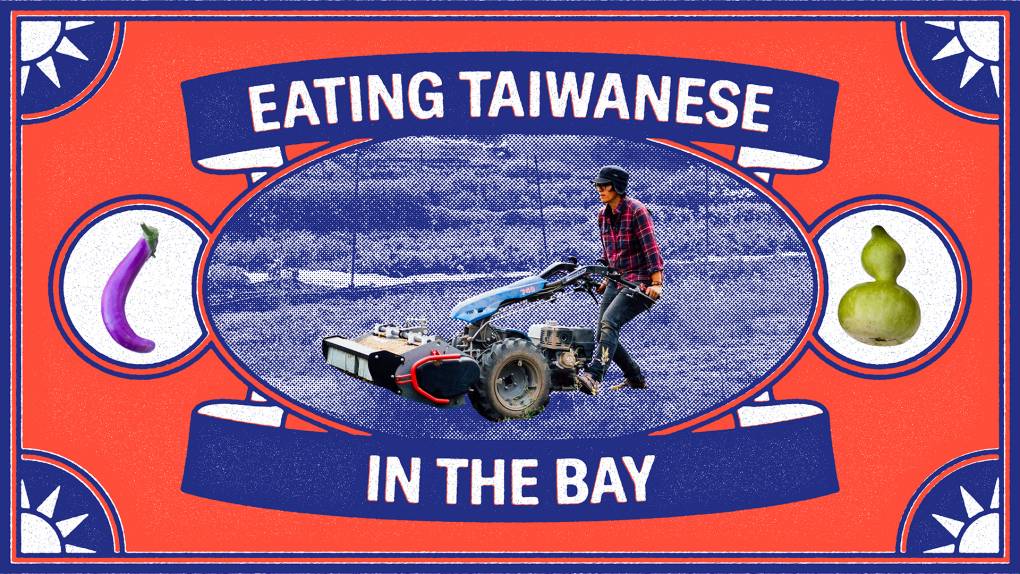
window.__IS_SSR__=true
window.__INITIAL_STATE__={
"attachmentsReducer": {
"audio_0": {
"type": "attachments",
"id": "audio_0",
"imgSizes": {
"kqedFullSize": {
"file": "https://ww2.kqed.org/news/wp-content/themes/KQED-unified/img/audio_bgs/background0.jpg"
}
}
},
"audio_1": {
"type": "attachments",
"id": "audio_1",
"imgSizes": {
"kqedFullSize": {
"file": "https://ww2.kqed.org/news/wp-content/themes/KQED-unified/img/audio_bgs/background1.jpg"
}
}
},
"audio_2": {
"type": "attachments",
"id": "audio_2",
"imgSizes": {
"kqedFullSize": {
"file": "https://ww2.kqed.org/news/wp-content/themes/KQED-unified/img/audio_bgs/background2.jpg"
}
}
},
"audio_3": {
"type": "attachments",
"id": "audio_3",
"imgSizes": {
"kqedFullSize": {
"file": "https://ww2.kqed.org/news/wp-content/themes/KQED-unified/img/audio_bgs/background3.jpg"
}
}
},
"audio_4": {
"type": "attachments",
"id": "audio_4",
"imgSizes": {
"kqedFullSize": {
"file": "https://ww2.kqed.org/news/wp-content/themes/KQED-unified/img/audio_bgs/background4.jpg"
}
}
},
"placeholder": {
"type": "attachments",
"id": "placeholder",
"imgSizes": {
"thumbnail": {
"file": "https://cdn.kqed.org/wp-content/uploads/2024/12/KQED-Default-Image-816638274-2000x1333-1-160x107.jpg",
"width": 160,
"height": 107,
"mimeType": "image/jpeg"
},
"medium": {
"file": "https://cdn.kqed.org/wp-content/uploads/2024/12/KQED-Default-Image-816638274-2000x1333-1-800x533.jpg",
"width": 800,
"height": 533,
"mimeType": "image/jpeg"
},
"medium_large": {
"file": "https://cdn.kqed.org/wp-content/uploads/2024/12/KQED-Default-Image-816638274-2000x1333-1-768x512.jpg",
"width": 768,
"height": 512,
"mimeType": "image/jpeg"
},
"large": {
"file": "https://cdn.kqed.org/wp-content/uploads/2024/12/KQED-Default-Image-816638274-2000x1333-1-1020x680.jpg",
"width": 1020,
"height": 680,
"mimeType": "image/jpeg"
},
"1536x1536": {
"file": "https://cdn.kqed.org/wp-content/uploads/2024/12/KQED-Default-Image-816638274-2000x1333-1-1536x1024.jpg",
"width": 1536,
"height": 1024,
"mimeType": "image/jpeg"
},
"fd-lrg": {
"file": "https://cdn.kqed.org/wp-content/uploads/2024/12/KQED-Default-Image-816638274-2000x1333-1-1536x1024.jpg",
"width": 1536,
"height": 1024,
"mimeType": "image/jpeg"
},
"fd-med": {
"file": "https://cdn.kqed.org/wp-content/uploads/2024/12/KQED-Default-Image-816638274-2000x1333-1-1020x680.jpg",
"width": 1020,
"height": 680,
"mimeType": "image/jpeg"
},
"fd-sm": {
"file": "https://cdn.kqed.org/wp-content/uploads/2024/12/KQED-Default-Image-816638274-2000x1333-1-800x533.jpg",
"width": 800,
"height": 533,
"mimeType": "image/jpeg"
},
"post-thumbnail": {
"file": "https://cdn.kqed.org/wp-content/uploads/2024/12/KQED-Default-Image-816638274-2000x1333-1-672x372.jpg",
"width": 672,
"height": 372,
"mimeType": "image/jpeg"
},
"twentyfourteen-full-width": {
"file": "https://cdn.kqed.org/wp-content/uploads/2024/12/KQED-Default-Image-816638274-2000x1333-1-1038x576.jpg",
"width": 1038,
"height": 576,
"mimeType": "image/jpeg"
},
"xxsmall": {
"file": "https://cdn.kqed.org/wp-content/uploads/2024/12/KQED-Default-Image-816638274-2000x1333-1-160x107.jpg",
"width": 160,
"height": 107,
"mimeType": "image/jpeg"
},
"xsmall": {
"file": "https://cdn.kqed.org/wp-content/uploads/2024/12/KQED-Default-Image-816638274-2000x1333-1-672x372.jpg",
"width": 672,
"height": 372,
"mimeType": "image/jpeg"
},
"small": {
"file": "https://cdn.kqed.org/wp-content/uploads/2024/12/KQED-Default-Image-816638274-2000x1333-1-672x372.jpg",
"width": 672,
"height": 372,
"mimeType": "image/jpeg"
},
"xlarge": {
"file": "https://cdn.kqed.org/wp-content/uploads/2024/12/KQED-Default-Image-816638274-2000x1333-1-1020x680.jpg",
"width": 1020,
"height": 680,
"mimeType": "image/jpeg"
},
"full-width": {
"file": "https://cdn.kqed.org/wp-content/uploads/2024/12/KQED-Default-Image-816638274-2000x1333-1-1920x1280.jpg",
"width": 1920,
"height": 1280,
"mimeType": "image/jpeg"
},
"guest-author-32": {
"file": "https://cdn.kqed.org/wp-content/uploads/2025/01/KQED-Default-Image-816638274-1333x1333-1-160x160.jpg",
"width": 32,
"height": 32,
"mimeType": "image/jpeg"
},
"guest-author-50": {
"file": "https://cdn.kqed.org/wp-content/uploads/2025/01/KQED-Default-Image-816638274-1333x1333-1-160x160.jpg",
"width": 50,
"height": 50,
"mimeType": "image/jpeg"
},
"guest-author-64": {
"file": "https://cdn.kqed.org/wp-content/uploads/2025/01/KQED-Default-Image-816638274-1333x1333-1-160x160.jpg",
"width": 64,
"height": 64,
"mimeType": "image/jpeg"
},
"guest-author-96": {
"file": "https://cdn.kqed.org/wp-content/uploads/2025/01/KQED-Default-Image-816638274-1333x1333-1-160x160.jpg",
"width": 96,
"height": 96,
"mimeType": "image/jpeg"
},
"guest-author-128": {
"file": "https://cdn.kqed.org/wp-content/uploads/2025/01/KQED-Default-Image-816638274-1333x1333-1-160x160.jpg",
"width": 128,
"height": 128,
"mimeType": "image/jpeg"
},
"detail": {
"file": "https://cdn.kqed.org/wp-content/uploads/2025/01/KQED-Default-Image-816638274-1333x1333-1-160x160.jpg",
"width": 160,
"height": 160,
"mimeType": "image/jpeg"
},
"kqedFullSize": {
"file": "https://cdn.kqed.org/wp-content/uploads/2024/12/KQED-Default-Image-816638274-2000x1333-1.jpg",
"width": 2000,
"height": 1333
}
}
},
"arts_13897762": {
"type": "attachments",
"id": "arts_13897762",
"meta": {
"index": "attachments_1716263798",
"site": "arts",
"id": "13897762",
"found": true
},
"parent": 13897752,
"imgSizes": {
"twentyfourteen-full-width": {
"file": "https://ww2.kqed.org/app/uploads/sites/2/2021/05/RadicalFamilyFarm_Feature-1038x576.jpg",
"width": 1038,
"mimeType": "image/jpeg",
"height": 576
},
"thumbnail": {
"file": "https://ww2.kqed.org/app/uploads/sites/2/2021/05/RadicalFamilyFarm_Feature-160x90.jpg",
"width": 160,
"mimeType": "image/jpeg",
"height": 90
},
"post-thumbnail": {
"file": "https://ww2.kqed.org/app/uploads/sites/2/2021/05/RadicalFamilyFarm_Feature-672x372.jpg",
"width": 672,
"mimeType": "image/jpeg",
"height": 372
},
"kqedFullSize": {
"file": "https://ww2.kqed.org/app/uploads/sites/2/2021/05/RadicalFamilyFarm_Feature.jpg",
"width": 1920,
"height": 1080
},
"large": {
"file": "https://ww2.kqed.org/app/uploads/sites/2/2021/05/RadicalFamilyFarm_Feature-1020x574.jpg",
"width": 1020,
"mimeType": "image/jpeg",
"height": 574
},
"1536x1536": {
"file": "https://ww2.kqed.org/app/uploads/sites/2/2021/05/RadicalFamilyFarm_Feature-1536x864.jpg",
"width": 1536,
"mimeType": "image/jpeg",
"height": 864
},
"medium": {
"file": "https://ww2.kqed.org/app/uploads/sites/2/2021/05/RadicalFamilyFarm_Feature-800x450.jpg",
"width": 800,
"mimeType": "image/jpeg",
"height": 450
},
"medium_large": {
"file": "https://ww2.kqed.org/app/uploads/sites/2/2021/05/RadicalFamilyFarm_Feature-768x432.jpg",
"width": 768,
"mimeType": "image/jpeg",
"height": 432
}
},
"publishDate": 1621891552,
"modified": 1621891688,
"caption": null,
"description": null,
"title": "RadicalFamilyFarm_Feature",
"credit": "Photo by Sarah Deragon; design by Rebecca Kao",
"status": "inherit",
"altTag": "Leslie Wiser pushes a plow; the image is inside a red-and-blue frame patterned after the Taiwanese flag.",
"isLoading": false,
"fetchFailed": false
},
"arts_13897661": {
"type": "attachments",
"id": "arts_13897661",
"meta": {
"index": "attachments_1716263798",
"site": "arts",
"id": "13897661",
"found": true
},
"parent": 13897650,
"imgSizes": {
"twentyfourteen-full-width": {
"file": "https://ww2.kqed.org/app/uploads/sites/2/2021/05/linda-lindas-1038x576.jpeg",
"width": 1038,
"mimeType": "image/jpeg",
"height": 576
},
"thumbnail": {
"file": "https://ww2.kqed.org/app/uploads/sites/2/2021/05/linda-lindas-160x90.jpeg",
"width": 160,
"mimeType": "image/jpeg",
"height": 90
},
"post-thumbnail": {
"file": "https://ww2.kqed.org/app/uploads/sites/2/2021/05/linda-lindas-672x372.jpeg",
"width": 672,
"mimeType": "image/jpeg",
"height": 372
},
"kqedFullSize": {
"file": "https://ww2.kqed.org/app/uploads/sites/2/2021/05/linda-lindas.jpeg",
"width": 1366,
"height": 770
},
"large": {
"file": "https://ww2.kqed.org/app/uploads/sites/2/2021/05/linda-lindas-1020x575.jpeg",
"width": 1020,
"mimeType": "image/jpeg",
"height": 575
},
"medium": {
"file": "https://ww2.kqed.org/app/uploads/sites/2/2021/05/linda-lindas-800x451.jpeg",
"width": 800,
"mimeType": "image/jpeg",
"height": 451
},
"medium_large": {
"file": "https://ww2.kqed.org/app/uploads/sites/2/2021/05/linda-lindas-768x433.jpeg",
"width": 768,
"mimeType": "image/jpeg",
"height": 433
}
},
"publishDate": 1621618984,
"modified": 1621619044,
"caption": "The Linda Lindas’ L.A. public library performance of their original song “Racist, Sexist Boys” is going viral. It struck a chord as communities figure out how to heal from recent anti-Asian violence.",
"description": "The Linda Lindas’ L.A. public library performance of their original song “Racist, Sexist Boys” is going viral. It struck a chord as communities figure out how to heal from recent anti-Asian violence.",
"title": "linda lindas",
"credit": "The Linda Lindas",
"status": "inherit",
"altTag": null,
"isLoading": false,
"fetchFailed": false
},
"arts_13895682": {
"type": "attachments",
"id": "arts_13895682",
"meta": {
"index": "attachments_1716263798",
"site": "arts",
"id": "13895682",
"found": true
},
"parent": 13895671,
"imgSizes": {
"twentyfourteen-full-width": {
"file": "https://ww2.kqed.org/app/uploads/sites/2/2021/04/Batista_COVER-1038x576.jpg",
"width": 1038,
"mimeType": "image/jpeg",
"height": 576
},
"thumbnail": {
"file": "https://ww2.kqed.org/app/uploads/sites/2/2021/04/Batista_COVER-160x90.jpg",
"width": 160,
"mimeType": "image/jpeg",
"height": 90
},
"post-thumbnail": {
"file": "https://ww2.kqed.org/app/uploads/sites/2/2021/04/Batista_COVER-672x372.jpg",
"width": 672,
"mimeType": "image/jpeg",
"height": 372
},
"kqedFullSize": {
"file": "https://ww2.kqed.org/app/uploads/sites/2/2021/04/Batista_COVER.jpg",
"width": 1802,
"height": 1014
},
"large": {
"file": "https://ww2.kqed.org/app/uploads/sites/2/2021/04/Batista_COVER-1020x574.jpg",
"width": 1020,
"mimeType": "image/jpeg",
"height": 574
},
"1536x1536": {
"file": "https://ww2.kqed.org/app/uploads/sites/2/2021/04/Batista_COVER-1536x864.jpg",
"width": 1536,
"mimeType": "image/jpeg",
"height": 864
},
"medium": {
"file": "https://ww2.kqed.org/app/uploads/sites/2/2021/04/Batista_COVER-800x450.jpg",
"width": 800,
"mimeType": "image/jpeg",
"height": 450
},
"medium_large": {
"file": "https://ww2.kqed.org/app/uploads/sites/2/2021/04/Batista_COVER-768x432.jpg",
"width": 768,
"mimeType": "image/jpeg",
"height": 432
}
},
"publishDate": 1618354424,
"modified": 1618354984,
"caption": "Visitors during the opening reception for Kapwa Gardens; the converted lot opens to the public on April 14.",
"description": "Visitors during the opening reception for Kapwa Gardens; the converted lot opens to the public on April 14.",
"title": "Batista_COVER",
"credit": "Alvaro Batista",
"status": "inherit",
"altTag": null,
"isLoading": false,
"fetchFailed": false
},
"arts_13894382": {
"type": "attachments",
"id": "arts_13894382",
"meta": {
"index": "attachments_1716263798",
"site": "arts",
"id": "13894382",
"found": true
},
"parent": 13894352,
"imgSizes": {
"twentyfourteen-full-width": {
"file": "https://ww2.kqed.org/app/uploads/sites/2/2021/03/Image-from-iOS-2-1038x576.jpg",
"width": 1038,
"mimeType": "image/jpeg",
"height": 576
},
"thumbnail": {
"file": "https://ww2.kqed.org/app/uploads/sites/2/2021/03/Image-from-iOS-2-160x107.jpg",
"width": 160,
"mimeType": "image/jpeg",
"height": 107
},
"post-thumbnail": {
"file": "https://ww2.kqed.org/app/uploads/sites/2/2021/03/Image-from-iOS-2-672x372.jpg",
"width": 672,
"mimeType": "image/jpeg",
"height": 372
},
"kqedFullSize": {
"file": "https://ww2.kqed.org/app/uploads/sites/2/2021/03/Image-from-iOS-2.jpg",
"width": 1620,
"height": 1080
},
"large": {
"file": "https://ww2.kqed.org/app/uploads/sites/2/2021/03/Image-from-iOS-2-1020x680.jpg",
"width": 1020,
"mimeType": "image/jpeg",
"height": 680
},
"1536x1536": {
"file": "https://ww2.kqed.org/app/uploads/sites/2/2021/03/Image-from-iOS-2-1536x1024.jpg",
"width": 1536,
"mimeType": "image/jpeg",
"height": 1024
},
"medium": {
"file": "https://ww2.kqed.org/app/uploads/sites/2/2021/03/Image-from-iOS-2-800x533.jpg",
"width": 800,
"mimeType": "image/jpeg",
"height": 533
},
"medium_large": {
"file": "https://ww2.kqed.org/app/uploads/sites/2/2021/03/Image-from-iOS-2-768x512.jpg",
"width": 768,
"mimeType": "image/jpeg",
"height": 512
}
},
"publishDate": 1616439656,
"modified": 1621550362,
"caption": "A group of demonstrators hold signs that say, “Stop Asian Hate” during a vigil and rally in San Francisco’s Chinatown on March 20, 2021.",
"description": null,
"title": "Image from iOS (2)",
"credit": "Beth LaBerge/KQED",
"status": "inherit",
"altTag": null,
"isLoading": false,
"fetchFailed": false
},
"arts_13892567": {
"type": "attachments",
"id": "arts_13892567",
"meta": {
"index": "attachments_1716263798",
"site": "arts",
"id": "13892567",
"found": true
},
"parent": 13892437,
"imgSizes": {
"twentyfourteen-full-width": {
"file": "https://ww2.kqed.org/app/uploads/sites/2/2021/02/Screen-Shot-2021-02-10-at-12.08.09-PM-1038x576.png",
"width": 1038,
"mimeType": "image/png",
"height": 576
},
"thumbnail": {
"file": "https://ww2.kqed.org/app/uploads/sites/2/2021/02/Screen-Shot-2021-02-10-at-12.08.09-PM-160x89.png",
"width": 160,
"mimeType": "image/png",
"height": 89
},
"post-thumbnail": {
"file": "https://ww2.kqed.org/app/uploads/sites/2/2021/02/Screen-Shot-2021-02-10-at-12.08.09-PM-672x372.png",
"width": 672,
"mimeType": "image/png",
"height": 372
},
"kqedFullSize": {
"file": "https://ww2.kqed.org/app/uploads/sites/2/2021/02/Screen-Shot-2021-02-10-at-12.08.09-PM.png",
"width": 1398,
"height": 782
},
"large": {
"file": "https://ww2.kqed.org/app/uploads/sites/2/2021/02/Screen-Shot-2021-02-10-at-12.08.09-PM-1020x571.png",
"width": 1020,
"mimeType": "image/png",
"height": 571
},
"medium": {
"file": "https://ww2.kqed.org/app/uploads/sites/2/2021/02/Screen-Shot-2021-02-10-at-12.08.09-PM-800x447.png",
"width": 800,
"mimeType": "image/png",
"height": 447
},
"medium_large": {
"file": "https://ww2.kqed.org/app/uploads/sites/2/2021/02/Screen-Shot-2021-02-10-at-12.08.09-PM-768x430.png",
"width": 768,
"mimeType": "image/png",
"height": 430
}
},
"publishDate": 1612987738,
"modified": 1612987789,
"caption": "Recent attacks on Asian elders in Oakland and San Francisco have spurred volunteering, fundraising and other mutual aid efforts for public safety.",
"description": "Recent attacks on Asian elders in Oakland and San Francisco have spurred volunteering, fundraising and other mutual aid efforts for public safety.",
"title": "Screen Shot 2021-02-10 at 12.08.09 PM",
"credit": "Eda Yu and Myles Thompson",
"status": "inherit",
"altTag": null,
"isLoading": false,
"fetchFailed": false
},
"arts_13887463": {
"type": "attachments",
"id": "arts_13887463",
"meta": {
"index": "attachments_1716263798",
"site": "arts",
"id": "13887463",
"found": true
},
"parent": 13887169,
"imgSizes": {
"thumbnail": {
"file": "https://ww2.kqed.org/app/uploads/sites/2/2020/10/RubyIbarra.MAIN_-160x90.jpg",
"width": 160,
"mimeType": "image/jpeg",
"height": 90
},
"post-thumbnail": {
"file": "https://ww2.kqed.org/app/uploads/sites/2/2020/10/RubyIbarra.MAIN_-672x372.jpg",
"width": 672,
"mimeType": "image/jpeg",
"height": 372
},
"kqedFullSize": {
"file": "https://ww2.kqed.org/app/uploads/sites/2/2020/10/RubyIbarra.MAIN_.jpg",
"width": 800,
"height": 450
},
"medium_large": {
"file": "https://ww2.kqed.org/app/uploads/sites/2/2020/10/RubyIbarra.MAIN_-768x432.jpg",
"width": 768,
"mimeType": "image/jpeg",
"height": 432
}
},
"publishDate": 1601941125,
"modified": 1601941148,
"caption": "\"What's at stake is everybody's lives. Everybody's safety,\" Ruby Ibarra says of the politicization of the COVID-19 pandemic.",
"description": "\"What's at stake is everybody's lives. Everybody's safety,\" Ruby Ibarra says of the politicization of the COVID-19 pandemic.",
"title": "RubyIbarra.MAIN",
"credit": "Estefany Gonzalez",
"status": "inherit",
"isLoading": false,
"fetchFailed": false
},
"arts_13884872": {
"type": "attachments",
"id": "arts_13884872",
"meta": {
"index": "attachments_1716263798",
"site": "arts",
"id": "13884872",
"found": true
},
"parent": 13884863,
"imgSizes": {
"twentyfourteen-full-width": {
"file": "https://ww2.kqed.org/app/uploads/sites/2/2020/08/CAAMFilmmakers_COVER-1038x576.jpg",
"width": 1038,
"mimeType": "image/jpeg",
"height": 576
},
"thumbnail": {
"file": "https://ww2.kqed.org/app/uploads/sites/2/2020/08/CAAMFilmmakers_COVER-160x90.jpg",
"width": 160,
"mimeType": "image/jpeg",
"height": 90
},
"post-thumbnail": {
"file": "https://ww2.kqed.org/app/uploads/sites/2/2020/08/CAAMFilmmakers_COVER-672x372.jpg",
"width": 672,
"mimeType": "image/jpeg",
"height": 372
},
"kqedFullSize": {
"file": "https://ww2.kqed.org/app/uploads/sites/2/2020/08/CAAMFilmmakers_COVER.jpg",
"width": 1920,
"height": 1080
},
"large": {
"file": "https://ww2.kqed.org/app/uploads/sites/2/2020/08/CAAMFilmmakers_COVER-1020x574.jpg",
"width": 1020,
"mimeType": "image/jpeg",
"height": 574
},
"1536x1536": {
"file": "https://ww2.kqed.org/app/uploads/sites/2/2020/08/CAAMFilmmakers_COVER-1536x864.jpg",
"width": 1536,
"mimeType": "image/jpeg",
"height": 864
},
"medium": {
"file": "https://ww2.kqed.org/app/uploads/sites/2/2020/08/CAAMFilmmakers_COVER-800x450.jpg",
"width": 800,
"mimeType": "image/jpeg",
"height": 450
},
"medium_large": {
"file": "https://ww2.kqed.org/app/uploads/sites/2/2020/08/CAAMFilmmakers_COVER-768x432.jpg",
"width": 768,
"mimeType": "image/jpeg",
"height": 432
}
},
"publishDate": 1597443700,
"modified": 1597443738,
"caption": "Funds for the emergency grants come from the Sundance Institute.",
"description": "Funds for the emergency grants come from the Sundance Institute.",
"title": "CAAMFilmmakers_COVER",
"credit": "iStock",
"status": "inherit",
"isLoading": false,
"fetchFailed": false
},
"arts_13878109": {
"type": "attachments",
"id": "arts_13878109",
"meta": {
"index": "attachments_1716263798",
"site": "arts",
"id": "13878109",
"found": true
},
"parent": 0,
"imgSizes": {
"twentyfourteen-full-width": {
"file": "https://ww2.kqed.org/app/uploads/sites/2/2020/04/RuthAsawaStamps.3-1038x576.jpg",
"width": 1038,
"mimeType": "image/jpeg",
"height": 576
},
"thumbnail": {
"file": "https://ww2.kqed.org/app/uploads/sites/2/2020/04/RuthAsawaStamps.3-160x90.jpg",
"width": 160,
"mimeType": "image/jpeg",
"height": 90
},
"post-thumbnail": {
"file": "https://ww2.kqed.org/app/uploads/sites/2/2020/04/RuthAsawaStamps.3-672x372.jpg",
"width": 672,
"mimeType": "image/jpeg",
"height": 372
},
"kqedFullSize": {
"file": "https://ww2.kqed.org/app/uploads/sites/2/2020/04/RuthAsawaStamps.3.jpg",
"width": 1920,
"height": 1080
},
"large": {
"file": "https://ww2.kqed.org/app/uploads/sites/2/2020/04/RuthAsawaStamps.3-1020x574.jpg",
"width": 1020,
"mimeType": "image/jpeg",
"height": 574
},
"full-width": {
"file": "https://ww2.kqed.org/app/uploads/sites/2/2020/04/RuthAsawaStamps.3-1920x1080.jpg",
"width": 1920,
"mimeType": "image/jpeg",
"height": 1080
},
"medium": {
"file": "https://ww2.kqed.org/app/uploads/sites/2/2020/04/RuthAsawaStamps.3-800x450.jpg",
"width": 800,
"mimeType": "image/jpeg",
"height": 450
},
"medium_large": {
"file": "https://ww2.kqed.org/app/uploads/sites/2/2020/04/RuthAsawaStamps.3-768x432.jpg",
"width": 768,
"mimeType": "image/jpeg",
"height": 432
}
},
"publishDate": 1585940423,
"modified": 1585943315,
"caption": "Three of the 20 stamps planned by the United States Postal Service to commemorate San Francisco-based artist Ruth Asawa.",
"description": "Three of the 20 stamps planned by the United States Postal Service to commemorate San Francisco-based artist Ruth Asawa.",
"title": "RuthAsawaStamps.3",
"credit": "USPS",
"status": "inherit",
"isLoading": false,
"fetchFailed": false
},
"arts_13882514": {
"type": "attachments",
"id": "arts_13882514",
"meta": {
"index": "attachments_1716263798",
"site": "arts",
"id": "13882514",
"found": true
},
"parent": 13882499,
"imgSizes": {
"twentyfourteen-full-width": {
"file": "https://ww2.kqed.org/app/uploads/sites/2/2020/06/2E98EEAB-3ECB-4F5B-8B6B-830D0D9112DE-1038x576.jpeg",
"width": 1038,
"mimeType": "image/jpeg",
"height": 576
},
"thumbnail": {
"file": "https://ww2.kqed.org/app/uploads/sites/2/2020/06/2E98EEAB-3ECB-4F5B-8B6B-830D0D9112DE-160x90.jpeg",
"width": 160,
"mimeType": "image/jpeg",
"height": 90
},
"post-thumbnail": {
"file": "https://ww2.kqed.org/app/uploads/sites/2/2020/06/2E98EEAB-3ECB-4F5B-8B6B-830D0D9112DE-672x372.jpeg",
"width": 672,
"mimeType": "image/jpeg",
"height": 372
},
"kqedFullSize": {
"file": "https://ww2.kqed.org/app/uploads/sites/2/2020/06/2E98EEAB-3ECB-4F5B-8B6B-830D0D9112DE.jpeg",
"width": 1920,
"height": 1080
},
"large": {
"file": "https://ww2.kqed.org/app/uploads/sites/2/2020/06/2E98EEAB-3ECB-4F5B-8B6B-830D0D9112DE-1020x574.jpeg",
"width": 1020,
"mimeType": "image/jpeg",
"height": 574
},
"1536x1536": {
"file": "https://ww2.kqed.org/app/uploads/sites/2/2020/06/2E98EEAB-3ECB-4F5B-8B6B-830D0D9112DE-1536x864.jpeg",
"width": 1536,
"mimeType": "image/jpeg",
"height": 864
},
"medium": {
"file": "https://ww2.kqed.org/app/uploads/sites/2/2020/06/2E98EEAB-3ECB-4F5B-8B6B-830D0D9112DE-800x450.jpeg",
"width": 800,
"mimeType": "image/jpeg",
"height": 450
},
"medium_large": {
"file": "https://ww2.kqed.org/app/uploads/sites/2/2020/06/2E98EEAB-3ECB-4F5B-8B6B-830D0D9112DE-768x432.jpeg",
"width": 768,
"mimeType": "image/jpeg",
"height": 432
}
},
"publishDate": 1593041418,
"modified": 1593041483,
"caption": "Activists at a Black Lives Matter solidarity event in Chinatown in San Francisco.",
"description": "Activists at a Black Lives Matter solidarity event in Chinatown in San Francisco.",
"title": "2E98EEAB-3ECB-4F5B-8B6B-830D0D9112DE",
"credit": "Courtesy of James Q. Chan",
"status": "inherit",
"isLoading": false,
"fetchFailed": false
},
"arts_13880464": {
"type": "attachments",
"id": "arts_13880464",
"meta": {
"index": "attachments_1716263798",
"site": "arts",
"id": "13880464",
"found": true
},
"parent": 13880441,
"imgSizes": {
"twentyfourteen-full-width": {
"file": "https://ww2.kqed.org/app/uploads/sites/2/2020/05/Artboard-11@2x-copy-1038x576.jpg",
"width": 1038,
"mimeType": "image/jpeg",
"height": 576
},
"thumbnail": {
"file": "https://ww2.kqed.org/app/uploads/sites/2/2020/05/Artboard-11@2x-copy-160x90.jpg",
"width": 160,
"mimeType": "image/jpeg",
"height": 90
},
"post-thumbnail": {
"file": "https://ww2.kqed.org/app/uploads/sites/2/2020/05/Artboard-11@2x-copy-672x372.jpg",
"width": 672,
"mimeType": "image/jpeg",
"height": 372
},
"kqedFullSize": {
"file": "https://ww2.kqed.org/app/uploads/sites/2/2020/05/Artboard-11@2x-copy.jpg",
"width": 1920,
"height": 1080
},
"large": {
"file": "https://ww2.kqed.org/app/uploads/sites/2/2020/05/Artboard-11@2x-copy-1020x574.jpg",
"width": 1020,
"mimeType": "image/jpeg",
"height": 574
},
"full-width": {
"file": "https://ww2.kqed.org/app/uploads/sites/2/2020/05/Artboard-11@2x-copy-1920x1080.jpg",
"width": 1920,
"mimeType": "image/jpeg",
"height": 1080
},
"medium": {
"file": "https://ww2.kqed.org/app/uploads/sites/2/2020/05/Artboard-11@2x-copy-800x450.jpg",
"width": 800,
"mimeType": "image/jpeg",
"height": 450
},
"medium_large": {
"file": "https://ww2.kqed.org/app/uploads/sites/2/2020/05/Artboard-11@2x-copy-768x432.jpg",
"width": 768,
"mimeType": "image/jpeg",
"height": 432
}
},
"publishDate": 1589482458,
"modified": 1589482698,
"caption": "Many Asian-American artists feel a calling to make explicitly political art that pushes back against racism during the pandemic, continuing a legacy of protest art that began in the 1960s. ",
"description": "Asian-American artists have felt a calling to make explicitly political art that pushes back against xenophobia during the pandemic. ",
"title": "Artboard 11@2x copy",
"credit": "Eda Yu, Mashael Al Saie, Christine Oh",
"status": "inherit",
"isLoading": false,
"fetchFailed": false
},
"arts_13865047": {
"type": "attachments",
"id": "arts_13865047",
"meta": {
"index": "attachments_1716263798",
"site": "arts",
"id": "13865047",
"found": true
},
"parent": 13865038,
"imgSizes": {
"twentyfourteen-full-width": {
"file": "https://ww2.kqed.org/app/uploads/sites/2/2019/08/Masako_Final-1038x576.jpg",
"width": 1038,
"mimeType": "image/jpeg",
"height": 576
},
"thumbnail": {
"file": "https://ww2.kqed.org/app/uploads/sites/2/2019/08/Masako_Final-160x90.jpg",
"width": 160,
"mimeType": "image/jpeg",
"height": 90
},
"post-thumbnail": {
"file": "https://ww2.kqed.org/app/uploads/sites/2/2019/08/Masako_Final-672x372.jpg",
"width": 672,
"mimeType": "image/jpeg",
"height": 372
},
"kqedFullSize": {
"file": "https://ww2.kqed.org/app/uploads/sites/2/2019/08/Masako_Final.jpg",
"width": 1920,
"height": 1079
},
"large": {
"file": "https://ww2.kqed.org/app/uploads/sites/2/2019/08/Masako_Final-1020x573.jpg",
"width": 1020,
"mimeType": "image/jpeg",
"height": 573
},
"complete_open_graph": {
"file": "https://ww2.kqed.org/app/uploads/sites/2/2019/08/Masako_Final-1200x674.jpg",
"width": 1200,
"mimeType": "image/jpeg",
"height": 674
},
"full-width": {
"file": "https://ww2.kqed.org/app/uploads/sites/2/2019/08/Masako_Final-1920x1079.jpg",
"width": 1920,
"mimeType": "image/jpeg",
"height": 1079
},
"medium": {
"file": "https://ww2.kqed.org/app/uploads/sites/2/2019/08/Masako_Final-800x450.jpg",
"width": 800,
"mimeType": "image/jpeg",
"height": 450
},
"medium_large": {
"file": "https://ww2.kqed.org/app/uploads/sites/2/2019/08/Masako_Final-768x432.jpg",
"width": 768,
"mimeType": "image/jpeg",
"height": 432
}
},
"publishDate": 1566940975,
"modified": 1566940975,
"caption": null,
"description": null,
"title": "Masako_Final",
"credit": null,
"status": "inherit",
"isLoading": false,
"fetchFailed": false
},
"arts_13861568": {
"type": "attachments",
"id": "arts_13861568",
"meta": {
"index": "attachments_1716263798",
"site": "arts",
"id": "13861568",
"found": true
},
"parent": 13861567,
"imgSizes": {
"twentyfourteen-full-width": {
"file": "https://ww2.kqed.org/app/uploads/sites/2/2019/07/takei-af4b03b0b9294188e44d18766071370d43a1b8e7-1038x576.jpg",
"width": 1038,
"mimeType": "image/jpeg",
"height": 576
},
"thumbnail": {
"file": "https://ww2.kqed.org/app/uploads/sites/2/2019/07/takei-af4b03b0b9294188e44d18766071370d43a1b8e7-160x120.jpg",
"width": 160,
"mimeType": "image/jpeg",
"height": 120
},
"post-thumbnail": {
"file": "https://ww2.kqed.org/app/uploads/sites/2/2019/07/takei-af4b03b0b9294188e44d18766071370d43a1b8e7-672x372.jpg",
"width": 672,
"mimeType": "image/jpeg",
"height": 372
},
"kqedFullSize": {
"file": "https://ww2.kqed.org/app/uploads/sites/2/2019/07/takei-af4b03b0b9294188e44d18766071370d43a1b8e7.jpg",
"width": 1396,
"height": 1048
},
"large": {
"file": "https://ww2.kqed.org/app/uploads/sites/2/2019/07/takei-af4b03b0b9294188e44d18766071370d43a1b8e7-1020x766.jpg",
"width": 1020,
"mimeType": "image/jpeg",
"height": 766
},
"complete_open_graph": {
"file": "https://ww2.kqed.org/app/uploads/sites/2/2019/07/takei-af4b03b0b9294188e44d18766071370d43a1b8e7-1200x901.jpg",
"width": 1200,
"mimeType": "image/jpeg",
"height": 901
},
"medium": {
"file": "https://ww2.kqed.org/app/uploads/sites/2/2019/07/takei-af4b03b0b9294188e44d18766071370d43a1b8e7-800x601.jpg",
"width": 800,
"mimeType": "image/jpeg",
"height": 601
},
"medium_large": {
"file": "https://ww2.kqed.org/app/uploads/sites/2/2019/07/takei-af4b03b0b9294188e44d18766071370d43a1b8e7-768x577.jpg",
"width": 768,
"mimeType": "image/jpeg",
"height": 577
}
},
"publishDate": 1563386264,
"modified": 1563386303,
"caption": "They Called Us Enemy, by George Takei",
"description": "'They Called Us Enemy,' by George Takei",
"title": "They Called Us Enemy, by George Takei",
"credit": null,
"status": "inherit",
"isLoading": false,
"fetchFailed": false
}
},
"audioPlayerReducer": {
"postId": "stream_live",
"isPaused": true,
"isPlaying": false,
"pfsActive": false,
"pledgeModalIsOpen": true,
"playerDrawerIsOpen": false,
"liveAudioPlayStartedAt": 0,
"liveAudioPlayContext": ""
},
"authorsReducer": {
"byline_arts_13895671": {
"type": "authors",
"id": "byline_arts_13895671",
"meta": {
"override": true
},
"slug": "byline_arts_13895671",
"name": "Amyra Soriano",
"isLoading": false
},
"byline_arts_13894352": {
"type": "authors",
"id": "byline_arts_13894352",
"meta": {
"override": true
},
"slug": "byline_arts_13894352",
"name": "Christine Bumatay",
"isLoading": false
},
"byline_arts_13865038": {
"type": "authors",
"id": "byline_arts_13865038",
"meta": {
"override": true
},
"slug": "byline_arts_13865038",
"name": "Rachel Boyoung Kim",
"isLoading": false
},
"byline_arts_13861567": {
"type": "authors",
"id": "byline_arts_13861567",
"meta": {
"override": true
},
"slug": "byline_arts_13861567",
"name": "Etelka Lehoczky",
"isLoading": false
},
"shotchkiss": {
"type": "authors",
"id": "61",
"meta": {
"index": "authors_1716337520",
"id": "61",
"found": true
},
"name": "Sarah Hotchkiss",
"firstName": "Sarah",
"lastName": "Hotchkiss",
"slug": "shotchkiss",
"email": "shotchkiss@kqed.org",
"display_author_email": true,
"staff_mastheads": [
"arts"
],
"title": "Senior Editor",
"bio": "Sarah Hotchkiss is a San Francisco \u003ca href=\"http://www.sarahhotchkiss.com\">artist\u003c/a> and arts writer. In 2019, she received the Dorothea & Leo Rabkin Foundation grant for visual art journalism and in 2020 she received a Society of Professional Journalists, Northern California award for excellence in arts and culture reporting.",
"avatar": "https://secure.gravatar.com/avatar/bc662df144b3d27fd8b1b6f1c2a420d34e91e53154d411bb7ad353cc8b6cea8d?s=600&d=blank&r=g",
"twitter": null,
"bluesky": null,
"facebook": null,
"instagram": null,
"linkedin": null,
"sites": [
{
"site": "",
"roles": [
"editor"
]
},
{
"site": "arts",
"roles": [
"Contributor",
"administrator"
]
},
{
"site": "artschool",
"roles": [
"administrator"
]
},
{
"site": "news",
"roles": [
"editor"
]
},
{
"site": "pop",
"roles": [
"administrator"
]
},
{
"site": "bayareabites",
"roles": [
"editor"
]
},
{
"site": "spark",
"roles": [
"editor"
]
},
{
"site": "checkplease",
"roles": [
"editor"
]
}
],
"headData": {
"title": "Sarah Hotchkiss | KQED",
"description": "Senior Editor",
"ogImgSrc": "https://secure.gravatar.com/avatar/bc662df144b3d27fd8b1b6f1c2a420d34e91e53154d411bb7ad353cc8b6cea8d?s=600&d=blank&r=g",
"twImgSrc": "https://secure.gravatar.com/avatar/bc662df144b3d27fd8b1b6f1c2a420d34e91e53154d411bb7ad353cc8b6cea8d?s=600&d=blank&r=g"
},
"isLoading": false,
"link": "/author/shotchkiss"
},
"gmeline": {
"type": "authors",
"id": "185",
"meta": {
"index": "authors_1716337520",
"id": "185",
"found": true
},
"name": "Gabe Meline",
"firstName": "Gabe",
"lastName": "Meline",
"slug": "gmeline",
"email": "gmeline@kqed.org",
"display_author_email": true,
"staff_mastheads": [
"arts"
],
"title": "Senior Editor, KQED Arts & Culture",
"bio": "Gabe Meline entered journalism at age 15 making photocopied zines, and has since earned awards from the Edward R. Murrow Awards, the Society for Professional Journalists, the Online Journalism Awards, the Association of Alternative Newsweeklies and the California Newspaper Publishers Association. Prior to KQED, he was the editor of the \u003cem>North Bay Bohemian\u003c/em> and a touring musician. He lives with his wife and daughter in his hometown of Santa Rosa, CA.",
"avatar": "https://secure.gravatar.com/avatar/5bebe57be0d8bc2dd318934feb47299e2d2d10cba28d09d8d7afb389a2ce2bdd?s=600&d=blank&r=g",
"twitter": null,
"bluesky": null,
"facebook": null,
"instagram": null,
"linkedin": null,
"sites": [
{
"site": "",
"roles": [
"editor"
]
},
{
"site": "arts",
"roles": [
"administrator"
]
},
{
"site": "artschool",
"roles": [
"editor"
]
},
{
"site": "news",
"roles": [
"author"
]
},
{
"site": "pop",
"roles": [
"editor"
]
},
{
"site": "bayareabites",
"roles": [
"editor"
]
},
{
"site": "food",
"roles": [
"editor"
]
},
{
"site": "forum",
"roles": [
"administrator"
]
},
{
"site": "liveblog",
"roles": [
"editor"
]
},
{
"site": "hiphop",
"roles": [
"editor"
]
}
],
"headData": {
"title": "Gabe Meline | KQED",
"description": "Senior Editor, KQED Arts & Culture",
"ogImgSrc": "https://secure.gravatar.com/avatar/5bebe57be0d8bc2dd318934feb47299e2d2d10cba28d09d8d7afb389a2ce2bdd?s=600&d=blank&r=g",
"twImgSrc": "https://secure.gravatar.com/avatar/5bebe57be0d8bc2dd318934feb47299e2d2d10cba28d09d8d7afb389a2ce2bdd?s=600&d=blank&r=g"
},
"isLoading": false,
"link": "/author/gmeline"
},
"nvoynovskaya": {
"type": "authors",
"id": "11387",
"meta": {
"index": "authors_1716337520",
"id": "11387",
"found": true
},
"name": "Nastia Voynovskaya",
"firstName": "Nastia",
"lastName": "Voynovskaya",
"slug": "nvoynovskaya",
"email": "nvoynovskaya@kqed.org",
"display_author_email": false,
"staff_mastheads": [
"arts"
],
"title": "Editor and reporter",
"bio": "Nastia Voynovskaya is a reporter, editor and host at KQED Arts & Culture. She's been covering the arts in the Bay Area for over a decade, with a focus on music, queer culture, labor issues and grassroots organizing. She has edited KQED story series such as Trans Bay: A History of San Francisco's Gender-Diverse Community, and co-created KQED's Bay Area hip-hop history project, That's My Word. Nastia's work has been recognized by the Society of Professional Journalists and San Francisco Press Club. She regularly appears on podcasts and radio programs, including NPR's All Songs Considered, and hosts live events where music, culture and conversation meet.",
"avatar": "https://secure.gravatar.com/avatar/5025ee460e5a85d69ca20ea6c6f2f80d7e17795c828f61ea3aecfcd924e9042e?s=600&d=blank&r=g",
"twitter": null,
"bluesky": null,
"facebook": null,
"instagram": "https://www.instagram.com/nananastia/",
"linkedin": null,
"sites": [
{
"site": "",
"roles": [
"editor"
]
},
{
"site": "arts",
"roles": [
"administrator"
]
},
{
"site": "news",
"roles": [
"editor"
]
},
{
"site": "pop",
"roles": [
"administrator"
]
},
{
"site": "bayareabites",
"roles": [
"editor"
]
},
{
"site": "podcasts",
"roles": [
"editor"
]
},
{
"site": "hiphop",
"roles": [
"editor"
]
}
],
"headData": {
"title": "Nastia Voynovskaya | KQED",
"description": "Editor and reporter",
"ogImgSrc": "https://secure.gravatar.com/avatar/5025ee460e5a85d69ca20ea6c6f2f80d7e17795c828f61ea3aecfcd924e9042e?s=600&d=blank&r=g",
"twImgSrc": "https://secure.gravatar.com/avatar/5025ee460e5a85d69ca20ea6c6f2f80d7e17795c828f61ea3aecfcd924e9042e?s=600&d=blank&r=g"
},
"isLoading": false,
"link": "/author/nvoynovskaya"
},
"edayu": {
"type": "authors",
"id": "11391",
"meta": {
"index": "authors_1716337520",
"id": "11391",
"found": true
},
"name": "Eda Yu",
"firstName": "Eda",
"lastName": "Yu",
"slug": "edayu",
"email": "eda.cyu@gmail.com",
"display_author_email": false,
"staff_mastheads": [],
"title": "KQED Contributor",
"bio": "Eda Yu is a freelance writer and arts and culture journalist born and raised in Los Angeles, California. Her work centers the intersection of culture and identity, and her writing has appeared on platforms like VICE, Paper Magazine, and Complex. Follow her latest on Instagram and Twitter @edacyu.",
"avatar": "https://secure.gravatar.com/avatar/6dac2abe6c01e7b538d29f9c902136eb?s=600&d=blank&r=g",
"twitter": null,
"facebook": null,
"instagram": "https://www.instagram.com/edacyu/",
"linkedin": null,
"sites": [
{
"site": "arts",
"roles": [
"contributor"
]
}
],
"headData": {
"title": "Eda Yu | KQED",
"description": "KQED Contributor",
"ogImgSrc": "https://secure.gravatar.com/avatar/6dac2abe6c01e7b538d29f9c902136eb?s=600&d=blank&r=g",
"twImgSrc": "https://secure.gravatar.com/avatar/6dac2abe6c01e7b538d29f9c902136eb?s=600&d=blank&r=g"
},
"isLoading": false,
"link": "/author/edayu"
},
"mchang": {
"type": "authors",
"id": "11754",
"meta": {
"index": "authors_1716337520",
"id": "11754",
"found": true
},
"name": "Momo Chang",
"firstName": "Momo",
"lastName": "Chang",
"slug": "mchang",
"email": "momo.y.chang@gmail.com",
"display_author_email": false,
"staff_mastheads": [],
"title": "KQED Contributor",
"bio": null,
"avatar": "https://secure.gravatar.com/avatar/97d239ae67c3d897c07cb6813dcda359?s=600&d=blank&r=g",
"twitter": null,
"facebook": null,
"instagram": null,
"linkedin": null,
"sites": [
{
"site": "arts",
"roles": [
"contributor"
]
}
],
"headData": {
"title": "Momo Chang | KQED",
"description": "KQED Contributor",
"ogImgSrc": "https://secure.gravatar.com/avatar/97d239ae67c3d897c07cb6813dcda359?s=600&d=blank&r=g",
"twImgSrc": "https://secure.gravatar.com/avatar/97d239ae67c3d897c07cb6813dcda359?s=600&d=blank&r=g"
},
"isLoading": false,
"link": "/author/mchang"
}
},
"pagesReducer": {
"arts_tag_asian-american": {
"type": "terms",
"id": "arts_4672",
"meta": {
"index": "terms_1716263798",
"site": "arts",
"id": "4672",
"score": 8.79375
},
"featImg": null,
"name": "Asian American",
"description": null,
"taxonomy": "tag",
"headData": {
"twImgId": null,
"twTitle": null,
"ogTitle": null,
"ogImgId": null,
"twDescription": null,
"description": null,
"title": "Asian American Archives | KQED Arts",
"ogDescription": null
},
"ttid": 4684,
"slug": "asian-american",
"isLoading": false,
"title": "Asian American",
"pageMeta": {
"site": "arts",
"WpPageTemplate": "page-topic-editorial",
"currentPage": 5
},
"blocks": [
{
"blockName": "kqed/post-list",
"attrs": {
"layout": "cardArticle2",
"query": "posts/arts?tag=asian-american",
"seeMore": false,
"paginated": true,
"page": 5
}
},
{
"blockName": "kqed/ad"
}
]
}
},
"pfsSessionReducer": {},
"postsReducer": {
"stream_live": {
"type": "live",
"id": "stream_live",
"audioUrl": "https://streams.kqed.org/kqedradio",
"title": "Live Stream",
"excerpt": "Live Stream information currently unavailable.",
"link": "/radio",
"featImg": "",
"label": {
"name": "KQED Live",
"link": "/"
}
},
"stream_kqedNewscast": {
"type": "posts",
"id": "stream_kqedNewscast",
"audioUrl": "https://www.kqed.org/.stream/anon/radio/RDnews/newscast.mp3?_=1",
"title": "KQED Newscast",
"featImg": "",
"label": {
"name": "88.5 FM",
"link": "/"
}
},
"arts_13897752": {
"type": "posts",
"id": "arts_13897752",
"meta": {
"index": "posts_1716263798",
"site": "arts",
"id": "13897752",
"score": null,
"sort": [
1621958445000
]
},
"parent": 0,
"labelTerm": {},
"blocks": [],
"publishDate": 1621958445,
"format": "aside",
"title": "Growing Asian Produce Helped This Sonoma Farmer Connect With Her Taiwanese Heritage",
"headTitle": "Growing Asian Produce Helped This Sonoma Farmer Connect With Her Taiwanese Heritage | KQED",
"content": "\u003cfigure id=\"attachment_13897763\" class=\"wp-caption alignnone\" style=\"max-width: 1920px\">\u003cimg loading=\"lazy\" decoding=\"async\" class=\"size-full wp-image-13897763\" src=\"https://ww2.kqed.org/app/uploads/sites/2/2021/05/RadicalFamilyFarm_InArticle.jpg\" alt=\"Leslie Wiser pushes a plow in a field; the backdrop of the field is shaded blue.\" width=\"1920\" height=\"1277\" srcset=\"https://cdn.kqed.org/wp-content/uploads/sites/2/2021/05/RadicalFamilyFarm_InArticle.jpg 1920w, https://cdn.kqed.org/wp-content/uploads/sites/2/2021/05/RadicalFamilyFarm_InArticle-800x532.jpg 800w, https://cdn.kqed.org/wp-content/uploads/sites/2/2021/05/RadicalFamilyFarm_InArticle-1020x678.jpg 1020w, https://cdn.kqed.org/wp-content/uploads/sites/2/2021/05/RadicalFamilyFarm_InArticle-160x106.jpg 160w, https://cdn.kqed.org/wp-content/uploads/sites/2/2021/05/RadicalFamilyFarm_InArticle-768x511.jpg 768w, https://cdn.kqed.org/wp-content/uploads/sites/2/2021/05/RadicalFamilyFarm_InArticle-1536x1022.jpg 1536w\" sizes=\"(max-width: 1920px) 100vw, 1920px\">\u003cfigcaption class=\"wp-caption-text\">\u003cem>(Photo by Sarah Deragon; design by Rebecca Kao)\u003c/em>\u003c/figcaption>\u003c/figure>\n\u003cp>\u003cem>\u003ci data-stringify-type=\"italic\">KQED’s \u003c/i>\u003c/em>Eating Taiwanese in the Bay\u003cem>\u003ci data-stringify-type=\"italic\"> is a \u003ca href=\"https://www.kqed.org/eatingtaiwanese\">series of stories\u003c/a> exploring Taiwanese food culture in all of its glorious, delicious complexity.\u003c/i>\u003c/em>\u003c/p>\n\u003cp>\u003cspan style=\"font-weight: 400\">[dropcap]A[/dropcap]cross from a few sheep bleating and baaing behind a fence, rainbow pride and Black Lives Matter flags softly wave in the wind. A “Stop Asian Hate” poster is propped against a wall. Around the corner, the property opens up to a 1.5-acre farm filled with trellises of bitter melon, rows of napa cabbage, and hoophouses holding dozens of other Asian herbs and vegetables. All signs, perhaps, that this is a farm with a strong sense of its own identity. \u003c/span>\u003c/p>\n\u003cp>\u003cspan style=\"font-weight: 400\">But when Leslie Wiser founded Sebastopol’s Radical Family Farms in 2018, she didn’t necessarily feel very connected to her Taiwanese and Chinese heritage. Over the course of the past three years, however, she has become one of the go-to local farmers for Asian produce—and she’s learned a lot about her roots in the process. Wiser runs the farm, and her partner, Sarah Deragon, grows flowers there. It is, as Wiser describes it, a chemical-free, low-till small farm specializing in Asian heritage vegetables and herbs. Wiser says her Chinese-Taiwanese background informs her choices, and in turn, she is also giving back to the culture here in the Bay Area through farming, food and education.\u003c/span>\u003c/p>\n\u003cp>\u003cspan style=\"font-weight: 400\">“The farm has been great in terms of personal exploration of this side of me that I didn’t know about,” Wiser, who is in her early 40s, says. Her mom grew up in Taiwan as part of the generation of people who left mainland China during the Communist war (a group known, collectively, as “waishengren” or the “1949’ers”); her father’s side of the family is German and Polish-Jewish.\u003c/span>\u003c/p>\n\u003cp>\u003cspan style=\"font-weight: 400\">Growing up in the Midwest—in Chicago, Cleveland, Minnesota and Indiana—Wiser says she never celebrated Chinese or Taiwanese holidays such as Lunar New Year. Her family did hold on to a few aspects of Taiwanese culture, including ordering a thousand copies of \u003c/span>\u003ca href=\"https://sf.eater.com/2020/11/17/21570459/radical-family-farms-fu-pei-mei-chinese-cookbook-taiwan-cook-off\">\u003cspan style=\"font-weight: 400\">Fu Pei Mei’s popular cookbook from Taiwan in the early ’80s\u003c/span>\u003c/a>\u003cspan style=\"font-weight: 400\">, and her mom sometimes cooked Chinese dishes. By and large, though, Wiser didn’t have much contact with the Chinese and Taiwanese sides of her identity in her day-to-day life. Before growing them herself, she had never even tried some of the vegetables on the farm, such as bitter melon. \u003c/span>\u003c/p>\n\u003cp>[ad fullwidth]\u003c/p>\n\u003cp>\u003cspan style=\"font-weight: 400\">“[The farm is]…a way for me and my kids to hold on to our Asian heritage that has, for the most part, been assimilated,” notes Wiser, whose children have Chinese, Korean, Scandanavian, German and Polish-Jewish ancestry. \u003c/span>\u003c/p>\n\u003cp>\u003cspan style=\"font-weight: 400\">As for the “radical” in the farm’s name, Wiser says that’s a nod to her family story: Her parents married shortly after the Loving Act of 1967, during a time when interracial marriages in the Midwest were not the norm. Wiser, who is queer, is mixed race, as are her children, and the farm takes an intersectional stance on social justice issues—hence all of the flags waving proudly out front.\u003c/span>\u003c/p>\n\u003cfigure id=\"attachment_13897804\" class=\"wp-caption alignnone\" style=\"max-width: 1613px\">\u003cimg loading=\"lazy\" decoding=\"async\" class=\"size-full wp-image-13897804\" src=\"https://ww2.kqed.org/app/uploads/sites/2/2021/05/RadicalFamilyFarm_paigegreen.jpg\" alt=\"A family portrait of Leslie Wiser, her wife Sarah Deragon and their two children, standing in front of the lush green backdrop of their farm.\" width=\"1613\" height=\"1075\" srcset=\"https://cdn.kqed.org/wp-content/uploads/sites/2/2021/05/RadicalFamilyFarm_paigegreen.jpg 1613w, https://cdn.kqed.org/wp-content/uploads/sites/2/2021/05/RadicalFamilyFarm_paigegreen-800x533.jpg 800w, https://cdn.kqed.org/wp-content/uploads/sites/2/2021/05/RadicalFamilyFarm_paigegreen-1020x680.jpg 1020w, https://cdn.kqed.org/wp-content/uploads/sites/2/2021/05/RadicalFamilyFarm_paigegreen-160x107.jpg 160w, https://cdn.kqed.org/wp-content/uploads/sites/2/2021/05/RadicalFamilyFarm_paigegreen-768x512.jpg 768w, https://cdn.kqed.org/wp-content/uploads/sites/2/2021/05/RadicalFamilyFarm_paigegreen-1536x1024.jpg 1536w\" sizes=\"(max-width: 1613px) 100vw, 1613px\">\u003cfigcaption class=\"wp-caption-text\">Wiser (back right) started Radical Family Farms in part because she wanted to give her kids the experience of growing up on a farm. \u003ccite>(Paige Green)\u003c/cite>\u003c/figcaption>\u003c/figure>\n\u003cp>\u003cspan style=\"font-weight: 400\">None of Wiser’s family members in Taiwan have been farmers, but there is a rich history of agriculture in Taiwan, from its tea farms to its lush fields of sweet potatoes, pineapples and rice. Her own path to farming was somewhat circuitous: The summer after her sophomore year in college, after taking a class on food and farming, Wiser worked on a farm in Alaska for one season, staying with a family with young children who also helped out on the farm. \u003c/span>\u003c/p>\n\u003cp>\u003cspan style=\"font-weight: 400\">Though Wiser enjoyed the experience, she never envisioned that she would pursue farming as a career. “I never thought I could…have the land access,” she says. \u003c/span>\u003c/p>\n\u003cp>\u003cspan style=\"font-weight: 400\">Instead, she finished college, then graduate school, and started working in digital media, marketing, animation and project management. After having children, though, she started to dream of raising her kids on a farm the way she’d seen that family in Alaska do. \u003c/span>\u003c/p>\n\u003cp>\u003cspan style=\"font-weight: 400\">“It took years of thinking about it and wanting to do it,” Wiser says. She looked for land in the Midwest, but eventually moved to Sonoma, completing a master gardeners program there, and eventually found the three-acre farm in Sebastopol.\u003c/span>\u003c/p>\n\u003cp>\u003cspan style=\"font-weight: 400\">In the Bay Area, more small-scale, Asian American-run farms specializing in Asian vegetables have cropped up in recent years: Namu Farm led by Kristyn Leach in Winters, CA; Shao Shan Farm in Bolinas; and Mai Nguyen in Sonoma, who also founded the Asian American Farmers Alliance.\u003c/span>\u003c/p>\n\u003cp>\u003cspan style=\"font-weight: 400\">Wiser’s farm grows as many as 50 different crop varieties on the 1.5 acres that she currently uses: Japanese eggplants, Thai and Italian basil, si gua (aka sponge gourd or loofah), rau ram (Vietnamese coriander), kabocha squash, bitter melon, winter melon, sweet corn, Chinese broccoli, perilla leaves—and a lot more. Wiser is even experimenting with planting things that likely have never been farmed commercially in the Bay Area—red quinoa, a grain eaten by indigenous Taiwanese people, for instance. Most of the seeds are from Oakland-based Kitazawa Seed Company, which was started more than 100 years ago by a Japanese American man named Gijiu Kitazawa and specializes in Asian vegetable seeds. \u003c/span>\u003c/p>\n\u003cp>\u003cspan style=\"font-weight: 400\">The farm reminds me of my wai po’s—my maternal grandmother’s—backyard trees in Southern California, as well as my parents’ backyard, where they planted Asian fruits and vegetables that were hard to find in markets here in the United States. For immigrants from Taiwan, these fruits—persimmons, guavas, longans and Taiwanese mountain apples shaped like bells—are reminders of home.\u003c/span>\u003c/p>\n\u003cp>\u003cspan style=\"font-weight: 400\">Radical Family Farms isn’t \u003c/span>\u003ci>\u003cspan style=\"font-weight: 400\">just \u003c/span>\u003c/i>\u003cspan style=\"font-weight: 400\">a tribute to the farmer’s family ancestry—it’s also a business. It mostly operates under a Community Supported Agriculture (CSA) model during its May-through-November growing season. The every-other-week \u003c/span>\u003ca href=\"https://www.radicalfamilyfarms.com/farmstore\">\u003cspan style=\"font-weight: 400\">CSA produce and herb box\u003c/span>\u003c/a>\u003cspan style=\"font-weight: 400\"> is delivered throughout the Bay Area, with pickup points at many popular, Asian American–run restaurants. (There’s currently a waiting list to join.) Wiser’s partner, Sarah Deragon, manages a flower CSA box, which can be delivered together or separately with the produce.\u003c/span>\u003c/p>\n\u003cp>\u003cspan style=\"font-weight: 400\">Harvesting began this month, and Wiser and her small staff are busy checking on the seedlings, chasing away gophers and admiring some of the produce that’s already flourishing. In a matter of a few days, the gophers have eaten more than a dozen cabbage heads. “You can do your best to plan ahead but sometimes it doesn’t work out that way,” she says.\u003c/span>\u003c/p>\n\u003cfigure id=\"attachment_13897806\" class=\"wp-caption alignnone\" style=\"max-width: 2560px\">\u003cimg loading=\"lazy\" decoding=\"async\" class=\"size-full wp-image-13897806\" src=\"https://ww2.kqed.org/app/uploads/sites/2/2021/05/RadicalFamilyFarms_hands_MC-scaled.jpg\" alt=\"Two hands cupped together holding a large quantity of tiny quinoa seeds.\" width=\"2560\" height=\"1707\" srcset=\"https://cdn.kqed.org/wp-content/uploads/sites/2/2021/05/RadicalFamilyFarms_hands_MC-scaled.jpg 2560w, https://cdn.kqed.org/wp-content/uploads/sites/2/2021/05/RadicalFamilyFarms_hands_MC-800x533.jpg 800w, https://cdn.kqed.org/wp-content/uploads/sites/2/2021/05/RadicalFamilyFarms_hands_MC-1020x680.jpg 1020w, https://cdn.kqed.org/wp-content/uploads/sites/2/2021/05/RadicalFamilyFarms_hands_MC-160x107.jpg 160w, https://cdn.kqed.org/wp-content/uploads/sites/2/2021/05/RadicalFamilyFarms_hands_MC-768x512.jpg 768w, https://cdn.kqed.org/wp-content/uploads/sites/2/2021/05/RadicalFamilyFarms_hands_MC-1536x1024.jpg 1536w, https://cdn.kqed.org/wp-content/uploads/sites/2/2021/05/RadicalFamilyFarms_hands_MC-2048x1365.jpg 2048w, https://cdn.kqed.org/wp-content/uploads/sites/2/2021/05/RadicalFamilyFarms_hands_MC-1920x1280.jpg 1920w\" sizes=\"(max-width: 2560px) 100vw, 2560px\">\u003cfigcaption class=\"wp-caption-text\">Quinoa seeds from Taiwan are among the Asian varietals grown on the farm. \u003ccite>(Momo Chang)\u003c/cite>\u003c/figcaption>\u003c/figure>\n\u003cp>\u003cspan style=\"font-weight: 400\">[dropcap]I[/dropcap]n many ways, Radical Family Farms’ exploration of Taiwanese identity has extended far beyond the borders of the farm itself. While the farm is only starting its third season, Wiser has already established working relationships with a number of Taiwanese and other Asian American restaurants in the Bay Area such as \u003c/span>\u003ca href=\"https://www.liondancecafe.com/\">\u003cspan style=\"font-weight: 400\">Lion Dance Cafe\u003c/span>\u003c/a>\u003cspan style=\"font-weight: 400\">, \u003c/span>\u003ca href=\"http://www.taiwanbento.us/\">\u003cspan style=\"font-weight: 400\">Taiwan Bento\u003c/span>\u003c/a>\u003cspan style=\"font-weight: 400\"> and \u003c/span>\u003ca href=\"https://www.goodtoeatdumplings.com/\">\u003cspan style=\"font-weight: 400\">Good-to-Eat Dumplings\u003c/span>\u003c/a>\u003cspan style=\"font-weight: 400\">, which all source from the farm and have become collaborators of sorts. (They are also CSA pickup points.) \u003c/span>\u003c/p>\n\u003cp>\u003cspan style=\"font-weight: 400\">Oakland’s Good-to-Eat Dumplings specializes in handmade Taiwanese potstickers. Co-founded by Tony Tung and Angie Lin, the restaurant, based at Original Pattern Brewing in Oakland’s Jack London neighborhood, had been looking for locally grown, Asian produce to use for their Taiwanese-style pan-fried dumplings and gua bao. Instead of buying packaged fermented mustard greens, which are readily available at most Chinese markets, Good-to-Eat Dumplings ferments their own version using mustard greens grown on Radical Family Farms. The fermented greens are used in their pork belly gua bao, “one of the most famous Taiwanese street food staples,” Lin notes. \u003c/span>\u003c/p>\n\u003cp>\u003cspan style=\"font-weight: 400\">[aside tag='eating-taiwanese' label='Eating Taiwanese']Starting this year, the farm will sun-dry the mustard greens for the restaurant on new drying racks, an idea inspired by a Radical Family Farms CSA member, Henry Hsu.\u003c/span>\u003c/p>\n\u003cp>\u003cspan style=\"font-weight: 400\">“Through the partnership with Leslie, we learned a lot too,” Lin, an immigrant from Taiwan, says about figuring out which Taiwanese fruits and vegetables can grow in the Bay Area.\u003c/span>\u003c/p>\n\u003cp>\u003cspan style=\"font-weight: 400\">Christopher Yang, whose parents were born in Taiwan, began sourcing produce from the farm for his two Taiwanese-inspired pop-ups, Hén-zhi and El Chino Grande, in 2019. Yang turns the farm’s wax gourd, or winter melon, into a syrup by cooking it with sugar, then strains it into black tea. Or he’ll braise the winter melon with smoked shoyu dashi broth, serving it with a shrimp coconut leche de tigre. The relationship between restaurant and farm is “symbiotic,” Yang says. “I love to develop menu items with products [Leslie] is excited about.”\u003c/span>\u003c/p>\n\u003cp>\u003cspan style=\"font-weight: 400\">Even the farm’s CSA members get more than just a box of produce; they, too, have an opportunity to learn more about Taiwanese food culture. And here’s where the farm really puts “radical” front and center—where farming and activism intersect. \u003c/span>\u003c/p>\n\u003cp>\u003cspan style=\"font-weight: 400\">Two years ago, for instance, members gathered for a reading of \u003c/span>\u003ca href=\"https://gracelin.com/the-ugly-vegetables/\">\u003ci>\u003cspan style=\"font-weight: 400\">Ugly Vegetables\u003c/span>\u003c/i>\u003c/a>\u003cspan style=\"font-weight: 400\">, a children’s book by Grace Lin. The family-friendly event started with a land acknowledgment by Christine Su, a CSA member and one of the farm’s first customers, honoring the coastal Miwok and Pomo people, who still live in the area. “We are grateful to be settlers on this land, and also are responsible for stewarding it carefully while sharing our own cultural traditions,” Su told the audience. The book reading was bilingual in Mandarin—by Su, whose family is from Taiwan—and in English, by Adrian Chang of \u003c/span>\u003ca href=\"https://www.instagram.com/mykitsunecafe/\">\u003cspan style=\"font-weight: 400\">My Kitsune Cafe\u003c/span>\u003c/a>\u003cspan style=\"font-weight: 400\">. After the reading, children had the opportunity to look at and eat some of the vegetables from the book. Many of the plants were labeled, so that kids could see how a bitter melon, for instance, grows on the vine. \u003c/span>\u003c/p>\n\u003cp>\u003cspan style=\"font-weight: 400\">For many Asian Americans at the event, this celebration of vegetables not found in many Western grocery stores felt incredibly moving. “I never imagined sitting on a haystack, reading to kids in Mandarin about our vegetables, and then touring the same veggies like bitter melon and A-choy growing a few feet away, with the same kind of reverence I feel like is often reserved for heirloom tomatoes in the Bay,” Su says. “I really wish that I had had that growing up here in America.” \u003c/span>\u003c/p>\n\u003cp>\u003cspan style=\"font-weight: 400\">Many of the CSA members, 70% of whom Wiser estimates to be Asian American, have become friends and co-conspirators. “We all want to learn more about our own Asian American culture and heritage,” Wiser says. \u003c/span>\u003c/p>\n\u003cp>\u003cspan style=\"font-weight: 400\">There is a lot to learn. Not everyone knows how to cook a winter melon, after all. One CSA member, Linda Tay Esposito, a food business consultant and a cooking instructor, has created a monthly itinerary based on the seasonal produce that comes in the boxes, including a Zoom cooking class that started this month. “The CSA is a community; we’re all tied together through food,” says Esposito, who was previously the director of La Cocina’s Municipal Marketplace in SF’s Tenderloin district. \u003c/span>\u003c/p>\n\u003cp>\u003cspan style=\"font-weight: 400\">Last year, the names of the vegetables in each box were written on beautiful hand-lettered cards created by artist Jess Wu, which were made available to CSA members on the farm’s website. The cards were written in pinyin, bopomofo (the phonetic alphabet used in Taiwan) and Chinese characters, and some were also translated into Korean, Thai, Vietnamese and Japanese. CSA members also get access to a website full of recipes, many of them submitted by fellow customers, such as Chinese sweet and spicy pickles and winter melon soup.\u003c/span>\u003c/p>\n\u003cfigure id=\"attachment_13897807\" class=\"wp-caption alignnone\" style=\"max-width: 2153px\">\u003cimg loading=\"lazy\" decoding=\"async\" class=\"size-full wp-image-13897807\" src=\"https://ww2.kqed.org/app/uploads/sites/2/2021/05/RadicalFamilyFarms_CSA_SD-scaled.jpg\" alt=\"The vegetables from a CSA produce box, including long beans, okra and several varieties of eggplant, arranged artfully on a white wooden board.\" width=\"2153\" height=\"2560\" srcset=\"https://cdn.kqed.org/wp-content/uploads/sites/2/2021/05/RadicalFamilyFarms_CSA_SD-scaled.jpg 2153w, https://cdn.kqed.org/wp-content/uploads/sites/2/2021/05/RadicalFamilyFarms_CSA_SD-800x951.jpg 800w, https://cdn.kqed.org/wp-content/uploads/sites/2/2021/05/RadicalFamilyFarms_CSA_SD-1020x1213.jpg 1020w, https://cdn.kqed.org/wp-content/uploads/sites/2/2021/05/RadicalFamilyFarms_CSA_SD-160x190.jpg 160w, https://cdn.kqed.org/wp-content/uploads/sites/2/2021/05/RadicalFamilyFarms_CSA_SD-768x913.jpg 768w, https://cdn.kqed.org/wp-content/uploads/sites/2/2021/05/RadicalFamilyFarms_CSA_SD-1292x1536.jpg 1292w, https://cdn.kqed.org/wp-content/uploads/sites/2/2021/05/RadicalFamilyFarms_CSA_SD-1723x2048.jpg 1723w, https://cdn.kqed.org/wp-content/uploads/sites/2/2021/05/RadicalFamilyFarms_CSA_SD-1920x2282.jpg 1920w\" sizes=\"(max-width: 2153px) 100vw, 2153px\">\u003cfigcaption class=\"wp-caption-text\">The produce from one of last year’s CSA boxes, each vegetable labeled with its Chinese name. \u003ccite>(Sarah Deragon)\u003c/cite>\u003c/figcaption>\u003c/figure>\n\u003cp>\u003cspan style=\"font-weight: 400\">While most of the farm’s focus is on the family’s Asian roots, Wiser is also exploring her father’s ancestry. She lived for some time with her paternal grandparents in Indianapolis, Indiana. She saw how her grandmother, an immigrant of German and Polish-Jewish ancestry, yearned for her own homeland—the way she shopped for vegetables, baked goods and pantry items that were tied to her culture. “I learned sourcing from my grandmother,” Wiser notes.\u003c/span>\u003c/p>\n\u003cp>\u003cspan style=\"font-weight: 400\">Last season, Wiser began planting varieties of gooseberries, currants and kohlrabi in honor of her grandmother, who passed away in October before she could taste the fruits of her granddaughter’s labor. When I visited the farm in April, Wiser showed me one of the gooseberry plants—waist-high scrubs that will eventually have little green orbs popping out. “I think my grandmother would be very proud.” \u003c/span>\u003c/p>\n\u003cp>\u003cspan style=\"font-weight: 400\">Near the gooseberry bush are a few other berry plants that speak to the farm’s mission and identity: Sichuan peppercorns, with their prickly heat that helps form the foundation for Taiwan’s national dish of beef noodle soup, and sweet goji berries, whose medicinal qualities infused the soups my own mother made for me after I gave birth to my daughter—part of a rich tradition of taking care of each other through food.\u003c/span>\u003c/p>\n\u003cp>\u003cimg loading=\"lazy\" decoding=\"async\" class=\"alignnone size-full wp-image-13897264\" src=\"https://ww2.kqed.org/app/uploads/sites/2/2021/05/Taiwan.logobreak.greyish.jpg\" alt=\"\" width=\"800\" height=\"127\" srcset=\"https://cdn.kqed.org/wp-content/uploads/sites/2/2021/05/Taiwan.logobreak.greyish.jpg 800w, https://cdn.kqed.org/wp-content/uploads/sites/2/2021/05/Taiwan.logobreak.greyish-160x25.jpg 160w, https://cdn.kqed.org/wp-content/uploads/sites/2/2021/05/Taiwan.logobreak.greyish-768x122.jpg 768w\" sizes=\"(max-width: 800px) 100vw, 800px\">\u003c/p>\n\u003cp>[ad floatright]\u003c/p>\n\u003cp>\u003ca href=\"https://www.momochang.com/\">\u003ci>\u003cspan style=\"font-weight: 400\">Momo Chang\u003c/span>\u003c/i>\u003c/a>\u003ci>\u003cspan style=\"font-weight: 400\"> is a freelance writer based in the East Bay and the alumni coordinator for \u003c/span>\u003c/i>\u003ca href=\"https://oaklandvoices.us/\">\u003ci>\u003cspan style=\"font-weight: 400\">Oakland Voices\u003c/span>\u003c/i>\u003c/a>\u003ci>\u003cspan style=\"font-weight: 400\">, a project of the \u003c/span>\u003c/i>\u003ci>\u003cspan style=\"font-weight: 400\">\u003ca href=\"https://mije.org/\">Maynard Institute for Journalism Education\u003c/a>\u003c/span>\u003c/i>\u003ci>\u003cspan style=\"font-weight: 400\">. Follow her on Twitter \u003c/span>\u003c/i>\u003ca href=\"https://twitter.com/_momo_chang\">\u003ci>\u003cspan style=\"font-weight: 400\">@_momo_chang\u003c/span>\u003c/i>\u003c/a>\u003ci>\u003cspan style=\"font-weight: 400\">.\u003c/span>\u003c/i>\u003c/p>\n\n",
"stats": {
"hasVideo": false,
"hasChartOrMap": false,
"hasAudio": false,
"hasPolis": false,
"wordCount": 2378,
"hasGoogleForm": false,
"hasGallery": false,
"hasHearkenModule": false,
"iframeSrcs": [],
"paragraphCount": 34
},
"modified": 1705008323,
"excerpt": "Now, Radical Family Farms' Leslie Wiser is one of the Bay Area's go-to farmers for Asian produce.",
"headData": {
"twImgId": "",
"twTitle": "",
"ogTitle": "",
"ogImgId": "",
"twDescription": "",
"description": "Now, Radical Family Farms' Leslie Wiser is one of the Bay Area's go-to farmers for Asian produce.",
"title": "Growing Asian Produce Helped This Sonoma Farmer Connect With Her Taiwanese Heritage | KQED",
"ogDescription": "",
"schema": {
"@context": "https://schema.org",
"@type": "Article",
"headline": "Growing Asian Produce Helped This Sonoma Farmer Connect With Her Taiwanese Heritage",
"datePublished": "2021-05-25T09:00:45-07:00",
"dateModified": "2024-01-11T13:25:23-08:00",
"image": "https://cdn.kqed.org/wp-content/uploads/2020/02/KQED-OG-Image@1x.png"
}
},
"guestAuthors": [],
"slug": "radical-family-farms-asian-produce-taiwanese-identity-sonoma",
"status": "publish",
"sourceUrl": "https://www.kqed.org/food",
"sticky": false,
"source": "Food",
"WpOldSlug": "radical-family-farms-asian-produce-taiwanese-identity-helped-this-sonoma-farmer-connect-with-her-taiwanese-heritage-sonoma",
"path": "/arts/13897752/radical-family-farms-asian-produce-taiwanese-identity-sonoma",
"audioTrackLength": null,
"parsedContent": [
{
"type": "contentString",
"content": "\u003cdiv class=\"post-body\">\u003cp>\u003cfigure id=\"attachment_13897763\" class=\"wp-caption alignnone\" style=\"max-width: 1920px\">\u003cimg loading=\"lazy\" decoding=\"async\" class=\"size-full wp-image-13897763\" src=\"https://ww2.kqed.org/app/uploads/sites/2/2021/05/RadicalFamilyFarm_InArticle.jpg\" alt=\"Leslie Wiser pushes a plow in a field; the backdrop of the field is shaded blue.\" width=\"1920\" height=\"1277\" srcset=\"https://cdn.kqed.org/wp-content/uploads/sites/2/2021/05/RadicalFamilyFarm_InArticle.jpg 1920w, https://cdn.kqed.org/wp-content/uploads/sites/2/2021/05/RadicalFamilyFarm_InArticle-800x532.jpg 800w, https://cdn.kqed.org/wp-content/uploads/sites/2/2021/05/RadicalFamilyFarm_InArticle-1020x678.jpg 1020w, https://cdn.kqed.org/wp-content/uploads/sites/2/2021/05/RadicalFamilyFarm_InArticle-160x106.jpg 160w, https://cdn.kqed.org/wp-content/uploads/sites/2/2021/05/RadicalFamilyFarm_InArticle-768x511.jpg 768w, https://cdn.kqed.org/wp-content/uploads/sites/2/2021/05/RadicalFamilyFarm_InArticle-1536x1022.jpg 1536w\" sizes=\"(max-width: 1920px) 100vw, 1920px\">\u003cfigcaption class=\"wp-caption-text\">\u003cem>(Photo by Sarah Deragon; design by Rebecca Kao)\u003c/em>\u003c/figcaption>\u003c/figure>\n\u003cp>\u003cem>\u003ci data-stringify-type=\"italic\">KQED’s \u003c/i>\u003c/em>Eating Taiwanese in the Bay\u003cem>\u003ci data-stringify-type=\"italic\"> is a \u003ca href=\"https://www.kqed.org/eatingtaiwanese\">series of stories\u003c/a> exploring Taiwanese food culture in all of its glorious, delicious complexity.\u003c/i>\u003c/em>\u003c/p>\n\u003cp>\u003cspan style=\"font-weight: 400\">\u003c/p>\u003cp>\u003cspan class=\"utils-parseShortcode-shortcodes-__dropcapShortcode__dropcap\">A\u003c/span>\u003c/p>\u003cp>cross from a few sheep bleating and baaing behind a fence, rainbow pride and Black Lives Matter flags softly wave in the wind. A “Stop Asian Hate” poster is propped against a wall. Around the corner, the property opens up to a 1.5-acre farm filled with trellises of bitter melon, rows of napa cabbage, and hoophouses holding dozens of other Asian herbs and vegetables. All signs, perhaps, that this is a farm with a strong sense of its own identity. \u003c/span>\u003c/p>\n\u003cp>\u003cspan style=\"font-weight: 400\">But when Leslie Wiser founded Sebastopol’s Radical Family Farms in 2018, she didn’t necessarily feel very connected to her Taiwanese and Chinese heritage. Over the course of the past three years, however, she has become one of the go-to local farmers for Asian produce—and she’s learned a lot about her roots in the process. Wiser runs the farm, and her partner, Sarah Deragon, grows flowers there. It is, as Wiser describes it, a chemical-free, low-till small farm specializing in Asian heritage vegetables and herbs. Wiser says her Chinese-Taiwanese background informs her choices, and in turn, she is also giving back to the culture here in the Bay Area through farming, food and education.\u003c/span>\u003c/p>\n\u003cp>\u003cspan style=\"font-weight: 400\">“The farm has been great in terms of personal exploration of this side of me that I didn’t know about,” Wiser, who is in her early 40s, says. Her mom grew up in Taiwan as part of the generation of people who left mainland China during the Communist war (a group known, collectively, as “waishengren” or the “1949’ers”); her father’s side of the family is German and Polish-Jewish.\u003c/span>\u003c/p>\n\u003cp>\u003cspan style=\"font-weight: 400\">Growing up in the Midwest—in Chicago, Cleveland, Minnesota and Indiana—Wiser says she never celebrated Chinese or Taiwanese holidays such as Lunar New Year. Her family did hold on to a few aspects of Taiwanese culture, including ordering a thousand copies of \u003c/span>\u003ca href=\"https://sf.eater.com/2020/11/17/21570459/radical-family-farms-fu-pei-mei-chinese-cookbook-taiwan-cook-off\">\u003cspan style=\"font-weight: 400\">Fu Pei Mei’s popular cookbook from Taiwan in the early ’80s\u003c/span>\u003c/a>\u003cspan style=\"font-weight: 400\">, and her mom sometimes cooked Chinese dishes. By and large, though, Wiser didn’t have much contact with the Chinese and Taiwanese sides of her identity in her day-to-day life. Before growing them herself, she had never even tried some of the vegetables on the farm, such as bitter melon. \u003c/span>\u003c/p>\n\u003cp>\u003c/p>\u003c/div>",
"attributes": {
"named": {},
"numeric": []
}
},
{
"type": "component",
"content": "",
"name": "ad",
"attributes": {
"named": {
"label": "fullwidth"
},
"numeric": [
"fullwidth"
]
}
},
{
"type": "contentString",
"content": "\u003cdiv class=\"post-body\">\u003cp>\u003c/p>\n\u003cp>\u003cspan style=\"font-weight: 400\">“[The farm is]…a way for me and my kids to hold on to our Asian heritage that has, for the most part, been assimilated,” notes Wiser, whose children have Chinese, Korean, Scandanavian, German and Polish-Jewish ancestry. \u003c/span>\u003c/p>\n\u003cp>\u003cspan style=\"font-weight: 400\">As for the “radical” in the farm’s name, Wiser says that’s a nod to her family story: Her parents married shortly after the Loving Act of 1967, during a time when interracial marriages in the Midwest were not the norm. Wiser, who is queer, is mixed race, as are her children, and the farm takes an intersectional stance on social justice issues—hence all of the flags waving proudly out front.\u003c/span>\u003c/p>\n\u003cfigure id=\"attachment_13897804\" class=\"wp-caption alignnone\" style=\"max-width: 1613px\">\u003cimg loading=\"lazy\" decoding=\"async\" class=\"size-full wp-image-13897804\" src=\"https://ww2.kqed.org/app/uploads/sites/2/2021/05/RadicalFamilyFarm_paigegreen.jpg\" alt=\"A family portrait of Leslie Wiser, her wife Sarah Deragon and their two children, standing in front of the lush green backdrop of their farm.\" width=\"1613\" height=\"1075\" srcset=\"https://cdn.kqed.org/wp-content/uploads/sites/2/2021/05/RadicalFamilyFarm_paigegreen.jpg 1613w, https://cdn.kqed.org/wp-content/uploads/sites/2/2021/05/RadicalFamilyFarm_paigegreen-800x533.jpg 800w, https://cdn.kqed.org/wp-content/uploads/sites/2/2021/05/RadicalFamilyFarm_paigegreen-1020x680.jpg 1020w, https://cdn.kqed.org/wp-content/uploads/sites/2/2021/05/RadicalFamilyFarm_paigegreen-160x107.jpg 160w, https://cdn.kqed.org/wp-content/uploads/sites/2/2021/05/RadicalFamilyFarm_paigegreen-768x512.jpg 768w, https://cdn.kqed.org/wp-content/uploads/sites/2/2021/05/RadicalFamilyFarm_paigegreen-1536x1024.jpg 1536w\" sizes=\"(max-width: 1613px) 100vw, 1613px\">\u003cfigcaption class=\"wp-caption-text\">Wiser (back right) started Radical Family Farms in part because she wanted to give her kids the experience of growing up on a farm. \u003ccite>(Paige Green)\u003c/cite>\u003c/figcaption>\u003c/figure>\n\u003cp>\u003cspan style=\"font-weight: 400\">None of Wiser’s family members in Taiwan have been farmers, but there is a rich history of agriculture in Taiwan, from its tea farms to its lush fields of sweet potatoes, pineapples and rice. Her own path to farming was somewhat circuitous: The summer after her sophomore year in college, after taking a class on food and farming, Wiser worked on a farm in Alaska for one season, staying with a family with young children who also helped out on the farm. \u003c/span>\u003c/p>\n\u003cp>\u003cspan style=\"font-weight: 400\">Though Wiser enjoyed the experience, she never envisioned that she would pursue farming as a career. “I never thought I could…have the land access,” she says. \u003c/span>\u003c/p>\n\u003cp>\u003cspan style=\"font-weight: 400\">Instead, she finished college, then graduate school, and started working in digital media, marketing, animation and project management. After having children, though, she started to dream of raising her kids on a farm the way she’d seen that family in Alaska do. \u003c/span>\u003c/p>\n\u003cp>\u003cspan style=\"font-weight: 400\">“It took years of thinking about it and wanting to do it,” Wiser says. She looked for land in the Midwest, but eventually moved to Sonoma, completing a master gardeners program there, and eventually found the three-acre farm in Sebastopol.\u003c/span>\u003c/p>\n\u003cp>\u003cspan style=\"font-weight: 400\">In the Bay Area, more small-scale, Asian American-run farms specializing in Asian vegetables have cropped up in recent years: Namu Farm led by Kristyn Leach in Winters, CA; Shao Shan Farm in Bolinas; and Mai Nguyen in Sonoma, who also founded the Asian American Farmers Alliance.\u003c/span>\u003c/p>\n\u003cp>\u003cspan style=\"font-weight: 400\">Wiser’s farm grows as many as 50 different crop varieties on the 1.5 acres that she currently uses: Japanese eggplants, Thai and Italian basil, si gua (aka sponge gourd or loofah), rau ram (Vietnamese coriander), kabocha squash, bitter melon, winter melon, sweet corn, Chinese broccoli, perilla leaves—and a lot more. Wiser is even experimenting with planting things that likely have never been farmed commercially in the Bay Area—red quinoa, a grain eaten by indigenous Taiwanese people, for instance. Most of the seeds are from Oakland-based Kitazawa Seed Company, which was started more than 100 years ago by a Japanese American man named Gijiu Kitazawa and specializes in Asian vegetable seeds. \u003c/span>\u003c/p>\n\u003cp>\u003cspan style=\"font-weight: 400\">The farm reminds me of my wai po’s—my maternal grandmother’s—backyard trees in Southern California, as well as my parents’ backyard, where they planted Asian fruits and vegetables that were hard to find in markets here in the United States. For immigrants from Taiwan, these fruits—persimmons, guavas, longans and Taiwanese mountain apples shaped like bells—are reminders of home.\u003c/span>\u003c/p>\n\u003cp>\u003cspan style=\"font-weight: 400\">Radical Family Farms isn’t \u003c/span>\u003ci>\u003cspan style=\"font-weight: 400\">just \u003c/span>\u003c/i>\u003cspan style=\"font-weight: 400\">a tribute to the farmer’s family ancestry—it’s also a business. It mostly operates under a Community Supported Agriculture (CSA) model during its May-through-November growing season. The every-other-week \u003c/span>\u003ca href=\"https://www.radicalfamilyfarms.com/farmstore\">\u003cspan style=\"font-weight: 400\">CSA produce and herb box\u003c/span>\u003c/a>\u003cspan style=\"font-weight: 400\"> is delivered throughout the Bay Area, with pickup points at many popular, Asian American–run restaurants. (There’s currently a waiting list to join.) Wiser’s partner, Sarah Deragon, manages a flower CSA box, which can be delivered together or separately with the produce.\u003c/span>\u003c/p>\n\u003cp>\u003cspan style=\"font-weight: 400\">Harvesting began this month, and Wiser and her small staff are busy checking on the seedlings, chasing away gophers and admiring some of the produce that’s already flourishing. In a matter of a few days, the gophers have eaten more than a dozen cabbage heads. “You can do your best to plan ahead but sometimes it doesn’t work out that way,” she says.\u003c/span>\u003c/p>\n\u003cfigure id=\"attachment_13897806\" class=\"wp-caption alignnone\" style=\"max-width: 2560px\">\u003cimg loading=\"lazy\" decoding=\"async\" class=\"size-full wp-image-13897806\" src=\"https://ww2.kqed.org/app/uploads/sites/2/2021/05/RadicalFamilyFarms_hands_MC-scaled.jpg\" alt=\"Two hands cupped together holding a large quantity of tiny quinoa seeds.\" width=\"2560\" height=\"1707\" srcset=\"https://cdn.kqed.org/wp-content/uploads/sites/2/2021/05/RadicalFamilyFarms_hands_MC-scaled.jpg 2560w, https://cdn.kqed.org/wp-content/uploads/sites/2/2021/05/RadicalFamilyFarms_hands_MC-800x533.jpg 800w, https://cdn.kqed.org/wp-content/uploads/sites/2/2021/05/RadicalFamilyFarms_hands_MC-1020x680.jpg 1020w, https://cdn.kqed.org/wp-content/uploads/sites/2/2021/05/RadicalFamilyFarms_hands_MC-160x107.jpg 160w, https://cdn.kqed.org/wp-content/uploads/sites/2/2021/05/RadicalFamilyFarms_hands_MC-768x512.jpg 768w, https://cdn.kqed.org/wp-content/uploads/sites/2/2021/05/RadicalFamilyFarms_hands_MC-1536x1024.jpg 1536w, https://cdn.kqed.org/wp-content/uploads/sites/2/2021/05/RadicalFamilyFarms_hands_MC-2048x1365.jpg 2048w, https://cdn.kqed.org/wp-content/uploads/sites/2/2021/05/RadicalFamilyFarms_hands_MC-1920x1280.jpg 1920w\" sizes=\"(max-width: 2560px) 100vw, 2560px\">\u003cfigcaption class=\"wp-caption-text\">Quinoa seeds from Taiwan are among the Asian varietals grown on the farm. \u003ccite>(Momo Chang)\u003c/cite>\u003c/figcaption>\u003c/figure>\n\u003cp>\u003cspan style=\"font-weight: 400\">\u003c/p>\u003cp>\u003cspan class=\"utils-parseShortcode-shortcodes-__dropcapShortcode__dropcap\">I\u003c/span>\u003c/p>\u003cp>n many ways, Radical Family Farms’ exploration of Taiwanese identity has extended far beyond the borders of the farm itself. While the farm is only starting its third season, Wiser has already established working relationships with a number of Taiwanese and other Asian American restaurants in the Bay Area such as \u003c/span>\u003ca href=\"https://www.liondancecafe.com/\">\u003cspan style=\"font-weight: 400\">Lion Dance Cafe\u003c/span>\u003c/a>\u003cspan style=\"font-weight: 400\">, \u003c/span>\u003ca href=\"http://www.taiwanbento.us/\">\u003cspan style=\"font-weight: 400\">Taiwan Bento\u003c/span>\u003c/a>\u003cspan style=\"font-weight: 400\"> and \u003c/span>\u003ca href=\"https://www.goodtoeatdumplings.com/\">\u003cspan style=\"font-weight: 400\">Good-to-Eat Dumplings\u003c/span>\u003c/a>\u003cspan style=\"font-weight: 400\">, which all source from the farm and have become collaborators of sorts. (They are also CSA pickup points.) \u003c/span>\u003c/p>\n\u003cp>\u003cspan style=\"font-weight: 400\">Oakland’s Good-to-Eat Dumplings specializes in handmade Taiwanese potstickers. Co-founded by Tony Tung and Angie Lin, the restaurant, based at Original Pattern Brewing in Oakland’s Jack London neighborhood, had been looking for locally grown, Asian produce to use for their Taiwanese-style pan-fried dumplings and gua bao. Instead of buying packaged fermented mustard greens, which are readily available at most Chinese markets, Good-to-Eat Dumplings ferments their own version using mustard greens grown on Radical Family Farms. The fermented greens are used in their pork belly gua bao, “one of the most famous Taiwanese street food staples,” Lin notes. \u003c/span>\u003c/p>\n\u003cp>\u003cspan style=\"font-weight: 400\">\u003c/p>\u003c/div>",
"attributes": {
"named": {},
"numeric": []
}
},
{
"type": "component",
"content": "",
"name": "aside",
"attributes": {
"named": {
"tag": "eating-taiwanese",
"label": "Eating Taiwanese "
},
"numeric": []
}
},
{
"type": "contentString",
"content": "\u003cdiv class=\"post-body\">\u003cp>Starting this year, the farm will sun-dry the mustard greens for the restaurant on new drying racks, an idea inspired by a Radical Family Farms CSA member, Henry Hsu.\u003c/span>\u003c/p>\n\u003cp>\u003cspan style=\"font-weight: 400\">“Through the partnership with Leslie, we learned a lot too,” Lin, an immigrant from Taiwan, says about figuring out which Taiwanese fruits and vegetables can grow in the Bay Area.\u003c/span>\u003c/p>\n\u003cp>\u003cspan style=\"font-weight: 400\">Christopher Yang, whose parents were born in Taiwan, began sourcing produce from the farm for his two Taiwanese-inspired pop-ups, Hén-zhi and El Chino Grande, in 2019. Yang turns the farm’s wax gourd, or winter melon, into a syrup by cooking it with sugar, then strains it into black tea. Or he’ll braise the winter melon with smoked shoyu dashi broth, serving it with a shrimp coconut leche de tigre. The relationship between restaurant and farm is “symbiotic,” Yang says. “I love to develop menu items with products [Leslie] is excited about.”\u003c/span>\u003c/p>\n\u003cp>\u003cspan style=\"font-weight: 400\">Even the farm’s CSA members get more than just a box of produce; they, too, have an opportunity to learn more about Taiwanese food culture. And here’s where the farm really puts “radical” front and center—where farming and activism intersect. \u003c/span>\u003c/p>\n\u003cp>\u003cspan style=\"font-weight: 400\">Two years ago, for instance, members gathered for a reading of \u003c/span>\u003ca href=\"https://gracelin.com/the-ugly-vegetables/\">\u003ci>\u003cspan style=\"font-weight: 400\">Ugly Vegetables\u003c/span>\u003c/i>\u003c/a>\u003cspan style=\"font-weight: 400\">, a children’s book by Grace Lin. The family-friendly event started with a land acknowledgment by Christine Su, a CSA member and one of the farm’s first customers, honoring the coastal Miwok and Pomo people, who still live in the area. “We are grateful to be settlers on this land, and also are responsible for stewarding it carefully while sharing our own cultural traditions,” Su told the audience. The book reading was bilingual in Mandarin—by Su, whose family is from Taiwan—and in English, by Adrian Chang of \u003c/span>\u003ca href=\"https://www.instagram.com/mykitsunecafe/\">\u003cspan style=\"font-weight: 400\">My Kitsune Cafe\u003c/span>\u003c/a>\u003cspan style=\"font-weight: 400\">. After the reading, children had the opportunity to look at and eat some of the vegetables from the book. Many of the plants were labeled, so that kids could see how a bitter melon, for instance, grows on the vine. \u003c/span>\u003c/p>\n\u003cp>\u003cspan style=\"font-weight: 400\">For many Asian Americans at the event, this celebration of vegetables not found in many Western grocery stores felt incredibly moving. “I never imagined sitting on a haystack, reading to kids in Mandarin about our vegetables, and then touring the same veggies like bitter melon and A-choy growing a few feet away, with the same kind of reverence I feel like is often reserved for heirloom tomatoes in the Bay,” Su says. “I really wish that I had had that growing up here in America.” \u003c/span>\u003c/p>\n\u003cp>\u003cspan style=\"font-weight: 400\">Many of the CSA members, 70% of whom Wiser estimates to be Asian American, have become friends and co-conspirators. “We all want to learn more about our own Asian American culture and heritage,” Wiser says. \u003c/span>\u003c/p>\n\u003cp>\u003cspan style=\"font-weight: 400\">There is a lot to learn. Not everyone knows how to cook a winter melon, after all. One CSA member, Linda Tay Esposito, a food business consultant and a cooking instructor, has created a monthly itinerary based on the seasonal produce that comes in the boxes, including a Zoom cooking class that started this month. “The CSA is a community; we’re all tied together through food,” says Esposito, who was previously the director of La Cocina’s Municipal Marketplace in SF’s Tenderloin district. \u003c/span>\u003c/p>\n\u003cp>\u003cspan style=\"font-weight: 400\">Last year, the names of the vegetables in each box were written on beautiful hand-lettered cards created by artist Jess Wu, which were made available to CSA members on the farm’s website. The cards were written in pinyin, bopomofo (the phonetic alphabet used in Taiwan) and Chinese characters, and some were also translated into Korean, Thai, Vietnamese and Japanese. CSA members also get access to a website full of recipes, many of them submitted by fellow customers, such as Chinese sweet and spicy pickles and winter melon soup.\u003c/span>\u003c/p>\n\u003cfigure id=\"attachment_13897807\" class=\"wp-caption alignnone\" style=\"max-width: 2153px\">\u003cimg loading=\"lazy\" decoding=\"async\" class=\"size-full wp-image-13897807\" src=\"https://ww2.kqed.org/app/uploads/sites/2/2021/05/RadicalFamilyFarms_CSA_SD-scaled.jpg\" alt=\"The vegetables from a CSA produce box, including long beans, okra and several varieties of eggplant, arranged artfully on a white wooden board.\" width=\"2153\" height=\"2560\" srcset=\"https://cdn.kqed.org/wp-content/uploads/sites/2/2021/05/RadicalFamilyFarms_CSA_SD-scaled.jpg 2153w, https://cdn.kqed.org/wp-content/uploads/sites/2/2021/05/RadicalFamilyFarms_CSA_SD-800x951.jpg 800w, https://cdn.kqed.org/wp-content/uploads/sites/2/2021/05/RadicalFamilyFarms_CSA_SD-1020x1213.jpg 1020w, https://cdn.kqed.org/wp-content/uploads/sites/2/2021/05/RadicalFamilyFarms_CSA_SD-160x190.jpg 160w, https://cdn.kqed.org/wp-content/uploads/sites/2/2021/05/RadicalFamilyFarms_CSA_SD-768x913.jpg 768w, https://cdn.kqed.org/wp-content/uploads/sites/2/2021/05/RadicalFamilyFarms_CSA_SD-1292x1536.jpg 1292w, https://cdn.kqed.org/wp-content/uploads/sites/2/2021/05/RadicalFamilyFarms_CSA_SD-1723x2048.jpg 1723w, https://cdn.kqed.org/wp-content/uploads/sites/2/2021/05/RadicalFamilyFarms_CSA_SD-1920x2282.jpg 1920w\" sizes=\"(max-width: 2153px) 100vw, 2153px\">\u003cfigcaption class=\"wp-caption-text\">The produce from one of last year’s CSA boxes, each vegetable labeled with its Chinese name. \u003ccite>(Sarah Deragon)\u003c/cite>\u003c/figcaption>\u003c/figure>\n\u003cp>\u003cspan style=\"font-weight: 400\">While most of the farm’s focus is on the family’s Asian roots, Wiser is also exploring her father’s ancestry. She lived for some time with her paternal grandparents in Indianapolis, Indiana. She saw how her grandmother, an immigrant of German and Polish-Jewish ancestry, yearned for her own homeland—the way she shopped for vegetables, baked goods and pantry items that were tied to her culture. “I learned sourcing from my grandmother,” Wiser notes.\u003c/span>\u003c/p>\n\u003cp>\u003cspan style=\"font-weight: 400\">Last season, Wiser began planting varieties of gooseberries, currants and kohlrabi in honor of her grandmother, who passed away in October before she could taste the fruits of her granddaughter’s labor. When I visited the farm in April, Wiser showed me one of the gooseberry plants—waist-high scrubs that will eventually have little green orbs popping out. “I think my grandmother would be very proud.” \u003c/span>\u003c/p>\n\u003cp>\u003cspan style=\"font-weight: 400\">Near the gooseberry bush are a few other berry plants that speak to the farm’s mission and identity: Sichuan peppercorns, with their prickly heat that helps form the foundation for Taiwan’s national dish of beef noodle soup, and sweet goji berries, whose medicinal qualities infused the soups my own mother made for me after I gave birth to my daughter—part of a rich tradition of taking care of each other through food.\u003c/span>\u003c/p>\n\u003cp>\u003cimg loading=\"lazy\" decoding=\"async\" class=\"alignnone size-full wp-image-13897264\" src=\"https://ww2.kqed.org/app/uploads/sites/2/2021/05/Taiwan.logobreak.greyish.jpg\" alt=\"\" width=\"800\" height=\"127\" srcset=\"https://cdn.kqed.org/wp-content/uploads/sites/2/2021/05/Taiwan.logobreak.greyish.jpg 800w, https://cdn.kqed.org/wp-content/uploads/sites/2/2021/05/Taiwan.logobreak.greyish-160x25.jpg 160w, https://cdn.kqed.org/wp-content/uploads/sites/2/2021/05/Taiwan.logobreak.greyish-768x122.jpg 768w\" sizes=\"(max-width: 800px) 100vw, 800px\">\u003c/p>\n\u003cp>\u003c/p>\u003c/div>",
"attributes": {
"named": {},
"numeric": []
}
},
{
"type": "component",
"content": "",
"name": "ad",
"attributes": {
"named": {
"label": "floatright"
},
"numeric": [
"floatright"
]
}
},
{
"type": "contentString",
"content": "\u003cdiv class=\"post-body\">\u003cp>\u003c/p>\n\u003cp>\u003ca href=\"https://www.momochang.com/\">\u003ci>\u003cspan style=\"font-weight: 400\">Momo Chang\u003c/span>\u003c/i>\u003c/a>\u003ci>\u003cspan style=\"font-weight: 400\"> is a freelance writer based in the East Bay and the alumni coordinator for \u003c/span>\u003c/i>\u003ca href=\"https://oaklandvoices.us/\">\u003ci>\u003cspan style=\"font-weight: 400\">Oakland Voices\u003c/span>\u003c/i>\u003c/a>\u003ci>\u003cspan style=\"font-weight: 400\">, a project of the \u003c/span>\u003c/i>\u003ci>\u003cspan style=\"font-weight: 400\">\u003ca href=\"https://mije.org/\">Maynard Institute for Journalism Education\u003c/a>\u003c/span>\u003c/i>\u003ci>\u003cspan style=\"font-weight: 400\">. Follow her on Twitter \u003c/span>\u003c/i>\u003ca href=\"https://twitter.com/_momo_chang\">\u003ci>\u003cspan style=\"font-weight: 400\">@_momo_chang\u003c/span>\u003c/i>\u003c/a>\u003ci>\u003cspan style=\"font-weight: 400\">.\u003c/span>\u003c/i>\u003c/p>\n\n\u003c/div>\u003c/p>",
"attributes": {
"named": {},
"numeric": []
}
}
],
"link": "/arts/13897752/radical-family-farms-asian-produce-taiwanese-identity-sonoma",
"authors": [
"11754"
],
"categories": [
"arts_1",
"arts_12276"
],
"tags": [
"arts_4672",
"arts_14406",
"arts_14375",
"arts_14476",
"arts_10278",
"arts_1297",
"arts_14475",
"arts_11460",
"arts_14396"
],
"featImg": "arts_13897762",
"label": "source_arts_13897752"
},
"arts_13897650": {
"type": "posts",
"id": "arts_13897650",
"meta": {
"index": "posts_1716263798",
"site": "arts",
"id": "13897650",
"score": null,
"sort": [
1621619874000
]
},
"parent": 0,
"labelTerm": {
"site": "arts"
},
"blocks": [],
"publishDate": 1621619874,
"format": "standard",
"title": "Teen Rockers The Linda Lindas’ ‘Racist, Sexist Boy’ Is the Anthem We Needed",
"headTitle": "Teen Rockers The Linda Lindas’ ‘Racist, Sexist Boy’ Is the Anthem We Needed | KQED",
"content": "\u003cp>As someone who still flinches at awkward memories of being a Russian immigrant kid in middle school, there’s something deeply healing about watching \u003ca href=\"https://www.instagram.com/the_linda_lindas/?hl=en\" target=\"_blank\" rel=\"noopener noreferrer\">The Linda Lindas\u003c/a>. In case you missed it, they’re a punk quartet comprised of Lucia (14), Eloise (13), Mila (10) and Bela (16), and this week they went viral for their Los Angeles public library performance of their original song “Racist, Sexist Boy.”\u003c/p>\n\u003cp>“A little while before we went into lockdown, a boy in my class came up to me and said that his dad told him to stay away from Chinese people,” said drummer Mila during the May 4 performance, which was part of an AAPI Heritage Month celebration. “After I told him I was Chinese, he backed away from me.”\u003c/p>\n\u003cp>“So this is about him and all the other racist, sexist boys in this world,” added lead singer Eloise before the band revved their distortion-heavy guitars and powered up the bass and drums. With fury in her voice, Eloise delivers lyrics that have been stuck in my head since I first saw the video: “Racist sexist boy, we rebuild what you destroy.”\u003c/p>\n\u003cp>https://twitter.com/LAPublicLibrary/status/1395485852579495936?s=20\u003c/p>\n\u003cp>These girls have fierceness I could only dream of when I was listening to the Ramones on my CD player at their age, and their message couldn’t be more timely as communities across the country figure out how to heal from recent anti-Asian racism and violence.\u003c/p>\n\u003cp>[ad fullwidth]\u003c/p>\n\u003cp>Other adults are taking notice. The Linda Lindas first began playing together in 2018 at the rock camp \u003ca href=\"https://www.lamag.com/culturefiles/girlschool-la-2018/\" target=\"_blank\" rel=\"noopener noreferrer\">Girlschool LA\u003c/a>, where they received guidance from musicians like Karen O of the Yeah Yeah Yeahs. Their star has only shone brighter from there: They’ve performed with punk veteran Alice Bag and contemporary acts such as Best Coast. They’ve also played at numerous activist events, appeared in Amy Poehler’s film \u003ca href=\"https://www.youtube.com/watch?v=wNTgy6cm_-Y&ab_channel=Netflix\" target=\"_blank\" rel=\"noopener noreferrer\">\u003cem>Moxie\u003c/em>\u003c/a> and wrote a song for the Netflix documentary \u003ca href=\"https://www.youtube.com/watch?v=89JHtUb_rzA&ab_channel=StreamSourceTrailers\" target=\"_blank\" rel=\"noopener noreferrer\">\u003cem>The Claudia Kishi Club,\u003c/em>\u003c/a> about the importance of the Japanese American character from the popular \u003cem>Babysitters Club\u003c/em> book series. [aside postid='arts_13896306']\u003c/p>\n\u003cp>These are all impressive milestones to reach before high school (or even middle school) graduation, and it only gets better. The Linda Lindas were chosen to open for riot grrrl legends Bikini Kill for their 2019 reunion show, and Tom Morello of Rage Against the Machine is among their fans.\u003c/p>\n\u003cp>It’s safe to say The Linda Lindas have a bright future ahead, and I’m rooting for them. Watch the full concert and Q&A below.\u003c/p>\n\u003cp>https://youtu.be/3msSlr4PkDE\u003c/p>\n\u003cp>\u003c/p>\n\u003cp>\u003cem>\u003cstrong>Correction:\u003c/strong> This post originally listed The Linda Lindas’ song as “Racist, Sexist Boys.” The correct title is “Racist, Sexist Boy.”\u003c/em>\u003c/p>\n\n",
"stats": {
"hasVideo": false,
"hasChartOrMap": false,
"hasAudio": false,
"hasPolis": false,
"wordCount": 475,
"hasGoogleForm": false,
"hasGallery": false,
"hasHearkenModule": false,
"iframeSrcs": [],
"paragraphCount": 10
},
"modified": 1705008334,
"excerpt": "The band went viral for their fierce track calling out anti-Asian harassment at school. ",
"headData": {
"twImgId": "",
"twTitle": "",
"ogTitle": "",
"ogImgId": "",
"twDescription": "",
"description": "The band went viral for their fierce track calling out anti-Asian harassment at school. ",
"title": "Teen Rockers The Linda Lindas’ ‘Racist, Sexist Boy’ Is the Anthem We Needed | KQED",
"ogDescription": "",
"schema": {
"@context": "https://schema.org",
"@type": "Article",
"headline": "Teen Rockers The Linda Lindas’ ‘Racist, Sexist Boy’ Is the Anthem We Needed",
"datePublished": "2021-05-21T10:57:54-07:00",
"dateModified": "2024-01-11T13:25:34-08:00",
"image": "https://cdn.kqed.org/wp-content/uploads/2020/02/KQED-OG-Image@1x.png"
}
},
"guestAuthors": [],
"slug": "teen-rockers-the-linda-lindas-racist-sexist-boys-is-the-anthem-we-needed",
"status": "publish",
"templateType": "standard",
"featuredImageType": "standard",
"sticky": false,
"path": "/arts/13897650/teen-rockers-the-linda-lindas-racist-sexist-boys-is-the-anthem-we-needed",
"audioTrackLength": null,
"parsedContent": [
{
"type": "contentString",
"content": "\u003cdiv class=\"post-body\">\u003cp>\u003cp>As someone who still flinches at awkward memories of being a Russian immigrant kid in middle school, there’s something deeply healing about watching \u003ca href=\"https://www.instagram.com/the_linda_lindas/?hl=en\" target=\"_blank\" rel=\"noopener noreferrer\">The Linda Lindas\u003c/a>. In case you missed it, they’re a punk quartet comprised of Lucia (14), Eloise (13), Mila (10) and Bela (16), and this week they went viral for their Los Angeles public library performance of their original song “Racist, Sexist Boy.”\u003c/p>\n\u003cp>“A little while before we went into lockdown, a boy in my class came up to me and said that his dad told him to stay away from Chinese people,” said drummer Mila during the May 4 performance, which was part of an AAPI Heritage Month celebration. “After I told him I was Chinese, he backed away from me.”\u003c/p>\n\u003cp>“So this is about him and all the other racist, sexist boys in this world,” added lead singer Eloise before the band revved their distortion-heavy guitars and powered up the bass and drums. With fury in her voice, Eloise delivers lyrics that have been stuck in my head since I first saw the video: “Racist sexist boy, we rebuild what you destroy.”\u003c/p>\u003c/p>\u003c/div>",
"attributes": {
"named": {},
"numeric": []
}
},
{
"type": "component",
"content": "",
"name": "singleTwitterStatus",
"attributes": {
"named": {
"id": "1395485852579495936"
},
"numeric": []
}
},
{
"type": "contentString",
"content": "\u003cdiv class=\"post-body\">\u003cp>\n\u003cp>These girls have fierceness I could only dream of when I was listening to the Ramones on my CD player at their age, and their message couldn’t be more timely as communities across the country figure out how to heal from recent anti-Asian racism and violence.\u003c/p>\n\u003cp>\u003c/p>\u003c/div>",
"attributes": {
"named": {},
"numeric": []
}
},
{
"type": "component",
"content": "",
"name": "ad",
"attributes": {
"named": {
"label": "fullwidth"
},
"numeric": [
"fullwidth"
]
}
},
{
"type": "contentString",
"content": "\u003cdiv class=\"post-body\">\u003cp>\u003c/p>\n\u003cp>Other adults are taking notice. The Linda Lindas first began playing together in 2018 at the rock camp \u003ca href=\"https://www.lamag.com/culturefiles/girlschool-la-2018/\" target=\"_blank\" rel=\"noopener noreferrer\">Girlschool LA\u003c/a>, where they received guidance from musicians like Karen O of the Yeah Yeah Yeahs. Their star has only shone brighter from there: They’ve performed with punk veteran Alice Bag and contemporary acts such as Best Coast. They’ve also played at numerous activist events, appeared in Amy Poehler’s film \u003ca href=\"https://www.youtube.com/watch?v=wNTgy6cm_-Y&ab_channel=Netflix\" target=\"_blank\" rel=\"noopener noreferrer\">\u003cem>Moxie\u003c/em>\u003c/a> and wrote a song for the Netflix documentary \u003ca href=\"https://www.youtube.com/watch?v=89JHtUb_rzA&ab_channel=StreamSourceTrailers\" target=\"_blank\" rel=\"noopener noreferrer\">\u003cem>The Claudia Kishi Club,\u003c/em>\u003c/a> about the importance of the Japanese American character from the popular \u003cem>Babysitters Club\u003c/em> book series. \u003c/p>\u003c/div>",
"attributes": {
"named": {},
"numeric": []
}
},
{
"type": "component",
"content": "",
"name": "aside",
"attributes": {
"named": {
"postid": "arts_13896306",
"label": ""
},
"numeric": []
}
},
{
"type": "contentString",
"content": "\u003cdiv class=\"post-body\">\u003cp>\u003c/p>\n\u003cp>These are all impressive milestones to reach before high school (or even middle school) graduation, and it only gets better. The Linda Lindas were chosen to open for riot grrrl legends Bikini Kill for their 2019 reunion show, and Tom Morello of Rage Against the Machine is among their fans.\u003c/p>\n\u003cp>It’s safe to say The Linda Lindas have a bright future ahead, and I’m rooting for them. Watch the full concert and Q&A below.\u003c/p>\u003c/p>\u003cp>\u003cspan class='utils-parseShortcode-shortcodes-__youtubeShortcode__embedYoutube'>\n \u003cspan class='utils-parseShortcode-shortcodes-__youtubeShortcode__embedYoutubeInside'>\n \u003ciframe\n loading='lazy'\n class='utils-parseShortcode-shortcodes-__youtubeShortcode__youtubePlayer'\n type='text/html'\n src='//www.youtube.com/embed/3msSlr4PkDE'\n title='//www.youtube.com/embed/3msSlr4PkDE'\n allowfullscreen='true'\n style='border:0;'>\u003c/iframe>\n \u003c/span>\n \u003c/span>\u003c/p>\u003cp>\u003cp>\u003c/p>\n\u003cp>\u003cem>\u003cstrong>Correction:\u003c/strong> This post originally listed The Linda Lindas’ song as “Racist, Sexist Boys.” The correct title is “Racist, Sexist Boy.”\u003c/em>\u003c/p>\n\n\u003c/div>\u003c/p>",
"attributes": {
"named": {},
"numeric": []
}
}
],
"link": "/arts/13897650/teen-rockers-the-linda-lindas-racist-sexist-boys-is-the-anthem-we-needed",
"authors": [
"11387"
],
"categories": [
"arts_1"
],
"tags": [
"arts_11007",
"arts_4672",
"arts_8246"
],
"featImg": "arts_13897661",
"label": "arts"
},
"arts_13895671": {
"type": "posts",
"id": "arts_13895671",
"meta": {
"index": "posts_1716263798",
"site": "arts",
"id": "13895671",
"score": null,
"sort": [
1618356440000
]
},
"parent": 0,
"labelTerm": {
"site": "arts"
},
"blocks": [],
"publishDate": 1618356440,
"format": "standard",
"title": "SoMa’s Kapwa Gardens Provides a Lush Space for Community Growth",
"headTitle": "SoMa’s Kapwa Gardens Provides a Lush Space for Community Growth | KQED",
"content": "\u003cp>Hella calamansi trees, a revamped school bus painted with a giant bird’s head and flowing curls of colorful feathers, and turquoise-purple everything—that’s what you’ll find at 967 Mission Street in San Francisco, an old parking lot turned art and wellness pop-up.\u003c/p>\n\u003cp>Since last year, the community has come together every weekend to lay the foundation brick by brick—or in this case, with seeds and paint—to create \u003ca href=\"https://www.kapwagardens.com/\" rel=\"noopener noreferrer\" target=\"_blank\">Kapwa Gardens\u003c/a>, an 8,777-square-foot lot reimagined by Kultivate Labs, a San Francisco economic development and arts organization, in response to the chaos of pandemic. \u003c/p>\n\u003cp>In hopes of recovering from the mental, physical and economic devastations of COVID-19, \u003ca href=\"https://kultivatelabs.com/\" rel=\"noopener noreferrer\" target=\"_blank\">Kultivate Labs\u003c/a> Executive Director Desi Danganan and his team pivoted from their original blueprint, which Danganan describes as a smaller version of the night market \u003ca href=\"https://www.undiscoveredsf.com/\" rel=\"noopener noreferrer\" target=\"_blank\">Undiscovered SF\u003c/a>, to work with our new normal—one where we’re six feet apart. “Our underlying premise was how can we heal our community from this pandemic,” he says, “and then build space designed that facilitates that as well as programming on top of it.”\u003c/p>\n\u003cfigure id=\"attachment_13895680\" class=\"wp-caption aligncenter\" style=\"max-width: 1200px\">\u003cimg loading=\"lazy\" decoding=\"async\" src=\"https://ww2.kqed.org/app/uploads/sites/2/2021/04/Batista_Yoga_1200.jpg\" alt=\"\" width=\"1200\" height=\"795\" class=\"size-full wp-image-13895680\" srcset=\"https://cdn.kqed.org/wp-content/uploads/sites/2/2021/04/Batista_Yoga_1200.jpg 1200w, https://cdn.kqed.org/wp-content/uploads/sites/2/2021/04/Batista_Yoga_1200-800x530.jpg 800w, https://cdn.kqed.org/wp-content/uploads/sites/2/2021/04/Batista_Yoga_1200-1020x676.jpg 1020w, https://cdn.kqed.org/wp-content/uploads/sites/2/2021/04/Batista_Yoga_1200-160x106.jpg 160w, https://cdn.kqed.org/wp-content/uploads/sites/2/2021/04/Batista_Yoga_1200-768x509.jpg 768w\" sizes=\"(max-width: 1200px) 100vw, 1200px\">\u003cfigcaption class=\"wp-caption-text\">Kapwa Gardens will host “Test and Stretch” events on the first and third Wednesdays of each month. \u003ccite>(Alvaro Batista)\u003c/cite>\u003c/figcaption>\u003c/figure>\n\u003cp>With financial recovery in mind, the lot can fit up to three food trucks or vendors, host fitness classes and live performances, exhibit artists’ work and even act as a COVID-19 testing or vaccination site. This allows for a vast multitude of income streams for business owners or artists, all while providing locals with a mini getaway in the heart of SoMa.\u003c/p>\n\u003cp>\u003cem>Kapwa\u003c/em> in Tagalog literally translates to neighbor and is rooted in togetherness. It only makes sense to include this in the project’s name, since it was fully built by volunteers.\u003c/p>\n\u003cp>[ad fullwidth]\u003c/p>\n\u003cp>“If you were a raver, I would say \u003cem>kapwa\u003c/em> is PLUR—peace, love, unity and respect,” Danganan explains. “It means a lot of things to different people, but in essence, it’s deep empathy. And once you have empathy, you have that inner-connectedness and understand the notion of \u003cem>bayanihan\u003c/em> and collaboration.”\u003c/p>\n\u003cfigure id=\"attachment_13895681\" class=\"wp-caption aligncenter\" style=\"max-width: 1200px\">\u003cimg loading=\"lazy\" decoding=\"async\" src=\"https://ww2.kqed.org/app/uploads/sites/2/2021/04/Carrion_Danganan_1200.jpg\" alt=\"\" width=\"1200\" height=\"676\" class=\"size-full wp-image-13895681\" srcset=\"https://cdn.kqed.org/wp-content/uploads/sites/2/2021/04/Carrion_Danganan_1200.jpg 1200w, https://cdn.kqed.org/wp-content/uploads/sites/2/2021/04/Carrion_Danganan_1200-800x451.jpg 800w, https://cdn.kqed.org/wp-content/uploads/sites/2/2021/04/Carrion_Danganan_1200-1020x575.jpg 1020w, https://cdn.kqed.org/wp-content/uploads/sites/2/2021/04/Carrion_Danganan_1200-160x90.jpg 160w, https://cdn.kqed.org/wp-content/uploads/sites/2/2021/04/Carrion_Danganan_1200-768x433.jpg 768w\" sizes=\"(max-width: 1200px) 100vw, 1200px\">\u003cfigcaption class=\"wp-caption-text\">Desi Danganan at the opening reception for Kapwa Gardens the weekend of April 10, 2021. \u003ccite>(Miguel Carrion)\u003c/cite>\u003c/figcaption>\u003c/figure>\n\u003cp>Fostering a sense of connectedness within the Filipino diaspora is something Danganan’s been interested in for decades. After high school he had an internship at the Los Angeles nonprofit SIPA (Search To Involve Pilipino Americans), where he was a mentee of the late Dr. Dawn Mabalon. “One of the segments she taught was ‘Why is there no Manilatown [in San Francisco]?’ and it stuck with me,” Danganan says. “Growing up Asian American, there’s Chinatown and Japantown, and like where are we? Why are we so invisible?”\u003c/p>\n\u003cp>From the 1920s to the 1970s, there \u003ci>was\u003c/i> a Manilatown where many Filipinos found solace, a three-block neighborhood by Kearny and Jackson Streets. It was most recognized by its landmark, the \u003ca href=\"https://en.wikipedia.org/wiki/International_Hotel_(San_Francisco)\" rel=\"noopener noreferrer\" target=\"_blank\">International Hotel\u003c/a>. Following evictions in 1977, I-Hotel tenants, who were largely Filipino, became displaced, and the community moved to various neighborhoods—including Excelsior, Daly City and SoMa.\u003c/p>\n\u003cp>It wasn’t until 2016 that San Francisco recognized \u003ca href=\"https://www.somapilipinas.org/\" rel=\"noopener noreferrer\" target=\"_blank\">SOMA Pilipinas\u003c/a> as the city’s Filipino Cultural Heritage District. The designated area includes the \u003ca href=\"https://www.bayanihancc.org/\" rel=\"noopener noreferrer\" target=\"_blank\">Bayanihan Community Center\u003c/a>, \u003ca href=\"https://www.bindlestiffstudio.org/\" rel=\"noopener noreferrer\" target=\"_blank\">Bindlestiff Studio\u003c/a>—the only black-box theater dedicated to Filipino American artists—and \u003ca href=\"https://www.arkipelagobooks.com/\" rel=\"noopener noreferrer\" target=\"_blank\">Arkipelago Books\u003c/a>. Since then, the development of SOMA Pilipinas has continued to blossom through Undiscovered SF; go-to restaurants like Senor Sisig and OX & Tiger; and despite the pandemic’s efforts to slow the roll, Kapwa Gardens.\u003c/p>\n\u003cfigure id=\"attachment_13895678\" class=\"wp-caption aligncenter\" style=\"max-width: 1200px\">\u003cimg loading=\"lazy\" decoding=\"async\" src=\"https://ww2.kqed.org/app/uploads/sites/2/2021/04/batista_bus_1200.jpg\" alt=\"\" width=\"1200\" height=\"793\" class=\"size-full wp-image-13895678\" srcset=\"https://cdn.kqed.org/wp-content/uploads/sites/2/2021/04/batista_bus_1200.jpg 1200w, https://cdn.kqed.org/wp-content/uploads/sites/2/2021/04/batista_bus_1200-800x529.jpg 800w, https://cdn.kqed.org/wp-content/uploads/sites/2/2021/04/batista_bus_1200-1020x674.jpg 1020w, https://cdn.kqed.org/wp-content/uploads/sites/2/2021/04/batista_bus_1200-160x106.jpg 160w, https://cdn.kqed.org/wp-content/uploads/sites/2/2021/04/batista_bus_1200-768x508.jpg 768w\" sizes=\"(max-width: 1200px) 100vw, 1200px\">\u003cfigcaption class=\"wp-caption-text\">A colorfully painted bus divides the space at Kapwa Gardens. \u003ccite>(Alvaro Batista)\u003c/cite>\u003c/figcaption>\u003c/figure>\n\u003cp>“It’s a reflection of our resilience,” Danganan says of the now-lush lot. “Back in the Motherland, we had the Pacific Ring of Fire. Disasters and calamities can happen almost every year, yet our peoples back there, they rebuild, and they move forward. So, during the pandemic while the world contracted, our community remained resilient and kept growing.”\u003c/p>\n\u003cp>Kapwa Gardens doesn’t rock the traditional Philippine flag colors—red, blue and yellow—but symbols of Filipino culture are sprinkled throughout the space. There are calamansi trees donated by a variety of supporters. Once the sweet but sour citrus fruit is ready, they’re free for all guests to collect and enjoy. And there’s a \u003cem>sarimanok\u003c/em>, a legendary bird of Philippine mythology, painted on a school bus by artists \u003ca href=\"https://www.samisee.com/\" rel=\"noopener noreferrer\" target=\"_blank\">Sami See\u003c/a> and \u003ca href=\"https://www.kabuay.com/\" rel=\"noopener noreferrer\" target=\"_blank\">Kristian Kabuay\u003c/a>.\u003c/p>\n\u003cp>The space will open to the public on April 14 and is already set for a variety of outdoor activities and events, including “Test and Stretch,” a coronavirus test and yoga class combo; a plant-based foodie festival called OMG (short for Oh My \u003cem>Gulay\u003c/em>, or vegetables); and Danganan says to expect a daytime collaboration with the SoMa bar Monarch in the future.\u003c/p>\n\u003cfigure id=\"attachment_13895679\" class=\"wp-caption aligncenter\" style=\"max-width: 1200px\">\u003cimg loading=\"lazy\" decoding=\"async\" src=\"https://ww2.kqed.org/app/uploads/sites/2/2021/04/Batista_Discordia_1200.jpg\" alt=\"\" width=\"1200\" height=\"797\" class=\"size-full wp-image-13895679\" srcset=\"https://cdn.kqed.org/wp-content/uploads/sites/2/2021/04/Batista_Discordia_1200.jpg 1200w, https://cdn.kqed.org/wp-content/uploads/sites/2/2021/04/Batista_Discordia_1200-800x531.jpg 800w, https://cdn.kqed.org/wp-content/uploads/sites/2/2021/04/Batista_Discordia_1200-1020x677.jpg 1020w, https://cdn.kqed.org/wp-content/uploads/sites/2/2021/04/Batista_Discordia_1200-160x106.jpg 160w, https://cdn.kqed.org/wp-content/uploads/sites/2/2021/04/Batista_Discordia_1200-768x510.jpg 768w\" sizes=\"(max-width: 1200px) 100vw, 1200px\">\u003cfigcaption class=\"wp-caption-text\">Discordia Gameshow performs at the opening reception for Kapwa Gardens. \u003ccite>(Alvaro Batista)\u003c/cite>\u003c/figcaption>\u003c/figure>\n\u003cp>Kultivate Labs’ next endeavor, \u003ca href=\"https://www.indiegogo.com/projects/republika-sf-filipino-retail-business-incubator#/\" rel=\"noopener noreferrer\" target=\"_blank\">Republika SF\u003c/a>, is already in the works. Republika SF will be a community cultural center located on the ground floor of the Mission Street Garage. Currently, the space is utilized as artists’ studios and a livestreaming hub where \u003ca href=\"https://balaykreative.com/\" rel=\"noopener noreferrer\" target=\"_blank\">Balay Kreative\u003c/a> streams virtual DJ sets and cooking demos. \u003c/p>\n\u003cp>Between rushing to buy toilet paper and baking more bread, the pandemic brought together locals from all walks of life to build Kapwa Gardens. “It’s a beacon of hope for other communities as well that we can survive this and come out better,” Danganan says. “In the long term, what I’m hoping is that the garden not only grows in the sense of more foliage, but really sets the seeds of developing a new Filipino cultural district.” \u003c/p>\n\u003cp>While SOMA Pilipinas continues to blossom, San Francisco’s \u003cem>bayanihan\u003c/em>—or community spirit—is in full bloom. \u003c/p>\n\u003cp>\u003c/p>\n\u003cp>\u003ci>Kapwa Gardens is open Wednesday—Sunday, 10am–6pm at 967 Mission Street, San Francisco. \u003ca href=\"https://www.kapwagardens.com/\" rel=\"noopener noreferrer\" target=\"_blank\">Details here\u003c/a>.\u003c/i>\u003c/p>\n\n",
"stats": {
"hasVideo": false,
"hasChartOrMap": false,
"hasAudio": false,
"hasPolis": false,
"wordCount": 1042,
"hasGoogleForm": false,
"hasGallery": false,
"hasHearkenModule": false,
"iframeSrcs": [],
"paragraphCount": 18
},
"modified": 1705019177,
"excerpt": "Volunteers helped turn a lot in the SOMA Pilipinas Filipino Heritage District into a space for economic and physical recovery.",
"headData": {
"twImgId": "",
"twTitle": "",
"ogTitle": "",
"ogImgId": "",
"twDescription": "",
"description": "Volunteers helped turn a lot in the SOMA Pilipinas Filipino Heritage District into a space for economic and physical recovery.",
"title": "SoMa’s Kapwa Gardens Provides a Lush Space for Community Growth | KQED",
"ogDescription": "",
"schema": {
"@context": "https://schema.org",
"@type": "Article",
"headline": "SoMa’s Kapwa Gardens Provides a Lush Space for Community Growth",
"datePublished": "2021-04-13T16:27:20-07:00",
"dateModified": "2024-01-11T16:26:17-08:00",
"image": "https://cdn.kqed.org/wp-content/uploads/2020/02/KQED-OG-Image@1x.png"
}
},
"guestAuthors": [],
"slug": "somas-kapwa-gardens-offer-a-lush-space-for-community-growth",
"status": "publish",
"templateType": "standard",
"nprByline": "Amyra Soriano",
"featuredImageType": "standard",
"sticky": false,
"path": "/arts/13895671/somas-kapwa-gardens-offer-a-lush-space-for-community-growth",
"audioTrackLength": null,
"parsedContent": [
{
"type": "contentString",
"content": "\u003cdiv class=\"post-body\">\u003cp>\u003cp>Hella calamansi trees, a revamped school bus painted with a giant bird’s head and flowing curls of colorful feathers, and turquoise-purple everything—that’s what you’ll find at 967 Mission Street in San Francisco, an old parking lot turned art and wellness pop-up.\u003c/p>\n\u003cp>Since last year, the community has come together every weekend to lay the foundation brick by brick—or in this case, with seeds and paint—to create \u003ca href=\"https://www.kapwagardens.com/\" rel=\"noopener noreferrer\" target=\"_blank\">Kapwa Gardens\u003c/a>, an 8,777-square-foot lot reimagined by Kultivate Labs, a San Francisco economic development and arts organization, in response to the chaos of pandemic. \u003c/p>\n\u003cp>In hopes of recovering from the mental, physical and economic devastations of COVID-19, \u003ca href=\"https://kultivatelabs.com/\" rel=\"noopener noreferrer\" target=\"_blank\">Kultivate Labs\u003c/a> Executive Director Desi Danganan and his team pivoted from their original blueprint, which Danganan describes as a smaller version of the night market \u003ca href=\"https://www.undiscoveredsf.com/\" rel=\"noopener noreferrer\" target=\"_blank\">Undiscovered SF\u003c/a>, to work with our new normal—one where we’re six feet apart. “Our underlying premise was how can we heal our community from this pandemic,” he says, “and then build space designed that facilitates that as well as programming on top of it.”\u003c/p>\n\u003cfigure id=\"attachment_13895680\" class=\"wp-caption aligncenter\" style=\"max-width: 1200px\">\u003cimg loading=\"lazy\" decoding=\"async\" src=\"https://ww2.kqed.org/app/uploads/sites/2/2021/04/Batista_Yoga_1200.jpg\" alt=\"\" width=\"1200\" height=\"795\" class=\"size-full wp-image-13895680\" srcset=\"https://cdn.kqed.org/wp-content/uploads/sites/2/2021/04/Batista_Yoga_1200.jpg 1200w, https://cdn.kqed.org/wp-content/uploads/sites/2/2021/04/Batista_Yoga_1200-800x530.jpg 800w, https://cdn.kqed.org/wp-content/uploads/sites/2/2021/04/Batista_Yoga_1200-1020x676.jpg 1020w, https://cdn.kqed.org/wp-content/uploads/sites/2/2021/04/Batista_Yoga_1200-160x106.jpg 160w, https://cdn.kqed.org/wp-content/uploads/sites/2/2021/04/Batista_Yoga_1200-768x509.jpg 768w\" sizes=\"(max-width: 1200px) 100vw, 1200px\">\u003cfigcaption class=\"wp-caption-text\">Kapwa Gardens will host “Test and Stretch” events on the first and third Wednesdays of each month. \u003ccite>(Alvaro Batista)\u003c/cite>\u003c/figcaption>\u003c/figure>\n\u003cp>With financial recovery in mind, the lot can fit up to three food trucks or vendors, host fitness classes and live performances, exhibit artists’ work and even act as a COVID-19 testing or vaccination site. This allows for a vast multitude of income streams for business owners or artists, all while providing locals with a mini getaway in the heart of SoMa.\u003c/p>\n\u003cp>\u003cem>Kapwa\u003c/em> in Tagalog literally translates to neighbor and is rooted in togetherness. It only makes sense to include this in the project’s name, since it was fully built by volunteers.\u003c/p>\n\u003cp>\u003c/p>\u003c/div>",
"attributes": {
"named": {},
"numeric": []
}
},
{
"type": "component",
"content": "",
"name": "ad",
"attributes": {
"named": {
"label": "fullwidth"
},
"numeric": [
"fullwidth"
]
}
},
{
"type": "contentString",
"content": "\u003cdiv class=\"post-body\">\u003cp>\u003c/p>\n\u003cp>“If you were a raver, I would say \u003cem>kapwa\u003c/em> is PLUR—peace, love, unity and respect,” Danganan explains. “It means a lot of things to different people, but in essence, it’s deep empathy. And once you have empathy, you have that inner-connectedness and understand the notion of \u003cem>bayanihan\u003c/em> and collaboration.”\u003c/p>\n\u003cfigure id=\"attachment_13895681\" class=\"wp-caption aligncenter\" style=\"max-width: 1200px\">\u003cimg loading=\"lazy\" decoding=\"async\" src=\"https://ww2.kqed.org/app/uploads/sites/2/2021/04/Carrion_Danganan_1200.jpg\" alt=\"\" width=\"1200\" height=\"676\" class=\"size-full wp-image-13895681\" srcset=\"https://cdn.kqed.org/wp-content/uploads/sites/2/2021/04/Carrion_Danganan_1200.jpg 1200w, https://cdn.kqed.org/wp-content/uploads/sites/2/2021/04/Carrion_Danganan_1200-800x451.jpg 800w, https://cdn.kqed.org/wp-content/uploads/sites/2/2021/04/Carrion_Danganan_1200-1020x575.jpg 1020w, https://cdn.kqed.org/wp-content/uploads/sites/2/2021/04/Carrion_Danganan_1200-160x90.jpg 160w, https://cdn.kqed.org/wp-content/uploads/sites/2/2021/04/Carrion_Danganan_1200-768x433.jpg 768w\" sizes=\"(max-width: 1200px) 100vw, 1200px\">\u003cfigcaption class=\"wp-caption-text\">Desi Danganan at the opening reception for Kapwa Gardens the weekend of April 10, 2021. \u003ccite>(Miguel Carrion)\u003c/cite>\u003c/figcaption>\u003c/figure>\n\u003cp>Fostering a sense of connectedness within the Filipino diaspora is something Danganan’s been interested in for decades. After high school he had an internship at the Los Angeles nonprofit SIPA (Search To Involve Pilipino Americans), where he was a mentee of the late Dr. Dawn Mabalon. “One of the segments she taught was ‘Why is there no Manilatown [in San Francisco]?’ and it stuck with me,” Danganan says. “Growing up Asian American, there’s Chinatown and Japantown, and like where are we? Why are we so invisible?”\u003c/p>\n\u003cp>From the 1920s to the 1970s, there \u003ci>was\u003c/i> a Manilatown where many Filipinos found solace, a three-block neighborhood by Kearny and Jackson Streets. It was most recognized by its landmark, the \u003ca href=\"https://en.wikipedia.org/wiki/International_Hotel_(San_Francisco)\" rel=\"noopener noreferrer\" target=\"_blank\">International Hotel\u003c/a>. Following evictions in 1977, I-Hotel tenants, who were largely Filipino, became displaced, and the community moved to various neighborhoods—including Excelsior, Daly City and SoMa.\u003c/p>\n\u003cp>It wasn’t until 2016 that San Francisco recognized \u003ca href=\"https://www.somapilipinas.org/\" rel=\"noopener noreferrer\" target=\"_blank\">SOMA Pilipinas\u003c/a> as the city’s Filipino Cultural Heritage District. The designated area includes the \u003ca href=\"https://www.bayanihancc.org/\" rel=\"noopener noreferrer\" target=\"_blank\">Bayanihan Community Center\u003c/a>, \u003ca href=\"https://www.bindlestiffstudio.org/\" rel=\"noopener noreferrer\" target=\"_blank\">Bindlestiff Studio\u003c/a>—the only black-box theater dedicated to Filipino American artists—and \u003ca href=\"https://www.arkipelagobooks.com/\" rel=\"noopener noreferrer\" target=\"_blank\">Arkipelago Books\u003c/a>. Since then, the development of SOMA Pilipinas has continued to blossom through Undiscovered SF; go-to restaurants like Senor Sisig and OX & Tiger; and despite the pandemic’s efforts to slow the roll, Kapwa Gardens.\u003c/p>\n\u003cfigure id=\"attachment_13895678\" class=\"wp-caption aligncenter\" style=\"max-width: 1200px\">\u003cimg loading=\"lazy\" decoding=\"async\" src=\"https://ww2.kqed.org/app/uploads/sites/2/2021/04/batista_bus_1200.jpg\" alt=\"\" width=\"1200\" height=\"793\" class=\"size-full wp-image-13895678\" srcset=\"https://cdn.kqed.org/wp-content/uploads/sites/2/2021/04/batista_bus_1200.jpg 1200w, https://cdn.kqed.org/wp-content/uploads/sites/2/2021/04/batista_bus_1200-800x529.jpg 800w, https://cdn.kqed.org/wp-content/uploads/sites/2/2021/04/batista_bus_1200-1020x674.jpg 1020w, https://cdn.kqed.org/wp-content/uploads/sites/2/2021/04/batista_bus_1200-160x106.jpg 160w, https://cdn.kqed.org/wp-content/uploads/sites/2/2021/04/batista_bus_1200-768x508.jpg 768w\" sizes=\"(max-width: 1200px) 100vw, 1200px\">\u003cfigcaption class=\"wp-caption-text\">A colorfully painted bus divides the space at Kapwa Gardens. \u003ccite>(Alvaro Batista)\u003c/cite>\u003c/figcaption>\u003c/figure>\n\u003cp>“It’s a reflection of our resilience,” Danganan says of the now-lush lot. “Back in the Motherland, we had the Pacific Ring of Fire. Disasters and calamities can happen almost every year, yet our peoples back there, they rebuild, and they move forward. So, during the pandemic while the world contracted, our community remained resilient and kept growing.”\u003c/p>\n\u003cp>Kapwa Gardens doesn’t rock the traditional Philippine flag colors—red, blue and yellow—but symbols of Filipino culture are sprinkled throughout the space. There are calamansi trees donated by a variety of supporters. Once the sweet but sour citrus fruit is ready, they’re free for all guests to collect and enjoy. And there’s a \u003cem>sarimanok\u003c/em>, a legendary bird of Philippine mythology, painted on a school bus by artists \u003ca href=\"https://www.samisee.com/\" rel=\"noopener noreferrer\" target=\"_blank\">Sami See\u003c/a> and \u003ca href=\"https://www.kabuay.com/\" rel=\"noopener noreferrer\" target=\"_blank\">Kristian Kabuay\u003c/a>.\u003c/p>\n\u003cp>The space will open to the public on April 14 and is already set for a variety of outdoor activities and events, including “Test and Stretch,” a coronavirus test and yoga class combo; a plant-based foodie festival called OMG (short for Oh My \u003cem>Gulay\u003c/em>, or vegetables); and Danganan says to expect a daytime collaboration with the SoMa bar Monarch in the future.\u003c/p>\n\u003cfigure id=\"attachment_13895679\" class=\"wp-caption aligncenter\" style=\"max-width: 1200px\">\u003cimg loading=\"lazy\" decoding=\"async\" src=\"https://ww2.kqed.org/app/uploads/sites/2/2021/04/Batista_Discordia_1200.jpg\" alt=\"\" width=\"1200\" height=\"797\" class=\"size-full wp-image-13895679\" srcset=\"https://cdn.kqed.org/wp-content/uploads/sites/2/2021/04/Batista_Discordia_1200.jpg 1200w, https://cdn.kqed.org/wp-content/uploads/sites/2/2021/04/Batista_Discordia_1200-800x531.jpg 800w, https://cdn.kqed.org/wp-content/uploads/sites/2/2021/04/Batista_Discordia_1200-1020x677.jpg 1020w, https://cdn.kqed.org/wp-content/uploads/sites/2/2021/04/Batista_Discordia_1200-160x106.jpg 160w, https://cdn.kqed.org/wp-content/uploads/sites/2/2021/04/Batista_Discordia_1200-768x510.jpg 768w\" sizes=\"(max-width: 1200px) 100vw, 1200px\">\u003cfigcaption class=\"wp-caption-text\">Discordia Gameshow performs at the opening reception for Kapwa Gardens. \u003ccite>(Alvaro Batista)\u003c/cite>\u003c/figcaption>\u003c/figure>\n\u003cp>Kultivate Labs’ next endeavor, \u003ca href=\"https://www.indiegogo.com/projects/republika-sf-filipino-retail-business-incubator#/\" rel=\"noopener noreferrer\" target=\"_blank\">Republika SF\u003c/a>, is already in the works. Republika SF will be a community cultural center located on the ground floor of the Mission Street Garage. Currently, the space is utilized as artists’ studios and a livestreaming hub where \u003ca href=\"https://balaykreative.com/\" rel=\"noopener noreferrer\" target=\"_blank\">Balay Kreative\u003c/a> streams virtual DJ sets and cooking demos. \u003c/p>\n\u003cp>Between rushing to buy toilet paper and baking more bread, the pandemic brought together locals from all walks of life to build Kapwa Gardens. “It’s a beacon of hope for other communities as well that we can survive this and come out better,” Danganan says. “In the long term, what I’m hoping is that the garden not only grows in the sense of more foliage, but really sets the seeds of developing a new Filipino cultural district.” \u003c/p>\n\u003cp>While SOMA Pilipinas continues to blossom, San Francisco’s \u003cem>bayanihan\u003c/em>—or community spirit—is in full bloom. \u003c/p>\n\u003cp>\u003c/p>\n\u003cp>\u003ci>Kapwa Gardens is open Wednesday—Sunday, 10am–6pm at 967 Mission Street, San Francisco. \u003ca href=\"https://www.kapwagardens.com/\" rel=\"noopener noreferrer\" target=\"_blank\">Details here\u003c/a>.\u003c/i>\u003c/p>\n\n\u003c/div>\u003c/p>",
"attributes": {
"named": {},
"numeric": []
}
}
],
"link": "/arts/13895671/somas-kapwa-gardens-offer-a-lush-space-for-community-growth",
"authors": [
"byline_arts_13895671"
],
"categories": [
"arts_1"
],
"tags": [
"arts_4672",
"arts_14082",
"arts_10278",
"arts_2855",
"arts_8836"
],
"featImg": "arts_13895682",
"label": "arts"
},
"arts_13894352": {
"type": "posts",
"id": "arts_13894352",
"meta": {
"index": "posts_1716263798",
"site": "arts",
"id": "13894352",
"score": null,
"sort": [
1616445026000
]
},
"parent": 0,
"labelTerm": {},
"blocks": [],
"publishDate": 1616445026,
"format": "standard",
"title": "Is America Finally Ready to Listen to Asian Women?",
"headTitle": "Is America Finally Ready to Listen to Asian Women? | KQED",
"content": "\u003cp>\u003cem>\u003cstrong>Content warning:\u003c/strong> This story contains graphic depictions of sexual harassment, racism and violence.\u003c/em>\u003c/p>\n\u003cp>At last, a reckoning with what it’s like to be an Asian American woman has come. It took eight people—six of them Asian women—murdered by a white, male shooter in Atlanta for the rest of America to understand that the hyper-sexualization of Asian American women’s bodies leads to death.\u003c/p>\n\u003cp>Anti-Asian hate crimes are on the rise.\u003c/p>\n\u003cp>The organization Stop AAPI Hate \u003ca href=\"https://a1w.90d.myftpupload.com/wp-content/uploads/2021/03/210312-Stop-AAPI-Hate-National-Report-.pdf\" target=\"_blank\" rel=\"noopener noreferrer\">counted 3,795 hate incidents\u003c/a> from all 50 states and Washington D.C. from March 2020 to February 2021. Verbal harassment make up 68% of them, while physical assault constitutes 11%. Women are 2.3 times more likely to report these kinds of attacks than men. An even more disturbing statistic is that Asian women are the \u003ca href=\"https://www.ilo.org/global/topics/forced-labour/policy-areas/statistics/lang--en/index.htm\" target=\"_blank\" rel=\"noopener noreferrer\">most trafficked group worldwide\u003c/a>.\u003c/p>\n\u003cp>The fetishization of Asian American women is nothing new. The media’s portrayal of Asian women as subservient and/or deviant—in other words, sexual beings created for other people’s erotic fantasies—has clearly been harmful to society at large. Historically, pop culture has only amplified these objectifying stereotypes. From \u003ca href=\"https://nextshark.com/jasmin-brown-asian-nail-salon/\" target=\"_blank\" rel=\"noopener noreferrer\">cheap nail salon jokes\u003c/a> to full mockery \u003ca href=\"https://www.newyorker.com/culture/culture-desk/nice-work-amy-schumer\" target=\"_blank\" rel=\"noopener noreferrer\">reducing Asian women to their genitalia\u003c/a>, Asian American women have been historically used as punchlines.\u003c/p>\n\u003cp>[ad fullwidth]\u003c/p>\n\u003cp>Prior to writing this article, I \u003ca href=\"https://twitter.com/SosyalGal/status/1372300721803067393?s=20\" target=\"_blank\" rel=\"noopener noreferrer\">tweeted an invitation\u003c/a> for Asian American women to tell me their stories of objectification and harassment, and what came after was a deluge of fierce voices, absolutely defying the subservient stereotypes that have been cast over them. [aside postid='news_11865791']\u003c/p>\n\u003cp>Deep in the flood of stories were common tropes and slurs: “Ling Ling,” “Oriental chick,” “Tiger Lily,” “Little China Doll,” “Geisha,” the “mail-order bride.” A woman wrote that after she moved to San Francisco, she was asked very casually among a group of “friends” if her vagina was as small as her eyes. Another woman from Charleston, South Carolina claimed that somebody suggested she should work at Forever 21 because “they loved Orientals there.”\u003c/p>\n\u003cp>Other women shared that they were repeatedly described as “exotic” and subjected to off-the-cuff remarks about Asian women’s genitalia (one woman shared that on a first date she was asked if she was one of those “hairless Asians”). They recalled too many sexually degrading comments to count (“You look like a pornstar I know,” “You’re my first Asian,” “Your body is so tempting,” “Speak Asian to me while we have sex,” “I’d like to eat some Chinese takeout tonight,” “I’d like to catch Yellow Fever”). As a Filipina myself, these damaging insults were so difficult to read.\u003c/p>\n\u003cfigure id=\"attachment_13894381\" class=\"wp-caption aligncenter\" style=\"max-width: 800px\">\u003cimg loading=\"lazy\" decoding=\"async\" class=\"size-medium wp-image-13894381\" src=\"https://ww2.kqed.org/app/uploads/sites/2/2021/03/Image-from-iOS-1-800x532.jpg\" alt=\"\" width=\"800\" height=\"532\" srcset=\"https://cdn.kqed.org/wp-content/uploads/sites/2/2021/03/Image-from-iOS-1-800x532.jpg 800w, https://cdn.kqed.org/wp-content/uploads/sites/2/2021/03/Image-from-iOS-1-1020x679.jpg 1020w, https://cdn.kqed.org/wp-content/uploads/sites/2/2021/03/Image-from-iOS-1-160x106.jpg 160w, https://cdn.kqed.org/wp-content/uploads/sites/2/2021/03/Image-from-iOS-1-768x511.jpg 768w, https://cdn.kqed.org/wp-content/uploads/sites/2/2021/03/Image-from-iOS-1-1536x1022.jpg 1536w, https://cdn.kqed.org/wp-content/uploads/sites/2/2021/03/Image-from-iOS-1-2048x1363.jpg 2048w, https://cdn.kqed.org/wp-content/uploads/sites/2/2021/03/Image-from-iOS-1-1920x1278.jpg 1920w\" sizes=\"(max-width: 800px) 100vw, 800px\">\u003cfigcaption class=\"wp-caption-text\">A demonstrator holds a sign that says, “Protect our Mothers, Fathers, Grandmas, Grandpas” during a vigil and rally in Chinatown in San Francisco on March 20, 2021. \u003ccite>(Beth LaBerge)\u003c/cite>\u003c/figcaption>\u003c/figure>\n\u003cp>And then there were stories that were much more atrocious. Stories that hit close to home for me. A stalking incident so horrible the woman still remembers the sound of her stalker’s footsteps. Others described dodging certain neighborhoods and businesses out of fear for their safety. And even in their workplaces, the sexualization followed them.\u003c/p>\n\u003cp>A woman shared with KQED, “At an office job I had, the CEO accidentally copied me on an email he sent his friends with the subject line ‘Happy Friday.’ Over a dozen photos of naked Asian women in the body of the email. At 20, I didn’t speak up like I should have. I was too scared of losing my job and income, good health insurance, a job that was flexible with my work schedule, was afraid no one would believe me. When my boss came to my cubicle to ‘apologize,’ he told me to delete the email in front of him.”\u003c/p>\n\u003cp>Another woman recalled meeting an elected official at a professional event. “I stuck my hand out and instead of shaking my hand, he put his arm around me and said to a group of colleagues: ‘Hey, look at me, I’m Woody Allen and I love Asian women.’”\u003c/p>\n\u003cp>Let’s be clear: these sexual jokes open the doors for dehumanization that leads to people like the Atlanta gunman to think of us as objects meant to fulfill their sexual fantasies.\u003c/p>\n\u003cp>Eroticizing our existence reconstructs our bodies into sexual objects. Summarizing the existence of Asian American women in a comedic sketch or a stereotype decimates the agency we fight to have over our bodies. It steals our childhood, our girlhood and our womanhood.\u003c/p>\n\u003cp>The podcast \u003ca href=\"https://thisfilipinoamericanlife.com/\" target=\"_blank\" rel=\"noopener noreferrer\">\u003cem>This Filipino American Life\u003c/em>\u003c/a> recently delved into how racial fetishization of Asian women is rooted in “European and American imperialism of Asia dating back more than 100 years. Military occupation has shaped and informed the ‘R&R’ economies at Subic and Clark in the Philippines, the global sex trafficking industry and low-wage work at massage parlors in the United States.” A Filipino shared with KQED, “One time I was on vacation at a resort in Clark, Pampanga. In the restaurant, two uniformed American servicemen approached us and asked us, ‘How much?’ We didn’t understand at the time that they thought we were prostitutes. We were around 15 at the time. One serviceman said to the other, ‘I don’t think they’re…you know.’ His friend scoffed and said, ‘You haven’t been here long. They’ll all do it for enough money.’”\u003c/p>\n\u003cp>These stomach-churning stories speak volumes about the everyday atrocities Asian American women experience. [aside postid='arts_13892437']\u003c/p>\n\u003cp>It took a white male murderer for America to hear us. Asian Americans have been here for centuries, and Asian women have been marginalized, dehumanized and brutalized throughout that entire time.\u003c/p>\n\u003cp>I am enraged that Asian women have constantly been treated as objects under the white gaze. I am exhausted knowing that the majority of these hate crimes were not immediately reported in the media because they were not seen as breaking news.\u003c/p>\n\u003cp>But the time has come for the awakening of the Asian American woman. Our headline-worthy stories were never meant to be sidelined. Though the threads of our cultures are different, when woven together, the tapestry of our unified bond as Asian American women is immutable. We were not born to be anyone’s objects for on-demand pleasure. We are not punchlines or punching bags. We come from generations of unbreakable women from Asia, and are continually protected by our ancestors. We are women of the mountains, the seas, the islands, the rice fields and more. We will not be erased.\u003c/p>\n\u003cp>If you’re an Asian American woman and you’re reading this, I urge you to tell your story. To scream, full-throated, into the digital wild, and find your community in person too. We’re waiting to listen, honor and cherish your existence.\u003c/p>\n\u003ch2>Additional Resources:\u003c/h2>\n\u003cp>\u003ca href=\"https://anti-asianviolenceresources.carrd.co/\" target=\"_blank\" rel=\"noopener noreferrer\">Anti-Asian Violence Resources\u003c/a> offers a list of educational resources, places to donate and mental health support for Asian Americans.\u003c/p>\n\u003cp>\u003ca href=\"https://www.instagram.com/aapiwomenlead/\" target=\"_blank\" rel=\"noopener noreferrer\">AAPI Women Lead\u003c/a> organizes racial and gender justice campaigns.\u003c/p>\n\u003cp>\u003ca href=\"https://advancingjustice-aajc.org/\" target=\"_blank\" rel=\"noopener noreferrer\">Asian Americans Advancing Justice\u003c/a> advocates for Asian Americans’ civil rights and builds AAPI political power.\u003c/p>\n\u003cp>\u003ca href=\"https://compassioninoakland.org/\" target=\"_blank\" rel=\"noopener noreferrer\">Compassion in Oakland\u003c/a> organizes volunteers to escort elders on walks in Oakland Chinatown.\u003c/p>\n\u003cp>\u003ca href=\"https://www.chinatowncdc.org/\" target=\"_blank\" rel=\"noopener noreferrer\">Chinatown Community Development Center\u003c/a> offers affordable housing and advocacy to San Francisco’s Chinatown neighborhood.\u003c/p>\n\u003cp>\u003ca href=\"https://www.instagram.com/stopaapihate/\" target=\"_blank\" rel=\"noopener noreferrer\">Stop AAPI Hate\u003c/a> takes reports on anti-Asian hate incidents, collects statistics and advocates for victims of crimes.\u003c/p>\n\u003cp>\u003ca href=\"https://www.instagram.com/oakchinatowncoalition/\" target=\"_blank\" rel=\"noopener noreferrer\">Oakland Chinatown Coalition\u003c/a> is a network of community groups, businesses, churches and neighbors.\u003c/p>\n\u003cp>\u003ca href=\"https://www.instagram.com/redcanarysong/\" target=\"_blank\" rel=\"noopener noreferrer\">Red Canary Song\u003c/a> is an activist coalition of Asian sex workers and immigrants in New York City.\u003c/p>\n\u003cp>\u003ca href=\"https://www.instagram.com/butterflycsw/\">ButterflyCSW\u003c/a> is an Asian and migrant sex worker support network.\u003c/p>\n\u003cp>\u003ca href=\"https://cpasf.org/\" target=\"_blank\" rel=\"noopener noreferrer\">Chinese Progressive Association\u003c/a> is a coalition of low-income Chinese San Francisco residents advocating for racial and economic justice.\u003c/p>\n\u003cp>\u003ca href=\"https://www.instagram.com/ebaldc/\">East Bay Asian Local Development Corporation\u003c/a> offers social and financial services and builds affordable housing.\u003c/p>\n\u003cp>\u003ca href=\"https://www.instagram.com/pinayista/\">Pinayista\u003c/a> is a support network for Filipina women.\u003c/p>\n\u003cp>\u003ca href=\"https://www.instagram.com/the.drtherapinay/\">Dr.Therapinay\u003c/a> offers mental health resources for the Filipino community.\u003c/p>\n\u003cp>\u003ca href=\"https://www.instagram.com/beyonkz/\" target=\"_blank\" rel=\"noopener noreferrer\">Bianca Mabute-Louie\u003c/a> is a racial justice consultant and educator focused on Asian America.\u003c/p>\n\u003cp>[ad floatright]\u003c/p>\n\u003cp>\u003ca href=\"https://www.instagram.com/teachandtransform/\" target=\"_blank\" rel=\"noopener noreferrer\">Liz Kleinrock\u003c/a> is an anti-bias, anti-racist educator.\u003c/p>\n\n",
"stats": {
"hasVideo": false,
"hasChartOrMap": false,
"hasAudio": false,
"hasPolis": false,
"wordCount": 1427,
"hasGoogleForm": false,
"hasGallery": false,
"hasHearkenModule": false,
"iframeSrcs": [],
"paragraphCount": 36
},
"modified": 1705019308,
"excerpt": "It shouldn’t have taken tragedy for the country to understand that the hyper-sexualization of Asian women’s bodies leads to violence.",
"headData": {
"twImgId": "",
"twTitle": "",
"ogTitle": "",
"ogImgId": "",
"twDescription": "",
"description": "It shouldn’t have taken tragedy for the country to understand that the hyper-sexualization of Asian women’s bodies leads to violence.",
"title": "Is America Finally Ready to Listen to Asian Women? | KQED",
"ogDescription": "",
"schema": {
"@context": "https://schema.org",
"@type": "Article",
"headline": "Is America Finally Ready to Listen to Asian Women?",
"datePublished": "2021-03-22T13:30:26-07:00",
"dateModified": "2024-01-11T16:28:28-08:00",
"image": "https://cdn.kqed.org/wp-content/uploads/2020/02/KQED-OG-Image@1x.png"
}
},
"guestAuthors": [],
"slug": "is-america-finally-ready-to-listen-to-asian-women",
"status": "publish",
"sourceUrl": "https://www.kqed.org/artscommentary",
"templateType": "standard",
"nprByline": "Christine Bumatay",
"excludeFromSiteSearch": "Include",
"featuredImageType": "standard",
"sticky": false,
"source": "Commentary",
"showOnAuthorArchivePages": "No",
"articleAge": "0",
"path": "/arts/13894352/is-america-finally-ready-to-listen-to-asian-women",
"audioTrackLength": null,
"parsedContent": [
{
"type": "contentString",
"content": "\u003cdiv class=\"post-body\">\u003cp>\u003cp>\u003cem>\u003cstrong>Content warning:\u003c/strong> This story contains graphic depictions of sexual harassment, racism and violence.\u003c/em>\u003c/p>\n\u003cp>At last, a reckoning with what it’s like to be an Asian American woman has come. It took eight people—six of them Asian women—murdered by a white, male shooter in Atlanta for the rest of America to understand that the hyper-sexualization of Asian American women’s bodies leads to death.\u003c/p>\n\u003cp>Anti-Asian hate crimes are on the rise.\u003c/p>\n\u003cp>The organization Stop AAPI Hate \u003ca href=\"https://a1w.90d.myftpupload.com/wp-content/uploads/2021/03/210312-Stop-AAPI-Hate-National-Report-.pdf\" target=\"_blank\" rel=\"noopener noreferrer\">counted 3,795 hate incidents\u003c/a> from all 50 states and Washington D.C. from March 2020 to February 2021. Verbal harassment make up 68% of them, while physical assault constitutes 11%. Women are 2.3 times more likely to report these kinds of attacks than men. An even more disturbing statistic is that Asian women are the \u003ca href=\"https://www.ilo.org/global/topics/forced-labour/policy-areas/statistics/lang--en/index.htm\" target=\"_blank\" rel=\"noopener noreferrer\">most trafficked group worldwide\u003c/a>.\u003c/p>\n\u003cp>The fetishization of Asian American women is nothing new. The media’s portrayal of Asian women as subservient and/or deviant—in other words, sexual beings created for other people’s erotic fantasies—has clearly been harmful to society at large. Historically, pop culture has only amplified these objectifying stereotypes. From \u003ca href=\"https://nextshark.com/jasmin-brown-asian-nail-salon/\" target=\"_blank\" rel=\"noopener noreferrer\">cheap nail salon jokes\u003c/a> to full mockery \u003ca href=\"https://www.newyorker.com/culture/culture-desk/nice-work-amy-schumer\" target=\"_blank\" rel=\"noopener noreferrer\">reducing Asian women to their genitalia\u003c/a>, Asian American women have been historically used as punchlines.\u003c/p>\n\u003cp>\u003c/p>\u003c/div>",
"attributes": {
"named": {},
"numeric": []
}
},
{
"type": "component",
"content": "",
"name": "ad",
"attributes": {
"named": {
"label": "fullwidth"
},
"numeric": [
"fullwidth"
]
}
},
{
"type": "contentString",
"content": "\u003cdiv class=\"post-body\">\u003cp>\u003c/p>\n\u003cp>Prior to writing this article, I \u003ca href=\"https://twitter.com/SosyalGal/status/1372300721803067393?s=20\" target=\"_blank\" rel=\"noopener noreferrer\">tweeted an invitation\u003c/a> for Asian American women to tell me their stories of objectification and harassment, and what came after was a deluge of fierce voices, absolutely defying the subservient stereotypes that have been cast over them. \u003c/p>\u003c/div>",
"attributes": {
"named": {},
"numeric": []
}
},
{
"type": "component",
"content": "",
"name": "aside",
"attributes": {
"named": {
"postid": "news_11865791",
"label": ""
},
"numeric": []
}
},
{
"type": "contentString",
"content": "\u003cdiv class=\"post-body\">\u003cp>\u003c/p>\n\u003cp>Deep in the flood of stories were common tropes and slurs: “Ling Ling,” “Oriental chick,” “Tiger Lily,” “Little China Doll,” “Geisha,” the “mail-order bride.” A woman wrote that after she moved to San Francisco, she was asked very casually among a group of “friends” if her vagina was as small as her eyes. Another woman from Charleston, South Carolina claimed that somebody suggested she should work at Forever 21 because “they loved Orientals there.”\u003c/p>\n\u003cp>Other women shared that they were repeatedly described as “exotic” and subjected to off-the-cuff remarks about Asian women’s genitalia (one woman shared that on a first date she was asked if she was one of those “hairless Asians”). They recalled too many sexually degrading comments to count (“You look like a pornstar I know,” “You’re my first Asian,” “Your body is so tempting,” “Speak Asian to me while we have sex,” “I’d like to eat some Chinese takeout tonight,” “I’d like to catch Yellow Fever”). As a Filipina myself, these damaging insults were so difficult to read.\u003c/p>\n\u003cfigure id=\"attachment_13894381\" class=\"wp-caption aligncenter\" style=\"max-width: 800px\">\u003cimg loading=\"lazy\" decoding=\"async\" class=\"size-medium wp-image-13894381\" src=\"https://ww2.kqed.org/app/uploads/sites/2/2021/03/Image-from-iOS-1-800x532.jpg\" alt=\"\" width=\"800\" height=\"532\" srcset=\"https://cdn.kqed.org/wp-content/uploads/sites/2/2021/03/Image-from-iOS-1-800x532.jpg 800w, https://cdn.kqed.org/wp-content/uploads/sites/2/2021/03/Image-from-iOS-1-1020x679.jpg 1020w, https://cdn.kqed.org/wp-content/uploads/sites/2/2021/03/Image-from-iOS-1-160x106.jpg 160w, https://cdn.kqed.org/wp-content/uploads/sites/2/2021/03/Image-from-iOS-1-768x511.jpg 768w, https://cdn.kqed.org/wp-content/uploads/sites/2/2021/03/Image-from-iOS-1-1536x1022.jpg 1536w, https://cdn.kqed.org/wp-content/uploads/sites/2/2021/03/Image-from-iOS-1-2048x1363.jpg 2048w, https://cdn.kqed.org/wp-content/uploads/sites/2/2021/03/Image-from-iOS-1-1920x1278.jpg 1920w\" sizes=\"(max-width: 800px) 100vw, 800px\">\u003cfigcaption class=\"wp-caption-text\">A demonstrator holds a sign that says, “Protect our Mothers, Fathers, Grandmas, Grandpas” during a vigil and rally in Chinatown in San Francisco on March 20, 2021. \u003ccite>(Beth LaBerge)\u003c/cite>\u003c/figcaption>\u003c/figure>\n\u003cp>And then there were stories that were much more atrocious. Stories that hit close to home for me. A stalking incident so horrible the woman still remembers the sound of her stalker’s footsteps. Others described dodging certain neighborhoods and businesses out of fear for their safety. And even in their workplaces, the sexualization followed them.\u003c/p>\n\u003cp>A woman shared with KQED, “At an office job I had, the CEO accidentally copied me on an email he sent his friends with the subject line ‘Happy Friday.’ Over a dozen photos of naked Asian women in the body of the email. At 20, I didn’t speak up like I should have. I was too scared of losing my job and income, good health insurance, a job that was flexible with my work schedule, was afraid no one would believe me. When my boss came to my cubicle to ‘apologize,’ he told me to delete the email in front of him.”\u003c/p>\n\u003cp>Another woman recalled meeting an elected official at a professional event. “I stuck my hand out and instead of shaking my hand, he put his arm around me and said to a group of colleagues: ‘Hey, look at me, I’m Woody Allen and I love Asian women.’”\u003c/p>\n\u003cp>Let’s be clear: these sexual jokes open the doors for dehumanization that leads to people like the Atlanta gunman to think of us as objects meant to fulfill their sexual fantasies.\u003c/p>\n\u003cp>Eroticizing our existence reconstructs our bodies into sexual objects. Summarizing the existence of Asian American women in a comedic sketch or a stereotype decimates the agency we fight to have over our bodies. It steals our childhood, our girlhood and our womanhood.\u003c/p>\n\u003cp>The podcast \u003ca href=\"https://thisfilipinoamericanlife.com/\" target=\"_blank\" rel=\"noopener noreferrer\">\u003cem>This Filipino American Life\u003c/em>\u003c/a> recently delved into how racial fetishization of Asian women is rooted in “European and American imperialism of Asia dating back more than 100 years. Military occupation has shaped and informed the ‘R&R’ economies at Subic and Clark in the Philippines, the global sex trafficking industry and low-wage work at massage parlors in the United States.” A Filipino shared with KQED, “One time I was on vacation at a resort in Clark, Pampanga. In the restaurant, two uniformed American servicemen approached us and asked us, ‘How much?’ We didn’t understand at the time that they thought we were prostitutes. We were around 15 at the time. One serviceman said to the other, ‘I don’t think they’re…you know.’ His friend scoffed and said, ‘You haven’t been here long. They’ll all do it for enough money.’”\u003c/p>\n\u003cp>These stomach-churning stories speak volumes about the everyday atrocities Asian American women experience. \u003c/p>\u003c/div>",
"attributes": {
"named": {},
"numeric": []
}
},
{
"type": "component",
"content": "",
"name": "aside",
"attributes": {
"named": {
"postid": "arts_13892437",
"label": ""
},
"numeric": []
}
},
{
"type": "contentString",
"content": "\u003cdiv class=\"post-body\">\u003cp>\u003c/p>\n\u003cp>It took a white male murderer for America to hear us. Asian Americans have been here for centuries, and Asian women have been marginalized, dehumanized and brutalized throughout that entire time.\u003c/p>\n\u003cp>I am enraged that Asian women have constantly been treated as objects under the white gaze. I am exhausted knowing that the majority of these hate crimes were not immediately reported in the media because they were not seen as breaking news.\u003c/p>\n\u003cp>But the time has come for the awakening of the Asian American woman. Our headline-worthy stories were never meant to be sidelined. Though the threads of our cultures are different, when woven together, the tapestry of our unified bond as Asian American women is immutable. We were not born to be anyone’s objects for on-demand pleasure. We are not punchlines or punching bags. We come from generations of unbreakable women from Asia, and are continually protected by our ancestors. We are women of the mountains, the seas, the islands, the rice fields and more. We will not be erased.\u003c/p>\n\u003cp>If you’re an Asian American woman and you’re reading this, I urge you to tell your story. To scream, full-throated, into the digital wild, and find your community in person too. We’re waiting to listen, honor and cherish your existence.\u003c/p>\n\u003ch2>Additional Resources:\u003c/h2>\n\u003cp>\u003ca href=\"https://anti-asianviolenceresources.carrd.co/\" target=\"_blank\" rel=\"noopener noreferrer\">Anti-Asian Violence Resources\u003c/a> offers a list of educational resources, places to donate and mental health support for Asian Americans.\u003c/p>\n\u003cp>\u003ca href=\"https://www.instagram.com/aapiwomenlead/\" target=\"_blank\" rel=\"noopener noreferrer\">AAPI Women Lead\u003c/a> organizes racial and gender justice campaigns.\u003c/p>\n\u003cp>\u003ca href=\"https://advancingjustice-aajc.org/\" target=\"_blank\" rel=\"noopener noreferrer\">Asian Americans Advancing Justice\u003c/a> advocates for Asian Americans’ civil rights and builds AAPI political power.\u003c/p>\n\u003cp>\u003ca href=\"https://compassioninoakland.org/\" target=\"_blank\" rel=\"noopener noreferrer\">Compassion in Oakland\u003c/a> organizes volunteers to escort elders on walks in Oakland Chinatown.\u003c/p>\n\u003cp>\u003ca href=\"https://www.chinatowncdc.org/\" target=\"_blank\" rel=\"noopener noreferrer\">Chinatown Community Development Center\u003c/a> offers affordable housing and advocacy to San Francisco’s Chinatown neighborhood.\u003c/p>\n\u003cp>\u003ca href=\"https://www.instagram.com/stopaapihate/\" target=\"_blank\" rel=\"noopener noreferrer\">Stop AAPI Hate\u003c/a> takes reports on anti-Asian hate incidents, collects statistics and advocates for victims of crimes.\u003c/p>\n\u003cp>\u003ca href=\"https://www.instagram.com/oakchinatowncoalition/\" target=\"_blank\" rel=\"noopener noreferrer\">Oakland Chinatown Coalition\u003c/a> is a network of community groups, businesses, churches and neighbors.\u003c/p>\n\u003cp>\u003ca href=\"https://www.instagram.com/redcanarysong/\" target=\"_blank\" rel=\"noopener noreferrer\">Red Canary Song\u003c/a> is an activist coalition of Asian sex workers and immigrants in New York City.\u003c/p>\n\u003cp>\u003ca href=\"https://www.instagram.com/butterflycsw/\">ButterflyCSW\u003c/a> is an Asian and migrant sex worker support network.\u003c/p>\n\u003cp>\u003ca href=\"https://cpasf.org/\" target=\"_blank\" rel=\"noopener noreferrer\">Chinese Progressive Association\u003c/a> is a coalition of low-income Chinese San Francisco residents advocating for racial and economic justice.\u003c/p>\n\u003cp>\u003ca href=\"https://www.instagram.com/ebaldc/\">East Bay Asian Local Development Corporation\u003c/a> offers social and financial services and builds affordable housing.\u003c/p>\n\u003cp>\u003ca href=\"https://www.instagram.com/pinayista/\">Pinayista\u003c/a> is a support network for Filipina women.\u003c/p>\n\u003cp>\u003ca href=\"https://www.instagram.com/the.drtherapinay/\">Dr.Therapinay\u003c/a> offers mental health resources for the Filipino community.\u003c/p>\n\u003cp>\u003ca href=\"https://www.instagram.com/beyonkz/\" target=\"_blank\" rel=\"noopener noreferrer\">Bianca Mabute-Louie\u003c/a> is a racial justice consultant and educator focused on Asian America.\u003c/p>\n\u003cp>\u003c/p>\u003c/div>",
"attributes": {
"named": {},
"numeric": []
}
},
{
"type": "component",
"content": "",
"name": "ad",
"attributes": {
"named": {
"label": "floatright"
},
"numeric": [
"floatright"
]
}
},
{
"type": "contentString",
"content": "\u003cdiv class=\"post-body\">\u003cp>\u003c/p>\n\u003cp>\u003ca href=\"https://www.instagram.com/teachandtransform/\" target=\"_blank\" rel=\"noopener noreferrer\">Liz Kleinrock\u003c/a> is an anti-bias, anti-racist educator.\u003c/p>\n\n\u003c/div>\u003c/p>",
"attributes": {
"named": {},
"numeric": []
}
}
],
"link": "/arts/13894352/is-america-finally-ready-to-listen-to-asian-women",
"authors": [
"byline_arts_13894352"
],
"categories": [
"arts_1",
"arts_2303"
],
"tags": [
"arts_4672",
"arts_2767",
"arts_10342",
"arts_10278",
"arts_3652"
],
"featImg": "arts_13894382",
"label": "source_arts_13894352"
},
"arts_13892437": {
"type": "posts",
"id": "arts_13892437",
"meta": {
"index": "posts_1716263798",
"site": "arts",
"id": "13892437",
"score": null,
"sort": [
1612990204000
]
},
"parent": 0,
"labelTerm": {
"site": "arts"
},
"blocks": [],
"publishDate": 1612990204,
"format": "standard",
"title": "Oaklanders Combat Chinatown Attacks with Volunteering, Mutual Aid",
"headTitle": "Oaklanders Combat Chinatown Attacks with Volunteering, Mutual Aid | KQED",
"content": "\u003cp>A disturbing video of a man shoving a 91-year-old elder to the ground in Oakland Chinatown made international headlines, and became a lightning rod in a heated debate about how to best combat anti-Asian racism and promote public safety.\u003c/p>\n\u003cp>Business leaders in Chinatown organized a press conference last Wednesday to put pressure on public officials to increase police foot patrols and surveillance cameras in the area. At the conference, Mayor Libby Schaaf pivoted from the tragedy to decry the movement to \u003ca href=\"https://www.kqed.org/news/11823958/defund-the-police-what-it-means-and-how-bay-area-cities-are-responding\" target=\"_blank\" rel=\"noopener noreferrer\">defund the police\u003c/a>—a call that emanated from racial justice protests last summer in the wake of George Floyd’s killing and police abuses against Black Americans and other people of color.\u003c/p>\n\u003cp>The racial dynamics of the situation are fraught. The Trump administration’s relentless scapegoating of Chinese people for the coronavirus has fueled hate and resentment, and anti-Asian hate crimes \u003ca href=\"https://www.thecut.com/2021/02/the-us-is-seeing-a-massive-spike-in-anti-asian-hate-crimes.html\" target=\"_blank\" rel=\"noopener noreferrer\">spiked across the country\u003c/a> in 2020. Meanwhile, because the \u003ca href=\"https://sanfrancisco.cbslocal.com/2021/02/09/update-suspect-arrested-in-oakland-chinatown-elderly-assaults/\" target=\"_blank\" rel=\"noopener noreferrer\">suspected attackers\u003c/a> in the Oakland Chinatown incident—and \u003ca href=\"https://sanfrancisco.cbslocal.com/2021/02/08/vicha-ratanapakdee-elderly-fatal-assault-suspect-antoine-watson-held-without-bail/\" target=\"_blank\" rel=\"noopener noreferrer\">another in San Francisco\u003c/a> that left an 84-year-old Thai man dead—were Black, racists have flocked to \u003ca href=\"https://twitter.com/OakMorr/status/1357178316315185158?s=20\" target=\"_blank\" rel=\"noopener noreferrer\">social media\u003c/a> to perpetuate a false narrative of Black criminality.\u003c/p>\n\u003cp>The Oakland Police Department’s available data doesn’t conclusively point to a crime spike in Chinatown (according to data obtained by \u003ca href=\"https://oaklandside.org/2021/02/04/mayor-and-city-council-president-collide-over-policing-with-focus-on-crime-in-chinatown/\" target=\"_blank\" rel=\"noopener noreferrer\">Oaklandside\u003c/a>, overall crime reports in OPD’s Patrol Area 1, which includes Chinatown, are down 60% from last January, and robberies are down 40%). But some Chinatown leaders say that a number of attacks and robberies in recent weeks have left the community reeling, and that they need more police presence. [aside postid='arts_13880441,arts_13882499']\u003c/p>\n\u003cp>Other leaders and activists in Oakland Chinatown have taken a different approach: over 40 Asian American organizations from Oakland, San Francisco and around the Bay Area banded together to issue a \u003ca href=\"https://www.facebook.com/cpasf/photos/pcb.10158723682305211/10158723681350211/\" target=\"_blank\" rel=\"noopener noreferrer\">joint statement\u003c/a> calling for non-police safety measures that address crime at the root, such as volunteer neighborhood patrols and more culturally competent and language-accessible support for victims.\u003c/p>\n\u003cp>[ad fullwidth]\u003c/p>\n\u003cp>Many of the organizations represented in the statement serve working-class families, refugees, immigrants and monolingual elders—the very people who have borne the brunt of the economic fallout of the pandemic and the attendant discrimination. In a press conference yesterday, the organizers called for cross-racial unity and expressed skepticism of solutions that they say over-rely on law enforcement.\u003c/p>\n\u003cp>“In this current moment and historically—I’m just going to be explicit—policing has not meant safety for communities of color or young people,” said Stanley Pun, co-director of \u003ca href=\"https://www.aypal.org/\" target=\"_blank\" rel=\"noopener noreferrer\">AYPAL\u003c/a>, a youth nonprofit based in Oakland Chinatown that works with low-income Asian and Pacific Islander families. “We need to work together from a space of compassion, empathy and understanding to seek justice, not vengeance.”\u003c/p>\n\u003cp>Ener Chiu of the \u003ca href=\"https://ebaldc.org/\" target=\"_blank\" rel=\"noopener noreferrer\">East Bay Asian Local Development Corporation\u003c/a>, an affordable housing nonprofit, highlighted the need for more community ambassador programs like the one his organization established two years ago. It deploys staff to clean trash and graffiti, connects merchants and residents to services and aims to foster a community atmosphere.\u003c/p>\n\u003cp>“It’s difficult to shove a senior citizen to the ground if you see yourself in them, if you have a relationship to them,” said Chiu. “It’s difficult to racially profile someone if you’re not afraid of them—if you’ve played together in our parks and recreation centers. But we need to invest in community safety and infrastructure and spaces and people who can bring those communities together and into relationship.”\u003c/p>\n\u003cp>Meanwhile, other activists and artists around the Bay Area have spoken out in solidarity and created mutual aid campaigns and fundraisers to support Oakland Chinatown’s elders. The \u003ca href=\"http://apen4ej.org/\" target=\"_blank\" rel=\"noopener noreferrer\">Asian Pacific Environmental Network\u003c/a> has started \u003ca href=\"https://www.instagram.com/p/CK8IYzShlSY/\" target=\"_blank\" rel=\"noopener noreferrer\">soliciting volunteers\u003c/a> for a community foot patrol program they call Community Strolling. Volunteers will clean up trash, pass out red envelopes for Lunar New Year and build long-term relationships with residents, businesses and visitors in the hopes of strengthening community ties.\u003c/p>\n\u003cp>https://www.instagram.com/p/CK8IYzShlSY/\u003c/p>\n\u003cp>A group calling themselves \u003ca href=\"https://www.instagram.com/compassioninoakland/\" target=\"_blank\" rel=\"noopener noreferrer\">Compassion in Oakland\u003c/a> is also \u003ca href=\"https://docs.google.com/forms/d/e/1FAIpQLSfe9ao3dUPelXmX-i26bxpsMKGGZl7RnC-yvkilaTTR3pf5lg/viewform\" target=\"_blank\" rel=\"noopener noreferrer\">asking for volunteers\u003c/a> to escort Chinatown’s elders on walks and errands. There are two “Love Our People” rallies planned to condemn the violence in \u003ca href=\"https://actionnetwork.org/events/love-our-people-heal-our-communities\" target=\"_blank\" rel=\"noopener noreferrer\">Oakland on Feb. 13\u003c/a> and \u003ca href=\"https://actionnetwork.org/events/love-our-people-heal-our-communities-sf-hosted-by-ccsj\" target=\"_blank\" rel=\"noopener noreferrer\">San Francisco on Feb. 14\u003c/a>. And writer and artist Eda Yu (who occasionally contributes to KQED Arts & Culture) and her partner Myles Thompson have organized a \u003ca href=\"https://www.gofundme.com/f/support-the-cause-against-antiasian-violence/\" target=\"_blank\" rel=\"noopener noreferrer\">GoFundMe\u003c/a> that raised over $120,000 for eight Asian American social justice organizations, including \u003ca href=\"https://stopaapihate.org/\" target=\"_blank\" rel=\"noopener noreferrer\">Stop AAPI Hate\u003c/a> (which supports hate crime victims and advocates for restorative justice) and the \u003ca href=\"https://www.gofundme.com/f/vaccebs-mission-to-continue-the-efforts\" target=\"_blank\" rel=\"noopener noreferrer\">Vietnamese Community Center\u003c/a>, which delivers 30,000 meals a month, mostly to elders. The center burned down last week in an accidental fire.\u003c/p>\n\u003cp>Joining these calls for justice, Oakland rapper and Dope Era Clothing owner Mistah F.A.B. used his platform to advocate for Black and Asian unity in the face of white supremacy. “I can feel the frustration, the rage, the hurt, the hate,” he said on \u003ca href=\"https://www.instagram.com/p/CK46jnAFOmd/\" target=\"_blank\" rel=\"noopener noreferrer\">Instagram\u003c/a>. Addressing the Black and Asian communities, he continued, “Us as the minorities, man, there’s already a war against us. And if we go to war with each other, then it’s more war, and they sit back and they’re laughing at us.”\u003c/p>\n\u003cp class=\"p1\">\u003cspan class=\"s1\">Asian American leaders have issued similar pleas. “I’ve seen the pitting of communities against each other,” said Lai Wa Wu of the \u003ca href=\"https://cpasf.org/\" target=\"_blank\" rel=\"noopener noreferrer\">Chinese Progressive Association\u003c/a>, an organization that supports working-class immigrants, at yesterday’s press conference. “But I have also seen the strength and the hope that have been summoned through the difficult conversations we’ve held, the ways we’ve created space to name our communities’ grief, speak to our ignored needs, let others bear witness and also holding faith in everyone’s potential to heal.”\u003c/span>\u003c/p>\n\u003cp>\u003c/p>\n\u003cp>\u003cem>This story was updated to include information about the “Love Our People” rallies. \u003c/em>\u003c/p>\n\n",
"stats": {
"hasVideo": false,
"hasChartOrMap": false,
"hasAudio": false,
"hasPolis": false,
"wordCount": 1028,
"hasGoogleForm": false,
"hasGallery": false,
"hasHearkenModule": false,
"iframeSrcs": [],
"paragraphCount": 15
},
"modified": 1705019503,
"excerpt": "While some have called for heightened policing, over 40 Asian American organizations advocate for volunteer patrols and victim support. ",
"headData": {
"twImgId": "",
"twTitle": "",
"ogTitle": "",
"ogImgId": "",
"twDescription": "",
"description": "While some have called for heightened policing, over 40 Asian American organizations advocate for volunteer patrols and victim support. ",
"title": "Oaklanders Combat Chinatown Attacks with Volunteering, Mutual Aid | KQED",
"ogDescription": "",
"schema": {
"@context": "https://schema.org",
"@type": "Article",
"headline": "Oaklanders Combat Chinatown Attacks with Volunteering, Mutual Aid",
"datePublished": "2021-02-10T12:50:04-08:00",
"dateModified": "2024-01-11T16:31:43-08:00",
"image": "https://cdn.kqed.org/wp-content/uploads/2020/02/KQED-OG-Image@1x.png"
}
},
"guestAuthors": [],
"slug": "oaklanders-combat-chinatown-attacks-with-volunteering-mutual-aid",
"status": "publish",
"templateType": "standard",
"featuredImageType": "standard",
"sticky": false,
"path": "/arts/13892437/oaklanders-combat-chinatown-attacks-with-volunteering-mutual-aid",
"audioTrackLength": null,
"parsedContent": [
{
"type": "contentString",
"content": "\u003cdiv class=\"post-body\">\u003cp>\u003cp>A disturbing video of a man shoving a 91-year-old elder to the ground in Oakland Chinatown made international headlines, and became a lightning rod in a heated debate about how to best combat anti-Asian racism and promote public safety.\u003c/p>\n\u003cp>Business leaders in Chinatown organized a press conference last Wednesday to put pressure on public officials to increase police foot patrols and surveillance cameras in the area. At the conference, Mayor Libby Schaaf pivoted from the tragedy to decry the movement to \u003ca href=\"https://www.kqed.org/news/11823958/defund-the-police-what-it-means-and-how-bay-area-cities-are-responding\" target=\"_blank\" rel=\"noopener noreferrer\">defund the police\u003c/a>—a call that emanated from racial justice protests last summer in the wake of George Floyd’s killing and police abuses against Black Americans and other people of color.\u003c/p>\n\u003cp>The racial dynamics of the situation are fraught. The Trump administration’s relentless scapegoating of Chinese people for the coronavirus has fueled hate and resentment, and anti-Asian hate crimes \u003ca href=\"https://www.thecut.com/2021/02/the-us-is-seeing-a-massive-spike-in-anti-asian-hate-crimes.html\" target=\"_blank\" rel=\"noopener noreferrer\">spiked across the country\u003c/a> in 2020. Meanwhile, because the \u003ca href=\"https://sanfrancisco.cbslocal.com/2021/02/09/update-suspect-arrested-in-oakland-chinatown-elderly-assaults/\" target=\"_blank\" rel=\"noopener noreferrer\">suspected attackers\u003c/a> in the Oakland Chinatown incident—and \u003ca href=\"https://sanfrancisco.cbslocal.com/2021/02/08/vicha-ratanapakdee-elderly-fatal-assault-suspect-antoine-watson-held-without-bail/\" target=\"_blank\" rel=\"noopener noreferrer\">another in San Francisco\u003c/a> that left an 84-year-old Thai man dead—were Black, racists have flocked to \u003ca href=\"https://twitter.com/OakMorr/status/1357178316315185158?s=20\" target=\"_blank\" rel=\"noopener noreferrer\">social media\u003c/a> to perpetuate a false narrative of Black criminality.\u003c/p>\n\u003cp>The Oakland Police Department’s available data doesn’t conclusively point to a crime spike in Chinatown (according to data obtained by \u003ca href=\"https://oaklandside.org/2021/02/04/mayor-and-city-council-president-collide-over-policing-with-focus-on-crime-in-chinatown/\" target=\"_blank\" rel=\"noopener noreferrer\">Oaklandside\u003c/a>, overall crime reports in OPD’s Patrol Area 1, which includes Chinatown, are down 60% from last January, and robberies are down 40%). But some Chinatown leaders say that a number of attacks and robberies in recent weeks have left the community reeling, and that they need more police presence. \u003c/p>\u003c/div>",
"attributes": {
"named": {},
"numeric": []
}
},
{
"type": "component",
"content": "",
"name": "aside",
"attributes": {
"named": {
"postid": "arts_13880441,arts_13882499",
"label": ""
},
"numeric": []
}
},
{
"type": "contentString",
"content": "\u003cdiv class=\"post-body\">\u003cp>\u003c/p>\n\u003cp>Other leaders and activists in Oakland Chinatown have taken a different approach: over 40 Asian American organizations from Oakland, San Francisco and around the Bay Area banded together to issue a \u003ca href=\"https://www.facebook.com/cpasf/photos/pcb.10158723682305211/10158723681350211/\" target=\"_blank\" rel=\"noopener noreferrer\">joint statement\u003c/a> calling for non-police safety measures that address crime at the root, such as volunteer neighborhood patrols and more culturally competent and language-accessible support for victims.\u003c/p>\n\u003cp>\u003c/p>\u003c/div>",
"attributes": {
"named": {},
"numeric": []
}
},
{
"type": "component",
"content": "",
"name": "ad",
"attributes": {
"named": {
"label": "fullwidth"
},
"numeric": [
"fullwidth"
]
}
},
{
"type": "contentString",
"content": "\u003cdiv class=\"post-body\">\u003cp>\u003c/p>\n\u003cp>Many of the organizations represented in the statement serve working-class families, refugees, immigrants and monolingual elders—the very people who have borne the brunt of the economic fallout of the pandemic and the attendant discrimination. In a press conference yesterday, the organizers called for cross-racial unity and expressed skepticism of solutions that they say over-rely on law enforcement.\u003c/p>\n\u003cp>“In this current moment and historically—I’m just going to be explicit—policing has not meant safety for communities of color or young people,” said Stanley Pun, co-director of \u003ca href=\"https://www.aypal.org/\" target=\"_blank\" rel=\"noopener noreferrer\">AYPAL\u003c/a>, a youth nonprofit based in Oakland Chinatown that works with low-income Asian and Pacific Islander families. “We need to work together from a space of compassion, empathy and understanding to seek justice, not vengeance.”\u003c/p>\n\u003cp>Ener Chiu of the \u003ca href=\"https://ebaldc.org/\" target=\"_blank\" rel=\"noopener noreferrer\">East Bay Asian Local Development Corporation\u003c/a>, an affordable housing nonprofit, highlighted the need for more community ambassador programs like the one his organization established two years ago. It deploys staff to clean trash and graffiti, connects merchants and residents to services and aims to foster a community atmosphere.\u003c/p>\n\u003cp>“It’s difficult to shove a senior citizen to the ground if you see yourself in them, if you have a relationship to them,” said Chiu. “It’s difficult to racially profile someone if you’re not afraid of them—if you’ve played together in our parks and recreation centers. But we need to invest in community safety and infrastructure and spaces and people who can bring those communities together and into relationship.”\u003c/p>\n\u003cp>Meanwhile, other activists and artists around the Bay Area have spoken out in solidarity and created mutual aid campaigns and fundraisers to support Oakland Chinatown’s elders. The \u003ca href=\"http://apen4ej.org/\" target=\"_blank\" rel=\"noopener noreferrer\">Asian Pacific Environmental Network\u003c/a> has started \u003ca href=\"https://www.instagram.com/p/CK8IYzShlSY/\" target=\"_blank\" rel=\"noopener noreferrer\">soliciting volunteers\u003c/a> for a community foot patrol program they call Community Strolling. Volunteers will clean up trash, pass out red envelopes for Lunar New Year and build long-term relationships with residents, businesses and visitors in the hopes of strengthening community ties.\u003c/p>\u003c/p>\u003c/div>",
"attributes": {
"named": {},
"numeric": []
}
},
{
"type": "component",
"content": "",
"name": "instagramLink",
"attributes": {
"named": {
"instagramUrl": "https://www.instagram.com/p/CK8IYzShlSY/"
},
"numeric": []
}
},
{
"type": "contentString",
"content": "\u003cdiv class=\"post-body\">\u003cp>\u003cp>A group calling themselves \u003ca href=\"https://www.instagram.com/compassioninoakland/\" target=\"_blank\" rel=\"noopener noreferrer\">Compassion in Oakland\u003c/a> is also \u003ca href=\"https://docs.google.com/forms/d/e/1FAIpQLSfe9ao3dUPelXmX-i26bxpsMKGGZl7RnC-yvkilaTTR3pf5lg/viewform\" target=\"_blank\" rel=\"noopener noreferrer\">asking for volunteers\u003c/a> to escort Chinatown’s elders on walks and errands. There are two “Love Our People” rallies planned to condemn the violence in \u003ca href=\"https://actionnetwork.org/events/love-our-people-heal-our-communities\" target=\"_blank\" rel=\"noopener noreferrer\">Oakland on Feb. 13\u003c/a> and \u003ca href=\"https://actionnetwork.org/events/love-our-people-heal-our-communities-sf-hosted-by-ccsj\" target=\"_blank\" rel=\"noopener noreferrer\">San Francisco on Feb. 14\u003c/a>. And writer and artist Eda Yu (who occasionally contributes to KQED Arts & Culture) and her partner Myles Thompson have organized a \u003ca href=\"https://www.gofundme.com/f/support-the-cause-against-antiasian-violence/\" target=\"_blank\" rel=\"noopener noreferrer\">GoFundMe\u003c/a> that raised over $120,000 for eight Asian American social justice organizations, including \u003ca href=\"https://stopaapihate.org/\" target=\"_blank\" rel=\"noopener noreferrer\">Stop AAPI Hate\u003c/a> (which supports hate crime victims and advocates for restorative justice) and the \u003ca href=\"https://www.gofundme.com/f/vaccebs-mission-to-continue-the-efforts\" target=\"_blank\" rel=\"noopener noreferrer\">Vietnamese Community Center\u003c/a>, which delivers 30,000 meals a month, mostly to elders. The center burned down last week in an accidental fire.\u003c/p>\n\u003cp>Joining these calls for justice, Oakland rapper and Dope Era Clothing owner Mistah F.A.B. used his platform to advocate for Black and Asian unity in the face of white supremacy. “I can feel the frustration, the rage, the hurt, the hate,” he said on \u003ca href=\"https://www.instagram.com/p/CK46jnAFOmd/\" target=\"_blank\" rel=\"noopener noreferrer\">Instagram\u003c/a>. Addressing the Black and Asian communities, he continued, “Us as the minorities, man, there’s already a war against us. And if we go to war with each other, then it’s more war, and they sit back and they’re laughing at us.”\u003c/p>\n\u003cp class=\"p1\">\u003cspan class=\"s1\">Asian American leaders have issued similar pleas. “I’ve seen the pitting of communities against each other,” said Lai Wa Wu of the \u003ca href=\"https://cpasf.org/\" target=\"_blank\" rel=\"noopener noreferrer\">Chinese Progressive Association\u003c/a>, an organization that supports working-class immigrants, at yesterday’s press conference. “But I have also seen the strength and the hope that have been summoned through the difficult conversations we’ve held, the ways we’ve created space to name our communities’ grief, speak to our ignored needs, let others bear witness and also holding faith in everyone’s potential to heal.”\u003c/span>\u003c/p>\n\u003cp>\u003c/p>\n\u003cp>\u003cem>This story was updated to include information about the “Love Our People” rallies. \u003c/em>\u003c/p>\n\n\u003c/div>\u003c/p>",
"attributes": {
"named": {},
"numeric": []
}
}
],
"link": "/arts/13892437/oaklanders-combat-chinatown-attacks-with-volunteering-mutual-aid",
"authors": [
"11387"
],
"categories": [
"arts_1",
"arts_235"
],
"tags": [
"arts_4672",
"arts_10342",
"arts_10278",
"arts_10422",
"arts_1143",
"arts_5718"
],
"featImg": "arts_13892567",
"label": "arts"
},
"arts_13887169": {
"type": "posts",
"id": "arts_13887169",
"meta": {
"index": "posts_1716263798",
"site": "arts",
"id": "13887169",
"score": null,
"sort": [
1601996437000
]
},
"guestAuthors": [],
"slug": "whats-on-your-ballot-ruby-ibarra-rapper-and-scientist",
"title": "What’s On Your Ballot?: Ruby Ibarra, Rapper and COVID-19 Researcher",
"publishDate": 1601996437,
"format": "standard",
"headTitle": "What’s On Your Ballot?: Ruby Ibarra, Rapper and COVID-19 Researcher | KQED",
"labelTerm": {
"site": "arts"
},
"content": "\u003cp>\u003ci>In 2020, the United States faces an election like no other. Citizens will vote in the midst of a global pandemic, severe climate change, an uprising for racial justice and an administration that has eroded the norms of democracy. In ‘\u003ca href=\"https://www.kqed.org/arts/tag/whats-on-your-ballot\" target=\"_blank\" rel=\"noopener noreferrer\">What’s on Your Ballot\u003c/a>,’ KQED checks in with ten different artists, activists and cultural figures about the issues on their minds and their hopes for the country.\u003c/i>\u003c/p>\n\u003cp>\u003cspan style=\"font-size: 4.6875em;float: left;line-height: 0.733em;padding: 0.05em 0.1em 0 0;font-family: times, serif, georgia\">R\u003c/span>uby Ibarra makes transcending boundaries seem normal: During the day, Ibarra works at a biotech company, joining researchers around the world in the fight for a COVID-19 vaccine. Outside her 9-to-5, she’s \u003ca href=\"https://www.rubyibarra.com/\" target=\"_blank\" rel=\"noopener noreferrer\">one of the fiercest rappers in the Bay Area\u003c/a>. In the last few years, the Filipino-American artist has gained a following for her cutting lyrics, commanding rhythmic style and multilingual approach. (Ibarra often flows between English, Tagalog and Waray, a language native to Tacloban City, her hometown in the Philippines.)\u003c/p>\n\u003cp>Beyond her music, Ibarra is politically active on social media, encouraging her followers to take the COVID-19 pandemic seriously, support the Black Lives Matter movement and speak out against repression of civil liberties in the Philippines. For Ibarra, 2020 has illustrated just how intensely this country is riddled with divisions—divisions she hopes can be broken down as we move into November and beyond.\u003cem>—Eda Yu\u003c/em>\u003c/p>\n\u003cp>[aside label=\"From KQED's California Voter Guide\" link1='https://www.kqed.org/voterguide/,KQED 2020 California Voter Guide: All the State Props, All the Bay Area Measures' hero=https://ww2.kqed.org/app/uploads/2020/10/KQED-Election-2020-Aside-CA-Voter-Guide.png]\u003c/p>\n\u003cp>\u003cstrong>As we head into the election, what do you make of the political climate in the United States today?\u003c/strong>\u003c/p>\n\u003cp>Especially for people in my generation, I hope that everyone’s been paying attention to what’s going on in this country—especially in terms of race relations and, more recently, how those in power are approaching this global pandemic. I hope those are factors people consider in this upcoming election.\u003c/p>\n\u003cp>I’m not here to sway anybody’s vote one way or the other. It’s more important to me that everybody goes out to the polls, submits mail-in ballots, and really makes their voice heard in this upcoming election. I see this as the most important election so far in my lifetime. This year has shown how divided this country can be, and I just hope that after the election, we can find more common ground as a nation. I understand that everybody has different beliefs, especially in a melting pot like America, but I do urge people to consider the effects of our votes in a long-term sense. Whatever candidate that you choose, I hope people think about how it’s going to affect everybody else—if it’s going to drive this country into a more positive space—and not to go at it in a selfish way.\u003c/p>\n\u003cp>\u003cstrong>It’s about the long-term, bigger picture consequences of what your actions are right now.\u003c/strong>\u003c/p>\n\u003cp>And I’m not here to say that a vote is going to fix all our problems. As we’ve seen with this current president, it can even mobilize and embolden certain communities in this country that were afraid to speak up before. I just want people to consider the long-term effects of their choices.\u003c/p>\n\u003cp>https://www.youtube.com/watch?v=SCd3iSfnWSw\u003c/p>\n\u003cp>\u003cstrong>With COVID-19 and intense climate change, this year really highlighted our country’s lack of trust in science. What’s your take on that as a scientist?\u003c/strong>\u003c/p>\n\u003cp>Honestly, how people have approached this pandemic—with people being anti-maskers or even anti-vaxxers—it’s very frustrating for me. Having a background in science, growing up loving the sciences and seeing them as [describing] how the world works, to see this much distrust now confuses me. We need to remember that this isn’t about scientists dictating how we should operate. [Believing in COVID-19] is about public health safety and whether we’re going to be stuck in this pandemic for an additional year. This is a community effort.\u003c/p>\n\u003cp>We all play a part in this pandemic, and [how we behave] will determine how long we’re gonna be in this situation: how long we’re going to be in quarantine, how much longer death rates and infection rates increase. We saw a lot of people [this year] neglecting or dismissing a lot of Dr. Fauci’s comments around how to better protect ourselves. Over and over again, I’ll advise my followers to follow \u003ca href=\"https://www.cdc.gov/coronavirus/2019-ncov/index.html\" target=\"_blank\" rel=\"noopener noreferrer\">the guidelines set by the CDC\u003c/a>. These guidelines were set in place for a reason, and wearing a mask, practicing social distancing—it’s like wearing a seatbelt. You don’t really have to do it. But at the end of the day, it is going to lower the rates of infection.\u003c/p>\n\u003cp>\u003cstrong>What is at stake if people don’t do their part to beat COVID-19?\u003c/strong>\u003c/p>\n\u003cp>What’s at stake is everybody’s lives. Everybody’s safety. Everybody’s freedom to gain any sense of normalcy again. If we continue down this route of people throwing these parties and everybody hanging out with their friends like it’s 2018, we’re really not gonna see much of an improvement. It saddens me when I turn on the news and I see that America is yet again the country with the highest infection and death rates.\u003c/p>\n\u003cfigure id=\"attachment_13887194\" class=\"wp-caption aligncenter\" style=\"max-width: 800px\">\u003cimg loading=\"lazy\" decoding=\"async\" class=\"wp-image-13887194 size-full\" src=\"https://ww2.kqed.org/app/uploads/sites/2/2020/09/D7A9898.jpg\" alt=\"\" width=\"800\" height=\"533\" srcset=\"https://cdn.kqed.org/wp-content/uploads/sites/2/2020/09/D7A9898.jpg 800w, https://cdn.kqed.org/wp-content/uploads/sites/2/2020/09/D7A9898-160x107.jpg 160w, https://cdn.kqed.org/wp-content/uploads/sites/2/2020/09/D7A9898-768x512.jpg 768w\" sizes=\"(max-width: 800px) 100vw, 800px\">\u003cfigcaption class=\"wp-caption-text\">Ruby Ibarra: ‘As Asian Americans in this country, we’ve seen the effects of xenophobia from COVID-19 and Trump’s rhetoric when calling it the China virus.’ \u003ccite>(Estefany Gonzalez)\u003c/cite>\u003c/figcaption>\u003c/figure>\n\u003cp>\u003cstrong>How do you think politics have affected the way we’ve handled COVID-19?\u003c/strong>\u003c/p>\n\u003cp>It’s unfortunate that politics have affected this [outbreak at all]. I honestly don’t know where a lot of this rhetoric came from—of people not only fearing science but also dismissing it or trying to [say] that [COVID-19] is a hoax or something made up to limit people’s freedoms. I don’t know how people are leading their daily lives who have this kind of mentality. But I would like to hope that everybody continues to stay informed and puts aside any biases, any political affiliations that we have, and takes the information that we get from scientists, doctors, the CDC as truths and guidelines to help us.\u003c/p>\n\u003cp>\u003cstrong>Has there been a lot of pressure at work to find a vaccine?\u003c/strong>\u003c/p>\n\u003cp>At the start of this pandemic around March, we did see a very steady incline in work at my job. At the end of March and beginning of April, my company started putting all hands on deck to help with the test kits. Now we’ve been working in collaboration with other companies and researchers in developing this vaccine. [aside postid='arts_13887076']\u003c/p>\n\u003cp>I’m definitely not here to give out promises or deadlines—I know that people are waiting for the vaccine, and I can’t blame them because the thought is very alluring. But in reality, a vaccine takes a lot of time to develop. For other infectious diseases, it’s always taken not only several years but also multiple clinical trials. And now we’re in this rush to be the first researcher, the first country to come up with a vaccine.\u003c/p>\n\u003cp>[ad fullwidth]\u003c/p>\n\u003cp>I don’t want us to be in that mindset of it being a race because we don’t know what the long-term effects of this initial vaccine will be, given the short span of time that we have to develop this. I also want people to recognize that it’s not just a vaccine that’s going to help us but everybody doing our part with social distancing and wearing masks. And I hope that this will also open the window to discussion where maybe we revisit how we approach these pandemics, especially seeing the disparity in the communities of color who have contracted COVID-19.\u003c/p>\n\u003cfigure id=\"attachment_13887189\" class=\"wp-caption aligncenter\" style=\"max-width: 800px\">\u003cimg loading=\"lazy\" decoding=\"async\" class=\"wp-image-13887189 size-full\" src=\"https://ww2.kqed.org/app/uploads/sites/2/2020/09/D7A9871.jpg\" alt=\"\" width=\"800\" height=\"533\" srcset=\"https://cdn.kqed.org/wp-content/uploads/sites/2/2020/09/D7A9871.jpg 800w, https://cdn.kqed.org/wp-content/uploads/sites/2/2020/09/D7A9871-160x107.jpg 160w, https://cdn.kqed.org/wp-content/uploads/sites/2/2020/09/D7A9871-768x512.jpg 768w\" sizes=\"(max-width: 800px) 100vw, 800px\">\u003cfigcaption class=\"wp-caption-text\">Ruby Ibarra: ‘I think the question of who’s in office shouldn’t determine the rhetoric that we use. How we treat other people. How we approach public health safety.’ \u003ccite>(Estefany Gonzalez)\u003c/cite>\u003c/figcaption>\u003c/figure>\n\u003cp>\u003cstrong>As an Asian American, I know you’ve been passionate about raising awareness around what’s happening in the Philippines. Do you see parallels between what’s going on abroad and the social reckoning in the States today?\u003c/strong>\u003c/p>\n\u003cp>There are definitely a lot of parallels—even just with the people who hold power. Time and again people have compared [Filipino President Rodrigo] Duterte and Trump, and in terms of their leadership and their personality, I see the similarities. I’ve been following what’s going on with the terror law, and it’s scary. [Duterte introduced \u003ca href=\"https://www.npr.org/2020/07/21/893019057/why-rights-groups-worry-about-the-philippines-new-anti-terrorism-law\" target=\"_blank\" rel=\"noopener noreferrer\">an anti-terrorism law\u003c/a> in July that has drawn criticism from human rights groups globally.]\u003c/p>\n\u003cp>Being a Filipino in the diaspora, I know that in my community we often feel removed from what’s going on in the Philippines. But it’s important for us to recognize that what happens there still affects us. It’s really frightening to see that people’s freedom of speech and right to dissent are limited. These are very basic rights. So I hope that Filipinos living in America, who have a little more freedom, recognize this and stand up and are more vocal about it.\u003c/p>\n\u003cp>\u003cstrong>Do you feel that artists have a responsibility to use their platform or their work to speak up about social issues?\u003c/strong>\u003c/p>\n\u003cp>Absolutely. I’ve always felt that if I’m not using my platform to speak on things that I’m passionate about, or to speak on things for people who don’t have a voice, then I’m doing my platform a disservice.\u003c/p>\n\u003cp>As Asian Americans in this country, we’ve seen the effects of xenophobia from COVID-19 and Trump’s rhetoric when calling it the “China virus.” If Asian-American influencers and celebrities used their platforms to speak out against the injustices that our community faces, it would at the minimum open up discourse around it. [aside postid='arts_13880441']\u003c/p>\n\u003cp>\u003cstrong>I’ve felt a lot of silence from the Asian American community around racial violence, and I think that bleeds into all social issues—Black Lives Matter is no different. We’ve started to see a change in the last couple months, but I hope that change persists.\u003c/strong>\u003c/p>\n\u003cp>I agree with you. I think the reason for the silence is probably obviously cultural factors: Being Asian American, a lot of us have this mentality to not speak out, keep our heads down and focus on our own lane. Hopefully with the xenophobia that our community has experienced, people do recognize that this discrimination happens to the Black community every single day, and that’s why things like Black Lives Matter exist. We need to build that solidarity with other communities.\u003c/p>\n\u003cfigure id=\"attachment_13887186\" class=\"wp-caption aligncenter\" style=\"max-width: 800px\">\u003cimg loading=\"lazy\" decoding=\"async\" class=\"wp-image-13887186 size-full\" src=\"https://ww2.kqed.org/app/uploads/sites/2/2020/09/D7A9858.jpg\" alt=\"\" width=\"800\" height=\"533\" srcset=\"https://cdn.kqed.org/wp-content/uploads/sites/2/2020/09/D7A9858.jpg 800w, https://cdn.kqed.org/wp-content/uploads/sites/2/2020/09/D7A9858-160x107.jpg 160w, https://cdn.kqed.org/wp-content/uploads/sites/2/2020/09/D7A9858-768x512.jpg 768w\" sizes=\"(max-width: 800px) 100vw, 800px\">\u003cfigcaption class=\"wp-caption-text\">Ruby Ibarra: ‘I want to remind people that it’s OK not to be busy. It’s OK to be still. I think the silver lining that I’ve found in all of this is to be present with my family and friends.’ \u003ccite>(Estefany Gonzalez)\u003c/cite>\u003c/figcaption>\u003c/figure>\n\u003cp>\u003cstrong>What are some ways you protect your mental health or keep from burning out?\u003c/strong>\u003c/p>\n\u003cp>I’m not gonna lie, I myself have had bouts of anxiety and depression this year. As a performer, I saw every single show that I had [scheduled] this year completely canceled. I’ve been cooped up in my studio, haven’t had too much engagement with friends or people that I usually would see on a daily basis. After that I saw this country evolve into a greater divide. We saw a lot of protests. And now with the upcoming elections, it’s been a very heavy year. It’s important for us to protect our mental health. For those who have been impacted by COVID-19 because of the effects of the pandemic on businesses—if you’ve lost your job, or if you’re now working from home but unable to see other people, just hang in there and remember that we’re all going through it at the same time.\u003c/p>\n\u003cp>This is all new territory—especially for artists out there who are so used to being busy. I want to remind people that it’s OK not to be busy. It’s OK to be still. I think the silver lining that I’ve found in all of this is to be present with my family and friends, whether I’m having those interactions through Zoom or being with my loved ones at home. I’m still very grateful for having those interactions compared to being impacted by the pandemic in terms of my health. So at this point, I think we just need to count our blessings. It’s also important for us to check in with our friends and family, even those that we think are OK, because this pandemic has affected all of us in different ways.\u003c/p>\n\u003cp>\u003cstrong>After the election—no matter how it goes—what are your hopes and goals for the country, and for the Bay Area?\u003c/strong>\u003c/p>\n\u003cp>I think the question of who’s in office shouldn’t determine the rhetoric that we use. How we treat other people. How we approach public health safety. At the end of the day, we need to stop looking at these political figures as the solution to our problem, and we need to stop looking at these political figures as celebrities. I just hope we find less of a divide in this country, post-election, and that we see a lot of empathy.\u003c/p>\n\u003cp>And politics aside, we’re still in the middle of a pandemic. COVID-19 hasn’t gone anywhere. And it’s really important for us to unite not just as a country but as a world. It’s important for us to celebrate our differences and to understand where people are coming from. I think there’s been a lack of empathy this year. I hope to see more of that.\u003c/p>\n\u003cp>\u003cimg loading=\"lazy\" decoding=\"async\" class=\"aligncenter size-medium wp-image-12127869\" src=\"https://ww2.kqed.org/app/uploads/sites/2/2016/09/Q.Logo_.Break_-800x78.jpg\" alt=\"\" width=\"800\" height=\"78\" srcset=\"https://cdn.kqed.org/wp-content/uploads/sites/2/2016/09/Q.Logo_.Break_.jpg 800w, https://cdn.kqed.org/wp-content/uploads/sites/2/2016/09/Q.Logo_.Break_-400x39.jpg 400w, https://cdn.kqed.org/wp-content/uploads/sites/2/2016/09/Q.Logo_.Break_-768x75.jpg 768w\" sizes=\"(max-width: 800px) 100vw, 800px\">\u003c/p>\n\u003cp>\u003cem>This interview was edited for length and clarity. Learn more about Ruby Ibarra at her \u003ca href=\"https://www.rubyibarra.com/\" target=\"_blank\" rel=\"noopener noreferrer\">official website\u003c/a>.\u003c/em>\u003c/p>\n\u003cp>[ad floatright]\u003c/p>\n",
"blocks": [],
"excerpt": "When she's not on the mic, Ruby Ibarra works toward developing a COVID-19 vaccine. She talks with KQED about the importance of this election. ",
"status": "publish",
"parent": 0,
"modified": 1726761395,
"stats": {
"hasAudio": false,
"hasVideo": true,
"hasChartOrMap": false,
"iframeSrcs": [],
"hasGoogleForm": false,
"hasGallery": false,
"hasHearkenModule": false,
"hasPolis": false,
"paragraphCount": 38,
"wordCount": 2484
},
"headData": {
"title": "What’s On Your Ballot?: Ruby Ibarra, Rapper and COVID-19 Researcher | KQED",
"description": "When she's not on the mic, Ruby Ibarra works toward developing a COVID-19 vaccine. She talks with KQED about the importance of this election. ",
"ogTitle": "",
"ogDescription": "",
"ogImgId": "",
"twTitle": "",
"twDescription": "",
"twImgId": "",
"schema": {
"@context": "https://schema.org",
"@type": "Article",
"headline": "What’s On Your Ballot?: Ruby Ibarra, Rapper and COVID-19 Researcher",
"datePublished": "2020-10-06T08:00:37-07:00",
"dateModified": "2024-09-19T08:56:35-07:00",
"image": "https://cdn.kqed.org/wp-content/uploads/2020/02/KQED-OG-Image@1x.png"
}
},
"sticky": false,
"templateType": "standard",
"featuredImageType": "standard",
"excludeFromSiteSearch": "Include",
"articleAge": "0",
"path": "/arts/13887169/whats-on-your-ballot-ruby-ibarra-rapper-and-scientist",
"audioTrackLength": null,
"parsedContent": [
{
"type": "contentString",
"content": "\u003cdiv class=\"post-body\">\u003cp>\u003cp>\u003ci>In 2020, the United States faces an election like no other. Citizens will vote in the midst of a global pandemic, severe climate change, an uprising for racial justice and an administration that has eroded the norms of democracy. In ‘\u003ca href=\"https://www.kqed.org/arts/tag/whats-on-your-ballot\" target=\"_blank\" rel=\"noopener noreferrer\">What’s on Your Ballot\u003c/a>,’ KQED checks in with ten different artists, activists and cultural figures about the issues on their minds and their hopes for the country.\u003c/i>\u003c/p>\n\u003cp>\u003cspan style=\"font-size: 4.6875em;float: left;line-height: 0.733em;padding: 0.05em 0.1em 0 0;font-family: times, serif, georgia\">R\u003c/span>uby Ibarra makes transcending boundaries seem normal: During the day, Ibarra works at a biotech company, joining researchers around the world in the fight for a COVID-19 vaccine. Outside her 9-to-5, she’s \u003ca href=\"https://www.rubyibarra.com/\" target=\"_blank\" rel=\"noopener noreferrer\">one of the fiercest rappers in the Bay Area\u003c/a>. In the last few years, the Filipino-American artist has gained a following for her cutting lyrics, commanding rhythmic style and multilingual approach. (Ibarra often flows between English, Tagalog and Waray, a language native to Tacloban City, her hometown in the Philippines.)\u003c/p>\n\u003cp>Beyond her music, Ibarra is politically active on social media, encouraging her followers to take the COVID-19 pandemic seriously, support the Black Lives Matter movement and speak out against repression of civil liberties in the Philippines. For Ibarra, 2020 has illustrated just how intensely this country is riddled with divisions—divisions she hopes can be broken down as we move into November and beyond.\u003cem>—Eda Yu\u003c/em>\u003c/p>\n\u003cp>\u003c/p>\u003c/div>",
"attributes": {
"named": {},
"numeric": []
}
},
{
"type": "component",
"content": "",
"name": "aside",
"attributes": {
"named": {
"label": "From KQED's California Voter Guide ",
"link1": "https://www.kqed.org/voterguide/,KQED 2020 California Voter Guide: All the State Props, All the Bay Area Measures",
"hero": "https://ww2.kqed.org/app/uploads/2020/10/KQED-Election-2020-Aside-CA-Voter-Guide.png"
},
"numeric": []
}
},
{
"type": "contentString",
"content": "\u003cdiv class=\"post-body\">\u003cp>\u003c/p>\n\u003cp>\u003cstrong>As we head into the election, what do you make of the political climate in the United States today?\u003c/strong>\u003c/p>\n\u003cp>Especially for people in my generation, I hope that everyone’s been paying attention to what’s going on in this country—especially in terms of race relations and, more recently, how those in power are approaching this global pandemic. I hope those are factors people consider in this upcoming election.\u003c/p>\n\u003cp>I’m not here to sway anybody’s vote one way or the other. It’s more important to me that everybody goes out to the polls, submits mail-in ballots, and really makes their voice heard in this upcoming election. I see this as the most important election so far in my lifetime. This year has shown how divided this country can be, and I just hope that after the election, we can find more common ground as a nation. I understand that everybody has different beliefs, especially in a melting pot like America, but I do urge people to consider the effects of our votes in a long-term sense. Whatever candidate that you choose, I hope people think about how it’s going to affect everybody else—if it’s going to drive this country into a more positive space—and not to go at it in a selfish way.\u003c/p>\n\u003cp>\u003cstrong>It’s about the long-term, bigger picture consequences of what your actions are right now.\u003c/strong>\u003c/p>\n\u003cp>And I’m not here to say that a vote is going to fix all our problems. As we’ve seen with this current president, it can even mobilize and embolden certain communities in this country that were afraid to speak up before. I just want people to consider the long-term effects of their choices.\u003c/p>\u003c/p>\u003cp>\u003cspan class='utils-parseShortcode-shortcodes-__youtubeShortcode__embedYoutube'>\n \u003cspan class='utils-parseShortcode-shortcodes-__youtubeShortcode__embedYoutubeInside'>\n \u003ciframe\n loading='lazy'\n class='utils-parseShortcode-shortcodes-__youtubeShortcode__youtubePlayer'\n type='text/html'\n src='//www.youtube.com/embed/SCd3iSfnWSw'\n title='//www.youtube.com/embed/SCd3iSfnWSw'\n allowfullscreen='true'\n style='border:0;'>\u003c/iframe>\n \u003c/span>\n \u003c/span>\u003c/p>\u003cp>\u003cp>\u003cstrong>With COVID-19 and intense climate change, this year really highlighted our country’s lack of trust in science. What’s your take on that as a scientist?\u003c/strong>\u003c/p>\n\u003cp>Honestly, how people have approached this pandemic—with people being anti-maskers or even anti-vaxxers—it’s very frustrating for me. Having a background in science, growing up loving the sciences and seeing them as [describing] how the world works, to see this much distrust now confuses me. We need to remember that this isn’t about scientists dictating how we should operate. [Believing in COVID-19] is about public health safety and whether we’re going to be stuck in this pandemic for an additional year. This is a community effort.\u003c/p>\n\u003cp>We all play a part in this pandemic, and [how we behave] will determine how long we’re gonna be in this situation: how long we’re going to be in quarantine, how much longer death rates and infection rates increase. We saw a lot of people [this year] neglecting or dismissing a lot of Dr. Fauci’s comments around how to better protect ourselves. Over and over again, I’ll advise my followers to follow \u003ca href=\"https://www.cdc.gov/coronavirus/2019-ncov/index.html\" target=\"_blank\" rel=\"noopener noreferrer\">the guidelines set by the CDC\u003c/a>. These guidelines were set in place for a reason, and wearing a mask, practicing social distancing—it’s like wearing a seatbelt. You don’t really have to do it. But at the end of the day, it is going to lower the rates of infection.\u003c/p>\n\u003cp>\u003cstrong>What is at stake if people don’t do their part to beat COVID-19?\u003c/strong>\u003c/p>\n\u003cp>What’s at stake is everybody’s lives. Everybody’s safety. Everybody’s freedom to gain any sense of normalcy again. If we continue down this route of people throwing these parties and everybody hanging out with their friends like it’s 2018, we’re really not gonna see much of an improvement. It saddens me when I turn on the news and I see that America is yet again the country with the highest infection and death rates.\u003c/p>\n\u003cfigure id=\"attachment_13887194\" class=\"wp-caption aligncenter\" style=\"max-width: 800px\">\u003cimg loading=\"lazy\" decoding=\"async\" class=\"wp-image-13887194 size-full\" src=\"https://ww2.kqed.org/app/uploads/sites/2/2020/09/D7A9898.jpg\" alt=\"\" width=\"800\" height=\"533\" srcset=\"https://cdn.kqed.org/wp-content/uploads/sites/2/2020/09/D7A9898.jpg 800w, https://cdn.kqed.org/wp-content/uploads/sites/2/2020/09/D7A9898-160x107.jpg 160w, https://cdn.kqed.org/wp-content/uploads/sites/2/2020/09/D7A9898-768x512.jpg 768w\" sizes=\"(max-width: 800px) 100vw, 800px\">\u003cfigcaption class=\"wp-caption-text\">Ruby Ibarra: ‘As Asian Americans in this country, we’ve seen the effects of xenophobia from COVID-19 and Trump’s rhetoric when calling it the China virus.’ \u003ccite>(Estefany Gonzalez)\u003c/cite>\u003c/figcaption>\u003c/figure>\n\u003cp>\u003cstrong>How do you think politics have affected the way we’ve handled COVID-19?\u003c/strong>\u003c/p>\n\u003cp>It’s unfortunate that politics have affected this [outbreak at all]. I honestly don’t know where a lot of this rhetoric came from—of people not only fearing science but also dismissing it or trying to [say] that [COVID-19] is a hoax or something made up to limit people’s freedoms. I don’t know how people are leading their daily lives who have this kind of mentality. But I would like to hope that everybody continues to stay informed and puts aside any biases, any political affiliations that we have, and takes the information that we get from scientists, doctors, the CDC as truths and guidelines to help us.\u003c/p>\n\u003cp>\u003cstrong>Has there been a lot of pressure at work to find a vaccine?\u003c/strong>\u003c/p>\n\u003cp>At the start of this pandemic around March, we did see a very steady incline in work at my job. At the end of March and beginning of April, my company started putting all hands on deck to help with the test kits. Now we’ve been working in collaboration with other companies and researchers in developing this vaccine. \u003c/p>\u003c/div>",
"attributes": {
"named": {},
"numeric": []
}
},
{
"type": "component",
"content": "",
"name": "aside",
"attributes": {
"named": {
"postid": "arts_13887076",
"label": ""
},
"numeric": []
}
},
{
"type": "contentString",
"content": "\u003cdiv class=\"post-body\">\u003cp>\u003c/p>\n\u003cp>I’m definitely not here to give out promises or deadlines—I know that people are waiting for the vaccine, and I can’t blame them because the thought is very alluring. But in reality, a vaccine takes a lot of time to develop. For other infectious diseases, it’s always taken not only several years but also multiple clinical trials. And now we’re in this rush to be the first researcher, the first country to come up with a vaccine.\u003c/p>\n\u003cp>\u003c/p>\u003c/div>",
"attributes": {
"named": {},
"numeric": []
}
},
{
"type": "component",
"content": "",
"name": "ad",
"attributes": {
"named": {
"label": "fullwidth"
},
"numeric": [
"fullwidth"
]
}
},
{
"type": "contentString",
"content": "\u003cdiv class=\"post-body\">\u003cp>\u003c/p>\n\u003cp>I don’t want us to be in that mindset of it being a race because we don’t know what the long-term effects of this initial vaccine will be, given the short span of time that we have to develop this. I also want people to recognize that it’s not just a vaccine that’s going to help us but everybody doing our part with social distancing and wearing masks. And I hope that this will also open the window to discussion where maybe we revisit how we approach these pandemics, especially seeing the disparity in the communities of color who have contracted COVID-19.\u003c/p>\n\u003cfigure id=\"attachment_13887189\" class=\"wp-caption aligncenter\" style=\"max-width: 800px\">\u003cimg loading=\"lazy\" decoding=\"async\" class=\"wp-image-13887189 size-full\" src=\"https://ww2.kqed.org/app/uploads/sites/2/2020/09/D7A9871.jpg\" alt=\"\" width=\"800\" height=\"533\" srcset=\"https://cdn.kqed.org/wp-content/uploads/sites/2/2020/09/D7A9871.jpg 800w, https://cdn.kqed.org/wp-content/uploads/sites/2/2020/09/D7A9871-160x107.jpg 160w, https://cdn.kqed.org/wp-content/uploads/sites/2/2020/09/D7A9871-768x512.jpg 768w\" sizes=\"(max-width: 800px) 100vw, 800px\">\u003cfigcaption class=\"wp-caption-text\">Ruby Ibarra: ‘I think the question of who’s in office shouldn’t determine the rhetoric that we use. How we treat other people. How we approach public health safety.’ \u003ccite>(Estefany Gonzalez)\u003c/cite>\u003c/figcaption>\u003c/figure>\n\u003cp>\u003cstrong>As an Asian American, I know you’ve been passionate about raising awareness around what’s happening in the Philippines. Do you see parallels between what’s going on abroad and the social reckoning in the States today?\u003c/strong>\u003c/p>\n\u003cp>There are definitely a lot of parallels—even just with the people who hold power. Time and again people have compared [Filipino President Rodrigo] Duterte and Trump, and in terms of their leadership and their personality, I see the similarities. I’ve been following what’s going on with the terror law, and it’s scary. [Duterte introduced \u003ca href=\"https://www.npr.org/2020/07/21/893019057/why-rights-groups-worry-about-the-philippines-new-anti-terrorism-law\" target=\"_blank\" rel=\"noopener noreferrer\">an anti-terrorism law\u003c/a> in July that has drawn criticism from human rights groups globally.]\u003c/p>\n\u003cp>Being a Filipino in the diaspora, I know that in my community we often feel removed from what’s going on in the Philippines. But it’s important for us to recognize that what happens there still affects us. It’s really frightening to see that people’s freedom of speech and right to dissent are limited. These are very basic rights. So I hope that Filipinos living in America, who have a little more freedom, recognize this and stand up and are more vocal about it.\u003c/p>\n\u003cp>\u003cstrong>Do you feel that artists have a responsibility to use their platform or their work to speak up about social issues?\u003c/strong>\u003c/p>\n\u003cp>Absolutely. I’ve always felt that if I’m not using my platform to speak on things that I’m passionate about, or to speak on things for people who don’t have a voice, then I’m doing my platform a disservice.\u003c/p>\n\u003cp>As Asian Americans in this country, we’ve seen the effects of xenophobia from COVID-19 and Trump’s rhetoric when calling it the “China virus.” If Asian-American influencers and celebrities used their platforms to speak out against the injustices that our community faces, it would at the minimum open up discourse around it. \u003c/p>\u003c/div>",
"attributes": {
"named": {},
"numeric": []
}
},
{
"type": "component",
"content": "",
"name": "aside",
"attributes": {
"named": {
"postid": "arts_13880441",
"label": ""
},
"numeric": []
}
},
{
"type": "contentString",
"content": "\u003cdiv class=\"post-body\">\u003cp>\u003c/p>\n\u003cp>\u003cstrong>I’ve felt a lot of silence from the Asian American community around racial violence, and I think that bleeds into all social issues—Black Lives Matter is no different. We’ve started to see a change in the last couple months, but I hope that change persists.\u003c/strong>\u003c/p>\n\u003cp>I agree with you. I think the reason for the silence is probably obviously cultural factors: Being Asian American, a lot of us have this mentality to not speak out, keep our heads down and focus on our own lane. Hopefully with the xenophobia that our community has experienced, people do recognize that this discrimination happens to the Black community every single day, and that’s why things like Black Lives Matter exist. We need to build that solidarity with other communities.\u003c/p>\n\u003cfigure id=\"attachment_13887186\" class=\"wp-caption aligncenter\" style=\"max-width: 800px\">\u003cimg loading=\"lazy\" decoding=\"async\" class=\"wp-image-13887186 size-full\" src=\"https://ww2.kqed.org/app/uploads/sites/2/2020/09/D7A9858.jpg\" alt=\"\" width=\"800\" height=\"533\" srcset=\"https://cdn.kqed.org/wp-content/uploads/sites/2/2020/09/D7A9858.jpg 800w, https://cdn.kqed.org/wp-content/uploads/sites/2/2020/09/D7A9858-160x107.jpg 160w, https://cdn.kqed.org/wp-content/uploads/sites/2/2020/09/D7A9858-768x512.jpg 768w\" sizes=\"(max-width: 800px) 100vw, 800px\">\u003cfigcaption class=\"wp-caption-text\">Ruby Ibarra: ‘I want to remind people that it’s OK not to be busy. It’s OK to be still. I think the silver lining that I’ve found in all of this is to be present with my family and friends.’ \u003ccite>(Estefany Gonzalez)\u003c/cite>\u003c/figcaption>\u003c/figure>\n\u003cp>\u003cstrong>What are some ways you protect your mental health or keep from burning out?\u003c/strong>\u003c/p>\n\u003cp>I’m not gonna lie, I myself have had bouts of anxiety and depression this year. As a performer, I saw every single show that I had [scheduled] this year completely canceled. I’ve been cooped up in my studio, haven’t had too much engagement with friends or people that I usually would see on a daily basis. After that I saw this country evolve into a greater divide. We saw a lot of protests. And now with the upcoming elections, it’s been a very heavy year. It’s important for us to protect our mental health. For those who have been impacted by COVID-19 because of the effects of the pandemic on businesses—if you’ve lost your job, or if you’re now working from home but unable to see other people, just hang in there and remember that we’re all going through it at the same time.\u003c/p>\n\u003cp>This is all new territory—especially for artists out there who are so used to being busy. I want to remind people that it’s OK not to be busy. It’s OK to be still. I think the silver lining that I’ve found in all of this is to be present with my family and friends, whether I’m having those interactions through Zoom or being with my loved ones at home. I’m still very grateful for having those interactions compared to being impacted by the pandemic in terms of my health. So at this point, I think we just need to count our blessings. It’s also important for us to check in with our friends and family, even those that we think are OK, because this pandemic has affected all of us in different ways.\u003c/p>\n\u003cp>\u003cstrong>After the election—no matter how it goes—what are your hopes and goals for the country, and for the Bay Area?\u003c/strong>\u003c/p>\n\u003cp>I think the question of who’s in office shouldn’t determine the rhetoric that we use. How we treat other people. How we approach public health safety. At the end of the day, we need to stop looking at these political figures as the solution to our problem, and we need to stop looking at these political figures as celebrities. I just hope we find less of a divide in this country, post-election, and that we see a lot of empathy.\u003c/p>\n\u003cp>And politics aside, we’re still in the middle of a pandemic. COVID-19 hasn’t gone anywhere. And it’s really important for us to unite not just as a country but as a world. It’s important for us to celebrate our differences and to understand where people are coming from. I think there’s been a lack of empathy this year. I hope to see more of that.\u003c/p>\n\u003cp>\u003cimg loading=\"lazy\" decoding=\"async\" class=\"aligncenter size-medium wp-image-12127869\" src=\"https://ww2.kqed.org/app/uploads/sites/2/2016/09/Q.Logo_.Break_-800x78.jpg\" alt=\"\" width=\"800\" height=\"78\" srcset=\"https://cdn.kqed.org/wp-content/uploads/sites/2/2016/09/Q.Logo_.Break_.jpg 800w, https://cdn.kqed.org/wp-content/uploads/sites/2/2016/09/Q.Logo_.Break_-400x39.jpg 400w, https://cdn.kqed.org/wp-content/uploads/sites/2/2016/09/Q.Logo_.Break_-768x75.jpg 768w\" sizes=\"(max-width: 800px) 100vw, 800px\">\u003c/p>\n\u003cp>\u003cem>This interview was edited for length and clarity. Learn more about Ruby Ibarra at her \u003ca href=\"https://www.rubyibarra.com/\" target=\"_blank\" rel=\"noopener noreferrer\">official website\u003c/a>.\u003c/em>\u003c/p>\n\u003cp>\u003c/p>\u003c/div>",
"attributes": {
"named": {},
"numeric": []
}
},
{
"type": "component",
"content": "",
"name": "ad",
"attributes": {
"named": {
"label": "floatright"
},
"numeric": [
"floatright"
]
}
},
{
"type": "contentString",
"content": "\u003cdiv class=\"post-body\">\u003cp>\u003c/p>\n\u003c/div>\u003c/p>",
"attributes": {
"named": {},
"numeric": []
}
}
],
"link": "/arts/13887169/whats-on-your-ballot-ruby-ibarra-rapper-and-scientist",
"authors": [
"11391"
],
"categories": [
"arts_1",
"arts_2303",
"arts_69"
],
"tags": [
"arts_4672",
"arts_8505",
"arts_2767",
"arts_10126",
"arts_11014",
"arts_10112",
"arts_10278",
"arts_2855",
"arts_831",
"arts_746",
"arts_8924",
"arts_12381"
],
"featImg": "arts_13887463",
"label": "arts"
},
"arts_13884863": {
"type": "posts",
"id": "arts_13884863",
"meta": {
"index": "posts_1716263798",
"site": "arts",
"id": "13884863",
"score": null,
"sort": [
1597445375000
]
},
"parent": 0,
"labelTerm": {
"site": "arts",
"term": 140
},
"blocks": [],
"publishDate": 1597445375,
"format": "standard",
"title": "CAAM Offers Emergency Grants for Asian American Filmmakers",
"headTitle": "CAAM Offers Emergency Grants for Asian American Filmmakers | KQED",
"content": "\u003cp>No industry remains untouched by the economic impact of the coronavirus pandemic, and independent filmmakers, already in a precarious financial state, are no exception. Film festivals have been canceled or rerouted into streaming events; releases have been delayed; the gatherings that allow filmmakers to share ideas, resources and enthusiasm for each others’ projects are all suspended for the foreseeable future. (Will we really be flying to Park City in January 2021?) \u003c/p>\n\u003cp>[aside postID='arts_13884767']And like many industries forced to fill gaps in government spending on health care and coronavirus-related relief funds, the filmmaking community has had to step up to ensure its members can weather this global health crisis and emerge with stories to tell (and the means to do so). \u003c/p>\n\u003cp>To that end, the Center for Asian American Media, with support from the Sundance Institute, is awarding as many as \u003ca href=\"https://caamedia.org/blog/2020/08/13/caam-to-offer-emergency-grants-for-filmmakers-from-the-sundance-institute/?utm_source=MadMimi&utm_medium=email&utm_content=Apply+for+Emergency+Grants+for+Filmmakers+Made+Possible+by+Sundance+Institute&utm_campaign=20200814_m159625399_Apply+for+Emergency+Grants+For+Filmmakers+Made+Possible+By+Sundance+Institute&utm_term=here\" rel=\"noopener noreferrer\" target=\"_blank\">15 emergency grants of up to $1,000 each\u003c/a> to Asian American filmmakers with demonstrated financial needs as a result of the COVID-19 pandemic.\u003c/p>\n\u003cp>The funds come from the $1 million \u003ca href=\"https://www.sundance.org/covid19\" rel=\"noopener noreferrer\" target=\"_blank\">Sundance Institute Respond and Reimagine Plan\u003c/a>, which awarded grants directly to artists, as well as through \u003ca href=\"https://www.artistrelief.org/\" rel=\"noopener noreferrer\" target=\"_blank\">Artist Relief\u003c/a>, and selected organizations to redistribute a remaining $405,000 to artists from historically marginalized communities. Sundance picked 39 grantees across the world, including local media orgs CAAM and Frameline.\u003c/p>\n\u003cp>Applicants for the CAAM emergency grants, among other requirements, must identify as Asian American; cannot be current students; must be directors, producers, cinematographers or editors experiencing dire financial emergencies due to the pandemic; and must have completed at least “one nonfiction film or interactive media project that was publicly exhibited in a curated and/or noncommercial environment.” \u003c/p>\n\u003cp>Applications are due by Monday, Aug. 31. \u003ca href=\"https://docs.google.com/forms/d/e/1FAIpQLSd8SRRSdwVwmJa9_0l_CtalDp1w7bYQKSr2SCeeLjqaZjXTEg/viewform\" target=\"_blank\" rel=\"noopener noreferrer\">Details here\u003c/a>.\u003c/p>\n",
"stats": {
"hasVideo": false,
"hasChartOrMap": false,
"hasAudio": false,
"hasPolis": false,
"wordCount": 288,
"hasGoogleForm": false,
"hasGallery": false,
"hasHearkenModule": false,
"iframeSrcs": [],
"paragraphCount": 6
},
"modified": 1705020277,
"excerpt": "The nonprofit will distribute 15 grants of up to $1,000 each to Asian American film professionals in need.",
"headData": {
"twImgId": "",
"twTitle": "",
"ogTitle": "",
"ogImgId": "",
"twDescription": "",
"description": "The nonprofit will distribute 15 grants of up to $1,000 each to Asian American film professionals in need.",
"title": "CAAM Offers Emergency Grants for Asian American Filmmakers | KQED",
"ogDescription": "",
"schema": {
"@context": "https://schema.org",
"@type": "Article",
"headline": "CAAM Offers Emergency Grants for Asian American Filmmakers",
"datePublished": "2020-08-14T15:49:35-07:00",
"dateModified": "2024-01-11T16:44:37-08:00",
"image": "https://cdn.kqed.org/wp-content/uploads/2020/02/KQED-OG-Image@1x.png"
}
},
"guestAuthors": [],
"slug": "caam-offers-emergency-grants-for-asian-american-filmmakers",
"status": "publish",
"templateType": "standard",
"featuredImageType": "standard",
"sticky": false,
"path": "/arts/13884863/caam-offers-emergency-grants-for-asian-american-filmmakers",
"audioTrackLength": null,
"parsedContent": [
{
"type": "contentString",
"content": "\u003cdiv class=\"post-body\">\u003cp>\u003cp>No industry remains untouched by the economic impact of the coronavirus pandemic, and independent filmmakers, already in a precarious financial state, are no exception. Film festivals have been canceled or rerouted into streaming events; releases have been delayed; the gatherings that allow filmmakers to share ideas, resources and enthusiasm for each others’ projects are all suspended for the foreseeable future. (Will we really be flying to Park City in January 2021?) \u003c/p>\n\u003cp>\u003c/p>\u003c/div>",
"attributes": {
"named": {},
"numeric": []
}
},
{
"type": "component",
"content": "",
"name": "aside",
"attributes": {
"named": {
"postid": "arts_13884767",
"label": ""
},
"numeric": []
}
},
{
"type": "contentString",
"content": "\u003cdiv class=\"post-body\">\u003cp>And like many industries forced to fill gaps in government spending on health care and coronavirus-related relief funds, the filmmaking community has had to step up to ensure its members can weather this global health crisis and emerge with stories to tell (and the means to do so). \u003c/p>\n\u003cp>To that end, the Center for Asian American Media, with support from the Sundance Institute, is awarding as many as \u003ca href=\"https://caamedia.org/blog/2020/08/13/caam-to-offer-emergency-grants-for-filmmakers-from-the-sundance-institute/?utm_source=MadMimi&utm_medium=email&utm_content=Apply+for+Emergency+Grants+for+Filmmakers+Made+Possible+by+Sundance+Institute&utm_campaign=20200814_m159625399_Apply+for+Emergency+Grants+For+Filmmakers+Made+Possible+By+Sundance+Institute&utm_term=here\" rel=\"noopener noreferrer\" target=\"_blank\">15 emergency grants of up to $1,000 each\u003c/a> to Asian American filmmakers with demonstrated financial needs as a result of the COVID-19 pandemic.\u003c/p>\n\u003cp>The funds come from the $1 million \u003ca href=\"https://www.sundance.org/covid19\" rel=\"noopener noreferrer\" target=\"_blank\">Sundance Institute Respond and Reimagine Plan\u003c/a>, which awarded grants directly to artists, as well as through \u003ca href=\"https://www.artistrelief.org/\" rel=\"noopener noreferrer\" target=\"_blank\">Artist Relief\u003c/a>, and selected organizations to redistribute a remaining $405,000 to artists from historically marginalized communities. Sundance picked 39 grantees across the world, including local media orgs CAAM and Frameline.\u003c/p>\n\u003cp>Applicants for the CAAM emergency grants, among other requirements, must identify as Asian American; cannot be current students; must be directors, producers, cinematographers or editors experiencing dire financial emergencies due to the pandemic; and must have completed at least “one nonfiction film or interactive media project that was publicly exhibited in a curated and/or noncommercial environment.” \u003c/p>\n\u003cp>Applications are due by Monday, Aug. 31. \u003ca href=\"https://docs.google.com/forms/d/e/1FAIpQLSd8SRRSdwVwmJa9_0l_CtalDp1w7bYQKSr2SCeeLjqaZjXTEg/viewform\" target=\"_blank\" rel=\"noopener noreferrer\">Details here\u003c/a>.\u003c/p>\n\u003c/div>\u003c/p>",
"attributes": {
"named": {},
"numeric": []
}
}
],
"link": "/arts/13884863/caam-offers-emergency-grants-for-asian-american-filmmakers",
"authors": [
"61"
],
"programs": [
"arts_140"
],
"categories": [
"arts_1",
"arts_74",
"arts_235"
],
"tags": [
"arts_4672",
"arts_10126",
"arts_977",
"arts_3852",
"arts_3590",
"arts_3465",
"arts_11853",
"arts_585"
],
"featImg": "arts_13884872",
"label": "arts_140"
},
"arts_13878110": {
"type": "posts",
"id": "arts_13878110",
"meta": {
"index": "posts_1716263798",
"site": "arts",
"id": "13878110",
"score": null,
"sort": [
1597334410000
]
},
"parent": 0,
"labelTerm": {
"site": "arts"
},
"blocks": [],
"publishDate": 1597334410,
"format": "standard",
"title": "Some Good News: Ruth Asawa Stamps are Here",
"headTitle": "Some Good News: Ruth Asawa Stamps are Here | KQED",
"content": "\u003cp>Ruth Asawa has been commemorated in a run of official postage stamps, available today, Aug. 13. \u003c/p>\n\u003cp>The stamps honor the work of the late, beloved San Francisco-based Asawa, a Japanese American artist whose fountains adorn the city and whose detailed wire sculptures have become an instantly recognizable emblem of her long, varied career.\u003c/p>\n\u003cp>The 20 stamps in the set showcase Asawa’s wire sculptures, with a 1954 \u003cem>Life\u003c/em> magazine photograph of Asawa in the margin of the set. The stamps, good for use indefinitely as “Forever” stamps, cost 55¢ each or $11 for a sheet of 20. They can be purchased in person at any post office branch, or \u003ca href=\"https://store.usps.com/store/product/buy-stamps/ruth-asawa-S_476304\" rel=\"noopener noreferrer\" target=\"_blank\">online directly from the USPS\u003c/a>.\u003c/p>\n\u003cfigure id=\"attachment_13884760\" class=\"wp-caption aligncenter\" style=\"max-width: 522px\">\u003cimg loading=\"lazy\" decoding=\"async\" src=\"https://ww2.kqed.org/app/uploads/sites/2/2020/04/RuthAsawa.Stampsheet.jpg\" alt=\"Stamps featuring the wire sculpture of Ruth Asawa.\" width=\"522\" height=\"470\" class=\"size-full wp-image-13884760\" srcset=\"https://cdn.kqed.org/wp-content/uploads/sites/2/2020/04/RuthAsawa.Stampsheet.jpg 522w, https://cdn.kqed.org/wp-content/uploads/sites/2/2020/04/RuthAsawa.Stampsheet-160x144.jpg 160w\" sizes=\"(max-width: 522px) 100vw, 522px\">\u003cfigcaption class=\"wp-caption-text\">Stamps featuring the wire sculpture of Ruth Asawa. \u003ccite>(USPS)\u003c/cite>\u003c/figcaption>\u003c/figure>\n\u003cp>The Ruth Asawa stamps will be commemorated in a \u003ca href=\"https://stamps.org/news/c/news/cat/us-new-issues/post/star-treks-george-takei-featured-in-asawa-stamp-dedication\" rel=\"noopener noreferrer\" target=\"_blank\">virtual dedication ceremony\u003c/a> on Aug. 13 at 10:30am Pacific Time on the USPS’ \u003ca href=\"https://twitter.com/USPS\" rel=\"noopener noreferrer\" target=\"_blank\">Twitter\u003c/a> and \u003ca href=\"https://www.facebook.com/USPS/\" rel=\"noopener noreferrer\" target=\"_blank\">Facebook\u003c/a> pages. George Takei, of \u003cem>Star Trek\u003c/em> fame, is scheduled to speak.\u003c/p>\n\u003cp>Asawa’s wire sculptures will be familiar to visitors of the de Young Museum in San Francisco. Fifteen are on permanent display in the museum’s tower building. \u003c/p>\n\u003cp>Asawa was born in 1926. During WWII, she and members of her family were sent to Santa Anita racetrack, and then to Arkansas, as part of the U.S. internment of Japanese Americans. She later attended Black Mountain College in North Carolina. Though versed in a variety of disciplines, her work with wire sculpture attracted nationwide attention starting in the 1950s.\u003c/p>\n\u003cp>In 1966, Asawa created the mermaid fountain in San Francisco’s Ghirardelli Square. Fountains at the Hyatt in Union Square, the Embarcadero, and other locations around the Bay Area followed, often created in collaboration with schoolchildren. Asawa also led a drive to establish the San Francisco School for the Arts, now named in her honor.\u003c/p>\n\u003cp>Asawa died in 2013. A biography of her life and work, \u003cem>\u003ca href=\"https://www.kqed.org/arts/13878921/everything-she-touched-emotionally-textured-biography-of-ruth-asawa\" rel=\"noopener noreferrer\" target=\"_blank\">Everything She Touched: The Life of Ruth Asawa\u003c/a>\u003c/em>, was released earlier this year by Chronicle Books. \u003c/p>\n\u003cp>[ad fullwidth]\u003c/p>\n\u003cp>\u003c/p>\n",
"stats": {
"hasVideo": false,
"hasChartOrMap": false,
"hasAudio": false,
"hasPolis": false,
"wordCount": 342,
"hasGoogleForm": false,
"hasGallery": false,
"hasHearkenModule": false,
"iframeSrcs": [],
"paragraphCount": 10
},
"modified": 1705020290,
"excerpt": "The stamps, showcasing Asawa's wire sculptures, are now available for purchase in person or online.",
"headData": {
"twImgId": "",
"twTitle": "",
"ogTitle": "",
"ogImgId": "",
"twDescription": "",
"description": "The stamps, showcasing Asawa's wire sculptures, are now available for purchase in person or online.",
"title": "Some Good News: Ruth Asawa Stamps are Here | KQED",
"ogDescription": "",
"schema": {
"@context": "https://schema.org",
"@type": "Article",
"headline": "Some Good News: Ruth Asawa Stamps are Here",
"datePublished": "2020-08-13T09:00:10-07:00",
"dateModified": "2024-01-11T16:44:50-08:00",
"image": "https://cdn.kqed.org/wp-content/uploads/2020/02/KQED-OG-Image@1x.png"
}
},
"guestAuthors": [],
"slug": "some-good-news-ruth-asawa-stamps-are-coming",
"status": "publish",
"templateType": "standard",
"featuredImageType": "standard",
"sticky": false,
"path": "/arts/13878110/some-good-news-ruth-asawa-stamps-are-coming",
"audioTrackLength": null,
"parsedContent": [
{
"type": "contentString",
"content": "\u003cdiv class=\"post-body\">\u003cp>\u003cp>Ruth Asawa has been commemorated in a run of official postage stamps, available today, Aug. 13. \u003c/p>\n\u003cp>The stamps honor the work of the late, beloved San Francisco-based Asawa, a Japanese American artist whose fountains adorn the city and whose detailed wire sculptures have become an instantly recognizable emblem of her long, varied career.\u003c/p>\n\u003cp>The 20 stamps in the set showcase Asawa’s wire sculptures, with a 1954 \u003cem>Life\u003c/em> magazine photograph of Asawa in the margin of the set. The stamps, good for use indefinitely as “Forever” stamps, cost 55¢ each or $11 for a sheet of 20. They can be purchased in person at any post office branch, or \u003ca href=\"https://store.usps.com/store/product/buy-stamps/ruth-asawa-S_476304\" rel=\"noopener noreferrer\" target=\"_blank\">online directly from the USPS\u003c/a>.\u003c/p>\n\u003cfigure id=\"attachment_13884760\" class=\"wp-caption aligncenter\" style=\"max-width: 522px\">\u003cimg loading=\"lazy\" decoding=\"async\" src=\"https://ww2.kqed.org/app/uploads/sites/2/2020/04/RuthAsawa.Stampsheet.jpg\" alt=\"Stamps featuring the wire sculpture of Ruth Asawa.\" width=\"522\" height=\"470\" class=\"size-full wp-image-13884760\" srcset=\"https://cdn.kqed.org/wp-content/uploads/sites/2/2020/04/RuthAsawa.Stampsheet.jpg 522w, https://cdn.kqed.org/wp-content/uploads/sites/2/2020/04/RuthAsawa.Stampsheet-160x144.jpg 160w\" sizes=\"(max-width: 522px) 100vw, 522px\">\u003cfigcaption class=\"wp-caption-text\">Stamps featuring the wire sculpture of Ruth Asawa. \u003ccite>(USPS)\u003c/cite>\u003c/figcaption>\u003c/figure>\n\u003cp>The Ruth Asawa stamps will be commemorated in a \u003ca href=\"https://stamps.org/news/c/news/cat/us-new-issues/post/star-treks-george-takei-featured-in-asawa-stamp-dedication\" rel=\"noopener noreferrer\" target=\"_blank\">virtual dedication ceremony\u003c/a> on Aug. 13 at 10:30am Pacific Time on the USPS’ \u003ca href=\"https://twitter.com/USPS\" rel=\"noopener noreferrer\" target=\"_blank\">Twitter\u003c/a> and \u003ca href=\"https://www.facebook.com/USPS/\" rel=\"noopener noreferrer\" target=\"_blank\">Facebook\u003c/a> pages. George Takei, of \u003cem>Star Trek\u003c/em> fame, is scheduled to speak.\u003c/p>\n\u003cp>Asawa’s wire sculptures will be familiar to visitors of the de Young Museum in San Francisco. Fifteen are on permanent display in the museum’s tower building. \u003c/p>\n\u003cp>Asawa was born in 1926. During WWII, she and members of her family were sent to Santa Anita racetrack, and then to Arkansas, as part of the U.S. internment of Japanese Americans. She later attended Black Mountain College in North Carolina. Though versed in a variety of disciplines, her work with wire sculpture attracted nationwide attention starting in the 1950s.\u003c/p>\n\u003cp>In 1966, Asawa created the mermaid fountain in San Francisco’s Ghirardelli Square. Fountains at the Hyatt in Union Square, the Embarcadero, and other locations around the Bay Area followed, often created in collaboration with schoolchildren. Asawa also led a drive to establish the San Francisco School for the Arts, now named in her honor.\u003c/p>\n\u003cp>Asawa died in 2013. A biography of her life and work, \u003cem>\u003ca href=\"https://www.kqed.org/arts/13878921/everything-she-touched-emotionally-textured-biography-of-ruth-asawa\" rel=\"noopener noreferrer\" target=\"_blank\">Everything She Touched: The Life of Ruth Asawa\u003c/a>\u003c/em>, was released earlier this year by Chronicle Books. \u003c/p>\n\u003cp>\u003c/p>\u003c/div>",
"attributes": {
"named": {},
"numeric": []
}
},
{
"type": "component",
"content": "",
"name": "ad",
"attributes": {
"named": {
"label": "fullwidth"
},
"numeric": [
"fullwidth"
]
}
},
{
"type": "contentString",
"content": "\u003cdiv class=\"post-body\">\u003cp>\u003c/p>\n\u003cp>\u003c/p>\n\u003c/div>\u003c/p>",
"attributes": {
"named": {},
"numeric": []
}
}
],
"link": "/arts/13878110/some-good-news-ruth-asawa-stamps-are-coming",
"authors": [
"185"
],
"categories": [
"arts_235",
"arts_70"
],
"tags": [
"arts_4672",
"arts_11323",
"arts_10278",
"arts_901"
],
"featImg": "arts_13878109",
"label": "arts"
},
"arts_13882499": {
"type": "posts",
"id": "arts_13882499",
"meta": {
"index": "posts_1716263798",
"site": "arts",
"id": "13882499",
"score": null,
"sort": [
1593097228000
]
},
"parent": 0,
"labelTerm": {
"site": "arts"
},
"blocks": [],
"publishDate": 1593097228,
"format": "standard",
"title": "3 Ways Asian Americans Can Fight Anti-Black Racism",
"headTitle": "3 Ways Asian Americans Can Fight Anti-Black Racism | KQED",
"content": "\u003cp>\u003cspan style=\"font-weight: 400\">Over four weeks since a police officer killed George Floyd on video in Minneapolis, a nationwide reckoning with anti-Black racism is showing no signs of slowing. In the streets, protestors have participated in demonstrations of all sizes, including \u003ca href=\"https://www.kqed.org/news/11822771/bay-area-george-floyd-protests-police-violence-curfew-orders\" target=\"_blank\" rel=\"noopener noreferrer\">a student-led march\u003c/a> of over 10,000 in San Francisco and 15,000 people \u003c/span>\u003ca href=\"https://www.thecut.com/2020/06/fifteen-thousand-marched-in-brooklyn-for-black-trans-lives.html\" target=\"_blank\" rel=\"noopener noreferrer\">\u003cspan style=\"font-weight: 400\">marching for Black trans lives\u003c/span>\u003c/a>\u003cspan style=\"font-weight: 400\"> in New York. Online, people have created and shared innumerable resources on anti-racist action and how to break down anti-Blackness in non-Black communities.\u003c/span>\u003c/p>\n\u003cp>\u003cspan style=\"font-weight: 400\">This conversation has been especially prevalent in the Asian American and Pacific Islander community—for whom (now fired) police officer Tou Thao’s role in Floyd’s death exposed the deep-rooted ways Asians and Pacific Islanders have benefited from and contributed to systemic racism in America. For much of the last month, there’s been an uncharacteristic immediacy in the AAPI community to share content around \u003c/span>\u003ca href=\"https://www.instagram.com/p/CBg1jYvjnT9/\" target=\"_blank\" rel=\"noopener noreferrer\">\u003cspan style=\"font-weight: 400\">dismantling the “model minority myth”\u003c/span>\u003c/a>\u003cspan style=\"font-weight: 400\"> and talks of returning to the Asian-Black solidarity of the 1960s. But in reality, these calls to action only scratch the surface of the long history of Asian identity in America. \u003c/span>\u003c/p>\n\u003cp>\u003cspan style=\"font-weight: 400\">To truly create sustained, long-term change for Black, Indigenous, People of Color (BIPOC) in America, we as Asian Americans must go deeper: We must understand our own racial positioning in this country and deconstruct our desire to assimilate into whiteness. We must keep having conversations with family members who lack awareness or carry racist ideals. And, finally, we must recognize that we are all on our own unique journey to solidarity—and that we must work together to create the change we all want to see.\u003c/span>\u003c/p>\n\u003ch2>Do Research Beyond Social Media\u003c/h2>\n\u003cp>\u003cspan style=\"font-weight: 400\">Social media can be an extremely useful starting point for learning about social issues. But a lot of these one-and-done posts, like ones with the slogan “Yellow Peril Supports Black Power,” make blanket statements that ignore the nuances that make the AAPI experience so difficult to unpack. While many people—myself included—first looked to the phrase as a symbol of Black and Asian solidarity, more information came to light about the slogan’s complicated history. In the ’60s, “Yellow Peril Supports Black Power” had two primary purposes: Reclaiming “yellow peril” as a derogatory phrase against Chinese laborers in the 1800s, and showing support for the Black community.\u003c/span>\u003c/p>\n\u003cfigure id=\"attachment_13880454\" class=\"wp-caption alignright\" style=\"max-width: 582px\">\u003cimg loading=\"lazy\" decoding=\"async\" class=\"size-full wp-image-13880454\" src=\"https://ww2.kqed.org/app/uploads/sites/2/2020/05/yellow_peril.jpg\" alt=\"Asian American demonstrators rally for Black Panther Party co-founder Huey P. Newton's release from prison in 1969.\" width=\"582\" height=\"717\" srcset=\"https://cdn.kqed.org/wp-content/uploads/sites/2/2020/05/yellow_peril.jpg 582w, https://cdn.kqed.org/wp-content/uploads/sites/2/2020/05/yellow_peril-160x197.jpg 160w\" sizes=\"(max-width: 582px) 100vw, 582px\">\u003cfigcaption class=\"wp-caption-text\">Asian American demonstrators rally for Black Panther Party co-founder Huey P. Newton’s release from prison in 1969. \u003ccite>(Courtesy of Roz Payne's Newsreel archive)\u003c/cite>\u003c/figcaption>\u003c/figure>\n\u003cp>\u003cspan style=\"font-weight: 400\">But using the term today becomes more complicated after learning that Richard Aoki—one of the people who popularized the phrase at a rally for Huey Newton, and the only Asian American to hold a leadership role in the Black Panther Party—was revealed to be an FBI informant in 2012. Many activists today also take issue with the term, pointing out that the term “yellow peril”\u003c/span>\u003ca href=\"https://www.nbcnews.com/news/asian-america/history-behind-yellow-peril-supports-black-power-why-some-find-n1228776\" target=\"_blank\" rel=\"noopener noreferrer\">\u003cspan style=\"font-weight: 400\"> reduces the Asian American experience exclusively to East Asians \u003c/span>\u003c/a>\u003cspan style=\"font-weight: 400\">while mistakenly equating Black and Asian struggles.\u003c/span>\u003c/p>\n\u003cp>\u003cspan style=\"font-weight: 400\">The “model minority myth” circulated by white journalists and politicians in the ’60s—which characterizes Asian Americans as a monolithic, law-abiding group that achieved success in America because of their cultural values—is another example of a flawed narrative to unpack. At a high level, we as a community understand how the “model minority myth” hurts us: It reduces the cultural and socioeconomic diversity of Asian and Pacific Islander subgroups to one and divides us from other minorities, like Black and Latinx groups. But deeper interrogation of the myth’s history shows just how deeply its stereotypes and principles have influenced the AAPI community today. \u003c/span>\u003cbr>\n[ad fullwidth]\u003c/p>\n\u003cp>\u003cspan style=\"font-weight: 400\">In the mid-1800s, after the Western states were required to enter the Union as free “non-slave” states, white elites desired a cheap and plentiful labor source. In order to position poor Chinese immigrants as these ideal laborers, white elites overtly constructed an image of Asian identity in America from 1850-1965 that deemed Asians “superior” to Black people and “inferior” to whites. But perhaps most importantly, as Claire J. Kim describes in “\u003ca href=\"https://journals.sagepub.com/doi/10.1177/0032329299027001005\" target=\"_blank\" rel=\"noopener noreferrer\">The Racial Triangulation of Asian Americans\u003c/a>,” newspapers like the San Francisco \u003c/span>\u003ci>\u003cspan style=\"font-weight: 400\">Daily Alta\u003c/span>\u003c/i>\u003cspan style=\"font-weight: 400\"> and sociologists like \u003c/span>\u003ca href=\"https://www.amazon.com/Mississippi-Chinese-Between-Black-Second/dp/0881333123\" target=\"_blank\" rel=\"noopener noreferrer\">\u003cspan style=\"font-weight: 400\">James Loewen\u003c/span>\u003c/a>\u003cspan style=\"font-weight: 400\"> alike stressed how great and \u003c/span>\u003ci>\u003cspan style=\"font-weight: 400\">apolitical\u003c/span>\u003c/i>\u003cspan style=\"font-weight: 400\"> Asians were due to their lack of ability to vote. [aside postid='arts_13880441']\u003c/span>\u003c/p>\n\u003cp>\u003cspan style=\"font-weight: 400\">Throughout that century, white lawmakers \u003c/span>\u003ca href=\"http://sites.middlebury.edu/gsfswhitepeople/files/2016/09/alcoff.pdf\" target=\"_blank\" rel=\"noopener noreferrer\">\u003cspan style=\"font-weight: 400\">oscillated between qualifying Asians as “Black” or “non-Black”\u003c/span>\u003c/a>\u003cspan style=\"font-weight: 400\"> in order to exert power over both groups. And all the while, white elites specifically created stereotypes around Asians as being successful \u003c/span>\u003ci>\u003cspan style=\"font-weight: 400\">because\u003c/span>\u003c/i>\u003cspan style=\"font-weight: 400\"> of their lack of political interest and apathy around social justice—a direct juxtaposition to Black communities fighting for civil rights.\u003c/span>\u003c/p>\n\u003cp>\u003cspan style=\"font-weight: 400\">For me, Kim’s analysis concretely shows how Asian communities have been routinely pitted against Black communities. It gives context to the behavior of Asians Americans—such as their unwillingness to speak up in terms of social justice—and helps us understand both the privilege we as AAPI folks have due to our proximity to whiteness as well as the ways we have been disenfranchised.\u003c/span>\u003c/p>\n\u003cp>\u003cspan style=\"font-weight: 400\">This kind of understanding is crucial to breaking down why we as Asian Americans have appealed to whiteness for so long. Analyzing these historical moments allows us to reject the racial position whites have defined for us and stand in a place of solidarity with other communities of color in the fight for liberation.\u003c/span>\u003c/p>\n\u003ch2>Engage with Your Peers, Family and Community\u003c/h2>\n\u003cp>\u003cspan style=\"font-weight: 400\">Sharing our knowledge of systemic racism—and its impact on Asian Americans—with those in our communities is absolutely vital to making meaningful change. While discourse on social media can be cathartic, it also often feels like an echo chamber. Taking the time to speak to those who don’t share your views can instead inspire growth in both parties.\u003c/span>\u003c/p>\n\u003cp>\u003cspan style=\"font-weight: 400\">Most young AAPI folks run into issues when speaking to our families: language barriers, sensational mainstream media, and lack of awareness around race dynamics in America often turn these conversations into moments of \u003c/span>\u003ca href=\"https://twitter.com/quvnxn/status/1267208672502923265\" target=\"_blank\" rel=\"noopener noreferrer\">\u003cspan style=\"font-weight: 400\">conflict and frustration\u003c/span>\u003c/a>\u003cspan style=\"font-weight: 400\">. \u003c/span>\u003ca href=\"https://docs.google.com/document/d/1_7sAwRnQeEBpJY26h1tlwoIcib54jqNYfNDCps5_dSY/mobilebasic\" target=\"_blank\" rel=\"noopener noreferrer\">\u003cspan style=\"font-weight: 400\">Numerous translations\u003c/span>\u003c/a>\u003cspan style=\"font-weight: 400\"> have been created to help folks overcome language barriers around the Black Lives Matter movement. Some AAPI folks have found success in framing the systemic racism Black communities face through \u003c/span>\u003ca href=\"https://timetosaygoodbyepod.substack.com/p/about-those-letters-to-my-asian-parents\" target=\"_blank\" rel=\"noopener noreferrer\">\u003cspan style=\"font-weight: 400\">historical, international lens\u003c/span>\u003c/a>\u003cspan style=\"font-weight: 400\">. Others \u003c/span>\u003ca href=\"https://www.kqed.org/news/11825466/this-is-a-fight-for-everyone-asian-parents-and-black-lives-matter\" target=\"_blank\" rel=\"noopener noreferrer\">\u003cspan style=\"font-weight: 400\">draw parallels between discrimination against Asians\u003c/span>\u003c/a>\u003cspan style=\"font-weight: 400\"> to build understanding. I worked with a friend to \u003c/span>\u003ca href=\"https://docs.google.com/document/d/1QRX5WJbnUp-zAogsVnm-UGZkBRGB4xbFmVV3JoIsQ4I/edit?usp=sharing\" target=\"_blank\" rel=\"noopener noreferrer\">\u003cspan style=\"font-weight: 400\">create a guide\u003c/span>\u003c/a>\u003cspan style=\"font-weight: 400\"> to help anticipate common rebuttals Asian immigrant families give in these discussions. [aside postid='arts_13881942']\u003c/span>\u003c/p>\n\u003cp>\u003cspan style=\"font-weight: 400\">Older Asian generations aren’t the only ones we should be engaging in conversation around anti-Blackness, too: Benjamin Hung, a 28-year-old graduate of a high school I attended freshman year, was arrested after witnesses identified him as the person who hit \u003c/span>\u003ca href=\"https://www.pasadenastarnews.com/2020/05/31/driver-seen-speeding-away-from-demonstration-with-protester-on-hood-in-pasadena-arrested/\">\u003cspan style=\"font-weight: 400\">a protester with his car in May\u003c/span>\u003c/a>\u003cspan style=\"font-weight: 400\">. I’m not sure if speaking to Hung one time would have changed what happened, but I do think that continued conversations over the years would have helped.\u003c/span>\u003c/p>\n\u003cp>\u003cspan style=\"font-weight: 400\">Ultimately, understanding creates change. And if enough people in our community understand how white supremacy has hurt us all, the more difference we as Asian Americans will make.\u003c/span>\u003c/p>\n\u003ch2>Show Up In Your Actions\u003c/h2>\n\u003cp>\u003cspan style=\"font-weight: 400\">Dismantling structures that have been around for centuries takes time—but that doesn’t mean there aren’t small actions you can do every single day: \u003c/span>\u003ca href=\"https://blacklivesmatters.carrd.co/#donate\" target=\"_blank\" rel=\"noopener noreferrer\">\u003cspan style=\"font-weight: 400\">Donate\u003c/span>\u003c/a>\u003cspan style=\"font-weight: 400\"> to mutual aid funds, Black individuals, and organizations dedicated to the long-term advancement of BIPOC. Buy from \u003c/span>\u003ca href=\"https://www.beyonce.com/black-parade-route/\" target=\"_blank\" rel=\"noopener noreferrer\">\u003cspan style=\"font-weight: 400\">Black-owned businesses\u003c/span>\u003c/a>\u003cspan style=\"font-weight: 400\">. Share educational resources. Attend protests. Read Angela Davis, Audre Lorde and other Black revolutionary authors. Learn about the history of \u003c/span>\u003ca href=\"https://www.blackwomenradicals.com/blog-feed/black-and-asian-feminist-solidarities-a-reading-list\" target=\"_blank\" rel=\"noopener noreferrer\">\u003cspan style=\"font-weight: 400\">feminist solidarity between Black and Asian communities\u003c/span>\u003c/a>\u003cspan style=\"font-weight: 400\">. Call out microaggressions every time they happen. Push for more Black leadership in your workplace. Use your privilege and your voice to consistently advocate for Black lives.\u003c/span>\u003c/p>\n\u003cp>\u003cspan style=\"font-weight: 400\">There’s also the inner, arguably more difficult work that comes with showing up too—being open to critique. Listening. Dismantling the \u003c/span>\u003ca href=\"https://twitter.com/noname/status/1275067838403772416\" target=\"_blank\" rel=\"noopener noreferrer\">\u003cspan style=\"font-weight: 400\">white supremacist in our heads\u003c/span>\u003c/a>\u003cspan style=\"font-weight: 400\">. Finding ways to educate in a constructive manner, without tearing others down or making them feel guilty. Lately, I’ve been seeing a lot of discourse around performative allyship that \u003c/span>\u003ca href=\"https://www.instagram.com/p/CBgudAgDD4E/\" target=\"_blank\" rel=\"noopener noreferrer\">\u003cspan style=\"font-weight: 400\">criticizes Asian Americans\u003c/span>\u003c/a>\u003cspan style=\"font-weight: 400\"> for a lot of the AAPI work circulating on social media. These critiques make some valid points, such as how we should de-center Asian voices, stop virtue signaling and move past guilt to act from a place of true solidarity. But at the end of the day, we’re all at different levels of awareness. [aside postid='arts_13881399']\u003c/span>\u003c/p>\n\u003cp>\u003cspan style=\"font-weight: 400\">We’re all at different points on the journey to gain the understanding we need to dismantle white supremacy. As long as we keep learning, showing support and trying to create change, that’s what matters.\u003c/span>\u003c/p>\n\u003cp>\u003cspan style=\"font-weight: 400\">Part of the work is realizing that, and understanding that this is a pivotal moment for us as Asian Americans to come together and expose this system for what it is—so that we can finally break it down for good.\u003c/span>\u003c/p>\n\u003cp>[ad floatright]\u003c/p>\n",
"stats": {
"hasVideo": false,
"hasChartOrMap": false,
"hasAudio": false,
"hasPolis": false,
"wordCount": 1544,
"hasGoogleForm": false,
"hasGallery": false,
"hasHearkenModule": false,
"iframeSrcs": [],
"paragraphCount": 19
},
"modified": 1705020523,
"excerpt": "We must understand our own racial positioning in this country and deconstruct our desire to assimilate into whiteness.",
"headData": {
"twImgId": "",
"twTitle": "",
"ogTitle": "",
"ogImgId": "",
"twDescription": "",
"description": "We must understand our own racial positioning in this country and deconstruct our desire to assimilate into whiteness.",
"title": "3 Ways Asian Americans Can Fight Anti-Black Racism | KQED",
"ogDescription": "",
"schema": {
"@context": "https://schema.org",
"@type": "Article",
"headline": "3 Ways Asian Americans Can Fight Anti-Black Racism",
"datePublished": "2020-06-25T08:00:28-07:00",
"dateModified": "2024-01-11T16:48:43-08:00",
"image": "https://cdn.kqed.org/wp-content/uploads/2020/02/KQED-OG-Image@1x.png"
}
},
"guestAuthors": [],
"slug": "3-ways-asian-americans-can-fight-anti-black-racism",
"status": "publish",
"templateType": "standard",
"featuredImageType": "standard",
"sticky": false,
"path": "/arts/13882499/3-ways-asian-americans-can-fight-anti-black-racism",
"audioTrackLength": null,
"parsedContent": [
{
"type": "contentString",
"content": "\u003cdiv class=\"post-body\">\u003cp>\u003cp>\u003cspan style=\"font-weight: 400\">Over four weeks since a police officer killed George Floyd on video in Minneapolis, a nationwide reckoning with anti-Black racism is showing no signs of slowing. In the streets, protestors have participated in demonstrations of all sizes, including \u003ca href=\"https://www.kqed.org/news/11822771/bay-area-george-floyd-protests-police-violence-curfew-orders\" target=\"_blank\" rel=\"noopener noreferrer\">a student-led march\u003c/a> of over 10,000 in San Francisco and 15,000 people \u003c/span>\u003ca href=\"https://www.thecut.com/2020/06/fifteen-thousand-marched-in-brooklyn-for-black-trans-lives.html\" target=\"_blank\" rel=\"noopener noreferrer\">\u003cspan style=\"font-weight: 400\">marching for Black trans lives\u003c/span>\u003c/a>\u003cspan style=\"font-weight: 400\"> in New York. Online, people have created and shared innumerable resources on anti-racist action and how to break down anti-Blackness in non-Black communities.\u003c/span>\u003c/p>\n\u003cp>\u003cspan style=\"font-weight: 400\">This conversation has been especially prevalent in the Asian American and Pacific Islander community—for whom (now fired) police officer Tou Thao’s role in Floyd’s death exposed the deep-rooted ways Asians and Pacific Islanders have benefited from and contributed to systemic racism in America. For much of the last month, there’s been an uncharacteristic immediacy in the AAPI community to share content around \u003c/span>\u003ca href=\"https://www.instagram.com/p/CBg1jYvjnT9/\" target=\"_blank\" rel=\"noopener noreferrer\">\u003cspan style=\"font-weight: 400\">dismantling the “model minority myth”\u003c/span>\u003c/a>\u003cspan style=\"font-weight: 400\"> and talks of returning to the Asian-Black solidarity of the 1960s. But in reality, these calls to action only scratch the surface of the long history of Asian identity in America. \u003c/span>\u003c/p>\n\u003cp>\u003cspan style=\"font-weight: 400\">To truly create sustained, long-term change for Black, Indigenous, People of Color (BIPOC) in America, we as Asian Americans must go deeper: We must understand our own racial positioning in this country and deconstruct our desire to assimilate into whiteness. We must keep having conversations with family members who lack awareness or carry racist ideals. And, finally, we must recognize that we are all on our own unique journey to solidarity—and that we must work together to create the change we all want to see.\u003c/span>\u003c/p>\n\u003ch2>Do Research Beyond Social Media\u003c/h2>\n\u003cp>\u003cspan style=\"font-weight: 400\">Social media can be an extremely useful starting point for learning about social issues. But a lot of these one-and-done posts, like ones with the slogan “Yellow Peril Supports Black Power,” make blanket statements that ignore the nuances that make the AAPI experience so difficult to unpack. While many people—myself included—first looked to the phrase as a symbol of Black and Asian solidarity, more information came to light about the slogan’s complicated history. In the ’60s, “Yellow Peril Supports Black Power” had two primary purposes: Reclaiming “yellow peril” as a derogatory phrase against Chinese laborers in the 1800s, and showing support for the Black community.\u003c/span>\u003c/p>\n\u003cfigure id=\"attachment_13880454\" class=\"wp-caption alignright\" style=\"max-width: 582px\">\u003cimg loading=\"lazy\" decoding=\"async\" class=\"size-full wp-image-13880454\" src=\"https://ww2.kqed.org/app/uploads/sites/2/2020/05/yellow_peril.jpg\" alt=\"Asian American demonstrators rally for Black Panther Party co-founder Huey P. Newton's release from prison in 1969.\" width=\"582\" height=\"717\" srcset=\"https://cdn.kqed.org/wp-content/uploads/sites/2/2020/05/yellow_peril.jpg 582w, https://cdn.kqed.org/wp-content/uploads/sites/2/2020/05/yellow_peril-160x197.jpg 160w\" sizes=\"(max-width: 582px) 100vw, 582px\">\u003cfigcaption class=\"wp-caption-text\">Asian American demonstrators rally for Black Panther Party co-founder Huey P. Newton’s release from prison in 1969. \u003ccite>(Courtesy of Roz Payne's Newsreel archive)\u003c/cite>\u003c/figcaption>\u003c/figure>\n\u003cp>\u003cspan style=\"font-weight: 400\">But using the term today becomes more complicated after learning that Richard Aoki—one of the people who popularized the phrase at a rally for Huey Newton, and the only Asian American to hold a leadership role in the Black Panther Party—was revealed to be an FBI informant in 2012. Many activists today also take issue with the term, pointing out that the term “yellow peril”\u003c/span>\u003ca href=\"https://www.nbcnews.com/news/asian-america/history-behind-yellow-peril-supports-black-power-why-some-find-n1228776\" target=\"_blank\" rel=\"noopener noreferrer\">\u003cspan style=\"font-weight: 400\"> reduces the Asian American experience exclusively to East Asians \u003c/span>\u003c/a>\u003cspan style=\"font-weight: 400\">while mistakenly equating Black and Asian struggles.\u003c/span>\u003c/p>\n\u003cp>\u003cspan style=\"font-weight: 400\">The “model minority myth” circulated by white journalists and politicians in the ’60s—which characterizes Asian Americans as a monolithic, law-abiding group that achieved success in America because of their cultural values—is another example of a flawed narrative to unpack. At a high level, we as a community understand how the “model minority myth” hurts us: It reduces the cultural and socioeconomic diversity of Asian and Pacific Islander subgroups to one and divides us from other minorities, like Black and Latinx groups. But deeper interrogation of the myth’s history shows just how deeply its stereotypes and principles have influenced the AAPI community today. \u003c/span>\u003cbr>\n\u003c/p>\u003c/div>",
"attributes": {
"named": {},
"numeric": []
}
},
{
"type": "component",
"content": "",
"name": "ad",
"attributes": {
"named": {
"label": "fullwidth"
},
"numeric": [
"fullwidth"
]
}
},
{
"type": "contentString",
"content": "\u003cdiv class=\"post-body\">\u003cp>\u003c/p>\n\u003cp>\u003cspan style=\"font-weight: 400\">In the mid-1800s, after the Western states were required to enter the Union as free “non-slave” states, white elites desired a cheap and plentiful labor source. In order to position poor Chinese immigrants as these ideal laborers, white elites overtly constructed an image of Asian identity in America from 1850-1965 that deemed Asians “superior” to Black people and “inferior” to whites. But perhaps most importantly, as Claire J. Kim describes in “\u003ca href=\"https://journals.sagepub.com/doi/10.1177/0032329299027001005\" target=\"_blank\" rel=\"noopener noreferrer\">The Racial Triangulation of Asian Americans\u003c/a>,” newspapers like the San Francisco \u003c/span>\u003ci>\u003cspan style=\"font-weight: 400\">Daily Alta\u003c/span>\u003c/i>\u003cspan style=\"font-weight: 400\"> and sociologists like \u003c/span>\u003ca href=\"https://www.amazon.com/Mississippi-Chinese-Between-Black-Second/dp/0881333123\" target=\"_blank\" rel=\"noopener noreferrer\">\u003cspan style=\"font-weight: 400\">James Loewen\u003c/span>\u003c/a>\u003cspan style=\"font-weight: 400\"> alike stressed how great and \u003c/span>\u003ci>\u003cspan style=\"font-weight: 400\">apolitical\u003c/span>\u003c/i>\u003cspan style=\"font-weight: 400\"> Asians were due to their lack of ability to vote. \u003c/p>\u003c/div>",
"attributes": {
"named": {},
"numeric": []
}
},
{
"type": "component",
"content": "",
"name": "aside",
"attributes": {
"named": {
"postid": "arts_13880441",
"label": ""
},
"numeric": []
}
},
{
"type": "contentString",
"content": "\u003cdiv class=\"post-body\">\u003cp>\u003c/span>\u003c/p>\n\u003cp>\u003cspan style=\"font-weight: 400\">Throughout that century, white lawmakers \u003c/span>\u003ca href=\"http://sites.middlebury.edu/gsfswhitepeople/files/2016/09/alcoff.pdf\" target=\"_blank\" rel=\"noopener noreferrer\">\u003cspan style=\"font-weight: 400\">oscillated between qualifying Asians as “Black” or “non-Black”\u003c/span>\u003c/a>\u003cspan style=\"font-weight: 400\"> in order to exert power over both groups. And all the while, white elites specifically created stereotypes around Asians as being successful \u003c/span>\u003ci>\u003cspan style=\"font-weight: 400\">because\u003c/span>\u003c/i>\u003cspan style=\"font-weight: 400\"> of their lack of political interest and apathy around social justice—a direct juxtaposition to Black communities fighting for civil rights.\u003c/span>\u003c/p>\n\u003cp>\u003cspan style=\"font-weight: 400\">For me, Kim’s analysis concretely shows how Asian communities have been routinely pitted against Black communities. It gives context to the behavior of Asians Americans—such as their unwillingness to speak up in terms of social justice—and helps us understand both the privilege we as AAPI folks have due to our proximity to whiteness as well as the ways we have been disenfranchised.\u003c/span>\u003c/p>\n\u003cp>\u003cspan style=\"font-weight: 400\">This kind of understanding is crucial to breaking down why we as Asian Americans have appealed to whiteness for so long. Analyzing these historical moments allows us to reject the racial position whites have defined for us and stand in a place of solidarity with other communities of color in the fight for liberation.\u003c/span>\u003c/p>\n\u003ch2>Engage with Your Peers, Family and Community\u003c/h2>\n\u003cp>\u003cspan style=\"font-weight: 400\">Sharing our knowledge of systemic racism—and its impact on Asian Americans—with those in our communities is absolutely vital to making meaningful change. While discourse on social media can be cathartic, it also often feels like an echo chamber. Taking the time to speak to those who don’t share your views can instead inspire growth in both parties.\u003c/span>\u003c/p>\n\u003cp>\u003cspan style=\"font-weight: 400\">Most young AAPI folks run into issues when speaking to our families: language barriers, sensational mainstream media, and lack of awareness around race dynamics in America often turn these conversations into moments of \u003c/span>\u003ca href=\"https://twitter.com/quvnxn/status/1267208672502923265\" target=\"_blank\" rel=\"noopener noreferrer\">\u003cspan style=\"font-weight: 400\">conflict and frustration\u003c/span>\u003c/a>\u003cspan style=\"font-weight: 400\">. \u003c/span>\u003ca href=\"https://docs.google.com/document/d/1_7sAwRnQeEBpJY26h1tlwoIcib54jqNYfNDCps5_dSY/mobilebasic\" target=\"_blank\" rel=\"noopener noreferrer\">\u003cspan style=\"font-weight: 400\">Numerous translations\u003c/span>\u003c/a>\u003cspan style=\"font-weight: 400\"> have been created to help folks overcome language barriers around the Black Lives Matter movement. Some AAPI folks have found success in framing the systemic racism Black communities face through \u003c/span>\u003ca href=\"https://timetosaygoodbyepod.substack.com/p/about-those-letters-to-my-asian-parents\" target=\"_blank\" rel=\"noopener noreferrer\">\u003cspan style=\"font-weight: 400\">historical, international lens\u003c/span>\u003c/a>\u003cspan style=\"font-weight: 400\">. Others \u003c/span>\u003ca href=\"https://www.kqed.org/news/11825466/this-is-a-fight-for-everyone-asian-parents-and-black-lives-matter\" target=\"_blank\" rel=\"noopener noreferrer\">\u003cspan style=\"font-weight: 400\">draw parallels between discrimination against Asians\u003c/span>\u003c/a>\u003cspan style=\"font-weight: 400\"> to build understanding. I worked with a friend to \u003c/span>\u003ca href=\"https://docs.google.com/document/d/1QRX5WJbnUp-zAogsVnm-UGZkBRGB4xbFmVV3JoIsQ4I/edit?usp=sharing\" target=\"_blank\" rel=\"noopener noreferrer\">\u003cspan style=\"font-weight: 400\">create a guide\u003c/span>\u003c/a>\u003cspan style=\"font-weight: 400\"> to help anticipate common rebuttals Asian immigrant families give in these discussions. \u003c/p>\u003c/div>",
"attributes": {
"named": {},
"numeric": []
}
},
{
"type": "component",
"content": "",
"name": "aside",
"attributes": {
"named": {
"postid": "arts_13881942",
"label": ""
},
"numeric": []
}
},
{
"type": "contentString",
"content": "\u003cdiv class=\"post-body\">\u003cp>\u003c/span>\u003c/p>\n\u003cp>\u003cspan style=\"font-weight: 400\">Older Asian generations aren’t the only ones we should be engaging in conversation around anti-Blackness, too: Benjamin Hung, a 28-year-old graduate of a high school I attended freshman year, was arrested after witnesses identified him as the person who hit \u003c/span>\u003ca href=\"https://www.pasadenastarnews.com/2020/05/31/driver-seen-speeding-away-from-demonstration-with-protester-on-hood-in-pasadena-arrested/\">\u003cspan style=\"font-weight: 400\">a protester with his car in May\u003c/span>\u003c/a>\u003cspan style=\"font-weight: 400\">. I’m not sure if speaking to Hung one time would have changed what happened, but I do think that continued conversations over the years would have helped.\u003c/span>\u003c/p>\n\u003cp>\u003cspan style=\"font-weight: 400\">Ultimately, understanding creates change. And if enough people in our community understand how white supremacy has hurt us all, the more difference we as Asian Americans will make.\u003c/span>\u003c/p>\n\u003ch2>Show Up In Your Actions\u003c/h2>\n\u003cp>\u003cspan style=\"font-weight: 400\">Dismantling structures that have been around for centuries takes time—but that doesn’t mean there aren’t small actions you can do every single day: \u003c/span>\u003ca href=\"https://blacklivesmatters.carrd.co/#donate\" target=\"_blank\" rel=\"noopener noreferrer\">\u003cspan style=\"font-weight: 400\">Donate\u003c/span>\u003c/a>\u003cspan style=\"font-weight: 400\"> to mutual aid funds, Black individuals, and organizations dedicated to the long-term advancement of BIPOC. Buy from \u003c/span>\u003ca href=\"https://www.beyonce.com/black-parade-route/\" target=\"_blank\" rel=\"noopener noreferrer\">\u003cspan style=\"font-weight: 400\">Black-owned businesses\u003c/span>\u003c/a>\u003cspan style=\"font-weight: 400\">. Share educational resources. Attend protests. Read Angela Davis, Audre Lorde and other Black revolutionary authors. Learn about the history of \u003c/span>\u003ca href=\"https://www.blackwomenradicals.com/blog-feed/black-and-asian-feminist-solidarities-a-reading-list\" target=\"_blank\" rel=\"noopener noreferrer\">\u003cspan style=\"font-weight: 400\">feminist solidarity between Black and Asian communities\u003c/span>\u003c/a>\u003cspan style=\"font-weight: 400\">. Call out microaggressions every time they happen. Push for more Black leadership in your workplace. Use your privilege and your voice to consistently advocate for Black lives.\u003c/span>\u003c/p>\n\u003cp>\u003cspan style=\"font-weight: 400\">There’s also the inner, arguably more difficult work that comes with showing up too—being open to critique. Listening. Dismantling the \u003c/span>\u003ca href=\"https://twitter.com/noname/status/1275067838403772416\" target=\"_blank\" rel=\"noopener noreferrer\">\u003cspan style=\"font-weight: 400\">white supremacist in our heads\u003c/span>\u003c/a>\u003cspan style=\"font-weight: 400\">. Finding ways to educate in a constructive manner, without tearing others down or making them feel guilty. Lately, I’ve been seeing a lot of discourse around performative allyship that \u003c/span>\u003ca href=\"https://www.instagram.com/p/CBgudAgDD4E/\" target=\"_blank\" rel=\"noopener noreferrer\">\u003cspan style=\"font-weight: 400\">criticizes Asian Americans\u003c/span>\u003c/a>\u003cspan style=\"font-weight: 400\"> for a lot of the AAPI work circulating on social media. These critiques make some valid points, such as how we should de-center Asian voices, stop virtue signaling and move past guilt to act from a place of true solidarity. But at the end of the day, we’re all at different levels of awareness. \u003c/p>\u003c/div>",
"attributes": {
"named": {},
"numeric": []
}
},
{
"type": "component",
"content": "",
"name": "aside",
"attributes": {
"named": {
"postid": "arts_13881399",
"label": ""
},
"numeric": []
}
},
{
"type": "contentString",
"content": "\u003cdiv class=\"post-body\">\u003cp>\u003c/span>\u003c/p>\n\u003cp>\u003cspan style=\"font-weight: 400\">We’re all at different points on the journey to gain the understanding we need to dismantle white supremacy. As long as we keep learning, showing support and trying to create change, that’s what matters.\u003c/span>\u003c/p>\n\u003cp>\u003cspan style=\"font-weight: 400\">Part of the work is realizing that, and understanding that this is a pivotal moment for us as Asian Americans to come together and expose this system for what it is—so that we can finally break it down for good.\u003c/span>\u003c/p>\n\u003cp>\u003c/p>\u003c/div>",
"attributes": {
"named": {},
"numeric": []
}
},
{
"type": "component",
"content": "",
"name": "ad",
"attributes": {
"named": {
"label": "floatright"
},
"numeric": [
"floatright"
]
}
},
{
"type": "contentString",
"content": "\u003cdiv class=\"post-body\">\u003cp>\u003c/p>\n\u003c/div>\u003c/p>",
"attributes": {
"named": {},
"numeric": []
}
}
],
"link": "/arts/13882499/3-ways-asian-americans-can-fight-anti-black-racism",
"authors": [
"11391"
],
"categories": [
"arts_1",
"arts_235"
],
"tags": [
"arts_4672",
"arts_3156",
"arts_10342",
"arts_10278",
"arts_3652"
],
"featImg": "arts_13882514",
"label": "arts"
},
"arts_13880441": {
"type": "posts",
"id": "arts_13880441",
"meta": {
"index": "posts_1716263798",
"site": "arts",
"id": "13880441",
"score": null,
"sort": [
1589493658000
]
},
"parent": 0,
"labelTerm": {
"site": "arts"
},
"blocks": [],
"publishDate": 1589493658,
"format": "standard",
"title": "What It Means to Make Art as an Asian American in the Pandemic",
"headTitle": "What It Means to Make Art as an Asian American in the Pandemic | KQED",
"content": "\u003cp>\u003cspan style=\"font-size: 4.6875em;float: left;line-height: 0.733em;padding: 0.05em 0.1em 0 0;font-family: times, serif, georgia\">A\u003c/span> few months ago, I felt like 2020 was going to be a pivotal point for mainstream cultural acceptance for the Asian American and Pacific Islander (AAPI) community. 2019 seemed to offer one win after another: Rapper \u003ca href=\"https://www.instagram.com/saweetie/\" target=\"_blank\" rel=\"noopener noreferrer\">\u003cspan style=\"font-weight: 400\">Saweetie\u003c/span>\u003c/a>’s \u003cspan style=\"font-weight: 400\">“My Type” became a summer hit; K-pop group \u003c/span>\u003ca href=\"https://www.instagram.com/blackpinkofficial/?hl=en\" target=\"_blank\" rel=\"noopener noreferrer\">\u003cspan style=\"font-weight: 400\">BLACKPINK\u003c/span>\u003c/a>\u003cspan style=\"font-weight: 400\"> headlined Coachella; indie favorites \u003c/span>\u003ca href=\"https://www.instagram.com/radvxz/\" target=\"_blank\" rel=\"noopener noreferrer\">\u003cspan style=\"font-weight: 400\">Beabadoobee\u003c/span>\u003c/a>\u003cspan style=\"font-weight: 400\"> and \u003c/span>\u003ca href=\"https://www.instagram.com/peggygou_/?hl=en\" target=\"_blank\" rel=\"noopener noreferrer\">\u003cspan style=\"font-weight: 400\">Peggy Gou\u003c/span>\u003c/a>\u003cspan style=\"font-weight: 400\"> made big waves in the underground. Photographer \u003c/span>\u003ca href=\"https://www.instagram.com/andrew_kung/\" target=\"_blank\" rel=\"noopener noreferrer\">\u003cspan style=\"font-weight: 400\">Andrew Kung\u003c/span>\u003c/a>\u003cspan style=\"font-weight: 400\"> and \u003c/span>\u003cem>\u003ca href=\"https://www.instagram.com/bananamag/\" target=\"_blank\" rel=\"noopener noreferrer\">\u003cspan style=\"font-weight: 400\">Banana Mag\u003c/span>\u003c/a>\u003c/em>\u003cspan style=\"font-weight: 400\"> brought Asian American identity to the forefront. And \u003c/span>\u003ca href=\"https://www.rottentomatoes.com/m/always_be_my_maybe_2019\" target=\"_blank\" rel=\"noopener noreferrer\">\u003ci>\u003cspan style=\"font-weight: 400\">Always Be My Maybe\u003c/span>\u003c/i>\u003c/a>\u003cspan style=\"font-weight: 400\">, starring Ali Wong and Randall Park, won hearts with its\u003c/span>\u003ca href=\"https://www.elle.com/culture/movies-tv/a27698063/always-be-my-maybe-asian-representation-best-twitter-reactions/\" target=\"_blank\" rel=\"noopener noreferrer\">\u003cspan style=\"font-weight: 400\"> Asian American take on a relatable rom-com plot line\u003c/span>\u003c/a>\u003cspan style=\"font-weight: 400\">. \u003c/span>\u003c/p>\n\u003cp>\u003cspan style=\"font-weight: 400\">In the fall, the momentum reached a near-fever pitch when Lulu Wang’s \u003c/span>\u003ca href=\"https://a24films.com/films/the-farewell\" target=\"_blank\" rel=\"noopener noreferrer\">\u003ci>\u003cspan style=\"font-weight: 400\">The Farewell\u003c/span>\u003c/i>\u003cspan style=\"font-weight: 400\">,\u003c/span>\u003c/a>\u003cspan style=\"font-weight: 400\"> a film that tells the poignant story of a Chinese-American family navigating their grandma’s cancer diagnosis, released to critical acclaim. And then there was Bong Joon-ho’s phenomenal \u003c/span>\u003ca href=\"https://www.imdb.com/title/tt6751668/\" target=\"_blank\" rel=\"noopener noreferrer\">\u003ci>\u003cspan style=\"font-weight: 400\">Parasite\u003c/span>\u003c/i>\u003c/a>\u003cspan style=\"font-weight: 400\">. The film is actually a foreign one—it was created by a Korean filmmaker in Korea—but for me, it felt like a win when it became the first non-English film to ever \u003c/span>\u003ca href=\"https://www.nytimes.com/2020/02/09/movies/parasite-movie-oscars-best-picture.html\" target=\"_blank\" rel=\"noopener noreferrer\">\u003cspan style=\"font-weight: 400\">take home an Oscar for Best Picture\u003c/span>\u003c/a>\u003cspan style=\"font-weight: 400\"> in early February. Together, these artistic accomplishments felt like a massive shift towards recognizing Asian influence in the American cultural fabric.\u003c/span>\u003c/p>\n\u003cp>\u003cspan style=\"font-weight: 400\">Then, COVID-19 made it to the United States. My family followed the Chinese news, so they’d been updating me on the virus’ spread since January. I wasn’t that surprised when racist attacks started being reported in February and March—but what did surprise me was how many of them took place in New York, a city I recently relocated to from the Bay Area. A masked woman was \u003c/span>\u003ca href=\"https://nypost.com/2020/02/05/woman-wearing-face-mask-attacked-in-possible-coronavirus-hate-crime/\" target=\"_blank\" rel=\"noopener noreferrer\">\u003cspan style=\"font-weight: 400\">kicked in the face\u003c/span>\u003c/a>\u003cspan style=\"font-weight: 400\"> at Grand Street station. An Asian man \u003c/span>\u003ca href=\"https://nextshark.com/man-fights-back-after-getting-water-thrown-at-him-because-he-has-coronavirus-in-nyc/\" target=\"_blank\" rel=\"noopener noreferrer\">\u003cspan style=\"font-weight: 400\">doused in water\u003c/span>\u003c/a>\u003cspan style=\"font-weight: 400\"> while smoking a cigarette. Another was \u003c/span>\u003ca href=\"https://nypost.com/2020/03/05/straphanger-sprays-asian-man-with-febreze-in-possible-hate-crime/\" target=\"_blank\" rel=\"noopener noreferrer\">\u003cspan style=\"font-weight: 400\">sprayed with Febreeze\u003c/span>\u003c/a>\u003cspan style=\"font-weight: 400\"> on the subway. A woman \u003c/span>\u003ca href=\"https://gothamist.com/news/nypd-investigating-hate-crime-after-asian-woman-allegedly-punched-not-wearing-face-mask\" target=\"_blank\" rel=\"noopener noreferrer\">\u003cspan style=\"font-weight: 400\">was punched in the face in K-town\u003c/span>\u003c/a>\u003cspan style=\"font-weight: 400\">. A woman had \u003c/span>\u003ca href=\"https://www.buzzfeednews.com/article/clarissajanlim/asian-woman-chemical-burns-brooklyn-new-york-attack\" target=\"_blank\" rel=\"noopener noreferrer\">\u003cspan style=\"font-weight: 400\">acid poured on her outside her house\u003c/span>\u003c/a>\u003cspan style=\"font-weight: 400\">. \u003c/span>\u003c/p>\n\u003cp>\u003cspan style=\"font-weight: 400\">And then, beyond New York: Student Jonathan Mok was \u003c/span>\u003ca href=\"https://www.cnn.com/2020/03/03/uk/coronavirus-assault-student-london-scli-intl-gbr/index.html\" target=\"_blank\" rel=\"noopener noreferrer\">\u003cspan style=\"font-weight: 400\">brutally beaten on the street in London\u003c/span>\u003c/a>\u003cspan style=\"font-weight: 400\">. An elder was \u003c/span>\u003ca href=\"https://www.sfchronicle.com/crime/article/Video-Asian-man-attacked-mocked-in-San-15081317.php\" target=\"_blank\" rel=\"noopener noreferrer\">\u003cspan style=\"font-weight: 400\">harassed and attacked while collecting cans\u003c/span>\u003c/a>\u003cspan style=\"font-weight: 400\"> in San Francisco. Two people were \u003c/span>\u003ca href=\"https://www.phillyvoice.com/philly-subway-assault-asian-couple-video-septa-police-coronavirus-fear-harassment/\" target=\"_blank\" rel=\"noopener noreferrer\">\u003cspan style=\"font-weight: 400\">assaulted by a group of teens\u003c/span>\u003c/a>\u003cspan style=\"font-weight: 400\"> at a train station in Philadelphia. A 2-year-old girl, 6-year-old boy and their father were \u003c/span>\u003ca href=\"https://www.thedailybeast.com/stabbing-of-asian-american-2-year-old-and-her-family-was-a-coronavirus-fueled-hate-crime-feds-say\" target=\"_blank\" rel=\"noopener noreferrer\">\u003cspan style=\"font-weight: 400\">stabbed in a murder attempt\u003c/span>\u003c/a>\u003cspan style=\"font-weight: 400\"> at a Sam’s Club in Texas.\u003c/span>\u003c/p>\n\u003cfigure id=\"attachment_13880465\" class=\"wp-caption aligncenter\" style=\"max-width: 800px\">\u003cimg loading=\"lazy\" decoding=\"async\" class=\"size-medium wp-image-13880465\" src=\"https://ww2.kqed.org/app/uploads/sites/2/2020/05/Artboard-9@2x-copy-800x1000.jpg\" alt='A woman poses in a mask among cleaning products with the text, \"March 10: An Asian woman is punched in the face for not wearing a mask.\"' width=\"800\" height=\"1000\" srcset=\"https://cdn.kqed.org/wp-content/uploads/sites/2/2020/05/Artboard-9@2x-copy.jpg 800w, https://cdn.kqed.org/wp-content/uploads/sites/2/2020/05/Artboard-9@2x-copy-160x200.jpg 160w, https://cdn.kqed.org/wp-content/uploads/sites/2/2020/05/Artboard-9@2x-copy-768x960.jpg 768w\" sizes=\"(max-width: 800px) 100vw, 800px\">\u003cfigcaption class=\"wp-caption-text\">Author Eda Yu in a photo series that draws attention to recent hate crimes against Asian Americans. \u003ccite>(Eda Yu, Mashael Al Saie, Christine Oh)\u003c/cite>\u003c/figcaption>\u003c/figure>\n\u003cp>\u003cspan style=\"font-weight: 400\">The anger that comes from seeing this kind of racial violence is raw and exceedingly visceral. It’s hard to put into words—especially for Asian Americans for whom speaking up in matters of \u003c/span>\u003ca href=\"https://www.theatlantic.com/education/archive/2015/12/asian-americans-campus-protests/419301/\" target=\"_blank\" rel=\"noopener noreferrer\">\u003cspan style=\"font-weight: 400\">social justice is more difficult\u003c/span>\u003c/a>\u003cspan style=\"font-weight: 400\"> after decades of believing that their level of privilege, created by the model minority myth, shields them from having to advocate for civil rights. This is even more complicated by the fact that silence is a traditional East Asian cultural custom. As Gu Xiao-le describes in \u003c/span>\u003ca href=\"https://web.uri.edu/iaics/files/05-Gu-Xiao-le.pdf\" target=\"_blank\" rel=\"noopener noreferrer\">\u003ci>\u003cspan style=\"font-weight: 400\">A Contrastive Analysis of Chinese and American Views about Silence and Debate\u003c/span>\u003c/i>\u003c/a>\u003cspan style=\"font-weight: 400\">: “In … Chinese culture, communicators assume a great deal of commonality of knowledge and views, so that less is spelt out explicitly and much more is implicit or communicated in indirect ways … Silence holds a strong contextual meaning, such as showing obedience to senior people, or being a sign of respect for the wisdom and expertise of others, or disagreement while avoiding direct confrontation.”\u003c/span>\u003c/p>\n\u003cp>[ad fullwidth]\u003c/p>\n\u003cp>\u003cspan style=\"font-weight: 400\">It comes as no surprise, then, that Asians have had trouble finding the voice to stand up for themselves—or others—in America. In recent years, we’ve seen the national conversation start moving past assimilationist ideals, but that shift hasn’t necessarily been reflected in the art we make. \u003c/span>\u003ci>\u003cspan style=\"font-weight: 400\">Crazy Rich Asians\u003c/span>\u003c/i>\u003cspan style=\"font-weight: 400\">, a Hollywood film that broke ground with its all-Asian cast in 2018, is a perfect example of this kind of art—a win for representation, but one that plays heavily into tropes of assimilationist \u003c/span>\u003ca href=\"https://www.theatlantic.com/entertainment/archive/2018/08/asian-americas-great-gatsby-moment/568213/\">\u003cspan style=\"font-weight: 400\">whitewashing\u003c/span>\u003c/a>\u003cspan style=\"font-weight: 400\">. \u003c/span>\u003ci>\u003cspan style=\"font-weight: 400\">To All the Boys I’ve Loved Before\u003c/span>\u003c/i>\u003cspan style=\"font-weight: 400\">, a Netflix Original also released in 2018, echoes these ideals: the film differs in practically no way from a classic American high school rom-com—it just substitutes an Asian girl for a white one. \u003c/span>\u003c/p>\n\u003cp>\u003cspan style=\"font-weight: 400\">Now, during the pandemic, our art carries a different weight entirely. Asian-American artists have a sense of responsibility of tackling issues of identity—of fighting this hate and xenophobia. That very feeling is what inspired me to make the projects I recently released on social media: a photo series with friends that denounced these attacks of racial violence, posts that spoke to how Asians were unfairly targeted for wearing masks. \u003c/span>\u003c/p>\n\u003cp>\u003cspan style=\"font-weight: 400\">And it wasn’t just me. In the rise of this discrimination, I saw an extraordinary amount of Asian American cultural work—essays, photos, videos, makeup—innumerable forms of expression all geared towards addressing the massive \u003c/span>\u003ca href=\"https://www.adl.org/blog/reports-of-anti-asian-assaults-harassment-and-hate-crimes-rise-as-coronavirus-spreads\" target=\"_blank\" rel=\"noopener noreferrer\">\u003cspan style=\"font-weight: 400\">spike in anti-Asian hate crimes\u003c/span>\u003c/a>\u003cspan style=\"font-weight: 400\">. The art I saw differed greatly from the kind often touted in the American mainstream. It is, at its core, protest art—meant to challenge the status quo and incite change.\u003c/span>\u003c/p>\n\u003cfigure id=\"attachment_13880454\" class=\"wp-caption aligncenter\" style=\"max-width: 582px\">\u003cimg loading=\"lazy\" decoding=\"async\" class=\"size-full wp-image-13880454\" src=\"https://ww2.kqed.org/app/uploads/sites/2/2020/05/yellow_peril.jpg\" alt=\"Asian American demonstrators rally for Black Panther Party co-founder Huey P. Newton's release from prison in 1969.\" width=\"582\" height=\"717\" srcset=\"https://cdn.kqed.org/wp-content/uploads/sites/2/2020/05/yellow_peril.jpg 582w, https://cdn.kqed.org/wp-content/uploads/sites/2/2020/05/yellow_peril-160x197.jpg 160w\" sizes=\"(max-width: 582px) 100vw, 582px\">\u003cfigcaption class=\"wp-caption-text\">Asian-American demonstrators rally for Black Panther Party co-founder Huey P. Newton’s release from prison in 1969. \u003ccite>(Courtesy of Roz Payne's Newsreel archive)\u003c/cite>\u003c/figcaption>\u003c/figure>\n\u003cp>\u003cspan style=\"font-size: 4.6875em;float: left;line-height: 0.733em;padding: 0.05em 0.1em 0 0;font-family: times, serif, georgia\">I\u003c/span>n contrast to the relatively tame AAPI-centered work that tends to get the most attention today, radical, progressive art played a key role in shaping the modern conception of Asian American identity. Before 1968, the concept of Asian America didn’t exist. The Asian American movement—often overlooked—changed all of that. In the late ’60s, public outrage over the Vietnam War spurred massive protests throughout the United States. At UC Berkeley, the first-ever \u003ca href=\"http://aam1968.blogspot.com/2008/01/introduction-to-asian-american-movement.html\" target=\"_blank\" rel=\"noopener noreferrer\">\u003cspan style=\"font-weight: 400\">Asian American Political Alliance \u003c/span>\u003c/a>\u003cspan style=\"font-weight: 400\">formed in May 1968. \u003c/span>\u003c/p>\n\u003cp>\u003cspan style=\"font-weight: 400\">As Karen Ishizuka details in her book \u003c/span>\u003ca href=\"https://aaww.org/asian-american-movement/\" target=\"_blank\" rel=\"noopener noreferrer\">\u003ci>\u003cspan style=\"font-weight: 400\">Serve the People\u003c/span>\u003c/i>\u003c/a>\u003cspan style=\"font-weight: 400\">, Asian American activists were heavily inspired by Third World solidarity and the Black Liberation Movement. They lobbied together against American racism and imperialism, and found power in their dual identities rather than assimilating. Eventually, as the movement grew during the ’70s and ’80s, action spread to community initiatives, like protesting evictions and gentrification in the Bay Area.\u003c/span>\u003c/p>\n\u003cp>\u003cspan style=\"font-weight: 400\">In those years, AAPI protest art grew. “\u003c/span>\u003ca href=\"https://vimeo.com/142686397\" target=\"_blank\" rel=\"noopener noreferrer\">\u003cspan style=\"font-weight: 400\">Roots\u003c/span>\u003c/a>\u003cspan style=\"font-weight: 400\">,” a visual art exhibition in Los Angeles’ Chinese American Museum in 2017, featured artworks from those decades: AAPI newsletters were illustrated with slogans like “More power to the people;” films like \u003c/span>\u003ci>\u003cspan style=\"font-weight: 400\">Cruisin’ J-Town\u003c/span>\u003c/i>\u003cspan style=\"font-weight: 400\"> offered a counterpoint to the racialized depictions of Asians in Hollywood; posters played on Chinese astrology to critique police violence, reading “Year of the People. Off the Pigs.” \u003c/span>\u003c/p>\n\u003cp>\u003cspan style=\"font-weight: 400\">The movement died out in the early ’90s as forces of assimilation and economic ambition separated identity politics from their militant ideals and drew these progressive agendas to a close. But, disappointingly, the way our community is represented in the mainstream now feels far removed from this drive for change and the \u003c/span>\u003ca href=\"https://www.npr.org/sections/codeswitch/2017/04/19/524571669/model-minority-myth-again-used-as-a-racial-wedge-between-asians-and-blacks\" target=\"_blank\" rel=\"noopener noreferrer\">\u003cspan style=\"font-weight: 400\">solidarity between other minority groups we hope to find today\u003c/span>\u003c/a>\u003cspan style=\"font-weight: 400\">.\u003c/span>\u003c/p>\n\u003cp>\u003cspan style=\"font-size: 4.6875em;float: left;line-height: 0.733em;padding: 0.05em 0.1em 0 0;font-family: times, serif, georgia\">N\u003c/span>ow, beyond the mainstream, there are still many AAPI works today that could be considered protest art, even if they take a different form than the works of the ’70s and ’80s. I recently read Viet Thanh Nguyen’s \u003ca href=\"https://www.amazon.com/Sympathizer-Novel-Pulitzer-Prize-Fiction/dp/0802124941\" target=\"_blank\" rel=\"noopener noreferrer\">\u003ci>\u003cspan style=\"font-weight: 400\">The Sympathizer\u003c/span>\u003c/i>\u003c/a>\u003cspan style=\"font-weight: 400\">, for example, and felt its complex portrayal of the immigrant-Southeast-Asian experience challenge many opinions I’d formed about my AAPI identity growing up in L.A.. Singer Rina Sawayama’s latest \u003c/span>\u003ca href=\"https://www.youtube.com/watch?v=XojM2D3F-Dc\" target=\"_blank\" rel=\"noopener noreferrer\">\u003ci>\u003cspan style=\"font-weight: 400\">SAWAYAMA\u003c/span>\u003c/i>\u003c/a>\u003cspan style=\"font-weight: 400\"> is brilliantly strong, tackling deep East Asian issues of shame, fetishization and intergenerational trauma. \u003c/span>\u003c/p>\n\u003cp>https://www.instagram.com/p/B-aqgGlDjg8/\u003c/p>\n\u003cp>\u003cspan style=\"font-weight: 400\">And friends in my community like \u003c/span>\u003ca href=\"https://www.instagram.com/potadachen/\" target=\"_blank\" rel=\"noopener noreferrer\">\u003cspan style=\"font-weight: 400\">Ada Chen\u003c/span>\u003c/a>\u003cspan style=\"font-weight: 400\">, an artist who makes sculptural jewelry that simultaneously breaks down Chinese stereotypes and celebrates Chinese traditions, constantly make work that goes deeper than just representation. Through these pieces, as well as my own work, I’ve found that any kind of art can be protest art—it isn’t any less powerful just because it’s less loud.\u003c/span>\u003c/p>\n\u003cp>[ad floatright]\u003c/p>\n\u003cp>\u003cspan style=\"font-weight: 400\">As we move forward in the tumult of the coming months, I hope that we can remember the foundations of our AAPI identity. I hope that we work harder at dismantling the model minority myth and carry the ideals of the people who made our identity a reality. And no matter what we make, I just hope we create every piece of art with meaning—because we still have so much left to say.\u003c/span>\u003c/p>\n\n",
"stats": {
"hasVideo": false,
"hasChartOrMap": false,
"hasAudio": false,
"hasPolis": false,
"wordCount": 1469,
"hasGoogleForm": false,
"hasGallery": false,
"hasHearkenModule": false,
"iframeSrcs": [],
"paragraphCount": 17
},
"modified": 1705020738,
"excerpt": "Radical art helped shape Asian American identity in the ’60s. That legacy informs how artists protest racism in the COVID-19 era.",
"headData": {
"twImgId": "",
"twTitle": "",
"ogTitle": "",
"ogImgId": "",
"twDescription": "",
"description": "Radical art helped shape Asian American identity in the ’60s. That legacy informs how artists protest racism in the COVID-19 era.",
"title": "What It Means to Make Art as an Asian American in the Pandemic | KQED",
"ogDescription": "",
"schema": {
"@context": "https://schema.org",
"@type": "Article",
"headline": "What It Means to Make Art as an Asian American in the Pandemic",
"datePublished": "2020-05-14T15:00:58-07:00",
"dateModified": "2024-01-11T16:52:18-08:00",
"image": "https://cdn.kqed.org/wp-content/uploads/2020/02/KQED-OG-Image@1x.png"
}
},
"guestAuthors": [],
"slug": "asian-american-protest-art-pandemic",
"status": "publish",
"templateType": "standard",
"featuredImageType": "standard",
"sticky": false,
"path": "/arts/13880441/asian-american-protest-art-pandemic",
"audioTrackLength": null,
"parsedContent": [
{
"type": "contentString",
"content": "\u003cdiv class=\"post-body\">\u003cp>\u003cp>\u003cspan style=\"font-size: 4.6875em;float: left;line-height: 0.733em;padding: 0.05em 0.1em 0 0;font-family: times, serif, georgia\">A\u003c/span> few months ago, I felt like 2020 was going to be a pivotal point for mainstream cultural acceptance for the Asian American and Pacific Islander (AAPI) community. 2019 seemed to offer one win after another: Rapper \u003ca href=\"https://www.instagram.com/saweetie/\" target=\"_blank\" rel=\"noopener noreferrer\">\u003cspan style=\"font-weight: 400\">Saweetie\u003c/span>\u003c/a>’s \u003cspan style=\"font-weight: 400\">“My Type” became a summer hit; K-pop group \u003c/span>\u003ca href=\"https://www.instagram.com/blackpinkofficial/?hl=en\" target=\"_blank\" rel=\"noopener noreferrer\">\u003cspan style=\"font-weight: 400\">BLACKPINK\u003c/span>\u003c/a>\u003cspan style=\"font-weight: 400\"> headlined Coachella; indie favorites \u003c/span>\u003ca href=\"https://www.instagram.com/radvxz/\" target=\"_blank\" rel=\"noopener noreferrer\">\u003cspan style=\"font-weight: 400\">Beabadoobee\u003c/span>\u003c/a>\u003cspan style=\"font-weight: 400\"> and \u003c/span>\u003ca href=\"https://www.instagram.com/peggygou_/?hl=en\" target=\"_blank\" rel=\"noopener noreferrer\">\u003cspan style=\"font-weight: 400\">Peggy Gou\u003c/span>\u003c/a>\u003cspan style=\"font-weight: 400\"> made big waves in the underground. Photographer \u003c/span>\u003ca href=\"https://www.instagram.com/andrew_kung/\" target=\"_blank\" rel=\"noopener noreferrer\">\u003cspan style=\"font-weight: 400\">Andrew Kung\u003c/span>\u003c/a>\u003cspan style=\"font-weight: 400\"> and \u003c/span>\u003cem>\u003ca href=\"https://www.instagram.com/bananamag/\" target=\"_blank\" rel=\"noopener noreferrer\">\u003cspan style=\"font-weight: 400\">Banana Mag\u003c/span>\u003c/a>\u003c/em>\u003cspan style=\"font-weight: 400\"> brought Asian American identity to the forefront. And \u003c/span>\u003ca href=\"https://www.rottentomatoes.com/m/always_be_my_maybe_2019\" target=\"_blank\" rel=\"noopener noreferrer\">\u003ci>\u003cspan style=\"font-weight: 400\">Always Be My Maybe\u003c/span>\u003c/i>\u003c/a>\u003cspan style=\"font-weight: 400\">, starring Ali Wong and Randall Park, won hearts with its\u003c/span>\u003ca href=\"https://www.elle.com/culture/movies-tv/a27698063/always-be-my-maybe-asian-representation-best-twitter-reactions/\" target=\"_blank\" rel=\"noopener noreferrer\">\u003cspan style=\"font-weight: 400\"> Asian American take on a relatable rom-com plot line\u003c/span>\u003c/a>\u003cspan style=\"font-weight: 400\">. \u003c/span>\u003c/p>\n\u003cp>\u003cspan style=\"font-weight: 400\">In the fall, the momentum reached a near-fever pitch when Lulu Wang’s \u003c/span>\u003ca href=\"https://a24films.com/films/the-farewell\" target=\"_blank\" rel=\"noopener noreferrer\">\u003ci>\u003cspan style=\"font-weight: 400\">The Farewell\u003c/span>\u003c/i>\u003cspan style=\"font-weight: 400\">,\u003c/span>\u003c/a>\u003cspan style=\"font-weight: 400\"> a film that tells the poignant story of a Chinese-American family navigating their grandma’s cancer diagnosis, released to critical acclaim. And then there was Bong Joon-ho’s phenomenal \u003c/span>\u003ca href=\"https://www.imdb.com/title/tt6751668/\" target=\"_blank\" rel=\"noopener noreferrer\">\u003ci>\u003cspan style=\"font-weight: 400\">Parasite\u003c/span>\u003c/i>\u003c/a>\u003cspan style=\"font-weight: 400\">. The film is actually a foreign one—it was created by a Korean filmmaker in Korea—but for me, it felt like a win when it became the first non-English film to ever \u003c/span>\u003ca href=\"https://www.nytimes.com/2020/02/09/movies/parasite-movie-oscars-best-picture.html\" target=\"_blank\" rel=\"noopener noreferrer\">\u003cspan style=\"font-weight: 400\">take home an Oscar for Best Picture\u003c/span>\u003c/a>\u003cspan style=\"font-weight: 400\"> in early February. Together, these artistic accomplishments felt like a massive shift towards recognizing Asian influence in the American cultural fabric.\u003c/span>\u003c/p>\n\u003cp>\u003cspan style=\"font-weight: 400\">Then, COVID-19 made it to the United States. My family followed the Chinese news, so they’d been updating me on the virus’ spread since January. I wasn’t that surprised when racist attacks started being reported in February and March—but what did surprise me was how many of them took place in New York, a city I recently relocated to from the Bay Area. A masked woman was \u003c/span>\u003ca href=\"https://nypost.com/2020/02/05/woman-wearing-face-mask-attacked-in-possible-coronavirus-hate-crime/\" target=\"_blank\" rel=\"noopener noreferrer\">\u003cspan style=\"font-weight: 400\">kicked in the face\u003c/span>\u003c/a>\u003cspan style=\"font-weight: 400\"> at Grand Street station. An Asian man \u003c/span>\u003ca href=\"https://nextshark.com/man-fights-back-after-getting-water-thrown-at-him-because-he-has-coronavirus-in-nyc/\" target=\"_blank\" rel=\"noopener noreferrer\">\u003cspan style=\"font-weight: 400\">doused in water\u003c/span>\u003c/a>\u003cspan style=\"font-weight: 400\"> while smoking a cigarette. Another was \u003c/span>\u003ca href=\"https://nypost.com/2020/03/05/straphanger-sprays-asian-man-with-febreze-in-possible-hate-crime/\" target=\"_blank\" rel=\"noopener noreferrer\">\u003cspan style=\"font-weight: 400\">sprayed with Febreeze\u003c/span>\u003c/a>\u003cspan style=\"font-weight: 400\"> on the subway. A woman \u003c/span>\u003ca href=\"https://gothamist.com/news/nypd-investigating-hate-crime-after-asian-woman-allegedly-punched-not-wearing-face-mask\" target=\"_blank\" rel=\"noopener noreferrer\">\u003cspan style=\"font-weight: 400\">was punched in the face in K-town\u003c/span>\u003c/a>\u003cspan style=\"font-weight: 400\">. A woman had \u003c/span>\u003ca href=\"https://www.buzzfeednews.com/article/clarissajanlim/asian-woman-chemical-burns-brooklyn-new-york-attack\" target=\"_blank\" rel=\"noopener noreferrer\">\u003cspan style=\"font-weight: 400\">acid poured on her outside her house\u003c/span>\u003c/a>\u003cspan style=\"font-weight: 400\">. \u003c/span>\u003c/p>\n\u003cp>\u003cspan style=\"font-weight: 400\">And then, beyond New York: Student Jonathan Mok was \u003c/span>\u003ca href=\"https://www.cnn.com/2020/03/03/uk/coronavirus-assault-student-london-scli-intl-gbr/index.html\" target=\"_blank\" rel=\"noopener noreferrer\">\u003cspan style=\"font-weight: 400\">brutally beaten on the street in London\u003c/span>\u003c/a>\u003cspan style=\"font-weight: 400\">. An elder was \u003c/span>\u003ca href=\"https://www.sfchronicle.com/crime/article/Video-Asian-man-attacked-mocked-in-San-15081317.php\" target=\"_blank\" rel=\"noopener noreferrer\">\u003cspan style=\"font-weight: 400\">harassed and attacked while collecting cans\u003c/span>\u003c/a>\u003cspan style=\"font-weight: 400\"> in San Francisco. Two people were \u003c/span>\u003ca href=\"https://www.phillyvoice.com/philly-subway-assault-asian-couple-video-septa-police-coronavirus-fear-harassment/\" target=\"_blank\" rel=\"noopener noreferrer\">\u003cspan style=\"font-weight: 400\">assaulted by a group of teens\u003c/span>\u003c/a>\u003cspan style=\"font-weight: 400\"> at a train station in Philadelphia. A 2-year-old girl, 6-year-old boy and their father were \u003c/span>\u003ca href=\"https://www.thedailybeast.com/stabbing-of-asian-american-2-year-old-and-her-family-was-a-coronavirus-fueled-hate-crime-feds-say\" target=\"_blank\" rel=\"noopener noreferrer\">\u003cspan style=\"font-weight: 400\">stabbed in a murder attempt\u003c/span>\u003c/a>\u003cspan style=\"font-weight: 400\"> at a Sam’s Club in Texas.\u003c/span>\u003c/p>\n\u003cfigure id=\"attachment_13880465\" class=\"wp-caption aligncenter\" style=\"max-width: 800px\">\u003cimg loading=\"lazy\" decoding=\"async\" class=\"size-medium wp-image-13880465\" src=\"https://ww2.kqed.org/app/uploads/sites/2/2020/05/Artboard-9@2x-copy-800x1000.jpg\" alt='A woman poses in a mask among cleaning products with the text, \"March 10: An Asian woman is punched in the face for not wearing a mask.\"' width=\"800\" height=\"1000\" srcset=\"https://cdn.kqed.org/wp-content/uploads/sites/2/2020/05/Artboard-9@2x-copy.jpg 800w, https://cdn.kqed.org/wp-content/uploads/sites/2/2020/05/Artboard-9@2x-copy-160x200.jpg 160w, https://cdn.kqed.org/wp-content/uploads/sites/2/2020/05/Artboard-9@2x-copy-768x960.jpg 768w\" sizes=\"(max-width: 800px) 100vw, 800px\">\u003cfigcaption class=\"wp-caption-text\">Author Eda Yu in a photo series that draws attention to recent hate crimes against Asian Americans. \u003ccite>(Eda Yu, Mashael Al Saie, Christine Oh)\u003c/cite>\u003c/figcaption>\u003c/figure>\n\u003cp>\u003cspan style=\"font-weight: 400\">The anger that comes from seeing this kind of racial violence is raw and exceedingly visceral. It’s hard to put into words—especially for Asian Americans for whom speaking up in matters of \u003c/span>\u003ca href=\"https://www.theatlantic.com/education/archive/2015/12/asian-americans-campus-protests/419301/\" target=\"_blank\" rel=\"noopener noreferrer\">\u003cspan style=\"font-weight: 400\">social justice is more difficult\u003c/span>\u003c/a>\u003cspan style=\"font-weight: 400\"> after decades of believing that their level of privilege, created by the model minority myth, shields them from having to advocate for civil rights. This is even more complicated by the fact that silence is a traditional East Asian cultural custom. As Gu Xiao-le describes in \u003c/span>\u003ca href=\"https://web.uri.edu/iaics/files/05-Gu-Xiao-le.pdf\" target=\"_blank\" rel=\"noopener noreferrer\">\u003ci>\u003cspan style=\"font-weight: 400\">A Contrastive Analysis of Chinese and American Views about Silence and Debate\u003c/span>\u003c/i>\u003c/a>\u003cspan style=\"font-weight: 400\">: “In … Chinese culture, communicators assume a great deal of commonality of knowledge and views, so that less is spelt out explicitly and much more is implicit or communicated in indirect ways … Silence holds a strong contextual meaning, such as showing obedience to senior people, or being a sign of respect for the wisdom and expertise of others, or disagreement while avoiding direct confrontation.”\u003c/span>\u003c/p>\n\u003cp>\u003c/p>\u003c/div>",
"attributes": {
"named": {},
"numeric": []
}
},
{
"type": "component",
"content": "",
"name": "ad",
"attributes": {
"named": {
"label": "fullwidth"
},
"numeric": [
"fullwidth"
]
}
},
{
"type": "contentString",
"content": "\u003cdiv class=\"post-body\">\u003cp>\u003c/p>\n\u003cp>\u003cspan style=\"font-weight: 400\">It comes as no surprise, then, that Asians have had trouble finding the voice to stand up for themselves—or others—in America. In recent years, we’ve seen the national conversation start moving past assimilationist ideals, but that shift hasn’t necessarily been reflected in the art we make. \u003c/span>\u003ci>\u003cspan style=\"font-weight: 400\">Crazy Rich Asians\u003c/span>\u003c/i>\u003cspan style=\"font-weight: 400\">, a Hollywood film that broke ground with its all-Asian cast in 2018, is a perfect example of this kind of art—a win for representation, but one that plays heavily into tropes of assimilationist \u003c/span>\u003ca href=\"https://www.theatlantic.com/entertainment/archive/2018/08/asian-americas-great-gatsby-moment/568213/\">\u003cspan style=\"font-weight: 400\">whitewashing\u003c/span>\u003c/a>\u003cspan style=\"font-weight: 400\">. \u003c/span>\u003ci>\u003cspan style=\"font-weight: 400\">To All the Boys I’ve Loved Before\u003c/span>\u003c/i>\u003cspan style=\"font-weight: 400\">, a Netflix Original also released in 2018, echoes these ideals: the film differs in practically no way from a classic American high school rom-com—it just substitutes an Asian girl for a white one. \u003c/span>\u003c/p>\n\u003cp>\u003cspan style=\"font-weight: 400\">Now, during the pandemic, our art carries a different weight entirely. Asian-American artists have a sense of responsibility of tackling issues of identity—of fighting this hate and xenophobia. That very feeling is what inspired me to make the projects I recently released on social media: a photo series with friends that denounced these attacks of racial violence, posts that spoke to how Asians were unfairly targeted for wearing masks. \u003c/span>\u003c/p>\n\u003cp>\u003cspan style=\"font-weight: 400\">And it wasn’t just me. In the rise of this discrimination, I saw an extraordinary amount of Asian American cultural work—essays, photos, videos, makeup—innumerable forms of expression all geared towards addressing the massive \u003c/span>\u003ca href=\"https://www.adl.org/blog/reports-of-anti-asian-assaults-harassment-and-hate-crimes-rise-as-coronavirus-spreads\" target=\"_blank\" rel=\"noopener noreferrer\">\u003cspan style=\"font-weight: 400\">spike in anti-Asian hate crimes\u003c/span>\u003c/a>\u003cspan style=\"font-weight: 400\">. The art I saw differed greatly from the kind often touted in the American mainstream. It is, at its core, protest art—meant to challenge the status quo and incite change.\u003c/span>\u003c/p>\n\u003cfigure id=\"attachment_13880454\" class=\"wp-caption aligncenter\" style=\"max-width: 582px\">\u003cimg loading=\"lazy\" decoding=\"async\" class=\"size-full wp-image-13880454\" src=\"https://ww2.kqed.org/app/uploads/sites/2/2020/05/yellow_peril.jpg\" alt=\"Asian American demonstrators rally for Black Panther Party co-founder Huey P. Newton's release from prison in 1969.\" width=\"582\" height=\"717\" srcset=\"https://cdn.kqed.org/wp-content/uploads/sites/2/2020/05/yellow_peril.jpg 582w, https://cdn.kqed.org/wp-content/uploads/sites/2/2020/05/yellow_peril-160x197.jpg 160w\" sizes=\"(max-width: 582px) 100vw, 582px\">\u003cfigcaption class=\"wp-caption-text\">Asian-American demonstrators rally for Black Panther Party co-founder Huey P. Newton’s release from prison in 1969. \u003ccite>(Courtesy of Roz Payne's Newsreel archive)\u003c/cite>\u003c/figcaption>\u003c/figure>\n\u003cp>\u003cspan style=\"font-size: 4.6875em;float: left;line-height: 0.733em;padding: 0.05em 0.1em 0 0;font-family: times, serif, georgia\">I\u003c/span>n contrast to the relatively tame AAPI-centered work that tends to get the most attention today, radical, progressive art played a key role in shaping the modern conception of Asian American identity. Before 1968, the concept of Asian America didn’t exist. The Asian American movement—often overlooked—changed all of that. In the late ’60s, public outrage over the Vietnam War spurred massive protests throughout the United States. At UC Berkeley, the first-ever \u003ca href=\"http://aam1968.blogspot.com/2008/01/introduction-to-asian-american-movement.html\" target=\"_blank\" rel=\"noopener noreferrer\">\u003cspan style=\"font-weight: 400\">Asian American Political Alliance \u003c/span>\u003c/a>\u003cspan style=\"font-weight: 400\">formed in May 1968. \u003c/span>\u003c/p>\n\u003cp>\u003cspan style=\"font-weight: 400\">As Karen Ishizuka details in her book \u003c/span>\u003ca href=\"https://aaww.org/asian-american-movement/\" target=\"_blank\" rel=\"noopener noreferrer\">\u003ci>\u003cspan style=\"font-weight: 400\">Serve the People\u003c/span>\u003c/i>\u003c/a>\u003cspan style=\"font-weight: 400\">, Asian American activists were heavily inspired by Third World solidarity and the Black Liberation Movement. They lobbied together against American racism and imperialism, and found power in their dual identities rather than assimilating. Eventually, as the movement grew during the ’70s and ’80s, action spread to community initiatives, like protesting evictions and gentrification in the Bay Area.\u003c/span>\u003c/p>\n\u003cp>\u003cspan style=\"font-weight: 400\">In those years, AAPI protest art grew. “\u003c/span>\u003ca href=\"https://vimeo.com/142686397\" target=\"_blank\" rel=\"noopener noreferrer\">\u003cspan style=\"font-weight: 400\">Roots\u003c/span>\u003c/a>\u003cspan style=\"font-weight: 400\">,” a visual art exhibition in Los Angeles’ Chinese American Museum in 2017, featured artworks from those decades: AAPI newsletters were illustrated with slogans like “More power to the people;” films like \u003c/span>\u003ci>\u003cspan style=\"font-weight: 400\">Cruisin’ J-Town\u003c/span>\u003c/i>\u003cspan style=\"font-weight: 400\"> offered a counterpoint to the racialized depictions of Asians in Hollywood; posters played on Chinese astrology to critique police violence, reading “Year of the People. Off the Pigs.” \u003c/span>\u003c/p>\n\u003cp>\u003cspan style=\"font-weight: 400\">The movement died out in the early ’90s as forces of assimilation and economic ambition separated identity politics from their militant ideals and drew these progressive agendas to a close. But, disappointingly, the way our community is represented in the mainstream now feels far removed from this drive for change and the \u003c/span>\u003ca href=\"https://www.npr.org/sections/codeswitch/2017/04/19/524571669/model-minority-myth-again-used-as-a-racial-wedge-between-asians-and-blacks\" target=\"_blank\" rel=\"noopener noreferrer\">\u003cspan style=\"font-weight: 400\">solidarity between other minority groups we hope to find today\u003c/span>\u003c/a>\u003cspan style=\"font-weight: 400\">.\u003c/span>\u003c/p>\n\u003cp>\u003cspan style=\"font-size: 4.6875em;float: left;line-height: 0.733em;padding: 0.05em 0.1em 0 0;font-family: times, serif, georgia\">N\u003c/span>ow, beyond the mainstream, there are still many AAPI works today that could be considered protest art, even if they take a different form than the works of the ’70s and ’80s. I recently read Viet Thanh Nguyen’s \u003ca href=\"https://www.amazon.com/Sympathizer-Novel-Pulitzer-Prize-Fiction/dp/0802124941\" target=\"_blank\" rel=\"noopener noreferrer\">\u003ci>\u003cspan style=\"font-weight: 400\">The Sympathizer\u003c/span>\u003c/i>\u003c/a>\u003cspan style=\"font-weight: 400\">, for example, and felt its complex portrayal of the immigrant-Southeast-Asian experience challenge many opinions I’d formed about my AAPI identity growing up in L.A.. Singer Rina Sawayama’s latest \u003c/span>\u003ca href=\"https://www.youtube.com/watch?v=XojM2D3F-Dc\" target=\"_blank\" rel=\"noopener noreferrer\">\u003ci>\u003cspan style=\"font-weight: 400\">SAWAYAMA\u003c/span>\u003c/i>\u003c/a>\u003cspan style=\"font-weight: 400\"> is brilliantly strong, tackling deep East Asian issues of shame, fetishization and intergenerational trauma. \u003c/span>\u003c/p>\u003c/p>\u003c/div>",
"attributes": {
"named": {},
"numeric": []
}
},
{
"type": "component",
"content": "",
"name": "instagramLink",
"attributes": {
"named": {
"instagramUrl": "https://www.instagram.com/p/B-aqgGlDjg8/"
},
"numeric": []
}
},
{
"type": "contentString",
"content": "\u003cdiv class=\"post-body\">\u003cp>\u003cp>\u003cspan style=\"font-weight: 400\">And friends in my community like \u003c/span>\u003ca href=\"https://www.instagram.com/potadachen/\" target=\"_blank\" rel=\"noopener noreferrer\">\u003cspan style=\"font-weight: 400\">Ada Chen\u003c/span>\u003c/a>\u003cspan style=\"font-weight: 400\">, an artist who makes sculptural jewelry that simultaneously breaks down Chinese stereotypes and celebrates Chinese traditions, constantly make work that goes deeper than just representation. Through these pieces, as well as my own work, I’ve found that any kind of art can be protest art—it isn’t any less powerful just because it’s less loud.\u003c/span>\u003c/p>\n\u003cp>\u003c/p>\u003c/div>",
"attributes": {
"named": {},
"numeric": []
}
},
{
"type": "component",
"content": "",
"name": "ad",
"attributes": {
"named": {
"label": "floatright"
},
"numeric": [
"floatright"
]
}
},
{
"type": "contentString",
"content": "\u003cdiv class=\"post-body\">\u003cp>\u003c/p>\n\u003cp>\u003cspan style=\"font-weight: 400\">As we move forward in the tumult of the coming months, I hope that we can remember the foundations of our AAPI identity. I hope that we work harder at dismantling the model minority myth and carry the ideals of the people who made our identity a reality. And no matter what we make, I just hope we create every piece of art with meaning—because we still have so much left to say.\u003c/span>\u003c/p>\n\n\u003c/div>\u003c/p>",
"attributes": {
"named": {},
"numeric": []
}
}
],
"link": "/arts/13880441/asian-american-protest-art-pandemic",
"authors": [
"11391"
],
"categories": [
"arts_1",
"arts_2303"
],
"tags": [
"arts_11007",
"arts_4672",
"arts_2767",
"arts_10126",
"arts_10127",
"arts_10342",
"arts_10278",
"arts_5375",
"arts_3652"
],
"featImg": "arts_13880464",
"label": "arts"
},
"arts_13865038": {
"type": "posts",
"id": "arts_13865038",
"meta": {
"index": "posts_1716263798",
"site": "arts",
"id": "13865038",
"score": null,
"sort": [
1566943203000
]
},
"parent": 0,
"labelTerm": {
"site": "arts"
},
"blocks": [],
"publishDate": 1566943203,
"format": "video",
"title": "Masako Miki’s Shapeshifters Tell a Story of Cultural Survival and Adaptation",
"headTitle": "Masako Miki’s Shapeshifters Tell a Story of Cultural Survival and Adaptation | KQED",
"content": "\u003cp>\u003ca href=\"http://www.masakomiki.com/\" target=\"_blank\" rel=\"noopener noreferrer\">Masako Miki\u003c/a> loves shapeshifters—which makes sense, because she is one. Since she left Japan at age 18 to study art in the United States, her practice has grown and morphed to encompass printmaking, watercolors, felting, installation and large-scale sculpture.\u003c/p>\n\u003cp>That material evolution mirrors changes in her own life; Miki credits her art with helping her learn to communicate and adapt to life in the U.S. as an immigrant. “My first art class in the United States was very important because I felt like I was accepted by the community,” she says. “We have a common language, which is the visual language.”\u003c/p>\n\u003cp>Many of Miki’s works are delicate images of animals, sometimes incongruously paired (like a wolf on the back of a whale), which she admires for their ability to change and survive in different environments. Evolution and metamorphosis, for Miki, is just an animal’s form of cultural survival.\u003c/p>\n\u003cp>More recently, her practice includes abstract felted shapes inspired by Shinto traditions—a Japanese religion that believes everything in the universe is imbued with kami, or spirits. “They’re always more than one singular entity,” Miki explains. “They are such a part of our culture, we see them everywhere.” During a residency in Kamiyama, Japan, Miki reconnected to the Shinto stories and beliefs of her childhood, and became determined to translate that folklore into art objects, imbuing the resulting colorful, fuzzy forms with their own unique characters.\u003c/p>\n\u003cfigure id=\"attachment_13865041\" class=\"wp-caption aligncenter\" style=\"max-width: 800px\">\u003cimg loading=\"lazy\" decoding=\"async\" class=\"size-medium wp-image-13865041\" src=\"https://ww2.kqed.org/arts/wp-content/uploads/sites/2/2019/08/MasakoMikiShapeshifters-800x1001.jpg\" alt=\"Karakasa-obake (umbrella ghost); Ungaikyo (possessed mirror); and Kinoko (mushroom ghost); wool on foam, walnut and wenge wood. (courtesy of Masako Miki and CULT Aimee Friberg Exhibitions)\" width=\"800\" height=\"1001\" srcset=\"https://cdn.kqed.org/wp-content/uploads/sites/2/2019/08/MasakoMikiShapeshifters-800x1001.jpg 800w, https://cdn.kqed.org/wp-content/uploads/sites/2/2019/08/MasakoMikiShapeshifters-160x200.jpg 160w, https://cdn.kqed.org/wp-content/uploads/sites/2/2019/08/MasakoMikiShapeshifters-768x961.jpg 768w, https://cdn.kqed.org/wp-content/uploads/sites/2/2019/08/MasakoMikiShapeshifters-1020x1277.jpg 1020w, https://cdn.kqed.org/wp-content/uploads/sites/2/2019/08/MasakoMikiShapeshifters-959x1200.jpg 959w, https://cdn.kqed.org/wp-content/uploads/sites/2/2019/08/MasakoMikiShapeshifters-1920x2403.jpg 1920w, https://cdn.kqed.org/wp-content/uploads/sites/2/2019/08/MasakoMikiShapeshifters.jpg 1636w\" sizes=\"(max-width: 800px) 100vw, 800px\">\u003cfigcaption class=\"wp-caption-text\">Karakasa-obake (umbrella ghost); Ungaikyo (possessed mirror); and Kinoko (mushroom ghost); wool on foam, walnut and wenge wood. (courtesy of Masako Miki and CULT Aimee Friberg Exhibitions)\u003c/figcaption>\u003c/figure>\n\u003cp>For her 2019 \u003ca href=\"https://www.kqed.org/arts/13849453/more-than-just-another-instagram-experience-at-bampfa\" target=\"_blank\" rel=\"noopener noreferrer\">MATRIX 273 solo show\u003c/a> at the Berkeley Art Museum and Pacific Film Archive, Miki dramatically enlarged her previously small-scale felt sculptures to give them an even greater presence—some stand over 6 feet tall. Once inhibited by her inability to bridge language barriers and make friends, Miki now creates colorful installations of felted objects and vinyl shapes that break down some of the formality of fine art settings. “When you have less boundaries, it’s easier to connect,” she says. The shapeshifters’ fluidity is a reminder that we can all change. —\u003cem>Text by Sarah Hotchkiss\u003c/em>\u003c/p>\n\u003cp>[ad fullwidth]\u003c/p>\u003cp>\u003c/p>\n",
"stats": {
"hasVideo": false,
"hasChartOrMap": false,
"hasAudio": false,
"hasPolis": false,
"wordCount": 390,
"hasGoogleForm": false,
"hasGallery": false,
"hasHearkenModule": false,
"iframeSrcs": [],
"paragraphCount": 7
},
"modified": 1705022247,
"excerpt": "Watch the visual artist create artwork inspired by Japanese traditions and her experiences as an immigrant living in the United States.",
"headData": {
"twImgId": "",
"twTitle": "",
"ogTitle": "",
"ogImgId": "",
"twDescription": "",
"description": "Watch the visual artist create artwork inspired by Japanese traditions and her experiences as an immigrant living in the United States.",
"title": "Masako Miki’s Shapeshifters Tell a Story of Cultural Survival and Adaptation | KQED",
"ogDescription": "",
"schema": {
"@context": "https://schema.org",
"@type": "Article",
"headline": "Masako Miki’s Shapeshifters Tell a Story of Cultural Survival and Adaptation",
"datePublished": "2019-08-27T15:00:03-07:00",
"dateModified": "2024-01-11T17:17:27-08:00",
"image": "https://cdn.kqed.org/wp-content/uploads/2020/02/KQED-OG-Image@1x.png"
}
},
"guestAuthors": [],
"slug": "masako-miki",
"status": "publish",
"videoEmbed": "https://youtu.be/e6JQtj3TFWo",
"nprByline": "Rachel Boyoung Kim",
"excludeFromSiteSearch": "Include",
"pbsMediaId": "3071160872",
"sticky": false,
"showOnAuthorArchivePages": "No",
"path": "/arts/13865038/masako-miki",
"audioTrackLength": null,
"parsedContent": [
{
"type": "contentString",
"content": "\u003cdiv class=\"post-body\">\u003cp>\u003cp>\u003ca href=\"http://www.masakomiki.com/\" target=\"_blank\" rel=\"noopener noreferrer\">Masako Miki\u003c/a> loves shapeshifters—which makes sense, because she is one. Since she left Japan at age 18 to study art in the United States, her practice has grown and morphed to encompass printmaking, watercolors, felting, installation and large-scale sculpture.\u003c/p>\n\u003cp>That material evolution mirrors changes in her own life; Miki credits her art with helping her learn to communicate and adapt to life in the U.S. as an immigrant. “My first art class in the United States was very important because I felt like I was accepted by the community,” she says. “We have a common language, which is the visual language.”\u003c/p>\n\u003cp>Many of Miki’s works are delicate images of animals, sometimes incongruously paired (like a wolf on the back of a whale), which she admires for their ability to change and survive in different environments. Evolution and metamorphosis, for Miki, is just an animal’s form of cultural survival.\u003c/p>\n\u003cp>More recently, her practice includes abstract felted shapes inspired by Shinto traditions—a Japanese religion that believes everything in the universe is imbued with kami, or spirits. “They’re always more than one singular entity,” Miki explains. “They are such a part of our culture, we see them everywhere.” During a residency in Kamiyama, Japan, Miki reconnected to the Shinto stories and beliefs of her childhood, and became determined to translate that folklore into art objects, imbuing the resulting colorful, fuzzy forms with their own unique characters.\u003c/p>\n\u003cfigure id=\"attachment_13865041\" class=\"wp-caption aligncenter\" style=\"max-width: 800px\">\u003cimg loading=\"lazy\" decoding=\"async\" class=\"size-medium wp-image-13865041\" src=\"https://ww2.kqed.org/arts/wp-content/uploads/sites/2/2019/08/MasakoMikiShapeshifters-800x1001.jpg\" alt=\"Karakasa-obake (umbrella ghost); Ungaikyo (possessed mirror); and Kinoko (mushroom ghost); wool on foam, walnut and wenge wood. (courtesy of Masako Miki and CULT Aimee Friberg Exhibitions)\" width=\"800\" height=\"1001\" srcset=\"https://cdn.kqed.org/wp-content/uploads/sites/2/2019/08/MasakoMikiShapeshifters-800x1001.jpg 800w, https://cdn.kqed.org/wp-content/uploads/sites/2/2019/08/MasakoMikiShapeshifters-160x200.jpg 160w, https://cdn.kqed.org/wp-content/uploads/sites/2/2019/08/MasakoMikiShapeshifters-768x961.jpg 768w, https://cdn.kqed.org/wp-content/uploads/sites/2/2019/08/MasakoMikiShapeshifters-1020x1277.jpg 1020w, https://cdn.kqed.org/wp-content/uploads/sites/2/2019/08/MasakoMikiShapeshifters-959x1200.jpg 959w, https://cdn.kqed.org/wp-content/uploads/sites/2/2019/08/MasakoMikiShapeshifters-1920x2403.jpg 1920w, https://cdn.kqed.org/wp-content/uploads/sites/2/2019/08/MasakoMikiShapeshifters.jpg 1636w\" sizes=\"(max-width: 800px) 100vw, 800px\">\u003cfigcaption class=\"wp-caption-text\">Karakasa-obake (umbrella ghost); Ungaikyo (possessed mirror); and Kinoko (mushroom ghost); wool on foam, walnut and wenge wood. (courtesy of Masako Miki and CULT Aimee Friberg Exhibitions)\u003c/figcaption>\u003c/figure>\n\u003cp>For her 2019 \u003ca href=\"https://www.kqed.org/arts/13849453/more-than-just-another-instagram-experience-at-bampfa\" target=\"_blank\" rel=\"noopener noreferrer\">MATRIX 273 solo show\u003c/a> at the Berkeley Art Museum and Pacific Film Archive, Miki dramatically enlarged her previously small-scale felt sculptures to give them an even greater presence—some stand over 6 feet tall. Once inhibited by her inability to bridge language barriers and make friends, Miki now creates colorful installations of felted objects and vinyl shapes that break down some of the formality of fine art settings. “When you have less boundaries, it’s easier to connect,” she says. The shapeshifters’ fluidity is a reminder that we can all change. —\u003cem>Text by Sarah Hotchkiss\u003c/em>\u003c/p>\n\u003cp>\u003c/p>\u003c/div>",
"attributes": {
"named": {},
"numeric": []
}
},
{
"type": "component",
"content": "",
"name": "ad",
"attributes": {
"named": {
"label": "fullwidth"
},
"numeric": [
"fullwidth"
]
}
},
{
"type": "contentString",
"content": "\u003cdiv class=\"post-body\">\u003cp>\u003c/p>\u003cp>\u003c/p>\n\u003c/div>\u003c/p>",
"attributes": {
"named": {},
"numeric": []
}
}
],
"link": "/arts/13865038/masako-miki",
"authors": [
"byline_arts_13865038"
],
"categories": [
"arts_70"
],
"tags": [
"arts_4672",
"arts_1118",
"arts_596",
"arts_3126",
"arts_1007",
"arts_901"
],
"featImg": "arts_13865047",
"label": "arts"
},
"arts_13861567": {
"type": "posts",
"id": "arts_13861567",
"meta": {
"index": "posts_1716263798",
"site": "arts",
"id": "13861567",
"score": null,
"sort": [
1563386840000
]
},
"guestAuthors": [],
"slug": "george-takei-recalls-time-in-an-american-internment-camp-in-they-called-us-enemy",
"title": "George Takei Recalls Time In An American Internment Camp In 'They Called Us Enemy'",
"publishDate": 1563386840,
"format": "aside",
"headTitle": "George Takei Recalls Time In An American Internment Camp In ‘They Called Us Enemy’ | KQED",
"labelTerm": {
"term": 137,
"site": "arts"
},
"content": "\u003cfigure id=\"attachment_13861576\" class=\"wp-caption alignright\" style=\"max-width: 800px\">\u003cimg loading=\"lazy\" decoding=\"async\" class=\"size-medium wp-image-13861576\" src=\"https://ww2.kqed.org/arts/wp-content/uploads/sites/2/2019/07/theycalledusenemy-cover-800x1158.jpeg\" alt=\"'They Called Us Enemy' by George Takei, Justin Eisinger, Steven Scott and Harmony Becker.\" width=\"800\" height=\"1158\">\u003cfigcaption class=\"wp-caption-text\">‘They Called Us Enemy’\u003cbr>by George Takei, Justin Eisinger, Steven Scott and Harmony Becker.\u003c/figcaption>\u003c/figure>\n\u003cp>“Shame is a cruel thing,” writes George Takei in \u003cem>They Called Us Enemy\u003c/em>, his new graphic novel about his childhood years in an American concentration camp during World War II. “It should rest on the perpetrators, but they don’t carry it the way the victims do.”\u003c/p>\n\u003cp>This irony becomes most evident at the conclusion of Takei’s book, where he depicts the U.S. government’s tardy attempts to establish a sense of collective shame about America’s wartime internment of Japanese Americans. “Here we admit a wrong: Here we reaffirm our commitment as a nation to equal justice under law,” President Reagan is shown saying in 1988. But no matter how polished his words — or how many zeros on the restitution check Takei receives in 1991 — such attempts at official remorse ring hollow. What the government did to Takei and some 120,000 other Japanese Americans can’t be undone, no matter how many speeches public officials deliver or how many checks they send.\u003c/p>\n\u003cp>The very structure of Takei’s narrative underlines this fact more than a political speech ever could. It’s young George’s point of view that shapes the story, imbuing it with childlike energy. Even as the Takeis are wrenched from their home, transported hundreds of miles and forced to live in camps, young George’s openness and curiosity are unflagging. His outlook provides a striking contrast to government officials’ stale attempts to explain, excuse and ultimately seek forgiveness for the evil they’ve done.\u003c/p>\n\u003cfigure id=\"attachment_13861572\" class=\"wp-caption aligncenter\" style=\"max-width: 800px\">\u003cimg loading=\"lazy\" decoding=\"async\" class=\"size-full wp-image-13861572\" src=\"https://ww2.kqed.org/arts/wp-content/uploads/sites/2/2019/07/takei3_custom.jpg\" alt=\"An image from 'They Called Us Enemy.'\" width=\"800\" height=\"247\" srcset=\"https://cdn.kqed.org/wp-content/uploads/sites/2/2019/07/takei3_custom.jpg 800w, https://cdn.kqed.org/wp-content/uploads/sites/2/2019/07/takei3_custom-160x49.jpg 160w, https://cdn.kqed.org/wp-content/uploads/sites/2/2019/07/takei3_custom-768x237.jpg 768w\" sizes=\"(max-width: 800px) 100vw, 800px\">\u003cfigcaption class=\"wp-caption-text\">An image from ‘They Called Us Enemy.’ \u003ccite>(Top Shelf Productions)\u003c/cite>\u003c/figcaption>\u003c/figure>\n\u003cp>In fact, despite the grimness of its subject matter, \u003cem>They Called Us Enemy\u003c/em> is a lively, vibrant book. After years spent acting on stage and screen (he’s best known for his role as \u003cem>Star Trek\u003c/em>‘s Lieutenant Sulu), Takei has clearly learned a lot about shaping and directing his audience’s emotions. He’s helped by his co-writers, Justin Eisinger and Steven Scott, and artist Harmony Becker. It’s a shame Becker’s artwork isn’t in color, but she provides a master class on what one can do in a black-and-white format. By incorporating textures ranging from fine hatching to Ben Day dots, she demonstrates how digitally created drawings can have all the dimensionality of work drafted on paper.\u003c/p>\n\u003cp>Becker also helps dramatize the contrast between George’s and his parents’ experiences of their ordeal. It’s spring of 1942 when Takei’s family is first taken from their Los Angeles home. Allowed to keep only what they can carry, Takei’s parents must sell off their belongings for next to nothing. At one point they’re forced to sleep in horses’ stalls, but George views this as an adventure: “We get to sleep where the horses slept! Fun!” For his parents, of course, it’s no such thing. “It was a devastating blow,” Takei writes. “They had worked so hard to buy a two-bedroom house and raise a family… Now we were crammed into a single, smelly horse stall.”\u003c/p>\n\u003cp>That’s the first of numerous occasions when young George’s innocence protects him. When everyone is forced to wear tags — “to keep track of us, like cattle” — he thinks it’s just another train ticket. “I saw people crying and couldn’t understand why,” he remembers. At one camp, another boy tells him the barbed wire is there to keep dinosaurs out. For Takei’s parents, meanwhile, it’s a constant struggle to maintain a sense of order and humanity. Takei’s father helps other families settle in and serves as a translator and mediator, while Takei’s mother sews clothes and makes curtains and rugs.\u003c/p>\n\u003cfigure id=\"attachment_13861573\" class=\"wp-caption aligncenter\" style=\"max-width: 800px\">\u003cimg loading=\"lazy\" decoding=\"async\" class=\"size-full wp-image-13861573\" src=\"https://ww2.kqed.org/arts/wp-content/uploads/sites/2/2019/07/takei4_custom.jpg\" alt=\"An image from 'They Called Us Enemy,' by George Takei. \" width=\"800\" height=\"246\" srcset=\"https://cdn.kqed.org/wp-content/uploads/sites/2/2019/07/takei4_custom.jpg 800w, https://cdn.kqed.org/wp-content/uploads/sites/2/2019/07/takei4_custom-160x49.jpg 160w, https://cdn.kqed.org/wp-content/uploads/sites/2/2019/07/takei4_custom-768x236.jpg 768w\" sizes=\"(max-width: 800px) 100vw, 800px\">\u003cfigcaption class=\"wp-caption-text\">An image from ‘They Called Us Enemy,’ by George Takei. \u003ccite>(Top Shelf Productions)\u003c/cite>\u003c/figcaption>\u003c/figure>\n\u003cp>The family’s ordeal doesn’t end in the camps. Once the Takeis are allowed to return to Los Angeles in 1945, they have to live on the street. Enrolled in public school, George endures discrimination from a racist teacher and begins to feel the shame his parents felt. “I was old enough by then to understand that camp was something like jail, but could not fully grasp what we had done to be sent there,” he remembers. As he grows up and becomes an actor, he fights a two-pronged battle: to overcome shame and to reconcile his experiences with America’s stated ideals.\u003c/p>\n\u003cp>It’s a struggle that can probably only be fully understood by a survivor of internment — and probably not by politicians seeking exculpation for acts of bureaucratic evil. But Takei hopes some of those politicians will try. He concludes \u003cem>They Called Us Enemy \u003c/em>with a critique of our current government’s policies treating certain people as “Enemy.”\u003c/p>\n\u003cp>Takei closes with a quote from President Obama saying, in part, that “history … must be a manual for how to avoid repeating the mistakes of the past.” It may be too late to undo what was done to Japanese Americans almost 70 years ago, but Takei suggests it’s not too late to learn from it.\u003c/p>\n\u003cp>\u003cem>Etelka Lehoczky has written about books for\u003c/em> The Atlantic, The Los Angeles Review of Books \u003cem>and\u003c/em> The New York Times. \u003cem>She tweets at\u003c/em> \u003ca href=\"https://urldefense.proofpoint.com/v2/url?u=https-3A__twitter.com_EtelkaL&d=DwMFaQ&c=E2nBno7hEddFhl23N5nD1Q&r=eDR3RhrQF9JBI8Rzx0SRPw&m=vR6dskFG6Pki76w8marL327xnaWSpIVAqnkFp2Pm3ak&s=Mdo8__hjawldjbQthelAboNsxAd-9SFUx24643NrlUM&e=\">@EtelkaL\u003c/a>.\u003c/p>\n\u003cdiv class=\"fullattribution\">Copyright 2019 \u003ca href=\"https://www.npr.org\">NPR\u003c/a>.\u003c/div>\n\u003cp>[ad fullwidth]\u003c/p>\n\u003cp>\u003c/p>\n",
"blocks": [],
"excerpt": "Through his graphic memoir, the 'Star Trek' actor-turned-author shows that while it may be too late to undo the WWII incarceration of Japanese Americans, it's not too late to learn from it.",
"status": "publish",
"parent": 0,
"modified": 1726766656,
"stats": {
"hasAudio": false,
"hasVideo": false,
"hasChartOrMap": false,
"iframeSrcs": [],
"hasGoogleForm": false,
"hasGallery": false,
"hasHearkenModule": false,
"hasPolis": false,
"paragraphCount": 12,
"wordCount": 963
},
"headData": {
"title": "George Takei Recalls Time In An American Internment Camp In 'They Called Us Enemy' | KQED",
"description": "Through his graphic memoir, the 'Star Trek' actor-turned-author shows that while it may be too late to undo the WWII incarceration of Japanese Americans, it's not too late to learn from it.",
"ogTitle": "",
"ogDescription": "",
"ogImgId": "",
"twTitle": "",
"twDescription": "",
"twImgId": "",
"schema": {
"@context": "https://schema.org",
"@type": "Article",
"headline": "George Takei Recalls Time In An American Internment Camp In 'They Called Us Enemy'",
"datePublished": "2019-07-17T11:07:20-07:00",
"dateModified": "2024-09-19T10:24:16-07:00",
"image": "https://cdn.kqed.org/wp-content/uploads/2020/02/KQED-OG-Image@1x.png"
}
},
"sticky": false,
"nprByline": "Etelka Lehoczky",
"nprImageAgency": "Top Shelf Productions",
"nprStoryId": "742558996",
"nprApiLink": "http://api.npr.org/query?id=742558996&apiKey=MDAxOTAwOTE4MDEyMTkxMDAzNjczZDljZA004",
"nprHtmlLink": "https://www.npr.org/2019/07/17/742558996/george-takei-recalls-time-in-an-american-internment-camp-in-they-called-us-enemy?ft=nprml&f=742558996",
"nprRetrievedStory": "1",
"nprPubDate": "Wed, 17 Jul 2019 11:13:00 -0400",
"nprStoryDate": "Wed, 17 Jul 2019 08:04:00 -0400",
"nprLastModifiedDate": "Wed, 17 Jul 2019 11:13:18 -0400",
"path": "/arts/13861567/george-takei-recalls-time-in-an-american-internment-camp-in-they-called-us-enemy",
"audioTrackLength": null,
"parsedContent": [
{
"type": "contentString",
"content": "\u003cdiv class=\"post-body\">\u003cp>\u003cfigure id=\"attachment_13861576\" class=\"wp-caption alignright\" style=\"max-width: 800px\">\u003cimg loading=\"lazy\" decoding=\"async\" class=\"size-medium wp-image-13861576\" src=\"https://ww2.kqed.org/arts/wp-content/uploads/sites/2/2019/07/theycalledusenemy-cover-800x1158.jpeg\" alt=\"'They Called Us Enemy' by George Takei, Justin Eisinger, Steven Scott and Harmony Becker.\" width=\"800\" height=\"1158\">\u003cfigcaption class=\"wp-caption-text\">‘They Called Us Enemy’\u003cbr>by George Takei, Justin Eisinger, Steven Scott and Harmony Becker.\u003c/figcaption>\u003c/figure>\n\u003cp>“Shame is a cruel thing,” writes George Takei in \u003cem>They Called Us Enemy\u003c/em>, his new graphic novel about his childhood years in an American concentration camp during World War II. “It should rest on the perpetrators, but they don’t carry it the way the victims do.”\u003c/p>\n\u003cp>This irony becomes most evident at the conclusion of Takei’s book, where he depicts the U.S. government’s tardy attempts to establish a sense of collective shame about America’s wartime internment of Japanese Americans. “Here we admit a wrong: Here we reaffirm our commitment as a nation to equal justice under law,” President Reagan is shown saying in 1988. But no matter how polished his words — or how many zeros on the restitution check Takei receives in 1991 — such attempts at official remorse ring hollow. What the government did to Takei and some 120,000 other Japanese Americans can’t be undone, no matter how many speeches public officials deliver or how many checks they send.\u003c/p>\n\u003cp>The very structure of Takei’s narrative underlines this fact more than a political speech ever could. It’s young George’s point of view that shapes the story, imbuing it with childlike energy. Even as the Takeis are wrenched from their home, transported hundreds of miles and forced to live in camps, young George’s openness and curiosity are unflagging. His outlook provides a striking contrast to government officials’ stale attempts to explain, excuse and ultimately seek forgiveness for the evil they’ve done.\u003c/p>\n\u003cfigure id=\"attachment_13861572\" class=\"wp-caption aligncenter\" style=\"max-width: 800px\">\u003cimg loading=\"lazy\" decoding=\"async\" class=\"size-full wp-image-13861572\" src=\"https://ww2.kqed.org/arts/wp-content/uploads/sites/2/2019/07/takei3_custom.jpg\" alt=\"An image from 'They Called Us Enemy.'\" width=\"800\" height=\"247\" srcset=\"https://cdn.kqed.org/wp-content/uploads/sites/2/2019/07/takei3_custom.jpg 800w, https://cdn.kqed.org/wp-content/uploads/sites/2/2019/07/takei3_custom-160x49.jpg 160w, https://cdn.kqed.org/wp-content/uploads/sites/2/2019/07/takei3_custom-768x237.jpg 768w\" sizes=\"(max-width: 800px) 100vw, 800px\">\u003cfigcaption class=\"wp-caption-text\">An image from ‘They Called Us Enemy.’ \u003ccite>(Top Shelf Productions)\u003c/cite>\u003c/figcaption>\u003c/figure>\n\u003cp>In fact, despite the grimness of its subject matter, \u003cem>They Called Us Enemy\u003c/em> is a lively, vibrant book. After years spent acting on stage and screen (he’s best known for his role as \u003cem>Star Trek\u003c/em>‘s Lieutenant Sulu), Takei has clearly learned a lot about shaping and directing his audience’s emotions. He’s helped by his co-writers, Justin Eisinger and Steven Scott, and artist Harmony Becker. It’s a shame Becker’s artwork isn’t in color, but she provides a master class on what one can do in a black-and-white format. By incorporating textures ranging from fine hatching to Ben Day dots, she demonstrates how digitally created drawings can have all the dimensionality of work drafted on paper.\u003c/p>\n\u003cp>Becker also helps dramatize the contrast between George’s and his parents’ experiences of their ordeal. It’s spring of 1942 when Takei’s family is first taken from their Los Angeles home. Allowed to keep only what they can carry, Takei’s parents must sell off their belongings for next to nothing. At one point they’re forced to sleep in horses’ stalls, but George views this as an adventure: “We get to sleep where the horses slept! Fun!” For his parents, of course, it’s no such thing. “It was a devastating blow,” Takei writes. “They had worked so hard to buy a two-bedroom house and raise a family… Now we were crammed into a single, smelly horse stall.”\u003c/p>\n\u003cp>That’s the first of numerous occasions when young George’s innocence protects him. When everyone is forced to wear tags — “to keep track of us, like cattle” — he thinks it’s just another train ticket. “I saw people crying and couldn’t understand why,” he remembers. At one camp, another boy tells him the barbed wire is there to keep dinosaurs out. For Takei’s parents, meanwhile, it’s a constant struggle to maintain a sense of order and humanity. Takei’s father helps other families settle in and serves as a translator and mediator, while Takei’s mother sews clothes and makes curtains and rugs.\u003c/p>\n\u003cfigure id=\"attachment_13861573\" class=\"wp-caption aligncenter\" style=\"max-width: 800px\">\u003cimg loading=\"lazy\" decoding=\"async\" class=\"size-full wp-image-13861573\" src=\"https://ww2.kqed.org/arts/wp-content/uploads/sites/2/2019/07/takei4_custom.jpg\" alt=\"An image from 'They Called Us Enemy,' by George Takei. \" width=\"800\" height=\"246\" srcset=\"https://cdn.kqed.org/wp-content/uploads/sites/2/2019/07/takei4_custom.jpg 800w, https://cdn.kqed.org/wp-content/uploads/sites/2/2019/07/takei4_custom-160x49.jpg 160w, https://cdn.kqed.org/wp-content/uploads/sites/2/2019/07/takei4_custom-768x236.jpg 768w\" sizes=\"(max-width: 800px) 100vw, 800px\">\u003cfigcaption class=\"wp-caption-text\">An image from ‘They Called Us Enemy,’ by George Takei. \u003ccite>(Top Shelf Productions)\u003c/cite>\u003c/figcaption>\u003c/figure>\n\u003cp>The family’s ordeal doesn’t end in the camps. Once the Takeis are allowed to return to Los Angeles in 1945, they have to live on the street. Enrolled in public school, George endures discrimination from a racist teacher and begins to feel the shame his parents felt. “I was old enough by then to understand that camp was something like jail, but could not fully grasp what we had done to be sent there,” he remembers. As he grows up and becomes an actor, he fights a two-pronged battle: to overcome shame and to reconcile his experiences with America’s stated ideals.\u003c/p>\n\u003cp>It’s a struggle that can probably only be fully understood by a survivor of internment — and probably not by politicians seeking exculpation for acts of bureaucratic evil. But Takei hopes some of those politicians will try. He concludes \u003cem>They Called Us Enemy \u003c/em>with a critique of our current government’s policies treating certain people as “Enemy.”\u003c/p>\n\u003cp>Takei closes with a quote from President Obama saying, in part, that “history … must be a manual for how to avoid repeating the mistakes of the past.” It may be too late to undo what was done to Japanese Americans almost 70 years ago, but Takei suggests it’s not too late to learn from it.\u003c/p>\n\u003cp>\u003cem>Etelka Lehoczky has written about books for\u003c/em> The Atlantic, The Los Angeles Review of Books \u003cem>and\u003c/em> The New York Times. \u003cem>She tweets at\u003c/em> \u003ca href=\"https://urldefense.proofpoint.com/v2/url?u=https-3A__twitter.com_EtelkaL&d=DwMFaQ&c=E2nBno7hEddFhl23N5nD1Q&r=eDR3RhrQF9JBI8Rzx0SRPw&m=vR6dskFG6Pki76w8marL327xnaWSpIVAqnkFp2Pm3ak&s=Mdo8__hjawldjbQthelAboNsxAd-9SFUx24643NrlUM&e=\">@EtelkaL\u003c/a>.\u003c/p>\n\u003cdiv class=\"fullattribution\">Copyright 2019 \u003ca href=\"https://www.npr.org\">NPR\u003c/a>.\u003c/div>\n\u003cp>\u003c/p>\u003c/div>",
"attributes": {
"named": {},
"numeric": []
}
},
{
"type": "component",
"content": "",
"name": "ad",
"attributes": {
"named": {
"label": "fullwidth"
},
"numeric": [
"fullwidth"
]
}
},
{
"type": "contentString",
"content": "\u003cdiv class=\"post-body\">\u003cp>\u003c/p>\n\u003cp>\u003c/p>\n\u003c/div>\u003c/p>",
"attributes": {
"named": {},
"numeric": []
}
}
],
"link": "/arts/13861567/george-takei-recalls-time-in-an-american-internment-camp-in-they-called-us-enemy",
"authors": [
"byline_arts_13861567"
],
"categories": [
"arts_73",
"arts_7862"
],
"tags": [
"arts_4672",
"arts_11323",
"arts_5422"
],
"affiliates": [
"arts_137"
],
"featImg": "arts_13861568",
"label": "arts_137"
}
},
"podcastsReducer": {
"isFetching": false,
"fetchFailed": false,
"hasFetched": false,
"podcasts": {}
},
"radioProgramsReducer": {
"isFetching": false,
"fetchFailed": false,
"hasFetched": false,
"radioPrograms": {}
},
"radioSearchSegmentsReducer": {},
"programsReducer": {
"all-things-considered": {
"id": "all-things-considered",
"title": "All Things Considered",
"info": "Every weekday, \u003cem>All Things Considered\u003c/em> hosts Robert Siegel, Audie Cornish, Ari Shapiro, and Kelly McEvers present the program's trademark mix of news, interviews, commentaries, reviews, and offbeat features. Michel Martin hosts on the weekends.",
"airtime": "MON-FRI 1pm-2pm, 4:30pm-6:30pm\u003cbr />SAT-SUN 5pm-6pm",
"imageSrc": "https://cdn.kqed.org/wp-content/uploads/2024/04/All-Things-Considered-Podcast-Tile-360x360-1.jpg",
"officialWebsiteLink": "https://www.npr.org/programs/all-things-considered/",
"meta": {
"site": "news",
"source": "npr"
},
"link": "/radio/program/all-things-considered"
},
"american-suburb-podcast": {
"id": "american-suburb-podcast",
"title": "American Suburb: The Podcast",
"tagline": "The flip side of gentrification, told through one town",
"info": "Gentrification is changing cities across America, forcing people from neighborhoods they have long called home. Call them the displaced. Now those priced out of the Bay Area are looking for a better life in an unlikely place. American Suburb follows this migration to one California town along the Delta, 45 miles from San Francisco. But is this once sleepy suburb ready for them?",
"imageSrc": "https://cdn.kqed.org/wp-content/uploads/2024/04/American-Suburb-Podcast-Tile-703x703-1.jpg",
"officialWebsiteLink": "/news/series/american-suburb-podcast",
"meta": {
"site": "news",
"source": "kqed",
"order": 19
},
"link": "/news/series/american-suburb-podcast/",
"subscribe": {
"npr": "https://rpb3r.app.goo.gl/RBrW",
"apple": "https://itunes.apple.com/WebObjects/MZStore.woa/wa/viewPodcast?mt=2&id=1287748328",
"tuneIn": "https://tunein.com/radio/American-Suburb-p1086805/",
"rss": "https://ww2.kqed.org/news/series/american-suburb-podcast/feed/podcast",
"google": "https://podcasts.google.com/feed/aHR0cHM6Ly9mZWVkcy5tZWdhcGhvbmUuZm0vS1FJTkMzMDExODgxNjA5"
}
},
"baycurious": {
"id": "baycurious",
"title": "Bay Curious",
"tagline": "Exploring the Bay Area, one question at a time",
"info": "KQED’s new podcast, Bay Curious, gets to the bottom of the mysteries — both profound and peculiar — that give the Bay Area its unique identity. And we’ll do it with your help! You ask the questions. You decide what Bay Curious investigates. And you join us on the journey to find the answers.",
"imageSrc": "https://cdn.kqed.org/wp-content/uploads/2024/04/Bay-Curious-Podcast-Tile-703x703-1.jpg",
"imageAlt": "KQED Bay Curious",
"officialWebsiteLink": "/news/series/baycurious",
"meta": {
"site": "news",
"source": "kqed",
"order": 3
},
"link": "/podcasts/baycurious",
"subscribe": {
"apple": "https://podcasts.apple.com/us/podcast/bay-curious/id1172473406",
"npr": "https://www.npr.org/podcasts/500557090/bay-curious",
"rss": "https://ww2.kqed.org/news/category/bay-curious-podcast/feed/podcast",
"amazon": "https://music.amazon.com/podcasts/9a90d476-aa04-455d-9a4c-0871ed6216d4/bay-curious",
"stitcher": "https://www.stitcher.com/podcast/kqed/bay-curious",
"spotify": "https://open.spotify.com/show/6O76IdmhixfijmhTZLIJ8k"
}
},
"bbc-world-service": {
"id": "bbc-world-service",
"title": "BBC World Service",
"info": "The day's top stories from BBC News compiled twice daily in the week, once at weekends.",
"airtime": "MON-FRI 9pm-10pm, TUE-FRI 1am-2am",
"imageSrc": "https://cdn.kqed.org/wp-content/uploads/2024/04/BBC-World-Service-Podcast-Tile-360x360-1.jpg",
"officialWebsiteLink": "https://www.bbc.co.uk/sounds/play/live:bbc_world_service",
"meta": {
"site": "news",
"source": "BBC World Service"
},
"link": "/radio/program/bbc-world-service",
"subscribe": {
"apple": "https://itunes.apple.com/us/podcast/global-news-podcast/id135067274?mt=2",
"tuneIn": "https://tunein.com/radio/BBC-World-Service-p455581/",
"rss": "https://podcasts.files.bbci.co.uk/p02nq0gn.rss"
}
},
"californiareport": {
"id": "californiareport",
"title": "The California Report",
"tagline": "California, day by day",
"info": "KQED’s statewide radio news program providing daily coverage of issues, trends and public policy decisions.",
"imageSrc": "https://cdn.kqed.org/wp-content/uploads/2024/04/The-California-Report-Podcast-Tile-703x703-1.jpg",
"imageAlt": "KQED The California Report",
"officialWebsiteLink": "/californiareport",
"meta": {
"site": "news",
"source": "kqed",
"order": 8
},
"link": "/californiareport",
"subscribe": {
"apple": "https://podcasts.apple.com/us/podcast/kqeds-the-california-report/id79681292",
"amazon": "https://music.amazon.com/podcasts/26099305-72af-4542-9dde-ac1807fe36d5/kqed-s-the-california-report",
"npr": "https://www.npr.org/podcasts/432285393/the-california-report",
"stitcher": "https://www.stitcher.com/podcast/kqedfm-kqeds-the-california-report-podcast-8838",
"rss": "https://ww2.kqed.org/news/tag/tcram/feed/podcast"
}
},
"californiareportmagazine": {
"id": "californiareportmagazine",
"title": "The California Report Magazine",
"tagline": "Your state, your stories",
"info": "Every week, The California Report Magazine takes you on a road trip for the ears: to visit the places and meet the people who make California unique. The in-depth storytelling podcast from the California Report.",
"airtime": "FRI 4:30pm-5pm, 6:30pm-7pm, 11pm-11:30pm",
"imageSrc": "https://cdn.kqed.org/wp-content/uploads/2024/04/The-California-Report-Magazine-Podcast-Tile-703x703-1.jpg",
"imageAlt": "KQED The California Report Magazine",
"officialWebsiteLink": "/californiareportmagazine",
"meta": {
"site": "news",
"source": "kqed",
"order": 10
},
"link": "/californiareportmagazine",
"subscribe": {
"apple": "https://podcasts.apple.com/us/podcast/the-california-report-magazine/id1314750545",
"google": "https://podcasts.google.com/feed/aHR0cHM6Ly9mZWVkcy5tZWdhcGhvbmUuZm0vS1FJTkM3NjkwNjk1OTAz",
"npr": "https://www.npr.org/podcasts/564733126/the-california-report-magazine",
"stitcher": "https://www.stitcher.com/podcast/kqed/the-california-report-magazine",
"rss": "https://ww2.kqed.org/news/tag/tcrmag/feed/podcast"
}
},
"city-arts": {
"id": "city-arts",
"title": "City Arts & Lectures",
"info": "A one-hour radio program to hear celebrated writers, artists and thinkers address contemporary ideas and values, often discussing the creative process. Please note: tapes or transcripts are not available",
"imageSrc": "https://ww2.kqed.org/radio/wp-content/uploads/sites/50/2018/05/cityartsandlecture-300x300.jpg",
"officialWebsiteLink": "https://www.cityarts.net/",
"airtime": "SUN 1pm-2pm, TUE 10pm, WED 1am",
"meta": {
"site": "news",
"source": "City Arts & Lectures"
},
"link": "https://www.cityarts.net",
"subscribe": {
"tuneIn": "https://tunein.com/radio/City-Arts-and-Lectures-p692/",
"rss": "https://www.cityarts.net/feed/"
}
},
"closealltabs": {
"id": "closealltabs",
"title": "Close All Tabs",
"tagline": "Your irreverent guide to the trends redefining our world",
"info": "Close All Tabs breaks down how digital culture shapes our world through thoughtful insights and irreverent humor.",
"imageSrc": "https://cdn.kqed.org/wp-content/uploads/2025/02/CAT_2_Tile-scaled.jpg",
"imageAlt": "KQED Close All Tabs",
"officialWebsiteLink": "/podcasts/closealltabs",
"meta": {
"site": "news",
"source": "kqed",
"order": 1
},
"link": "/podcasts/closealltabs",
"subscribe": {
"apple": "https://podcasts.apple.com/us/podcast/close-all-tabs/id214663465",
"rss": "https://feeds.megaphone.fm/KQINC6993880386",
"amazon": "https://music.amazon.com/podcasts/92d9d4ac-67a3-4eed-b10a-fb45d45b1ef2/close-all-tabs",
"spotify": "https://open.spotify.com/show/6LAJFHnGK1pYXYzv6SIol6?si=deb0cae19813417c"
}
},
"code-switch-life-kit": {
"id": "code-switch-life-kit",
"title": "Code Switch / Life Kit",
"info": "\u003cem>Code Switch\u003c/em>, which listeners will hear in the first part of the hour, has fearless and much-needed conversations about race. Hosted by journalists of color, the show tackles the subject of race head-on, exploring how it impacts every part of society — from politics and pop culture to history, sports and more.\u003cbr />\u003cbr />\u003cem>Life Kit\u003c/em>, which will be in the second part of the hour, guides you through spaces and feelings no one prepares you for — from finances to mental health, from workplace microaggressions to imposter syndrome, from relationships to parenting. The show features experts with real world experience and shares their knowledge. Because everyone needs a little help being human.\u003cbr />\u003cbr />\u003ca href=\"https://www.npr.org/podcasts/510312/codeswitch\">\u003cem>Code Switch\u003c/em> offical site and podcast\u003c/a>\u003cbr />\u003ca href=\"https://www.npr.org/lifekit\">\u003cem>Life Kit\u003c/em> offical site and podcast\u003c/a>\u003cbr />",
"airtime": "SUN 9pm-10pm",
"imageSrc": "https://cdn.kqed.org/wp-content/uploads/2024/04/Code-Switch-Life-Kit-Podcast-Tile-360x360-1.jpg",
"meta": {
"site": "radio",
"source": "npr"
},
"link": "/radio/program/code-switch-life-kit",
"subscribe": {
"apple": "https://podcasts.apple.com/podcast/1112190608?mt=2&at=11l79Y&ct=nprdirectory",
"google": "https://podcasts.google.com/feed/aHR0cHM6Ly93d3cubnByLm9yZy9yc3MvcG9kY2FzdC5waHA_aWQ9NTEwMzEy",
"spotify": "https://open.spotify.com/show/3bExJ9JQpkwNhoHvaIIuyV",
"rss": "https://feeds.npr.org/510312/podcast.xml"
}
},
"commonwealth-club": {
"id": "commonwealth-club",
"title": "Commonwealth Club of California Podcast",
"info": "The Commonwealth Club of California is the nation's oldest and largest public affairs forum. As a non-partisan forum, The Club brings to the public airwaves diverse viewpoints on important topics. The Club's weekly radio broadcast - the oldest in the U.S., dating back to 1924 - is carried across the nation on public radio stations and is now podcasting. Our website archive features audio of our recent programs, as well as selected speeches from our long and distinguished history. This podcast feed is usually updated twice a week and is always un-edited.",
"airtime": "THU 10pm, FRI 1am",
"imageSrc": "https://cdn.kqed.org/wp-content/uploads/2024/04/Commonwealth-Club-Podcast-Tile-360x360-1.jpg",
"officialWebsiteLink": "https://www.commonwealthclub.org/podcasts",
"meta": {
"site": "news",
"source": "Commonwealth Club of California"
},
"link": "/radio/program/commonwealth-club",
"subscribe": {
"apple": "https://itunes.apple.com/us/podcast/commonwealth-club-of-california-podcast/id976334034?mt=2",
"google": "https://podcasts.google.com/feed/aHR0cDovL3d3dy5jb21tb253ZWFsdGhjbHViLm9yZy9hdWRpby9wb2RjYXN0L3dlZWtseS54bWw",
"tuneIn": "https://tunein.com/radio/Commonwealth-Club-of-California-p1060/"
}
},
"forum": {
"id": "forum",
"title": "Forum",
"tagline": "The conversation starts here",
"info": "KQED’s live call-in program discussing local, state, national and international issues, as well as in-depth interviews.",
"airtime": "MON-FRI 9am-11am, 10pm-11pm",
"imageSrc": "https://cdn.kqed.org/wp-content/uploads/2024/04/Forum-Podcast-Tile-703x703-1.jpg",
"imageAlt": "KQED Forum with Mina Kim and Alexis Madrigal",
"officialWebsiteLink": "/forum",
"meta": {
"site": "news",
"source": "kqed",
"order": 9
},
"link": "/forum",
"subscribe": {
"apple": "https://podcasts.apple.com/us/podcast/kqeds-forum/id73329719",
"google": "https://podcasts.google.com/feed/aHR0cHM6Ly9mZWVkcy5tZWdhcGhvbmUuZm0vS1FJTkM5NTU3MzgxNjMz",
"npr": "https://www.npr.org/podcasts/432307980/forum",
"stitcher": "https://www.stitcher.com/podcast/kqedfm-kqeds-forum-podcast",
"rss": "https://feeds.megaphone.fm/KQINC9557381633"
}
},
"freakonomics-radio": {
"id": "freakonomics-radio",
"title": "Freakonomics Radio",
"info": "Freakonomics Radio is a one-hour award-winning podcast and public-radio project hosted by Stephen Dubner, with co-author Steve Levitt as a regular guest. It is produced in partnership with WNYC.",
"imageSrc": "https://ww2.kqed.org/news/wp-content/uploads/sites/10/2018/05/freakonomicsRadio.png",
"officialWebsiteLink": "http://freakonomics.com/",
"airtime": "SUN 1am-2am, SAT 3pm-4pm",
"meta": {
"site": "radio",
"source": "WNYC"
},
"link": "/radio/program/freakonomics-radio",
"subscribe": {
"npr": "https://rpb3r.app.goo.gl/4s8b",
"apple": "https://itunes.apple.com/us/podcast/freakonomics-radio/id354668519",
"tuneIn": "https://tunein.com/podcasts/WNYC-Podcasts/Freakonomics-Radio-p272293/",
"rss": "https://feeds.feedburner.com/freakonomicsradio"
}
},
"fresh-air": {
"id": "fresh-air",
"title": "Fresh Air",
"info": "Hosted by Terry Gross, \u003cem>Fresh Air from WHYY\u003c/em> is the Peabody Award-winning weekday magazine of contemporary arts and issues. One of public radio's most popular programs, Fresh Air features intimate conversations with today's biggest luminaries.",
"airtime": "MON-FRI 7pm-8pm",
"imageSrc": "https://cdn.kqed.org/wp-content/uploads/2024/04/Fresh-Air-Podcast-Tile-360x360-1.jpg",
"officialWebsiteLink": "https://www.npr.org/programs/fresh-air/",
"meta": {
"site": "radio",
"source": "npr"
},
"link": "/radio/program/fresh-air",
"subscribe": {
"npr": "https://rpb3r.app.goo.gl/4s8b",
"apple": "https://itunes.apple.com/WebObjects/MZStore.woa/wa/viewPodcast?s=143441&mt=2&id=214089682&at=11l79Y&ct=nprdirectory",
"tuneIn": "https://tunein.com/radio/Fresh-Air-p17/",
"rss": "https://feeds.npr.org/381444908/podcast.xml"
}
},
"here-and-now": {
"id": "here-and-now",
"title": "Here & Now",
"info": "A live production of NPR and WBUR Boston, in collaboration with stations across the country, Here & Now reflects the fluid world of news as it's happening in the middle of the day, with timely, in-depth news, interviews and conversation. Hosted by Robin Young, Jeremy Hobson and Tonya Mosley.",
"airtime": "MON-THU 11am-12pm",
"imageSrc": "https://cdn.kqed.org/wp-content/uploads/2024/04/Here-And-Now-Podcast-Tile-360x360-1.jpg",
"officialWebsiteLink": "http://www.wbur.org/hereandnow",
"meta": {
"site": "news",
"source": "npr"
},
"link": "/radio/program/here-and-now",
"subsdcribe": {
"apple": "https://itunes.apple.com/WebObjects/MZStore.woa/wa/viewPodcast?mt=2&id=426698661",
"tuneIn": "https://tunein.com/radio/Here--Now-p211/",
"rss": "https://feeds.npr.org/510051/podcast.xml"
}
},
"hidden-brain": {
"id": "hidden-brain",
"title": "Hidden Brain",
"info": "Shankar Vedantam uses science and storytelling to reveal the unconscious patterns that drive human behavior, shape our choices and direct our relationships.",
"imageSrc": "https://ww2.kqed.org/radio/wp-content/uploads/sites/50/2018/05/hiddenbrain.jpg",
"officialWebsiteLink": "https://www.npr.org/series/423302056/hidden-brain",
"airtime": "SUN 7pm-8pm",
"meta": {
"site": "news",
"source": "NPR"
},
"link": "/radio/program/hidden-brain",
"subscribe": {
"apple": "https://itunes.apple.com/us/podcast/hidden-brain/id1028908750?mt=2",
"tuneIn": "https://tunein.com/podcasts/Science-Podcasts/Hidden-Brain-p787503/",
"rss": "https://feeds.npr.org/510308/podcast.xml"
}
},
"how-i-built-this": {
"id": "how-i-built-this",
"title": "How I Built This with Guy Raz",
"info": "Guy Raz dives into the stories behind some of the world's best known companies. How I Built This weaves a narrative journey about innovators, entrepreneurs and idealists—and the movements they built.",
"imageSrc": "https://ww2.kqed.org/news/wp-content/uploads/sites/10/2018/05/howIBuiltThis.png",
"officialWebsiteLink": "https://www.npr.org/podcasts/510313/how-i-built-this",
"airtime": "SUN 7:30pm-8pm",
"meta": {
"site": "news",
"source": "npr"
},
"link": "/radio/program/how-i-built-this",
"subscribe": {
"npr": "https://rpb3r.app.goo.gl/3zxy",
"apple": "https://itunes.apple.com/us/podcast/how-i-built-this-with-guy-raz/id1150510297?mt=2",
"tuneIn": "https://tunein.com/podcasts/Arts--Culture-Podcasts/How-I-Built-This-p910896/",
"rss": "https://feeds.npr.org/510313/podcast.xml"
}
},
"hyphenacion": {
"id": "hyphenacion",
"title": "Hyphenación",
"tagline": "Where conversation and cultura meet",
"info": "What kind of no sabo word is Hyphenación? For us, it’s about living within a hyphenation. Like being a third-gen Mexican-American from the Texas border now living that Bay Area Chicano life. Like Xorje! Each week we bring together a couple of hyphenated Latinos to talk all about personal life choices: family, careers, relationships, belonging … everything is on the table. ",
"imageSrc": "https://cdn.kqed.org/wp-content/uploads/2025/03/Hyphenacion_FinalAssets_PodcastTile.png",
"imageAlt": "KQED Hyphenación",
"officialWebsiteLink": "/podcasts/hyphenacion",
"meta": {
"site": "news",
"source": "kqed",
"order": 15
},
"link": "/podcasts/hyphenacion",
"subscribe": {
"apple": "https://podcasts.apple.com/us/podcast/hyphenaci%C3%B3n/id1191591838",
"spotify": "https://open.spotify.com/show/2p3Fifq96nw9BPcmFdIq0o?si=39209f7b25774f38",
"youtube": "https://www.youtube.com/c/kqedarts",
"amazon": "https://music.amazon.com/podcasts/6c3dd23c-93fb-4aab-97ba-1725fa6315f1/hyphenaci%C3%B3n",
"rss": "https://feeds.megaphone.fm/KQINC2275451163"
}
},
"jerrybrown": {
"id": "jerrybrown",
"title": "The Political Mind of Jerry Brown",
"tagline": "Lessons from a lifetime in politics",
"info": "The Political Mind of Jerry Brown brings listeners the wisdom of the former Governor, Mayor, and presidential candidate. Scott Shafer interviewed Brown for more than 40 hours, covering the former governor's life and half-century in the political game – and Brown has some lessons he'd like to share. ",
"imageSrc": "https://cdn.kqed.org/wp-content/uploads/2024/04/The-Political-Mind-of-Jerry-Brown-Podcast-Tile-703x703-1.jpg",
"imageAlt": "KQED The Political Mind of Jerry Brown",
"officialWebsiteLink": "/podcasts/jerrybrown",
"meta": {
"site": "news",
"source": "kqed",
"order": 18
},
"link": "/podcasts/jerrybrown",
"subscribe": {
"npr": "https://www.npr.org/podcasts/790253322/the-political-mind-of-jerry-brown",
"apple": "https://itunes.apple.com/us/podcast/id1492194549",
"rss": "https://ww2.kqed.org/news/series/jerrybrown/feed/podcast/",
"tuneIn": "http://tun.in/pjGcK",
"stitcher": "https://www.stitcher.com/podcast/kqed/the-political-mind-of-jerry-brown",
"spotify": "https://open.spotify.com/show/54C1dmuyFyKMFttY6X2j6r?si=K8SgRCoISNK6ZbjpXrX5-w",
"amazon": "https://music.amazon.com/podcasts/44420f75-3b0e-4301-ab3b-16da6b09e543/the-political-mind-of-jerry-brown"
}
},
"latino-usa": {
"id": "latino-usa",
"title": "Latino USA",
"airtime": "MON 1am-2am, SUN 6pm-7pm",
"info": "Latino USA, the radio journal of news and culture, is the only national, English-language radio program produced from a Latino perspective.",
"imageSrc": "https://ww2.kqed.org/radio/wp-content/uploads/sites/50/2018/04/latinoUsa.jpg",
"officialWebsiteLink": "http://latinousa.org/",
"meta": {
"site": "news",
"source": "npr"
},
"link": "/radio/program/latino-usa",
"subscribe": {
"npr": "https://rpb3r.app.goo.gl/xtTd",
"apple": "https://itunes.apple.com/WebObjects/MZStore.woa/wa/viewPodcast?s=143441&mt=2&id=79681317&at=11l79Y&ct=nprdirectory",
"tuneIn": "https://tunein.com/radio/Latino-USA-p621/",
"rss": "https://feeds.npr.org/510016/podcast.xml"
}
},
"marketplace": {
"id": "marketplace",
"title": "Marketplace",
"info": "Our flagship program, helmed by Kai Ryssdal, examines what the day in money delivered, through stories, conversations, newsworthy numbers and more. Updated Monday through Friday at about 3:30 p.m. PT.",
"airtime": "MON-FRI 4pm-4:30pm, MON-WED 6:30pm-7pm",
"imageSrc": "https://cdn.kqed.org/wp-content/uploads/2024/04/Marketplace-Podcast-Tile-360x360-1.jpg",
"officialWebsiteLink": "https://www.marketplace.org/",
"meta": {
"site": "news",
"source": "American Public Media"
},
"link": "/radio/program/marketplace",
"subscribe": {
"apple": "https://itunes.apple.com/WebObjects/MZStore.woa/wa/viewPodcast?s=143441&mt=2&id=201853034&at=11l79Y&ct=nprdirectory",
"tuneIn": "https://tunein.com/radio/APM-Marketplace-p88/",
"rss": "https://feeds.publicradio.org/public_feeds/marketplace-pm/rss/rss"
}
},
"masters-of-scale": {
"id": "masters-of-scale",
"title": "Masters of Scale",
"info": "Masters of Scale is an original podcast in which LinkedIn co-founder and Greylock Partner Reid Hoffman sets out to describe and prove theories that explain how great entrepreneurs take their companies from zero to a gazillion in ingenious fashion.",
"airtime": "Every other Wednesday June 12 through October 16 at 8pm (repeats Thursdays at 2am)",
"imageSrc": "https://cdn.kqed.org/wp-content/uploads/2024/04/Masters-of-Scale-Podcast-Tile-360x360-1.jpg",
"officialWebsiteLink": "https://mastersofscale.com/",
"meta": {
"site": "radio",
"source": "WaitWhat"
},
"link": "/radio/program/masters-of-scale",
"subscribe": {
"apple": "http://mastersofscale.app.link/",
"rss": "https://rss.art19.com/masters-of-scale"
}
},
"mindshift": {
"id": "mindshift",
"title": "MindShift",
"tagline": "A podcast about the future of learning and how we raise our kids",
"info": "The MindShift podcast explores the innovations in education that are shaping how kids learn. Hosts Ki Sung and Katrina Schwartz introduce listeners to educators, researchers, parents and students who are developing effective ways to improve how kids learn. We cover topics like how fed-up administrators are developing surprising tactics to deal with classroom disruptions; how listening to podcasts are helping kids develop reading skills; the consequences of overparenting; and why interdisciplinary learning can engage students on all ends of the traditional achievement spectrum. This podcast is part of the MindShift education site, a division of KQED News. KQED is an NPR/PBS member station based in San Francisco. You can also visit the MindShift website for episodes and supplemental blog posts or tweet us \u003ca href=\"https://twitter.com/MindShiftKQED\">@MindShiftKQED\u003c/a> or visit us at \u003ca href=\"/mindshift\">MindShift.KQED.org\u003c/a>",
"imageSrc": "https://cdn.kqed.org/wp-content/uploads/2024/04/Mindshift-Podcast-Tile-703x703-1.jpg",
"imageAlt": "KQED MindShift: How We Will Learn",
"officialWebsiteLink": "/mindshift/",
"meta": {
"site": "news",
"source": "kqed",
"order": 12
},
"link": "/podcasts/mindshift",
"subscribe": {
"apple": "https://podcasts.apple.com/us/podcast/mindshift-podcast/id1078765985",
"google": "https://podcasts.google.com/feed/aHR0cHM6Ly9mZWVkcy5tZWdhcGhvbmUuZm0vS1FJTkM1NzY0NjAwNDI5",
"npr": "https://www.npr.org/podcasts/464615685/mind-shift-podcast",
"stitcher": "https://www.stitcher.com/podcast/kqed/stories-teachers-share",
"spotify": "https://open.spotify.com/show/0MxSpNYZKNprFLCl7eEtyx"
}
},
"morning-edition": {
"id": "morning-edition",
"title": "Morning Edition",
"info": "\u003cem>Morning Edition\u003c/em> takes listeners around the country and the world with multi-faceted stories and commentaries every weekday. Hosts Steve Inskeep, David Greene and Rachel Martin bring you the latest breaking news and features to prepare you for the day.",
"airtime": "MON-FRI 3am-9am",
"imageSrc": "https://cdn.kqed.org/wp-content/uploads/2024/04/Morning-Edition-Podcast-Tile-360x360-1.jpg",
"officialWebsiteLink": "https://www.npr.org/programs/morning-edition/",
"meta": {
"site": "news",
"source": "npr"
},
"link": "/radio/program/morning-edition"
},
"onourwatch": {
"id": "onourwatch",
"title": "On Our Watch",
"tagline": "Deeply-reported investigative journalism",
"info": "For decades, the process for how police police themselves has been inconsistent – if not opaque. In some states, like California, these proceedings were completely hidden. After a new police transparency law unsealed scores of internal affairs files, our reporters set out to examine these cases and the shadow world of police discipline. On Our Watch brings listeners into the rooms where officers are questioned and witnesses are interrogated to find out who this system is really protecting. Is it the officers, or the public they've sworn to serve?",
"imageSrc": "https://cdn.kqed.org/wp-content/uploads/2024/04/On-Our-Watch-Podcast-Tile-703x703-1.jpg",
"imageAlt": "On Our Watch from NPR and KQED",
"officialWebsiteLink": "/podcasts/onourwatch",
"meta": {
"site": "news",
"source": "kqed",
"order": 11
},
"link": "/podcasts/onourwatch",
"subscribe": {
"apple": "https://podcasts.apple.com/podcast/id1567098962",
"google": "https://podcasts.google.com/feed/aHR0cHM6Ly9mZWVkcy5ucHIub3JnLzUxMDM2MC9wb2RjYXN0LnhtbD9zYz1nb29nbGVwb2RjYXN0cw",
"npr": "https://rpb3r.app.goo.gl/onourwatch",
"spotify": "https://open.spotify.com/show/0OLWoyizopu6tY1XiuX70x",
"tuneIn": "https://tunein.com/radio/On-Our-Watch-p1436229/",
"stitcher": "https://www.stitcher.com/show/on-our-watch",
"rss": "https://feeds.npr.org/510360/podcast.xml"
}
},
"on-the-media": {
"id": "on-the-media",
"title": "On The Media",
"info": "Our weekly podcast explores how the media 'sausage' is made, casts an incisive eye on fluctuations in the marketplace of ideas, and examines threats to the freedom of information and expression in America and abroad. For one hour a week, the show tries to lift the veil from the process of \"making media,\" especially news media, because it's through that lens that we see the world and the world sees us",
"airtime": "SUN 2pm-3pm, MON 12am-1am",
"imageSrc": "https://ww2.kqed.org/radio/wp-content/uploads/sites/50/2018/04/onTheMedia.png",
"officialWebsiteLink": "https://www.wnycstudios.org/shows/otm",
"meta": {
"site": "news",
"source": "wnyc"
},
"link": "/radio/program/on-the-media",
"subscribe": {
"apple": "https://itunes.apple.com/us/podcast/on-the-media/id73330715?mt=2",
"tuneIn": "https://tunein.com/radio/On-the-Media-p69/",
"rss": "http://feeds.wnyc.org/onthemedia"
}
},
"pbs-newshour": {
"id": "pbs-newshour",
"title": "PBS NewsHour",
"info": "Analysis, background reports and updates from the PBS NewsHour putting today's news in context.",
"airtime": "MON-FRI 3pm-4pm",
"imageSrc": "https://cdn.kqed.org/wp-content/uploads/2024/04/PBS-News-Hour-Podcast-Tile-360x360-1.jpg",
"officialWebsiteLink": "https://www.pbs.org/newshour/",
"meta": {
"site": "news",
"source": "pbs"
},
"link": "/radio/program/pbs-newshour",
"subscribe": {
"apple": "https://itunes.apple.com/us/podcast/pbs-newshour-full-show/id394432287?mt=2",
"tuneIn": "https://tunein.com/radio/PBS-NewsHour---Full-Show-p425698/",
"rss": "https://www.pbs.org/newshour/feeds/rss/podcasts/show"
}
},
"perspectives": {
"id": "perspectives",
"title": "Perspectives",
"tagline": "KQED's series of daily listener commentaries since 1991",
"info": "KQED's series of daily listener commentaries since 1991.",
"imageSrc": "https://cdn.kqed.org/wp-content/uploads/2025/01/Perspectives_Tile_Final.jpg",
"imageAlt": "KQED Perspectives",
"officialWebsiteLink": "/perspectives/",
"meta": {
"site": "radio",
"source": "kqed",
"order": 14
},
"link": "/perspectives",
"subscribe": {
"apple": "https://podcasts.apple.com/us/podcast/id73801135",
"npr": "https://www.npr.org/podcasts/432309616/perspectives",
"rss": "https://ww2.kqed.org/perspectives/category/perspectives/feed/",
"google": "https://podcasts.google.com/feed/aHR0cHM6Ly93dzIua3FlZC5vcmcvcGVyc3BlY3RpdmVzL2NhdGVnb3J5L3BlcnNwZWN0aXZlcy9mZWVkLw"
}
},
"planet-money": {
"id": "planet-money",
"title": "Planet Money",
"info": "The economy explained. Imagine you could call up a friend and say, Meet me at the bar and tell me what's going on with the economy. Now imagine that's actually a fun evening.",
"airtime": "SUN 3pm-4pm",
"imageSrc": "https://ww2.kqed.org/radio/wp-content/uploads/sites/50/2018/04/planetmoney.jpg",
"officialWebsiteLink": "https://www.npr.org/sections/money/",
"meta": {
"site": "news",
"source": "npr"
},
"link": "/radio/program/planet-money",
"subscribe": {
"npr": "https://rpb3r.app.goo.gl/M4f5",
"apple": "https://itunes.apple.com/us/podcast/planet-money/id290783428?mt=2",
"tuneIn": "https://tunein.com/podcasts/Business--Economics-Podcasts/Planet-Money-p164680/",
"rss": "https://feeds.npr.org/510289/podcast.xml"
}
},
"politicalbreakdown": {
"id": "politicalbreakdown",
"title": "Political Breakdown",
"tagline": "Politics from a personal perspective",
"info": "Political Breakdown is a new series that explores the political intersection of California and the nation. Each week hosts Scott Shafer and Marisa Lagos are joined with a new special guest to unpack politics -- with personality — and offer an insider’s glimpse at how politics happens.",
"airtime": "THU 6:30pm-7pm",
"imageSrc": "https://cdn.kqed.org/wp-content/uploads/2024/04/Political-Breakdown-2024-Podcast-Tile-703x703-1.jpg",
"imageAlt": "KQED Political Breakdown",
"officialWebsiteLink": "/podcasts/politicalbreakdown",
"meta": {
"site": "radio",
"source": "kqed",
"order": 5
},
"link": "/podcasts/politicalbreakdown",
"subscribe": {
"apple": "https://podcasts.apple.com/us/podcast/political-breakdown/id1327641087",
"amazon": "https://music.amazon.com/podcasts/e0c2d153-ad36-4c8d-901d-f1da6a724824/political-breakdown",
"npr": "https://www.npr.org/podcasts/572155894/political-breakdown",
"stitcher": "https://www.stitcher.com/podcast/kqed/political-breakdown",
"spotify": "https://open.spotify.com/show/07RVyIjIdk2WDuVehvBMoN",
"rss": "https://ww2.kqed.org/news/tag/political-breakdown/feed/podcast"
}
},
"possible": {
"id": "possible",
"title": "Possible",
"info": "Possible is hosted by entrepreneur Reid Hoffman and writer Aria Finger. Together in Possible, Hoffman and Finger lead enlightening discussions about building a brighter collective future. The show features interviews with visionary guests like Trevor Noah, Sam Altman and Janette Sadik-Khan. Possible paints an optimistic portrait of the world we can create through science, policy, business, art and our shared humanity. It asks: What if everything goes right for once? How can we get there? Each episode also includes a short fiction story generated by advanced AI GPT-4, serving as a thought-provoking springboard to speculate how humanity could leverage technology for good.",
"airtime": "SUN 2pm",
"imageSrc": "https://cdn.kqed.org/wp-content/uploads/2024/04/Possible-Podcast-Tile-360x360-1.jpg",
"officialWebsiteLink": "https://www.possible.fm/",
"meta": {
"site": "news",
"source": "Possible"
},
"link": "/radio/program/possible",
"subscribe": {
"apple": "https://podcasts.apple.com/us/podcast/possible/id1677184070",
"spotify": "https://open.spotify.com/show/730YpdUSNlMyPQwNnyjp4k"
}
},
"pri-the-world": {
"id": "pri-the-world",
"title": "PRI's The World: Latest Edition",
"info": "Each weekday, host Marco Werman and his team of producers bring you the world's most interesting stories in an hour of radio that reminds us just how small our planet really is.",
"airtime": "MON-FRI 2pm-3pm",
"imageSrc": "https://cdn.kqed.org/wp-content/uploads/2024/04/The-World-Podcast-Tile-360x360-1.jpg",
"officialWebsiteLink": "https://www.pri.org/programs/the-world",
"meta": {
"site": "news",
"source": "PRI"
},
"link": "/radio/program/pri-the-world",
"subscribe": {
"apple": "https://itunes.apple.com/us/podcast/pris-the-world-latest-edition/id278196007?mt=2",
"tuneIn": "https://tunein.com/podcasts/News--Politics-Podcasts/PRIs-The-World-p24/",
"rss": "http://feeds.feedburner.com/pri/theworld"
}
},
"radiolab": {
"id": "radiolab",
"title": "Radiolab",
"info": "A two-time Peabody Award-winner, Radiolab is an investigation told through sounds and stories, and centered around one big idea. In the Radiolab world, information sounds like music and science and culture collide. Hosted by Jad Abumrad and Robert Krulwich, the show is designed for listeners who demand skepticism, but appreciate wonder. WNYC Studios is the producer of other leading podcasts including Freakonomics Radio, Death, Sex & Money, On the Media and many more.",
"airtime": "SUN 12am-1am, SAT 2pm-3pm",
"imageSrc": "https://ww2.kqed.org/radio/wp-content/uploads/sites/50/2018/04/radiolab1400.png",
"officialWebsiteLink": "https://www.wnycstudios.org/shows/radiolab/",
"meta": {
"site": "science",
"source": "WNYC"
},
"link": "/radio/program/radiolab",
"subscribe": {
"apple": "https://itunes.apple.com/us/podcast/radiolab/id152249110?mt=2",
"tuneIn": "https://tunein.com/radio/RadioLab-p68032/",
"rss": "https://feeds.wnyc.org/radiolab"
}
},
"reveal": {
"id": "reveal",
"title": "Reveal",
"info": "Created by The Center for Investigative Reporting and PRX, Reveal is public radios first one-hour weekly radio show and podcast dedicated to investigative reporting. Credible, fact based and without a partisan agenda, Reveal combines the power and artistry of driveway moment storytelling with data-rich reporting on critically important issues. The result is stories that inform and inspire, arming our listeners with information to right injustices, hold the powerful accountable and improve lives.Reveal is hosted by Al Letson and showcases the award-winning work of CIR and newsrooms large and small across the nation. In a radio and podcast market crowded with choices, Reveal focuses on important and often surprising stories that illuminate the world for our listeners.",
"airtime": "SAT 4pm-5pm",
"imageSrc": "https://ww2.kqed.org/radio/wp-content/uploads/sites/50/2018/04/reveal300px.png",
"officialWebsiteLink": "https://www.revealnews.org/episodes/",
"meta": {
"site": "news",
"source": "npr"
},
"link": "/radio/program/reveal",
"subscribe": {
"apple": "https://itunes.apple.com/us/podcast/reveal/id886009669",
"tuneIn": "https://tunein.com/radio/Reveal-p679597/",
"rss": "http://feeds.revealradio.org/revealpodcast"
}
},
"rightnowish": {
"id": "rightnowish",
"title": "Rightnowish",
"tagline": "Art is where you find it",
"info": "Rightnowish digs into life in the Bay Area right now… ish. Journalist Pendarvis Harshaw takes us to galleries painted on the sides of liquor stores in West Oakland. We'll dance in warehouses in the Bayview, make smoothies with kids in South Berkeley, and listen to classical music in a 1984 Cutlass Supreme in Richmond. Every week, Pen talks to movers and shakers about how the Bay Area shapes what they create, and how they shape the place we call home.",
"imageSrc": "https://cdn.kqed.org/wp-content/uploads/2024/04/Rightnowish-Podcast-Tile-500x500-1.jpg",
"imageAlt": "KQED Rightnowish with Pendarvis Harshaw",
"officialWebsiteLink": "/podcasts/rightnowish",
"meta": {
"site": "arts",
"source": "kqed",
"order": 16
},
"link": "/podcasts/rightnowish",
"subscribe": {
"npr": "https://www.npr.org/podcasts/721590300/rightnowish",
"rss": "https://ww2.kqed.org/arts/programs/rightnowish/feed/podcast",
"apple": "https://podcasts.apple.com/us/podcast/rightnowish/id1482187648",
"stitcher": "https://www.stitcher.com/podcast/kqed/rightnowish",
"google": "https://podcasts.google.com/feed/aHR0cHM6Ly9mZWVkcy5tZWdhcGhvbmUuZm0vS1FJTkMxMjU5MTY3NDc4",
"spotify": "https://open.spotify.com/show/7kEJuafTzTVan7B78ttz1I"
}
},
"science-friday": {
"id": "science-friday",
"title": "Science Friday",
"info": "Science Friday is a weekly science talk show, broadcast live over public radio stations nationwide. Each week, the show focuses on science topics that are in the news and tries to bring an educated, balanced discussion to bear on the scientific issues at hand. Panels of expert guests join host Ira Flatow, a veteran science journalist, to discuss science and to take questions from listeners during the call-in portion of the program.",
"airtime": "FRI 11am-1pm",
"imageSrc": "https://cdn.kqed.org/wp-content/uploads/2024/04/Science-Friday-Podcast-Tile-360x360-1.jpg",
"officialWebsiteLink": "https://www.wnycstudios.org/shows/science-friday",
"meta": {
"site": "news",
"source": "npr"
},
"link": "/radio/program/science-friday",
"subscribe": {
"apple": "https://itunes.apple.com/WebObjects/MZStore.woa/wa/viewPodcast?s=143441&mt=2&id=73329284&at=11l79Y&ct=nprdirectory",
"tuneIn": "https://tunein.com/radio/Science-Friday-p394/",
"rss": "http://feeds.wnyc.org/science-friday"
}
},
"snap-judgment": {
"id": "snap-judgment",
"title": "Snap Judgment",
"tagline": "Real stories with killer beats",
"info": "The Snap Judgment radio show and podcast mixes real stories with killer beats to produce cinematic, dramatic radio. Snap's musical brand of storytelling dares listeners to see the world through the eyes of another. This is storytelling... with a BEAT!! Snap first aired on public radio stations nationwide in July 2010. Today, Snap Judgment airs on over 450 public radio stations and is brought to the airwaves by KQED & PRX.",
"airtime": "SAT 1pm-2pm, 9pm-10pm",
"imageSrc": "https://cdn.kqed.org/wp-content/uploads/2024/05/Snap-Judgment-Podcast-Tile-703x703-1.jpg",
"imageAlt": "KQED Snap Judgment",
"officialWebsiteLink": "https://snapjudgment.org",
"meta": {
"site": "arts",
"source": "kqed",
"order": 4
},
"link": "https://snapjudgment.org",
"subscribe": {
"apple": "https://podcasts.apple.com/us/podcast/snap-judgment/id283657561",
"npr": "https://www.npr.org/podcasts/449018144/snap-judgment",
"stitcher": "https://www.pandora.com/podcast/snap-judgment/PC:241?source=stitcher-sunset",
"spotify": "https://open.spotify.com/show/3Cct7ZWmxHNAtLgBTqjC5v",
"rss": "https://snap.feed.snapjudgment.org/"
}
},
"soldout": {
"id": "soldout",
"title": "SOLD OUT: Rethinking Housing in America",
"tagline": "A new future for housing",
"info": "Sold Out: Rethinking Housing in America",
"imageSrc": "https://cdn.kqed.org/wp-content/uploads/2024/04/Sold-Out-Podcast-Tile-703x703-1.jpg",
"imageAlt": "KQED Sold Out: Rethinking Housing in America",
"officialWebsiteLink": "/podcasts/soldout",
"meta": {
"site": "news",
"source": "kqed",
"order": 13
},
"link": "/podcasts/soldout",
"subscribe": {
"npr": "https://www.npr.org/podcasts/911586047/s-o-l-d-o-u-t-a-new-future-for-housing",
"apple": "https://podcasts.apple.com/us/podcast/introducing-sold-out-rethinking-housing-in-america/id1531354937",
"rss": "https://feeds.megaphone.fm/soldout",
"spotify": "https://open.spotify.com/show/38dTBSk2ISFoPiyYNoKn1X",
"stitcher": "https://www.stitcher.com/podcast/kqed/sold-out-rethinking-housing-in-america",
"tunein": "https://tunein.com/radio/SOLD-OUT-Rethinking-Housing-in-America-p1365871/"
}
},
"spooked": {
"id": "spooked",
"title": "Spooked",
"tagline": "True-life supernatural stories",
"info": "",
"imageSrc": "https://cdn.kqed.org/wp-content/uploads/2024/10/Spooked-Podcast-Tile-703x703-1.jpg",
"imageAlt": "KQED Spooked",
"officialWebsiteLink": "https://spookedpodcast.org/",
"meta": {
"site": "news",
"source": "kqed",
"order": 7
},
"link": "https://spookedpodcast.org/",
"subscribe": {
"apple": "https://podcasts.apple.com/us/podcast/spooked/id1279361017",
"npr": "https://www.npr.org/podcasts/549547848/snap-judgment-presents-spooked",
"spotify": "https://open.spotify.com/show/76571Rfl3m7PLJQZKQIGCT",
"rss": "https://feeds.simplecast.com/TBotaapn"
}
},
"tech-nation": {
"id": "tech-nation",
"title": "Tech Nation Radio Podcast",
"info": "Tech Nation is a weekly public radio program, hosted by Dr. Moira Gunn. Founded in 1993, it has grown from a simple interview show to a multi-faceted production, featuring conversations with noted technology and science leaders, and a weekly science and technology-related commentary.",
"airtime": "FRI 10pm",
"imageSrc": "https://cdn.kqed.org/wp-content/uploads/2024/04/Tech-Nation-Radio-Podcast-Tile-360x360-1.jpg",
"officialWebsiteLink": "http://technation.podomatic.com/",
"meta": {
"site": "science",
"source": "Tech Nation Media"
},
"link": "/radio/program/tech-nation",
"subscribe": {
"rss": "https://technation.podomatic.com/rss2.xml"
}
},
"ted-radio-hour": {
"id": "ted-radio-hour",
"title": "TED Radio Hour",
"info": "The TED Radio Hour is a journey through fascinating ideas, astonishing inventions, fresh approaches to old problems, and new ways to think and create.",
"airtime": "SUN 3pm-4pm, SAT 10pm-11pm",
"imageSrc": "https://ww2.kqed.org/radio/wp-content/uploads/sites/50/2018/04/tedRadioHour.jpg",
"officialWebsiteLink": "https://www.npr.org/programs/ted-radio-hour/?showDate=2018-06-22",
"meta": {
"site": "news",
"source": "npr"
},
"link": "/radio/program/ted-radio-hour",
"subscribe": {
"npr": "https://rpb3r.app.goo.gl/8vsS",
"apple": "https://itunes.apple.com/WebObjects/MZStore.woa/wa/viewPodcast?s=143441&mt=2&id=523121474&at=11l79Y&ct=nprdirectory",
"tuneIn": "https://tunein.com/radio/TED-Radio-Hour-p418021/",
"rss": "https://feeds.npr.org/510298/podcast.xml"
}
},
"thebay": {
"id": "thebay",
"title": "The Bay",
"tagline": "Local news to keep you rooted",
"info": "Host Devin Katayama walks you through the biggest story of the day with reporters and newsmakers.",
"imageSrc": "https://cdn.kqed.org/wp-content/uploads/2024/04/The-Bay-Podcast-Tile-703x703-1.jpg",
"imageAlt": "KQED The Bay",
"officialWebsiteLink": "/podcasts/thebay",
"meta": {
"site": "radio",
"source": "kqed",
"order": 2
},
"link": "/podcasts/thebay",
"subscribe": {
"apple": "https://podcasts.apple.com/us/podcast/the-bay/id1350043452",
"amazon": "https://music.amazon.com/podcasts/d800ea4c-7a2c-42f2-b861-edaf78a5db0b/the-bay",
"npr": "https://www.npr.org/podcasts/586725995/the-bay",
"stitcher": "https://www.stitcher.com/podcast/kqed/the-bay",
"spotify": "https://open.spotify.com/show/4BIKBKIujizLHlIlBNaAqQ",
"rss": "https://feeds.megaphone.fm/KQINC8259786327"
}
},
"thelatest": {
"id": "thelatest",
"title": "The Latest",
"tagline": "Trusted local news in real time",
"info": "",
"imageSrc": "https://cdn.kqed.org/wp-content/uploads/2025/05/The-Latest-2025-Podcast-Tile-703x703-1.jpg",
"imageAlt": "KQED The Latest",
"officialWebsiteLink": "/thelatest",
"meta": {
"site": "news",
"source": "kqed",
"order": 6
},
"link": "/thelatest",
"subscribe": {
"apple": "https://podcasts.apple.com/us/podcast/the-latest-from-kqed/id1197721799",
"npr": "https://www.npr.org/podcasts/1257949365/the-latest-from-k-q-e-d",
"spotify": "https://open.spotify.com/show/5KIIXMgM9GTi5AepwOYvIZ?si=bd3053fec7244dba",
"rss": "https://feeds.megaphone.fm/KQINC9137121918"
}
},
"theleap": {
"id": "theleap",
"title": "The Leap",
"tagline": "What if you closed your eyes, and jumped?",
"info": "Stories about people making dramatic, risky changes, told by award-winning public radio reporter Judy Campbell.",
"imageSrc": "https://cdn.kqed.org/wp-content/uploads/2024/04/The-Leap-Podcast-Tile-703x703-1.jpg",
"imageAlt": "KQED The Leap",
"officialWebsiteLink": "/podcasts/theleap",
"meta": {
"site": "news",
"source": "kqed",
"order": 17
},
"link": "/podcasts/theleap",
"subscribe": {
"apple": "https://podcasts.apple.com/us/podcast/the-leap/id1046668171",
"npr": "https://www.npr.org/podcasts/447248267/the-leap",
"stitcher": "https://www.stitcher.com/podcast/kqed/the-leap",
"spotify": "https://open.spotify.com/show/3sSlVHHzU0ytLwuGs1SD1U",
"rss": "https://ww2.kqed.org/news/programs/the-leap/feed/podcast"
}
},
"the-moth-radio-hour": {
"id": "the-moth-radio-hour",
"title": "The Moth Radio Hour",
"info": "Since its launch in 1997, The Moth has presented thousands of true stories, told live and without notes, to standing-room-only crowds worldwide. Moth storytellers stand alone, under a spotlight, with only a microphone and a roomful of strangers. The storyteller and the audience embark on a high-wire act of shared experience which is both terrifying and exhilarating. Since 2008, The Moth podcast has featured many of our favorite stories told live on Moth stages around the country. For information on all of our programs and live events, visit themoth.org.",
"airtime": "SAT 8pm-9pm and SUN 11am-12pm",
"imageSrc": "https://ww2.kqed.org/radio/wp-content/uploads/sites/50/2018/04/theMoth.jpg",
"officialWebsiteLink": "https://themoth.org/",
"meta": {
"site": "arts",
"source": "prx"
},
"link": "/radio/program/the-moth-radio-hour",
"subscribe": {
"apple": "https://itunes.apple.com/us/podcast/the-moth-podcast/id275699983?mt=2",
"tuneIn": "https://tunein.com/radio/The-Moth-p273888/",
"rss": "http://feeds.themoth.org/themothpodcast"
}
},
"the-new-yorker-radio-hour": {
"id": "the-new-yorker-radio-hour",
"title": "The New Yorker Radio Hour",
"info": "The New Yorker Radio Hour is a weekly program presented by the magazine's editor, David Remnick, and produced by WNYC Studios and The New Yorker. Each episode features a diverse mix of interviews, profiles, storytelling, and an occasional burst of humor inspired by the magazine, and shaped by its writers, artists, and editors. This isn't a radio version of a magazine, but something all its own, reflecting the rich possibilities of audio storytelling and conversation. Theme music for the show was composed and performed by Merrill Garbus of tUnE-YArDs.",
"airtime": "SAT 10am-11am",
"imageSrc": "https://cdn.kqed.org/wp-content/uploads/2024/04/The-New-Yorker-Podcast-Tile-360x360-1.jpg",
"officialWebsiteLink": "https://www.wnycstudios.org/shows/tnyradiohour",
"meta": {
"site": "arts",
"source": "WNYC"
},
"link": "/radio/program/the-new-yorker-radio-hour",
"subscribe": {
"apple": "https://itunes.apple.com/us/podcast/id1050430296",
"tuneIn": "https://tunein.com/podcasts/WNYC-Podcasts/New-Yorker-Radio-Hour-p803804/",
"rss": "https://feeds.feedburner.com/newyorkerradiohour"
}
},
"the-sam-sanders-show": {
"id": "the-sam-sanders-show",
"title": "The Sam Sanders Show",
"info": "One of public radio's most dynamic voices, Sam Sanders helped launch The NPR Politics Podcast and hosted NPR's hit show It's Been A Minute. Now, the award-winning host returns with something brand new, The Sam Sanders Show. Every week, Sam Sanders and friends dig into the culture that shapes our lives: what's driving the biggest trends, how artists really think, and even the memes you can't stop scrolling past. Sam is beloved for his way of unpacking the world and bringing you up close to fresh currents and engaging conversations. The Sam Sanders Show is smart, funny and always a good time.",
"airtime": "FRI 12-1pm AND SAT 11am-12pm",
"imageSrc": "https://cdn.kqed.org/wp-content/uploads/2025/11/The-Sam-Sanders-Show-Podcast-Tile-400x400-1.jpg",
"officialWebsiteLink": "https://www.kcrw.com/shows/the-sam-sanders-show/latest",
"meta": {
"site": "arts",
"source": "KCRW"
},
"link": "https://www.kcrw.com/shows/the-sam-sanders-show/latest",
"subscribe": {
"rss": "https://feed.cdnstream1.com/zjb/feed/download/ac/28/59/ac28594c-e1d0-4231-8728-61865cdc80e8.xml"
}
},
"the-splendid-table": {
"id": "the-splendid-table",
"title": "The Splendid Table",
"info": "\u003cem>The Splendid Table\u003c/em> hosts our nation's conversations about cooking, sustainability and food culture.",
"imageSrc": "https://cdn.kqed.org/wp-content/uploads/2024/04/The-Splendid-Table-Podcast-Tile-360x360-1.jpg",
"officialWebsiteLink": "https://www.splendidtable.org/",
"airtime": "SUN 10-11 pm",
"meta": {
"site": "radio",
"source": "npr"
},
"link": "/radio/program/the-splendid-table"
},
"this-american-life": {
"id": "this-american-life",
"title": "This American Life",
"info": "This American Life is a weekly public radio show, heard by 2.2 million people on more than 500 stations. Another 2.5 million people download the weekly podcast. It is hosted by Ira Glass, produced in collaboration with Chicago Public Media, delivered to stations by PRX The Public Radio Exchange, and has won all of the major broadcasting awards.",
"airtime": "SAT 12pm-1pm, 7pm-8pm",
"imageSrc": "https://ww2.kqed.org/radio/wp-content/uploads/sites/50/2018/04/thisAmericanLife.png",
"officialWebsiteLink": "https://www.thisamericanlife.org/",
"meta": {
"site": "news",
"source": "wbez"
},
"link": "/radio/program/this-american-life",
"subscribe": {
"apple": "https://itunes.apple.com/WebObjects/MZStore.woa/wa/viewPodcast?s=143441&mt=2&id=201671138&at=11l79Y&ct=nprdirectory",
"rss": "https://www.thisamericanlife.org/podcast/rss.xml"
}
},
"tinydeskradio": {
"id": "tinydeskradio",
"title": "Tiny Desk Radio",
"info": "We're bringing the best of Tiny Desk to the airwaves, only on public radio.",
"airtime": "SUN 8pm and SAT 9pm",
"imageSrc": "https://cdn.kqed.org/wp-content/uploads/2025/04/300x300-For-Member-Station-Logo-Tiny-Desk-Radio-@2x.png",
"officialWebsiteLink": "https://www.npr.org/series/g-s1-52030/tiny-desk-radio",
"meta": {
"site": "news",
"source": "npr"
},
"link": "/radio/program/tinydeskradio",
"subscribe": {
"rss": "https://feeds.npr.org/g-s1-52030/rss.xml"
}
},
"wait-wait-dont-tell-me": {
"id": "wait-wait-dont-tell-me",
"title": "Wait Wait... Don't Tell Me!",
"info": "Peter Sagal and Bill Kurtis host the weekly NPR News quiz show alongside some of the best and brightest news and entertainment personalities.",
"airtime": "SUN 10am-11am, SAT 11am-12pm, SAT 6pm-7pm",
"imageSrc": "https://cdn.kqed.org/wp-content/uploads/2024/04/Wait-Wait-Podcast-Tile-300x300-1.jpg",
"officialWebsiteLink": "https://www.npr.org/programs/wait-wait-dont-tell-me/",
"meta": {
"site": "news",
"source": "npr"
},
"link": "/radio/program/wait-wait-dont-tell-me",
"subscribe": {
"npr": "https://rpb3r.app.goo.gl/Xogv",
"apple": "https://itunes.apple.com/WebObjects/MZStore.woa/wa/viewPodcast?s=143441&mt=2&id=121493804&at=11l79Y&ct=nprdirectory",
"tuneIn": "https://tunein.com/radio/Wait-Wait-Dont-Tell-Me-p46/",
"rss": "https://feeds.npr.org/344098539/podcast.xml"
}
},
"weekend-edition-saturday": {
"id": "weekend-edition-saturday",
"title": "Weekend Edition Saturday",
"info": "Weekend Edition Saturday wraps up the week's news and offers a mix of analysis and features on a wide range of topics, including arts, sports, entertainment, and human interest stories. The two-hour program is hosted by NPR's Peabody Award-winning Scott Simon.",
"airtime": "SAT 5am-10am",
"imageSrc": "https://cdn.kqed.org/wp-content/uploads/2024/04/Weekend-Edition-Podcast-Tile-360x360-1.jpg",
"officialWebsiteLink": "https://www.npr.org/programs/weekend-edition-saturday/",
"meta": {
"site": "news",
"source": "npr"
},
"link": "/radio/program/weekend-edition-saturday"
},
"weekend-edition-sunday": {
"id": "weekend-edition-sunday",
"title": "Weekend Edition Sunday",
"info": "Weekend Edition Sunday features interviews with newsmakers, artists, scientists, politicians, musicians, writers, theologians and historians. The program has covered news events from Nelson Mandela's 1990 release from a South African prison to the capture of Saddam Hussein.",
"airtime": "SUN 5am-10am",
"imageSrc": "https://cdn.kqed.org/wp-content/uploads/2024/04/Weekend-Edition-Podcast-Tile-360x360-1.jpg",
"officialWebsiteLink": "https://www.npr.org/programs/weekend-edition-sunday/",
"meta": {
"site": "news",
"source": "npr"
},
"link": "/radio/program/weekend-edition-sunday"
}
},
"racesReducer": {},
"racesGenElectionReducer": {},
"racesGenElection2026Reducer": {},
"radioSchedulesReducer": {},
"listsReducer": {
"posts/arts?tag=asian-american": {
"isFetching": false,
"latestQuery": {
"from": 48,
"size": 12
},
"vitalsOnly": false,
"totalRequested": 12,
"isLoading": false,
"isLoadingMore": true,
"total": {
"value": 64,
"relation": "eq"
},
"items": [
"arts_13897752",
"arts_13897650",
"arts_13895671",
"arts_13894352",
"arts_13892437",
"arts_13887169",
"arts_13884863",
"arts_13878110",
"arts_13882499",
"arts_13880441",
"arts_13865038",
"arts_13861567"
],
"complete": true
}
},
"recallGuideReducer": {
"intros": {},
"policy": {},
"candidates": {}
},
"savedArticleReducer": {
"articles": [],
"status": {}
},
"newslettersReducer": {
"isFetching": false,
"fetchFailed": false,
"hasFetched": false,
"newsletters": {},
"isSubscribing": false,
"isUnsubscribing": false,
"subscribedNewsletters": {}
},
"termsReducer": {
"about": {
"name": "About",
"type": "terms",
"id": "about",
"slug": "about",
"link": "/about",
"taxonomy": "site"
},
"arts": {
"name": "Arts & Culture",
"grouping": [
"arts",
"pop",
"trulyca"
],
"description": "KQED Arts provides daily in-depth coverage of the Bay Area's music, art, film, performing arts, literature and arts news, as well as cultural commentary and criticism.",
"type": "terms",
"id": "arts",
"slug": "arts",
"link": "/arts",
"taxonomy": "site"
},
"artschool": {
"name": "Art School",
"parent": "arts",
"type": "terms",
"id": "artschool",
"slug": "artschool",
"link": "/artschool",
"taxonomy": "site"
},
"bayareabites": {
"name": "KQED food",
"grouping": [
"food",
"bayareabites",
"checkplease"
],
"parent": "food",
"type": "terms",
"id": "bayareabites",
"slug": "bayareabites",
"link": "/food",
"taxonomy": "site"
},
"bayareahiphop": {
"name": "Bay Area Hiphop",
"type": "terms",
"id": "bayareahiphop",
"slug": "bayareahiphop",
"link": "/bayareahiphop",
"taxonomy": "site"
},
"campaign21": {
"name": "Campaign 21",
"type": "terms",
"id": "campaign21",
"slug": "campaign21",
"link": "/campaign21",
"taxonomy": "site"
},
"careers": {
"name": "Careers",
"type": "terms",
"id": "careers",
"slug": "careers",
"link": "/careers",
"taxonomy": "site"
},
"checkplease": {
"name": "KQED food",
"grouping": [
"food",
"bayareabites",
"checkplease"
],
"parent": "food",
"type": "terms",
"id": "checkplease",
"slug": "checkplease",
"link": "/food",
"taxonomy": "site"
},
"education": {
"name": "Education",
"grouping": [
"education"
],
"type": "terms",
"id": "education",
"slug": "education",
"link": "/education",
"taxonomy": "site"
},
"elections": {
"name": "Elections",
"type": "terms",
"id": "elections",
"slug": "elections",
"link": "/elections",
"taxonomy": "site"
},
"events": {
"name": "Events",
"type": "terms",
"id": "events",
"slug": "events",
"link": "/events",
"taxonomy": "site"
},
"event": {
"name": "Event",
"alias": "events",
"type": "terms",
"id": "event",
"slug": "event",
"link": "/event",
"taxonomy": "site"
},
"filmschoolshorts": {
"name": "Film School Shorts",
"type": "terms",
"id": "filmschoolshorts",
"slug": "filmschoolshorts",
"link": "/filmschoolshorts",
"taxonomy": "site"
},
"food": {
"name": "KQED food",
"grouping": [
"food",
"bayareabites",
"checkplease"
],
"type": "terms",
"id": "food",
"slug": "food",
"link": "/food",
"taxonomy": "site"
},
"forum": {
"name": "Forum",
"relatedContentQuery": "posts/forum?",
"parent": "news",
"type": "terms",
"id": "forum",
"slug": "forum",
"link": "/forum",
"taxonomy": "site"
},
"futureofyou": {
"name": "Future of You",
"grouping": [
"science",
"futureofyou"
],
"parent": "science",
"type": "terms",
"id": "futureofyou",
"slug": "futureofyou",
"link": "/futureofyou",
"taxonomy": "site"
},
"jpepinheart": {
"name": "KQED food",
"relatedContentQuery": "posts/food,bayareabites,checkplease",
"parent": "food",
"type": "terms",
"id": "jpepinheart",
"slug": "jpepinheart",
"link": "/food",
"taxonomy": "site"
},
"liveblog": {
"name": "Live Blog",
"type": "terms",
"id": "liveblog",
"slug": "liveblog",
"link": "/liveblog",
"taxonomy": "site"
},
"livetv": {
"name": "Live TV",
"parent": "tv",
"type": "terms",
"id": "livetv",
"slug": "livetv",
"link": "/livetv",
"taxonomy": "site"
},
"lowdown": {
"name": "The Lowdown",
"relatedContentQuery": "posts/lowdown?",
"parent": "news",
"type": "terms",
"id": "lowdown",
"slug": "lowdown",
"link": "/lowdown",
"taxonomy": "site"
},
"mindshift": {
"name": "Mindshift",
"parent": "news",
"description": "MindShift explores the future of education by highlighting the innovative – and sometimes counterintuitive – ways educators and parents are helping all children succeed.",
"type": "terms",
"id": "mindshift",
"slug": "mindshift",
"link": "/mindshift",
"taxonomy": "site"
},
"news": {
"name": "News",
"grouping": [
"news",
"forum"
],
"type": "terms",
"id": "news",
"slug": "news",
"link": "/news",
"taxonomy": "site"
},
"newsletters": {
"name": "newsletters",
"type": "terms",
"id": "newsletters",
"slug": "newsletters",
"link": "/newsletters",
"taxonomy": "site"
},
"perspectives": {
"name": "Perspectives",
"parent": "radio",
"type": "terms",
"id": "perspectives",
"slug": "perspectives",
"link": "/perspectives",
"taxonomy": "site"
},
"podcasts": {
"name": "Podcasts",
"type": "terms",
"id": "podcasts",
"slug": "podcasts",
"link": "/podcasts",
"taxonomy": "site"
},
"pop": {
"name": "Pop",
"parent": "arts",
"type": "terms",
"id": "pop",
"slug": "pop",
"link": "/pop",
"taxonomy": "site"
},
"pressroom": {
"name": "Pressroom",
"type": "terms",
"id": "pressroom",
"slug": "pressroom",
"link": "/pressroom",
"taxonomy": "site"
},
"quest": {
"name": "Quest",
"parent": "science",
"type": "terms",
"id": "quest",
"slug": "quest",
"link": "/quest",
"taxonomy": "site"
},
"radio": {
"name": "Radio",
"grouping": [
"forum",
"perspectives"
],
"description": "Listen to KQED Public Radio – home of Forum and The California Report – on 88.5 FM in San Francisco, 89.3 FM in Sacramento, 88.3 FM in Santa Rosa and 88.1 FM in Martinez.",
"type": "terms",
"id": "radio",
"slug": "radio",
"link": "/radio",
"taxonomy": "site"
},
"root": {
"name": "KQED",
"image": "https://ww2.kqed.org/app/uploads/2020/02/KQED-OG-Image@1x.png",
"imageWidth": 1200,
"imageHeight": 630,
"headData": {
"title": "KQED | News, Radio, Podcasts, TV | Public Media for Northern California",
"description": "KQED provides public radio, television, and independent reporting on issues that matter to the Bay Area. We’re the NPR and PBS member station for Northern California."
},
"type": "terms",
"id": "root",
"slug": "root",
"link": "/root",
"taxonomy": "site"
},
"science": {
"name": "Science",
"grouping": [
"science",
"futureofyou"
],
"description": "KQED Science brings you award-winning science and environment coverage from the Bay Area and beyond.",
"type": "terms",
"id": "science",
"slug": "science",
"link": "/science",
"taxonomy": "site"
},
"stateofhealth": {
"name": "State of Health",
"parent": "science",
"type": "terms",
"id": "stateofhealth",
"slug": "stateofhealth",
"link": "/stateofhealth",
"taxonomy": "site"
},
"support": {
"name": "Support",
"type": "terms",
"id": "support",
"slug": "support",
"link": "/support",
"taxonomy": "site"
},
"thedolist": {
"name": "The Do List",
"parent": "arts",
"type": "terms",
"id": "thedolist",
"slug": "thedolist",
"link": "/thedolist",
"taxonomy": "site"
},
"trulyca": {
"name": "Truly CA",
"grouping": [
"arts",
"pop",
"trulyca"
],
"parent": "arts",
"type": "terms",
"id": "trulyca",
"slug": "trulyca",
"link": "/trulyca",
"taxonomy": "site"
},
"tv": {
"name": "TV",
"type": "terms",
"id": "tv",
"slug": "tv",
"link": "/tv",
"taxonomy": "site"
},
"voterguide": {
"name": "Voter Guide",
"parent": "elections",
"alias": "elections",
"type": "terms",
"id": "voterguide",
"slug": "voterguide",
"link": "/voterguide",
"taxonomy": "site"
},
"guiaelectoral": {
"name": "Guia Electoral",
"parent": "elections",
"alias": "elections",
"type": "terms",
"id": "guiaelectoral",
"slug": "guiaelectoral",
"link": "/guiaelectoral",
"taxonomy": "site"
},
"arts_tag_asian-american": {
"isLoading": true
},
"arts_4672": {
"type": "terms",
"id": "arts_4672",
"meta": {
"index": "terms_1716263798",
"site": "arts",
"id": "4672",
"found": true
},
"relationships": {},
"featImg": null,
"name": "Asian American",
"description": null,
"taxonomy": "tag",
"headData": {
"twImgId": null,
"twTitle": null,
"ogTitle": null,
"ogImgId": null,
"twDescription": null,
"description": null,
"title": "Asian American Archives | KQED Arts",
"ogDescription": null
},
"ttid": 4684,
"slug": "asian-american",
"isLoading": false,
"link": "/arts/tag/asian-american"
},
"source_arts_13897752": {
"type": "terms",
"id": "source_arts_13897752",
"meta": {
"override": true
},
"name": "Food",
"link": "https://www.kqed.org/food",
"isLoading": false
},
"source_arts_13894352": {
"type": "terms",
"id": "source_arts_13894352",
"meta": {
"override": true
},
"name": "Commentary",
"link": "https://www.kqed.org/artscommentary",
"isLoading": false
},
"arts_1": {
"type": "terms",
"id": "arts_1",
"meta": {
"index": "terms_1716263798",
"site": "arts",
"id": "1",
"found": true
},
"relationships": {},
"featImg": null,
"name": "Arts",
"description": null,
"taxonomy": "category",
"headData": {
"twImgId": null,
"twTitle": null,
"ogTitle": null,
"ogImgId": null,
"twDescription": null,
"description": null,
"title": "Arts Archives | KQED Arts",
"ogDescription": null
},
"ttid": 1,
"slug": "arts",
"isLoading": false,
"link": "/arts/category/arts"
},
"arts_12276": {
"type": "terms",
"id": "arts_12276",
"meta": {
"index": "terms_1716263798",
"site": "arts",
"id": "12276",
"found": true
},
"relationships": {},
"featImg": null,
"name": "Food",
"description": null,
"taxonomy": "category",
"headData": {
"twImgId": null,
"twTitle": null,
"ogTitle": null,
"ogImgId": null,
"twDescription": null,
"description": "Explore the Bay Area culinary scene through KQED's food stories, recipes, dining experiences, and stories from the diverse tastemakers that define the Bay's cuisines.",
"title": "Bay Area Food Archives, Articles, News, and Reviews | KQED",
"ogDescription": null
},
"ttid": 12288,
"slug": "food",
"isLoading": false,
"link": "/arts/category/food"
},
"arts_14406": {
"type": "terms",
"id": "arts_14406",
"meta": {
"index": "terms_1716263798",
"site": "arts",
"id": "14406",
"found": true
},
"relationships": {},
"featImg": null,
"name": "eating-taiwanese",
"description": null,
"taxonomy": "tag",
"headData": {
"twImgId": null,
"twTitle": null,
"ogTitle": null,
"ogImgId": null,
"twDescription": null,
"description": null,
"title": "eating-taiwanese Archives | KQED Arts",
"ogDescription": null
},
"ttid": 14418,
"slug": "eating-taiwanese",
"isLoading": false,
"link": "/arts/tag/eating-taiwanese"
},
"arts_14375": {
"type": "terms",
"id": "arts_14375",
"meta": {
"index": "terms_1716263798",
"site": "arts",
"id": "14375",
"found": true
},
"relationships": {},
"featImg": null,
"name": "eatingtaiwanese",
"description": null,
"taxonomy": "tag",
"headData": {
"twImgId": null,
"twTitle": null,
"ogTitle": null,
"ogImgId": null,
"twDescription": null,
"description": null,
"title": "eatingtaiwanese Archives | KQED Arts",
"ogDescription": null
},
"ttid": 14387,
"slug": "eatingtaiwanese",
"isLoading": false,
"link": "/arts/tag/eatingtaiwanese"
},
"arts_14476": {
"type": "terms",
"id": "arts_14476",
"meta": {
"index": "terms_1716263798",
"site": "arts",
"id": "14476",
"found": true
},
"relationships": {},
"featImg": null,
"name": "farm",
"description": null,
"taxonomy": "tag",
"headData": {
"twImgId": null,
"twTitle": null,
"ogTitle": null,
"ogImgId": null,
"twDescription": null,
"description": null,
"title": "farm Archives | KQED Arts",
"ogDescription": null
},
"ttid": 14488,
"slug": "farm",
"isLoading": false,
"link": "/arts/tag/farm"
},
"arts_10278": {
"type": "terms",
"id": "arts_10278",
"meta": {
"index": "terms_1716263798",
"site": "arts",
"id": "10278",
"found": true
},
"relationships": {},
"featImg": null,
"name": "featured-arts",
"description": null,
"taxonomy": "tag",
"headData": {
"twImgId": null,
"twTitle": null,
"ogTitle": null,
"ogImgId": null,
"twDescription": null,
"description": null,
"title": "featured-arts Archives | KQED Arts",
"ogDescription": null
},
"ttid": 10290,
"slug": "featured-arts",
"isLoading": false,
"link": "/arts/tag/featured-arts"
},
"arts_1297": {
"type": "terms",
"id": "arts_1297",
"meta": {
"index": "terms_1716263798",
"site": "arts",
"id": "1297",
"found": true
},
"relationships": {},
"featImg": null,
"name": "food",
"description": null,
"taxonomy": "tag",
"headData": {
"twImgId": null,
"twTitle": null,
"ogTitle": null,
"ogImgId": null,
"twDescription": null,
"description": null,
"title": "food Archives | KQED Arts",
"ogDescription": null
},
"ttid": 1309,
"slug": "food",
"isLoading": false,
"link": "/arts/tag/food"
},
"arts_14475": {
"type": "terms",
"id": "arts_14475",
"meta": {
"index": "terms_1716263798",
"site": "arts",
"id": "14475",
"found": true
},
"relationships": {},
"featImg": null,
"name": "sebastopol",
"description": null,
"taxonomy": "tag",
"headData": {
"twImgId": null,
"twTitle": null,
"ogTitle": null,
"ogImgId": null,
"twDescription": null,
"description": null,
"title": "sebastopol Archives | KQED Arts",
"ogDescription": null
},
"ttid": 14487,
"slug": "sebastopol",
"isLoading": false,
"link": "/arts/tag/sebastopol"
},
"arts_11460": {
"type": "terms",
"id": "arts_11460",
"meta": {
"index": "terms_1716263798",
"site": "arts",
"id": "11460",
"found": true
},
"relationships": {},
"featImg": null,
"name": "Taiwan",
"description": null,
"taxonomy": "tag",
"headData": {
"twImgId": null,
"twTitle": null,
"ogTitle": null,
"ogImgId": null,
"twDescription": null,
"description": null,
"title": "Taiwan Archives | KQED Arts",
"ogDescription": null
},
"ttid": 11472,
"slug": "taiwan",
"isLoading": false,
"link": "/arts/tag/taiwan"
},
"arts_14396": {
"type": "terms",
"id": "arts_14396",
"meta": {
"index": "terms_1716263798",
"site": "arts",
"id": "14396",
"found": true
},
"relationships": {},
"featImg": null,
"name": "taiwanese",
"description": null,
"taxonomy": "tag",
"headData": {
"twImgId": null,
"twTitle": null,
"ogTitle": null,
"ogImgId": null,
"twDescription": null,
"description": null,
"title": "taiwanese Archives | KQED Arts",
"ogDescription": null
},
"ttid": 14408,
"slug": "taiwanese",
"isLoading": false,
"link": "/arts/tag/taiwanese"
},
"arts_11007": {
"type": "terms",
"id": "arts_11007",
"meta": {
"index": "terms_1716263798",
"site": "arts",
"id": "11007",
"found": true
},
"relationships": {},
"featImg": null,
"name": "AAPI",
"description": null,
"taxonomy": "tag",
"headData": {
"twImgId": null,
"twTitle": null,
"ogTitle": null,
"ogImgId": null,
"twDescription": null,
"description": null,
"title": "AAPI Archives | KQED Arts",
"ogDescription": null
},
"ttid": 11019,
"slug": "aapi",
"isLoading": false,
"link": "/arts/tag/aapi"
},
"arts_8246": {
"type": "terms",
"id": "arts_8246",
"meta": {
"index": "terms_1716263798",
"site": "arts",
"id": "8246",
"found": true
},
"relationships": {},
"featImg": null,
"name": "riot grrrl",
"description": null,
"taxonomy": "tag",
"headData": {
"twImgId": null,
"twTitle": null,
"ogTitle": null,
"ogImgId": null,
"twDescription": null,
"description": null,
"title": "riot grrrl Archives | KQED Arts",
"ogDescription": null
},
"ttid": 8258,
"slug": "riot-grrrl",
"isLoading": false,
"link": "/arts/tag/riot-grrrl"
},
"arts_14082": {
"type": "terms",
"id": "arts_14082",
"meta": {
"index": "terms_1716263798",
"site": "arts",
"id": "14082",
"found": true
},
"relationships": {},
"featImg": null,
"name": "desi danganan",
"description": null,
"taxonomy": "tag",
"headData": {
"twImgId": null,
"twTitle": null,
"ogTitle": null,
"ogImgId": null,
"twDescription": null,
"description": null,
"title": "desi danganan Archives | KQED Arts",
"ogDescription": null
},
"ttid": 14094,
"slug": "desi-danganan",
"isLoading": false,
"link": "/arts/tag/desi-danganan"
},
"arts_2855": {
"type": "terms",
"id": "arts_2855",
"meta": {
"index": "terms_1716263798",
"site": "arts",
"id": "2855",
"found": true
},
"relationships": {},
"featImg": null,
"name": "Filipino",
"description": null,
"taxonomy": "tag",
"headData": {
"twImgId": null,
"twTitle": null,
"ogTitle": null,
"ogImgId": null,
"twDescription": null,
"description": null,
"title": "Filipino Archives | KQED Arts",
"ogDescription": null
},
"ttid": 2867,
"slug": "filipino",
"isLoading": false,
"link": "/arts/tag/filipino"
},
"arts_8836": {
"type": "terms",
"id": "arts_8836",
"meta": {
"index": "terms_1716263798",
"site": "arts",
"id": "8836",
"found": true
},
"relationships": {},
"featImg": null,
"name": "SOMA Pilipinas",
"description": null,
"taxonomy": "tag",
"headData": {
"twImgId": null,
"twTitle": null,
"ogTitle": null,
"ogImgId": null,
"twDescription": null,
"description": null,
"title": "SOMA Pilipinas Archives | KQED Arts",
"ogDescription": null
},
"ttid": 8848,
"slug": "soma-pilipinas",
"isLoading": false,
"link": "/arts/tag/soma-pilipinas"
},
"arts_2303": {
"type": "terms",
"id": "arts_2303",
"meta": {
"index": "terms_1716263798",
"site": "arts",
"id": "2303",
"found": true
},
"relationships": {},
"featImg": null,
"name": "Commentary",
"description": null,
"taxonomy": "category",
"headData": {
"twImgId": null,
"twTitle": null,
"ogTitle": null,
"ogImgId": null,
"twDescription": null,
"description": null,
"title": "Commentary Archives | KQED Arts",
"ogDescription": null
},
"ttid": 2315,
"slug": "commentary",
"isLoading": false,
"link": "/arts/category/commentary"
},
"arts_2767": {
"type": "terms",
"id": "arts_2767",
"meta": {
"index": "terms_1716263798",
"site": "arts",
"id": "2767",
"found": true
},
"relationships": {},
"featImg": null,
"name": "commentary",
"description": null,
"taxonomy": "tag",
"headData": {
"twImgId": null,
"twTitle": null,
"ogTitle": null,
"ogImgId": null,
"twDescription": null,
"description": null,
"title": "commentary Archives | KQED Arts",
"ogDescription": null
},
"ttid": 2779,
"slug": "commentary",
"isLoading": false,
"link": "/arts/tag/commentary"
},
"arts_10342": {
"type": "terms",
"id": "arts_10342",
"meta": {
"index": "terms_1716263798",
"site": "arts",
"id": "10342",
"found": true
},
"relationships": {},
"featImg": null,
"name": "editorspick",
"description": null,
"taxonomy": "tag",
"headData": {
"twImgId": null,
"twTitle": null,
"ogTitle": null,
"ogImgId": null,
"twDescription": null,
"description": null,
"title": "editorspick Archives | KQED Arts",
"ogDescription": null
},
"ttid": 10354,
"slug": "editorspick",
"isLoading": false,
"link": "/arts/tag/editorspick"
},
"arts_3652": {
"type": "terms",
"id": "arts_3652",
"meta": {
"index": "terms_1716263798",
"site": "arts",
"id": "3652",
"found": true
},
"relationships": {},
"featImg": null,
"name": "racism",
"description": null,
"taxonomy": "tag",
"headData": {
"twImgId": null,
"twTitle": null,
"ogTitle": null,
"ogImgId": null,
"twDescription": null,
"description": null,
"title": "racism Archives | KQED Arts",
"ogDescription": null
},
"ttid": 3664,
"slug": "racism",
"isLoading": false,
"link": "/arts/tag/racism"
},
"arts_235": {
"type": "terms",
"id": "arts_235",
"meta": {
"index": "terms_1716263798",
"site": "arts",
"id": "235",
"found": true
},
"relationships": {},
"featImg": null,
"name": "News",
"description": null,
"taxonomy": "category",
"headData": {
"twImgId": null,
"twTitle": null,
"ogTitle": null,
"ogImgId": null,
"twDescription": null,
"description": null,
"title": "News Archives | KQED Arts",
"ogDescription": null
},
"ttid": 236,
"slug": "news",
"isLoading": false,
"link": "/arts/category/news"
},
"arts_10422": {
"type": "terms",
"id": "arts_10422",
"meta": {
"index": "terms_1716263798",
"site": "arts",
"id": "10422",
"found": true
},
"relationships": {},
"featImg": null,
"name": "featured-news",
"description": null,
"taxonomy": "tag",
"headData": {
"twImgId": null,
"twTitle": null,
"ogTitle": null,
"ogImgId": null,
"twDescription": null,
"description": null,
"title": "featured-news Archives | KQED Arts",
"ogDescription": null
},
"ttid": 10434,
"slug": "featured-news",
"isLoading": false,
"link": "/arts/tag/featured-news"
},
"arts_1143": {
"type": "terms",
"id": "arts_1143",
"meta": {
"index": "terms_1716263798",
"site": "arts",
"id": "1143",
"found": true
},
"relationships": {},
"featImg": null,
"name": "Oakland",
"description": null,
"taxonomy": "tag",
"headData": {
"twImgId": null,
"twTitle": null,
"ogTitle": null,
"ogImgId": null,
"twDescription": null,
"description": null,
"title": "Oakland Archives | KQED Arts",
"ogDescription": null
},
"ttid": 692,
"slug": "oakland",
"isLoading": false,
"link": "/arts/tag/oakland"
},
"arts_5718": {
"type": "terms",
"id": "arts_5718",
"meta": {
"index": "terms_1716263798",
"site": "arts",
"id": "5718",
"found": true
},
"relationships": {},
"featImg": null,
"name": "restorative justice",
"description": null,
"taxonomy": "tag",
"headData": {
"twImgId": null,
"twTitle": null,
"ogTitle": null,
"ogImgId": null,
"twDescription": null,
"description": null,
"title": "restorative justice Archives | KQED Arts",
"ogDescription": null
},
"ttid": 5730,
"slug": "restorative-justice",
"isLoading": false,
"link": "/arts/tag/restorative-justice"
},
"arts_69": {
"type": "terms",
"id": "arts_69",
"meta": {
"index": "terms_1716263798",
"site": "arts",
"id": "69",
"found": true
},
"relationships": {},
"featImg": null,
"name": "Music",
"description": null,
"taxonomy": "category",
"headData": {
"twImgId": null,
"twTitle": null,
"ogTitle": null,
"ogImgId": null,
"twDescription": null,
"description": null,
"title": "Music Archives | KQED Arts",
"ogDescription": null
},
"ttid": 70,
"slug": "music",
"isLoading": false,
"link": "/arts/category/music"
},
"arts_8505": {
"type": "terms",
"id": "arts_8505",
"meta": {
"index": "terms_1716263798",
"site": "arts",
"id": "8505",
"found": true
},
"relationships": {},
"featImg": null,
"name": "bay area hip-hop",
"description": null,
"taxonomy": "tag",
"headData": {
"twImgId": null,
"twTitle": null,
"ogTitle": null,
"ogImgId": null,
"twDescription": null,
"description": null,
"title": "bay area hip-hop Archives | KQED Arts",
"ogDescription": null
},
"ttid": 8517,
"slug": "bay-area-hip-hop",
"isLoading": false,
"link": "/arts/tag/bay-area-hip-hop"
},
"arts_10126": {
"type": "terms",
"id": "arts_10126",
"meta": {
"index": "terms_1716263798",
"site": "arts",
"id": "10126",
"found": true
},
"relationships": {},
"featImg": null,
"name": "coronavirus",
"description": null,
"taxonomy": "tag",
"headData": {
"twImgId": null,
"twTitle": null,
"ogTitle": null,
"ogImgId": null,
"twDescription": null,
"description": null,
"title": "coronavirus Archives | KQED Arts",
"ogDescription": null
},
"ttid": 10138,
"slug": "coronavirus",
"isLoading": false,
"link": "/arts/tag/coronavirus"
},
"arts_11014": {
"type": "terms",
"id": "arts_11014",
"meta": {
"index": "terms_1716263798",
"site": "arts",
"id": "11014",
"found": true
},
"relationships": {},
"featImg": null,
"name": "COVID",
"description": null,
"taxonomy": "tag",
"headData": {
"twImgId": null,
"twTitle": null,
"ogTitle": null,
"ogImgId": null,
"twDescription": null,
"description": null,
"title": "COVID Archives | KQED Arts",
"ogDescription": null
},
"ttid": 11026,
"slug": "covid",
"isLoading": false,
"link": "/arts/tag/covid"
},
"arts_10112": {
"type": "terms",
"id": "arts_10112",
"meta": {
"index": "terms_1716263798",
"site": "arts",
"id": "10112",
"found": true
},
"relationships": {},
"featImg": null,
"name": "election 2020",
"description": null,
"taxonomy": "tag",
"headData": {
"twImgId": null,
"twTitle": null,
"ogTitle": null,
"ogImgId": null,
"twDescription": null,
"description": null,
"title": "election 2020 Archives | KQED Arts",
"ogDescription": null
},
"ttid": 10124,
"slug": "election-2020",
"isLoading": false,
"link": "/arts/tag/election-2020"
},
"arts_831": {
"type": "terms",
"id": "arts_831",
"meta": {
"index": "terms_1716263798",
"site": "arts",
"id": "831",
"found": true
},
"relationships": {},
"featImg": null,
"name": "Hip Hop",
"description": null,
"taxonomy": "tag",
"headData": {
"twImgId": null,
"twTitle": null,
"socialTitle": "Fresh Off the Streets: Get Amped by the Bay's Hottest Hip-Hop Stories",
"ogTitle": null,
"ogImgId": null,
"twDescription": null,
"description": "Discover rising stars, hidden gems, and live events that'll keep your head nodding. Find your next favorite local hip hop artist right here.",
"metaRobotsNoIndex": "index",
"title": "Fresh Off the Streets: Get Amped by the Bay's Hottest Hip-Hop Stories",
"ogDescription": null
},
"ttid": 849,
"slug": "hip-hop",
"isLoading": false,
"link": "/arts/tag/hip-hop"
},
"arts_746": {
"type": "terms",
"id": "arts_746",
"meta": {
"index": "terms_1716263798",
"site": "arts",
"id": "746",
"found": true
},
"relationships": {},
"featImg": null,
"name": "news",
"description": null,
"taxonomy": "tag",
"headData": {
"twImgId": null,
"twTitle": null,
"ogTitle": null,
"ogImgId": null,
"twDescription": null,
"description": null,
"title": "news Archives | KQED Arts",
"ogDescription": null
},
"ttid": 764,
"slug": "news-2",
"isLoading": false,
"link": "/arts/tag/news-2"
},
"arts_8924": {
"type": "terms",
"id": "arts_8924",
"meta": {
"index": "terms_1716263798",
"site": "arts",
"id": "8924",
"found": true
},
"relationships": {},
"featImg": null,
"name": "Ruby Ibarra",
"description": null,
"taxonomy": "tag",
"headData": {
"twImgId": null,
"twTitle": null,
"ogTitle": null,
"ogImgId": null,
"twDescription": null,
"description": null,
"title": "Ruby Ibarra Archives | KQED Arts",
"ogDescription": null
},
"ttid": 8936,
"slug": "ruby-ibarra",
"isLoading": false,
"link": "/arts/tag/ruby-ibarra"
},
"arts_12381": {
"type": "terms",
"id": "arts_12381",
"meta": {
"index": "terms_1716263798",
"site": "arts",
"id": "12381",
"found": true
},
"relationships": {},
"featImg": null,
"name": "What's On Your Ballot",
"description": null,
"taxonomy": "tag",
"headData": {
"twImgId": null,
"twTitle": null,
"ogTitle": null,
"ogImgId": null,
"twDescription": null,
"description": null,
"title": "What's On Your Ballot Archives | KQED Arts",
"ogDescription": null
},
"ttid": 12393,
"slug": "whats-on-your-ballot",
"isLoading": false,
"link": "/arts/tag/whats-on-your-ballot"
},
"arts_140": {
"type": "terms",
"id": "arts_140",
"meta": {
"index": "terms_1716263798",
"site": "arts",
"id": "140",
"found": true
},
"relationships": {},
"name": "The Do List",
"slug": "the-do-list",
"taxonomy": "program",
"description": null,
"featImg": "https://cdn.kqed.org/wp-content/uploads/sites/2/2015/11/The-Do-LIst-logo-2014-horizontal-015.png",
"headData": {
"title": "The Do List Archives | KQED Arts",
"description": null,
"ogTitle": null,
"ogDescription": null,
"ogImgId": null,
"twTitle": null,
"twDescription": null,
"twImgId": null
},
"ttid": 141,
"isLoading": false,
"link": "/arts/program/the-do-list"
},
"arts_74": {
"type": "terms",
"id": "arts_74",
"meta": {
"index": "terms_1716263798",
"site": "arts",
"id": "74",
"found": true
},
"relationships": {},
"featImg": null,
"name": "Movies",
"description": null,
"taxonomy": "category",
"headData": {
"twImgId": null,
"twTitle": null,
"ogTitle": null,
"ogImgId": null,
"twDescription": null,
"description": null,
"title": "Movies Archives | KQED Arts",
"ogDescription": null
},
"ttid": 75,
"slug": "movies",
"isLoading": false,
"link": "/arts/category/movies"
},
"arts_977": {
"type": "terms",
"id": "arts_977",
"meta": {
"index": "terms_1716263798",
"site": "arts",
"id": "977",
"found": true
},
"relationships": {},
"name": "Film",
"slug": "film",
"taxonomy": "tag",
"description": null,
"featImg": null,
"headData": {
"title": "Film Archives | KQED Arts",
"description": null,
"ogTitle": null,
"ogDescription": null,
"ogImgId": null,
"twTitle": null,
"twDescription": null,
"twImgId": null
},
"ttid": 995,
"isLoading": false,
"link": "/arts/tag/film"
},
"arts_3852": {
"type": "terms",
"id": "arts_3852",
"meta": {
"index": "terms_1716263798",
"site": "arts",
"id": "3852",
"found": true
},
"relationships": {},
"featImg": null,
"name": "filmmaking",
"description": null,
"taxonomy": "tag",
"headData": {
"twImgId": null,
"twTitle": null,
"ogTitle": null,
"ogImgId": null,
"twDescription": null,
"description": null,
"title": "filmmaking Archives | KQED Arts",
"ogDescription": null
},
"ttid": 3864,
"slug": "filmmaking",
"isLoading": false,
"link": "/arts/tag/filmmaking"
},
"arts_3590": {
"type": "terms",
"id": "arts_3590",
"meta": {
"index": "terms_1716263798",
"site": "arts",
"id": "3590",
"found": true
},
"relationships": {},
"featImg": null,
"name": "grants",
"description": null,
"taxonomy": "tag",
"headData": {
"twImgId": null,
"twTitle": null,
"ogTitle": null,
"ogImgId": null,
"twDescription": null,
"description": null,
"title": "grants Archives | KQED Arts",
"ogDescription": null
},
"ttid": 3602,
"slug": "grants",
"isLoading": false,
"link": "/arts/tag/grants"
},
"arts_3465": {
"type": "terms",
"id": "arts_3465",
"meta": {
"index": "terms_1716263798",
"site": "arts",
"id": "3465",
"found": true
},
"relationships": {},
"featImg": null,
"name": "movies",
"description": null,
"taxonomy": "tag",
"headData": {
"twImgId": null,
"twTitle": null,
"ogTitle": null,
"ogImgId": null,
"twDescription": null,
"description": null,
"title": "movies Archives | KQED Arts",
"ogDescription": null
},
"ttid": 3477,
"slug": "movies",
"isLoading": false,
"link": "/arts/tag/movies"
},
"arts_11853": {
"type": "terms",
"id": "arts_11853",
"meta": {
"index": "terms_1716263798",
"site": "arts",
"id": "11853",
"found": true
},
"relationships": {},
"featImg": null,
"name": "sundance",
"description": null,
"taxonomy": "tag",
"headData": {
"twImgId": null,
"twTitle": null,
"ogTitle": null,
"ogImgId": null,
"twDescription": null,
"description": null,
"title": "sundance Archives | KQED Arts",
"ogDescription": null
},
"ttid": 11865,
"slug": "sundance",
"isLoading": false,
"link": "/arts/tag/sundance"
},
"arts_585": {
"type": "terms",
"id": "arts_585",
"meta": {
"index": "terms_1716263798",
"site": "arts",
"id": "585",
"found": true
},
"relationships": {},
"featImg": null,
"name": "thedolist",
"description": null,
"taxonomy": "tag",
"headData": {
"twImgId": null,
"twTitle": null,
"ogTitle": null,
"ogImgId": null,
"twDescription": null,
"description": null,
"title": "thedolist Archives | KQED Arts",
"ogDescription": null
},
"ttid": 590,
"slug": "thedolist",
"isLoading": false,
"link": "/arts/tag/thedolist"
},
"arts_70": {
"type": "terms",
"id": "arts_70",
"meta": {
"index": "terms_1716263798",
"site": "arts",
"id": "70",
"found": true
},
"relationships": {},
"featImg": null,
"name": "Visual Arts",
"description": null,
"taxonomy": "category",
"headData": {
"twImgId": null,
"twTitle": null,
"ogTitle": null,
"ogImgId": null,
"twDescription": null,
"description": null,
"title": "Visual Arts Archives | KQED Arts",
"ogDescription": null
},
"ttid": 71,
"slug": "visualarts",
"isLoading": false,
"link": "/arts/category/visualarts"
},
"arts_11323": {
"type": "terms",
"id": "arts_11323",
"meta": {
"index": "terms_1716263798",
"site": "arts",
"id": "11323",
"found": true
},
"relationships": {},
"featImg": null,
"name": "celebrities",
"description": null,
"taxonomy": "tag",
"headData": {
"twImgId": null,
"twTitle": null,
"ogTitle": null,
"ogImgId": null,
"twDescription": null,
"description": null,
"title": "celebrities Archives | KQED Arts",
"ogDescription": null
},
"ttid": 11335,
"slug": "celebrities",
"isLoading": false,
"link": "/arts/tag/celebrities"
},
"arts_901": {
"type": "terms",
"id": "arts_901",
"meta": {
"index": "terms_1716263798",
"site": "arts",
"id": "901",
"found": true
},
"relationships": {},
"featImg": null,
"name": "visual art",
"description": null,
"taxonomy": "tag",
"headData": {
"twImgId": null,
"twTitle": null,
"ogTitle": null,
"ogImgId": null,
"twDescription": null,
"description": null,
"title": "visual art Archives | KQED Arts",
"ogDescription": null
},
"ttid": 919,
"slug": "visual-art",
"isLoading": false,
"link": "/arts/tag/visual-art"
},
"arts_3156": {
"type": "terms",
"id": "arts_3156",
"meta": {
"index": "terms_1716263798",
"site": "arts",
"id": "3156",
"found": true
},
"relationships": {},
"featImg": null,
"name": "Black Lives Matter",
"description": null,
"taxonomy": "tag",
"headData": {
"twImgId": null,
"twTitle": null,
"ogTitle": null,
"ogImgId": null,
"twDescription": null,
"description": null,
"title": "Black Lives Matter Archives | KQED Arts",
"ogDescription": null
},
"ttid": 3168,
"slug": "black-lives-matter",
"isLoading": false,
"link": "/arts/tag/black-lives-matter"
},
"arts_10127": {
"type": "terms",
"id": "arts_10127",
"meta": {
"index": "terms_1716263798",
"site": "arts",
"id": "10127",
"found": true
},
"relationships": {},
"featImg": null,
"name": "covid-19",
"description": null,
"taxonomy": "tag",
"headData": {
"twImgId": null,
"twTitle": null,
"ogTitle": null,
"ogImgId": null,
"twDescription": null,
"description": null,
"title": "covid-19 Archives | KQED Arts",
"ogDescription": null
},
"ttid": 10139,
"slug": "covid-19",
"isLoading": false,
"link": "/arts/tag/covid-19"
},
"arts_5375": {
"type": "terms",
"id": "arts_5375",
"meta": {
"index": "terms_1716263798",
"site": "arts",
"id": "5375",
"found": true
},
"relationships": {},
"featImg": null,
"name": "protest art",
"description": null,
"taxonomy": "tag",
"headData": {
"twImgId": null,
"twTitle": null,
"ogTitle": null,
"ogImgId": null,
"twDescription": null,
"description": null,
"title": "protest art Archives | KQED Arts",
"ogDescription": null
},
"ttid": 5387,
"slug": "protest-art",
"isLoading": false,
"link": "/arts/tag/protest-art"
},
"arts_1118": {
"type": "terms",
"id": "arts_1118",
"meta": {
"index": "terms_1716263798",
"site": "arts",
"id": "1118",
"found": true
},
"relationships": {},
"featImg": null,
"name": "featured",
"description": null,
"taxonomy": "tag",
"headData": {
"twImgId": null,
"twTitle": null,
"ogTitle": null,
"ogImgId": null,
"twDescription": null,
"description": null,
"title": "featured Archives | KQED Arts",
"ogDescription": null
},
"ttid": 1135,
"slug": "featured",
"isLoading": false,
"link": "/arts/tag/featured"
},
"arts_596": {
"type": "terms",
"id": "arts_596",
"meta": {
"index": "terms_1716263798",
"site": "arts",
"id": "596",
"found": true
},
"relationships": {},
"featImg": null,
"name": "ntv",
"description": null,
"taxonomy": "tag",
"headData": {
"twImgId": null,
"twTitle": null,
"ogTitle": null,
"ogImgId": null,
"twDescription": null,
"description": null,
"title": "ntv Archives | KQED Arts",
"ogDescription": null
},
"ttid": 602,
"slug": "ntv",
"isLoading": false,
"link": "/arts/tag/ntv"
},
"arts_3126": {
"type": "terms",
"id": "arts_3126",
"meta": {
"index": "terms_1716263798",
"site": "arts",
"id": "3126",
"found": true
},
"relationships": {},
"featImg": null,
"name": "represent",
"description": null,
"taxonomy": "tag",
"headData": {
"twImgId": null,
"twTitle": null,
"ogTitle": null,
"ogImgId": null,
"twDescription": null,
"description": null,
"title": "represent Archives | KQED Arts",
"ogDescription": null
},
"ttid": 3138,
"slug": "represent",
"isLoading": false,
"link": "/arts/tag/represent"
},
"arts_1007": {
"type": "terms",
"id": "arts_1007",
"meta": {
"index": "terms_1716263798",
"site": "arts",
"id": "1007",
"found": true
},
"relationships": {},
"featImg": null,
"name": "video",
"description": null,
"taxonomy": "tag",
"headData": {
"twImgId": null,
"twTitle": null,
"ogTitle": null,
"ogImgId": null,
"twDescription": null,
"description": null,
"title": "video Archives | KQED Arts",
"ogDescription": null
},
"ttid": 1024,
"slug": "video",
"isLoading": false,
"link": "/arts/tag/video"
},
"arts_73": {
"type": "terms",
"id": "arts_73",
"meta": {
"index": "terms_1716263798",
"site": "arts",
"id": "73",
"found": true
},
"relationships": {},
"featImg": null,
"name": "Books",
"description": null,
"taxonomy": "category",
"headData": {
"twImgId": null,
"twTitle": null,
"ogTitle": null,
"ogImgId": null,
"twDescription": null,
"description": null,
"title": "Books Archives | KQED Arts",
"ogDescription": null
},
"ttid": 74,
"slug": "literature",
"isLoading": false,
"link": "/arts/category/literature"
},
"arts_7862": {
"type": "terms",
"id": "arts_7862",
"meta": {
"index": "terms_1716263798",
"site": "arts",
"id": "7862",
"found": true
},
"relationships": {},
"featImg": null,
"name": "History",
"description": null,
"taxonomy": "category",
"headData": {
"twImgId": null,
"twTitle": null,
"ogTitle": null,
"ogImgId": null,
"twDescription": null,
"description": null,
"title": "History Archives | KQED Arts",
"ogDescription": null
},
"ttid": 7874,
"slug": "history",
"isLoading": false,
"link": "/arts/category/history"
},
"arts_5422": {
"type": "terms",
"id": "arts_5422",
"meta": {
"index": "terms_1716263798",
"site": "arts",
"id": "5422",
"found": true
},
"relationships": {},
"featImg": null,
"name": "television",
"description": null,
"taxonomy": "tag",
"headData": {
"twImgId": null,
"twTitle": null,
"ogTitle": null,
"ogImgId": null,
"twDescription": null,
"description": null,
"title": "television Archives | KQED Arts",
"ogDescription": null
},
"ttid": 5434,
"slug": "television",
"isLoading": false,
"link": "/arts/tag/television"
},
"arts_137": {
"type": "terms",
"id": "arts_137",
"meta": {
"index": "terms_1716263798",
"site": "arts",
"id": "137",
"found": true
},
"relationships": {},
"featImg": "https://ww2.kqed.org/app/uploads/sites/2/2014/04/logo-npr-lg1.png",
"name": "NPR",
"description": null,
"taxonomy": "affiliate",
"headData": {
"twImgId": null,
"twTitle": null,
"ogTitle": null,
"ogImgId": null,
"twDescription": null,
"description": null,
"title": "NPR Archives | KQED Arts",
"ogDescription": null
},
"ttid": 138,
"slug": "npr",
"isLoading": false,
"link": "/arts/affiliate/npr"
}
},
"userPermissionsReducer": {
"wpLoggedIn": false
},
"eventsReducer": {},
"fssReducer": {},
"tvDailyScheduleReducer": {},
"tvWeeklyScheduleReducer": {},
"tvPrimetimeScheduleReducer": {},
"tvMonthlyScheduleReducer": {},
"userAccountReducer": {
"user": {
"email": null,
"emailStatus": "EMAIL_UNVALIDATED",
"loggedStatus": "LOGGED_OUT",
"loggingChecked": false,
"articles": [],
"firstName": null,
"lastName": null,
"phoneNumber": null,
"fetchingMembership": false,
"membershipError": false,
"memberships": [
{
"id": null,
"startDate": null,
"firstName": null,
"lastName": null,
"familyNumber": null,
"memberNumber": null,
"memberSince": null,
"expirationDate": null,
"pfsEligible": false,
"isSustaining": false,
"membershipLevel": "Prospect",
"membershipStatus": "Non Member",
"lastGiftDate": null,
"renewalDate": null,
"lastDonationAmount": null
}
]
},
"authModal": {
"isOpen": false,
"view": "LANDING_VIEW"
},
"error": null
},
"youthMediaReducer": {},
"checkPleaseReducer": {
"filterData": {
"region": {
"key": "Restaurant Region",
"filters": [
"Any Region"
]
},
"cuisine": {
"key": "Restaurant Cuisine",
"filters": [
"Any Cuisine"
]
}
},
"restaurantDataById": {},
"restaurantIdsSorted": [],
"error": null
},
"userAgentReducer": {
"userAgent": "Mozilla/5.0 AppleWebKit/537.36 (KHTML, like Gecko; compatible; ClaudeBot/1.0; +claudebot@anthropic.com)",
"isBot": true
},
"requestOutcomesReducer": {
"notFound": []
}
}