window.__IS_SSR__=true
window.__INITIAL_STATE__={
"attachmentsReducer": {
"audio_0": {
"type": "attachments",
"id": "audio_0",
"imgSizes": {
"kqedFullSize": {
"file": "https://ww2.kqed.org/news/wp-content/themes/KQED-unified/img/audio_bgs/background0.jpg"
}
}
},
"audio_1": {
"type": "attachments",
"id": "audio_1",
"imgSizes": {
"kqedFullSize": {
"file": "https://ww2.kqed.org/news/wp-content/themes/KQED-unified/img/audio_bgs/background1.jpg"
}
}
},
"audio_2": {
"type": "attachments",
"id": "audio_2",
"imgSizes": {
"kqedFullSize": {
"file": "https://ww2.kqed.org/news/wp-content/themes/KQED-unified/img/audio_bgs/background2.jpg"
}
}
},
"audio_3": {
"type": "attachments",
"id": "audio_3",
"imgSizes": {
"kqedFullSize": {
"file": "https://ww2.kqed.org/news/wp-content/themes/KQED-unified/img/audio_bgs/background3.jpg"
}
}
},
"audio_4": {
"type": "attachments",
"id": "audio_4",
"imgSizes": {
"kqedFullSize": {
"file": "https://ww2.kqed.org/news/wp-content/themes/KQED-unified/img/audio_bgs/background4.jpg"
}
}
},
"placeholder": {
"type": "attachments",
"id": "placeholder",
"imgSizes": {
"thumbnail": {
"file": "https://cdn.kqed.org/wp-content/uploads/2024/12/KQED-Default-Image-816638274-2000x1333-1-160x107.jpg",
"width": 160,
"height": 107,
"mimeType": "image/jpeg"
},
"medium": {
"file": "https://cdn.kqed.org/wp-content/uploads/2024/12/KQED-Default-Image-816638274-2000x1333-1-800x533.jpg",
"width": 800,
"height": 533,
"mimeType": "image/jpeg"
},
"medium_large": {
"file": "https://cdn.kqed.org/wp-content/uploads/2024/12/KQED-Default-Image-816638274-2000x1333-1-768x512.jpg",
"width": 768,
"height": 512,
"mimeType": "image/jpeg"
},
"large": {
"file": "https://cdn.kqed.org/wp-content/uploads/2024/12/KQED-Default-Image-816638274-2000x1333-1-1020x680.jpg",
"width": 1020,
"height": 680,
"mimeType": "image/jpeg"
},
"1536x1536": {
"file": "https://cdn.kqed.org/wp-content/uploads/2024/12/KQED-Default-Image-816638274-2000x1333-1-1536x1024.jpg",
"width": 1536,
"height": 1024,
"mimeType": "image/jpeg"
},
"fd-lrg": {
"file": "https://cdn.kqed.org/wp-content/uploads/2024/12/KQED-Default-Image-816638274-2000x1333-1-1536x1024.jpg",
"width": 1536,
"height": 1024,
"mimeType": "image/jpeg"
},
"fd-med": {
"file": "https://cdn.kqed.org/wp-content/uploads/2024/12/KQED-Default-Image-816638274-2000x1333-1-1020x680.jpg",
"width": 1020,
"height": 680,
"mimeType": "image/jpeg"
},
"fd-sm": {
"file": "https://cdn.kqed.org/wp-content/uploads/2024/12/KQED-Default-Image-816638274-2000x1333-1-800x533.jpg",
"width": 800,
"height": 533,
"mimeType": "image/jpeg"
},
"post-thumbnail": {
"file": "https://cdn.kqed.org/wp-content/uploads/2024/12/KQED-Default-Image-816638274-2000x1333-1-672x372.jpg",
"width": 672,
"height": 372,
"mimeType": "image/jpeg"
},
"twentyfourteen-full-width": {
"file": "https://cdn.kqed.org/wp-content/uploads/2024/12/KQED-Default-Image-816638274-2000x1333-1-1038x576.jpg",
"width": 1038,
"height": 576,
"mimeType": "image/jpeg"
},
"xxsmall": {
"file": "https://cdn.kqed.org/wp-content/uploads/2024/12/KQED-Default-Image-816638274-2000x1333-1-160x107.jpg",
"width": 160,
"height": 107,
"mimeType": "image/jpeg"
},
"xsmall": {
"file": "https://cdn.kqed.org/wp-content/uploads/2024/12/KQED-Default-Image-816638274-2000x1333-1-672x372.jpg",
"width": 672,
"height": 372,
"mimeType": "image/jpeg"
},
"small": {
"file": "https://cdn.kqed.org/wp-content/uploads/2024/12/KQED-Default-Image-816638274-2000x1333-1-672x372.jpg",
"width": 672,
"height": 372,
"mimeType": "image/jpeg"
},
"xlarge": {
"file": "https://cdn.kqed.org/wp-content/uploads/2024/12/KQED-Default-Image-816638274-2000x1333-1-1020x680.jpg",
"width": 1020,
"height": 680,
"mimeType": "image/jpeg"
},
"full-width": {
"file": "https://cdn.kqed.org/wp-content/uploads/2024/12/KQED-Default-Image-816638274-2000x1333-1-1920x1280.jpg",
"width": 1920,
"height": 1280,
"mimeType": "image/jpeg"
},
"guest-author-32": {
"file": "https://cdn.kqed.org/wp-content/uploads/2025/01/KQED-Default-Image-816638274-1333x1333-1-160x160.jpg",
"width": 32,
"height": 32,
"mimeType": "image/jpeg"
},
"guest-author-50": {
"file": "https://cdn.kqed.org/wp-content/uploads/2025/01/KQED-Default-Image-816638274-1333x1333-1-160x160.jpg",
"width": 50,
"height": 50,
"mimeType": "image/jpeg"
},
"guest-author-64": {
"file": "https://cdn.kqed.org/wp-content/uploads/2025/01/KQED-Default-Image-816638274-1333x1333-1-160x160.jpg",
"width": 64,
"height": 64,
"mimeType": "image/jpeg"
},
"guest-author-96": {
"file": "https://cdn.kqed.org/wp-content/uploads/2025/01/KQED-Default-Image-816638274-1333x1333-1-160x160.jpg",
"width": 96,
"height": 96,
"mimeType": "image/jpeg"
},
"guest-author-128": {
"file": "https://cdn.kqed.org/wp-content/uploads/2025/01/KQED-Default-Image-816638274-1333x1333-1-160x160.jpg",
"width": 128,
"height": 128,
"mimeType": "image/jpeg"
},
"detail": {
"file": "https://cdn.kqed.org/wp-content/uploads/2025/01/KQED-Default-Image-816638274-1333x1333-1-160x160.jpg",
"width": 160,
"height": 160,
"mimeType": "image/jpeg"
},
"kqedFullSize": {
"file": "https://cdn.kqed.org/wp-content/uploads/2024/12/KQED-Default-Image-816638274-2000x1333-1.jpg",
"width": 2000,
"height": 1333
}
}
},
"arts_13952058": {
"type": "attachments",
"id": "arts_13952058",
"meta": {
"index": "attachments_1716263798",
"site": "arts",
"id": "13952058",
"found": true
},
"parent": 13952052,
"imgSizes": {
"twentyfourteen-full-width": {
"file": "https://cdn.kqed.org/wp-content/uploads/sites/2/2024/02/3.__a_third_culture_kid_pilgrimage__shot_by__terry.thunder__creative_direction___taiwanesenoodles___bowlcutsurvivor__taken_from___itsyangsheng_crop-1038x576.jpg",
"width": 1038,
"mimeType": "image/jpeg",
"height": 576
},
"thumbnail": {
"file": "https://cdn.kqed.org/wp-content/uploads/sites/2/2024/02/3.__a_third_culture_kid_pilgrimage__shot_by__terry.thunder__creative_direction___taiwanesenoodles___bowlcutsurvivor__taken_from___itsyangsheng_crop-160x100.jpg",
"width": 160,
"mimeType": "image/jpeg",
"height": 100
},
"post-thumbnail": {
"file": "https://cdn.kqed.org/wp-content/uploads/sites/2/2024/02/3.__a_third_culture_kid_pilgrimage__shot_by__terry.thunder__creative_direction___taiwanesenoodles___bowlcutsurvivor__taken_from___itsyangsheng_crop-672x372.jpg",
"width": 672,
"mimeType": "image/jpeg",
"height": 372
},
"kqedFullSize": {
"file": "https://cdn.kqed.org/wp-content/uploads/sites/2/2024/02/3.__a_third_culture_kid_pilgrimage__shot_by__terry.thunder__creative_direction___taiwanesenoodles___bowlcutsurvivor__taken_from___itsyangsheng_crop.jpg",
"width": 1920,
"height": 1200
},
"large": {
"file": "https://cdn.kqed.org/wp-content/uploads/sites/2/2024/02/3.__a_third_culture_kid_pilgrimage__shot_by__terry.thunder__creative_direction___taiwanesenoodles___bowlcutsurvivor__taken_from___itsyangsheng_crop-1020x638.jpg",
"width": 1020,
"mimeType": "image/jpeg",
"height": 638
},
"1536x1536": {
"file": "https://cdn.kqed.org/wp-content/uploads/sites/2/2024/02/3.__a_third_culture_kid_pilgrimage__shot_by__terry.thunder__creative_direction___taiwanesenoodles___bowlcutsurvivor__taken_from___itsyangsheng_crop-1536x960.jpg",
"width": 1536,
"mimeType": "image/jpeg",
"height": 960
},
"medium": {
"file": "https://cdn.kqed.org/wp-content/uploads/sites/2/2024/02/3.__a_third_culture_kid_pilgrimage__shot_by__terry.thunder__creative_direction___taiwanesenoodles___bowlcutsurvivor__taken_from___itsyangsheng_crop-800x500.jpg",
"width": 800,
"mimeType": "image/jpeg",
"height": 500
},
"medium_large": {
"file": "https://cdn.kqed.org/wp-content/uploads/sites/2/2024/02/3.__a_third_culture_kid_pilgrimage__shot_by__terry.thunder__creative_direction___taiwanesenoodles___bowlcutsurvivor__taken_from___itsyangsheng_crop-768x480.jpg",
"width": 768,
"mimeType": "image/jpeg",
"height": 480
}
},
"publishDate": 1707524553,
"modified": 1707776022,
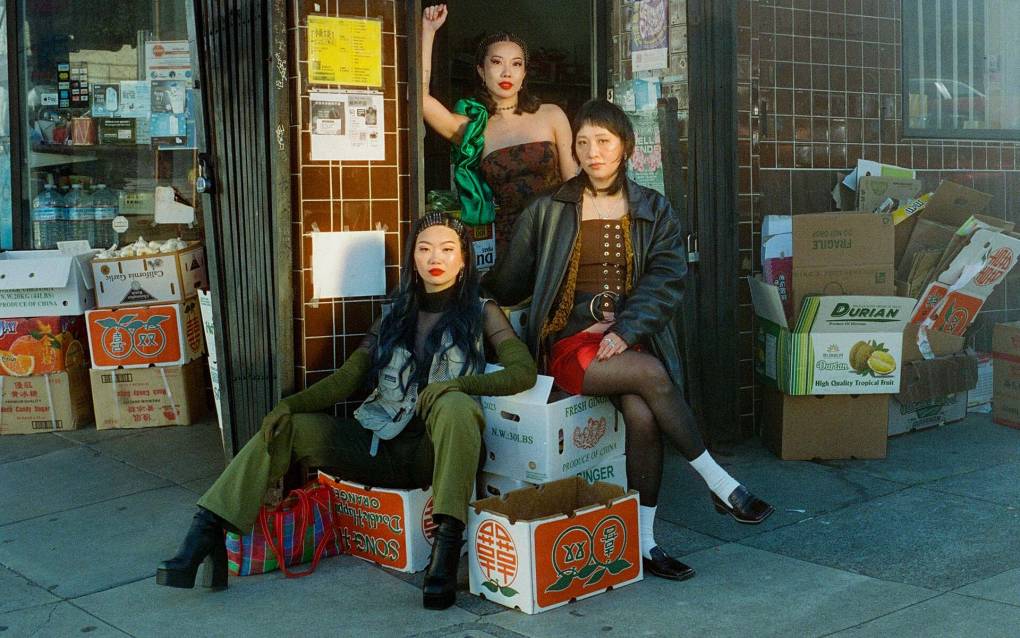
"caption": "Yăng Shēng, a multimedia project launched by Hanna Chen (left) and Steph Cai (center), aims to bring \"third culture\" children of immigrants from Asian diasporas together in the Bay Area.",
"description": null,
"title": "3.__a_third_culture_kid_pilgrimage__shot_by__terry.thunder__creative_direction___taiwanesenoodles___bowlcutsurvivor__taken_from___itsyangsheng_crop",
"credit": "Terry Thunder Tsai, courtesy of Yăng Shēng",
"status": "inherit",
"altTag": "A trio of first-generation Asian American women pose in front of a Chinatown market",
"isLoading": false,
"fetchFailed": false
},
"arts_13940135": {
"type": "attachments",
"id": "arts_13940135",
"meta": {
"index": "attachments_1716263798",
"site": "arts",
"id": "13940135",
"found": true
},
"parent": 13940133,
"imgSizes": {
"twentyfourteen-full-width": {
"file": "https://cdn.kqed.org/wp-content/uploads/sites/2/2024/01/9780593533055_Interior_Image_3_495221-1038x576.jpg",
"width": 1038,
"mimeType": "image/jpeg",
"height": 576
},
"thumbnail": {
"file": "https://cdn.kqed.org/wp-content/uploads/sites/2/2024/01/9780593533055_Interior_Image_3_495221-160x90.jpg",
"width": 160,
"mimeType": "image/jpeg",
"height": 90
},
"post-thumbnail": {
"file": "https://cdn.kqed.org/wp-content/uploads/sites/2/2024/01/9780593533055_Interior_Image_3_495221-672x372.jpg",
"width": 672,
"mimeType": "image/jpeg",
"height": 372
},
"kqedFullSize": {
"file": "https://cdn.kqed.org/wp-content/uploads/sites/2/2024/01/9780593533055_Interior_Image_3_495221.jpg",
"width": 2000,
"height": 1125
},
"large": {
"file": "https://cdn.kqed.org/wp-content/uploads/sites/2/2024/01/9780593533055_Interior_Image_3_495221-1020x574.jpg",
"width": 1020,
"mimeType": "image/jpeg",
"height": 574
},
"1536x1536": {
"file": "https://cdn.kqed.org/wp-content/uploads/sites/2/2024/01/9780593533055_Interior_Image_3_495221-1536x864.jpg",
"width": 1536,
"mimeType": "image/jpeg",
"height": 864
},
"full-width": {
"file": "https://cdn.kqed.org/wp-content/uploads/sites/2/2024/01/9780593533055_Interior_Image_3_495221-1920x1080.jpg",
"width": 1920,
"mimeType": "image/jpeg",
"height": 1080
},
"medium": {
"file": "https://cdn.kqed.org/wp-content/uploads/sites/2/2024/01/9780593533055_Interior_Image_3_495221-800x450.jpg",
"width": 800,
"mimeType": "image/jpeg",
"height": 450
},
"medium_large": {
"file": "https://cdn.kqed.org/wp-content/uploads/sites/2/2024/01/9780593533055_Interior_Image_3_495221-768x432.jpg",
"width": 768,
"mimeType": "image/jpeg",
"height": 432
}
},
"publishDate": 1704740605,
"modified": 1704740827,
"caption": "The protagonist of Ying Chang Compestine's new children's book, 'Ra Pu Zel and the Stinky Tofu,' is a spunky Chinese princess who loves eating delicious food above all else.",
"description": null,
"title": "9780593533055_Interior_Image_3_495221",
"credit": "Crystal Kung/Penguin Random House",
"status": "inherit",
"altTag": "Illustration of a Chinese princess playing with her pet dog.",
"isLoading": false,
"fetchFailed": false
},
"arts_13934224": {
"type": "attachments",
"id": "arts_13934224",
"meta": {
"index": "attachments_1716263798",
"site": "arts",
"id": "13934224",
"found": true
},
"parent": 0,
"imgSizes": {
"twentyfourteen-full-width": {
"file": "https://ww2.kqed.org/app/uploads/sites/2/2023/08/230830-LRYICS-BORN-MD-07-2-KQED-3-1038x576.jpg",
"width": 1038,
"mimeType": "image/jpeg",
"height": 576
},
"thumbnail": {
"file": "https://ww2.kqed.org/app/uploads/sites/2/2023/08/230830-LRYICS-BORN-MD-07-2-KQED-3-160x107.jpg",
"width": 160,
"mimeType": "image/jpeg",
"height": 107
},
"post-thumbnail": {
"file": "https://ww2.kqed.org/app/uploads/sites/2/2023/08/230830-LRYICS-BORN-MD-07-2-KQED-3-672x372.jpg",
"width": 672,
"mimeType": "image/jpeg",
"height": 372
},
"kqedFullSize": {
"file": "https://ww2.kqed.org/app/uploads/sites/2/2023/08/230830-LRYICS-BORN-MD-07-2-KQED-3.jpg",
"width": 2000,
"height": 1333
},
"large": {
"file": "https://ww2.kqed.org/app/uploads/sites/2/2023/08/230830-LRYICS-BORN-MD-07-2-KQED-3-1020x680.jpg",
"width": 1020,
"mimeType": "image/jpeg",
"height": 680
},
"1536x1536": {
"file": "https://ww2.kqed.org/app/uploads/sites/2/2023/08/230830-LRYICS-BORN-MD-07-2-KQED-3-1536x1024.jpg",
"width": 1536,
"mimeType": "image/jpeg",
"height": 1024
},
"full-width": {
"file": "https://ww2.kqed.org/app/uploads/sites/2/2023/08/230830-LRYICS-BORN-MD-07-2-KQED-3-1920x1280.jpg",
"width": 1920,
"mimeType": "image/jpeg",
"height": 1280
},
"medium": {
"file": "https://ww2.kqed.org/app/uploads/sites/2/2023/08/230830-LRYICS-BORN-MD-07-2-KQED-3-800x533.jpg",
"width": 800,
"mimeType": "image/jpeg",
"height": 533
},
"medium_large": {
"file": "https://ww2.kqed.org/app/uploads/sites/2/2023/08/230830-LRYICS-BORN-MD-07-2-KQED-3-768x512.jpg",
"width": 768,
"mimeType": "image/jpeg",
"height": 512
}
},
"publishDate": 1693526358,
"modified": 1694026364,
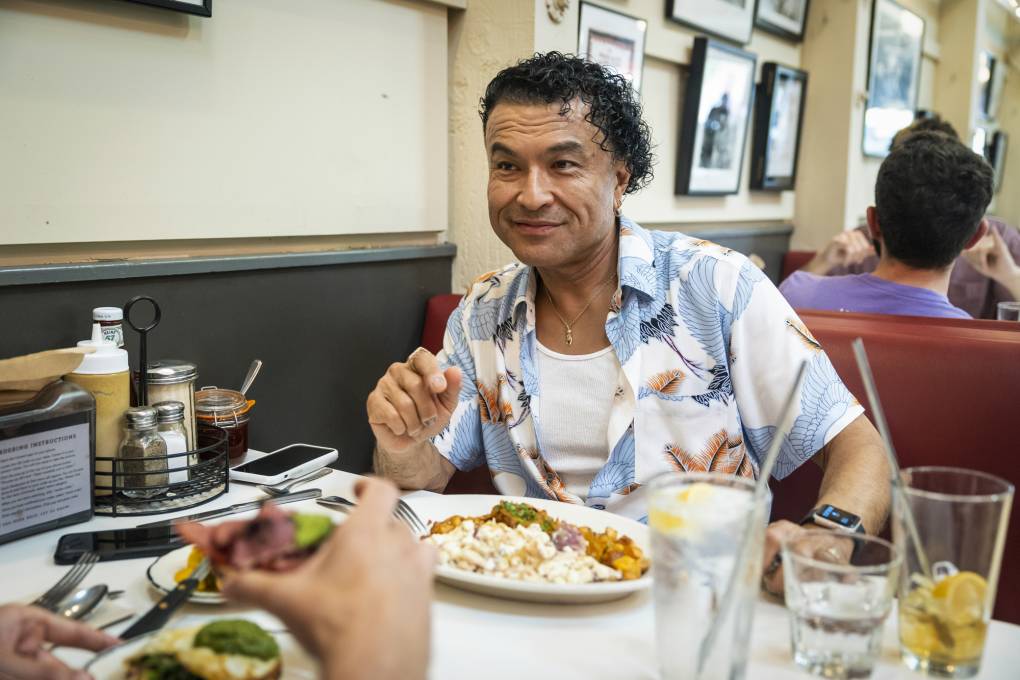
"caption": "Tsutomu Shimura, better known as Lyrics Born, enjoys a meal at Saul's Restaurant and Delicatessen in Berkeley. He grew up eating at Jewish delis similar to Saul's with his grandmother in Los Angeles.",
"description": null,
"title": "230830-LRYICS BORN-MD-07-2-KQED-3",
"credit": "Martin do Nascimento/KQED",
"status": "inherit",
"altTag": "A person sits at a booth in a restaurant.",
"isLoading": false,
"fetchFailed": false
},
"arts_13932247": {
"type": "attachments",
"id": "arts_13932247",
"meta": {
"index": "attachments_1716263798",
"site": "arts",
"id": "13932247",
"found": true
},
"parent": 13932204,
"imgSizes": {
"twentyfourteen-full-width": {
"file": "https://ww2.kqed.org/app/uploads/sites/2/2023/07/Oppenheimer.composite.rev_-1038x576.jpg",
"width": 1038,
"mimeType": "image/jpeg",
"height": 576
},
"thumbnail": {
"file": "https://ww2.kqed.org/app/uploads/sites/2/2023/07/Oppenheimer.composite.rev_-160x90.jpg",
"width": 160,
"mimeType": "image/jpeg",
"height": 90
},
"post-thumbnail": {
"file": "https://ww2.kqed.org/app/uploads/sites/2/2023/07/Oppenheimer.composite.rev_-672x372.jpg",
"width": 672,
"mimeType": "image/jpeg",
"height": 372
},
"kqedFullSize": {
"file": "https://ww2.kqed.org/app/uploads/sites/2/2023/07/Oppenheimer.composite.rev_.jpg",
"width": 1500,
"height": 844
},
"large": {
"file": "https://ww2.kqed.org/app/uploads/sites/2/2023/07/Oppenheimer.composite.rev_-1020x574.jpg",
"width": 1020,
"mimeType": "image/jpeg",
"height": 574
},
"medium": {
"file": "https://ww2.kqed.org/app/uploads/sites/2/2023/07/Oppenheimer.composite.rev_-800x450.jpg",
"width": 800,
"mimeType": "image/jpeg",
"height": 450
},
"medium_large": {
"file": "https://ww2.kqed.org/app/uploads/sites/2/2023/07/Oppenheimer.composite.rev_-768x432.jpg",
"width": 768,
"mimeType": "image/jpeg",
"height": 432
}
},
"publishDate": 1690572471,
"modified": 1690572639,
"caption": "In the film 'Oppemnheimer,' Robert Oppenheimer (left) wrestles with his development of the atomic bomb, while victims of his creation (right) go unseen on the screen.",
"description": null,
"title": "Oppenheimer.composite.rev",
"credit": "Getty Images",
"status": "inherit",
"altTag": null,
"isLoading": false,
"fetchFailed": false
},
"arts_13928028": {
"type": "attachments",
"id": "arts_13928028",
"meta": {
"index": "attachments_1716263798",
"site": "arts",
"id": "13928028",
"found": true
},
"parent": 13928023,
"imgSizes": {
"twentyfourteen-full-width": {
"file": "https://ww2.kqed.org/app/uploads/sites/2/2023/04/Kristyn-Leach-2022-Winters-CA-Photo-by-Alec-MacDonald-1038x576.jpg",
"width": 1038,
"mimeType": "image/jpeg",
"height": 576
},
"thumbnail": {
"file": "https://ww2.kqed.org/app/uploads/sites/2/2023/04/Kristyn-Leach-2022-Winters-CA-Photo-by-Alec-MacDonald-160x90.jpg",
"width": 160,
"mimeType": "image/jpeg",
"height": 90
},
"post-thumbnail": {
"file": "https://ww2.kqed.org/app/uploads/sites/2/2023/04/Kristyn-Leach-2022-Winters-CA-Photo-by-Alec-MacDonald-672x372.jpg",
"width": 672,
"mimeType": "image/jpeg",
"height": 372
},
"kqedFullSize": {
"file": "https://ww2.kqed.org/app/uploads/sites/2/2023/04/Kristyn-Leach-2022-Winters-CA-Photo-by-Alec-MacDonald.jpg",
"width": 1920,
"height": 1080
},
"large": {
"file": "https://ww2.kqed.org/app/uploads/sites/2/2023/04/Kristyn-Leach-2022-Winters-CA-Photo-by-Alec-MacDonald-1020x574.jpg",
"width": 1020,
"mimeType": "image/jpeg",
"height": 574
},
"1536x1536": {
"file": "https://ww2.kqed.org/app/uploads/sites/2/2023/04/Kristyn-Leach-2022-Winters-CA-Photo-by-Alec-MacDonald-1536x864.jpg",
"width": 1536,
"mimeType": "image/jpeg",
"height": 864
},
"medium": {
"file": "https://ww2.kqed.org/app/uploads/sites/2/2023/04/Kristyn-Leach-2022-Winters-CA-Photo-by-Alec-MacDonald-800x450.jpg",
"width": 800,
"mimeType": "image/jpeg",
"height": 450
},
"medium_large": {
"file": "https://ww2.kqed.org/app/uploads/sites/2/2023/04/Kristyn-Leach-2022-Winters-CA-Photo-by-Alec-MacDonald-768x432.jpg",
"width": 768,
"mimeType": "image/jpeg",
"height": 432
}
},
"publishDate": 1681941306,
"modified": 1681944938,
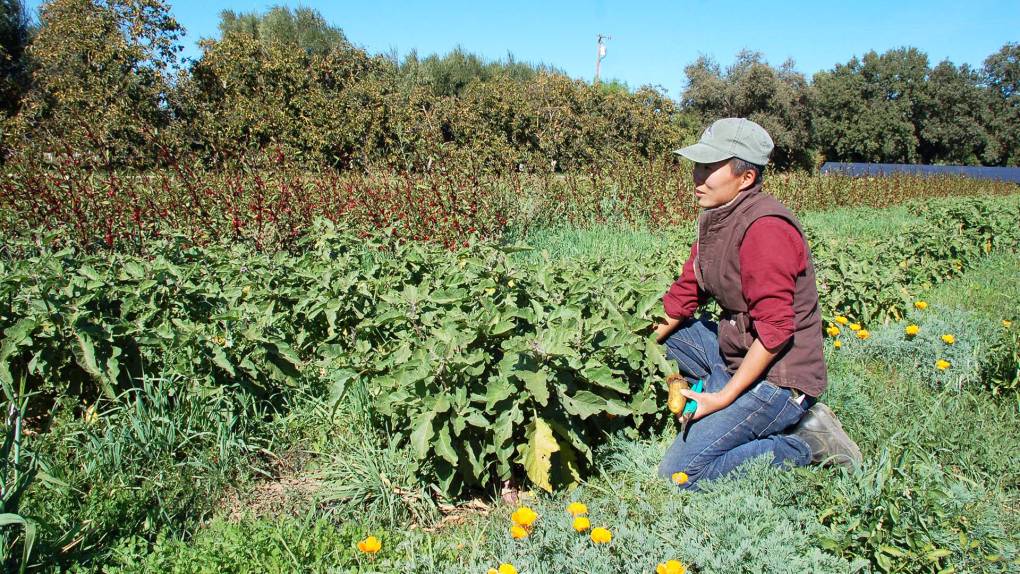
"caption": "One of California's most prominent farmers, Kristyn Leach hopes to create a permanent home in Sebastopol for her work preserving Asian heirloom vegetables and seeds.",
"description": null,
"title": "Kristyn Leach, 2022, Winters CA, Photo by Alec MacDonald",
"credit": "Alec MacDonald",
"status": "inherit",
"altTag": "Farmer Kristyn Leach tends to crops in a tenant field in Winters, CA.",
"isLoading": false,
"fetchFailed": false
},
"arts_13927224": {
"type": "attachments",
"id": "arts_13927224",
"meta": {
"index": "attachments_1716263798",
"site": "arts",
"id": "13927224",
"found": true
},
"parent": 13927219,
"imgSizes": {
"twentyfourteen-full-width": {
"file": "https://ww2.kqed.org/app/uploads/sites/2/2023/04/image2-1038x576.jpg",
"width": 1038,
"mimeType": "image/jpeg",
"height": 576
},
"thumbnail": {
"file": "https://ww2.kqed.org/app/uploads/sites/2/2023/04/image2-160x120.jpg",
"width": 160,
"mimeType": "image/jpeg",
"height": 120
},
"post-thumbnail": {
"file": "https://ww2.kqed.org/app/uploads/sites/2/2023/04/image2-672x372.jpg",
"width": 672,
"mimeType": "image/jpeg",
"height": 372
},
"kqedFullSize": {
"file": "https://ww2.kqed.org/app/uploads/sites/2/2023/04/image2.jpg",
"width": 1999,
"height": 1500
},
"large": {
"file": "https://ww2.kqed.org/app/uploads/sites/2/2023/04/image2-1020x765.jpg",
"width": 1020,
"mimeType": "image/jpeg",
"height": 765
},
"1536x1536": {
"file": "https://ww2.kqed.org/app/uploads/sites/2/2023/04/image2-1536x1153.jpg",
"width": 1536,
"mimeType": "image/jpeg",
"height": 1153
},
"full-width": {
"file": "https://ww2.kqed.org/app/uploads/sites/2/2023/04/image2-1920x1441.jpg",
"width": 1920,
"mimeType": "image/jpeg",
"height": 1441
},
"medium": {
"file": "https://ww2.kqed.org/app/uploads/sites/2/2023/04/image2-800x600.jpg",
"width": 800,
"mimeType": "image/jpeg",
"height": 600
},
"medium_large": {
"file": "https://ww2.kqed.org/app/uploads/sites/2/2023/04/image2-768x576.jpg",
"width": 768,
"mimeType": "image/jpeg",
"height": 576
}
},
"publishDate": 1680554641,
"modified": 1680554758,
"caption": "(From left to right) Longtime Eastwind Books employee and poet, Brian Ang, owner Harvey Dong and employee Banoo Garcia-Afkhami in the store on March 28.",
"description": null,
"title": "image2",
"credit": "Ariana Proehl/KQED",
"status": "inherit",
"altTag": null,
"isLoading": false,
"fetchFailed": false
},
"arts_13926633": {
"type": "attachments",
"id": "arts_13926633",
"meta": {
"index": "attachments_1716263798",
"site": "arts",
"id": "13926633",
"found": true
},
"parent": 13926618,
"imgSizes": {
"twentyfourteen-full-width": {
"file": "https://ww2.kqed.org/app/uploads/sites/2/2023/03/Halo-Halo-Baked-Alaska-c-Nico-Schinco_cropped-1038x576.jpg",
"width": 1038,
"mimeType": "image/jpeg",
"height": 576
},
"thumbnail": {
"file": "https://ww2.kqed.org/app/uploads/sites/2/2023/03/Halo-Halo-Baked-Alaska-c-Nico-Schinco_cropped-160x90.jpg",
"width": 160,
"mimeType": "image/jpeg",
"height": 90
},
"post-thumbnail": {
"file": "https://ww2.kqed.org/app/uploads/sites/2/2023/03/Halo-Halo-Baked-Alaska-c-Nico-Schinco_cropped-672x372.jpg",
"width": 672,
"mimeType": "image/jpeg",
"height": 372
},
"kqedFullSize": {
"file": "https://ww2.kqed.org/app/uploads/sites/2/2023/03/Halo-Halo-Baked-Alaska-c-Nico-Schinco_cropped.jpg",
"width": 1920,
"height": 1080
},
"large": {
"file": "https://ww2.kqed.org/app/uploads/sites/2/2023/03/Halo-Halo-Baked-Alaska-c-Nico-Schinco_cropped-1020x574.jpg",
"width": 1020,
"mimeType": "image/jpeg",
"height": 574
},
"1536x1536": {
"file": "https://ww2.kqed.org/app/uploads/sites/2/2023/03/Halo-Halo-Baked-Alaska-c-Nico-Schinco_cropped-1536x864.jpg",
"width": 1536,
"mimeType": "image/jpeg",
"height": 864
},
"medium": {
"file": "https://ww2.kqed.org/app/uploads/sites/2/2023/03/Halo-Halo-Baked-Alaska-c-Nico-Schinco_cropped-800x450.jpg",
"width": 800,
"mimeType": "image/jpeg",
"height": 450
},
"medium_large": {
"file": "https://ww2.kqed.org/app/uploads/sites/2/2023/03/Halo-Halo-Baked-Alaska-c-Nico-Schinco_cropped-768x432.jpg",
"width": 768,
"mimeType": "image/jpeg",
"height": 432
}
},
"publishDate": 1679429614,
"modified": 1679429807,
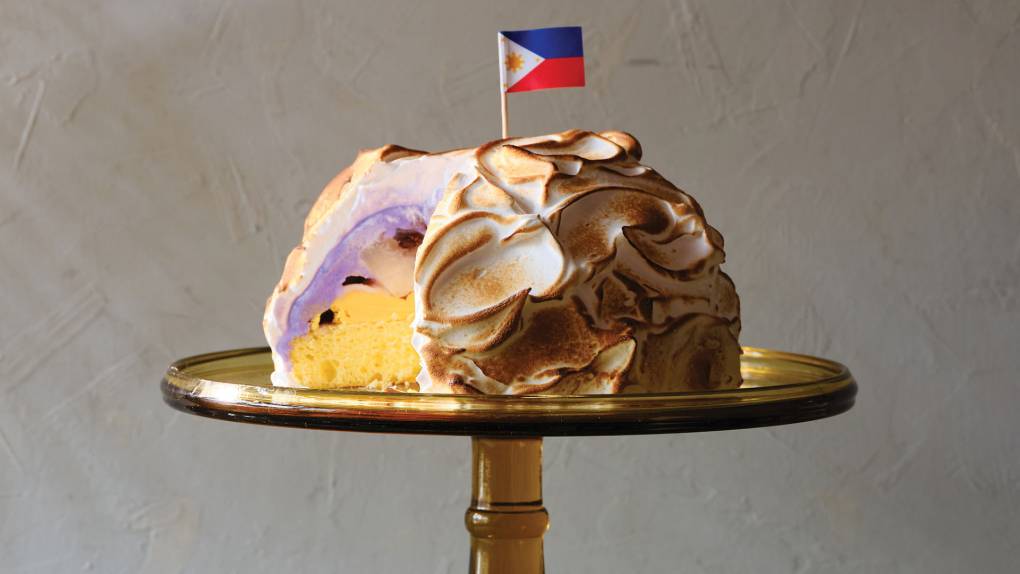
"caption": "The halo-halo baked Alaska has ube-flavored ice cream inside. The dessert is emblematic the cross-cultural approach in Abi Balingit's new cookbook, 'Mayumu.'",
"description": null,
"title": "Halo-Halo Baked Alaska (c) Nico Schinco_cropped",
"credit": "Nico Schinco",
"status": "inherit",
"altTag": "A baked Alaska dessert with a small Filipino flag inserted on top, displayed on a cake stand.",
"isLoading": false,
"fetchFailed": false
},
"arts_13926506": {
"type": "attachments",
"id": "arts_13926506",
"meta": {
"index": "attachments_1716263798",
"site": "arts",
"id": "13926506",
"found": true
},
"parent": 13926503,
"imgSizes": {
"thumbnail": {
"file": "https://ww2.kqed.org/app/uploads/sites/2/2023/03/From-left-to-right-Frank-Magtoto-David-Bustamante-Bert-Ancheta-Carlos-Bato-Badia-Rome-Bustamante-Michael-Gopaul-David-DZandos-cropped-160x90.jpg",
"width": 160,
"mimeType": "image/jpeg",
"height": 90
},
"post-thumbnail": {
"file": "https://ww2.kqed.org/app/uploads/sites/2/2023/03/From-left-to-right-Frank-Magtoto-David-Bustamante-Bert-Ancheta-Carlos-Bato-Badia-Rome-Bustamante-Michael-Gopaul-David-DZandos-cropped-672x372.jpg",
"width": 672,
"mimeType": "image/jpeg",
"height": 372
},
"kqedFullSize": {
"file": "https://ww2.kqed.org/app/uploads/sites/2/2023/03/From-left-to-right-Frank-Magtoto-David-Bustamante-Bert-Ancheta-Carlos-Bato-Badia-Rome-Bustamante-Michael-Gopaul-David-DZandos-cropped.jpg",
"width": 813,
"height": 457
},
"medium": {
"file": "https://ww2.kqed.org/app/uploads/sites/2/2023/03/From-left-to-right-Frank-Magtoto-David-Bustamante-Bert-Ancheta-Carlos-Bato-Badia-Rome-Bustamante-Michael-Gopaul-David-DZandos-cropped-800x450.jpg",
"width": 800,
"mimeType": "image/jpeg",
"height": 450
},
"medium_large": {
"file": "https://ww2.kqed.org/app/uploads/sites/2/2023/03/From-left-to-right-Frank-Magtoto-David-Bustamante-Bert-Ancheta-Carlos-Bato-Badia-Rome-Bustamante-Michael-Gopaul-David-DZandos-cropped-768x432.jpg",
"width": 768,
"mimeType": "image/jpeg",
"height": 432
}
},
"publishDate": 1679331425,
"modified": 1679332436,
"caption": "From left to right: Frank Magtoto, David Bustamante, Bert Ancheta, Carlos Bato Badia, Romeo Bustamante, Michael Gopaul and David DZandos.",
"description": null,
"title": "From left to right Frank Magtoto, David Bustamante, Bert Ancheta, Carlos Bato Badia, Rome Bustamante, Michael Gopaul, David DZandos-cropped",
"credit": "Guerssen Records",
"status": "inherit",
"altTag": null,
"isLoading": false,
"fetchFailed": false
},
"arts_13926076": {
"type": "attachments",
"id": "arts_13926076",
"meta": {
"index": "attachments_1716263798",
"site": "arts",
"id": "13926076",
"found": true
},
"parent": 13926065,
"imgSizes": {
"twentyfourteen-full-width": {
"file": "https://ww2.kqed.org/app/uploads/sites/2/2023/03/RS63040_014_KQEDArts_YoyokaSomaDrummer_02092023-qut-1038x576.jpg",
"width": 1038,
"mimeType": "image/jpeg",
"height": 576
},
"thumbnail": {
"file": "https://ww2.kqed.org/app/uploads/sites/2/2023/03/RS63040_014_KQEDArts_YoyokaSomaDrummer_02092023-qut-160x107.jpg",
"width": 160,
"mimeType": "image/jpeg",
"height": 107
},
"post-thumbnail": {
"file": "https://ww2.kqed.org/app/uploads/sites/2/2023/03/RS63040_014_KQEDArts_YoyokaSomaDrummer_02092023-qut-672x372.jpg",
"width": 672,
"mimeType": "image/jpeg",
"height": 372
},
"kqedFullSize": {
"file": "https://ww2.kqed.org/app/uploads/sites/2/2023/03/RS63040_014_KQEDArts_YoyokaSomaDrummer_02092023-qut.jpg",
"width": 1920,
"height": 1280
},
"large": {
"file": "https://ww2.kqed.org/app/uploads/sites/2/2023/03/RS63040_014_KQEDArts_YoyokaSomaDrummer_02092023-qut-1020x680.jpg",
"width": 1020,
"mimeType": "image/jpeg",
"height": 680
},
"1536x1536": {
"file": "https://ww2.kqed.org/app/uploads/sites/2/2023/03/RS63040_014_KQEDArts_YoyokaSomaDrummer_02092023-qut-1536x1024.jpg",
"width": 1536,
"mimeType": "image/jpeg",
"height": 1024
},
"medium": {
"file": "https://ww2.kqed.org/app/uploads/sites/2/2023/03/RS63040_014_KQEDArts_YoyokaSomaDrummer_02092023-qut-800x533.jpg",
"width": 800,
"mimeType": "image/jpeg",
"height": 533
},
"medium_large": {
"file": "https://ww2.kqed.org/app/uploads/sites/2/2023/03/RS63040_014_KQEDArts_YoyokaSomaDrummer_02092023-qut-768x512.jpg",
"width": 768,
"mimeType": "image/jpeg",
"height": 512
}
},
"publishDate": 1678407774,
"modified": 1678407957,
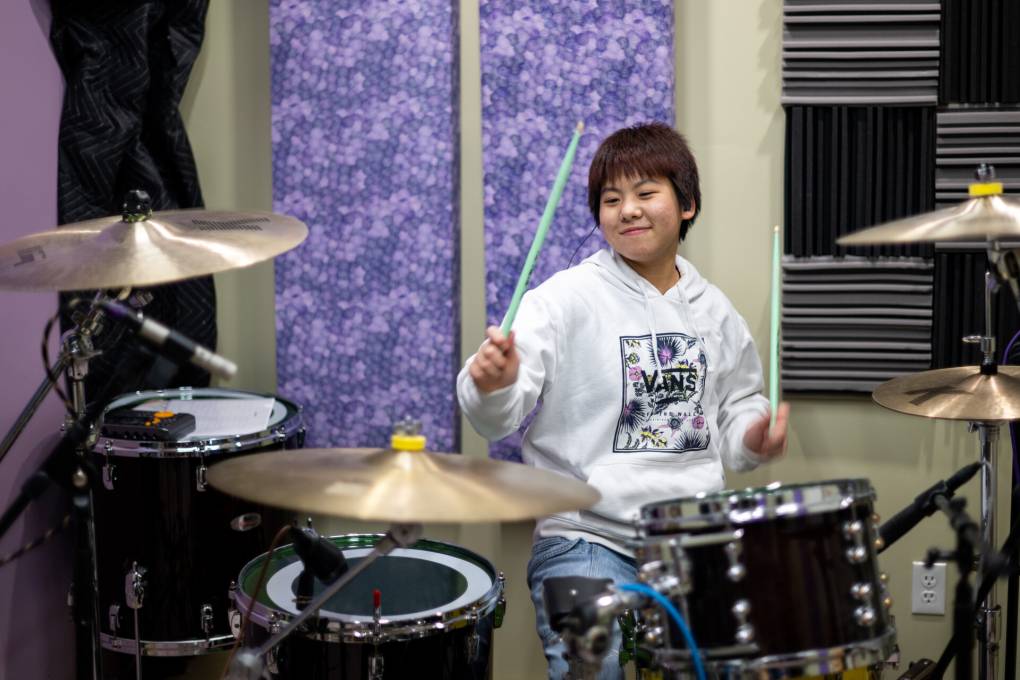
"caption": "Yoyoka Soma plays drums in a practice studio at her family's home in Oakland on Feb. 9, 2023. The 7th grader grew up in Japan but moved to the Bay Area with her family in 2022. She's been internet famous since her drumming videos went viral in 2018.",
"description": null,
"title": "RS63040_014_KQEDArts_YoyokaSomaDrummer_02092023-qut",
"credit": "Beth LaBerge/KQED",
"status": "inherit",
"altTag": "a young Japanese girl with a short haircut in a white sweatshirt smiles while seated at a drum kit in front of a purple acoustic panel in a home studio",
"isLoading": false,
"fetchFailed": false
},
"arts_13925914": {
"type": "attachments",
"id": "arts_13925914",
"meta": {
"index": "attachments_1716263798",
"site": "arts",
"id": "13925914",
"found": true
},
"parent": 13925835,
"imgSizes": {
"twentyfourteen-full-width": {
"file": "https://ww2.kqed.org/app/uploads/sites/2/2023/03/GettyImages-691141531-1038x576.jpg",
"width": 1038,
"mimeType": "image/jpeg",
"height": 576
},
"thumbnail": {
"file": "https://ww2.kqed.org/app/uploads/sites/2/2023/03/GettyImages-691141531-160x90.jpg",
"width": 160,
"mimeType": "image/jpeg",
"height": 90
},
"post-thumbnail": {
"file": "https://ww2.kqed.org/app/uploads/sites/2/2023/03/GettyImages-691141531-672x372.jpg",
"width": 672,
"mimeType": "image/jpeg",
"height": 372
},
"kqedFullSize": {
"file": "https://ww2.kqed.org/app/uploads/sites/2/2023/03/GettyImages-691141531.jpg",
"width": 2121,
"height": 1193
},
"2048x2048": {
"file": "https://ww2.kqed.org/app/uploads/sites/2/2023/03/GettyImages-691141531-2048x1152.jpg",
"width": 2048,
"mimeType": "image/jpeg",
"height": 1152
},
"large": {
"file": "https://ww2.kqed.org/app/uploads/sites/2/2023/03/GettyImages-691141531-1020x574.jpg",
"width": 1020,
"mimeType": "image/jpeg",
"height": 574
},
"1536x1536": {
"file": "https://ww2.kqed.org/app/uploads/sites/2/2023/03/GettyImages-691141531-1536x864.jpg",
"width": 1536,
"mimeType": "image/jpeg",
"height": 864
},
"full-width": {
"file": "https://ww2.kqed.org/app/uploads/sites/2/2023/03/GettyImages-691141531-1920x1080.jpg",
"width": 1920,
"mimeType": "image/jpeg",
"height": 1080
},
"medium": {
"file": "https://ww2.kqed.org/app/uploads/sites/2/2023/03/GettyImages-691141531-800x450.jpg",
"width": 800,
"mimeType": "image/jpeg",
"height": 450
},
"medium_large": {
"file": "https://ww2.kqed.org/app/uploads/sites/2/2023/03/GettyImages-691141531-768x432.jpg",
"width": 768,
"mimeType": "image/jpeg",
"height": 432
}
},
"publishDate": 1678215915,
"modified": 1678216142,
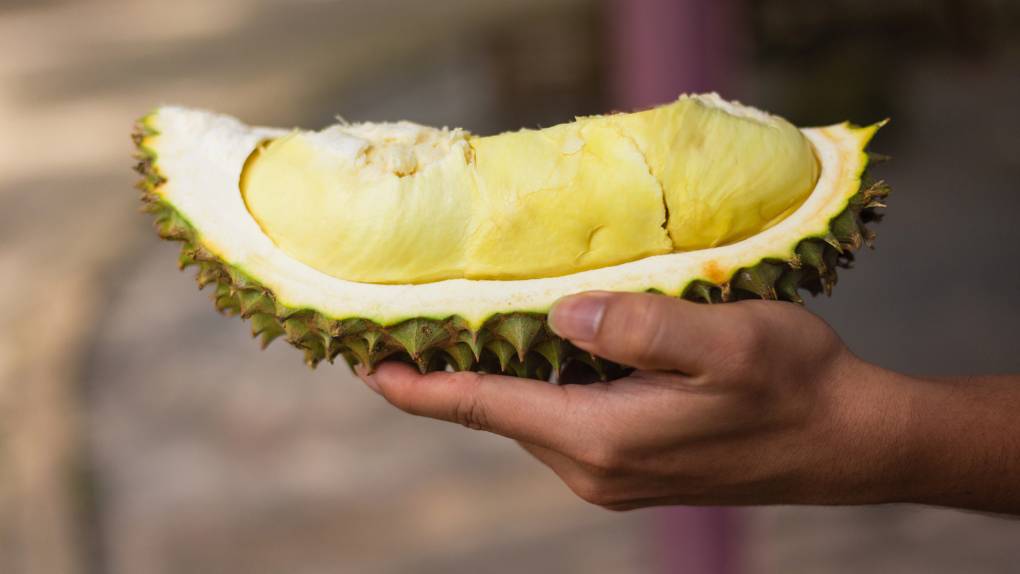
"caption": "Falling in love with durian — in all its complex pungency — helped the author feel more strongly connected to her father's Singaporean roots.",
"description": null,
"title": "GettyImages-691141531",
"credit": "Ekachai Chobphot / EyeEm",
"status": "inherit",
"altTag": "A hand holding a slice of durian still in its spiky green rind.",
"isLoading": false,
"fetchFailed": false
},
"arts_13923039": {
"type": "attachments",
"id": "arts_13923039",
"meta": {
"index": "attachments_1716263798",
"site": "arts",
"id": "13923039",
"found": true
},
"parent": 13923036,
"imgSizes": {
"twentyfourteen-full-width": {
"file": "https://ww2.kqed.org/app/uploads/sites/2/2022/12/Screen-Shot-2022-12-21-at-11.50.06-AM-1038x576.png",
"width": 1038,
"mimeType": "image/png",
"height": 576
},
"thumbnail": {
"file": "https://ww2.kqed.org/app/uploads/sites/2/2022/12/Screen-Shot-2022-12-21-at-11.50.06-AM-160x95.png",
"width": 160,
"mimeType": "image/png",
"height": 95
},
"post-thumbnail": {
"file": "https://ww2.kqed.org/app/uploads/sites/2/2022/12/Screen-Shot-2022-12-21-at-11.50.06-AM-672x372.png",
"width": 672,
"mimeType": "image/png",
"height": 372
},
"kqedFullSize": {
"file": "https://ww2.kqed.org/app/uploads/sites/2/2022/12/Screen-Shot-2022-12-21-at-11.50.06-AM.png",
"width": 1158,
"height": 688
},
"large": {
"file": "https://ww2.kqed.org/app/uploads/sites/2/2022/12/Screen-Shot-2022-12-21-at-11.50.06-AM-1020x606.png",
"width": 1020,
"mimeType": "image/png",
"height": 606
},
"medium": {
"file": "https://ww2.kqed.org/app/uploads/sites/2/2022/12/Screen-Shot-2022-12-21-at-11.50.06-AM-800x475.png",
"width": 800,
"mimeType": "image/png",
"height": 475
},
"medium_large": {
"file": "https://ww2.kqed.org/app/uploads/sites/2/2022/12/Screen-Shot-2022-12-21-at-11.50.06-AM-768x456.png",
"width": 768,
"mimeType": "image/png",
"height": 456
}
},
"publishDate": 1671652344,
"modified": 1671652425,
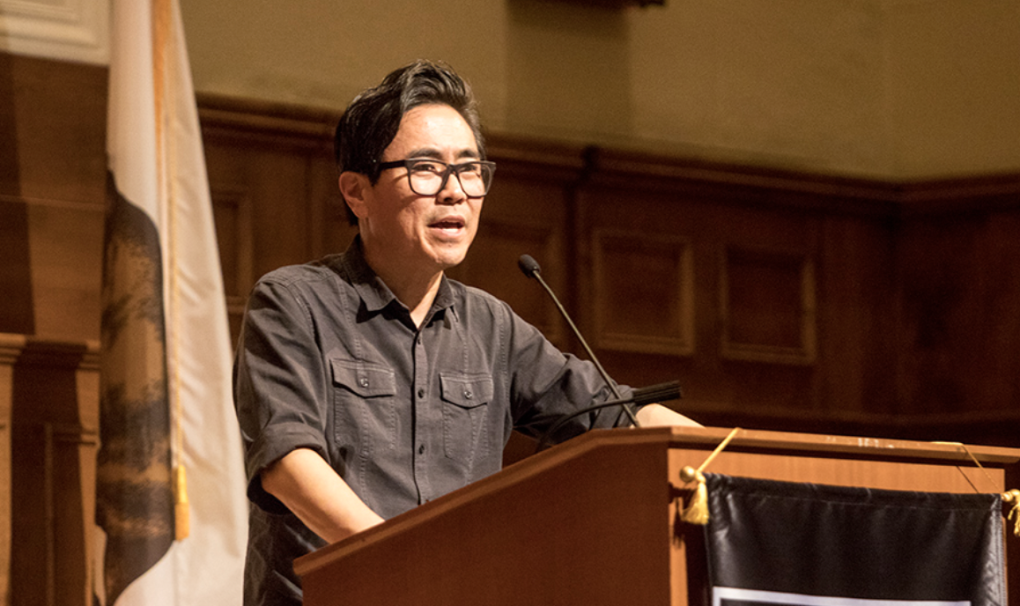
"caption": "Lee Herrick speaks to a crowd at Fresno City College.",
"description": null,
"title": "Screen Shot 2022-12-21 at 11.50.06 AM",
"credit": "Larry Valenzuela/The Rampage via EdSource",
"status": "inherit",
"altTag": "an Asian American man in a gray shirt speaks at a wooden podium",
"isLoading": false,
"fetchFailed": false
},
"arts_13923021": {
"type": "attachments",
"id": "arts_13923021",
"meta": {
"index": "attachments_1716263798",
"site": "arts",
"id": "13923021",
"found": true
},
"parent": 13923005,
"imgSizes": {
"twentyfourteen-full-width": {
"file": "https://ww2.kqed.org/app/uploads/sites/2/2022/12/osechi_chikuzenni-1038x576.jpg",
"width": 1038,
"mimeType": "image/jpeg",
"height": 576
},
"thumbnail": {
"file": "https://ww2.kqed.org/app/uploads/sites/2/2022/12/osechi_chikuzenni-160x110.jpg",
"width": 160,
"mimeType": "image/jpeg",
"height": 110
},
"post-thumbnail": {
"file": "https://ww2.kqed.org/app/uploads/sites/2/2022/12/osechi_chikuzenni-672x372.jpg",
"width": 672,
"mimeType": "image/jpeg",
"height": 372
},
"kqedFullSize": {
"file": "https://ww2.kqed.org/app/uploads/sites/2/2022/12/osechi_chikuzenni.jpg",
"width": 1920,
"height": 1318
},
"large": {
"file": "https://ww2.kqed.org/app/uploads/sites/2/2022/12/osechi_chikuzenni-1020x700.jpg",
"width": 1020,
"mimeType": "image/jpeg",
"height": 700
},
"1536x1536": {
"file": "https://ww2.kqed.org/app/uploads/sites/2/2022/12/osechi_chikuzenni-1536x1054.jpg",
"width": 1536,
"mimeType": "image/jpeg",
"height": 1054
},
"medium": {
"file": "https://ww2.kqed.org/app/uploads/sites/2/2022/12/osechi_chikuzenni-800x549.jpg",
"width": 800,
"mimeType": "image/jpeg",
"height": 549
},
"medium_large": {
"file": "https://ww2.kqed.org/app/uploads/sites/2/2022/12/osechi_chikuzenni-768x527.jpg",
"width": 768,
"mimeType": "image/jpeg",
"height": 527
}
},
"publishDate": 1671562485,
"modified": 1671562731,
"caption": "Chikuzenni, or simmered chicken with root vegetables, is one of the traditional dishes that chef Yuji Ishikata will be featuring in his Japanese New Year's pop-up.",
"description": null,
"title": "osechi_chikuzenni",
"credit": "Courtesy of J-Sei",
"status": "inherit",
"altTag": "Overhead view of wooden Japanese New Year's boxes filled with simmered chicken and root vegetables.",
"isLoading": false,
"fetchFailed": false
}
},
"audioPlayerReducer": {
"postId": "stream_live",
"isPaused": true,
"isPlaying": false,
"pfsActive": false,
"pledgeModalIsOpen": true,
"playerDrawerIsOpen": false,
"liveAudioPlayStartedAt": 0,
"liveAudioPlayContext": ""
},
"authorsReducer": {
"byline_arts_13928023": {
"type": "authors",
"id": "byline_arts_13928023",
"meta": {
"override": true
},
"slug": "byline_arts_13928023",
"name": "Alec MacDonald",
"isLoading": false
},
"byline_arts_13925835": {
"type": "authors",
"id": "byline_arts_13925835",
"meta": {
"override": true
},
"slug": "byline_arts_13925835",
"name": "Jennifer Wong",
"isLoading": false
},
"byline_arts_13923036": {
"type": "authors",
"id": "byline_arts_13923036",
"meta": {
"override": true
},
"slug": "byline_arts_13923036",
"name": "\u003ca href=\"https://edsource.org/author/apanoo\">Ashleigh Panoo\u003c/a> and The California Report Magazine",
"isLoading": false
},
"aproehl": {
"type": "authors",
"id": "11296",
"meta": {
"index": "authors_1716337520",
"id": "11296",
"found": true
},
"name": "Ariana Proehl",
"firstName": "Ariana",
"lastName": "Proehl",
"slug": "aproehl",
"email": "aproehl@KQED.org",
"display_author_email": true,
"staff_mastheads": [
"news"
],
"title": "Culture Reporter, KQED",
"bio": "Ariana Proehl is a Culture Reporter and Host.",
"avatar": "https://secure.gravatar.com/avatar/c96b24567eb5bb3a4f8bb295ed53e232?s=600&d=blank&r=g",
"twitter": "ArianaProehl",
"facebook": null,
"instagram": null,
"linkedin": null,
"sites": [
{
"site": "arts",
"roles": []
},
{
"site": "news",
"roles": []
},
{
"site": "education",
"roles": []
},
{
"site": "forum",
"roles": []
}
],
"headData": {
"title": "Ariana Proehl | KQED",
"description": "Culture Reporter, KQED",
"ogImgSrc": "https://secure.gravatar.com/avatar/c96b24567eb5bb3a4f8bb295ed53e232?s=600&d=blank&r=g",
"twImgSrc": "https://secure.gravatar.com/avatar/c96b24567eb5bb3a4f8bb295ed53e232?s=600&d=blank&r=g"
},
"isLoading": false,
"link": "/author/aproehl"
},
"ltsai": {
"type": "authors",
"id": "11743",
"meta": {
"index": "authors_1716337520",
"id": "11743",
"found": true
},
"name": "Luke Tsai",
"firstName": "Luke",
"lastName": "Tsai",
"slug": "ltsai",
"email": "ltsai@kqed.org",
"display_author_email": true,
"staff_mastheads": [
"arts"
],
"title": "Food Editor",
"bio": "Luke Tsai is KQED's food editor and resident stinky tofu connoisseur. Prior to KQED, he was an editor at Eater SF, \u003cem>San Francisco \u003c/em>magazine, and the \u003cem>East Bay Express\u003c/em>, and his work has also appeared in TASTE, the \u003cem>San Francisco Chronicle\u003c/em>, and the \u003cem>Best Food Writing\u003c/em> anthology. When he isn't writing or editing, you'll find him eating most everything he can get his hands on.",
"avatar": "https://secure.gravatar.com/avatar/1e59b45bf191526e7339d6ba46e33a57b2030d25c27660ecc64ea3cb863e34f7?s=600&d=blank&r=g",
"twitter": "theluketsai",
"bluesky": null,
"facebook": null,
"instagram": null,
"linkedin": null,
"sites": [
{
"site": "",
"roles": [
"editor"
]
},
{
"site": "arts",
"roles": [
"administrator"
]
},
{
"site": "news",
"roles": [
"editor",
"contributor"
]
},
{
"site": "bayareabites",
"roles": [
"editor"
]
},
{
"site": "food",
"roles": [
"editor"
]
}
],
"headData": {
"title": "Luke Tsai | KQED",
"description": "Food Editor",
"ogImgSrc": "https://secure.gravatar.com/avatar/1e59b45bf191526e7339d6ba46e33a57b2030d25c27660ecc64ea3cb863e34f7?s=600&d=blank&r=g",
"twImgSrc": "https://secure.gravatar.com/avatar/1e59b45bf191526e7339d6ba46e33a57b2030d25c27660ecc64ea3cb863e34f7?s=600&d=blank&r=g"
},
"isLoading": false,
"link": "/author/ltsai"
},
"achazaro": {
"type": "authors",
"id": "11748",
"meta": {
"index": "authors_1716337520",
"id": "11748",
"found": true
},
"name": "Alan Chazaro",
"firstName": "Alan",
"lastName": "Chazaro",
"slug": "achazaro",
"email": "agchazaro@gmail.com",
"display_author_email": true,
"staff_mastheads": [],
"title": "Food Writer and Reporter",
"bio": "Alan Chazaro is the author of \u003cem>This Is Not a Frank Ocean Cover Album\u003c/em> (Black Lawrence Press, 2019), \u003cem>Piñata Theory\u003c/em> (Black Lawrence Press, 2020), and \u003cem>Notes from the Eastern Span of the Bay Bridge\u003c/em> (Ghost City Press, 2021). He is a graduate of June Jordan’s Poetry for the People program at UC Berkeley and a former Lawrence Ferlinghetti Fellow at the University of San Francisco. He writes about sports, food, art, music, education, and culture while repping the Bay on \u003ca href=\"https://twitter.com/alan_chazaro\">Twitter\u003c/a> and \u003ca href=\"https://www.instagram.com/alan_chazaro/?hl=en\">Instagram\u003c/a> at @alan_chazaro.",
"avatar": "https://secure.gravatar.com/avatar/ea8b6dd970fc5c29e7a188e7d5861df7?s=600&d=blank&r=g",
"twitter": "alan_chazaro",
"facebook": null,
"instagram": null,
"linkedin": null,
"sites": [
{
"site": "arts",
"roles": [
"contributor"
]
},
{
"site": "news",
"roles": [
"editor"
]
}
],
"headData": {
"title": "Alan Chazaro | KQED",
"description": "Food Writer and Reporter",
"ogImgSrc": "https://secure.gravatar.com/avatar/ea8b6dd970fc5c29e7a188e7d5861df7?s=600&d=blank&r=g",
"twImgSrc": "https://secure.gravatar.com/avatar/ea8b6dd970fc5c29e7a188e7d5861df7?s=600&d=blank&r=g"
},
"isLoading": false,
"link": "/author/achazaro"
},
"athapliyal": {
"type": "authors",
"id": "11766",
"meta": {
"index": "authors_1716337520",
"id": "11766",
"found": true
},
"name": "Adesh Thapliyal",
"firstName": "Adesh",
"lastName": "Thapliyal",
"slug": "athapliyal",
"email": "athapliyal@kqed.org",
"display_author_email": false,
"staff_mastheads": [],
"title": "KQED Contributor",
"bio": "Adesh Thapliyal is KQED Arts' Editorial Intern. Previously, he wrote for the experimental newsletter \u003cem>Tone Glow\u003c/em> and the pop music blog \u003cem>The Singles Jukebox\u003c/em>.",
"avatar": "https://secure.gravatar.com/avatar/25c945182616a5283c4f746e7017bca3?s=600&d=blank&r=g",
"twitter": null,
"facebook": null,
"instagram": null,
"linkedin": null,
"sites": [
{
"site": "arts",
"roles": [
"author"
]
}
],
"headData": {
"title": "Adesh Thapliyal | KQED",
"description": "KQED Contributor",
"ogImgSrc": "https://secure.gravatar.com/avatar/25c945182616a5283c4f746e7017bca3?s=600&d=blank&r=g",
"twImgSrc": "https://secure.gravatar.com/avatar/25c945182616a5283c4f746e7017bca3?s=600&d=blank&r=g"
},
"isLoading": false,
"link": "/author/athapliyal"
},
"ksong": {
"type": "authors",
"id": "11813",
"meta": {
"index": "authors_1716337520",
"id": "11813",
"found": true
},
"name": "Kristie Song",
"firstName": "Kristie",
"lastName": "Song",
"slug": "ksong",
"email": "ksong@kqed.org",
"display_author_email": false,
"staff_mastheads": [],
"title": "Editorial Intern ",
"bio": "Kristie Song is an Arts & Culture Intern at KQED. She is currently a graduate student at UC Berkeley, where she studies audio and multimedia journalism. Previously, she covered the local community for Oakland North, produced episodes for The Science of Happiness, and served as news director for KUCI, UC Irvine’s radio station. Outside of reporting, she likes drawing comics, listening to angsty rock, and practicing the guitar.",
"avatar": "https://secure.gravatar.com/avatar/c1149e78c3c44f92d4945a8ab0711af6?s=600&d=blank&r=g",
"twitter": null,
"facebook": null,
"instagram": null,
"linkedin": null,
"sites": [
{
"site": "arts",
"roles": [
"editor"
]
}
],
"headData": {
"title": "Kristie Song | KQED",
"description": "Editorial Intern ",
"ogImgSrc": "https://secure.gravatar.com/avatar/c1149e78c3c44f92d4945a8ab0711af6?s=600&d=blank&r=g",
"twImgSrc": "https://secure.gravatar.com/avatar/c1149e78c3c44f92d4945a8ab0711af6?s=600&d=blank&r=g"
},
"isLoading": false,
"link": "/author/ksong"
},
"omayeda": {
"type": "authors",
"id": "11872",
"meta": {
"index": "authors_1716337520",
"id": "11872",
"found": true
},
"name": "Olivia Cruz Mayeda",
"firstName": "Olivia Cruz",
"lastName": "Mayeda",
"slug": "omayeda",
"email": "omayeda@kqed.org",
"display_author_email": false,
"staff_mastheads": [],
"title": "Reporter",
"bio": "Olivia Cruz Mayeda is a journalist covering style, culture and reparations in the Bay Area, a place that has been home to her family for over 100 years. Her writing has also appeared in the \u003cem>San Francisco Chronicle\u003c/em> and \u003cem>El Tecolote\u003c/em>.",
"avatar": "https://secure.gravatar.com/avatar/a8c0baa30219ce1071a9474f4c14141f?s=600&d=blank&r=g",
"twitter": null,
"facebook": null,
"instagram": null,
"linkedin": null,
"sites": [
{
"site": "arts",
"roles": [
"contributor"
]
}
],
"headData": {
"title": "Olivia Cruz Mayeda | KQED",
"description": "Reporter",
"ogImgSrc": "https://secure.gravatar.com/avatar/a8c0baa30219ce1071a9474f4c14141f?s=600&d=blank&r=g",
"twImgSrc": "https://secure.gravatar.com/avatar/a8c0baa30219ce1071a9474f4c14141f?s=600&d=blank&r=g"
},
"isLoading": false,
"link": "/author/omayeda"
}
},
"pagesReducer": {
"arts_tag_asian-american": {
"type": "terms",
"id": "arts_4672",
"meta": {
"index": "terms_1716263798",
"site": "arts",
"id": "4672",
"score": 8.79375
},
"featImg": null,
"name": "Asian American",
"description": null,
"taxonomy": "tag",
"headData": {
"twImgId": null,
"twTitle": null,
"ogTitle": null,
"ogImgId": null,
"twDescription": null,
"description": null,
"title": "Asian American Archives | KQED Arts",
"ogDescription": null
},
"ttid": 4684,
"slug": "asian-american",
"isLoading": false,
"title": "Asian American",
"pageMeta": {
"site": "arts",
"WpPageTemplate": "page-topic-editorial",
"currentPage": 3
},
"blocks": [
{
"blockName": "kqed/post-list",
"attrs": {
"layout": "cardArticle2",
"query": "posts/arts?tag=asian-american",
"seeMore": false,
"paginated": true,
"page": 3
}
},
{
"blockName": "kqed/ad"
}
]
}
},
"pfsSessionReducer": {},
"postsReducer": {
"stream_live": {
"type": "live",
"id": "stream_live",
"audioUrl": "https://streams.kqed.org/kqedradio",
"title": "Live Stream",
"excerpt": "Live Stream information currently unavailable.",
"link": "/radio",
"featImg": "",
"label": {
"name": "KQED Live",
"link": "/"
}
},
"stream_kqedNewscast": {
"type": "posts",
"id": "stream_kqedNewscast",
"audioUrl": "https://www.kqed.org/.stream/anon/radio/RDnews/newscast.mp3?_=1",
"title": "KQED Newscast",
"featImg": "",
"label": {
"name": "88.5 FM",
"link": "/"
}
},
"arts_13952052": {
"type": "posts",
"id": "arts_13952052",
"meta": {
"index": "posts_1716263798",
"site": "arts",
"id": "13952052",
"score": null,
"sort": [
1707762185000
]
},
"parent": 0,
"labelTerm": {},
"blocks": [],
"publishDate": 1707762185,
"format": "standard",
"title": "A Next-Generation Lunar New Year Party in Oakland",
"headTitle": "A Next-Generation Lunar New Year Party in Oakland | KQED",
"content": "\u003cp>For Oakland small business owner Jenn Lui and San Francisco visual artist Hanna Chen, embracing the traditions of their Cantonese and Taiwanese ancestors is a kind of soul-filling nourishment. It’s an imaginative labor that allows for the multi-generational preservation of old-school memories, while forging exciting new ones.\u003c/p>\n\u003cp>The creative duo is behind an intimate Lunar New Year celebration happening on February 18 at \u003ca href=\"https://www.instagram.com/groundfloorclub/?hl=en\">Groundfloor\u003c/a> in Oakland. The get-together will honor nostalgic Asian cultural cornerstones like mahjong, holiday \u003ca href=\"https://www.kqed.org/forum/2010101904619/all-you-can-eat-ringing-in-the-lunar-new-year-with-asian-american-desserts\">desserts\u003c/a> and red envelopes. At the same time, it will also create space for modern, up-and-coming makers who are reshaping the possibilities of diasporic joy with tea-based cocktails, flash tattoos and tooth gems.\u003c/p>\n\u003cp>“We’re just reimagining [our cultures] for the current times,” says Lui, the co-founder of \u003ca href=\"https://www.instagram.com/thisisbabas.house/?hl=en\">Baba’s House\u003c/a>, a specialty Asian snack shop in downtown Oakland. “Mahjong was heavily played as a gambling game in my family, but now it’s a social community type of event. It’s about celebrating those blessings, prosperity, health, and doing it intentionally.”\u003c/p>\n\u003cp>The event will feature live DJs (\u003ca href=\"http://inachu\">Ina Chu\u003c/a>, \u003ca href=\"http://jazz.fm/\" target=\"_blank\" rel=\"noopener\" data-saferedirecturl=\"https://www.google.com/url?q=http://JAZZ.FM&source=gmail&ust=1707862337560000&usg=AOvVaw02x83AbDHbRaxDA4ztH9Ee\">JAZZ.FM\u003c/a>, \u003ca href=\"https://www.instagram.com/tomudj/\">TOMU DJ\u003c/a>), foodmakers (including \u003ca href=\"https://www.instagram.com/oramasamadumplings/\">Oramasama Dumplings\u003c/a>, \u003ca href=\"https://www.instagram.com/oaklandfortunefactory/\">Oakland Fortune Factory\u003c/a> and \u003ca href=\"https://www.instagram.com/jasonbakessf/\">Jason Bakes\u003c/a>), tattoo artists (\u003ca href=\"https://www.instagram.com/proper.tattoo/\">Proper Tattoo\u003c/a>), retail vendors (\u003ca href=\"https://www.instagram.com/twotwo.online/\">Two Two\u003c/a>, \u003ca href=\"https://www.instagram.com/jiahomeco/\">JIĀ HOME CO. \u003c/a>and more) and visual artists (\u003ca href=\"https://www.instagram.com/mag.dre/\">Mag Dre\u003c/a>, \u003ca href=\"https://www.instagram.com/chrisjcheung/\">Chris Cheung\u003c/a>). In addition, there will be snacks provided by Baba’s House, a DIY red envelope station, an altar to commemorate deceased loved ones, mahjong, raffles and “tea-tails” (alcohol optional) mixed using KACE Tea, a local \u003ca href=\"https://www.instagram.com/drinkkace/\">Taiwanese-Filipino brand\u003c/a>.\u003c/p>\n\u003cfigure id=\"attachment_13952055\" class=\"wp-caption alignnone\" style=\"max-width: 1920px\">\u003cimg loading=\"lazy\" decoding=\"async\" class=\"size-full wp-image-13952055\" src=\"https://cdn.kqed.org/wp-content/uploads/sites/2/2024/02/7._jason_bakes_2.jpg\" alt=\"a red table featuring Chinese cookies for Lunar New Year\" width=\"1920\" height=\"1536\" srcset=\"https://cdn.kqed.org/wp-content/uploads/sites/2/2024/02/7._jason_bakes_2.jpg 1920w, https://cdn.kqed.org/wp-content/uploads/sites/2/2024/02/7._jason_bakes_2-800x640.jpg 800w, https://cdn.kqed.org/wp-content/uploads/sites/2/2024/02/7._jason_bakes_2-1020x816.jpg 1020w, https://cdn.kqed.org/wp-content/uploads/sites/2/2024/02/7._jason_bakes_2-160x128.jpg 160w, https://cdn.kqed.org/wp-content/uploads/sites/2/2024/02/7._jason_bakes_2-768x614.jpg 768w, https://cdn.kqed.org/wp-content/uploads/sites/2/2024/02/7._jason_bakes_2-1536x1229.jpg 1536w\" sizes=\"(max-width: 1920px) 100vw, 1920px\">\u003cfigcaption class=\"wp-caption-text\">Taiwanese pineapple cakes from Jason Bakes will be one of the desserts served at the Lunar New Year Festival. \u003ccite>(Courtesy Jenn Lui)\u003c/cite>\u003c/figcaption>\u003c/figure>\n\u003cp>The festivities are part of \u003ca href=\"https://linktr.ee/itsyangsheng\">Yăng Shēng\u003c/a>, a multimedia project launched by Chen and Cai that highlights the evolving expressions of Asian American artists through art installations, photography and community events (a book is forthcoming in 2026). The San Francisco-raised artist says that for her, Lunar New Year has always represented a connection to her parents’ homeland. It’s about transporting herself and others abroad, without actually going very far.\u003c/p>\n\u003cp>[ad fullwidth]\u003c/p>\n\u003cp>[aside postID='arts_13951648,arts_13924997,arts_13951382']“We want to recreate the feeling of a night market and also take elements from Bay Area events: art gatherings, supper parties, bringing in that club feeling, too. We’re pulling from different pockets of the world like New York, Taipei, Hong Kong, and putting all that into one space for people who might not be able to travel,” Chen says. “This is nudging American culture to be more community-oriented.”\u003c/p>\n\u003cp>The two entrepreneurs, along with Lui’s partner, Alan Chen, are thunderously vocal when it comes to creating a safe space. It’s not something they’ve always experienced as first-generation children of Asian immigrants whose parents and relatives have sometimes questioned their artistic endeavors and cross-cultural expressions.\u003c/p>\n\u003cp>“We’re kind of reimagining everything,” Lui says. “When I told my mom about the altar, she asked why we’re doing that. I found that interesting, and I wonder if other folks from that generation don’t see what we’re doing as a positive thing.”\u003c/p>\n\u003cfigure id=\"attachment_13952059\" class=\"wp-caption alignnone\" style=\"max-width: 1920px\">\u003cimg loading=\"lazy\" decoding=\"async\" class=\"size-full wp-image-13952059\" src=\"https://cdn.kqed.org/wp-content/uploads/sites/2/2024/02/altar_shot_by_jenn____soulrealjenn.jpg\" alt=\"a table altar featuring photos of deceased family members, incense and treats\" width=\"1920\" height=\"1440\" srcset=\"https://cdn.kqed.org/wp-content/uploads/sites/2/2024/02/altar_shot_by_jenn____soulrealjenn.jpg 1920w, https://cdn.kqed.org/wp-content/uploads/sites/2/2024/02/altar_shot_by_jenn____soulrealjenn-800x600.jpg 800w, https://cdn.kqed.org/wp-content/uploads/sites/2/2024/02/altar_shot_by_jenn____soulrealjenn-1020x765.jpg 1020w, https://cdn.kqed.org/wp-content/uploads/sites/2/2024/02/altar_shot_by_jenn____soulrealjenn-160x120.jpg 160w, https://cdn.kqed.org/wp-content/uploads/sites/2/2024/02/altar_shot_by_jenn____soulrealjenn-768x576.jpg 768w, https://cdn.kqed.org/wp-content/uploads/sites/2/2024/02/altar_shot_by_jenn____soulrealjenn-1536x1152.jpg 1536w\" sizes=\"(max-width: 1920px) 100vw, 1920px\">\u003cfigcaption class=\"wp-caption-text\">An altar will be provided inside Groundfloor for attendees to honor their loved ones. \u003ccite>(Jenn Lui)\u003c/cite>\u003c/figcaption>\u003c/figure>\n\u003cp>The generational gap hasn’t stopped them, though. If anything, it encourages them to bridge the various ages and groups of Asian Americans who live here in the Bay Area. For both Lui and Chen, intergenerational reclamation and representation is essential. And doing it in a way that feels authentically curated and creatively expansive is what drives them both.\u003c/p>\n\u003cp>“Our collective experiences span across many decades,” says Chen, who is about 10 years younger than Lui. “We come from really different eras. But we’re all Asian Americans who grew up in the Bay, and I think that connection is special.”\u003c/p>\n\u003cp>“Maybe you were an outcast growing up as a person of color, but now you’re a cool kid pushing the culture.”\u003c/p>\n\u003cp>\u003cimg loading=\"lazy\" decoding=\"async\" class=\"alignnone size-full wp-image-12127869\" src=\"https://cdn.kqed.org/wp-content/uploads/sites/2/2016/09/Q.Logo_.Break_.jpg\" alt=\"\" width=\"800\" height=\"78\" srcset=\"https://cdn.kqed.org/wp-content/uploads/sites/2/2016/09/Q.Logo_.Break_.jpg 800w, https://cdn.kqed.org/wp-content/uploads/sites/2/2016/09/Q.Logo_.Break_-400x39.jpg 400w, https://cdn.kqed.org/wp-content/uploads/sites/2/2016/09/Q.Logo_.Break_-768x75.jpg 768w\" sizes=\"(max-width: 800px) 100vw, 800px\">\u003c/p>\n\u003cp>\u003c/p>\n\u003cp>\u003ci>The Lunar New Year Festival presented by \u003c/i>\u003ca href=\"https://www.instagram.com/thisisbabas.house/?hl=en\">\u003ci>Baba’s House\u003c/i>\u003c/a>\u003ci> and \u003c/i>\u003ca href=\"https://linktr.ee/itsyangsheng\">\u003ci>Yăng Shēng\u003c/i>\u003c/a>\u003ci> will take place at \u003c/i>\u003ca href=\"https://www.instagram.com/groundfloorclub/?hl=en\">\u003ci>Groundfloor\u003c/i>\u003c/a>\u003ci> (4055 Telegraph Ave., Oakland) on Feb. 18, 1–6 p.m. \u003c/i>\u003ca href=\"https://www.eventbrite.com/e/babas-house-x-yang-sheng-presents-lunar-new-year-festival-tickets-808221972677?aff=oddtdtcreator\">\u003ci>Tickets\u003c/i>\u003c/a>\u003ci> are available online for $15–$25.\u003c/i>\u003c/p>\n\n",
"stats": {
"hasVideo": false,
"hasChartOrMap": false,
"hasAudio": false,
"hasPolis": false,
"wordCount": 753,
"hasGoogleForm": false,
"hasGallery": false,
"hasHearkenModule": false,
"iframeSrcs": [],
"paragraphCount": 15
},
"modified": 1707895213,
"excerpt": "How the children of immigrants are reshaping traditions to reflect their eclectic Bay Area upbringings.\r\n",
"headData": {
"twImgId": "",
"twTitle": "",
"ogTitle": "",
"ogImgId": "",
"twDescription": "",
"description": "How the children of immigrants are reshaping traditions to reflect their eclectic Bay Area upbringings.\r\n",
"title": "A Next-Generation Lunar New Year Party in Oakland | KQED",
"ogDescription": "",
"schema": {
"@context": "https://schema.org",
"@type": "Article",
"headline": "A Next-Generation Lunar New Year Party in Oakland",
"datePublished": "2024-02-12T10:23:05-08:00",
"dateModified": "2024-02-13T23:20:13-08:00",
"image": "https://cdn.kqed.org/wp-content/uploads/2020/02/KQED-OG-Image@1x.png"
}
},
"guestAuthors": [],
"slug": "lunar-new-year-party-oakland-cantonese-taiwanese",
"status": "publish",
"sourceUrl": "https://www.kqed.org/food",
"templateType": "standard",
"excludeFromSiteSearch": "Include",
"featuredImageType": "standard",
"sticky": false,
"source": "Food",
"articleAge": "0",
"path": "/arts/13952052/lunar-new-year-party-oakland-cantonese-taiwanese",
"audioTrackLength": null,
"parsedContent": [
{
"type": "contentString",
"content": "\u003cdiv class=\"post-body\">\u003cp>\u003cp>For Oakland small business owner Jenn Lui and San Francisco visual artist Hanna Chen, embracing the traditions of their Cantonese and Taiwanese ancestors is a kind of soul-filling nourishment. It’s an imaginative labor that allows for the multi-generational preservation of old-school memories, while forging exciting new ones.\u003c/p>\n\u003cp>The creative duo is behind an intimate Lunar New Year celebration happening on February 18 at \u003ca href=\"https://www.instagram.com/groundfloorclub/?hl=en\">Groundfloor\u003c/a> in Oakland. The get-together will honor nostalgic Asian cultural cornerstones like mahjong, holiday \u003ca href=\"https://www.kqed.org/forum/2010101904619/all-you-can-eat-ringing-in-the-lunar-new-year-with-asian-american-desserts\">desserts\u003c/a> and red envelopes. At the same time, it will also create space for modern, up-and-coming makers who are reshaping the possibilities of diasporic joy with tea-based cocktails, flash tattoos and tooth gems.\u003c/p>\n\u003cp>“We’re just reimagining [our cultures] for the current times,” says Lui, the co-founder of \u003ca href=\"https://www.instagram.com/thisisbabas.house/?hl=en\">Baba’s House\u003c/a>, a specialty Asian snack shop in downtown Oakland. “Mahjong was heavily played as a gambling game in my family, but now it’s a social community type of event. It’s about celebrating those blessings, prosperity, health, and doing it intentionally.”\u003c/p>\n\u003cp>The event will feature live DJs (\u003ca href=\"http://inachu\">Ina Chu\u003c/a>, \u003ca href=\"http://jazz.fm/\" target=\"_blank\" rel=\"noopener\" data-saferedirecturl=\"https://www.google.com/url?q=http://JAZZ.FM&source=gmail&ust=1707862337560000&usg=AOvVaw02x83AbDHbRaxDA4ztH9Ee\">JAZZ.FM\u003c/a>, \u003ca href=\"https://www.instagram.com/tomudj/\">TOMU DJ\u003c/a>), foodmakers (including \u003ca href=\"https://www.instagram.com/oramasamadumplings/\">Oramasama Dumplings\u003c/a>, \u003ca href=\"https://www.instagram.com/oaklandfortunefactory/\">Oakland Fortune Factory\u003c/a> and \u003ca href=\"https://www.instagram.com/jasonbakessf/\">Jason Bakes\u003c/a>), tattoo artists (\u003ca href=\"https://www.instagram.com/proper.tattoo/\">Proper Tattoo\u003c/a>), retail vendors (\u003ca href=\"https://www.instagram.com/twotwo.online/\">Two Two\u003c/a>, \u003ca href=\"https://www.instagram.com/jiahomeco/\">JIĀ HOME CO. \u003c/a>and more) and visual artists (\u003ca href=\"https://www.instagram.com/mag.dre/\">Mag Dre\u003c/a>, \u003ca href=\"https://www.instagram.com/chrisjcheung/\">Chris Cheung\u003c/a>). In addition, there will be snacks provided by Baba’s House, a DIY red envelope station, an altar to commemorate deceased loved ones, mahjong, raffles and “tea-tails” (alcohol optional) mixed using KACE Tea, a local \u003ca href=\"https://www.instagram.com/drinkkace/\">Taiwanese-Filipino brand\u003c/a>.\u003c/p>\n\u003cfigure id=\"attachment_13952055\" class=\"wp-caption alignnone\" style=\"max-width: 1920px\">\u003cimg loading=\"lazy\" decoding=\"async\" class=\"size-full wp-image-13952055\" src=\"https://cdn.kqed.org/wp-content/uploads/sites/2/2024/02/7._jason_bakes_2.jpg\" alt=\"a red table featuring Chinese cookies for Lunar New Year\" width=\"1920\" height=\"1536\" srcset=\"https://cdn.kqed.org/wp-content/uploads/sites/2/2024/02/7._jason_bakes_2.jpg 1920w, https://cdn.kqed.org/wp-content/uploads/sites/2/2024/02/7._jason_bakes_2-800x640.jpg 800w, https://cdn.kqed.org/wp-content/uploads/sites/2/2024/02/7._jason_bakes_2-1020x816.jpg 1020w, https://cdn.kqed.org/wp-content/uploads/sites/2/2024/02/7._jason_bakes_2-160x128.jpg 160w, https://cdn.kqed.org/wp-content/uploads/sites/2/2024/02/7._jason_bakes_2-768x614.jpg 768w, https://cdn.kqed.org/wp-content/uploads/sites/2/2024/02/7._jason_bakes_2-1536x1229.jpg 1536w\" sizes=\"(max-width: 1920px) 100vw, 1920px\">\u003cfigcaption class=\"wp-caption-text\">Taiwanese pineapple cakes from Jason Bakes will be one of the desserts served at the Lunar New Year Festival. \u003ccite>(Courtesy Jenn Lui)\u003c/cite>\u003c/figcaption>\u003c/figure>\n\u003cp>The festivities are part of \u003ca href=\"https://linktr.ee/itsyangsheng\">Yăng Shēng\u003c/a>, a multimedia project launched by Chen and Cai that highlights the evolving expressions of Asian American artists through art installations, photography and community events (a book is forthcoming in 2026). The San Francisco-raised artist says that for her, Lunar New Year has always represented a connection to her parents’ homeland. It’s about transporting herself and others abroad, without actually going very far.\u003c/p>\n\u003cp>\u003c/p>\u003c/div>",
"attributes": {
"named": {},
"numeric": []
}
},
{
"type": "component",
"content": "",
"name": "ad",
"attributes": {
"named": {
"label": "fullwidth"
},
"numeric": [
"fullwidth"
]
}
},
{
"type": "contentString",
"content": "\u003cdiv class=\"post-body\">\u003cp>\u003c/p>\n\u003cp>\u003c/p>\u003c/div>",
"attributes": {
"named": {},
"numeric": []
}
},
{
"type": "component",
"content": "",
"name": "aside",
"attributes": {
"named": {
"postid": "arts_13951648,arts_13924997,arts_13951382",
"label": ""
},
"numeric": []
}
},
{
"type": "contentString",
"content": "\u003cdiv class=\"post-body\">\u003cp>“We want to recreate the feeling of a night market and also take elements from Bay Area events: art gatherings, supper parties, bringing in that club feeling, too. We’re pulling from different pockets of the world like New York, Taipei, Hong Kong, and putting all that into one space for people who might not be able to travel,” Chen says. “This is nudging American culture to be more community-oriented.”\u003c/p>\n\u003cp>The two entrepreneurs, along with Lui’s partner, Alan Chen, are thunderously vocal when it comes to creating a safe space. It’s not something they’ve always experienced as first-generation children of Asian immigrants whose parents and relatives have sometimes questioned their artistic endeavors and cross-cultural expressions.\u003c/p>\n\u003cp>“We’re kind of reimagining everything,” Lui says. “When I told my mom about the altar, she asked why we’re doing that. I found that interesting, and I wonder if other folks from that generation don’t see what we’re doing as a positive thing.”\u003c/p>\n\u003cfigure id=\"attachment_13952059\" class=\"wp-caption alignnone\" style=\"max-width: 1920px\">\u003cimg loading=\"lazy\" decoding=\"async\" class=\"size-full wp-image-13952059\" src=\"https://cdn.kqed.org/wp-content/uploads/sites/2/2024/02/altar_shot_by_jenn____soulrealjenn.jpg\" alt=\"a table altar featuring photos of deceased family members, incense and treats\" width=\"1920\" height=\"1440\" srcset=\"https://cdn.kqed.org/wp-content/uploads/sites/2/2024/02/altar_shot_by_jenn____soulrealjenn.jpg 1920w, https://cdn.kqed.org/wp-content/uploads/sites/2/2024/02/altar_shot_by_jenn____soulrealjenn-800x600.jpg 800w, https://cdn.kqed.org/wp-content/uploads/sites/2/2024/02/altar_shot_by_jenn____soulrealjenn-1020x765.jpg 1020w, https://cdn.kqed.org/wp-content/uploads/sites/2/2024/02/altar_shot_by_jenn____soulrealjenn-160x120.jpg 160w, https://cdn.kqed.org/wp-content/uploads/sites/2/2024/02/altar_shot_by_jenn____soulrealjenn-768x576.jpg 768w, https://cdn.kqed.org/wp-content/uploads/sites/2/2024/02/altar_shot_by_jenn____soulrealjenn-1536x1152.jpg 1536w\" sizes=\"(max-width: 1920px) 100vw, 1920px\">\u003cfigcaption class=\"wp-caption-text\">An altar will be provided inside Groundfloor for attendees to honor their loved ones. \u003ccite>(Jenn Lui)\u003c/cite>\u003c/figcaption>\u003c/figure>\n\u003cp>The generational gap hasn’t stopped them, though. If anything, it encourages them to bridge the various ages and groups of Asian Americans who live here in the Bay Area. For both Lui and Chen, intergenerational reclamation and representation is essential. And doing it in a way that feels authentically curated and creatively expansive is what drives them both.\u003c/p>\n\u003cp>“Our collective experiences span across many decades,” says Chen, who is about 10 years younger than Lui. “We come from really different eras. But we’re all Asian Americans who grew up in the Bay, and I think that connection is special.”\u003c/p>\n\u003cp>“Maybe you were an outcast growing up as a person of color, but now you’re a cool kid pushing the culture.”\u003c/p>\n\u003cp>\u003cimg loading=\"lazy\" decoding=\"async\" class=\"alignnone size-full wp-image-12127869\" src=\"https://cdn.kqed.org/wp-content/uploads/sites/2/2016/09/Q.Logo_.Break_.jpg\" alt=\"\" width=\"800\" height=\"78\" srcset=\"https://cdn.kqed.org/wp-content/uploads/sites/2/2016/09/Q.Logo_.Break_.jpg 800w, https://cdn.kqed.org/wp-content/uploads/sites/2/2016/09/Q.Logo_.Break_-400x39.jpg 400w, https://cdn.kqed.org/wp-content/uploads/sites/2/2016/09/Q.Logo_.Break_-768x75.jpg 768w\" sizes=\"(max-width: 800px) 100vw, 800px\">\u003c/p>\n\u003cp>\u003c/p>\n\u003cp>\u003ci>The Lunar New Year Festival presented by \u003c/i>\u003ca href=\"https://www.instagram.com/thisisbabas.house/?hl=en\">\u003ci>Baba’s House\u003c/i>\u003c/a>\u003ci> and \u003c/i>\u003ca href=\"https://linktr.ee/itsyangsheng\">\u003ci>Yăng Shēng\u003c/i>\u003c/a>\u003ci> will take place at \u003c/i>\u003ca href=\"https://www.instagram.com/groundfloorclub/?hl=en\">\u003ci>Groundfloor\u003c/i>\u003c/a>\u003ci> (4055 Telegraph Ave., Oakland) on Feb. 18, 1–6 p.m. \u003c/i>\u003ca href=\"https://www.eventbrite.com/e/babas-house-x-yang-sheng-presents-lunar-new-year-festival-tickets-808221972677?aff=oddtdtcreator\">\u003ci>Tickets\u003c/i>\u003c/a>\u003ci> are available online for $15–$25.\u003c/i>\u003c/p>\n\n\u003c/div>\u003c/p>",
"attributes": {
"named": {},
"numeric": []
}
}
],
"link": "/arts/13952052/lunar-new-year-party-oakland-cantonese-taiwanese",
"authors": [
"11748"
],
"programs": [
"arts_140"
],
"categories": [
"arts_1",
"arts_12276"
],
"tags": [
"arts_4672",
"arts_21727",
"arts_2854",
"arts_10278",
"arts_2855",
"arts_13164",
"arts_1143",
"arts_1146",
"arts_15151",
"arts_585"
],
"featImg": "arts_13952058",
"label": "source_arts_13952052"
},
"arts_13940133": {
"type": "posts",
"id": "arts_13940133",
"meta": {
"index": "posts_1716263798",
"site": "arts",
"id": "13940133",
"score": null,
"sort": [
1704741958000
]
},
"parent": 0,
"labelTerm": {},
"blocks": [],
"publishDate": 1704741958,
"format": "standard",
"title": "Stinky Tofu Is the Unlikely Star of a New Children’s Book",
"headTitle": "Stinky Tofu Is the Unlikely Star of a New Children’s Book | KQED",
"content": "\u003cp>In my years as the Bay Area’s most dedicated stinky tofu evangelist, I have preached the pungent virtues of fermented bean curd to anyone who would listen — in blog posts and glossy magazine features, on obscure internet \u003ca href=\"https://www.kqed.org/arts/13910817/chowhound-shutting-down-rip\">discussion forums\u003c/a> and \u003ca href=\"https://www.kqed.org/forum/2010101893028/all-you-can-eat-funky-foods-we-arent-supposed-to-love-but-do\">live public radio\u003c/a>. And in real life, I’ve wheedled friends, family members and random Taipei night market strangers into at least giving the dish a fair shake.\u003c/p>\n\u003cp>What I never expected, though, was for stinky tofu to be the subject — and the unlikely hero — of a children’s book published here in the United States.\u003c/p>\n\u003cp>But that’s precisely what East Bay author Ying Chang Compestine has created with \u003ca href=\"https://www.penguinrandomhouse.com/books/710497/ra-pu-zel-and-the-stinky-tofu-by-ying-chang-compestine-illustrated-by-crystal-kung/\">\u003ci>Ra Pu Zel and the Stinky Tofu\u003c/i>\u003c/a>, her new riff on the classic Rapunzel fairy tale.\u003c/p>\n\u003cfigure id=\"attachment_13940137\" class=\"wp-caption alignnone\" style=\"max-width: 2000px\">\u003cimg loading=\"lazy\" decoding=\"async\" class=\"size-full wp-image-13940137\" src=\"https://cdn.kqed.org/wp-content/uploads/sites/2/2024/01/ra-pu-zel-cover.jpg\" alt=\"Cover of the children's book 'Ra Pu Zel and the Stinky Tofu' shows a princess with a long, black braid surrounded by many bowls of Chinese food.\" width=\"2000\" height=\"1995\" srcset=\"https://cdn.kqed.org/wp-content/uploads/sites/2/2024/01/ra-pu-zel-cover.jpg 2000w, https://cdn.kqed.org/wp-content/uploads/sites/2/2024/01/ra-pu-zel-cover-800x798.jpg 800w, https://cdn.kqed.org/wp-content/uploads/sites/2/2024/01/ra-pu-zel-cover-1020x1017.jpg 1020w, https://cdn.kqed.org/wp-content/uploads/sites/2/2024/01/ra-pu-zel-cover-160x160.jpg 160w, https://cdn.kqed.org/wp-content/uploads/sites/2/2024/01/ra-pu-zel-cover-768x766.jpg 768w, https://cdn.kqed.org/wp-content/uploads/sites/2/2024/01/ra-pu-zel-cover-1536x1532.jpg 1536w, https://cdn.kqed.org/wp-content/uploads/sites/2/2024/01/ra-pu-zel-cover-1920x1915.jpg 1920w\" sizes=\"(max-width: 2000px) 100vw, 2000px\">\u003cfigcaption class=\"wp-caption-text\">Compestine’s book is a retelling of ‘Rapunzel.’ \u003ccite>(Courtesy of Penguin Random House)\u003c/cite>\u003c/figcaption>\u003c/figure>\n\u003cp>Compestine is no stranger to writing about Chinese food: She’s a seasoned cookbook author who used to be a food editor for Martha Stewart’s \u003ci>Whole Living\u003c/i>, and her more recent pivot to writing \u003ca href=\"https://www.yingc.com/picture-books.html\">stories for children\u003c/a> has been almost entirely food-centric\u003ci>.\u003c/i> And fried stinky tofu, specifically, was one of Compestine’s favorite childhood treats, sold by street vendors throughout her hometown of Wuhan, China.\u003c/p>\n\u003cp>Compestine explains that when she was growing up in Wuhan during the Cultural Revolution in the late ’60s and early ’70s, the Communist Party had banned all Western books, including fairy tales like “Rapunzel.” But Compestine and her friends would read the stories in secret, then regale each other with their own retellings. She remembers especially loving Rapunzel’s dress: “We all had to wear Mao’s uniform,” she recalls. “I never had colorful clothes or long hair.”\u003c/p>\n\u003cp>[ad fullwidth]\u003c/p>\n\u003cp>What Compestine found boring, however, even as a young girl, was the standard storyline about a princess falling for a handsome prince. In the “Rapunzel” stories that she improvised as a child, the prince was only ever able to win over his beloved through her belly, with a steady supply of candy and snacks — including, of course, stinky tofu, which remains a popular local delicacy in Wuhan.\u003c/p>\n\u003cp>“Food was on my mind at the time,” Compestine says. “I was hungry.”\u003c/p>\n\u003cp>\u003cspan style=\"font-weight: 400\">[aside postID='arts_13937806,arts_13924997,arts_13897272']\u003c/span>In many ways, then, \u003ci>Ra Pu Zel and the Stinky Tofu\u003c/i> is just a more fully realized version of those early retellings, brought to vivid life through Pixar character designer \u003ca href=\"https://www.instagram.com/crystaleatsyourbrain/?hl=en\">Crystal Kung\u003c/a>’s delightfully expressive, watercolor-like illustrations. In Compestine’s version of “Rapunzel,” Pu Zel, the princess heroine, isn’t kidnapped by an evil witch. Instead, she locks \u003ci>herself\u003c/i> in the high tower because it’s the only place where she isn’t burdened by the demands and expectations of the imperial court — and where she’s free to cook and eat what she likes.\u003c/p>\n\u003cp>As for the young street vendor who (spoiler alert) finally entices the spunky princess to come down again? Let’s just say that it’s a refreshing change from most portrayals of stinky tofu here in the West, where the pungent dish is still largely relegated to some category of extreme eating — something so gross and funky that only the most adventurous eaters would dare to give it a try.\u003c/p>\n\u003cp>But for Taiwanese Americans like myself, in particular, the night market staple is a point of national pride and, more simply, just a delicious everyday food. I often talk about what a radicalizing moment it was for me when a surprisingly \u003ca href=\"https://www.youtube.com/watch?v=XjGZg4gHOJw\">weak-sauce Andrew Zimmern\u003c/a> was so disgusted by stinky tofu on \u003ci>Bizarre Foods\u003c/i> that he couldn’t swallow a single bite.\u003c/p>\n\u003cp>What I love, then, about \u003ci>Ra Pu Zel and the Stinky Tofu \u003c/i>is how little Compestine dwells on the strangeness or stinkiness of the dish. “It smells like a sweaty ox!” exclaims one old man. But within the span of a few sentences, Pu Zel is admiring how delicious and “irresistible” the tofu is.\u003c/p>\n\u003cfigure id=\"attachment_13940138\" class=\"wp-caption alignnone\" style=\"max-width: 2000px\">\u003cimg loading=\"lazy\" decoding=\"async\" class=\"size-full wp-image-13940138\" src=\"https://cdn.kqed.org/wp-content/uploads/sites/2/2024/01/9780593533055_Interior_Image_5_495223.jpg\" alt=\"A spread from a picture book shows a young chef cooking a big pot of stinky tofu, as birds and squirrels flee from the dish's strong odor.\" width=\"2000\" height=\"1000\" srcset=\"https://cdn.kqed.org/wp-content/uploads/sites/2/2024/01/9780593533055_Interior_Image_5_495223.jpg 2000w, https://cdn.kqed.org/wp-content/uploads/sites/2/2024/01/9780593533055_Interior_Image_5_495223-800x400.jpg 800w, https://cdn.kqed.org/wp-content/uploads/sites/2/2024/01/9780593533055_Interior_Image_5_495223-1020x510.jpg 1020w, https://cdn.kqed.org/wp-content/uploads/sites/2/2024/01/9780593533055_Interior_Image_5_495223-160x80.jpg 160w, https://cdn.kqed.org/wp-content/uploads/sites/2/2024/01/9780593533055_Interior_Image_5_495223-768x384.jpg 768w, https://cdn.kqed.org/wp-content/uploads/sites/2/2024/01/9780593533055_Interior_Image_5_495223-1536x768.jpg 1536w, https://cdn.kqed.org/wp-content/uploads/sites/2/2024/01/9780593533055_Interior_Image_5_495223-1920x960.jpg 1920w\" sizes=\"(max-width: 2000px) 100vw, 2000px\">\u003cfigcaption class=\"wp-caption-text\">In the end, a delicious pot of stinky tofu is what saves the day. \u003ccite>(Courtesy of Penguin Random House)\u003c/cite>\u003c/figcaption>\u003c/figure>\n\u003cp>Ultimately, Compestine says her goal wasn’t necessarily to convince every child who reads the book to eat stinky tofu. She finished the book during the pandemic, right around the time when Wuhan was receiving so much \u003ca href=\"https://www.latimes.com/california/story/2021-03-20/hundreds-gather-in-san-francisco-for-rally-against-anti-asian-attacks-racism\">negative publicity\u003c/a> — and when there was a wave of anti-Asian sentiment here in the U.S. “Through my book, I want people to understand my hometown,” she says. “And I wanted to portray a very strong female character. I wanted to change the perception that Asians are weak.”\u003c/p>\n\u003cp>And if readers feel inspired to eat a big plate of tofu after they finish the book? There’s a (non-stinky) recipe in the back.\u003c/p>\n\u003cp>\u003cimg loading=\"lazy\" decoding=\"async\" class=\"alignnone size-full wp-image-12127869\" src=\"https://cdn.kqed.org/wp-content/uploads/sites/2/2016/09/Q.Logo_.Break_.jpg\" alt=\"\" width=\"800\" height=\"78\" srcset=\"https://cdn.kqed.org/wp-content/uploads/sites/2/2016/09/Q.Logo_.Break_.jpg 800w, https://cdn.kqed.org/wp-content/uploads/sites/2/2016/09/Q.Logo_.Break_-400x39.jpg 400w, https://cdn.kqed.org/wp-content/uploads/sites/2/2016/09/Q.Logo_.Break_-768x75.jpg 768w\" sizes=\"(max-width: 800px) 100vw, 800px\">\u003c/p>\n\u003cp>\u003c/p>\n\u003cp>\u003cem>\u003ca href=\"https://www.penguinrandomhouse.com/books/710497/ra-pu-zel-and-the-stinky-tofu-by-ying-chang-compestine-illustrated-by-crystal-kung/\">Ra Pu Zel and the Stinky Tofu\u003c/a> is available where books are sold. Compestine and Kung, the illustrator, will appear at Hicklebee’s (1378 Lincoln Ave., San José) on Saturday, Jan. 13, for storytime and a drawing demonstration.\u003c/em>\u003c/p>\n\n",
"stats": {
"hasVideo": false,
"hasChartOrMap": false,
"hasAudio": false,
"hasPolis": false,
"wordCount": 879,
"hasGoogleForm": false,
"hasGallery": false,
"hasHearkenModule": false,
"iframeSrcs": [],
"paragraphCount": 17
},
"modified": 1705002919,
"excerpt": "An East Bay author offers a delicious new spin on ‘Rapunzel.’",
"headData": {
"twImgId": "",
"twTitle": "",
"ogTitle": "",
"ogImgId": "",
"twDescription": "",
"description": "An East Bay author offers a delicious new spin on ‘Rapunzel.’",
"title": "Stinky Tofu Is the Unlikely Star of a New Children’s Book | KQED",
"ogDescription": "",
"schema": {
"@context": "https://schema.org",
"@type": "Article",
"headline": "Stinky Tofu Is the Unlikely Star of a New Children’s Book",
"datePublished": "2024-01-08T11:25:58-08:00",
"dateModified": "2024-01-11T11:55:19-08:00",
"image": "https://cdn.kqed.org/wp-content/uploads/2020/02/KQED-OG-Image@1x.png"
}
},
"guestAuthors": [],
"slug": "stinky-tofu-childrens-book-ra-pu-zel",
"status": "publish",
"sourceUrl": "https://www.kqed.org/food",
"excludeFromSiteSearch": "Include",
"sticky": false,
"source": "Food",
"articleAge": "0",
"path": "/arts/13940133/stinky-tofu-childrens-book-ra-pu-zel",
"audioTrackLength": null,
"parsedContent": [
{
"type": "contentString",
"content": "\u003cdiv class=\"post-body\">\u003cp>\u003cp>In my years as the Bay Area’s most dedicated stinky tofu evangelist, I have preached the pungent virtues of fermented bean curd to anyone who would listen — in blog posts and glossy magazine features, on obscure internet \u003ca href=\"https://www.kqed.org/arts/13910817/chowhound-shutting-down-rip\">discussion forums\u003c/a> and \u003ca href=\"https://www.kqed.org/forum/2010101893028/all-you-can-eat-funky-foods-we-arent-supposed-to-love-but-do\">live public radio\u003c/a>. And in real life, I’ve wheedled friends, family members and random Taipei night market strangers into at least giving the dish a fair shake.\u003c/p>\n\u003cp>What I never expected, though, was for stinky tofu to be the subject — and the unlikely hero — of a children’s book published here in the United States.\u003c/p>\n\u003cp>But that’s precisely what East Bay author Ying Chang Compestine has created with \u003ca href=\"https://www.penguinrandomhouse.com/books/710497/ra-pu-zel-and-the-stinky-tofu-by-ying-chang-compestine-illustrated-by-crystal-kung/\">\u003ci>Ra Pu Zel and the Stinky Tofu\u003c/i>\u003c/a>, her new riff on the classic Rapunzel fairy tale.\u003c/p>\n\u003cfigure id=\"attachment_13940137\" class=\"wp-caption alignnone\" style=\"max-width: 2000px\">\u003cimg loading=\"lazy\" decoding=\"async\" class=\"size-full wp-image-13940137\" src=\"https://cdn.kqed.org/wp-content/uploads/sites/2/2024/01/ra-pu-zel-cover.jpg\" alt=\"Cover of the children's book 'Ra Pu Zel and the Stinky Tofu' shows a princess with a long, black braid surrounded by many bowls of Chinese food.\" width=\"2000\" height=\"1995\" srcset=\"https://cdn.kqed.org/wp-content/uploads/sites/2/2024/01/ra-pu-zel-cover.jpg 2000w, https://cdn.kqed.org/wp-content/uploads/sites/2/2024/01/ra-pu-zel-cover-800x798.jpg 800w, https://cdn.kqed.org/wp-content/uploads/sites/2/2024/01/ra-pu-zel-cover-1020x1017.jpg 1020w, https://cdn.kqed.org/wp-content/uploads/sites/2/2024/01/ra-pu-zel-cover-160x160.jpg 160w, https://cdn.kqed.org/wp-content/uploads/sites/2/2024/01/ra-pu-zel-cover-768x766.jpg 768w, https://cdn.kqed.org/wp-content/uploads/sites/2/2024/01/ra-pu-zel-cover-1536x1532.jpg 1536w, https://cdn.kqed.org/wp-content/uploads/sites/2/2024/01/ra-pu-zel-cover-1920x1915.jpg 1920w\" sizes=\"(max-width: 2000px) 100vw, 2000px\">\u003cfigcaption class=\"wp-caption-text\">Compestine’s book is a retelling of ‘Rapunzel.’ \u003ccite>(Courtesy of Penguin Random House)\u003c/cite>\u003c/figcaption>\u003c/figure>\n\u003cp>Compestine is no stranger to writing about Chinese food: She’s a seasoned cookbook author who used to be a food editor for Martha Stewart’s \u003ci>Whole Living\u003c/i>, and her more recent pivot to writing \u003ca href=\"https://www.yingc.com/picture-books.html\">stories for children\u003c/a> has been almost entirely food-centric\u003ci>.\u003c/i> And fried stinky tofu, specifically, was one of Compestine’s favorite childhood treats, sold by street vendors throughout her hometown of Wuhan, China.\u003c/p>\n\u003cp>Compestine explains that when she was growing up in Wuhan during the Cultural Revolution in the late ’60s and early ’70s, the Communist Party had banned all Western books, including fairy tales like “Rapunzel.” But Compestine and her friends would read the stories in secret, then regale each other with their own retellings. She remembers especially loving Rapunzel’s dress: “We all had to wear Mao’s uniform,” she recalls. “I never had colorful clothes or long hair.”\u003c/p>\n\u003cp>\u003c/p>\u003c/div>",
"attributes": {
"named": {},
"numeric": []
}
},
{
"type": "component",
"content": "",
"name": "ad",
"attributes": {
"named": {
"label": "fullwidth"
},
"numeric": [
"fullwidth"
]
}
},
{
"type": "contentString",
"content": "\u003cdiv class=\"post-body\">\u003cp>\u003c/p>\n\u003cp>What Compestine found boring, however, even as a young girl, was the standard storyline about a princess falling for a handsome prince. In the “Rapunzel” stories that she improvised as a child, the prince was only ever able to win over his beloved through her belly, with a steady supply of candy and snacks — including, of course, stinky tofu, which remains a popular local delicacy in Wuhan.\u003c/p>\n\u003cp>“Food was on my mind at the time,” Compestine says. “I was hungry.”\u003c/p>\n\u003cp>\u003cspan style=\"font-weight: 400\">\u003c/p>\u003c/div>",
"attributes": {
"named": {},
"numeric": []
}
},
{
"type": "component",
"content": "",
"name": "aside",
"attributes": {
"named": {
"postid": "arts_13937806,arts_13924997,arts_13897272",
"label": ""
},
"numeric": []
}
},
{
"type": "contentString",
"content": "\u003cdiv class=\"post-body\">\u003cp>\u003c/span>In many ways, then, \u003ci>Ra Pu Zel and the Stinky Tofu\u003c/i> is just a more fully realized version of those early retellings, brought to vivid life through Pixar character designer \u003ca href=\"https://www.instagram.com/crystaleatsyourbrain/?hl=en\">Crystal Kung\u003c/a>’s delightfully expressive, watercolor-like illustrations. In Compestine’s version of “Rapunzel,” Pu Zel, the princess heroine, isn’t kidnapped by an evil witch. Instead, she locks \u003ci>herself\u003c/i> in the high tower because it’s the only place where she isn’t burdened by the demands and expectations of the imperial court — and where she’s free to cook and eat what she likes.\u003c/p>\n\u003cp>As for the young street vendor who (spoiler alert) finally entices the spunky princess to come down again? Let’s just say that it’s a refreshing change from most portrayals of stinky tofu here in the West, where the pungent dish is still largely relegated to some category of extreme eating — something so gross and funky that only the most adventurous eaters would dare to give it a try.\u003c/p>\n\u003cp>But for Taiwanese Americans like myself, in particular, the night market staple is a point of national pride and, more simply, just a delicious everyday food. I often talk about what a radicalizing moment it was for me when a surprisingly \u003ca href=\"https://www.youtube.com/watch?v=XjGZg4gHOJw\">weak-sauce Andrew Zimmern\u003c/a> was so disgusted by stinky tofu on \u003ci>Bizarre Foods\u003c/i> that he couldn’t swallow a single bite.\u003c/p>\n\u003cp>What I love, then, about \u003ci>Ra Pu Zel and the Stinky Tofu \u003c/i>is how little Compestine dwells on the strangeness or stinkiness of the dish. “It smells like a sweaty ox!” exclaims one old man. But within the span of a few sentences, Pu Zel is admiring how delicious and “irresistible” the tofu is.\u003c/p>\n\u003cfigure id=\"attachment_13940138\" class=\"wp-caption alignnone\" style=\"max-width: 2000px\">\u003cimg loading=\"lazy\" decoding=\"async\" class=\"size-full wp-image-13940138\" src=\"https://cdn.kqed.org/wp-content/uploads/sites/2/2024/01/9780593533055_Interior_Image_5_495223.jpg\" alt=\"A spread from a picture book shows a young chef cooking a big pot of stinky tofu, as birds and squirrels flee from the dish's strong odor.\" width=\"2000\" height=\"1000\" srcset=\"https://cdn.kqed.org/wp-content/uploads/sites/2/2024/01/9780593533055_Interior_Image_5_495223.jpg 2000w, https://cdn.kqed.org/wp-content/uploads/sites/2/2024/01/9780593533055_Interior_Image_5_495223-800x400.jpg 800w, https://cdn.kqed.org/wp-content/uploads/sites/2/2024/01/9780593533055_Interior_Image_5_495223-1020x510.jpg 1020w, https://cdn.kqed.org/wp-content/uploads/sites/2/2024/01/9780593533055_Interior_Image_5_495223-160x80.jpg 160w, https://cdn.kqed.org/wp-content/uploads/sites/2/2024/01/9780593533055_Interior_Image_5_495223-768x384.jpg 768w, https://cdn.kqed.org/wp-content/uploads/sites/2/2024/01/9780593533055_Interior_Image_5_495223-1536x768.jpg 1536w, https://cdn.kqed.org/wp-content/uploads/sites/2/2024/01/9780593533055_Interior_Image_5_495223-1920x960.jpg 1920w\" sizes=\"(max-width: 2000px) 100vw, 2000px\">\u003cfigcaption class=\"wp-caption-text\">In the end, a delicious pot of stinky tofu is what saves the day. \u003ccite>(Courtesy of Penguin Random House)\u003c/cite>\u003c/figcaption>\u003c/figure>\n\u003cp>Ultimately, Compestine says her goal wasn’t necessarily to convince every child who reads the book to eat stinky tofu. She finished the book during the pandemic, right around the time when Wuhan was receiving so much \u003ca href=\"https://www.latimes.com/california/story/2021-03-20/hundreds-gather-in-san-francisco-for-rally-against-anti-asian-attacks-racism\">negative publicity\u003c/a> — and when there was a wave of anti-Asian sentiment here in the U.S. “Through my book, I want people to understand my hometown,” she says. “And I wanted to portray a very strong female character. I wanted to change the perception that Asians are weak.”\u003c/p>\n\u003cp>And if readers feel inspired to eat a big plate of tofu after they finish the book? There’s a (non-stinky) recipe in the back.\u003c/p>\n\u003cp>\u003cimg loading=\"lazy\" decoding=\"async\" class=\"alignnone size-full wp-image-12127869\" src=\"https://cdn.kqed.org/wp-content/uploads/sites/2/2016/09/Q.Logo_.Break_.jpg\" alt=\"\" width=\"800\" height=\"78\" srcset=\"https://cdn.kqed.org/wp-content/uploads/sites/2/2016/09/Q.Logo_.Break_.jpg 800w, https://cdn.kqed.org/wp-content/uploads/sites/2/2016/09/Q.Logo_.Break_-400x39.jpg 400w, https://cdn.kqed.org/wp-content/uploads/sites/2/2016/09/Q.Logo_.Break_-768x75.jpg 768w\" sizes=\"(max-width: 800px) 100vw, 800px\">\u003c/p>\n\u003cp>\u003c/p>\n\u003cp>\u003cem>\u003ca href=\"https://www.penguinrandomhouse.com/books/710497/ra-pu-zel-and-the-stinky-tofu-by-ying-chang-compestine-illustrated-by-crystal-kung/\">Ra Pu Zel and the Stinky Tofu\u003c/a> is available where books are sold. Compestine and Kung, the illustrator, will appear at Hicklebee’s (1378 Lincoln Ave., San José) on Saturday, Jan. 13, for storytime and a drawing demonstration.\u003c/em>\u003c/p>\n\n\u003c/div>\u003c/p>",
"attributes": {
"named": {},
"numeric": []
}
}
],
"link": "/arts/13940133/stinky-tofu-childrens-book-ra-pu-zel",
"authors": [
"11743"
],
"programs": [
"arts_140"
],
"categories": [
"arts_1",
"arts_73",
"arts_12276"
],
"tags": [
"arts_4672",
"arts_7446",
"arts_1683",
"arts_21727",
"arts_10278",
"arts_1297",
"arts_15151",
"arts_585"
],
"featImg": "arts_13940135",
"label": "source_arts_13940133"
},
"arts_13934248": {
"type": "posts",
"id": "arts_13934248",
"meta": {
"index": "posts_1716263798",
"site": "arts",
"id": "13934248",
"score": null,
"sort": [
1694102756000
]
},
"guestAuthors": [],
"slug": "lyrics-born-cooking-show-dinner-in-place-berkeley-hella-hungry",
"title": "Berkeley Rap Icon Lyrics Born Now Has His Own Cooking Show",
"publishDate": 1694102756,
"format": "standard",
"headTitle": "Berkeley Rap Icon Lyrics Born Now Has His Own Cooking Show | KQED",
"labelTerm": {},
"content": "\u003cp>\u003cstrong>\u003ci>¡Hella Hungry! is a column about Bay Area foodmakers, exploring the region’s culinary cultures through the mouth of a first-generation local.\u003c/i>\u003c/strong>\u003c/p>\n\u003cp>Saul’s Deli, a bustling Jewish delicatessen serving North Berkeley since 1986, isn’t where you’d expect to kick it with a rap legend. But it’s where Tsutomu Shimura — better known as Lyrics Born, the pioneering Japanese and Jewish American rapper — chose to meet me for lunch on a calm, sunny Wednesday.\u003c/p>\n\u003cp>Shimura is a certified hip-hop veteran. As a founding member of the Bay Area rap group \u003ca href=\"https://www.kqed.org/arts/13929861/latyrx-lateef-lyrics-born-solesides-quannum\">Latryx\u003c/a>, he was one of the first Asian American emcees to gain national fame in the early ’90s. His career stretches across decades with an impressive longevity that only \u003ca href=\"https://www.kqed.org/arts/13932488/e-40-way-magazine-street-renamed-vallejo\">E-40\u003c/a> and \u003ca href=\"https://www.kqed.org/arts/13922548/too-short-way-oakland-street-renamed\">Too $hort\u003c/a> could scoff at. Shimura was the first Asian American rapper to release more than 10 studio albums. He’s so prolific that on the day of our hangout, he also released a song, “\u003ca href=\"https://www.youtube.com/watch?v=eb9epoQCnuA\">Heaven and Armageddon\u003c/a>.”\u003c/p>\n\u003cp>And still, Shimura makes room for his latest creative appetite: food.\u003c/p>\n\u003cfigure id=\"attachment_13934217\" class=\"wp-caption alignnone\" style=\"max-width: 2000px\">\u003cimg loading=\"lazy\" decoding=\"async\" class=\"wp-image-13934217 size-full\" src=\"https://ww2.kqed.org/app/uploads/sites/2/2023/08/230830-LRYICS-BORN-MD-10-KQED.jpg\" alt=\"A bagel with pastrami and a green sauce.\" width=\"2000\" height=\"1333\" srcset=\"https://cdn.kqed.org/wp-content/uploads/sites/2/2023/08/230830-LRYICS-BORN-MD-10-KQED.jpg 2000w, https://cdn.kqed.org/wp-content/uploads/sites/2/2023/08/230830-LRYICS-BORN-MD-10-KQED-800x533.jpg 800w, https://cdn.kqed.org/wp-content/uploads/sites/2/2023/08/230830-LRYICS-BORN-MD-10-KQED-1020x680.jpg 1020w, https://cdn.kqed.org/wp-content/uploads/sites/2/2023/08/230830-LRYICS-BORN-MD-10-KQED-160x107.jpg 160w, https://cdn.kqed.org/wp-content/uploads/sites/2/2023/08/230830-LRYICS-BORN-MD-10-KQED-768x512.jpg 768w, https://cdn.kqed.org/wp-content/uploads/sites/2/2023/08/230830-LRYICS-BORN-MD-10-KQED-1536x1024.jpg 1536w, https://cdn.kqed.org/wp-content/uploads/sites/2/2023/08/230830-LRYICS-BORN-MD-10-KQED-1920x1280.jpg 1920w\" sizes=\"(max-width: 2000px) 100vw, 2000px\">\u003cfigcaption class=\"wp-caption-text\">The author’s’s salami egg bagel with added pastrami. \u003ccite>(Martin do Nascimento/KQED)\u003c/cite>\u003c/figcaption>\u003c/figure>\n\u003cp>“I like to try new things when I’m cooking, just like I would in a song,” he tells me while enjoying an order of trout, eggs and onions with extra pastrami. “It’s creative, there’s no rules. And you’ll probably like what I make, even if you’ve never heard of it before.”\u003c/p>\n\u003cp>[ad fullwidth]\u003c/p>\n\u003cp>\u003ca href=\"https://www.youtube.com/watch?v=QjCJDQP1p-o\">Having appeared on KQED’s \u003ci>Check, Please! Bay Area\u003c/i>\u003c/a>, he’s no stranger to the culinary game. The saucy wordsmith has never been afraid of being front and center, either. So it makes sense that the deep-voiced lyricist and diehard foodie — who grew up in Berkeley with an appreciation for the Bay’s culturally diverse cuisines — now has his own online food series, \u003ca href=\"https://www.youtube.com/playlist?list=PLuFEwujFCNdkNoLfIIOKOwYb1bHpR0v_g\">\u003ci>Dinner In Place\u003c/i>\u003c/a>.\u003c/p>\n\u003cp>https://www.youtube.com/watch?v=SK2yFPkrwhs\u003c/p>\n\u003cp> \u003c/p>\n\u003cp>The show was born in the pandemic when Shimura was unable to tour internationally as frequently as he was accustomed to. A simple Instagram post of him making pasta with clams blew up, and requests from friends, family and fans flooded his inbox: \u003ci>When’s the next one?\u003c/i>\u003c/p>\n\u003cp>Shimura admits he was simply sharing his cooking out of boredom. But he quickly discovered that while on a path to dieting and home cooking in his spare time, he could share his journey with others.\u003c/p>\n\u003cp>Now, \u003ci>Dinner In Place \u003c/i>is entering its fourth season. The show focuses on multiculturalism and culinary innovation with a range of guests — including Señor Sisig chef Gil Payumo and \u003ca href=\"https://www.kqed.org/bayareabites/136410/sobre-mesa-brings-afro-caribbean-cocktails-and-light-bites-to-oakland\">Sobre Mesa\u003c/a> chef Nelson German — tied together by Shimura’s trademark baritone narration.\u003c/p>\n\u003cp>Over a plate of open-faced salami egg bagels (with extra pastrami, following Shimura’s lead), I tuned in to the hip-hop icon as he reflected on his love of food, music and wellness as a nourishing therapy.\u003c/p>\n\u003cp>\u003ci>This interview has been edited for length and clarity.\u003c/i>\u003c/p>\n\u003cp style=\"text-align: center\">********\u003c/p>\n\u003cp>\u003cb>Alan Chazaro: Many of us know you for your music career. But now you’re doing \u003c/b>\u003cb>\u003ci>Dinner In Place\u003c/i>\u003c/b>\u003cb>. How did your journey into making food videos begin?\u003c/b>\u003c/p>\n\u003cp>\u003cb>Lyrics Born:\u003c/b> During the pandemic, I had nothing but time on my hands. Prior to that, to be honest, I was feeling pretty burnt out artistically. Up to 2019, I was doing at least 100 [tour] dates a year. I was exhausted, bro. Putting out albums every 18 months for 20 years straight. I didn’t realize how tired I truly was. When everything shut down I was like wait a minute. No flight? No studio sessions? No gig? I’m sleeping in my own bed for more than a week? I love this. My lifestyle was such that six months prior to lockdown I was having health issues. Soreness, coughing. Shit like that. But then I started having anxiety.\u003c/p>\n\u003cfigure id=\"attachment_13934210\" class=\"wp-caption alignnone\" style=\"max-width: 2000px\">\u003cimg loading=\"lazy\" decoding=\"async\" class=\"wp-image-13934210 size-full\" src=\"https://ww2.kqed.org/app/uploads/sites/2/2023/08/230830-LRYICS-BORN-MD-01-KQED.jpg\" alt=\"The facade of a restaurant painted bright red.\" width=\"2000\" height=\"1333\" srcset=\"https://cdn.kqed.org/wp-content/uploads/sites/2/2023/08/230830-LRYICS-BORN-MD-01-KQED.jpg 2000w, https://cdn.kqed.org/wp-content/uploads/sites/2/2023/08/230830-LRYICS-BORN-MD-01-KQED-800x533.jpg 800w, https://cdn.kqed.org/wp-content/uploads/sites/2/2023/08/230830-LRYICS-BORN-MD-01-KQED-1020x680.jpg 1020w, https://cdn.kqed.org/wp-content/uploads/sites/2/2023/08/230830-LRYICS-BORN-MD-01-KQED-160x107.jpg 160w, https://cdn.kqed.org/wp-content/uploads/sites/2/2023/08/230830-LRYICS-BORN-MD-01-KQED-768x512.jpg 768w, https://cdn.kqed.org/wp-content/uploads/sites/2/2023/08/230830-LRYICS-BORN-MD-01-KQED-1536x1024.jpg 1536w, https://cdn.kqed.org/wp-content/uploads/sites/2/2023/08/230830-LRYICS-BORN-MD-01-KQED-1920x1280.jpg 1920w\" sizes=\"(max-width: 2000px) 100vw, 2000px\">\u003cfigcaption class=\"wp-caption-text\">Saul’s has been a Berkeley institution since 1986. \u003ccite>(Martin do Nascimento/KQED)\u003c/cite>\u003c/figcaption>\u003c/figure>\n\u003cp>So a few months before lockdown, I started to change my diet and exercise. I was up to 225 pounds, and I couldn’t do what I used to on stage, and that was upsetting. I literally couldn’t perform like I used to. So one of the best things I could’ve done was just drop some weight. I started to eat differently and exercise more, and so sliding into quarantine I had some momentum and control over my life. I was at home and started cooking more, since I had been eating out and on the go for years. Because of my health journey, I started to do plant-based stuff. I like to use social media, so I just shot the shit. No editing, just narrating as I went in real time. Everyone was at home also, and it was just a hit. I wasn’t writing anything else, and I didn’t want to do anything with music, so it gave me a new creative outlet instantly.\u003c/p>\n\u003cp>As time went on I started throwing in things from my childhood and travels, and it became weekly. It was cultural, and it was also conceptual like music. Like, wouldn’t it be cool if we took some vegan ground beef and turned it into a kung pao and then made that into a sloppy joe in between two Taiwanese pancakes and just called that a Kung Pao Sloppy Joe? You know what I mean?\u003c/p>\n\u003cfigure id=\"attachment_13934216\" class=\"wp-caption alignnone\" style=\"max-width: 2000px\">\u003cimg loading=\"lazy\" decoding=\"async\" class=\"wp-image-13934216 size-full\" src=\"https://ww2.kqed.org/app/uploads/sites/2/2023/08/230830-LRYICS-BORN-MD-09-KQED.jpg\" alt=\"A plate with homefries and other food on it.\" width=\"2000\" height=\"1333\" srcset=\"https://cdn.kqed.org/wp-content/uploads/sites/2/2023/08/230830-LRYICS-BORN-MD-09-KQED.jpg 2000w, https://cdn.kqed.org/wp-content/uploads/sites/2/2023/08/230830-LRYICS-BORN-MD-09-KQED-800x533.jpg 800w, https://cdn.kqed.org/wp-content/uploads/sites/2/2023/08/230830-LRYICS-BORN-MD-09-KQED-1020x680.jpg 1020w, https://cdn.kqed.org/wp-content/uploads/sites/2/2023/08/230830-LRYICS-BORN-MD-09-KQED-160x107.jpg 160w, https://cdn.kqed.org/wp-content/uploads/sites/2/2023/08/230830-LRYICS-BORN-MD-09-KQED-768x512.jpg 768w, https://cdn.kqed.org/wp-content/uploads/sites/2/2023/08/230830-LRYICS-BORN-MD-09-KQED-1536x1024.jpg 1536w, https://cdn.kqed.org/wp-content/uploads/sites/2/2023/08/230830-LRYICS-BORN-MD-09-KQED-1920x1280.jpg 1920w\" sizes=\"(max-width: 2000px) 100vw, 2000px\">\u003cfigcaption class=\"wp-caption-text\">Lyrics Born’s plate of trout, eggs and onion. \u003ccite>(Martin do Nascimento/KQED)\u003c/cite>\u003c/figcaption>\u003c/figure>\n\u003cp>\u003cb>That’s definitely a rapper’s creative mind at work, just remixing hella ingredients.\u003c/b>\u003c/p>\n\u003cp>That’s all it was. I had time and headspace, and there was nothing else competing with my creativity. It was fun.\u003c/p>\n\u003cp>\u003cb>Bay Area hip-hop has so many anthems — “I Got 5 On It,” “Tell Me When to Go,” “Thizzle Dance.” You put those songs on and Bay Area people will flock to the dance floor and know exactly what to do. What’s the equivalent of that for our region’s food?\u003c/b>\u003c/p>\n\u003cp>There are a few restaurants in Berkeley. That’s what I know, so I’ll speak to that. Everett and Jones is one of them. They’ve been around since I was a kid in multiple locations. The one in Berkeley is the best, truth be told. People will have varying opinions on it all, but I also think Le Cheval — a longtime Vietnamese restaurant in Berkeley that unfortunately closed, where many people would go. Chez Panisse, of course.\u003c/p>\n\u003cp>And in Oakland, you have guys like Chef Nelson from Sobre Mesa. He just reopened \u003ca href=\"https://www.instagram.com/alamaroakland/\">alaMar\u003c/a> with a new Dominican menu. The Bay needs that. Oakland is special because it has that diversity. There’s room, space and audience for it.\u003c/p>\n\u003cp>\u003cb>I noticed you’ve invited local chefs — like Chef Nelson — onto your show this season. What have been some favorite dishes you’ve learned how to make?\u003c/b>\u003c/p>\n\u003cp>We actually released one today that I really love. A “Locrio Japonese.” Japanese curry, stir-fried rice, grilled pork. Dominican and Japanese fusion.\u003c/p>\n\u003cfigure id=\"attachment_13934214\" class=\"wp-caption alignnone\" style=\"max-width: 2000px\">\u003cimg loading=\"lazy\" decoding=\"async\" class=\"wp-image-13934214 size-full\" src=\"https://ww2.kqed.org/app/uploads/sites/2/2023/08/230830-LRYICS-BORN-MD-06-KQED.jpg\" alt=\"A person cuts a pickle with a fork and knife.\" width=\"2000\" height=\"1333\" srcset=\"https://cdn.kqed.org/wp-content/uploads/sites/2/2023/08/230830-LRYICS-BORN-MD-06-KQED.jpg 2000w, https://cdn.kqed.org/wp-content/uploads/sites/2/2023/08/230830-LRYICS-BORN-MD-06-KQED-800x533.jpg 800w, https://cdn.kqed.org/wp-content/uploads/sites/2/2023/08/230830-LRYICS-BORN-MD-06-KQED-1020x680.jpg 1020w, https://cdn.kqed.org/wp-content/uploads/sites/2/2023/08/230830-LRYICS-BORN-MD-06-KQED-160x107.jpg 160w, https://cdn.kqed.org/wp-content/uploads/sites/2/2023/08/230830-LRYICS-BORN-MD-06-KQED-768x512.jpg 768w, https://cdn.kqed.org/wp-content/uploads/sites/2/2023/08/230830-LRYICS-BORN-MD-06-KQED-1536x1024.jpg 1536w, https://cdn.kqed.org/wp-content/uploads/sites/2/2023/08/230830-LRYICS-BORN-MD-06-KQED-1920x1280.jpg 1920w\" sizes=\"(max-width: 2000px) 100vw, 2000px\">\u003cfigcaption class=\"wp-caption-text\">Pickled beets and cucumbers. \u003ccite>(Martin do Nascimento/KQED)\u003c/cite>\u003c/figcaption>\u003c/figure>\n\u003cp>\u003cb>Are these all your original food ideas? Are they just for your private consumption?\u003c/b>\u003c/p>\n\u003cp>We talk about it, bro. With every guest chef — I’ve even had my wife on for an episode — we talk about it, and if we have time, we demo it. I was able to demo the recipes at Señor Sisig and alaMar. Really generous, brilliant chefs. We’re actually doing a pop-up in alaMar, and we’ll be serving the actual dish. It was fun and cute during the pandemic, but I wanted to do more with it.\u003c/p>\n\u003cp>\u003cb>Now that you’re three decades into your career, having broken barriers like becoming the first Asian American rapper to perform at events like Coachella and Lollapalooza, what stands out to you — and how does food play into it all?\u003c/b>\u003c/p>\n\u003cp>The first couple decades of my career I never reflected. I never looked back, I was thinking about what’s next. It wasn’t until I made my greatest hits album that I was forced to reflect. Doing \u003cem>Dinner in Place\u003c/em> and cooking has really led me down a path that I just totally took for granted. I didn’t realize how special it was to make sushi with my father who I saw maybe once a year. And when I saw him, I was young at the time, and we’d make sushi together, or maybe go out for Korean barbecue in Japan. He spent some time in New York City, but he had health issues and went back to Japan. The last 15 years of his life were in Japan, and I’d go back when I could. Even though he was immobile, we still cooked. It was something I did with him.\u003c/p>\n\u003cp>But when I got back, my son asked if I could roll sushi, and I was like fuck yeah, I can. Because I did it with my father. Let me start there. It opened up chapters in my life I could revisit. I didn’t consider that to be significant until later. Same with my grandma. She would take me to Jewish delis in L.A. with that side of the family. I grew up in places like Saul’s. \u003ci>Let’s deli.\u003c/i> That’s a Jewish thing.\u003c/p>\n\u003cp>\u003cb>And you did it all while staying true to yourself and highlighting your heritage.\u003c/b>\u003c/p>\n\u003cp>Thank you. Rappers? Entertainers? There weren’t many who looked like me who were visible. We had a few here and there. And there were people before me, for sure. But \u003ca href=\"https://www.kqed.org/arts/13933283/undiscovered-sf-2023-filipino-culture-festival-food-hip-hop-anniversary-soma\">it was mostly DJs and breakdancers\u003c/a>. We were mostly in the background. But there was nobody — since hip-hop was so young — who I could look to in the way someone can look at me now and say, \u003ci>So that’s how you do it\u003c/i>. To have a 30-year career as an Asian American rapper in hip-hop and to see that path as possible.[pullquote size=\"large\" align=\"right\" citation=\"Lyrics Born\"]“In my experience, being mixed is normal. Everything else is different.”[/pullquote]\u003c/p>\n\u003cp>Those lessons exist now, but they didn’t really exist for me. I mean, hip-hop is turning 50 years old. I’ve been around for 30 of those. I took a lot of my cues from studying my peers, but also the previous generation of artists outside of hip-hop. Sammy Davis Jr. James Brown. Those were long careers. There’s a multitude of mountains you have to simultaneously climb. It’s hard for anyone.\u003c/p>\n\u003cp>The other layer is doing it as a person of color in a system that isn’t built for you to succeed. You’re fighting parallel battles. Then being Asian American, there was even less context as a performer. When I first started touring, I swear to god there were places where I was the only Asian American in the city. But it still sold out. It was about the music. And that’s why food is also so liberating. In my experience, being mixed is normal. Everything else is different.\u003c/p>\n\u003cp>\u003cb>That’s part of the beauty of growing up in the Bay Area, right?\u003c/b>\u003c/p>\n\u003cp>I don’t think my career could have been possible anywhere outside of the Bay Area. My reality has always been multicultural. And that’s even more so now. Everyone I grew up with in Berkeley is mixed.\u003c/p>\n\u003cfigure id=\"attachment_13934213\" class=\"wp-caption alignnone\" style=\"max-width: 2000px\">\u003cimg loading=\"lazy\" decoding=\"async\" class=\"wp-image-13934213 size-full\" src=\"https://ww2.kqed.org/app/uploads/sites/2/2023/08/230830-LRYICS-BORN-MD-05-KQED.jpg\" alt=\"Two people laugh together at a booth in a restaurant.\" width=\"2000\" height=\"1333\" srcset=\"https://cdn.kqed.org/wp-content/uploads/sites/2/2023/08/230830-LRYICS-BORN-MD-05-KQED.jpg 2000w, https://cdn.kqed.org/wp-content/uploads/sites/2/2023/08/230830-LRYICS-BORN-MD-05-KQED-800x533.jpg 800w, https://cdn.kqed.org/wp-content/uploads/sites/2/2023/08/230830-LRYICS-BORN-MD-05-KQED-1020x680.jpg 1020w, https://cdn.kqed.org/wp-content/uploads/sites/2/2023/08/230830-LRYICS-BORN-MD-05-KQED-160x107.jpg 160w, https://cdn.kqed.org/wp-content/uploads/sites/2/2023/08/230830-LRYICS-BORN-MD-05-KQED-768x512.jpg 768w, https://cdn.kqed.org/wp-content/uploads/sites/2/2023/08/230830-LRYICS-BORN-MD-05-KQED-1536x1024.jpg 1536w, https://cdn.kqed.org/wp-content/uploads/sites/2/2023/08/230830-LRYICS-BORN-MD-05-KQED-1920x1280.jpg 1920w\" sizes=\"(max-width: 2000px) 100vw, 2000px\">\u003cfigcaption class=\"wp-caption-text\">Lyrics Born sharing a meal — and reflections on his 30-year career in hip-hop — with KQED food writer Alan Chazaro. \u003ccite>(Martin do Nascimento/KQED)\u003c/cite>\u003c/figcaption>\u003c/figure>\n\u003cp>\u003cb>And you can just hustle your way into different situations and make it work.\u003c/b>\u003c/p>\n\u003cp>\u003cspan style=\"font-weight: 400\">[aside postID='arts_13929861,arts_13930458,arts_13907726']\u003c/span>Bro, I never went to any culinary school. But I’m creative. And the food tastes good. I don’t give a shit about technique. About what is the way you’re supposed to do it. Just taste it. You’ll love it. You don’t need a chef’s coat. Whatever you wear isn’t gonna change the way you cook. I didn’t come from that. Yes, some of these guys can cook circles around me. But I’m a self-taught rapper. I didn’t take piano lessons or guitar lessons. I had a pen and paper and started writing down some words and hoped they rhymed to their own beat.\u003c/p>\n\u003cp>And real chefs understand that. They get the raw creativity, and that’s what it all is for me. The \u003ca href=\"https://www.youtube.com/watch?v=ko2k6RC4MCc\">sinigang ramen\u003c/a>. Nobody’s doing that or presenting it in the way we do. And I say that with pride, not to brag. We’re injecting something new into this. You’ll walk away feeling better, having learned something. And that’s important to me about the show. We wanna make great food, but what’s greater than expanding your horizons on different levels?\u003c/p>\n\u003cp>\u003cb>Is that part of growing up with immigrant parents? \u003c/b>\u003c/p>\n\u003cp>Totally. And the best part is that our experience [as children of immigrants] is mathematically going to be the dominant experience in this country. We’ll see more people like us — literally and figuratively. That’s not an opinion. That’s facts. It’s trending in a certain direction, and nothing can stop that. And we’ll be enjoying those flavors for a long time.\u003c/p>\n\u003cp>\u003cimg loading=\"lazy\" decoding=\"async\" class=\"alignnone size-medium wp-image-12127869\" src=\"https://ww2.kqed.org/app/uploads/sites/2/2016/09/Q.Logo_.Break_-800x78.jpg\" alt=\"\" width=\"800\" height=\"78\" srcset=\"https://cdn.kqed.org/wp-content/uploads/sites/2/2016/09/Q.Logo_.Break_.jpg 800w, https://cdn.kqed.org/wp-content/uploads/sites/2/2016/09/Q.Logo_.Break_-400x39.jpg 400w, https://cdn.kqed.org/wp-content/uploads/sites/2/2016/09/Q.Logo_.Break_-768x75.jpg 768w\" sizes=\"(max-width: 800px) 100vw, 800px\">\u003c/p>\n\u003cp>[ad floatright]\u003c/p>\n\u003cp>\u003ca href=\"https://www.youtube.com/playlist?list=PLuFEwujFCNdkNoLfIIOKOwYb1bHpR0v_g\">\u003cem>‘Dinner In Place’\u003c/em>\u003ci> is available to watch on YouTube on Lyrics Born’s channel\u003c/i>\u003c/a>\u003ci>. Season 4 is now streaming. \u003c/i>\u003ca href=\"https://www.instagram.com/lyricsborn/\">\u003ci>Lyrics Born\u003c/i>\u003c/a>\u003ci> will team up with chef Nelson German at \u003c/i>\u003ca href=\"https://www.instagram.com/alamaroakland/\">\u003ci>alaMar Dominican Kitchen\u003c/i>\u003c/a>\u003ci> (100 Grand Ave. #111, Oakland) for a live “Dinner In Place” pop-up on Thurs. Sep. 14 from 5 p.m. to closing.\u003c/i>\u003c/p>\n\n",
"blocks": [],
"excerpt": "A sit-down interview with the hip-hop veteran and host of 'Dinner In Place,' a food series with extra funk.",
"status": "publish",
"parent": 0,
"modified": 1727131825,
"stats": {
"hasAudio": false,
"hasVideo": true,
"hasChartOrMap": false,
"iframeSrcs": [],
"hasGoogleForm": false,
"hasGallery": false,
"hasHearkenModule": false,
"hasPolis": false,
"paragraphCount": 42,
"wordCount": 2414
},
"headData": {
"title": "Berkeley Rap Icon Lyrics Born Now Has His Own Cooking Show | KQED",
"description": "A sit-down interview with the hip-hop veteran and host of 'Dinner In Place,' a food series with extra funk.",
"ogTitle": "",
"ogDescription": "",
"ogImgId": "",
"twTitle": "",
"twDescription": "",
"twImgId": "",
"schema": {
"@context": "https://schema.org",
"@type": "Article",
"headline": "Berkeley Rap Icon Lyrics Born Now Has His Own Cooking Show",
"datePublished": "2023-09-07T09:05:56-07:00",
"dateModified": "2024-09-23T15:50:25-07:00",
"image": "https://cdn.kqed.org/wp-content/uploads/2020/02/KQED-OG-Image@1x.png"
}
},
"source": "Food",
"sourceUrl": "https://www.kqed.org/food",
"sticky": false,
"excludeFromSiteSearch": "Include",
"articleAge": "0",
"path": "/arts/13934248/lyrics-born-cooking-show-dinner-in-place-berkeley-hella-hungry",
"audioTrackLength": null,
"parsedContent": [
{
"type": "contentString",
"content": "\u003cdiv class=\"post-body\">\u003cp>\u003cp>\u003cstrong>\u003ci>¡Hella Hungry! is a column about Bay Area foodmakers, exploring the region’s culinary cultures through the mouth of a first-generation local.\u003c/i>\u003c/strong>\u003c/p>\n\u003cp>Saul’s Deli, a bustling Jewish delicatessen serving North Berkeley since 1986, isn’t where you’d expect to kick it with a rap legend. But it’s where Tsutomu Shimura — better known as Lyrics Born, the pioneering Japanese and Jewish American rapper — chose to meet me for lunch on a calm, sunny Wednesday.\u003c/p>\n\u003cp>Shimura is a certified hip-hop veteran. As a founding member of the Bay Area rap group \u003ca href=\"https://www.kqed.org/arts/13929861/latyrx-lateef-lyrics-born-solesides-quannum\">Latryx\u003c/a>, he was one of the first Asian American emcees to gain national fame in the early ’90s. His career stretches across decades with an impressive longevity that only \u003ca href=\"https://www.kqed.org/arts/13932488/e-40-way-magazine-street-renamed-vallejo\">E-40\u003c/a> and \u003ca href=\"https://www.kqed.org/arts/13922548/too-short-way-oakland-street-renamed\">Too $hort\u003c/a> could scoff at. Shimura was the first Asian American rapper to release more than 10 studio albums. He’s so prolific that on the day of our hangout, he also released a song, “\u003ca href=\"https://www.youtube.com/watch?v=eb9epoQCnuA\">Heaven and Armageddon\u003c/a>.”\u003c/p>\n\u003cp>And still, Shimura makes room for his latest creative appetite: food.\u003c/p>\n\u003cfigure id=\"attachment_13934217\" class=\"wp-caption alignnone\" style=\"max-width: 2000px\">\u003cimg loading=\"lazy\" decoding=\"async\" class=\"wp-image-13934217 size-full\" src=\"https://ww2.kqed.org/app/uploads/sites/2/2023/08/230830-LRYICS-BORN-MD-10-KQED.jpg\" alt=\"A bagel with pastrami and a green sauce.\" width=\"2000\" height=\"1333\" srcset=\"https://cdn.kqed.org/wp-content/uploads/sites/2/2023/08/230830-LRYICS-BORN-MD-10-KQED.jpg 2000w, https://cdn.kqed.org/wp-content/uploads/sites/2/2023/08/230830-LRYICS-BORN-MD-10-KQED-800x533.jpg 800w, https://cdn.kqed.org/wp-content/uploads/sites/2/2023/08/230830-LRYICS-BORN-MD-10-KQED-1020x680.jpg 1020w, https://cdn.kqed.org/wp-content/uploads/sites/2/2023/08/230830-LRYICS-BORN-MD-10-KQED-160x107.jpg 160w, https://cdn.kqed.org/wp-content/uploads/sites/2/2023/08/230830-LRYICS-BORN-MD-10-KQED-768x512.jpg 768w, https://cdn.kqed.org/wp-content/uploads/sites/2/2023/08/230830-LRYICS-BORN-MD-10-KQED-1536x1024.jpg 1536w, https://cdn.kqed.org/wp-content/uploads/sites/2/2023/08/230830-LRYICS-BORN-MD-10-KQED-1920x1280.jpg 1920w\" sizes=\"(max-width: 2000px) 100vw, 2000px\">\u003cfigcaption class=\"wp-caption-text\">The author’s’s salami egg bagel with added pastrami. \u003ccite>(Martin do Nascimento/KQED)\u003c/cite>\u003c/figcaption>\u003c/figure>\n\u003cp>“I like to try new things when I’m cooking, just like I would in a song,” he tells me while enjoying an order of trout, eggs and onions with extra pastrami. “It’s creative, there’s no rules. And you’ll probably like what I make, even if you’ve never heard of it before.”\u003c/p>\n\u003cp>\u003c/p>\u003c/div>",
"attributes": {
"named": {},
"numeric": []
}
},
{
"type": "component",
"content": "",
"name": "ad",
"attributes": {
"named": {
"label": "fullwidth"
},
"numeric": [
"fullwidth"
]
}
},
{
"type": "contentString",
"content": "\u003cdiv class=\"post-body\">\u003cp>\u003c/p>\n\u003cp>\u003ca href=\"https://www.youtube.com/watch?v=QjCJDQP1p-o\">Having appeared on KQED’s \u003ci>Check, Please! Bay Area\u003c/i>\u003c/a>, he’s no stranger to the culinary game. The saucy wordsmith has never been afraid of being front and center, either. So it makes sense that the deep-voiced lyricist and diehard foodie — who grew up in Berkeley with an appreciation for the Bay’s culturally diverse cuisines — now has his own online food series, \u003ca href=\"https://www.youtube.com/playlist?list=PLuFEwujFCNdkNoLfIIOKOwYb1bHpR0v_g\">\u003ci>Dinner In Place\u003c/i>\u003c/a>.\u003c/p>\u003c/p>\u003cp>\u003cspan class='utils-parseShortcode-shortcodes-__youtubeShortcode__embedYoutube'>\n \u003cspan class='utils-parseShortcode-shortcodes-__youtubeShortcode__embedYoutubeInside'>\n \u003ciframe\n loading='lazy'\n class='utils-parseShortcode-shortcodes-__youtubeShortcode__youtubePlayer'\n type='text/html'\n src='//www.youtube.com/embed/SK2yFPkrwhs'\n title='//www.youtube.com/embed/SK2yFPkrwhs'\n allowfullscreen='true'\n style='border:0;'>\u003c/iframe>\n \u003c/span>\n \u003c/span>\u003c/p>\u003cp>\u003cp> \u003c/p>\n\u003cp>The show was born in the pandemic when Shimura was unable to tour internationally as frequently as he was accustomed to. A simple Instagram post of him making pasta with clams blew up, and requests from friends, family and fans flooded his inbox: \u003ci>When’s the next one?\u003c/i>\u003c/p>\n\u003cp>Shimura admits he was simply sharing his cooking out of boredom. But he quickly discovered that while on a path to dieting and home cooking in his spare time, he could share his journey with others.\u003c/p>\n\u003cp>Now, \u003ci>Dinner In Place \u003c/i>is entering its fourth season. The show focuses on multiculturalism and culinary innovation with a range of guests — including Señor Sisig chef Gil Payumo and \u003ca href=\"https://www.kqed.org/bayareabites/136410/sobre-mesa-brings-afro-caribbean-cocktails-and-light-bites-to-oakland\">Sobre Mesa\u003c/a> chef Nelson German — tied together by Shimura’s trademark baritone narration.\u003c/p>\n\u003cp>Over a plate of open-faced salami egg bagels (with extra pastrami, following Shimura’s lead), I tuned in to the hip-hop icon as he reflected on his love of food, music and wellness as a nourishing therapy.\u003c/p>\n\u003cp>\u003ci>This interview has been edited for length and clarity.\u003c/i>\u003c/p>\n\u003cp style=\"text-align: center\">********\u003c/p>\n\u003cp>\u003cb>Alan Chazaro: Many of us know you for your music career. But now you’re doing \u003c/b>\u003cb>\u003ci>Dinner In Place\u003c/i>\u003c/b>\u003cb>. How did your journey into making food videos begin?\u003c/b>\u003c/p>\n\u003cp>\u003cb>Lyrics Born:\u003c/b> During the pandemic, I had nothing but time on my hands. Prior to that, to be honest, I was feeling pretty burnt out artistically. Up to 2019, I was doing at least 100 [tour] dates a year. I was exhausted, bro. Putting out albums every 18 months for 20 years straight. I didn’t realize how tired I truly was. When everything shut down I was like wait a minute. No flight? No studio sessions? No gig? I’m sleeping in my own bed for more than a week? I love this. My lifestyle was such that six months prior to lockdown I was having health issues. Soreness, coughing. Shit like that. But then I started having anxiety.\u003c/p>\n\u003cfigure id=\"attachment_13934210\" class=\"wp-caption alignnone\" style=\"max-width: 2000px\">\u003cimg loading=\"lazy\" decoding=\"async\" class=\"wp-image-13934210 size-full\" src=\"https://ww2.kqed.org/app/uploads/sites/2/2023/08/230830-LRYICS-BORN-MD-01-KQED.jpg\" alt=\"The facade of a restaurant painted bright red.\" width=\"2000\" height=\"1333\" srcset=\"https://cdn.kqed.org/wp-content/uploads/sites/2/2023/08/230830-LRYICS-BORN-MD-01-KQED.jpg 2000w, https://cdn.kqed.org/wp-content/uploads/sites/2/2023/08/230830-LRYICS-BORN-MD-01-KQED-800x533.jpg 800w, https://cdn.kqed.org/wp-content/uploads/sites/2/2023/08/230830-LRYICS-BORN-MD-01-KQED-1020x680.jpg 1020w, https://cdn.kqed.org/wp-content/uploads/sites/2/2023/08/230830-LRYICS-BORN-MD-01-KQED-160x107.jpg 160w, https://cdn.kqed.org/wp-content/uploads/sites/2/2023/08/230830-LRYICS-BORN-MD-01-KQED-768x512.jpg 768w, https://cdn.kqed.org/wp-content/uploads/sites/2/2023/08/230830-LRYICS-BORN-MD-01-KQED-1536x1024.jpg 1536w, https://cdn.kqed.org/wp-content/uploads/sites/2/2023/08/230830-LRYICS-BORN-MD-01-KQED-1920x1280.jpg 1920w\" sizes=\"(max-width: 2000px) 100vw, 2000px\">\u003cfigcaption class=\"wp-caption-text\">Saul’s has been a Berkeley institution since 1986. \u003ccite>(Martin do Nascimento/KQED)\u003c/cite>\u003c/figcaption>\u003c/figure>\n\u003cp>So a few months before lockdown, I started to change my diet and exercise. I was up to 225 pounds, and I couldn’t do what I used to on stage, and that was upsetting. I literally couldn’t perform like I used to. So one of the best things I could’ve done was just drop some weight. I started to eat differently and exercise more, and so sliding into quarantine I had some momentum and control over my life. I was at home and started cooking more, since I had been eating out and on the go for years. Because of my health journey, I started to do plant-based stuff. I like to use social media, so I just shot the shit. No editing, just narrating as I went in real time. Everyone was at home also, and it was just a hit. I wasn’t writing anything else, and I didn’t want to do anything with music, so it gave me a new creative outlet instantly.\u003c/p>\n\u003cp>As time went on I started throwing in things from my childhood and travels, and it became weekly. It was cultural, and it was also conceptual like music. Like, wouldn’t it be cool if we took some vegan ground beef and turned it into a kung pao and then made that into a sloppy joe in between two Taiwanese pancakes and just called that a Kung Pao Sloppy Joe? You know what I mean?\u003c/p>\n\u003cfigure id=\"attachment_13934216\" class=\"wp-caption alignnone\" style=\"max-width: 2000px\">\u003cimg loading=\"lazy\" decoding=\"async\" class=\"wp-image-13934216 size-full\" src=\"https://ww2.kqed.org/app/uploads/sites/2/2023/08/230830-LRYICS-BORN-MD-09-KQED.jpg\" alt=\"A plate with homefries and other food on it.\" width=\"2000\" height=\"1333\" srcset=\"https://cdn.kqed.org/wp-content/uploads/sites/2/2023/08/230830-LRYICS-BORN-MD-09-KQED.jpg 2000w, https://cdn.kqed.org/wp-content/uploads/sites/2/2023/08/230830-LRYICS-BORN-MD-09-KQED-800x533.jpg 800w, https://cdn.kqed.org/wp-content/uploads/sites/2/2023/08/230830-LRYICS-BORN-MD-09-KQED-1020x680.jpg 1020w, https://cdn.kqed.org/wp-content/uploads/sites/2/2023/08/230830-LRYICS-BORN-MD-09-KQED-160x107.jpg 160w, https://cdn.kqed.org/wp-content/uploads/sites/2/2023/08/230830-LRYICS-BORN-MD-09-KQED-768x512.jpg 768w, https://cdn.kqed.org/wp-content/uploads/sites/2/2023/08/230830-LRYICS-BORN-MD-09-KQED-1536x1024.jpg 1536w, https://cdn.kqed.org/wp-content/uploads/sites/2/2023/08/230830-LRYICS-BORN-MD-09-KQED-1920x1280.jpg 1920w\" sizes=\"(max-width: 2000px) 100vw, 2000px\">\u003cfigcaption class=\"wp-caption-text\">Lyrics Born’s plate of trout, eggs and onion. \u003ccite>(Martin do Nascimento/KQED)\u003c/cite>\u003c/figcaption>\u003c/figure>\n\u003cp>\u003cb>That’s definitely a rapper’s creative mind at work, just remixing hella ingredients.\u003c/b>\u003c/p>\n\u003cp>That’s all it was. I had time and headspace, and there was nothing else competing with my creativity. It was fun.\u003c/p>\n\u003cp>\u003cb>Bay Area hip-hop has so many anthems — “I Got 5 On It,” “Tell Me When to Go,” “Thizzle Dance.” You put those songs on and Bay Area people will flock to the dance floor and know exactly what to do. What’s the equivalent of that for our region’s food?\u003c/b>\u003c/p>\n\u003cp>There are a few restaurants in Berkeley. That’s what I know, so I’ll speak to that. Everett and Jones is one of them. They’ve been around since I was a kid in multiple locations. The one in Berkeley is the best, truth be told. People will have varying opinions on it all, but I also think Le Cheval — a longtime Vietnamese restaurant in Berkeley that unfortunately closed, where many people would go. Chez Panisse, of course.\u003c/p>\n\u003cp>And in Oakland, you have guys like Chef Nelson from Sobre Mesa. He just reopened \u003ca href=\"https://www.instagram.com/alamaroakland/\">alaMar\u003c/a> with a new Dominican menu. The Bay needs that. Oakland is special because it has that diversity. There’s room, space and audience for it.\u003c/p>\n\u003cp>\u003cb>I noticed you’ve invited local chefs — like Chef Nelson — onto your show this season. What have been some favorite dishes you’ve learned how to make?\u003c/b>\u003c/p>\n\u003cp>We actually released one today that I really love. A “Locrio Japonese.” Japanese curry, stir-fried rice, grilled pork. Dominican and Japanese fusion.\u003c/p>\n\u003cfigure id=\"attachment_13934214\" class=\"wp-caption alignnone\" style=\"max-width: 2000px\">\u003cimg loading=\"lazy\" decoding=\"async\" class=\"wp-image-13934214 size-full\" src=\"https://ww2.kqed.org/app/uploads/sites/2/2023/08/230830-LRYICS-BORN-MD-06-KQED.jpg\" alt=\"A person cuts a pickle with a fork and knife.\" width=\"2000\" height=\"1333\" srcset=\"https://cdn.kqed.org/wp-content/uploads/sites/2/2023/08/230830-LRYICS-BORN-MD-06-KQED.jpg 2000w, https://cdn.kqed.org/wp-content/uploads/sites/2/2023/08/230830-LRYICS-BORN-MD-06-KQED-800x533.jpg 800w, https://cdn.kqed.org/wp-content/uploads/sites/2/2023/08/230830-LRYICS-BORN-MD-06-KQED-1020x680.jpg 1020w, https://cdn.kqed.org/wp-content/uploads/sites/2/2023/08/230830-LRYICS-BORN-MD-06-KQED-160x107.jpg 160w, https://cdn.kqed.org/wp-content/uploads/sites/2/2023/08/230830-LRYICS-BORN-MD-06-KQED-768x512.jpg 768w, https://cdn.kqed.org/wp-content/uploads/sites/2/2023/08/230830-LRYICS-BORN-MD-06-KQED-1536x1024.jpg 1536w, https://cdn.kqed.org/wp-content/uploads/sites/2/2023/08/230830-LRYICS-BORN-MD-06-KQED-1920x1280.jpg 1920w\" sizes=\"(max-width: 2000px) 100vw, 2000px\">\u003cfigcaption class=\"wp-caption-text\">Pickled beets and cucumbers. \u003ccite>(Martin do Nascimento/KQED)\u003c/cite>\u003c/figcaption>\u003c/figure>\n\u003cp>\u003cb>Are these all your original food ideas? Are they just for your private consumption?\u003c/b>\u003c/p>\n\u003cp>We talk about it, bro. With every guest chef — I’ve even had my wife on for an episode — we talk about it, and if we have time, we demo it. I was able to demo the recipes at Señor Sisig and alaMar. Really generous, brilliant chefs. We’re actually doing a pop-up in alaMar, and we’ll be serving the actual dish. It was fun and cute during the pandemic, but I wanted to do more with it.\u003c/p>\n\u003cp>\u003cb>Now that you’re three decades into your career, having broken barriers like becoming the first Asian American rapper to perform at events like Coachella and Lollapalooza, what stands out to you — and how does food play into it all?\u003c/b>\u003c/p>\n\u003cp>The first couple decades of my career I never reflected. I never looked back, I was thinking about what’s next. It wasn’t until I made my greatest hits album that I was forced to reflect. Doing \u003cem>Dinner in Place\u003c/em> and cooking has really led me down a path that I just totally took for granted. I didn’t realize how special it was to make sushi with my father who I saw maybe once a year. And when I saw him, I was young at the time, and we’d make sushi together, or maybe go out for Korean barbecue in Japan. He spent some time in New York City, but he had health issues and went back to Japan. The last 15 years of his life were in Japan, and I’d go back when I could. Even though he was immobile, we still cooked. It was something I did with him.\u003c/p>\n\u003cp>But when I got back, my son asked if I could roll sushi, and I was like fuck yeah, I can. Because I did it with my father. Let me start there. It opened up chapters in my life I could revisit. I didn’t consider that to be significant until later. Same with my grandma. She would take me to Jewish delis in L.A. with that side of the family. I grew up in places like Saul’s. \u003ci>Let’s deli.\u003c/i> That’s a Jewish thing.\u003c/p>\n\u003cp>\u003cb>And you did it all while staying true to yourself and highlighting your heritage.\u003c/b>\u003c/p>\n\u003cp>Thank you. Rappers? Entertainers? There weren’t many who looked like me who were visible. We had a few here and there. And there were people before me, for sure. But \u003ca href=\"https://www.kqed.org/arts/13933283/undiscovered-sf-2023-filipino-culture-festival-food-hip-hop-anniversary-soma\">it was mostly DJs and breakdancers\u003c/a>. We were mostly in the background. But there was nobody — since hip-hop was so young — who I could look to in the way someone can look at me now and say, \u003ci>So that’s how you do it\u003c/i>. To have a 30-year career as an Asian American rapper in hip-hop and to see that path as possible.\u003c/p>\u003c/div>",
"attributes": {
"named": {},
"numeric": []
}
},
{
"type": "component",
"content": "“In my experience, being mixed is normal. Everything else is different.”",
"name": "pullquote",
"attributes": {
"named": {
"size": "large",
"align": "right",
"citation": "Lyrics Born",
"label": ""
},
"numeric": []
}
},
{
"type": "contentString",
"content": "\u003cdiv class=\"post-body\">\u003cp>\u003c/p>\n\u003cp>Those lessons exist now, but they didn’t really exist for me. I mean, hip-hop is turning 50 years old. I’ve been around for 30 of those. I took a lot of my cues from studying my peers, but also the previous generation of artists outside of hip-hop. Sammy Davis Jr. James Brown. Those were long careers. There’s a multitude of mountains you have to simultaneously climb. It’s hard for anyone.\u003c/p>\n\u003cp>The other layer is doing it as a person of color in a system that isn’t built for you to succeed. You’re fighting parallel battles. Then being Asian American, there was even less context as a performer. When I first started touring, I swear to god there were places where I was the only Asian American in the city. But it still sold out. It was about the music. And that’s why food is also so liberating. In my experience, being mixed is normal. Everything else is different.\u003c/p>\n\u003cp>\u003cb>That’s part of the beauty of growing up in the Bay Area, right?\u003c/b>\u003c/p>\n\u003cp>I don’t think my career could have been possible anywhere outside of the Bay Area. My reality has always been multicultural. And that’s even more so now. Everyone I grew up with in Berkeley is mixed.\u003c/p>\n\u003cfigure id=\"attachment_13934213\" class=\"wp-caption alignnone\" style=\"max-width: 2000px\">\u003cimg loading=\"lazy\" decoding=\"async\" class=\"wp-image-13934213 size-full\" src=\"https://ww2.kqed.org/app/uploads/sites/2/2023/08/230830-LRYICS-BORN-MD-05-KQED.jpg\" alt=\"Two people laugh together at a booth in a restaurant.\" width=\"2000\" height=\"1333\" srcset=\"https://cdn.kqed.org/wp-content/uploads/sites/2/2023/08/230830-LRYICS-BORN-MD-05-KQED.jpg 2000w, https://cdn.kqed.org/wp-content/uploads/sites/2/2023/08/230830-LRYICS-BORN-MD-05-KQED-800x533.jpg 800w, https://cdn.kqed.org/wp-content/uploads/sites/2/2023/08/230830-LRYICS-BORN-MD-05-KQED-1020x680.jpg 1020w, https://cdn.kqed.org/wp-content/uploads/sites/2/2023/08/230830-LRYICS-BORN-MD-05-KQED-160x107.jpg 160w, https://cdn.kqed.org/wp-content/uploads/sites/2/2023/08/230830-LRYICS-BORN-MD-05-KQED-768x512.jpg 768w, https://cdn.kqed.org/wp-content/uploads/sites/2/2023/08/230830-LRYICS-BORN-MD-05-KQED-1536x1024.jpg 1536w, https://cdn.kqed.org/wp-content/uploads/sites/2/2023/08/230830-LRYICS-BORN-MD-05-KQED-1920x1280.jpg 1920w\" sizes=\"(max-width: 2000px) 100vw, 2000px\">\u003cfigcaption class=\"wp-caption-text\">Lyrics Born sharing a meal — and reflections on his 30-year career in hip-hop — with KQED food writer Alan Chazaro. \u003ccite>(Martin do Nascimento/KQED)\u003c/cite>\u003c/figcaption>\u003c/figure>\n\u003cp>\u003cb>And you can just hustle your way into different situations and make it work.\u003c/b>\u003c/p>\n\u003cp>\u003cspan style=\"font-weight: 400\">\u003c/p>\u003c/div>",
"attributes": {
"named": {},
"numeric": []
}
},
{
"type": "component",
"content": "",
"name": "aside",
"attributes": {
"named": {
"postid": "arts_13929861,arts_13930458,arts_13907726",
"label": ""
},
"numeric": []
}
},
{
"type": "contentString",
"content": "\u003cdiv class=\"post-body\">\u003cp>\u003c/span>Bro, I never went to any culinary school. But I’m creative. And the food tastes good. I don’t give a shit about technique. About what is the way you’re supposed to do it. Just taste it. You’ll love it. You don’t need a chef’s coat. Whatever you wear isn’t gonna change the way you cook. I didn’t come from that. Yes, some of these guys can cook circles around me. But I’m a self-taught rapper. I didn’t take piano lessons or guitar lessons. I had a pen and paper and started writing down some words and hoped they rhymed to their own beat.\u003c/p>\n\u003cp>And real chefs understand that. They get the raw creativity, and that’s what it all is for me. The \u003ca href=\"https://www.youtube.com/watch?v=ko2k6RC4MCc\">sinigang ramen\u003c/a>. Nobody’s doing that or presenting it in the way we do. And I say that with pride, not to brag. We’re injecting something new into this. You’ll walk away feeling better, having learned something. And that’s important to me about the show. We wanna make great food, but what’s greater than expanding your horizons on different levels?\u003c/p>\n\u003cp>\u003cb>Is that part of growing up with immigrant parents? \u003c/b>\u003c/p>\n\u003cp>Totally. And the best part is that our experience [as children of immigrants] is mathematically going to be the dominant experience in this country. We’ll see more people like us — literally and figuratively. That’s not an opinion. That’s facts. It’s trending in a certain direction, and nothing can stop that. And we’ll be enjoying those flavors for a long time.\u003c/p>\n\u003cp>\u003cimg loading=\"lazy\" decoding=\"async\" class=\"alignnone size-medium wp-image-12127869\" src=\"https://ww2.kqed.org/app/uploads/sites/2/2016/09/Q.Logo_.Break_-800x78.jpg\" alt=\"\" width=\"800\" height=\"78\" srcset=\"https://cdn.kqed.org/wp-content/uploads/sites/2/2016/09/Q.Logo_.Break_.jpg 800w, https://cdn.kqed.org/wp-content/uploads/sites/2/2016/09/Q.Logo_.Break_-400x39.jpg 400w, https://cdn.kqed.org/wp-content/uploads/sites/2/2016/09/Q.Logo_.Break_-768x75.jpg 768w\" sizes=\"(max-width: 800px) 100vw, 800px\">\u003c/p>\n\u003cp>\u003c/p>\u003c/div>",
"attributes": {
"named": {},
"numeric": []
}
},
{
"type": "component",
"content": "",
"name": "ad",
"attributes": {
"named": {
"label": "floatright"
},
"numeric": [
"floatright"
]
}
},
{
"type": "contentString",
"content": "\u003cdiv class=\"post-body\">\u003cp>\u003c/p>\n\u003cp>\u003ca href=\"https://www.youtube.com/playlist?list=PLuFEwujFCNdkNoLfIIOKOwYb1bHpR0v_g\">\u003cem>‘Dinner In Place’\u003c/em>\u003ci> is available to watch on YouTube on Lyrics Born’s channel\u003c/i>\u003c/a>\u003ci>. Season 4 is now streaming. \u003c/i>\u003ca href=\"https://www.instagram.com/lyricsborn/\">\u003ci>Lyrics Born\u003c/i>\u003c/a>\u003ci> will team up with chef Nelson German at \u003c/i>\u003ca href=\"https://www.instagram.com/alamaroakland/\">\u003ci>alaMar Dominican Kitchen\u003c/i>\u003c/a>\u003ci> (100 Grand Ave. #111, Oakland) for a live “Dinner In Place” pop-up on Thurs. Sep. 14 from 5 p.m. to closing.\u003c/i>\u003c/p>\n\n\u003c/div>\u003c/p>",
"attributes": {
"named": {},
"numeric": []
}
}
],
"link": "/arts/13934248/lyrics-born-cooking-show-dinner-in-place-berkeley-hella-hungry",
"authors": [
"11748"
],
"programs": [
"arts_140"
],
"series": [
"arts_22307"
],
"categories": [
"arts_1",
"arts_12276"
],
"tags": [
"arts_4672",
"arts_1270",
"arts_10278",
"arts_17573",
"arts_831",
"arts_20719",
"arts_18242",
"arts_10633",
"arts_1334"
],
"featImg": "arts_13934224",
"label": "source_arts_13934248"
},
"arts_13932204": {
"type": "posts",
"id": "arts_13932204",
"meta": {
"index": "posts_1716263798",
"site": "arts",
"id": "13932204",
"score": null,
"sort": [
1690573762000
]
},
"guestAuthors": [],
"slug": "oppenheimer-japanese-erasure",
"title": "Who 'Oppenheimer' Erases",
"publishDate": 1690573762,
"format": "standard",
"headTitle": "Who ‘Oppenheimer’ Erases | KQED",
"labelTerm": {},
"content": "\u003cp>After Li Lai watched an advance screening of \u003cem>Oppenheimer\u003c/em> in Seattle, she didn’t expect her take on the movie to go viral — or for it to receive so much backlash from “WWII bros,” as Lai calls them.\u003c/p>\n\u003cp>“People seem to love #Oppenheimer, but I’ll just say it,” \u003ca href=\"https://twitter.com/MediaversityRev/status/1681534717043277824\">wrote Lai\u003c/a>, the Bay Area-born Taiwanese American founder of a site called Mediaversity that grades films based on their diversity, before she went to bed that night. “I was uncomfy watching yet another movie about tortured white male genius when the victims of the atrocities glossed over by the script — Japanese people, interned Japanese Americans, and Native Americans — had no voice.”\u003c/p>\n\u003cp>“It isn’t about Japanese Americans or native Americans,” one Twitter user replied. “Anything more you wanna cry about?”\u003c/p>\n\u003cp>[aside postID='news_11906518']One only has to glance at the replies to Lai to see that people have complicated feelings about \u003cem>Oppenheimer\u003c/em>, and that some still justify the atomic bombing of Japan and its ongoing consequences for victims’ families.\u003c/p>\n\u003cp>As a Japanese and Filipina American who has lived with the generational trauma caused by the bomb, I felt conflicted about whether or not to even see \u003cem>Oppenheimer\u003c/em>. Of course, it turned out I wasn’t alone.\u003c/p>\n\u003ch2>‘Who was this movie intended for?’\u003c/h2>\n\u003cp>Miya Sommers is a fifth-generation Japanese American living in Oakland who doesn’t plan on seeing \u003cem>Oppenheimer\u003c/em>. Sommers’ grandfather lived in a town outside of Hiroshima when the atomic bomb hit, killing several of her family members.\u003c/p>\n\u003cp>[ad fullwidth]\u003c/p>\n\u003cp>“I’m feeling more and more resistant to wanting to pay money to sit through that, knowing that it’s going to be pretty traumatizing,” Sommers said. “I don’t care about [Oppenheimer’s sense of] guilt. Basically my whole family is dead because of him.”\u003c/p>\n\u003cfigure id=\"attachment_13931578\" class=\"wp-caption aligncenter\" style=\"max-width: 800px\">\u003ca href=\"https://ww2.kqed.org/app/uploads/sites/2/2023/07/Screen-Shot-2023-07-13-at-11.44.49-AM.png\">\u003cimg loading=\"lazy\" decoding=\"async\" class=\"size-medium wp-image-13931578\" src=\"https://ww2.kqed.org/app/uploads/sites/2/2023/07/Screen-Shot-2023-07-13-at-11.44.49-AM-800x498.png\" alt=\"A thin white man with sharp cheekbones stands alone outside, concern etched on his face. He is wearing a brown suit and hat.\" width=\"800\" height=\"498\" srcset=\"https://cdn.kqed.org/wp-content/uploads/sites/2/2023/07/Screen-Shot-2023-07-13-at-11.44.49-AM-800x498.png 800w, https://cdn.kqed.org/wp-content/uploads/sites/2/2023/07/Screen-Shot-2023-07-13-at-11.44.49-AM-1020x634.png 1020w, https://cdn.kqed.org/wp-content/uploads/sites/2/2023/07/Screen-Shot-2023-07-13-at-11.44.49-AM-160x100.png 160w, https://cdn.kqed.org/wp-content/uploads/sites/2/2023/07/Screen-Shot-2023-07-13-at-11.44.49-AM-768x478.png 768w, https://cdn.kqed.org/wp-content/uploads/sites/2/2023/07/Screen-Shot-2023-07-13-at-11.44.49-AM-1536x955.png 1536w, https://cdn.kqed.org/wp-content/uploads/sites/2/2023/07/Screen-Shot-2023-07-13-at-11.44.49-AM.png 1878w\" sizes=\"(max-width: 800px) 100vw, 800px\">\u003c/a>\u003cfigcaption class=\"wp-caption-text\">Cillian Murphy stars in ‘Oppenheimer.’ \u003ccite>(Syncopy/ Universal)\u003c/cite>\u003c/figcaption>\u003c/figure>\n\u003cp>In \u003cem>Oppenheimer\u003c/em>, the post-bomb carnage that Sommers’ grandfather once described to her in vivid detail — severed limbs, bodies stripped of skin — goes unseen by the viewer. In its place are the reactions of Robert Oppenheimer and other white Americans as he watches a slideshow of the aftermath, his stiff, haunted face illuminated by the white glow of a projector screen thousands of miles from the final resting places of over 100,000 Japanese people.\u003c/p>\n\u003cp>Granted, Oppenheimer’s own perspective is to be expected in an Oppenheimer biopic. But the total absence of Japanese people in the film raises questions for Lai.\u003c/p>\n\u003cp>“It was very chilling that you never get to see any Japanese or Japanese Americans in the movie,” Lai said. “Like, who was this movie intended for? Was the erasure of Japanese voices purposeful or was it just lazy?”\u003c/p>\n\u003cp>Karen Umemoto, a second-generation Japanese American and the director of Asian American Studies at the University of California Los Angeles, says that she can’t erase the graphic images of bomb victims she saw at the Hiroshima Peace Memorial Museum in Japan from her mind.\u003c/p>\n\u003cp>“But those images were what made me so resolute in my belief that the nuclear option is bad and should be destroyed,” she said.\u003c/p>\n\u003cfigure id=\"attachment_13932210\" class=\"wp-caption aligncenter\" style=\"max-width: 800px\">\u003ca href=\"https://ww2.kqed.org/app/uploads/sites/2/2023/07/GettyImages-1255649844.jpg\">\u003cimg loading=\"lazy\" decoding=\"async\" class=\"size-medium wp-image-13932210\" src=\"https://ww2.kqed.org/app/uploads/sites/2/2023/07/GettyImages-1255649844-800x534.jpg\" alt=\"The Atomic Bomb Dome at the Hiroshima Peace Memorial\" width=\"800\" height=\"534\" srcset=\"https://cdn.kqed.org/wp-content/uploads/sites/2/2023/07/GettyImages-1255649844-800x534.jpg 800w, https://cdn.kqed.org/wp-content/uploads/sites/2/2023/07/GettyImages-1255649844-1020x680.jpg 1020w, https://cdn.kqed.org/wp-content/uploads/sites/2/2023/07/GettyImages-1255649844-160x107.jpg 160w, https://cdn.kqed.org/wp-content/uploads/sites/2/2023/07/GettyImages-1255649844-768x512.jpg 768w, https://cdn.kqed.org/wp-content/uploads/sites/2/2023/07/GettyImages-1255649844.jpg 1024w\" sizes=\"(max-width: 800px) 100vw, 800px\">\u003c/a>\u003cfigcaption class=\"wp-caption-text\">The Atomic Bomb Dome is seen at the Hiroshima Peace Memorial ahead of the G7 Leaders’ Summit in Hiroshima on May 18, 2023. \u003ccite>(Ludovic Marin/AFP via Getty Images)\u003c/cite>\u003c/figcaption>\u003c/figure>\n\u003cp>Umemoto, a former community organizer for Bay Area Asians for Nuclear Disarmament, says that the vast majority of Americans don’t understand the full horrific gravity of nuclear warfare, which is what makes images of the atomic bombings so powerful.\u003c/p>\n\u003cp>“I would show depictions of the bombings that are raw and honest,” Umemoto said. “But that’s not what sells movie tickets.”\u003c/p>\n\u003cp>What makes a film like \u003cem>Oppenheimer\u003c/em> feel even weightier is absence of blockbuster Hollywood films that represent nonwhite perspectives on the war, says Umemoto.\u003c/p>\n\u003ch2>‘A powerful tool for white male perspectives’\u003c/h2>\n\u003cp>Directed by acclaimed filmmaker Christopher Nolan, the film has also received praise — even from critics of its exclusively white male viewpoint of Asian pain. For some, its technical and cinematic merits have made the debate about its narrow perspective even more fraught.\u003c/p>\n\u003cp>“I thought it was cool that the movie achieved this sense of uneasiness, which I think was purposeful,” Lai said. “I just don’t feel good about it for other reasons.”\u003c/p>\n\u003cp>[aside postID='news_11821133']Ponipate Rokolekutu, a professor of Race and Resistance Studies at San Francisco State University, said he wanted to scream out into the theater of mostly white moviegoers when he saw the film. As an Indigenous Fijian, Rokolekutu had hoped that Oppenheimer might shed light on the Manhattan project’s consequences for the Pacific Islands; \u003ca href=\"https://www.latimes.com/projects/marshall-islands-nuclear-testing-sea-level-rise/\">the U.S. dropped 67 nuclear test bombs\u003c/a> on and above the Marshall Islands between 1946 and 1958. He was also hoping for the perspectives of Japanese and Japanese American people, whose home nation was also brutally occupying islands in the Pacific during the war.\u003c/p>\n\u003cp>“I was struck by the dilemma that Oppenheimer had when he was fighting with the morality of the whole project,” Rokolekutu said. But what was more striking, he said, was everyone who was left out, who is consistently left out in blockbuster war movies.\u003c/p>\n\u003cp>“Hollywood is a powerful tool for white perspectives,” he said. “They don’t want other histories to be known.”\u003c/p>\n\u003cp>The film does bring nuance to Oppenheimer’s experience, from his emotional suffering over the atomic bomb to the anti-Communist witch hunt levied against him in 1954. Elsewhere in the film, though, Nolan hints at people of color as expediently as possible.[pullquote size='large' align='right' citation='Miya Sommers']Basically my whole family is dead because of him.[/pullquote]\u003c/p>\n\u003cp>When the Manhattan project breaks ground in Los Alamos, Oppenheimer makes a short quip about the “Indians” who live there, but the film doesn’t elaborate on that detail. \u003ca href=\"https://nuclearprinceton.princeton.edu/impacts-native-communities-hanford-site#:~:text=The%20Manhattan%20project%20had%20profound,uranium%20mining%20and%20Los%20Alamos\">The Native peoples who were displaced by the project\u003c/a> and whose resources were contaminated by uranium mining and nuclear testing are mentioned only one more time: after the bombing, when Oppenheimer, talking about the land, says, “give it back to the Indians.”\u003c/p>\n\u003cp>For Lai, watching the point of view that Hollywood deemed worthy of a $100 million budget, “I felt very invisible and lonely for another three hours dedicated to a white male genius.”\u003c/p>\n\u003cfigure id=\"attachment_13932208\" class=\"wp-caption aligncenter\" style=\"max-width: 800px\">\u003ca href=\"https://ww2.kqed.org/app/uploads/sites/2/2023/07/GettyImages-1555745048.jpg\">\u003cimg loading=\"lazy\" decoding=\"async\" class=\"size-medium wp-image-13932208\" src=\"https://ww2.kqed.org/app/uploads/sites/2/2023/07/GettyImages-1555745048-800x534.jpg\" alt=\"movie posters for 'barbie' and 'oppenheimer' next to each other\" width=\"800\" height=\"534\" srcset=\"https://cdn.kqed.org/wp-content/uploads/sites/2/2023/07/GettyImages-1555745048-800x534.jpg 800w, https://cdn.kqed.org/wp-content/uploads/sites/2/2023/07/GettyImages-1555745048-1020x680.jpg 1020w, https://cdn.kqed.org/wp-content/uploads/sites/2/2023/07/GettyImages-1555745048-160x107.jpg 160w, https://cdn.kqed.org/wp-content/uploads/sites/2/2023/07/GettyImages-1555745048-768x512.jpg 768w, https://cdn.kqed.org/wp-content/uploads/sites/2/2023/07/GettyImages-1555745048.jpg 1024w\" sizes=\"(max-width: 800px) 100vw, 800px\">\u003c/a>\u003cfigcaption class=\"wp-caption-text\">Movie posters for ‘Barbie’ and ‘Oppenheimer’ are pictured outside of the Cinemark Somerdale 16 and XD in Somerdale, New Jersey. \u003ccite>(Hannah Beier/Washington Post/Getty Images)\u003c/cite>\u003c/figcaption>\u003c/figure>\n\u003cp>In the end, I decided it was worth seeing \u003cem>Oppenheimer\u003c/em>, because I wanted to know how the film did and didn’t uphold Hollywood’s legacy. When my partner and I made our way to the auditorium through crowds of monochromatic Barbie-goers, we felt nervous about what we were about to put ourselves through as Japanese Americans. (The “Barbenheimer” media frenzy, including fan-made costumes and movie poster mashups of Barbie with a fiery mushroom cloud, only further obscures \u003cem>Oppenheimer\u003c/em>’s omissions.)\u003c/p>\n\u003cp>As Oppenheimer and friends triumphed onscreen — their successful test bomb bathing the theater in blinding orange light — we sobbed quietly.\u003c/p>\n\u003cp>[aside postID='news_11956611']“That scene made me think of how my grandfather climbed to the top of a hill near his house outside Hiroshima when he was 10 and watched the mushroom cloud get bigger,” my partner told me as we exited the theater.\u003c/p>\n\u003cp>By the film’s end, Oppenheimer is remorseful — not that he ever apologized for the atrocities in Japan — and completes his heavy-hearted hero’s journey with a profound understanding of how his invention will change the world. I was left thinking of the quote by Scottish comedian Frankie Boyle: “Not only will America go to your country and kill all your people … they’ll come back 20 years later and make a movie about how killing your people made their soldiers feel sad.”\u003c/p>\n\u003cp>\u003cem>Oppenheimer\u003c/em> does stay true to its scope, which is one man’s perspective. It’s also disappointingly faithful to a Hollywood canon that prioritizes white American experiences, leaving the pain, self-reflections and nuanced interiority of America’s victims unseen and unheard.\u003c/p>\n\u003cp>[ad floatright]\u003c/p>\n\u003cp>\u003cimg loading=\"lazy\" decoding=\"async\" class=\"aligncenter size-full wp-image-12127869\" src=\"https://ww2.kqed.org/app/uploads/sites/2/2016/09/Q.Logo_.Break_.jpg\" alt=\"\" width=\"800\" height=\"78\" srcset=\"https://cdn.kqed.org/wp-content/uploads/sites/2/2016/09/Q.Logo_.Break_.jpg 800w, https://cdn.kqed.org/wp-content/uploads/sites/2/2016/09/Q.Logo_.Break_-400x39.jpg 400w, https://cdn.kqed.org/wp-content/uploads/sites/2/2016/09/Q.Logo_.Break_-768x75.jpg 768w\" sizes=\"(max-width: 800px) 100vw, 800px\">\u003c/p>\n\n",
"blocks": [],
"excerpt": "The film's omission of Japanese bombing victims is an all too common failure in Hollywood.",
"status": "publish",
"parent": 0,
"modified": 1726758419,
"stats": {
"hasAudio": false,
"hasVideo": false,
"hasChartOrMap": false,
"iframeSrcs": [],
"hasGoogleForm": false,
"hasGallery": false,
"hasHearkenModule": false,
"hasPolis": false,
"paragraphCount": 31,
"wordCount": 1439
},
"headData": {
"title": "The Japanese Erasure of 'Oppenheimer' | KQED",
"description": "The film's omission of bombing victims is an all too common Hollywood failure.",
"ogTitle": "",
"ogDescription": "",
"ogImgId": "",
"twTitle": "",
"twDescription": "",
"twImgId": "",
"socialTitle": "The Japanese Erasure of 'Oppenheimer' %%page%% %%sep%% KQED",
"socialDescription": "The film's omission of bombing victims is an all too common Hollywood failure.",
"schema": {
"@context": "https://schema.org",
"@type": "Article",
"headline": "Who 'Oppenheimer' Erases",
"datePublished": "2023-07-28T12:49:22-07:00",
"dateModified": "2024-09-19T08:06:59-07:00",
"image": "https://cdn.kqed.org/wp-content/uploads/2020/02/KQED-OG-Image@1x.png"
}
},
"source": "commentary",
"sourceUrl": "https://www.kqed.org/artscommentary",
"sticky": false,
"templateType": "standard",
"featuredImageType": "standard",
"excludeFromSiteSearch": "Include",
"articleAge": "0",
"path": "/arts/13932204/oppenheimer-japanese-erasure",
"audioTrackLength": null,
"parsedContent": [
{
"type": "contentString",
"content": "\u003cdiv class=\"post-body\">\u003cp>\u003cp>After Li Lai watched an advance screening of \u003cem>Oppenheimer\u003c/em> in Seattle, she didn’t expect her take on the movie to go viral — or for it to receive so much backlash from “WWII bros,” as Lai calls them.\u003c/p>\n\u003cp>“People seem to love #Oppenheimer, but I’ll just say it,” \u003ca href=\"https://twitter.com/MediaversityRev/status/1681534717043277824\">wrote Lai\u003c/a>, the Bay Area-born Taiwanese American founder of a site called Mediaversity that grades films based on their diversity, before she went to bed that night. “I was uncomfy watching yet another movie about tortured white male genius when the victims of the atrocities glossed over by the script — Japanese people, interned Japanese Americans, and Native Americans — had no voice.”\u003c/p>\n\u003cp>“It isn’t about Japanese Americans or native Americans,” one Twitter user replied. “Anything more you wanna cry about?”\u003c/p>\n\u003cp>\u003c/p>\u003c/div>",
"attributes": {
"named": {},
"numeric": []
}
},
{
"type": "component",
"content": "",
"name": "aside",
"attributes": {
"named": {
"postid": "news_11906518",
"label": ""
},
"numeric": []
}
},
{
"type": "contentString",
"content": "\u003cdiv class=\"post-body\">\u003cp>One only has to glance at the replies to Lai to see that people have complicated feelings about \u003cem>Oppenheimer\u003c/em>, and that some still justify the atomic bombing of Japan and its ongoing consequences for victims’ families.\u003c/p>\n\u003cp>As a Japanese and Filipina American who has lived with the generational trauma caused by the bomb, I felt conflicted about whether or not to even see \u003cem>Oppenheimer\u003c/em>. Of course, it turned out I wasn’t alone.\u003c/p>\n\u003ch2>‘Who was this movie intended for?’\u003c/h2>\n\u003cp>Miya Sommers is a fifth-generation Japanese American living in Oakland who doesn’t plan on seeing \u003cem>Oppenheimer\u003c/em>. Sommers’ grandfather lived in a town outside of Hiroshima when the atomic bomb hit, killing several of her family members.\u003c/p>\n\u003cp>\u003c/p>\u003c/div>",
"attributes": {
"named": {},
"numeric": []
}
},
{
"type": "component",
"content": "",
"name": "ad",
"attributes": {
"named": {
"label": "fullwidth"
},
"numeric": [
"fullwidth"
]
}
},
{
"type": "contentString",
"content": "\u003cdiv class=\"post-body\">\u003cp>\u003c/p>\n\u003cp>“I’m feeling more and more resistant to wanting to pay money to sit through that, knowing that it’s going to be pretty traumatizing,” Sommers said. “I don’t care about [Oppenheimer’s sense of] guilt. Basically my whole family is dead because of him.”\u003c/p>\n\u003cfigure id=\"attachment_13931578\" class=\"wp-caption aligncenter\" style=\"max-width: 800px\">\u003ca href=\"https://ww2.kqed.org/app/uploads/sites/2/2023/07/Screen-Shot-2023-07-13-at-11.44.49-AM.png\">\u003cimg loading=\"lazy\" decoding=\"async\" class=\"size-medium wp-image-13931578\" src=\"https://ww2.kqed.org/app/uploads/sites/2/2023/07/Screen-Shot-2023-07-13-at-11.44.49-AM-800x498.png\" alt=\"A thin white man with sharp cheekbones stands alone outside, concern etched on his face. He is wearing a brown suit and hat.\" width=\"800\" height=\"498\" srcset=\"https://cdn.kqed.org/wp-content/uploads/sites/2/2023/07/Screen-Shot-2023-07-13-at-11.44.49-AM-800x498.png 800w, https://cdn.kqed.org/wp-content/uploads/sites/2/2023/07/Screen-Shot-2023-07-13-at-11.44.49-AM-1020x634.png 1020w, https://cdn.kqed.org/wp-content/uploads/sites/2/2023/07/Screen-Shot-2023-07-13-at-11.44.49-AM-160x100.png 160w, https://cdn.kqed.org/wp-content/uploads/sites/2/2023/07/Screen-Shot-2023-07-13-at-11.44.49-AM-768x478.png 768w, https://cdn.kqed.org/wp-content/uploads/sites/2/2023/07/Screen-Shot-2023-07-13-at-11.44.49-AM-1536x955.png 1536w, https://cdn.kqed.org/wp-content/uploads/sites/2/2023/07/Screen-Shot-2023-07-13-at-11.44.49-AM.png 1878w\" sizes=\"(max-width: 800px) 100vw, 800px\">\u003c/a>\u003cfigcaption class=\"wp-caption-text\">Cillian Murphy stars in ‘Oppenheimer.’ \u003ccite>(Syncopy/ Universal)\u003c/cite>\u003c/figcaption>\u003c/figure>\n\u003cp>In \u003cem>Oppenheimer\u003c/em>, the post-bomb carnage that Sommers’ grandfather once described to her in vivid detail — severed limbs, bodies stripped of skin — goes unseen by the viewer. In its place are the reactions of Robert Oppenheimer and other white Americans as he watches a slideshow of the aftermath, his stiff, haunted face illuminated by the white glow of a projector screen thousands of miles from the final resting places of over 100,000 Japanese people.\u003c/p>\n\u003cp>Granted, Oppenheimer’s own perspective is to be expected in an Oppenheimer biopic. But the total absence of Japanese people in the film raises questions for Lai.\u003c/p>\n\u003cp>“It was very chilling that you never get to see any Japanese or Japanese Americans in the movie,” Lai said. “Like, who was this movie intended for? Was the erasure of Japanese voices purposeful or was it just lazy?”\u003c/p>\n\u003cp>Karen Umemoto, a second-generation Japanese American and the director of Asian American Studies at the University of California Los Angeles, says that she can’t erase the graphic images of bomb victims she saw at the Hiroshima Peace Memorial Museum in Japan from her mind.\u003c/p>\n\u003cp>“But those images were what made me so resolute in my belief that the nuclear option is bad and should be destroyed,” she said.\u003c/p>\n\u003cfigure id=\"attachment_13932210\" class=\"wp-caption aligncenter\" style=\"max-width: 800px\">\u003ca href=\"https://ww2.kqed.org/app/uploads/sites/2/2023/07/GettyImages-1255649844.jpg\">\u003cimg loading=\"lazy\" decoding=\"async\" class=\"size-medium wp-image-13932210\" src=\"https://ww2.kqed.org/app/uploads/sites/2/2023/07/GettyImages-1255649844-800x534.jpg\" alt=\"The Atomic Bomb Dome at the Hiroshima Peace Memorial\" width=\"800\" height=\"534\" srcset=\"https://cdn.kqed.org/wp-content/uploads/sites/2/2023/07/GettyImages-1255649844-800x534.jpg 800w, https://cdn.kqed.org/wp-content/uploads/sites/2/2023/07/GettyImages-1255649844-1020x680.jpg 1020w, https://cdn.kqed.org/wp-content/uploads/sites/2/2023/07/GettyImages-1255649844-160x107.jpg 160w, https://cdn.kqed.org/wp-content/uploads/sites/2/2023/07/GettyImages-1255649844-768x512.jpg 768w, https://cdn.kqed.org/wp-content/uploads/sites/2/2023/07/GettyImages-1255649844.jpg 1024w\" sizes=\"(max-width: 800px) 100vw, 800px\">\u003c/a>\u003cfigcaption class=\"wp-caption-text\">The Atomic Bomb Dome is seen at the Hiroshima Peace Memorial ahead of the G7 Leaders’ Summit in Hiroshima on May 18, 2023. \u003ccite>(Ludovic Marin/AFP via Getty Images)\u003c/cite>\u003c/figcaption>\u003c/figure>\n\u003cp>Umemoto, a former community organizer for Bay Area Asians for Nuclear Disarmament, says that the vast majority of Americans don’t understand the full horrific gravity of nuclear warfare, which is what makes images of the atomic bombings so powerful.\u003c/p>\n\u003cp>“I would show depictions of the bombings that are raw and honest,” Umemoto said. “But that’s not what sells movie tickets.”\u003c/p>\n\u003cp>What makes a film like \u003cem>Oppenheimer\u003c/em> feel even weightier is absence of blockbuster Hollywood films that represent nonwhite perspectives on the war, says Umemoto.\u003c/p>\n\u003ch2>‘A powerful tool for white male perspectives’\u003c/h2>\n\u003cp>Directed by acclaimed filmmaker Christopher Nolan, the film has also received praise — even from critics of its exclusively white male viewpoint of Asian pain. For some, its technical and cinematic merits have made the debate about its narrow perspective even more fraught.\u003c/p>\n\u003cp>“I thought it was cool that the movie achieved this sense of uneasiness, which I think was purposeful,” Lai said. “I just don’t feel good about it for other reasons.”\u003c/p>\n\u003cp>\u003c/p>\u003c/div>",
"attributes": {
"named": {},
"numeric": []
}
},
{
"type": "component",
"content": "",
"name": "aside",
"attributes": {
"named": {
"postid": "news_11821133",
"label": ""
},
"numeric": []
}
},
{
"type": "contentString",
"content": "\u003cdiv class=\"post-body\">\u003cp>Ponipate Rokolekutu, a professor of Race and Resistance Studies at San Francisco State University, said he wanted to scream out into the theater of mostly white moviegoers when he saw the film. As an Indigenous Fijian, Rokolekutu had hoped that Oppenheimer might shed light on the Manhattan project’s consequences for the Pacific Islands; \u003ca href=\"https://www.latimes.com/projects/marshall-islands-nuclear-testing-sea-level-rise/\">the U.S. dropped 67 nuclear test bombs\u003c/a> on and above the Marshall Islands between 1946 and 1958. He was also hoping for the perspectives of Japanese and Japanese American people, whose home nation was also brutally occupying islands in the Pacific during the war.\u003c/p>\n\u003cp>“I was struck by the dilemma that Oppenheimer had when he was fighting with the morality of the whole project,” Rokolekutu said. But what was more striking, he said, was everyone who was left out, who is consistently left out in blockbuster war movies.\u003c/p>\n\u003cp>“Hollywood is a powerful tool for white perspectives,” he said. “They don’t want other histories to be known.”\u003c/p>\n\u003cp>The film does bring nuance to Oppenheimer’s experience, from his emotional suffering over the atomic bomb to the anti-Communist witch hunt levied against him in 1954. Elsewhere in the film, though, Nolan hints at people of color as expediently as possible.\u003c/p>\u003c/div>",
"attributes": {
"named": {},
"numeric": []
}
},
{
"type": "component",
"content": "Basically my whole family is dead because of him.",
"name": "pullquote",
"attributes": {
"named": {
"size": "large",
"align": "right",
"citation": "Miya Sommers",
"label": ""
},
"numeric": []
}
},
{
"type": "contentString",
"content": "\u003cdiv class=\"post-body\">\u003cp>\u003c/p>\n\u003cp>When the Manhattan project breaks ground in Los Alamos, Oppenheimer makes a short quip about the “Indians” who live there, but the film doesn’t elaborate on that detail. \u003ca href=\"https://nuclearprinceton.princeton.edu/impacts-native-communities-hanford-site#:~:text=The%20Manhattan%20project%20had%20profound,uranium%20mining%20and%20Los%20Alamos\">The Native peoples who were displaced by the project\u003c/a> and whose resources were contaminated by uranium mining and nuclear testing are mentioned only one more time: after the bombing, when Oppenheimer, talking about the land, says, “give it back to the Indians.”\u003c/p>\n\u003cp>For Lai, watching the point of view that Hollywood deemed worthy of a $100 million budget, “I felt very invisible and lonely for another three hours dedicated to a white male genius.”\u003c/p>\n\u003cfigure id=\"attachment_13932208\" class=\"wp-caption aligncenter\" style=\"max-width: 800px\">\u003ca href=\"https://ww2.kqed.org/app/uploads/sites/2/2023/07/GettyImages-1555745048.jpg\">\u003cimg loading=\"lazy\" decoding=\"async\" class=\"size-medium wp-image-13932208\" src=\"https://ww2.kqed.org/app/uploads/sites/2/2023/07/GettyImages-1555745048-800x534.jpg\" alt=\"movie posters for 'barbie' and 'oppenheimer' next to each other\" width=\"800\" height=\"534\" srcset=\"https://cdn.kqed.org/wp-content/uploads/sites/2/2023/07/GettyImages-1555745048-800x534.jpg 800w, https://cdn.kqed.org/wp-content/uploads/sites/2/2023/07/GettyImages-1555745048-1020x680.jpg 1020w, https://cdn.kqed.org/wp-content/uploads/sites/2/2023/07/GettyImages-1555745048-160x107.jpg 160w, https://cdn.kqed.org/wp-content/uploads/sites/2/2023/07/GettyImages-1555745048-768x512.jpg 768w, https://cdn.kqed.org/wp-content/uploads/sites/2/2023/07/GettyImages-1555745048.jpg 1024w\" sizes=\"(max-width: 800px) 100vw, 800px\">\u003c/a>\u003cfigcaption class=\"wp-caption-text\">Movie posters for ‘Barbie’ and ‘Oppenheimer’ are pictured outside of the Cinemark Somerdale 16 and XD in Somerdale, New Jersey. \u003ccite>(Hannah Beier/Washington Post/Getty Images)\u003c/cite>\u003c/figcaption>\u003c/figure>\n\u003cp>In the end, I decided it was worth seeing \u003cem>Oppenheimer\u003c/em>, because I wanted to know how the film did and didn’t uphold Hollywood’s legacy. When my partner and I made our way to the auditorium through crowds of monochromatic Barbie-goers, we felt nervous about what we were about to put ourselves through as Japanese Americans. (The “Barbenheimer” media frenzy, including fan-made costumes and movie poster mashups of Barbie with a fiery mushroom cloud, only further obscures \u003cem>Oppenheimer\u003c/em>’s omissions.)\u003c/p>\n\u003cp>As Oppenheimer and friends triumphed onscreen — their successful test bomb bathing the theater in blinding orange light — we sobbed quietly.\u003c/p>\n\u003cp>\u003c/p>\u003c/div>",
"attributes": {
"named": {},
"numeric": []
}
},
{
"type": "component",
"content": "",
"name": "aside",
"attributes": {
"named": {
"postid": "news_11956611",
"label": ""
},
"numeric": []
}
},
{
"type": "contentString",
"content": "\u003cdiv class=\"post-body\">\u003cp>“That scene made me think of how my grandfather climbed to the top of a hill near his house outside Hiroshima when he was 10 and watched the mushroom cloud get bigger,” my partner told me as we exited the theater.\u003c/p>\n\u003cp>By the film’s end, Oppenheimer is remorseful — not that he ever apologized for the atrocities in Japan — and completes his heavy-hearted hero’s journey with a profound understanding of how his invention will change the world. I was left thinking of the quote by Scottish comedian Frankie Boyle: “Not only will America go to your country and kill all your people … they’ll come back 20 years later and make a movie about how killing your people made their soldiers feel sad.”\u003c/p>\n\u003cp>\u003cem>Oppenheimer\u003c/em> does stay true to its scope, which is one man’s perspective. It’s also disappointingly faithful to a Hollywood canon that prioritizes white American experiences, leaving the pain, self-reflections and nuanced interiority of America’s victims unseen and unheard.\u003c/p>\n\u003cp>\u003c/p>\u003c/div>",
"attributes": {
"named": {},
"numeric": []
}
},
{
"type": "component",
"content": "",
"name": "ad",
"attributes": {
"named": {
"label": "floatright"
},
"numeric": [
"floatright"
]
}
},
{
"type": "contentString",
"content": "\u003cdiv class=\"post-body\">\u003cp>\u003c/p>\n\u003cp>\u003cimg loading=\"lazy\" decoding=\"async\" class=\"aligncenter size-full wp-image-12127869\" src=\"https://ww2.kqed.org/app/uploads/sites/2/2016/09/Q.Logo_.Break_.jpg\" alt=\"\" width=\"800\" height=\"78\" srcset=\"https://cdn.kqed.org/wp-content/uploads/sites/2/2016/09/Q.Logo_.Break_.jpg 800w, https://cdn.kqed.org/wp-content/uploads/sites/2/2016/09/Q.Logo_.Break_-400x39.jpg 400w, https://cdn.kqed.org/wp-content/uploads/sites/2/2016/09/Q.Logo_.Break_-768x75.jpg 768w\" sizes=\"(max-width: 800px) 100vw, 800px\">\u003c/p>\n\n\u003c/div>\u003c/p>",
"attributes": {
"named": {},
"numeric": []
}
}
],
"link": "/arts/13932204/oppenheimer-japanese-erasure",
"authors": [
"11872"
],
"categories": [
"arts_1",
"arts_2303",
"arts_74"
],
"tags": [
"arts_4672",
"arts_11977",
"arts_2767",
"arts_10342",
"arts_10278",
"arts_2640",
"arts_17106",
"arts_3465",
"arts_21156"
],
"featImg": "arts_13932247",
"label": "source_arts_13932204"
},
"arts_13928023": {
"type": "posts",
"id": "arts_13928023",
"meta": {
"index": "posts_1716263798",
"site": "arts",
"id": "13928023",
"score": null,
"sort": [
1681945933000
]
},
"parent": 0,
"labelTerm": {},
"blocks": [],
"publishDate": 1681945933,
"format": "standard",
"title": "This Asian American Farmer Wants to Create a Home for Rare Heirloom Asian Vegetables",
"headTitle": "This Asian American Farmer Wants to Create a Home for Rare Heirloom Asian Vegetables | KQED",
"content": "\u003cp>The Bay Area’s much-vaunted food scene depends mightily on California farmers — mainly for fresh ingredients, but also for inspiration. In fact, one farmer has inspired our local chefs so deeply that they are now rallying to return the favor: They want to give Kristyn Leach a home — and they want your help.\u003c/p>\n\u003cp>An agricultural nomad for nearly all her adult life, Leach has spent two decades tending land up and down the West Coast, from Olympia, Washington to eastern Alameda County. Eventually, she settled into a pair of primary commitments: supplying a delightful range of chili peppers, perilla, zucchini, roselle and radishes for chef Dennis Lee’s Namu restaurant group, and coordinating \u003ca href=\"https://www.secondgenerationseeds.com/\">Second Generation Seeds\u003c/a>, a growers’ collaborative for preserving heirloom crops of the Asian diaspora.\u003c/p>\n\u003cp>The nonprofit Community Alliance with Family Farmers named Leach 2021’s Ecological Farmer of the Year. People who know her well, however, don’t need awards to affirm Leach’s prominence as a bold visionary and botanical champion — and a foremost voice in the \u003ca href=\"https://www.kqed.org/arts/13897752/radical-family-farms-asian-produce-taiwanese-identity-sonoma\">burgeoning movement of Asian American–run farms\u003c/a> that are shining a spotlight on previously hard-to-find Asian heritage vegetables.\u003c/p>\n\u003cfigure id=\"attachment_13928031\" class=\"wp-caption alignnone\" style=\"max-width: 1920px\">\u003cimg loading=\"lazy\" decoding=\"async\" class=\"size-full wp-image-13928031\" src=\"https://ww2.kqed.org/app/uploads/sites/2/2023/04/Second-Generation-Seed-packages-Photo-by-Alec-MacDonald.jpg\" alt=\"Packets of Asian vegetable seeds decorated with illustrations of each corresponding vegetable: lady choi, kamo, suyo long, gaeguri chamoe, roselle and cha jogi.\" width=\"1920\" height=\"1392\" srcset=\"https://cdn.kqed.org/wp-content/uploads/sites/2/2023/04/Second-Generation-Seed-packages-Photo-by-Alec-MacDonald.jpg 1920w, https://cdn.kqed.org/wp-content/uploads/sites/2/2023/04/Second-Generation-Seed-packages-Photo-by-Alec-MacDonald-800x580.jpg 800w, https://cdn.kqed.org/wp-content/uploads/sites/2/2023/04/Second-Generation-Seed-packages-Photo-by-Alec-MacDonald-1020x740.jpg 1020w, https://cdn.kqed.org/wp-content/uploads/sites/2/2023/04/Second-Generation-Seed-packages-Photo-by-Alec-MacDonald-160x116.jpg 160w, https://cdn.kqed.org/wp-content/uploads/sites/2/2023/04/Second-Generation-Seed-packages-Photo-by-Alec-MacDonald-768x557.jpg 768w, https://cdn.kqed.org/wp-content/uploads/sites/2/2023/04/Second-Generation-Seed-packages-Photo-by-Alec-MacDonald-1536x1114.jpg 1536w\" sizes=\"(max-width: 1920px) 100vw, 1920px\">\u003cfigcaption class=\"wp-caption-text\">Second Generation Seeds preserves, adapts and breeds heirloom plants of the Asian diaspora, providing seeds for use by farmers and home gardeners. \u003ccite>(Alec MacDonald)\u003c/cite>\u003c/figcaption>\u003c/figure>\n\u003cp>Chef Steve Joo of Oakland’s \u003ca href=\"https://www.instagram.com/joodooboo/?hl=en\">Joodooboo\u003c/a>, a long-time friend of Leach, accompanied her on a seed-sourcing trip to South Korea in 2014 and has witnessed her conscientious approach to farming over the years.\u003c/p>\n\u003cp>“The thoughtfulness and awareness, curiosity and intelligence that she engages with all of her plants, and how that is evident in the produce that she grows, is a constant reminder to me,” says Joo, who credits her with elevating “the level of mindfulness I have when engaging with the cooking process.”\u003c/p>\n\u003cp>[ad fullwidth]\u003c/p>\n\u003cp>Leach’s reputation is firmly rooted, but her work is not: She has always labored on temporary tenant plots, perpetually facing uncertainty about which patch of dirt she might find herself on next.\u003c/p>\n\u003cp>Then last year, a Sonoma farmer turned her on to a more permanent option. In Sebastopol, an eight-acre parcel had become available, and the buyer would have to put the property to agricultural use under the legal mandate of an easement. Leach cobbled together a whopping $1.5 million in integrated capital and, after navigating assorted procedural tangles, prepared for a monumental personal and professional transition.\u003c/p>\n\u003cp>Unfortunately, that transition has now been put on hold. One of Leach’s funders recently decided to pull out, leaving her with a $200,000 hole to fill.\u003c/p>\n\u003cp>This snag threatens to derail a set of ambitious and multifaceted plans that build on the cutting-edge work Leach has performed thus far. Second Generation Seeds stands poised for a robust expansion on the new site, where the breeding of scarce or neglected varietals — such as frog melons or native Korean soybeans — could establish a living seed bank while anchoring a nationwide effort to test seed resilience. Leach has hopes of welcoming stewards-in-residence to the property, providing these guests with an intensive year of training in an immersive version of the remote Seed Fellowships she currently holds online for growers across the country. She also aims to ramp up production of herbs and vegetables, relying on a technique called natural farming that surpasses the environmental standards of organic certification. As she has in the past, she intends to regularly donate harvests to places like the Korean American Coalition to End Domestic Abuse.\u003c/p>\n\u003cp>Leach calls the endeavor the Gohyang Seed Campus.\u003c/p>\n\u003cfigure id=\"attachment_13928036\" class=\"wp-caption alignnone\" style=\"max-width: 1920px\">\u003cimg loading=\"lazy\" decoding=\"async\" class=\"size-full wp-image-13928036\" src=\"https://ww2.kqed.org/app/uploads/sites/2/2023/04/Chuseok-2019-Winters-CA-Photo-by-Dan-Lee.jpg\" alt=\"A line of traditional Korean drummers perform a ceremony in an open field.\" width=\"1920\" height=\"1281\" srcset=\"https://cdn.kqed.org/wp-content/uploads/sites/2/2023/04/Chuseok-2019-Winters-CA-Photo-by-Dan-Lee.jpg 1920w, https://cdn.kqed.org/wp-content/uploads/sites/2/2023/04/Chuseok-2019-Winters-CA-Photo-by-Dan-Lee-800x534.jpg 800w, https://cdn.kqed.org/wp-content/uploads/sites/2/2023/04/Chuseok-2019-Winters-CA-Photo-by-Dan-Lee-1020x681.jpg 1020w, https://cdn.kqed.org/wp-content/uploads/sites/2/2023/04/Chuseok-2019-Winters-CA-Photo-by-Dan-Lee-160x107.jpg 160w, https://cdn.kqed.org/wp-content/uploads/sites/2/2023/04/Chuseok-2019-Winters-CA-Photo-by-Dan-Lee-768x512.jpg 768w, https://cdn.kqed.org/wp-content/uploads/sites/2/2023/04/Chuseok-2019-Winters-CA-Photo-by-Dan-Lee-1536x1025.jpg 1536w\" sizes=\"(max-width: 1920px) 100vw, 1920px\">\u003cfigcaption class=\"wp-caption-text\">Leach (center) regularly welcomes community members onto her farm plots to celebrate Chuseok, a Korean harvest festival. \u003ccite>(Dan Lee)\u003c/cite>\u003c/figcaption>\u003c/figure>\n\u003cp>“We called it ‘Gohyang’ because that’s the Korean word for home and hometown,” says Leach, who was born in Daegu, South Korea, before joining an adoptive family on Long Island when she was an infant. She explains that with “an emo subtext,” the name “captures a sense of longing and a sense of return.”\u003c/p>\n\u003cp>On the tenant plots she’s farmed, Leach has made a habit out of hosting the fall festival of Chuseok, when Koreans come back to their gohyang for family memorials and harvest feasts. Marveling at how community members have so enthusiastically embraced her gatherings as a proxy for ancestral pilgrimage, she says, “That’s probably one of the more meaningful accomplishments of my life: to be able to have provided a space that people feel that connected to.”\u003c/p>\n\u003cp>If granted the opportunity to launch the Gohyang Seed Campus, Leach wants to continue providing such space for Chuseok and other community events. The welcome mat would always be out at her home — in a literal sense, as the property is where she would reside with her wife and two-year-old daughter.\u003c/p>\n\u003cfigure id=\"attachment_13928040\" class=\"wp-caption alignnone\" style=\"max-width: 1920px\">\u003cimg loading=\"lazy\" decoding=\"async\" class=\"size-full wp-image-13928040\" src=\"https://ww2.kqed.org/app/uploads/sites/2/2023/04/Kristyn-Leach-and-daughter-Courtesy-Kristyn-Leach.jpg\" alt=\"Farmer Kristyn Leach holds her two-year-old daughter against a tree-lined backdrop.\" width=\"1920\" height=\"2560\" srcset=\"https://cdn.kqed.org/wp-content/uploads/sites/2/2023/04/Kristyn-Leach-and-daughter-Courtesy-Kristyn-Leach.jpg 1920w, https://cdn.kqed.org/wp-content/uploads/sites/2/2023/04/Kristyn-Leach-and-daughter-Courtesy-Kristyn-Leach-800x1067.jpg 800w, https://cdn.kqed.org/wp-content/uploads/sites/2/2023/04/Kristyn-Leach-and-daughter-Courtesy-Kristyn-Leach-1020x1360.jpg 1020w, https://cdn.kqed.org/wp-content/uploads/sites/2/2023/04/Kristyn-Leach-and-daughter-Courtesy-Kristyn-Leach-160x213.jpg 160w, https://cdn.kqed.org/wp-content/uploads/sites/2/2023/04/Kristyn-Leach-and-daughter-Courtesy-Kristyn-Leach-768x1024.jpg 768w, https://cdn.kqed.org/wp-content/uploads/sites/2/2023/04/Kristyn-Leach-and-daughter-Courtesy-Kristyn-Leach-1152x1536.jpg 1152w, https://cdn.kqed.org/wp-content/uploads/sites/2/2023/04/Kristyn-Leach-and-daughter-Courtesy-Kristyn-Leach-1536x2048.jpg 1536w\" sizes=\"(max-width: 1920px) 100vw, 1920px\">\u003cfigcaption class=\"wp-caption-text\">Leach and her daughter share a tender moment. \u003ccite>(Sana Javeri Kadri)\u003c/cite>\u003c/figcaption>\u003c/figure>\n\u003cp>\u003cspan style=\"font-weight: 400\">[aside postID='arts_13897752,arts_13925835,arts_13920714']\u003c/span>They may get the chance to move in after all, thanks to Leach’s culinary buddies, who have launched \u003ca href=\"https://fundrazr.com/GohyangSeedCampus\">an online fundraiser to plug that $200,000 hole\u003c/a>. The campaign has until May 12 to reach its target. To incentivize large contributions, a group of distinguished chefs and industry professionals has put forth a sizable list of donor perks, such as an edible garden consultation from Chez Panisse’s Spencer Huey, a cooking class with Henry Hsu of Oakland-based pop-up \u003ca href=\"https://www.instagram.com/oramasamadumplings/?hl=en\">Oramasama Dumplings\u003c/a> and a private dinner prepared by renowned restaurateurs Russell Moore (Camino) and Kelsie Kerr (Standard Fare).\u003c/p>\n\u003cp>Moore will also whip up appetizers for \u003ca href=\"https://fundrazr.com/perks/bRW91?ref=ab_9jJOFV3llRF9jJOFV3llRF\">a fundraising party on Sunday, April 23, at Sister in Oakland\u003c/a>. For a $200 donation, anyone can attend, although space is limited.\u003c/p>\n\u003cp>Joodooboo’s Joo is pitching in both a perk — tofu and banchan subscriptions from his shop — as well as additional appetizers for the party at Sister. Asked why people should join him in backing the cause, he says, “Kristyn Leach is someone who represents the best of who we are, and for someone like that, and a project that she’s dedicating her life to, she deserves some support.”\u003c/p>\n\u003cp>\u003cimg loading=\"lazy\" decoding=\"async\" class=\"aligncenter size-full wp-image-12127869\" src=\"https://ww2.kqed.org/app/uploads/sites/2/2016/09/Q.Logo_.Break_.jpg\" alt=\"\" width=\"800\" height=\"78\" srcset=\"https://cdn.kqed.org/wp-content/uploads/sites/2/2016/09/Q.Logo_.Break_.jpg 800w, https://cdn.kqed.org/wp-content/uploads/sites/2/2016/09/Q.Logo_.Break_-400x39.jpg 400w, https://cdn.kqed.org/wp-content/uploads/sites/2/2016/09/Q.Logo_.Break_-768x75.jpg 768w\" sizes=\"(max-width: 800px) 100vw, 800px\">\u003c/p>\n\u003cp>[ad floatright]\u003c/p>\n\u003cp>\u003ci>The kick-off fundraising party for Kristyn Leach’s Gohyang Seed Campus takes place on \u003c/i>\u003ca href=\"https://fundrazr.com/perks/bRW91?ref=ab_9jJOFV3llRF9jJOFV3llRF\">\u003ci>Sunday, April 23\u003c/i>\u003c/a>\u003ci>, from 5–7 p.m. at Sister (3308 Grand Ave.) in Oakland. The deadline for the overall \u003c/i>\u003ca href=\"https://fundrazr.com/GohyangSeedCampus?ref=ab_0CLeH8_ab_0c2TtlNVxis0c2TtlNVxis\">\u003ci>fundraising campaign\u003c/i>\u003c/a>\u003ci> is May 12.\u003c/i>\u003c/p>\n\n",
"stats": {
"hasVideo": false,
"hasChartOrMap": false,
"hasAudio": false,
"hasPolis": false,
"wordCount": 1100,
"hasGoogleForm": false,
"hasGallery": false,
"hasHearkenModule": false,
"iframeSrcs": [],
"paragraphCount": 20
},
"modified": 1705005602,
"excerpt": "Kristyn Leach is raising money to fund Gohyang Seed Campus, her ambitious Sonoma County farm project.",
"headData": {
"twImgId": "",
"twTitle": "This Asian American Farmer Wants to Create a Home for Rare Heirloom Asian Vegetables",
"socialTitle": "Farmer Kristyn Leach Wants to Create a Home for Rare Heirloom Asian Vegetables %%sep%% KQED",
"ogTitle": "This Asian American Farmer Wants to Create a Home for Rare Heirloom Asian Vegetables",
"ogImgId": "",
"twDescription": "",
"description": "Kristyn Leach is raising money to fund Gohyang Seed Campus, her ambitious Sonoma County farm project.",
"title": "Farmer Kristyn Leach Wants to Create a Home for Rare Heirloom Asian Vegetables | KQED",
"ogDescription": "",
"schema": {
"@context": "https://schema.org",
"@type": "Article",
"headline": "This Asian American Farmer Wants to Create a Home for Rare Heirloom Asian Vegetables",
"datePublished": "2023-04-19T16:12:13-07:00",
"dateModified": "2024-01-11T12:40:02-08:00",
"image": "https://cdn.kqed.org/wp-content/uploads/2020/02/KQED-OG-Image@1x.png"
}
},
"guestAuthors": [],
"slug": "kristyn-leach-asian-american-farmer-gohyang-seed-campus-sebastopol",
"status": "publish",
"sourceUrl": "/food/",
"nprByline": "Alec MacDonald",
"excludeFromSiteSearch": "Include",
"sticky": false,
"source": "Food",
"showOnAuthorArchivePages": "No",
"articleAge": "0",
"path": "/arts/13928023/kristyn-leach-asian-american-farmer-gohyang-seed-campus-sebastopol",
"audioTrackLength": null,
"parsedContent": [
{
"type": "contentString",
"content": "\u003cdiv class=\"post-body\">\u003cp>\u003cp>The Bay Area’s much-vaunted food scene depends mightily on California farmers — mainly for fresh ingredients, but also for inspiration. In fact, one farmer has inspired our local chefs so deeply that they are now rallying to return the favor: They want to give Kristyn Leach a home — and they want your help.\u003c/p>\n\u003cp>An agricultural nomad for nearly all her adult life, Leach has spent two decades tending land up and down the West Coast, from Olympia, Washington to eastern Alameda County. Eventually, she settled into a pair of primary commitments: supplying a delightful range of chili peppers, perilla, zucchini, roselle and radishes for chef Dennis Lee’s Namu restaurant group, and coordinating \u003ca href=\"https://www.secondgenerationseeds.com/\">Second Generation Seeds\u003c/a>, a growers’ collaborative for preserving heirloom crops of the Asian diaspora.\u003c/p>\n\u003cp>The nonprofit Community Alliance with Family Farmers named Leach 2021’s Ecological Farmer of the Year. People who know her well, however, don’t need awards to affirm Leach’s prominence as a bold visionary and botanical champion — and a foremost voice in the \u003ca href=\"https://www.kqed.org/arts/13897752/radical-family-farms-asian-produce-taiwanese-identity-sonoma\">burgeoning movement of Asian American–run farms\u003c/a> that are shining a spotlight on previously hard-to-find Asian heritage vegetables.\u003c/p>\n\u003cfigure id=\"attachment_13928031\" class=\"wp-caption alignnone\" style=\"max-width: 1920px\">\u003cimg loading=\"lazy\" decoding=\"async\" class=\"size-full wp-image-13928031\" src=\"https://ww2.kqed.org/app/uploads/sites/2/2023/04/Second-Generation-Seed-packages-Photo-by-Alec-MacDonald.jpg\" alt=\"Packets of Asian vegetable seeds decorated with illustrations of each corresponding vegetable: lady choi, kamo, suyo long, gaeguri chamoe, roselle and cha jogi.\" width=\"1920\" height=\"1392\" srcset=\"https://cdn.kqed.org/wp-content/uploads/sites/2/2023/04/Second-Generation-Seed-packages-Photo-by-Alec-MacDonald.jpg 1920w, https://cdn.kqed.org/wp-content/uploads/sites/2/2023/04/Second-Generation-Seed-packages-Photo-by-Alec-MacDonald-800x580.jpg 800w, https://cdn.kqed.org/wp-content/uploads/sites/2/2023/04/Second-Generation-Seed-packages-Photo-by-Alec-MacDonald-1020x740.jpg 1020w, https://cdn.kqed.org/wp-content/uploads/sites/2/2023/04/Second-Generation-Seed-packages-Photo-by-Alec-MacDonald-160x116.jpg 160w, https://cdn.kqed.org/wp-content/uploads/sites/2/2023/04/Second-Generation-Seed-packages-Photo-by-Alec-MacDonald-768x557.jpg 768w, https://cdn.kqed.org/wp-content/uploads/sites/2/2023/04/Second-Generation-Seed-packages-Photo-by-Alec-MacDonald-1536x1114.jpg 1536w\" sizes=\"(max-width: 1920px) 100vw, 1920px\">\u003cfigcaption class=\"wp-caption-text\">Second Generation Seeds preserves, adapts and breeds heirloom plants of the Asian diaspora, providing seeds for use by farmers and home gardeners. \u003ccite>(Alec MacDonald)\u003c/cite>\u003c/figcaption>\u003c/figure>\n\u003cp>Chef Steve Joo of Oakland’s \u003ca href=\"https://www.instagram.com/joodooboo/?hl=en\">Joodooboo\u003c/a>, a long-time friend of Leach, accompanied her on a seed-sourcing trip to South Korea in 2014 and has witnessed her conscientious approach to farming over the years.\u003c/p>\n\u003cp>“The thoughtfulness and awareness, curiosity and intelligence that she engages with all of her plants, and how that is evident in the produce that she grows, is a constant reminder to me,” says Joo, who credits her with elevating “the level of mindfulness I have when engaging with the cooking process.”\u003c/p>\n\u003cp>\u003c/p>\u003c/div>",
"attributes": {
"named": {},
"numeric": []
}
},
{
"type": "component",
"content": "",
"name": "ad",
"attributes": {
"named": {
"label": "fullwidth"
},
"numeric": [
"fullwidth"
]
}
},
{
"type": "contentString",
"content": "\u003cdiv class=\"post-body\">\u003cp>\u003c/p>\n\u003cp>Leach’s reputation is firmly rooted, but her work is not: She has always labored on temporary tenant plots, perpetually facing uncertainty about which patch of dirt she might find herself on next.\u003c/p>\n\u003cp>Then last year, a Sonoma farmer turned her on to a more permanent option. In Sebastopol, an eight-acre parcel had become available, and the buyer would have to put the property to agricultural use under the legal mandate of an easement. Leach cobbled together a whopping $1.5 million in integrated capital and, after navigating assorted procedural tangles, prepared for a monumental personal and professional transition.\u003c/p>\n\u003cp>Unfortunately, that transition has now been put on hold. One of Leach’s funders recently decided to pull out, leaving her with a $200,000 hole to fill.\u003c/p>\n\u003cp>This snag threatens to derail a set of ambitious and multifaceted plans that build on the cutting-edge work Leach has performed thus far. Second Generation Seeds stands poised for a robust expansion on the new site, where the breeding of scarce or neglected varietals — such as frog melons or native Korean soybeans — could establish a living seed bank while anchoring a nationwide effort to test seed resilience. Leach has hopes of welcoming stewards-in-residence to the property, providing these guests with an intensive year of training in an immersive version of the remote Seed Fellowships she currently holds online for growers across the country. She also aims to ramp up production of herbs and vegetables, relying on a technique called natural farming that surpasses the environmental standards of organic certification. As she has in the past, she intends to regularly donate harvests to places like the Korean American Coalition to End Domestic Abuse.\u003c/p>\n\u003cp>Leach calls the endeavor the Gohyang Seed Campus.\u003c/p>\n\u003cfigure id=\"attachment_13928036\" class=\"wp-caption alignnone\" style=\"max-width: 1920px\">\u003cimg loading=\"lazy\" decoding=\"async\" class=\"size-full wp-image-13928036\" src=\"https://ww2.kqed.org/app/uploads/sites/2/2023/04/Chuseok-2019-Winters-CA-Photo-by-Dan-Lee.jpg\" alt=\"A line of traditional Korean drummers perform a ceremony in an open field.\" width=\"1920\" height=\"1281\" srcset=\"https://cdn.kqed.org/wp-content/uploads/sites/2/2023/04/Chuseok-2019-Winters-CA-Photo-by-Dan-Lee.jpg 1920w, https://cdn.kqed.org/wp-content/uploads/sites/2/2023/04/Chuseok-2019-Winters-CA-Photo-by-Dan-Lee-800x534.jpg 800w, https://cdn.kqed.org/wp-content/uploads/sites/2/2023/04/Chuseok-2019-Winters-CA-Photo-by-Dan-Lee-1020x681.jpg 1020w, https://cdn.kqed.org/wp-content/uploads/sites/2/2023/04/Chuseok-2019-Winters-CA-Photo-by-Dan-Lee-160x107.jpg 160w, https://cdn.kqed.org/wp-content/uploads/sites/2/2023/04/Chuseok-2019-Winters-CA-Photo-by-Dan-Lee-768x512.jpg 768w, https://cdn.kqed.org/wp-content/uploads/sites/2/2023/04/Chuseok-2019-Winters-CA-Photo-by-Dan-Lee-1536x1025.jpg 1536w\" sizes=\"(max-width: 1920px) 100vw, 1920px\">\u003cfigcaption class=\"wp-caption-text\">Leach (center) regularly welcomes community members onto her farm plots to celebrate Chuseok, a Korean harvest festival. \u003ccite>(Dan Lee)\u003c/cite>\u003c/figcaption>\u003c/figure>\n\u003cp>“We called it ‘Gohyang’ because that’s the Korean word for home and hometown,” says Leach, who was born in Daegu, South Korea, before joining an adoptive family on Long Island when she was an infant. She explains that with “an emo subtext,” the name “captures a sense of longing and a sense of return.”\u003c/p>\n\u003cp>On the tenant plots she’s farmed, Leach has made a habit out of hosting the fall festival of Chuseok, when Koreans come back to their gohyang for family memorials and harvest feasts. Marveling at how community members have so enthusiastically embraced her gatherings as a proxy for ancestral pilgrimage, she says, “That’s probably one of the more meaningful accomplishments of my life: to be able to have provided a space that people feel that connected to.”\u003c/p>\n\u003cp>If granted the opportunity to launch the Gohyang Seed Campus, Leach wants to continue providing such space for Chuseok and other community events. The welcome mat would always be out at her home — in a literal sense, as the property is where she would reside with her wife and two-year-old daughter.\u003c/p>\n\u003cfigure id=\"attachment_13928040\" class=\"wp-caption alignnone\" style=\"max-width: 1920px\">\u003cimg loading=\"lazy\" decoding=\"async\" class=\"size-full wp-image-13928040\" src=\"https://ww2.kqed.org/app/uploads/sites/2/2023/04/Kristyn-Leach-and-daughter-Courtesy-Kristyn-Leach.jpg\" alt=\"Farmer Kristyn Leach holds her two-year-old daughter against a tree-lined backdrop.\" width=\"1920\" height=\"2560\" srcset=\"https://cdn.kqed.org/wp-content/uploads/sites/2/2023/04/Kristyn-Leach-and-daughter-Courtesy-Kristyn-Leach.jpg 1920w, https://cdn.kqed.org/wp-content/uploads/sites/2/2023/04/Kristyn-Leach-and-daughter-Courtesy-Kristyn-Leach-800x1067.jpg 800w, https://cdn.kqed.org/wp-content/uploads/sites/2/2023/04/Kristyn-Leach-and-daughter-Courtesy-Kristyn-Leach-1020x1360.jpg 1020w, https://cdn.kqed.org/wp-content/uploads/sites/2/2023/04/Kristyn-Leach-and-daughter-Courtesy-Kristyn-Leach-160x213.jpg 160w, https://cdn.kqed.org/wp-content/uploads/sites/2/2023/04/Kristyn-Leach-and-daughter-Courtesy-Kristyn-Leach-768x1024.jpg 768w, https://cdn.kqed.org/wp-content/uploads/sites/2/2023/04/Kristyn-Leach-and-daughter-Courtesy-Kristyn-Leach-1152x1536.jpg 1152w, https://cdn.kqed.org/wp-content/uploads/sites/2/2023/04/Kristyn-Leach-and-daughter-Courtesy-Kristyn-Leach-1536x2048.jpg 1536w\" sizes=\"(max-width: 1920px) 100vw, 1920px\">\u003cfigcaption class=\"wp-caption-text\">Leach and her daughter share a tender moment. \u003ccite>(Sana Javeri Kadri)\u003c/cite>\u003c/figcaption>\u003c/figure>\n\u003cp>\u003cspan style=\"font-weight: 400\">\u003c/p>\u003c/div>",
"attributes": {
"named": {},
"numeric": []
}
},
{
"type": "component",
"content": "",
"name": "aside",
"attributes": {
"named": {
"postid": "arts_13897752,arts_13925835,arts_13920714",
"label": ""
},
"numeric": []
}
},
{
"type": "contentString",
"content": "\u003cdiv class=\"post-body\">\u003cp>\u003c/span>They may get the chance to move in after all, thanks to Leach’s culinary buddies, who have launched \u003ca href=\"https://fundrazr.com/GohyangSeedCampus\">an online fundraiser to plug that $200,000 hole\u003c/a>. The campaign has until May 12 to reach its target. To incentivize large contributions, a group of distinguished chefs and industry professionals has put forth a sizable list of donor perks, such as an edible garden consultation from Chez Panisse’s Spencer Huey, a cooking class with Henry Hsu of Oakland-based pop-up \u003ca href=\"https://www.instagram.com/oramasamadumplings/?hl=en\">Oramasama Dumplings\u003c/a> and a private dinner prepared by renowned restaurateurs Russell Moore (Camino) and Kelsie Kerr (Standard Fare).\u003c/p>\n\u003cp>Moore will also whip up appetizers for \u003ca href=\"https://fundrazr.com/perks/bRW91?ref=ab_9jJOFV3llRF9jJOFV3llRF\">a fundraising party on Sunday, April 23, at Sister in Oakland\u003c/a>. For a $200 donation, anyone can attend, although space is limited.\u003c/p>\n\u003cp>Joodooboo’s Joo is pitching in both a perk — tofu and banchan subscriptions from his shop — as well as additional appetizers for the party at Sister. Asked why people should join him in backing the cause, he says, “Kristyn Leach is someone who represents the best of who we are, and for someone like that, and a project that she’s dedicating her life to, she deserves some support.”\u003c/p>\n\u003cp>\u003cimg loading=\"lazy\" decoding=\"async\" class=\"aligncenter size-full wp-image-12127869\" src=\"https://ww2.kqed.org/app/uploads/sites/2/2016/09/Q.Logo_.Break_.jpg\" alt=\"\" width=\"800\" height=\"78\" srcset=\"https://cdn.kqed.org/wp-content/uploads/sites/2/2016/09/Q.Logo_.Break_.jpg 800w, https://cdn.kqed.org/wp-content/uploads/sites/2/2016/09/Q.Logo_.Break_-400x39.jpg 400w, https://cdn.kqed.org/wp-content/uploads/sites/2/2016/09/Q.Logo_.Break_-768x75.jpg 768w\" sizes=\"(max-width: 800px) 100vw, 800px\">\u003c/p>\n\u003cp>\u003c/p>\u003c/div>",
"attributes": {
"named": {},
"numeric": []
}
},
{
"type": "component",
"content": "",
"name": "ad",
"attributes": {
"named": {
"label": "floatright"
},
"numeric": [
"floatright"
]
}
},
{
"type": "contentString",
"content": "\u003cdiv class=\"post-body\">\u003cp>\u003c/p>\n\u003cp>\u003ci>The kick-off fundraising party for Kristyn Leach’s Gohyang Seed Campus takes place on \u003c/i>\u003ca href=\"https://fundrazr.com/perks/bRW91?ref=ab_9jJOFV3llRF9jJOFV3llRF\">\u003ci>Sunday, April 23\u003c/i>\u003c/a>\u003ci>, from 5–7 p.m. at Sister (3308 Grand Ave.) in Oakland. The deadline for the overall \u003c/i>\u003ca href=\"https://fundrazr.com/GohyangSeedCampus?ref=ab_0CLeH8_ab_0c2TtlNVxis0c2TtlNVxis\">\u003ci>fundraising campaign\u003c/i>\u003c/a>\u003ci> is May 12.\u003c/i>\u003c/p>\n\n\u003c/div>\u003c/p>",
"attributes": {
"named": {},
"numeric": []
}
}
],
"link": "/arts/13928023/kristyn-leach-asian-american-farmer-gohyang-seed-campus-sebastopol",
"authors": [
"byline_arts_13928023"
],
"programs": [
"arts_140"
],
"categories": [
"arts_1",
"arts_12276"
],
"tags": [
"arts_4672",
"arts_14476",
"arts_10278",
"arts_14475",
"arts_3217",
"arts_585"
],
"featImg": "arts_13928028",
"label": "source_arts_13928023"
},
"arts_13927219": {
"type": "posts",
"id": "arts_13927219",
"meta": {
"index": "posts_1716263798",
"site": "arts",
"id": "13927219",
"score": null,
"sort": [
1680556714000
]
},
"parent": 0,
"labelTerm": {
"site": "arts"
},
"blocks": [],
"publishDate": 1680556714,
"format": "standard",
"title": "In Berkeley, an Asian American Institution Prepares to Close Its Doors",
"headTitle": "In Berkeley, an Asian American Institution Prepares to Close Its Doors | KQED",
"content": "\u003cp>When I visit \u003ca href=\"https://www.asiabookcenter.com/\">Eastwind Books\u003c/a> on Berkeley’s University Avenue in late March, the store is already starting to look a little bare. \u003ca href=\"https://www.berkeleyside.org/2023/03/21/eastwind-books-berkeley-harvey-beatrice-dong-university-avenue-asian-american\">News\u003c/a> has spread that one of the nation’s first Asian American bookstores is closing after 41 years of business. Discount signs for $5 books hang on the shelves, and sections of the store are being broken down.\u003c/p>\n\u003cp>“We’re all just cleaning shelves. We’re donating a lot of the center ones to other nonprofits,” says Banoo Garcia-Afkhami, an Eastwind Books employee since 2021.\u003c/p>\n\u003cp>“A lot of people have been coming in and they’ve been wanting merch,” Garcia-Afkhami adds. “They’ve been wanting postcards, they’ve been wanting things that remind them, like with our name on it.”\u003c/p>\n\u003cp>Eastwind Books has certainly been a “merch-worthy” fixture in the community — not only as a bookstore, but as an event space, publisher and local landmark for Asian American and ethnic studies. As someone who majored in ethnic studies at UC Berkeley 20 years ago, I still have vivid memories of sourcing school books from the packed, narrow store.\u003c/p>\n\u003cfigure id=\"attachment_13927225\" class=\"wp-caption aligncenter\" style=\"max-width: 800px\">\u003cimg loading=\"lazy\" decoding=\"async\" class=\"size-medium wp-image-13927225\" src=\"https://ww2.kqed.org/app/uploads/sites/2/2023/04/image1-800x600.jpg\" alt=\"The Eastwind Books storefront in Berkeley has big, glass windows with shelves full of books.\" width=\"800\" height=\"600\" srcset=\"https://cdn.kqed.org/wp-content/uploads/sites/2/2023/04/image1-800x600.jpg 800w, https://cdn.kqed.org/wp-content/uploads/sites/2/2023/04/image1-1020x765.jpg 1020w, https://cdn.kqed.org/wp-content/uploads/sites/2/2023/04/image1-160x120.jpg 160w, https://cdn.kqed.org/wp-content/uploads/sites/2/2023/04/image1-768x576.jpg 768w, https://cdn.kqed.org/wp-content/uploads/sites/2/2023/04/image1-1536x1153.jpg 1536w, https://cdn.kqed.org/wp-content/uploads/sites/2/2023/04/image1-1920x1441.jpg 1920w, https://cdn.kqed.org/wp-content/uploads/sites/2/2023/04/image1.jpg 1999w\" sizes=\"(max-width: 800px) 100vw, 800px\">\u003cfigcaption class=\"wp-caption-text\">The storefront of Eastwind Books of Berkeley on University Avenue in Berkeley on March 28. \u003ccite>(Ariana Proehl/KQED)\u003c/cite>\u003c/figcaption>\u003c/figure>\n\u003cp>But Eastwind Books’ lease is up at the end of April, and Harvey Dong, who owns it with his wife Beatrice Dong, says they had to make some tough decisions.\u003c/p>\n\u003cp>[ad fullwidth]\u003c/p>\n\u003cp>“I guess there were a number of factors,” says Dong, who is in his 70s. “One is our age, the other is having to deal with family issues, elderly parents.”\u003c/p>\n\u003cp>Dong also cites gentrification of the neighborhood as a cause, and the costs of rising rent and sales tax.\u003c/p>\n\u003cp>“Because we’ve been at it for 27 years, we felt that it’s time to open a new chapter in our lives,” Dong says.\u003c/p>\n\u003cp>The Dongs bought the bookstore in 1996. At the time, it had already been around for 14 years, and was known for selling Chinese-language books and books on U.S.-China relations. Under their ownership, the Dongs began adding Asian American literature and ethnic studies books to the shelves.\u003c/p>\n\u003cp>“In order for a bookstore to survive, it has to be something along the lines of a community center that takes in customer suggestions, and that helps give voice to the community,” Dong says. [aside postid='arts_13926503']\u003c/p>\n\u003cp>To that end, the Dongs pulled inspiration from Beatrice’s newly completed degree in ethnic studies, and their joint experiences as longtime activists who’d worked with numerous civil rights coalitions. They had been members of the Asian American Political Alliance at UC Berkeley, and participated in the \u003ca href=\"https://crg.berkeley.edu/third-world-liberation-front-research-initiative-twlf\">Third World Liberation Front\u003c/a> protests that resulted in the establishment of an ethnic studies department at UC Berkeley in 1969.\u003c/p>\n\u003cp>In the late 1970s, they fought to save low-income senior housing at San Francisco’s \u003ca href=\"https://www.ihotel-sf.org/\">International Hotel\u003c/a>. As part of those efforts, Harvey Dong got his first taste of bookselling, co-founding the country’s first Asian American bookstore, Everybody’s Bookstore, in the International Hotel building.\u003c/p>\n\u003cp>Taking over Eastwind Books and expanding its scope was a fitting endeavor for them. “We began very small scale,” Dong says. “But over time, we networked, we met authors. We made a lot of friends and contacts in the community. And from that, the Eastwind Books of Berkeley became very well connected in the Bay Area.”\u003c/p>\n\u003cp>Brian Ang, a poet who has worked at Eastwind Books for over a decade, says the store has consistently attracted great people, “both in the staff and community members. The spirit will live on for everyone it was important for.” [aside postid='arts_13923036']\u003c/p>\n\u003cp>Dong notes that a number of Eastwind Books employees over the years have gone on to be writers and educators themselves — another part of the store’s legacy that will endure.\u003c/p>\n\u003cp>As news of the closure has spread, the Dongs have seen a lot of old friends come out of the woodwork. “I haven’t been able to come here everyday, but I do see handwritten notes of appreciation for having been here, for having this location and for being able to know them,” Dong says. “I thought those were inspiring.”\u003c/p>\n\u003cp>While the physical bookstore is officially closing, Dong plans to keep building community with books, including online sales. One project already in the pipeline: working with retired UC Berkeley ethnic studies professor Carlos Muñoz, Jr. to publish his autobiography.\u003c/p>\n\u003cp>“We do want to continue our work through events, publishing and supporting authors,” Dong says.\u003c/p>\n\u003cp>\u003cimg loading=\"lazy\" decoding=\"async\" class=\"aligncenter size-medium wp-image-12127869\" src=\"https://ww2.kqed.org/app/uploads/sites/2/2016/09/Q.Logo_.Break_-800x78.jpg\" alt=\"\" width=\"800\" height=\"78\" srcset=\"https://cdn.kqed.org/wp-content/uploads/sites/2/2016/09/Q.Logo_.Break_.jpg 800w, https://cdn.kqed.org/wp-content/uploads/sites/2/2016/09/Q.Logo_.Break_-400x39.jpg 400w, https://cdn.kqed.org/wp-content/uploads/sites/2/2016/09/Q.Logo_.Break_-768x75.jpg 768w\" sizes=\"(max-width: 800px) 100vw, 800px\">\u003c/p>\n\u003cp>\u003c/p>\n\u003cp>\u003cem>Events are currently being organized to bid farewell to Eastwind Books, including a sendoff at UC Berkeley’s Multicultural Community Center on April 27. In the meantime, \u003ca href=\"https://www.asiabookcenter.com/\">Eastwind Books can be found online\u003c/a>.\u003c/em>\u003c/p>\n\n",
"stats": {
"hasVideo": false,
"hasChartOrMap": false,
"hasAudio": false,
"hasPolis": false,
"wordCount": 838,
"hasGoogleForm": false,
"hasGallery": false,
"hasHearkenModule": false,
"iframeSrcs": [],
"paragraphCount": 22
},
"modified": 1705005671,
"excerpt": "For 27 years, Harvey and Beatrice Dong have nurtured a tight-knit community at Eastwind Books.",
"headData": {
"twImgId": "",
"twTitle": "In Berkeley, an Asian American Institution Prepares to Close Its Doors",
"socialTitle": "Eastwind Books of Berkeley Will Close at the End of April %%page%% %%sep%% KQED",
"ogTitle": "In Berkeley, an Asian American Institution Prepares to Close Its Doors",
"ogImgId": "",
"twDescription": "",
"description": "For 27 years, Harvey and Beatrice Dong have nurtured a tight-knit community at Eastwind Books.",
"title": "Eastwind Books of Berkeley Will Close at the End of April | KQED",
"ogDescription": "",
"schema": {
"@context": "https://schema.org",
"@type": "Article",
"headline": "In Berkeley, an Asian American Institution Prepares to Close Its Doors",
"datePublished": "2023-04-03T14:18:34-07:00",
"dateModified": "2024-01-11T12:41:11-08:00",
"image": "https://cdn.kqed.org/wp-content/uploads/2020/02/KQED-OG-Image@1x.png"
}
},
"guestAuthors": [],
"slug": "eastwind-books-berkeley-closing-asian-american-activism-history",
"status": "publish",
"templateType": "standard",
"audioUrl": "https://traffic.omny.fm/d/clips/0af137ef-751e-4b19-a055-aaef00d2d578/ffca7e9f-6831-4[…]f-aaef00f5a073/e6422aa7-0cfa-43c9-bcd3-afdd013459dc/audio.mp3",
"excludeFromSiteSearch": "Include",
"featuredImageType": "standard",
"sticky": false,
"articleAge": "0",
"path": "/arts/13927219/eastwind-books-berkeley-closing-asian-american-activism-history",
"audioTrackLength": null,
"parsedContent": [
{
"type": "contentString",
"content": "\u003cdiv class=\"post-body\">\u003cp>\u003cp>When I visit \u003ca href=\"https://www.asiabookcenter.com/\">Eastwind Books\u003c/a> on Berkeley’s University Avenue in late March, the store is already starting to look a little bare. \u003ca href=\"https://www.berkeleyside.org/2023/03/21/eastwind-books-berkeley-harvey-beatrice-dong-university-avenue-asian-american\">News\u003c/a> has spread that one of the nation’s first Asian American bookstores is closing after 41 years of business. Discount signs for $5 books hang on the shelves, and sections of the store are being broken down.\u003c/p>\n\u003cp>“We’re all just cleaning shelves. We’re donating a lot of the center ones to other nonprofits,” says Banoo Garcia-Afkhami, an Eastwind Books employee since 2021.\u003c/p>\n\u003cp>“A lot of people have been coming in and they’ve been wanting merch,” Garcia-Afkhami adds. “They’ve been wanting postcards, they’ve been wanting things that remind them, like with our name on it.”\u003c/p>\n\u003cp>Eastwind Books has certainly been a “merch-worthy” fixture in the community — not only as a bookstore, but as an event space, publisher and local landmark for Asian American and ethnic studies. As someone who majored in ethnic studies at UC Berkeley 20 years ago, I still have vivid memories of sourcing school books from the packed, narrow store.\u003c/p>\n\u003cfigure id=\"attachment_13927225\" class=\"wp-caption aligncenter\" style=\"max-width: 800px\">\u003cimg loading=\"lazy\" decoding=\"async\" class=\"size-medium wp-image-13927225\" src=\"https://ww2.kqed.org/app/uploads/sites/2/2023/04/image1-800x600.jpg\" alt=\"The Eastwind Books storefront in Berkeley has big, glass windows with shelves full of books.\" width=\"800\" height=\"600\" srcset=\"https://cdn.kqed.org/wp-content/uploads/sites/2/2023/04/image1-800x600.jpg 800w, https://cdn.kqed.org/wp-content/uploads/sites/2/2023/04/image1-1020x765.jpg 1020w, https://cdn.kqed.org/wp-content/uploads/sites/2/2023/04/image1-160x120.jpg 160w, https://cdn.kqed.org/wp-content/uploads/sites/2/2023/04/image1-768x576.jpg 768w, https://cdn.kqed.org/wp-content/uploads/sites/2/2023/04/image1-1536x1153.jpg 1536w, https://cdn.kqed.org/wp-content/uploads/sites/2/2023/04/image1-1920x1441.jpg 1920w, https://cdn.kqed.org/wp-content/uploads/sites/2/2023/04/image1.jpg 1999w\" sizes=\"(max-width: 800px) 100vw, 800px\">\u003cfigcaption class=\"wp-caption-text\">The storefront of Eastwind Books of Berkeley on University Avenue in Berkeley on March 28. \u003ccite>(Ariana Proehl/KQED)\u003c/cite>\u003c/figcaption>\u003c/figure>\n\u003cp>But Eastwind Books’ lease is up at the end of April, and Harvey Dong, who owns it with his wife Beatrice Dong, says they had to make some tough decisions.\u003c/p>\n\u003cp>\u003c/p>\u003c/div>",
"attributes": {
"named": {},
"numeric": []
}
},
{
"type": "component",
"content": "",
"name": "ad",
"attributes": {
"named": {
"label": "fullwidth"
},
"numeric": [
"fullwidth"
]
}
},
{
"type": "contentString",
"content": "\u003cdiv class=\"post-body\">\u003cp>\u003c/p>\n\u003cp>“I guess there were a number of factors,” says Dong, who is in his 70s. “One is our age, the other is having to deal with family issues, elderly parents.”\u003c/p>\n\u003cp>Dong also cites gentrification of the neighborhood as a cause, and the costs of rising rent and sales tax.\u003c/p>\n\u003cp>“Because we’ve been at it for 27 years, we felt that it’s time to open a new chapter in our lives,” Dong says.\u003c/p>\n\u003cp>The Dongs bought the bookstore in 1996. At the time, it had already been around for 14 years, and was known for selling Chinese-language books and books on U.S.-China relations. Under their ownership, the Dongs began adding Asian American literature and ethnic studies books to the shelves.\u003c/p>\n\u003cp>“In order for a bookstore to survive, it has to be something along the lines of a community center that takes in customer suggestions, and that helps give voice to the community,” Dong says. \u003c/p>\u003c/div>",
"attributes": {
"named": {},
"numeric": []
}
},
{
"type": "component",
"content": "",
"name": "aside",
"attributes": {
"named": {
"postid": "arts_13926503",
"label": ""
},
"numeric": []
}
},
{
"type": "contentString",
"content": "\u003cdiv class=\"post-body\">\u003cp>\u003c/p>\n\u003cp>To that end, the Dongs pulled inspiration from Beatrice’s newly completed degree in ethnic studies, and their joint experiences as longtime activists who’d worked with numerous civil rights coalitions. They had been members of the Asian American Political Alliance at UC Berkeley, and participated in the \u003ca href=\"https://crg.berkeley.edu/third-world-liberation-front-research-initiative-twlf\">Third World Liberation Front\u003c/a> protests that resulted in the establishment of an ethnic studies department at UC Berkeley in 1969.\u003c/p>\n\u003cp>In the late 1970s, they fought to save low-income senior housing at San Francisco’s \u003ca href=\"https://www.ihotel-sf.org/\">International Hotel\u003c/a>. As part of those efforts, Harvey Dong got his first taste of bookselling, co-founding the country’s first Asian American bookstore, Everybody’s Bookstore, in the International Hotel building.\u003c/p>\n\u003cp>Taking over Eastwind Books and expanding its scope was a fitting endeavor for them. “We began very small scale,” Dong says. “But over time, we networked, we met authors. We made a lot of friends and contacts in the community. And from that, the Eastwind Books of Berkeley became very well connected in the Bay Area.”\u003c/p>\n\u003cp>Brian Ang, a poet who has worked at Eastwind Books for over a decade, says the store has consistently attracted great people, “both in the staff and community members. The spirit will live on for everyone it was important for.” \u003c/p>\u003c/div>",
"attributes": {
"named": {},
"numeric": []
}
},
{
"type": "component",
"content": "",
"name": "aside",
"attributes": {
"named": {
"postid": "arts_13923036",
"label": ""
},
"numeric": []
}
},
{
"type": "contentString",
"content": "\u003cdiv class=\"post-body\">\u003cp>\u003c/p>\n\u003cp>Dong notes that a number of Eastwind Books employees over the years have gone on to be writers and educators themselves — another part of the store’s legacy that will endure.\u003c/p>\n\u003cp>As news of the closure has spread, the Dongs have seen a lot of old friends come out of the woodwork. “I haven’t been able to come here everyday, but I do see handwritten notes of appreciation for having been here, for having this location and for being able to know them,” Dong says. “I thought those were inspiring.”\u003c/p>\n\u003cp>While the physical bookstore is officially closing, Dong plans to keep building community with books, including online sales. One project already in the pipeline: working with retired UC Berkeley ethnic studies professor Carlos Muñoz, Jr. to publish his autobiography.\u003c/p>\n\u003cp>“We do want to continue our work through events, publishing and supporting authors,” Dong says.\u003c/p>\n\u003cp>\u003cimg loading=\"lazy\" decoding=\"async\" class=\"aligncenter size-medium wp-image-12127869\" src=\"https://ww2.kqed.org/app/uploads/sites/2/2016/09/Q.Logo_.Break_-800x78.jpg\" alt=\"\" width=\"800\" height=\"78\" srcset=\"https://cdn.kqed.org/wp-content/uploads/sites/2/2016/09/Q.Logo_.Break_.jpg 800w, https://cdn.kqed.org/wp-content/uploads/sites/2/2016/09/Q.Logo_.Break_-400x39.jpg 400w, https://cdn.kqed.org/wp-content/uploads/sites/2/2016/09/Q.Logo_.Break_-768x75.jpg 768w\" sizes=\"(max-width: 800px) 100vw, 800px\">\u003c/p>\n\u003cp>\u003c/p>\n\u003cp>\u003cem>Events are currently being organized to bid farewell to Eastwind Books, including a sendoff at UC Berkeley’s Multicultural Community Center on April 27. In the meantime, \u003ca href=\"https://www.asiabookcenter.com/\">Eastwind Books can be found online\u003c/a>.\u003c/em>\u003c/p>\n\n\u003c/div>\u003c/p>",
"attributes": {
"named": {},
"numeric": []
}
}
],
"link": "/arts/13927219/eastwind-books-berkeley-closing-asian-american-activism-history",
"authors": [
"11296"
],
"categories": [
"arts_1",
"arts_73"
],
"tags": [
"arts_4672",
"arts_1270",
"arts_928",
"arts_10342",
"arts_10278"
],
"featImg": "arts_13927224",
"label": "arts"
},
"arts_13926618": {
"type": "posts",
"id": "arts_13926618",
"meta": {
"index": "posts_1716263798",
"site": "arts",
"id": "13926618",
"score": null,
"sort": [
1679431313000
]
},
"parent": 0,
"labelTerm": {},
"blocks": [],
"publishDate": 1679431313,
"format": "standard",
"title": "Abi Balingit's Dessert Cookbook Is a Love Letter to the Bay Area's Filipino Bakeries",
"headTitle": "Abi Balingit’s Dessert Cookbook Is a Love Letter to the Bay Area’s Filipino Bakeries | KQED",
"content": "\u003cp>Growing up, I assumed fruit custard was a uniquely Indian food, no different than khichdi or palak paneer. Chilled fruit custard, sweetened with apples, bananas and grapes, made frequent appearances at my mother’s dinner parties, indistinguishable from other milky Indian desserts like kheer or shrikhand. I never saw anything similar to it in American restaurants or at my white friends’ houses: How could I guess it was anything other than Indian?\u003c/p>\n\u003cp>“Oh my god, I thought the same thing about fruit salad and Filipinos,” confesses \u003ca href=\"https://theduskykitchen.com/\">blogger\u003c/a>, baker and recipe developer extraordinaire Abi Balingit. We are chatting about her new memoir-cum-cookbook \u003ca href=\"https://www.indiebound.org/book/9780063244061\">\u003ci>Mayumu\u003c/i>: \u003ci>Filipino American Desserts Remixed\u003c/i>\u003c/a>\u003ci>,\u003c/i> which documents the sweets she ate and made growing up in the Bay Area’s thriving Filipino communities.\u003c/p>\n\u003cp>“Our fruit salad has canned fruit, too, but we add more Filipino stuff like coconut jellies and sugar palm fruit, so I always thought it was 100 percent Filipino,” Balingit says. “Another product of colonialism and imperialism for sure.”\u003c/p>\n\u003cp>Our respective fruit salads and custards reflect a bizarre quirk of history, where the legacy of colonization and globalization has influenced our food to the point where the term “fusion” doesn’t really mean much. Asian cooking has \u003ci>been \u003c/i>fused with Western culture. So why not make, say, a baked Alaska with ube ice cream — the tantalizing dessert displayed on the cover of \u003ci>Mayumu\u003c/i>? Or a jello salad buko pandan?\u003c/p>\n\u003cfigure id=\"attachment_13926636\" class=\"wp-caption alignnone\" style=\"max-width: 1920px\">\u003cimg loading=\"lazy\" decoding=\"async\" class=\"size-full wp-image-13926636\" src=\"https://ww2.kqed.org/app/uploads/sites/2/2023/03/Mayumu-cover.jpg\" alt='Cover of a cookbook with a photo of a slice of baked Alaska with ube ice cream on the inside. Text reads, \"Mayumu, Filipino American Desserts Remixed.\"' width=\"1920\" height=\"2469\" srcset=\"https://cdn.kqed.org/wp-content/uploads/sites/2/2023/03/Mayumu-cover.jpg 1920w, https://cdn.kqed.org/wp-content/uploads/sites/2/2023/03/Mayumu-cover-800x1029.jpg 800w, https://cdn.kqed.org/wp-content/uploads/sites/2/2023/03/Mayumu-cover-1020x1312.jpg 1020w, https://cdn.kqed.org/wp-content/uploads/sites/2/2023/03/Mayumu-cover-160x206.jpg 160w, https://cdn.kqed.org/wp-content/uploads/sites/2/2023/03/Mayumu-cover-768x988.jpg 768w, https://cdn.kqed.org/wp-content/uploads/sites/2/2023/03/Mayumu-cover-1194x1536.jpg 1194w, https://cdn.kqed.org/wp-content/uploads/sites/2/2023/03/Mayumu-cover-1593x2048.jpg 1593w\" sizes=\"(max-width: 1920px) 100vw, 1920px\">\u003cfigcaption class=\"wp-caption-text\">The cookbook was published by HarperCollins in February 2023. \u003ccite>(Courtesy of HarperCollins)\u003c/cite>\u003c/figcaption>\u003c/figure>\n\u003cp>“Obviously, growing up in America, the desserts are cupcakes, cakes and cookies — and these are things in the Philippines, too,” says Balingit. “I went to Seafood City or the small Filipino market and saw coco pie and ube pie, but at the same time I went to Safeway or Albertson’s and saw, like, Hostess and Little Debbie’s. There was nothing weird about it to me, there was no sense of foreignness or discomfort.”\u003c/p>\n\u003cp>[ad fullwidth]\u003c/p>\n\u003cp>For Balingit, \u003ci>Mayumu\u003c/i> isn’t just a cookbook. It is a snapshot of growing up Filipino American in California. While the book exhaustively covers how to make every Filipino dessert one is likely to find behind the glass case at a Union City bakery — from bibingka to pandesal to kutsinta – Balingit adds little elements drawn from the porous, pan-Asian culture of the Bay. Her bibingka, for example, is topped with melted White Rabbit candies, which she fondly remembers coveting at 99 Ranch, while her pastillas, a chewy candy made from condensed milk, are flavored with matcha powder, that boba-shop staple.\u003c/p>\n\u003cp>The book is split into five parts, each named after towns Balingit resided in and accompanied by short reflections about what each location meant to her. Balingit was born in San Jose, moved to Stockton when she was six years old, went to UC Berkeley for college and finally flew off to New York City for work. The sequencing of the recipes tracks Balingit’s development as a baker: Early parts of the book cover Filipino classics like puto and biko, done relatively simply, while later parts show off her matured virtuosity and broader cultural horizons — leche flan infused with chai, cookies flavored with karekare or adobo.\u003c/p>\n\u003cfigure id=\"attachment_13926637\" class=\"wp-caption alignnone\" style=\"max-width: 1920px\">\u003cimg loading=\"lazy\" decoding=\"async\" class=\"size-full wp-image-13926637\" src=\"https://ww2.kqed.org/app/uploads/sites/2/2023/03/Abi-Balingit-author-photo.jpg\" alt=\"Portrait of cookbook author Abi Balingit, who wears a colorful apron that matches her pink and green hair.\" width=\"1920\" height=\"2238\" srcset=\"https://cdn.kqed.org/wp-content/uploads/sites/2/2023/03/Abi-Balingit-author-photo.jpg 1920w, https://cdn.kqed.org/wp-content/uploads/sites/2/2023/03/Abi-Balingit-author-photo-800x933.jpg 800w, https://cdn.kqed.org/wp-content/uploads/sites/2/2023/03/Abi-Balingit-author-photo-1020x1189.jpg 1020w, https://cdn.kqed.org/wp-content/uploads/sites/2/2023/03/Abi-Balingit-author-photo-160x187.jpg 160w, https://cdn.kqed.org/wp-content/uploads/sites/2/2023/03/Abi-Balingit-author-photo-768x895.jpg 768w, https://cdn.kqed.org/wp-content/uploads/sites/2/2023/03/Abi-Balingit-author-photo-1318x1536.jpg 1318w, https://cdn.kqed.org/wp-content/uploads/sites/2/2023/03/Abi-Balingit-author-photo-1757x2048.jpg 1757w\" sizes=\"(max-width: 1920px) 100vw, 1920px\">\u003cfigcaption class=\"wp-caption-text\">Balingit spent her formative years in San Jose and Stockton.\u003c/figcaption>\u003c/figure>\n\u003cp>It’s not always a forward arc. Sometimes, Balingit doubles back. She puts her basic pandesal recipe in the fourth chapter, set in Brooklyn. After leaving the Bay’s plentiful Filipino bakeries behind, she had little choice but to make the bread on her own.\u003c/p>\n\u003cp>“Bakeries are so essential for daily life,” says Balingit, wistfully. “Growing up, I don’t think my parents made pandesal ever; I would be surprised if anyone in San Jose or Stockton did. The bakeries do such a good job already.”\u003c/p>\n\u003cp>\u003ci>Mayumu \u003c/i>is littered with references to Bay Area Filipino bakeries — the famous chains \u003ca href=\"https://www.goldilocks-usa.com/\">Goldilocks\u003c/a> and \u003ca href=\"https://valeriostropicalbakeshop.com/\">Valerio’s\u003c/a> in particular get big shoutouts — that innovated with items like monggo-swirled brioche loaves and ube tres leches cakes. And the Fil-Am urge for baked goods and candy doesn’t just stop at strictly Filipino joints. Balingit also pays tribute to Costco madeleines and poppy seed muffins, gas station Twinkies and even Midwestern Buckeye candies, introduced to a young Balingit by a friend studying at Ohio State University. All done, of course, with a Filipino twist: The madeleines are lychee flavored, the Twinkies use Filipino mamon instead of sponge cake, the Buckeyes swap out fudge for yema (a Filipino egg custard).\u003c/p>\n\u003cfigure id=\"attachment_13926638\" class=\"wp-caption alignnone\" style=\"max-width: 1920px\">\u003cimg loading=\"lazy\" decoding=\"async\" class=\"size-full wp-image-13926638\" src=\"https://ww2.kqed.org/app/uploads/sites/2/2023/03/Lychee-Madeleines-with-Hibiscus-Tea-Glaze-Dried-Rose-Petals-c-Nico-Schinco_edit.jpg\" alt=\"A bowl of madeleines topped with dried rose petals and a purple-pink hibiscus glaze.\" width=\"1920\" height=\"2347\" srcset=\"https://cdn.kqed.org/wp-content/uploads/sites/2/2023/03/Lychee-Madeleines-with-Hibiscus-Tea-Glaze-Dried-Rose-Petals-c-Nico-Schinco_edit.jpg 1920w, https://cdn.kqed.org/wp-content/uploads/sites/2/2023/03/Lychee-Madeleines-with-Hibiscus-Tea-Glaze-Dried-Rose-Petals-c-Nico-Schinco_edit-800x978.jpg 800w, https://cdn.kqed.org/wp-content/uploads/sites/2/2023/03/Lychee-Madeleines-with-Hibiscus-Tea-Glaze-Dried-Rose-Petals-c-Nico-Schinco_edit-1020x1247.jpg 1020w, https://cdn.kqed.org/wp-content/uploads/sites/2/2023/03/Lychee-Madeleines-with-Hibiscus-Tea-Glaze-Dried-Rose-Petals-c-Nico-Schinco_edit-160x196.jpg 160w, https://cdn.kqed.org/wp-content/uploads/sites/2/2023/03/Lychee-Madeleines-with-Hibiscus-Tea-Glaze-Dried-Rose-Petals-c-Nico-Schinco_edit-768x939.jpg 768w, https://cdn.kqed.org/wp-content/uploads/sites/2/2023/03/Lychee-Madeleines-with-Hibiscus-Tea-Glaze-Dried-Rose-Petals-c-Nico-Schinco_edit-1257x1536.jpg 1257w, https://cdn.kqed.org/wp-content/uploads/sites/2/2023/03/Lychee-Madeleines-with-Hibiscus-Tea-Glaze-Dried-Rose-Petals-c-Nico-Schinco_edit-1675x2048.jpg 1675w\" sizes=\"(max-width: 1920px) 100vw, 1920px\">\u003cfigcaption class=\"wp-caption-text\">Balingit’s madeleines are flavored with lychee and have a hibiscus tea glaze. \u003ccite>(Nico Schinco)\u003c/cite>\u003c/figcaption>\u003c/figure>\n\u003cp>Despite the legacy of generations of Asian American pastry chefs working in places like Valerio’s, very few have had the opportunity to write at length about their work. Balingit and I ended our conversation trying to come up with previous books in this niche, but we couldn’t think of any. Hours of additional Googling on my part only turned up a scant few: Aileen Chung Belshe’s hard-to-find \u003ci>Hawaiian Sweets, Treats And Eats\u003c/i>, Pichet Ong’s \u003ci>Sweet Spot\u003c/i> and Kristina Cho’s recently released \u003ci>Mooncakes and Milk Bread\u003c/i>.\u003c/p>\n\u003cp>[aside postID='arts_13919707,arts_13924997,arts_13896138']“It wasn’t smooth sailing trying to get this book sold to a publisher,” Balingit admits. “99 percent of publishers said no because it was so niche — not just a Filipino American cookbook, but a dessert cookbook as well. It shouldn’t be like that. Nobody would bat an eye if this was an Italian American dessert book.”\u003c/p>\n\u003cp>Luckily, Balingit connected with a Korean American editor at Harvest, an imprint of HarperCollins, who took a chance on her work.\u003c/p>\n\u003cp>“It sucks, but that’s the beauty of all these new diaspora cookbooks coming out,” says Balingit. “Hopefully we’re breaking the mold a bit and making it easier for people to justify why their foods matter.”\u003c/p>\n\u003cp>\u003cimg loading=\"lazy\" decoding=\"async\" class=\"aligncenter size-full wp-image-12904247\" src=\"https://ww2.kqed.org/app/uploads/sites/2/2017/03/Q.Logo_.Break_-400x39.jpg\" alt=\"\" width=\"400\" height=\"39\" srcset=\"https://cdn.kqed.org/wp-content/uploads/sites/2/2017/03/Q.Logo_.Break_-400x39.jpg 400w, https://cdn.kqed.org/wp-content/uploads/sites/2/2017/03/Q.Logo_.Break_-400x39-160x16.jpg 160w, https://cdn.kqed.org/wp-content/uploads/sites/2/2017/03/Q.Logo_.Break_-400x39-240x23.jpg 240w, https://cdn.kqed.org/wp-content/uploads/sites/2/2017/03/Q.Logo_.Break_-400x39-375x37.jpg 375w\" sizes=\"(max-width: 400px) 100vw, 400px\">\u003c/p>\n\u003cp>\u003c/p>\n\u003cp>\u003ci>To promote \u003c/i>\u003ca href=\"https://www.indiebound.org/book/9780063244061\">Mayumu\u003c/a>\u003ci>, Balingit is hosting meet-and-greets at Omnivore Books (3885 Cesar Chavez St., San Francisco) on \u003c/i>\u003ca href=\"https://www.instagram.com/p/Cpxqxe6u0fc/\">\u003ci>Sat., March 25\u003c/i>\u003c/a>\u003ci> and the San Francisco Public Library’s Excelsior branch (4400 Mission St., San Francisco) on \u003c/i>\u003ca href=\"https://sfpl.org/events/2023/03/26/author-abi-balingit-mayumu\">\u003ci>Sunday, March 26\u003c/i>\u003c/a>\u003ci>. \u003c/i>\u003c/p>\n\n",
"stats": {
"hasVideo": false,
"hasChartOrMap": false,
"hasAudio": false,
"hasPolis": false,
"wordCount": 1072,
"hasGoogleForm": false,
"hasGallery": false,
"hasHearkenModule": false,
"iframeSrcs": [],
"paragraphCount": 18
},
"modified": 1705005717,
"excerpt": "In 'Mayumu,' the madeleines taste like lychee, and the baked Alaska comes filled with ube ice cream.",
"headData": {
"twImgId": "",
"twTitle": "This New Dessert Cookbook Is a Love Letter to the Bay Area's Filipino Bakeries",
"socialTitle": "Abi Balingit's Filipino Dessert Cookbook, Mayumu, Celebrates the Bay Area's Filipino Bakeries %%page%% %%sep%% KQED",
"ogTitle": "This New Dessert Cookbook Is a Love Letter to the Bay Area's Filipino Bakeries",
"ogImgId": "",
"twDescription": "",
"description": "In 'Mayumu,' the madeleines taste like lychee, and the baked Alaska comes filled with ube ice cream.",
"title": "Abi Balingit's Filipino Dessert Cookbook, Mayumu, Celebrates the Bay Area's Filipino Bakeries | KQED",
"ogDescription": "",
"schema": {
"@context": "https://schema.org",
"@type": "Article",
"headline": "Abi Balingit's Dessert Cookbook Is a Love Letter to the Bay Area's Filipino Bakeries",
"datePublished": "2023-03-21T13:41:53-07:00",
"dateModified": "2024-01-11T12:41:57-08:00",
"image": "https://cdn.kqed.org/wp-content/uploads/2020/02/KQED-OG-Image@1x.png"
}
},
"guestAuthors": [],
"slug": "mayumu-abi-balingit-filipino-desserts-cookbook-bay-area-san-jose",
"status": "publish",
"sourceUrl": "/food/",
"excludeFromSiteSearch": "Include",
"sticky": false,
"source": "Food",
"articleAge": "0",
"path": "/arts/13926618/mayumu-abi-balingit-filipino-desserts-cookbook-bay-area-san-jose",
"audioTrackLength": null,
"parsedContent": [
{
"type": "contentString",
"content": "\u003cdiv class=\"post-body\">\u003cp>\u003cp>Growing up, I assumed fruit custard was a uniquely Indian food, no different than khichdi or palak paneer. Chilled fruit custard, sweetened with apples, bananas and grapes, made frequent appearances at my mother’s dinner parties, indistinguishable from other milky Indian desserts like kheer or shrikhand. I never saw anything similar to it in American restaurants or at my white friends’ houses: How could I guess it was anything other than Indian?\u003c/p>\n\u003cp>“Oh my god, I thought the same thing about fruit salad and Filipinos,” confesses \u003ca href=\"https://theduskykitchen.com/\">blogger\u003c/a>, baker and recipe developer extraordinaire Abi Balingit. We are chatting about her new memoir-cum-cookbook \u003ca href=\"https://www.indiebound.org/book/9780063244061\">\u003ci>Mayumu\u003c/i>: \u003ci>Filipino American Desserts Remixed\u003c/i>\u003c/a>\u003ci>,\u003c/i> which documents the sweets she ate and made growing up in the Bay Area’s thriving Filipino communities.\u003c/p>\n\u003cp>“Our fruit salad has canned fruit, too, but we add more Filipino stuff like coconut jellies and sugar palm fruit, so I always thought it was 100 percent Filipino,” Balingit says. “Another product of colonialism and imperialism for sure.”\u003c/p>\n\u003cp>Our respective fruit salads and custards reflect a bizarre quirk of history, where the legacy of colonization and globalization has influenced our food to the point where the term “fusion” doesn’t really mean much. Asian cooking has \u003ci>been \u003c/i>fused with Western culture. So why not make, say, a baked Alaska with ube ice cream — the tantalizing dessert displayed on the cover of \u003ci>Mayumu\u003c/i>? Or a jello salad buko pandan?\u003c/p>\n\u003cfigure id=\"attachment_13926636\" class=\"wp-caption alignnone\" style=\"max-width: 1920px\">\u003cimg loading=\"lazy\" decoding=\"async\" class=\"size-full wp-image-13926636\" src=\"https://ww2.kqed.org/app/uploads/sites/2/2023/03/Mayumu-cover.jpg\" alt='Cover of a cookbook with a photo of a slice of baked Alaska with ube ice cream on the inside. Text reads, \"Mayumu, Filipino American Desserts Remixed.\"' width=\"1920\" height=\"2469\" srcset=\"https://cdn.kqed.org/wp-content/uploads/sites/2/2023/03/Mayumu-cover.jpg 1920w, https://cdn.kqed.org/wp-content/uploads/sites/2/2023/03/Mayumu-cover-800x1029.jpg 800w, https://cdn.kqed.org/wp-content/uploads/sites/2/2023/03/Mayumu-cover-1020x1312.jpg 1020w, https://cdn.kqed.org/wp-content/uploads/sites/2/2023/03/Mayumu-cover-160x206.jpg 160w, https://cdn.kqed.org/wp-content/uploads/sites/2/2023/03/Mayumu-cover-768x988.jpg 768w, https://cdn.kqed.org/wp-content/uploads/sites/2/2023/03/Mayumu-cover-1194x1536.jpg 1194w, https://cdn.kqed.org/wp-content/uploads/sites/2/2023/03/Mayumu-cover-1593x2048.jpg 1593w\" sizes=\"(max-width: 1920px) 100vw, 1920px\">\u003cfigcaption class=\"wp-caption-text\">The cookbook was published by HarperCollins in February 2023. \u003ccite>(Courtesy of HarperCollins)\u003c/cite>\u003c/figcaption>\u003c/figure>\n\u003cp>“Obviously, growing up in America, the desserts are cupcakes, cakes and cookies — and these are things in the Philippines, too,” says Balingit. “I went to Seafood City or the small Filipino market and saw coco pie and ube pie, but at the same time I went to Safeway or Albertson’s and saw, like, Hostess and Little Debbie’s. There was nothing weird about it to me, there was no sense of foreignness or discomfort.”\u003c/p>\n\u003cp>\u003c/p>\u003c/div>",
"attributes": {
"named": {},
"numeric": []
}
},
{
"type": "component",
"content": "",
"name": "ad",
"attributes": {
"named": {
"label": "fullwidth"
},
"numeric": [
"fullwidth"
]
}
},
{
"type": "contentString",
"content": "\u003cdiv class=\"post-body\">\u003cp>\u003c/p>\n\u003cp>For Balingit, \u003ci>Mayumu\u003c/i> isn’t just a cookbook. It is a snapshot of growing up Filipino American in California. While the book exhaustively covers how to make every Filipino dessert one is likely to find behind the glass case at a Union City bakery — from bibingka to pandesal to kutsinta – Balingit adds little elements drawn from the porous, pan-Asian culture of the Bay. Her bibingka, for example, is topped with melted White Rabbit candies, which she fondly remembers coveting at 99 Ranch, while her pastillas, a chewy candy made from condensed milk, are flavored with matcha powder, that boba-shop staple.\u003c/p>\n\u003cp>The book is split into five parts, each named after towns Balingit resided in and accompanied by short reflections about what each location meant to her. Balingit was born in San Jose, moved to Stockton when she was six years old, went to UC Berkeley for college and finally flew off to New York City for work. The sequencing of the recipes tracks Balingit’s development as a baker: Early parts of the book cover Filipino classics like puto and biko, done relatively simply, while later parts show off her matured virtuosity and broader cultural horizons — leche flan infused with chai, cookies flavored with karekare or adobo.\u003c/p>\n\u003cfigure id=\"attachment_13926637\" class=\"wp-caption alignnone\" style=\"max-width: 1920px\">\u003cimg loading=\"lazy\" decoding=\"async\" class=\"size-full wp-image-13926637\" src=\"https://ww2.kqed.org/app/uploads/sites/2/2023/03/Abi-Balingit-author-photo.jpg\" alt=\"Portrait of cookbook author Abi Balingit, who wears a colorful apron that matches her pink and green hair.\" width=\"1920\" height=\"2238\" srcset=\"https://cdn.kqed.org/wp-content/uploads/sites/2/2023/03/Abi-Balingit-author-photo.jpg 1920w, https://cdn.kqed.org/wp-content/uploads/sites/2/2023/03/Abi-Balingit-author-photo-800x933.jpg 800w, https://cdn.kqed.org/wp-content/uploads/sites/2/2023/03/Abi-Balingit-author-photo-1020x1189.jpg 1020w, https://cdn.kqed.org/wp-content/uploads/sites/2/2023/03/Abi-Balingit-author-photo-160x187.jpg 160w, https://cdn.kqed.org/wp-content/uploads/sites/2/2023/03/Abi-Balingit-author-photo-768x895.jpg 768w, https://cdn.kqed.org/wp-content/uploads/sites/2/2023/03/Abi-Balingit-author-photo-1318x1536.jpg 1318w, https://cdn.kqed.org/wp-content/uploads/sites/2/2023/03/Abi-Balingit-author-photo-1757x2048.jpg 1757w\" sizes=\"(max-width: 1920px) 100vw, 1920px\">\u003cfigcaption class=\"wp-caption-text\">Balingit spent her formative years in San Jose and Stockton.\u003c/figcaption>\u003c/figure>\n\u003cp>It’s not always a forward arc. Sometimes, Balingit doubles back. She puts her basic pandesal recipe in the fourth chapter, set in Brooklyn. After leaving the Bay’s plentiful Filipino bakeries behind, she had little choice but to make the bread on her own.\u003c/p>\n\u003cp>“Bakeries are so essential for daily life,” says Balingit, wistfully. “Growing up, I don’t think my parents made pandesal ever; I would be surprised if anyone in San Jose or Stockton did. The bakeries do such a good job already.”\u003c/p>\n\u003cp>\u003ci>Mayumu \u003c/i>is littered with references to Bay Area Filipino bakeries — the famous chains \u003ca href=\"https://www.goldilocks-usa.com/\">Goldilocks\u003c/a> and \u003ca href=\"https://valeriostropicalbakeshop.com/\">Valerio’s\u003c/a> in particular get big shoutouts — that innovated with items like monggo-swirled brioche loaves and ube tres leches cakes. And the Fil-Am urge for baked goods and candy doesn’t just stop at strictly Filipino joints. Balingit also pays tribute to Costco madeleines and poppy seed muffins, gas station Twinkies and even Midwestern Buckeye candies, introduced to a young Balingit by a friend studying at Ohio State University. All done, of course, with a Filipino twist: The madeleines are lychee flavored, the Twinkies use Filipino mamon instead of sponge cake, the Buckeyes swap out fudge for yema (a Filipino egg custard).\u003c/p>\n\u003cfigure id=\"attachment_13926638\" class=\"wp-caption alignnone\" style=\"max-width: 1920px\">\u003cimg loading=\"lazy\" decoding=\"async\" class=\"size-full wp-image-13926638\" src=\"https://ww2.kqed.org/app/uploads/sites/2/2023/03/Lychee-Madeleines-with-Hibiscus-Tea-Glaze-Dried-Rose-Petals-c-Nico-Schinco_edit.jpg\" alt=\"A bowl of madeleines topped with dried rose petals and a purple-pink hibiscus glaze.\" width=\"1920\" height=\"2347\" srcset=\"https://cdn.kqed.org/wp-content/uploads/sites/2/2023/03/Lychee-Madeleines-with-Hibiscus-Tea-Glaze-Dried-Rose-Petals-c-Nico-Schinco_edit.jpg 1920w, https://cdn.kqed.org/wp-content/uploads/sites/2/2023/03/Lychee-Madeleines-with-Hibiscus-Tea-Glaze-Dried-Rose-Petals-c-Nico-Schinco_edit-800x978.jpg 800w, https://cdn.kqed.org/wp-content/uploads/sites/2/2023/03/Lychee-Madeleines-with-Hibiscus-Tea-Glaze-Dried-Rose-Petals-c-Nico-Schinco_edit-1020x1247.jpg 1020w, https://cdn.kqed.org/wp-content/uploads/sites/2/2023/03/Lychee-Madeleines-with-Hibiscus-Tea-Glaze-Dried-Rose-Petals-c-Nico-Schinco_edit-160x196.jpg 160w, https://cdn.kqed.org/wp-content/uploads/sites/2/2023/03/Lychee-Madeleines-with-Hibiscus-Tea-Glaze-Dried-Rose-Petals-c-Nico-Schinco_edit-768x939.jpg 768w, https://cdn.kqed.org/wp-content/uploads/sites/2/2023/03/Lychee-Madeleines-with-Hibiscus-Tea-Glaze-Dried-Rose-Petals-c-Nico-Schinco_edit-1257x1536.jpg 1257w, https://cdn.kqed.org/wp-content/uploads/sites/2/2023/03/Lychee-Madeleines-with-Hibiscus-Tea-Glaze-Dried-Rose-Petals-c-Nico-Schinco_edit-1675x2048.jpg 1675w\" sizes=\"(max-width: 1920px) 100vw, 1920px\">\u003cfigcaption class=\"wp-caption-text\">Balingit’s madeleines are flavored with lychee and have a hibiscus tea glaze. \u003ccite>(Nico Schinco)\u003c/cite>\u003c/figcaption>\u003c/figure>\n\u003cp>Despite the legacy of generations of Asian American pastry chefs working in places like Valerio’s, very few have had the opportunity to write at length about their work. Balingit and I ended our conversation trying to come up with previous books in this niche, but we couldn’t think of any. Hours of additional Googling on my part only turned up a scant few: Aileen Chung Belshe’s hard-to-find \u003ci>Hawaiian Sweets, Treats And Eats\u003c/i>, Pichet Ong’s \u003ci>Sweet Spot\u003c/i> and Kristina Cho’s recently released \u003ci>Mooncakes and Milk Bread\u003c/i>.\u003c/p>\n\u003cp>\u003c/p>\u003c/div>",
"attributes": {
"named": {},
"numeric": []
}
},
{
"type": "component",
"content": "",
"name": "aside",
"attributes": {
"named": {
"postid": "arts_13919707,arts_13924997,arts_13896138",
"label": ""
},
"numeric": []
}
},
{
"type": "contentString",
"content": "\u003cdiv class=\"post-body\">\u003cp>“It wasn’t smooth sailing trying to get this book sold to a publisher,” Balingit admits. “99 percent of publishers said no because it was so niche — not just a Filipino American cookbook, but a dessert cookbook as well. It shouldn’t be like that. Nobody would bat an eye if this was an Italian American dessert book.”\u003c/p>\n\u003cp>Luckily, Balingit connected with a Korean American editor at Harvest, an imprint of HarperCollins, who took a chance on her work.\u003c/p>\n\u003cp>“It sucks, but that’s the beauty of all these new diaspora cookbooks coming out,” says Balingit. “Hopefully we’re breaking the mold a bit and making it easier for people to justify why their foods matter.”\u003c/p>\n\u003cp>\u003cimg loading=\"lazy\" decoding=\"async\" class=\"aligncenter size-full wp-image-12904247\" src=\"https://ww2.kqed.org/app/uploads/sites/2/2017/03/Q.Logo_.Break_-400x39.jpg\" alt=\"\" width=\"400\" height=\"39\" srcset=\"https://cdn.kqed.org/wp-content/uploads/sites/2/2017/03/Q.Logo_.Break_-400x39.jpg 400w, https://cdn.kqed.org/wp-content/uploads/sites/2/2017/03/Q.Logo_.Break_-400x39-160x16.jpg 160w, https://cdn.kqed.org/wp-content/uploads/sites/2/2017/03/Q.Logo_.Break_-400x39-240x23.jpg 240w, https://cdn.kqed.org/wp-content/uploads/sites/2/2017/03/Q.Logo_.Break_-400x39-375x37.jpg 375w\" sizes=\"(max-width: 400px) 100vw, 400px\">\u003c/p>\n\u003cp>\u003c/p>\n\u003cp>\u003ci>To promote \u003c/i>\u003ca href=\"https://www.indiebound.org/book/9780063244061\">Mayumu\u003c/a>\u003ci>, Balingit is hosting meet-and-greets at Omnivore Books (3885 Cesar Chavez St., San Francisco) on \u003c/i>\u003ca href=\"https://www.instagram.com/p/Cpxqxe6u0fc/\">\u003ci>Sat., March 25\u003c/i>\u003c/a>\u003ci> and the San Francisco Public Library’s Excelsior branch (4400 Mission St., San Francisco) on \u003c/i>\u003ca href=\"https://sfpl.org/events/2023/03/26/author-abi-balingit-mayumu\">\u003ci>Sunday, March 26\u003c/i>\u003c/a>\u003ci>. \u003c/i>\u003c/p>\n\n\u003c/div>\u003c/p>",
"attributes": {
"named": {},
"numeric": []
}
}
],
"link": "/arts/13926618/mayumu-abi-balingit-filipino-desserts-cookbook-bay-area-san-jose",
"authors": [
"11766"
],
"programs": [
"arts_140"
],
"categories": [
"arts_1",
"arts_12276"
],
"tags": [
"arts_4672",
"arts_16106",
"arts_10278",
"arts_2855",
"arts_14183",
"arts_1176",
"arts_1297",
"arts_1084",
"arts_585",
"arts_16240"
],
"featImg": "arts_13926633",
"label": "source_arts_13926618"
},
"arts_13926503": {
"type": "posts",
"id": "arts_13926503",
"meta": {
"index": "posts_1716263798",
"site": "arts",
"id": "13926503",
"score": null,
"sort": [
1679338588000
]
},
"parent": 0,
"labelTerm": {
"site": "arts"
},
"blocks": [],
"publishDate": 1679338588,
"format": "aside",
"title": "How Filipinos in the Mission Recorded the First Asian American Rock Album",
"headTitle": "How Filipinos in the Mission Recorded the First Asian American Rock Album | KQED",
"content": "\u003cfigure id=\"attachment_13926505\" class=\"wp-caption aligncenter\" style=\"max-width: 800px\">\u003cimg loading=\"lazy\" decoding=\"async\" class=\"size-medium wp-image-13926505\" src=\"https://ww2.kqed.org/app/uploads/sites/2/2023/03/From-left-to-right-Frank-Magtoto-David-Bustamante-Bert-Ancheta-Carlos-Bato-Badia-Rome-Bustamante-Michael-Gopaul-David-DZandos-1-800x630.jpg\" alt=\"\" width=\"800\" height=\"630\" srcset=\"https://cdn.kqed.org/wp-content/uploads/sites/2/2023/03/From-left-to-right-Frank-Magtoto-David-Bustamante-Bert-Ancheta-Carlos-Bato-Badia-Rome-Bustamante-Michael-Gopaul-David-DZandos-1-800x630.jpg 800w, https://cdn.kqed.org/wp-content/uploads/sites/2/2023/03/From-left-to-right-Frank-Magtoto-David-Bustamante-Bert-Ancheta-Carlos-Bato-Badia-Rome-Bustamante-Michael-Gopaul-David-DZandos-1-160x126.jpg 160w, https://cdn.kqed.org/wp-content/uploads/sites/2/2023/03/From-left-to-right-Frank-Magtoto-David-Bustamante-Bert-Ancheta-Carlos-Bato-Badia-Rome-Bustamante-Michael-Gopaul-David-DZandos-1-768x605.jpg 768w, https://cdn.kqed.org/wp-content/uploads/sites/2/2023/03/From-left-to-right-Frank-Magtoto-David-Bustamante-Bert-Ancheta-Carlos-Bato-Badia-Rome-Bustamante-Michael-Gopaul-David-DZandos-1.jpg 813w\" sizes=\"(max-width: 800px) 100vw, 800px\">\u003cfigcaption class=\"wp-caption-text\">From left to right: Frank Magtoto, David Bustamante, Bert Ancheta, Carlos Bato Badia, Romeo Bustamante, Michael Gopaul and David ‘D’ Zandos. \u003ccite>(Guerssen Records)\u003c/cite>\u003c/figcaption>\u003c/figure>\n\u003cp>Dakila begins their debut album with a call to arms for the young Filipinos, Latinos, and Black kids they rubbed shoulders with as teenagers living in the Mission. “We are all brothers and sisters / Let’s work together,” they sing in Tagalog over a Latin rock groove.\u003c/p>\n\u003cp>“We were right in the middle of this wave of activism. I was hoping our band would encourage Filipinos to go out there and be counted,” says Dakila’s drummer Frank Magtoto, recalling his youth in the ’70s.\u003c/p>\n\u003cp>For a band now considered obscure, Dakila can claim some incredible achievements. After Fanny, they were the second Filipino band signed to a major label, and the first to put their Filipino identity front and center. They were the first American band to record a track in Tagalog. In their time, they were popular, playing shows for Bill Graham alongside the biggest names of their generation.\u003c/p>\n\u003cp>“Santana and Malo, the Pointer Sisters and Sly, and us. We practiced alongside them, we covered their songs, and we sometimes performed with them,” guitar player David Bustamante reminisces.\u003c/p>\n\u003cp>Along with vocalist Romeo Bustamante and conguero Carlos Badia, Frank and David were part of a crowded scene in the Mission, the Black and Brown counterpart to the San Francisco sound up in Haight-Ashbury.\u003c/p>\n\u003cp>[ad fullwidth]\u003c/p>\n\u003cp>“We had all these other bands around us. We felt like we had to come up with a brand of our own, in music or in identity. We’re not Latinos, we’re actually Filipinos from the Mission,” recalls David, “and, on our first record, I think we wanted to expand on that.”\u003c/p>\n\u003cp>\u003c!-- iframe plugin v.4.3 wordpress.org/plugins/iframe/ -->\u003cbr>\n\u003ciframe loading=\"lazy\" style=\"border: 0; width: 100%; height: 120px;\" src=\"https://bandcamp.com/EmbeddedPlayer/album=868204738/size=large/bgcol=ffffff/linkcol=0687f5/tracklist=false/artwork=small/transparent=true/\" width=\"100%\" height=\"500\" scrolling=\"yes\" class=\"iframe-class\" frameborder=\"0\">\u003c/iframe>\u003c/p>\n\u003cp>Dakila is now getting the attention they have always deserved. Their debut album was reissued in Europe last year, just in time for the 50th anniversary of its release. They are the subject of a \u003ca href=\"https://www.facebook.com/dakilamovie/\">documentary\u003c/a> coming out this year called \u003ca href=\"https://www.dakilamovie.com/\">\u003cem>Searchin’ For My Soul: The Dakila Story\u003c/em>\u003c/a>, directed by local filmmaker Paul Abueg-Igaz. And David, the youngest surviving member of the band, is preparing to take Dakila to concerts across the Bay for the first time since the pandemic started, hoping to capitalize on their newfound popularity.\u003c/p>\n\u003cp>In recent interviews, what he and Frank told me was simply incredible. The story of Dakila connects with the major social struggles shaking the Bay at the time, including the birth of the Asian American protest movement and the United Farm Workers’ fight for labor rights. This political consciousness animated their work — and led to what was likely the first truly Asian American rock album in music history.\u003c/p>\n\u003ch2>The first politically Asian American album\u003c/h2>\n\u003cp>The story of Asian immigrants and their descendants in American music is as long as the history of Asian immigration itself. Every moment in American music history had their representative: Jazz had Japanese American pianist Toshiko Akiyoshi, for example, and early rock ’n’ roll had Filipino four-piece The Rocky Fellers. They certainly broke barriers for Asians in American pop culture, but these forerunners generally lacked an explicitly political, pan-continental self-image; after all, they existed before the term “Asian American” was even coined. That broader political identity only came into being in 1968, when graduate students \u003ca href=\"https://time.com/5837805/asian-american-history/\">Yuji Ichioka and Emma Gee coined the term\u003c/a> to unify activists at UC Berkeley.\u003c/p>\n\u003cp>Yellow Pearl’s folk album \u003cem>A Grain of Sand\u003c/em>, released independently in 1973, is usually cited as the first consciously Asian American album by music critics, thanks to its radical lyrics and pan-Asian philosophy. But perhaps this judgment reflects a pattern, all too common in Asian American studies, of overlooking the achievements of Filipinos. In fact, Dakila’s self-titled came out a year earlier than Yellow Pearl’s work, in 1972, and clearly expresses an Asian American consciousness, down to the decision to sing proudly in Tagalog.\u003c/p>\n\u003cp>Dakila wanted their music to represent Asian Americans, and they made several radical choices to support that movement. On their debut album’s promotional tour, they played for Asian American student groups in campuses across the West Coast. They also performed benefit concerts to fundraise for Cesar Chavez as part of the oft-forgotten Filipino contingent of the United Farm Workers movement.\u003c/p>\n\u003cfigure id=\"attachment_13926507\" class=\"wp-caption aligncenter\" style=\"max-width: 800px\">\u003cimg loading=\"lazy\" decoding=\"async\" class=\"size-medium wp-image-13926507\" src=\"https://ww2.kqed.org/app/uploads/sites/2/2023/03/WINTERLAND-SF-1972-800x643.jpg\" alt=\"An overhead shot of Dakila performing in front of a large club crowd. \" width=\"800\" height=\"643\" srcset=\"https://cdn.kqed.org/wp-content/uploads/sites/2/2023/03/WINTERLAND-SF-1972-800x643.jpg 800w, https://cdn.kqed.org/wp-content/uploads/sites/2/2023/03/WINTERLAND-SF-1972-160x129.jpg 160w, https://cdn.kqed.org/wp-content/uploads/sites/2/2023/03/WINTERLAND-SF-1972-768x618.jpg 768w, https://cdn.kqed.org/wp-content/uploads/sites/2/2023/03/WINTERLAND-SF-1972.jpg 960w\" sizes=\"(max-width: 800px) 100vw, 800px\">\u003cfigcaption class=\"wp-caption-text\">Dakila perform at the Winterland Ballroom in San Francisco in 1972. \u003ccite>(Guerssen Records)\u003c/cite>\u003c/figcaption>\u003c/figure>\n\u003cp>The first track on their album nods to their involvement in local activism; it includes the slogan “Makibaka,” Tagalog for “struggle,” in its lyrics.\u003c/p>\n\u003cp>“Makibaka was a protest chant that was happening here in the U.S.,” says Frank, who had never spoken about Dakila in the press prior to our interview. “Filipinos were using that when they were protesting our colleges, our government.”\u003c/p>\n\u003cp>Dakila’s background probably contributed to their prescient activist turn. The band’s history is intimately connected with the issues that animated the ’70s generation of Filipino American activists: the American occupation of the Philippines, the Vietnam War and the search for a uniquely Fil-Am identity.\u003c/p>\n\u003ch2>Dakila’s rise to fame\u003c/h2>\n\u003cp>Every Filipino member of Dakila has family ties to the military bases that dot the Bay, the legacy of a government program that granted citizenship to those who served in the Army or Navy during the American occupation of the Philippines. For the Bustamante brothers, Romeo and David, as well as their cousin Frank, the rhythms of military life defined their childhood. Their dads’ army band music was the soundtrack of those years, but once they caught the Beatlemania bug as teenagers, they ditched it for the electric sound of rock’n’roll.\u003c/p>\n\u003cp>David and Romeo got their start rocking out for the school crowds of Vallejo, while Frank did the same over in the Mission, where they respectively grew up. But they didn’t get together and try to make it big until many years later, after Romeo got back from his Vietnam War conscription in Germany with an itch to make a change in his life.\u003c/p>\n\u003cp>David, who was younger than Romeo by almost a decade, was still a senior in high school when his older brother informed him of his plans. “Romeo wanted to form a band because when Santana came out in ’69, he fell in love with that music,” says David. “He had moved to the Mission and his tastes had changed — before that we were playing R&B and funk for school crowds. So he told me that when I got out of high school, I should go play with him in San Francisco.”\u003c/p>\n\u003cp>Romeo assembled a talented, multiracial group of musicians for his band, including the Ancheta cousins, two Filipino guitarists who went on to found the first Asian American hard rock band \u003ca href=\"https://goldendragonband.bandcamp.com/album/golden-dragon\">Golden Dragon\u003c/a>, and Michael Gopaul, Romeo’s brother-in-law who was also a timbales player.\u003c/p>\n\u003cp>“One of our original members was Raul Rekow,” David says, referring to Santana’s longtime conga drummer. “He actually got his start with us before he joined Santana.” In the final lineup, though, Rekow was replaced by another conguero, Carlos Badia.\u003c/p>\n\u003cp>They quickly attained prominence in the Mission’s Latin rock scene, then the focus of intense major label interest after the success of bands like Santana and Malo.\u003c/p>\n\u003cp>“Three record companies approached us and wanted to give us a record deal,” recalls David. “We were in a bidding war with our friends in Malo, but they ended up signed to Warner Brothers while we went with Epic.”\u003c/p>\n\u003cfigure id=\"attachment_13926508\" class=\"wp-caption aligncenter\" style=\"max-width: 800px\">\u003cimg loading=\"lazy\" decoding=\"async\" class=\"size-medium wp-image-13926508\" src=\"https://ww2.kqed.org/app/uploads/sites/2/2023/03/20615_462202417150574_1324443240_n-800x530.jpg\" alt=\"A photo of Dakila rocking out on an outdoor festival stage. \" width=\"800\" height=\"530\" srcset=\"https://cdn.kqed.org/wp-content/uploads/sites/2/2023/03/20615_462202417150574_1324443240_n-800x530.jpg 800w, https://cdn.kqed.org/wp-content/uploads/sites/2/2023/03/20615_462202417150574_1324443240_n-160x106.jpg 160w, https://cdn.kqed.org/wp-content/uploads/sites/2/2023/03/20615_462202417150574_1324443240_n-768x509.jpg 768w, https://cdn.kqed.org/wp-content/uploads/sites/2/2023/03/20615_462202417150574_1324443240_n.jpg 960w\" sizes=\"(max-width: 800px) 100vw, 800px\">\u003cfigcaption class=\"wp-caption-text\">Dakila live in the ’70s. \u003ccite>(Guerssen Records)\u003c/cite>\u003c/figcaption>\u003c/figure>\n\u003cp>At the time, the band performed under the name Soul Sacrifice — but Romeo felt like they should change their name to something that stood out, something perhaps in Tagalog, their first language. Romeo’s dad was the one who proposed the winning name Dakila, Tagalog for “great.” It put the band’s Filipino heritage front and center, and had another appeal as well.\u003c/p>\n\u003cp>“It kind of sounded like \u003cspan style=\"font-weight: 400\">‘\u003c/span>tequila,’” says Frank, laughing. “And that wasn’t a bad thing for a band to be associated with.”\u003c/p>\n\u003ch2>Dakila tries for the big leagues\u003c/h2>\n\u003cp>Dakila was up to this point a live band, and this was their first time in a record studio. “We practiced every day so we don’t waste any studio time,” says David. “We played like ten original songs for them, which the producers cut and spliced into six tracks on the album.”\u003c/p>\n\u003cp>David is still disgruntled by the producers’ edits, which the band had no say in. “They were like, you’re done recording, you guys come back in the week. Meanwhile, they sped things up and played things backwards and did studio tricks. When we finally heard it, we thought it didn’t sound like us.”\u003c/p>\n\u003cp>The meddling didn’t end with their production. For unknown reasons, Epic decided to release Dakila’s first single, the patchouli-tinged instrumental “El Dùbi,” with a comedic spoken word A-side called “\u003ca href=\"https://www.youtube.com/watch?v=ag1Lg1eTrdI\">Language Lessons\u003c/a>,” created without the band’s involvement.\u003c/p>\n\u003cp>“I didn’t know why [Epic] had to do this language thing,” says Frank with irritation. The spoken word piece posed as an instruction manual for DJs struggling to pronounce Dakila’s Tagalog song titles, but this was just an elaborate set-up for racist jokes about Filipino people (“small but wiry”) and the Tagalog language.\u003c/p>\n\u003cfigure id=\"attachment_13926522\" class=\"wp-caption aligncenter\" style=\"max-width: 800px\">\u003cimg loading=\"lazy\" decoding=\"async\" class=\"size-medium wp-image-13926522\" src=\"https://ww2.kqed.org/app/uploads/sites/2/2023/03/dakila-album-cover-800x800.jpg\" alt=\"The members of Dakila pose around a wicker chair, surrounded by trees. \" width=\"800\" height=\"800\" srcset=\"https://cdn.kqed.org/wp-content/uploads/sites/2/2023/03/dakila-album-cover-800x800.jpg 800w, https://cdn.kqed.org/wp-content/uploads/sites/2/2023/03/dakila-album-cover-1020x1020.jpg 1020w, https://cdn.kqed.org/wp-content/uploads/sites/2/2023/03/dakila-album-cover-160x160.jpg 160w, https://cdn.kqed.org/wp-content/uploads/sites/2/2023/03/dakila-album-cover-768x768.jpg 768w, https://cdn.kqed.org/wp-content/uploads/sites/2/2023/03/dakila-album-cover.jpg 1200w\" sizes=\"(max-width: 800px) 100vw, 800px\">\u003cfigcaption class=\"wp-caption-text\">The cover of Dakila’s self-titled debut album, shot by Herb Greene in Golden Gate Park.\u003c/figcaption>\u003c/figure>\n\u003cp>Nevertheless, there was one thing about the release the band did have control over: the album cover. Shot by \u003ca href=\"https://www.herbgreenefoto.com/\">Herb Greene\u003c/a> in Golden Gate Park, it features the band members arrayed around a large, round wicker chair, an \u003ca href=\"https://www.youtube.com/watch?v=_V10kWLh71U\">omnipresent feature of album covers in the ’70s\u003c/a>.\u003c/p>\n\u003cp>“We borrowed that chair from \u003ca href=\"https://en.wikipedia.org/wiki/Mabuhay_Gardens\">Mabuhay [Gardens]\u003c/a> – it was a Filipino restaurant before it became a punk venue, you know,” says Frank. “A lot of people didn’t know this when it was trendy in the ’70s, but it was a Filipino chair, with Filipino origins.”\u003c/p>\n\u003cp>The “peacock” chair, as it is sometimes called, was first built by Filipino prisoners forced into manufacturing goods for American export during the country’s occupation by the United States. The band’s reclamation of that chair was also a reclamation of that history. In their image and in their music, Filipinos were now speaking back to their former colonizers. [aside postid='arts_13924042,arts_13905208,news_11943512']\u003c/p>\n\u003cp>Epic Records, though, didn’t know how to promote a proudly Filipino American band. After making a last ditch effort to boost sales by touring the band through Asian American hotspots in California and Hawaii, Epic quietly dropped the band and scrapped their in-progress second album.\u003c/p>\n\u003cp>“In the band, there was a lot of dissatisfaction with the way things were going,” says Frank. “Not just about the label, but also the band. Members were getting restless, saying we’re not making it because of you, because of this.”\u003c/p>\n\u003cp>“I decided to leave,” says David. “I thought, if this wasn’t going to work out, I’d rather go back to school and get a degree in something that will get me money.”\u003c/p>\n\u003cp>David wasn’t alone in thinking this way: The rest of Dakila called it quits a year after they left Epic.\u003c/p>\n\u003ch2>The band breaks up, but they aren’t forgotten\u003c/h2>\n\u003cp>Carlos Badia and Michael Gopaul left the music industry and disappeared from their bandmates’ lives after Dakila broke up, while the Ancheta cousins moved on to their other band, Golden Dragon. Frank worked his way up from a floor job at a company warehouse to becoming a programmer for that company, all without a degree, while David went to school for nursing and got a job at John Muir Health, in Concord.\u003c/p>\n\u003cp>While they got on with their lives, the band had no idea that their music was still out there, circulating in bootlegged copies in Europe, Asia and South America.\u003c/p>\n\u003cp>“A while ago, some people started telling me that my old band had been up on YouTube for a couple years now,” says David. “I was like, \u003cspan style=\"font-weight: 400\">‘\u003c/span>I don’t know.’ I wasn’t on the internet back then. I guess there are some underground people, a younger generation, who like our music. I started looking it up, and wow, people were selling us on eBay. Cassettes. CDs. Eight tracks!”\u003c/p>\n\u003cfigure id=\"attachment_13926509\" class=\"wp-caption alignright\" style=\"max-width: 776px\">\u003cimg loading=\"lazy\" decoding=\"async\" class=\"size-full wp-image-13926509\" src=\"https://ww2.kqed.org/app/uploads/sites/2/2023/03/David-Bustamante-in-Dakila-SF-Winterland-with-Malo-and-Buddy-Miles-Band.-1973..jpg\" alt=\"David Bustamante plays a guitar solo with great concentration.\" width=\"776\" height=\"960\" srcset=\"https://cdn.kqed.org/wp-content/uploads/sites/2/2023/03/David-Bustamante-in-Dakila-SF-Winterland-with-Malo-and-Buddy-Miles-Band.-1973..jpg 776w, https://cdn.kqed.org/wp-content/uploads/sites/2/2023/03/David-Bustamante-in-Dakila-SF-Winterland-with-Malo-and-Buddy-Miles-Band.-1973.-160x198.jpg 160w, https://cdn.kqed.org/wp-content/uploads/sites/2/2023/03/David-Bustamante-in-Dakila-SF-Winterland-with-Malo-and-Buddy-Miles-Band.-1973.-768x950.jpg 768w\" sizes=\"(max-width: 776px) 100vw, 776px\">\u003cfigcaption class=\"wp-caption-text\">David Bustamante at a 1973 Dakila Concert at Winterland in San Francisco, where the band performed with Malo and Buddy Miles. \u003ccite>(Guerssen Records)\u003c/cite>\u003c/figcaption>\u003c/figure>\n\u003cp>David, now retired from his job, dedicates his time to preserving the legacy of Dakila. He tried to iron out the ownership rights from Epic Records, copyrighted Dakila’s logo and, most importantly, got the band back together.\u003c/p>\n\u003cp>“David started calling all the band members who were still around for a concert called Voices of Latin Rock,” says Frank. “The promoter of the event wanted to get all the groups that used to play in the ’70s, and he knew Dakila from way back when.”\u003c/p>\n\u003cp>What was supposed to be a one-off reunion turned into multiple event appearances throughout the Bay. The reunion began with David, Romeo, Frank and a new crop of Filipino musicians playing Dakila’s back catalog, but eventually Romeo and Frank decided to retire. Now, David, a full-time musician again, is the only one keeping Dakila alive, performing both their released music and tracks off their scrapped album that never saw the light of day.\u003c/p>\n\u003cp>Last year, for their album’s 50th anniversary, the newly reunited band partnered with Spain’s \u003ca href=\"https://guerssen.com/\">Guerssen Records\u003c/a> to put out the only official reissue of \u003cem>Dakila\u003c/em>. And David finally got his revenge on the producers: “I asked them to digitally slow the tempo down on some tracks to reflect how we wanted it,” David says. “It’s not perfect, but it’s better in my ears.”\u003c/p>\n\u003cp>As for the rest of the living members, they’re all appearing in the forthcoming documentary on the band, \u003cem>Searchin’ For My Soul\u003c/em>, which takes its title from the final track on their album.\u003c/p>\n\u003cp>“Michael wrote that one,” muses David. “It’s really about searching for your identity, you know? A lot of our music is about speaking up and showing who you are. We were one of a kind; you weren’t seeing people like us on the main stage, or on movies, or TV. Now it’s common. We have a lot of Filipino artists, like H.E.R. What we were trying to say back then is becoming reality today.”\u003c/p>\n\u003cp>\u003cimg loading=\"lazy\" decoding=\"async\" class=\"aligncenter size-medium wp-image-12127869\" src=\"https://ww2.kqed.org/app/uploads/sites/2/2016/09/Q.Logo_.Break_-800x78.jpg\" alt=\"\" width=\"800\" height=\"78\" srcset=\"https://cdn.kqed.org/wp-content/uploads/sites/2/2016/09/Q.Logo_.Break_.jpg 800w, https://cdn.kqed.org/wp-content/uploads/sites/2/2016/09/Q.Logo_.Break_-400x39.jpg 400w, https://cdn.kqed.org/wp-content/uploads/sites/2/2016/09/Q.Logo_.Break_-768x75.jpg 768w\" sizes=\"(max-width: 800px) 100vw, 800px\">\u003c/p>\n\u003cp>[ad floatright]\u003c/p>\n\u003cp>\u003cem>For Dakila concert announcements and updates on their upcoming documentary, follow \u003ca href=\"https://www.instagram.com/dakilaband/\">David Bustamante \u003c/a>and the \u003c/em>\u003ca href=\"https://www.instagram.com/dakilamovie/\">Searchin’ for My Soul\u003c/a>\u003cem> film on Instagram. \u003c/em>\u003c/p>\n\n",
"stats": {
"hasVideo": false,
"hasChartOrMap": true,
"hasAudio": false,
"hasPolis": false,
"wordCount": 2604,
"hasGoogleForm": false,
"hasGallery": false,
"hasHearkenModule": false,
"iframeSrcs": [
"https://bandcamp.com/EmbeddedPlayer/album=868204738/size=large/bgcol=ffffff/linkcol=0687f5/tracklist=false/artwork=small/transparent=true/"
],
"paragraphCount": 48
},
"modified": 1705005722,
"excerpt": "A new generation is discovering Dakila, who found fame in the early '70s while proudly singing in Tagalog.",
"headData": {
"twImgId": "",
"twTitle": "",
"ogTitle": "",
"ogImgId": "",
"twDescription": "",
"description": "A new generation is discovering Dakila, who found fame in the early '70s while proudly singing in Tagalog.",
"title": "How Filipinos in the Mission Recorded the First Asian American Rock Album | KQED",
"ogDescription": "",
"schema": {
"@context": "https://schema.org",
"@type": "Article",
"headline": "How Filipinos in the Mission Recorded the First Asian American Rock Album",
"datePublished": "2023-03-20T11:56:28-07:00",
"dateModified": "2024-01-11T12:42:02-08:00",
"image": "https://cdn.kqed.org/wp-content/uploads/2020/02/KQED-OG-Image@1x.png"
}
},
"guestAuthors": [],
"slug": "dakila-guerssen-records-asian-american-filipino-rock-history-san-francisco",
"status": "publish",
"templateType": "standard",
"excludeFromSiteSearch": "Include",
"featuredImageType": "standard",
"sticky": false,
"articleAge": "0",
"path": "/arts/13926503/dakila-guerssen-records-asian-american-filipino-rock-history-san-francisco",
"audioTrackLength": null,
"parsedContent": [
{
"type": "contentString",
"content": "\u003cdiv class=\"post-body\">\u003cp>\u003cfigure id=\"attachment_13926505\" class=\"wp-caption aligncenter\" style=\"max-width: 800px\">\u003cimg loading=\"lazy\" decoding=\"async\" class=\"size-medium wp-image-13926505\" src=\"https://ww2.kqed.org/app/uploads/sites/2/2023/03/From-left-to-right-Frank-Magtoto-David-Bustamante-Bert-Ancheta-Carlos-Bato-Badia-Rome-Bustamante-Michael-Gopaul-David-DZandos-1-800x630.jpg\" alt=\"\" width=\"800\" height=\"630\" srcset=\"https://cdn.kqed.org/wp-content/uploads/sites/2/2023/03/From-left-to-right-Frank-Magtoto-David-Bustamante-Bert-Ancheta-Carlos-Bato-Badia-Rome-Bustamante-Michael-Gopaul-David-DZandos-1-800x630.jpg 800w, https://cdn.kqed.org/wp-content/uploads/sites/2/2023/03/From-left-to-right-Frank-Magtoto-David-Bustamante-Bert-Ancheta-Carlos-Bato-Badia-Rome-Bustamante-Michael-Gopaul-David-DZandos-1-160x126.jpg 160w, https://cdn.kqed.org/wp-content/uploads/sites/2/2023/03/From-left-to-right-Frank-Magtoto-David-Bustamante-Bert-Ancheta-Carlos-Bato-Badia-Rome-Bustamante-Michael-Gopaul-David-DZandos-1-768x605.jpg 768w, https://cdn.kqed.org/wp-content/uploads/sites/2/2023/03/From-left-to-right-Frank-Magtoto-David-Bustamante-Bert-Ancheta-Carlos-Bato-Badia-Rome-Bustamante-Michael-Gopaul-David-DZandos-1.jpg 813w\" sizes=\"(max-width: 800px) 100vw, 800px\">\u003cfigcaption class=\"wp-caption-text\">From left to right: Frank Magtoto, David Bustamante, Bert Ancheta, Carlos Bato Badia, Romeo Bustamante, Michael Gopaul and David ‘D’ Zandos. \u003ccite>(Guerssen Records)\u003c/cite>\u003c/figcaption>\u003c/figure>\n\u003cp>Dakila begins their debut album with a call to arms for the young Filipinos, Latinos, and Black kids they rubbed shoulders with as teenagers living in the Mission. “We are all brothers and sisters / Let’s work together,” they sing in Tagalog over a Latin rock groove.\u003c/p>\n\u003cp>“We were right in the middle of this wave of activism. I was hoping our band would encourage Filipinos to go out there and be counted,” says Dakila’s drummer Frank Magtoto, recalling his youth in the ’70s.\u003c/p>\n\u003cp>For a band now considered obscure, Dakila can claim some incredible achievements. After Fanny, they were the second Filipino band signed to a major label, and the first to put their Filipino identity front and center. They were the first American band to record a track in Tagalog. In their time, they were popular, playing shows for Bill Graham alongside the biggest names of their generation.\u003c/p>\n\u003cp>“Santana and Malo, the Pointer Sisters and Sly, and us. We practiced alongside them, we covered their songs, and we sometimes performed with them,” guitar player David Bustamante reminisces.\u003c/p>\n\u003cp>Along with vocalist Romeo Bustamante and conguero Carlos Badia, Frank and David were part of a crowded scene in the Mission, the Black and Brown counterpart to the San Francisco sound up in Haight-Ashbury.\u003c/p>\n\u003cp>\u003c/p>\u003c/div>",
"attributes": {
"named": {},
"numeric": []
}
},
{
"type": "component",
"content": "",
"name": "ad",
"attributes": {
"named": {
"label": "fullwidth"
},
"numeric": [
"fullwidth"
]
}
},
{
"type": "contentString",
"content": "\u003cdiv class=\"post-body\">\u003cp>\u003c/p>\n\u003cp>“We had all these other bands around us. We felt like we had to come up with a brand of our own, in music or in identity. We’re not Latinos, we’re actually Filipinos from the Mission,” recalls David, “and, on our first record, I think we wanted to expand on that.”\u003c/p>\n\u003cp>\u003c!-- iframe plugin v.4.3 wordpress.org/plugins/iframe/ -->\u003cbr>\n\u003ciframe loading=\"lazy\" style=\"border: 0; width: 100%; height: 120px;\" src=\"https://bandcamp.com/EmbeddedPlayer/album=868204738/size=large/bgcol=ffffff/linkcol=0687f5/tracklist=false/artwork=small/transparent=true/\" width=\"100%\" height=\"500\" scrolling=\"yes\" class=\"iframe-class\" frameborder=\"0\">\u003c/iframe>\u003c/p>\n\u003cp>Dakila is now getting the attention they have always deserved. Their debut album was reissued in Europe last year, just in time for the 50th anniversary of its release. They are the subject of a \u003ca href=\"https://www.facebook.com/dakilamovie/\">documentary\u003c/a> coming out this year called \u003ca href=\"https://www.dakilamovie.com/\">\u003cem>Searchin’ For My Soul: The Dakila Story\u003c/em>\u003c/a>, directed by local filmmaker Paul Abueg-Igaz. And David, the youngest surviving member of the band, is preparing to take Dakila to concerts across the Bay for the first time since the pandemic started, hoping to capitalize on their newfound popularity.\u003c/p>\n\u003cp>In recent interviews, what he and Frank told me was simply incredible. The story of Dakila connects with the major social struggles shaking the Bay at the time, including the birth of the Asian American protest movement and the United Farm Workers’ fight for labor rights. This political consciousness animated their work — and led to what was likely the first truly Asian American rock album in music history.\u003c/p>\n\u003ch2>The first politically Asian American album\u003c/h2>\n\u003cp>The story of Asian immigrants and their descendants in American music is as long as the history of Asian immigration itself. Every moment in American music history had their representative: Jazz had Japanese American pianist Toshiko Akiyoshi, for example, and early rock ’n’ roll had Filipino four-piece The Rocky Fellers. They certainly broke barriers for Asians in American pop culture, but these forerunners generally lacked an explicitly political, pan-continental self-image; after all, they existed before the term “Asian American” was even coined. That broader political identity only came into being in 1968, when graduate students \u003ca href=\"https://time.com/5837805/asian-american-history/\">Yuji Ichioka and Emma Gee coined the term\u003c/a> to unify activists at UC Berkeley.\u003c/p>\n\u003cp>Yellow Pearl’s folk album \u003cem>A Grain of Sand\u003c/em>, released independently in 1973, is usually cited as the first consciously Asian American album by music critics, thanks to its radical lyrics and pan-Asian philosophy. But perhaps this judgment reflects a pattern, all too common in Asian American studies, of overlooking the achievements of Filipinos. In fact, Dakila’s self-titled came out a year earlier than Yellow Pearl’s work, in 1972, and clearly expresses an Asian American consciousness, down to the decision to sing proudly in Tagalog.\u003c/p>\n\u003cp>Dakila wanted their music to represent Asian Americans, and they made several radical choices to support that movement. On their debut album’s promotional tour, they played for Asian American student groups in campuses across the West Coast. They also performed benefit concerts to fundraise for Cesar Chavez as part of the oft-forgotten Filipino contingent of the United Farm Workers movement.\u003c/p>\n\u003cfigure id=\"attachment_13926507\" class=\"wp-caption aligncenter\" style=\"max-width: 800px\">\u003cimg loading=\"lazy\" decoding=\"async\" class=\"size-medium wp-image-13926507\" src=\"https://ww2.kqed.org/app/uploads/sites/2/2023/03/WINTERLAND-SF-1972-800x643.jpg\" alt=\"An overhead shot of Dakila performing in front of a large club crowd. \" width=\"800\" height=\"643\" srcset=\"https://cdn.kqed.org/wp-content/uploads/sites/2/2023/03/WINTERLAND-SF-1972-800x643.jpg 800w, https://cdn.kqed.org/wp-content/uploads/sites/2/2023/03/WINTERLAND-SF-1972-160x129.jpg 160w, https://cdn.kqed.org/wp-content/uploads/sites/2/2023/03/WINTERLAND-SF-1972-768x618.jpg 768w, https://cdn.kqed.org/wp-content/uploads/sites/2/2023/03/WINTERLAND-SF-1972.jpg 960w\" sizes=\"(max-width: 800px) 100vw, 800px\">\u003cfigcaption class=\"wp-caption-text\">Dakila perform at the Winterland Ballroom in San Francisco in 1972. \u003ccite>(Guerssen Records)\u003c/cite>\u003c/figcaption>\u003c/figure>\n\u003cp>The first track on their album nods to their involvement in local activism; it includes the slogan “Makibaka,” Tagalog for “struggle,” in its lyrics.\u003c/p>\n\u003cp>“Makibaka was a protest chant that was happening here in the U.S.,” says Frank, who had never spoken about Dakila in the press prior to our interview. “Filipinos were using that when they were protesting our colleges, our government.”\u003c/p>\n\u003cp>Dakila’s background probably contributed to their prescient activist turn. The band’s history is intimately connected with the issues that animated the ’70s generation of Filipino American activists: the American occupation of the Philippines, the Vietnam War and the search for a uniquely Fil-Am identity.\u003c/p>\n\u003ch2>Dakila’s rise to fame\u003c/h2>\n\u003cp>Every Filipino member of Dakila has family ties to the military bases that dot the Bay, the legacy of a government program that granted citizenship to those who served in the Army or Navy during the American occupation of the Philippines. For the Bustamante brothers, Romeo and David, as well as their cousin Frank, the rhythms of military life defined their childhood. Their dads’ army band music was the soundtrack of those years, but once they caught the Beatlemania bug as teenagers, they ditched it for the electric sound of rock’n’roll.\u003c/p>\n\u003cp>David and Romeo got their start rocking out for the school crowds of Vallejo, while Frank did the same over in the Mission, where they respectively grew up. But they didn’t get together and try to make it big until many years later, after Romeo got back from his Vietnam War conscription in Germany with an itch to make a change in his life.\u003c/p>\n\u003cp>David, who was younger than Romeo by almost a decade, was still a senior in high school when his older brother informed him of his plans. “Romeo wanted to form a band because when Santana came out in ’69, he fell in love with that music,” says David. “He had moved to the Mission and his tastes had changed — before that we were playing R&B and funk for school crowds. So he told me that when I got out of high school, I should go play with him in San Francisco.”\u003c/p>\n\u003cp>Romeo assembled a talented, multiracial group of musicians for his band, including the Ancheta cousins, two Filipino guitarists who went on to found the first Asian American hard rock band \u003ca href=\"https://goldendragonband.bandcamp.com/album/golden-dragon\">Golden Dragon\u003c/a>, and Michael Gopaul, Romeo’s brother-in-law who was also a timbales player.\u003c/p>\n\u003cp>“One of our original members was Raul Rekow,” David says, referring to Santana’s longtime conga drummer. “He actually got his start with us before he joined Santana.” In the final lineup, though, Rekow was replaced by another conguero, Carlos Badia.\u003c/p>\n\u003cp>They quickly attained prominence in the Mission’s Latin rock scene, then the focus of intense major label interest after the success of bands like Santana and Malo.\u003c/p>\n\u003cp>“Three record companies approached us and wanted to give us a record deal,” recalls David. “We were in a bidding war with our friends in Malo, but they ended up signed to Warner Brothers while we went with Epic.”\u003c/p>\n\u003cfigure id=\"attachment_13926508\" class=\"wp-caption aligncenter\" style=\"max-width: 800px\">\u003cimg loading=\"lazy\" decoding=\"async\" class=\"size-medium wp-image-13926508\" src=\"https://ww2.kqed.org/app/uploads/sites/2/2023/03/20615_462202417150574_1324443240_n-800x530.jpg\" alt=\"A photo of Dakila rocking out on an outdoor festival stage. \" width=\"800\" height=\"530\" srcset=\"https://cdn.kqed.org/wp-content/uploads/sites/2/2023/03/20615_462202417150574_1324443240_n-800x530.jpg 800w, https://cdn.kqed.org/wp-content/uploads/sites/2/2023/03/20615_462202417150574_1324443240_n-160x106.jpg 160w, https://cdn.kqed.org/wp-content/uploads/sites/2/2023/03/20615_462202417150574_1324443240_n-768x509.jpg 768w, https://cdn.kqed.org/wp-content/uploads/sites/2/2023/03/20615_462202417150574_1324443240_n.jpg 960w\" sizes=\"(max-width: 800px) 100vw, 800px\">\u003cfigcaption class=\"wp-caption-text\">Dakila live in the ’70s. \u003ccite>(Guerssen Records)\u003c/cite>\u003c/figcaption>\u003c/figure>\n\u003cp>At the time, the band performed under the name Soul Sacrifice — but Romeo felt like they should change their name to something that stood out, something perhaps in Tagalog, their first language. Romeo’s dad was the one who proposed the winning name Dakila, Tagalog for “great.” It put the band’s Filipino heritage front and center, and had another appeal as well.\u003c/p>\n\u003cp>“It kind of sounded like \u003cspan style=\"font-weight: 400\">‘\u003c/span>tequila,’” says Frank, laughing. “And that wasn’t a bad thing for a band to be associated with.”\u003c/p>\n\u003ch2>Dakila tries for the big leagues\u003c/h2>\n\u003cp>Dakila was up to this point a live band, and this was their first time in a record studio. “We practiced every day so we don’t waste any studio time,” says David. “We played like ten original songs for them, which the producers cut and spliced into six tracks on the album.”\u003c/p>\n\u003cp>David is still disgruntled by the producers’ edits, which the band had no say in. “They were like, you’re done recording, you guys come back in the week. Meanwhile, they sped things up and played things backwards and did studio tricks. When we finally heard it, we thought it didn’t sound like us.”\u003c/p>\n\u003cp>The meddling didn’t end with their production. For unknown reasons, Epic decided to release Dakila’s first single, the patchouli-tinged instrumental “El Dùbi,” with a comedic spoken word A-side called “\u003ca href=\"https://www.youtube.com/watch?v=ag1Lg1eTrdI\">Language Lessons\u003c/a>,” created without the band’s involvement.\u003c/p>\n\u003cp>“I didn’t know why [Epic] had to do this language thing,” says Frank with irritation. The spoken word piece posed as an instruction manual for DJs struggling to pronounce Dakila’s Tagalog song titles, but this was just an elaborate set-up for racist jokes about Filipino people (“small but wiry”) and the Tagalog language.\u003c/p>\n\u003cfigure id=\"attachment_13926522\" class=\"wp-caption aligncenter\" style=\"max-width: 800px\">\u003cimg loading=\"lazy\" decoding=\"async\" class=\"size-medium wp-image-13926522\" src=\"https://ww2.kqed.org/app/uploads/sites/2/2023/03/dakila-album-cover-800x800.jpg\" alt=\"The members of Dakila pose around a wicker chair, surrounded by trees. \" width=\"800\" height=\"800\" srcset=\"https://cdn.kqed.org/wp-content/uploads/sites/2/2023/03/dakila-album-cover-800x800.jpg 800w, https://cdn.kqed.org/wp-content/uploads/sites/2/2023/03/dakila-album-cover-1020x1020.jpg 1020w, https://cdn.kqed.org/wp-content/uploads/sites/2/2023/03/dakila-album-cover-160x160.jpg 160w, https://cdn.kqed.org/wp-content/uploads/sites/2/2023/03/dakila-album-cover-768x768.jpg 768w, https://cdn.kqed.org/wp-content/uploads/sites/2/2023/03/dakila-album-cover.jpg 1200w\" sizes=\"(max-width: 800px) 100vw, 800px\">\u003cfigcaption class=\"wp-caption-text\">The cover of Dakila’s self-titled debut album, shot by Herb Greene in Golden Gate Park.\u003c/figcaption>\u003c/figure>\n\u003cp>Nevertheless, there was one thing about the release the band did have control over: the album cover. Shot by \u003ca href=\"https://www.herbgreenefoto.com/\">Herb Greene\u003c/a> in Golden Gate Park, it features the band members arrayed around a large, round wicker chair, an \u003ca href=\"https://www.youtube.com/watch?v=_V10kWLh71U\">omnipresent feature of album covers in the ’70s\u003c/a>.\u003c/p>\n\u003cp>“We borrowed that chair from \u003ca href=\"https://en.wikipedia.org/wiki/Mabuhay_Gardens\">Mabuhay [Gardens]\u003c/a> – it was a Filipino restaurant before it became a punk venue, you know,” says Frank. “A lot of people didn’t know this when it was trendy in the ’70s, but it was a Filipino chair, with Filipino origins.”\u003c/p>\n\u003cp>The “peacock” chair, as it is sometimes called, was first built by Filipino prisoners forced into manufacturing goods for American export during the country’s occupation by the United States. The band’s reclamation of that chair was also a reclamation of that history. In their image and in their music, Filipinos were now speaking back to their former colonizers. \u003c/p>\u003c/div>",
"attributes": {
"named": {},
"numeric": []
}
},
{
"type": "component",
"content": "",
"name": "aside",
"attributes": {
"named": {
"postid": "arts_13924042,arts_13905208,news_11943512",
"label": ""
},
"numeric": []
}
},
{
"type": "contentString",
"content": "\u003cdiv class=\"post-body\">\u003cp>\u003c/p>\n\u003cp>Epic Records, though, didn’t know how to promote a proudly Filipino American band. After making a last ditch effort to boost sales by touring the band through Asian American hotspots in California and Hawaii, Epic quietly dropped the band and scrapped their in-progress second album.\u003c/p>\n\u003cp>“In the band, there was a lot of dissatisfaction with the way things were going,” says Frank. “Not just about the label, but also the band. Members were getting restless, saying we’re not making it because of you, because of this.”\u003c/p>\n\u003cp>“I decided to leave,” says David. “I thought, if this wasn’t going to work out, I’d rather go back to school and get a degree in something that will get me money.”\u003c/p>\n\u003cp>David wasn’t alone in thinking this way: The rest of Dakila called it quits a year after they left Epic.\u003c/p>\n\u003ch2>The band breaks up, but they aren’t forgotten\u003c/h2>\n\u003cp>Carlos Badia and Michael Gopaul left the music industry and disappeared from their bandmates’ lives after Dakila broke up, while the Ancheta cousins moved on to their other band, Golden Dragon. Frank worked his way up from a floor job at a company warehouse to becoming a programmer for that company, all without a degree, while David went to school for nursing and got a job at John Muir Health, in Concord.\u003c/p>\n\u003cp>While they got on with their lives, the band had no idea that their music was still out there, circulating in bootlegged copies in Europe, Asia and South America.\u003c/p>\n\u003cp>“A while ago, some people started telling me that my old band had been up on YouTube for a couple years now,” says David. “I was like, \u003cspan style=\"font-weight: 400\">‘\u003c/span>I don’t know.’ I wasn’t on the internet back then. I guess there are some underground people, a younger generation, who like our music. I started looking it up, and wow, people were selling us on eBay. Cassettes. CDs. Eight tracks!”\u003c/p>\n\u003cfigure id=\"attachment_13926509\" class=\"wp-caption alignright\" style=\"max-width: 776px\">\u003cimg loading=\"lazy\" decoding=\"async\" class=\"size-full wp-image-13926509\" src=\"https://ww2.kqed.org/app/uploads/sites/2/2023/03/David-Bustamante-in-Dakila-SF-Winterland-with-Malo-and-Buddy-Miles-Band.-1973..jpg\" alt=\"David Bustamante plays a guitar solo with great concentration.\" width=\"776\" height=\"960\" srcset=\"https://cdn.kqed.org/wp-content/uploads/sites/2/2023/03/David-Bustamante-in-Dakila-SF-Winterland-with-Malo-and-Buddy-Miles-Band.-1973..jpg 776w, https://cdn.kqed.org/wp-content/uploads/sites/2/2023/03/David-Bustamante-in-Dakila-SF-Winterland-with-Malo-and-Buddy-Miles-Band.-1973.-160x198.jpg 160w, https://cdn.kqed.org/wp-content/uploads/sites/2/2023/03/David-Bustamante-in-Dakila-SF-Winterland-with-Malo-and-Buddy-Miles-Band.-1973.-768x950.jpg 768w\" sizes=\"(max-width: 776px) 100vw, 776px\">\u003cfigcaption class=\"wp-caption-text\">David Bustamante at a 1973 Dakila Concert at Winterland in San Francisco, where the band performed with Malo and Buddy Miles. \u003ccite>(Guerssen Records)\u003c/cite>\u003c/figcaption>\u003c/figure>\n\u003cp>David, now retired from his job, dedicates his time to preserving the legacy of Dakila. He tried to iron out the ownership rights from Epic Records, copyrighted Dakila’s logo and, most importantly, got the band back together.\u003c/p>\n\u003cp>“David started calling all the band members who were still around for a concert called Voices of Latin Rock,” says Frank. “The promoter of the event wanted to get all the groups that used to play in the ’70s, and he knew Dakila from way back when.”\u003c/p>\n\u003cp>What was supposed to be a one-off reunion turned into multiple event appearances throughout the Bay. The reunion began with David, Romeo, Frank and a new crop of Filipino musicians playing Dakila’s back catalog, but eventually Romeo and Frank decided to retire. Now, David, a full-time musician again, is the only one keeping Dakila alive, performing both their released music and tracks off their scrapped album that never saw the light of day.\u003c/p>\n\u003cp>Last year, for their album’s 50th anniversary, the newly reunited band partnered with Spain’s \u003ca href=\"https://guerssen.com/\">Guerssen Records\u003c/a> to put out the only official reissue of \u003cem>Dakila\u003c/em>. And David finally got his revenge on the producers: “I asked them to digitally slow the tempo down on some tracks to reflect how we wanted it,” David says. “It’s not perfect, but it’s better in my ears.”\u003c/p>\n\u003cp>As for the rest of the living members, they’re all appearing in the forthcoming documentary on the band, \u003cem>Searchin’ For My Soul\u003c/em>, which takes its title from the final track on their album.\u003c/p>\n\u003cp>“Michael wrote that one,” muses David. “It’s really about searching for your identity, you know? A lot of our music is about speaking up and showing who you are. We were one of a kind; you weren’t seeing people like us on the main stage, or on movies, or TV. Now it’s common. We have a lot of Filipino artists, like H.E.R. What we were trying to say back then is becoming reality today.”\u003c/p>\n\u003cp>\u003cimg loading=\"lazy\" decoding=\"async\" class=\"aligncenter size-medium wp-image-12127869\" src=\"https://ww2.kqed.org/app/uploads/sites/2/2016/09/Q.Logo_.Break_-800x78.jpg\" alt=\"\" width=\"800\" height=\"78\" srcset=\"https://cdn.kqed.org/wp-content/uploads/sites/2/2016/09/Q.Logo_.Break_.jpg 800w, https://cdn.kqed.org/wp-content/uploads/sites/2/2016/09/Q.Logo_.Break_-400x39.jpg 400w, https://cdn.kqed.org/wp-content/uploads/sites/2/2016/09/Q.Logo_.Break_-768x75.jpg 768w\" sizes=\"(max-width: 800px) 100vw, 800px\">\u003c/p>\n\u003cp>\u003c/p>\u003c/div>",
"attributes": {
"named": {},
"numeric": []
}
},
{
"type": "component",
"content": "",
"name": "ad",
"attributes": {
"named": {
"label": "floatright"
},
"numeric": [
"floatright"
]
}
},
{
"type": "contentString",
"content": "\u003cdiv class=\"post-body\">\u003cp>\u003c/p>\n\u003cp>\u003cem>For Dakila concert announcements and updates on their upcoming documentary, follow \u003ca href=\"https://www.instagram.com/dakilaband/\">David Bustamante \u003c/a>and the \u003c/em>\u003ca href=\"https://www.instagram.com/dakilamovie/\">Searchin’ for My Soul\u003c/a>\u003cem> film on Instagram. \u003c/em>\u003c/p>\n\n\u003c/div>\u003c/p>",
"attributes": {
"named": {},
"numeric": []
}
}
],
"link": "/arts/13926503/dakila-guerssen-records-asian-american-filipino-rock-history-san-francisco",
"authors": [
"11766"
],
"categories": [
"arts_1",
"arts_7862",
"arts_69"
],
"tags": [
"arts_4672",
"arts_6660",
"arts_10342",
"arts_10278",
"arts_2855",
"arts_2519",
"arts_905"
],
"featImg": "arts_13926506",
"label": "arts"
},
"arts_13926065": {
"type": "posts",
"id": "arts_13926065",
"meta": {
"index": "posts_1716263798",
"site": "arts",
"id": "13926065",
"score": null,
"sort": [
1678726832000
]
},
"guestAuthors": [],
"slug": "yoyoka-soma-drummer-oakland",
"title": "At 13, Drummer Yoyoka Soma Speaks the Universal Language of Rock ‘n’ Roll",
"publishDate": 1678726832,
"format": "standard",
"headTitle": "At 13, Drummer Yoyoka Soma Speaks the Universal Language of Rock ‘n’ Roll | KQED",
"labelTerm": {
"site": "arts"
},
"content": "\u003cp>When drummer \u003ca href=\"https://www.instagram.com/yoyoka_drums/?hl=en\">Yoyoka Soma\u003c/a> first rocketed into internet stardom in 2018, millions swarmed to her videos, proclaiming her the next big star in rock ‘n’ roll. Soma, then an elementary school student living in Hokkaido, Japan, seemed to already possess musical sensibilities some adults spend their whole lives training for.\u003c/p>\n\u003cp>Watching her was hypnotic: Music seemed to take over her entire body. Each hit of the cymbal appeared to electrify her limbs, powering the next succession of passionate and coordinated movements. Her expressions bounced from playful to focused, but never strained. It looked impossibly easy for her — even at age 7.[aside label=\"Related Stories\" postID=\"arts_13912562\"]\u003c/p>\n\u003cp>For as long as she can remember, drums have provided the musician an oasis from stress, frustration and unease. “If I have nerves, I sit at the drums and it’s gone,” says Soma, now 13, in a recent interview at her current home in Oakland. “I don’t know why but …they disappear once I sit at my drum set.”\u003c/p>\n\u003cp>Soma has lived in the Bay Area with her family — father Akifumi, mother Rie and younger brother Shido — since late 2022. Last fall, the Soma family decided to move to the states so that Soma could explore and grow more freely as a musician, uninhibited by their native Japan’s school system, which she describes as more traditional. Soma is currently in seventh grade at Oakland School for the Arts, where she is learning jazz and blues drum techniques that push her beyond her proclivity for the rock genre. When recalling music classes in Japan, Soma remembers their limitations.\u003c/p>\n\u003cfigure id=\"attachment_13926106\" class=\"wp-caption aligncenter\" style=\"max-width: 800px\">\u003ca href=\"https://ww2.kqed.org/app/uploads/sites/2/2023/03/RS63028_001_KQEDArts_YoyokaSomaDrummer_02092023-qut.jpg\">\u003cimg loading=\"lazy\" decoding=\"async\" class=\"size-medium wp-image-13926106\" src=\"https://ww2.kqed.org/app/uploads/sites/2/2023/03/RS63028_001_KQEDArts_YoyokaSomaDrummer_02092023-qut-800x533.jpg\" alt=\"A family of four people, Japanese immigrants, smile for a portrait outside in front of trees: a teenage girl, her father, her younger brother and her mother\" width=\"800\" height=\"533\" srcset=\"https://cdn.kqed.org/wp-content/uploads/sites/2/2023/03/RS63028_001_KQEDArts_YoyokaSomaDrummer_02092023-qut-800x533.jpg 800w, https://cdn.kqed.org/wp-content/uploads/sites/2/2023/03/RS63028_001_KQEDArts_YoyokaSomaDrummer_02092023-qut-1020x680.jpg 1020w, https://cdn.kqed.org/wp-content/uploads/sites/2/2023/03/RS63028_001_KQEDArts_YoyokaSomaDrummer_02092023-qut-160x107.jpg 160w, https://cdn.kqed.org/wp-content/uploads/sites/2/2023/03/RS63028_001_KQEDArts_YoyokaSomaDrummer_02092023-qut-768x512.jpg 768w, https://cdn.kqed.org/wp-content/uploads/sites/2/2023/03/RS63028_001_KQEDArts_YoyokaSomaDrummer_02092023-qut-1536x1024.jpg 1536w, https://cdn.kqed.org/wp-content/uploads/sites/2/2023/03/RS63028_001_KQEDArts_YoyokaSomaDrummer_02092023-qut.jpg 1920w\" sizes=\"(max-width: 800px) 100vw, 800px\">\u003c/a>\u003cfigcaption class=\"wp-caption-text\">Yoyoka Soma (left) poses for a photo with her dad Akifumi, mom Rie and younger brother Shido near their home in Oakland. \u003ccite>(Beth LaBerge)\u003c/cite>\u003c/figcaption>\u003c/figure>\n\u003cp>“It’s totally different because my Japanese school was not an arts school,” says Soma. “Class was very traditional: there was just the recorder, singing, piano and harmonica. I like those but there was no choice. So I couldn’t play the drums.”\u003c/p>\n\u003cp>[ad fullwidth]\u003c/p>\n\u003cp>Discouraged at school, Soma would pour herself into the drums at home — an instrument she’d been learning since she was one. Her parents, also musicians, were supportive and often held jam sessions where they’d play along to their favorite songs together — eventually forming their family band, KANEAIYOYOKA.\u003c/p>\n\u003cp>When Akifumi and Rie began uploading her \u003ca href=\"https://www.youtube.com/@yoyoka_soma/featured\">solo cover videos to YouTube\u003c/a> in 2015, she steadily amassed an audience. In 2018, that audience exploded following a viral cover of the 1969 Led Zeppelin track “Good Times Bad Times.” In it, a younger Soma sports a short bowl cut, crinkling her nose and smiling as she plays to the song’s energetic and varied tempos. Over the next couple of years, her covers of other American rock staples like Nirvana’s “Smells Like Teen Spirit” gained massive views and earned her two guest appearances on \u003cem>The Ellen Show\u003c/em> in 2019.\u003c/p>\n\u003cp>https://www.youtube.com/watch?v=91pz1E8pAOY\u003c/p>\n\u003cp>But in recent conversations, the online attention and acclaim she received during that period don’t really come up. Lately, Soma is fully occupied with school, practice, gigs and filming videos and live streams for her subscribers. During the week, she begins most mornings first sleeping through her 6:30 a.m. alarm before trudging to the kitchen for breakfast and heading out for school. From 8 a.m. to 4:30 p.m., she works through a packed schedule of English, music, social studies, math and life science courses before heading home for individual drum practice, dinner and more practice with family. “I’m so tired every day, most recently,” she says.\u003c/p>\n\u003cp>While her music classes in Japan felt a bit sterile and restricted, Soma says her current music courses are full of energy and chaos — sometimes to a fault. There is constant noise and a rowdiness that Soma has had trouble adjusting to. “My friends are so loud, [specifically] the boys,” she says. “I don’t like it — that part. But I have new experiences every day and I can learn [techniques] outside of rock music.”\u003c/p>\n\u003cp>As she navigates this new setting, her greatest challenge is following along and understanding the material in English during her other classes. “Everyday, [I think]: ‘What are you talking about, teacher?’” says Soma. “My friends are so kind, like speaking a bit slowly. But in class, I don’t know! It’s the most difficult thing.”\u003c/p>\n\u003cfigure id=\"attachment_13926086\" class=\"wp-caption aligncenter\" style=\"max-width: 800px\">\u003ca href=\"https://ww2.kqed.org/app/uploads/sites/2/2023/03/RS63038_012_KQEDArts_YoyokaSomaDrummer_02092023-qut.jpg\">\u003cimg loading=\"lazy\" decoding=\"async\" class=\"size-medium wp-image-13926086\" src=\"https://ww2.kqed.org/app/uploads/sites/2/2023/03/RS63038_012_KQEDArts_YoyokaSomaDrummer_02092023-qut-800x533.jpg\" alt=\"a young Japanese girl plays the drums while smiling\" width=\"800\" height=\"533\" srcset=\"https://cdn.kqed.org/wp-content/uploads/sites/2/2023/03/RS63038_012_KQEDArts_YoyokaSomaDrummer_02092023-qut-800x533.jpg 800w, https://cdn.kqed.org/wp-content/uploads/sites/2/2023/03/RS63038_012_KQEDArts_YoyokaSomaDrummer_02092023-qut-1020x680.jpg 1020w, https://cdn.kqed.org/wp-content/uploads/sites/2/2023/03/RS63038_012_KQEDArts_YoyokaSomaDrummer_02092023-qut-160x107.jpg 160w, https://cdn.kqed.org/wp-content/uploads/sites/2/2023/03/RS63038_012_KQEDArts_YoyokaSomaDrummer_02092023-qut-768x512.jpg 768w, https://cdn.kqed.org/wp-content/uploads/sites/2/2023/03/RS63038_012_KQEDArts_YoyokaSomaDrummer_02092023-qut-1536x1024.jpg 1536w, https://cdn.kqed.org/wp-content/uploads/sites/2/2023/03/RS63038_012_KQEDArts_YoyokaSomaDrummer_02092023-qut.jpg 1920w\" sizes=\"(max-width: 800px) 100vw, 800px\">\u003c/a>\u003cfigcaption class=\"wp-caption-text\">Yoyoka Soma says the language barrier has been difficult since moving to the U.S. — but music helps bridge the gaps. \u003ccite>(Beth LaBerge/KQED)\u003c/cite>\u003c/figcaption>\u003c/figure>\n\u003cp>In her alone time, she often retreats to nature or returns to her drum set at home to clear her head. These long school days, crammed with confusing lectures and new concepts taught in a language she has not yet grasped, are often overwhelming. In a recurring dream, she attends a school where the language barrier she currently struggles with is nonexistent.\u003c/p>\n\u003cp>“Everyone speaks different languages, but I hear Japanese,” says Soma. “I like that dream. All the time. Every day, I go to that dream.”\u003c/p>\n\u003cp>While Soma grapples with language obstacles, music and art allow her to fill in those gaps of understanding with others. During jam sessions with her classmates and other Bay Area artists, there is sometimes a moment of silent magic: where the groove and rhythm sync up between musicians and they’re able to improvise something unique to their musical connection. These sessions also act as keys that unlock new landscapes of sounds, genres and histories — allowing for an exchange of ideas and emotions without having to speak a word.\u003c/p>\n\u003cp>Since moving to the East Bay, Soma has jammed with Oakland singer-songwriter Fantastic Negrito, whose soulful songs that combine blues, roots rock and country have inspired her to learn more about genre-blending music. Her friends at school have introduced her to an array of hip-hop and rap, where the art of sampling and revamping older songs and beats is generative and full of possibility. Music has offered her a new way of expanding her relationships, not only with new friends and fellow musicians, but with Oakland and herself.\u003c/p>\n\u003cfigure id=\"attachment_13926085\" class=\"wp-caption aligncenter\" style=\"max-width: 800px\">\u003ca href=\"https://ww2.kqed.org/app/uploads/sites/2/2023/03/RS63049_023_KQEDArts_YoyokaSomaDrummer_02092023-qut.jpg\">\u003cimg loading=\"lazy\" decoding=\"async\" class=\"size-medium wp-image-13926085\" src=\"https://ww2.kqed.org/app/uploads/sites/2/2023/03/RS63049_023_KQEDArts_YoyokaSomaDrummer_02092023-qut-800x533.jpg\" alt=\"a four-person Japanese family sit in a home music studio practicing instruments and smiling\" width=\"800\" height=\"533\" srcset=\"https://cdn.kqed.org/wp-content/uploads/sites/2/2023/03/RS63049_023_KQEDArts_YoyokaSomaDrummer_02092023-qut-800x533.jpg 800w, https://cdn.kqed.org/wp-content/uploads/sites/2/2023/03/RS63049_023_KQEDArts_YoyokaSomaDrummer_02092023-qut-1020x680.jpg 1020w, https://cdn.kqed.org/wp-content/uploads/sites/2/2023/03/RS63049_023_KQEDArts_YoyokaSomaDrummer_02092023-qut-160x107.jpg 160w, https://cdn.kqed.org/wp-content/uploads/sites/2/2023/03/RS63049_023_KQEDArts_YoyokaSomaDrummer_02092023-qut-768x512.jpg 768w, https://cdn.kqed.org/wp-content/uploads/sites/2/2023/03/RS63049_023_KQEDArts_YoyokaSomaDrummer_02092023-qut-1536x1024.jpg 1536w, https://cdn.kqed.org/wp-content/uploads/sites/2/2023/03/RS63049_023_KQEDArts_YoyokaSomaDrummer_02092023-qut.jpg 1920w\" sizes=\"(max-width: 800px) 100vw, 800px\">\u003c/a>\u003cfigcaption class=\"wp-caption-text\">Yoyoka Soma and her family practice for their band, Kaneaiyoyoka, at their home in Oakland. \u003ccite>(Beth LaBerge/KQED)\u003c/cite>\u003c/figcaption>\u003c/figure>\n\u003cp>Moving forward, Soma doesn’t have many long term plans sketched out. She wants to eventually make albums, have more jam sessions and perform at more events. But she also wants to read books, drink chocolate milk with her schoolmates, run around outside with her brother Shido and visit the Oakland Zoo. The pressure of being held in such high regard — and on a very public scale — isn’t really at the forefront of her mind. Soma, for all her talent and gifts, is still a young teen adjusting to completely new surroundings. In this current stage of life, of uncertainty and adaptation, she is inspired by the everyday: By moments of spontaneity that she translates through her rebellious, spirited playing.\u003c/p>\n\u003cp>“Any creation of mine can be music. It should be natural until I die,” says Soma. “If I can give some courage or confidence to people, I want to be that person. I want to [give] back.”\u003c/p>\n\u003cp>https://www.youtube.com/watch?v=PKMlpDgg64E\u003c/p>\n\u003cp>\u003cimg loading=\"lazy\" decoding=\"async\" class=\"aligncenter size-full wp-image-12127869\" src=\"https://ww2.kqed.org/app/uploads/sites/2/2016/09/Q.Logo_.Break_.jpg\" alt=\"\" width=\"800\" height=\"78\" srcset=\"https://cdn.kqed.org/wp-content/uploads/sites/2/2016/09/Q.Logo_.Break_.jpg 800w, https://cdn.kqed.org/wp-content/uploads/sites/2/2016/09/Q.Logo_.Break_-400x39.jpg 400w, https://cdn.kqed.org/wp-content/uploads/sites/2/2016/09/Q.Logo_.Break_-768x75.jpg 768w\" sizes=\"(max-width: 800px) 100vw, 800px\">\u003c/p>\n\u003cp>[ad floatright]\u003c/p>\n\u003cp>\u003cem>Yoyoka Soma will perform at Notes & Words, an annual benefit concert for UCSF Benioff Children’s Hospitals, on March 25. \u003ca href=\"https://www.notesandwords.org/\">Tickets and information here\u003c/a>. \u003c/em>\u003c/p>\n\n",
"blocks": [],
"excerpt": "After going viral with a Led Zeppelin cover in her native Japan, the young musician has found a new home in Oakland's music community.",
"status": "publish",
"parent": 0,
"modified": 1726792546,
"stats": {
"hasAudio": false,
"hasVideo": true,
"hasChartOrMap": false,
"iframeSrcs": [],
"hasGoogleForm": false,
"hasGallery": false,
"hasHearkenModule": false,
"hasPolis": false,
"paragraphCount": 20,
"wordCount": 1299
},
"headData": {
"title": "At 13, Drummer Yoyoka Soma Speaks the Universal Language of Rock ‘n’ Roll | KQED",
"description": "After going viral with a Led Zeppelin cover in her native Japan, the young musician has found a new home in Oakland's music community.",
"ogTitle": "",
"ogDescription": "",
"ogImgId": "",
"twTitle": "",
"twDescription": "",
"twImgId": "",
"schema": {
"@context": "https://schema.org",
"@type": "Article",
"headline": "At 13, Drummer Yoyoka Soma Speaks the Universal Language of Rock ‘n’ Roll",
"datePublished": "2023-03-13T10:00:32-07:00",
"dateModified": "2024-09-19T17:35:46-07:00",
"image": "https://cdn.kqed.org/wp-content/uploads/2020/02/KQED-OG-Image@1x.png"
}
},
"sticky": false,
"WpOldSlug": "prodigy-drummer-yoyoka-soma-speaks-the-universal-language-of-rock-n-roll",
"templateType": "standard",
"featuredImageType": "standard",
"excludeFromSiteSearch": "Include",
"articleAge": "0",
"path": "/arts/13926065/yoyoka-soma-drummer-oakland",
"audioTrackLength": null,
"parsedContent": [
{
"type": "contentString",
"content": "\u003cdiv class=\"post-body\">\u003cp>\u003cp>When drummer \u003ca href=\"https://www.instagram.com/yoyoka_drums/?hl=en\">Yoyoka Soma\u003c/a> first rocketed into internet stardom in 2018, millions swarmed to her videos, proclaiming her the next big star in rock ‘n’ roll. Soma, then an elementary school student living in Hokkaido, Japan, seemed to already possess musical sensibilities some adults spend their whole lives training for.\u003c/p>\n\u003cp>Watching her was hypnotic: Music seemed to take over her entire body. Each hit of the cymbal appeared to electrify her limbs, powering the next succession of passionate and coordinated movements. Her expressions bounced from playful to focused, but never strained. It looked impossibly easy for her — even at age 7.\u003c/p>\u003c/div>",
"attributes": {
"named": {},
"numeric": []
}
},
{
"type": "component",
"content": "",
"name": "aside",
"attributes": {
"named": {
"label": "Related Stories ",
"postid": "arts_13912562"
},
"numeric": []
}
},
{
"type": "contentString",
"content": "\u003cdiv class=\"post-body\">\u003cp>\u003c/p>\n\u003cp>For as long as she can remember, drums have provided the musician an oasis from stress, frustration and unease. “If I have nerves, I sit at the drums and it’s gone,” says Soma, now 13, in a recent interview at her current home in Oakland. “I don’t know why but …they disappear once I sit at my drum set.”\u003c/p>\n\u003cp>Soma has lived in the Bay Area with her family — father Akifumi, mother Rie and younger brother Shido — since late 2022. Last fall, the Soma family decided to move to the states so that Soma could explore and grow more freely as a musician, uninhibited by their native Japan’s school system, which she describes as more traditional. Soma is currently in seventh grade at Oakland School for the Arts, where she is learning jazz and blues drum techniques that push her beyond her proclivity for the rock genre. When recalling music classes in Japan, Soma remembers their limitations.\u003c/p>\n\u003cfigure id=\"attachment_13926106\" class=\"wp-caption aligncenter\" style=\"max-width: 800px\">\u003ca href=\"https://ww2.kqed.org/app/uploads/sites/2/2023/03/RS63028_001_KQEDArts_YoyokaSomaDrummer_02092023-qut.jpg\">\u003cimg loading=\"lazy\" decoding=\"async\" class=\"size-medium wp-image-13926106\" src=\"https://ww2.kqed.org/app/uploads/sites/2/2023/03/RS63028_001_KQEDArts_YoyokaSomaDrummer_02092023-qut-800x533.jpg\" alt=\"A family of four people, Japanese immigrants, smile for a portrait outside in front of trees: a teenage girl, her father, her younger brother and her mother\" width=\"800\" height=\"533\" srcset=\"https://cdn.kqed.org/wp-content/uploads/sites/2/2023/03/RS63028_001_KQEDArts_YoyokaSomaDrummer_02092023-qut-800x533.jpg 800w, https://cdn.kqed.org/wp-content/uploads/sites/2/2023/03/RS63028_001_KQEDArts_YoyokaSomaDrummer_02092023-qut-1020x680.jpg 1020w, https://cdn.kqed.org/wp-content/uploads/sites/2/2023/03/RS63028_001_KQEDArts_YoyokaSomaDrummer_02092023-qut-160x107.jpg 160w, https://cdn.kqed.org/wp-content/uploads/sites/2/2023/03/RS63028_001_KQEDArts_YoyokaSomaDrummer_02092023-qut-768x512.jpg 768w, https://cdn.kqed.org/wp-content/uploads/sites/2/2023/03/RS63028_001_KQEDArts_YoyokaSomaDrummer_02092023-qut-1536x1024.jpg 1536w, https://cdn.kqed.org/wp-content/uploads/sites/2/2023/03/RS63028_001_KQEDArts_YoyokaSomaDrummer_02092023-qut.jpg 1920w\" sizes=\"(max-width: 800px) 100vw, 800px\">\u003c/a>\u003cfigcaption class=\"wp-caption-text\">Yoyoka Soma (left) poses for a photo with her dad Akifumi, mom Rie and younger brother Shido near their home in Oakland. \u003ccite>(Beth LaBerge)\u003c/cite>\u003c/figcaption>\u003c/figure>\n\u003cp>“It’s totally different because my Japanese school was not an arts school,” says Soma. “Class was very traditional: there was just the recorder, singing, piano and harmonica. I like those but there was no choice. So I couldn’t play the drums.”\u003c/p>\n\u003cp>\u003c/p>\u003c/div>",
"attributes": {
"named": {},
"numeric": []
}
},
{
"type": "component",
"content": "",
"name": "ad",
"attributes": {
"named": {
"label": "fullwidth"
},
"numeric": [
"fullwidth"
]
}
},
{
"type": "contentString",
"content": "\u003cdiv class=\"post-body\">\u003cp>\u003c/p>\n\u003cp>Discouraged at school, Soma would pour herself into the drums at home — an instrument she’d been learning since she was one. Her parents, also musicians, were supportive and often held jam sessions where they’d play along to their favorite songs together — eventually forming their family band, KANEAIYOYOKA.\u003c/p>\n\u003cp>When Akifumi and Rie began uploading her \u003ca href=\"https://www.youtube.com/@yoyoka_soma/featured\">solo cover videos to YouTube\u003c/a> in 2015, she steadily amassed an audience. In 2018, that audience exploded following a viral cover of the 1969 Led Zeppelin track “Good Times Bad Times.” In it, a younger Soma sports a short bowl cut, crinkling her nose and smiling as she plays to the song’s energetic and varied tempos. Over the next couple of years, her covers of other American rock staples like Nirvana’s “Smells Like Teen Spirit” gained massive views and earned her two guest appearances on \u003cem>The Ellen Show\u003c/em> in 2019.\u003c/p>\u003c/p>\u003cp>\u003cspan class='utils-parseShortcode-shortcodes-__youtubeShortcode__embedYoutube'>\n \u003cspan class='utils-parseShortcode-shortcodes-__youtubeShortcode__embedYoutubeInside'>\n \u003ciframe\n loading='lazy'\n class='utils-parseShortcode-shortcodes-__youtubeShortcode__youtubePlayer'\n type='text/html'\n src='//www.youtube.com/embed/91pz1E8pAOY'\n title='//www.youtube.com/embed/91pz1E8pAOY'\n allowfullscreen='true'\n style='border:0;'>\u003c/iframe>\n \u003c/span>\n \u003c/span>\u003c/p>\u003cp>\u003cp>But in recent conversations, the online attention and acclaim she received during that period don’t really come up. Lately, Soma is fully occupied with school, practice, gigs and filming videos and live streams for her subscribers. During the week, she begins most mornings first sleeping through her 6:30 a.m. alarm before trudging to the kitchen for breakfast and heading out for school. From 8 a.m. to 4:30 p.m., she works through a packed schedule of English, music, social studies, math and life science courses before heading home for individual drum practice, dinner and more practice with family. “I’m so tired every day, most recently,” she says.\u003c/p>\n\u003cp>While her music classes in Japan felt a bit sterile and restricted, Soma says her current music courses are full of energy and chaos — sometimes to a fault. There is constant noise and a rowdiness that Soma has had trouble adjusting to. “My friends are so loud, [specifically] the boys,” she says. “I don’t like it — that part. But I have new experiences every day and I can learn [techniques] outside of rock music.”\u003c/p>\n\u003cp>As she navigates this new setting, her greatest challenge is following along and understanding the material in English during her other classes. “Everyday, [I think]: ‘What are you talking about, teacher?’” says Soma. “My friends are so kind, like speaking a bit slowly. But in class, I don’t know! It’s the most difficult thing.”\u003c/p>\n\u003cfigure id=\"attachment_13926086\" class=\"wp-caption aligncenter\" style=\"max-width: 800px\">\u003ca href=\"https://ww2.kqed.org/app/uploads/sites/2/2023/03/RS63038_012_KQEDArts_YoyokaSomaDrummer_02092023-qut.jpg\">\u003cimg loading=\"lazy\" decoding=\"async\" class=\"size-medium wp-image-13926086\" src=\"https://ww2.kqed.org/app/uploads/sites/2/2023/03/RS63038_012_KQEDArts_YoyokaSomaDrummer_02092023-qut-800x533.jpg\" alt=\"a young Japanese girl plays the drums while smiling\" width=\"800\" height=\"533\" srcset=\"https://cdn.kqed.org/wp-content/uploads/sites/2/2023/03/RS63038_012_KQEDArts_YoyokaSomaDrummer_02092023-qut-800x533.jpg 800w, https://cdn.kqed.org/wp-content/uploads/sites/2/2023/03/RS63038_012_KQEDArts_YoyokaSomaDrummer_02092023-qut-1020x680.jpg 1020w, https://cdn.kqed.org/wp-content/uploads/sites/2/2023/03/RS63038_012_KQEDArts_YoyokaSomaDrummer_02092023-qut-160x107.jpg 160w, https://cdn.kqed.org/wp-content/uploads/sites/2/2023/03/RS63038_012_KQEDArts_YoyokaSomaDrummer_02092023-qut-768x512.jpg 768w, https://cdn.kqed.org/wp-content/uploads/sites/2/2023/03/RS63038_012_KQEDArts_YoyokaSomaDrummer_02092023-qut-1536x1024.jpg 1536w, https://cdn.kqed.org/wp-content/uploads/sites/2/2023/03/RS63038_012_KQEDArts_YoyokaSomaDrummer_02092023-qut.jpg 1920w\" sizes=\"(max-width: 800px) 100vw, 800px\">\u003c/a>\u003cfigcaption class=\"wp-caption-text\">Yoyoka Soma says the language barrier has been difficult since moving to the U.S. — but music helps bridge the gaps. \u003ccite>(Beth LaBerge/KQED)\u003c/cite>\u003c/figcaption>\u003c/figure>\n\u003cp>In her alone time, she often retreats to nature or returns to her drum set at home to clear her head. These long school days, crammed with confusing lectures and new concepts taught in a language she has not yet grasped, are often overwhelming. In a recurring dream, she attends a school where the language barrier she currently struggles with is nonexistent.\u003c/p>\n\u003cp>“Everyone speaks different languages, but I hear Japanese,” says Soma. “I like that dream. All the time. Every day, I go to that dream.”\u003c/p>\n\u003cp>While Soma grapples with language obstacles, music and art allow her to fill in those gaps of understanding with others. During jam sessions with her classmates and other Bay Area artists, there is sometimes a moment of silent magic: where the groove and rhythm sync up between musicians and they’re able to improvise something unique to their musical connection. These sessions also act as keys that unlock new landscapes of sounds, genres and histories — allowing for an exchange of ideas and emotions without having to speak a word.\u003c/p>\n\u003cp>Since moving to the East Bay, Soma has jammed with Oakland singer-songwriter Fantastic Negrito, whose soulful songs that combine blues, roots rock and country have inspired her to learn more about genre-blending music. Her friends at school have introduced her to an array of hip-hop and rap, where the art of sampling and revamping older songs and beats is generative and full of possibility. Music has offered her a new way of expanding her relationships, not only with new friends and fellow musicians, but with Oakland and herself.\u003c/p>\n\u003cfigure id=\"attachment_13926085\" class=\"wp-caption aligncenter\" style=\"max-width: 800px\">\u003ca href=\"https://ww2.kqed.org/app/uploads/sites/2/2023/03/RS63049_023_KQEDArts_YoyokaSomaDrummer_02092023-qut.jpg\">\u003cimg loading=\"lazy\" decoding=\"async\" class=\"size-medium wp-image-13926085\" src=\"https://ww2.kqed.org/app/uploads/sites/2/2023/03/RS63049_023_KQEDArts_YoyokaSomaDrummer_02092023-qut-800x533.jpg\" alt=\"a four-person Japanese family sit in a home music studio practicing instruments and smiling\" width=\"800\" height=\"533\" srcset=\"https://cdn.kqed.org/wp-content/uploads/sites/2/2023/03/RS63049_023_KQEDArts_YoyokaSomaDrummer_02092023-qut-800x533.jpg 800w, https://cdn.kqed.org/wp-content/uploads/sites/2/2023/03/RS63049_023_KQEDArts_YoyokaSomaDrummer_02092023-qut-1020x680.jpg 1020w, https://cdn.kqed.org/wp-content/uploads/sites/2/2023/03/RS63049_023_KQEDArts_YoyokaSomaDrummer_02092023-qut-160x107.jpg 160w, https://cdn.kqed.org/wp-content/uploads/sites/2/2023/03/RS63049_023_KQEDArts_YoyokaSomaDrummer_02092023-qut-768x512.jpg 768w, https://cdn.kqed.org/wp-content/uploads/sites/2/2023/03/RS63049_023_KQEDArts_YoyokaSomaDrummer_02092023-qut-1536x1024.jpg 1536w, https://cdn.kqed.org/wp-content/uploads/sites/2/2023/03/RS63049_023_KQEDArts_YoyokaSomaDrummer_02092023-qut.jpg 1920w\" sizes=\"(max-width: 800px) 100vw, 800px\">\u003c/a>\u003cfigcaption class=\"wp-caption-text\">Yoyoka Soma and her family practice for their band, Kaneaiyoyoka, at their home in Oakland. \u003ccite>(Beth LaBerge/KQED)\u003c/cite>\u003c/figcaption>\u003c/figure>\n\u003cp>Moving forward, Soma doesn’t have many long term plans sketched out. She wants to eventually make albums, have more jam sessions and perform at more events. But she also wants to read books, drink chocolate milk with her schoolmates, run around outside with her brother Shido and visit the Oakland Zoo. The pressure of being held in such high regard — and on a very public scale — isn’t really at the forefront of her mind. Soma, for all her talent and gifts, is still a young teen adjusting to completely new surroundings. In this current stage of life, of uncertainty and adaptation, she is inspired by the everyday: By moments of spontaneity that she translates through her rebellious, spirited playing.\u003c/p>\n\u003cp>“Any creation of mine can be music. It should be natural until I die,” says Soma. “If I can give some courage or confidence to people, I want to be that person. I want to [give] back.”\u003c/p>\u003c/p>\u003cp>\u003cspan class='utils-parseShortcode-shortcodes-__youtubeShortcode__embedYoutube'>\n \u003cspan class='utils-parseShortcode-shortcodes-__youtubeShortcode__embedYoutubeInside'>\n \u003ciframe\n loading='lazy'\n class='utils-parseShortcode-shortcodes-__youtubeShortcode__youtubePlayer'\n type='text/html'\n src='//www.youtube.com/embed/PKMlpDgg64E'\n title='//www.youtube.com/embed/PKMlpDgg64E'\n allowfullscreen='true'\n style='border:0;'>\u003c/iframe>\n \u003c/span>\n \u003c/span>\u003c/p>\u003cp>\u003cp>\u003cimg loading=\"lazy\" decoding=\"async\" class=\"aligncenter size-full wp-image-12127869\" src=\"https://ww2.kqed.org/app/uploads/sites/2/2016/09/Q.Logo_.Break_.jpg\" alt=\"\" width=\"800\" height=\"78\" srcset=\"https://cdn.kqed.org/wp-content/uploads/sites/2/2016/09/Q.Logo_.Break_.jpg 800w, https://cdn.kqed.org/wp-content/uploads/sites/2/2016/09/Q.Logo_.Break_-400x39.jpg 400w, https://cdn.kqed.org/wp-content/uploads/sites/2/2016/09/Q.Logo_.Break_-768x75.jpg 768w\" sizes=\"(max-width: 800px) 100vw, 800px\">\u003c/p>\n\u003cp>\u003c/p>\u003c/div>",
"attributes": {
"named": {},
"numeric": []
}
},
{
"type": "component",
"content": "",
"name": "ad",
"attributes": {
"named": {
"label": "floatright"
},
"numeric": [
"floatright"
]
}
},
{
"type": "contentString",
"content": "\u003cdiv class=\"post-body\">\u003cp>\u003c/p>\n\u003cp>\u003cem>Yoyoka Soma will perform at Notes & Words, an annual benefit concert for UCSF Benioff Children’s Hospitals, on March 25. \u003ca href=\"https://www.notesandwords.org/\">Tickets and information here\u003c/a>. \u003c/em>\u003c/p>\n\n\u003c/div>\u003c/p>",
"attributes": {
"named": {},
"numeric": []
}
}
],
"link": "/arts/13926065/yoyoka-soma-drummer-oakland",
"authors": [
"11813"
],
"categories": [
"arts_1",
"arts_69"
],
"tags": [
"arts_4672",
"arts_10342",
"arts_1588",
"arts_10278",
"arts_930",
"arts_1143",
"arts_4693",
"arts_905",
"arts_5658",
"arts_8491"
],
"featImg": "arts_13926076",
"label": "arts"
},
"arts_13925835": {
"type": "posts",
"id": "arts_13925835",
"meta": {
"index": "posts_1716263798",
"site": "arts",
"id": "13925835",
"score": null,
"sort": [
1678216356000
]
},
"guestAuthors": [],
"slug": "durian-bay-area-love-letter-singaporean-culture",
"title": "A Bay Area Love Letter to Durian",
"publishDate": 1678216356,
"format": "standard",
"headTitle": "A Bay Area Love Letter to Durian | KQED",
"labelTerm": {},
"content": "\u003cp>[dropcap]D[/dropcap]urian. The King of Fruits. 榴蓮. The heart of my Singaporean Chinese family and the gateway to knowledge of my father’s culture. I grew up with no true understanding of Singapore. For those living in the Bay Area of the ’80s and ’90s, it barely even registered as a country. My father’s vague stories of his Singaporean past always read as being about China in my immature mind.\u003c/p>\n\u003cp>But then he would bring home a durian. A spiky ball that looks like a medieval weapon, with a pungent, pale yellow, fleshy interior. Dad would find a soft spot between those spikes to stab the fruit’s bottom and wedge it open with a knife and rice paddle. The strong rind once fought back, breaking the tip off of his massive chef’s knife.\u003c/p>\n\u003cp>It was serious work, but Dad is serious about durian.\u003c/p>\n\u003cp>Durian may be nature’s most misunderstood fruit. It grows high up in trees from precariously thin stems — a falling durian can literally kill you. Searching for the word “durian” online will dredge up articles on the fruit’s “terrible smell” and videos of people eating under-ripe specimens and gagging on camera for the likes.\u003c/p>\n\u003cfigure id=\"attachment_13925895\" class=\"wp-caption alignnone\" style=\"max-width: 1920px\">\u003cimg loading=\"lazy\" decoding=\"async\" class=\"size-full wp-image-13925895\" src=\"https://ww2.kqed.org/app/uploads/sites/2/2023/03/2020-thanksgiving-durian.jpg\" alt=\"Woman holds up a piece of fresh durian, with the one of the fruit's large seeds on a plate in front of her.\" width=\"1920\" height=\"1440\" srcset=\"https://cdn.kqed.org/wp-content/uploads/sites/2/2023/03/2020-thanksgiving-durian.jpg 1920w, https://cdn.kqed.org/wp-content/uploads/sites/2/2023/03/2020-thanksgiving-durian-800x600.jpg 800w, https://cdn.kqed.org/wp-content/uploads/sites/2/2023/03/2020-thanksgiving-durian-1020x765.jpg 1020w, https://cdn.kqed.org/wp-content/uploads/sites/2/2023/03/2020-thanksgiving-durian-160x120.jpg 160w, https://cdn.kqed.org/wp-content/uploads/sites/2/2023/03/2020-thanksgiving-durian-768x576.jpg 768w, https://cdn.kqed.org/wp-content/uploads/sites/2/2023/03/2020-thanksgiving-durian-1536x1152.jpg 1536w\" sizes=\"auto, (max-width: 1920px) 100vw, 1920px\">\u003cfigcaption class=\"wp-caption-text\">The author enjoys a piece of Red Prawn durian purchased from the online company Year of Durian. \u003ccite>(Courtesy of Jennifer Wong)\u003c/cite>\u003c/figcaption>\u003c/figure>\n\u003cp>Admittedly, to the untrained nose, durian smells strange, even rank. But the fruit also has an unexpectedly custardy texture and — with hundreds of varieties — complex flavor profiles akin to wine, coffee and chocolate. For those of us who hail durian as our king of fruits, the smell elicits an undeniable longing — for both the fruit itself and the cultural remembrance it represents. That feeling sticks with you, sits deep within your bones. It stayed with my father even as he crossed an ocean to live in the Bay Area.\u003c/p>\n\u003cp>[ad fullwidth]\u003c/p>\n\u003cp>My father immigrated to San Francisco in the ’70s. While he and his siblings found camaraderie amongst other first- and second-generation Chinese here, they rarely encountered other Singaporeans. The Immigration and Nationality Act of 1965 had only just reversed the racist immigration policies codified by the Asian Exclusion Act. And Singapore had just gone through its own transformation, separating from Malaysia that same year.\u003c/p>\n\u003cp>\u003cspan style=\"font-weight: 400\">[pullquote size=\"large\" align=\"right\"]“For those of us who hail durian as our king of fruits, the smell elicits an undeniable longing.”[/pullquote]\u003c/span>In his first decades in the States, Dad also never encountered his favorite tropical fruits — jackfruit, rambutan and the infamous durian. He speculates that many Bay Area folks at the time hadn’t even heard of durian. Even if they had, shopkeepers probably wouldn’t have wanted it in their stores because of the smell.\u003c/p>\n\u003cfigure id=\"attachment_13925897\" class=\"wp-caption alignnone\" style=\"max-width: 1920px\">\u003cimg loading=\"lazy\" decoding=\"async\" class=\"size-full wp-image-13925897\" src=\"https://ww2.kqed.org/app/uploads/sites/2/2023/03/durian-dad.jpg\" alt=\"A man sits in his doorway wearing protective gloves as he prepares to open a durian.\" width=\"1920\" height=\"2560\" srcset=\"https://cdn.kqed.org/wp-content/uploads/sites/2/2023/03/durian-dad.jpg 1920w, https://cdn.kqed.org/wp-content/uploads/sites/2/2023/03/durian-dad-800x1067.jpg 800w, https://cdn.kqed.org/wp-content/uploads/sites/2/2023/03/durian-dad-1020x1360.jpg 1020w, https://cdn.kqed.org/wp-content/uploads/sites/2/2023/03/durian-dad-160x213.jpg 160w, https://cdn.kqed.org/wp-content/uploads/sites/2/2023/03/durian-dad-768x1024.jpg 768w, https://cdn.kqed.org/wp-content/uploads/sites/2/2023/03/durian-dad-1152x1536.jpg 1152w, https://cdn.kqed.org/wp-content/uploads/sites/2/2023/03/durian-dad-1536x2048.jpg 1536w\" sizes=\"auto, (max-width: 1920px) 100vw, 1920px\">\u003cfigcaption class=\"wp-caption-text\">The author’s father prepares to open a durian. \u003ccite>(Jennifer Wong)\u003c/cite>\u003c/figcaption>\u003c/figure>\n\u003cp>The first time Dad saw durian after he immigrated was on a road trip to Vancouver, Canada, in the early ’80s. He and his sister Patty spotted them at a market. Elated, they bought one quickly, not noticing that it was previously frozen.\u003c/p>\n\u003cp>Was this sad, unripe durian an indicator of progress?\u003c/p>\n\u003cp>Indeed it was! My father estimates that he first saw (or maybe smelled) frozen whole durians in San Francisco not long after, in the late ’80s or early ’90s, at a Chinese grocery on Clement Street. Seeing them brought back wistful memories of his own father bringing home durians by the basketful, and how he and his family would “eat it like crazy.” It was a different experience in Singapore, he explains. You would have a durian feast with family, opening several durians at once and pigging out. There were always mangosteens to balance out the durian’s 熱氣 — “yeet hay,” or build-up of internal heat, according to traditional Chinese medicine. Mangosteens are cooling by contrast.\u003c/p>\n\u003cp>Durian is too costly in the U.S. for it to have ever been an everyday occurrence for our family. But Dad would bring one home when he “got a craving,” he tells me. Whenever he did, my brother and I used to run away, hiding with my mom in our parents’ bedroom and leaving dad alone with his bounty. Eventually, we came around — first for a taste and now for handfuls of the delicious fruit.\u003c/p>\n\u003cp>What I love about durian is the tactile feeling of pulling out a seed, the luscious, custardy texture and the complex flavor. Whenever I take a bite, the room goes quiet while my mouth analyzes whether the durian is sweet or bitter, smooth or stringy, fruity or nutty. My fellow durian enthusiasts and I discuss which pieces are our favorites and trade bites — after all, it’s nearly always a social event.\u003c/p>\n\u003cfigure id=\"attachment_13925901\" class=\"wp-caption alignnone\" style=\"max-width: 1920px\">\u003cimg loading=\"lazy\" decoding=\"async\" class=\"size-full wp-image-13925901\" src=\"https://ww2.kqed.org/app/uploads/sites/2/2023/03/2009-durian-dad-auntie-geraldine-01.jpg\" alt=\"Durian eaters hold up sticky fingers at a durian stall in Singapore.\" width=\"1920\" height=\"1440\" srcset=\"https://cdn.kqed.org/wp-content/uploads/sites/2/2023/03/2009-durian-dad-auntie-geraldine-01.jpg 1920w, https://cdn.kqed.org/wp-content/uploads/sites/2/2023/03/2009-durian-dad-auntie-geraldine-01-800x600.jpg 800w, https://cdn.kqed.org/wp-content/uploads/sites/2/2023/03/2009-durian-dad-auntie-geraldine-01-1020x765.jpg 1020w, https://cdn.kqed.org/wp-content/uploads/sites/2/2023/03/2009-durian-dad-auntie-geraldine-01-160x120.jpg 160w, https://cdn.kqed.org/wp-content/uploads/sites/2/2023/03/2009-durian-dad-auntie-geraldine-01-768x576.jpg 768w, https://cdn.kqed.org/wp-content/uploads/sites/2/2023/03/2009-durian-dad-auntie-geraldine-01-1536x1152.jpg 1536w\" sizes=\"auto, (max-width: 1920px) 100vw, 1920px\">\u003cfigcaption class=\"wp-caption-text\">The author, her father and his cousin hold up sticky fingers at a durian stall in Singapore. \u003ccite>(Courtesy of Jennifer Wong)\u003c/cite>\u003c/figcaption>\u003c/figure>\n\u003ch2>A Newfound Appreciation\u003c/h2>\n\u003cp>My first trip to Singapore in 2007 was a massive eye-opener. I thought my one ethnic identity was Cantonese, which felt ordinary in San Francisco, where Chinese Americans make up 21% of the population. Singapore, on the other hand, is a melting pot of Chinese, Malay, Indian, and Eurasian. It’s a tropical island nation filled with exciting foods I’d never even heard of and rich cultures I barely recognized. How could this be part of my own identity?\u003c/p>\n\u003cp>Reality could not be further from how I had envisioned my father’s childhood. Government-subsidized public housing developments almost touching the clouds were nothing like the kampongs he described. I met dozens of family members that I’d never even heard of — great-aunts and uncles, first and second cousins. And instead of the simple choice of “durian or no durian” that I’d experienced in San Francisco, Singaporean durian came in endless, eye-popping varieties — D24, Musang King, XO and other names in Chinese that I couldn’t read.\u003c/p>\n\u003cp>What remained familiar were the family gatherings in the name of our king. On one of my first days there, we convened at a great-auntie’s flat to feast on durian and mangosteen. About a dozen of us across generations sat around in the summer heat with fans blasting. One of my dad’s cousins, Katherine, taught me how to open a mangosteen, which I quickly fell in love with. Each of us ate durian until we had our fill, then rested, satisfied, in the cool breeze of the fans.\u003c/p>\n\u003cp>Another of my dad’s cousins, Geraldine, brought us to a neighborhood durian stall, where she ordered more whole durians than there were people in our party because “each one has a different taste. You have to try many.” We had leftover durian for days.\u003c/p>\n\u003cfigure id=\"attachment_13925902\" class=\"wp-caption alignnone\" style=\"max-width: 1920px\">\u003cimg loading=\"lazy\" decoding=\"async\" class=\"size-full wp-image-13925902\" src=\"https://ww2.kqed.org/app/uploads/sites/2/2023/03/2007-durian-at-2nd-auntie.jpg\" alt=\"A spread of split durian, still in its spiky green rind, spread on top of sheets of newspaper.\" width=\"1920\" height=\"1440\" srcset=\"https://cdn.kqed.org/wp-content/uploads/sites/2/2023/03/2007-durian-at-2nd-auntie.jpg 1920w, https://cdn.kqed.org/wp-content/uploads/sites/2/2023/03/2007-durian-at-2nd-auntie-800x600.jpg 800w, https://cdn.kqed.org/wp-content/uploads/sites/2/2023/03/2007-durian-at-2nd-auntie-1020x765.jpg 1020w, https://cdn.kqed.org/wp-content/uploads/sites/2/2023/03/2007-durian-at-2nd-auntie-160x120.jpg 160w, https://cdn.kqed.org/wp-content/uploads/sites/2/2023/03/2007-durian-at-2nd-auntie-768x576.jpg 768w, https://cdn.kqed.org/wp-content/uploads/sites/2/2023/03/2007-durian-at-2nd-auntie-1536x1152.jpg 1536w\" sizes=\"auto, (max-width: 1920px) 100vw, 1920px\">\u003cfigcaption class=\"wp-caption-text\">A durian feast at the author’s great-auntie’s flat. \u003ccite>(Courtesy of Jennifer Wong)\u003c/cite>\u003c/figcaption>\u003c/figure>\n\u003cp>I came back to SF with a newfound appreciation for my Singaporean heritage. This understanding even put my grandmother’s accent into perspective — I had always thought of it as a Chinese accent, when in fact it was Singaporean. I was finally part of the inside joke when my grandmother purchased a durian for our white elephant gift exchange. I now sought out connections to Singaporean culture wherever I went, and a big part of that was trying to eat durian as often as I could.\u003c/p>\n\u003ch2>Durian Renaissance\u003c/h2>\n\u003cp>Thankfully, durian is widely available in the Bay these days, much to the delight of Dad and the rest of the family. You’ll find it everywhere from mom-and-pop Asian grocery stores to name-brand shops like H-Mart and even Costco. Tracy Goh, chef-owner of \u003ca href=\"https://damansarasf.com/\">Damansara\u003c/a>, a Malaysian restaurant in San Francisco, likes to buy hers through a specialty online ordering service called \u003ca href=\"https://www.yearofthedurian.com/\">Year of the Durian\u003c/a>.\u003c/p>\n\u003cp>“Compared to when I first arrived 10 years ago, the varieties have expanded beyond Thai Monthong and the occasional Malaysian Musang King,” Goh tells me. “And I am seeing more genuine appreciation for durian outside of the Southeast Asian community.”\u003c/p>\n\u003cp>\u003cspan style=\"font-weight: 400\">[pullquote size=\"large\" align=\"right\"]“My love of durian ties me back to my Singaporean culture. It’s a secret language that I use to find my people.”[/pullquote]\u003c/span>In San Francisco alone, you can now find durian in ice cream from \u003ca href=\"https://www.facebook.com/gelatoMP/\">Marco Polo\u003c/a>, chocolates from \u003ca href=\"https://www.instagram.com/socolachocs/\">Socola\u003c/a>, mooncakes from \u003ca href=\"https://www.instagram.com/pineapplekingbakery/\">Pineapple King\u003c/a> and desserts from \u003ca href=\"https://www.facebook.com/mangomedley/\">Mango Medley\u003c/a>. Socola even has a special mailing list for releases of their durian truffles. (Of course, I’m subscribed.) At the same time, a growing number of Singaporean and Malaysian restaurants have opened across the Bay to much fanfare, including Damansara, \u003ca href=\"https://www.dabaosingapore.com/\">Dabao Singapore\u003c/a>, \u003ca href=\"https://www.instagram.com/liondancecafe/\">Lion Dance Cafe\u003c/a> and \u003ca href=\"https://www.instagram.com/sataybythebaysf/\">Satay by the Bay\u003c/a>.\u003c/p>\n\u003cp>\u003cspan style=\"font-weight: 400\">[aside postID='arts_13923127,arts_13924997,arts_13915312']\u003c/span>The durian renaissance has been fueled in part by the 2004 U.S.-Singapore Free Trade Agreement and the fact that many more Singaporeans have come to this country to study in the past decade. Here in the Bay Area, where Asian Americans and Pacific Islanders are \u003ca href=\"https://bayareaequityatlas.org/BayArea-API-diversity\">the fastest growing demographic\u003c/a>, new immigration always leads to a mixing of cultures and exposure to new foods.\u003c/p>\n\u003cp>My love of durian ties me back to my Singaporean culture. It’s a secret language that I use to find my people. As Goh puts it, “I used to feel more compelled to give a whole crash course on my ‘complicated’ identity. I no longer feel the need to explain my existence in this country to someone who questions it.”\u003c/p>\n\u003cp>Instead, I might just offer you some durian. For me, the fruit is a litmus test for those who hope to understand the Singaporean part of my identity. If I introduce someone to durian and they’re not even willing to try it, they might never understand me.\u003c/p>\n\u003cp>Now, even my cat loves durian! And whenever I feel the tug of nostalgia, I know I don’t have to go far. If I’m lucky, Dad will call to say that he brought a durian home. He’s just waiting for me and my brother to come over.\u003c/p>\n\u003cfigure id=\"attachment_13925903\" class=\"wp-caption alignnone\" style=\"max-width: 1920px\">\u003cimg loading=\"lazy\" decoding=\"async\" class=\"size-full wp-image-13925903\" src=\"https://ww2.kqed.org/app/uploads/sites/2/2023/03/durian-cat.jpg\" alt=\"A cat reaches its paw out to snatch a piece of durian from its owner.\" width=\"1920\" height=\"1440\" srcset=\"https://cdn.kqed.org/wp-content/uploads/sites/2/2023/03/durian-cat.jpg 1920w, https://cdn.kqed.org/wp-content/uploads/sites/2/2023/03/durian-cat-800x600.jpg 800w, https://cdn.kqed.org/wp-content/uploads/sites/2/2023/03/durian-cat-1020x765.jpg 1020w, https://cdn.kqed.org/wp-content/uploads/sites/2/2023/03/durian-cat-160x120.jpg 160w, https://cdn.kqed.org/wp-content/uploads/sites/2/2023/03/durian-cat-768x576.jpg 768w, https://cdn.kqed.org/wp-content/uploads/sites/2/2023/03/durian-cat-1536x1152.jpg 1536w\" sizes=\"auto, (max-width: 1920px) 100vw, 1920px\">\u003cfigcaption class=\"wp-caption-text\">Even the cat loves durian. \u003ccite>(Courtesy of Jennifer Wong)\u003c/cite>\u003c/figcaption>\u003c/figure>\n\u003cp>[ad floatright]\u003c/p>\n\u003cp>\u003cimg loading=\"lazy\" decoding=\"async\" class=\"aligncenter size-full wp-image-12904247\" src=\"https://ww2.kqed.org/app/uploads/sites/2/2017/03/Q.Logo_.Break_-400x39.jpg\" alt=\"\" width=\"400\" height=\"39\" srcset=\"https://cdn.kqed.org/wp-content/uploads/sites/2/2017/03/Q.Logo_.Break_-400x39.jpg 400w, https://cdn.kqed.org/wp-content/uploads/sites/2/2017/03/Q.Logo_.Break_-400x39-160x16.jpg 160w, https://cdn.kqed.org/wp-content/uploads/sites/2/2017/03/Q.Logo_.Break_-400x39-240x23.jpg 240w, https://cdn.kqed.org/wp-content/uploads/sites/2/2017/03/Q.Logo_.Break_-400x39-375x37.jpg 375w\" sizes=\"auto, (max-width: 400px) 100vw, 400px\">\u003c/p>\n\n",
"blocks": [],
"excerpt": "How the King of Fruits helped one San Franciscan connect with her Singaporean heritage.",
"status": "publish",
"parent": 0,
"modified": 1780019095,
"stats": {
"hasAudio": false,
"hasVideo": false,
"hasChartOrMap": false,
"iframeSrcs": [],
"hasGoogleForm": false,
"hasGallery": false,
"hasHearkenModule": false,
"hasPolis": false,
"paragraphCount": 27,
"wordCount": 1757
},
"headData": {
"title": "How Durian Helped Me Connect With My Singaporean Heritage | KQED",
"description": "How the King of Fruits helped one San Franciscan connect with her Singaporean heritage.",
"ogTitle": "A Bay Area Love Letter to Durian",
"ogDescription": "",
"ogImgId": "",
"twTitle": "A Bay Area Love Letter to Durian",
"twDescription": "",
"twImgId": "",
"socialTitle": "How Durian Helped Me Connect With My Singaporean Heritage %%page%% %%sep%% KQED",
"schema": {
"@context": "https://schema.org",
"@type": "Article",
"headline": "A Bay Area Love Letter to Durian",
"datePublished": "2023-03-07T11:12:36-08:00",
"dateModified": "2026-05-28T18:44:55-07:00",
"image": "https://cdn.kqed.org/wp-content/uploads/2020/02/KQED-OG-Image@1x.png"
}
},
"primaryCategory": {
"termId": 12276,
"slug": "food",
"name": "Food"
},
"source": "Food",
"sourceUrl": "https://www.kqed.org/food",
"sticky": false,
"nprByline": "Jennifer Wong",
"templateType": "standard",
"featuredImageType": "standard",
"excludeFromSiteSearch": "Include",
"showOnAuthorArchivePages": "No",
"articleAge": "0",
"path": "/arts/13925835/durian-bay-area-love-letter-singaporean-culture",
"audioTrackLength": null,
"parsedContent": [
{
"type": "contentString",
"content": "\u003cdiv class=\"post-body\">\u003cp>\u003cp>\u003c/p>\u003cp>\u003cspan class=\"utils-parseShortcode-shortcodes-__dropcapShortcode__dropcap\">D\u003c/span>\u003c/p>\u003cp>urian. The King of Fruits. 榴蓮. The heart of my Singaporean Chinese family and the gateway to knowledge of my father’s culture. I grew up with no true understanding of Singapore. For those living in the Bay Area of the ’80s and ’90s, it barely even registered as a country. My father’s vague stories of his Singaporean past always read as being about China in my immature mind.\u003c/p>\n\u003cp>But then he would bring home a durian. A spiky ball that looks like a medieval weapon, with a pungent, pale yellow, fleshy interior. Dad would find a soft spot between those spikes to stab the fruit’s bottom and wedge it open with a knife and rice paddle. The strong rind once fought back, breaking the tip off of his massive chef’s knife.\u003c/p>\n\u003cp>It was serious work, but Dad is serious about durian.\u003c/p>\n\u003cp>Durian may be nature’s most misunderstood fruit. It grows high up in trees from precariously thin stems — a falling durian can literally kill you. Searching for the word “durian” online will dredge up articles on the fruit’s “terrible smell” and videos of people eating under-ripe specimens and gagging on camera for the likes.\u003c/p>\n\u003cfigure id=\"attachment_13925895\" class=\"wp-caption alignnone\" style=\"max-width: 1920px\">\u003cimg loading=\"lazy\" decoding=\"async\" class=\"size-full wp-image-13925895\" src=\"https://ww2.kqed.org/app/uploads/sites/2/2023/03/2020-thanksgiving-durian.jpg\" alt=\"Woman holds up a piece of fresh durian, with the one of the fruit's large seeds on a plate in front of her.\" width=\"1920\" height=\"1440\" srcset=\"https://cdn.kqed.org/wp-content/uploads/sites/2/2023/03/2020-thanksgiving-durian.jpg 1920w, https://cdn.kqed.org/wp-content/uploads/sites/2/2023/03/2020-thanksgiving-durian-800x600.jpg 800w, https://cdn.kqed.org/wp-content/uploads/sites/2/2023/03/2020-thanksgiving-durian-1020x765.jpg 1020w, https://cdn.kqed.org/wp-content/uploads/sites/2/2023/03/2020-thanksgiving-durian-160x120.jpg 160w, https://cdn.kqed.org/wp-content/uploads/sites/2/2023/03/2020-thanksgiving-durian-768x576.jpg 768w, https://cdn.kqed.org/wp-content/uploads/sites/2/2023/03/2020-thanksgiving-durian-1536x1152.jpg 1536w\" sizes=\"auto, (max-width: 1920px) 100vw, 1920px\">\u003cfigcaption class=\"wp-caption-text\">The author enjoys a piece of Red Prawn durian purchased from the online company Year of Durian. \u003ccite>(Courtesy of Jennifer Wong)\u003c/cite>\u003c/figcaption>\u003c/figure>\n\u003cp>Admittedly, to the untrained nose, durian smells strange, even rank. But the fruit also has an unexpectedly custardy texture and — with hundreds of varieties — complex flavor profiles akin to wine, coffee and chocolate. For those of us who hail durian as our king of fruits, the smell elicits an undeniable longing — for both the fruit itself and the cultural remembrance it represents. That feeling sticks with you, sits deep within your bones. It stayed with my father even as he crossed an ocean to live in the Bay Area.\u003c/p>\n\u003cp>\u003c/p>\u003c/div>",
"attributes": {
"named": {},
"numeric": []
}
},
{
"type": "component",
"content": "",
"name": "ad",
"attributes": {
"named": {
"label": "fullwidth"
},
"numeric": [
"fullwidth"
]
}
},
{
"type": "contentString",
"content": "\u003cdiv class=\"post-body\">\u003cp>\u003c/p>\n\u003cp>My father immigrated to San Francisco in the ’70s. While he and his siblings found camaraderie amongst other first- and second-generation Chinese here, they rarely encountered other Singaporeans. The Immigration and Nationality Act of 1965 had only just reversed the racist immigration policies codified by the Asian Exclusion Act. And Singapore had just gone through its own transformation, separating from Malaysia that same year.\u003c/p>\n\u003cp>\u003cspan style=\"font-weight: 400\">\u003c/p>\u003c/div>",
"attributes": {
"named": {},
"numeric": []
}
},
{
"type": "component",
"content": "“For those of us who hail durian as our king of fruits, the smell elicits an undeniable longing.”",
"name": "pullquote",
"attributes": {
"named": {
"size": "large",
"align": "right",
"label": ""
},
"numeric": []
}
},
{
"type": "contentString",
"content": "\u003cdiv class=\"post-body\">\u003cp>\u003c/span>In his first decades in the States, Dad also never encountered his favorite tropical fruits — jackfruit, rambutan and the infamous durian. He speculates that many Bay Area folks at the time hadn’t even heard of durian. Even if they had, shopkeepers probably wouldn’t have wanted it in their stores because of the smell.\u003c/p>\n\u003cfigure id=\"attachment_13925897\" class=\"wp-caption alignnone\" style=\"max-width: 1920px\">\u003cimg loading=\"lazy\" decoding=\"async\" class=\"size-full wp-image-13925897\" src=\"https://ww2.kqed.org/app/uploads/sites/2/2023/03/durian-dad.jpg\" alt=\"A man sits in his doorway wearing protective gloves as he prepares to open a durian.\" width=\"1920\" height=\"2560\" srcset=\"https://cdn.kqed.org/wp-content/uploads/sites/2/2023/03/durian-dad.jpg 1920w, https://cdn.kqed.org/wp-content/uploads/sites/2/2023/03/durian-dad-800x1067.jpg 800w, https://cdn.kqed.org/wp-content/uploads/sites/2/2023/03/durian-dad-1020x1360.jpg 1020w, https://cdn.kqed.org/wp-content/uploads/sites/2/2023/03/durian-dad-160x213.jpg 160w, https://cdn.kqed.org/wp-content/uploads/sites/2/2023/03/durian-dad-768x1024.jpg 768w, https://cdn.kqed.org/wp-content/uploads/sites/2/2023/03/durian-dad-1152x1536.jpg 1152w, https://cdn.kqed.org/wp-content/uploads/sites/2/2023/03/durian-dad-1536x2048.jpg 1536w\" sizes=\"auto, (max-width: 1920px) 100vw, 1920px\">\u003cfigcaption class=\"wp-caption-text\">The author’s father prepares to open a durian. \u003ccite>(Jennifer Wong)\u003c/cite>\u003c/figcaption>\u003c/figure>\n\u003cp>The first time Dad saw durian after he immigrated was on a road trip to Vancouver, Canada, in the early ’80s. He and his sister Patty spotted them at a market. Elated, they bought one quickly, not noticing that it was previously frozen.\u003c/p>\n\u003cp>Was this sad, unripe durian an indicator of progress?\u003c/p>\n\u003cp>Indeed it was! My father estimates that he first saw (or maybe smelled) frozen whole durians in San Francisco not long after, in the late ’80s or early ’90s, at a Chinese grocery on Clement Street. Seeing them brought back wistful memories of his own father bringing home durians by the basketful, and how he and his family would “eat it like crazy.” It was a different experience in Singapore, he explains. You would have a durian feast with family, opening several durians at once and pigging out. There were always mangosteens to balance out the durian’s 熱氣 — “yeet hay,” or build-up of internal heat, according to traditional Chinese medicine. Mangosteens are cooling by contrast.\u003c/p>\n\u003cp>Durian is too costly in the U.S. for it to have ever been an everyday occurrence for our family. But Dad would bring one home when he “got a craving,” he tells me. Whenever he did, my brother and I used to run away, hiding with my mom in our parents’ bedroom and leaving dad alone with his bounty. Eventually, we came around — first for a taste and now for handfuls of the delicious fruit.\u003c/p>\n\u003cp>What I love about durian is the tactile feeling of pulling out a seed, the luscious, custardy texture and the complex flavor. Whenever I take a bite, the room goes quiet while my mouth analyzes whether the durian is sweet or bitter, smooth or stringy, fruity or nutty. My fellow durian enthusiasts and I discuss which pieces are our favorites and trade bites — after all, it’s nearly always a social event.\u003c/p>\n\u003cfigure id=\"attachment_13925901\" class=\"wp-caption alignnone\" style=\"max-width: 1920px\">\u003cimg loading=\"lazy\" decoding=\"async\" class=\"size-full wp-image-13925901\" src=\"https://ww2.kqed.org/app/uploads/sites/2/2023/03/2009-durian-dad-auntie-geraldine-01.jpg\" alt=\"Durian eaters hold up sticky fingers at a durian stall in Singapore.\" width=\"1920\" height=\"1440\" srcset=\"https://cdn.kqed.org/wp-content/uploads/sites/2/2023/03/2009-durian-dad-auntie-geraldine-01.jpg 1920w, https://cdn.kqed.org/wp-content/uploads/sites/2/2023/03/2009-durian-dad-auntie-geraldine-01-800x600.jpg 800w, https://cdn.kqed.org/wp-content/uploads/sites/2/2023/03/2009-durian-dad-auntie-geraldine-01-1020x765.jpg 1020w, https://cdn.kqed.org/wp-content/uploads/sites/2/2023/03/2009-durian-dad-auntie-geraldine-01-160x120.jpg 160w, https://cdn.kqed.org/wp-content/uploads/sites/2/2023/03/2009-durian-dad-auntie-geraldine-01-768x576.jpg 768w, https://cdn.kqed.org/wp-content/uploads/sites/2/2023/03/2009-durian-dad-auntie-geraldine-01-1536x1152.jpg 1536w\" sizes=\"auto, (max-width: 1920px) 100vw, 1920px\">\u003cfigcaption class=\"wp-caption-text\">The author, her father and his cousin hold up sticky fingers at a durian stall in Singapore. \u003ccite>(Courtesy of Jennifer Wong)\u003c/cite>\u003c/figcaption>\u003c/figure>\n\u003ch2>A Newfound Appreciation\u003c/h2>\n\u003cp>My first trip to Singapore in 2007 was a massive eye-opener. I thought my one ethnic identity was Cantonese, which felt ordinary in San Francisco, where Chinese Americans make up 21% of the population. Singapore, on the other hand, is a melting pot of Chinese, Malay, Indian, and Eurasian. It’s a tropical island nation filled with exciting foods I’d never even heard of and rich cultures I barely recognized. How could this be part of my own identity?\u003c/p>\n\u003cp>Reality could not be further from how I had envisioned my father’s childhood. Government-subsidized public housing developments almost touching the clouds were nothing like the kampongs he described. I met dozens of family members that I’d never even heard of — great-aunts and uncles, first and second cousins. And instead of the simple choice of “durian or no durian” that I’d experienced in San Francisco, Singaporean durian came in endless, eye-popping varieties — D24, Musang King, XO and other names in Chinese that I couldn’t read.\u003c/p>\n\u003cp>What remained familiar were the family gatherings in the name of our king. On one of my first days there, we convened at a great-auntie’s flat to feast on durian and mangosteen. About a dozen of us across generations sat around in the summer heat with fans blasting. One of my dad’s cousins, Katherine, taught me how to open a mangosteen, which I quickly fell in love with. Each of us ate durian until we had our fill, then rested, satisfied, in the cool breeze of the fans.\u003c/p>\n\u003cp>Another of my dad’s cousins, Geraldine, brought us to a neighborhood durian stall, where she ordered more whole durians than there were people in our party because “each one has a different taste. You have to try many.” We had leftover durian for days.\u003c/p>\n\u003cfigure id=\"attachment_13925902\" class=\"wp-caption alignnone\" style=\"max-width: 1920px\">\u003cimg loading=\"lazy\" decoding=\"async\" class=\"size-full wp-image-13925902\" src=\"https://ww2.kqed.org/app/uploads/sites/2/2023/03/2007-durian-at-2nd-auntie.jpg\" alt=\"A spread of split durian, still in its spiky green rind, spread on top of sheets of newspaper.\" width=\"1920\" height=\"1440\" srcset=\"https://cdn.kqed.org/wp-content/uploads/sites/2/2023/03/2007-durian-at-2nd-auntie.jpg 1920w, https://cdn.kqed.org/wp-content/uploads/sites/2/2023/03/2007-durian-at-2nd-auntie-800x600.jpg 800w, https://cdn.kqed.org/wp-content/uploads/sites/2/2023/03/2007-durian-at-2nd-auntie-1020x765.jpg 1020w, https://cdn.kqed.org/wp-content/uploads/sites/2/2023/03/2007-durian-at-2nd-auntie-160x120.jpg 160w, https://cdn.kqed.org/wp-content/uploads/sites/2/2023/03/2007-durian-at-2nd-auntie-768x576.jpg 768w, https://cdn.kqed.org/wp-content/uploads/sites/2/2023/03/2007-durian-at-2nd-auntie-1536x1152.jpg 1536w\" sizes=\"auto, (max-width: 1920px) 100vw, 1920px\">\u003cfigcaption class=\"wp-caption-text\">A durian feast at the author’s great-auntie’s flat. \u003ccite>(Courtesy of Jennifer Wong)\u003c/cite>\u003c/figcaption>\u003c/figure>\n\u003cp>I came back to SF with a newfound appreciation for my Singaporean heritage. This understanding even put my grandmother’s accent into perspective — I had always thought of it as a Chinese accent, when in fact it was Singaporean. I was finally part of the inside joke when my grandmother purchased a durian for our white elephant gift exchange. I now sought out connections to Singaporean culture wherever I went, and a big part of that was trying to eat durian as often as I could.\u003c/p>\n\u003ch2>Durian Renaissance\u003c/h2>\n\u003cp>Thankfully, durian is widely available in the Bay these days, much to the delight of Dad and the rest of the family. You’ll find it everywhere from mom-and-pop Asian grocery stores to name-brand shops like H-Mart and even Costco. Tracy Goh, chef-owner of \u003ca href=\"https://damansarasf.com/\">Damansara\u003c/a>, a Malaysian restaurant in San Francisco, likes to buy hers through a specialty online ordering service called \u003ca href=\"https://www.yearofthedurian.com/\">Year of the Durian\u003c/a>.\u003c/p>\n\u003cp>“Compared to when I first arrived 10 years ago, the varieties have expanded beyond Thai Monthong and the occasional Malaysian Musang King,” Goh tells me. “And I am seeing more genuine appreciation for durian outside of the Southeast Asian community.”\u003c/p>\n\u003cp>\u003cspan style=\"font-weight: 400\">\u003c/p>\u003c/div>",
"attributes": {
"named": {},
"numeric": []
}
},
{
"type": "component",
"content": "“My love of durian ties me back to my Singaporean culture. It’s a secret language that I use to find my people.”",
"name": "pullquote",
"attributes": {
"named": {
"size": "large",
"align": "right",
"label": ""
},
"numeric": []
}
},
{
"type": "contentString",
"content": "\u003cdiv class=\"post-body\">\u003cp>\u003c/span>In San Francisco alone, you can now find durian in ice cream from \u003ca href=\"https://www.facebook.com/gelatoMP/\">Marco Polo\u003c/a>, chocolates from \u003ca href=\"https://www.instagram.com/socolachocs/\">Socola\u003c/a>, mooncakes from \u003ca href=\"https://www.instagram.com/pineapplekingbakery/\">Pineapple King\u003c/a> and desserts from \u003ca href=\"https://www.facebook.com/mangomedley/\">Mango Medley\u003c/a>. Socola even has a special mailing list for releases of their durian truffles. (Of course, I’m subscribed.) At the same time, a growing number of Singaporean and Malaysian restaurants have opened across the Bay to much fanfare, including Damansara, \u003ca href=\"https://www.dabaosingapore.com/\">Dabao Singapore\u003c/a>, \u003ca href=\"https://www.instagram.com/liondancecafe/\">Lion Dance Cafe\u003c/a> and \u003ca href=\"https://www.instagram.com/sataybythebaysf/\">Satay by the Bay\u003c/a>.\u003c/p>\n\u003cp>\u003cspan style=\"font-weight: 400\">\u003c/p>\u003c/div>",
"attributes": {
"named": {},
"numeric": []
}
},
{
"type": "component",
"content": "",
"name": "aside",
"attributes": {
"named": {
"postid": "arts_13923127,arts_13924997,arts_13915312",
"label": ""
},
"numeric": []
}
},
{
"type": "contentString",
"content": "\u003cdiv class=\"post-body\">\u003cp>\u003c/span>The durian renaissance has been fueled in part by the 2004 U.S.-Singapore Free Trade Agreement and the fact that many more Singaporeans have come to this country to study in the past decade. Here in the Bay Area, where Asian Americans and Pacific Islanders are \u003ca href=\"https://bayareaequityatlas.org/BayArea-API-diversity\">the fastest growing demographic\u003c/a>, new immigration always leads to a mixing of cultures and exposure to new foods.\u003c/p>\n\u003cp>My love of durian ties me back to my Singaporean culture. It’s a secret language that I use to find my people. As Goh puts it, “I used to feel more compelled to give a whole crash course on my ‘complicated’ identity. I no longer feel the need to explain my existence in this country to someone who questions it.”\u003c/p>\n\u003cp>Instead, I might just offer you some durian. For me, the fruit is a litmus test for those who hope to understand the Singaporean part of my identity. If I introduce someone to durian and they’re not even willing to try it, they might never understand me.\u003c/p>\n\u003cp>Now, even my cat loves durian! And whenever I feel the tug of nostalgia, I know I don’t have to go far. If I’m lucky, Dad will call to say that he brought a durian home. He’s just waiting for me and my brother to come over.\u003c/p>\n\u003cfigure id=\"attachment_13925903\" class=\"wp-caption alignnone\" style=\"max-width: 1920px\">\u003cimg loading=\"lazy\" decoding=\"async\" class=\"size-full wp-image-13925903\" src=\"https://ww2.kqed.org/app/uploads/sites/2/2023/03/durian-cat.jpg\" alt=\"A cat reaches its paw out to snatch a piece of durian from its owner.\" width=\"1920\" height=\"1440\" srcset=\"https://cdn.kqed.org/wp-content/uploads/sites/2/2023/03/durian-cat.jpg 1920w, https://cdn.kqed.org/wp-content/uploads/sites/2/2023/03/durian-cat-800x600.jpg 800w, https://cdn.kqed.org/wp-content/uploads/sites/2/2023/03/durian-cat-1020x765.jpg 1020w, https://cdn.kqed.org/wp-content/uploads/sites/2/2023/03/durian-cat-160x120.jpg 160w, https://cdn.kqed.org/wp-content/uploads/sites/2/2023/03/durian-cat-768x576.jpg 768w, https://cdn.kqed.org/wp-content/uploads/sites/2/2023/03/durian-cat-1536x1152.jpg 1536w\" sizes=\"auto, (max-width: 1920px) 100vw, 1920px\">\u003cfigcaption class=\"wp-caption-text\">Even the cat loves durian. \u003ccite>(Courtesy of Jennifer Wong)\u003c/cite>\u003c/figcaption>\u003c/figure>\n\u003cp>\u003c/p>\u003c/div>",
"attributes": {
"named": {},
"numeric": []
}
},
{
"type": "component",
"content": "",
"name": "ad",
"attributes": {
"named": {
"label": "floatright"
},
"numeric": [
"floatright"
]
}
},
{
"type": "contentString",
"content": "\u003cdiv class=\"post-body\">\u003cp>\u003c/p>\n\u003cp>\u003cimg loading=\"lazy\" decoding=\"async\" class=\"aligncenter size-full wp-image-12904247\" src=\"https://ww2.kqed.org/app/uploads/sites/2/2017/03/Q.Logo_.Break_-400x39.jpg\" alt=\"\" width=\"400\" height=\"39\" srcset=\"https://cdn.kqed.org/wp-content/uploads/sites/2/2017/03/Q.Logo_.Break_-400x39.jpg 400w, https://cdn.kqed.org/wp-content/uploads/sites/2/2017/03/Q.Logo_.Break_-400x39-160x16.jpg 160w, https://cdn.kqed.org/wp-content/uploads/sites/2/2017/03/Q.Logo_.Break_-400x39-240x23.jpg 240w, https://cdn.kqed.org/wp-content/uploads/sites/2/2017/03/Q.Logo_.Break_-400x39-375x37.jpg 375w\" sizes=\"auto, (max-width: 400px) 100vw, 400px\">\u003c/p>\n\n\u003c/div>\u003c/p>",
"attributes": {
"named": {},
"numeric": []
}
}
],
"link": "/arts/13925835/durian-bay-area-love-letter-singaporean-culture",
"authors": [
"byline_arts_13925835"
],
"categories": [
"arts_1",
"arts_12276"
],
"tags": [
"arts_4672",
"arts_10278",
"arts_1297",
"arts_10426",
"arts_1146"
],
"featImg": "arts_13925914",
"label": "source_arts_13925835"
},
"arts_13923036": {
"type": "posts",
"id": "arts_13923036",
"meta": {
"index": "posts_1716263798",
"site": "arts",
"id": "13923036",
"score": null,
"sort": [
1673028014000
]
},
"guestAuthors": [],
"slug": "californias-first-asian-american-poet-laureate-wants-to-bridge-social-justice-and-poetry",
"title": "California’s First Asian American Poet Laureate Wants to Bridge Social Justice and Poetry",
"publishDate": 1673028014,
"format": "standard",
"headTitle": "California’s First Asian American Poet Laureate Wants to Bridge Social Justice and Poetry | KQED",
"labelTerm": {},
"content": "\u003cp>Governor Gavin Newsom was sworn in for the second time today. At the ceremony, his wife Jennifer Siebel Newsom read a poem co-written by two Fresno poets: Juan Felipe Herrera, former national poet laureate, and Lee Herrick, California’s new state poet laureate. Governor Newsom has called Lee Herrick’s poetry “a vivid celebration of the California experience.”\u003c/p>\n\u003cp>In the audio linked above, Herrick spoke with \u003ca href=\"https://www.kqed.org/californiareportmagazine\">The California Report Magazine\u003c/a> about growing up as a Korean adoptee in a white family, his growing awareness of race and identity as he matured, and how those experiences have shaped his poetry. He also shares some of his poems that speak to the diversity of people and landscapes in our state, including California’s dynamic street food scene.\u003c/p>\n\u003cp>In late November, Governor Newsom and Jennifer Siebel Newsom walked into professor Herrick’s class at Fresno City College, surprising him with the news that he was chosen as California’s 10th poet laureate.\u003c/p>\n\u003cp>“As a teacher, poet and father, Lee writes movingly about his identity as a Californian and encourages others to reflect on what the state means to them,” Newsom said in a news release.\u003c/p>\n\u003cp>“Lee’s dedication to highlighting the diverse experiences of Californians, and making them so accessible through his poetry, makes him a perfect candidate for Poet Laureate.”\u003c/p>\n\u003cp>[aside label=\"Related Stories\" postID=\"arts_13915970,arts_13896077,arts_13892018\"]Herrick has taught poetry at Fresno City College for 26 years and also teaches creative writing for the low-residency MFA program at the University of Nevada Reno at Lake Tahoe.\u003c/p>\n\u003cp>Herrick, the first Asian American to hold the title, has \u003ca href=\"https://www.leeherrick.com/publications\">written three poetry books\u003c/a>: “Scar and Flower,” “Gardening Secrets of the Dead” and “This Many Miles from Desire,” and is working on a fourth, along with a memoir. He was Fresno’s poet laureate from 2015-2017 and lives in the city along with his wife and 17-year-old daughter.\u003c/p>\n\u003cp>Herrick’s two-year position is slated to be confirmed by the state Senate soon, and the role comes with a total stipend of $15,000 plus travel reimbursement, according to the California Arts Council.\u003c/p>\n\u003cp>Herrick, 52, spoke with EdSource about his plans for the position and how to get kids interested in poetry. The following interview has been edited for brevity and clarity. It was conducted by Ashleigh Panoo, who was a student in his poetry class in 2017 and would like to apologize for being late so much.\u003c/p>\n\u003cp>\u003cstrong>EdSource: When one thinks of Fresno, poetry may not be something that comes to mind. But you’re in good company: Several Fresno poets have gone on to become state or national poet laureates, such as \u003ca href=\"https://poets.org/poet/juan-felipe-herrera?gclid=CjwKCAiAs8acBhA1EiwAgRFdw741jWWluNuh95EMi6ICS1ktIjXoQR0n9ZE19i-Mk02qwiaxEmNgIRoCubUQAvD_BwE\">Juan Felipe Herrera\u003c/a> and \u003ca href=\"https://www.poetryfoundation.org/poets/philip-levine\">Philip Levine\u003c/a>. What’s the poetry scene like in Fresno?\u003c/strong>\u003c/p>\n\u003cp>\u003cstrong>Herrick:\u003c/strong> I always think of the poetry community in Fresno sort of like the Seattle music scene might have been in the late ’80s and early ’90s, or the Nashville music scene, where there are so many creative artists writing that it’s hard not to be inspired by and influenced by them.\u003c/p>\n\u003cp>I think there’s a hard-working, gritty, often immigrant or refugee-fueled spirit in the poetry. That might come from the natural landscape of the heat and the farms, as much as the poets who have inspired us and continue to inspire us. There’s a whole slew of Fresno poets writing here currently who are shaping American poetry: \u003ca href=\"https://poets.org/poem/yellow-rain\">Mai Der Vang\u003c/a>, \u003ca href=\"https://anthonycody.com/\">Anthony Cody\u003c/a>, \u003ca href=\"https://fresnoalliance.com/meet-marisol-baca-first-latina-poet-laureate-of-fresno/\">Marisol Baca\u003c/a>, \u003ca href=\"https://stevensanchezpoetry.com/\">Steven Sanchez\u003c/a>, \u003ca href=\"https://poets.org/poet/joseph-rios\">Joseph Rios\u003c/a>, \u003ca href=\"https://www.poetryfoundation.org/poets/david-campos\">David Campos\u003c/a>, \u003ca href=\"https://brynnsaito.com/\">Brynn Saito\u003c/a>, \u003ca href=\"http://www.saraborjas.com/\">Sarah Borjas\u003c/a>, \u003ca href=\"https://www.abebooks.com/Rummage-Oputa-Ife-Chudeni-A-Little/30048454117/bd\">I Adeficha\u003c/a>. It’s a special poetry community. And I wouldn’t want to be a poet anywhere else.\u003c/p>\n\u003cp>\u003cstrong>You’re the first Asian American to hold the position of California poet laureate. Would you speak a little about your background and growing up, and what this means to you?\u003c/strong>\u003c/p>\n\u003cp>One of the major parts of my life, and probably my politics, is being an Asian American person raised by a white family. I was born in Daejeon, South Korea, sometime in late 1970. I was adopted at 10 months of age by a white couple who were living in Danville, California, at the time, in the East Bay. They had a daughter already, my sister, who’s a little bit older, [and] she’s white also.\u003c/p>\n\u003cp>On one hand, I was raised in a very loving home, surrounded by educators and books, and encouraged. On the other hand, race was not something that I could really talk about or learn about in my family. So as I got older, you know, into maybe high school, and college, a lot of those emotions surrounding identity, race differences, racism, started to come to the surface. I played soccer all through high school and college, but as far as academics go and anything creative or intellectual, poetry was the place where I was able to put a lot of those questions and doubts and anger and hurt about my adoption, and about the racism I would experience regularly.\u003c/p>\n\u003cp>I began to learn about my Korean American culture, or Korean adoptee culture, probably in college. I started to read some great books and had great professors who showed me books and gave me opportunities to learn. That really changed my life.\u003c/p>\n\u003cp>It’s an incredible honor to be the first Asian American California poet laureate. It’s very humbling, and I don’t take it for granted. California is an incredibly diverse state, needless to say, and on the one hand, sometimes I wish I weren’t the first, but I certainly hope I won’t be the last.\u003c/p>\n\u003cp>https://twitter.com/CAgovernor/status/1594794265300770816\u003c/p>\n\u003cp>\u003cstrong>If a parent or teacher wanted to introduce poetry to their children, is there anything you would recommend?\u003c/strong>\u003c/p>\n\u003cp>I would try to find poetry that is fun and speaks to the child’s sense of the world. There are poems about sports or superheroes or science. Let the young person explore on their own terms, (and) discover the music and the language. Poetry can be about anything that the child might be interested in or might discover a love for.\u003c/p>\n\u003cp>\u003ca href=\"http://petuniasbooks.com/\">Petunia’s Place\u003c/a> is a good children’s bookstore in Fresno, and the \u003ca href=\"https://poets.org/\">Academy of American Poets\u003c/a> would be a great place for anyone to start with. [There is also a] National Young People’s Poet Laureate and a recent one is actually also from the Fresno-Clovis area. Her name is \u003ca href=\"https://www.poetryfoundation.org/poets/margarita-engle\">Margarita Engle\u003c/a>. If there’s one person I would encourage people to start with, it would be her.\u003c/p>\n\u003cp>\u003cstrong>So poet laureates are tasked with advocating and educating Californians about poetry. What are your goals for the position? What do you want to accomplish in two years?\u003c/strong>\u003c/p>\n\u003cp>My platform is called Our California, and in all of the readings that I do around the state, I hope to invite a local social justice or civic engagement organization to say a few words at the event. I hope to bridge social justice and civic engagement organizations with poetry audiences. I’d like to visit as many cities and towns as possible.\u003c/p>\n\u003cp>So that’s one part of it. The other part of it is taking shape. Currently, I’m working with the executive director of the California Arts Council. I will be inviting all Californians to write a poem about California, or their town or city — what they love about it, and what’s beautiful about it, but also what they don’t love about it, and what they would change. The plan is that they will be posted on the California Arts Council website. Further down the road, we hope to publish a print anthology of those poems as well.\u003c/p>\n\u003cp>\u003c!-- iframe plugin v.4.3 wordpress.org/plugins/iframe/ -->\u003cbr>\n\u003ciframe loading=\"lazy\" src=\"https://player.vimeo.com/video/369477072?h=f25c5c6fb0&byline=0&portrait=0\" width=\"640\" height=\"360\" frameborder=\"0\" allow=\"autoplay; fullscreen; picture-in-picture\" scrolling=\"yes\" class=\"iframe-class\">\u003c/iframe>\u003c/p>\n\u003cp>\u003cstrong>What are you reading right now?\u003c/strong>\u003c/p>\n\u003cp>These might be somewhat obscure, but one that comes to mind is Sean Singer’s book called \u003ca href=\"https://www.seansingerpoetry.com/today-in-the-taxi\">\u003cem>Today in the Taxi\u003c/em>\u003c/a>. Another one is Sun Yung Shin. She has a new book called \u003ca href=\"https://coffeehousepress.org/products/the-wet-hex\">\u003cem>The Wet Hex\u003c/em>\u003c/a> that I’m loving; Mai Der Vang’s \u003ca href=\"https://www.pulitzer.org/finalists/mai-der-vang\">\u003cem>Yellow Rain\u003c/em>\u003c/a>. I’m rereading bell hooks’\u003ca href=\"https://www.barnesandnoble.com/w/all-about-love-bell-hooks/1111738180\"> \u003cem>All About Love\u003c/em>\u003c/a>.\u003c/p>\n\u003cp>\u003cstrong>What or who inspires you?\u003c/strong>\u003c/p>\n\u003cp>One of the things that inspires me most is when people persevere through trauma, difficulty, setback or challenge. That can be physical, someone learning or being able to walk again, or it could be emotionally or with mental health, someone persevering through depression or grief.\u003c/p>\n\u003cp>I’m also very inspired by nature, just the natural world. The ocean or a lake or river or a creek. And music, also. I grew up listening to a lot of rap: Run DMC, Beastie Boys, Public Enemy. I love the lyricism and the wordplay and the energy of that early rap. I love classic rock like Led Zeppelin, which is probably my favorite band, Bob Marley, Janis Joplin, Jimi Hendrix. My wife and I went to see the Pixies in concert recently, and The Cure, Red Hot Chili Peppers, Pearl Jam.\u003c/p>\n\u003cp>And also stand-up comedy, which maybe is an out-of-left-field sort of thing, but I think laughter is necessary. I love Ali Wong, I love Sebastian Maniscalco, Richard Pryor, George Carlin.\u003c/p>\n\u003cp>The list is really too long, but my parents. I am inspired by and grateful for their support. My wife and daughter inspire me daily, my students, and countless poets alive and dead, whose work fuels me and lives with me.\u003c/p>\n\u003cp>\u003cstrong>How long have you been teaching, and is there anything you’ve learned along the way?\u003c/strong>\u003c/p>\n\u003cp>I started teaching in about 1995. So, what, almost 30 years? I’ve learned that collectively the students at Fresno City College are some of the most resilient, beautiful spirits I’ve had the privilege to know. I’ve learned that everyone has aspirations and sometimes those come into focus at different points in people’s lives. Sometimes they’re achieved at different times, for different reasons. But I’m convinced that education is the transformative piece to that equation.\u003c/p>\n\u003cp>I’ve had the good fortune to learn from and work alongside some remarkable educators. I do believe that writing and poetry and the arts are (not only) deeply important for any person’s education, but also their lives. I’ve learned that I love teaching time and time again.\u003c/p>\n\u003cp style=\"text-align: center\">\u003cstrong>***\u003c/strong>\u003c/p>\n\u003cp>\u003cstrong>The following is a poem from Herrick’s book \u003cem>Gardening Secrets of the Dead\u003c/em>, titled “My California.”\u003c/strong>\u003c/p>\n\u003cp>\u003cem>Here, an olive votive keeps the sunset lit,\u003c/em>\u003cbr>\n\u003cem>the Korean twenty-somethings talk about hyphens,\u003c/em>\u003c/p>\n\u003cp>\u003cem>graduate school and good pot. A group of four at a window\u003c/em>\u003cbr>\n\u003cem>table in Carpinteria discuss the quality of wines in Napa Valley versus Lodi.\u003c/em>\u003c/p>\n\u003cp>\u003cem>Here, in my California, the streets remember the Chicano\u003c/em>\u003cbr>\n\u003cem>poet whose songs still bank off Fresno’s beer soaked gutters\u003c/em>\u003c/p>\n\u003cp>\u003cem>and almond trees in partial blossom. Here, in my California,\u003c/em>\u003cbr>\n\u003cem>we fish out long noodles from the pho with such accuracy\u003c/em>\u003c/p>\n\u003cp>\u003cem>you’d know we’d done this before. In Fresno, the bullets\u003c/em>\u003cbr>\n\u003cem>tire of themselves and begin to pray five times a day.\u003c/em>\u003c/p>\n\u003cp>\u003cem>In Fresno, we hope for less of the police state and more of a state of grace.\u003c/em>\u003cbr>\n\u003cem>In my California, you can watch the sun go down\u003c/em>\u003c/p>\n\u003cp>\u003cem>like in your California, on the ledge of the pregnant\u003c/em>\u003cbr>\n\u003cem>twenty-second century, the one with a bounty of peaches and grapes,\u003c/em>\u003c/p>\n\u003cp>\u003cem>red onions and the good salsa, wine and chapchae.\u003c/em>\u003cbr>\n\u003cem>Here, in my California, paperbacks are free,\u003c/em>\u003c/p>\n\u003cp>\u003cem>farmer’s markets are twenty four hours a day and\u003c/em>\u003cbr>\n\u003cem>always packed, the trees and water have no nails in them,\u003c/em>\u003c/p>\n\u003cp>\u003cem>the priests eat well, the homeless eat well.\u003c/em>\u003cbr>\n\u003cem>Here, in my California, everywhere is Chinatown,\u003c/em>\u003c/p>\n\u003cp>\u003cem>everywhere is K-Town, everywhere is Armeniatown,\u003c/em>\u003cbr>\n\u003cem>everywhere a Little Italy. Less confederacy.\u003c/em>\u003c/p>\n\u003cp>\u003cem>No internment in the Valley.\u003c/em>\u003cbr>\n\u003cem>Better history texts for the juniors.\u003c/em>\u003c/p>\n\u003cp>\u003cem>In my California, free sounds and free touch.\u003c/em>\u003cbr>\n\u003cem>Free questions, free answers.\u003c/em>\u003cbr>\n\u003cem>Free songs from parents and poets, those hopeful bodies of light.\u003c/em>\u003c/p>\n\u003cp>\u003cimg loading=\"lazy\" decoding=\"async\" class=\"aligncenter size-full wp-image-12127869\" src=\"https://ww2.kqed.org/app/uploads/sites/2/2016/09/Q.Logo_.Break_.jpg\" alt=\"\" width=\"800\" height=\"78\" srcset=\"https://cdn.kqed.org/wp-content/uploads/sites/2/2016/09/Q.Logo_.Break_.jpg 800w, https://cdn.kqed.org/wp-content/uploads/sites/2/2016/09/Q.Logo_.Break_-400x39.jpg 400w, https://cdn.kqed.org/wp-content/uploads/sites/2/2016/09/Q.Logo_.Break_-768x75.jpg 768w\" sizes=\"(max-width: 800px) 100vw, 800px\">\u003c/p>\n\u003cp>\u003ca href=\"https://edsource.org/2022/californias-new-poet-laureate-wants-to-bridge-social-justice-and-poetry/682589\">\u003cem>This story was originally published by EdSource.\u003c/em>\u003c/a>\u003c/p>\n\u003cp>\u003ci>A version of this story originally published on Dec. 21, 2022.\u003c/i>\u003c/p>\n\u003cp>[ad fullwidth]\u003c/p>\n\u003cp>[ad floatright]\u003c/p>\n",
"blocks": [],
"excerpt": "A longtime teacher at Fresno City College, Lee Herrick is inspired by his home state — and hopes to move young people to write about it, too. ",
"status": "publish",
"parent": 0,
"modified": 1726759150,
"stats": {
"hasAudio": false,
"hasVideo": true,
"hasChartOrMap": false,
"iframeSrcs": [],
"hasGoogleForm": false,
"hasGallery": false,
"hasHearkenModule": false,
"hasPolis": false,
"paragraphCount": 53,
"wordCount": 2068
},
"headData": {
"title": "California’s First Asian American Poet Laureate Wants to Bridge Social Justice and Poetry | KQED",
"description": "A longtime teacher at Fresno City College, Lee Herrick is inspired by his home state — and hopes to move young people to write about it, too. ",
"ogTitle": "",
"ogDescription": "",
"ogImgId": "",
"twTitle": "",
"twDescription": "",
"twImgId": "",
"schema": {
"@context": "https://schema.org",
"@type": "Article",
"headline": "California’s First Asian American Poet Laureate Wants to Bridge Social Justice and Poetry",
"datePublished": "2023-01-06T10:00:14-08:00",
"dateModified": "2024-09-19T08:19:10-07:00",
"image": "https://cdn.kqed.org/wp-content/uploads/2020/02/KQED-OG-Image@1x.png"
}
},
"source": "The California Report Magazine",
"sourceUrl": "https://www.kqed.org/californiareportmagazine",
"audioUrl": "https://traffic.omny.fm/d/clips/0af137ef-751e-4b19-a055-aaef00d2d578/ffca7e9f-6831-4[…]f-aaef00f5a073/14d332ab-40da-4e82-b85b-af8200000e14/audio.mp3",
"sticky": false,
"nprByline": "\u003ca href=\"https://edsource.org/author/apanoo\">Ashleigh Panoo\u003c/a> and The California Report Magazine",
"templateType": "standard",
"featuredImageType": "standard",
"excludeFromSiteSearch": "Include",
"showOnAuthorArchivePages": "No",
"articleAge": "0",
"path": "/arts/13923036/californias-first-asian-american-poet-laureate-wants-to-bridge-social-justice-and-poetry",
"audioTrackLength": null,
"parsedContent": [
{
"type": "contentString",
"content": "\u003cdiv class=\"post-body\">\u003cp>\u003cp>Governor Gavin Newsom was sworn in for the second time today. At the ceremony, his wife Jennifer Siebel Newsom read a poem co-written by two Fresno poets: Juan Felipe Herrera, former national poet laureate, and Lee Herrick, California’s new state poet laureate. Governor Newsom has called Lee Herrick’s poetry “a vivid celebration of the California experience.”\u003c/p>\n\u003cp>In the audio linked above, Herrick spoke with \u003ca href=\"https://www.kqed.org/californiareportmagazine\">The California Report Magazine\u003c/a> about growing up as a Korean adoptee in a white family, his growing awareness of race and identity as he matured, and how those experiences have shaped his poetry. He also shares some of his poems that speak to the diversity of people and landscapes in our state, including California’s dynamic street food scene.\u003c/p>\n\u003cp>In late November, Governor Newsom and Jennifer Siebel Newsom walked into professor Herrick’s class at Fresno City College, surprising him with the news that he was chosen as California’s 10th poet laureate.\u003c/p>\n\u003cp>“As a teacher, poet and father, Lee writes movingly about his identity as a Californian and encourages others to reflect on what the state means to them,” Newsom said in a news release.\u003c/p>\n\u003cp>“Lee’s dedication to highlighting the diverse experiences of Californians, and making them so accessible through his poetry, makes him a perfect candidate for Poet Laureate.”\u003c/p>\n\u003cp>\u003c/p>\u003c/div>",
"attributes": {
"named": {},
"numeric": []
}
},
{
"type": "component",
"content": "",
"name": "aside",
"attributes": {
"named": {
"label": "Related Stories ",
"postid": "arts_13915970,arts_13896077,arts_13892018"
},
"numeric": []
}
},
{
"type": "contentString",
"content": "\u003cdiv class=\"post-body\">\u003cp>Herrick has taught poetry at Fresno City College for 26 years and also teaches creative writing for the low-residency MFA program at the University of Nevada Reno at Lake Tahoe.\u003c/p>\n\u003cp>Herrick, the first Asian American to hold the title, has \u003ca href=\"https://www.leeherrick.com/publications\">written three poetry books\u003c/a>: “Scar and Flower,” “Gardening Secrets of the Dead” and “This Many Miles from Desire,” and is working on a fourth, along with a memoir. He was Fresno’s poet laureate from 2015-2017 and lives in the city along with his wife and 17-year-old daughter.\u003c/p>\n\u003cp>Herrick’s two-year position is slated to be confirmed by the state Senate soon, and the role comes with a total stipend of $15,000 plus travel reimbursement, according to the California Arts Council.\u003c/p>\n\u003cp>Herrick, 52, spoke with EdSource about his plans for the position and how to get kids interested in poetry. The following interview has been edited for brevity and clarity. It was conducted by Ashleigh Panoo, who was a student in his poetry class in 2017 and would like to apologize for being late so much.\u003c/p>\n\u003cp>\u003cstrong>EdSource: When one thinks of Fresno, poetry may not be something that comes to mind. But you’re in good company: Several Fresno poets have gone on to become state or national poet laureates, such as \u003ca href=\"https://poets.org/poet/juan-felipe-herrera?gclid=CjwKCAiAs8acBhA1EiwAgRFdw741jWWluNuh95EMi6ICS1ktIjXoQR0n9ZE19i-Mk02qwiaxEmNgIRoCubUQAvD_BwE\">Juan Felipe Herrera\u003c/a> and \u003ca href=\"https://www.poetryfoundation.org/poets/philip-levine\">Philip Levine\u003c/a>. What’s the poetry scene like in Fresno?\u003c/strong>\u003c/p>\n\u003cp>\u003cstrong>Herrick:\u003c/strong> I always think of the poetry community in Fresno sort of like the Seattle music scene might have been in the late ’80s and early ’90s, or the Nashville music scene, where there are so many creative artists writing that it’s hard not to be inspired by and influenced by them.\u003c/p>\n\u003cp>I think there’s a hard-working, gritty, often immigrant or refugee-fueled spirit in the poetry. That might come from the natural landscape of the heat and the farms, as much as the poets who have inspired us and continue to inspire us. There’s a whole slew of Fresno poets writing here currently who are shaping American poetry: \u003ca href=\"https://poets.org/poem/yellow-rain\">Mai Der Vang\u003c/a>, \u003ca href=\"https://anthonycody.com/\">Anthony Cody\u003c/a>, \u003ca href=\"https://fresnoalliance.com/meet-marisol-baca-first-latina-poet-laureate-of-fresno/\">Marisol Baca\u003c/a>, \u003ca href=\"https://stevensanchezpoetry.com/\">Steven Sanchez\u003c/a>, \u003ca href=\"https://poets.org/poet/joseph-rios\">Joseph Rios\u003c/a>, \u003ca href=\"https://www.poetryfoundation.org/poets/david-campos\">David Campos\u003c/a>, \u003ca href=\"https://brynnsaito.com/\">Brynn Saito\u003c/a>, \u003ca href=\"http://www.saraborjas.com/\">Sarah Borjas\u003c/a>, \u003ca href=\"https://www.abebooks.com/Rummage-Oputa-Ife-Chudeni-A-Little/30048454117/bd\">I Adeficha\u003c/a>. It’s a special poetry community. And I wouldn’t want to be a poet anywhere else.\u003c/p>\n\u003cp>\u003cstrong>You’re the first Asian American to hold the position of California poet laureate. Would you speak a little about your background and growing up, and what this means to you?\u003c/strong>\u003c/p>\n\u003cp>One of the major parts of my life, and probably my politics, is being an Asian American person raised by a white family. I was born in Daejeon, South Korea, sometime in late 1970. I was adopted at 10 months of age by a white couple who were living in Danville, California, at the time, in the East Bay. They had a daughter already, my sister, who’s a little bit older, [and] she’s white also.\u003c/p>\n\u003cp>On one hand, I was raised in a very loving home, surrounded by educators and books, and encouraged. On the other hand, race was not something that I could really talk about or learn about in my family. So as I got older, you know, into maybe high school, and college, a lot of those emotions surrounding identity, race differences, racism, started to come to the surface. I played soccer all through high school and college, but as far as academics go and anything creative or intellectual, poetry was the place where I was able to put a lot of those questions and doubts and anger and hurt about my adoption, and about the racism I would experience regularly.\u003c/p>\n\u003cp>I began to learn about my Korean American culture, or Korean adoptee culture, probably in college. I started to read some great books and had great professors who showed me books and gave me opportunities to learn. That really changed my life.\u003c/p>\n\u003cp>It’s an incredible honor to be the first Asian American California poet laureate. It’s very humbling, and I don’t take it for granted. California is an incredibly diverse state, needless to say, and on the one hand, sometimes I wish I weren’t the first, but I certainly hope I won’t be the last.\u003c/p>\u003c/p>\u003c/div>",
"attributes": {
"named": {},
"numeric": []
}
},
{
"type": "component",
"content": "",
"name": "singleTwitterStatus",
"attributes": {
"named": {
"id": "1594794265300770816"
},
"numeric": []
}
},
{
"type": "contentString",
"content": "\u003cdiv class=\"post-body\">\u003cp>\n\u003cp>\u003cstrong>If a parent or teacher wanted to introduce poetry to their children, is there anything you would recommend?\u003c/strong>\u003c/p>\n\u003cp>I would try to find poetry that is fun and speaks to the child’s sense of the world. There are poems about sports or superheroes or science. Let the young person explore on their own terms, (and) discover the music and the language. Poetry can be about anything that the child might be interested in or might discover a love for.\u003c/p>\n\u003cp>\u003ca href=\"http://petuniasbooks.com/\">Petunia’s Place\u003c/a> is a good children’s bookstore in Fresno, and the \u003ca href=\"https://poets.org/\">Academy of American Poets\u003c/a> would be a great place for anyone to start with. [There is also a] National Young People’s Poet Laureate and a recent one is actually also from the Fresno-Clovis area. Her name is \u003ca href=\"https://www.poetryfoundation.org/poets/margarita-engle\">Margarita Engle\u003c/a>. If there’s one person I would encourage people to start with, it would be her.\u003c/p>\n\u003cp>\u003cstrong>So poet laureates are tasked with advocating and educating Californians about poetry. What are your goals for the position? What do you want to accomplish in two years?\u003c/strong>\u003c/p>\n\u003cp>My platform is called Our California, and in all of the readings that I do around the state, I hope to invite a local social justice or civic engagement organization to say a few words at the event. I hope to bridge social justice and civic engagement organizations with poetry audiences. I’d like to visit as many cities and towns as possible.\u003c/p>\n\u003cp>So that’s one part of it. The other part of it is taking shape. Currently, I’m working with the executive director of the California Arts Council. I will be inviting all Californians to write a poem about California, or their town or city — what they love about it, and what’s beautiful about it, but also what they don’t love about it, and what they would change. The plan is that they will be posted on the California Arts Council website. Further down the road, we hope to publish a print anthology of those poems as well.\u003c/p>\n\u003cp>\u003c!-- iframe plugin v.4.3 wordpress.org/plugins/iframe/ -->\u003cbr>\n\u003ciframe loading=\"lazy\" src=\"https://player.vimeo.com/video/369477072?h=f25c5c6fb0&byline=0&portrait=0\" width=\"640\" height=\"360\" frameborder=\"0\" allow=\"autoplay; fullscreen; picture-in-picture\" scrolling=\"yes\" class=\"iframe-class\">\u003c/iframe>\u003c/p>\n\u003cp>\u003cstrong>What are you reading right now?\u003c/strong>\u003c/p>\n\u003cp>These might be somewhat obscure, but one that comes to mind is Sean Singer’s book called \u003ca href=\"https://www.seansingerpoetry.com/today-in-the-taxi\">\u003cem>Today in the Taxi\u003c/em>\u003c/a>. Another one is Sun Yung Shin. She has a new book called \u003ca href=\"https://coffeehousepress.org/products/the-wet-hex\">\u003cem>The Wet Hex\u003c/em>\u003c/a> that I’m loving; Mai Der Vang’s \u003ca href=\"https://www.pulitzer.org/finalists/mai-der-vang\">\u003cem>Yellow Rain\u003c/em>\u003c/a>. I’m rereading bell hooks’\u003ca href=\"https://www.barnesandnoble.com/w/all-about-love-bell-hooks/1111738180\"> \u003cem>All About Love\u003c/em>\u003c/a>.\u003c/p>\n\u003cp>\u003cstrong>What or who inspires you?\u003c/strong>\u003c/p>\n\u003cp>One of the things that inspires me most is when people persevere through trauma, difficulty, setback or challenge. That can be physical, someone learning or being able to walk again, or it could be emotionally or with mental health, someone persevering through depression or grief.\u003c/p>\n\u003cp>I’m also very inspired by nature, just the natural world. The ocean or a lake or river or a creek. And music, also. I grew up listening to a lot of rap: Run DMC, Beastie Boys, Public Enemy. I love the lyricism and the wordplay and the energy of that early rap. I love classic rock like Led Zeppelin, which is probably my favorite band, Bob Marley, Janis Joplin, Jimi Hendrix. My wife and I went to see the Pixies in concert recently, and The Cure, Red Hot Chili Peppers, Pearl Jam.\u003c/p>\n\u003cp>And also stand-up comedy, which maybe is an out-of-left-field sort of thing, but I think laughter is necessary. I love Ali Wong, I love Sebastian Maniscalco, Richard Pryor, George Carlin.\u003c/p>\n\u003cp>The list is really too long, but my parents. I am inspired by and grateful for their support. My wife and daughter inspire me daily, my students, and countless poets alive and dead, whose work fuels me and lives with me.\u003c/p>\n\u003cp>\u003cstrong>How long have you been teaching, and is there anything you’ve learned along the way?\u003c/strong>\u003c/p>\n\u003cp>I started teaching in about 1995. So, what, almost 30 years? I’ve learned that collectively the students at Fresno City College are some of the most resilient, beautiful spirits I’ve had the privilege to know. I’ve learned that everyone has aspirations and sometimes those come into focus at different points in people’s lives. Sometimes they’re achieved at different times, for different reasons. But I’m convinced that education is the transformative piece to that equation.\u003c/p>\n\u003cp>I’ve had the good fortune to learn from and work alongside some remarkable educators. I do believe that writing and poetry and the arts are (not only) deeply important for any person’s education, but also their lives. I’ve learned that I love teaching time and time again.\u003c/p>\n\u003cp style=\"text-align: center\">\u003cstrong>***\u003c/strong>\u003c/p>\n\u003cp>\u003cstrong>The following is a poem from Herrick’s book \u003cem>Gardening Secrets of the Dead\u003c/em>, titled “My California.”\u003c/strong>\u003c/p>\n\u003cp>\u003cem>Here, an olive votive keeps the sunset lit,\u003c/em>\u003cbr>\n\u003cem>the Korean twenty-somethings talk about hyphens,\u003c/em>\u003c/p>\n\u003cp>\u003cem>graduate school and good pot. A group of four at a window\u003c/em>\u003cbr>\n\u003cem>table in Carpinteria discuss the quality of wines in Napa Valley versus Lodi.\u003c/em>\u003c/p>\n\u003cp>\u003cem>Here, in my California, the streets remember the Chicano\u003c/em>\u003cbr>\n\u003cem>poet whose songs still bank off Fresno’s beer soaked gutters\u003c/em>\u003c/p>\n\u003cp>\u003cem>and almond trees in partial blossom. Here, in my California,\u003c/em>\u003cbr>\n\u003cem>we fish out long noodles from the pho with such accuracy\u003c/em>\u003c/p>\n\u003cp>\u003cem>you’d know we’d done this before. In Fresno, the bullets\u003c/em>\u003cbr>\n\u003cem>tire of themselves and begin to pray five times a day.\u003c/em>\u003c/p>\n\u003cp>\u003cem>In Fresno, we hope for less of the police state and more of a state of grace.\u003c/em>\u003cbr>\n\u003cem>In my California, you can watch the sun go down\u003c/em>\u003c/p>\n\u003cp>\u003cem>like in your California, on the ledge of the pregnant\u003c/em>\u003cbr>\n\u003cem>twenty-second century, the one with a bounty of peaches and grapes,\u003c/em>\u003c/p>\n\u003cp>\u003cem>red onions and the good salsa, wine and chapchae.\u003c/em>\u003cbr>\n\u003cem>Here, in my California, paperbacks are free,\u003c/em>\u003c/p>\n\u003cp>\u003cem>farmer’s markets are twenty four hours a day and\u003c/em>\u003cbr>\n\u003cem>always packed, the trees and water have no nails in them,\u003c/em>\u003c/p>\n\u003cp>\u003cem>the priests eat well, the homeless eat well.\u003c/em>\u003cbr>\n\u003cem>Here, in my California, everywhere is Chinatown,\u003c/em>\u003c/p>\n\u003cp>\u003cem>everywhere is K-Town, everywhere is Armeniatown,\u003c/em>\u003cbr>\n\u003cem>everywhere a Little Italy. Less confederacy.\u003c/em>\u003c/p>\n\u003cp>\u003cem>No internment in the Valley.\u003c/em>\u003cbr>\n\u003cem>Better history texts for the juniors.\u003c/em>\u003c/p>\n\u003cp>\u003cem>In my California, free sounds and free touch.\u003c/em>\u003cbr>\n\u003cem>Free questions, free answers.\u003c/em>\u003cbr>\n\u003cem>Free songs from parents and poets, those hopeful bodies of light.\u003c/em>\u003c/p>\n\u003cp>\u003cimg loading=\"lazy\" decoding=\"async\" class=\"aligncenter size-full wp-image-12127869\" src=\"https://ww2.kqed.org/app/uploads/sites/2/2016/09/Q.Logo_.Break_.jpg\" alt=\"\" width=\"800\" height=\"78\" srcset=\"https://cdn.kqed.org/wp-content/uploads/sites/2/2016/09/Q.Logo_.Break_.jpg 800w, https://cdn.kqed.org/wp-content/uploads/sites/2/2016/09/Q.Logo_.Break_-400x39.jpg 400w, https://cdn.kqed.org/wp-content/uploads/sites/2/2016/09/Q.Logo_.Break_-768x75.jpg 768w\" sizes=\"(max-width: 800px) 100vw, 800px\">\u003c/p>\n\u003cp>\u003ca href=\"https://edsource.org/2022/californias-new-poet-laureate-wants-to-bridge-social-justice-and-poetry/682589\">\u003cem>This story was originally published by EdSource.\u003c/em>\u003c/a>\u003c/p>\n\u003cp>\u003ci>A version of this story originally published on Dec. 21, 2022.\u003c/i>\u003c/p>\n\u003cp>\u003c/p>\u003c/div>",
"attributes": {
"named": {},
"numeric": []
}
},
{
"type": "component",
"content": "",
"name": "ad",
"attributes": {
"named": {
"label": "fullwidth"
},
"numeric": [
"fullwidth"
]
}
},
{
"type": "contentString",
"content": "\u003cdiv class=\"post-body\">\u003cp>\u003c/p>\n\u003cp>\u003c/p>\u003c/div>",
"attributes": {
"named": {},
"numeric": []
}
},
{
"type": "component",
"content": "",
"name": "ad",
"attributes": {
"named": {
"label": "floatright"
},
"numeric": [
"floatright"
]
}
},
{
"type": "contentString",
"content": "\u003cdiv class=\"post-body\">\u003cp>\u003c/p>\n\u003c/div>\u003c/p>",
"attributes": {
"named": {},
"numeric": []
}
}
],
"link": "/arts/13923036/californias-first-asian-american-poet-laureate-wants-to-bridge-social-justice-and-poetry",
"authors": [
"byline_arts_13923036"
],
"categories": [
"arts_1",
"arts_73",
"arts_235"
],
"tags": [
"arts_4672",
"arts_10278",
"arts_7669",
"arts_1496",
"arts_5265"
],
"featImg": "arts_13923039",
"label": "source_arts_13923036"
},
"arts_13923005": {
"type": "posts",
"id": "arts_13923005",
"meta": {
"index": "posts_1716263798",
"site": "arts",
"id": "13923005",
"score": null,
"sort": [
1671570087000
]
},
"parent": 0,
"labelTerm": {},
"blocks": [],
"publishDate": 1671570087,
"format": "standard",
"title": "An East Bay Chef's Japanese New Year Meals Celebrate Intergenerational Joy",
"headTitle": "An East Bay Chef’s Japanese New Year Meals Celebrate Intergenerational Joy | KQED",
"content": "\u003cp>As a teenager growing up in the East Bay, Yuji Ishikata veered away from formal schooling. Instead, he gained his education by working at local restaurants and grocery stores, including Berkeley Bowl and \u003ca href=\"https://www.tokyofish.net/\">Tokyo Fish Market\u003c/a>. As a Yonsei — a fourth-generation Japanese American — that’s where he embraced his community of elders and peers while developing a love for culinary expression.\u003c/p>\n\u003cp>Now a chef with over 15 years of experience in the food industry, Ishikata is inviting others to experience the tight-knit traditions he was raised around. And for him, there’s nothing more representative of those traditions than Japanese New Year, which he’ll ring in with a \u003ca href=\"https://www.instagram.com/p/CmW4euKvEBN/?hl=en\">one-day pop-up\u003c/a> featuring dishes rooted in the childhood nostalgia and intergenerational joy inherent to the holiday.\u003c/p>\n\u003cp>“There’s so many different types of foods that represent different aspects of life in Japanese culture,” says Ishikata, who currently works as the Nutrition Program Chef at \u003ca href=\"https://j-sei.org/\">J-Sei\u003c/a>, a senior-focused Asian American cultural center. “I remember those smells. These are things my grandma, aunties and uncles cooked every New Year. I want to modernize it and introduce it to anyone who wants food that represents the Japanese New Year with love and soul put into it.”\u003c/p>\n\u003cfigure id=\"attachment_13923024\" class=\"wp-caption alignnone\" style=\"max-width: 1920px\">\u003cimg loading=\"lazy\" decoding=\"async\" class=\"size-full wp-image-13923024\" src=\"https://ww2.kqed.org/app/uploads/sites/2/2022/12/osechi_chefyuji.jpg\" alt=\"Chef in a baseball cap and a sleeve tattoo leans over a table of Japanese New Year's boxes that he's preparing.\" width=\"1920\" height=\"1440\" srcset=\"https://cdn.kqed.org/wp-content/uploads/sites/2/2022/12/osechi_chefyuji.jpg 1920w, https://cdn.kqed.org/wp-content/uploads/sites/2/2022/12/osechi_chefyuji-800x600.jpg 800w, https://cdn.kqed.org/wp-content/uploads/sites/2/2022/12/osechi_chefyuji-1020x765.jpg 1020w, https://cdn.kqed.org/wp-content/uploads/sites/2/2022/12/osechi_chefyuji-160x120.jpg 160w, https://cdn.kqed.org/wp-content/uploads/sites/2/2022/12/osechi_chefyuji-768x576.jpg 768w, https://cdn.kqed.org/wp-content/uploads/sites/2/2022/12/osechi_chefyuji-1536x1152.jpg 1536w\" sizes=\"(max-width: 1920px) 100vw, 1920px\">\u003cfigcaption class=\"wp-caption-text\">Chef Yuji Ishikata cut his teeth in the food industry as an East Bay teen, working at places like Berkeley Bowl and Tokyo Fish Market. \u003ccite>(J-Sei)\u003c/cite>\u003c/figcaption>\u003c/figure>\n\u003cp>Ishikata recalls an open-door policy among older Japanese immigrants and Japanese American neighbors who would serve special holiday dishes for friends and guests as a way to start the calendar year with community, intention and gratitude. That’s the spirit Ishikata is bringing to his New Year’s pop-up, a collaboration with Berkeley’s Tokyo Fish Market that he’s calling “\u003ca href=\"https://www.instagram.com/p/Clm30ckLEHb/\">Oshogatsu Offering.\u003c/a>”\u003c/p>\n\u003cp>The menu will offer four meal options: an ozoni soup kit, for making a fish broth–based mochi soup that Japanese households eat on New Year’s Day; hamachi kama (the fatty, oily collar of yellowtail fish marinated in sake pulp); a temaki hand roll kit — a create-your-own-adventure food experience that allows diners to make their own sushi with spicy tuna, salmon skin and roe, pickled plums, shiso and more; and the osechi ryori box, the traditional full-fledged holiday meal whose components — including chikuzenni (simmered chicken and root vegetables), umami no ebi (simmered shrimp) and namasu (daikon and carrot salad) — are served up in decorative boxes.\u003c/p>\n\u003cp>[ad fullwidth]\u003c/p>\n\u003cp>It’s no accident that the foods are steeped in shareability and customization, a reflection of a generous collective mindset and language of exchange. In Ishikata’s rendition, an order of one of the large meals will feed four to six people; ordering all four meals can feed up to 20. The experience is meant to highlight the holiday’s flair as much as its large flavors.\u003c/p>\n\u003cfigure id=\"attachment_13923025\" class=\"wp-caption alignnone\" style=\"max-width: 1920px\">\u003cimg loading=\"lazy\" decoding=\"async\" class=\"size-full wp-image-13923025\" src=\"https://ww2.kqed.org/app/uploads/sites/2/2022/12/osechi_salad.jpg\" alt=\"Many wooden boxes filled with traditional Japanese New Year's dishes, including colorful fish cakes, daikon and carrot salad, and sweet black soybeans.\" width=\"1920\" height=\"2560\" srcset=\"https://cdn.kqed.org/wp-content/uploads/sites/2/2022/12/osechi_salad.jpg 1920w, https://cdn.kqed.org/wp-content/uploads/sites/2/2022/12/osechi_salad-800x1067.jpg 800w, https://cdn.kqed.org/wp-content/uploads/sites/2/2022/12/osechi_salad-1020x1360.jpg 1020w, https://cdn.kqed.org/wp-content/uploads/sites/2/2022/12/osechi_salad-160x213.jpg 160w, https://cdn.kqed.org/wp-content/uploads/sites/2/2022/12/osechi_salad-768x1024.jpg 768w, https://cdn.kqed.org/wp-content/uploads/sites/2/2022/12/osechi_salad-1152x1536.jpg 1152w, https://cdn.kqed.org/wp-content/uploads/sites/2/2022/12/osechi_salad-1536x2048.jpg 1536w\" sizes=\"(max-width: 1920px) 100vw, 1920px\">\u003cfigcaption class=\"wp-caption-text\">Namasu (daikon and carrot salad), sweet black soybeans and other traditional New Year’s dishes. \u003ccite>(J-Sei)\u003c/cite>\u003c/figcaption>\u003c/figure>\n\u003cp>“When you open the box, it’s a celebratory time,” says Ishikata. “I want to be able to share this New Year’s thing because I want to make it special for everybody. It was always a big party.”\u003c/p>\n\u003cp>[aside postID='arts_13920714,arts_13921917,arts_13904788']Each meal is carefully prepared with attention to “Japanese aesthetics,” like floral patterns on the vegetables created with delicate knife-work meant to elicit the individual beauty of each ingredient. Ishikata is also deliberate with where he sources his produce, having built a relationship with Japanese-owned \u003ca href=\"https://www.goodeggs.com/hikarifarms\">Hikari Farms\u003c/a> in Watsonville. Though the farm’s founders are now 99 and 101 years old, Ishikata hopes to continue their legacy by working with the new owner who has inherited her family’s mission.\u003c/p>\n\u003cp>“As a chef, this is a special place to me. I’ve taken it seriously as my responsibility to represent for us, regardless of our ethnicity, to be that voice to show that our generation cares about these things,” he says. “If we don’t, who will?”\u003c/p>\n\u003cp>\u003cimg loading=\"lazy\" decoding=\"async\" class=\"aligncenter size-full wp-image-12904247\" src=\"https://ww2.kqed.org/app/uploads/sites/2/2017/03/Q.Logo_.Break_-400x39.jpg\" alt=\"\" width=\"400\" height=\"39\" srcset=\"https://cdn.kqed.org/wp-content/uploads/sites/2/2017/03/Q.Logo_.Break_-400x39.jpg 400w, https://cdn.kqed.org/wp-content/uploads/sites/2/2017/03/Q.Logo_.Break_-400x39-160x16.jpg 160w, https://cdn.kqed.org/wp-content/uploads/sites/2/2017/03/Q.Logo_.Break_-400x39-240x23.jpg 240w, https://cdn.kqed.org/wp-content/uploads/sites/2/2017/03/Q.Logo_.Break_-400x39-375x37.jpg 375w\" sizes=\"(max-width: 400px) 100vw, 400px\">\u003c/p>\n\u003cp>\u003c/p>\n\u003cp>\u003ci>The Oshogatsu Offering Japanese New Year’s meals are available to order at Tokyo Fish Market (1220 San Pablo Ave., Berkeley) from now through Dec. 24. Pickups will take place at J-Sei (1285 66th St., Emeryville) on Jan. 1, 2023, at noon, 1 p.m., and 2 p.m. Prices vary from $15–300. For further details or inquiries, contact Yuji Ishikata on \u003c/i>\u003ca href=\"https://www.instagram.com/ishikatanotabekata/?hl=en\">\u003ci>Instagram\u003c/i>\u003c/a>\u003ci>.\u003c/i>\u003c/p>\n\n",
"stats": {
"hasVideo": false,
"hasChartOrMap": false,
"hasAudio": false,
"hasPolis": false,
"wordCount": 777,
"hasGoogleForm": false,
"hasGallery": false,
"hasHearkenModule": false,
"iframeSrcs": [],
"paragraphCount": 13
},
"modified": 1705006038,
"excerpt": "Osechi ryori boxes, mochi soup and sushi hand roll kits sold in collaboration with Berkeley's Tokyo Fish Market.",
"headData": {
"twImgId": "",
"twTitle": "",
"ogTitle": "",
"ogImgId": "",
"twDescription": "",
"description": "Osechi ryori boxes, mochi soup and sushi hand roll kits sold in collaboration with Berkeley's Tokyo Fish Market.",
"title": "An East Bay Chef's Japanese New Year Meals Celebrate Intergenerational Joy | KQED",
"ogDescription": "",
"schema": {
"@context": "https://schema.org",
"@type": "Article",
"headline": "An East Bay Chef's Japanese New Year Meals Celebrate Intergenerational Joy",
"datePublished": "2022-12-20T13:01:27-08:00",
"dateModified": "2024-01-11T12:47:18-08:00",
"image": "https://cdn.kqed.org/wp-content/uploads/2020/02/KQED-OG-Image@1x.png"
}
},
"guestAuthors": [],
"slug": "japanese-new-year-osechi-boxes-tokyo-fish-market-yuji-ishikata-berkeley",
"status": "publish",
"sourceUrl": "https://www.kqed.org/food/",
"excludeFromSiteSearch": "Include",
"sticky": false,
"source": "Food",
"articleAge": "0",
"path": "/arts/13923005/japanese-new-year-osechi-boxes-tokyo-fish-market-yuji-ishikata-berkeley",
"audioTrackLength": null,
"parsedContent": [
{
"type": "contentString",
"content": "\u003cdiv class=\"post-body\">\u003cp>\u003cp>As a teenager growing up in the East Bay, Yuji Ishikata veered away from formal schooling. Instead, he gained his education by working at local restaurants and grocery stores, including Berkeley Bowl and \u003ca href=\"https://www.tokyofish.net/\">Tokyo Fish Market\u003c/a>. As a Yonsei — a fourth-generation Japanese American — that’s where he embraced his community of elders and peers while developing a love for culinary expression.\u003c/p>\n\u003cp>Now a chef with over 15 years of experience in the food industry, Ishikata is inviting others to experience the tight-knit traditions he was raised around. And for him, there’s nothing more representative of those traditions than Japanese New Year, which he’ll ring in with a \u003ca href=\"https://www.instagram.com/p/CmW4euKvEBN/?hl=en\">one-day pop-up\u003c/a> featuring dishes rooted in the childhood nostalgia and intergenerational joy inherent to the holiday.\u003c/p>\n\u003cp>“There’s so many different types of foods that represent different aspects of life in Japanese culture,” says Ishikata, who currently works as the Nutrition Program Chef at \u003ca href=\"https://j-sei.org/\">J-Sei\u003c/a>, a senior-focused Asian American cultural center. “I remember those smells. These are things my grandma, aunties and uncles cooked every New Year. I want to modernize it and introduce it to anyone who wants food that represents the Japanese New Year with love and soul put into it.”\u003c/p>\n\u003cfigure id=\"attachment_13923024\" class=\"wp-caption alignnone\" style=\"max-width: 1920px\">\u003cimg loading=\"lazy\" decoding=\"async\" class=\"size-full wp-image-13923024\" src=\"https://ww2.kqed.org/app/uploads/sites/2/2022/12/osechi_chefyuji.jpg\" alt=\"Chef in a baseball cap and a sleeve tattoo leans over a table of Japanese New Year's boxes that he's preparing.\" width=\"1920\" height=\"1440\" srcset=\"https://cdn.kqed.org/wp-content/uploads/sites/2/2022/12/osechi_chefyuji.jpg 1920w, https://cdn.kqed.org/wp-content/uploads/sites/2/2022/12/osechi_chefyuji-800x600.jpg 800w, https://cdn.kqed.org/wp-content/uploads/sites/2/2022/12/osechi_chefyuji-1020x765.jpg 1020w, https://cdn.kqed.org/wp-content/uploads/sites/2/2022/12/osechi_chefyuji-160x120.jpg 160w, https://cdn.kqed.org/wp-content/uploads/sites/2/2022/12/osechi_chefyuji-768x576.jpg 768w, https://cdn.kqed.org/wp-content/uploads/sites/2/2022/12/osechi_chefyuji-1536x1152.jpg 1536w\" sizes=\"(max-width: 1920px) 100vw, 1920px\">\u003cfigcaption class=\"wp-caption-text\">Chef Yuji Ishikata cut his teeth in the food industry as an East Bay teen, working at places like Berkeley Bowl and Tokyo Fish Market. \u003ccite>(J-Sei)\u003c/cite>\u003c/figcaption>\u003c/figure>\n\u003cp>Ishikata recalls an open-door policy among older Japanese immigrants and Japanese American neighbors who would serve special holiday dishes for friends and guests as a way to start the calendar year with community, intention and gratitude. That’s the spirit Ishikata is bringing to his New Year’s pop-up, a collaboration with Berkeley’s Tokyo Fish Market that he’s calling “\u003ca href=\"https://www.instagram.com/p/Clm30ckLEHb/\">Oshogatsu Offering.\u003c/a>”\u003c/p>\n\u003cp>The menu will offer four meal options: an ozoni soup kit, for making a fish broth–based mochi soup that Japanese households eat on New Year’s Day; hamachi kama (the fatty, oily collar of yellowtail fish marinated in sake pulp); a temaki hand roll kit — a create-your-own-adventure food experience that allows diners to make their own sushi with spicy tuna, salmon skin and roe, pickled plums, shiso and more; and the osechi ryori box, the traditional full-fledged holiday meal whose components — including chikuzenni (simmered chicken and root vegetables), umami no ebi (simmered shrimp) and namasu (daikon and carrot salad) — are served up in decorative boxes.\u003c/p>\n\u003cp>\u003c/p>\u003c/div>",
"attributes": {
"named": {},
"numeric": []
}
},
{
"type": "component",
"content": "",
"name": "ad",
"attributes": {
"named": {
"label": "fullwidth"
},
"numeric": [
"fullwidth"
]
}
},
{
"type": "contentString",
"content": "\u003cdiv class=\"post-body\">\u003cp>\u003c/p>\n\u003cp>It’s no accident that the foods are steeped in shareability and customization, a reflection of a generous collective mindset and language of exchange. In Ishikata’s rendition, an order of one of the large meals will feed four to six people; ordering all four meals can feed up to 20. The experience is meant to highlight the holiday’s flair as much as its large flavors.\u003c/p>\n\u003cfigure id=\"attachment_13923025\" class=\"wp-caption alignnone\" style=\"max-width: 1920px\">\u003cimg loading=\"lazy\" decoding=\"async\" class=\"size-full wp-image-13923025\" src=\"https://ww2.kqed.org/app/uploads/sites/2/2022/12/osechi_salad.jpg\" alt=\"Many wooden boxes filled with traditional Japanese New Year's dishes, including colorful fish cakes, daikon and carrot salad, and sweet black soybeans.\" width=\"1920\" height=\"2560\" srcset=\"https://cdn.kqed.org/wp-content/uploads/sites/2/2022/12/osechi_salad.jpg 1920w, https://cdn.kqed.org/wp-content/uploads/sites/2/2022/12/osechi_salad-800x1067.jpg 800w, https://cdn.kqed.org/wp-content/uploads/sites/2/2022/12/osechi_salad-1020x1360.jpg 1020w, https://cdn.kqed.org/wp-content/uploads/sites/2/2022/12/osechi_salad-160x213.jpg 160w, https://cdn.kqed.org/wp-content/uploads/sites/2/2022/12/osechi_salad-768x1024.jpg 768w, https://cdn.kqed.org/wp-content/uploads/sites/2/2022/12/osechi_salad-1152x1536.jpg 1152w, https://cdn.kqed.org/wp-content/uploads/sites/2/2022/12/osechi_salad-1536x2048.jpg 1536w\" sizes=\"(max-width: 1920px) 100vw, 1920px\">\u003cfigcaption class=\"wp-caption-text\">Namasu (daikon and carrot salad), sweet black soybeans and other traditional New Year’s dishes. \u003ccite>(J-Sei)\u003c/cite>\u003c/figcaption>\u003c/figure>\n\u003cp>“When you open the box, it’s a celebratory time,” says Ishikata. “I want to be able to share this New Year’s thing because I want to make it special for everybody. It was always a big party.”\u003c/p>\n\u003cp>\u003c/p>\u003c/div>",
"attributes": {
"named": {},
"numeric": []
}
},
{
"type": "component",
"content": "",
"name": "aside",
"attributes": {
"named": {
"postid": "arts_13920714,arts_13921917,arts_13904788",
"label": ""
},
"numeric": []
}
},
{
"type": "contentString",
"content": "\u003cdiv class=\"post-body\">\u003cp>Each meal is carefully prepared with attention to “Japanese aesthetics,” like floral patterns on the vegetables created with delicate knife-work meant to elicit the individual beauty of each ingredient. Ishikata is also deliberate with where he sources his produce, having built a relationship with Japanese-owned \u003ca href=\"https://www.goodeggs.com/hikarifarms\">Hikari Farms\u003c/a> in Watsonville. Though the farm’s founders are now 99 and 101 years old, Ishikata hopes to continue their legacy by working with the new owner who has inherited her family’s mission.\u003c/p>\n\u003cp>“As a chef, this is a special place to me. I’ve taken it seriously as my responsibility to represent for us, regardless of our ethnicity, to be that voice to show that our generation cares about these things,” he says. “If we don’t, who will?”\u003c/p>\n\u003cp>\u003cimg loading=\"lazy\" decoding=\"async\" class=\"aligncenter size-full wp-image-12904247\" src=\"https://ww2.kqed.org/app/uploads/sites/2/2017/03/Q.Logo_.Break_-400x39.jpg\" alt=\"\" width=\"400\" height=\"39\" srcset=\"https://cdn.kqed.org/wp-content/uploads/sites/2/2017/03/Q.Logo_.Break_-400x39.jpg 400w, https://cdn.kqed.org/wp-content/uploads/sites/2/2017/03/Q.Logo_.Break_-400x39-160x16.jpg 160w, https://cdn.kqed.org/wp-content/uploads/sites/2/2017/03/Q.Logo_.Break_-400x39-240x23.jpg 240w, https://cdn.kqed.org/wp-content/uploads/sites/2/2017/03/Q.Logo_.Break_-400x39-375x37.jpg 375w\" sizes=\"(max-width: 400px) 100vw, 400px\">\u003c/p>\n\u003cp>\u003c/p>\n\u003cp>\u003ci>The Oshogatsu Offering Japanese New Year’s meals are available to order at Tokyo Fish Market (1220 San Pablo Ave., Berkeley) from now through Dec. 24. Pickups will take place at J-Sei (1285 66th St., Emeryville) on Jan. 1, 2023, at noon, 1 p.m., and 2 p.m. Prices vary from $15–300. For further details or inquiries, contact Yuji Ishikata on \u003c/i>\u003ca href=\"https://www.instagram.com/ishikatanotabekata/?hl=en\">\u003ci>Instagram\u003c/i>\u003c/a>\u003ci>.\u003c/i>\u003c/p>\n\n\u003c/div>\u003c/p>",
"attributes": {
"named": {},
"numeric": []
}
}
],
"link": "/arts/13923005/japanese-new-year-osechi-boxes-tokyo-fish-market-yuji-ishikata-berkeley",
"authors": [
"11748"
],
"programs": [
"arts_140"
],
"categories": [
"arts_1",
"arts_12276"
],
"tags": [
"arts_4672",
"arts_1270",
"arts_6357",
"arts_10278",
"arts_1297",
"arts_21732",
"arts_585"
],
"featImg": "arts_13923021",
"label": "source_arts_13923005"
}
},
"podcastsReducer": {
"isFetching": false,
"fetchFailed": false,
"hasFetched": false,
"podcasts": {}
},
"radioProgramsReducer": {
"isFetching": false,
"fetchFailed": false,
"hasFetched": false,
"radioPrograms": {}
},
"radioSearchSegmentsReducer": {},
"programsReducer": {
"all-things-considered": {
"id": "all-things-considered",
"title": "All Things Considered",
"info": "Every weekday, \u003cem>All Things Considered\u003c/em> hosts Robert Siegel, Audie Cornish, Ari Shapiro, and Kelly McEvers present the program's trademark mix of news, interviews, commentaries, reviews, and offbeat features. Michel Martin hosts on the weekends.",
"airtime": "MON-FRI 1pm-2pm, 4:30pm-6:30pm\u003cbr />SAT-SUN 5pm-6pm",
"imageSrc": "https://cdn.kqed.org/wp-content/uploads/2024/04/All-Things-Considered-Podcast-Tile-360x360-1.jpg",
"officialWebsiteLink": "https://www.npr.org/programs/all-things-considered/",
"meta": {
"site": "news",
"source": "npr"
},
"link": "/radio/program/all-things-considered"
},
"american-suburb-podcast": {
"id": "american-suburb-podcast",
"title": "American Suburb: The Podcast",
"tagline": "The flip side of gentrification, told through one town",
"info": "Gentrification is changing cities across America, forcing people from neighborhoods they have long called home. Call them the displaced. Now those priced out of the Bay Area are looking for a better life in an unlikely place. American Suburb follows this migration to one California town along the Delta, 45 miles from San Francisco. But is this once sleepy suburb ready for them?",
"imageSrc": "https://cdn.kqed.org/wp-content/uploads/2024/04/American-Suburb-Podcast-Tile-703x703-1.jpg",
"officialWebsiteLink": "/news/series/american-suburb-podcast",
"meta": {
"site": "news",
"source": "kqed",
"order": 19
},
"link": "/news/series/american-suburb-podcast/",
"subscribe": {
"npr": "https://rpb3r.app.goo.gl/RBrW",
"apple": "https://itunes.apple.com/WebObjects/MZStore.woa/wa/viewPodcast?mt=2&id=1287748328",
"tuneIn": "https://tunein.com/radio/American-Suburb-p1086805/",
"rss": "https://ww2.kqed.org/news/series/american-suburb-podcast/feed/podcast",
"google": "https://podcasts.google.com/feed/aHR0cHM6Ly9mZWVkcy5tZWdhcGhvbmUuZm0vS1FJTkMzMDExODgxNjA5"
}
},
"baycurious": {
"id": "baycurious",
"title": "Bay Curious",
"tagline": "Exploring the Bay Area, one question at a time",
"info": "KQED’s new podcast, Bay Curious, gets to the bottom of the mysteries — both profound and peculiar — that give the Bay Area its unique identity. And we’ll do it with your help! You ask the questions. You decide what Bay Curious investigates. And you join us on the journey to find the answers.",
"imageSrc": "https://cdn.kqed.org/wp-content/uploads/2024/04/Bay-Curious-Podcast-Tile-703x703-1.jpg",
"imageAlt": "KQED Bay Curious",
"officialWebsiteLink": "/news/series/baycurious",
"meta": {
"site": "news",
"source": "kqed",
"order": 3
},
"link": "/podcasts/baycurious",
"subscribe": {
"apple": "https://podcasts.apple.com/us/podcast/bay-curious/id1172473406",
"npr": "https://www.npr.org/podcasts/500557090/bay-curious",
"rss": "https://ww2.kqed.org/news/category/bay-curious-podcast/feed/podcast",
"amazon": "https://music.amazon.com/podcasts/9a90d476-aa04-455d-9a4c-0871ed6216d4/bay-curious",
"stitcher": "https://www.stitcher.com/podcast/kqed/bay-curious",
"spotify": "https://open.spotify.com/show/6O76IdmhixfijmhTZLIJ8k"
}
},
"bbc-world-service": {
"id": "bbc-world-service",
"title": "BBC World Service",
"info": "The day's top stories from BBC News compiled twice daily in the week, once at weekends.",
"airtime": "MON-FRI 9pm-10pm, TUE-FRI 1am-2am",
"imageSrc": "https://cdn.kqed.org/wp-content/uploads/2024/04/BBC-World-Service-Podcast-Tile-360x360-1.jpg",
"officialWebsiteLink": "https://www.bbc.co.uk/sounds/play/live:bbc_world_service",
"meta": {
"site": "news",
"source": "BBC World Service"
},
"link": "/radio/program/bbc-world-service",
"subscribe": {
"apple": "https://itunes.apple.com/us/podcast/global-news-podcast/id135067274?mt=2",
"tuneIn": "https://tunein.com/radio/BBC-World-Service-p455581/",
"rss": "https://podcasts.files.bbci.co.uk/p02nq0gn.rss"
}
},
"californiareport": {
"id": "californiareport",
"title": "The California Report",
"tagline": "California, day by day",
"info": "KQED’s statewide radio news program providing daily coverage of issues, trends and public policy decisions.",
"imageSrc": "https://cdn.kqed.org/wp-content/uploads/2024/04/The-California-Report-Podcast-Tile-703x703-1.jpg",
"imageAlt": "KQED The California Report",
"officialWebsiteLink": "/californiareport",
"meta": {
"site": "news",
"source": "kqed",
"order": 8
},
"link": "/californiareport",
"subscribe": {
"apple": "https://podcasts.apple.com/us/podcast/kqeds-the-california-report/id79681292",
"amazon": "https://music.amazon.com/podcasts/26099305-72af-4542-9dde-ac1807fe36d5/kqed-s-the-california-report",
"npr": "https://www.npr.org/podcasts/432285393/the-california-report",
"stitcher": "https://www.stitcher.com/podcast/kqedfm-kqeds-the-california-report-podcast-8838",
"rss": "https://ww2.kqed.org/news/tag/tcram/feed/podcast"
}
},
"californiareportmagazine": {
"id": "californiareportmagazine",
"title": "The California Report Magazine",
"tagline": "Your state, your stories",
"info": "Every week, The California Report Magazine takes you on a road trip for the ears: to visit the places and meet the people who make California unique. The in-depth storytelling podcast from the California Report.",
"airtime": "FRI 4:30pm-5pm, 6:30pm-7pm, 11pm-11:30pm",
"imageSrc": "https://cdn.kqed.org/wp-content/uploads/2024/04/The-California-Report-Magazine-Podcast-Tile-703x703-1.jpg",
"imageAlt": "KQED The California Report Magazine",
"officialWebsiteLink": "/californiareportmagazine",
"meta": {
"site": "news",
"source": "kqed",
"order": 10
},
"link": "/californiareportmagazine",
"subscribe": {
"apple": "https://podcasts.apple.com/us/podcast/the-california-report-magazine/id1314750545",
"google": "https://podcasts.google.com/feed/aHR0cHM6Ly9mZWVkcy5tZWdhcGhvbmUuZm0vS1FJTkM3NjkwNjk1OTAz",
"npr": "https://www.npr.org/podcasts/564733126/the-california-report-magazine",
"stitcher": "https://www.stitcher.com/podcast/kqed/the-california-report-magazine",
"rss": "https://ww2.kqed.org/news/tag/tcrmag/feed/podcast"
}
},
"city-arts": {
"id": "city-arts",
"title": "City Arts & Lectures",
"info": "A one-hour radio program to hear celebrated writers, artists and thinkers address contemporary ideas and values, often discussing the creative process. Please note: tapes or transcripts are not available",
"imageSrc": "https://ww2.kqed.org/radio/wp-content/uploads/sites/50/2018/05/cityartsandlecture-300x300.jpg",
"officialWebsiteLink": "https://www.cityarts.net/",
"airtime": "SUN 1pm-2pm, TUE 10pm, WED 1am",
"meta": {
"site": "news",
"source": "City Arts & Lectures"
},
"link": "https://www.cityarts.net",
"subscribe": {
"tuneIn": "https://tunein.com/radio/City-Arts-and-Lectures-p692/",
"rss": "https://www.cityarts.net/feed/"
}
},
"closealltabs": {
"id": "closealltabs",
"title": "Close All Tabs",
"tagline": "Your irreverent guide to the trends redefining our world",
"info": "Close All Tabs breaks down how digital culture shapes our world through thoughtful insights and irreverent humor.",
"imageSrc": "https://cdn.kqed.org/wp-content/uploads/2025/02/CAT_2_Tile-scaled.jpg",
"imageAlt": "KQED Close All Tabs",
"officialWebsiteLink": "/podcasts/closealltabs",
"meta": {
"site": "news",
"source": "kqed",
"order": 1
},
"link": "/podcasts/closealltabs",
"subscribe": {
"apple": "https://podcasts.apple.com/us/podcast/close-all-tabs/id214663465",
"rss": "https://feeds.megaphone.fm/KQINC6993880386",
"amazon": "https://music.amazon.com/podcasts/92d9d4ac-67a3-4eed-b10a-fb45d45b1ef2/close-all-tabs",
"spotify": "https://open.spotify.com/show/6LAJFHnGK1pYXYzv6SIol6?si=deb0cae19813417c"
}
},
"code-switch-life-kit": {
"id": "code-switch-life-kit",
"title": "Code Switch / Life Kit",
"info": "\u003cem>Code Switch\u003c/em>, which listeners will hear in the first part of the hour, has fearless and much-needed conversations about race. Hosted by journalists of color, the show tackles the subject of race head-on, exploring how it impacts every part of society — from politics and pop culture to history, sports and more.\u003cbr />\u003cbr />\u003cem>Life Kit\u003c/em>, which will be in the second part of the hour, guides you through spaces and feelings no one prepares you for — from finances to mental health, from workplace microaggressions to imposter syndrome, from relationships to parenting. The show features experts with real world experience and shares their knowledge. Because everyone needs a little help being human.\u003cbr />\u003cbr />\u003ca href=\"https://www.npr.org/podcasts/510312/codeswitch\">\u003cem>Code Switch\u003c/em> offical site and podcast\u003c/a>\u003cbr />\u003ca href=\"https://www.npr.org/lifekit\">\u003cem>Life Kit\u003c/em> offical site and podcast\u003c/a>\u003cbr />",
"airtime": "SUN 9pm-10pm",
"imageSrc": "https://cdn.kqed.org/wp-content/uploads/2024/04/Code-Switch-Life-Kit-Podcast-Tile-360x360-1.jpg",
"meta": {
"site": "radio",
"source": "npr"
},
"link": "/radio/program/code-switch-life-kit",
"subscribe": {
"apple": "https://podcasts.apple.com/podcast/1112190608?mt=2&at=11l79Y&ct=nprdirectory",
"google": "https://podcasts.google.com/feed/aHR0cHM6Ly93d3cubnByLm9yZy9yc3MvcG9kY2FzdC5waHA_aWQ9NTEwMzEy",
"spotify": "https://open.spotify.com/show/3bExJ9JQpkwNhoHvaIIuyV",
"rss": "https://feeds.npr.org/510312/podcast.xml"
}
},
"commonwealth-club": {
"id": "commonwealth-club",
"title": "Commonwealth Club of California Podcast",
"info": "The Commonwealth Club of California is the nation's oldest and largest public affairs forum. As a non-partisan forum, The Club brings to the public airwaves diverse viewpoints on important topics. The Club's weekly radio broadcast - the oldest in the U.S., dating back to 1924 - is carried across the nation on public radio stations and is now podcasting. Our website archive features audio of our recent programs, as well as selected speeches from our long and distinguished history. This podcast feed is usually updated twice a week and is always un-edited.",
"airtime": "THU 10pm, FRI 1am",
"imageSrc": "https://cdn.kqed.org/wp-content/uploads/2024/04/Commonwealth-Club-Podcast-Tile-360x360-1.jpg",
"officialWebsiteLink": "https://www.commonwealthclub.org/podcasts",
"meta": {
"site": "news",
"source": "Commonwealth Club of California"
},
"link": "/radio/program/commonwealth-club",
"subscribe": {
"apple": "https://itunes.apple.com/us/podcast/commonwealth-club-of-california-podcast/id976334034?mt=2",
"google": "https://podcasts.google.com/feed/aHR0cDovL3d3dy5jb21tb253ZWFsdGhjbHViLm9yZy9hdWRpby9wb2RjYXN0L3dlZWtseS54bWw",
"tuneIn": "https://tunein.com/radio/Commonwealth-Club-of-California-p1060/"
}
},
"forum": {
"id": "forum",
"title": "Forum",
"tagline": "The conversation starts here",
"info": "KQED’s live call-in program discussing local, state, national and international issues, as well as in-depth interviews.",
"airtime": "MON-FRI 9am-11am, 10pm-11pm",
"imageSrc": "https://cdn.kqed.org/wp-content/uploads/2024/04/Forum-Podcast-Tile-703x703-1.jpg",
"imageAlt": "KQED Forum with Mina Kim and Alexis Madrigal",
"officialWebsiteLink": "/forum",
"meta": {
"site": "news",
"source": "kqed",
"order": 9
},
"link": "/forum",
"subscribe": {
"apple": "https://podcasts.apple.com/us/podcast/kqeds-forum/id73329719",
"google": "https://podcasts.google.com/feed/aHR0cHM6Ly9mZWVkcy5tZWdhcGhvbmUuZm0vS1FJTkM5NTU3MzgxNjMz",
"npr": "https://www.npr.org/podcasts/432307980/forum",
"stitcher": "https://www.stitcher.com/podcast/kqedfm-kqeds-forum-podcast",
"rss": "https://feeds.megaphone.fm/KQINC9557381633"
}
},
"freakonomics-radio": {
"id": "freakonomics-radio",
"title": "Freakonomics Radio",
"info": "Freakonomics Radio is a one-hour award-winning podcast and public-radio project hosted by Stephen Dubner, with co-author Steve Levitt as a regular guest. It is produced in partnership with WNYC.",
"imageSrc": "https://ww2.kqed.org/news/wp-content/uploads/sites/10/2018/05/freakonomicsRadio.png",
"officialWebsiteLink": "http://freakonomics.com/",
"airtime": "SUN 1am-2am, SAT 3pm-4pm",
"meta": {
"site": "radio",
"source": "WNYC"
},
"link": "/radio/program/freakonomics-radio",
"subscribe": {
"npr": "https://rpb3r.app.goo.gl/4s8b",
"apple": "https://itunes.apple.com/us/podcast/freakonomics-radio/id354668519",
"tuneIn": "https://tunein.com/podcasts/WNYC-Podcasts/Freakonomics-Radio-p272293/",
"rss": "https://feeds.feedburner.com/freakonomicsradio"
}
},
"fresh-air": {
"id": "fresh-air",
"title": "Fresh Air",
"info": "Hosted by Terry Gross, \u003cem>Fresh Air from WHYY\u003c/em> is the Peabody Award-winning weekday magazine of contemporary arts and issues. One of public radio's most popular programs, Fresh Air features intimate conversations with today's biggest luminaries.",
"airtime": "MON-FRI 7pm-8pm",
"imageSrc": "https://cdn.kqed.org/wp-content/uploads/2024/04/Fresh-Air-Podcast-Tile-360x360-1.jpg",
"officialWebsiteLink": "https://www.npr.org/programs/fresh-air/",
"meta": {
"site": "radio",
"source": "npr"
},
"link": "/radio/program/fresh-air",
"subscribe": {
"npr": "https://rpb3r.app.goo.gl/4s8b",
"apple": "https://itunes.apple.com/WebObjects/MZStore.woa/wa/viewPodcast?s=143441&mt=2&id=214089682&at=11l79Y&ct=nprdirectory",
"tuneIn": "https://tunein.com/radio/Fresh-Air-p17/",
"rss": "https://feeds.npr.org/381444908/podcast.xml"
}
},
"here-and-now": {
"id": "here-and-now",
"title": "Here & Now",
"info": "A live production of NPR and WBUR Boston, in collaboration with stations across the country, Here & Now reflects the fluid world of news as it's happening in the middle of the day, with timely, in-depth news, interviews and conversation. Hosted by Robin Young, Jeremy Hobson and Tonya Mosley.",
"airtime": "MON-THU 11am-12pm",
"imageSrc": "https://cdn.kqed.org/wp-content/uploads/2024/04/Here-And-Now-Podcast-Tile-360x360-1.jpg",
"officialWebsiteLink": "http://www.wbur.org/hereandnow",
"meta": {
"site": "news",
"source": "npr"
},
"link": "/radio/program/here-and-now",
"subsdcribe": {
"apple": "https://itunes.apple.com/WebObjects/MZStore.woa/wa/viewPodcast?mt=2&id=426698661",
"tuneIn": "https://tunein.com/radio/Here--Now-p211/",
"rss": "https://feeds.npr.org/510051/podcast.xml"
}
},
"hidden-brain": {
"id": "hidden-brain",
"title": "Hidden Brain",
"info": "Shankar Vedantam uses science and storytelling to reveal the unconscious patterns that drive human behavior, shape our choices and direct our relationships.",
"imageSrc": "https://ww2.kqed.org/radio/wp-content/uploads/sites/50/2018/05/hiddenbrain.jpg",
"officialWebsiteLink": "https://www.npr.org/series/423302056/hidden-brain",
"airtime": "SUN 7pm-8pm",
"meta": {
"site": "news",
"source": "NPR"
},
"link": "/radio/program/hidden-brain",
"subscribe": {
"apple": "https://itunes.apple.com/us/podcast/hidden-brain/id1028908750?mt=2",
"tuneIn": "https://tunein.com/podcasts/Science-Podcasts/Hidden-Brain-p787503/",
"rss": "https://feeds.npr.org/510308/podcast.xml"
}
},
"how-i-built-this": {
"id": "how-i-built-this",
"title": "How I Built This with Guy Raz",
"info": "Guy Raz dives into the stories behind some of the world's best known companies. How I Built This weaves a narrative journey about innovators, entrepreneurs and idealists—and the movements they built.",
"imageSrc": "https://ww2.kqed.org/news/wp-content/uploads/sites/10/2018/05/howIBuiltThis.png",
"officialWebsiteLink": "https://www.npr.org/podcasts/510313/how-i-built-this",
"airtime": "SUN 7:30pm-8pm",
"meta": {
"site": "news",
"source": "npr"
},
"link": "/radio/program/how-i-built-this",
"subscribe": {
"npr": "https://rpb3r.app.goo.gl/3zxy",
"apple": "https://itunes.apple.com/us/podcast/how-i-built-this-with-guy-raz/id1150510297?mt=2",
"tuneIn": "https://tunein.com/podcasts/Arts--Culture-Podcasts/How-I-Built-This-p910896/",
"rss": "https://feeds.npr.org/510313/podcast.xml"
}
},
"hyphenacion": {
"id": "hyphenacion",
"title": "Hyphenación",
"tagline": "Where conversation and cultura meet",
"info": "What kind of no sabo word is Hyphenación? For us, it’s about living within a hyphenation. Like being a third-gen Mexican-American from the Texas border now living that Bay Area Chicano life. Like Xorje! Each week we bring together a couple of hyphenated Latinos to talk all about personal life choices: family, careers, relationships, belonging … everything is on the table. ",
"imageSrc": "https://cdn.kqed.org/wp-content/uploads/2025/03/Hyphenacion_FinalAssets_PodcastTile.png",
"imageAlt": "KQED Hyphenación",
"officialWebsiteLink": "/podcasts/hyphenacion",
"meta": {
"site": "news",
"source": "kqed",
"order": 15
},
"link": "/podcasts/hyphenacion",
"subscribe": {
"apple": "https://podcasts.apple.com/us/podcast/hyphenaci%C3%B3n/id1191591838",
"spotify": "https://open.spotify.com/show/2p3Fifq96nw9BPcmFdIq0o?si=39209f7b25774f38",
"youtube": "https://www.youtube.com/c/kqedarts",
"amazon": "https://music.amazon.com/podcasts/6c3dd23c-93fb-4aab-97ba-1725fa6315f1/hyphenaci%C3%B3n",
"rss": "https://feeds.megaphone.fm/KQINC2275451163"
}
},
"jerrybrown": {
"id": "jerrybrown",
"title": "The Political Mind of Jerry Brown",
"tagline": "Lessons from a lifetime in politics",
"info": "The Political Mind of Jerry Brown brings listeners the wisdom of the former Governor, Mayor, and presidential candidate. Scott Shafer interviewed Brown for more than 40 hours, covering the former governor's life and half-century in the political game – and Brown has some lessons he'd like to share. ",
"imageSrc": "https://cdn.kqed.org/wp-content/uploads/2024/04/The-Political-Mind-of-Jerry-Brown-Podcast-Tile-703x703-1.jpg",
"imageAlt": "KQED The Political Mind of Jerry Brown",
"officialWebsiteLink": "/podcasts/jerrybrown",
"meta": {
"site": "news",
"source": "kqed",
"order": 18
},
"link": "/podcasts/jerrybrown",
"subscribe": {
"npr": "https://www.npr.org/podcasts/790253322/the-political-mind-of-jerry-brown",
"apple": "https://itunes.apple.com/us/podcast/id1492194549",
"rss": "https://ww2.kqed.org/news/series/jerrybrown/feed/podcast/",
"tuneIn": "http://tun.in/pjGcK",
"stitcher": "https://www.stitcher.com/podcast/kqed/the-political-mind-of-jerry-brown",
"spotify": "https://open.spotify.com/show/54C1dmuyFyKMFttY6X2j6r?si=K8SgRCoISNK6ZbjpXrX5-w",
"amazon": "https://music.amazon.com/podcasts/44420f75-3b0e-4301-ab3b-16da6b09e543/the-political-mind-of-jerry-brown"
}
},
"latino-usa": {
"id": "latino-usa",
"title": "Latino USA",
"airtime": "MON 1am-2am, SUN 6pm-7pm",
"info": "Latino USA, the radio journal of news and culture, is the only national, English-language radio program produced from a Latino perspective.",
"imageSrc": "https://ww2.kqed.org/radio/wp-content/uploads/sites/50/2018/04/latinoUsa.jpg",
"officialWebsiteLink": "http://latinousa.org/",
"meta": {
"site": "news",
"source": "npr"
},
"link": "/radio/program/latino-usa",
"subscribe": {
"npr": "https://rpb3r.app.goo.gl/xtTd",
"apple": "https://itunes.apple.com/WebObjects/MZStore.woa/wa/viewPodcast?s=143441&mt=2&id=79681317&at=11l79Y&ct=nprdirectory",
"tuneIn": "https://tunein.com/radio/Latino-USA-p621/",
"rss": "https://feeds.npr.org/510016/podcast.xml"
}
},
"marketplace": {
"id": "marketplace",
"title": "Marketplace",
"info": "Our flagship program, helmed by Kai Ryssdal, examines what the day in money delivered, through stories, conversations, newsworthy numbers and more. Updated Monday through Friday at about 3:30 p.m. PT.",
"airtime": "MON-FRI 4pm-4:30pm, MON-WED 6:30pm-7pm",
"imageSrc": "https://cdn.kqed.org/wp-content/uploads/2024/04/Marketplace-Podcast-Tile-360x360-1.jpg",
"officialWebsiteLink": "https://www.marketplace.org/",
"meta": {
"site": "news",
"source": "American Public Media"
},
"link": "/radio/program/marketplace",
"subscribe": {
"apple": "https://itunes.apple.com/WebObjects/MZStore.woa/wa/viewPodcast?s=143441&mt=2&id=201853034&at=11l79Y&ct=nprdirectory",
"tuneIn": "https://tunein.com/radio/APM-Marketplace-p88/",
"rss": "https://feeds.publicradio.org/public_feeds/marketplace-pm/rss/rss"
}
},
"masters-of-scale": {
"id": "masters-of-scale",
"title": "Masters of Scale",
"info": "Masters of Scale is an original podcast in which LinkedIn co-founder and Greylock Partner Reid Hoffman sets out to describe and prove theories that explain how great entrepreneurs take their companies from zero to a gazillion in ingenious fashion.",
"airtime": "Every other Wednesday June 12 through October 16 at 8pm (repeats Thursdays at 2am)",
"imageSrc": "https://cdn.kqed.org/wp-content/uploads/2024/04/Masters-of-Scale-Podcast-Tile-360x360-1.jpg",
"officialWebsiteLink": "https://mastersofscale.com/",
"meta": {
"site": "radio",
"source": "WaitWhat"
},
"link": "/radio/program/masters-of-scale",
"subscribe": {
"apple": "http://mastersofscale.app.link/",
"rss": "https://rss.art19.com/masters-of-scale"
}
},
"mindshift": {
"id": "mindshift",
"title": "MindShift",
"tagline": "A podcast about the future of learning and how we raise our kids",
"info": "The MindShift podcast explores the innovations in education that are shaping how kids learn. Hosts Ki Sung and Katrina Schwartz introduce listeners to educators, researchers, parents and students who are developing effective ways to improve how kids learn. We cover topics like how fed-up administrators are developing surprising tactics to deal with classroom disruptions; how listening to podcasts are helping kids develop reading skills; the consequences of overparenting; and why interdisciplinary learning can engage students on all ends of the traditional achievement spectrum. This podcast is part of the MindShift education site, a division of KQED News. KQED is an NPR/PBS member station based in San Francisco. You can also visit the MindShift website for episodes and supplemental blog posts or tweet us \u003ca href=\"https://twitter.com/MindShiftKQED\">@MindShiftKQED\u003c/a> or visit us at \u003ca href=\"/mindshift\">MindShift.KQED.org\u003c/a>",
"imageSrc": "https://cdn.kqed.org/wp-content/uploads/2024/04/Mindshift-Podcast-Tile-703x703-1.jpg",
"imageAlt": "KQED MindShift: How We Will Learn",
"officialWebsiteLink": "/mindshift/",
"meta": {
"site": "news",
"source": "kqed",
"order": 12
},
"link": "/podcasts/mindshift",
"subscribe": {
"apple": "https://podcasts.apple.com/us/podcast/mindshift-podcast/id1078765985",
"google": "https://podcasts.google.com/feed/aHR0cHM6Ly9mZWVkcy5tZWdhcGhvbmUuZm0vS1FJTkM1NzY0NjAwNDI5",
"npr": "https://www.npr.org/podcasts/464615685/mind-shift-podcast",
"stitcher": "https://www.stitcher.com/podcast/kqed/stories-teachers-share",
"spotify": "https://open.spotify.com/show/0MxSpNYZKNprFLCl7eEtyx"
}
},
"morning-edition": {
"id": "morning-edition",
"title": "Morning Edition",
"info": "\u003cem>Morning Edition\u003c/em> takes listeners around the country and the world with multi-faceted stories and commentaries every weekday. Hosts Steve Inskeep, David Greene and Rachel Martin bring you the latest breaking news and features to prepare you for the day.",
"airtime": "MON-FRI 3am-9am",
"imageSrc": "https://cdn.kqed.org/wp-content/uploads/2024/04/Morning-Edition-Podcast-Tile-360x360-1.jpg",
"officialWebsiteLink": "https://www.npr.org/programs/morning-edition/",
"meta": {
"site": "news",
"source": "npr"
},
"link": "/radio/program/morning-edition"
},
"onourwatch": {
"id": "onourwatch",
"title": "On Our Watch",
"tagline": "Deeply-reported investigative journalism",
"info": "For decades, the process for how police police themselves has been inconsistent – if not opaque. In some states, like California, these proceedings were completely hidden. After a new police transparency law unsealed scores of internal affairs files, our reporters set out to examine these cases and the shadow world of police discipline. On Our Watch brings listeners into the rooms where officers are questioned and witnesses are interrogated to find out who this system is really protecting. Is it the officers, or the public they've sworn to serve?",
"imageSrc": "https://cdn.kqed.org/wp-content/uploads/2024/04/On-Our-Watch-Podcast-Tile-703x703-1.jpg",
"imageAlt": "On Our Watch from NPR and KQED",
"officialWebsiteLink": "/podcasts/onourwatch",
"meta": {
"site": "news",
"source": "kqed",
"order": 11
},
"link": "/podcasts/onourwatch",
"subscribe": {
"apple": "https://podcasts.apple.com/podcast/id1567098962",
"google": "https://podcasts.google.com/feed/aHR0cHM6Ly9mZWVkcy5ucHIub3JnLzUxMDM2MC9wb2RjYXN0LnhtbD9zYz1nb29nbGVwb2RjYXN0cw",
"npr": "https://rpb3r.app.goo.gl/onourwatch",
"spotify": "https://open.spotify.com/show/0OLWoyizopu6tY1XiuX70x",
"tuneIn": "https://tunein.com/radio/On-Our-Watch-p1436229/",
"stitcher": "https://www.stitcher.com/show/on-our-watch",
"rss": "https://feeds.npr.org/510360/podcast.xml"
}
},
"on-the-media": {
"id": "on-the-media",
"title": "On The Media",
"info": "Our weekly podcast explores how the media 'sausage' is made, casts an incisive eye on fluctuations in the marketplace of ideas, and examines threats to the freedom of information and expression in America and abroad. For one hour a week, the show tries to lift the veil from the process of \"making media,\" especially news media, because it's through that lens that we see the world and the world sees us",
"airtime": "SUN 2pm-3pm, MON 12am-1am",
"imageSrc": "https://ww2.kqed.org/radio/wp-content/uploads/sites/50/2018/04/onTheMedia.png",
"officialWebsiteLink": "https://www.wnycstudios.org/shows/otm",
"meta": {
"site": "news",
"source": "wnyc"
},
"link": "/radio/program/on-the-media",
"subscribe": {
"apple": "https://itunes.apple.com/us/podcast/on-the-media/id73330715?mt=2",
"tuneIn": "https://tunein.com/radio/On-the-Media-p69/",
"rss": "http://feeds.wnyc.org/onthemedia"
}
},
"pbs-newshour": {
"id": "pbs-newshour",
"title": "PBS NewsHour",
"info": "Analysis, background reports and updates from the PBS NewsHour putting today's news in context.",
"airtime": "MON-FRI 3pm-4pm",
"imageSrc": "https://cdn.kqed.org/wp-content/uploads/2024/04/PBS-News-Hour-Podcast-Tile-360x360-1.jpg",
"officialWebsiteLink": "https://www.pbs.org/newshour/",
"meta": {
"site": "news",
"source": "pbs"
},
"link": "/radio/program/pbs-newshour",
"subscribe": {
"apple": "https://itunes.apple.com/us/podcast/pbs-newshour-full-show/id394432287?mt=2",
"tuneIn": "https://tunein.com/radio/PBS-NewsHour---Full-Show-p425698/",
"rss": "https://www.pbs.org/newshour/feeds/rss/podcasts/show"
}
},
"perspectives": {
"id": "perspectives",
"title": "Perspectives",
"tagline": "KQED's series of daily listener commentaries since 1991",
"info": "KQED's series of daily listener commentaries since 1991.",
"imageSrc": "https://cdn.kqed.org/wp-content/uploads/2025/01/Perspectives_Tile_Final.jpg",
"imageAlt": "KQED Perspectives",
"officialWebsiteLink": "/perspectives/",
"meta": {
"site": "radio",
"source": "kqed",
"order": 14
},
"link": "/perspectives",
"subscribe": {
"apple": "https://podcasts.apple.com/us/podcast/id73801135",
"npr": "https://www.npr.org/podcasts/432309616/perspectives",
"rss": "https://ww2.kqed.org/perspectives/category/perspectives/feed/",
"google": "https://podcasts.google.com/feed/aHR0cHM6Ly93dzIua3FlZC5vcmcvcGVyc3BlY3RpdmVzL2NhdGVnb3J5L3BlcnNwZWN0aXZlcy9mZWVkLw"
}
},
"planet-money": {
"id": "planet-money",
"title": "Planet Money",
"info": "The economy explained. Imagine you could call up a friend and say, Meet me at the bar and tell me what's going on with the economy. Now imagine that's actually a fun evening.",
"airtime": "SUN 3pm-4pm",
"imageSrc": "https://ww2.kqed.org/radio/wp-content/uploads/sites/50/2018/04/planetmoney.jpg",
"officialWebsiteLink": "https://www.npr.org/sections/money/",
"meta": {
"site": "news",
"source": "npr"
},
"link": "/radio/program/planet-money",
"subscribe": {
"npr": "https://rpb3r.app.goo.gl/M4f5",
"apple": "https://itunes.apple.com/us/podcast/planet-money/id290783428?mt=2",
"tuneIn": "https://tunein.com/podcasts/Business--Economics-Podcasts/Planet-Money-p164680/",
"rss": "https://feeds.npr.org/510289/podcast.xml"
}
},
"politicalbreakdown": {
"id": "politicalbreakdown",
"title": "Political Breakdown",
"tagline": "Politics from a personal perspective",
"info": "Political Breakdown is a new series that explores the political intersection of California and the nation. Each week hosts Scott Shafer and Marisa Lagos are joined with a new special guest to unpack politics -- with personality — and offer an insider’s glimpse at how politics happens.",
"airtime": "THU 6:30pm-7pm",
"imageSrc": "https://cdn.kqed.org/wp-content/uploads/2024/04/Political-Breakdown-2024-Podcast-Tile-703x703-1.jpg",
"imageAlt": "KQED Political Breakdown",
"officialWebsiteLink": "/podcasts/politicalbreakdown",
"meta": {
"site": "radio",
"source": "kqed",
"order": 5
},
"link": "/podcasts/politicalbreakdown",
"subscribe": {
"apple": "https://podcasts.apple.com/us/podcast/political-breakdown/id1327641087",
"amazon": "https://music.amazon.com/podcasts/e0c2d153-ad36-4c8d-901d-f1da6a724824/political-breakdown",
"npr": "https://www.npr.org/podcasts/572155894/political-breakdown",
"stitcher": "https://www.stitcher.com/podcast/kqed/political-breakdown",
"spotify": "https://open.spotify.com/show/07RVyIjIdk2WDuVehvBMoN",
"rss": "https://ww2.kqed.org/news/tag/political-breakdown/feed/podcast"
}
},
"possible": {
"id": "possible",
"title": "Possible",
"info": "Possible is hosted by entrepreneur Reid Hoffman and writer Aria Finger. Together in Possible, Hoffman and Finger lead enlightening discussions about building a brighter collective future. The show features interviews with visionary guests like Trevor Noah, Sam Altman and Janette Sadik-Khan. Possible paints an optimistic portrait of the world we can create through science, policy, business, art and our shared humanity. It asks: What if everything goes right for once? How can we get there? Each episode also includes a short fiction story generated by advanced AI GPT-4, serving as a thought-provoking springboard to speculate how humanity could leverage technology for good.",
"airtime": "SUN 2pm",
"imageSrc": "https://cdn.kqed.org/wp-content/uploads/2024/04/Possible-Podcast-Tile-360x360-1.jpg",
"officialWebsiteLink": "https://www.possible.fm/",
"meta": {
"site": "news",
"source": "Possible"
},
"link": "/radio/program/possible",
"subscribe": {
"apple": "https://podcasts.apple.com/us/podcast/possible/id1677184070",
"spotify": "https://open.spotify.com/show/730YpdUSNlMyPQwNnyjp4k"
}
},
"pri-the-world": {
"id": "pri-the-world",
"title": "PRI's The World: Latest Edition",
"info": "Each weekday, host Marco Werman and his team of producers bring you the world's most interesting stories in an hour of radio that reminds us just how small our planet really is.",
"airtime": "MON-FRI 2pm-3pm",
"imageSrc": "https://cdn.kqed.org/wp-content/uploads/2024/04/The-World-Podcast-Tile-360x360-1.jpg",
"officialWebsiteLink": "https://www.pri.org/programs/the-world",
"meta": {
"site": "news",
"source": "PRI"
},
"link": "/radio/program/pri-the-world",
"subscribe": {
"apple": "https://itunes.apple.com/us/podcast/pris-the-world-latest-edition/id278196007?mt=2",
"tuneIn": "https://tunein.com/podcasts/News--Politics-Podcasts/PRIs-The-World-p24/",
"rss": "http://feeds.feedburner.com/pri/theworld"
}
},
"radiolab": {
"id": "radiolab",
"title": "Radiolab",
"info": "A two-time Peabody Award-winner, Radiolab is an investigation told through sounds and stories, and centered around one big idea. In the Radiolab world, information sounds like music and science and culture collide. Hosted by Jad Abumrad and Robert Krulwich, the show is designed for listeners who demand skepticism, but appreciate wonder. WNYC Studios is the producer of other leading podcasts including Freakonomics Radio, Death, Sex & Money, On the Media and many more.",
"airtime": "SUN 12am-1am, SAT 2pm-3pm",
"imageSrc": "https://ww2.kqed.org/radio/wp-content/uploads/sites/50/2018/04/radiolab1400.png",
"officialWebsiteLink": "https://www.wnycstudios.org/shows/radiolab/",
"meta": {
"site": "science",
"source": "WNYC"
},
"link": "/radio/program/radiolab",
"subscribe": {
"apple": "https://itunes.apple.com/us/podcast/radiolab/id152249110?mt=2",
"tuneIn": "https://tunein.com/radio/RadioLab-p68032/",
"rss": "https://feeds.wnyc.org/radiolab"
}
},
"reveal": {
"id": "reveal",
"title": "Reveal",
"info": "Created by The Center for Investigative Reporting and PRX, Reveal is public radios first one-hour weekly radio show and podcast dedicated to investigative reporting. Credible, fact based and without a partisan agenda, Reveal combines the power and artistry of driveway moment storytelling with data-rich reporting on critically important issues. The result is stories that inform and inspire, arming our listeners with information to right injustices, hold the powerful accountable and improve lives.Reveal is hosted by Al Letson and showcases the award-winning work of CIR and newsrooms large and small across the nation. In a radio and podcast market crowded with choices, Reveal focuses on important and often surprising stories that illuminate the world for our listeners.",
"airtime": "SAT 4pm-5pm",
"imageSrc": "https://ww2.kqed.org/radio/wp-content/uploads/sites/50/2018/04/reveal300px.png",
"officialWebsiteLink": "https://www.revealnews.org/episodes/",
"meta": {
"site": "news",
"source": "npr"
},
"link": "/radio/program/reveal",
"subscribe": {
"apple": "https://itunes.apple.com/us/podcast/reveal/id886009669",
"tuneIn": "https://tunein.com/radio/Reveal-p679597/",
"rss": "http://feeds.revealradio.org/revealpodcast"
}
},
"rightnowish": {
"id": "rightnowish",
"title": "Rightnowish",
"tagline": "Art is where you find it",
"info": "Rightnowish digs into life in the Bay Area right now… ish. Journalist Pendarvis Harshaw takes us to galleries painted on the sides of liquor stores in West Oakland. We'll dance in warehouses in the Bayview, make smoothies with kids in South Berkeley, and listen to classical music in a 1984 Cutlass Supreme in Richmond. Every week, Pen talks to movers and shakers about how the Bay Area shapes what they create, and how they shape the place we call home.",
"imageSrc": "https://cdn.kqed.org/wp-content/uploads/2024/04/Rightnowish-Podcast-Tile-500x500-1.jpg",
"imageAlt": "KQED Rightnowish with Pendarvis Harshaw",
"officialWebsiteLink": "/podcasts/rightnowish",
"meta": {
"site": "arts",
"source": "kqed",
"order": 16
},
"link": "/podcasts/rightnowish",
"subscribe": {
"npr": "https://www.npr.org/podcasts/721590300/rightnowish",
"rss": "https://ww2.kqed.org/arts/programs/rightnowish/feed/podcast",
"apple": "https://podcasts.apple.com/us/podcast/rightnowish/id1482187648",
"stitcher": "https://www.stitcher.com/podcast/kqed/rightnowish",
"google": "https://podcasts.google.com/feed/aHR0cHM6Ly9mZWVkcy5tZWdhcGhvbmUuZm0vS1FJTkMxMjU5MTY3NDc4",
"spotify": "https://open.spotify.com/show/7kEJuafTzTVan7B78ttz1I"
}
},
"science-friday": {
"id": "science-friday",
"title": "Science Friday",
"info": "Science Friday is a weekly science talk show, broadcast live over public radio stations nationwide. Each week, the show focuses on science topics that are in the news and tries to bring an educated, balanced discussion to bear on the scientific issues at hand. Panels of expert guests join host Ira Flatow, a veteran science journalist, to discuss science and to take questions from listeners during the call-in portion of the program.",
"airtime": "FRI 11am-1pm",
"imageSrc": "https://cdn.kqed.org/wp-content/uploads/2024/04/Science-Friday-Podcast-Tile-360x360-1.jpg",
"officialWebsiteLink": "https://www.wnycstudios.org/shows/science-friday",
"meta": {
"site": "news",
"source": "npr"
},
"link": "/radio/program/science-friday",
"subscribe": {
"apple": "https://itunes.apple.com/WebObjects/MZStore.woa/wa/viewPodcast?s=143441&mt=2&id=73329284&at=11l79Y&ct=nprdirectory",
"tuneIn": "https://tunein.com/radio/Science-Friday-p394/",
"rss": "http://feeds.wnyc.org/science-friday"
}
},
"snap-judgment": {
"id": "snap-judgment",
"title": "Snap Judgment",
"tagline": "Real stories with killer beats",
"info": "The Snap Judgment radio show and podcast mixes real stories with killer beats to produce cinematic, dramatic radio. Snap's musical brand of storytelling dares listeners to see the world through the eyes of another. This is storytelling... with a BEAT!! Snap first aired on public radio stations nationwide in July 2010. Today, Snap Judgment airs on over 450 public radio stations and is brought to the airwaves by KQED & PRX.",
"airtime": "SAT 1pm-2pm, 9pm-10pm",
"imageSrc": "https://cdn.kqed.org/wp-content/uploads/2024/05/Snap-Judgment-Podcast-Tile-703x703-1.jpg",
"imageAlt": "KQED Snap Judgment",
"officialWebsiteLink": "https://snapjudgment.org",
"meta": {
"site": "arts",
"source": "kqed",
"order": 4
},
"link": "https://snapjudgment.org",
"subscribe": {
"apple": "https://podcasts.apple.com/us/podcast/snap-judgment/id283657561",
"npr": "https://www.npr.org/podcasts/449018144/snap-judgment",
"stitcher": "https://www.pandora.com/podcast/snap-judgment/PC:241?source=stitcher-sunset",
"spotify": "https://open.spotify.com/show/3Cct7ZWmxHNAtLgBTqjC5v",
"rss": "https://snap.feed.snapjudgment.org/"
}
},
"soldout": {
"id": "soldout",
"title": "SOLD OUT: Rethinking Housing in America",
"tagline": "A new future for housing",
"info": "Sold Out: Rethinking Housing in America",
"imageSrc": "https://cdn.kqed.org/wp-content/uploads/2024/04/Sold-Out-Podcast-Tile-703x703-1.jpg",
"imageAlt": "KQED Sold Out: Rethinking Housing in America",
"officialWebsiteLink": "/podcasts/soldout",
"meta": {
"site": "news",
"source": "kqed",
"order": 13
},
"link": "/podcasts/soldout",
"subscribe": {
"npr": "https://www.npr.org/podcasts/911586047/s-o-l-d-o-u-t-a-new-future-for-housing",
"apple": "https://podcasts.apple.com/us/podcast/introducing-sold-out-rethinking-housing-in-america/id1531354937",
"rss": "https://feeds.megaphone.fm/soldout",
"spotify": "https://open.spotify.com/show/38dTBSk2ISFoPiyYNoKn1X",
"stitcher": "https://www.stitcher.com/podcast/kqed/sold-out-rethinking-housing-in-america",
"tunein": "https://tunein.com/radio/SOLD-OUT-Rethinking-Housing-in-America-p1365871/"
}
},
"spooked": {
"id": "spooked",
"title": "Spooked",
"tagline": "True-life supernatural stories",
"info": "",
"imageSrc": "https://cdn.kqed.org/wp-content/uploads/2024/10/Spooked-Podcast-Tile-703x703-1.jpg",
"imageAlt": "KQED Spooked",
"officialWebsiteLink": "https://spookedpodcast.org/",
"meta": {
"site": "news",
"source": "kqed",
"order": 7
},
"link": "https://spookedpodcast.org/",
"subscribe": {
"apple": "https://podcasts.apple.com/us/podcast/spooked/id1279361017",
"npr": "https://www.npr.org/podcasts/549547848/snap-judgment-presents-spooked",
"spotify": "https://open.spotify.com/show/76571Rfl3m7PLJQZKQIGCT",
"rss": "https://feeds.simplecast.com/TBotaapn"
}
},
"tech-nation": {
"id": "tech-nation",
"title": "Tech Nation Radio Podcast",
"info": "Tech Nation is a weekly public radio program, hosted by Dr. Moira Gunn. Founded in 1993, it has grown from a simple interview show to a multi-faceted production, featuring conversations with noted technology and science leaders, and a weekly science and technology-related commentary.",
"airtime": "FRI 10pm",
"imageSrc": "https://cdn.kqed.org/wp-content/uploads/2024/04/Tech-Nation-Radio-Podcast-Tile-360x360-1.jpg",
"officialWebsiteLink": "http://technation.podomatic.com/",
"meta": {
"site": "science",
"source": "Tech Nation Media"
},
"link": "/radio/program/tech-nation",
"subscribe": {
"rss": "https://technation.podomatic.com/rss2.xml"
}
},
"ted-radio-hour": {
"id": "ted-radio-hour",
"title": "TED Radio Hour",
"info": "The TED Radio Hour is a journey through fascinating ideas, astonishing inventions, fresh approaches to old problems, and new ways to think and create.",
"airtime": "SUN 3pm-4pm, SAT 10pm-11pm",
"imageSrc": "https://ww2.kqed.org/radio/wp-content/uploads/sites/50/2018/04/tedRadioHour.jpg",
"officialWebsiteLink": "https://www.npr.org/programs/ted-radio-hour/?showDate=2018-06-22",
"meta": {
"site": "news",
"source": "npr"
},
"link": "/radio/program/ted-radio-hour",
"subscribe": {
"npr": "https://rpb3r.app.goo.gl/8vsS",
"apple": "https://itunes.apple.com/WebObjects/MZStore.woa/wa/viewPodcast?s=143441&mt=2&id=523121474&at=11l79Y&ct=nprdirectory",
"tuneIn": "https://tunein.com/radio/TED-Radio-Hour-p418021/",
"rss": "https://feeds.npr.org/510298/podcast.xml"
}
},
"thebay": {
"id": "thebay",
"title": "The Bay",
"tagline": "Local news to keep you rooted",
"info": "Host Devin Katayama walks you through the biggest story of the day with reporters and newsmakers.",
"imageSrc": "https://cdn.kqed.org/wp-content/uploads/2024/04/The-Bay-Podcast-Tile-703x703-1.jpg",
"imageAlt": "KQED The Bay",
"officialWebsiteLink": "/podcasts/thebay",
"meta": {
"site": "radio",
"source": "kqed",
"order": 2
},
"link": "/podcasts/thebay",
"subscribe": {
"apple": "https://podcasts.apple.com/us/podcast/the-bay/id1350043452",
"amazon": "https://music.amazon.com/podcasts/d800ea4c-7a2c-42f2-b861-edaf78a5db0b/the-bay",
"npr": "https://www.npr.org/podcasts/586725995/the-bay",
"stitcher": "https://www.stitcher.com/podcast/kqed/the-bay",
"spotify": "https://open.spotify.com/show/4BIKBKIujizLHlIlBNaAqQ",
"rss": "https://feeds.megaphone.fm/KQINC8259786327"
}
},
"thelatest": {
"id": "thelatest",
"title": "The Latest",
"tagline": "Trusted local news in real time",
"info": "",
"imageSrc": "https://cdn.kqed.org/wp-content/uploads/2025/05/The-Latest-2025-Podcast-Tile-703x703-1.jpg",
"imageAlt": "KQED The Latest",
"officialWebsiteLink": "/thelatest",
"meta": {
"site": "news",
"source": "kqed",
"order": 6
},
"link": "/thelatest",
"subscribe": {
"apple": "https://podcasts.apple.com/us/podcast/the-latest-from-kqed/id1197721799",
"npr": "https://www.npr.org/podcasts/1257949365/the-latest-from-k-q-e-d",
"spotify": "https://open.spotify.com/show/5KIIXMgM9GTi5AepwOYvIZ?si=bd3053fec7244dba",
"rss": "https://feeds.megaphone.fm/KQINC9137121918"
}
},
"theleap": {
"id": "theleap",
"title": "The Leap",
"tagline": "What if you closed your eyes, and jumped?",
"info": "Stories about people making dramatic, risky changes, told by award-winning public radio reporter Judy Campbell.",
"imageSrc": "https://cdn.kqed.org/wp-content/uploads/2024/04/The-Leap-Podcast-Tile-703x703-1.jpg",
"imageAlt": "KQED The Leap",
"officialWebsiteLink": "/podcasts/theleap",
"meta": {
"site": "news",
"source": "kqed",
"order": 17
},
"link": "/podcasts/theleap",
"subscribe": {
"apple": "https://podcasts.apple.com/us/podcast/the-leap/id1046668171",
"npr": "https://www.npr.org/podcasts/447248267/the-leap",
"stitcher": "https://www.stitcher.com/podcast/kqed/the-leap",
"spotify": "https://open.spotify.com/show/3sSlVHHzU0ytLwuGs1SD1U",
"rss": "https://ww2.kqed.org/news/programs/the-leap/feed/podcast"
}
},
"the-moth-radio-hour": {
"id": "the-moth-radio-hour",
"title": "The Moth Radio Hour",
"info": "Since its launch in 1997, The Moth has presented thousands of true stories, told live and without notes, to standing-room-only crowds worldwide. Moth storytellers stand alone, under a spotlight, with only a microphone and a roomful of strangers. The storyteller and the audience embark on a high-wire act of shared experience which is both terrifying and exhilarating. Since 2008, The Moth podcast has featured many of our favorite stories told live on Moth stages around the country. For information on all of our programs and live events, visit themoth.org.",
"airtime": "SAT 8pm-9pm and SUN 11am-12pm",
"imageSrc": "https://ww2.kqed.org/radio/wp-content/uploads/sites/50/2018/04/theMoth.jpg",
"officialWebsiteLink": "https://themoth.org/",
"meta": {
"site": "arts",
"source": "prx"
},
"link": "/radio/program/the-moth-radio-hour",
"subscribe": {
"apple": "https://itunes.apple.com/us/podcast/the-moth-podcast/id275699983?mt=2",
"tuneIn": "https://tunein.com/radio/The-Moth-p273888/",
"rss": "http://feeds.themoth.org/themothpodcast"
}
},
"the-new-yorker-radio-hour": {
"id": "the-new-yorker-radio-hour",
"title": "The New Yorker Radio Hour",
"info": "The New Yorker Radio Hour is a weekly program presented by the magazine's editor, David Remnick, and produced by WNYC Studios and The New Yorker. Each episode features a diverse mix of interviews, profiles, storytelling, and an occasional burst of humor inspired by the magazine, and shaped by its writers, artists, and editors. This isn't a radio version of a magazine, but something all its own, reflecting the rich possibilities of audio storytelling and conversation. Theme music for the show was composed and performed by Merrill Garbus of tUnE-YArDs.",
"airtime": "SAT 10am-11am",
"imageSrc": "https://cdn.kqed.org/wp-content/uploads/2024/04/The-New-Yorker-Podcast-Tile-360x360-1.jpg",
"officialWebsiteLink": "https://www.wnycstudios.org/shows/tnyradiohour",
"meta": {
"site": "arts",
"source": "WNYC"
},
"link": "/radio/program/the-new-yorker-radio-hour",
"subscribe": {
"apple": "https://itunes.apple.com/us/podcast/id1050430296",
"tuneIn": "https://tunein.com/podcasts/WNYC-Podcasts/New-Yorker-Radio-Hour-p803804/",
"rss": "https://feeds.feedburner.com/newyorkerradiohour"
}
},
"the-sam-sanders-show": {
"id": "the-sam-sanders-show",
"title": "The Sam Sanders Show",
"info": "One of public radio's most dynamic voices, Sam Sanders helped launch The NPR Politics Podcast and hosted NPR's hit show It's Been A Minute. Now, the award-winning host returns with something brand new, The Sam Sanders Show. Every week, Sam Sanders and friends dig into the culture that shapes our lives: what's driving the biggest trends, how artists really think, and even the memes you can't stop scrolling past. Sam is beloved for his way of unpacking the world and bringing you up close to fresh currents and engaging conversations. The Sam Sanders Show is smart, funny and always a good time.",
"airtime": "FRI 12-1pm AND SAT 11am-12pm",
"imageSrc": "https://cdn.kqed.org/wp-content/uploads/2025/11/The-Sam-Sanders-Show-Podcast-Tile-400x400-1.jpg",
"officialWebsiteLink": "https://www.kcrw.com/shows/the-sam-sanders-show/latest",
"meta": {
"site": "arts",
"source": "KCRW"
},
"link": "https://www.kcrw.com/shows/the-sam-sanders-show/latest",
"subscribe": {
"rss": "https://feed.cdnstream1.com/zjb/feed/download/ac/28/59/ac28594c-e1d0-4231-8728-61865cdc80e8.xml"
}
},
"the-splendid-table": {
"id": "the-splendid-table",
"title": "The Splendid Table",
"info": "\u003cem>The Splendid Table\u003c/em> hosts our nation's conversations about cooking, sustainability and food culture.",
"imageSrc": "https://cdn.kqed.org/wp-content/uploads/2024/04/The-Splendid-Table-Podcast-Tile-360x360-1.jpg",
"officialWebsiteLink": "https://www.splendidtable.org/",
"airtime": "SUN 10-11 pm",
"meta": {
"site": "radio",
"source": "npr"
},
"link": "/radio/program/the-splendid-table"
},
"this-american-life": {
"id": "this-american-life",
"title": "This American Life",
"info": "This American Life is a weekly public radio show, heard by 2.2 million people on more than 500 stations. Another 2.5 million people download the weekly podcast. It is hosted by Ira Glass, produced in collaboration with Chicago Public Media, delivered to stations by PRX The Public Radio Exchange, and has won all of the major broadcasting awards.",
"airtime": "SAT 12pm-1pm, 7pm-8pm",
"imageSrc": "https://ww2.kqed.org/radio/wp-content/uploads/sites/50/2018/04/thisAmericanLife.png",
"officialWebsiteLink": "https://www.thisamericanlife.org/",
"meta": {
"site": "news",
"source": "wbez"
},
"link": "/radio/program/this-american-life",
"subscribe": {
"apple": "https://itunes.apple.com/WebObjects/MZStore.woa/wa/viewPodcast?s=143441&mt=2&id=201671138&at=11l79Y&ct=nprdirectory",
"rss": "https://www.thisamericanlife.org/podcast/rss.xml"
}
},
"tinydeskradio": {
"id": "tinydeskradio",
"title": "Tiny Desk Radio",
"info": "We're bringing the best of Tiny Desk to the airwaves, only on public radio.",
"airtime": "SUN 8pm and SAT 9pm",
"imageSrc": "https://cdn.kqed.org/wp-content/uploads/2025/04/300x300-For-Member-Station-Logo-Tiny-Desk-Radio-@2x.png",
"officialWebsiteLink": "https://www.npr.org/series/g-s1-52030/tiny-desk-radio",
"meta": {
"site": "news",
"source": "npr"
},
"link": "/radio/program/tinydeskradio",
"subscribe": {
"rss": "https://feeds.npr.org/g-s1-52030/rss.xml"
}
},
"wait-wait-dont-tell-me": {
"id": "wait-wait-dont-tell-me",
"title": "Wait Wait... Don't Tell Me!",
"info": "Peter Sagal and Bill Kurtis host the weekly NPR News quiz show alongside some of the best and brightest news and entertainment personalities.",
"airtime": "SUN 10am-11am, SAT 11am-12pm, SAT 6pm-7pm",
"imageSrc": "https://cdn.kqed.org/wp-content/uploads/2024/04/Wait-Wait-Podcast-Tile-300x300-1.jpg",
"officialWebsiteLink": "https://www.npr.org/programs/wait-wait-dont-tell-me/",
"meta": {
"site": "news",
"source": "npr"
},
"link": "/radio/program/wait-wait-dont-tell-me",
"subscribe": {
"npr": "https://rpb3r.app.goo.gl/Xogv",
"apple": "https://itunes.apple.com/WebObjects/MZStore.woa/wa/viewPodcast?s=143441&mt=2&id=121493804&at=11l79Y&ct=nprdirectory",
"tuneIn": "https://tunein.com/radio/Wait-Wait-Dont-Tell-Me-p46/",
"rss": "https://feeds.npr.org/344098539/podcast.xml"
}
},
"weekend-edition-saturday": {
"id": "weekend-edition-saturday",
"title": "Weekend Edition Saturday",
"info": "Weekend Edition Saturday wraps up the week's news and offers a mix of analysis and features on a wide range of topics, including arts, sports, entertainment, and human interest stories. The two-hour program is hosted by NPR's Peabody Award-winning Scott Simon.",
"airtime": "SAT 5am-10am",
"imageSrc": "https://cdn.kqed.org/wp-content/uploads/2024/04/Weekend-Edition-Podcast-Tile-360x360-1.jpg",
"officialWebsiteLink": "https://www.npr.org/programs/weekend-edition-saturday/",
"meta": {
"site": "news",
"source": "npr"
},
"link": "/radio/program/weekend-edition-saturday"
},
"weekend-edition-sunday": {
"id": "weekend-edition-sunday",
"title": "Weekend Edition Sunday",
"info": "Weekend Edition Sunday features interviews with newsmakers, artists, scientists, politicians, musicians, writers, theologians and historians. The program has covered news events from Nelson Mandela's 1990 release from a South African prison to the capture of Saddam Hussein.",
"airtime": "SUN 5am-10am",
"imageSrc": "https://cdn.kqed.org/wp-content/uploads/2024/04/Weekend-Edition-Podcast-Tile-360x360-1.jpg",
"officialWebsiteLink": "https://www.npr.org/programs/weekend-edition-sunday/",
"meta": {
"site": "news",
"source": "npr"
},
"link": "/radio/program/weekend-edition-sunday"
}
},
"racesReducer": {},
"racesGenElectionReducer": {},
"racesGenElection2026Reducer": {},
"radioSchedulesReducer": {},
"listsReducer": {
"posts/arts?tag=asian-american": {
"isFetching": false,
"latestQuery": {
"from": 24,
"size": 12
},
"vitalsOnly": false,
"totalRequested": 12,
"isLoading": false,
"isLoadingMore": true,
"total": {
"value": 64,
"relation": "eq"
},
"items": [
"arts_13952052",
"arts_13940133",
"arts_13934248",
"arts_13932204",
"arts_13928023",
"arts_13927219",
"arts_13926618",
"arts_13926503",
"arts_13926065",
"arts_13925835",
"arts_13923036",
"arts_13923005"
],
"complete": true
}
},
"recallGuideReducer": {
"intros": {},
"policy": {},
"candidates": {}
},
"savedArticleReducer": {
"articles": [],
"status": {}
},
"newslettersReducer": {
"isFetching": false,
"fetchFailed": false,
"hasFetched": false,
"newsletters": {},
"isSubscribing": false,
"isUnsubscribing": false,
"subscribedNewsletters": {}
},
"termsReducer": {
"about": {
"name": "About",
"type": "terms",
"id": "about",
"slug": "about",
"link": "/about",
"taxonomy": "site"
},
"arts": {
"name": "Arts & Culture",
"grouping": [
"arts",
"pop",
"trulyca"
],
"description": "KQED Arts provides daily in-depth coverage of the Bay Area's music, art, film, performing arts, literature and arts news, as well as cultural commentary and criticism.",
"type": "terms",
"id": "arts",
"slug": "arts",
"link": "/arts",
"taxonomy": "site"
},
"artschool": {
"name": "Art School",
"parent": "arts",
"type": "terms",
"id": "artschool",
"slug": "artschool",
"link": "/artschool",
"taxonomy": "site"
},
"bayareabites": {
"name": "KQED food",
"grouping": [
"food",
"bayareabites",
"checkplease"
],
"parent": "food",
"type": "terms",
"id": "bayareabites",
"slug": "bayareabites",
"link": "/food",
"taxonomy": "site"
},
"bayareahiphop": {
"name": "Bay Area Hiphop",
"type": "terms",
"id": "bayareahiphop",
"slug": "bayareahiphop",
"link": "/bayareahiphop",
"taxonomy": "site"
},
"campaign21": {
"name": "Campaign 21",
"type": "terms",
"id": "campaign21",
"slug": "campaign21",
"link": "/campaign21",
"taxonomy": "site"
},
"careers": {
"name": "Careers",
"type": "terms",
"id": "careers",
"slug": "careers",
"link": "/careers",
"taxonomy": "site"
},
"checkplease": {
"name": "KQED food",
"grouping": [
"food",
"bayareabites",
"checkplease"
],
"parent": "food",
"type": "terms",
"id": "checkplease",
"slug": "checkplease",
"link": "/food",
"taxonomy": "site"
},
"education": {
"name": "Education",
"grouping": [
"education"
],
"type": "terms",
"id": "education",
"slug": "education",
"link": "/education",
"taxonomy": "site"
},
"elections": {
"name": "Elections",
"type": "terms",
"id": "elections",
"slug": "elections",
"link": "/elections",
"taxonomy": "site"
},
"events": {
"name": "Events",
"type": "terms",
"id": "events",
"slug": "events",
"link": "/events",
"taxonomy": "site"
},
"event": {
"name": "Event",
"alias": "events",
"type": "terms",
"id": "event",
"slug": "event",
"link": "/event",
"taxonomy": "site"
},
"filmschoolshorts": {
"name": "Film School Shorts",
"type": "terms",
"id": "filmschoolshorts",
"slug": "filmschoolshorts",
"link": "/filmschoolshorts",
"taxonomy": "site"
},
"food": {
"name": "KQED food",
"grouping": [
"food",
"bayareabites",
"checkplease"
],
"type": "terms",
"id": "food",
"slug": "food",
"link": "/food",
"taxonomy": "site"
},
"forum": {
"name": "Forum",
"relatedContentQuery": "posts/forum?",
"parent": "news",
"type": "terms",
"id": "forum",
"slug": "forum",
"link": "/forum",
"taxonomy": "site"
},
"futureofyou": {
"name": "Future of You",
"grouping": [
"science",
"futureofyou"
],
"parent": "science",
"type": "terms",
"id": "futureofyou",
"slug": "futureofyou",
"link": "/futureofyou",
"taxonomy": "site"
},
"jpepinheart": {
"name": "KQED food",
"relatedContentQuery": "posts/food,bayareabites,checkplease",
"parent": "food",
"type": "terms",
"id": "jpepinheart",
"slug": "jpepinheart",
"link": "/food",
"taxonomy": "site"
},
"liveblog": {
"name": "Live Blog",
"type": "terms",
"id": "liveblog",
"slug": "liveblog",
"link": "/liveblog",
"taxonomy": "site"
},
"livetv": {
"name": "Live TV",
"parent": "tv",
"type": "terms",
"id": "livetv",
"slug": "livetv",
"link": "/livetv",
"taxonomy": "site"
},
"lowdown": {
"name": "The Lowdown",
"relatedContentQuery": "posts/lowdown?",
"parent": "news",
"type": "terms",
"id": "lowdown",
"slug": "lowdown",
"link": "/lowdown",
"taxonomy": "site"
},
"mindshift": {
"name": "Mindshift",
"parent": "news",
"description": "MindShift explores the future of education by highlighting the innovative – and sometimes counterintuitive – ways educators and parents are helping all children succeed.",
"type": "terms",
"id": "mindshift",
"slug": "mindshift",
"link": "/mindshift",
"taxonomy": "site"
},
"news": {
"name": "News",
"grouping": [
"news",
"forum"
],
"type": "terms",
"id": "news",
"slug": "news",
"link": "/news",
"taxonomy": "site"
},
"newsletters": {
"name": "newsletters",
"type": "terms",
"id": "newsletters",
"slug": "newsletters",
"link": "/newsletters",
"taxonomy": "site"
},
"perspectives": {
"name": "Perspectives",
"parent": "radio",
"type": "terms",
"id": "perspectives",
"slug": "perspectives",
"link": "/perspectives",
"taxonomy": "site"
},
"podcasts": {
"name": "Podcasts",
"type": "terms",
"id": "podcasts",
"slug": "podcasts",
"link": "/podcasts",
"taxonomy": "site"
},
"pop": {
"name": "Pop",
"parent": "arts",
"type": "terms",
"id": "pop",
"slug": "pop",
"link": "/pop",
"taxonomy": "site"
},
"pressroom": {
"name": "Pressroom",
"type": "terms",
"id": "pressroom",
"slug": "pressroom",
"link": "/pressroom",
"taxonomy": "site"
},
"quest": {
"name": "Quest",
"parent": "science",
"type": "terms",
"id": "quest",
"slug": "quest",
"link": "/quest",
"taxonomy": "site"
},
"radio": {
"name": "Radio",
"grouping": [
"forum",
"perspectives"
],
"description": "Listen to KQED Public Radio – home of Forum and The California Report – on 88.5 FM in San Francisco, 89.3 FM in Sacramento, 88.3 FM in Santa Rosa and 88.1 FM in Martinez.",
"type": "terms",
"id": "radio",
"slug": "radio",
"link": "/radio",
"taxonomy": "site"
},
"root": {
"name": "KQED",
"image": "https://ww2.kqed.org/app/uploads/2020/02/KQED-OG-Image@1x.png",
"imageWidth": 1200,
"imageHeight": 630,
"headData": {
"title": "KQED | News, Radio, Podcasts, TV | Public Media for Northern California",
"description": "KQED provides public radio, television, and independent reporting on issues that matter to the Bay Area. We’re the NPR and PBS member station for Northern California."
},
"type": "terms",
"id": "root",
"slug": "root",
"link": "/root",
"taxonomy": "site"
},
"science": {
"name": "Science",
"grouping": [
"science",
"futureofyou"
],
"description": "KQED Science brings you award-winning science and environment coverage from the Bay Area and beyond.",
"type": "terms",
"id": "science",
"slug": "science",
"link": "/science",
"taxonomy": "site"
},
"stateofhealth": {
"name": "State of Health",
"parent": "science",
"type": "terms",
"id": "stateofhealth",
"slug": "stateofhealth",
"link": "/stateofhealth",
"taxonomy": "site"
},
"support": {
"name": "Support",
"type": "terms",
"id": "support",
"slug": "support",
"link": "/support",
"taxonomy": "site"
},
"thedolist": {
"name": "The Do List",
"parent": "arts",
"type": "terms",
"id": "thedolist",
"slug": "thedolist",
"link": "/thedolist",
"taxonomy": "site"
},
"trulyca": {
"name": "Truly CA",
"grouping": [
"arts",
"pop",
"trulyca"
],
"parent": "arts",
"type": "terms",
"id": "trulyca",
"slug": "trulyca",
"link": "/trulyca",
"taxonomy": "site"
},
"tv": {
"name": "TV",
"type": "terms",
"id": "tv",
"slug": "tv",
"link": "/tv",
"taxonomy": "site"
},
"voterguide": {
"name": "Voter Guide",
"parent": "elections",
"alias": "elections",
"type": "terms",
"id": "voterguide",
"slug": "voterguide",
"link": "/voterguide",
"taxonomy": "site"
},
"guiaelectoral": {
"name": "Guia Electoral",
"parent": "elections",
"alias": "elections",
"type": "terms",
"id": "guiaelectoral",
"slug": "guiaelectoral",
"link": "/guiaelectoral",
"taxonomy": "site"
},
"arts_tag_asian-american": {
"isLoading": true
},
"arts_4672": {
"type": "terms",
"id": "arts_4672",
"meta": {
"index": "terms_1716263798",
"site": "arts",
"id": "4672",
"found": true
},
"relationships": {},
"featImg": null,
"name": "Asian American",
"description": null,
"taxonomy": "tag",
"headData": {
"twImgId": null,
"twTitle": null,
"ogTitle": null,
"ogImgId": null,
"twDescription": null,
"description": null,
"title": "Asian American Archives | KQED Arts",
"ogDescription": null
},
"ttid": 4684,
"slug": "asian-american",
"isLoading": false,
"link": "/arts/tag/asian-american"
},
"source_arts_13952052": {
"type": "terms",
"id": "source_arts_13952052",
"meta": {
"override": true
},
"name": "Food",
"link": "https://www.kqed.org/food",
"isLoading": false
},
"source_arts_13940133": {
"type": "terms",
"id": "source_arts_13940133",
"meta": {
"override": true
},
"name": "Food",
"link": "https://www.kqed.org/food",
"isLoading": false
},
"source_arts_13934248": {
"type": "terms",
"id": "source_arts_13934248",
"meta": {
"override": true
},
"name": "Food",
"link": "https://www.kqed.org/food",
"isLoading": false
},
"source_arts_13932204": {
"type": "terms",
"id": "source_arts_13932204",
"meta": {
"override": true
},
"name": "commentary",
"link": "https://www.kqed.org/artscommentary",
"isLoading": false
},
"source_arts_13928023": {
"type": "terms",
"id": "source_arts_13928023",
"meta": {
"override": true
},
"name": "Food",
"link": "/food/",
"isLoading": false
},
"source_arts_13926618": {
"type": "terms",
"id": "source_arts_13926618",
"meta": {
"override": true
},
"name": "Food",
"link": "/food/",
"isLoading": false
},
"source_arts_13925835": {
"type": "terms",
"id": "source_arts_13925835",
"meta": {
"override": true
},
"name": "Food",
"link": "https://www.kqed.org/food",
"isLoading": false
},
"source_arts_13923036": {
"type": "terms",
"id": "source_arts_13923036",
"meta": {
"override": true
},
"name": "The California Report Magazine",
"link": "https://www.kqed.org/californiareportmagazine",
"isLoading": false
},
"source_arts_13923005": {
"type": "terms",
"id": "source_arts_13923005",
"meta": {
"override": true
},
"name": "Food",
"link": "https://www.kqed.org/food/",
"isLoading": false
},
"arts_140": {
"type": "terms",
"id": "arts_140",
"meta": {
"index": "terms_1716263798",
"site": "arts",
"id": "140",
"found": true
},
"relationships": {},
"name": "The Do List",
"slug": "the-do-list",
"taxonomy": "program",
"description": null,
"featImg": "https://cdn.kqed.org/wp-content/uploads/sites/2/2015/11/The-Do-LIst-logo-2014-horizontal-015.png",
"headData": {
"title": "The Do List Archives | KQED Arts",
"description": null,
"ogTitle": null,
"ogDescription": null,
"ogImgId": null,
"twTitle": null,
"twDescription": null,
"twImgId": null
},
"ttid": 141,
"isLoading": false,
"link": "/arts/program/the-do-list"
},
"arts_1": {
"type": "terms",
"id": "arts_1",
"meta": {
"index": "terms_1716263798",
"site": "arts",
"id": "1",
"found": true
},
"relationships": {},
"featImg": null,
"name": "Arts",
"description": null,
"taxonomy": "category",
"headData": {
"twImgId": null,
"twTitle": null,
"ogTitle": null,
"ogImgId": null,
"twDescription": null,
"description": null,
"title": "Arts Archives | KQED Arts",
"ogDescription": null
},
"ttid": 1,
"slug": "arts",
"isLoading": false,
"link": "/arts/category/arts"
},
"arts_12276": {
"type": "terms",
"id": "arts_12276",
"meta": {
"index": "terms_1716263798",
"site": "arts",
"id": "12276",
"found": true
},
"relationships": {},
"featImg": null,
"name": "Food",
"description": null,
"taxonomy": "category",
"headData": {
"twImgId": null,
"twTitle": null,
"ogTitle": null,
"ogImgId": null,
"twDescription": null,
"description": "Explore the Bay Area culinary scene through KQED's food stories, recipes, dining experiences, and stories from the diverse tastemakers that define the Bay's cuisines.",
"title": "Bay Area Food Archives, Articles, News, and Reviews | KQED",
"ogDescription": null
},
"ttid": 12288,
"slug": "food",
"isLoading": false,
"link": "/arts/category/food"
},
"arts_21727": {
"type": "terms",
"id": "arts_21727",
"meta": {
"index": "terms_1716263798",
"site": "arts",
"id": "21727",
"found": true
},
"relationships": {},
"featImg": null,
"name": "chinese food",
"description": null,
"taxonomy": "tag",
"headData": {
"twImgId": null,
"twTitle": null,
"ogTitle": null,
"ogImgId": null,
"twDescription": null,
"description": null,
"title": "chinese food Archives | KQED Arts",
"ogDescription": null
},
"ttid": 21739,
"slug": "chinese-food",
"isLoading": false,
"link": "/arts/tag/chinese-food"
},
"arts_2854": {
"type": "terms",
"id": "arts_2854",
"meta": {
"index": "terms_1716263798",
"site": "arts",
"id": "2854",
"found": true
},
"relationships": {},
"featImg": null,
"name": "daly city",
"description": null,
"taxonomy": "tag",
"headData": {
"twImgId": null,
"twTitle": null,
"ogTitle": null,
"ogImgId": null,
"twDescription": null,
"description": null,
"title": "daly city Archives | KQED Arts",
"ogDescription": null
},
"ttid": 2866,
"slug": "daly-city",
"isLoading": false,
"link": "/arts/tag/daly-city"
},
"arts_10278": {
"type": "terms",
"id": "arts_10278",
"meta": {
"index": "terms_1716263798",
"site": "arts",
"id": "10278",
"found": true
},
"relationships": {},
"featImg": null,
"name": "featured-arts",
"description": null,
"taxonomy": "tag",
"headData": {
"twImgId": null,
"twTitle": null,
"ogTitle": null,
"ogImgId": null,
"twDescription": null,
"description": null,
"title": "featured-arts Archives | KQED Arts",
"ogDescription": null
},
"ttid": 10290,
"slug": "featured-arts",
"isLoading": false,
"link": "/arts/tag/featured-arts"
},
"arts_2855": {
"type": "terms",
"id": "arts_2855",
"meta": {
"index": "terms_1716263798",
"site": "arts",
"id": "2855",
"found": true
},
"relationships": {},
"featImg": null,
"name": "Filipino",
"description": null,
"taxonomy": "tag",
"headData": {
"twImgId": null,
"twTitle": null,
"ogTitle": null,
"ogImgId": null,
"twDescription": null,
"description": null,
"title": "Filipino Archives | KQED Arts",
"ogDescription": null
},
"ttid": 2867,
"slug": "filipino",
"isLoading": false,
"link": "/arts/tag/filipino"
},
"arts_13164": {
"type": "terms",
"id": "arts_13164",
"meta": {
"index": "terms_1716263798",
"site": "arts",
"id": "13164",
"found": true
},
"relationships": {},
"featImg": null,
"name": "Lunar New Year",
"description": null,
"taxonomy": "tag",
"headData": {
"twImgId": null,
"twTitle": null,
"ogTitle": null,
"ogImgId": null,
"twDescription": null,
"description": null,
"title": "Lunar New Year Archives | KQED Arts",
"ogDescription": null
},
"ttid": 13176,
"slug": "lunar-new-year",
"isLoading": false,
"link": "/arts/tag/lunar-new-year"
},
"arts_1143": {
"type": "terms",
"id": "arts_1143",
"meta": {
"index": "terms_1716263798",
"site": "arts",
"id": "1143",
"found": true
},
"relationships": {},
"featImg": null,
"name": "Oakland",
"description": null,
"taxonomy": "tag",
"headData": {
"twImgId": null,
"twTitle": null,
"ogTitle": null,
"ogImgId": null,
"twDescription": null,
"description": null,
"title": "Oakland Archives | KQED Arts",
"ogDescription": null
},
"ttid": 692,
"slug": "oakland",
"isLoading": false,
"link": "/arts/tag/oakland"
},
"arts_1146": {
"type": "terms",
"id": "arts_1146",
"meta": {
"index": "terms_1716263798",
"site": "arts",
"id": "1146",
"found": true
},
"relationships": {},
"featImg": null,
"name": "San Francisco",
"description": null,
"taxonomy": "tag",
"headData": {
"twImgId": null,
"twTitle": null,
"ogTitle": null,
"ogImgId": null,
"twDescription": null,
"description": null,
"title": "San Francisco Archives | KQED Arts",
"ogDescription": null
},
"ttid": 701,
"slug": "san-francisco",
"isLoading": false,
"link": "/arts/tag/san-francisco"
},
"arts_15151": {
"type": "terms",
"id": "arts_15151",
"meta": {
"index": "terms_1716263798",
"site": "arts",
"id": "15151",
"found": true
},
"relationships": {},
"featImg": null,
"name": "taiwanese food",
"description": null,
"taxonomy": "tag",
"headData": {
"twImgId": null,
"twTitle": null,
"ogTitle": null,
"ogImgId": null,
"twDescription": null,
"description": null,
"title": "taiwanese food Archives | KQED Arts",
"ogDescription": null
},
"ttid": 15163,
"slug": "taiwanese-food",
"isLoading": false,
"link": "/arts/tag/taiwanese-food"
},
"arts_585": {
"type": "terms",
"id": "arts_585",
"meta": {
"index": "terms_1716263798",
"site": "arts",
"id": "585",
"found": true
},
"relationships": {},
"featImg": null,
"name": "thedolist",
"description": null,
"taxonomy": "tag",
"headData": {
"twImgId": null,
"twTitle": null,
"ogTitle": null,
"ogImgId": null,
"twDescription": null,
"description": null,
"title": "thedolist Archives | KQED Arts",
"ogDescription": null
},
"ttid": 590,
"slug": "thedolist",
"isLoading": false,
"link": "/arts/tag/thedolist"
},
"arts_73": {
"type": "terms",
"id": "arts_73",
"meta": {
"index": "terms_1716263798",
"site": "arts",
"id": "73",
"found": true
},
"relationships": {},
"featImg": null,
"name": "Books",
"description": null,
"taxonomy": "category",
"headData": {
"twImgId": null,
"twTitle": null,
"ogTitle": null,
"ogImgId": null,
"twDescription": null,
"description": null,
"title": "Books Archives | KQED Arts",
"ogDescription": null
},
"ttid": 74,
"slug": "literature",
"isLoading": false,
"link": "/arts/category/literature"
},
"arts_7446": {
"type": "terms",
"id": "arts_7446",
"meta": {
"index": "terms_1716263798",
"site": "arts",
"id": "7446",
"found": true
},
"relationships": {},
"featImg": null,
"name": "book review",
"description": null,
"taxonomy": "tag",
"headData": {
"twImgId": null,
"twTitle": null,
"socialTitle": "Bay Area's Literary Lens: KQED Unpacks Top Reads & Hidden Gems",
"ogTitle": null,
"ogImgId": null,
"twDescription": null,
"description": "Bay Area's literary scene comes alive on KQED! Dive into reviews of local authors, uncover regional voices, and explore themes that resonate with the Bay Area.",
"metaRobotsNoIndex": "index",
"title": "Bay Area's Literary Lens: KQED Unpacks Top Reads & Hidden Gems",
"ogDescription": null
},
"ttid": 7458,
"slug": "book-review",
"isLoading": false,
"link": "/arts/tag/book-review"
},
"arts_1683": {
"type": "terms",
"id": "arts_1683",
"meta": {
"index": "terms_1716263798",
"site": "arts",
"id": "1683",
"found": true
},
"relationships": {},
"featImg": null,
"name": "childrens books",
"description": null,
"taxonomy": "tag",
"headData": {
"twImgId": null,
"twTitle": null,
"ogTitle": null,
"ogImgId": null,
"twDescription": null,
"description": null,
"title": "childrens books Archives | KQED Arts",
"ogDescription": null
},
"ttid": 1695,
"slug": "childrens-books",
"isLoading": false,
"link": "/arts/tag/childrens-books"
},
"arts_1297": {
"type": "terms",
"id": "arts_1297",
"meta": {
"index": "terms_1716263798",
"site": "arts",
"id": "1297",
"found": true
},
"relationships": {},
"featImg": null,
"name": "food",
"description": null,
"taxonomy": "tag",
"headData": {
"twImgId": null,
"twTitle": null,
"ogTitle": null,
"ogImgId": null,
"twDescription": null,
"description": null,
"title": "food Archives | KQED Arts",
"ogDescription": null
},
"ttid": 1309,
"slug": "food",
"isLoading": false,
"link": "/arts/tag/food"
},
"arts_22307": {
"type": "terms",
"id": "arts_22307",
"meta": {
"index": "terms_1716263798",
"site": "arts",
"id": "22307",
"found": true
},
"relationships": {},
"name": "¡Hella Hungry!",
"slug": "hella-hungry",
"taxonomy": "series",
"description": null,
"featImg": null,
"headData": {
"title": "¡Hella Hungry! | KQED Arts",
"description": null,
"ogTitle": null,
"ogDescription": null,
"ogImgId": null,
"twTitle": null,
"twDescription": null,
"twImgId": null
},
"ttid": 22319,
"isLoading": false,
"link": "/arts/series/hella-hungry"
},
"arts_1270": {
"type": "terms",
"id": "arts_1270",
"meta": {
"index": "terms_1716263798",
"site": "arts",
"id": "1270",
"found": true
},
"relationships": {},
"featImg": null,
"name": "Berkeley",
"description": null,
"taxonomy": "tag",
"headData": {
"twImgId": null,
"twTitle": null,
"ogTitle": null,
"ogImgId": null,
"twDescription": null,
"description": null,
"title": "Berkeley Archives | KQED Arts",
"ogDescription": null
},
"ttid": 1282,
"slug": "berkeley",
"isLoading": false,
"link": "/arts/tag/berkeley"
},
"arts_17573": {
"type": "terms",
"id": "arts_17573",
"meta": {
"index": "terms_1716263798",
"site": "arts",
"id": "17573",
"found": true
},
"relationships": {},
"featImg": null,
"name": "hella hungry",
"description": null,
"taxonomy": "tag",
"headData": {
"twImgId": null,
"twTitle": null,
"socialTitle": "From Tamales to Trendy Toasts: Hella Hungry Tours Bay Area Flavors",
"ogTitle": null,
"ogImgId": null,
"twDescription": null,
"description": "KQED's food blog, Hella Hungry, dives into the Bay Area's diverse culinary scene. Discover hidden gems, meet passionate chefs, and explore the stories behind the flavors.",
"metaRobotsNoIndex": "index",
"title": "From Tamales to Trendy Toasts: Hella Hungry Tours Bay Area Flavors",
"ogDescription": null
},
"ttid": 17585,
"slug": "hella-hungry",
"isLoading": false,
"link": "/arts/tag/hella-hungry"
},
"arts_831": {
"type": "terms",
"id": "arts_831",
"meta": {
"index": "terms_1716263798",
"site": "arts",
"id": "831",
"found": true
},
"relationships": {},
"featImg": null,
"name": "Hip Hop",
"description": null,
"taxonomy": "tag",
"headData": {
"twImgId": null,
"twTitle": null,
"socialTitle": "Fresh Off the Streets: Get Amped by the Bay's Hottest Hip-Hop Stories",
"ogTitle": null,
"ogImgId": null,
"twDescription": null,
"description": "Discover rising stars, hidden gems, and live events that'll keep your head nodding. Find your next favorite local hip hop artist right here.",
"metaRobotsNoIndex": "index",
"title": "Fresh Off the Streets: Get Amped by the Bay's Hottest Hip-Hop Stories",
"ogDescription": null
},
"ttid": 849,
"slug": "hip-hop",
"isLoading": false,
"link": "/arts/tag/hip-hop"
},
"arts_20719": {
"type": "terms",
"id": "arts_20719",
"meta": {
"index": "terms_1716263798",
"site": "arts",
"id": "20719",
"found": true
},
"relationships": {},
"featImg": null,
"name": "lyrics born",
"description": null,
"taxonomy": "tag",
"headData": {
"twImgId": null,
"twTitle": null,
"ogTitle": null,
"ogImgId": null,
"twDescription": null,
"description": null,
"title": "lyrics born Archives | KQED Arts",
"ogDescription": null
},
"ttid": 20731,
"slug": "lyrics-born",
"isLoading": false,
"link": "/arts/tag/lyrics-born"
},
"arts_18242": {
"type": "terms",
"id": "arts_18242",
"meta": {
"index": "terms_1716263798",
"site": "arts",
"id": "18242",
"found": true
},
"relationships": {},
"featImg": null,
"name": "Pastrami",
"description": null,
"taxonomy": "tag",
"headData": {
"twImgId": null,
"twTitle": null,
"ogTitle": null,
"ogImgId": null,
"twDescription": null,
"description": null,
"title": "Pastrami Archives | KQED Arts",
"ogDescription": null
},
"ttid": 18254,
"slug": "pastrami",
"isLoading": false,
"link": "/arts/tag/pastrami"
},
"arts_10633": {
"type": "terms",
"id": "arts_10633",
"meta": {
"index": "terms_1716263798",
"site": "arts",
"id": "10633",
"found": true
},
"relationships": {},
"featImg": null,
"name": "Sobre Mesa",
"description": null,
"taxonomy": "tag",
"headData": {
"twImgId": null,
"twTitle": null,
"ogTitle": null,
"ogImgId": null,
"twDescription": null,
"description": null,
"title": "Sobre Mesa Archives | KQED Arts",
"ogDescription": null
},
"ttid": 10645,
"slug": "sobre-mesa",
"isLoading": false,
"link": "/arts/tag/sobre-mesa"
},
"arts_1334": {
"type": "terms",
"id": "arts_1334",
"meta": {
"index": "terms_1716263798",
"site": "arts",
"id": "1334",
"found": true
},
"relationships": {},
"featImg": null,
"name": "the do list",
"description": null,
"taxonomy": "tag",
"headData": {
"twImgId": null,
"twTitle": null,
"ogTitle": null,
"ogImgId": null,
"twDescription": null,
"description": null,
"title": "the do list Archives | KQED Arts",
"ogDescription": null
},
"ttid": 1346,
"slug": "the-do-list",
"isLoading": false,
"link": "/arts/tag/the-do-list"
},
"arts_2303": {
"type": "terms",
"id": "arts_2303",
"meta": {
"index": "terms_1716263798",
"site": "arts",
"id": "2303",
"found": true
},
"relationships": {},
"featImg": null,
"name": "Commentary",
"description": null,
"taxonomy": "category",
"headData": {
"twImgId": null,
"twTitle": null,
"ogTitle": null,
"ogImgId": null,
"twDescription": null,
"description": null,
"title": "Commentary Archives | KQED Arts",
"ogDescription": null
},
"ttid": 2315,
"slug": "commentary",
"isLoading": false,
"link": "/arts/category/commentary"
},
"arts_74": {
"type": "terms",
"id": "arts_74",
"meta": {
"index": "terms_1716263798",
"site": "arts",
"id": "74",
"found": true
},
"relationships": {},
"featImg": null,
"name": "Movies",
"description": null,
"taxonomy": "category",
"headData": {
"twImgId": null,
"twTitle": null,
"ogTitle": null,
"ogImgId": null,
"twDescription": null,
"description": null,
"title": "Movies Archives | KQED Arts",
"ogDescription": null
},
"ttid": 75,
"slug": "movies",
"isLoading": false,
"link": "/arts/category/movies"
},
"arts_11977": {
"type": "terms",
"id": "arts_11977",
"meta": {
"index": "terms_1716263798",
"site": "arts",
"id": "11977",
"found": true
},
"relationships": {},
"featImg": null,
"name": "Christopher Nolan",
"description": null,
"taxonomy": "tag",
"headData": {
"twImgId": null,
"twTitle": null,
"ogTitle": null,
"ogImgId": null,
"twDescription": null,
"description": null,
"title": "Christopher Nolan Archives | KQED Arts",
"ogDescription": null
},
"ttid": 11989,
"slug": "christopher-nolan",
"isLoading": false,
"link": "/arts/tag/christopher-nolan"
},
"arts_2767": {
"type": "terms",
"id": "arts_2767",
"meta": {
"index": "terms_1716263798",
"site": "arts",
"id": "2767",
"found": true
},
"relationships": {},
"featImg": null,
"name": "commentary",
"description": null,
"taxonomy": "tag",
"headData": {
"twImgId": null,
"twTitle": null,
"ogTitle": null,
"ogImgId": null,
"twDescription": null,
"description": null,
"title": "commentary Archives | KQED Arts",
"ogDescription": null
},
"ttid": 2779,
"slug": "commentary",
"isLoading": false,
"link": "/arts/tag/commentary"
},
"arts_10342": {
"type": "terms",
"id": "arts_10342",
"meta": {
"index": "terms_1716263798",
"site": "arts",
"id": "10342",
"found": true
},
"relationships": {},
"featImg": null,
"name": "editorspick",
"description": null,
"taxonomy": "tag",
"headData": {
"twImgId": null,
"twTitle": null,
"ogTitle": null,
"ogImgId": null,
"twDescription": null,
"description": null,
"title": "editorspick Archives | KQED Arts",
"ogDescription": null
},
"ttid": 10354,
"slug": "editorspick",
"isLoading": false,
"link": "/arts/tag/editorspick"
},
"arts_2640": {
"type": "terms",
"id": "arts_2640",
"meta": {
"index": "terms_1716263798",
"site": "arts",
"id": "2640",
"found": true
},
"relationships": {},
"featImg": null,
"name": "history",
"description": null,
"taxonomy": "tag",
"headData": {
"twImgId": null,
"twTitle": null,
"ogTitle": null,
"ogImgId": null,
"twDescription": null,
"description": null,
"title": "history Archives | KQED Arts",
"ogDescription": null
},
"ttid": 2652,
"slug": "history",
"isLoading": false,
"link": "/arts/tag/history"
},
"arts_17106": {
"type": "terms",
"id": "arts_17106",
"meta": {
"index": "terms_1716263798",
"site": "arts",
"id": "17106",
"found": true
},
"relationships": {},
"featImg": null,
"name": "japanese american culture",
"description": null,
"taxonomy": "tag",
"headData": {
"twImgId": null,
"twTitle": null,
"ogTitle": null,
"ogImgId": null,
"twDescription": null,
"description": null,
"title": "japanese american culture Archives | KQED Arts",
"ogDescription": null
},
"ttid": 17118,
"slug": "japanese-american-culture",
"isLoading": false,
"link": "/arts/tag/japanese-american-culture"
},
"arts_3465": {
"type": "terms",
"id": "arts_3465",
"meta": {
"index": "terms_1716263798",
"site": "arts",
"id": "3465",
"found": true
},
"relationships": {},
"featImg": null,
"name": "movies",
"description": null,
"taxonomy": "tag",
"headData": {
"twImgId": null,
"twTitle": null,
"ogTitle": null,
"ogImgId": null,
"twDescription": null,
"description": null,
"title": "movies Archives | KQED Arts",
"ogDescription": null
},
"ttid": 3477,
"slug": "movies",
"isLoading": false,
"link": "/arts/tag/movies"
},
"arts_21156": {
"type": "terms",
"id": "arts_21156",
"meta": {
"index": "terms_1716263798",
"site": "arts",
"id": "21156",
"found": true
},
"relationships": {},
"featImg": null,
"name": "Oppenheimer",
"description": null,
"taxonomy": "tag",
"headData": {
"twImgId": null,
"twTitle": null,
"ogTitle": null,
"ogImgId": null,
"twDescription": null,
"description": null,
"title": "Oppenheimer Archives | KQED Arts",
"ogDescription": null
},
"ttid": 21168,
"slug": "oppenheimer",
"isLoading": false,
"link": "/arts/tag/oppenheimer"
},
"arts_14476": {
"type": "terms",
"id": "arts_14476",
"meta": {
"index": "terms_1716263798",
"site": "arts",
"id": "14476",
"found": true
},
"relationships": {},
"featImg": null,
"name": "farm",
"description": null,
"taxonomy": "tag",
"headData": {
"twImgId": null,
"twTitle": null,
"ogTitle": null,
"ogImgId": null,
"twDescription": null,
"description": null,
"title": "farm Archives | KQED Arts",
"ogDescription": null
},
"ttid": 14488,
"slug": "farm",
"isLoading": false,
"link": "/arts/tag/farm"
},
"arts_14475": {
"type": "terms",
"id": "arts_14475",
"meta": {
"index": "terms_1716263798",
"site": "arts",
"id": "14475",
"found": true
},
"relationships": {},
"featImg": null,
"name": "sebastopol",
"description": null,
"taxonomy": "tag",
"headData": {
"twImgId": null,
"twTitle": null,
"ogTitle": null,
"ogImgId": null,
"twDescription": null,
"description": null,
"title": "sebastopol Archives | KQED Arts",
"ogDescription": null
},
"ttid": 14487,
"slug": "sebastopol",
"isLoading": false,
"link": "/arts/tag/sebastopol"
},
"arts_3217": {
"type": "terms",
"id": "arts_3217",
"meta": {
"index": "terms_1716263798",
"site": "arts",
"id": "3217",
"found": true
},
"relationships": {},
"featImg": null,
"name": "sonoma county",
"description": null,
"taxonomy": "tag",
"headData": {
"twImgId": null,
"twTitle": null,
"ogTitle": null,
"ogImgId": null,
"twDescription": null,
"description": null,
"title": "sonoma county Archives | KQED Arts",
"ogDescription": null
},
"ttid": 3229,
"slug": "sonoma-county",
"isLoading": false,
"link": "/arts/tag/sonoma-county"
},
"arts_928": {
"type": "terms",
"id": "arts_928",
"meta": {
"index": "terms_1716263798",
"site": "arts",
"id": "928",
"found": true
},
"relationships": {},
"featImg": null,
"name": "books",
"description": null,
"taxonomy": "tag",
"headData": {
"twImgId": null,
"twTitle": null,
"ogTitle": null,
"ogImgId": null,
"twDescription": null,
"description": null,
"title": "books Archives | KQED Arts",
"ogDescription": null
},
"ttid": 946,
"slug": "books",
"isLoading": false,
"link": "/arts/tag/books"
},
"arts_16106": {
"type": "terms",
"id": "arts_16106",
"meta": {
"index": "terms_1716263798",
"site": "arts",
"id": "16106",
"found": true
},
"relationships": {},
"featImg": null,
"name": "cookbook",
"description": null,
"taxonomy": "tag",
"headData": {
"twImgId": null,
"twTitle": null,
"ogTitle": null,
"ogImgId": null,
"twDescription": null,
"description": null,
"title": "cookbook Archives | KQED Arts",
"ogDescription": null
},
"ttid": 16118,
"slug": "cookbook",
"isLoading": false,
"link": "/arts/tag/cookbook"
},
"arts_14183": {
"type": "terms",
"id": "arts_14183",
"meta": {
"index": "terms_1716263798",
"site": "arts",
"id": "14183",
"found": true
},
"relationships": {},
"featImg": null,
"name": "Filipino food",
"description": null,
"taxonomy": "tag",
"headData": {
"twImgId": null,
"twTitle": null,
"ogTitle": null,
"ogImgId": null,
"twDescription": null,
"description": null,
"title": "Filipino food Archives | KQED Arts",
"ogDescription": null
},
"ttid": 14195,
"slug": "filipino-food",
"isLoading": false,
"link": "/arts/tag/filipino-food"
},
"arts_1176": {
"type": "terms",
"id": "arts_1176",
"meta": {
"index": "terms_1716263798",
"site": "arts",
"id": "1176",
"found": true
},
"relationships": {},
"featImg": null,
"name": "Filipino-American",
"description": null,
"taxonomy": "tag",
"headData": {
"twImgId": null,
"twTitle": null,
"ogTitle": null,
"ogImgId": null,
"twDescription": null,
"description": null,
"title": "Filipino-American Archives | KQED Arts",
"ogDescription": null
},
"ttid": 1188,
"slug": "filipino-american",
"isLoading": false,
"link": "/arts/tag/filipino-american"
},
"arts_1084": {
"type": "terms",
"id": "arts_1084",
"meta": {
"index": "terms_1716263798",
"site": "arts",
"id": "1084",
"found": true
},
"relationships": {},
"featImg": null,
"name": "San Jose",
"description": null,
"taxonomy": "tag",
"headData": {
"twImgId": null,
"twTitle": null,
"ogTitle": null,
"ogImgId": null,
"twDescription": null,
"description": null,
"title": "San Jose Archives | KQED Arts",
"ogDescription": null
},
"ttid": 1101,
"slug": "san-jose",
"isLoading": false,
"link": "/arts/tag/san-jose"
},
"arts_16240": {
"type": "terms",
"id": "arts_16240",
"meta": {
"index": "terms_1716263798",
"site": "arts",
"id": "16240",
"found": true
},
"relationships": {},
"featImg": null,
"name": "ube",
"description": null,
"taxonomy": "tag",
"headData": {
"twImgId": null,
"twTitle": null,
"ogTitle": null,
"ogImgId": null,
"twDescription": null,
"description": null,
"title": "ube Archives | KQED Arts",
"ogDescription": null
},
"ttid": 16252,
"slug": "ube",
"isLoading": false,
"link": "/arts/tag/ube"
},
"arts_7862": {
"type": "terms",
"id": "arts_7862",
"meta": {
"index": "terms_1716263798",
"site": "arts",
"id": "7862",
"found": true
},
"relationships": {},
"featImg": null,
"name": "History",
"description": null,
"taxonomy": "category",
"headData": {
"twImgId": null,
"twTitle": null,
"ogTitle": null,
"ogImgId": null,
"twDescription": null,
"description": null,
"title": "History Archives | KQED Arts",
"ogDescription": null
},
"ttid": 7874,
"slug": "history",
"isLoading": false,
"link": "/arts/category/history"
},
"arts_69": {
"type": "terms",
"id": "arts_69",
"meta": {
"index": "terms_1716263798",
"site": "arts",
"id": "69",
"found": true
},
"relationships": {},
"featImg": null,
"name": "Music",
"description": null,
"taxonomy": "category",
"headData": {
"twImgId": null,
"twTitle": null,
"ogTitle": null,
"ogImgId": null,
"twDescription": null,
"description": null,
"title": "Music Archives | KQED Arts",
"ogDescription": null
},
"ttid": 70,
"slug": "music",
"isLoading": false,
"link": "/arts/category/music"
},
"arts_6660": {
"type": "terms",
"id": "arts_6660",
"meta": {
"index": "terms_1716263798",
"site": "arts",
"id": "6660",
"found": true
},
"relationships": {},
"featImg": null,
"name": "bay area history",
"description": null,
"taxonomy": "tag",
"headData": {
"twImgId": null,
"twTitle": null,
"ogTitle": null,
"ogImgId": null,
"twDescription": null,
"description": null,
"title": "bay area history Archives | KQED Arts",
"ogDescription": null
},
"ttid": 6672,
"slug": "bay-area-history",
"isLoading": false,
"link": "/arts/tag/bay-area-history"
},
"arts_2519": {
"type": "terms",
"id": "arts_2519",
"meta": {
"index": "terms_1716263798",
"site": "arts",
"id": "2519",
"found": true
},
"relationships": {},
"featImg": null,
"name": "Latin music",
"description": null,
"taxonomy": "tag",
"headData": {
"twImgId": null,
"twTitle": null,
"ogTitle": null,
"ogImgId": null,
"twDescription": null,
"description": null,
"title": "Latin music Archives | KQED Arts",
"ogDescription": null
},
"ttid": 2531,
"slug": "latin-music",
"isLoading": false,
"link": "/arts/tag/latin-music"
},
"arts_905": {
"type": "terms",
"id": "arts_905",
"meta": {
"index": "terms_1716263798",
"site": "arts",
"id": "905",
"found": true
},
"relationships": {},
"featImg": null,
"name": "rock",
"description": null,
"taxonomy": "tag",
"headData": {
"twImgId": null,
"twTitle": null,
"ogTitle": null,
"ogImgId": null,
"twDescription": null,
"description": null,
"title": "rock Archives | KQED Arts",
"ogDescription": null
},
"ttid": 923,
"slug": "rock",
"isLoading": false,
"link": "/arts/tag/rock"
},
"arts_1588": {
"type": "terms",
"id": "arts_1588",
"meta": {
"index": "terms_1716263798",
"site": "arts",
"id": "1588",
"found": true
},
"relationships": {},
"name": "Fantastic Negrito",
"slug": "fantastic-negrito",
"taxonomy": "tag",
"description": null,
"featImg": null,
"headData": {
"title": "Fantastic Negrito | KQED Arts",
"description": null,
"ogTitle": null,
"ogDescription": null,
"ogImgId": null,
"twTitle": null,
"twDescription": null,
"twImgId": null
},
"ttid": 1600,
"isLoading": false,
"link": "/arts/tag/fantastic-negrito"
},
"arts_930": {
"type": "terms",
"id": "arts_930",
"meta": {
"index": "terms_1716263798",
"site": "arts",
"id": "930",
"found": true
},
"relationships": {},
"featImg": null,
"name": "kids",
"description": null,
"taxonomy": "tag",
"headData": {
"twImgId": null,
"twTitle": null,
"ogTitle": null,
"ogImgId": null,
"twDescription": null,
"description": null,
"title": "kids Archives | KQED Arts",
"ogDescription": null
},
"ttid": 948,
"slug": "kids",
"isLoading": false,
"link": "/arts/tag/kids"
},
"arts_4693": {
"type": "terms",
"id": "arts_4693",
"meta": {
"index": "terms_1716263798",
"site": "arts",
"id": "4693",
"found": true
},
"relationships": {},
"featImg": null,
"name": "Oakland School for the Arts",
"description": null,
"taxonomy": "tag",
"headData": {
"twImgId": null,
"twTitle": null,
"ogTitle": null,
"ogImgId": null,
"twDescription": null,
"description": null,
"title": "Oakland School for the Arts Archives | KQED Arts",
"ogDescription": null
},
"ttid": 4705,
"slug": "oakland-school-for-the-arts",
"isLoading": false,
"link": "/arts/tag/oakland-school-for-the-arts"
},
"arts_5658": {
"type": "terms",
"id": "arts_5658",
"meta": {
"index": "terms_1716263798",
"site": "arts",
"id": "5658",
"found": true
},
"relationships": {},
"featImg": null,
"name": "teenagers",
"description": null,
"taxonomy": "tag",
"headData": {
"twImgId": null,
"twTitle": null,
"ogTitle": null,
"ogImgId": null,
"twDescription": null,
"description": null,
"title": "teenagers Archives | KQED Arts",
"ogDescription": null
},
"ttid": 5670,
"slug": "teenagers",
"isLoading": false,
"link": "/arts/tag/teenagers"
},
"arts_8491": {
"type": "terms",
"id": "arts_8491",
"meta": {
"index": "terms_1716263798",
"site": "arts",
"id": "8491",
"found": true
},
"relationships": {},
"featImg": null,
"name": "viral video",
"description": null,
"taxonomy": "tag",
"headData": {
"twImgId": null,
"twTitle": null,
"ogTitle": null,
"ogImgId": null,
"twDescription": null,
"description": null,
"title": "viral video Archives | KQED Arts",
"ogDescription": null
},
"ttid": 8503,
"slug": "viral-video",
"isLoading": false,
"link": "/arts/tag/viral-video"
},
"arts_10426": {
"type": "terms",
"id": "arts_10426",
"meta": {
"index": "terms_1716263798",
"site": "arts",
"id": "10426",
"found": true
},
"relationships": {},
"featImg": null,
"name": "personal essay",
"description": null,
"taxonomy": "tag",
"headData": {
"twImgId": null,
"twTitle": null,
"ogTitle": null,
"ogImgId": null,
"twDescription": null,
"description": null,
"title": "personal essay Archives | KQED Arts",
"ogDescription": null
},
"ttid": 10438,
"slug": "personal-essay",
"isLoading": false,
"link": "/arts/tag/personal-essay"
},
"arts_235": {
"type": "terms",
"id": "arts_235",
"meta": {
"index": "terms_1716263798",
"site": "arts",
"id": "235",
"found": true
},
"relationships": {},
"featImg": null,
"name": "News",
"description": null,
"taxonomy": "category",
"headData": {
"twImgId": null,
"twTitle": null,
"ogTitle": null,
"ogImgId": null,
"twDescription": null,
"description": null,
"title": "News Archives | KQED Arts",
"ogDescription": null
},
"ttid": 236,
"slug": "news",
"isLoading": false,
"link": "/arts/category/news"
},
"arts_7669": {
"type": "terms",
"id": "arts_7669",
"meta": {
"index": "terms_1716263798",
"site": "arts",
"id": "7669",
"found": true
},
"relationships": {},
"featImg": null,
"name": "poet laureate",
"description": null,
"taxonomy": "tag",
"headData": {
"twImgId": null,
"twTitle": null,
"ogTitle": null,
"ogImgId": null,
"twDescription": null,
"description": null,
"title": "poet laureate Archives | KQED Arts",
"ogDescription": null
},
"ttid": 7681,
"slug": "poet-laureate",
"isLoading": false,
"link": "/arts/tag/poet-laureate"
},
"arts_1496": {
"type": "terms",
"id": "arts_1496",
"meta": {
"index": "terms_1716263798",
"site": "arts",
"id": "1496",
"found": true
},
"relationships": {},
"featImg": null,
"name": "Poetry",
"description": null,
"taxonomy": "tag",
"headData": {
"twImgId": null,
"twTitle": null,
"ogTitle": null,
"ogImgId": null,
"twDescription": null,
"description": null,
"title": "Poetry Archives | KQED Arts",
"ogDescription": null
},
"ttid": 1508,
"slug": "poetry",
"isLoading": false,
"link": "/arts/tag/poetry"
},
"arts_5265": {
"type": "terms",
"id": "arts_5265",
"meta": {
"index": "terms_1716263798",
"site": "arts",
"id": "5265",
"found": true
},
"relationships": {},
"featImg": null,
"name": "social justice",
"description": null,
"taxonomy": "tag",
"headData": {
"twImgId": null,
"twTitle": null,
"ogTitle": null,
"ogImgId": null,
"twDescription": null,
"description": null,
"title": "social justice Archives | KQED Arts",
"ogDescription": null
},
"ttid": 5277,
"slug": "social-justice",
"isLoading": false,
"link": "/arts/tag/social-justice"
},
"arts_6357": {
"type": "terms",
"id": "arts_6357",
"meta": {
"index": "terms_1716263798",
"site": "arts",
"id": "6357",
"found": true
},
"relationships": {},
"featImg": null,
"name": "emeryville",
"description": null,
"taxonomy": "tag",
"headData": {
"twImgId": null,
"twTitle": null,
"ogTitle": null,
"ogImgId": null,
"twDescription": null,
"description": null,
"title": "emeryville Archives | KQED Arts",
"ogDescription": null
},
"ttid": 6369,
"slug": "emeryville",
"isLoading": false,
"link": "/arts/tag/emeryville"
},
"arts_21732": {
"type": "terms",
"id": "arts_21732",
"meta": {
"index": "terms_1716263798",
"site": "arts",
"id": "21732",
"found": true
},
"relationships": {},
"featImg": null,
"name": "japanese food",
"description": null,
"taxonomy": "tag",
"headData": {
"twImgId": null,
"twTitle": null,
"ogTitle": null,
"ogImgId": null,
"twDescription": null,
"description": null,
"title": "japanese food Archives | KQED Arts",
"ogDescription": null
},
"ttid": 21744,
"slug": "japanese-food",
"isLoading": false,
"link": "/arts/tag/japanese-food"
}
},
"userPermissionsReducer": {
"wpLoggedIn": false
},
"eventsReducer": {},
"fssReducer": {},
"tvDailyScheduleReducer": {},
"tvWeeklyScheduleReducer": {},
"tvPrimetimeScheduleReducer": {},
"tvMonthlyScheduleReducer": {},
"userAccountReducer": {
"user": {
"email": null,
"emailStatus": "EMAIL_UNVALIDATED",
"loggedStatus": "LOGGED_OUT",
"loggingChecked": false,
"articles": [],
"firstName": null,
"lastName": null,
"phoneNumber": null,
"fetchingMembership": false,
"membershipError": false,
"memberships": [
{
"id": null,
"startDate": null,
"firstName": null,
"lastName": null,
"familyNumber": null,
"memberNumber": null,
"memberSince": null,
"expirationDate": null,
"pfsEligible": false,
"isSustaining": false,
"membershipLevel": "Prospect",
"membershipStatus": "Non Member",
"lastGiftDate": null,
"renewalDate": null,
"lastDonationAmount": null
}
]
},
"authModal": {
"isOpen": false,
"view": "LANDING_VIEW"
},
"error": null
},
"youthMediaReducer": {},
"checkPleaseReducer": {
"filterData": {
"region": {
"key": "Restaurant Region",
"filters": [
"Any Region"
]
},
"cuisine": {
"key": "Restaurant Cuisine",
"filters": [
"Any Cuisine"
]
}
},
"restaurantDataById": {},
"restaurantIdsSorted": [],
"error": null
},
"userAgentReducer": {
"userAgent": "Mozilla/5.0 AppleWebKit/537.36 (KHTML, like Gecko; compatible; ClaudeBot/1.0; +claudebot@anthropic.com)",
"isBot": true
},
"requestOutcomesReducer": {
"notFound": []
}
}